AAOS Shoulder MCQs (Set 1): Rotator Cuff, Instability & Humerus Fractures | ABOS Board Prep
Key Takeaway
This high-yield question set for AAOS/ABOS exams, Set 1, focuses on critical shoulder pathology. It covers the diagnosis, management, and surgical principles of rotator cuff injuries, shoulder instability, including dislocations and labral tears, and proximal humerus fractures. Ideal for reinforcing core orthopedic knowledge.
AAOS Shoulder MCQs (Set 1): Rotator Cuff, Instability & Humerus Fractures | ABOS Board Prep
Comprehensive 100-Question Exam
00:00
Start Quiz
Question 1
Which of the following statements best describes why the ulnar nerve is most prone to neuropathy at the elbow?
Explanation
Question 2
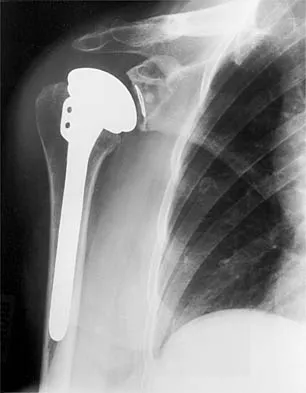
Figure 1 shows the radiograph of a 71-year-old man who has had increasing pain and weakness in his shoulder for the past 3 years. Nonsurgical management has failed to provide relief. Examination shows 130 degrees of active forward flexion and intact external rotation strength. During surgery, a 1- x 1-cm rotator cuff tear involving the supraspinatus is encountered. Treatment should include
Explanation
Question 3
Which of the following is considered the cause of Milwaukee shoulder, a joint disease similar to rotator cuff arthropathy?
Explanation
Question 4
The MRI scan of the shoulder shown in Figure 2 was performed with the arm in abduction and external rotation. The image reveals what condition?
Explanation
Question 5
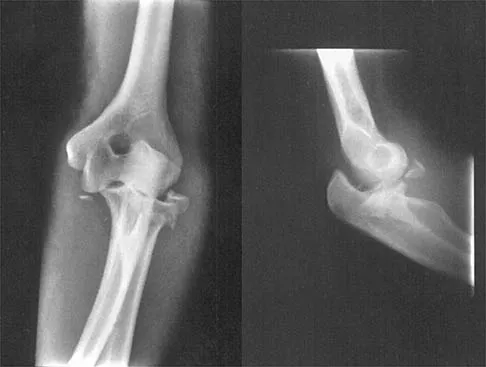
Figure 3 shows the radiographs of a 32-year-old man who fell 12 feet onto his outstretched arm and sustained a fracture-dislocation of the elbow. Initial management consisted of closed reduction of the dislocation. Surgical treatment should now include repair or reduction and fixation of the
Explanation
Question 6
It is important to avoid which of the following exercises in the immediate postoperative period after humeral head replacement for an acute four-part fracture?
Explanation
Question 7
A 38-year-old man has winging of the ipsilateral scapula after undergoing a transaxillary resection of the first rib 3 weeks ago. What is the most likely cause of this finding?
Explanation
Question 8
A 73-year-old man who underwent repair of the left rotator cuff 6 years ago reports good pain relief but notes residual weakness of the left shoulder, especially with overhead tasks. He denies having pain at night and has minimal discomfort with activities of daily living but is dissatisfied with his shoulder strength. Radiographs show an acromiohumeral interval of 2 mm. Appropriate management should consist of
Explanation
Question 9
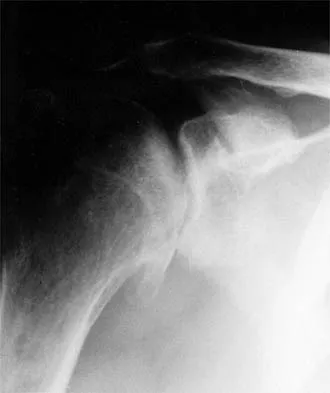
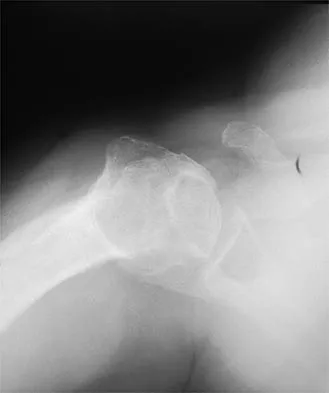
A 45-year-old woman has had progressive right shoulder pain for the past 6 months. She notes that the pain disrupts her sleep, she has pain at rest that requires the use of narcotic analgesics, and she has limited use of her left shoulder for most activities of daily living. History reveals the use of corticosteroids for systemic lupus erythematosus. Examination shows diminished range of motion. Radiographs of the right shoulder are shown in Figures 4a and 4b. Treatment should consist of
Explanation
Question 10
The relocation test is most reliable for diagnosing anterior subluxation of the glenohumeral joint when
Explanation
Question 11
A 16-year-old high school pitcher notes acute pain on the medial side of his elbow during a pitch. Examination that day reveals medial elbow tenderness, pain with valgus stress, mild swelling, and loss of extension. Plain radiographs show closed physes and no fracture. Which of the following diagnostic studies will best reveal his injury?
Explanation
Question 12
Figures 5a and 5b show the radiographs of a 45-year-old patient. What is the most likely diagnosis?
Explanation
Question 13
A 14-year-old boy sustains a twisting injury to his right shoulder and recalls feeling a snap during a wrestling match. Examination shows hesitancy to raise the arm away from the side, diffuse tenderness and swelling of the upper arm, and no evidence of neurovascular compromise. Figures 6a and 6b show an AP radiograph and MRI scan. What is the most likely diagnosis?
Explanation
Question 14
Figure 7 shows the radiograph of an otherwise healthy 65-year-old man who injured his right dominant shoulder while skiing 18 months ago. He did not seek treatment at the time of the injury. He now reports intermittent soreness when playing golf but has no other limitations. Examination reveals full range of motion and no tenderness, but he has slight pain with a crossed arm adduction stress test. He is neurologically intact. Initial management should consist of
Explanation
Question 15
Figure 8 shows the AP radiograph of a 33-year-old woman who sustained a midshaft clavicle fracture from a motorcycle accident 15 months ago. She continues to have significant pain with activities of daily living. Management should consist of
Explanation
Question 16
A 62-year-old patient with rheumatoid arthritis has had pain and instability of the elbow following total elbow replacement 2 years ago. A complete work-up, including aspiration and cultures, is negative. Figures 9a and 9b show the AP and lateral radiographs. Treatment should consist of
Explanation
Question 17
A 21-year-old football player reports increasing pain and a deformity involving his chest after colliding with another player during a scrimmage. Imaging studies confirm an anterior sternoclavicular dislocation. Management should consist of
Explanation
Question 18
During total shoulder replacement for rheumatoid arthritis, fracture of the humeral shaft occurs. An intraoperative radiograph shows a displaced short oblique fracture at the tip of the prosthesis. At this point, the surgeon should
Explanation
Question 19
What is the most common contracture deformity of the spastic shoulder secondary to a cerebrovascular accident?
Explanation
Question 20
A 21-year-old collegiate pitcher has had pain in his dominant shoulder for the past 3 months despite management consisting of rest, rehabilitation, and an analysis of throwing mechanics. An arthroscopic photograph from the posterior portal is shown in Figure 10. The biceps anchor to the bone was not detached to probing. Treatment of the lesion to the left of the cannula should consist of arthroscopic
Explanation
Question 21
After humeral head replacement for four-part fractures, what is the most commonly reported difficulty?
Explanation
Question 22
Figures 11a and 11b show the AP and lateral radiographs of a 32-year-old patient on hemodialysis who has increasing elbow pain and a visibly growing mass over the extensor surface. Figure 11c shows the photomicrograph of the biopsy specimen. What is the most likely diagnosis?
Explanation
Question 23
A 52-year-old man who was a former high school pitcher now reports loss of elbow flexion and extension with pain at the extremes of motion. Nonsurgical management has failed to provide relief. Examination reveals movement from 50 degrees to 110 degrees and is painful only at the limits of motion. A radiograph is shown in Figure 12. Treatment should consist of
Explanation
Question 24
A 79-year-old woman with polyarticular rheumatoid arthritis has had progressively increasing right shoulder pain for the past year, and nonsurgical management has failed to provide relief. Her neurologic examination is entirely normal, but she is unable to elevate her arm against gravity. An AP radiograph is shown in Figure 13. Treatment should consist of
Explanation
Question 25
A 22-year-old woman has had progressive upper extremity weakness for the past several years. History reveals no pain in her neck or shoulders. Examination reveals scapular winging of both shoulders and weakness in external rotation. She can abduct to only 120 degrees bilaterally, and there is mild supraspinatus weakness. She is otherwise neurologically intact with normal sensation and reflexes; however, she has difficulty whistling. A clinical photograph is shown in Figure 14. What is the most likely diagnosis?
Explanation
Question 26
An 72-year-old woman presents with severe shoulder pain and inability to actively elevate her arm above 50 degrees. Radiographs demonstrate severe superior migration of the humeral head with articulation directly against the acromion, with subchondral sclerosis but no significant glenohumeral osteoarthritis. What is the most appropriate definitive surgical management?
Explanation
Question 27
A 22-year-old collegiate rugby player presents with recurrent anterior shoulder instability. A 3D CT scan demonstrates a 28% anterior glenoid bone defect. Which of the following is the most appropriate surgical treatment?
Explanation
Question 28
A 65-year-old man undergoes open reduction and internal fixation with a locking plate for a 3-part proximal humerus fracture. Two months postoperatively, radiographs show varus collapse of the humeral head and intra-articular screw cutout. Which of the following technical errors most likely contributed to this failure?
Explanation
Question 29
A 35-year-old man sustains a closed midshaft humerus fracture. Initial emergency department examination reveals normal distal neurovascular function. Following the application of a coaptation splint and closed reduction, the patient is unable to actively extend his wrist or fingers. What is the most appropriate next step in management?
Explanation
Question 30
A 40-year-old man presents to the emergency department after suffering a first-time generalized tonic-clonic seizure. He complains of right shoulder pain and his arm is locked in internal rotation. An axillary radiograph reveals a posterior shoulder dislocation with an impaction fracture of the anterior humeral head (reverse Hill-Sachs lesion) involving 30% of the articular surface. What is the most appropriate surgical management?
Explanation
Question 31
A 45-year-old heavy laborer presents with deep shoulder pain and a sensation of mechanical catching. MRI arthrogram reveals an isolated Type II SLAP tear. He has failed 6 months of supervised physical therapy and NSAIDs. What is the most reliable surgical option to relieve his symptoms and allow return to work?
Explanation
Question 32
The stability of the glenohumeral joint relies heavily on balanced force couples. Which of the following muscular combinations forms the critical force couple that provides a compressive force across the joint in the transverse (axial) plane?
Explanation
Question 33
During a classic posterior approach to the shoulder for internal fixation of a scapular neck fracture, the internervous plane is developed. Which of the following nerves is at greatest risk of injury during overzealous medial retraction of the superior muscle in this interval?
Explanation
Question 34
A 75-year-old woman sustains a highly comminuted 4-part proximal humerus fracture. She lives independently and is highly active. Radiographs show significant displacement of the tuberosities and a high likelihood of humeral head ischemia. Which of the following surgical options offers the most predictable return of forward elevation?
Explanation
Question 35
A 24-year-old weightlifter feels a "pop" in his anterior axilla while performing a heavy bench press. Examination reveals an asymmetric axillary fold and weakness in internal rotation. If surgical repair of the ruptured structure is undertaken, where should the tendon be anatomically reattached?
Explanation
Question 36
A 30-year-old overhead athlete presents with insidious onset, vague posterior shoulder pain. Examination reveals normal strength in forward elevation and internal rotation, but objective weakness in external rotation. An MRI reveals a paralabral cyst in the spinoglenoid notch. What is the underlying pathology causing this weakness?
Explanation
Question 37
A 28-year-old woman presents with bilateral shoulder pain and feelings of instability. She has a positive sulcus sign, generalized ligamentous hyperlaxity, and apprehension with extreme ranges of motion but no history of acute dislocation. What is the mainstay of initial treatment?
Explanation
Question 38
A 38-year-old male presents with a persistent, mobile, and painful nonunion of a midshaft transverse humerus fracture 8 months after nonoperative management in a functional brace. He has no neurovascular deficits. What is the gold standard surgical treatment?
Explanation
Question 39
Historically, the anterior humeral circumflex artery was believed to be the primary blood supply to the humeral head. Recent anatomic studies have demonstrated that the primary arterial supply to the proximal humerus actually arises from which of the following vessels?
Explanation
Question 40
According to the Hamada classification of rotator cuff tear arthropathy, what radiographic finding defines Stage 3 disease?
Explanation
Question 41
A 21-year-old collegiate athlete is evaluated for recurrent anterior shoulder instability. MRI reveals a Hill-Sachs lesion that is determined to be "off-track". What is the primary clinical significance of an "off-track" lesion in surgical planning?
Explanation
Question 42
A 45-year-old man undergoes treatment for a humerus shaft fracture using an antegrade intramedullary nail. Which of the following is the most commonly reported long-term complication unique to this specific surgical approach compared to plating?
Explanation
Question 43
A 48-year-old man sustains an acute, traumatic anterior shoulder dislocation. After successful closed reduction in the emergency department, he is noted to have persistent, profound weakness in active forward elevation and external rotation, though axillary nerve sensation is intact. What is the most likely diagnosis?
Explanation
Question 44
Following a traumatic anterior shoulder dislocation, a 65-year-old patient develops numbness over the lateral aspect of the shoulder and an inability to actively abduct the arm past 15 degrees. Which peripheral nerve is most likely injured?
Explanation
Question 45
A 22-year-old competitive rugby player presents with his fourth anterior shoulder dislocation. Advanced imaging demonstrates a 26% anterior glenoid bone loss. Which of the following is the most appropriate surgical management to minimize the risk of recurrence?
Explanation
Question 46
A 74-year-old woman presents with severe right shoulder pain and an inability to actively elevate her arm past 40 degrees. Passive elevation is preserved to 150 degrees.
Radiographs show superior migration of the humeral head articulating with the acromion. Which of the following is the most appropriate treatment?
Explanation
Question 47
A 35-year-old man sustains a closed midshaft humerus fracture. Upon presentation in the emergency department, his radial nerve function is intact. He undergoes a closed reduction and splinting. Post-reduction examination reveals a new-onset complete loss of wrist extension and thumb extension. What is the most appropriate next step in management?
Explanation
Question 48
A 55-year-old man presents with anterior shoulder pain after a fall. Physical examination reveals a positive belly-press test and negative lift-off test. Passive range of motion testing is most likely to reveal which of the following compared to the contralateral normal shoulder?
Explanation
Question 49
Recent anatomic injection studies have redefined the primary arterial blood supply to the humeral head. Which of the following vessels provides the most significant perfusion to the humeral head?
Explanation
Question 50
During arthroscopy for a 45-year-old overhead athlete, you identify a partial articular-sided supraspinatus tendon avulsion (PASTA) lesion. Measurement with a probe indicates the footprint exposed is 8 mm medial-to-lateral. What is the most widely accepted surgical approach for this specific lesion size?
Explanation
Question 51
A 28-year-old weightlifter presents with chronic, vague posterior shoulder pain. Examination demonstrates normal forward elevation, normal strength in internal rotation, and symmetric active external rotation in adduction. However, he has marked weakness in external rotation when the arm is abducted to 90 degrees. MRI demonstrates a paralabral cyst. At what anatomic location is this cyst most likely compressing the nerve?
Explanation
Question 52
A 40-year-old male sustains a midshaft humerus fracture. He is managed nonoperatively in a functional brace. Which of the following radiographic parameters exceeds the acceptable limits for conservative management of a humeral shaft fracture?
Explanation
Question 53
A 24-year-old female presents with recurrent anterior shoulder instability. Arthroscopy reveals an engaging Hill-Sachs lesion. Which of the following best describes the biomechanics of an engaging Hill-Sachs lesion?
Explanation
Question 54
During an arthroscopic stabilization for anterior shoulder instability, the surgeon notes an anterior labroligamentous periosteal sleeve avulsion (ALPSA) lesion. How does this differ anatomically from a classic Bankart lesion?
Explanation
Question 55
A 68-year-old man presents with a massive, retracted rotator cuff tear. On physical examination, he is unable to maintain his arm in external rotation against gravity when the arm is supported in 90 degrees of abduction, causing his hand to drop to his mouth when attempting to blow a horn. This "Hornblower's sign" is most indicative of severe fatty infiltration in which of the following muscles?
Explanation
Question 56
When utilizing a proximal humerus locking plate for a comminuted surgical neck fracture, placement of the medial calcar screws is critical to prevent which of the following modes of construct failure?
Explanation
Question 57
During the open Latarjet procedure, the coracoid process is transferred to the anterior glenoid neck. Which of the following correctly describes the handling of the subscapularis muscle to allow exposure and transfer of the bone block?
Explanation
Question 58
A 19-year-old female gymnast presents with bilateral shoulder pain and a sensation of slipping with overhead activities. Examination reveals positive sulcus signs bilaterally, positive apprehension and relocation tests, and generalized ligamentous laxity.
What is the initial treatment of choice for this condition?
Explanation
Question 59
Biomechanically, active shoulder elevation can be maintained in the setting of a massive supraspinatus tear if the "transverse force couple" remains intact. Which two muscles primarily comprise this critical transverse force couple?
Explanation
Question 60
A 32-year-old male is evaluated for a locked posterior shoulder dislocation following a generalized seizure. CT imaging reveals an anteromedial humeral head impression defect (reverse Hill-Sachs lesion) involving 25% of the articular surface. Which of the following is the most appropriate surgical intervention?
Explanation
Question 61
Following rotator cuff repair, tendon-to-bone healing progresses through distinct biological phases. During the early proliferative phase (1 to 3 weeks post-repair), which type of collagen is predominantly synthesized to form the initial scar tissue matrix?
Explanation
Question 62
When evaluating a proximal humerus fracture, which of the following radiographic criteria is the strongest predictor of impending avascular necrosis (AVN) of the humeral head?
Explanation
Question 63
A 60-year-old active man with symptomatic long head of the biceps tendinosis undergoes an arthroscopic biceps tenotomy. Compared to a biceps tenodesis, which of the following outcomes is significantly more likely to occur following a tenotomy?
Explanation
Question 64
A 58-year-old female sustains a displaced two-part surgical neck fracture of the proximal humerus. She complains of numbness over the lateral aspect of her shoulder. Which nerve is most likely injured, and what is its correct anatomic relationship in the shoulder?
Explanation
Question 65
Which of the following best describes the biomechanical alterations achieved by a standard Grammont-style reverse total shoulder arthroplasty?
Explanation
Question 66
A 22-year-old rugby player presents with recurrent anterior shoulder instability. A 3D CT scan reveals a 25% anterior glenoid bone loss. What is the most appropriate surgical treatment?
Explanation
Question 67
Based on recent quantitative anatomic studies, which of the following arterial branches provides the majority of the blood supply to the humeral head?
Explanation
Question 68
A 55-year-old manual laborer presents with a chronic, massive, irreparable posterosuperior rotator cuff tear. He has severe weakness in external rotation and active elevation, but subscapularis function remains intact. He has minimal glenohumeral osteoarthritis. Which of the following is the most appropriate tendon transfer?
Explanation
Question 69
A 35-year-old man sustains a closed spiral fracture of the distal third of the humeral shaft (Holstein-Lewis fracture). In the emergency department, he is noted to have an inability to extend his wrist and fingers. What is the most appropriate initial management?
Explanation
Question 70
A 45-year-old man presents with anterior shoulder pain and weakness after falling onto an outstretched arm. Physical examination reveals a positive bear-hug test and increased passive external rotation of the shoulder. Which structure is most likely injured?
Explanation
Question 71
A 30-year-old man is evaluated in the emergency department after experiencing a first-time generalized tonic-clonic seizure. He has severe shoulder pain and his arm is locked in internal rotation. An AP radiograph shows a 'lightbulb' sign. What is the most likely diagnosis?
Explanation
Question 72
A 72-year-old woman presents with pseudoparalysis of the right shoulder and severe glenohumeral osteoarthritis secondary to a chronic, massive rotator cuff tear. Which of the following is considered an absolute contraindication to performing a reverse total shoulder arthroplasty?
Explanation
Question 73
Which of the following radiographic criteria in a proximal humerus fracture is generally considered a strong indication for surgical intervention rather than nonoperative management?
Explanation
Question 74
A 28-year-old man undergoes magnetic resonance arthrography (MRA) for recurrent anterior shoulder instability. The radiologist notes a 'J-sign' on the coronal fluid-sensitive sequences, representing a capsuloligamentous injury. What specific lesion does this finding describe?
Explanation
Question 75
A 42-year-old woman presents with a 7-month history of a painful midshaft humerus fracture initially treated with a functional brace. Radiographs show an atrophic nonunion with minimal callus. What is the most appropriate surgical treatment?
Explanation
Question 76
A 19-year-old female gymnast complains of bilateral shoulder pain and a feeling of looseness. Examination reveals a positive sulcus sign that does not reduce with external rotation. What is the most appropriate initial management?
Explanation
Question 77
A 38-year-old elite volleyball player has isolated atrophy of the infraspinatus muscle and weakness in external rotation. An MRI reveals a paralabral cyst. At which anatomic location is the nerve most likely compressed?
Explanation
Question 78
When performing an anterolateral approach (deltoid split) for plating a proximal humerus fracture, how far distal to the lateral edge of the acromion is it generally safe to split the deltoid before placing the axillary nerve at significant risk?
Explanation
Question 79
Which of the following represents the primary biomechanical goal of a Superior Capsular Reconstruction (SCR) using a dermal allograft for a massive, irreparable rotator cuff tear?
Explanation
Question 80
A 25-year-old baseball pitcher presents with deep shoulder pain during the late cocking phase of throwing. He undergoes shoulder arthroscopy and is diagnosed with a Type II SLAP lesion. Which of the following best describes this pathology?
Explanation
Question 81
A 65-year-old female sustains a closed, highly displaced proximal humerus fracture after a fall. Following closed reduction and splinting, she is noted to have decreased sensation over the lateral aspect of her shoulder and is unable to actively contract her deltoid. Injury to which of the following nerves is most likely responsible for these findings?
Explanation
Question 82
A 75-year-old man presents with chronic shoulder pain and inability to raise his arm above 60 degrees. Examination demonstrates intact deltoid function but a positive drop arm sign. Radiographs reveal superior migration of the humeral head with articulation against the acromion and severe glenohumeral osteoarthritis.
Which of the following is the most appropriate surgical treatment?
Explanation
Question 83
A 22-year-old rugby player presents with recurrent anterior shoulder instability. A 3D CT scan of the shoulder reveals 28% bone loss of the anterior-inferior glenoid width. Which of the following is the most appropriate surgical management?
Explanation
Question 84
A 35-year-old male presents to the emergency department after a witnessed generalized tonic-clonic seizure. His shoulder is locked in internal rotation, and he has severe pain with attempted external rotation. Standard AP radiographs appear surprisingly normal. Which of the following represents the most likely pathognomonic lesion on advanced imaging or axillary radiograph?
Explanation
Question 85
During a deltopectoral approach for open reduction and internal fixation of a proximal humerus fracture, the cephalic vein is identified. Which of the following correctly describes the internervous plane utilized in this surgical approach?
Explanation
Question 86
A 26-year-old elite volleyball attacker presents with vague posterior shoulder pain and isolated weakness in external rotation. Active forward flexion and abduction are symmetric to the contralateral side. MRI demonstrates a paralabral cyst. At which of the following anatomic locations is the nerve compression most likely occurring?
Explanation
Question 87
A 30-year-old male sustains a closed, spiral fracture of the distal third of the humeral shaft (Holstein-Lewis fracture) following an arm-wrestling match. On examination, he is unable to actively extend his wrist or fingers. Radiographs show acceptable alignment. What is the most appropriate initial management?
Explanation
Question 88
Which of the following muscle pairings constitutes the primary transverse plane force couple responsible for maintaining the humeral head centered on the glenoid during active shoulder motion?
Explanation
Question 89
An 18-year-old male pitcher complains of right shoulder pain during the late cocking and early acceleration phases of throwing. Examination shows a positive O'Brien's test. Nonoperative management has failed. MRI reveals a detachment of the superior labrum and biceps anchor from the glenoid. Which of the following is the most appropriate surgical treatment?
Explanation
Question 90
A 28-year-old weightlifter feels a sudden 'pop' and sharp pain in his anterior shoulder during a heavy bench press. Examination reveals loss of the anterior axillary fold contour and significant weakness with resisted internal rotation and adduction. What is the recommended treatment for optimal return of strength?
Explanation
Question 91
A 68-year-old female presents with a 4-part proximal humerus fracture.
According to Hertel's criteria, which of the following radiographic findings is most predictive of humeral head ischemia and subsequent avascular necrosis?
Explanation
Question 92
A 25-year-old male with recurrent anterior shoulder instability undergoes an MR arthrogram. The imaging shows extravasation of contrast inferiorly and a characteristic 'J-sign' of the axillary pouch, without a definitive Bankart lesion. What is the most likely diagnosis?
Explanation
Question 93
A 55-year-old diabetic woman complains of insidious onset of severe right shoulder pain and progressive loss of motion over the past 4 months. Examination shows significant limitations in both active and passive range of motion in forward flexion, abduction, and external rotation. Radiographs are unremarkable. What is the primary pathophysiologic mechanism of this condition?
Explanation
Question 94
A 52-year-old male trips and falls on an outstretched hand. He now presents with right shoulder pain and weakness. On examination, he has 20 degrees of increased passive external rotation compared to the left shoulder and a positive 'lift-off' test. Which structure is most likely injured?
Explanation
Question 95
An 8-month follow-up radiograph of a 45-year-old female treated nonoperatively for a midshaft humerus fracture shows a persistent fracture line with sclerotic, rounded bone ends and no bridging callus. Which of the following is the most appropriate surgical intervention for this atrophic nonunion?
Explanation
Question 96
A 17-year-old female gymnast complains of bilateral vague shoulder pain. Examination reveals a positive sulcus sign, extreme generalized ligamentous laxity (Beighton score 8/9), and apprehension with both anterior and posterior translation, but no history of acute dislocation. What is the initial treatment of choice?
Explanation
Question 97
A 60-year-old male with a massive, retracted, irreparable tear of the supraspinatus and infraspinatus tendons presents with chronic pain and weakness. The subscapularis and deltoid are entirely intact, and there is no evidence of glenohumeral arthritis. He desires to improve his active external rotation. Which of the following tendon transfers is most appropriate?
Explanation
Question 98
A 24-year-old powerlifter presents with an insidious onset of pain on top of his left shoulder. The pain is exacerbated by bench pressing and dips. Examination shows localized tenderness over the acromioclavicular (AC) joint and pain with cross-body adduction. Radiographs reveal widening of the AC joint and subchondral cysts in the lateral clavicle. What is the most likely diagnosis?
Explanation
Question 99
A 78-year-old female sustains a minimally displaced, 1-part proximal humerus fracture after a ground-level fall. Which of the following management strategies will best optimize her functional outcome and minimize complications?
Explanation
Question 100
A collegiate baseball pitcher presents with posterior shoulder pain. Examination reveals a 25-degree loss of internal rotation (GIRD) compared to the contralateral side. Pathologic GIRD is widely believed to be primarily driven by which of the following anatomic changes?
Explanation
None
