العربية
Part of the Master Guide

100 High-Yield Orthopedic MCQs: Shoulder & Elbow | Mock Exam 251

AAOS Upper Extremity MCQs (Set 5): Shoulder, Elbow & Wrist Injuries | ABOS Review
23 Apr 2026 42 min read 101 Views
Upper Extremity 2008 MCQs - Part 5

Key Takeaway

This high-yield question set (Set 5) for the AAOS, ABOS, and OITE exams focuses on comprehensive upper extremity orthopedics. Topics include shoulder pathology, rotator cuff injuries, elbow fractures, ligamentous trauma, and common wrist & hand conditions, preparing you for board success.

AAOS Upper Extremity MCQs (Set 5): Shoulder, Elbow & Wrist Injuries | ABOS Review

Comprehensive 100-Question Exam


00:00

Start Quiz

Question 1

A 38-year-old woman with diabetes mellitus reports a 6-week history of fever and pain localized to the right sternoclavicular joint. Local signs on examination include swelling about the joint, erythema, and increased warmth. Initial aspiration of the joint reveals Staphylococcus aureus. Radiographs reveal medial clavicular osteolysis. What is the most effective treatment at this time?


Explanation

Based on the findings, the treatment of choice is resection of the sternoclavicular joint. Antibiotic therapy, repeat aspirations, hyperbaric oxygen, and simple irrigation and debridement are generally ineffective and associated with a high rate of recurrence.

Question 2

A patient has a humeral shaft fracture and is scheduled to undergo open reduction and internal fixation with a plate. What surgical approach will provide the greatest amount of exposure?


Explanation

The modified posterior approach with elevation of the medial and lateral heads of the triceps can provide exposure of 94% of the humeral shaft. The traditional posterior triceps-splitting approach exposes 55% of the humeral shaft. DeFranco MJ, Lawton JN: Radial nerve injuries associated with humeral fractures. J Hand Surg Am 2006;31:655-663.

Question 3

A 67-year-old woman is seen in the emergency department after falling at home. Radiographs before and after treatment are shown in Figures 49a and 49b, respectively. Which of the following best explains the 8-week postinjury clinical findings seen in Figure 49c?


Explanation

Patients older than age 40 years at the time of initial anterior dislocation have low rates of redislocation; however, 15% of these patients experience a rotator cuff tear. Moreover, there is a dramatic increase (up to 40%) in the incidence of rotator cuff tears in patients older than age 60 years. Axillary nerve injury may occur but is less common than rotator cuff tear. Koval KJ (ed): Orthopaedic Knowledge Update 7. Rosemont, IL, American Academy of Orthopaedic Surgeons, 2002, pp 273-284.


Question 4

What is the most common complaint in patients with a developmental radial head dislocation?


Explanation

Developmental dislocation of the radial head most frequently presents as a painless mass over the posterior aspect of the elbow. Patients do not have feelings of elbow subluxation but may report pain or clicking. Limitation of motion is most frequently found in the pronation and supination arc rather than in flexion and extension. Lloyd-Roberts GC, Bucknill TM: Anterior dislocation of the radial head in children-etiology: Natural history and management. J Bone Joint Surg Am 1977;58:402.

Question 5

Which of the following has been associated with a decreased rate of glenoid component radiolucent lines?


Explanation

According to a recent study, cemented pegged glenoid components had fewer radiolucent lines initially and at 2-year follow-up when compared to a cemented keeled design. Curve-backed designs have also shown fewer radiolucent lines when compared to flat-backed designs. Oversizing the glenoid can lead to impaired rotator cuff function and decreased range of motion. An off-centered glenoid can lead to early loosening. Gartsman GM, Elkousy HA, Warnock KM, et al: Radiographic comparison of pegged and keeled glenoid components. J Shoulder Elbow Surg 2005;14:252-257. Szabo I, Buscayret F, Edwards TB, et al: Radiographic comparison of flat-back and convex-back glenoid components in total shoulder arthroplasty. J Shoulder Elbow Surg 2005;14:636-642.

Question 6

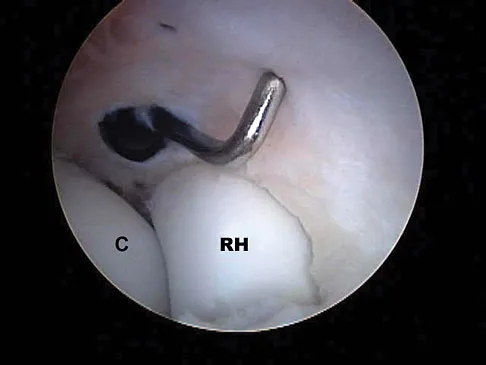
What neurovascular structure is in closest proximity to the probe in the arthroscopic view of the elbow shown in Figure 50?


Explanation

The image shows a view of the radiocapitellar joint from an anterior medial portal. The radial nerve lies on the elbow capsule at the midportion of the capitellum. It is at risk for injury when capsular excision is performed in this region. Field LD, Altchek DW, Warren RF, et al: Arthroscopic anatomy of the lateral elbow: A comparison of three portals. Arthroscopy 1994;10:602-607.


Question 7

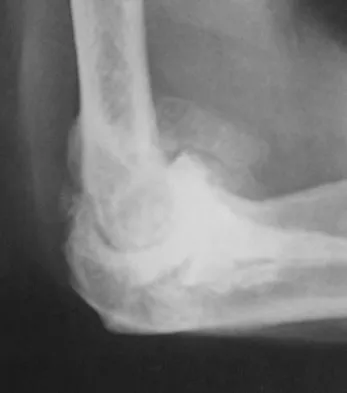
Figure 51 shows the radiograph of a 42-year-old construction worker who has pain and limited motion in his dominant elbow. Management consisting of nonsteroidal anti-inflammatory drugs and cortisone has failed to provide relief. What is the next most appropriate step in treatment?


Explanation

The patient has symptomatic primary osteoarthritis of the elbow with multiple loose bodies. Given his age and occupation, an elbow arthroplasty is not an option. Arthroscopic debridement and removal of loose bodies has been shown to be effective for osteoarthritis of the elbow. Gramstad GD, Galatz LM: Management of elbow osteoarthritis. J Bone Joint Surg Am 2006;88:421-430.


Question 8

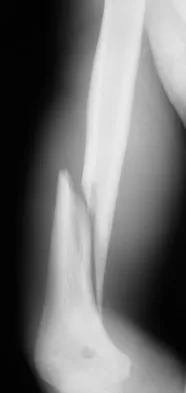
A 35-year-old man sustained the closed injury shown in Figure 52 in his dominant extremity. Neurologic function is normal. Treatment should consist of


Explanation

Functional bracing has been demonstrated to have a very high rate of healing without any functional limitations in a large series of patients. Surgery is reserved for "floating elbows," open injuries, neurovascular injuries, and those fractures that go on to nonunion. Sarmiento A, Zagorski JB, Zych GA, et al: Functional bracing for the treatment of fractures of the humeral diaphysis. J Bone Joint Surg Am 2000;82:478-486.


Question 9

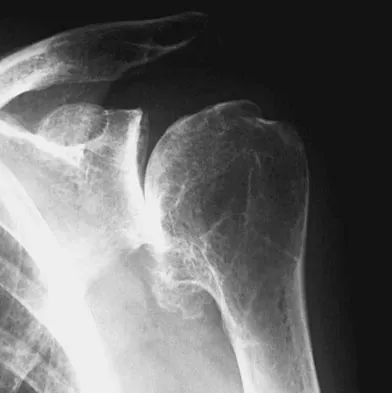
A 74-year-old man has had worsening left shoulder pain for the past 3 years. Extensive nonsurgical management has provided only minimal relief. Examination reveals limitations in motion due to pain but good rotator cuff strength. Radiographs are shown in Figures 53a and 53b. What surgical procedure is most appropriate?


Explanation

The patient has end-stage shoulder arthritis with posterior glenoid erosion and large humeral osteophyte formation. Since the rotator cuff is likely intact, the reverse total shoulder arthroplasty is unnecessary. All the remaining procedures may provide symptomatic relief in appropriate patients; however, for most patients, total shoulder arthroplasty has been associated with the most predictive pain relief and functional improvements. Bryant D, Litchfield R, Sandow M, et al: A comparison of pain, strength, range of motion, and functional outcomes after hemiarthroplasty and total shoulder arthroplasty in patients with osteoarthritis of the shoulder: A systemic review and meta-analysis. J Bone Joint Surg Am 2005;87:1947-1956. Edwards TB, Kadakia NR, Boulahia A, et al: A comparison of hemiarthroplasty and total shoulder arthroplasty in the treatment of primary glenohumeral osteoarthritis: Results of a multicenter study. J Shoulder Elbow Surg 2003;12:207-213.


Question 10

The radiograph shown in Figure 54 reveals that the plate on the second metacarpal is acting in what manner?


Explanation

There are four ways in which a plate acts: compression, tension bend, bridge or spanning, and buttress. Since there is no cortical contact with the large span of comminution, this plate is acting as a bridge plate. A bridge plate is defined as when the plate is used as an extramedullary splint attached to the two main fragments, leaving the comminution untouched.


Question 11

Which of the following antibiotics is contraindicated in children?


Explanation

The tetracycline family of medications can stain teeth and bone in skeletally immature patients and as a result should be avoided in those patients. The remaining antibiotics have no known specific contraindication to use in children.

Question 12

Which of the following conditions is considered a relative contraindication to interscalene nerve block for patients scheduled to undergo shoulder surgery?


Explanation

A common side effect of interscalene nerve block for shoulder surgery is the blockade of the ipsilateral phrenic nerve. This, in turn, results in paresis of the diaphragm and up to a 30% reduction in pulmonary function volumes. Therefore, interscalene nerve block generally is not recommended for patients whose respiratory function is compromised. Other relative and absolute contraindications for interscalene nerve blocks include allergy to local anesthetics, infection at the injection site, uncontrolled seizure disorder, coagulation abnormality, and preexisting neurologic injury. Chelly JE: Indications for upper extremity blocks, in Chelly JE (ed): Peripheral Nerve Blocks, ed 2. Philadelphia, PA, Lippincott Williams & Wilkins, 2004, pp 19-27.

Question 13

Figure 55 shows the radiograph of a 30-year-old man who sustained a closed comminuted fracture of the right clavicle. Examination reveals decreased sensation in the radial nerve distribution. Weakness is noted with shoulder abduction, internal rotation, and wrist extension. A displaced bone fragment is most likely pressing on what portion of the brachial plexus?


Explanation

Clavicular fractures are occasionally complicated by injury to the brachial plexus. A displaced bone fragment pressing on the posterior cord proximal to the upper subscapularis nerve would account for these findings. Jobe CM, Coen MJ: Gross anatomy of the shoulder, in Rockwood CA, Matsen FA, Wirth MA, et al (eds): The Shoulder. Philadelphia, PA, WB Saunders, 2004, vol 2, pp 1078-1079.


Question 14

Which of the following characteristics is seen in patients with osteochondritis dissecans of the elbow?


Explanation

Osteochondritis dissecans occurs in the older child or adolescent (typically older than age 13 years). It involves the lateral compartment. The etiology is felt to be microtraumatic vascular insufficiency from repetitive rotatory and compressive forces. MRI typically shows separation of cartilage from the capitellum and chondral fissuring. Panner's disease is usually seen in children younger than age 10 years, involves the entire capitellar ossific nucleus, and resolves typically with no residual deformity or late sequelae. There is no evidence of ligamentous injury. Defelice GS, Meunier MJ, Paletta GA: Elbow injury in the adolescent athlete, in Altchek DW, Andrews JR (eds): The Athlete's Elbow. New York, NY, Lippincott Williams & Wilkins, 2001, pp 231-248.

Question 15

Which of the following is considered an important component in treating the lesion shown in Figure 56?


Explanation

Mucoid cysts are commonly associated with DIP joint arthritis. Two treatment options are commonly used: (1) aspiration/drainage and injection of corticosteroid and (2) surgical excision. When performing the surgery, excision of the bony osteophytes about the DIP joint is helpful in achieving a cure. There are no reports of significant benefit with nail removal or partial ligament or extensor tendon resection. Some authors have advocated skin excision and rotational flaps for wound coverage, but this is somewhat controversial. Rizzo M, Beckenbaugh RD: Treatment of mucous cysts of the fingers: Review of 134 cases with minimum 2-year follow-up evaluation. J Hand Surg Am 2003;28:519-524.


Question 16

A 22-year-old female collegiate javelin thrower has shoulder pain. She notes that her pain is primarily located in the posterior aspect of her shoulder, is exacerbated with throwing, and she experiences maximal tenderness in the extreme cocking phase of the throwing cycle. On examination, she reports deep posterior shoulder pain when the arm is abducted 90 degrees and maximally externally rotated to 110 degrees. This reproduces her symptoms precisely. Shoulder radiographs are normal. What is the most likely diagnosis?


Explanation

The patient has internal impingement. Internal impingement is commonly seen in overhead throwing athletes. When positioned in the extreme cocking phase of the throwing cycle, the posterior glenoid impacts the articular surface of the infraspinatus and posterior fibers of the supraspinatus tendon. This impact can cause partial-thickness rotator cuff tearing and posterosuperior labral lesions. She has no evidence of anterior shoulder instability, and her range of motion is excellent which rules out adhesive capsulitis. Subacromial impingement is identified with anterolateral shoulder pain with internal rotation in the abducted position. A full-thickness rotator cuff tear in a 22-year-old individual would require significant trauma and would likely result in pain at rest and with lifting. Meister K, Buckley B, Batts J: The posterior impingement sign: Diagnosis of rotator cuff and posterior labral tears secondary to internal impingement in overhand athletes. Am J Orthop 2004;33:412-415.

Question 17

A patient with rheumatoid arthritis has a rupture of the extensor digitorum communis to 4 and 5. You are planning to perform an extensor indicis proprius (EIP) tendon transfer. What effect will this have on index finger extension?


Explanation

EIP transfer results in no functional deficit. If the tendon is cut proximal to the sagittal band, there will be no extensor deficit. Browne EX, Teague MA, Snyder CC: Prevention of extensor lag after indicis proprius transfer. J Hand Surg Am 1979;4:168-172.

Question 18

What is the most common complication following interscalene nerve block for shoulder surgery?


Explanation

All of these complications have been documented after interscalene nerve block. Other serious complications such as cardiac arrest and respiratory distress have also been noted. However, the most common complication after interscalene nerve block appears to be temporary paresthesia to the hand that can occur in up to 2.3% of the patients. Bishop JY, Sprague M, Gelber J, et al: Interscalene regional anesthesia for shoulder surgery. J Bone Joint Surg Am 2005;87:974-979.

Question 19

A 61-year-old woman with a long-standing history of rheumatoid arthritis reports progressive elbow pain for the past 12 months. She denies any recent trauma to the elbow; however, she notes increasing pain and decreased joint motion that are now compromising her function. Radiographs are shown in Figures 57a and 57b. What is the most appropriate treatment at this time?


Explanation

The patient has end-stage arthritis of the elbow with advanced joint destruction. At this point, nonsurgical management is unlikely to provide much relief of symptoms. Arthroscopic procedures can provide relief, but it is likely to be incomplete and unpredictable. The most reliable surgical option is total elbow arthroplasty. Currently, semiconstrained components are generally preferred because constrained components have been associated with a high rate of early prosthetic loosening. Little CP, Graham AJ, Karatzas G, et al: Outcomes of total elbow arthroplasty for rheumatoid arthritis: Comparative study of three implants. J Bone Joint Surg Am 2005;87:2439-2448.


Question 20

What neurovascular structure is at greatest risk when creating a proximal anterolateral elbow arthroscopy portal?


Explanation

The radial nerve is 4 to 7 mm from the anterolateral portal, which is placed 1 cm anterior and 3 cm proximal to the lateral epicondyle. The posterior interosseous nerve can lie 1 to 14 mm from the portal site. Andrews JR, Carson WG: Arthroscopy of the elbow. Arthroscopy 1985;1:97-107.

Question 21

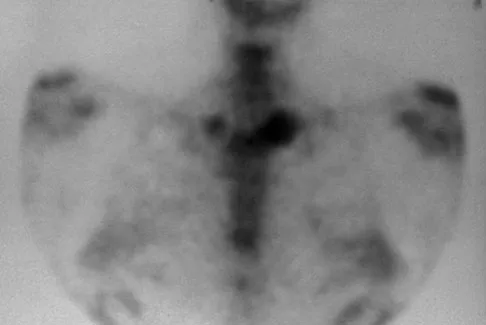
A 52-year-old woman reports mild pain localized to the left sternoclavicular joint. History is notable for chronic renal failure requiring dialysis for the last 5 years. A clinical photograph, chest radiograph, and bone scan are shown in Figures 58a through 58c. What is the most likely diagnosis?


Explanation

Spontaneous swelling with the appearance of joint subluxation may be associated with an acute, subacute, or chronic bacterial infection of the sternoclavicular joint. Common causes of infection include bacteremia, rheumatoid arthritis, alcoholism, intravenous drug use, and chronic debilitating diseases. Subclavian vein catheterization and renal dialysis can predispose patients to sepsis and osteomyelitis of the sternoclavicular joint. Renoult B, Lataste A, Jonon B, et al: Sternoclavicular joint infection in hemodialysis patients. Nephron 1990;56:212-213.


Question 22

A 22-year-old college quarterback is tackled and sustains a reducible first carpometacarpal dislocation. What is the recommended treatment?


Explanation

When comparing closed reduction and pinning to ligament reconstruction, the reconstruction group had slightly better abduction and pinch strength. The volar oblique ligament usually tears off the first metacarpal in a subperiosteal fashion. In this young patient, motion-sparing procedures are preferred. Simonian PT, Trumble TE: Traumatic dislocation of the thumb carpometacarpal joint: Early ligamentous reconstruction versus closed reduction and pinning. J Hand Surg Am 1996;21;802-806.

Question 23

What is the most important stabilizing mechanism in the midrange of motion of the glenohumeral joint?


Explanation

Concavity compression is a stabilizing mechanism by which muscular compression of the humeral head into the glenoid fossa stabilizes the glenohumeral joint against shear forces. This is dependent on the depth of the concavity and the magnitude of the compressive force. Lee SB, Kim KJ, O'Driscoll SW, et al: Dynamic glenohumeral stability provided by the rotator cuff muscles in the mid-range and end-range of motion: A study in cadavera. J Bone Joint Surg Am 2000;82:849-857.

Question 24

In a locking plate screw construct, axial forces are borne by which of the following?


Explanation

In a traditional plate system, fracture security depends on the friction between the plate and the underlying bone. Bicortical fixation will decrease the toggle and improve stability. Locking plates absorb axial forces transmitted from the screws. Such plates do not require plate compression against the bone, thus preserving periosteal blood supply. Nana AD, Joshi A, Lichtman DM: Plating of the distal radius. J Am Acad Orthop Surg 2005;13:159-171.

Question 25

What structure provides the most static stability for valgus restraint in the elbow?


Explanation

The anterior band of the ulnar collateral ligament provides the greatest restraint to valgus stress in the elbow. The posterior band is taut in flexion and resists stress between 60 degrees and full flexion. The annular ligament stabilizes the radial head. The flexor/pronator mass are important dynamic stabilizers of the medial elbow. Ahmad CS, ElAttrache NS: Elbow valgus instability in the throwing athlete. J Am Acad Orthop Surg 2006;14:693-700. Regan WD, Korinek SL, Morrey BF, et al: Biomechanical study of ligaments around the elbow joint. Clin Orthop Relat Res 1991;271:170-179.

Question 26

A 45-year-old male falls from a ladder and sustains a complex elbow injury. Radiographs reveal a posterior elbow dislocation, a comminuted radial head fracture, and a Type II coronoid fracture. Operative intervention is planned. What is the recommended sequence of surgical reconstruction to restore elbow stability?


Explanation

The terrible triad of the elbow requires a systematic deep-to-superficial (inside-out) approach. The standard sequence is coronoid fixation, followed by radial head replacement or fixation, and finally lateral collateral ligament complex repair.

Question 27

A 65-year-old active female sustains a distal radius fracture after a fall on an outstretched hand. Which of the following initial radiographic parameters is the most reliable predictor that nonoperative management in a cast will fail and result in unacceptable deformity?


Explanation

Initial dorsal angulation greater than 20 degrees, along with dorsal comminution and older age, is a strong predictor of late displacement in distal radius fractures treated nonoperatively.

Question 28

A 22-year-old male sustains an acute proximal pole scaphoid fracture. Operative fixation is planned to minimize the risk of nonunion. Which surgical approach and screw trajectory provide the best biomechanical fixation and biological preservation of the proximal pole?


Explanation

Proximal pole scaphoid fractures are best treated via a dorsal approach. This preserves the volar blood supply to the scaphoid and allows for a biomechanically superior straight-line screw trajectory down the central axis of the bone.

Question 29

A 32-year-old male with a history of seizure disorder presents to the emergency department with severe shoulder pain and an inability to externally rotate his arm. An anteroposterior (AP) radiograph demonstrates a symmetrically rounded appearance of the humeral head. What is the most likely diagnosis?


Explanation

The lightbulb sign on an AP radiograph represents a posterior shoulder dislocation, commonly seen following seizures or electrocution. The humeral head is locked in internal rotation, creating a symmetrical rounded appearance.

Question 30

A 19-year-old cyclist sustains a midshaft clavicle fracture after being thrown over the handlebars. Which of the following findings represents an absolute indication for open reduction and internal fixation?


Explanation

Open fractures are an absolute indication for operative fixation of clavicle fractures. Other relative indications include significant displacement, shortening greater than 1.5 to 2 cm, and impending skin compromise.

Question 31

A 7-year-old boy presents with a deformed forearm after a fall from monkey bars. Radiographs show an apex-volar angulated proximal ulnar shaft fracture and a posteriorly dislocated radial head. How is this specific injury pattern classified according to the Bado system?


Explanation

The Bado classification describes Monteggia fracture-dislocations. A Type II Bado lesion involves posterior angulation of the ulnar fracture with a posterior dislocation of the radial head.

Question 32

An 18-year-old male sustains a complete distal biceps tendon rupture. He undergoes repair via a single-incision anterior approach. Which of the following nerves is most at risk of injury with this specific surgical approach?


Explanation

The lateral antebrachial cutaneous nerve (LABC) is the most commonly injured nerve during a single-incision distal biceps repair. The posterior interosseous nerve is more commonly injured with the two-incision technique.

Question 33

A 45-year-old man falls on an outstretched hand and sustains a terrible triad injury of the elbow. What is the recommended surgical sequence for repairing these injuries?


Explanation

The standard surgical sequence for a terrible triad injury is to address deep to superficial structures. Fixation progresses from the coronoid, then the radial head, and finally the lateral collateral ligament (LCL) complex to restore stability from the inside out.

Question 34

A 24-year-old man presents with an open midshaft humerus fracture and an ipsilateral complete radial nerve palsy. What is the most appropriate management?


Explanation

An open humeral shaft fracture with an associated radial nerve palsy is an absolute indication for surgical exploration of the nerve. This should be performed at the time of fracture debridement and internal fixation.

Question 35

A 32-year-old woman falls from a height and sustains a comminuted radial head fracture, which is excised. Postoperatively, she reports persistent, severe wrist pain. Examination reveals tenderness over the distal radioulnar joint (DRUJ) and positive ulnar variance. Which of the following is the most likely diagnosis?


Explanation

An Essex-Lopresti injury consists of a radial head fracture, rupture of the interosseous membrane, and DRUJ instability. Radial head excision in this setting leads to proximal migration of the radius and severe wrist pain, hence it should be avoided.

Question 36

A 22-year-old man requires open reduction and internal fixation of a proximal pole scaphoid fracture. Which surgical approach provides the most direct access to the proximal pole while preserving its primary blood supply?


Explanation

The dorsal approach is preferred for proximal pole scaphoid fractures. It provides direct access to the proximal fragment and avoids injury to the major palmar blood supply, which enters the scaphoid at the distal and middle thirds.

Question 37

A 19-year-old collegiate rugby player with recurrent anterior shoulder instability undergoes imaging, which demonstrates a 25% anterior glenoid bone loss and an engaging Hill-Sachs lesion. Which of the following is the most appropriate surgical treatment?


Explanation

Glenoid bone loss greater than 20-25% in the setting of recurrent anterior shoulder instability is a strict indication for a bony augmentation procedure, such as the Latarjet procedure. Arthroscopic soft-tissue repairs have an unacceptably high failure rate in this scenario.

Question 38

When evaluating a displaced 4-part proximal humerus fracture, preservation of the blood supply to the humeral head is a critical concern. Which of the following arteries provides the primary blood supply to the articular segment of the humeral head?


Explanation

Recent anatomic studies and quantitative assessments have shown that the posterior humeral circumflex artery provides the primary blood supply to the humeral head. This contradicts older literature that emphasized the anterolateral branch of the anterior humeral circumflex artery.

Question 39

A 45-year-old manual laborer presents with progressive wrist pain and a history of remote trauma. Radiographs demonstrate degenerative changes between the radial styloid and the scaphoid, as well as between the scaphoid and the entire scaphoid fossa of the radius. The radiolunate joint is spared. What is the correct SLAC wrist stage?


Explanation

Scapholunate Advanced Collapse (SLAC) Stage II is characterized by osteoarthritis progressing to involve the entire radioscaphoid articulation. Stage I involves only the radial styloid, while Stage III progresses to the capitolunate joint.

Question 40

A 60-year-old woman undergoes volar locked plating for a distal radius fracture. Three months postoperatively, she returns with sudden inability to actively extend her thumb. What is the most likely cause of this complication?


Explanation

Extensor pollicis longus (EPL) tendon rupture is a known complication of distal radius fractures and volar plating. It often occurs due to prominent dorsal screws penetrating the dorsal cortex and mechanically attriting the tendon in the third extensor compartment.

Question 41

A 32-year-old male weightlifter feels a pop in his anterior chest while performing a heavy bench press. Examination reveals an asymmetric chest wall and weakness with internal rotation. MRI confirms a complete tear of the pectoralis major tendon at its insertion. What is the recommended management?


Explanation

Surgical repair is indicated for complete, acute pectoralis major tendon ruptures in active individuals. The correct anatomic insertion of the pectoralis major is at the lateral lip of the bicipital groove of the humerus.

Question 42

A 7-year-old boy falls on an outstretched arm and sustains a Bado Type I Monteggia fracture-dislocation. What is the defining characteristic of this injury?


Explanation

A Bado Type I Monteggia fracture consists of a fracture of the proximal or middle third of the ulna with an anterior dislocation of the radial head. It is the most common type of Monteggia lesion in the pediatric population.

Question 43

A 45-year-old man sustains a terrible triad injury of the elbow consisting of an elbow dislocation, radial head fracture, and coronoid fracture. What is the generally recommended surgical sequence of reconstruction?


Explanation

The classic inside-out sequence of surgical reconstruction for a terrible triad injury begins deep with the coronoid. This is followed by radial head fixation or arthroplasty, and finally repair of the lateral collateral ligament (LCL) complex to restore stability.

Question 44

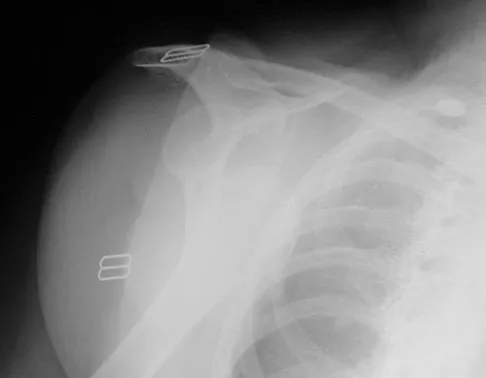
A 62-year-old woman presents with the inability to flex her thumb interphalangeal joint 9 months after volar plate fixation of a distal radius fracture.

What is the most likely cause of her current symptoms?


Explanation

Prominent volar hardware at or distal to the watershed line can cause attrition and subsequent rupture of the flexor pollicis longus (FPL) tendon. The patient's specific loss of active thumb interphalangeal joint flexion is a classic presentation of this complication.

Question 45

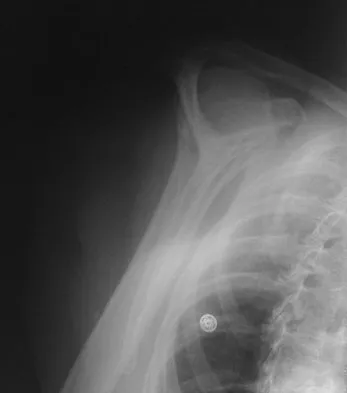
Which of the following radiographic features is the most reliable predictor of ischemia and subsequent avascular necrosis of the humeral head following a proximal humerus fracture?


Explanation

Hertel identified specific predictors of humeral head ischemia, most notably a short calcar segment (metaphyseal head extension < 8 mm) and disruption of the medial periosteal hinge. These morphological features reflect critical damage to the anterior humeral circumflex artery supply.

Question 46

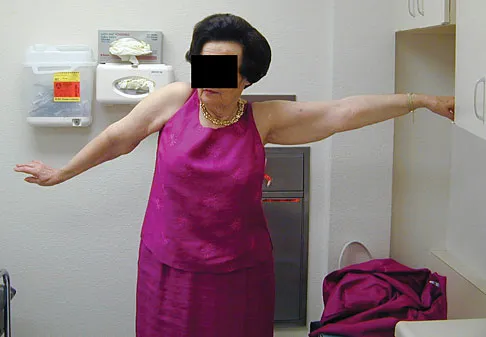
A 35-year-old man undergoes surgical repair of a distal biceps tendon rupture via a single-incision anterior approach. Postoperatively, he notes numbness over the lateral aspect of his forearm. Which nerve was most likely injured during the procedure?


Explanation

The lateral antebrachial cutaneous (LABC) nerve, a terminal branch of the musculocutaneous nerve, is highly susceptible to traction or transection injury during the single-incision anterior approach. Injury results in sensory deficits along the lateral forearm.

Question 47

A 22-year-old man presents with chronic wrist pain and is diagnosed with a scaphoid waist nonunion demonstrating a humpback deformity and no evidence of avascular necrosis. What is the most appropriate surgical treatment?


Explanation

A humpback deformity represents volar structural bone loss and abnormal flexion of the scaphoid. It is best corrected through a volar approach utilizing a non-vascularized structural wedge bone graft (such as iliac crest) to restore proper length and sagittal alignment.

Question 48

A 28-year-old man sustains a closed spiral fracture of the distal third of the humeral shaft (Holstein-Lewis fracture). On initial evaluation, he has a complete radial nerve palsy. What is the most appropriate initial management?


Explanation

Primary radial nerve palsy associated with a closed humeral shaft fracture is typically a neuropraxia with a high rate of spontaneous recovery. Observation and functional bracing remain the initial standard of care, reserving nerve exploration for cases that fail to recover clinically or electrodiagnostically by 3 to 4 months.

Question 49

A 20-year-old football player presents with recurrent anterior shoulder instability. Advanced imaging demonstrates a 15% glenoid bone loss combined with a large, engaging Hill-Sachs lesion. Which of the following surgical procedures is most appropriate?


Explanation

For subcritical glenoid bone loss (<20%) combined with an off-track (engaging) Hill-Sachs lesion, an arthroscopic Bankart repair alone is insufficient. The addition of a remplissage (infraspinatus tenodesis into the defect) converts the lesion to an on-track state and prevents recurrent engagement.

Question 50

A 45-year-old woman falls on an outstretched hand and sustains a comminuted radial head fracture. Three weeks after isolated radial head excision, she develops progressive, severe wrist pain and prominence of the ulnar head. What is the underlying pathology?


Explanation

An Essex-Lopresti injury involves a radial head fracture accompanied by rupture of the interosseous membrane and disruption of the distal radioulnar joint (DRUJ). Excision of the radial head in this unrecognized setting leads to proximal migration of the radius, relative ulnar lengthening, and severe ulnocarpal impingement.

Question 51

A 30-year-old construction worker falls from a height. Radiographs reveal a dorsal perilunate dislocation. The patient urgently complains of severe numbness and tingling in the thumb, index, and middle fingers. Which nerve is most likely affected by this injury pattern?


Explanation

Acute carpal tunnel syndrome caused by compression of the median nerve is a frequent neurologic complication of perilunate and lunate dislocations. Prompt closed reduction and potential surgical carpal tunnel release are necessary to relieve the compressive neuropathy.

Question 52

A 45-year-old man sustains a terrible triad injury to his elbow. During surgical reconstruction, what is the recommended sequence of repair to restore elbow stability?


Explanation

Standard surgical protocol for a terrible triad injury involves repairing structures from deep to superficial: the coronoid first, followed by the radial head, and finally the lateral ulnar collateral ligament (LUCL).

Question 53

According to Hertel's criteria, which combination of radiographic findings is the most highly predictive of humeral head ischemia following a proximal humerus fracture?


Explanation

Hertel identified that a metaphyseal head extension (calcar segment) of less than 8 mm combined with a disrupted medial hinge has a 97% positive predictive value for humeral head ischemia.

Question 54

A 25-year-old man falls on an outstretched hand and sustains a fracture of the scaphoid proximal pole. What is the primary anatomical reason this specific fracture pattern is at a high risk for avascular necrosis?


Explanation

The scaphoid receives its primary blood supply from branches of the radial artery entering the dorsal ridge near the distal pole, which then flow in a retrograde direction to the proximal pole.

Question 55

A 65-year-old woman undergoes volar plate fixation for a displaced distal radius fracture. Six months later, she presents with an inability to actively flex her thumb interphalangeal joint. What surgical error is most likely responsible for this complication?


Explanation

Flexor pollicis longus (FPL) tendon rupture is a known complication of volar plating when the plate is placed too distally (prominent beyond the watershed line), causing mechanical attrition of the tendon.

Question 56

A 30-year-old elite volleyball player complains of vague posterior shoulder pain and isolated weakness in external rotation. An MRI reveals a paralabral ganglion cyst. At what precise anatomic location is this cyst most likely compressing the affected nerve?


Explanation

The suprascapular nerve innervates the supraspinatus and infraspinatus. Compression at the spinoglenoid notch affects only the infraspinatus, causing isolated external rotation weakness.

Question 57

In Scapholunate Advanced Collapse (SLAC) of the wrist, which articular surface is typically spared from degenerative changes even in advanced stages (Stage III)?


Explanation

The radiolunate articulation is classically spared in SLAC wrist due to the spherical congruency of the lunate fossa and the lunate, which maintains contact despite the rotatory subluxation of the scaphoid.

Question 58

A 45-year-old man falls on his outstretched hand and sustains a terrible triad injury of the elbow.

During the standard lateral surgical approach, which of the following structures is typically repaired last to restore elbow stability?


Explanation

The standard surgical approach for a terrible triad injury involves addressing structures from deep to superficial. The coronoid is addressed first, followed by radial head fixation or arthroplasty, and finally the lateral collateral ligament complex is repaired. The MCL is typically only addressed if the elbow remains unstable after restoring the lateral-sided structures.

Question 59

A 35-year-old male construction worker presents with chronic wrist pain and a known history of a scaphoid nonunion. Radiographs demonstrate advanced radiocarpal arthritis and capitolunate arthritis, but the radiolunate joint is completely spared. What is the most appropriate motion-preserving surgical procedure?


Explanation

This patient has Scaphoid Nonunion Advanced Collapse (SNAC) with capitolunate arthritis. Proximal row carpectomy is contraindicated when the capitate articular surface is degenerate, making a four-corner fusion the most appropriate motion-preserving option.

Question 60

A 60-year-old man presents with chronic shoulder pain and weakness. On examination, he is unable to actively externally rotate his arm while it is held in 90 degrees of abduction (positive Hornblower's sign). This clinical finding indicates a deficiency in a muscle innervated by which of the following nerves?


Explanation

A positive Hornblower's sign indicates advanced pathology or fatty infiltration of the teres minor. The teres minor is innervated by the axillary nerve.

Question 61

A 22-year-old rugby player undergoes an open Latarjet procedure for recurrent anterior shoulder instability. Postoperatively, he presents with weakness in elbow flexion and forearm supination, as well as numbness over the lateral forearm. Which nerve was most likely injured during the procedure?


Explanation

The musculocutaneous nerve is at significant risk during the Latarjet procedure, particularly during coracoid osteotomy and transfer. It enters the coracobrachialis approximately 5 to 8 cm distal to the coracoid process.

Question 62

A 30-year-old woman falls on an outstretched hand and sustains a coronal shear fracture of the capitellum that extends into the lateral trochlear ridge (McKee modification of Bryan and Morrey Type IV). Which surgical approach provides the most optimal visualization for fixation of this specific injury?


Explanation

The extensile lateral approach (often utilizing a Kocher or Kaplan interval extended proximally) provides the best anterior exposure for complex capitellar fractures involving the trochlea. An olecranon osteotomy provides excellent posterior visualization but poor access to the anterior articular surface.

Question 63

A 55-year-old woman underwent volar locked plating of a distal radius fracture 6 months ago. She now presents with a sudden inability to actively flex the interphalangeal joint of her thumb. What is the most likely cause of this complication?


Explanation

Flexor pollicis longus (FPL) tendon rupture is a well-documented complication of volar plating for distal radius fractures. It typically occurs due to attritional wear from plate placement distal to the watershed line.

Question 64

A 70-year-old woman sustains a highly displaced 4-part proximal humerus fracture.

According to Hertel's radiographic criteria, which of the following findings is the most reliable predictor of humeral head ischemia?


Explanation

Hertel described specific criteria predictive of humeral head ischemia after proximal humerus fractures. The most reliable predictors are a metaphyseal head extension (calcar length) of less than 8 mm and a disrupted medial hinge of greater than 2 mm.

Question 65

Which of the following is the most reliable radiographic predictor of humeral head ischemia following a proximal humerus fracture?


Explanation

According to Hertel's criteria, a metaphyseal head extension (calcar length) of less than 8 mm, medial hinge disruption greater than 2 mm, and an anatomic neck fracture pattern are the most reliable predictors of humeral head ischemia. Loss of the medial periosteal hinge significantly compromises the ascending branches of the anterior circumflex humeral artery.

Question 66

A 42-year-old man falls on an outstretched hand and sustains a "terrible triad" injury to his elbow. During surgical reconstruction, what is the recommended sequence of repair to restore elbow stability?


Explanation

The standard surgical protocol for terrible triad injuries is a deep-to-superficial approach. The anterior column (coronoid) is fixed first, followed by the lateral column (radial head fixation or arthroplasty), and finally the LCL complex is repaired to the lateral epicondyle.

Question 67

A 55-year-old woman undergoes volar locked plating for a distal radius fracture. Six months postoperatively, she is unable to actively flex the interphalangeal joint of her thumb. Which of the following technical errors most likely contributed to this complication?


Explanation

Flexor pollicis longus (FPL) tendon rupture is a known and significant complication of volar locked plating for distal radius fractures. It is most commonly caused by hardware prominence due to plate placement distal to the watershed line, leading to tendon attrition.

Question 68

A 32-year-old man presents with chronic wrist pain. Radiographs reveal a scaphoid nonunion with radioscaphoid arthritis, but preservation of the midcarpal and radiolunate joints. Which of the following is the most appropriate surgical treatment?


Explanation

The patient has Stage II scaphoid nonunion advanced collapse (SNAC). Because the radiolunate articulation is preserved, scaphoid excision and four-corner arthrodesis (or PRC) is the treatment of choice to relieve pain while maintaining some wrist motion.

Question 69

A 22-year-old competitive rugby player with recurrent anterior shoulder instability is found to have 25% anterior glenoid bone loss on a 3D CT scan. Which of the following is the most appropriate surgical intervention?


Explanation

Glenoid bone loss greater than 20-25% in the setting of recurrent anterior instability is an absolute indication for a bony augmentation procedure. The Latarjet procedure (coracoid transfer) is favored as it restores the bony arc and provides a soft-tissue sling via the conjoint tendon.

Question 70

A 35-year-old woman sustains a displaced type I (Hahn-Steinthal) capitellum fracture. What is the most appropriate management?


Explanation

A Type I (Hahn-Steinthal) capitellum fracture involves a large osseous piece of the capitellum and part of the trochlea. Open reduction and internal fixation, typically using headless compression screws placed from anterior to posterior, is required to restore articular congruity and allow early motion.

Question 71

A 40-year-old man sustains a highly comminuted radial head fracture, an interosseous membrane disruption, and a DRUJ dislocation. What is the most appropriate management strategy?


Explanation

This triad of injuries defines an Essex-Lopresti fracture-dislocation. Excision of the radial head without replacement in this setting is strictly contraindicated as it leads to proximal radial migration; treatment requires radial head arthroplasty and stabilization of the DRUJ.

Question 72

A 19-year-old male presents to the emergency department with dyspnea, dysphagia, and severe pain after a rugby tackle. Exam reveals a depression at the medial end of the clavicle. What is the most important next step in management?


Explanation

Posterior sternoclavicular dislocations are orthopedic emergencies due to the high risk of compression or injury to the trachea, esophagus, and great vessels. A CT scan confirms the diagnosis and reduction must be performed in the OR with a thoracic surgeon available.

Question 73

A 45-year-old male laborer experiences a sudden "pop" in his anterior elbow while lifting a heavy box. On exam, the hook test is positive. Which of the following is true regarding nonoperative versus operative management of this injury?


Explanation

Distal biceps tendon ruptures treated nonoperatively result in approximately a 40-50% loss of supination strength and 20-30% loss of flexion strength. Operative repair is generally recommended for active individuals primarily to restore supination power and endurance.

None

Clinic OS
Medically Verified Content by
Prof. Clinic OS
Consultant Orthopedic & Spine Surgeon
Chapter Index
