العربية
Part of the Master Guide

Updated Orthopedic Review | Dr Hutaif General Orthopedi -...

Orthopedic Sport Review | Dr Hutaif Sports Medicine Rev -...
23 Apr 2026 32 min read 148 Views
Orthopedic MCQs: Master the question of a yearold in sports.

Key Takeaway

We review everything you need to understand about Orthopedic Mcqs Sport 0019. The question of a 54-year-old man's shoulder arthroscopy reveals double-row rotator cuff repair techniques demonstrate superior results in reducing the retear rate compared to single-row methods for small and medium-sized tears. This is due to a stronger initial repair construct. Studies show no significant difference in time to healing, functional outcomes, or postsurgical pain scores.

Orthopedic Sport Review | Dr Hutaif Sports Medicine Rev -...

Comprehensive 100-Question Exam


00:00

Start Quiz

Question 1

The anterior cruciate ligament (ACL) consists of two bundles: the anteromedial (AM) and posterolateral (PL). When the knee is extended, which statement best describes the tension of these bundles?


Explanation

In knee extension, the posterolateral (PL) bundle is tense, whereas the anteromedial (AM) bundle is relatively lax. Conversely, in knee flexion, the AM bundle becomes tense and the PL bundle becomes lax. The PL bundle is primarily responsible for rotational stability, which is most critical near extension.

Question 2

In a patient with recurrent patellar instability, reconstruction of the MPFL is planned. Where is the normal anatomic femoral attachment of the MPFL located?


Explanation

Schöttle's point identifies the radiographic femoral footprint of the MPFL. Anatomically, it is located in a saddle between the adductor tubercle proximally and the medial epicondyle distally, and slightly posterior to both.

Question 3

A 45-year-old female presents with acute posterior knee pain and a 'pop' while squatting. MRI reveals a medial meniscus posterior root tear. Which of the following biomechanical consequences is most likely if left untreated?


Explanation

A meniscal root tear disrupts the circumferential hoop stresses of the meniscus, causing it to extrude. Biomechanically, this is equivalent to a total meniscectomy, leading to significantly increased contact pressures and rapid cartilage degeneration in the involved compartment.

Question 4

The biceps pulley at the superior aspect of the bicipital groove acts to stabilize the long head of the biceps tendon. Which two structures primarily make up this pulley system?


Explanation

The biceps pulley is composed primarily of the superior glenohumeral ligament (SGHL) and the coracohumeral ligament (CHL), which form a sling around the long head of the biceps tendon to keep it stabilized in the bicipital groove.

Question 5

During an ulnar collateral ligament (UCL) reconstruction using the docking technique, where is the optimal location for the humeral tunnel to ensure proper isometry of the graft?


Explanation

To reproduce the native biomechanics and achieve graft isometry, the humeral tunnel should be placed precisely at the center of the native UCL footprint on the medial epicondyle.

Question 6

A patient undergoes reconstruction of the posterolateral corner (PLC) of the knee. The reconstruction includes the fibular collateral ligament (FCL), popliteus tendon (PT), and popliteofibular ligament (PFL). What is the primary restraint to varus opening at 30 degrees of knee flexion?


Explanation

The fibular collateral ligament (FCL, or LCL) is the primary restraint to varus stress at all angles of knee flexion, but it is clinically tested and most isolated at 30 degrees of flexion. The PT and PFL are primary restraints to external rotation.

Question 7

An Anterior Labroligamentous Periosteal Sleeve Avulsion (ALPSA) lesion differs from a classic Bankart lesion in which of the following ways?


Explanation
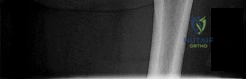
An ALPSA lesion involves the anterior labrum being stripped from the glenoid margin but remaining attached to the intact periosteum of the scapula. It typically rolls medially and inferiorly down the glenoid neck. A classic Bankart lesion is a complete avulsion of the labrum and capsule without intact periosteum.

Question 8

A water skier sustains a forced hyperflexion injury of the hip with an extended knee. MRI shows a complete proximal hamstring avulsion with 4 cm of retraction. Which of the following nerves is at greatest risk of injury during surgical repair?


Explanation

The sciatic nerve lies immediately lateral to the ischial tuberosity and the proximal hamstring origin. It is at significant risk of injury or tethering during repair of a retracted proximal hamstring avulsion.

Question 9

A 40-year-old weightlifter feels a pop in his elbow while doing heavy curls. Physical examination demonstrates a positive Hook test. When repairing a distal biceps tendon rupture using a single anterior incision approach, which nerve is at highest risk of injury?


Explanation

The lateral antebrachial cutaneous nerve (LABCN) runs in the subcutaneous tissue over the lateral aspect of the antecubital fossa and is the most commonly injured nerve during a single-incision distal biceps repair. The PIN is more at risk in a two-incision approach or with deep retractor placement.

Question 10

Nonoperative management of an acute Achilles tendon rupture using a functional rehabilitation protocol has been shown to result in which of the following compared to traditional immobilization?


Explanation

Modern nonoperative management of acute Achilles tendon ruptures with early functional rehabilitation (early weight-bearing in a boot with wedges and active range of motion) has been shown to have rerupture rates comparable to surgical repair, with improved functional outcomes compared to traditional prolonged cast immobilization.

Question 11

In a 14-year-old male with an osteochondritis dissecans (OCD) lesion of the knee, which radiographic location is most classic for this condition?


Explanation
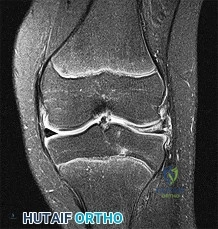
The classic and most common location for an OCD lesion of the knee is the lateral aspect of the medial femoral condyle (LAME - Lateral Aspect Medial Epicondyle/condyle).

Question 12

A 22-year-old hockey player presents with groin pain worsened by hip flexion and internal rotation. Radiographs reveal a cam-type deformity. What anatomical location on the proximal femur is most commonly associated with a cam lesion?


Explanation

Cam impingement is typically caused by an aspherical femoral head with decreased offset, most commonly located at the anterolateral head-neck junction. This causes abutment against the anterosuperior acetabular rim during flexion and internal rotation.

Question 13

During arthroscopic evaluation of a shoulder, the surgeon identifies a tear of the superior third of the subscapularis tendon. According to the Fox/Romeo classification, what type of tear does this represent?


Explanation

In the Fox/Romeo classification of subscapularis tears: Type I is a partial thickness tear, Type II is a full-thickness tear of the upper 25% (or upper third), Type III is a full-thickness tear of the upper 50%, Type IV is a full-thickness tear involving the entire tendon with the humeral head centered, and Type V is a complete tear with anterior subluxation of the humeral head.

Question 14

A 28-year-old cyclist falls directly onto his shoulder. X-rays show a Rockwood Type III acromioclavicular (AC) joint separation. What defines a Type III injury?


Explanation
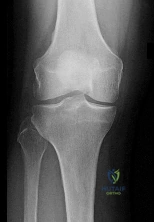
A Rockwood Type III AC joint separation involves tearing of both the acromioclavicular (AC) and coracoclavicular (CC) ligaments, with the distal clavicle displaced superiorly between 25% and 100% of the normal CC distance compared to the contralateral side.

Question 15

A patient sustains a KD-III knee dislocation (ACL, PCL, and PMC/MCL torn, PLC intact). Following acute reduction, vascular examination reveals diminished distal pulses. An ABI is calculated at 0.7. What is the most appropriate next step in management?


Explanation

In the setting of a knee dislocation, an Ankle-Brachial Index (ABI) less than 0.9 is highly suspicious for a vascular injury (specifically the popliteal artery). The next best step is a CT angiogram or standard angiogram to delineate the injury, unless the limb is frankly ischemic with hard signs (absent pulses, expanding hematoma, pulsatile bleeding), which would warrant immediate surgical exploration.

Question 16

A football player sustains a syndesmotic ankle sprain. Which ligament is typically the first to tear in a syndesmotic injury?


Explanation

In a syndesmotic injury (high ankle sprain), the progression of tearing typically begins anteriorly with the anterior inferior tibiofibular ligament (AITFL), followed by the interosseous ligament/membrane, and finally the posterior inferior tibiofibular ligament (PITFL).

Question 17

The supraspinatus and infraspinatus tendons insert on the greater tuberosity. Which of the following accurately describes the anatomy of the supraspinatus footprint?


Explanation

The supraspinatus tendon footprint is described as triangular, being broader anteriorly and tapering posteriorly, and inserts on the superior facet of the greater tuberosity. The infraspinatus has a much larger footprint overall, covering the middle facet and sweeping anteriorly to cover part of the superior facet.

Question 18

A 20-year-old basketball player presents with anterior knee pain localized to the inferior pole of the patella. Conservative measures have failed. Ultrasound reveals a hypoechoic region at the proximal patellar tendon. What is the characteristic histopathologic finding of this lesion?


Explanation

Patellar tendinopathy (Jumper's knee) is primarily a degenerative condition rather than an inflammatory one. The characteristic histopathologic finding is angiofibroblastic hyperplasia (tendinosis), marked by disorganized collagen, hypercellularity, and neovascularization, without a significant presence of acute inflammatory cells.

Question 19

A baseball pitcher complains of deep shoulder pain during the cocking phase of throwing. MRI arthrogram suggests a Type II SLAP tear. What is the defining feature of a Type II SLAP tear?


Explanation

The Snyder classification of SLAP tears: Type I is fraying of the labrum with an intact biceps anchor. Type II is detachment of the superior labrum and biceps anchor from the superior glenoid rim. Type III is a bucket-handle tear of the labrum with an intact biceps anchor. Type IV is a bucket-handle tear that extends into the long head of the biceps tendon.

Question 20

In a patient undergoing posterior cruciate ligament (PCL) reconstruction using a tibial inlay technique, the patient is placed in the prone position. The approach to the posterior knee involves dissecting between which two structures to access the PCL footprint?


Explanation

The posteromedial approach to the knee for a tibial inlay PCL reconstruction utilizes the interval between the medial head of the gastrocnemius (which is retracted laterally to protect the neurovascular bundle) and the semimembranosus (retracted medially). This exposes the posterior joint capsule and the tibial footprint of the PCL.

Question 21

During an anatomic single-bundle anterior cruciate ligament (ACL) reconstruction, the surgeon aims to place the femoral tunnel within the native footprint.

Which of the following osseous landmarks designates the anterior border of the native ACL femoral footprint?


Explanation

The lateral intercondylar ridge, also known as Resident's ridge, marks the anterior margin of the ACL footprint on the medial aspect of the lateral femoral condyle. The lateral bifurcate ridge separates the anteromedial and posterolateral bundles.

Question 22

The posterior cruciate ligament (PCL) consists of two main functional bundles. Which of the following statements best describes the biomechanics and relative size of the anterolateral (AL) bundle?


Explanation

The anterolateral (AL) bundle is the larger and stiffer of the two PCL bundles. It is maximally tight in knee flexion, whereas the smaller posteromedial (PM) bundle is tight in extension.

Question 23

A 22-year-old female complains of medial knee pain and an inability to flex her knee past 70 degrees following a medial patellofemoral ligament (MPFL) reconstruction. Which of the following surgical errors is the most likely cause of this complication?


Explanation

Placement of the femoral tunnel too proximal and anterior to the anatomic Schöttle's point causes the MPFL graft to become excessively tight in flexion. This leads to restricted knee flexion and elevated medial compartment pressures.

Question 24

A 24-year-old rugby player undergoes a Latarjet procedure for recurrent anterior shoulder instability with 25% glenoid bone loss.

What is the primary dynamic stabilizing mechanism of this procedure?


Explanation

While the Latarjet provides an osseous block (static), its primary dynamic stabilizing effect is the 'sling effect'. The conjoint tendon tensions across the anterior-inferior capsule during abduction and external rotation, preventing anterior translation.

Question 25

A patient presents with a suspected multiligamentous knee injury following a motorcycle collision. The Dial test demonstrates 15 degrees of increased external rotation at 30 degrees of flexion compared to the contralateral side, but symmetric external rotation at 90 degrees. This finding is most consistent with an isolated injury to which of the following?


Explanation

A positive Dial test (increased external rotation of >10 degrees) at 30 degrees of flexion that reduces at 90 degrees indicates an isolated injury to the posterolateral corner (PLC). If the test is positive at both 30 and 90 degrees, it indicates a combined PLC and PCL injury.

Question 26

A 28-year-old elite volleyball player presents with insidious onset of posterior shoulder pain and isolated weakness in external rotation. MRI reveals a paralabral cyst compressing a nerve at the spinoglenoid notch. Which muscle(s) will most likely exhibit denervation changes on EMG?


Explanation

The suprascapular nerve innervates the supraspinatus before passing through the spinoglenoid notch. Compression at the spinoglenoid notch isolatedly affects the nerve branches to the infraspinatus, causing isolated external rotation weakness.

Question 27

Which of the following descriptions best defines a 'ramp lesion' in the setting of an acute ACL rupture?


Explanation

A ramp lesion is a hidden longitudinal tear or disruption of the meniscocapsular junction at the posterior horn of the medial meniscus. It is highly associated with ACL tears and is best visualized arthroscopically via a posteromedial portal.

Question 28

A 35-year-old male bodybuilder feels a 'pop' in his anterior elbow during a deadlift. Examination reveals a positive hook test. If an anterior single-incision surgical repair using cortical button fixation is chosen, which nerve is at the highest risk of iatrogenic injury?


Explanation

The lateral antebrachial cutaneous nerve (LABCN) is the most commonly injured nerve during a single-incision anterior approach for distal biceps repair due to its superficial location in the surgical field. PIN injury is more classically associated with the two-incision technique.

Question 29

A 25-year-old hockey player presents with chronic groin pain exacerbated by hip flexion and internal rotation. Radiographs demonstrate an alpha angle of 65 degrees. What is the primary pathomorphologic mechanism of cartilage damage in this condition?


Explanation

An alpha angle >55 degrees is diagnostic of Cam impingement. The non-spherical femoral head exerts severe shear forces on the acetabular rim during flexion, classically causing anterosuperior chondral delamination from the subchondral bone.

Question 30

A 20-year-old collegiate baseball pitcher reports posteromedial elbow pain specifically during the deceleration phase of throwing. Physical exam reveals a 15-degree lack of terminal extension and pain with forced extension. What is the most likely underlying pathology?


Explanation

Valgus extension overload syndrome results from repetitive valgus stress and olecranon impingement in the posteromedial fossa. It presents with pain during deceleration, loss of terminal extension, and posteromedial osteophytes.

Question 31

In the overhead throwing athlete, a Type II Superior Labrum Anterior to Posterior (SLAP) tear is most commonly generated during which phase of the throwing motion due to the 'peel-back' mechanism?


Explanation

The 'peel-back' mechanism occurs during the late cocking phase of throwing when the shoulder is in maximal abduction and external rotation. This position causes the biceps vector to shift posteriorly, twisting the superior labrum off the glenoid.

Question 32

A 19-year-old basketball player sustains a zone 2 fracture (Jones fracture) of the fifth metatarsal. Intramedullary screw fixation is recommended over non-operative management primarily due to the high risk of nonunion. What anatomical factor most directly contributes to this nonunion risk?


Explanation

Zone 2 of the fifth metatarsal represents a vascular watershed area between the metaphyseal and diaphyseal blood supplies. This tenuous blood supply is the primary reason for the high rates of delayed union and nonunion in athletes.

Question 33

A 30-year-old weightlifter feels a tearing sensation in his anterior chest wall while bench pressing. MRI confirms a complete pectoralis major rupture. Which segment of the pectoralis major is most commonly ruptured in this mechanism, and what is its normal anatomic insertion?


Explanation

During bench pressing, the sternal head of the pectoralis major is stretched maximally and most commonly ruptures. Anatomically, the sternal head twists 180 degrees to insert deep and proximal to the clavicular head on the lateral lip of the bicipital groove.

Question 34

A 22-year-old athlete has a symptomatic 3.5 square centimeter full-thickness chondral defect on the weight-bearing surface of the medial femoral condyle. He has normal limb alignment and an intact meniscus. What is the most appropriate, evidence-based surgical intervention?


Explanation

For contained, large (>2 cm^2) full-thickness chondral defects in patients with normal alignment, MACI or osteochondral allograft are preferred. Microfracture and OATS are generally reserved for smaller defects (<2 cm^2) due to inferior outcomes and donor site morbidity.

Question 35

Which of the following locations is the classic and most common site for osteochondritis dissecans (OCD) lesions within the knee joint?


Explanation

The classic location for an OCD lesion of the knee is the lateral aspect of the medial femoral condyle. This accounts for roughly 70-80% of all knee OCD lesions.

Question 36

A 26-year-old cyclist falls directly onto his shoulder. Radiographs reveal a Type V acromioclavicular (AC) joint injury. Which of the following strict criteria distinguishes a Type V injury from a Type III injury?


Explanation

A Type V AC joint injury is characterized by severe superior displacement (>100% to 300% compared to the contralateral side). This massive displacement occurs because the deltotrapezial fascia is extensively stripped from the distal clavicle.

Question 37

A trauma patient presents with a Schenck KD III-L multiligament knee injury (disruption of the ACL, PCL, and posterolateral corner). What is the approximate incidence of common peroneal nerve injury associated with this specific injury pattern?


Explanation

Multiligament knee injuries involving the posterolateral corner (KD III-L or KD IV) carry the highest risk of common peroneal nerve injury. The reported incidence generally ranges from 16% to 30% (averaging around 25%).

Question 38

A 21-year-old baseball pitcher presents with posterior shoulder pain during the late cocking phase of throwing. Arthroscopy reveals 'kissing lesions' consisting of fraying of the articular-sided posterior supraspinatus and posterosuperior labrum. This internal impingement pathology is classically associated with which glenohumeral physical exam finding?


Explanation

Internal impingement in overhead throwers occurs when the articular side of the rotator cuff impinges against the posterosuperior glenoid. It is classically driven by acquired contracture of the posterior capsule, presenting clinically as Glenohumeral Internal Rotation Deficit (GIRD).

Question 39

The anterolateral ligament (ALL) of the knee is an important secondary stabilizer against anterolateral rotatory instability. Where does the ALL typically insert on the tibia?


Explanation

The ALL originates near the lateral epicondyle and inserts on the anterolateral tibia, approximately midway between Gerdy's tubercle and the fibular head. It acts as a secondary restraint to internal tibial rotation.

Question 40

A 24-year-old athlete undergoes an isolated anterior cruciate ligament reconstruction using a bone-patellar tendon-bone (BPTB) autograft. Compared to a hamstring autograft, which of the following is a statistically higher risk postoperatively?


Explanation

Bone-patellar tendon-bone (BPTB) autografts are associated with a higher incidence of donor-site morbidity. Specifically, patients experience higher rates of anterior knee pain and kneeling pain compared to those receiving hamstring autografts.

Question 41

When evaluating the posterior cruciate ligament (PCL), it is structurally divided into anterolateral (AL) and posteromedial (PM) bundles. Which of the following best describes their biomechanical behavior?


Explanation

The larger AL bundle is tightest in flexion and is the primary restraint to posterior translation at 90 degrees. The smaller PM bundle is tightest in full extension.

Question 42

A 19-year-old collegiate wrestler requires a Latarjet procedure for recurrent anterior shoulder instability with 25% glenoid bone loss. The "sling effect" provided by this procedure is primarily dependent on which of the following structures?


Explanation

The Latarjet procedure provides stability via a triple blocking effect. The dynamic "sling effect" of the conjoint tendon across the inferior subscapularis when the arm is abducted and externally rotated is a critical component.

Question 43

A 35-year-old male sustains an acute distal biceps tendon rupture and undergoes surgical repair via a classic two-incision approach. Which of the following complications is more commonly associated with this technique compared to a single anterior incision approach?


Explanation

The classic two-incision approach for distal biceps repair increases the risk of heterotopic ossification and proximal radioulnar synostosis due to subperiosteal elevation around the ulna. The single anterior incision carries a higher risk of lateral antebrachial cutaneous (LABC) neuropraxia.

Question 44

A 28-year-old soccer player is diagnosed with a syndesmotic injury (high ankle sprain). If plain radiographs are equivocal, what is the most sensitive imaging modality to assess the integrity and dynamic reduction of the distal tibiofibular syndesmosis?


Explanation

Axial CT imaging is the gold standard for evaluating syndesmotic reduction. It clearly delineates the anatomic relationship and distances between the distal tibia and fibula compared to the contralateral normal side.

Question 45

In the surgical management of Femoroacetabular Impingement (FAI), a cam lesion is typically addressed. This lesion causes cartilage damage primarily through which of the following mechanisms?


Explanation

A cam lesion results from decreased femoral head-neck offset. As it enters the joint in flexion, it creates shear forces that lead to classic outside-in chondral delamination and labral tears at the anterosuperior acetabulum.

Question 46

A patient with recurrent patellar instability is evaluated. Advanced imaging reveals a tibial tubercle to trochlear groove (TT-TG) distance of 24 mm. Which of the following surgical interventions is most appropriate to normalize the extensor mechanism alignment?


Explanation

A TT-TG distance greater than 20 mm is a classic indication for an anteromedial tibial tubercle osteotomy (Fulkerson procedure). This effectively centralizes the patella and decreases lateral translation forces.

Question 47

The posterolateral corner (PLC) of the knee is crucial for resisting varus and external rotation forces. Which three structures are considered the primary static stabilizers of the PLC?


Explanation

The primary static stabilizers of the posterolateral corner are the fibular collateral ligament (FCL), the popliteus tendon, and the popliteofibular ligament.

Question 48

During arthroscopic repair of a type II SLAP tear, over-tensioning of the anterior-superior labrum or the middle glenohumeral ligament (MGHL) should be carefully avoided to prevent which of the following postoperative clinical deficits?


Explanation

Over-tensioning the anterior-superior labrum and associated capsule, particularly incorporating the MGHL during SLAP repair, restricts the capsular tissue. This most commonly results in a significant postoperative loss of external rotation.

Question 49

A 22-year-old baseball pitcher undergoes an ulnar collateral ligament (UCL) reconstruction. The anterior bundle of the UCL is the primary restraint to valgus stress. Which specific band of the anterior bundle provides the primary restraint during early flexion (0 to 60 degrees)?


Explanation

The anterior bundle of the UCL is composed of anterior and posterior bands. The anterior band is the primary restraint to valgus stress in early flexion (up to 60 degrees), while the posterior band provides stability in deeper flexion.

Question 50

A 20-year-old football player sustains an anterior shoulder dislocation. MRI reveals an "off-track" Hill-Sachs lesion. In addition to an arthroscopic Bankart repair, which procedure is most indicated to prevent recurrent instability?


Explanation

An "off-track" Hill-Sachs lesion engages the anterior glenoid rim during abduction and external rotation, predicting failure of isolated Bankart repair. Arthroscopic remplissage (capsulotenodesis of the infraspinatus into the defect) effectively converts it to a non-engaging, on-track lesion.

Question 51

When evaluating a patient with a suspected rotator cuff tear, which of the following physical examination tests is most sensitive and specific for identifying an isolated upper subscapularis tendon tear?


Explanation

The Bear-hug test is highly sensitive and specific for upper subscapularis tears. In contrast, the Lift-off test is more specific to the lower portion of the subscapularis tendon.

Question 52

During posterior cruciate ligament (PCL) reconstruction, understanding the native anatomy is crucial. The PCL consists of two main bundles. Which of the following best describes their tensioning pattern during knee motion?


Explanation

The PCL is composed of a larger anterolateral (AL) bundle and a smaller posteromedial (PM) bundle. The AL bundle is tight in flexion and is the primary restraint to posterior translation at 90 degrees, while the PM bundle is tight in extension.

Question 53

A 22-year-old rugby player with recurrent anterior shoulder instability and 25% glenoid bone loss undergoes a Latarjet procedure. During the coracoid osteotomy and transfer, which nerve is at the greatest risk of iatrogenic injury during deep medial retraction?


Explanation

The musculocutaneous nerve enters the coracobrachialis approximately 5-8 cm distal to the coracoid tip. It is at significant risk of traction injury during deep medial retraction or if the coracoid osteotomy is taken too distally.

Question 54

A patient presents with a suspected posterolateral corner (PLC) injury of the knee. The dial test demonstrates 15 degrees of increased external rotation compared to the contralateral knee at 30 degrees of flexion, but symmetric rotation at 90 degrees of flexion. What is the most likely injury pattern?


Explanation

A positive dial test (>10 degrees of asymmetric external rotation) isolated to 30 degrees of flexion indicates an isolated PLC injury. If the test remains positive at both 30 and 90 degrees, it suggests a combined PLC and PCL injury.

Question 55

During an anatomic anterior cruciate ligament (ACL) reconstruction, the surgeon places the femoral tunnel too anteriorly (high in the notch). Which of the following best describes the resulting graft tension pattern?


Explanation

A femoral tunnel placed too anteriorly results in a graft that becomes tight in flexion and loose in extension. This non-anatomic placement often leads to restricted knee flexion or eventual graft stretching and failure.

Question 56

A 24-year-old athlete sustains a multiligament knee injury. Following closed reduction of the knee dislocation, the patient's Ankle-Brachial Index (ABI) is calculated to be 0.85. What is the most appropriate next step in management?


Explanation

An ABI of less than 0.9 following a knee dislocation is indicative of potential arterial injury and mandates further advanced imaging with a CTA. Hard signs of vascular injury, such as expanding hematoma or absent pulses, would require immediate surgical exploration.

Question 57

Which of the following statements accurately describes the calculation of the 'Glenoid Track' in evaluating anterior shoulder instability?


Explanation

The glenoid track is calculated as 83% of the normal inferior glenoid width subtracted by the amount of anterior glenoid bone loss. A Hill-Sachs lesion wider than this track is considered 'off-track' and carries a higher risk of engagement and recurrent dislocation.

Question 58

A 28-year-old volleyball player presents with isolated weakness in shoulder external rotation. MRI reveals a paralabral cyst located at the spinoglenoid notch. Which labral pathology is most commonly associated with this specific finding?


Explanation

Paralabral cysts at the spinoglenoid notch typically cause isolated suprascapular nerve compression affecting only the infraspinatus. They are highly associated with posterior SLAP or posteroinferior labral tears, which allow synovial fluid to leak and form the cyst.

Question 59

In the surgical treatment of a high-grade acromioclavicular (AC) joint separation, reconstruction of the coracoclavicular (CC) ligaments is planned. What is the normal anatomic orientation of the native conoid and trapezoid ligaments?


Explanation

The coracoclavicular ligament complex consists of the conoid and trapezoid. The conoid is situated medial and posterior, while the trapezoid is lateral and anterior. Anatomic reconstruction aims to replicate these specific footprint locations.

None

Clinic OS
Medically Verified Content by
Prof. Clinic OS
Consultant Orthopedic & Spine Surgeon
Chapter Index
