Full Question & Answer Text (for Search Engines)
Question 1:
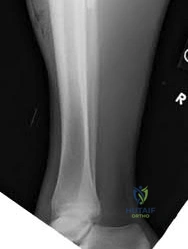
A 68-year-old female on long-term alendronate for osteoporosis presents with 3 months of progressive dull ache in her left thigh, exacerbated by walking. Radiographs show a unilateral, transverse cortical thickening on the lateral aspect of the subtrochanteric femur, with a small radiolucent line visible on the tension side. She denies trauma. What is the most appropriate initial management step?
Options:
- Immediate discontinuation of alendronate and observation.
- Prophylactic intramedullary nailing of the affected femur.
- CT scan to rule out metastatic disease.
- Biopsy of the lesion to confirm diagnosis.
- Switch alendronate to teriparatide and monitor.
Correct Answer: Prophylactic intramedullary nailing of the affected femur.
Explanation:
The clinical presentation (prodromal pain, location, long-term bisphosphonate use) and radiological findings (transverse cortical thickening, radiolucent line on tension side) are highly suggestive of an incomplete atypical femoral fracture (AFF). Current guidelines recommend prophylactic intramedullary nailing for symptomatic incomplete AFFs, especially if the cortical breach is evident, to prevent a complete fracture which carries high morbidity. Discontinuation of bisphosphonates is indicated but not the primary management for an impending fracture. A CT scan might be done but is not the most appropriate initial management step for the impending fracture itself once the diagnosis is strongly suspected clinically and radiographically. Biopsy is not typically needed as the diagnosis is clinical and radiographic. Switching to teriparatide might aid bone healing but does not address the immediate risk of fracture.
Question 2:
A 72-year-old female presents with severe low back pain radiating into her bilateral thighs, worse with standing and walking, significantly limiting her ambulation distance. She has a history of progressive worsening spinal deformity. Examination reveals a trunk shift to the left, mild right hip flexion contracture, and neurological deficits consistent with multilevel lumbar stenosis. Imaging shows a lumbar scoliotic curve with significant sagittal imbalance (C7 plumb line > 5cm anterior to sacral promontory) and degenerative changes at multiple levels. Despite extensive conservative treatment, her pain remains debilitating (ODI score 65). Which surgical strategy is most likely to provide durable symptomatic relief and correction of deformity?
Options:
- Decompression alone at the stenotic levels.
- Limited fusion (1-2 levels) at the most painful segments.
- Minimally invasive lateral lumbar interbody fusion (LLIF) with short segment fusion.
- Long-segment posterior spinal fusion extending from the thoracolumbar junction to the sacrum with pedicle screw instrumentation and interbody support.
- Laminectomy and foraminotomy without fusion.
Correct Answer: Long-segment posterior spinal fusion extending from the thoracolumbar junction to the sacrum with pedicle screw instrumentation and interbody support.
Explanation:
The patient presents with severe adult degenerative scoliosis with significant sagittal imbalance (C7 plumb line > 5cm), neurological symptoms (lumbar stenosis), and functional limitation (high ODI score) despite conservative care. Decompression alone or limited fusion will likely lead to progression of deformity, junctional kyphosis, and persistent pain due to the uncorrected sagittal imbalance and continued instability. Minimally invasive short-segment fusions may not adequately address severe multilevel deformity and sagittal imbalance. A long-segment posterior spinal fusion from the thoracolumbar junction to the sacrum, combined with interbody support to restore lordosis and correct coronal deformity, is the most appropriate and durable solution for significant adult degenerative scoliosis with global imbalance.
Question 3:
A 60-year-old male with a history of prostate cancer (Gleason 7, stage T2N0M0, treated with prostatectomy 5 years prior) presents with new-onset severe mid-thoracic back pain, bilateral lower extremity weakness, and urinary retention. MRI of the spine shows a T7 vertebral body pathological fracture with significant spinal cord compression. What is the most appropriate initial management step?
Options:
- Immediate high-dose corticosteroids.
- Urgent surgical decompression and stabilization.
- Radiation therapy to the T7 lesion.
- Biopsy of the lesion for definitive diagnosis.
- Chemotherapy based on prostate cancer recurrence protocol.
Correct Answer: Immediate high-dose corticosteroids.
Explanation:
This patient presents with acute onset neurological deficits (lower extremity weakness, urinary retention) due to suspected spinal cord compression from a pathological fracture secondary to metastatic prostate cancer. The immediate priority is to reduce spinal cord edema and prevent further neurological deterioration. High-dose corticosteroids (e.g., dexamethasone) are crucial for this purpose and should be administered immediately upon suspicion of cord compression. While urgent surgical decompression and stabilization (B) may be indicated, corticosteroids are the first step. Radiation (C) is a definitive treatment but is not immediate enough for acute cord compression. Biopsy (D) is important for diagnosis but must follow corticosteroids, especially if the primary is unknown or atypical presentation. Chemotherapy (E) is a systemic treatment and not for acute cord compression.
Question 4:
A 35-year-old male is brought to the ER after a high-speed motor vehicle collision. He is hypotensive (BP 80/40 mmHg), tachycardic (HR 130 bpm), and has bilateral femur fractures, an open tibia fracture, and obvious chest trauma. After initial resuscitation with fluids and blood, his vital signs remain unstable. What is the most appropriate orthopedic management strategy in this scenario?
Options:
- Immediate intramedullary nailing of both femur fractures and external fixation of the open tibia fracture.
- External fixation of both femur fractures and the open tibia fracture, followed by re-evaluation.
- Damage control orthopedics focusing on temporary stabilization of the most critical injuries (e.g., external fixation of femurs), followed by definitive fixation once stable.
- Definitive open reduction internal fixation (ORIF) of all fractures simultaneously to minimize overall surgical time.
- Splinting all fractures and transferring the patient to a higher-level trauma center.
Correct Answer: Damage control orthopedics focusing on temporary stabilization of the most critical injuries (e.g., external fixation of femurs), followed by definitive fixation once stable.
Explanation:
The patient is physiologically unstable (hypotensive, tachycardic) despite initial resuscitation, indicating ongoing shock and a high risk of complications from prolonged definitive surgery. In such cases, the principle of 'Damage Control Orthopedics' (DCO) is paramount. This involves temporary stabilization of critical long bone fractures (e.g., femur fractures, open tibia fractures) using external fixation to control hemorrhage, reduce pain, and facilitate patient transport and resuscitation, without subjecting the patient to the physiological stress of definitive, lengthy procedures. Once physiological stability is achieved (usually 24-72 hours later), definitive fixation is performed. Immediate definitive nailing (A) or simultaneous definitive ORIF (D) is contraindicated in unstable patients due to the risk of exacerbating the systemic inflammatory response ('second hit') and worsening outcomes. External fixation of all fractures (B) is part of DCO, but the specific wording 'Damage control orthopedics focusing on temporary stabilization... followed by definitive fixation once stable' better encapsulates the comprehensive strategy. Splinting and transfer (E) might be relevant if the receiving hospital cannot perform DCO, but it's not the management strategy itself for an orthopedic surgeon in an appropriate facility.
Question 5:
A 3-year-old child successfully treated with the Ponseti method for congenital talipes equinovarus (CTEV) presents with recurrent equinus and varus deformity despite good initial correction and compliance with bracing. Physical examination confirms mild residual hindfoot varus and equinus, but the foot remains flexible. What is the most appropriate next step in management?
Options:
- Repeat serial casting with the Ponseti method.
- Posteromedial release surgery.
- Tibialis anterior tendon transfer.
- Calcaneal osteotomy.
- Orthotic shoe inserts and observation.
Correct Answer: Tibialis anterior tendon transfer.
Explanation:
For a recurrent, flexible clubfoot deformity in a child previously treated with Ponseti, a tibialis anterior tendon transfer (usually to the cuboid or third cuneiform) is a common and effective procedure. This addresses the dynamic imbalance (overpull of tibialis anterior in supination) that contributes to the recurrence, without the morbidity of a full posteromedial release. Repeat casting (A) might be considered for very mild, flexible recurrence, but if bracing compliance was good and recurrence still occurred, it's less likely to be definitive. Posteromedial release (B) is reserved for rigid, severe recurrences or initial failed casting. Calcaneal osteotomy (D) is typically used for more severe fixed valgus or varus deformities, often in older children. Orthotic inserts (E) alone are insufficient for a recurrent deformity.
Question 6:
A 70-year-old female undergoes a revision total hip arthroplasty due to aseptic loosening of the femoral component. Intraoperatively, during femoral component extraction, a longitudinal fracture of the proximal femur is noted, extending just distal to the lesser trochanter. The fracture is non-displaced and appears stable. The new revision stem provides good press-fit distal fixation past the fracture. What is the appropriate management of this intraoperative fracture (Vancouver B1 equivalent)?
Options:
- No specific treatment, rely on the new stem for stabilization.
- Cerclage wiring or cable fixation around the fracture.
- Plate and screw fixation of the fracture.
- Remove the revision stem, perform open reduction internal fixation, then reinsert the stem.
- Convert to a longer, cemented stem.
Correct Answer: Cerclage wiring or cable fixation around the fracture.
Explanation:
This scenario describes an intraoperative periprosthetic fracture, specifically a Vancouver B1 equivalent (fracture around a well-fixed stem, or, in this case, a new stem providing good distal fixation past the fracture). For stable, non-displaced fractures that are engaged by the new stem, cerclage wiring or cabling (B) is the most appropriate and common method to achieve compression and rotational stability, promoting healing without compromising the primary stability of the prosthesis. Relying on the stem alone (A) is risky for healing. Plate and screw fixation (C) might be overtreatment or could interfere with stem stability/biology. Removing the stem (D) is unnecessary and would jeopardize the revision. Converting to a longer, cemented stem (E) is not indicated if the press-fit stem provides good fixation past the fracture.
Question 7:
A 65-year-old male, 6 months post-total knee arthroplasty, presents with acute onset of severe knee pain, warmth, swelling, and fever (38.5°C). Aspiration of the knee joint yields cloudy fluid with a white blood cell count of 120,000 cells/µL, 95% neutrophils, and positive gram stain for Gram-positive cocci in clusters. He is hemodynamically stable. What is the most appropriate management?
Options:
- Oral antibiotics and observation.
- Intravenous antibiotics and urgent debridement, antibiotics, and implant retention (DAIR).
- Two-stage revision arthroplasty.
- Arthrodesis.
- Above-knee amputation.
Correct Answer: Intravenous antibiotics and urgent debridement, antibiotics, and implant retention (DAIR).
Explanation:
This patient presents with an acute prosthetic joint infection (PJI) within the 'acute hematogenous' window (typically up to 6 months, though sometimes longer). The key indicators for DAIR (Debridement, Antibiotics, and Implant Retention) are: acute onset (symptoms <3 weeks), a well-fixed implant, and a susceptible organism, in a stable patient. The high WBC count and Gram-positive cocci confirm active infection. DAIR aims to eradicate the infection while preserving the functional implant. Oral antibiotics alone (A) are insufficient for acute PJI. Two-stage revision (C) is typically reserved for chronic PJI or failed DAIR. Arthrodesis (D) or amputation (E) are salvage procedures for failed multiple revisions or intractable infection.
Question 8:
A 40-year-old manual laborer presents with chronic, progressive wrist pain localized to the dorsum of the wrist, particularly over the lunate, and weakness of grip. Radiographs show increased sclerosis and collapse of the lunate bone, with a negative ulnar variance. MRI confirms advanced avascular necrosis of the lunate (Lichtman Stage IIIA/IIIB). What is the most appropriate surgical management for this patient?
Options:
- Radial shortening osteotomy.
- Proximal row carpectomy.
- Excision of the lunate (Lunatectomy).
- Wrist arthrodesis.
- Lunate revascularization with vascularized bone graft.
Correct Answer: Radial shortening osteotomy.
Explanation:
Kienbock's disease is avascular necrosis of the lunate. Given the chronic pain, progressive collapse, and specifically the negative ulnar variance, a radial shortening osteotomy (A) is an appropriate treatment. This procedure aims to unload the lunate by shortening the radius, thereby reducing compressive forces across the radiocarpal joint and potentially improving vascularity or preventing further collapse. Proximal row carpectomy (B) or wrist arthrodesis (D) are salvage procedures reserved for more advanced stages (Lichtman Stage IV) with significant arthritic changes. Lunatectomy (C) alone is generally not recommended due to carpal instability. Lunate revascularization (E) with vascularized bone graft is primarily considered for earlier stages (Lichtman Stage II) before significant collapse or sclerosis.
Question 9:
A 55-year-old diabetic male with severe peripheral neuropathy presents with a rapidly developing, painless swelling and erythema of his left midfoot. Radiographs show disorganization, fragmentation, and subluxation of the tarsometatarsal joints, with significant bone destruction but no overt signs of infection. ESR and CRP are mildly elevated. What is the most crucial initial management strategy?
Options:
- Urgent surgical fusion of the midfoot joints.
- Non-weight-bearing in a total contact cast (TCC) or removable walker boot.
- Aggressive antibiotic therapy.
- Biopsy of the affected joints to rule out osteomyelitis.
- Physical therapy to maintain range of motion.
Correct Answer: Non-weight-bearing in a total contact cast (TCC) or removable walker boot.
Explanation:
The patient's presentation (diabetic neuropathy, painless swelling, erythema, rapid onset, radiographic changes of disorganization/fragmentation without infection) is classic for acute Charcot arthropathy (Eichenholtz Stage 1). The paramount initial management is strict non-weight-bearing and immobilization in a total contact cast (TCC) or a custom removable walker boot (CROW boot) to protect the collapsing foot and prevent further destruction. Urgent surgical fusion (A) is typically reserved for stable, chronic deformities or acute unstable fractures that cannot be controlled non-operatively. Aggressive antibiotics (C) are not indicated unless infection is proven. While ruling out osteomyelitis (D) can be important, it's usually secondary to clinical suspicion and imaging, and the primary management for acute Charcot remains immobilization. Physical therapy (E) is contraindicated in the acute phase due to the risk of exacerbating joint destruction.
Question 10:
A 28-year-old male sustains a spiral fracture of the tibia. He is treated with intramedullary nailing, achieving rigid fixation and appropriate alignment. What is the predominant mode of bone healing expected in this scenario?
Options:
- Secondary bone healing via callus formation.
- Primary bone healing (direct/contact healing).
- Intramembranous ossification.
- Cartilaginous healing.
- Distraction osteogenesis.
Correct Answer: Secondary bone healing via callus formation.
Explanation:
Intramedullary nailing, while providing robust stabilization, typically allows for some micromotion at the fracture site (relative stability). This environment promotes secondary bone healing, which involves the formation of a periosteal and endosteal callus, followed by remodeling. Primary (direct/contact) bone healing (B) occurs only with absolute rigidity (e.g., lag screw compression or compression plating) where there is no gap and no motion. Intramembranous ossification (C) is a type of bone formation, but the mode of healing in a fracture is primary or secondary. Cartilaginous healing (D) is part of secondary healing, but 'secondary bone healing' is the overarching term. Distraction osteogenesis (E) is a specific technique for limb lengthening, not a natural mode of fracture healing.
Question 11:
A 14-year-old male presents with intermittent knee pain. Radiographs show an eccentric, lucent lesion with a sclerotic rim in the proximal tibia metaphysis, consistent with a non-ossifying fibroma (NOF). The lesion measures 3 cm in greatest dimension and occupies less than 50% of the cortical diameter. What is the most appropriate management?
Options:
- Observation with serial radiographs.
- Intralesional curettage and bone grafting.
- En bloc resection.
- Percutaneous injection of sclerosing agents.
- Radiation therapy.
Correct Answer: Observation with serial radiographs.
Explanation:
Small, asymptomatic or mildly symptomatic non-ossifying fibromas (NOFs) occupying less than 50% of the cortical diameter are typically managed with observation due to their high rate of spontaneous regression. Surgical intervention (curettage and grafting) (B) is generally reserved for large, symptomatic lesions (e.g., >50% cortical diameter, risk of pathological fracture, persistent pain). En bloc resection (C) is overly aggressive for an NOF. Sclerosing agents (D) are not standard for NOFs. Radiation therapy (E) is not used for benign bone lesions due to risks. Therefore, observation with serial radiographs is the most appropriate initial management for this small, mildly symptomatic lesion.
Question 12:
A 60-year-old female presents with chronic low back pain, bilateral lower extremity radicular pain, and neurogenic claudication. Imaging reveals a Grade II degenerative lumbar spondylolisthesis at L4-L5 with severe spinal stenosis and instability (dynamic flexion-extension radiographs show translation >4mm). She has failed 6 months of comprehensive non-operative treatment. What is the most appropriate surgical intervention?
Options:
- Decompression alone (laminectomy).
- Minimally invasive microdiscectomy.
- Instrumented posterior lumbar interbody fusion (PLIF) at L4-L5.
- Anterior lumbar interbody fusion (ALIF) alone.
- Transforaminal lumbar interbody fusion (TLIF) at L5-S1.
Correct Answer: Instrumented posterior lumbar interbody fusion (PLIF) at L4-L5.
Explanation:
This patient has symptomatic Grade II degenerative spondylolisthesis with spinal stenosis, instability, and failed conservative management. Decompression alone (A) for degenerative spondylolisthesis is associated with a high rate of recurrent instability and worsening of the slip, often necessitating subsequent fusion. Microdiscectomy (B) is for herniated discs, not primarily spondylolisthesis with stenosis and instability. ALIF alone (D) provides anterior column support but typically requires posterior instrumentation for robust stability in spondylolisthesis, and doesn't directly decompress the posterior elements. Instrumented posterior lumbar interbody fusion (PLIF or TLIF) (C) addresses all aspects: decompression of the neural elements posteriorly, restoration of disc height and alignment with interbody fusion, and rigid fixation with pedicle screws, which is the gold standard for symptomatic degenerative spondylolisthesis with instability. The question specifies L4-L5, so TLIF at L5-S1 (E) is incorrect.
Question 13:
A 45-year-old male sustains a Gustilo-Anderson Type IIIA open tibia fracture after a motorcycle accident. The wound is grossly contaminated, and he arrives in the emergency department 4 hours post-injury. He is hemodynamically stable. After initial assessment and antibiotics, what is the most appropriate next step in management?
Options:
- Immediate definitive intramedullary nailing.
- Urgent formal irrigation and debridement in the operating room.
- Wound closure in the emergency department.
- Application of a splint and delayed irrigation/debridement until the next day.
- Application of negative pressure wound therapy (NPWT) in the ED.
Correct Answer: Urgent formal irrigation and debridement in the operating room.
Explanation:
For all Gustilo-Anderson open fractures, particularly Type IIIA with gross contamination, urgent formal irrigation and debridement in the operating room (B) is the critical next step after initial assessment, stabilization, and antibiotic administration. This aims to remove all foreign material and devitalized tissue to minimize infection risk. 'Time to debridement' is a debated topic, but generally, earlier debridement (within 6-8 hours, often sooner) is preferred for grossly contaminated wounds. Immediate definitive nailing (A) is often performed after debridement, but debridement comes first. Wound closure in the ED (C) is absolutely contraindicated for open fractures. Delayed debridement until the next day (D) significantly increases infection risk for a grossly contaminated wound. NPWT (E) is used after debridement, not as a substitute for it.
Question 14:
A 75-year-old female, 3 weeks post-posterior approach total hip arthroplasty, presents to the ER after a fall with sudden, severe hip pain and inability to bear weight. Physical examination reveals a shortened, internally rotated, and adducted left lower extremity. Radiographs confirm posterior dislocation of the prosthetic femoral head. After successful closed reduction under sedation, what is the most appropriate next step in management to prevent recurrence?
Options:
- Immediate revision surgery of the femoral head and acetabular liner.
- Application of a hip abduction brace for 6-8 weeks.
- Initiation of physical therapy focusing on strengthening hip abductors.
- Prescribe extended bed rest.
- Observation with strict non-weight bearing.
Correct Answer: Application of a hip abduction brace for 6-8 weeks.
Explanation:
This patient experienced an acute, first-time posterior dislocation after THA. Following successful closed reduction, the immediate priority is to prevent recurrence while soft tissues heal. A hip abduction brace (B) is commonly used for 6-8 weeks to restrict extreme hip flexion, adduction, and internal rotation, which are the positions of instability for a posterior approach. Immediate revision surgery (A) is typically reserved for recurrent dislocations, component malposition, or failed non-operative management. While physical therapy (C) is important, it needs to be protected in the immediate post-reduction period. Bed rest (D) is not beneficial and can lead to complications. Observation with non-weight bearing (E) alone is insufficient to prevent recurrence.
Question 15:
A 5-year-old child presents with multiple long bone fractures since infancy, blue sclera, and hearing loss. Radiographs show generalized osteopenia and 'popcorn' calcifications at the metaphyses. Genetic testing confirms Osteogenesis Imperfecta (OI) Type I. Beyond fracture management, what is the most important long-term therapeutic intervention to improve bone strength and reduce fracture rates in this child?
Options:
- Growth hormone therapy.
- Oral calcium and Vitamin D supplementation.
- Intravenous bisphosphonate therapy (e.g., pamidronate).
- Regular strenuous weight-bearing exercise.
- Surgical limb lengthening.
Correct Answer: Intravenous bisphosphonate therapy (e.g., pamidronate).
Explanation:
The clinical presentation is classic for Osteogenesis Imperfecta (OI). While good nutrition (including calcium and vitamin D) and gentle physical activity are important, the most effective medical therapy to increase bone mineral density, reduce fracture frequency, and improve mobility in children with OI is intravenous bisphosphonate therapy (C), such as pamidronate or zoledronic acid. Growth hormone (A) is not indicated for OI. Oral calcium and Vitamin D (B) are supportive but not sufficient as primary treatment for severe osteopenia. Strenuous weight-bearing exercise (D) can be risky due to fracture risk and is not the primary intervention for bone strength itself. Surgical limb lengthening (E) is a reconstructive procedure for deformity, not a primary treatment for bone fragility.
Question 16:
A 70-year-old male presents with increasing left thigh pain, warmth, and bowing of the left femur. Radiographs show cortical thickening, bone enlargement, and a 'V-shaped' lytic lesion in the subtrochanteric region. Alkaline phosphatase levels are significantly elevated. A bone scan shows increased uptake in the left femur. What is the most appropriate management for this symptomatic patient with active Paget's disease?
Options:
- Immediate prophylactic intramedullary nailing.
- High-dose NSAIDs and observation.
- Oral bisphosphonates (e.g., alendronate).
- Intravenous zoledronic acid.
- Calcium and Vitamin D supplementation.
Correct Answer: Intravenous zoledronic acid.
Explanation:
This patient has symptomatic Paget's disease with features highly suggestive of an impending pathological fracture ('V-shaped' lytic lesion in the subtrochanteric region, bowing, pain). Elevated alkaline phosphatase confirms active disease. The most effective treatment for active and symptomatic Paget's disease is intravenous bisphosphonates, particularly zoledronic acid (D), which powerfully suppresses osteoclast activity, normalizes alkaline phosphatase, reduces pain, and can facilitate bone healing. Prophylactic nailing (A) might be considered if the 'V-shaped' lesion is a complete transverse fissure or very large, but the primary medical management targets the underlying disease first. NSAIDs (B) only provide symptomatic relief. Oral bisphosphonates (C) are an option but less potent/rapid than IV forms for acute, severe disease. Calcium and Vitamin D (E) are supportive but not primary treatment for Paget's.
Question 17:
A 22-year-old male collegiate football player sustains a valgus and external rotation injury to his right knee. Physical examination reveals gross instability to valgus stress at 0 and 30 degrees of flexion, a positive Lachman test, and significant posterolateral rotatory instability (positive Dial test at both 30 and 90 degrees). Imaging confirms complete tears of the ACL, MCL, and injury to the posterolateral corner (PLC). What is the most appropriate initial surgical approach for this multi-ligamentous knee injury?
Options:
- ACL reconstruction alone, followed by rehabilitation.
- MCL repair/reconstruction alone, followed by bracing.
- Staged reconstruction, addressing the ACL first, then PLC and MCL later.
- Acute surgical repair or reconstruction of all injured ligaments (ACL, MCL, PLC) within 2-3 weeks of injury.
- Non-operative management with extended bracing and physical therapy.
Correct Answer: Acute surgical repair or reconstruction of all injured ligaments (ACL, MCL, PLC) within 2-3 weeks of injury.
Explanation:
This patient presents with a severe, multi-ligamentous knee injury involving the ACL, MCL, and PLC, along with significant rotatory instability. Such injuries, particularly those involving the PLC, are complex and lead to poor outcomes with non-operative management (E). Acute surgical intervention (within 2-3 weeks) to repair/reconstruct all damaged ligaments (D) is generally recommended. Delaying surgery for too long makes primary repair less feasible and increases the difficulty of reconstruction. ACL reconstruction alone (A) or MCL repair alone (B) will leave significant instability. Staged reconstruction (C) is often avoided if possible, as it can complicate rehabilitation and delay recovery, though sometimes necessary depending on swelling/patient factors. The current consensus generally favors addressing all significant instabilities simultaneously if conditions allow.
Question 18:
A 30-year-old male sustains a high-energy pelvic injury after being crushed between two vehicles. He is hemodynamically unstable despite resuscitation. Radiographs and CT scan show a vertically unstable pelvic fracture involving disruption of the symphysis pubis and bilateral sacroiliac joints (Tile C / Young-Burgess LC-III equivalent). What is the most appropriate initial orthopedic intervention for this patient's pelvic injury?
Options:
- Immediate open reduction and internal fixation of the symphysis pubis.
- External fixation of the anterior pelvic ring.
- Application of a pelvic binder or sheet wrap.
- Posterior pelvic fixation with iliosacral screws.
- Observation in the ICU with serial hemodynamic monitoring.
Correct Answer: Application of a pelvic binder or sheet wrap.
Explanation:
The patient has a high-energy, vertically unstable pelvic fracture and is hemodynamically unstable. The immediate priority in such cases is to control hemorrhage. A pelvic binder or sheet wrap (C) is a crucial, rapid, and non-invasive initial maneuver to reduce pelvic volume, stabilize the fracture, and tamponade bleeding. This buys time for further resuscitation and definitive management. While external fixation (B) is often used, applying a binder is faster and can be done immediately in the ED. Open reduction (A) and posterior fixation (D) are definitive surgical procedures and are not the initial intervention for an unstable patient. Observation alone (E) is insufficient for an unstable patient with an unstable pelvic fracture.
Question 19:
A 58-year-old active male presents with chronic right shoulder pain and weakness, severely limiting his overhead activities and recreation. Physical examination reveals significant weakness with external rotation and abduction, a positive drop arm test, and significant atrophy of the supraspinatus and infraspinatus. MRI shows a massive, retracted rotator cuff tear with significant fatty infiltration of the rotator cuff muscles (Goutallier Stage 3-4). He has failed extensive non-operative management. What is the most appropriate surgical option for this patient?
Options:
- Arthroscopic rotator cuff repair.
- Subacromial decompression and biceps tenodesis.
- Latissimus dorsi tendon transfer.
- Reverse total shoulder arthroplasty (RTSA).
- Total shoulder arthroplasty (TSA).
Correct Answer: Reverse total shoulder arthroplasty (RTSA).
Explanation:
This patient has a massive, irreparable rotator cuff tear with significant fatty infiltration (Goutallier Stage 3-4), which indicates poor tissue quality and a low likelihood of successful primary repair. Furthermore, the chronic pain, weakness, and functional limitation suggest rotator cuff arthropathy (or an impending one), especially with superior migration of the humeral head. In such scenarios, arthroscopic rotator cuff repair (A) is unlikely to succeed. Subacromial decompression (B) is inadequate for a massive tear. Latissimus dorsi tendon transfer (C) can be considered for younger, active patients with intact deltoid and no glenohumeral arthritis, but the extensive fatty infiltration and age might make this less predictable for restoring overhead function fully. Reverse total shoulder arthroplasty (RTSA) (D) is specifically designed to address rotator cuff deficiency by shifting the center of rotation and utilizing the deltoid muscle for elevation, providing reliable pain relief and functional improvement in patients with irreparable cuff tears and cuff tear arthropathy. Total shoulder arthroplasty (E) is contraindicated in the presence of an irreparable rotator cuff tear due to rapid loosening of the glenoid component.
Question 20:
A 30-year-old male sustains a closed tibia shaft fracture. He undergoes successful intramedullary nailing. Six hours post-surgery, he develops excruciating leg pain, disproportionate to the injury, unrelieved by analgesics. His neurological exam is intact, but passive dorsiflexion of the ankle causes severe pain, and the leg feels tense. Distal pulses are palpable. Intracompartmental pressure measurements are obtained: Anterior 55 mmHg, Lateral 25 mmHg, Deep Posterior 40 mmHg, Superficial Posterior 20 mmHg. Diastolic blood pressure is 60 mmHg. What is the most appropriate immediate management?
Options:
- Reassure the patient, continue analgesics, and re-check pressures in 2 hours.
- Urgent bilateral lower extremity fasciotomy.
- Urgent unilateral lower extremity fasciotomy (affected leg).
- Elevate the leg, apply ice, and observe closely.
- Administer intravenous mannitol to reduce edema.
Correct Answer: Urgent unilateral lower extremity fasciotomy (affected leg).
Explanation:
This patient presents with classical signs and symptoms of acute compartment syndrome (ACS) after a tibia fracture and nailing: excruciating pain disproportionate to the injury, pain with passive stretch (dorsiflexion of ankle stretching anterior compartment), and a tense compartment. While distal pulses are often preserved early, the elevated intracompartmental pressures are diagnostic. The critical threshold for fasciotomy is often considered a delta pressure (diastolic BP - intracompartmental pressure) of < 30 mmHg, or absolute pressures > 30-45 mmHg, especially with clinical signs. Here, for the anterior compartment, the delta P is 60-55 = 5 mmHg, which is severely abnormal and indicates ACS. Urgent unilateral fasciotomy (C) of the affected leg is the only definitive treatment for ACS to prevent irreversible muscle and nerve damage. Reassurance and observation (A), elevation/ice (D), and mannitol (E) are contraindicated or ineffective for established ACS. Bilateral fasciotomy (B) is not indicated unless both legs are affected.
Question 21:
A 14-year-old obese male presents to the emergency department with a 2-day history of severe left hip pain and inability to bear weight after twisting his leg. He reports a 3-month history of intermittent mild hip discomfort. On exam, the left lower extremity is held in external rotation and he has severe pain with any attempt at passive motion. Radiographs demonstrate an unstable Slipped Capital Femoral Epiphysis (SCFE) with significant posterior and inferior displacement (Grade III). What is the most appropriate immediate management to minimize the risk of avascular necrosis (AVN)?
Options:
- Emergent open reduction and internal fixation.
- In situ pinning with a single screw, without any manipulation or reduction attempt.
- Gentle closed reduction under anesthesia, followed by in situ pinning.
- Traction for 24-48 hours followed by in situ pinning.
- Modified Dunn procedure (subcapital osteotomy) and internal fixation.
Correct Answer: In situ pinning with a single screw, without any manipulation or reduction attempt.
Explanation:
For unstable SCFE, the most critical complication is avascular necrosis (AVN) of the femoral head. Any attempts at reduction, even gentle ones, significantly increase the risk of AVN due to disruption of the retinacular vessels. Therefore, in situ pinning without manipulation is generally considered the safest immediate management to minimize AVN and stabilize the epiphysis. While some surgeons might consider a very gentle reduction for extreme displacements, the highest priority is typically placed on avoiding AVN, making no manipulation the safest initial approach. Open reduction (Option A) carries a very high risk of AVN. Gentle closed reduction (Option C) also has a significant risk of AVN and is controversial. Traction (Option D) is not a definitive treatment. The Modified Dunn procedure (Option E) is an osteotomy used for severe chronic deformities or failed pinning, not for acute unstable SCFE.
Question 22:
A 32-year-old male sustains a high-energy pelvic injury after a motor vehicle collision. Radiographs show a pelvic ring injury and a vertical sacral fracture involving the S1 and S2 nerve root foramina, extending into the sacroiliac joint. He presents with sensory deficits in the S2-S4 distribution and bowel/bladder dysfunction. According to the Denis classification, what type of sacral fracture does this represent, and what is its most significant implication?
Options:
- Type I (alar fracture); low risk of neurologic injury.
- Type II (transforaminal fracture); high risk of lumbosacral plexopathy.
- Type III (medial to foramen); high risk of cauda equina syndrome.
- Type IV (anterior sacral plate); associated with visceral injury.
- Type V (U-type); unstable pelvic ring.
Correct Answer: Type III (medial to foramen); high risk of cauda equina syndrome.
Explanation:
The Denis classification categorizes sacral fractures based on their relationship to the sacral foramen and spinal canal. A Type I fracture involves the sacral ala lateral to the foramen. A Type II (transforaminal) fracture passes through the sacral foramen, often causing radicular symptoms. A Type III fracture (medial to the foramen) extends into the sacral canal, placing the cauda equina directly at risk. The description of sensory deficits in S2-S4 distribution and bowel/bladder dysfunction is indicative of cauda equina syndrome, which is characteristic of a Denis Type III sacral fracture. Type IV is a rare anterior sacral fracture. Type V is not a Denis classification type, but U-type or H-type sacral fractures are spinopelvic dissociations that cause significant instability.
Question 23:
A 28-year-old female presents with knee pain and a lytic lesion involving the distal femur metaphysis/epiphysis, confirmed by biopsy as a Giant Cell Tumor (GCT). She has no evidence of metastatic disease. The lesion is Campanacci Grade III, with cortical breakthrough and soft tissue extension. Which of the following is the most appropriate surgical management strategy?
Options:
- Intralesional curettage with high-speed burr, followed by adjuvant therapy (e.g., cryosurgery or phenol) and bone graft/cement reconstruction.
- En bloc wide resection with immediate endoprosthetic reconstruction.
- Marginal excision and allograft reconstruction.
- Denosumab therapy alone for 12 months, then reassess.
- Radiation therapy followed by delayed reconstruction.
Correct Answer: Intralesional curettage with high-speed burr, followed by adjuvant therapy (e.g., cryosurgery or phenol) and bone graft/cement reconstruction.
Explanation:
For Campanacci Grade III Giant Cell Tumor (GCT) without metastasis, the standard of care remains aggressive intralesional curettage (using a high-speed burr to remove microscopic remnants) combined with an adjuvant local therapy (such as cryosurgery, phenol, or argon beam coagulation) to decrease recurrence rates. Reconstruction is typically performed using bone cement (often preferred for its thermogenic effect on residual tumor cells and ease of monitoring for recurrence) or bone graft. While en bloc wide resection (Option B) is an option for very aggressive, recurrent, or pathologically fractured lesions, it is associated with significant morbidity (e.g., higher rates of complications, limb shortening, prosthetic failure) and is generally reserved for cases where intralesional treatment is not feasible or has failed. Denosumab (Option D) is useful pre-operatively to reduce tumor vascularity and solidify the rim, or for unresectable/recurrent GCT, but not as sole definitive management for a resectable Grade III lesion. Radiation therapy (Option E) is generally reserved for unresectable or recurrent GCT in critical locations due to its risk of sarcomatous transformation.
Question 24:
A 4-month-old infant presents with recurrent fractures, poor weight gain, and frontal bossing. Laboratory investigations reveal very low serum alkaline phosphatase (ALP) levels, elevated plasma pyridoxal-5'-phosphate (PLP), and normal serum calcium and phosphate. What is the most likely diagnosis, and what is the current targeted therapeutic approach?
Options:
- Rickets due to Vitamin D deficiency; high-dose oral Vitamin D supplementation.
- Osteogenesis Imperfecta Type II; bisphosphonate therapy.
- Hypophosphatasia; enzyme replacement therapy with asfotase alfa.
- Achondroplasia; limb lengthening procedures.
- X-linked hypophosphatemia; oral phosphate and active Vitamin D analogues.
Correct Answer: Hypophosphatasia; enzyme replacement therapy with asfotase alfa.
Explanation:
The combination of recurrent fractures, poor weight gain (failure to thrive), frontal bossing, remarkably low serum alkaline phosphatase (ALP) levels, and elevated plasma pyridoxal-5'-phosphate (PLP) is pathognomonic for Hypophosphatasia (HPP). HPP is a rare genetic disorder characterized by defective bone mineralization due to a deficiency of tissue-nonspecific alkaline phosphatase (TNAP). The current targeted therapy for HPP is enzyme replacement therapy with asfotase alfa, which provides recombinant human TNAP. Rickets (Option A) would typically show low phosphate and/or high ALP depending on type. Osteogenesis Imperfecta (Option B) is a collagen disorder, not primarily an ALP deficiency. Achondroplasia (Option D) is a dwarfism disorder, not typically associated with low ALP or recurrent fractures in infancy. X-linked hypophosphatemia (Option E) presents with low phosphate and rickets, but not low ALP.
Question 25:
A 58-year-old diabetic male presents with a warm, swollen, erythematous right foot and ankle, which he attributes to a minor twist several weeks ago. Radiographs show disorganization of the midfoot joints, fragmentation, and new bone formation. He has a history of peripheral neuropathy. His ESR is 45 mm/hr and CRP is 2.5 mg/L. Which of the following is the most appropriate initial management strategy?
Options:
- Emergent surgical debridement and fusion to rule out infection.
- Total contact cast (TCC) and strict non-weight bearing.
- Oral antibiotics (e.g., ciprofloxacin) for 6 weeks.
- Corticosteroid injections into the affected joints.
- Amputation due to severe joint destruction.
Correct Answer: Total contact cast (TCC) and strict non-weight bearing.
Explanation:
This clinical scenario describes acute Charcot neuroarthropathy (often correlating with Eichenholtz Stage I-II). The key features are a diabetic patient with peripheral neuropathy, an acute inflammatory presentation (warm, swollen, erythematous), and specific radiographic changes (joint disorganization, fragmentation, new bone formation). While infection can mimic Charcot, the ESR and CRP, while mildly elevated, are not typically as high as in acute osteomyelitis, and there are no other overt signs of infection. The cornerstone of acute Charcot management is immediate immobilization and strict non-weight bearing to protect the foot from further destruction and promote healing. This is most effectively achieved with a total contact cast (TCC), which provides offloading and protection. Emergent surgery (Option A) is typically reserved for severe deformity in the reconstructive phase or definitive infection. Antibiotics (Option C) are inappropriate without confirmed infection. Corticosteroids (Option D) are contraindicated. Amputation (Option E) is a salvage procedure for severe, uncorrectable deformity or uncontrolled infection, not initial management.
Question 26:
A 45-year-old male sustains a supraclavicular brachial plexus injury (C5-T1 avulsion) following a motorcycle accident, resulting in complete flail arm. Six months post-injury, he has no motor or sensory return. What is the most appropriate reconstructive strategy to achieve optimal functional outcome?
Options:
- Observation for 18 months, then consider tendon transfers.
- Neurolysis and direct repair of the avulsed nerve roots.
- Nerve transfers (e.g., intercostal nerves, accessory nerve) to restore elbow flexion and shoulder abduction.
- Shoulder arthrodesis and wrist fusion.
- Free functional muscle transfer (e.g., gracilis) to the elbow.
Correct Answer: Nerve transfers (e.g., intercostal nerves, accessory nerve) to restore elbow flexion and shoulder abduction.
Explanation:
For a complete flail arm due to supraclavicular brachial plexus avulsion where 6 months have passed without any motor or sensory return, the nerve roots are typically avulsed from the spinal cord, making direct nerve repair (Option B) impossible. Neurolysis is for compression, not avulsion. Nerve transfers, such as using intercostal nerves, the contralateral C7 nerve, or the spinal accessory nerve, are the primary reconstructive option within the first 6-12 months post-injury (the 'golden period' for nerve surgery). The goal is to reinnervate critical muscles, especially those responsible for elbow flexion (biceps) and shoulder abduction (deltoid), as these significantly improve upper limb function. Tendon transfers (Option A) are secondary procedures, usually considered after nerve reconstruction fails or for more distal deficits, or if more time has passed. Free functional muscle transfer (Option E) can be used, but typically after nerve transfers if limited donors or insufficient recovery. Arthrodesis (Option D) is a salvage procedure for a painful flail joint, not initial functional reconstruction.
Question 27:
A 72-year-old female with a well-fixed, cemented femoral stem (dating back 15 years) sustains a fall and develops sudden right thigh pain and inability to bear weight. Radiographs show a Vancouver B1 periprosthetic femoral fracture. Which of the following is the most appropriate management?
Options:
- Revision arthroplasty with a longer, cemented stem.
- Open reduction and internal fixation with plates and screws, preserving the existing stem.
- Non-weight bearing and observation for 6 weeks.
- Excision arthroplasty.
- Cementless revision stem with distal fixation.
Correct Answer: Open reduction and internal fixation with plates and screws, preserving the existing stem.
Explanation:
A Vancouver B1 periprosthetic femoral fracture indicates a fracture around a well-fixed femoral stem, with no radiographic or intraoperative evidence of stem loosening or failure. The treatment of choice for a B1 fracture is open reduction and internal fixation (ORIF) with plates and screws (often utilizing cables and a long plate that bypasses the fracture and extends beyond the tip of the existing stem), thereby preserving the existing, well-fixed prosthesis. Revision arthroplasty with a new stem (Options A and E) is indicated for B2 (loose stem) or B3 (poor bone stock) fractures, where the original stem is either loose or cannot provide adequate fixation. Non-weight bearing and observation (Option C) are insufficient for this type of fracture, which requires stable fixation to heal. Excision arthroplasty (Option D) is a salvage procedure reserved for severe infection or unfixable cases.
Question 28:
A 6-year-old obese boy presents with progressive genu varum of the right lower extremity. Radiographs show beaking of the medial proximal tibial metaphysis, depression of the medial tibial plateau, and a metaphyseal-diaphyseal angle of 18 degrees. According to the Langenskiöld classification, this is most likely Stage IV Blount's disease. What is the most appropriate surgical management?
Options:
- Observation with close follow-up as he is still growing.
- Night splinting and physical therapy.
- Valgus producing osteotomy of the proximal tibia.
- Medial proximal tibial hemiepiphysiodesis (guided growth with an 8-plate).
- High tibial osteotomy with external fixator.
Correct Answer: Valgus producing osteotomy of the proximal tibia.
Explanation:
For Blount's disease (Tibia Vara) in a 6-year-old child with Langenskiöld Stage IV, a valgus-producing osteotomy of the proximal tibia is the most appropriate and definitive treatment. At this age and stage, the deformity is typically severe and established, requiring surgical correction to realign the limb. Guided growth (hemiepiphysiodesis with an 8-plate, Option D) is generally more effective and preferred for younger children (typically <4-5 years) with less severe deformities (Langenskiöld Stages I-III) where there is significant growth remaining to allow for gradual correction. Observation (Option A) is only for very early, mild cases (<2 years) where spontaneous resolution may occur. Night splinting and physical therapy (Option B) are ineffective for established Blount's disease. While a high tibial osteotomy can be performed with an external fixator (Option E), the core procedure for correction of the deformity is the valgus-producing osteotomy, which can also be done with internal fixation.
Question 29:
A 65-year-old male presents with severe intractable low back pain and progressive stooped posture, limiting his ability to ambulate. Radiographs reveal a scoliotic curve of 45 degrees, sagittal vertical axis (SVA) of +10 cm, pelvic incidence (PI) of 60 degrees, and lumbar lordosis (LL) of 20 degrees. His pelvic tilt (PT) is 35 degrees. What is the primary surgical goal in correcting his sagittal imbalance?
Options:
- Restore a balanced coronal plane with a Cobb angle <20 degrees.
- Achieve a pelvic tilt (PT) of <25 degrees.
- Match lumbar lordosis (LL) to pelvic incidence (PI) within 9 degrees.
- Reduce sagittal vertical axis (SVA) to <5 cm.
- Perform a kyphoplasty for any osteoporotic compression fractures.
Correct Answer: Match lumbar lordosis (LL) to pelvic incidence (PI) within 9 degrees.
Explanation:
This patient presents with significant adult spinal deformity, particularly sagittal imbalance, characterized by a large positive sagittal vertical axis (SVA), reduced lumbar lordosis (LL 20°) relative to pelvic incidence (PI 60°), and a high pelvic tilt (PT 35°). For adult spinal deformity, particularly regarding sagittal balance, a key surgical goal is to restore the PI-LL mismatch to within a specific range (ideally PI ≈ LL, or PI-LL < 10 degrees). A PI-LL mismatch of 40 degrees (60-20) is severe and contributes significantly to his symptoms and imbalance. While reducing SVA to <5 cm (Option D) and achieving PT <25 degrees (Option B) are desired outcomes and indicators of successful sagittal correction, matching lumbar lordosis to pelvic incidence (PI-LL < 9 degrees) is the primary target for reconstructing the lumbar spine's lordosis to achieve a stable and balanced sagittal profile, which subsequently helps in normalizing SVA and PT. Coronal plane correction (Option A) is important but often secondary to sagittal balance in symptomatic adults. Kyphoplasty (Option E) addresses specific fractures, not global deformity.
Question 30:
A 68-year-old male undergoes total knee arthroplasty and develops signs of infection 3 months post-op. Aspiration and biopsy confirm a prosthetic joint infection (PJI) caused by Methicillin-Sensitive Staphylococcus aureus (MSSA). What is the most appropriate management strategy?
Options:
- Chronic oral antibiotic suppression with rifampin and ciprofloxacin.
- Irrigation and debridement (I&D) with polyethylene exchange, followed by 6 weeks of IV antibiotics (e.g., cefazolin) and 3 months of oral rifampin/ciprofloxacin.
- Staged revision arthroplasty (explantation, antibiotic spacer, reimplantation) with a 6-week course of IV antibiotics.
- Simple aspiration and intra-articular antibiotic injection.
- Lifelong oral antibiotic therapy with a single agent.
Correct Answer: Irrigation and debridement (I&D) with polyethylene exchange, followed by 6 weeks of IV antibiotics (e.g., cefazolin) and 3 months of oral rifampin/ciprofloxacin.
Explanation:
For acute prosthetic joint infection (PJI), defined as occurring within 3 months of surgery or an acute hematogenous infection on a well-fixed prosthesis, caused by a susceptible organism like Methicillin-Sensitive Staphylococcus aureus (MSSA), irrigation and debridement (I&D) with polyethylene exchange (DAIR - Debridement, Antibiotics, and Implant Retention) is the treatment of choice, provided the soft tissues are healthy and the implants are stable. This is followed by a prolonged course of intravenous antibiotics (e.g., cefazolin for MSSA) typically for 4-6 weeks, and then a switch to oral antibiotics, often combination therapy including rifampin (due to its excellent biofilm penetration) and a fluoroquinolone (e.g., ciprofloxacin, if susceptible) for a total of 3-6 months. Staged revision (Option C) is reserved for chronic PJI (>3 months post-op), when DAIR fails, or when the organism is resistant. Chronic oral suppression (Option A) is for medically frail patients where surgery is contraindicated. Simple aspiration and injection (Option D) is insufficient. Lifelong single-agent oral antibiotics (Option E) are prone to resistance and less effective.
Question 31:
A 28-year-old male sustains a Gustilo-Anderson Type IIIB open tibia fracture with significant soft tissue loss, exposed bone, and gross contamination after a motorcycle crash. He arrives in the ED 2 hours post-injury. After initial resuscitation, what is the most critical immediate next step in fracture management?
Options:
- Placement of an external fixator for provisional stabilization.
- Extensive surgical debridement of devitalized tissue and irrigation.
- Administration of broad-spectrum intravenous antibiotics.
- Wound closure with local flap coverage.
- Angiography to assess vascular compromise.
Correct Answer: Extensive surgical debridement of devitalized tissue and irrigation.
Explanation:
For a Gustilo-Anderson Type IIIB open tibia fracture with significant soft tissue loss, exposed bone, and gross contamination, extensive surgical debridement and irrigation is the single most critical immediate step after initial resuscitation. This procedure directly addresses the high risk of infection by removing devitalized tissue (which serves as a nidus for bacterial growth) and foreign material, significantly reducing the bacterial load. While administration of broad-spectrum intravenous antibiotics (Option C) is crucial and should be initiated promptly (within 3 hours), the effectiveness of antibiotics is greatly diminished without thorough debridement. Provisional stabilization with an external fixator (Option A) is also important but follows debridement to allow access to the wound. Angiography (Option E) would be indicated if vascular compromise is suspected, but the scenario does not explicitly state this. Wound closure (Option D) is typically delayed, often after repeat debridements, to ensure no devitalized tissue remains and to allow for appropriate soft tissue coverage.
Question 32:
A 60-year-old active male undergoes total hip arthroplasty with a stiff, large-diameter cobalt-chromium femoral stem. Five years post-op, he develops anterior thigh pain. Radiographs show significant cortical thinning and osteopenia in the proximal femur adjacent to the stem, with no signs of loosening. Which biomechanical phenomenon is most likely responsible for his symptoms and radiographic findings?
Options:
- Wear particle-induced osteolysis.
- Stress shielding.
- Periprosthetic infection.
- Disuse osteopenia.
- Taper corrosion.
Correct Answer: Stress shielding.
Explanation:
Stress shielding occurs when a stiff, rigid implant (like a large, stiff metallic femoral stem) carries a disproportionate amount of the load normally borne by the bone. According to Wolff's Law, bone remodels in response to mechanical stress. When the stress on the adjacent bone is reduced due to load transfer through the implant, the bone undergoes resorption, leading to cortical thinning and osteopenia, particularly in the calcar region (proximal femur). This phenomenon can manifest as anterior thigh pain. Wear particle-induced osteolysis (Option A) typically presents with more localized, often aggressive, bone loss around the implant, often associated with signs of implant loosening, and usually affects the bone-implant interface more broadly. Periprosthetic infection (Option C) would typically present with inflammatory signs and potentially systemic symptoms. Disuse osteopenia (Option D) is a more generalized bone loss due to lack of activity, not specifically localized to the proximal femur adjacent to the stem. Taper corrosion (Option E) involves material degradation at the head-neck junction, often leading to adverse local tissue reactions, metal ion release, and potential pseudotumor formation, rather than just proximal cortical thinning.
Question 33:
A 35-year-old male presents with a 6-month history of inflammatory low back pain, morning stiffness, and bilateral heel pain. He also reports recurrent episodes of painful red eye (uveitis). His rheumatoid factor and anti-CCP antibodies are negative. Radiographs of the sacroiliac joints show bilateral erosions and sclerosis. Which extra-articular manifestation is he most likely to develop in the future?
Options:
- Rheumatoid nodules.
- Subcutaneous tophi.
- Aortic insufficiency.
- Psoriatic plaques.
- Pulmonary fibrosis.
Correct Answer: Aortic insufficiency.
Explanation:
This clinical picture (inflammatory back pain, morning stiffness, bilateral heel pain/enthesitis, recurrent uveitis, seronegativity for rheumatoid factor and anti-CCP, and radiographic evidence of sacroiliitis) is highly suggestive of Ankylosing Spondylitis (AS), a prototype of seronegative spondyloarthropathies. Among the listed options, aortic insufficiency (due to aortitis) is a well-recognized and specific cardiovascular extra-articular manifestation of AS, occurring in a significant minority of patients. Rheumatoid nodules (Option A) are characteristic of rheumatoid arthritis. Subcutaneous tophi (Option B) are associated with gout. Psoriatic plaques (Option D) are seen in psoriatic arthritis, another spondyloarthropathy, but the primary diagnosis here points to AS. While AS can cause upper lobe pulmonary fibrosis (Option E), aortic insufficiency is a distinct and specific cardiac complication that is commonly tested in relation to AS.
Question 34:
A 19-year-old female is diagnosed with an osteosarcoma of the proximal tibia. After neoadjuvant chemotherapy, she undergoes wide resection of the tumor. Given her age, activity level, and the bone defect size, which reconstructive option offers the best long-term functional outcome and durability?
Options:
- Segmental allograft reconstruction.
- Articular spacer with permanent antibiotic cement.
- Endoprosthetic reconstruction.
- Arthrodesis with intramedullary nail.
- Van Nes rotationplasty.
Correct Answer: Endoprosthetic reconstruction.
Explanation:
For a young, active patient with a large bone defect after wide resection of a tumor (like osteosarcoma of the proximal tibia), endoprosthetic reconstruction offers excellent early functional results and good long-term outcomes, particularly with modern designs. It allows for immediate weight-bearing and early mobilization, preserving joint function. While segmental allograft reconstruction (Option A) can be used, it carries higher rates of complications such as non-union, fracture, and infection, especially in active patients, and may require longer periods of protected weight-bearing. An articular spacer (Option B) is typically used for infection management or as a temporary measure. Arthrodesis (Option D) creates a stiff joint, significantly limiting function and impacting quality of life compared to joint-sparing reconstruction. Van Nes rotationplasty (Option E) is a viable and highly functional option, particularly for distal femoral tumors, where the ankle joint is rotated 180 degrees and serves as a knee joint. While functional, for a proximal tibia tumor, an endoprosthesis often offers a more 'normal' appearing limb and direct knee function, and is generally considered to provide excellent durability in this scenario.
Question 35:
A 2-year-old child presents with anterior bowing and a nonunion of the mid-diaphyseal tibia, first noticed at 6 months of age, consistent with congenital pseudoarthrosis of the tibia (CPT). Radiographs show a sclerotic nonunion site and narrow medullary canal. Which associated condition is often found in these patients, and what is a common complication of surgical treatment?
Options:
- Neurofibromatosis Type 1; high risk of refracture and recurrence.
- Achondroplasia; delayed union and malunion.
- Osteogenesis Imperfecta; severe limb length discrepancy.
- Fibrous Dysplasia; malignant transformation.
- Marfan Syndrome; joint instability.
Correct Answer: Neurofibromatosis Type 1; high risk of refracture and recurrence.
Explanation:
Congenital pseudoarthrosis of the tibia (CPT) is strongly associated with Neurofibromatosis Type 1 (NF1), occurring in 50-90% of CPT cases. It is a notoriously challenging condition to treat surgically, characterized by a very high rate of refracture, persistent nonunion, and recurrence, often requiring multiple complex procedures throughout childhood. Achondroplasia (Option B), Osteogenesis Imperfecta (Option C), Fibrous Dysplasia (Option D), and Marfan Syndrome (Option E) are not typically associated with CPT in this manner, and their common complications differ.
Question 36:
A 25-year-old rugby player presents with recurrent anterior shoulder dislocations, occurring even with minimal trauma. MRI reveals a large bony Bankart lesion (glenoid bone loss >20%) and an engaging Hill-Sachs lesion. Which surgical procedure is most appropriate to address his instability and prevent recurrence?
Options:
- Arthroscopic Bankart repair.
- Open capsular shift.
- Latarjet procedure.
- Remplissage procedure.
- Subscapularis tendon transfer.
Correct Answer: Latarjet procedure.
Explanation:
For recurrent anterior shoulder instability, particularly in an active patient (e.g., rugby player) with significant glenoid bone loss (greater than 20-25%) and an engaging Hill-Sachs lesion, a Latarjet procedure is generally considered the gold standard. The Latarjet procedure involves transferring the coracoid process with its attached conjoined tendon to the anterior-inferior glenoid. This addresses the bony defect on the glenoid, provides a 'sling effect' from the conjoined tendon, and helps prevent engagement of the Hill-Sachs lesion. Arthroscopic Bankart repair (Option A) is suitable for soft tissue Bankart lesions with minimal or no bone loss. Open capsular shift (Option B) addresses capsular laxity but does not adequately manage significant bone loss. The Remplissage procedure (Option D) fills the Hill-Sachs defect by tenodesing the infraspinatus and posterior capsule into the defect but does not directly address glenoid bone loss. Subscapularis tendon transfer (Option E) is not a primary procedure for anterior instability.
Question 37:
A 30-year-old carpenter presents with chronic wrist pain and limited range of motion after a fall on an outstretched hand 6 months prior. Radiographs show a scaphoid waist nonunion with evidence of proximal pole avascular necrosis (AVN). There is no significant carpal collapse (SNAC wrist not yet developed). What is the most appropriate surgical management?
Options:
- Excision of the proximal pole fragment.
- Vascularized bone graft and internal fixation.
- Non-vascularized bone graft and internal fixation.
- Proximal row carpectomy.
- Scaphoid fusion to the lunate.
Correct Answer: Vascularized bone graft and internal fixation.
Explanation:
For a scaphoid waist nonunion with evidence of proximal pole avascular necrosis (AVN) and no significant carpal collapse, a vascularized bone graft (often harvested from the distal radius) combined with internal fixation (e.g., headless compression screw) is the preferred treatment. The vascularized graft provides a blood supply to the ischemic proximal pole, significantly improving the chances of union and revascularization while preserving carpal motion. A non-vascularized bone graft (Option C) is less effective in the presence of AVN. Excision of the proximal pole fragment (Option A) or proximal row carpectomy (Option D) are salvage procedures typically reserved for advanced degenerative changes or severe carpal collapse (SNAC/SLAC wrist). Scaphoid-lunate fusion (Option E) is not a standard treatment for scaphoid nonunion with AVN.
Question 38:
A 7-year-old boy is diagnosed with Legg-Calve-Perthes disease (LCPD) of the left hip. Radiographs show significant femoral head collapse and fragmentation (Herring Lateral Pillar B/C border). He has limited abduction and internal rotation. What is the primary goal of treatment for LCPD, particularly in this age group and severity?
Options:
- Pain control and activity modification.
- Maintaining containment of the femoral head within the acetabulum.
- Promoting revascularization of the femoral head.
- Accelerating ossification of the femoral head.
- Preventing slipped capital femoral epiphysis.
Correct Answer: Maintaining containment of the femoral head within the acetabulum.
Explanation:
For Legg-Calve-Perthes disease (LCPD), especially in older children (typically 6-8+ years) and more severe cases (such as Herring Lateral Pillar B/C border), the primary goal of treatment is 'containment' of the femoral head within the acetabulum. The acetabulum acts as a natural mold, helping to maintain the spherical shape of the femoral head as it undergoes revascularization and reossification. This minimizes deformity, prevents incongruity, and reduces the risk of early degenerative arthritis. Containment can be achieved through non-surgical methods (e.g., abduction orthoses) or surgically (e.g., varus osteotomy of the femur or Salter innominate osteotomy). While pain control (Option A) is important, it's a symptomatic treatment, not the primary goal for long-term hip health. Promoting revascularization (Option C) is the body's natural process during LCPD, and treatment aims to protect the femoral head during this phase. Accelerating ossification (Option D) is not a treatment goal. Preventing slipped capital femoral epiphysis (Option E) is incorrect, as SCFE is a distinct hip condition.
Question 39:
A 40-year-old male sustains a severe open-book pelvic fracture (APC Type III) after being run over by a vehicle. He is hemodynamically unstable despite initial fluid resuscitation. What is the most critical immediate management step *after* initial resuscitation and assessment in the trauma bay?
Options:
- External fixation of the pelvis.
- Pelvic angiography and embolization.
- Immediate laparotomy to explore abdominal organs.
- Transfer to CT scan for definitive imaging.
- Urethral catheterization.
Correct Answer: External fixation of the pelvis.
Explanation:
For a hemodynamically unstable patient with a severe open-book pelvic fracture (APC Type III, implying significant pubic symphysis diastasis and posterior instability), the most critical immediate step after initial resuscitation is mechanical stabilization of the pelvis. This is typically achieved with an external fixator or a pelvic binder (often applied even pre-hospital). Mechanical stabilization reduces the pelvic volume, thereby tamponading bleeding from venous plexuses and cancellous bone surfaces, and stabilizes the fracture fragments, which often significantly improves hemodynamic stability. Pelvic angiography and embolization (Option B) is indicated if the patient remains hemodynamically unstable *after* mechanical stabilization, suggesting arterial bleeding. Immediate laparotomy (Option C) is for intra-abdominal bleeding, not primary pelvic hemorrhage control. Transfer to CT scan (Option D) is inappropriate for an hemodynamically unstable patient. Urethral catheterization (Option E) is important for monitoring urine output and assessing for genitourinary injury but does not address life-threatening pelvic hemorrhage.
Question 40:
A 55-year-old male presents with persistent shoulder pain. Imaging reveals a large, lobulated, calcified mass in the proximal humerus with cortical destruction and soft tissue extension. Biopsy confirms a Grade II conventional chondrosarcoma. There is no evidence of metastatic disease. What is the cornerstone of definitive treatment for this tumor?
Options:
- Adjuvant radiation therapy.
- Neoadjuvant chemotherapy.
- Wide surgical en bloc resection.
- Intralesional curettage with adjuvant cryotherapy.
- Denosumab therapy for 6 months.
Correct Answer: Wide surgical en bloc resection.
Explanation:
Chondrosarcomas, particularly conventional chondrosarcomas like Grade II, are typically resistant to both chemotherapy (Option B) and radiation therapy (Option A). Therefore, the cornerstone of definitive treatment for resectable chondrosarcoma is wide surgical en bloc resection with clear surgical margins. This aims to remove the entire tumor to prevent local recurrence. Intralesional curettage (Option D) with or without adjuvant therapy is generally reserved for low-grade, well-contained lesions (e.g., Grade I enchondromas or atypical cartilaginous tumors) where the risk of recurrence is low and wide resection would cause undue morbidity, but it is insufficient for a Grade II lesion with cortical destruction and soft tissue extension. Denosumab (Option E) is primarily used for Giant Cell Tumors and occasionally chordomas, but not typically for chondrosarcoma.
Question 41:
A 65-year-old male presents with progressive back pain, claudication, and a sagittal vertical axis (SVA) of +12 cm. He has tried extensive non-operative management. Imaging shows severe degenerative scoliosis with a lumbar lordosis (LL) of 30 degrees and a pelvic incidence (PI) of 60 degrees. Which of the following is generally considered the most critical sagittal balance parameter to restore surgically for optimal patient-reported outcomes?
Options:
- Pelvic Incidence - Lumbar Lordosis (PI-LL) mismatch < 20 degrees
- Sagittal Vertical Axis (SVA) < 5 cm
- T1-Pelvic Angle (TPA) < 10 degrees
- Pelvic Tilt (PT) < 25 degrees
- Lumbar Lordosis (LL) > 40 degrees
Correct Answer: Sagittal Vertical Axis (SVA) < 5 cm
Explanation:
Restoring a Sagittal Vertical Axis (SVA) of less than 5 cm is a critical goal in adult spinal deformity surgery, as it has consistently shown the strongest correlation with improved patient-reported outcomes and reduced disability. While other parameters like PI-LL mismatch (<10 degrees, not 20), PT (<20-22 degrees, not 25), and LL are important, SVA is the most direct measure of global sagittal balance and often the primary target for symptomatic relief. TPA is a more recent and useful parameter but SVA remains a cornerstone.
Question 42:
A 28-year-old female presents with an osteosarcoma of the distal femur extending into the metaphysis but sparing the articular cartilage. Wide resection is planned. Given her young age and high functional demands, which reconstructive option offers the best long-term durability and resistance to aseptic loosening, while aiming for biological integration?
Options:
- Endoprosthetic replacement with a rotating hinge knee
- Allograft-prosthesis composite (APC)
- Vascularized fibula autograft with internal fixation
- Custom 3D-printed titanium mega-prosthesis
- Arthrodesis
Correct Answer: Allograft-prosthesis composite (APC)
Explanation:
An allograft-prosthesis composite (APC) for distal femoral reconstruction combines the biological integration of an allograft into the host bone with the functional joint replacement of a prosthesis. This construct offers advantages such as improved long-term durability and resistance to aseptic loosening compared to purely metallic endoprostheses due to biological fixation at the allograft-host interface, which is crucial for younger, active patients. While custom prostheses are effective, the biological integration of an allograft offers a unique advantage for long-term stability. Vascularized fibula autografts are typically insufficient for large structural defects, and arthrodesis is a salvage procedure not suitable for high functional demands.
Question 43:
A neonate is diagnosed with arthrogryposis multiplex congenita (AMC) involving all four extremities. Clinical examination reveals bilateral clubfeet, fixed knee flexion contractures, hip dislocations, and severe wrist and elbow contractures. After initial conservative management for the clubfeet and passive stretching, what is generally considered the *most crucial* initial surgical priority in a patient with diffuse AMC to maximize functional independence in the early years?
Options:
- Bilateral hip reduction
- Serial casting and Achilles tenotomy for clubfeet
- Release of severe elbow flexion contractures to facilitate self-feeding
- Correction of severe knee flexion contractures to achieve plantigrade foot placement
- Surgical correction of wrist deformities for improved grasp
Correct Answer: Release of severe elbow flexion contractures to facilitate self-feeding
Explanation:
In patients with diffuse arthrogryposis multiplex congenita, surgical priorities often focus on enabling crucial activities of daily living. While all listed interventions are important, improving elbow function (specifically achieving sufficient extension to facilitate self-feeding and hygiene) is frequently prioritized in the early stages as it significantly impacts a child's ability to achieve independence in basic self-care. Hip and knee surgeries are often delayed or considered after upper limb function is addressed, and clubfoot management, though initiated early, is often non-surgical initially.
Question 44:
A 45-year-old male presents with recurrent pathological fractures, dental abnormalities (e.g., premature tooth loss), and chronic bone pain. Laboratory evaluation reveals normal calcium, phosphate, PTH, and 25-hydroxyvitamin D levels. Alkaline phosphatase is mildly elevated. Genetic testing confirms mutations in the tissue-nonspecific alkaline phosphatase (TNSALP) gene. Which of the following is the most definitive treatment for this patient's underlying condition?
Options:
- Bisphosphonates
- Teriparatide
- Enzyme replacement therapy with asfotase alfa
- High-dose vitamin D supplementation
- Phosphate binders
Correct Answer: Enzyme replacement therapy with asfotase alfa
Explanation:
The clinical presentation (pathological fractures, dental abnormalities, chronic bone pain, normal Ca/Phos/PTH/Vit D, elevated ALP, TNSALP gene mutation) is classic for adult hypophosphatasia. Asfotase alfa is a recombinant human tissue-nonspecific alkaline phosphatase (TNSALP) that replaces the deficient enzyme, addressing the underlying genetic defect. This enzyme replacement therapy improves bone mineralization, leading to reduced fracture rates and improved muscle strength in affected individuals. Bisphosphonates are contraindicated as they inhibit bone turnover and can worsen mineralization in hypophosphatasia.
Question 45:
A 70-year-old diabetic male with a history of recurrent infections presents with a painful, erythematous, and draining sinus tract overlying his 5-year-old total knee arthroplasty. Cultures from the sinus tract grew methicillin-resistant Staphylococcus aureus (MRSA). Plain radiographs show no evidence of loosening. What is the most appropriate definitive management strategy?
Options:
- Long-term suppressive oral antibiotics
- Irrigation and debridement with polyethylene exchange (DAIR)
- Two-stage revision arthroplasty
- One-stage revision arthroplasty
- Arthroscopic debridement
Correct Answer: Two-stage revision arthroplasty
Explanation:
A draining sinus tract in the setting of a total joint arthroplasty is considered definitive evidence of a prosthetic joint infection (PJI) extending to the joint, irrespective of imaging findings. For chronic, established infections (typically beyond 3-4 weeks from symptom onset or with a draining sinus tract), particularly with resistant organisms like MRSA, a two-stage revision arthroplasty is the gold standard. This involves removal of all prosthetic components, extensive debridement, antibiotic spacer placement, a period of intravenous antibiotics, and reimplantation after infection eradication is confirmed. DAIR is generally reserved for acute PJIs (less than 3-6 weeks symptoms) without a sinus tract.
Question 46:
A 35-year-old male sustains a high-energy trauma, resulting in a complex acetabular fracture involving both columns with posterior wall comminution and impaction of the femoral head. A post-reduction CT scan shows persistent articular incongruity of 3 mm and a displaced posterior wall fragment. The patient is neurologically intact. What is the single most critical factor influencing the long-term prognosis after surgical fixation of this injury?
Options:
- The timing of surgery (within 24 hours vs. delayed)
- The type of surgical approach used (e.g., ilioinguinal vs. Kocher-Langenbeck)
- The restoration of anatomical articular congruence
- The presence of associated ipsilateral lower extremity fractures
- The need for a blood transfusion during surgery
Correct Answer: The restoration of anatomical articular congruence
Explanation:
For acetabular fractures, the most critical determinant of long-term prognosis and prevention of post-traumatic osteoarthritis is the achievement of anatomical reduction and stable fixation, particularly the restoration of articular congruence. Residual articular displacement greater than 1-2 mm significantly increases the risk of developing early degenerative changes and subsequent total hip arthroplasty. While timing, approach, and associated injuries are important, articular congruence directly impacts joint health and survival.
Question 47:
A 25-year-old semi-professional soccer player presents with a symptomatic large (4 cm²) full-thickness chondral defect on the medial femoral condyle, unresponsive to conservative treatment. He desires a return to high-level sports. Which advanced cartilage repair technique has shown promising results for larger defects in young, active patients, offering the potential for hyaline-like cartilage regeneration?
Options:
- Microfracture
- Osteochondral autograft transplantation (OATS)
- Autologous Chondrocyte Implantation (ACI)
- Debridement and lavage
- Subchondral drilling
Correct Answer: Autologous Chondrocyte Implantation (ACI)
Explanation:
Autologous Chondrocyte Implantation (ACI) is a two-stage procedure indicated for larger, symptomatic, full-thickness chondral defects (typically >2-2.5 cm² in size) in younger, active patients. It involves harvesting chondrocytes from a non-weight-bearing area, culturing them in vitro, and then reimplanting them into the defect. This technique aims to regenerate hyaline-like cartilage, offering superior long-term results compared to marrow stimulation techniques (microfracture, subchondral drilling) which produce fibrocartilage, or osteochondral autograft transplantation (OATS) which has donor site morbidity and limited applicability for large defects.
Question 48:
A 40-year-old male sustains a complete avulsion of the C5-C6 nerve roots from the spinal cord following a motorcycle accident, resulting in a flail shoulder and absent biceps function. He presents 6 months post-injury. What is the most appropriate surgical strategy to restore elbow flexion in this patient?
Options:
- Direct nerve repair
- Neurolysis and nerve grafting
- Intercostal nerve transfer to the musculocutaneous nerve
- Triceps motor branch transfer to the anterior division of the axillary nerve
- Tendon transfer (e.g., Steindler flexorplasty)
Correct Answer: Intercostal nerve transfer to the musculocutaneous nerve
Explanation:
In cases of complete nerve root avulsion from the spinal cord (a preganglionic injury), direct nerve repair or grafting is impossible due to the lack of a distal stump for the root. Nerve transfers are the reconstructive option of choice. To restore elbow flexion (mediated by the musculocutaneous nerve, which innervates the biceps), a common and effective strategy is to transfer intercostal nerves (typically 3rd and 4th) to the musculocutaneous nerve. The triceps motor branch to axillary nerve transfer is used to restore shoulder abduction/external rotation. Tendon transfers like Steindler flexorplasty are salvage procedures, often considered after nerve repair/transfer failure or when nerve options are exhausted.
Question 49:
A 55-year-old diabetic patient presents with a severely deformed midfoot, warmth, erythema, and swelling, but no open wounds or signs of systemic infection. Radiographs show extensive osteolysis, fragmentation, and dislocation of the tarsometatarsal joints, consistent with Charcot neuroarthropathy (Eichenholtz Stage II - Coalescence). Despite immobilization in a total contact cast for 3 months, the deformity progresses. What is the most appropriate next step in management?
Options:
- Immediate surgical correction and internal fixation
- Transition to a custom ankle-foot orthosis (AFO) and weight-bearing
- Continue total contact casting with closer monitoring
- Non-weight-bearing in a CAM walker
- Bisphosphonate therapy to reduce osteoclast activity
Correct Answer: Immediate surgical correction and internal fixation
Explanation:
In Charcot neuroarthropathy, Eichenholtz Stage II (coalescence) is characterized by resorption of acute inflammation and early bone healing, but progressive deformity can still occur, especially if instability is severe. If conservative management with total contact casting fails to stabilize the deformity and it continues to progress, particularly when the deformity threatens skin integrity or future ambulation, surgical correction and stable internal or external fixation become necessary. Surgical goals include correcting deformity, achieving stability, and creating a plantigrade foot. Transitioning to an AFO or CAM walker is appropriate *after* the acute phase and stabilization, not if the deformity is actively progressing. Bisphosphonates may have a role in the acute inflammatory phase (Stage 0/I) but are not the primary treatment for progressive mechanical deformity.
Question 50:
A total hip arthroplasty surgeon is evaluating a new femoral stem design that utilizes a porous titanium coating applied through electron beam melting (EBM). What is the primary biomechanical advantage of this specific EBM coating over traditional plasma-sprayed coatings for cementless fixation?
Options:
- Increased Young's modulus, leading to greater initial stability
- Reduced coefficient of friction, minimizing wear debris
- Enhanced interconnected pore structure, promoting more robust bone ingrowth
- Superior corrosion resistance, prolonging implant lifespan
- Higher ultimate tensile strength, preventing fracture of the stem
Correct Answer: Enhanced interconnected pore structure, promoting more robust bone ingrowth
Explanation:
Electron beam melting (EBM) is an additive manufacturing technique that allows for the creation of highly tailored porous structures, often with excellent interconnectivity and uniform pore size distribution. These characteristics are crucial for promoting robust and deep bone ingrowth into the implant surface, which is the cornerstone of successful long-term cementless fixation. The optimized pore morphology and interconnectivity achieved through EBM are often superior for bone ingrowth compared to many traditional plasma-sprayed coatings. Young's modulus relates to stiffness, friction to wear, corrosion resistance to material, and tensile strength to bulk material properties, not specifically the porous coating's primary advantage for ingrowth.
Question 51:
A 72-year-old female undergoes a long fusion from T10 to the pelvis for adult degenerative scoliosis with severe sagittal imbalance. Postoperatively, she develops new onset severe thigh pain and weakness, predominantly in the quadriceps. Her blood pressure has been well-controlled. What is the most likely cause of her symptoms?
Options:
- Femoral nerve neurapraxia due to malpositioning or retraction
- Iliac artery thrombosis leading to quadriceps ischemia
- Spinal cord ischemia (anterior spinal artery syndrome)
- Proximal junctional kyphosis
- Retrograde ejaculation
Correct Answer: Femoral nerve neurapraxia due to malpositioning or retraction
Explanation:
Femoral nerve neurapraxia or palsy is a recognized complication after long instrumented spinal fusions, particularly those extending to the pelvis. It can result from direct compression by surgical retractors (e.g., iliopsoas retraction), patient positioning (excessive hip flexion causing stretch), or local hematoma. Symptoms typically include quadriceps weakness, anterior thigh numbness, and pain. Spinal cord ischemia presents with broader neurological deficits (motor and sensory) below the level of ischemia, often including sphincter dysfunction. Iliac artery thrombosis would present with more acute and severe limb ischemia symptoms. Proximal junctional kyphosis is a structural failure, not an acute nerve injury. Retrograde ejaculation is a complication of sympathetic nerve injury in anterior lumbar approaches, not typically related to posterior long fusions and quadriceps weakness.
Question 52:
A 58-year-old patient presents with a pathological fracture of the proximal humerus. Biopsy confirms metastatic renal cell carcinoma. Staging scans reveal multiple bone metastases, but no visceral involvement. He has good performance status. What is the most appropriate management strategy to prevent further pathological fractures and optimize quality of life?
Options:
- Open reduction and internal fixation (ORIF) with adjuvant chemotherapy
- Intramedullary nailing with adjuvant radiation therapy to the fracture site only
- External beam radiation therapy (EBRT) alone to the fracture site
- Denosumab and EBRT to painful or threatened sites
- Bisphosphonates with radical nephrectomy
Correct Answer: Denosumab and EBRT to painful or threatened sites
Explanation:
Renal cell carcinoma metastases are notoriously resistant to conventional chemotherapy and often require higher doses of radiation, making a prophylactic approach with EBRT to threatened sites more effective than just treating an existing fracture. Denosumab (a RANKL inhibitor) is highly effective in preventing skeletal-related events (SREs) in patients with bone metastases, particularly from renal cell carcinoma, and has shown superiority over bisphosphonates in some studies for this indication. Surgical stabilization (e.g., IM nailing) would be indicated for an existing pathological fracture of a weight-bearing bone, but the question asks about *preventing further* fractures and optimizing QOL with multiple sites. Radical nephrectomy is for primary tumor control if appropriate but doesn't directly address the widespread bone metastases for prevention of future fractures and QOL in this context.
Question 53:
A 12-year-old boy sustains a Salter-Harris Type V injury of the distal tibia. Radiographs show a crush injury to the epiphyseal plate without displacement. What is the most important long-term complication to monitor for, and what is the typical management strategy?
Options:
- Acute compartment syndrome; emergent fasciotomy
- Avascular necrosis of the epiphysis; non-weight-bearing
- Premature physeal arrest and angular deformity/shortening; close observation and guided growth/epiphysiodesis as needed
- Nonunion; surgical fixation with bone grafting
- Osteomyelitis; intravenous antibiotics
Correct Answer: Premature physeal arrest and angular deformity/shortening; close observation and guided growth/epiphysiodesis as needed
Explanation:
A Salter-Harris Type V injury involves a crush of the growth plate and carries a very high risk (nearly 100%) of premature partial or complete physeal arrest. This can lead to significant limb length discrepancy and/or angular deformity as the child grows. Management typically involves initial non-weight-bearing immobilization, followed by meticulous long-term follow-up with serial radiographs to detect growth disturbances early. Guided growth (hemiepiphysiodesis) or complete epiphysiodesis may be required to correct or prevent angular deformities and manage limb length discrepancies. Compartment syndrome is a general trauma risk, AVN is not typical for distal tibia SH V, and nonunion is unlikely as there is no fracture gap in SH V.
Question 54:
A 22-year-old competitive dancer presents with chronic, debilitating hip pain unresponsive to physical therapy. MRI reveals a large cam-type femoroacetabular impingement (FAI) deformity, labral tearing, and early chondral damage. Diagnostic intra-articular injection provides significant but temporary relief. The patient desires to return to high-level activity. What is the most appropriate surgical intervention?
Options:
- Total hip arthroplasty (THA)
- Open surgical dislocation of the hip with osteochondroplasty and labral repair
- Arthroscopic hip osteochondroplasty and labral repair/reconstruction
- Core decompression for avascular necrosis
- Peri-acetabular osteotomy (PAO)
Correct Answer: Arthroscopic hip osteochondroplasty and labral repair/reconstruction
Explanation:
For symptomatic cam-type FAI with associated labral tears and early chondral damage in a young, active patient who has failed conservative treatment, hip arthroscopy is the preferred surgical approach. It allows for osteochondroplasty (re-shaping of the femoral head-neck junction to correct the cam deformity), labral repair or reconstruction, and addressing chondral lesions, all while preserving the native hip joint. This minimally invasive approach facilitates an earlier return to activity compared to open procedures. Open surgical dislocation is a more invasive option usually reserved for complex FAI or when arthroscopic treatment is not feasible. THA is for end-stage arthritis, and PAO is for acetabular dysplasia.
Question 55:
A 60-year-old female presents with severe forefoot pain, multiple plantar ulcerations under the metatarsal heads, and a 'rocker-bottom' deformity of the forefoot. She has severe hallux valgus, lesser toe deformities (hammer/claw toes), and metatarsalgia with subluxation of the MTP joints. Plain radiographs show a positive Tomeno-Langerhans sign (MTP joint subluxation with relative sparing of the joint space in early stages). What is the most likely diagnosis, and what surgical principle should guide correction?
Options:
- Rheumatoid arthritis; MTP joint resections/arthroplasties and 1st MTP fusion
- Diabetic neuropathic arthropathy; non-weight bearing and custom orthotics
- Freiberg's infraction; isolated metatarsal head resection
- Hallux rigidus; cheilectomy
- Chronic Lisfranc injury; midfoot fusion
Correct Answer: Rheumatoid arthritis; MTP joint resections/arthroplasties and 1st MTP fusion
Explanation:
The constellation of symptoms and signs (severe forefoot pain, multiple plantar ulcerations, 'rocker-bottom' deformity, severe hallux valgus, lesser toe deformities, MTP subluxation, and the Tomeno-Langerhans sign) is characteristic of advanced rheumatoid forefoot disease. Surgical management typically involves correcting the deformities, often through metatarsal head resections, MTP arthroplasties (for lesser toes), and fusion of the first MTP joint (e.g., Lapidus procedure or MTP fusion) to stabilize the medial column and prevent recurrence of the hallux valgus and address the forefoot splay. Diabetic neuropathic arthropathy (Charcot) usually involves the midfoot or hindfoot more severely, and while it can cause ulcers, the specific pattern points more to RA. Freiberg's is osteonecrosis of a single metatarsal head.
Question 56:
A 30-year-old immigrant from an endemic region presents with chronic back pain, night sweats, and weight loss. Imaging reveals a collapsed vertebral body at T10 with a large paravertebral abscess extending into the psoas muscle. A biopsy of the lesion shows granulomatous inflammation with caseating necrosis. What is the most appropriate initial management for this condition?
Options:
- Broad-spectrum intravenous antibiotics and surgical debridement
- Rifampicin, isoniazid, pyrazinamide, and ethambutol (RIPE therapy)
- Urgent anterior column reconstruction with instrumentation
- Biologic therapy (e.g., TNF-alpha inhibitors)
- Systemic corticosteroids
Correct Answer: Rifampicin, isoniazid, pyrazinamide, and ethambutol (RIPE therapy)
Explanation:
The clinical presentation (chronic back pain, night sweats, weight loss in an immigrant from an endemic region) and imaging findings (collapsed vertebral body, paravertebral abscess, psoas involvement) with biopsy showing granulomatous inflammation and caseating necrosis are classic for Pott's disease (spinal tuberculosis). The cornerstone of treatment for spinal TB is multi-drug anti-tubercular therapy (e.g., RIPE therapy), typically for 9-12 months. Surgery (debridement, decompression, fusion) is reserved for neurological deficits, severe deformity, spinal instability, or failure of medical treatment, but medical therapy is always the initial and primary treatment. Broad-spectrum antibiotics alone are insufficient for TB.
Question 57:
A 28-year-old male sustains an open tibia shaft fracture (Gustilo-Anderson Type IIIB), a closed femoral shaft fracture, and a closed head injury (GCS 10) in a motor vehicle accident. He is hemodynamically stable. After initial resuscitation, what is the most appropriate *initial* surgical management strategy for his fractures?
Options:
- Immediate definitive intramedullary nailing of both femur and tibia
- Damage control orthopedics (DCO) with external fixation of femur and tibia
- Definitive intramedullary nailing of the femoral fracture, external fixation of the tibia
- Definitive intramedullary nailing of the tibia, external fixation of the femur
- Delayed definitive fixation of both fractures after head injury resolution
Correct Answer: Definitive intramedullary nailing of the femoral fracture, external fixation of the tibia
Explanation:
In polytrauma patients with a concomitant head injury (GCS < 12-14 typically), 'Early Appropriate Care' or 'Damage Control Orthopedics' (DCO) principles apply. For the femoral fracture in a hemodynamically stable patient, early definitive intramedullary nailing (within 24 hours) is generally preferred as it minimizes the inflammatory response, aids in early mobilization, and has systemic benefits. However, the Gustilo-Anderson Type IIIB open tibia fracture carries a high risk of infection and typically warrants thorough debridement and *initial external fixation* to protect soft tissues and allow for serial debridements and wound management, followed by delayed definitive fixation once the soft tissue envelope is stable. Nailing an acute Type IIIB open fracture is generally avoided due to infection risk. Thus, a combination approach is most appropriate.
Question 58:
A 75-year-old female presents with severe, chronic shoulder pain, pseudoparalysis, and inability to abduct her arm beyond 45 degrees. Radiographs show superior migration of the humeral head, severe glenohumeral arthritis, and a massive, irreparable rotator cuff tear. She has failed conservative management. What is the most appropriate surgical intervention?
Options:
- Hemiarthroplasty
- Total shoulder arthroplasty (TSA)
- Rotator cuff repair with biceps tenodesis
- Reverse total shoulder arthroplasty (rTSA)
- Glenohumeral arthrodesis
Correct Answer: Reverse total shoulder arthroplasty (rTSA)
Explanation:
The constellation of symptoms (severe shoulder pain, pseudoparalysis, inability to abduct, superior humeral head migration, severe glenohumeral arthritis, and a massive irreparable rotator cuff tear) is classic for rotator cuff tear arthropathy. In such cases, a reverse total shoulder arthroplasty (rTSA) is the gold standard treatment. The rTSA medializes and distally positions the center of rotation, increasing the deltoid moment arm and allowing it to become the primary elevator and abductor of the arm, thereby restoring active elevation in the absence of a functional rotator cuff. Hemiarthroplasty and TSA rely on an intact rotator cuff. Rotator cuff repair is not possible for an irreparable tear. Arthrodesis is a salvage procedure with significant functional limitations.
Question 59:
A 30-year-old construction worker presents with a severe crush injury to his dominant hand, resulting in a functionally irreparable ulnar nerve deficit at the wrist level (affecting all intrinsic muscles) and significant contracture of the fourth and fifth digits (ulnar claw hand). His median nerve is intact. What is the most appropriate tendon transfer to restore pinch and grip strength and address clawing in the ulnar-sided digits?
Options:
- ECRL to FDP for power grip
- Brachioradialis to FPL for thumb flexion
- FDS (ring finger) to the common intrinsic hood for intrinsic function (e.g., to lateral bands of ring/small fingers)
- PT to ECRB for wrist extension
- FCR to ECRL for wrist flexion balance
Correct Answer: FDS (ring finger) to the common intrinsic hood for intrinsic function (e.g., to lateral bands of ring/small fingers)
Explanation:
For a high ulnar nerve palsy or irreparable lesion causing loss of intrinsic muscle function and clawing of the ring and small fingers, a common and effective tendon transfer is the use of the flexor digitorum superficialis (FDS) of the ring finger. This FDS tendon is often split and rerouted to provide motor power to restore intrinsic function (e.g., to the lateral bands of the ring and small fingers or a common intrinsic hood), thereby addressing both pinch and grip strength and correcting the claw deformity. This procedure aims to restore opposition of the thumb (via ADM/OP, often addressed by a separate transfer or as part of the FDS split) and prevent clawing of the ulnar two digits. The other options are for different deficits (wrist extension, thumb flexion) or are not primary intrinsic reconstructions for ulnar nerve palsy.
Question 60:
A 45-year-old male sustains a high-energy Pilon fracture (distal tibial plafond) with significant comminution, articular impaction, and severe soft tissue swelling. Initial management includes external fixation and elevation. After 7 days, the swelling has resolved, and the 'wrinkle sign' is present. A CT scan confirms the articular fragments. What is the most appropriate *definitive* surgical management strategy?
Options:
- Immediate open reduction and internal fixation (ORIF) via an anteromedial approach
- Staged ORIF, typically involving an anteromedial approach with limited posterior approach if necessary, following soft tissue recovery
- Primary tibiotalar arthrodesis
- Definitive external fixation with percutaneous screw fixation
- Below-knee amputation
Correct Answer: Staged ORIF, typically involving an anteromedial approach with limited posterior approach if necessary, following soft tissue recovery
Explanation:
High-energy Pilon fractures are characterized by severe soft tissue injury, making immediate definitive open reduction and internal fixation (ORIF) risky due to wound complications. The standard of care involves a staged approach: initial external fixation for stabilization and soft tissue rest, followed by definitive ORIF once the soft tissue envelope has recovered (evidenced by the 'wrinkle sign' and reduced swelling). The specific surgical approach (e.g., anteromedial, anterolateral, posteromedial, or combined) depends on the fracture pattern and required access for articular reduction. Primary arthrodesis is typically a salvage procedure for severe comminution or failed ORIF. Definitive external fixation alone may not achieve adequate articular reduction or stability for high-energy fractures. BKA is a last resort.
Question 61:
A 78-year-old female presents after a fall with an anterior column and posterior hemitransverse acetabular fracture. She has severe osteoporosis and pre-existing symptomatic osteoarthritis of the ipsilateral hip. She is otherwise healthy, and the fracture pattern involves the weight-bearing dome. Which of the following is the most appropriate definitive management strategy?
Options:
- Non-operative management with protected weight-bearing.
- Open reduction and internal fixation (ORIF) of the acetabular fracture.
- Acute total hip arthroplasty (THA) with acetabular reconstruction.
- Skeletal traction followed by delayed ORIF.
- Open reduction with provisional fixation, followed by delayed THA.
Correct Answer: Acute total hip arthroplasty (THA) with acetabular reconstruction.
Explanation:
In elderly, osteoporotic patients with pre-existing symptomatic osteoarthritis and an acetabular fracture involving the weight-bearing dome, acute total hip arthroplasty (THA) combined with acetabular reconstruction offers definitive treatment for both the fracture and the arthritic joint. This approach often leads to earlier mobilization, better pain relief, and improved long-term functional outcomes compared to open reduction and internal fixation (ORIF) alone, which may have high failure rates in poor bone quality and often necessitates future THA. Non-operative management is typically reserved for stable, non-displaced fractures without significant involvement of the weight-bearing dome in healthier patients, or when surgical risks outweigh benefits. Delayed options often prolong morbidity.
Question 62:
A 68-year-old female presents with severe low back pain, radiculopathy, and progressive stooping posture due to adult degenerative scoliosis. Radiographs show a lumbar curve of 40 degrees, severe facet arthrosis, and significant sagittal malalignment. Which of the following radiographic parameters is most strongly correlated with health-related quality of life outcomes in adult spinal deformity and guides surgical correction strategy?
Options:
- Cobb angle of the main scoliotic curve.
- Coronal balance.
- Sacral slope.
- Pelvic incidence - lumbar lordosis (PI-LL) mismatch.
- T1 pelvic angle (TPA).
Correct Answer: Pelvic incidence - lumbar lordosis (PI-LL) mismatch.
Explanation:
The pelvic incidence - lumbar lordosis (PI-LL) mismatch is a critical radiographic parameter for assessing sagittal balance in adult spinal deformity. A mismatch of >10-15 degrees is strongly correlated with increased pain, disability, and reduced health-related quality of life, making its correction a primary goal in surgical planning for improved outcomes. While Cobb angle assesses coronal deformity and TPA provides a global assessment, PI-LL mismatch specifically addresses the crucial relationship between pelvic parameters and lumbar lordosis for sagittal alignment and functional outcomes.
Question 63:
A 65-year-old male with a history of a cemented total hip arthroplasty (THA) performed 5 years ago presents with his third episode of recurrent posterior dislocation. Radiographs show well-fixed components in satisfactory position. Clinical examination reveals a Trendelenburg gait and weakness in hip abduction. What is the most appropriate next step in surgical management?
Options:
- Revision to a larger femoral head.
- Revision to a constrained acetabular liner.
- Revision to a dual mobility acetabular component.
- Abductor repair/reconstruction.
- Femoral stem revision with extended trochanteric osteotomy.
Correct Answer: Revision to a dual mobility acetabular component.
Explanation:
For recurrent dislocations in a well-fixed THA where component position is good, a larger femoral head has already failed (or been considered), and abductor insufficiency is present, a dual mobility acetabular component offers enhanced stability. It achieves this by increasing the "jump distance" and allowing for greater range of motion before impingement, thus reducing the risk of dislocation. While abductor repair could be considered if a discrete tear is identified, its success rate can be variable, especially with chronic insufficiency. Dual mobility provides a more mechanically robust solution for persistent instability where soft tissue factors are involved.
Question 64:
A 35-year-old athlete presents with chronic posterior knee pain and instability due to a Grade III PCL injury sustained 2 years ago. He has undergone extensive physiotherapy and attempted bracing without improvement in symptoms or function. Prior imaging shows intact menisci and other ligaments. What is the most appropriate surgical option for PCL reconstruction in this scenario?
Options:
- Single-bundle transtibial PCL reconstruction using an allograft.
- Double-bundle transtibial PCL reconstruction using an allograft.
- PCL repair with augmentation.
- Open PCL reconstruction with a quadriceps autograft.
- Non-operative management with activity modification.
Correct Answer: Double-bundle transtibial PCL reconstruction using an allograft.
Explanation:
For chronic Grade III PCL injuries, especially in athletes, a double-bundle reconstruction is often favored to more accurately replicate the native PCL's anatomy and biomechanics, providing better AP and rotational stability. Allografts are commonly used for ease of harvest, reduced donor site morbidity, and are often preferred in chronic cases, revisions, or when autograft options may be limited. While single-bundle and autograft options exist, double-bundle allograft reconstruction is a robust and common choice for severe chronic PCL instability in active patients.
Question 65:
A 72-year-old patient presents with chronic shoulder pain, inability to actively elevate the arm above 60 degrees (pseudoparalysis), and profound weakness following a massive, irreparable rotator cuff tear. Imaging confirms significant superior migration of the humeral head and glenoid erosion. The deltoid muscle is intact and functional. What is the primary indication for performing a Reverse Total Shoulder Arthroplasty (RTSA) in this patient?
Options:
- Primary pain relief from osteoarthritis.
- Restoration of active shoulder elevation in the setting of pseudoparalysis.
- Prevention of further glenoid erosion.
- Improved external rotation.
- Treatment of adhesive capsulitis.
Correct Answer: Restoration of active shoulder elevation in the setting of pseudoparalysis.
Explanation:
The primary unique indication for Reverse Total Shoulder Arthroplasty (RTSA) in a patient with a massive irreparable rotator cuff tear and pseudoparalysis is the restoration of active shoulder elevation and function. RTSA alters the shoulder's center of rotation, medializing it and distalizing the humerus, which increases the deltoid's lever arm and effectively converts it into the primary elevator of the arm, thereby addressing the pseudoparalysis. While pain relief is also achieved, the functional improvement in active motion is the defining feature of RTSA for this specific condition.
Question 66:
A 45-year-old presents with a recurrent giant cell tumor of the tendon sheath (GCTTS) in the flexor sheath of the index finger, previously excised twice. Imaging shows involvement of the A2 pulley and proximity to the neurovascular bundles. What is the most appropriate next step in management to minimize recurrence while preserving function?
Options:
- Repeat marginal excision.
- Wide local excision with adjuvant radiation therapy.
- Amputation of the affected digit.
- En bloc excision of the lesion including involved pulley, followed by A2 pulley reconstruction if necessary.
- Observation with serial imaging given benign nature.
Correct Answer: En bloc excision of the lesion including involved pulley, followed by A2 pulley reconstruction if necessary.
Explanation:
Recurrent giant cell tumor of the tendon sheath (GCTTS), especially with involvement of critical structures like the A2 pulley and proximity to neurovascular bundles, requires meticulous and often aggressive excision to minimize recurrence. An en bloc excision, removing the tumor in one piece, including any involved adjacent structures (like the A2 pulley), and then reconstructing the pulley if needed, offers the best chance for local control while preserving digital function. Simple marginal excision carries a high recurrence risk in this scenario. Adjuvant radiation is not standard for benign GCTTS, and amputation is overly aggressive unless truly unavoidable.
Question 67:
A 60-year-old diabetic patient with peripheral neuropathy presents with a chronic, non-healing plantar ulcer over a rocker-bottom deformity of the midfoot due to Charcot neuroarthropathy (Eichenholtz stage II/III). Conservative management with offloading has failed to heal the ulcer. Which of the following is the most appropriate surgical intervention?
Options:
- Custom accommodative orthosis with further offloading.
- Local debridement of the ulcer and antibiotic therapy.
- Midfoot arthrodesis with internal fixation for deformity correction and stability.
- Exostectomy of prominent bone to reduce pressure.
- Transmetatarsal amputation.
Correct Answer: Midfoot arthrodesis with internal fixation for deformity correction and stability.
Explanation:
For Charcot neuroarthropathy with a significant rocker-bottom deformity and chronic ulceration that has failed conservative management, surgical reconstruction via midfoot arthrodesis is the most appropriate definitive treatment. This aims to correct the deformity, achieve a stable, plantigrade foot, and allow for ulcer healing, thereby preventing limb loss. Exostectomy alone may reduce pressure points but typically does not address the underlying instability and progressive deformity. Offloading has already proven insufficient. Amputation is a salvage procedure for uncontrolled infection or unsalvageable limbs.
Question 68:
An 8-year-old with Osteogenesis Imperfecta Type III presents with severe lower extremity bowing and a history of multiple recurrent long bone fractures despite bisphosphonate therapy. Which of the following surgical techniques is most effective for managing recurrent long bone fractures and progressive deformity in this patient?
Options:
- Serial casting and bracing.
- External fixation for gradual correction.
- Intramedullary rodding with Fassier-Duval telescopic rods.
- Open reduction and internal fixation with plates and screws.
- Osteotomy and allograft reconstruction.
Correct Answer: Intramedullary rodding with Fassier-Duval telescopic rods.
Explanation:
For children with Osteogenesis Imperfecta (OI) and recurrent long bone fractures or severe progressive deformity, intramedullary rodding using telescopic rods (e.g., Fassier-Duval, Bailey-Dubow) is the gold standard surgical treatment. These rods are designed to grow with the child, providing internal splinting and stability to the osteopenic bones, which significantly reduces fracture rates and prevents progression of deformity, while also allowing for bone remodeling and growth. Other methods are generally less effective or carry higher risks in OI patients.
Question 69:
A 60-year-old presents with a high-grade pleomorphic undifferentiated sarcoma (PUS) in the proximal thigh, 8 cm in size, deep to fascia. No distant metastases are detected on staging imaging. What is the most critical component of the local treatment strategy for this tumor?
Options:
- Adjuvant chemotherapy.
- Neoadjuvant radiation therapy.
- Wide surgical excision with negative margins.
- Regional lymph node dissection.
- Targeted therapy with tyrosine kinase inhibitors.
Correct Answer: Wide surgical excision with negative margins.
Explanation:
For high-grade soft tissue sarcomas, wide surgical excision with achieving negative (R0) margins is the single most critical component for local disease control and improving patient survival. While neoadjuvant/adjuvant radiation therapy (often used to shrink the tumor and sterilize the surgical field, improving margin rates) and chemotherapy (for systemic control) play important roles in multimodal treatment, successful surgical removal with clear margins is paramount for preventing local recurrence. Regional lymph node dissection is not routinely indicated unless there is clinical evidence of lymph node involvement.
Question 70:
A 30-year-old male has chronic osteomyelitis of the tibia, 6 months post open fracture, with multiple failed debridements and a positive culture for Pseudomonas aeruginosa . After thorough debridement, he is left with a 6 cm tibial bone defect and significant soft tissue compromise. What is the most appropriate reconstructive technique for addressing both the infection and the bone defect in this complex scenario?
Options:
- Papineau technique (open cancellous bone graft).
- Masquelet technique (induced membrane with bone grafting).
- Vascularized fibula flap.
- Non-vascularized autograft.
- External fixation with distraction osteogenesis.
Correct Answer: Masquelet technique (induced membrane with bone grafting).
Explanation:
The Masquelet technique, also known as the induced membrane technique, is a highly effective two-stage procedure for treating large bone defects, especially those complicated by chronic osteomyelitis and soft tissue deficits. It involves radical debridement, placement of a cement spacer to induce a vascularized membrane, followed by removal of the spacer and delayed bone grafting within the membrane. This membrane provides a biologically favorable, infection-resistant environment for bone healing and is particularly useful for achieving bone reconstruction in compromised settings. While vascularized fibula flaps are excellent for large defects with soft tissue needs, the Masquelet technique specifically leverages biological principles for bone regeneration in a contaminated environment.
Question 71:
A 30-year-old male with X-linked hypophosphatemic rickets presents with chronic bone pain, pseudofractures, and progressive lower extremity deformity despite conventional phosphate and calcitriol therapy. Which of the following newer therapeutic agents is most likely to improve his symptoms and reduce pseudofracture burden by targeting the underlying pathophysiology?
Options:
- Denosumab.
- Teriparatide.
- Burosumab.
- Romosozumab.
- Alendronate.
Correct Answer: Burosumab.
Explanation:
Burosumab is a monoclonal antibody that targets fibroblast growth factor 23 (FGF23), which is overproduced in X-linked hypophosphatemic rickets (XLH). By inhibiting FGF23, Burosumab increases renal phosphate reabsorption and calcitriol production, directly addressing the underlying pathophysiology of XLH. This leads to improved phosphate levels, reduced bone pain, and healing of rickets and pseudofractures, even in patients refractory to conventional therapy. The other agents listed are for osteoporosis or other metabolic bone diseases but do not specifically target FGF23 in XLH.
Question 72:
A 25-year-old presents with a flail arm following a high-energy motorcycle accident 4 months ago, consistent with a complete C5-T1 brachial plexus avulsion. Intraoperative exploration and imaging confirm avulsion of nerve roots from the spinal cord, making direct nerve repair or grafting from proximal stumps impossible. What is the most appropriate next step in surgical management for optimal functional recovery?
Options:
- Direct nerve repair to the avulsed roots.
- Long nerve grafting from C5-T1.
- Neurolysis of the brachial plexus.
- Nerve transfers (e.g., intercostal to musculocutaneous, accessory to suprascapular).
- Observation with intensive physiotherapy only.
Correct Answer: Nerve transfers (e.g., intercostal to musculocutaneous, accessory to suprascapular).
Explanation:
In complete brachial plexus avulsion injuries, where nerve roots are torn directly from the spinal cord, there are no viable proximal stumps for direct nerve repair or grafting. In such cases, nerve transfers are the only viable surgical option to restore some functional movement. This involves utilizing expendable motor nerves (donor nerves, such as intercostal nerves or the accessory nerve) from adjacent areas to reinnervate critical target muscles (recipient nerves, like the musculocutaneous or suprascapular nerve). This must be performed within a critical time window (typically up to 6-9 months post-injury) for optimal motor reinnervation.
Question 73:
A patient with severe osteoporosis requires fixation of a comminuted distal femur fracture. Which biomechanical principle is most critical to consider when selecting an implant and surgical technique for improved fixation stability in osteoporotic bone?
Options:
- Maximizing bicortical screw purchase.
- Utilizing locking plate technology.
- Increasing plate length for load distribution.
- Choosing a larger diameter screw.
- Minimizing plate-bone contact to preserve periosteal blood supply.
Correct Answer: Utilizing locking plate technology.
Explanation:
In osteoporotic bone, conventional screw fixation relies heavily on friction between the screw and bone, which is significantly compromised due to poor bone quality. Locking plate technology employs screws that thread directly into the plate, creating a fixed-angle construct that provides angular stability (a 'fixed-angle internal fixator') independent of the bone-screw interface compression. This biomechanical principle is crucial for achieving stable fixation, preventing screw pullout, and distributing loads effectively across the fracture site in compromised bone, offering superior stability compared to non-locking systems in osteoporotic bone.
Question 74:
A 55-year-old female with long-standing rheumatoid arthritis is scheduled for a total knee arthroplasty (TKA). She is currently on Methotrexate and Adalimumab (a TNF-alpha inhibitor). What is the most appropriate perioperative management strategy for her biologic agent to minimize infection risk while controlling disease flare?
Options:
- Continue both Methotrexate and Adalimumab through surgery.
- Hold Methotrexate for 1 week preoperatively, continue Adalimumab.
- Hold Adalimumab for 2 half-lives preoperatively and resume after wound healing.
- Hold both Methotrexate and Adalimumab for 1 month preoperatively.
- Switch to a different biologic agent (e.g., Rituximab) preoperatively.
Correct Answer: Hold Adalimumab for 2 half-lives preoperatively and resume after wound healing.
Explanation:
For patients on biologic agents like TNF-alpha inhibitors (e.g., Adalimumab) undergoing elective surgery, it is generally recommended to hold the medication for a period equivalent to 1-2 half-lives before surgery to minimize the risk of periprosthetic joint infection (PJI). Adalimumab has a half-life of approximately 10-14 days, so holding it for 2 half-lives (approximately 4 weeks) is a common recommendation, resuming after good wound healing to balance infection risk with disease flare control. Methotrexate, on the other hand, is often continued or held for a shorter period (e.g., 1 week), as its immunosuppressive effect regarding acute infection risk is generally considered less significant than biologics.
Question 75:
A 40-year-old male develops severe, unrelenting burning pain, allodynia, and trophic changes in his hand following a distal radius fracture, consistent with Complex Regional Pain Syndrome (CRPS) Type I. He is in the acute phase of CRPS. What is the most effective initial interventional pain management strategy for CRPS Type I in the acute phase?
Options:
- Oral NSAIDs.
- Oral gabapentin.
- Stellate ganglion block (sympathetic nerve block).
- Epidural steroid injection.
- Spinal cord stimulator implantation.
Correct Answer: Stellate ganglion block (sympathetic nerve block).
Explanation:
In the acute phase of Complex Regional Pain Syndrome Type I (CRPS I) affecting the upper extremity, sympathetic nerve blocks, such as a stellate ganglion block, are considered a highly effective initial interventional treatment. These blocks aim to interrupt the pain-vasoconstriction cycle mediated by the sympathetic nervous system, providing significant pain relief and facilitating physical therapy, which is crucial for preventing disease progression. Oral medications like gabapentin or NSAIDs are often used as adjuncts, but blocks offer a more targeted and potent intervention in the acute setting. Spinal cord stimulators are reserved for refractory, chronic cases.
Question 76:
A professional athlete presents with persistent knee pain and effusion despite conservative management. MRI with standard sequences shows subtle signal changes in the femoral trochlea, but the extent of articular cartilage damage and biochemical composition is unclear. Which advanced MRI sequence would be most beneficial for a more detailed assessment of articular cartilage integrity and composition?
Options:
- T1-weighted imaging.
- T2-weighted imaging.
- Proton Density Fat Sat imaging.
- dGEMRIC (delayed Gadolinium Enhanced MR Imaging of Cartilage).
- MRA (Magnetic Resonance Arthrography).
Correct Answer: dGEMRIC (delayed Gadolinium Enhanced MR Imaging of Cartilage).
Explanation:
dGEMRIC (delayed Gadolinium Enhanced MR Imaging of Cartilage) is an advanced quantitative MRI technique specifically designed to assess the biochemical composition of articular cartilage, particularly proteoglycan content. Gadolinium-based contrast agents distribute inversely with proteoglycan concentration, allowing for an indirect quantitative measure of cartilage health and early degeneration that may not be apparent on standard morphological sequences. This is crucial for early detection and monitoring of chondral lesions and their progression, especially in high-performance athletes.
Question 77:
During an open reduction and internal fixation of a distal femoral fracture, there is a sudden and significant pulsatile bleed from the popliteal fossa, indicating possible popliteal artery injury. What is the most immediate and critical intraoperative step to manage this complication?
Options:
- Apply a tourniquet proximally to the thigh.
- Pack the wound tightly with surgical sponges and immediately obtain vascular surgery consultation.
- Attempt suture ligation of the bleeding vessel.
- Administer systemic tranexamic acid.
- Proceed with fracture fixation to stabilize the bone, then address the bleeding.
Correct Answer: Pack the wound tightly with surgical sponges and immediately obtain vascular surgery consultation.
Explanation:
In the event of a significant intraoperative arterial bleed (like from the popliteal artery), the immediate and critical step is to obtain temporary hemostasis. This is most safely and effectively achieved by applying direct pressure or packing the wound tightly with surgical sponges. Simultaneously, vascular surgery consultation must be urgently obtained, as repair of major vessels requires specialized expertise. Blind clamping or suturing can cause further damage, and a tourniquet, while providing temporary control, has its own risks (e.g., worsening ischemia, nerve damage) and should only be used temporarily to gain control, not as a definitive measure. Stabilizing the bone before addressing the bleed is incorrect and could lead to exsanguination.
Question 78:
A 35-year-old presents with a T12 burst fracture with 60% canal compromise and an incomplete neurological deficit (ASIA D). The patient also has significant kyphotic deformity (30 degrees) at the fracture site. What is the most appropriate surgical approach to address both the neurological deficit and the spinal stability and deformity?
Options:
- Posterior decompression and short-segment fusion.
- Anterior decompression and fusion.
- Combined anterior-posterior approach.
- Vertebroplasty/Kyphoplasty.
- Non-operative management with bracing.
Correct Answer: Combined anterior-posterior approach.
Explanation:
For a T12 burst fracture with significant canal compromise (60%), an incomplete neurological deficit (ASIA D), and substantial kyphotic deformity (30 degrees), a combined anterior-posterior approach is often considered the most appropriate. The anterior approach allows for direct decompression of the neural elements by removing retropulsed bone fragments and reconstruction of the anterior column, which is crucial for restoring sagittal balance and stability. The posterior approach provides rigid segmental fixation and allows for better kyphosis correction through pedicle screw instrumentation, offering a comprehensive treatment of stability, deformity, and neurological compromise. While posterior-only approaches can be used, they often struggle with direct anterior decompression and severe kyphosis correction.
Question 79:
A collegiate athlete sustained a Grade II medial collateral ligament (MCL) injury and a concurrent high-grade chondral lesion in the knee. The athlete wishes to explore all options for accelerated recovery and return to play. Which emerging biological treatment strategy, currently under investigation, shows promise for improving both ligament healing and cartilage regeneration?
Options:
- Hyaluronic acid injections.
- Corticosteroid injections.
- Platelet-Rich Plasma (PRP) therapy.
- Bone Marrow Aspirate Concentrate (BMAC).
- Autologous Chondrocyte Implantation (ACI).
Correct Answer: Bone Marrow Aspirate Concentrate (BMAC).
Explanation:
Bone Marrow Aspirate Concentrate (BMAC) contains a rich source of mesenchymal stem cells (MSCs), hematopoietic stem cells, and various growth factors. These components have multipotent differentiation capabilities and paracrine effects that can promote tissue repair and regeneration across different tissue types. For concurrent ligament healing (like MCL) and cartilage regeneration (chondral lesion), BMAC offers a comprehensive biological approach, showing promise in preclinical and early clinical studies. While Platelet-Rich Plasma (PRP) provides growth factors, BMAC is generally considered more potent for regeneration due to its higher stem cell content. ACI is specific to cartilage and not directly applicable to ligament healing.
Question 80:
An 80-year-old patient with a history of recurrent hip dislocations following a primary total hip arthroplasty, despite previous revision with a larger femoral head. Patient also has mild dementia and is at high risk for future falls. Which specific type of acetabular component is most indicated in this scenario to provide maximum stability?
Options:
- Standard polyethylene liner.
- Highly cross-linked polyethylene liner.
- Constrained acetabular liner.
- Dual mobility acetabular component.
- Revision with an even larger femoral head (if mechanically feasible).
Correct Answer: Constrained acetabular liner.
Explanation:
For patients with severe recurrent hip dislocations, especially those with neuromuscular deficits, cognitive impairment (dementia), and a high fall risk, a constrained acetabular liner provides the maximum mechanical resistance to dislocation. This liner mechanically locks the femoral head into the acetabular component, significantly reducing the risk of further dislocations when other methods (like larger heads or even dual mobility components) have failed or are deemed insufficient given the patient's high-risk profile and ongoing risk factors for instability. Dual mobility offers high stability, but a constrained liner is reserved for the most challenging cases demanding absolute resistance to dislocation.
Question 81:
A 68-year-old female presents with a 6-month history of insidious onset left anterior thigh pain. She has been on alendronate for osteoporosis for 10 years. Radiographs show focal lateral cortical thickening in the subtrochanteric region of the left femur, with a short transverse fracture line extending medially. No acute trauma is reported. Which of the following is the most appropriate initial management step?
Options:
- Immediate operative fixation with an intramedullary nail.
- Discontinue alendronate, initiate teriparatide, and monitor with serial radiographs.
- Discontinue alendronate, supplement with calcium and Vitamin D, and consider prophylactic contralateral femoral nailing.
- Conservative management with protected weight-bearing and observation, continue alendronate.
- Discontinue alendronate, consider prophylactic ipsilateral intramedullary nailing, and evaluate the contralateral femur.
Correct Answer: Discontinue alendronate, consider prophylactic ipsilateral intramedullary nailing, and evaluate the contralateral femur.
Explanation:
This patient presents with a prodromal atypical femoral fracture (AFF) in the left femur, characterized by focal cortical thickening and a transverse fracture line, along with a history of long-term bisphosphonate use. The pain indicates an impending or incomplete fracture. The most appropriate initial management involves discontinuing the bisphosphonate. Prophylactic intramedullary nailing of the affected femur is generally recommended for symptomatic incomplete AFFs due to the high risk of complete fracture. Additionally, the contralateral femur should be evaluated as AFFs can be bilateral (occurring in 50-80% of cases). Teriparatide can be considered for fracture healing, but the immediate concern is mechanical stability. Option A is for complete fractures. Option B and D do not address the mechanical instability adequately. Option C is incomplete as it doesn't mention ipsilateral fixation.
Question 82:
A 55-year-old male presents with chronic low back pain radiating into his left buttock and posterior thigh, worsened by standing and walking, and relieved by sitting and leaning forward. He underwent a lumbar microdiscectomy 3 years ago at L4-L5, which provided temporary relief. Physical exam reveals mild left L5 dermatomal paresthesias and a positive 'shopping cart sign'. MRI shows moderate central canal stenosis at L4-L5 and L5-S1 due to facet hypertrophy and ligamentum flavum thickening, with no significant disc herniation. The most appropriate surgical intervention in this case, considering his prior surgery and current symptoms, would likely involve:
Options:
- Repeat microdiscectomy at L4-L5.
- Laminectomy and fusion at L4-L5 and L5-S1.
- Interspinous process decompression at L4-L5.
- Laminectomy and decompression at L4-L5 and L5-S1 without fusion.
- Epidural steroid injections and continued physical therapy.
Correct Answer: Laminectomy and decompression at L4-L5 and L5-S1 without fusion.
Explanation:
The patient's symptoms are classic for lumbar spinal stenosis (neurogenic claudication), worsened by extension and relieved by flexion ('shopping cart sign'). Given his prior microdiscectomy and current multilevel stenosis from facet hypertrophy and ligamentum flavum thickening, a repeat microdiscectomy is unlikely to address the primary issue. Laminectomy and decompression at L4-L5 and L5-S1 without fusion is often the treatment of choice for multilevel lumbar stenosis without significant instability or deformity, especially when symptoms are severe and conservative measures have failed. Fusion (Option B) would be considered if there was significant instability, spondylolisthesis, or a need for extensive facetectomy leading to iatrogenic instability. Interspinous process decompression (Option C) might be considered for isolated, milder stenosis but is less effective for multilevel severe stenosis. Epidural injections (Option E) are conservative and have likely been attempted or are unlikely to provide long-term relief given the chronic, severe nature of symptoms and prior surgery.
Question 83:
A 12-year-old girl with a history of short stature and multiple prior fractures presents with new onset severe right knee pain after a minor fall. Radiographs reveal generalized osteopenia, short bowed long bones, and a supracondylar femoral fracture with evidence of malunion of previous fractures. Genetic testing confirms a diagnosis of Osteogenesis Imperfecta Type I. Given her age and specific diagnosis, what is the most appropriate long-term orthopedic management strategy that should be considered to prevent future fractures and improve bone quality?
Options:
- Strict bed rest and immobilization until bone maturity.
- High-dose calcium and Vitamin D supplementation only.
- Intramedullary rodding of long bones, particularly the femur and tibia, combined with bisphosphonate therapy.
- Growth hormone therapy to improve bone density and stature.
- Serial casting of all limbs to prevent bowing and improve fracture healing.
Correct Answer: Intramedullary rodding of long bones, particularly the femur and tibia, combined with bisphosphonate therapy.
Explanation:
Osteogenesis Imperfecta (OI) Type I is a common form characterized by mild bone fragility, blue sclerae, and normal stature or mild short stature. The most appropriate long-term orthopedic management for children with recurrent fractures and significant deformity in OI involves a combination of medical and surgical approaches. Intramedullary rodding (telescoping or non-telescoping) of long bones, particularly the femurs and tibias, is crucial to prevent fractures, correct deformity, and facilitate weight-bearing and ambulation. This is often combined with bisphosphonate therapy (e.g., pamidronate, zoledronate), which has been shown to decrease fracture rates and improve bone mineral density in children with severe OI, although its use in mild OI is more controversial but often considered in symptomatic cases like this. Strict bed rest (Option A) is detrimental due to disuse osteopenia. Calcium and Vitamin D (Option B) are essential but insufficient alone. Growth hormone (Option D) is not a primary treatment for bone fragility in OI. Serial casting (Option E) is not a primary long-term solution for preventing fractures and bowing in OI; surgical correction is often required.
Question 84:
A 34-year-old male competitive athlete sustains an acute knee injury during a soccer match. He reports immediate pain, swelling, and a 'pop'. Lachman test is positive with a soft endpoint, pivot shift test is positive, and there is a mild varus thrust with stress testing. MRI confirms a complete ACL rupture and a Grade III posterolateral corner (PLC) injury involving the fibular collateral ligament (FCL), popliteofibular ligament (PFL), and posterior capsule. What is the most appropriate acute surgical management strategy for this combined injury?
Options:
- Acute ACL reconstruction with delayed PLC reconstruction after several weeks of rehabilitation.
- Acute repair of the FCL and PFL, with delayed ACL reconstruction.
- Simultaneous acute ACL reconstruction and surgical repair/reconstruction of the PLC.
- Conservative management with bracing and rehabilitation for both injuries due to the high risk of stiffness with acute surgery.
- Immediate arthroscopic debridement of the ACL tear and open repair of the PLC structures.
Correct Answer: Simultaneous acute ACL reconstruction and surgical repair/reconstruction of the PLC.
Explanation:
Combined ACL and high-grade Posterolateral Corner (PLC) injuries (Grade III) represent a severe knee injury with significant rotational and varus instability. Leaving a Grade III PLC injury untreated or delaying its repair/reconstruction often leads to persistent instability, failure of the ACL reconstruction, and progressive degenerative changes. Therefore, simultaneous acute (within 2-3 weeks of injury) surgical repair and/or reconstruction of both the ACL and the PLC is generally recommended to restore stability and optimize outcomes. Options A and B risk persistent instability and potential failure of the reconstructed ligament due to the unaddressed concomitant injury. Conservative management (Option D) is generally insufficient for high-grade combined injuries in an athlete. Option E describes repair, but often reconstruction is needed for full Grade III tears, and debridement of ACL is not primary treatment.
Question 85:
A 70-year-old male undergoes a left total hip arthroplasty for severe osteoarthritis. Postoperatively, he develops a common peroneal nerve palsy characterized by foot drop and diminished sensation over the dorsum of the foot. Which of the following intraoperative factors is most commonly implicated in the etiology of this specific nerve injury during THA?
Options:
- Excessive leg lengthening.
- Direct neural compression by retractors.
- Thermal injury from cement polymerization.
- Hematoma formation in the sciatic notch.
- Intraoperative manipulation of a tight sciatic nerve.
Correct Answer: Excessive leg lengthening.
Explanation:
Peroneal nerve palsy (foot drop) is a known complication of total hip arthroplasty, and it is a branch of the sciatic nerve. While direct neural compression by retractors (Option B) and hematoma (Option D) can cause sciatic nerve palsies, the most common specific cause of peroneal nerve palsy following THA is excessive leg lengthening (Option A). Lengthening the limb by more than 4 cm (or sometimes even less) can stretch the sciatic nerve, particularly its peroneal division, leading to neuropraxia. This is especially true in patients with pre-existing conditions like spinal stenosis, diabetes, or previous hip surgery. Thermal injury (Option C) is rare with modern cementing techniques and more relevant to direct bone necrosis. Intraoperative manipulation (Option E) is a broader concept, but the specific mechanism for peroneal injury is often stretch from lengthening.
Question 86:
A 4-year-old boy presents with a firm, fixed, non-tender mass in the distal femur. Radiographs show a lytic lesion with a narrow zone of transition, well-defined sclerotic margins, and a central nidus. The child complains of localized pain that is worse at night and consistently relieved by aspirin. What is the most likely diagnosis?
Options:
- Ewing's Sarcoma
- Osteoid Osteoma
- Osteosarcoma
- Brodie's Abscess
- Enchondroma
Correct Answer: Osteoid Osteoma
Explanation:
The classic presentation of an osteoid osteoma includes nocturnal pain relieved by NSAIDs (especially aspirin), a small lytic lesion with sclerotic margins, and a central nidus visible on radiographs or CT. This distinguishes it from Ewing's sarcoma (Option A) and osteosarcoma (Option C), which are malignant, typically larger, and have more aggressive radiographic features without the classic pain response to aspirin. Brodie's abscess (Option D) is a subacute osteomyelitis, which can cause pain and lytic lesions but typically does not respond so dramatically to aspirin. Enchondroma (Option E) is usually asymptomatic unless fractured or very large.
Question 87:
A 60-year-old female presents with progressive forefoot pain and deformity. Clinical examination reveals a 'rocker-bottom' deformity of the foot, severe hallux valgus, hammer toes, and a prominent plantar aspect of the midfoot. Sensation is decreased in a stocking-glove distribution, and vibratory perception is absent. Radiographs confirm midfoot collapse with significant disorganization and fragmentation of the tarsometatarsal joints. There is no evidence of infection. What is the most critical initial management step for this condition?
Options:
- Prescribe broad-spectrum antibiotics and elevate the limb.
- Surgical correction with arthrodesis of the tarsometatarsal joints.
- Initiate aggressive vascular assessment and revascularization if needed.
- Strict non-weight-bearing in a total contact cast or specialized offloading boot.
- Prescribe custom orthotics and physical therapy for gait training.
Correct Answer: Strict non-weight-bearing in a total contact cast or specialized offloading boot.
Explanation:
This patient presents with classic signs and symptoms of Charcot neuroarthropathy of the foot (midfoot collapse, 'rocker-bottom' deformity, neuropathy, history of diabetes suggested by sensory loss). The most critical initial management step for an acute or subacute Charcot foot (even without active infection or ulceration, as in this case) is strict non-weight-bearing and immobilization in a total contact cast (TCC) or specialized offloading boot. This is essential to prevent further bony collapse and deformity, reduce inflammation, and allow for bone healing (the 'C' phase of Eichenholtz). Antibiotics (Option A) are only indicated for infection. Surgical correction (Option B) is generally reserved for stable, severe deformities that cannot be accommodated by bracing, or for failed conservative treatment, and is contraindicated in the acute inflammatory phase. Vascular assessment (Option C) is important but offloading takes precedence for joint preservation in Charcot. Custom orthotics (Option E) are for chronic, stable deformities and are insufficient in the acute phase.
Question 88:
A 28-year-old male falls from a height and sustains a comminuted intra-articular fracture of the distal tibia (pilon fracture), classified as an AO 43-C3. The soft tissue envelope is significantly swollen, and there are blistering and skin creases present. What is the optimal surgical timing and approach for this fracture?
Options:
- Immediate open reduction and internal fixation (ORIF) within 6 hours to prevent compartment syndrome.
- Delayed ORIF after resolution of soft tissue swelling, utilizing a staged protocol with initial external fixation.
- Immediate arthroscopic reduction and internal fixation to minimize soft tissue dissection.
- Closed reduction and casting with delayed definitive fixation for up to 3 weeks.
- External fixation only, due to the severe soft tissue injury.
Correct Answer: Delayed ORIF after resolution of soft tissue swelling, utilizing a staged protocol with initial external fixation.
Explanation:
Pilon fractures, especially high-energy, comminuted, intra-articular types (AO 43-C3), are frequently associated with severe soft tissue injury. The presence of significant swelling, blistering, and skin creases indicates a compromised soft tissue envelope that is not conducive to immediate definitive open reduction and internal fixation (ORIF). Operating in such conditions significantly increases the risk of wound dehiscence, infection, and skin necrosis. The optimal approach is a staged protocol: initial management involves temporary stabilization with an external fixator (spanning or hybrid) to restore length, alignment, and indirectly reduce the fracture fragments, while protecting the soft tissues. Definitive ORIF is then performed electively, typically 7-14 days later, once the soft tissue swelling has subsided (the 'wrinkle sign' is present, and blisters have healed). Immediate ORIF (Option A) in this scenario carries high complication rates. Arthroscopic reduction (Option C) is not typically sufficient for comminuted pilon fractures. Closed reduction and casting (Option D) is insufficient for unstable intra-articular fractures. External fixation only (Option E) may be an option for highly comminuted, unsalvageable ankles but usually not for a salvageable pilon.
Question 89:
A 6-month-old infant is diagnosed with congenital muscular torticollis. After 3 months of conservative treatment, including physical therapy focusing on stretching and positional maneuvers, the infant still exhibits a 20-degree head tilt and a palpable sternocleidomastoid mass. What is the most appropriate next step in management?
Options:
- Discontinue physical therapy, as it is no longer effective.
- Refer for CT scan of the cervical spine to rule out underlying bony abnormalities.
- Continue physical therapy and consider botulinum toxin injections into the sternocleidomastoid muscle.
- Surgical release of the sternocleidomastoid muscle.
- Apply a cervical collar to maintain the head in a neutral position.
Correct Answer: Continue physical therapy and consider botulinum toxin injections into the sternocleidomastoid muscle.
Explanation:
For congenital muscular torticollis, physical therapy is the mainstay of treatment, with success rates over 90% if initiated early. However, if significant torticollis (e.g., >15-20 degrees) persists after 6-12 months of consistent therapy, or if a significant mass persists, other options are considered. Before 12 months of age, continuing physical therapy combined with adjunctive treatments like botulinum toxin injections into the sternocleidomastoid muscle can be effective in relaxing the muscle and improving the response to stretching. Surgical release (Option D) is typically reserved for children over 12 months who fail conservative therapy, or those with severe, fixed deformity. A CT scan (Option B) might be considered if atypical features suggest bony abnormalities, but it's not the primary next step for persistent muscular torticollis. Discontinuing therapy (Option A) is incorrect as therapy should continue. A cervical collar (Option E) is not an effective primary treatment for muscular torticollis.
Question 90:
A 45-year-old male chronic smoker presents with a painful wrist mass that has gradually increased in size over 1 year. Radiographs show a lytic lesion in the distal radius with a 'soap bubble' appearance and an eccentric location. Biopsy confirms a giant cell tumor of bone. After extended curettage and local adjuvant therapy (e.g., cryosurgery or phenol), what is the most significant risk of local recurrence and what factor significantly influences it?
Options:
- Risk of recurrence is primarily determined by age; older patients have higher rates.
- Risk of recurrence is highest with intralesional curettage alone; local adjuvants reduce it but recurrence is still linked to the extent of surgical resection.
- Risk of recurrence is directly proportional to the patient's smoking history.
- Risk of recurrence is minimal after initial complete resection and not a major concern.
- Risk of recurrence is solely dependent on post-operative radiation therapy.
Correct Answer: Risk of recurrence is highest with intralesional curettage alone; local adjuvants reduce it but recurrence is still linked to the extent of surgical resection.
Explanation:
Giant cell tumor of bone (GCTB) is a benign, locally aggressive tumor with a significant rate of local recurrence, particularly after intralesional curettage alone. While local adjuvant therapies (e.g., cryosurgery, phenol, argon beam coagulation) improve recurrence rates compared to curettage alone, recurrence remains a concern and is highly dependent on the completeness of the surgical resection (i.e., how thoroughly the tumor is removed). The extent of intralesional vs. en bloc resection significantly influences recurrence rates. Age (Option A) and smoking history (Option C) are not primary determinants of local recurrence. Radiation therapy (Option E) is generally reserved for unresectable or recurrent GCTB, or specific spinal lesions, due to the risk of sarcomatous transformation. Option D is incorrect as recurrence is a major concern.
Question 91:
A 72-year-old male presents with sudden onset excruciating pain in his right great toe, which is exquisitely tender, swollen, and erythematous. He has a history of hypertension and is on a thiazide diuretic. Serum uric acid level is 9.5 mg/dL. Radiographs show soft tissue swelling but no erosions. He is diagnosed with acute gout. Which of the following is the most appropriate acute management strategy?
Options:
- Initiate allopurinol immediately to lower uric acid levels.
- Administer colchicine or NSAIDs, and consider a short course of oral corticosteroids if contraindicated.
- Surgical incision and drainage of the MTP joint to relieve pressure.
- Place the patient on a low-purine diet and advise rest.
- Refer for orthopedic consultation for possible joint aspiration and crystal analysis.
Correct Answer: Administer colchicine or NSAIDs, and consider a short course of oral corticosteroids if contraindicated.
Explanation:
This is a classic presentation of acute gout. The goal of acute management is to reduce inflammation and pain. The first-line agents for acute gout are NSAIDs (e.g., indomethacin), colchicine, or oral corticosteroids. Colchicine is most effective if started within 36 hours of symptom onset. Oral corticosteroids are a good option if NSAIDs are contraindicated (e.g., renal insufficiency, peptic ulcer disease) or ineffective. Allopurinol (Option A) is a uric acid-lowering therapy (ULT) used for chronic gout management and prophylaxis, not for acute attacks. Initiating allopurinol during an acute attack can paradoxically worsen or prolong the attack by mobilizing uric acid crystals. Surgical drainage (Option C) is not indicated for acute gout unless septic arthritis is suspected. Low-purine diet and rest (Option D) are supportive measures but insufficient for acute, severe pain. Joint aspiration (Option E) is crucial for diagnosis if uncertain, but assuming the diagnosis is clear (as stated), the priority is symptom control.
Question 92:
A 10-year-old boy presents with progressive bilateral genu valgum. Physical examination reveals an intermalleolar distance of 10 cm with the knees touching. Radiographs show widening of the physes, metaphyseal flaring, and irregular physeal margins, particularly at the distal femurs and proximal tibias. Laboratory tests reveal low serum phosphate, elevated alkaline phosphatase, and normal serum calcium and PTH. What is the most likely diagnosis?
Options:
- Renal osteodystrophy.
- Vitamin D-dependent rickets Type I.
- Blount's disease.
- X-linked hypophosphatemia.
- Scurvy.
Correct Answer: X-linked hypophosphatemia.
Explanation:
The clinical presentation (progressive genu valgum, widening physes, metaphyseal flaring) and laboratory findings (low serum phosphate, elevated alkaline phosphatase, normal serum calcium and PTH) are classic for X-linked hypophosphatemia (XLH), also known as Vitamin D-resistant rickets. XLH is the most common hereditary form of rickets, characterized by impaired renal phosphate reabsorption and decreased 1-alpha hydroxylation of Vitamin D, leading to chronic hypophosphatemia. Renal osteodystrophy (Option A) would typically involve abnormalities in calcium, phosphate, and PTH, often in the context of chronic kidney disease. Vitamin D-dependent rickets Type I (Option B) is characterized by low 1,25-dihydroxyvitamin D and typically presents with hypocalcemia. Blount's disease (Option C) is a growth disturbance of the medial proximal tibia, causing genu varum, not valgum, and is not primarily a metabolic bone disease. Scurvy (Option E) is Vitamin C deficiency and has different radiographic and biochemical features.
Question 93:
A 35-year-old male is involved in a high-speed motor vehicle collision. He presents with severe pain in the left hip and inability to bear weight. Physical examination reveals a shortened, internally rotated, and adducted left lower extremity. There is also a palpable pulsatile mass in the left groin. What is the most critical immediate diagnostic step?
Options:
- Immediate reduction of the hip dislocation under conscious sedation.
- CT angiogram of the pelvis and lower extremities.
- Portable AP pelvis radiograph.
- Urgent MRI of the hip to assess soft tissue injury.
- Consultation with a vascular surgeon.
Correct Answer: Portable AP pelvis radiograph.
Explanation:
The presentation (shortened, internally rotated, adducted leg) is classic for a posterior hip dislocation. The palpable pulsatile mass in the groin is highly suspicious for a femoral artery injury, which is a limb-threatening emergency. While vascular injury is critical, the immediate diagnostic step in an unstable patient with suspected hip dislocation is a portable AP pelvis radiograph (Option C). This confirms the dislocation, rules out obvious femoral neck fracture before reduction, and provides an initial assessment of associated pelvic or acetabular fractures. Although vascular consultation and imaging are essential, confirming the dislocation and femoral artery involvement with a plain film (which is quick and readily available) guides the sequence of subsequent interventions. Immediate reduction (Option A) should be performed as soon as possible, but after a quick radiograph to ensure it's a posterior dislocation without a contraindicating femoral neck fracture and to document any associated bony injury. A CT angiogram (Option B) would follow the plain film to fully characterize the vascular injury. MRI (Option D) is not an acute emergency diagnostic tool. Vascular surgeon consultation (Option E) is crucial, but diagnostic imaging is a prerequisite.
Question 94:
A 5-year-old child presents with a limp and pain in the left hip for 3 weeks. Radiographs show flattening and fragmentation of the femoral head epiphysis, with widening of the medial joint space. There is no evidence of infection. Which of the following statements regarding the natural history and management of this condition is most accurate?
Options:
- Surgical intervention is always required to prevent long-term deformity.
- The prognosis is generally good, and complete revascularization and remodeling of the femoral head occur within 1 year.
- Early diagnosis and containment (e.g., with bracing or osteotomy) are crucial to prevent femoral head deformation, especially in older children.
- Antibiotics are indicated to treat the suspected underlying infectious etiology.
- The primary treatment involves systemic anti-inflammatory medications to reduce pain and inflammation.
Correct Answer: Early diagnosis and containment (e.g., with bracing or osteotomy) are crucial to prevent femoral head deformation, especially in older children.
Explanation:
This presentation is classic for Legg-Calvé-Perthes disease (LCPD), an idiopathic avascular necrosis of the femoral head in children. The natural history and management are highly dependent on the child's age at onset and the extent of femoral head involvement. Early diagnosis and containment strategies (e.g., abduction bracing, varus derotation osteotomy, or Salter innominate osteotomy) are crucial to prevent femoral head deformation and improve long-term outcomes, especially in older children (over 6-8 years old) with significant involvement, as they have a poorer prognosis for spontaneous remodeling. Option A is incorrect; many cases, especially in younger children, can be managed conservatively. Option B is incorrect; revascularization and remodeling can take 2-4 years, and residual deformity is common. Option D is incorrect; LCPD is not an infectious process. Option E is incorrect; while pain management is important, it's not the primary treatment for preventing deformity.
Question 95:
A 48-year-old factory worker presents with a 6-month history of progressive pain and weakness in his right shoulder. He reports difficulty lifting his arm overhead and pain with internal rotation. Physical examination reveals significant atrophy of the infraspinatus and supraspinatus muscles, weak external rotation, and a positive drop-arm test. MRI shows a massive, irreparable rotator cuff tear involving the supraspinatus and infraspinatus, with significant fatty infiltration and muscle retraction. He has failed extensive non-operative treatment. What is the most appropriate surgical option for this patient to improve function and reduce pain?
Options:
- Direct rotator cuff repair with augmentation.
- Subacromial decompression and debridement.
- Latissimus dorsi transfer.
- Reverse total shoulder arthroplasty (rTSA).
- Biceps tenodesis only.
Correct Answer: Reverse total shoulder arthroplasty (rTSA).
Explanation:
This patient presents with a massive, irreparable rotator cuff tear, characterized by significant atrophy, fatty infiltration, and retraction, leading to profound weakness and functional deficit. Given the failure of conservative treatment and the severe, irreparable nature of the tear in a relatively active patient, a reverse total shoulder arthroplasty (rTSA) is often the most appropriate surgical option. rTSA works by medializing the center of rotation and increasing the deltoid lever arm, allowing the deltoid muscle to substitute for the lost rotator cuff function, thereby improving elevation and external rotation. Direct repair (Option A) is not feasible for an irreparable tear. Subacromial decompression (Option B) alone is insufficient for a massive tear. Latissimus dorsi transfer (Option C) is an option for younger, active patients with irreparable posterosuperior tears, but rTSA typically provides more predictable and robust pain relief and functional improvement in this age group, especially if there is significant glenohumeral arthritis (cuff tear arthropathy) which is not explicitly mentioned but implied by chronic irreparable tear. Biceps tenodesis (Option E) addresses biceps pain but not the overall rotator cuff deficiency or functional loss.
Question 96:
A 3-year-old child presents with a rapidly growing, painful mass in the distal femur. Biopsy confirms high-grade osteosarcoma. Staging studies reveal lung metastases. According to standard treatment protocols, what is the most critical component of therapy for this patient's long-term survival?
Options:
- Immediate surgical amputation of the affected limb.
- High-dose radiation therapy to the primary tumor site.
- Neoadjuvant chemotherapy followed by definitive surgery and adjuvant chemotherapy.
- Surgical resection of the primary tumor followed by radiation to the metastases.
- Immunotherapy alone to target the metastatic disease.
Correct Answer: Neoadjuvant chemotherapy followed by definitive surgery and adjuvant chemotherapy.
Explanation:
Osteosarcoma is a highly aggressive malignant bone tumor. For patients with metastatic osteosarcoma (especially to the lungs, as is common), neoadjuvant (pre-operative) chemotherapy, followed by definitive surgical resection of both the primary tumor and metastatic lesions (if resectable), and then adjuvant (post-operative) chemotherapy, is the standard of care. This multimodal approach has significantly improved survival rates. Immediate amputation (Option A) without neoadjuvant chemotherapy would miss the opportunity to treat micrometastases and improve local control. Radiation therapy (Option B) is generally not the primary treatment for osteosarcoma, which is often radiation-resistant, and chemotherapy is crucial for systemic disease. Surgical resection of the primary tumor first (Option D) is generally not done without neoadjuvant chemo, and radiation to metastases is not the first line. Immunotherapy (Option E) is still largely experimental for osteosarcoma and not a standalone treatment.
Question 97:
A 60-year-old female undergoes revision total knee arthroplasty due to aseptic loosening of the tibial component. Intraoperatively, a Paprosky Type IIIB femoral bone defect is identified. What is the most appropriate reconstruction strategy for this defect?
Options:
- Use of bone cement with screws for augmentation.
- Cementless prosthesis with porous coated sleeve or cone, potentially with impaction bone grafting.
- Augmented metal blocks and bone cement, with a constrained implant.
- Standard primary total knee prosthesis with increased cement mantle.
- Autogenous cancellous bone graft alone.
Correct Answer: Cementless prosthesis with porous coated sleeve or cone, potentially with impaction bone grafting.
Explanation:
A Paprosky Type IIIB femoral defect in revision TKA implies significant metaphyseal bone loss requiring extensive reconstruction. These defects typically involve more than 50% of the condylar bone loss, often extending into the diaphysis. For such extensive metaphyseal defects, the most appropriate strategy often involves the use of cementless prostheses with porous-coated metaphyseal sleeves or cones, which provide excellent primary stability and long-term biological fixation. Impaction bone grafting can be used to fill defects and promote osteointegration. Metal blocks and bone cement (Option C) are typically used for smaller, contained defects (e.g., Type IIA/B or small III), and not preferred for extensive III B defects where long-term biological fixation is desired. Bone cement with screws (Option A) is insufficient for such large defects. Standard primary prosthesis (Option D) is inadequate. Autogenous cancellous bone graft alone (Option E) will resorb and not provide adequate mechanical stability.
Question 98:
A 22-year-old male sustains a severe ankle injury during a fall, leading to an open fracture-dislocation. Radiographs show a talar body fracture with significant comminution and displacement, and extrusion of the talus. The foot is pulseless, and the skin is severely devitalized. What is the most appropriate management in this acute setting?
Options:
- Emergency open reduction and internal fixation of the talus followed by vascular repair.
- Immediate closed reduction and immobilization, followed by revascularization.
- Urgent debridement, administration of broad-spectrum antibiotics, and exploration for vascular injury, with consideration for primary talectomy and ankle arthrodesis or primary amputation.
- Long-term intravenous antibiotics with external fixation to preserve the talus.
- Observation and delayed management after the soft tissues improve.
Correct Answer: Urgent debridement, administration of broad-spectrum antibiotics, and exploration for vascular injury, with consideration for primary talectomy and ankle arthrodesis or primary amputation.
Explanation:
This is a devastating ankle injury involving an extruded talar body fracture, vascular compromise (pulseless foot), and severe soft tissue devitalization. These are critical factors that often contraindicate attempts at talar salvage. The priority is limb viability and infection control. Urgent surgical debridement of contaminated tissues, broad-spectrum antibiotics, and aggressive exploration for vascular injury (Option C) are paramount. Given the severe nature, particularly the extrusion, comminution, and vascular compromise, the talus is often non-viable or too severely damaged for successful reconstruction. In such cases, options like primary talectomy with tibiocalcaneal arthrodesis (a form of ankle fusion) or even primary amputation must be considered to save the limb or life, especially if revascularization is not feasible or the talus is too damaged to be reimplanted. Options A and B are not appropriate given the severe open nature, extrusion, and vascular compromise. Options D and E are inadequate for an acute, limb-threatening injury.
Question 99:
A 50-year-old active female presents with chronic lateral elbow pain exacerbated by gripping and lifting. She has failed 6 months of conservative treatment including physical therapy, bracing, and corticosteroid injections. Physical examination reveals tenderness over the common extensor origin, pain with resisted wrist extension, and no neurological deficits. MRI shows tendinosis and partial tearing of the extensor carpi radialis brevis (ECRB) origin. What is the most appropriate surgical intervention?
Options:
- Open release of the common extensor origin with debridement of the ECRB and decortication.
- Arthroscopic debridement of the capitellum.
- Ulnar nerve transposition.
- Radial nerve decompression.
- Excision of the annular ligament.
Correct Answer: Open release of the common extensor origin with debridement of the ECRB and decortication.
Explanation:
This patient presents with classic features of lateral epicondylitis (tennis elbow) that has failed conservative management. The pathology primarily involves tendinosis and partial tearing of the extensor carpi radialis brevis (ECRB) at its origin. The most appropriate surgical intervention is an open release of the common extensor origin, with debridement of the pathologic ECRB tissue and decortication of the lateral epicondyle to promote healing. This is a well-established and effective procedure. Arthroscopic debridement of the capitellum (Option B) is not the primary pathology. Ulnar nerve transposition (Option C) and radial nerve decompression (Option D) are for nerve entrapment syndromes, not tendinopathy. Excision of the annular ligament (Option E) is relevant in specific elbow instability cases but not for lateral epicondylitis.
Question 100:
A 7-year-old girl is diagnosed with a Type III Salter-Harris fracture of the distal tibia following a playground injury. The fracture involves the epiphysis and extends into the joint, but the physis itself is only partially involved and not crushed. Given the nature of this fracture in a pediatric patient, what is the most significant long-term complication to monitor for?
Options:
- Nonunion of the fracture.
- Acute compartment syndrome.
- Leg length discrepancy and angular deformity due to physeal arrest.
- Osteomyelitis.
- Avascular necrosis of the distal tibia.
Correct Answer: Leg length discrepancy and angular deformity due to physeal arrest.
Explanation:
A Salter-Harris Type III fracture involves the epiphysis and extends into the joint, but the physis is not completely separated. The main concern with any physeal injury (Salter-Harris fractures) in a growing child is damage to the growth plate (physis). While Type III fractures technically involve the epiphysis, the fracture line also crosses the physis, making physeal arrest a significant risk. This can lead to leg length discrepancy and/or angular deformity as the child continues to grow. Nonunion (Option A) is rare in pediatric fractures, especially Type III. Acute compartment syndrome (Option B) is a general trauma complication but not the most significant long-term risk unique to this fracture type. Osteomyelitis (Option D) is a risk if the fracture is open, but not an inherent complication of a closed Type III fracture. Avascular necrosis (Option E) is a concern in certain fractures (e.g., femoral head, talus) but less common for the distal tibia Type III fracture, especially if blood supply to the epiphysis is preserved.