Orthopedic Ban Review | Dr Hutaif General Orthopedics R -...
Key Takeaway
This interactive board review contains 100 randomly selected orthopedic surgery questions with clinical images, immediate feedback, and detailed references.
Orthopedic Ban Review | Dr Hutaif General Orthopedics R -...
Comprehensive 100-Question Exam
00:00
Start Quiz
Question 1
A surgeon uses a stainless steel screw through a titanium plate for internal fixation of a diaphyseal femur fracture.
What type of corrosion is most likely to occur due to this construct?
Explanation
Question 2
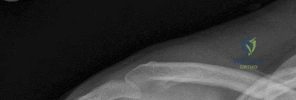
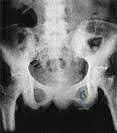
A hemodynamically unstable patient is brought to the trauma bay after a high-speed motor vehicle collision. The anteroposterior pelvic radiograph
shows an APC-III injury with >2.5 cm widening of the pubic symphysis. To properly apply a pelvic binder to reduce pelvic volume, over which anatomic landmark should the binder be centered?
Explanation
Question 3
A 12-year-old obese male presents with a 2-week history of left thigh pain and an antalgic limp. Examination reveals obligate external rotation with passive hip flexion. A radiograph is shown
. He is diagnosed with a Slipped Capital Femoral Epiphysis (SCFE). Which of the following is the strongest indication for prophylactic pinning of the contralateral asymptomatic hip?
Explanation
Question 4
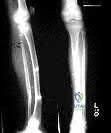
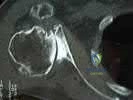
A 15-year-old boy presents with severe right tibial pain that occurs predominantly at night and is dramatically relieved by NSAIDs. Imaging
reveals a cortical radiolucent nidus measuring 8 mm surrounded by dense reactive sclerosis. What is the most appropriate definitive minimally invasive treatment?
Explanation
Question 5
A 55-year-old male underwent a total hip arthroplasty 3 years ago utilizing a ceramic-on-ceramic bearing surface
. He presents to the clinic complaining of a new, audible 'squeaking' sound originating from his hip when walking. What is the most common mechanical etiology for this phenomenon?
Explanation
Question 6
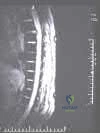
A 25-year-old male is brought to the ED after a diving accident. He is awake, alert, and cooperative. Examination reveals bilateral upper and lower extremity weakness consistent with an incomplete spinal cord injury. Imaging
demonstrates a bilateral C5-C6 facet dislocation. According to major guidelines, what is the most appropriate next step in management?
Explanation
Question 7
A 22-year-old female soccer player undergoes an anterior cruciate ligament (ACL) reconstruction using a bone-patellar tendon-bone (BPTB) autograft
. Postoperatively, she reports a localized area of numbness on the anterior/anterolateral aspect of her proximal leg. Injury to which nerve during graft harvest is responsible for this finding?
Explanation
Question 8
A 25-year-old rugby player presents with an inability to actively flex the distal interphalangeal (DIP) joint of his ring finger after grabbing an opponent's jersey. Radiographs
reveal a large bony avulsion fragment located at the level of the A4 pulley. Based on the Leddy-Packer classification, what type of flexor digitorum profundus (FDP) avulsion is this?
Explanation
Question 9
A 30-year-old construction worker drops a heavy beam on his midfoot. Radiographs and CT imaging
demonstrate a purely ligamentous Lisfranc injury with significant lateral and dorsal displacement of the 2nd through 5th metatarsals. Based on recent literature comparing operative techniques, what is the favored surgical management for purely ligamentous Lisfranc injuries?
Explanation
Question 10
A 21-year-old man falls on an outstretched hand. Imaging
shows a displaced fracture through the proximal third of the scaphoid. The patient is counseled regarding a high risk of avascular necrosis (AVN). The primary blood supply to the proximal pole of the scaphoid enters the bone at which location?
Explanation
Question 11
A 45-year-old male sustains a severe high-energy knee injury. Radiographs and CT
show a Schatzker IV tibial plateau fracture with a predominant, displaced posteromedial fragment. To adequately apply a buttress plate to this fragment and prevent varus collapse, which surgical approach is most appropriate?
Explanation
Question 12
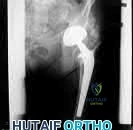
A 6-month-old female with developmental dysplasia of the hip (DDH) has failed 4 weeks of compliant Pavlik harness treatment. An ultrasound
reveals the hip remains persistently dislocated. What is the most appropriate next step in her management?
Explanation
Question 13
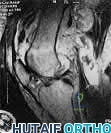
During a primary total knee arthroplasty (TKA) for a patient with a severe, fixed valgus deformity
, the surgeon employs an "inside-out" lateral release technique to balance the knee. In the classical stepwise sequence described for valgus release, which of the following structures is typically released first?
Explanation
Question 14
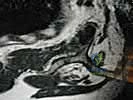
A 65-year-old man presents with deteriorating handwriting, dropping objects, and frequent tripping over the past year. Examination reveals a positive Hoffman's sign and hyperreflexia. A cervical MRI
confirms severe stenosis at C4-C6. He is still able to ambulate, but requires the daily use of a cane. What is his Nurick classification grade?
Explanation
Question 15
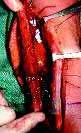
A 40-year-old clerical worker is diagnosed with severe, recalcitrant cubital tunnel syndrome
. Intraoperatively, the ulnar nerve is found to be compressed precisely where it passes between the two heads of the flexor carpi ulnaris (FCU). What is the specific eponymous anatomical structure that forms the roof of this compression site?
Explanation
Question 16
In the process of secondary bone healing following a diaphyseal fracture, which specific phase is characterized by the peak of angiogenesis, maximum tissue cellularity, and the replacement of soft cartilaginous callus by hard woven bone?
Explanation
Question 17
A 78-year-old female sustains a comminuted 4-part proximal humerus fracture. The surgeon elects to perform a reverse total shoulder arthroplasty (RTSA). To minimize the risk of post-operative external rotation weakness and optimize functional outcome, the surgeon must prioritize the healing of which specific bony fragment?
Explanation
Question 18
According to the Ponseti method for the non-operative treatment of idiopathic clubfoot, serial casting must correct the components of the deformity in a highly specific order to prevent midfoot breach. What is the correct sequence of deformity correction?
Explanation
Question 19
Biochemically, articular cartilage is a highly specialized connective tissue designed to resist compressive forces in joints. Which of the following collagen types forms the vast majority of the primary structural framework of normal hyaline articular cartilage?
Explanation
Question 20
A 30-year-old male presents with a slow-growing, painful soft tissue mass deep in his distal thigh near the knee joint. Histopathology reveals a biphasic pattern consisting of both spindle cells and epithelial cells. Molecular testing of the biopsy specimen demonstrates a t(X;18) chromosomal translocation. What is the most likely diagnosis?
Explanation
Question 21
Which of the following biomechanical material properties is represented by the total area under the stress-strain curve up to the point of failure?
Explanation
Question 22
In healthy articular cartilage, which zone is characterized by the highest concentration of water and collagen fibers that are oriented strictly parallel to the joint surface?
Explanation
Question 23
A 12-year-old boy presents with frequent fractures and a classic 'rugger jersey' appearance of his spine on lateral radiographs. Genetic testing reveals a mutation in the CLCN7 gene. Which of the following best describes the underlying cellular pathophysiology of his condition?
Explanation
Question 24
Tranexamic acid (TXA) is widely utilized in orthopedic surgery to mitigate perioperative blood loss. What is its precise mechanism of action?
Explanation
Question 25
A 65-year-old man presents with diffuse bone pain, anemia, and hypercalcemia. Radiographs show multiple 'punched-out' lytic lesions in the pelvis and proximal femur.
Serum protein electrophoresis demonstrates a monoclonal spike. What is the most appropriate initial surgical management for an impending pathologic fracture of the subtrochanteric femur in this patient?
Explanation
Question 26
A 4-year-old boy presents with progressive severe bowing of his lower extremities and a waddling gait. Laboratory tests reveal normal serum calcium, significantly low serum phosphate, normal parathyroid hormone (PTH), and elevated alkaline phosphatase. What is the most likely genetic mutation responsible for this condition?
Explanation
Question 27
In the pathogenesis of periprosthetic joint infection, biofilm formation provides bacteria with a physical barrier against host defenses and antibiotics. What is the primary extracellular polymeric substance produced by Staphylococcus epidermidis to facilitate this structural adhesion?
Explanation
Question 28
A 32-year-old man sustains a closed high-energy tibial shaft fracture. Clinical concern for acute compartment syndrome arises.
According to standard orthopedic practice, which of the following objective pressure criteria is most predictive of the need for emergent fasciotomy?
Explanation
Question 29
Which of the following mechanical and biological conditions must be strictly satisfied for primary (direct) cortical bone healing to occur without the formation of a visible intermediate cartilaginous callus?
Explanation
Question 30
In total hip arthroplasty, aseptic loosening due to osteolysis is primarily driven by the biological reaction to wear debris. In a well-functioning, accurately aligned metal-on-polyethylene articulation, which specific mechanism of wear is predominantly responsible for generating the submicron polyethylene particles that trigger this cascade?
Explanation
Question 31
A 55-year-old woman presents with worsening thigh pain. Radiographs demonstrate a large, permeative lytic lesion in the proximal femur with intralesional 'popcorn' calcifications. An open biopsy confirms a high-grade (Grade III) conventional chondrosarcoma.
What is the most appropriate definitive treatment?
Explanation
Question 32
A novel diagnostic test for a rare orthopedic condition is developed with a sensitivity of 95% and a specificity of 90%. If this test is utilized in a primary care population where the actual prevalence of the disease is very low (e.g., 0.1%), what is the most likely statistical effect compared to using it in an orthopedic specialty clinic where the prevalence is 40%?
Explanation
Question 33
Bone morphogenetic proteins (BMPs) play a pivotal role in osteoinduction during bone healing. Upon binding to their transmembrane serine/threonine kinase receptors, which specific intracellular signaling molecules are phosphorylated and translocate to the nucleus to act as transcription factors?
Explanation
Question 34
A 68-year-old patient undergoes elective total knee arthroplasty. Postoperatively, she is prescribed oral Rivaroxaban for deep vein thrombosis (DVT) prophylaxis. What is the precise pharmacological target of this medication?
Explanation
Question 35
Following a severe crush injury to the arm resulting in a Sunderland Grade IV injury of the radial nerve, Wallerian degeneration ensues.
Which of the following best describes the classical process of Wallerian degeneration?
Explanation
Question 36
A 13-year-old obese boy is brought to the emergency department strictly unable to bear weight on his left leg after a minor slip. Radiographs confirm a severe, unstable slipped capital femoral epiphysis (SCFE).
He undergoes urgent single-screw in situ fixation. Which of the following is the most feared and highest-risk complication specifically associated with an unstable SCFE compared to a stable SCFE?
Explanation
Question 37
Tendons possess exceptionally high tensile strength owing to their highly organized composition and structural hierarchy. Which of the following pairs correctly identifies the predominant collagen type and the primary proteoglycan found in a normal, healthy tendon?
Explanation
Question 38
Fractures of the talar neck carry a famously high risk of avascular necrosis due to the tenuous, retrograde blood supply to the talar body.
Which of the following arteries provides the major contribution to the vascularity of the talar body?
Explanation
Question 39
You are consulted regarding a diabetic patient requiring lower extremity amputation due to advanced gangrene.
You counsel the patient on the anticipated increased metabolic energy expenditure required for ambulation with a prosthesis. Based on classic orthopedic data, which of the following amputation levels is associated with the highest percentage increase in energy expenditure compared to normal baseline walking?
Explanation
Question 40
A 70-year-old woman with a T-score of -3.1 is prescribed Alendronate for the treatment of osteoporosis.
What is the precise intracellular mechanism by which this nitrogen-containing bisphosphonate inhibits osteoclast function and causes osteoclast apoptosis?
Explanation
Question 41
A 65-year-old dysvascular patient undergoes a transfemoral amputation. Compared to baseline normal human gait, what is the expected increase in energy expenditure for this patient during ambulation with a properly fitted prosthesis?
Explanation
Question 42
During the stance phase of a normal gait cycle, the hip abductors fire to stabilize the pelvis and prevent a Trendelenburg drop. In which specific phase of the gait cycle does maximal contraction of the gluteus medius occur?
Explanation
Question 43
Highly cross-linked ultra-high molecular weight polyethylene (UHMWPE) is commonly used in total joint arthroplasty to reduce volumetric wear. Which of the following is a direct biomechanical consequence of increasing the radiation dose to maximize cross-linking in the polyethylene?
Explanation
Question 44
A new diagnostic biomarker is evaluated for the detection of periprosthetic joint infection (PJI). Out of 100 patients confirmed to not have PJI via gold-standard criteria, the new test correctly identifies 90 of them as negative. What statistical measure does this result (90%) directly represent?
Explanation
Question 45
A 14-year-old boy presents with a diaphyseal femur lesion exhibiting an 'onion-skin' periosteal reaction.
Biopsy confirms sheets of small, uniform, blue round cells with scant cytoplasm. Which of the following chromosomal translocations is most characteristic of this pathology?
Explanation
Question 46
A patient is prescribed rivaroxaban for extended deep vein thrombosis prophylaxis following a total hip arthroplasty. What is the specific mechanism of action of this medication?
Explanation
Question 47
During the incorporation of a cortical structural allograft, a process known as creeping substitution occurs. What physiological process characterizes the initial phase of creeping substitution in this setting?
Explanation
Question 48
Articular cartilage is structurally divided into four distinct zones to optimize its biomechanical properties. In which zone are the collagen fibers oriented primarily perpendicular to the joint surface to resist compressive forces?
Explanation
Question 49
A 55-year-old female with malabsorption presents with diffuse bone pain, muscle weakness, and a Looser zone on radiographs.
Laboratory studies reveal low serum calcium, low serum phosphate, elevated alkaline phosphatase, and elevated parathyroid hormone levels. What is the most likely diagnosis?
Explanation
Question 50
In the pathogenesis of periprosthetic joint infection, biofilm formation protects bacteria from host defenses and systemic antibiotics. What is the primary constituent of the extracellular polymeric substance (EPS) matrix in a mature staphylococcal biofilm?
Explanation
Question 51
A peripheral nerve injury results in complete disruption of the axons and their surrounding myelin sheaths, but the endoneurial tubes remain entirely intact. Wallerian degeneration occurs distally. Which Sunderland classification best describes this injury?
Explanation
Question 52
When evaluating the biomechanical holding power of a cortical bone screw, the pull-out strength is most directly proportional to which of the following screw characteristics?
Explanation
Question 53
A child presenting with rhizomelic short stature, a prominent forehead, and midface hypoplasia is diagnosed with achondroplasia. What is the specific genetic and molecular basis of this condition?
Explanation
Question 54
The optimal low-friction environment of healthy articular cartilage during high-load, dynamic activities (such as the stance phase of running) is primarily maintained by which of the following mechanisms?
Explanation
Question 55
Secondary bone healing is characterized by the formation of a fracture callus. During the initial soft callus phase, which type of collagen is predominantly synthesized by the proliferating chondrocytes?
Explanation
Question 56
Fibroblast growth factor 23 (FGF-23) plays a critical role in mineral metabolism and is often significantly elevated early in the course of chronic kidney disease. What is the primary physiologic effect of FGF-23?
Explanation
Question 57
When measuring intracompartmental pressures to evaluate for acute compartment syndrome of the lower extremity, which of the following absolute or differential pressure measurements is the most reliable and generally accepted threshold indicating the need for emergency fasciotomy?
Explanation
Question 58
A 19-year-old male complains of severe, localized thigh pain that occurs primarily at night and is dramatically relieved by aspirin. Radiographs demonstrate an area of dense cortical sclerosis with a 6 mm radiolucent nidus. The intense pain associated with this lesion is mediated primarily by the local production of:
Explanation
Question 59
Slipped capital femoral epiphysis (SCFE) is a common adolescent hip disorder characterized by the displacement of the proximal femoral epiphysis. Pathologically, failure and slippage occur through which specific zone of the proximal femoral physis?
Explanation
Question 60
Tranexamic acid (TXA) is extensively utilized in orthopedic procedures (e.g., total joint arthroplasty, trauma) to minimize perioperative blood loss. What is the specific mechanism of action of TXA?
Explanation
Question 61
A 15-year-old male presents with persistent knee pain. Radiographs reveal a metaphyseal lesion in the distal femur with a "sunburst" periosteal reaction.
Which of the following genetic syndromes is most strongly associated with this primary bone malignancy?
Explanation
Question 62
Following a reamed intramedullary nailing of a closed midshaft femur fracture, which type of bone healing predominantly occurs?
Explanation
Question 63
A 6-year-old boy presents after falling from monkey bars with an extension-type Gartland III supracondylar humerus fracture.
Examination reveals weak index finger flexion and absent flexion of the IP joint of the thumb. Which nerve is most likely injured?
Explanation
Question 64
A 32-year-old male sustains a closed comminuted tibial shaft fracture. Within 8 hours, he develops severe leg pain with passive toe stretch. What is the generally accepted threshold for a diagnostic "delta p" indicating the need for immediate fasciotomy?
Explanation
Question 65
A 65-year-old female experiences recurrent posterior dislocations following a primary total hip arthroplasty via a posterior approach. To optimize stability, what is the ideal orientation for the acetabular component according to Lewinnek's safe zone?
Explanation
Question 66
A 72-year-old male is evaluated for progressive clumsiness. Examination reveals hyperreflexia in the lower extremities and a positive Hoffmann's sign. Radiographs show significant cervical spondylosis.
What is typically the earliest presenting clinical symptom in cervical spondylotic myelopathy?
Explanation
Question 67
A 24-year-old carpenter sustains a laceration over the volar aspect of his proximal phalanx, resulting in a Zone II flexor tendon injury. What is the primary source of nutrition to the flexor tendons in this specific zone?
Explanation
Question 68
A 17-year-old female soccer player sustains a non-contact pivoting injury to her knee, diagnosed as an anterior cruciate ligament (ACL) tear.
Which of the following is considered the most significant modifiable risk factor for ACL tears in female athletes?
Explanation
Question 69
A 55-year-old diabetic male presents with a swollen, erythematous, and warm right foot without open ulceration. Radiographs show early fragmentation at the tarsometatarsal joints. What is the most appropriate initial management?
Explanation
Question 70
A 40-year-old male sustains a severe open tibia fracture with exposed bone devoid of periosteum that cannot be closed primarily (Gustilo-Anderson IIIB). According to recent evidence, when should definitive soft tissue coverage ideally be performed to minimize infection?
Explanation
Question 71
A 9-month-old female is referred for asymmetric thigh folds. Ultrasound reveals a dysplastic left hip with a subluxated femoral head.
She has not received any prior treatment. What is the most appropriate initial management?
Explanation
Question 72
Which zone of articular cartilage contains the highest concentration of water and has collagen fibers oriented parallel to the articular surface to resist shear forces?
Explanation
Question 73
A 70-year-old male presents with a painful total knee arthroplasty 2 years post-operation. Joint aspiration reveals a synovial white blood cell (WBC) count of 4,500 cells/uL with 85% polymorphonuclear leukocytes (PMNs).
Based on MSIS criteria, what is the most appropriate definitive management?
Explanation
Question 74
According to Perren's strain theory of fracture healing, what is the maximum strain tolerated by lamellar bone formation?
Explanation
Question 75
A 35-year-old farm worker sustains an open tibial shaft fracture heavily contaminated with soil. Which of the following antibiotic regimens is most appropriate according to current evidence-based guidelines?
Explanation
Question 76
A 4-month-old infant is being treated with a Pavlik harness for developmental dysplasia of the hip. The parents report the child has stopped kicking the right leg. On examination, the infant lacks active knee extension but has normal ankle movements. What is the most likely cause?
Explanation
Question 77
A 14-year-old boy presents with a diaphyseal femur lesion with an "onion-skin" periosteal reaction. Biopsy confirms a small blue round cell tumor. Which of the following chromosomal translocations is most characteristic of this diagnosis?
Explanation
Question 78
In total hip arthroplasty, which bearing surface combination is associated with the lowest volumetric wear rate?
Explanation
Question 79
A patient presents with a laceration over the volar aspect of the proximal phalanx of the index finger. Both the flexor digitorum superficialis (FDS) and flexor digitorum profundus (FDP) are severed. According to the Verdan classification, which zone of injury is this?
Explanation
Question 80
A 45-year-old male presents with acute onset saddle anesthesia, bilateral radicular leg pain, and urinary retention. Which of the following MRI findings is the most absolute indication for emergent surgical decompression?
Explanation
Question 81
A 40-year-old weekend warrior sustains an acute Achilles tendon rupture. Which clinical test is most sensitive and specific for diagnosing a complete Achilles tendon rupture?
Explanation
Question 82
The anterior cruciate ligament (ACL) is composed of the anteromedial (AM) and posterolateral (PL) bundles. During which knee position is the PL bundle most tight?
Explanation
Question 83
Which of the following Bone Morphogenetic Proteins (BMPs) is currently FDA-approved for use in acute, open tibial shaft fractures?
Explanation
Question 84
Following a displaced intracapsular femoral neck fracture, which artery provides the predominant residual blood supply to the femoral head?
Explanation
Question 85
A 5-year-old boy presents with a limp, fever of 39.0°C, a WBC count of 14,000/mm3, an ESR of 50 mm/hr, and inability to bear weight. According to the Kocher criteria, what is the approximate probability of septic arthritis?
Explanation
Question 86
A 13-year-old boy with a slipped capital femoral epiphysis (SCFE) cannot bear weight even with crutches. According to the Loder classification, this is an unstable SCFE. What is the most significant risk associated with an unstable SCFE compared to a stable SCFE?
Explanation
Question 87
A 60-year-old woman with breast cancer presents with a lytic metastatic lesion in the peritrochanteric region of the proximal femur. It is moderately painful and involves 2/3 of the cortical diameter. What is her Mirels score and recommended management?
Explanation
Question 88
A patient sustains a traumatic spondylolisthesis of the axis (Hangman's fracture). A Levine-Edwards Type II fracture is characterized by disruption of the C2-C3 disc and posterior longitudinal ligament, causing significant angulation and translation. What is the primary mechanism of injury?
Explanation
Question 89
During an open carpal tunnel release, the surgeon must be careful to avoid injuring the recurrent motor branch of the median nerve. What is the most common anatomical variation of this branch?
Explanation
Question 90
A 55-year-old diabetic patient presents with a warm, swollen, erythematous left foot. Radiographs show fragmentation, joint subluxation, and debris at the tarsometatarsal joints. According to the Eichenholtz classification, what stage of Charcot arthropathy is this?
Explanation
Question 91
A 22-year-old male athlete sustains an anterior shoulder dislocation. An MRI reveals an avulsion of the anterior labrum along with the anterior band of the inferior glenohumeral ligament (IGHL) from the glenoid rim. What is the eponym for this specific lesion?
Explanation
Question 92
A 30-year-old man undergoes intramedullary nailing of a closed tibial shaft fracture. Postoperatively, he develops severe pain out of proportion, not relieved by opioids. Passive stretch of the toes exacerbates the pain. Compartment pressure is 35 mmHg and diastolic blood pressure is 60 mmHg. What is the delta pressure, and what is the indicated management?
Explanation
Question 93
In articular cartilage, which zone is characterized by the highest concentration of proteoglycans and vertically aligned type II collagen fibers?
Explanation
None
