Full Question & Answer Text (for Search Engines)
Question 1:
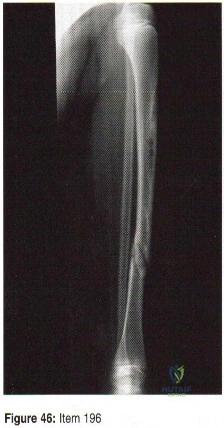
- A patient has a grade 2 open tibial fracture with 70% cross sectional bone loss that extends 2 cm in length. Treatment consists of stabilization with a nonreamed interlocking nail and successful secondary wound closure. Four months after the injury, no callus is visible. Management at this time should include which of the following?
Options:
- Observation for three months
- Dynamization of the nail
- Exchange to a reamed nail
- Autogeneous bone grafting
- Electrical stimulation
- Copies of the record can be released to the patient
- Records can be released only to another physician
- No records can be released until the balance due is paid
- Records can be released to the patient for 24hrs, but then must be returned.
- Because of probable future legal action, records can be released only by court order.
- Positive HLA-B27 antigen
- Chest expansion limited to less than 2.5cm
- Generalized ligamentous laxity
- Positive rheumatoid factor (greater than 1 to 64)
- The presence of Achilles tendonitis for more than three months
- Length of the femoral neck
- Retroversion of the upper femur
- Size of the proximal femoral epiphysis
- Size of the greater trochanteric apophysis
- Angle between the proximal femoral physis and Hilgenreiner's line
- an onlay bone graft
- electrical stimulation
- resection of the distal clavicle
- plate fixation and a bone graft
- smooth Kirschner wire fixation and a bone graft
- 20% with cemented and uncemented sockets
- 40% with cemented and uncemented sockets
- 60% with cemented sockets
- 90% with cemented and uncemented sockets
- 90% with cemented sockets
- Intramedullary rodding
- Functional bracing
- Closed reduction and a long arm cast
- Closed reduction and application of an external fixator
- Open reduction and internal fixation with a dorsal plate
- patellar chondromalacia
- failure of meniscus repair
- arthrofibrosis
- varus-valgus instability
- anteroposterior instability
- type-I collagen
- type-II collagen
- cartilage oligomeric protein (COMP)
- fibroblast growth factor 2 (FGFR2)
- fibroblast growth factor 3 (FGFR3)
- karyotyping
- flow cytometry
- transmission electron microscopy
- immunohistochemistry staining
- scanning electron microscopy
- ankle arthrodesis
- ankle synovectomy
- total ankle arthroplasty
- transplant of cartilage cells
- lengthening of the Achilles tendon
- fracture of the acetabulum
- protrusion of the acetabulum
- inadequate inferior coverage
- inadequate superior coverage
- inadequate anterior and posterior coverage
- Myelography
- Thermography
- CT Scan
- IV contrast-enhanced CT Scan
- Gadolinium-enhanced MRI scan
- CT scan of the chest
- Bone marrow biopsy
- Complete blood cell count
- Lateral radiograph of the skull
- Erythrocyte sedimentation rate
- Myosin
- Troponin
- Tropomyosin
- Fibrillin
- Dystrophin
- a skeletal survey.
- audiometric screening.
- physical therapy for stretching.
- contrast studies of the upper gastrointestinal tract.
- reassurance to the parents that there is no underlying pathology.
- Fragmentation and subluxation of the normal joint articulation
- Varus deformity with medial subchondral sclerosis
- Preferential narrowing of the medial tibiofemoral compartment
- Narrowing of the medial, lateral, and patellofemoral compartments
- Bone proliferation at the patellar tendon and ligament insertion sites
- Central cord syndrome
- Anterior cord syndrome
- Posterior cord syndrome
- Brown-Sequard syndrome
- Cervical nerve root injury
- Debriding the skin edges and performing plate fixation of the fracture
- Debriding the skin edges and intramedullary rodding of the fracture
- Extending the wounds, debriding the bone ends, and applying distal femoral traction
- Extending the wounds, debriding the bone ends, and performing plate fixation of the fracture
- Extending the wounds, debriding the bone ends, and intramedullary rodding of the fracture
- The cell body nucleus migrates centrally
- Schwann cells distal to the transection die
- Axoplasm in the proximal stump drains out
- Myelin distal to the transection is phagocytized
- Cell body protein synthesis decreases for the first 10 to 14 days
- Labral repair
- acromioplasty
- excision of the coracoid process
- an arthroscopic Bankart procedure
- subscapularis repair
- Clinodactyly
- Camptodactyly
- Symbrachtyly
- Kirner’s deformity
- Digiti minimi adductus
- Cable
- Buttress plate
- Methylmethacrylate
- Multiple lag screws
- Multiple Kirschner wires
- Sacral fracture lateral to the foramina
- Sacral fracture medial to the foramina
- Sacroiliac fracture-dislocation
- Sacroiliac dislocation
- Iliac wing fracture
- Allograft Replacement
- Radioulnar synostosis
- Excision of the radial head
- Open reduction and internal fixation
- Silicone radial head replacement
- T10 sensory pin-prick level
- Retained vibratory sensation at the ankles
- Presence of sacral sparing
- Retained spontaneous respiratory function
- Priapism
- Application of a pelvic external fixator
- A pelvic sling
- Angiography of the pelvis
- Open reduction and internal fixation
- Open packing of the pelvic hematoma
- Syme’s amputation
- Arthrodesis of the knee
- Disarticulation of the knee
- Centralization of the fibula
- Prosthetic fitting to accommodate the present deformity
- Use of regional rather than general anesthesia
- Observation of a latex-avoidance protocol
- Latex skin allergen testing
- Premedication with corticosteroids and antihistamines
- Avoidance of prophylactic antibiotics derived from penicillin
- Olecranon pin traction
- Closed reduction and pin fixation
- Open reduction and internal fixation
- Cast immobilization in this position
- An arteriogram to rule out an occult intimal tear of the brachial artery
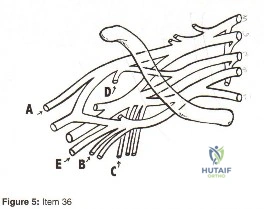
- A
- B
- C
- D
- E
- Follow-up in six months.
- AP and lateral radiographs.
- AP and lateral radiographs, and a bone scan.
- AP and lateral radiographs, and serum levels for ca, ph, and creatinine.
- AP and lateral radiographs, blood serum levels for calcium, phosphate, and creatinine, and a 24-hour urine collection for vitamin D metabolites.
- MRI scan
- Bone scan
- Arthrogram
- Axillary lateral radiograph
- CT arthrogram
- Open repair of the central slip of the extensor mechanism
- Open repair of the terminal tendon of the extensor mechanism
- Closed splinting with the proximal interphalangeal joint
- Closed splinting with the proximal interphalangeal joint in 30 degrees of flexion
- Closed splinting with the proximal interphalangeal joint in 45 degrees of flexion
- Anteriorly at 20 to 30 degrees of flexion
- Anteriorly at 70 to 90 degrees of flexion
- Posteriorly at 20 to 30 degrees of flexion
- Posteriorly at 70 to 90 degrees of flexion
- Anteriorly with the knee in full flexion
- Rett syndrome
- Cerebral palsy
- Myotonic dystrophy
- Fragile-X syndrome
- Adrenoleukodystrophy
- Endurance limit
- Failure stress
- Critical stress
- Yield stress
- Elastic limit
- Ewing’s sarcoma
- Osteogenic sarcoma
- Multiple myeloma
- Metastatic prostate carcinoma
- Metastatic breast carcinoma
- Higher subsequent loosening rate of the femoral component
- Higher subsequent polyethylene wear rate
- Higher subsequent dislocation rate
- Higher infection rate
- Unaltered subsequent survival rate of the femoral component
- Crevice corrosion
- Oscillatory fretting
- Oxidative degradation
- Adhesion and abrasion
- Fatigue and delamination
- a total contact cast.
- partial calcanectomy
- Syme’s amputation
- transtibial amputation.
- nonweightbearing and IV antibiotics.
#
- Sural artery island flap.
- Free rectus abdominis flap.
- Extensor digitorum brevis flap.
- Staged cross leg flap.
- Split-thickness skin graft.
- An anterior cruciate functional knee brace.
- A physical therapy program.
- Reconstruction of the posterior cruciate ligament and the posterolateral corner.
- Reconstruction of the posterior cruciate ligament.
- Reconstruction of the anterior cruciate ligament.
- Avoids the risk of marrow emboli
- Avoids injury to the intramedullary nutrient vessels
- Results in faster healing of fractures
- Results in more secure fixation
- Results in faster regeneration of the endosteal blood supply
- Above-knee amputation
- En bloc resection of the lesion and reconstruction with a bone graft
- Closed reduction and immobilization in a cast
- Open reduction and internal fixation, followed by radiation therapy
- Open reduction, curettage, and cementing of the lesion
- Injury to the subclavian artery
- Injury to the brachial plexus
- Segmental fracture
- 100% displacement
- Associated displaced surgical neck fracture of the humerus
- humeral arthroplasty

2/. repair of the rotator cuff
- closed reduction and immobilization
- open reduction and immobilization
- open reduction and early passive motion
- arthroscopic capsular release
- manipulation under anesthesia
- a physical therapy program
- an intra-articular corticosteroid injection
- administration of high-dose oral corticosteroids
- adding the scores, in all five body systems
- adding the squares of the scores in the three most severely injured systems
- doubling the cumulative score for head and chest injuries
- combining the scores from the most and least injured systems
- correcting the score in the most severely injured system for age
- traumatic femoral head fracture
- osteonecrosis
- osteoarthritis
- neuropathic joint
- rheumatoid arthritis
- low-dose radiation
- steroid injection
- a load-relieving insert and shoe modification
- complete excision of the mass and the entire plantar fascia
- wide excision of the mass with a 2 cm margin of normal fascia
- CT scan of the chest
- technetium bone scan
- bone marrow aspiration
- serum protein electrophoresis
- lateral skull radiograph
- high-grade histology of the initial tumor
- multiple local recurrences after curettage
- previous treatment of the tumor with cryotherapy
- previous treatment of the tumor with radiation therapy
- extraosseous extension into two or more adjacent compartments
- Dorsal rhizotomy and facet joint fusion
- Multilevel corpectomy and spinal stabilization
- Central and lateral recess decompression and bilateral foraminotomy
- Central decompression and facet joint fusion
- Central decompression, foraminotomy, and spinal fusion from L2 to L5.
- Inadequate rehabilitation
- Displacement of the coronoid process fracture
- Insufficiency of the lateral ulnar collateral ligament
- Insufficiency of the anterior band of the medial collateral ligament
- Insufficiency of the posterior band of the medial collateral ligament
- Osteotomy and intramedullary rod fixation
- Electrical stimulation
- Strut-autografing the concavity the tibia
- A patellar tendon-bearing brace
- Percutaneous injection of demineralized bone matrix
#
- digoxin
- sucralfate
- clindamycin
- alcohol
- neuromuscular blocking agents
- Unrestrained roll-back
- Unrestrained rotational conformity
- Medial-Lateral conformity
- Anteroposterior conformity in flexion
- Anteroposterior conformity in extension
- Arthrodesis of the MTP joint
- A Silastic implant of the MTP joint
- Resection arthroplasty of the MTP joint
- Cheilctomy of the MTP joint
- Osteotomy of the base of the proximal phalanx
- Genu varum
- Tarsal coalition
- Degenerative ankle arthrosis
- Osteochondritis dissecans of the talus
- Hemihypertrophy of the ipsilateral lower extremity
- Trabecular bone is preferentially resorbed in this high bone turnover state
- Loss of water content in the disk increases impact load to the vetrebral bodies
- Stress is imposed by the relative stiffness of the arthrtic facet joints
- Increased energy demands are imposed by decreased circulation to the vertebral body
- The thick cortical bone found in the vertebral body resorbs rapidly following estrogen withdrawal
- Increased time in stance and swing phase
- Addition of a double leg float phase
- Decreased vertical ground reaction forces
- Decreased arc of motion in the hip, knee, and ankle
- Decreased joint reaction forces in the hip, knee, and ankle
- Talonavicular arthrodesis
- Medial displacement calcaneal osteotomy
- Flexor digitorum longus tendon transfer with spring ligament advancement
- Triple arthrodesis
- Calcaneocuboid distraction arthrodesis and repair of the posterior tibial tendon
- Lymphoma
- Hemangioma
- Osteosarcoma
- TB of the spine
- Metastatic breast carcinoma
- widening and shortening of the heel.
- weakness of the gastrocnemius-soleus complex.
- anterior impingement from a horizontal talus.
- unrecognized compartment syndrome of the foot.
- degenerative arthritis of the tibiotalar joint.
- a corrective osteotomy
- application of braces
- medial physeal stapling until the varus corrects
- observation
- application of corrective casts
- a total contact cast.
- electrical stimulation.
- an off the shelf fracture brace.
- an elastic compression bandage and crutches.
- a hard soled shoe until the patient is asymptomatic.
- Ewings tumor
- Parosteal osteosarcoma
- Dedifferentiated chondrosarcoma
- Low grade intramedullary chondrosarcoma
- High grade intramedullary osteosarcoma
- Vascular injury
- Tear of the rotator cuff
- Injury to the brachial plexus
- Fracture of the upper thoracic rib
- Fracture of the proximal humerus
- Biceps
- Trapezius
- Infraspinatus
- Pectoralis major
- Serratus anterior
- Hybrid total hip arthroplasty
- Noncemental hemiarthroplasty of the hip
- Closed reduction and percutaneous pin fixation
- Open reduction through an anterior approach to the hip
- Excision of the head fragment
- a quadratus femoris pedicle
bone graft
- a proximal femoral allograft
- intertrochanteric osteotomy
- total hip arthroplasty
- hip hemiarthroplasty
- Echocardiogram
- Electrocardiogram
- Radiograph of the chest
- CT scan of the shoulder
- Ultrasound of the shoulder
- Ilioinguinal
- Extended iliofemoral
- Combined ilioinguinal and Kocher-Langenbeck (posterior)
- Kocher-Langenbeck (posterior)
- Kocher-Langenbeck (posterior) with trochanteric osteotomy
- Deltoid
- Supraspinatus
- Subscapularis Infraspinatus
- Infraspinatus
- Infraspinatus and teres minor
- an orthosis.
- observation.
- electrical stimulation.
- open reduction and internal fixation.
- application of a nonweightbearing short leg cast.
- repair of the rotator cuff.
- rehabilitation of the shoulder
- replacement of the humeral head.
- arthroscopic acromioplasty and debridement.
- immobilization is a sling until pain resolves.
- Bone rotation versus torque applied
- Bone deflection versus bending moment applied
- Axial displacement versus tension applied
- Lateral translation versus shear force applied
- Fracture gap closing versus compressive force applied
- steroid injection
- stretching of the heel cord
- surgical release of the plantar fascia
- application of a short leg cast for 6 to 8 weeks
- wearing dorsiflexion night splints
- Open bladder
- Bilateral “hitchhiker’s” thumbs
- Bilateral defects in the midclavicles
- Rhizomelic shortening of the extremities
- Radiographic fragmentation of all major epiphyses
- Medial patellotibial
- Medial patellofemoral
- Medial patellomeniscal
- Lateral patellofemoral
- Lateral patellotibial
- Heat
- Gentle active flexion-extension exercises
- Isokinetic strengthening
- Electrical muscle stimulation
- Immobilization of the limb with the knee in full flexion
- Distal chevron osteotomy with soft-tissue release
- Distal soft-tissue realignment only
- Closing wedge osteotomy (Aken) of the proximal phalanx
- Proximal first metatarsal osteotomy only
- Soft-tissue realignment with a proximal metatarsal osteotomy
- Vagus
- Phrenic
- Hypoglossal
- Recurrent laryngeal
- Inferior thyroid
- Surgical exploration
- Application of leeches
- Stellate ganglion blocks
- Intra-arterial streptokinase
- Elevation and reevaluation in 1 hour
- Liver profile
- Myleogram
- Platelet count
- CT scan of the head
- Angiogram of the extremity
- Post spinal fusion from L5to S1
- Primary repair with an iliac bone graft
- Post spinal fusion of L4-5
- A pantaloon body cast and 6 weeks of bed rest
- Rest, NSAIDS, and limited dancing


- Stress fracture of the proximal fifth metatarsal
- Stress fracture of the base of the second metatarsal
- Stress fracture of the neck of the second metatarsal
- Morton’s neuroma
- Lisfranc’s joint subluxation
- C5 radiculopathy
- Subscapularis rupture
- Glenohumeral arthrosis
- Rotator cuff arthropathy
- Suprascapular nerve compression at the spinoglenoid notch
- mm femoral head in combination with a metal-backed polyethylene component
- mm femoral head in combination with an all-polyethylene acetabular component
- mm femoral head in combination with a metal-backed polyethylene component
- mm femoral head in combination with an all-polyethylene component
- mm femoral head in combination with a metal-backed polyethylene component
- Female gender
- History of cigarette smoking
- L5-S1 spondylolisthesis on pre-employment radiography
- Decreased strength of the lower extremities on pre-employment testing
- Decreased flexibility of the lumbar spine on pre-employment testing
- Size of cells
- Amount of DNA in cells
- Nucleus-cytoplasm ratio
- Specific DNA sequences
- Specific messenger RNA sequences
- Femoral and obturator nerves
- Femoral and superior gluteal nerves
- Femoral and lateral femoral cutaneous nerves
- Obturator and superior gluteal nerves
- Obturator and lateral femoral cutaneous nerves
- Isotonic
- Isokinetic
- Isometric
- Open kinetic chain
- Dynamic variable resistance
- Closed reduction and cast immobilization
- Uniplanar external fixation
- Open reduction and internal fixation with a dynamic compression plate
- Unreamed intramedullary rod
- Multiple plane external fixator
- Inlet view of the pelvis
- Outlet view of the pelvis
- AP view of the hip
- Ilial oblique view (external oblique) of the hip
- Obturator oblique
- Glycolytic pathway
- Oxidative phosphorylation
- Breakdown of fat
- Breakdown of protein
- Breakdown of adenosine triphosphate
- an MRI scan
- arthroscopic examination
- AP and frog-lateral radiographs of the pelvis and hips
- varus and valgus stress radiographs of the knee
- physical examination of the knee under anesthesia
- extended curettage and polymethylmethacrylate cementation
- extra-articular resection of the knee and an allograft arthrodesis
- wide resection of the proximal tibia and custom prosthetic replacement
- prophylactic internal fixation and postoperative irradiation
- excision of the lateral condyle and reconstruction with a hemicondylar allograft

- silicone implant joint replacement
- metatarsophalangeal joint arthrodesis
- metatarsophalangeal joint debridement
- resection of the metatarsal head
- resection of the base of the proximal phalanx
- Fixation of the syndesmosis has failed
- Widening of the ankle mortise has led to the failure of fixation
- Infection around the syndesmosis screw has led to osteomyelitis
- The syndesmosis screw is broken
- Motion between the tibia and fibula has caused loosening of the syndesmosis screw

- Microcephaly
- A temporal lobe cyst
- An Arnold-Chiari type 1 malformation
- Periventricular leukomalacia
- Agnesis of the corpus callosum
- Wolff’s
- Hooke’s
- Hilton’s
- Muller-Haeckel
- Heuter-Volkmann
- Both the anterolateral and posteromedial bands are isometric and do not significantly change with flexion
- The anterolateral band is lax and becomes tight in flexion, while the posteromedial band is tight, and becomes lax in flexion
- The anterolateral band is tight and becomes lax in flexion, while the posteromedial band is lax and becomes tight in flexion
- Both the anterolateral and posteromedial bands are lax and become tight in flexion
- Both the anterolateral and posteromedial bands are tight and become lax as the knee is flexed
- UCB orthosis
- Rigid orthosis with a medical arch support
- Semi-rigid orthosis with lateral forefoot posting
- Semi-rigid orthosis with a medial arch support
- Medial heel wedge attached to the running shoes
- Hallux varus
- Osteonecrosis
- Recurrence of the hallux valgus
- “Transfer” second metatarsalgia
- Physeal arrest of the first metatarsal
- Aseptic loosening in a 70-year-old patient
- Mechanical failure of a hinged knee prosthesis
- Failed knee replacement complicated by reflex sympathetic dystrophy
- Infection with soft-tissue deficit
- A prior patellectomy
- Knee fusion
- Open irrigation and debridement
- Arthroscopic irrigation and debridement
- One-stage exchange arthroplasty
- Two-stage exchange arthroplasty
- Putti-platt repair
- Open Bankart repair
- Injection of a subacromial corticosteroid
- Arthroscopic transglenoid capsular shift
- Rehabilitation of the scapular and rotator cuff muscles
- Silicone suction socket and an energy-absorbing foot
- Silicone suction socket and a variable resistance ankle
- Plastic suction socket, telescoping pylon, and a solid ankle cushioned heel (SACH) foot
- Plastic socket with a hinged thigh cuff and a SACH foot
- Patellar tendon-bearing suction socket and a uniaxial hydraulic ankle
- Parosteal
- Periosteal
- High-grade intramedullary
- Osteosarcoma occurring in Paget’s disease
- Osteosarcoma occurring in irradiated bone
- Cauda equina
- Conus medullaris
- Genitofemoral nerve
- Lumbar sympathetic plexus
- Lumbar parasympathetic plexus
- Spinal pseudoarthrosis
- Spinal cord traction injury with paralysis
- Arterial and venous thromboses
- Superior mesenteric artery syndrome
- Crankshaft phenomenon
- Inversion stress radiograph
- MRI scan
- CT scan
- Nuclear bone scan
- External rotation stress radiograph
- Complex deformity with an angulation in two planes
- Single deformity less than 20 degrees, apex posterolateral
- Single deformity greater than 30 degrees, apex posterolateral
- Single deformity less than 20 degrees, apex posteromedial
- Single deformity greater than 30 degrees, apex posteromedial
- Pronation of the foot during the stance phase of gait
- Heel inversion at the beginning of a single limb heel rise
- Active inversion of the nonweightbearing foot
- Active plantar flexion of the first ray against resistance
- Active plantar flexion of the foot during the push-off phase of gait
- Observation and repeat radiographs in 4 months
- Application of a thoracolumbalsacral orthosis for 22 to 24 hours per day
- Electrical stimulation at night
- Physical therapy
- Begins to remodel and hypertrophy more quickly
- Provides a better scaffold for osteoconduction
- Reduces the risk of early fracture
- Reduces technical difficulty
- Lowers donor site morbidity
- Anterior fusion of the lumbar curve
- Anterior and posterior fusion of the thoracic curve
- Posterior fusion of the thoracic curve
- Posterior fusion of the thoracic and lumbar curves
- Application of a brace until the iliac apophyses are Risser 4 or 5, followed by surgical correction
- Subscapularis rupture
- Type III SLAP lesion
- Disruption of capsular shift
- Isolated traumatic subluxation
- Injury to the axillary nerve after dislocation
- hypophosphatemia
- high dietary cholesterol intake
- deficiency of lipoprotein A
- deficiency of protein S and protein C
- elevated levels of antithrombin III
- Weightbearing short leg cast
- Nonweightbearing short leg cast
- Removable splint and early motion
- Open reduction and internal fixation
- Elastic compression bandage with full weightbearing
- Breast
- Prostate
- Gastrointestinal
- Kidney
- Multiple myeloma
- Varus stress
- Valgus stress
- Torsional loading
- Hyperextension of the knee
- Contraction of the quadriceps while axially loaded
- Primary internal fixation at both fracture levels
- External fixation as definitive ttt for both #
- Skeletal traction and delayed internal fixation of both fractures
- Primary internal fixation of the proximal fracture and delayed fixation of the femoral fracture
- Primary internal fixation of the femoral shaft fracture and delayed fixation of the proximal #
- Heel spur
- Plantar fascitis
- Dysfunction of the tibialis posterior tendon
- Compression of the first branch of the lateral plantar nerve
- Compression of the calcaneal nerve
- Displaced labral tear
- Tear of the rotator cuff
- Fracture of the glenoid rim
- Palsy of the axillary nerve
- Palsy of the musculocutaneus nerve
- Enchondroma
- Osteoblastoma
- Giant cell tumor
- Aneurysmal bone cyst
- Fibrous dysplasia
- Arthrogram of the wrist
- MRI scan of both wrists
- CT scan of both wrists in the same position
- Radiographs of the wrist in supination and pronation
- Radiographs of the opposite wrist in the same position
- Secondary hyperparathyroidism
- Phosphate retention secondary to uremia
- Insufficient renal synthesis of 1, 25 dihydroxy vitamin D
- Aluminum deposition in bone from oral phosphate binders
- Persistent acidosis aggravating the negative calcium balance
- Posterior fusion at T10-L3 with segmental instrumentation
- Laminectomy and fusion of T12-L2 with segmental instrumentation
- Bed rest in a hyperextension brace
- L1 vertebrectomy and anterior decompression with strut graft fusion and instrumentation
- Progressive ambulation as tolerated in a custom-molded thoracolumbosacral orthosis

- Positive-pressure ventilation
- An immediate radiograph of the chest
- Adjustment of the position of the endotrachael tube
- Insertion of a large-bore needle into the pericardial space
- Insertion of a large-bore needle in the right second intercostal space, midclavicular line
- Allowing the ends of the fracture to touch
- Adding a second connecting bar
- Adding one pin to each fracture fragment
- Increasing the pin diameter from 4 mm to 6 mm
- Decreasing the connecting bar-to-bone distance from 6 cm to 4 cm
- Osteomyelitis
- Malignant degeneration
- Stress fracture
- Local recurrence of the giant cell tumor
- Bone resorption due to methylmethacrylate
- Advancement of the plantar plate
- Resection of the second metatarsal head
- Dorsiflexion osteotomy of the second metatarsal neck
- Transfer of the flexor digitorum longus tendon to the dorsum of the toe
- Transfer of the extensor digitorum comminus tendon to the metatarsal neck
- Sacral fracture
- Burst fracture of L5
- Cauda equina syndrome
- Distraction-flexion injury at L3
- Distraction-extension injury at L3
- An MRI scan of the shoulder
- An MRI scan of the cervical spine
- Electromyographic and nerve conduction velocity studies
- Immobilization in a sling and early passive range of motion exercises
- Immediate return to the operating room for exploration of the brachial plexus
- cerclage wiring
- tension band wiring
- removal of the patellar component
- revision of the patellar component
- immobilization of the knee and protected weightbearing
- Liposarcoma
- Nodular fasciitis
- Rabdomyosarcoma
- Malignant fibrous histiocytoma
- Extra-abdominal desmoid tumor
- Clubfeet
- Thrombocytopenia
- Congenital scoliosis
- Ventricular septal defect
- Arnold-Chiari malformation
- delayed primary closure
- free flap
- pedicle groin flap
- full-thickness skin graft
- split-thickness skin graft
- Infection
- Nonunion
- Improper screw length
- Osteonecrosis of the distal fragment
- Use of a cortical screw instead of a cancellous screw
- Infection
- Tear of the rotator cuff
- Loosening of the humeral component
- Arthritis of the glenoid
- Arthritis of the A-C joint
- Reduced morbidity
- Improved osteoinduction
- Improved osteoconduction
- More rapid revascularization
- Lower risk of disease transmission
- Manipulation Under Anesthesia
- Arthroscopic acromioplasty
- Arthroscopic debridement of G-H joint
- Replacement of the humeral head
- Lengthening of the subscapularis and release of the anterior capsule
- Bacteroides
- E. coli
- Staph. aureus
- group A streptococcus
- Clostridium perforingens
- observation and exercises
- bracing with a thoracolumbar orthosis
- fusion of the posterior spine
- fusion of the anterior spine
- fusion of the anterior and posterior spine
- Total wrist replacement and bridge grafts
- palmar shelf arthroplasty and tendon transfers
- Darrach distal ulna resection, dorsal tenosynosynovectomy, and tendon transfers
- Radioscaphate fusion, extensor tenodesis, and Darrach distal ulna resection
- Total wrist fusion and tendon transfers

#
- constrained acetabular component
- protrusion ring with morselized graft
- cemented metal backed acetabular component
- cemented all-polyethylene acetabular component
- cementless hemispherical component with screw fixation


- application of a hip abduction brace for 22 hours per day
- application of a hip spica under anesthesia
- discontinuance of all bracing and repeat radiographs in 3 months
- open reduction of the hip and application of a spica cast
- open reduction, varus osteotomy, and application of a spica cast

- Loss of skin hair on the feet
- Absent pulses on vascular examination
- Pain that originates proximally and spreads distally
- Pain that is relieved by stopping and standing
- Pain that is worse when the patient walks uphill rather downhill
- wrist flexors and finger flexors
- elbow flexors and wrist flexors
- elbow flexors and finger flexors
- elbow extensors and wrist flexors
t Level Key Muscles
4 Diaphragm
Deltoid, elbow flexors, diaphragm
Elbow flexors, wrist extensors
Elbow extensors, wrist flexors
Finger flexors (distal phalanx of middle
finger)
Finger abductors (5th digit), intrinsics of hand
2 Segmental innervation to intercostal muscles, abdominal and paraspinal muscles
) L1, L2, L3 Hip flexors
3, L4 Quadriceps
Tibialis anterior
Toe extensors, hip abductors
Ankle plantarflexors, peronei
- elbow extensors and wrist extensors
- Syndactyly
- Macrodactyly
- Camptodactyly
- Preaxial polydactyly
- Postaxial polydactyly
- Arthrodesis
- Rotationplasty
- Above-knee amputation
- Osteoarticular allograft
- Endoprosthesis (custom arthroplasty)
- Plantar fascia
- Spring ligament
- Deltoid ligament
- Intrinsic tendons
- Gastorcnemius-solelus complex
- Prevention of presynaptic release of acetylcholine
- Prevention of synthesis of presynaptic acetylcholine
- Activation of acetylcholinesterase at the motor end-plate
- Blockage of postsynaptic action of acetylcholine until reserves are depleted
- Stimulation of release of presynaptic acetylcholine until reserves are depleted
- stiffness of the femoral component.
- head offset of the femoral component.
- femoral component material modulus of elasticity.
- extent of the femoral component porous coating.
- Presence of a femoral component collar.
- plantar fascia and quadratus plantae tendon.
- ligamentous structures connecting the tarsal bones.
- shape of the tarsal bones and the intervening joints.
- activity of the intrinsic muscles of the foot.
- activity of the posterior tibialis and the peroneus longus muscles.
- scapulothoracic fusion
- strengthening of the periscapular muscles
- pectoralis minor-fascia lata graft transfer to the scapula
- pectoralis major-fascia lata graft transfer to the scapula
- exploration of the long thoracic nerve, with sural nerve graft
- tricompartmental knee replacement
- unicompartmental knee replacement
- medial compartment meniscal allograft
- valgus-producing distal femoral osteotomy
- valgus-producing proximal tibial osteotomy
- Internal rotation of the femoral component
- External rotation of the tibial component
- Lateral placement of the femoral component
- Medial placement of the patellar component
- Excessive resection of the patella
- Hallux rigidus
- Hallux valgus
- Neuroma of the first web space
- Fracture of the sesamoid
- Rupture of the flexor hallucis longus
- Sickle cell crisis
- Idiopathic chondrolysis
- Hemophilic arthropathy
- Osteoid osteoma of the femoral neck
- Legg-Calve-Perthes disease
- Decreased ankle jerk and positive femoral nerve stretch test
- Decreased knee jerk and positive straight-leg raising sign
- Gastrocnemius-soleus complex weakness and positive straight-leg raising sign
- Weakness of the extensor hallucis longus and positive straight-leg raising sign
- Weakness of the extensor hallucis longus and positive femoral nerve stretch test


- Long-term administration of IV and oral antibiotics
- Open soft-tissue debridement, retention of prosthetic components, and IV antibiotics
- Immediate exchange arthroplasty with antibiotic-impregnated cement
- Two-stage surgical prosthetic exchange and IV antibiotics
- Resection arthroplasty and IV antibiotics
- SCFE
- MED
- Perthes disease
- Hypothyroidism
- Chondrolysis
- gout.
- osteoporosis.
- eosinophilic granuloma.
- tuberculosis of the spine.
- metastatic disease of the spine.


- water content.
- Synthesis of type I collagen.
- Proteoglycan content.
- Activity of chondrocytes.
- Synthesis of hyaluronate.
- Lung
- Breast
- Prostate
- Thyroid
- Renal
- T1-low, T2-low.
- T1-low, T2-high.
- T1-moderate, T2-low.
- T1-high, T2-low.
- T1-high, T2-high.
- hypothesis is incorrect or invalid
- interobserver error rate is 4%.
- Standard deviation is 4% higher or lower than the mean.
- Sample size is 4% larger than required to be clinically significant.
- Probability that the differences noted between two study groups were due to chance alone is 4%.
- I
- II
- IV
- IX
- X
- Cranial setting
- Cranial subluxation
- Odontoid fracture
- Lysis of the arch of the atlas
- Atlantoaxial subluxation
- Retrograde collapse of the endoneurial tubes
- Irreversible atrophy of the denervated muscles
- Elongation of the axons across the zone of injury
- Sprouting of the axons at the neuromuscular junction
- Misdirection of the axons across the zone of injury
- Maximally pronated and elbow extended
- Maximally pronated and the elbow flexed
- Maximally supinated and the elbow flexed
- Maximally supinated and the elbow extended
- In neutral rotation, with the elbow extended
- open reduction and internal fixation
- buddy taping to the adjacent index finger
- early motion with application of a dynamic banjo splint
- application of a cast with the hand in a “safe position” for 3 weeks.
- dorsal extension block splinting
- The name of the manufacturer
- The manufacturer’s potential liability
- The physician’s clinical performance
- The physician’s materials testing data
- Any royalties the physician receives from the manufacturer
- Femoral
- Obturator
- Inferior gluteal
- Superior gluteal
- Lateral femoral cutaneous
- open biopsy and a long leg cast
- open biopsy and wide resection of the tumor
- a long leg cast and observation
- intramedullary stabilization and observation
- Triggering
- Lateral instability
- Swan-neck deformity
- Boutonniere deformity
- Loss of distal interphalangeal joint flexion
- Peroneus brevis to peroneus longus
- Peroneus tertius to extensor hallucis longus
- Peroneus tertius to superficial peroneal nerve
- Extensor hallucis longus to deep peroneal nerve
- Extensor hallucis longus to extensor digitorum longus
- reassurance that Medicare will pay for the treatment.
- consent forms that patients or their guardians are able to understand.
- a detailed description of the device, omitting the fact that it is part of a study.
- a provision that the patient’s care will be discontinued if he or she does not enroll in the study.
- a provision that the study will be carried out to completion, whether or not the device is as effective as those currently in existence.
- an onlay iliac crest bone graft.
- limited weightbearing and observation.
- removal of the implant and limited weightbearing.
- removal of the implant and insertion of a reamed femoral nail.
- removal of the implant and insertion of an unreamed femoral nail.
- Coronal
- Sagittal
- Anteromedial, midway between the sagittal and the coronal
- Proximal pins sagittal, distal pins coronal
- Proximal pins coronal, distal pins sagittal
- Rheumatoid arthritis
- Posttraumatic arthritis
- Degenerative osteoarthritis
- Osteonecrosis of the tibial plateau
- Osteonecrosis of the medial femoral condyle
- Trapeziometacarpal arthrodesis
- Osteotomy of the thumb metacarpal
- Arthrotomy and joint debridement
- Ligament reconstruction using one half of the flexor carpi radialis
- Trapezium resection, tendon interposition, and reconstruction of the ligament
- Creep
- Relaxation
- Energy dissipation
- Plastic deformation
- Elastic deformation
- bending
- axial loading
- high-speed rotation
- direct impact from anteromedial
- crush from anteromedial to posterolateral
- Increase stiffness
- Increase fracture toughness
- Increase fatigue strength
- Decrease mechanical strength
- Decrease wear rate
- disuse osteopenia
- paraendocrine effect of the tumor
- abnormally increased density on the right side
- side effect of the treatment of the lesion
- extensive tumor involvement of the left hip

#
- Sciatic nerve
- Superior gluteal artery
- Profunda femoris artery
- Femoral artery and nerve
- External iliac artery and vein
- Length
- Moment arm
- Total volume
- Physiologic cross-sectional area
- Distribution of slow and fast twitch fibers
- decreasing initiation of action potentials.
- increasing action potential amplitude.
- blocking the opening of gated sodium channels.
- decreasing the number of functional motor units.
- slowing or stopping action potential propagation through the axon.
- resection of the metatarsal heads of the first through fifth toes.
- Silastic MP joint arthroplasties of the first through fifth toes.
- fusion of the hallux MP joint and resection arthroplasty of the 2nd through fifth metatarsal heads.
- fusion of hallux MP joint and distal osteotomy of the 2nd through 5th MT.
- plantar condylectomy of the 2nd through 5th MT heads & resection of proximal phx of the hallux.

- hemiarthroplasty
- open reduction and internal fixation
- closed reduction and percutaneous pinning
- a sling and early pedulum exercises
- a sling and swathe for 6 weeks, followed by shoulder rehabilitation



- open acromioplasty
- open Bankart repair
- open subscapularis tendon repair
- inferior capsular shift
- a supervised physical therapy program
- a sling and swathe, with pendulum exercises in 10 days
- open reduction and internal fixation through an anterior approach
- open reduction and internal fixation through a posterior approach
- immobilization with a splint in 45 degrees of abduction for 6 weeks
- arthroscopically assisted reduction and percutaneous screw fixation




- Repair of the rotator cuff
- Replacement of the humeral head
- Resection arthroplasty
- Total shoulder arthroplasty
- AP and lateral radiographs of the elbow
- Diagnositc arthroscopy
- Aspiration of joint fluid
- An erythrocyte sedimentation rate and CBC
- A diagnostic lidocaine injection
- Insulin-like growth factor (IGF-1)
- Fibroblast growth factor (FGF-1)
- Platelet-derived growth factor (PDGF)
- Transforming growth factor beta (TGF-B)
- Bone morphogenetic proteins (BMP)
- clinical history and radiographic findings.
- technetium bone scan
- flow cytometry pattern of extracted chondrocytes
- immunohistochemical staining patterns of a biopsy specimen
- histologic features of a biopsy specimen stained with hematoxylin-cosin
- Radial
- Radial recurrent
- Posterior interosseous
- Superior ulnar recurrent
- Superficial radial circumflex
- Impaired hydroxylation of proline
- Failure of cleavage in procollagen
- Defective binding sites for hydroxyproline
- Failure to incorporate glycine into the helix
- Diminished production of collagen through the rough endoplasmic reticulum
- Asking the legal staff to seek a court injunction
- Copying the patient’s chart and giving it to him as he leaves
- Having the patient sign a written legal contract that specifies acceptable behavior
- Continuing care of the patient until an appropriate referral can be arranged
- Transferring the patient to another orthopaedic surgeon without disclosing the real
reason for why the patient is being transferred
- Meta-analysis
- Confidence interval
- Analysis of variance (ANOVA)
- Statistical significance (p-value)
- Survivorship analysis (Kaplan-Meier)
- Spinal shock
- Neurogenic shock
- Hypovolemic shock
- Pulmonary embolism
- Fat embolus syndrome
- Lumbar spinal stenosis
- Metastatic disease of the spine
- Rheumatoid lumbar spondylitis
- Isthmic spondyloloisthesis
- Degenerative spondylolisthesis at L4-5 and L5-S1


- Patella alta
- A metal-backed patella
- Varus malalignment of the knee
- A posterior cruciate-substituting femoral component
- Lateral subluxation of the patella on a Merchant’s view
- The sesamoids are separated
- The sesamoid is fractured
- The proximal phx is on the neck of the metatarsal
- The dislocation is dorsal and centered
- The proximal phalanx is hyperextended
- Patella
- Tibial stem
- Distal femoral interface
- Posterior femoral interface
- Sites of screw fixation for the tibia
- Hallux rigidus
- Fracture of the sesamoid
- Disruption of the plantar plate
- Osteonecrosis of the metatarsal head
- Rupture of the flexor hallucis longus
- Gout
- Sepsis
- Old trauma
- Rheumatoid arthritis
- Charcot arthroplasty
- Aspiration and steroid injection
- Biopsy, curettage, and allograft bone grafting
- Percutaneous Kirschner wire fixation
- Percutaneous injection of autogenous bone marrow
- Nerve roots
- Spinal cord
- Sciatic nerve
- Peroneal nerve
- Conus medullaris
- Extent of bone penetrated by reaming, prosthetic components, or acrylic cement
- Periprosthetic regions that are accessible to joint fluid and particulate wear debris
- Enveloping pseudocapsular scar tissue that develops around a prosthetic hip following surgical capsulectomy
- Soft tissue and bone that are potentially contaminated with bacteria in the setting of a prosthetic joint infection
- Potential intrapelvic joint space communication created by acetabular fixation screws or intrapelvic extruded acrylic cement
- Early and late infection
- Periprosthetic fracture of the femur
- Failure of the patellofemoral and extensor mechanisms
- Aseptic loosening of cementing tibial components
- Asceptic loosening of cemented femoral components
- Acceptance of the current position of the ankle
- Open reduction and fixation in the epiphysis only
- ORIF with a small-fragment T-plate from the malleolus up to the metaphysis
- Closed reduction by eversion of the ankle and application of a bivalved long leg cast
- CRUGA and fixation with a malleolar screw from the malleolus into the metaphysis
- Resection arthroplasty and local radiation
- In situ fusion of the hip
- Excision of heterotopic bone, total hip arthroplasty, and oral indomethacin
- Excision of heterotopic bone and local radiation
- Excision of heterotopic bone, hemiarthroplasty, and oral indomethacin
- Closed reduction of both fractures and immediate spica casting
- Bilateral skin traction for 3 weeks, followed by spica casting
- External fixation of both femora
- External fixation of the left femur and a long leg cast brace for the right femur
- External fixation of the left femur and use of a reamed intramedullary nail in the right femur
- Synovial sarcoma
- Soft-tissue abcess
- Rhabdomyosarcoma
- Eosinophilic granuloma
- Nodular pigmented villonodular synovitis



- Changing to a titanium nail
- Changing to a nonslotted nail
- Changing the cross-sectional shape of the nail
- Increasing the diameter of the nail by 3 mm
- Increasing the diameter of the interlocking screws
- Fracture healing
- Chondrosarcoma
- Periosteal chondroma
- Periosteal osteosarcoma
- Dysplasia epiphysealis hemimelica
- Demonstrate competence in the subject of the case
- Be fellowship trained in the subject of the case
- Be paid on a contingency basis
- Be board certified by the American Board of Orthopaedic Surgery
- Have been involved in the case as a consultant
- Diagnostic arthroscopy
- Arthroscopy and subacromial decompression
- Reduction and fixation of the proximal humeral epiphysis
- Temporary cessation of throwing
- Physical therapy for rotator cuff strengthening
- Oblique popliteal ligament
- Lateral capsule
- Popliteal tendon
- Fibular collateral ligament
- Posterior oblique ligament
- Radial tear
- Parrot-beak tear
- Vertical tear in the “red-red” zone
- Vertical tear in the “red-white” zone
- Vertical tear in the “white-white” zone
- 0 degrees of abduction, with neural rotation
- 40 degrees of flexion and 60 degrees of internal rotation
- 45 degrees of flexion and 45 degrees of external rotation
- 90 degrees of abduction with neutral rotation
- 90 degrees of abduction and 90 degrees of external rotation
- Sural
- Saphenous and its branches
- Posterior tibial and its branches
- Deep peroneal and its branches
- Superficial peroneal and its branches
- Strength
- Stiffness
- Shelf life
- Antigenicity
- Risk of HIV transmission
- Indemnification
- Occurrence
- Excess liability
- Claims-made
- Nose
- Lateral Y
- Scapular AP
- Neutral rotation AP
- Internal rotation AP
- External rotation AP
- Trauma
- Hemophilia
- Reiter’s syndrome
- Rheumatoid arthritis
- Systemic lupus erythematosus
- Cast immobilization for 6 weeks
- Activity modification and re-evaluation in 2 months
- Internal fixation with or without bone grafting
- Retrograde drilling of the defect without articular cartilage penetration
- Drilling of the defect directly through the articular cartilage
- repair or reconstruction of the medial collateral ligament
- repair or reconstruction of the medial
and lateral collateral ligaments
- immobilization for 5 days or less
- immobilization for 14 days
- immobilization for 25 days
- Cystinosis
- Hypophosphatemia
- Renal osteodystrophy
- Primary hyperparathyroidism
- Nutritional vitamin D deficiency
- Lateral meniscus tear
- Popliteus tenosynovitis
- Iliotibial band friction syndrome
- Peroneal nerve entrapment
- Biceps tendinitis
- Observation
- Removal of the prosthetic components
- Operative exploration and decompression of the peroneal nerve
- Nerve conduction velocity studies
- Loosening of the primary dressings and knee flexion to 30 degrees
- I
- II
- III
- decreased tissue tension
- decreased abductor lever arm
- decreased joint reaction force
- increased body weight over lever arm
- increased polyethylene wear rate
- recurrent traumatic anterior dislocation
- recurrent traumatic posterior dislocation
- traumatic subluxation with no previous dislocation
- traumatic anterior subluxation
- atraumatic involuntary subluxation
- radial
- axillary
- suprascapular
- thoracodorsal
- long thoracic
- Flexion
- Extension
- Axial rotation
- Left lateral bending
- Right lateral bending
- Skin
- Lung
- Brain
- Heart
- Kidney
- Thoracoacromial, lateral thoracic, subscapular
- Thoracoacromial, anterior humeral circumflex, posterior humeral circumflex
- Posterior humeral circumflex, subscapular, thoracacromial
- Subscapular, thoracacromial, anterior humeral circumflex
- Lateral thoracic, anterior humeral circumflex, thoracacromial
- Respondeat superior
- Indemnity agreement
- Hold harmless agreement- attempt to shift liability from company to physician
- Comparative negligence-% of involvement
- Contributory negligence- resident contributed to the negligence
- t-type
- both column
- transverse
- anterior column
- anterior column posterior hemitransverse



- Posterior interosseous
- Anterior interosseous
- Radial
- Median
- Ulnar
- Shock from hypovolemia
- Associated rupture of the bladder
- Arterial bleeding on pelvic angiogram
- Presence of a hematoma in the perineum and scrotum
- Fractures of both the anterior and posterior pelvic ring
Correct Answer: Autogeneous bone grafting
Question 2:
- A patient who had been previously treated for multiple injuries as a result of a motor vehicle accident is now requesting all medical records for unspecified reasons. A review of the patient record shows numerous office visits, all carrying a large unpaid balance. With regard to the release of records, the patient should be informed that
Options:
- Copies of the record can be released to the patient
- Records can be released only to another physician
- No records can be released until the balance due is paid
- Records can be released to the patient for 24hrs, but then must be returned.
- Because of probable future legal action, records can be released only by court order.
- Positive HLA-B27 antigen
- Chest expansion limited to less than 2.5cm
- Generalized ligamentous laxity
- Positive rheumatoid factor (greater than 1 to 64)
- The presence of Achilles tendonitis for more than three months
- Length of the femoral neck
- Retroversion of the upper femur
- Size of the proximal femoral epiphysis
- Size of the greater trochanteric apophysis
- Angle between the proximal femoral physis and Hilgenreiner's line
- an onlay bone graft
- electrical stimulation
- resection of the distal clavicle
- plate fixation and a bone graft
- smooth Kirschner wire fixation and a bone graft

- 20% with cemented and uncemented sockets
- 40% with cemented and uncemented sockets
- 60% with cemented sockets
- 90% with cemented and uncemented sockets
- 90% with cemented sockets
- Intramedullary rodding
- Functional bracing
- Closed reduction and a long arm cast
- Closed reduction and application of an external fixator
- Open reduction and internal fixation with a dorsal plate
- patellar chondromalacia
- failure of meniscus repair
- arthrofibrosis
- varus-valgus instability
- anteroposterior instability
- type-I collagen
- type-II collagen
- cartilage oligomeric protein (COMP)
- fibroblast growth factor 2 (FGFR2)
- fibroblast growth factor 3 (FGFR3)
- karyotyping
- flow cytometry
- transmission electron microscopy
- immunohistochemistry staining
- scanning electron microscopy
- ankle arthrodesis
- ankle synovectomy
- total ankle arthroplasty
- transplant of cartilage cells
- lengthening of the Achilles tendon
- fracture of the acetabulum
- protrusion of the acetabulum
- inadequate inferior coverage
- inadequate superior coverage
- inadequate anterior and posterior coverage
- Myelography
- Thermography
- CT Scan
- IV contrast-enhanced CT Scan
- Gadolinium-enhanced MRI scan
- CT scan of the chest
- Bone marrow biopsy
- Complete blood cell count
- Lateral radiograph of the skull
- Erythrocyte sedimentation rate
- Myosin
- Troponin
- Tropomyosin
- Fibrillin
- Dystrophin
- a skeletal survey.
- audiometric screening.
- physical therapy for stretching.
- contrast studies of the upper gastrointestinal tract.
- reassurance to the parents that there is no underlying pathology.
- Fragmentation and subluxation of the normal joint articulation
- Varus deformity with medial subchondral sclerosis
- Preferential narrowing of the medial tibiofemoral compartment
- Narrowing of the medial, lateral, and patellofemoral compartments
- Bone proliferation at the patellar tendon and ligament insertion sites
- Central cord syndrome
- Anterior cord syndrome
- Posterior cord syndrome
- Brown-Sequard syndrome
- Cervical nerve root injury
- Debriding the skin edges and performing plate fixation of the fracture
- Debriding the skin edges and intramedullary rodding of the fracture
- Extending the wounds, debriding the bone ends, and applying distal femoral traction
- Extending the wounds, debriding the bone ends, and performing plate fixation of the fracture
- Extending the wounds, debriding the bone ends, and intramedullary rodding of the fracture
- The cell body nucleus migrates centrally
- Schwann cells distal to the transection die
- Axoplasm in the proximal stump drains out
- Myelin distal to the transection is phagocytized
- Cell body protein synthesis decreases for the first 10 to 14 days
- Labral repair
- acromioplasty
- excision of the coracoid process
- an arthroscopic Bankart procedure
- subscapularis repair
- Clinodactyly
- Camptodactyly
- Symbrachtyly
- Kirner’s deformity
- Digiti minimi adductus
- Cable
- Buttress plate
- Methylmethacrylate
- Multiple lag screws
- Multiple Kirschner wires
- Sacral fracture lateral to the foramina
- Sacral fracture medial to the foramina
- Sacroiliac fracture-dislocation
- Sacroiliac dislocation
- Iliac wing fracture
- Allograft Replacement
- Radioulnar synostosis
- Excision of the radial head
- Open reduction and internal fixation
- Silicone radial head replacement
- T10 sensory pin-prick level
- Retained vibratory sensation at the ankles
- Presence of sacral sparing
- Retained spontaneous respiratory function
- Priapism
- Application of a pelvic external fixator
- A pelvic sling
- Angiography of the pelvis
- Open reduction and internal fixation
- Open packing of the pelvic hematoma
- Syme’s amputation
- Arthrodesis of the knee
- Disarticulation of the knee
- Centralization of the fibula
- Prosthetic fitting to accommodate the present deformity
- Use of regional rather than general anesthesia
- Observation of a latex-avoidance protocol
- Latex skin allergen testing
- Premedication with corticosteroids and antihistamines
- Avoidance of prophylactic antibiotics derived from penicillin
- Olecranon pin traction
- Closed reduction and pin fixation
- Open reduction and internal fixation
- Cast immobilization in this position
- An arteriogram to rule out an occult intimal tear of the brachial artery
- A
- B
- C
- D
- E
- Follow-up in six months.
- AP and lateral radiographs.
- AP and lateral radiographs, and a bone scan.
- AP and lateral radiographs, and serum levels for ca, ph, and creatinine.
- AP and lateral radiographs, blood serum levels for calcium, phosphate, and creatinine, and a 24-hour urine collection for vitamin D metabolites.
- MRI scan
- Bone scan
- Arthrogram
- Axillary lateral radiograph
- CT arthrogram
- Open repair of the central slip of the extensor mechanism
- Open repair of the terminal tendon of the extensor mechanism
- Closed splinting with the proximal interphalangeal joint
- Closed splinting with the proximal interphalangeal joint in 30 degrees of flexion
- Closed splinting with the proximal interphalangeal joint in 45 degrees of flexion
- Anteriorly at 20 to 30 degrees of flexion
- Anteriorly at 70 to 90 degrees of flexion
- Posteriorly at 20 to 30 degrees of flexion
- Posteriorly at 70 to 90 degrees of flexion
- Anteriorly with the knee in full flexion
- Rett syndrome
- Cerebral palsy
- Myotonic dystrophy
- Fragile-X syndrome
- Adrenoleukodystrophy
- Endurance limit
- Failure stress
- Critical stress
- Yield stress
- Elastic limit
- Ewing’s sarcoma
- Osteogenic sarcoma
- Multiple myeloma
- Metastatic prostate carcinoma
- Metastatic breast carcinoma
- Higher subsequent loosening rate of the femoral component
- Higher subsequent polyethylene wear rate
- Higher subsequent dislocation rate
- Higher infection rate
- Unaltered subsequent survival rate of the femoral component
- Crevice corrosion
- Oscillatory fretting
- Oxidative degradation
- Adhesion and abrasion
- Fatigue and delamination
- a total contact cast.
- partial calcanectomy
- Syme’s amputation
- transtibial amputation.
- nonweightbearing and IV antibiotics.
#
- Sural artery island flap.
- Free rectus abdominis flap.
- Extensor digitorum brevis flap.
- Staged cross leg flap.
- Split-thickness skin graft.
- An anterior cruciate functional knee brace.
- A physical therapy program.
- Reconstruction of the posterior cruciate ligament and the posterolateral corner.
- Reconstruction of the posterior cruciate ligament.
- Reconstruction of the anterior cruciate ligament.
- Avoids the risk of marrow emboli
- Avoids injury to the intramedullary nutrient vessels
- Results in faster healing of fractures
- Results in more secure fixation
- Results in faster regeneration of the endosteal blood supply
- Above-knee amputation
- En bloc resection of the lesion and reconstruction with a bone graft
- Closed reduction and immobilization in a cast
- Open reduction and internal fixation, followed by radiation therapy
- Open reduction, curettage, and cementing of the lesion
- Injury to the subclavian artery
- Injury to the brachial plexus
- Segmental fracture
- 100% displacement
- Associated displaced surgical neck fracture of the humerus
- humeral arthroplasty

2/. repair of the rotator cuff
- closed reduction and immobilization
- open reduction and immobilization
- open reduction and early passive motion
- arthroscopic capsular release
- manipulation under anesthesia
- a physical therapy program
- an intra-articular corticosteroid injection
- administration of high-dose oral corticosteroids
- adding the scores, in all five body systems
- adding the squares of the scores in the three most severely injured systems
- doubling the cumulative score for head and chest injuries
- combining the scores from the most and least injured systems
- correcting the score in the most severely injured system for age
- traumatic femoral head fracture
- osteonecrosis
- osteoarthritis
- neuropathic joint
- rheumatoid arthritis
- low-dose radiation
- steroid injection
- a load-relieving insert and shoe modification
- complete excision of the mass and the entire plantar fascia
- wide excision of the mass with a 2 cm margin of normal fascia
- CT scan of the chest
- technetium bone scan
- bone marrow aspiration
- serum protein electrophoresis
- lateral skull radiograph
- high-grade histology of the initial tumor
- multiple local recurrences after curettage
- previous treatment of the tumor with cryotherapy
- previous treatment of the tumor with radiation therapy
- extraosseous extension into two or more adjacent compartments
- Dorsal rhizotomy and facet joint fusion
- Multilevel corpectomy and spinal stabilization
- Central and lateral recess decompression and bilateral foraminotomy
- Central decompression and facet joint fusion
- Central decompression, foraminotomy, and spinal fusion from L2 to L5.
- Inadequate rehabilitation
- Displacement of the coronoid process fracture
- Insufficiency of the lateral ulnar collateral ligament
- Insufficiency of the anterior band of the medial collateral ligament
- Insufficiency of the posterior band of the medial collateral ligament
- Osteotomy and intramedullary rod fixation
- Electrical stimulation
- Strut-autografing the concavity the tibia
- A patellar tendon-bearing brace
- Percutaneous injection of demineralized bone matrix
#
- digoxin
- sucralfate
- clindamycin
- alcohol
- neuromuscular blocking agents
- Unrestrained roll-back
- Unrestrained rotational conformity
- Medial-Lateral conformity
- Anteroposterior conformity in flexion
- Anteroposterior conformity in extension
- Arthrodesis of the MTP joint
- A Silastic implant of the MTP joint
- Resection arthroplasty of the MTP joint
- Cheilctomy of the MTP joint
- Osteotomy of the base of the proximal phalanx
- Genu varum
- Tarsal coalition
- Degenerative ankle arthrosis
- Osteochondritis dissecans of the talus
- Hemihypertrophy of the ipsilateral lower extremity
- Trabecular bone is preferentially resorbed in this high bone turnover state
- Loss of water content in the disk increases impact load to the vetrebral bodies
- Stress is imposed by the relative stiffness of the arthrtic facet joints
- Increased energy demands are imposed by decreased circulation to the vertebral body
- The thick cortical bone found in the vertebral body resorbs rapidly following estrogen withdrawal
- Increased time in stance and swing phase
- Addition of a double leg float phase
- Decreased vertical ground reaction forces
- Decreased arc of motion in the hip, knee, and ankle
- Decreased joint reaction forces in the hip, knee, and ankle
- Talonavicular arthrodesis
- Medial displacement calcaneal osteotomy
- Flexor digitorum longus tendon transfer with spring ligament advancement
- Triple arthrodesis
- Calcaneocuboid distraction arthrodesis and repair of the posterior tibial tendon
- Lymphoma
- Hemangioma
- Osteosarcoma
- TB of the spine
- Metastatic breast carcinoma
- widening and shortening of the heel.
- weakness of the gastrocnemius-soleus complex.
- anterior impingement from a horizontal talus.
- unrecognized compartment syndrome of the foot.
- degenerative arthritis of the tibiotalar joint.
- a corrective osteotomy
- application of braces
- medial physeal stapling until the varus corrects
- observation
- application of corrective casts
- a total contact cast.
- electrical stimulation.
- an off the shelf fracture brace.
- an elastic compression bandage and crutches.
- a hard soled shoe until the patient is asymptomatic.
- Ewings tumor
- Parosteal osteosarcoma
- Dedifferentiated chondrosarcoma
- Low grade intramedullary chondrosarcoma
- High grade intramedullary osteosarcoma
- Vascular injury
- Tear of the rotator cuff
- Injury to the brachial plexus
- Fracture of the upper thoracic rib
- Fracture of the proximal humerus
- Biceps
- Trapezius
- Infraspinatus
- Pectoralis major
- Serratus anterior
- Hybrid total hip arthroplasty
- Noncemental hemiarthroplasty of the hip
- Closed reduction and percutaneous pin fixation
- Open reduction through an anterior approach to the hip
- Excision of the head fragment
- a quadratus femoris pedicle
bone graft
- a proximal femoral allograft
- intertrochanteric osteotomy
- total hip arthroplasty
- hip hemiarthroplasty
- Echocardiogram
- Electrocardiogram
- Radiograph of the chest
- CT scan of the shoulder
- Ultrasound of the shoulder
- Ilioinguinal
- Extended iliofemoral
- Combined ilioinguinal and Kocher-Langenbeck (posterior)
- Kocher-Langenbeck (posterior)
- Kocher-Langenbeck (posterior) with trochanteric osteotomy
- Deltoid
- Supraspinatus
- Subscapularis Infraspinatus
- Infraspinatus
- Infraspinatus and teres minor
- an orthosis.
- observation.
- electrical stimulation.
- open reduction and internal fixation.
- application of a nonweightbearing short leg cast.
- repair of the rotator cuff.
- rehabilitation of the shoulder
- replacement of the humeral head.
- arthroscopic acromioplasty and debridement.
- immobilization is a sling until pain resolves.
- Bone rotation versus torque applied
- Bone deflection versus bending moment applied
- Axial displacement versus tension applied
- Lateral translation versus shear force applied
- Fracture gap closing versus compressive force applied
- steroid injection
- stretching of the heel cord
- surgical release of the plantar fascia
- application of a short leg cast for 6 to 8 weeks
- wearing dorsiflexion night splints
- Open bladder
- Bilateral “hitchhiker’s” thumbs
- Bilateral defects in the midclavicles
- Rhizomelic shortening of the extremities
- Radiographic fragmentation of all major epiphyses
- Medial patellotibial
- Medial patellofemoral
- Medial patellomeniscal
- Lateral patellofemoral
- Lateral patellotibial
- Heat
- Gentle active flexion-extension exercises
- Isokinetic strengthening
- Electrical muscle stimulation
- Immobilization of the limb with the knee in full flexion
- Distal chevron osteotomy with soft-tissue release
- Distal soft-tissue realignment only
- Closing wedge osteotomy (Aken) of the proximal phalanx
- Proximal first metatarsal osteotomy only
- Soft-tissue realignment with a proximal metatarsal osteotomy
- Vagus
- Phrenic
- Hypoglossal
- Recurrent laryngeal
- Inferior thyroid
- Surgical exploration
- Application of leeches
- Stellate ganglion blocks
- Intra-arterial streptokinase
- Elevation and reevaluation in 1 hour
- Liver profile
- Myleogram
- Platelet count
- CT scan of the head
- Angiogram of the extremity
- Post spinal fusion from L5to S1
- Primary repair with an iliac bone graft
- Post spinal fusion of L4-5
- A pantaloon body cast and 6 weeks of bed rest
- Rest, NSAIDS, and limited dancing


- Stress fracture of the proximal fifth metatarsal
- Stress fracture of the base of the second metatarsal
- Stress fracture of the neck of the second metatarsal
- Morton’s neuroma
- Lisfranc’s joint subluxation
- C5 radiculopathy
- Subscapularis rupture
- Glenohumeral arthrosis
- Rotator cuff arthropathy
- Suprascapular nerve compression at the spinoglenoid notch
- mm femoral head in combination with a metal-backed polyethylene component
- mm femoral head in combination with an all-polyethylene acetabular component
- mm femoral head in combination with a metal-backed polyethylene component
- mm femoral head in combination with an all-polyethylene component
- mm femoral head in combination with a metal-backed polyethylene component
- Female gender
- History of cigarette smoking
- L5-S1 spondylolisthesis on pre-employment radiography
- Decreased strength of the lower extremities on pre-employment testing
- Decreased flexibility of the lumbar spine on pre-employment testing
- Size of cells
- Amount of DNA in cells
- Nucleus-cytoplasm ratio
- Specific DNA sequences
- Specific messenger RNA sequences
- Femoral and obturator nerves
- Femoral and superior gluteal nerves
- Femoral and lateral femoral cutaneous nerves
- Obturator and superior gluteal nerves
- Obturator and lateral femoral cutaneous nerves
- Isotonic
- Isokinetic
- Isometric
- Open kinetic chain
- Dynamic variable resistance
- Closed reduction and cast immobilization
- Uniplanar external fixation
- Open reduction and internal fixation with a dynamic compression plate
- Unreamed intramedullary rod
- Multiple plane external fixator
- Inlet view of the pelvis
- Outlet view of the pelvis
- AP view of the hip
- Ilial oblique view (external oblique) of the hip
- Obturator oblique
- Glycolytic pathway
- Oxidative phosphorylation
- Breakdown of fat
- Breakdown of protein
- Breakdown of adenosine triphosphate
- an MRI scan
- arthroscopic examination
- AP and frog-lateral radiographs of the pelvis and hips
- varus and valgus stress radiographs of the knee
- physical examination of the knee under anesthesia
- extended curettage and polymethylmethacrylate cementation
- extra-articular resection of the knee and an allograft arthrodesis
- wide resection of the proximal tibia and custom prosthetic replacement
- prophylactic internal fixation and postoperative irradiation
- excision of the lateral condyle and reconstruction with a hemicondylar allograft

- silicone implant joint replacement
- metatarsophalangeal joint arthrodesis
- metatarsophalangeal joint debridement
- resection of the metatarsal head
- resection of the base of the proximal phalanx
- Fixation of the syndesmosis has failed
- Widening of the ankle mortise has led to the failure of fixation
- Infection around the syndesmosis screw has led to osteomyelitis
- The syndesmosis screw is broken
- Motion between the tibia and fibula has caused loosening of the syndesmosis screw

- Microcephaly
- A temporal lobe cyst
- An Arnold-Chiari type 1 malformation
- Periventricular leukomalacia
- Agnesis of the corpus callosum
- Wolff’s
- Hooke’s
- Hilton’s
- Muller-Haeckel
- Heuter-Volkmann
- Both the anterolateral and posteromedial bands are isometric and do not significantly change with flexion
- The anterolateral band is lax and becomes tight in flexion, while the posteromedial band is tight, and becomes lax in flexion
- The anterolateral band is tight and becomes lax in flexion, while the posteromedial band is lax and becomes tight in flexion
- Both the anterolateral and posteromedial bands are lax and become tight in flexion
- Both the anterolateral and posteromedial bands are tight and become lax as the knee is flexed
- UCB orthosis
- Rigid orthosis with a medical arch support
- Semi-rigid orthosis with lateral forefoot posting
- Semi-rigid orthosis with a medial arch support
- Medial heel wedge attached to the running shoes
- Hallux varus
- Osteonecrosis
- Recurrence of the hallux valgus
- “Transfer” second metatarsalgia
- Physeal arrest of the first metatarsal
- Aseptic loosening in a 70-year-old patient
- Mechanical failure of a hinged knee prosthesis
- Failed knee replacement complicated by reflex sympathetic dystrophy
- Infection with soft-tissue deficit
- A prior patellectomy
- Knee fusion
- Open irrigation and debridement
- Arthroscopic irrigation and debridement
- One-stage exchange arthroplasty
- Two-stage exchange arthroplasty
- Putti-platt repair
- Open Bankart repair
- Injection of a subacromial corticosteroid
- Arthroscopic transglenoid capsular shift
- Rehabilitation of the scapular and rotator cuff muscles
- Silicone suction socket and an energy-absorbing foot
- Silicone suction socket and a variable resistance ankle
- Plastic suction socket, telescoping pylon, and a solid ankle cushioned heel (SACH) foot
- Plastic socket with a hinged thigh cuff and a SACH foot
- Patellar tendon-bearing suction socket and a uniaxial hydraulic ankle
- Parosteal
- Periosteal
- High-grade intramedullary
- Osteosarcoma occurring in Paget’s disease
- Osteosarcoma occurring in irradiated bone
- Cauda equina
- Conus medullaris
- Genitofemoral nerve
- Lumbar sympathetic plexus
- Lumbar parasympathetic plexus
- Spinal pseudoarthrosis
- Spinal cord traction injury with paralysis
- Arterial and venous thromboses
- Superior mesenteric artery syndrome
- Crankshaft phenomenon
- Inversion stress radiograph
- MRI scan
- CT scan
- Nuclear bone scan
- External rotation stress radiograph
- Complex deformity with an angulation in two planes
- Single deformity less than 20 degrees, apex posterolateral
- Single deformity greater than 30 degrees, apex posterolateral
- Single deformity less than 20 degrees, apex posteromedial
- Single deformity greater than 30 degrees, apex posteromedial
- Pronation of the foot during the stance phase of gait
- Heel inversion at the beginning of a single limb heel rise
- Active inversion of the nonweightbearing foot
- Active plantar flexion of the first ray against resistance
- Active plantar flexion of the foot during the push-off phase of gait
- Observation and repeat radiographs in 4 months
- Application of a thoracolumbalsacral orthosis for 22 to 24 hours per day
- Electrical stimulation at night
- Physical therapy
- Begins to remodel and hypertrophy more quickly
- Provides a better scaffold for osteoconduction
- Reduces the risk of early fracture
- Reduces technical difficulty
- Lowers donor site morbidity
- Anterior fusion of the lumbar curve
- Anterior and posterior fusion of the thoracic curve
- Posterior fusion of the thoracic curve
- Posterior fusion of the thoracic and lumbar curves
- Application of a brace until the iliac apophyses are Risser 4 or 5, followed by surgical correction
- Subscapularis rupture
- Type III SLAP lesion
- Disruption of capsular shift
- Isolated traumatic subluxation
- Injury to the axillary nerve after dislocation
- hypophosphatemia
- high dietary cholesterol intake
- deficiency of lipoprotein A
- deficiency of protein S and protein C
- elevated levels of antithrombin III
- Weightbearing short leg cast
- Nonweightbearing short leg cast
- Removable splint and early motion
- Open reduction and internal fixation
- Elastic compression bandage with full weightbearing
- Breast
- Prostate
- Gastrointestinal
- Kidney
- Multiple myeloma
- Varus stress
- Valgus stress
- Torsional loading
- Hyperextension of the knee
- Contraction of the quadriceps while axially loaded
- Primary internal fixation at both fracture levels
- External fixation as definitive ttt for both #
- Skeletal traction and delayed internal fixation of both fractures
- Primary internal fixation of the proximal fracture and delayed fixation of the femoral fracture
- Primary internal fixation of the femoral shaft fracture and delayed fixation of the proximal #
- Heel spur
- Plantar fascitis
- Dysfunction of the tibialis posterior tendon
- Compression of the first branch of the lateral plantar nerve
- Compression of the calcaneal nerve
- Displaced labral tear
- Tear of the rotator cuff
- Fracture of the glenoid rim
- Palsy of the axillary nerve
- Palsy of the musculocutaneus nerve
- Enchondroma
- Osteoblastoma
- Giant cell tumor
- Aneurysmal bone cyst
- Fibrous dysplasia
- Arthrogram of the wrist
- MRI scan of both wrists
- CT scan of both wrists in the same position
- Radiographs of the wrist in supination and pronation
- Radiographs of the opposite wrist in the same position
- Secondary hyperparathyroidism
- Phosphate retention secondary to uremia
- Insufficient renal synthesis of 1, 25 dihydroxy vitamin D
- Aluminum deposition in bone from oral phosphate binders
- Persistent acidosis aggravating the negative calcium balance
- Posterior fusion at T10-L3 with segmental instrumentation
- Laminectomy and fusion of T12-L2 with segmental instrumentation
- Bed rest in a hyperextension brace
- L1 vertebrectomy and anterior decompression with strut graft fusion and instrumentation
- Progressive ambulation as tolerated in a custom-molded thoracolumbosacral orthosis

- Positive-pressure ventilation
- An immediate radiograph of the chest
- Adjustment of the position of the endotrachael tube
- Insertion of a large-bore needle into the pericardial space
- Insertion of a large-bore needle in the right second intercostal space, midclavicular line
- Allowing the ends of the fracture to touch
- Adding a second connecting bar
- Adding one pin to each fracture fragment
- Increasing the pin diameter from 4 mm to 6 mm
- Decreasing the connecting bar-to-bone distance from 6 cm to 4 cm
- Osteomyelitis
- Malignant degeneration
- Stress fracture
- Local recurrence of the giant cell tumor
- Bone resorption due to methylmethacrylate
- Advancement of the plantar plate
- Resection of the second metatarsal head
- Dorsiflexion osteotomy of the second metatarsal neck
- Transfer of the flexor digitorum longus tendon to the dorsum of the toe
- Transfer of the extensor digitorum comminus tendon to the metatarsal neck
- Sacral fracture
- Burst fracture of L5
- Cauda equina syndrome
- Distraction-flexion injury at L3
- Distraction-extension injury at L3
- An MRI scan of the shoulder
- An MRI scan of the cervical spine
- Electromyographic and nerve conduction velocity studies
- Immobilization in a sling and early passive range of motion exercises
- Immediate return to the operating room for exploration of the brachial plexus
- cerclage wiring
- tension band wiring
- removal of the patellar component
- revision of the patellar component
- immobilization of the knee and protected weightbearing
- Liposarcoma
- Nodular fasciitis
- Rabdomyosarcoma
- Malignant fibrous histiocytoma
- Extra-abdominal desmoid tumor
- Clubfeet
- Thrombocytopenia
- Congenital scoliosis
- Ventricular septal defect
- Arnold-Chiari malformation
- delayed primary closure
- free flap
- pedicle groin flap
- full-thickness skin graft
- split-thickness skin graft
- Infection
- Nonunion
- Improper screw length
- Osteonecrosis of the distal fragment
- Use of a cortical screw instead of a cancellous screw
- Infection
- Tear of the rotator cuff
- Loosening of the humeral component
- Arthritis of the glenoid
- Arthritis of the A-C joint
- Reduced morbidity
- Improved osteoinduction
- Improved osteoconduction
- More rapid revascularization
- Lower risk of disease transmission
- Manipulation Under Anesthesia
- Arthroscopic acromioplasty
- Arthroscopic debridement of G-H joint
- Replacement of the humeral head
- Lengthening of the subscapularis and release of the anterior capsule
- Bacteroides
- E. coli
- Staph. aureus
- group A streptococcus
- Clostridium perforingens
- observation and exercises
- bracing with a thoracolumbar orthosis
- fusion of the posterior spine
- fusion of the anterior spine
- fusion of the anterior and posterior spine
- Total wrist replacement and bridge grafts
- palmar shelf arthroplasty and tendon transfers
- Darrach distal ulna resection, dorsal tenosynosynovectomy, and tendon transfers
- Radioscaphate fusion, extensor tenodesis, and Darrach distal ulna resection
- Total wrist fusion and tendon transfers

#
- constrained acetabular component
- protrusion ring with morselized graft
- cemented metal backed acetabular component
- cemented all-polyethylene acetabular component
- cementless hemispherical component with screw fixation


- application of a hip abduction brace for 22 hours per day
- application of a hip spica under anesthesia
- discontinuance of all bracing and repeat radiographs in 3 months
- open reduction of the hip and application of a spica cast
- open reduction, varus osteotomy, and application of a spica cast

- Loss of skin hair on the feet
- Absent pulses on vascular examination
- Pain that originates proximally and spreads distally
- Pain that is relieved by stopping and standing
- Pain that is worse when the patient walks uphill rather downhill
- wrist flexors and finger flexors
- elbow flexors and wrist flexors
- elbow flexors and finger flexors
- elbow extensors and wrist flexors
t Level Key Muscles
4 Diaphragm
Deltoid, elbow flexors, diaphragm
Elbow flexors, wrist extensors
Elbow extensors, wrist flexors
Finger flexors (distal phalanx of middle
finger)
Finger abductors (5th digit), intrinsics of hand
2 Segmental innervation to intercostal muscles, abdominal and paraspinal muscles
) L1, L2, L3 Hip flexors
3, L4 Quadriceps
Tibialis anterior
Toe extensors, hip abductors
Ankle plantarflexors, peronei
- elbow extensors and wrist extensors
- Syndactyly
- Macrodactyly
- Camptodactyly
- Preaxial polydactyly
- Postaxial polydactyly
- Arthrodesis
- Rotationplasty
- Above-knee amputation
- Osteoarticular allograft
- Endoprosthesis (custom arthroplasty)
- Plantar fascia
- Spring ligament
- Deltoid ligament
- Intrinsic tendons
- Gastorcnemius-solelus complex
- Prevention of presynaptic release of acetylcholine
- Prevention of synthesis of presynaptic acetylcholine
- Activation of acetylcholinesterase at the motor end-plate
- Blockage of postsynaptic action of acetylcholine until reserves are depleted
- Stimulation of release of presynaptic acetylcholine until reserves are depleted
- stiffness of the femoral component.
- head offset of the femoral component.
- femoral component material modulus of elasticity.
- extent of the femoral component porous coating.
- Presence of a femoral component collar.
- plantar fascia and quadratus plantae tendon.
- ligamentous structures connecting the tarsal bones.
- shape of the tarsal bones and the intervening joints.
- activity of the intrinsic muscles of the foot.
- activity of the posterior tibialis and the peroneus longus muscles.
- scapulothoracic fusion
- strengthening of the periscapular muscles
- pectoralis minor-fascia lata graft transfer to the scapula
- pectoralis major-fascia lata graft transfer to the scapula
- exploration of the long thoracic nerve, with sural nerve graft
- tricompartmental knee replacement
- unicompartmental knee replacement
- medial compartment meniscal allograft
- valgus-producing distal femoral osteotomy
- valgus-producing proximal tibial osteotomy
- Internal rotation of the femoral component
- External rotation of the tibial component
- Lateral placement of the femoral component
- Medial placement of the patellar component
- Excessive resection of the patella
- Hallux rigidus
- Hallux valgus
- Neuroma of the first web space
- Fracture of the sesamoid
- Rupture of the flexor hallucis longus
- Sickle cell crisis
- Idiopathic chondrolysis
- Hemophilic arthropathy
- Osteoid osteoma of the femoral neck
- Legg-Calve-Perthes disease
- Decreased ankle jerk and positive femoral nerve stretch test
- Decreased knee jerk and positive straight-leg raising sign
- Gastrocnemius-soleus complex weakness and positive straight-leg raising sign
- Weakness of the extensor hallucis longus and positive straight-leg raising sign
- Weakness of the extensor hallucis longus and positive femoral nerve stretch test


- Long-term administration of IV and oral antibiotics
- Open soft-tissue debridement, retention of prosthetic components, and IV antibiotics
- Immediate exchange arthroplasty with antibiotic-impregnated cement
- Two-stage surgical prosthetic exchange and IV antibiotics
- Resection arthroplasty and IV antibiotics
- SCFE
- MED
- Perthes disease
- Hypothyroidism
- Chondrolysis
- gout.
- osteoporosis.
- eosinophilic granuloma.
- tuberculosis of the spine.
- metastatic disease of the spine.


- water content.
- Synthesis of type I collagen.
- Proteoglycan content.
- Activity of chondrocytes.
- Synthesis of hyaluronate.
- Lung
- Breast
- Prostate
- Thyroid
- Renal
- T1-low, T2-low.
- T1-low, T2-high.
- T1-moderate, T2-low.
- T1-high, T2-low.
- T1-high, T2-high.
- hypothesis is incorrect or invalid
- interobserver error rate is 4%.
- Standard deviation is 4% higher or lower than the mean.
- Sample size is 4% larger than required to be clinically significant.
- Probability that the differences noted between two study groups were due to chance alone is 4%.
- I
- II
- IV
- IX
- X
- Cranial setting
- Cranial subluxation
- Odontoid fracture
- Lysis of the arch of the atlas
- Atlantoaxial subluxation
- Retrograde collapse of the endoneurial tubes
- Irreversible atrophy of the denervated muscles
- Elongation of the axons across the zone of injury
- Sprouting of the axons at the neuromuscular junction
- Misdirection of the axons across the zone of injury
- Maximally pronated and elbow extended
- Maximally pronated and the elbow flexed
- Maximally supinated and the elbow flexed
- Maximally supinated and the elbow extended
- In neutral rotation, with the elbow extended
- open reduction and internal fixation
- buddy taping to the adjacent index finger
- early motion with application of a dynamic banjo splint
- application of a cast with the hand in a “safe position” for 3 weeks.
- dorsal extension block splinting
- The name of the manufacturer
- The manufacturer’s potential liability
- The physician’s clinical performance
- The physician’s materials testing data
- Any royalties the physician receives from the manufacturer
- Femoral
- Obturator
- Inferior gluteal
- Superior gluteal
- Lateral femoral cutaneous
- open biopsy and a long leg cast
- open biopsy and wide resection of the tumor
- a long leg cast and observation
- intramedullary stabilization and observation
- Triggering
- Lateral instability
- Swan-neck deformity
- Boutonniere deformity
- Loss of distal interphalangeal joint flexion
- Peroneus brevis to peroneus longus
- Peroneus tertius to extensor hallucis longus
- Peroneus tertius to superficial peroneal nerve
- Extensor hallucis longus to deep peroneal nerve
- Extensor hallucis longus to extensor digitorum longus
- reassurance that Medicare will pay for the treatment.
- consent forms that patients or their guardians are able to understand.
- a detailed description of the device, omitting the fact that it is part of a study.
- a provision that the patient’s care will be discontinued if he or she does not enroll in the study.
- a provision that the study will be carried out to completion, whether or not the device is as effective as those currently in existence.
- an onlay iliac crest bone graft.
- limited weightbearing and observation.
- removal of the implant and limited weightbearing.
- removal of the implant and insertion of a reamed femoral nail.
- removal of the implant and insertion of an unreamed femoral nail.
- Coronal
- Sagittal
- Anteromedial, midway between the sagittal and the coronal
- Proximal pins sagittal, distal pins coronal
- Proximal pins coronal, distal pins sagittal
- Rheumatoid arthritis
- Posttraumatic arthritis
- Degenerative osteoarthritis
- Osteonecrosis of the tibial plateau
- Osteonecrosis of the medial femoral condyle
- Trapeziometacarpal arthrodesis
- Osteotomy of the thumb metacarpal
- Arthrotomy and joint debridement
- Ligament reconstruction using one half of the flexor carpi radialis
- Trapezium resection, tendon interposition, and reconstruction of the ligament
- Creep
- Relaxation
- Energy dissipation
- Plastic deformation
- Elastic deformation
- bending
- axial loading
- high-speed rotation
- direct impact from anteromedial
- crush from anteromedial to posterolateral
- Increase stiffness
- Increase fracture toughness
- Increase fatigue strength
- Decrease mechanical strength
- Decrease wear rate
- disuse osteopenia
- paraendocrine effect of the tumor
- abnormally increased density on the right side
- side effect of the treatment of the lesion
- extensive tumor involvement of the left hip

#
- Sciatic nerve
- Superior gluteal artery
- Profunda femoris artery
- Femoral artery and nerve
- External iliac artery and vein
- Length
- Moment arm
- Total volume
- Physiologic cross-sectional area
- Distribution of slow and fast twitch fibers
- decreasing initiation of action potentials.
- increasing action potential amplitude.
- blocking the opening of gated sodium channels.
- decreasing the number of functional motor units.
- slowing or stopping action potential propagation through the axon.
- resection of the metatarsal heads of the first through fifth toes.
- Silastic MP joint arthroplasties of the first through fifth toes.
- fusion of the hallux MP joint and resection arthroplasty of the 2nd through fifth metatarsal heads.
- fusion of hallux MP joint and distal osteotomy of the 2nd through 5th MT.
- plantar condylectomy of the 2nd through 5th MT heads & resection of proximal phx of the hallux.

- hemiarthroplasty
- open reduction and internal fixation
- closed reduction and percutaneous pinning
- a sling and early pedulum exercises
- a sling and swathe for 6 weeks, followed by shoulder rehabilitation



- open acromioplasty
- open Bankart repair
- open subscapularis tendon repair
- inferior capsular shift
- a supervised physical therapy program
- a sling and swathe, with pendulum exercises in 10 days
- open reduction and internal fixation through an anterior approach
- open reduction and internal fixation through a posterior approach
- immobilization with a splint in 45 degrees of abduction for 6 weeks
- arthroscopically assisted reduction and percutaneous screw fixation




- Repair of the rotator cuff
- Replacement of the humeral head
- Resection arthroplasty
- Total shoulder arthroplasty
- AP and lateral radiographs of the elbow
- Diagnositc arthroscopy
- Aspiration of joint fluid
- An erythrocyte sedimentation rate and CBC
- A diagnostic lidocaine injection
- Insulin-like growth factor (IGF-1)
- Fibroblast growth factor (FGF-1)
- Platelet-derived growth factor (PDGF)
- Transforming growth factor beta (TGF-B)
- Bone morphogenetic proteins (BMP)
- clinical history and radiographic findings.
- technetium bone scan
- flow cytometry pattern of extracted chondrocytes
- immunohistochemical staining patterns of a biopsy specimen
- histologic features of a biopsy specimen stained with hematoxylin-cosin
- Radial
- Radial recurrent
- Posterior interosseous
- Superior ulnar recurrent
- Superficial radial circumflex
- Impaired hydroxylation of proline
- Failure of cleavage in procollagen
- Defective binding sites for hydroxyproline
- Failure to incorporate glycine into the helix
- Diminished production of collagen through the rough endoplasmic reticulum
- Asking the legal staff to seek a court injunction
- Copying the patient’s chart and giving it to him as he leaves
- Having the patient sign a written legal contract that specifies acceptable behavior
- Continuing care of the patient until an appropriate referral can be arranged
- Transferring the patient to another orthopaedic surgeon without disclosing the real
reason for why the patient is being transferred
- Meta-analysis
- Confidence interval
- Analysis of variance (ANOVA)
- Statistical significance (p-value)
- Survivorship analysis (Kaplan-Meier)
- Spinal shock
- Neurogenic shock
- Hypovolemic shock
- Pulmonary embolism
- Fat embolus syndrome
- Lumbar spinal stenosis
- Metastatic disease of the spine
- Rheumatoid lumbar spondylitis
- Isthmic spondyloloisthesis
- Degenerative spondylolisthesis at L4-5 and L5-S1


- Patella alta
- A metal-backed patella
- Varus malalignment of the knee
- A posterior cruciate-substituting femoral component
- Lateral subluxation of the patella on a Merchant’s view
- The sesamoids are separated
- The sesamoid is fractured
- The proximal phx is on the neck of the metatarsal
- The dislocation is dorsal and centered
- The proximal phalanx is hyperextended
- Patella
- Tibial stem
- Distal femoral interface
- Posterior femoral interface
- Sites of screw fixation for the tibia
- Hallux rigidus
- Fracture of the sesamoid
- Disruption of the plantar plate
- Osteonecrosis of the metatarsal head
- Rupture of the flexor hallucis longus
- Gout
- Sepsis
- Old trauma
- Rheumatoid arthritis
- Charcot arthroplasty
- Aspiration and steroid injection
- Biopsy, curettage, and allograft bone grafting
- Percutaneous Kirschner wire fixation
- Percutaneous injection of autogenous bone marrow
- Nerve roots
- Spinal cord
- Sciatic nerve
- Peroneal nerve
- Conus medullaris
- Extent of bone penetrated by reaming, prosthetic components, or acrylic cement
- Periprosthetic regions that are accessible to joint fluid and particulate wear debris
- Enveloping pseudocapsular scar tissue that develops around a prosthetic hip following surgical capsulectomy
- Soft tissue and bone that are potentially contaminated with bacteria in the setting of a prosthetic joint infection
- Potential intrapelvic joint space communication created by acetabular fixation screws or intrapelvic extruded acrylic cement
- Early and late infection
- Periprosthetic fracture of the femur
- Failure of the patellofemoral and extensor mechanisms
- Aseptic loosening of cementing tibial components
- Asceptic loosening of cemented femoral components
- Acceptance of the current position of the ankle
- Open reduction and fixation in the epiphysis only
- ORIF with a small-fragment T-plate from the malleolus up to the metaphysis
- Closed reduction by eversion of the ankle and application of a bivalved long leg cast
- CRUGA and fixation with a malleolar screw from the malleolus into the metaphysis
- Resection arthroplasty and local radiation
- In situ fusion of the hip
- Excision of heterotopic bone, total hip arthroplasty, and oral indomethacin
- Excision of heterotopic bone and local radiation
- Excision of heterotopic bone, hemiarthroplasty, and oral indomethacin
- Closed reduction of both fractures and immediate spica casting
- Bilateral skin traction for 3 weeks, followed by spica casting
- External fixation of both femora
- External fixation of the left femur and a long leg cast brace for the right femur
- External fixation of the left femur and use of a reamed intramedullary nail in the right femur
- Synovial sarcoma
- Soft-tissue abcess
- Rhabdomyosarcoma
- Eosinophilic granuloma
- Nodular pigmented villonodular synovitis



- Changing to a titanium nail
- Changing to a nonslotted nail
- Changing the cross-sectional shape of the nail
- Increasing the diameter of the nail by 3 mm
- Increasing the diameter of the interlocking screws
- Fracture healing
- Chondrosarcoma
- Periosteal chondroma
- Periosteal osteosarcoma
- Dysplasia epiphysealis hemimelica
- Demonstrate competence in the subject of the case
- Be fellowship trained in the subject of the case
- Be paid on a contingency basis
- Be board certified by the American Board of Orthopaedic Surgery
- Have been involved in the case as a consultant
- Diagnostic arthroscopy
- Arthroscopy and subacromial decompression
- Reduction and fixation of the proximal humeral epiphysis
- Temporary cessation of throwing
- Physical therapy for rotator cuff strengthening
- Oblique popliteal ligament
- Lateral capsule
- Popliteal tendon
- Fibular collateral ligament
- Posterior oblique ligament
- Radial tear
- Parrot-beak tear
- Vertical tear in the “red-red” zone
- Vertical tear in the “red-white” zone
- Vertical tear in the “white-white” zone
- 0 degrees of abduction, with neural rotation
- 40 degrees of flexion and 60 degrees of internal rotation
- 45 degrees of flexion and 45 degrees of external rotation
- 90 degrees of abduction with neutral rotation
- 90 degrees of abduction and 90 degrees of external rotation
- Sural
- Saphenous and its branches
- Posterior tibial and its branches
- Deep peroneal and its branches
- Superficial peroneal and its branches
- Strength
- Stiffness
- Shelf life
- Antigenicity
- Risk of HIV transmission
- Indemnification
- Occurrence
- Excess liability
- Claims-made
- Nose
- Lateral Y
- Scapular AP
- Neutral rotation AP
- Internal rotation AP
- External rotation AP
- Trauma
- Hemophilia
- Reiter’s syndrome
- Rheumatoid arthritis
- Systemic lupus erythematosus
- Cast immobilization for 6 weeks
- Activity modification and re-evaluation in 2 months
- Internal fixation with or without bone grafting
- Retrograde drilling of the defect without articular cartilage penetration
- Drilling of the defect directly through the articular cartilage
- repair or reconstruction of the medial collateral ligament
- repair or reconstruction of the medial
and lateral collateral ligaments
- immobilization for 5 days or less
- immobilization for 14 days
- immobilization for 25 days
- Cystinosis
- Hypophosphatemia
- Renal osteodystrophy
- Primary hyperparathyroidism
- Nutritional vitamin D deficiency
- Lateral meniscus tear
- Popliteus tenosynovitis
- Iliotibial band friction syndrome
- Peroneal nerve entrapment
- Biceps tendinitis
- Observation
- Removal of the prosthetic components
- Operative exploration and decompression of the peroneal nerve
- Nerve conduction velocity studies
- Loosening of the primary dressings and knee flexion to 30 degrees
- I
- II
- III
- decreased tissue tension
- decreased abductor lever arm
- decreased joint reaction force
- increased body weight over lever arm
- increased polyethylene wear rate
- recurrent traumatic anterior dislocation
- recurrent traumatic posterior dislocation
- traumatic subluxation with no previous dislocation
- traumatic anterior subluxation
- atraumatic involuntary subluxation
- radial
- axillary
- suprascapular
- thoracodorsal
- long thoracic
- Flexion
- Extension
- Axial rotation
- Left lateral bending
- Right lateral bending
- Skin
- Lung
- Brain
- Heart
- Kidney
- Thoracoacromial, lateral thoracic, subscapular
- Thoracoacromial, anterior humeral circumflex, posterior humeral circumflex
- Posterior humeral circumflex, subscapular, thoracacromial
- Subscapular, thoracacromial, anterior humeral circumflex
- Lateral thoracic, anterior humeral circumflex, thoracacromial
- Respondeat superior
- Indemnity agreement
- Hold harmless agreement- attempt to shift liability from company to physician
- Comparative negligence-% of involvement
- Contributory negligence- resident contributed to the negligence
- t-type
- both column
- transverse
- anterior column
- anterior column posterior hemitransverse



- Posterior interosseous
- Anterior interosseous
- Radial
- Median
- Ulnar
- Shock from hypovolemia
- Associated rupture of the bladder
- Arterial bleeding on pelvic angiogram
- Presence of a hematoma in the perineum and scrotum
- Fractures of both the anterior and posterior pelvic ring
Correct Answer: Copies of the record can be released to the patient
Question 3:
- Which of the following findings is the most specific for ankylosing spondylitis?
Options:
- Positive HLA-B27 antigen
- Chest expansion limited to less than 2.5cm
- Generalized ligamentous laxity
- Positive rheumatoid factor (greater than 1 to 64)
- The presence of Achilles tendonitis for more than three months
- Length of the femoral neck
- Retroversion of the upper femur
- Size of the proximal femoral epiphysis
- Size of the greater trochanteric apophysis
- Angle between the proximal femoral physis and Hilgenreiner's line
- an onlay bone graft
- electrical stimulation
- resection of the distal clavicle
- plate fixation and a bone graft
- smooth Kirschner wire fixation and a bone graft

- 20% with cemented and uncemented sockets
- 40% with cemented and uncemented sockets
- 60% with cemented sockets
- 90% with cemented and uncemented sockets
- 90% with cemented sockets
- Intramedullary rodding
- Functional bracing
- Closed reduction and a long arm cast
- Closed reduction and application of an external fixator
- Open reduction and internal fixation with a dorsal plate
- patellar chondromalacia
- failure of meniscus repair
- arthrofibrosis
- varus-valgus instability
- anteroposterior instability
- type-I collagen
- type-II collagen
- cartilage oligomeric protein (COMP)
- fibroblast growth factor 2 (FGFR2)
- fibroblast growth factor 3 (FGFR3)
- karyotyping
- flow cytometry
- transmission electron microscopy
- immunohistochemistry staining
- scanning electron microscopy
- ankle arthrodesis
- ankle synovectomy
- total ankle arthroplasty
- transplant of cartilage cells
- lengthening of the Achilles tendon
- fracture of the acetabulum
- protrusion of the acetabulum
- inadequate inferior coverage
- inadequate superior coverage
- inadequate anterior and posterior coverage
- Myelography
- Thermography
- CT Scan
- IV contrast-enhanced CT Scan
- Gadolinium-enhanced MRI scan
- CT scan of the chest
- Bone marrow biopsy
- Complete blood cell count
- Lateral radiograph of the skull
- Erythrocyte sedimentation rate
- Myosin
- Troponin
- Tropomyosin
- Fibrillin
- Dystrophin
- a skeletal survey.
- audiometric screening.
- physical therapy for stretching.
- contrast studies of the upper gastrointestinal tract.
- reassurance to the parents that there is no underlying pathology.
- Fragmentation and subluxation of the normal joint articulation
- Varus deformity with medial subchondral sclerosis
- Preferential narrowing of the medial tibiofemoral compartment
- Narrowing of the medial, lateral, and patellofemoral compartments
- Bone proliferation at the patellar tendon and ligament insertion sites
- Central cord syndrome
- Anterior cord syndrome
- Posterior cord syndrome
- Brown-Sequard syndrome
- Cervical nerve root injury
- Debriding the skin edges and performing plate fixation of the fracture
- Debriding the skin edges and intramedullary rodding of the fracture
- Extending the wounds, debriding the bone ends, and applying distal femoral traction
- Extending the wounds, debriding the bone ends, and performing plate fixation of the fracture
- Extending the wounds, debriding the bone ends, and intramedullary rodding of the fracture
- The cell body nucleus migrates centrally
- Schwann cells distal to the transection die
- Axoplasm in the proximal stump drains out
- Myelin distal to the transection is phagocytized
- Cell body protein synthesis decreases for the first 10 to 14 days
- Labral repair
- acromioplasty
- excision of the coracoid process
- an arthroscopic Bankart procedure
- subscapularis repair
- Clinodactyly
- Camptodactyly
- Symbrachtyly
- Kirner’s deformity
- Digiti minimi adductus
- Cable
- Buttress plate
- Methylmethacrylate
- Multiple lag screws
- Multiple Kirschner wires
- Sacral fracture lateral to the foramina
- Sacral fracture medial to the foramina
- Sacroiliac fracture-dislocation
- Sacroiliac dislocation
- Iliac wing fracture
- Allograft Replacement
- Radioulnar synostosis
- Excision of the radial head
- Open reduction and internal fixation
- Silicone radial head replacement
- T10 sensory pin-prick level
- Retained vibratory sensation at the ankles
- Presence of sacral sparing
- Retained spontaneous respiratory function
- Priapism
- Application of a pelvic external fixator
- A pelvic sling
- Angiography of the pelvis
- Open reduction and internal fixation
- Open packing of the pelvic hematoma
- Syme’s amputation
- Arthrodesis of the knee
- Disarticulation of the knee
- Centralization of the fibula
- Prosthetic fitting to accommodate the present deformity
- Use of regional rather than general anesthesia
- Observation of a latex-avoidance protocol
- Latex skin allergen testing
- Premedication with corticosteroids and antihistamines
- Avoidance of prophylactic antibiotics derived from penicillin
- Olecranon pin traction
- Closed reduction and pin fixation
- Open reduction and internal fixation
- Cast immobilization in this position
- An arteriogram to rule out an occult intimal tear of the brachial artery
- A
- B
- C
- D
- E
- Follow-up in six months.
- AP and lateral radiographs.
- AP and lateral radiographs, and a bone scan.
- AP and lateral radiographs, and serum levels for ca, ph, and creatinine.
- AP and lateral radiographs, blood serum levels for calcium, phosphate, and creatinine, and a 24-hour urine collection for vitamin D metabolites.
- MRI scan
- Bone scan
- Arthrogram
- Axillary lateral radiograph
- CT arthrogram
- Open repair of the central slip of the extensor mechanism
- Open repair of the terminal tendon of the extensor mechanism
- Closed splinting with the proximal interphalangeal joint
- Closed splinting with the proximal interphalangeal joint in 30 degrees of flexion
- Closed splinting with the proximal interphalangeal joint in 45 degrees of flexion
- Anteriorly at 20 to 30 degrees of flexion
- Anteriorly at 70 to 90 degrees of flexion
- Posteriorly at 20 to 30 degrees of flexion
- Posteriorly at 70 to 90 degrees of flexion
- Anteriorly with the knee in full flexion
- Rett syndrome
- Cerebral palsy
- Myotonic dystrophy
- Fragile-X syndrome
- Adrenoleukodystrophy
- Endurance limit
- Failure stress
- Critical stress
- Yield stress
- Elastic limit
- Ewing’s sarcoma
- Osteogenic sarcoma
- Multiple myeloma
- Metastatic prostate carcinoma
- Metastatic breast carcinoma
- Higher subsequent loosening rate of the femoral component
- Higher subsequent polyethylene wear rate
- Higher subsequent dislocation rate
- Higher infection rate
- Unaltered subsequent survival rate of the femoral component
- Crevice corrosion
- Oscillatory fretting
- Oxidative degradation
- Adhesion and abrasion
- Fatigue and delamination
- a total contact cast.
- partial calcanectomy
- Syme’s amputation
- transtibial amputation.
- nonweightbearing and IV antibiotics.
#
- Sural artery island flap.
- Free rectus abdominis flap.
- Extensor digitorum brevis flap.
- Staged cross leg flap.
- Split-thickness skin graft.
- An anterior cruciate functional knee brace.
- A physical therapy program.
- Reconstruction of the posterior cruciate ligament and the posterolateral corner.
- Reconstruction of the posterior cruciate ligament.
- Reconstruction of the anterior cruciate ligament.
- Avoids the risk of marrow emboli
- Avoids injury to the intramedullary nutrient vessels
- Results in faster healing of fractures
- Results in more secure fixation
- Results in faster regeneration of the endosteal blood supply
- Above-knee amputation
- En bloc resection of the lesion and reconstruction with a bone graft
- Closed reduction and immobilization in a cast
- Open reduction and internal fixation, followed by radiation therapy
- Open reduction, curettage, and cementing of the lesion
- Injury to the subclavian artery
- Injury to the brachial plexus
- Segmental fracture
- 100% displacement
- Associated displaced surgical neck fracture of the humerus
- humeral arthroplasty

2/. repair of the rotator cuff
- closed reduction and immobilization
- open reduction and immobilization
- open reduction and early passive motion
- arthroscopic capsular release
- manipulation under anesthesia
- a physical therapy program
- an intra-articular corticosteroid injection
- administration of high-dose oral corticosteroids
- adding the scores, in all five body systems
- adding the squares of the scores in the three most severely injured systems
- doubling the cumulative score for head and chest injuries
- combining the scores from the most and least injured systems
- correcting the score in the most severely injured system for age
- traumatic femoral head fracture
- osteonecrosis
- osteoarthritis
- neuropathic joint
- rheumatoid arthritis
- low-dose radiation
- steroid injection
- a load-relieving insert and shoe modification
- complete excision of the mass and the entire plantar fascia
- wide excision of the mass with a 2 cm margin of normal fascia
- CT scan of the chest
- technetium bone scan
- bone marrow aspiration
- serum protein electrophoresis
- lateral skull radiograph
- high-grade histology of the initial tumor
- multiple local recurrences after curettage
- previous treatment of the tumor with cryotherapy
- previous treatment of the tumor with radiation therapy
- extraosseous extension into two or more adjacent compartments
- Dorsal rhizotomy and facet joint fusion
- Multilevel corpectomy and spinal stabilization
- Central and lateral recess decompression and bilateral foraminotomy
- Central decompression and facet joint fusion
- Central decompression, foraminotomy, and spinal fusion from L2 to L5.
- Inadequate rehabilitation
- Displacement of the coronoid process fracture
- Insufficiency of the lateral ulnar collateral ligament
- Insufficiency of the anterior band of the medial collateral ligament
- Insufficiency of the posterior band of the medial collateral ligament
- Osteotomy and intramedullary rod fixation
- Electrical stimulation
- Strut-autografing the concavity the tibia
- A patellar tendon-bearing brace
- Percutaneous injection of demineralized bone matrix
#
- digoxin
- sucralfate
- clindamycin
- alcohol
- neuromuscular blocking agents
- Unrestrained roll-back
- Unrestrained rotational conformity
- Medial-Lateral conformity
- Anteroposterior conformity in flexion
- Anteroposterior conformity in extension
- Arthrodesis of the MTP joint
- A Silastic implant of the MTP joint
- Resection arthroplasty of the MTP joint
- Cheilctomy of the MTP joint
- Osteotomy of the base of the proximal phalanx
- Genu varum
- Tarsal coalition
- Degenerative ankle arthrosis
- Osteochondritis dissecans of the talus
- Hemihypertrophy of the ipsilateral lower extremity
- Trabecular bone is preferentially resorbed in this high bone turnover state
- Loss of water content in the disk increases impact load to the vetrebral bodies
- Stress is imposed by the relative stiffness of the arthrtic facet joints
- Increased energy demands are imposed by decreased circulation to the vertebral body
- The thick cortical bone found in the vertebral body resorbs rapidly following estrogen withdrawal
- Increased time in stance and swing phase
- Addition of a double leg float phase
- Decreased vertical ground reaction forces
- Decreased arc of motion in the hip, knee, and ankle
- Decreased joint reaction forces in the hip, knee, and ankle
- Talonavicular arthrodesis
- Medial displacement calcaneal osteotomy
- Flexor digitorum longus tendon transfer with spring ligament advancement
- Triple arthrodesis
- Calcaneocuboid distraction arthrodesis and repair of the posterior tibial tendon
- Lymphoma
- Hemangioma
- Osteosarcoma
- TB of the spine
- Metastatic breast carcinoma
- widening and shortening of the heel.
- weakness of the gastrocnemius-soleus complex.
- anterior impingement from a horizontal talus.
- unrecognized compartment syndrome of the foot.
- degenerative arthritis of the tibiotalar joint.
- a corrective osteotomy
- application of braces
- medial physeal stapling until the varus corrects
- observation
- application of corrective casts
- a total contact cast.
- electrical stimulation.
- an off the shelf fracture brace.
- an elastic compression bandage and crutches.
- a hard soled shoe until the patient is asymptomatic.
- Ewings tumor
- Parosteal osteosarcoma
- Dedifferentiated chondrosarcoma
- Low grade intramedullary chondrosarcoma
- High grade intramedullary osteosarcoma
- Vascular injury
- Tear of the rotator cuff
- Injury to the brachial plexus
- Fracture of the upper thoracic rib
- Fracture of the proximal humerus
- Biceps
- Trapezius
- Infraspinatus
- Pectoralis major
- Serratus anterior
- Hybrid total hip arthroplasty
- Noncemental hemiarthroplasty of the hip
- Closed reduction and percutaneous pin fixation
- Open reduction through an anterior approach to the hip
- Excision of the head fragment
- a quadratus femoris pedicle
bone graft
- a proximal femoral allograft
- intertrochanteric osteotomy
- total hip arthroplasty
- hip hemiarthroplasty
- Echocardiogram
- Electrocardiogram
- Radiograph of the chest
- CT scan of the shoulder
- Ultrasound of the shoulder
- Ilioinguinal
- Extended iliofemoral
- Combined ilioinguinal and Kocher-Langenbeck (posterior)
- Kocher-Langenbeck (posterior)
- Kocher-Langenbeck (posterior) with trochanteric osteotomy
- Deltoid
- Supraspinatus
- Subscapularis Infraspinatus
- Infraspinatus
- Infraspinatus and teres minor
- an orthosis.
- observation.
- electrical stimulation.
- open reduction and internal fixation.
- application of a nonweightbearing short leg cast.
- repair of the rotator cuff.
- rehabilitation of the shoulder
- replacement of the humeral head.
- arthroscopic acromioplasty and debridement.
- immobilization is a sling until pain resolves.
- Bone rotation versus torque applied
- Bone deflection versus bending moment applied
- Axial displacement versus tension applied
- Lateral translation versus shear force applied
- Fracture gap closing versus compressive force applied
- steroid injection
- stretching of the heel cord
- surgical release of the plantar fascia
- application of a short leg cast for 6 to 8 weeks
- wearing dorsiflexion night splints
- Open bladder
- Bilateral “hitchhiker’s” thumbs
- Bilateral defects in the midclavicles
- Rhizomelic shortening of the extremities
- Radiographic fragmentation of all major epiphyses
- Medial patellotibial
- Medial patellofemoral
- Medial patellomeniscal
- Lateral patellofemoral
- Lateral patellotibial
- Heat
- Gentle active flexion-extension exercises
- Isokinetic strengthening
- Electrical muscle stimulation
- Immobilization of the limb with the knee in full flexion
- Distal chevron osteotomy with soft-tissue release
- Distal soft-tissue realignment only
- Closing wedge osteotomy (Aken) of the proximal phalanx
- Proximal first metatarsal osteotomy only
- Soft-tissue realignment with a proximal metatarsal osteotomy
- Vagus
- Phrenic
- Hypoglossal
- Recurrent laryngeal
- Inferior thyroid
- Surgical exploration
- Application of leeches
- Stellate ganglion blocks
- Intra-arterial streptokinase
- Elevation and reevaluation in 1 hour
- Liver profile
- Myleogram
- Platelet count
- CT scan of the head
- Angiogram of the extremity
- Post spinal fusion from L5to S1
- Primary repair with an iliac bone graft
- Post spinal fusion of L4-5
- A pantaloon body cast and 6 weeks of bed rest
- Rest, NSAIDS, and limited dancing


- Stress fracture of the proximal fifth metatarsal
- Stress fracture of the base of the second metatarsal
- Stress fracture of the neck of the second metatarsal
- Morton’s neuroma
- Lisfranc’s joint subluxation
- C5 radiculopathy
- Subscapularis rupture
- Glenohumeral arthrosis
- Rotator cuff arthropathy
- Suprascapular nerve compression at the spinoglenoid notch
- mm femoral head in combination with a metal-backed polyethylene component
- mm femoral head in combination with an all-polyethylene acetabular component
- mm femoral head in combination with a metal-backed polyethylene component
- mm femoral head in combination with an all-polyethylene component
- mm femoral head in combination with a metal-backed polyethylene component
- Female gender
- History of cigarette smoking
- L5-S1 spondylolisthesis on pre-employment radiography
- Decreased strength of the lower extremities on pre-employment testing
- Decreased flexibility of the lumbar spine on pre-employment testing
- Size of cells
- Amount of DNA in cells
- Nucleus-cytoplasm ratio
- Specific DNA sequences
- Specific messenger RNA sequences
- Femoral and obturator nerves
- Femoral and superior gluteal nerves
- Femoral and lateral femoral cutaneous nerves
- Obturator and superior gluteal nerves
- Obturator and lateral femoral cutaneous nerves
- Isotonic
- Isokinetic
- Isometric
- Open kinetic chain
- Dynamic variable resistance
- Closed reduction and cast immobilization
- Uniplanar external fixation
- Open reduction and internal fixation with a dynamic compression plate
- Unreamed intramedullary rod
- Multiple plane external fixator
- Inlet view of the pelvis
- Outlet view of the pelvis
- AP view of the hip
- Ilial oblique view (external oblique) of the hip
- Obturator oblique
- Glycolytic pathway
- Oxidative phosphorylation
- Breakdown of fat
- Breakdown of protein
- Breakdown of adenosine triphosphate
- an MRI scan
- arthroscopic examination
- AP and frog-lateral radiographs of the pelvis and hips
- varus and valgus stress radiographs of the knee
- physical examination of the knee under anesthesia
- extended curettage and polymethylmethacrylate cementation
- extra-articular resection of the knee and an allograft arthrodesis
- wide resection of the proximal tibia and custom prosthetic replacement
- prophylactic internal fixation and postoperative irradiation
- excision of the lateral condyle and reconstruction with a hemicondylar allograft

- silicone implant joint replacement
- metatarsophalangeal joint arthrodesis
- metatarsophalangeal joint debridement
- resection of the metatarsal head
- resection of the base of the proximal phalanx
- Fixation of the syndesmosis has failed
- Widening of the ankle mortise has led to the failure of fixation
- Infection around the syndesmosis screw has led to osteomyelitis
- The syndesmosis screw is broken
- Motion between the tibia and fibula has caused loosening of the syndesmosis screw

- Microcephaly
- A temporal lobe cyst
- An Arnold-Chiari type 1 malformation
- Periventricular leukomalacia
- Agnesis of the corpus callosum
- Wolff’s
- Hooke’s
- Hilton’s
- Muller-Haeckel
- Heuter-Volkmann
- Both the anterolateral and posteromedial bands are isometric and do not significantly change with flexion
- The anterolateral band is lax and becomes tight in flexion, while the posteromedial band is tight, and becomes lax in flexion
- The anterolateral band is tight and becomes lax in flexion, while the posteromedial band is lax and becomes tight in flexion
- Both the anterolateral and posteromedial bands are lax and become tight in flexion
- Both the anterolateral and posteromedial bands are tight and become lax as the knee is flexed
- UCB orthosis
- Rigid orthosis with a medical arch support
- Semi-rigid orthosis with lateral forefoot posting
- Semi-rigid orthosis with a medial arch support
- Medial heel wedge attached to the running shoes
- Hallux varus
- Osteonecrosis
- Recurrence of the hallux valgus
- “Transfer” second metatarsalgia
- Physeal arrest of the first metatarsal
- Aseptic loosening in a 70-year-old patient
- Mechanical failure of a hinged knee prosthesis
- Failed knee replacement complicated by reflex sympathetic dystrophy
- Infection with soft-tissue deficit
- A prior patellectomy
- Knee fusion
- Open irrigation and debridement
- Arthroscopic irrigation and debridement
- One-stage exchange arthroplasty
- Two-stage exchange arthroplasty
- Putti-platt repair
- Open Bankart repair
- Injection of a subacromial corticosteroid
- Arthroscopic transglenoid capsular shift
- Rehabilitation of the scapular and rotator cuff muscles
- Silicone suction socket and an energy-absorbing foot
- Silicone suction socket and a variable resistance ankle
- Plastic suction socket, telescoping pylon, and a solid ankle cushioned heel (SACH) foot
- Plastic socket with a hinged thigh cuff and a SACH foot
- Patellar tendon-bearing suction socket and a uniaxial hydraulic ankle
- Parosteal
- Periosteal
- High-grade intramedullary
- Osteosarcoma occurring in Paget’s disease
- Osteosarcoma occurring in irradiated bone
- Cauda equina
- Conus medullaris
- Genitofemoral nerve
- Lumbar sympathetic plexus
- Lumbar parasympathetic plexus
- Spinal pseudoarthrosis
- Spinal cord traction injury with paralysis
- Arterial and venous thromboses
- Superior mesenteric artery syndrome
- Crankshaft phenomenon
- Inversion stress radiograph
- MRI scan
- CT scan
- Nuclear bone scan
- External rotation stress radiograph
- Complex deformity with an angulation in two planes
- Single deformity less than 20 degrees, apex posterolateral
- Single deformity greater than 30 degrees, apex posterolateral
- Single deformity less than 20 degrees, apex posteromedial
- Single deformity greater than 30 degrees, apex posteromedial
- Pronation of the foot during the stance phase of gait
- Heel inversion at the beginning of a single limb heel rise
- Active inversion of the nonweightbearing foot
- Active plantar flexion of the first ray against resistance
- Active plantar flexion of the foot during the push-off phase of gait
- Observation and repeat radiographs in 4 months
- Application of a thoracolumbalsacral orthosis for 22 to 24 hours per day
- Electrical stimulation at night
- Physical therapy
- Begins to remodel and hypertrophy more quickly
- Provides a better scaffold for osteoconduction
- Reduces the risk of early fracture
- Reduces technical difficulty
- Lowers donor site morbidity
- Anterior fusion of the lumbar curve
- Anterior and posterior fusion of the thoracic curve
- Posterior fusion of the thoracic curve
- Posterior fusion of the thoracic and lumbar curves
- Application of a brace until the iliac apophyses are Risser 4 or 5, followed by surgical correction
- Subscapularis rupture
- Type III SLAP lesion
- Disruption of capsular shift
- Isolated traumatic subluxation
- Injury to the axillary nerve after dislocation
- hypophosphatemia
- high dietary cholesterol intake
- deficiency of lipoprotein A
- deficiency of protein S and protein C
- elevated levels of antithrombin III
- Weightbearing short leg cast
- Nonweightbearing short leg cast
- Removable splint and early motion
- Open reduction and internal fixation
- Elastic compression bandage with full weightbearing
- Breast
- Prostate
- Gastrointestinal
- Kidney
- Multiple myeloma
- Varus stress
- Valgus stress
- Torsional loading
- Hyperextension of the knee
- Contraction of the quadriceps while axially loaded
- Primary internal fixation at both fracture levels
- External fixation as definitive ttt for both #
- Skeletal traction and delayed internal fixation of both fractures
- Primary internal fixation of the proximal fracture and delayed fixation of the femoral fracture
- Primary internal fixation of the femoral shaft fracture and delayed fixation of the proximal #
- Heel spur
- Plantar fascitis
- Dysfunction of the tibialis posterior tendon
- Compression of the first branch of the lateral plantar nerve
- Compression of the calcaneal nerve
- Displaced labral tear
- Tear of the rotator cuff
- Fracture of the glenoid rim
- Palsy of the axillary nerve
- Palsy of the musculocutaneus nerve
- Enchondroma
- Osteoblastoma
- Giant cell tumor
- Aneurysmal bone cyst
- Fibrous dysplasia
- Arthrogram of the wrist
- MRI scan of both wrists
- CT scan of both wrists in the same position
- Radiographs of the wrist in supination and pronation
- Radiographs of the opposite wrist in the same position
- Secondary hyperparathyroidism
- Phosphate retention secondary to uremia
- Insufficient renal synthesis of 1, 25 dihydroxy vitamin D
- Aluminum deposition in bone from oral phosphate binders
- Persistent acidosis aggravating the negative calcium balance
- Posterior fusion at T10-L3 with segmental instrumentation
- Laminectomy and fusion of T12-L2 with segmental instrumentation
- Bed rest in a hyperextension brace
- L1 vertebrectomy and anterior decompression with strut graft fusion and instrumentation
- Progressive ambulation as tolerated in a custom-molded thoracolumbosacral orthosis

- Positive-pressure ventilation
- An immediate radiograph of the chest
- Adjustment of the position of the endotrachael tube
- Insertion of a large-bore needle into the pericardial space
- Insertion of a large-bore needle in the right second intercostal space, midclavicular line
- Allowing the ends of the fracture to touch
- Adding a second connecting bar
- Adding one pin to each fracture fragment
- Increasing the pin diameter from 4 mm to 6 mm
- Decreasing the connecting bar-to-bone distance from 6 cm to 4 cm
- Osteomyelitis
- Malignant degeneration
- Stress fracture
- Local recurrence of the giant cell tumor
- Bone resorption due to methylmethacrylate
- Advancement of the plantar plate
- Resection of the second metatarsal head
- Dorsiflexion osteotomy of the second metatarsal neck
- Transfer of the flexor digitorum longus tendon to the dorsum of the toe
- Transfer of the extensor digitorum comminus tendon to the metatarsal neck
- Sacral fracture
- Burst fracture of L5
- Cauda equina syndrome
- Distraction-flexion injury at L3
- Distraction-extension injury at L3
- An MRI scan of the shoulder
- An MRI scan of the cervical spine
- Electromyographic and nerve conduction velocity studies
- Immobilization in a sling and early passive range of motion exercises
- Immediate return to the operating room for exploration of the brachial plexus
- cerclage wiring
- tension band wiring
- removal of the patellar component
- revision of the patellar component
- immobilization of the knee and protected weightbearing
- Liposarcoma
- Nodular fasciitis
- Rabdomyosarcoma
- Malignant fibrous histiocytoma
- Extra-abdominal desmoid tumor
- Clubfeet
- Thrombocytopenia
- Congenital scoliosis
- Ventricular septal defect
- Arnold-Chiari malformation
- delayed primary closure
- free flap
- pedicle groin flap
- full-thickness skin graft
- split-thickness skin graft
- Infection
- Nonunion
- Improper screw length
- Osteonecrosis of the distal fragment
- Use of a cortical screw instead of a cancellous screw
- Infection
- Tear of the rotator cuff
- Loosening of the humeral component
- Arthritis of the glenoid
- Arthritis of the A-C joint
- Reduced morbidity
- Improved osteoinduction
- Improved osteoconduction
- More rapid revascularization
- Lower risk of disease transmission
- Manipulation Under Anesthesia
- Arthroscopic acromioplasty
- Arthroscopic debridement of G-H joint
- Replacement of the humeral head
- Lengthening of the subscapularis and release of the anterior capsule
- Bacteroides
- E. coli
- Staph. aureus
- group A streptococcus
- Clostridium perforingens
- observation and exercises
- bracing with a thoracolumbar orthosis
- fusion of the posterior spine
- fusion of the anterior spine
- fusion of the anterior and posterior spine
- Total wrist replacement and bridge grafts
- palmar shelf arthroplasty and tendon transfers
- Darrach distal ulna resection, dorsal tenosynosynovectomy, and tendon transfers
- Radioscaphate fusion, extensor tenodesis, and Darrach distal ulna resection
- Total wrist fusion and tendon transfers

#
- constrained acetabular component
- protrusion ring with morselized graft
- cemented metal backed acetabular component
- cemented all-polyethylene acetabular component
- cementless hemispherical component with screw fixation


- application of a hip abduction brace for 22 hours per day
- application of a hip spica under anesthesia
- discontinuance of all bracing and repeat radiographs in 3 months
- open reduction of the hip and application of a spica cast
- open reduction, varus osteotomy, and application of a spica cast

- Loss of skin hair on the feet
- Absent pulses on vascular examination
- Pain that originates proximally and spreads distally
- Pain that is relieved by stopping and standing
- Pain that is worse when the patient walks uphill rather downhill
- wrist flexors and finger flexors
- elbow flexors and wrist flexors
- elbow flexors and finger flexors
- elbow extensors and wrist flexors
t Level Key Muscles
4 Diaphragm
Deltoid, elbow flexors, diaphragm
Elbow flexors, wrist extensors
Elbow extensors, wrist flexors
Finger flexors (distal phalanx of middle
finger)
Finger abductors (5th digit), intrinsics of hand
2 Segmental innervation to intercostal muscles, abdominal and paraspinal muscles
) L1, L2, L3 Hip flexors
3, L4 Quadriceps
Tibialis anterior
Toe extensors, hip abductors
Ankle plantarflexors, peronei
- elbow extensors and wrist extensors
- Syndactyly
- Macrodactyly
- Camptodactyly
- Preaxial polydactyly
- Postaxial polydactyly
- Arthrodesis
- Rotationplasty
- Above-knee amputation
- Osteoarticular allograft
- Endoprosthesis (custom arthroplasty)
- Plantar fascia
- Spring ligament
- Deltoid ligament
- Intrinsic tendons
- Gastorcnemius-solelus complex
- Prevention of presynaptic release of acetylcholine
- Prevention of synthesis of presynaptic acetylcholine
- Activation of acetylcholinesterase at the motor end-plate
- Blockage of postsynaptic action of acetylcholine until reserves are depleted
- Stimulation of release of presynaptic acetylcholine until reserves are depleted
- stiffness of the femoral component.
- head offset of the femoral component.
- femoral component material modulus of elasticity.
- extent of the femoral component porous coating.
- Presence of a femoral component collar.
- plantar fascia and quadratus plantae tendon.
- ligamentous structures connecting the tarsal bones.
- shape of the tarsal bones and the intervening joints.
- activity of the intrinsic muscles of the foot.
- activity of the posterior tibialis and the peroneus longus muscles.
- scapulothoracic fusion
- strengthening of the periscapular muscles
- pectoralis minor-fascia lata graft transfer to the scapula
- pectoralis major-fascia lata graft transfer to the scapula
- exploration of the long thoracic nerve, with sural nerve graft
- tricompartmental knee replacement
- unicompartmental knee replacement
- medial compartment meniscal allograft
- valgus-producing distal femoral osteotomy
- valgus-producing proximal tibial osteotomy
- Internal rotation of the femoral component
- External rotation of the tibial component
- Lateral placement of the femoral component
- Medial placement of the patellar component
- Excessive resection of the patella
- Hallux rigidus
- Hallux valgus
- Neuroma of the first web space
- Fracture of the sesamoid
- Rupture of the flexor hallucis longus
- Sickle cell crisis
- Idiopathic chondrolysis
- Hemophilic arthropathy
- Osteoid osteoma of the femoral neck
- Legg-Calve-Perthes disease
- Decreased ankle jerk and positive femoral nerve stretch test
- Decreased knee jerk and positive straight-leg raising sign
- Gastrocnemius-soleus complex weakness and positive straight-leg raising sign
- Weakness of the extensor hallucis longus and positive straight-leg raising sign
- Weakness of the extensor hallucis longus and positive femoral nerve stretch test


- Long-term administration of IV and oral antibiotics
- Open soft-tissue debridement, retention of prosthetic components, and IV antibiotics
- Immediate exchange arthroplasty with antibiotic-impregnated cement
- Two-stage surgical prosthetic exchange and IV antibiotics
- Resection arthroplasty and IV antibiotics
- SCFE
- MED
- Perthes disease
- Hypothyroidism
- Chondrolysis
- gout.
- osteoporosis.
- eosinophilic granuloma.
- tuberculosis of the spine.
- metastatic disease of the spine.


- water content.
- Synthesis of type I collagen.
- Proteoglycan content.
- Activity of chondrocytes.
- Synthesis of hyaluronate.
- Lung
- Breast
- Prostate
- Thyroid
- Renal
- T1-low, T2-low.
- T1-low, T2-high.
- T1-moderate, T2-low.
- T1-high, T2-low.
- T1-high, T2-high.
- hypothesis is incorrect or invalid
- interobserver error rate is 4%.
- Standard deviation is 4% higher or lower than the mean.
- Sample size is 4% larger than required to be clinically significant.
- Probability that the differences noted between two study groups were due to chance alone is 4%.
- I
- II
- IV
- IX
- X
- Cranial setting
- Cranial subluxation
- Odontoid fracture
- Lysis of the arch of the atlas
- Atlantoaxial subluxation
- Retrograde collapse of the endoneurial tubes
- Irreversible atrophy of the denervated muscles
- Elongation of the axons across the zone of injury
- Sprouting of the axons at the neuromuscular junction
- Misdirection of the axons across the zone of injury
- Maximally pronated and elbow extended
- Maximally pronated and the elbow flexed
- Maximally supinated and the elbow flexed
- Maximally supinated and the elbow extended
- In neutral rotation, with the elbow extended
- open reduction and internal fixation
- buddy taping to the adjacent index finger
- early motion with application of a dynamic banjo splint
- application of a cast with the hand in a “safe position” for 3 weeks.
- dorsal extension block splinting
- The name of the manufacturer
- The manufacturer’s potential liability
- The physician’s clinical performance
- The physician’s materials testing data
- Any royalties the physician receives from the manufacturer
- Femoral
- Obturator
- Inferior gluteal
- Superior gluteal
- Lateral femoral cutaneous
- open biopsy and a long leg cast
- open biopsy and wide resection of the tumor
- a long leg cast and observation
- intramedullary stabilization and observation
- Triggering
- Lateral instability
- Swan-neck deformity
- Boutonniere deformity
- Loss of distal interphalangeal joint flexion
- Peroneus brevis to peroneus longus
- Peroneus tertius to extensor hallucis longus
- Peroneus tertius to superficial peroneal nerve
- Extensor hallucis longus to deep peroneal nerve
- Extensor hallucis longus to extensor digitorum longus
- reassurance that Medicare will pay for the treatment.
- consent forms that patients or their guardians are able to understand.
- a detailed description of the device, omitting the fact that it is part of a study.
- a provision that the patient’s care will be discontinued if he or she does not enroll in the study.
- a provision that the study will be carried out to completion, whether or not the device is as effective as those currently in existence.
- an onlay iliac crest bone graft.
- limited weightbearing and observation.
- removal of the implant and limited weightbearing.
- removal of the implant and insertion of a reamed femoral nail.
- removal of the implant and insertion of an unreamed femoral nail.
- Coronal
- Sagittal
- Anteromedial, midway between the sagittal and the coronal
- Proximal pins sagittal, distal pins coronal
- Proximal pins coronal, distal pins sagittal
- Rheumatoid arthritis
- Posttraumatic arthritis
- Degenerative osteoarthritis
- Osteonecrosis of the tibial plateau
- Osteonecrosis of the medial femoral condyle
- Trapeziometacarpal arthrodesis
- Osteotomy of the thumb metacarpal
- Arthrotomy and joint debridement
- Ligament reconstruction using one half of the flexor carpi radialis
- Trapezium resection, tendon interposition, and reconstruction of the ligament
- Creep
- Relaxation
- Energy dissipation
- Plastic deformation
- Elastic deformation
- bending
- axial loading
- high-speed rotation
- direct impact from anteromedial
- crush from anteromedial to posterolateral
- Increase stiffness
- Increase fracture toughness
- Increase fatigue strength
- Decrease mechanical strength
- Decrease wear rate
- disuse osteopenia
- paraendocrine effect of the tumor
- abnormally increased density on the right side
- side effect of the treatment of the lesion
- extensive tumor involvement of the left hip

#
- Sciatic nerve
- Superior gluteal artery
- Profunda femoris artery
- Femoral artery and nerve
- External iliac artery and vein
- Length
- Moment arm
- Total volume
- Physiologic cross-sectional area
- Distribution of slow and fast twitch fibers
- decreasing initiation of action potentials.
- increasing action potential amplitude.
- blocking the opening of gated sodium channels.
- decreasing the number of functional motor units.
- slowing or stopping action potential propagation through the axon.
- resection of the metatarsal heads of the first through fifth toes.
- Silastic MP joint arthroplasties of the first through fifth toes.
- fusion of the hallux MP joint and resection arthroplasty of the 2nd through fifth metatarsal heads.
- fusion of hallux MP joint and distal osteotomy of the 2nd through 5th MT.
- plantar condylectomy of the 2nd through 5th MT heads & resection of proximal phx of the hallux.

- hemiarthroplasty
- open reduction and internal fixation
- closed reduction and percutaneous pinning
- a sling and early pedulum exercises
- a sling and swathe for 6 weeks, followed by shoulder rehabilitation



- open acromioplasty
- open Bankart repair
- open subscapularis tendon repair
- inferior capsular shift
- a supervised physical therapy program
- a sling and swathe, with pendulum exercises in 10 days
- open reduction and internal fixation through an anterior approach
- open reduction and internal fixation through a posterior approach
- immobilization with a splint in 45 degrees of abduction for 6 weeks
- arthroscopically assisted reduction and percutaneous screw fixation




- Repair of the rotator cuff
- Replacement of the humeral head
- Resection arthroplasty
- Total shoulder arthroplasty
- AP and lateral radiographs of the elbow
- Diagnositc arthroscopy
- Aspiration of joint fluid
- An erythrocyte sedimentation rate and CBC
- A diagnostic lidocaine injection
- Insulin-like growth factor (IGF-1)
- Fibroblast growth factor (FGF-1)
- Platelet-derived growth factor (PDGF)
- Transforming growth factor beta (TGF-B)
- Bone morphogenetic proteins (BMP)
- clinical history and radiographic findings.
- technetium bone scan
- flow cytometry pattern of extracted chondrocytes
- immunohistochemical staining patterns of a biopsy specimen
- histologic features of a biopsy specimen stained with hematoxylin-cosin
- Radial
- Radial recurrent
- Posterior interosseous
- Superior ulnar recurrent
- Superficial radial circumflex
- Impaired hydroxylation of proline
- Failure of cleavage in procollagen
- Defective binding sites for hydroxyproline
- Failure to incorporate glycine into the helix
- Diminished production of collagen through the rough endoplasmic reticulum
- Asking the legal staff to seek a court injunction
- Copying the patient’s chart and giving it to him as he leaves
- Having the patient sign a written legal contract that specifies acceptable behavior
- Continuing care of the patient until an appropriate referral can be arranged
- Transferring the patient to another orthopaedic surgeon without disclosing the real
reason for why the patient is being transferred
- Meta-analysis
- Confidence interval
- Analysis of variance (ANOVA)
- Statistical significance (p-value)
- Survivorship analysis (Kaplan-Meier)
- Spinal shock
- Neurogenic shock
- Hypovolemic shock
- Pulmonary embolism
- Fat embolus syndrome
- Lumbar spinal stenosis
- Metastatic disease of the spine
- Rheumatoid lumbar spondylitis
- Isthmic spondyloloisthesis
- Degenerative spondylolisthesis at L4-5 and L5-S1


- Patella alta
- A metal-backed patella
- Varus malalignment of the knee
- A posterior cruciate-substituting femoral component
- Lateral subluxation of the patella on a Merchant’s view
- The sesamoids are separated
- The sesamoid is fractured
- The proximal phx is on the neck of the metatarsal
- The dislocation is dorsal and centered
- The proximal phalanx is hyperextended
- Patella
- Tibial stem
- Distal femoral interface
- Posterior femoral interface
- Sites of screw fixation for the tibia
- Hallux rigidus
- Fracture of the sesamoid
- Disruption of the plantar plate
- Osteonecrosis of the metatarsal head
- Rupture of the flexor hallucis longus
- Gout
- Sepsis
- Old trauma
- Rheumatoid arthritis
- Charcot arthroplasty
- Aspiration and steroid injection
- Biopsy, curettage, and allograft bone grafting
- Percutaneous Kirschner wire fixation
- Percutaneous injection of autogenous bone marrow
- Nerve roots
- Spinal cord
- Sciatic nerve
- Peroneal nerve
- Conus medullaris
- Extent of bone penetrated by reaming, prosthetic components, or acrylic cement
- Periprosthetic regions that are accessible to joint fluid and particulate wear debris
- Enveloping pseudocapsular scar tissue that develops around a prosthetic hip following surgical capsulectomy
- Soft tissue and bone that are potentially contaminated with bacteria in the setting of a prosthetic joint infection
- Potential intrapelvic joint space communication created by acetabular fixation screws or intrapelvic extruded acrylic cement
- Early and late infection
- Periprosthetic fracture of the femur
- Failure of the patellofemoral and extensor mechanisms
- Aseptic loosening of cementing tibial components
- Asceptic loosening of cemented femoral components
- Acceptance of the current position of the ankle
- Open reduction and fixation in the epiphysis only
- ORIF with a small-fragment T-plate from the malleolus up to the metaphysis
- Closed reduction by eversion of the ankle and application of a bivalved long leg cast
- CRUGA and fixation with a malleolar screw from the malleolus into the metaphysis
- Resection arthroplasty and local radiation
- In situ fusion of the hip
- Excision of heterotopic bone, total hip arthroplasty, and oral indomethacin
- Excision of heterotopic bone and local radiation
- Excision of heterotopic bone, hemiarthroplasty, and oral indomethacin
- Closed reduction of both fractures and immediate spica casting
- Bilateral skin traction for 3 weeks, followed by spica casting
- External fixation of both femora
- External fixation of the left femur and a long leg cast brace for the right femur
- External fixation of the left femur and use of a reamed intramedullary nail in the right femur
- Synovial sarcoma
- Soft-tissue abcess
- Rhabdomyosarcoma
- Eosinophilic granuloma
- Nodular pigmented villonodular synovitis



- Changing to a titanium nail
- Changing to a nonslotted nail
- Changing the cross-sectional shape of the nail
- Increasing the diameter of the nail by 3 mm
- Increasing the diameter of the interlocking screws
- Fracture healing
- Chondrosarcoma
- Periosteal chondroma
- Periosteal osteosarcoma
- Dysplasia epiphysealis hemimelica
- Demonstrate competence in the subject of the case
- Be fellowship trained in the subject of the case
- Be paid on a contingency basis
- Be board certified by the American Board of Orthopaedic Surgery
- Have been involved in the case as a consultant
- Diagnostic arthroscopy
- Arthroscopy and subacromial decompression
- Reduction and fixation of the proximal humeral epiphysis
- Temporary cessation of throwing
- Physical therapy for rotator cuff strengthening
- Oblique popliteal ligament
- Lateral capsule
- Popliteal tendon
- Fibular collateral ligament
- Posterior oblique ligament
- Radial tear
- Parrot-beak tear
- Vertical tear in the “red-red” zone
- Vertical tear in the “red-white” zone
- Vertical tear in the “white-white” zone
- 0 degrees of abduction, with neural rotation
- 40 degrees of flexion and 60 degrees of internal rotation
- 45 degrees of flexion and 45 degrees of external rotation
- 90 degrees of abduction with neutral rotation
- 90 degrees of abduction and 90 degrees of external rotation
- Sural
- Saphenous and its branches
- Posterior tibial and its branches
- Deep peroneal and its branches
- Superficial peroneal and its branches
- Strength
- Stiffness
- Shelf life
- Antigenicity
- Risk of HIV transmission
- Indemnification
- Occurrence
- Excess liability
- Claims-made
- Nose
- Lateral Y
- Scapular AP
- Neutral rotation AP
- Internal rotation AP
- External rotation AP
- Trauma
- Hemophilia
- Reiter’s syndrome
- Rheumatoid arthritis
- Systemic lupus erythematosus
- Cast immobilization for 6 weeks
- Activity modification and re-evaluation in 2 months
- Internal fixation with or without bone grafting
- Retrograde drilling of the defect without articular cartilage penetration
- Drilling of the defect directly through the articular cartilage
- repair or reconstruction of the medial collateral ligament
- repair or reconstruction of the medial
and lateral collateral ligaments
- immobilization for 5 days or less
- immobilization for 14 days
- immobilization for 25 days
- Cystinosis
- Hypophosphatemia
- Renal osteodystrophy
- Primary hyperparathyroidism
- Nutritional vitamin D deficiency
- Lateral meniscus tear
- Popliteus tenosynovitis
- Iliotibial band friction syndrome
- Peroneal nerve entrapment
- Biceps tendinitis
- Observation
- Removal of the prosthetic components
- Operative exploration and decompression of the peroneal nerve
- Nerve conduction velocity studies
- Loosening of the primary dressings and knee flexion to 30 degrees
- I
- II
- III
- decreased tissue tension
- decreased abductor lever arm
- decreased joint reaction force
- increased body weight over lever arm
- increased polyethylene wear rate
- recurrent traumatic anterior dislocation
- recurrent traumatic posterior dislocation
- traumatic subluxation with no previous dislocation
- traumatic anterior subluxation
- atraumatic involuntary subluxation
- radial
- axillary
- suprascapular
- thoracodorsal
- long thoracic
- Flexion
- Extension
- Axial rotation
- Left lateral bending
- Right lateral bending
- Skin
- Lung
- Brain
- Heart
- Kidney
- Thoracoacromial, lateral thoracic, subscapular
- Thoracoacromial, anterior humeral circumflex, posterior humeral circumflex
- Posterior humeral circumflex, subscapular, thoracacromial
- Subscapular, thoracacromial, anterior humeral circumflex
- Lateral thoracic, anterior humeral circumflex, thoracacromial
- Respondeat superior
- Indemnity agreement
- Hold harmless agreement- attempt to shift liability from company to physician
- Comparative negligence-% of involvement
- Contributory negligence- resident contributed to the negligence
- t-type
- both column
- transverse
- anterior column
- anterior column posterior hemitransverse



- Posterior interosseous
- Anterior interosseous
- Radial
- Median
- Ulnar
- Shock from hypovolemia
- Associated rupture of the bladder
- Arterial bleeding on pelvic angiogram
- Presence of a hematoma in the perineum and scrotum
- Fractures of both the anterior and posterior pelvic ring
Correct Answer: Chest expansion limited to less than 2.5cm
Question 4:
- A 7-year old boy has a painless abductor limp and limited hip abduction. Radiographs show varus of the proximal femur, with a narrow upper femoral epiphysis that has the shape of an inverted "Y". Which of the following factors best predicts the risk that the deformity will become worse?
Options:
- Length of the femoral neck
- Retroversion of the upper femur
- Size of the proximal femoral epiphysis
- Size of the greater trochanteric apophysis
- Angle between the proximal femoral physis and Hilgenreiner's line
- an onlay bone graft
- electrical stimulation
- resection of the distal clavicle
- plate fixation and a bone graft
- smooth Kirschner wire fixation and a bone graft

- 20% with cemented and uncemented sockets
- 40% with cemented and uncemented sockets
- 60% with cemented sockets
- 90% with cemented and uncemented sockets
- 90% with cemented sockets
- Intramedullary rodding
- Functional bracing
- Closed reduction and a long arm cast
- Closed reduction and application of an external fixator
- Open reduction and internal fixation with a dorsal plate
- patellar chondromalacia
- failure of meniscus repair
- arthrofibrosis
- varus-valgus instability
- anteroposterior instability
- type-I collagen
- type-II collagen
- cartilage oligomeric protein (COMP)
- fibroblast growth factor 2 (FGFR2)
- fibroblast growth factor 3 (FGFR3)
- karyotyping
- flow cytometry
- transmission electron microscopy
- immunohistochemistry staining
- scanning electron microscopy
- ankle arthrodesis
- ankle synovectomy
- total ankle arthroplasty
- transplant of cartilage cells
- lengthening of the Achilles tendon
- fracture of the acetabulum
- protrusion of the acetabulum
- inadequate inferior coverage
- inadequate superior coverage
- inadequate anterior and posterior coverage
- Myelography
- Thermography
- CT Scan
- IV contrast-enhanced CT Scan
- Gadolinium-enhanced MRI scan
- CT scan of the chest
- Bone marrow biopsy
- Complete blood cell count
- Lateral radiograph of the skull
- Erythrocyte sedimentation rate
- Myosin
- Troponin
- Tropomyosin
- Fibrillin
- Dystrophin
- a skeletal survey.
- audiometric screening.
- physical therapy for stretching.
- contrast studies of the upper gastrointestinal tract.
- reassurance to the parents that there is no underlying pathology.
- Fragmentation and subluxation of the normal joint articulation
- Varus deformity with medial subchondral sclerosis
- Preferential narrowing of the medial tibiofemoral compartment
- Narrowing of the medial, lateral, and patellofemoral compartments
- Bone proliferation at the patellar tendon and ligament insertion sites
- Central cord syndrome
- Anterior cord syndrome
- Posterior cord syndrome
- Brown-Sequard syndrome
- Cervical nerve root injury
- Debriding the skin edges and performing plate fixation of the fracture
- Debriding the skin edges and intramedullary rodding of the fracture
- Extending the wounds, debriding the bone ends, and applying distal femoral traction
- Extending the wounds, debriding the bone ends, and performing plate fixation of the fracture
- Extending the wounds, debriding the bone ends, and intramedullary rodding of the fracture
- The cell body nucleus migrates centrally
- Schwann cells distal to the transection die
- Axoplasm in the proximal stump drains out
- Myelin distal to the transection is phagocytized
- Cell body protein synthesis decreases for the first 10 to 14 days
- Labral repair
- acromioplasty
- excision of the coracoid process
- an arthroscopic Bankart procedure
- subscapularis repair
- Clinodactyly
- Camptodactyly
- Symbrachtyly
- Kirner’s deformity
- Digiti minimi adductus
- Cable
- Buttress plate
- Methylmethacrylate
- Multiple lag screws
- Multiple Kirschner wires
- Sacral fracture lateral to the foramina
- Sacral fracture medial to the foramina
- Sacroiliac fracture-dislocation
- Sacroiliac dislocation
- Iliac wing fracture
- Allograft Replacement
- Radioulnar synostosis
- Excision of the radial head
- Open reduction and internal fixation
- Silicone radial head replacement
- T10 sensory pin-prick level
- Retained vibratory sensation at the ankles
- Presence of sacral sparing
- Retained spontaneous respiratory function
- Priapism
- Application of a pelvic external fixator
- A pelvic sling
- Angiography of the pelvis
- Open reduction and internal fixation
- Open packing of the pelvic hematoma
- Syme’s amputation
- Arthrodesis of the knee
- Disarticulation of the knee
- Centralization of the fibula
- Prosthetic fitting to accommodate the present deformity
- Use of regional rather than general anesthesia
- Observation of a latex-avoidance protocol
- Latex skin allergen testing
- Premedication with corticosteroids and antihistamines
- Avoidance of prophylactic antibiotics derived from penicillin
- Olecranon pin traction
- Closed reduction and pin fixation
- Open reduction and internal fixation
- Cast immobilization in this position
- An arteriogram to rule out an occult intimal tear of the brachial artery
- A
- B
- C
- D
- E
- Follow-up in six months.
- AP and lateral radiographs.
- AP and lateral radiographs, and a bone scan.
- AP and lateral radiographs, and serum levels for ca, ph, and creatinine.
- AP and lateral radiographs, blood serum levels for calcium, phosphate, and creatinine, and a 24-hour urine collection for vitamin D metabolites.
- MRI scan
- Bone scan
- Arthrogram
- Axillary lateral radiograph
- CT arthrogram
- Open repair of the central slip of the extensor mechanism
- Open repair of the terminal tendon of the extensor mechanism
- Closed splinting with the proximal interphalangeal joint
- Closed splinting with the proximal interphalangeal joint in 30 degrees of flexion
- Closed splinting with the proximal interphalangeal joint in 45 degrees of flexion
- Anteriorly at 20 to 30 degrees of flexion
- Anteriorly at 70 to 90 degrees of flexion
- Posteriorly at 20 to 30 degrees of flexion
- Posteriorly at 70 to 90 degrees of flexion
- Anteriorly with the knee in full flexion
- Rett syndrome
- Cerebral palsy
- Myotonic dystrophy
- Fragile-X syndrome
- Adrenoleukodystrophy
- Endurance limit
- Failure stress
- Critical stress
- Yield stress
- Elastic limit
- Ewing’s sarcoma
- Osteogenic sarcoma
- Multiple myeloma
- Metastatic prostate carcinoma
- Metastatic breast carcinoma
- Higher subsequent loosening rate of the femoral component
- Higher subsequent polyethylene wear rate
- Higher subsequent dislocation rate
- Higher infection rate
- Unaltered subsequent survival rate of the femoral component
- Crevice corrosion
- Oscillatory fretting
- Oxidative degradation
- Adhesion and abrasion
- Fatigue and delamination
- a total contact cast.
- partial calcanectomy
- Syme’s amputation
- transtibial amputation.
- nonweightbearing and IV antibiotics.
#
- Sural artery island flap.
- Free rectus abdominis flap.
- Extensor digitorum brevis flap.
- Staged cross leg flap.
- Split-thickness skin graft.
- An anterior cruciate functional knee brace.
- A physical therapy program.
- Reconstruction of the posterior cruciate ligament and the posterolateral corner.
- Reconstruction of the posterior cruciate ligament.
- Reconstruction of the anterior cruciate ligament.
- Avoids the risk of marrow emboli
- Avoids injury to the intramedullary nutrient vessels
- Results in faster healing of fractures
- Results in more secure fixation
- Results in faster regeneration of the endosteal blood supply
- Above-knee amputation
- En bloc resection of the lesion and reconstruction with a bone graft
- Closed reduction and immobilization in a cast
- Open reduction and internal fixation, followed by radiation therapy
- Open reduction, curettage, and cementing of the lesion
- Injury to the subclavian artery
- Injury to the brachial plexus
- Segmental fracture
- 100% displacement
- Associated displaced surgical neck fracture of the humerus
- humeral arthroplasty

2/. repair of the rotator cuff
- closed reduction and immobilization
- open reduction and immobilization
- open reduction and early passive motion
- arthroscopic capsular release
- manipulation under anesthesia
- a physical therapy program
- an intra-articular corticosteroid injection
- administration of high-dose oral corticosteroids
- adding the scores, in all five body systems
- adding the squares of the scores in the three most severely injured systems
- doubling the cumulative score for head and chest injuries
- combining the scores from the most and least injured systems
- correcting the score in the most severely injured system for age
- traumatic femoral head fracture
- osteonecrosis
- osteoarthritis
- neuropathic joint
- rheumatoid arthritis
- low-dose radiation
- steroid injection
- a load-relieving insert and shoe modification
- complete excision of the mass and the entire plantar fascia
- wide excision of the mass with a 2 cm margin of normal fascia
- CT scan of the chest
- technetium bone scan
- bone marrow aspiration
- serum protein electrophoresis
- lateral skull radiograph
- high-grade histology of the initial tumor
- multiple local recurrences after curettage
- previous treatment of the tumor with cryotherapy
- previous treatment of the tumor with radiation therapy
- extraosseous extension into two or more adjacent compartments
- Dorsal rhizotomy and facet joint fusion
- Multilevel corpectomy and spinal stabilization
- Central and lateral recess decompression and bilateral foraminotomy
- Central decompression and facet joint fusion
- Central decompression, foraminotomy, and spinal fusion from L2 to L5.
- Inadequate rehabilitation
- Displacement of the coronoid process fracture
- Insufficiency of the lateral ulnar collateral ligament
- Insufficiency of the anterior band of the medial collateral ligament
- Insufficiency of the posterior band of the medial collateral ligament
- Osteotomy and intramedullary rod fixation
- Electrical stimulation
- Strut-autografing the concavity the tibia
- A patellar tendon-bearing brace
- Percutaneous injection of demineralized bone matrix
#
- digoxin
- sucralfate
- clindamycin
- alcohol
- neuromuscular blocking agents
- Unrestrained roll-back
- Unrestrained rotational conformity
- Medial-Lateral conformity
- Anteroposterior conformity in flexion
- Anteroposterior conformity in extension
- Arthrodesis of the MTP joint
- A Silastic implant of the MTP joint
- Resection arthroplasty of the MTP joint
- Cheilctomy of the MTP joint
- Osteotomy of the base of the proximal phalanx
- Genu varum
- Tarsal coalition
- Degenerative ankle arthrosis
- Osteochondritis dissecans of the talus
- Hemihypertrophy of the ipsilateral lower extremity
- Trabecular bone is preferentially resorbed in this high bone turnover state
- Loss of water content in the disk increases impact load to the vetrebral bodies
- Stress is imposed by the relative stiffness of the arthrtic facet joints
- Increased energy demands are imposed by decreased circulation to the vertebral body
- The thick cortical bone found in the vertebral body resorbs rapidly following estrogen withdrawal
- Increased time in stance and swing phase
- Addition of a double leg float phase
- Decreased vertical ground reaction forces
- Decreased arc of motion in the hip, knee, and ankle
- Decreased joint reaction forces in the hip, knee, and ankle
- Talonavicular arthrodesis
- Medial displacement calcaneal osteotomy
- Flexor digitorum longus tendon transfer with spring ligament advancement
- Triple arthrodesis
- Calcaneocuboid distraction arthrodesis and repair of the posterior tibial tendon
- Lymphoma
- Hemangioma
- Osteosarcoma
- TB of the spine
- Metastatic breast carcinoma
- widening and shortening of the heel.
- weakness of the gastrocnemius-soleus complex.
- anterior impingement from a horizontal talus.
- unrecognized compartment syndrome of the foot.
- degenerative arthritis of the tibiotalar joint.
- a corrective osteotomy
- application of braces
- medial physeal stapling until the varus corrects
- observation
- application of corrective casts
- a total contact cast.
- electrical stimulation.
- an off the shelf fracture brace.
- an elastic compression bandage and crutches.
- a hard soled shoe until the patient is asymptomatic.
- Ewings tumor
- Parosteal osteosarcoma
- Dedifferentiated chondrosarcoma
- Low grade intramedullary chondrosarcoma
- High grade intramedullary osteosarcoma
- Vascular injury
- Tear of the rotator cuff
- Injury to the brachial plexus
- Fracture of the upper thoracic rib
- Fracture of the proximal humerus
- Biceps
- Trapezius
- Infraspinatus
- Pectoralis major
- Serratus anterior
- Hybrid total hip arthroplasty
- Noncemental hemiarthroplasty of the hip
- Closed reduction and percutaneous pin fixation
- Open reduction through an anterior approach to the hip
- Excision of the head fragment
- a quadratus femoris pedicle
bone graft
- a proximal femoral allograft
- intertrochanteric osteotomy
- total hip arthroplasty
- hip hemiarthroplasty
- Echocardiogram
- Electrocardiogram
- Radiograph of the chest
- CT scan of the shoulder
- Ultrasound of the shoulder
- Ilioinguinal
- Extended iliofemoral
- Combined ilioinguinal and Kocher-Langenbeck (posterior)
- Kocher-Langenbeck (posterior)
- Kocher-Langenbeck (posterior) with trochanteric osteotomy
- Deltoid
- Supraspinatus
- Subscapularis Infraspinatus
- Infraspinatus
- Infraspinatus and teres minor
- an orthosis.
- observation.
- electrical stimulation.
- open reduction and internal fixation.
- application of a nonweightbearing short leg cast.
- repair of the rotator cuff.
- rehabilitation of the shoulder
- replacement of the humeral head.
- arthroscopic acromioplasty and debridement.
- immobilization is a sling until pain resolves.
- Bone rotation versus torque applied
- Bone deflection versus bending moment applied
- Axial displacement versus tension applied
- Lateral translation versus shear force applied
- Fracture gap closing versus compressive force applied
- steroid injection
- stretching of the heel cord
- surgical release of the plantar fascia
- application of a short leg cast for 6 to 8 weeks
- wearing dorsiflexion night splints
- Open bladder
- Bilateral “hitchhiker’s” thumbs
- Bilateral defects in the midclavicles
- Rhizomelic shortening of the extremities
- Radiographic fragmentation of all major epiphyses
- Medial patellotibial
- Medial patellofemoral
- Medial patellomeniscal
- Lateral patellofemoral
- Lateral patellotibial
- Heat
- Gentle active flexion-extension exercises
- Isokinetic strengthening
- Electrical muscle stimulation
- Immobilization of the limb with the knee in full flexion
- Distal chevron osteotomy with soft-tissue release
- Distal soft-tissue realignment only
- Closing wedge osteotomy (Aken) of the proximal phalanx
- Proximal first metatarsal osteotomy only
- Soft-tissue realignment with a proximal metatarsal osteotomy
- Vagus
- Phrenic
- Hypoglossal
- Recurrent laryngeal
- Inferior thyroid
- Surgical exploration
- Application of leeches
- Stellate ganglion blocks
- Intra-arterial streptokinase
- Elevation and reevaluation in 1 hour
- Liver profile
- Myleogram
- Platelet count
- CT scan of the head
- Angiogram of the extremity
- Post spinal fusion from L5to S1
- Primary repair with an iliac bone graft
- Post spinal fusion of L4-5
- A pantaloon body cast and 6 weeks of bed rest
- Rest, NSAIDS, and limited dancing


- Stress fracture of the proximal fifth metatarsal
- Stress fracture of the base of the second metatarsal
- Stress fracture of the neck of the second metatarsal
- Morton’s neuroma
- Lisfranc’s joint subluxation
- C5 radiculopathy
- Subscapularis rupture
- Glenohumeral arthrosis
- Rotator cuff arthropathy
- Suprascapular nerve compression at the spinoglenoid notch
- mm femoral head in combination with a metal-backed polyethylene component
- mm femoral head in combination with an all-polyethylene acetabular component
- mm femoral head in combination with a metal-backed polyethylene component
- mm femoral head in combination with an all-polyethylene component
- mm femoral head in combination with a metal-backed polyethylene component
- Female gender
- History of cigarette smoking
- L5-S1 spondylolisthesis on pre-employment radiography
- Decreased strength of the lower extremities on pre-employment testing
- Decreased flexibility of the lumbar spine on pre-employment testing
- Size of cells
- Amount of DNA in cells
- Nucleus-cytoplasm ratio
- Specific DNA sequences
- Specific messenger RNA sequences
- Femoral and obturator nerves
- Femoral and superior gluteal nerves
- Femoral and lateral femoral cutaneous nerves
- Obturator and superior gluteal nerves
- Obturator and lateral femoral cutaneous nerves
- Isotonic
- Isokinetic
- Isometric
- Open kinetic chain
- Dynamic variable resistance
- Closed reduction and cast immobilization
- Uniplanar external fixation
- Open reduction and internal fixation with a dynamic compression plate
- Unreamed intramedullary rod
- Multiple plane external fixator
- Inlet view of the pelvis
- Outlet view of the pelvis
- AP view of the hip
- Ilial oblique view (external oblique) of the hip
- Obturator oblique
- Glycolytic pathway
- Oxidative phosphorylation
- Breakdown of fat
- Breakdown of protein
- Breakdown of adenosine triphosphate
- an MRI scan
- arthroscopic examination
- AP and frog-lateral radiographs of the pelvis and hips
- varus and valgus stress radiographs of the knee
- physical examination of the knee under anesthesia
- extended curettage and polymethylmethacrylate cementation
- extra-articular resection of the knee and an allograft arthrodesis
- wide resection of the proximal tibia and custom prosthetic replacement
- prophylactic internal fixation and postoperative irradiation
- excision of the lateral condyle and reconstruction with a hemicondylar allograft

- silicone implant joint replacement
- metatarsophalangeal joint arthrodesis
- metatarsophalangeal joint debridement
- resection of the metatarsal head
- resection of the base of the proximal phalanx
- Fixation of the syndesmosis has failed
- Widening of the ankle mortise has led to the failure of fixation
- Infection around the syndesmosis screw has led to osteomyelitis
- The syndesmosis screw is broken
- Motion between the tibia and fibula has caused loosening of the syndesmosis screw

- Microcephaly
- A temporal lobe cyst
- An Arnold-Chiari type 1 malformation
- Periventricular leukomalacia
- Agnesis of the corpus callosum
- Wolff’s
- Hooke’s
- Hilton’s
- Muller-Haeckel
- Heuter-Volkmann
- Both the anterolateral and posteromedial bands are isometric and do not significantly change with flexion
- The anterolateral band is lax and becomes tight in flexion, while the posteromedial band is tight, and becomes lax in flexion
- The anterolateral band is tight and becomes lax in flexion, while the posteromedial band is lax and becomes tight in flexion
- Both the anterolateral and posteromedial bands are lax and become tight in flexion
- Both the anterolateral and posteromedial bands are tight and become lax as the knee is flexed
- UCB orthosis
- Rigid orthosis with a medical arch support
- Semi-rigid orthosis with lateral forefoot posting
- Semi-rigid orthosis with a medial arch support
- Medial heel wedge attached to the running shoes
- Hallux varus
- Osteonecrosis
- Recurrence of the hallux valgus
- “Transfer” second metatarsalgia
- Physeal arrest of the first metatarsal
- Aseptic loosening in a 70-year-old patient
- Mechanical failure of a hinged knee prosthesis
- Failed knee replacement complicated by reflex sympathetic dystrophy
- Infection with soft-tissue deficit
- A prior patellectomy
- Knee fusion
- Open irrigation and debridement
- Arthroscopic irrigation and debridement
- One-stage exchange arthroplasty
- Two-stage exchange arthroplasty
- Putti-platt repair
- Open Bankart repair
- Injection of a subacromial corticosteroid
- Arthroscopic transglenoid capsular shift
- Rehabilitation of the scapular and rotator cuff muscles
- Silicone suction socket and an energy-absorbing foot
- Silicone suction socket and a variable resistance ankle
- Plastic suction socket, telescoping pylon, and a solid ankle cushioned heel (SACH) foot
- Plastic socket with a hinged thigh cuff and a SACH foot
- Patellar tendon-bearing suction socket and a uniaxial hydraulic ankle
- Parosteal
- Periosteal
- High-grade intramedullary
- Osteosarcoma occurring in Paget’s disease
- Osteosarcoma occurring in irradiated bone
- Cauda equina
- Conus medullaris
- Genitofemoral nerve
- Lumbar sympathetic plexus
- Lumbar parasympathetic plexus
- Spinal pseudoarthrosis
- Spinal cord traction injury with paralysis
- Arterial and venous thromboses
- Superior mesenteric artery syndrome
- Crankshaft phenomenon
- Inversion stress radiograph
- MRI scan
- CT scan
- Nuclear bone scan
- External rotation stress radiograph
- Complex deformity with an angulation in two planes
- Single deformity less than 20 degrees, apex posterolateral
- Single deformity greater than 30 degrees, apex posterolateral
- Single deformity less than 20 degrees, apex posteromedial
- Single deformity greater than 30 degrees, apex posteromedial
- Pronation of the foot during the stance phase of gait
- Heel inversion at the beginning of a single limb heel rise
- Active inversion of the nonweightbearing foot
- Active plantar flexion of the first ray against resistance
- Active plantar flexion of the foot during the push-off phase of gait
- Observation and repeat radiographs in 4 months
- Application of a thoracolumbalsacral orthosis for 22 to 24 hours per day
- Electrical stimulation at night
- Physical therapy
- Begins to remodel and hypertrophy more quickly
- Provides a better scaffold for osteoconduction
- Reduces the risk of early fracture
- Reduces technical difficulty
- Lowers donor site morbidity
- Anterior fusion of the lumbar curve
- Anterior and posterior fusion of the thoracic curve
- Posterior fusion of the thoracic curve
- Posterior fusion of the thoracic and lumbar curves
- Application of a brace until the iliac apophyses are Risser 4 or 5, followed by surgical correction
- Subscapularis rupture
- Type III SLAP lesion
- Disruption of capsular shift
- Isolated traumatic subluxation
- Injury to the axillary nerve after dislocation
- hypophosphatemia
- high dietary cholesterol intake
- deficiency of lipoprotein A
- deficiency of protein S and protein C
- elevated levels of antithrombin III
- Weightbearing short leg cast
- Nonweightbearing short leg cast
- Removable splint and early motion
- Open reduction and internal fixation
- Elastic compression bandage with full weightbearing
- Breast
- Prostate
- Gastrointestinal
- Kidney
- Multiple myeloma
- Varus stress
- Valgus stress
- Torsional loading
- Hyperextension of the knee
- Contraction of the quadriceps while axially loaded
- Primary internal fixation at both fracture levels
- External fixation as definitive ttt for both #
- Skeletal traction and delayed internal fixation of both fractures
- Primary internal fixation of the proximal fracture and delayed fixation of the femoral fracture
- Primary internal fixation of the femoral shaft fracture and delayed fixation of the proximal #
- Heel spur
- Plantar fascitis
- Dysfunction of the tibialis posterior tendon
- Compression of the first branch of the lateral plantar nerve
- Compression of the calcaneal nerve
- Displaced labral tear
- Tear of the rotator cuff
- Fracture of the glenoid rim
- Palsy of the axillary nerve
- Palsy of the musculocutaneus nerve
- Enchondroma
- Osteoblastoma
- Giant cell tumor
- Aneurysmal bone cyst
- Fibrous dysplasia
- Arthrogram of the wrist
- MRI scan of both wrists
- CT scan of both wrists in the same position
- Radiographs of the wrist in supination and pronation
- Radiographs of the opposite wrist in the same position
- Secondary hyperparathyroidism
- Phosphate retention secondary to uremia
- Insufficient renal synthesis of 1, 25 dihydroxy vitamin D
- Aluminum deposition in bone from oral phosphate binders
- Persistent acidosis aggravating the negative calcium balance
- Posterior fusion at T10-L3 with segmental instrumentation
- Laminectomy and fusion of T12-L2 with segmental instrumentation
- Bed rest in a hyperextension brace
- L1 vertebrectomy and anterior decompression with strut graft fusion and instrumentation
- Progressive ambulation as tolerated in a custom-molded thoracolumbosacral orthosis

- Positive-pressure ventilation
- An immediate radiograph of the chest
- Adjustment of the position of the endotrachael tube
- Insertion of a large-bore needle into the pericardial space
- Insertion of a large-bore needle in the right second intercostal space, midclavicular line
- Allowing the ends of the fracture to touch
- Adding a second connecting bar
- Adding one pin to each fracture fragment
- Increasing the pin diameter from 4 mm to 6 mm
- Decreasing the connecting bar-to-bone distance from 6 cm to 4 cm
- Osteomyelitis
- Malignant degeneration
- Stress fracture
- Local recurrence of the giant cell tumor
- Bone resorption due to methylmethacrylate
- Advancement of the plantar plate
- Resection of the second metatarsal head
- Dorsiflexion osteotomy of the second metatarsal neck
- Transfer of the flexor digitorum longus tendon to the dorsum of the toe
- Transfer of the extensor digitorum comminus tendon to the metatarsal neck
- Sacral fracture
- Burst fracture of L5
- Cauda equina syndrome
- Distraction-flexion injury at L3
- Distraction-extension injury at L3
- An MRI scan of the shoulder
- An MRI scan of the cervical spine
- Electromyographic and nerve conduction velocity studies
- Immobilization in a sling and early passive range of motion exercises
- Immediate return to the operating room for exploration of the brachial plexus
- cerclage wiring
- tension band wiring
- removal of the patellar component
- revision of the patellar component
- immobilization of the knee and protected weightbearing
- Liposarcoma
- Nodular fasciitis
- Rabdomyosarcoma
- Malignant fibrous histiocytoma
- Extra-abdominal desmoid tumor
- Clubfeet
- Thrombocytopenia
- Congenital scoliosis
- Ventricular septal defect
- Arnold-Chiari malformation
- delayed primary closure
- free flap
- pedicle groin flap
- full-thickness skin graft
- split-thickness skin graft
- Infection
- Nonunion
- Improper screw length
- Osteonecrosis of the distal fragment
- Use of a cortical screw instead of a cancellous screw
- Infection
- Tear of the rotator cuff
- Loosening of the humeral component
- Arthritis of the glenoid
- Arthritis of the A-C joint
- Reduced morbidity
- Improved osteoinduction
- Improved osteoconduction
- More rapid revascularization
- Lower risk of disease transmission
- Manipulation Under Anesthesia
- Arthroscopic acromioplasty
- Arthroscopic debridement of G-H joint
- Replacement of the humeral head
- Lengthening of the subscapularis and release of the anterior capsule
- Bacteroides
- E. coli
- Staph. aureus
- group A streptococcus
- Clostridium perforingens
- observation and exercises
- bracing with a thoracolumbar orthosis
- fusion of the posterior spine
- fusion of the anterior spine
- fusion of the anterior and posterior spine
- Total wrist replacement and bridge grafts
- palmar shelf arthroplasty and tendon transfers
- Darrach distal ulna resection, dorsal tenosynosynovectomy, and tendon transfers
- Radioscaphate fusion, extensor tenodesis, and Darrach distal ulna resection
- Total wrist fusion and tendon transfers

#
- constrained acetabular component
- protrusion ring with morselized graft
- cemented metal backed acetabular component
- cemented all-polyethylene acetabular component
- cementless hemispherical component with screw fixation


- application of a hip abduction brace for 22 hours per day
- application of a hip spica under anesthesia
- discontinuance of all bracing and repeat radiographs in 3 months
- open reduction of the hip and application of a spica cast
- open reduction, varus osteotomy, and application of a spica cast

- Loss of skin hair on the feet
- Absent pulses on vascular examination
- Pain that originates proximally and spreads distally
- Pain that is relieved by stopping and standing
- Pain that is worse when the patient walks uphill rather downhill
- wrist flexors and finger flexors
- elbow flexors and wrist flexors
- elbow flexors and finger flexors
- elbow extensors and wrist flexors
t Level Key Muscles
4 Diaphragm
Deltoid, elbow flexors, diaphragm
Elbow flexors, wrist extensors
Elbow extensors, wrist flexors
Finger flexors (distal phalanx of middle
finger)
Finger abductors (5th digit), intrinsics of hand
2 Segmental innervation to intercostal muscles, abdominal and paraspinal muscles
) L1, L2, L3 Hip flexors
3, L4 Quadriceps
Tibialis anterior
Toe extensors, hip abductors
Ankle plantarflexors, peronei
- elbow extensors and wrist extensors
- Syndactyly
- Macrodactyly
- Camptodactyly
- Preaxial polydactyly
- Postaxial polydactyly
- Arthrodesis
- Rotationplasty
- Above-knee amputation
- Osteoarticular allograft
- Endoprosthesis (custom arthroplasty)
- Plantar fascia
- Spring ligament
- Deltoid ligament
- Intrinsic tendons
- Gastorcnemius-solelus complex
- Prevention of presynaptic release of acetylcholine
- Prevention of synthesis of presynaptic acetylcholine
- Activation of acetylcholinesterase at the motor end-plate
- Blockage of postsynaptic action of acetylcholine until reserves are depleted
- Stimulation of release of presynaptic acetylcholine until reserves are depleted
- stiffness of the femoral component.
- head offset of the femoral component.
- femoral component material modulus of elasticity.
- extent of the femoral component porous coating.
- Presence of a femoral component collar.
- plantar fascia and quadratus plantae tendon.
- ligamentous structures connecting the tarsal bones.
- shape of the tarsal bones and the intervening joints.
- activity of the intrinsic muscles of the foot.
- activity of the posterior tibialis and the peroneus longus muscles.
- scapulothoracic fusion
- strengthening of the periscapular muscles
- pectoralis minor-fascia lata graft transfer to the scapula
- pectoralis major-fascia lata graft transfer to the scapula
- exploration of the long thoracic nerve, with sural nerve graft
- tricompartmental knee replacement
- unicompartmental knee replacement
- medial compartment meniscal allograft
- valgus-producing distal femoral osteotomy
- valgus-producing proximal tibial osteotomy
- Internal rotation of the femoral component
- External rotation of the tibial component
- Lateral placement of the femoral component
- Medial placement of the patellar component
- Excessive resection of the patella
- Hallux rigidus
- Hallux valgus
- Neuroma of the first web space
- Fracture of the sesamoid
- Rupture of the flexor hallucis longus
- Sickle cell crisis
- Idiopathic chondrolysis
- Hemophilic arthropathy
- Osteoid osteoma of the femoral neck
- Legg-Calve-Perthes disease
- Decreased ankle jerk and positive femoral nerve stretch test
- Decreased knee jerk and positive straight-leg raising sign
- Gastrocnemius-soleus complex weakness and positive straight-leg raising sign
- Weakness of the extensor hallucis longus and positive straight-leg raising sign
- Weakness of the extensor hallucis longus and positive femoral nerve stretch test


- Long-term administration of IV and oral antibiotics
- Open soft-tissue debridement, retention of prosthetic components, and IV antibiotics
- Immediate exchange arthroplasty with antibiotic-impregnated cement
- Two-stage surgical prosthetic exchange and IV antibiotics
- Resection arthroplasty and IV antibiotics
- SCFE
- MED
- Perthes disease
- Hypothyroidism
- Chondrolysis
- gout.
- osteoporosis.
- eosinophilic granuloma.
- tuberculosis of the spine.
- metastatic disease of the spine.


- water content.
- Synthesis of type I collagen.
- Proteoglycan content.
- Activity of chondrocytes.
- Synthesis of hyaluronate.
- Lung
- Breast
- Prostate
- Thyroid
- Renal
- T1-low, T2-low.
- T1-low, T2-high.
- T1-moderate, T2-low.
- T1-high, T2-low.
- T1-high, T2-high.
- hypothesis is incorrect or invalid
- interobserver error rate is 4%.
- Standard deviation is 4% higher or lower than the mean.
- Sample size is 4% larger than required to be clinically significant.
- Probability that the differences noted between two study groups were due to chance alone is 4%.
- I
- II
- IV
- IX
- X
- Cranial setting
- Cranial subluxation
- Odontoid fracture
- Lysis of the arch of the atlas
- Atlantoaxial subluxation
- Retrograde collapse of the endoneurial tubes
- Irreversible atrophy of the denervated muscles
- Elongation of the axons across the zone of injury
- Sprouting of the axons at the neuromuscular junction
- Misdirection of the axons across the zone of injury
- Maximally pronated and elbow extended
- Maximally pronated and the elbow flexed
- Maximally supinated and the elbow flexed
- Maximally supinated and the elbow extended
- In neutral rotation, with the elbow extended
- open reduction and internal fixation
- buddy taping to the adjacent index finger
- early motion with application of a dynamic banjo splint
- application of a cast with the hand in a “safe position” for 3 weeks.
- dorsal extension block splinting
- The name of the manufacturer
- The manufacturer’s potential liability
- The physician’s clinical performance
- The physician’s materials testing data
- Any royalties the physician receives from the manufacturer
- Femoral
- Obturator
- Inferior gluteal
- Superior gluteal
- Lateral femoral cutaneous
- open biopsy and a long leg cast
- open biopsy and wide resection of the tumor
- a long leg cast and observation
- intramedullary stabilization and observation
- Triggering
- Lateral instability
- Swan-neck deformity
- Boutonniere deformity
- Loss of distal interphalangeal joint flexion
- Peroneus brevis to peroneus longus
- Peroneus tertius to extensor hallucis longus
- Peroneus tertius to superficial peroneal nerve
- Extensor hallucis longus to deep peroneal nerve
- Extensor hallucis longus to extensor digitorum longus
- reassurance that Medicare will pay for the treatment.
- consent forms that patients or their guardians are able to understand.
- a detailed description of the device, omitting the fact that it is part of a study.
- a provision that the patient’s care will be discontinued if he or she does not enroll in the study.
- a provision that the study will be carried out to completion, whether or not the device is as effective as those currently in existence.
- an onlay iliac crest bone graft.
- limited weightbearing and observation.
- removal of the implant and limited weightbearing.
- removal of the implant and insertion of a reamed femoral nail.
- removal of the implant and insertion of an unreamed femoral nail.
- Coronal
- Sagittal
- Anteromedial, midway between the sagittal and the coronal
- Proximal pins sagittal, distal pins coronal
- Proximal pins coronal, distal pins sagittal
- Rheumatoid arthritis
- Posttraumatic arthritis
- Degenerative osteoarthritis
- Osteonecrosis of the tibial plateau
- Osteonecrosis of the medial femoral condyle
- Trapeziometacarpal arthrodesis
- Osteotomy of the thumb metacarpal
- Arthrotomy and joint debridement
- Ligament reconstruction using one half of the flexor carpi radialis
- Trapezium resection, tendon interposition, and reconstruction of the ligament
- Creep
- Relaxation
- Energy dissipation
- Plastic deformation
- Elastic deformation
- bending
- axial loading
- high-speed rotation
- direct impact from anteromedial
- crush from anteromedial to posterolateral
- Increase stiffness
- Increase fracture toughness
- Increase fatigue strength
- Decrease mechanical strength
- Decrease wear rate
- disuse osteopenia
- paraendocrine effect of the tumor
- abnormally increased density on the right side
- side effect of the treatment of the lesion
- extensive tumor involvement of the left hip

#
- Sciatic nerve
- Superior gluteal artery
- Profunda femoris artery
- Femoral artery and nerve
- External iliac artery and vein
- Length
- Moment arm
- Total volume
- Physiologic cross-sectional area
- Distribution of slow and fast twitch fibers
- decreasing initiation of action potentials.
- increasing action potential amplitude.
- blocking the opening of gated sodium channels.
- decreasing the number of functional motor units.
- slowing or stopping action potential propagation through the axon.
- resection of the metatarsal heads of the first through fifth toes.
- Silastic MP joint arthroplasties of the first through fifth toes.
- fusion of the hallux MP joint and resection arthroplasty of the 2nd through fifth metatarsal heads.
- fusion of hallux MP joint and distal osteotomy of the 2nd through 5th MT.
- plantar condylectomy of the 2nd through 5th MT heads & resection of proximal phx of the hallux.

- hemiarthroplasty
- open reduction and internal fixation
- closed reduction and percutaneous pinning
- a sling and early pedulum exercises
- a sling and swathe for 6 weeks, followed by shoulder rehabilitation



- open acromioplasty
- open Bankart repair
- open subscapularis tendon repair
- inferior capsular shift
- a supervised physical therapy program
- a sling and swathe, with pendulum exercises in 10 days
- open reduction and internal fixation through an anterior approach
- open reduction and internal fixation through a posterior approach
- immobilization with a splint in 45 degrees of abduction for 6 weeks
- arthroscopically assisted reduction and percutaneous screw fixation




- Repair of the rotator cuff
- Replacement of the humeral head
- Resection arthroplasty
- Total shoulder arthroplasty
- AP and lateral radiographs of the elbow
- Diagnositc arthroscopy
- Aspiration of joint fluid
- An erythrocyte sedimentation rate and CBC
- A diagnostic lidocaine injection
- Insulin-like growth factor (IGF-1)
- Fibroblast growth factor (FGF-1)
- Platelet-derived growth factor (PDGF)
- Transforming growth factor beta (TGF-B)
- Bone morphogenetic proteins (BMP)
- clinical history and radiographic findings.
- technetium bone scan
- flow cytometry pattern of extracted chondrocytes
- immunohistochemical staining patterns of a biopsy specimen
- histologic features of a biopsy specimen stained with hematoxylin-cosin
- Radial
- Radial recurrent
- Posterior interosseous
- Superior ulnar recurrent
- Superficial radial circumflex
- Impaired hydroxylation of proline
- Failure of cleavage in procollagen
- Defective binding sites for hydroxyproline
- Failure to incorporate glycine into the helix
- Diminished production of collagen through the rough endoplasmic reticulum
- Asking the legal staff to seek a court injunction
- Copying the patient’s chart and giving it to him as he leaves
- Having the patient sign a written legal contract that specifies acceptable behavior
- Continuing care of the patient until an appropriate referral can be arranged
- Transferring the patient to another orthopaedic surgeon without disclosing the real
reason for why the patient is being transferred
- Meta-analysis
- Confidence interval
- Analysis of variance (ANOVA)
- Statistical significance (p-value)
- Survivorship analysis (Kaplan-Meier)
- Spinal shock
- Neurogenic shock
- Hypovolemic shock
- Pulmonary embolism
- Fat embolus syndrome
- Lumbar spinal stenosis
- Metastatic disease of the spine
- Rheumatoid lumbar spondylitis
- Isthmic spondyloloisthesis
- Degenerative spondylolisthesis at L4-5 and L5-S1


- Patella alta
- A metal-backed patella
- Varus malalignment of the knee
- A posterior cruciate-substituting femoral component
- Lateral subluxation of the patella on a Merchant’s view
- The sesamoids are separated
- The sesamoid is fractured
- The proximal phx is on the neck of the metatarsal
- The dislocation is dorsal and centered
- The proximal phalanx is hyperextended
- Patella
- Tibial stem
- Distal femoral interface
- Posterior femoral interface
- Sites of screw fixation for the tibia
- Hallux rigidus
- Fracture of the sesamoid
- Disruption of the plantar plate
- Osteonecrosis of the metatarsal head
- Rupture of the flexor hallucis longus
- Gout
- Sepsis
- Old trauma
- Rheumatoid arthritis
- Charcot arthroplasty
- Aspiration and steroid injection
- Biopsy, curettage, and allograft bone grafting
- Percutaneous Kirschner wire fixation
- Percutaneous injection of autogenous bone marrow
- Nerve roots
- Spinal cord
- Sciatic nerve
- Peroneal nerve
- Conus medullaris
- Extent of bone penetrated by reaming, prosthetic components, or acrylic cement
- Periprosthetic regions that are accessible to joint fluid and particulate wear debris
- Enveloping pseudocapsular scar tissue that develops around a prosthetic hip following surgical capsulectomy
- Soft tissue and bone that are potentially contaminated with bacteria in the setting of a prosthetic joint infection
- Potential intrapelvic joint space communication created by acetabular fixation screws or intrapelvic extruded acrylic cement
- Early and late infection
- Periprosthetic fracture of the femur
- Failure of the patellofemoral and extensor mechanisms
- Aseptic loosening of cementing tibial components
- Asceptic loosening of cemented femoral components
- Acceptance of the current position of the ankle
- Open reduction and fixation in the epiphysis only
- ORIF with a small-fragment T-plate from the malleolus up to the metaphysis
- Closed reduction by eversion of the ankle and application of a bivalved long leg cast
- CRUGA and fixation with a malleolar screw from the malleolus into the metaphysis
- Resection arthroplasty and local radiation
- In situ fusion of the hip
- Excision of heterotopic bone, total hip arthroplasty, and oral indomethacin
- Excision of heterotopic bone and local radiation
- Excision of heterotopic bone, hemiarthroplasty, and oral indomethacin
- Closed reduction of both fractures and immediate spica casting
- Bilateral skin traction for 3 weeks, followed by spica casting
- External fixation of both femora
- External fixation of the left femur and a long leg cast brace for the right femur
- External fixation of the left femur and use of a reamed intramedullary nail in the right femur
- Synovial sarcoma
- Soft-tissue abcess
- Rhabdomyosarcoma
- Eosinophilic granuloma
- Nodular pigmented villonodular synovitis



- Changing to a titanium nail
- Changing to a nonslotted nail
- Changing the cross-sectional shape of the nail
- Increasing the diameter of the nail by 3 mm
- Increasing the diameter of the interlocking screws
- Fracture healing
- Chondrosarcoma
- Periosteal chondroma
- Periosteal osteosarcoma
- Dysplasia epiphysealis hemimelica
- Demonstrate competence in the subject of the case
- Be fellowship trained in the subject of the case
- Be paid on a contingency basis
- Be board certified by the American Board of Orthopaedic Surgery
- Have been involved in the case as a consultant
- Diagnostic arthroscopy
- Arthroscopy and subacromial decompression
- Reduction and fixation of the proximal humeral epiphysis
- Temporary cessation of throwing
- Physical therapy for rotator cuff strengthening
- Oblique popliteal ligament
- Lateral capsule
- Popliteal tendon
- Fibular collateral ligament
- Posterior oblique ligament
- Radial tear
- Parrot-beak tear
- Vertical tear in the “red-red” zone
- Vertical tear in the “red-white” zone
- Vertical tear in the “white-white” zone
- 0 degrees of abduction, with neural rotation
- 40 degrees of flexion and 60 degrees of internal rotation
- 45 degrees of flexion and 45 degrees of external rotation
- 90 degrees of abduction with neutral rotation
- 90 degrees of abduction and 90 degrees of external rotation
- Sural
- Saphenous and its branches
- Posterior tibial and its branches
- Deep peroneal and its branches
- Superficial peroneal and its branches
- Strength
- Stiffness
- Shelf life
- Antigenicity
- Risk of HIV transmission
- Indemnification
- Occurrence
- Excess liability
- Claims-made
- Nose
- Lateral Y
- Scapular AP
- Neutral rotation AP
- Internal rotation AP
- External rotation AP
- Trauma
- Hemophilia
- Reiter’s syndrome
- Rheumatoid arthritis
- Systemic lupus erythematosus
- Cast immobilization for 6 weeks
- Activity modification and re-evaluation in 2 months
- Internal fixation with or without bone grafting
- Retrograde drilling of the defect without articular cartilage penetration
- Drilling of the defect directly through the articular cartilage
- repair or reconstruction of the medial collateral ligament
- repair or reconstruction of the medial
and lateral collateral ligaments
- immobilization for 5 days or less
- immobilization for 14 days
- immobilization for 25 days
- Cystinosis
- Hypophosphatemia
- Renal osteodystrophy
- Primary hyperparathyroidism
- Nutritional vitamin D deficiency
- Lateral meniscus tear
- Popliteus tenosynovitis
- Iliotibial band friction syndrome
- Peroneal nerve entrapment
- Biceps tendinitis
- Observation
- Removal of the prosthetic components
- Operative exploration and decompression of the peroneal nerve
- Nerve conduction velocity studies
- Loosening of the primary dressings and knee flexion to 30 degrees
- I
- II
- III
- decreased tissue tension
- decreased abductor lever arm
- decreased joint reaction force
- increased body weight over lever arm
- increased polyethylene wear rate
- recurrent traumatic anterior dislocation
- recurrent traumatic posterior dislocation
- traumatic subluxation with no previous dislocation
- traumatic anterior subluxation
- atraumatic involuntary subluxation
- radial
- axillary
- suprascapular
- thoracodorsal
- long thoracic
- Flexion
- Extension
- Axial rotation
- Left lateral bending
- Right lateral bending
- Skin
- Lung
- Brain
- Heart
- Kidney
- Thoracoacromial, lateral thoracic, subscapular
- Thoracoacromial, anterior humeral circumflex, posterior humeral circumflex
- Posterior humeral circumflex, subscapular, thoracacromial
- Subscapular, thoracacromial, anterior humeral circumflex
- Lateral thoracic, anterior humeral circumflex, thoracacromial
- Respondeat superior
- Indemnity agreement
- Hold harmless agreement- attempt to shift liability from company to physician
- Comparative negligence-% of involvement
- Contributory negligence- resident contributed to the negligence
- t-type
- both column
- transverse
- anterior column
- anterior column posterior hemitransverse



- Posterior interosseous
- Anterior interosseous
- Radial
- Median
- Ulnar
- Shock from hypovolemia
- Associated rupture of the bladder
- Arterial bleeding on pelvic angiogram
- Presence of a hematoma in the perineum and scrotum
- Fractures of both the anterior and posterior pelvic ring
Correct Answer: Angle between the proximal femoral physis and Hilgenreiner's line
Question 5:
- A 17-year old boy who sustained a closed clavicle fracture after he was ejected from an all-terrain vehicle was treated with a figure-of-8 brace 1 year ago. He now reports continuous pain at the site of the fracture and is unable to actively raise his arm above his head. A radiograph is shown in Figure 1. Management should now include
Options:
- an onlay bone graft
- electrical stimulation
- resection of the distal clavicle
- plate fixation and a bone graft
- smooth Kirschner wire fixation and a bone graft

- 20% with cemented and uncemented sockets
- 40% with cemented and uncemented sockets
- 60% with cemented sockets
- 90% with cemented and uncemented sockets
- 90% with cemented sockets
- Intramedullary rodding
- Functional bracing
- Closed reduction and a long arm cast
- Closed reduction and application of an external fixator
- Open reduction and internal fixation with a dorsal plate
- patellar chondromalacia
- failure of meniscus repair
- arthrofibrosis
- varus-valgus instability
- anteroposterior instability
- type-I collagen
- type-II collagen
- cartilage oligomeric protein (COMP)
- fibroblast growth factor 2 (FGFR2)
- fibroblast growth factor 3 (FGFR3)
- karyotyping
- flow cytometry
- transmission electron microscopy
- immunohistochemistry staining
- scanning electron microscopy
- ankle arthrodesis
- ankle synovectomy
- total ankle arthroplasty
- transplant of cartilage cells
- lengthening of the Achilles tendon
- fracture of the acetabulum
- protrusion of the acetabulum
- inadequate inferior coverage
- inadequate superior coverage
- inadequate anterior and posterior coverage
- Myelography
- Thermography
- CT Scan
- IV contrast-enhanced CT Scan
- Gadolinium-enhanced MRI scan
- CT scan of the chest
- Bone marrow biopsy
- Complete blood cell count
- Lateral radiograph of the skull
- Erythrocyte sedimentation rate
- Myosin
- Troponin
- Tropomyosin
- Fibrillin
- Dystrophin
- a skeletal survey.
- audiometric screening.
- physical therapy for stretching.
- contrast studies of the upper gastrointestinal tract.
- reassurance to the parents that there is no underlying pathology.
- Fragmentation and subluxation of the normal joint articulation
- Varus deformity with medial subchondral sclerosis
- Preferential narrowing of the medial tibiofemoral compartment
- Narrowing of the medial, lateral, and patellofemoral compartments
- Bone proliferation at the patellar tendon and ligament insertion sites
- Central cord syndrome
- Anterior cord syndrome
- Posterior cord syndrome
- Brown-Sequard syndrome
- Cervical nerve root injury
- Debriding the skin edges and performing plate fixation of the fracture
- Debriding the skin edges and intramedullary rodding of the fracture
- Extending the wounds, debriding the bone ends, and applying distal femoral traction
- Extending the wounds, debriding the bone ends, and performing plate fixation of the fracture
- Extending the wounds, debriding the bone ends, and intramedullary rodding of the fracture
- The cell body nucleus migrates centrally
- Schwann cells distal to the transection die
- Axoplasm in the proximal stump drains out
- Myelin distal to the transection is phagocytized
- Cell body protein synthesis decreases for the first 10 to 14 days
- Labral repair
- acromioplasty
- excision of the coracoid process
- an arthroscopic Bankart procedure
- subscapularis repair
- Clinodactyly
- Camptodactyly
- Symbrachtyly
- Kirner’s deformity
- Digiti minimi adductus
- Cable
- Buttress plate
- Methylmethacrylate
- Multiple lag screws
- Multiple Kirschner wires
- Sacral fracture lateral to the foramina
- Sacral fracture medial to the foramina
- Sacroiliac fracture-dislocation
- Sacroiliac dislocation
- Iliac wing fracture
- Allograft Replacement
- Radioulnar synostosis
- Excision of the radial head
- Open reduction and internal fixation
- Silicone radial head replacement
- T10 sensory pin-prick level
- Retained vibratory sensation at the ankles
- Presence of sacral sparing
- Retained spontaneous respiratory function
- Priapism
- Application of a pelvic external fixator
- A pelvic sling
- Angiography of the pelvis
- Open reduction and internal fixation
- Open packing of the pelvic hematoma
- Syme’s amputation
- Arthrodesis of the knee
- Disarticulation of the knee
- Centralization of the fibula
- Prosthetic fitting to accommodate the present deformity
- Use of regional rather than general anesthesia
- Observation of a latex-avoidance protocol
- Latex skin allergen testing
- Premedication with corticosteroids and antihistamines
- Avoidance of prophylactic antibiotics derived from penicillin
- Olecranon pin traction
- Closed reduction and pin fixation
- Open reduction and internal fixation
- Cast immobilization in this position
- An arteriogram to rule out an occult intimal tear of the brachial artery
- A
- B
- C
- D
- E
- Follow-up in six months.
- AP and lateral radiographs.
- AP and lateral radiographs, and a bone scan.
- AP and lateral radiographs, and serum levels for ca, ph, and creatinine.
- AP and lateral radiographs, blood serum levels for calcium, phosphate, and creatinine, and a 24-hour urine collection for vitamin D metabolites.
- MRI scan
- Bone scan
- Arthrogram
- Axillary lateral radiograph
- CT arthrogram
- Open repair of the central slip of the extensor mechanism
- Open repair of the terminal tendon of the extensor mechanism
- Closed splinting with the proximal interphalangeal joint
- Closed splinting with the proximal interphalangeal joint in 30 degrees of flexion
- Closed splinting with the proximal interphalangeal joint in 45 degrees of flexion
- Anteriorly at 20 to 30 degrees of flexion
- Anteriorly at 70 to 90 degrees of flexion
- Posteriorly at 20 to 30 degrees of flexion
- Posteriorly at 70 to 90 degrees of flexion
- Anteriorly with the knee in full flexion
- Rett syndrome
- Cerebral palsy
- Myotonic dystrophy
- Fragile-X syndrome
- Adrenoleukodystrophy
- Endurance limit
- Failure stress
- Critical stress
- Yield stress
- Elastic limit
- Ewing’s sarcoma
- Osteogenic sarcoma
- Multiple myeloma
- Metastatic prostate carcinoma
- Metastatic breast carcinoma
- Higher subsequent loosening rate of the femoral component
- Higher subsequent polyethylene wear rate
- Higher subsequent dislocation rate
- Higher infection rate
- Unaltered subsequent survival rate of the femoral component
- Crevice corrosion
- Oscillatory fretting
- Oxidative degradation
- Adhesion and abrasion
- Fatigue and delamination
- a total contact cast.
- partial calcanectomy
- Syme’s amputation
- transtibial amputation.
- nonweightbearing and IV antibiotics.
#
- Sural artery island flap.
- Free rectus abdominis flap.
- Extensor digitorum brevis flap.
- Staged cross leg flap.
- Split-thickness skin graft.
- An anterior cruciate functional knee brace.
- A physical therapy program.
- Reconstruction of the posterior cruciate ligament and the posterolateral corner.
- Reconstruction of the posterior cruciate ligament.
- Reconstruction of the anterior cruciate ligament.
- Avoids the risk of marrow emboli
- Avoids injury to the intramedullary nutrient vessels
- Results in faster healing of fractures
- Results in more secure fixation
- Results in faster regeneration of the endosteal blood supply
- Above-knee amputation
- En bloc resection of the lesion and reconstruction with a bone graft
- Closed reduction and immobilization in a cast
- Open reduction and internal fixation, followed by radiation therapy
- Open reduction, curettage, and cementing of the lesion
- Injury to the subclavian artery
- Injury to the brachial plexus
- Segmental fracture
- 100% displacement
- Associated displaced surgical neck fracture of the humerus
- humeral arthroplasty

2/. repair of the rotator cuff
- closed reduction and immobilization
- open reduction and immobilization
- open reduction and early passive motion
- arthroscopic capsular release
- manipulation under anesthesia
- a physical therapy program
- an intra-articular corticosteroid injection
- administration of high-dose oral corticosteroids
- adding the scores, in all five body systems
- adding the squares of the scores in the three most severely injured systems
- doubling the cumulative score for head and chest injuries
- combining the scores from the most and least injured systems
- correcting the score in the most severely injured system for age
- traumatic femoral head fracture
- osteonecrosis
- osteoarthritis
- neuropathic joint
- rheumatoid arthritis
- low-dose radiation
- steroid injection
- a load-relieving insert and shoe modification
- complete excision of the mass and the entire plantar fascia
- wide excision of the mass with a 2 cm margin of normal fascia
- CT scan of the chest
- technetium bone scan
- bone marrow aspiration
- serum protein electrophoresis
- lateral skull radiograph
- high-grade histology of the initial tumor
- multiple local recurrences after curettage
- previous treatment of the tumor with cryotherapy
- previous treatment of the tumor with radiation therapy
- extraosseous extension into two or more adjacent compartments
- Dorsal rhizotomy and facet joint fusion
- Multilevel corpectomy and spinal stabilization
- Central and lateral recess decompression and bilateral foraminotomy
- Central decompression and facet joint fusion
- Central decompression, foraminotomy, and spinal fusion from L2 to L5.
- Inadequate rehabilitation
- Displacement of the coronoid process fracture
- Insufficiency of the lateral ulnar collateral ligament
- Insufficiency of the anterior band of the medial collateral ligament
- Insufficiency of the posterior band of the medial collateral ligament
- Osteotomy and intramedullary rod fixation
- Electrical stimulation
- Strut-autografing the concavity the tibia
- A patellar tendon-bearing brace
- Percutaneous injection of demineralized bone matrix
#
- digoxin
- sucralfate
- clindamycin
- alcohol
- neuromuscular blocking agents
- Unrestrained roll-back
- Unrestrained rotational conformity
- Medial-Lateral conformity
- Anteroposterior conformity in flexion
- Anteroposterior conformity in extension
- Arthrodesis of the MTP joint
- A Silastic implant of the MTP joint
- Resection arthroplasty of the MTP joint
- Cheilctomy of the MTP joint
- Osteotomy of the base of the proximal phalanx
- Genu varum
- Tarsal coalition
- Degenerative ankle arthrosis
- Osteochondritis dissecans of the talus
- Hemihypertrophy of the ipsilateral lower extremity
- Trabecular bone is preferentially resorbed in this high bone turnover state
- Loss of water content in the disk increases impact load to the vetrebral bodies
- Stress is imposed by the relative stiffness of the arthrtic facet joints
- Increased energy demands are imposed by decreased circulation to the vertebral body
- The thick cortical bone found in the vertebral body resorbs rapidly following estrogen withdrawal
- Increased time in stance and swing phase
- Addition of a double leg float phase
- Decreased vertical ground reaction forces
- Decreased arc of motion in the hip, knee, and ankle
- Decreased joint reaction forces in the hip, knee, and ankle
- Talonavicular arthrodesis
- Medial displacement calcaneal osteotomy
- Flexor digitorum longus tendon transfer with spring ligament advancement
- Triple arthrodesis
- Calcaneocuboid distraction arthrodesis and repair of the posterior tibial tendon
- Lymphoma
- Hemangioma
- Osteosarcoma
- TB of the spine
- Metastatic breast carcinoma
- widening and shortening of the heel.
- weakness of the gastrocnemius-soleus complex.
- anterior impingement from a horizontal talus.
- unrecognized compartment syndrome of the foot.
- degenerative arthritis of the tibiotalar joint.
- a corrective osteotomy
- application of braces
- medial physeal stapling until the varus corrects
- observation
- application of corrective casts
- a total contact cast.
- electrical stimulation.
- an off the shelf fracture brace.
- an elastic compression bandage and crutches.
- a hard soled shoe until the patient is asymptomatic.
- Ewings tumor
- Parosteal osteosarcoma
- Dedifferentiated chondrosarcoma
- Low grade intramedullary chondrosarcoma
- High grade intramedullary osteosarcoma
- Vascular injury
- Tear of the rotator cuff
- Injury to the brachial plexus
- Fracture of the upper thoracic rib
- Fracture of the proximal humerus
- Biceps
- Trapezius
- Infraspinatus
- Pectoralis major
- Serratus anterior
- Hybrid total hip arthroplasty
- Noncemental hemiarthroplasty of the hip
- Closed reduction and percutaneous pin fixation
- Open reduction through an anterior approach to the hip
- Excision of the head fragment
- a quadratus femoris pedicle
bone graft
- a proximal femoral allograft
- intertrochanteric osteotomy
- total hip arthroplasty
- hip hemiarthroplasty
- Echocardiogram
- Electrocardiogram
- Radiograph of the chest
- CT scan of the shoulder
- Ultrasound of the shoulder
- Ilioinguinal
- Extended iliofemoral
- Combined ilioinguinal and Kocher-Langenbeck (posterior)
- Kocher-Langenbeck (posterior)
- Kocher-Langenbeck (posterior) with trochanteric osteotomy
- Deltoid
- Supraspinatus
- Subscapularis Infraspinatus
- Infraspinatus
- Infraspinatus and teres minor
- an orthosis.
- observation.
- electrical stimulation.
- open reduction and internal fixation.
- application of a nonweightbearing short leg cast.
- repair of the rotator cuff.
- rehabilitation of the shoulder
- replacement of the humeral head.
- arthroscopic acromioplasty and debridement.
- immobilization is a sling until pain resolves.
- Bone rotation versus torque applied
- Bone deflection versus bending moment applied
- Axial displacement versus tension applied
- Lateral translation versus shear force applied
- Fracture gap closing versus compressive force applied
- steroid injection
- stretching of the heel cord
- surgical release of the plantar fascia
- application of a short leg cast for 6 to 8 weeks
- wearing dorsiflexion night splints
- Open bladder
- Bilateral “hitchhiker’s” thumbs
- Bilateral defects in the midclavicles
- Rhizomelic shortening of the extremities
- Radiographic fragmentation of all major epiphyses
- Medial patellotibial
- Medial patellofemoral
- Medial patellomeniscal
- Lateral patellofemoral
- Lateral patellotibial
- Heat
- Gentle active flexion-extension exercises
- Isokinetic strengthening
- Electrical muscle stimulation
- Immobilization of the limb with the knee in full flexion
- Distal chevron osteotomy with soft-tissue release
- Distal soft-tissue realignment only
- Closing wedge osteotomy (Aken) of the proximal phalanx
- Proximal first metatarsal osteotomy only
- Soft-tissue realignment with a proximal metatarsal osteotomy
- Vagus
- Phrenic
- Hypoglossal
- Recurrent laryngeal
- Inferior thyroid
- Surgical exploration
- Application of leeches
- Stellate ganglion blocks
- Intra-arterial streptokinase
- Elevation and reevaluation in 1 hour
- Liver profile
- Myleogram
- Platelet count
- CT scan of the head
- Angiogram of the extremity
- Post spinal fusion from L5to S1
- Primary repair with an iliac bone graft
- Post spinal fusion of L4-5
- A pantaloon body cast and 6 weeks of bed rest
- Rest, NSAIDS, and limited dancing


- Stress fracture of the proximal fifth metatarsal
- Stress fracture of the base of the second metatarsal
- Stress fracture of the neck of the second metatarsal
- Morton’s neuroma
- Lisfranc’s joint subluxation
- C5 radiculopathy
- Subscapularis rupture
- Glenohumeral arthrosis
- Rotator cuff arthropathy
- Suprascapular nerve compression at the spinoglenoid notch
- mm femoral head in combination with a metal-backed polyethylene component
- mm femoral head in combination with an all-polyethylene acetabular component
- mm femoral head in combination with a metal-backed polyethylene component
- mm femoral head in combination with an all-polyethylene component
- mm femoral head in combination with a metal-backed polyethylene component
- Female gender
- History of cigarette smoking
- L5-S1 spondylolisthesis on pre-employment radiography
- Decreased strength of the lower extremities on pre-employment testing
- Decreased flexibility of the lumbar spine on pre-employment testing
- Size of cells
- Amount of DNA in cells
- Nucleus-cytoplasm ratio
- Specific DNA sequences
- Specific messenger RNA sequences
- Femoral and obturator nerves
- Femoral and superior gluteal nerves
- Femoral and lateral femoral cutaneous nerves
- Obturator and superior gluteal nerves
- Obturator and lateral femoral cutaneous nerves
- Isotonic
- Isokinetic
- Isometric
- Open kinetic chain
- Dynamic variable resistance
- Closed reduction and cast immobilization
- Uniplanar external fixation
- Open reduction and internal fixation with a dynamic compression plate
- Unreamed intramedullary rod
- Multiple plane external fixator
- Inlet view of the pelvis
- Outlet view of the pelvis
- AP view of the hip
- Ilial oblique view (external oblique) of the hip
- Obturator oblique
- Glycolytic pathway
- Oxidative phosphorylation
- Breakdown of fat
- Breakdown of protein
- Breakdown of adenosine triphosphate
- an MRI scan
- arthroscopic examination
- AP and frog-lateral radiographs of the pelvis and hips
- varus and valgus stress radiographs of the knee
- physical examination of the knee under anesthesia
- extended curettage and polymethylmethacrylate cementation
- extra-articular resection of the knee and an allograft arthrodesis
- wide resection of the proximal tibia and custom prosthetic replacement
- prophylactic internal fixation and postoperative irradiation
- excision of the lateral condyle and reconstruction with a hemicondylar allograft

- silicone implant joint replacement
- metatarsophalangeal joint arthrodesis
- metatarsophalangeal joint debridement
- resection of the metatarsal head
- resection of the base of the proximal phalanx
- Fixation of the syndesmosis has failed
- Widening of the ankle mortise has led to the failure of fixation
- Infection around the syndesmosis screw has led to osteomyelitis
- The syndesmosis screw is broken
- Motion between the tibia and fibula has caused loosening of the syndesmosis screw

- Microcephaly
- A temporal lobe cyst
- An Arnold-Chiari type 1 malformation
- Periventricular leukomalacia
- Agnesis of the corpus callosum
- Wolff’s
- Hooke’s
- Hilton’s
- Muller-Haeckel
- Heuter-Volkmann
- Both the anterolateral and posteromedial bands are isometric and do not significantly change with flexion
- The anterolateral band is lax and becomes tight in flexion, while the posteromedial band is tight, and becomes lax in flexion
- The anterolateral band is tight and becomes lax in flexion, while the posteromedial band is lax and becomes tight in flexion
- Both the anterolateral and posteromedial bands are lax and become tight in flexion
- Both the anterolateral and posteromedial bands are tight and become lax as the knee is flexed
- UCB orthosis
- Rigid orthosis with a medical arch support
- Semi-rigid orthosis with lateral forefoot posting
- Semi-rigid orthosis with a medial arch support
- Medial heel wedge attached to the running shoes
- Hallux varus
- Osteonecrosis
- Recurrence of the hallux valgus
- “Transfer” second metatarsalgia
- Physeal arrest of the first metatarsal
- Aseptic loosening in a 70-year-old patient
- Mechanical failure of a hinged knee prosthesis
- Failed knee replacement complicated by reflex sympathetic dystrophy
- Infection with soft-tissue deficit
- A prior patellectomy
- Knee fusion
- Open irrigation and debridement
- Arthroscopic irrigation and debridement
- One-stage exchange arthroplasty
- Two-stage exchange arthroplasty
- Putti-platt repair
- Open Bankart repair
- Injection of a subacromial corticosteroid
- Arthroscopic transglenoid capsular shift
- Rehabilitation of the scapular and rotator cuff muscles
- Silicone suction socket and an energy-absorbing foot
- Silicone suction socket and a variable resistance ankle
- Plastic suction socket, telescoping pylon, and a solid ankle cushioned heel (SACH) foot
- Plastic socket with a hinged thigh cuff and a SACH foot
- Patellar tendon-bearing suction socket and a uniaxial hydraulic ankle
- Parosteal
- Periosteal
- High-grade intramedullary
- Osteosarcoma occurring in Paget’s disease
- Osteosarcoma occurring in irradiated bone
- Cauda equina
- Conus medullaris
- Genitofemoral nerve
- Lumbar sympathetic plexus
- Lumbar parasympathetic plexus
- Spinal pseudoarthrosis
- Spinal cord traction injury with paralysis
- Arterial and venous thromboses
- Superior mesenteric artery syndrome
- Crankshaft phenomenon
- Inversion stress radiograph
- MRI scan
- CT scan
- Nuclear bone scan
- External rotation stress radiograph
- Complex deformity with an angulation in two planes
- Single deformity less than 20 degrees, apex posterolateral
- Single deformity greater than 30 degrees, apex posterolateral
- Single deformity less than 20 degrees, apex posteromedial
- Single deformity greater than 30 degrees, apex posteromedial
- Pronation of the foot during the stance phase of gait
- Heel inversion at the beginning of a single limb heel rise
- Active inversion of the nonweightbearing foot
- Active plantar flexion of the first ray against resistance
- Active plantar flexion of the foot during the push-off phase of gait
- Observation and repeat radiographs in 4 months
- Application of a thoracolumbalsacral orthosis for 22 to 24 hours per day
- Electrical stimulation at night
- Physical therapy
- Begins to remodel and hypertrophy more quickly
- Provides a better scaffold for osteoconduction
- Reduces the risk of early fracture
- Reduces technical difficulty
- Lowers donor site morbidity
- Anterior fusion of the lumbar curve
- Anterior and posterior fusion of the thoracic curve
- Posterior fusion of the thoracic curve
- Posterior fusion of the thoracic and lumbar curves
- Application of a brace until the iliac apophyses are Risser 4 or 5, followed by surgical correction
- Subscapularis rupture
- Type III SLAP lesion
- Disruption of capsular shift
- Isolated traumatic subluxation
- Injury to the axillary nerve after dislocation
- hypophosphatemia
- high dietary cholesterol intake
- deficiency of lipoprotein A
- deficiency of protein S and protein C
- elevated levels of antithrombin III
- Weightbearing short leg cast
- Nonweightbearing short leg cast
- Removable splint and early motion
- Open reduction and internal fixation
- Elastic compression bandage with full weightbearing
- Breast
- Prostate
- Gastrointestinal
- Kidney
- Multiple myeloma
- Varus stress
- Valgus stress
- Torsional loading
- Hyperextension of the knee
- Contraction of the quadriceps while axially loaded
- Primary internal fixation at both fracture levels
- External fixation as definitive ttt for both #
- Skeletal traction and delayed internal fixation of both fractures
- Primary internal fixation of the proximal fracture and delayed fixation of the femoral fracture
- Primary internal fixation of the femoral shaft fracture and delayed fixation of the proximal #
- Heel spur
- Plantar fascitis
- Dysfunction of the tibialis posterior tendon
- Compression of the first branch of the lateral plantar nerve
- Compression of the calcaneal nerve
- Displaced labral tear
- Tear of the rotator cuff
- Fracture of the glenoid rim
- Palsy of the axillary nerve
- Palsy of the musculocutaneus nerve
- Enchondroma
- Osteoblastoma
- Giant cell tumor
- Aneurysmal bone cyst
- Fibrous dysplasia
- Arthrogram of the wrist
- MRI scan of both wrists
- CT scan of both wrists in the same position
- Radiographs of the wrist in supination and pronation
- Radiographs of the opposite wrist in the same position
- Secondary hyperparathyroidism
- Phosphate retention secondary to uremia
- Insufficient renal synthesis of 1, 25 dihydroxy vitamin D
- Aluminum deposition in bone from oral phosphate binders
- Persistent acidosis aggravating the negative calcium balance
- Posterior fusion at T10-L3 with segmental instrumentation
- Laminectomy and fusion of T12-L2 with segmental instrumentation
- Bed rest in a hyperextension brace
- L1 vertebrectomy and anterior decompression with strut graft fusion and instrumentation
- Progressive ambulation as tolerated in a custom-molded thoracolumbosacral orthosis

- Positive-pressure ventilation
- An immediate radiograph of the chest
- Adjustment of the position of the endotrachael tube
- Insertion of a large-bore needle into the pericardial space
- Insertion of a large-bore needle in the right second intercostal space, midclavicular line
- Allowing the ends of the fracture to touch
- Adding a second connecting bar
- Adding one pin to each fracture fragment
- Increasing the pin diameter from 4 mm to 6 mm
- Decreasing the connecting bar-to-bone distance from 6 cm to 4 cm
- Osteomyelitis
- Malignant degeneration
- Stress fracture
- Local recurrence of the giant cell tumor
- Bone resorption due to methylmethacrylate
- Advancement of the plantar plate
- Resection of the second metatarsal head
- Dorsiflexion osteotomy of the second metatarsal neck
- Transfer of the flexor digitorum longus tendon to the dorsum of the toe
- Transfer of the extensor digitorum comminus tendon to the metatarsal neck
- Sacral fracture
- Burst fracture of L5
- Cauda equina syndrome
- Distraction-flexion injury at L3
- Distraction-extension injury at L3
- An MRI scan of the shoulder
- An MRI scan of the cervical spine
- Electromyographic and nerve conduction velocity studies
- Immobilization in a sling and early passive range of motion exercises
- Immediate return to the operating room for exploration of the brachial plexus
- cerclage wiring
- tension band wiring
- removal of the patellar component
- revision of the patellar component
- immobilization of the knee and protected weightbearing
- Liposarcoma
- Nodular fasciitis
- Rabdomyosarcoma
- Malignant fibrous histiocytoma
- Extra-abdominal desmoid tumor
- Clubfeet
- Thrombocytopenia
- Congenital scoliosis
- Ventricular septal defect
- Arnold-Chiari malformation
- delayed primary closure
- free flap
- pedicle groin flap
- full-thickness skin graft
- split-thickness skin graft
- Infection
- Nonunion
- Improper screw length
- Osteonecrosis of the distal fragment
- Use of a cortical screw instead of a cancellous screw
- Infection
- Tear of the rotator cuff
- Loosening of the humeral component
- Arthritis of the glenoid
- Arthritis of the A-C joint
- Reduced morbidity
- Improved osteoinduction
- Improved osteoconduction
- More rapid revascularization
- Lower risk of disease transmission
- Manipulation Under Anesthesia
- Arthroscopic acromioplasty
- Arthroscopic debridement of G-H joint
- Replacement of the humeral head
- Lengthening of the subscapularis and release of the anterior capsule
- Bacteroides
- E. coli
- Staph. aureus
- group A streptococcus
- Clostridium perforingens
- observation and exercises
- bracing with a thoracolumbar orthosis
- fusion of the posterior spine
- fusion of the anterior spine
- fusion of the anterior and posterior spine
- Total wrist replacement and bridge grafts
- palmar shelf arthroplasty and tendon transfers
- Darrach distal ulna resection, dorsal tenosynosynovectomy, and tendon transfers
- Radioscaphate fusion, extensor tenodesis, and Darrach distal ulna resection
- Total wrist fusion and tendon transfers

#
- constrained acetabular component
- protrusion ring with morselized graft
- cemented metal backed acetabular component
- cemented all-polyethylene acetabular component
- cementless hemispherical component with screw fixation


- application of a hip abduction brace for 22 hours per day
- application of a hip spica under anesthesia
- discontinuance of all bracing and repeat radiographs in 3 months
- open reduction of the hip and application of a spica cast
- open reduction, varus osteotomy, and application of a spica cast

- Loss of skin hair on the feet
- Absent pulses on vascular examination
- Pain that originates proximally and spreads distally
- Pain that is relieved by stopping and standing
- Pain that is worse when the patient walks uphill rather downhill
- wrist flexors and finger flexors
- elbow flexors and wrist flexors
- elbow flexors and finger flexors
- elbow extensors and wrist flexors
t Level Key Muscles
4 Diaphragm
Deltoid, elbow flexors, diaphragm
Elbow flexors, wrist extensors
Elbow extensors, wrist flexors
Finger flexors (distal phalanx of middle
finger)
Finger abductors (5th digit), intrinsics of hand
2 Segmental innervation to intercostal muscles, abdominal and paraspinal muscles
) L1, L2, L3 Hip flexors
3, L4 Quadriceps
Tibialis anterior
Toe extensors, hip abductors
Ankle plantarflexors, peronei
- elbow extensors and wrist extensors
- Syndactyly
- Macrodactyly
- Camptodactyly
- Preaxial polydactyly
- Postaxial polydactyly
- Arthrodesis
- Rotationplasty
- Above-knee amputation
- Osteoarticular allograft
- Endoprosthesis (custom arthroplasty)
- Plantar fascia
- Spring ligament
- Deltoid ligament
- Intrinsic tendons
- Gastorcnemius-solelus complex
- Prevention of presynaptic release of acetylcholine
- Prevention of synthesis of presynaptic acetylcholine
- Activation of acetylcholinesterase at the motor end-plate
- Blockage of postsynaptic action of acetylcholine until reserves are depleted
- Stimulation of release of presynaptic acetylcholine until reserves are depleted
- stiffness of the femoral component.
- head offset of the femoral component.
- femoral component material modulus of elasticity.
- extent of the femoral component porous coating.
- Presence of a femoral component collar.
- plantar fascia and quadratus plantae tendon.
- ligamentous structures connecting the tarsal bones.
- shape of the tarsal bones and the intervening joints.
- activity of the intrinsic muscles of the foot.
- activity of the posterior tibialis and the peroneus longus muscles.
- scapulothoracic fusion
- strengthening of the periscapular muscles
- pectoralis minor-fascia lata graft transfer to the scapula
- pectoralis major-fascia lata graft transfer to the scapula
- exploration of the long thoracic nerve, with sural nerve graft
- tricompartmental knee replacement
- unicompartmental knee replacement
- medial compartment meniscal allograft
- valgus-producing distal femoral osteotomy
- valgus-producing proximal tibial osteotomy
- Internal rotation of the femoral component
- External rotation of the tibial component
- Lateral placement of the femoral component
- Medial placement of the patellar component
- Excessive resection of the patella
- Hallux rigidus
- Hallux valgus
- Neuroma of the first web space
- Fracture of the sesamoid
- Rupture of the flexor hallucis longus
- Sickle cell crisis
- Idiopathic chondrolysis
- Hemophilic arthropathy
- Osteoid osteoma of the femoral neck
- Legg-Calve-Perthes disease
- Decreased ankle jerk and positive femoral nerve stretch test
- Decreased knee jerk and positive straight-leg raising sign
- Gastrocnemius-soleus complex weakness and positive straight-leg raising sign
- Weakness of the extensor hallucis longus and positive straight-leg raising sign
- Weakness of the extensor hallucis longus and positive femoral nerve stretch test


- Long-term administration of IV and oral antibiotics
- Open soft-tissue debridement, retention of prosthetic components, and IV antibiotics
- Immediate exchange arthroplasty with antibiotic-impregnated cement
- Two-stage surgical prosthetic exchange and IV antibiotics
- Resection arthroplasty and IV antibiotics
- SCFE
- MED
- Perthes disease
- Hypothyroidism
- Chondrolysis
- gout.
- osteoporosis.
- eosinophilic granuloma.
- tuberculosis of the spine.
- metastatic disease of the spine.


- water content.
- Synthesis of type I collagen.
- Proteoglycan content.
- Activity of chondrocytes.
- Synthesis of hyaluronate.
- Lung
- Breast
- Prostate
- Thyroid
- Renal
- T1-low, T2-low.
- T1-low, T2-high.
- T1-moderate, T2-low.
- T1-high, T2-low.
- T1-high, T2-high.
- hypothesis is incorrect or invalid
- interobserver error rate is 4%.
- Standard deviation is 4% higher or lower than the mean.
- Sample size is 4% larger than required to be clinically significant.
- Probability that the differences noted between two study groups were due to chance alone is 4%.
- I
- II
- IV
- IX
- X
- Cranial setting
- Cranial subluxation
- Odontoid fracture
- Lysis of the arch of the atlas
- Atlantoaxial subluxation
- Retrograde collapse of the endoneurial tubes
- Irreversible atrophy of the denervated muscles
- Elongation of the axons across the zone of injury
- Sprouting of the axons at the neuromuscular junction
- Misdirection of the axons across the zone of injury
- Maximally pronated and elbow extended
- Maximally pronated and the elbow flexed
- Maximally supinated and the elbow flexed
- Maximally supinated and the elbow extended
- In neutral rotation, with the elbow extended
- open reduction and internal fixation
- buddy taping to the adjacent index finger
- early motion with application of a dynamic banjo splint
- application of a cast with the hand in a “safe position” for 3 weeks.
- dorsal extension block splinting
- The name of the manufacturer
- The manufacturer’s potential liability
- The physician’s clinical performance
- The physician’s materials testing data
- Any royalties the physician receives from the manufacturer
- Femoral
- Obturator
- Inferior gluteal
- Superior gluteal
- Lateral femoral cutaneous
- open biopsy and a long leg cast
- open biopsy and wide resection of the tumor
- a long leg cast and observation
- intramedullary stabilization and observation
- Triggering
- Lateral instability
- Swan-neck deformity
- Boutonniere deformity
- Loss of distal interphalangeal joint flexion
- Peroneus brevis to peroneus longus
- Peroneus tertius to extensor hallucis longus
- Peroneus tertius to superficial peroneal nerve
- Extensor hallucis longus to deep peroneal nerve
- Extensor hallucis longus to extensor digitorum longus
- reassurance that Medicare will pay for the treatment.
- consent forms that patients or their guardians are able to understand.
- a detailed description of the device, omitting the fact that it is part of a study.
- a provision that the patient’s care will be discontinued if he or she does not enroll in the study.
- a provision that the study will be carried out to completion, whether or not the device is as effective as those currently in existence.
- an onlay iliac crest bone graft.
- limited weightbearing and observation.
- removal of the implant and limited weightbearing.
- removal of the implant and insertion of a reamed femoral nail.
- removal of the implant and insertion of an unreamed femoral nail.
- Coronal
- Sagittal
- Anteromedial, midway between the sagittal and the coronal
- Proximal pins sagittal, distal pins coronal
- Proximal pins coronal, distal pins sagittal
- Rheumatoid arthritis
- Posttraumatic arthritis
- Degenerative osteoarthritis
- Osteonecrosis of the tibial plateau
- Osteonecrosis of the medial femoral condyle
- Trapeziometacarpal arthrodesis
- Osteotomy of the thumb metacarpal
- Arthrotomy and joint debridement
- Ligament reconstruction using one half of the flexor carpi radialis
- Trapezium resection, tendon interposition, and reconstruction of the ligament
- Creep
- Relaxation
- Energy dissipation
- Plastic deformation
- Elastic deformation
- bending
- axial loading
- high-speed rotation
- direct impact from anteromedial
- crush from anteromedial to posterolateral
- Increase stiffness
- Increase fracture toughness
- Increase fatigue strength
- Decrease mechanical strength
- Decrease wear rate
- disuse osteopenia
- paraendocrine effect of the tumor
- abnormally increased density on the right side
- side effect of the treatment of the lesion
- extensive tumor involvement of the left hip

#
- Sciatic nerve
- Superior gluteal artery
- Profunda femoris artery
- Femoral artery and nerve
- External iliac artery and vein
- Length
- Moment arm
- Total volume
- Physiologic cross-sectional area
- Distribution of slow and fast twitch fibers
- decreasing initiation of action potentials.
- increasing action potential amplitude.
- blocking the opening of gated sodium channels.
- decreasing the number of functional motor units.
- slowing or stopping action potential propagation through the axon.
- resection of the metatarsal heads of the first through fifth toes.
- Silastic MP joint arthroplasties of the first through fifth toes.
- fusion of the hallux MP joint and resection arthroplasty of the 2nd through fifth metatarsal heads.
- fusion of hallux MP joint and distal osteotomy of the 2nd through 5th MT.
- plantar condylectomy of the 2nd through 5th MT heads & resection of proximal phx of the hallux.

- hemiarthroplasty
- open reduction and internal fixation
- closed reduction and percutaneous pinning
- a sling and early pedulum exercises
- a sling and swathe for 6 weeks, followed by shoulder rehabilitation



- open acromioplasty
- open Bankart repair
- open subscapularis tendon repair
- inferior capsular shift
- a supervised physical therapy program
- a sling and swathe, with pendulum exercises in 10 days
- open reduction and internal fixation through an anterior approach
- open reduction and internal fixation through a posterior approach
- immobilization with a splint in 45 degrees of abduction for 6 weeks
- arthroscopically assisted reduction and percutaneous screw fixation




- Repair of the rotator cuff
- Replacement of the humeral head
- Resection arthroplasty
- Total shoulder arthroplasty
- AP and lateral radiographs of the elbow
- Diagnositc arthroscopy
- Aspiration of joint fluid
- An erythrocyte sedimentation rate and CBC
- A diagnostic lidocaine injection
- Insulin-like growth factor (IGF-1)
- Fibroblast growth factor (FGF-1)
- Platelet-derived growth factor (PDGF)
- Transforming growth factor beta (TGF-B)
- Bone morphogenetic proteins (BMP)
- clinical history and radiographic findings.
- technetium bone scan
- flow cytometry pattern of extracted chondrocytes
- immunohistochemical staining patterns of a biopsy specimen
- histologic features of a biopsy specimen stained with hematoxylin-cosin
- Radial
- Radial recurrent
- Posterior interosseous
- Superior ulnar recurrent
- Superficial radial circumflex
- Impaired hydroxylation of proline
- Failure of cleavage in procollagen
- Defective binding sites for hydroxyproline
- Failure to incorporate glycine into the helix
- Diminished production of collagen through the rough endoplasmic reticulum
- Asking the legal staff to seek a court injunction
- Copying the patient’s chart and giving it to him as he leaves
- Having the patient sign a written legal contract that specifies acceptable behavior
- Continuing care of the patient until an appropriate referral can be arranged
- Transferring the patient to another orthopaedic surgeon without disclosing the real
reason for why the patient is being transferred
- Meta-analysis
- Confidence interval
- Analysis of variance (ANOVA)
- Statistical significance (p-value)
- Survivorship analysis (Kaplan-Meier)
- Spinal shock
- Neurogenic shock
- Hypovolemic shock
- Pulmonary embolism
- Fat embolus syndrome
- Lumbar spinal stenosis
- Metastatic disease of the spine
- Rheumatoid lumbar spondylitis
- Isthmic spondyloloisthesis
- Degenerative spondylolisthesis at L4-5 and L5-S1


- Patella alta
- A metal-backed patella
- Varus malalignment of the knee
- A posterior cruciate-substituting femoral component
- Lateral subluxation of the patella on a Merchant’s view
- The sesamoids are separated
- The sesamoid is fractured
- The proximal phx is on the neck of the metatarsal
- The dislocation is dorsal and centered
- The proximal phalanx is hyperextended
- Patella
- Tibial stem
- Distal femoral interface
- Posterior femoral interface
- Sites of screw fixation for the tibia
- Hallux rigidus
- Fracture of the sesamoid
- Disruption of the plantar plate
- Osteonecrosis of the metatarsal head
- Rupture of the flexor hallucis longus
- Gout
- Sepsis
- Old trauma
- Rheumatoid arthritis
- Charcot arthroplasty
- Aspiration and steroid injection
- Biopsy, curettage, and allograft bone grafting
- Percutaneous Kirschner wire fixation
- Percutaneous injection of autogenous bone marrow
- Nerve roots
- Spinal cord
- Sciatic nerve
- Peroneal nerve
- Conus medullaris
- Extent of bone penetrated by reaming, prosthetic components, or acrylic cement
- Periprosthetic regions that are accessible to joint fluid and particulate wear debris
- Enveloping pseudocapsular scar tissue that develops around a prosthetic hip following surgical capsulectomy
- Soft tissue and bone that are potentially contaminated with bacteria in the setting of a prosthetic joint infection
- Potential intrapelvic joint space communication created by acetabular fixation screws or intrapelvic extruded acrylic cement
- Early and late infection
- Periprosthetic fracture of the femur
- Failure of the patellofemoral and extensor mechanisms
- Aseptic loosening of cementing tibial components
- Asceptic loosening of cemented femoral components
- Acceptance of the current position of the ankle
- Open reduction and fixation in the epiphysis only
- ORIF with a small-fragment T-plate from the malleolus up to the metaphysis
- Closed reduction by eversion of the ankle and application of a bivalved long leg cast
- CRUGA and fixation with a malleolar screw from the malleolus into the metaphysis
- Resection arthroplasty and local radiation
- In situ fusion of the hip
- Excision of heterotopic bone, total hip arthroplasty, and oral indomethacin
- Excision of heterotopic bone and local radiation
- Excision of heterotopic bone, hemiarthroplasty, and oral indomethacin
- Closed reduction of both fractures and immediate spica casting
- Bilateral skin traction for 3 weeks, followed by spica casting
- External fixation of both femora
- External fixation of the left femur and a long leg cast brace for the right femur
- External fixation of the left femur and use of a reamed intramedullary nail in the right femur
- Synovial sarcoma
- Soft-tissue abcess
- Rhabdomyosarcoma
- Eosinophilic granuloma
- Nodular pigmented villonodular synovitis



- Changing to a titanium nail
- Changing to a nonslotted nail
- Changing the cross-sectional shape of the nail
- Increasing the diameter of the nail by 3 mm
- Increasing the diameter of the interlocking screws
- Fracture healing
- Chondrosarcoma
- Periosteal chondroma
- Periosteal osteosarcoma
- Dysplasia epiphysealis hemimelica
- Demonstrate competence in the subject of the case
- Be fellowship trained in the subject of the case
- Be paid on a contingency basis
- Be board certified by the American Board of Orthopaedic Surgery
- Have been involved in the case as a consultant
- Diagnostic arthroscopy
- Arthroscopy and subacromial decompression
- Reduction and fixation of the proximal humeral epiphysis
- Temporary cessation of throwing
- Physical therapy for rotator cuff strengthening
- Oblique popliteal ligament
- Lateral capsule
- Popliteal tendon
- Fibular collateral ligament
- Posterior oblique ligament
- Radial tear
- Parrot-beak tear
- Vertical tear in the “red-red” zone
- Vertical tear in the “red-white” zone
- Vertical tear in the “white-white” zone
- 0 degrees of abduction, with neural rotation
- 40 degrees of flexion and 60 degrees of internal rotation
- 45 degrees of flexion and 45 degrees of external rotation
- 90 degrees of abduction with neutral rotation
- 90 degrees of abduction and 90 degrees of external rotation
- Sural
- Saphenous and its branches
- Posterior tibial and its branches
- Deep peroneal and its branches
- Superficial peroneal and its branches
- Strength
- Stiffness
- Shelf life
- Antigenicity
- Risk of HIV transmission
- Indemnification
- Occurrence
- Excess liability
- Claims-made
- Nose
- Lateral Y
- Scapular AP
- Neutral rotation AP
- Internal rotation AP
- External rotation AP
- Trauma
- Hemophilia
- Reiter’s syndrome
- Rheumatoid arthritis
- Systemic lupus erythematosus
- Cast immobilization for 6 weeks
- Activity modification and re-evaluation in 2 months
- Internal fixation with or without bone grafting
- Retrograde drilling of the defect without articular cartilage penetration
- Drilling of the defect directly through the articular cartilage
- repair or reconstruction of the medial collateral ligament
- repair or reconstruction of the medial
and lateral collateral ligaments
- immobilization for 5 days or less
- immobilization for 14 days
- immobilization for 25 days
- Cystinosis
- Hypophosphatemia
- Renal osteodystrophy
- Primary hyperparathyroidism
- Nutritional vitamin D deficiency
- Lateral meniscus tear
- Popliteus tenosynovitis
- Iliotibial band friction syndrome
- Peroneal nerve entrapment
- Biceps tendinitis
- Observation
- Removal of the prosthetic components
- Operative exploration and decompression of the peroneal nerve
- Nerve conduction velocity studies
- Loosening of the primary dressings and knee flexion to 30 degrees
- I
- II
- III
- decreased tissue tension
- decreased abductor lever arm
- decreased joint reaction force
- increased body weight over lever arm
- increased polyethylene wear rate
- recurrent traumatic anterior dislocation
- recurrent traumatic posterior dislocation
- traumatic subluxation with no previous dislocation
- traumatic anterior subluxation
- atraumatic involuntary subluxation
- radial
- axillary
- suprascapular
- thoracodorsal
- long thoracic
- Flexion
- Extension
- Axial rotation
- Left lateral bending
- Right lateral bending
- Skin
- Lung
- Brain
- Heart
- Kidney
- Thoracoacromial, lateral thoracic, subscapular
- Thoracoacromial, anterior humeral circumflex, posterior humeral circumflex
- Posterior humeral circumflex, subscapular, thoracacromial
- Subscapular, thoracacromial, anterior humeral circumflex
- Lateral thoracic, anterior humeral circumflex, thoracacromial
- Respondeat superior
- Indemnity agreement
- Hold harmless agreement- attempt to shift liability from company to physician
- Comparative negligence-% of involvement
- Contributory negligence- resident contributed to the negligence
- t-type
- both column
- transverse
- anterior column
- anterior column posterior hemitransverse



- Posterior interosseous
- Anterior interosseous
- Radial
- Median
- Ulnar
- Shock from hypovolemia
- Associated rupture of the bladder
- Arterial bleeding on pelvic angiogram
- Presence of a hematoma in the perineum and scrotum
- Fractures of both the anterior and posterior pelvic ring
Correct Answer: plate fixation and a bone graft
Question 6:
- In revision hip arthroplasty, which of the following is the 5- to 10-year reported graft failure rate when using structural acetabular allografts in the repair of acetabular deficiencies?
Options:
- 20% with cemented and uncemented sockets
- 40% with cemented and uncemented sockets
- 60% with cemented sockets
- 90% with cemented and uncemented sockets
- 90% with cemented sockets
- Intramedullary rodding
- Functional bracing
- Closed reduction and a long arm cast
- Closed reduction and application of an external fixator
- Open reduction and internal fixation with a dorsal plate
- patellar chondromalacia
- failure of meniscus repair
- arthrofibrosis
- varus-valgus instability
- anteroposterior instability
- type-I collagen
- type-II collagen
- cartilage oligomeric protein (COMP)
- fibroblast growth factor 2 (FGFR2)
- fibroblast growth factor 3 (FGFR3)
- karyotyping
- flow cytometry
- transmission electron microscopy
- immunohistochemistry staining
- scanning electron microscopy
- ankle arthrodesis
- ankle synovectomy
- total ankle arthroplasty
- transplant of cartilage cells
- lengthening of the Achilles tendon
- fracture of the acetabulum
- protrusion of the acetabulum
- inadequate inferior coverage
- inadequate superior coverage
- inadequate anterior and posterior coverage
- Myelography
- Thermography
- CT Scan
- IV contrast-enhanced CT Scan
- Gadolinium-enhanced MRI scan
- CT scan of the chest
- Bone marrow biopsy
- Complete blood cell count
- Lateral radiograph of the skull
- Erythrocyte sedimentation rate
- Myosin
- Troponin
- Tropomyosin
- Fibrillin
- Dystrophin
- a skeletal survey.
- audiometric screening.
- physical therapy for stretching.
- contrast studies of the upper gastrointestinal tract.
- reassurance to the parents that there is no underlying pathology.
- Fragmentation and subluxation of the normal joint articulation
- Varus deformity with medial subchondral sclerosis
- Preferential narrowing of the medial tibiofemoral compartment
- Narrowing of the medial, lateral, and patellofemoral compartments
- Bone proliferation at the patellar tendon and ligament insertion sites
- Central cord syndrome
- Anterior cord syndrome
- Posterior cord syndrome
- Brown-Sequard syndrome
- Cervical nerve root injury
- Debriding the skin edges and performing plate fixation of the fracture
- Debriding the skin edges and intramedullary rodding of the fracture
- Extending the wounds, debriding the bone ends, and applying distal femoral traction
- Extending the wounds, debriding the bone ends, and performing plate fixation of the fracture
- Extending the wounds, debriding the bone ends, and intramedullary rodding of the fracture
- The cell body nucleus migrates centrally
- Schwann cells distal to the transection die
- Axoplasm in the proximal stump drains out
- Myelin distal to the transection is phagocytized
- Cell body protein synthesis decreases for the first 10 to 14 days
- Labral repair
- acromioplasty
- excision of the coracoid process
- an arthroscopic Bankart procedure
- subscapularis repair
- Clinodactyly
- Camptodactyly
- Symbrachtyly
- Kirner’s deformity
- Digiti minimi adductus
- Cable
- Buttress plate
- Methylmethacrylate
- Multiple lag screws
- Multiple Kirschner wires
- Sacral fracture lateral to the foramina
- Sacral fracture medial to the foramina
- Sacroiliac fracture-dislocation
- Sacroiliac dislocation
- Iliac wing fracture
- Allograft Replacement
- Radioulnar synostosis
- Excision of the radial head
- Open reduction and internal fixation
- Silicone radial head replacement
- T10 sensory pin-prick level
- Retained vibratory sensation at the ankles
- Presence of sacral sparing
- Retained spontaneous respiratory function
- Priapism
- Application of a pelvic external fixator
- A pelvic sling
- Angiography of the pelvis
- Open reduction and internal fixation
- Open packing of the pelvic hematoma
- Syme’s amputation
- Arthrodesis of the knee
- Disarticulation of the knee
- Centralization of the fibula
- Prosthetic fitting to accommodate the present deformity
- Use of regional rather than general anesthesia
- Observation of a latex-avoidance protocol
- Latex skin allergen testing
- Premedication with corticosteroids and antihistamines
- Avoidance of prophylactic antibiotics derived from penicillin
- Olecranon pin traction
- Closed reduction and pin fixation
- Open reduction and internal fixation
- Cast immobilization in this position
- An arteriogram to rule out an occult intimal tear of the brachial artery
- A
- B
- C
- D
- E
- Follow-up in six months.
- AP and lateral radiographs.
- AP and lateral radiographs, and a bone scan.
- AP and lateral radiographs, and serum levels for ca, ph, and creatinine.
- AP and lateral radiographs, blood serum levels for calcium, phosphate, and creatinine, and a 24-hour urine collection for vitamin D metabolites.
- MRI scan
- Bone scan
- Arthrogram
- Axillary lateral radiograph
- CT arthrogram
- Open repair of the central slip of the extensor mechanism
- Open repair of the terminal tendon of the extensor mechanism
- Closed splinting with the proximal interphalangeal joint
- Closed splinting with the proximal interphalangeal joint in 30 degrees of flexion
- Closed splinting with the proximal interphalangeal joint in 45 degrees of flexion
- Anteriorly at 20 to 30 degrees of flexion
- Anteriorly at 70 to 90 degrees of flexion
- Posteriorly at 20 to 30 degrees of flexion
- Posteriorly at 70 to 90 degrees of flexion
- Anteriorly with the knee in full flexion
- Rett syndrome
- Cerebral palsy
- Myotonic dystrophy
- Fragile-X syndrome
- Adrenoleukodystrophy
- Endurance limit
- Failure stress
- Critical stress
- Yield stress
- Elastic limit
- Ewing’s sarcoma
- Osteogenic sarcoma
- Multiple myeloma
- Metastatic prostate carcinoma
- Metastatic breast carcinoma
- Higher subsequent loosening rate of the femoral component
- Higher subsequent polyethylene wear rate
- Higher subsequent dislocation rate
- Higher infection rate
- Unaltered subsequent survival rate of the femoral component
- Crevice corrosion
- Oscillatory fretting
- Oxidative degradation
- Adhesion and abrasion
- Fatigue and delamination
- a total contact cast.
- partial calcanectomy
- Syme’s amputation
- transtibial amputation.
- nonweightbearing and IV antibiotics.
#
- Sural artery island flap.
- Free rectus abdominis flap.
- Extensor digitorum brevis flap.
- Staged cross leg flap.
- Split-thickness skin graft.
- An anterior cruciate functional knee brace.
- A physical therapy program.
- Reconstruction of the posterior cruciate ligament and the posterolateral corner.
- Reconstruction of the posterior cruciate ligament.
- Reconstruction of the anterior cruciate ligament.
- Avoids the risk of marrow emboli
- Avoids injury to the intramedullary nutrient vessels
- Results in faster healing of fractures
- Results in more secure fixation
- Results in faster regeneration of the endosteal blood supply
- Above-knee amputation
- En bloc resection of the lesion and reconstruction with a bone graft
- Closed reduction and immobilization in a cast
- Open reduction and internal fixation, followed by radiation therapy
- Open reduction, curettage, and cementing of the lesion
- Injury to the subclavian artery
- Injury to the brachial plexus
- Segmental fracture
- 100% displacement
- Associated displaced surgical neck fracture of the humerus
- humeral arthroplasty

2/. repair of the rotator cuff
- closed reduction and immobilization
- open reduction and immobilization
- open reduction and early passive motion
- arthroscopic capsular release
- manipulation under anesthesia
- a physical therapy program
- an intra-articular corticosteroid injection
- administration of high-dose oral corticosteroids
- adding the scores, in all five body systems
- adding the squares of the scores in the three most severely injured systems
- doubling the cumulative score for head and chest injuries
- combining the scores from the most and least injured systems
- correcting the score in the most severely injured system for age
- traumatic femoral head fracture
- osteonecrosis
- osteoarthritis
- neuropathic joint
- rheumatoid arthritis
- low-dose radiation
- steroid injection
- a load-relieving insert and shoe modification
- complete excision of the mass and the entire plantar fascia
- wide excision of the mass with a 2 cm margin of normal fascia
- CT scan of the chest
- technetium bone scan
- bone marrow aspiration
- serum protein electrophoresis
- lateral skull radiograph
- high-grade histology of the initial tumor
- multiple local recurrences after curettage
- previous treatment of the tumor with cryotherapy
- previous treatment of the tumor with radiation therapy
- extraosseous extension into two or more adjacent compartments
- Dorsal rhizotomy and facet joint fusion
- Multilevel corpectomy and spinal stabilization
- Central and lateral recess decompression and bilateral foraminotomy
- Central decompression and facet joint fusion
- Central decompression, foraminotomy, and spinal fusion from L2 to L5.
- Inadequate rehabilitation
- Displacement of the coronoid process fracture
- Insufficiency of the lateral ulnar collateral ligament
- Insufficiency of the anterior band of the medial collateral ligament
- Insufficiency of the posterior band of the medial collateral ligament
- Osteotomy and intramedullary rod fixation
- Electrical stimulation
- Strut-autografing the concavity the tibia
- A patellar tendon-bearing brace
- Percutaneous injection of demineralized bone matrix
#
- digoxin
- sucralfate
- clindamycin
- alcohol
- neuromuscular blocking agents
- Unrestrained roll-back
- Unrestrained rotational conformity
- Medial-Lateral conformity
- Anteroposterior conformity in flexion
- Anteroposterior conformity in extension
- Arthrodesis of the MTP joint
- A Silastic implant of the MTP joint
- Resection arthroplasty of the MTP joint
- Cheilctomy of the MTP joint
- Osteotomy of the base of the proximal phalanx
- Genu varum
- Tarsal coalition
- Degenerative ankle arthrosis
- Osteochondritis dissecans of the talus
- Hemihypertrophy of the ipsilateral lower extremity
- Trabecular bone is preferentially resorbed in this high bone turnover state
- Loss of water content in the disk increases impact load to the vetrebral bodies
- Stress is imposed by the relative stiffness of the arthrtic facet joints
- Increased energy demands are imposed by decreased circulation to the vertebral body
- The thick cortical bone found in the vertebral body resorbs rapidly following estrogen withdrawal
- Increased time in stance and swing phase
- Addition of a double leg float phase
- Decreased vertical ground reaction forces
- Decreased arc of motion in the hip, knee, and ankle
- Decreased joint reaction forces in the hip, knee, and ankle
- Talonavicular arthrodesis
- Medial displacement calcaneal osteotomy
- Flexor digitorum longus tendon transfer with spring ligament advancement
- Triple arthrodesis
- Calcaneocuboid distraction arthrodesis and repair of the posterior tibial tendon
- Lymphoma
- Hemangioma
- Osteosarcoma
- TB of the spine
- Metastatic breast carcinoma
- widening and shortening of the heel.
- weakness of the gastrocnemius-soleus complex.
- anterior impingement from a horizontal talus.
- unrecognized compartment syndrome of the foot.
- degenerative arthritis of the tibiotalar joint.
- a corrective osteotomy
- application of braces
- medial physeal stapling until the varus corrects
- observation
- application of corrective casts
- a total contact cast.
- electrical stimulation.
- an off the shelf fracture brace.
- an elastic compression bandage and crutches.
- a hard soled shoe until the patient is asymptomatic.
- Ewings tumor
- Parosteal osteosarcoma
- Dedifferentiated chondrosarcoma
- Low grade intramedullary chondrosarcoma
- High grade intramedullary osteosarcoma
- Vascular injury
- Tear of the rotator cuff
- Injury to the brachial plexus
- Fracture of the upper thoracic rib
- Fracture of the proximal humerus
- Biceps
- Trapezius
- Infraspinatus
- Pectoralis major
- Serratus anterior
- Hybrid total hip arthroplasty
- Noncemental hemiarthroplasty of the hip
- Closed reduction and percutaneous pin fixation
- Open reduction through an anterior approach to the hip
- Excision of the head fragment
- a quadratus femoris pedicle
bone graft
- a proximal femoral allograft
- intertrochanteric osteotomy
- total hip arthroplasty
- hip hemiarthroplasty
- Echocardiogram
- Electrocardiogram
- Radiograph of the chest
- CT scan of the shoulder
- Ultrasound of the shoulder
- Ilioinguinal
- Extended iliofemoral
- Combined ilioinguinal and Kocher-Langenbeck (posterior)
- Kocher-Langenbeck (posterior)
- Kocher-Langenbeck (posterior) with trochanteric osteotomy
- Deltoid
- Supraspinatus
- Subscapularis Infraspinatus
- Infraspinatus
- Infraspinatus and teres minor
- an orthosis.
- observation.
- electrical stimulation.
- open reduction and internal fixation.
- application of a nonweightbearing short leg cast.
- repair of the rotator cuff.
- rehabilitation of the shoulder
- replacement of the humeral head.
- arthroscopic acromioplasty and debridement.
- immobilization is a sling until pain resolves.
- Bone rotation versus torque applied
- Bone deflection versus bending moment applied
- Axial displacement versus tension applied
- Lateral translation versus shear force applied
- Fracture gap closing versus compressive force applied
- steroid injection
- stretching of the heel cord
- surgical release of the plantar fascia
- application of a short leg cast for 6 to 8 weeks
- wearing dorsiflexion night splints
- Open bladder
- Bilateral “hitchhiker’s” thumbs
- Bilateral defects in the midclavicles
- Rhizomelic shortening of the extremities
- Radiographic fragmentation of all major epiphyses
- Medial patellotibial
- Medial patellofemoral
- Medial patellomeniscal
- Lateral patellofemoral
- Lateral patellotibial
- Heat
- Gentle active flexion-extension exercises
- Isokinetic strengthening
- Electrical muscle stimulation
- Immobilization of the limb with the knee in full flexion
- Distal chevron osteotomy with soft-tissue release
- Distal soft-tissue realignment only
- Closing wedge osteotomy (Aken) of the proximal phalanx
- Proximal first metatarsal osteotomy only
- Soft-tissue realignment with a proximal metatarsal osteotomy
- Vagus
- Phrenic
- Hypoglossal
- Recurrent laryngeal
- Inferior thyroid
- Surgical exploration
- Application of leeches
- Stellate ganglion blocks
- Intra-arterial streptokinase
- Elevation and reevaluation in 1 hour
- Liver profile
- Myleogram
- Platelet count
- CT scan of the head
- Angiogram of the extremity
- Post spinal fusion from L5to S1
- Primary repair with an iliac bone graft
- Post spinal fusion of L4-5
- A pantaloon body cast and 6 weeks of bed rest
- Rest, NSAIDS, and limited dancing


- Stress fracture of the proximal fifth metatarsal
- Stress fracture of the base of the second metatarsal
- Stress fracture of the neck of the second metatarsal
- Morton’s neuroma
- Lisfranc’s joint subluxation
- C5 radiculopathy
- Subscapularis rupture
- Glenohumeral arthrosis
- Rotator cuff arthropathy
- Suprascapular nerve compression at the spinoglenoid notch
- mm femoral head in combination with a metal-backed polyethylene component
- mm femoral head in combination with an all-polyethylene acetabular component
- mm femoral head in combination with a metal-backed polyethylene component
- mm femoral head in combination with an all-polyethylene component
- mm femoral head in combination with a metal-backed polyethylene component
- Female gender
- History of cigarette smoking
- L5-S1 spondylolisthesis on pre-employment radiography
- Decreased strength of the lower extremities on pre-employment testing
- Decreased flexibility of the lumbar spine on pre-employment testing
- Size of cells
- Amount of DNA in cells
- Nucleus-cytoplasm ratio
- Specific DNA sequences
- Specific messenger RNA sequences
- Femoral and obturator nerves
- Femoral and superior gluteal nerves
- Femoral and lateral femoral cutaneous nerves
- Obturator and superior gluteal nerves
- Obturator and lateral femoral cutaneous nerves
- Isotonic
- Isokinetic
- Isometric
- Open kinetic chain
- Dynamic variable resistance
- Closed reduction and cast immobilization
- Uniplanar external fixation
- Open reduction and internal fixation with a dynamic compression plate
- Unreamed intramedullary rod
- Multiple plane external fixator
- Inlet view of the pelvis
- Outlet view of the pelvis
- AP view of the hip
- Ilial oblique view (external oblique) of the hip
- Obturator oblique
- Glycolytic pathway
- Oxidative phosphorylation
- Breakdown of fat
- Breakdown of protein
- Breakdown of adenosine triphosphate
- an MRI scan
- arthroscopic examination
- AP and frog-lateral radiographs of the pelvis and hips
- varus and valgus stress radiographs of the knee
- physical examination of the knee under anesthesia
- extended curettage and polymethylmethacrylate cementation
- extra-articular resection of the knee and an allograft arthrodesis
- wide resection of the proximal tibia and custom prosthetic replacement
- prophylactic internal fixation and postoperative irradiation
- excision of the lateral condyle and reconstruction with a hemicondylar allograft

- silicone implant joint replacement
- metatarsophalangeal joint arthrodesis
- metatarsophalangeal joint debridement
- resection of the metatarsal head
- resection of the base of the proximal phalanx
- Fixation of the syndesmosis has failed
- Widening of the ankle mortise has led to the failure of fixation
- Infection around the syndesmosis screw has led to osteomyelitis
- The syndesmosis screw is broken
- Motion between the tibia and fibula has caused loosening of the syndesmosis screw

- Microcephaly
- A temporal lobe cyst
- An Arnold-Chiari type 1 malformation
- Periventricular leukomalacia
- Agnesis of the corpus callosum
- Wolff’s
- Hooke’s
- Hilton’s
- Muller-Haeckel
- Heuter-Volkmann
- Both the anterolateral and posteromedial bands are isometric and do not significantly change with flexion
- The anterolateral band is lax and becomes tight in flexion, while the posteromedial band is tight, and becomes lax in flexion
- The anterolateral band is tight and becomes lax in flexion, while the posteromedial band is lax and becomes tight in flexion
- Both the anterolateral and posteromedial bands are lax and become tight in flexion
- Both the anterolateral and posteromedial bands are tight and become lax as the knee is flexed
- UCB orthosis
- Rigid orthosis with a medical arch support
- Semi-rigid orthosis with lateral forefoot posting
- Semi-rigid orthosis with a medial arch support
- Medial heel wedge attached to the running shoes
- Hallux varus
- Osteonecrosis
- Recurrence of the hallux valgus
- “Transfer” second metatarsalgia
- Physeal arrest of the first metatarsal
- Aseptic loosening in a 70-year-old patient
- Mechanical failure of a hinged knee prosthesis
- Failed knee replacement complicated by reflex sympathetic dystrophy
- Infection with soft-tissue deficit
- A prior patellectomy
- Knee fusion
- Open irrigation and debridement
- Arthroscopic irrigation and debridement
- One-stage exchange arthroplasty
- Two-stage exchange arthroplasty
- Putti-platt repair
- Open Bankart repair
- Injection of a subacromial corticosteroid
- Arthroscopic transglenoid capsular shift
- Rehabilitation of the scapular and rotator cuff muscles
- Silicone suction socket and an energy-absorbing foot
- Silicone suction socket and a variable resistance ankle
- Plastic suction socket, telescoping pylon, and a solid ankle cushioned heel (SACH) foot
- Plastic socket with a hinged thigh cuff and a SACH foot
- Patellar tendon-bearing suction socket and a uniaxial hydraulic ankle
- Parosteal
- Periosteal
- High-grade intramedullary
- Osteosarcoma occurring in Paget’s disease
- Osteosarcoma occurring in irradiated bone
- Cauda equina
- Conus medullaris
- Genitofemoral nerve
- Lumbar sympathetic plexus
- Lumbar parasympathetic plexus
- Spinal pseudoarthrosis
- Spinal cord traction injury with paralysis
- Arterial and venous thromboses
- Superior mesenteric artery syndrome
- Crankshaft phenomenon
- Inversion stress radiograph
- MRI scan
- CT scan
- Nuclear bone scan
- External rotation stress radiograph
- Complex deformity with an angulation in two planes
- Single deformity less than 20 degrees, apex posterolateral
- Single deformity greater than 30 degrees, apex posterolateral
- Single deformity less than 20 degrees, apex posteromedial
- Single deformity greater than 30 degrees, apex posteromedial
- Pronation of the foot during the stance phase of gait
- Heel inversion at the beginning of a single limb heel rise
- Active inversion of the nonweightbearing foot
- Active plantar flexion of the first ray against resistance
- Active plantar flexion of the foot during the push-off phase of gait
- Observation and repeat radiographs in 4 months
- Application of a thoracolumbalsacral orthosis for 22 to 24 hours per day
- Electrical stimulation at night
- Physical therapy
- Begins to remodel and hypertrophy more quickly
- Provides a better scaffold for osteoconduction
- Reduces the risk of early fracture
- Reduces technical difficulty
- Lowers donor site morbidity
- Anterior fusion of the lumbar curve
- Anterior and posterior fusion of the thoracic curve
- Posterior fusion of the thoracic curve
- Posterior fusion of the thoracic and lumbar curves
- Application of a brace until the iliac apophyses are Risser 4 or 5, followed by surgical correction
- Subscapularis rupture
- Type III SLAP lesion
- Disruption of capsular shift
- Isolated traumatic subluxation
- Injury to the axillary nerve after dislocation
- hypophosphatemia
- high dietary cholesterol intake
- deficiency of lipoprotein A
- deficiency of protein S and protein C
- elevated levels of antithrombin III
- Weightbearing short leg cast
- Nonweightbearing short leg cast
- Removable splint and early motion
- Open reduction and internal fixation
- Elastic compression bandage with full weightbearing
- Breast
- Prostate
- Gastrointestinal
- Kidney
- Multiple myeloma
- Varus stress
- Valgus stress
- Torsional loading
- Hyperextension of the knee
- Contraction of the quadriceps while axially loaded
- Primary internal fixation at both fracture levels
- External fixation as definitive ttt for both #
- Skeletal traction and delayed internal fixation of both fractures
- Primary internal fixation of the proximal fracture and delayed fixation of the femoral fracture
- Primary internal fixation of the femoral shaft fracture and delayed fixation of the proximal #
- Heel spur
- Plantar fascitis
- Dysfunction of the tibialis posterior tendon
- Compression of the first branch of the lateral plantar nerve
- Compression of the calcaneal nerve
- Displaced labral tear
- Tear of the rotator cuff
- Fracture of the glenoid rim
- Palsy of the axillary nerve
- Palsy of the musculocutaneus nerve
- Enchondroma
- Osteoblastoma
- Giant cell tumor
- Aneurysmal bone cyst
- Fibrous dysplasia
- Arthrogram of the wrist
- MRI scan of both wrists
- CT scan of both wrists in the same position
- Radiographs of the wrist in supination and pronation
- Radiographs of the opposite wrist in the same position
- Secondary hyperparathyroidism
- Phosphate retention secondary to uremia
- Insufficient renal synthesis of 1, 25 dihydroxy vitamin D
- Aluminum deposition in bone from oral phosphate binders
- Persistent acidosis aggravating the negative calcium balance
- Posterior fusion at T10-L3 with segmental instrumentation
- Laminectomy and fusion of T12-L2 with segmental instrumentation
- Bed rest in a hyperextension brace
- L1 vertebrectomy and anterior decompression with strut graft fusion and instrumentation
- Progressive ambulation as tolerated in a custom-molded thoracolumbosacral orthosis

- Positive-pressure ventilation
- An immediate radiograph of the chest
- Adjustment of the position of the endotrachael tube
- Insertion of a large-bore needle into the pericardial space
- Insertion of a large-bore needle in the right second intercostal space, midclavicular line
- Allowing the ends of the fracture to touch
- Adding a second connecting bar
- Adding one pin to each fracture fragment
- Increasing the pin diameter from 4 mm to 6 mm
- Decreasing the connecting bar-to-bone distance from 6 cm to 4 cm
- Osteomyelitis
- Malignant degeneration
- Stress fracture
- Local recurrence of the giant cell tumor
- Bone resorption due to methylmethacrylate
- Advancement of the plantar plate
- Resection of the second metatarsal head
- Dorsiflexion osteotomy of the second metatarsal neck
- Transfer of the flexor digitorum longus tendon to the dorsum of the toe
- Transfer of the extensor digitorum comminus tendon to the metatarsal neck
- Sacral fracture
- Burst fracture of L5
- Cauda equina syndrome
- Distraction-flexion injury at L3
- Distraction-extension injury at L3
- An MRI scan of the shoulder
- An MRI scan of the cervical spine
- Electromyographic and nerve conduction velocity studies
- Immobilization in a sling and early passive range of motion exercises
- Immediate return to the operating room for exploration of the brachial plexus
- cerclage wiring
- tension band wiring
- removal of the patellar component
- revision of the patellar component
- immobilization of the knee and protected weightbearing
- Liposarcoma
- Nodular fasciitis
- Rabdomyosarcoma
- Malignant fibrous histiocytoma
- Extra-abdominal desmoid tumor
- Clubfeet
- Thrombocytopenia
- Congenital scoliosis
- Ventricular septal defect
- Arnold-Chiari malformation
- delayed primary closure
- free flap
- pedicle groin flap
- full-thickness skin graft
- split-thickness skin graft
- Infection
- Nonunion
- Improper screw length
- Osteonecrosis of the distal fragment
- Use of a cortical screw instead of a cancellous screw
- Infection
- Tear of the rotator cuff
- Loosening of the humeral component
- Arthritis of the glenoid
- Arthritis of the A-C joint
- Reduced morbidity
- Improved osteoinduction
- Improved osteoconduction
- More rapid revascularization
- Lower risk of disease transmission
- Manipulation Under Anesthesia
- Arthroscopic acromioplasty
- Arthroscopic debridement of G-H joint
- Replacement of the humeral head
- Lengthening of the subscapularis and release of the anterior capsule
- Bacteroides
- E. coli
- Staph. aureus
- group A streptococcus
- Clostridium perforingens
- observation and exercises
- bracing with a thoracolumbar orthosis
- fusion of the posterior spine
- fusion of the anterior spine
- fusion of the anterior and posterior spine
- Total wrist replacement and bridge grafts
- palmar shelf arthroplasty and tendon transfers
- Darrach distal ulna resection, dorsal tenosynosynovectomy, and tendon transfers
- Radioscaphate fusion, extensor tenodesis, and Darrach distal ulna resection
- Total wrist fusion and tendon transfers

#
- constrained acetabular component
- protrusion ring with morselized graft
- cemented metal backed acetabular component
- cemented all-polyethylene acetabular component
- cementless hemispherical component with screw fixation


- application of a hip abduction brace for 22 hours per day
- application of a hip spica under anesthesia
- discontinuance of all bracing and repeat radiographs in 3 months
- open reduction of the hip and application of a spica cast
- open reduction, varus osteotomy, and application of a spica cast

- Loss of skin hair on the feet
- Absent pulses on vascular examination
- Pain that originates proximally and spreads distally
- Pain that is relieved by stopping and standing
- Pain that is worse when the patient walks uphill rather downhill
- wrist flexors and finger flexors
- elbow flexors and wrist flexors
- elbow flexors and finger flexors
- elbow extensors and wrist flexors
t Level Key Muscles
4 Diaphragm
Deltoid, elbow flexors, diaphragm
Elbow flexors, wrist extensors
Elbow extensors, wrist flexors
Finger flexors (distal phalanx of middle
finger)
Finger abductors (5th digit), intrinsics of hand
2 Segmental innervation to intercostal muscles, abdominal and paraspinal muscles
) L1, L2, L3 Hip flexors
3, L4 Quadriceps
Tibialis anterior
Toe extensors, hip abductors
Ankle plantarflexors, peronei
- elbow extensors and wrist extensors
- Syndactyly
- Macrodactyly
- Camptodactyly
- Preaxial polydactyly
- Postaxial polydactyly
- Arthrodesis
- Rotationplasty
- Above-knee amputation
- Osteoarticular allograft
- Endoprosthesis (custom arthroplasty)
- Plantar fascia
- Spring ligament
- Deltoid ligament
- Intrinsic tendons
- Gastorcnemius-solelus complex
- Prevention of presynaptic release of acetylcholine
- Prevention of synthesis of presynaptic acetylcholine
- Activation of acetylcholinesterase at the motor end-plate
- Blockage of postsynaptic action of acetylcholine until reserves are depleted
- Stimulation of release of presynaptic acetylcholine until reserves are depleted
- stiffness of the femoral component.
- head offset of the femoral component.
- femoral component material modulus of elasticity.
- extent of the femoral component porous coating.
- Presence of a femoral component collar.
- plantar fascia and quadratus plantae tendon.
- ligamentous structures connecting the tarsal bones.
- shape of the tarsal bones and the intervening joints.
- activity of the intrinsic muscles of the foot.
- activity of the posterior tibialis and the peroneus longus muscles.
- scapulothoracic fusion
- strengthening of the periscapular muscles
- pectoralis minor-fascia lata graft transfer to the scapula
- pectoralis major-fascia lata graft transfer to the scapula
- exploration of the long thoracic nerve, with sural nerve graft
- tricompartmental knee replacement
- unicompartmental knee replacement
- medial compartment meniscal allograft
- valgus-producing distal femoral osteotomy
- valgus-producing proximal tibial osteotomy
- Internal rotation of the femoral component
- External rotation of the tibial component
- Lateral placement of the femoral component
- Medial placement of the patellar component
- Excessive resection of the patella
- Hallux rigidus
- Hallux valgus
- Neuroma of the first web space
- Fracture of the sesamoid
- Rupture of the flexor hallucis longus
- Sickle cell crisis
- Idiopathic chondrolysis
- Hemophilic arthropathy
- Osteoid osteoma of the femoral neck
- Legg-Calve-Perthes disease
- Decreased ankle jerk and positive femoral nerve stretch test
- Decreased knee jerk and positive straight-leg raising sign
- Gastrocnemius-soleus complex weakness and positive straight-leg raising sign
- Weakness of the extensor hallucis longus and positive straight-leg raising sign
- Weakness of the extensor hallucis longus and positive femoral nerve stretch test


- Long-term administration of IV and oral antibiotics
- Open soft-tissue debridement, retention of prosthetic components, and IV antibiotics
- Immediate exchange arthroplasty with antibiotic-impregnated cement
- Two-stage surgical prosthetic exchange and IV antibiotics
- Resection arthroplasty and IV antibiotics
- SCFE
- MED
- Perthes disease
- Hypothyroidism
- Chondrolysis
- gout.
- osteoporosis.
- eosinophilic granuloma.
- tuberculosis of the spine.
- metastatic disease of the spine.


- water content.
- Synthesis of type I collagen.
- Proteoglycan content.
- Activity of chondrocytes.
- Synthesis of hyaluronate.
- Lung
- Breast
- Prostate
- Thyroid
- Renal
- T1-low, T2-low.
- T1-low, T2-high.
- T1-moderate, T2-low.
- T1-high, T2-low.
- T1-high, T2-high.
- hypothesis is incorrect or invalid
- interobserver error rate is 4%.
- Standard deviation is 4% higher or lower than the mean.
- Sample size is 4% larger than required to be clinically significant.
- Probability that the differences noted between two study groups were due to chance alone is 4%.
- I
- II
- IV
- IX
- X
- Cranial setting
- Cranial subluxation
- Odontoid fracture
- Lysis of the arch of the atlas
- Atlantoaxial subluxation
- Retrograde collapse of the endoneurial tubes
- Irreversible atrophy of the denervated muscles
- Elongation of the axons across the zone of injury
- Sprouting of the axons at the neuromuscular junction
- Misdirection of the axons across the zone of injury
- Maximally pronated and elbow extended
- Maximally pronated and the elbow flexed
- Maximally supinated and the elbow flexed
- Maximally supinated and the elbow extended
- In neutral rotation, with the elbow extended
- open reduction and internal fixation
- buddy taping to the adjacent index finger
- early motion with application of a dynamic banjo splint
- application of a cast with the hand in a “safe position” for 3 weeks.
- dorsal extension block splinting
- The name of the manufacturer
- The manufacturer’s potential liability
- The physician’s clinical performance
- The physician’s materials testing data
- Any royalties the physician receives from the manufacturer
- Femoral
- Obturator
- Inferior gluteal
- Superior gluteal
- Lateral femoral cutaneous
- open biopsy and a long leg cast
- open biopsy and wide resection of the tumor
- a long leg cast and observation
- intramedullary stabilization and observation
- Triggering
- Lateral instability
- Swan-neck deformity
- Boutonniere deformity
- Loss of distal interphalangeal joint flexion
- Peroneus brevis to peroneus longus
- Peroneus tertius to extensor hallucis longus
- Peroneus tertius to superficial peroneal nerve
- Extensor hallucis longus to deep peroneal nerve
- Extensor hallucis longus to extensor digitorum longus
- reassurance that Medicare will pay for the treatment.
- consent forms that patients or their guardians are able to understand.
- a detailed description of the device, omitting the fact that it is part of a study.
- a provision that the patient’s care will be discontinued if he or she does not enroll in the study.
- a provision that the study will be carried out to completion, whether or not the device is as effective as those currently in existence.
- an onlay iliac crest bone graft.
- limited weightbearing and observation.
- removal of the implant and limited weightbearing.
- removal of the implant and insertion of a reamed femoral nail.
- removal of the implant and insertion of an unreamed femoral nail.
- Coronal
- Sagittal
- Anteromedial, midway between the sagittal and the coronal
- Proximal pins sagittal, distal pins coronal
- Proximal pins coronal, distal pins sagittal
- Rheumatoid arthritis
- Posttraumatic arthritis
- Degenerative osteoarthritis
- Osteonecrosis of the tibial plateau
- Osteonecrosis of the medial femoral condyle
- Trapeziometacarpal arthrodesis
- Osteotomy of the thumb metacarpal
- Arthrotomy and joint debridement
- Ligament reconstruction using one half of the flexor carpi radialis
- Trapezium resection, tendon interposition, and reconstruction of the ligament
- Creep
- Relaxation
- Energy dissipation
- Plastic deformation
- Elastic deformation
- bending
- axial loading
- high-speed rotation
- direct impact from anteromedial
- crush from anteromedial to posterolateral
- Increase stiffness
- Increase fracture toughness
- Increase fatigue strength
- Decrease mechanical strength
- Decrease wear rate
- disuse osteopenia
- paraendocrine effect of the tumor
- abnormally increased density on the right side
- side effect of the treatment of the lesion
- extensive tumor involvement of the left hip

#
- Sciatic nerve
- Superior gluteal artery
- Profunda femoris artery
- Femoral artery and nerve
- External iliac artery and vein
- Length
- Moment arm
- Total volume
- Physiologic cross-sectional area
- Distribution of slow and fast twitch fibers
- decreasing initiation of action potentials.
- increasing action potential amplitude.
- blocking the opening of gated sodium channels.
- decreasing the number of functional motor units.
- slowing or stopping action potential propagation through the axon.
- resection of the metatarsal heads of the first through fifth toes.
- Silastic MP joint arthroplasties of the first through fifth toes.
- fusion of the hallux MP joint and resection arthroplasty of the 2nd through fifth metatarsal heads.
- fusion of hallux MP joint and distal osteotomy of the 2nd through 5th MT.
- plantar condylectomy of the 2nd through 5th MT heads & resection of proximal phx of the hallux.

- hemiarthroplasty
- open reduction and internal fixation
- closed reduction and percutaneous pinning
- a sling and early pedulum exercises
- a sling and swathe for 6 weeks, followed by shoulder rehabilitation



- open acromioplasty
- open Bankart repair
- open subscapularis tendon repair
- inferior capsular shift
- a supervised physical therapy program
- a sling and swathe, with pendulum exercises in 10 days
- open reduction and internal fixation through an anterior approach
- open reduction and internal fixation through a posterior approach
- immobilization with a splint in 45 degrees of abduction for 6 weeks
- arthroscopically assisted reduction and percutaneous screw fixation




- Repair of the rotator cuff
- Replacement of the humeral head
- Resection arthroplasty
- Total shoulder arthroplasty
- AP and lateral radiographs of the elbow
- Diagnositc arthroscopy
- Aspiration of joint fluid
- An erythrocyte sedimentation rate and CBC
- A diagnostic lidocaine injection
- Insulin-like growth factor (IGF-1)
- Fibroblast growth factor (FGF-1)
- Platelet-derived growth factor (PDGF)
- Transforming growth factor beta (TGF-B)
- Bone morphogenetic proteins (BMP)
- clinical history and radiographic findings.
- technetium bone scan
- flow cytometry pattern of extracted chondrocytes
- immunohistochemical staining patterns of a biopsy specimen
- histologic features of a biopsy specimen stained with hematoxylin-cosin
- Radial
- Radial recurrent
- Posterior interosseous
- Superior ulnar recurrent
- Superficial radial circumflex
- Impaired hydroxylation of proline
- Failure of cleavage in procollagen
- Defective binding sites for hydroxyproline
- Failure to incorporate glycine into the helix
- Diminished production of collagen through the rough endoplasmic reticulum
- Asking the legal staff to seek a court injunction
- Copying the patient’s chart and giving it to him as he leaves
- Having the patient sign a written legal contract that specifies acceptable behavior
- Continuing care of the patient until an appropriate referral can be arranged
- Transferring the patient to another orthopaedic surgeon without disclosing the real
reason for why the patient is being transferred
- Meta-analysis
- Confidence interval
- Analysis of variance (ANOVA)
- Statistical significance (p-value)
- Survivorship analysis (Kaplan-Meier)
- Spinal shock
- Neurogenic shock
- Hypovolemic shock
- Pulmonary embolism
- Fat embolus syndrome
- Lumbar spinal stenosis
- Metastatic disease of the spine
- Rheumatoid lumbar spondylitis
- Isthmic spondyloloisthesis
- Degenerative spondylolisthesis at L4-5 and L5-S1


- Patella alta
- A metal-backed patella
- Varus malalignment of the knee
- A posterior cruciate-substituting femoral component
- Lateral subluxation of the patella on a Merchant’s view
- The sesamoids are separated
- The sesamoid is fractured
- The proximal phx is on the neck of the metatarsal
- The dislocation is dorsal and centered
- The proximal phalanx is hyperextended
- Patella
- Tibial stem
- Distal femoral interface
- Posterior femoral interface
- Sites of screw fixation for the tibia
- Hallux rigidus
- Fracture of the sesamoid
- Disruption of the plantar plate
- Osteonecrosis of the metatarsal head
- Rupture of the flexor hallucis longus
- Gout
- Sepsis
- Old trauma
- Rheumatoid arthritis
- Charcot arthroplasty
- Aspiration and steroid injection
- Biopsy, curettage, and allograft bone grafting
- Percutaneous Kirschner wire fixation
- Percutaneous injection of autogenous bone marrow
- Nerve roots
- Spinal cord
- Sciatic nerve
- Peroneal nerve
- Conus medullaris
- Extent of bone penetrated by reaming, prosthetic components, or acrylic cement
- Periprosthetic regions that are accessible to joint fluid and particulate wear debris
- Enveloping pseudocapsular scar tissue that develops around a prosthetic hip following surgical capsulectomy
- Soft tissue and bone that are potentially contaminated with bacteria in the setting of a prosthetic joint infection
- Potential intrapelvic joint space communication created by acetabular fixation screws or intrapelvic extruded acrylic cement
- Early and late infection
- Periprosthetic fracture of the femur
- Failure of the patellofemoral and extensor mechanisms
- Aseptic loosening of cementing tibial components
- Asceptic loosening of cemented femoral components
- Acceptance of the current position of the ankle
- Open reduction and fixation in the epiphysis only
- ORIF with a small-fragment T-plate from the malleolus up to the metaphysis
- Closed reduction by eversion of the ankle and application of a bivalved long leg cast
- CRUGA and fixation with a malleolar screw from the malleolus into the metaphysis
- Resection arthroplasty and local radiation
- In situ fusion of the hip
- Excision of heterotopic bone, total hip arthroplasty, and oral indomethacin
- Excision of heterotopic bone and local radiation
- Excision of heterotopic bone, hemiarthroplasty, and oral indomethacin
- Closed reduction of both fractures and immediate spica casting
- Bilateral skin traction for 3 weeks, followed by spica casting
- External fixation of both femora
- External fixation of the left femur and a long leg cast brace for the right femur
- External fixation of the left femur and use of a reamed intramedullary nail in the right femur
- Synovial sarcoma
- Soft-tissue abcess
- Rhabdomyosarcoma
- Eosinophilic granuloma
- Nodular pigmented villonodular synovitis



- Changing to a titanium nail
- Changing to a nonslotted nail
- Changing the cross-sectional shape of the nail
- Increasing the diameter of the nail by 3 mm
- Increasing the diameter of the interlocking screws
- Fracture healing
- Chondrosarcoma
- Periosteal chondroma
- Periosteal osteosarcoma
- Dysplasia epiphysealis hemimelica
- Demonstrate competence in the subject of the case
- Be fellowship trained in the subject of the case
- Be paid on a contingency basis
- Be board certified by the American Board of Orthopaedic Surgery
- Have been involved in the case as a consultant
- Diagnostic arthroscopy
- Arthroscopy and subacromial decompression
- Reduction and fixation of the proximal humeral epiphysis
- Temporary cessation of throwing
- Physical therapy for rotator cuff strengthening
- Oblique popliteal ligament
- Lateral capsule
- Popliteal tendon
- Fibular collateral ligament
- Posterior oblique ligament
- Radial tear
- Parrot-beak tear
- Vertical tear in the “red-red” zone
- Vertical tear in the “red-white” zone
- Vertical tear in the “white-white” zone
- 0 degrees of abduction, with neural rotation
- 40 degrees of flexion and 60 degrees of internal rotation
- 45 degrees of flexion and 45 degrees of external rotation
- 90 degrees of abduction with neutral rotation
- 90 degrees of abduction and 90 degrees of external rotation
- Sural
- Saphenous and its branches
- Posterior tibial and its branches
- Deep peroneal and its branches
- Superficial peroneal and its branches
- Strength
- Stiffness
- Shelf life
- Antigenicity
- Risk of HIV transmission
- Indemnification
- Occurrence
- Excess liability
- Claims-made
- Nose
- Lateral Y
- Scapular AP
- Neutral rotation AP
- Internal rotation AP
- External rotation AP
- Trauma
- Hemophilia
- Reiter’s syndrome
- Rheumatoid arthritis
- Systemic lupus erythematosus
- Cast immobilization for 6 weeks
- Activity modification and re-evaluation in 2 months
- Internal fixation with or without bone grafting
- Retrograde drilling of the defect without articular cartilage penetration
- Drilling of the defect directly through the articular cartilage
- repair or reconstruction of the medial collateral ligament
- repair or reconstruction of the medial
and lateral collateral ligaments
- immobilization for 5 days or less
- immobilization for 14 days
- immobilization for 25 days
- Cystinosis
- Hypophosphatemia
- Renal osteodystrophy
- Primary hyperparathyroidism
- Nutritional vitamin D deficiency
- Lateral meniscus tear
- Popliteus tenosynovitis
- Iliotibial band friction syndrome
- Peroneal nerve entrapment
- Biceps tendinitis
- Observation
- Removal of the prosthetic components
- Operative exploration and decompression of the peroneal nerve
- Nerve conduction velocity studies
- Loosening of the primary dressings and knee flexion to 30 degrees
- I
- II
- III
- decreased tissue tension
- decreased abductor lever arm
- decreased joint reaction force
- increased body weight over lever arm
- increased polyethylene wear rate
- recurrent traumatic anterior dislocation
- recurrent traumatic posterior dislocation
- traumatic subluxation with no previous dislocation
- traumatic anterior subluxation
- atraumatic involuntary subluxation
- radial
- axillary
- suprascapular
- thoracodorsal
- long thoracic
- Flexion
- Extension
- Axial rotation
- Left lateral bending
- Right lateral bending
- Skin
- Lung
- Brain
- Heart
- Kidney
- Thoracoacromial, lateral thoracic, subscapular
- Thoracoacromial, anterior humeral circumflex, posterior humeral circumflex
- Posterior humeral circumflex, subscapular, thoracacromial
- Subscapular, thoracacromial, anterior humeral circumflex
- Lateral thoracic, anterior humeral circumflex, thoracacromial
- Respondeat superior
- Indemnity agreement
- Hold harmless agreement- attempt to shift liability from company to physician
- Comparative negligence-% of involvement
- Contributory negligence- resident contributed to the negligence
- t-type
- both column
- transverse
- anterior column
- anterior column posterior hemitransverse



- Posterior interosseous
- Anterior interosseous
- Radial
- Median
- Ulnar
- Shock from hypovolemia
- Associated rupture of the bladder
- Arterial bleeding on pelvic angiogram
- Presence of a hematoma in the perineum and scrotum
- Fractures of both the anterior and posterior pelvic ring
Correct Answer: 40% with cemented and uncemented sockets
Question 7:
- What is the treatment of choice for an adult who has an isolated fracture of the ulna at the junction of the distal and middle thirds, with 5 degrees apex dorsal angulation and 25% displacement?
Options:
- Intramedullary rodding
- Functional bracing
- Closed reduction and a long arm cast
- Closed reduction and application of an external fixator
- Open reduction and internal fixation with a dorsal plate
- patellar chondromalacia
- failure of meniscus repair
- arthrofibrosis
- varus-valgus instability
- anteroposterior instability
- type-I collagen
- type-II collagen
- cartilage oligomeric protein (COMP)
- fibroblast growth factor 2 (FGFR2)
- fibroblast growth factor 3 (FGFR3)
- karyotyping
- flow cytometry
- transmission electron microscopy
- immunohistochemistry staining
- scanning electron microscopy
- ankle arthrodesis
- ankle synovectomy
- total ankle arthroplasty
- transplant of cartilage cells
- lengthening of the Achilles tendon
- fracture of the acetabulum
- protrusion of the acetabulum
- inadequate inferior coverage
- inadequate superior coverage
- inadequate anterior and posterior coverage
- Myelography
- Thermography
- CT Scan
- IV contrast-enhanced CT Scan
- Gadolinium-enhanced MRI scan
- CT scan of the chest
- Bone marrow biopsy
- Complete blood cell count
- Lateral radiograph of the skull
- Erythrocyte sedimentation rate
- Myosin
- Troponin
- Tropomyosin
- Fibrillin
- Dystrophin
- a skeletal survey.
- audiometric screening.
- physical therapy for stretching.
- contrast studies of the upper gastrointestinal tract.
- reassurance to the parents that there is no underlying pathology.
- Fragmentation and subluxation of the normal joint articulation
- Varus deformity with medial subchondral sclerosis
- Preferential narrowing of the medial tibiofemoral compartment
- Narrowing of the medial, lateral, and patellofemoral compartments
- Bone proliferation at the patellar tendon and ligament insertion sites
- Central cord syndrome
- Anterior cord syndrome
- Posterior cord syndrome
- Brown-Sequard syndrome
- Cervical nerve root injury
- Debriding the skin edges and performing plate fixation of the fracture
- Debriding the skin edges and intramedullary rodding of the fracture
- Extending the wounds, debriding the bone ends, and applying distal femoral traction
- Extending the wounds, debriding the bone ends, and performing plate fixation of the fracture
- Extending the wounds, debriding the bone ends, and intramedullary rodding of the fracture
- The cell body nucleus migrates centrally
- Schwann cells distal to the transection die
- Axoplasm in the proximal stump drains out
- Myelin distal to the transection is phagocytized
- Cell body protein synthesis decreases for the first 10 to 14 days
- Labral repair
- acromioplasty
- excision of the coracoid process
- an arthroscopic Bankart procedure
- subscapularis repair
- Clinodactyly
- Camptodactyly
- Symbrachtyly
- Kirner’s deformity
- Digiti minimi adductus
- Cable
- Buttress plate
- Methylmethacrylate
- Multiple lag screws
- Multiple Kirschner wires
- Sacral fracture lateral to the foramina
- Sacral fracture medial to the foramina
- Sacroiliac fracture-dislocation
- Sacroiliac dislocation
- Iliac wing fracture
- Allograft Replacement
- Radioulnar synostosis
- Excision of the radial head
- Open reduction and internal fixation
- Silicone radial head replacement
- T10 sensory pin-prick level
- Retained vibratory sensation at the ankles
- Presence of sacral sparing
- Retained spontaneous respiratory function
- Priapism
- Application of a pelvic external fixator
- A pelvic sling
- Angiography of the pelvis
- Open reduction and internal fixation
- Open packing of the pelvic hematoma
- Syme’s amputation
- Arthrodesis of the knee
- Disarticulation of the knee
- Centralization of the fibula
- Prosthetic fitting to accommodate the present deformity
- Use of regional rather than general anesthesia
- Observation of a latex-avoidance protocol
- Latex skin allergen testing
- Premedication with corticosteroids and antihistamines
- Avoidance of prophylactic antibiotics derived from penicillin
- Olecranon pin traction
- Closed reduction and pin fixation
- Open reduction and internal fixation
- Cast immobilization in this position
- An arteriogram to rule out an occult intimal tear of the brachial artery
- A
- B
- C
- D
- E
- Follow-up in six months.
- AP and lateral radiographs.
- AP and lateral radiographs, and a bone scan.
- AP and lateral radiographs, and serum levels for ca, ph, and creatinine.
- AP and lateral radiographs, blood serum levels for calcium, phosphate, and creatinine, and a 24-hour urine collection for vitamin D metabolites.
- MRI scan
- Bone scan
- Arthrogram
- Axillary lateral radiograph
- CT arthrogram
- Open repair of the central slip of the extensor mechanism
- Open repair of the terminal tendon of the extensor mechanism
- Closed splinting with the proximal interphalangeal joint
- Closed splinting with the proximal interphalangeal joint in 30 degrees of flexion
- Closed splinting with the proximal interphalangeal joint in 45 degrees of flexion
- Anteriorly at 20 to 30 degrees of flexion
- Anteriorly at 70 to 90 degrees of flexion
- Posteriorly at 20 to 30 degrees of flexion
- Posteriorly at 70 to 90 degrees of flexion
- Anteriorly with the knee in full flexion
- Rett syndrome
- Cerebral palsy
- Myotonic dystrophy
- Fragile-X syndrome
- Adrenoleukodystrophy
- Endurance limit
- Failure stress
- Critical stress
- Yield stress
- Elastic limit
- Ewing’s sarcoma
- Osteogenic sarcoma
- Multiple myeloma
- Metastatic prostate carcinoma
- Metastatic breast carcinoma
- Higher subsequent loosening rate of the femoral component
- Higher subsequent polyethylene wear rate
- Higher subsequent dislocation rate
- Higher infection rate
- Unaltered subsequent survival rate of the femoral component
- Crevice corrosion
- Oscillatory fretting
- Oxidative degradation
- Adhesion and abrasion
- Fatigue and delamination
- a total contact cast.
- partial calcanectomy
- Syme’s amputation
- transtibial amputation.
- nonweightbearing and IV antibiotics.
#
- Sural artery island flap.
- Free rectus abdominis flap.
- Extensor digitorum brevis flap.
- Staged cross leg flap.
- Split-thickness skin graft.
- An anterior cruciate functional knee brace.
- A physical therapy program.
- Reconstruction of the posterior cruciate ligament and the posterolateral corner.
- Reconstruction of the posterior cruciate ligament.
- Reconstruction of the anterior cruciate ligament.
- Avoids the risk of marrow emboli
- Avoids injury to the intramedullary nutrient vessels
- Results in faster healing of fractures
- Results in more secure fixation
- Results in faster regeneration of the endosteal blood supply
- Above-knee amputation
- En bloc resection of the lesion and reconstruction with a bone graft
- Closed reduction and immobilization in a cast
- Open reduction and internal fixation, followed by radiation therapy
- Open reduction, curettage, and cementing of the lesion
- Injury to the subclavian artery
- Injury to the brachial plexus
- Segmental fracture
- 100% displacement
- Associated displaced surgical neck fracture of the humerus
- humeral arthroplasty

2/. repair of the rotator cuff
- closed reduction and immobilization
- open reduction and immobilization
- open reduction and early passive motion
- arthroscopic capsular release
- manipulation under anesthesia
- a physical therapy program
- an intra-articular corticosteroid injection
- administration of high-dose oral corticosteroids
- adding the scores, in all five body systems
- adding the squares of the scores in the three most severely injured systems
- doubling the cumulative score for head and chest injuries
- combining the scores from the most and least injured systems
- correcting the score in the most severely injured system for age
- traumatic femoral head fracture
- osteonecrosis
- osteoarthritis
- neuropathic joint
- rheumatoid arthritis
- low-dose radiation
- steroid injection
- a load-relieving insert and shoe modification
- complete excision of the mass and the entire plantar fascia
- wide excision of the mass with a 2 cm margin of normal fascia
- CT scan of the chest
- technetium bone scan
- bone marrow aspiration
- serum protein electrophoresis
- lateral skull radiograph
- high-grade histology of the initial tumor
- multiple local recurrences after curettage
- previous treatment of the tumor with cryotherapy
- previous treatment of the tumor with radiation therapy
- extraosseous extension into two or more adjacent compartments
- Dorsal rhizotomy and facet joint fusion
- Multilevel corpectomy and spinal stabilization
- Central and lateral recess decompression and bilateral foraminotomy
- Central decompression and facet joint fusion
- Central decompression, foraminotomy, and spinal fusion from L2 to L5.
- Inadequate rehabilitation
- Displacement of the coronoid process fracture
- Insufficiency of the lateral ulnar collateral ligament
- Insufficiency of the anterior band of the medial collateral ligament
- Insufficiency of the posterior band of the medial collateral ligament
- Osteotomy and intramedullary rod fixation
- Electrical stimulation
- Strut-autografing the concavity the tibia
- A patellar tendon-bearing brace
- Percutaneous injection of demineralized bone matrix
#
- digoxin
- sucralfate
- clindamycin
- alcohol
- neuromuscular blocking agents
- Unrestrained roll-back
- Unrestrained rotational conformity
- Medial-Lateral conformity
- Anteroposterior conformity in flexion
- Anteroposterior conformity in extension
- Arthrodesis of the MTP joint
- A Silastic implant of the MTP joint
- Resection arthroplasty of the MTP joint
- Cheilctomy of the MTP joint
- Osteotomy of the base of the proximal phalanx
- Genu varum
- Tarsal coalition
- Degenerative ankle arthrosis
- Osteochondritis dissecans of the talus
- Hemihypertrophy of the ipsilateral lower extremity
- Trabecular bone is preferentially resorbed in this high bone turnover state
- Loss of water content in the disk increases impact load to the vetrebral bodies
- Stress is imposed by the relative stiffness of the arthrtic facet joints
- Increased energy demands are imposed by decreased circulation to the vertebral body
- The thick cortical bone found in the vertebral body resorbs rapidly following estrogen withdrawal
- Increased time in stance and swing phase
- Addition of a double leg float phase
- Decreased vertical ground reaction forces
- Decreased arc of motion in the hip, knee, and ankle
- Decreased joint reaction forces in the hip, knee, and ankle
- Talonavicular arthrodesis
- Medial displacement calcaneal osteotomy
- Flexor digitorum longus tendon transfer with spring ligament advancement
- Triple arthrodesis
- Calcaneocuboid distraction arthrodesis and repair of the posterior tibial tendon
- Lymphoma
- Hemangioma
- Osteosarcoma
- TB of the spine
- Metastatic breast carcinoma
- widening and shortening of the heel.
- weakness of the gastrocnemius-soleus complex.
- anterior impingement from a horizontal talus.
- unrecognized compartment syndrome of the foot.
- degenerative arthritis of the tibiotalar joint.
- a corrective osteotomy
- application of braces
- medial physeal stapling until the varus corrects
- observation
- application of corrective casts
- a total contact cast.
- electrical stimulation.
- an off the shelf fracture brace.
- an elastic compression bandage and crutches.
- a hard soled shoe until the patient is asymptomatic.
- Ewings tumor
- Parosteal osteosarcoma
- Dedifferentiated chondrosarcoma
- Low grade intramedullary chondrosarcoma
- High grade intramedullary osteosarcoma
- Vascular injury
- Tear of the rotator cuff
- Injury to the brachial plexus
- Fracture of the upper thoracic rib
- Fracture of the proximal humerus
- Biceps
- Trapezius
- Infraspinatus
- Pectoralis major
- Serratus anterior
- Hybrid total hip arthroplasty
- Noncemental hemiarthroplasty of the hip
- Closed reduction and percutaneous pin fixation
- Open reduction through an anterior approach to the hip
- Excision of the head fragment
- a quadratus femoris pedicle
bone graft
- a proximal femoral allograft
- intertrochanteric osteotomy
- total hip arthroplasty
- hip hemiarthroplasty
- Echocardiogram
- Electrocardiogram
- Radiograph of the chest
- CT scan of the shoulder
- Ultrasound of the shoulder
- Ilioinguinal
- Extended iliofemoral
- Combined ilioinguinal and Kocher-Langenbeck (posterior)
- Kocher-Langenbeck (posterior)
- Kocher-Langenbeck (posterior) with trochanteric osteotomy
- Deltoid
- Supraspinatus
- Subscapularis Infraspinatus
- Infraspinatus
- Infraspinatus and teres minor
- an orthosis.
- observation.
- electrical stimulation.
- open reduction and internal fixation.
- application of a nonweightbearing short leg cast.
- repair of the rotator cuff.
- rehabilitation of the shoulder
- replacement of the humeral head.
- arthroscopic acromioplasty and debridement.
- immobilization is a sling until pain resolves.
- Bone rotation versus torque applied
- Bone deflection versus bending moment applied
- Axial displacement versus tension applied
- Lateral translation versus shear force applied
- Fracture gap closing versus compressive force applied
- steroid injection
- stretching of the heel cord
- surgical release of the plantar fascia
- application of a short leg cast for 6 to 8 weeks
- wearing dorsiflexion night splints
- Open bladder
- Bilateral “hitchhiker’s” thumbs
- Bilateral defects in the midclavicles
- Rhizomelic shortening of the extremities
- Radiographic fragmentation of all major epiphyses
- Medial patellotibial
- Medial patellofemoral
- Medial patellomeniscal
- Lateral patellofemoral
- Lateral patellotibial
- Heat
- Gentle active flexion-extension exercises
- Isokinetic strengthening
- Electrical muscle stimulation
- Immobilization of the limb with the knee in full flexion
- Distal chevron osteotomy with soft-tissue release
- Distal soft-tissue realignment only
- Closing wedge osteotomy (Aken) of the proximal phalanx
- Proximal first metatarsal osteotomy only
- Soft-tissue realignment with a proximal metatarsal osteotomy
- Vagus
- Phrenic
- Hypoglossal
- Recurrent laryngeal
- Inferior thyroid
- Surgical exploration
- Application of leeches
- Stellate ganglion blocks
- Intra-arterial streptokinase
- Elevation and reevaluation in 1 hour
- Liver profile
- Myleogram
- Platelet count
- CT scan of the head
- Angiogram of the extremity
- Post spinal fusion from L5to S1
- Primary repair with an iliac bone graft
- Post spinal fusion of L4-5
- A pantaloon body cast and 6 weeks of bed rest
- Rest, NSAIDS, and limited dancing


- Stress fracture of the proximal fifth metatarsal
- Stress fracture of the base of the second metatarsal
- Stress fracture of the neck of the second metatarsal
- Morton’s neuroma
- Lisfranc’s joint subluxation
- C5 radiculopathy
- Subscapularis rupture
- Glenohumeral arthrosis
- Rotator cuff arthropathy
- Suprascapular nerve compression at the spinoglenoid notch
- mm femoral head in combination with a metal-backed polyethylene component
- mm femoral head in combination with an all-polyethylene acetabular component
- mm femoral head in combination with a metal-backed polyethylene component
- mm femoral head in combination with an all-polyethylene component
- mm femoral head in combination with a metal-backed polyethylene component
- Female gender
- History of cigarette smoking
- L5-S1 spondylolisthesis on pre-employment radiography
- Decreased strength of the lower extremities on pre-employment testing
- Decreased flexibility of the lumbar spine on pre-employment testing
- Size of cells
- Amount of DNA in cells
- Nucleus-cytoplasm ratio
- Specific DNA sequences
- Specific messenger RNA sequences
- Femoral and obturator nerves
- Femoral and superior gluteal nerves
- Femoral and lateral femoral cutaneous nerves
- Obturator and superior gluteal nerves
- Obturator and lateral femoral cutaneous nerves
- Isotonic
- Isokinetic
- Isometric
- Open kinetic chain
- Dynamic variable resistance
- Closed reduction and cast immobilization
- Uniplanar external fixation
- Open reduction and internal fixation with a dynamic compression plate
- Unreamed intramedullary rod
- Multiple plane external fixator
- Inlet view of the pelvis
- Outlet view of the pelvis
- AP view of the hip
- Ilial oblique view (external oblique) of the hip
- Obturator oblique
- Glycolytic pathway
- Oxidative phosphorylation
- Breakdown of fat
- Breakdown of protein
- Breakdown of adenosine triphosphate
- an MRI scan
- arthroscopic examination
- AP and frog-lateral radiographs of the pelvis and hips
- varus and valgus stress radiographs of the knee
- physical examination of the knee under anesthesia
- extended curettage and polymethylmethacrylate cementation
- extra-articular resection of the knee and an allograft arthrodesis
- wide resection of the proximal tibia and custom prosthetic replacement
- prophylactic internal fixation and postoperative irradiation
- excision of the lateral condyle and reconstruction with a hemicondylar allograft

- silicone implant joint replacement
- metatarsophalangeal joint arthrodesis
- metatarsophalangeal joint debridement
- resection of the metatarsal head
- resection of the base of the proximal phalanx
- Fixation of the syndesmosis has failed
- Widening of the ankle mortise has led to the failure of fixation
- Infection around the syndesmosis screw has led to osteomyelitis
- The syndesmosis screw is broken
- Motion between the tibia and fibula has caused loosening of the syndesmosis screw

- Microcephaly
- A temporal lobe cyst
- An Arnold-Chiari type 1 malformation
- Periventricular leukomalacia
- Agnesis of the corpus callosum
- Wolff’s
- Hooke’s
- Hilton’s
- Muller-Haeckel
- Heuter-Volkmann
- Both the anterolateral and posteromedial bands are isometric and do not significantly change with flexion
- The anterolateral band is lax and becomes tight in flexion, while the posteromedial band is tight, and becomes lax in flexion
- The anterolateral band is tight and becomes lax in flexion, while the posteromedial band is lax and becomes tight in flexion
- Both the anterolateral and posteromedial bands are lax and become tight in flexion
- Both the anterolateral and posteromedial bands are tight and become lax as the knee is flexed
- UCB orthosis
- Rigid orthosis with a medical arch support
- Semi-rigid orthosis with lateral forefoot posting
- Semi-rigid orthosis with a medial arch support
- Medial heel wedge attached to the running shoes
- Hallux varus
- Osteonecrosis
- Recurrence of the hallux valgus
- “Transfer” second metatarsalgia
- Physeal arrest of the first metatarsal
- Aseptic loosening in a 70-year-old patient
- Mechanical failure of a hinged knee prosthesis
- Failed knee replacement complicated by reflex sympathetic dystrophy
- Infection with soft-tissue deficit
- A prior patellectomy
- Knee fusion
- Open irrigation and debridement
- Arthroscopic irrigation and debridement
- One-stage exchange arthroplasty
- Two-stage exchange arthroplasty
- Putti-platt repair
- Open Bankart repair
- Injection of a subacromial corticosteroid
- Arthroscopic transglenoid capsular shift
- Rehabilitation of the scapular and rotator cuff muscles
- Silicone suction socket and an energy-absorbing foot
- Silicone suction socket and a variable resistance ankle
- Plastic suction socket, telescoping pylon, and a solid ankle cushioned heel (SACH) foot
- Plastic socket with a hinged thigh cuff and a SACH foot
- Patellar tendon-bearing suction socket and a uniaxial hydraulic ankle
- Parosteal
- Periosteal
- High-grade intramedullary
- Osteosarcoma occurring in Paget’s disease
- Osteosarcoma occurring in irradiated bone
- Cauda equina
- Conus medullaris
- Genitofemoral nerve
- Lumbar sympathetic plexus
- Lumbar parasympathetic plexus
- Spinal pseudoarthrosis
- Spinal cord traction injury with paralysis
- Arterial and venous thromboses
- Superior mesenteric artery syndrome
- Crankshaft phenomenon
- Inversion stress radiograph
- MRI scan
- CT scan
- Nuclear bone scan
- External rotation stress radiograph
- Complex deformity with an angulation in two planes
- Single deformity less than 20 degrees, apex posterolateral
- Single deformity greater than 30 degrees, apex posterolateral
- Single deformity less than 20 degrees, apex posteromedial
- Single deformity greater than 30 degrees, apex posteromedial
- Pronation of the foot during the stance phase of gait
- Heel inversion at the beginning of a single limb heel rise
- Active inversion of the nonweightbearing foot
- Active plantar flexion of the first ray against resistance
- Active plantar flexion of the foot during the push-off phase of gait
- Observation and repeat radiographs in 4 months
- Application of a thoracolumbalsacral orthosis for 22 to 24 hours per day
- Electrical stimulation at night
- Physical therapy
- Begins to remodel and hypertrophy more quickly
- Provides a better scaffold for osteoconduction
- Reduces the risk of early fracture
- Reduces technical difficulty
- Lowers donor site morbidity
- Anterior fusion of the lumbar curve
- Anterior and posterior fusion of the thoracic curve
- Posterior fusion of the thoracic curve
- Posterior fusion of the thoracic and lumbar curves
- Application of a brace until the iliac apophyses are Risser 4 or 5, followed by surgical correction
- Subscapularis rupture
- Type III SLAP lesion
- Disruption of capsular shift
- Isolated traumatic subluxation
- Injury to the axillary nerve after dislocation
- hypophosphatemia
- high dietary cholesterol intake
- deficiency of lipoprotein A
- deficiency of protein S and protein C
- elevated levels of antithrombin III
- Weightbearing short leg cast
- Nonweightbearing short leg cast
- Removable splint and early motion
- Open reduction and internal fixation
- Elastic compression bandage with full weightbearing
- Breast
- Prostate
- Gastrointestinal
- Kidney
- Multiple myeloma
- Varus stress
- Valgus stress
- Torsional loading
- Hyperextension of the knee
- Contraction of the quadriceps while axially loaded
- Primary internal fixation at both fracture levels
- External fixation as definitive ttt for both #
- Skeletal traction and delayed internal fixation of both fractures
- Primary internal fixation of the proximal fracture and delayed fixation of the femoral fracture
- Primary internal fixation of the femoral shaft fracture and delayed fixation of the proximal #
- Heel spur
- Plantar fascitis
- Dysfunction of the tibialis posterior tendon
- Compression of the first branch of the lateral plantar nerve
- Compression of the calcaneal nerve
- Displaced labral tear
- Tear of the rotator cuff
- Fracture of the glenoid rim
- Palsy of the axillary nerve
- Palsy of the musculocutaneus nerve
- Enchondroma
- Osteoblastoma
- Giant cell tumor
- Aneurysmal bone cyst
- Fibrous dysplasia
- Arthrogram of the wrist
- MRI scan of both wrists
- CT scan of both wrists in the same position
- Radiographs of the wrist in supination and pronation
- Radiographs of the opposite wrist in the same position
- Secondary hyperparathyroidism
- Phosphate retention secondary to uremia
- Insufficient renal synthesis of 1, 25 dihydroxy vitamin D
- Aluminum deposition in bone from oral phosphate binders
- Persistent acidosis aggravating the negative calcium balance
- Posterior fusion at T10-L3 with segmental instrumentation
- Laminectomy and fusion of T12-L2 with segmental instrumentation
- Bed rest in a hyperextension brace
- L1 vertebrectomy and anterior decompression with strut graft fusion and instrumentation
- Progressive ambulation as tolerated in a custom-molded thoracolumbosacral orthosis

- Positive-pressure ventilation
- An immediate radiograph of the chest
- Adjustment of the position of the endotrachael tube
- Insertion of a large-bore needle into the pericardial space
- Insertion of a large-bore needle in the right second intercostal space, midclavicular line
- Allowing the ends of the fracture to touch
- Adding a second connecting bar
- Adding one pin to each fracture fragment
- Increasing the pin diameter from 4 mm to 6 mm
- Decreasing the connecting bar-to-bone distance from 6 cm to 4 cm
- Osteomyelitis
- Malignant degeneration
- Stress fracture
- Local recurrence of the giant cell tumor
- Bone resorption due to methylmethacrylate
- Advancement of the plantar plate
- Resection of the second metatarsal head
- Dorsiflexion osteotomy of the second metatarsal neck
- Transfer of the flexor digitorum longus tendon to the dorsum of the toe
- Transfer of the extensor digitorum comminus tendon to the metatarsal neck
- Sacral fracture
- Burst fracture of L5
- Cauda equina syndrome
- Distraction-flexion injury at L3
- Distraction-extension injury at L3
- An MRI scan of the shoulder
- An MRI scan of the cervical spine
- Electromyographic and nerve conduction velocity studies
- Immobilization in a sling and early passive range of motion exercises
- Immediate return to the operating room for exploration of the brachial plexus
- cerclage wiring
- tension band wiring
- removal of the patellar component
- revision of the patellar component
- immobilization of the knee and protected weightbearing
- Liposarcoma
- Nodular fasciitis
- Rabdomyosarcoma
- Malignant fibrous histiocytoma
- Extra-abdominal desmoid tumor
- Clubfeet
- Thrombocytopenia
- Congenital scoliosis
- Ventricular septal defect
- Arnold-Chiari malformation
- delayed primary closure
- free flap
- pedicle groin flap
- full-thickness skin graft
- split-thickness skin graft
- Infection
- Nonunion
- Improper screw length
- Osteonecrosis of the distal fragment
- Use of a cortical screw instead of a cancellous screw
- Infection
- Tear of the rotator cuff
- Loosening of the humeral component
- Arthritis of the glenoid
- Arthritis of the A-C joint
- Reduced morbidity
- Improved osteoinduction
- Improved osteoconduction
- More rapid revascularization
- Lower risk of disease transmission
- Manipulation Under Anesthesia
- Arthroscopic acromioplasty
- Arthroscopic debridement of G-H joint
- Replacement of the humeral head
- Lengthening of the subscapularis and release of the anterior capsule
- Bacteroides
- E. coli
- Staph. aureus
- group A streptococcus
- Clostridium perforingens
- observation and exercises
- bracing with a thoracolumbar orthosis
- fusion of the posterior spine
- fusion of the anterior spine
- fusion of the anterior and posterior spine
- Total wrist replacement and bridge grafts
- palmar shelf arthroplasty and tendon transfers
- Darrach distal ulna resection, dorsal tenosynosynovectomy, and tendon transfers
- Radioscaphate fusion, extensor tenodesis, and Darrach distal ulna resection
- Total wrist fusion and tendon transfers

#
- constrained acetabular component
- protrusion ring with morselized graft
- cemented metal backed acetabular component
- cemented all-polyethylene acetabular component
- cementless hemispherical component with screw fixation


- application of a hip abduction brace for 22 hours per day
- application of a hip spica under anesthesia
- discontinuance of all bracing and repeat radiographs in 3 months
- open reduction of the hip and application of a spica cast
- open reduction, varus osteotomy, and application of a spica cast

- Loss of skin hair on the feet
- Absent pulses on vascular examination
- Pain that originates proximally and spreads distally
- Pain that is relieved by stopping and standing
- Pain that is worse when the patient walks uphill rather downhill
- wrist flexors and finger flexors
- elbow flexors and wrist flexors
- elbow flexors and finger flexors
- elbow extensors and wrist flexors
t Level Key Muscles
4 Diaphragm
Deltoid, elbow flexors, diaphragm
Elbow flexors, wrist extensors
Elbow extensors, wrist flexors
Finger flexors (distal phalanx of middle
finger)
Finger abductors (5th digit), intrinsics of hand
2 Segmental innervation to intercostal muscles, abdominal and paraspinal muscles
) L1, L2, L3 Hip flexors
3, L4 Quadriceps
Tibialis anterior
Toe extensors, hip abductors
Ankle plantarflexors, peronei
- elbow extensors and wrist extensors
- Syndactyly
- Macrodactyly
- Camptodactyly
- Preaxial polydactyly
- Postaxial polydactyly
- Arthrodesis
- Rotationplasty
- Above-knee amputation
- Osteoarticular allograft
- Endoprosthesis (custom arthroplasty)
- Plantar fascia
- Spring ligament
- Deltoid ligament
- Intrinsic tendons
- Gastorcnemius-solelus complex
- Prevention of presynaptic release of acetylcholine
- Prevention of synthesis of presynaptic acetylcholine
- Activation of acetylcholinesterase at the motor end-plate
- Blockage of postsynaptic action of acetylcholine until reserves are depleted
- Stimulation of release of presynaptic acetylcholine until reserves are depleted
- stiffness of the femoral component.
- head offset of the femoral component.
- femoral component material modulus of elasticity.
- extent of the femoral component porous coating.
- Presence of a femoral component collar.
- plantar fascia and quadratus plantae tendon.
- ligamentous structures connecting the tarsal bones.
- shape of the tarsal bones and the intervening joints.
- activity of the intrinsic muscles of the foot.
- activity of the posterior tibialis and the peroneus longus muscles.
- scapulothoracic fusion
- strengthening of the periscapular muscles
- pectoralis minor-fascia lata graft transfer to the scapula
- pectoralis major-fascia lata graft transfer to the scapula
- exploration of the long thoracic nerve, with sural nerve graft
- tricompartmental knee replacement
- unicompartmental knee replacement
- medial compartment meniscal allograft
- valgus-producing distal femoral osteotomy
- valgus-producing proximal tibial osteotomy
- Internal rotation of the femoral component
- External rotation of the tibial component
- Lateral placement of the femoral component
- Medial placement of the patellar component
- Excessive resection of the patella
- Hallux rigidus
- Hallux valgus
- Neuroma of the first web space
- Fracture of the sesamoid
- Rupture of the flexor hallucis longus
- Sickle cell crisis
- Idiopathic chondrolysis
- Hemophilic arthropathy
- Osteoid osteoma of the femoral neck
- Legg-Calve-Perthes disease
- Decreased ankle jerk and positive femoral nerve stretch test
- Decreased knee jerk and positive straight-leg raising sign
- Gastrocnemius-soleus complex weakness and positive straight-leg raising sign
- Weakness of the extensor hallucis longus and positive straight-leg raising sign
- Weakness of the extensor hallucis longus and positive femoral nerve stretch test


- Long-term administration of IV and oral antibiotics
- Open soft-tissue debridement, retention of prosthetic components, and IV antibiotics
- Immediate exchange arthroplasty with antibiotic-impregnated cement
- Two-stage surgical prosthetic exchange and IV antibiotics
- Resection arthroplasty and IV antibiotics
- SCFE
- MED
- Perthes disease
- Hypothyroidism
- Chondrolysis
- gout.
- osteoporosis.
- eosinophilic granuloma.
- tuberculosis of the spine.
- metastatic disease of the spine.


- water content.
- Synthesis of type I collagen.
- Proteoglycan content.
- Activity of chondrocytes.
- Synthesis of hyaluronate.
- Lung
- Breast
- Prostate
- Thyroid
- Renal
- T1-low, T2-low.
- T1-low, T2-high.
- T1-moderate, T2-low.
- T1-high, T2-low.
- T1-high, T2-high.
- hypothesis is incorrect or invalid
- interobserver error rate is 4%.
- Standard deviation is 4% higher or lower than the mean.
- Sample size is 4% larger than required to be clinically significant.
- Probability that the differences noted between two study groups were due to chance alone is 4%.
- I
- II
- IV
- IX
- X
- Cranial setting
- Cranial subluxation
- Odontoid fracture
- Lysis of the arch of the atlas
- Atlantoaxial subluxation
- Retrograde collapse of the endoneurial tubes
- Irreversible atrophy of the denervated muscles
- Elongation of the axons across the zone of injury
- Sprouting of the axons at the neuromuscular junction
- Misdirection of the axons across the zone of injury
- Maximally pronated and elbow extended
- Maximally pronated and the elbow flexed
- Maximally supinated and the elbow flexed
- Maximally supinated and the elbow extended
- In neutral rotation, with the elbow extended
- open reduction and internal fixation
- buddy taping to the adjacent index finger
- early motion with application of a dynamic banjo splint
- application of a cast with the hand in a “safe position” for 3 weeks.
- dorsal extension block splinting
- The name of the manufacturer
- The manufacturer’s potential liability
- The physician’s clinical performance
- The physician’s materials testing data
- Any royalties the physician receives from the manufacturer
- Femoral
- Obturator
- Inferior gluteal
- Superior gluteal
- Lateral femoral cutaneous
- open biopsy and a long leg cast
- open biopsy and wide resection of the tumor
- a long leg cast and observation
- intramedullary stabilization and observation
- Triggering
- Lateral instability
- Swan-neck deformity
- Boutonniere deformity
- Loss of distal interphalangeal joint flexion
- Peroneus brevis to peroneus longus
- Peroneus tertius to extensor hallucis longus
- Peroneus tertius to superficial peroneal nerve
- Extensor hallucis longus to deep peroneal nerve
- Extensor hallucis longus to extensor digitorum longus
- reassurance that Medicare will pay for the treatment.
- consent forms that patients or their guardians are able to understand.
- a detailed description of the device, omitting the fact that it is part of a study.
- a provision that the patient’s care will be discontinued if he or she does not enroll in the study.
- a provision that the study will be carried out to completion, whether or not the device is as effective as those currently in existence.
- an onlay iliac crest bone graft.
- limited weightbearing and observation.
- removal of the implant and limited weightbearing.
- removal of the implant and insertion of a reamed femoral nail.
- removal of the implant and insertion of an unreamed femoral nail.
- Coronal
- Sagittal
- Anteromedial, midway between the sagittal and the coronal
- Proximal pins sagittal, distal pins coronal
- Proximal pins coronal, distal pins sagittal
- Rheumatoid arthritis
- Posttraumatic arthritis
- Degenerative osteoarthritis
- Osteonecrosis of the tibial plateau
- Osteonecrosis of the medial femoral condyle
- Trapeziometacarpal arthrodesis
- Osteotomy of the thumb metacarpal
- Arthrotomy and joint debridement
- Ligament reconstruction using one half of the flexor carpi radialis
- Trapezium resection, tendon interposition, and reconstruction of the ligament
- Creep
- Relaxation
- Energy dissipation
- Plastic deformation
- Elastic deformation
- bending
- axial loading
- high-speed rotation
- direct impact from anteromedial
- crush from anteromedial to posterolateral
- Increase stiffness
- Increase fracture toughness
- Increase fatigue strength
- Decrease mechanical strength
- Decrease wear rate
- disuse osteopenia
- paraendocrine effect of the tumor
- abnormally increased density on the right side
- side effect of the treatment of the lesion
- extensive tumor involvement of the left hip

#
- Sciatic nerve
- Superior gluteal artery
- Profunda femoris artery
- Femoral artery and nerve
- External iliac artery and vein
- Length
- Moment arm
- Total volume
- Physiologic cross-sectional area
- Distribution of slow and fast twitch fibers
- decreasing initiation of action potentials.
- increasing action potential amplitude.
- blocking the opening of gated sodium channels.
- decreasing the number of functional motor units.
- slowing or stopping action potential propagation through the axon.
- resection of the metatarsal heads of the first through fifth toes.
- Silastic MP joint arthroplasties of the first through fifth toes.
- fusion of the hallux MP joint and resection arthroplasty of the 2nd through fifth metatarsal heads.
- fusion of hallux MP joint and distal osteotomy of the 2nd through 5th MT.
- plantar condylectomy of the 2nd through 5th MT heads & resection of proximal phx of the hallux.

- hemiarthroplasty
- open reduction and internal fixation
- closed reduction and percutaneous pinning
- a sling and early pedulum exercises
- a sling and swathe for 6 weeks, followed by shoulder rehabilitation



- open acromioplasty
- open Bankart repair
- open subscapularis tendon repair
- inferior capsular shift
- a supervised physical therapy program
- a sling and swathe, with pendulum exercises in 10 days
- open reduction and internal fixation through an anterior approach
- open reduction and internal fixation through a posterior approach
- immobilization with a splint in 45 degrees of abduction for 6 weeks
- arthroscopically assisted reduction and percutaneous screw fixation




- Repair of the rotator cuff
- Replacement of the humeral head
- Resection arthroplasty
- Total shoulder arthroplasty
- AP and lateral radiographs of the elbow
- Diagnositc arthroscopy
- Aspiration of joint fluid
- An erythrocyte sedimentation rate and CBC
- A diagnostic lidocaine injection
- Insulin-like growth factor (IGF-1)
- Fibroblast growth factor (FGF-1)
- Platelet-derived growth factor (PDGF)
- Transforming growth factor beta (TGF-B)
- Bone morphogenetic proteins (BMP)
- clinical history and radiographic findings.
- technetium bone scan
- flow cytometry pattern of extracted chondrocytes
- immunohistochemical staining patterns of a biopsy specimen
- histologic features of a biopsy specimen stained with hematoxylin-cosin
- Radial
- Radial recurrent
- Posterior interosseous
- Superior ulnar recurrent
- Superficial radial circumflex
- Impaired hydroxylation of proline
- Failure of cleavage in procollagen
- Defective binding sites for hydroxyproline
- Failure to incorporate glycine into the helix
- Diminished production of collagen through the rough endoplasmic reticulum
- Asking the legal staff to seek a court injunction
- Copying the patient’s chart and giving it to him as he leaves
- Having the patient sign a written legal contract that specifies acceptable behavior
- Continuing care of the patient until an appropriate referral can be arranged
- Transferring the patient to another orthopaedic surgeon without disclosing the real
reason for why the patient is being transferred
- Meta-analysis
- Confidence interval
- Analysis of variance (ANOVA)
- Statistical significance (p-value)
- Survivorship analysis (Kaplan-Meier)
- Spinal shock
- Neurogenic shock
- Hypovolemic shock
- Pulmonary embolism
- Fat embolus syndrome
- Lumbar spinal stenosis
- Metastatic disease of the spine
- Rheumatoid lumbar spondylitis
- Isthmic spondyloloisthesis
- Degenerative spondylolisthesis at L4-5 and L5-S1


- Patella alta
- A metal-backed patella
- Varus malalignment of the knee
- A posterior cruciate-substituting femoral component
- Lateral subluxation of the patella on a Merchant’s view
- The sesamoids are separated
- The sesamoid is fractured
- The proximal phx is on the neck of the metatarsal
- The dislocation is dorsal and centered
- The proximal phalanx is hyperextended
- Patella
- Tibial stem
- Distal femoral interface
- Posterior femoral interface
- Sites of screw fixation for the tibia
- Hallux rigidus
- Fracture of the sesamoid
- Disruption of the plantar plate
- Osteonecrosis of the metatarsal head
- Rupture of the flexor hallucis longus
- Gout
- Sepsis
- Old trauma
- Rheumatoid arthritis
- Charcot arthroplasty
- Aspiration and steroid injection
- Biopsy, curettage, and allograft bone grafting
- Percutaneous Kirschner wire fixation
- Percutaneous injection of autogenous bone marrow
- Nerve roots
- Spinal cord
- Sciatic nerve
- Peroneal nerve
- Conus medullaris
- Extent of bone penetrated by reaming, prosthetic components, or acrylic cement
- Periprosthetic regions that are accessible to joint fluid and particulate wear debris
- Enveloping pseudocapsular scar tissue that develops around a prosthetic hip following surgical capsulectomy
- Soft tissue and bone that are potentially contaminated with bacteria in the setting of a prosthetic joint infection
- Potential intrapelvic joint space communication created by acetabular fixation screws or intrapelvic extruded acrylic cement
- Early and late infection
- Periprosthetic fracture of the femur
- Failure of the patellofemoral and extensor mechanisms
- Aseptic loosening of cementing tibial components
- Asceptic loosening of cemented femoral components
- Acceptance of the current position of the ankle
- Open reduction and fixation in the epiphysis only
- ORIF with a small-fragment T-plate from the malleolus up to the metaphysis
- Closed reduction by eversion of the ankle and application of a bivalved long leg cast
- CRUGA and fixation with a malleolar screw from the malleolus into the metaphysis
- Resection arthroplasty and local radiation
- In situ fusion of the hip
- Excision of heterotopic bone, total hip arthroplasty, and oral indomethacin
- Excision of heterotopic bone and local radiation
- Excision of heterotopic bone, hemiarthroplasty, and oral indomethacin
- Closed reduction of both fractures and immediate spica casting
- Bilateral skin traction for 3 weeks, followed by spica casting
- External fixation of both femora
- External fixation of the left femur and a long leg cast brace for the right femur
- External fixation of the left femur and use of a reamed intramedullary nail in the right femur
- Synovial sarcoma
- Soft-tissue abcess
- Rhabdomyosarcoma
- Eosinophilic granuloma
- Nodular pigmented villonodular synovitis



- Changing to a titanium nail
- Changing to a nonslotted nail
- Changing the cross-sectional shape of the nail
- Increasing the diameter of the nail by 3 mm
- Increasing the diameter of the interlocking screws
- Fracture healing
- Chondrosarcoma
- Periosteal chondroma
- Periosteal osteosarcoma
- Dysplasia epiphysealis hemimelica
- Demonstrate competence in the subject of the case
- Be fellowship trained in the subject of the case
- Be paid on a contingency basis
- Be board certified by the American Board of Orthopaedic Surgery
- Have been involved in the case as a consultant
- Diagnostic arthroscopy
- Arthroscopy and subacromial decompression
- Reduction and fixation of the proximal humeral epiphysis
- Temporary cessation of throwing
- Physical therapy for rotator cuff strengthening
- Oblique popliteal ligament
- Lateral capsule
- Popliteal tendon
- Fibular collateral ligament
- Posterior oblique ligament
- Radial tear
- Parrot-beak tear
- Vertical tear in the “red-red” zone
- Vertical tear in the “red-white” zone
- Vertical tear in the “white-white” zone
- 0 degrees of abduction, with neural rotation
- 40 degrees of flexion and 60 degrees of internal rotation
- 45 degrees of flexion and 45 degrees of external rotation
- 90 degrees of abduction with neutral rotation
- 90 degrees of abduction and 90 degrees of external rotation
- Sural
- Saphenous and its branches
- Posterior tibial and its branches
- Deep peroneal and its branches
- Superficial peroneal and its branches
- Strength
- Stiffness
- Shelf life
- Antigenicity
- Risk of HIV transmission
- Indemnification
- Occurrence
- Excess liability
- Claims-made
- Nose
- Lateral Y
- Scapular AP
- Neutral rotation AP
- Internal rotation AP
- External rotation AP
- Trauma
- Hemophilia
- Reiter’s syndrome
- Rheumatoid arthritis
- Systemic lupus erythematosus
- Cast immobilization for 6 weeks
- Activity modification and re-evaluation in 2 months
- Internal fixation with or without bone grafting
- Retrograde drilling of the defect without articular cartilage penetration
- Drilling of the defect directly through the articular cartilage
- repair or reconstruction of the medial collateral ligament
- repair or reconstruction of the medial
and lateral collateral ligaments
- immobilization for 5 days or less
- immobilization for 14 days
- immobilization for 25 days
- Cystinosis
- Hypophosphatemia
- Renal osteodystrophy
- Primary hyperparathyroidism
- Nutritional vitamin D deficiency
- Lateral meniscus tear
- Popliteus tenosynovitis
- Iliotibial band friction syndrome
- Peroneal nerve entrapment
- Biceps tendinitis
- Observation
- Removal of the prosthetic components
- Operative exploration and decompression of the peroneal nerve
- Nerve conduction velocity studies
- Loosening of the primary dressings and knee flexion to 30 degrees
- I
- II
- III
- decreased tissue tension
- decreased abductor lever arm
- decreased joint reaction force
- increased body weight over lever arm
- increased polyethylene wear rate
- recurrent traumatic anterior dislocation
- recurrent traumatic posterior dislocation
- traumatic subluxation with no previous dislocation
- traumatic anterior subluxation
- atraumatic involuntary subluxation
- radial
- axillary
- suprascapular
- thoracodorsal
- long thoracic
- Flexion
- Extension
- Axial rotation
- Left lateral bending
- Right lateral bending
- Skin
- Lung
- Brain
- Heart
- Kidney
- Thoracoacromial, lateral thoracic, subscapular
- Thoracoacromial, anterior humeral circumflex, posterior humeral circumflex
- Posterior humeral circumflex, subscapular, thoracacromial
- Subscapular, thoracacromial, anterior humeral circumflex
- Lateral thoracic, anterior humeral circumflex, thoracacromial
- Respondeat superior
- Indemnity agreement
- Hold harmless agreement- attempt to shift liability from company to physician
- Comparative negligence-% of involvement
- Contributory negligence- resident contributed to the negligence
- t-type
- both column
- transverse
- anterior column
- anterior column posterior hemitransverse



- Posterior interosseous
- Anterior interosseous
- Radial
- Median
- Ulnar
- Shock from hypovolemia
- Associated rupture of the bladder
- Arterial bleeding on pelvic angiogram
- Presence of a hematoma in the perineum and scrotum
- Fractures of both the anterior and posterior pelvic ring
Correct Answer: Functional bracing
Question 8:
- Physical exam of a high school soccer player who sustains a knee ligament injury reveals grade III tears of the anterior cruciate and medial collateral ligaments. In addition, an MRI scan reveals a lateral meniscus injury. Delaying an anterior cruciate ligament surgery until the patient has full, pain-free range of motion will decrease the risk of
Options:
- patellar chondromalacia
- failure of meniscus repair
- arthrofibrosis
- varus-valgus instability
- anteroposterior instability
- type-I collagen
- type-II collagen
- cartilage oligomeric protein (COMP)
- fibroblast growth factor 2 (FGFR2)
- fibroblast growth factor 3 (FGFR3)
- karyotyping
- flow cytometry
- transmission electron microscopy
- immunohistochemistry staining
- scanning electron microscopy
- ankle arthrodesis
- ankle synovectomy
- total ankle arthroplasty
- transplant of cartilage cells
- lengthening of the Achilles tendon
- fracture of the acetabulum
- protrusion of the acetabulum
- inadequate inferior coverage
- inadequate superior coverage
- inadequate anterior and posterior coverage
- Myelography
- Thermography
- CT Scan
- IV contrast-enhanced CT Scan
- Gadolinium-enhanced MRI scan
- CT scan of the chest
- Bone marrow biopsy
- Complete blood cell count
- Lateral radiograph of the skull
- Erythrocyte sedimentation rate
- Myosin
- Troponin
- Tropomyosin
- Fibrillin
- Dystrophin
- a skeletal survey.
- audiometric screening.
- physical therapy for stretching.
- contrast studies of the upper gastrointestinal tract.
- reassurance to the parents that there is no underlying pathology.
- Fragmentation and subluxation of the normal joint articulation
- Varus deformity with medial subchondral sclerosis
- Preferential narrowing of the medial tibiofemoral compartment
- Narrowing of the medial, lateral, and patellofemoral compartments
- Bone proliferation at the patellar tendon and ligament insertion sites
- Central cord syndrome
- Anterior cord syndrome
- Posterior cord syndrome
- Brown-Sequard syndrome
- Cervical nerve root injury
- Debriding the skin edges and performing plate fixation of the fracture
- Debriding the skin edges and intramedullary rodding of the fracture
- Extending the wounds, debriding the bone ends, and applying distal femoral traction
- Extending the wounds, debriding the bone ends, and performing plate fixation of the fracture
- Extending the wounds, debriding the bone ends, and intramedullary rodding of the fracture
- The cell body nucleus migrates centrally
- Schwann cells distal to the transection die
- Axoplasm in the proximal stump drains out
- Myelin distal to the transection is phagocytized
- Cell body protein synthesis decreases for the first 10 to 14 days
- Labral repair
- acromioplasty
- excision of the coracoid process
- an arthroscopic Bankart procedure
- subscapularis repair
- Clinodactyly
- Camptodactyly
- Symbrachtyly
- Kirner’s deformity
- Digiti minimi adductus
- Cable
- Buttress plate
- Methylmethacrylate
- Multiple lag screws
- Multiple Kirschner wires
- Sacral fracture lateral to the foramina
- Sacral fracture medial to the foramina
- Sacroiliac fracture-dislocation
- Sacroiliac dislocation
- Iliac wing fracture
- Allograft Replacement
- Radioulnar synostosis
- Excision of the radial head
- Open reduction and internal fixation
- Silicone radial head replacement
- T10 sensory pin-prick level
- Retained vibratory sensation at the ankles
- Presence of sacral sparing
- Retained spontaneous respiratory function
- Priapism
- Application of a pelvic external fixator
- A pelvic sling
- Angiography of the pelvis
- Open reduction and internal fixation
- Open packing of the pelvic hematoma
- Syme’s amputation
- Arthrodesis of the knee
- Disarticulation of the knee
- Centralization of the fibula
- Prosthetic fitting to accommodate the present deformity
- Use of regional rather than general anesthesia
- Observation of a latex-avoidance protocol
- Latex skin allergen testing
- Premedication with corticosteroids and antihistamines
- Avoidance of prophylactic antibiotics derived from penicillin
- Olecranon pin traction
- Closed reduction and pin fixation
- Open reduction and internal fixation
- Cast immobilization in this position
- An arteriogram to rule out an occult intimal tear of the brachial artery
- A
- B
- C
- D
- E
- Follow-up in six months.
- AP and lateral radiographs.
- AP and lateral radiographs, and a bone scan.
- AP and lateral radiographs, and serum levels for ca, ph, and creatinine.
- AP and lateral radiographs, blood serum levels for calcium, phosphate, and creatinine, and a 24-hour urine collection for vitamin D metabolites.
- MRI scan
- Bone scan
- Arthrogram
- Axillary lateral radiograph
- CT arthrogram
- Open repair of the central slip of the extensor mechanism
- Open repair of the terminal tendon of the extensor mechanism
- Closed splinting with the proximal interphalangeal joint
- Closed splinting with the proximal interphalangeal joint in 30 degrees of flexion
- Closed splinting with the proximal interphalangeal joint in 45 degrees of flexion
- Anteriorly at 20 to 30 degrees of flexion
- Anteriorly at 70 to 90 degrees of flexion
- Posteriorly at 20 to 30 degrees of flexion
- Posteriorly at 70 to 90 degrees of flexion
- Anteriorly with the knee in full flexion
- Rett syndrome
- Cerebral palsy
- Myotonic dystrophy
- Fragile-X syndrome
- Adrenoleukodystrophy
- Endurance limit
- Failure stress
- Critical stress
- Yield stress
- Elastic limit
- Ewing’s sarcoma
- Osteogenic sarcoma
- Multiple myeloma
- Metastatic prostate carcinoma
- Metastatic breast carcinoma
- Higher subsequent loosening rate of the femoral component
- Higher subsequent polyethylene wear rate
- Higher subsequent dislocation rate
- Higher infection rate
- Unaltered subsequent survival rate of the femoral component
- Crevice corrosion
- Oscillatory fretting
- Oxidative degradation
- Adhesion and abrasion
- Fatigue and delamination
- a total contact cast.
- partial calcanectomy
- Syme’s amputation
- transtibial amputation.
- nonweightbearing and IV antibiotics.
#
- Sural artery island flap.
- Free rectus abdominis flap.
- Extensor digitorum brevis flap.
- Staged cross leg flap.
- Split-thickness skin graft.
- An anterior cruciate functional knee brace.
- A physical therapy program.
- Reconstruction of the posterior cruciate ligament and the posterolateral corner.
- Reconstruction of the posterior cruciate ligament.
- Reconstruction of the anterior cruciate ligament.
- Avoids the risk of marrow emboli
- Avoids injury to the intramedullary nutrient vessels
- Results in faster healing of fractures
- Results in more secure fixation
- Results in faster regeneration of the endosteal blood supply
- Above-knee amputation
- En bloc resection of the lesion and reconstruction with a bone graft
- Closed reduction and immobilization in a cast
- Open reduction and internal fixation, followed by radiation therapy
- Open reduction, curettage, and cementing of the lesion
- Injury to the subclavian artery
- Injury to the brachial plexus
- Segmental fracture
- 100% displacement
- Associated displaced surgical neck fracture of the humerus
- humeral arthroplasty

2/. repair of the rotator cuff
- closed reduction and immobilization
- open reduction and immobilization
- open reduction and early passive motion
- arthroscopic capsular release
- manipulation under anesthesia
- a physical therapy program
- an intra-articular corticosteroid injection
- administration of high-dose oral corticosteroids
- adding the scores, in all five body systems
- adding the squares of the scores in the three most severely injured systems
- doubling the cumulative score for head and chest injuries
- combining the scores from the most and least injured systems
- correcting the score in the most severely injured system for age
- traumatic femoral head fracture
- osteonecrosis
- osteoarthritis
- neuropathic joint
- rheumatoid arthritis
- low-dose radiation
- steroid injection
- a load-relieving insert and shoe modification
- complete excision of the mass and the entire plantar fascia
- wide excision of the mass with a 2 cm margin of normal fascia
- CT scan of the chest
- technetium bone scan
- bone marrow aspiration
- serum protein electrophoresis
- lateral skull radiograph
- high-grade histology of the initial tumor
- multiple local recurrences after curettage
- previous treatment of the tumor with cryotherapy
- previous treatment of the tumor with radiation therapy
- extraosseous extension into two or more adjacent compartments
- Dorsal rhizotomy and facet joint fusion
- Multilevel corpectomy and spinal stabilization
- Central and lateral recess decompression and bilateral foraminotomy
- Central decompression and facet joint fusion
- Central decompression, foraminotomy, and spinal fusion from L2 to L5.
- Inadequate rehabilitation
- Displacement of the coronoid process fracture
- Insufficiency of the lateral ulnar collateral ligament
- Insufficiency of the anterior band of the medial collateral ligament
- Insufficiency of the posterior band of the medial collateral ligament
- Osteotomy and intramedullary rod fixation
- Electrical stimulation
- Strut-autografing the concavity the tibia
- A patellar tendon-bearing brace
- Percutaneous injection of demineralized bone matrix
#
- digoxin
- sucralfate
- clindamycin
- alcohol
- neuromuscular blocking agents
- Unrestrained roll-back
- Unrestrained rotational conformity
- Medial-Lateral conformity
- Anteroposterior conformity in flexion
- Anteroposterior conformity in extension
- Arthrodesis of the MTP joint
- A Silastic implant of the MTP joint
- Resection arthroplasty of the MTP joint
- Cheilctomy of the MTP joint
- Osteotomy of the base of the proximal phalanx
- Genu varum
- Tarsal coalition
- Degenerative ankle arthrosis
- Osteochondritis dissecans of the talus
- Hemihypertrophy of the ipsilateral lower extremity
- Trabecular bone is preferentially resorbed in this high bone turnover state
- Loss of water content in the disk increases impact load to the vetrebral bodies
- Stress is imposed by the relative stiffness of the arthrtic facet joints
- Increased energy demands are imposed by decreased circulation to the vertebral body
- The thick cortical bone found in the vertebral body resorbs rapidly following estrogen withdrawal
- Increased time in stance and swing phase
- Addition of a double leg float phase
- Decreased vertical ground reaction forces
- Decreased arc of motion in the hip, knee, and ankle
- Decreased joint reaction forces in the hip, knee, and ankle
- Talonavicular arthrodesis
- Medial displacement calcaneal osteotomy
- Flexor digitorum longus tendon transfer with spring ligament advancement
- Triple arthrodesis
- Calcaneocuboid distraction arthrodesis and repair of the posterior tibial tendon
- Lymphoma
- Hemangioma
- Osteosarcoma
- TB of the spine
- Metastatic breast carcinoma
- widening and shortening of the heel.
- weakness of the gastrocnemius-soleus complex.
- anterior impingement from a horizontal talus.
- unrecognized compartment syndrome of the foot.
- degenerative arthritis of the tibiotalar joint.
- a corrective osteotomy
- application of braces
- medial physeal stapling until the varus corrects
- observation
- application of corrective casts
- a total contact cast.
- electrical stimulation.
- an off the shelf fracture brace.
- an elastic compression bandage and crutches.
- a hard soled shoe until the patient is asymptomatic.
- Ewings tumor
- Parosteal osteosarcoma
- Dedifferentiated chondrosarcoma
- Low grade intramedullary chondrosarcoma
- High grade intramedullary osteosarcoma
- Vascular injury
- Tear of the rotator cuff
- Injury to the brachial plexus
- Fracture of the upper thoracic rib
- Fracture of the proximal humerus
- Biceps
- Trapezius
- Infraspinatus
- Pectoralis major
- Serratus anterior
- Hybrid total hip arthroplasty
- Noncemental hemiarthroplasty of the hip
- Closed reduction and percutaneous pin fixation
- Open reduction through an anterior approach to the hip
- Excision of the head fragment
- a quadratus femoris pedicle
bone graft
- a proximal femoral allograft
- intertrochanteric osteotomy
- total hip arthroplasty
- hip hemiarthroplasty
- Echocardiogram
- Electrocardiogram
- Radiograph of the chest
- CT scan of the shoulder
- Ultrasound of the shoulder
- Ilioinguinal
- Extended iliofemoral
- Combined ilioinguinal and Kocher-Langenbeck (posterior)
- Kocher-Langenbeck (posterior)
- Kocher-Langenbeck (posterior) with trochanteric osteotomy
- Deltoid
- Supraspinatus
- Subscapularis Infraspinatus
- Infraspinatus
- Infraspinatus and teres minor
- an orthosis.
- observation.
- electrical stimulation.
- open reduction and internal fixation.
- application of a nonweightbearing short leg cast.
- repair of the rotator cuff.
- rehabilitation of the shoulder
- replacement of the humeral head.
- arthroscopic acromioplasty and debridement.
- immobilization is a sling until pain resolves.
- Bone rotation versus torque applied
- Bone deflection versus bending moment applied
- Axial displacement versus tension applied
- Lateral translation versus shear force applied
- Fracture gap closing versus compressive force applied
- steroid injection
- stretching of the heel cord
- surgical release of the plantar fascia
- application of a short leg cast for 6 to 8 weeks
- wearing dorsiflexion night splints
- Open bladder
- Bilateral “hitchhiker’s” thumbs
- Bilateral defects in the midclavicles
- Rhizomelic shortening of the extremities
- Radiographic fragmentation of all major epiphyses
- Medial patellotibial
- Medial patellofemoral
- Medial patellomeniscal
- Lateral patellofemoral
- Lateral patellotibial
- Heat
- Gentle active flexion-extension exercises
- Isokinetic strengthening
- Electrical muscle stimulation
- Immobilization of the limb with the knee in full flexion
- Distal chevron osteotomy with soft-tissue release
- Distal soft-tissue realignment only
- Closing wedge osteotomy (Aken) of the proximal phalanx
- Proximal first metatarsal osteotomy only
- Soft-tissue realignment with a proximal metatarsal osteotomy
- Vagus
- Phrenic
- Hypoglossal
- Recurrent laryngeal
- Inferior thyroid
- Surgical exploration
- Application of leeches
- Stellate ganglion blocks
- Intra-arterial streptokinase
- Elevation and reevaluation in 1 hour
- Liver profile
- Myleogram
- Platelet count
- CT scan of the head
- Angiogram of the extremity
- Post spinal fusion from L5to S1
- Primary repair with an iliac bone graft
- Post spinal fusion of L4-5
- A pantaloon body cast and 6 weeks of bed rest
- Rest, NSAIDS, and limited dancing


- Stress fracture of the proximal fifth metatarsal
- Stress fracture of the base of the second metatarsal
- Stress fracture of the neck of the second metatarsal
- Morton’s neuroma
- Lisfranc’s joint subluxation
- C5 radiculopathy
- Subscapularis rupture
- Glenohumeral arthrosis
- Rotator cuff arthropathy
- Suprascapular nerve compression at the spinoglenoid notch
- mm femoral head in combination with a metal-backed polyethylene component
- mm femoral head in combination with an all-polyethylene acetabular component
- mm femoral head in combination with a metal-backed polyethylene component
- mm femoral head in combination with an all-polyethylene component
- mm femoral head in combination with a metal-backed polyethylene component
- Female gender
- History of cigarette smoking
- L5-S1 spondylolisthesis on pre-employment radiography
- Decreased strength of the lower extremities on pre-employment testing
- Decreased flexibility of the lumbar spine on pre-employment testing
- Size of cells
- Amount of DNA in cells
- Nucleus-cytoplasm ratio
- Specific DNA sequences
- Specific messenger RNA sequences
- Femoral and obturator nerves
- Femoral and superior gluteal nerves
- Femoral and lateral femoral cutaneous nerves
- Obturator and superior gluteal nerves
- Obturator and lateral femoral cutaneous nerves
- Isotonic
- Isokinetic
- Isometric
- Open kinetic chain
- Dynamic variable resistance
- Closed reduction and cast immobilization
- Uniplanar external fixation
- Open reduction and internal fixation with a dynamic compression plate
- Unreamed intramedullary rod
- Multiple plane external fixator
- Inlet view of the pelvis
- Outlet view of the pelvis
- AP view of the hip
- Ilial oblique view (external oblique) of the hip
- Obturator oblique
- Glycolytic pathway
- Oxidative phosphorylation
- Breakdown of fat
- Breakdown of protein
- Breakdown of adenosine triphosphate
- an MRI scan
- arthroscopic examination
- AP and frog-lateral radiographs of the pelvis and hips
- varus and valgus stress radiographs of the knee
- physical examination of the knee under anesthesia
- extended curettage and polymethylmethacrylate cementation
- extra-articular resection of the knee and an allograft arthrodesis
- wide resection of the proximal tibia and custom prosthetic replacement
- prophylactic internal fixation and postoperative irradiation
- excision of the lateral condyle and reconstruction with a hemicondylar allograft

- silicone implant joint replacement
- metatarsophalangeal joint arthrodesis
- metatarsophalangeal joint debridement
- resection of the metatarsal head
- resection of the base of the proximal phalanx
- Fixation of the syndesmosis has failed
- Widening of the ankle mortise has led to the failure of fixation
- Infection around the syndesmosis screw has led to osteomyelitis
- The syndesmosis screw is broken
- Motion between the tibia and fibula has caused loosening of the syndesmosis screw

- Microcephaly
- A temporal lobe cyst
- An Arnold-Chiari type 1 malformation
- Periventricular leukomalacia
- Agnesis of the corpus callosum
- Wolff’s
- Hooke’s
- Hilton’s
- Muller-Haeckel
- Heuter-Volkmann
- Both the anterolateral and posteromedial bands are isometric and do not significantly change with flexion
- The anterolateral band is lax and becomes tight in flexion, while the posteromedial band is tight, and becomes lax in flexion
- The anterolateral band is tight and becomes lax in flexion, while the posteromedial band is lax and becomes tight in flexion
- Both the anterolateral and posteromedial bands are lax and become tight in flexion
- Both the anterolateral and posteromedial bands are tight and become lax as the knee is flexed
- UCB orthosis
- Rigid orthosis with a medical arch support
- Semi-rigid orthosis with lateral forefoot posting
- Semi-rigid orthosis with a medial arch support
- Medial heel wedge attached to the running shoes
- Hallux varus
- Osteonecrosis
- Recurrence of the hallux valgus
- “Transfer” second metatarsalgia
- Physeal arrest of the first metatarsal
- Aseptic loosening in a 70-year-old patient
- Mechanical failure of a hinged knee prosthesis
- Failed knee replacement complicated by reflex sympathetic dystrophy
- Infection with soft-tissue deficit
- A prior patellectomy
- Knee fusion
- Open irrigation and debridement
- Arthroscopic irrigation and debridement
- One-stage exchange arthroplasty
- Two-stage exchange arthroplasty
- Putti-platt repair
- Open Bankart repair
- Injection of a subacromial corticosteroid
- Arthroscopic transglenoid capsular shift
- Rehabilitation of the scapular and rotator cuff muscles
- Silicone suction socket and an energy-absorbing foot
- Silicone suction socket and a variable resistance ankle
- Plastic suction socket, telescoping pylon, and a solid ankle cushioned heel (SACH) foot
- Plastic socket with a hinged thigh cuff and a SACH foot
- Patellar tendon-bearing suction socket and a uniaxial hydraulic ankle
- Parosteal
- Periosteal
- High-grade intramedullary
- Osteosarcoma occurring in Paget’s disease
- Osteosarcoma occurring in irradiated bone
- Cauda equina
- Conus medullaris
- Genitofemoral nerve
- Lumbar sympathetic plexus
- Lumbar parasympathetic plexus
- Spinal pseudoarthrosis
- Spinal cord traction injury with paralysis
- Arterial and venous thromboses
- Superior mesenteric artery syndrome
- Crankshaft phenomenon
- Inversion stress radiograph
- MRI scan
- CT scan
- Nuclear bone scan
- External rotation stress radiograph
- Complex deformity with an angulation in two planes
- Single deformity less than 20 degrees, apex posterolateral
- Single deformity greater than 30 degrees, apex posterolateral
- Single deformity less than 20 degrees, apex posteromedial
- Single deformity greater than 30 degrees, apex posteromedial
- Pronation of the foot during the stance phase of gait
- Heel inversion at the beginning of a single limb heel rise
- Active inversion of the nonweightbearing foot
- Active plantar flexion of the first ray against resistance
- Active plantar flexion of the foot during the push-off phase of gait
- Observation and repeat radiographs in 4 months
- Application of a thoracolumbalsacral orthosis for 22 to 24 hours per day
- Electrical stimulation at night
- Physical therapy
- Begins to remodel and hypertrophy more quickly
- Provides a better scaffold for osteoconduction
- Reduces the risk of early fracture
- Reduces technical difficulty
- Lowers donor site morbidity
- Anterior fusion of the lumbar curve
- Anterior and posterior fusion of the thoracic curve
- Posterior fusion of the thoracic curve
- Posterior fusion of the thoracic and lumbar curves
- Application of a brace until the iliac apophyses are Risser 4 or 5, followed by surgical correction
- Subscapularis rupture
- Type III SLAP lesion
- Disruption of capsular shift
- Isolated traumatic subluxation
- Injury to the axillary nerve after dislocation
- hypophosphatemia
- high dietary cholesterol intake
- deficiency of lipoprotein A
- deficiency of protein S and protein C
- elevated levels of antithrombin III
- Weightbearing short leg cast
- Nonweightbearing short leg cast
- Removable splint and early motion
- Open reduction and internal fixation
- Elastic compression bandage with full weightbearing
- Breast
- Prostate
- Gastrointestinal
- Kidney
- Multiple myeloma
- Varus stress
- Valgus stress
- Torsional loading
- Hyperextension of the knee
- Contraction of the quadriceps while axially loaded
- Primary internal fixation at both fracture levels
- External fixation as definitive ttt for both #
- Skeletal traction and delayed internal fixation of both fractures
- Primary internal fixation of the proximal fracture and delayed fixation of the femoral fracture
- Primary internal fixation of the femoral shaft fracture and delayed fixation of the proximal #
- Heel spur
- Plantar fascitis
- Dysfunction of the tibialis posterior tendon
- Compression of the first branch of the lateral plantar nerve
- Compression of the calcaneal nerve
- Displaced labral tear
- Tear of the rotator cuff
- Fracture of the glenoid rim
- Palsy of the axillary nerve
- Palsy of the musculocutaneus nerve
- Enchondroma
- Osteoblastoma
- Giant cell tumor
- Aneurysmal bone cyst
- Fibrous dysplasia
- Arthrogram of the wrist
- MRI scan of both wrists
- CT scan of both wrists in the same position
- Radiographs of the wrist in supination and pronation
- Radiographs of the opposite wrist in the same position
- Secondary hyperparathyroidism
- Phosphate retention secondary to uremia
- Insufficient renal synthesis of 1, 25 dihydroxy vitamin D
- Aluminum deposition in bone from oral phosphate binders
- Persistent acidosis aggravating the negative calcium balance
- Posterior fusion at T10-L3 with segmental instrumentation
- Laminectomy and fusion of T12-L2 with segmental instrumentation
- Bed rest in a hyperextension brace
- L1 vertebrectomy and anterior decompression with strut graft fusion and instrumentation
- Progressive ambulation as tolerated in a custom-molded thoracolumbosacral orthosis

- Positive-pressure ventilation
- An immediate radiograph of the chest
- Adjustment of the position of the endotrachael tube
- Insertion of a large-bore needle into the pericardial space
- Insertion of a large-bore needle in the right second intercostal space, midclavicular line
- Allowing the ends of the fracture to touch
- Adding a second connecting bar
- Adding one pin to each fracture fragment
- Increasing the pin diameter from 4 mm to 6 mm
- Decreasing the connecting bar-to-bone distance from 6 cm to 4 cm
- Osteomyelitis
- Malignant degeneration
- Stress fracture
- Local recurrence of the giant cell tumor
- Bone resorption due to methylmethacrylate
- Advancement of the plantar plate
- Resection of the second metatarsal head
- Dorsiflexion osteotomy of the second metatarsal neck
- Transfer of the flexor digitorum longus tendon to the dorsum of the toe
- Transfer of the extensor digitorum comminus tendon to the metatarsal neck
- Sacral fracture
- Burst fracture of L5
- Cauda equina syndrome
- Distraction-flexion injury at L3
- Distraction-extension injury at L3
- An MRI scan of the shoulder
- An MRI scan of the cervical spine
- Electromyographic and nerve conduction velocity studies
- Immobilization in a sling and early passive range of motion exercises
- Immediate return to the operating room for exploration of the brachial plexus
- cerclage wiring
- tension band wiring
- removal of the patellar component
- revision of the patellar component
- immobilization of the knee and protected weightbearing
- Liposarcoma
- Nodular fasciitis
- Rabdomyosarcoma
- Malignant fibrous histiocytoma
- Extra-abdominal desmoid tumor
- Clubfeet
- Thrombocytopenia
- Congenital scoliosis
- Ventricular septal defect
- Arnold-Chiari malformation
- delayed primary closure
- free flap
- pedicle groin flap
- full-thickness skin graft
- split-thickness skin graft
- Infection
- Nonunion
- Improper screw length
- Osteonecrosis of the distal fragment
- Use of a cortical screw instead of a cancellous screw
- Infection
- Tear of the rotator cuff
- Loosening of the humeral component
- Arthritis of the glenoid
- Arthritis of the A-C joint
- Reduced morbidity
- Improved osteoinduction
- Improved osteoconduction
- More rapid revascularization
- Lower risk of disease transmission
- Manipulation Under Anesthesia
- Arthroscopic acromioplasty
- Arthroscopic debridement of G-H joint
- Replacement of the humeral head
- Lengthening of the subscapularis and release of the anterior capsule
- Bacteroides
- E. coli
- Staph. aureus
- group A streptococcus
- Clostridium perforingens
- observation and exercises
- bracing with a thoracolumbar orthosis
- fusion of the posterior spine
- fusion of the anterior spine
- fusion of the anterior and posterior spine
- Total wrist replacement and bridge grafts
- palmar shelf arthroplasty and tendon transfers
- Darrach distal ulna resection, dorsal tenosynosynovectomy, and tendon transfers
- Radioscaphate fusion, extensor tenodesis, and Darrach distal ulna resection
- Total wrist fusion and tendon transfers

#
- constrained acetabular component
- protrusion ring with morselized graft
- cemented metal backed acetabular component
- cemented all-polyethylene acetabular component
- cementless hemispherical component with screw fixation


- application of a hip abduction brace for 22 hours per day
- application of a hip spica under anesthesia
- discontinuance of all bracing and repeat radiographs in 3 months
- open reduction of the hip and application of a spica cast
- open reduction, varus osteotomy, and application of a spica cast

- Loss of skin hair on the feet
- Absent pulses on vascular examination
- Pain that originates proximally and spreads distally
- Pain that is relieved by stopping and standing
- Pain that is worse when the patient walks uphill rather downhill
- wrist flexors and finger flexors
- elbow flexors and wrist flexors
- elbow flexors and finger flexors
- elbow extensors and wrist flexors
t Level Key Muscles
4 Diaphragm
Deltoid, elbow flexors, diaphragm
Elbow flexors, wrist extensors
Elbow extensors, wrist flexors
Finger flexors (distal phalanx of middle
finger)
Finger abductors (5th digit), intrinsics of hand
2 Segmental innervation to intercostal muscles, abdominal and paraspinal muscles
) L1, L2, L3 Hip flexors
3, L4 Quadriceps
Tibialis anterior
Toe extensors, hip abductors
Ankle plantarflexors, peronei
- elbow extensors and wrist extensors
- Syndactyly
- Macrodactyly
- Camptodactyly
- Preaxial polydactyly
- Postaxial polydactyly
- Arthrodesis
- Rotationplasty
- Above-knee amputation
- Osteoarticular allograft
- Endoprosthesis (custom arthroplasty)
- Plantar fascia
- Spring ligament
- Deltoid ligament
- Intrinsic tendons
- Gastorcnemius-solelus complex
- Prevention of presynaptic release of acetylcholine
- Prevention of synthesis of presynaptic acetylcholine
- Activation of acetylcholinesterase at the motor end-plate
- Blockage of postsynaptic action of acetylcholine until reserves are depleted
- Stimulation of release of presynaptic acetylcholine until reserves are depleted
- stiffness of the femoral component.
- head offset of the femoral component.
- femoral component material modulus of elasticity.
- extent of the femoral component porous coating.
- Presence of a femoral component collar.
- plantar fascia and quadratus plantae tendon.
- ligamentous structures connecting the tarsal bones.
- shape of the tarsal bones and the intervening joints.
- activity of the intrinsic muscles of the foot.
- activity of the posterior tibialis and the peroneus longus muscles.
- scapulothoracic fusion
- strengthening of the periscapular muscles
- pectoralis minor-fascia lata graft transfer to the scapula
- pectoralis major-fascia lata graft transfer to the scapula
- exploration of the long thoracic nerve, with sural nerve graft
- tricompartmental knee replacement
- unicompartmental knee replacement
- medial compartment meniscal allograft
- valgus-producing distal femoral osteotomy
- valgus-producing proximal tibial osteotomy
- Internal rotation of the femoral component
- External rotation of the tibial component
- Lateral placement of the femoral component
- Medial placement of the patellar component
- Excessive resection of the patella
- Hallux rigidus
- Hallux valgus
- Neuroma of the first web space
- Fracture of the sesamoid
- Rupture of the flexor hallucis longus
- Sickle cell crisis
- Idiopathic chondrolysis
- Hemophilic arthropathy
- Osteoid osteoma of the femoral neck
- Legg-Calve-Perthes disease
- Decreased ankle jerk and positive femoral nerve stretch test
- Decreased knee jerk and positive straight-leg raising sign
- Gastrocnemius-soleus complex weakness and positive straight-leg raising sign
- Weakness of the extensor hallucis longus and positive straight-leg raising sign
- Weakness of the extensor hallucis longus and positive femoral nerve stretch test


- Long-term administration of IV and oral antibiotics
- Open soft-tissue debridement, retention of prosthetic components, and IV antibiotics
- Immediate exchange arthroplasty with antibiotic-impregnated cement
- Two-stage surgical prosthetic exchange and IV antibiotics
- Resection arthroplasty and IV antibiotics
- SCFE
- MED
- Perthes disease
- Hypothyroidism
- Chondrolysis
- gout.
- osteoporosis.
- eosinophilic granuloma.
- tuberculosis of the spine.
- metastatic disease of the spine.


- water content.
- Synthesis of type I collagen.
- Proteoglycan content.
- Activity of chondrocytes.
- Synthesis of hyaluronate.
- Lung
- Breast
- Prostate
- Thyroid
- Renal
- T1-low, T2-low.
- T1-low, T2-high.
- T1-moderate, T2-low.
- T1-high, T2-low.
- T1-high, T2-high.
- hypothesis is incorrect or invalid
- interobserver error rate is 4%.
- Standard deviation is 4% higher or lower than the mean.
- Sample size is 4% larger than required to be clinically significant.
- Probability that the differences noted between two study groups were due to chance alone is 4%.
- I
- II
- IV
- IX
- X
- Cranial setting
- Cranial subluxation
- Odontoid fracture
- Lysis of the arch of the atlas
- Atlantoaxial subluxation
- Retrograde collapse of the endoneurial tubes
- Irreversible atrophy of the denervated muscles
- Elongation of the axons across the zone of injury
- Sprouting of the axons at the neuromuscular junction
- Misdirection of the axons across the zone of injury
- Maximally pronated and elbow extended
- Maximally pronated and the elbow flexed
- Maximally supinated and the elbow flexed
- Maximally supinated and the elbow extended
- In neutral rotation, with the elbow extended
- open reduction and internal fixation
- buddy taping to the adjacent index finger
- early motion with application of a dynamic banjo splint
- application of a cast with the hand in a “safe position” for 3 weeks.
- dorsal extension block splinting
- The name of the manufacturer
- The manufacturer’s potential liability
- The physician’s clinical performance
- The physician’s materials testing data
- Any royalties the physician receives from the manufacturer
- Femoral
- Obturator
- Inferior gluteal
- Superior gluteal
- Lateral femoral cutaneous
- open biopsy and a long leg cast
- open biopsy and wide resection of the tumor
- a long leg cast and observation
- intramedullary stabilization and observation
- Triggering
- Lateral instability
- Swan-neck deformity
- Boutonniere deformity
- Loss of distal interphalangeal joint flexion
- Peroneus brevis to peroneus longus
- Peroneus tertius to extensor hallucis longus
- Peroneus tertius to superficial peroneal nerve
- Extensor hallucis longus to deep peroneal nerve
- Extensor hallucis longus to extensor digitorum longus
- reassurance that Medicare will pay for the treatment.
- consent forms that patients or their guardians are able to understand.
- a detailed description of the device, omitting the fact that it is part of a study.
- a provision that the patient’s care will be discontinued if he or she does not enroll in the study.
- a provision that the study will be carried out to completion, whether or not the device is as effective as those currently in existence.
- an onlay iliac crest bone graft.
- limited weightbearing and observation.
- removal of the implant and limited weightbearing.
- removal of the implant and insertion of a reamed femoral nail.
- removal of the implant and insertion of an unreamed femoral nail.
- Coronal
- Sagittal
- Anteromedial, midway between the sagittal and the coronal
- Proximal pins sagittal, distal pins coronal
- Proximal pins coronal, distal pins sagittal
- Rheumatoid arthritis
- Posttraumatic arthritis
- Degenerative osteoarthritis
- Osteonecrosis of the tibial plateau
- Osteonecrosis of the medial femoral condyle
- Trapeziometacarpal arthrodesis
- Osteotomy of the thumb metacarpal
- Arthrotomy and joint debridement
- Ligament reconstruction using one half of the flexor carpi radialis
- Trapezium resection, tendon interposition, and reconstruction of the ligament
- Creep
- Relaxation
- Energy dissipation
- Plastic deformation
- Elastic deformation
- bending
- axial loading
- high-speed rotation
- direct impact from anteromedial
- crush from anteromedial to posterolateral
- Increase stiffness
- Increase fracture toughness
- Increase fatigue strength
- Decrease mechanical strength
- Decrease wear rate
- disuse osteopenia
- paraendocrine effect of the tumor
- abnormally increased density on the right side
- side effect of the treatment of the lesion
- extensive tumor involvement of the left hip

#
- Sciatic nerve
- Superior gluteal artery
- Profunda femoris artery
- Femoral artery and nerve
- External iliac artery and vein
- Length
- Moment arm
- Total volume
- Physiologic cross-sectional area
- Distribution of slow and fast twitch fibers
- decreasing initiation of action potentials.
- increasing action potential amplitude.
- blocking the opening of gated sodium channels.
- decreasing the number of functional motor units.
- slowing or stopping action potential propagation through the axon.
- resection of the metatarsal heads of the first through fifth toes.
- Silastic MP joint arthroplasties of the first through fifth toes.
- fusion of the hallux MP joint and resection arthroplasty of the 2nd through fifth metatarsal heads.
- fusion of hallux MP joint and distal osteotomy of the 2nd through 5th MT.
- plantar condylectomy of the 2nd through 5th MT heads & resection of proximal phx of the hallux.

- hemiarthroplasty
- open reduction and internal fixation
- closed reduction and percutaneous pinning
- a sling and early pedulum exercises
- a sling and swathe for 6 weeks, followed by shoulder rehabilitation



- open acromioplasty
- open Bankart repair
- open subscapularis tendon repair
- inferior capsular shift
- a supervised physical therapy program
- a sling and swathe, with pendulum exercises in 10 days
- open reduction and internal fixation through an anterior approach
- open reduction and internal fixation through a posterior approach
- immobilization with a splint in 45 degrees of abduction for 6 weeks
- arthroscopically assisted reduction and percutaneous screw fixation




- Repair of the rotator cuff
- Replacement of the humeral head
- Resection arthroplasty
- Total shoulder arthroplasty
- AP and lateral radiographs of the elbow
- Diagnositc arthroscopy
- Aspiration of joint fluid
- An erythrocyte sedimentation rate and CBC
- A diagnostic lidocaine injection
- Insulin-like growth factor (IGF-1)
- Fibroblast growth factor (FGF-1)
- Platelet-derived growth factor (PDGF)
- Transforming growth factor beta (TGF-B)
- Bone morphogenetic proteins (BMP)
- clinical history and radiographic findings.
- technetium bone scan
- flow cytometry pattern of extracted chondrocytes
- immunohistochemical staining patterns of a biopsy specimen
- histologic features of a biopsy specimen stained with hematoxylin-cosin
- Radial
- Radial recurrent
- Posterior interosseous
- Superior ulnar recurrent
- Superficial radial circumflex
- Impaired hydroxylation of proline
- Failure of cleavage in procollagen
- Defective binding sites for hydroxyproline
- Failure to incorporate glycine into the helix
- Diminished production of collagen through the rough endoplasmic reticulum
- Asking the legal staff to seek a court injunction
- Copying the patient’s chart and giving it to him as he leaves
- Having the patient sign a written legal contract that specifies acceptable behavior
- Continuing care of the patient until an appropriate referral can be arranged
- Transferring the patient to another orthopaedic surgeon without disclosing the real
reason for why the patient is being transferred
- Meta-analysis
- Confidence interval
- Analysis of variance (ANOVA)
- Statistical significance (p-value)
- Survivorship analysis (Kaplan-Meier)
- Spinal shock
- Neurogenic shock
- Hypovolemic shock
- Pulmonary embolism
- Fat embolus syndrome
- Lumbar spinal stenosis
- Metastatic disease of the spine
- Rheumatoid lumbar spondylitis
- Isthmic spondyloloisthesis
- Degenerative spondylolisthesis at L4-5 and L5-S1


- Patella alta
- A metal-backed patella
- Varus malalignment of the knee
- A posterior cruciate-substituting femoral component
- Lateral subluxation of the patella on a Merchant’s view
- The sesamoids are separated
- The sesamoid is fractured
- The proximal phx is on the neck of the metatarsal
- The dislocation is dorsal and centered
- The proximal phalanx is hyperextended
- Patella
- Tibial stem
- Distal femoral interface
- Posterior femoral interface
- Sites of screw fixation for the tibia
- Hallux rigidus
- Fracture of the sesamoid
- Disruption of the plantar plate
- Osteonecrosis of the metatarsal head
- Rupture of the flexor hallucis longus
- Gout
- Sepsis
- Old trauma
- Rheumatoid arthritis
- Charcot arthroplasty
- Aspiration and steroid injection
- Biopsy, curettage, and allograft bone grafting
- Percutaneous Kirschner wire fixation
- Percutaneous injection of autogenous bone marrow
- Nerve roots
- Spinal cord
- Sciatic nerve
- Peroneal nerve
- Conus medullaris
- Extent of bone penetrated by reaming, prosthetic components, or acrylic cement
- Periprosthetic regions that are accessible to joint fluid and particulate wear debris
- Enveloping pseudocapsular scar tissue that develops around a prosthetic hip following surgical capsulectomy
- Soft tissue and bone that are potentially contaminated with bacteria in the setting of a prosthetic joint infection
- Potential intrapelvic joint space communication created by acetabular fixation screws or intrapelvic extruded acrylic cement
- Early and late infection
- Periprosthetic fracture of the femur
- Failure of the patellofemoral and extensor mechanisms
- Aseptic loosening of cementing tibial components
- Asceptic loosening of cemented femoral components
- Acceptance of the current position of the ankle
- Open reduction and fixation in the epiphysis only
- ORIF with a small-fragment T-plate from the malleolus up to the metaphysis
- Closed reduction by eversion of the ankle and application of a bivalved long leg cast
- CRUGA and fixation with a malleolar screw from the malleolus into the metaphysis
- Resection arthroplasty and local radiation
- In situ fusion of the hip
- Excision of heterotopic bone, total hip arthroplasty, and oral indomethacin
- Excision of heterotopic bone and local radiation
- Excision of heterotopic bone, hemiarthroplasty, and oral indomethacin
- Closed reduction of both fractures and immediate spica casting
- Bilateral skin traction for 3 weeks, followed by spica casting
- External fixation of both femora
- External fixation of the left femur and a long leg cast brace for the right femur
- External fixation of the left femur and use of a reamed intramedullary nail in the right femur
- Synovial sarcoma
- Soft-tissue abcess
- Rhabdomyosarcoma
- Eosinophilic granuloma
- Nodular pigmented villonodular synovitis



- Changing to a titanium nail
- Changing to a nonslotted nail
- Changing the cross-sectional shape of the nail
- Increasing the diameter of the nail by 3 mm
- Increasing the diameter of the interlocking screws
- Fracture healing
- Chondrosarcoma
- Periosteal chondroma
- Periosteal osteosarcoma
- Dysplasia epiphysealis hemimelica
- Demonstrate competence in the subject of the case
- Be fellowship trained in the subject of the case
- Be paid on a contingency basis
- Be board certified by the American Board of Orthopaedic Surgery
- Have been involved in the case as a consultant
- Diagnostic arthroscopy
- Arthroscopy and subacromial decompression
- Reduction and fixation of the proximal humeral epiphysis
- Temporary cessation of throwing
- Physical therapy for rotator cuff strengthening
- Oblique popliteal ligament
- Lateral capsule
- Popliteal tendon
- Fibular collateral ligament
- Posterior oblique ligament
- Radial tear
- Parrot-beak tear
- Vertical tear in the “red-red” zone
- Vertical tear in the “red-white” zone
- Vertical tear in the “white-white” zone
- 0 degrees of abduction, with neural rotation
- 40 degrees of flexion and 60 degrees of internal rotation
- 45 degrees of flexion and 45 degrees of external rotation
- 90 degrees of abduction with neutral rotation
- 90 degrees of abduction and 90 degrees of external rotation
- Sural
- Saphenous and its branches
- Posterior tibial and its branches
- Deep peroneal and its branches
- Superficial peroneal and its branches
- Strength
- Stiffness
- Shelf life
- Antigenicity
- Risk of HIV transmission
- Indemnification
- Occurrence
- Excess liability
- Claims-made
- Nose
- Lateral Y
- Scapular AP
- Neutral rotation AP
- Internal rotation AP
- External rotation AP
- Trauma
- Hemophilia
- Reiter’s syndrome
- Rheumatoid arthritis
- Systemic lupus erythematosus
- Cast immobilization for 6 weeks
- Activity modification and re-evaluation in 2 months
- Internal fixation with or without bone grafting
- Retrograde drilling of the defect without articular cartilage penetration
- Drilling of the defect directly through the articular cartilage
- repair or reconstruction of the medial collateral ligament
- repair or reconstruction of the medial
and lateral collateral ligaments
- immobilization for 5 days or less
- immobilization for 14 days
- immobilization for 25 days
- Cystinosis
- Hypophosphatemia
- Renal osteodystrophy
- Primary hyperparathyroidism
- Nutritional vitamin D deficiency
- Lateral meniscus tear
- Popliteus tenosynovitis
- Iliotibial band friction syndrome
- Peroneal nerve entrapment
- Biceps tendinitis
- Observation
- Removal of the prosthetic components
- Operative exploration and decompression of the peroneal nerve
- Nerve conduction velocity studies
- Loosening of the primary dressings and knee flexion to 30 degrees
- I
- II
- III
- decreased tissue tension
- decreased abductor lever arm
- decreased joint reaction force
- increased body weight over lever arm
- increased polyethylene wear rate
- recurrent traumatic anterior dislocation
- recurrent traumatic posterior dislocation
- traumatic subluxation with no previous dislocation
- traumatic anterior subluxation
- atraumatic involuntary subluxation
- radial
- axillary
- suprascapular
- thoracodorsal
- long thoracic
- Flexion
- Extension
- Axial rotation
- Left lateral bending
- Right lateral bending
- Skin
- Lung
- Brain
- Heart
- Kidney
- Thoracoacromial, lateral thoracic, subscapular
- Thoracoacromial, anterior humeral circumflex, posterior humeral circumflex
- Posterior humeral circumflex, subscapular, thoracacromial
- Subscapular, thoracacromial, anterior humeral circumflex
- Lateral thoracic, anterior humeral circumflex, thoracacromial
- Respondeat superior
- Indemnity agreement
- Hold harmless agreement- attempt to shift liability from company to physician
- Comparative negligence-% of involvement
- Contributory negligence- resident contributed to the negligence
- t-type
- both column
- transverse
- anterior column
- anterior column posterior hemitransverse



- Posterior interosseous
- Anterior interosseous
- Radial
- Median
- Ulnar
- Shock from hypovolemia
- Associated rupture of the bladder
- Arterial bleeding on pelvic angiogram
- Presence of a hematoma in the perineum and scrotum
- Fractures of both the anterior and posterior pelvic ring
Correct Answer: arthrofibrosis
Question 9:
Spondyloepiphyseal dysplasia congenita and tarda, precocious osteoarthropathy, and Stickler syndrome are caused by a mutation in the gene coding for
Options:
- type-I collagen
- type-II collagen
- cartilage oligomeric protein (COMP)
- fibroblast growth factor 2 (FGFR2)
- fibroblast growth factor 3 (FGFR3)
- karyotyping
- flow cytometry
- transmission electron microscopy
- immunohistochemistry staining
- scanning electron microscopy
- ankle arthrodesis
- ankle synovectomy
- total ankle arthroplasty
- transplant of cartilage cells
- lengthening of the Achilles tendon
- fracture of the acetabulum
- protrusion of the acetabulum
- inadequate inferior coverage
- inadequate superior coverage
- inadequate anterior and posterior coverage
- Myelography
- Thermography
- CT Scan
- IV contrast-enhanced CT Scan
- Gadolinium-enhanced MRI scan
- CT scan of the chest
- Bone marrow biopsy
- Complete blood cell count
- Lateral radiograph of the skull
- Erythrocyte sedimentation rate
- Myosin
- Troponin
- Tropomyosin
- Fibrillin
- Dystrophin
- a skeletal survey.
- audiometric screening.
- physical therapy for stretching.
- contrast studies of the upper gastrointestinal tract.
- reassurance to the parents that there is no underlying pathology.
- Fragmentation and subluxation of the normal joint articulation
- Varus deformity with medial subchondral sclerosis
- Preferential narrowing of the medial tibiofemoral compartment
- Narrowing of the medial, lateral, and patellofemoral compartments
- Bone proliferation at the patellar tendon and ligament insertion sites
- Central cord syndrome
- Anterior cord syndrome
- Posterior cord syndrome
- Brown-Sequard syndrome
- Cervical nerve root injury
- Debriding the skin edges and performing plate fixation of the fracture
- Debriding the skin edges and intramedullary rodding of the fracture
- Extending the wounds, debriding the bone ends, and applying distal femoral traction
- Extending the wounds, debriding the bone ends, and performing plate fixation of the fracture
- Extending the wounds, debriding the bone ends, and intramedullary rodding of the fracture
- The cell body nucleus migrates centrally
- Schwann cells distal to the transection die
- Axoplasm in the proximal stump drains out
- Myelin distal to the transection is phagocytized
- Cell body protein synthesis decreases for the first 10 to 14 days
- Labral repair
- acromioplasty
- excision of the coracoid process
- an arthroscopic Bankart procedure
- subscapularis repair
- Clinodactyly
- Camptodactyly
- Symbrachtyly
- Kirner’s deformity
- Digiti minimi adductus
- Cable
- Buttress plate
- Methylmethacrylate
- Multiple lag screws
- Multiple Kirschner wires
- Sacral fracture lateral to the foramina
- Sacral fracture medial to the foramina
- Sacroiliac fracture-dislocation
- Sacroiliac dislocation
- Iliac wing fracture
- Allograft Replacement
- Radioulnar synostosis
- Excision of the radial head
- Open reduction and internal fixation
- Silicone radial head replacement
- T10 sensory pin-prick level
- Retained vibratory sensation at the ankles
- Presence of sacral sparing
- Retained spontaneous respiratory function
- Priapism
- Application of a pelvic external fixator
- A pelvic sling
- Angiography of the pelvis
- Open reduction and internal fixation
- Open packing of the pelvic hematoma
- Syme’s amputation
- Arthrodesis of the knee
- Disarticulation of the knee
- Centralization of the fibula
- Prosthetic fitting to accommodate the present deformity
- Use of regional rather than general anesthesia
- Observation of a latex-avoidance protocol
- Latex skin allergen testing
- Premedication with corticosteroids and antihistamines
- Avoidance of prophylactic antibiotics derived from penicillin
- Olecranon pin traction
- Closed reduction and pin fixation
- Open reduction and internal fixation
- Cast immobilization in this position
- An arteriogram to rule out an occult intimal tear of the brachial artery
- A
- B
- C
- D
- E
- Follow-up in six months.
- AP and lateral radiographs.
- AP and lateral radiographs, and a bone scan.
- AP and lateral radiographs, and serum levels for ca, ph, and creatinine.
- AP and lateral radiographs, blood serum levels for calcium, phosphate, and creatinine, and a 24-hour urine collection for vitamin D metabolites.
- MRI scan
- Bone scan
- Arthrogram
- Axillary lateral radiograph
- CT arthrogram
- Open repair of the central slip of the extensor mechanism
- Open repair of the terminal tendon of the extensor mechanism
- Closed splinting with the proximal interphalangeal joint
- Closed splinting with the proximal interphalangeal joint in 30 degrees of flexion
- Closed splinting with the proximal interphalangeal joint in 45 degrees of flexion
- Anteriorly at 20 to 30 degrees of flexion
- Anteriorly at 70 to 90 degrees of flexion
- Posteriorly at 20 to 30 degrees of flexion
- Posteriorly at 70 to 90 degrees of flexion
- Anteriorly with the knee in full flexion
- Rett syndrome
- Cerebral palsy
- Myotonic dystrophy
- Fragile-X syndrome
- Adrenoleukodystrophy
- Endurance limit
- Failure stress
- Critical stress
- Yield stress
- Elastic limit
- Ewing’s sarcoma
- Osteogenic sarcoma
- Multiple myeloma
- Metastatic prostate carcinoma
- Metastatic breast carcinoma
- Higher subsequent loosening rate of the femoral component
- Higher subsequent polyethylene wear rate
- Higher subsequent dislocation rate
- Higher infection rate
- Unaltered subsequent survival rate of the femoral component
- Crevice corrosion
- Oscillatory fretting
- Oxidative degradation
- Adhesion and abrasion
- Fatigue and delamination
- a total contact cast.
- partial calcanectomy
- Syme’s amputation
- transtibial amputation.
- nonweightbearing and IV antibiotics.
#
- Sural artery island flap.
- Free rectus abdominis flap.
- Extensor digitorum brevis flap.
- Staged cross leg flap.
- Split-thickness skin graft.
- An anterior cruciate functional knee brace.
- A physical therapy program.
- Reconstruction of the posterior cruciate ligament and the posterolateral corner.
- Reconstruction of the posterior cruciate ligament.
- Reconstruction of the anterior cruciate ligament.
- Avoids the risk of marrow emboli
- Avoids injury to the intramedullary nutrient vessels
- Results in faster healing of fractures
- Results in more secure fixation
- Results in faster regeneration of the endosteal blood supply
- Above-knee amputation
- En bloc resection of the lesion and reconstruction with a bone graft
- Closed reduction and immobilization in a cast
- Open reduction and internal fixation, followed by radiation therapy
- Open reduction, curettage, and cementing of the lesion
- Injury to the subclavian artery
- Injury to the brachial plexus
- Segmental fracture
- 100% displacement
- Associated displaced surgical neck fracture of the humerus
- humeral arthroplasty

2/. repair of the rotator cuff
- closed reduction and immobilization
- open reduction and immobilization
- open reduction and early passive motion
- arthroscopic capsular release
- manipulation under anesthesia
- a physical therapy program
- an intra-articular corticosteroid injection
- administration of high-dose oral corticosteroids
- adding the scores, in all five body systems
- adding the squares of the scores in the three most severely injured systems
- doubling the cumulative score for head and chest injuries
- combining the scores from the most and least injured systems
- correcting the score in the most severely injured system for age
- traumatic femoral head fracture
- osteonecrosis
- osteoarthritis
- neuropathic joint
- rheumatoid arthritis
- low-dose radiation
- steroid injection
- a load-relieving insert and shoe modification
- complete excision of the mass and the entire plantar fascia
- wide excision of the mass with a 2 cm margin of normal fascia
- CT scan of the chest
- technetium bone scan
- bone marrow aspiration
- serum protein electrophoresis
- lateral skull radiograph
- high-grade histology of the initial tumor
- multiple local recurrences after curettage
- previous treatment of the tumor with cryotherapy
- previous treatment of the tumor with radiation therapy
- extraosseous extension into two or more adjacent compartments
- Dorsal rhizotomy and facet joint fusion
- Multilevel corpectomy and spinal stabilization
- Central and lateral recess decompression and bilateral foraminotomy
- Central decompression and facet joint fusion
- Central decompression, foraminotomy, and spinal fusion from L2 to L5.
- Inadequate rehabilitation
- Displacement of the coronoid process fracture
- Insufficiency of the lateral ulnar collateral ligament
- Insufficiency of the anterior band of the medial collateral ligament
- Insufficiency of the posterior band of the medial collateral ligament
- Osteotomy and intramedullary rod fixation
- Electrical stimulation
- Strut-autografing the concavity the tibia
- A patellar tendon-bearing brace
- Percutaneous injection of demineralized bone matrix
#
- digoxin
- sucralfate
- clindamycin
- alcohol
- neuromuscular blocking agents
- Unrestrained roll-back
- Unrestrained rotational conformity
- Medial-Lateral conformity
- Anteroposterior conformity in flexion
- Anteroposterior conformity in extension
- Arthrodesis of the MTP joint
- A Silastic implant of the MTP joint
- Resection arthroplasty of the MTP joint
- Cheilctomy of the MTP joint
- Osteotomy of the base of the proximal phalanx
- Genu varum
- Tarsal coalition
- Degenerative ankle arthrosis
- Osteochondritis dissecans of the talus
- Hemihypertrophy of the ipsilateral lower extremity
- Trabecular bone is preferentially resorbed in this high bone turnover state
- Loss of water content in the disk increases impact load to the vetrebral bodies
- Stress is imposed by the relative stiffness of the arthrtic facet joints
- Increased energy demands are imposed by decreased circulation to the vertebral body
- The thick cortical bone found in the vertebral body resorbs rapidly following estrogen withdrawal
- Increased time in stance and swing phase
- Addition of a double leg float phase
- Decreased vertical ground reaction forces
- Decreased arc of motion in the hip, knee, and ankle
- Decreased joint reaction forces in the hip, knee, and ankle
- Talonavicular arthrodesis
- Medial displacement calcaneal osteotomy
- Flexor digitorum longus tendon transfer with spring ligament advancement
- Triple arthrodesis
- Calcaneocuboid distraction arthrodesis and repair of the posterior tibial tendon
- Lymphoma
- Hemangioma
- Osteosarcoma
- TB of the spine
- Metastatic breast carcinoma
- widening and shortening of the heel.
- weakness of the gastrocnemius-soleus complex.
- anterior impingement from a horizontal talus.
- unrecognized compartment syndrome of the foot.
- degenerative arthritis of the tibiotalar joint.
- a corrective osteotomy
- application of braces
- medial physeal stapling until the varus corrects
- observation
- application of corrective casts
- a total contact cast.
- electrical stimulation.
- an off the shelf fracture brace.
- an elastic compression bandage and crutches.
- a hard soled shoe until the patient is asymptomatic.
- Ewings tumor
- Parosteal osteosarcoma
- Dedifferentiated chondrosarcoma
- Low grade intramedullary chondrosarcoma
- High grade intramedullary osteosarcoma
- Vascular injury
- Tear of the rotator cuff
- Injury to the brachial plexus
- Fracture of the upper thoracic rib
- Fracture of the proximal humerus
- Biceps
- Trapezius
- Infraspinatus
- Pectoralis major
- Serratus anterior
- Hybrid total hip arthroplasty
- Noncemental hemiarthroplasty of the hip
- Closed reduction and percutaneous pin fixation
- Open reduction through an anterior approach to the hip
- Excision of the head fragment
- a quadratus femoris pedicle
bone graft
- a proximal femoral allograft
- intertrochanteric osteotomy
- total hip arthroplasty
- hip hemiarthroplasty
- Echocardiogram
- Electrocardiogram
- Radiograph of the chest
- CT scan of the shoulder
- Ultrasound of the shoulder
- Ilioinguinal
- Extended iliofemoral
- Combined ilioinguinal and Kocher-Langenbeck (posterior)
- Kocher-Langenbeck (posterior)
- Kocher-Langenbeck (posterior) with trochanteric osteotomy
- Deltoid
- Supraspinatus
- Subscapularis Infraspinatus
- Infraspinatus
- Infraspinatus and teres minor
- an orthosis.
- observation.
- electrical stimulation.
- open reduction and internal fixation.
- application of a nonweightbearing short leg cast.
- repair of the rotator cuff.
- rehabilitation of the shoulder
- replacement of the humeral head.
- arthroscopic acromioplasty and debridement.
- immobilization is a sling until pain resolves.
- Bone rotation versus torque applied
- Bone deflection versus bending moment applied
- Axial displacement versus tension applied
- Lateral translation versus shear force applied
- Fracture gap closing versus compressive force applied
- steroid injection
- stretching of the heel cord
- surgical release of the plantar fascia
- application of a short leg cast for 6 to 8 weeks
- wearing dorsiflexion night splints
- Open bladder
- Bilateral “hitchhiker’s” thumbs
- Bilateral defects in the midclavicles
- Rhizomelic shortening of the extremities
- Radiographic fragmentation of all major epiphyses
- Medial patellotibial
- Medial patellofemoral
- Medial patellomeniscal
- Lateral patellofemoral
- Lateral patellotibial
- Heat
- Gentle active flexion-extension exercises
- Isokinetic strengthening
- Electrical muscle stimulation
- Immobilization of the limb with the knee in full flexion
- Distal chevron osteotomy with soft-tissue release
- Distal soft-tissue realignment only
- Closing wedge osteotomy (Aken) of the proximal phalanx
- Proximal first metatarsal osteotomy only
- Soft-tissue realignment with a proximal metatarsal osteotomy
- Vagus
- Phrenic
- Hypoglossal
- Recurrent laryngeal
- Inferior thyroid
- Surgical exploration
- Application of leeches
- Stellate ganglion blocks
- Intra-arterial streptokinase
- Elevation and reevaluation in 1 hour
- Liver profile
- Myleogram
- Platelet count
- CT scan of the head
- Angiogram of the extremity
- Post spinal fusion from L5to S1
- Primary repair with an iliac bone graft
- Post spinal fusion of L4-5
- A pantaloon body cast and 6 weeks of bed rest
- Rest, NSAIDS, and limited dancing


- Stress fracture of the proximal fifth metatarsal
- Stress fracture of the base of the second metatarsal
- Stress fracture of the neck of the second metatarsal
- Morton’s neuroma
- Lisfranc’s joint subluxation
- C5 radiculopathy
- Subscapularis rupture
- Glenohumeral arthrosis
- Rotator cuff arthropathy
- Suprascapular nerve compression at the spinoglenoid notch
- mm femoral head in combination with a metal-backed polyethylene component
- mm femoral head in combination with an all-polyethylene acetabular component
- mm femoral head in combination with a metal-backed polyethylene component
- mm femoral head in combination with an all-polyethylene component
- mm femoral head in combination with a metal-backed polyethylene component
- Female gender
- History of cigarette smoking
- L5-S1 spondylolisthesis on pre-employment radiography
- Decreased strength of the lower extremities on pre-employment testing
- Decreased flexibility of the lumbar spine on pre-employment testing
- Size of cells
- Amount of DNA in cells
- Nucleus-cytoplasm ratio
- Specific DNA sequences
- Specific messenger RNA sequences
- Femoral and obturator nerves
- Femoral and superior gluteal nerves
- Femoral and lateral femoral cutaneous nerves
- Obturator and superior gluteal nerves
- Obturator and lateral femoral cutaneous nerves
- Isotonic
- Isokinetic
- Isometric
- Open kinetic chain
- Dynamic variable resistance
- Closed reduction and cast immobilization
- Uniplanar external fixation
- Open reduction and internal fixation with a dynamic compression plate
- Unreamed intramedullary rod
- Multiple plane external fixator
- Inlet view of the pelvis
- Outlet view of the pelvis
- AP view of the hip
- Ilial oblique view (external oblique) of the hip
- Obturator oblique
- Glycolytic pathway
- Oxidative phosphorylation
- Breakdown of fat
- Breakdown of protein
- Breakdown of adenosine triphosphate
- an MRI scan
- arthroscopic examination
- AP and frog-lateral radiographs of the pelvis and hips
- varus and valgus stress radiographs of the knee
- physical examination of the knee under anesthesia
- extended curettage and polymethylmethacrylate cementation
- extra-articular resection of the knee and an allograft arthrodesis
- wide resection of the proximal tibia and custom prosthetic replacement
- prophylactic internal fixation and postoperative irradiation
- excision of the lateral condyle and reconstruction with a hemicondylar allograft

- silicone implant joint replacement
- metatarsophalangeal joint arthrodesis
- metatarsophalangeal joint debridement
- resection of the metatarsal head
- resection of the base of the proximal phalanx
- Fixation of the syndesmosis has failed
- Widening of the ankle mortise has led to the failure of fixation
- Infection around the syndesmosis screw has led to osteomyelitis
- The syndesmosis screw is broken
- Motion between the tibia and fibula has caused loosening of the syndesmosis screw

- Microcephaly
- A temporal lobe cyst
- An Arnold-Chiari type 1 malformation
- Periventricular leukomalacia
- Agnesis of the corpus callosum
- Wolff’s
- Hooke’s
- Hilton’s
- Muller-Haeckel
- Heuter-Volkmann
- Both the anterolateral and posteromedial bands are isometric and do not significantly change with flexion
- The anterolateral band is lax and becomes tight in flexion, while the posteromedial band is tight, and becomes lax in flexion
- The anterolateral band is tight and becomes lax in flexion, while the posteromedial band is lax and becomes tight in flexion
- Both the anterolateral and posteromedial bands are lax and become tight in flexion
- Both the anterolateral and posteromedial bands are tight and become lax as the knee is flexed
- UCB orthosis
- Rigid orthosis with a medical arch support
- Semi-rigid orthosis with lateral forefoot posting
- Semi-rigid orthosis with a medial arch support
- Medial heel wedge attached to the running shoes
- Hallux varus
- Osteonecrosis
- Recurrence of the hallux valgus
- “Transfer” second metatarsalgia
- Physeal arrest of the first metatarsal
- Aseptic loosening in a 70-year-old patient
- Mechanical failure of a hinged knee prosthesis
- Failed knee replacement complicated by reflex sympathetic dystrophy
- Infection with soft-tissue deficit
- A prior patellectomy
- Knee fusion
- Open irrigation and debridement
- Arthroscopic irrigation and debridement
- One-stage exchange arthroplasty
- Two-stage exchange arthroplasty
- Putti-platt repair
- Open Bankart repair
- Injection of a subacromial corticosteroid
- Arthroscopic transglenoid capsular shift
- Rehabilitation of the scapular and rotator cuff muscles
- Silicone suction socket and an energy-absorbing foot
- Silicone suction socket and a variable resistance ankle
- Plastic suction socket, telescoping pylon, and a solid ankle cushioned heel (SACH) foot
- Plastic socket with a hinged thigh cuff and a SACH foot
- Patellar tendon-bearing suction socket and a uniaxial hydraulic ankle
- Parosteal
- Periosteal
- High-grade intramedullary
- Osteosarcoma occurring in Paget’s disease
- Osteosarcoma occurring in irradiated bone
- Cauda equina
- Conus medullaris
- Genitofemoral nerve
- Lumbar sympathetic plexus
- Lumbar parasympathetic plexus
- Spinal pseudoarthrosis
- Spinal cord traction injury with paralysis
- Arterial and venous thromboses
- Superior mesenteric artery syndrome
- Crankshaft phenomenon
- Inversion stress radiograph
- MRI scan
- CT scan
- Nuclear bone scan
- External rotation stress radiograph
- Complex deformity with an angulation in two planes
- Single deformity less than 20 degrees, apex posterolateral
- Single deformity greater than 30 degrees, apex posterolateral
- Single deformity less than 20 degrees, apex posteromedial
- Single deformity greater than 30 degrees, apex posteromedial
- Pronation of the foot during the stance phase of gait
- Heel inversion at the beginning of a single limb heel rise
- Active inversion of the nonweightbearing foot
- Active plantar flexion of the first ray against resistance
- Active plantar flexion of the foot during the push-off phase of gait
- Observation and repeat radiographs in 4 months
- Application of a thoracolumbalsacral orthosis for 22 to 24 hours per day
- Electrical stimulation at night
- Physical therapy
- Begins to remodel and hypertrophy more quickly
- Provides a better scaffold for osteoconduction
- Reduces the risk of early fracture
- Reduces technical difficulty
- Lowers donor site morbidity
- Anterior fusion of the lumbar curve
- Anterior and posterior fusion of the thoracic curve
- Posterior fusion of the thoracic curve
- Posterior fusion of the thoracic and lumbar curves
- Application of a brace until the iliac apophyses are Risser 4 or 5, followed by surgical correction
- Subscapularis rupture
- Type III SLAP lesion
- Disruption of capsular shift
- Isolated traumatic subluxation
- Injury to the axillary nerve after dislocation
- hypophosphatemia
- high dietary cholesterol intake
- deficiency of lipoprotein A
- deficiency of protein S and protein C
- elevated levels of antithrombin III
- Weightbearing short leg cast
- Nonweightbearing short leg cast
- Removable splint and early motion
- Open reduction and internal fixation
- Elastic compression bandage with full weightbearing
- Breast
- Prostate
- Gastrointestinal
- Kidney
- Multiple myeloma
- Varus stress
- Valgus stress
- Torsional loading
- Hyperextension of the knee
- Contraction of the quadriceps while axially loaded
- Primary internal fixation at both fracture levels
- External fixation as definitive ttt for both #
- Skeletal traction and delayed internal fixation of both fractures
- Primary internal fixation of the proximal fracture and delayed fixation of the femoral fracture
- Primary internal fixation of the femoral shaft fracture and delayed fixation of the proximal #
- Heel spur
- Plantar fascitis
- Dysfunction of the tibialis posterior tendon
- Compression of the first branch of the lateral plantar nerve
- Compression of the calcaneal nerve
- Displaced labral tear
- Tear of the rotator cuff
- Fracture of the glenoid rim
- Palsy of the axillary nerve
- Palsy of the musculocutaneus nerve
- Enchondroma
- Osteoblastoma
- Giant cell tumor
- Aneurysmal bone cyst
- Fibrous dysplasia
- Arthrogram of the wrist
- MRI scan of both wrists
- CT scan of both wrists in the same position
- Radiographs of the wrist in supination and pronation
- Radiographs of the opposite wrist in the same position
- Secondary hyperparathyroidism
- Phosphate retention secondary to uremia
- Insufficient renal synthesis of 1, 25 dihydroxy vitamin D
- Aluminum deposition in bone from oral phosphate binders
- Persistent acidosis aggravating the negative calcium balance
- Posterior fusion at T10-L3 with segmental instrumentation
- Laminectomy and fusion of T12-L2 with segmental instrumentation
- Bed rest in a hyperextension brace
- L1 vertebrectomy and anterior decompression with strut graft fusion and instrumentation
- Progressive ambulation as tolerated in a custom-molded thoracolumbosacral orthosis

- Positive-pressure ventilation
- An immediate radiograph of the chest
- Adjustment of the position of the endotrachael tube
- Insertion of a large-bore needle into the pericardial space
- Insertion of a large-bore needle in the right second intercostal space, midclavicular line
- Allowing the ends of the fracture to touch
- Adding a second connecting bar
- Adding one pin to each fracture fragment
- Increasing the pin diameter from 4 mm to 6 mm
- Decreasing the connecting bar-to-bone distance from 6 cm to 4 cm
- Osteomyelitis
- Malignant degeneration
- Stress fracture
- Local recurrence of the giant cell tumor
- Bone resorption due to methylmethacrylate
- Advancement of the plantar plate
- Resection of the second metatarsal head
- Dorsiflexion osteotomy of the second metatarsal neck
- Transfer of the flexor digitorum longus tendon to the dorsum of the toe
- Transfer of the extensor digitorum comminus tendon to the metatarsal neck
- Sacral fracture
- Burst fracture of L5
- Cauda equina syndrome
- Distraction-flexion injury at L3
- Distraction-extension injury at L3
- An MRI scan of the shoulder
- An MRI scan of the cervical spine
- Electromyographic and nerve conduction velocity studies
- Immobilization in a sling and early passive range of motion exercises
- Immediate return to the operating room for exploration of the brachial plexus
- cerclage wiring
- tension band wiring
- removal of the patellar component
- revision of the patellar component
- immobilization of the knee and protected weightbearing
- Liposarcoma
- Nodular fasciitis
- Rabdomyosarcoma
- Malignant fibrous histiocytoma
- Extra-abdominal desmoid tumor
- Clubfeet
- Thrombocytopenia
- Congenital scoliosis
- Ventricular septal defect
- Arnold-Chiari malformation
- delayed primary closure
- free flap
- pedicle groin flap
- full-thickness skin graft
- split-thickness skin graft
- Infection
- Nonunion
- Improper screw length
- Osteonecrosis of the distal fragment
- Use of a cortical screw instead of a cancellous screw
- Infection
- Tear of the rotator cuff
- Loosening of the humeral component
- Arthritis of the glenoid
- Arthritis of the A-C joint
- Reduced morbidity
- Improved osteoinduction
- Improved osteoconduction
- More rapid revascularization
- Lower risk of disease transmission
- Manipulation Under Anesthesia
- Arthroscopic acromioplasty
- Arthroscopic debridement of G-H joint
- Replacement of the humeral head
- Lengthening of the subscapularis and release of the anterior capsule
- Bacteroides
- E. coli
- Staph. aureus
- group A streptococcus
- Clostridium perforingens
- observation and exercises
- bracing with a thoracolumbar orthosis
- fusion of the posterior spine
- fusion of the anterior spine
- fusion of the anterior and posterior spine
- Total wrist replacement and bridge grafts
- palmar shelf arthroplasty and tendon transfers
- Darrach distal ulna resection, dorsal tenosynosynovectomy, and tendon transfers
- Radioscaphate fusion, extensor tenodesis, and Darrach distal ulna resection
- Total wrist fusion and tendon transfers

#
- constrained acetabular component
- protrusion ring with morselized graft
- cemented metal backed acetabular component
- cemented all-polyethylene acetabular component
- cementless hemispherical component with screw fixation


- application of a hip abduction brace for 22 hours per day
- application of a hip spica under anesthesia
- discontinuance of all bracing and repeat radiographs in 3 months
- open reduction of the hip and application of a spica cast
- open reduction, varus osteotomy, and application of a spica cast

- Loss of skin hair on the feet
- Absent pulses on vascular examination
- Pain that originates proximally and spreads distally
- Pain that is relieved by stopping and standing
- Pain that is worse when the patient walks uphill rather downhill
- wrist flexors and finger flexors
- elbow flexors and wrist flexors
- elbow flexors and finger flexors
- elbow extensors and wrist flexors
t Level Key Muscles
4 Diaphragm
Deltoid, elbow flexors, diaphragm
Elbow flexors, wrist extensors
Elbow extensors, wrist flexors
Finger flexors (distal phalanx of middle
finger)
Finger abductors (5th digit), intrinsics of hand
2 Segmental innervation to intercostal muscles, abdominal and paraspinal muscles
) L1, L2, L3 Hip flexors
3, L4 Quadriceps
Tibialis anterior
Toe extensors, hip abductors
Ankle plantarflexors, peronei
- elbow extensors and wrist extensors
- Syndactyly
- Macrodactyly
- Camptodactyly
- Preaxial polydactyly
- Postaxial polydactyly
- Arthrodesis
- Rotationplasty
- Above-knee amputation
- Osteoarticular allograft
- Endoprosthesis (custom arthroplasty)
- Plantar fascia
- Spring ligament
- Deltoid ligament
- Intrinsic tendons
- Gastorcnemius-solelus complex
- Prevention of presynaptic release of acetylcholine
- Prevention of synthesis of presynaptic acetylcholine
- Activation of acetylcholinesterase at the motor end-plate
- Blockage of postsynaptic action of acetylcholine until reserves are depleted
- Stimulation of release of presynaptic acetylcholine until reserves are depleted
- stiffness of the femoral component.
- head offset of the femoral component.
- femoral component material modulus of elasticity.
- extent of the femoral component porous coating.
- Presence of a femoral component collar.
- plantar fascia and quadratus plantae tendon.
- ligamentous structures connecting the tarsal bones.
- shape of the tarsal bones and the intervening joints.
- activity of the intrinsic muscles of the foot.
- activity of the posterior tibialis and the peroneus longus muscles.
- scapulothoracic fusion
- strengthening of the periscapular muscles
- pectoralis minor-fascia lata graft transfer to the scapula
- pectoralis major-fascia lata graft transfer to the scapula
- exploration of the long thoracic nerve, with sural nerve graft
- tricompartmental knee replacement
- unicompartmental knee replacement
- medial compartment meniscal allograft
- valgus-producing distal femoral osteotomy
- valgus-producing proximal tibial osteotomy
- Internal rotation of the femoral component
- External rotation of the tibial component
- Lateral placement of the femoral component
- Medial placement of the patellar component
- Excessive resection of the patella
- Hallux rigidus
- Hallux valgus
- Neuroma of the first web space
- Fracture of the sesamoid
- Rupture of the flexor hallucis longus
- Sickle cell crisis
- Idiopathic chondrolysis
- Hemophilic arthropathy
- Osteoid osteoma of the femoral neck
- Legg-Calve-Perthes disease
- Decreased ankle jerk and positive femoral nerve stretch test
- Decreased knee jerk and positive straight-leg raising sign
- Gastrocnemius-soleus complex weakness and positive straight-leg raising sign
- Weakness of the extensor hallucis longus and positive straight-leg raising sign
- Weakness of the extensor hallucis longus and positive femoral nerve stretch test


- Long-term administration of IV and oral antibiotics
- Open soft-tissue debridement, retention of prosthetic components, and IV antibiotics
- Immediate exchange arthroplasty with antibiotic-impregnated cement
- Two-stage surgical prosthetic exchange and IV antibiotics
- Resection arthroplasty and IV antibiotics
- SCFE
- MED
- Perthes disease
- Hypothyroidism
- Chondrolysis
- gout.
- osteoporosis.
- eosinophilic granuloma.
- tuberculosis of the spine.
- metastatic disease of the spine.


- water content.
- Synthesis of type I collagen.
- Proteoglycan content.
- Activity of chondrocytes.
- Synthesis of hyaluronate.
- Lung
- Breast
- Prostate
- Thyroid
- Renal
- T1-low, T2-low.
- T1-low, T2-high.
- T1-moderate, T2-low.
- T1-high, T2-low.
- T1-high, T2-high.
- hypothesis is incorrect or invalid
- interobserver error rate is 4%.
- Standard deviation is 4% higher or lower than the mean.
- Sample size is 4% larger than required to be clinically significant.
- Probability that the differences noted between two study groups were due to chance alone is 4%.
- I
- II
- IV
- IX
- X
- Cranial setting
- Cranial subluxation
- Odontoid fracture
- Lysis of the arch of the atlas
- Atlantoaxial subluxation
- Retrograde collapse of the endoneurial tubes
- Irreversible atrophy of the denervated muscles
- Elongation of the axons across the zone of injury
- Sprouting of the axons at the neuromuscular junction
- Misdirection of the axons across the zone of injury
- Maximally pronated and elbow extended
- Maximally pronated and the elbow flexed
- Maximally supinated and the elbow flexed
- Maximally supinated and the elbow extended
- In neutral rotation, with the elbow extended
- open reduction and internal fixation
- buddy taping to the adjacent index finger
- early motion with application of a dynamic banjo splint
- application of a cast with the hand in a “safe position” for 3 weeks.
- dorsal extension block splinting
- The name of the manufacturer
- The manufacturer’s potential liability
- The physician’s clinical performance
- The physician’s materials testing data
- Any royalties the physician receives from the manufacturer
- Femoral
- Obturator
- Inferior gluteal
- Superior gluteal
- Lateral femoral cutaneous
- open biopsy and a long leg cast
- open biopsy and wide resection of the tumor
- a long leg cast and observation
- intramedullary stabilization and observation
- Triggering
- Lateral instability
- Swan-neck deformity
- Boutonniere deformity
- Loss of distal interphalangeal joint flexion
- Peroneus brevis to peroneus longus
- Peroneus tertius to extensor hallucis longus
- Peroneus tertius to superficial peroneal nerve
- Extensor hallucis longus to deep peroneal nerve
- Extensor hallucis longus to extensor digitorum longus
- reassurance that Medicare will pay for the treatment.
- consent forms that patients or their guardians are able to understand.
- a detailed description of the device, omitting the fact that it is part of a study.
- a provision that the patient’s care will be discontinued if he or she does not enroll in the study.
- a provision that the study will be carried out to completion, whether or not the device is as effective as those currently in existence.
- an onlay iliac crest bone graft.
- limited weightbearing and observation.
- removal of the implant and limited weightbearing.
- removal of the implant and insertion of a reamed femoral nail.
- removal of the implant and insertion of an unreamed femoral nail.
- Coronal
- Sagittal
- Anteromedial, midway between the sagittal and the coronal
- Proximal pins sagittal, distal pins coronal
- Proximal pins coronal, distal pins sagittal
- Rheumatoid arthritis
- Posttraumatic arthritis
- Degenerative osteoarthritis
- Osteonecrosis of the tibial plateau
- Osteonecrosis of the medial femoral condyle
- Trapeziometacarpal arthrodesis
- Osteotomy of the thumb metacarpal
- Arthrotomy and joint debridement
- Ligament reconstruction using one half of the flexor carpi radialis
- Trapezium resection, tendon interposition, and reconstruction of the ligament
- Creep
- Relaxation
- Energy dissipation
- Plastic deformation
- Elastic deformation
- bending
- axial loading
- high-speed rotation
- direct impact from anteromedial
- crush from anteromedial to posterolateral
- Increase stiffness
- Increase fracture toughness
- Increase fatigue strength
- Decrease mechanical strength
- Decrease wear rate
- disuse osteopenia
- paraendocrine effect of the tumor
- abnormally increased density on the right side
- side effect of the treatment of the lesion
- extensive tumor involvement of the left hip

#
- Sciatic nerve
- Superior gluteal artery
- Profunda femoris artery
- Femoral artery and nerve
- External iliac artery and vein
- Length
- Moment arm
- Total volume
- Physiologic cross-sectional area
- Distribution of slow and fast twitch fibers
- decreasing initiation of action potentials.
- increasing action potential amplitude.
- blocking the opening of gated sodium channels.
- decreasing the number of functional motor units.
- slowing or stopping action potential propagation through the axon.
- resection of the metatarsal heads of the first through fifth toes.
- Silastic MP joint arthroplasties of the first through fifth toes.
- fusion of the hallux MP joint and resection arthroplasty of the 2nd through fifth metatarsal heads.
- fusion of hallux MP joint and distal osteotomy of the 2nd through 5th MT.
- plantar condylectomy of the 2nd through 5th MT heads & resection of proximal phx of the hallux.

- hemiarthroplasty
- open reduction and internal fixation
- closed reduction and percutaneous pinning
- a sling and early pedulum exercises
- a sling and swathe for 6 weeks, followed by shoulder rehabilitation



- open acromioplasty
- open Bankart repair
- open subscapularis tendon repair
- inferior capsular shift
- a supervised physical therapy program
- a sling and swathe, with pendulum exercises in 10 days
- open reduction and internal fixation through an anterior approach
- open reduction and internal fixation through a posterior approach
- immobilization with a splint in 45 degrees of abduction for 6 weeks
- arthroscopically assisted reduction and percutaneous screw fixation




- Repair of the rotator cuff
- Replacement of the humeral head
- Resection arthroplasty
- Total shoulder arthroplasty
- AP and lateral radiographs of the elbow
- Diagnositc arthroscopy
- Aspiration of joint fluid
- An erythrocyte sedimentation rate and CBC
- A diagnostic lidocaine injection
- Insulin-like growth factor (IGF-1)
- Fibroblast growth factor (FGF-1)
- Platelet-derived growth factor (PDGF)
- Transforming growth factor beta (TGF-B)
- Bone morphogenetic proteins (BMP)
- clinical history and radiographic findings.
- technetium bone scan
- flow cytometry pattern of extracted chondrocytes
- immunohistochemical staining patterns of a biopsy specimen
- histologic features of a biopsy specimen stained with hematoxylin-cosin
- Radial
- Radial recurrent
- Posterior interosseous
- Superior ulnar recurrent
- Superficial radial circumflex
- Impaired hydroxylation of proline
- Failure of cleavage in procollagen
- Defective binding sites for hydroxyproline
- Failure to incorporate glycine into the helix
- Diminished production of collagen through the rough endoplasmic reticulum
- Asking the legal staff to seek a court injunction
- Copying the patient’s chart and giving it to him as he leaves
- Having the patient sign a written legal contract that specifies acceptable behavior
- Continuing care of the patient until an appropriate referral can be arranged
- Transferring the patient to another orthopaedic surgeon without disclosing the real
reason for why the patient is being transferred
- Meta-analysis
- Confidence interval
- Analysis of variance (ANOVA)
- Statistical significance (p-value)
- Survivorship analysis (Kaplan-Meier)
- Spinal shock
- Neurogenic shock
- Hypovolemic shock
- Pulmonary embolism
- Fat embolus syndrome
- Lumbar spinal stenosis
- Metastatic disease of the spine
- Rheumatoid lumbar spondylitis
- Isthmic spondyloloisthesis
- Degenerative spondylolisthesis at L4-5 and L5-S1


- Patella alta
- A metal-backed patella
- Varus malalignment of the knee
- A posterior cruciate-substituting femoral component
- Lateral subluxation of the patella on a Merchant’s view
- The sesamoids are separated
- The sesamoid is fractured
- The proximal phx is on the neck of the metatarsal
- The dislocation is dorsal and centered
- The proximal phalanx is hyperextended
- Patella
- Tibial stem
- Distal femoral interface
- Posterior femoral interface
- Sites of screw fixation for the tibia
- Hallux rigidus
- Fracture of the sesamoid
- Disruption of the plantar plate
- Osteonecrosis of the metatarsal head
- Rupture of the flexor hallucis longus
- Gout
- Sepsis
- Old trauma
- Rheumatoid arthritis
- Charcot arthroplasty
- Aspiration and steroid injection
- Biopsy, curettage, and allograft bone grafting
- Percutaneous Kirschner wire fixation
- Percutaneous injection of autogenous bone marrow
- Nerve roots
- Spinal cord
- Sciatic nerve
- Peroneal nerve
- Conus medullaris
- Extent of bone penetrated by reaming, prosthetic components, or acrylic cement
- Periprosthetic regions that are accessible to joint fluid and particulate wear debris
- Enveloping pseudocapsular scar tissue that develops around a prosthetic hip following surgical capsulectomy
- Soft tissue and bone that are potentially contaminated with bacteria in the setting of a prosthetic joint infection
- Potential intrapelvic joint space communication created by acetabular fixation screws or intrapelvic extruded acrylic cement
- Early and late infection
- Periprosthetic fracture of the femur
- Failure of the patellofemoral and extensor mechanisms
- Aseptic loosening of cementing tibial components
- Asceptic loosening of cemented femoral components
- Acceptance of the current position of the ankle
- Open reduction and fixation in the epiphysis only
- ORIF with a small-fragment T-plate from the malleolus up to the metaphysis
- Closed reduction by eversion of the ankle and application of a bivalved long leg cast
- CRUGA and fixation with a malleolar screw from the malleolus into the metaphysis
- Resection arthroplasty and local radiation
- In situ fusion of the hip
- Excision of heterotopic bone, total hip arthroplasty, and oral indomethacin
- Excision of heterotopic bone and local radiation
- Excision of heterotopic bone, hemiarthroplasty, and oral indomethacin
- Closed reduction of both fractures and immediate spica casting
- Bilateral skin traction for 3 weeks, followed by spica casting
- External fixation of both femora
- External fixation of the left femur and a long leg cast brace for the right femur
- External fixation of the left femur and use of a reamed intramedullary nail in the right femur
- Synovial sarcoma
- Soft-tissue abcess
- Rhabdomyosarcoma
- Eosinophilic granuloma
- Nodular pigmented villonodular synovitis



- Changing to a titanium nail
- Changing to a nonslotted nail
- Changing the cross-sectional shape of the nail
- Increasing the diameter of the nail by 3 mm
- Increasing the diameter of the interlocking screws
- Fracture healing
- Chondrosarcoma
- Periosteal chondroma
- Periosteal osteosarcoma
- Dysplasia epiphysealis hemimelica
- Demonstrate competence in the subject of the case
- Be fellowship trained in the subject of the case
- Be paid on a contingency basis
- Be board certified by the American Board of Orthopaedic Surgery
- Have been involved in the case as a consultant
- Diagnostic arthroscopy
- Arthroscopy and subacromial decompression
- Reduction and fixation of the proximal humeral epiphysis
- Temporary cessation of throwing
- Physical therapy for rotator cuff strengthening
- Oblique popliteal ligament
- Lateral capsule
- Popliteal tendon
- Fibular collateral ligament
- Posterior oblique ligament
- Radial tear
- Parrot-beak tear
- Vertical tear in the “red-red” zone
- Vertical tear in the “red-white” zone
- Vertical tear in the “white-white” zone
- 0 degrees of abduction, with neural rotation
- 40 degrees of flexion and 60 degrees of internal rotation
- 45 degrees of flexion and 45 degrees of external rotation
- 90 degrees of abduction with neutral rotation
- 90 degrees of abduction and 90 degrees of external rotation
- Sural
- Saphenous and its branches
- Posterior tibial and its branches
- Deep peroneal and its branches
- Superficial peroneal and its branches
- Strength
- Stiffness
- Shelf life
- Antigenicity
- Risk of HIV transmission
- Indemnification
- Occurrence
- Excess liability
- Claims-made
- Nose
- Lateral Y
- Scapular AP
- Neutral rotation AP
- Internal rotation AP
- External rotation AP
- Trauma
- Hemophilia
- Reiter’s syndrome
- Rheumatoid arthritis
- Systemic lupus erythematosus
- Cast immobilization for 6 weeks
- Activity modification and re-evaluation in 2 months
- Internal fixation with or without bone grafting
- Retrograde drilling of the defect without articular cartilage penetration
- Drilling of the defect directly through the articular cartilage
- repair or reconstruction of the medial collateral ligament
- repair or reconstruction of the medial
and lateral collateral ligaments
- immobilization for 5 days or less
- immobilization for 14 days
- immobilization for 25 days
- Cystinosis
- Hypophosphatemia
- Renal osteodystrophy
- Primary hyperparathyroidism
- Nutritional vitamin D deficiency
- Lateral meniscus tear
- Popliteus tenosynovitis
- Iliotibial band friction syndrome
- Peroneal nerve entrapment
- Biceps tendinitis
- Observation
- Removal of the prosthetic components
- Operative exploration and decompression of the peroneal nerve
- Nerve conduction velocity studies
- Loosening of the primary dressings and knee flexion to 30 degrees
- I
- II
- III
- decreased tissue tension
- decreased abductor lever arm
- decreased joint reaction force
- increased body weight over lever arm
- increased polyethylene wear rate
- recurrent traumatic anterior dislocation
- recurrent traumatic posterior dislocation
- traumatic subluxation with no previous dislocation
- traumatic anterior subluxation
- atraumatic involuntary subluxation
- radial
- axillary
- suprascapular
- thoracodorsal
- long thoracic
- Flexion
- Extension
- Axial rotation
- Left lateral bending
- Right lateral bending
- Skin
- Lung
- Brain
- Heart
- Kidney
- Thoracoacromial, lateral thoracic, subscapular
- Thoracoacromial, anterior humeral circumflex, posterior humeral circumflex
- Posterior humeral circumflex, subscapular, thoracacromial
- Subscapular, thoracacromial, anterior humeral circumflex
- Lateral thoracic, anterior humeral circumflex, thoracacromial
- Respondeat superior
- Indemnity agreement
- Hold harmless agreement- attempt to shift liability from company to physician
- Comparative negligence-% of involvement
- Contributory negligence- resident contributed to the negligence
- t-type
- both column
- transverse
- anterior column
- anterior column posterior hemitransverse



- Posterior interosseous
- Anterior interosseous
- Radial
- Median
- Ulnar
- Shock from hypovolemia
- Associated rupture of the bladder
- Arterial bleeding on pelvic angiogram
- Presence of a hematoma in the perineum and scrotum
- Fractures of both the anterior and posterior pelvic ring
Correct Answer: type-II collagen
Question 10:
Which of the following techniques is most commonly used to classify tissue type in soft-tissue tumors?
Options:
- karyotyping
- flow cytometry
- transmission electron microscopy
- immunohistochemistry staining
- scanning electron microscopy
- ankle arthrodesis
- ankle synovectomy
- total ankle arthroplasty
- transplant of cartilage cells
- lengthening of the Achilles tendon
- fracture of the acetabulum
- protrusion of the acetabulum
- inadequate inferior coverage
- inadequate superior coverage
- inadequate anterior and posterior coverage
- Myelography
- Thermography
- CT Scan
- IV contrast-enhanced CT Scan
- Gadolinium-enhanced MRI scan
- CT scan of the chest
- Bone marrow biopsy
- Complete blood cell count
- Lateral radiograph of the skull
- Erythrocyte sedimentation rate
- Myosin
- Troponin
- Tropomyosin
- Fibrillin
- Dystrophin
- a skeletal survey.
- audiometric screening.
- physical therapy for stretching.
- contrast studies of the upper gastrointestinal tract.
- reassurance to the parents that there is no underlying pathology.
- Fragmentation and subluxation of the normal joint articulation
- Varus deformity with medial subchondral sclerosis
- Preferential narrowing of the medial tibiofemoral compartment
- Narrowing of the medial, lateral, and patellofemoral compartments
- Bone proliferation at the patellar tendon and ligament insertion sites
- Central cord syndrome
- Anterior cord syndrome
- Posterior cord syndrome
- Brown-Sequard syndrome
- Cervical nerve root injury
- Debriding the skin edges and performing plate fixation of the fracture
- Debriding the skin edges and intramedullary rodding of the fracture
- Extending the wounds, debriding the bone ends, and applying distal femoral traction
- Extending the wounds, debriding the bone ends, and performing plate fixation of the fracture
- Extending the wounds, debriding the bone ends, and intramedullary rodding of the fracture
- The cell body nucleus migrates centrally
- Schwann cells distal to the transection die
- Axoplasm in the proximal stump drains out
- Myelin distal to the transection is phagocytized
- Cell body protein synthesis decreases for the first 10 to 14 days
- Labral repair
- acromioplasty
- excision of the coracoid process
- an arthroscopic Bankart procedure
- subscapularis repair
- Clinodactyly
- Camptodactyly
- Symbrachtyly
- Kirner’s deformity
- Digiti minimi adductus
- Cable
- Buttress plate
- Methylmethacrylate
- Multiple lag screws
- Multiple Kirschner wires
- Sacral fracture lateral to the foramina
- Sacral fracture medial to the foramina
- Sacroiliac fracture-dislocation
- Sacroiliac dislocation
- Iliac wing fracture
- Allograft Replacement
- Radioulnar synostosis
- Excision of the radial head
- Open reduction and internal fixation
- Silicone radial head replacement
- T10 sensory pin-prick level
- Retained vibratory sensation at the ankles
- Presence of sacral sparing
- Retained spontaneous respiratory function
- Priapism
- Application of a pelvic external fixator
- A pelvic sling
- Angiography of the pelvis
- Open reduction and internal fixation
- Open packing of the pelvic hematoma
- Syme’s amputation
- Arthrodesis of the knee
- Disarticulation of the knee
- Centralization of the fibula
- Prosthetic fitting to accommodate the present deformity
- Use of regional rather than general anesthesia
- Observation of a latex-avoidance protocol
- Latex skin allergen testing
- Premedication with corticosteroids and antihistamines
- Avoidance of prophylactic antibiotics derived from penicillin
- Olecranon pin traction
- Closed reduction and pin fixation
- Open reduction and internal fixation
- Cast immobilization in this position
- An arteriogram to rule out an occult intimal tear of the brachial artery
- A
- B
- C
- D
- E
- Follow-up in six months.
- AP and lateral radiographs.
- AP and lateral radiographs, and a bone scan.
- AP and lateral radiographs, and serum levels for ca, ph, and creatinine.
- AP and lateral radiographs, blood serum levels for calcium, phosphate, and creatinine, and a 24-hour urine collection for vitamin D metabolites.
- MRI scan
- Bone scan
- Arthrogram
- Axillary lateral radiograph
- CT arthrogram
- Open repair of the central slip of the extensor mechanism
- Open repair of the terminal tendon of the extensor mechanism
- Closed splinting with the proximal interphalangeal joint
- Closed splinting with the proximal interphalangeal joint in 30 degrees of flexion
- Closed splinting with the proximal interphalangeal joint in 45 degrees of flexion
- Anteriorly at 20 to 30 degrees of flexion
- Anteriorly at 70 to 90 degrees of flexion
- Posteriorly at 20 to 30 degrees of flexion
- Posteriorly at 70 to 90 degrees of flexion
- Anteriorly with the knee in full flexion
- Rett syndrome
- Cerebral palsy
- Myotonic dystrophy
- Fragile-X syndrome
- Adrenoleukodystrophy
- Endurance limit
- Failure stress
- Critical stress
- Yield stress
- Elastic limit
- Ewing’s sarcoma
- Osteogenic sarcoma
- Multiple myeloma
- Metastatic prostate carcinoma
- Metastatic breast carcinoma
- Higher subsequent loosening rate of the femoral component
- Higher subsequent polyethylene wear rate
- Higher subsequent dislocation rate
- Higher infection rate
- Unaltered subsequent survival rate of the femoral component
- Crevice corrosion
- Oscillatory fretting
- Oxidative degradation
- Adhesion and abrasion
- Fatigue and delamination
- a total contact cast.
- partial calcanectomy
- Syme’s amputation
- transtibial amputation.
- nonweightbearing and IV antibiotics.
#
- Sural artery island flap.
- Free rectus abdominis flap.
- Extensor digitorum brevis flap.
- Staged cross leg flap.
- Split-thickness skin graft.
- An anterior cruciate functional knee brace.
- A physical therapy program.
- Reconstruction of the posterior cruciate ligament and the posterolateral corner.
- Reconstruction of the posterior cruciate ligament.
- Reconstruction of the anterior cruciate ligament.
- Avoids the risk of marrow emboli
- Avoids injury to the intramedullary nutrient vessels
- Results in faster healing of fractures
- Results in more secure fixation
- Results in faster regeneration of the endosteal blood supply
- Above-knee amputation
- En bloc resection of the lesion and reconstruction with a bone graft
- Closed reduction and immobilization in a cast
- Open reduction and internal fixation, followed by radiation therapy
- Open reduction, curettage, and cementing of the lesion
- Injury to the subclavian artery
- Injury to the brachial plexus
- Segmental fracture
- 100% displacement
- Associated displaced surgical neck fracture of the humerus
- humeral arthroplasty

2/. repair of the rotator cuff
- closed reduction and immobilization
- open reduction and immobilization
- open reduction and early passive motion
- arthroscopic capsular release
- manipulation under anesthesia
- a physical therapy program
- an intra-articular corticosteroid injection
- administration of high-dose oral corticosteroids
- adding the scores, in all five body systems
- adding the squares of the scores in the three most severely injured systems
- doubling the cumulative score for head and chest injuries
- combining the scores from the most and least injured systems
- correcting the score in the most severely injured system for age
- traumatic femoral head fracture
- osteonecrosis
- osteoarthritis
- neuropathic joint
- rheumatoid arthritis
- low-dose radiation
- steroid injection
- a load-relieving insert and shoe modification
- complete excision of the mass and the entire plantar fascia
- wide excision of the mass with a 2 cm margin of normal fascia
- CT scan of the chest
- technetium bone scan
- bone marrow aspiration
- serum protein electrophoresis
- lateral skull radiograph
- high-grade histology of the initial tumor
- multiple local recurrences after curettage
- previous treatment of the tumor with cryotherapy
- previous treatment of the tumor with radiation therapy
- extraosseous extension into two or more adjacent compartments
- Dorsal rhizotomy and facet joint fusion
- Multilevel corpectomy and spinal stabilization
- Central and lateral recess decompression and bilateral foraminotomy
- Central decompression and facet joint fusion
- Central decompression, foraminotomy, and spinal fusion from L2 to L5.
- Inadequate rehabilitation
- Displacement of the coronoid process fracture
- Insufficiency of the lateral ulnar collateral ligament
- Insufficiency of the anterior band of the medial collateral ligament
- Insufficiency of the posterior band of the medial collateral ligament
- Osteotomy and intramedullary rod fixation
- Electrical stimulation
- Strut-autografing the concavity the tibia
- A patellar tendon-bearing brace
- Percutaneous injection of demineralized bone matrix
#
- digoxin
- sucralfate
- clindamycin
- alcohol
- neuromuscular blocking agents
- Unrestrained roll-back
- Unrestrained rotational conformity
- Medial-Lateral conformity
- Anteroposterior conformity in flexion
- Anteroposterior conformity in extension
- Arthrodesis of the MTP joint
- A Silastic implant of the MTP joint
- Resection arthroplasty of the MTP joint
- Cheilctomy of the MTP joint
- Osteotomy of the base of the proximal phalanx
- Genu varum
- Tarsal coalition
- Degenerative ankle arthrosis
- Osteochondritis dissecans of the talus
- Hemihypertrophy of the ipsilateral lower extremity
- Trabecular bone is preferentially resorbed in this high bone turnover state
- Loss of water content in the disk increases impact load to the vetrebral bodies
- Stress is imposed by the relative stiffness of the arthrtic facet joints
- Increased energy demands are imposed by decreased circulation to the vertebral body
- The thick cortical bone found in the vertebral body resorbs rapidly following estrogen withdrawal
- Increased time in stance and swing phase
- Addition of a double leg float phase
- Decreased vertical ground reaction forces
- Decreased arc of motion in the hip, knee, and ankle
- Decreased joint reaction forces in the hip, knee, and ankle
- Talonavicular arthrodesis
- Medial displacement calcaneal osteotomy
- Flexor digitorum longus tendon transfer with spring ligament advancement
- Triple arthrodesis
- Calcaneocuboid distraction arthrodesis and repair of the posterior tibial tendon
- Lymphoma
- Hemangioma
- Osteosarcoma
- TB of the spine
- Metastatic breast carcinoma
- widening and shortening of the heel.
- weakness of the gastrocnemius-soleus complex.
- anterior impingement from a horizontal talus.
- unrecognized compartment syndrome of the foot.
- degenerative arthritis of the tibiotalar joint.
- a corrective osteotomy
- application of braces
- medial physeal stapling until the varus corrects
- observation
- application of corrective casts
- a total contact cast.
- electrical stimulation.
- an off the shelf fracture brace.
- an elastic compression bandage and crutches.
- a hard soled shoe until the patient is asymptomatic.
- Ewings tumor
- Parosteal osteosarcoma
- Dedifferentiated chondrosarcoma
- Low grade intramedullary chondrosarcoma
- High grade intramedullary osteosarcoma
- Vascular injury
- Tear of the rotator cuff
- Injury to the brachial plexus
- Fracture of the upper thoracic rib
- Fracture of the proximal humerus
- Biceps
- Trapezius
- Infraspinatus
- Pectoralis major
- Serratus anterior
- Hybrid total hip arthroplasty
- Noncemental hemiarthroplasty of the hip
- Closed reduction and percutaneous pin fixation
- Open reduction through an anterior approach to the hip
- Excision of the head fragment
- a quadratus femoris pedicle
bone graft
- a proximal femoral allograft
- intertrochanteric osteotomy
- total hip arthroplasty
- hip hemiarthroplasty
- Echocardiogram
- Electrocardiogram
- Radiograph of the chest
- CT scan of the shoulder
- Ultrasound of the shoulder
- Ilioinguinal
- Extended iliofemoral
- Combined ilioinguinal and Kocher-Langenbeck (posterior)
- Kocher-Langenbeck (posterior)
- Kocher-Langenbeck (posterior) with trochanteric osteotomy
- Deltoid
- Supraspinatus
- Subscapularis Infraspinatus
- Infraspinatus
- Infraspinatus and teres minor
- an orthosis.
- observation.
- electrical stimulation.
- open reduction and internal fixation.
- application of a nonweightbearing short leg cast.
- repair of the rotator cuff.
- rehabilitation of the shoulder
- replacement of the humeral head.
- arthroscopic acromioplasty and debridement.
- immobilization is a sling until pain resolves.
- Bone rotation versus torque applied
- Bone deflection versus bending moment applied
- Axial displacement versus tension applied
- Lateral translation versus shear force applied
- Fracture gap closing versus compressive force applied
- steroid injection
- stretching of the heel cord
- surgical release of the plantar fascia
- application of a short leg cast for 6 to 8 weeks
- wearing dorsiflexion night splints
- Open bladder
- Bilateral “hitchhiker’s” thumbs
- Bilateral defects in the midclavicles
- Rhizomelic shortening of the extremities
- Radiographic fragmentation of all major epiphyses
- Medial patellotibial
- Medial patellofemoral
- Medial patellomeniscal
- Lateral patellofemoral
- Lateral patellotibial
- Heat
- Gentle active flexion-extension exercises
- Isokinetic strengthening
- Electrical muscle stimulation
- Immobilization of the limb with the knee in full flexion
- Distal chevron osteotomy with soft-tissue release
- Distal soft-tissue realignment only
- Closing wedge osteotomy (Aken) of the proximal phalanx
- Proximal first metatarsal osteotomy only
- Soft-tissue realignment with a proximal metatarsal osteotomy
- Vagus
- Phrenic
- Hypoglossal
- Recurrent laryngeal
- Inferior thyroid
- Surgical exploration
- Application of leeches
- Stellate ganglion blocks
- Intra-arterial streptokinase
- Elevation and reevaluation in 1 hour
- Liver profile
- Myleogram
- Platelet count
- CT scan of the head
- Angiogram of the extremity
- Post spinal fusion from L5to S1
- Primary repair with an iliac bone graft
- Post spinal fusion of L4-5
- A pantaloon body cast and 6 weeks of bed rest
- Rest, NSAIDS, and limited dancing


- Stress fracture of the proximal fifth metatarsal
- Stress fracture of the base of the second metatarsal
- Stress fracture of the neck of the second metatarsal
- Morton’s neuroma
- Lisfranc’s joint subluxation
- C5 radiculopathy
- Subscapularis rupture
- Glenohumeral arthrosis
- Rotator cuff arthropathy
- Suprascapular nerve compression at the spinoglenoid notch
- mm femoral head in combination with a metal-backed polyethylene component
- mm femoral head in combination with an all-polyethylene acetabular component
- mm femoral head in combination with a metal-backed polyethylene component
- mm femoral head in combination with an all-polyethylene component
- mm femoral head in combination with a metal-backed polyethylene component
- Female gender
- History of cigarette smoking
- L5-S1 spondylolisthesis on pre-employment radiography
- Decreased strength of the lower extremities on pre-employment testing
- Decreased flexibility of the lumbar spine on pre-employment testing
- Size of cells
- Amount of DNA in cells
- Nucleus-cytoplasm ratio
- Specific DNA sequences
- Specific messenger RNA sequences
- Femoral and obturator nerves
- Femoral and superior gluteal nerves
- Femoral and lateral femoral cutaneous nerves
- Obturator and superior gluteal nerves
- Obturator and lateral femoral cutaneous nerves
- Isotonic
- Isokinetic
- Isometric
- Open kinetic chain
- Dynamic variable resistance
- Closed reduction and cast immobilization
- Uniplanar external fixation
- Open reduction and internal fixation with a dynamic compression plate
- Unreamed intramedullary rod
- Multiple plane external fixator
- Inlet view of the pelvis
- Outlet view of the pelvis
- AP view of the hip
- Ilial oblique view (external oblique) of the hip
- Obturator oblique
- Glycolytic pathway
- Oxidative phosphorylation
- Breakdown of fat
- Breakdown of protein
- Breakdown of adenosine triphosphate
- an MRI scan
- arthroscopic examination
- AP and frog-lateral radiographs of the pelvis and hips
- varus and valgus stress radiographs of the knee
- physical examination of the knee under anesthesia
- extended curettage and polymethylmethacrylate cementation
- extra-articular resection of the knee and an allograft arthrodesis
- wide resection of the proximal tibia and custom prosthetic replacement
- prophylactic internal fixation and postoperative irradiation
- excision of the lateral condyle and reconstruction with a hemicondylar allograft

- silicone implant joint replacement
- metatarsophalangeal joint arthrodesis
- metatarsophalangeal joint debridement
- resection of the metatarsal head
- resection of the base of the proximal phalanx
- Fixation of the syndesmosis has failed
- Widening of the ankle mortise has led to the failure of fixation
- Infection around the syndesmosis screw has led to osteomyelitis
- The syndesmosis screw is broken
- Motion between the tibia and fibula has caused loosening of the syndesmosis screw

- Microcephaly
- A temporal lobe cyst
- An Arnold-Chiari type 1 malformation
- Periventricular leukomalacia
- Agnesis of the corpus callosum
- Wolff’s
- Hooke’s
- Hilton’s
- Muller-Haeckel
- Heuter-Volkmann
- Both the anterolateral and posteromedial bands are isometric and do not significantly change with flexion
- The anterolateral band is lax and becomes tight in flexion, while the posteromedial band is tight, and becomes lax in flexion
- The anterolateral band is tight and becomes lax in flexion, while the posteromedial band is lax and becomes tight in flexion
- Both the anterolateral and posteromedial bands are lax and become tight in flexion
- Both the anterolateral and posteromedial bands are tight and become lax as the knee is flexed
- UCB orthosis
- Rigid orthosis with a medical arch support
- Semi-rigid orthosis with lateral forefoot posting
- Semi-rigid orthosis with a medial arch support
- Medial heel wedge attached to the running shoes
- Hallux varus
- Osteonecrosis
- Recurrence of the hallux valgus
- “Transfer” second metatarsalgia
- Physeal arrest of the first metatarsal
- Aseptic loosening in a 70-year-old patient
- Mechanical failure of a hinged knee prosthesis
- Failed knee replacement complicated by reflex sympathetic dystrophy
- Infection with soft-tissue deficit
- A prior patellectomy
- Knee fusion
- Open irrigation and debridement
- Arthroscopic irrigation and debridement
- One-stage exchange arthroplasty
- Two-stage exchange arthroplasty
- Putti-platt repair
- Open Bankart repair
- Injection of a subacromial corticosteroid
- Arthroscopic transglenoid capsular shift
- Rehabilitation of the scapular and rotator cuff muscles
- Silicone suction socket and an energy-absorbing foot
- Silicone suction socket and a variable resistance ankle
- Plastic suction socket, telescoping pylon, and a solid ankle cushioned heel (SACH) foot
- Plastic socket with a hinged thigh cuff and a SACH foot
- Patellar tendon-bearing suction socket and a uniaxial hydraulic ankle
- Parosteal
- Periosteal
- High-grade intramedullary
- Osteosarcoma occurring in Paget’s disease
- Osteosarcoma occurring in irradiated bone
- Cauda equina
- Conus medullaris
- Genitofemoral nerve
- Lumbar sympathetic plexus
- Lumbar parasympathetic plexus
- Spinal pseudoarthrosis
- Spinal cord traction injury with paralysis
- Arterial and venous thromboses
- Superior mesenteric artery syndrome
- Crankshaft phenomenon
- Inversion stress radiograph
- MRI scan
- CT scan
- Nuclear bone scan
- External rotation stress radiograph
- Complex deformity with an angulation in two planes
- Single deformity less than 20 degrees, apex posterolateral
- Single deformity greater than 30 degrees, apex posterolateral
- Single deformity less than 20 degrees, apex posteromedial
- Single deformity greater than 30 degrees, apex posteromedial
- Pronation of the foot during the stance phase of gait
- Heel inversion at the beginning of a single limb heel rise
- Active inversion of the nonweightbearing foot
- Active plantar flexion of the first ray against resistance
- Active plantar flexion of the foot during the push-off phase of gait
- Observation and repeat radiographs in 4 months
- Application of a thoracolumbalsacral orthosis for 22 to 24 hours per day
- Electrical stimulation at night
- Physical therapy
- Begins to remodel and hypertrophy more quickly
- Provides a better scaffold for osteoconduction
- Reduces the risk of early fracture
- Reduces technical difficulty
- Lowers donor site morbidity
- Anterior fusion of the lumbar curve
- Anterior and posterior fusion of the thoracic curve
- Posterior fusion of the thoracic curve
- Posterior fusion of the thoracic and lumbar curves
- Application of a brace until the iliac apophyses are Risser 4 or 5, followed by surgical correction
- Subscapularis rupture
- Type III SLAP lesion
- Disruption of capsular shift
- Isolated traumatic subluxation
- Injury to the axillary nerve after dislocation
- hypophosphatemia
- high dietary cholesterol intake
- deficiency of lipoprotein A
- deficiency of protein S and protein C
- elevated levels of antithrombin III
- Weightbearing short leg cast
- Nonweightbearing short leg cast
- Removable splint and early motion
- Open reduction and internal fixation
- Elastic compression bandage with full weightbearing
- Breast
- Prostate
- Gastrointestinal
- Kidney
- Multiple myeloma
- Varus stress
- Valgus stress
- Torsional loading
- Hyperextension of the knee
- Contraction of the quadriceps while axially loaded
- Primary internal fixation at both fracture levels
- External fixation as definitive ttt for both #
- Skeletal traction and delayed internal fixation of both fractures
- Primary internal fixation of the proximal fracture and delayed fixation of the femoral fracture
- Primary internal fixation of the femoral shaft fracture and delayed fixation of the proximal #
- Heel spur
- Plantar fascitis
- Dysfunction of the tibialis posterior tendon
- Compression of the first branch of the lateral plantar nerve
- Compression of the calcaneal nerve
- Displaced labral tear
- Tear of the rotator cuff
- Fracture of the glenoid rim
- Palsy of the axillary nerve
- Palsy of the musculocutaneus nerve
- Enchondroma
- Osteoblastoma
- Giant cell tumor
- Aneurysmal bone cyst
- Fibrous dysplasia
- Arthrogram of the wrist
- MRI scan of both wrists
- CT scan of both wrists in the same position
- Radiographs of the wrist in supination and pronation
- Radiographs of the opposite wrist in the same position
- Secondary hyperparathyroidism
- Phosphate retention secondary to uremia
- Insufficient renal synthesis of 1, 25 dihydroxy vitamin D
- Aluminum deposition in bone from oral phosphate binders
- Persistent acidosis aggravating the negative calcium balance
- Posterior fusion at T10-L3 with segmental instrumentation
- Laminectomy and fusion of T12-L2 with segmental instrumentation
- Bed rest in a hyperextension brace
- L1 vertebrectomy and anterior decompression with strut graft fusion and instrumentation
- Progressive ambulation as tolerated in a custom-molded thoracolumbosacral orthosis

- Positive-pressure ventilation
- An immediate radiograph of the chest
- Adjustment of the position of the endotrachael tube
- Insertion of a large-bore needle into the pericardial space
- Insertion of a large-bore needle in the right second intercostal space, midclavicular line
- Allowing the ends of the fracture to touch
- Adding a second connecting bar
- Adding one pin to each fracture fragment
- Increasing the pin diameter from 4 mm to 6 mm
- Decreasing the connecting bar-to-bone distance from 6 cm to 4 cm
- Osteomyelitis
- Malignant degeneration
- Stress fracture
- Local recurrence of the giant cell tumor
- Bone resorption due to methylmethacrylate
- Advancement of the plantar plate
- Resection of the second metatarsal head
- Dorsiflexion osteotomy of the second metatarsal neck
- Transfer of the flexor digitorum longus tendon to the dorsum of the toe
- Transfer of the extensor digitorum comminus tendon to the metatarsal neck
- Sacral fracture
- Burst fracture of L5
- Cauda equina syndrome
- Distraction-flexion injury at L3
- Distraction-extension injury at L3
- An MRI scan of the shoulder
- An MRI scan of the cervical spine
- Electromyographic and nerve conduction velocity studies
- Immobilization in a sling and early passive range of motion exercises
- Immediate return to the operating room for exploration of the brachial plexus
- cerclage wiring
- tension band wiring
- removal of the patellar component
- revision of the patellar component
- immobilization of the knee and protected weightbearing
- Liposarcoma
- Nodular fasciitis
- Rabdomyosarcoma
- Malignant fibrous histiocytoma
- Extra-abdominal desmoid tumor
- Clubfeet
- Thrombocytopenia
- Congenital scoliosis
- Ventricular septal defect
- Arnold-Chiari malformation
- delayed primary closure
- free flap
- pedicle groin flap
- full-thickness skin graft
- split-thickness skin graft
- Infection
- Nonunion
- Improper screw length
- Osteonecrosis of the distal fragment
- Use of a cortical screw instead of a cancellous screw
- Infection
- Tear of the rotator cuff
- Loosening of the humeral component
- Arthritis of the glenoid
- Arthritis of the A-C joint
- Reduced morbidity
- Improved osteoinduction
- Improved osteoconduction
- More rapid revascularization
- Lower risk of disease transmission
- Manipulation Under Anesthesia
- Arthroscopic acromioplasty
- Arthroscopic debridement of G-H joint
- Replacement of the humeral head
- Lengthening of the subscapularis and release of the anterior capsule
- Bacteroides
- E. coli
- Staph. aureus
- group A streptococcus
- Clostridium perforingens
- observation and exercises
- bracing with a thoracolumbar orthosis
- fusion of the posterior spine
- fusion of the anterior spine
- fusion of the anterior and posterior spine
- Total wrist replacement and bridge grafts
- palmar shelf arthroplasty and tendon transfers
- Darrach distal ulna resection, dorsal tenosynosynovectomy, and tendon transfers
- Radioscaphate fusion, extensor tenodesis, and Darrach distal ulna resection
- Total wrist fusion and tendon transfers

#
- constrained acetabular component
- protrusion ring with morselized graft
- cemented metal backed acetabular component
- cemented all-polyethylene acetabular component
- cementless hemispherical component with screw fixation


- application of a hip abduction brace for 22 hours per day
- application of a hip spica under anesthesia
- discontinuance of all bracing and repeat radiographs in 3 months
- open reduction of the hip and application of a spica cast
- open reduction, varus osteotomy, and application of a spica cast

- Loss of skin hair on the feet
- Absent pulses on vascular examination
- Pain that originates proximally and spreads distally
- Pain that is relieved by stopping and standing
- Pain that is worse when the patient walks uphill rather downhill
- wrist flexors and finger flexors
- elbow flexors and wrist flexors
- elbow flexors and finger flexors
- elbow extensors and wrist flexors
t Level Key Muscles
4 Diaphragm
Deltoid, elbow flexors, diaphragm
Elbow flexors, wrist extensors
Elbow extensors, wrist flexors
Finger flexors (distal phalanx of middle
finger)
Finger abductors (5th digit), intrinsics of hand
2 Segmental innervation to intercostal muscles, abdominal and paraspinal muscles
) L1, L2, L3 Hip flexors
3, L4 Quadriceps
Tibialis anterior
Toe extensors, hip abductors
Ankle plantarflexors, peronei
- elbow extensors and wrist extensors
- Syndactyly
- Macrodactyly
- Camptodactyly
- Preaxial polydactyly
- Postaxial polydactyly
- Arthrodesis
- Rotationplasty
- Above-knee amputation
- Osteoarticular allograft
- Endoprosthesis (custom arthroplasty)
- Plantar fascia
- Spring ligament
- Deltoid ligament
- Intrinsic tendons
- Gastorcnemius-solelus complex
- Prevention of presynaptic release of acetylcholine
- Prevention of synthesis of presynaptic acetylcholine
- Activation of acetylcholinesterase at the motor end-plate
- Blockage of postsynaptic action of acetylcholine until reserves are depleted
- Stimulation of release of presynaptic acetylcholine until reserves are depleted
- stiffness of the femoral component.
- head offset of the femoral component.
- femoral component material modulus of elasticity.
- extent of the femoral component porous coating.
- Presence of a femoral component collar.
- plantar fascia and quadratus plantae tendon.
- ligamentous structures connecting the tarsal bones.
- shape of the tarsal bones and the intervening joints.
- activity of the intrinsic muscles of the foot.
- activity of the posterior tibialis and the peroneus longus muscles.
- scapulothoracic fusion
- strengthening of the periscapular muscles
- pectoralis minor-fascia lata graft transfer to the scapula
- pectoralis major-fascia lata graft transfer to the scapula
- exploration of the long thoracic nerve, with sural nerve graft
- tricompartmental knee replacement
- unicompartmental knee replacement
- medial compartment meniscal allograft
- valgus-producing distal femoral osteotomy
- valgus-producing proximal tibial osteotomy
- Internal rotation of the femoral component
- External rotation of the tibial component
- Lateral placement of the femoral component
- Medial placement of the patellar component
- Excessive resection of the patella
- Hallux rigidus
- Hallux valgus
- Neuroma of the first web space
- Fracture of the sesamoid
- Rupture of the flexor hallucis longus
- Sickle cell crisis
- Idiopathic chondrolysis
- Hemophilic arthropathy
- Osteoid osteoma of the femoral neck
- Legg-Calve-Perthes disease
- Decreased ankle jerk and positive femoral nerve stretch test
- Decreased knee jerk and positive straight-leg raising sign
- Gastrocnemius-soleus complex weakness and positive straight-leg raising sign
- Weakness of the extensor hallucis longus and positive straight-leg raising sign
- Weakness of the extensor hallucis longus and positive femoral nerve stretch test


- Long-term administration of IV and oral antibiotics
- Open soft-tissue debridement, retention of prosthetic components, and IV antibiotics
- Immediate exchange arthroplasty with antibiotic-impregnated cement
- Two-stage surgical prosthetic exchange and IV antibiotics
- Resection arthroplasty and IV antibiotics
- SCFE
- MED
- Perthes disease
- Hypothyroidism
- Chondrolysis
- gout.
- osteoporosis.
- eosinophilic granuloma.
- tuberculosis of the spine.
- metastatic disease of the spine.


- water content.
- Synthesis of type I collagen.
- Proteoglycan content.
- Activity of chondrocytes.
- Synthesis of hyaluronate.
- Lung
- Breast
- Prostate
- Thyroid
- Renal
- T1-low, T2-low.
- T1-low, T2-high.
- T1-moderate, T2-low.
- T1-high, T2-low.
- T1-high, T2-high.
- hypothesis is incorrect or invalid
- interobserver error rate is 4%.
- Standard deviation is 4% higher or lower than the mean.
- Sample size is 4% larger than required to be clinically significant.
- Probability that the differences noted between two study groups were due to chance alone is 4%.
- I
- II
- IV
- IX
- X
- Cranial setting
- Cranial subluxation
- Odontoid fracture
- Lysis of the arch of the atlas
- Atlantoaxial subluxation
- Retrograde collapse of the endoneurial tubes
- Irreversible atrophy of the denervated muscles
- Elongation of the axons across the zone of injury
- Sprouting of the axons at the neuromuscular junction
- Misdirection of the axons across the zone of injury
- Maximally pronated and elbow extended
- Maximally pronated and the elbow flexed
- Maximally supinated and the elbow flexed
- Maximally supinated and the elbow extended
- In neutral rotation, with the elbow extended
- open reduction and internal fixation
- buddy taping to the adjacent index finger
- early motion with application of a dynamic banjo splint
- application of a cast with the hand in a “safe position” for 3 weeks.
- dorsal extension block splinting
- The name of the manufacturer
- The manufacturer’s potential liability
- The physician’s clinical performance
- The physician’s materials testing data
- Any royalties the physician receives from the manufacturer
- Femoral
- Obturator
- Inferior gluteal
- Superior gluteal
- Lateral femoral cutaneous
- open biopsy and a long leg cast
- open biopsy and wide resection of the tumor
- a long leg cast and observation
- intramedullary stabilization and observation
- Triggering
- Lateral instability
- Swan-neck deformity
- Boutonniere deformity
- Loss of distal interphalangeal joint flexion
- Peroneus brevis to peroneus longus
- Peroneus tertius to extensor hallucis longus
- Peroneus tertius to superficial peroneal nerve
- Extensor hallucis longus to deep peroneal nerve
- Extensor hallucis longus to extensor digitorum longus
- reassurance that Medicare will pay for the treatment.
- consent forms that patients or their guardians are able to understand.
- a detailed description of the device, omitting the fact that it is part of a study.
- a provision that the patient’s care will be discontinued if he or she does not enroll in the study.
- a provision that the study will be carried out to completion, whether or not the device is as effective as those currently in existence.
- an onlay iliac crest bone graft.
- limited weightbearing and observation.
- removal of the implant and limited weightbearing.
- removal of the implant and insertion of a reamed femoral nail.
- removal of the implant and insertion of an unreamed femoral nail.
- Coronal
- Sagittal
- Anteromedial, midway between the sagittal and the coronal
- Proximal pins sagittal, distal pins coronal
- Proximal pins coronal, distal pins sagittal
- Rheumatoid arthritis
- Posttraumatic arthritis
- Degenerative osteoarthritis
- Osteonecrosis of the tibial plateau
- Osteonecrosis of the medial femoral condyle
- Trapeziometacarpal arthrodesis
- Osteotomy of the thumb metacarpal
- Arthrotomy and joint debridement
- Ligament reconstruction using one half of the flexor carpi radialis
- Trapezium resection, tendon interposition, and reconstruction of the ligament
- Creep
- Relaxation
- Energy dissipation
- Plastic deformation
- Elastic deformation
- bending
- axial loading
- high-speed rotation
- direct impact from anteromedial
- crush from anteromedial to posterolateral
- Increase stiffness
- Increase fracture toughness
- Increase fatigue strength
- Decrease mechanical strength
- Decrease wear rate
- disuse osteopenia
- paraendocrine effect of the tumor
- abnormally increased density on the right side
- side effect of the treatment of the lesion
- extensive tumor involvement of the left hip

#
- Sciatic nerve
- Superior gluteal artery
- Profunda femoris artery
- Femoral artery and nerve
- External iliac artery and vein
- Length
- Moment arm
- Total volume
- Physiologic cross-sectional area
- Distribution of slow and fast twitch fibers
- decreasing initiation of action potentials.
- increasing action potential amplitude.
- blocking the opening of gated sodium channels.
- decreasing the number of functional motor units.
- slowing or stopping action potential propagation through the axon.
- resection of the metatarsal heads of the first through fifth toes.
- Silastic MP joint arthroplasties of the first through fifth toes.
- fusion of the hallux MP joint and resection arthroplasty of the 2nd through fifth metatarsal heads.
- fusion of hallux MP joint and distal osteotomy of the 2nd through 5th MT.
- plantar condylectomy of the 2nd through 5th MT heads & resection of proximal phx of the hallux.

- hemiarthroplasty
- open reduction and internal fixation
- closed reduction and percutaneous pinning
- a sling and early pedulum exercises
- a sling and swathe for 6 weeks, followed by shoulder rehabilitation



- open acromioplasty
- open Bankart repair
- open subscapularis tendon repair
- inferior capsular shift
- a supervised physical therapy program
- a sling and swathe, with pendulum exercises in 10 days
- open reduction and internal fixation through an anterior approach
- open reduction and internal fixation through a posterior approach
- immobilization with a splint in 45 degrees of abduction for 6 weeks
- arthroscopically assisted reduction and percutaneous screw fixation




- Repair of the rotator cuff
- Replacement of the humeral head
- Resection arthroplasty
- Total shoulder arthroplasty
- AP and lateral radiographs of the elbow
- Diagnositc arthroscopy
- Aspiration of joint fluid
- An erythrocyte sedimentation rate and CBC
- A diagnostic lidocaine injection
- Insulin-like growth factor (IGF-1)
- Fibroblast growth factor (FGF-1)
- Platelet-derived growth factor (PDGF)
- Transforming growth factor beta (TGF-B)
- Bone morphogenetic proteins (BMP)
- clinical history and radiographic findings.
- technetium bone scan
- flow cytometry pattern of extracted chondrocytes
- immunohistochemical staining patterns of a biopsy specimen
- histologic features of a biopsy specimen stained with hematoxylin-cosin
- Radial
- Radial recurrent
- Posterior interosseous
- Superior ulnar recurrent
- Superficial radial circumflex
- Impaired hydroxylation of proline
- Failure of cleavage in procollagen
- Defective binding sites for hydroxyproline
- Failure to incorporate glycine into the helix
- Diminished production of collagen through the rough endoplasmic reticulum
- Asking the legal staff to seek a court injunction
- Copying the patient’s chart and giving it to him as he leaves
- Having the patient sign a written legal contract that specifies acceptable behavior
- Continuing care of the patient until an appropriate referral can be arranged
- Transferring the patient to another orthopaedic surgeon without disclosing the real
reason for why the patient is being transferred
- Meta-analysis
- Confidence interval
- Analysis of variance (ANOVA)
- Statistical significance (p-value)
- Survivorship analysis (Kaplan-Meier)
- Spinal shock
- Neurogenic shock
- Hypovolemic shock
- Pulmonary embolism
- Fat embolus syndrome
- Lumbar spinal stenosis
- Metastatic disease of the spine
- Rheumatoid lumbar spondylitis
- Isthmic spondyloloisthesis
- Degenerative spondylolisthesis at L4-5 and L5-S1


- Patella alta
- A metal-backed patella
- Varus malalignment of the knee
- A posterior cruciate-substituting femoral component
- Lateral subluxation of the patella on a Merchant’s view
- The sesamoids are separated
- The sesamoid is fractured
- The proximal phx is on the neck of the metatarsal
- The dislocation is dorsal and centered
- The proximal phalanx is hyperextended
- Patella
- Tibial stem
- Distal femoral interface
- Posterior femoral interface
- Sites of screw fixation for the tibia
- Hallux rigidus
- Fracture of the sesamoid
- Disruption of the plantar plate
- Osteonecrosis of the metatarsal head
- Rupture of the flexor hallucis longus
- Gout
- Sepsis
- Old trauma
- Rheumatoid arthritis
- Charcot arthroplasty
- Aspiration and steroid injection
- Biopsy, curettage, and allograft bone grafting
- Percutaneous Kirschner wire fixation
- Percutaneous injection of autogenous bone marrow
- Nerve roots
- Spinal cord
- Sciatic nerve
- Peroneal nerve
- Conus medullaris
- Extent of bone penetrated by reaming, prosthetic components, or acrylic cement
- Periprosthetic regions that are accessible to joint fluid and particulate wear debris
- Enveloping pseudocapsular scar tissue that develops around a prosthetic hip following surgical capsulectomy
- Soft tissue and bone that are potentially contaminated with bacteria in the setting of a prosthetic joint infection
- Potential intrapelvic joint space communication created by acetabular fixation screws or intrapelvic extruded acrylic cement
- Early and late infection
- Periprosthetic fracture of the femur
- Failure of the patellofemoral and extensor mechanisms
- Aseptic loosening of cementing tibial components
- Asceptic loosening of cemented femoral components
- Acceptance of the current position of the ankle
- Open reduction and fixation in the epiphysis only
- ORIF with a small-fragment T-plate from the malleolus up to the metaphysis
- Closed reduction by eversion of the ankle and application of a bivalved long leg cast
- CRUGA and fixation with a malleolar screw from the malleolus into the metaphysis
- Resection arthroplasty and local radiation
- In situ fusion of the hip
- Excision of heterotopic bone, total hip arthroplasty, and oral indomethacin
- Excision of heterotopic bone and local radiation
- Excision of heterotopic bone, hemiarthroplasty, and oral indomethacin
- Closed reduction of both fractures and immediate spica casting
- Bilateral skin traction for 3 weeks, followed by spica casting
- External fixation of both femora
- External fixation of the left femur and a long leg cast brace for the right femur
- External fixation of the left femur and use of a reamed intramedullary nail in the right femur
- Synovial sarcoma
- Soft-tissue abcess
- Rhabdomyosarcoma
- Eosinophilic granuloma
- Nodular pigmented villonodular synovitis



- Changing to a titanium nail
- Changing to a nonslotted nail
- Changing the cross-sectional shape of the nail
- Increasing the diameter of the nail by 3 mm
- Increasing the diameter of the interlocking screws
- Fracture healing
- Chondrosarcoma
- Periosteal chondroma
- Periosteal osteosarcoma
- Dysplasia epiphysealis hemimelica
- Demonstrate competence in the subject of the case
- Be fellowship trained in the subject of the case
- Be paid on a contingency basis
- Be board certified by the American Board of Orthopaedic Surgery
- Have been involved in the case as a consultant
- Diagnostic arthroscopy
- Arthroscopy and subacromial decompression
- Reduction and fixation of the proximal humeral epiphysis
- Temporary cessation of throwing
- Physical therapy for rotator cuff strengthening
- Oblique popliteal ligament
- Lateral capsule
- Popliteal tendon
- Fibular collateral ligament
- Posterior oblique ligament
- Radial tear
- Parrot-beak tear
- Vertical tear in the “red-red” zone
- Vertical tear in the “red-white” zone
- Vertical tear in the “white-white” zone
- 0 degrees of abduction, with neural rotation
- 40 degrees of flexion and 60 degrees of internal rotation
- 45 degrees of flexion and 45 degrees of external rotation
- 90 degrees of abduction with neutral rotation
- 90 degrees of abduction and 90 degrees of external rotation
- Sural
- Saphenous and its branches
- Posterior tibial and its branches
- Deep peroneal and its branches
- Superficial peroneal and its branches
- Strength
- Stiffness
- Shelf life
- Antigenicity
- Risk of HIV transmission
- Indemnification
- Occurrence
- Excess liability
- Claims-made
- Nose
- Lateral Y
- Scapular AP
- Neutral rotation AP
- Internal rotation AP
- External rotation AP
- Trauma
- Hemophilia
- Reiter’s syndrome
- Rheumatoid arthritis
- Systemic lupus erythematosus
- Cast immobilization for 6 weeks
- Activity modification and re-evaluation in 2 months
- Internal fixation with or without bone grafting
- Retrograde drilling of the defect without articular cartilage penetration
- Drilling of the defect directly through the articular cartilage
- repair or reconstruction of the medial collateral ligament
- repair or reconstruction of the medial
and lateral collateral ligaments
- immobilization for 5 days or less
- immobilization for 14 days
- immobilization for 25 days
- Cystinosis
- Hypophosphatemia
- Renal osteodystrophy
- Primary hyperparathyroidism
- Nutritional vitamin D deficiency
- Lateral meniscus tear
- Popliteus tenosynovitis
- Iliotibial band friction syndrome
- Peroneal nerve entrapment
- Biceps tendinitis
- Observation
- Removal of the prosthetic components
- Operative exploration and decompression of the peroneal nerve
- Nerve conduction velocity studies
- Loosening of the primary dressings and knee flexion to 30 degrees
- I
- II
- III
- decreased tissue tension
- decreased abductor lever arm
- decreased joint reaction force
- increased body weight over lever arm
- increased polyethylene wear rate
- recurrent traumatic anterior dislocation
- recurrent traumatic posterior dislocation
- traumatic subluxation with no previous dislocation
- traumatic anterior subluxation
- atraumatic involuntary subluxation
- radial
- axillary
- suprascapular
- thoracodorsal
- long thoracic
- Flexion
- Extension
- Axial rotation
- Left lateral bending
- Right lateral bending
- Skin
- Lung
- Brain
- Heart
- Kidney
- Thoracoacromial, lateral thoracic, subscapular
- Thoracoacromial, anterior humeral circumflex, posterior humeral circumflex
- Posterior humeral circumflex, subscapular, thoracacromial
- Subscapular, thoracacromial, anterior humeral circumflex
- Lateral thoracic, anterior humeral circumflex, thoracacromial
- Respondeat superior
- Indemnity agreement
- Hold harmless agreement- attempt to shift liability from company to physician
- Comparative negligence-% of involvement
- Contributory negligence- resident contributed to the negligence
- t-type
- both column
- transverse
- anterior column
- anterior column posterior hemitransverse



- Posterior interosseous
- Anterior interosseous
- Radial
- Median
- Ulnar
- Shock from hypovolemia
- Associated rupture of the bladder
- Arterial bleeding on pelvic angiogram
- Presence of a hematoma in the perineum and scrotum
- Fractures of both the anterior and posterior pelvic ring
Correct Answer: immunohistochemistry staining
Question 11:
- An 18-year-old man with hemophilia A has a painful ankle, which is an isolated target injury. Range of motion of the ankle is from neutral to 15 degrees of plantar flexion. Radiographs show the ankle joint space to be irregular and almost obliterated. The remaining joints in the foot appear normal. Which of the following procedures will most likely provide lasting pain relief?
Options:
- ankle arthrodesis
- ankle synovectomy
- total ankle arthroplasty
- transplant of cartilage cells
- lengthening of the Achilles tendon
- fracture of the acetabulum
- protrusion of the acetabulum
- inadequate inferior coverage
- inadequate superior coverage
- inadequate anterior and posterior coverage
- Myelography
- Thermography
- CT Scan
- IV contrast-enhanced CT Scan
- Gadolinium-enhanced MRI scan
- CT scan of the chest
- Bone marrow biopsy
- Complete blood cell count
- Lateral radiograph of the skull
- Erythrocyte sedimentation rate
- Myosin
- Troponin
- Tropomyosin
- Fibrillin
- Dystrophin
- a skeletal survey.
- audiometric screening.
- physical therapy for stretching.
- contrast studies of the upper gastrointestinal tract.
- reassurance to the parents that there is no underlying pathology.
- Fragmentation and subluxation of the normal joint articulation
- Varus deformity with medial subchondral sclerosis
- Preferential narrowing of the medial tibiofemoral compartment
- Narrowing of the medial, lateral, and patellofemoral compartments
- Bone proliferation at the patellar tendon and ligament insertion sites
- Central cord syndrome
- Anterior cord syndrome
- Posterior cord syndrome
- Brown-Sequard syndrome
- Cervical nerve root injury
- Debriding the skin edges and performing plate fixation of the fracture
- Debriding the skin edges and intramedullary rodding of the fracture
- Extending the wounds, debriding the bone ends, and applying distal femoral traction
- Extending the wounds, debriding the bone ends, and performing plate fixation of the fracture
- Extending the wounds, debriding the bone ends, and intramedullary rodding of the fracture
- The cell body nucleus migrates centrally
- Schwann cells distal to the transection die
- Axoplasm in the proximal stump drains out
- Myelin distal to the transection is phagocytized
- Cell body protein synthesis decreases for the first 10 to 14 days
- Labral repair
- acromioplasty
- excision of the coracoid process
- an arthroscopic Bankart procedure
- subscapularis repair
- Clinodactyly
- Camptodactyly
- Symbrachtyly
- Kirner’s deformity
- Digiti minimi adductus
- Cable
- Buttress plate
- Methylmethacrylate
- Multiple lag screws
- Multiple Kirschner wires
- Sacral fracture lateral to the foramina
- Sacral fracture medial to the foramina
- Sacroiliac fracture-dislocation
- Sacroiliac dislocation
- Iliac wing fracture
- Allograft Replacement
- Radioulnar synostosis
- Excision of the radial head
- Open reduction and internal fixation
- Silicone radial head replacement
- T10 sensory pin-prick level
- Retained vibratory sensation at the ankles
- Presence of sacral sparing
- Retained spontaneous respiratory function
- Priapism
- Application of a pelvic external fixator
- A pelvic sling
- Angiography of the pelvis
- Open reduction and internal fixation
- Open packing of the pelvic hematoma
- Syme’s amputation
- Arthrodesis of the knee
- Disarticulation of the knee
- Centralization of the fibula
- Prosthetic fitting to accommodate the present deformity
- Use of regional rather than general anesthesia
- Observation of a latex-avoidance protocol
- Latex skin allergen testing
- Premedication with corticosteroids and antihistamines
- Avoidance of prophylactic antibiotics derived from penicillin
- Olecranon pin traction
- Closed reduction and pin fixation
- Open reduction and internal fixation
- Cast immobilization in this position
- An arteriogram to rule out an occult intimal tear of the brachial artery
- A
- B
- C
- D
- E
- Follow-up in six months.
- AP and lateral radiographs.
- AP and lateral radiographs, and a bone scan.
- AP and lateral radiographs, and serum levels for ca, ph, and creatinine.
- AP and lateral radiographs, blood serum levels for calcium, phosphate, and creatinine, and a 24-hour urine collection for vitamin D metabolites.
- MRI scan
- Bone scan
- Arthrogram
- Axillary lateral radiograph
- CT arthrogram
- Open repair of the central slip of the extensor mechanism
- Open repair of the terminal tendon of the extensor mechanism
- Closed splinting with the proximal interphalangeal joint
- Closed splinting with the proximal interphalangeal joint in 30 degrees of flexion
- Closed splinting with the proximal interphalangeal joint in 45 degrees of flexion
- Anteriorly at 20 to 30 degrees of flexion
- Anteriorly at 70 to 90 degrees of flexion
- Posteriorly at 20 to 30 degrees of flexion
- Posteriorly at 70 to 90 degrees of flexion
- Anteriorly with the knee in full flexion
- Rett syndrome
- Cerebral palsy
- Myotonic dystrophy
- Fragile-X syndrome
- Adrenoleukodystrophy
- Endurance limit
- Failure stress
- Critical stress
- Yield stress
- Elastic limit
- Ewing’s sarcoma
- Osteogenic sarcoma
- Multiple myeloma
- Metastatic prostate carcinoma
- Metastatic breast carcinoma
- Higher subsequent loosening rate of the femoral component
- Higher subsequent polyethylene wear rate
- Higher subsequent dislocation rate
- Higher infection rate
- Unaltered subsequent survival rate of the femoral component
- Crevice corrosion
- Oscillatory fretting
- Oxidative degradation
- Adhesion and abrasion
- Fatigue and delamination
- a total contact cast.
- partial calcanectomy
- Syme’s amputation
- transtibial amputation.
- nonweightbearing and IV antibiotics.
#
- Sural artery island flap.
- Free rectus abdominis flap.
- Extensor digitorum brevis flap.
- Staged cross leg flap.
- Split-thickness skin graft.
- An anterior cruciate functional knee brace.
- A physical therapy program.
- Reconstruction of the posterior cruciate ligament and the posterolateral corner.
- Reconstruction of the posterior cruciate ligament.
- Reconstruction of the anterior cruciate ligament.
- Avoids the risk of marrow emboli
- Avoids injury to the intramedullary nutrient vessels
- Results in faster healing of fractures
- Results in more secure fixation
- Results in faster regeneration of the endosteal blood supply
- Above-knee amputation
- En bloc resection of the lesion and reconstruction with a bone graft
- Closed reduction and immobilization in a cast
- Open reduction and internal fixation, followed by radiation therapy
- Open reduction, curettage, and cementing of the lesion
- Injury to the subclavian artery
- Injury to the brachial plexus
- Segmental fracture
- 100% displacement
- Associated displaced surgical neck fracture of the humerus
- humeral arthroplasty

2/. repair of the rotator cuff
- closed reduction and immobilization
- open reduction and immobilization
- open reduction and early passive motion
- arthroscopic capsular release
- manipulation under anesthesia
- a physical therapy program
- an intra-articular corticosteroid injection
- administration of high-dose oral corticosteroids
- adding the scores, in all five body systems
- adding the squares of the scores in the three most severely injured systems
- doubling the cumulative score for head and chest injuries
- combining the scores from the most and least injured systems
- correcting the score in the most severely injured system for age
- traumatic femoral head fracture
- osteonecrosis
- osteoarthritis
- neuropathic joint
- rheumatoid arthritis
- low-dose radiation
- steroid injection
- a load-relieving insert and shoe modification
- complete excision of the mass and the entire plantar fascia
- wide excision of the mass with a 2 cm margin of normal fascia
- CT scan of the chest
- technetium bone scan
- bone marrow aspiration
- serum protein electrophoresis
- lateral skull radiograph
- high-grade histology of the initial tumor
- multiple local recurrences after curettage
- previous treatment of the tumor with cryotherapy
- previous treatment of the tumor with radiation therapy
- extraosseous extension into two or more adjacent compartments
- Dorsal rhizotomy and facet joint fusion
- Multilevel corpectomy and spinal stabilization
- Central and lateral recess decompression and bilateral foraminotomy
- Central decompression and facet joint fusion
- Central decompression, foraminotomy, and spinal fusion from L2 to L5.
- Inadequate rehabilitation
- Displacement of the coronoid process fracture
- Insufficiency of the lateral ulnar collateral ligament
- Insufficiency of the anterior band of the medial collateral ligament
- Insufficiency of the posterior band of the medial collateral ligament
- Osteotomy and intramedullary rod fixation
- Electrical stimulation
- Strut-autografing the concavity the tibia
- A patellar tendon-bearing brace
- Percutaneous injection of demineralized bone matrix
#
- digoxin
- sucralfate
- clindamycin
- alcohol
- neuromuscular blocking agents
- Unrestrained roll-back
- Unrestrained rotational conformity
- Medial-Lateral conformity
- Anteroposterior conformity in flexion
- Anteroposterior conformity in extension
- Arthrodesis of the MTP joint
- A Silastic implant of the MTP joint
- Resection arthroplasty of the MTP joint
- Cheilctomy of the MTP joint
- Osteotomy of the base of the proximal phalanx
- Genu varum
- Tarsal coalition
- Degenerative ankle arthrosis
- Osteochondritis dissecans of the talus
- Hemihypertrophy of the ipsilateral lower extremity
- Trabecular bone is preferentially resorbed in this high bone turnover state
- Loss of water content in the disk increases impact load to the vetrebral bodies
- Stress is imposed by the relative stiffness of the arthrtic facet joints
- Increased energy demands are imposed by decreased circulation to the vertebral body
- The thick cortical bone found in the vertebral body resorbs rapidly following estrogen withdrawal
- Increased time in stance and swing phase
- Addition of a double leg float phase
- Decreased vertical ground reaction forces
- Decreased arc of motion in the hip, knee, and ankle
- Decreased joint reaction forces in the hip, knee, and ankle
- Talonavicular arthrodesis
- Medial displacement calcaneal osteotomy
- Flexor digitorum longus tendon transfer with spring ligament advancement
- Triple arthrodesis
- Calcaneocuboid distraction arthrodesis and repair of the posterior tibial tendon
- Lymphoma
- Hemangioma
- Osteosarcoma
- TB of the spine
- Metastatic breast carcinoma
- widening and shortening of the heel.
- weakness of the gastrocnemius-soleus complex.
- anterior impingement from a horizontal talus.
- unrecognized compartment syndrome of the foot.
- degenerative arthritis of the tibiotalar joint.
- a corrective osteotomy
- application of braces
- medial physeal stapling until the varus corrects
- observation
- application of corrective casts
- a total contact cast.
- electrical stimulation.
- an off the shelf fracture brace.
- an elastic compression bandage and crutches.
- a hard soled shoe until the patient is asymptomatic.
- Ewings tumor
- Parosteal osteosarcoma
- Dedifferentiated chondrosarcoma
- Low grade intramedullary chondrosarcoma
- High grade intramedullary osteosarcoma
- Vascular injury
- Tear of the rotator cuff
- Injury to the brachial plexus
- Fracture of the upper thoracic rib
- Fracture of the proximal humerus
- Biceps
- Trapezius
- Infraspinatus
- Pectoralis major
- Serratus anterior
- Hybrid total hip arthroplasty
- Noncemental hemiarthroplasty of the hip
- Closed reduction and percutaneous pin fixation
- Open reduction through an anterior approach to the hip
- Excision of the head fragment
- a quadratus femoris pedicle
bone graft
- a proximal femoral allograft
- intertrochanteric osteotomy
- total hip arthroplasty
- hip hemiarthroplasty
- Echocardiogram
- Electrocardiogram
- Radiograph of the chest
- CT scan of the shoulder
- Ultrasound of the shoulder
- Ilioinguinal
- Extended iliofemoral
- Combined ilioinguinal and Kocher-Langenbeck (posterior)
- Kocher-Langenbeck (posterior)
- Kocher-Langenbeck (posterior) with trochanteric osteotomy
- Deltoid
- Supraspinatus
- Subscapularis Infraspinatus
- Infraspinatus
- Infraspinatus and teres minor
- an orthosis.
- observation.
- electrical stimulation.
- open reduction and internal fixation.
- application of a nonweightbearing short leg cast.
- repair of the rotator cuff.
- rehabilitation of the shoulder
- replacement of the humeral head.
- arthroscopic acromioplasty and debridement.
- immobilization is a sling until pain resolves.
- Bone rotation versus torque applied
- Bone deflection versus bending moment applied
- Axial displacement versus tension applied
- Lateral translation versus shear force applied
- Fracture gap closing versus compressive force applied
- steroid injection
- stretching of the heel cord
- surgical release of the plantar fascia
- application of a short leg cast for 6 to 8 weeks
- wearing dorsiflexion night splints
- Open bladder
- Bilateral “hitchhiker’s” thumbs
- Bilateral defects in the midclavicles
- Rhizomelic shortening of the extremities
- Radiographic fragmentation of all major epiphyses
- Medial patellotibial
- Medial patellofemoral
- Medial patellomeniscal
- Lateral patellofemoral
- Lateral patellotibial
- Heat
- Gentle active flexion-extension exercises
- Isokinetic strengthening
- Electrical muscle stimulation
- Immobilization of the limb with the knee in full flexion
- Distal chevron osteotomy with soft-tissue release
- Distal soft-tissue realignment only
- Closing wedge osteotomy (Aken) of the proximal phalanx
- Proximal first metatarsal osteotomy only
- Soft-tissue realignment with a proximal metatarsal osteotomy
- Vagus
- Phrenic
- Hypoglossal
- Recurrent laryngeal
- Inferior thyroid
- Surgical exploration
- Application of leeches
- Stellate ganglion blocks
- Intra-arterial streptokinase
- Elevation and reevaluation in 1 hour
- Liver profile
- Myleogram
- Platelet count
- CT scan of the head
- Angiogram of the extremity
- Post spinal fusion from L5to S1
- Primary repair with an iliac bone graft
- Post spinal fusion of L4-5
- A pantaloon body cast and 6 weeks of bed rest
- Rest, NSAIDS, and limited dancing


- Stress fracture of the proximal fifth metatarsal
- Stress fracture of the base of the second metatarsal
- Stress fracture of the neck of the second metatarsal
- Morton’s neuroma
- Lisfranc’s joint subluxation
- C5 radiculopathy
- Subscapularis rupture
- Glenohumeral arthrosis
- Rotator cuff arthropathy
- Suprascapular nerve compression at the spinoglenoid notch
- mm femoral head in combination with a metal-backed polyethylene component
- mm femoral head in combination with an all-polyethylene acetabular component
- mm femoral head in combination with a metal-backed polyethylene component
- mm femoral head in combination with an all-polyethylene component
- mm femoral head in combination with a metal-backed polyethylene component
- Female gender
- History of cigarette smoking
- L5-S1 spondylolisthesis on pre-employment radiography
- Decreased strength of the lower extremities on pre-employment testing
- Decreased flexibility of the lumbar spine on pre-employment testing
- Size of cells
- Amount of DNA in cells
- Nucleus-cytoplasm ratio
- Specific DNA sequences
- Specific messenger RNA sequences
- Femoral and obturator nerves
- Femoral and superior gluteal nerves
- Femoral and lateral femoral cutaneous nerves
- Obturator and superior gluteal nerves
- Obturator and lateral femoral cutaneous nerves
- Isotonic
- Isokinetic
- Isometric
- Open kinetic chain
- Dynamic variable resistance
- Closed reduction and cast immobilization
- Uniplanar external fixation
- Open reduction and internal fixation with a dynamic compression plate
- Unreamed intramedullary rod
- Multiple plane external fixator
- Inlet view of the pelvis
- Outlet view of the pelvis
- AP view of the hip
- Ilial oblique view (external oblique) of the hip
- Obturator oblique
- Glycolytic pathway
- Oxidative phosphorylation
- Breakdown of fat
- Breakdown of protein
- Breakdown of adenosine triphosphate
- an MRI scan
- arthroscopic examination
- AP and frog-lateral radiographs of the pelvis and hips
- varus and valgus stress radiographs of the knee
- physical examination of the knee under anesthesia
- extended curettage and polymethylmethacrylate cementation
- extra-articular resection of the knee and an allograft arthrodesis
- wide resection of the proximal tibia and custom prosthetic replacement
- prophylactic internal fixation and postoperative irradiation
- excision of the lateral condyle and reconstruction with a hemicondylar allograft

- silicone implant joint replacement
- metatarsophalangeal joint arthrodesis
- metatarsophalangeal joint debridement
- resection of the metatarsal head
- resection of the base of the proximal phalanx
- Fixation of the syndesmosis has failed
- Widening of the ankle mortise has led to the failure of fixation
- Infection around the syndesmosis screw has led to osteomyelitis
- The syndesmosis screw is broken
- Motion between the tibia and fibula has caused loosening of the syndesmosis screw

- Microcephaly
- A temporal lobe cyst
- An Arnold-Chiari type 1 malformation
- Periventricular leukomalacia
- Agnesis of the corpus callosum
- Wolff’s
- Hooke’s
- Hilton’s
- Muller-Haeckel
- Heuter-Volkmann
- Both the anterolateral and posteromedial bands are isometric and do not significantly change with flexion
- The anterolateral band is lax and becomes tight in flexion, while the posteromedial band is tight, and becomes lax in flexion
- The anterolateral band is tight and becomes lax in flexion, while the posteromedial band is lax and becomes tight in flexion
- Both the anterolateral and posteromedial bands are lax and become tight in flexion
- Both the anterolateral and posteromedial bands are tight and become lax as the knee is flexed
- UCB orthosis
- Rigid orthosis with a medical arch support
- Semi-rigid orthosis with lateral forefoot posting
- Semi-rigid orthosis with a medial arch support
- Medial heel wedge attached to the running shoes
- Hallux varus
- Osteonecrosis
- Recurrence of the hallux valgus
- “Transfer” second metatarsalgia
- Physeal arrest of the first metatarsal
- Aseptic loosening in a 70-year-old patient
- Mechanical failure of a hinged knee prosthesis
- Failed knee replacement complicated by reflex sympathetic dystrophy
- Infection with soft-tissue deficit
- A prior patellectomy
- Knee fusion
- Open irrigation and debridement
- Arthroscopic irrigation and debridement
- One-stage exchange arthroplasty
- Two-stage exchange arthroplasty
- Putti-platt repair
- Open Bankart repair
- Injection of a subacromial corticosteroid
- Arthroscopic transglenoid capsular shift
- Rehabilitation of the scapular and rotator cuff muscles
- Silicone suction socket and an energy-absorbing foot
- Silicone suction socket and a variable resistance ankle
- Plastic suction socket, telescoping pylon, and a solid ankle cushioned heel (SACH) foot
- Plastic socket with a hinged thigh cuff and a SACH foot
- Patellar tendon-bearing suction socket and a uniaxial hydraulic ankle
- Parosteal
- Periosteal
- High-grade intramedullary
- Osteosarcoma occurring in Paget’s disease
- Osteosarcoma occurring in irradiated bone
- Cauda equina
- Conus medullaris
- Genitofemoral nerve
- Lumbar sympathetic plexus
- Lumbar parasympathetic plexus
- Spinal pseudoarthrosis
- Spinal cord traction injury with paralysis
- Arterial and venous thromboses
- Superior mesenteric artery syndrome
- Crankshaft phenomenon
- Inversion stress radiograph
- MRI scan
- CT scan
- Nuclear bone scan
- External rotation stress radiograph
- Complex deformity with an angulation in two planes
- Single deformity less than 20 degrees, apex posterolateral
- Single deformity greater than 30 degrees, apex posterolateral
- Single deformity less than 20 degrees, apex posteromedial
- Single deformity greater than 30 degrees, apex posteromedial
- Pronation of the foot during the stance phase of gait
- Heel inversion at the beginning of a single limb heel rise
- Active inversion of the nonweightbearing foot
- Active plantar flexion of the first ray against resistance
- Active plantar flexion of the foot during the push-off phase of gait
- Observation and repeat radiographs in 4 months
- Application of a thoracolumbalsacral orthosis for 22 to 24 hours per day
- Electrical stimulation at night
- Physical therapy
- Begins to remodel and hypertrophy more quickly
- Provides a better scaffold for osteoconduction
- Reduces the risk of early fracture
- Reduces technical difficulty
- Lowers donor site morbidity
- Anterior fusion of the lumbar curve
- Anterior and posterior fusion of the thoracic curve
- Posterior fusion of the thoracic curve
- Posterior fusion of the thoracic and lumbar curves
- Application of a brace until the iliac apophyses are Risser 4 or 5, followed by surgical correction
- Subscapularis rupture
- Type III SLAP lesion
- Disruption of capsular shift
- Isolated traumatic subluxation
- Injury to the axillary nerve after dislocation
- hypophosphatemia
- high dietary cholesterol intake
- deficiency of lipoprotein A
- deficiency of protein S and protein C
- elevated levels of antithrombin III
- Weightbearing short leg cast
- Nonweightbearing short leg cast
- Removable splint and early motion
- Open reduction and internal fixation
- Elastic compression bandage with full weightbearing
- Breast
- Prostate
- Gastrointestinal
- Kidney
- Multiple myeloma
- Varus stress
- Valgus stress
- Torsional loading
- Hyperextension of the knee
- Contraction of the quadriceps while axially loaded
- Primary internal fixation at both fracture levels
- External fixation as definitive ttt for both #
- Skeletal traction and delayed internal fixation of both fractures
- Primary internal fixation of the proximal fracture and delayed fixation of the femoral fracture
- Primary internal fixation of the femoral shaft fracture and delayed fixation of the proximal #
- Heel spur
- Plantar fascitis
- Dysfunction of the tibialis posterior tendon
- Compression of the first branch of the lateral plantar nerve
- Compression of the calcaneal nerve
- Displaced labral tear
- Tear of the rotator cuff
- Fracture of the glenoid rim
- Palsy of the axillary nerve
- Palsy of the musculocutaneus nerve
- Enchondroma
- Osteoblastoma
- Giant cell tumor
- Aneurysmal bone cyst
- Fibrous dysplasia
- Arthrogram of the wrist
- MRI scan of both wrists
- CT scan of both wrists in the same position
- Radiographs of the wrist in supination and pronation
- Radiographs of the opposite wrist in the same position
- Secondary hyperparathyroidism
- Phosphate retention secondary to uremia
- Insufficient renal synthesis of 1, 25 dihydroxy vitamin D
- Aluminum deposition in bone from oral phosphate binders
- Persistent acidosis aggravating the negative calcium balance
- Posterior fusion at T10-L3 with segmental instrumentation
- Laminectomy and fusion of T12-L2 with segmental instrumentation
- Bed rest in a hyperextension brace
- L1 vertebrectomy and anterior decompression with strut graft fusion and instrumentation
- Progressive ambulation as tolerated in a custom-molded thoracolumbosacral orthosis

- Positive-pressure ventilation
- An immediate radiograph of the chest
- Adjustment of the position of the endotrachael tube
- Insertion of a large-bore needle into the pericardial space
- Insertion of a large-bore needle in the right second intercostal space, midclavicular line
- Allowing the ends of the fracture to touch
- Adding a second connecting bar
- Adding one pin to each fracture fragment
- Increasing the pin diameter from 4 mm to 6 mm
- Decreasing the connecting bar-to-bone distance from 6 cm to 4 cm
- Osteomyelitis
- Malignant degeneration
- Stress fracture
- Local recurrence of the giant cell tumor
- Bone resorption due to methylmethacrylate
- Advancement of the plantar plate
- Resection of the second metatarsal head
- Dorsiflexion osteotomy of the second metatarsal neck
- Transfer of the flexor digitorum longus tendon to the dorsum of the toe
- Transfer of the extensor digitorum comminus tendon to the metatarsal neck
- Sacral fracture
- Burst fracture of L5
- Cauda equina syndrome
- Distraction-flexion injury at L3
- Distraction-extension injury at L3
- An MRI scan of the shoulder
- An MRI scan of the cervical spine
- Electromyographic and nerve conduction velocity studies
- Immobilization in a sling and early passive range of motion exercises
- Immediate return to the operating room for exploration of the brachial plexus
- cerclage wiring
- tension band wiring
- removal of the patellar component
- revision of the patellar component
- immobilization of the knee and protected weightbearing
- Liposarcoma
- Nodular fasciitis
- Rabdomyosarcoma
- Malignant fibrous histiocytoma
- Extra-abdominal desmoid tumor
- Clubfeet
- Thrombocytopenia
- Congenital scoliosis
- Ventricular septal defect
- Arnold-Chiari malformation
- delayed primary closure
- free flap
- pedicle groin flap
- full-thickness skin graft
- split-thickness skin graft
- Infection
- Nonunion
- Improper screw length
- Osteonecrosis of the distal fragment
- Use of a cortical screw instead of a cancellous screw
- Infection
- Tear of the rotator cuff
- Loosening of the humeral component
- Arthritis of the glenoid
- Arthritis of the A-C joint
- Reduced morbidity
- Improved osteoinduction
- Improved osteoconduction
- More rapid revascularization
- Lower risk of disease transmission
- Manipulation Under Anesthesia
- Arthroscopic acromioplasty
- Arthroscopic debridement of G-H joint
- Replacement of the humeral head
- Lengthening of the subscapularis and release of the anterior capsule
- Bacteroides
- E. coli
- Staph. aureus
- group A streptococcus
- Clostridium perforingens
- observation and exercises
- bracing with a thoracolumbar orthosis
- fusion of the posterior spine
- fusion of the anterior spine
- fusion of the anterior and posterior spine
- Total wrist replacement and bridge grafts
- palmar shelf arthroplasty and tendon transfers
- Darrach distal ulna resection, dorsal tenosynosynovectomy, and tendon transfers
- Radioscaphate fusion, extensor tenodesis, and Darrach distal ulna resection
- Total wrist fusion and tendon transfers

#
- constrained acetabular component
- protrusion ring with morselized graft
- cemented metal backed acetabular component
- cemented all-polyethylene acetabular component
- cementless hemispherical component with screw fixation


- application of a hip abduction brace for 22 hours per day
- application of a hip spica under anesthesia
- discontinuance of all bracing and repeat radiographs in 3 months
- open reduction of the hip and application of a spica cast
- open reduction, varus osteotomy, and application of a spica cast

- Loss of skin hair on the feet
- Absent pulses on vascular examination
- Pain that originates proximally and spreads distally
- Pain that is relieved by stopping and standing
- Pain that is worse when the patient walks uphill rather downhill
- wrist flexors and finger flexors
- elbow flexors and wrist flexors
- elbow flexors and finger flexors
- elbow extensors and wrist flexors
t Level Key Muscles
4 Diaphragm
Deltoid, elbow flexors, diaphragm
Elbow flexors, wrist extensors
Elbow extensors, wrist flexors
Finger flexors (distal phalanx of middle
finger)
Finger abductors (5th digit), intrinsics of hand
2 Segmental innervation to intercostal muscles, abdominal and paraspinal muscles
) L1, L2, L3 Hip flexors
3, L4 Quadriceps
Tibialis anterior
Toe extensors, hip abductors
Ankle plantarflexors, peronei
- elbow extensors and wrist extensors
- Syndactyly
- Macrodactyly
- Camptodactyly
- Preaxial polydactyly
- Postaxial polydactyly
- Arthrodesis
- Rotationplasty
- Above-knee amputation
- Osteoarticular allograft
- Endoprosthesis (custom arthroplasty)
- Plantar fascia
- Spring ligament
- Deltoid ligament
- Intrinsic tendons
- Gastorcnemius-solelus complex
- Prevention of presynaptic release of acetylcholine
- Prevention of synthesis of presynaptic acetylcholine
- Activation of acetylcholinesterase at the motor end-plate
- Blockage of postsynaptic action of acetylcholine until reserves are depleted
- Stimulation of release of presynaptic acetylcholine until reserves are depleted
- stiffness of the femoral component.
- head offset of the femoral component.
- femoral component material modulus of elasticity.
- extent of the femoral component porous coating.
- Presence of a femoral component collar.
- plantar fascia and quadratus plantae tendon.
- ligamentous structures connecting the tarsal bones.
- shape of the tarsal bones and the intervening joints.
- activity of the intrinsic muscles of the foot.
- activity of the posterior tibialis and the peroneus longus muscles.
- scapulothoracic fusion
- strengthening of the periscapular muscles
- pectoralis minor-fascia lata graft transfer to the scapula
- pectoralis major-fascia lata graft transfer to the scapula
- exploration of the long thoracic nerve, with sural nerve graft
- tricompartmental knee replacement
- unicompartmental knee replacement
- medial compartment meniscal allograft
- valgus-producing distal femoral osteotomy
- valgus-producing proximal tibial osteotomy
- Internal rotation of the femoral component
- External rotation of the tibial component
- Lateral placement of the femoral component
- Medial placement of the patellar component
- Excessive resection of the patella
- Hallux rigidus
- Hallux valgus
- Neuroma of the first web space
- Fracture of the sesamoid
- Rupture of the flexor hallucis longus
- Sickle cell crisis
- Idiopathic chondrolysis
- Hemophilic arthropathy
- Osteoid osteoma of the femoral neck
- Legg-Calve-Perthes disease
- Decreased ankle jerk and positive femoral nerve stretch test
- Decreased knee jerk and positive straight-leg raising sign
- Gastrocnemius-soleus complex weakness and positive straight-leg raising sign
- Weakness of the extensor hallucis longus and positive straight-leg raising sign
- Weakness of the extensor hallucis longus and positive femoral nerve stretch test


- Long-term administration of IV and oral antibiotics
- Open soft-tissue debridement, retention of prosthetic components, and IV antibiotics
- Immediate exchange arthroplasty with antibiotic-impregnated cement
- Two-stage surgical prosthetic exchange and IV antibiotics
- Resection arthroplasty and IV antibiotics
- SCFE
- MED
- Perthes disease
- Hypothyroidism
- Chondrolysis
- gout.
- osteoporosis.
- eosinophilic granuloma.
- tuberculosis of the spine.
- metastatic disease of the spine.


- water content.
- Synthesis of type I collagen.
- Proteoglycan content.
- Activity of chondrocytes.
- Synthesis of hyaluronate.
- Lung
- Breast
- Prostate
- Thyroid
- Renal
- T1-low, T2-low.
- T1-low, T2-high.
- T1-moderate, T2-low.
- T1-high, T2-low.
- T1-high, T2-high.
- hypothesis is incorrect or invalid
- interobserver error rate is 4%.
- Standard deviation is 4% higher or lower than the mean.
- Sample size is 4% larger than required to be clinically significant.
- Probability that the differences noted between two study groups were due to chance alone is 4%.
- I
- II
- IV
- IX
- X
- Cranial setting
- Cranial subluxation
- Odontoid fracture
- Lysis of the arch of the atlas
- Atlantoaxial subluxation
- Retrograde collapse of the endoneurial tubes
- Irreversible atrophy of the denervated muscles
- Elongation of the axons across the zone of injury
- Sprouting of the axons at the neuromuscular junction
- Misdirection of the axons across the zone of injury
- Maximally pronated and elbow extended
- Maximally pronated and the elbow flexed
- Maximally supinated and the elbow flexed
- Maximally supinated and the elbow extended
- In neutral rotation, with the elbow extended
- open reduction and internal fixation
- buddy taping to the adjacent index finger
- early motion with application of a dynamic banjo splint
- application of a cast with the hand in a “safe position” for 3 weeks.
- dorsal extension block splinting
- The name of the manufacturer
- The manufacturer’s potential liability
- The physician’s clinical performance
- The physician’s materials testing data
- Any royalties the physician receives from the manufacturer
- Femoral
- Obturator
- Inferior gluteal
- Superior gluteal
- Lateral femoral cutaneous
- open biopsy and a long leg cast
- open biopsy and wide resection of the tumor
- a long leg cast and observation
- intramedullary stabilization and observation
- Triggering
- Lateral instability
- Swan-neck deformity
- Boutonniere deformity
- Loss of distal interphalangeal joint flexion
- Peroneus brevis to peroneus longus
- Peroneus tertius to extensor hallucis longus
- Peroneus tertius to superficial peroneal nerve
- Extensor hallucis longus to deep peroneal nerve
- Extensor hallucis longus to extensor digitorum longus
- reassurance that Medicare will pay for the treatment.
- consent forms that patients or their guardians are able to understand.
- a detailed description of the device, omitting the fact that it is part of a study.
- a provision that the patient’s care will be discontinued if he or she does not enroll in the study.
- a provision that the study will be carried out to completion, whether or not the device is as effective as those currently in existence.
- an onlay iliac crest bone graft.
- limited weightbearing and observation.
- removal of the implant and limited weightbearing.
- removal of the implant and insertion of a reamed femoral nail.
- removal of the implant and insertion of an unreamed femoral nail.
- Coronal
- Sagittal
- Anteromedial, midway between the sagittal and the coronal
- Proximal pins sagittal, distal pins coronal
- Proximal pins coronal, distal pins sagittal
- Rheumatoid arthritis
- Posttraumatic arthritis
- Degenerative osteoarthritis
- Osteonecrosis of the tibial plateau
- Osteonecrosis of the medial femoral condyle
- Trapeziometacarpal arthrodesis
- Osteotomy of the thumb metacarpal
- Arthrotomy and joint debridement
- Ligament reconstruction using one half of the flexor carpi radialis
- Trapezium resection, tendon interposition, and reconstruction of the ligament
- Creep
- Relaxation
- Energy dissipation
- Plastic deformation
- Elastic deformation
- bending
- axial loading
- high-speed rotation
- direct impact from anteromedial
- crush from anteromedial to posterolateral
- Increase stiffness
- Increase fracture toughness
- Increase fatigue strength
- Decrease mechanical strength
- Decrease wear rate
- disuse osteopenia
- paraendocrine effect of the tumor
- abnormally increased density on the right side
- side effect of the treatment of the lesion
- extensive tumor involvement of the left hip

#
- Sciatic nerve
- Superior gluteal artery
- Profunda femoris artery
- Femoral artery and nerve
- External iliac artery and vein
- Length
- Moment arm
- Total volume
- Physiologic cross-sectional area
- Distribution of slow and fast twitch fibers
- decreasing initiation of action potentials.
- increasing action potential amplitude.
- blocking the opening of gated sodium channels.
- decreasing the number of functional motor units.
- slowing or stopping action potential propagation through the axon.
- resection of the metatarsal heads of the first through fifth toes.
- Silastic MP joint arthroplasties of the first through fifth toes.
- fusion of the hallux MP joint and resection arthroplasty of the 2nd through fifth metatarsal heads.
- fusion of hallux MP joint and distal osteotomy of the 2nd through 5th MT.
- plantar condylectomy of the 2nd through 5th MT heads & resection of proximal phx of the hallux.

- hemiarthroplasty
- open reduction and internal fixation
- closed reduction and percutaneous pinning
- a sling and early pedulum exercises
- a sling and swathe for 6 weeks, followed by shoulder rehabilitation



- open acromioplasty
- open Bankart repair
- open subscapularis tendon repair
- inferior capsular shift
- a supervised physical therapy program
- a sling and swathe, with pendulum exercises in 10 days
- open reduction and internal fixation through an anterior approach
- open reduction and internal fixation through a posterior approach
- immobilization with a splint in 45 degrees of abduction for 6 weeks
- arthroscopically assisted reduction and percutaneous screw fixation




- Repair of the rotator cuff
- Replacement of the humeral head
- Resection arthroplasty
- Total shoulder arthroplasty
- AP and lateral radiographs of the elbow
- Diagnositc arthroscopy
- Aspiration of joint fluid
- An erythrocyte sedimentation rate and CBC
- A diagnostic lidocaine injection
- Insulin-like growth factor (IGF-1)
- Fibroblast growth factor (FGF-1)
- Platelet-derived growth factor (PDGF)
- Transforming growth factor beta (TGF-B)
- Bone morphogenetic proteins (BMP)
- clinical history and radiographic findings.
- technetium bone scan
- flow cytometry pattern of extracted chondrocytes
- immunohistochemical staining patterns of a biopsy specimen
- histologic features of a biopsy specimen stained with hematoxylin-cosin
- Radial
- Radial recurrent
- Posterior interosseous
- Superior ulnar recurrent
- Superficial radial circumflex
- Impaired hydroxylation of proline
- Failure of cleavage in procollagen
- Defective binding sites for hydroxyproline
- Failure to incorporate glycine into the helix
- Diminished production of collagen through the rough endoplasmic reticulum
- Asking the legal staff to seek a court injunction
- Copying the patient’s chart and giving it to him as he leaves
- Having the patient sign a written legal contract that specifies acceptable behavior
- Continuing care of the patient until an appropriate referral can be arranged
- Transferring the patient to another orthopaedic surgeon without disclosing the real
reason for why the patient is being transferred
- Meta-analysis
- Confidence interval
- Analysis of variance (ANOVA)
- Statistical significance (p-value)
- Survivorship analysis (Kaplan-Meier)
- Spinal shock
- Neurogenic shock
- Hypovolemic shock
- Pulmonary embolism
- Fat embolus syndrome
- Lumbar spinal stenosis
- Metastatic disease of the spine
- Rheumatoid lumbar spondylitis
- Isthmic spondyloloisthesis
- Degenerative spondylolisthesis at L4-5 and L5-S1


- Patella alta
- A metal-backed patella
- Varus malalignment of the knee
- A posterior cruciate-substituting femoral component
- Lateral subluxation of the patella on a Merchant’s view
- The sesamoids are separated
- The sesamoid is fractured
- The proximal phx is on the neck of the metatarsal
- The dislocation is dorsal and centered
- The proximal phalanx is hyperextended
- Patella
- Tibial stem
- Distal femoral interface
- Posterior femoral interface
- Sites of screw fixation for the tibia
- Hallux rigidus
- Fracture of the sesamoid
- Disruption of the plantar plate
- Osteonecrosis of the metatarsal head
- Rupture of the flexor hallucis longus
- Gout
- Sepsis
- Old trauma
- Rheumatoid arthritis
- Charcot arthroplasty
- Aspiration and steroid injection
- Biopsy, curettage, and allograft bone grafting
- Percutaneous Kirschner wire fixation
- Percutaneous injection of autogenous bone marrow
- Nerve roots
- Spinal cord
- Sciatic nerve
- Peroneal nerve
- Conus medullaris
- Extent of bone penetrated by reaming, prosthetic components, or acrylic cement
- Periprosthetic regions that are accessible to joint fluid and particulate wear debris
- Enveloping pseudocapsular scar tissue that develops around a prosthetic hip following surgical capsulectomy
- Soft tissue and bone that are potentially contaminated with bacteria in the setting of a prosthetic joint infection
- Potential intrapelvic joint space communication created by acetabular fixation screws or intrapelvic extruded acrylic cement
- Early and late infection
- Periprosthetic fracture of the femur
- Failure of the patellofemoral and extensor mechanisms
- Aseptic loosening of cementing tibial components
- Asceptic loosening of cemented femoral components
- Acceptance of the current position of the ankle
- Open reduction and fixation in the epiphysis only
- ORIF with a small-fragment T-plate from the malleolus up to the metaphysis
- Closed reduction by eversion of the ankle and application of a bivalved long leg cast
- CRUGA and fixation with a malleolar screw from the malleolus into the metaphysis
- Resection arthroplasty and local radiation
- In situ fusion of the hip
- Excision of heterotopic bone, total hip arthroplasty, and oral indomethacin
- Excision of heterotopic bone and local radiation
- Excision of heterotopic bone, hemiarthroplasty, and oral indomethacin
- Closed reduction of both fractures and immediate spica casting
- Bilateral skin traction for 3 weeks, followed by spica casting
- External fixation of both femora
- External fixation of the left femur and a long leg cast brace for the right femur
- External fixation of the left femur and use of a reamed intramedullary nail in the right femur
- Synovial sarcoma
- Soft-tissue abcess
- Rhabdomyosarcoma
- Eosinophilic granuloma
- Nodular pigmented villonodular synovitis



- Changing to a titanium nail
- Changing to a nonslotted nail
- Changing the cross-sectional shape of the nail
- Increasing the diameter of the nail by 3 mm
- Increasing the diameter of the interlocking screws
- Fracture healing
- Chondrosarcoma
- Periosteal chondroma
- Periosteal osteosarcoma
- Dysplasia epiphysealis hemimelica
- Demonstrate competence in the subject of the case
- Be fellowship trained in the subject of the case
- Be paid on a contingency basis
- Be board certified by the American Board of Orthopaedic Surgery
- Have been involved in the case as a consultant
- Diagnostic arthroscopy
- Arthroscopy and subacromial decompression
- Reduction and fixation of the proximal humeral epiphysis
- Temporary cessation of throwing
- Physical therapy for rotator cuff strengthening
- Oblique popliteal ligament
- Lateral capsule
- Popliteal tendon
- Fibular collateral ligament
- Posterior oblique ligament
- Radial tear
- Parrot-beak tear
- Vertical tear in the “red-red” zone
- Vertical tear in the “red-white” zone
- Vertical tear in the “white-white” zone
- 0 degrees of abduction, with neural rotation
- 40 degrees of flexion and 60 degrees of internal rotation
- 45 degrees of flexion and 45 degrees of external rotation
- 90 degrees of abduction with neutral rotation
- 90 degrees of abduction and 90 degrees of external rotation
- Sural
- Saphenous and its branches
- Posterior tibial and its branches
- Deep peroneal and its branches
- Superficial peroneal and its branches
- Strength
- Stiffness
- Shelf life
- Antigenicity
- Risk of HIV transmission
- Indemnification
- Occurrence
- Excess liability
- Claims-made
- Nose
- Lateral Y
- Scapular AP
- Neutral rotation AP
- Internal rotation AP
- External rotation AP
- Trauma
- Hemophilia
- Reiter’s syndrome
- Rheumatoid arthritis
- Systemic lupus erythematosus
- Cast immobilization for 6 weeks
- Activity modification and re-evaluation in 2 months
- Internal fixation with or without bone grafting
- Retrograde drilling of the defect without articular cartilage penetration
- Drilling of the defect directly through the articular cartilage
- repair or reconstruction of the medial collateral ligament
- repair or reconstruction of the medial
and lateral collateral ligaments
- immobilization for 5 days or less
- immobilization for 14 days
- immobilization for 25 days
- Cystinosis
- Hypophosphatemia
- Renal osteodystrophy
- Primary hyperparathyroidism
- Nutritional vitamin D deficiency
- Lateral meniscus tear
- Popliteus tenosynovitis
- Iliotibial band friction syndrome
- Peroneal nerve entrapment
- Biceps tendinitis
- Observation
- Removal of the prosthetic components
- Operative exploration and decompression of the peroneal nerve
- Nerve conduction velocity studies
- Loosening of the primary dressings and knee flexion to 30 degrees
- I
- II
- III
- decreased tissue tension
- decreased abductor lever arm
- decreased joint reaction force
- increased body weight over lever arm
- increased polyethylene wear rate
- recurrent traumatic anterior dislocation
- recurrent traumatic posterior dislocation
- traumatic subluxation with no previous dislocation
- traumatic anterior subluxation
- atraumatic involuntary subluxation
- radial
- axillary
- suprascapular
- thoracodorsal
- long thoracic
- Flexion
- Extension
- Axial rotation
- Left lateral bending
- Right lateral bending
- Skin
- Lung
- Brain
- Heart
- Kidney
- Thoracoacromial, lateral thoracic, subscapular
- Thoracoacromial, anterior humeral circumflex, posterior humeral circumflex
- Posterior humeral circumflex, subscapular, thoracacromial
- Subscapular, thoracacromial, anterior humeral circumflex
- Lateral thoracic, anterior humeral circumflex, thoracacromial
- Respondeat superior
- Indemnity agreement
- Hold harmless agreement- attempt to shift liability from company to physician
- Comparative negligence-% of involvement
- Contributory negligence- resident contributed to the negligence
- t-type
- both column
- transverse
- anterior column
- anterior column posterior hemitransverse



- Posterior interosseous
- Anterior interosseous
- Radial
- Median
- Ulnar
- Shock from hypovolemia
- Associated rupture of the bladder
- Arterial bleeding on pelvic angiogram
- Presence of a hematoma in the perineum and scrotum
- Fractures of both the anterior and posterior pelvic ring
Correct Answer: ankle arthrodesis
Question 12:
- A patient who had previously undergone a salvage pelvic (Chiari) osteotomy now requires a total hip arthroplasty. The most frequent complication of this procedure is
Options:
- fracture of the acetabulum
- protrusion of the acetabulum
- inadequate inferior coverage
- inadequate superior coverage
- inadequate anterior and posterior coverage
- Myelography
- Thermography
- CT Scan
- IV contrast-enhanced CT Scan
- Gadolinium-enhanced MRI scan
- CT scan of the chest
- Bone marrow biopsy
- Complete blood cell count
- Lateral radiograph of the skull
- Erythrocyte sedimentation rate
- Myosin
- Troponin
- Tropomyosin
- Fibrillin
- Dystrophin
- a skeletal survey.
- audiometric screening.
- physical therapy for stretching.
- contrast studies of the upper gastrointestinal tract.
- reassurance to the parents that there is no underlying pathology.
- Fragmentation and subluxation of the normal joint articulation
- Varus deformity with medial subchondral sclerosis
- Preferential narrowing of the medial tibiofemoral compartment
- Narrowing of the medial, lateral, and patellofemoral compartments
- Bone proliferation at the patellar tendon and ligament insertion sites
- Central cord syndrome
- Anterior cord syndrome
- Posterior cord syndrome
- Brown-Sequard syndrome
- Cervical nerve root injury
- Debriding the skin edges and performing plate fixation of the fracture
- Debriding the skin edges and intramedullary rodding of the fracture
- Extending the wounds, debriding the bone ends, and applying distal femoral traction
- Extending the wounds, debriding the bone ends, and performing plate fixation of the fracture
- Extending the wounds, debriding the bone ends, and intramedullary rodding of the fracture
- The cell body nucleus migrates centrally
- Schwann cells distal to the transection die
- Axoplasm in the proximal stump drains out
- Myelin distal to the transection is phagocytized
- Cell body protein synthesis decreases for the first 10 to 14 days
- Labral repair
- acromioplasty
- excision of the coracoid process
- an arthroscopic Bankart procedure
- subscapularis repair
- Clinodactyly
- Camptodactyly
- Symbrachtyly
- Kirner’s deformity
- Digiti minimi adductus
- Cable
- Buttress plate
- Methylmethacrylate
- Multiple lag screws
- Multiple Kirschner wires
- Sacral fracture lateral to the foramina
- Sacral fracture medial to the foramina
- Sacroiliac fracture-dislocation
- Sacroiliac dislocation
- Iliac wing fracture
- Allograft Replacement
- Radioulnar synostosis
- Excision of the radial head
- Open reduction and internal fixation
- Silicone radial head replacement
- T10 sensory pin-prick level
- Retained vibratory sensation at the ankles
- Presence of sacral sparing
- Retained spontaneous respiratory function
- Priapism
- Application of a pelvic external fixator
- A pelvic sling
- Angiography of the pelvis
- Open reduction and internal fixation
- Open packing of the pelvic hematoma
- Syme’s amputation
- Arthrodesis of the knee
- Disarticulation of the knee
- Centralization of the fibula
- Prosthetic fitting to accommodate the present deformity
- Use of regional rather than general anesthesia
- Observation of a latex-avoidance protocol
- Latex skin allergen testing
- Premedication with corticosteroids and antihistamines
- Avoidance of prophylactic antibiotics derived from penicillin
- Olecranon pin traction
- Closed reduction and pin fixation
- Open reduction and internal fixation
- Cast immobilization in this position
- An arteriogram to rule out an occult intimal tear of the brachial artery
- A
- B
- C
- D
- E
- Follow-up in six months.
- AP and lateral radiographs.
- AP and lateral radiographs, and a bone scan.
- AP and lateral radiographs, and serum levels for ca, ph, and creatinine.
- AP and lateral radiographs, blood serum levels for calcium, phosphate, and creatinine, and a 24-hour urine collection for vitamin D metabolites.
- MRI scan
- Bone scan
- Arthrogram
- Axillary lateral radiograph
- CT arthrogram
- Open repair of the central slip of the extensor mechanism
- Open repair of the terminal tendon of the extensor mechanism
- Closed splinting with the proximal interphalangeal joint
- Closed splinting with the proximal interphalangeal joint in 30 degrees of flexion
- Closed splinting with the proximal interphalangeal joint in 45 degrees of flexion
- Anteriorly at 20 to 30 degrees of flexion
- Anteriorly at 70 to 90 degrees of flexion
- Posteriorly at 20 to 30 degrees of flexion
- Posteriorly at 70 to 90 degrees of flexion
- Anteriorly with the knee in full flexion
- Rett syndrome
- Cerebral palsy
- Myotonic dystrophy
- Fragile-X syndrome
- Adrenoleukodystrophy
- Endurance limit
- Failure stress
- Critical stress
- Yield stress
- Elastic limit
- Ewing’s sarcoma
- Osteogenic sarcoma
- Multiple myeloma
- Metastatic prostate carcinoma
- Metastatic breast carcinoma
- Higher subsequent loosening rate of the femoral component
- Higher subsequent polyethylene wear rate
- Higher subsequent dislocation rate
- Higher infection rate
- Unaltered subsequent survival rate of the femoral component
- Crevice corrosion
- Oscillatory fretting
- Oxidative degradation
- Adhesion and abrasion
- Fatigue and delamination
- a total contact cast.
- partial calcanectomy
- Syme’s amputation
- transtibial amputation.
- nonweightbearing and IV antibiotics.
#
- Sural artery island flap.
- Free rectus abdominis flap.
- Extensor digitorum brevis flap.
- Staged cross leg flap.
- Split-thickness skin graft.
- An anterior cruciate functional knee brace.
- A physical therapy program.
- Reconstruction of the posterior cruciate ligament and the posterolateral corner.
- Reconstruction of the posterior cruciate ligament.
- Reconstruction of the anterior cruciate ligament.
- Avoids the risk of marrow emboli
- Avoids injury to the intramedullary nutrient vessels
- Results in faster healing of fractures
- Results in more secure fixation
- Results in faster regeneration of the endosteal blood supply
- Above-knee amputation
- En bloc resection of the lesion and reconstruction with a bone graft
- Closed reduction and immobilization in a cast
- Open reduction and internal fixation, followed by radiation therapy
- Open reduction, curettage, and cementing of the lesion
- Injury to the subclavian artery
- Injury to the brachial plexus
- Segmental fracture
- 100% displacement
- Associated displaced surgical neck fracture of the humerus
- humeral arthroplasty

2/. repair of the rotator cuff
- closed reduction and immobilization
- open reduction and immobilization
- open reduction and early passive motion
- arthroscopic capsular release
- manipulation under anesthesia
- a physical therapy program
- an intra-articular corticosteroid injection
- administration of high-dose oral corticosteroids
- adding the scores, in all five body systems
- adding the squares of the scores in the three most severely injured systems
- doubling the cumulative score for head and chest injuries
- combining the scores from the most and least injured systems
- correcting the score in the most severely injured system for age
- traumatic femoral head fracture
- osteonecrosis
- osteoarthritis
- neuropathic joint
- rheumatoid arthritis
- low-dose radiation
- steroid injection
- a load-relieving insert and shoe modification
- complete excision of the mass and the entire plantar fascia
- wide excision of the mass with a 2 cm margin of normal fascia
- CT scan of the chest
- technetium bone scan
- bone marrow aspiration
- serum protein electrophoresis
- lateral skull radiograph
- high-grade histology of the initial tumor
- multiple local recurrences after curettage
- previous treatment of the tumor with cryotherapy
- previous treatment of the tumor with radiation therapy
- extraosseous extension into two or more adjacent compartments
- Dorsal rhizotomy and facet joint fusion
- Multilevel corpectomy and spinal stabilization
- Central and lateral recess decompression and bilateral foraminotomy
- Central decompression and facet joint fusion
- Central decompression, foraminotomy, and spinal fusion from L2 to L5.
- Inadequate rehabilitation
- Displacement of the coronoid process fracture
- Insufficiency of the lateral ulnar collateral ligament
- Insufficiency of the anterior band of the medial collateral ligament
- Insufficiency of the posterior band of the medial collateral ligament
- Osteotomy and intramedullary rod fixation
- Electrical stimulation
- Strut-autografing the concavity the tibia
- A patellar tendon-bearing brace
- Percutaneous injection of demineralized bone matrix
#
- digoxin
- sucralfate
- clindamycin
- alcohol
- neuromuscular blocking agents
- Unrestrained roll-back
- Unrestrained rotational conformity
- Medial-Lateral conformity
- Anteroposterior conformity in flexion
- Anteroposterior conformity in extension
- Arthrodesis of the MTP joint
- A Silastic implant of the MTP joint
- Resection arthroplasty of the MTP joint
- Cheilctomy of the MTP joint
- Osteotomy of the base of the proximal phalanx
- Genu varum
- Tarsal coalition
- Degenerative ankle arthrosis
- Osteochondritis dissecans of the talus
- Hemihypertrophy of the ipsilateral lower extremity
- Trabecular bone is preferentially resorbed in this high bone turnover state
- Loss of water content in the disk increases impact load to the vetrebral bodies
- Stress is imposed by the relative stiffness of the arthrtic facet joints
- Increased energy demands are imposed by decreased circulation to the vertebral body
- The thick cortical bone found in the vertebral body resorbs rapidly following estrogen withdrawal
- Increased time in stance and swing phase
- Addition of a double leg float phase
- Decreased vertical ground reaction forces
- Decreased arc of motion in the hip, knee, and ankle
- Decreased joint reaction forces in the hip, knee, and ankle
- Talonavicular arthrodesis
- Medial displacement calcaneal osteotomy
- Flexor digitorum longus tendon transfer with spring ligament advancement
- Triple arthrodesis
- Calcaneocuboid distraction arthrodesis and repair of the posterior tibial tendon
- Lymphoma
- Hemangioma
- Osteosarcoma
- TB of the spine
- Metastatic breast carcinoma
- widening and shortening of the heel.
- weakness of the gastrocnemius-soleus complex.
- anterior impingement from a horizontal talus.
- unrecognized compartment syndrome of the foot.
- degenerative arthritis of the tibiotalar joint.
- a corrective osteotomy
- application of braces
- medial physeal stapling until the varus corrects
- observation
- application of corrective casts
- a total contact cast.
- electrical stimulation.
- an off the shelf fracture brace.
- an elastic compression bandage and crutches.
- a hard soled shoe until the patient is asymptomatic.
- Ewings tumor
- Parosteal osteosarcoma
- Dedifferentiated chondrosarcoma
- Low grade intramedullary chondrosarcoma
- High grade intramedullary osteosarcoma
- Vascular injury
- Tear of the rotator cuff
- Injury to the brachial plexus
- Fracture of the upper thoracic rib
- Fracture of the proximal humerus
- Biceps
- Trapezius
- Infraspinatus
- Pectoralis major
- Serratus anterior
- Hybrid total hip arthroplasty
- Noncemental hemiarthroplasty of the hip
- Closed reduction and percutaneous pin fixation
- Open reduction through an anterior approach to the hip
- Excision of the head fragment
- a quadratus femoris pedicle
bone graft
- a proximal femoral allograft
- intertrochanteric osteotomy
- total hip arthroplasty
- hip hemiarthroplasty
- Echocardiogram
- Electrocardiogram
- Radiograph of the chest
- CT scan of the shoulder
- Ultrasound of the shoulder
- Ilioinguinal
- Extended iliofemoral
- Combined ilioinguinal and Kocher-Langenbeck (posterior)
- Kocher-Langenbeck (posterior)
- Kocher-Langenbeck (posterior) with trochanteric osteotomy
- Deltoid
- Supraspinatus
- Subscapularis Infraspinatus
- Infraspinatus
- Infraspinatus and teres minor
- an orthosis.
- observation.
- electrical stimulation.
- open reduction and internal fixation.
- application of a nonweightbearing short leg cast.
- repair of the rotator cuff.
- rehabilitation of the shoulder
- replacement of the humeral head.
- arthroscopic acromioplasty and debridement.
- immobilization is a sling until pain resolves.
- Bone rotation versus torque applied
- Bone deflection versus bending moment applied
- Axial displacement versus tension applied
- Lateral translation versus shear force applied
- Fracture gap closing versus compressive force applied
- steroid injection
- stretching of the heel cord
- surgical release of the plantar fascia
- application of a short leg cast for 6 to 8 weeks
- wearing dorsiflexion night splints
- Open bladder
- Bilateral “hitchhiker’s” thumbs
- Bilateral defects in the midclavicles
- Rhizomelic shortening of the extremities
- Radiographic fragmentation of all major epiphyses
- Medial patellotibial
- Medial patellofemoral
- Medial patellomeniscal
- Lateral patellofemoral
- Lateral patellotibial
- Heat
- Gentle active flexion-extension exercises
- Isokinetic strengthening
- Electrical muscle stimulation
- Immobilization of the limb with the knee in full flexion
- Distal chevron osteotomy with soft-tissue release
- Distal soft-tissue realignment only
- Closing wedge osteotomy (Aken) of the proximal phalanx
- Proximal first metatarsal osteotomy only
- Soft-tissue realignment with a proximal metatarsal osteotomy
- Vagus
- Phrenic
- Hypoglossal
- Recurrent laryngeal
- Inferior thyroid
- Surgical exploration
- Application of leeches
- Stellate ganglion blocks
- Intra-arterial streptokinase
- Elevation and reevaluation in 1 hour
- Liver profile
- Myleogram
- Platelet count
- CT scan of the head
- Angiogram of the extremity
- Post spinal fusion from L5to S1
- Primary repair with an iliac bone graft
- Post spinal fusion of L4-5
- A pantaloon body cast and 6 weeks of bed rest
- Rest, NSAIDS, and limited dancing


- Stress fracture of the proximal fifth metatarsal
- Stress fracture of the base of the second metatarsal
- Stress fracture of the neck of the second metatarsal
- Morton’s neuroma
- Lisfranc’s joint subluxation
- C5 radiculopathy
- Subscapularis rupture
- Glenohumeral arthrosis
- Rotator cuff arthropathy
- Suprascapular nerve compression at the spinoglenoid notch
- mm femoral head in combination with a metal-backed polyethylene component
- mm femoral head in combination with an all-polyethylene acetabular component
- mm femoral head in combination with a metal-backed polyethylene component
- mm femoral head in combination with an all-polyethylene component
- mm femoral head in combination with a metal-backed polyethylene component
- Female gender
- History of cigarette smoking
- L5-S1 spondylolisthesis on pre-employment radiography
- Decreased strength of the lower extremities on pre-employment testing
- Decreased flexibility of the lumbar spine on pre-employment testing
- Size of cells
- Amount of DNA in cells
- Nucleus-cytoplasm ratio
- Specific DNA sequences
- Specific messenger RNA sequences
- Femoral and obturator nerves
- Femoral and superior gluteal nerves
- Femoral and lateral femoral cutaneous nerves
- Obturator and superior gluteal nerves
- Obturator and lateral femoral cutaneous nerves
- Isotonic
- Isokinetic
- Isometric
- Open kinetic chain
- Dynamic variable resistance
- Closed reduction and cast immobilization
- Uniplanar external fixation
- Open reduction and internal fixation with a dynamic compression plate
- Unreamed intramedullary rod
- Multiple plane external fixator
- Inlet view of the pelvis
- Outlet view of the pelvis
- AP view of the hip
- Ilial oblique view (external oblique) of the hip
- Obturator oblique
- Glycolytic pathway
- Oxidative phosphorylation
- Breakdown of fat
- Breakdown of protein
- Breakdown of adenosine triphosphate
- an MRI scan
- arthroscopic examination
- AP and frog-lateral radiographs of the pelvis and hips
- varus and valgus stress radiographs of the knee
- physical examination of the knee under anesthesia
- extended curettage and polymethylmethacrylate cementation
- extra-articular resection of the knee and an allograft arthrodesis
- wide resection of the proximal tibia and custom prosthetic replacement
- prophylactic internal fixation and postoperative irradiation
- excision of the lateral condyle and reconstruction with a hemicondylar allograft

- silicone implant joint replacement
- metatarsophalangeal joint arthrodesis
- metatarsophalangeal joint debridement
- resection of the metatarsal head
- resection of the base of the proximal phalanx
- Fixation of the syndesmosis has failed
- Widening of the ankle mortise has led to the failure of fixation
- Infection around the syndesmosis screw has led to osteomyelitis
- The syndesmosis screw is broken
- Motion between the tibia and fibula has caused loosening of the syndesmosis screw

- Microcephaly
- A temporal lobe cyst
- An Arnold-Chiari type 1 malformation
- Periventricular leukomalacia
- Agnesis of the corpus callosum
- Wolff’s
- Hooke’s
- Hilton’s
- Muller-Haeckel
- Heuter-Volkmann
- Both the anterolateral and posteromedial bands are isometric and do not significantly change with flexion
- The anterolateral band is lax and becomes tight in flexion, while the posteromedial band is tight, and becomes lax in flexion
- The anterolateral band is tight and becomes lax in flexion, while the posteromedial band is lax and becomes tight in flexion
- Both the anterolateral and posteromedial bands are lax and become tight in flexion
- Both the anterolateral and posteromedial bands are tight and become lax as the knee is flexed
- UCB orthosis
- Rigid orthosis with a medical arch support
- Semi-rigid orthosis with lateral forefoot posting
- Semi-rigid orthosis with a medial arch support
- Medial heel wedge attached to the running shoes
- Hallux varus
- Osteonecrosis
- Recurrence of the hallux valgus
- “Transfer” second metatarsalgia
- Physeal arrest of the first metatarsal
- Aseptic loosening in a 70-year-old patient
- Mechanical failure of a hinged knee prosthesis
- Failed knee replacement complicated by reflex sympathetic dystrophy
- Infection with soft-tissue deficit
- A prior patellectomy
- Knee fusion
- Open irrigation and debridement
- Arthroscopic irrigation and debridement
- One-stage exchange arthroplasty
- Two-stage exchange arthroplasty
- Putti-platt repair
- Open Bankart repair
- Injection of a subacromial corticosteroid
- Arthroscopic transglenoid capsular shift
- Rehabilitation of the scapular and rotator cuff muscles
- Silicone suction socket and an energy-absorbing foot
- Silicone suction socket and a variable resistance ankle
- Plastic suction socket, telescoping pylon, and a solid ankle cushioned heel (SACH) foot
- Plastic socket with a hinged thigh cuff and a SACH foot
- Patellar tendon-bearing suction socket and a uniaxial hydraulic ankle
- Parosteal
- Periosteal
- High-grade intramedullary
- Osteosarcoma occurring in Paget’s disease
- Osteosarcoma occurring in irradiated bone
- Cauda equina
- Conus medullaris
- Genitofemoral nerve
- Lumbar sympathetic plexus
- Lumbar parasympathetic plexus
- Spinal pseudoarthrosis
- Spinal cord traction injury with paralysis
- Arterial and venous thromboses
- Superior mesenteric artery syndrome
- Crankshaft phenomenon
- Inversion stress radiograph
- MRI scan
- CT scan
- Nuclear bone scan
- External rotation stress radiograph
- Complex deformity with an angulation in two planes
- Single deformity less than 20 degrees, apex posterolateral
- Single deformity greater than 30 degrees, apex posterolateral
- Single deformity less than 20 degrees, apex posteromedial
- Single deformity greater than 30 degrees, apex posteromedial
- Pronation of the foot during the stance phase of gait
- Heel inversion at the beginning of a single limb heel rise
- Active inversion of the nonweightbearing foot
- Active plantar flexion of the first ray against resistance
- Active plantar flexion of the foot during the push-off phase of gait
- Observation and repeat radiographs in 4 months
- Application of a thoracolumbalsacral orthosis for 22 to 24 hours per day
- Electrical stimulation at night
- Physical therapy
- Begins to remodel and hypertrophy more quickly
- Provides a better scaffold for osteoconduction
- Reduces the risk of early fracture
- Reduces technical difficulty
- Lowers donor site morbidity
- Anterior fusion of the lumbar curve
- Anterior and posterior fusion of the thoracic curve
- Posterior fusion of the thoracic curve
- Posterior fusion of the thoracic and lumbar curves
- Application of a brace until the iliac apophyses are Risser 4 or 5, followed by surgical correction
- Subscapularis rupture
- Type III SLAP lesion
- Disruption of capsular shift
- Isolated traumatic subluxation
- Injury to the axillary nerve after dislocation
- hypophosphatemia
- high dietary cholesterol intake
- deficiency of lipoprotein A
- deficiency of protein S and protein C
- elevated levels of antithrombin III
- Weightbearing short leg cast
- Nonweightbearing short leg cast
- Removable splint and early motion
- Open reduction and internal fixation
- Elastic compression bandage with full weightbearing
- Breast
- Prostate
- Gastrointestinal
- Kidney
- Multiple myeloma
- Varus stress
- Valgus stress
- Torsional loading
- Hyperextension of the knee
- Contraction of the quadriceps while axially loaded
- Primary internal fixation at both fracture levels
- External fixation as definitive ttt for both #
- Skeletal traction and delayed internal fixation of both fractures
- Primary internal fixation of the proximal fracture and delayed fixation of the femoral fracture
- Primary internal fixation of the femoral shaft fracture and delayed fixation of the proximal #
- Heel spur
- Plantar fascitis
- Dysfunction of the tibialis posterior tendon
- Compression of the first branch of the lateral plantar nerve
- Compression of the calcaneal nerve
- Displaced labral tear
- Tear of the rotator cuff
- Fracture of the glenoid rim
- Palsy of the axillary nerve
- Palsy of the musculocutaneus nerve
- Enchondroma
- Osteoblastoma
- Giant cell tumor
- Aneurysmal bone cyst
- Fibrous dysplasia
- Arthrogram of the wrist
- MRI scan of both wrists
- CT scan of both wrists in the same position
- Radiographs of the wrist in supination and pronation
- Radiographs of the opposite wrist in the same position
- Secondary hyperparathyroidism
- Phosphate retention secondary to uremia
- Insufficient renal synthesis of 1, 25 dihydroxy vitamin D
- Aluminum deposition in bone from oral phosphate binders
- Persistent acidosis aggravating the negative calcium balance
- Posterior fusion at T10-L3 with segmental instrumentation
- Laminectomy and fusion of T12-L2 with segmental instrumentation
- Bed rest in a hyperextension brace
- L1 vertebrectomy and anterior decompression with strut graft fusion and instrumentation
- Progressive ambulation as tolerated in a custom-molded thoracolumbosacral orthosis

- Positive-pressure ventilation
- An immediate radiograph of the chest
- Adjustment of the position of the endotrachael tube
- Insertion of a large-bore needle into the pericardial space
- Insertion of a large-bore needle in the right second intercostal space, midclavicular line
- Allowing the ends of the fracture to touch
- Adding a second connecting bar
- Adding one pin to each fracture fragment
- Increasing the pin diameter from 4 mm to 6 mm
- Decreasing the connecting bar-to-bone distance from 6 cm to 4 cm
- Osteomyelitis
- Malignant degeneration
- Stress fracture
- Local recurrence of the giant cell tumor
- Bone resorption due to methylmethacrylate
- Advancement of the plantar plate
- Resection of the second metatarsal head
- Dorsiflexion osteotomy of the second metatarsal neck
- Transfer of the flexor digitorum longus tendon to the dorsum of the toe
- Transfer of the extensor digitorum comminus tendon to the metatarsal neck
- Sacral fracture
- Burst fracture of L5
- Cauda equina syndrome
- Distraction-flexion injury at L3
- Distraction-extension injury at L3
- An MRI scan of the shoulder
- An MRI scan of the cervical spine
- Electromyographic and nerve conduction velocity studies
- Immobilization in a sling and early passive range of motion exercises
- Immediate return to the operating room for exploration of the brachial plexus
- cerclage wiring
- tension band wiring
- removal of the patellar component
- revision of the patellar component
- immobilization of the knee and protected weightbearing
- Liposarcoma
- Nodular fasciitis
- Rabdomyosarcoma
- Malignant fibrous histiocytoma
- Extra-abdominal desmoid tumor
- Clubfeet
- Thrombocytopenia
- Congenital scoliosis
- Ventricular septal defect
- Arnold-Chiari malformation
- delayed primary closure
- free flap
- pedicle groin flap
- full-thickness skin graft
- split-thickness skin graft
- Infection
- Nonunion
- Improper screw length
- Osteonecrosis of the distal fragment
- Use of a cortical screw instead of a cancellous screw
- Infection
- Tear of the rotator cuff
- Loosening of the humeral component
- Arthritis of the glenoid
- Arthritis of the A-C joint
- Reduced morbidity
- Improved osteoinduction
- Improved osteoconduction
- More rapid revascularization
- Lower risk of disease transmission
- Manipulation Under Anesthesia
- Arthroscopic acromioplasty
- Arthroscopic debridement of G-H joint
- Replacement of the humeral head
- Lengthening of the subscapularis and release of the anterior capsule
- Bacteroides
- E. coli
- Staph. aureus
- group A streptococcus
- Clostridium perforingens
- observation and exercises
- bracing with a thoracolumbar orthosis
- fusion of the posterior spine
- fusion of the anterior spine
- fusion of the anterior and posterior spine
- Total wrist replacement and bridge grafts
- palmar shelf arthroplasty and tendon transfers
- Darrach distal ulna resection, dorsal tenosynosynovectomy, and tendon transfers
- Radioscaphate fusion, extensor tenodesis, and Darrach distal ulna resection
- Total wrist fusion and tendon transfers

#
- constrained acetabular component
- protrusion ring with morselized graft
- cemented metal backed acetabular component
- cemented all-polyethylene acetabular component
- cementless hemispherical component with screw fixation


- application of a hip abduction brace for 22 hours per day
- application of a hip spica under anesthesia
- discontinuance of all bracing and repeat radiographs in 3 months
- open reduction of the hip and application of a spica cast
- open reduction, varus osteotomy, and application of a spica cast

- Loss of skin hair on the feet
- Absent pulses on vascular examination
- Pain that originates proximally and spreads distally
- Pain that is relieved by stopping and standing
- Pain that is worse when the patient walks uphill rather downhill
- wrist flexors and finger flexors
- elbow flexors and wrist flexors
- elbow flexors and finger flexors
- elbow extensors and wrist flexors
t Level Key Muscles
4 Diaphragm
Deltoid, elbow flexors, diaphragm
Elbow flexors, wrist extensors
Elbow extensors, wrist flexors
Finger flexors (distal phalanx of middle
finger)
Finger abductors (5th digit), intrinsics of hand
2 Segmental innervation to intercostal muscles, abdominal and paraspinal muscles
) L1, L2, L3 Hip flexors
3, L4 Quadriceps
Tibialis anterior
Toe extensors, hip abductors
Ankle plantarflexors, peronei
- elbow extensors and wrist extensors
- Syndactyly
- Macrodactyly
- Camptodactyly
- Preaxial polydactyly
- Postaxial polydactyly
- Arthrodesis
- Rotationplasty
- Above-knee amputation
- Osteoarticular allograft
- Endoprosthesis (custom arthroplasty)
- Plantar fascia
- Spring ligament
- Deltoid ligament
- Intrinsic tendons
- Gastorcnemius-solelus complex
- Prevention of presynaptic release of acetylcholine
- Prevention of synthesis of presynaptic acetylcholine
- Activation of acetylcholinesterase at the motor end-plate
- Blockage of postsynaptic action of acetylcholine until reserves are depleted
- Stimulation of release of presynaptic acetylcholine until reserves are depleted
- stiffness of the femoral component.
- head offset of the femoral component.
- femoral component material modulus of elasticity.
- extent of the femoral component porous coating.
- Presence of a femoral component collar.
- plantar fascia and quadratus plantae tendon.
- ligamentous structures connecting the tarsal bones.
- shape of the tarsal bones and the intervening joints.
- activity of the intrinsic muscles of the foot.
- activity of the posterior tibialis and the peroneus longus muscles.
- scapulothoracic fusion
- strengthening of the periscapular muscles
- pectoralis minor-fascia lata graft transfer to the scapula
- pectoralis major-fascia lata graft transfer to the scapula
- exploration of the long thoracic nerve, with sural nerve graft
- tricompartmental knee replacement
- unicompartmental knee replacement
- medial compartment meniscal allograft
- valgus-producing distal femoral osteotomy
- valgus-producing proximal tibial osteotomy
- Internal rotation of the femoral component
- External rotation of the tibial component
- Lateral placement of the femoral component
- Medial placement of the patellar component
- Excessive resection of the patella
- Hallux rigidus
- Hallux valgus
- Neuroma of the first web space
- Fracture of the sesamoid
- Rupture of the flexor hallucis longus
- Sickle cell crisis
- Idiopathic chondrolysis
- Hemophilic arthropathy
- Osteoid osteoma of the femoral neck
- Legg-Calve-Perthes disease
- Decreased ankle jerk and positive femoral nerve stretch test
- Decreased knee jerk and positive straight-leg raising sign
- Gastrocnemius-soleus complex weakness and positive straight-leg raising sign
- Weakness of the extensor hallucis longus and positive straight-leg raising sign
- Weakness of the extensor hallucis longus and positive femoral nerve stretch test


- Long-term administration of IV and oral antibiotics
- Open soft-tissue debridement, retention of prosthetic components, and IV antibiotics
- Immediate exchange arthroplasty with antibiotic-impregnated cement
- Two-stage surgical prosthetic exchange and IV antibiotics
- Resection arthroplasty and IV antibiotics
- SCFE
- MED
- Perthes disease
- Hypothyroidism
- Chondrolysis
- gout.
- osteoporosis.
- eosinophilic granuloma.
- tuberculosis of the spine.
- metastatic disease of the spine.


- water content.
- Synthesis of type I collagen.
- Proteoglycan content.
- Activity of chondrocytes.
- Synthesis of hyaluronate.
- Lung
- Breast
- Prostate
- Thyroid
- Renal
- T1-low, T2-low.
- T1-low, T2-high.
- T1-moderate, T2-low.
- T1-high, T2-low.
- T1-high, T2-high.
- hypothesis is incorrect or invalid
- interobserver error rate is 4%.
- Standard deviation is 4% higher or lower than the mean.
- Sample size is 4% larger than required to be clinically significant.
- Probability that the differences noted between two study groups were due to chance alone is 4%.
- I
- II
- IV
- IX
- X
- Cranial setting
- Cranial subluxation
- Odontoid fracture
- Lysis of the arch of the atlas
- Atlantoaxial subluxation
- Retrograde collapse of the endoneurial tubes
- Irreversible atrophy of the denervated muscles
- Elongation of the axons across the zone of injury
- Sprouting of the axons at the neuromuscular junction
- Misdirection of the axons across the zone of injury
- Maximally pronated and elbow extended
- Maximally pronated and the elbow flexed
- Maximally supinated and the elbow flexed
- Maximally supinated and the elbow extended
- In neutral rotation, with the elbow extended
- open reduction and internal fixation
- buddy taping to the adjacent index finger
- early motion with application of a dynamic banjo splint
- application of a cast with the hand in a “safe position” for 3 weeks.
- dorsal extension block splinting
- The name of the manufacturer
- The manufacturer’s potential liability
- The physician’s clinical performance
- The physician’s materials testing data
- Any royalties the physician receives from the manufacturer
- Femoral
- Obturator
- Inferior gluteal
- Superior gluteal
- Lateral femoral cutaneous
- open biopsy and a long leg cast
- open biopsy and wide resection of the tumor
- a long leg cast and observation
- intramedullary stabilization and observation
- Triggering
- Lateral instability
- Swan-neck deformity
- Boutonniere deformity
- Loss of distal interphalangeal joint flexion
- Peroneus brevis to peroneus longus
- Peroneus tertius to extensor hallucis longus
- Peroneus tertius to superficial peroneal nerve
- Extensor hallucis longus to deep peroneal nerve
- Extensor hallucis longus to extensor digitorum longus
- reassurance that Medicare will pay for the treatment.
- consent forms that patients or their guardians are able to understand.
- a detailed description of the device, omitting the fact that it is part of a study.
- a provision that the patient’s care will be discontinued if he or she does not enroll in the study.
- a provision that the study will be carried out to completion, whether or not the device is as effective as those currently in existence.
- an onlay iliac crest bone graft.
- limited weightbearing and observation.
- removal of the implant and limited weightbearing.
- removal of the implant and insertion of a reamed femoral nail.
- removal of the implant and insertion of an unreamed femoral nail.
- Coronal
- Sagittal
- Anteromedial, midway between the sagittal and the coronal
- Proximal pins sagittal, distal pins coronal
- Proximal pins coronal, distal pins sagittal
- Rheumatoid arthritis
- Posttraumatic arthritis
- Degenerative osteoarthritis
- Osteonecrosis of the tibial plateau
- Osteonecrosis of the medial femoral condyle
- Trapeziometacarpal arthrodesis
- Osteotomy of the thumb metacarpal
- Arthrotomy and joint debridement
- Ligament reconstruction using one half of the flexor carpi radialis
- Trapezium resection, tendon interposition, and reconstruction of the ligament
- Creep
- Relaxation
- Energy dissipation
- Plastic deformation
- Elastic deformation
- bending
- axial loading
- high-speed rotation
- direct impact from anteromedial
- crush from anteromedial to posterolateral
- Increase stiffness
- Increase fracture toughness
- Increase fatigue strength
- Decrease mechanical strength
- Decrease wear rate
- disuse osteopenia
- paraendocrine effect of the tumor
- abnormally increased density on the right side
- side effect of the treatment of the lesion
- extensive tumor involvement of the left hip

#
- Sciatic nerve
- Superior gluteal artery
- Profunda femoris artery
- Femoral artery and nerve
- External iliac artery and vein
- Length
- Moment arm
- Total volume
- Physiologic cross-sectional area
- Distribution of slow and fast twitch fibers
- decreasing initiation of action potentials.
- increasing action potential amplitude.
- blocking the opening of gated sodium channels.
- decreasing the number of functional motor units.
- slowing or stopping action potential propagation through the axon.
- resection of the metatarsal heads of the first through fifth toes.
- Silastic MP joint arthroplasties of the first through fifth toes.
- fusion of the hallux MP joint and resection arthroplasty of the 2nd through fifth metatarsal heads.
- fusion of hallux MP joint and distal osteotomy of the 2nd through 5th MT.
- plantar condylectomy of the 2nd through 5th MT heads & resection of proximal phx of the hallux.

- hemiarthroplasty
- open reduction and internal fixation
- closed reduction and percutaneous pinning
- a sling and early pedulum exercises
- a sling and swathe for 6 weeks, followed by shoulder rehabilitation



- open acromioplasty
- open Bankart repair
- open subscapularis tendon repair
- inferior capsular shift
- a supervised physical therapy program
- a sling and swathe, with pendulum exercises in 10 days
- open reduction and internal fixation through an anterior approach
- open reduction and internal fixation through a posterior approach
- immobilization with a splint in 45 degrees of abduction for 6 weeks
- arthroscopically assisted reduction and percutaneous screw fixation




- Repair of the rotator cuff
- Replacement of the humeral head
- Resection arthroplasty
- Total shoulder arthroplasty
- AP and lateral radiographs of the elbow
- Diagnositc arthroscopy
- Aspiration of joint fluid
- An erythrocyte sedimentation rate and CBC
- A diagnostic lidocaine injection
- Insulin-like growth factor (IGF-1)
- Fibroblast growth factor (FGF-1)
- Platelet-derived growth factor (PDGF)
- Transforming growth factor beta (TGF-B)
- Bone morphogenetic proteins (BMP)
- clinical history and radiographic findings.
- technetium bone scan
- flow cytometry pattern of extracted chondrocytes
- immunohistochemical staining patterns of a biopsy specimen
- histologic features of a biopsy specimen stained with hematoxylin-cosin
- Radial
- Radial recurrent
- Posterior interosseous
- Superior ulnar recurrent
- Superficial radial circumflex
- Impaired hydroxylation of proline
- Failure of cleavage in procollagen
- Defective binding sites for hydroxyproline
- Failure to incorporate glycine into the helix
- Diminished production of collagen through the rough endoplasmic reticulum
- Asking the legal staff to seek a court injunction
- Copying the patient’s chart and giving it to him as he leaves
- Having the patient sign a written legal contract that specifies acceptable behavior
- Continuing care of the patient until an appropriate referral can be arranged
- Transferring the patient to another orthopaedic surgeon without disclosing the real
reason for why the patient is being transferred
- Meta-analysis
- Confidence interval
- Analysis of variance (ANOVA)
- Statistical significance (p-value)
- Survivorship analysis (Kaplan-Meier)
- Spinal shock
- Neurogenic shock
- Hypovolemic shock
- Pulmonary embolism
- Fat embolus syndrome
- Lumbar spinal stenosis
- Metastatic disease of the spine
- Rheumatoid lumbar spondylitis
- Isthmic spondyloloisthesis
- Degenerative spondylolisthesis at L4-5 and L5-S1


- Patella alta
- A metal-backed patella
- Varus malalignment of the knee
- A posterior cruciate-substituting femoral component
- Lateral subluxation of the patella on a Merchant’s view
- The sesamoids are separated
- The sesamoid is fractured
- The proximal phx is on the neck of the metatarsal
- The dislocation is dorsal and centered
- The proximal phalanx is hyperextended
- Patella
- Tibial stem
- Distal femoral interface
- Posterior femoral interface
- Sites of screw fixation for the tibia
- Hallux rigidus
- Fracture of the sesamoid
- Disruption of the plantar plate
- Osteonecrosis of the metatarsal head
- Rupture of the flexor hallucis longus
- Gout
- Sepsis
- Old trauma
- Rheumatoid arthritis
- Charcot arthroplasty
- Aspiration and steroid injection
- Biopsy, curettage, and allograft bone grafting
- Percutaneous Kirschner wire fixation
- Percutaneous injection of autogenous bone marrow
- Nerve roots
- Spinal cord
- Sciatic nerve
- Peroneal nerve
- Conus medullaris
- Extent of bone penetrated by reaming, prosthetic components, or acrylic cement
- Periprosthetic regions that are accessible to joint fluid and particulate wear debris
- Enveloping pseudocapsular scar tissue that develops around a prosthetic hip following surgical capsulectomy
- Soft tissue and bone that are potentially contaminated with bacteria in the setting of a prosthetic joint infection
- Potential intrapelvic joint space communication created by acetabular fixation screws or intrapelvic extruded acrylic cement
- Early and late infection
- Periprosthetic fracture of the femur
- Failure of the patellofemoral and extensor mechanisms
- Aseptic loosening of cementing tibial components
- Asceptic loosening of cemented femoral components
- Acceptance of the current position of the ankle
- Open reduction and fixation in the epiphysis only
- ORIF with a small-fragment T-plate from the malleolus up to the metaphysis
- Closed reduction by eversion of the ankle and application of a bivalved long leg cast
- CRUGA and fixation with a malleolar screw from the malleolus into the metaphysis
- Resection arthroplasty and local radiation
- In situ fusion of the hip
- Excision of heterotopic bone, total hip arthroplasty, and oral indomethacin
- Excision of heterotopic bone and local radiation
- Excision of heterotopic bone, hemiarthroplasty, and oral indomethacin
- Closed reduction of both fractures and immediate spica casting
- Bilateral skin traction for 3 weeks, followed by spica casting
- External fixation of both femora
- External fixation of the left femur and a long leg cast brace for the right femur
- External fixation of the left femur and use of a reamed intramedullary nail in the right femur
- Synovial sarcoma
- Soft-tissue abcess
- Rhabdomyosarcoma
- Eosinophilic granuloma
- Nodular pigmented villonodular synovitis



- Changing to a titanium nail
- Changing to a nonslotted nail
- Changing the cross-sectional shape of the nail
- Increasing the diameter of the nail by 3 mm
- Increasing the diameter of the interlocking screws
- Fracture healing
- Chondrosarcoma
- Periosteal chondroma
- Periosteal osteosarcoma
- Dysplasia epiphysealis hemimelica
- Demonstrate competence in the subject of the case
- Be fellowship trained in the subject of the case
- Be paid on a contingency basis
- Be board certified by the American Board of Orthopaedic Surgery
- Have been involved in the case as a consultant
- Diagnostic arthroscopy
- Arthroscopy and subacromial decompression
- Reduction and fixation of the proximal humeral epiphysis
- Temporary cessation of throwing
- Physical therapy for rotator cuff strengthening
- Oblique popliteal ligament
- Lateral capsule
- Popliteal tendon
- Fibular collateral ligament
- Posterior oblique ligament
- Radial tear
- Parrot-beak tear
- Vertical tear in the “red-red” zone
- Vertical tear in the “red-white” zone
- Vertical tear in the “white-white” zone
- 0 degrees of abduction, with neural rotation
- 40 degrees of flexion and 60 degrees of internal rotation
- 45 degrees of flexion and 45 degrees of external rotation
- 90 degrees of abduction with neutral rotation
- 90 degrees of abduction and 90 degrees of external rotation
- Sural
- Saphenous and its branches
- Posterior tibial and its branches
- Deep peroneal and its branches
- Superficial peroneal and its branches
- Strength
- Stiffness
- Shelf life
- Antigenicity
- Risk of HIV transmission
- Indemnification
- Occurrence
- Excess liability
- Claims-made
- Nose
- Lateral Y
- Scapular AP
- Neutral rotation AP
- Internal rotation AP
- External rotation AP
- Trauma
- Hemophilia
- Reiter’s syndrome
- Rheumatoid arthritis
- Systemic lupus erythematosus
- Cast immobilization for 6 weeks
- Activity modification and re-evaluation in 2 months
- Internal fixation with or without bone grafting
- Retrograde drilling of the defect without articular cartilage penetration
- Drilling of the defect directly through the articular cartilage
- repair or reconstruction of the medial collateral ligament
- repair or reconstruction of the medial
and lateral collateral ligaments
- immobilization for 5 days or less
- immobilization for 14 days
- immobilization for 25 days
- Cystinosis
- Hypophosphatemia
- Renal osteodystrophy
- Primary hyperparathyroidism
- Nutritional vitamin D deficiency
- Lateral meniscus tear
- Popliteus tenosynovitis
- Iliotibial band friction syndrome
- Peroneal nerve entrapment
- Biceps tendinitis
- Observation
- Removal of the prosthetic components
- Operative exploration and decompression of the peroneal nerve
- Nerve conduction velocity studies
- Loosening of the primary dressings and knee flexion to 30 degrees
- I
- II
- III
- decreased tissue tension
- decreased abductor lever arm
- decreased joint reaction force
- increased body weight over lever arm
- increased polyethylene wear rate
- recurrent traumatic anterior dislocation
- recurrent traumatic posterior dislocation
- traumatic subluxation with no previous dislocation
- traumatic anterior subluxation
- atraumatic involuntary subluxation
- radial
- axillary
- suprascapular
- thoracodorsal
- long thoracic
- Flexion
- Extension
- Axial rotation
- Left lateral bending
- Right lateral bending
- Skin
- Lung
- Brain
- Heart
- Kidney
- Thoracoacromial, lateral thoracic, subscapular
- Thoracoacromial, anterior humeral circumflex, posterior humeral circumflex
- Posterior humeral circumflex, subscapular, thoracacromial
- Subscapular, thoracacromial, anterior humeral circumflex
- Lateral thoracic, anterior humeral circumflex, thoracacromial
- Respondeat superior
- Indemnity agreement
- Hold harmless agreement- attempt to shift liability from company to physician
- Comparative negligence-% of involvement
- Contributory negligence- resident contributed to the negligence
- t-type
- both column
- transverse
- anterior column
- anterior column posterior hemitransverse



- Posterior interosseous
- Anterior interosseous
- Radial
- Median
- Ulnar
- Shock from hypovolemia
- Associated rupture of the bladder
- Arterial bleeding on pelvic angiogram
- Presence of a hematoma in the perineum and scrotum
- Fractures of both the anterior and posterior pelvic ring
Correct Answer: inadequate anterior and posterior coverage
Question 13:
A patient reports a sudden recurrence of sciatica on her left side after undergoing a successful left L4-L5 diskectomy 15 months ago. Which of the following imaging modalities is most accurate in differentiating recurrence of the disk herniation from postoperative epidural scar tissue?
Options:
- Myelography
- Thermography
- CT Scan
- IV contrast-enhanced CT Scan
- Gadolinium-enhanced MRI scan
- CT scan of the chest
- Bone marrow biopsy
- Complete blood cell count
- Lateral radiograph of the skull
- Erythrocyte sedimentation rate
- Myosin
- Troponin
- Tropomyosin
- Fibrillin
- Dystrophin
- a skeletal survey.
- audiometric screening.
- physical therapy for stretching.
- contrast studies of the upper gastrointestinal tract.
- reassurance to the parents that there is no underlying pathology.
- Fragmentation and subluxation of the normal joint articulation
- Varus deformity with medial subchondral sclerosis
- Preferential narrowing of the medial tibiofemoral compartment
- Narrowing of the medial, lateral, and patellofemoral compartments
- Bone proliferation at the patellar tendon and ligament insertion sites
- Central cord syndrome
- Anterior cord syndrome
- Posterior cord syndrome
- Brown-Sequard syndrome
- Cervical nerve root injury
- Debriding the skin edges and performing plate fixation of the fracture
- Debriding the skin edges and intramedullary rodding of the fracture
- Extending the wounds, debriding the bone ends, and applying distal femoral traction
- Extending the wounds, debriding the bone ends, and performing plate fixation of the fracture
- Extending the wounds, debriding the bone ends, and intramedullary rodding of the fracture
- The cell body nucleus migrates centrally
- Schwann cells distal to the transection die
- Axoplasm in the proximal stump drains out
- Myelin distal to the transection is phagocytized
- Cell body protein synthesis decreases for the first 10 to 14 days
- Labral repair
- acromioplasty
- excision of the coracoid process
- an arthroscopic Bankart procedure
- subscapularis repair
- Clinodactyly
- Camptodactyly
- Symbrachtyly
- Kirner’s deformity
- Digiti minimi adductus
- Cable
- Buttress plate
- Methylmethacrylate
- Multiple lag screws
- Multiple Kirschner wires
- Sacral fracture lateral to the foramina
- Sacral fracture medial to the foramina
- Sacroiliac fracture-dislocation
- Sacroiliac dislocation
- Iliac wing fracture
- Allograft Replacement
- Radioulnar synostosis
- Excision of the radial head
- Open reduction and internal fixation
- Silicone radial head replacement
- T10 sensory pin-prick level
- Retained vibratory sensation at the ankles
- Presence of sacral sparing
- Retained spontaneous respiratory function
- Priapism
- Application of a pelvic external fixator
- A pelvic sling
- Angiography of the pelvis
- Open reduction and internal fixation
- Open packing of the pelvic hematoma
- Syme’s amputation
- Arthrodesis of the knee
- Disarticulation of the knee
- Centralization of the fibula
- Prosthetic fitting to accommodate the present deformity
- Use of regional rather than general anesthesia
- Observation of a latex-avoidance protocol
- Latex skin allergen testing
- Premedication with corticosteroids and antihistamines
- Avoidance of prophylactic antibiotics derived from penicillin
- Olecranon pin traction
- Closed reduction and pin fixation
- Open reduction and internal fixation
- Cast immobilization in this position
- An arteriogram to rule out an occult intimal tear of the brachial artery
- A
- B
- C
- D
- E
- Follow-up in six months.
- AP and lateral radiographs.
- AP and lateral radiographs, and a bone scan.
- AP and lateral radiographs, and serum levels for ca, ph, and creatinine.
- AP and lateral radiographs, blood serum levels for calcium, phosphate, and creatinine, and a 24-hour urine collection for vitamin D metabolites.
- MRI scan
- Bone scan
- Arthrogram
- Axillary lateral radiograph
- CT arthrogram
- Open repair of the central slip of the extensor mechanism
- Open repair of the terminal tendon of the extensor mechanism
- Closed splinting with the proximal interphalangeal joint
- Closed splinting with the proximal interphalangeal joint in 30 degrees of flexion
- Closed splinting with the proximal interphalangeal joint in 45 degrees of flexion
- Anteriorly at 20 to 30 degrees of flexion
- Anteriorly at 70 to 90 degrees of flexion
- Posteriorly at 20 to 30 degrees of flexion
- Posteriorly at 70 to 90 degrees of flexion
- Anteriorly with the knee in full flexion
- Rett syndrome
- Cerebral palsy
- Myotonic dystrophy
- Fragile-X syndrome
- Adrenoleukodystrophy
- Endurance limit
- Failure stress
- Critical stress
- Yield stress
- Elastic limit
- Ewing’s sarcoma
- Osteogenic sarcoma
- Multiple myeloma
- Metastatic prostate carcinoma
- Metastatic breast carcinoma
- Higher subsequent loosening rate of the femoral component
- Higher subsequent polyethylene wear rate
- Higher subsequent dislocation rate
- Higher infection rate
- Unaltered subsequent survival rate of the femoral component
- Crevice corrosion
- Oscillatory fretting
- Oxidative degradation
- Adhesion and abrasion
- Fatigue and delamination
- a total contact cast.
- partial calcanectomy
- Syme’s amputation
- transtibial amputation.
- nonweightbearing and IV antibiotics.
#
- Sural artery island flap.
- Free rectus abdominis flap.
- Extensor digitorum brevis flap.
- Staged cross leg flap.
- Split-thickness skin graft.
- An anterior cruciate functional knee brace.
- A physical therapy program.
- Reconstruction of the posterior cruciate ligament and the posterolateral corner.
- Reconstruction of the posterior cruciate ligament.
- Reconstruction of the anterior cruciate ligament.
- Avoids the risk of marrow emboli
- Avoids injury to the intramedullary nutrient vessels
- Results in faster healing of fractures
- Results in more secure fixation
- Results in faster regeneration of the endosteal blood supply
- Above-knee amputation
- En bloc resection of the lesion and reconstruction with a bone graft
- Closed reduction and immobilization in a cast
- Open reduction and internal fixation, followed by radiation therapy
- Open reduction, curettage, and cementing of the lesion
- Injury to the subclavian artery
- Injury to the brachial plexus
- Segmental fracture
- 100% displacement
- Associated displaced surgical neck fracture of the humerus
- humeral arthroplasty

2/. repair of the rotator cuff
- closed reduction and immobilization
- open reduction and immobilization
- open reduction and early passive motion
- arthroscopic capsular release
- manipulation under anesthesia
- a physical therapy program
- an intra-articular corticosteroid injection
- administration of high-dose oral corticosteroids
- adding the scores, in all five body systems
- adding the squares of the scores in the three most severely injured systems
- doubling the cumulative score for head and chest injuries
- combining the scores from the most and least injured systems
- correcting the score in the most severely injured system for age
- traumatic femoral head fracture
- osteonecrosis
- osteoarthritis
- neuropathic joint
- rheumatoid arthritis
- low-dose radiation
- steroid injection
- a load-relieving insert and shoe modification
- complete excision of the mass and the entire plantar fascia
- wide excision of the mass with a 2 cm margin of normal fascia
- CT scan of the chest
- technetium bone scan
- bone marrow aspiration
- serum protein electrophoresis
- lateral skull radiograph
- high-grade histology of the initial tumor
- multiple local recurrences after curettage
- previous treatment of the tumor with cryotherapy
- previous treatment of the tumor with radiation therapy
- extraosseous extension into two or more adjacent compartments
- Dorsal rhizotomy and facet joint fusion
- Multilevel corpectomy and spinal stabilization
- Central and lateral recess decompression and bilateral foraminotomy
- Central decompression and facet joint fusion
- Central decompression, foraminotomy, and spinal fusion from L2 to L5.
- Inadequate rehabilitation
- Displacement of the coronoid process fracture
- Insufficiency of the lateral ulnar collateral ligament
- Insufficiency of the anterior band of the medial collateral ligament
- Insufficiency of the posterior band of the medial collateral ligament
- Osteotomy and intramedullary rod fixation
- Electrical stimulation
- Strut-autografing the concavity the tibia
- A patellar tendon-bearing brace
- Percutaneous injection of demineralized bone matrix
#
- digoxin
- sucralfate
- clindamycin
- alcohol
- neuromuscular blocking agents
- Unrestrained roll-back
- Unrestrained rotational conformity
- Medial-Lateral conformity
- Anteroposterior conformity in flexion
- Anteroposterior conformity in extension
- Arthrodesis of the MTP joint
- A Silastic implant of the MTP joint
- Resection arthroplasty of the MTP joint
- Cheilctomy of the MTP joint
- Osteotomy of the base of the proximal phalanx
- Genu varum
- Tarsal coalition
- Degenerative ankle arthrosis
- Osteochondritis dissecans of the talus
- Hemihypertrophy of the ipsilateral lower extremity
- Trabecular bone is preferentially resorbed in this high bone turnover state
- Loss of water content in the disk increases impact load to the vetrebral bodies
- Stress is imposed by the relative stiffness of the arthrtic facet joints
- Increased energy demands are imposed by decreased circulation to the vertebral body
- The thick cortical bone found in the vertebral body resorbs rapidly following estrogen withdrawal
- Increased time in stance and swing phase
- Addition of a double leg float phase
- Decreased vertical ground reaction forces
- Decreased arc of motion in the hip, knee, and ankle
- Decreased joint reaction forces in the hip, knee, and ankle
- Talonavicular arthrodesis
- Medial displacement calcaneal osteotomy
- Flexor digitorum longus tendon transfer with spring ligament advancement
- Triple arthrodesis
- Calcaneocuboid distraction arthrodesis and repair of the posterior tibial tendon
- Lymphoma
- Hemangioma
- Osteosarcoma
- TB of the spine
- Metastatic breast carcinoma
- widening and shortening of the heel.
- weakness of the gastrocnemius-soleus complex.
- anterior impingement from a horizontal talus.
- unrecognized compartment syndrome of the foot.
- degenerative arthritis of the tibiotalar joint.
- a corrective osteotomy
- application of braces
- medial physeal stapling until the varus corrects
- observation
- application of corrective casts
- a total contact cast.
- electrical stimulation.
- an off the shelf fracture brace.
- an elastic compression bandage and crutches.
- a hard soled shoe until the patient is asymptomatic.
- Ewings tumor
- Parosteal osteosarcoma
- Dedifferentiated chondrosarcoma
- Low grade intramedullary chondrosarcoma
- High grade intramedullary osteosarcoma
- Vascular injury
- Tear of the rotator cuff
- Injury to the brachial plexus
- Fracture of the upper thoracic rib
- Fracture of the proximal humerus
- Biceps
- Trapezius
- Infraspinatus
- Pectoralis major
- Serratus anterior
- Hybrid total hip arthroplasty
- Noncemental hemiarthroplasty of the hip
- Closed reduction and percutaneous pin fixation
- Open reduction through an anterior approach to the hip
- Excision of the head fragment
- a quadratus femoris pedicle
bone graft
- a proximal femoral allograft
- intertrochanteric osteotomy
- total hip arthroplasty
- hip hemiarthroplasty
- Echocardiogram
- Electrocardiogram
- Radiograph of the chest
- CT scan of the shoulder
- Ultrasound of the shoulder
- Ilioinguinal
- Extended iliofemoral
- Combined ilioinguinal and Kocher-Langenbeck (posterior)
- Kocher-Langenbeck (posterior)
- Kocher-Langenbeck (posterior) with trochanteric osteotomy
- Deltoid
- Supraspinatus
- Subscapularis Infraspinatus
- Infraspinatus
- Infraspinatus and teres minor
- an orthosis.
- observation.
- electrical stimulation.
- open reduction and internal fixation.
- application of a nonweightbearing short leg cast.
- repair of the rotator cuff.
- rehabilitation of the shoulder
- replacement of the humeral head.
- arthroscopic acromioplasty and debridement.
- immobilization is a sling until pain resolves.
- Bone rotation versus torque applied
- Bone deflection versus bending moment applied
- Axial displacement versus tension applied
- Lateral translation versus shear force applied
- Fracture gap closing versus compressive force applied
- steroid injection
- stretching of the heel cord
- surgical release of the plantar fascia
- application of a short leg cast for 6 to 8 weeks
- wearing dorsiflexion night splints
- Open bladder
- Bilateral “hitchhiker’s” thumbs
- Bilateral defects in the midclavicles
- Rhizomelic shortening of the extremities
- Radiographic fragmentation of all major epiphyses
- Medial patellotibial
- Medial patellofemoral
- Medial patellomeniscal
- Lateral patellofemoral
- Lateral patellotibial
- Heat
- Gentle active flexion-extension exercises
- Isokinetic strengthening
- Electrical muscle stimulation
- Immobilization of the limb with the knee in full flexion
- Distal chevron osteotomy with soft-tissue release
- Distal soft-tissue realignment only
- Closing wedge osteotomy (Aken) of the proximal phalanx
- Proximal first metatarsal osteotomy only
- Soft-tissue realignment with a proximal metatarsal osteotomy
- Vagus
- Phrenic
- Hypoglossal
- Recurrent laryngeal
- Inferior thyroid
- Surgical exploration
- Application of leeches
- Stellate ganglion blocks
- Intra-arterial streptokinase
- Elevation and reevaluation in 1 hour
- Liver profile
- Myleogram
- Platelet count
- CT scan of the head
- Angiogram of the extremity
- Post spinal fusion from L5to S1
- Primary repair with an iliac bone graft
- Post spinal fusion of L4-5
- A pantaloon body cast and 6 weeks of bed rest
- Rest, NSAIDS, and limited dancing


- Stress fracture of the proximal fifth metatarsal
- Stress fracture of the base of the second metatarsal
- Stress fracture of the neck of the second metatarsal
- Morton’s neuroma
- Lisfranc’s joint subluxation
- C5 radiculopathy
- Subscapularis rupture
- Glenohumeral arthrosis
- Rotator cuff arthropathy
- Suprascapular nerve compression at the spinoglenoid notch
- mm femoral head in combination with a metal-backed polyethylene component
- mm femoral head in combination with an all-polyethylene acetabular component
- mm femoral head in combination with a metal-backed polyethylene component
- mm femoral head in combination with an all-polyethylene component
- mm femoral head in combination with a metal-backed polyethylene component
- Female gender
- History of cigarette smoking
- L5-S1 spondylolisthesis on pre-employment radiography
- Decreased strength of the lower extremities on pre-employment testing
- Decreased flexibility of the lumbar spine on pre-employment testing
- Size of cells
- Amount of DNA in cells
- Nucleus-cytoplasm ratio
- Specific DNA sequences
- Specific messenger RNA sequences
- Femoral and obturator nerves
- Femoral and superior gluteal nerves
- Femoral and lateral femoral cutaneous nerves
- Obturator and superior gluteal nerves
- Obturator and lateral femoral cutaneous nerves
- Isotonic
- Isokinetic
- Isometric
- Open kinetic chain
- Dynamic variable resistance
- Closed reduction and cast immobilization
- Uniplanar external fixation
- Open reduction and internal fixation with a dynamic compression plate
- Unreamed intramedullary rod
- Multiple plane external fixator
- Inlet view of the pelvis
- Outlet view of the pelvis
- AP view of the hip
- Ilial oblique view (external oblique) of the hip
- Obturator oblique
- Glycolytic pathway
- Oxidative phosphorylation
- Breakdown of fat
- Breakdown of protein
- Breakdown of adenosine triphosphate
- an MRI scan
- arthroscopic examination
- AP and frog-lateral radiographs of the pelvis and hips
- varus and valgus stress radiographs of the knee
- physical examination of the knee under anesthesia
- extended curettage and polymethylmethacrylate cementation
- extra-articular resection of the knee and an allograft arthrodesis
- wide resection of the proximal tibia and custom prosthetic replacement
- prophylactic internal fixation and postoperative irradiation
- excision of the lateral condyle and reconstruction with a hemicondylar allograft

- silicone implant joint replacement
- metatarsophalangeal joint arthrodesis
- metatarsophalangeal joint debridement
- resection of the metatarsal head
- resection of the base of the proximal phalanx
- Fixation of the syndesmosis has failed
- Widening of the ankle mortise has led to the failure of fixation
- Infection around the syndesmosis screw has led to osteomyelitis
- The syndesmosis screw is broken
- Motion between the tibia and fibula has caused loosening of the syndesmosis screw

- Microcephaly
- A temporal lobe cyst
- An Arnold-Chiari type 1 malformation
- Periventricular leukomalacia
- Agnesis of the corpus callosum
- Wolff’s
- Hooke’s
- Hilton’s
- Muller-Haeckel
- Heuter-Volkmann
- Both the anterolateral and posteromedial bands are isometric and do not significantly change with flexion
- The anterolateral band is lax and becomes tight in flexion, while the posteromedial band is tight, and becomes lax in flexion
- The anterolateral band is tight and becomes lax in flexion, while the posteromedial band is lax and becomes tight in flexion
- Both the anterolateral and posteromedial bands are lax and become tight in flexion
- Both the anterolateral and posteromedial bands are tight and become lax as the knee is flexed
- UCB orthosis
- Rigid orthosis with a medical arch support
- Semi-rigid orthosis with lateral forefoot posting
- Semi-rigid orthosis with a medial arch support
- Medial heel wedge attached to the running shoes
- Hallux varus
- Osteonecrosis
- Recurrence of the hallux valgus
- “Transfer” second metatarsalgia
- Physeal arrest of the first metatarsal
- Aseptic loosening in a 70-year-old patient
- Mechanical failure of a hinged knee prosthesis
- Failed knee replacement complicated by reflex sympathetic dystrophy
- Infection with soft-tissue deficit
- A prior patellectomy
- Knee fusion
- Open irrigation and debridement
- Arthroscopic irrigation and debridement
- One-stage exchange arthroplasty
- Two-stage exchange arthroplasty
- Putti-platt repair
- Open Bankart repair
- Injection of a subacromial corticosteroid
- Arthroscopic transglenoid capsular shift
- Rehabilitation of the scapular and rotator cuff muscles
- Silicone suction socket and an energy-absorbing foot
- Silicone suction socket and a variable resistance ankle
- Plastic suction socket, telescoping pylon, and a solid ankle cushioned heel (SACH) foot
- Plastic socket with a hinged thigh cuff and a SACH foot
- Patellar tendon-bearing suction socket and a uniaxial hydraulic ankle
- Parosteal
- Periosteal
- High-grade intramedullary
- Osteosarcoma occurring in Paget’s disease
- Osteosarcoma occurring in irradiated bone
- Cauda equina
- Conus medullaris
- Genitofemoral nerve
- Lumbar sympathetic plexus
- Lumbar parasympathetic plexus
- Spinal pseudoarthrosis
- Spinal cord traction injury with paralysis
- Arterial and venous thromboses
- Superior mesenteric artery syndrome
- Crankshaft phenomenon
- Inversion stress radiograph
- MRI scan
- CT scan
- Nuclear bone scan
- External rotation stress radiograph
- Complex deformity with an angulation in two planes
- Single deformity less than 20 degrees, apex posterolateral
- Single deformity greater than 30 degrees, apex posterolateral
- Single deformity less than 20 degrees, apex posteromedial
- Single deformity greater than 30 degrees, apex posteromedial
- Pronation of the foot during the stance phase of gait
- Heel inversion at the beginning of a single limb heel rise
- Active inversion of the nonweightbearing foot
- Active plantar flexion of the first ray against resistance
- Active plantar flexion of the foot during the push-off phase of gait
- Observation and repeat radiographs in 4 months
- Application of a thoracolumbalsacral orthosis for 22 to 24 hours per day
- Electrical stimulation at night
- Physical therapy
- Begins to remodel and hypertrophy more quickly
- Provides a better scaffold for osteoconduction
- Reduces the risk of early fracture
- Reduces technical difficulty
- Lowers donor site morbidity
- Anterior fusion of the lumbar curve
- Anterior and posterior fusion of the thoracic curve
- Posterior fusion of the thoracic curve
- Posterior fusion of the thoracic and lumbar curves
- Application of a brace until the iliac apophyses are Risser 4 or 5, followed by surgical correction
- Subscapularis rupture
- Type III SLAP lesion
- Disruption of capsular shift
- Isolated traumatic subluxation
- Injury to the axillary nerve after dislocation
- hypophosphatemia
- high dietary cholesterol intake
- deficiency of lipoprotein A
- deficiency of protein S and protein C
- elevated levels of antithrombin III
- Weightbearing short leg cast
- Nonweightbearing short leg cast
- Removable splint and early motion
- Open reduction and internal fixation
- Elastic compression bandage with full weightbearing
- Breast
- Prostate
- Gastrointestinal
- Kidney
- Multiple myeloma
- Varus stress
- Valgus stress
- Torsional loading
- Hyperextension of the knee
- Contraction of the quadriceps while axially loaded
- Primary internal fixation at both fracture levels
- External fixation as definitive ttt for both #
- Skeletal traction and delayed internal fixation of both fractures
- Primary internal fixation of the proximal fracture and delayed fixation of the femoral fracture
- Primary internal fixation of the femoral shaft fracture and delayed fixation of the proximal #
- Heel spur
- Plantar fascitis
- Dysfunction of the tibialis posterior tendon
- Compression of the first branch of the lateral plantar nerve
- Compression of the calcaneal nerve
- Displaced labral tear
- Tear of the rotator cuff
- Fracture of the glenoid rim
- Palsy of the axillary nerve
- Palsy of the musculocutaneus nerve
- Enchondroma
- Osteoblastoma
- Giant cell tumor
- Aneurysmal bone cyst
- Fibrous dysplasia
- Arthrogram of the wrist
- MRI scan of both wrists
- CT scan of both wrists in the same position
- Radiographs of the wrist in supination and pronation
- Radiographs of the opposite wrist in the same position
- Secondary hyperparathyroidism
- Phosphate retention secondary to uremia
- Insufficient renal synthesis of 1, 25 dihydroxy vitamin D
- Aluminum deposition in bone from oral phosphate binders
- Persistent acidosis aggravating the negative calcium balance
- Posterior fusion at T10-L3 with segmental instrumentation
- Laminectomy and fusion of T12-L2 with segmental instrumentation
- Bed rest in a hyperextension brace
- L1 vertebrectomy and anterior decompression with strut graft fusion and instrumentation
- Progressive ambulation as tolerated in a custom-molded thoracolumbosacral orthosis

- Positive-pressure ventilation
- An immediate radiograph of the chest
- Adjustment of the position of the endotrachael tube
- Insertion of a large-bore needle into the pericardial space
- Insertion of a large-bore needle in the right second intercostal space, midclavicular line
- Allowing the ends of the fracture to touch
- Adding a second connecting bar
- Adding one pin to each fracture fragment
- Increasing the pin diameter from 4 mm to 6 mm
- Decreasing the connecting bar-to-bone distance from 6 cm to 4 cm
- Osteomyelitis
- Malignant degeneration
- Stress fracture
- Local recurrence of the giant cell tumor
- Bone resorption due to methylmethacrylate
- Advancement of the plantar plate
- Resection of the second metatarsal head
- Dorsiflexion osteotomy of the second metatarsal neck
- Transfer of the flexor digitorum longus tendon to the dorsum of the toe
- Transfer of the extensor digitorum comminus tendon to the metatarsal neck
- Sacral fracture
- Burst fracture of L5
- Cauda equina syndrome
- Distraction-flexion injury at L3
- Distraction-extension injury at L3
- An MRI scan of the shoulder
- An MRI scan of the cervical spine
- Electromyographic and nerve conduction velocity studies
- Immobilization in a sling and early passive range of motion exercises
- Immediate return to the operating room for exploration of the brachial plexus
- cerclage wiring
- tension band wiring
- removal of the patellar component
- revision of the patellar component
- immobilization of the knee and protected weightbearing
- Liposarcoma
- Nodular fasciitis
- Rabdomyosarcoma
- Malignant fibrous histiocytoma
- Extra-abdominal desmoid tumor
- Clubfeet
- Thrombocytopenia
- Congenital scoliosis
- Ventricular septal defect
- Arnold-Chiari malformation
- delayed primary closure
- free flap
- pedicle groin flap
- full-thickness skin graft
- split-thickness skin graft
- Infection
- Nonunion
- Improper screw length
- Osteonecrosis of the distal fragment
- Use of a cortical screw instead of a cancellous screw
- Infection
- Tear of the rotator cuff
- Loosening of the humeral component
- Arthritis of the glenoid
- Arthritis of the A-C joint
- Reduced morbidity
- Improved osteoinduction
- Improved osteoconduction
- More rapid revascularization
- Lower risk of disease transmission
- Manipulation Under Anesthesia
- Arthroscopic acromioplasty
- Arthroscopic debridement of G-H joint
- Replacement of the humeral head
- Lengthening of the subscapularis and release of the anterior capsule
- Bacteroides
- E. coli
- Staph. aureus
- group A streptococcus
- Clostridium perforingens
- observation and exercises
- bracing with a thoracolumbar orthosis
- fusion of the posterior spine
- fusion of the anterior spine
- fusion of the anterior and posterior spine
- Total wrist replacement and bridge grafts
- palmar shelf arthroplasty and tendon transfers
- Darrach distal ulna resection, dorsal tenosynosynovectomy, and tendon transfers
- Radioscaphate fusion, extensor tenodesis, and Darrach distal ulna resection
- Total wrist fusion and tendon transfers

#
- constrained acetabular component
- protrusion ring with morselized graft
- cemented metal backed acetabular component
- cemented all-polyethylene acetabular component
- cementless hemispherical component with screw fixation


- application of a hip abduction brace for 22 hours per day
- application of a hip spica under anesthesia
- discontinuance of all bracing and repeat radiographs in 3 months
- open reduction of the hip and application of a spica cast
- open reduction, varus osteotomy, and application of a spica cast

- Loss of skin hair on the feet
- Absent pulses on vascular examination
- Pain that originates proximally and spreads distally
- Pain that is relieved by stopping and standing
- Pain that is worse when the patient walks uphill rather downhill
- wrist flexors and finger flexors
- elbow flexors and wrist flexors
- elbow flexors and finger flexors
- elbow extensors and wrist flexors
t Level Key Muscles
4 Diaphragm
Deltoid, elbow flexors, diaphragm
Elbow flexors, wrist extensors
Elbow extensors, wrist flexors
Finger flexors (distal phalanx of middle
finger)
Finger abductors (5th digit), intrinsics of hand
2 Segmental innervation to intercostal muscles, abdominal and paraspinal muscles
) L1, L2, L3 Hip flexors
3, L4 Quadriceps
Tibialis anterior
Toe extensors, hip abductors
Ankle plantarflexors, peronei
- elbow extensors and wrist extensors
- Syndactyly
- Macrodactyly
- Camptodactyly
- Preaxial polydactyly
- Postaxial polydactyly
- Arthrodesis
- Rotationplasty
- Above-knee amputation
- Osteoarticular allograft
- Endoprosthesis (custom arthroplasty)
- Plantar fascia
- Spring ligament
- Deltoid ligament
- Intrinsic tendons
- Gastorcnemius-solelus complex
- Prevention of presynaptic release of acetylcholine
- Prevention of synthesis of presynaptic acetylcholine
- Activation of acetylcholinesterase at the motor end-plate
- Blockage of postsynaptic action of acetylcholine until reserves are depleted
- Stimulation of release of presynaptic acetylcholine until reserves are depleted
- stiffness of the femoral component.
- head offset of the femoral component.
- femoral component material modulus of elasticity.
- extent of the femoral component porous coating.
- Presence of a femoral component collar.
- plantar fascia and quadratus plantae tendon.
- ligamentous structures connecting the tarsal bones.
- shape of the tarsal bones and the intervening joints.
- activity of the intrinsic muscles of the foot.
- activity of the posterior tibialis and the peroneus longus muscles.
- scapulothoracic fusion
- strengthening of the periscapular muscles
- pectoralis minor-fascia lata graft transfer to the scapula
- pectoralis major-fascia lata graft transfer to the scapula
- exploration of the long thoracic nerve, with sural nerve graft
- tricompartmental knee replacement
- unicompartmental knee replacement
- medial compartment meniscal allograft
- valgus-producing distal femoral osteotomy
- valgus-producing proximal tibial osteotomy
- Internal rotation of the femoral component
- External rotation of the tibial component
- Lateral placement of the femoral component
- Medial placement of the patellar component
- Excessive resection of the patella
- Hallux rigidus
- Hallux valgus
- Neuroma of the first web space
- Fracture of the sesamoid
- Rupture of the flexor hallucis longus
- Sickle cell crisis
- Idiopathic chondrolysis
- Hemophilic arthropathy
- Osteoid osteoma of the femoral neck
- Legg-Calve-Perthes disease
- Decreased ankle jerk and positive femoral nerve stretch test
- Decreased knee jerk and positive straight-leg raising sign
- Gastrocnemius-soleus complex weakness and positive straight-leg raising sign
- Weakness of the extensor hallucis longus and positive straight-leg raising sign
- Weakness of the extensor hallucis longus and positive femoral nerve stretch test


- Long-term administration of IV and oral antibiotics
- Open soft-tissue debridement, retention of prosthetic components, and IV antibiotics
- Immediate exchange arthroplasty with antibiotic-impregnated cement
- Two-stage surgical prosthetic exchange and IV antibiotics
- Resection arthroplasty and IV antibiotics
- SCFE
- MED
- Perthes disease
- Hypothyroidism
- Chondrolysis
- gout.
- osteoporosis.
- eosinophilic granuloma.
- tuberculosis of the spine.
- metastatic disease of the spine.


- water content.
- Synthesis of type I collagen.
- Proteoglycan content.
- Activity of chondrocytes.
- Synthesis of hyaluronate.
- Lung
- Breast
- Prostate
- Thyroid
- Renal
- T1-low, T2-low.
- T1-low, T2-high.
- T1-moderate, T2-low.
- T1-high, T2-low.
- T1-high, T2-high.
- hypothesis is incorrect or invalid
- interobserver error rate is 4%.
- Standard deviation is 4% higher or lower than the mean.
- Sample size is 4% larger than required to be clinically significant.
- Probability that the differences noted between two study groups were due to chance alone is 4%.
- I
- II
- IV
- IX
- X
- Cranial setting
- Cranial subluxation
- Odontoid fracture
- Lysis of the arch of the atlas
- Atlantoaxial subluxation
- Retrograde collapse of the endoneurial tubes
- Irreversible atrophy of the denervated muscles
- Elongation of the axons across the zone of injury
- Sprouting of the axons at the neuromuscular junction
- Misdirection of the axons across the zone of injury
- Maximally pronated and elbow extended
- Maximally pronated and the elbow flexed
- Maximally supinated and the elbow flexed
- Maximally supinated and the elbow extended
- In neutral rotation, with the elbow extended
- open reduction and internal fixation
- buddy taping to the adjacent index finger
- early motion with application of a dynamic banjo splint
- application of a cast with the hand in a “safe position” for 3 weeks.
- dorsal extension block splinting
- The name of the manufacturer
- The manufacturer’s potential liability
- The physician’s clinical performance
- The physician’s materials testing data
- Any royalties the physician receives from the manufacturer
- Femoral
- Obturator
- Inferior gluteal
- Superior gluteal
- Lateral femoral cutaneous
- open biopsy and a long leg cast
- open biopsy and wide resection of the tumor
- a long leg cast and observation
- intramedullary stabilization and observation
- Triggering
- Lateral instability
- Swan-neck deformity
- Boutonniere deformity
- Loss of distal interphalangeal joint flexion
- Peroneus brevis to peroneus longus
- Peroneus tertius to extensor hallucis longus
- Peroneus tertius to superficial peroneal nerve
- Extensor hallucis longus to deep peroneal nerve
- Extensor hallucis longus to extensor digitorum longus
- reassurance that Medicare will pay for the treatment.
- consent forms that patients or their guardians are able to understand.
- a detailed description of the device, omitting the fact that it is part of a study.
- a provision that the patient’s care will be discontinued if he or she does not enroll in the study.
- a provision that the study will be carried out to completion, whether or not the device is as effective as those currently in existence.
- an onlay iliac crest bone graft.
- limited weightbearing and observation.
- removal of the implant and limited weightbearing.
- removal of the implant and insertion of a reamed femoral nail.
- removal of the implant and insertion of an unreamed femoral nail.
- Coronal
- Sagittal
- Anteromedial, midway between the sagittal and the coronal
- Proximal pins sagittal, distal pins coronal
- Proximal pins coronal, distal pins sagittal
- Rheumatoid arthritis
- Posttraumatic arthritis
- Degenerative osteoarthritis
- Osteonecrosis of the tibial plateau
- Osteonecrosis of the medial femoral condyle
- Trapeziometacarpal arthrodesis
- Osteotomy of the thumb metacarpal
- Arthrotomy and joint debridement
- Ligament reconstruction using one half of the flexor carpi radialis
- Trapezium resection, tendon interposition, and reconstruction of the ligament
- Creep
- Relaxation
- Energy dissipation
- Plastic deformation
- Elastic deformation
- bending
- axial loading
- high-speed rotation
- direct impact from anteromedial
- crush from anteromedial to posterolateral
- Increase stiffness
- Increase fracture toughness
- Increase fatigue strength
- Decrease mechanical strength
- Decrease wear rate
- disuse osteopenia
- paraendocrine effect of the tumor
- abnormally increased density on the right side
- side effect of the treatment of the lesion
- extensive tumor involvement of the left hip

#
- Sciatic nerve
- Superior gluteal artery
- Profunda femoris artery
- Femoral artery and nerve
- External iliac artery and vein
- Length
- Moment arm
- Total volume
- Physiologic cross-sectional area
- Distribution of slow and fast twitch fibers
- decreasing initiation of action potentials.
- increasing action potential amplitude.
- blocking the opening of gated sodium channels.
- decreasing the number of functional motor units.
- slowing or stopping action potential propagation through the axon.
- resection of the metatarsal heads of the first through fifth toes.
- Silastic MP joint arthroplasties of the first through fifth toes.
- fusion of the hallux MP joint and resection arthroplasty of the 2nd through fifth metatarsal heads.
- fusion of hallux MP joint and distal osteotomy of the 2nd through 5th MT.
- plantar condylectomy of the 2nd through 5th MT heads & resection of proximal phx of the hallux.

- hemiarthroplasty
- open reduction and internal fixation
- closed reduction and percutaneous pinning
- a sling and early pedulum exercises
- a sling and swathe for 6 weeks, followed by shoulder rehabilitation



- open acromioplasty
- open Bankart repair
- open subscapularis tendon repair
- inferior capsular shift
- a supervised physical therapy program
- a sling and swathe, with pendulum exercises in 10 days
- open reduction and internal fixation through an anterior approach
- open reduction and internal fixation through a posterior approach
- immobilization with a splint in 45 degrees of abduction for 6 weeks
- arthroscopically assisted reduction and percutaneous screw fixation




- Repair of the rotator cuff
- Replacement of the humeral head
- Resection arthroplasty
- Total shoulder arthroplasty
- AP and lateral radiographs of the elbow
- Diagnositc arthroscopy
- Aspiration of joint fluid
- An erythrocyte sedimentation rate and CBC
- A diagnostic lidocaine injection
- Insulin-like growth factor (IGF-1)
- Fibroblast growth factor (FGF-1)
- Platelet-derived growth factor (PDGF)
- Transforming growth factor beta (TGF-B)
- Bone morphogenetic proteins (BMP)
- clinical history and radiographic findings.
- technetium bone scan
- flow cytometry pattern of extracted chondrocytes
- immunohistochemical staining patterns of a biopsy specimen
- histologic features of a biopsy specimen stained with hematoxylin-cosin
- Radial
- Radial recurrent
- Posterior interosseous
- Superior ulnar recurrent
- Superficial radial circumflex
- Impaired hydroxylation of proline
- Failure of cleavage in procollagen
- Defective binding sites for hydroxyproline
- Failure to incorporate glycine into the helix
- Diminished production of collagen through the rough endoplasmic reticulum
- Asking the legal staff to seek a court injunction
- Copying the patient’s chart and giving it to him as he leaves
- Having the patient sign a written legal contract that specifies acceptable behavior
- Continuing care of the patient until an appropriate referral can be arranged
- Transferring the patient to another orthopaedic surgeon without disclosing the real
reason for why the patient is being transferred
- Meta-analysis
- Confidence interval
- Analysis of variance (ANOVA)
- Statistical significance (p-value)
- Survivorship analysis (Kaplan-Meier)
- Spinal shock
- Neurogenic shock
- Hypovolemic shock
- Pulmonary embolism
- Fat embolus syndrome
- Lumbar spinal stenosis
- Metastatic disease of the spine
- Rheumatoid lumbar spondylitis
- Isthmic spondyloloisthesis
- Degenerative spondylolisthesis at L4-5 and L5-S1


- Patella alta
- A metal-backed patella
- Varus malalignment of the knee
- A posterior cruciate-substituting femoral component
- Lateral subluxation of the patella on a Merchant’s view
- The sesamoids are separated
- The sesamoid is fractured
- The proximal phx is on the neck of the metatarsal
- The dislocation is dorsal and centered
- The proximal phalanx is hyperextended
- Patella
- Tibial stem
- Distal femoral interface
- Posterior femoral interface
- Sites of screw fixation for the tibia
- Hallux rigidus
- Fracture of the sesamoid
- Disruption of the plantar plate
- Osteonecrosis of the metatarsal head
- Rupture of the flexor hallucis longus
- Gout
- Sepsis
- Old trauma
- Rheumatoid arthritis
- Charcot arthroplasty
- Aspiration and steroid injection
- Biopsy, curettage, and allograft bone grafting
- Percutaneous Kirschner wire fixation
- Percutaneous injection of autogenous bone marrow
- Nerve roots
- Spinal cord
- Sciatic nerve
- Peroneal nerve
- Conus medullaris
- Extent of bone penetrated by reaming, prosthetic components, or acrylic cement
- Periprosthetic regions that are accessible to joint fluid and particulate wear debris
- Enveloping pseudocapsular scar tissue that develops around a prosthetic hip following surgical capsulectomy
- Soft tissue and bone that are potentially contaminated with bacteria in the setting of a prosthetic joint infection
- Potential intrapelvic joint space communication created by acetabular fixation screws or intrapelvic extruded acrylic cement
- Early and late infection
- Periprosthetic fracture of the femur
- Failure of the patellofemoral and extensor mechanisms
- Aseptic loosening of cementing tibial components
- Asceptic loosening of cemented femoral components
- Acceptance of the current position of the ankle
- Open reduction and fixation in the epiphysis only
- ORIF with a small-fragment T-plate from the malleolus up to the metaphysis
- Closed reduction by eversion of the ankle and application of a bivalved long leg cast
- CRUGA and fixation with a malleolar screw from the malleolus into the metaphysis
- Resection arthroplasty and local radiation
- In situ fusion of the hip
- Excision of heterotopic bone, total hip arthroplasty, and oral indomethacin
- Excision of heterotopic bone and local radiation
- Excision of heterotopic bone, hemiarthroplasty, and oral indomethacin
- Closed reduction of both fractures and immediate spica casting
- Bilateral skin traction for 3 weeks, followed by spica casting
- External fixation of both femora
- External fixation of the left femur and a long leg cast brace for the right femur
- External fixation of the left femur and use of a reamed intramedullary nail in the right femur
- Synovial sarcoma
- Soft-tissue abcess
- Rhabdomyosarcoma
- Eosinophilic granuloma
- Nodular pigmented villonodular synovitis



- Changing to a titanium nail
- Changing to a nonslotted nail
- Changing the cross-sectional shape of the nail
- Increasing the diameter of the nail by 3 mm
- Increasing the diameter of the interlocking screws
- Fracture healing
- Chondrosarcoma
- Periosteal chondroma
- Periosteal osteosarcoma
- Dysplasia epiphysealis hemimelica
- Demonstrate competence in the subject of the case
- Be fellowship trained in the subject of the case
- Be paid on a contingency basis
- Be board certified by the American Board of Orthopaedic Surgery
- Have been involved in the case as a consultant
- Diagnostic arthroscopy
- Arthroscopy and subacromial decompression
- Reduction and fixation of the proximal humeral epiphysis
- Temporary cessation of throwing
- Physical therapy for rotator cuff strengthening
- Oblique popliteal ligament
- Lateral capsule
- Popliteal tendon
- Fibular collateral ligament
- Posterior oblique ligament
- Radial tear
- Parrot-beak tear
- Vertical tear in the “red-red” zone
- Vertical tear in the “red-white” zone
- Vertical tear in the “white-white” zone
- 0 degrees of abduction, with neural rotation
- 40 degrees of flexion and 60 degrees of internal rotation
- 45 degrees of flexion and 45 degrees of external rotation
- 90 degrees of abduction with neutral rotation
- 90 degrees of abduction and 90 degrees of external rotation
- Sural
- Saphenous and its branches
- Posterior tibial and its branches
- Deep peroneal and its branches
- Superficial peroneal and its branches
- Strength
- Stiffness
- Shelf life
- Antigenicity
- Risk of HIV transmission
- Indemnification
- Occurrence
- Excess liability
- Claims-made
- Nose
- Lateral Y
- Scapular AP
- Neutral rotation AP
- Internal rotation AP
- External rotation AP
- Trauma
- Hemophilia
- Reiter’s syndrome
- Rheumatoid arthritis
- Systemic lupus erythematosus
- Cast immobilization for 6 weeks
- Activity modification and re-evaluation in 2 months
- Internal fixation with or without bone grafting
- Retrograde drilling of the defect without articular cartilage penetration
- Drilling of the defect directly through the articular cartilage
- repair or reconstruction of the medial collateral ligament
- repair or reconstruction of the medial
and lateral collateral ligaments
- immobilization for 5 days or less
- immobilization for 14 days
- immobilization for 25 days
- Cystinosis
- Hypophosphatemia
- Renal osteodystrophy
- Primary hyperparathyroidism
- Nutritional vitamin D deficiency
- Lateral meniscus tear
- Popliteus tenosynovitis
- Iliotibial band friction syndrome
- Peroneal nerve entrapment
- Biceps tendinitis
- Observation
- Removal of the prosthetic components
- Operative exploration and decompression of the peroneal nerve
- Nerve conduction velocity studies
- Loosening of the primary dressings and knee flexion to 30 degrees
- I
- II
- III
- decreased tissue tension
- decreased abductor lever arm
- decreased joint reaction force
- increased body weight over lever arm
- increased polyethylene wear rate
- recurrent traumatic anterior dislocation
- recurrent traumatic posterior dislocation
- traumatic subluxation with no previous dislocation
- traumatic anterior subluxation
- atraumatic involuntary subluxation
- radial
- axillary
- suprascapular
- thoracodorsal
- long thoracic
- Flexion
- Extension
- Axial rotation
- Left lateral bending
- Right lateral bending
- Skin
- Lung
- Brain
- Heart
- Kidney
- Thoracoacromial, lateral thoracic, subscapular
- Thoracoacromial, anterior humeral circumflex, posterior humeral circumflex
- Posterior humeral circumflex, subscapular, thoracacromial
- Subscapular, thoracacromial, anterior humeral circumflex
- Lateral thoracic, anterior humeral circumflex, thoracacromial
- Respondeat superior
- Indemnity agreement
- Hold harmless agreement- attempt to shift liability from company to physician
- Comparative negligence-% of involvement
- Contributory negligence- resident contributed to the negligence
- t-type
- both column
- transverse
- anterior column
- anterior column posterior hemitransverse



- Posterior interosseous
- Anterior interosseous
- Radial
- Median
- Ulnar
- Shock from hypovolemia
- Associated rupture of the bladder
- Arterial bleeding on pelvic angiogram
- Presence of a hematoma in the perineum and scrotum
- Fractures of both the anterior and posterior pelvic ring
Correct Answer: Gadolinium-enhanced MRI scan
Question 14:
- A 55 year-old man has multiple lytic lesions in the humeri, clavicles, and scapulae. Which of the following diagnostic studies best confirms a diagnosis of multiple myeloma?
Options:
- CT scan of the chest
- Bone marrow biopsy
- Complete blood cell count
- Lateral radiograph of the skull
- Erythrocyte sedimentation rate
- Myosin
- Troponin
- Tropomyosin
- Fibrillin
- Dystrophin
- a skeletal survey.
- audiometric screening.
- physical therapy for stretching.
- contrast studies of the upper gastrointestinal tract.
- reassurance to the parents that there is no underlying pathology.
- Fragmentation and subluxation of the normal joint articulation
- Varus deformity with medial subchondral sclerosis
- Preferential narrowing of the medial tibiofemoral compartment
- Narrowing of the medial, lateral, and patellofemoral compartments
- Bone proliferation at the patellar tendon and ligament insertion sites
- Central cord syndrome
- Anterior cord syndrome
- Posterior cord syndrome
- Brown-Sequard syndrome
- Cervical nerve root injury
- Debriding the skin edges and performing plate fixation of the fracture
- Debriding the skin edges and intramedullary rodding of the fracture
- Extending the wounds, debriding the bone ends, and applying distal femoral traction
- Extending the wounds, debriding the bone ends, and performing plate fixation of the fracture
- Extending the wounds, debriding the bone ends, and intramedullary rodding of the fracture
- The cell body nucleus migrates centrally
- Schwann cells distal to the transection die
- Axoplasm in the proximal stump drains out
- Myelin distal to the transection is phagocytized
- Cell body protein synthesis decreases for the first 10 to 14 days
- Labral repair
- acromioplasty
- excision of the coracoid process
- an arthroscopic Bankart procedure
- subscapularis repair
- Clinodactyly
- Camptodactyly
- Symbrachtyly
- Kirner’s deformity
- Digiti minimi adductus
- Cable
- Buttress plate
- Methylmethacrylate
- Multiple lag screws
- Multiple Kirschner wires
- Sacral fracture lateral to the foramina
- Sacral fracture medial to the foramina
- Sacroiliac fracture-dislocation
- Sacroiliac dislocation
- Iliac wing fracture
- Allograft Replacement
- Radioulnar synostosis
- Excision of the radial head
- Open reduction and internal fixation
- Silicone radial head replacement
- T10 sensory pin-prick level
- Retained vibratory sensation at the ankles
- Presence of sacral sparing
- Retained spontaneous respiratory function
- Priapism
- Application of a pelvic external fixator
- A pelvic sling
- Angiography of the pelvis
- Open reduction and internal fixation
- Open packing of the pelvic hematoma
- Syme’s amputation
- Arthrodesis of the knee
- Disarticulation of the knee
- Centralization of the fibula
- Prosthetic fitting to accommodate the present deformity
- Use of regional rather than general anesthesia
- Observation of a latex-avoidance protocol
- Latex skin allergen testing
- Premedication with corticosteroids and antihistamines
- Avoidance of prophylactic antibiotics derived from penicillin
- Olecranon pin traction
- Closed reduction and pin fixation
- Open reduction and internal fixation
- Cast immobilization in this position
- An arteriogram to rule out an occult intimal tear of the brachial artery
- A
- B
- C
- D
- E
- Follow-up in six months.
- AP and lateral radiographs.
- AP and lateral radiographs, and a bone scan.
- AP and lateral radiographs, and serum levels for ca, ph, and creatinine.
- AP and lateral radiographs, blood serum levels for calcium, phosphate, and creatinine, and a 24-hour urine collection for vitamin D metabolites.
- MRI scan
- Bone scan
- Arthrogram
- Axillary lateral radiograph
- CT arthrogram
- Open repair of the central slip of the extensor mechanism
- Open repair of the terminal tendon of the extensor mechanism
- Closed splinting with the proximal interphalangeal joint
- Closed splinting with the proximal interphalangeal joint in 30 degrees of flexion
- Closed splinting with the proximal interphalangeal joint in 45 degrees of flexion
- Anteriorly at 20 to 30 degrees of flexion
- Anteriorly at 70 to 90 degrees of flexion
- Posteriorly at 20 to 30 degrees of flexion
- Posteriorly at 70 to 90 degrees of flexion
- Anteriorly with the knee in full flexion
- Rett syndrome
- Cerebral palsy
- Myotonic dystrophy
- Fragile-X syndrome
- Adrenoleukodystrophy
- Endurance limit
- Failure stress
- Critical stress
- Yield stress
- Elastic limit
- Ewing’s sarcoma
- Osteogenic sarcoma
- Multiple myeloma
- Metastatic prostate carcinoma
- Metastatic breast carcinoma
- Higher subsequent loosening rate of the femoral component
- Higher subsequent polyethylene wear rate
- Higher subsequent dislocation rate
- Higher infection rate
- Unaltered subsequent survival rate of the femoral component
- Crevice corrosion
- Oscillatory fretting
- Oxidative degradation
- Adhesion and abrasion
- Fatigue and delamination
- a total contact cast.
- partial calcanectomy
- Syme’s amputation
- transtibial amputation.
- nonweightbearing and IV antibiotics.
#
- Sural artery island flap.
- Free rectus abdominis flap.
- Extensor digitorum brevis flap.
- Staged cross leg flap.
- Split-thickness skin graft.
- An anterior cruciate functional knee brace.
- A physical therapy program.
- Reconstruction of the posterior cruciate ligament and the posterolateral corner.
- Reconstruction of the posterior cruciate ligament.
- Reconstruction of the anterior cruciate ligament.
- Avoids the risk of marrow emboli
- Avoids injury to the intramedullary nutrient vessels
- Results in faster healing of fractures
- Results in more secure fixation
- Results in faster regeneration of the endosteal blood supply
- Above-knee amputation
- En bloc resection of the lesion and reconstruction with a bone graft
- Closed reduction and immobilization in a cast
- Open reduction and internal fixation, followed by radiation therapy
- Open reduction, curettage, and cementing of the lesion
- Injury to the subclavian artery
- Injury to the brachial plexus
- Segmental fracture
- 100% displacement
- Associated displaced surgical neck fracture of the humerus
- humeral arthroplasty

2/. repair of the rotator cuff
- closed reduction and immobilization
- open reduction and immobilization
- open reduction and early passive motion
- arthroscopic capsular release
- manipulation under anesthesia
- a physical therapy program
- an intra-articular corticosteroid injection
- administration of high-dose oral corticosteroids
- adding the scores, in all five body systems
- adding the squares of the scores in the three most severely injured systems
- doubling the cumulative score for head and chest injuries
- combining the scores from the most and least injured systems
- correcting the score in the most severely injured system for age
- traumatic femoral head fracture
- osteonecrosis
- osteoarthritis
- neuropathic joint
- rheumatoid arthritis
- low-dose radiation
- steroid injection
- a load-relieving insert and shoe modification
- complete excision of the mass and the entire plantar fascia
- wide excision of the mass with a 2 cm margin of normal fascia
- CT scan of the chest
- technetium bone scan
- bone marrow aspiration
- serum protein electrophoresis
- lateral skull radiograph
- high-grade histology of the initial tumor
- multiple local recurrences after curettage
- previous treatment of the tumor with cryotherapy
- previous treatment of the tumor with radiation therapy
- extraosseous extension into two or more adjacent compartments
- Dorsal rhizotomy and facet joint fusion
- Multilevel corpectomy and spinal stabilization
- Central and lateral recess decompression and bilateral foraminotomy
- Central decompression and facet joint fusion
- Central decompression, foraminotomy, and spinal fusion from L2 to L5.
- Inadequate rehabilitation
- Displacement of the coronoid process fracture
- Insufficiency of the lateral ulnar collateral ligament
- Insufficiency of the anterior band of the medial collateral ligament
- Insufficiency of the posterior band of the medial collateral ligament
- Osteotomy and intramedullary rod fixation
- Electrical stimulation
- Strut-autografing the concavity the tibia
- A patellar tendon-bearing brace
- Percutaneous injection of demineralized bone matrix
#
- digoxin
- sucralfate
- clindamycin
- alcohol
- neuromuscular blocking agents
- Unrestrained roll-back
- Unrestrained rotational conformity
- Medial-Lateral conformity
- Anteroposterior conformity in flexion
- Anteroposterior conformity in extension
- Arthrodesis of the MTP joint
- A Silastic implant of the MTP joint
- Resection arthroplasty of the MTP joint
- Cheilctomy of the MTP joint
- Osteotomy of the base of the proximal phalanx
- Genu varum
- Tarsal coalition
- Degenerative ankle arthrosis
- Osteochondritis dissecans of the talus
- Hemihypertrophy of the ipsilateral lower extremity
- Trabecular bone is preferentially resorbed in this high bone turnover state
- Loss of water content in the disk increases impact load to the vetrebral bodies
- Stress is imposed by the relative stiffness of the arthrtic facet joints
- Increased energy demands are imposed by decreased circulation to the vertebral body
- The thick cortical bone found in the vertebral body resorbs rapidly following estrogen withdrawal
- Increased time in stance and swing phase
- Addition of a double leg float phase
- Decreased vertical ground reaction forces
- Decreased arc of motion in the hip, knee, and ankle
- Decreased joint reaction forces in the hip, knee, and ankle
- Talonavicular arthrodesis
- Medial displacement calcaneal osteotomy
- Flexor digitorum longus tendon transfer with spring ligament advancement
- Triple arthrodesis
- Calcaneocuboid distraction arthrodesis and repair of the posterior tibial tendon
- Lymphoma
- Hemangioma
- Osteosarcoma
- TB of the spine
- Metastatic breast carcinoma
- widening and shortening of the heel.
- weakness of the gastrocnemius-soleus complex.
- anterior impingement from a horizontal talus.
- unrecognized compartment syndrome of the foot.
- degenerative arthritis of the tibiotalar joint.
- a corrective osteotomy
- application of braces
- medial physeal stapling until the varus corrects
- observation
- application of corrective casts
- a total contact cast.
- electrical stimulation.
- an off the shelf fracture brace.
- an elastic compression bandage and crutches.
- a hard soled shoe until the patient is asymptomatic.
- Ewings tumor
- Parosteal osteosarcoma
- Dedifferentiated chondrosarcoma
- Low grade intramedullary chondrosarcoma
- High grade intramedullary osteosarcoma
- Vascular injury
- Tear of the rotator cuff
- Injury to the brachial plexus
- Fracture of the upper thoracic rib
- Fracture of the proximal humerus
- Biceps
- Trapezius
- Infraspinatus
- Pectoralis major
- Serratus anterior
- Hybrid total hip arthroplasty
- Noncemental hemiarthroplasty of the hip
- Closed reduction and percutaneous pin fixation
- Open reduction through an anterior approach to the hip
- Excision of the head fragment
- a quadratus femoris pedicle
bone graft
- a proximal femoral allograft
- intertrochanteric osteotomy
- total hip arthroplasty
- hip hemiarthroplasty
- Echocardiogram
- Electrocardiogram
- Radiograph of the chest
- CT scan of the shoulder
- Ultrasound of the shoulder
- Ilioinguinal
- Extended iliofemoral
- Combined ilioinguinal and Kocher-Langenbeck (posterior)
- Kocher-Langenbeck (posterior)
- Kocher-Langenbeck (posterior) with trochanteric osteotomy
- Deltoid
- Supraspinatus
- Subscapularis Infraspinatus
- Infraspinatus
- Infraspinatus and teres minor
- an orthosis.
- observation.
- electrical stimulation.
- open reduction and internal fixation.
- application of a nonweightbearing short leg cast.
- repair of the rotator cuff.
- rehabilitation of the shoulder
- replacement of the humeral head.
- arthroscopic acromioplasty and debridement.
- immobilization is a sling until pain resolves.
- Bone rotation versus torque applied
- Bone deflection versus bending moment applied
- Axial displacement versus tension applied
- Lateral translation versus shear force applied
- Fracture gap closing versus compressive force applied
- steroid injection
- stretching of the heel cord
- surgical release of the plantar fascia
- application of a short leg cast for 6 to 8 weeks
- wearing dorsiflexion night splints
- Open bladder
- Bilateral “hitchhiker’s” thumbs
- Bilateral defects in the midclavicles
- Rhizomelic shortening of the extremities
- Radiographic fragmentation of all major epiphyses
- Medial patellotibial
- Medial patellofemoral
- Medial patellomeniscal
- Lateral patellofemoral
- Lateral patellotibial
- Heat
- Gentle active flexion-extension exercises
- Isokinetic strengthening
- Electrical muscle stimulation
- Immobilization of the limb with the knee in full flexion
- Distal chevron osteotomy with soft-tissue release
- Distal soft-tissue realignment only
- Closing wedge osteotomy (Aken) of the proximal phalanx
- Proximal first metatarsal osteotomy only
- Soft-tissue realignment with a proximal metatarsal osteotomy
- Vagus
- Phrenic
- Hypoglossal
- Recurrent laryngeal
- Inferior thyroid
- Surgical exploration
- Application of leeches
- Stellate ganglion blocks
- Intra-arterial streptokinase
- Elevation and reevaluation in 1 hour
- Liver profile
- Myleogram
- Platelet count
- CT scan of the head
- Angiogram of the extremity
- Post spinal fusion from L5to S1
- Primary repair with an iliac bone graft
- Post spinal fusion of L4-5
- A pantaloon body cast and 6 weeks of bed rest
- Rest, NSAIDS, and limited dancing


- Stress fracture of the proximal fifth metatarsal
- Stress fracture of the base of the second metatarsal
- Stress fracture of the neck of the second metatarsal
- Morton’s neuroma
- Lisfranc’s joint subluxation
- C5 radiculopathy
- Subscapularis rupture
- Glenohumeral arthrosis
- Rotator cuff arthropathy
- Suprascapular nerve compression at the spinoglenoid notch
- mm femoral head in combination with a metal-backed polyethylene component
- mm femoral head in combination with an all-polyethylene acetabular component
- mm femoral head in combination with a metal-backed polyethylene component
- mm femoral head in combination with an all-polyethylene component
- mm femoral head in combination with a metal-backed polyethylene component
- Female gender
- History of cigarette smoking
- L5-S1 spondylolisthesis on pre-employment radiography
- Decreased strength of the lower extremities on pre-employment testing
- Decreased flexibility of the lumbar spine on pre-employment testing
- Size of cells
- Amount of DNA in cells
- Nucleus-cytoplasm ratio
- Specific DNA sequences
- Specific messenger RNA sequences
- Femoral and obturator nerves
- Femoral and superior gluteal nerves
- Femoral and lateral femoral cutaneous nerves
- Obturator and superior gluteal nerves
- Obturator and lateral femoral cutaneous nerves
- Isotonic
- Isokinetic
- Isometric
- Open kinetic chain
- Dynamic variable resistance
- Closed reduction and cast immobilization
- Uniplanar external fixation
- Open reduction and internal fixation with a dynamic compression plate
- Unreamed intramedullary rod
- Multiple plane external fixator
- Inlet view of the pelvis
- Outlet view of the pelvis
- AP view of the hip
- Ilial oblique view (external oblique) of the hip
- Obturator oblique
- Glycolytic pathway
- Oxidative phosphorylation
- Breakdown of fat
- Breakdown of protein
- Breakdown of adenosine triphosphate
- an MRI scan
- arthroscopic examination
- AP and frog-lateral radiographs of the pelvis and hips
- varus and valgus stress radiographs of the knee
- physical examination of the knee under anesthesia
- extended curettage and polymethylmethacrylate cementation
- extra-articular resection of the knee and an allograft arthrodesis
- wide resection of the proximal tibia and custom prosthetic replacement
- prophylactic internal fixation and postoperative irradiation
- excision of the lateral condyle and reconstruction with a hemicondylar allograft

- silicone implant joint replacement
- metatarsophalangeal joint arthrodesis
- metatarsophalangeal joint debridement
- resection of the metatarsal head
- resection of the base of the proximal phalanx
- Fixation of the syndesmosis has failed
- Widening of the ankle mortise has led to the failure of fixation
- Infection around the syndesmosis screw has led to osteomyelitis
- The syndesmosis screw is broken
- Motion between the tibia and fibula has caused loosening of the syndesmosis screw

- Microcephaly
- A temporal lobe cyst
- An Arnold-Chiari type 1 malformation
- Periventricular leukomalacia
- Agnesis of the corpus callosum
- Wolff’s
- Hooke’s
- Hilton’s
- Muller-Haeckel
- Heuter-Volkmann
- Both the anterolateral and posteromedial bands are isometric and do not significantly change with flexion
- The anterolateral band is lax and becomes tight in flexion, while the posteromedial band is tight, and becomes lax in flexion
- The anterolateral band is tight and becomes lax in flexion, while the posteromedial band is lax and becomes tight in flexion
- Both the anterolateral and posteromedial bands are lax and become tight in flexion
- Both the anterolateral and posteromedial bands are tight and become lax as the knee is flexed
- UCB orthosis
- Rigid orthosis with a medical arch support
- Semi-rigid orthosis with lateral forefoot posting
- Semi-rigid orthosis with a medial arch support
- Medial heel wedge attached to the running shoes
- Hallux varus
- Osteonecrosis
- Recurrence of the hallux valgus
- “Transfer” second metatarsalgia
- Physeal arrest of the first metatarsal
- Aseptic loosening in a 70-year-old patient
- Mechanical failure of a hinged knee prosthesis
- Failed knee replacement complicated by reflex sympathetic dystrophy
- Infection with soft-tissue deficit
- A prior patellectomy
- Knee fusion
- Open irrigation and debridement
- Arthroscopic irrigation and debridement
- One-stage exchange arthroplasty
- Two-stage exchange arthroplasty
- Putti-platt repair
- Open Bankart repair
- Injection of a subacromial corticosteroid
- Arthroscopic transglenoid capsular shift
- Rehabilitation of the scapular and rotator cuff muscles
- Silicone suction socket and an energy-absorbing foot
- Silicone suction socket and a variable resistance ankle
- Plastic suction socket, telescoping pylon, and a solid ankle cushioned heel (SACH) foot
- Plastic socket with a hinged thigh cuff and a SACH foot
- Patellar tendon-bearing suction socket and a uniaxial hydraulic ankle
- Parosteal
- Periosteal
- High-grade intramedullary
- Osteosarcoma occurring in Paget’s disease
- Osteosarcoma occurring in irradiated bone
- Cauda equina
- Conus medullaris
- Genitofemoral nerve
- Lumbar sympathetic plexus
- Lumbar parasympathetic plexus
- Spinal pseudoarthrosis
- Spinal cord traction injury with paralysis
- Arterial and venous thromboses
- Superior mesenteric artery syndrome
- Crankshaft phenomenon
- Inversion stress radiograph
- MRI scan
- CT scan
- Nuclear bone scan
- External rotation stress radiograph
- Complex deformity with an angulation in two planes
- Single deformity less than 20 degrees, apex posterolateral
- Single deformity greater than 30 degrees, apex posterolateral
- Single deformity less than 20 degrees, apex posteromedial
- Single deformity greater than 30 degrees, apex posteromedial
- Pronation of the foot during the stance phase of gait
- Heel inversion at the beginning of a single limb heel rise
- Active inversion of the nonweightbearing foot
- Active plantar flexion of the first ray against resistance
- Active plantar flexion of the foot during the push-off phase of gait
- Observation and repeat radiographs in 4 months
- Application of a thoracolumbalsacral orthosis for 22 to 24 hours per day
- Electrical stimulation at night
- Physical therapy
- Begins to remodel and hypertrophy more quickly
- Provides a better scaffold for osteoconduction
- Reduces the risk of early fracture
- Reduces technical difficulty
- Lowers donor site morbidity
- Anterior fusion of the lumbar curve
- Anterior and posterior fusion of the thoracic curve
- Posterior fusion of the thoracic curve
- Posterior fusion of the thoracic and lumbar curves
- Application of a brace until the iliac apophyses are Risser 4 or 5, followed by surgical correction
- Subscapularis rupture
- Type III SLAP lesion
- Disruption of capsular shift
- Isolated traumatic subluxation
- Injury to the axillary nerve after dislocation
- hypophosphatemia
- high dietary cholesterol intake
- deficiency of lipoprotein A
- deficiency of protein S and protein C
- elevated levels of antithrombin III
- Weightbearing short leg cast
- Nonweightbearing short leg cast
- Removable splint and early motion
- Open reduction and internal fixation
- Elastic compression bandage with full weightbearing
- Breast
- Prostate
- Gastrointestinal
- Kidney
- Multiple myeloma
- Varus stress
- Valgus stress
- Torsional loading
- Hyperextension of the knee
- Contraction of the quadriceps while axially loaded
- Primary internal fixation at both fracture levels
- External fixation as definitive ttt for both #
- Skeletal traction and delayed internal fixation of both fractures
- Primary internal fixation of the proximal fracture and delayed fixation of the femoral fracture
- Primary internal fixation of the femoral shaft fracture and delayed fixation of the proximal #
- Heel spur
- Plantar fascitis
- Dysfunction of the tibialis posterior tendon
- Compression of the first branch of the lateral plantar nerve
- Compression of the calcaneal nerve
- Displaced labral tear
- Tear of the rotator cuff
- Fracture of the glenoid rim
- Palsy of the axillary nerve
- Palsy of the musculocutaneus nerve
- Enchondroma
- Osteoblastoma
- Giant cell tumor
- Aneurysmal bone cyst
- Fibrous dysplasia
- Arthrogram of the wrist
- MRI scan of both wrists
- CT scan of both wrists in the same position
- Radiographs of the wrist in supination and pronation
- Radiographs of the opposite wrist in the same position
- Secondary hyperparathyroidism
- Phosphate retention secondary to uremia
- Insufficient renal synthesis of 1, 25 dihydroxy vitamin D
- Aluminum deposition in bone from oral phosphate binders
- Persistent acidosis aggravating the negative calcium balance
- Posterior fusion at T10-L3 with segmental instrumentation
- Laminectomy and fusion of T12-L2 with segmental instrumentation
- Bed rest in a hyperextension brace
- L1 vertebrectomy and anterior decompression with strut graft fusion and instrumentation
- Progressive ambulation as tolerated in a custom-molded thoracolumbosacral orthosis

- Positive-pressure ventilation
- An immediate radiograph of the chest
- Adjustment of the position of the endotrachael tube
- Insertion of a large-bore needle into the pericardial space
- Insertion of a large-bore needle in the right second intercostal space, midclavicular line
- Allowing the ends of the fracture to touch
- Adding a second connecting bar
- Adding one pin to each fracture fragment
- Increasing the pin diameter from 4 mm to 6 mm
- Decreasing the connecting bar-to-bone distance from 6 cm to 4 cm
- Osteomyelitis
- Malignant degeneration
- Stress fracture
- Local recurrence of the giant cell tumor
- Bone resorption due to methylmethacrylate
- Advancement of the plantar plate
- Resection of the second metatarsal head
- Dorsiflexion osteotomy of the second metatarsal neck
- Transfer of the flexor digitorum longus tendon to the dorsum of the toe
- Transfer of the extensor digitorum comminus tendon to the metatarsal neck
- Sacral fracture
- Burst fracture of L5
- Cauda equina syndrome
- Distraction-flexion injury at L3
- Distraction-extension injury at L3
- An MRI scan of the shoulder
- An MRI scan of the cervical spine
- Electromyographic and nerve conduction velocity studies
- Immobilization in a sling and early passive range of motion exercises
- Immediate return to the operating room for exploration of the brachial plexus
- cerclage wiring
- tension band wiring
- removal of the patellar component
- revision of the patellar component
- immobilization of the knee and protected weightbearing
- Liposarcoma
- Nodular fasciitis
- Rabdomyosarcoma
- Malignant fibrous histiocytoma
- Extra-abdominal desmoid tumor
- Clubfeet
- Thrombocytopenia
- Congenital scoliosis
- Ventricular septal defect
- Arnold-Chiari malformation
- delayed primary closure
- free flap
- pedicle groin flap
- full-thickness skin graft
- split-thickness skin graft
- Infection
- Nonunion
- Improper screw length
- Osteonecrosis of the distal fragment
- Use of a cortical screw instead of a cancellous screw
- Infection
- Tear of the rotator cuff
- Loosening of the humeral component
- Arthritis of the glenoid
- Arthritis of the A-C joint
- Reduced morbidity
- Improved osteoinduction
- Improved osteoconduction
- More rapid revascularization
- Lower risk of disease transmission
- Manipulation Under Anesthesia
- Arthroscopic acromioplasty
- Arthroscopic debridement of G-H joint
- Replacement of the humeral head
- Lengthening of the subscapularis and release of the anterior capsule
- Bacteroides
- E. coli
- Staph. aureus
- group A streptococcus
- Clostridium perforingens
- observation and exercises
- bracing with a thoracolumbar orthosis
- fusion of the posterior spine
- fusion of the anterior spine
- fusion of the anterior and posterior spine
- Total wrist replacement and bridge grafts
- palmar shelf arthroplasty and tendon transfers
- Darrach distal ulna resection, dorsal tenosynosynovectomy, and tendon transfers
- Radioscaphate fusion, extensor tenodesis, and Darrach distal ulna resection
- Total wrist fusion and tendon transfers

#
- constrained acetabular component
- protrusion ring with morselized graft
- cemented metal backed acetabular component
- cemented all-polyethylene acetabular component
- cementless hemispherical component with screw fixation


- application of a hip abduction brace for 22 hours per day
- application of a hip spica under anesthesia
- discontinuance of all bracing and repeat radiographs in 3 months
- open reduction of the hip and application of a spica cast
- open reduction, varus osteotomy, and application of a spica cast

- Loss of skin hair on the feet
- Absent pulses on vascular examination
- Pain that originates proximally and spreads distally
- Pain that is relieved by stopping and standing
- Pain that is worse when the patient walks uphill rather downhill
- wrist flexors and finger flexors
- elbow flexors and wrist flexors
- elbow flexors and finger flexors
- elbow extensors and wrist flexors
t Level Key Muscles
4 Diaphragm
Deltoid, elbow flexors, diaphragm
Elbow flexors, wrist extensors
Elbow extensors, wrist flexors
Finger flexors (distal phalanx of middle
finger)
Finger abductors (5th digit), intrinsics of hand
2 Segmental innervation to intercostal muscles, abdominal and paraspinal muscles
) L1, L2, L3 Hip flexors
3, L4 Quadriceps
Tibialis anterior
Toe extensors, hip abductors
Ankle plantarflexors, peronei
- elbow extensors and wrist extensors
- Syndactyly
- Macrodactyly
- Camptodactyly
- Preaxial polydactyly
- Postaxial polydactyly
- Arthrodesis
- Rotationplasty
- Above-knee amputation
- Osteoarticular allograft
- Endoprosthesis (custom arthroplasty)
- Plantar fascia
- Spring ligament
- Deltoid ligament
- Intrinsic tendons
- Gastorcnemius-solelus complex
- Prevention of presynaptic release of acetylcholine
- Prevention of synthesis of presynaptic acetylcholine
- Activation of acetylcholinesterase at the motor end-plate
- Blockage of postsynaptic action of acetylcholine until reserves are depleted
- Stimulation of release of presynaptic acetylcholine until reserves are depleted
- stiffness of the femoral component.
- head offset of the femoral component.
- femoral component material modulus of elasticity.
- extent of the femoral component porous coating.
- Presence of a femoral component collar.
- plantar fascia and quadratus plantae tendon.
- ligamentous structures connecting the tarsal bones.
- shape of the tarsal bones and the intervening joints.
- activity of the intrinsic muscles of the foot.
- activity of the posterior tibialis and the peroneus longus muscles.
- scapulothoracic fusion
- strengthening of the periscapular muscles
- pectoralis minor-fascia lata graft transfer to the scapula
- pectoralis major-fascia lata graft transfer to the scapula
- exploration of the long thoracic nerve, with sural nerve graft
- tricompartmental knee replacement
- unicompartmental knee replacement
- medial compartment meniscal allograft
- valgus-producing distal femoral osteotomy
- valgus-producing proximal tibial osteotomy
- Internal rotation of the femoral component
- External rotation of the tibial component
- Lateral placement of the femoral component
- Medial placement of the patellar component
- Excessive resection of the patella
- Hallux rigidus
- Hallux valgus
- Neuroma of the first web space
- Fracture of the sesamoid
- Rupture of the flexor hallucis longus
- Sickle cell crisis
- Idiopathic chondrolysis
- Hemophilic arthropathy
- Osteoid osteoma of the femoral neck
- Legg-Calve-Perthes disease
- Decreased ankle jerk and positive femoral nerve stretch test
- Decreased knee jerk and positive straight-leg raising sign
- Gastrocnemius-soleus complex weakness and positive straight-leg raising sign
- Weakness of the extensor hallucis longus and positive straight-leg raising sign
- Weakness of the extensor hallucis longus and positive femoral nerve stretch test


- Long-term administration of IV and oral antibiotics
- Open soft-tissue debridement, retention of prosthetic components, and IV antibiotics
- Immediate exchange arthroplasty with antibiotic-impregnated cement
- Two-stage surgical prosthetic exchange and IV antibiotics
- Resection arthroplasty and IV antibiotics
- SCFE
- MED
- Perthes disease
- Hypothyroidism
- Chondrolysis
- gout.
- osteoporosis.
- eosinophilic granuloma.
- tuberculosis of the spine.
- metastatic disease of the spine.


- water content.
- Synthesis of type I collagen.
- Proteoglycan content.
- Activity of chondrocytes.
- Synthesis of hyaluronate.
- Lung
- Breast
- Prostate
- Thyroid
- Renal
- T1-low, T2-low.
- T1-low, T2-high.
- T1-moderate, T2-low.
- T1-high, T2-low.
- T1-high, T2-high.
- hypothesis is incorrect or invalid
- interobserver error rate is 4%.
- Standard deviation is 4% higher or lower than the mean.
- Sample size is 4% larger than required to be clinically significant.
- Probability that the differences noted between two study groups were due to chance alone is 4%.
- I
- II
- IV
- IX
- X
- Cranial setting
- Cranial subluxation
- Odontoid fracture
- Lysis of the arch of the atlas
- Atlantoaxial subluxation
- Retrograde collapse of the endoneurial tubes
- Irreversible atrophy of the denervated muscles
- Elongation of the axons across the zone of injury
- Sprouting of the axons at the neuromuscular junction
- Misdirection of the axons across the zone of injury
- Maximally pronated and elbow extended
- Maximally pronated and the elbow flexed
- Maximally supinated and the elbow flexed
- Maximally supinated and the elbow extended
- In neutral rotation, with the elbow extended
- open reduction and internal fixation
- buddy taping to the adjacent index finger
- early motion with application of a dynamic banjo splint
- application of a cast with the hand in a “safe position” for 3 weeks.
- dorsal extension block splinting
- The name of the manufacturer
- The manufacturer’s potential liability
- The physician’s clinical performance
- The physician’s materials testing data
- Any royalties the physician receives from the manufacturer
- Femoral
- Obturator
- Inferior gluteal
- Superior gluteal
- Lateral femoral cutaneous
- open biopsy and a long leg cast
- open biopsy and wide resection of the tumor
- a long leg cast and observation
- intramedullary stabilization and observation
- Triggering
- Lateral instability
- Swan-neck deformity
- Boutonniere deformity
- Loss of distal interphalangeal joint flexion
- Peroneus brevis to peroneus longus
- Peroneus tertius to extensor hallucis longus
- Peroneus tertius to superficial peroneal nerve
- Extensor hallucis longus to deep peroneal nerve
- Extensor hallucis longus to extensor digitorum longus
- reassurance that Medicare will pay for the treatment.
- consent forms that patients or their guardians are able to understand.
- a detailed description of the device, omitting the fact that it is part of a study.
- a provision that the patient’s care will be discontinued if he or she does not enroll in the study.
- a provision that the study will be carried out to completion, whether or not the device is as effective as those currently in existence.
- an onlay iliac crest bone graft.
- limited weightbearing and observation.
- removal of the implant and limited weightbearing.
- removal of the implant and insertion of a reamed femoral nail.
- removal of the implant and insertion of an unreamed femoral nail.
- Coronal
- Sagittal
- Anteromedial, midway between the sagittal and the coronal
- Proximal pins sagittal, distal pins coronal
- Proximal pins coronal, distal pins sagittal
- Rheumatoid arthritis
- Posttraumatic arthritis
- Degenerative osteoarthritis
- Osteonecrosis of the tibial plateau
- Osteonecrosis of the medial femoral condyle
- Trapeziometacarpal arthrodesis
- Osteotomy of the thumb metacarpal
- Arthrotomy and joint debridement
- Ligament reconstruction using one half of the flexor carpi radialis
- Trapezium resection, tendon interposition, and reconstruction of the ligament
- Creep
- Relaxation
- Energy dissipation
- Plastic deformation
- Elastic deformation
- bending
- axial loading
- high-speed rotation
- direct impact from anteromedial
- crush from anteromedial to posterolateral
- Increase stiffness
- Increase fracture toughness
- Increase fatigue strength
- Decrease mechanical strength
- Decrease wear rate
- disuse osteopenia
- paraendocrine effect of the tumor
- abnormally increased density on the right side
- side effect of the treatment of the lesion
- extensive tumor involvement of the left hip

#
- Sciatic nerve
- Superior gluteal artery
- Profunda femoris artery
- Femoral artery and nerve
- External iliac artery and vein
- Length
- Moment arm
- Total volume
- Physiologic cross-sectional area
- Distribution of slow and fast twitch fibers
- decreasing initiation of action potentials.
- increasing action potential amplitude.
- blocking the opening of gated sodium channels.
- decreasing the number of functional motor units.
- slowing or stopping action potential propagation through the axon.
- resection of the metatarsal heads of the first through fifth toes.
- Silastic MP joint arthroplasties of the first through fifth toes.
- fusion of the hallux MP joint and resection arthroplasty of the 2nd through fifth metatarsal heads.
- fusion of hallux MP joint and distal osteotomy of the 2nd through 5th MT.
- plantar condylectomy of the 2nd through 5th MT heads & resection of proximal phx of the hallux.

- hemiarthroplasty
- open reduction and internal fixation
- closed reduction and percutaneous pinning
- a sling and early pedulum exercises
- a sling and swathe for 6 weeks, followed by shoulder rehabilitation



- open acromioplasty
- open Bankart repair
- open subscapularis tendon repair
- inferior capsular shift
- a supervised physical therapy program
- a sling and swathe, with pendulum exercises in 10 days
- open reduction and internal fixation through an anterior approach
- open reduction and internal fixation through a posterior approach
- immobilization with a splint in 45 degrees of abduction for 6 weeks
- arthroscopically assisted reduction and percutaneous screw fixation




- Repair of the rotator cuff
- Replacement of the humeral head
- Resection arthroplasty
- Total shoulder arthroplasty
- AP and lateral radiographs of the elbow
- Diagnositc arthroscopy
- Aspiration of joint fluid
- An erythrocyte sedimentation rate and CBC
- A diagnostic lidocaine injection
- Insulin-like growth factor (IGF-1)
- Fibroblast growth factor (FGF-1)
- Platelet-derived growth factor (PDGF)
- Transforming growth factor beta (TGF-B)
- Bone morphogenetic proteins (BMP)
- clinical history and radiographic findings.
- technetium bone scan
- flow cytometry pattern of extracted chondrocytes
- immunohistochemical staining patterns of a biopsy specimen
- histologic features of a biopsy specimen stained with hematoxylin-cosin
- Radial
- Radial recurrent
- Posterior interosseous
- Superior ulnar recurrent
- Superficial radial circumflex
- Impaired hydroxylation of proline
- Failure of cleavage in procollagen
- Defective binding sites for hydroxyproline
- Failure to incorporate glycine into the helix
- Diminished production of collagen through the rough endoplasmic reticulum
- Asking the legal staff to seek a court injunction
- Copying the patient’s chart and giving it to him as he leaves
- Having the patient sign a written legal contract that specifies acceptable behavior
- Continuing care of the patient until an appropriate referral can be arranged
- Transferring the patient to another orthopaedic surgeon without disclosing the real
reason for why the patient is being transferred
- Meta-analysis
- Confidence interval
- Analysis of variance (ANOVA)
- Statistical significance (p-value)
- Survivorship analysis (Kaplan-Meier)
- Spinal shock
- Neurogenic shock
- Hypovolemic shock
- Pulmonary embolism
- Fat embolus syndrome
- Lumbar spinal stenosis
- Metastatic disease of the spine
- Rheumatoid lumbar spondylitis
- Isthmic spondyloloisthesis
- Degenerative spondylolisthesis at L4-5 and L5-S1


- Patella alta
- A metal-backed patella
- Varus malalignment of the knee
- A posterior cruciate-substituting femoral component
- Lateral subluxation of the patella on a Merchant’s view
- The sesamoids are separated
- The sesamoid is fractured
- The proximal phx is on the neck of the metatarsal
- The dislocation is dorsal and centered
- The proximal phalanx is hyperextended
- Patella
- Tibial stem
- Distal femoral interface
- Posterior femoral interface
- Sites of screw fixation for the tibia
- Hallux rigidus
- Fracture of the sesamoid
- Disruption of the plantar plate
- Osteonecrosis of the metatarsal head
- Rupture of the flexor hallucis longus
- Gout
- Sepsis
- Old trauma
- Rheumatoid arthritis
- Charcot arthroplasty
- Aspiration and steroid injection
- Biopsy, curettage, and allograft bone grafting
- Percutaneous Kirschner wire fixation
- Percutaneous injection of autogenous bone marrow
- Nerve roots
- Spinal cord
- Sciatic nerve
- Peroneal nerve
- Conus medullaris
- Extent of bone penetrated by reaming, prosthetic components, or acrylic cement
- Periprosthetic regions that are accessible to joint fluid and particulate wear debris
- Enveloping pseudocapsular scar tissue that develops around a prosthetic hip following surgical capsulectomy
- Soft tissue and bone that are potentially contaminated with bacteria in the setting of a prosthetic joint infection
- Potential intrapelvic joint space communication created by acetabular fixation screws or intrapelvic extruded acrylic cement
- Early and late infection
- Periprosthetic fracture of the femur
- Failure of the patellofemoral and extensor mechanisms
- Aseptic loosening of cementing tibial components
- Asceptic loosening of cemented femoral components
- Acceptance of the current position of the ankle
- Open reduction and fixation in the epiphysis only
- ORIF with a small-fragment T-plate from the malleolus up to the metaphysis
- Closed reduction by eversion of the ankle and application of a bivalved long leg cast
- CRUGA and fixation with a malleolar screw from the malleolus into the metaphysis
- Resection arthroplasty and local radiation
- In situ fusion of the hip
- Excision of heterotopic bone, total hip arthroplasty, and oral indomethacin
- Excision of heterotopic bone and local radiation
- Excision of heterotopic bone, hemiarthroplasty, and oral indomethacin
- Closed reduction of both fractures and immediate spica casting
- Bilateral skin traction for 3 weeks, followed by spica casting
- External fixation of both femora
- External fixation of the left femur and a long leg cast brace for the right femur
- External fixation of the left femur and use of a reamed intramedullary nail in the right femur
- Synovial sarcoma
- Soft-tissue abcess
- Rhabdomyosarcoma
- Eosinophilic granuloma
- Nodular pigmented villonodular synovitis



- Changing to a titanium nail
- Changing to a nonslotted nail
- Changing the cross-sectional shape of the nail
- Increasing the diameter of the nail by 3 mm
- Increasing the diameter of the interlocking screws
- Fracture healing
- Chondrosarcoma
- Periosteal chondroma
- Periosteal osteosarcoma
- Dysplasia epiphysealis hemimelica
- Demonstrate competence in the subject of the case
- Be fellowship trained in the subject of the case
- Be paid on a contingency basis
- Be board certified by the American Board of Orthopaedic Surgery
- Have been involved in the case as a consultant
- Diagnostic arthroscopy
- Arthroscopy and subacromial decompression
- Reduction and fixation of the proximal humeral epiphysis
- Temporary cessation of throwing
- Physical therapy for rotator cuff strengthening
- Oblique popliteal ligament
- Lateral capsule
- Popliteal tendon
- Fibular collateral ligament
- Posterior oblique ligament
- Radial tear
- Parrot-beak tear
- Vertical tear in the “red-red” zone
- Vertical tear in the “red-white” zone
- Vertical tear in the “white-white” zone
- 0 degrees of abduction, with neural rotation
- 40 degrees of flexion and 60 degrees of internal rotation
- 45 degrees of flexion and 45 degrees of external rotation
- 90 degrees of abduction with neutral rotation
- 90 degrees of abduction and 90 degrees of external rotation
- Sural
- Saphenous and its branches
- Posterior tibial and its branches
- Deep peroneal and its branches
- Superficial peroneal and its branches
- Strength
- Stiffness
- Shelf life
- Antigenicity
- Risk of HIV transmission
- Indemnification
- Occurrence
- Excess liability
- Claims-made
- Nose
- Lateral Y
- Scapular AP
- Neutral rotation AP
- Internal rotation AP
- External rotation AP
- Trauma
- Hemophilia
- Reiter’s syndrome
- Rheumatoid arthritis
- Systemic lupus erythematosus
- Cast immobilization for 6 weeks
- Activity modification and re-evaluation in 2 months
- Internal fixation with or without bone grafting
- Retrograde drilling of the defect without articular cartilage penetration
- Drilling of the defect directly through the articular cartilage
- repair or reconstruction of the medial collateral ligament
- repair or reconstruction of the medial
and lateral collateral ligaments
- immobilization for 5 days or less
- immobilization for 14 days
- immobilization for 25 days
- Cystinosis
- Hypophosphatemia
- Renal osteodystrophy
- Primary hyperparathyroidism
- Nutritional vitamin D deficiency
- Lateral meniscus tear
- Popliteus tenosynovitis
- Iliotibial band friction syndrome
- Peroneal nerve entrapment
- Biceps tendinitis
- Observation
- Removal of the prosthetic components
- Operative exploration and decompression of the peroneal nerve
- Nerve conduction velocity studies
- Loosening of the primary dressings and knee flexion to 30 degrees
- I
- II
- III
- decreased tissue tension
- decreased abductor lever arm
- decreased joint reaction force
- increased body weight over lever arm
- increased polyethylene wear rate
- recurrent traumatic anterior dislocation
- recurrent traumatic posterior dislocation
- traumatic subluxation with no previous dislocation
- traumatic anterior subluxation
- atraumatic involuntary subluxation
- radial
- axillary
- suprascapular
- thoracodorsal
- long thoracic
- Flexion
- Extension
- Axial rotation
- Left lateral bending
- Right lateral bending
- Skin
- Lung
- Brain
- Heart
- Kidney
- Thoracoacromial, lateral thoracic, subscapular
- Thoracoacromial, anterior humeral circumflex, posterior humeral circumflex
- Posterior humeral circumflex, subscapular, thoracacromial
- Subscapular, thoracacromial, anterior humeral circumflex
- Lateral thoracic, anterior humeral circumflex, thoracacromial
- Respondeat superior
- Indemnity agreement
- Hold harmless agreement- attempt to shift liability from company to physician
- Comparative negligence-% of involvement
- Contributory negligence- resident contributed to the negligence
- t-type
- both column
- transverse
- anterior column
- anterior column posterior hemitransverse



- Posterior interosseous
- Anterior interosseous
- Radial
- Median
- Ulnar
- Shock from hypovolemia
- Associated rupture of the bladder
- Arterial bleeding on pelvic angiogram
- Presence of a hematoma in the perineum and scrotum
- Fractures of both the anterior and posterior pelvic ring
Correct Answer: Bone marrow biopsy
Question 15:
- Analysis of which of the following proteins is used to establish the diagnosis of Becker muscular dystrophy?
Options:
- Myosin
- Troponin
- Tropomyosin
- Fibrillin
- Dystrophin
- a skeletal survey.
- audiometric screening.
- physical therapy for stretching.
- contrast studies of the upper gastrointestinal tract.
- reassurance to the parents that there is no underlying pathology.
- Fragmentation and subluxation of the normal joint articulation
- Varus deformity with medial subchondral sclerosis
- Preferential narrowing of the medial tibiofemoral compartment
- Narrowing of the medial, lateral, and patellofemoral compartments
- Bone proliferation at the patellar tendon and ligament insertion sites
- Central cord syndrome
- Anterior cord syndrome
- Posterior cord syndrome
- Brown-Sequard syndrome
- Cervical nerve root injury
- Debriding the skin edges and performing plate fixation of the fracture
- Debriding the skin edges and intramedullary rodding of the fracture
- Extending the wounds, debriding the bone ends, and applying distal femoral traction
- Extending the wounds, debriding the bone ends, and performing plate fixation of the fracture
- Extending the wounds, debriding the bone ends, and intramedullary rodding of the fracture
- The cell body nucleus migrates centrally
- Schwann cells distal to the transection die
- Axoplasm in the proximal stump drains out
- Myelin distal to the transection is phagocytized
- Cell body protein synthesis decreases for the first 10 to 14 days
- Labral repair
- acromioplasty
- excision of the coracoid process
- an arthroscopic Bankart procedure
- subscapularis repair
- Clinodactyly
- Camptodactyly
- Symbrachtyly
- Kirner’s deformity
- Digiti minimi adductus
- Cable
- Buttress plate
- Methylmethacrylate
- Multiple lag screws
- Multiple Kirschner wires
- Sacral fracture lateral to the foramina
- Sacral fracture medial to the foramina
- Sacroiliac fracture-dislocation
- Sacroiliac dislocation
- Iliac wing fracture
- Allograft Replacement
- Radioulnar synostosis
- Excision of the radial head
- Open reduction and internal fixation
- Silicone radial head replacement
- T10 sensory pin-prick level
- Retained vibratory sensation at the ankles
- Presence of sacral sparing
- Retained spontaneous respiratory function
- Priapism
- Application of a pelvic external fixator
- A pelvic sling
- Angiography of the pelvis
- Open reduction and internal fixation
- Open packing of the pelvic hematoma
- Syme’s amputation
- Arthrodesis of the knee
- Disarticulation of the knee
- Centralization of the fibula
- Prosthetic fitting to accommodate the present deformity
- Use of regional rather than general anesthesia
- Observation of a latex-avoidance protocol
- Latex skin allergen testing
- Premedication with corticosteroids and antihistamines
- Avoidance of prophylactic antibiotics derived from penicillin
- Olecranon pin traction
- Closed reduction and pin fixation
- Open reduction and internal fixation
- Cast immobilization in this position
- An arteriogram to rule out an occult intimal tear of the brachial artery
- A
- B
- C
- D
- E
- Follow-up in six months.
- AP and lateral radiographs.
- AP and lateral radiographs, and a bone scan.
- AP and lateral radiographs, and serum levels for ca, ph, and creatinine.
- AP and lateral radiographs, blood serum levels for calcium, phosphate, and creatinine, and a 24-hour urine collection for vitamin D metabolites.
- MRI scan
- Bone scan
- Arthrogram
- Axillary lateral radiograph
- CT arthrogram
- Open repair of the central slip of the extensor mechanism
- Open repair of the terminal tendon of the extensor mechanism
- Closed splinting with the proximal interphalangeal joint
- Closed splinting with the proximal interphalangeal joint in 30 degrees of flexion
- Closed splinting with the proximal interphalangeal joint in 45 degrees of flexion
- Anteriorly at 20 to 30 degrees of flexion
- Anteriorly at 70 to 90 degrees of flexion
- Posteriorly at 20 to 30 degrees of flexion
- Posteriorly at 70 to 90 degrees of flexion
- Anteriorly with the knee in full flexion
- Rett syndrome
- Cerebral palsy
- Myotonic dystrophy
- Fragile-X syndrome
- Adrenoleukodystrophy
- Endurance limit
- Failure stress
- Critical stress
- Yield stress
- Elastic limit
- Ewing’s sarcoma
- Osteogenic sarcoma
- Multiple myeloma
- Metastatic prostate carcinoma
- Metastatic breast carcinoma
- Higher subsequent loosening rate of the femoral component
- Higher subsequent polyethylene wear rate
- Higher subsequent dislocation rate
- Higher infection rate
- Unaltered subsequent survival rate of the femoral component
- Crevice corrosion
- Oscillatory fretting
- Oxidative degradation
- Adhesion and abrasion
- Fatigue and delamination
- a total contact cast.
- partial calcanectomy
- Syme’s amputation
- transtibial amputation.
- nonweightbearing and IV antibiotics.
#
- Sural artery island flap.
- Free rectus abdominis flap.
- Extensor digitorum brevis flap.
- Staged cross leg flap.
- Split-thickness skin graft.
- An anterior cruciate functional knee brace.
- A physical therapy program.
- Reconstruction of the posterior cruciate ligament and the posterolateral corner.
- Reconstruction of the posterior cruciate ligament.
- Reconstruction of the anterior cruciate ligament.
- Avoids the risk of marrow emboli
- Avoids injury to the intramedullary nutrient vessels
- Results in faster healing of fractures
- Results in more secure fixation
- Results in faster regeneration of the endosteal blood supply
- Above-knee amputation
- En bloc resection of the lesion and reconstruction with a bone graft
- Closed reduction and immobilization in a cast
- Open reduction and internal fixation, followed by radiation therapy
- Open reduction, curettage, and cementing of the lesion
- Injury to the subclavian artery
- Injury to the brachial plexus
- Segmental fracture
- 100% displacement
- Associated displaced surgical neck fracture of the humerus
- humeral arthroplasty

2/. repair of the rotator cuff
- closed reduction and immobilization
- open reduction and immobilization
- open reduction and early passive motion
- arthroscopic capsular release
- manipulation under anesthesia
- a physical therapy program
- an intra-articular corticosteroid injection
- administration of high-dose oral corticosteroids
- adding the scores, in all five body systems
- adding the squares of the scores in the three most severely injured systems
- doubling the cumulative score for head and chest injuries
- combining the scores from the most and least injured systems
- correcting the score in the most severely injured system for age
- traumatic femoral head fracture
- osteonecrosis
- osteoarthritis
- neuropathic joint
- rheumatoid arthritis
- low-dose radiation
- steroid injection
- a load-relieving insert and shoe modification
- complete excision of the mass and the entire plantar fascia
- wide excision of the mass with a 2 cm margin of normal fascia
- CT scan of the chest
- technetium bone scan
- bone marrow aspiration
- serum protein electrophoresis
- lateral skull radiograph
- high-grade histology of the initial tumor
- multiple local recurrences after curettage
- previous treatment of the tumor with cryotherapy
- previous treatment of the tumor with radiation therapy
- extraosseous extension into two or more adjacent compartments
- Dorsal rhizotomy and facet joint fusion
- Multilevel corpectomy and spinal stabilization
- Central and lateral recess decompression and bilateral foraminotomy
- Central decompression and facet joint fusion
- Central decompression, foraminotomy, and spinal fusion from L2 to L5.
- Inadequate rehabilitation
- Displacement of the coronoid process fracture
- Insufficiency of the lateral ulnar collateral ligament
- Insufficiency of the anterior band of the medial collateral ligament
- Insufficiency of the posterior band of the medial collateral ligament
- Osteotomy and intramedullary rod fixation
- Electrical stimulation
- Strut-autografing the concavity the tibia
- A patellar tendon-bearing brace
- Percutaneous injection of demineralized bone matrix
#
- digoxin
- sucralfate
- clindamycin
- alcohol
- neuromuscular blocking agents
- Unrestrained roll-back
- Unrestrained rotational conformity
- Medial-Lateral conformity
- Anteroposterior conformity in flexion
- Anteroposterior conformity in extension
- Arthrodesis of the MTP joint
- A Silastic implant of the MTP joint
- Resection arthroplasty of the MTP joint
- Cheilctomy of the MTP joint
- Osteotomy of the base of the proximal phalanx
- Genu varum
- Tarsal coalition
- Degenerative ankle arthrosis
- Osteochondritis dissecans of the talus
- Hemihypertrophy of the ipsilateral lower extremity
- Trabecular bone is preferentially resorbed in this high bone turnover state
- Loss of water content in the disk increases impact load to the vetrebral bodies
- Stress is imposed by the relative stiffness of the arthrtic facet joints
- Increased energy demands are imposed by decreased circulation to the vertebral body
- The thick cortical bone found in the vertebral body resorbs rapidly following estrogen withdrawal
- Increased time in stance and swing phase
- Addition of a double leg float phase
- Decreased vertical ground reaction forces
- Decreased arc of motion in the hip, knee, and ankle
- Decreased joint reaction forces in the hip, knee, and ankle
- Talonavicular arthrodesis
- Medial displacement calcaneal osteotomy
- Flexor digitorum longus tendon transfer with spring ligament advancement
- Triple arthrodesis
- Calcaneocuboid distraction arthrodesis and repair of the posterior tibial tendon
- Lymphoma
- Hemangioma
- Osteosarcoma
- TB of the spine
- Metastatic breast carcinoma
- widening and shortening of the heel.
- weakness of the gastrocnemius-soleus complex.
- anterior impingement from a horizontal talus.
- unrecognized compartment syndrome of the foot.
- degenerative arthritis of the tibiotalar joint.
- a corrective osteotomy
- application of braces
- medial physeal stapling until the varus corrects
- observation
- application of corrective casts
- a total contact cast.
- electrical stimulation.
- an off the shelf fracture brace.
- an elastic compression bandage and crutches.
- a hard soled shoe until the patient is asymptomatic.
- Ewings tumor
- Parosteal osteosarcoma
- Dedifferentiated chondrosarcoma
- Low grade intramedullary chondrosarcoma
- High grade intramedullary osteosarcoma
- Vascular injury
- Tear of the rotator cuff
- Injury to the brachial plexus
- Fracture of the upper thoracic rib
- Fracture of the proximal humerus
- Biceps
- Trapezius
- Infraspinatus
- Pectoralis major
- Serratus anterior
- Hybrid total hip arthroplasty
- Noncemental hemiarthroplasty of the hip
- Closed reduction and percutaneous pin fixation
- Open reduction through an anterior approach to the hip
- Excision of the head fragment
- a quadratus femoris pedicle
bone graft
- a proximal femoral allograft
- intertrochanteric osteotomy
- total hip arthroplasty
- hip hemiarthroplasty
- Echocardiogram
- Electrocardiogram
- Radiograph of the chest
- CT scan of the shoulder
- Ultrasound of the shoulder
- Ilioinguinal
- Extended iliofemoral
- Combined ilioinguinal and Kocher-Langenbeck (posterior)
- Kocher-Langenbeck (posterior)
- Kocher-Langenbeck (posterior) with trochanteric osteotomy
- Deltoid
- Supraspinatus
- Subscapularis Infraspinatus
- Infraspinatus
- Infraspinatus and teres minor
- an orthosis.
- observation.
- electrical stimulation.
- open reduction and internal fixation.
- application of a nonweightbearing short leg cast.
- repair of the rotator cuff.
- rehabilitation of the shoulder
- replacement of the humeral head.
- arthroscopic acromioplasty and debridement.
- immobilization is a sling until pain resolves.
- Bone rotation versus torque applied
- Bone deflection versus bending moment applied
- Axial displacement versus tension applied
- Lateral translation versus shear force applied
- Fracture gap closing versus compressive force applied
- steroid injection
- stretching of the heel cord
- surgical release of the plantar fascia
- application of a short leg cast for 6 to 8 weeks
- wearing dorsiflexion night splints
- Open bladder
- Bilateral “hitchhiker’s” thumbs
- Bilateral defects in the midclavicles
- Rhizomelic shortening of the extremities
- Radiographic fragmentation of all major epiphyses
- Medial patellotibial
- Medial patellofemoral
- Medial patellomeniscal
- Lateral patellofemoral
- Lateral patellotibial
- Heat
- Gentle active flexion-extension exercises
- Isokinetic strengthening
- Electrical muscle stimulation
- Immobilization of the limb with the knee in full flexion
- Distal chevron osteotomy with soft-tissue release
- Distal soft-tissue realignment only
- Closing wedge osteotomy (Aken) of the proximal phalanx
- Proximal first metatarsal osteotomy only
- Soft-tissue realignment with a proximal metatarsal osteotomy
- Vagus
- Phrenic
- Hypoglossal
- Recurrent laryngeal
- Inferior thyroid
- Surgical exploration
- Application of leeches
- Stellate ganglion blocks
- Intra-arterial streptokinase
- Elevation and reevaluation in 1 hour
- Liver profile
- Myleogram
- Platelet count
- CT scan of the head
- Angiogram of the extremity
- Post spinal fusion from L5to S1
- Primary repair with an iliac bone graft
- Post spinal fusion of L4-5
- A pantaloon body cast and 6 weeks of bed rest
- Rest, NSAIDS, and limited dancing


- Stress fracture of the proximal fifth metatarsal
- Stress fracture of the base of the second metatarsal
- Stress fracture of the neck of the second metatarsal
- Morton’s neuroma
- Lisfranc’s joint subluxation
- C5 radiculopathy
- Subscapularis rupture
- Glenohumeral arthrosis
- Rotator cuff arthropathy
- Suprascapular nerve compression at the spinoglenoid notch
- mm femoral head in combination with a metal-backed polyethylene component
- mm femoral head in combination with an all-polyethylene acetabular component
- mm femoral head in combination with a metal-backed polyethylene component
- mm femoral head in combination with an all-polyethylene component
- mm femoral head in combination with a metal-backed polyethylene component
- Female gender
- History of cigarette smoking
- L5-S1 spondylolisthesis on pre-employment radiography
- Decreased strength of the lower extremities on pre-employment testing
- Decreased flexibility of the lumbar spine on pre-employment testing
- Size of cells
- Amount of DNA in cells
- Nucleus-cytoplasm ratio
- Specific DNA sequences
- Specific messenger RNA sequences
- Femoral and obturator nerves
- Femoral and superior gluteal nerves
- Femoral and lateral femoral cutaneous nerves
- Obturator and superior gluteal nerves
- Obturator and lateral femoral cutaneous nerves
- Isotonic
- Isokinetic
- Isometric
- Open kinetic chain
- Dynamic variable resistance
- Closed reduction and cast immobilization
- Uniplanar external fixation
- Open reduction and internal fixation with a dynamic compression plate
- Unreamed intramedullary rod
- Multiple plane external fixator
- Inlet view of the pelvis
- Outlet view of the pelvis
- AP view of the hip
- Ilial oblique view (external oblique) of the hip
- Obturator oblique
- Glycolytic pathway
- Oxidative phosphorylation
- Breakdown of fat
- Breakdown of protein
- Breakdown of adenosine triphosphate
- an MRI scan
- arthroscopic examination
- AP and frog-lateral radiographs of the pelvis and hips
- varus and valgus stress radiographs of the knee
- physical examination of the knee under anesthesia
- extended curettage and polymethylmethacrylate cementation
- extra-articular resection of the knee and an allograft arthrodesis
- wide resection of the proximal tibia and custom prosthetic replacement
- prophylactic internal fixation and postoperative irradiation
- excision of the lateral condyle and reconstruction with a hemicondylar allograft

- silicone implant joint replacement
- metatarsophalangeal joint arthrodesis
- metatarsophalangeal joint debridement
- resection of the metatarsal head
- resection of the base of the proximal phalanx
- Fixation of the syndesmosis has failed
- Widening of the ankle mortise has led to the failure of fixation
- Infection around the syndesmosis screw has led to osteomyelitis
- The syndesmosis screw is broken
- Motion between the tibia and fibula has caused loosening of the syndesmosis screw

- Microcephaly
- A temporal lobe cyst
- An Arnold-Chiari type 1 malformation
- Periventricular leukomalacia
- Agnesis of the corpus callosum
- Wolff’s
- Hooke’s
- Hilton’s
- Muller-Haeckel
- Heuter-Volkmann
- Both the anterolateral and posteromedial bands are isometric and do not significantly change with flexion
- The anterolateral band is lax and becomes tight in flexion, while the posteromedial band is tight, and becomes lax in flexion
- The anterolateral band is tight and becomes lax in flexion, while the posteromedial band is lax and becomes tight in flexion
- Both the anterolateral and posteromedial bands are lax and become tight in flexion
- Both the anterolateral and posteromedial bands are tight and become lax as the knee is flexed
- UCB orthosis
- Rigid orthosis with a medical arch support
- Semi-rigid orthosis with lateral forefoot posting
- Semi-rigid orthosis with a medial arch support
- Medial heel wedge attached to the running shoes
- Hallux varus
- Osteonecrosis
- Recurrence of the hallux valgus
- “Transfer” second metatarsalgia
- Physeal arrest of the first metatarsal
- Aseptic loosening in a 70-year-old patient
- Mechanical failure of a hinged knee prosthesis
- Failed knee replacement complicated by reflex sympathetic dystrophy
- Infection with soft-tissue deficit
- A prior patellectomy
- Knee fusion
- Open irrigation and debridement
- Arthroscopic irrigation and debridement
- One-stage exchange arthroplasty
- Two-stage exchange arthroplasty
- Putti-platt repair
- Open Bankart repair
- Injection of a subacromial corticosteroid
- Arthroscopic transglenoid capsular shift
- Rehabilitation of the scapular and rotator cuff muscles
- Silicone suction socket and an energy-absorbing foot
- Silicone suction socket and a variable resistance ankle
- Plastic suction socket, telescoping pylon, and a solid ankle cushioned heel (SACH) foot
- Plastic socket with a hinged thigh cuff and a SACH foot
- Patellar tendon-bearing suction socket and a uniaxial hydraulic ankle
- Parosteal
- Periosteal
- High-grade intramedullary
- Osteosarcoma occurring in Paget’s disease
- Osteosarcoma occurring in irradiated bone
- Cauda equina
- Conus medullaris
- Genitofemoral nerve
- Lumbar sympathetic plexus
- Lumbar parasympathetic plexus
- Spinal pseudoarthrosis
- Spinal cord traction injury with paralysis
- Arterial and venous thromboses
- Superior mesenteric artery syndrome
- Crankshaft phenomenon
- Inversion stress radiograph
- MRI scan
- CT scan
- Nuclear bone scan
- External rotation stress radiograph
- Complex deformity with an angulation in two planes
- Single deformity less than 20 degrees, apex posterolateral
- Single deformity greater than 30 degrees, apex posterolateral
- Single deformity less than 20 degrees, apex posteromedial
- Single deformity greater than 30 degrees, apex posteromedial
- Pronation of the foot during the stance phase of gait
- Heel inversion at the beginning of a single limb heel rise
- Active inversion of the nonweightbearing foot
- Active plantar flexion of the first ray against resistance
- Active plantar flexion of the foot during the push-off phase of gait
- Observation and repeat radiographs in 4 months
- Application of a thoracolumbalsacral orthosis for 22 to 24 hours per day
- Electrical stimulation at night
- Physical therapy
- Begins to remodel and hypertrophy more quickly
- Provides a better scaffold for osteoconduction
- Reduces the risk of early fracture
- Reduces technical difficulty
- Lowers donor site morbidity
- Anterior fusion of the lumbar curve
- Anterior and posterior fusion of the thoracic curve
- Posterior fusion of the thoracic curve
- Posterior fusion of the thoracic and lumbar curves
- Application of a brace until the iliac apophyses are Risser 4 or 5, followed by surgical correction
- Subscapularis rupture
- Type III SLAP lesion
- Disruption of capsular shift
- Isolated traumatic subluxation
- Injury to the axillary nerve after dislocation
- hypophosphatemia
- high dietary cholesterol intake
- deficiency of lipoprotein A
- deficiency of protein S and protein C
- elevated levels of antithrombin III
- Weightbearing short leg cast
- Nonweightbearing short leg cast
- Removable splint and early motion
- Open reduction and internal fixation
- Elastic compression bandage with full weightbearing
- Breast
- Prostate
- Gastrointestinal
- Kidney
- Multiple myeloma
- Varus stress
- Valgus stress
- Torsional loading
- Hyperextension of the knee
- Contraction of the quadriceps while axially loaded
- Primary internal fixation at both fracture levels
- External fixation as definitive ttt for both #
- Skeletal traction and delayed internal fixation of both fractures
- Primary internal fixation of the proximal fracture and delayed fixation of the femoral fracture
- Primary internal fixation of the femoral shaft fracture and delayed fixation of the proximal #
- Heel spur
- Plantar fascitis
- Dysfunction of the tibialis posterior tendon
- Compression of the first branch of the lateral plantar nerve
- Compression of the calcaneal nerve
- Displaced labral tear
- Tear of the rotator cuff
- Fracture of the glenoid rim
- Palsy of the axillary nerve
- Palsy of the musculocutaneus nerve
- Enchondroma
- Osteoblastoma
- Giant cell tumor
- Aneurysmal bone cyst
- Fibrous dysplasia
- Arthrogram of the wrist
- MRI scan of both wrists
- CT scan of both wrists in the same position
- Radiographs of the wrist in supination and pronation
- Radiographs of the opposite wrist in the same position
- Secondary hyperparathyroidism
- Phosphate retention secondary to uremia
- Insufficient renal synthesis of 1, 25 dihydroxy vitamin D
- Aluminum deposition in bone from oral phosphate binders
- Persistent acidosis aggravating the negative calcium balance
- Posterior fusion at T10-L3 with segmental instrumentation
- Laminectomy and fusion of T12-L2 with segmental instrumentation
- Bed rest in a hyperextension brace
- L1 vertebrectomy and anterior decompression with strut graft fusion and instrumentation
- Progressive ambulation as tolerated in a custom-molded thoracolumbosacral orthosis

- Positive-pressure ventilation
- An immediate radiograph of the chest
- Adjustment of the position of the endotrachael tube
- Insertion of a large-bore needle into the pericardial space
- Insertion of a large-bore needle in the right second intercostal space, midclavicular line
- Allowing the ends of the fracture to touch
- Adding a second connecting bar
- Adding one pin to each fracture fragment
- Increasing the pin diameter from 4 mm to 6 mm
- Decreasing the connecting bar-to-bone distance from 6 cm to 4 cm
- Osteomyelitis
- Malignant degeneration
- Stress fracture
- Local recurrence of the giant cell tumor
- Bone resorption due to methylmethacrylate
- Advancement of the plantar plate
- Resection of the second metatarsal head
- Dorsiflexion osteotomy of the second metatarsal neck
- Transfer of the flexor digitorum longus tendon to the dorsum of the toe
- Transfer of the extensor digitorum comminus tendon to the metatarsal neck
- Sacral fracture
- Burst fracture of L5
- Cauda equina syndrome
- Distraction-flexion injury at L3
- Distraction-extension injury at L3
- An MRI scan of the shoulder
- An MRI scan of the cervical spine
- Electromyographic and nerve conduction velocity studies
- Immobilization in a sling and early passive range of motion exercises
- Immediate return to the operating room for exploration of the brachial plexus
- cerclage wiring
- tension band wiring
- removal of the patellar component
- revision of the patellar component
- immobilization of the knee and protected weightbearing
- Liposarcoma
- Nodular fasciitis
- Rabdomyosarcoma
- Malignant fibrous histiocytoma
- Extra-abdominal desmoid tumor
- Clubfeet
- Thrombocytopenia
- Congenital scoliosis
- Ventricular septal defect
- Arnold-Chiari malformation
- delayed primary closure
- free flap
- pedicle groin flap
- full-thickness skin graft
- split-thickness skin graft
- Infection
- Nonunion
- Improper screw length
- Osteonecrosis of the distal fragment
- Use of a cortical screw instead of a cancellous screw
- Infection
- Tear of the rotator cuff
- Loosening of the humeral component
- Arthritis of the glenoid
- Arthritis of the A-C joint
- Reduced morbidity
- Improved osteoinduction
- Improved osteoconduction
- More rapid revascularization
- Lower risk of disease transmission
- Manipulation Under Anesthesia
- Arthroscopic acromioplasty
- Arthroscopic debridement of G-H joint
- Replacement of the humeral head
- Lengthening of the subscapularis and release of the anterior capsule
- Bacteroides
- E. coli
- Staph. aureus
- group A streptococcus
- Clostridium perforingens
- observation and exercises
- bracing with a thoracolumbar orthosis
- fusion of the posterior spine
- fusion of the anterior spine
- fusion of the anterior and posterior spine
- Total wrist replacement and bridge grafts
- palmar shelf arthroplasty and tendon transfers
- Darrach distal ulna resection, dorsal tenosynosynovectomy, and tendon transfers
- Radioscaphate fusion, extensor tenodesis, and Darrach distal ulna resection
- Total wrist fusion and tendon transfers

#
- constrained acetabular component
- protrusion ring with morselized graft
- cemented metal backed acetabular component
- cemented all-polyethylene acetabular component
- cementless hemispherical component with screw fixation


- application of a hip abduction brace for 22 hours per day
- application of a hip spica under anesthesia
- discontinuance of all bracing and repeat radiographs in 3 months
- open reduction of the hip and application of a spica cast
- open reduction, varus osteotomy, and application of a spica cast

- Loss of skin hair on the feet
- Absent pulses on vascular examination
- Pain that originates proximally and spreads distally
- Pain that is relieved by stopping and standing
- Pain that is worse when the patient walks uphill rather downhill
- wrist flexors and finger flexors
- elbow flexors and wrist flexors
- elbow flexors and finger flexors
- elbow extensors and wrist flexors
t Level Key Muscles
4 Diaphragm
Deltoid, elbow flexors, diaphragm
Elbow flexors, wrist extensors
Elbow extensors, wrist flexors
Finger flexors (distal phalanx of middle
finger)
Finger abductors (5th digit), intrinsics of hand
2 Segmental innervation to intercostal muscles, abdominal and paraspinal muscles
) L1, L2, L3 Hip flexors
3, L4 Quadriceps
Tibialis anterior
Toe extensors, hip abductors
Ankle plantarflexors, peronei
- elbow extensors and wrist extensors
- Syndactyly
- Macrodactyly
- Camptodactyly
- Preaxial polydactyly
- Postaxial polydactyly
- Arthrodesis
- Rotationplasty
- Above-knee amputation
- Osteoarticular allograft
- Endoprosthesis (custom arthroplasty)
- Plantar fascia
- Spring ligament
- Deltoid ligament
- Intrinsic tendons
- Gastorcnemius-solelus complex
- Prevention of presynaptic release of acetylcholine
- Prevention of synthesis of presynaptic acetylcholine
- Activation of acetylcholinesterase at the motor end-plate
- Blockage of postsynaptic action of acetylcholine until reserves are depleted
- Stimulation of release of presynaptic acetylcholine until reserves are depleted
- stiffness of the femoral component.
- head offset of the femoral component.
- femoral component material modulus of elasticity.
- extent of the femoral component porous coating.
- Presence of a femoral component collar.
- plantar fascia and quadratus plantae tendon.
- ligamentous structures connecting the tarsal bones.
- shape of the tarsal bones and the intervening joints.
- activity of the intrinsic muscles of the foot.
- activity of the posterior tibialis and the peroneus longus muscles.
- scapulothoracic fusion
- strengthening of the periscapular muscles
- pectoralis minor-fascia lata graft transfer to the scapula
- pectoralis major-fascia lata graft transfer to the scapula
- exploration of the long thoracic nerve, with sural nerve graft
- tricompartmental knee replacement
- unicompartmental knee replacement
- medial compartment meniscal allograft
- valgus-producing distal femoral osteotomy
- valgus-producing proximal tibial osteotomy
- Internal rotation of the femoral component
- External rotation of the tibial component
- Lateral placement of the femoral component
- Medial placement of the patellar component
- Excessive resection of the patella
- Hallux rigidus
- Hallux valgus
- Neuroma of the first web space
- Fracture of the sesamoid
- Rupture of the flexor hallucis longus
- Sickle cell crisis
- Idiopathic chondrolysis
- Hemophilic arthropathy
- Osteoid osteoma of the femoral neck
- Legg-Calve-Perthes disease
- Decreased ankle jerk and positive femoral nerve stretch test
- Decreased knee jerk and positive straight-leg raising sign
- Gastrocnemius-soleus complex weakness and positive straight-leg raising sign
- Weakness of the extensor hallucis longus and positive straight-leg raising sign
- Weakness of the extensor hallucis longus and positive femoral nerve stretch test


- Long-term administration of IV and oral antibiotics
- Open soft-tissue debridement, retention of prosthetic components, and IV antibiotics
- Immediate exchange arthroplasty with antibiotic-impregnated cement
- Two-stage surgical prosthetic exchange and IV antibiotics
- Resection arthroplasty and IV antibiotics
- SCFE
- MED
- Perthes disease
- Hypothyroidism
- Chondrolysis
- gout.
- osteoporosis.
- eosinophilic granuloma.
- tuberculosis of the spine.
- metastatic disease of the spine.


- water content.
- Synthesis of type I collagen.
- Proteoglycan content.
- Activity of chondrocytes.
- Synthesis of hyaluronate.
- Lung
- Breast
- Prostate
- Thyroid
- Renal
- T1-low, T2-low.
- T1-low, T2-high.
- T1-moderate, T2-low.
- T1-high, T2-low.
- T1-high, T2-high.
- hypothesis is incorrect or invalid
- interobserver error rate is 4%.
- Standard deviation is 4% higher or lower than the mean.
- Sample size is 4% larger than required to be clinically significant.
- Probability that the differences noted between two study groups were due to chance alone is 4%.
- I
- II
- IV
- IX
- X
- Cranial setting
- Cranial subluxation
- Odontoid fracture
- Lysis of the arch of the atlas
- Atlantoaxial subluxation
- Retrograde collapse of the endoneurial tubes
- Irreversible atrophy of the denervated muscles
- Elongation of the axons across the zone of injury
- Sprouting of the axons at the neuromuscular junction
- Misdirection of the axons across the zone of injury
- Maximally pronated and elbow extended
- Maximally pronated and the elbow flexed
- Maximally supinated and the elbow flexed
- Maximally supinated and the elbow extended
- In neutral rotation, with the elbow extended
- open reduction and internal fixation
- buddy taping to the adjacent index finger
- early motion with application of a dynamic banjo splint
- application of a cast with the hand in a “safe position” for 3 weeks.
- dorsal extension block splinting
- The name of the manufacturer
- The manufacturer’s potential liability
- The physician’s clinical performance
- The physician’s materials testing data
- Any royalties the physician receives from the manufacturer
- Femoral
- Obturator
- Inferior gluteal
- Superior gluteal
- Lateral femoral cutaneous
- open biopsy and a long leg cast
- open biopsy and wide resection of the tumor
- a long leg cast and observation
- intramedullary stabilization and observation
- Triggering
- Lateral instability
- Swan-neck deformity
- Boutonniere deformity
- Loss of distal interphalangeal joint flexion
- Peroneus brevis to peroneus longus
- Peroneus tertius to extensor hallucis longus
- Peroneus tertius to superficial peroneal nerve
- Extensor hallucis longus to deep peroneal nerve
- Extensor hallucis longus to extensor digitorum longus
- reassurance that Medicare will pay for the treatment.
- consent forms that patients or their guardians are able to understand.
- a detailed description of the device, omitting the fact that it is part of a study.
- a provision that the patient’s care will be discontinued if he or she does not enroll in the study.
- a provision that the study will be carried out to completion, whether or not the device is as effective as those currently in existence.
- an onlay iliac crest bone graft.
- limited weightbearing and observation.
- removal of the implant and limited weightbearing.
- removal of the implant and insertion of a reamed femoral nail.
- removal of the implant and insertion of an unreamed femoral nail.
- Coronal
- Sagittal
- Anteromedial, midway between the sagittal and the coronal
- Proximal pins sagittal, distal pins coronal
- Proximal pins coronal, distal pins sagittal
- Rheumatoid arthritis
- Posttraumatic arthritis
- Degenerative osteoarthritis
- Osteonecrosis of the tibial plateau
- Osteonecrosis of the medial femoral condyle
- Trapeziometacarpal arthrodesis
- Osteotomy of the thumb metacarpal
- Arthrotomy and joint debridement
- Ligament reconstruction using one half of the flexor carpi radialis
- Trapezium resection, tendon interposition, and reconstruction of the ligament
- Creep
- Relaxation
- Energy dissipation
- Plastic deformation
- Elastic deformation
- bending
- axial loading
- high-speed rotation
- direct impact from anteromedial
- crush from anteromedial to posterolateral
- Increase stiffness
- Increase fracture toughness
- Increase fatigue strength
- Decrease mechanical strength
- Decrease wear rate
- disuse osteopenia
- paraendocrine effect of the tumor
- abnormally increased density on the right side
- side effect of the treatment of the lesion
- extensive tumor involvement of the left hip

#
- Sciatic nerve
- Superior gluteal artery
- Profunda femoris artery
- Femoral artery and nerve
- External iliac artery and vein
- Length
- Moment arm
- Total volume
- Physiologic cross-sectional area
- Distribution of slow and fast twitch fibers
- decreasing initiation of action potentials.
- increasing action potential amplitude.
- blocking the opening of gated sodium channels.
- decreasing the number of functional motor units.
- slowing or stopping action potential propagation through the axon.
- resection of the metatarsal heads of the first through fifth toes.
- Silastic MP joint arthroplasties of the first through fifth toes.
- fusion of the hallux MP joint and resection arthroplasty of the 2nd through fifth metatarsal heads.
- fusion of hallux MP joint and distal osteotomy of the 2nd through 5th MT.
- plantar condylectomy of the 2nd through 5th MT heads & resection of proximal phx of the hallux.

- hemiarthroplasty
- open reduction and internal fixation
- closed reduction and percutaneous pinning
- a sling and early pedulum exercises
- a sling and swathe for 6 weeks, followed by shoulder rehabilitation



- open acromioplasty
- open Bankart repair
- open subscapularis tendon repair
- inferior capsular shift
- a supervised physical therapy program
- a sling and swathe, with pendulum exercises in 10 days
- open reduction and internal fixation through an anterior approach
- open reduction and internal fixation through a posterior approach
- immobilization with a splint in 45 degrees of abduction for 6 weeks
- arthroscopically assisted reduction and percutaneous screw fixation




- Repair of the rotator cuff
- Replacement of the humeral head
- Resection arthroplasty
- Total shoulder arthroplasty
- AP and lateral radiographs of the elbow
- Diagnositc arthroscopy
- Aspiration of joint fluid
- An erythrocyte sedimentation rate and CBC
- A diagnostic lidocaine injection
- Insulin-like growth factor (IGF-1)
- Fibroblast growth factor (FGF-1)
- Platelet-derived growth factor (PDGF)
- Transforming growth factor beta (TGF-B)
- Bone morphogenetic proteins (BMP)
- clinical history and radiographic findings.
- technetium bone scan
- flow cytometry pattern of extracted chondrocytes
- immunohistochemical staining patterns of a biopsy specimen
- histologic features of a biopsy specimen stained with hematoxylin-cosin
- Radial
- Radial recurrent
- Posterior interosseous
- Superior ulnar recurrent
- Superficial radial circumflex
- Impaired hydroxylation of proline
- Failure of cleavage in procollagen
- Defective binding sites for hydroxyproline
- Failure to incorporate glycine into the helix
- Diminished production of collagen through the rough endoplasmic reticulum
- Asking the legal staff to seek a court injunction
- Copying the patient’s chart and giving it to him as he leaves
- Having the patient sign a written legal contract that specifies acceptable behavior
- Continuing care of the patient until an appropriate referral can be arranged
- Transferring the patient to another orthopaedic surgeon without disclosing the real
reason for why the patient is being transferred
- Meta-analysis
- Confidence interval
- Analysis of variance (ANOVA)
- Statistical significance (p-value)
- Survivorship analysis (Kaplan-Meier)
- Spinal shock
- Neurogenic shock
- Hypovolemic shock
- Pulmonary embolism
- Fat embolus syndrome
- Lumbar spinal stenosis
- Metastatic disease of the spine
- Rheumatoid lumbar spondylitis
- Isthmic spondyloloisthesis
- Degenerative spondylolisthesis at L4-5 and L5-S1


- Patella alta
- A metal-backed patella
- Varus malalignment of the knee
- A posterior cruciate-substituting femoral component
- Lateral subluxation of the patella on a Merchant’s view
- The sesamoids are separated
- The sesamoid is fractured
- The proximal phx is on the neck of the metatarsal
- The dislocation is dorsal and centered
- The proximal phalanx is hyperextended
- Patella
- Tibial stem
- Distal femoral interface
- Posterior femoral interface
- Sites of screw fixation for the tibia
- Hallux rigidus
- Fracture of the sesamoid
- Disruption of the plantar plate
- Osteonecrosis of the metatarsal head
- Rupture of the flexor hallucis longus
- Gout
- Sepsis
- Old trauma
- Rheumatoid arthritis
- Charcot arthroplasty
- Aspiration and steroid injection
- Biopsy, curettage, and allograft bone grafting
- Percutaneous Kirschner wire fixation
- Percutaneous injection of autogenous bone marrow
- Nerve roots
- Spinal cord
- Sciatic nerve
- Peroneal nerve
- Conus medullaris
- Extent of bone penetrated by reaming, prosthetic components, or acrylic cement
- Periprosthetic regions that are accessible to joint fluid and particulate wear debris
- Enveloping pseudocapsular scar tissue that develops around a prosthetic hip following surgical capsulectomy
- Soft tissue and bone that are potentially contaminated with bacteria in the setting of a prosthetic joint infection
- Potential intrapelvic joint space communication created by acetabular fixation screws or intrapelvic extruded acrylic cement
- Early and late infection
- Periprosthetic fracture of the femur
- Failure of the patellofemoral and extensor mechanisms
- Aseptic loosening of cementing tibial components
- Asceptic loosening of cemented femoral components
- Acceptance of the current position of the ankle
- Open reduction and fixation in the epiphysis only
- ORIF with a small-fragment T-plate from the malleolus up to the metaphysis
- Closed reduction by eversion of the ankle and application of a bivalved long leg cast
- CRUGA and fixation with a malleolar screw from the malleolus into the metaphysis
- Resection arthroplasty and local radiation
- In situ fusion of the hip
- Excision of heterotopic bone, total hip arthroplasty, and oral indomethacin
- Excision of heterotopic bone and local radiation
- Excision of heterotopic bone, hemiarthroplasty, and oral indomethacin
- Closed reduction of both fractures and immediate spica casting
- Bilateral skin traction for 3 weeks, followed by spica casting
- External fixation of both femora
- External fixation of the left femur and a long leg cast brace for the right femur
- External fixation of the left femur and use of a reamed intramedullary nail in the right femur
- Synovial sarcoma
- Soft-tissue abcess
- Rhabdomyosarcoma
- Eosinophilic granuloma
- Nodular pigmented villonodular synovitis



- Changing to a titanium nail
- Changing to a nonslotted nail
- Changing the cross-sectional shape of the nail
- Increasing the diameter of the nail by 3 mm
- Increasing the diameter of the interlocking screws
- Fracture healing
- Chondrosarcoma
- Periosteal chondroma
- Periosteal osteosarcoma
- Dysplasia epiphysealis hemimelica
- Demonstrate competence in the subject of the case
- Be fellowship trained in the subject of the case
- Be paid on a contingency basis
- Be board certified by the American Board of Orthopaedic Surgery
- Have been involved in the case as a consultant
- Diagnostic arthroscopy
- Arthroscopy and subacromial decompression
- Reduction and fixation of the proximal humeral epiphysis
- Temporary cessation of throwing
- Physical therapy for rotator cuff strengthening
- Oblique popliteal ligament
- Lateral capsule
- Popliteal tendon
- Fibular collateral ligament
- Posterior oblique ligament
- Radial tear
- Parrot-beak tear
- Vertical tear in the “red-red” zone
- Vertical tear in the “red-white” zone
- Vertical tear in the “white-white” zone
- 0 degrees of abduction, with neural rotation
- 40 degrees of flexion and 60 degrees of internal rotation
- 45 degrees of flexion and 45 degrees of external rotation
- 90 degrees of abduction with neutral rotation
- 90 degrees of abduction and 90 degrees of external rotation
- Sural
- Saphenous and its branches
- Posterior tibial and its branches
- Deep peroneal and its branches
- Superficial peroneal and its branches
- Strength
- Stiffness
- Shelf life
- Antigenicity
- Risk of HIV transmission
- Indemnification
- Occurrence
- Excess liability
- Claims-made
- Nose
- Lateral Y
- Scapular AP
- Neutral rotation AP
- Internal rotation AP
- External rotation AP
- Trauma
- Hemophilia
- Reiter’s syndrome
- Rheumatoid arthritis
- Systemic lupus erythematosus
- Cast immobilization for 6 weeks
- Activity modification and re-evaluation in 2 months
- Internal fixation with or without bone grafting
- Retrograde drilling of the defect without articular cartilage penetration
- Drilling of the defect directly through the articular cartilage
- repair or reconstruction of the medial collateral ligament
- repair or reconstruction of the medial
and lateral collateral ligaments
- immobilization for 5 days or less
- immobilization for 14 days
- immobilization for 25 days
- Cystinosis
- Hypophosphatemia
- Renal osteodystrophy
- Primary hyperparathyroidism
- Nutritional vitamin D deficiency
- Lateral meniscus tear
- Popliteus tenosynovitis
- Iliotibial band friction syndrome
- Peroneal nerve entrapment
- Biceps tendinitis
- Observation
- Removal of the prosthetic components
- Operative exploration and decompression of the peroneal nerve
- Nerve conduction velocity studies
- Loosening of the primary dressings and knee flexion to 30 degrees
- I
- II
- III
- decreased tissue tension
- decreased abductor lever arm
- decreased joint reaction force
- increased body weight over lever arm
- increased polyethylene wear rate
- recurrent traumatic anterior dislocation
- recurrent traumatic posterior dislocation
- traumatic subluxation with no previous dislocation
- traumatic anterior subluxation
- atraumatic involuntary subluxation
- radial
- axillary
- suprascapular
- thoracodorsal
- long thoracic
- Flexion
- Extension
- Axial rotation
- Left lateral bending
- Right lateral bending
- Skin
- Lung
- Brain
- Heart
- Kidney
- Thoracoacromial, lateral thoracic, subscapular
- Thoracoacromial, anterior humeral circumflex, posterior humeral circumflex
- Posterior humeral circumflex, subscapular, thoracacromial
- Subscapular, thoracacromial, anterior humeral circumflex
- Lateral thoracic, anterior humeral circumflex, thoracacromial
- Respondeat superior
- Indemnity agreement
- Hold harmless agreement- attempt to shift liability from company to physician
- Comparative negligence-% of involvement
- Contributory negligence- resident contributed to the negligence
- t-type
- both column
- transverse
- anterior column
- anterior column posterior hemitransverse



- Posterior interosseous
- Anterior interosseous
- Radial
- Median
- Ulnar
- Shock from hypovolemia
- Associated rupture of the bladder
- Arterial bleeding on pelvic angiogram
- Presence of a hematoma in the perineum and scrotum
- Fractures of both the anterior and posterior pelvic ring
Correct Answer: Dystrophin
Question 16:
A 9-month-old infant with torticollis has failed to gain weight and has recurrent lower respiratory tract infections. Neurologic examination is normal, and there is no palpable mass in the sternocleidomastoid muscle. Radiographs of the neck show no bony anomalies. Management should now include
Options:
- a skeletal survey.
- audiometric screening.
- physical therapy for stretching.
- contrast studies of the upper gastrointestinal tract.
- reassurance to the parents that there is no underlying pathology.
- Fragmentation and subluxation of the normal joint articulation
- Varus deformity with medial subchondral sclerosis
- Preferential narrowing of the medial tibiofemoral compartment
- Narrowing of the medial, lateral, and patellofemoral compartments
- Bone proliferation at the patellar tendon and ligament insertion sites
- Central cord syndrome
- Anterior cord syndrome
- Posterior cord syndrome
- Brown-Sequard syndrome
- Cervical nerve root injury
- Debriding the skin edges and performing plate fixation of the fracture
- Debriding the skin edges and intramedullary rodding of the fracture
- Extending the wounds, debriding the bone ends, and applying distal femoral traction
- Extending the wounds, debriding the bone ends, and performing plate fixation of the fracture
- Extending the wounds, debriding the bone ends, and intramedullary rodding of the fracture
- The cell body nucleus migrates centrally
- Schwann cells distal to the transection die
- Axoplasm in the proximal stump drains out
- Myelin distal to the transection is phagocytized
- Cell body protein synthesis decreases for the first 10 to 14 days
- Labral repair
- acromioplasty
- excision of the coracoid process
- an arthroscopic Bankart procedure
- subscapularis repair
- Clinodactyly
- Camptodactyly
- Symbrachtyly
- Kirner’s deformity
- Digiti minimi adductus
- Cable
- Buttress plate
- Methylmethacrylate
- Multiple lag screws
- Multiple Kirschner wires
- Sacral fracture lateral to the foramina
- Sacral fracture medial to the foramina
- Sacroiliac fracture-dislocation
- Sacroiliac dislocation
- Iliac wing fracture
- Allograft Replacement
- Radioulnar synostosis
- Excision of the radial head
- Open reduction and internal fixation
- Silicone radial head replacement
- T10 sensory pin-prick level
- Retained vibratory sensation at the ankles
- Presence of sacral sparing
- Retained spontaneous respiratory function
- Priapism
- Application of a pelvic external fixator
- A pelvic sling
- Angiography of the pelvis
- Open reduction and internal fixation
- Open packing of the pelvic hematoma
- Syme’s amputation
- Arthrodesis of the knee
- Disarticulation of the knee
- Centralization of the fibula
- Prosthetic fitting to accommodate the present deformity
- Use of regional rather than general anesthesia
- Observation of a latex-avoidance protocol
- Latex skin allergen testing
- Premedication with corticosteroids and antihistamines
- Avoidance of prophylactic antibiotics derived from penicillin
- Olecranon pin traction
- Closed reduction and pin fixation
- Open reduction and internal fixation
- Cast immobilization in this position
- An arteriogram to rule out an occult intimal tear of the brachial artery
- A
- B
- C
- D
- E
- Follow-up in six months.
- AP and lateral radiographs.
- AP and lateral radiographs, and a bone scan.
- AP and lateral radiographs, and serum levels for ca, ph, and creatinine.
- AP and lateral radiographs, blood serum levels for calcium, phosphate, and creatinine, and a 24-hour urine collection for vitamin D metabolites.
- MRI scan
- Bone scan
- Arthrogram
- Axillary lateral radiograph
- CT arthrogram
- Open repair of the central slip of the extensor mechanism
- Open repair of the terminal tendon of the extensor mechanism
- Closed splinting with the proximal interphalangeal joint
- Closed splinting with the proximal interphalangeal joint in 30 degrees of flexion
- Closed splinting with the proximal interphalangeal joint in 45 degrees of flexion
- Anteriorly at 20 to 30 degrees of flexion
- Anteriorly at 70 to 90 degrees of flexion
- Posteriorly at 20 to 30 degrees of flexion
- Posteriorly at 70 to 90 degrees of flexion
- Anteriorly with the knee in full flexion
- Rett syndrome
- Cerebral palsy
- Myotonic dystrophy
- Fragile-X syndrome
- Adrenoleukodystrophy
- Endurance limit
- Failure stress
- Critical stress
- Yield stress
- Elastic limit
- Ewing’s sarcoma
- Osteogenic sarcoma
- Multiple myeloma
- Metastatic prostate carcinoma
- Metastatic breast carcinoma
- Higher subsequent loosening rate of the femoral component
- Higher subsequent polyethylene wear rate
- Higher subsequent dislocation rate
- Higher infection rate
- Unaltered subsequent survival rate of the femoral component
- Crevice corrosion
- Oscillatory fretting
- Oxidative degradation
- Adhesion and abrasion
- Fatigue and delamination
- a total contact cast.
- partial calcanectomy
- Syme’s amputation
- transtibial amputation.
- nonweightbearing and IV antibiotics.
#
- Sural artery island flap.
- Free rectus abdominis flap.
- Extensor digitorum brevis flap.
- Staged cross leg flap.
- Split-thickness skin graft.
- An anterior cruciate functional knee brace.
- A physical therapy program.
- Reconstruction of the posterior cruciate ligament and the posterolateral corner.
- Reconstruction of the posterior cruciate ligament.
- Reconstruction of the anterior cruciate ligament.
- Avoids the risk of marrow emboli
- Avoids injury to the intramedullary nutrient vessels
- Results in faster healing of fractures
- Results in more secure fixation
- Results in faster regeneration of the endosteal blood supply
- Above-knee amputation
- En bloc resection of the lesion and reconstruction with a bone graft
- Closed reduction and immobilization in a cast
- Open reduction and internal fixation, followed by radiation therapy
- Open reduction, curettage, and cementing of the lesion
- Injury to the subclavian artery
- Injury to the brachial plexus
- Segmental fracture
- 100% displacement
- Associated displaced surgical neck fracture of the humerus
- humeral arthroplasty

2/. repair of the rotator cuff
- closed reduction and immobilization
- open reduction and immobilization
- open reduction and early passive motion
- arthroscopic capsular release
- manipulation under anesthesia
- a physical therapy program
- an intra-articular corticosteroid injection
- administration of high-dose oral corticosteroids
- adding the scores, in all five body systems
- adding the squares of the scores in the three most severely injured systems
- doubling the cumulative score for head and chest injuries
- combining the scores from the most and least injured systems
- correcting the score in the most severely injured system for age
- traumatic femoral head fracture
- osteonecrosis
- osteoarthritis
- neuropathic joint
- rheumatoid arthritis
- low-dose radiation
- steroid injection
- a load-relieving insert and shoe modification
- complete excision of the mass and the entire plantar fascia
- wide excision of the mass with a 2 cm margin of normal fascia
- CT scan of the chest
- technetium bone scan
- bone marrow aspiration
- serum protein electrophoresis
- lateral skull radiograph
- high-grade histology of the initial tumor
- multiple local recurrences after curettage
- previous treatment of the tumor with cryotherapy
- previous treatment of the tumor with radiation therapy
- extraosseous extension into two or more adjacent compartments
- Dorsal rhizotomy and facet joint fusion
- Multilevel corpectomy and spinal stabilization
- Central and lateral recess decompression and bilateral foraminotomy
- Central decompression and facet joint fusion
- Central decompression, foraminotomy, and spinal fusion from L2 to L5.
- Inadequate rehabilitation
- Displacement of the coronoid process fracture
- Insufficiency of the lateral ulnar collateral ligament
- Insufficiency of the anterior band of the medial collateral ligament
- Insufficiency of the posterior band of the medial collateral ligament
- Osteotomy and intramedullary rod fixation
- Electrical stimulation
- Strut-autografing the concavity the tibia
- A patellar tendon-bearing brace
- Percutaneous injection of demineralized bone matrix
#
- digoxin
- sucralfate
- clindamycin
- alcohol
- neuromuscular blocking agents
- Unrestrained roll-back
- Unrestrained rotational conformity
- Medial-Lateral conformity
- Anteroposterior conformity in flexion
- Anteroposterior conformity in extension
- Arthrodesis of the MTP joint
- A Silastic implant of the MTP joint
- Resection arthroplasty of the MTP joint
- Cheilctomy of the MTP joint
- Osteotomy of the base of the proximal phalanx
- Genu varum
- Tarsal coalition
- Degenerative ankle arthrosis
- Osteochondritis dissecans of the talus
- Hemihypertrophy of the ipsilateral lower extremity
- Trabecular bone is preferentially resorbed in this high bone turnover state
- Loss of water content in the disk increases impact load to the vetrebral bodies
- Stress is imposed by the relative stiffness of the arthrtic facet joints
- Increased energy demands are imposed by decreased circulation to the vertebral body
- The thick cortical bone found in the vertebral body resorbs rapidly following estrogen withdrawal
- Increased time in stance and swing phase
- Addition of a double leg float phase
- Decreased vertical ground reaction forces
- Decreased arc of motion in the hip, knee, and ankle
- Decreased joint reaction forces in the hip, knee, and ankle
- Talonavicular arthrodesis
- Medial displacement calcaneal osteotomy
- Flexor digitorum longus tendon transfer with spring ligament advancement
- Triple arthrodesis
- Calcaneocuboid distraction arthrodesis and repair of the posterior tibial tendon
- Lymphoma
- Hemangioma
- Osteosarcoma
- TB of the spine
- Metastatic breast carcinoma
- widening and shortening of the heel.
- weakness of the gastrocnemius-soleus complex.
- anterior impingement from a horizontal talus.
- unrecognized compartment syndrome of the foot.
- degenerative arthritis of the tibiotalar joint.
- a corrective osteotomy
- application of braces
- medial physeal stapling until the varus corrects
- observation
- application of corrective casts
- a total contact cast.
- electrical stimulation.
- an off the shelf fracture brace.
- an elastic compression bandage and crutches.
- a hard soled shoe until the patient is asymptomatic.
- Ewings tumor
- Parosteal osteosarcoma
- Dedifferentiated chondrosarcoma
- Low grade intramedullary chondrosarcoma
- High grade intramedullary osteosarcoma
- Vascular injury
- Tear of the rotator cuff
- Injury to the brachial plexus
- Fracture of the upper thoracic rib
- Fracture of the proximal humerus
- Biceps
- Trapezius
- Infraspinatus
- Pectoralis major
- Serratus anterior
- Hybrid total hip arthroplasty
- Noncemental hemiarthroplasty of the hip
- Closed reduction and percutaneous pin fixation
- Open reduction through an anterior approach to the hip
- Excision of the head fragment
- a quadratus femoris pedicle
bone graft
- a proximal femoral allograft
- intertrochanteric osteotomy
- total hip arthroplasty
- hip hemiarthroplasty
- Echocardiogram
- Electrocardiogram
- Radiograph of the chest
- CT scan of the shoulder
- Ultrasound of the shoulder
- Ilioinguinal
- Extended iliofemoral
- Combined ilioinguinal and Kocher-Langenbeck (posterior)
- Kocher-Langenbeck (posterior)
- Kocher-Langenbeck (posterior) with trochanteric osteotomy
- Deltoid
- Supraspinatus
- Subscapularis Infraspinatus
- Infraspinatus
- Infraspinatus and teres minor
- an orthosis.
- observation.
- electrical stimulation.
- open reduction and internal fixation.
- application of a nonweightbearing short leg cast.
- repair of the rotator cuff.
- rehabilitation of the shoulder
- replacement of the humeral head.
- arthroscopic acromioplasty and debridement.
- immobilization is a sling until pain resolves.
- Bone rotation versus torque applied
- Bone deflection versus bending moment applied
- Axial displacement versus tension applied
- Lateral translation versus shear force applied
- Fracture gap closing versus compressive force applied
- steroid injection
- stretching of the heel cord
- surgical release of the plantar fascia
- application of a short leg cast for 6 to 8 weeks
- wearing dorsiflexion night splints
- Open bladder
- Bilateral “hitchhiker’s” thumbs
- Bilateral defects in the midclavicles
- Rhizomelic shortening of the extremities
- Radiographic fragmentation of all major epiphyses
- Medial patellotibial
- Medial patellofemoral
- Medial patellomeniscal
- Lateral patellofemoral
- Lateral patellotibial
- Heat
- Gentle active flexion-extension exercises
- Isokinetic strengthening
- Electrical muscle stimulation
- Immobilization of the limb with the knee in full flexion
- Distal chevron osteotomy with soft-tissue release
- Distal soft-tissue realignment only
- Closing wedge osteotomy (Aken) of the proximal phalanx
- Proximal first metatarsal osteotomy only
- Soft-tissue realignment with a proximal metatarsal osteotomy
- Vagus
- Phrenic
- Hypoglossal
- Recurrent laryngeal
- Inferior thyroid
- Surgical exploration
- Application of leeches
- Stellate ganglion blocks
- Intra-arterial streptokinase
- Elevation and reevaluation in 1 hour
- Liver profile
- Myleogram
- Platelet count
- CT scan of the head
- Angiogram of the extremity
- Post spinal fusion from L5to S1
- Primary repair with an iliac bone graft
- Post spinal fusion of L4-5
- A pantaloon body cast and 6 weeks of bed rest
- Rest, NSAIDS, and limited dancing


- Stress fracture of the proximal fifth metatarsal
- Stress fracture of the base of the second metatarsal
- Stress fracture of the neck of the second metatarsal
- Morton’s neuroma
- Lisfranc’s joint subluxation
- C5 radiculopathy
- Subscapularis rupture
- Glenohumeral arthrosis
- Rotator cuff arthropathy
- Suprascapular nerve compression at the spinoglenoid notch
- mm femoral head in combination with a metal-backed polyethylene component
- mm femoral head in combination with an all-polyethylene acetabular component
- mm femoral head in combination with a metal-backed polyethylene component
- mm femoral head in combination with an all-polyethylene component
- mm femoral head in combination with a metal-backed polyethylene component
- Female gender
- History of cigarette smoking
- L5-S1 spondylolisthesis on pre-employment radiography
- Decreased strength of the lower extremities on pre-employment testing
- Decreased flexibility of the lumbar spine on pre-employment testing
- Size of cells
- Amount of DNA in cells
- Nucleus-cytoplasm ratio
- Specific DNA sequences
- Specific messenger RNA sequences
- Femoral and obturator nerves
- Femoral and superior gluteal nerves
- Femoral and lateral femoral cutaneous nerves
- Obturator and superior gluteal nerves
- Obturator and lateral femoral cutaneous nerves
- Isotonic
- Isokinetic
- Isometric
- Open kinetic chain
- Dynamic variable resistance
- Closed reduction and cast immobilization
- Uniplanar external fixation
- Open reduction and internal fixation with a dynamic compression plate
- Unreamed intramedullary rod
- Multiple plane external fixator
- Inlet view of the pelvis
- Outlet view of the pelvis
- AP view of the hip
- Ilial oblique view (external oblique) of the hip
- Obturator oblique
- Glycolytic pathway
- Oxidative phosphorylation
- Breakdown of fat
- Breakdown of protein
- Breakdown of adenosine triphosphate
- an MRI scan
- arthroscopic examination
- AP and frog-lateral radiographs of the pelvis and hips
- varus and valgus stress radiographs of the knee
- physical examination of the knee under anesthesia
- extended curettage and polymethylmethacrylate cementation
- extra-articular resection of the knee and an allograft arthrodesis
- wide resection of the proximal tibia and custom prosthetic replacement
- prophylactic internal fixation and postoperative irradiation
- excision of the lateral condyle and reconstruction with a hemicondylar allograft

- silicone implant joint replacement
- metatarsophalangeal joint arthrodesis
- metatarsophalangeal joint debridement
- resection of the metatarsal head
- resection of the base of the proximal phalanx
- Fixation of the syndesmosis has failed
- Widening of the ankle mortise has led to the failure of fixation
- Infection around the syndesmosis screw has led to osteomyelitis
- The syndesmosis screw is broken
- Motion between the tibia and fibula has caused loosening of the syndesmosis screw

- Microcephaly
- A temporal lobe cyst
- An Arnold-Chiari type 1 malformation
- Periventricular leukomalacia
- Agnesis of the corpus callosum
- Wolff’s
- Hooke’s
- Hilton’s
- Muller-Haeckel
- Heuter-Volkmann
- Both the anterolateral and posteromedial bands are isometric and do not significantly change with flexion
- The anterolateral band is lax and becomes tight in flexion, while the posteromedial band is tight, and becomes lax in flexion
- The anterolateral band is tight and becomes lax in flexion, while the posteromedial band is lax and becomes tight in flexion
- Both the anterolateral and posteromedial bands are lax and become tight in flexion
- Both the anterolateral and posteromedial bands are tight and become lax as the knee is flexed
- UCB orthosis
- Rigid orthosis with a medical arch support
- Semi-rigid orthosis with lateral forefoot posting
- Semi-rigid orthosis with a medial arch support
- Medial heel wedge attached to the running shoes
- Hallux varus
- Osteonecrosis
- Recurrence of the hallux valgus
- “Transfer” second metatarsalgia
- Physeal arrest of the first metatarsal
- Aseptic loosening in a 70-year-old patient
- Mechanical failure of a hinged knee prosthesis
- Failed knee replacement complicated by reflex sympathetic dystrophy
- Infection with soft-tissue deficit
- A prior patellectomy
- Knee fusion
- Open irrigation and debridement
- Arthroscopic irrigation and debridement
- One-stage exchange arthroplasty
- Two-stage exchange arthroplasty
- Putti-platt repair
- Open Bankart repair
- Injection of a subacromial corticosteroid
- Arthroscopic transglenoid capsular shift
- Rehabilitation of the scapular and rotator cuff muscles
- Silicone suction socket and an energy-absorbing foot
- Silicone suction socket and a variable resistance ankle
- Plastic suction socket, telescoping pylon, and a solid ankle cushioned heel (SACH) foot
- Plastic socket with a hinged thigh cuff and a SACH foot
- Patellar tendon-bearing suction socket and a uniaxial hydraulic ankle
- Parosteal
- Periosteal
- High-grade intramedullary
- Osteosarcoma occurring in Paget’s disease
- Osteosarcoma occurring in irradiated bone
- Cauda equina
- Conus medullaris
- Genitofemoral nerve
- Lumbar sympathetic plexus
- Lumbar parasympathetic plexus
- Spinal pseudoarthrosis
- Spinal cord traction injury with paralysis
- Arterial and venous thromboses
- Superior mesenteric artery syndrome
- Crankshaft phenomenon
- Inversion stress radiograph
- MRI scan
- CT scan
- Nuclear bone scan
- External rotation stress radiograph
- Complex deformity with an angulation in two planes
- Single deformity less than 20 degrees, apex posterolateral
- Single deformity greater than 30 degrees, apex posterolateral
- Single deformity less than 20 degrees, apex posteromedial
- Single deformity greater than 30 degrees, apex posteromedial
- Pronation of the foot during the stance phase of gait
- Heel inversion at the beginning of a single limb heel rise
- Active inversion of the nonweightbearing foot
- Active plantar flexion of the first ray against resistance
- Active plantar flexion of the foot during the push-off phase of gait
- Observation and repeat radiographs in 4 months
- Application of a thoracolumbalsacral orthosis for 22 to 24 hours per day
- Electrical stimulation at night
- Physical therapy
- Begins to remodel and hypertrophy more quickly
- Provides a better scaffold for osteoconduction
- Reduces the risk of early fracture
- Reduces technical difficulty
- Lowers donor site morbidity
- Anterior fusion of the lumbar curve
- Anterior and posterior fusion of the thoracic curve
- Posterior fusion of the thoracic curve
- Posterior fusion of the thoracic and lumbar curves
- Application of a brace until the iliac apophyses are Risser 4 or 5, followed by surgical correction
- Subscapularis rupture
- Type III SLAP lesion
- Disruption of capsular shift
- Isolated traumatic subluxation
- Injury to the axillary nerve after dislocation
- hypophosphatemia
- high dietary cholesterol intake
- deficiency of lipoprotein A
- deficiency of protein S and protein C
- elevated levels of antithrombin III
- Weightbearing short leg cast
- Nonweightbearing short leg cast
- Removable splint and early motion
- Open reduction and internal fixation
- Elastic compression bandage with full weightbearing
- Breast
- Prostate
- Gastrointestinal
- Kidney
- Multiple myeloma
- Varus stress
- Valgus stress
- Torsional loading
- Hyperextension of the knee
- Contraction of the quadriceps while axially loaded
- Primary internal fixation at both fracture levels
- External fixation as definitive ttt for both #
- Skeletal traction and delayed internal fixation of both fractures
- Primary internal fixation of the proximal fracture and delayed fixation of the femoral fracture
- Primary internal fixation of the femoral shaft fracture and delayed fixation of the proximal #
- Heel spur
- Plantar fascitis
- Dysfunction of the tibialis posterior tendon
- Compression of the first branch of the lateral plantar nerve
- Compression of the calcaneal nerve
- Displaced labral tear
- Tear of the rotator cuff
- Fracture of the glenoid rim
- Palsy of the axillary nerve
- Palsy of the musculocutaneus nerve
- Enchondroma
- Osteoblastoma
- Giant cell tumor
- Aneurysmal bone cyst
- Fibrous dysplasia
- Arthrogram of the wrist
- MRI scan of both wrists
- CT scan of both wrists in the same position
- Radiographs of the wrist in supination and pronation
- Radiographs of the opposite wrist in the same position
- Secondary hyperparathyroidism
- Phosphate retention secondary to uremia
- Insufficient renal synthesis of 1, 25 dihydroxy vitamin D
- Aluminum deposition in bone from oral phosphate binders
- Persistent acidosis aggravating the negative calcium balance
- Posterior fusion at T10-L3 with segmental instrumentation
- Laminectomy and fusion of T12-L2 with segmental instrumentation
- Bed rest in a hyperextension brace
- L1 vertebrectomy and anterior decompression with strut graft fusion and instrumentation
- Progressive ambulation as tolerated in a custom-molded thoracolumbosacral orthosis

- Positive-pressure ventilation
- An immediate radiograph of the chest
- Adjustment of the position of the endotrachael tube
- Insertion of a large-bore needle into the pericardial space
- Insertion of a large-bore needle in the right second intercostal space, midclavicular line
- Allowing the ends of the fracture to touch
- Adding a second connecting bar
- Adding one pin to each fracture fragment
- Increasing the pin diameter from 4 mm to 6 mm
- Decreasing the connecting bar-to-bone distance from 6 cm to 4 cm
- Osteomyelitis
- Malignant degeneration
- Stress fracture
- Local recurrence of the giant cell tumor
- Bone resorption due to methylmethacrylate
- Advancement of the plantar plate
- Resection of the second metatarsal head
- Dorsiflexion osteotomy of the second metatarsal neck
- Transfer of the flexor digitorum longus tendon to the dorsum of the toe
- Transfer of the extensor digitorum comminus tendon to the metatarsal neck
- Sacral fracture
- Burst fracture of L5
- Cauda equina syndrome
- Distraction-flexion injury at L3
- Distraction-extension injury at L3
- An MRI scan of the shoulder
- An MRI scan of the cervical spine
- Electromyographic and nerve conduction velocity studies
- Immobilization in a sling and early passive range of motion exercises
- Immediate return to the operating room for exploration of the brachial plexus
- cerclage wiring
- tension band wiring
- removal of the patellar component
- revision of the patellar component
- immobilization of the knee and protected weightbearing
- Liposarcoma
- Nodular fasciitis
- Rabdomyosarcoma
- Malignant fibrous histiocytoma
- Extra-abdominal desmoid tumor
- Clubfeet
- Thrombocytopenia
- Congenital scoliosis
- Ventricular septal defect
- Arnold-Chiari malformation
- delayed primary closure
- free flap
- pedicle groin flap
- full-thickness skin graft
- split-thickness skin graft
- Infection
- Nonunion
- Improper screw length
- Osteonecrosis of the distal fragment
- Use of a cortical screw instead of a cancellous screw
- Infection
- Tear of the rotator cuff
- Loosening of the humeral component
- Arthritis of the glenoid
- Arthritis of the A-C joint
- Reduced morbidity
- Improved osteoinduction
- Improved osteoconduction
- More rapid revascularization
- Lower risk of disease transmission
- Manipulation Under Anesthesia
- Arthroscopic acromioplasty
- Arthroscopic debridement of G-H joint
- Replacement of the humeral head
- Lengthening of the subscapularis and release of the anterior capsule
- Bacteroides
- E. coli
- Staph. aureus
- group A streptococcus
- Clostridium perforingens
- observation and exercises
- bracing with a thoracolumbar orthosis
- fusion of the posterior spine
- fusion of the anterior spine
- fusion of the anterior and posterior spine
- Total wrist replacement and bridge grafts
- palmar shelf arthroplasty and tendon transfers
- Darrach distal ulna resection, dorsal tenosynosynovectomy, and tendon transfers
- Radioscaphate fusion, extensor tenodesis, and Darrach distal ulna resection
- Total wrist fusion and tendon transfers

#
- constrained acetabular component
- protrusion ring with morselized graft
- cemented metal backed acetabular component
- cemented all-polyethylene acetabular component
- cementless hemispherical component with screw fixation


- application of a hip abduction brace for 22 hours per day
- application of a hip spica under anesthesia
- discontinuance of all bracing and repeat radiographs in 3 months
- open reduction of the hip and application of a spica cast
- open reduction, varus osteotomy, and application of a spica cast

- Loss of skin hair on the feet
- Absent pulses on vascular examination
- Pain that originates proximally and spreads distally
- Pain that is relieved by stopping and standing
- Pain that is worse when the patient walks uphill rather downhill
- wrist flexors and finger flexors
- elbow flexors and wrist flexors
- elbow flexors and finger flexors
- elbow extensors and wrist flexors
t Level Key Muscles
4 Diaphragm
Deltoid, elbow flexors, diaphragm
Elbow flexors, wrist extensors
Elbow extensors, wrist flexors
Finger flexors (distal phalanx of middle
finger)
Finger abductors (5th digit), intrinsics of hand
2 Segmental innervation to intercostal muscles, abdominal and paraspinal muscles
) L1, L2, L3 Hip flexors
3, L4 Quadriceps
Tibialis anterior
Toe extensors, hip abductors
Ankle plantarflexors, peronei
- elbow extensors and wrist extensors
- Syndactyly
- Macrodactyly
- Camptodactyly
- Preaxial polydactyly
- Postaxial polydactyly
- Arthrodesis
- Rotationplasty
- Above-knee amputation
- Osteoarticular allograft
- Endoprosthesis (custom arthroplasty)
- Plantar fascia
- Spring ligament
- Deltoid ligament
- Intrinsic tendons
- Gastorcnemius-solelus complex
- Prevention of presynaptic release of acetylcholine
- Prevention of synthesis of presynaptic acetylcholine
- Activation of acetylcholinesterase at the motor end-plate
- Blockage of postsynaptic action of acetylcholine until reserves are depleted
- Stimulation of release of presynaptic acetylcholine until reserves are depleted
- stiffness of the femoral component.
- head offset of the femoral component.
- femoral component material modulus of elasticity.
- extent of the femoral component porous coating.
- Presence of a femoral component collar.
- plantar fascia and quadratus plantae tendon.
- ligamentous structures connecting the tarsal bones.
- shape of the tarsal bones and the intervening joints.
- activity of the intrinsic muscles of the foot.
- activity of the posterior tibialis and the peroneus longus muscles.
- scapulothoracic fusion
- strengthening of the periscapular muscles
- pectoralis minor-fascia lata graft transfer to the scapula
- pectoralis major-fascia lata graft transfer to the scapula
- exploration of the long thoracic nerve, with sural nerve graft
- tricompartmental knee replacement
- unicompartmental knee replacement
- medial compartment meniscal allograft
- valgus-producing distal femoral osteotomy
- valgus-producing proximal tibial osteotomy
- Internal rotation of the femoral component
- External rotation of the tibial component
- Lateral placement of the femoral component
- Medial placement of the patellar component
- Excessive resection of the patella
- Hallux rigidus
- Hallux valgus
- Neuroma of the first web space
- Fracture of the sesamoid
- Rupture of the flexor hallucis longus
- Sickle cell crisis
- Idiopathic chondrolysis
- Hemophilic arthropathy
- Osteoid osteoma of the femoral neck
- Legg-Calve-Perthes disease
- Decreased ankle jerk and positive femoral nerve stretch test
- Decreased knee jerk and positive straight-leg raising sign
- Gastrocnemius-soleus complex weakness and positive straight-leg raising sign
- Weakness of the extensor hallucis longus and positive straight-leg raising sign
- Weakness of the extensor hallucis longus and positive femoral nerve stretch test


- Long-term administration of IV and oral antibiotics
- Open soft-tissue debridement, retention of prosthetic components, and IV antibiotics
- Immediate exchange arthroplasty with antibiotic-impregnated cement
- Two-stage surgical prosthetic exchange and IV antibiotics
- Resection arthroplasty and IV antibiotics
- SCFE
- MED
- Perthes disease
- Hypothyroidism
- Chondrolysis
- gout.
- osteoporosis.
- eosinophilic granuloma.
- tuberculosis of the spine.
- metastatic disease of the spine.


- water content.
- Synthesis of type I collagen.
- Proteoglycan content.
- Activity of chondrocytes.
- Synthesis of hyaluronate.
- Lung
- Breast
- Prostate
- Thyroid
- Renal
- T1-low, T2-low.
- T1-low, T2-high.
- T1-moderate, T2-low.
- T1-high, T2-low.
- T1-high, T2-high.
- hypothesis is incorrect or invalid
- interobserver error rate is 4%.
- Standard deviation is 4% higher or lower than the mean.
- Sample size is 4% larger than required to be clinically significant.
- Probability that the differences noted between two study groups were due to chance alone is 4%.
- I
- II
- IV
- IX
- X
- Cranial setting
- Cranial subluxation
- Odontoid fracture
- Lysis of the arch of the atlas
- Atlantoaxial subluxation
- Retrograde collapse of the endoneurial tubes
- Irreversible atrophy of the denervated muscles
- Elongation of the axons across the zone of injury
- Sprouting of the axons at the neuromuscular junction
- Misdirection of the axons across the zone of injury
- Maximally pronated and elbow extended
- Maximally pronated and the elbow flexed
- Maximally supinated and the elbow flexed
- Maximally supinated and the elbow extended
- In neutral rotation, with the elbow extended
- open reduction and internal fixation
- buddy taping to the adjacent index finger
- early motion with application of a dynamic banjo splint
- application of a cast with the hand in a “safe position” for 3 weeks.
- dorsal extension block splinting
- The name of the manufacturer
- The manufacturer’s potential liability
- The physician’s clinical performance
- The physician’s materials testing data
- Any royalties the physician receives from the manufacturer
- Femoral
- Obturator
- Inferior gluteal
- Superior gluteal
- Lateral femoral cutaneous
- open biopsy and a long leg cast
- open biopsy and wide resection of the tumor
- a long leg cast and observation
- intramedullary stabilization and observation
- Triggering
- Lateral instability
- Swan-neck deformity
- Boutonniere deformity
- Loss of distal interphalangeal joint flexion
- Peroneus brevis to peroneus longus
- Peroneus tertius to extensor hallucis longus
- Peroneus tertius to superficial peroneal nerve
- Extensor hallucis longus to deep peroneal nerve
- Extensor hallucis longus to extensor digitorum longus
- reassurance that Medicare will pay for the treatment.
- consent forms that patients or their guardians are able to understand.
- a detailed description of the device, omitting the fact that it is part of a study.
- a provision that the patient’s care will be discontinued if he or she does not enroll in the study.
- a provision that the study will be carried out to completion, whether or not the device is as effective as those currently in existence.
- an onlay iliac crest bone graft.
- limited weightbearing and observation.
- removal of the implant and limited weightbearing.
- removal of the implant and insertion of a reamed femoral nail.
- removal of the implant and insertion of an unreamed femoral nail.
- Coronal
- Sagittal
- Anteromedial, midway between the sagittal and the coronal
- Proximal pins sagittal, distal pins coronal
- Proximal pins coronal, distal pins sagittal
- Rheumatoid arthritis
- Posttraumatic arthritis
- Degenerative osteoarthritis
- Osteonecrosis of the tibial plateau
- Osteonecrosis of the medial femoral condyle
- Trapeziometacarpal arthrodesis
- Osteotomy of the thumb metacarpal
- Arthrotomy and joint debridement
- Ligament reconstruction using one half of the flexor carpi radialis
- Trapezium resection, tendon interposition, and reconstruction of the ligament
- Creep
- Relaxation
- Energy dissipation
- Plastic deformation
- Elastic deformation
- bending
- axial loading
- high-speed rotation
- direct impact from anteromedial
- crush from anteromedial to posterolateral
- Increase stiffness
- Increase fracture toughness
- Increase fatigue strength
- Decrease mechanical strength
- Decrease wear rate
- disuse osteopenia
- paraendocrine effect of the tumor
- abnormally increased density on the right side
- side effect of the treatment of the lesion
- extensive tumor involvement of the left hip

#
- Sciatic nerve
- Superior gluteal artery
- Profunda femoris artery
- Femoral artery and nerve
- External iliac artery and vein
- Length
- Moment arm
- Total volume
- Physiologic cross-sectional area
- Distribution of slow and fast twitch fibers
- decreasing initiation of action potentials.
- increasing action potential amplitude.
- blocking the opening of gated sodium channels.
- decreasing the number of functional motor units.
- slowing or stopping action potential propagation through the axon.
- resection of the metatarsal heads of the first through fifth toes.
- Silastic MP joint arthroplasties of the first through fifth toes.
- fusion of the hallux MP joint and resection arthroplasty of the 2nd through fifth metatarsal heads.
- fusion of hallux MP joint and distal osteotomy of the 2nd through 5th MT.
- plantar condylectomy of the 2nd through 5th MT heads & resection of proximal phx of the hallux.

- hemiarthroplasty
- open reduction and internal fixation
- closed reduction and percutaneous pinning
- a sling and early pedulum exercises
- a sling and swathe for 6 weeks, followed by shoulder rehabilitation



- open acromioplasty
- open Bankart repair
- open subscapularis tendon repair
- inferior capsular shift
- a supervised physical therapy program
- a sling and swathe, with pendulum exercises in 10 days
- open reduction and internal fixation through an anterior approach
- open reduction and internal fixation through a posterior approach
- immobilization with a splint in 45 degrees of abduction for 6 weeks
- arthroscopically assisted reduction and percutaneous screw fixation




- Repair of the rotator cuff
- Replacement of the humeral head
- Resection arthroplasty
- Total shoulder arthroplasty
- AP and lateral radiographs of the elbow
- Diagnositc arthroscopy
- Aspiration of joint fluid
- An erythrocyte sedimentation rate and CBC
- A diagnostic lidocaine injection
- Insulin-like growth factor (IGF-1)
- Fibroblast growth factor (FGF-1)
- Platelet-derived growth factor (PDGF)
- Transforming growth factor beta (TGF-B)
- Bone morphogenetic proteins (BMP)
- clinical history and radiographic findings.
- technetium bone scan
- flow cytometry pattern of extracted chondrocytes
- immunohistochemical staining patterns of a biopsy specimen
- histologic features of a biopsy specimen stained with hematoxylin-cosin
- Radial
- Radial recurrent
- Posterior interosseous
- Superior ulnar recurrent
- Superficial radial circumflex
- Impaired hydroxylation of proline
- Failure of cleavage in procollagen
- Defective binding sites for hydroxyproline
- Failure to incorporate glycine into the helix
- Diminished production of collagen through the rough endoplasmic reticulum
- Asking the legal staff to seek a court injunction
- Copying the patient’s chart and giving it to him as he leaves
- Having the patient sign a written legal contract that specifies acceptable behavior
- Continuing care of the patient until an appropriate referral can be arranged
- Transferring the patient to another orthopaedic surgeon without disclosing the real
reason for why the patient is being transferred
- Meta-analysis
- Confidence interval
- Analysis of variance (ANOVA)
- Statistical significance (p-value)
- Survivorship analysis (Kaplan-Meier)
- Spinal shock
- Neurogenic shock
- Hypovolemic shock
- Pulmonary embolism
- Fat embolus syndrome
- Lumbar spinal stenosis
- Metastatic disease of the spine
- Rheumatoid lumbar spondylitis
- Isthmic spondyloloisthesis
- Degenerative spondylolisthesis at L4-5 and L5-S1


- Patella alta
- A metal-backed patella
- Varus malalignment of the knee
- A posterior cruciate-substituting femoral component
- Lateral subluxation of the patella on a Merchant’s view
- The sesamoids are separated
- The sesamoid is fractured
- The proximal phx is on the neck of the metatarsal
- The dislocation is dorsal and centered
- The proximal phalanx is hyperextended
- Patella
- Tibial stem
- Distal femoral interface
- Posterior femoral interface
- Sites of screw fixation for the tibia
- Hallux rigidus
- Fracture of the sesamoid
- Disruption of the plantar plate
- Osteonecrosis of the metatarsal head
- Rupture of the flexor hallucis longus
- Gout
- Sepsis
- Old trauma
- Rheumatoid arthritis
- Charcot arthroplasty
- Aspiration and steroid injection
- Biopsy, curettage, and allograft bone grafting
- Percutaneous Kirschner wire fixation
- Percutaneous injection of autogenous bone marrow
- Nerve roots
- Spinal cord
- Sciatic nerve
- Peroneal nerve
- Conus medullaris
- Extent of bone penetrated by reaming, prosthetic components, or acrylic cement
- Periprosthetic regions that are accessible to joint fluid and particulate wear debris
- Enveloping pseudocapsular scar tissue that develops around a prosthetic hip following surgical capsulectomy
- Soft tissue and bone that are potentially contaminated with bacteria in the setting of a prosthetic joint infection
- Potential intrapelvic joint space communication created by acetabular fixation screws or intrapelvic extruded acrylic cement
- Early and late infection
- Periprosthetic fracture of the femur
- Failure of the patellofemoral and extensor mechanisms
- Aseptic loosening of cementing tibial components
- Asceptic loosening of cemented femoral components
- Acceptance of the current position of the ankle
- Open reduction and fixation in the epiphysis only
- ORIF with a small-fragment T-plate from the malleolus up to the metaphysis
- Closed reduction by eversion of the ankle and application of a bivalved long leg cast
- CRUGA and fixation with a malleolar screw from the malleolus into the metaphysis
- Resection arthroplasty and local radiation
- In situ fusion of the hip
- Excision of heterotopic bone, total hip arthroplasty, and oral indomethacin
- Excision of heterotopic bone and local radiation
- Excision of heterotopic bone, hemiarthroplasty, and oral indomethacin
- Closed reduction of both fractures and immediate spica casting
- Bilateral skin traction for 3 weeks, followed by spica casting
- External fixation of both femora
- External fixation of the left femur and a long leg cast brace for the right femur
- External fixation of the left femur and use of a reamed intramedullary nail in the right femur
- Synovial sarcoma
- Soft-tissue abcess
- Rhabdomyosarcoma
- Eosinophilic granuloma
- Nodular pigmented villonodular synovitis



- Changing to a titanium nail
- Changing to a nonslotted nail
- Changing the cross-sectional shape of the nail
- Increasing the diameter of the nail by 3 mm
- Increasing the diameter of the interlocking screws
- Fracture healing
- Chondrosarcoma
- Periosteal chondroma
- Periosteal osteosarcoma
- Dysplasia epiphysealis hemimelica
- Demonstrate competence in the subject of the case
- Be fellowship trained in the subject of the case
- Be paid on a contingency basis
- Be board certified by the American Board of Orthopaedic Surgery
- Have been involved in the case as a consultant
- Diagnostic arthroscopy
- Arthroscopy and subacromial decompression
- Reduction and fixation of the proximal humeral epiphysis
- Temporary cessation of throwing
- Physical therapy for rotator cuff strengthening
- Oblique popliteal ligament
- Lateral capsule
- Popliteal tendon
- Fibular collateral ligament
- Posterior oblique ligament
- Radial tear
- Parrot-beak tear
- Vertical tear in the “red-red” zone
- Vertical tear in the “red-white” zone
- Vertical tear in the “white-white” zone
- 0 degrees of abduction, with neural rotation
- 40 degrees of flexion and 60 degrees of internal rotation
- 45 degrees of flexion and 45 degrees of external rotation
- 90 degrees of abduction with neutral rotation
- 90 degrees of abduction and 90 degrees of external rotation
- Sural
- Saphenous and its branches
- Posterior tibial and its branches
- Deep peroneal and its branches
- Superficial peroneal and its branches
- Strength
- Stiffness
- Shelf life
- Antigenicity
- Risk of HIV transmission
- Indemnification
- Occurrence
- Excess liability
- Claims-made
- Nose
- Lateral Y
- Scapular AP
- Neutral rotation AP
- Internal rotation AP
- External rotation AP
- Trauma
- Hemophilia
- Reiter’s syndrome
- Rheumatoid arthritis
- Systemic lupus erythematosus
- Cast immobilization for 6 weeks
- Activity modification and re-evaluation in 2 months
- Internal fixation with or without bone grafting
- Retrograde drilling of the defect without articular cartilage penetration
- Drilling of the defect directly through the articular cartilage
- repair or reconstruction of the medial collateral ligament
- repair or reconstruction of the medial
and lateral collateral ligaments
- immobilization for 5 days or less
- immobilization for 14 days
- immobilization for 25 days
- Cystinosis
- Hypophosphatemia
- Renal osteodystrophy
- Primary hyperparathyroidism
- Nutritional vitamin D deficiency
- Lateral meniscus tear
- Popliteus tenosynovitis
- Iliotibial band friction syndrome
- Peroneal nerve entrapment
- Biceps tendinitis
- Observation
- Removal of the prosthetic components
- Operative exploration and decompression of the peroneal nerve
- Nerve conduction velocity studies
- Loosening of the primary dressings and knee flexion to 30 degrees
- I
- II
- III
- decreased tissue tension
- decreased abductor lever arm
- decreased joint reaction force
- increased body weight over lever arm
- increased polyethylene wear rate
- recurrent traumatic anterior dislocation
- recurrent traumatic posterior dislocation
- traumatic subluxation with no previous dislocation
- traumatic anterior subluxation
- atraumatic involuntary subluxation
- radial
- axillary
- suprascapular
- thoracodorsal
- long thoracic
- Flexion
- Extension
- Axial rotation
- Left lateral bending
- Right lateral bending
- Skin
- Lung
- Brain
- Heart
- Kidney
- Thoracoacromial, lateral thoracic, subscapular
- Thoracoacromial, anterior humeral circumflex, posterior humeral circumflex
- Posterior humeral circumflex, subscapular, thoracacromial
- Subscapular, thoracacromial, anterior humeral circumflex
- Lateral thoracic, anterior humeral circumflex, thoracacromial
- Respondeat superior
- Indemnity agreement
- Hold harmless agreement- attempt to shift liability from company to physician
- Comparative negligence-% of involvement
- Contributory negligence- resident contributed to the negligence
- t-type
- both column
- transverse
- anterior column
- anterior column posterior hemitransverse



- Posterior interosseous
- Anterior interosseous
- Radial
- Median
- Ulnar
- Shock from hypovolemia
- Associated rupture of the bladder
- Arterial bleeding on pelvic angiogram
- Presence of a hematoma in the perineum and scrotum
- Fractures of both the anterior and posterior pelvic ring
Correct Answer: contrast studies of the upper gastrointestinal tract.
Question 17:
- Which of the following radiographic findings would be characteristic of the knee joints of a patient with neuropathic osteoarthropathy of the knee?
Options:
- Fragmentation and subluxation of the normal joint articulation
- Varus deformity with medial subchondral sclerosis
- Preferential narrowing of the medial tibiofemoral compartment
- Narrowing of the medial, lateral, and patellofemoral compartments
- Bone proliferation at the patellar tendon and ligament insertion sites
- Central cord syndrome
- Anterior cord syndrome
- Posterior cord syndrome
- Brown-Sequard syndrome
- Cervical nerve root injury
- Debriding the skin edges and performing plate fixation of the fracture
- Debriding the skin edges and intramedullary rodding of the fracture
- Extending the wounds, debriding the bone ends, and applying distal femoral traction
- Extending the wounds, debriding the bone ends, and performing plate fixation of the fracture
- Extending the wounds, debriding the bone ends, and intramedullary rodding of the fracture
- The cell body nucleus migrates centrally
- Schwann cells distal to the transection die
- Axoplasm in the proximal stump drains out
- Myelin distal to the transection is phagocytized
- Cell body protein synthesis decreases for the first 10 to 14 days
- Labral repair
- acromioplasty
- excision of the coracoid process
- an arthroscopic Bankart procedure
- subscapularis repair
- Clinodactyly
- Camptodactyly
- Symbrachtyly
- Kirner’s deformity
- Digiti minimi adductus
- Cable
- Buttress plate
- Methylmethacrylate
- Multiple lag screws
- Multiple Kirschner wires
- Sacral fracture lateral to the foramina
- Sacral fracture medial to the foramina
- Sacroiliac fracture-dislocation
- Sacroiliac dislocation
- Iliac wing fracture
- Allograft Replacement
- Radioulnar synostosis
- Excision of the radial head
- Open reduction and internal fixation
- Silicone radial head replacement
- T10 sensory pin-prick level
- Retained vibratory sensation at the ankles
- Presence of sacral sparing
- Retained spontaneous respiratory function
- Priapism
- Application of a pelvic external fixator
- A pelvic sling
- Angiography of the pelvis
- Open reduction and internal fixation
- Open packing of the pelvic hematoma
- Syme’s amputation
- Arthrodesis of the knee
- Disarticulation of the knee
- Centralization of the fibula
- Prosthetic fitting to accommodate the present deformity
- Use of regional rather than general anesthesia
- Observation of a latex-avoidance protocol
- Latex skin allergen testing
- Premedication with corticosteroids and antihistamines
- Avoidance of prophylactic antibiotics derived from penicillin
- Olecranon pin traction
- Closed reduction and pin fixation
- Open reduction and internal fixation
- Cast immobilization in this position
- An arteriogram to rule out an occult intimal tear of the brachial artery
- A
- B
- C
- D
- E
- Follow-up in six months.
- AP and lateral radiographs.
- AP and lateral radiographs, and a bone scan.
- AP and lateral radiographs, and serum levels for ca, ph, and creatinine.
- AP and lateral radiographs, blood serum levels for calcium, phosphate, and creatinine, and a 24-hour urine collection for vitamin D metabolites.
- MRI scan
- Bone scan
- Arthrogram
- Axillary lateral radiograph
- CT arthrogram
- Open repair of the central slip of the extensor mechanism
- Open repair of the terminal tendon of the extensor mechanism
- Closed splinting with the proximal interphalangeal joint
- Closed splinting with the proximal interphalangeal joint in 30 degrees of flexion
- Closed splinting with the proximal interphalangeal joint in 45 degrees of flexion
- Anteriorly at 20 to 30 degrees of flexion
- Anteriorly at 70 to 90 degrees of flexion
- Posteriorly at 20 to 30 degrees of flexion
- Posteriorly at 70 to 90 degrees of flexion
- Anteriorly with the knee in full flexion
- Rett syndrome
- Cerebral palsy
- Myotonic dystrophy
- Fragile-X syndrome
- Adrenoleukodystrophy
- Endurance limit
- Failure stress
- Critical stress
- Yield stress
- Elastic limit
- Ewing’s sarcoma
- Osteogenic sarcoma
- Multiple myeloma
- Metastatic prostate carcinoma
- Metastatic breast carcinoma
- Higher subsequent loosening rate of the femoral component
- Higher subsequent polyethylene wear rate
- Higher subsequent dislocation rate
- Higher infection rate
- Unaltered subsequent survival rate of the femoral component
- Crevice corrosion
- Oscillatory fretting
- Oxidative degradation
- Adhesion and abrasion
- Fatigue and delamination
- a total contact cast.
- partial calcanectomy
- Syme’s amputation
- transtibial amputation.
- nonweightbearing and IV antibiotics.
#
- Sural artery island flap.
- Free rectus abdominis flap.
- Extensor digitorum brevis flap.
- Staged cross leg flap.
- Split-thickness skin graft.
- An anterior cruciate functional knee brace.
- A physical therapy program.
- Reconstruction of the posterior cruciate ligament and the posterolateral corner.
- Reconstruction of the posterior cruciate ligament.
- Reconstruction of the anterior cruciate ligament.
- Avoids the risk of marrow emboli
- Avoids injury to the intramedullary nutrient vessels
- Results in faster healing of fractures
- Results in more secure fixation
- Results in faster regeneration of the endosteal blood supply
- Above-knee amputation
- En bloc resection of the lesion and reconstruction with a bone graft
- Closed reduction and immobilization in a cast
- Open reduction and internal fixation, followed by radiation therapy
- Open reduction, curettage, and cementing of the lesion
- Injury to the subclavian artery
- Injury to the brachial plexus
- Segmental fracture
- 100% displacement
- Associated displaced surgical neck fracture of the humerus
- humeral arthroplasty

2/. repair of the rotator cuff
- closed reduction and immobilization
- open reduction and immobilization
- open reduction and early passive motion
- arthroscopic capsular release
- manipulation under anesthesia
- a physical therapy program
- an intra-articular corticosteroid injection
- administration of high-dose oral corticosteroids
- adding the scores, in all five body systems
- adding the squares of the scores in the three most severely injured systems
- doubling the cumulative score for head and chest injuries
- combining the scores from the most and least injured systems
- correcting the score in the most severely injured system for age
- traumatic femoral head fracture
- osteonecrosis
- osteoarthritis
- neuropathic joint
- rheumatoid arthritis
- low-dose radiation
- steroid injection
- a load-relieving insert and shoe modification
- complete excision of the mass and the entire plantar fascia
- wide excision of the mass with a 2 cm margin of normal fascia
- CT scan of the chest
- technetium bone scan
- bone marrow aspiration
- serum protein electrophoresis
- lateral skull radiograph
- high-grade histology of the initial tumor
- multiple local recurrences after curettage
- previous treatment of the tumor with cryotherapy
- previous treatment of the tumor with radiation therapy
- extraosseous extension into two or more adjacent compartments
- Dorsal rhizotomy and facet joint fusion
- Multilevel corpectomy and spinal stabilization
- Central and lateral recess decompression and bilateral foraminotomy
- Central decompression and facet joint fusion
- Central decompression, foraminotomy, and spinal fusion from L2 to L5.
- Inadequate rehabilitation
- Displacement of the coronoid process fracture
- Insufficiency of the lateral ulnar collateral ligament
- Insufficiency of the anterior band of the medial collateral ligament
- Insufficiency of the posterior band of the medial collateral ligament
- Osteotomy and intramedullary rod fixation
- Electrical stimulation
- Strut-autografing the concavity the tibia
- A patellar tendon-bearing brace
- Percutaneous injection of demineralized bone matrix
#
- digoxin
- sucralfate
- clindamycin
- alcohol
- neuromuscular blocking agents
- Unrestrained roll-back
- Unrestrained rotational conformity
- Medial-Lateral conformity
- Anteroposterior conformity in flexion
- Anteroposterior conformity in extension
- Arthrodesis of the MTP joint
- A Silastic implant of the MTP joint
- Resection arthroplasty of the MTP joint
- Cheilctomy of the MTP joint
- Osteotomy of the base of the proximal phalanx
- Genu varum
- Tarsal coalition
- Degenerative ankle arthrosis
- Osteochondritis dissecans of the talus
- Hemihypertrophy of the ipsilateral lower extremity
- Trabecular bone is preferentially resorbed in this high bone turnover state
- Loss of water content in the disk increases impact load to the vetrebral bodies
- Stress is imposed by the relative stiffness of the arthrtic facet joints
- Increased energy demands are imposed by decreased circulation to the vertebral body
- The thick cortical bone found in the vertebral body resorbs rapidly following estrogen withdrawal
- Increased time in stance and swing phase
- Addition of a double leg float phase
- Decreased vertical ground reaction forces
- Decreased arc of motion in the hip, knee, and ankle
- Decreased joint reaction forces in the hip, knee, and ankle
- Talonavicular arthrodesis
- Medial displacement calcaneal osteotomy
- Flexor digitorum longus tendon transfer with spring ligament advancement
- Triple arthrodesis
- Calcaneocuboid distraction arthrodesis and repair of the posterior tibial tendon
- Lymphoma
- Hemangioma
- Osteosarcoma
- TB of the spine
- Metastatic breast carcinoma
- widening and shortening of the heel.
- weakness of the gastrocnemius-soleus complex.
- anterior impingement from a horizontal talus.
- unrecognized compartment syndrome of the foot.
- degenerative arthritis of the tibiotalar joint.
- a corrective osteotomy
- application of braces
- medial physeal stapling until the varus corrects
- observation
- application of corrective casts
- a total contact cast.
- electrical stimulation.
- an off the shelf fracture brace.
- an elastic compression bandage and crutches.
- a hard soled shoe until the patient is asymptomatic.
- Ewings tumor
- Parosteal osteosarcoma
- Dedifferentiated chondrosarcoma
- Low grade intramedullary chondrosarcoma
- High grade intramedullary osteosarcoma
- Vascular injury
- Tear of the rotator cuff
- Injury to the brachial plexus
- Fracture of the upper thoracic rib
- Fracture of the proximal humerus
- Biceps
- Trapezius
- Infraspinatus
- Pectoralis major
- Serratus anterior
- Hybrid total hip arthroplasty
- Noncemental hemiarthroplasty of the hip
- Closed reduction and percutaneous pin fixation
- Open reduction through an anterior approach to the hip
- Excision of the head fragment
- a quadratus femoris pedicle
bone graft
- a proximal femoral allograft
- intertrochanteric osteotomy
- total hip arthroplasty
- hip hemiarthroplasty
- Echocardiogram
- Electrocardiogram
- Radiograph of the chest
- CT scan of the shoulder
- Ultrasound of the shoulder
- Ilioinguinal
- Extended iliofemoral
- Combined ilioinguinal and Kocher-Langenbeck (posterior)
- Kocher-Langenbeck (posterior)
- Kocher-Langenbeck (posterior) with trochanteric osteotomy
- Deltoid
- Supraspinatus
- Subscapularis Infraspinatus
- Infraspinatus
- Infraspinatus and teres minor
- an orthosis.
- observation.
- electrical stimulation.
- open reduction and internal fixation.
- application of a nonweightbearing short leg cast.
- repair of the rotator cuff.
- rehabilitation of the shoulder
- replacement of the humeral head.
- arthroscopic acromioplasty and debridement.
- immobilization is a sling until pain resolves.
- Bone rotation versus torque applied
- Bone deflection versus bending moment applied
- Axial displacement versus tension applied
- Lateral translation versus shear force applied
- Fracture gap closing versus compressive force applied
- steroid injection
- stretching of the heel cord
- surgical release of the plantar fascia
- application of a short leg cast for 6 to 8 weeks
- wearing dorsiflexion night splints
- Open bladder
- Bilateral “hitchhiker’s” thumbs
- Bilateral defects in the midclavicles
- Rhizomelic shortening of the extremities
- Radiographic fragmentation of all major epiphyses
- Medial patellotibial
- Medial patellofemoral
- Medial patellomeniscal
- Lateral patellofemoral
- Lateral patellotibial
- Heat
- Gentle active flexion-extension exercises
- Isokinetic strengthening
- Electrical muscle stimulation
- Immobilization of the limb with the knee in full flexion
- Distal chevron osteotomy with soft-tissue release
- Distal soft-tissue realignment only
- Closing wedge osteotomy (Aken) of the proximal phalanx
- Proximal first metatarsal osteotomy only
- Soft-tissue realignment with a proximal metatarsal osteotomy
- Vagus
- Phrenic
- Hypoglossal
- Recurrent laryngeal
- Inferior thyroid
- Surgical exploration
- Application of leeches
- Stellate ganglion blocks
- Intra-arterial streptokinase
- Elevation and reevaluation in 1 hour
- Liver profile
- Myleogram
- Platelet count
- CT scan of the head
- Angiogram of the extremity
- Post spinal fusion from L5to S1
- Primary repair with an iliac bone graft
- Post spinal fusion of L4-5
- A pantaloon body cast and 6 weeks of bed rest
- Rest, NSAIDS, and limited dancing


- Stress fracture of the proximal fifth metatarsal
- Stress fracture of the base of the second metatarsal
- Stress fracture of the neck of the second metatarsal
- Morton’s neuroma
- Lisfranc’s joint subluxation
- C5 radiculopathy
- Subscapularis rupture
- Glenohumeral arthrosis
- Rotator cuff arthropathy
- Suprascapular nerve compression at the spinoglenoid notch
- mm femoral head in combination with a metal-backed polyethylene component
- mm femoral head in combination with an all-polyethylene acetabular component
- mm femoral head in combination with a metal-backed polyethylene component
- mm femoral head in combination with an all-polyethylene component
- mm femoral head in combination with a metal-backed polyethylene component
- Female gender
- History of cigarette smoking
- L5-S1 spondylolisthesis on pre-employment radiography
- Decreased strength of the lower extremities on pre-employment testing
- Decreased flexibility of the lumbar spine on pre-employment testing
- Size of cells
- Amount of DNA in cells
- Nucleus-cytoplasm ratio
- Specific DNA sequences
- Specific messenger RNA sequences
- Femoral and obturator nerves
- Femoral and superior gluteal nerves
- Femoral and lateral femoral cutaneous nerves
- Obturator and superior gluteal nerves
- Obturator and lateral femoral cutaneous nerves
- Isotonic
- Isokinetic
- Isometric
- Open kinetic chain
- Dynamic variable resistance
- Closed reduction and cast immobilization
- Uniplanar external fixation
- Open reduction and internal fixation with a dynamic compression plate
- Unreamed intramedullary rod
- Multiple plane external fixator
- Inlet view of the pelvis
- Outlet view of the pelvis
- AP view of the hip
- Ilial oblique view (external oblique) of the hip
- Obturator oblique
- Glycolytic pathway
- Oxidative phosphorylation
- Breakdown of fat
- Breakdown of protein
- Breakdown of adenosine triphosphate
- an MRI scan
- arthroscopic examination
- AP and frog-lateral radiographs of the pelvis and hips
- varus and valgus stress radiographs of the knee
- physical examination of the knee under anesthesia
- extended curettage and polymethylmethacrylate cementation
- extra-articular resection of the knee and an allograft arthrodesis
- wide resection of the proximal tibia and custom prosthetic replacement
- prophylactic internal fixation and postoperative irradiation
- excision of the lateral condyle and reconstruction with a hemicondylar allograft

- silicone implant joint replacement
- metatarsophalangeal joint arthrodesis
- metatarsophalangeal joint debridement
- resection of the metatarsal head
- resection of the base of the proximal phalanx
- Fixation of the syndesmosis has failed
- Widening of the ankle mortise has led to the failure of fixation
- Infection around the syndesmosis screw has led to osteomyelitis
- The syndesmosis screw is broken
- Motion between the tibia and fibula has caused loosening of the syndesmosis screw

- Microcephaly
- A temporal lobe cyst
- An Arnold-Chiari type 1 malformation
- Periventricular leukomalacia
- Agnesis of the corpus callosum
- Wolff’s
- Hooke’s
- Hilton’s
- Muller-Haeckel
- Heuter-Volkmann
- Both the anterolateral and posteromedial bands are isometric and do not significantly change with flexion
- The anterolateral band is lax and becomes tight in flexion, while the posteromedial band is tight, and becomes lax in flexion
- The anterolateral band is tight and becomes lax in flexion, while the posteromedial band is lax and becomes tight in flexion
- Both the anterolateral and posteromedial bands are lax and become tight in flexion
- Both the anterolateral and posteromedial bands are tight and become lax as the knee is flexed
- UCB orthosis
- Rigid orthosis with a medical arch support
- Semi-rigid orthosis with lateral forefoot posting
- Semi-rigid orthosis with a medial arch support
- Medial heel wedge attached to the running shoes
- Hallux varus
- Osteonecrosis
- Recurrence of the hallux valgus
- “Transfer” second metatarsalgia
- Physeal arrest of the first metatarsal
- Aseptic loosening in a 70-year-old patient
- Mechanical failure of a hinged knee prosthesis
- Failed knee replacement complicated by reflex sympathetic dystrophy
- Infection with soft-tissue deficit
- A prior patellectomy
- Knee fusion
- Open irrigation and debridement
- Arthroscopic irrigation and debridement
- One-stage exchange arthroplasty
- Two-stage exchange arthroplasty
- Putti-platt repair
- Open Bankart repair
- Injection of a subacromial corticosteroid
- Arthroscopic transglenoid capsular shift
- Rehabilitation of the scapular and rotator cuff muscles
- Silicone suction socket and an energy-absorbing foot
- Silicone suction socket and a variable resistance ankle
- Plastic suction socket, telescoping pylon, and a solid ankle cushioned heel (SACH) foot
- Plastic socket with a hinged thigh cuff and a SACH foot
- Patellar tendon-bearing suction socket and a uniaxial hydraulic ankle
- Parosteal
- Periosteal
- High-grade intramedullary
- Osteosarcoma occurring in Paget’s disease
- Osteosarcoma occurring in irradiated bone
- Cauda equina
- Conus medullaris
- Genitofemoral nerve
- Lumbar sympathetic plexus
- Lumbar parasympathetic plexus
- Spinal pseudoarthrosis
- Spinal cord traction injury with paralysis
- Arterial and venous thromboses
- Superior mesenteric artery syndrome
- Crankshaft phenomenon
- Inversion stress radiograph
- MRI scan
- CT scan
- Nuclear bone scan
- External rotation stress radiograph
- Complex deformity with an angulation in two planes
- Single deformity less than 20 degrees, apex posterolateral
- Single deformity greater than 30 degrees, apex posterolateral
- Single deformity less than 20 degrees, apex posteromedial
- Single deformity greater than 30 degrees, apex posteromedial
- Pronation of the foot during the stance phase of gait
- Heel inversion at the beginning of a single limb heel rise
- Active inversion of the nonweightbearing foot
- Active plantar flexion of the first ray against resistance
- Active plantar flexion of the foot during the push-off phase of gait
- Observation and repeat radiographs in 4 months
- Application of a thoracolumbalsacral orthosis for 22 to 24 hours per day
- Electrical stimulation at night
- Physical therapy
- Begins to remodel and hypertrophy more quickly
- Provides a better scaffold for osteoconduction
- Reduces the risk of early fracture
- Reduces technical difficulty
- Lowers donor site morbidity
- Anterior fusion of the lumbar curve
- Anterior and posterior fusion of the thoracic curve
- Posterior fusion of the thoracic curve
- Posterior fusion of the thoracic and lumbar curves
- Application of a brace until the iliac apophyses are Risser 4 or 5, followed by surgical correction
- Subscapularis rupture
- Type III SLAP lesion
- Disruption of capsular shift
- Isolated traumatic subluxation
- Injury to the axillary nerve after dislocation
- hypophosphatemia
- high dietary cholesterol intake
- deficiency of lipoprotein A
- deficiency of protein S and protein C
- elevated levels of antithrombin III
- Weightbearing short leg cast
- Nonweightbearing short leg cast
- Removable splint and early motion
- Open reduction and internal fixation
- Elastic compression bandage with full weightbearing
- Breast
- Prostate
- Gastrointestinal
- Kidney
- Multiple myeloma
- Varus stress
- Valgus stress
- Torsional loading
- Hyperextension of the knee
- Contraction of the quadriceps while axially loaded
- Primary internal fixation at both fracture levels
- External fixation as definitive ttt for both #
- Skeletal traction and delayed internal fixation of both fractures
- Primary internal fixation of the proximal fracture and delayed fixation of the femoral fracture
- Primary internal fixation of the femoral shaft fracture and delayed fixation of the proximal #
- Heel spur
- Plantar fascitis
- Dysfunction of the tibialis posterior tendon
- Compression of the first branch of the lateral plantar nerve
- Compression of the calcaneal nerve
- Displaced labral tear
- Tear of the rotator cuff
- Fracture of the glenoid rim
- Palsy of the axillary nerve
- Palsy of the musculocutaneus nerve
- Enchondroma
- Osteoblastoma
- Giant cell tumor
- Aneurysmal bone cyst
- Fibrous dysplasia
- Arthrogram of the wrist
- MRI scan of both wrists
- CT scan of both wrists in the same position
- Radiographs of the wrist in supination and pronation
- Radiographs of the opposite wrist in the same position
- Secondary hyperparathyroidism
- Phosphate retention secondary to uremia
- Insufficient renal synthesis of 1, 25 dihydroxy vitamin D
- Aluminum deposition in bone from oral phosphate binders
- Persistent acidosis aggravating the negative calcium balance
- Posterior fusion at T10-L3 with segmental instrumentation
- Laminectomy and fusion of T12-L2 with segmental instrumentation
- Bed rest in a hyperextension brace
- L1 vertebrectomy and anterior decompression with strut graft fusion and instrumentation
- Progressive ambulation as tolerated in a custom-molded thoracolumbosacral orthosis

- Positive-pressure ventilation
- An immediate radiograph of the chest
- Adjustment of the position of the endotrachael tube
- Insertion of a large-bore needle into the pericardial space
- Insertion of a large-bore needle in the right second intercostal space, midclavicular line
- Allowing the ends of the fracture to touch
- Adding a second connecting bar
- Adding one pin to each fracture fragment
- Increasing the pin diameter from 4 mm to 6 mm
- Decreasing the connecting bar-to-bone distance from 6 cm to 4 cm
- Osteomyelitis
- Malignant degeneration
- Stress fracture
- Local recurrence of the giant cell tumor
- Bone resorption due to methylmethacrylate
- Advancement of the plantar plate
- Resection of the second metatarsal head
- Dorsiflexion osteotomy of the second metatarsal neck
- Transfer of the flexor digitorum longus tendon to the dorsum of the toe
- Transfer of the extensor digitorum comminus tendon to the metatarsal neck
- Sacral fracture
- Burst fracture of L5
- Cauda equina syndrome
- Distraction-flexion injury at L3
- Distraction-extension injury at L3
- An MRI scan of the shoulder
- An MRI scan of the cervical spine
- Electromyographic and nerve conduction velocity studies
- Immobilization in a sling and early passive range of motion exercises
- Immediate return to the operating room for exploration of the brachial plexus
- cerclage wiring
- tension band wiring
- removal of the patellar component
- revision of the patellar component
- immobilization of the knee and protected weightbearing
- Liposarcoma
- Nodular fasciitis
- Rabdomyosarcoma
- Malignant fibrous histiocytoma
- Extra-abdominal desmoid tumor
- Clubfeet
- Thrombocytopenia
- Congenital scoliosis
- Ventricular septal defect
- Arnold-Chiari malformation
- delayed primary closure
- free flap
- pedicle groin flap
- full-thickness skin graft
- split-thickness skin graft
- Infection
- Nonunion
- Improper screw length
- Osteonecrosis of the distal fragment
- Use of a cortical screw instead of a cancellous screw
- Infection
- Tear of the rotator cuff
- Loosening of the humeral component
- Arthritis of the glenoid
- Arthritis of the A-C joint
- Reduced morbidity
- Improved osteoinduction
- Improved osteoconduction
- More rapid revascularization
- Lower risk of disease transmission
- Manipulation Under Anesthesia
- Arthroscopic acromioplasty
- Arthroscopic debridement of G-H joint
- Replacement of the humeral head
- Lengthening of the subscapularis and release of the anterior capsule
- Bacteroides
- E. coli
- Staph. aureus
- group A streptococcus
- Clostridium perforingens
- observation and exercises
- bracing with a thoracolumbar orthosis
- fusion of the posterior spine
- fusion of the anterior spine
- fusion of the anterior and posterior spine
- Total wrist replacement and bridge grafts
- palmar shelf arthroplasty and tendon transfers
- Darrach distal ulna resection, dorsal tenosynosynovectomy, and tendon transfers
- Radioscaphate fusion, extensor tenodesis, and Darrach distal ulna resection
- Total wrist fusion and tendon transfers

#
- constrained acetabular component
- protrusion ring with morselized graft
- cemented metal backed acetabular component
- cemented all-polyethylene acetabular component
- cementless hemispherical component with screw fixation


- application of a hip abduction brace for 22 hours per day
- application of a hip spica under anesthesia
- discontinuance of all bracing and repeat radiographs in 3 months
- open reduction of the hip and application of a spica cast
- open reduction, varus osteotomy, and application of a spica cast

- Loss of skin hair on the feet
- Absent pulses on vascular examination
- Pain that originates proximally and spreads distally
- Pain that is relieved by stopping and standing
- Pain that is worse when the patient walks uphill rather downhill
- wrist flexors and finger flexors
- elbow flexors and wrist flexors
- elbow flexors and finger flexors
- elbow extensors and wrist flexors
t Level Key Muscles
4 Diaphragm
Deltoid, elbow flexors, diaphragm
Elbow flexors, wrist extensors
Elbow extensors, wrist flexors
Finger flexors (distal phalanx of middle
finger)
Finger abductors (5th digit), intrinsics of hand
2 Segmental innervation to intercostal muscles, abdominal and paraspinal muscles
) L1, L2, L3 Hip flexors
3, L4 Quadriceps
Tibialis anterior
Toe extensors, hip abductors
Ankle plantarflexors, peronei
- elbow extensors and wrist extensors
- Syndactyly
- Macrodactyly
- Camptodactyly
- Preaxial polydactyly
- Postaxial polydactyly
- Arthrodesis
- Rotationplasty
- Above-knee amputation
- Osteoarticular allograft
- Endoprosthesis (custom arthroplasty)
- Plantar fascia
- Spring ligament
- Deltoid ligament
- Intrinsic tendons
- Gastorcnemius-solelus complex
- Prevention of presynaptic release of acetylcholine
- Prevention of synthesis of presynaptic acetylcholine
- Activation of acetylcholinesterase at the motor end-plate
- Blockage of postsynaptic action of acetylcholine until reserves are depleted
- Stimulation of release of presynaptic acetylcholine until reserves are depleted
- stiffness of the femoral component.
- head offset of the femoral component.
- femoral component material modulus of elasticity.
- extent of the femoral component porous coating.
- Presence of a femoral component collar.
- plantar fascia and quadratus plantae tendon.
- ligamentous structures connecting the tarsal bones.
- shape of the tarsal bones and the intervening joints.
- activity of the intrinsic muscles of the foot.
- activity of the posterior tibialis and the peroneus longus muscles.
- scapulothoracic fusion
- strengthening of the periscapular muscles
- pectoralis minor-fascia lata graft transfer to the scapula
- pectoralis major-fascia lata graft transfer to the scapula
- exploration of the long thoracic nerve, with sural nerve graft
- tricompartmental knee replacement
- unicompartmental knee replacement
- medial compartment meniscal allograft
- valgus-producing distal femoral osteotomy
- valgus-producing proximal tibial osteotomy
- Internal rotation of the femoral component
- External rotation of the tibial component
- Lateral placement of the femoral component
- Medial placement of the patellar component
- Excessive resection of the patella
- Hallux rigidus
- Hallux valgus
- Neuroma of the first web space
- Fracture of the sesamoid
- Rupture of the flexor hallucis longus
- Sickle cell crisis
- Idiopathic chondrolysis
- Hemophilic arthropathy
- Osteoid osteoma of the femoral neck
- Legg-Calve-Perthes disease
- Decreased ankle jerk and positive femoral nerve stretch test
- Decreased knee jerk and positive straight-leg raising sign
- Gastrocnemius-soleus complex weakness and positive straight-leg raising sign
- Weakness of the extensor hallucis longus and positive straight-leg raising sign
- Weakness of the extensor hallucis longus and positive femoral nerve stretch test


- Long-term administration of IV and oral antibiotics
- Open soft-tissue debridement, retention of prosthetic components, and IV antibiotics
- Immediate exchange arthroplasty with antibiotic-impregnated cement
- Two-stage surgical prosthetic exchange and IV antibiotics
- Resection arthroplasty and IV antibiotics
- SCFE
- MED
- Perthes disease
- Hypothyroidism
- Chondrolysis
- gout.
- osteoporosis.
- eosinophilic granuloma.
- tuberculosis of the spine.
- metastatic disease of the spine.


- water content.
- Synthesis of type I collagen.
- Proteoglycan content.
- Activity of chondrocytes.
- Synthesis of hyaluronate.
- Lung
- Breast
- Prostate
- Thyroid
- Renal
- T1-low, T2-low.
- T1-low, T2-high.
- T1-moderate, T2-low.
- T1-high, T2-low.
- T1-high, T2-high.
- hypothesis is incorrect or invalid
- interobserver error rate is 4%.
- Standard deviation is 4% higher or lower than the mean.
- Sample size is 4% larger than required to be clinically significant.
- Probability that the differences noted between two study groups were due to chance alone is 4%.
- I
- II
- IV
- IX
- X
- Cranial setting
- Cranial subluxation
- Odontoid fracture
- Lysis of the arch of the atlas
- Atlantoaxial subluxation
- Retrograde collapse of the endoneurial tubes
- Irreversible atrophy of the denervated muscles
- Elongation of the axons across the zone of injury
- Sprouting of the axons at the neuromuscular junction
- Misdirection of the axons across the zone of injury
- Maximally pronated and elbow extended
- Maximally pronated and the elbow flexed
- Maximally supinated and the elbow flexed
- Maximally supinated and the elbow extended
- In neutral rotation, with the elbow extended
- open reduction and internal fixation
- buddy taping to the adjacent index finger
- early motion with application of a dynamic banjo splint
- application of a cast with the hand in a “safe position” for 3 weeks.
- dorsal extension block splinting
- The name of the manufacturer
- The manufacturer’s potential liability
- The physician’s clinical performance
- The physician’s materials testing data
- Any royalties the physician receives from the manufacturer
- Femoral
- Obturator
- Inferior gluteal
- Superior gluteal
- Lateral femoral cutaneous
- open biopsy and a long leg cast
- open biopsy and wide resection of the tumor
- a long leg cast and observation
- intramedullary stabilization and observation
- Triggering
- Lateral instability
- Swan-neck deformity
- Boutonniere deformity
- Loss of distal interphalangeal joint flexion
- Peroneus brevis to peroneus longus
- Peroneus tertius to extensor hallucis longus
- Peroneus tertius to superficial peroneal nerve
- Extensor hallucis longus to deep peroneal nerve
- Extensor hallucis longus to extensor digitorum longus
- reassurance that Medicare will pay for the treatment.
- consent forms that patients or their guardians are able to understand.
- a detailed description of the device, omitting the fact that it is part of a study.
- a provision that the patient’s care will be discontinued if he or she does not enroll in the study.
- a provision that the study will be carried out to completion, whether or not the device is as effective as those currently in existence.
- an onlay iliac crest bone graft.
- limited weightbearing and observation.
- removal of the implant and limited weightbearing.
- removal of the implant and insertion of a reamed femoral nail.
- removal of the implant and insertion of an unreamed femoral nail.
- Coronal
- Sagittal
- Anteromedial, midway between the sagittal and the coronal
- Proximal pins sagittal, distal pins coronal
- Proximal pins coronal, distal pins sagittal
- Rheumatoid arthritis
- Posttraumatic arthritis
- Degenerative osteoarthritis
- Osteonecrosis of the tibial plateau
- Osteonecrosis of the medial femoral condyle
- Trapeziometacarpal arthrodesis
- Osteotomy of the thumb metacarpal
- Arthrotomy and joint debridement
- Ligament reconstruction using one half of the flexor carpi radialis
- Trapezium resection, tendon interposition, and reconstruction of the ligament
- Creep
- Relaxation
- Energy dissipation
- Plastic deformation
- Elastic deformation
- bending
- axial loading
- high-speed rotation
- direct impact from anteromedial
- crush from anteromedial to posterolateral
- Increase stiffness
- Increase fracture toughness
- Increase fatigue strength
- Decrease mechanical strength
- Decrease wear rate
- disuse osteopenia
- paraendocrine effect of the tumor
- abnormally increased density on the right side
- side effect of the treatment of the lesion
- extensive tumor involvement of the left hip

#
- Sciatic nerve
- Superior gluteal artery
- Profunda femoris artery
- Femoral artery and nerve
- External iliac artery and vein
- Length
- Moment arm
- Total volume
- Physiologic cross-sectional area
- Distribution of slow and fast twitch fibers
- decreasing initiation of action potentials.
- increasing action potential amplitude.
- blocking the opening of gated sodium channels.
- decreasing the number of functional motor units.
- slowing or stopping action potential propagation through the axon.
- resection of the metatarsal heads of the first through fifth toes.
- Silastic MP joint arthroplasties of the first through fifth toes.
- fusion of the hallux MP joint and resection arthroplasty of the 2nd through fifth metatarsal heads.
- fusion of hallux MP joint and distal osteotomy of the 2nd through 5th MT.
- plantar condylectomy of the 2nd through 5th MT heads & resection of proximal phx of the hallux.

- hemiarthroplasty
- open reduction and internal fixation
- closed reduction and percutaneous pinning
- a sling and early pedulum exercises
- a sling and swathe for 6 weeks, followed by shoulder rehabilitation



- open acromioplasty
- open Bankart repair
- open subscapularis tendon repair
- inferior capsular shift
- a supervised physical therapy program
- a sling and swathe, with pendulum exercises in 10 days
- open reduction and internal fixation through an anterior approach
- open reduction and internal fixation through a posterior approach
- immobilization with a splint in 45 degrees of abduction for 6 weeks
- arthroscopically assisted reduction and percutaneous screw fixation




- Repair of the rotator cuff
- Replacement of the humeral head
- Resection arthroplasty
- Total shoulder arthroplasty
- AP and lateral radiographs of the elbow
- Diagnositc arthroscopy
- Aspiration of joint fluid
- An erythrocyte sedimentation rate and CBC
- A diagnostic lidocaine injection
- Insulin-like growth factor (IGF-1)
- Fibroblast growth factor (FGF-1)
- Platelet-derived growth factor (PDGF)
- Transforming growth factor beta (TGF-B)
- Bone morphogenetic proteins (BMP)
- clinical history and radiographic findings.
- technetium bone scan
- flow cytometry pattern of extracted chondrocytes
- immunohistochemical staining patterns of a biopsy specimen
- histologic features of a biopsy specimen stained with hematoxylin-cosin
- Radial
- Radial recurrent
- Posterior interosseous
- Superior ulnar recurrent
- Superficial radial circumflex
- Impaired hydroxylation of proline
- Failure of cleavage in procollagen
- Defective binding sites for hydroxyproline
- Failure to incorporate glycine into the helix
- Diminished production of collagen through the rough endoplasmic reticulum
- Asking the legal staff to seek a court injunction
- Copying the patient’s chart and giving it to him as he leaves
- Having the patient sign a written legal contract that specifies acceptable behavior
- Continuing care of the patient until an appropriate referral can be arranged
- Transferring the patient to another orthopaedic surgeon without disclosing the real
reason for why the patient is being transferred
- Meta-analysis
- Confidence interval
- Analysis of variance (ANOVA)
- Statistical significance (p-value)
- Survivorship analysis (Kaplan-Meier)
- Spinal shock
- Neurogenic shock
- Hypovolemic shock
- Pulmonary embolism
- Fat embolus syndrome
- Lumbar spinal stenosis
- Metastatic disease of the spine
- Rheumatoid lumbar spondylitis
- Isthmic spondyloloisthesis
- Degenerative spondylolisthesis at L4-5 and L5-S1


- Patella alta
- A metal-backed patella
- Varus malalignment of the knee
- A posterior cruciate-substituting femoral component
- Lateral subluxation of the patella on a Merchant’s view
- The sesamoids are separated
- The sesamoid is fractured
- The proximal phx is on the neck of the metatarsal
- The dislocation is dorsal and centered
- The proximal phalanx is hyperextended
- Patella
- Tibial stem
- Distal femoral interface
- Posterior femoral interface
- Sites of screw fixation for the tibia
- Hallux rigidus
- Fracture of the sesamoid
- Disruption of the plantar plate
- Osteonecrosis of the metatarsal head
- Rupture of the flexor hallucis longus
- Gout
- Sepsis
- Old trauma
- Rheumatoid arthritis
- Charcot arthroplasty
- Aspiration and steroid injection
- Biopsy, curettage, and allograft bone grafting
- Percutaneous Kirschner wire fixation
- Percutaneous injection of autogenous bone marrow
- Nerve roots
- Spinal cord
- Sciatic nerve
- Peroneal nerve
- Conus medullaris
- Extent of bone penetrated by reaming, prosthetic components, or acrylic cement
- Periprosthetic regions that are accessible to joint fluid and particulate wear debris
- Enveloping pseudocapsular scar tissue that develops around a prosthetic hip following surgical capsulectomy
- Soft tissue and bone that are potentially contaminated with bacteria in the setting of a prosthetic joint infection
- Potential intrapelvic joint space communication created by acetabular fixation screws or intrapelvic extruded acrylic cement
- Early and late infection
- Periprosthetic fracture of the femur
- Failure of the patellofemoral and extensor mechanisms
- Aseptic loosening of cementing tibial components
- Asceptic loosening of cemented femoral components
- Acceptance of the current position of the ankle
- Open reduction and fixation in the epiphysis only
- ORIF with a small-fragment T-plate from the malleolus up to the metaphysis
- Closed reduction by eversion of the ankle and application of a bivalved long leg cast
- CRUGA and fixation with a malleolar screw from the malleolus into the metaphysis
- Resection arthroplasty and local radiation
- In situ fusion of the hip
- Excision of heterotopic bone, total hip arthroplasty, and oral indomethacin
- Excision of heterotopic bone and local radiation
- Excision of heterotopic bone, hemiarthroplasty, and oral indomethacin
- Closed reduction of both fractures and immediate spica casting
- Bilateral skin traction for 3 weeks, followed by spica casting
- External fixation of both femora
- External fixation of the left femur and a long leg cast brace for the right femur
- External fixation of the left femur and use of a reamed intramedullary nail in the right femur
- Synovial sarcoma
- Soft-tissue abcess
- Rhabdomyosarcoma
- Eosinophilic granuloma
- Nodular pigmented villonodular synovitis



- Changing to a titanium nail
- Changing to a nonslotted nail
- Changing the cross-sectional shape of the nail
- Increasing the diameter of the nail by 3 mm
- Increasing the diameter of the interlocking screws
- Fracture healing
- Chondrosarcoma
- Periosteal chondroma
- Periosteal osteosarcoma
- Dysplasia epiphysealis hemimelica
- Demonstrate competence in the subject of the case
- Be fellowship trained in the subject of the case
- Be paid on a contingency basis
- Be board certified by the American Board of Orthopaedic Surgery
- Have been involved in the case as a consultant
- Diagnostic arthroscopy
- Arthroscopy and subacromial decompression
- Reduction and fixation of the proximal humeral epiphysis
- Temporary cessation of throwing
- Physical therapy for rotator cuff strengthening
- Oblique popliteal ligament
- Lateral capsule
- Popliteal tendon
- Fibular collateral ligament
- Posterior oblique ligament
- Radial tear
- Parrot-beak tear
- Vertical tear in the “red-red” zone
- Vertical tear in the “red-white” zone
- Vertical tear in the “white-white” zone
- 0 degrees of abduction, with neural rotation
- 40 degrees of flexion and 60 degrees of internal rotation
- 45 degrees of flexion and 45 degrees of external rotation
- 90 degrees of abduction with neutral rotation
- 90 degrees of abduction and 90 degrees of external rotation
- Sural
- Saphenous and its branches
- Posterior tibial and its branches
- Deep peroneal and its branches
- Superficial peroneal and its branches
- Strength
- Stiffness
- Shelf life
- Antigenicity
- Risk of HIV transmission
- Indemnification
- Occurrence
- Excess liability
- Claims-made
- Nose
- Lateral Y
- Scapular AP
- Neutral rotation AP
- Internal rotation AP
- External rotation AP
- Trauma
- Hemophilia
- Reiter’s syndrome
- Rheumatoid arthritis
- Systemic lupus erythematosus
- Cast immobilization for 6 weeks
- Activity modification and re-evaluation in 2 months
- Internal fixation with or without bone grafting
- Retrograde drilling of the defect without articular cartilage penetration
- Drilling of the defect directly through the articular cartilage
- repair or reconstruction of the medial collateral ligament
- repair or reconstruction of the medial
and lateral collateral ligaments
- immobilization for 5 days or less
- immobilization for 14 days
- immobilization for 25 days
- Cystinosis
- Hypophosphatemia
- Renal osteodystrophy
- Primary hyperparathyroidism
- Nutritional vitamin D deficiency
- Lateral meniscus tear
- Popliteus tenosynovitis
- Iliotibial band friction syndrome
- Peroneal nerve entrapment
- Biceps tendinitis
- Observation
- Removal of the prosthetic components
- Operative exploration and decompression of the peroneal nerve
- Nerve conduction velocity studies
- Loosening of the primary dressings and knee flexion to 30 degrees
- I
- II
- III
- decreased tissue tension
- decreased abductor lever arm
- decreased joint reaction force
- increased body weight over lever arm
- increased polyethylene wear rate
- recurrent traumatic anterior dislocation
- recurrent traumatic posterior dislocation
- traumatic subluxation with no previous dislocation
- traumatic anterior subluxation
- atraumatic involuntary subluxation
- radial
- axillary
- suprascapular
- thoracodorsal
- long thoracic
- Flexion
- Extension
- Axial rotation
- Left lateral bending
- Right lateral bending
- Skin
- Lung
- Brain
- Heart
- Kidney
- Thoracoacromial, lateral thoracic, subscapular
- Thoracoacromial, anterior humeral circumflex, posterior humeral circumflex
- Posterior humeral circumflex, subscapular, thoracacromial
- Subscapular, thoracacromial, anterior humeral circumflex
- Lateral thoracic, anterior humeral circumflex, thoracacromial
- Respondeat superior
- Indemnity agreement
- Hold harmless agreement- attempt to shift liability from company to physician
- Comparative negligence-% of involvement
- Contributory negligence- resident contributed to the negligence
- t-type
- both column
- transverse
- anterior column
- anterior column posterior hemitransverse



- Posterior interosseous
- Anterior interosseous
- Radial
- Median
- Ulnar
- Shock from hypovolemia
- Associated rupture of the bladder
- Arterial bleeding on pelvic angiogram
- Presence of a hematoma in the perineum and scrotum
- Fractures of both the anterior and posterior pelvic ring
Correct Answer: Fragmentation and subluxation of the normal joint articulation
Question 18:
- Radiographs of the cervical spine of a 73-year-old man who fell down stairs reveal cervical spondylosis without evidence of fracture or dislocation. MRI and CT scans are consistent with the plain radiographs. After 72 hours, neurologic evaluation reveals intact sensation; however, weakness of the upper extremities is greater than that of the lower extremities. What is the most likely diagnosis?
Options:
- Central cord syndrome
- Anterior cord syndrome
- Posterior cord syndrome
- Brown-Sequard syndrome
- Cervical nerve root injury
- Debriding the skin edges and performing plate fixation of the fracture
- Debriding the skin edges and intramedullary rodding of the fracture
- Extending the wounds, debriding the bone ends, and applying distal femoral traction
- Extending the wounds, debriding the bone ends, and performing plate fixation of the fracture
- Extending the wounds, debriding the bone ends, and intramedullary rodding of the fracture
- The cell body nucleus migrates centrally
- Schwann cells distal to the transection die
- Axoplasm in the proximal stump drains out
- Myelin distal to the transection is phagocytized
- Cell body protein synthesis decreases for the first 10 to 14 days
- Labral repair
- acromioplasty
- excision of the coracoid process
- an arthroscopic Bankart procedure
- subscapularis repair
- Clinodactyly
- Camptodactyly
- Symbrachtyly
- Kirner’s deformity
- Digiti minimi adductus
- Cable
- Buttress plate
- Methylmethacrylate
- Multiple lag screws
- Multiple Kirschner wires
- Sacral fracture lateral to the foramina
- Sacral fracture medial to the foramina
- Sacroiliac fracture-dislocation
- Sacroiliac dislocation
- Iliac wing fracture
- Allograft Replacement
- Radioulnar synostosis
- Excision of the radial head
- Open reduction and internal fixation
- Silicone radial head replacement
- T10 sensory pin-prick level
- Retained vibratory sensation at the ankles
- Presence of sacral sparing
- Retained spontaneous respiratory function
- Priapism
- Application of a pelvic external fixator
- A pelvic sling
- Angiography of the pelvis
- Open reduction and internal fixation
- Open packing of the pelvic hematoma
- Syme’s amputation
- Arthrodesis of the knee
- Disarticulation of the knee
- Centralization of the fibula
- Prosthetic fitting to accommodate the present deformity
- Use of regional rather than general anesthesia
- Observation of a latex-avoidance protocol
- Latex skin allergen testing
- Premedication with corticosteroids and antihistamines
- Avoidance of prophylactic antibiotics derived from penicillin
- Olecranon pin traction
- Closed reduction and pin fixation
- Open reduction and internal fixation
- Cast immobilization in this position
- An arteriogram to rule out an occult intimal tear of the brachial artery
- A
- B
- C
- D
- E
- Follow-up in six months.
- AP and lateral radiographs.
- AP and lateral radiographs, and a bone scan.
- AP and lateral radiographs, and serum levels for ca, ph, and creatinine.
- AP and lateral radiographs, blood serum levels for calcium, phosphate, and creatinine, and a 24-hour urine collection for vitamin D metabolites.
- MRI scan
- Bone scan
- Arthrogram
- Axillary lateral radiograph
- CT arthrogram
- Open repair of the central slip of the extensor mechanism
- Open repair of the terminal tendon of the extensor mechanism
- Closed splinting with the proximal interphalangeal joint
- Closed splinting with the proximal interphalangeal joint in 30 degrees of flexion
- Closed splinting with the proximal interphalangeal joint in 45 degrees of flexion
- Anteriorly at 20 to 30 degrees of flexion
- Anteriorly at 70 to 90 degrees of flexion
- Posteriorly at 20 to 30 degrees of flexion
- Posteriorly at 70 to 90 degrees of flexion
- Anteriorly with the knee in full flexion
- Rett syndrome
- Cerebral palsy
- Myotonic dystrophy
- Fragile-X syndrome
- Adrenoleukodystrophy
- Endurance limit
- Failure stress
- Critical stress
- Yield stress
- Elastic limit
- Ewing’s sarcoma
- Osteogenic sarcoma
- Multiple myeloma
- Metastatic prostate carcinoma
- Metastatic breast carcinoma
- Higher subsequent loosening rate of the femoral component
- Higher subsequent polyethylene wear rate
- Higher subsequent dislocation rate
- Higher infection rate
- Unaltered subsequent survival rate of the femoral component
- Crevice corrosion
- Oscillatory fretting
- Oxidative degradation
- Adhesion and abrasion
- Fatigue and delamination
- a total contact cast.
- partial calcanectomy
- Syme’s amputation
- transtibial amputation.
- nonweightbearing and IV antibiotics.
#
- Sural artery island flap.
- Free rectus abdominis flap.
- Extensor digitorum brevis flap.
- Staged cross leg flap.
- Split-thickness skin graft.
- An anterior cruciate functional knee brace.
- A physical therapy program.
- Reconstruction of the posterior cruciate ligament and the posterolateral corner.
- Reconstruction of the posterior cruciate ligament.
- Reconstruction of the anterior cruciate ligament.
- Avoids the risk of marrow emboli
- Avoids injury to the intramedullary nutrient vessels
- Results in faster healing of fractures
- Results in more secure fixation
- Results in faster regeneration of the endosteal blood supply
- Above-knee amputation
- En bloc resection of the lesion and reconstruction with a bone graft
- Closed reduction and immobilization in a cast
- Open reduction and internal fixation, followed by radiation therapy
- Open reduction, curettage, and cementing of the lesion
- Injury to the subclavian artery
- Injury to the brachial plexus
- Segmental fracture
- 100% displacement
- Associated displaced surgical neck fracture of the humerus
- humeral arthroplasty

2/. repair of the rotator cuff
- closed reduction and immobilization
- open reduction and immobilization
- open reduction and early passive motion
- arthroscopic capsular release
- manipulation under anesthesia
- a physical therapy program
- an intra-articular corticosteroid injection
- administration of high-dose oral corticosteroids
- adding the scores, in all five body systems
- adding the squares of the scores in the three most severely injured systems
- doubling the cumulative score for head and chest injuries
- combining the scores from the most and least injured systems
- correcting the score in the most severely injured system for age
- traumatic femoral head fracture
- osteonecrosis
- osteoarthritis
- neuropathic joint
- rheumatoid arthritis
- low-dose radiation
- steroid injection
- a load-relieving insert and shoe modification
- complete excision of the mass and the entire plantar fascia
- wide excision of the mass with a 2 cm margin of normal fascia
- CT scan of the chest
- technetium bone scan
- bone marrow aspiration
- serum protein electrophoresis
- lateral skull radiograph
- high-grade histology of the initial tumor
- multiple local recurrences after curettage
- previous treatment of the tumor with cryotherapy
- previous treatment of the tumor with radiation therapy
- extraosseous extension into two or more adjacent compartments
- Dorsal rhizotomy and facet joint fusion
- Multilevel corpectomy and spinal stabilization
- Central and lateral recess decompression and bilateral foraminotomy
- Central decompression and facet joint fusion
- Central decompression, foraminotomy, and spinal fusion from L2 to L5.
- Inadequate rehabilitation
- Displacement of the coronoid process fracture
- Insufficiency of the lateral ulnar collateral ligament
- Insufficiency of the anterior band of the medial collateral ligament
- Insufficiency of the posterior band of the medial collateral ligament
- Osteotomy and intramedullary rod fixation
- Electrical stimulation
- Strut-autografing the concavity the tibia
- A patellar tendon-bearing brace
- Percutaneous injection of demineralized bone matrix
#
- digoxin
- sucralfate
- clindamycin
- alcohol
- neuromuscular blocking agents
- Unrestrained roll-back
- Unrestrained rotational conformity
- Medial-Lateral conformity
- Anteroposterior conformity in flexion
- Anteroposterior conformity in extension
- Arthrodesis of the MTP joint
- A Silastic implant of the MTP joint
- Resection arthroplasty of the MTP joint
- Cheilctomy of the MTP joint
- Osteotomy of the base of the proximal phalanx
- Genu varum
- Tarsal coalition
- Degenerative ankle arthrosis
- Osteochondritis dissecans of the talus
- Hemihypertrophy of the ipsilateral lower extremity
- Trabecular bone is preferentially resorbed in this high bone turnover state
- Loss of water content in the disk increases impact load to the vetrebral bodies
- Stress is imposed by the relative stiffness of the arthrtic facet joints
- Increased energy demands are imposed by decreased circulation to the vertebral body
- The thick cortical bone found in the vertebral body resorbs rapidly following estrogen withdrawal
- Increased time in stance and swing phase
- Addition of a double leg float phase
- Decreased vertical ground reaction forces
- Decreased arc of motion in the hip, knee, and ankle
- Decreased joint reaction forces in the hip, knee, and ankle
- Talonavicular arthrodesis
- Medial displacement calcaneal osteotomy
- Flexor digitorum longus tendon transfer with spring ligament advancement
- Triple arthrodesis
- Calcaneocuboid distraction arthrodesis and repair of the posterior tibial tendon
- Lymphoma
- Hemangioma
- Osteosarcoma
- TB of the spine
- Metastatic breast carcinoma
- widening and shortening of the heel.
- weakness of the gastrocnemius-soleus complex.
- anterior impingement from a horizontal talus.
- unrecognized compartment syndrome of the foot.
- degenerative arthritis of the tibiotalar joint.
- a corrective osteotomy
- application of braces
- medial physeal stapling until the varus corrects
- observation
- application of corrective casts
- a total contact cast.
- electrical stimulation.
- an off the shelf fracture brace.
- an elastic compression bandage and crutches.
- a hard soled shoe until the patient is asymptomatic.
- Ewings tumor
- Parosteal osteosarcoma
- Dedifferentiated chondrosarcoma
- Low grade intramedullary chondrosarcoma
- High grade intramedullary osteosarcoma
- Vascular injury
- Tear of the rotator cuff
- Injury to the brachial plexus
- Fracture of the upper thoracic rib
- Fracture of the proximal humerus
- Biceps
- Trapezius
- Infraspinatus
- Pectoralis major
- Serratus anterior
- Hybrid total hip arthroplasty
- Noncemental hemiarthroplasty of the hip
- Closed reduction and percutaneous pin fixation
- Open reduction through an anterior approach to the hip
- Excision of the head fragment
- a quadratus femoris pedicle
bone graft
- a proximal femoral allograft
- intertrochanteric osteotomy
- total hip arthroplasty
- hip hemiarthroplasty
- Echocardiogram
- Electrocardiogram
- Radiograph of the chest
- CT scan of the shoulder
- Ultrasound of the shoulder
- Ilioinguinal
- Extended iliofemoral
- Combined ilioinguinal and Kocher-Langenbeck (posterior)
- Kocher-Langenbeck (posterior)
- Kocher-Langenbeck (posterior) with trochanteric osteotomy
- Deltoid
- Supraspinatus
- Subscapularis Infraspinatus
- Infraspinatus
- Infraspinatus and teres minor
- an orthosis.
- observation.
- electrical stimulation.
- open reduction and internal fixation.
- application of a nonweightbearing short leg cast.
- repair of the rotator cuff.
- rehabilitation of the shoulder
- replacement of the humeral head.
- arthroscopic acromioplasty and debridement.
- immobilization is a sling until pain resolves.
- Bone rotation versus torque applied
- Bone deflection versus bending moment applied
- Axial displacement versus tension applied
- Lateral translation versus shear force applied
- Fracture gap closing versus compressive force applied
- steroid injection
- stretching of the heel cord
- surgical release of the plantar fascia
- application of a short leg cast for 6 to 8 weeks
- wearing dorsiflexion night splints
- Open bladder
- Bilateral “hitchhiker’s” thumbs
- Bilateral defects in the midclavicles
- Rhizomelic shortening of the extremities
- Radiographic fragmentation of all major epiphyses
- Medial patellotibial
- Medial patellofemoral
- Medial patellomeniscal
- Lateral patellofemoral
- Lateral patellotibial
- Heat
- Gentle active flexion-extension exercises
- Isokinetic strengthening
- Electrical muscle stimulation
- Immobilization of the limb with the knee in full flexion
- Distal chevron osteotomy with soft-tissue release
- Distal soft-tissue realignment only
- Closing wedge osteotomy (Aken) of the proximal phalanx
- Proximal first metatarsal osteotomy only
- Soft-tissue realignment with a proximal metatarsal osteotomy
- Vagus
- Phrenic
- Hypoglossal
- Recurrent laryngeal
- Inferior thyroid
- Surgical exploration
- Application of leeches
- Stellate ganglion blocks
- Intra-arterial streptokinase
- Elevation and reevaluation in 1 hour
- Liver profile
- Myleogram
- Platelet count
- CT scan of the head
- Angiogram of the extremity
- Post spinal fusion from L5to S1
- Primary repair with an iliac bone graft
- Post spinal fusion of L4-5
- A pantaloon body cast and 6 weeks of bed rest
- Rest, NSAIDS, and limited dancing


- Stress fracture of the proximal fifth metatarsal
- Stress fracture of the base of the second metatarsal
- Stress fracture of the neck of the second metatarsal
- Morton’s neuroma
- Lisfranc’s joint subluxation
- C5 radiculopathy
- Subscapularis rupture
- Glenohumeral arthrosis
- Rotator cuff arthropathy
- Suprascapular nerve compression at the spinoglenoid notch
- mm femoral head in combination with a metal-backed polyethylene component
- mm femoral head in combination with an all-polyethylene acetabular component
- mm femoral head in combination with a metal-backed polyethylene component
- mm femoral head in combination with an all-polyethylene component
- mm femoral head in combination with a metal-backed polyethylene component
- Female gender
- History of cigarette smoking
- L5-S1 spondylolisthesis on pre-employment radiography
- Decreased strength of the lower extremities on pre-employment testing
- Decreased flexibility of the lumbar spine on pre-employment testing
- Size of cells
- Amount of DNA in cells
- Nucleus-cytoplasm ratio
- Specific DNA sequences
- Specific messenger RNA sequences
- Femoral and obturator nerves
- Femoral and superior gluteal nerves
- Femoral and lateral femoral cutaneous nerves
- Obturator and superior gluteal nerves
- Obturator and lateral femoral cutaneous nerves
- Isotonic
- Isokinetic
- Isometric
- Open kinetic chain
- Dynamic variable resistance
- Closed reduction and cast immobilization
- Uniplanar external fixation
- Open reduction and internal fixation with a dynamic compression plate
- Unreamed intramedullary rod
- Multiple plane external fixator
- Inlet view of the pelvis
- Outlet view of the pelvis
- AP view of the hip
- Ilial oblique view (external oblique) of the hip
- Obturator oblique
- Glycolytic pathway
- Oxidative phosphorylation
- Breakdown of fat
- Breakdown of protein
- Breakdown of adenosine triphosphate
- an MRI scan
- arthroscopic examination
- AP and frog-lateral radiographs of the pelvis and hips
- varus and valgus stress radiographs of the knee
- physical examination of the knee under anesthesia
- extended curettage and polymethylmethacrylate cementation
- extra-articular resection of the knee and an allograft arthrodesis
- wide resection of the proximal tibia and custom prosthetic replacement
- prophylactic internal fixation and postoperative irradiation
- excision of the lateral condyle and reconstruction with a hemicondylar allograft

- silicone implant joint replacement
- metatarsophalangeal joint arthrodesis
- metatarsophalangeal joint debridement
- resection of the metatarsal head
- resection of the base of the proximal phalanx
- Fixation of the syndesmosis has failed
- Widening of the ankle mortise has led to the failure of fixation
- Infection around the syndesmosis screw has led to osteomyelitis
- The syndesmosis screw is broken
- Motion between the tibia and fibula has caused loosening of the syndesmosis screw

- Microcephaly
- A temporal lobe cyst
- An Arnold-Chiari type 1 malformation
- Periventricular leukomalacia
- Agnesis of the corpus callosum
- Wolff’s
- Hooke’s
- Hilton’s
- Muller-Haeckel
- Heuter-Volkmann
- Both the anterolateral and posteromedial bands are isometric and do not significantly change with flexion
- The anterolateral band is lax and becomes tight in flexion, while the posteromedial band is tight, and becomes lax in flexion
- The anterolateral band is tight and becomes lax in flexion, while the posteromedial band is lax and becomes tight in flexion
- Both the anterolateral and posteromedial bands are lax and become tight in flexion
- Both the anterolateral and posteromedial bands are tight and become lax as the knee is flexed
- UCB orthosis
- Rigid orthosis with a medical arch support
- Semi-rigid orthosis with lateral forefoot posting
- Semi-rigid orthosis with a medial arch support
- Medial heel wedge attached to the running shoes
- Hallux varus
- Osteonecrosis
- Recurrence of the hallux valgus
- “Transfer” second metatarsalgia
- Physeal arrest of the first metatarsal
- Aseptic loosening in a 70-year-old patient
- Mechanical failure of a hinged knee prosthesis
- Failed knee replacement complicated by reflex sympathetic dystrophy
- Infection with soft-tissue deficit
- A prior patellectomy
- Knee fusion
- Open irrigation and debridement
- Arthroscopic irrigation and debridement
- One-stage exchange arthroplasty
- Two-stage exchange arthroplasty
- Putti-platt repair
- Open Bankart repair
- Injection of a subacromial corticosteroid
- Arthroscopic transglenoid capsular shift
- Rehabilitation of the scapular and rotator cuff muscles
- Silicone suction socket and an energy-absorbing foot
- Silicone suction socket and a variable resistance ankle
- Plastic suction socket, telescoping pylon, and a solid ankle cushioned heel (SACH) foot
- Plastic socket with a hinged thigh cuff and a SACH foot
- Patellar tendon-bearing suction socket and a uniaxial hydraulic ankle
- Parosteal
- Periosteal
- High-grade intramedullary
- Osteosarcoma occurring in Paget’s disease
- Osteosarcoma occurring in irradiated bone
- Cauda equina
- Conus medullaris
- Genitofemoral nerve
- Lumbar sympathetic plexus
- Lumbar parasympathetic plexus
- Spinal pseudoarthrosis
- Spinal cord traction injury with paralysis
- Arterial and venous thromboses
- Superior mesenteric artery syndrome
- Crankshaft phenomenon
- Inversion stress radiograph
- MRI scan
- CT scan
- Nuclear bone scan
- External rotation stress radiograph
- Complex deformity with an angulation in two planes
- Single deformity less than 20 degrees, apex posterolateral
- Single deformity greater than 30 degrees, apex posterolateral
- Single deformity less than 20 degrees, apex posteromedial
- Single deformity greater than 30 degrees, apex posteromedial
- Pronation of the foot during the stance phase of gait
- Heel inversion at the beginning of a single limb heel rise
- Active inversion of the nonweightbearing foot
- Active plantar flexion of the first ray against resistance
- Active plantar flexion of the foot during the push-off phase of gait
- Observation and repeat radiographs in 4 months
- Application of a thoracolumbalsacral orthosis for 22 to 24 hours per day
- Electrical stimulation at night
- Physical therapy
- Begins to remodel and hypertrophy more quickly
- Provides a better scaffold for osteoconduction
- Reduces the risk of early fracture
- Reduces technical difficulty
- Lowers donor site morbidity
- Anterior fusion of the lumbar curve
- Anterior and posterior fusion of the thoracic curve
- Posterior fusion of the thoracic curve
- Posterior fusion of the thoracic and lumbar curves
- Application of a brace until the iliac apophyses are Risser 4 or 5, followed by surgical correction
- Subscapularis rupture
- Type III SLAP lesion
- Disruption of capsular shift
- Isolated traumatic subluxation
- Injury to the axillary nerve after dislocation
- hypophosphatemia
- high dietary cholesterol intake
- deficiency of lipoprotein A
- deficiency of protein S and protein C
- elevated levels of antithrombin III
- Weightbearing short leg cast
- Nonweightbearing short leg cast
- Removable splint and early motion
- Open reduction and internal fixation
- Elastic compression bandage with full weightbearing
- Breast
- Prostate
- Gastrointestinal
- Kidney
- Multiple myeloma
- Varus stress
- Valgus stress
- Torsional loading
- Hyperextension of the knee
- Contraction of the quadriceps while axially loaded
- Primary internal fixation at both fracture levels
- External fixation as definitive ttt for both #
- Skeletal traction and delayed internal fixation of both fractures
- Primary internal fixation of the proximal fracture and delayed fixation of the femoral fracture
- Primary internal fixation of the femoral shaft fracture and delayed fixation of the proximal #
- Heel spur
- Plantar fascitis
- Dysfunction of the tibialis posterior tendon
- Compression of the first branch of the lateral plantar nerve
- Compression of the calcaneal nerve
- Displaced labral tear
- Tear of the rotator cuff
- Fracture of the glenoid rim
- Palsy of the axillary nerve
- Palsy of the musculocutaneus nerve
- Enchondroma
- Osteoblastoma
- Giant cell tumor
- Aneurysmal bone cyst
- Fibrous dysplasia
- Arthrogram of the wrist
- MRI scan of both wrists
- CT scan of both wrists in the same position
- Radiographs of the wrist in supination and pronation
- Radiographs of the opposite wrist in the same position
- Secondary hyperparathyroidism
- Phosphate retention secondary to uremia
- Insufficient renal synthesis of 1, 25 dihydroxy vitamin D
- Aluminum deposition in bone from oral phosphate binders
- Persistent acidosis aggravating the negative calcium balance
- Posterior fusion at T10-L3 with segmental instrumentation
- Laminectomy and fusion of T12-L2 with segmental instrumentation
- Bed rest in a hyperextension brace
- L1 vertebrectomy and anterior decompression with strut graft fusion and instrumentation
- Progressive ambulation as tolerated in a custom-molded thoracolumbosacral orthosis

- Positive-pressure ventilation
- An immediate radiograph of the chest
- Adjustment of the position of the endotrachael tube
- Insertion of a large-bore needle into the pericardial space
- Insertion of a large-bore needle in the right second intercostal space, midclavicular line
- Allowing the ends of the fracture to touch
- Adding a second connecting bar
- Adding one pin to each fracture fragment
- Increasing the pin diameter from 4 mm to 6 mm
- Decreasing the connecting bar-to-bone distance from 6 cm to 4 cm
- Osteomyelitis
- Malignant degeneration
- Stress fracture
- Local recurrence of the giant cell tumor
- Bone resorption due to methylmethacrylate
- Advancement of the plantar plate
- Resection of the second metatarsal head
- Dorsiflexion osteotomy of the second metatarsal neck
- Transfer of the flexor digitorum longus tendon to the dorsum of the toe
- Transfer of the extensor digitorum comminus tendon to the metatarsal neck
- Sacral fracture
- Burst fracture of L5
- Cauda equina syndrome
- Distraction-flexion injury at L3
- Distraction-extension injury at L3
- An MRI scan of the shoulder
- An MRI scan of the cervical spine
- Electromyographic and nerve conduction velocity studies
- Immobilization in a sling and early passive range of motion exercises
- Immediate return to the operating room for exploration of the brachial plexus
- cerclage wiring
- tension band wiring
- removal of the patellar component
- revision of the patellar component
- immobilization of the knee and protected weightbearing
- Liposarcoma
- Nodular fasciitis
- Rabdomyosarcoma
- Malignant fibrous histiocytoma
- Extra-abdominal desmoid tumor
- Clubfeet
- Thrombocytopenia
- Congenital scoliosis
- Ventricular septal defect
- Arnold-Chiari malformation
- delayed primary closure
- free flap
- pedicle groin flap
- full-thickness skin graft
- split-thickness skin graft
- Infection
- Nonunion
- Improper screw length
- Osteonecrosis of the distal fragment
- Use of a cortical screw instead of a cancellous screw
- Infection
- Tear of the rotator cuff
- Loosening of the humeral component
- Arthritis of the glenoid
- Arthritis of the A-C joint
- Reduced morbidity
- Improved osteoinduction
- Improved osteoconduction
- More rapid revascularization
- Lower risk of disease transmission
- Manipulation Under Anesthesia
- Arthroscopic acromioplasty
- Arthroscopic debridement of G-H joint
- Replacement of the humeral head
- Lengthening of the subscapularis and release of the anterior capsule
- Bacteroides
- E. coli
- Staph. aureus
- group A streptococcus
- Clostridium perforingens
- observation and exercises
- bracing with a thoracolumbar orthosis
- fusion of the posterior spine
- fusion of the anterior spine
- fusion of the anterior and posterior spine
- Total wrist replacement and bridge grafts
- palmar shelf arthroplasty and tendon transfers
- Darrach distal ulna resection, dorsal tenosynosynovectomy, and tendon transfers
- Radioscaphate fusion, extensor tenodesis, and Darrach distal ulna resection
- Total wrist fusion and tendon transfers

#
- constrained acetabular component
- protrusion ring with morselized graft
- cemented metal backed acetabular component
- cemented all-polyethylene acetabular component
- cementless hemispherical component with screw fixation


- application of a hip abduction brace for 22 hours per day
- application of a hip spica under anesthesia
- discontinuance of all bracing and repeat radiographs in 3 months
- open reduction of the hip and application of a spica cast
- open reduction, varus osteotomy, and application of a spica cast

- Loss of skin hair on the feet
- Absent pulses on vascular examination
- Pain that originates proximally and spreads distally
- Pain that is relieved by stopping and standing
- Pain that is worse when the patient walks uphill rather downhill
- wrist flexors and finger flexors
- elbow flexors and wrist flexors
- elbow flexors and finger flexors
- elbow extensors and wrist flexors
t Level Key Muscles
4 Diaphragm
Deltoid, elbow flexors, diaphragm
Elbow flexors, wrist extensors
Elbow extensors, wrist flexors
Finger flexors (distal phalanx of middle
finger)
Finger abductors (5th digit), intrinsics of hand
2 Segmental innervation to intercostal muscles, abdominal and paraspinal muscles
) L1, L2, L3 Hip flexors
3, L4 Quadriceps
Tibialis anterior
Toe extensors, hip abductors
Ankle plantarflexors, peronei
- elbow extensors and wrist extensors
- Syndactyly
- Macrodactyly
- Camptodactyly
- Preaxial polydactyly
- Postaxial polydactyly
- Arthrodesis
- Rotationplasty
- Above-knee amputation
- Osteoarticular allograft
- Endoprosthesis (custom arthroplasty)
- Plantar fascia
- Spring ligament
- Deltoid ligament
- Intrinsic tendons
- Gastorcnemius-solelus complex
- Prevention of presynaptic release of acetylcholine
- Prevention of synthesis of presynaptic acetylcholine
- Activation of acetylcholinesterase at the motor end-plate
- Blockage of postsynaptic action of acetylcholine until reserves are depleted
- Stimulation of release of presynaptic acetylcholine until reserves are depleted
- stiffness of the femoral component.
- head offset of the femoral component.
- femoral component material modulus of elasticity.
- extent of the femoral component porous coating.
- Presence of a femoral component collar.
- plantar fascia and quadratus plantae tendon.
- ligamentous structures connecting the tarsal bones.
- shape of the tarsal bones and the intervening joints.
- activity of the intrinsic muscles of the foot.
- activity of the posterior tibialis and the peroneus longus muscles.
- scapulothoracic fusion
- strengthening of the periscapular muscles
- pectoralis minor-fascia lata graft transfer to the scapula
- pectoralis major-fascia lata graft transfer to the scapula
- exploration of the long thoracic nerve, with sural nerve graft
- tricompartmental knee replacement
- unicompartmental knee replacement
- medial compartment meniscal allograft
- valgus-producing distal femoral osteotomy
- valgus-producing proximal tibial osteotomy
- Internal rotation of the femoral component
- External rotation of the tibial component
- Lateral placement of the femoral component
- Medial placement of the patellar component
- Excessive resection of the patella
- Hallux rigidus
- Hallux valgus
- Neuroma of the first web space
- Fracture of the sesamoid
- Rupture of the flexor hallucis longus
- Sickle cell crisis
- Idiopathic chondrolysis
- Hemophilic arthropathy
- Osteoid osteoma of the femoral neck
- Legg-Calve-Perthes disease
- Decreased ankle jerk and positive femoral nerve stretch test
- Decreased knee jerk and positive straight-leg raising sign
- Gastrocnemius-soleus complex weakness and positive straight-leg raising sign
- Weakness of the extensor hallucis longus and positive straight-leg raising sign
- Weakness of the extensor hallucis longus and positive femoral nerve stretch test


- Long-term administration of IV and oral antibiotics
- Open soft-tissue debridement, retention of prosthetic components, and IV antibiotics
- Immediate exchange arthroplasty with antibiotic-impregnated cement
- Two-stage surgical prosthetic exchange and IV antibiotics
- Resection arthroplasty and IV antibiotics
- SCFE
- MED
- Perthes disease
- Hypothyroidism
- Chondrolysis
- gout.
- osteoporosis.
- eosinophilic granuloma.
- tuberculosis of the spine.
- metastatic disease of the spine.


- water content.
- Synthesis of type I collagen.
- Proteoglycan content.
- Activity of chondrocytes.
- Synthesis of hyaluronate.
- Lung
- Breast
- Prostate
- Thyroid
- Renal
- T1-low, T2-low.
- T1-low, T2-high.
- T1-moderate, T2-low.
- T1-high, T2-low.
- T1-high, T2-high.
- hypothesis is incorrect or invalid
- interobserver error rate is 4%.
- Standard deviation is 4% higher or lower than the mean.
- Sample size is 4% larger than required to be clinically significant.
- Probability that the differences noted between two study groups were due to chance alone is 4%.
- I
- II
- IV
- IX
- X
- Cranial setting
- Cranial subluxation
- Odontoid fracture
- Lysis of the arch of the atlas
- Atlantoaxial subluxation
- Retrograde collapse of the endoneurial tubes
- Irreversible atrophy of the denervated muscles
- Elongation of the axons across the zone of injury
- Sprouting of the axons at the neuromuscular junction
- Misdirection of the axons across the zone of injury
- Maximally pronated and elbow extended
- Maximally pronated and the elbow flexed
- Maximally supinated and the elbow flexed
- Maximally supinated and the elbow extended
- In neutral rotation, with the elbow extended
- open reduction and internal fixation
- buddy taping to the adjacent index finger
- early motion with application of a dynamic banjo splint
- application of a cast with the hand in a “safe position” for 3 weeks.
- dorsal extension block splinting
- The name of the manufacturer
- The manufacturer’s potential liability
- The physician’s clinical performance
- The physician’s materials testing data
- Any royalties the physician receives from the manufacturer
- Femoral
- Obturator
- Inferior gluteal
- Superior gluteal
- Lateral femoral cutaneous
- open biopsy and a long leg cast
- open biopsy and wide resection of the tumor
- a long leg cast and observation
- intramedullary stabilization and observation
- Triggering
- Lateral instability
- Swan-neck deformity
- Boutonniere deformity
- Loss of distal interphalangeal joint flexion
- Peroneus brevis to peroneus longus
- Peroneus tertius to extensor hallucis longus
- Peroneus tertius to superficial peroneal nerve
- Extensor hallucis longus to deep peroneal nerve
- Extensor hallucis longus to extensor digitorum longus
- reassurance that Medicare will pay for the treatment.
- consent forms that patients or their guardians are able to understand.
- a detailed description of the device, omitting the fact that it is part of a study.
- a provision that the patient’s care will be discontinued if he or she does not enroll in the study.
- a provision that the study will be carried out to completion, whether or not the device is as effective as those currently in existence.
- an onlay iliac crest bone graft.
- limited weightbearing and observation.
- removal of the implant and limited weightbearing.
- removal of the implant and insertion of a reamed femoral nail.
- removal of the implant and insertion of an unreamed femoral nail.
- Coronal
- Sagittal
- Anteromedial, midway between the sagittal and the coronal
- Proximal pins sagittal, distal pins coronal
- Proximal pins coronal, distal pins sagittal
- Rheumatoid arthritis
- Posttraumatic arthritis
- Degenerative osteoarthritis
- Osteonecrosis of the tibial plateau
- Osteonecrosis of the medial femoral condyle
- Trapeziometacarpal arthrodesis
- Osteotomy of the thumb metacarpal
- Arthrotomy and joint debridement
- Ligament reconstruction using one half of the flexor carpi radialis
- Trapezium resection, tendon interposition, and reconstruction of the ligament
- Creep
- Relaxation
- Energy dissipation
- Plastic deformation
- Elastic deformation
- bending
- axial loading
- high-speed rotation
- direct impact from anteromedial
- crush from anteromedial to posterolateral
- Increase stiffness
- Increase fracture toughness
- Increase fatigue strength
- Decrease mechanical strength
- Decrease wear rate
- disuse osteopenia
- paraendocrine effect of the tumor
- abnormally increased density on the right side
- side effect of the treatment of the lesion
- extensive tumor involvement of the left hip

#
- Sciatic nerve
- Superior gluteal artery
- Profunda femoris artery
- Femoral artery and nerve
- External iliac artery and vein
- Length
- Moment arm
- Total volume
- Physiologic cross-sectional area
- Distribution of slow and fast twitch fibers
- decreasing initiation of action potentials.
- increasing action potential amplitude.
- blocking the opening of gated sodium channels.
- decreasing the number of functional motor units.
- slowing or stopping action potential propagation through the axon.
- resection of the metatarsal heads of the first through fifth toes.
- Silastic MP joint arthroplasties of the first through fifth toes.
- fusion of the hallux MP joint and resection arthroplasty of the 2nd through fifth metatarsal heads.
- fusion of hallux MP joint and distal osteotomy of the 2nd through 5th MT.
- plantar condylectomy of the 2nd through 5th MT heads & resection of proximal phx of the hallux.

- hemiarthroplasty
- open reduction and internal fixation
- closed reduction and percutaneous pinning
- a sling and early pedulum exercises
- a sling and swathe for 6 weeks, followed by shoulder rehabilitation



- open acromioplasty
- open Bankart repair
- open subscapularis tendon repair
- inferior capsular shift
- a supervised physical therapy program
- a sling and swathe, with pendulum exercises in 10 days
- open reduction and internal fixation through an anterior approach
- open reduction and internal fixation through a posterior approach
- immobilization with a splint in 45 degrees of abduction for 6 weeks
- arthroscopically assisted reduction and percutaneous screw fixation




- Repair of the rotator cuff
- Replacement of the humeral head
- Resection arthroplasty
- Total shoulder arthroplasty
- AP and lateral radiographs of the elbow
- Diagnositc arthroscopy
- Aspiration of joint fluid
- An erythrocyte sedimentation rate and CBC
- A diagnostic lidocaine injection
- Insulin-like growth factor (IGF-1)
- Fibroblast growth factor (FGF-1)
- Platelet-derived growth factor (PDGF)
- Transforming growth factor beta (TGF-B)
- Bone morphogenetic proteins (BMP)
- clinical history and radiographic findings.
- technetium bone scan
- flow cytometry pattern of extracted chondrocytes
- immunohistochemical staining patterns of a biopsy specimen
- histologic features of a biopsy specimen stained with hematoxylin-cosin
- Radial
- Radial recurrent
- Posterior interosseous
- Superior ulnar recurrent
- Superficial radial circumflex
- Impaired hydroxylation of proline
- Failure of cleavage in procollagen
- Defective binding sites for hydroxyproline
- Failure to incorporate glycine into the helix
- Diminished production of collagen through the rough endoplasmic reticulum
- Asking the legal staff to seek a court injunction
- Copying the patient’s chart and giving it to him as he leaves
- Having the patient sign a written legal contract that specifies acceptable behavior
- Continuing care of the patient until an appropriate referral can be arranged
- Transferring the patient to another orthopaedic surgeon without disclosing the real
reason for why the patient is being transferred
- Meta-analysis
- Confidence interval
- Analysis of variance (ANOVA)
- Statistical significance (p-value)
- Survivorship analysis (Kaplan-Meier)
- Spinal shock
- Neurogenic shock
- Hypovolemic shock
- Pulmonary embolism
- Fat embolus syndrome
- Lumbar spinal stenosis
- Metastatic disease of the spine
- Rheumatoid lumbar spondylitis
- Isthmic spondyloloisthesis
- Degenerative spondylolisthesis at L4-5 and L5-S1


- Patella alta
- A metal-backed patella
- Varus malalignment of the knee
- A posterior cruciate-substituting femoral component
- Lateral subluxation of the patella on a Merchant’s view
- The sesamoids are separated
- The sesamoid is fractured
- The proximal phx is on the neck of the metatarsal
- The dislocation is dorsal and centered
- The proximal phalanx is hyperextended
- Patella
- Tibial stem
- Distal femoral interface
- Posterior femoral interface
- Sites of screw fixation for the tibia
- Hallux rigidus
- Fracture of the sesamoid
- Disruption of the plantar plate
- Osteonecrosis of the metatarsal head
- Rupture of the flexor hallucis longus
- Gout
- Sepsis
- Old trauma
- Rheumatoid arthritis
- Charcot arthroplasty
- Aspiration and steroid injection
- Biopsy, curettage, and allograft bone grafting
- Percutaneous Kirschner wire fixation
- Percutaneous injection of autogenous bone marrow
- Nerve roots
- Spinal cord
- Sciatic nerve
- Peroneal nerve
- Conus medullaris
- Extent of bone penetrated by reaming, prosthetic components, or acrylic cement
- Periprosthetic regions that are accessible to joint fluid and particulate wear debris
- Enveloping pseudocapsular scar tissue that develops around a prosthetic hip following surgical capsulectomy
- Soft tissue and bone that are potentially contaminated with bacteria in the setting of a prosthetic joint infection
- Potential intrapelvic joint space communication created by acetabular fixation screws or intrapelvic extruded acrylic cement
- Early and late infection
- Periprosthetic fracture of the femur
- Failure of the patellofemoral and extensor mechanisms
- Aseptic loosening of cementing tibial components
- Asceptic loosening of cemented femoral components
- Acceptance of the current position of the ankle
- Open reduction and fixation in the epiphysis only
- ORIF with a small-fragment T-plate from the malleolus up to the metaphysis
- Closed reduction by eversion of the ankle and application of a bivalved long leg cast
- CRUGA and fixation with a malleolar screw from the malleolus into the metaphysis
- Resection arthroplasty and local radiation
- In situ fusion of the hip
- Excision of heterotopic bone, total hip arthroplasty, and oral indomethacin
- Excision of heterotopic bone and local radiation
- Excision of heterotopic bone, hemiarthroplasty, and oral indomethacin
- Closed reduction of both fractures and immediate spica casting
- Bilateral skin traction for 3 weeks, followed by spica casting
- External fixation of both femora
- External fixation of the left femur and a long leg cast brace for the right femur
- External fixation of the left femur and use of a reamed intramedullary nail in the right femur
- Synovial sarcoma
- Soft-tissue abcess
- Rhabdomyosarcoma
- Eosinophilic granuloma
- Nodular pigmented villonodular synovitis



- Changing to a titanium nail
- Changing to a nonslotted nail
- Changing the cross-sectional shape of the nail
- Increasing the diameter of the nail by 3 mm
- Increasing the diameter of the interlocking screws
- Fracture healing
- Chondrosarcoma
- Periosteal chondroma
- Periosteal osteosarcoma
- Dysplasia epiphysealis hemimelica
- Demonstrate competence in the subject of the case
- Be fellowship trained in the subject of the case
- Be paid on a contingency basis
- Be board certified by the American Board of Orthopaedic Surgery
- Have been involved in the case as a consultant
- Diagnostic arthroscopy
- Arthroscopy and subacromial decompression
- Reduction and fixation of the proximal humeral epiphysis
- Temporary cessation of throwing
- Physical therapy for rotator cuff strengthening
- Oblique popliteal ligament
- Lateral capsule
- Popliteal tendon
- Fibular collateral ligament
- Posterior oblique ligament
- Radial tear
- Parrot-beak tear
- Vertical tear in the “red-red” zone
- Vertical tear in the “red-white” zone
- Vertical tear in the “white-white” zone
- 0 degrees of abduction, with neural rotation
- 40 degrees of flexion and 60 degrees of internal rotation
- 45 degrees of flexion and 45 degrees of external rotation
- 90 degrees of abduction with neutral rotation
- 90 degrees of abduction and 90 degrees of external rotation
- Sural
- Saphenous and its branches
- Posterior tibial and its branches
- Deep peroneal and its branches
- Superficial peroneal and its branches
- Strength
- Stiffness
- Shelf life
- Antigenicity
- Risk of HIV transmission
- Indemnification
- Occurrence
- Excess liability
- Claims-made
- Nose
- Lateral Y
- Scapular AP
- Neutral rotation AP
- Internal rotation AP
- External rotation AP
- Trauma
- Hemophilia
- Reiter’s syndrome
- Rheumatoid arthritis
- Systemic lupus erythematosus
- Cast immobilization for 6 weeks
- Activity modification and re-evaluation in 2 months
- Internal fixation with or without bone grafting
- Retrograde drilling of the defect without articular cartilage penetration
- Drilling of the defect directly through the articular cartilage
- repair or reconstruction of the medial collateral ligament
- repair or reconstruction of the medial
and lateral collateral ligaments
- immobilization for 5 days or less
- immobilization for 14 days
- immobilization for 25 days
- Cystinosis
- Hypophosphatemia
- Renal osteodystrophy
- Primary hyperparathyroidism
- Nutritional vitamin D deficiency
- Lateral meniscus tear
- Popliteus tenosynovitis
- Iliotibial band friction syndrome
- Peroneal nerve entrapment
- Biceps tendinitis
- Observation
- Removal of the prosthetic components
- Operative exploration and decompression of the peroneal nerve
- Nerve conduction velocity studies
- Loosening of the primary dressings and knee flexion to 30 degrees
- I
- II
- III
- decreased tissue tension
- decreased abductor lever arm
- decreased joint reaction force
- increased body weight over lever arm
- increased polyethylene wear rate
- recurrent traumatic anterior dislocation
- recurrent traumatic posterior dislocation
- traumatic subluxation with no previous dislocation
- traumatic anterior subluxation
- atraumatic involuntary subluxation
- radial
- axillary
- suprascapular
- thoracodorsal
- long thoracic
- Flexion
- Extension
- Axial rotation
- Left lateral bending
- Right lateral bending
- Skin
- Lung
- Brain
- Heart
- Kidney
- Thoracoacromial, lateral thoracic, subscapular
- Thoracoacromial, anterior humeral circumflex, posterior humeral circumflex
- Posterior humeral circumflex, subscapular, thoracacromial
- Subscapular, thoracacromial, anterior humeral circumflex
- Lateral thoracic, anterior humeral circumflex, thoracacromial
- Respondeat superior
- Indemnity agreement
- Hold harmless agreement- attempt to shift liability from company to physician
- Comparative negligence-% of involvement
- Contributory negligence- resident contributed to the negligence
- t-type
- both column
- transverse
- anterior column
- anterior column posterior hemitransverse



- Posterior interosseous
- Anterior interosseous
- Radial
- Median
- Ulnar
- Shock from hypovolemia
- Associated rupture of the bladder
- Arterial bleeding on pelvic angiogram
- Presence of a hematoma in the perineum and scrotum
- Fractures of both the anterior and posterior pelvic ring
Correct Answer: Central cord syndrome
Question 19:
- A 23 year old man has a minimally comminuted midshaft fracture of the femur with 2cm entrance and exit wounds as a result of a low-velocity gunshot. Definitive management should be
Options:
- Debriding the skin edges and performing plate fixation of the fracture
- Debriding the skin edges and intramedullary rodding of the fracture
- Extending the wounds, debriding the bone ends, and applying distal femoral traction
- Extending the wounds, debriding the bone ends, and performing plate fixation of the fracture
- Extending the wounds, debriding the bone ends, and intramedullary rodding of the fracture
- The cell body nucleus migrates centrally
- Schwann cells distal to the transection die
- Axoplasm in the proximal stump drains out
- Myelin distal to the transection is phagocytized
- Cell body protein synthesis decreases for the first 10 to 14 days
- Labral repair
- acromioplasty
- excision of the coracoid process
- an arthroscopic Bankart procedure
- subscapularis repair
- Clinodactyly
- Camptodactyly
- Symbrachtyly
- Kirner’s deformity
- Digiti minimi adductus
- Cable
- Buttress plate
- Methylmethacrylate
- Multiple lag screws
- Multiple Kirschner wires
- Sacral fracture lateral to the foramina
- Sacral fracture medial to the foramina
- Sacroiliac fracture-dislocation
- Sacroiliac dislocation
- Iliac wing fracture
- Allograft Replacement
- Radioulnar synostosis
- Excision of the radial head
- Open reduction and internal fixation
- Silicone radial head replacement
- T10 sensory pin-prick level
- Retained vibratory sensation at the ankles
- Presence of sacral sparing
- Retained spontaneous respiratory function
- Priapism
- Application of a pelvic external fixator
- A pelvic sling
- Angiography of the pelvis
- Open reduction and internal fixation
- Open packing of the pelvic hematoma
- Syme’s amputation
- Arthrodesis of the knee
- Disarticulation of the knee
- Centralization of the fibula
- Prosthetic fitting to accommodate the present deformity
- Use of regional rather than general anesthesia
- Observation of a latex-avoidance protocol
- Latex skin allergen testing
- Premedication with corticosteroids and antihistamines
- Avoidance of prophylactic antibiotics derived from penicillin
- Olecranon pin traction
- Closed reduction and pin fixation
- Open reduction and internal fixation
- Cast immobilization in this position
- An arteriogram to rule out an occult intimal tear of the brachial artery
- A
- B
- C
- D
- E
- Follow-up in six months.
- AP and lateral radiographs.
- AP and lateral radiographs, and a bone scan.
- AP and lateral radiographs, and serum levels for ca, ph, and creatinine.
- AP and lateral radiographs, blood serum levels for calcium, phosphate, and creatinine, and a 24-hour urine collection for vitamin D metabolites.
- MRI scan
- Bone scan
- Arthrogram
- Axillary lateral radiograph
- CT arthrogram
- Open repair of the central slip of the extensor mechanism
- Open repair of the terminal tendon of the extensor mechanism
- Closed splinting with the proximal interphalangeal joint
- Closed splinting with the proximal interphalangeal joint in 30 degrees of flexion
- Closed splinting with the proximal interphalangeal joint in 45 degrees of flexion
- Anteriorly at 20 to 30 degrees of flexion
- Anteriorly at 70 to 90 degrees of flexion
- Posteriorly at 20 to 30 degrees of flexion
- Posteriorly at 70 to 90 degrees of flexion
- Anteriorly with the knee in full flexion
- Rett syndrome
- Cerebral palsy
- Myotonic dystrophy
- Fragile-X syndrome
- Adrenoleukodystrophy
- Endurance limit
- Failure stress
- Critical stress
- Yield stress
- Elastic limit
- Ewing’s sarcoma
- Osteogenic sarcoma
- Multiple myeloma
- Metastatic prostate carcinoma
- Metastatic breast carcinoma
- Higher subsequent loosening rate of the femoral component
- Higher subsequent polyethylene wear rate
- Higher subsequent dislocation rate
- Higher infection rate
- Unaltered subsequent survival rate of the femoral component
- Crevice corrosion
- Oscillatory fretting
- Oxidative degradation
- Adhesion and abrasion
- Fatigue and delamination
- a total contact cast.
- partial calcanectomy
- Syme’s amputation
- transtibial amputation.
- nonweightbearing and IV antibiotics.
#
- Sural artery island flap.
- Free rectus abdominis flap.
- Extensor digitorum brevis flap.
- Staged cross leg flap.
- Split-thickness skin graft.
- An anterior cruciate functional knee brace.
- A physical therapy program.
- Reconstruction of the posterior cruciate ligament and the posterolateral corner.
- Reconstruction of the posterior cruciate ligament.
- Reconstruction of the anterior cruciate ligament.
- Avoids the risk of marrow emboli
- Avoids injury to the intramedullary nutrient vessels
- Results in faster healing of fractures
- Results in more secure fixation
- Results in faster regeneration of the endosteal blood supply
- Above-knee amputation
- En bloc resection of the lesion and reconstruction with a bone graft
- Closed reduction and immobilization in a cast
- Open reduction and internal fixation, followed by radiation therapy
- Open reduction, curettage, and cementing of the lesion
- Injury to the subclavian artery
- Injury to the brachial plexus
- Segmental fracture
- 100% displacement
- Associated displaced surgical neck fracture of the humerus
- humeral arthroplasty

2/. repair of the rotator cuff
- closed reduction and immobilization
- open reduction and immobilization
- open reduction and early passive motion
- arthroscopic capsular release
- manipulation under anesthesia
- a physical therapy program
- an intra-articular corticosteroid injection
- administration of high-dose oral corticosteroids
- adding the scores, in all five body systems
- adding the squares of the scores in the three most severely injured systems
- doubling the cumulative score for head and chest injuries
- combining the scores from the most and least injured systems
- correcting the score in the most severely injured system for age
- traumatic femoral head fracture
- osteonecrosis
- osteoarthritis
- neuropathic joint
- rheumatoid arthritis
- low-dose radiation
- steroid injection
- a load-relieving insert and shoe modification
- complete excision of the mass and the entire plantar fascia
- wide excision of the mass with a 2 cm margin of normal fascia
- CT scan of the chest
- technetium bone scan
- bone marrow aspiration
- serum protein electrophoresis
- lateral skull radiograph
- high-grade histology of the initial tumor
- multiple local recurrences after curettage
- previous treatment of the tumor with cryotherapy
- previous treatment of the tumor with radiation therapy
- extraosseous extension into two or more adjacent compartments
- Dorsal rhizotomy and facet joint fusion
- Multilevel corpectomy and spinal stabilization
- Central and lateral recess decompression and bilateral foraminotomy
- Central decompression and facet joint fusion
- Central decompression, foraminotomy, and spinal fusion from L2 to L5.
- Inadequate rehabilitation
- Displacement of the coronoid process fracture
- Insufficiency of the lateral ulnar collateral ligament
- Insufficiency of the anterior band of the medial collateral ligament
- Insufficiency of the posterior band of the medial collateral ligament
- Osteotomy and intramedullary rod fixation
- Electrical stimulation
- Strut-autografing the concavity the tibia
- A patellar tendon-bearing brace
- Percutaneous injection of demineralized bone matrix
#
- digoxin
- sucralfate
- clindamycin
- alcohol
- neuromuscular blocking agents
- Unrestrained roll-back
- Unrestrained rotational conformity
- Medial-Lateral conformity
- Anteroposterior conformity in flexion
- Anteroposterior conformity in extension
- Arthrodesis of the MTP joint
- A Silastic implant of the MTP joint
- Resection arthroplasty of the MTP joint
- Cheilctomy of the MTP joint
- Osteotomy of the base of the proximal phalanx
- Genu varum
- Tarsal coalition
- Degenerative ankle arthrosis
- Osteochondritis dissecans of the talus
- Hemihypertrophy of the ipsilateral lower extremity
- Trabecular bone is preferentially resorbed in this high bone turnover state
- Loss of water content in the disk increases impact load to the vetrebral bodies
- Stress is imposed by the relative stiffness of the arthrtic facet joints
- Increased energy demands are imposed by decreased circulation to the vertebral body
- The thick cortical bone found in the vertebral body resorbs rapidly following estrogen withdrawal
- Increased time in stance and swing phase
- Addition of a double leg float phase
- Decreased vertical ground reaction forces
- Decreased arc of motion in the hip, knee, and ankle
- Decreased joint reaction forces in the hip, knee, and ankle
- Talonavicular arthrodesis
- Medial displacement calcaneal osteotomy
- Flexor digitorum longus tendon transfer with spring ligament advancement
- Triple arthrodesis
- Calcaneocuboid distraction arthrodesis and repair of the posterior tibial tendon
- Lymphoma
- Hemangioma
- Osteosarcoma
- TB of the spine
- Metastatic breast carcinoma
- widening and shortening of the heel.
- weakness of the gastrocnemius-soleus complex.
- anterior impingement from a horizontal talus.
- unrecognized compartment syndrome of the foot.
- degenerative arthritis of the tibiotalar joint.
- a corrective osteotomy
- application of braces
- medial physeal stapling until the varus corrects
- observation
- application of corrective casts
- a total contact cast.
- electrical stimulation.
- an off the shelf fracture brace.
- an elastic compression bandage and crutches.
- a hard soled shoe until the patient is asymptomatic.
- Ewings tumor
- Parosteal osteosarcoma
- Dedifferentiated chondrosarcoma
- Low grade intramedullary chondrosarcoma
- High grade intramedullary osteosarcoma
- Vascular injury
- Tear of the rotator cuff
- Injury to the brachial plexus
- Fracture of the upper thoracic rib
- Fracture of the proximal humerus
- Biceps
- Trapezius
- Infraspinatus
- Pectoralis major
- Serratus anterior
- Hybrid total hip arthroplasty
- Noncemental hemiarthroplasty of the hip
- Closed reduction and percutaneous pin fixation
- Open reduction through an anterior approach to the hip
- Excision of the head fragment
- a quadratus femoris pedicle
bone graft
- a proximal femoral allograft
- intertrochanteric osteotomy
- total hip arthroplasty
- hip hemiarthroplasty
- Echocardiogram
- Electrocardiogram
- Radiograph of the chest
- CT scan of the shoulder
- Ultrasound of the shoulder
- Ilioinguinal
- Extended iliofemoral
- Combined ilioinguinal and Kocher-Langenbeck (posterior)
- Kocher-Langenbeck (posterior)
- Kocher-Langenbeck (posterior) with trochanteric osteotomy
- Deltoid
- Supraspinatus
- Subscapularis Infraspinatus
- Infraspinatus
- Infraspinatus and teres minor
- an orthosis.
- observation.
- electrical stimulation.
- open reduction and internal fixation.
- application of a nonweightbearing short leg cast.
- repair of the rotator cuff.
- rehabilitation of the shoulder
- replacement of the humeral head.
- arthroscopic acromioplasty and debridement.
- immobilization is a sling until pain resolves.
- Bone rotation versus torque applied
- Bone deflection versus bending moment applied
- Axial displacement versus tension applied
- Lateral translation versus shear force applied
- Fracture gap closing versus compressive force applied
- steroid injection
- stretching of the heel cord
- surgical release of the plantar fascia
- application of a short leg cast for 6 to 8 weeks
- wearing dorsiflexion night splints
- Open bladder
- Bilateral “hitchhiker’s” thumbs
- Bilateral defects in the midclavicles
- Rhizomelic shortening of the extremities
- Radiographic fragmentation of all major epiphyses
- Medial patellotibial
- Medial patellofemoral
- Medial patellomeniscal
- Lateral patellofemoral
- Lateral patellotibial
- Heat
- Gentle active flexion-extension exercises
- Isokinetic strengthening
- Electrical muscle stimulation
- Immobilization of the limb with the knee in full flexion
- Distal chevron osteotomy with soft-tissue release
- Distal soft-tissue realignment only
- Closing wedge osteotomy (Aken) of the proximal phalanx
- Proximal first metatarsal osteotomy only
- Soft-tissue realignment with a proximal metatarsal osteotomy
- Vagus
- Phrenic
- Hypoglossal
- Recurrent laryngeal
- Inferior thyroid
- Surgical exploration
- Application of leeches
- Stellate ganglion blocks
- Intra-arterial streptokinase
- Elevation and reevaluation in 1 hour
- Liver profile
- Myleogram
- Platelet count
- CT scan of the head
- Angiogram of the extremity
- Post spinal fusion from L5to S1
- Primary repair with an iliac bone graft
- Post spinal fusion of L4-5
- A pantaloon body cast and 6 weeks of bed rest
- Rest, NSAIDS, and limited dancing


- Stress fracture of the proximal fifth metatarsal
- Stress fracture of the base of the second metatarsal
- Stress fracture of the neck of the second metatarsal
- Morton’s neuroma
- Lisfranc’s joint subluxation
- C5 radiculopathy
- Subscapularis rupture
- Glenohumeral arthrosis
- Rotator cuff arthropathy
- Suprascapular nerve compression at the spinoglenoid notch
- mm femoral head in combination with a metal-backed polyethylene component
- mm femoral head in combination with an all-polyethylene acetabular component
- mm femoral head in combination with a metal-backed polyethylene component
- mm femoral head in combination with an all-polyethylene component
- mm femoral head in combination with a metal-backed polyethylene component
- Female gender
- History of cigarette smoking
- L5-S1 spondylolisthesis on pre-employment radiography
- Decreased strength of the lower extremities on pre-employment testing
- Decreased flexibility of the lumbar spine on pre-employment testing
- Size of cells
- Amount of DNA in cells
- Nucleus-cytoplasm ratio
- Specific DNA sequences
- Specific messenger RNA sequences
- Femoral and obturator nerves
- Femoral and superior gluteal nerves
- Femoral and lateral femoral cutaneous nerves
- Obturator and superior gluteal nerves
- Obturator and lateral femoral cutaneous nerves
- Isotonic
- Isokinetic
- Isometric
- Open kinetic chain
- Dynamic variable resistance
- Closed reduction and cast immobilization
- Uniplanar external fixation
- Open reduction and internal fixation with a dynamic compression plate
- Unreamed intramedullary rod
- Multiple plane external fixator
- Inlet view of the pelvis
- Outlet view of the pelvis
- AP view of the hip
- Ilial oblique view (external oblique) of the hip
- Obturator oblique
- Glycolytic pathway
- Oxidative phosphorylation
- Breakdown of fat
- Breakdown of protein
- Breakdown of adenosine triphosphate
- an MRI scan
- arthroscopic examination
- AP and frog-lateral radiographs of the pelvis and hips
- varus and valgus stress radiographs of the knee
- physical examination of the knee under anesthesia
- extended curettage and polymethylmethacrylate cementation
- extra-articular resection of the knee and an allograft arthrodesis
- wide resection of the proximal tibia and custom prosthetic replacement
- prophylactic internal fixation and postoperative irradiation
- excision of the lateral condyle and reconstruction with a hemicondylar allograft

- silicone implant joint replacement
- metatarsophalangeal joint arthrodesis
- metatarsophalangeal joint debridement
- resection of the metatarsal head
- resection of the base of the proximal phalanx
- Fixation of the syndesmosis has failed
- Widening of the ankle mortise has led to the failure of fixation
- Infection around the syndesmosis screw has led to osteomyelitis
- The syndesmosis screw is broken
- Motion between the tibia and fibula has caused loosening of the syndesmosis screw

- Microcephaly
- A temporal lobe cyst
- An Arnold-Chiari type 1 malformation
- Periventricular leukomalacia
- Agnesis of the corpus callosum
- Wolff’s
- Hooke’s
- Hilton’s
- Muller-Haeckel
- Heuter-Volkmann
- Both the anterolateral and posteromedial bands are isometric and do not significantly change with flexion
- The anterolateral band is lax and becomes tight in flexion, while the posteromedial band is tight, and becomes lax in flexion
- The anterolateral band is tight and becomes lax in flexion, while the posteromedial band is lax and becomes tight in flexion
- Both the anterolateral and posteromedial bands are lax and become tight in flexion
- Both the anterolateral and posteromedial bands are tight and become lax as the knee is flexed
- UCB orthosis
- Rigid orthosis with a medical arch support
- Semi-rigid orthosis with lateral forefoot posting
- Semi-rigid orthosis with a medial arch support
- Medial heel wedge attached to the running shoes
- Hallux varus
- Osteonecrosis
- Recurrence of the hallux valgus
- “Transfer” second metatarsalgia
- Physeal arrest of the first metatarsal
- Aseptic loosening in a 70-year-old patient
- Mechanical failure of a hinged knee prosthesis
- Failed knee replacement complicated by reflex sympathetic dystrophy
- Infection with soft-tissue deficit
- A prior patellectomy
- Knee fusion
- Open irrigation and debridement
- Arthroscopic irrigation and debridement
- One-stage exchange arthroplasty
- Two-stage exchange arthroplasty
- Putti-platt repair
- Open Bankart repair
- Injection of a subacromial corticosteroid
- Arthroscopic transglenoid capsular shift
- Rehabilitation of the scapular and rotator cuff muscles
- Silicone suction socket and an energy-absorbing foot
- Silicone suction socket and a variable resistance ankle
- Plastic suction socket, telescoping pylon, and a solid ankle cushioned heel (SACH) foot
- Plastic socket with a hinged thigh cuff and a SACH foot
- Patellar tendon-bearing suction socket and a uniaxial hydraulic ankle
- Parosteal
- Periosteal
- High-grade intramedullary
- Osteosarcoma occurring in Paget’s disease
- Osteosarcoma occurring in irradiated bone
- Cauda equina
- Conus medullaris
- Genitofemoral nerve
- Lumbar sympathetic plexus
- Lumbar parasympathetic plexus
- Spinal pseudoarthrosis
- Spinal cord traction injury with paralysis
- Arterial and venous thromboses
- Superior mesenteric artery syndrome
- Crankshaft phenomenon
- Inversion stress radiograph
- MRI scan
- CT scan
- Nuclear bone scan
- External rotation stress radiograph
- Complex deformity with an angulation in two planes
- Single deformity less than 20 degrees, apex posterolateral
- Single deformity greater than 30 degrees, apex posterolateral
- Single deformity less than 20 degrees, apex posteromedial
- Single deformity greater than 30 degrees, apex posteromedial
- Pronation of the foot during the stance phase of gait
- Heel inversion at the beginning of a single limb heel rise
- Active inversion of the nonweightbearing foot
- Active plantar flexion of the first ray against resistance
- Active plantar flexion of the foot during the push-off phase of gait
- Observation and repeat radiographs in 4 months
- Application of a thoracolumbalsacral orthosis for 22 to 24 hours per day
- Electrical stimulation at night
- Physical therapy
- Begins to remodel and hypertrophy more quickly
- Provides a better scaffold for osteoconduction
- Reduces the risk of early fracture
- Reduces technical difficulty
- Lowers donor site morbidity
- Anterior fusion of the lumbar curve
- Anterior and posterior fusion of the thoracic curve
- Posterior fusion of the thoracic curve
- Posterior fusion of the thoracic and lumbar curves
- Application of a brace until the iliac apophyses are Risser 4 or 5, followed by surgical correction
- Subscapularis rupture
- Type III SLAP lesion
- Disruption of capsular shift
- Isolated traumatic subluxation
- Injury to the axillary nerve after dislocation
- hypophosphatemia
- high dietary cholesterol intake
- deficiency of lipoprotein A
- deficiency of protein S and protein C
- elevated levels of antithrombin III
- Weightbearing short leg cast
- Nonweightbearing short leg cast
- Removable splint and early motion
- Open reduction and internal fixation
- Elastic compression bandage with full weightbearing
- Breast
- Prostate
- Gastrointestinal
- Kidney
- Multiple myeloma
- Varus stress
- Valgus stress
- Torsional loading
- Hyperextension of the knee
- Contraction of the quadriceps while axially loaded
- Primary internal fixation at both fracture levels
- External fixation as definitive ttt for both #
- Skeletal traction and delayed internal fixation of both fractures
- Primary internal fixation of the proximal fracture and delayed fixation of the femoral fracture
- Primary internal fixation of the femoral shaft fracture and delayed fixation of the proximal #
- Heel spur
- Plantar fascitis
- Dysfunction of the tibialis posterior tendon
- Compression of the first branch of the lateral plantar nerve
- Compression of the calcaneal nerve
- Displaced labral tear
- Tear of the rotator cuff
- Fracture of the glenoid rim
- Palsy of the axillary nerve
- Palsy of the musculocutaneus nerve
- Enchondroma
- Osteoblastoma
- Giant cell tumor
- Aneurysmal bone cyst
- Fibrous dysplasia
- Arthrogram of the wrist
- MRI scan of both wrists
- CT scan of both wrists in the same position
- Radiographs of the wrist in supination and pronation
- Radiographs of the opposite wrist in the same position
- Secondary hyperparathyroidism
- Phosphate retention secondary to uremia
- Insufficient renal synthesis of 1, 25 dihydroxy vitamin D
- Aluminum deposition in bone from oral phosphate binders
- Persistent acidosis aggravating the negative calcium balance
- Posterior fusion at T10-L3 with segmental instrumentation
- Laminectomy and fusion of T12-L2 with segmental instrumentation
- Bed rest in a hyperextension brace
- L1 vertebrectomy and anterior decompression with strut graft fusion and instrumentation
- Progressive ambulation as tolerated in a custom-molded thoracolumbosacral orthosis

- Positive-pressure ventilation
- An immediate radiograph of the chest
- Adjustment of the position of the endotrachael tube
- Insertion of a large-bore needle into the pericardial space
- Insertion of a large-bore needle in the right second intercostal space, midclavicular line
- Allowing the ends of the fracture to touch
- Adding a second connecting bar
- Adding one pin to each fracture fragment
- Increasing the pin diameter from 4 mm to 6 mm
- Decreasing the connecting bar-to-bone distance from 6 cm to 4 cm
- Osteomyelitis
- Malignant degeneration
- Stress fracture
- Local recurrence of the giant cell tumor
- Bone resorption due to methylmethacrylate
- Advancement of the plantar plate
- Resection of the second metatarsal head
- Dorsiflexion osteotomy of the second metatarsal neck
- Transfer of the flexor digitorum longus tendon to the dorsum of the toe
- Transfer of the extensor digitorum comminus tendon to the metatarsal neck
- Sacral fracture
- Burst fracture of L5
- Cauda equina syndrome
- Distraction-flexion injury at L3
- Distraction-extension injury at L3
- An MRI scan of the shoulder
- An MRI scan of the cervical spine
- Electromyographic and nerve conduction velocity studies
- Immobilization in a sling and early passive range of motion exercises
- Immediate return to the operating room for exploration of the brachial plexus
- cerclage wiring
- tension band wiring
- removal of the patellar component
- revision of the patellar component
- immobilization of the knee and protected weightbearing
- Liposarcoma
- Nodular fasciitis
- Rabdomyosarcoma
- Malignant fibrous histiocytoma
- Extra-abdominal desmoid tumor
- Clubfeet
- Thrombocytopenia
- Congenital scoliosis
- Ventricular septal defect
- Arnold-Chiari malformation
- delayed primary closure
- free flap
- pedicle groin flap
- full-thickness skin graft
- split-thickness skin graft
- Infection
- Nonunion
- Improper screw length
- Osteonecrosis of the distal fragment
- Use of a cortical screw instead of a cancellous screw
- Infection
- Tear of the rotator cuff
- Loosening of the humeral component
- Arthritis of the glenoid
- Arthritis of the A-C joint
- Reduced morbidity
- Improved osteoinduction
- Improved osteoconduction
- More rapid revascularization
- Lower risk of disease transmission
- Manipulation Under Anesthesia
- Arthroscopic acromioplasty
- Arthroscopic debridement of G-H joint
- Replacement of the humeral head
- Lengthening of the subscapularis and release of the anterior capsule
- Bacteroides
- E. coli
- Staph. aureus
- group A streptococcus
- Clostridium perforingens
- observation and exercises
- bracing with a thoracolumbar orthosis
- fusion of the posterior spine
- fusion of the anterior spine
- fusion of the anterior and posterior spine
- Total wrist replacement and bridge grafts
- palmar shelf arthroplasty and tendon transfers
- Darrach distal ulna resection, dorsal tenosynosynovectomy, and tendon transfers
- Radioscaphate fusion, extensor tenodesis, and Darrach distal ulna resection
- Total wrist fusion and tendon transfers

#
- constrained acetabular component
- protrusion ring with morselized graft
- cemented metal backed acetabular component
- cemented all-polyethylene acetabular component
- cementless hemispherical component with screw fixation


- application of a hip abduction brace for 22 hours per day
- application of a hip spica under anesthesia
- discontinuance of all bracing and repeat radiographs in 3 months
- open reduction of the hip and application of a spica cast
- open reduction, varus osteotomy, and application of a spica cast

- Loss of skin hair on the feet
- Absent pulses on vascular examination
- Pain that originates proximally and spreads distally
- Pain that is relieved by stopping and standing
- Pain that is worse when the patient walks uphill rather downhill
- wrist flexors and finger flexors
- elbow flexors and wrist flexors
- elbow flexors and finger flexors
- elbow extensors and wrist flexors
t Level Key Muscles
4 Diaphragm
Deltoid, elbow flexors, diaphragm
Elbow flexors, wrist extensors
Elbow extensors, wrist flexors
Finger flexors (distal phalanx of middle
finger)
Finger abductors (5th digit), intrinsics of hand
2 Segmental innervation to intercostal muscles, abdominal and paraspinal muscles
) L1, L2, L3 Hip flexors
3, L4 Quadriceps
Tibialis anterior
Toe extensors, hip abductors
Ankle plantarflexors, peronei
- elbow extensors and wrist extensors
- Syndactyly
- Macrodactyly
- Camptodactyly
- Preaxial polydactyly
- Postaxial polydactyly
- Arthrodesis
- Rotationplasty
- Above-knee amputation
- Osteoarticular allograft
- Endoprosthesis (custom arthroplasty)
- Plantar fascia
- Spring ligament
- Deltoid ligament
- Intrinsic tendons
- Gastorcnemius-solelus complex
- Prevention of presynaptic release of acetylcholine
- Prevention of synthesis of presynaptic acetylcholine
- Activation of acetylcholinesterase at the motor end-plate
- Blockage of postsynaptic action of acetylcholine until reserves are depleted
- Stimulation of release of presynaptic acetylcholine until reserves are depleted
- stiffness of the femoral component.
- head offset of the femoral component.
- femoral component material modulus of elasticity.
- extent of the femoral component porous coating.
- Presence of a femoral component collar.
- plantar fascia and quadratus plantae tendon.
- ligamentous structures connecting the tarsal bones.
- shape of the tarsal bones and the intervening joints.
- activity of the intrinsic muscles of the foot.
- activity of the posterior tibialis and the peroneus longus muscles.
- scapulothoracic fusion
- strengthening of the periscapular muscles
- pectoralis minor-fascia lata graft transfer to the scapula
- pectoralis major-fascia lata graft transfer to the scapula
- exploration of the long thoracic nerve, with sural nerve graft
- tricompartmental knee replacement
- unicompartmental knee replacement
- medial compartment meniscal allograft
- valgus-producing distal femoral osteotomy
- valgus-producing proximal tibial osteotomy
- Internal rotation of the femoral component
- External rotation of the tibial component
- Lateral placement of the femoral component
- Medial placement of the patellar component
- Excessive resection of the patella
- Hallux rigidus
- Hallux valgus
- Neuroma of the first web space
- Fracture of the sesamoid
- Rupture of the flexor hallucis longus
- Sickle cell crisis
- Idiopathic chondrolysis
- Hemophilic arthropathy
- Osteoid osteoma of the femoral neck
- Legg-Calve-Perthes disease
- Decreased ankle jerk and positive femoral nerve stretch test
- Decreased knee jerk and positive straight-leg raising sign
- Gastrocnemius-soleus complex weakness and positive straight-leg raising sign
- Weakness of the extensor hallucis longus and positive straight-leg raising sign
- Weakness of the extensor hallucis longus and positive femoral nerve stretch test


- Long-term administration of IV and oral antibiotics
- Open soft-tissue debridement, retention of prosthetic components, and IV antibiotics
- Immediate exchange arthroplasty with antibiotic-impregnated cement
- Two-stage surgical prosthetic exchange and IV antibiotics
- Resection arthroplasty and IV antibiotics
- SCFE
- MED
- Perthes disease
- Hypothyroidism
- Chondrolysis
- gout.
- osteoporosis.
- eosinophilic granuloma.
- tuberculosis of the spine.
- metastatic disease of the spine.


- water content.
- Synthesis of type I collagen.
- Proteoglycan content.
- Activity of chondrocytes.
- Synthesis of hyaluronate.
- Lung
- Breast
- Prostate
- Thyroid
- Renal
- T1-low, T2-low.
- T1-low, T2-high.
- T1-moderate, T2-low.
- T1-high, T2-low.
- T1-high, T2-high.
- hypothesis is incorrect or invalid
- interobserver error rate is 4%.
- Standard deviation is 4% higher or lower than the mean.
- Sample size is 4% larger than required to be clinically significant.
- Probability that the differences noted between two study groups were due to chance alone is 4%.
- I
- II
- IV
- IX
- X
- Cranial setting
- Cranial subluxation
- Odontoid fracture
- Lysis of the arch of the atlas
- Atlantoaxial subluxation
- Retrograde collapse of the endoneurial tubes
- Irreversible atrophy of the denervated muscles
- Elongation of the axons across the zone of injury
- Sprouting of the axons at the neuromuscular junction
- Misdirection of the axons across the zone of injury
- Maximally pronated and elbow extended
- Maximally pronated and the elbow flexed
- Maximally supinated and the elbow flexed
- Maximally supinated and the elbow extended
- In neutral rotation, with the elbow extended
- open reduction and internal fixation
- buddy taping to the adjacent index finger
- early motion with application of a dynamic banjo splint
- application of a cast with the hand in a “safe position” for 3 weeks.
- dorsal extension block splinting
- The name of the manufacturer
- The manufacturer’s potential liability
- The physician’s clinical performance
- The physician’s materials testing data
- Any royalties the physician receives from the manufacturer
- Femoral
- Obturator
- Inferior gluteal
- Superior gluteal
- Lateral femoral cutaneous
- open biopsy and a long leg cast
- open biopsy and wide resection of the tumor
- a long leg cast and observation
- intramedullary stabilization and observation
- Triggering
- Lateral instability
- Swan-neck deformity
- Boutonniere deformity
- Loss of distal interphalangeal joint flexion
- Peroneus brevis to peroneus longus
- Peroneus tertius to extensor hallucis longus
- Peroneus tertius to superficial peroneal nerve
- Extensor hallucis longus to deep peroneal nerve
- Extensor hallucis longus to extensor digitorum longus
- reassurance that Medicare will pay for the treatment.
- consent forms that patients or their guardians are able to understand.
- a detailed description of the device, omitting the fact that it is part of a study.
- a provision that the patient’s care will be discontinued if he or she does not enroll in the study.
- a provision that the study will be carried out to completion, whether or not the device is as effective as those currently in existence.
- an onlay iliac crest bone graft.
- limited weightbearing and observation.
- removal of the implant and limited weightbearing.
- removal of the implant and insertion of a reamed femoral nail.
- removal of the implant and insertion of an unreamed femoral nail.
- Coronal
- Sagittal
- Anteromedial, midway between the sagittal and the coronal
- Proximal pins sagittal, distal pins coronal
- Proximal pins coronal, distal pins sagittal
- Rheumatoid arthritis
- Posttraumatic arthritis
- Degenerative osteoarthritis
- Osteonecrosis of the tibial plateau
- Osteonecrosis of the medial femoral condyle
- Trapeziometacarpal arthrodesis
- Osteotomy of the thumb metacarpal
- Arthrotomy and joint debridement
- Ligament reconstruction using one half of the flexor carpi radialis
- Trapezium resection, tendon interposition, and reconstruction of the ligament
- Creep
- Relaxation
- Energy dissipation
- Plastic deformation
- Elastic deformation
- bending
- axial loading
- high-speed rotation
- direct impact from anteromedial
- crush from anteromedial to posterolateral
- Increase stiffness
- Increase fracture toughness
- Increase fatigue strength
- Decrease mechanical strength
- Decrease wear rate
- disuse osteopenia
- paraendocrine effect of the tumor
- abnormally increased density on the right side
- side effect of the treatment of the lesion
- extensive tumor involvement of the left hip

#
- Sciatic nerve
- Superior gluteal artery
- Profunda femoris artery
- Femoral artery and nerve
- External iliac artery and vein
- Length
- Moment arm
- Total volume
- Physiologic cross-sectional area
- Distribution of slow and fast twitch fibers
- decreasing initiation of action potentials.
- increasing action potential amplitude.
- blocking the opening of gated sodium channels.
- decreasing the number of functional motor units.
- slowing or stopping action potential propagation through the axon.
- resection of the metatarsal heads of the first through fifth toes.
- Silastic MP joint arthroplasties of the first through fifth toes.
- fusion of the hallux MP joint and resection arthroplasty of the 2nd through fifth metatarsal heads.
- fusion of hallux MP joint and distal osteotomy of the 2nd through 5th MT.
- plantar condylectomy of the 2nd through 5th MT heads & resection of proximal phx of the hallux.

- hemiarthroplasty
- open reduction and internal fixation
- closed reduction and percutaneous pinning
- a sling and early pedulum exercises
- a sling and swathe for 6 weeks, followed by shoulder rehabilitation



- open acromioplasty
- open Bankart repair
- open subscapularis tendon repair
- inferior capsular shift
- a supervised physical therapy program
- a sling and swathe, with pendulum exercises in 10 days
- open reduction and internal fixation through an anterior approach
- open reduction and internal fixation through a posterior approach
- immobilization with a splint in 45 degrees of abduction for 6 weeks
- arthroscopically assisted reduction and percutaneous screw fixation




- Repair of the rotator cuff
- Replacement of the humeral head
- Resection arthroplasty
- Total shoulder arthroplasty
- AP and lateral radiographs of the elbow
- Diagnositc arthroscopy
- Aspiration of joint fluid
- An erythrocyte sedimentation rate and CBC
- A diagnostic lidocaine injection
- Insulin-like growth factor (IGF-1)
- Fibroblast growth factor (FGF-1)
- Platelet-derived growth factor (PDGF)
- Transforming growth factor beta (TGF-B)
- Bone morphogenetic proteins (BMP)
- clinical history and radiographic findings.
- technetium bone scan
- flow cytometry pattern of extracted chondrocytes
- immunohistochemical staining patterns of a biopsy specimen
- histologic features of a biopsy specimen stained with hematoxylin-cosin
- Radial
- Radial recurrent
- Posterior interosseous
- Superior ulnar recurrent
- Superficial radial circumflex
- Impaired hydroxylation of proline
- Failure of cleavage in procollagen
- Defective binding sites for hydroxyproline
- Failure to incorporate glycine into the helix
- Diminished production of collagen through the rough endoplasmic reticulum
- Asking the legal staff to seek a court injunction
- Copying the patient’s chart and giving it to him as he leaves
- Having the patient sign a written legal contract that specifies acceptable behavior
- Continuing care of the patient until an appropriate referral can be arranged
- Transferring the patient to another orthopaedic surgeon without disclosing the real
reason for why the patient is being transferred
- Meta-analysis
- Confidence interval
- Analysis of variance (ANOVA)
- Statistical significance (p-value)
- Survivorship analysis (Kaplan-Meier)
- Spinal shock
- Neurogenic shock
- Hypovolemic shock
- Pulmonary embolism
- Fat embolus syndrome
- Lumbar spinal stenosis
- Metastatic disease of the spine
- Rheumatoid lumbar spondylitis
- Isthmic spondyloloisthesis
- Degenerative spondylolisthesis at L4-5 and L5-S1


- Patella alta
- A metal-backed patella
- Varus malalignment of the knee
- A posterior cruciate-substituting femoral component
- Lateral subluxation of the patella on a Merchant’s view
- The sesamoids are separated
- The sesamoid is fractured
- The proximal phx is on the neck of the metatarsal
- The dislocation is dorsal and centered
- The proximal phalanx is hyperextended
- Patella
- Tibial stem
- Distal femoral interface
- Posterior femoral interface
- Sites of screw fixation for the tibia
- Hallux rigidus
- Fracture of the sesamoid
- Disruption of the plantar plate
- Osteonecrosis of the metatarsal head
- Rupture of the flexor hallucis longus
- Gout
- Sepsis
- Old trauma
- Rheumatoid arthritis
- Charcot arthroplasty
- Aspiration and steroid injection
- Biopsy, curettage, and allograft bone grafting
- Percutaneous Kirschner wire fixation
- Percutaneous injection of autogenous bone marrow
- Nerve roots
- Spinal cord
- Sciatic nerve
- Peroneal nerve
- Conus medullaris
- Extent of bone penetrated by reaming, prosthetic components, or acrylic cement
- Periprosthetic regions that are accessible to joint fluid and particulate wear debris
- Enveloping pseudocapsular scar tissue that develops around a prosthetic hip following surgical capsulectomy
- Soft tissue and bone that are potentially contaminated with bacteria in the setting of a prosthetic joint infection
- Potential intrapelvic joint space communication created by acetabular fixation screws or intrapelvic extruded acrylic cement
- Early and late infection
- Periprosthetic fracture of the femur
- Failure of the patellofemoral and extensor mechanisms
- Aseptic loosening of cementing tibial components
- Asceptic loosening of cemented femoral components
- Acceptance of the current position of the ankle
- Open reduction and fixation in the epiphysis only
- ORIF with a small-fragment T-plate from the malleolus up to the metaphysis
- Closed reduction by eversion of the ankle and application of a bivalved long leg cast
- CRUGA and fixation with a malleolar screw from the malleolus into the metaphysis
- Resection arthroplasty and local radiation
- In situ fusion of the hip
- Excision of heterotopic bone, total hip arthroplasty, and oral indomethacin
- Excision of heterotopic bone and local radiation
- Excision of heterotopic bone, hemiarthroplasty, and oral indomethacin
- Closed reduction of both fractures and immediate spica casting
- Bilateral skin traction for 3 weeks, followed by spica casting
- External fixation of both femora
- External fixation of the left femur and a long leg cast brace for the right femur
- External fixation of the left femur and use of a reamed intramedullary nail in the right femur
- Synovial sarcoma
- Soft-tissue abcess
- Rhabdomyosarcoma
- Eosinophilic granuloma
- Nodular pigmented villonodular synovitis



- Changing to a titanium nail
- Changing to a nonslotted nail
- Changing the cross-sectional shape of the nail
- Increasing the diameter of the nail by 3 mm
- Increasing the diameter of the interlocking screws
- Fracture healing
- Chondrosarcoma
- Periosteal chondroma
- Periosteal osteosarcoma
- Dysplasia epiphysealis hemimelica
- Demonstrate competence in the subject of the case
- Be fellowship trained in the subject of the case
- Be paid on a contingency basis
- Be board certified by the American Board of Orthopaedic Surgery
- Have been involved in the case as a consultant
- Diagnostic arthroscopy
- Arthroscopy and subacromial decompression
- Reduction and fixation of the proximal humeral epiphysis
- Temporary cessation of throwing
- Physical therapy for rotator cuff strengthening
- Oblique popliteal ligament
- Lateral capsule
- Popliteal tendon
- Fibular collateral ligament
- Posterior oblique ligament
- Radial tear
- Parrot-beak tear
- Vertical tear in the “red-red” zone
- Vertical tear in the “red-white” zone
- Vertical tear in the “white-white” zone
- 0 degrees of abduction, with neural rotation
- 40 degrees of flexion and 60 degrees of internal rotation
- 45 degrees of flexion and 45 degrees of external rotation
- 90 degrees of abduction with neutral rotation
- 90 degrees of abduction and 90 degrees of external rotation
- Sural
- Saphenous and its branches
- Posterior tibial and its branches
- Deep peroneal and its branches
- Superficial peroneal and its branches
- Strength
- Stiffness
- Shelf life
- Antigenicity
- Risk of HIV transmission
- Indemnification
- Occurrence
- Excess liability
- Claims-made
- Nose
- Lateral Y
- Scapular AP
- Neutral rotation AP
- Internal rotation AP
- External rotation AP
- Trauma
- Hemophilia
- Reiter’s syndrome
- Rheumatoid arthritis
- Systemic lupus erythematosus
- Cast immobilization for 6 weeks
- Activity modification and re-evaluation in 2 months
- Internal fixation with or without bone grafting
- Retrograde drilling of the defect without articular cartilage penetration
- Drilling of the defect directly through the articular cartilage
- repair or reconstruction of the medial collateral ligament
- repair or reconstruction of the medial
and lateral collateral ligaments
- immobilization for 5 days or less
- immobilization for 14 days
- immobilization for 25 days
- Cystinosis
- Hypophosphatemia
- Renal osteodystrophy
- Primary hyperparathyroidism
- Nutritional vitamin D deficiency
- Lateral meniscus tear
- Popliteus tenosynovitis
- Iliotibial band friction syndrome
- Peroneal nerve entrapment
- Biceps tendinitis
- Observation
- Removal of the prosthetic components
- Operative exploration and decompression of the peroneal nerve
- Nerve conduction velocity studies
- Loosening of the primary dressings and knee flexion to 30 degrees
- I
- II
- III
- decreased tissue tension
- decreased abductor lever arm
- decreased joint reaction force
- increased body weight over lever arm
- increased polyethylene wear rate
- recurrent traumatic anterior dislocation
- recurrent traumatic posterior dislocation
- traumatic subluxation with no previous dislocation
- traumatic anterior subluxation
- atraumatic involuntary subluxation
- radial
- axillary
- suprascapular
- thoracodorsal
- long thoracic
- Flexion
- Extension
- Axial rotation
- Left lateral bending
- Right lateral bending
- Skin
- Lung
- Brain
- Heart
- Kidney
- Thoracoacromial, lateral thoracic, subscapular
- Thoracoacromial, anterior humeral circumflex, posterior humeral circumflex
- Posterior humeral circumflex, subscapular, thoracacromial
- Subscapular, thoracacromial, anterior humeral circumflex
- Lateral thoracic, anterior humeral circumflex, thoracacromial
- Respondeat superior
- Indemnity agreement
- Hold harmless agreement- attempt to shift liability from company to physician
- Comparative negligence-% of involvement
- Contributory negligence- resident contributed to the negligence
- t-type
- both column
- transverse
- anterior column
- anterior column posterior hemitransverse



- Posterior interosseous
- Anterior interosseous
- Radial
- Median
- Ulnar
- Shock from hypovolemia
- Associated rupture of the bladder
- Arterial bleeding on pelvic angiogram
- Presence of a hematoma in the perineum and scrotum
- Fractures of both the anterior and posterior pelvic ring
Correct Answer: Debriding the skin edges and intramedullary rodding of the fracture
Question 20:
- Which of the following events is most likely to occur following a complete transection of a peripheral nerve?
Options:
- The cell body nucleus migrates centrally
- Schwann cells distal to the transection die
- Axoplasm in the proximal stump drains out
- Myelin distal to the transection is phagocytized
- Cell body protein synthesis decreases for the first 10 to 14 days
- Labral repair
- acromioplasty
- excision of the coracoid process
- an arthroscopic Bankart procedure
- subscapularis repair
- Clinodactyly
- Camptodactyly
- Symbrachtyly
- Kirner’s deformity
- Digiti minimi adductus
- Cable
- Buttress plate
- Methylmethacrylate
- Multiple lag screws
- Multiple Kirschner wires
- Sacral fracture lateral to the foramina
- Sacral fracture medial to the foramina
- Sacroiliac fracture-dislocation
- Sacroiliac dislocation
- Iliac wing fracture
- Allograft Replacement
- Radioulnar synostosis
- Excision of the radial head
- Open reduction and internal fixation
- Silicone radial head replacement
- T10 sensory pin-prick level
- Retained vibratory sensation at the ankles
- Presence of sacral sparing
- Retained spontaneous respiratory function
- Priapism
- Application of a pelvic external fixator
- A pelvic sling
- Angiography of the pelvis
- Open reduction and internal fixation
- Open packing of the pelvic hematoma
- Syme’s amputation
- Arthrodesis of the knee
- Disarticulation of the knee
- Centralization of the fibula
- Prosthetic fitting to accommodate the present deformity
- Use of regional rather than general anesthesia
- Observation of a latex-avoidance protocol
- Latex skin allergen testing
- Premedication with corticosteroids and antihistamines
- Avoidance of prophylactic antibiotics derived from penicillin
- Olecranon pin traction
- Closed reduction and pin fixation
- Open reduction and internal fixation
- Cast immobilization in this position
- An arteriogram to rule out an occult intimal tear of the brachial artery
- A
- B
- C
- D
- E
- Follow-up in six months.
- AP and lateral radiographs.
- AP and lateral radiographs, and a bone scan.
- AP and lateral radiographs, and serum levels for ca, ph, and creatinine.
- AP and lateral radiographs, blood serum levels for calcium, phosphate, and creatinine, and a 24-hour urine collection for vitamin D metabolites.
- MRI scan
- Bone scan
- Arthrogram
- Axillary lateral radiograph
- CT arthrogram
- Open repair of the central slip of the extensor mechanism
- Open repair of the terminal tendon of the extensor mechanism
- Closed splinting with the proximal interphalangeal joint
- Closed splinting with the proximal interphalangeal joint in 30 degrees of flexion
- Closed splinting with the proximal interphalangeal joint in 45 degrees of flexion
- Anteriorly at 20 to 30 degrees of flexion
- Anteriorly at 70 to 90 degrees of flexion
- Posteriorly at 20 to 30 degrees of flexion
- Posteriorly at 70 to 90 degrees of flexion
- Anteriorly with the knee in full flexion
- Rett syndrome
- Cerebral palsy
- Myotonic dystrophy
- Fragile-X syndrome
- Adrenoleukodystrophy
- Endurance limit
- Failure stress
- Critical stress
- Yield stress
- Elastic limit
- Ewing’s sarcoma
- Osteogenic sarcoma
- Multiple myeloma
- Metastatic prostate carcinoma
- Metastatic breast carcinoma
- Higher subsequent loosening rate of the femoral component
- Higher subsequent polyethylene wear rate
- Higher subsequent dislocation rate
- Higher infection rate
- Unaltered subsequent survival rate of the femoral component
- Crevice corrosion
- Oscillatory fretting
- Oxidative degradation
- Adhesion and abrasion
- Fatigue and delamination
- a total contact cast.
- partial calcanectomy
- Syme’s amputation
- transtibial amputation.
- nonweightbearing and IV antibiotics.
#
- Sural artery island flap.
- Free rectus abdominis flap.
- Extensor digitorum brevis flap.
- Staged cross leg flap.
- Split-thickness skin graft.
- An anterior cruciate functional knee brace.
- A physical therapy program.
- Reconstruction of the posterior cruciate ligament and the posterolateral corner.
- Reconstruction of the posterior cruciate ligament.
- Reconstruction of the anterior cruciate ligament.
- Avoids the risk of marrow emboli
- Avoids injury to the intramedullary nutrient vessels
- Results in faster healing of fractures
- Results in more secure fixation
- Results in faster regeneration of the endosteal blood supply
- Above-knee amputation
- En bloc resection of the lesion and reconstruction with a bone graft
- Closed reduction and immobilization in a cast
- Open reduction and internal fixation, followed by radiation therapy
- Open reduction, curettage, and cementing of the lesion
- Injury to the subclavian artery
- Injury to the brachial plexus
- Segmental fracture
- 100% displacement
- Associated displaced surgical neck fracture of the humerus
- humeral arthroplasty

2/. repair of the rotator cuff
- closed reduction and immobilization
- open reduction and immobilization
- open reduction and early passive motion
- arthroscopic capsular release
- manipulation under anesthesia
- a physical therapy program
- an intra-articular corticosteroid injection
- administration of high-dose oral corticosteroids
- adding the scores, in all five body systems
- adding the squares of the scores in the three most severely injured systems
- doubling the cumulative score for head and chest injuries
- combining the scores from the most and least injured systems
- correcting the score in the most severely injured system for age
- traumatic femoral head fracture
- osteonecrosis
- osteoarthritis
- neuropathic joint
- rheumatoid arthritis
- low-dose radiation
- steroid injection
- a load-relieving insert and shoe modification
- complete excision of the mass and the entire plantar fascia
- wide excision of the mass with a 2 cm margin of normal fascia
- CT scan of the chest
- technetium bone scan
- bone marrow aspiration
- serum protein electrophoresis
- lateral skull radiograph
- high-grade histology of the initial tumor
- multiple local recurrences after curettage
- previous treatment of the tumor with cryotherapy
- previous treatment of the tumor with radiation therapy
- extraosseous extension into two or more adjacent compartments
- Dorsal rhizotomy and facet joint fusion
- Multilevel corpectomy and spinal stabilization
- Central and lateral recess decompression and bilateral foraminotomy
- Central decompression and facet joint fusion
- Central decompression, foraminotomy, and spinal fusion from L2 to L5.
- Inadequate rehabilitation
- Displacement of the coronoid process fracture
- Insufficiency of the lateral ulnar collateral ligament
- Insufficiency of the anterior band of the medial collateral ligament
- Insufficiency of the posterior band of the medial collateral ligament
- Osteotomy and intramedullary rod fixation
- Electrical stimulation
- Strut-autografing the concavity the tibia
- A patellar tendon-bearing brace
- Percutaneous injection of demineralized bone matrix
#
- digoxin
- sucralfate
- clindamycin
- alcohol
- neuromuscular blocking agents
- Unrestrained roll-back
- Unrestrained rotational conformity
- Medial-Lateral conformity
- Anteroposterior conformity in flexion
- Anteroposterior conformity in extension
- Arthrodesis of the MTP joint
- A Silastic implant of the MTP joint
- Resection arthroplasty of the MTP joint
- Cheilctomy of the MTP joint
- Osteotomy of the base of the proximal phalanx
- Genu varum
- Tarsal coalition
- Degenerative ankle arthrosis
- Osteochondritis dissecans of the talus
- Hemihypertrophy of the ipsilateral lower extremity
- Trabecular bone is preferentially resorbed in this high bone turnover state
- Loss of water content in the disk increases impact load to the vetrebral bodies
- Stress is imposed by the relative stiffness of the arthrtic facet joints
- Increased energy demands are imposed by decreased circulation to the vertebral body
- The thick cortical bone found in the vertebral body resorbs rapidly following estrogen withdrawal
- Increased time in stance and swing phase
- Addition of a double leg float phase
- Decreased vertical ground reaction forces
- Decreased arc of motion in the hip, knee, and ankle
- Decreased joint reaction forces in the hip, knee, and ankle
- Talonavicular arthrodesis
- Medial displacement calcaneal osteotomy
- Flexor digitorum longus tendon transfer with spring ligament advancement
- Triple arthrodesis
- Calcaneocuboid distraction arthrodesis and repair of the posterior tibial tendon
- Lymphoma
- Hemangioma
- Osteosarcoma
- TB of the spine
- Metastatic breast carcinoma
- widening and shortening of the heel.
- weakness of the gastrocnemius-soleus complex.
- anterior impingement from a horizontal talus.
- unrecognized compartment syndrome of the foot.
- degenerative arthritis of the tibiotalar joint.
- a corrective osteotomy
- application of braces
- medial physeal stapling until the varus corrects
- observation
- application of corrective casts
- a total contact cast.
- electrical stimulation.
- an off the shelf fracture brace.
- an elastic compression bandage and crutches.
- a hard soled shoe until the patient is asymptomatic.
- Ewings tumor
- Parosteal osteosarcoma
- Dedifferentiated chondrosarcoma
- Low grade intramedullary chondrosarcoma
- High grade intramedullary osteosarcoma
- Vascular injury
- Tear of the rotator cuff
- Injury to the brachial plexus
- Fracture of the upper thoracic rib
- Fracture of the proximal humerus
- Biceps
- Trapezius
- Infraspinatus
- Pectoralis major
- Serratus anterior
- Hybrid total hip arthroplasty
- Noncemental hemiarthroplasty of the hip
- Closed reduction and percutaneous pin fixation
- Open reduction through an anterior approach to the hip
- Excision of the head fragment
- a quadratus femoris pedicle
bone graft
- a proximal femoral allograft
- intertrochanteric osteotomy
- total hip arthroplasty
- hip hemiarthroplasty
- Echocardiogram
- Electrocardiogram
- Radiograph of the chest
- CT scan of the shoulder
- Ultrasound of the shoulder
- Ilioinguinal
- Extended iliofemoral
- Combined ilioinguinal and Kocher-Langenbeck (posterior)
- Kocher-Langenbeck (posterior)
- Kocher-Langenbeck (posterior) with trochanteric osteotomy
- Deltoid
- Supraspinatus
- Subscapularis Infraspinatus
- Infraspinatus
- Infraspinatus and teres minor
- an orthosis.
- observation.
- electrical stimulation.
- open reduction and internal fixation.
- application of a nonweightbearing short leg cast.
- repair of the rotator cuff.
- rehabilitation of the shoulder
- replacement of the humeral head.
- arthroscopic acromioplasty and debridement.
- immobilization is a sling until pain resolves.
- Bone rotation versus torque applied
- Bone deflection versus bending moment applied
- Axial displacement versus tension applied
- Lateral translation versus shear force applied
- Fracture gap closing versus compressive force applied
- steroid injection
- stretching of the heel cord
- surgical release of the plantar fascia
- application of a short leg cast for 6 to 8 weeks
- wearing dorsiflexion night splints
- Open bladder
- Bilateral “hitchhiker’s” thumbs
- Bilateral defects in the midclavicles
- Rhizomelic shortening of the extremities
- Radiographic fragmentation of all major epiphyses
- Medial patellotibial
- Medial patellofemoral
- Medial patellomeniscal
- Lateral patellofemoral
- Lateral patellotibial
- Heat
- Gentle active flexion-extension exercises
- Isokinetic strengthening
- Electrical muscle stimulation
- Immobilization of the limb with the knee in full flexion
- Distal chevron osteotomy with soft-tissue release
- Distal soft-tissue realignment only
- Closing wedge osteotomy (Aken) of the proximal phalanx
- Proximal first metatarsal osteotomy only
- Soft-tissue realignment with a proximal metatarsal osteotomy
- Vagus
- Phrenic
- Hypoglossal
- Recurrent laryngeal
- Inferior thyroid
- Surgical exploration
- Application of leeches
- Stellate ganglion blocks
- Intra-arterial streptokinase
- Elevation and reevaluation in 1 hour
- Liver profile
- Myleogram
- Platelet count
- CT scan of the head
- Angiogram of the extremity
- Post spinal fusion from L5to S1
- Primary repair with an iliac bone graft
- Post spinal fusion of L4-5
- A pantaloon body cast and 6 weeks of bed rest
- Rest, NSAIDS, and limited dancing


- Stress fracture of the proximal fifth metatarsal
- Stress fracture of the base of the second metatarsal
- Stress fracture of the neck of the second metatarsal
- Morton’s neuroma
- Lisfranc’s joint subluxation
- C5 radiculopathy
- Subscapularis rupture
- Glenohumeral arthrosis
- Rotator cuff arthropathy
- Suprascapular nerve compression at the spinoglenoid notch
- mm femoral head in combination with a metal-backed polyethylene component
- mm femoral head in combination with an all-polyethylene acetabular component
- mm femoral head in combination with a metal-backed polyethylene component
- mm femoral head in combination with an all-polyethylene component
- mm femoral head in combination with a metal-backed polyethylene component
- Female gender
- History of cigarette smoking
- L5-S1 spondylolisthesis on pre-employment radiography
- Decreased strength of the lower extremities on pre-employment testing
- Decreased flexibility of the lumbar spine on pre-employment testing
- Size of cells
- Amount of DNA in cells
- Nucleus-cytoplasm ratio
- Specific DNA sequences
- Specific messenger RNA sequences
- Femoral and obturator nerves
- Femoral and superior gluteal nerves
- Femoral and lateral femoral cutaneous nerves
- Obturator and superior gluteal nerves
- Obturator and lateral femoral cutaneous nerves
- Isotonic
- Isokinetic
- Isometric
- Open kinetic chain
- Dynamic variable resistance
- Closed reduction and cast immobilization
- Uniplanar external fixation
- Open reduction and internal fixation with a dynamic compression plate
- Unreamed intramedullary rod
- Multiple plane external fixator
- Inlet view of the pelvis
- Outlet view of the pelvis
- AP view of the hip
- Ilial oblique view (external oblique) of the hip
- Obturator oblique
- Glycolytic pathway
- Oxidative phosphorylation
- Breakdown of fat
- Breakdown of protein
- Breakdown of adenosine triphosphate
- an MRI scan
- arthroscopic examination
- AP and frog-lateral radiographs of the pelvis and hips
- varus and valgus stress radiographs of the knee
- physical examination of the knee under anesthesia
- extended curettage and polymethylmethacrylate cementation
- extra-articular resection of the knee and an allograft arthrodesis
- wide resection of the proximal tibia and custom prosthetic replacement
- prophylactic internal fixation and postoperative irradiation
- excision of the lateral condyle and reconstruction with a hemicondylar allograft

- silicone implant joint replacement
- metatarsophalangeal joint arthrodesis
- metatarsophalangeal joint debridement
- resection of the metatarsal head
- resection of the base of the proximal phalanx
- Fixation of the syndesmosis has failed
- Widening of the ankle mortise has led to the failure of fixation
- Infection around the syndesmosis screw has led to osteomyelitis
- The syndesmosis screw is broken
- Motion between the tibia and fibula has caused loosening of the syndesmosis screw

- Microcephaly
- A temporal lobe cyst
- An Arnold-Chiari type 1 malformation
- Periventricular leukomalacia
- Agnesis of the corpus callosum
- Wolff’s
- Hooke’s
- Hilton’s
- Muller-Haeckel
- Heuter-Volkmann
- Both the anterolateral and posteromedial bands are isometric and do not significantly change with flexion
- The anterolateral band is lax and becomes tight in flexion, while the posteromedial band is tight, and becomes lax in flexion
- The anterolateral band is tight and becomes lax in flexion, while the posteromedial band is lax and becomes tight in flexion
- Both the anterolateral and posteromedial bands are lax and become tight in flexion
- Both the anterolateral and posteromedial bands are tight and become lax as the knee is flexed
- UCB orthosis
- Rigid orthosis with a medical arch support
- Semi-rigid orthosis with lateral forefoot posting
- Semi-rigid orthosis with a medial arch support
- Medial heel wedge attached to the running shoes
- Hallux varus
- Osteonecrosis
- Recurrence of the hallux valgus
- “Transfer” second metatarsalgia
- Physeal arrest of the first metatarsal
- Aseptic loosening in a 70-year-old patient
- Mechanical failure of a hinged knee prosthesis
- Failed knee replacement complicated by reflex sympathetic dystrophy
- Infection with soft-tissue deficit
- A prior patellectomy
- Knee fusion
- Open irrigation and debridement
- Arthroscopic irrigation and debridement
- One-stage exchange arthroplasty
- Two-stage exchange arthroplasty
- Putti-platt repair
- Open Bankart repair
- Injection of a subacromial corticosteroid
- Arthroscopic transglenoid capsular shift
- Rehabilitation of the scapular and rotator cuff muscles
- Silicone suction socket and an energy-absorbing foot
- Silicone suction socket and a variable resistance ankle
- Plastic suction socket, telescoping pylon, and a solid ankle cushioned heel (SACH) foot
- Plastic socket with a hinged thigh cuff and a SACH foot
- Patellar tendon-bearing suction socket and a uniaxial hydraulic ankle
- Parosteal
- Periosteal
- High-grade intramedullary
- Osteosarcoma occurring in Paget’s disease
- Osteosarcoma occurring in irradiated bone
- Cauda equina
- Conus medullaris
- Genitofemoral nerve
- Lumbar sympathetic plexus
- Lumbar parasympathetic plexus
- Spinal pseudoarthrosis
- Spinal cord traction injury with paralysis
- Arterial and venous thromboses
- Superior mesenteric artery syndrome
- Crankshaft phenomenon
- Inversion stress radiograph
- MRI scan
- CT scan
- Nuclear bone scan
- External rotation stress radiograph
- Complex deformity with an angulation in two planes
- Single deformity less than 20 degrees, apex posterolateral
- Single deformity greater than 30 degrees, apex posterolateral
- Single deformity less than 20 degrees, apex posteromedial
- Single deformity greater than 30 degrees, apex posteromedial
- Pronation of the foot during the stance phase of gait
- Heel inversion at the beginning of a single limb heel rise
- Active inversion of the nonweightbearing foot
- Active plantar flexion of the first ray against resistance
- Active plantar flexion of the foot during the push-off phase of gait
- Observation and repeat radiographs in 4 months
- Application of a thoracolumbalsacral orthosis for 22 to 24 hours per day
- Electrical stimulation at night
- Physical therapy
- Begins to remodel and hypertrophy more quickly
- Provides a better scaffold for osteoconduction
- Reduces the risk of early fracture
- Reduces technical difficulty
- Lowers donor site morbidity
- Anterior fusion of the lumbar curve
- Anterior and posterior fusion of the thoracic curve
- Posterior fusion of the thoracic curve
- Posterior fusion of the thoracic and lumbar curves
- Application of a brace until the iliac apophyses are Risser 4 or 5, followed by surgical correction
- Subscapularis rupture
- Type III SLAP lesion
- Disruption of capsular shift
- Isolated traumatic subluxation
- Injury to the axillary nerve after dislocation
- hypophosphatemia
- high dietary cholesterol intake
- deficiency of lipoprotein A
- deficiency of protein S and protein C
- elevated levels of antithrombin III
- Weightbearing short leg cast
- Nonweightbearing short leg cast
- Removable splint and early motion
- Open reduction and internal fixation
- Elastic compression bandage with full weightbearing
- Breast
- Prostate
- Gastrointestinal
- Kidney
- Multiple myeloma
- Varus stress
- Valgus stress
- Torsional loading
- Hyperextension of the knee
- Contraction of the quadriceps while axially loaded
- Primary internal fixation at both fracture levels
- External fixation as definitive ttt for both #
- Skeletal traction and delayed internal fixation of both fractures
- Primary internal fixation of the proximal fracture and delayed fixation of the femoral fracture
- Primary internal fixation of the femoral shaft fracture and delayed fixation of the proximal #
- Heel spur
- Plantar fascitis
- Dysfunction of the tibialis posterior tendon
- Compression of the first branch of the lateral plantar nerve
- Compression of the calcaneal nerve
- Displaced labral tear
- Tear of the rotator cuff
- Fracture of the glenoid rim
- Palsy of the axillary nerve
- Palsy of the musculocutaneus nerve
- Enchondroma
- Osteoblastoma
- Giant cell tumor
- Aneurysmal bone cyst
- Fibrous dysplasia
- Arthrogram of the wrist
- MRI scan of both wrists
- CT scan of both wrists in the same position
- Radiographs of the wrist in supination and pronation
- Radiographs of the opposite wrist in the same position
- Secondary hyperparathyroidism
- Phosphate retention secondary to uremia
- Insufficient renal synthesis of 1, 25 dihydroxy vitamin D
- Aluminum deposition in bone from oral phosphate binders
- Persistent acidosis aggravating the negative calcium balance
- Posterior fusion at T10-L3 with segmental instrumentation
- Laminectomy and fusion of T12-L2 with segmental instrumentation
- Bed rest in a hyperextension brace
- L1 vertebrectomy and anterior decompression with strut graft fusion and instrumentation
- Progressive ambulation as tolerated in a custom-molded thoracolumbosacral orthosis

- Positive-pressure ventilation
- An immediate radiograph of the chest
- Adjustment of the position of the endotrachael tube
- Insertion of a large-bore needle into the pericardial space
- Insertion of a large-bore needle in the right second intercostal space, midclavicular line
- Allowing the ends of the fracture to touch
- Adding a second connecting bar
- Adding one pin to each fracture fragment
- Increasing the pin diameter from 4 mm to 6 mm
- Decreasing the connecting bar-to-bone distance from 6 cm to 4 cm
- Osteomyelitis
- Malignant degeneration
- Stress fracture
- Local recurrence of the giant cell tumor
- Bone resorption due to methylmethacrylate
- Advancement of the plantar plate
- Resection of the second metatarsal head
- Dorsiflexion osteotomy of the second metatarsal neck
- Transfer of the flexor digitorum longus tendon to the dorsum of the toe
- Transfer of the extensor digitorum comminus tendon to the metatarsal neck
- Sacral fracture
- Burst fracture of L5
- Cauda equina syndrome
- Distraction-flexion injury at L3
- Distraction-extension injury at L3
- An MRI scan of the shoulder
- An MRI scan of the cervical spine
- Electromyographic and nerve conduction velocity studies
- Immobilization in a sling and early passive range of motion exercises
- Immediate return to the operating room for exploration of the brachial plexus
- cerclage wiring
- tension band wiring
- removal of the patellar component
- revision of the patellar component
- immobilization of the knee and protected weightbearing
- Liposarcoma
- Nodular fasciitis
- Rabdomyosarcoma
- Malignant fibrous histiocytoma
- Extra-abdominal desmoid tumor
- Clubfeet
- Thrombocytopenia
- Congenital scoliosis
- Ventricular septal defect
- Arnold-Chiari malformation
- delayed primary closure
- free flap
- pedicle groin flap
- full-thickness skin graft
- split-thickness skin graft
- Infection
- Nonunion
- Improper screw length
- Osteonecrosis of the distal fragment
- Use of a cortical screw instead of a cancellous screw
- Infection
- Tear of the rotator cuff
- Loosening of the humeral component
- Arthritis of the glenoid
- Arthritis of the A-C joint
- Reduced morbidity
- Improved osteoinduction
- Improved osteoconduction
- More rapid revascularization
- Lower risk of disease transmission
- Manipulation Under Anesthesia
- Arthroscopic acromioplasty
- Arthroscopic debridement of G-H joint
- Replacement of the humeral head
- Lengthening of the subscapularis and release of the anterior capsule
- Bacteroides
- E. coli
- Staph. aureus
- group A streptococcus
- Clostridium perforingens
- observation and exercises
- bracing with a thoracolumbar orthosis
- fusion of the posterior spine
- fusion of the anterior spine
- fusion of the anterior and posterior spine
- Total wrist replacement and bridge grafts
- palmar shelf arthroplasty and tendon transfers
- Darrach distal ulna resection, dorsal tenosynosynovectomy, and tendon transfers
- Radioscaphate fusion, extensor tenodesis, and Darrach distal ulna resection
- Total wrist fusion and tendon transfers

#
- constrained acetabular component
- protrusion ring with morselized graft
- cemented metal backed acetabular component
- cemented all-polyethylene acetabular component
- cementless hemispherical component with screw fixation


- application of a hip abduction brace for 22 hours per day
- application of a hip spica under anesthesia
- discontinuance of all bracing and repeat radiographs in 3 months
- open reduction of the hip and application of a spica cast
- open reduction, varus osteotomy, and application of a spica cast

- Loss of skin hair on the feet
- Absent pulses on vascular examination
- Pain that originates proximally and spreads distally
- Pain that is relieved by stopping and standing
- Pain that is worse when the patient walks uphill rather downhill
- wrist flexors and finger flexors
- elbow flexors and wrist flexors
- elbow flexors and finger flexors
- elbow extensors and wrist flexors
t Level Key Muscles
4 Diaphragm
Deltoid, elbow flexors, diaphragm
Elbow flexors, wrist extensors
Elbow extensors, wrist flexors
Finger flexors (distal phalanx of middle
finger)
Finger abductors (5th digit), intrinsics of hand
2 Segmental innervation to intercostal muscles, abdominal and paraspinal muscles
) L1, L2, L3 Hip flexors
3, L4 Quadriceps
Tibialis anterior
Toe extensors, hip abductors
Ankle plantarflexors, peronei
- elbow extensors and wrist extensors
- Syndactyly
- Macrodactyly
- Camptodactyly
- Preaxial polydactyly
- Postaxial polydactyly
- Arthrodesis
- Rotationplasty
- Above-knee amputation
- Osteoarticular allograft
- Endoprosthesis (custom arthroplasty)
- Plantar fascia
- Spring ligament
- Deltoid ligament
- Intrinsic tendons
- Gastorcnemius-solelus complex
- Prevention of presynaptic release of acetylcholine
- Prevention of synthesis of presynaptic acetylcholine
- Activation of acetylcholinesterase at the motor end-plate
- Blockage of postsynaptic action of acetylcholine until reserves are depleted
- Stimulation of release of presynaptic acetylcholine until reserves are depleted
- stiffness of the femoral component.
- head offset of the femoral component.
- femoral component material modulus of elasticity.
- extent of the femoral component porous coating.
- Presence of a femoral component collar.
- plantar fascia and quadratus plantae tendon.
- ligamentous structures connecting the tarsal bones.
- shape of the tarsal bones and the intervening joints.
- activity of the intrinsic muscles of the foot.
- activity of the posterior tibialis and the peroneus longus muscles.
- scapulothoracic fusion
- strengthening of the periscapular muscles
- pectoralis minor-fascia lata graft transfer to the scapula
- pectoralis major-fascia lata graft transfer to the scapula
- exploration of the long thoracic nerve, with sural nerve graft
- tricompartmental knee replacement
- unicompartmental knee replacement
- medial compartment meniscal allograft
- valgus-producing distal femoral osteotomy
- valgus-producing proximal tibial osteotomy
- Internal rotation of the femoral component
- External rotation of the tibial component
- Lateral placement of the femoral component
- Medial placement of the patellar component
- Excessive resection of the patella
- Hallux rigidus
- Hallux valgus
- Neuroma of the first web space
- Fracture of the sesamoid
- Rupture of the flexor hallucis longus
- Sickle cell crisis
- Idiopathic chondrolysis
- Hemophilic arthropathy
- Osteoid osteoma of the femoral neck
- Legg-Calve-Perthes disease
- Decreased ankle jerk and positive femoral nerve stretch test
- Decreased knee jerk and positive straight-leg raising sign
- Gastrocnemius-soleus complex weakness and positive straight-leg raising sign
- Weakness of the extensor hallucis longus and positive straight-leg raising sign
- Weakness of the extensor hallucis longus and positive femoral nerve stretch test


- Long-term administration of IV and oral antibiotics
- Open soft-tissue debridement, retention of prosthetic components, and IV antibiotics
- Immediate exchange arthroplasty with antibiotic-impregnated cement
- Two-stage surgical prosthetic exchange and IV antibiotics
- Resection arthroplasty and IV antibiotics
- SCFE
- MED
- Perthes disease
- Hypothyroidism
- Chondrolysis
- gout.
- osteoporosis.
- eosinophilic granuloma.
- tuberculosis of the spine.
- metastatic disease of the spine.


- water content.
- Synthesis of type I collagen.
- Proteoglycan content.
- Activity of chondrocytes.
- Synthesis of hyaluronate.
- Lung
- Breast
- Prostate
- Thyroid
- Renal
- T1-low, T2-low.
- T1-low, T2-high.
- T1-moderate, T2-low.
- T1-high, T2-low.
- T1-high, T2-high.
- hypothesis is incorrect or invalid
- interobserver error rate is 4%.
- Standard deviation is 4% higher or lower than the mean.
- Sample size is 4% larger than required to be clinically significant.
- Probability that the differences noted between two study groups were due to chance alone is 4%.
- I
- II
- IV
- IX
- X
- Cranial setting
- Cranial subluxation
- Odontoid fracture
- Lysis of the arch of the atlas
- Atlantoaxial subluxation
- Retrograde collapse of the endoneurial tubes
- Irreversible atrophy of the denervated muscles
- Elongation of the axons across the zone of injury
- Sprouting of the axons at the neuromuscular junction
- Misdirection of the axons across the zone of injury
- Maximally pronated and elbow extended
- Maximally pronated and the elbow flexed
- Maximally supinated and the elbow flexed
- Maximally supinated and the elbow extended
- In neutral rotation, with the elbow extended
- open reduction and internal fixation
- buddy taping to the adjacent index finger
- early motion with application of a dynamic banjo splint
- application of a cast with the hand in a “safe position” for 3 weeks.
- dorsal extension block splinting
- The name of the manufacturer
- The manufacturer’s potential liability
- The physician’s clinical performance
- The physician’s materials testing data
- Any royalties the physician receives from the manufacturer
- Femoral
- Obturator
- Inferior gluteal
- Superior gluteal
- Lateral femoral cutaneous
- open biopsy and a long leg cast
- open biopsy and wide resection of the tumor
- a long leg cast and observation
- intramedullary stabilization and observation
- Triggering
- Lateral instability
- Swan-neck deformity
- Boutonniere deformity
- Loss of distal interphalangeal joint flexion
- Peroneus brevis to peroneus longus
- Peroneus tertius to extensor hallucis longus
- Peroneus tertius to superficial peroneal nerve
- Extensor hallucis longus to deep peroneal nerve
- Extensor hallucis longus to extensor digitorum longus
- reassurance that Medicare will pay for the treatment.
- consent forms that patients or their guardians are able to understand.
- a detailed description of the device, omitting the fact that it is part of a study.
- a provision that the patient’s care will be discontinued if he or she does not enroll in the study.
- a provision that the study will be carried out to completion, whether or not the device is as effective as those currently in existence.
- an onlay iliac crest bone graft.
- limited weightbearing and observation.
- removal of the implant and limited weightbearing.
- removal of the implant and insertion of a reamed femoral nail.
- removal of the implant and insertion of an unreamed femoral nail.
- Coronal
- Sagittal
- Anteromedial, midway between the sagittal and the coronal
- Proximal pins sagittal, distal pins coronal
- Proximal pins coronal, distal pins sagittal
- Rheumatoid arthritis
- Posttraumatic arthritis
- Degenerative osteoarthritis
- Osteonecrosis of the tibial plateau
- Osteonecrosis of the medial femoral condyle
- Trapeziometacarpal arthrodesis
- Osteotomy of the thumb metacarpal
- Arthrotomy and joint debridement
- Ligament reconstruction using one half of the flexor carpi radialis
- Trapezium resection, tendon interposition, and reconstruction of the ligament
- Creep
- Relaxation
- Energy dissipation
- Plastic deformation
- Elastic deformation
- bending
- axial loading
- high-speed rotation
- direct impact from anteromedial
- crush from anteromedial to posterolateral
- Increase stiffness
- Increase fracture toughness
- Increase fatigue strength
- Decrease mechanical strength
- Decrease wear rate
- disuse osteopenia
- paraendocrine effect of the tumor
- abnormally increased density on the right side
- side effect of the treatment of the lesion
- extensive tumor involvement of the left hip

#
- Sciatic nerve
- Superior gluteal artery
- Profunda femoris artery
- Femoral artery and nerve
- External iliac artery and vein
- Length
- Moment arm
- Total volume
- Physiologic cross-sectional area
- Distribution of slow and fast twitch fibers
- decreasing initiation of action potentials.
- increasing action potential amplitude.
- blocking the opening of gated sodium channels.
- decreasing the number of functional motor units.
- slowing or stopping action potential propagation through the axon.
- resection of the metatarsal heads of the first through fifth toes.
- Silastic MP joint arthroplasties of the first through fifth toes.
- fusion of the hallux MP joint and resection arthroplasty of the 2nd through fifth metatarsal heads.
- fusion of hallux MP joint and distal osteotomy of the 2nd through 5th MT.
- plantar condylectomy of the 2nd through 5th MT heads & resection of proximal phx of the hallux.

- hemiarthroplasty
- open reduction and internal fixation
- closed reduction and percutaneous pinning
- a sling and early pedulum exercises
- a sling and swathe for 6 weeks, followed by shoulder rehabilitation



- open acromioplasty
- open Bankart repair
- open subscapularis tendon repair
- inferior capsular shift
- a supervised physical therapy program
- a sling and swathe, with pendulum exercises in 10 days
- open reduction and internal fixation through an anterior approach
- open reduction and internal fixation through a posterior approach
- immobilization with a splint in 45 degrees of abduction for 6 weeks
- arthroscopically assisted reduction and percutaneous screw fixation




- Repair of the rotator cuff
- Replacement of the humeral head
- Resection arthroplasty
- Total shoulder arthroplasty
- AP and lateral radiographs of the elbow
- Diagnositc arthroscopy
- Aspiration of joint fluid
- An erythrocyte sedimentation rate and CBC
- A diagnostic lidocaine injection
- Insulin-like growth factor (IGF-1)
- Fibroblast growth factor (FGF-1)
- Platelet-derived growth factor (PDGF)
- Transforming growth factor beta (TGF-B)
- Bone morphogenetic proteins (BMP)
- clinical history and radiographic findings.
- technetium bone scan
- flow cytometry pattern of extracted chondrocytes
- immunohistochemical staining patterns of a biopsy specimen
- histologic features of a biopsy specimen stained with hematoxylin-cosin
- Radial
- Radial recurrent
- Posterior interosseous
- Superior ulnar recurrent
- Superficial radial circumflex
- Impaired hydroxylation of proline
- Failure of cleavage in procollagen
- Defective binding sites for hydroxyproline
- Failure to incorporate glycine into the helix
- Diminished production of collagen through the rough endoplasmic reticulum
- Asking the legal staff to seek a court injunction
- Copying the patient’s chart and giving it to him as he leaves
- Having the patient sign a written legal contract that specifies acceptable behavior
- Continuing care of the patient until an appropriate referral can be arranged
- Transferring the patient to another orthopaedic surgeon without disclosing the real
reason for why the patient is being transferred
- Meta-analysis
- Confidence interval
- Analysis of variance (ANOVA)
- Statistical significance (p-value)
- Survivorship analysis (Kaplan-Meier)
- Spinal shock
- Neurogenic shock
- Hypovolemic shock
- Pulmonary embolism
- Fat embolus syndrome
- Lumbar spinal stenosis
- Metastatic disease of the spine
- Rheumatoid lumbar spondylitis
- Isthmic spondyloloisthesis
- Degenerative spondylolisthesis at L4-5 and L5-S1


- Patella alta
- A metal-backed patella
- Varus malalignment of the knee
- A posterior cruciate-substituting femoral component
- Lateral subluxation of the patella on a Merchant’s view
- The sesamoids are separated
- The sesamoid is fractured
- The proximal phx is on the neck of the metatarsal
- The dislocation is dorsal and centered
- The proximal phalanx is hyperextended
- Patella
- Tibial stem
- Distal femoral interface
- Posterior femoral interface
- Sites of screw fixation for the tibia
- Hallux rigidus
- Fracture of the sesamoid
- Disruption of the plantar plate
- Osteonecrosis of the metatarsal head
- Rupture of the flexor hallucis longus
- Gout
- Sepsis
- Old trauma
- Rheumatoid arthritis
- Charcot arthroplasty
- Aspiration and steroid injection
- Biopsy, curettage, and allograft bone grafting
- Percutaneous Kirschner wire fixation
- Percutaneous injection of autogenous bone marrow
- Nerve roots
- Spinal cord
- Sciatic nerve
- Peroneal nerve
- Conus medullaris
- Extent of bone penetrated by reaming, prosthetic components, or acrylic cement
- Periprosthetic regions that are accessible to joint fluid and particulate wear debris
- Enveloping pseudocapsular scar tissue that develops around a prosthetic hip following surgical capsulectomy
- Soft tissue and bone that are potentially contaminated with bacteria in the setting of a prosthetic joint infection
- Potential intrapelvic joint space communication created by acetabular fixation screws or intrapelvic extruded acrylic cement
- Early and late infection
- Periprosthetic fracture of the femur
- Failure of the patellofemoral and extensor mechanisms
- Aseptic loosening of cementing tibial components
- Asceptic loosening of cemented femoral components
- Acceptance of the current position of the ankle
- Open reduction and fixation in the epiphysis only
- ORIF with a small-fragment T-plate from the malleolus up to the metaphysis
- Closed reduction by eversion of the ankle and application of a bivalved long leg cast
- CRUGA and fixation with a malleolar screw from the malleolus into the metaphysis
- Resection arthroplasty and local radiation
- In situ fusion of the hip
- Excision of heterotopic bone, total hip arthroplasty, and oral indomethacin
- Excision of heterotopic bone and local radiation
- Excision of heterotopic bone, hemiarthroplasty, and oral indomethacin
- Closed reduction of both fractures and immediate spica casting
- Bilateral skin traction for 3 weeks, followed by spica casting
- External fixation of both femora
- External fixation of the left femur and a long leg cast brace for the right femur
- External fixation of the left femur and use of a reamed intramedullary nail in the right femur
- Synovial sarcoma
- Soft-tissue abcess
- Rhabdomyosarcoma
- Eosinophilic granuloma
- Nodular pigmented villonodular synovitis



- Changing to a titanium nail
- Changing to a nonslotted nail
- Changing the cross-sectional shape of the nail
- Increasing the diameter of the nail by 3 mm
- Increasing the diameter of the interlocking screws
- Fracture healing
- Chondrosarcoma
- Periosteal chondroma
- Periosteal osteosarcoma
- Dysplasia epiphysealis hemimelica
- Demonstrate competence in the subject of the case
- Be fellowship trained in the subject of the case
- Be paid on a contingency basis
- Be board certified by the American Board of Orthopaedic Surgery
- Have been involved in the case as a consultant
- Diagnostic arthroscopy
- Arthroscopy and subacromial decompression
- Reduction and fixation of the proximal humeral epiphysis
- Temporary cessation of throwing
- Physical therapy for rotator cuff strengthening
- Oblique popliteal ligament
- Lateral capsule
- Popliteal tendon
- Fibular collateral ligament
- Posterior oblique ligament
- Radial tear
- Parrot-beak tear
- Vertical tear in the “red-red” zone
- Vertical tear in the “red-white” zone
- Vertical tear in the “white-white” zone
- 0 degrees of abduction, with neural rotation
- 40 degrees of flexion and 60 degrees of internal rotation
- 45 degrees of flexion and 45 degrees of external rotation
- 90 degrees of abduction with neutral rotation
- 90 degrees of abduction and 90 degrees of external rotation
- Sural
- Saphenous and its branches
- Posterior tibial and its branches
- Deep peroneal and its branches
- Superficial peroneal and its branches
- Strength
- Stiffness
- Shelf life
- Antigenicity
- Risk of HIV transmission
- Indemnification
- Occurrence
- Excess liability
- Claims-made
- Nose
- Lateral Y
- Scapular AP
- Neutral rotation AP
- Internal rotation AP
- External rotation AP
- Trauma
- Hemophilia
- Reiter’s syndrome
- Rheumatoid arthritis
- Systemic lupus erythematosus
- Cast immobilization for 6 weeks
- Activity modification and re-evaluation in 2 months
- Internal fixation with or without bone grafting
- Retrograde drilling of the defect without articular cartilage penetration
- Drilling of the defect directly through the articular cartilage
- repair or reconstruction of the medial collateral ligament
- repair or reconstruction of the medial
and lateral collateral ligaments
- immobilization for 5 days or less
- immobilization for 14 days
- immobilization for 25 days
- Cystinosis
- Hypophosphatemia
- Renal osteodystrophy
- Primary hyperparathyroidism
- Nutritional vitamin D deficiency
- Lateral meniscus tear
- Popliteus tenosynovitis
- Iliotibial band friction syndrome
- Peroneal nerve entrapment
- Biceps tendinitis
- Observation
- Removal of the prosthetic components
- Operative exploration and decompression of the peroneal nerve
- Nerve conduction velocity studies
- Loosening of the primary dressings and knee flexion to 30 degrees
- I
- II
- III
- decreased tissue tension
- decreased abductor lever arm
- decreased joint reaction force
- increased body weight over lever arm
- increased polyethylene wear rate
- recurrent traumatic anterior dislocation
- recurrent traumatic posterior dislocation
- traumatic subluxation with no previous dislocation
- traumatic anterior subluxation
- atraumatic involuntary subluxation
- radial
- axillary
- suprascapular
- thoracodorsal
- long thoracic
- Flexion
- Extension
- Axial rotation
- Left lateral bending
- Right lateral bending
- Skin
- Lung
- Brain
- Heart
- Kidney
- Thoracoacromial, lateral thoracic, subscapular
- Thoracoacromial, anterior humeral circumflex, posterior humeral circumflex
- Posterior humeral circumflex, subscapular, thoracacromial
- Subscapular, thoracacromial, anterior humeral circumflex
- Lateral thoracic, anterior humeral circumflex, thoracacromial
- Respondeat superior
- Indemnity agreement
- Hold harmless agreement- attempt to shift liability from company to physician
- Comparative negligence-% of involvement
- Contributory negligence- resident contributed to the negligence
- t-type
- both column
- transverse
- anterior column
- anterior column posterior hemitransverse



- Posterior interosseous
- Anterior interosseous
- Radial
- Median
- Ulnar
- Shock from hypovolemia
- Associated rupture of the bladder
- Arterial bleeding on pelvic angiogram
- Presence of a hematoma in the perineum and scrotum
- Fractures of both the anterior and posterior pelvic ring
Correct Answer: Myelin distal to the transection is phagocytized
Question 21:
- A right-handed, 53 year old man reports pain in the left shoulder following a fall on an abducted externally rotated shoulder 3 months ago. Examination reveals pain on elevation and tenderness localized to the anterior aspect of the shoulder. Results of the lift-off test are inconclusive due to limited internal rotation. Figure 2 shows the T1-weighted axial image from an MRI-arthrogram. Treatment should include
Options:
- Labral repair
- acromioplasty
- excision of the coracoid process
- an arthroscopic Bankart procedure
- subscapularis repair
- Clinodactyly
- Camptodactyly
- Symbrachtyly
- Kirner’s deformity
- Digiti minimi adductus
- Cable
- Buttress plate
- Methylmethacrylate
- Multiple lag screws
- Multiple Kirschner wires
- Sacral fracture lateral to the foramina
- Sacral fracture medial to the foramina
- Sacroiliac fracture-dislocation
- Sacroiliac dislocation
- Iliac wing fracture
- Allograft Replacement
- Radioulnar synostosis
- Excision of the radial head
- Open reduction and internal fixation
- Silicone radial head replacement
- T10 sensory pin-prick level
- Retained vibratory sensation at the ankles
- Presence of sacral sparing
- Retained spontaneous respiratory function
- Priapism
- Application of a pelvic external fixator
- A pelvic sling
- Angiography of the pelvis
- Open reduction and internal fixation
- Open packing of the pelvic hematoma
- Syme’s amputation
- Arthrodesis of the knee
- Disarticulation of the knee
- Centralization of the fibula
- Prosthetic fitting to accommodate the present deformity
- Use of regional rather than general anesthesia
- Observation of a latex-avoidance protocol
- Latex skin allergen testing
- Premedication with corticosteroids and antihistamines
- Avoidance of prophylactic antibiotics derived from penicillin
- Olecranon pin traction
- Closed reduction and pin fixation
- Open reduction and internal fixation
- Cast immobilization in this position
- An arteriogram to rule out an occult intimal tear of the brachial artery
- A
- B
- C
- D
- E
- Follow-up in six months.
- AP and lateral radiographs.
- AP and lateral radiographs, and a bone scan.
- AP and lateral radiographs, and serum levels for ca, ph, and creatinine.
- AP and lateral radiographs, blood serum levels for calcium, phosphate, and creatinine, and a 24-hour urine collection for vitamin D metabolites.
- MRI scan
- Bone scan
- Arthrogram
- Axillary lateral radiograph
- CT arthrogram
- Open repair of the central slip of the extensor mechanism
- Open repair of the terminal tendon of the extensor mechanism
- Closed splinting with the proximal interphalangeal joint
- Closed splinting with the proximal interphalangeal joint in 30 degrees of flexion
- Closed splinting with the proximal interphalangeal joint in 45 degrees of flexion
- Anteriorly at 20 to 30 degrees of flexion
- Anteriorly at 70 to 90 degrees of flexion
- Posteriorly at 20 to 30 degrees of flexion
- Posteriorly at 70 to 90 degrees of flexion
- Anteriorly with the knee in full flexion
- Rett syndrome
- Cerebral palsy
- Myotonic dystrophy
- Fragile-X syndrome
- Adrenoleukodystrophy
- Endurance limit
- Failure stress
- Critical stress
- Yield stress
- Elastic limit
- Ewing’s sarcoma
- Osteogenic sarcoma
- Multiple myeloma
- Metastatic prostate carcinoma
- Metastatic breast carcinoma
- Higher subsequent loosening rate of the femoral component
- Higher subsequent polyethylene wear rate
- Higher subsequent dislocation rate
- Higher infection rate
- Unaltered subsequent survival rate of the femoral component
- Crevice corrosion
- Oscillatory fretting
- Oxidative degradation
- Adhesion and abrasion
- Fatigue and delamination
- a total contact cast.
- partial calcanectomy
- Syme’s amputation
- transtibial amputation.
- nonweightbearing and IV antibiotics.
#
- Sural artery island flap.
- Free rectus abdominis flap.
- Extensor digitorum brevis flap.
- Staged cross leg flap.
- Split-thickness skin graft.
- An anterior cruciate functional knee brace.
- A physical therapy program.
- Reconstruction of the posterior cruciate ligament and the posterolateral corner.
- Reconstruction of the posterior cruciate ligament.
- Reconstruction of the anterior cruciate ligament.
- Avoids the risk of marrow emboli
- Avoids injury to the intramedullary nutrient vessels
- Results in faster healing of fractures
- Results in more secure fixation
- Results in faster regeneration of the endosteal blood supply
- Above-knee amputation
- En bloc resection of the lesion and reconstruction with a bone graft
- Closed reduction and immobilization in a cast
- Open reduction and internal fixation, followed by radiation therapy
- Open reduction, curettage, and cementing of the lesion
- Injury to the subclavian artery
- Injury to the brachial plexus
- Segmental fracture
- 100% displacement
- Associated displaced surgical neck fracture of the humerus
- humeral arthroplasty

2/. repair of the rotator cuff
- closed reduction and immobilization
- open reduction and immobilization
- open reduction and early passive motion
- arthroscopic capsular release
- manipulation under anesthesia
- a physical therapy program
- an intra-articular corticosteroid injection
- administration of high-dose oral corticosteroids
- adding the scores, in all five body systems
- adding the squares of the scores in the three most severely injured systems
- doubling the cumulative score for head and chest injuries
- combining the scores from the most and least injured systems
- correcting the score in the most severely injured system for age
- traumatic femoral head fracture
- osteonecrosis
- osteoarthritis
- neuropathic joint
- rheumatoid arthritis
- low-dose radiation
- steroid injection
- a load-relieving insert and shoe modification
- complete excision of the mass and the entire plantar fascia
- wide excision of the mass with a 2 cm margin of normal fascia
- CT scan of the chest
- technetium bone scan
- bone marrow aspiration
- serum protein electrophoresis
- lateral skull radiograph
- high-grade histology of the initial tumor
- multiple local recurrences after curettage
- previous treatment of the tumor with cryotherapy
- previous treatment of the tumor with radiation therapy
- extraosseous extension into two or more adjacent compartments
- Dorsal rhizotomy and facet joint fusion
- Multilevel corpectomy and spinal stabilization
- Central and lateral recess decompression and bilateral foraminotomy
- Central decompression and facet joint fusion
- Central decompression, foraminotomy, and spinal fusion from L2 to L5.
- Inadequate rehabilitation
- Displacement of the coronoid process fracture
- Insufficiency of the lateral ulnar collateral ligament
- Insufficiency of the anterior band of the medial collateral ligament
- Insufficiency of the posterior band of the medial collateral ligament
- Osteotomy and intramedullary rod fixation
- Electrical stimulation
- Strut-autografing the concavity the tibia
- A patellar tendon-bearing brace
- Percutaneous injection of demineralized bone matrix
#
- digoxin
- sucralfate
- clindamycin
- alcohol
- neuromuscular blocking agents
- Unrestrained roll-back
- Unrestrained rotational conformity
- Medial-Lateral conformity
- Anteroposterior conformity in flexion
- Anteroposterior conformity in extension
- Arthrodesis of the MTP joint
- A Silastic implant of the MTP joint
- Resection arthroplasty of the MTP joint
- Cheilctomy of the MTP joint
- Osteotomy of the base of the proximal phalanx
- Genu varum
- Tarsal coalition
- Degenerative ankle arthrosis
- Osteochondritis dissecans of the talus
- Hemihypertrophy of the ipsilateral lower extremity
- Trabecular bone is preferentially resorbed in this high bone turnover state
- Loss of water content in the disk increases impact load to the vetrebral bodies
- Stress is imposed by the relative stiffness of the arthrtic facet joints
- Increased energy demands are imposed by decreased circulation to the vertebral body
- The thick cortical bone found in the vertebral body resorbs rapidly following estrogen withdrawal
- Increased time in stance and swing phase
- Addition of a double leg float phase
- Decreased vertical ground reaction forces
- Decreased arc of motion in the hip, knee, and ankle
- Decreased joint reaction forces in the hip, knee, and ankle
- Talonavicular arthrodesis
- Medial displacement calcaneal osteotomy
- Flexor digitorum longus tendon transfer with spring ligament advancement
- Triple arthrodesis
- Calcaneocuboid distraction arthrodesis and repair of the posterior tibial tendon
- Lymphoma
- Hemangioma
- Osteosarcoma
- TB of the spine
- Metastatic breast carcinoma
- widening and shortening of the heel.
- weakness of the gastrocnemius-soleus complex.
- anterior impingement from a horizontal talus.
- unrecognized compartment syndrome of the foot.
- degenerative arthritis of the tibiotalar joint.
- a corrective osteotomy
- application of braces
- medial physeal stapling until the varus corrects
- observation
- application of corrective casts
- a total contact cast.
- electrical stimulation.
- an off the shelf fracture brace.
- an elastic compression bandage and crutches.
- a hard soled shoe until the patient is asymptomatic.
- Ewings tumor
- Parosteal osteosarcoma
- Dedifferentiated chondrosarcoma
- Low grade intramedullary chondrosarcoma
- High grade intramedullary osteosarcoma
- Vascular injury
- Tear of the rotator cuff
- Injury to the brachial plexus
- Fracture of the upper thoracic rib
- Fracture of the proximal humerus
- Biceps
- Trapezius
- Infraspinatus
- Pectoralis major
- Serratus anterior
- Hybrid total hip arthroplasty
- Noncemental hemiarthroplasty of the hip
- Closed reduction and percutaneous pin fixation
- Open reduction through an anterior approach to the hip
- Excision of the head fragment
- a quadratus femoris pedicle
bone graft
- a proximal femoral allograft
- intertrochanteric osteotomy
- total hip arthroplasty
- hip hemiarthroplasty
- Echocardiogram
- Electrocardiogram
- Radiograph of the chest
- CT scan of the shoulder
- Ultrasound of the shoulder
- Ilioinguinal
- Extended iliofemoral
- Combined ilioinguinal and Kocher-Langenbeck (posterior)
- Kocher-Langenbeck (posterior)
- Kocher-Langenbeck (posterior) with trochanteric osteotomy
- Deltoid
- Supraspinatus
- Subscapularis Infraspinatus
- Infraspinatus
- Infraspinatus and teres minor
- an orthosis.
- observation.
- electrical stimulation.
- open reduction and internal fixation.
- application of a nonweightbearing short leg cast.
- repair of the rotator cuff.
- rehabilitation of the shoulder
- replacement of the humeral head.
- arthroscopic acromioplasty and debridement.
- immobilization is a sling until pain resolves.
- Bone rotation versus torque applied
- Bone deflection versus bending moment applied
- Axial displacement versus tension applied
- Lateral translation versus shear force applied
- Fracture gap closing versus compressive force applied
- steroid injection
- stretching of the heel cord
- surgical release of the plantar fascia
- application of a short leg cast for 6 to 8 weeks
- wearing dorsiflexion night splints
- Open bladder
- Bilateral “hitchhiker’s” thumbs
- Bilateral defects in the midclavicles
- Rhizomelic shortening of the extremities
- Radiographic fragmentation of all major epiphyses
- Medial patellotibial
- Medial patellofemoral
- Medial patellomeniscal
- Lateral patellofemoral
- Lateral patellotibial
- Heat
- Gentle active flexion-extension exercises
- Isokinetic strengthening
- Electrical muscle stimulation
- Immobilization of the limb with the knee in full flexion
- Distal chevron osteotomy with soft-tissue release
- Distal soft-tissue realignment only
- Closing wedge osteotomy (Aken) of the proximal phalanx
- Proximal first metatarsal osteotomy only
- Soft-tissue realignment with a proximal metatarsal osteotomy
- Vagus
- Phrenic
- Hypoglossal
- Recurrent laryngeal
- Inferior thyroid
- Surgical exploration
- Application of leeches
- Stellate ganglion blocks
- Intra-arterial streptokinase
- Elevation and reevaluation in 1 hour
- Liver profile
- Myleogram
- Platelet count
- CT scan of the head
- Angiogram of the extremity
- Post spinal fusion from L5to S1
- Primary repair with an iliac bone graft
- Post spinal fusion of L4-5
- A pantaloon body cast and 6 weeks of bed rest
- Rest, NSAIDS, and limited dancing


- Stress fracture of the proximal fifth metatarsal
- Stress fracture of the base of the second metatarsal
- Stress fracture of the neck of the second metatarsal
- Morton’s neuroma
- Lisfranc’s joint subluxation
- C5 radiculopathy
- Subscapularis rupture
- Glenohumeral arthrosis
- Rotator cuff arthropathy
- Suprascapular nerve compression at the spinoglenoid notch
- mm femoral head in combination with a metal-backed polyethylene component
- mm femoral head in combination with an all-polyethylene acetabular component
- mm femoral head in combination with a metal-backed polyethylene component
- mm femoral head in combination with an all-polyethylene component
- mm femoral head in combination with a metal-backed polyethylene component
- Female gender
- History of cigarette smoking
- L5-S1 spondylolisthesis on pre-employment radiography
- Decreased strength of the lower extremities on pre-employment testing
- Decreased flexibility of the lumbar spine on pre-employment testing
- Size of cells
- Amount of DNA in cells
- Nucleus-cytoplasm ratio
- Specific DNA sequences
- Specific messenger RNA sequences
- Femoral and obturator nerves
- Femoral and superior gluteal nerves
- Femoral and lateral femoral cutaneous nerves
- Obturator and superior gluteal nerves
- Obturator and lateral femoral cutaneous nerves
- Isotonic
- Isokinetic
- Isometric
- Open kinetic chain
- Dynamic variable resistance
- Closed reduction and cast immobilization
- Uniplanar external fixation
- Open reduction and internal fixation with a dynamic compression plate
- Unreamed intramedullary rod
- Multiple plane external fixator
- Inlet view of the pelvis
- Outlet view of the pelvis
- AP view of the hip
- Ilial oblique view (external oblique) of the hip
- Obturator oblique
- Glycolytic pathway
- Oxidative phosphorylation
- Breakdown of fat
- Breakdown of protein
- Breakdown of adenosine triphosphate
- an MRI scan
- arthroscopic examination
- AP and frog-lateral radiographs of the pelvis and hips
- varus and valgus stress radiographs of the knee
- physical examination of the knee under anesthesia
- extended curettage and polymethylmethacrylate cementation
- extra-articular resection of the knee and an allograft arthrodesis
- wide resection of the proximal tibia and custom prosthetic replacement
- prophylactic internal fixation and postoperative irradiation
- excision of the lateral condyle and reconstruction with a hemicondylar allograft

- silicone implant joint replacement
- metatarsophalangeal joint arthrodesis
- metatarsophalangeal joint debridement
- resection of the metatarsal head
- resection of the base of the proximal phalanx
- Fixation of the syndesmosis has failed
- Widening of the ankle mortise has led to the failure of fixation
- Infection around the syndesmosis screw has led to osteomyelitis
- The syndesmosis screw is broken
- Motion between the tibia and fibula has caused loosening of the syndesmosis screw

- Microcephaly
- A temporal lobe cyst
- An Arnold-Chiari type 1 malformation
- Periventricular leukomalacia
- Agnesis of the corpus callosum
- Wolff’s
- Hooke’s
- Hilton’s
- Muller-Haeckel
- Heuter-Volkmann
- Both the anterolateral and posteromedial bands are isometric and do not significantly change with flexion
- The anterolateral band is lax and becomes tight in flexion, while the posteromedial band is tight, and becomes lax in flexion
- The anterolateral band is tight and becomes lax in flexion, while the posteromedial band is lax and becomes tight in flexion
- Both the anterolateral and posteromedial bands are lax and become tight in flexion
- Both the anterolateral and posteromedial bands are tight and become lax as the knee is flexed
- UCB orthosis
- Rigid orthosis with a medical arch support
- Semi-rigid orthosis with lateral forefoot posting
- Semi-rigid orthosis with a medial arch support
- Medial heel wedge attached to the running shoes
- Hallux varus
- Osteonecrosis
- Recurrence of the hallux valgus
- “Transfer” second metatarsalgia
- Physeal arrest of the first metatarsal
- Aseptic loosening in a 70-year-old patient
- Mechanical failure of a hinged knee prosthesis
- Failed knee replacement complicated by reflex sympathetic dystrophy
- Infection with soft-tissue deficit
- A prior patellectomy
- Knee fusion
- Open irrigation and debridement
- Arthroscopic irrigation and debridement
- One-stage exchange arthroplasty
- Two-stage exchange arthroplasty
- Putti-platt repair
- Open Bankart repair
- Injection of a subacromial corticosteroid
- Arthroscopic transglenoid capsular shift
- Rehabilitation of the scapular and rotator cuff muscles
- Silicone suction socket and an energy-absorbing foot
- Silicone suction socket and a variable resistance ankle
- Plastic suction socket, telescoping pylon, and a solid ankle cushioned heel (SACH) foot
- Plastic socket with a hinged thigh cuff and a SACH foot
- Patellar tendon-bearing suction socket and a uniaxial hydraulic ankle
- Parosteal
- Periosteal
- High-grade intramedullary
- Osteosarcoma occurring in Paget’s disease
- Osteosarcoma occurring in irradiated bone
- Cauda equina
- Conus medullaris
- Genitofemoral nerve
- Lumbar sympathetic plexus
- Lumbar parasympathetic plexus
- Spinal pseudoarthrosis
- Spinal cord traction injury with paralysis
- Arterial and venous thromboses
- Superior mesenteric artery syndrome
- Crankshaft phenomenon
- Inversion stress radiograph
- MRI scan
- CT scan
- Nuclear bone scan
- External rotation stress radiograph
- Complex deformity with an angulation in two planes
- Single deformity less than 20 degrees, apex posterolateral
- Single deformity greater than 30 degrees, apex posterolateral
- Single deformity less than 20 degrees, apex posteromedial
- Single deformity greater than 30 degrees, apex posteromedial
- Pronation of the foot during the stance phase of gait
- Heel inversion at the beginning of a single limb heel rise
- Active inversion of the nonweightbearing foot
- Active plantar flexion of the first ray against resistance
- Active plantar flexion of the foot during the push-off phase of gait
- Observation and repeat radiographs in 4 months
- Application of a thoracolumbalsacral orthosis for 22 to 24 hours per day
- Electrical stimulation at night
- Physical therapy
- Begins to remodel and hypertrophy more quickly
- Provides a better scaffold for osteoconduction
- Reduces the risk of early fracture
- Reduces technical difficulty
- Lowers donor site morbidity
- Anterior fusion of the lumbar curve
- Anterior and posterior fusion of the thoracic curve
- Posterior fusion of the thoracic curve
- Posterior fusion of the thoracic and lumbar curves
- Application of a brace until the iliac apophyses are Risser 4 or 5, followed by surgical correction
- Subscapularis rupture
- Type III SLAP lesion
- Disruption of capsular shift
- Isolated traumatic subluxation
- Injury to the axillary nerve after dislocation
- hypophosphatemia
- high dietary cholesterol intake
- deficiency of lipoprotein A
- deficiency of protein S and protein C
- elevated levels of antithrombin III
- Weightbearing short leg cast
- Nonweightbearing short leg cast
- Removable splint and early motion
- Open reduction and internal fixation
- Elastic compression bandage with full weightbearing
- Breast
- Prostate
- Gastrointestinal
- Kidney
- Multiple myeloma
- Varus stress
- Valgus stress
- Torsional loading
- Hyperextension of the knee
- Contraction of the quadriceps while axially loaded
- Primary internal fixation at both fracture levels
- External fixation as definitive ttt for both #
- Skeletal traction and delayed internal fixation of both fractures
- Primary internal fixation of the proximal fracture and delayed fixation of the femoral fracture
- Primary internal fixation of the femoral shaft fracture and delayed fixation of the proximal #
- Heel spur
- Plantar fascitis
- Dysfunction of the tibialis posterior tendon
- Compression of the first branch of the lateral plantar nerve
- Compression of the calcaneal nerve
- Displaced labral tear
- Tear of the rotator cuff
- Fracture of the glenoid rim
- Palsy of the axillary nerve
- Palsy of the musculocutaneus nerve
- Enchondroma
- Osteoblastoma
- Giant cell tumor
- Aneurysmal bone cyst
- Fibrous dysplasia
- Arthrogram of the wrist
- MRI scan of both wrists
- CT scan of both wrists in the same position
- Radiographs of the wrist in supination and pronation
- Radiographs of the opposite wrist in the same position
- Secondary hyperparathyroidism
- Phosphate retention secondary to uremia
- Insufficient renal synthesis of 1, 25 dihydroxy vitamin D
- Aluminum deposition in bone from oral phosphate binders
- Persistent acidosis aggravating the negative calcium balance
- Posterior fusion at T10-L3 with segmental instrumentation
- Laminectomy and fusion of T12-L2 with segmental instrumentation
- Bed rest in a hyperextension brace
- L1 vertebrectomy and anterior decompression with strut graft fusion and instrumentation
- Progressive ambulation as tolerated in a custom-molded thoracolumbosacral orthosis

- Positive-pressure ventilation
- An immediate radiograph of the chest
- Adjustment of the position of the endotrachael tube
- Insertion of a large-bore needle into the pericardial space
- Insertion of a large-bore needle in the right second intercostal space, midclavicular line
- Allowing the ends of the fracture to touch
- Adding a second connecting bar
- Adding one pin to each fracture fragment
- Increasing the pin diameter from 4 mm to 6 mm
- Decreasing the connecting bar-to-bone distance from 6 cm to 4 cm
- Osteomyelitis
- Malignant degeneration
- Stress fracture
- Local recurrence of the giant cell tumor
- Bone resorption due to methylmethacrylate
- Advancement of the plantar plate
- Resection of the second metatarsal head
- Dorsiflexion osteotomy of the second metatarsal neck
- Transfer of the flexor digitorum longus tendon to the dorsum of the toe
- Transfer of the extensor digitorum comminus tendon to the metatarsal neck
- Sacral fracture
- Burst fracture of L5
- Cauda equina syndrome
- Distraction-flexion injury at L3
- Distraction-extension injury at L3
- An MRI scan of the shoulder
- An MRI scan of the cervical spine
- Electromyographic and nerve conduction velocity studies
- Immobilization in a sling and early passive range of motion exercises
- Immediate return to the operating room for exploration of the brachial plexus
- cerclage wiring
- tension band wiring
- removal of the patellar component
- revision of the patellar component
- immobilization of the knee and protected weightbearing
- Liposarcoma
- Nodular fasciitis
- Rabdomyosarcoma
- Malignant fibrous histiocytoma
- Extra-abdominal desmoid tumor
- Clubfeet
- Thrombocytopenia
- Congenital scoliosis
- Ventricular septal defect
- Arnold-Chiari malformation
- delayed primary closure
- free flap
- pedicle groin flap
- full-thickness skin graft
- split-thickness skin graft
- Infection
- Nonunion
- Improper screw length
- Osteonecrosis of the distal fragment
- Use of a cortical screw instead of a cancellous screw
- Infection
- Tear of the rotator cuff
- Loosening of the humeral component
- Arthritis of the glenoid
- Arthritis of the A-C joint
- Reduced morbidity
- Improved osteoinduction
- Improved osteoconduction
- More rapid revascularization
- Lower risk of disease transmission
- Manipulation Under Anesthesia
- Arthroscopic acromioplasty
- Arthroscopic debridement of G-H joint
- Replacement of the humeral head
- Lengthening of the subscapularis and release of the anterior capsule
- Bacteroides
- E. coli
- Staph. aureus
- group A streptococcus
- Clostridium perforingens
- observation and exercises
- bracing with a thoracolumbar orthosis
- fusion of the posterior spine
- fusion of the anterior spine
- fusion of the anterior and posterior spine
- Total wrist replacement and bridge grafts
- palmar shelf arthroplasty and tendon transfers
- Darrach distal ulna resection, dorsal tenosynosynovectomy, and tendon transfers
- Radioscaphate fusion, extensor tenodesis, and Darrach distal ulna resection
- Total wrist fusion and tendon transfers

#
- constrained acetabular component
- protrusion ring with morselized graft
- cemented metal backed acetabular component
- cemented all-polyethylene acetabular component
- cementless hemispherical component with screw fixation


- application of a hip abduction brace for 22 hours per day
- application of a hip spica under anesthesia
- discontinuance of all bracing and repeat radiographs in 3 months
- open reduction of the hip and application of a spica cast
- open reduction, varus osteotomy, and application of a spica cast

- Loss of skin hair on the feet
- Absent pulses on vascular examination
- Pain that originates proximally and spreads distally
- Pain that is relieved by stopping and standing
- Pain that is worse when the patient walks uphill rather downhill
- wrist flexors and finger flexors
- elbow flexors and wrist flexors
- elbow flexors and finger flexors
- elbow extensors and wrist flexors
t Level Key Muscles
4 Diaphragm
Deltoid, elbow flexors, diaphragm
Elbow flexors, wrist extensors
Elbow extensors, wrist flexors
Finger flexors (distal phalanx of middle
finger)
Finger abductors (5th digit), intrinsics of hand
2 Segmental innervation to intercostal muscles, abdominal and paraspinal muscles
) L1, L2, L3 Hip flexors
3, L4 Quadriceps
Tibialis anterior
Toe extensors, hip abductors
Ankle plantarflexors, peronei
- elbow extensors and wrist extensors
- Syndactyly
- Macrodactyly
- Camptodactyly
- Preaxial polydactyly
- Postaxial polydactyly
- Arthrodesis
- Rotationplasty
- Above-knee amputation
- Osteoarticular allograft
- Endoprosthesis (custom arthroplasty)
- Plantar fascia
- Spring ligament
- Deltoid ligament
- Intrinsic tendons
- Gastorcnemius-solelus complex
- Prevention of presynaptic release of acetylcholine
- Prevention of synthesis of presynaptic acetylcholine
- Activation of acetylcholinesterase at the motor end-plate
- Blockage of postsynaptic action of acetylcholine until reserves are depleted
- Stimulation of release of presynaptic acetylcholine until reserves are depleted
- stiffness of the femoral component.
- head offset of the femoral component.
- femoral component material modulus of elasticity.
- extent of the femoral component porous coating.
- Presence of a femoral component collar.
- plantar fascia and quadratus plantae tendon.
- ligamentous structures connecting the tarsal bones.
- shape of the tarsal bones and the intervening joints.
- activity of the intrinsic muscles of the foot.
- activity of the posterior tibialis and the peroneus longus muscles.
- scapulothoracic fusion
- strengthening of the periscapular muscles
- pectoralis minor-fascia lata graft transfer to the scapula
- pectoralis major-fascia lata graft transfer to the scapula
- exploration of the long thoracic nerve, with sural nerve graft
- tricompartmental knee replacement
- unicompartmental knee replacement
- medial compartment meniscal allograft
- valgus-producing distal femoral osteotomy
- valgus-producing proximal tibial osteotomy
- Internal rotation of the femoral component
- External rotation of the tibial component
- Lateral placement of the femoral component
- Medial placement of the patellar component
- Excessive resection of the patella
- Hallux rigidus
- Hallux valgus
- Neuroma of the first web space
- Fracture of the sesamoid
- Rupture of the flexor hallucis longus
- Sickle cell crisis
- Idiopathic chondrolysis
- Hemophilic arthropathy
- Osteoid osteoma of the femoral neck
- Legg-Calve-Perthes disease
- Decreased ankle jerk and positive femoral nerve stretch test
- Decreased knee jerk and positive straight-leg raising sign
- Gastrocnemius-soleus complex weakness and positive straight-leg raising sign
- Weakness of the extensor hallucis longus and positive straight-leg raising sign
- Weakness of the extensor hallucis longus and positive femoral nerve stretch test


- Long-term administration of IV and oral antibiotics
- Open soft-tissue debridement, retention of prosthetic components, and IV antibiotics
- Immediate exchange arthroplasty with antibiotic-impregnated cement
- Two-stage surgical prosthetic exchange and IV antibiotics
- Resection arthroplasty and IV antibiotics
- SCFE
- MED
- Perthes disease
- Hypothyroidism
- Chondrolysis
- gout.
- osteoporosis.
- eosinophilic granuloma.
- tuberculosis of the spine.
- metastatic disease of the spine.


- water content.
- Synthesis of type I collagen.
- Proteoglycan content.
- Activity of chondrocytes.
- Synthesis of hyaluronate.
- Lung
- Breast
- Prostate
- Thyroid
- Renal
- T1-low, T2-low.
- T1-low, T2-high.
- T1-moderate, T2-low.
- T1-high, T2-low.
- T1-high, T2-high.
- hypothesis is incorrect or invalid
- interobserver error rate is 4%.
- Standard deviation is 4% higher or lower than the mean.
- Sample size is 4% larger than required to be clinically significant.
- Probability that the differences noted between two study groups were due to chance alone is 4%.
- I
- II
- IV
- IX
- X
- Cranial setting
- Cranial subluxation
- Odontoid fracture
- Lysis of the arch of the atlas
- Atlantoaxial subluxation
- Retrograde collapse of the endoneurial tubes
- Irreversible atrophy of the denervated muscles
- Elongation of the axons across the zone of injury
- Sprouting of the axons at the neuromuscular junction
- Misdirection of the axons across the zone of injury
- Maximally pronated and elbow extended
- Maximally pronated and the elbow flexed
- Maximally supinated and the elbow flexed
- Maximally supinated and the elbow extended
- In neutral rotation, with the elbow extended
- open reduction and internal fixation
- buddy taping to the adjacent index finger
- early motion with application of a dynamic banjo splint
- application of a cast with the hand in a “safe position” for 3 weeks.
- dorsal extension block splinting
- The name of the manufacturer
- The manufacturer’s potential liability
- The physician’s clinical performance
- The physician’s materials testing data
- Any royalties the physician receives from the manufacturer
- Femoral
- Obturator
- Inferior gluteal
- Superior gluteal
- Lateral femoral cutaneous
- open biopsy and a long leg cast
- open biopsy and wide resection of the tumor
- a long leg cast and observation
- intramedullary stabilization and observation
- Triggering
- Lateral instability
- Swan-neck deformity
- Boutonniere deformity
- Loss of distal interphalangeal joint flexion
- Peroneus brevis to peroneus longus
- Peroneus tertius to extensor hallucis longus
- Peroneus tertius to superficial peroneal nerve
- Extensor hallucis longus to deep peroneal nerve
- Extensor hallucis longus to extensor digitorum longus
- reassurance that Medicare will pay for the treatment.
- consent forms that patients or their guardians are able to understand.
- a detailed description of the device, omitting the fact that it is part of a study.
- a provision that the patient’s care will be discontinued if he or she does not enroll in the study.
- a provision that the study will be carried out to completion, whether or not the device is as effective as those currently in existence.
- an onlay iliac crest bone graft.
- limited weightbearing and observation.
- removal of the implant and limited weightbearing.
- removal of the implant and insertion of a reamed femoral nail.
- removal of the implant and insertion of an unreamed femoral nail.
- Coronal
- Sagittal
- Anteromedial, midway between the sagittal and the coronal
- Proximal pins sagittal, distal pins coronal
- Proximal pins coronal, distal pins sagittal
- Rheumatoid arthritis
- Posttraumatic arthritis
- Degenerative osteoarthritis
- Osteonecrosis of the tibial plateau
- Osteonecrosis of the medial femoral condyle
- Trapeziometacarpal arthrodesis
- Osteotomy of the thumb metacarpal
- Arthrotomy and joint debridement
- Ligament reconstruction using one half of the flexor carpi radialis
- Trapezium resection, tendon interposition, and reconstruction of the ligament
- Creep
- Relaxation
- Energy dissipation
- Plastic deformation
- Elastic deformation
- bending
- axial loading
- high-speed rotation
- direct impact from anteromedial
- crush from anteromedial to posterolateral
- Increase stiffness
- Increase fracture toughness
- Increase fatigue strength
- Decrease mechanical strength
- Decrease wear rate
- disuse osteopenia
- paraendocrine effect of the tumor
- abnormally increased density on the right side
- side effect of the treatment of the lesion
- extensive tumor involvement of the left hip

#
- Sciatic nerve
- Superior gluteal artery
- Profunda femoris artery
- Femoral artery and nerve
- External iliac artery and vein
- Length
- Moment arm
- Total volume
- Physiologic cross-sectional area
- Distribution of slow and fast twitch fibers
- decreasing initiation of action potentials.
- increasing action potential amplitude.
- blocking the opening of gated sodium channels.
- decreasing the number of functional motor units.
- slowing or stopping action potential propagation through the axon.
- resection of the metatarsal heads of the first through fifth toes.
- Silastic MP joint arthroplasties of the first through fifth toes.
- fusion of the hallux MP joint and resection arthroplasty of the 2nd through fifth metatarsal heads.
- fusion of hallux MP joint and distal osteotomy of the 2nd through 5th MT.
- plantar condylectomy of the 2nd through 5th MT heads & resection of proximal phx of the hallux.

- hemiarthroplasty
- open reduction and internal fixation
- closed reduction and percutaneous pinning
- a sling and early pedulum exercises
- a sling and swathe for 6 weeks, followed by shoulder rehabilitation



- open acromioplasty
- open Bankart repair
- open subscapularis tendon repair
- inferior capsular shift
- a supervised physical therapy program
- a sling and swathe, with pendulum exercises in 10 days
- open reduction and internal fixation through an anterior approach
- open reduction and internal fixation through a posterior approach
- immobilization with a splint in 45 degrees of abduction for 6 weeks
- arthroscopically assisted reduction and percutaneous screw fixation




- Repair of the rotator cuff
- Replacement of the humeral head
- Resection arthroplasty
- Total shoulder arthroplasty
- AP and lateral radiographs of the elbow
- Diagnositc arthroscopy
- Aspiration of joint fluid
- An erythrocyte sedimentation rate and CBC
- A diagnostic lidocaine injection
- Insulin-like growth factor (IGF-1)
- Fibroblast growth factor (FGF-1)
- Platelet-derived growth factor (PDGF)
- Transforming growth factor beta (TGF-B)
- Bone morphogenetic proteins (BMP)
- clinical history and radiographic findings.
- technetium bone scan
- flow cytometry pattern of extracted chondrocytes
- immunohistochemical staining patterns of a biopsy specimen
- histologic features of a biopsy specimen stained with hematoxylin-cosin
- Radial
- Radial recurrent
- Posterior interosseous
- Superior ulnar recurrent
- Superficial radial circumflex
- Impaired hydroxylation of proline
- Failure of cleavage in procollagen
- Defective binding sites for hydroxyproline
- Failure to incorporate glycine into the helix
- Diminished production of collagen through the rough endoplasmic reticulum
- Asking the legal staff to seek a court injunction
- Copying the patient’s chart and giving it to him as he leaves
- Having the patient sign a written legal contract that specifies acceptable behavior
- Continuing care of the patient until an appropriate referral can be arranged
- Transferring the patient to another orthopaedic surgeon without disclosing the real
reason for why the patient is being transferred
- Meta-analysis
- Confidence interval
- Analysis of variance (ANOVA)
- Statistical significance (p-value)
- Survivorship analysis (Kaplan-Meier)
- Spinal shock
- Neurogenic shock
- Hypovolemic shock
- Pulmonary embolism
- Fat embolus syndrome
- Lumbar spinal stenosis
- Metastatic disease of the spine
- Rheumatoid lumbar spondylitis
- Isthmic spondyloloisthesis
- Degenerative spondylolisthesis at L4-5 and L5-S1


- Patella alta
- A metal-backed patella
- Varus malalignment of the knee
- A posterior cruciate-substituting femoral component
- Lateral subluxation of the patella on a Merchant’s view
- The sesamoids are separated
- The sesamoid is fractured
- The proximal phx is on the neck of the metatarsal
- The dislocation is dorsal and centered
- The proximal phalanx is hyperextended
- Patella
- Tibial stem
- Distal femoral interface
- Posterior femoral interface
- Sites of screw fixation for the tibia
- Hallux rigidus
- Fracture of the sesamoid
- Disruption of the plantar plate
- Osteonecrosis of the metatarsal head
- Rupture of the flexor hallucis longus
- Gout
- Sepsis
- Old trauma
- Rheumatoid arthritis
- Charcot arthroplasty
- Aspiration and steroid injection
- Biopsy, curettage, and allograft bone grafting
- Percutaneous Kirschner wire fixation
- Percutaneous injection of autogenous bone marrow
- Nerve roots
- Spinal cord
- Sciatic nerve
- Peroneal nerve
- Conus medullaris
- Extent of bone penetrated by reaming, prosthetic components, or acrylic cement
- Periprosthetic regions that are accessible to joint fluid and particulate wear debris
- Enveloping pseudocapsular scar tissue that develops around a prosthetic hip following surgical capsulectomy
- Soft tissue and bone that are potentially contaminated with bacteria in the setting of a prosthetic joint infection
- Potential intrapelvic joint space communication created by acetabular fixation screws or intrapelvic extruded acrylic cement
- Early and late infection
- Periprosthetic fracture of the femur
- Failure of the patellofemoral and extensor mechanisms
- Aseptic loosening of cementing tibial components
- Asceptic loosening of cemented femoral components
- Acceptance of the current position of the ankle
- Open reduction and fixation in the epiphysis only
- ORIF with a small-fragment T-plate from the malleolus up to the metaphysis
- Closed reduction by eversion of the ankle and application of a bivalved long leg cast
- CRUGA and fixation with a malleolar screw from the malleolus into the metaphysis
- Resection arthroplasty and local radiation
- In situ fusion of the hip
- Excision of heterotopic bone, total hip arthroplasty, and oral indomethacin
- Excision of heterotopic bone and local radiation
- Excision of heterotopic bone, hemiarthroplasty, and oral indomethacin
- Closed reduction of both fractures and immediate spica casting
- Bilateral skin traction for 3 weeks, followed by spica casting
- External fixation of both femora
- External fixation of the left femur and a long leg cast brace for the right femur
- External fixation of the left femur and use of a reamed intramedullary nail in the right femur
- Synovial sarcoma
- Soft-tissue abcess
- Rhabdomyosarcoma
- Eosinophilic granuloma
- Nodular pigmented villonodular synovitis



- Changing to a titanium nail
- Changing to a nonslotted nail
- Changing the cross-sectional shape of the nail
- Increasing the diameter of the nail by 3 mm
- Increasing the diameter of the interlocking screws
- Fracture healing
- Chondrosarcoma
- Periosteal chondroma
- Periosteal osteosarcoma
- Dysplasia epiphysealis hemimelica
- Demonstrate competence in the subject of the case
- Be fellowship trained in the subject of the case
- Be paid on a contingency basis
- Be board certified by the American Board of Orthopaedic Surgery
- Have been involved in the case as a consultant
- Diagnostic arthroscopy
- Arthroscopy and subacromial decompression
- Reduction and fixation of the proximal humeral epiphysis
- Temporary cessation of throwing
- Physical therapy for rotator cuff strengthening
- Oblique popliteal ligament
- Lateral capsule
- Popliteal tendon
- Fibular collateral ligament
- Posterior oblique ligament
- Radial tear
- Parrot-beak tear
- Vertical tear in the “red-red” zone
- Vertical tear in the “red-white” zone
- Vertical tear in the “white-white” zone
- 0 degrees of abduction, with neural rotation
- 40 degrees of flexion and 60 degrees of internal rotation
- 45 degrees of flexion and 45 degrees of external rotation
- 90 degrees of abduction with neutral rotation
- 90 degrees of abduction and 90 degrees of external rotation
- Sural
- Saphenous and its branches
- Posterior tibial and its branches
- Deep peroneal and its branches
- Superficial peroneal and its branches
- Strength
- Stiffness
- Shelf life
- Antigenicity
- Risk of HIV transmission
- Indemnification
- Occurrence
- Excess liability
- Claims-made
- Nose
- Lateral Y
- Scapular AP
- Neutral rotation AP
- Internal rotation AP
- External rotation AP
- Trauma
- Hemophilia
- Reiter’s syndrome
- Rheumatoid arthritis
- Systemic lupus erythematosus
- Cast immobilization for 6 weeks
- Activity modification and re-evaluation in 2 months
- Internal fixation with or without bone grafting
- Retrograde drilling of the defect without articular cartilage penetration
- Drilling of the defect directly through the articular cartilage
- repair or reconstruction of the medial collateral ligament
- repair or reconstruction of the medial
and lateral collateral ligaments
- immobilization for 5 days or less
- immobilization for 14 days
- immobilization for 25 days
- Cystinosis
- Hypophosphatemia
- Renal osteodystrophy
- Primary hyperparathyroidism
- Nutritional vitamin D deficiency
- Lateral meniscus tear
- Popliteus tenosynovitis
- Iliotibial band friction syndrome
- Peroneal nerve entrapment
- Biceps tendinitis
- Observation
- Removal of the prosthetic components
- Operative exploration and decompression of the peroneal nerve
- Nerve conduction velocity studies
- Loosening of the primary dressings and knee flexion to 30 degrees
- I
- II
- III
- decreased tissue tension
- decreased abductor lever arm
- decreased joint reaction force
- increased body weight over lever arm
- increased polyethylene wear rate
- recurrent traumatic anterior dislocation
- recurrent traumatic posterior dislocation
- traumatic subluxation with no previous dislocation
- traumatic anterior subluxation
- atraumatic involuntary subluxation
- radial
- axillary
- suprascapular
- thoracodorsal
- long thoracic
- Flexion
- Extension
- Axial rotation
- Left lateral bending
- Right lateral bending
- Skin
- Lung
- Brain
- Heart
- Kidney
- Thoracoacromial, lateral thoracic, subscapular
- Thoracoacromial, anterior humeral circumflex, posterior humeral circumflex
- Posterior humeral circumflex, subscapular, thoracacromial
- Subscapular, thoracacromial, anterior humeral circumflex
- Lateral thoracic, anterior humeral circumflex, thoracacromial
- Respondeat superior
- Indemnity agreement
- Hold harmless agreement- attempt to shift liability from company to physician
- Comparative negligence-% of involvement
- Contributory negligence- resident contributed to the negligence
- t-type
- both column
- transverse
- anterior column
- anterior column posterior hemitransverse



- Posterior interosseous
- Anterior interosseous
- Radial
- Median
- Ulnar
- Shock from hypovolemia
- Associated rupture of the bladder
- Arterial bleeding on pelvic angiogram
- Presence of a hematoma in the perineum and scrotum
- Fractures of both the anterior and posterior pelvic ring
Correct Answer: subscapularis repair
Question 22:
- Figures 3a and 3b show the finger deformity that a 13-year-old girl has had since birth. What is the most likely diagnosis?
Options:
- Clinodactyly
- Camptodactyly
- Symbrachtyly
- Kirner’s deformity
- Digiti minimi adductus
- Cable
- Buttress plate
- Methylmethacrylate
- Multiple lag screws
- Multiple Kirschner wires
- Sacral fracture lateral to the foramina
- Sacral fracture medial to the foramina
- Sacroiliac fracture-dislocation
- Sacroiliac dislocation
- Iliac wing fracture
- Allograft Replacement
- Radioulnar synostosis
- Excision of the radial head
- Open reduction and internal fixation
- Silicone radial head replacement
- T10 sensory pin-prick level
- Retained vibratory sensation at the ankles
- Presence of sacral sparing
- Retained spontaneous respiratory function
- Priapism
- Application of a pelvic external fixator
- A pelvic sling
- Angiography of the pelvis
- Open reduction and internal fixation
- Open packing of the pelvic hematoma
- Syme’s amputation
- Arthrodesis of the knee
- Disarticulation of the knee
- Centralization of the fibula
- Prosthetic fitting to accommodate the present deformity
- Use of regional rather than general anesthesia
- Observation of a latex-avoidance protocol
- Latex skin allergen testing
- Premedication with corticosteroids and antihistamines
- Avoidance of prophylactic antibiotics derived from penicillin
- Olecranon pin traction
- Closed reduction and pin fixation
- Open reduction and internal fixation
- Cast immobilization in this position
- An arteriogram to rule out an occult intimal tear of the brachial artery
- A
- B
- C
- D
- E
- Follow-up in six months.
- AP and lateral radiographs.
- AP and lateral radiographs, and a bone scan.
- AP and lateral radiographs, and serum levels for ca, ph, and creatinine.
- AP and lateral radiographs, blood serum levels for calcium, phosphate, and creatinine, and a 24-hour urine collection for vitamin D metabolites.
- MRI scan
- Bone scan
- Arthrogram
- Axillary lateral radiograph
- CT arthrogram
- Open repair of the central slip of the extensor mechanism
- Open repair of the terminal tendon of the extensor mechanism
- Closed splinting with the proximal interphalangeal joint
- Closed splinting with the proximal interphalangeal joint in 30 degrees of flexion
- Closed splinting with the proximal interphalangeal joint in 45 degrees of flexion
- Anteriorly at 20 to 30 degrees of flexion
- Anteriorly at 70 to 90 degrees of flexion
- Posteriorly at 20 to 30 degrees of flexion
- Posteriorly at 70 to 90 degrees of flexion
- Anteriorly with the knee in full flexion
- Rett syndrome
- Cerebral palsy
- Myotonic dystrophy
- Fragile-X syndrome
- Adrenoleukodystrophy
- Endurance limit
- Failure stress
- Critical stress
- Yield stress
- Elastic limit
- Ewing’s sarcoma
- Osteogenic sarcoma
- Multiple myeloma
- Metastatic prostate carcinoma
- Metastatic breast carcinoma
- Higher subsequent loosening rate of the femoral component
- Higher subsequent polyethylene wear rate
- Higher subsequent dislocation rate
- Higher infection rate
- Unaltered subsequent survival rate of the femoral component
- Crevice corrosion
- Oscillatory fretting
- Oxidative degradation
- Adhesion and abrasion
- Fatigue and delamination
- a total contact cast.
- partial calcanectomy
- Syme’s amputation
- transtibial amputation.
- nonweightbearing and IV antibiotics.
#
- Sural artery island flap.
- Free rectus abdominis flap.
- Extensor digitorum brevis flap.
- Staged cross leg flap.
- Split-thickness skin graft.
- An anterior cruciate functional knee brace.
- A physical therapy program.
- Reconstruction of the posterior cruciate ligament and the posterolateral corner.
- Reconstruction of the posterior cruciate ligament.
- Reconstruction of the anterior cruciate ligament.
- Avoids the risk of marrow emboli
- Avoids injury to the intramedullary nutrient vessels
- Results in faster healing of fractures
- Results in more secure fixation
- Results in faster regeneration of the endosteal blood supply
- Above-knee amputation
- En bloc resection of the lesion and reconstruction with a bone graft
- Closed reduction and immobilization in a cast
- Open reduction and internal fixation, followed by radiation therapy
- Open reduction, curettage, and cementing of the lesion
- Injury to the subclavian artery
- Injury to the brachial plexus
- Segmental fracture
- 100% displacement
- Associated displaced surgical neck fracture of the humerus
- humeral arthroplasty

2/. repair of the rotator cuff
- closed reduction and immobilization
- open reduction and immobilization
- open reduction and early passive motion
- arthroscopic capsular release
- manipulation under anesthesia
- a physical therapy program
- an intra-articular corticosteroid injection
- administration of high-dose oral corticosteroids
- adding the scores, in all five body systems
- adding the squares of the scores in the three most severely injured systems
- doubling the cumulative score for head and chest injuries
- combining the scores from the most and least injured systems
- correcting the score in the most severely injured system for age
- traumatic femoral head fracture
- osteonecrosis
- osteoarthritis
- neuropathic joint
- rheumatoid arthritis
- low-dose radiation
- steroid injection
- a load-relieving insert and shoe modification
- complete excision of the mass and the entire plantar fascia
- wide excision of the mass with a 2 cm margin of normal fascia
- CT scan of the chest
- technetium bone scan
- bone marrow aspiration
- serum protein electrophoresis
- lateral skull radiograph
- high-grade histology of the initial tumor
- multiple local recurrences after curettage
- previous treatment of the tumor with cryotherapy
- previous treatment of the tumor with radiation therapy
- extraosseous extension into two or more adjacent compartments
- Dorsal rhizotomy and facet joint fusion
- Multilevel corpectomy and spinal stabilization
- Central and lateral recess decompression and bilateral foraminotomy
- Central decompression and facet joint fusion
- Central decompression, foraminotomy, and spinal fusion from L2 to L5.
- Inadequate rehabilitation
- Displacement of the coronoid process fracture
- Insufficiency of the lateral ulnar collateral ligament
- Insufficiency of the anterior band of the medial collateral ligament
- Insufficiency of the posterior band of the medial collateral ligament
- Osteotomy and intramedullary rod fixation
- Electrical stimulation
- Strut-autografing the concavity the tibia
- A patellar tendon-bearing brace
- Percutaneous injection of demineralized bone matrix
#
- digoxin
- sucralfate
- clindamycin
- alcohol
- neuromuscular blocking agents
- Unrestrained roll-back
- Unrestrained rotational conformity
- Medial-Lateral conformity
- Anteroposterior conformity in flexion
- Anteroposterior conformity in extension
- Arthrodesis of the MTP joint
- A Silastic implant of the MTP joint
- Resection arthroplasty of the MTP joint
- Cheilctomy of the MTP joint
- Osteotomy of the base of the proximal phalanx
- Genu varum
- Tarsal coalition
- Degenerative ankle arthrosis
- Osteochondritis dissecans of the talus
- Hemihypertrophy of the ipsilateral lower extremity
- Trabecular bone is preferentially resorbed in this high bone turnover state
- Loss of water content in the disk increases impact load to the vetrebral bodies
- Stress is imposed by the relative stiffness of the arthrtic facet joints
- Increased energy demands are imposed by decreased circulation to the vertebral body
- The thick cortical bone found in the vertebral body resorbs rapidly following estrogen withdrawal
- Increased time in stance and swing phase
- Addition of a double leg float phase
- Decreased vertical ground reaction forces
- Decreased arc of motion in the hip, knee, and ankle
- Decreased joint reaction forces in the hip, knee, and ankle
- Talonavicular arthrodesis
- Medial displacement calcaneal osteotomy
- Flexor digitorum longus tendon transfer with spring ligament advancement
- Triple arthrodesis
- Calcaneocuboid distraction arthrodesis and repair of the posterior tibial tendon
- Lymphoma
- Hemangioma
- Osteosarcoma
- TB of the spine
- Metastatic breast carcinoma
- widening and shortening of the heel.
- weakness of the gastrocnemius-soleus complex.
- anterior impingement from a horizontal talus.
- unrecognized compartment syndrome of the foot.
- degenerative arthritis of the tibiotalar joint.
- a corrective osteotomy
- application of braces
- medial physeal stapling until the varus corrects
- observation
- application of corrective casts
- a total contact cast.
- electrical stimulation.
- an off the shelf fracture brace.
- an elastic compression bandage and crutches.
- a hard soled shoe until the patient is asymptomatic.
- Ewings tumor
- Parosteal osteosarcoma
- Dedifferentiated chondrosarcoma
- Low grade intramedullary chondrosarcoma
- High grade intramedullary osteosarcoma
- Vascular injury
- Tear of the rotator cuff
- Injury to the brachial plexus
- Fracture of the upper thoracic rib
- Fracture of the proximal humerus
- Biceps
- Trapezius
- Infraspinatus
- Pectoralis major
- Serratus anterior
- Hybrid total hip arthroplasty
- Noncemental hemiarthroplasty of the hip
- Closed reduction and percutaneous pin fixation
- Open reduction through an anterior approach to the hip
- Excision of the head fragment
- a quadratus femoris pedicle
bone graft
- a proximal femoral allograft
- intertrochanteric osteotomy
- total hip arthroplasty
- hip hemiarthroplasty
- Echocardiogram
- Electrocardiogram
- Radiograph of the chest
- CT scan of the shoulder
- Ultrasound of the shoulder
- Ilioinguinal
- Extended iliofemoral
- Combined ilioinguinal and Kocher-Langenbeck (posterior)
- Kocher-Langenbeck (posterior)
- Kocher-Langenbeck (posterior) with trochanteric osteotomy
- Deltoid
- Supraspinatus
- Subscapularis Infraspinatus
- Infraspinatus
- Infraspinatus and teres minor
- an orthosis.
- observation.
- electrical stimulation.
- open reduction and internal fixation.
- application of a nonweightbearing short leg cast.
- repair of the rotator cuff.
- rehabilitation of the shoulder
- replacement of the humeral head.
- arthroscopic acromioplasty and debridement.
- immobilization is a sling until pain resolves.
- Bone rotation versus torque applied
- Bone deflection versus bending moment applied
- Axial displacement versus tension applied
- Lateral translation versus shear force applied
- Fracture gap closing versus compressive force applied
- steroid injection
- stretching of the heel cord
- surgical release of the plantar fascia
- application of a short leg cast for 6 to 8 weeks
- wearing dorsiflexion night splints
- Open bladder
- Bilateral “hitchhiker’s” thumbs
- Bilateral defects in the midclavicles
- Rhizomelic shortening of the extremities
- Radiographic fragmentation of all major epiphyses
- Medial patellotibial
- Medial patellofemoral
- Medial patellomeniscal
- Lateral patellofemoral
- Lateral patellotibial
- Heat
- Gentle active flexion-extension exercises
- Isokinetic strengthening
- Electrical muscle stimulation
- Immobilization of the limb with the knee in full flexion
- Distal chevron osteotomy with soft-tissue release
- Distal soft-tissue realignment only
- Closing wedge osteotomy (Aken) of the proximal phalanx
- Proximal first metatarsal osteotomy only
- Soft-tissue realignment with a proximal metatarsal osteotomy
- Vagus
- Phrenic
- Hypoglossal
- Recurrent laryngeal
- Inferior thyroid
- Surgical exploration
- Application of leeches
- Stellate ganglion blocks
- Intra-arterial streptokinase
- Elevation and reevaluation in 1 hour
- Liver profile
- Myleogram
- Platelet count
- CT scan of the head
- Angiogram of the extremity
- Post spinal fusion from L5to S1
- Primary repair with an iliac bone graft
- Post spinal fusion of L4-5
- A pantaloon body cast and 6 weeks of bed rest
- Rest, NSAIDS, and limited dancing


- Stress fracture of the proximal fifth metatarsal
- Stress fracture of the base of the second metatarsal
- Stress fracture of the neck of the second metatarsal
- Morton’s neuroma
- Lisfranc’s joint subluxation
- C5 radiculopathy
- Subscapularis rupture
- Glenohumeral arthrosis
- Rotator cuff arthropathy
- Suprascapular nerve compression at the spinoglenoid notch
- mm femoral head in combination with a metal-backed polyethylene component
- mm femoral head in combination with an all-polyethylene acetabular component
- mm femoral head in combination with a metal-backed polyethylene component
- mm femoral head in combination with an all-polyethylene component
- mm femoral head in combination with a metal-backed polyethylene component
- Female gender
- History of cigarette smoking
- L5-S1 spondylolisthesis on pre-employment radiography
- Decreased strength of the lower extremities on pre-employment testing
- Decreased flexibility of the lumbar spine on pre-employment testing
- Size of cells
- Amount of DNA in cells
- Nucleus-cytoplasm ratio
- Specific DNA sequences
- Specific messenger RNA sequences
- Femoral and obturator nerves
- Femoral and superior gluteal nerves
- Femoral and lateral femoral cutaneous nerves
- Obturator and superior gluteal nerves
- Obturator and lateral femoral cutaneous nerves
- Isotonic
- Isokinetic
- Isometric
- Open kinetic chain
- Dynamic variable resistance
- Closed reduction and cast immobilization
- Uniplanar external fixation
- Open reduction and internal fixation with a dynamic compression plate
- Unreamed intramedullary rod
- Multiple plane external fixator
- Inlet view of the pelvis
- Outlet view of the pelvis
- AP view of the hip
- Ilial oblique view (external oblique) of the hip
- Obturator oblique
- Glycolytic pathway
- Oxidative phosphorylation
- Breakdown of fat
- Breakdown of protein
- Breakdown of adenosine triphosphate
- an MRI scan
- arthroscopic examination
- AP and frog-lateral radiographs of the pelvis and hips
- varus and valgus stress radiographs of the knee
- physical examination of the knee under anesthesia
- extended curettage and polymethylmethacrylate cementation
- extra-articular resection of the knee and an allograft arthrodesis
- wide resection of the proximal tibia and custom prosthetic replacement
- prophylactic internal fixation and postoperative irradiation
- excision of the lateral condyle and reconstruction with a hemicondylar allograft

- silicone implant joint replacement
- metatarsophalangeal joint arthrodesis
- metatarsophalangeal joint debridement
- resection of the metatarsal head
- resection of the base of the proximal phalanx
- Fixation of the syndesmosis has failed
- Widening of the ankle mortise has led to the failure of fixation
- Infection around the syndesmosis screw has led to osteomyelitis
- The syndesmosis screw is broken
- Motion between the tibia and fibula has caused loosening of the syndesmosis screw

- Microcephaly
- A temporal lobe cyst
- An Arnold-Chiari type 1 malformation
- Periventricular leukomalacia
- Agnesis of the corpus callosum
- Wolff’s
- Hooke’s
- Hilton’s
- Muller-Haeckel
- Heuter-Volkmann
- Both the anterolateral and posteromedial bands are isometric and do not significantly change with flexion
- The anterolateral band is lax and becomes tight in flexion, while the posteromedial band is tight, and becomes lax in flexion
- The anterolateral band is tight and becomes lax in flexion, while the posteromedial band is lax and becomes tight in flexion
- Both the anterolateral and posteromedial bands are lax and become tight in flexion
- Both the anterolateral and posteromedial bands are tight and become lax as the knee is flexed
- UCB orthosis
- Rigid orthosis with a medical arch support
- Semi-rigid orthosis with lateral forefoot posting
- Semi-rigid orthosis with a medial arch support
- Medial heel wedge attached to the running shoes
- Hallux varus
- Osteonecrosis
- Recurrence of the hallux valgus
- “Transfer” second metatarsalgia
- Physeal arrest of the first metatarsal
- Aseptic loosening in a 70-year-old patient
- Mechanical failure of a hinged knee prosthesis
- Failed knee replacement complicated by reflex sympathetic dystrophy
- Infection with soft-tissue deficit
- A prior patellectomy
- Knee fusion
- Open irrigation and debridement
- Arthroscopic irrigation and debridement
- One-stage exchange arthroplasty
- Two-stage exchange arthroplasty
- Putti-platt repair
- Open Bankart repair
- Injection of a subacromial corticosteroid
- Arthroscopic transglenoid capsular shift
- Rehabilitation of the scapular and rotator cuff muscles
- Silicone suction socket and an energy-absorbing foot
- Silicone suction socket and a variable resistance ankle
- Plastic suction socket, telescoping pylon, and a solid ankle cushioned heel (SACH) foot
- Plastic socket with a hinged thigh cuff and a SACH foot
- Patellar tendon-bearing suction socket and a uniaxial hydraulic ankle
- Parosteal
- Periosteal
- High-grade intramedullary
- Osteosarcoma occurring in Paget’s disease
- Osteosarcoma occurring in irradiated bone
- Cauda equina
- Conus medullaris
- Genitofemoral nerve
- Lumbar sympathetic plexus
- Lumbar parasympathetic plexus
- Spinal pseudoarthrosis
- Spinal cord traction injury with paralysis
- Arterial and venous thromboses
- Superior mesenteric artery syndrome
- Crankshaft phenomenon
- Inversion stress radiograph
- MRI scan
- CT scan
- Nuclear bone scan
- External rotation stress radiograph
- Complex deformity with an angulation in two planes
- Single deformity less than 20 degrees, apex posterolateral
- Single deformity greater than 30 degrees, apex posterolateral
- Single deformity less than 20 degrees, apex posteromedial
- Single deformity greater than 30 degrees, apex posteromedial
- Pronation of the foot during the stance phase of gait
- Heel inversion at the beginning of a single limb heel rise
- Active inversion of the nonweightbearing foot
- Active plantar flexion of the first ray against resistance
- Active plantar flexion of the foot during the push-off phase of gait
- Observation and repeat radiographs in 4 months
- Application of a thoracolumbalsacral orthosis for 22 to 24 hours per day
- Electrical stimulation at night
- Physical therapy
- Begins to remodel and hypertrophy more quickly
- Provides a better scaffold for osteoconduction
- Reduces the risk of early fracture
- Reduces technical difficulty
- Lowers donor site morbidity
- Anterior fusion of the lumbar curve
- Anterior and posterior fusion of the thoracic curve
- Posterior fusion of the thoracic curve
- Posterior fusion of the thoracic and lumbar curves
- Application of a brace until the iliac apophyses are Risser 4 or 5, followed by surgical correction
- Subscapularis rupture
- Type III SLAP lesion
- Disruption of capsular shift
- Isolated traumatic subluxation
- Injury to the axillary nerve after dislocation
- hypophosphatemia
- high dietary cholesterol intake
- deficiency of lipoprotein A
- deficiency of protein S and protein C
- elevated levels of antithrombin III
- Weightbearing short leg cast
- Nonweightbearing short leg cast
- Removable splint and early motion
- Open reduction and internal fixation
- Elastic compression bandage with full weightbearing
- Breast
- Prostate
- Gastrointestinal
- Kidney
- Multiple myeloma
- Varus stress
- Valgus stress
- Torsional loading
- Hyperextension of the knee
- Contraction of the quadriceps while axially loaded
- Primary internal fixation at both fracture levels
- External fixation as definitive ttt for both #
- Skeletal traction and delayed internal fixation of both fractures
- Primary internal fixation of the proximal fracture and delayed fixation of the femoral fracture
- Primary internal fixation of the femoral shaft fracture and delayed fixation of the proximal #
- Heel spur
- Plantar fascitis
- Dysfunction of the tibialis posterior tendon
- Compression of the first branch of the lateral plantar nerve
- Compression of the calcaneal nerve
- Displaced labral tear
- Tear of the rotator cuff
- Fracture of the glenoid rim
- Palsy of the axillary nerve
- Palsy of the musculocutaneus nerve
- Enchondroma
- Osteoblastoma
- Giant cell tumor
- Aneurysmal bone cyst
- Fibrous dysplasia
- Arthrogram of the wrist
- MRI scan of both wrists
- CT scan of both wrists in the same position
- Radiographs of the wrist in supination and pronation
- Radiographs of the opposite wrist in the same position
- Secondary hyperparathyroidism
- Phosphate retention secondary to uremia
- Insufficient renal synthesis of 1, 25 dihydroxy vitamin D
- Aluminum deposition in bone from oral phosphate binders
- Persistent acidosis aggravating the negative calcium balance
- Posterior fusion at T10-L3 with segmental instrumentation
- Laminectomy and fusion of T12-L2 with segmental instrumentation
- Bed rest in a hyperextension brace
- L1 vertebrectomy and anterior decompression with strut graft fusion and instrumentation
- Progressive ambulation as tolerated in a custom-molded thoracolumbosacral orthosis

- Positive-pressure ventilation
- An immediate radiograph of the chest
- Adjustment of the position of the endotrachael tube
- Insertion of a large-bore needle into the pericardial space
- Insertion of a large-bore needle in the right second intercostal space, midclavicular line
- Allowing the ends of the fracture to touch
- Adding a second connecting bar
- Adding one pin to each fracture fragment
- Increasing the pin diameter from 4 mm to 6 mm
- Decreasing the connecting bar-to-bone distance from 6 cm to 4 cm
- Osteomyelitis
- Malignant degeneration
- Stress fracture
- Local recurrence of the giant cell tumor
- Bone resorption due to methylmethacrylate
- Advancement of the plantar plate
- Resection of the second metatarsal head
- Dorsiflexion osteotomy of the second metatarsal neck
- Transfer of the flexor digitorum longus tendon to the dorsum of the toe
- Transfer of the extensor digitorum comminus tendon to the metatarsal neck
- Sacral fracture
- Burst fracture of L5
- Cauda equina syndrome
- Distraction-flexion injury at L3
- Distraction-extension injury at L3
- An MRI scan of the shoulder
- An MRI scan of the cervical spine
- Electromyographic and nerve conduction velocity studies
- Immobilization in a sling and early passive range of motion exercises
- Immediate return to the operating room for exploration of the brachial plexus
- cerclage wiring
- tension band wiring
- removal of the patellar component
- revision of the patellar component
- immobilization of the knee and protected weightbearing
- Liposarcoma
- Nodular fasciitis
- Rabdomyosarcoma
- Malignant fibrous histiocytoma
- Extra-abdominal desmoid tumor
- Clubfeet
- Thrombocytopenia
- Congenital scoliosis
- Ventricular septal defect
- Arnold-Chiari malformation
- delayed primary closure
- free flap
- pedicle groin flap
- full-thickness skin graft
- split-thickness skin graft
- Infection
- Nonunion
- Improper screw length
- Osteonecrosis of the distal fragment
- Use of a cortical screw instead of a cancellous screw
- Infection
- Tear of the rotator cuff
- Loosening of the humeral component
- Arthritis of the glenoid
- Arthritis of the A-C joint
- Reduced morbidity
- Improved osteoinduction
- Improved osteoconduction
- More rapid revascularization
- Lower risk of disease transmission
- Manipulation Under Anesthesia
- Arthroscopic acromioplasty
- Arthroscopic debridement of G-H joint
- Replacement of the humeral head
- Lengthening of the subscapularis and release of the anterior capsule
- Bacteroides
- E. coli
- Staph. aureus
- group A streptococcus
- Clostridium perforingens
- observation and exercises
- bracing with a thoracolumbar orthosis
- fusion of the posterior spine
- fusion of the anterior spine
- fusion of the anterior and posterior spine
- Total wrist replacement and bridge grafts
- palmar shelf arthroplasty and tendon transfers
- Darrach distal ulna resection, dorsal tenosynosynovectomy, and tendon transfers
- Radioscaphate fusion, extensor tenodesis, and Darrach distal ulna resection
- Total wrist fusion and tendon transfers

#
- constrained acetabular component
- protrusion ring with morselized graft
- cemented metal backed acetabular component
- cemented all-polyethylene acetabular component
- cementless hemispherical component with screw fixation


- application of a hip abduction brace for 22 hours per day
- application of a hip spica under anesthesia
- discontinuance of all bracing and repeat radiographs in 3 months
- open reduction of the hip and application of a spica cast
- open reduction, varus osteotomy, and application of a spica cast

- Loss of skin hair on the feet
- Absent pulses on vascular examination
- Pain that originates proximally and spreads distally
- Pain that is relieved by stopping and standing
- Pain that is worse when the patient walks uphill rather downhill
- wrist flexors and finger flexors
- elbow flexors and wrist flexors
- elbow flexors and finger flexors
- elbow extensors and wrist flexors
t Level Key Muscles
4 Diaphragm
Deltoid, elbow flexors, diaphragm
Elbow flexors, wrist extensors
Elbow extensors, wrist flexors
Finger flexors (distal phalanx of middle
finger)
Finger abductors (5th digit), intrinsics of hand
2 Segmental innervation to intercostal muscles, abdominal and paraspinal muscles
) L1, L2, L3 Hip flexors
3, L4 Quadriceps
Tibialis anterior
Toe extensors, hip abductors
Ankle plantarflexors, peronei
- elbow extensors and wrist extensors
- Syndactyly
- Macrodactyly
- Camptodactyly
- Preaxial polydactyly
- Postaxial polydactyly
- Arthrodesis
- Rotationplasty
- Above-knee amputation
- Osteoarticular allograft
- Endoprosthesis (custom arthroplasty)
- Plantar fascia
- Spring ligament
- Deltoid ligament
- Intrinsic tendons
- Gastorcnemius-solelus complex
- Prevention of presynaptic release of acetylcholine
- Prevention of synthesis of presynaptic acetylcholine
- Activation of acetylcholinesterase at the motor end-plate
- Blockage of postsynaptic action of acetylcholine until reserves are depleted
- Stimulation of release of presynaptic acetylcholine until reserves are depleted
- stiffness of the femoral component.
- head offset of the femoral component.
- femoral component material modulus of elasticity.
- extent of the femoral component porous coating.
- Presence of a femoral component collar.
- plantar fascia and quadratus plantae tendon.
- ligamentous structures connecting the tarsal bones.
- shape of the tarsal bones and the intervening joints.
- activity of the intrinsic muscles of the foot.
- activity of the posterior tibialis and the peroneus longus muscles.
- scapulothoracic fusion
- strengthening of the periscapular muscles
- pectoralis minor-fascia lata graft transfer to the scapula
- pectoralis major-fascia lata graft transfer to the scapula
- exploration of the long thoracic nerve, with sural nerve graft
- tricompartmental knee replacement
- unicompartmental knee replacement
- medial compartment meniscal allograft
- valgus-producing distal femoral osteotomy
- valgus-producing proximal tibial osteotomy
- Internal rotation of the femoral component
- External rotation of the tibial component
- Lateral placement of the femoral component
- Medial placement of the patellar component
- Excessive resection of the patella
- Hallux rigidus
- Hallux valgus
- Neuroma of the first web space
- Fracture of the sesamoid
- Rupture of the flexor hallucis longus
- Sickle cell crisis
- Idiopathic chondrolysis
- Hemophilic arthropathy
- Osteoid osteoma of the femoral neck
- Legg-Calve-Perthes disease
- Decreased ankle jerk and positive femoral nerve stretch test
- Decreased knee jerk and positive straight-leg raising sign
- Gastrocnemius-soleus complex weakness and positive straight-leg raising sign
- Weakness of the extensor hallucis longus and positive straight-leg raising sign
- Weakness of the extensor hallucis longus and positive femoral nerve stretch test


- Long-term administration of IV and oral antibiotics
- Open soft-tissue debridement, retention of prosthetic components, and IV antibiotics
- Immediate exchange arthroplasty with antibiotic-impregnated cement
- Two-stage surgical prosthetic exchange and IV antibiotics
- Resection arthroplasty and IV antibiotics
- SCFE
- MED
- Perthes disease
- Hypothyroidism
- Chondrolysis
- gout.
- osteoporosis.
- eosinophilic granuloma.
- tuberculosis of the spine.
- metastatic disease of the spine.


- water content.
- Synthesis of type I collagen.
- Proteoglycan content.
- Activity of chondrocytes.
- Synthesis of hyaluronate.
- Lung
- Breast
- Prostate
- Thyroid
- Renal
- T1-low, T2-low.
- T1-low, T2-high.
- T1-moderate, T2-low.
- T1-high, T2-low.
- T1-high, T2-high.
- hypothesis is incorrect or invalid
- interobserver error rate is 4%.
- Standard deviation is 4% higher or lower than the mean.
- Sample size is 4% larger than required to be clinically significant.
- Probability that the differences noted between two study groups were due to chance alone is 4%.
- I
- II
- IV
- IX
- X
- Cranial setting
- Cranial subluxation
- Odontoid fracture
- Lysis of the arch of the atlas
- Atlantoaxial subluxation
- Retrograde collapse of the endoneurial tubes
- Irreversible atrophy of the denervated muscles
- Elongation of the axons across the zone of injury
- Sprouting of the axons at the neuromuscular junction
- Misdirection of the axons across the zone of injury
- Maximally pronated and elbow extended
- Maximally pronated and the elbow flexed
- Maximally supinated and the elbow flexed
- Maximally supinated and the elbow extended
- In neutral rotation, with the elbow extended
- open reduction and internal fixation
- buddy taping to the adjacent index finger
- early motion with application of a dynamic banjo splint
- application of a cast with the hand in a “safe position” for 3 weeks.
- dorsal extension block splinting
- The name of the manufacturer
- The manufacturer’s potential liability
- The physician’s clinical performance
- The physician’s materials testing data
- Any royalties the physician receives from the manufacturer
- Femoral
- Obturator
- Inferior gluteal
- Superior gluteal
- Lateral femoral cutaneous
- open biopsy and a long leg cast
- open biopsy and wide resection of the tumor
- a long leg cast and observation
- intramedullary stabilization and observation
- Triggering
- Lateral instability
- Swan-neck deformity
- Boutonniere deformity
- Loss of distal interphalangeal joint flexion
- Peroneus brevis to peroneus longus
- Peroneus tertius to extensor hallucis longus
- Peroneus tertius to superficial peroneal nerve
- Extensor hallucis longus to deep peroneal nerve
- Extensor hallucis longus to extensor digitorum longus
- reassurance that Medicare will pay for the treatment.
- consent forms that patients or their guardians are able to understand.
- a detailed description of the device, omitting the fact that it is part of a study.
- a provision that the patient’s care will be discontinued if he or she does not enroll in the study.
- a provision that the study will be carried out to completion, whether or not the device is as effective as those currently in existence.
- an onlay iliac crest bone graft.
- limited weightbearing and observation.
- removal of the implant and limited weightbearing.
- removal of the implant and insertion of a reamed femoral nail.
- removal of the implant and insertion of an unreamed femoral nail.
- Coronal
- Sagittal
- Anteromedial, midway between the sagittal and the coronal
- Proximal pins sagittal, distal pins coronal
- Proximal pins coronal, distal pins sagittal
- Rheumatoid arthritis
- Posttraumatic arthritis
- Degenerative osteoarthritis
- Osteonecrosis of the tibial plateau
- Osteonecrosis of the medial femoral condyle
- Trapeziometacarpal arthrodesis
- Osteotomy of the thumb metacarpal
- Arthrotomy and joint debridement
- Ligament reconstruction using one half of the flexor carpi radialis
- Trapezium resection, tendon interposition, and reconstruction of the ligament
- Creep
- Relaxation
- Energy dissipation
- Plastic deformation
- Elastic deformation
- bending
- axial loading
- high-speed rotation
- direct impact from anteromedial
- crush from anteromedial to posterolateral
- Increase stiffness
- Increase fracture toughness
- Increase fatigue strength
- Decrease mechanical strength
- Decrease wear rate
- disuse osteopenia
- paraendocrine effect of the tumor
- abnormally increased density on the right side
- side effect of the treatment of the lesion
- extensive tumor involvement of the left hip

#
- Sciatic nerve
- Superior gluteal artery
- Profunda femoris artery
- Femoral artery and nerve
- External iliac artery and vein
- Length
- Moment arm
- Total volume
- Physiologic cross-sectional area
- Distribution of slow and fast twitch fibers
- decreasing initiation of action potentials.
- increasing action potential amplitude.
- blocking the opening of gated sodium channels.
- decreasing the number of functional motor units.
- slowing or stopping action potential propagation through the axon.
- resection of the metatarsal heads of the first through fifth toes.
- Silastic MP joint arthroplasties of the first through fifth toes.
- fusion of the hallux MP joint and resection arthroplasty of the 2nd through fifth metatarsal heads.
- fusion of hallux MP joint and distal osteotomy of the 2nd through 5th MT.
- plantar condylectomy of the 2nd through 5th MT heads & resection of proximal phx of the hallux.

- hemiarthroplasty
- open reduction and internal fixation
- closed reduction and percutaneous pinning
- a sling and early pedulum exercises
- a sling and swathe for 6 weeks, followed by shoulder rehabilitation



- open acromioplasty
- open Bankart repair
- open subscapularis tendon repair
- inferior capsular shift
- a supervised physical therapy program
- a sling and swathe, with pendulum exercises in 10 days
- open reduction and internal fixation through an anterior approach
- open reduction and internal fixation through a posterior approach
- immobilization with a splint in 45 degrees of abduction for 6 weeks
- arthroscopically assisted reduction and percutaneous screw fixation




- Repair of the rotator cuff
- Replacement of the humeral head
- Resection arthroplasty
- Total shoulder arthroplasty
- AP and lateral radiographs of the elbow
- Diagnositc arthroscopy
- Aspiration of joint fluid
- An erythrocyte sedimentation rate and CBC
- A diagnostic lidocaine injection
- Insulin-like growth factor (IGF-1)
- Fibroblast growth factor (FGF-1)
- Platelet-derived growth factor (PDGF)
- Transforming growth factor beta (TGF-B)
- Bone morphogenetic proteins (BMP)
- clinical history and radiographic findings.
- technetium bone scan
- flow cytometry pattern of extracted chondrocytes
- immunohistochemical staining patterns of a biopsy specimen
- histologic features of a biopsy specimen stained with hematoxylin-cosin
- Radial
- Radial recurrent
- Posterior interosseous
- Superior ulnar recurrent
- Superficial radial circumflex
- Impaired hydroxylation of proline
- Failure of cleavage in procollagen
- Defective binding sites for hydroxyproline
- Failure to incorporate glycine into the helix
- Diminished production of collagen through the rough endoplasmic reticulum
- Asking the legal staff to seek a court injunction
- Copying the patient’s chart and giving it to him as he leaves
- Having the patient sign a written legal contract that specifies acceptable behavior
- Continuing care of the patient until an appropriate referral can be arranged
- Transferring the patient to another orthopaedic surgeon without disclosing the real
reason for why the patient is being transferred
- Meta-analysis
- Confidence interval
- Analysis of variance (ANOVA)
- Statistical significance (p-value)
- Survivorship analysis (Kaplan-Meier)
- Spinal shock
- Neurogenic shock
- Hypovolemic shock
- Pulmonary embolism
- Fat embolus syndrome
- Lumbar spinal stenosis
- Metastatic disease of the spine
- Rheumatoid lumbar spondylitis
- Isthmic spondyloloisthesis
- Degenerative spondylolisthesis at L4-5 and L5-S1


- Patella alta
- A metal-backed patella
- Varus malalignment of the knee
- A posterior cruciate-substituting femoral component
- Lateral subluxation of the patella on a Merchant’s view
- The sesamoids are separated
- The sesamoid is fractured
- The proximal phx is on the neck of the metatarsal
- The dislocation is dorsal and centered
- The proximal phalanx is hyperextended
- Patella
- Tibial stem
- Distal femoral interface
- Posterior femoral interface
- Sites of screw fixation for the tibia
- Hallux rigidus
- Fracture of the sesamoid
- Disruption of the plantar plate
- Osteonecrosis of the metatarsal head
- Rupture of the flexor hallucis longus
- Gout
- Sepsis
- Old trauma
- Rheumatoid arthritis
- Charcot arthroplasty
- Aspiration and steroid injection
- Biopsy, curettage, and allograft bone grafting
- Percutaneous Kirschner wire fixation
- Percutaneous injection of autogenous bone marrow
- Nerve roots
- Spinal cord
- Sciatic nerve
- Peroneal nerve
- Conus medullaris
- Extent of bone penetrated by reaming, prosthetic components, or acrylic cement
- Periprosthetic regions that are accessible to joint fluid and particulate wear debris
- Enveloping pseudocapsular scar tissue that develops around a prosthetic hip following surgical capsulectomy
- Soft tissue and bone that are potentially contaminated with bacteria in the setting of a prosthetic joint infection
- Potential intrapelvic joint space communication created by acetabular fixation screws or intrapelvic extruded acrylic cement
- Early and late infection
- Periprosthetic fracture of the femur
- Failure of the patellofemoral and extensor mechanisms
- Aseptic loosening of cementing tibial components
- Asceptic loosening of cemented femoral components
- Acceptance of the current position of the ankle
- Open reduction and fixation in the epiphysis only
- ORIF with a small-fragment T-plate from the malleolus up to the metaphysis
- Closed reduction by eversion of the ankle and application of a bivalved long leg cast
- CRUGA and fixation with a malleolar screw from the malleolus into the metaphysis
- Resection arthroplasty and local radiation
- In situ fusion of the hip
- Excision of heterotopic bone, total hip arthroplasty, and oral indomethacin
- Excision of heterotopic bone and local radiation
- Excision of heterotopic bone, hemiarthroplasty, and oral indomethacin
- Closed reduction of both fractures and immediate spica casting
- Bilateral skin traction for 3 weeks, followed by spica casting
- External fixation of both femora
- External fixation of the left femur and a long leg cast brace for the right femur
- External fixation of the left femur and use of a reamed intramedullary nail in the right femur
- Synovial sarcoma
- Soft-tissue abcess
- Rhabdomyosarcoma
- Eosinophilic granuloma
- Nodular pigmented villonodular synovitis



- Changing to a titanium nail
- Changing to a nonslotted nail
- Changing the cross-sectional shape of the nail
- Increasing the diameter of the nail by 3 mm
- Increasing the diameter of the interlocking screws
- Fracture healing
- Chondrosarcoma
- Periosteal chondroma
- Periosteal osteosarcoma
- Dysplasia epiphysealis hemimelica
- Demonstrate competence in the subject of the case
- Be fellowship trained in the subject of the case
- Be paid on a contingency basis
- Be board certified by the American Board of Orthopaedic Surgery
- Have been involved in the case as a consultant
- Diagnostic arthroscopy
- Arthroscopy and subacromial decompression
- Reduction and fixation of the proximal humeral epiphysis
- Temporary cessation of throwing
- Physical therapy for rotator cuff strengthening
- Oblique popliteal ligament
- Lateral capsule
- Popliteal tendon
- Fibular collateral ligament
- Posterior oblique ligament
- Radial tear
- Parrot-beak tear
- Vertical tear in the “red-red” zone
- Vertical tear in the “red-white” zone
- Vertical tear in the “white-white” zone
- 0 degrees of abduction, with neural rotation
- 40 degrees of flexion and 60 degrees of internal rotation
- 45 degrees of flexion and 45 degrees of external rotation
- 90 degrees of abduction with neutral rotation
- 90 degrees of abduction and 90 degrees of external rotation
- Sural
- Saphenous and its branches
- Posterior tibial and its branches
- Deep peroneal and its branches
- Superficial peroneal and its branches
- Strength
- Stiffness
- Shelf life
- Antigenicity
- Risk of HIV transmission
- Indemnification
- Occurrence
- Excess liability
- Claims-made
- Nose
- Lateral Y
- Scapular AP
- Neutral rotation AP
- Internal rotation AP
- External rotation AP
- Trauma
- Hemophilia
- Reiter’s syndrome
- Rheumatoid arthritis
- Systemic lupus erythematosus
- Cast immobilization for 6 weeks
- Activity modification and re-evaluation in 2 months
- Internal fixation with or without bone grafting
- Retrograde drilling of the defect without articular cartilage penetration
- Drilling of the defect directly through the articular cartilage
- repair or reconstruction of the medial collateral ligament
- repair or reconstruction of the medial
and lateral collateral ligaments
- immobilization for 5 days or less
- immobilization for 14 days
- immobilization for 25 days
- Cystinosis
- Hypophosphatemia
- Renal osteodystrophy
- Primary hyperparathyroidism
- Nutritional vitamin D deficiency
- Lateral meniscus tear
- Popliteus tenosynovitis
- Iliotibial band friction syndrome
- Peroneal nerve entrapment
- Biceps tendinitis
- Observation
- Removal of the prosthetic components
- Operative exploration and decompression of the peroneal nerve
- Nerve conduction velocity studies
- Loosening of the primary dressings and knee flexion to 30 degrees
- I
- II
- III
- decreased tissue tension
- decreased abductor lever arm
- decreased joint reaction force
- increased body weight over lever arm
- increased polyethylene wear rate
- recurrent traumatic anterior dislocation
- recurrent traumatic posterior dislocation
- traumatic subluxation with no previous dislocation
- traumatic anterior subluxation
- atraumatic involuntary subluxation
- radial
- axillary
- suprascapular
- thoracodorsal
- long thoracic
- Flexion
- Extension
- Axial rotation
- Left lateral bending
- Right lateral bending
- Skin
- Lung
- Brain
- Heart
- Kidney
- Thoracoacromial, lateral thoracic, subscapular
- Thoracoacromial, anterior humeral circumflex, posterior humeral circumflex
- Posterior humeral circumflex, subscapular, thoracacromial
- Subscapular, thoracacromial, anterior humeral circumflex
- Lateral thoracic, anterior humeral circumflex, thoracacromial
- Respondeat superior
- Indemnity agreement
- Hold harmless agreement- attempt to shift liability from company to physician
- Comparative negligence-% of involvement
- Contributory negligence- resident contributed to the negligence
- t-type
- both column
- transverse
- anterior column
- anterior column posterior hemitransverse



- Posterior interosseous
- Anterior interosseous
- Radial
- Median
- Ulnar
- Shock from hypovolemia
- Associated rupture of the bladder
- Arterial bleeding on pelvic angiogram
- Presence of a hematoma in the perineum and scrotum
- Fractures of both the anterior and posterior pelvic ring
Correct Answer: Clinodactyly
Question 23:
- Which of the following provides the most stable fixation for comminuted fractures of the posterior acetabular wall?
Options:
- Cable
- Buttress plate
- Methylmethacrylate
- Multiple lag screws
- Multiple Kirschner wires
- Sacral fracture lateral to the foramina
- Sacral fracture medial to the foramina
- Sacroiliac fracture-dislocation
- Sacroiliac dislocation
- Iliac wing fracture
- Allograft Replacement
- Radioulnar synostosis
- Excision of the radial head
- Open reduction and internal fixation
- Silicone radial head replacement
- T10 sensory pin-prick level
- Retained vibratory sensation at the ankles
- Presence of sacral sparing
- Retained spontaneous respiratory function
- Priapism
- Application of a pelvic external fixator
- A pelvic sling
- Angiography of the pelvis
- Open reduction and internal fixation
- Open packing of the pelvic hematoma
- Syme’s amputation
- Arthrodesis of the knee
- Disarticulation of the knee
- Centralization of the fibula
- Prosthetic fitting to accommodate the present deformity
- Use of regional rather than general anesthesia
- Observation of a latex-avoidance protocol
- Latex skin allergen testing
- Premedication with corticosteroids and antihistamines
- Avoidance of prophylactic antibiotics derived from penicillin
- Olecranon pin traction
- Closed reduction and pin fixation
- Open reduction and internal fixation
- Cast immobilization in this position
- An arteriogram to rule out an occult intimal tear of the brachial artery
- A
- B
- C
- D
- E
- Follow-up in six months.
- AP and lateral radiographs.
- AP and lateral radiographs, and a bone scan.
- AP and lateral radiographs, and serum levels for ca, ph, and creatinine.
- AP and lateral radiographs, blood serum levels for calcium, phosphate, and creatinine, and a 24-hour urine collection for vitamin D metabolites.
- MRI scan
- Bone scan
- Arthrogram
- Axillary lateral radiograph
- CT arthrogram
- Open repair of the central slip of the extensor mechanism
- Open repair of the terminal tendon of the extensor mechanism
- Closed splinting with the proximal interphalangeal joint
- Closed splinting with the proximal interphalangeal joint in 30 degrees of flexion
- Closed splinting with the proximal interphalangeal joint in 45 degrees of flexion
- Anteriorly at 20 to 30 degrees of flexion
- Anteriorly at 70 to 90 degrees of flexion
- Posteriorly at 20 to 30 degrees of flexion
- Posteriorly at 70 to 90 degrees of flexion
- Anteriorly with the knee in full flexion
- Rett syndrome
- Cerebral palsy
- Myotonic dystrophy
- Fragile-X syndrome
- Adrenoleukodystrophy
- Endurance limit
- Failure stress
- Critical stress
- Yield stress
- Elastic limit
- Ewing’s sarcoma
- Osteogenic sarcoma
- Multiple myeloma
- Metastatic prostate carcinoma
- Metastatic breast carcinoma
- Higher subsequent loosening rate of the femoral component
- Higher subsequent polyethylene wear rate
- Higher subsequent dislocation rate
- Higher infection rate
- Unaltered subsequent survival rate of the femoral component
- Crevice corrosion
- Oscillatory fretting
- Oxidative degradation
- Adhesion and abrasion
- Fatigue and delamination
- a total contact cast.
- partial calcanectomy
- Syme’s amputation
- transtibial amputation.
- nonweightbearing and IV antibiotics.
#
- Sural artery island flap.
- Free rectus abdominis flap.
- Extensor digitorum brevis flap.
- Staged cross leg flap.
- Split-thickness skin graft.
- An anterior cruciate functional knee brace.
- A physical therapy program.
- Reconstruction of the posterior cruciate ligament and the posterolateral corner.
- Reconstruction of the posterior cruciate ligament.
- Reconstruction of the anterior cruciate ligament.
- Avoids the risk of marrow emboli
- Avoids injury to the intramedullary nutrient vessels
- Results in faster healing of fractures
- Results in more secure fixation
- Results in faster regeneration of the endosteal blood supply
- Above-knee amputation
- En bloc resection of the lesion and reconstruction with a bone graft
- Closed reduction and immobilization in a cast
- Open reduction and internal fixation, followed by radiation therapy
- Open reduction, curettage, and cementing of the lesion
- Injury to the subclavian artery
- Injury to the brachial plexus
- Segmental fracture
- 100% displacement
- Associated displaced surgical neck fracture of the humerus
- humeral arthroplasty

2/. repair of the rotator cuff
- closed reduction and immobilization
- open reduction and immobilization
- open reduction and early passive motion
- arthroscopic capsular release
- manipulation under anesthesia
- a physical therapy program
- an intra-articular corticosteroid injection
- administration of high-dose oral corticosteroids
- adding the scores, in all five body systems
- adding the squares of the scores in the three most severely injured systems
- doubling the cumulative score for head and chest injuries
- combining the scores from the most and least injured systems
- correcting the score in the most severely injured system for age
- traumatic femoral head fracture
- osteonecrosis
- osteoarthritis
- neuropathic joint
- rheumatoid arthritis
- low-dose radiation
- steroid injection
- a load-relieving insert and shoe modification
- complete excision of the mass and the entire plantar fascia
- wide excision of the mass with a 2 cm margin of normal fascia
- CT scan of the chest
- technetium bone scan
- bone marrow aspiration
- serum protein electrophoresis
- lateral skull radiograph
- high-grade histology of the initial tumor
- multiple local recurrences after curettage
- previous treatment of the tumor with cryotherapy
- previous treatment of the tumor with radiation therapy
- extraosseous extension into two or more adjacent compartments
- Dorsal rhizotomy and facet joint fusion
- Multilevel corpectomy and spinal stabilization
- Central and lateral recess decompression and bilateral foraminotomy
- Central decompression and facet joint fusion
- Central decompression, foraminotomy, and spinal fusion from L2 to L5.
- Inadequate rehabilitation
- Displacement of the coronoid process fracture
- Insufficiency of the lateral ulnar collateral ligament
- Insufficiency of the anterior band of the medial collateral ligament
- Insufficiency of the posterior band of the medial collateral ligament
- Osteotomy and intramedullary rod fixation
- Electrical stimulation
- Strut-autografing the concavity the tibia
- A patellar tendon-bearing brace
- Percutaneous injection of demineralized bone matrix
#
- digoxin
- sucralfate
- clindamycin
- alcohol
- neuromuscular blocking agents
- Unrestrained roll-back
- Unrestrained rotational conformity
- Medial-Lateral conformity
- Anteroposterior conformity in flexion
- Anteroposterior conformity in extension
- Arthrodesis of the MTP joint
- A Silastic implant of the MTP joint
- Resection arthroplasty of the MTP joint
- Cheilctomy of the MTP joint
- Osteotomy of the base of the proximal phalanx
- Genu varum
- Tarsal coalition
- Degenerative ankle arthrosis
- Osteochondritis dissecans of the talus
- Hemihypertrophy of the ipsilateral lower extremity
- Trabecular bone is preferentially resorbed in this high bone turnover state
- Loss of water content in the disk increases impact load to the vetrebral bodies
- Stress is imposed by the relative stiffness of the arthrtic facet joints
- Increased energy demands are imposed by decreased circulation to the vertebral body
- The thick cortical bone found in the vertebral body resorbs rapidly following estrogen withdrawal
- Increased time in stance and swing phase
- Addition of a double leg float phase
- Decreased vertical ground reaction forces
- Decreased arc of motion in the hip, knee, and ankle
- Decreased joint reaction forces in the hip, knee, and ankle
- Talonavicular arthrodesis
- Medial displacement calcaneal osteotomy
- Flexor digitorum longus tendon transfer with spring ligament advancement
- Triple arthrodesis
- Calcaneocuboid distraction arthrodesis and repair of the posterior tibial tendon
- Lymphoma
- Hemangioma
- Osteosarcoma
- TB of the spine
- Metastatic breast carcinoma
- widening and shortening of the heel.
- weakness of the gastrocnemius-soleus complex.
- anterior impingement from a horizontal talus.
- unrecognized compartment syndrome of the foot.
- degenerative arthritis of the tibiotalar joint.
- a corrective osteotomy
- application of braces
- medial physeal stapling until the varus corrects
- observation
- application of corrective casts
- a total contact cast.
- electrical stimulation.
- an off the shelf fracture brace.
- an elastic compression bandage and crutches.
- a hard soled shoe until the patient is asymptomatic.
- Ewings tumor
- Parosteal osteosarcoma
- Dedifferentiated chondrosarcoma
- Low grade intramedullary chondrosarcoma
- High grade intramedullary osteosarcoma
- Vascular injury
- Tear of the rotator cuff
- Injury to the brachial plexus
- Fracture of the upper thoracic rib
- Fracture of the proximal humerus
- Biceps
- Trapezius
- Infraspinatus
- Pectoralis major
- Serratus anterior
- Hybrid total hip arthroplasty
- Noncemental hemiarthroplasty of the hip
- Closed reduction and percutaneous pin fixation
- Open reduction through an anterior approach to the hip
- Excision of the head fragment
- a quadratus femoris pedicle
bone graft
- a proximal femoral allograft
- intertrochanteric osteotomy
- total hip arthroplasty
- hip hemiarthroplasty
- Echocardiogram
- Electrocardiogram
- Radiograph of the chest
- CT scan of the shoulder
- Ultrasound of the shoulder
- Ilioinguinal
- Extended iliofemoral
- Combined ilioinguinal and Kocher-Langenbeck (posterior)
- Kocher-Langenbeck (posterior)
- Kocher-Langenbeck (posterior) with trochanteric osteotomy
- Deltoid
- Supraspinatus
- Subscapularis Infraspinatus
- Infraspinatus
- Infraspinatus and teres minor
- an orthosis.
- observation.
- electrical stimulation.
- open reduction and internal fixation.
- application of a nonweightbearing short leg cast.
- repair of the rotator cuff.
- rehabilitation of the shoulder
- replacement of the humeral head.
- arthroscopic acromioplasty and debridement.
- immobilization is a sling until pain resolves.
- Bone rotation versus torque applied
- Bone deflection versus bending moment applied
- Axial displacement versus tension applied
- Lateral translation versus shear force applied
- Fracture gap closing versus compressive force applied
- steroid injection
- stretching of the heel cord
- surgical release of the plantar fascia
- application of a short leg cast for 6 to 8 weeks
- wearing dorsiflexion night splints
- Open bladder
- Bilateral “hitchhiker’s” thumbs
- Bilateral defects in the midclavicles
- Rhizomelic shortening of the extremities
- Radiographic fragmentation of all major epiphyses
- Medial patellotibial
- Medial patellofemoral
- Medial patellomeniscal
- Lateral patellofemoral
- Lateral patellotibial
- Heat
- Gentle active flexion-extension exercises
- Isokinetic strengthening
- Electrical muscle stimulation
- Immobilization of the limb with the knee in full flexion
- Distal chevron osteotomy with soft-tissue release
- Distal soft-tissue realignment only
- Closing wedge osteotomy (Aken) of the proximal phalanx
- Proximal first metatarsal osteotomy only
- Soft-tissue realignment with a proximal metatarsal osteotomy
- Vagus
- Phrenic
- Hypoglossal
- Recurrent laryngeal
- Inferior thyroid
- Surgical exploration
- Application of leeches
- Stellate ganglion blocks
- Intra-arterial streptokinase
- Elevation and reevaluation in 1 hour
- Liver profile
- Myleogram
- Platelet count
- CT scan of the head
- Angiogram of the extremity
- Post spinal fusion from L5to S1
- Primary repair with an iliac bone graft
- Post spinal fusion of L4-5
- A pantaloon body cast and 6 weeks of bed rest
- Rest, NSAIDS, and limited dancing


- Stress fracture of the proximal fifth metatarsal
- Stress fracture of the base of the second metatarsal
- Stress fracture of the neck of the second metatarsal
- Morton’s neuroma
- Lisfranc’s joint subluxation
- C5 radiculopathy
- Subscapularis rupture
- Glenohumeral arthrosis
- Rotator cuff arthropathy
- Suprascapular nerve compression at the spinoglenoid notch
- mm femoral head in combination with a metal-backed polyethylene component
- mm femoral head in combination with an all-polyethylene acetabular component
- mm femoral head in combination with a metal-backed polyethylene component
- mm femoral head in combination with an all-polyethylene component
- mm femoral head in combination with a metal-backed polyethylene component
- Female gender
- History of cigarette smoking
- L5-S1 spondylolisthesis on pre-employment radiography
- Decreased strength of the lower extremities on pre-employment testing
- Decreased flexibility of the lumbar spine on pre-employment testing
- Size of cells
- Amount of DNA in cells
- Nucleus-cytoplasm ratio
- Specific DNA sequences
- Specific messenger RNA sequences
- Femoral and obturator nerves
- Femoral and superior gluteal nerves
- Femoral and lateral femoral cutaneous nerves
- Obturator and superior gluteal nerves
- Obturator and lateral femoral cutaneous nerves
- Isotonic
- Isokinetic
- Isometric
- Open kinetic chain
- Dynamic variable resistance
- Closed reduction and cast immobilization
- Uniplanar external fixation
- Open reduction and internal fixation with a dynamic compression plate
- Unreamed intramedullary rod
- Multiple plane external fixator
- Inlet view of the pelvis
- Outlet view of the pelvis
- AP view of the hip
- Ilial oblique view (external oblique) of the hip
- Obturator oblique
- Glycolytic pathway
- Oxidative phosphorylation
- Breakdown of fat
- Breakdown of protein
- Breakdown of adenosine triphosphate
- an MRI scan
- arthroscopic examination
- AP and frog-lateral radiographs of the pelvis and hips
- varus and valgus stress radiographs of the knee
- physical examination of the knee under anesthesia
- extended curettage and polymethylmethacrylate cementation
- extra-articular resection of the knee and an allograft arthrodesis
- wide resection of the proximal tibia and custom prosthetic replacement
- prophylactic internal fixation and postoperative irradiation
- excision of the lateral condyle and reconstruction with a hemicondylar allograft

- silicone implant joint replacement
- metatarsophalangeal joint arthrodesis
- metatarsophalangeal joint debridement
- resection of the metatarsal head
- resection of the base of the proximal phalanx
- Fixation of the syndesmosis has failed
- Widening of the ankle mortise has led to the failure of fixation
- Infection around the syndesmosis screw has led to osteomyelitis
- The syndesmosis screw is broken
- Motion between the tibia and fibula has caused loosening of the syndesmosis screw

- Microcephaly
- A temporal lobe cyst
- An Arnold-Chiari type 1 malformation
- Periventricular leukomalacia
- Agnesis of the corpus callosum
- Wolff’s
- Hooke’s
- Hilton’s
- Muller-Haeckel
- Heuter-Volkmann
- Both the anterolateral and posteromedial bands are isometric and do not significantly change with flexion
- The anterolateral band is lax and becomes tight in flexion, while the posteromedial band is tight, and becomes lax in flexion
- The anterolateral band is tight and becomes lax in flexion, while the posteromedial band is lax and becomes tight in flexion
- Both the anterolateral and posteromedial bands are lax and become tight in flexion
- Both the anterolateral and posteromedial bands are tight and become lax as the knee is flexed
- UCB orthosis
- Rigid orthosis with a medical arch support
- Semi-rigid orthosis with lateral forefoot posting
- Semi-rigid orthosis with a medial arch support
- Medial heel wedge attached to the running shoes
- Hallux varus
- Osteonecrosis
- Recurrence of the hallux valgus
- “Transfer” second metatarsalgia
- Physeal arrest of the first metatarsal
- Aseptic loosening in a 70-year-old patient
- Mechanical failure of a hinged knee prosthesis
- Failed knee replacement complicated by reflex sympathetic dystrophy
- Infection with soft-tissue deficit
- A prior patellectomy
- Knee fusion
- Open irrigation and debridement
- Arthroscopic irrigation and debridement
- One-stage exchange arthroplasty
- Two-stage exchange arthroplasty
- Putti-platt repair
- Open Bankart repair
- Injection of a subacromial corticosteroid
- Arthroscopic transglenoid capsular shift
- Rehabilitation of the scapular and rotator cuff muscles
- Silicone suction socket and an energy-absorbing foot
- Silicone suction socket and a variable resistance ankle
- Plastic suction socket, telescoping pylon, and a solid ankle cushioned heel (SACH) foot
- Plastic socket with a hinged thigh cuff and a SACH foot
- Patellar tendon-bearing suction socket and a uniaxial hydraulic ankle
- Parosteal
- Periosteal
- High-grade intramedullary
- Osteosarcoma occurring in Paget’s disease
- Osteosarcoma occurring in irradiated bone
- Cauda equina
- Conus medullaris
- Genitofemoral nerve
- Lumbar sympathetic plexus
- Lumbar parasympathetic plexus
- Spinal pseudoarthrosis
- Spinal cord traction injury with paralysis
- Arterial and venous thromboses
- Superior mesenteric artery syndrome
- Crankshaft phenomenon
- Inversion stress radiograph
- MRI scan
- CT scan
- Nuclear bone scan
- External rotation stress radiograph
- Complex deformity with an angulation in two planes
- Single deformity less than 20 degrees, apex posterolateral
- Single deformity greater than 30 degrees, apex posterolateral
- Single deformity less than 20 degrees, apex posteromedial
- Single deformity greater than 30 degrees, apex posteromedial
- Pronation of the foot during the stance phase of gait
- Heel inversion at the beginning of a single limb heel rise
- Active inversion of the nonweightbearing foot
- Active plantar flexion of the first ray against resistance
- Active plantar flexion of the foot during the push-off phase of gait
- Observation and repeat radiographs in 4 months
- Application of a thoracolumbalsacral orthosis for 22 to 24 hours per day
- Electrical stimulation at night
- Physical therapy
- Begins to remodel and hypertrophy more quickly
- Provides a better scaffold for osteoconduction
- Reduces the risk of early fracture
- Reduces technical difficulty
- Lowers donor site morbidity
- Anterior fusion of the lumbar curve
- Anterior and posterior fusion of the thoracic curve
- Posterior fusion of the thoracic curve
- Posterior fusion of the thoracic and lumbar curves
- Application of a brace until the iliac apophyses are Risser 4 or 5, followed by surgical correction
- Subscapularis rupture
- Type III SLAP lesion
- Disruption of capsular shift
- Isolated traumatic subluxation
- Injury to the axillary nerve after dislocation
- hypophosphatemia
- high dietary cholesterol intake
- deficiency of lipoprotein A
- deficiency of protein S and protein C
- elevated levels of antithrombin III
- Weightbearing short leg cast
- Nonweightbearing short leg cast
- Removable splint and early motion
- Open reduction and internal fixation
- Elastic compression bandage with full weightbearing
- Breast
- Prostate
- Gastrointestinal
- Kidney
- Multiple myeloma
- Varus stress
- Valgus stress
- Torsional loading
- Hyperextension of the knee
- Contraction of the quadriceps while axially loaded
- Primary internal fixation at both fracture levels
- External fixation as definitive ttt for both #
- Skeletal traction and delayed internal fixation of both fractures
- Primary internal fixation of the proximal fracture and delayed fixation of the femoral fracture
- Primary internal fixation of the femoral shaft fracture and delayed fixation of the proximal #
- Heel spur
- Plantar fascitis
- Dysfunction of the tibialis posterior tendon
- Compression of the first branch of the lateral plantar nerve
- Compression of the calcaneal nerve
- Displaced labral tear
- Tear of the rotator cuff
- Fracture of the glenoid rim
- Palsy of the axillary nerve
- Palsy of the musculocutaneus nerve
- Enchondroma
- Osteoblastoma
- Giant cell tumor
- Aneurysmal bone cyst
- Fibrous dysplasia
- Arthrogram of the wrist
- MRI scan of both wrists
- CT scan of both wrists in the same position
- Radiographs of the wrist in supination and pronation
- Radiographs of the opposite wrist in the same position
- Secondary hyperparathyroidism
- Phosphate retention secondary to uremia
- Insufficient renal synthesis of 1, 25 dihydroxy vitamin D
- Aluminum deposition in bone from oral phosphate binders
- Persistent acidosis aggravating the negative calcium balance
- Posterior fusion at T10-L3 with segmental instrumentation
- Laminectomy and fusion of T12-L2 with segmental instrumentation
- Bed rest in a hyperextension brace
- L1 vertebrectomy and anterior decompression with strut graft fusion and instrumentation
- Progressive ambulation as tolerated in a custom-molded thoracolumbosacral orthosis

- Positive-pressure ventilation
- An immediate radiograph of the chest
- Adjustment of the position of the endotrachael tube
- Insertion of a large-bore needle into the pericardial space
- Insertion of a large-bore needle in the right second intercostal space, midclavicular line
- Allowing the ends of the fracture to touch
- Adding a second connecting bar
- Adding one pin to each fracture fragment
- Increasing the pin diameter from 4 mm to 6 mm
- Decreasing the connecting bar-to-bone distance from 6 cm to 4 cm
- Osteomyelitis
- Malignant degeneration
- Stress fracture
- Local recurrence of the giant cell tumor
- Bone resorption due to methylmethacrylate
- Advancement of the plantar plate
- Resection of the second metatarsal head
- Dorsiflexion osteotomy of the second metatarsal neck
- Transfer of the flexor digitorum longus tendon to the dorsum of the toe
- Transfer of the extensor digitorum comminus tendon to the metatarsal neck
- Sacral fracture
- Burst fracture of L5
- Cauda equina syndrome
- Distraction-flexion injury at L3
- Distraction-extension injury at L3
- An MRI scan of the shoulder
- An MRI scan of the cervical spine
- Electromyographic and nerve conduction velocity studies
- Immobilization in a sling and early passive range of motion exercises
- Immediate return to the operating room for exploration of the brachial plexus
- cerclage wiring
- tension band wiring
- removal of the patellar component
- revision of the patellar component
- immobilization of the knee and protected weightbearing
- Liposarcoma
- Nodular fasciitis
- Rabdomyosarcoma
- Malignant fibrous histiocytoma
- Extra-abdominal desmoid tumor
- Clubfeet
- Thrombocytopenia
- Congenital scoliosis
- Ventricular septal defect
- Arnold-Chiari malformation
- delayed primary closure
- free flap
- pedicle groin flap
- full-thickness skin graft
- split-thickness skin graft
- Infection
- Nonunion
- Improper screw length
- Osteonecrosis of the distal fragment
- Use of a cortical screw instead of a cancellous screw
- Infection
- Tear of the rotator cuff
- Loosening of the humeral component
- Arthritis of the glenoid
- Arthritis of the A-C joint
- Reduced morbidity
- Improved osteoinduction
- Improved osteoconduction
- More rapid revascularization
- Lower risk of disease transmission
- Manipulation Under Anesthesia
- Arthroscopic acromioplasty
- Arthroscopic debridement of G-H joint
- Replacement of the humeral head
- Lengthening of the subscapularis and release of the anterior capsule
- Bacteroides
- E. coli
- Staph. aureus
- group A streptococcus
- Clostridium perforingens
- observation and exercises
- bracing with a thoracolumbar orthosis
- fusion of the posterior spine
- fusion of the anterior spine
- fusion of the anterior and posterior spine
- Total wrist replacement and bridge grafts
- palmar shelf arthroplasty and tendon transfers
- Darrach distal ulna resection, dorsal tenosynosynovectomy, and tendon transfers
- Radioscaphate fusion, extensor tenodesis, and Darrach distal ulna resection
- Total wrist fusion and tendon transfers

#
- constrained acetabular component
- protrusion ring with morselized graft
- cemented metal backed acetabular component
- cemented all-polyethylene acetabular component
- cementless hemispherical component with screw fixation


- application of a hip abduction brace for 22 hours per day
- application of a hip spica under anesthesia
- discontinuance of all bracing and repeat radiographs in 3 months
- open reduction of the hip and application of a spica cast
- open reduction, varus osteotomy, and application of a spica cast

- Loss of skin hair on the feet
- Absent pulses on vascular examination
- Pain that originates proximally and spreads distally
- Pain that is relieved by stopping and standing
- Pain that is worse when the patient walks uphill rather downhill
- wrist flexors and finger flexors
- elbow flexors and wrist flexors
- elbow flexors and finger flexors
- elbow extensors and wrist flexors
t Level Key Muscles
4 Diaphragm
Deltoid, elbow flexors, diaphragm
Elbow flexors, wrist extensors
Elbow extensors, wrist flexors
Finger flexors (distal phalanx of middle
finger)
Finger abductors (5th digit), intrinsics of hand
2 Segmental innervation to intercostal muscles, abdominal and paraspinal muscles
) L1, L2, L3 Hip flexors
3, L4 Quadriceps
Tibialis anterior
Toe extensors, hip abductors
Ankle plantarflexors, peronei
- elbow extensors and wrist extensors
- Syndactyly
- Macrodactyly
- Camptodactyly
- Preaxial polydactyly
- Postaxial polydactyly
- Arthrodesis
- Rotationplasty
- Above-knee amputation
- Osteoarticular allograft
- Endoprosthesis (custom arthroplasty)
- Plantar fascia
- Spring ligament
- Deltoid ligament
- Intrinsic tendons
- Gastorcnemius-solelus complex
- Prevention of presynaptic release of acetylcholine
- Prevention of synthesis of presynaptic acetylcholine
- Activation of acetylcholinesterase at the motor end-plate
- Blockage of postsynaptic action of acetylcholine until reserves are depleted
- Stimulation of release of presynaptic acetylcholine until reserves are depleted
- stiffness of the femoral component.
- head offset of the femoral component.
- femoral component material modulus of elasticity.
- extent of the femoral component porous coating.
- Presence of a femoral component collar.
- plantar fascia and quadratus plantae tendon.
- ligamentous structures connecting the tarsal bones.
- shape of the tarsal bones and the intervening joints.
- activity of the intrinsic muscles of the foot.
- activity of the posterior tibialis and the peroneus longus muscles.
- scapulothoracic fusion
- strengthening of the periscapular muscles
- pectoralis minor-fascia lata graft transfer to the scapula
- pectoralis major-fascia lata graft transfer to the scapula
- exploration of the long thoracic nerve, with sural nerve graft
- tricompartmental knee replacement
- unicompartmental knee replacement
- medial compartment meniscal allograft
- valgus-producing distal femoral osteotomy
- valgus-producing proximal tibial osteotomy
- Internal rotation of the femoral component
- External rotation of the tibial component
- Lateral placement of the femoral component
- Medial placement of the patellar component
- Excessive resection of the patella
- Hallux rigidus
- Hallux valgus
- Neuroma of the first web space
- Fracture of the sesamoid
- Rupture of the flexor hallucis longus
- Sickle cell crisis
- Idiopathic chondrolysis
- Hemophilic arthropathy
- Osteoid osteoma of the femoral neck
- Legg-Calve-Perthes disease
- Decreased ankle jerk and positive femoral nerve stretch test
- Decreased knee jerk and positive straight-leg raising sign
- Gastrocnemius-soleus complex weakness and positive straight-leg raising sign
- Weakness of the extensor hallucis longus and positive straight-leg raising sign
- Weakness of the extensor hallucis longus and positive femoral nerve stretch test


- Long-term administration of IV and oral antibiotics
- Open soft-tissue debridement, retention of prosthetic components, and IV antibiotics
- Immediate exchange arthroplasty with antibiotic-impregnated cement
- Two-stage surgical prosthetic exchange and IV antibiotics
- Resection arthroplasty and IV antibiotics
- SCFE
- MED
- Perthes disease
- Hypothyroidism
- Chondrolysis
- gout.
- osteoporosis.
- eosinophilic granuloma.
- tuberculosis of the spine.
- metastatic disease of the spine.


- water content.
- Synthesis of type I collagen.
- Proteoglycan content.
- Activity of chondrocytes.
- Synthesis of hyaluronate.
- Lung
- Breast
- Prostate
- Thyroid
- Renal
- T1-low, T2-low.
- T1-low, T2-high.
- T1-moderate, T2-low.
- T1-high, T2-low.
- T1-high, T2-high.
- hypothesis is incorrect or invalid
- interobserver error rate is 4%.
- Standard deviation is 4% higher or lower than the mean.
- Sample size is 4% larger than required to be clinically significant.
- Probability that the differences noted between two study groups were due to chance alone is 4%.
- I
- II
- IV
- IX
- X
- Cranial setting
- Cranial subluxation
- Odontoid fracture
- Lysis of the arch of the atlas
- Atlantoaxial subluxation
- Retrograde collapse of the endoneurial tubes
- Irreversible atrophy of the denervated muscles
- Elongation of the axons across the zone of injury
- Sprouting of the axons at the neuromuscular junction
- Misdirection of the axons across the zone of injury
- Maximally pronated and elbow extended
- Maximally pronated and the elbow flexed
- Maximally supinated and the elbow flexed
- Maximally supinated and the elbow extended
- In neutral rotation, with the elbow extended
- open reduction and internal fixation
- buddy taping to the adjacent index finger
- early motion with application of a dynamic banjo splint
- application of a cast with the hand in a “safe position” for 3 weeks.
- dorsal extension block splinting
- The name of the manufacturer
- The manufacturer’s potential liability
- The physician’s clinical performance
- The physician’s materials testing data
- Any royalties the physician receives from the manufacturer
- Femoral
- Obturator
- Inferior gluteal
- Superior gluteal
- Lateral femoral cutaneous
- open biopsy and a long leg cast
- open biopsy and wide resection of the tumor
- a long leg cast and observation
- intramedullary stabilization and observation
- Triggering
- Lateral instability
- Swan-neck deformity
- Boutonniere deformity
- Loss of distal interphalangeal joint flexion
- Peroneus brevis to peroneus longus
- Peroneus tertius to extensor hallucis longus
- Peroneus tertius to superficial peroneal nerve
- Extensor hallucis longus to deep peroneal nerve
- Extensor hallucis longus to extensor digitorum longus
- reassurance that Medicare will pay for the treatment.
- consent forms that patients or their guardians are able to understand.
- a detailed description of the device, omitting the fact that it is part of a study.
- a provision that the patient’s care will be discontinued if he or she does not enroll in the study.
- a provision that the study will be carried out to completion, whether or not the device is as effective as those currently in existence.
- an onlay iliac crest bone graft.
- limited weightbearing and observation.
- removal of the implant and limited weightbearing.
- removal of the implant and insertion of a reamed femoral nail.
- removal of the implant and insertion of an unreamed femoral nail.
- Coronal
- Sagittal
- Anteromedial, midway between the sagittal and the coronal
- Proximal pins sagittal, distal pins coronal
- Proximal pins coronal, distal pins sagittal
- Rheumatoid arthritis
- Posttraumatic arthritis
- Degenerative osteoarthritis
- Osteonecrosis of the tibial plateau
- Osteonecrosis of the medial femoral condyle
- Trapeziometacarpal arthrodesis
- Osteotomy of the thumb metacarpal
- Arthrotomy and joint debridement
- Ligament reconstruction using one half of the flexor carpi radialis
- Trapezium resection, tendon interposition, and reconstruction of the ligament
- Creep
- Relaxation
- Energy dissipation
- Plastic deformation
- Elastic deformation
- bending
- axial loading
- high-speed rotation
- direct impact from anteromedial
- crush from anteromedial to posterolateral
- Increase stiffness
- Increase fracture toughness
- Increase fatigue strength
- Decrease mechanical strength
- Decrease wear rate
- disuse osteopenia
- paraendocrine effect of the tumor
- abnormally increased density on the right side
- side effect of the treatment of the lesion
- extensive tumor involvement of the left hip

#
- Sciatic nerve
- Superior gluteal artery
- Profunda femoris artery
- Femoral artery and nerve
- External iliac artery and vein
- Length
- Moment arm
- Total volume
- Physiologic cross-sectional area
- Distribution of slow and fast twitch fibers
- decreasing initiation of action potentials.
- increasing action potential amplitude.
- blocking the opening of gated sodium channels.
- decreasing the number of functional motor units.
- slowing or stopping action potential propagation through the axon.
- resection of the metatarsal heads of the first through fifth toes.
- Silastic MP joint arthroplasties of the first through fifth toes.
- fusion of the hallux MP joint and resection arthroplasty of the 2nd through fifth metatarsal heads.
- fusion of hallux MP joint and distal osteotomy of the 2nd through 5th MT.
- plantar condylectomy of the 2nd through 5th MT heads & resection of proximal phx of the hallux.

- hemiarthroplasty
- open reduction and internal fixation
- closed reduction and percutaneous pinning
- a sling and early pedulum exercises
- a sling and swathe for 6 weeks, followed by shoulder rehabilitation



- open acromioplasty
- open Bankart repair
- open subscapularis tendon repair
- inferior capsular shift
- a supervised physical therapy program
- a sling and swathe, with pendulum exercises in 10 days
- open reduction and internal fixation through an anterior approach
- open reduction and internal fixation through a posterior approach
- immobilization with a splint in 45 degrees of abduction for 6 weeks
- arthroscopically assisted reduction and percutaneous screw fixation




- Repair of the rotator cuff
- Replacement of the humeral head
- Resection arthroplasty
- Total shoulder arthroplasty
- AP and lateral radiographs of the elbow
- Diagnositc arthroscopy
- Aspiration of joint fluid
- An erythrocyte sedimentation rate and CBC
- A diagnostic lidocaine injection
- Insulin-like growth factor (IGF-1)
- Fibroblast growth factor (FGF-1)
- Platelet-derived growth factor (PDGF)
- Transforming growth factor beta (TGF-B)
- Bone morphogenetic proteins (BMP)
- clinical history and radiographic findings.
- technetium bone scan
- flow cytometry pattern of extracted chondrocytes
- immunohistochemical staining patterns of a biopsy specimen
- histologic features of a biopsy specimen stained with hematoxylin-cosin
- Radial
- Radial recurrent
- Posterior interosseous
- Superior ulnar recurrent
- Superficial radial circumflex
- Impaired hydroxylation of proline
- Failure of cleavage in procollagen
- Defective binding sites for hydroxyproline
- Failure to incorporate glycine into the helix
- Diminished production of collagen through the rough endoplasmic reticulum
- Asking the legal staff to seek a court injunction
- Copying the patient’s chart and giving it to him as he leaves
- Having the patient sign a written legal contract that specifies acceptable behavior
- Continuing care of the patient until an appropriate referral can be arranged
- Transferring the patient to another orthopaedic surgeon without disclosing the real
reason for why the patient is being transferred
- Meta-analysis
- Confidence interval
- Analysis of variance (ANOVA)
- Statistical significance (p-value)
- Survivorship analysis (Kaplan-Meier)
- Spinal shock
- Neurogenic shock
- Hypovolemic shock
- Pulmonary embolism
- Fat embolus syndrome
- Lumbar spinal stenosis
- Metastatic disease of the spine
- Rheumatoid lumbar spondylitis
- Isthmic spondyloloisthesis
- Degenerative spondylolisthesis at L4-5 and L5-S1


- Patella alta
- A metal-backed patella
- Varus malalignment of the knee
- A posterior cruciate-substituting femoral component
- Lateral subluxation of the patella on a Merchant’s view
- The sesamoids are separated
- The sesamoid is fractured
- The proximal phx is on the neck of the metatarsal
- The dislocation is dorsal and centered
- The proximal phalanx is hyperextended
- Patella
- Tibial stem
- Distal femoral interface
- Posterior femoral interface
- Sites of screw fixation for the tibia
- Hallux rigidus
- Fracture of the sesamoid
- Disruption of the plantar plate
- Osteonecrosis of the metatarsal head
- Rupture of the flexor hallucis longus
- Gout
- Sepsis
- Old trauma
- Rheumatoid arthritis
- Charcot arthroplasty
- Aspiration and steroid injection
- Biopsy, curettage, and allograft bone grafting
- Percutaneous Kirschner wire fixation
- Percutaneous injection of autogenous bone marrow
- Nerve roots
- Spinal cord
- Sciatic nerve
- Peroneal nerve
- Conus medullaris
- Extent of bone penetrated by reaming, prosthetic components, or acrylic cement
- Periprosthetic regions that are accessible to joint fluid and particulate wear debris
- Enveloping pseudocapsular scar tissue that develops around a prosthetic hip following surgical capsulectomy
- Soft tissue and bone that are potentially contaminated with bacteria in the setting of a prosthetic joint infection
- Potential intrapelvic joint space communication created by acetabular fixation screws or intrapelvic extruded acrylic cement
- Early and late infection
- Periprosthetic fracture of the femur
- Failure of the patellofemoral and extensor mechanisms
- Aseptic loosening of cementing tibial components
- Asceptic loosening of cemented femoral components
- Acceptance of the current position of the ankle
- Open reduction and fixation in the epiphysis only
- ORIF with a small-fragment T-plate from the malleolus up to the metaphysis
- Closed reduction by eversion of the ankle and application of a bivalved long leg cast
- CRUGA and fixation with a malleolar screw from the malleolus into the metaphysis
- Resection arthroplasty and local radiation
- In situ fusion of the hip
- Excision of heterotopic bone, total hip arthroplasty, and oral indomethacin
- Excision of heterotopic bone and local radiation
- Excision of heterotopic bone, hemiarthroplasty, and oral indomethacin
- Closed reduction of both fractures and immediate spica casting
- Bilateral skin traction for 3 weeks, followed by spica casting
- External fixation of both femora
- External fixation of the left femur and a long leg cast brace for the right femur
- External fixation of the left femur and use of a reamed intramedullary nail in the right femur
- Synovial sarcoma
- Soft-tissue abcess
- Rhabdomyosarcoma
- Eosinophilic granuloma
- Nodular pigmented villonodular synovitis



- Changing to a titanium nail
- Changing to a nonslotted nail
- Changing the cross-sectional shape of the nail
- Increasing the diameter of the nail by 3 mm
- Increasing the diameter of the interlocking screws
- Fracture healing
- Chondrosarcoma
- Periosteal chondroma
- Periosteal osteosarcoma
- Dysplasia epiphysealis hemimelica
- Demonstrate competence in the subject of the case
- Be fellowship trained in the subject of the case
- Be paid on a contingency basis
- Be board certified by the American Board of Orthopaedic Surgery
- Have been involved in the case as a consultant
- Diagnostic arthroscopy
- Arthroscopy and subacromial decompression
- Reduction and fixation of the proximal humeral epiphysis
- Temporary cessation of throwing
- Physical therapy for rotator cuff strengthening
- Oblique popliteal ligament
- Lateral capsule
- Popliteal tendon
- Fibular collateral ligament
- Posterior oblique ligament
- Radial tear
- Parrot-beak tear
- Vertical tear in the “red-red” zone
- Vertical tear in the “red-white” zone
- Vertical tear in the “white-white” zone
- 0 degrees of abduction, with neural rotation
- 40 degrees of flexion and 60 degrees of internal rotation
- 45 degrees of flexion and 45 degrees of external rotation
- 90 degrees of abduction with neutral rotation
- 90 degrees of abduction and 90 degrees of external rotation
- Sural
- Saphenous and its branches
- Posterior tibial and its branches
- Deep peroneal and its branches
- Superficial peroneal and its branches
- Strength
- Stiffness
- Shelf life
- Antigenicity
- Risk of HIV transmission
- Indemnification
- Occurrence
- Excess liability
- Claims-made
- Nose
- Lateral Y
- Scapular AP
- Neutral rotation AP
- Internal rotation AP
- External rotation AP
- Trauma
- Hemophilia
- Reiter’s syndrome
- Rheumatoid arthritis
- Systemic lupus erythematosus
- Cast immobilization for 6 weeks
- Activity modification and re-evaluation in 2 months
- Internal fixation with or without bone grafting
- Retrograde drilling of the defect without articular cartilage penetration
- Drilling of the defect directly through the articular cartilage
- repair or reconstruction of the medial collateral ligament
- repair or reconstruction of the medial
and lateral collateral ligaments
- immobilization for 5 days or less
- immobilization for 14 days
- immobilization for 25 days
- Cystinosis
- Hypophosphatemia
- Renal osteodystrophy
- Primary hyperparathyroidism
- Nutritional vitamin D deficiency
- Lateral meniscus tear
- Popliteus tenosynovitis
- Iliotibial band friction syndrome
- Peroneal nerve entrapment
- Biceps tendinitis
- Observation
- Removal of the prosthetic components
- Operative exploration and decompression of the peroneal nerve
- Nerve conduction velocity studies
- Loosening of the primary dressings and knee flexion to 30 degrees
- I
- II
- III
- decreased tissue tension
- decreased abductor lever arm
- decreased joint reaction force
- increased body weight over lever arm
- increased polyethylene wear rate
- recurrent traumatic anterior dislocation
- recurrent traumatic posterior dislocation
- traumatic subluxation with no previous dislocation
- traumatic anterior subluxation
- atraumatic involuntary subluxation
- radial
- axillary
- suprascapular
- thoracodorsal
- long thoracic
- Flexion
- Extension
- Axial rotation
- Left lateral bending
- Right lateral bending
- Skin
- Lung
- Brain
- Heart
- Kidney
- Thoracoacromial, lateral thoracic, subscapular
- Thoracoacromial, anterior humeral circumflex, posterior humeral circumflex
- Posterior humeral circumflex, subscapular, thoracacromial
- Subscapular, thoracacromial, anterior humeral circumflex
- Lateral thoracic, anterior humeral circumflex, thoracacromial
- Respondeat superior
- Indemnity agreement
- Hold harmless agreement- attempt to shift liability from company to physician
- Comparative negligence-% of involvement
- Contributory negligence- resident contributed to the negligence
- t-type
- both column
- transverse
- anterior column
- anterior column posterior hemitransverse



- Posterior interosseous
- Anterior interosseous
- Radial
- Median
- Ulnar
- Shock from hypovolemia
- Associated rupture of the bladder
- Arterial bleeding on pelvic angiogram
- Presence of a hematoma in the perineum and scrotum
- Fractures of both the anterior and posterior pelvic ring
Correct Answer: Buttress plate
Question 24:
- What posterior pelvic ring injury is most commonly associated with neurologic compromise?
Options:
- Sacral fracture lateral to the foramina
- Sacral fracture medial to the foramina
- Sacroiliac fracture-dislocation
- Sacroiliac dislocation
- Iliac wing fracture
- Allograft Replacement
- Radioulnar synostosis
- Excision of the radial head
- Open reduction and internal fixation
- Silicone radial head replacement
- T10 sensory pin-prick level
- Retained vibratory sensation at the ankles
- Presence of sacral sparing
- Retained spontaneous respiratory function
- Priapism
- Application of a pelvic external fixator
- A pelvic sling
- Angiography of the pelvis
- Open reduction and internal fixation
- Open packing of the pelvic hematoma
- Syme’s amputation
- Arthrodesis of the knee
- Disarticulation of the knee
- Centralization of the fibula
- Prosthetic fitting to accommodate the present deformity
- Use of regional rather than general anesthesia
- Observation of a latex-avoidance protocol
- Latex skin allergen testing
- Premedication with corticosteroids and antihistamines
- Avoidance of prophylactic antibiotics derived from penicillin
- Olecranon pin traction
- Closed reduction and pin fixation
- Open reduction and internal fixation
- Cast immobilization in this position
- An arteriogram to rule out an occult intimal tear of the brachial artery
- A
- B
- C
- D
- E
- Follow-up in six months.
- AP and lateral radiographs.
- AP and lateral radiographs, and a bone scan.
- AP and lateral radiographs, and serum levels for ca, ph, and creatinine.
- AP and lateral radiographs, blood serum levels for calcium, phosphate, and creatinine, and a 24-hour urine collection for vitamin D metabolites.
- MRI scan
- Bone scan
- Arthrogram
- Axillary lateral radiograph
- CT arthrogram
- Open repair of the central slip of the extensor mechanism
- Open repair of the terminal tendon of the extensor mechanism
- Closed splinting with the proximal interphalangeal joint
- Closed splinting with the proximal interphalangeal joint in 30 degrees of flexion
- Closed splinting with the proximal interphalangeal joint in 45 degrees of flexion
- Anteriorly at 20 to 30 degrees of flexion
- Anteriorly at 70 to 90 degrees of flexion
- Posteriorly at 20 to 30 degrees of flexion
- Posteriorly at 70 to 90 degrees of flexion
- Anteriorly with the knee in full flexion
- Rett syndrome
- Cerebral palsy
- Myotonic dystrophy
- Fragile-X syndrome
- Adrenoleukodystrophy
- Endurance limit
- Failure stress
- Critical stress
- Yield stress
- Elastic limit
- Ewing’s sarcoma
- Osteogenic sarcoma
- Multiple myeloma
- Metastatic prostate carcinoma
- Metastatic breast carcinoma
- Higher subsequent loosening rate of the femoral component
- Higher subsequent polyethylene wear rate
- Higher subsequent dislocation rate
- Higher infection rate
- Unaltered subsequent survival rate of the femoral component
- Crevice corrosion
- Oscillatory fretting
- Oxidative degradation
- Adhesion and abrasion
- Fatigue and delamination
- a total contact cast.
- partial calcanectomy
- Syme’s amputation
- transtibial amputation.
- nonweightbearing and IV antibiotics.
#
- Sural artery island flap.
- Free rectus abdominis flap.
- Extensor digitorum brevis flap.
- Staged cross leg flap.
- Split-thickness skin graft.
- An anterior cruciate functional knee brace.
- A physical therapy program.
- Reconstruction of the posterior cruciate ligament and the posterolateral corner.
- Reconstruction of the posterior cruciate ligament.
- Reconstruction of the anterior cruciate ligament.
- Avoids the risk of marrow emboli
- Avoids injury to the intramedullary nutrient vessels
- Results in faster healing of fractures
- Results in more secure fixation
- Results in faster regeneration of the endosteal blood supply
- Above-knee amputation
- En bloc resection of the lesion and reconstruction with a bone graft
- Closed reduction and immobilization in a cast
- Open reduction and internal fixation, followed by radiation therapy
- Open reduction, curettage, and cementing of the lesion
- Injury to the subclavian artery
- Injury to the brachial plexus
- Segmental fracture
- 100% displacement
- Associated displaced surgical neck fracture of the humerus
- humeral arthroplasty

2/. repair of the rotator cuff
- closed reduction and immobilization
- open reduction and immobilization
- open reduction and early passive motion
- arthroscopic capsular release
- manipulation under anesthesia
- a physical therapy program
- an intra-articular corticosteroid injection
- administration of high-dose oral corticosteroids
- adding the scores, in all five body systems
- adding the squares of the scores in the three most severely injured systems
- doubling the cumulative score for head and chest injuries
- combining the scores from the most and least injured systems
- correcting the score in the most severely injured system for age
- traumatic femoral head fracture
- osteonecrosis
- osteoarthritis
- neuropathic joint
- rheumatoid arthritis
- low-dose radiation
- steroid injection
- a load-relieving insert and shoe modification
- complete excision of the mass and the entire plantar fascia
- wide excision of the mass with a 2 cm margin of normal fascia
- CT scan of the chest
- technetium bone scan
- bone marrow aspiration
- serum protein electrophoresis
- lateral skull radiograph
- high-grade histology of the initial tumor
- multiple local recurrences after curettage
- previous treatment of the tumor with cryotherapy
- previous treatment of the tumor with radiation therapy
- extraosseous extension into two or more adjacent compartments
- Dorsal rhizotomy and facet joint fusion
- Multilevel corpectomy and spinal stabilization
- Central and lateral recess decompression and bilateral foraminotomy
- Central decompression and facet joint fusion
- Central decompression, foraminotomy, and spinal fusion from L2 to L5.
- Inadequate rehabilitation
- Displacement of the coronoid process fracture
- Insufficiency of the lateral ulnar collateral ligament
- Insufficiency of the anterior band of the medial collateral ligament
- Insufficiency of the posterior band of the medial collateral ligament
- Osteotomy and intramedullary rod fixation
- Electrical stimulation
- Strut-autografing the concavity the tibia
- A patellar tendon-bearing brace
- Percutaneous injection of demineralized bone matrix
#
- digoxin
- sucralfate
- clindamycin
- alcohol
- neuromuscular blocking agents
- Unrestrained roll-back
- Unrestrained rotational conformity
- Medial-Lateral conformity
- Anteroposterior conformity in flexion
- Anteroposterior conformity in extension
- Arthrodesis of the MTP joint
- A Silastic implant of the MTP joint
- Resection arthroplasty of the MTP joint
- Cheilctomy of the MTP joint
- Osteotomy of the base of the proximal phalanx
- Genu varum
- Tarsal coalition
- Degenerative ankle arthrosis
- Osteochondritis dissecans of the talus
- Hemihypertrophy of the ipsilateral lower extremity
- Trabecular bone is preferentially resorbed in this high bone turnover state
- Loss of water content in the disk increases impact load to the vetrebral bodies
- Stress is imposed by the relative stiffness of the arthrtic facet joints
- Increased energy demands are imposed by decreased circulation to the vertebral body
- The thick cortical bone found in the vertebral body resorbs rapidly following estrogen withdrawal
- Increased time in stance and swing phase
- Addition of a double leg float phase
- Decreased vertical ground reaction forces
- Decreased arc of motion in the hip, knee, and ankle
- Decreased joint reaction forces in the hip, knee, and ankle
- Talonavicular arthrodesis
- Medial displacement calcaneal osteotomy
- Flexor digitorum longus tendon transfer with spring ligament advancement
- Triple arthrodesis
- Calcaneocuboid distraction arthrodesis and repair of the posterior tibial tendon
- Lymphoma
- Hemangioma
- Osteosarcoma
- TB of the spine
- Metastatic breast carcinoma
- widening and shortening of the heel.
- weakness of the gastrocnemius-soleus complex.
- anterior impingement from a horizontal talus.
- unrecognized compartment syndrome of the foot.
- degenerative arthritis of the tibiotalar joint.
- a corrective osteotomy
- application of braces
- medial physeal stapling until the varus corrects
- observation
- application of corrective casts
- a total contact cast.
- electrical stimulation.
- an off the shelf fracture brace.
- an elastic compression bandage and crutches.
- a hard soled shoe until the patient is asymptomatic.
- Ewings tumor
- Parosteal osteosarcoma
- Dedifferentiated chondrosarcoma
- Low grade intramedullary chondrosarcoma
- High grade intramedullary osteosarcoma
- Vascular injury
- Tear of the rotator cuff
- Injury to the brachial plexus
- Fracture of the upper thoracic rib
- Fracture of the proximal humerus
- Biceps
- Trapezius
- Infraspinatus
- Pectoralis major
- Serratus anterior
- Hybrid total hip arthroplasty
- Noncemental hemiarthroplasty of the hip
- Closed reduction and percutaneous pin fixation
- Open reduction through an anterior approach to the hip
- Excision of the head fragment
- a quadratus femoris pedicle
bone graft
- a proximal femoral allograft
- intertrochanteric osteotomy
- total hip arthroplasty
- hip hemiarthroplasty
- Echocardiogram
- Electrocardiogram
- Radiograph of the chest
- CT scan of the shoulder
- Ultrasound of the shoulder
- Ilioinguinal
- Extended iliofemoral
- Combined ilioinguinal and Kocher-Langenbeck (posterior)
- Kocher-Langenbeck (posterior)
- Kocher-Langenbeck (posterior) with trochanteric osteotomy
- Deltoid
- Supraspinatus
- Subscapularis Infraspinatus
- Infraspinatus
- Infraspinatus and teres minor
- an orthosis.
- observation.
- electrical stimulation.
- open reduction and internal fixation.
- application of a nonweightbearing short leg cast.
- repair of the rotator cuff.
- rehabilitation of the shoulder
- replacement of the humeral head.
- arthroscopic acromioplasty and debridement.
- immobilization is a sling until pain resolves.
- Bone rotation versus torque applied
- Bone deflection versus bending moment applied
- Axial displacement versus tension applied
- Lateral translation versus shear force applied
- Fracture gap closing versus compressive force applied
- steroid injection
- stretching of the heel cord
- surgical release of the plantar fascia
- application of a short leg cast for 6 to 8 weeks
- wearing dorsiflexion night splints
- Open bladder
- Bilateral “hitchhiker’s” thumbs
- Bilateral defects in the midclavicles
- Rhizomelic shortening of the extremities
- Radiographic fragmentation of all major epiphyses
- Medial patellotibial
- Medial patellofemoral
- Medial patellomeniscal
- Lateral patellofemoral
- Lateral patellotibial
- Heat
- Gentle active flexion-extension exercises
- Isokinetic strengthening
- Electrical muscle stimulation
- Immobilization of the limb with the knee in full flexion
- Distal chevron osteotomy with soft-tissue release
- Distal soft-tissue realignment only
- Closing wedge osteotomy (Aken) of the proximal phalanx
- Proximal first metatarsal osteotomy only
- Soft-tissue realignment with a proximal metatarsal osteotomy
- Vagus
- Phrenic
- Hypoglossal
- Recurrent laryngeal
- Inferior thyroid
- Surgical exploration
- Application of leeches
- Stellate ganglion blocks
- Intra-arterial streptokinase
- Elevation and reevaluation in 1 hour
- Liver profile
- Myleogram
- Platelet count
- CT scan of the head
- Angiogram of the extremity
- Post spinal fusion from L5to S1
- Primary repair with an iliac bone graft
- Post spinal fusion of L4-5
- A pantaloon body cast and 6 weeks of bed rest
- Rest, NSAIDS, and limited dancing


- Stress fracture of the proximal fifth metatarsal
- Stress fracture of the base of the second metatarsal
- Stress fracture of the neck of the second metatarsal
- Morton’s neuroma
- Lisfranc’s joint subluxation
- C5 radiculopathy
- Subscapularis rupture
- Glenohumeral arthrosis
- Rotator cuff arthropathy
- Suprascapular nerve compression at the spinoglenoid notch
- mm femoral head in combination with a metal-backed polyethylene component
- mm femoral head in combination with an all-polyethylene acetabular component
- mm femoral head in combination with a metal-backed polyethylene component
- mm femoral head in combination with an all-polyethylene component
- mm femoral head in combination with a metal-backed polyethylene component
- Female gender
- History of cigarette smoking
- L5-S1 spondylolisthesis on pre-employment radiography
- Decreased strength of the lower extremities on pre-employment testing
- Decreased flexibility of the lumbar spine on pre-employment testing
- Size of cells
- Amount of DNA in cells
- Nucleus-cytoplasm ratio
- Specific DNA sequences
- Specific messenger RNA sequences
- Femoral and obturator nerves
- Femoral and superior gluteal nerves
- Femoral and lateral femoral cutaneous nerves
- Obturator and superior gluteal nerves
- Obturator and lateral femoral cutaneous nerves
- Isotonic
- Isokinetic
- Isometric
- Open kinetic chain
- Dynamic variable resistance
- Closed reduction and cast immobilization
- Uniplanar external fixation
- Open reduction and internal fixation with a dynamic compression plate
- Unreamed intramedullary rod
- Multiple plane external fixator
- Inlet view of the pelvis
- Outlet view of the pelvis
- AP view of the hip
- Ilial oblique view (external oblique) of the hip
- Obturator oblique
- Glycolytic pathway
- Oxidative phosphorylation
- Breakdown of fat
- Breakdown of protein
- Breakdown of adenosine triphosphate
- an MRI scan
- arthroscopic examination
- AP and frog-lateral radiographs of the pelvis and hips
- varus and valgus stress radiographs of the knee
- physical examination of the knee under anesthesia
- extended curettage and polymethylmethacrylate cementation
- extra-articular resection of the knee and an allograft arthrodesis
- wide resection of the proximal tibia and custom prosthetic replacement
- prophylactic internal fixation and postoperative irradiation
- excision of the lateral condyle and reconstruction with a hemicondylar allograft

- silicone implant joint replacement
- metatarsophalangeal joint arthrodesis
- metatarsophalangeal joint debridement
- resection of the metatarsal head
- resection of the base of the proximal phalanx
- Fixation of the syndesmosis has failed
- Widening of the ankle mortise has led to the failure of fixation
- Infection around the syndesmosis screw has led to osteomyelitis
- The syndesmosis screw is broken
- Motion between the tibia and fibula has caused loosening of the syndesmosis screw

- Microcephaly
- A temporal lobe cyst
- An Arnold-Chiari type 1 malformation
- Periventricular leukomalacia
- Agnesis of the corpus callosum
- Wolff’s
- Hooke’s
- Hilton’s
- Muller-Haeckel
- Heuter-Volkmann
- Both the anterolateral and posteromedial bands are isometric and do not significantly change with flexion
- The anterolateral band is lax and becomes tight in flexion, while the posteromedial band is tight, and becomes lax in flexion
- The anterolateral band is tight and becomes lax in flexion, while the posteromedial band is lax and becomes tight in flexion
- Both the anterolateral and posteromedial bands are lax and become tight in flexion
- Both the anterolateral and posteromedial bands are tight and become lax as the knee is flexed
- UCB orthosis
- Rigid orthosis with a medical arch support
- Semi-rigid orthosis with lateral forefoot posting
- Semi-rigid orthosis with a medial arch support
- Medial heel wedge attached to the running shoes
- Hallux varus
- Osteonecrosis
- Recurrence of the hallux valgus
- “Transfer” second metatarsalgia
- Physeal arrest of the first metatarsal
- Aseptic loosening in a 70-year-old patient
- Mechanical failure of a hinged knee prosthesis
- Failed knee replacement complicated by reflex sympathetic dystrophy
- Infection with soft-tissue deficit
- A prior patellectomy
- Knee fusion
- Open irrigation and debridement
- Arthroscopic irrigation and debridement
- One-stage exchange arthroplasty
- Two-stage exchange arthroplasty
- Putti-platt repair
- Open Bankart repair
- Injection of a subacromial corticosteroid
- Arthroscopic transglenoid capsular shift
- Rehabilitation of the scapular and rotator cuff muscles
- Silicone suction socket and an energy-absorbing foot
- Silicone suction socket and a variable resistance ankle
- Plastic suction socket, telescoping pylon, and a solid ankle cushioned heel (SACH) foot
- Plastic socket with a hinged thigh cuff and a SACH foot
- Patellar tendon-bearing suction socket and a uniaxial hydraulic ankle
- Parosteal
- Periosteal
- High-grade intramedullary
- Osteosarcoma occurring in Paget’s disease
- Osteosarcoma occurring in irradiated bone
- Cauda equina
- Conus medullaris
- Genitofemoral nerve
- Lumbar sympathetic plexus
- Lumbar parasympathetic plexus
- Spinal pseudoarthrosis
- Spinal cord traction injury with paralysis
- Arterial and venous thromboses
- Superior mesenteric artery syndrome
- Crankshaft phenomenon
- Inversion stress radiograph
- MRI scan
- CT scan
- Nuclear bone scan
- External rotation stress radiograph
- Complex deformity with an angulation in two planes
- Single deformity less than 20 degrees, apex posterolateral
- Single deformity greater than 30 degrees, apex posterolateral
- Single deformity less than 20 degrees, apex posteromedial
- Single deformity greater than 30 degrees, apex posteromedial
- Pronation of the foot during the stance phase of gait
- Heel inversion at the beginning of a single limb heel rise
- Active inversion of the nonweightbearing foot
- Active plantar flexion of the first ray against resistance
- Active plantar flexion of the foot during the push-off phase of gait
- Observation and repeat radiographs in 4 months
- Application of a thoracolumbalsacral orthosis for 22 to 24 hours per day
- Electrical stimulation at night
- Physical therapy
- Begins to remodel and hypertrophy more quickly
- Provides a better scaffold for osteoconduction
- Reduces the risk of early fracture
- Reduces technical difficulty
- Lowers donor site morbidity
- Anterior fusion of the lumbar curve
- Anterior and posterior fusion of the thoracic curve
- Posterior fusion of the thoracic curve
- Posterior fusion of the thoracic and lumbar curves
- Application of a brace until the iliac apophyses are Risser 4 or 5, followed by surgical correction
- Subscapularis rupture
- Type III SLAP lesion
- Disruption of capsular shift
- Isolated traumatic subluxation
- Injury to the axillary nerve after dislocation
- hypophosphatemia
- high dietary cholesterol intake
- deficiency of lipoprotein A
- deficiency of protein S and protein C
- elevated levels of antithrombin III
- Weightbearing short leg cast
- Nonweightbearing short leg cast
- Removable splint and early motion
- Open reduction and internal fixation
- Elastic compression bandage with full weightbearing
- Breast
- Prostate
- Gastrointestinal
- Kidney
- Multiple myeloma
- Varus stress
- Valgus stress
- Torsional loading
- Hyperextension of the knee
- Contraction of the quadriceps while axially loaded
- Primary internal fixation at both fracture levels
- External fixation as definitive ttt for both #
- Skeletal traction and delayed internal fixation of both fractures
- Primary internal fixation of the proximal fracture and delayed fixation of the femoral fracture
- Primary internal fixation of the femoral shaft fracture and delayed fixation of the proximal #
- Heel spur
- Plantar fascitis
- Dysfunction of the tibialis posterior tendon
- Compression of the first branch of the lateral plantar nerve
- Compression of the calcaneal nerve
- Displaced labral tear
- Tear of the rotator cuff
- Fracture of the glenoid rim
- Palsy of the axillary nerve
- Palsy of the musculocutaneus nerve
- Enchondroma
- Osteoblastoma
- Giant cell tumor
- Aneurysmal bone cyst
- Fibrous dysplasia
- Arthrogram of the wrist
- MRI scan of both wrists
- CT scan of both wrists in the same position
- Radiographs of the wrist in supination and pronation
- Radiographs of the opposite wrist in the same position
- Secondary hyperparathyroidism
- Phosphate retention secondary to uremia
- Insufficient renal synthesis of 1, 25 dihydroxy vitamin D
- Aluminum deposition in bone from oral phosphate binders
- Persistent acidosis aggravating the negative calcium balance
- Posterior fusion at T10-L3 with segmental instrumentation
- Laminectomy and fusion of T12-L2 with segmental instrumentation
- Bed rest in a hyperextension brace
- L1 vertebrectomy and anterior decompression with strut graft fusion and instrumentation
- Progressive ambulation as tolerated in a custom-molded thoracolumbosacral orthosis

- Positive-pressure ventilation
- An immediate radiograph of the chest
- Adjustment of the position of the endotrachael tube
- Insertion of a large-bore needle into the pericardial space
- Insertion of a large-bore needle in the right second intercostal space, midclavicular line
- Allowing the ends of the fracture to touch
- Adding a second connecting bar
- Adding one pin to each fracture fragment
- Increasing the pin diameter from 4 mm to 6 mm
- Decreasing the connecting bar-to-bone distance from 6 cm to 4 cm
- Osteomyelitis
- Malignant degeneration
- Stress fracture
- Local recurrence of the giant cell tumor
- Bone resorption due to methylmethacrylate
- Advancement of the plantar plate
- Resection of the second metatarsal head
- Dorsiflexion osteotomy of the second metatarsal neck
- Transfer of the flexor digitorum longus tendon to the dorsum of the toe
- Transfer of the extensor digitorum comminus tendon to the metatarsal neck
- Sacral fracture
- Burst fracture of L5
- Cauda equina syndrome
- Distraction-flexion injury at L3
- Distraction-extension injury at L3
- An MRI scan of the shoulder
- An MRI scan of the cervical spine
- Electromyographic and nerve conduction velocity studies
- Immobilization in a sling and early passive range of motion exercises
- Immediate return to the operating room for exploration of the brachial plexus
- cerclage wiring
- tension band wiring
- removal of the patellar component
- revision of the patellar component
- immobilization of the knee and protected weightbearing
- Liposarcoma
- Nodular fasciitis
- Rabdomyosarcoma
- Malignant fibrous histiocytoma
- Extra-abdominal desmoid tumor
- Clubfeet
- Thrombocytopenia
- Congenital scoliosis
- Ventricular septal defect
- Arnold-Chiari malformation
- delayed primary closure
- free flap
- pedicle groin flap
- full-thickness skin graft
- split-thickness skin graft
- Infection
- Nonunion
- Improper screw length
- Osteonecrosis of the distal fragment
- Use of a cortical screw instead of a cancellous screw
- Infection
- Tear of the rotator cuff
- Loosening of the humeral component
- Arthritis of the glenoid
- Arthritis of the A-C joint
- Reduced morbidity
- Improved osteoinduction
- Improved osteoconduction
- More rapid revascularization
- Lower risk of disease transmission
- Manipulation Under Anesthesia
- Arthroscopic acromioplasty
- Arthroscopic debridement of G-H joint
- Replacement of the humeral head
- Lengthening of the subscapularis and release of the anterior capsule
- Bacteroides
- E. coli
- Staph. aureus
- group A streptococcus
- Clostridium perforingens
- observation and exercises
- bracing with a thoracolumbar orthosis
- fusion of the posterior spine
- fusion of the anterior spine
- fusion of the anterior and posterior spine
- Total wrist replacement and bridge grafts
- palmar shelf arthroplasty and tendon transfers
- Darrach distal ulna resection, dorsal tenosynosynovectomy, and tendon transfers
- Radioscaphate fusion, extensor tenodesis, and Darrach distal ulna resection
- Total wrist fusion and tendon transfers

#
- constrained acetabular component
- protrusion ring with morselized graft
- cemented metal backed acetabular component
- cemented all-polyethylene acetabular component
- cementless hemispherical component with screw fixation


- application of a hip abduction brace for 22 hours per day
- application of a hip spica under anesthesia
- discontinuance of all bracing and repeat radiographs in 3 months
- open reduction of the hip and application of a spica cast
- open reduction, varus osteotomy, and application of a spica cast

- Loss of skin hair on the feet
- Absent pulses on vascular examination
- Pain that originates proximally and spreads distally
- Pain that is relieved by stopping and standing
- Pain that is worse when the patient walks uphill rather downhill
- wrist flexors and finger flexors
- elbow flexors and wrist flexors
- elbow flexors and finger flexors
- elbow extensors and wrist flexors
t Level Key Muscles
4 Diaphragm
Deltoid, elbow flexors, diaphragm
Elbow flexors, wrist extensors
Elbow extensors, wrist flexors
Finger flexors (distal phalanx of middle
finger)
Finger abductors (5th digit), intrinsics of hand
2 Segmental innervation to intercostal muscles, abdominal and paraspinal muscles
) L1, L2, L3 Hip flexors
3, L4 Quadriceps
Tibialis anterior
Toe extensors, hip abductors
Ankle plantarflexors, peronei
- elbow extensors and wrist extensors
- Syndactyly
- Macrodactyly
- Camptodactyly
- Preaxial polydactyly
- Postaxial polydactyly
- Arthrodesis
- Rotationplasty
- Above-knee amputation
- Osteoarticular allograft
- Endoprosthesis (custom arthroplasty)
- Plantar fascia
- Spring ligament
- Deltoid ligament
- Intrinsic tendons
- Gastorcnemius-solelus complex
- Prevention of presynaptic release of acetylcholine
- Prevention of synthesis of presynaptic acetylcholine
- Activation of acetylcholinesterase at the motor end-plate
- Blockage of postsynaptic action of acetylcholine until reserves are depleted
- Stimulation of release of presynaptic acetylcholine until reserves are depleted
- stiffness of the femoral component.
- head offset of the femoral component.
- femoral component material modulus of elasticity.
- extent of the femoral component porous coating.
- Presence of a femoral component collar.
- plantar fascia and quadratus plantae tendon.
- ligamentous structures connecting the tarsal bones.
- shape of the tarsal bones and the intervening joints.
- activity of the intrinsic muscles of the foot.
- activity of the posterior tibialis and the peroneus longus muscles.
- scapulothoracic fusion
- strengthening of the periscapular muscles
- pectoralis minor-fascia lata graft transfer to the scapula
- pectoralis major-fascia lata graft transfer to the scapula
- exploration of the long thoracic nerve, with sural nerve graft
- tricompartmental knee replacement
- unicompartmental knee replacement
- medial compartment meniscal allograft
- valgus-producing distal femoral osteotomy
- valgus-producing proximal tibial osteotomy
- Internal rotation of the femoral component
- External rotation of the tibial component
- Lateral placement of the femoral component
- Medial placement of the patellar component
- Excessive resection of the patella
- Hallux rigidus
- Hallux valgus
- Neuroma of the first web space
- Fracture of the sesamoid
- Rupture of the flexor hallucis longus
- Sickle cell crisis
- Idiopathic chondrolysis
- Hemophilic arthropathy
- Osteoid osteoma of the femoral neck
- Legg-Calve-Perthes disease
- Decreased ankle jerk and positive femoral nerve stretch test
- Decreased knee jerk and positive straight-leg raising sign
- Gastrocnemius-soleus complex weakness and positive straight-leg raising sign
- Weakness of the extensor hallucis longus and positive straight-leg raising sign
- Weakness of the extensor hallucis longus and positive femoral nerve stretch test


- Long-term administration of IV and oral antibiotics
- Open soft-tissue debridement, retention of prosthetic components, and IV antibiotics
- Immediate exchange arthroplasty with antibiotic-impregnated cement
- Two-stage surgical prosthetic exchange and IV antibiotics
- Resection arthroplasty and IV antibiotics
- SCFE
- MED
- Perthes disease
- Hypothyroidism
- Chondrolysis
- gout.
- osteoporosis.
- eosinophilic granuloma.
- tuberculosis of the spine.
- metastatic disease of the spine.


- water content.
- Synthesis of type I collagen.
- Proteoglycan content.
- Activity of chondrocytes.
- Synthesis of hyaluronate.
- Lung
- Breast
- Prostate
- Thyroid
- Renal
- T1-low, T2-low.
- T1-low, T2-high.
- T1-moderate, T2-low.
- T1-high, T2-low.
- T1-high, T2-high.
- hypothesis is incorrect or invalid
- interobserver error rate is 4%.
- Standard deviation is 4% higher or lower than the mean.
- Sample size is 4% larger than required to be clinically significant.
- Probability that the differences noted between two study groups were due to chance alone is 4%.
- I
- II
- IV
- IX
- X
- Cranial setting
- Cranial subluxation
- Odontoid fracture
- Lysis of the arch of the atlas
- Atlantoaxial subluxation
- Retrograde collapse of the endoneurial tubes
- Irreversible atrophy of the denervated muscles
- Elongation of the axons across the zone of injury
- Sprouting of the axons at the neuromuscular junction
- Misdirection of the axons across the zone of injury
- Maximally pronated and elbow extended
- Maximally pronated and the elbow flexed
- Maximally supinated and the elbow flexed
- Maximally supinated and the elbow extended
- In neutral rotation, with the elbow extended
- open reduction and internal fixation
- buddy taping to the adjacent index finger
- early motion with application of a dynamic banjo splint
- application of a cast with the hand in a “safe position” for 3 weeks.
- dorsal extension block splinting
- The name of the manufacturer
- The manufacturer’s potential liability
- The physician’s clinical performance
- The physician’s materials testing data
- Any royalties the physician receives from the manufacturer
- Femoral
- Obturator
- Inferior gluteal
- Superior gluteal
- Lateral femoral cutaneous
- open biopsy and a long leg cast
- open biopsy and wide resection of the tumor
- a long leg cast and observation
- intramedullary stabilization and observation
- Triggering
- Lateral instability
- Swan-neck deformity
- Boutonniere deformity
- Loss of distal interphalangeal joint flexion
- Peroneus brevis to peroneus longus
- Peroneus tertius to extensor hallucis longus
- Peroneus tertius to superficial peroneal nerve
- Extensor hallucis longus to deep peroneal nerve
- Extensor hallucis longus to extensor digitorum longus
- reassurance that Medicare will pay for the treatment.
- consent forms that patients or their guardians are able to understand.
- a detailed description of the device, omitting the fact that it is part of a study.
- a provision that the patient’s care will be discontinued if he or she does not enroll in the study.
- a provision that the study will be carried out to completion, whether or not the device is as effective as those currently in existence.
- an onlay iliac crest bone graft.
- limited weightbearing and observation.
- removal of the implant and limited weightbearing.
- removal of the implant and insertion of a reamed femoral nail.
- removal of the implant and insertion of an unreamed femoral nail.
- Coronal
- Sagittal
- Anteromedial, midway between the sagittal and the coronal
- Proximal pins sagittal, distal pins coronal
- Proximal pins coronal, distal pins sagittal
- Rheumatoid arthritis
- Posttraumatic arthritis
- Degenerative osteoarthritis
- Osteonecrosis of the tibial plateau
- Osteonecrosis of the medial femoral condyle
- Trapeziometacarpal arthrodesis
- Osteotomy of the thumb metacarpal
- Arthrotomy and joint debridement
- Ligament reconstruction using one half of the flexor carpi radialis
- Trapezium resection, tendon interposition, and reconstruction of the ligament
- Creep
- Relaxation
- Energy dissipation
- Plastic deformation
- Elastic deformation
- bending
- axial loading
- high-speed rotation
- direct impact from anteromedial
- crush from anteromedial to posterolateral
- Increase stiffness
- Increase fracture toughness
- Increase fatigue strength
- Decrease mechanical strength
- Decrease wear rate
- disuse osteopenia
- paraendocrine effect of the tumor
- abnormally increased density on the right side
- side effect of the treatment of the lesion
- extensive tumor involvement of the left hip

#
- Sciatic nerve
- Superior gluteal artery
- Profunda femoris artery
- Femoral artery and nerve
- External iliac artery and vein
- Length
- Moment arm
- Total volume
- Physiologic cross-sectional area
- Distribution of slow and fast twitch fibers
- decreasing initiation of action potentials.
- increasing action potential amplitude.
- blocking the opening of gated sodium channels.
- decreasing the number of functional motor units.
- slowing or stopping action potential propagation through the axon.
- resection of the metatarsal heads of the first through fifth toes.
- Silastic MP joint arthroplasties of the first through fifth toes.
- fusion of the hallux MP joint and resection arthroplasty of the 2nd through fifth metatarsal heads.
- fusion of hallux MP joint and distal osteotomy of the 2nd through 5th MT.
- plantar condylectomy of the 2nd through 5th MT heads & resection of proximal phx of the hallux.

- hemiarthroplasty
- open reduction and internal fixation
- closed reduction and percutaneous pinning
- a sling and early pedulum exercises
- a sling and swathe for 6 weeks, followed by shoulder rehabilitation



- open acromioplasty
- open Bankart repair
- open subscapularis tendon repair
- inferior capsular shift
- a supervised physical therapy program
- a sling and swathe, with pendulum exercises in 10 days
- open reduction and internal fixation through an anterior approach
- open reduction and internal fixation through a posterior approach
- immobilization with a splint in 45 degrees of abduction for 6 weeks
- arthroscopically assisted reduction and percutaneous screw fixation




- Repair of the rotator cuff
- Replacement of the humeral head
- Resection arthroplasty
- Total shoulder arthroplasty
- AP and lateral radiographs of the elbow
- Diagnositc arthroscopy
- Aspiration of joint fluid
- An erythrocyte sedimentation rate and CBC
- A diagnostic lidocaine injection
- Insulin-like growth factor (IGF-1)
- Fibroblast growth factor (FGF-1)
- Platelet-derived growth factor (PDGF)
- Transforming growth factor beta (TGF-B)
- Bone morphogenetic proteins (BMP)
- clinical history and radiographic findings.
- technetium bone scan
- flow cytometry pattern of extracted chondrocytes
- immunohistochemical staining patterns of a biopsy specimen
- histologic features of a biopsy specimen stained with hematoxylin-cosin
- Radial
- Radial recurrent
- Posterior interosseous
- Superior ulnar recurrent
- Superficial radial circumflex
- Impaired hydroxylation of proline
- Failure of cleavage in procollagen
- Defective binding sites for hydroxyproline
- Failure to incorporate glycine into the helix
- Diminished production of collagen through the rough endoplasmic reticulum
- Asking the legal staff to seek a court injunction
- Copying the patient’s chart and giving it to him as he leaves
- Having the patient sign a written legal contract that specifies acceptable behavior
- Continuing care of the patient until an appropriate referral can be arranged
- Transferring the patient to another orthopaedic surgeon without disclosing the real
reason for why the patient is being transferred
- Meta-analysis
- Confidence interval
- Analysis of variance (ANOVA)
- Statistical significance (p-value)
- Survivorship analysis (Kaplan-Meier)
- Spinal shock
- Neurogenic shock
- Hypovolemic shock
- Pulmonary embolism
- Fat embolus syndrome
- Lumbar spinal stenosis
- Metastatic disease of the spine
- Rheumatoid lumbar spondylitis
- Isthmic spondyloloisthesis
- Degenerative spondylolisthesis at L4-5 and L5-S1


- Patella alta
- A metal-backed patella
- Varus malalignment of the knee
- A posterior cruciate-substituting femoral component
- Lateral subluxation of the patella on a Merchant’s view
- The sesamoids are separated
- The sesamoid is fractured
- The proximal phx is on the neck of the metatarsal
- The dislocation is dorsal and centered
- The proximal phalanx is hyperextended
- Patella
- Tibial stem
- Distal femoral interface
- Posterior femoral interface
- Sites of screw fixation for the tibia
- Hallux rigidus
- Fracture of the sesamoid
- Disruption of the plantar plate
- Osteonecrosis of the metatarsal head
- Rupture of the flexor hallucis longus
- Gout
- Sepsis
- Old trauma
- Rheumatoid arthritis
- Charcot arthroplasty
- Aspiration and steroid injection
- Biopsy, curettage, and allograft bone grafting
- Percutaneous Kirschner wire fixation
- Percutaneous injection of autogenous bone marrow
- Nerve roots
- Spinal cord
- Sciatic nerve
- Peroneal nerve
- Conus medullaris
- Extent of bone penetrated by reaming, prosthetic components, or acrylic cement
- Periprosthetic regions that are accessible to joint fluid and particulate wear debris
- Enveloping pseudocapsular scar tissue that develops around a prosthetic hip following surgical capsulectomy
- Soft tissue and bone that are potentially contaminated with bacteria in the setting of a prosthetic joint infection
- Potential intrapelvic joint space communication created by acetabular fixation screws or intrapelvic extruded acrylic cement
- Early and late infection
- Periprosthetic fracture of the femur
- Failure of the patellofemoral and extensor mechanisms
- Aseptic loosening of cementing tibial components
- Asceptic loosening of cemented femoral components
- Acceptance of the current position of the ankle
- Open reduction and fixation in the epiphysis only
- ORIF with a small-fragment T-plate from the malleolus up to the metaphysis
- Closed reduction by eversion of the ankle and application of a bivalved long leg cast
- CRUGA and fixation with a malleolar screw from the malleolus into the metaphysis
- Resection arthroplasty and local radiation
- In situ fusion of the hip
- Excision of heterotopic bone, total hip arthroplasty, and oral indomethacin
- Excision of heterotopic bone and local radiation
- Excision of heterotopic bone, hemiarthroplasty, and oral indomethacin
- Closed reduction of both fractures and immediate spica casting
- Bilateral skin traction for 3 weeks, followed by spica casting
- External fixation of both femora
- External fixation of the left femur and a long leg cast brace for the right femur
- External fixation of the left femur and use of a reamed intramedullary nail in the right femur
- Synovial sarcoma
- Soft-tissue abcess
- Rhabdomyosarcoma
- Eosinophilic granuloma
- Nodular pigmented villonodular synovitis



- Changing to a titanium nail
- Changing to a nonslotted nail
- Changing the cross-sectional shape of the nail
- Increasing the diameter of the nail by 3 mm
- Increasing the diameter of the interlocking screws
- Fracture healing
- Chondrosarcoma
- Periosteal chondroma
- Periosteal osteosarcoma
- Dysplasia epiphysealis hemimelica
- Demonstrate competence in the subject of the case
- Be fellowship trained in the subject of the case
- Be paid on a contingency basis
- Be board certified by the American Board of Orthopaedic Surgery
- Have been involved in the case as a consultant
- Diagnostic arthroscopy
- Arthroscopy and subacromial decompression
- Reduction and fixation of the proximal humeral epiphysis
- Temporary cessation of throwing
- Physical therapy for rotator cuff strengthening
- Oblique popliteal ligament
- Lateral capsule
- Popliteal tendon
- Fibular collateral ligament
- Posterior oblique ligament
- Radial tear
- Parrot-beak tear
- Vertical tear in the “red-red” zone
- Vertical tear in the “red-white” zone
- Vertical tear in the “white-white” zone
- 0 degrees of abduction, with neural rotation
- 40 degrees of flexion and 60 degrees of internal rotation
- 45 degrees of flexion and 45 degrees of external rotation
- 90 degrees of abduction with neutral rotation
- 90 degrees of abduction and 90 degrees of external rotation
- Sural
- Saphenous and its branches
- Posterior tibial and its branches
- Deep peroneal and its branches
- Superficial peroneal and its branches
- Strength
- Stiffness
- Shelf life
- Antigenicity
- Risk of HIV transmission
- Indemnification
- Occurrence
- Excess liability
- Claims-made
- Nose
- Lateral Y
- Scapular AP
- Neutral rotation AP
- Internal rotation AP
- External rotation AP
- Trauma
- Hemophilia
- Reiter’s syndrome
- Rheumatoid arthritis
- Systemic lupus erythematosus
- Cast immobilization for 6 weeks
- Activity modification and re-evaluation in 2 months
- Internal fixation with or without bone grafting
- Retrograde drilling of the defect without articular cartilage penetration
- Drilling of the defect directly through the articular cartilage
- repair or reconstruction of the medial collateral ligament
- repair or reconstruction of the medial
and lateral collateral ligaments
- immobilization for 5 days or less
- immobilization for 14 days
- immobilization for 25 days
- Cystinosis
- Hypophosphatemia
- Renal osteodystrophy
- Primary hyperparathyroidism
- Nutritional vitamin D deficiency
- Lateral meniscus tear
- Popliteus tenosynovitis
- Iliotibial band friction syndrome
- Peroneal nerve entrapment
- Biceps tendinitis
- Observation
- Removal of the prosthetic components
- Operative exploration and decompression of the peroneal nerve
- Nerve conduction velocity studies
- Loosening of the primary dressings and knee flexion to 30 degrees
- I
- II
- III
- decreased tissue tension
- decreased abductor lever arm
- decreased joint reaction force
- increased body weight over lever arm
- increased polyethylene wear rate
- recurrent traumatic anterior dislocation
- recurrent traumatic posterior dislocation
- traumatic subluxation with no previous dislocation
- traumatic anterior subluxation
- atraumatic involuntary subluxation
- radial
- axillary
- suprascapular
- thoracodorsal
- long thoracic
- Flexion
- Extension
- Axial rotation
- Left lateral bending
- Right lateral bending
- Skin
- Lung
- Brain
- Heart
- Kidney
- Thoracoacromial, lateral thoracic, subscapular
- Thoracoacromial, anterior humeral circumflex, posterior humeral circumflex
- Posterior humeral circumflex, subscapular, thoracacromial
- Subscapular, thoracacromial, anterior humeral circumflex
- Lateral thoracic, anterior humeral circumflex, thoracacromial
- Respondeat superior
- Indemnity agreement
- Hold harmless agreement- attempt to shift liability from company to physician
- Comparative negligence-% of involvement
- Contributory negligence- resident contributed to the negligence
- t-type
- both column
- transverse
- anterior column
- anterior column posterior hemitransverse



- Posterior interosseous
- Anterior interosseous
- Radial
- Median
- Ulnar
- Shock from hypovolemia
- Associated rupture of the bladder
- Arterial bleeding on pelvic angiogram
- Presence of a hematoma in the perineum and scrotum
- Fractures of both the anterior and posterior pelvic ring
Correct Answer: Sacral fracture medial to the foramina
Question 25:
- A patient has a noncomminuted displaced fracture of the radial head with a distal radioulnar dissociation. What is the most appropriate treatment for the radial head?
Options:
- Allograft Replacement
- Radioulnar synostosis
- Excision of the radial head
- Open reduction and internal fixation
- Silicone radial head replacement
- T10 sensory pin-prick level
- Retained vibratory sensation at the ankles
- Presence of sacral sparing
- Retained spontaneous respiratory function
- Priapism
- Application of a pelvic external fixator
- A pelvic sling
- Angiography of the pelvis
- Open reduction and internal fixation
- Open packing of the pelvic hematoma
- Syme’s amputation
- Arthrodesis of the knee
- Disarticulation of the knee
- Centralization of the fibula
- Prosthetic fitting to accommodate the present deformity
- Use of regional rather than general anesthesia
- Observation of a latex-avoidance protocol
- Latex skin allergen testing
- Premedication with corticosteroids and antihistamines
- Avoidance of prophylactic antibiotics derived from penicillin
- Olecranon pin traction
- Closed reduction and pin fixation
- Open reduction and internal fixation
- Cast immobilization in this position
- An arteriogram to rule out an occult intimal tear of the brachial artery
- A
- B
- C
- D
- E
- Follow-up in six months.
- AP and lateral radiographs.
- AP and lateral radiographs, and a bone scan.
- AP and lateral radiographs, and serum levels for ca, ph, and creatinine.
- AP and lateral radiographs, blood serum levels for calcium, phosphate, and creatinine, and a 24-hour urine collection for vitamin D metabolites.
- MRI scan
- Bone scan
- Arthrogram
- Axillary lateral radiograph
- CT arthrogram
- Open repair of the central slip of the extensor mechanism
- Open repair of the terminal tendon of the extensor mechanism
- Closed splinting with the proximal interphalangeal joint
- Closed splinting with the proximal interphalangeal joint in 30 degrees of flexion
- Closed splinting with the proximal interphalangeal joint in 45 degrees of flexion
- Anteriorly at 20 to 30 degrees of flexion
- Anteriorly at 70 to 90 degrees of flexion
- Posteriorly at 20 to 30 degrees of flexion
- Posteriorly at 70 to 90 degrees of flexion
- Anteriorly with the knee in full flexion
- Rett syndrome
- Cerebral palsy
- Myotonic dystrophy
- Fragile-X syndrome
- Adrenoleukodystrophy
- Endurance limit
- Failure stress
- Critical stress
- Yield stress
- Elastic limit
- Ewing’s sarcoma
- Osteogenic sarcoma
- Multiple myeloma
- Metastatic prostate carcinoma
- Metastatic breast carcinoma
- Higher subsequent loosening rate of the femoral component
- Higher subsequent polyethylene wear rate
- Higher subsequent dislocation rate
- Higher infection rate
- Unaltered subsequent survival rate of the femoral component
- Crevice corrosion
- Oscillatory fretting
- Oxidative degradation
- Adhesion and abrasion
- Fatigue and delamination
- a total contact cast.
- partial calcanectomy
- Syme’s amputation
- transtibial amputation.
- nonweightbearing and IV antibiotics.
#
- Sural artery island flap.
- Free rectus abdominis flap.
- Extensor digitorum brevis flap.
- Staged cross leg flap.
- Split-thickness skin graft.
- An anterior cruciate functional knee brace.
- A physical therapy program.
- Reconstruction of the posterior cruciate ligament and the posterolateral corner.
- Reconstruction of the posterior cruciate ligament.
- Reconstruction of the anterior cruciate ligament.
- Avoids the risk of marrow emboli
- Avoids injury to the intramedullary nutrient vessels
- Results in faster healing of fractures
- Results in more secure fixation
- Results in faster regeneration of the endosteal blood supply
- Above-knee amputation
- En bloc resection of the lesion and reconstruction with a bone graft
- Closed reduction and immobilization in a cast
- Open reduction and internal fixation, followed by radiation therapy
- Open reduction, curettage, and cementing of the lesion
- Injury to the subclavian artery
- Injury to the brachial plexus
- Segmental fracture
- 100% displacement
- Associated displaced surgical neck fracture of the humerus
- humeral arthroplasty

2/. repair of the rotator cuff
- closed reduction and immobilization
- open reduction and immobilization
- open reduction and early passive motion
- arthroscopic capsular release
- manipulation under anesthesia
- a physical therapy program
- an intra-articular corticosteroid injection
- administration of high-dose oral corticosteroids
- adding the scores, in all five body systems
- adding the squares of the scores in the three most severely injured systems
- doubling the cumulative score for head and chest injuries
- combining the scores from the most and least injured systems
- correcting the score in the most severely injured system for age
- traumatic femoral head fracture
- osteonecrosis
- osteoarthritis
- neuropathic joint
- rheumatoid arthritis
- low-dose radiation
- steroid injection
- a load-relieving insert and shoe modification
- complete excision of the mass and the entire plantar fascia
- wide excision of the mass with a 2 cm margin of normal fascia
- CT scan of the chest
- technetium bone scan
- bone marrow aspiration
- serum protein electrophoresis
- lateral skull radiograph
- high-grade histology of the initial tumor
- multiple local recurrences after curettage
- previous treatment of the tumor with cryotherapy
- previous treatment of the tumor with radiation therapy
- extraosseous extension into two or more adjacent compartments
- Dorsal rhizotomy and facet joint fusion
- Multilevel corpectomy and spinal stabilization
- Central and lateral recess decompression and bilateral foraminotomy
- Central decompression and facet joint fusion
- Central decompression, foraminotomy, and spinal fusion from L2 to L5.
- Inadequate rehabilitation
- Displacement of the coronoid process fracture
- Insufficiency of the lateral ulnar collateral ligament
- Insufficiency of the anterior band of the medial collateral ligament
- Insufficiency of the posterior band of the medial collateral ligament
- Osteotomy and intramedullary rod fixation
- Electrical stimulation
- Strut-autografing the concavity the tibia
- A patellar tendon-bearing brace
- Percutaneous injection of demineralized bone matrix
#
- digoxin
- sucralfate
- clindamycin
- alcohol
- neuromuscular blocking agents
- Unrestrained roll-back
- Unrestrained rotational conformity
- Medial-Lateral conformity
- Anteroposterior conformity in flexion
- Anteroposterior conformity in extension
- Arthrodesis of the MTP joint
- A Silastic implant of the MTP joint
- Resection arthroplasty of the MTP joint
- Cheilctomy of the MTP joint
- Osteotomy of the base of the proximal phalanx
- Genu varum
- Tarsal coalition
- Degenerative ankle arthrosis
- Osteochondritis dissecans of the talus
- Hemihypertrophy of the ipsilateral lower extremity
- Trabecular bone is preferentially resorbed in this high bone turnover state
- Loss of water content in the disk increases impact load to the vetrebral bodies
- Stress is imposed by the relative stiffness of the arthrtic facet joints
- Increased energy demands are imposed by decreased circulation to the vertebral body
- The thick cortical bone found in the vertebral body resorbs rapidly following estrogen withdrawal
- Increased time in stance and swing phase
- Addition of a double leg float phase
- Decreased vertical ground reaction forces
- Decreased arc of motion in the hip, knee, and ankle
- Decreased joint reaction forces in the hip, knee, and ankle
- Talonavicular arthrodesis
- Medial displacement calcaneal osteotomy
- Flexor digitorum longus tendon transfer with spring ligament advancement
- Triple arthrodesis
- Calcaneocuboid distraction arthrodesis and repair of the posterior tibial tendon
- Lymphoma
- Hemangioma
- Osteosarcoma
- TB of the spine
- Metastatic breast carcinoma
- widening and shortening of the heel.
- weakness of the gastrocnemius-soleus complex.
- anterior impingement from a horizontal talus.
- unrecognized compartment syndrome of the foot.
- degenerative arthritis of the tibiotalar joint.
- a corrective osteotomy
- application of braces
- medial physeal stapling until the varus corrects
- observation
- application of corrective casts
- a total contact cast.
- electrical stimulation.
- an off the shelf fracture brace.
- an elastic compression bandage and crutches.
- a hard soled shoe until the patient is asymptomatic.
- Ewings tumor
- Parosteal osteosarcoma
- Dedifferentiated chondrosarcoma
- Low grade intramedullary chondrosarcoma
- High grade intramedullary osteosarcoma
- Vascular injury
- Tear of the rotator cuff
- Injury to the brachial plexus
- Fracture of the upper thoracic rib
- Fracture of the proximal humerus
- Biceps
- Trapezius
- Infraspinatus
- Pectoralis major
- Serratus anterior
- Hybrid total hip arthroplasty
- Noncemental hemiarthroplasty of the hip
- Closed reduction and percutaneous pin fixation
- Open reduction through an anterior approach to the hip
- Excision of the head fragment
- a quadratus femoris pedicle
bone graft
- a proximal femoral allograft
- intertrochanteric osteotomy
- total hip arthroplasty
- hip hemiarthroplasty
- Echocardiogram
- Electrocardiogram
- Radiograph of the chest
- CT scan of the shoulder
- Ultrasound of the shoulder
- Ilioinguinal
- Extended iliofemoral
- Combined ilioinguinal and Kocher-Langenbeck (posterior)
- Kocher-Langenbeck (posterior)
- Kocher-Langenbeck (posterior) with trochanteric osteotomy
- Deltoid
- Supraspinatus
- Subscapularis Infraspinatus
- Infraspinatus
- Infraspinatus and teres minor
- an orthosis.
- observation.
- electrical stimulation.
- open reduction and internal fixation.
- application of a nonweightbearing short leg cast.
- repair of the rotator cuff.
- rehabilitation of the shoulder
- replacement of the humeral head.
- arthroscopic acromioplasty and debridement.
- immobilization is a sling until pain resolves.
- Bone rotation versus torque applied
- Bone deflection versus bending moment applied
- Axial displacement versus tension applied
- Lateral translation versus shear force applied
- Fracture gap closing versus compressive force applied
- steroid injection
- stretching of the heel cord
- surgical release of the plantar fascia
- application of a short leg cast for 6 to 8 weeks
- wearing dorsiflexion night splints
- Open bladder
- Bilateral “hitchhiker’s” thumbs
- Bilateral defects in the midclavicles
- Rhizomelic shortening of the extremities
- Radiographic fragmentation of all major epiphyses
- Medial patellotibial
- Medial patellofemoral
- Medial patellomeniscal
- Lateral patellofemoral
- Lateral patellotibial
- Heat
- Gentle active flexion-extension exercises
- Isokinetic strengthening
- Electrical muscle stimulation
- Immobilization of the limb with the knee in full flexion
- Distal chevron osteotomy with soft-tissue release
- Distal soft-tissue realignment only
- Closing wedge osteotomy (Aken) of the proximal phalanx
- Proximal first metatarsal osteotomy only
- Soft-tissue realignment with a proximal metatarsal osteotomy
- Vagus
- Phrenic
- Hypoglossal
- Recurrent laryngeal
- Inferior thyroid
- Surgical exploration
- Application of leeches
- Stellate ganglion blocks
- Intra-arterial streptokinase
- Elevation and reevaluation in 1 hour
- Liver profile
- Myleogram
- Platelet count
- CT scan of the head
- Angiogram of the extremity
- Post spinal fusion from L5to S1
- Primary repair with an iliac bone graft
- Post spinal fusion of L4-5
- A pantaloon body cast and 6 weeks of bed rest
- Rest, NSAIDS, and limited dancing


- Stress fracture of the proximal fifth metatarsal
- Stress fracture of the base of the second metatarsal
- Stress fracture of the neck of the second metatarsal
- Morton’s neuroma
- Lisfranc’s joint subluxation
- C5 radiculopathy
- Subscapularis rupture
- Glenohumeral arthrosis
- Rotator cuff arthropathy
- Suprascapular nerve compression at the spinoglenoid notch
- mm femoral head in combination with a metal-backed polyethylene component
- mm femoral head in combination with an all-polyethylene acetabular component
- mm femoral head in combination with a metal-backed polyethylene component
- mm femoral head in combination with an all-polyethylene component
- mm femoral head in combination with a metal-backed polyethylene component
- Female gender
- History of cigarette smoking
- L5-S1 spondylolisthesis on pre-employment radiography
- Decreased strength of the lower extremities on pre-employment testing
- Decreased flexibility of the lumbar spine on pre-employment testing
- Size of cells
- Amount of DNA in cells
- Nucleus-cytoplasm ratio
- Specific DNA sequences
- Specific messenger RNA sequences
- Femoral and obturator nerves
- Femoral and superior gluteal nerves
- Femoral and lateral femoral cutaneous nerves
- Obturator and superior gluteal nerves
- Obturator and lateral femoral cutaneous nerves
- Isotonic
- Isokinetic
- Isometric
- Open kinetic chain
- Dynamic variable resistance
- Closed reduction and cast immobilization
- Uniplanar external fixation
- Open reduction and internal fixation with a dynamic compression plate
- Unreamed intramedullary rod
- Multiple plane external fixator
- Inlet view of the pelvis
- Outlet view of the pelvis
- AP view of the hip
- Ilial oblique view (external oblique) of the hip
- Obturator oblique
- Glycolytic pathway
- Oxidative phosphorylation
- Breakdown of fat
- Breakdown of protein
- Breakdown of adenosine triphosphate
- an MRI scan
- arthroscopic examination
- AP and frog-lateral radiographs of the pelvis and hips
- varus and valgus stress radiographs of the knee
- physical examination of the knee under anesthesia
- extended curettage and polymethylmethacrylate cementation
- extra-articular resection of the knee and an allograft arthrodesis
- wide resection of the proximal tibia and custom prosthetic replacement
- prophylactic internal fixation and postoperative irradiation
- excision of the lateral condyle and reconstruction with a hemicondylar allograft

- silicone implant joint replacement
- metatarsophalangeal joint arthrodesis
- metatarsophalangeal joint debridement
- resection of the metatarsal head
- resection of the base of the proximal phalanx
- Fixation of the syndesmosis has failed
- Widening of the ankle mortise has led to the failure of fixation
- Infection around the syndesmosis screw has led to osteomyelitis
- The syndesmosis screw is broken
- Motion between the tibia and fibula has caused loosening of the syndesmosis screw

- Microcephaly
- A temporal lobe cyst
- An Arnold-Chiari type 1 malformation
- Periventricular leukomalacia
- Agnesis of the corpus callosum
- Wolff’s
- Hooke’s
- Hilton’s
- Muller-Haeckel
- Heuter-Volkmann
- Both the anterolateral and posteromedial bands are isometric and do not significantly change with flexion
- The anterolateral band is lax and becomes tight in flexion, while the posteromedial band is tight, and becomes lax in flexion
- The anterolateral band is tight and becomes lax in flexion, while the posteromedial band is lax and becomes tight in flexion
- Both the anterolateral and posteromedial bands are lax and become tight in flexion
- Both the anterolateral and posteromedial bands are tight and become lax as the knee is flexed
- UCB orthosis
- Rigid orthosis with a medical arch support
- Semi-rigid orthosis with lateral forefoot posting
- Semi-rigid orthosis with a medial arch support
- Medial heel wedge attached to the running shoes
- Hallux varus
- Osteonecrosis
- Recurrence of the hallux valgus
- “Transfer” second metatarsalgia
- Physeal arrest of the first metatarsal
- Aseptic loosening in a 70-year-old patient
- Mechanical failure of a hinged knee prosthesis
- Failed knee replacement complicated by reflex sympathetic dystrophy
- Infection with soft-tissue deficit
- A prior patellectomy
- Knee fusion
- Open irrigation and debridement
- Arthroscopic irrigation and debridement
- One-stage exchange arthroplasty
- Two-stage exchange arthroplasty
- Putti-platt repair
- Open Bankart repair
- Injection of a subacromial corticosteroid
- Arthroscopic transglenoid capsular shift
- Rehabilitation of the scapular and rotator cuff muscles
- Silicone suction socket and an energy-absorbing foot
- Silicone suction socket and a variable resistance ankle
- Plastic suction socket, telescoping pylon, and a solid ankle cushioned heel (SACH) foot
- Plastic socket with a hinged thigh cuff and a SACH foot
- Patellar tendon-bearing suction socket and a uniaxial hydraulic ankle
- Parosteal
- Periosteal
- High-grade intramedullary
- Osteosarcoma occurring in Paget’s disease
- Osteosarcoma occurring in irradiated bone
- Cauda equina
- Conus medullaris
- Genitofemoral nerve
- Lumbar sympathetic plexus
- Lumbar parasympathetic plexus
- Spinal pseudoarthrosis
- Spinal cord traction injury with paralysis
- Arterial and venous thromboses
- Superior mesenteric artery syndrome
- Crankshaft phenomenon
- Inversion stress radiograph
- MRI scan
- CT scan
- Nuclear bone scan
- External rotation stress radiograph
- Complex deformity with an angulation in two planes
- Single deformity less than 20 degrees, apex posterolateral
- Single deformity greater than 30 degrees, apex posterolateral
- Single deformity less than 20 degrees, apex posteromedial
- Single deformity greater than 30 degrees, apex posteromedial
- Pronation of the foot during the stance phase of gait
- Heel inversion at the beginning of a single limb heel rise
- Active inversion of the nonweightbearing foot
- Active plantar flexion of the first ray against resistance
- Active plantar flexion of the foot during the push-off phase of gait
- Observation and repeat radiographs in 4 months
- Application of a thoracolumbalsacral orthosis for 22 to 24 hours per day
- Electrical stimulation at night
- Physical therapy
- Begins to remodel and hypertrophy more quickly
- Provides a better scaffold for osteoconduction
- Reduces the risk of early fracture
- Reduces technical difficulty
- Lowers donor site morbidity
- Anterior fusion of the lumbar curve
- Anterior and posterior fusion of the thoracic curve
- Posterior fusion of the thoracic curve
- Posterior fusion of the thoracic and lumbar curves
- Application of a brace until the iliac apophyses are Risser 4 or 5, followed by surgical correction
- Subscapularis rupture
- Type III SLAP lesion
- Disruption of capsular shift
- Isolated traumatic subluxation
- Injury to the axillary nerve after dislocation
- hypophosphatemia
- high dietary cholesterol intake
- deficiency of lipoprotein A
- deficiency of protein S and protein C
- elevated levels of antithrombin III
- Weightbearing short leg cast
- Nonweightbearing short leg cast
- Removable splint and early motion
- Open reduction and internal fixation
- Elastic compression bandage with full weightbearing
- Breast
- Prostate
- Gastrointestinal
- Kidney
- Multiple myeloma
- Varus stress
- Valgus stress
- Torsional loading
- Hyperextension of the knee
- Contraction of the quadriceps while axially loaded
- Primary internal fixation at both fracture levels
- External fixation as definitive ttt for both #
- Skeletal traction and delayed internal fixation of both fractures
- Primary internal fixation of the proximal fracture and delayed fixation of the femoral fracture
- Primary internal fixation of the femoral shaft fracture and delayed fixation of the proximal #
- Heel spur
- Plantar fascitis
- Dysfunction of the tibialis posterior tendon
- Compression of the first branch of the lateral plantar nerve
- Compression of the calcaneal nerve
- Displaced labral tear
- Tear of the rotator cuff
- Fracture of the glenoid rim
- Palsy of the axillary nerve
- Palsy of the musculocutaneus nerve
- Enchondroma
- Osteoblastoma
- Giant cell tumor
- Aneurysmal bone cyst
- Fibrous dysplasia
- Arthrogram of the wrist
- MRI scan of both wrists
- CT scan of both wrists in the same position
- Radiographs of the wrist in supination and pronation
- Radiographs of the opposite wrist in the same position
- Secondary hyperparathyroidism
- Phosphate retention secondary to uremia
- Insufficient renal synthesis of 1, 25 dihydroxy vitamin D
- Aluminum deposition in bone from oral phosphate binders
- Persistent acidosis aggravating the negative calcium balance
- Posterior fusion at T10-L3 with segmental instrumentation
- Laminectomy and fusion of T12-L2 with segmental instrumentation
- Bed rest in a hyperextension brace
- L1 vertebrectomy and anterior decompression with strut graft fusion and instrumentation
- Progressive ambulation as tolerated in a custom-molded thoracolumbosacral orthosis

- Positive-pressure ventilation
- An immediate radiograph of the chest
- Adjustment of the position of the endotrachael tube
- Insertion of a large-bore needle into the pericardial space
- Insertion of a large-bore needle in the right second intercostal space, midclavicular line
- Allowing the ends of the fracture to touch
- Adding a second connecting bar
- Adding one pin to each fracture fragment
- Increasing the pin diameter from 4 mm to 6 mm
- Decreasing the connecting bar-to-bone distance from 6 cm to 4 cm
- Osteomyelitis
- Malignant degeneration
- Stress fracture
- Local recurrence of the giant cell tumor
- Bone resorption due to methylmethacrylate
- Advancement of the plantar plate
- Resection of the second metatarsal head
- Dorsiflexion osteotomy of the second metatarsal neck
- Transfer of the flexor digitorum longus tendon to the dorsum of the toe
- Transfer of the extensor digitorum comminus tendon to the metatarsal neck
- Sacral fracture
- Burst fracture of L5
- Cauda equina syndrome
- Distraction-flexion injury at L3
- Distraction-extension injury at L3
- An MRI scan of the shoulder
- An MRI scan of the cervical spine
- Electromyographic and nerve conduction velocity studies
- Immobilization in a sling and early passive range of motion exercises
- Immediate return to the operating room for exploration of the brachial plexus
- cerclage wiring
- tension band wiring
- removal of the patellar component
- revision of the patellar component
- immobilization of the knee and protected weightbearing
- Liposarcoma
- Nodular fasciitis
- Rabdomyosarcoma
- Malignant fibrous histiocytoma
- Extra-abdominal desmoid tumor
- Clubfeet
- Thrombocytopenia
- Congenital scoliosis
- Ventricular septal defect
- Arnold-Chiari malformation
- delayed primary closure
- free flap
- pedicle groin flap
- full-thickness skin graft
- split-thickness skin graft
- Infection
- Nonunion
- Improper screw length
- Osteonecrosis of the distal fragment
- Use of a cortical screw instead of a cancellous screw
- Infection
- Tear of the rotator cuff
- Loosening of the humeral component
- Arthritis of the glenoid
- Arthritis of the A-C joint
- Reduced morbidity
- Improved osteoinduction
- Improved osteoconduction
- More rapid revascularization
- Lower risk of disease transmission
- Manipulation Under Anesthesia
- Arthroscopic acromioplasty
- Arthroscopic debridement of G-H joint
- Replacement of the humeral head
- Lengthening of the subscapularis and release of the anterior capsule
- Bacteroides
- E. coli
- Staph. aureus
- group A streptococcus
- Clostridium perforingens
- observation and exercises
- bracing with a thoracolumbar orthosis
- fusion of the posterior spine
- fusion of the anterior spine
- fusion of the anterior and posterior spine
- Total wrist replacement and bridge grafts
- palmar shelf arthroplasty and tendon transfers
- Darrach distal ulna resection, dorsal tenosynosynovectomy, and tendon transfers
- Radioscaphate fusion, extensor tenodesis, and Darrach distal ulna resection
- Total wrist fusion and tendon transfers

#
- constrained acetabular component
- protrusion ring with morselized graft
- cemented metal backed acetabular component
- cemented all-polyethylene acetabular component
- cementless hemispherical component with screw fixation


- application of a hip abduction brace for 22 hours per day
- application of a hip spica under anesthesia
- discontinuance of all bracing and repeat radiographs in 3 months
- open reduction of the hip and application of a spica cast
- open reduction, varus osteotomy, and application of a spica cast

- Loss of skin hair on the feet
- Absent pulses on vascular examination
- Pain that originates proximally and spreads distally
- Pain that is relieved by stopping and standing
- Pain that is worse when the patient walks uphill rather downhill
- wrist flexors and finger flexors
- elbow flexors and wrist flexors
- elbow flexors and finger flexors
- elbow extensors and wrist flexors
t Level Key Muscles
4 Diaphragm
Deltoid, elbow flexors, diaphragm
Elbow flexors, wrist extensors
Elbow extensors, wrist flexors
Finger flexors (distal phalanx of middle
finger)
Finger abductors (5th digit), intrinsics of hand
2 Segmental innervation to intercostal muscles, abdominal and paraspinal muscles
) L1, L2, L3 Hip flexors
3, L4 Quadriceps
Tibialis anterior
Toe extensors, hip abductors
Ankle plantarflexors, peronei
- elbow extensors and wrist extensors
- Syndactyly
- Macrodactyly
- Camptodactyly
- Preaxial polydactyly
- Postaxial polydactyly
- Arthrodesis
- Rotationplasty
- Above-knee amputation
- Osteoarticular allograft
- Endoprosthesis (custom arthroplasty)
- Plantar fascia
- Spring ligament
- Deltoid ligament
- Intrinsic tendons
- Gastorcnemius-solelus complex
- Prevention of presynaptic release of acetylcholine
- Prevention of synthesis of presynaptic acetylcholine
- Activation of acetylcholinesterase at the motor end-plate
- Blockage of postsynaptic action of acetylcholine until reserves are depleted
- Stimulation of release of presynaptic acetylcholine until reserves are depleted
- stiffness of the femoral component.
- head offset of the femoral component.
- femoral component material modulus of elasticity.
- extent of the femoral component porous coating.
- Presence of a femoral component collar.
- plantar fascia and quadratus plantae tendon.
- ligamentous structures connecting the tarsal bones.
- shape of the tarsal bones and the intervening joints.
- activity of the intrinsic muscles of the foot.
- activity of the posterior tibialis and the peroneus longus muscles.
- scapulothoracic fusion
- strengthening of the periscapular muscles
- pectoralis minor-fascia lata graft transfer to the scapula
- pectoralis major-fascia lata graft transfer to the scapula
- exploration of the long thoracic nerve, with sural nerve graft
- tricompartmental knee replacement
- unicompartmental knee replacement
- medial compartment meniscal allograft
- valgus-producing distal femoral osteotomy
- valgus-producing proximal tibial osteotomy
- Internal rotation of the femoral component
- External rotation of the tibial component
- Lateral placement of the femoral component
- Medial placement of the patellar component
- Excessive resection of the patella
- Hallux rigidus
- Hallux valgus
- Neuroma of the first web space
- Fracture of the sesamoid
- Rupture of the flexor hallucis longus
- Sickle cell crisis
- Idiopathic chondrolysis
- Hemophilic arthropathy
- Osteoid osteoma of the femoral neck
- Legg-Calve-Perthes disease
- Decreased ankle jerk and positive femoral nerve stretch test
- Decreased knee jerk and positive straight-leg raising sign
- Gastrocnemius-soleus complex weakness and positive straight-leg raising sign
- Weakness of the extensor hallucis longus and positive straight-leg raising sign
- Weakness of the extensor hallucis longus and positive femoral nerve stretch test


- Long-term administration of IV and oral antibiotics
- Open soft-tissue debridement, retention of prosthetic components, and IV antibiotics
- Immediate exchange arthroplasty with antibiotic-impregnated cement
- Two-stage surgical prosthetic exchange and IV antibiotics
- Resection arthroplasty and IV antibiotics
- SCFE
- MED
- Perthes disease
- Hypothyroidism
- Chondrolysis
- gout.
- osteoporosis.
- eosinophilic granuloma.
- tuberculosis of the spine.
- metastatic disease of the spine.


- water content.
- Synthesis of type I collagen.
- Proteoglycan content.
- Activity of chondrocytes.
- Synthesis of hyaluronate.
- Lung
- Breast
- Prostate
- Thyroid
- Renal
- T1-low, T2-low.
- T1-low, T2-high.
- T1-moderate, T2-low.
- T1-high, T2-low.
- T1-high, T2-high.
- hypothesis is incorrect or invalid
- interobserver error rate is 4%.
- Standard deviation is 4% higher or lower than the mean.
- Sample size is 4% larger than required to be clinically significant.
- Probability that the differences noted between two study groups were due to chance alone is 4%.
- I
- II
- IV
- IX
- X
- Cranial setting
- Cranial subluxation
- Odontoid fracture
- Lysis of the arch of the atlas
- Atlantoaxial subluxation
- Retrograde collapse of the endoneurial tubes
- Irreversible atrophy of the denervated muscles
- Elongation of the axons across the zone of injury
- Sprouting of the axons at the neuromuscular junction
- Misdirection of the axons across the zone of injury
- Maximally pronated and elbow extended
- Maximally pronated and the elbow flexed
- Maximally supinated and the elbow flexed
- Maximally supinated and the elbow extended
- In neutral rotation, with the elbow extended
- open reduction and internal fixation
- buddy taping to the adjacent index finger
- early motion with application of a dynamic banjo splint
- application of a cast with the hand in a “safe position” for 3 weeks.
- dorsal extension block splinting
- The name of the manufacturer
- The manufacturer’s potential liability
- The physician’s clinical performance
- The physician’s materials testing data
- Any royalties the physician receives from the manufacturer
- Femoral
- Obturator
- Inferior gluteal
- Superior gluteal
- Lateral femoral cutaneous
- open biopsy and a long leg cast
- open biopsy and wide resection of the tumor
- a long leg cast and observation
- intramedullary stabilization and observation
- Triggering
- Lateral instability
- Swan-neck deformity
- Boutonniere deformity
- Loss of distal interphalangeal joint flexion
- Peroneus brevis to peroneus longus
- Peroneus tertius to extensor hallucis longus
- Peroneus tertius to superficial peroneal nerve
- Extensor hallucis longus to deep peroneal nerve
- Extensor hallucis longus to extensor digitorum longus
- reassurance that Medicare will pay for the treatment.
- consent forms that patients or their guardians are able to understand.
- a detailed description of the device, omitting the fact that it is part of a study.
- a provision that the patient’s care will be discontinued if he or she does not enroll in the study.
- a provision that the study will be carried out to completion, whether or not the device is as effective as those currently in existence.
- an onlay iliac crest bone graft.
- limited weightbearing and observation.
- removal of the implant and limited weightbearing.
- removal of the implant and insertion of a reamed femoral nail.
- removal of the implant and insertion of an unreamed femoral nail.
- Coronal
- Sagittal
- Anteromedial, midway between the sagittal and the coronal
- Proximal pins sagittal, distal pins coronal
- Proximal pins coronal, distal pins sagittal
- Rheumatoid arthritis
- Posttraumatic arthritis
- Degenerative osteoarthritis
- Osteonecrosis of the tibial plateau
- Osteonecrosis of the medial femoral condyle
- Trapeziometacarpal arthrodesis
- Osteotomy of the thumb metacarpal
- Arthrotomy and joint debridement
- Ligament reconstruction using one half of the flexor carpi radialis
- Trapezium resection, tendon interposition, and reconstruction of the ligament
- Creep
- Relaxation
- Energy dissipation
- Plastic deformation
- Elastic deformation
- bending
- axial loading
- high-speed rotation
- direct impact from anteromedial
- crush from anteromedial to posterolateral
- Increase stiffness
- Increase fracture toughness
- Increase fatigue strength
- Decrease mechanical strength
- Decrease wear rate
- disuse osteopenia
- paraendocrine effect of the tumor
- abnormally increased density on the right side
- side effect of the treatment of the lesion
- extensive tumor involvement of the left hip

#
- Sciatic nerve
- Superior gluteal artery
- Profunda femoris artery
- Femoral artery and nerve
- External iliac artery and vein
- Length
- Moment arm
- Total volume
- Physiologic cross-sectional area
- Distribution of slow and fast twitch fibers
- decreasing initiation of action potentials.
- increasing action potential amplitude.
- blocking the opening of gated sodium channels.
- decreasing the number of functional motor units.
- slowing or stopping action potential propagation through the axon.
- resection of the metatarsal heads of the first through fifth toes.
- Silastic MP joint arthroplasties of the first through fifth toes.
- fusion of the hallux MP joint and resection arthroplasty of the 2nd through fifth metatarsal heads.
- fusion of hallux MP joint and distal osteotomy of the 2nd through 5th MT.
- plantar condylectomy of the 2nd through 5th MT heads & resection of proximal phx of the hallux.

- hemiarthroplasty
- open reduction and internal fixation
- closed reduction and percutaneous pinning
- a sling and early pedulum exercises
- a sling and swathe for 6 weeks, followed by shoulder rehabilitation



- open acromioplasty
- open Bankart repair
- open subscapularis tendon repair
- inferior capsular shift
- a supervised physical therapy program
- a sling and swathe, with pendulum exercises in 10 days
- open reduction and internal fixation through an anterior approach
- open reduction and internal fixation through a posterior approach
- immobilization with a splint in 45 degrees of abduction for 6 weeks
- arthroscopically assisted reduction and percutaneous screw fixation




- Repair of the rotator cuff
- Replacement of the humeral head
- Resection arthroplasty
- Total shoulder arthroplasty
- AP and lateral radiographs of the elbow
- Diagnositc arthroscopy
- Aspiration of joint fluid
- An erythrocyte sedimentation rate and CBC
- A diagnostic lidocaine injection
- Insulin-like growth factor (IGF-1)
- Fibroblast growth factor (FGF-1)
- Platelet-derived growth factor (PDGF)
- Transforming growth factor beta (TGF-B)
- Bone morphogenetic proteins (BMP)
- clinical history and radiographic findings.
- technetium bone scan
- flow cytometry pattern of extracted chondrocytes
- immunohistochemical staining patterns of a biopsy specimen
- histologic features of a biopsy specimen stained with hematoxylin-cosin
- Radial
- Radial recurrent
- Posterior interosseous
- Superior ulnar recurrent
- Superficial radial circumflex
- Impaired hydroxylation of proline
- Failure of cleavage in procollagen
- Defective binding sites for hydroxyproline
- Failure to incorporate glycine into the helix
- Diminished production of collagen through the rough endoplasmic reticulum
- Asking the legal staff to seek a court injunction
- Copying the patient’s chart and giving it to him as he leaves
- Having the patient sign a written legal contract that specifies acceptable behavior
- Continuing care of the patient until an appropriate referral can be arranged
- Transferring the patient to another orthopaedic surgeon without disclosing the real
reason for why the patient is being transferred
- Meta-analysis
- Confidence interval
- Analysis of variance (ANOVA)
- Statistical significance (p-value)
- Survivorship analysis (Kaplan-Meier)
- Spinal shock
- Neurogenic shock
- Hypovolemic shock
- Pulmonary embolism
- Fat embolus syndrome
- Lumbar spinal stenosis
- Metastatic disease of the spine
- Rheumatoid lumbar spondylitis
- Isthmic spondyloloisthesis
- Degenerative spondylolisthesis at L4-5 and L5-S1


- Patella alta
- A metal-backed patella
- Varus malalignment of the knee
- A posterior cruciate-substituting femoral component
- Lateral subluxation of the patella on a Merchant’s view
- The sesamoids are separated
- The sesamoid is fractured
- The proximal phx is on the neck of the metatarsal
- The dislocation is dorsal and centered
- The proximal phalanx is hyperextended
- Patella
- Tibial stem
- Distal femoral interface
- Posterior femoral interface
- Sites of screw fixation for the tibia
- Hallux rigidus
- Fracture of the sesamoid
- Disruption of the plantar plate
- Osteonecrosis of the metatarsal head
- Rupture of the flexor hallucis longus
- Gout
- Sepsis
- Old trauma
- Rheumatoid arthritis
- Charcot arthroplasty
- Aspiration and steroid injection
- Biopsy, curettage, and allograft bone grafting
- Percutaneous Kirschner wire fixation
- Percutaneous injection of autogenous bone marrow
- Nerve roots
- Spinal cord
- Sciatic nerve
- Peroneal nerve
- Conus medullaris
- Extent of bone penetrated by reaming, prosthetic components, or acrylic cement
- Periprosthetic regions that are accessible to joint fluid and particulate wear debris
- Enveloping pseudocapsular scar tissue that develops around a prosthetic hip following surgical capsulectomy
- Soft tissue and bone that are potentially contaminated with bacteria in the setting of a prosthetic joint infection
- Potential intrapelvic joint space communication created by acetabular fixation screws or intrapelvic extruded acrylic cement
- Early and late infection
- Periprosthetic fracture of the femur
- Failure of the patellofemoral and extensor mechanisms
- Aseptic loosening of cementing tibial components
- Asceptic loosening of cemented femoral components
- Acceptance of the current position of the ankle
- Open reduction and fixation in the epiphysis only
- ORIF with a small-fragment T-plate from the malleolus up to the metaphysis
- Closed reduction by eversion of the ankle and application of a bivalved long leg cast
- CRUGA and fixation with a malleolar screw from the malleolus into the metaphysis
- Resection arthroplasty and local radiation
- In situ fusion of the hip
- Excision of heterotopic bone, total hip arthroplasty, and oral indomethacin
- Excision of heterotopic bone and local radiation
- Excision of heterotopic bone, hemiarthroplasty, and oral indomethacin
- Closed reduction of both fractures and immediate spica casting
- Bilateral skin traction for 3 weeks, followed by spica casting
- External fixation of both femora
- External fixation of the left femur and a long leg cast brace for the right femur
- External fixation of the left femur and use of a reamed intramedullary nail in the right femur
- Synovial sarcoma
- Soft-tissue abcess
- Rhabdomyosarcoma
- Eosinophilic granuloma
- Nodular pigmented villonodular synovitis



- Changing to a titanium nail
- Changing to a nonslotted nail
- Changing the cross-sectional shape of the nail
- Increasing the diameter of the nail by 3 mm
- Increasing the diameter of the interlocking screws
- Fracture healing
- Chondrosarcoma
- Periosteal chondroma
- Periosteal osteosarcoma
- Dysplasia epiphysealis hemimelica
- Demonstrate competence in the subject of the case
- Be fellowship trained in the subject of the case
- Be paid on a contingency basis
- Be board certified by the American Board of Orthopaedic Surgery
- Have been involved in the case as a consultant
- Diagnostic arthroscopy
- Arthroscopy and subacromial decompression
- Reduction and fixation of the proximal humeral epiphysis
- Temporary cessation of throwing
- Physical therapy for rotator cuff strengthening
- Oblique popliteal ligament
- Lateral capsule
- Popliteal tendon
- Fibular collateral ligament
- Posterior oblique ligament
- Radial tear
- Parrot-beak tear
- Vertical tear in the “red-red” zone
- Vertical tear in the “red-white” zone
- Vertical tear in the “white-white” zone
- 0 degrees of abduction, with neural rotation
- 40 degrees of flexion and 60 degrees of internal rotation
- 45 degrees of flexion and 45 degrees of external rotation
- 90 degrees of abduction with neutral rotation
- 90 degrees of abduction and 90 degrees of external rotation
- Sural
- Saphenous and its branches
- Posterior tibial and its branches
- Deep peroneal and its branches
- Superficial peroneal and its branches
- Strength
- Stiffness
- Shelf life
- Antigenicity
- Risk of HIV transmission
- Indemnification
- Occurrence
- Excess liability
- Claims-made
- Nose
- Lateral Y
- Scapular AP
- Neutral rotation AP
- Internal rotation AP
- External rotation AP
- Trauma
- Hemophilia
- Reiter’s syndrome
- Rheumatoid arthritis
- Systemic lupus erythematosus
- Cast immobilization for 6 weeks
- Activity modification and re-evaluation in 2 months
- Internal fixation with or without bone grafting
- Retrograde drilling of the defect without articular cartilage penetration
- Drilling of the defect directly through the articular cartilage
- repair or reconstruction of the medial collateral ligament
- repair or reconstruction of the medial
and lateral collateral ligaments
- immobilization for 5 days or less
- immobilization for 14 days
- immobilization for 25 days
- Cystinosis
- Hypophosphatemia
- Renal osteodystrophy
- Primary hyperparathyroidism
- Nutritional vitamin D deficiency
- Lateral meniscus tear
- Popliteus tenosynovitis
- Iliotibial band friction syndrome
- Peroneal nerve entrapment
- Biceps tendinitis
- Observation
- Removal of the prosthetic components
- Operative exploration and decompression of the peroneal nerve
- Nerve conduction velocity studies
- Loosening of the primary dressings and knee flexion to 30 degrees
- I
- II
- III
- decreased tissue tension
- decreased abductor lever arm
- decreased joint reaction force
- increased body weight over lever arm
- increased polyethylene wear rate
- recurrent traumatic anterior dislocation
- recurrent traumatic posterior dislocation
- traumatic subluxation with no previous dislocation
- traumatic anterior subluxation
- atraumatic involuntary subluxation
- radial
- axillary
- suprascapular
- thoracodorsal
- long thoracic
- Flexion
- Extension
- Axial rotation
- Left lateral bending
- Right lateral bending
- Skin
- Lung
- Brain
- Heart
- Kidney
- Thoracoacromial, lateral thoracic, subscapular
- Thoracoacromial, anterior humeral circumflex, posterior humeral circumflex
- Posterior humeral circumflex, subscapular, thoracacromial
- Subscapular, thoracacromial, anterior humeral circumflex
- Lateral thoracic, anterior humeral circumflex, thoracacromial
- Respondeat superior
- Indemnity agreement
- Hold harmless agreement- attempt to shift liability from company to physician
- Comparative negligence-% of involvement
- Contributory negligence- resident contributed to the negligence
- t-type
- both column
- transverse
- anterior column
- anterior column posterior hemitransverse



- Posterior interosseous
- Anterior interosseous
- Radial
- Median
- Ulnar
- Shock from hypovolemia
- Associated rupture of the bladder
- Arterial bleeding on pelvic angiogram
- Presence of a hematoma in the perineum and scrotum
- Fractures of both the anterior and posterior pelvic ring
Correct Answer: Open reduction and internal fixation
Question 26:
- In a patient with T10-level spinal cord injury, which of the following prognostic signs most likely suggests functional recovery in the lower extremities?
Options:
- T10 sensory pin-prick level
- Retained vibratory sensation at the ankles
- Presence of sacral sparing
- Retained spontaneous respiratory function
- Priapism
- Application of a pelvic external fixator
- A pelvic sling
- Angiography of the pelvis
- Open reduction and internal fixation
- Open packing of the pelvic hematoma
- Syme’s amputation
- Arthrodesis of the knee
- Disarticulation of the knee
- Centralization of the fibula
- Prosthetic fitting to accommodate the present deformity
- Use of regional rather than general anesthesia
- Observation of a latex-avoidance protocol
- Latex skin allergen testing
- Premedication with corticosteroids and antihistamines
- Avoidance of prophylactic antibiotics derived from penicillin
- Olecranon pin traction
- Closed reduction and pin fixation
- Open reduction and internal fixation
- Cast immobilization in this position
- An arteriogram to rule out an occult intimal tear of the brachial artery
- A
- B
- C
- D
- E
- Follow-up in six months.
- AP and lateral radiographs.
- AP and lateral radiographs, and a bone scan.
- AP and lateral radiographs, and serum levels for ca, ph, and creatinine.
- AP and lateral radiographs, blood serum levels for calcium, phosphate, and creatinine, and a 24-hour urine collection for vitamin D metabolites.
- MRI scan
- Bone scan
- Arthrogram
- Axillary lateral radiograph
- CT arthrogram
- Open repair of the central slip of the extensor mechanism
- Open repair of the terminal tendon of the extensor mechanism
- Closed splinting with the proximal interphalangeal joint
- Closed splinting with the proximal interphalangeal joint in 30 degrees of flexion
- Closed splinting with the proximal interphalangeal joint in 45 degrees of flexion
- Anteriorly at 20 to 30 degrees of flexion
- Anteriorly at 70 to 90 degrees of flexion
- Posteriorly at 20 to 30 degrees of flexion
- Posteriorly at 70 to 90 degrees of flexion
- Anteriorly with the knee in full flexion
- Rett syndrome
- Cerebral palsy
- Myotonic dystrophy
- Fragile-X syndrome
- Adrenoleukodystrophy
- Endurance limit
- Failure stress
- Critical stress
- Yield stress
- Elastic limit
- Ewing’s sarcoma
- Osteogenic sarcoma
- Multiple myeloma
- Metastatic prostate carcinoma
- Metastatic breast carcinoma
- Higher subsequent loosening rate of the femoral component
- Higher subsequent polyethylene wear rate
- Higher subsequent dislocation rate
- Higher infection rate
- Unaltered subsequent survival rate of the femoral component
- Crevice corrosion
- Oscillatory fretting
- Oxidative degradation
- Adhesion and abrasion
- Fatigue and delamination
- a total contact cast.
- partial calcanectomy
- Syme’s amputation
- transtibial amputation.
- nonweightbearing and IV antibiotics.
#
- Sural artery island flap.
- Free rectus abdominis flap.
- Extensor digitorum brevis flap.
- Staged cross leg flap.
- Split-thickness skin graft.
- An anterior cruciate functional knee brace.
- A physical therapy program.
- Reconstruction of the posterior cruciate ligament and the posterolateral corner.
- Reconstruction of the posterior cruciate ligament.
- Reconstruction of the anterior cruciate ligament.
- Avoids the risk of marrow emboli
- Avoids injury to the intramedullary nutrient vessels
- Results in faster healing of fractures
- Results in more secure fixation
- Results in faster regeneration of the endosteal blood supply
- Above-knee amputation
- En bloc resection of the lesion and reconstruction with a bone graft
- Closed reduction and immobilization in a cast
- Open reduction and internal fixation, followed by radiation therapy
- Open reduction, curettage, and cementing of the lesion
- Injury to the subclavian artery
- Injury to the brachial plexus
- Segmental fracture
- 100% displacement
- Associated displaced surgical neck fracture of the humerus
- humeral arthroplasty

2/. repair of the rotator cuff
- closed reduction and immobilization
- open reduction and immobilization
- open reduction and early passive motion
- arthroscopic capsular release
- manipulation under anesthesia
- a physical therapy program
- an intra-articular corticosteroid injection
- administration of high-dose oral corticosteroids
- adding the scores, in all five body systems
- adding the squares of the scores in the three most severely injured systems
- doubling the cumulative score for head and chest injuries
- combining the scores from the most and least injured systems
- correcting the score in the most severely injured system for age
- traumatic femoral head fracture
- osteonecrosis
- osteoarthritis
- neuropathic joint
- rheumatoid arthritis
- low-dose radiation
- steroid injection
- a load-relieving insert and shoe modification
- complete excision of the mass and the entire plantar fascia
- wide excision of the mass with a 2 cm margin of normal fascia
- CT scan of the chest
- technetium bone scan
- bone marrow aspiration
- serum protein electrophoresis
- lateral skull radiograph
- high-grade histology of the initial tumor
- multiple local recurrences after curettage
- previous treatment of the tumor with cryotherapy
- previous treatment of the tumor with radiation therapy
- extraosseous extension into two or more adjacent compartments
- Dorsal rhizotomy and facet joint fusion
- Multilevel corpectomy and spinal stabilization
- Central and lateral recess decompression and bilateral foraminotomy
- Central decompression and facet joint fusion
- Central decompression, foraminotomy, and spinal fusion from L2 to L5.
- Inadequate rehabilitation
- Displacement of the coronoid process fracture
- Insufficiency of the lateral ulnar collateral ligament
- Insufficiency of the anterior band of the medial collateral ligament
- Insufficiency of the posterior band of the medial collateral ligament
- Osteotomy and intramedullary rod fixation
- Electrical stimulation
- Strut-autografing the concavity the tibia
- A patellar tendon-bearing brace
- Percutaneous injection of demineralized bone matrix
#
- digoxin
- sucralfate
- clindamycin
- alcohol
- neuromuscular blocking agents
- Unrestrained roll-back
- Unrestrained rotational conformity
- Medial-Lateral conformity
- Anteroposterior conformity in flexion
- Anteroposterior conformity in extension
- Arthrodesis of the MTP joint
- A Silastic implant of the MTP joint
- Resection arthroplasty of the MTP joint
- Cheilctomy of the MTP joint
- Osteotomy of the base of the proximal phalanx
- Genu varum
- Tarsal coalition
- Degenerative ankle arthrosis
- Osteochondritis dissecans of the talus
- Hemihypertrophy of the ipsilateral lower extremity
- Trabecular bone is preferentially resorbed in this high bone turnover state
- Loss of water content in the disk increases impact load to the vetrebral bodies
- Stress is imposed by the relative stiffness of the arthrtic facet joints
- Increased energy demands are imposed by decreased circulation to the vertebral body
- The thick cortical bone found in the vertebral body resorbs rapidly following estrogen withdrawal
- Increased time in stance and swing phase
- Addition of a double leg float phase
- Decreased vertical ground reaction forces
- Decreased arc of motion in the hip, knee, and ankle
- Decreased joint reaction forces in the hip, knee, and ankle
- Talonavicular arthrodesis
- Medial displacement calcaneal osteotomy
- Flexor digitorum longus tendon transfer with spring ligament advancement
- Triple arthrodesis
- Calcaneocuboid distraction arthrodesis and repair of the posterior tibial tendon
- Lymphoma
- Hemangioma
- Osteosarcoma
- TB of the spine
- Metastatic breast carcinoma
- widening and shortening of the heel.
- weakness of the gastrocnemius-soleus complex.
- anterior impingement from a horizontal talus.
- unrecognized compartment syndrome of the foot.
- degenerative arthritis of the tibiotalar joint.
- a corrective osteotomy
- application of braces
- medial physeal stapling until the varus corrects
- observation
- application of corrective casts
- a total contact cast.
- electrical stimulation.
- an off the shelf fracture brace.
- an elastic compression bandage and crutches.
- a hard soled shoe until the patient is asymptomatic.
- Ewings tumor
- Parosteal osteosarcoma
- Dedifferentiated chondrosarcoma
- Low grade intramedullary chondrosarcoma
- High grade intramedullary osteosarcoma
- Vascular injury
- Tear of the rotator cuff
- Injury to the brachial plexus
- Fracture of the upper thoracic rib
- Fracture of the proximal humerus
- Biceps
- Trapezius
- Infraspinatus
- Pectoralis major
- Serratus anterior
- Hybrid total hip arthroplasty
- Noncemental hemiarthroplasty of the hip
- Closed reduction and percutaneous pin fixation
- Open reduction through an anterior approach to the hip
- Excision of the head fragment
- a quadratus femoris pedicle
bone graft
- a proximal femoral allograft
- intertrochanteric osteotomy
- total hip arthroplasty
- hip hemiarthroplasty
- Echocardiogram
- Electrocardiogram
- Radiograph of the chest
- CT scan of the shoulder
- Ultrasound of the shoulder
- Ilioinguinal
- Extended iliofemoral
- Combined ilioinguinal and Kocher-Langenbeck (posterior)
- Kocher-Langenbeck (posterior)
- Kocher-Langenbeck (posterior) with trochanteric osteotomy
- Deltoid
- Supraspinatus
- Subscapularis Infraspinatus
- Infraspinatus
- Infraspinatus and teres minor
- an orthosis.
- observation.
- electrical stimulation.
- open reduction and internal fixation.
- application of a nonweightbearing short leg cast.
- repair of the rotator cuff.
- rehabilitation of the shoulder
- replacement of the humeral head.
- arthroscopic acromioplasty and debridement.
- immobilization is a sling until pain resolves.
- Bone rotation versus torque applied
- Bone deflection versus bending moment applied
- Axial displacement versus tension applied
- Lateral translation versus shear force applied
- Fracture gap closing versus compressive force applied
- steroid injection
- stretching of the heel cord
- surgical release of the plantar fascia
- application of a short leg cast for 6 to 8 weeks
- wearing dorsiflexion night splints
- Open bladder
- Bilateral “hitchhiker’s” thumbs
- Bilateral defects in the midclavicles
- Rhizomelic shortening of the extremities
- Radiographic fragmentation of all major epiphyses
- Medial patellotibial
- Medial patellofemoral
- Medial patellomeniscal
- Lateral patellofemoral
- Lateral patellotibial
- Heat
- Gentle active flexion-extension exercises
- Isokinetic strengthening
- Electrical muscle stimulation
- Immobilization of the limb with the knee in full flexion
- Distal chevron osteotomy with soft-tissue release
- Distal soft-tissue realignment only
- Closing wedge osteotomy (Aken) of the proximal phalanx
- Proximal first metatarsal osteotomy only
- Soft-tissue realignment with a proximal metatarsal osteotomy
- Vagus
- Phrenic
- Hypoglossal
- Recurrent laryngeal
- Inferior thyroid
- Surgical exploration
- Application of leeches
- Stellate ganglion blocks
- Intra-arterial streptokinase
- Elevation and reevaluation in 1 hour
- Liver profile
- Myleogram
- Platelet count
- CT scan of the head
- Angiogram of the extremity
- Post spinal fusion from L5to S1
- Primary repair with an iliac bone graft
- Post spinal fusion of L4-5
- A pantaloon body cast and 6 weeks of bed rest
- Rest, NSAIDS, and limited dancing


- Stress fracture of the proximal fifth metatarsal
- Stress fracture of the base of the second metatarsal
- Stress fracture of the neck of the second metatarsal
- Morton’s neuroma
- Lisfranc’s joint subluxation
- C5 radiculopathy
- Subscapularis rupture
- Glenohumeral arthrosis
- Rotator cuff arthropathy
- Suprascapular nerve compression at the spinoglenoid notch
- mm femoral head in combination with a metal-backed polyethylene component
- mm femoral head in combination with an all-polyethylene acetabular component
- mm femoral head in combination with a metal-backed polyethylene component
- mm femoral head in combination with an all-polyethylene component
- mm femoral head in combination with a metal-backed polyethylene component
- Female gender
- History of cigarette smoking
- L5-S1 spondylolisthesis on pre-employment radiography
- Decreased strength of the lower extremities on pre-employment testing
- Decreased flexibility of the lumbar spine on pre-employment testing
- Size of cells
- Amount of DNA in cells
- Nucleus-cytoplasm ratio
- Specific DNA sequences
- Specific messenger RNA sequences
- Femoral and obturator nerves
- Femoral and superior gluteal nerves
- Femoral and lateral femoral cutaneous nerves
- Obturator and superior gluteal nerves
- Obturator and lateral femoral cutaneous nerves
- Isotonic
- Isokinetic
- Isometric
- Open kinetic chain
- Dynamic variable resistance
- Closed reduction and cast immobilization
- Uniplanar external fixation
- Open reduction and internal fixation with a dynamic compression plate
- Unreamed intramedullary rod
- Multiple plane external fixator
- Inlet view of the pelvis
- Outlet view of the pelvis
- AP view of the hip
- Ilial oblique view (external oblique) of the hip
- Obturator oblique
- Glycolytic pathway
- Oxidative phosphorylation
- Breakdown of fat
- Breakdown of protein
- Breakdown of adenosine triphosphate
- an MRI scan
- arthroscopic examination
- AP and frog-lateral radiographs of the pelvis and hips
- varus and valgus stress radiographs of the knee
- physical examination of the knee under anesthesia
- extended curettage and polymethylmethacrylate cementation
- extra-articular resection of the knee and an allograft arthrodesis
- wide resection of the proximal tibia and custom prosthetic replacement
- prophylactic internal fixation and postoperative irradiation
- excision of the lateral condyle and reconstruction with a hemicondylar allograft

- silicone implant joint replacement
- metatarsophalangeal joint arthrodesis
- metatarsophalangeal joint debridement
- resection of the metatarsal head
- resection of the base of the proximal phalanx
- Fixation of the syndesmosis has failed
- Widening of the ankle mortise has led to the failure of fixation
- Infection around the syndesmosis screw has led to osteomyelitis
- The syndesmosis screw is broken
- Motion between the tibia and fibula has caused loosening of the syndesmosis screw

- Microcephaly
- A temporal lobe cyst
- An Arnold-Chiari type 1 malformation
- Periventricular leukomalacia
- Agnesis of the corpus callosum
- Wolff’s
- Hooke’s
- Hilton’s
- Muller-Haeckel
- Heuter-Volkmann
- Both the anterolateral and posteromedial bands are isometric and do not significantly change with flexion
- The anterolateral band is lax and becomes tight in flexion, while the posteromedial band is tight, and becomes lax in flexion
- The anterolateral band is tight and becomes lax in flexion, while the posteromedial band is lax and becomes tight in flexion
- Both the anterolateral and posteromedial bands are lax and become tight in flexion
- Both the anterolateral and posteromedial bands are tight and become lax as the knee is flexed
- UCB orthosis
- Rigid orthosis with a medical arch support
- Semi-rigid orthosis with lateral forefoot posting
- Semi-rigid orthosis with a medial arch support
- Medial heel wedge attached to the running shoes
- Hallux varus
- Osteonecrosis
- Recurrence of the hallux valgus
- “Transfer” second metatarsalgia
- Physeal arrest of the first metatarsal
- Aseptic loosening in a 70-year-old patient
- Mechanical failure of a hinged knee prosthesis
- Failed knee replacement complicated by reflex sympathetic dystrophy
- Infection with soft-tissue deficit
- A prior patellectomy
- Knee fusion
- Open irrigation and debridement
- Arthroscopic irrigation and debridement
- One-stage exchange arthroplasty
- Two-stage exchange arthroplasty
- Putti-platt repair
- Open Bankart repair
- Injection of a subacromial corticosteroid
- Arthroscopic transglenoid capsular shift
- Rehabilitation of the scapular and rotator cuff muscles
- Silicone suction socket and an energy-absorbing foot
- Silicone suction socket and a variable resistance ankle
- Plastic suction socket, telescoping pylon, and a solid ankle cushioned heel (SACH) foot
- Plastic socket with a hinged thigh cuff and a SACH foot
- Patellar tendon-bearing suction socket and a uniaxial hydraulic ankle
- Parosteal
- Periosteal
- High-grade intramedullary
- Osteosarcoma occurring in Paget’s disease
- Osteosarcoma occurring in irradiated bone
- Cauda equina
- Conus medullaris
- Genitofemoral nerve
- Lumbar sympathetic plexus
- Lumbar parasympathetic plexus
- Spinal pseudoarthrosis
- Spinal cord traction injury with paralysis
- Arterial and venous thromboses
- Superior mesenteric artery syndrome
- Crankshaft phenomenon
- Inversion stress radiograph
- MRI scan
- CT scan
- Nuclear bone scan
- External rotation stress radiograph
- Complex deformity with an angulation in two planes
- Single deformity less than 20 degrees, apex posterolateral
- Single deformity greater than 30 degrees, apex posterolateral
- Single deformity less than 20 degrees, apex posteromedial
- Single deformity greater than 30 degrees, apex posteromedial
- Pronation of the foot during the stance phase of gait
- Heel inversion at the beginning of a single limb heel rise
- Active inversion of the nonweightbearing foot
- Active plantar flexion of the first ray against resistance
- Active plantar flexion of the foot during the push-off phase of gait
- Observation and repeat radiographs in 4 months
- Application of a thoracolumbalsacral orthosis for 22 to 24 hours per day
- Electrical stimulation at night
- Physical therapy
- Begins to remodel and hypertrophy more quickly
- Provides a better scaffold for osteoconduction
- Reduces the risk of early fracture
- Reduces technical difficulty
- Lowers donor site morbidity
- Anterior fusion of the lumbar curve
- Anterior and posterior fusion of the thoracic curve
- Posterior fusion of the thoracic curve
- Posterior fusion of the thoracic and lumbar curves
- Application of a brace until the iliac apophyses are Risser 4 or 5, followed by surgical correction
- Subscapularis rupture
- Type III SLAP lesion
- Disruption of capsular shift
- Isolated traumatic subluxation
- Injury to the axillary nerve after dislocation
- hypophosphatemia
- high dietary cholesterol intake
- deficiency of lipoprotein A
- deficiency of protein S and protein C
- elevated levels of antithrombin III
- Weightbearing short leg cast
- Nonweightbearing short leg cast
- Removable splint and early motion
- Open reduction and internal fixation
- Elastic compression bandage with full weightbearing
- Breast
- Prostate
- Gastrointestinal
- Kidney
- Multiple myeloma
- Varus stress
- Valgus stress
- Torsional loading
- Hyperextension of the knee
- Contraction of the quadriceps while axially loaded
- Primary internal fixation at both fracture levels
- External fixation as definitive ttt for both #
- Skeletal traction and delayed internal fixation of both fractures
- Primary internal fixation of the proximal fracture and delayed fixation of the femoral fracture
- Primary internal fixation of the femoral shaft fracture and delayed fixation of the proximal #
- Heel spur
- Plantar fascitis
- Dysfunction of the tibialis posterior tendon
- Compression of the first branch of the lateral plantar nerve
- Compression of the calcaneal nerve
- Displaced labral tear
- Tear of the rotator cuff
- Fracture of the glenoid rim
- Palsy of the axillary nerve
- Palsy of the musculocutaneus nerve
- Enchondroma
- Osteoblastoma
- Giant cell tumor
- Aneurysmal bone cyst
- Fibrous dysplasia
- Arthrogram of the wrist
- MRI scan of both wrists
- CT scan of both wrists in the same position
- Radiographs of the wrist in supination and pronation
- Radiographs of the opposite wrist in the same position
- Secondary hyperparathyroidism
- Phosphate retention secondary to uremia
- Insufficient renal synthesis of 1, 25 dihydroxy vitamin D
- Aluminum deposition in bone from oral phosphate binders
- Persistent acidosis aggravating the negative calcium balance
- Posterior fusion at T10-L3 with segmental instrumentation
- Laminectomy and fusion of T12-L2 with segmental instrumentation
- Bed rest in a hyperextension brace
- L1 vertebrectomy and anterior decompression with strut graft fusion and instrumentation
- Progressive ambulation as tolerated in a custom-molded thoracolumbosacral orthosis

- Positive-pressure ventilation
- An immediate radiograph of the chest
- Adjustment of the position of the endotrachael tube
- Insertion of a large-bore needle into the pericardial space
- Insertion of a large-bore needle in the right second intercostal space, midclavicular line
- Allowing the ends of the fracture to touch
- Adding a second connecting bar
- Adding one pin to each fracture fragment
- Increasing the pin diameter from 4 mm to 6 mm
- Decreasing the connecting bar-to-bone distance from 6 cm to 4 cm
- Osteomyelitis
- Malignant degeneration
- Stress fracture
- Local recurrence of the giant cell tumor
- Bone resorption due to methylmethacrylate
- Advancement of the plantar plate
- Resection of the second metatarsal head
- Dorsiflexion osteotomy of the second metatarsal neck
- Transfer of the flexor digitorum longus tendon to the dorsum of the toe
- Transfer of the extensor digitorum comminus tendon to the metatarsal neck
- Sacral fracture
- Burst fracture of L5
- Cauda equina syndrome
- Distraction-flexion injury at L3
- Distraction-extension injury at L3
- An MRI scan of the shoulder
- An MRI scan of the cervical spine
- Electromyographic and nerve conduction velocity studies
- Immobilization in a sling and early passive range of motion exercises
- Immediate return to the operating room for exploration of the brachial plexus
- cerclage wiring
- tension band wiring
- removal of the patellar component
- revision of the patellar component
- immobilization of the knee and protected weightbearing
- Liposarcoma
- Nodular fasciitis
- Rabdomyosarcoma
- Malignant fibrous histiocytoma
- Extra-abdominal desmoid tumor
- Clubfeet
- Thrombocytopenia
- Congenital scoliosis
- Ventricular septal defect
- Arnold-Chiari malformation
- delayed primary closure
- free flap
- pedicle groin flap
- full-thickness skin graft
- split-thickness skin graft
- Infection
- Nonunion
- Improper screw length
- Osteonecrosis of the distal fragment
- Use of a cortical screw instead of a cancellous screw
- Infection
- Tear of the rotator cuff
- Loosening of the humeral component
- Arthritis of the glenoid
- Arthritis of the A-C joint
- Reduced morbidity
- Improved osteoinduction
- Improved osteoconduction
- More rapid revascularization
- Lower risk of disease transmission
- Manipulation Under Anesthesia
- Arthroscopic acromioplasty
- Arthroscopic debridement of G-H joint
- Replacement of the humeral head
- Lengthening of the subscapularis and release of the anterior capsule
- Bacteroides
- E. coli
- Staph. aureus
- group A streptococcus
- Clostridium perforingens
- observation and exercises
- bracing with a thoracolumbar orthosis
- fusion of the posterior spine
- fusion of the anterior spine
- fusion of the anterior and posterior spine
- Total wrist replacement and bridge grafts
- palmar shelf arthroplasty and tendon transfers
- Darrach distal ulna resection, dorsal tenosynosynovectomy, and tendon transfers
- Radioscaphate fusion, extensor tenodesis, and Darrach distal ulna resection
- Total wrist fusion and tendon transfers

#
- constrained acetabular component
- protrusion ring with morselized graft
- cemented metal backed acetabular component
- cemented all-polyethylene acetabular component
- cementless hemispherical component with screw fixation


- application of a hip abduction brace for 22 hours per day
- application of a hip spica under anesthesia
- discontinuance of all bracing and repeat radiographs in 3 months
- open reduction of the hip and application of a spica cast
- open reduction, varus osteotomy, and application of a spica cast

- Loss of skin hair on the feet
- Absent pulses on vascular examination
- Pain that originates proximally and spreads distally
- Pain that is relieved by stopping and standing
- Pain that is worse when the patient walks uphill rather downhill
- wrist flexors and finger flexors
- elbow flexors and wrist flexors
- elbow flexors and finger flexors
- elbow extensors and wrist flexors
t Level Key Muscles
4 Diaphragm
Deltoid, elbow flexors, diaphragm
Elbow flexors, wrist extensors
Elbow extensors, wrist flexors
Finger flexors (distal phalanx of middle
finger)
Finger abductors (5th digit), intrinsics of hand
2 Segmental innervation to intercostal muscles, abdominal and paraspinal muscles
) L1, L2, L3 Hip flexors
3, L4 Quadriceps
Tibialis anterior
Toe extensors, hip abductors
Ankle plantarflexors, peronei
- elbow extensors and wrist extensors
- Syndactyly
- Macrodactyly
- Camptodactyly
- Preaxial polydactyly
- Postaxial polydactyly
- Arthrodesis
- Rotationplasty
- Above-knee amputation
- Osteoarticular allograft
- Endoprosthesis (custom arthroplasty)
- Plantar fascia
- Spring ligament
- Deltoid ligament
- Intrinsic tendons
- Gastorcnemius-solelus complex
- Prevention of presynaptic release of acetylcholine
- Prevention of synthesis of presynaptic acetylcholine
- Activation of acetylcholinesterase at the motor end-plate
- Blockage of postsynaptic action of acetylcholine until reserves are depleted
- Stimulation of release of presynaptic acetylcholine until reserves are depleted
- stiffness of the femoral component.
- head offset of the femoral component.
- femoral component material modulus of elasticity.
- extent of the femoral component porous coating.
- Presence of a femoral component collar.
- plantar fascia and quadratus plantae tendon.
- ligamentous structures connecting the tarsal bones.
- shape of the tarsal bones and the intervening joints.
- activity of the intrinsic muscles of the foot.
- activity of the posterior tibialis and the peroneus longus muscles.
- scapulothoracic fusion
- strengthening of the periscapular muscles
- pectoralis minor-fascia lata graft transfer to the scapula
- pectoralis major-fascia lata graft transfer to the scapula
- exploration of the long thoracic nerve, with sural nerve graft
- tricompartmental knee replacement
- unicompartmental knee replacement
- medial compartment meniscal allograft
- valgus-producing distal femoral osteotomy
- valgus-producing proximal tibial osteotomy
- Internal rotation of the femoral component
- External rotation of the tibial component
- Lateral placement of the femoral component
- Medial placement of the patellar component
- Excessive resection of the patella
- Hallux rigidus
- Hallux valgus
- Neuroma of the first web space
- Fracture of the sesamoid
- Rupture of the flexor hallucis longus
- Sickle cell crisis
- Idiopathic chondrolysis
- Hemophilic arthropathy
- Osteoid osteoma of the femoral neck
- Legg-Calve-Perthes disease
- Decreased ankle jerk and positive femoral nerve stretch test
- Decreased knee jerk and positive straight-leg raising sign
- Gastrocnemius-soleus complex weakness and positive straight-leg raising sign
- Weakness of the extensor hallucis longus and positive straight-leg raising sign
- Weakness of the extensor hallucis longus and positive femoral nerve stretch test


- Long-term administration of IV and oral antibiotics
- Open soft-tissue debridement, retention of prosthetic components, and IV antibiotics
- Immediate exchange arthroplasty with antibiotic-impregnated cement
- Two-stage surgical prosthetic exchange and IV antibiotics
- Resection arthroplasty and IV antibiotics
- SCFE
- MED
- Perthes disease
- Hypothyroidism
- Chondrolysis
- gout.
- osteoporosis.
- eosinophilic granuloma.
- tuberculosis of the spine.
- metastatic disease of the spine.


- water content.
- Synthesis of type I collagen.
- Proteoglycan content.
- Activity of chondrocytes.
- Synthesis of hyaluronate.
- Lung
- Breast
- Prostate
- Thyroid
- Renal
- T1-low, T2-low.
- T1-low, T2-high.
- T1-moderate, T2-low.
- T1-high, T2-low.
- T1-high, T2-high.
- hypothesis is incorrect or invalid
- interobserver error rate is 4%.
- Standard deviation is 4% higher or lower than the mean.
- Sample size is 4% larger than required to be clinically significant.
- Probability that the differences noted between two study groups were due to chance alone is 4%.
- I
- II
- IV
- IX
- X
- Cranial setting
- Cranial subluxation
- Odontoid fracture
- Lysis of the arch of the atlas
- Atlantoaxial subluxation
- Retrograde collapse of the endoneurial tubes
- Irreversible atrophy of the denervated muscles
- Elongation of the axons across the zone of injury
- Sprouting of the axons at the neuromuscular junction
- Misdirection of the axons across the zone of injury
- Maximally pronated and elbow extended
- Maximally pronated and the elbow flexed
- Maximally supinated and the elbow flexed
- Maximally supinated and the elbow extended
- In neutral rotation, with the elbow extended
- open reduction and internal fixation
- buddy taping to the adjacent index finger
- early motion with application of a dynamic banjo splint
- application of a cast with the hand in a “safe position” for 3 weeks.
- dorsal extension block splinting
- The name of the manufacturer
- The manufacturer’s potential liability
- The physician’s clinical performance
- The physician’s materials testing data
- Any royalties the physician receives from the manufacturer
- Femoral
- Obturator
- Inferior gluteal
- Superior gluteal
- Lateral femoral cutaneous
- open biopsy and a long leg cast
- open biopsy and wide resection of the tumor
- a long leg cast and observation
- intramedullary stabilization and observation
- Triggering
- Lateral instability
- Swan-neck deformity
- Boutonniere deformity
- Loss of distal interphalangeal joint flexion
- Peroneus brevis to peroneus longus
- Peroneus tertius to extensor hallucis longus
- Peroneus tertius to superficial peroneal nerve
- Extensor hallucis longus to deep peroneal nerve
- Extensor hallucis longus to extensor digitorum longus
- reassurance that Medicare will pay for the treatment.
- consent forms that patients or their guardians are able to understand.
- a detailed description of the device, omitting the fact that it is part of a study.
- a provision that the patient’s care will be discontinued if he or she does not enroll in the study.
- a provision that the study will be carried out to completion, whether or not the device is as effective as those currently in existence.
- an onlay iliac crest bone graft.
- limited weightbearing and observation.
- removal of the implant and limited weightbearing.
- removal of the implant and insertion of a reamed femoral nail.
- removal of the implant and insertion of an unreamed femoral nail.
- Coronal
- Sagittal
- Anteromedial, midway between the sagittal and the coronal
- Proximal pins sagittal, distal pins coronal
- Proximal pins coronal, distal pins sagittal
- Rheumatoid arthritis
- Posttraumatic arthritis
- Degenerative osteoarthritis
- Osteonecrosis of the tibial plateau
- Osteonecrosis of the medial femoral condyle
- Trapeziometacarpal arthrodesis
- Osteotomy of the thumb metacarpal
- Arthrotomy and joint debridement
- Ligament reconstruction using one half of the flexor carpi radialis
- Trapezium resection, tendon interposition, and reconstruction of the ligament
- Creep
- Relaxation
- Energy dissipation
- Plastic deformation
- Elastic deformation
- bending
- axial loading
- high-speed rotation
- direct impact from anteromedial
- crush from anteromedial to posterolateral
- Increase stiffness
- Increase fracture toughness
- Increase fatigue strength
- Decrease mechanical strength
- Decrease wear rate
- disuse osteopenia
- paraendocrine effect of the tumor
- abnormally increased density on the right side
- side effect of the treatment of the lesion
- extensive tumor involvement of the left hip

#
- Sciatic nerve
- Superior gluteal artery
- Profunda femoris artery
- Femoral artery and nerve
- External iliac artery and vein
- Length
- Moment arm
- Total volume
- Physiologic cross-sectional area
- Distribution of slow and fast twitch fibers
- decreasing initiation of action potentials.
- increasing action potential amplitude.
- blocking the opening of gated sodium channels.
- decreasing the number of functional motor units.
- slowing or stopping action potential propagation through the axon.
- resection of the metatarsal heads of the first through fifth toes.
- Silastic MP joint arthroplasties of the first through fifth toes.
- fusion of the hallux MP joint and resection arthroplasty of the 2nd through fifth metatarsal heads.
- fusion of hallux MP joint and distal osteotomy of the 2nd through 5th MT.
- plantar condylectomy of the 2nd through 5th MT heads & resection of proximal phx of the hallux.

- hemiarthroplasty
- open reduction and internal fixation
- closed reduction and percutaneous pinning
- a sling and early pedulum exercises
- a sling and swathe for 6 weeks, followed by shoulder rehabilitation



- open acromioplasty
- open Bankart repair
- open subscapularis tendon repair
- inferior capsular shift
- a supervised physical therapy program
- a sling and swathe, with pendulum exercises in 10 days
- open reduction and internal fixation through an anterior approach
- open reduction and internal fixation through a posterior approach
- immobilization with a splint in 45 degrees of abduction for 6 weeks
- arthroscopically assisted reduction and percutaneous screw fixation




- Repair of the rotator cuff
- Replacement of the humeral head
- Resection arthroplasty
- Total shoulder arthroplasty
- AP and lateral radiographs of the elbow
- Diagnositc arthroscopy
- Aspiration of joint fluid
- An erythrocyte sedimentation rate and CBC
- A diagnostic lidocaine injection
- Insulin-like growth factor (IGF-1)
- Fibroblast growth factor (FGF-1)
- Platelet-derived growth factor (PDGF)
- Transforming growth factor beta (TGF-B)
- Bone morphogenetic proteins (BMP)
- clinical history and radiographic findings.
- technetium bone scan
- flow cytometry pattern of extracted chondrocytes
- immunohistochemical staining patterns of a biopsy specimen
- histologic features of a biopsy specimen stained with hematoxylin-cosin
- Radial
- Radial recurrent
- Posterior interosseous
- Superior ulnar recurrent
- Superficial radial circumflex
- Impaired hydroxylation of proline
- Failure of cleavage in procollagen
- Defective binding sites for hydroxyproline
- Failure to incorporate glycine into the helix
- Diminished production of collagen through the rough endoplasmic reticulum
- Asking the legal staff to seek a court injunction
- Copying the patient’s chart and giving it to him as he leaves
- Having the patient sign a written legal contract that specifies acceptable behavior
- Continuing care of the patient until an appropriate referral can be arranged
- Transferring the patient to another orthopaedic surgeon without disclosing the real
reason for why the patient is being transferred
- Meta-analysis
- Confidence interval
- Analysis of variance (ANOVA)
- Statistical significance (p-value)
- Survivorship analysis (Kaplan-Meier)
- Spinal shock
- Neurogenic shock
- Hypovolemic shock
- Pulmonary embolism
- Fat embolus syndrome
- Lumbar spinal stenosis
- Metastatic disease of the spine
- Rheumatoid lumbar spondylitis
- Isthmic spondyloloisthesis
- Degenerative spondylolisthesis at L4-5 and L5-S1


- Patella alta
- A metal-backed patella
- Varus malalignment of the knee
- A posterior cruciate-substituting femoral component
- Lateral subluxation of the patella on a Merchant’s view
- The sesamoids are separated
- The sesamoid is fractured
- The proximal phx is on the neck of the metatarsal
- The dislocation is dorsal and centered
- The proximal phalanx is hyperextended
- Patella
- Tibial stem
- Distal femoral interface
- Posterior femoral interface
- Sites of screw fixation for the tibia
- Hallux rigidus
- Fracture of the sesamoid
- Disruption of the plantar plate
- Osteonecrosis of the metatarsal head
- Rupture of the flexor hallucis longus
- Gout
- Sepsis
- Old trauma
- Rheumatoid arthritis
- Charcot arthroplasty
- Aspiration and steroid injection
- Biopsy, curettage, and allograft bone grafting
- Percutaneous Kirschner wire fixation
- Percutaneous injection of autogenous bone marrow
- Nerve roots
- Spinal cord
- Sciatic nerve
- Peroneal nerve
- Conus medullaris
- Extent of bone penetrated by reaming, prosthetic components, or acrylic cement
- Periprosthetic regions that are accessible to joint fluid and particulate wear debris
- Enveloping pseudocapsular scar tissue that develops around a prosthetic hip following surgical capsulectomy
- Soft tissue and bone that are potentially contaminated with bacteria in the setting of a prosthetic joint infection
- Potential intrapelvic joint space communication created by acetabular fixation screws or intrapelvic extruded acrylic cement
- Early and late infection
- Periprosthetic fracture of the femur
- Failure of the patellofemoral and extensor mechanisms
- Aseptic loosening of cementing tibial components
- Asceptic loosening of cemented femoral components
- Acceptance of the current position of the ankle
- Open reduction and fixation in the epiphysis only
- ORIF with a small-fragment T-plate from the malleolus up to the metaphysis
- Closed reduction by eversion of the ankle and application of a bivalved long leg cast
- CRUGA and fixation with a malleolar screw from the malleolus into the metaphysis
- Resection arthroplasty and local radiation
- In situ fusion of the hip
- Excision of heterotopic bone, total hip arthroplasty, and oral indomethacin
- Excision of heterotopic bone and local radiation
- Excision of heterotopic bone, hemiarthroplasty, and oral indomethacin
- Closed reduction of both fractures and immediate spica casting
- Bilateral skin traction for 3 weeks, followed by spica casting
- External fixation of both femora
- External fixation of the left femur and a long leg cast brace for the right femur
- External fixation of the left femur and use of a reamed intramedullary nail in the right femur
- Synovial sarcoma
- Soft-tissue abcess
- Rhabdomyosarcoma
- Eosinophilic granuloma
- Nodular pigmented villonodular synovitis



- Changing to a titanium nail
- Changing to a nonslotted nail
- Changing the cross-sectional shape of the nail
- Increasing the diameter of the nail by 3 mm
- Increasing the diameter of the interlocking screws
- Fracture healing
- Chondrosarcoma
- Periosteal chondroma
- Periosteal osteosarcoma
- Dysplasia epiphysealis hemimelica
- Demonstrate competence in the subject of the case
- Be fellowship trained in the subject of the case
- Be paid on a contingency basis
- Be board certified by the American Board of Orthopaedic Surgery
- Have been involved in the case as a consultant
- Diagnostic arthroscopy
- Arthroscopy and subacromial decompression
- Reduction and fixation of the proximal humeral epiphysis
- Temporary cessation of throwing
- Physical therapy for rotator cuff strengthening
- Oblique popliteal ligament
- Lateral capsule
- Popliteal tendon
- Fibular collateral ligament
- Posterior oblique ligament
- Radial tear
- Parrot-beak tear
- Vertical tear in the “red-red” zone
- Vertical tear in the “red-white” zone
- Vertical tear in the “white-white” zone
- 0 degrees of abduction, with neural rotation
- 40 degrees of flexion and 60 degrees of internal rotation
- 45 degrees of flexion and 45 degrees of external rotation
- 90 degrees of abduction with neutral rotation
- 90 degrees of abduction and 90 degrees of external rotation
- Sural
- Saphenous and its branches
- Posterior tibial and its branches
- Deep peroneal and its branches
- Superficial peroneal and its branches
- Strength
- Stiffness
- Shelf life
- Antigenicity
- Risk of HIV transmission
- Indemnification
- Occurrence
- Excess liability
- Claims-made
- Nose
- Lateral Y
- Scapular AP
- Neutral rotation AP
- Internal rotation AP
- External rotation AP
- Trauma
- Hemophilia
- Reiter’s syndrome
- Rheumatoid arthritis
- Systemic lupus erythematosus
- Cast immobilization for 6 weeks
- Activity modification and re-evaluation in 2 months
- Internal fixation with or without bone grafting
- Retrograde drilling of the defect without articular cartilage penetration
- Drilling of the defect directly through the articular cartilage
- repair or reconstruction of the medial collateral ligament
- repair or reconstruction of the medial
and lateral collateral ligaments
- immobilization for 5 days or less
- immobilization for 14 days
- immobilization for 25 days
- Cystinosis
- Hypophosphatemia
- Renal osteodystrophy
- Primary hyperparathyroidism
- Nutritional vitamin D deficiency
- Lateral meniscus tear
- Popliteus tenosynovitis
- Iliotibial band friction syndrome
- Peroneal nerve entrapment
- Biceps tendinitis
- Observation
- Removal of the prosthetic components
- Operative exploration and decompression of the peroneal nerve
- Nerve conduction velocity studies
- Loosening of the primary dressings and knee flexion to 30 degrees
- I
- II
- III
- decreased tissue tension
- decreased abductor lever arm
- decreased joint reaction force
- increased body weight over lever arm
- increased polyethylene wear rate
- recurrent traumatic anterior dislocation
- recurrent traumatic posterior dislocation
- traumatic subluxation with no previous dislocation
- traumatic anterior subluxation
- atraumatic involuntary subluxation
- radial
- axillary
- suprascapular
- thoracodorsal
- long thoracic
- Flexion
- Extension
- Axial rotation
- Left lateral bending
- Right lateral bending
- Skin
- Lung
- Brain
- Heart
- Kidney
- Thoracoacromial, lateral thoracic, subscapular
- Thoracoacromial, anterior humeral circumflex, posterior humeral circumflex
- Posterior humeral circumflex, subscapular, thoracacromial
- Subscapular, thoracacromial, anterior humeral circumflex
- Lateral thoracic, anterior humeral circumflex, thoracacromial
- Respondeat superior
- Indemnity agreement
- Hold harmless agreement- attempt to shift liability from company to physician
- Comparative negligence-% of involvement
- Contributory negligence- resident contributed to the negligence
- t-type
- both column
- transverse
- anterior column
- anterior column posterior hemitransverse



- Posterior interosseous
- Anterior interosseous
- Radial
- Median
- Ulnar
- Shock from hypovolemia
- Associated rupture of the bladder
- Arterial bleeding on pelvic angiogram
- Presence of a hematoma in the perineum and scrotum
- Fractures of both the anterior and posterior pelvic ring
Correct Answer: Presence of sacral sparing
Question 27:
- Examination of a 45 year old construction worker who was crushed by falling dirt and buried to midchest level reveals hemodynamic instability; however, radiographs of the chest are normal, and results of a diagnostic peritoneal lavage are negative. Despite the administration of a fluid bolus and packed red blood cells, hemodynamic instability persists. A radiograph of the pelvis is shown in Figure 4. The next step in the management should be
Options:
- Application of a pelvic external fixator
- A pelvic sling
- Angiography of the pelvis
- Open reduction and internal fixation
- Open packing of the pelvic hematoma
- Syme’s amputation
- Arthrodesis of the knee
- Disarticulation of the knee
- Centralization of the fibula
- Prosthetic fitting to accommodate the present deformity
- Use of regional rather than general anesthesia
- Observation of a latex-avoidance protocol
- Latex skin allergen testing
- Premedication with corticosteroids and antihistamines
- Avoidance of prophylactic antibiotics derived from penicillin
- Olecranon pin traction
- Closed reduction and pin fixation
- Open reduction and internal fixation
- Cast immobilization in this position
- An arteriogram to rule out an occult intimal tear of the brachial artery
- A
- B
- C
- D
- E
- Follow-up in six months.
- AP and lateral radiographs.
- AP and lateral radiographs, and a bone scan.
- AP and lateral radiographs, and serum levels for ca, ph, and creatinine.
- AP and lateral radiographs, blood serum levels for calcium, phosphate, and creatinine, and a 24-hour urine collection for vitamin D metabolites.
- MRI scan
- Bone scan
- Arthrogram
- Axillary lateral radiograph
- CT arthrogram
- Open repair of the central slip of the extensor mechanism
- Open repair of the terminal tendon of the extensor mechanism
- Closed splinting with the proximal interphalangeal joint
- Closed splinting with the proximal interphalangeal joint in 30 degrees of flexion
- Closed splinting with the proximal interphalangeal joint in 45 degrees of flexion
- Anteriorly at 20 to 30 degrees of flexion
- Anteriorly at 70 to 90 degrees of flexion
- Posteriorly at 20 to 30 degrees of flexion
- Posteriorly at 70 to 90 degrees of flexion
- Anteriorly with the knee in full flexion
- Rett syndrome
- Cerebral palsy
- Myotonic dystrophy
- Fragile-X syndrome
- Adrenoleukodystrophy
- Endurance limit
- Failure stress
- Critical stress
- Yield stress
- Elastic limit
- Ewing’s sarcoma
- Osteogenic sarcoma
- Multiple myeloma
- Metastatic prostate carcinoma
- Metastatic breast carcinoma
- Higher subsequent loosening rate of the femoral component
- Higher subsequent polyethylene wear rate
- Higher subsequent dislocation rate
- Higher infection rate
- Unaltered subsequent survival rate of the femoral component
- Crevice corrosion
- Oscillatory fretting
- Oxidative degradation
- Adhesion and abrasion
- Fatigue and delamination
- a total contact cast.
- partial calcanectomy
- Syme’s amputation
- transtibial amputation.
- nonweightbearing and IV antibiotics.
#
- Sural artery island flap.
- Free rectus abdominis flap.
- Extensor digitorum brevis flap.
- Staged cross leg flap.
- Split-thickness skin graft.
- An anterior cruciate functional knee brace.
- A physical therapy program.
- Reconstruction of the posterior cruciate ligament and the posterolateral corner.
- Reconstruction of the posterior cruciate ligament.
- Reconstruction of the anterior cruciate ligament.
- Avoids the risk of marrow emboli
- Avoids injury to the intramedullary nutrient vessels
- Results in faster healing of fractures
- Results in more secure fixation
- Results in faster regeneration of the endosteal blood supply
- Above-knee amputation
- En bloc resection of the lesion and reconstruction with a bone graft
- Closed reduction and immobilization in a cast
- Open reduction and internal fixation, followed by radiation therapy
- Open reduction, curettage, and cementing of the lesion
- Injury to the subclavian artery
- Injury to the brachial plexus
- Segmental fracture
- 100% displacement
- Associated displaced surgical neck fracture of the humerus
- humeral arthroplasty

2/. repair of the rotator cuff
- closed reduction and immobilization
- open reduction and immobilization
- open reduction and early passive motion
- arthroscopic capsular release
- manipulation under anesthesia
- a physical therapy program
- an intra-articular corticosteroid injection
- administration of high-dose oral corticosteroids
- adding the scores, in all five body systems
- adding the squares of the scores in the three most severely injured systems
- doubling the cumulative score for head and chest injuries
- combining the scores from the most and least injured systems
- correcting the score in the most severely injured system for age
- traumatic femoral head fracture
- osteonecrosis
- osteoarthritis
- neuropathic joint
- rheumatoid arthritis
- low-dose radiation
- steroid injection
- a load-relieving insert and shoe modification
- complete excision of the mass and the entire plantar fascia
- wide excision of the mass with a 2 cm margin of normal fascia
- CT scan of the chest
- technetium bone scan
- bone marrow aspiration
- serum protein electrophoresis
- lateral skull radiograph
- high-grade histology of the initial tumor
- multiple local recurrences after curettage
- previous treatment of the tumor with cryotherapy
- previous treatment of the tumor with radiation therapy
- extraosseous extension into two or more adjacent compartments
- Dorsal rhizotomy and facet joint fusion
- Multilevel corpectomy and spinal stabilization
- Central and lateral recess decompression and bilateral foraminotomy
- Central decompression and facet joint fusion
- Central decompression, foraminotomy, and spinal fusion from L2 to L5.
- Inadequate rehabilitation
- Displacement of the coronoid process fracture
- Insufficiency of the lateral ulnar collateral ligament
- Insufficiency of the anterior band of the medial collateral ligament
- Insufficiency of the posterior band of the medial collateral ligament
- Osteotomy and intramedullary rod fixation
- Electrical stimulation
- Strut-autografing the concavity the tibia
- A patellar tendon-bearing brace
- Percutaneous injection of demineralized bone matrix
#
- digoxin
- sucralfate
- clindamycin
- alcohol
- neuromuscular blocking agents
- Unrestrained roll-back
- Unrestrained rotational conformity
- Medial-Lateral conformity
- Anteroposterior conformity in flexion
- Anteroposterior conformity in extension
- Arthrodesis of the MTP joint
- A Silastic implant of the MTP joint
- Resection arthroplasty of the MTP joint
- Cheilctomy of the MTP joint
- Osteotomy of the base of the proximal phalanx
- Genu varum
- Tarsal coalition
- Degenerative ankle arthrosis
- Osteochondritis dissecans of the talus
- Hemihypertrophy of the ipsilateral lower extremity
- Trabecular bone is preferentially resorbed in this high bone turnover state
- Loss of water content in the disk increases impact load to the vetrebral bodies
- Stress is imposed by the relative stiffness of the arthrtic facet joints
- Increased energy demands are imposed by decreased circulation to the vertebral body
- The thick cortical bone found in the vertebral body resorbs rapidly following estrogen withdrawal
- Increased time in stance and swing phase
- Addition of a double leg float phase
- Decreased vertical ground reaction forces
- Decreased arc of motion in the hip, knee, and ankle
- Decreased joint reaction forces in the hip, knee, and ankle
- Talonavicular arthrodesis
- Medial displacement calcaneal osteotomy
- Flexor digitorum longus tendon transfer with spring ligament advancement
- Triple arthrodesis
- Calcaneocuboid distraction arthrodesis and repair of the posterior tibial tendon
- Lymphoma
- Hemangioma
- Osteosarcoma
- TB of the spine
- Metastatic breast carcinoma
- widening and shortening of the heel.
- weakness of the gastrocnemius-soleus complex.
- anterior impingement from a horizontal talus.
- unrecognized compartment syndrome of the foot.
- degenerative arthritis of the tibiotalar joint.
- a corrective osteotomy
- application of braces
- medial physeal stapling until the varus corrects
- observation
- application of corrective casts
- a total contact cast.
- electrical stimulation.
- an off the shelf fracture brace.
- an elastic compression bandage and crutches.
- a hard soled shoe until the patient is asymptomatic.
- Ewings tumor
- Parosteal osteosarcoma
- Dedifferentiated chondrosarcoma
- Low grade intramedullary chondrosarcoma
- High grade intramedullary osteosarcoma
- Vascular injury
- Tear of the rotator cuff
- Injury to the brachial plexus
- Fracture of the upper thoracic rib
- Fracture of the proximal humerus
- Biceps
- Trapezius
- Infraspinatus
- Pectoralis major
- Serratus anterior
- Hybrid total hip arthroplasty
- Noncemental hemiarthroplasty of the hip
- Closed reduction and percutaneous pin fixation
- Open reduction through an anterior approach to the hip
- Excision of the head fragment
- a quadratus femoris pedicle
bone graft
- a proximal femoral allograft
- intertrochanteric osteotomy
- total hip arthroplasty
- hip hemiarthroplasty
- Echocardiogram
- Electrocardiogram
- Radiograph of the chest
- CT scan of the shoulder
- Ultrasound of the shoulder
- Ilioinguinal
- Extended iliofemoral
- Combined ilioinguinal and Kocher-Langenbeck (posterior)
- Kocher-Langenbeck (posterior)
- Kocher-Langenbeck (posterior) with trochanteric osteotomy
- Deltoid
- Supraspinatus
- Subscapularis Infraspinatus
- Infraspinatus
- Infraspinatus and teres minor
- an orthosis.
- observation.
- electrical stimulation.
- open reduction and internal fixation.
- application of a nonweightbearing short leg cast.
- repair of the rotator cuff.
- rehabilitation of the shoulder
- replacement of the humeral head.
- arthroscopic acromioplasty and debridement.
- immobilization is a sling until pain resolves.
- Bone rotation versus torque applied
- Bone deflection versus bending moment applied
- Axial displacement versus tension applied
- Lateral translation versus shear force applied
- Fracture gap closing versus compressive force applied
- steroid injection
- stretching of the heel cord
- surgical release of the plantar fascia
- application of a short leg cast for 6 to 8 weeks
- wearing dorsiflexion night splints
- Open bladder
- Bilateral “hitchhiker’s” thumbs
- Bilateral defects in the midclavicles
- Rhizomelic shortening of the extremities
- Radiographic fragmentation of all major epiphyses
- Medial patellotibial
- Medial patellofemoral
- Medial patellomeniscal
- Lateral patellofemoral
- Lateral patellotibial
- Heat
- Gentle active flexion-extension exercises
- Isokinetic strengthening
- Electrical muscle stimulation
- Immobilization of the limb with the knee in full flexion
- Distal chevron osteotomy with soft-tissue release
- Distal soft-tissue realignment only
- Closing wedge osteotomy (Aken) of the proximal phalanx
- Proximal first metatarsal osteotomy only
- Soft-tissue realignment with a proximal metatarsal osteotomy
- Vagus
- Phrenic
- Hypoglossal
- Recurrent laryngeal
- Inferior thyroid
- Surgical exploration
- Application of leeches
- Stellate ganglion blocks
- Intra-arterial streptokinase
- Elevation and reevaluation in 1 hour
- Liver profile
- Myleogram
- Platelet count
- CT scan of the head
- Angiogram of the extremity
- Post spinal fusion from L5to S1
- Primary repair with an iliac bone graft
- Post spinal fusion of L4-5
- A pantaloon body cast and 6 weeks of bed rest
- Rest, NSAIDS, and limited dancing


- Stress fracture of the proximal fifth metatarsal
- Stress fracture of the base of the second metatarsal
- Stress fracture of the neck of the second metatarsal
- Morton’s neuroma
- Lisfranc’s joint subluxation
- C5 radiculopathy
- Subscapularis rupture
- Glenohumeral arthrosis
- Rotator cuff arthropathy
- Suprascapular nerve compression at the spinoglenoid notch
- mm femoral head in combination with a metal-backed polyethylene component
- mm femoral head in combination with an all-polyethylene acetabular component
- mm femoral head in combination with a metal-backed polyethylene component
- mm femoral head in combination with an all-polyethylene component
- mm femoral head in combination with a metal-backed polyethylene component
- Female gender
- History of cigarette smoking
- L5-S1 spondylolisthesis on pre-employment radiography
- Decreased strength of the lower extremities on pre-employment testing
- Decreased flexibility of the lumbar spine on pre-employment testing
- Size of cells
- Amount of DNA in cells
- Nucleus-cytoplasm ratio
- Specific DNA sequences
- Specific messenger RNA sequences
- Femoral and obturator nerves
- Femoral and superior gluteal nerves
- Femoral and lateral femoral cutaneous nerves
- Obturator and superior gluteal nerves
- Obturator and lateral femoral cutaneous nerves
- Isotonic
- Isokinetic
- Isometric
- Open kinetic chain
- Dynamic variable resistance
- Closed reduction and cast immobilization
- Uniplanar external fixation
- Open reduction and internal fixation with a dynamic compression plate
- Unreamed intramedullary rod
- Multiple plane external fixator
- Inlet view of the pelvis
- Outlet view of the pelvis
- AP view of the hip
- Ilial oblique view (external oblique) of the hip
- Obturator oblique
- Glycolytic pathway
- Oxidative phosphorylation
- Breakdown of fat
- Breakdown of protein
- Breakdown of adenosine triphosphate
- an MRI scan
- arthroscopic examination
- AP and frog-lateral radiographs of the pelvis and hips
- varus and valgus stress radiographs of the knee
- physical examination of the knee under anesthesia
- extended curettage and polymethylmethacrylate cementation
- extra-articular resection of the knee and an allograft arthrodesis
- wide resection of the proximal tibia and custom prosthetic replacement
- prophylactic internal fixation and postoperative irradiation
- excision of the lateral condyle and reconstruction with a hemicondylar allograft

- silicone implant joint replacement
- metatarsophalangeal joint arthrodesis
- metatarsophalangeal joint debridement
- resection of the metatarsal head
- resection of the base of the proximal phalanx
- Fixation of the syndesmosis has failed
- Widening of the ankle mortise has led to the failure of fixation
- Infection around the syndesmosis screw has led to osteomyelitis
- The syndesmosis screw is broken
- Motion between the tibia and fibula has caused loosening of the syndesmosis screw

- Microcephaly
- A temporal lobe cyst
- An Arnold-Chiari type 1 malformation
- Periventricular leukomalacia
- Agnesis of the corpus callosum
- Wolff’s
- Hooke’s
- Hilton’s
- Muller-Haeckel
- Heuter-Volkmann
- Both the anterolateral and posteromedial bands are isometric and do not significantly change with flexion
- The anterolateral band is lax and becomes tight in flexion, while the posteromedial band is tight, and becomes lax in flexion
- The anterolateral band is tight and becomes lax in flexion, while the posteromedial band is lax and becomes tight in flexion
- Both the anterolateral and posteromedial bands are lax and become tight in flexion
- Both the anterolateral and posteromedial bands are tight and become lax as the knee is flexed
- UCB orthosis
- Rigid orthosis with a medical arch support
- Semi-rigid orthosis with lateral forefoot posting
- Semi-rigid orthosis with a medial arch support
- Medial heel wedge attached to the running shoes
- Hallux varus
- Osteonecrosis
- Recurrence of the hallux valgus
- “Transfer” second metatarsalgia
- Physeal arrest of the first metatarsal
- Aseptic loosening in a 70-year-old patient
- Mechanical failure of a hinged knee prosthesis
- Failed knee replacement complicated by reflex sympathetic dystrophy
- Infection with soft-tissue deficit
- A prior patellectomy
- Knee fusion
- Open irrigation and debridement
- Arthroscopic irrigation and debridement
- One-stage exchange arthroplasty
- Two-stage exchange arthroplasty
- Putti-platt repair
- Open Bankart repair
- Injection of a subacromial corticosteroid
- Arthroscopic transglenoid capsular shift
- Rehabilitation of the scapular and rotator cuff muscles
- Silicone suction socket and an energy-absorbing foot
- Silicone suction socket and a variable resistance ankle
- Plastic suction socket, telescoping pylon, and a solid ankle cushioned heel (SACH) foot
- Plastic socket with a hinged thigh cuff and a SACH foot
- Patellar tendon-bearing suction socket and a uniaxial hydraulic ankle
- Parosteal
- Periosteal
- High-grade intramedullary
- Osteosarcoma occurring in Paget’s disease
- Osteosarcoma occurring in irradiated bone
- Cauda equina
- Conus medullaris
- Genitofemoral nerve
- Lumbar sympathetic plexus
- Lumbar parasympathetic plexus
- Spinal pseudoarthrosis
- Spinal cord traction injury with paralysis
- Arterial and venous thromboses
- Superior mesenteric artery syndrome
- Crankshaft phenomenon
- Inversion stress radiograph
- MRI scan
- CT scan
- Nuclear bone scan
- External rotation stress radiograph
- Complex deformity with an angulation in two planes
- Single deformity less than 20 degrees, apex posterolateral
- Single deformity greater than 30 degrees, apex posterolateral
- Single deformity less than 20 degrees, apex posteromedial
- Single deformity greater than 30 degrees, apex posteromedial
- Pronation of the foot during the stance phase of gait
- Heel inversion at the beginning of a single limb heel rise
- Active inversion of the nonweightbearing foot
- Active plantar flexion of the first ray against resistance
- Active plantar flexion of the foot during the push-off phase of gait
- Observation and repeat radiographs in 4 months
- Application of a thoracolumbalsacral orthosis for 22 to 24 hours per day
- Electrical stimulation at night
- Physical therapy
- Begins to remodel and hypertrophy more quickly
- Provides a better scaffold for osteoconduction
- Reduces the risk of early fracture
- Reduces technical difficulty
- Lowers donor site morbidity
- Anterior fusion of the lumbar curve
- Anterior and posterior fusion of the thoracic curve
- Posterior fusion of the thoracic curve
- Posterior fusion of the thoracic and lumbar curves
- Application of a brace until the iliac apophyses are Risser 4 or 5, followed by surgical correction
- Subscapularis rupture
- Type III SLAP lesion
- Disruption of capsular shift
- Isolated traumatic subluxation
- Injury to the axillary nerve after dislocation
- hypophosphatemia
- high dietary cholesterol intake
- deficiency of lipoprotein A
- deficiency of protein S and protein C
- elevated levels of antithrombin III
- Weightbearing short leg cast
- Nonweightbearing short leg cast
- Removable splint and early motion
- Open reduction and internal fixation
- Elastic compression bandage with full weightbearing
- Breast
- Prostate
- Gastrointestinal
- Kidney
- Multiple myeloma
- Varus stress
- Valgus stress
- Torsional loading
- Hyperextension of the knee
- Contraction of the quadriceps while axially loaded
- Primary internal fixation at both fracture levels
- External fixation as definitive ttt for both #
- Skeletal traction and delayed internal fixation of both fractures
- Primary internal fixation of the proximal fracture and delayed fixation of the femoral fracture
- Primary internal fixation of the femoral shaft fracture and delayed fixation of the proximal #
- Heel spur
- Plantar fascitis
- Dysfunction of the tibialis posterior tendon
- Compression of the first branch of the lateral plantar nerve
- Compression of the calcaneal nerve
- Displaced labral tear
- Tear of the rotator cuff
- Fracture of the glenoid rim
- Palsy of the axillary nerve
- Palsy of the musculocutaneus nerve
- Enchondroma
- Osteoblastoma
- Giant cell tumor
- Aneurysmal bone cyst
- Fibrous dysplasia
- Arthrogram of the wrist
- MRI scan of both wrists
- CT scan of both wrists in the same position
- Radiographs of the wrist in supination and pronation
- Radiographs of the opposite wrist in the same position
- Secondary hyperparathyroidism
- Phosphate retention secondary to uremia
- Insufficient renal synthesis of 1, 25 dihydroxy vitamin D
- Aluminum deposition in bone from oral phosphate binders
- Persistent acidosis aggravating the negative calcium balance
- Posterior fusion at T10-L3 with segmental instrumentation
- Laminectomy and fusion of T12-L2 with segmental instrumentation
- Bed rest in a hyperextension brace
- L1 vertebrectomy and anterior decompression with strut graft fusion and instrumentation
- Progressive ambulation as tolerated in a custom-molded thoracolumbosacral orthosis

- Positive-pressure ventilation
- An immediate radiograph of the chest
- Adjustment of the position of the endotrachael tube
- Insertion of a large-bore needle into the pericardial space
- Insertion of a large-bore needle in the right second intercostal space, midclavicular line
- Allowing the ends of the fracture to touch
- Adding a second connecting bar
- Adding one pin to each fracture fragment
- Increasing the pin diameter from 4 mm to 6 mm
- Decreasing the connecting bar-to-bone distance from 6 cm to 4 cm
- Osteomyelitis
- Malignant degeneration
- Stress fracture
- Local recurrence of the giant cell tumor
- Bone resorption due to methylmethacrylate
- Advancement of the plantar plate
- Resection of the second metatarsal head
- Dorsiflexion osteotomy of the second metatarsal neck
- Transfer of the flexor digitorum longus tendon to the dorsum of the toe
- Transfer of the extensor digitorum comminus tendon to the metatarsal neck
- Sacral fracture
- Burst fracture of L5
- Cauda equina syndrome
- Distraction-flexion injury at L3
- Distraction-extension injury at L3
- An MRI scan of the shoulder
- An MRI scan of the cervical spine
- Electromyographic and nerve conduction velocity studies
- Immobilization in a sling and early passive range of motion exercises
- Immediate return to the operating room for exploration of the brachial plexus
- cerclage wiring
- tension band wiring
- removal of the patellar component
- revision of the patellar component
- immobilization of the knee and protected weightbearing
- Liposarcoma
- Nodular fasciitis
- Rabdomyosarcoma
- Malignant fibrous histiocytoma
- Extra-abdominal desmoid tumor
- Clubfeet
- Thrombocytopenia
- Congenital scoliosis
- Ventricular septal defect
- Arnold-Chiari malformation
- delayed primary closure
- free flap
- pedicle groin flap
- full-thickness skin graft
- split-thickness skin graft
- Infection
- Nonunion
- Improper screw length
- Osteonecrosis of the distal fragment
- Use of a cortical screw instead of a cancellous screw
- Infection
- Tear of the rotator cuff
- Loosening of the humeral component
- Arthritis of the glenoid
- Arthritis of the A-C joint
- Reduced morbidity
- Improved osteoinduction
- Improved osteoconduction
- More rapid revascularization
- Lower risk of disease transmission
- Manipulation Under Anesthesia
- Arthroscopic acromioplasty
- Arthroscopic debridement of G-H joint
- Replacement of the humeral head
- Lengthening of the subscapularis and release of the anterior capsule
- Bacteroides
- E. coli
- Staph. aureus
- group A streptococcus
- Clostridium perforingens
- observation and exercises
- bracing with a thoracolumbar orthosis
- fusion of the posterior spine
- fusion of the anterior spine
- fusion of the anterior and posterior spine
- Total wrist replacement and bridge grafts
- palmar shelf arthroplasty and tendon transfers
- Darrach distal ulna resection, dorsal tenosynosynovectomy, and tendon transfers
- Radioscaphate fusion, extensor tenodesis, and Darrach distal ulna resection
- Total wrist fusion and tendon transfers

#
- constrained acetabular component
- protrusion ring with morselized graft
- cemented metal backed acetabular component
- cemented all-polyethylene acetabular component
- cementless hemispherical component with screw fixation


- application of a hip abduction brace for 22 hours per day
- application of a hip spica under anesthesia
- discontinuance of all bracing and repeat radiographs in 3 months
- open reduction of the hip and application of a spica cast
- open reduction, varus osteotomy, and application of a spica cast

- Loss of skin hair on the feet
- Absent pulses on vascular examination
- Pain that originates proximally and spreads distally
- Pain that is relieved by stopping and standing
- Pain that is worse when the patient walks uphill rather downhill
- wrist flexors and finger flexors
- elbow flexors and wrist flexors
- elbow flexors and finger flexors
- elbow extensors and wrist flexors
t Level Key Muscles
4 Diaphragm
Deltoid, elbow flexors, diaphragm
Elbow flexors, wrist extensors
Elbow extensors, wrist flexors
Finger flexors (distal phalanx of middle
finger)
Finger abductors (5th digit), intrinsics of hand
2 Segmental innervation to intercostal muscles, abdominal and paraspinal muscles
) L1, L2, L3 Hip flexors
3, L4 Quadriceps
Tibialis anterior
Toe extensors, hip abductors
Ankle plantarflexors, peronei
- elbow extensors and wrist extensors
- Syndactyly
- Macrodactyly
- Camptodactyly
- Preaxial polydactyly
- Postaxial polydactyly
- Arthrodesis
- Rotationplasty
- Above-knee amputation
- Osteoarticular allograft
- Endoprosthesis (custom arthroplasty)
- Plantar fascia
- Spring ligament
- Deltoid ligament
- Intrinsic tendons
- Gastorcnemius-solelus complex
- Prevention of presynaptic release of acetylcholine
- Prevention of synthesis of presynaptic acetylcholine
- Activation of acetylcholinesterase at the motor end-plate
- Blockage of postsynaptic action of acetylcholine until reserves are depleted
- Stimulation of release of presynaptic acetylcholine until reserves are depleted
- stiffness of the femoral component.
- head offset of the femoral component.
- femoral component material modulus of elasticity.
- extent of the femoral component porous coating.
- Presence of a femoral component collar.
- plantar fascia and quadratus plantae tendon.
- ligamentous structures connecting the tarsal bones.
- shape of the tarsal bones and the intervening joints.
- activity of the intrinsic muscles of the foot.
- activity of the posterior tibialis and the peroneus longus muscles.
- scapulothoracic fusion
- strengthening of the periscapular muscles
- pectoralis minor-fascia lata graft transfer to the scapula
- pectoralis major-fascia lata graft transfer to the scapula
- exploration of the long thoracic nerve, with sural nerve graft
- tricompartmental knee replacement
- unicompartmental knee replacement
- medial compartment meniscal allograft
- valgus-producing distal femoral osteotomy
- valgus-producing proximal tibial osteotomy
- Internal rotation of the femoral component
- External rotation of the tibial component
- Lateral placement of the femoral component
- Medial placement of the patellar component
- Excessive resection of the patella
- Hallux rigidus
- Hallux valgus
- Neuroma of the first web space
- Fracture of the sesamoid
- Rupture of the flexor hallucis longus
- Sickle cell crisis
- Idiopathic chondrolysis
- Hemophilic arthropathy
- Osteoid osteoma of the femoral neck
- Legg-Calve-Perthes disease
- Decreased ankle jerk and positive femoral nerve stretch test
- Decreased knee jerk and positive straight-leg raising sign
- Gastrocnemius-soleus complex weakness and positive straight-leg raising sign
- Weakness of the extensor hallucis longus and positive straight-leg raising sign
- Weakness of the extensor hallucis longus and positive femoral nerve stretch test


- Long-term administration of IV and oral antibiotics
- Open soft-tissue debridement, retention of prosthetic components, and IV antibiotics
- Immediate exchange arthroplasty with antibiotic-impregnated cement
- Two-stage surgical prosthetic exchange and IV antibiotics
- Resection arthroplasty and IV antibiotics
- SCFE
- MED
- Perthes disease
- Hypothyroidism
- Chondrolysis
- gout.
- osteoporosis.
- eosinophilic granuloma.
- tuberculosis of the spine.
- metastatic disease of the spine.


- water content.
- Synthesis of type I collagen.
- Proteoglycan content.
- Activity of chondrocytes.
- Synthesis of hyaluronate.
- Lung
- Breast
- Prostate
- Thyroid
- Renal
- T1-low, T2-low.
- T1-low, T2-high.
- T1-moderate, T2-low.
- T1-high, T2-low.
- T1-high, T2-high.
- hypothesis is incorrect or invalid
- interobserver error rate is 4%.
- Standard deviation is 4% higher or lower than the mean.
- Sample size is 4% larger than required to be clinically significant.
- Probability that the differences noted between two study groups were due to chance alone is 4%.
- I
- II
- IV
- IX
- X
- Cranial setting
- Cranial subluxation
- Odontoid fracture
- Lysis of the arch of the atlas
- Atlantoaxial subluxation
- Retrograde collapse of the endoneurial tubes
- Irreversible atrophy of the denervated muscles
- Elongation of the axons across the zone of injury
- Sprouting of the axons at the neuromuscular junction
- Misdirection of the axons across the zone of injury
- Maximally pronated and elbow extended
- Maximally pronated and the elbow flexed
- Maximally supinated and the elbow flexed
- Maximally supinated and the elbow extended
- In neutral rotation, with the elbow extended
- open reduction and internal fixation
- buddy taping to the adjacent index finger
- early motion with application of a dynamic banjo splint
- application of a cast with the hand in a “safe position” for 3 weeks.
- dorsal extension block splinting
- The name of the manufacturer
- The manufacturer’s potential liability
- The physician’s clinical performance
- The physician’s materials testing data
- Any royalties the physician receives from the manufacturer
- Femoral
- Obturator
- Inferior gluteal
- Superior gluteal
- Lateral femoral cutaneous
- open biopsy and a long leg cast
- open biopsy and wide resection of the tumor
- a long leg cast and observation
- intramedullary stabilization and observation
- Triggering
- Lateral instability
- Swan-neck deformity
- Boutonniere deformity
- Loss of distal interphalangeal joint flexion
- Peroneus brevis to peroneus longus
- Peroneus tertius to extensor hallucis longus
- Peroneus tertius to superficial peroneal nerve
- Extensor hallucis longus to deep peroneal nerve
- Extensor hallucis longus to extensor digitorum longus
- reassurance that Medicare will pay for the treatment.
- consent forms that patients or their guardians are able to understand.
- a detailed description of the device, omitting the fact that it is part of a study.
- a provision that the patient’s care will be discontinued if he or she does not enroll in the study.
- a provision that the study will be carried out to completion, whether or not the device is as effective as those currently in existence.
- an onlay iliac crest bone graft.
- limited weightbearing and observation.
- removal of the implant and limited weightbearing.
- removal of the implant and insertion of a reamed femoral nail.
- removal of the implant and insertion of an unreamed femoral nail.
- Coronal
- Sagittal
- Anteromedial, midway between the sagittal and the coronal
- Proximal pins sagittal, distal pins coronal
- Proximal pins coronal, distal pins sagittal
- Rheumatoid arthritis
- Posttraumatic arthritis
- Degenerative osteoarthritis
- Osteonecrosis of the tibial plateau
- Osteonecrosis of the medial femoral condyle
- Trapeziometacarpal arthrodesis
- Osteotomy of the thumb metacarpal
- Arthrotomy and joint debridement
- Ligament reconstruction using one half of the flexor carpi radialis
- Trapezium resection, tendon interposition, and reconstruction of the ligament
- Creep
- Relaxation
- Energy dissipation
- Plastic deformation
- Elastic deformation
- bending
- axial loading
- high-speed rotation
- direct impact from anteromedial
- crush from anteromedial to posterolateral
- Increase stiffness
- Increase fracture toughness
- Increase fatigue strength
- Decrease mechanical strength
- Decrease wear rate
- disuse osteopenia
- paraendocrine effect of the tumor
- abnormally increased density on the right side
- side effect of the treatment of the lesion
- extensive tumor involvement of the left hip

#
- Sciatic nerve
- Superior gluteal artery
- Profunda femoris artery
- Femoral artery and nerve
- External iliac artery and vein
- Length
- Moment arm
- Total volume
- Physiologic cross-sectional area
- Distribution of slow and fast twitch fibers
- decreasing initiation of action potentials.
- increasing action potential amplitude.
- blocking the opening of gated sodium channels.
- decreasing the number of functional motor units.
- slowing or stopping action potential propagation through the axon.
- resection of the metatarsal heads of the first through fifth toes.
- Silastic MP joint arthroplasties of the first through fifth toes.
- fusion of the hallux MP joint and resection arthroplasty of the 2nd through fifth metatarsal heads.
- fusion of hallux MP joint and distal osteotomy of the 2nd through 5th MT.
- plantar condylectomy of the 2nd through 5th MT heads & resection of proximal phx of the hallux.

- hemiarthroplasty
- open reduction and internal fixation
- closed reduction and percutaneous pinning
- a sling and early pedulum exercises
- a sling and swathe for 6 weeks, followed by shoulder rehabilitation



- open acromioplasty
- open Bankart repair
- open subscapularis tendon repair
- inferior capsular shift
- a supervised physical therapy program
- a sling and swathe, with pendulum exercises in 10 days
- open reduction and internal fixation through an anterior approach
- open reduction and internal fixation through a posterior approach
- immobilization with a splint in 45 degrees of abduction for 6 weeks
- arthroscopically assisted reduction and percutaneous screw fixation




- Repair of the rotator cuff
- Replacement of the humeral head
- Resection arthroplasty
- Total shoulder arthroplasty
- AP and lateral radiographs of the elbow
- Diagnositc arthroscopy
- Aspiration of joint fluid
- An erythrocyte sedimentation rate and CBC
- A diagnostic lidocaine injection
- Insulin-like growth factor (IGF-1)
- Fibroblast growth factor (FGF-1)
- Platelet-derived growth factor (PDGF)
- Transforming growth factor beta (TGF-B)
- Bone morphogenetic proteins (BMP)
- clinical history and radiographic findings.
- technetium bone scan
- flow cytometry pattern of extracted chondrocytes
- immunohistochemical staining patterns of a biopsy specimen
- histologic features of a biopsy specimen stained with hematoxylin-cosin
- Radial
- Radial recurrent
- Posterior interosseous
- Superior ulnar recurrent
- Superficial radial circumflex
- Impaired hydroxylation of proline
- Failure of cleavage in procollagen
- Defective binding sites for hydroxyproline
- Failure to incorporate glycine into the helix
- Diminished production of collagen through the rough endoplasmic reticulum
- Asking the legal staff to seek a court injunction
- Copying the patient’s chart and giving it to him as he leaves
- Having the patient sign a written legal contract that specifies acceptable behavior
- Continuing care of the patient until an appropriate referral can be arranged
- Transferring the patient to another orthopaedic surgeon without disclosing the real
reason for why the patient is being transferred
- Meta-analysis
- Confidence interval
- Analysis of variance (ANOVA)
- Statistical significance (p-value)
- Survivorship analysis (Kaplan-Meier)
- Spinal shock
- Neurogenic shock
- Hypovolemic shock
- Pulmonary embolism
- Fat embolus syndrome
- Lumbar spinal stenosis
- Metastatic disease of the spine
- Rheumatoid lumbar spondylitis
- Isthmic spondyloloisthesis
- Degenerative spondylolisthesis at L4-5 and L5-S1


- Patella alta
- A metal-backed patella
- Varus malalignment of the knee
- A posterior cruciate-substituting femoral component
- Lateral subluxation of the patella on a Merchant’s view
- The sesamoids are separated
- The sesamoid is fractured
- The proximal phx is on the neck of the metatarsal
- The dislocation is dorsal and centered
- The proximal phalanx is hyperextended
- Patella
- Tibial stem
- Distal femoral interface
- Posterior femoral interface
- Sites of screw fixation for the tibia
- Hallux rigidus
- Fracture of the sesamoid
- Disruption of the plantar plate
- Osteonecrosis of the metatarsal head
- Rupture of the flexor hallucis longus
- Gout
- Sepsis
- Old trauma
- Rheumatoid arthritis
- Charcot arthroplasty
- Aspiration and steroid injection
- Biopsy, curettage, and allograft bone grafting
- Percutaneous Kirschner wire fixation
- Percutaneous injection of autogenous bone marrow
- Nerve roots
- Spinal cord
- Sciatic nerve
- Peroneal nerve
- Conus medullaris
- Extent of bone penetrated by reaming, prosthetic components, or acrylic cement
- Periprosthetic regions that are accessible to joint fluid and particulate wear debris
- Enveloping pseudocapsular scar tissue that develops around a prosthetic hip following surgical capsulectomy
- Soft tissue and bone that are potentially contaminated with bacteria in the setting of a prosthetic joint infection
- Potential intrapelvic joint space communication created by acetabular fixation screws or intrapelvic extruded acrylic cement
- Early and late infection
- Periprosthetic fracture of the femur
- Failure of the patellofemoral and extensor mechanisms
- Aseptic loosening of cementing tibial components
- Asceptic loosening of cemented femoral components
- Acceptance of the current position of the ankle
- Open reduction and fixation in the epiphysis only
- ORIF with a small-fragment T-plate from the malleolus up to the metaphysis
- Closed reduction by eversion of the ankle and application of a bivalved long leg cast
- CRUGA and fixation with a malleolar screw from the malleolus into the metaphysis
- Resection arthroplasty and local radiation
- In situ fusion of the hip
- Excision of heterotopic bone, total hip arthroplasty, and oral indomethacin
- Excision of heterotopic bone and local radiation
- Excision of heterotopic bone, hemiarthroplasty, and oral indomethacin
- Closed reduction of both fractures and immediate spica casting
- Bilateral skin traction for 3 weeks, followed by spica casting
- External fixation of both femora
- External fixation of the left femur and a long leg cast brace for the right femur
- External fixation of the left femur and use of a reamed intramedullary nail in the right femur
- Synovial sarcoma
- Soft-tissue abcess
- Rhabdomyosarcoma
- Eosinophilic granuloma
- Nodular pigmented villonodular synovitis



- Changing to a titanium nail
- Changing to a nonslotted nail
- Changing the cross-sectional shape of the nail
- Increasing the diameter of the nail by 3 mm
- Increasing the diameter of the interlocking screws
- Fracture healing
- Chondrosarcoma
- Periosteal chondroma
- Periosteal osteosarcoma
- Dysplasia epiphysealis hemimelica
- Demonstrate competence in the subject of the case
- Be fellowship trained in the subject of the case
- Be paid on a contingency basis
- Be board certified by the American Board of Orthopaedic Surgery
- Have been involved in the case as a consultant
- Diagnostic arthroscopy
- Arthroscopy and subacromial decompression
- Reduction and fixation of the proximal humeral epiphysis
- Temporary cessation of throwing
- Physical therapy for rotator cuff strengthening
- Oblique popliteal ligament
- Lateral capsule
- Popliteal tendon
- Fibular collateral ligament
- Posterior oblique ligament
- Radial tear
- Parrot-beak tear
- Vertical tear in the “red-red” zone
- Vertical tear in the “red-white” zone
- Vertical tear in the “white-white” zone
- 0 degrees of abduction, with neural rotation
- 40 degrees of flexion and 60 degrees of internal rotation
- 45 degrees of flexion and 45 degrees of external rotation
- 90 degrees of abduction with neutral rotation
- 90 degrees of abduction and 90 degrees of external rotation
- Sural
- Saphenous and its branches
- Posterior tibial and its branches
- Deep peroneal and its branches
- Superficial peroneal and its branches
- Strength
- Stiffness
- Shelf life
- Antigenicity
- Risk of HIV transmission
- Indemnification
- Occurrence
- Excess liability
- Claims-made
- Nose
- Lateral Y
- Scapular AP
- Neutral rotation AP
- Internal rotation AP
- External rotation AP
- Trauma
- Hemophilia
- Reiter’s syndrome
- Rheumatoid arthritis
- Systemic lupus erythematosus
- Cast immobilization for 6 weeks
- Activity modification and re-evaluation in 2 months
- Internal fixation with or without bone grafting
- Retrograde drilling of the defect without articular cartilage penetration
- Drilling of the defect directly through the articular cartilage
- repair or reconstruction of the medial collateral ligament
- repair or reconstruction of the medial
and lateral collateral ligaments
- immobilization for 5 days or less
- immobilization for 14 days
- immobilization for 25 days
- Cystinosis
- Hypophosphatemia
- Renal osteodystrophy
- Primary hyperparathyroidism
- Nutritional vitamin D deficiency
- Lateral meniscus tear
- Popliteus tenosynovitis
- Iliotibial band friction syndrome
- Peroneal nerve entrapment
- Biceps tendinitis
- Observation
- Removal of the prosthetic components
- Operative exploration and decompression of the peroneal nerve
- Nerve conduction velocity studies
- Loosening of the primary dressings and knee flexion to 30 degrees
- I
- II
- III
- decreased tissue tension
- decreased abductor lever arm
- decreased joint reaction force
- increased body weight over lever arm
- increased polyethylene wear rate
- recurrent traumatic anterior dislocation
- recurrent traumatic posterior dislocation
- traumatic subluxation with no previous dislocation
- traumatic anterior subluxation
- atraumatic involuntary subluxation
- radial
- axillary
- suprascapular
- thoracodorsal
- long thoracic
- Flexion
- Extension
- Axial rotation
- Left lateral bending
- Right lateral bending
- Skin
- Lung
- Brain
- Heart
- Kidney
- Thoracoacromial, lateral thoracic, subscapular
- Thoracoacromial, anterior humeral circumflex, posterior humeral circumflex
- Posterior humeral circumflex, subscapular, thoracacromial
- Subscapular, thoracacromial, anterior humeral circumflex
- Lateral thoracic, anterior humeral circumflex, thoracacromial
- Respondeat superior
- Indemnity agreement
- Hold harmless agreement- attempt to shift liability from company to physician
- Comparative negligence-% of involvement
- Contributory negligence- resident contributed to the negligence
- t-type
- both column
- transverse
- anterior column
- anterior column posterior hemitransverse



- Posterior interosseous
- Anterior interosseous
- Radial
- Median
- Ulnar
- Shock from hypovolemia
- Associated rupture of the bladder
- Arterial bleeding on pelvic angiogram
- Presence of a hematoma in the perineum and scrotum
- Fractures of both the anterior and posterior pelvic ring
Correct Answer: Application of a pelvic external fixator
Question 28:
- A 12 month old infant has congenital complete absence of the tibia. Examination reveals that the femur in the abnormal limb is 3 cm short, with a normal ipsilateral hip. The patient has an intact fibula, an equinovarus foot with four rays, and moderate popliteal skin webbing. Management should consist of
Options:
- Syme’s amputation
- Arthrodesis of the knee
- Disarticulation of the knee
- Centralization of the fibula
- Prosthetic fitting to accommodate the present deformity
- Use of regional rather than general anesthesia
- Observation of a latex-avoidance protocol
- Latex skin allergen testing
- Premedication with corticosteroids and antihistamines
- Avoidance of prophylactic antibiotics derived from penicillin
- Olecranon pin traction
- Closed reduction and pin fixation
- Open reduction and internal fixation
- Cast immobilization in this position
- An arteriogram to rule out an occult intimal tear of the brachial artery
- A
- B
- C
- D
- E
- Follow-up in six months.
- AP and lateral radiographs.
- AP and lateral radiographs, and a bone scan.
- AP and lateral radiographs, and serum levels for ca, ph, and creatinine.
- AP and lateral radiographs, blood serum levels for calcium, phosphate, and creatinine, and a 24-hour urine collection for vitamin D metabolites.
- MRI scan
- Bone scan
- Arthrogram
- Axillary lateral radiograph
- CT arthrogram
- Open repair of the central slip of the extensor mechanism
- Open repair of the terminal tendon of the extensor mechanism
- Closed splinting with the proximal interphalangeal joint
- Closed splinting with the proximal interphalangeal joint in 30 degrees of flexion
- Closed splinting with the proximal interphalangeal joint in 45 degrees of flexion
- Anteriorly at 20 to 30 degrees of flexion
- Anteriorly at 70 to 90 degrees of flexion
- Posteriorly at 20 to 30 degrees of flexion
- Posteriorly at 70 to 90 degrees of flexion
- Anteriorly with the knee in full flexion
- Rett syndrome
- Cerebral palsy
- Myotonic dystrophy
- Fragile-X syndrome
- Adrenoleukodystrophy
- Endurance limit
- Failure stress
- Critical stress
- Yield stress
- Elastic limit
- Ewing’s sarcoma
- Osteogenic sarcoma
- Multiple myeloma
- Metastatic prostate carcinoma
- Metastatic breast carcinoma
- Higher subsequent loosening rate of the femoral component
- Higher subsequent polyethylene wear rate
- Higher subsequent dislocation rate
- Higher infection rate
- Unaltered subsequent survival rate of the femoral component
- Crevice corrosion
- Oscillatory fretting
- Oxidative degradation
- Adhesion and abrasion
- Fatigue and delamination
- a total contact cast.
- partial calcanectomy
- Syme’s amputation
- transtibial amputation.
- nonweightbearing and IV antibiotics.
#
- Sural artery island flap.
- Free rectus abdominis flap.
- Extensor digitorum brevis flap.
- Staged cross leg flap.
- Split-thickness skin graft.
- An anterior cruciate functional knee brace.
- A physical therapy program.
- Reconstruction of the posterior cruciate ligament and the posterolateral corner.
- Reconstruction of the posterior cruciate ligament.
- Reconstruction of the anterior cruciate ligament.
- Avoids the risk of marrow emboli
- Avoids injury to the intramedullary nutrient vessels
- Results in faster healing of fractures
- Results in more secure fixation
- Results in faster regeneration of the endosteal blood supply
- Above-knee amputation
- En bloc resection of the lesion and reconstruction with a bone graft
- Closed reduction and immobilization in a cast
- Open reduction and internal fixation, followed by radiation therapy
- Open reduction, curettage, and cementing of the lesion
- Injury to the subclavian artery
- Injury to the brachial plexus
- Segmental fracture
- 100% displacement
- Associated displaced surgical neck fracture of the humerus
- humeral arthroplasty

2/. repair of the rotator cuff
- closed reduction and immobilization
- open reduction and immobilization
- open reduction and early passive motion
- arthroscopic capsular release
- manipulation under anesthesia
- a physical therapy program
- an intra-articular corticosteroid injection
- administration of high-dose oral corticosteroids
- adding the scores, in all five body systems
- adding the squares of the scores in the three most severely injured systems
- doubling the cumulative score for head and chest injuries
- combining the scores from the most and least injured systems
- correcting the score in the most severely injured system for age
- traumatic femoral head fracture
- osteonecrosis
- osteoarthritis
- neuropathic joint
- rheumatoid arthritis
- low-dose radiation
- steroid injection
- a load-relieving insert and shoe modification
- complete excision of the mass and the entire plantar fascia
- wide excision of the mass with a 2 cm margin of normal fascia
- CT scan of the chest
- technetium bone scan
- bone marrow aspiration
- serum protein electrophoresis
- lateral skull radiograph
- high-grade histology of the initial tumor
- multiple local recurrences after curettage
- previous treatment of the tumor with cryotherapy
- previous treatment of the tumor with radiation therapy
- extraosseous extension into two or more adjacent compartments
- Dorsal rhizotomy and facet joint fusion
- Multilevel corpectomy and spinal stabilization
- Central and lateral recess decompression and bilateral foraminotomy
- Central decompression and facet joint fusion
- Central decompression, foraminotomy, and spinal fusion from L2 to L5.
- Inadequate rehabilitation
- Displacement of the coronoid process fracture
- Insufficiency of the lateral ulnar collateral ligament
- Insufficiency of the anterior band of the medial collateral ligament
- Insufficiency of the posterior band of the medial collateral ligament
- Osteotomy and intramedullary rod fixation
- Electrical stimulation
- Strut-autografing the concavity the tibia
- A patellar tendon-bearing brace
- Percutaneous injection of demineralized bone matrix
#
- digoxin
- sucralfate
- clindamycin
- alcohol
- neuromuscular blocking agents
- Unrestrained roll-back
- Unrestrained rotational conformity
- Medial-Lateral conformity
- Anteroposterior conformity in flexion
- Anteroposterior conformity in extension
- Arthrodesis of the MTP joint
- A Silastic implant of the MTP joint
- Resection arthroplasty of the MTP joint
- Cheilctomy of the MTP joint
- Osteotomy of the base of the proximal phalanx
- Genu varum
- Tarsal coalition
- Degenerative ankle arthrosis
- Osteochondritis dissecans of the talus
- Hemihypertrophy of the ipsilateral lower extremity
- Trabecular bone is preferentially resorbed in this high bone turnover state
- Loss of water content in the disk increases impact load to the vetrebral bodies
- Stress is imposed by the relative stiffness of the arthrtic facet joints
- Increased energy demands are imposed by decreased circulation to the vertebral body
- The thick cortical bone found in the vertebral body resorbs rapidly following estrogen withdrawal
- Increased time in stance and swing phase
- Addition of a double leg float phase
- Decreased vertical ground reaction forces
- Decreased arc of motion in the hip, knee, and ankle
- Decreased joint reaction forces in the hip, knee, and ankle
- Talonavicular arthrodesis
- Medial displacement calcaneal osteotomy
- Flexor digitorum longus tendon transfer with spring ligament advancement
- Triple arthrodesis
- Calcaneocuboid distraction arthrodesis and repair of the posterior tibial tendon
- Lymphoma
- Hemangioma
- Osteosarcoma
- TB of the spine
- Metastatic breast carcinoma
- widening and shortening of the heel.
- weakness of the gastrocnemius-soleus complex.
- anterior impingement from a horizontal talus.
- unrecognized compartment syndrome of the foot.
- degenerative arthritis of the tibiotalar joint.
- a corrective osteotomy
- application of braces
- medial physeal stapling until the varus corrects
- observation
- application of corrective casts
- a total contact cast.
- electrical stimulation.
- an off the shelf fracture brace.
- an elastic compression bandage and crutches.
- a hard soled shoe until the patient is asymptomatic.
- Ewings tumor
- Parosteal osteosarcoma
- Dedifferentiated chondrosarcoma
- Low grade intramedullary chondrosarcoma
- High grade intramedullary osteosarcoma
- Vascular injury
- Tear of the rotator cuff
- Injury to the brachial plexus
- Fracture of the upper thoracic rib
- Fracture of the proximal humerus
- Biceps
- Trapezius
- Infraspinatus
- Pectoralis major
- Serratus anterior
- Hybrid total hip arthroplasty
- Noncemental hemiarthroplasty of the hip
- Closed reduction and percutaneous pin fixation
- Open reduction through an anterior approach to the hip
- Excision of the head fragment
- a quadratus femoris pedicle
bone graft
- a proximal femoral allograft
- intertrochanteric osteotomy
- total hip arthroplasty
- hip hemiarthroplasty
- Echocardiogram
- Electrocardiogram
- Radiograph of the chest
- CT scan of the shoulder
- Ultrasound of the shoulder
- Ilioinguinal
- Extended iliofemoral
- Combined ilioinguinal and Kocher-Langenbeck (posterior)
- Kocher-Langenbeck (posterior)
- Kocher-Langenbeck (posterior) with trochanteric osteotomy
- Deltoid
- Supraspinatus
- Subscapularis Infraspinatus
- Infraspinatus
- Infraspinatus and teres minor
- an orthosis.
- observation.
- electrical stimulation.
- open reduction and internal fixation.
- application of a nonweightbearing short leg cast.
- repair of the rotator cuff.
- rehabilitation of the shoulder
- replacement of the humeral head.
- arthroscopic acromioplasty and debridement.
- immobilization is a sling until pain resolves.
- Bone rotation versus torque applied
- Bone deflection versus bending moment applied
- Axial displacement versus tension applied
- Lateral translation versus shear force applied
- Fracture gap closing versus compressive force applied
- steroid injection
- stretching of the heel cord
- surgical release of the plantar fascia
- application of a short leg cast for 6 to 8 weeks
- wearing dorsiflexion night splints
- Open bladder
- Bilateral “hitchhiker’s” thumbs
- Bilateral defects in the midclavicles
- Rhizomelic shortening of the extremities
- Radiographic fragmentation of all major epiphyses
- Medial patellotibial
- Medial patellofemoral
- Medial patellomeniscal
- Lateral patellofemoral
- Lateral patellotibial
- Heat
- Gentle active flexion-extension exercises
- Isokinetic strengthening
- Electrical muscle stimulation
- Immobilization of the limb with the knee in full flexion
- Distal chevron osteotomy with soft-tissue release
- Distal soft-tissue realignment only
- Closing wedge osteotomy (Aken) of the proximal phalanx
- Proximal first metatarsal osteotomy only
- Soft-tissue realignment with a proximal metatarsal osteotomy
- Vagus
- Phrenic
- Hypoglossal
- Recurrent laryngeal
- Inferior thyroid
- Surgical exploration
- Application of leeches
- Stellate ganglion blocks
- Intra-arterial streptokinase
- Elevation and reevaluation in 1 hour
- Liver profile
- Myleogram
- Platelet count
- CT scan of the head
- Angiogram of the extremity
- Post spinal fusion from L5to S1
- Primary repair with an iliac bone graft
- Post spinal fusion of L4-5
- A pantaloon body cast and 6 weeks of bed rest
- Rest, NSAIDS, and limited dancing


- Stress fracture of the proximal fifth metatarsal
- Stress fracture of the base of the second metatarsal
- Stress fracture of the neck of the second metatarsal
- Morton’s neuroma
- Lisfranc’s joint subluxation
- C5 radiculopathy
- Subscapularis rupture
- Glenohumeral arthrosis
- Rotator cuff arthropathy
- Suprascapular nerve compression at the spinoglenoid notch
- mm femoral head in combination with a metal-backed polyethylene component
- mm femoral head in combination with an all-polyethylene acetabular component
- mm femoral head in combination with a metal-backed polyethylene component
- mm femoral head in combination with an all-polyethylene component
- mm femoral head in combination with a metal-backed polyethylene component
- Female gender
- History of cigarette smoking
- L5-S1 spondylolisthesis on pre-employment radiography
- Decreased strength of the lower extremities on pre-employment testing
- Decreased flexibility of the lumbar spine on pre-employment testing
- Size of cells
- Amount of DNA in cells
- Nucleus-cytoplasm ratio
- Specific DNA sequences
- Specific messenger RNA sequences
- Femoral and obturator nerves
- Femoral and superior gluteal nerves
- Femoral and lateral femoral cutaneous nerves
- Obturator and superior gluteal nerves
- Obturator and lateral femoral cutaneous nerves
- Isotonic
- Isokinetic
- Isometric
- Open kinetic chain
- Dynamic variable resistance
- Closed reduction and cast immobilization
- Uniplanar external fixation
- Open reduction and internal fixation with a dynamic compression plate
- Unreamed intramedullary rod
- Multiple plane external fixator
- Inlet view of the pelvis
- Outlet view of the pelvis
- AP view of the hip
- Ilial oblique view (external oblique) of the hip
- Obturator oblique
- Glycolytic pathway
- Oxidative phosphorylation
- Breakdown of fat
- Breakdown of protein
- Breakdown of adenosine triphosphate
- an MRI scan
- arthroscopic examination
- AP and frog-lateral radiographs of the pelvis and hips
- varus and valgus stress radiographs of the knee
- physical examination of the knee under anesthesia
- extended curettage and polymethylmethacrylate cementation
- extra-articular resection of the knee and an allograft arthrodesis
- wide resection of the proximal tibia and custom prosthetic replacement
- prophylactic internal fixation and postoperative irradiation
- excision of the lateral condyle and reconstruction with a hemicondylar allograft

- silicone implant joint replacement
- metatarsophalangeal joint arthrodesis
- metatarsophalangeal joint debridement
- resection of the metatarsal head
- resection of the base of the proximal phalanx
- Fixation of the syndesmosis has failed
- Widening of the ankle mortise has led to the failure of fixation
- Infection around the syndesmosis screw has led to osteomyelitis
- The syndesmosis screw is broken
- Motion between the tibia and fibula has caused loosening of the syndesmosis screw

- Microcephaly
- A temporal lobe cyst
- An Arnold-Chiari type 1 malformation
- Periventricular leukomalacia
- Agnesis of the corpus callosum
- Wolff’s
- Hooke’s
- Hilton’s
- Muller-Haeckel
- Heuter-Volkmann
- Both the anterolateral and posteromedial bands are isometric and do not significantly change with flexion
- The anterolateral band is lax and becomes tight in flexion, while the posteromedial band is tight, and becomes lax in flexion
- The anterolateral band is tight and becomes lax in flexion, while the posteromedial band is lax and becomes tight in flexion
- Both the anterolateral and posteromedial bands are lax and become tight in flexion
- Both the anterolateral and posteromedial bands are tight and become lax as the knee is flexed
- UCB orthosis
- Rigid orthosis with a medical arch support
- Semi-rigid orthosis with lateral forefoot posting
- Semi-rigid orthosis with a medial arch support
- Medial heel wedge attached to the running shoes
- Hallux varus
- Osteonecrosis
- Recurrence of the hallux valgus
- “Transfer” second metatarsalgia
- Physeal arrest of the first metatarsal
- Aseptic loosening in a 70-year-old patient
- Mechanical failure of a hinged knee prosthesis
- Failed knee replacement complicated by reflex sympathetic dystrophy
- Infection with soft-tissue deficit
- A prior patellectomy
- Knee fusion
- Open irrigation and debridement
- Arthroscopic irrigation and debridement
- One-stage exchange arthroplasty
- Two-stage exchange arthroplasty
- Putti-platt repair
- Open Bankart repair
- Injection of a subacromial corticosteroid
- Arthroscopic transglenoid capsular shift
- Rehabilitation of the scapular and rotator cuff muscles
- Silicone suction socket and an energy-absorbing foot
- Silicone suction socket and a variable resistance ankle
- Plastic suction socket, telescoping pylon, and a solid ankle cushioned heel (SACH) foot
- Plastic socket with a hinged thigh cuff and a SACH foot
- Patellar tendon-bearing suction socket and a uniaxial hydraulic ankle
- Parosteal
- Periosteal
- High-grade intramedullary
- Osteosarcoma occurring in Paget’s disease
- Osteosarcoma occurring in irradiated bone
- Cauda equina
- Conus medullaris
- Genitofemoral nerve
- Lumbar sympathetic plexus
- Lumbar parasympathetic plexus
- Spinal pseudoarthrosis
- Spinal cord traction injury with paralysis
- Arterial and venous thromboses
- Superior mesenteric artery syndrome
- Crankshaft phenomenon
- Inversion stress radiograph
- MRI scan
- CT scan
- Nuclear bone scan
- External rotation stress radiograph
- Complex deformity with an angulation in two planes
- Single deformity less than 20 degrees, apex posterolateral
- Single deformity greater than 30 degrees, apex posterolateral
- Single deformity less than 20 degrees, apex posteromedial
- Single deformity greater than 30 degrees, apex posteromedial
- Pronation of the foot during the stance phase of gait
- Heel inversion at the beginning of a single limb heel rise
- Active inversion of the nonweightbearing foot
- Active plantar flexion of the first ray against resistance
- Active plantar flexion of the foot during the push-off phase of gait
- Observation and repeat radiographs in 4 months
- Application of a thoracolumbalsacral orthosis for 22 to 24 hours per day
- Electrical stimulation at night
- Physical therapy
- Begins to remodel and hypertrophy more quickly
- Provides a better scaffold for osteoconduction
- Reduces the risk of early fracture
- Reduces technical difficulty
- Lowers donor site morbidity
- Anterior fusion of the lumbar curve
- Anterior and posterior fusion of the thoracic curve
- Posterior fusion of the thoracic curve
- Posterior fusion of the thoracic and lumbar curves
- Application of a brace until the iliac apophyses are Risser 4 or 5, followed by surgical correction
- Subscapularis rupture
- Type III SLAP lesion
- Disruption of capsular shift
- Isolated traumatic subluxation
- Injury to the axillary nerve after dislocation
- hypophosphatemia
- high dietary cholesterol intake
- deficiency of lipoprotein A
- deficiency of protein S and protein C
- elevated levels of antithrombin III
- Weightbearing short leg cast
- Nonweightbearing short leg cast
- Removable splint and early motion
- Open reduction and internal fixation
- Elastic compression bandage with full weightbearing
- Breast
- Prostate
- Gastrointestinal
- Kidney
- Multiple myeloma
- Varus stress
- Valgus stress
- Torsional loading
- Hyperextension of the knee
- Contraction of the quadriceps while axially loaded
- Primary internal fixation at both fracture levels
- External fixation as definitive ttt for both #
- Skeletal traction and delayed internal fixation of both fractures
- Primary internal fixation of the proximal fracture and delayed fixation of the femoral fracture
- Primary internal fixation of the femoral shaft fracture and delayed fixation of the proximal #
- Heel spur
- Plantar fascitis
- Dysfunction of the tibialis posterior tendon
- Compression of the first branch of the lateral plantar nerve
- Compression of the calcaneal nerve
- Displaced labral tear
- Tear of the rotator cuff
- Fracture of the glenoid rim
- Palsy of the axillary nerve
- Palsy of the musculocutaneus nerve
- Enchondroma
- Osteoblastoma
- Giant cell tumor
- Aneurysmal bone cyst
- Fibrous dysplasia
- Arthrogram of the wrist
- MRI scan of both wrists
- CT scan of both wrists in the same position
- Radiographs of the wrist in supination and pronation
- Radiographs of the opposite wrist in the same position
- Secondary hyperparathyroidism
- Phosphate retention secondary to uremia
- Insufficient renal synthesis of 1, 25 dihydroxy vitamin D
- Aluminum deposition in bone from oral phosphate binders
- Persistent acidosis aggravating the negative calcium balance
- Posterior fusion at T10-L3 with segmental instrumentation
- Laminectomy and fusion of T12-L2 with segmental instrumentation
- Bed rest in a hyperextension brace
- L1 vertebrectomy and anterior decompression with strut graft fusion and instrumentation
- Progressive ambulation as tolerated in a custom-molded thoracolumbosacral orthosis

- Positive-pressure ventilation
- An immediate radiograph of the chest
- Adjustment of the position of the endotrachael tube
- Insertion of a large-bore needle into the pericardial space
- Insertion of a large-bore needle in the right second intercostal space, midclavicular line
- Allowing the ends of the fracture to touch
- Adding a second connecting bar
- Adding one pin to each fracture fragment
- Increasing the pin diameter from 4 mm to 6 mm
- Decreasing the connecting bar-to-bone distance from 6 cm to 4 cm
- Osteomyelitis
- Malignant degeneration
- Stress fracture
- Local recurrence of the giant cell tumor
- Bone resorption due to methylmethacrylate
- Advancement of the plantar plate
- Resection of the second metatarsal head
- Dorsiflexion osteotomy of the second metatarsal neck
- Transfer of the flexor digitorum longus tendon to the dorsum of the toe
- Transfer of the extensor digitorum comminus tendon to the metatarsal neck
- Sacral fracture
- Burst fracture of L5
- Cauda equina syndrome
- Distraction-flexion injury at L3
- Distraction-extension injury at L3
- An MRI scan of the shoulder
- An MRI scan of the cervical spine
- Electromyographic and nerve conduction velocity studies
- Immobilization in a sling and early passive range of motion exercises
- Immediate return to the operating room for exploration of the brachial plexus
- cerclage wiring
- tension band wiring
- removal of the patellar component
- revision of the patellar component
- immobilization of the knee and protected weightbearing
- Liposarcoma
- Nodular fasciitis
- Rabdomyosarcoma
- Malignant fibrous histiocytoma
- Extra-abdominal desmoid tumor
- Clubfeet
- Thrombocytopenia
- Congenital scoliosis
- Ventricular septal defect
- Arnold-Chiari malformation
- delayed primary closure
- free flap
- pedicle groin flap
- full-thickness skin graft
- split-thickness skin graft
- Infection
- Nonunion
- Improper screw length
- Osteonecrosis of the distal fragment
- Use of a cortical screw instead of a cancellous screw
- Infection
- Tear of the rotator cuff
- Loosening of the humeral component
- Arthritis of the glenoid
- Arthritis of the A-C joint
- Reduced morbidity
- Improved osteoinduction
- Improved osteoconduction
- More rapid revascularization
- Lower risk of disease transmission
- Manipulation Under Anesthesia
- Arthroscopic acromioplasty
- Arthroscopic debridement of G-H joint
- Replacement of the humeral head
- Lengthening of the subscapularis and release of the anterior capsule
- Bacteroides
- E. coli
- Staph. aureus
- group A streptococcus
- Clostridium perforingens
- observation and exercises
- bracing with a thoracolumbar orthosis
- fusion of the posterior spine
- fusion of the anterior spine
- fusion of the anterior and posterior spine
- Total wrist replacement and bridge grafts
- palmar shelf arthroplasty and tendon transfers
- Darrach distal ulna resection, dorsal tenosynosynovectomy, and tendon transfers
- Radioscaphate fusion, extensor tenodesis, and Darrach distal ulna resection
- Total wrist fusion and tendon transfers

#
- constrained acetabular component
- protrusion ring with morselized graft
- cemented metal backed acetabular component
- cemented all-polyethylene acetabular component
- cementless hemispherical component with screw fixation


- application of a hip abduction brace for 22 hours per day
- application of a hip spica under anesthesia
- discontinuance of all bracing and repeat radiographs in 3 months
- open reduction of the hip and application of a spica cast
- open reduction, varus osteotomy, and application of a spica cast

- Loss of skin hair on the feet
- Absent pulses on vascular examination
- Pain that originates proximally and spreads distally
- Pain that is relieved by stopping and standing
- Pain that is worse when the patient walks uphill rather downhill
- wrist flexors and finger flexors
- elbow flexors and wrist flexors
- elbow flexors and finger flexors
- elbow extensors and wrist flexors
t Level Key Muscles
4 Diaphragm
Deltoid, elbow flexors, diaphragm
Elbow flexors, wrist extensors
Elbow extensors, wrist flexors
Finger flexors (distal phalanx of middle
finger)
Finger abductors (5th digit), intrinsics of hand
2 Segmental innervation to intercostal muscles, abdominal and paraspinal muscles
) L1, L2, L3 Hip flexors
3, L4 Quadriceps
Tibialis anterior
Toe extensors, hip abductors
Ankle plantarflexors, peronei
- elbow extensors and wrist extensors
- Syndactyly
- Macrodactyly
- Camptodactyly
- Preaxial polydactyly
- Postaxial polydactyly
- Arthrodesis
- Rotationplasty
- Above-knee amputation
- Osteoarticular allograft
- Endoprosthesis (custom arthroplasty)
- Plantar fascia
- Spring ligament
- Deltoid ligament
- Intrinsic tendons
- Gastorcnemius-solelus complex
- Prevention of presynaptic release of acetylcholine
- Prevention of synthesis of presynaptic acetylcholine
- Activation of acetylcholinesterase at the motor end-plate
- Blockage of postsynaptic action of acetylcholine until reserves are depleted
- Stimulation of release of presynaptic acetylcholine until reserves are depleted
- stiffness of the femoral component.
- head offset of the femoral component.
- femoral component material modulus of elasticity.
- extent of the femoral component porous coating.
- Presence of a femoral component collar.
- plantar fascia and quadratus plantae tendon.
- ligamentous structures connecting the tarsal bones.
- shape of the tarsal bones and the intervening joints.
- activity of the intrinsic muscles of the foot.
- activity of the posterior tibialis and the peroneus longus muscles.
- scapulothoracic fusion
- strengthening of the periscapular muscles
- pectoralis minor-fascia lata graft transfer to the scapula
- pectoralis major-fascia lata graft transfer to the scapula
- exploration of the long thoracic nerve, with sural nerve graft
- tricompartmental knee replacement
- unicompartmental knee replacement
- medial compartment meniscal allograft
- valgus-producing distal femoral osteotomy
- valgus-producing proximal tibial osteotomy
- Internal rotation of the femoral component
- External rotation of the tibial component
- Lateral placement of the femoral component
- Medial placement of the patellar component
- Excessive resection of the patella
- Hallux rigidus
- Hallux valgus
- Neuroma of the first web space
- Fracture of the sesamoid
- Rupture of the flexor hallucis longus
- Sickle cell crisis
- Idiopathic chondrolysis
- Hemophilic arthropathy
- Osteoid osteoma of the femoral neck
- Legg-Calve-Perthes disease
- Decreased ankle jerk and positive femoral nerve stretch test
- Decreased knee jerk and positive straight-leg raising sign
- Gastrocnemius-soleus complex weakness and positive straight-leg raising sign
- Weakness of the extensor hallucis longus and positive straight-leg raising sign
- Weakness of the extensor hallucis longus and positive femoral nerve stretch test


- Long-term administration of IV and oral antibiotics
- Open soft-tissue debridement, retention of prosthetic components, and IV antibiotics
- Immediate exchange arthroplasty with antibiotic-impregnated cement
- Two-stage surgical prosthetic exchange and IV antibiotics
- Resection arthroplasty and IV antibiotics
- SCFE
- MED
- Perthes disease
- Hypothyroidism
- Chondrolysis
- gout.
- osteoporosis.
- eosinophilic granuloma.
- tuberculosis of the spine.
- metastatic disease of the spine.


- water content.
- Synthesis of type I collagen.
- Proteoglycan content.
- Activity of chondrocytes.
- Synthesis of hyaluronate.
- Lung
- Breast
- Prostate
- Thyroid
- Renal
- T1-low, T2-low.
- T1-low, T2-high.
- T1-moderate, T2-low.
- T1-high, T2-low.
- T1-high, T2-high.
- hypothesis is incorrect or invalid
- interobserver error rate is 4%.
- Standard deviation is 4% higher or lower than the mean.
- Sample size is 4% larger than required to be clinically significant.
- Probability that the differences noted between two study groups were due to chance alone is 4%.
- I
- II
- IV
- IX
- X
- Cranial setting
- Cranial subluxation
- Odontoid fracture
- Lysis of the arch of the atlas
- Atlantoaxial subluxation
- Retrograde collapse of the endoneurial tubes
- Irreversible atrophy of the denervated muscles
- Elongation of the axons across the zone of injury
- Sprouting of the axons at the neuromuscular junction
- Misdirection of the axons across the zone of injury
- Maximally pronated and elbow extended
- Maximally pronated and the elbow flexed
- Maximally supinated and the elbow flexed
- Maximally supinated and the elbow extended
- In neutral rotation, with the elbow extended
- open reduction and internal fixation
- buddy taping to the adjacent index finger
- early motion with application of a dynamic banjo splint
- application of a cast with the hand in a “safe position” for 3 weeks.
- dorsal extension block splinting
- The name of the manufacturer
- The manufacturer’s potential liability
- The physician’s clinical performance
- The physician’s materials testing data
- Any royalties the physician receives from the manufacturer
- Femoral
- Obturator
- Inferior gluteal
- Superior gluteal
- Lateral femoral cutaneous
- open biopsy and a long leg cast
- open biopsy and wide resection of the tumor
- a long leg cast and observation
- intramedullary stabilization and observation
- Triggering
- Lateral instability
- Swan-neck deformity
- Boutonniere deformity
- Loss of distal interphalangeal joint flexion
- Peroneus brevis to peroneus longus
- Peroneus tertius to extensor hallucis longus
- Peroneus tertius to superficial peroneal nerve
- Extensor hallucis longus to deep peroneal nerve
- Extensor hallucis longus to extensor digitorum longus
- reassurance that Medicare will pay for the treatment.
- consent forms that patients or their guardians are able to understand.
- a detailed description of the device, omitting the fact that it is part of a study.
- a provision that the patient’s care will be discontinued if he or she does not enroll in the study.
- a provision that the study will be carried out to completion, whether or not the device is as effective as those currently in existence.
- an onlay iliac crest bone graft.
- limited weightbearing and observation.
- removal of the implant and limited weightbearing.
- removal of the implant and insertion of a reamed femoral nail.
- removal of the implant and insertion of an unreamed femoral nail.
- Coronal
- Sagittal
- Anteromedial, midway between the sagittal and the coronal
- Proximal pins sagittal, distal pins coronal
- Proximal pins coronal, distal pins sagittal
- Rheumatoid arthritis
- Posttraumatic arthritis
- Degenerative osteoarthritis
- Osteonecrosis of the tibial plateau
- Osteonecrosis of the medial femoral condyle
- Trapeziometacarpal arthrodesis
- Osteotomy of the thumb metacarpal
- Arthrotomy and joint debridement
- Ligament reconstruction using one half of the flexor carpi radialis
- Trapezium resection, tendon interposition, and reconstruction of the ligament
- Creep
- Relaxation
- Energy dissipation
- Plastic deformation
- Elastic deformation
- bending
- axial loading
- high-speed rotation
- direct impact from anteromedial
- crush from anteromedial to posterolateral
- Increase stiffness
- Increase fracture toughness
- Increase fatigue strength
- Decrease mechanical strength
- Decrease wear rate
- disuse osteopenia
- paraendocrine effect of the tumor
- abnormally increased density on the right side
- side effect of the treatment of the lesion
- extensive tumor involvement of the left hip

#
- Sciatic nerve
- Superior gluteal artery
- Profunda femoris artery
- Femoral artery and nerve
- External iliac artery and vein
- Length
- Moment arm
- Total volume
- Physiologic cross-sectional area
- Distribution of slow and fast twitch fibers
- decreasing initiation of action potentials.
- increasing action potential amplitude.
- blocking the opening of gated sodium channels.
- decreasing the number of functional motor units.
- slowing or stopping action potential propagation through the axon.
- resection of the metatarsal heads of the first through fifth toes.
- Silastic MP joint arthroplasties of the first through fifth toes.
- fusion of the hallux MP joint and resection arthroplasty of the 2nd through fifth metatarsal heads.
- fusion of hallux MP joint and distal osteotomy of the 2nd through 5th MT.
- plantar condylectomy of the 2nd through 5th MT heads & resection of proximal phx of the hallux.

- hemiarthroplasty
- open reduction and internal fixation
- closed reduction and percutaneous pinning
- a sling and early pedulum exercises
- a sling and swathe for 6 weeks, followed by shoulder rehabilitation



- open acromioplasty
- open Bankart repair
- open subscapularis tendon repair
- inferior capsular shift
- a supervised physical therapy program
- a sling and swathe, with pendulum exercises in 10 days
- open reduction and internal fixation through an anterior approach
- open reduction and internal fixation through a posterior approach
- immobilization with a splint in 45 degrees of abduction for 6 weeks
- arthroscopically assisted reduction and percutaneous screw fixation




- Repair of the rotator cuff
- Replacement of the humeral head
- Resection arthroplasty
- Total shoulder arthroplasty
- AP and lateral radiographs of the elbow
- Diagnositc arthroscopy
- Aspiration of joint fluid
- An erythrocyte sedimentation rate and CBC
- A diagnostic lidocaine injection
- Insulin-like growth factor (IGF-1)
- Fibroblast growth factor (FGF-1)
- Platelet-derived growth factor (PDGF)
- Transforming growth factor beta (TGF-B)
- Bone morphogenetic proteins (BMP)
- clinical history and radiographic findings.
- technetium bone scan
- flow cytometry pattern of extracted chondrocytes
- immunohistochemical staining patterns of a biopsy specimen
- histologic features of a biopsy specimen stained with hematoxylin-cosin
- Radial
- Radial recurrent
- Posterior interosseous
- Superior ulnar recurrent
- Superficial radial circumflex
- Impaired hydroxylation of proline
- Failure of cleavage in procollagen
- Defective binding sites for hydroxyproline
- Failure to incorporate glycine into the helix
- Diminished production of collagen through the rough endoplasmic reticulum
- Asking the legal staff to seek a court injunction
- Copying the patient’s chart and giving it to him as he leaves
- Having the patient sign a written legal contract that specifies acceptable behavior
- Continuing care of the patient until an appropriate referral can be arranged
- Transferring the patient to another orthopaedic surgeon without disclosing the real
reason for why the patient is being transferred
- Meta-analysis
- Confidence interval
- Analysis of variance (ANOVA)
- Statistical significance (p-value)
- Survivorship analysis (Kaplan-Meier)
- Spinal shock
- Neurogenic shock
- Hypovolemic shock
- Pulmonary embolism
- Fat embolus syndrome
- Lumbar spinal stenosis
- Metastatic disease of the spine
- Rheumatoid lumbar spondylitis
- Isthmic spondyloloisthesis
- Degenerative spondylolisthesis at L4-5 and L5-S1


- Patella alta
- A metal-backed patella
- Varus malalignment of the knee
- A posterior cruciate-substituting femoral component
- Lateral subluxation of the patella on a Merchant’s view
- The sesamoids are separated
- The sesamoid is fractured
- The proximal phx is on the neck of the metatarsal
- The dislocation is dorsal and centered
- The proximal phalanx is hyperextended
- Patella
- Tibial stem
- Distal femoral interface
- Posterior femoral interface
- Sites of screw fixation for the tibia
- Hallux rigidus
- Fracture of the sesamoid
- Disruption of the plantar plate
- Osteonecrosis of the metatarsal head
- Rupture of the flexor hallucis longus
- Gout
- Sepsis
- Old trauma
- Rheumatoid arthritis
- Charcot arthroplasty
- Aspiration and steroid injection
- Biopsy, curettage, and allograft bone grafting
- Percutaneous Kirschner wire fixation
- Percutaneous injection of autogenous bone marrow
- Nerve roots
- Spinal cord
- Sciatic nerve
- Peroneal nerve
- Conus medullaris
- Extent of bone penetrated by reaming, prosthetic components, or acrylic cement
- Periprosthetic regions that are accessible to joint fluid and particulate wear debris
- Enveloping pseudocapsular scar tissue that develops around a prosthetic hip following surgical capsulectomy
- Soft tissue and bone that are potentially contaminated with bacteria in the setting of a prosthetic joint infection
- Potential intrapelvic joint space communication created by acetabular fixation screws or intrapelvic extruded acrylic cement
- Early and late infection
- Periprosthetic fracture of the femur
- Failure of the patellofemoral and extensor mechanisms
- Aseptic loosening of cementing tibial components
- Asceptic loosening of cemented femoral components
- Acceptance of the current position of the ankle
- Open reduction and fixation in the epiphysis only
- ORIF with a small-fragment T-plate from the malleolus up to the metaphysis
- Closed reduction by eversion of the ankle and application of a bivalved long leg cast
- CRUGA and fixation with a malleolar screw from the malleolus into the metaphysis
- Resection arthroplasty and local radiation
- In situ fusion of the hip
- Excision of heterotopic bone, total hip arthroplasty, and oral indomethacin
- Excision of heterotopic bone and local radiation
- Excision of heterotopic bone, hemiarthroplasty, and oral indomethacin
- Closed reduction of both fractures and immediate spica casting
- Bilateral skin traction for 3 weeks, followed by spica casting
- External fixation of both femora
- External fixation of the left femur and a long leg cast brace for the right femur
- External fixation of the left femur and use of a reamed intramedullary nail in the right femur
- Synovial sarcoma
- Soft-tissue abcess
- Rhabdomyosarcoma
- Eosinophilic granuloma
- Nodular pigmented villonodular synovitis



- Changing to a titanium nail
- Changing to a nonslotted nail
- Changing the cross-sectional shape of the nail
- Increasing the diameter of the nail by 3 mm
- Increasing the diameter of the interlocking screws
- Fracture healing
- Chondrosarcoma
- Periosteal chondroma
- Periosteal osteosarcoma
- Dysplasia epiphysealis hemimelica
- Demonstrate competence in the subject of the case
- Be fellowship trained in the subject of the case
- Be paid on a contingency basis
- Be board certified by the American Board of Orthopaedic Surgery
- Have been involved in the case as a consultant
- Diagnostic arthroscopy
- Arthroscopy and subacromial decompression
- Reduction and fixation of the proximal humeral epiphysis
- Temporary cessation of throwing
- Physical therapy for rotator cuff strengthening
- Oblique popliteal ligament
- Lateral capsule
- Popliteal tendon
- Fibular collateral ligament
- Posterior oblique ligament
- Radial tear
- Parrot-beak tear
- Vertical tear in the “red-red” zone
- Vertical tear in the “red-white” zone
- Vertical tear in the “white-white” zone
- 0 degrees of abduction, with neural rotation
- 40 degrees of flexion and 60 degrees of internal rotation
- 45 degrees of flexion and 45 degrees of external rotation
- 90 degrees of abduction with neutral rotation
- 90 degrees of abduction and 90 degrees of external rotation
- Sural
- Saphenous and its branches
- Posterior tibial and its branches
- Deep peroneal and its branches
- Superficial peroneal and its branches
- Strength
- Stiffness
- Shelf life
- Antigenicity
- Risk of HIV transmission
- Indemnification
- Occurrence
- Excess liability
- Claims-made
- Nose
- Lateral Y
- Scapular AP
- Neutral rotation AP
- Internal rotation AP
- External rotation AP
- Trauma
- Hemophilia
- Reiter’s syndrome
- Rheumatoid arthritis
- Systemic lupus erythematosus
- Cast immobilization for 6 weeks
- Activity modification and re-evaluation in 2 months
- Internal fixation with or without bone grafting
- Retrograde drilling of the defect without articular cartilage penetration
- Drilling of the defect directly through the articular cartilage
- repair or reconstruction of the medial collateral ligament
- repair or reconstruction of the medial
and lateral collateral ligaments
- immobilization for 5 days or less
- immobilization for 14 days
- immobilization for 25 days
- Cystinosis
- Hypophosphatemia
- Renal osteodystrophy
- Primary hyperparathyroidism
- Nutritional vitamin D deficiency
- Lateral meniscus tear
- Popliteus tenosynovitis
- Iliotibial band friction syndrome
- Peroneal nerve entrapment
- Biceps tendinitis
- Observation
- Removal of the prosthetic components
- Operative exploration and decompression of the peroneal nerve
- Nerve conduction velocity studies
- Loosening of the primary dressings and knee flexion to 30 degrees
- I
- II
- III
- decreased tissue tension
- decreased abductor lever arm
- decreased joint reaction force
- increased body weight over lever arm
- increased polyethylene wear rate
- recurrent traumatic anterior dislocation
- recurrent traumatic posterior dislocation
- traumatic subluxation with no previous dislocation
- traumatic anterior subluxation
- atraumatic involuntary subluxation
- radial
- axillary
- suprascapular
- thoracodorsal
- long thoracic
- Flexion
- Extension
- Axial rotation
- Left lateral bending
- Right lateral bending
- Skin
- Lung
- Brain
- Heart
- Kidney
- Thoracoacromial, lateral thoracic, subscapular
- Thoracoacromial, anterior humeral circumflex, posterior humeral circumflex
- Posterior humeral circumflex, subscapular, thoracacromial
- Subscapular, thoracacromial, anterior humeral circumflex
- Lateral thoracic, anterior humeral circumflex, thoracacromial
- Respondeat superior
- Indemnity agreement
- Hold harmless agreement- attempt to shift liability from company to physician
- Comparative negligence-% of involvement
- Contributory negligence- resident contributed to the negligence
- t-type
- both column
- transverse
- anterior column
- anterior column posterior hemitransverse



- Posterior interosseous
- Anterior interosseous
- Radial
- Median
- Ulnar
- Shock from hypovolemia
- Associated rupture of the bladder
- Arterial bleeding on pelvic angiogram
- Presence of a hematoma in the perineum and scrotum
- Fractures of both the anterior and posterior pelvic ring
Correct Answer: Disarticulation of the knee
Question 29:
A 12-year-old child with L4 myelomeningocele who is schedules for foot surgery has a functioning ventriculoperitoneal shunt and has no history of allergies. Management should include
Options:
- Use of regional rather than general anesthesia
- Observation of a latex-avoidance protocol
- Latex skin allergen testing
- Premedication with corticosteroids and antihistamines
- Avoidance of prophylactic antibiotics derived from penicillin
- Olecranon pin traction
- Closed reduction and pin fixation
- Open reduction and internal fixation
- Cast immobilization in this position
- An arteriogram to rule out an occult intimal tear of the brachial artery
- A
- B
- C
- D
- E
- Follow-up in six months.
- AP and lateral radiographs.
- AP and lateral radiographs, and a bone scan.
- AP and lateral radiographs, and serum levels for ca, ph, and creatinine.
- AP and lateral radiographs, blood serum levels for calcium, phosphate, and creatinine, and a 24-hour urine collection for vitamin D metabolites.
- MRI scan
- Bone scan
- Arthrogram
- Axillary lateral radiograph
- CT arthrogram
- Open repair of the central slip of the extensor mechanism
- Open repair of the terminal tendon of the extensor mechanism
- Closed splinting with the proximal interphalangeal joint
- Closed splinting with the proximal interphalangeal joint in 30 degrees of flexion
- Closed splinting with the proximal interphalangeal joint in 45 degrees of flexion
- Anteriorly at 20 to 30 degrees of flexion
- Anteriorly at 70 to 90 degrees of flexion
- Posteriorly at 20 to 30 degrees of flexion
- Posteriorly at 70 to 90 degrees of flexion
- Anteriorly with the knee in full flexion
- Rett syndrome
- Cerebral palsy
- Myotonic dystrophy
- Fragile-X syndrome
- Adrenoleukodystrophy
- Endurance limit
- Failure stress
- Critical stress
- Yield stress
- Elastic limit
- Ewing’s sarcoma
- Osteogenic sarcoma
- Multiple myeloma
- Metastatic prostate carcinoma
- Metastatic breast carcinoma
- Higher subsequent loosening rate of the femoral component
- Higher subsequent polyethylene wear rate
- Higher subsequent dislocation rate
- Higher infection rate
- Unaltered subsequent survival rate of the femoral component
- Crevice corrosion
- Oscillatory fretting
- Oxidative degradation
- Adhesion and abrasion
- Fatigue and delamination
- a total contact cast.
- partial calcanectomy
- Syme’s amputation
- transtibial amputation.
- nonweightbearing and IV antibiotics.
#
- Sural artery island flap.
- Free rectus abdominis flap.
- Extensor digitorum brevis flap.
- Staged cross leg flap.
- Split-thickness skin graft.
- An anterior cruciate functional knee brace.
- A physical therapy program.
- Reconstruction of the posterior cruciate ligament and the posterolateral corner.
- Reconstruction of the posterior cruciate ligament.
- Reconstruction of the anterior cruciate ligament.
- Avoids the risk of marrow emboli
- Avoids injury to the intramedullary nutrient vessels
- Results in faster healing of fractures
- Results in more secure fixation
- Results in faster regeneration of the endosteal blood supply
- Above-knee amputation
- En bloc resection of the lesion and reconstruction with a bone graft
- Closed reduction and immobilization in a cast
- Open reduction and internal fixation, followed by radiation therapy
- Open reduction, curettage, and cementing of the lesion
- Injury to the subclavian artery
- Injury to the brachial plexus
- Segmental fracture
- 100% displacement
- Associated displaced surgical neck fracture of the humerus
- humeral arthroplasty

2/. repair of the rotator cuff
- closed reduction and immobilization
- open reduction and immobilization
- open reduction and early passive motion
- arthroscopic capsular release
- manipulation under anesthesia
- a physical therapy program
- an intra-articular corticosteroid injection
- administration of high-dose oral corticosteroids
- adding the scores, in all five body systems
- adding the squares of the scores in the three most severely injured systems
- doubling the cumulative score for head and chest injuries
- combining the scores from the most and least injured systems
- correcting the score in the most severely injured system for age
- traumatic femoral head fracture
- osteonecrosis
- osteoarthritis
- neuropathic joint
- rheumatoid arthritis
- low-dose radiation
- steroid injection
- a load-relieving insert and shoe modification
- complete excision of the mass and the entire plantar fascia
- wide excision of the mass with a 2 cm margin of normal fascia
- CT scan of the chest
- technetium bone scan
- bone marrow aspiration
- serum protein electrophoresis
- lateral skull radiograph
- high-grade histology of the initial tumor
- multiple local recurrences after curettage
- previous treatment of the tumor with cryotherapy
- previous treatment of the tumor with radiation therapy
- extraosseous extension into two or more adjacent compartments
- Dorsal rhizotomy and facet joint fusion
- Multilevel corpectomy and spinal stabilization
- Central and lateral recess decompression and bilateral foraminotomy
- Central decompression and facet joint fusion
- Central decompression, foraminotomy, and spinal fusion from L2 to L5.
- Inadequate rehabilitation
- Displacement of the coronoid process fracture
- Insufficiency of the lateral ulnar collateral ligament
- Insufficiency of the anterior band of the medial collateral ligament
- Insufficiency of the posterior band of the medial collateral ligament
- Osteotomy and intramedullary rod fixation
- Electrical stimulation
- Strut-autografing the concavity the tibia
- A patellar tendon-bearing brace
- Percutaneous injection of demineralized bone matrix
#
- digoxin
- sucralfate
- clindamycin
- alcohol
- neuromuscular blocking agents
- Unrestrained roll-back
- Unrestrained rotational conformity
- Medial-Lateral conformity
- Anteroposterior conformity in flexion
- Anteroposterior conformity in extension
- Arthrodesis of the MTP joint
- A Silastic implant of the MTP joint
- Resection arthroplasty of the MTP joint
- Cheilctomy of the MTP joint
- Osteotomy of the base of the proximal phalanx
- Genu varum
- Tarsal coalition
- Degenerative ankle arthrosis
- Osteochondritis dissecans of the talus
- Hemihypertrophy of the ipsilateral lower extremity
- Trabecular bone is preferentially resorbed in this high bone turnover state
- Loss of water content in the disk increases impact load to the vetrebral bodies
- Stress is imposed by the relative stiffness of the arthrtic facet joints
- Increased energy demands are imposed by decreased circulation to the vertebral body
- The thick cortical bone found in the vertebral body resorbs rapidly following estrogen withdrawal
- Increased time in stance and swing phase
- Addition of a double leg float phase
- Decreased vertical ground reaction forces
- Decreased arc of motion in the hip, knee, and ankle
- Decreased joint reaction forces in the hip, knee, and ankle
- Talonavicular arthrodesis
- Medial displacement calcaneal osteotomy
- Flexor digitorum longus tendon transfer with spring ligament advancement
- Triple arthrodesis
- Calcaneocuboid distraction arthrodesis and repair of the posterior tibial tendon
- Lymphoma
- Hemangioma
- Osteosarcoma
- TB of the spine
- Metastatic breast carcinoma
- widening and shortening of the heel.
- weakness of the gastrocnemius-soleus complex.
- anterior impingement from a horizontal talus.
- unrecognized compartment syndrome of the foot.
- degenerative arthritis of the tibiotalar joint.
- a corrective osteotomy
- application of braces
- medial physeal stapling until the varus corrects
- observation
- application of corrective casts
- a total contact cast.
- electrical stimulation.
- an off the shelf fracture brace.
- an elastic compression bandage and crutches.
- a hard soled shoe until the patient is asymptomatic.
- Ewings tumor
- Parosteal osteosarcoma
- Dedifferentiated chondrosarcoma
- Low grade intramedullary chondrosarcoma
- High grade intramedullary osteosarcoma
- Vascular injury
- Tear of the rotator cuff
- Injury to the brachial plexus
- Fracture of the upper thoracic rib
- Fracture of the proximal humerus
- Biceps
- Trapezius
- Infraspinatus
- Pectoralis major
- Serratus anterior
- Hybrid total hip arthroplasty
- Noncemental hemiarthroplasty of the hip
- Closed reduction and percutaneous pin fixation
- Open reduction through an anterior approach to the hip
- Excision of the head fragment
- a quadratus femoris pedicle
bone graft
- a proximal femoral allograft
- intertrochanteric osteotomy
- total hip arthroplasty
- hip hemiarthroplasty
- Echocardiogram
- Electrocardiogram
- Radiograph of the chest
- CT scan of the shoulder
- Ultrasound of the shoulder
- Ilioinguinal
- Extended iliofemoral
- Combined ilioinguinal and Kocher-Langenbeck (posterior)
- Kocher-Langenbeck (posterior)
- Kocher-Langenbeck (posterior) with trochanteric osteotomy
- Deltoid
- Supraspinatus
- Subscapularis Infraspinatus
- Infraspinatus
- Infraspinatus and teres minor
- an orthosis.
- observation.
- electrical stimulation.
- open reduction and internal fixation.
- application of a nonweightbearing short leg cast.
- repair of the rotator cuff.
- rehabilitation of the shoulder
- replacement of the humeral head.
- arthroscopic acromioplasty and debridement.
- immobilization is a sling until pain resolves.
- Bone rotation versus torque applied
- Bone deflection versus bending moment applied
- Axial displacement versus tension applied
- Lateral translation versus shear force applied
- Fracture gap closing versus compressive force applied
- steroid injection
- stretching of the heel cord
- surgical release of the plantar fascia
- application of a short leg cast for 6 to 8 weeks
- wearing dorsiflexion night splints
- Open bladder
- Bilateral “hitchhiker’s” thumbs
- Bilateral defects in the midclavicles
- Rhizomelic shortening of the extremities
- Radiographic fragmentation of all major epiphyses
- Medial patellotibial
- Medial patellofemoral
- Medial patellomeniscal
- Lateral patellofemoral
- Lateral patellotibial
- Heat
- Gentle active flexion-extension exercises
- Isokinetic strengthening
- Electrical muscle stimulation
- Immobilization of the limb with the knee in full flexion
- Distal chevron osteotomy with soft-tissue release
- Distal soft-tissue realignment only
- Closing wedge osteotomy (Aken) of the proximal phalanx
- Proximal first metatarsal osteotomy only
- Soft-tissue realignment with a proximal metatarsal osteotomy
- Vagus
- Phrenic
- Hypoglossal
- Recurrent laryngeal
- Inferior thyroid
- Surgical exploration
- Application of leeches
- Stellate ganglion blocks
- Intra-arterial streptokinase
- Elevation and reevaluation in 1 hour
- Liver profile
- Myleogram
- Platelet count
- CT scan of the head
- Angiogram of the extremity
- Post spinal fusion from L5to S1
- Primary repair with an iliac bone graft
- Post spinal fusion of L4-5
- A pantaloon body cast and 6 weeks of bed rest
- Rest, NSAIDS, and limited dancing


- Stress fracture of the proximal fifth metatarsal
- Stress fracture of the base of the second metatarsal
- Stress fracture of the neck of the second metatarsal
- Morton’s neuroma
- Lisfranc’s joint subluxation
- C5 radiculopathy
- Subscapularis rupture
- Glenohumeral arthrosis
- Rotator cuff arthropathy
- Suprascapular nerve compression at the spinoglenoid notch
- mm femoral head in combination with a metal-backed polyethylene component
- mm femoral head in combination with an all-polyethylene acetabular component
- mm femoral head in combination with a metal-backed polyethylene component
- mm femoral head in combination with an all-polyethylene component
- mm femoral head in combination with a metal-backed polyethylene component
- Female gender
- History of cigarette smoking
- L5-S1 spondylolisthesis on pre-employment radiography
- Decreased strength of the lower extremities on pre-employment testing
- Decreased flexibility of the lumbar spine on pre-employment testing
- Size of cells
- Amount of DNA in cells
- Nucleus-cytoplasm ratio
- Specific DNA sequences
- Specific messenger RNA sequences
- Femoral and obturator nerves
- Femoral and superior gluteal nerves
- Femoral and lateral femoral cutaneous nerves
- Obturator and superior gluteal nerves
- Obturator and lateral femoral cutaneous nerves
- Isotonic
- Isokinetic
- Isometric
- Open kinetic chain
- Dynamic variable resistance
- Closed reduction and cast immobilization
- Uniplanar external fixation
- Open reduction and internal fixation with a dynamic compression plate
- Unreamed intramedullary rod
- Multiple plane external fixator
- Inlet view of the pelvis
- Outlet view of the pelvis
- AP view of the hip
- Ilial oblique view (external oblique) of the hip
- Obturator oblique
- Glycolytic pathway
- Oxidative phosphorylation
- Breakdown of fat
- Breakdown of protein
- Breakdown of adenosine triphosphate
- an MRI scan
- arthroscopic examination
- AP and frog-lateral radiographs of the pelvis and hips
- varus and valgus stress radiographs of the knee
- physical examination of the knee under anesthesia
- extended curettage and polymethylmethacrylate cementation
- extra-articular resection of the knee and an allograft arthrodesis
- wide resection of the proximal tibia and custom prosthetic replacement
- prophylactic internal fixation and postoperative irradiation
- excision of the lateral condyle and reconstruction with a hemicondylar allograft

- silicone implant joint replacement
- metatarsophalangeal joint arthrodesis
- metatarsophalangeal joint debridement
- resection of the metatarsal head
- resection of the base of the proximal phalanx
- Fixation of the syndesmosis has failed
- Widening of the ankle mortise has led to the failure of fixation
- Infection around the syndesmosis screw has led to osteomyelitis
- The syndesmosis screw is broken
- Motion between the tibia and fibula has caused loosening of the syndesmosis screw

- Microcephaly
- A temporal lobe cyst
- An Arnold-Chiari type 1 malformation
- Periventricular leukomalacia
- Agnesis of the corpus callosum
- Wolff’s
- Hooke’s
- Hilton’s
- Muller-Haeckel
- Heuter-Volkmann
- Both the anterolateral and posteromedial bands are isometric and do not significantly change with flexion
- The anterolateral band is lax and becomes tight in flexion, while the posteromedial band is tight, and becomes lax in flexion
- The anterolateral band is tight and becomes lax in flexion, while the posteromedial band is lax and becomes tight in flexion
- Both the anterolateral and posteromedial bands are lax and become tight in flexion
- Both the anterolateral and posteromedial bands are tight and become lax as the knee is flexed
- UCB orthosis
- Rigid orthosis with a medical arch support
- Semi-rigid orthosis with lateral forefoot posting
- Semi-rigid orthosis with a medial arch support
- Medial heel wedge attached to the running shoes
- Hallux varus
- Osteonecrosis
- Recurrence of the hallux valgus
- “Transfer” second metatarsalgia
- Physeal arrest of the first metatarsal
- Aseptic loosening in a 70-year-old patient
- Mechanical failure of a hinged knee prosthesis
- Failed knee replacement complicated by reflex sympathetic dystrophy
- Infection with soft-tissue deficit
- A prior patellectomy
- Knee fusion
- Open irrigation and debridement
- Arthroscopic irrigation and debridement
- One-stage exchange arthroplasty
- Two-stage exchange arthroplasty
- Putti-platt repair
- Open Bankart repair
- Injection of a subacromial corticosteroid
- Arthroscopic transglenoid capsular shift
- Rehabilitation of the scapular and rotator cuff muscles
- Silicone suction socket and an energy-absorbing foot
- Silicone suction socket and a variable resistance ankle
- Plastic suction socket, telescoping pylon, and a solid ankle cushioned heel (SACH) foot
- Plastic socket with a hinged thigh cuff and a SACH foot
- Patellar tendon-bearing suction socket and a uniaxial hydraulic ankle
- Parosteal
- Periosteal
- High-grade intramedullary
- Osteosarcoma occurring in Paget’s disease
- Osteosarcoma occurring in irradiated bone
- Cauda equina
- Conus medullaris
- Genitofemoral nerve
- Lumbar sympathetic plexus
- Lumbar parasympathetic plexus
- Spinal pseudoarthrosis
- Spinal cord traction injury with paralysis
- Arterial and venous thromboses
- Superior mesenteric artery syndrome
- Crankshaft phenomenon
- Inversion stress radiograph
- MRI scan
- CT scan
- Nuclear bone scan
- External rotation stress radiograph
- Complex deformity with an angulation in two planes
- Single deformity less than 20 degrees, apex posterolateral
- Single deformity greater than 30 degrees, apex posterolateral
- Single deformity less than 20 degrees, apex posteromedial
- Single deformity greater than 30 degrees, apex posteromedial
- Pronation of the foot during the stance phase of gait
- Heel inversion at the beginning of a single limb heel rise
- Active inversion of the nonweightbearing foot
- Active plantar flexion of the first ray against resistance
- Active plantar flexion of the foot during the push-off phase of gait
- Observation and repeat radiographs in 4 months
- Application of a thoracolumbalsacral orthosis for 22 to 24 hours per day
- Electrical stimulation at night
- Physical therapy
- Begins to remodel and hypertrophy more quickly
- Provides a better scaffold for osteoconduction
- Reduces the risk of early fracture
- Reduces technical difficulty
- Lowers donor site morbidity
- Anterior fusion of the lumbar curve
- Anterior and posterior fusion of the thoracic curve
- Posterior fusion of the thoracic curve
- Posterior fusion of the thoracic and lumbar curves
- Application of a brace until the iliac apophyses are Risser 4 or 5, followed by surgical correction
- Subscapularis rupture
- Type III SLAP lesion
- Disruption of capsular shift
- Isolated traumatic subluxation
- Injury to the axillary nerve after dislocation
- hypophosphatemia
- high dietary cholesterol intake
- deficiency of lipoprotein A
- deficiency of protein S and protein C
- elevated levels of antithrombin III
- Weightbearing short leg cast
- Nonweightbearing short leg cast
- Removable splint and early motion
- Open reduction and internal fixation
- Elastic compression bandage with full weightbearing
- Breast
- Prostate
- Gastrointestinal
- Kidney
- Multiple myeloma
- Varus stress
- Valgus stress
- Torsional loading
- Hyperextension of the knee
- Contraction of the quadriceps while axially loaded
- Primary internal fixation at both fracture levels
- External fixation as definitive ttt for both #
- Skeletal traction and delayed internal fixation of both fractures
- Primary internal fixation of the proximal fracture and delayed fixation of the femoral fracture
- Primary internal fixation of the femoral shaft fracture and delayed fixation of the proximal #
- Heel spur
- Plantar fascitis
- Dysfunction of the tibialis posterior tendon
- Compression of the first branch of the lateral plantar nerve
- Compression of the calcaneal nerve
- Displaced labral tear
- Tear of the rotator cuff
- Fracture of the glenoid rim
- Palsy of the axillary nerve
- Palsy of the musculocutaneus nerve
- Enchondroma
- Osteoblastoma
- Giant cell tumor
- Aneurysmal bone cyst
- Fibrous dysplasia
- Arthrogram of the wrist
- MRI scan of both wrists
- CT scan of both wrists in the same position
- Radiographs of the wrist in supination and pronation
- Radiographs of the opposite wrist in the same position
- Secondary hyperparathyroidism
- Phosphate retention secondary to uremia
- Insufficient renal synthesis of 1, 25 dihydroxy vitamin D
- Aluminum deposition in bone from oral phosphate binders
- Persistent acidosis aggravating the negative calcium balance
- Posterior fusion at T10-L3 with segmental instrumentation
- Laminectomy and fusion of T12-L2 with segmental instrumentation
- Bed rest in a hyperextension brace
- L1 vertebrectomy and anterior decompression with strut graft fusion and instrumentation
- Progressive ambulation as tolerated in a custom-molded thoracolumbosacral orthosis

- Positive-pressure ventilation
- An immediate radiograph of the chest
- Adjustment of the position of the endotrachael tube
- Insertion of a large-bore needle into the pericardial space
- Insertion of a large-bore needle in the right second intercostal space, midclavicular line
- Allowing the ends of the fracture to touch
- Adding a second connecting bar
- Adding one pin to each fracture fragment
- Increasing the pin diameter from 4 mm to 6 mm
- Decreasing the connecting bar-to-bone distance from 6 cm to 4 cm
- Osteomyelitis
- Malignant degeneration
- Stress fracture
- Local recurrence of the giant cell tumor
- Bone resorption due to methylmethacrylate
- Advancement of the plantar plate
- Resection of the second metatarsal head
- Dorsiflexion osteotomy of the second metatarsal neck
- Transfer of the flexor digitorum longus tendon to the dorsum of the toe
- Transfer of the extensor digitorum comminus tendon to the metatarsal neck
- Sacral fracture
- Burst fracture of L5
- Cauda equina syndrome
- Distraction-flexion injury at L3
- Distraction-extension injury at L3
- An MRI scan of the shoulder
- An MRI scan of the cervical spine
- Electromyographic and nerve conduction velocity studies
- Immobilization in a sling and early passive range of motion exercises
- Immediate return to the operating room for exploration of the brachial plexus
- cerclage wiring
- tension band wiring
- removal of the patellar component
- revision of the patellar component
- immobilization of the knee and protected weightbearing
- Liposarcoma
- Nodular fasciitis
- Rabdomyosarcoma
- Malignant fibrous histiocytoma
- Extra-abdominal desmoid tumor
- Clubfeet
- Thrombocytopenia
- Congenital scoliosis
- Ventricular septal defect
- Arnold-Chiari malformation
- delayed primary closure
- free flap
- pedicle groin flap
- full-thickness skin graft
- split-thickness skin graft
- Infection
- Nonunion
- Improper screw length
- Osteonecrosis of the distal fragment
- Use of a cortical screw instead of a cancellous screw
- Infection
- Tear of the rotator cuff
- Loosening of the humeral component
- Arthritis of the glenoid
- Arthritis of the A-C joint
- Reduced morbidity
- Improved osteoinduction
- Improved osteoconduction
- More rapid revascularization
- Lower risk of disease transmission
- Manipulation Under Anesthesia
- Arthroscopic acromioplasty
- Arthroscopic debridement of G-H joint
- Replacement of the humeral head
- Lengthening of the subscapularis and release of the anterior capsule
- Bacteroides
- E. coli
- Staph. aureus
- group A streptococcus
- Clostridium perforingens
- observation and exercises
- bracing with a thoracolumbar orthosis
- fusion of the posterior spine
- fusion of the anterior spine
- fusion of the anterior and posterior spine
- Total wrist replacement and bridge grafts
- palmar shelf arthroplasty and tendon transfers
- Darrach distal ulna resection, dorsal tenosynosynovectomy, and tendon transfers
- Radioscaphate fusion, extensor tenodesis, and Darrach distal ulna resection
- Total wrist fusion and tendon transfers

#
- constrained acetabular component
- protrusion ring with morselized graft
- cemented metal backed acetabular component
- cemented all-polyethylene acetabular component
- cementless hemispherical component with screw fixation


- application of a hip abduction brace for 22 hours per day
- application of a hip spica under anesthesia
- discontinuance of all bracing and repeat radiographs in 3 months
- open reduction of the hip and application of a spica cast
- open reduction, varus osteotomy, and application of a spica cast

- Loss of skin hair on the feet
- Absent pulses on vascular examination
- Pain that originates proximally and spreads distally
- Pain that is relieved by stopping and standing
- Pain that is worse when the patient walks uphill rather downhill
- wrist flexors and finger flexors
- elbow flexors and wrist flexors
- elbow flexors and finger flexors
- elbow extensors and wrist flexors
t Level Key Muscles
4 Diaphragm
Deltoid, elbow flexors, diaphragm
Elbow flexors, wrist extensors
Elbow extensors, wrist flexors
Finger flexors (distal phalanx of middle
finger)
Finger abductors (5th digit), intrinsics of hand
2 Segmental innervation to intercostal muscles, abdominal and paraspinal muscles
) L1, L2, L3 Hip flexors
3, L4 Quadriceps
Tibialis anterior
Toe extensors, hip abductors
Ankle plantarflexors, peronei
- elbow extensors and wrist extensors
- Syndactyly
- Macrodactyly
- Camptodactyly
- Preaxial polydactyly
- Postaxial polydactyly
- Arthrodesis
- Rotationplasty
- Above-knee amputation
- Osteoarticular allograft
- Endoprosthesis (custom arthroplasty)
- Plantar fascia
- Spring ligament
- Deltoid ligament
- Intrinsic tendons
- Gastorcnemius-solelus complex
- Prevention of presynaptic release of acetylcholine
- Prevention of synthesis of presynaptic acetylcholine
- Activation of acetylcholinesterase at the motor end-plate
- Blockage of postsynaptic action of acetylcholine until reserves are depleted
- Stimulation of release of presynaptic acetylcholine until reserves are depleted
- stiffness of the femoral component.
- head offset of the femoral component.
- femoral component material modulus of elasticity.
- extent of the femoral component porous coating.
- Presence of a femoral component collar.
- plantar fascia and quadratus plantae tendon.
- ligamentous structures connecting the tarsal bones.
- shape of the tarsal bones and the intervening joints.
- activity of the intrinsic muscles of the foot.
- activity of the posterior tibialis and the peroneus longus muscles.
- scapulothoracic fusion
- strengthening of the periscapular muscles
- pectoralis minor-fascia lata graft transfer to the scapula
- pectoralis major-fascia lata graft transfer to the scapula
- exploration of the long thoracic nerve, with sural nerve graft
- tricompartmental knee replacement
- unicompartmental knee replacement
- medial compartment meniscal allograft
- valgus-producing distal femoral osteotomy
- valgus-producing proximal tibial osteotomy
- Internal rotation of the femoral component
- External rotation of the tibial component
- Lateral placement of the femoral component
- Medial placement of the patellar component
- Excessive resection of the patella
- Hallux rigidus
- Hallux valgus
- Neuroma of the first web space
- Fracture of the sesamoid
- Rupture of the flexor hallucis longus
- Sickle cell crisis
- Idiopathic chondrolysis
- Hemophilic arthropathy
- Osteoid osteoma of the femoral neck
- Legg-Calve-Perthes disease
- Decreased ankle jerk and positive femoral nerve stretch test
- Decreased knee jerk and positive straight-leg raising sign
- Gastrocnemius-soleus complex weakness and positive straight-leg raising sign
- Weakness of the extensor hallucis longus and positive straight-leg raising sign
- Weakness of the extensor hallucis longus and positive femoral nerve stretch test


- Long-term administration of IV and oral antibiotics
- Open soft-tissue debridement, retention of prosthetic components, and IV antibiotics
- Immediate exchange arthroplasty with antibiotic-impregnated cement
- Two-stage surgical prosthetic exchange and IV antibiotics
- Resection arthroplasty and IV antibiotics
- SCFE
- MED
- Perthes disease
- Hypothyroidism
- Chondrolysis
- gout.
- osteoporosis.
- eosinophilic granuloma.
- tuberculosis of the spine.
- metastatic disease of the spine.


- water content.
- Synthesis of type I collagen.
- Proteoglycan content.
- Activity of chondrocytes.
- Synthesis of hyaluronate.
- Lung
- Breast
- Prostate
- Thyroid
- Renal
- T1-low, T2-low.
- T1-low, T2-high.
- T1-moderate, T2-low.
- T1-high, T2-low.
- T1-high, T2-high.
- hypothesis is incorrect or invalid
- interobserver error rate is 4%.
- Standard deviation is 4% higher or lower than the mean.
- Sample size is 4% larger than required to be clinically significant.
- Probability that the differences noted between two study groups were due to chance alone is 4%.
- I
- II
- IV
- IX
- X
- Cranial setting
- Cranial subluxation
- Odontoid fracture
- Lysis of the arch of the atlas
- Atlantoaxial subluxation
- Retrograde collapse of the endoneurial tubes
- Irreversible atrophy of the denervated muscles
- Elongation of the axons across the zone of injury
- Sprouting of the axons at the neuromuscular junction
- Misdirection of the axons across the zone of injury
- Maximally pronated and elbow extended
- Maximally pronated and the elbow flexed
- Maximally supinated and the elbow flexed
- Maximally supinated and the elbow extended
- In neutral rotation, with the elbow extended
- open reduction and internal fixation
- buddy taping to the adjacent index finger
- early motion with application of a dynamic banjo splint
- application of a cast with the hand in a “safe position” for 3 weeks.
- dorsal extension block splinting
- The name of the manufacturer
- The manufacturer’s potential liability
- The physician’s clinical performance
- The physician’s materials testing data
- Any royalties the physician receives from the manufacturer
- Femoral
- Obturator
- Inferior gluteal
- Superior gluteal
- Lateral femoral cutaneous
- open biopsy and a long leg cast
- open biopsy and wide resection of the tumor
- a long leg cast and observation
- intramedullary stabilization and observation
- Triggering
- Lateral instability
- Swan-neck deformity
- Boutonniere deformity
- Loss of distal interphalangeal joint flexion
- Peroneus brevis to peroneus longus
- Peroneus tertius to extensor hallucis longus
- Peroneus tertius to superficial peroneal nerve
- Extensor hallucis longus to deep peroneal nerve
- Extensor hallucis longus to extensor digitorum longus
- reassurance that Medicare will pay for the treatment.
- consent forms that patients or their guardians are able to understand.
- a detailed description of the device, omitting the fact that it is part of a study.
- a provision that the patient’s care will be discontinued if he or she does not enroll in the study.
- a provision that the study will be carried out to completion, whether or not the device is as effective as those currently in existence.
- an onlay iliac crest bone graft.
- limited weightbearing and observation.
- removal of the implant and limited weightbearing.
- removal of the implant and insertion of a reamed femoral nail.
- removal of the implant and insertion of an unreamed femoral nail.
- Coronal
- Sagittal
- Anteromedial, midway between the sagittal and the coronal
- Proximal pins sagittal, distal pins coronal
- Proximal pins coronal, distal pins sagittal
- Rheumatoid arthritis
- Posttraumatic arthritis
- Degenerative osteoarthritis
- Osteonecrosis of the tibial plateau
- Osteonecrosis of the medial femoral condyle
- Trapeziometacarpal arthrodesis
- Osteotomy of the thumb metacarpal
- Arthrotomy and joint debridement
- Ligament reconstruction using one half of the flexor carpi radialis
- Trapezium resection, tendon interposition, and reconstruction of the ligament
- Creep
- Relaxation
- Energy dissipation
- Plastic deformation
- Elastic deformation
- bending
- axial loading
- high-speed rotation
- direct impact from anteromedial
- crush from anteromedial to posterolateral
- Increase stiffness
- Increase fracture toughness
- Increase fatigue strength
- Decrease mechanical strength
- Decrease wear rate
- disuse osteopenia
- paraendocrine effect of the tumor
- abnormally increased density on the right side
- side effect of the treatment of the lesion
- extensive tumor involvement of the left hip

#
- Sciatic nerve
- Superior gluteal artery
- Profunda femoris artery
- Femoral artery and nerve
- External iliac artery and vein
- Length
- Moment arm
- Total volume
- Physiologic cross-sectional area
- Distribution of slow and fast twitch fibers
- decreasing initiation of action potentials.
- increasing action potential amplitude.
- blocking the opening of gated sodium channels.
- decreasing the number of functional motor units.
- slowing or stopping action potential propagation through the axon.
- resection of the metatarsal heads of the first through fifth toes.
- Silastic MP joint arthroplasties of the first through fifth toes.
- fusion of the hallux MP joint and resection arthroplasty of the 2nd through fifth metatarsal heads.
- fusion of hallux MP joint and distal osteotomy of the 2nd through 5th MT.
- plantar condylectomy of the 2nd through 5th MT heads & resection of proximal phx of the hallux.

- hemiarthroplasty
- open reduction and internal fixation
- closed reduction and percutaneous pinning
- a sling and early pedulum exercises
- a sling and swathe for 6 weeks, followed by shoulder rehabilitation



- open acromioplasty
- open Bankart repair
- open subscapularis tendon repair
- inferior capsular shift
- a supervised physical therapy program
- a sling and swathe, with pendulum exercises in 10 days
- open reduction and internal fixation through an anterior approach
- open reduction and internal fixation through a posterior approach
- immobilization with a splint in 45 degrees of abduction for 6 weeks
- arthroscopically assisted reduction and percutaneous screw fixation




- Repair of the rotator cuff
- Replacement of the humeral head
- Resection arthroplasty
- Total shoulder arthroplasty
- AP and lateral radiographs of the elbow
- Diagnositc arthroscopy
- Aspiration of joint fluid
- An erythrocyte sedimentation rate and CBC
- A diagnostic lidocaine injection
- Insulin-like growth factor (IGF-1)
- Fibroblast growth factor (FGF-1)
- Platelet-derived growth factor (PDGF)
- Transforming growth factor beta (TGF-B)
- Bone morphogenetic proteins (BMP)
- clinical history and radiographic findings.
- technetium bone scan
- flow cytometry pattern of extracted chondrocytes
- immunohistochemical staining patterns of a biopsy specimen
- histologic features of a biopsy specimen stained with hematoxylin-cosin
- Radial
- Radial recurrent
- Posterior interosseous
- Superior ulnar recurrent
- Superficial radial circumflex
- Impaired hydroxylation of proline
- Failure of cleavage in procollagen
- Defective binding sites for hydroxyproline
- Failure to incorporate glycine into the helix
- Diminished production of collagen through the rough endoplasmic reticulum
- Asking the legal staff to seek a court injunction
- Copying the patient’s chart and giving it to him as he leaves
- Having the patient sign a written legal contract that specifies acceptable behavior
- Continuing care of the patient until an appropriate referral can be arranged
- Transferring the patient to another orthopaedic surgeon without disclosing the real
reason for why the patient is being transferred
- Meta-analysis
- Confidence interval
- Analysis of variance (ANOVA)
- Statistical significance (p-value)
- Survivorship analysis (Kaplan-Meier)
- Spinal shock
- Neurogenic shock
- Hypovolemic shock
- Pulmonary embolism
- Fat embolus syndrome
- Lumbar spinal stenosis
- Metastatic disease of the spine
- Rheumatoid lumbar spondylitis
- Isthmic spondyloloisthesis
- Degenerative spondylolisthesis at L4-5 and L5-S1


- Patella alta
- A metal-backed patella
- Varus malalignment of the knee
- A posterior cruciate-substituting femoral component
- Lateral subluxation of the patella on a Merchant’s view
- The sesamoids are separated
- The sesamoid is fractured
- The proximal phx is on the neck of the metatarsal
- The dislocation is dorsal and centered
- The proximal phalanx is hyperextended
- Patella
- Tibial stem
- Distal femoral interface
- Posterior femoral interface
- Sites of screw fixation for the tibia
- Hallux rigidus
- Fracture of the sesamoid
- Disruption of the plantar plate
- Osteonecrosis of the metatarsal head
- Rupture of the flexor hallucis longus
- Gout
- Sepsis
- Old trauma
- Rheumatoid arthritis
- Charcot arthroplasty
- Aspiration and steroid injection
- Biopsy, curettage, and allograft bone grafting
- Percutaneous Kirschner wire fixation
- Percutaneous injection of autogenous bone marrow
- Nerve roots
- Spinal cord
- Sciatic nerve
- Peroneal nerve
- Conus medullaris
- Extent of bone penetrated by reaming, prosthetic components, or acrylic cement
- Periprosthetic regions that are accessible to joint fluid and particulate wear debris
- Enveloping pseudocapsular scar tissue that develops around a prosthetic hip following surgical capsulectomy
- Soft tissue and bone that are potentially contaminated with bacteria in the setting of a prosthetic joint infection
- Potential intrapelvic joint space communication created by acetabular fixation screws or intrapelvic extruded acrylic cement
- Early and late infection
- Periprosthetic fracture of the femur
- Failure of the patellofemoral and extensor mechanisms
- Aseptic loosening of cementing tibial components
- Asceptic loosening of cemented femoral components
- Acceptance of the current position of the ankle
- Open reduction and fixation in the epiphysis only
- ORIF with a small-fragment T-plate from the malleolus up to the metaphysis
- Closed reduction by eversion of the ankle and application of a bivalved long leg cast
- CRUGA and fixation with a malleolar screw from the malleolus into the metaphysis
- Resection arthroplasty and local radiation
- In situ fusion of the hip
- Excision of heterotopic bone, total hip arthroplasty, and oral indomethacin
- Excision of heterotopic bone and local radiation
- Excision of heterotopic bone, hemiarthroplasty, and oral indomethacin
- Closed reduction of both fractures and immediate spica casting
- Bilateral skin traction for 3 weeks, followed by spica casting
- External fixation of both femora
- External fixation of the left femur and a long leg cast brace for the right femur
- External fixation of the left femur and use of a reamed intramedullary nail in the right femur
- Synovial sarcoma
- Soft-tissue abcess
- Rhabdomyosarcoma
- Eosinophilic granuloma
- Nodular pigmented villonodular synovitis



- Changing to a titanium nail
- Changing to a nonslotted nail
- Changing the cross-sectional shape of the nail
- Increasing the diameter of the nail by 3 mm
- Increasing the diameter of the interlocking screws
- Fracture healing
- Chondrosarcoma
- Periosteal chondroma
- Periosteal osteosarcoma
- Dysplasia epiphysealis hemimelica
- Demonstrate competence in the subject of the case
- Be fellowship trained in the subject of the case
- Be paid on a contingency basis
- Be board certified by the American Board of Orthopaedic Surgery
- Have been involved in the case as a consultant
- Diagnostic arthroscopy
- Arthroscopy and subacromial decompression
- Reduction and fixation of the proximal humeral epiphysis
- Temporary cessation of throwing
- Physical therapy for rotator cuff strengthening
- Oblique popliteal ligament
- Lateral capsule
- Popliteal tendon
- Fibular collateral ligament
- Posterior oblique ligament
- Radial tear
- Parrot-beak tear
- Vertical tear in the “red-red” zone
- Vertical tear in the “red-white” zone
- Vertical tear in the “white-white” zone
- 0 degrees of abduction, with neural rotation
- 40 degrees of flexion and 60 degrees of internal rotation
- 45 degrees of flexion and 45 degrees of external rotation
- 90 degrees of abduction with neutral rotation
- 90 degrees of abduction and 90 degrees of external rotation
- Sural
- Saphenous and its branches
- Posterior tibial and its branches
- Deep peroneal and its branches
- Superficial peroneal and its branches
- Strength
- Stiffness
- Shelf life
- Antigenicity
- Risk of HIV transmission
- Indemnification
- Occurrence
- Excess liability
- Claims-made
- Nose
- Lateral Y
- Scapular AP
- Neutral rotation AP
- Internal rotation AP
- External rotation AP
- Trauma
- Hemophilia
- Reiter’s syndrome
- Rheumatoid arthritis
- Systemic lupus erythematosus
- Cast immobilization for 6 weeks
- Activity modification and re-evaluation in 2 months
- Internal fixation with or without bone grafting
- Retrograde drilling of the defect without articular cartilage penetration
- Drilling of the defect directly through the articular cartilage
- repair or reconstruction of the medial collateral ligament
- repair or reconstruction of the medial
and lateral collateral ligaments
- immobilization for 5 days or less
- immobilization for 14 days
- immobilization for 25 days
- Cystinosis
- Hypophosphatemia
- Renal osteodystrophy
- Primary hyperparathyroidism
- Nutritional vitamin D deficiency
- Lateral meniscus tear
- Popliteus tenosynovitis
- Iliotibial band friction syndrome
- Peroneal nerve entrapment
- Biceps tendinitis
- Observation
- Removal of the prosthetic components
- Operative exploration and decompression of the peroneal nerve
- Nerve conduction velocity studies
- Loosening of the primary dressings and knee flexion to 30 degrees
- I
- II
- III
- decreased tissue tension
- decreased abductor lever arm
- decreased joint reaction force
- increased body weight over lever arm
- increased polyethylene wear rate
- recurrent traumatic anterior dislocation
- recurrent traumatic posterior dislocation
- traumatic subluxation with no previous dislocation
- traumatic anterior subluxation
- atraumatic involuntary subluxation
- radial
- axillary
- suprascapular
- thoracodorsal
- long thoracic
- Flexion
- Extension
- Axial rotation
- Left lateral bending
- Right lateral bending
- Skin
- Lung
- Brain
- Heart
- Kidney
- Thoracoacromial, lateral thoracic, subscapular
- Thoracoacromial, anterior humeral circumflex, posterior humeral circumflex
- Posterior humeral circumflex, subscapular, thoracacromial
- Subscapular, thoracacromial, anterior humeral circumflex
- Lateral thoracic, anterior humeral circumflex, thoracacromial
- Respondeat superior
- Indemnity agreement
- Hold harmless agreement- attempt to shift liability from company to physician
- Comparative negligence-% of involvement
- Contributory negligence- resident contributed to the negligence
- t-type
- both column
- transverse
- anterior column
- anterior column posterior hemitransverse



- Posterior interosseous
- Anterior interosseous
- Radial
- Median
- Ulnar
- Shock from hypovolemia
- Associated rupture of the bladder
- Arterial bleeding on pelvic angiogram
- Presence of a hematoma in the perineum and scrotum
- Fractures of both the anterior and posterior pelvic ring
Correct Answer: Observation of a latex-avoidance protocol
Question 30:
- An 8-year-old girl has a supracondylar fracture of the distal humerus. Her neurovascular status is intact. Radiographs show hyperextension of 10 degrees of the distal fragment and an angle between the humeral shaft and capitellar physis (Baumann’s angle) of 88 degrees. Management should consist of
Options:
- Olecranon pin traction
- Closed reduction and pin fixation
- Open reduction and internal fixation
- Cast immobilization in this position
- An arteriogram to rule out an occult intimal tear of the brachial artery
- A
- B
- C
- D
- E
- Follow-up in six months.
- AP and lateral radiographs.
- AP and lateral radiographs, and a bone scan.
- AP and lateral radiographs, and serum levels for ca, ph, and creatinine.
- AP and lateral radiographs, blood serum levels for calcium, phosphate, and creatinine, and a 24-hour urine collection for vitamin D metabolites.
- MRI scan
- Bone scan
- Arthrogram
- Axillary lateral radiograph
- CT arthrogram
- Open repair of the central slip of the extensor mechanism
- Open repair of the terminal tendon of the extensor mechanism
- Closed splinting with the proximal interphalangeal joint
- Closed splinting with the proximal interphalangeal joint in 30 degrees of flexion
- Closed splinting with the proximal interphalangeal joint in 45 degrees of flexion
- Anteriorly at 20 to 30 degrees of flexion
- Anteriorly at 70 to 90 degrees of flexion
- Posteriorly at 20 to 30 degrees of flexion
- Posteriorly at 70 to 90 degrees of flexion
- Anteriorly with the knee in full flexion
- Rett syndrome
- Cerebral palsy
- Myotonic dystrophy
- Fragile-X syndrome
- Adrenoleukodystrophy
- Endurance limit
- Failure stress
- Critical stress
- Yield stress
- Elastic limit
- Ewing’s sarcoma
- Osteogenic sarcoma
- Multiple myeloma
- Metastatic prostate carcinoma
- Metastatic breast carcinoma
- Higher subsequent loosening rate of the femoral component
- Higher subsequent polyethylene wear rate
- Higher subsequent dislocation rate
- Higher infection rate
- Unaltered subsequent survival rate of the femoral component
- Crevice corrosion
- Oscillatory fretting
- Oxidative degradation
- Adhesion and abrasion
- Fatigue and delamination
- a total contact cast.
- partial calcanectomy
- Syme’s amputation
- transtibial amputation.
- nonweightbearing and IV antibiotics.
#
- Sural artery island flap.
- Free rectus abdominis flap.
- Extensor digitorum brevis flap.
- Staged cross leg flap.
- Split-thickness skin graft.
- An anterior cruciate functional knee brace.
- A physical therapy program.
- Reconstruction of the posterior cruciate ligament and the posterolateral corner.
- Reconstruction of the posterior cruciate ligament.
- Reconstruction of the anterior cruciate ligament.
- Avoids the risk of marrow emboli
- Avoids injury to the intramedullary nutrient vessels
- Results in faster healing of fractures
- Results in more secure fixation
- Results in faster regeneration of the endosteal blood supply
- Above-knee amputation
- En bloc resection of the lesion and reconstruction with a bone graft
- Closed reduction and immobilization in a cast
- Open reduction and internal fixation, followed by radiation therapy
- Open reduction, curettage, and cementing of the lesion
- Injury to the subclavian artery
- Injury to the brachial plexus
- Segmental fracture
- 100% displacement
- Associated displaced surgical neck fracture of the humerus
- humeral arthroplasty

2/. repair of the rotator cuff
- closed reduction and immobilization
- open reduction and immobilization
- open reduction and early passive motion
- arthroscopic capsular release
- manipulation under anesthesia
- a physical therapy program
- an intra-articular corticosteroid injection
- administration of high-dose oral corticosteroids
- adding the scores, in all five body systems
- adding the squares of the scores in the three most severely injured systems
- doubling the cumulative score for head and chest injuries
- combining the scores from the most and least injured systems
- correcting the score in the most severely injured system for age
- traumatic femoral head fracture
- osteonecrosis
- osteoarthritis
- neuropathic joint
- rheumatoid arthritis
- low-dose radiation
- steroid injection
- a load-relieving insert and shoe modification
- complete excision of the mass and the entire plantar fascia
- wide excision of the mass with a 2 cm margin of normal fascia
- CT scan of the chest
- technetium bone scan
- bone marrow aspiration
- serum protein electrophoresis
- lateral skull radiograph
- high-grade histology of the initial tumor
- multiple local recurrences after curettage
- previous treatment of the tumor with cryotherapy
- previous treatment of the tumor with radiation therapy
- extraosseous extension into two or more adjacent compartments
- Dorsal rhizotomy and facet joint fusion
- Multilevel corpectomy and spinal stabilization
- Central and lateral recess decompression and bilateral foraminotomy
- Central decompression and facet joint fusion
- Central decompression, foraminotomy, and spinal fusion from L2 to L5.
- Inadequate rehabilitation
- Displacement of the coronoid process fracture
- Insufficiency of the lateral ulnar collateral ligament
- Insufficiency of the anterior band of the medial collateral ligament
- Insufficiency of the posterior band of the medial collateral ligament
- Osteotomy and intramedullary rod fixation
- Electrical stimulation
- Strut-autografing the concavity the tibia
- A patellar tendon-bearing brace
- Percutaneous injection of demineralized bone matrix
#
- digoxin
- sucralfate
- clindamycin
- alcohol
- neuromuscular blocking agents
- Unrestrained roll-back
- Unrestrained rotational conformity
- Medial-Lateral conformity
- Anteroposterior conformity in flexion
- Anteroposterior conformity in extension
- Arthrodesis of the MTP joint
- A Silastic implant of the MTP joint
- Resection arthroplasty of the MTP joint
- Cheilctomy of the MTP joint
- Osteotomy of the base of the proximal phalanx
- Genu varum
- Tarsal coalition
- Degenerative ankle arthrosis
- Osteochondritis dissecans of the talus
- Hemihypertrophy of the ipsilateral lower extremity
- Trabecular bone is preferentially resorbed in this high bone turnover state
- Loss of water content in the disk increases impact load to the vetrebral bodies
- Stress is imposed by the relative stiffness of the arthrtic facet joints
- Increased energy demands are imposed by decreased circulation to the vertebral body
- The thick cortical bone found in the vertebral body resorbs rapidly following estrogen withdrawal
- Increased time in stance and swing phase
- Addition of a double leg float phase
- Decreased vertical ground reaction forces
- Decreased arc of motion in the hip, knee, and ankle
- Decreased joint reaction forces in the hip, knee, and ankle
- Talonavicular arthrodesis
- Medial displacement calcaneal osteotomy
- Flexor digitorum longus tendon transfer with spring ligament advancement
- Triple arthrodesis
- Calcaneocuboid distraction arthrodesis and repair of the posterior tibial tendon
- Lymphoma
- Hemangioma
- Osteosarcoma
- TB of the spine
- Metastatic breast carcinoma
- widening and shortening of the heel.
- weakness of the gastrocnemius-soleus complex.
- anterior impingement from a horizontal talus.
- unrecognized compartment syndrome of the foot.
- degenerative arthritis of the tibiotalar joint.
- a corrective osteotomy
- application of braces
- medial physeal stapling until the varus corrects
- observation
- application of corrective casts
- a total contact cast.
- electrical stimulation.
- an off the shelf fracture brace.
- an elastic compression bandage and crutches.
- a hard soled shoe until the patient is asymptomatic.
- Ewings tumor
- Parosteal osteosarcoma
- Dedifferentiated chondrosarcoma
- Low grade intramedullary chondrosarcoma
- High grade intramedullary osteosarcoma
- Vascular injury
- Tear of the rotator cuff
- Injury to the brachial plexus
- Fracture of the upper thoracic rib
- Fracture of the proximal humerus
- Biceps
- Trapezius
- Infraspinatus
- Pectoralis major
- Serratus anterior
- Hybrid total hip arthroplasty
- Noncemental hemiarthroplasty of the hip
- Closed reduction and percutaneous pin fixation
- Open reduction through an anterior approach to the hip
- Excision of the head fragment
- a quadratus femoris pedicle
bone graft
- a proximal femoral allograft
- intertrochanteric osteotomy
- total hip arthroplasty
- hip hemiarthroplasty
- Echocardiogram
- Electrocardiogram
- Radiograph of the chest
- CT scan of the shoulder
- Ultrasound of the shoulder
- Ilioinguinal
- Extended iliofemoral
- Combined ilioinguinal and Kocher-Langenbeck (posterior)
- Kocher-Langenbeck (posterior)
- Kocher-Langenbeck (posterior) with trochanteric osteotomy
- Deltoid
- Supraspinatus
- Subscapularis Infraspinatus
- Infraspinatus
- Infraspinatus and teres minor
- an orthosis.
- observation.
- electrical stimulation.
- open reduction and internal fixation.
- application of a nonweightbearing short leg cast.
- repair of the rotator cuff.
- rehabilitation of the shoulder
- replacement of the humeral head.
- arthroscopic acromioplasty and debridement.
- immobilization is a sling until pain resolves.
- Bone rotation versus torque applied
- Bone deflection versus bending moment applied
- Axial displacement versus tension applied
- Lateral translation versus shear force applied
- Fracture gap closing versus compressive force applied
- steroid injection
- stretching of the heel cord
- surgical release of the plantar fascia
- application of a short leg cast for 6 to 8 weeks
- wearing dorsiflexion night splints
- Open bladder
- Bilateral “hitchhiker’s” thumbs
- Bilateral defects in the midclavicles
- Rhizomelic shortening of the extremities
- Radiographic fragmentation of all major epiphyses
- Medial patellotibial
- Medial patellofemoral
- Medial patellomeniscal
- Lateral patellofemoral
- Lateral patellotibial
- Heat
- Gentle active flexion-extension exercises
- Isokinetic strengthening
- Electrical muscle stimulation
- Immobilization of the limb with the knee in full flexion
- Distal chevron osteotomy with soft-tissue release
- Distal soft-tissue realignment only
- Closing wedge osteotomy (Aken) of the proximal phalanx
- Proximal first metatarsal osteotomy only
- Soft-tissue realignment with a proximal metatarsal osteotomy
- Vagus
- Phrenic
- Hypoglossal
- Recurrent laryngeal
- Inferior thyroid
- Surgical exploration
- Application of leeches
- Stellate ganglion blocks
- Intra-arterial streptokinase
- Elevation and reevaluation in 1 hour
- Liver profile
- Myleogram
- Platelet count
- CT scan of the head
- Angiogram of the extremity
- Post spinal fusion from L5to S1
- Primary repair with an iliac bone graft
- Post spinal fusion of L4-5
- A pantaloon body cast and 6 weeks of bed rest
- Rest, NSAIDS, and limited dancing


- Stress fracture of the proximal fifth metatarsal
- Stress fracture of the base of the second metatarsal
- Stress fracture of the neck of the second metatarsal
- Morton’s neuroma
- Lisfranc’s joint subluxation
- C5 radiculopathy
- Subscapularis rupture
- Glenohumeral arthrosis
- Rotator cuff arthropathy
- Suprascapular nerve compression at the spinoglenoid notch
- mm femoral head in combination with a metal-backed polyethylene component
- mm femoral head in combination with an all-polyethylene acetabular component
- mm femoral head in combination with a metal-backed polyethylene component
- mm femoral head in combination with an all-polyethylene component
- mm femoral head in combination with a metal-backed polyethylene component
- Female gender
- History of cigarette smoking
- L5-S1 spondylolisthesis on pre-employment radiography
- Decreased strength of the lower extremities on pre-employment testing
- Decreased flexibility of the lumbar spine on pre-employment testing
- Size of cells
- Amount of DNA in cells
- Nucleus-cytoplasm ratio
- Specific DNA sequences
- Specific messenger RNA sequences
- Femoral and obturator nerves
- Femoral and superior gluteal nerves
- Femoral and lateral femoral cutaneous nerves
- Obturator and superior gluteal nerves
- Obturator and lateral femoral cutaneous nerves
- Isotonic
- Isokinetic
- Isometric
- Open kinetic chain
- Dynamic variable resistance
- Closed reduction and cast immobilization
- Uniplanar external fixation
- Open reduction and internal fixation with a dynamic compression plate
- Unreamed intramedullary rod
- Multiple plane external fixator
- Inlet view of the pelvis
- Outlet view of the pelvis
- AP view of the hip
- Ilial oblique view (external oblique) of the hip
- Obturator oblique
- Glycolytic pathway
- Oxidative phosphorylation
- Breakdown of fat
- Breakdown of protein
- Breakdown of adenosine triphosphate
- an MRI scan
- arthroscopic examination
- AP and frog-lateral radiographs of the pelvis and hips
- varus and valgus stress radiographs of the knee
- physical examination of the knee under anesthesia
- extended curettage and polymethylmethacrylate cementation
- extra-articular resection of the knee and an allograft arthrodesis
- wide resection of the proximal tibia and custom prosthetic replacement
- prophylactic internal fixation and postoperative irradiation
- excision of the lateral condyle and reconstruction with a hemicondylar allograft

- silicone implant joint replacement
- metatarsophalangeal joint arthrodesis
- metatarsophalangeal joint debridement
- resection of the metatarsal head
- resection of the base of the proximal phalanx
- Fixation of the syndesmosis has failed
- Widening of the ankle mortise has led to the failure of fixation
- Infection around the syndesmosis screw has led to osteomyelitis
- The syndesmosis screw is broken
- Motion between the tibia and fibula has caused loosening of the syndesmosis screw

- Microcephaly
- A temporal lobe cyst
- An Arnold-Chiari type 1 malformation
- Periventricular leukomalacia
- Agnesis of the corpus callosum
- Wolff’s
- Hooke’s
- Hilton’s
- Muller-Haeckel
- Heuter-Volkmann
- Both the anterolateral and posteromedial bands are isometric and do not significantly change with flexion
- The anterolateral band is lax and becomes tight in flexion, while the posteromedial band is tight, and becomes lax in flexion
- The anterolateral band is tight and becomes lax in flexion, while the posteromedial band is lax and becomes tight in flexion
- Both the anterolateral and posteromedial bands are lax and become tight in flexion
- Both the anterolateral and posteromedial bands are tight and become lax as the knee is flexed
- UCB orthosis
- Rigid orthosis with a medical arch support
- Semi-rigid orthosis with lateral forefoot posting
- Semi-rigid orthosis with a medial arch support
- Medial heel wedge attached to the running shoes
- Hallux varus
- Osteonecrosis
- Recurrence of the hallux valgus
- “Transfer” second metatarsalgia
- Physeal arrest of the first metatarsal
- Aseptic loosening in a 70-year-old patient
- Mechanical failure of a hinged knee prosthesis
- Failed knee replacement complicated by reflex sympathetic dystrophy
- Infection with soft-tissue deficit
- A prior patellectomy
- Knee fusion
- Open irrigation and debridement
- Arthroscopic irrigation and debridement
- One-stage exchange arthroplasty
- Two-stage exchange arthroplasty
- Putti-platt repair
- Open Bankart repair
- Injection of a subacromial corticosteroid
- Arthroscopic transglenoid capsular shift
- Rehabilitation of the scapular and rotator cuff muscles
- Silicone suction socket and an energy-absorbing foot
- Silicone suction socket and a variable resistance ankle
- Plastic suction socket, telescoping pylon, and a solid ankle cushioned heel (SACH) foot
- Plastic socket with a hinged thigh cuff and a SACH foot
- Patellar tendon-bearing suction socket and a uniaxial hydraulic ankle
- Parosteal
- Periosteal
- High-grade intramedullary
- Osteosarcoma occurring in Paget’s disease
- Osteosarcoma occurring in irradiated bone
- Cauda equina
- Conus medullaris
- Genitofemoral nerve
- Lumbar sympathetic plexus
- Lumbar parasympathetic plexus
- Spinal pseudoarthrosis
- Spinal cord traction injury with paralysis
- Arterial and venous thromboses
- Superior mesenteric artery syndrome
- Crankshaft phenomenon
- Inversion stress radiograph
- MRI scan
- CT scan
- Nuclear bone scan
- External rotation stress radiograph
- Complex deformity with an angulation in two planes
- Single deformity less than 20 degrees, apex posterolateral
- Single deformity greater than 30 degrees, apex posterolateral
- Single deformity less than 20 degrees, apex posteromedial
- Single deformity greater than 30 degrees, apex posteromedial
- Pronation of the foot during the stance phase of gait
- Heel inversion at the beginning of a single limb heel rise
- Active inversion of the nonweightbearing foot
- Active plantar flexion of the first ray against resistance
- Active plantar flexion of the foot during the push-off phase of gait
- Observation and repeat radiographs in 4 months
- Application of a thoracolumbalsacral orthosis for 22 to 24 hours per day
- Electrical stimulation at night
- Physical therapy
- Begins to remodel and hypertrophy more quickly
- Provides a better scaffold for osteoconduction
- Reduces the risk of early fracture
- Reduces technical difficulty
- Lowers donor site morbidity
- Anterior fusion of the lumbar curve
- Anterior and posterior fusion of the thoracic curve
- Posterior fusion of the thoracic curve
- Posterior fusion of the thoracic and lumbar curves
- Application of a brace until the iliac apophyses are Risser 4 or 5, followed by surgical correction
- Subscapularis rupture
- Type III SLAP lesion
- Disruption of capsular shift
- Isolated traumatic subluxation
- Injury to the axillary nerve after dislocation
- hypophosphatemia
- high dietary cholesterol intake
- deficiency of lipoprotein A
- deficiency of protein S and protein C
- elevated levels of antithrombin III
- Weightbearing short leg cast
- Nonweightbearing short leg cast
- Removable splint and early motion
- Open reduction and internal fixation
- Elastic compression bandage with full weightbearing
- Breast
- Prostate
- Gastrointestinal
- Kidney
- Multiple myeloma
- Varus stress
- Valgus stress
- Torsional loading
- Hyperextension of the knee
- Contraction of the quadriceps while axially loaded
- Primary internal fixation at both fracture levels
- External fixation as definitive ttt for both #
- Skeletal traction and delayed internal fixation of both fractures
- Primary internal fixation of the proximal fracture and delayed fixation of the femoral fracture
- Primary internal fixation of the femoral shaft fracture and delayed fixation of the proximal #
- Heel spur
- Plantar fascitis
- Dysfunction of the tibialis posterior tendon
- Compression of the first branch of the lateral plantar nerve
- Compression of the calcaneal nerve
- Displaced labral tear
- Tear of the rotator cuff
- Fracture of the glenoid rim
- Palsy of the axillary nerve
- Palsy of the musculocutaneus nerve
- Enchondroma
- Osteoblastoma
- Giant cell tumor
- Aneurysmal bone cyst
- Fibrous dysplasia
- Arthrogram of the wrist
- MRI scan of both wrists
- CT scan of both wrists in the same position
- Radiographs of the wrist in supination and pronation
- Radiographs of the opposite wrist in the same position
- Secondary hyperparathyroidism
- Phosphate retention secondary to uremia
- Insufficient renal synthesis of 1, 25 dihydroxy vitamin D
- Aluminum deposition in bone from oral phosphate binders
- Persistent acidosis aggravating the negative calcium balance
- Posterior fusion at T10-L3 with segmental instrumentation
- Laminectomy and fusion of T12-L2 with segmental instrumentation
- Bed rest in a hyperextension brace
- L1 vertebrectomy and anterior decompression with strut graft fusion and instrumentation
- Progressive ambulation as tolerated in a custom-molded thoracolumbosacral orthosis

- Positive-pressure ventilation
- An immediate radiograph of the chest
- Adjustment of the position of the endotrachael tube
- Insertion of a large-bore needle into the pericardial space
- Insertion of a large-bore needle in the right second intercostal space, midclavicular line
- Allowing the ends of the fracture to touch
- Adding a second connecting bar
- Adding one pin to each fracture fragment
- Increasing the pin diameter from 4 mm to 6 mm
- Decreasing the connecting bar-to-bone distance from 6 cm to 4 cm
- Osteomyelitis
- Malignant degeneration
- Stress fracture
- Local recurrence of the giant cell tumor
- Bone resorption due to methylmethacrylate
- Advancement of the plantar plate
- Resection of the second metatarsal head
- Dorsiflexion osteotomy of the second metatarsal neck
- Transfer of the flexor digitorum longus tendon to the dorsum of the toe
- Transfer of the extensor digitorum comminus tendon to the metatarsal neck
- Sacral fracture
- Burst fracture of L5
- Cauda equina syndrome
- Distraction-flexion injury at L3
- Distraction-extension injury at L3
- An MRI scan of the shoulder
- An MRI scan of the cervical spine
- Electromyographic and nerve conduction velocity studies
- Immobilization in a sling and early passive range of motion exercises
- Immediate return to the operating room for exploration of the brachial plexus
- cerclage wiring
- tension band wiring
- removal of the patellar component
- revision of the patellar component
- immobilization of the knee and protected weightbearing
- Liposarcoma
- Nodular fasciitis
- Rabdomyosarcoma
- Malignant fibrous histiocytoma
- Extra-abdominal desmoid tumor
- Clubfeet
- Thrombocytopenia
- Congenital scoliosis
- Ventricular septal defect
- Arnold-Chiari malformation
- delayed primary closure
- free flap
- pedicle groin flap
- full-thickness skin graft
- split-thickness skin graft
- Infection
- Nonunion
- Improper screw length
- Osteonecrosis of the distal fragment
- Use of a cortical screw instead of a cancellous screw
- Infection
- Tear of the rotator cuff
- Loosening of the humeral component
- Arthritis of the glenoid
- Arthritis of the A-C joint
- Reduced morbidity
- Improved osteoinduction
- Improved osteoconduction
- More rapid revascularization
- Lower risk of disease transmission
- Manipulation Under Anesthesia
- Arthroscopic acromioplasty
- Arthroscopic debridement of G-H joint
- Replacement of the humeral head
- Lengthening of the subscapularis and release of the anterior capsule
- Bacteroides
- E. coli
- Staph. aureus
- group A streptococcus
- Clostridium perforingens
- observation and exercises
- bracing with a thoracolumbar orthosis
- fusion of the posterior spine
- fusion of the anterior spine
- fusion of the anterior and posterior spine
- Total wrist replacement and bridge grafts
- palmar shelf arthroplasty and tendon transfers
- Darrach distal ulna resection, dorsal tenosynosynovectomy, and tendon transfers
- Radioscaphate fusion, extensor tenodesis, and Darrach distal ulna resection
- Total wrist fusion and tendon transfers

#
- constrained acetabular component
- protrusion ring with morselized graft
- cemented metal backed acetabular component
- cemented all-polyethylene acetabular component
- cementless hemispherical component with screw fixation


- application of a hip abduction brace for 22 hours per day
- application of a hip spica under anesthesia
- discontinuance of all bracing and repeat radiographs in 3 months
- open reduction of the hip and application of a spica cast
- open reduction, varus osteotomy, and application of a spica cast

- Loss of skin hair on the feet
- Absent pulses on vascular examination
- Pain that originates proximally and spreads distally
- Pain that is relieved by stopping and standing
- Pain that is worse when the patient walks uphill rather downhill
- wrist flexors and finger flexors
- elbow flexors and wrist flexors
- elbow flexors and finger flexors
- elbow extensors and wrist flexors
t Level Key Muscles
4 Diaphragm
Deltoid, elbow flexors, diaphragm
Elbow flexors, wrist extensors
Elbow extensors, wrist flexors
Finger flexors (distal phalanx of middle
finger)
Finger abductors (5th digit), intrinsics of hand
2 Segmental innervation to intercostal muscles, abdominal and paraspinal muscles
) L1, L2, L3 Hip flexors
3, L4 Quadriceps
Tibialis anterior
Toe extensors, hip abductors
Ankle plantarflexors, peronei
- elbow extensors and wrist extensors
- Syndactyly
- Macrodactyly
- Camptodactyly
- Preaxial polydactyly
- Postaxial polydactyly
- Arthrodesis
- Rotationplasty
- Above-knee amputation
- Osteoarticular allograft
- Endoprosthesis (custom arthroplasty)
- Plantar fascia
- Spring ligament
- Deltoid ligament
- Intrinsic tendons
- Gastorcnemius-solelus complex
- Prevention of presynaptic release of acetylcholine
- Prevention of synthesis of presynaptic acetylcholine
- Activation of acetylcholinesterase at the motor end-plate
- Blockage of postsynaptic action of acetylcholine until reserves are depleted
- Stimulation of release of presynaptic acetylcholine until reserves are depleted
- stiffness of the femoral component.
- head offset of the femoral component.
- femoral component material modulus of elasticity.
- extent of the femoral component porous coating.
- Presence of a femoral component collar.
- plantar fascia and quadratus plantae tendon.
- ligamentous structures connecting the tarsal bones.
- shape of the tarsal bones and the intervening joints.
- activity of the intrinsic muscles of the foot.
- activity of the posterior tibialis and the peroneus longus muscles.
- scapulothoracic fusion
- strengthening of the periscapular muscles
- pectoralis minor-fascia lata graft transfer to the scapula
- pectoralis major-fascia lata graft transfer to the scapula
- exploration of the long thoracic nerve, with sural nerve graft
- tricompartmental knee replacement
- unicompartmental knee replacement
- medial compartment meniscal allograft
- valgus-producing distal femoral osteotomy
- valgus-producing proximal tibial osteotomy
- Internal rotation of the femoral component
- External rotation of the tibial component
- Lateral placement of the femoral component
- Medial placement of the patellar component
- Excessive resection of the patella
- Hallux rigidus
- Hallux valgus
- Neuroma of the first web space
- Fracture of the sesamoid
- Rupture of the flexor hallucis longus
- Sickle cell crisis
- Idiopathic chondrolysis
- Hemophilic arthropathy
- Osteoid osteoma of the femoral neck
- Legg-Calve-Perthes disease
- Decreased ankle jerk and positive femoral nerve stretch test
- Decreased knee jerk and positive straight-leg raising sign
- Gastrocnemius-soleus complex weakness and positive straight-leg raising sign
- Weakness of the extensor hallucis longus and positive straight-leg raising sign
- Weakness of the extensor hallucis longus and positive femoral nerve stretch test


- Long-term administration of IV and oral antibiotics
- Open soft-tissue debridement, retention of prosthetic components, and IV antibiotics
- Immediate exchange arthroplasty with antibiotic-impregnated cement
- Two-stage surgical prosthetic exchange and IV antibiotics
- Resection arthroplasty and IV antibiotics
- SCFE
- MED
- Perthes disease
- Hypothyroidism
- Chondrolysis
- gout.
- osteoporosis.
- eosinophilic granuloma.
- tuberculosis of the spine.
- metastatic disease of the spine.


- water content.
- Synthesis of type I collagen.
- Proteoglycan content.
- Activity of chondrocytes.
- Synthesis of hyaluronate.
- Lung
- Breast
- Prostate
- Thyroid
- Renal
- T1-low, T2-low.
- T1-low, T2-high.
- T1-moderate, T2-low.
- T1-high, T2-low.
- T1-high, T2-high.
- hypothesis is incorrect or invalid
- interobserver error rate is 4%.
- Standard deviation is 4% higher or lower than the mean.
- Sample size is 4% larger than required to be clinically significant.
- Probability that the differences noted between two study groups were due to chance alone is 4%.
- I
- II
- IV
- IX
- X
- Cranial setting
- Cranial subluxation
- Odontoid fracture
- Lysis of the arch of the atlas
- Atlantoaxial subluxation
- Retrograde collapse of the endoneurial tubes
- Irreversible atrophy of the denervated muscles
- Elongation of the axons across the zone of injury
- Sprouting of the axons at the neuromuscular junction
- Misdirection of the axons across the zone of injury
- Maximally pronated and elbow extended
- Maximally pronated and the elbow flexed
- Maximally supinated and the elbow flexed
- Maximally supinated and the elbow extended
- In neutral rotation, with the elbow extended
- open reduction and internal fixation
- buddy taping to the adjacent index finger
- early motion with application of a dynamic banjo splint
- application of a cast with the hand in a “safe position” for 3 weeks.
- dorsal extension block splinting
- The name of the manufacturer
- The manufacturer’s potential liability
- The physician’s clinical performance
- The physician’s materials testing data
- Any royalties the physician receives from the manufacturer
- Femoral
- Obturator
- Inferior gluteal
- Superior gluteal
- Lateral femoral cutaneous
- open biopsy and a long leg cast
- open biopsy and wide resection of the tumor
- a long leg cast and observation
- intramedullary stabilization and observation
- Triggering
- Lateral instability
- Swan-neck deformity
- Boutonniere deformity
- Loss of distal interphalangeal joint flexion
- Peroneus brevis to peroneus longus
- Peroneus tertius to extensor hallucis longus
- Peroneus tertius to superficial peroneal nerve
- Extensor hallucis longus to deep peroneal nerve
- Extensor hallucis longus to extensor digitorum longus
- reassurance that Medicare will pay for the treatment.
- consent forms that patients or their guardians are able to understand.
- a detailed description of the device, omitting the fact that it is part of a study.
- a provision that the patient’s care will be discontinued if he or she does not enroll in the study.
- a provision that the study will be carried out to completion, whether or not the device is as effective as those currently in existence.
- an onlay iliac crest bone graft.
- limited weightbearing and observation.
- removal of the implant and limited weightbearing.
- removal of the implant and insertion of a reamed femoral nail.
- removal of the implant and insertion of an unreamed femoral nail.
- Coronal
- Sagittal
- Anteromedial, midway between the sagittal and the coronal
- Proximal pins sagittal, distal pins coronal
- Proximal pins coronal, distal pins sagittal
- Rheumatoid arthritis
- Posttraumatic arthritis
- Degenerative osteoarthritis
- Osteonecrosis of the tibial plateau
- Osteonecrosis of the medial femoral condyle
- Trapeziometacarpal arthrodesis
- Osteotomy of the thumb metacarpal
- Arthrotomy and joint debridement
- Ligament reconstruction using one half of the flexor carpi radialis
- Trapezium resection, tendon interposition, and reconstruction of the ligament
- Creep
- Relaxation
- Energy dissipation
- Plastic deformation
- Elastic deformation
- bending
- axial loading
- high-speed rotation
- direct impact from anteromedial
- crush from anteromedial to posterolateral
- Increase stiffness
- Increase fracture toughness
- Increase fatigue strength
- Decrease mechanical strength
- Decrease wear rate
- disuse osteopenia
- paraendocrine effect of the tumor
- abnormally increased density on the right side
- side effect of the treatment of the lesion
- extensive tumor involvement of the left hip

#
- Sciatic nerve
- Superior gluteal artery
- Profunda femoris artery
- Femoral artery and nerve
- External iliac artery and vein
- Length
- Moment arm
- Total volume
- Physiologic cross-sectional area
- Distribution of slow and fast twitch fibers
- decreasing initiation of action potentials.
- increasing action potential amplitude.
- blocking the opening of gated sodium channels.
- decreasing the number of functional motor units.
- slowing or stopping action potential propagation through the axon.
- resection of the metatarsal heads of the first through fifth toes.
- Silastic MP joint arthroplasties of the first through fifth toes.
- fusion of the hallux MP joint and resection arthroplasty of the 2nd through fifth metatarsal heads.
- fusion of hallux MP joint and distal osteotomy of the 2nd through 5th MT.
- plantar condylectomy of the 2nd through 5th MT heads & resection of proximal phx of the hallux.

- hemiarthroplasty
- open reduction and internal fixation
- closed reduction and percutaneous pinning
- a sling and early pedulum exercises
- a sling and swathe for 6 weeks, followed by shoulder rehabilitation



- open acromioplasty
- open Bankart repair
- open subscapularis tendon repair
- inferior capsular shift
- a supervised physical therapy program
- a sling and swathe, with pendulum exercises in 10 days
- open reduction and internal fixation through an anterior approach
- open reduction and internal fixation through a posterior approach
- immobilization with a splint in 45 degrees of abduction for 6 weeks
- arthroscopically assisted reduction and percutaneous screw fixation




- Repair of the rotator cuff
- Replacement of the humeral head
- Resection arthroplasty
- Total shoulder arthroplasty
- AP and lateral radiographs of the elbow
- Diagnositc arthroscopy
- Aspiration of joint fluid
- An erythrocyte sedimentation rate and CBC
- A diagnostic lidocaine injection
- Insulin-like growth factor (IGF-1)
- Fibroblast growth factor (FGF-1)
- Platelet-derived growth factor (PDGF)
- Transforming growth factor beta (TGF-B)
- Bone morphogenetic proteins (BMP)
- clinical history and radiographic findings.
- technetium bone scan
- flow cytometry pattern of extracted chondrocytes
- immunohistochemical staining patterns of a biopsy specimen
- histologic features of a biopsy specimen stained with hematoxylin-cosin
- Radial
- Radial recurrent
- Posterior interosseous
- Superior ulnar recurrent
- Superficial radial circumflex
- Impaired hydroxylation of proline
- Failure of cleavage in procollagen
- Defective binding sites for hydroxyproline
- Failure to incorporate glycine into the helix
- Diminished production of collagen through the rough endoplasmic reticulum
- Asking the legal staff to seek a court injunction
- Copying the patient’s chart and giving it to him as he leaves
- Having the patient sign a written legal contract that specifies acceptable behavior
- Continuing care of the patient until an appropriate referral can be arranged
- Transferring the patient to another orthopaedic surgeon without disclosing the real
reason for why the patient is being transferred
- Meta-analysis
- Confidence interval
- Analysis of variance (ANOVA)
- Statistical significance (p-value)
- Survivorship analysis (Kaplan-Meier)
- Spinal shock
- Neurogenic shock
- Hypovolemic shock
- Pulmonary embolism
- Fat embolus syndrome
- Lumbar spinal stenosis
- Metastatic disease of the spine
- Rheumatoid lumbar spondylitis
- Isthmic spondyloloisthesis
- Degenerative spondylolisthesis at L4-5 and L5-S1


- Patella alta
- A metal-backed patella
- Varus malalignment of the knee
- A posterior cruciate-substituting femoral component
- Lateral subluxation of the patella on a Merchant’s view
- The sesamoids are separated
- The sesamoid is fractured
- The proximal phx is on the neck of the metatarsal
- The dislocation is dorsal and centered
- The proximal phalanx is hyperextended
- Patella
- Tibial stem
- Distal femoral interface
- Posterior femoral interface
- Sites of screw fixation for the tibia
- Hallux rigidus
- Fracture of the sesamoid
- Disruption of the plantar plate
- Osteonecrosis of the metatarsal head
- Rupture of the flexor hallucis longus
- Gout
- Sepsis
- Old trauma
- Rheumatoid arthritis
- Charcot arthroplasty
- Aspiration and steroid injection
- Biopsy, curettage, and allograft bone grafting
- Percutaneous Kirschner wire fixation
- Percutaneous injection of autogenous bone marrow
- Nerve roots
- Spinal cord
- Sciatic nerve
- Peroneal nerve
- Conus medullaris
- Extent of bone penetrated by reaming, prosthetic components, or acrylic cement
- Periprosthetic regions that are accessible to joint fluid and particulate wear debris
- Enveloping pseudocapsular scar tissue that develops around a prosthetic hip following surgical capsulectomy
- Soft tissue and bone that are potentially contaminated with bacteria in the setting of a prosthetic joint infection
- Potential intrapelvic joint space communication created by acetabular fixation screws or intrapelvic extruded acrylic cement
- Early and late infection
- Periprosthetic fracture of the femur
- Failure of the patellofemoral and extensor mechanisms
- Aseptic loosening of cementing tibial components
- Asceptic loosening of cemented femoral components
- Acceptance of the current position of the ankle
- Open reduction and fixation in the epiphysis only
- ORIF with a small-fragment T-plate from the malleolus up to the metaphysis
- Closed reduction by eversion of the ankle and application of a bivalved long leg cast
- CRUGA and fixation with a malleolar screw from the malleolus into the metaphysis
- Resection arthroplasty and local radiation
- In situ fusion of the hip
- Excision of heterotopic bone, total hip arthroplasty, and oral indomethacin
- Excision of heterotopic bone and local radiation
- Excision of heterotopic bone, hemiarthroplasty, and oral indomethacin
- Closed reduction of both fractures and immediate spica casting
- Bilateral skin traction for 3 weeks, followed by spica casting
- External fixation of both femora
- External fixation of the left femur and a long leg cast brace for the right femur
- External fixation of the left femur and use of a reamed intramedullary nail in the right femur
- Synovial sarcoma
- Soft-tissue abcess
- Rhabdomyosarcoma
- Eosinophilic granuloma
- Nodular pigmented villonodular synovitis



- Changing to a titanium nail
- Changing to a nonslotted nail
- Changing the cross-sectional shape of the nail
- Increasing the diameter of the nail by 3 mm
- Increasing the diameter of the interlocking screws
- Fracture healing
- Chondrosarcoma
- Periosteal chondroma
- Periosteal osteosarcoma
- Dysplasia epiphysealis hemimelica
- Demonstrate competence in the subject of the case
- Be fellowship trained in the subject of the case
- Be paid on a contingency basis
- Be board certified by the American Board of Orthopaedic Surgery
- Have been involved in the case as a consultant
- Diagnostic arthroscopy
- Arthroscopy and subacromial decompression
- Reduction and fixation of the proximal humeral epiphysis
- Temporary cessation of throwing
- Physical therapy for rotator cuff strengthening
- Oblique popliteal ligament
- Lateral capsule
- Popliteal tendon
- Fibular collateral ligament
- Posterior oblique ligament
- Radial tear
- Parrot-beak tear
- Vertical tear in the “red-red” zone
- Vertical tear in the “red-white” zone
- Vertical tear in the “white-white” zone
- 0 degrees of abduction, with neural rotation
- 40 degrees of flexion and 60 degrees of internal rotation
- 45 degrees of flexion and 45 degrees of external rotation
- 90 degrees of abduction with neutral rotation
- 90 degrees of abduction and 90 degrees of external rotation
- Sural
- Saphenous and its branches
- Posterior tibial and its branches
- Deep peroneal and its branches
- Superficial peroneal and its branches
- Strength
- Stiffness
- Shelf life
- Antigenicity
- Risk of HIV transmission
- Indemnification
- Occurrence
- Excess liability
- Claims-made
- Nose
- Lateral Y
- Scapular AP
- Neutral rotation AP
- Internal rotation AP
- External rotation AP
- Trauma
- Hemophilia
- Reiter’s syndrome
- Rheumatoid arthritis
- Systemic lupus erythematosus
- Cast immobilization for 6 weeks
- Activity modification and re-evaluation in 2 months
- Internal fixation with or without bone grafting
- Retrograde drilling of the defect without articular cartilage penetration
- Drilling of the defect directly through the articular cartilage
- repair or reconstruction of the medial collateral ligament
- repair or reconstruction of the medial
and lateral collateral ligaments
- immobilization for 5 days or less
- immobilization for 14 days
- immobilization for 25 days
- Cystinosis
- Hypophosphatemia
- Renal osteodystrophy
- Primary hyperparathyroidism
- Nutritional vitamin D deficiency
- Lateral meniscus tear
- Popliteus tenosynovitis
- Iliotibial band friction syndrome
- Peroneal nerve entrapment
- Biceps tendinitis
- Observation
- Removal of the prosthetic components
- Operative exploration and decompression of the peroneal nerve
- Nerve conduction velocity studies
- Loosening of the primary dressings and knee flexion to 30 degrees
- I
- II
- III
- decreased tissue tension
- decreased abductor lever arm
- decreased joint reaction force
- increased body weight over lever arm
- increased polyethylene wear rate
- recurrent traumatic anterior dislocation
- recurrent traumatic posterior dislocation
- traumatic subluxation with no previous dislocation
- traumatic anterior subluxation
- atraumatic involuntary subluxation
- radial
- axillary
- suprascapular
- thoracodorsal
- long thoracic
- Flexion
- Extension
- Axial rotation
- Left lateral bending
- Right lateral bending
- Skin
- Lung
- Brain
- Heart
- Kidney
- Thoracoacromial, lateral thoracic, subscapular
- Thoracoacromial, anterior humeral circumflex, posterior humeral circumflex
- Posterior humeral circumflex, subscapular, thoracacromial
- Subscapular, thoracacromial, anterior humeral circumflex
- Lateral thoracic, anterior humeral circumflex, thoracacromial
- Respondeat superior
- Indemnity agreement
- Hold harmless agreement- attempt to shift liability from company to physician
- Comparative negligence-% of involvement
- Contributory negligence- resident contributed to the negligence
- t-type
- both column
- transverse
- anterior column
- anterior column posterior hemitransverse



- Posterior interosseous
- Anterior interosseous
- Radial
- Median
- Ulnar
- Shock from hypovolemia
- Associated rupture of the bladder
- Arterial bleeding on pelvic angiogram
- Presence of a hematoma in the perineum and scrotum
- Fractures of both the anterior and posterior pelvic ring
Correct Answer: Closed reduction and pin fixation
Question 31:
A 27-year-old man sustained a nondisplaced fracture of the clavicle. The fracture is healed; however, the patient has atrophy and absent function of the clavicular head of the pectoralis major muscle. Which of the labeled structures in Figure 5 was most likely injured?
Options:
- A
- B
- C
- D
- E
- Follow-up in six months.
- AP and lateral radiographs.
- AP and lateral radiographs, and a bone scan.
- AP and lateral radiographs, and serum levels for ca, ph, and creatinine.
- AP and lateral radiographs, blood serum levels for calcium, phosphate, and creatinine, and a 24-hour urine collection for vitamin D metabolites.
- MRI scan
- Bone scan
- Arthrogram
- Axillary lateral radiograph
- CT arthrogram
- Open repair of the central slip of the extensor mechanism
- Open repair of the terminal tendon of the extensor mechanism
- Closed splinting with the proximal interphalangeal joint
- Closed splinting with the proximal interphalangeal joint in 30 degrees of flexion
- Closed splinting with the proximal interphalangeal joint in 45 degrees of flexion
- Anteriorly at 20 to 30 degrees of flexion
- Anteriorly at 70 to 90 degrees of flexion
- Posteriorly at 20 to 30 degrees of flexion
- Posteriorly at 70 to 90 degrees of flexion
- Anteriorly with the knee in full flexion
- Rett syndrome
- Cerebral palsy
- Myotonic dystrophy
- Fragile-X syndrome
- Adrenoleukodystrophy
- Endurance limit
- Failure stress
- Critical stress
- Yield stress
- Elastic limit
- Ewing’s sarcoma
- Osteogenic sarcoma
- Multiple myeloma
- Metastatic prostate carcinoma
- Metastatic breast carcinoma
- Higher subsequent loosening rate of the femoral component
- Higher subsequent polyethylene wear rate
- Higher subsequent dislocation rate
- Higher infection rate
- Unaltered subsequent survival rate of the femoral component
- Crevice corrosion
- Oscillatory fretting
- Oxidative degradation
- Adhesion and abrasion
- Fatigue and delamination
- a total contact cast.
- partial calcanectomy
- Syme’s amputation
- transtibial amputation.
- nonweightbearing and IV antibiotics.
#
- Sural artery island flap.
- Free rectus abdominis flap.
- Extensor digitorum brevis flap.
- Staged cross leg flap.
- Split-thickness skin graft.
- An anterior cruciate functional knee brace.
- A physical therapy program.
- Reconstruction of the posterior cruciate ligament and the posterolateral corner.
- Reconstruction of the posterior cruciate ligament.
- Reconstruction of the anterior cruciate ligament.
- Avoids the risk of marrow emboli
- Avoids injury to the intramedullary nutrient vessels
- Results in faster healing of fractures
- Results in more secure fixation
- Results in faster regeneration of the endosteal blood supply
- Above-knee amputation
- En bloc resection of the lesion and reconstruction with a bone graft
- Closed reduction and immobilization in a cast
- Open reduction and internal fixation, followed by radiation therapy
- Open reduction, curettage, and cementing of the lesion
- Injury to the subclavian artery
- Injury to the brachial plexus
- Segmental fracture
- 100% displacement
- Associated displaced surgical neck fracture of the humerus
- humeral arthroplasty

2/. repair of the rotator cuff
- closed reduction and immobilization
- open reduction and immobilization
- open reduction and early passive motion
- arthroscopic capsular release
- manipulation under anesthesia
- a physical therapy program
- an intra-articular corticosteroid injection
- administration of high-dose oral corticosteroids
- adding the scores, in all five body systems
- adding the squares of the scores in the three most severely injured systems
- doubling the cumulative score for head and chest injuries
- combining the scores from the most and least injured systems
- correcting the score in the most severely injured system for age
- traumatic femoral head fracture
- osteonecrosis
- osteoarthritis
- neuropathic joint
- rheumatoid arthritis
- low-dose radiation
- steroid injection
- a load-relieving insert and shoe modification
- complete excision of the mass and the entire plantar fascia
- wide excision of the mass with a 2 cm margin of normal fascia
- CT scan of the chest
- technetium bone scan
- bone marrow aspiration
- serum protein electrophoresis
- lateral skull radiograph
- high-grade histology of the initial tumor
- multiple local recurrences after curettage
- previous treatment of the tumor with cryotherapy
- previous treatment of the tumor with radiation therapy
- extraosseous extension into two or more adjacent compartments
- Dorsal rhizotomy and facet joint fusion
- Multilevel corpectomy and spinal stabilization
- Central and lateral recess decompression and bilateral foraminotomy
- Central decompression and facet joint fusion
- Central decompression, foraminotomy, and spinal fusion from L2 to L5.
- Inadequate rehabilitation
- Displacement of the coronoid process fracture
- Insufficiency of the lateral ulnar collateral ligament
- Insufficiency of the anterior band of the medial collateral ligament
- Insufficiency of the posterior band of the medial collateral ligament
- Osteotomy and intramedullary rod fixation
- Electrical stimulation
- Strut-autografing the concavity the tibia
- A patellar tendon-bearing brace
- Percutaneous injection of demineralized bone matrix
#
- digoxin
- sucralfate
- clindamycin
- alcohol
- neuromuscular blocking agents
- Unrestrained roll-back
- Unrestrained rotational conformity
- Medial-Lateral conformity
- Anteroposterior conformity in flexion
- Anteroposterior conformity in extension
- Arthrodesis of the MTP joint
- A Silastic implant of the MTP joint
- Resection arthroplasty of the MTP joint
- Cheilctomy of the MTP joint
- Osteotomy of the base of the proximal phalanx
- Genu varum
- Tarsal coalition
- Degenerative ankle arthrosis
- Osteochondritis dissecans of the talus
- Hemihypertrophy of the ipsilateral lower extremity
- Trabecular bone is preferentially resorbed in this high bone turnover state
- Loss of water content in the disk increases impact load to the vetrebral bodies
- Stress is imposed by the relative stiffness of the arthrtic facet joints
- Increased energy demands are imposed by decreased circulation to the vertebral body
- The thick cortical bone found in the vertebral body resorbs rapidly following estrogen withdrawal
- Increased time in stance and swing phase
- Addition of a double leg float phase
- Decreased vertical ground reaction forces
- Decreased arc of motion in the hip, knee, and ankle
- Decreased joint reaction forces in the hip, knee, and ankle
- Talonavicular arthrodesis
- Medial displacement calcaneal osteotomy
- Flexor digitorum longus tendon transfer with spring ligament advancement
- Triple arthrodesis
- Calcaneocuboid distraction arthrodesis and repair of the posterior tibial tendon
- Lymphoma
- Hemangioma
- Osteosarcoma
- TB of the spine
- Metastatic breast carcinoma
- widening and shortening of the heel.
- weakness of the gastrocnemius-soleus complex.
- anterior impingement from a horizontal talus.
- unrecognized compartment syndrome of the foot.
- degenerative arthritis of the tibiotalar joint.
- a corrective osteotomy
- application of braces
- medial physeal stapling until the varus corrects
- observation
- application of corrective casts
- a total contact cast.
- electrical stimulation.
- an off the shelf fracture brace.
- an elastic compression bandage and crutches.
- a hard soled shoe until the patient is asymptomatic.
- Ewings tumor
- Parosteal osteosarcoma
- Dedifferentiated chondrosarcoma
- Low grade intramedullary chondrosarcoma
- High grade intramedullary osteosarcoma
- Vascular injury
- Tear of the rotator cuff
- Injury to the brachial plexus
- Fracture of the upper thoracic rib
- Fracture of the proximal humerus
- Biceps
- Trapezius
- Infraspinatus
- Pectoralis major
- Serratus anterior
- Hybrid total hip arthroplasty
- Noncemental hemiarthroplasty of the hip
- Closed reduction and percutaneous pin fixation
- Open reduction through an anterior approach to the hip
- Excision of the head fragment
- a quadratus femoris pedicle
bone graft
- a proximal femoral allograft
- intertrochanteric osteotomy
- total hip arthroplasty
- hip hemiarthroplasty
- Echocardiogram
- Electrocardiogram
- Radiograph of the chest
- CT scan of the shoulder
- Ultrasound of the shoulder
- Ilioinguinal
- Extended iliofemoral
- Combined ilioinguinal and Kocher-Langenbeck (posterior)
- Kocher-Langenbeck (posterior)
- Kocher-Langenbeck (posterior) with trochanteric osteotomy
- Deltoid
- Supraspinatus
- Subscapularis Infraspinatus
- Infraspinatus
- Infraspinatus and teres minor
- an orthosis.
- observation.
- electrical stimulation.
- open reduction and internal fixation.
- application of a nonweightbearing short leg cast.
- repair of the rotator cuff.
- rehabilitation of the shoulder
- replacement of the humeral head.
- arthroscopic acromioplasty and debridement.
- immobilization is a sling until pain resolves.
- Bone rotation versus torque applied
- Bone deflection versus bending moment applied
- Axial displacement versus tension applied
- Lateral translation versus shear force applied
- Fracture gap closing versus compressive force applied
- steroid injection
- stretching of the heel cord
- surgical release of the plantar fascia
- application of a short leg cast for 6 to 8 weeks
- wearing dorsiflexion night splints
- Open bladder
- Bilateral “hitchhiker’s” thumbs
- Bilateral defects in the midclavicles
- Rhizomelic shortening of the extremities
- Radiographic fragmentation of all major epiphyses
- Medial patellotibial
- Medial patellofemoral
- Medial patellomeniscal
- Lateral patellofemoral
- Lateral patellotibial
- Heat
- Gentle active flexion-extension exercises
- Isokinetic strengthening
- Electrical muscle stimulation
- Immobilization of the limb with the knee in full flexion
- Distal chevron osteotomy with soft-tissue release
- Distal soft-tissue realignment only
- Closing wedge osteotomy (Aken) of the proximal phalanx
- Proximal first metatarsal osteotomy only
- Soft-tissue realignment with a proximal metatarsal osteotomy
- Vagus
- Phrenic
- Hypoglossal
- Recurrent laryngeal
- Inferior thyroid
- Surgical exploration
- Application of leeches
- Stellate ganglion blocks
- Intra-arterial streptokinase
- Elevation and reevaluation in 1 hour
- Liver profile
- Myleogram
- Platelet count
- CT scan of the head
- Angiogram of the extremity
- Post spinal fusion from L5to S1
- Primary repair with an iliac bone graft
- Post spinal fusion of L4-5
- A pantaloon body cast and 6 weeks of bed rest
- Rest, NSAIDS, and limited dancing


- Stress fracture of the proximal fifth metatarsal
- Stress fracture of the base of the second metatarsal
- Stress fracture of the neck of the second metatarsal
- Morton’s neuroma
- Lisfranc’s joint subluxation
- C5 radiculopathy
- Subscapularis rupture
- Glenohumeral arthrosis
- Rotator cuff arthropathy
- Suprascapular nerve compression at the spinoglenoid notch
- mm femoral head in combination with a metal-backed polyethylene component
- mm femoral head in combination with an all-polyethylene acetabular component
- mm femoral head in combination with a metal-backed polyethylene component
- mm femoral head in combination with an all-polyethylene component
- mm femoral head in combination with a metal-backed polyethylene component
- Female gender
- History of cigarette smoking
- L5-S1 spondylolisthesis on pre-employment radiography
- Decreased strength of the lower extremities on pre-employment testing
- Decreased flexibility of the lumbar spine on pre-employment testing
- Size of cells
- Amount of DNA in cells
- Nucleus-cytoplasm ratio
- Specific DNA sequences
- Specific messenger RNA sequences
- Femoral and obturator nerves
- Femoral and superior gluteal nerves
- Femoral and lateral femoral cutaneous nerves
- Obturator and superior gluteal nerves
- Obturator and lateral femoral cutaneous nerves
- Isotonic
- Isokinetic
- Isometric
- Open kinetic chain
- Dynamic variable resistance
- Closed reduction and cast immobilization
- Uniplanar external fixation
- Open reduction and internal fixation with a dynamic compression plate
- Unreamed intramedullary rod
- Multiple plane external fixator
- Inlet view of the pelvis
- Outlet view of the pelvis
- AP view of the hip
- Ilial oblique view (external oblique) of the hip
- Obturator oblique
- Glycolytic pathway
- Oxidative phosphorylation
- Breakdown of fat
- Breakdown of protein
- Breakdown of adenosine triphosphate
- an MRI scan
- arthroscopic examination
- AP and frog-lateral radiographs of the pelvis and hips
- varus and valgus stress radiographs of the knee
- physical examination of the knee under anesthesia
- extended curettage and polymethylmethacrylate cementation
- extra-articular resection of the knee and an allograft arthrodesis
- wide resection of the proximal tibia and custom prosthetic replacement
- prophylactic internal fixation and postoperative irradiation
- excision of the lateral condyle and reconstruction with a hemicondylar allograft

- silicone implant joint replacement
- metatarsophalangeal joint arthrodesis
- metatarsophalangeal joint debridement
- resection of the metatarsal head
- resection of the base of the proximal phalanx
- Fixation of the syndesmosis has failed
- Widening of the ankle mortise has led to the failure of fixation
- Infection around the syndesmosis screw has led to osteomyelitis
- The syndesmosis screw is broken
- Motion between the tibia and fibula has caused loosening of the syndesmosis screw

- Microcephaly
- A temporal lobe cyst
- An Arnold-Chiari type 1 malformation
- Periventricular leukomalacia
- Agnesis of the corpus callosum
- Wolff’s
- Hooke’s
- Hilton’s
- Muller-Haeckel
- Heuter-Volkmann
- Both the anterolateral and posteromedial bands are isometric and do not significantly change with flexion
- The anterolateral band is lax and becomes tight in flexion, while the posteromedial band is tight, and becomes lax in flexion
- The anterolateral band is tight and becomes lax in flexion, while the posteromedial band is lax and becomes tight in flexion
- Both the anterolateral and posteromedial bands are lax and become tight in flexion
- Both the anterolateral and posteromedial bands are tight and become lax as the knee is flexed
- UCB orthosis
- Rigid orthosis with a medical arch support
- Semi-rigid orthosis with lateral forefoot posting
- Semi-rigid orthosis with a medial arch support
- Medial heel wedge attached to the running shoes
- Hallux varus
- Osteonecrosis
- Recurrence of the hallux valgus
- “Transfer” second metatarsalgia
- Physeal arrest of the first metatarsal
- Aseptic loosening in a 70-year-old patient
- Mechanical failure of a hinged knee prosthesis
- Failed knee replacement complicated by reflex sympathetic dystrophy
- Infection with soft-tissue deficit
- A prior patellectomy
- Knee fusion
- Open irrigation and debridement
- Arthroscopic irrigation and debridement
- One-stage exchange arthroplasty
- Two-stage exchange arthroplasty
- Putti-platt repair
- Open Bankart repair
- Injection of a subacromial corticosteroid
- Arthroscopic transglenoid capsular shift
- Rehabilitation of the scapular and rotator cuff muscles
- Silicone suction socket and an energy-absorbing foot
- Silicone suction socket and a variable resistance ankle
- Plastic suction socket, telescoping pylon, and a solid ankle cushioned heel (SACH) foot
- Plastic socket with a hinged thigh cuff and a SACH foot
- Patellar tendon-bearing suction socket and a uniaxial hydraulic ankle
- Parosteal
- Periosteal
- High-grade intramedullary
- Osteosarcoma occurring in Paget’s disease
- Osteosarcoma occurring in irradiated bone
- Cauda equina
- Conus medullaris
- Genitofemoral nerve
- Lumbar sympathetic plexus
- Lumbar parasympathetic plexus
- Spinal pseudoarthrosis
- Spinal cord traction injury with paralysis
- Arterial and venous thromboses
- Superior mesenteric artery syndrome
- Crankshaft phenomenon
- Inversion stress radiograph
- MRI scan
- CT scan
- Nuclear bone scan
- External rotation stress radiograph
- Complex deformity with an angulation in two planes
- Single deformity less than 20 degrees, apex posterolateral
- Single deformity greater than 30 degrees, apex posterolateral
- Single deformity less than 20 degrees, apex posteromedial
- Single deformity greater than 30 degrees, apex posteromedial
- Pronation of the foot during the stance phase of gait
- Heel inversion at the beginning of a single limb heel rise
- Active inversion of the nonweightbearing foot
- Active plantar flexion of the first ray against resistance
- Active plantar flexion of the foot during the push-off phase of gait
- Observation and repeat radiographs in 4 months
- Application of a thoracolumbalsacral orthosis for 22 to 24 hours per day
- Electrical stimulation at night
- Physical therapy
- Begins to remodel and hypertrophy more quickly
- Provides a better scaffold for osteoconduction
- Reduces the risk of early fracture
- Reduces technical difficulty
- Lowers donor site morbidity
- Anterior fusion of the lumbar curve
- Anterior and posterior fusion of the thoracic curve
- Posterior fusion of the thoracic curve
- Posterior fusion of the thoracic and lumbar curves
- Application of a brace until the iliac apophyses are Risser 4 or 5, followed by surgical correction
- Subscapularis rupture
- Type III SLAP lesion
- Disruption of capsular shift
- Isolated traumatic subluxation
- Injury to the axillary nerve after dislocation
- hypophosphatemia
- high dietary cholesterol intake
- deficiency of lipoprotein A
- deficiency of protein S and protein C
- elevated levels of antithrombin III
- Weightbearing short leg cast
- Nonweightbearing short leg cast
- Removable splint and early motion
- Open reduction and internal fixation
- Elastic compression bandage with full weightbearing
- Breast
- Prostate
- Gastrointestinal
- Kidney
- Multiple myeloma
- Varus stress
- Valgus stress
- Torsional loading
- Hyperextension of the knee
- Contraction of the quadriceps while axially loaded
- Primary internal fixation at both fracture levels
- External fixation as definitive ttt for both #
- Skeletal traction and delayed internal fixation of both fractures
- Primary internal fixation of the proximal fracture and delayed fixation of the femoral fracture
- Primary internal fixation of the femoral shaft fracture and delayed fixation of the proximal #
- Heel spur
- Plantar fascitis
- Dysfunction of the tibialis posterior tendon
- Compression of the first branch of the lateral plantar nerve
- Compression of the calcaneal nerve
- Displaced labral tear
- Tear of the rotator cuff
- Fracture of the glenoid rim
- Palsy of the axillary nerve
- Palsy of the musculocutaneus nerve
- Enchondroma
- Osteoblastoma
- Giant cell tumor
- Aneurysmal bone cyst
- Fibrous dysplasia
- Arthrogram of the wrist
- MRI scan of both wrists
- CT scan of both wrists in the same position
- Radiographs of the wrist in supination and pronation
- Radiographs of the opposite wrist in the same position
- Secondary hyperparathyroidism
- Phosphate retention secondary to uremia
- Insufficient renal synthesis of 1, 25 dihydroxy vitamin D
- Aluminum deposition in bone from oral phosphate binders
- Persistent acidosis aggravating the negative calcium balance
- Posterior fusion at T10-L3 with segmental instrumentation
- Laminectomy and fusion of T12-L2 with segmental instrumentation
- Bed rest in a hyperextension brace
- L1 vertebrectomy and anterior decompression with strut graft fusion and instrumentation
- Progressive ambulation as tolerated in a custom-molded thoracolumbosacral orthosis

- Positive-pressure ventilation
- An immediate radiograph of the chest
- Adjustment of the position of the endotrachael tube
- Insertion of a large-bore needle into the pericardial space
- Insertion of a large-bore needle in the right second intercostal space, midclavicular line
- Allowing the ends of the fracture to touch
- Adding a second connecting bar
- Adding one pin to each fracture fragment
- Increasing the pin diameter from 4 mm to 6 mm
- Decreasing the connecting bar-to-bone distance from 6 cm to 4 cm
- Osteomyelitis
- Malignant degeneration
- Stress fracture
- Local recurrence of the giant cell tumor
- Bone resorption due to methylmethacrylate
- Advancement of the plantar plate
- Resection of the second metatarsal head
- Dorsiflexion osteotomy of the second metatarsal neck
- Transfer of the flexor digitorum longus tendon to the dorsum of the toe
- Transfer of the extensor digitorum comminus tendon to the metatarsal neck
- Sacral fracture
- Burst fracture of L5
- Cauda equina syndrome
- Distraction-flexion injury at L3
- Distraction-extension injury at L3
- An MRI scan of the shoulder
- An MRI scan of the cervical spine
- Electromyographic and nerve conduction velocity studies
- Immobilization in a sling and early passive range of motion exercises
- Immediate return to the operating room for exploration of the brachial plexus
- cerclage wiring
- tension band wiring
- removal of the patellar component
- revision of the patellar component
- immobilization of the knee and protected weightbearing
- Liposarcoma
- Nodular fasciitis
- Rabdomyosarcoma
- Malignant fibrous histiocytoma
- Extra-abdominal desmoid tumor
- Clubfeet
- Thrombocytopenia
- Congenital scoliosis
- Ventricular septal defect
- Arnold-Chiari malformation
- delayed primary closure
- free flap
- pedicle groin flap
- full-thickness skin graft
- split-thickness skin graft
- Infection
- Nonunion
- Improper screw length
- Osteonecrosis of the distal fragment
- Use of a cortical screw instead of a cancellous screw
- Infection
- Tear of the rotator cuff
- Loosening of the humeral component
- Arthritis of the glenoid
- Arthritis of the A-C joint
- Reduced morbidity
- Improved osteoinduction
- Improved osteoconduction
- More rapid revascularization
- Lower risk of disease transmission
- Manipulation Under Anesthesia
- Arthroscopic acromioplasty
- Arthroscopic debridement of G-H joint
- Replacement of the humeral head
- Lengthening of the subscapularis and release of the anterior capsule
- Bacteroides
- E. coli
- Staph. aureus
- group A streptococcus
- Clostridium perforingens
- observation and exercises
- bracing with a thoracolumbar orthosis
- fusion of the posterior spine
- fusion of the anterior spine
- fusion of the anterior and posterior spine
- Total wrist replacement and bridge grafts
- palmar shelf arthroplasty and tendon transfers
- Darrach distal ulna resection, dorsal tenosynosynovectomy, and tendon transfers
- Radioscaphate fusion, extensor tenodesis, and Darrach distal ulna resection
- Total wrist fusion and tendon transfers

#
- constrained acetabular component
- protrusion ring with morselized graft
- cemented metal backed acetabular component
- cemented all-polyethylene acetabular component
- cementless hemispherical component with screw fixation


- application of a hip abduction brace for 22 hours per day
- application of a hip spica under anesthesia
- discontinuance of all bracing and repeat radiographs in 3 months
- open reduction of the hip and application of a spica cast
- open reduction, varus osteotomy, and application of a spica cast

- Loss of skin hair on the feet
- Absent pulses on vascular examination
- Pain that originates proximally and spreads distally
- Pain that is relieved by stopping and standing
- Pain that is worse when the patient walks uphill rather downhill
- wrist flexors and finger flexors
- elbow flexors and wrist flexors
- elbow flexors and finger flexors
- elbow extensors and wrist flexors
t Level Key Muscles
4 Diaphragm
Deltoid, elbow flexors, diaphragm
Elbow flexors, wrist extensors
Elbow extensors, wrist flexors
Finger flexors (distal phalanx of middle
finger)
Finger abductors (5th digit), intrinsics of hand
2 Segmental innervation to intercostal muscles, abdominal and paraspinal muscles
) L1, L2, L3 Hip flexors
3, L4 Quadriceps
Tibialis anterior
Toe extensors, hip abductors
Ankle plantarflexors, peronei
- elbow extensors and wrist extensors
- Syndactyly
- Macrodactyly
- Camptodactyly
- Preaxial polydactyly
- Postaxial polydactyly
- Arthrodesis
- Rotationplasty
- Above-knee amputation
- Osteoarticular allograft
- Endoprosthesis (custom arthroplasty)
- Plantar fascia
- Spring ligament
- Deltoid ligament
- Intrinsic tendons
- Gastorcnemius-solelus complex
- Prevention of presynaptic release of acetylcholine
- Prevention of synthesis of presynaptic acetylcholine
- Activation of acetylcholinesterase at the motor end-plate
- Blockage of postsynaptic action of acetylcholine until reserves are depleted
- Stimulation of release of presynaptic acetylcholine until reserves are depleted
- stiffness of the femoral component.
- head offset of the femoral component.
- femoral component material modulus of elasticity.
- extent of the femoral component porous coating.
- Presence of a femoral component collar.
- plantar fascia and quadratus plantae tendon.
- ligamentous structures connecting the tarsal bones.
- shape of the tarsal bones and the intervening joints.
- activity of the intrinsic muscles of the foot.
- activity of the posterior tibialis and the peroneus longus muscles.
- scapulothoracic fusion
- strengthening of the periscapular muscles
- pectoralis minor-fascia lata graft transfer to the scapula
- pectoralis major-fascia lata graft transfer to the scapula
- exploration of the long thoracic nerve, with sural nerve graft
- tricompartmental knee replacement
- unicompartmental knee replacement
- medial compartment meniscal allograft
- valgus-producing distal femoral osteotomy
- valgus-producing proximal tibial osteotomy
- Internal rotation of the femoral component
- External rotation of the tibial component
- Lateral placement of the femoral component
- Medial placement of the patellar component
- Excessive resection of the patella
- Hallux rigidus
- Hallux valgus
- Neuroma of the first web space
- Fracture of the sesamoid
- Rupture of the flexor hallucis longus
- Sickle cell crisis
- Idiopathic chondrolysis
- Hemophilic arthropathy
- Osteoid osteoma of the femoral neck
- Legg-Calve-Perthes disease
- Decreased ankle jerk and positive femoral nerve stretch test
- Decreased knee jerk and positive straight-leg raising sign
- Gastrocnemius-soleus complex weakness and positive straight-leg raising sign
- Weakness of the extensor hallucis longus and positive straight-leg raising sign
- Weakness of the extensor hallucis longus and positive femoral nerve stretch test


- Long-term administration of IV and oral antibiotics
- Open soft-tissue debridement, retention of prosthetic components, and IV antibiotics
- Immediate exchange arthroplasty with antibiotic-impregnated cement
- Two-stage surgical prosthetic exchange and IV antibiotics
- Resection arthroplasty and IV antibiotics
- SCFE
- MED
- Perthes disease
- Hypothyroidism
- Chondrolysis
- gout.
- osteoporosis.
- eosinophilic granuloma.
- tuberculosis of the spine.
- metastatic disease of the spine.


- water content.
- Synthesis of type I collagen.
- Proteoglycan content.
- Activity of chondrocytes.
- Synthesis of hyaluronate.
- Lung
- Breast
- Prostate
- Thyroid
- Renal
- T1-low, T2-low.
- T1-low, T2-high.
- T1-moderate, T2-low.
- T1-high, T2-low.
- T1-high, T2-high.
- hypothesis is incorrect or invalid
- interobserver error rate is 4%.
- Standard deviation is 4% higher or lower than the mean.
- Sample size is 4% larger than required to be clinically significant.
- Probability that the differences noted between two study groups were due to chance alone is 4%.
- I
- II
- IV
- IX
- X
- Cranial setting
- Cranial subluxation
- Odontoid fracture
- Lysis of the arch of the atlas
- Atlantoaxial subluxation
- Retrograde collapse of the endoneurial tubes
- Irreversible atrophy of the denervated muscles
- Elongation of the axons across the zone of injury
- Sprouting of the axons at the neuromuscular junction
- Misdirection of the axons across the zone of injury
- Maximally pronated and elbow extended
- Maximally pronated and the elbow flexed
- Maximally supinated and the elbow flexed
- Maximally supinated and the elbow extended
- In neutral rotation, with the elbow extended
- open reduction and internal fixation
- buddy taping to the adjacent index finger
- early motion with application of a dynamic banjo splint
- application of a cast with the hand in a “safe position” for 3 weeks.
- dorsal extension block splinting
- The name of the manufacturer
- The manufacturer’s potential liability
- The physician’s clinical performance
- The physician’s materials testing data
- Any royalties the physician receives from the manufacturer
- Femoral
- Obturator
- Inferior gluteal
- Superior gluteal
- Lateral femoral cutaneous
- open biopsy and a long leg cast
- open biopsy and wide resection of the tumor
- a long leg cast and observation
- intramedullary stabilization and observation
- Triggering
- Lateral instability
- Swan-neck deformity
- Boutonniere deformity
- Loss of distal interphalangeal joint flexion
- Peroneus brevis to peroneus longus
- Peroneus tertius to extensor hallucis longus
- Peroneus tertius to superficial peroneal nerve
- Extensor hallucis longus to deep peroneal nerve
- Extensor hallucis longus to extensor digitorum longus
- reassurance that Medicare will pay for the treatment.
- consent forms that patients or their guardians are able to understand.
- a detailed description of the device, omitting the fact that it is part of a study.
- a provision that the patient’s care will be discontinued if he or she does not enroll in the study.
- a provision that the study will be carried out to completion, whether or not the device is as effective as those currently in existence.
- an onlay iliac crest bone graft.
- limited weightbearing and observation.
- removal of the implant and limited weightbearing.
- removal of the implant and insertion of a reamed femoral nail.
- removal of the implant and insertion of an unreamed femoral nail.
- Coronal
- Sagittal
- Anteromedial, midway between the sagittal and the coronal
- Proximal pins sagittal, distal pins coronal
- Proximal pins coronal, distal pins sagittal
- Rheumatoid arthritis
- Posttraumatic arthritis
- Degenerative osteoarthritis
- Osteonecrosis of the tibial plateau
- Osteonecrosis of the medial femoral condyle
- Trapeziometacarpal arthrodesis
- Osteotomy of the thumb metacarpal
- Arthrotomy and joint debridement
- Ligament reconstruction using one half of the flexor carpi radialis
- Trapezium resection, tendon interposition, and reconstruction of the ligament
- Creep
- Relaxation
- Energy dissipation
- Plastic deformation
- Elastic deformation
- bending
- axial loading
- high-speed rotation
- direct impact from anteromedial
- crush from anteromedial to posterolateral
- Increase stiffness
- Increase fracture toughness
- Increase fatigue strength
- Decrease mechanical strength
- Decrease wear rate
- disuse osteopenia
- paraendocrine effect of the tumor
- abnormally increased density on the right side
- side effect of the treatment of the lesion
- extensive tumor involvement of the left hip

#
- Sciatic nerve
- Superior gluteal artery
- Profunda femoris artery
- Femoral artery and nerve
- External iliac artery and vein
- Length
- Moment arm
- Total volume
- Physiologic cross-sectional area
- Distribution of slow and fast twitch fibers
- decreasing initiation of action potentials.
- increasing action potential amplitude.
- blocking the opening of gated sodium channels.
- decreasing the number of functional motor units.
- slowing or stopping action potential propagation through the axon.
- resection of the metatarsal heads of the first through fifth toes.
- Silastic MP joint arthroplasties of the first through fifth toes.
- fusion of the hallux MP joint and resection arthroplasty of the 2nd through fifth metatarsal heads.
- fusion of hallux MP joint and distal osteotomy of the 2nd through 5th MT.
- plantar condylectomy of the 2nd through 5th MT heads & resection of proximal phx of the hallux.

- hemiarthroplasty
- open reduction and internal fixation
- closed reduction and percutaneous pinning
- a sling and early pedulum exercises
- a sling and swathe for 6 weeks, followed by shoulder rehabilitation



- open acromioplasty
- open Bankart repair
- open subscapularis tendon repair
- inferior capsular shift
- a supervised physical therapy program
- a sling and swathe, with pendulum exercises in 10 days
- open reduction and internal fixation through an anterior approach
- open reduction and internal fixation through a posterior approach
- immobilization with a splint in 45 degrees of abduction for 6 weeks
- arthroscopically assisted reduction and percutaneous screw fixation




- Repair of the rotator cuff
- Replacement of the humeral head
- Resection arthroplasty
- Total shoulder arthroplasty
- AP and lateral radiographs of the elbow
- Diagnositc arthroscopy
- Aspiration of joint fluid
- An erythrocyte sedimentation rate and CBC
- A diagnostic lidocaine injection
- Insulin-like growth factor (IGF-1)
- Fibroblast growth factor (FGF-1)
- Platelet-derived growth factor (PDGF)
- Transforming growth factor beta (TGF-B)
- Bone morphogenetic proteins (BMP)
- clinical history and radiographic findings.
- technetium bone scan
- flow cytometry pattern of extracted chondrocytes
- immunohistochemical staining patterns of a biopsy specimen
- histologic features of a biopsy specimen stained with hematoxylin-cosin
- Radial
- Radial recurrent
- Posterior interosseous
- Superior ulnar recurrent
- Superficial radial circumflex
- Impaired hydroxylation of proline
- Failure of cleavage in procollagen
- Defective binding sites for hydroxyproline
- Failure to incorporate glycine into the helix
- Diminished production of collagen through the rough endoplasmic reticulum
- Asking the legal staff to seek a court injunction
- Copying the patient’s chart and giving it to him as he leaves
- Having the patient sign a written legal contract that specifies acceptable behavior
- Continuing care of the patient until an appropriate referral can be arranged
- Transferring the patient to another orthopaedic surgeon without disclosing the real
reason for why the patient is being transferred
- Meta-analysis
- Confidence interval
- Analysis of variance (ANOVA)
- Statistical significance (p-value)
- Survivorship analysis (Kaplan-Meier)
- Spinal shock
- Neurogenic shock
- Hypovolemic shock
- Pulmonary embolism
- Fat embolus syndrome
- Lumbar spinal stenosis
- Metastatic disease of the spine
- Rheumatoid lumbar spondylitis
- Isthmic spondyloloisthesis
- Degenerative spondylolisthesis at L4-5 and L5-S1


- Patella alta
- A metal-backed patella
- Varus malalignment of the knee
- A posterior cruciate-substituting femoral component
- Lateral subluxation of the patella on a Merchant’s view
- The sesamoids are separated
- The sesamoid is fractured
- The proximal phx is on the neck of the metatarsal
- The dislocation is dorsal and centered
- The proximal phalanx is hyperextended
- Patella
- Tibial stem
- Distal femoral interface
- Posterior femoral interface
- Sites of screw fixation for the tibia
- Hallux rigidus
- Fracture of the sesamoid
- Disruption of the plantar plate
- Osteonecrosis of the metatarsal head
- Rupture of the flexor hallucis longus
- Gout
- Sepsis
- Old trauma
- Rheumatoid arthritis
- Charcot arthroplasty
- Aspiration and steroid injection
- Biopsy, curettage, and allograft bone grafting
- Percutaneous Kirschner wire fixation
- Percutaneous injection of autogenous bone marrow
- Nerve roots
- Spinal cord
- Sciatic nerve
- Peroneal nerve
- Conus medullaris
- Extent of bone penetrated by reaming, prosthetic components, or acrylic cement
- Periprosthetic regions that are accessible to joint fluid and particulate wear debris
- Enveloping pseudocapsular scar tissue that develops around a prosthetic hip following surgical capsulectomy
- Soft tissue and bone that are potentially contaminated with bacteria in the setting of a prosthetic joint infection
- Potential intrapelvic joint space communication created by acetabular fixation screws or intrapelvic extruded acrylic cement
- Early and late infection
- Periprosthetic fracture of the femur
- Failure of the patellofemoral and extensor mechanisms
- Aseptic loosening of cementing tibial components
- Asceptic loosening of cemented femoral components
- Acceptance of the current position of the ankle
- Open reduction and fixation in the epiphysis only
- ORIF with a small-fragment T-plate from the malleolus up to the metaphysis
- Closed reduction by eversion of the ankle and application of a bivalved long leg cast
- CRUGA and fixation with a malleolar screw from the malleolus into the metaphysis
- Resection arthroplasty and local radiation
- In situ fusion of the hip
- Excision of heterotopic bone, total hip arthroplasty, and oral indomethacin
- Excision of heterotopic bone and local radiation
- Excision of heterotopic bone, hemiarthroplasty, and oral indomethacin
- Closed reduction of both fractures and immediate spica casting
- Bilateral skin traction for 3 weeks, followed by spica casting
- External fixation of both femora
- External fixation of the left femur and a long leg cast brace for the right femur
- External fixation of the left femur and use of a reamed intramedullary nail in the right femur
- Synovial sarcoma
- Soft-tissue abcess
- Rhabdomyosarcoma
- Eosinophilic granuloma
- Nodular pigmented villonodular synovitis



- Changing to a titanium nail
- Changing to a nonslotted nail
- Changing the cross-sectional shape of the nail
- Increasing the diameter of the nail by 3 mm
- Increasing the diameter of the interlocking screws
- Fracture healing
- Chondrosarcoma
- Periosteal chondroma
- Periosteal osteosarcoma
- Dysplasia epiphysealis hemimelica
- Demonstrate competence in the subject of the case
- Be fellowship trained in the subject of the case
- Be paid on a contingency basis
- Be board certified by the American Board of Orthopaedic Surgery
- Have been involved in the case as a consultant
- Diagnostic arthroscopy
- Arthroscopy and subacromial decompression
- Reduction and fixation of the proximal humeral epiphysis
- Temporary cessation of throwing
- Physical therapy for rotator cuff strengthening
- Oblique popliteal ligament
- Lateral capsule
- Popliteal tendon
- Fibular collateral ligament
- Posterior oblique ligament
- Radial tear
- Parrot-beak tear
- Vertical tear in the “red-red” zone
- Vertical tear in the “red-white” zone
- Vertical tear in the “white-white” zone
- 0 degrees of abduction, with neural rotation
- 40 degrees of flexion and 60 degrees of internal rotation
- 45 degrees of flexion and 45 degrees of external rotation
- 90 degrees of abduction with neutral rotation
- 90 degrees of abduction and 90 degrees of external rotation
- Sural
- Saphenous and its branches
- Posterior tibial and its branches
- Deep peroneal and its branches
- Superficial peroneal and its branches
- Strength
- Stiffness
- Shelf life
- Antigenicity
- Risk of HIV transmission
- Indemnification
- Occurrence
- Excess liability
- Claims-made
- Nose
- Lateral Y
- Scapular AP
- Neutral rotation AP
- Internal rotation AP
- External rotation AP
- Trauma
- Hemophilia
- Reiter’s syndrome
- Rheumatoid arthritis
- Systemic lupus erythematosus
- Cast immobilization for 6 weeks
- Activity modification and re-evaluation in 2 months
- Internal fixation with or without bone grafting
- Retrograde drilling of the defect without articular cartilage penetration
- Drilling of the defect directly through the articular cartilage
- repair or reconstruction of the medial collateral ligament
- repair or reconstruction of the medial
and lateral collateral ligaments
- immobilization for 5 days or less
- immobilization for 14 days
- immobilization for 25 days
- Cystinosis
- Hypophosphatemia
- Renal osteodystrophy
- Primary hyperparathyroidism
- Nutritional vitamin D deficiency
- Lateral meniscus tear
- Popliteus tenosynovitis
- Iliotibial band friction syndrome
- Peroneal nerve entrapment
- Biceps tendinitis
- Observation
- Removal of the prosthetic components
- Operative exploration and decompression of the peroneal nerve
- Nerve conduction velocity studies
- Loosening of the primary dressings and knee flexion to 30 degrees
- I
- II
- III
- decreased tissue tension
- decreased abductor lever arm
- decreased joint reaction force
- increased body weight over lever arm
- increased polyethylene wear rate
- recurrent traumatic anterior dislocation
- recurrent traumatic posterior dislocation
- traumatic subluxation with no previous dislocation
- traumatic anterior subluxation
- atraumatic involuntary subluxation
- radial
- axillary
- suprascapular
- thoracodorsal
- long thoracic
- Flexion
- Extension
- Axial rotation
- Left lateral bending
- Right lateral bending
- Skin
- Lung
- Brain
- Heart
- Kidney
- Thoracoacromial, lateral thoracic, subscapular
- Thoracoacromial, anterior humeral circumflex, posterior humeral circumflex
- Posterior humeral circumflex, subscapular, thoracacromial
- Subscapular, thoracacromial, anterior humeral circumflex
- Lateral thoracic, anterior humeral circumflex, thoracacromial
- Respondeat superior
- Indemnity agreement
- Hold harmless agreement- attempt to shift liability from company to physician
- Comparative negligence-% of involvement
- Contributory negligence- resident contributed to the negligence
- t-type
- both column
- transverse
- anterior column
- anterior column posterior hemitransverse



- Posterior interosseous
- Anterior interosseous
- Radial
- Median
- Ulnar
- Shock from hypovolemia
- Associated rupture of the bladder
- Arterial bleeding on pelvic angiogram
- Presence of a hematoma in the perineum and scrotum
- Fractures of both the anterior and posterior pelvic ring
Correct Answer: D
Question 32:
- Item Deleted by AAOS Question 38 - Figure 6 shows the clinical photograph of a 3-year-old boy who started to walk at the age of 10 months and has a gait that is appropriate for his age. His height is in the 40th percentile for his age. Management should consist of
Options:
- Follow-up in six months.
- AP and lateral radiographs.
- AP and lateral radiographs, and a bone scan.
- AP and lateral radiographs, and serum levels for ca, ph, and creatinine.
- AP and lateral radiographs, blood serum levels for calcium, phosphate, and creatinine, and a 24-hour urine collection for vitamin D metabolites.
- MRI scan
- Bone scan
- Arthrogram
- Axillary lateral radiograph
- CT arthrogram
- Open repair of the central slip of the extensor mechanism
- Open repair of the terminal tendon of the extensor mechanism
- Closed splinting with the proximal interphalangeal joint
- Closed splinting with the proximal interphalangeal joint in 30 degrees of flexion
- Closed splinting with the proximal interphalangeal joint in 45 degrees of flexion
- Anteriorly at 20 to 30 degrees of flexion
- Anteriorly at 70 to 90 degrees of flexion
- Posteriorly at 20 to 30 degrees of flexion
- Posteriorly at 70 to 90 degrees of flexion
- Anteriorly with the knee in full flexion
- Rett syndrome
- Cerebral palsy
- Myotonic dystrophy
- Fragile-X syndrome
- Adrenoleukodystrophy
- Endurance limit
- Failure stress
- Critical stress
- Yield stress
- Elastic limit
- Ewing’s sarcoma
- Osteogenic sarcoma
- Multiple myeloma
- Metastatic prostate carcinoma
- Metastatic breast carcinoma
- Higher subsequent loosening rate of the femoral component
- Higher subsequent polyethylene wear rate
- Higher subsequent dislocation rate
- Higher infection rate
- Unaltered subsequent survival rate of the femoral component
- Crevice corrosion
- Oscillatory fretting
- Oxidative degradation
- Adhesion and abrasion
- Fatigue and delamination
- a total contact cast.
- partial calcanectomy
- Syme’s amputation
- transtibial amputation.
- nonweightbearing and IV antibiotics.
#
- Sural artery island flap.
- Free rectus abdominis flap.
- Extensor digitorum brevis flap.
- Staged cross leg flap.
- Split-thickness skin graft.
- An anterior cruciate functional knee brace.
- A physical therapy program.
- Reconstruction of the posterior cruciate ligament and the posterolateral corner.
- Reconstruction of the posterior cruciate ligament.
- Reconstruction of the anterior cruciate ligament.
- Avoids the risk of marrow emboli
- Avoids injury to the intramedullary nutrient vessels
- Results in faster healing of fractures
- Results in more secure fixation
- Results in faster regeneration of the endosteal blood supply
- Above-knee amputation
- En bloc resection of the lesion and reconstruction with a bone graft
- Closed reduction and immobilization in a cast
- Open reduction and internal fixation, followed by radiation therapy
- Open reduction, curettage, and cementing of the lesion
- Injury to the subclavian artery
- Injury to the brachial plexus
- Segmental fracture
- 100% displacement
- Associated displaced surgical neck fracture of the humerus
- humeral arthroplasty

2/. repair of the rotator cuff
- closed reduction and immobilization
- open reduction and immobilization
- open reduction and early passive motion
- arthroscopic capsular release
- manipulation under anesthesia
- a physical therapy program
- an intra-articular corticosteroid injection
- administration of high-dose oral corticosteroids
- adding the scores, in all five body systems
- adding the squares of the scores in the three most severely injured systems
- doubling the cumulative score for head and chest injuries
- combining the scores from the most and least injured systems
- correcting the score in the most severely injured system for age
- traumatic femoral head fracture
- osteonecrosis
- osteoarthritis
- neuropathic joint
- rheumatoid arthritis
- low-dose radiation
- steroid injection
- a load-relieving insert and shoe modification
- complete excision of the mass and the entire plantar fascia
- wide excision of the mass with a 2 cm margin of normal fascia
- CT scan of the chest
- technetium bone scan
- bone marrow aspiration
- serum protein electrophoresis
- lateral skull radiograph
- high-grade histology of the initial tumor
- multiple local recurrences after curettage
- previous treatment of the tumor with cryotherapy
- previous treatment of the tumor with radiation therapy
- extraosseous extension into two or more adjacent compartments
- Dorsal rhizotomy and facet joint fusion
- Multilevel corpectomy and spinal stabilization
- Central and lateral recess decompression and bilateral foraminotomy
- Central decompression and facet joint fusion
- Central decompression, foraminotomy, and spinal fusion from L2 to L5.
- Inadequate rehabilitation
- Displacement of the coronoid process fracture
- Insufficiency of the lateral ulnar collateral ligament
- Insufficiency of the anterior band of the medial collateral ligament
- Insufficiency of the posterior band of the medial collateral ligament
- Osteotomy and intramedullary rod fixation
- Electrical stimulation
- Strut-autografing the concavity the tibia
- A patellar tendon-bearing brace
- Percutaneous injection of demineralized bone matrix
#
- digoxin
- sucralfate
- clindamycin
- alcohol
- neuromuscular blocking agents
- Unrestrained roll-back
- Unrestrained rotational conformity
- Medial-Lateral conformity
- Anteroposterior conformity in flexion
- Anteroposterior conformity in extension
- Arthrodesis of the MTP joint
- A Silastic implant of the MTP joint
- Resection arthroplasty of the MTP joint
- Cheilctomy of the MTP joint
- Osteotomy of the base of the proximal phalanx
- Genu varum
- Tarsal coalition
- Degenerative ankle arthrosis
- Osteochondritis dissecans of the talus
- Hemihypertrophy of the ipsilateral lower extremity
- Trabecular bone is preferentially resorbed in this high bone turnover state
- Loss of water content in the disk increases impact load to the vetrebral bodies
- Stress is imposed by the relative stiffness of the arthrtic facet joints
- Increased energy demands are imposed by decreased circulation to the vertebral body
- The thick cortical bone found in the vertebral body resorbs rapidly following estrogen withdrawal
- Increased time in stance and swing phase
- Addition of a double leg float phase
- Decreased vertical ground reaction forces
- Decreased arc of motion in the hip, knee, and ankle
- Decreased joint reaction forces in the hip, knee, and ankle
- Talonavicular arthrodesis
- Medial displacement calcaneal osteotomy
- Flexor digitorum longus tendon transfer with spring ligament advancement
- Triple arthrodesis
- Calcaneocuboid distraction arthrodesis and repair of the posterior tibial tendon
- Lymphoma
- Hemangioma
- Osteosarcoma
- TB of the spine
- Metastatic breast carcinoma
- widening and shortening of the heel.
- weakness of the gastrocnemius-soleus complex.
- anterior impingement from a horizontal talus.
- unrecognized compartment syndrome of the foot.
- degenerative arthritis of the tibiotalar joint.
- a corrective osteotomy
- application of braces
- medial physeal stapling until the varus corrects
- observation
- application of corrective casts
- a total contact cast.
- electrical stimulation.
- an off the shelf fracture brace.
- an elastic compression bandage and crutches.
- a hard soled shoe until the patient is asymptomatic.
- Ewings tumor
- Parosteal osteosarcoma
- Dedifferentiated chondrosarcoma
- Low grade intramedullary chondrosarcoma
- High grade intramedullary osteosarcoma
- Vascular injury
- Tear of the rotator cuff
- Injury to the brachial plexus
- Fracture of the upper thoracic rib
- Fracture of the proximal humerus
- Biceps
- Trapezius
- Infraspinatus
- Pectoralis major
- Serratus anterior
- Hybrid total hip arthroplasty
- Noncemental hemiarthroplasty of the hip
- Closed reduction and percutaneous pin fixation
- Open reduction through an anterior approach to the hip
- Excision of the head fragment
- a quadratus femoris pedicle
bone graft
- a proximal femoral allograft
- intertrochanteric osteotomy
- total hip arthroplasty
- hip hemiarthroplasty
- Echocardiogram
- Electrocardiogram
- Radiograph of the chest
- CT scan of the shoulder
- Ultrasound of the shoulder
- Ilioinguinal
- Extended iliofemoral
- Combined ilioinguinal and Kocher-Langenbeck (posterior)
- Kocher-Langenbeck (posterior)
- Kocher-Langenbeck (posterior) with trochanteric osteotomy
- Deltoid
- Supraspinatus
- Subscapularis Infraspinatus
- Infraspinatus
- Infraspinatus and teres minor
- an orthosis.
- observation.
- electrical stimulation.
- open reduction and internal fixation.
- application of a nonweightbearing short leg cast.
- repair of the rotator cuff.
- rehabilitation of the shoulder
- replacement of the humeral head.
- arthroscopic acromioplasty and debridement.
- immobilization is a sling until pain resolves.
- Bone rotation versus torque applied
- Bone deflection versus bending moment applied
- Axial displacement versus tension applied
- Lateral translation versus shear force applied
- Fracture gap closing versus compressive force applied
- steroid injection
- stretching of the heel cord
- surgical release of the plantar fascia
- application of a short leg cast for 6 to 8 weeks
- wearing dorsiflexion night splints
- Open bladder
- Bilateral “hitchhiker’s” thumbs
- Bilateral defects in the midclavicles
- Rhizomelic shortening of the extremities
- Radiographic fragmentation of all major epiphyses
- Medial patellotibial
- Medial patellofemoral
- Medial patellomeniscal
- Lateral patellofemoral
- Lateral patellotibial
- Heat
- Gentle active flexion-extension exercises
- Isokinetic strengthening
- Electrical muscle stimulation
- Immobilization of the limb with the knee in full flexion
- Distal chevron osteotomy with soft-tissue release
- Distal soft-tissue realignment only
- Closing wedge osteotomy (Aken) of the proximal phalanx
- Proximal first metatarsal osteotomy only
- Soft-tissue realignment with a proximal metatarsal osteotomy
- Vagus
- Phrenic
- Hypoglossal
- Recurrent laryngeal
- Inferior thyroid
- Surgical exploration
- Application of leeches
- Stellate ganglion blocks
- Intra-arterial streptokinase
- Elevation and reevaluation in 1 hour
- Liver profile
- Myleogram
- Platelet count
- CT scan of the head
- Angiogram of the extremity
- Post spinal fusion from L5to S1
- Primary repair with an iliac bone graft
- Post spinal fusion of L4-5
- A pantaloon body cast and 6 weeks of bed rest
- Rest, NSAIDS, and limited dancing


- Stress fracture of the proximal fifth metatarsal
- Stress fracture of the base of the second metatarsal
- Stress fracture of the neck of the second metatarsal
- Morton’s neuroma
- Lisfranc’s joint subluxation
- C5 radiculopathy
- Subscapularis rupture
- Glenohumeral arthrosis
- Rotator cuff arthropathy
- Suprascapular nerve compression at the spinoglenoid notch
- mm femoral head in combination with a metal-backed polyethylene component
- mm femoral head in combination with an all-polyethylene acetabular component
- mm femoral head in combination with a metal-backed polyethylene component
- mm femoral head in combination with an all-polyethylene component
- mm femoral head in combination with a metal-backed polyethylene component
- Female gender
- History of cigarette smoking
- L5-S1 spondylolisthesis on pre-employment radiography
- Decreased strength of the lower extremities on pre-employment testing
- Decreased flexibility of the lumbar spine on pre-employment testing
- Size of cells
- Amount of DNA in cells
- Nucleus-cytoplasm ratio
- Specific DNA sequences
- Specific messenger RNA sequences
- Femoral and obturator nerves
- Femoral and superior gluteal nerves
- Femoral and lateral femoral cutaneous nerves
- Obturator and superior gluteal nerves
- Obturator and lateral femoral cutaneous nerves
- Isotonic
- Isokinetic
- Isometric
- Open kinetic chain
- Dynamic variable resistance
- Closed reduction and cast immobilization
- Uniplanar external fixation
- Open reduction and internal fixation with a dynamic compression plate
- Unreamed intramedullary rod
- Multiple plane external fixator
- Inlet view of the pelvis
- Outlet view of the pelvis
- AP view of the hip
- Ilial oblique view (external oblique) of the hip
- Obturator oblique
- Glycolytic pathway
- Oxidative phosphorylation
- Breakdown of fat
- Breakdown of protein
- Breakdown of adenosine triphosphate
- an MRI scan
- arthroscopic examination
- AP and frog-lateral radiographs of the pelvis and hips
- varus and valgus stress radiographs of the knee
- physical examination of the knee under anesthesia
- extended curettage and polymethylmethacrylate cementation
- extra-articular resection of the knee and an allograft arthrodesis
- wide resection of the proximal tibia and custom prosthetic replacement
- prophylactic internal fixation and postoperative irradiation
- excision of the lateral condyle and reconstruction with a hemicondylar allograft

- silicone implant joint replacement
- metatarsophalangeal joint arthrodesis
- metatarsophalangeal joint debridement
- resection of the metatarsal head
- resection of the base of the proximal phalanx
- Fixation of the syndesmosis has failed
- Widening of the ankle mortise has led to the failure of fixation
- Infection around the syndesmosis screw has led to osteomyelitis
- The syndesmosis screw is broken
- Motion between the tibia and fibula has caused loosening of the syndesmosis screw

- Microcephaly
- A temporal lobe cyst
- An Arnold-Chiari type 1 malformation
- Periventricular leukomalacia
- Agnesis of the corpus callosum
- Wolff’s
- Hooke’s
- Hilton’s
- Muller-Haeckel
- Heuter-Volkmann
- Both the anterolateral and posteromedial bands are isometric and do not significantly change with flexion
- The anterolateral band is lax and becomes tight in flexion, while the posteromedial band is tight, and becomes lax in flexion
- The anterolateral band is tight and becomes lax in flexion, while the posteromedial band is lax and becomes tight in flexion
- Both the anterolateral and posteromedial bands are lax and become tight in flexion
- Both the anterolateral and posteromedial bands are tight and become lax as the knee is flexed
- UCB orthosis
- Rigid orthosis with a medical arch support
- Semi-rigid orthosis with lateral forefoot posting
- Semi-rigid orthosis with a medial arch support
- Medial heel wedge attached to the running shoes
- Hallux varus
- Osteonecrosis
- Recurrence of the hallux valgus
- “Transfer” second metatarsalgia
- Physeal arrest of the first metatarsal
- Aseptic loosening in a 70-year-old patient
- Mechanical failure of a hinged knee prosthesis
- Failed knee replacement complicated by reflex sympathetic dystrophy
- Infection with soft-tissue deficit
- A prior patellectomy
- Knee fusion
- Open irrigation and debridement
- Arthroscopic irrigation and debridement
- One-stage exchange arthroplasty
- Two-stage exchange arthroplasty
- Putti-platt repair
- Open Bankart repair
- Injection of a subacromial corticosteroid
- Arthroscopic transglenoid capsular shift
- Rehabilitation of the scapular and rotator cuff muscles
- Silicone suction socket and an energy-absorbing foot
- Silicone suction socket and a variable resistance ankle
- Plastic suction socket, telescoping pylon, and a solid ankle cushioned heel (SACH) foot
- Plastic socket with a hinged thigh cuff and a SACH foot
- Patellar tendon-bearing suction socket and a uniaxial hydraulic ankle
- Parosteal
- Periosteal
- High-grade intramedullary
- Osteosarcoma occurring in Paget’s disease
- Osteosarcoma occurring in irradiated bone
- Cauda equina
- Conus medullaris
- Genitofemoral nerve
- Lumbar sympathetic plexus
- Lumbar parasympathetic plexus
- Spinal pseudoarthrosis
- Spinal cord traction injury with paralysis
- Arterial and venous thromboses
- Superior mesenteric artery syndrome
- Crankshaft phenomenon
- Inversion stress radiograph
- MRI scan
- CT scan
- Nuclear bone scan
- External rotation stress radiograph
- Complex deformity with an angulation in two planes
- Single deformity less than 20 degrees, apex posterolateral
- Single deformity greater than 30 degrees, apex posterolateral
- Single deformity less than 20 degrees, apex posteromedial
- Single deformity greater than 30 degrees, apex posteromedial
- Pronation of the foot during the stance phase of gait
- Heel inversion at the beginning of a single limb heel rise
- Active inversion of the nonweightbearing foot
- Active plantar flexion of the first ray against resistance
- Active plantar flexion of the foot during the push-off phase of gait
- Observation and repeat radiographs in 4 months
- Application of a thoracolumbalsacral orthosis for 22 to 24 hours per day
- Electrical stimulation at night
- Physical therapy
- Begins to remodel and hypertrophy more quickly
- Provides a better scaffold for osteoconduction
- Reduces the risk of early fracture
- Reduces technical difficulty
- Lowers donor site morbidity
- Anterior fusion of the lumbar curve
- Anterior and posterior fusion of the thoracic curve
- Posterior fusion of the thoracic curve
- Posterior fusion of the thoracic and lumbar curves
- Application of a brace until the iliac apophyses are Risser 4 or 5, followed by surgical correction
- Subscapularis rupture
- Type III SLAP lesion
- Disruption of capsular shift
- Isolated traumatic subluxation
- Injury to the axillary nerve after dislocation
- hypophosphatemia
- high dietary cholesterol intake
- deficiency of lipoprotein A
- deficiency of protein S and protein C
- elevated levels of antithrombin III
- Weightbearing short leg cast
- Nonweightbearing short leg cast
- Removable splint and early motion
- Open reduction and internal fixation
- Elastic compression bandage with full weightbearing
- Breast
- Prostate
- Gastrointestinal
- Kidney
- Multiple myeloma
- Varus stress
- Valgus stress
- Torsional loading
- Hyperextension of the knee
- Contraction of the quadriceps while axially loaded
- Primary internal fixation at both fracture levels
- External fixation as definitive ttt for both #
- Skeletal traction and delayed internal fixation of both fractures
- Primary internal fixation of the proximal fracture and delayed fixation of the femoral fracture
- Primary internal fixation of the femoral shaft fracture and delayed fixation of the proximal #
- Heel spur
- Plantar fascitis
- Dysfunction of the tibialis posterior tendon
- Compression of the first branch of the lateral plantar nerve
- Compression of the calcaneal nerve
- Displaced labral tear
- Tear of the rotator cuff
- Fracture of the glenoid rim
- Palsy of the axillary nerve
- Palsy of the musculocutaneus nerve
- Enchondroma
- Osteoblastoma
- Giant cell tumor
- Aneurysmal bone cyst
- Fibrous dysplasia
- Arthrogram of the wrist
- MRI scan of both wrists
- CT scan of both wrists in the same position
- Radiographs of the wrist in supination and pronation
- Radiographs of the opposite wrist in the same position
- Secondary hyperparathyroidism
- Phosphate retention secondary to uremia
- Insufficient renal synthesis of 1, 25 dihydroxy vitamin D
- Aluminum deposition in bone from oral phosphate binders
- Persistent acidosis aggravating the negative calcium balance
- Posterior fusion at T10-L3 with segmental instrumentation
- Laminectomy and fusion of T12-L2 with segmental instrumentation
- Bed rest in a hyperextension brace
- L1 vertebrectomy and anterior decompression with strut graft fusion and instrumentation
- Progressive ambulation as tolerated in a custom-molded thoracolumbosacral orthosis

- Positive-pressure ventilation
- An immediate radiograph of the chest
- Adjustment of the position of the endotrachael tube
- Insertion of a large-bore needle into the pericardial space
- Insertion of a large-bore needle in the right second intercostal space, midclavicular line
- Allowing the ends of the fracture to touch
- Adding a second connecting bar
- Adding one pin to each fracture fragment
- Increasing the pin diameter from 4 mm to 6 mm
- Decreasing the connecting bar-to-bone distance from 6 cm to 4 cm
- Osteomyelitis
- Malignant degeneration
- Stress fracture
- Local recurrence of the giant cell tumor
- Bone resorption due to methylmethacrylate
- Advancement of the plantar plate
- Resection of the second metatarsal head
- Dorsiflexion osteotomy of the second metatarsal neck
- Transfer of the flexor digitorum longus tendon to the dorsum of the toe
- Transfer of the extensor digitorum comminus tendon to the metatarsal neck
- Sacral fracture
- Burst fracture of L5
- Cauda equina syndrome
- Distraction-flexion injury at L3
- Distraction-extension injury at L3
- An MRI scan of the shoulder
- An MRI scan of the cervical spine
- Electromyographic and nerve conduction velocity studies
- Immobilization in a sling and early passive range of motion exercises
- Immediate return to the operating room for exploration of the brachial plexus
- cerclage wiring
- tension band wiring
- removal of the patellar component
- revision of the patellar component
- immobilization of the knee and protected weightbearing
- Liposarcoma
- Nodular fasciitis
- Rabdomyosarcoma
- Malignant fibrous histiocytoma
- Extra-abdominal desmoid tumor
- Clubfeet
- Thrombocytopenia
- Congenital scoliosis
- Ventricular septal defect
- Arnold-Chiari malformation
- delayed primary closure
- free flap
- pedicle groin flap
- full-thickness skin graft
- split-thickness skin graft
- Infection
- Nonunion
- Improper screw length
- Osteonecrosis of the distal fragment
- Use of a cortical screw instead of a cancellous screw
- Infection
- Tear of the rotator cuff
- Loosening of the humeral component
- Arthritis of the glenoid
- Arthritis of the A-C joint
- Reduced morbidity
- Improved osteoinduction
- Improved osteoconduction
- More rapid revascularization
- Lower risk of disease transmission
- Manipulation Under Anesthesia
- Arthroscopic acromioplasty
- Arthroscopic debridement of G-H joint
- Replacement of the humeral head
- Lengthening of the subscapularis and release of the anterior capsule
- Bacteroides
- E. coli
- Staph. aureus
- group A streptococcus
- Clostridium perforingens
- observation and exercises
- bracing with a thoracolumbar orthosis
- fusion of the posterior spine
- fusion of the anterior spine
- fusion of the anterior and posterior spine
- Total wrist replacement and bridge grafts
- palmar shelf arthroplasty and tendon transfers
- Darrach distal ulna resection, dorsal tenosynosynovectomy, and tendon transfers
- Radioscaphate fusion, extensor tenodesis, and Darrach distal ulna resection
- Total wrist fusion and tendon transfers

#
- constrained acetabular component
- protrusion ring with morselized graft
- cemented metal backed acetabular component
- cemented all-polyethylene acetabular component
- cementless hemispherical component with screw fixation


- application of a hip abduction brace for 22 hours per day
- application of a hip spica under anesthesia
- discontinuance of all bracing and repeat radiographs in 3 months
- open reduction of the hip and application of a spica cast
- open reduction, varus osteotomy, and application of a spica cast

- Loss of skin hair on the feet
- Absent pulses on vascular examination
- Pain that originates proximally and spreads distally
- Pain that is relieved by stopping and standing
- Pain that is worse when the patient walks uphill rather downhill
- wrist flexors and finger flexors
- elbow flexors and wrist flexors
- elbow flexors and finger flexors
- elbow extensors and wrist flexors
t Level Key Muscles
4 Diaphragm
Deltoid, elbow flexors, diaphragm
Elbow flexors, wrist extensors
Elbow extensors, wrist flexors
Finger flexors (distal phalanx of middle
finger)
Finger abductors (5th digit), intrinsics of hand
2 Segmental innervation to intercostal muscles, abdominal and paraspinal muscles
) L1, L2, L3 Hip flexors
3, L4 Quadriceps
Tibialis anterior
Toe extensors, hip abductors
Ankle plantarflexors, peronei
- elbow extensors and wrist extensors
- Syndactyly
- Macrodactyly
- Camptodactyly
- Preaxial polydactyly
- Postaxial polydactyly
- Arthrodesis
- Rotationplasty
- Above-knee amputation
- Osteoarticular allograft
- Endoprosthesis (custom arthroplasty)
- Plantar fascia
- Spring ligament
- Deltoid ligament
- Intrinsic tendons
- Gastorcnemius-solelus complex
- Prevention of presynaptic release of acetylcholine
- Prevention of synthesis of presynaptic acetylcholine
- Activation of acetylcholinesterase at the motor end-plate
- Blockage of postsynaptic action of acetylcholine until reserves are depleted
- Stimulation of release of presynaptic acetylcholine until reserves are depleted
- stiffness of the femoral component.
- head offset of the femoral component.
- femoral component material modulus of elasticity.
- extent of the femoral component porous coating.
- Presence of a femoral component collar.
- plantar fascia and quadratus plantae tendon.
- ligamentous structures connecting the tarsal bones.
- shape of the tarsal bones and the intervening joints.
- activity of the intrinsic muscles of the foot.
- activity of the posterior tibialis and the peroneus longus muscles.
- scapulothoracic fusion
- strengthening of the periscapular muscles
- pectoralis minor-fascia lata graft transfer to the scapula
- pectoralis major-fascia lata graft transfer to the scapula
- exploration of the long thoracic nerve, with sural nerve graft
- tricompartmental knee replacement
- unicompartmental knee replacement
- medial compartment meniscal allograft
- valgus-producing distal femoral osteotomy
- valgus-producing proximal tibial osteotomy
- Internal rotation of the femoral component
- External rotation of the tibial component
- Lateral placement of the femoral component
- Medial placement of the patellar component
- Excessive resection of the patella
- Hallux rigidus
- Hallux valgus
- Neuroma of the first web space
- Fracture of the sesamoid
- Rupture of the flexor hallucis longus
- Sickle cell crisis
- Idiopathic chondrolysis
- Hemophilic arthropathy
- Osteoid osteoma of the femoral neck
- Legg-Calve-Perthes disease
- Decreased ankle jerk and positive femoral nerve stretch test
- Decreased knee jerk and positive straight-leg raising sign
- Gastrocnemius-soleus complex weakness and positive straight-leg raising sign
- Weakness of the extensor hallucis longus and positive straight-leg raising sign
- Weakness of the extensor hallucis longus and positive femoral nerve stretch test


- Long-term administration of IV and oral antibiotics
- Open soft-tissue debridement, retention of prosthetic components, and IV antibiotics
- Immediate exchange arthroplasty with antibiotic-impregnated cement
- Two-stage surgical prosthetic exchange and IV antibiotics
- Resection arthroplasty and IV antibiotics
- SCFE
- MED
- Perthes disease
- Hypothyroidism
- Chondrolysis
- gout.
- osteoporosis.
- eosinophilic granuloma.
- tuberculosis of the spine.
- metastatic disease of the spine.


- water content.
- Synthesis of type I collagen.
- Proteoglycan content.
- Activity of chondrocytes.
- Synthesis of hyaluronate.
- Lung
- Breast
- Prostate
- Thyroid
- Renal
- T1-low, T2-low.
- T1-low, T2-high.
- T1-moderate, T2-low.
- T1-high, T2-low.
- T1-high, T2-high.
- hypothesis is incorrect or invalid
- interobserver error rate is 4%.
- Standard deviation is 4% higher or lower than the mean.
- Sample size is 4% larger than required to be clinically significant.
- Probability that the differences noted between two study groups were due to chance alone is 4%.
- I
- II
- IV
- IX
- X
- Cranial setting
- Cranial subluxation
- Odontoid fracture
- Lysis of the arch of the atlas
- Atlantoaxial subluxation
- Retrograde collapse of the endoneurial tubes
- Irreversible atrophy of the denervated muscles
- Elongation of the axons across the zone of injury
- Sprouting of the axons at the neuromuscular junction
- Misdirection of the axons across the zone of injury
- Maximally pronated and elbow extended
- Maximally pronated and the elbow flexed
- Maximally supinated and the elbow flexed
- Maximally supinated and the elbow extended
- In neutral rotation, with the elbow extended
- open reduction and internal fixation
- buddy taping to the adjacent index finger
- early motion with application of a dynamic banjo splint
- application of a cast with the hand in a “safe position” for 3 weeks.
- dorsal extension block splinting
- The name of the manufacturer
- The manufacturer’s potential liability
- The physician’s clinical performance
- The physician’s materials testing data
- Any royalties the physician receives from the manufacturer
- Femoral
- Obturator
- Inferior gluteal
- Superior gluteal
- Lateral femoral cutaneous
- open biopsy and a long leg cast
- open biopsy and wide resection of the tumor
- a long leg cast and observation
- intramedullary stabilization and observation
- Triggering
- Lateral instability
- Swan-neck deformity
- Boutonniere deformity
- Loss of distal interphalangeal joint flexion
- Peroneus brevis to peroneus longus
- Peroneus tertius to extensor hallucis longus
- Peroneus tertius to superficial peroneal nerve
- Extensor hallucis longus to deep peroneal nerve
- Extensor hallucis longus to extensor digitorum longus
- reassurance that Medicare will pay for the treatment.
- consent forms that patients or their guardians are able to understand.
- a detailed description of the device, omitting the fact that it is part of a study.
- a provision that the patient’s care will be discontinued if he or she does not enroll in the study.
- a provision that the study will be carried out to completion, whether or not the device is as effective as those currently in existence.
- an onlay iliac crest bone graft.
- limited weightbearing and observation.
- removal of the implant and limited weightbearing.
- removal of the implant and insertion of a reamed femoral nail.
- removal of the implant and insertion of an unreamed femoral nail.
- Coronal
- Sagittal
- Anteromedial, midway between the sagittal and the coronal
- Proximal pins sagittal, distal pins coronal
- Proximal pins coronal, distal pins sagittal
- Rheumatoid arthritis
- Posttraumatic arthritis
- Degenerative osteoarthritis
- Osteonecrosis of the tibial plateau
- Osteonecrosis of the medial femoral condyle
- Trapeziometacarpal arthrodesis
- Osteotomy of the thumb metacarpal
- Arthrotomy and joint debridement
- Ligament reconstruction using one half of the flexor carpi radialis
- Trapezium resection, tendon interposition, and reconstruction of the ligament
- Creep
- Relaxation
- Energy dissipation
- Plastic deformation
- Elastic deformation
- bending
- axial loading
- high-speed rotation
- direct impact from anteromedial
- crush from anteromedial to posterolateral
- Increase stiffness
- Increase fracture toughness
- Increase fatigue strength
- Decrease mechanical strength
- Decrease wear rate
- disuse osteopenia
- paraendocrine effect of the tumor
- abnormally increased density on the right side
- side effect of the treatment of the lesion
- extensive tumor involvement of the left hip

#
- Sciatic nerve
- Superior gluteal artery
- Profunda femoris artery
- Femoral artery and nerve
- External iliac artery and vein
- Length
- Moment arm
- Total volume
- Physiologic cross-sectional area
- Distribution of slow and fast twitch fibers
- decreasing initiation of action potentials.
- increasing action potential amplitude.
- blocking the opening of gated sodium channels.
- decreasing the number of functional motor units.
- slowing or stopping action potential propagation through the axon.
- resection of the metatarsal heads of the first through fifth toes.
- Silastic MP joint arthroplasties of the first through fifth toes.
- fusion of the hallux MP joint and resection arthroplasty of the 2nd through fifth metatarsal heads.
- fusion of hallux MP joint and distal osteotomy of the 2nd through 5th MT.
- plantar condylectomy of the 2nd through 5th MT heads & resection of proximal phx of the hallux.

- hemiarthroplasty
- open reduction and internal fixation
- closed reduction and percutaneous pinning
- a sling and early pedulum exercises
- a sling and swathe for 6 weeks, followed by shoulder rehabilitation



- open acromioplasty
- open Bankart repair
- open subscapularis tendon repair
- inferior capsular shift
- a supervised physical therapy program
- a sling and swathe, with pendulum exercises in 10 days
- open reduction and internal fixation through an anterior approach
- open reduction and internal fixation through a posterior approach
- immobilization with a splint in 45 degrees of abduction for 6 weeks
- arthroscopically assisted reduction and percutaneous screw fixation




- Repair of the rotator cuff
- Replacement of the humeral head
- Resection arthroplasty
- Total shoulder arthroplasty
- AP and lateral radiographs of the elbow
- Diagnositc arthroscopy
- Aspiration of joint fluid
- An erythrocyte sedimentation rate and CBC
- A diagnostic lidocaine injection
- Insulin-like growth factor (IGF-1)
- Fibroblast growth factor (FGF-1)
- Platelet-derived growth factor (PDGF)
- Transforming growth factor beta (TGF-B)
- Bone morphogenetic proteins (BMP)
- clinical history and radiographic findings.
- technetium bone scan
- flow cytometry pattern of extracted chondrocytes
- immunohistochemical staining patterns of a biopsy specimen
- histologic features of a biopsy specimen stained with hematoxylin-cosin
- Radial
- Radial recurrent
- Posterior interosseous
- Superior ulnar recurrent
- Superficial radial circumflex
- Impaired hydroxylation of proline
- Failure of cleavage in procollagen
- Defective binding sites for hydroxyproline
- Failure to incorporate glycine into the helix
- Diminished production of collagen through the rough endoplasmic reticulum
- Asking the legal staff to seek a court injunction
- Copying the patient’s chart and giving it to him as he leaves
- Having the patient sign a written legal contract that specifies acceptable behavior
- Continuing care of the patient until an appropriate referral can be arranged
- Transferring the patient to another orthopaedic surgeon without disclosing the real
reason for why the patient is being transferred
- Meta-analysis
- Confidence interval
- Analysis of variance (ANOVA)
- Statistical significance (p-value)
- Survivorship analysis (Kaplan-Meier)
- Spinal shock
- Neurogenic shock
- Hypovolemic shock
- Pulmonary embolism
- Fat embolus syndrome
- Lumbar spinal stenosis
- Metastatic disease of the spine
- Rheumatoid lumbar spondylitis
- Isthmic spondyloloisthesis
- Degenerative spondylolisthesis at L4-5 and L5-S1


- Patella alta
- A metal-backed patella
- Varus malalignment of the knee
- A posterior cruciate-substituting femoral component
- Lateral subluxation of the patella on a Merchant’s view
- The sesamoids are separated
- The sesamoid is fractured
- The proximal phx is on the neck of the metatarsal
- The dislocation is dorsal and centered
- The proximal phalanx is hyperextended
- Patella
- Tibial stem
- Distal femoral interface
- Posterior femoral interface
- Sites of screw fixation for the tibia
- Hallux rigidus
- Fracture of the sesamoid
- Disruption of the plantar plate
- Osteonecrosis of the metatarsal head
- Rupture of the flexor hallucis longus
- Gout
- Sepsis
- Old trauma
- Rheumatoid arthritis
- Charcot arthroplasty
- Aspiration and steroid injection
- Biopsy, curettage, and allograft bone grafting
- Percutaneous Kirschner wire fixation
- Percutaneous injection of autogenous bone marrow
- Nerve roots
- Spinal cord
- Sciatic nerve
- Peroneal nerve
- Conus medullaris
- Extent of bone penetrated by reaming, prosthetic components, or acrylic cement
- Periprosthetic regions that are accessible to joint fluid and particulate wear debris
- Enveloping pseudocapsular scar tissue that develops around a prosthetic hip following surgical capsulectomy
- Soft tissue and bone that are potentially contaminated with bacteria in the setting of a prosthetic joint infection
- Potential intrapelvic joint space communication created by acetabular fixation screws or intrapelvic extruded acrylic cement
- Early and late infection
- Periprosthetic fracture of the femur
- Failure of the patellofemoral and extensor mechanisms
- Aseptic loosening of cementing tibial components
- Asceptic loosening of cemented femoral components
- Acceptance of the current position of the ankle
- Open reduction and fixation in the epiphysis only
- ORIF with a small-fragment T-plate from the malleolus up to the metaphysis
- Closed reduction by eversion of the ankle and application of a bivalved long leg cast
- CRUGA and fixation with a malleolar screw from the malleolus into the metaphysis
- Resection arthroplasty and local radiation
- In situ fusion of the hip
- Excision of heterotopic bone, total hip arthroplasty, and oral indomethacin
- Excision of heterotopic bone and local radiation
- Excision of heterotopic bone, hemiarthroplasty, and oral indomethacin
- Closed reduction of both fractures and immediate spica casting
- Bilateral skin traction for 3 weeks, followed by spica casting
- External fixation of both femora
- External fixation of the left femur and a long leg cast brace for the right femur
- External fixation of the left femur and use of a reamed intramedullary nail in the right femur
- Synovial sarcoma
- Soft-tissue abcess
- Rhabdomyosarcoma
- Eosinophilic granuloma
- Nodular pigmented villonodular synovitis



- Changing to a titanium nail
- Changing to a nonslotted nail
- Changing the cross-sectional shape of the nail
- Increasing the diameter of the nail by 3 mm
- Increasing the diameter of the interlocking screws
- Fracture healing
- Chondrosarcoma
- Periosteal chondroma
- Periosteal osteosarcoma
- Dysplasia epiphysealis hemimelica
- Demonstrate competence in the subject of the case
- Be fellowship trained in the subject of the case
- Be paid on a contingency basis
- Be board certified by the American Board of Orthopaedic Surgery
- Have been involved in the case as a consultant
- Diagnostic arthroscopy
- Arthroscopy and subacromial decompression
- Reduction and fixation of the proximal humeral epiphysis
- Temporary cessation of throwing
- Physical therapy for rotator cuff strengthening
- Oblique popliteal ligament
- Lateral capsule
- Popliteal tendon
- Fibular collateral ligament
- Posterior oblique ligament
- Radial tear
- Parrot-beak tear
- Vertical tear in the “red-red” zone
- Vertical tear in the “red-white” zone
- Vertical tear in the “white-white” zone
- 0 degrees of abduction, with neural rotation
- 40 degrees of flexion and 60 degrees of internal rotation
- 45 degrees of flexion and 45 degrees of external rotation
- 90 degrees of abduction with neutral rotation
- 90 degrees of abduction and 90 degrees of external rotation
- Sural
- Saphenous and its branches
- Posterior tibial and its branches
- Deep peroneal and its branches
- Superficial peroneal and its branches
- Strength
- Stiffness
- Shelf life
- Antigenicity
- Risk of HIV transmission
- Indemnification
- Occurrence
- Excess liability
- Claims-made
- Nose
- Lateral Y
- Scapular AP
- Neutral rotation AP
- Internal rotation AP
- External rotation AP
- Trauma
- Hemophilia
- Reiter’s syndrome
- Rheumatoid arthritis
- Systemic lupus erythematosus
- Cast immobilization for 6 weeks
- Activity modification and re-evaluation in 2 months
- Internal fixation with or without bone grafting
- Retrograde drilling of the defect without articular cartilage penetration
- Drilling of the defect directly through the articular cartilage
- repair or reconstruction of the medial collateral ligament
- repair or reconstruction of the medial
and lateral collateral ligaments
- immobilization for 5 days or less
- immobilization for 14 days
- immobilization for 25 days
- Cystinosis
- Hypophosphatemia
- Renal osteodystrophy
- Primary hyperparathyroidism
- Nutritional vitamin D deficiency
- Lateral meniscus tear
- Popliteus tenosynovitis
- Iliotibial band friction syndrome
- Peroneal nerve entrapment
- Biceps tendinitis
- Observation
- Removal of the prosthetic components
- Operative exploration and decompression of the peroneal nerve
- Nerve conduction velocity studies
- Loosening of the primary dressings and knee flexion to 30 degrees
- I
- II
- III
- decreased tissue tension
- decreased abductor lever arm
- decreased joint reaction force
- increased body weight over lever arm
- increased polyethylene wear rate
- recurrent traumatic anterior dislocation
- recurrent traumatic posterior dislocation
- traumatic subluxation with no previous dislocation
- traumatic anterior subluxation
- atraumatic involuntary subluxation
- radial
- axillary
- suprascapular
- thoracodorsal
- long thoracic
- Flexion
- Extension
- Axial rotation
- Left lateral bending
- Right lateral bending
- Skin
- Lung
- Brain
- Heart
- Kidney
- Thoracoacromial, lateral thoracic, subscapular
- Thoracoacromial, anterior humeral circumflex, posterior humeral circumflex
- Posterior humeral circumflex, subscapular, thoracacromial
- Subscapular, thoracacromial, anterior humeral circumflex
- Lateral thoracic, anterior humeral circumflex, thoracacromial
- Respondeat superior
- Indemnity agreement
- Hold harmless agreement- attempt to shift liability from company to physician
- Comparative negligence-% of involvement
- Contributory negligence- resident contributed to the negligence
- t-type
- both column
- transverse
- anterior column
- anterior column posterior hemitransverse



- Posterior interosseous
- Anterior interosseous
- Radial
- Median
- Ulnar
- Shock from hypovolemia
- Associated rupture of the bladder
- Arterial bleeding on pelvic angiogram
- Presence of a hematoma in the perineum and scrotum
- Fractures of both the anterior and posterior pelvic ring
Correct Answer: Follow-up in six months.
Question 33:
Item Deleted by AAOS Question 40 - Figure 8 shows the AP radiograph of a 38-yea-old woman who has constant pain in her shoulder as the results of a motor vehicle accident. Examination reveals marked restriction in external rotation. Which of the following studies should be ordered to aid in making a diagnosis?
Options:
- MRI scan
- Bone scan
- Arthrogram
- Axillary lateral radiograph
- CT arthrogram
- Open repair of the central slip of the extensor mechanism
- Open repair of the terminal tendon of the extensor mechanism
- Closed splinting with the proximal interphalangeal joint
- Closed splinting with the proximal interphalangeal joint in 30 degrees of flexion
- Closed splinting with the proximal interphalangeal joint in 45 degrees of flexion
- Anteriorly at 20 to 30 degrees of flexion
- Anteriorly at 70 to 90 degrees of flexion
- Posteriorly at 20 to 30 degrees of flexion
- Posteriorly at 70 to 90 degrees of flexion
- Anteriorly with the knee in full flexion
- Rett syndrome
- Cerebral palsy
- Myotonic dystrophy
- Fragile-X syndrome
- Adrenoleukodystrophy
- Endurance limit
- Failure stress
- Critical stress
- Yield stress
- Elastic limit
- Ewing’s sarcoma
- Osteogenic sarcoma
- Multiple myeloma
- Metastatic prostate carcinoma
- Metastatic breast carcinoma
- Higher subsequent loosening rate of the femoral component
- Higher subsequent polyethylene wear rate
- Higher subsequent dislocation rate
- Higher infection rate
- Unaltered subsequent survival rate of the femoral component
- Crevice corrosion
- Oscillatory fretting
- Oxidative degradation
- Adhesion and abrasion
- Fatigue and delamination
- a total contact cast.
- partial calcanectomy
- Syme’s amputation
- transtibial amputation.
- nonweightbearing and IV antibiotics.
#
- Sural artery island flap.
- Free rectus abdominis flap.
- Extensor digitorum brevis flap.
- Staged cross leg flap.
- Split-thickness skin graft.
- An anterior cruciate functional knee brace.
- A physical therapy program.
- Reconstruction of the posterior cruciate ligament and the posterolateral corner.
- Reconstruction of the posterior cruciate ligament.
- Reconstruction of the anterior cruciate ligament.
- Avoids the risk of marrow emboli
- Avoids injury to the intramedullary nutrient vessels
- Results in faster healing of fractures
- Results in more secure fixation
- Results in faster regeneration of the endosteal blood supply
- Above-knee amputation
- En bloc resection of the lesion and reconstruction with a bone graft
- Closed reduction and immobilization in a cast
- Open reduction and internal fixation, followed by radiation therapy
- Open reduction, curettage, and cementing of the lesion
- Injury to the subclavian artery
- Injury to the brachial plexus
- Segmental fracture
- 100% displacement
- Associated displaced surgical neck fracture of the humerus
- humeral arthroplasty

2/. repair of the rotator cuff
- closed reduction and immobilization
- open reduction and immobilization
- open reduction and early passive motion
- arthroscopic capsular release
- manipulation under anesthesia
- a physical therapy program
- an intra-articular corticosteroid injection
- administration of high-dose oral corticosteroids
- adding the scores, in all five body systems
- adding the squares of the scores in the three most severely injured systems
- doubling the cumulative score for head and chest injuries
- combining the scores from the most and least injured systems
- correcting the score in the most severely injured system for age
- traumatic femoral head fracture
- osteonecrosis
- osteoarthritis
- neuropathic joint
- rheumatoid arthritis
- low-dose radiation
- steroid injection
- a load-relieving insert and shoe modification
- complete excision of the mass and the entire plantar fascia
- wide excision of the mass with a 2 cm margin of normal fascia
- CT scan of the chest
- technetium bone scan
- bone marrow aspiration
- serum protein electrophoresis
- lateral skull radiograph
- high-grade histology of the initial tumor
- multiple local recurrences after curettage
- previous treatment of the tumor with cryotherapy
- previous treatment of the tumor with radiation therapy
- extraosseous extension into two or more adjacent compartments
- Dorsal rhizotomy and facet joint fusion
- Multilevel corpectomy and spinal stabilization
- Central and lateral recess decompression and bilateral foraminotomy
- Central decompression and facet joint fusion
- Central decompression, foraminotomy, and spinal fusion from L2 to L5.
- Inadequate rehabilitation
- Displacement of the coronoid process fracture
- Insufficiency of the lateral ulnar collateral ligament
- Insufficiency of the anterior band of the medial collateral ligament
- Insufficiency of the posterior band of the medial collateral ligament
- Osteotomy and intramedullary rod fixation
- Electrical stimulation
- Strut-autografing the concavity the tibia
- A patellar tendon-bearing brace
- Percutaneous injection of demineralized bone matrix
#
- digoxin
- sucralfate
- clindamycin
- alcohol
- neuromuscular blocking agents
- Unrestrained roll-back
- Unrestrained rotational conformity
- Medial-Lateral conformity
- Anteroposterior conformity in flexion
- Anteroposterior conformity in extension
- Arthrodesis of the MTP joint
- A Silastic implant of the MTP joint
- Resection arthroplasty of the MTP joint
- Cheilctomy of the MTP joint
- Osteotomy of the base of the proximal phalanx
- Genu varum
- Tarsal coalition
- Degenerative ankle arthrosis
- Osteochondritis dissecans of the talus
- Hemihypertrophy of the ipsilateral lower extremity
- Trabecular bone is preferentially resorbed in this high bone turnover state
- Loss of water content in the disk increases impact load to the vetrebral bodies
- Stress is imposed by the relative stiffness of the arthrtic facet joints
- Increased energy demands are imposed by decreased circulation to the vertebral body
- The thick cortical bone found in the vertebral body resorbs rapidly following estrogen withdrawal
- Increased time in stance and swing phase
- Addition of a double leg float phase
- Decreased vertical ground reaction forces
- Decreased arc of motion in the hip, knee, and ankle
- Decreased joint reaction forces in the hip, knee, and ankle
- Talonavicular arthrodesis
- Medial displacement calcaneal osteotomy
- Flexor digitorum longus tendon transfer with spring ligament advancement
- Triple arthrodesis
- Calcaneocuboid distraction arthrodesis and repair of the posterior tibial tendon
- Lymphoma
- Hemangioma
- Osteosarcoma
- TB of the spine
- Metastatic breast carcinoma
- widening and shortening of the heel.
- weakness of the gastrocnemius-soleus complex.
- anterior impingement from a horizontal talus.
- unrecognized compartment syndrome of the foot.
- degenerative arthritis of the tibiotalar joint.
- a corrective osteotomy
- application of braces
- medial physeal stapling until the varus corrects
- observation
- application of corrective casts
- a total contact cast.
- electrical stimulation.
- an off the shelf fracture brace.
- an elastic compression bandage and crutches.
- a hard soled shoe until the patient is asymptomatic.
- Ewings tumor
- Parosteal osteosarcoma
- Dedifferentiated chondrosarcoma
- Low grade intramedullary chondrosarcoma
- High grade intramedullary osteosarcoma
- Vascular injury
- Tear of the rotator cuff
- Injury to the brachial plexus
- Fracture of the upper thoracic rib
- Fracture of the proximal humerus
- Biceps
- Trapezius
- Infraspinatus
- Pectoralis major
- Serratus anterior
- Hybrid total hip arthroplasty
- Noncemental hemiarthroplasty of the hip
- Closed reduction and percutaneous pin fixation
- Open reduction through an anterior approach to the hip
- Excision of the head fragment
- a quadratus femoris pedicle
bone graft
- a proximal femoral allograft
- intertrochanteric osteotomy
- total hip arthroplasty
- hip hemiarthroplasty
- Echocardiogram
- Electrocardiogram
- Radiograph of the chest
- CT scan of the shoulder
- Ultrasound of the shoulder
- Ilioinguinal
- Extended iliofemoral
- Combined ilioinguinal and Kocher-Langenbeck (posterior)
- Kocher-Langenbeck (posterior)
- Kocher-Langenbeck (posterior) with trochanteric osteotomy
- Deltoid
- Supraspinatus
- Subscapularis Infraspinatus
- Infraspinatus
- Infraspinatus and teres minor
- an orthosis.
- observation.
- electrical stimulation.
- open reduction and internal fixation.
- application of a nonweightbearing short leg cast.
- repair of the rotator cuff.
- rehabilitation of the shoulder
- replacement of the humeral head.
- arthroscopic acromioplasty and debridement.
- immobilization is a sling until pain resolves.
- Bone rotation versus torque applied
- Bone deflection versus bending moment applied
- Axial displacement versus tension applied
- Lateral translation versus shear force applied
- Fracture gap closing versus compressive force applied
- steroid injection
- stretching of the heel cord
- surgical release of the plantar fascia
- application of a short leg cast for 6 to 8 weeks
- wearing dorsiflexion night splints
- Open bladder
- Bilateral “hitchhiker’s” thumbs
- Bilateral defects in the midclavicles
- Rhizomelic shortening of the extremities
- Radiographic fragmentation of all major epiphyses
- Medial patellotibial
- Medial patellofemoral
- Medial patellomeniscal
- Lateral patellofemoral
- Lateral patellotibial
- Heat
- Gentle active flexion-extension exercises
- Isokinetic strengthening
- Electrical muscle stimulation
- Immobilization of the limb with the knee in full flexion
- Distal chevron osteotomy with soft-tissue release
- Distal soft-tissue realignment only
- Closing wedge osteotomy (Aken) of the proximal phalanx
- Proximal first metatarsal osteotomy only
- Soft-tissue realignment with a proximal metatarsal osteotomy
- Vagus
- Phrenic
- Hypoglossal
- Recurrent laryngeal
- Inferior thyroid
- Surgical exploration
- Application of leeches
- Stellate ganglion blocks
- Intra-arterial streptokinase
- Elevation and reevaluation in 1 hour
- Liver profile
- Myleogram
- Platelet count
- CT scan of the head
- Angiogram of the extremity
- Post spinal fusion from L5to S1
- Primary repair with an iliac bone graft
- Post spinal fusion of L4-5
- A pantaloon body cast and 6 weeks of bed rest
- Rest, NSAIDS, and limited dancing


- Stress fracture of the proximal fifth metatarsal
- Stress fracture of the base of the second metatarsal
- Stress fracture of the neck of the second metatarsal
- Morton’s neuroma
- Lisfranc’s joint subluxation
- C5 radiculopathy
- Subscapularis rupture
- Glenohumeral arthrosis
- Rotator cuff arthropathy
- Suprascapular nerve compression at the spinoglenoid notch
- mm femoral head in combination with a metal-backed polyethylene component
- mm femoral head in combination with an all-polyethylene acetabular component
- mm femoral head in combination with a metal-backed polyethylene component
- mm femoral head in combination with an all-polyethylene component
- mm femoral head in combination with a metal-backed polyethylene component
- Female gender
- History of cigarette smoking
- L5-S1 spondylolisthesis on pre-employment radiography
- Decreased strength of the lower extremities on pre-employment testing
- Decreased flexibility of the lumbar spine on pre-employment testing
- Size of cells
- Amount of DNA in cells
- Nucleus-cytoplasm ratio
- Specific DNA sequences
- Specific messenger RNA sequences
- Femoral and obturator nerves
- Femoral and superior gluteal nerves
- Femoral and lateral femoral cutaneous nerves
- Obturator and superior gluteal nerves
- Obturator and lateral femoral cutaneous nerves
- Isotonic
- Isokinetic
- Isometric
- Open kinetic chain
- Dynamic variable resistance
- Closed reduction and cast immobilization
- Uniplanar external fixation
- Open reduction and internal fixation with a dynamic compression plate
- Unreamed intramedullary rod
- Multiple plane external fixator
- Inlet view of the pelvis
- Outlet view of the pelvis
- AP view of the hip
- Ilial oblique view (external oblique) of the hip
- Obturator oblique
- Glycolytic pathway
- Oxidative phosphorylation
- Breakdown of fat
- Breakdown of protein
- Breakdown of adenosine triphosphate
- an MRI scan
- arthroscopic examination
- AP and frog-lateral radiographs of the pelvis and hips
- varus and valgus stress radiographs of the knee
- physical examination of the knee under anesthesia
- extended curettage and polymethylmethacrylate cementation
- extra-articular resection of the knee and an allograft arthrodesis
- wide resection of the proximal tibia and custom prosthetic replacement
- prophylactic internal fixation and postoperative irradiation
- excision of the lateral condyle and reconstruction with a hemicondylar allograft

- silicone implant joint replacement
- metatarsophalangeal joint arthrodesis
- metatarsophalangeal joint debridement
- resection of the metatarsal head
- resection of the base of the proximal phalanx
- Fixation of the syndesmosis has failed
- Widening of the ankle mortise has led to the failure of fixation
- Infection around the syndesmosis screw has led to osteomyelitis
- The syndesmosis screw is broken
- Motion between the tibia and fibula has caused loosening of the syndesmosis screw

- Microcephaly
- A temporal lobe cyst
- An Arnold-Chiari type 1 malformation
- Periventricular leukomalacia
- Agnesis of the corpus callosum
- Wolff’s
- Hooke’s
- Hilton’s
- Muller-Haeckel
- Heuter-Volkmann
- Both the anterolateral and posteromedial bands are isometric and do not significantly change with flexion
- The anterolateral band is lax and becomes tight in flexion, while the posteromedial band is tight, and becomes lax in flexion
- The anterolateral band is tight and becomes lax in flexion, while the posteromedial band is lax and becomes tight in flexion
- Both the anterolateral and posteromedial bands are lax and become tight in flexion
- Both the anterolateral and posteromedial bands are tight and become lax as the knee is flexed
- UCB orthosis
- Rigid orthosis with a medical arch support
- Semi-rigid orthosis with lateral forefoot posting
- Semi-rigid orthosis with a medial arch support
- Medial heel wedge attached to the running shoes
- Hallux varus
- Osteonecrosis
- Recurrence of the hallux valgus
- “Transfer” second metatarsalgia
- Physeal arrest of the first metatarsal
- Aseptic loosening in a 70-year-old patient
- Mechanical failure of a hinged knee prosthesis
- Failed knee replacement complicated by reflex sympathetic dystrophy
- Infection with soft-tissue deficit
- A prior patellectomy
- Knee fusion
- Open irrigation and debridement
- Arthroscopic irrigation and debridement
- One-stage exchange arthroplasty
- Two-stage exchange arthroplasty
- Putti-platt repair
- Open Bankart repair
- Injection of a subacromial corticosteroid
- Arthroscopic transglenoid capsular shift
- Rehabilitation of the scapular and rotator cuff muscles
- Silicone suction socket and an energy-absorbing foot
- Silicone suction socket and a variable resistance ankle
- Plastic suction socket, telescoping pylon, and a solid ankle cushioned heel (SACH) foot
- Plastic socket with a hinged thigh cuff and a SACH foot
- Patellar tendon-bearing suction socket and a uniaxial hydraulic ankle
- Parosteal
- Periosteal
- High-grade intramedullary
- Osteosarcoma occurring in Paget’s disease
- Osteosarcoma occurring in irradiated bone
- Cauda equina
- Conus medullaris
- Genitofemoral nerve
- Lumbar sympathetic plexus
- Lumbar parasympathetic plexus
- Spinal pseudoarthrosis
- Spinal cord traction injury with paralysis
- Arterial and venous thromboses
- Superior mesenteric artery syndrome
- Crankshaft phenomenon
- Inversion stress radiograph
- MRI scan
- CT scan
- Nuclear bone scan
- External rotation stress radiograph
- Complex deformity with an angulation in two planes
- Single deformity less than 20 degrees, apex posterolateral
- Single deformity greater than 30 degrees, apex posterolateral
- Single deformity less than 20 degrees, apex posteromedial
- Single deformity greater than 30 degrees, apex posteromedial
- Pronation of the foot during the stance phase of gait
- Heel inversion at the beginning of a single limb heel rise
- Active inversion of the nonweightbearing foot
- Active plantar flexion of the first ray against resistance
- Active plantar flexion of the foot during the push-off phase of gait
- Observation and repeat radiographs in 4 months
- Application of a thoracolumbalsacral orthosis for 22 to 24 hours per day
- Electrical stimulation at night
- Physical therapy
- Begins to remodel and hypertrophy more quickly
- Provides a better scaffold for osteoconduction
- Reduces the risk of early fracture
- Reduces technical difficulty
- Lowers donor site morbidity
- Anterior fusion of the lumbar curve
- Anterior and posterior fusion of the thoracic curve
- Posterior fusion of the thoracic curve
- Posterior fusion of the thoracic and lumbar curves
- Application of a brace until the iliac apophyses are Risser 4 or 5, followed by surgical correction
- Subscapularis rupture
- Type III SLAP lesion
- Disruption of capsular shift
- Isolated traumatic subluxation
- Injury to the axillary nerve after dislocation
- hypophosphatemia
- high dietary cholesterol intake
- deficiency of lipoprotein A
- deficiency of protein S and protein C
- elevated levels of antithrombin III
- Weightbearing short leg cast
- Nonweightbearing short leg cast
- Removable splint and early motion
- Open reduction and internal fixation
- Elastic compression bandage with full weightbearing
- Breast
- Prostate
- Gastrointestinal
- Kidney
- Multiple myeloma
- Varus stress
- Valgus stress
- Torsional loading
- Hyperextension of the knee
- Contraction of the quadriceps while axially loaded
- Primary internal fixation at both fracture levels
- External fixation as definitive ttt for both #
- Skeletal traction and delayed internal fixation of both fractures
- Primary internal fixation of the proximal fracture and delayed fixation of the femoral fracture
- Primary internal fixation of the femoral shaft fracture and delayed fixation of the proximal #
- Heel spur
- Plantar fascitis
- Dysfunction of the tibialis posterior tendon
- Compression of the first branch of the lateral plantar nerve
- Compression of the calcaneal nerve
- Displaced labral tear
- Tear of the rotator cuff
- Fracture of the glenoid rim
- Palsy of the axillary nerve
- Palsy of the musculocutaneus nerve
- Enchondroma
- Osteoblastoma
- Giant cell tumor
- Aneurysmal bone cyst
- Fibrous dysplasia
- Arthrogram of the wrist
- MRI scan of both wrists
- CT scan of both wrists in the same position
- Radiographs of the wrist in supination and pronation
- Radiographs of the opposite wrist in the same position
- Secondary hyperparathyroidism
- Phosphate retention secondary to uremia
- Insufficient renal synthesis of 1, 25 dihydroxy vitamin D
- Aluminum deposition in bone from oral phosphate binders
- Persistent acidosis aggravating the negative calcium balance
- Posterior fusion at T10-L3 with segmental instrumentation
- Laminectomy and fusion of T12-L2 with segmental instrumentation
- Bed rest in a hyperextension brace
- L1 vertebrectomy and anterior decompression with strut graft fusion and instrumentation
- Progressive ambulation as tolerated in a custom-molded thoracolumbosacral orthosis

- Positive-pressure ventilation
- An immediate radiograph of the chest
- Adjustment of the position of the endotrachael tube
- Insertion of a large-bore needle into the pericardial space
- Insertion of a large-bore needle in the right second intercostal space, midclavicular line
- Allowing the ends of the fracture to touch
- Adding a second connecting bar
- Adding one pin to each fracture fragment
- Increasing the pin diameter from 4 mm to 6 mm
- Decreasing the connecting bar-to-bone distance from 6 cm to 4 cm
- Osteomyelitis
- Malignant degeneration
- Stress fracture
- Local recurrence of the giant cell tumor
- Bone resorption due to methylmethacrylate
- Advancement of the plantar plate
- Resection of the second metatarsal head
- Dorsiflexion osteotomy of the second metatarsal neck
- Transfer of the flexor digitorum longus tendon to the dorsum of the toe
- Transfer of the extensor digitorum comminus tendon to the metatarsal neck
- Sacral fracture
- Burst fracture of L5
- Cauda equina syndrome
- Distraction-flexion injury at L3
- Distraction-extension injury at L3
- An MRI scan of the shoulder
- An MRI scan of the cervical spine
- Electromyographic and nerve conduction velocity studies
- Immobilization in a sling and early passive range of motion exercises
- Immediate return to the operating room for exploration of the brachial plexus
- cerclage wiring
- tension band wiring
- removal of the patellar component
- revision of the patellar component
- immobilization of the knee and protected weightbearing
- Liposarcoma
- Nodular fasciitis
- Rabdomyosarcoma
- Malignant fibrous histiocytoma
- Extra-abdominal desmoid tumor
- Clubfeet
- Thrombocytopenia
- Congenital scoliosis
- Ventricular septal defect
- Arnold-Chiari malformation
- delayed primary closure
- free flap
- pedicle groin flap
- full-thickness skin graft
- split-thickness skin graft
- Infection
- Nonunion
- Improper screw length
- Osteonecrosis of the distal fragment
- Use of a cortical screw instead of a cancellous screw
- Infection
- Tear of the rotator cuff
- Loosening of the humeral component
- Arthritis of the glenoid
- Arthritis of the A-C joint
- Reduced morbidity
- Improved osteoinduction
- Improved osteoconduction
- More rapid revascularization
- Lower risk of disease transmission
- Manipulation Under Anesthesia
- Arthroscopic acromioplasty
- Arthroscopic debridement of G-H joint
- Replacement of the humeral head
- Lengthening of the subscapularis and release of the anterior capsule
- Bacteroides
- E. coli
- Staph. aureus
- group A streptococcus
- Clostridium perforingens
- observation and exercises
- bracing with a thoracolumbar orthosis
- fusion of the posterior spine
- fusion of the anterior spine
- fusion of the anterior and posterior spine
- Total wrist replacement and bridge grafts
- palmar shelf arthroplasty and tendon transfers
- Darrach distal ulna resection, dorsal tenosynosynovectomy, and tendon transfers
- Radioscaphate fusion, extensor tenodesis, and Darrach distal ulna resection
- Total wrist fusion and tendon transfers

#
- constrained acetabular component
- protrusion ring with morselized graft
- cemented metal backed acetabular component
- cemented all-polyethylene acetabular component
- cementless hemispherical component with screw fixation


- application of a hip abduction brace for 22 hours per day
- application of a hip spica under anesthesia
- discontinuance of all bracing and repeat radiographs in 3 months
- open reduction of the hip and application of a spica cast
- open reduction, varus osteotomy, and application of a spica cast

- Loss of skin hair on the feet
- Absent pulses on vascular examination
- Pain that originates proximally and spreads distally
- Pain that is relieved by stopping and standing
- Pain that is worse when the patient walks uphill rather downhill
- wrist flexors and finger flexors
- elbow flexors and wrist flexors
- elbow flexors and finger flexors
- elbow extensors and wrist flexors
t Level Key Muscles
4 Diaphragm
Deltoid, elbow flexors, diaphragm
Elbow flexors, wrist extensors
Elbow extensors, wrist flexors
Finger flexors (distal phalanx of middle
finger)
Finger abductors (5th digit), intrinsics of hand
2 Segmental innervation to intercostal muscles, abdominal and paraspinal muscles
) L1, L2, L3 Hip flexors
3, L4 Quadriceps
Tibialis anterior
Toe extensors, hip abductors
Ankle plantarflexors, peronei
- elbow extensors and wrist extensors
- Syndactyly
- Macrodactyly
- Camptodactyly
- Preaxial polydactyly
- Postaxial polydactyly
- Arthrodesis
- Rotationplasty
- Above-knee amputation
- Osteoarticular allograft
- Endoprosthesis (custom arthroplasty)
- Plantar fascia
- Spring ligament
- Deltoid ligament
- Intrinsic tendons
- Gastorcnemius-solelus complex
- Prevention of presynaptic release of acetylcholine
- Prevention of synthesis of presynaptic acetylcholine
- Activation of acetylcholinesterase at the motor end-plate
- Blockage of postsynaptic action of acetylcholine until reserves are depleted
- Stimulation of release of presynaptic acetylcholine until reserves are depleted
- stiffness of the femoral component.
- head offset of the femoral component.
- femoral component material modulus of elasticity.
- extent of the femoral component porous coating.
- Presence of a femoral component collar.
- plantar fascia and quadratus plantae tendon.
- ligamentous structures connecting the tarsal bones.
- shape of the tarsal bones and the intervening joints.
- activity of the intrinsic muscles of the foot.
- activity of the posterior tibialis and the peroneus longus muscles.
- scapulothoracic fusion
- strengthening of the periscapular muscles
- pectoralis minor-fascia lata graft transfer to the scapula
- pectoralis major-fascia lata graft transfer to the scapula
- exploration of the long thoracic nerve, with sural nerve graft
- tricompartmental knee replacement
- unicompartmental knee replacement
- medial compartment meniscal allograft
- valgus-producing distal femoral osteotomy
- valgus-producing proximal tibial osteotomy
- Internal rotation of the femoral component
- External rotation of the tibial component
- Lateral placement of the femoral component
- Medial placement of the patellar component
- Excessive resection of the patella
- Hallux rigidus
- Hallux valgus
- Neuroma of the first web space
- Fracture of the sesamoid
- Rupture of the flexor hallucis longus
- Sickle cell crisis
- Idiopathic chondrolysis
- Hemophilic arthropathy
- Osteoid osteoma of the femoral neck
- Legg-Calve-Perthes disease
- Decreased ankle jerk and positive femoral nerve stretch test
- Decreased knee jerk and positive straight-leg raising sign
- Gastrocnemius-soleus complex weakness and positive straight-leg raising sign
- Weakness of the extensor hallucis longus and positive straight-leg raising sign
- Weakness of the extensor hallucis longus and positive femoral nerve stretch test


- Long-term administration of IV and oral antibiotics
- Open soft-tissue debridement, retention of prosthetic components, and IV antibiotics
- Immediate exchange arthroplasty with antibiotic-impregnated cement
- Two-stage surgical prosthetic exchange and IV antibiotics
- Resection arthroplasty and IV antibiotics
- SCFE
- MED
- Perthes disease
- Hypothyroidism
- Chondrolysis
- gout.
- osteoporosis.
- eosinophilic granuloma.
- tuberculosis of the spine.
- metastatic disease of the spine.


- water content.
- Synthesis of type I collagen.
- Proteoglycan content.
- Activity of chondrocytes.
- Synthesis of hyaluronate.
- Lung
- Breast
- Prostate
- Thyroid
- Renal
- T1-low, T2-low.
- T1-low, T2-high.
- T1-moderate, T2-low.
- T1-high, T2-low.
- T1-high, T2-high.
- hypothesis is incorrect or invalid
- interobserver error rate is 4%.
- Standard deviation is 4% higher or lower than the mean.
- Sample size is 4% larger than required to be clinically significant.
- Probability that the differences noted between two study groups were due to chance alone is 4%.
- I
- II
- IV
- IX
- X
- Cranial setting
- Cranial subluxation
- Odontoid fracture
- Lysis of the arch of the atlas
- Atlantoaxial subluxation
- Retrograde collapse of the endoneurial tubes
- Irreversible atrophy of the denervated muscles
- Elongation of the axons across the zone of injury
- Sprouting of the axons at the neuromuscular junction
- Misdirection of the axons across the zone of injury
- Maximally pronated and elbow extended
- Maximally pronated and the elbow flexed
- Maximally supinated and the elbow flexed
- Maximally supinated and the elbow extended
- In neutral rotation, with the elbow extended
- open reduction and internal fixation
- buddy taping to the adjacent index finger
- early motion with application of a dynamic banjo splint
- application of a cast with the hand in a “safe position” for 3 weeks.
- dorsal extension block splinting
- The name of the manufacturer
- The manufacturer’s potential liability
- The physician’s clinical performance
- The physician’s materials testing data
- Any royalties the physician receives from the manufacturer
- Femoral
- Obturator
- Inferior gluteal
- Superior gluteal
- Lateral femoral cutaneous
- open biopsy and a long leg cast
- open biopsy and wide resection of the tumor
- a long leg cast and observation
- intramedullary stabilization and observation
- Triggering
- Lateral instability
- Swan-neck deformity
- Boutonniere deformity
- Loss of distal interphalangeal joint flexion
- Peroneus brevis to peroneus longus
- Peroneus tertius to extensor hallucis longus
- Peroneus tertius to superficial peroneal nerve
- Extensor hallucis longus to deep peroneal nerve
- Extensor hallucis longus to extensor digitorum longus
- reassurance that Medicare will pay for the treatment.
- consent forms that patients or their guardians are able to understand.
- a detailed description of the device, omitting the fact that it is part of a study.
- a provision that the patient’s care will be discontinued if he or she does not enroll in the study.
- a provision that the study will be carried out to completion, whether or not the device is as effective as those currently in existence.
- an onlay iliac crest bone graft.
- limited weightbearing and observation.
- removal of the implant and limited weightbearing.
- removal of the implant and insertion of a reamed femoral nail.
- removal of the implant and insertion of an unreamed femoral nail.
- Coronal
- Sagittal
- Anteromedial, midway between the sagittal and the coronal
- Proximal pins sagittal, distal pins coronal
- Proximal pins coronal, distal pins sagittal
- Rheumatoid arthritis
- Posttraumatic arthritis
- Degenerative osteoarthritis
- Osteonecrosis of the tibial plateau
- Osteonecrosis of the medial femoral condyle
- Trapeziometacarpal arthrodesis
- Osteotomy of the thumb metacarpal
- Arthrotomy and joint debridement
- Ligament reconstruction using one half of the flexor carpi radialis
- Trapezium resection, tendon interposition, and reconstruction of the ligament
- Creep
- Relaxation
- Energy dissipation
- Plastic deformation
- Elastic deformation
- bending
- axial loading
- high-speed rotation
- direct impact from anteromedial
- crush from anteromedial to posterolateral
- Increase stiffness
- Increase fracture toughness
- Increase fatigue strength
- Decrease mechanical strength
- Decrease wear rate
- disuse osteopenia
- paraendocrine effect of the tumor
- abnormally increased density on the right side
- side effect of the treatment of the lesion
- extensive tumor involvement of the left hip

#
- Sciatic nerve
- Superior gluteal artery
- Profunda femoris artery
- Femoral artery and nerve
- External iliac artery and vein
- Length
- Moment arm
- Total volume
- Physiologic cross-sectional area
- Distribution of slow and fast twitch fibers
- decreasing initiation of action potentials.
- increasing action potential amplitude.
- blocking the opening of gated sodium channels.
- decreasing the number of functional motor units.
- slowing or stopping action potential propagation through the axon.
- resection of the metatarsal heads of the first through fifth toes.
- Silastic MP joint arthroplasties of the first through fifth toes.
- fusion of the hallux MP joint and resection arthroplasty of the 2nd through fifth metatarsal heads.
- fusion of hallux MP joint and distal osteotomy of the 2nd through 5th MT.
- plantar condylectomy of the 2nd through 5th MT heads & resection of proximal phx of the hallux.

- hemiarthroplasty
- open reduction and internal fixation
- closed reduction and percutaneous pinning
- a sling and early pedulum exercises
- a sling and swathe for 6 weeks, followed by shoulder rehabilitation



- open acromioplasty
- open Bankart repair
- open subscapularis tendon repair
- inferior capsular shift
- a supervised physical therapy program
- a sling and swathe, with pendulum exercises in 10 days
- open reduction and internal fixation through an anterior approach
- open reduction and internal fixation through a posterior approach
- immobilization with a splint in 45 degrees of abduction for 6 weeks
- arthroscopically assisted reduction and percutaneous screw fixation




- Repair of the rotator cuff
- Replacement of the humeral head
- Resection arthroplasty
- Total shoulder arthroplasty
- AP and lateral radiographs of the elbow
- Diagnositc arthroscopy
- Aspiration of joint fluid
- An erythrocyte sedimentation rate and CBC
- A diagnostic lidocaine injection
- Insulin-like growth factor (IGF-1)
- Fibroblast growth factor (FGF-1)
- Platelet-derived growth factor (PDGF)
- Transforming growth factor beta (TGF-B)
- Bone morphogenetic proteins (BMP)
- clinical history and radiographic findings.
- technetium bone scan
- flow cytometry pattern of extracted chondrocytes
- immunohistochemical staining patterns of a biopsy specimen
- histologic features of a biopsy specimen stained with hematoxylin-cosin
- Radial
- Radial recurrent
- Posterior interosseous
- Superior ulnar recurrent
- Superficial radial circumflex
- Impaired hydroxylation of proline
- Failure of cleavage in procollagen
- Defective binding sites for hydroxyproline
- Failure to incorporate glycine into the helix
- Diminished production of collagen through the rough endoplasmic reticulum
- Asking the legal staff to seek a court injunction
- Copying the patient’s chart and giving it to him as he leaves
- Having the patient sign a written legal contract that specifies acceptable behavior
- Continuing care of the patient until an appropriate referral can be arranged
- Transferring the patient to another orthopaedic surgeon without disclosing the real
reason for why the patient is being transferred
- Meta-analysis
- Confidence interval
- Analysis of variance (ANOVA)
- Statistical significance (p-value)
- Survivorship analysis (Kaplan-Meier)
- Spinal shock
- Neurogenic shock
- Hypovolemic shock
- Pulmonary embolism
- Fat embolus syndrome
- Lumbar spinal stenosis
- Metastatic disease of the spine
- Rheumatoid lumbar spondylitis
- Isthmic spondyloloisthesis
- Degenerative spondylolisthesis at L4-5 and L5-S1


- Patella alta
- A metal-backed patella
- Varus malalignment of the knee
- A posterior cruciate-substituting femoral component
- Lateral subluxation of the patella on a Merchant’s view
- The sesamoids are separated
- The sesamoid is fractured
- The proximal phx is on the neck of the metatarsal
- The dislocation is dorsal and centered
- The proximal phalanx is hyperextended
- Patella
- Tibial stem
- Distal femoral interface
- Posterior femoral interface
- Sites of screw fixation for the tibia
- Hallux rigidus
- Fracture of the sesamoid
- Disruption of the plantar plate
- Osteonecrosis of the metatarsal head
- Rupture of the flexor hallucis longus
- Gout
- Sepsis
- Old trauma
- Rheumatoid arthritis
- Charcot arthroplasty
- Aspiration and steroid injection
- Biopsy, curettage, and allograft bone grafting
- Percutaneous Kirschner wire fixation
- Percutaneous injection of autogenous bone marrow
- Nerve roots
- Spinal cord
- Sciatic nerve
- Peroneal nerve
- Conus medullaris
- Extent of bone penetrated by reaming, prosthetic components, or acrylic cement
- Periprosthetic regions that are accessible to joint fluid and particulate wear debris
- Enveloping pseudocapsular scar tissue that develops around a prosthetic hip following surgical capsulectomy
- Soft tissue and bone that are potentially contaminated with bacteria in the setting of a prosthetic joint infection
- Potential intrapelvic joint space communication created by acetabular fixation screws or intrapelvic extruded acrylic cement
- Early and late infection
- Periprosthetic fracture of the femur
- Failure of the patellofemoral and extensor mechanisms
- Aseptic loosening of cementing tibial components
- Asceptic loosening of cemented femoral components
- Acceptance of the current position of the ankle
- Open reduction and fixation in the epiphysis only
- ORIF with a small-fragment T-plate from the malleolus up to the metaphysis
- Closed reduction by eversion of the ankle and application of a bivalved long leg cast
- CRUGA and fixation with a malleolar screw from the malleolus into the metaphysis
- Resection arthroplasty and local radiation
- In situ fusion of the hip
- Excision of heterotopic bone, total hip arthroplasty, and oral indomethacin
- Excision of heterotopic bone and local radiation
- Excision of heterotopic bone, hemiarthroplasty, and oral indomethacin
- Closed reduction of both fractures and immediate spica casting
- Bilateral skin traction for 3 weeks, followed by spica casting
- External fixation of both femora
- External fixation of the left femur and a long leg cast brace for the right femur
- External fixation of the left femur and use of a reamed intramedullary nail in the right femur
- Synovial sarcoma
- Soft-tissue abcess
- Rhabdomyosarcoma
- Eosinophilic granuloma
- Nodular pigmented villonodular synovitis



- Changing to a titanium nail
- Changing to a nonslotted nail
- Changing the cross-sectional shape of the nail
- Increasing the diameter of the nail by 3 mm
- Increasing the diameter of the interlocking screws
- Fracture healing
- Chondrosarcoma
- Periosteal chondroma
- Periosteal osteosarcoma
- Dysplasia epiphysealis hemimelica
- Demonstrate competence in the subject of the case
- Be fellowship trained in the subject of the case
- Be paid on a contingency basis
- Be board certified by the American Board of Orthopaedic Surgery
- Have been involved in the case as a consultant
- Diagnostic arthroscopy
- Arthroscopy and subacromial decompression
- Reduction and fixation of the proximal humeral epiphysis
- Temporary cessation of throwing
- Physical therapy for rotator cuff strengthening
- Oblique popliteal ligament
- Lateral capsule
- Popliteal tendon
- Fibular collateral ligament
- Posterior oblique ligament
- Radial tear
- Parrot-beak tear
- Vertical tear in the “red-red” zone
- Vertical tear in the “red-white” zone
- Vertical tear in the “white-white” zone
- 0 degrees of abduction, with neural rotation
- 40 degrees of flexion and 60 degrees of internal rotation
- 45 degrees of flexion and 45 degrees of external rotation
- 90 degrees of abduction with neutral rotation
- 90 degrees of abduction and 90 degrees of external rotation
- Sural
- Saphenous and its branches
- Posterior tibial and its branches
- Deep peroneal and its branches
- Superficial peroneal and its branches
- Strength
- Stiffness
- Shelf life
- Antigenicity
- Risk of HIV transmission
- Indemnification
- Occurrence
- Excess liability
- Claims-made
- Nose
- Lateral Y
- Scapular AP
- Neutral rotation AP
- Internal rotation AP
- External rotation AP
- Trauma
- Hemophilia
- Reiter’s syndrome
- Rheumatoid arthritis
- Systemic lupus erythematosus
- Cast immobilization for 6 weeks
- Activity modification and re-evaluation in 2 months
- Internal fixation with or without bone grafting
- Retrograde drilling of the defect without articular cartilage penetration
- Drilling of the defect directly through the articular cartilage
- repair or reconstruction of the medial collateral ligament
- repair or reconstruction of the medial
and lateral collateral ligaments
- immobilization for 5 days or less
- immobilization for 14 days
- immobilization for 25 days
- Cystinosis
- Hypophosphatemia
- Renal osteodystrophy
- Primary hyperparathyroidism
- Nutritional vitamin D deficiency
- Lateral meniscus tear
- Popliteus tenosynovitis
- Iliotibial band friction syndrome
- Peroneal nerve entrapment
- Biceps tendinitis
- Observation
- Removal of the prosthetic components
- Operative exploration and decompression of the peroneal nerve
- Nerve conduction velocity studies
- Loosening of the primary dressings and knee flexion to 30 degrees
- I
- II
- III
- decreased tissue tension
- decreased abductor lever arm
- decreased joint reaction force
- increased body weight over lever arm
- increased polyethylene wear rate
- recurrent traumatic anterior dislocation
- recurrent traumatic posterior dislocation
- traumatic subluxation with no previous dislocation
- traumatic anterior subluxation
- atraumatic involuntary subluxation
- radial
- axillary
- suprascapular
- thoracodorsal
- long thoracic
- Flexion
- Extension
- Axial rotation
- Left lateral bending
- Right lateral bending
- Skin
- Lung
- Brain
- Heart
- Kidney
- Thoracoacromial, lateral thoracic, subscapular
- Thoracoacromial, anterior humeral circumflex, posterior humeral circumflex
- Posterior humeral circumflex, subscapular, thoracacromial
- Subscapular, thoracacromial, anterior humeral circumflex
- Lateral thoracic, anterior humeral circumflex, thoracacromial
- Respondeat superior
- Indemnity agreement
- Hold harmless agreement- attempt to shift liability from company to physician
- Comparative negligence-% of involvement
- Contributory negligence- resident contributed to the negligence
- t-type
- both column
- transverse
- anterior column
- anterior column posterior hemitransverse



- Posterior interosseous
- Anterior interosseous
- Radial
- Median
- Ulnar
- Shock from hypovolemia
- Associated rupture of the bladder
- Arterial bleeding on pelvic angiogram
- Presence of a hematoma in the perineum and scrotum
- Fractures of both the anterior and posterior pelvic ring
Correct Answer: Axillary lateral radiograph
Question 34:
- A 39-year-old woman jammed her long finger playing softball 24 hours ago. She is unable to actively extend the proximal interphalangeal joint; however, when the joint is brought passively into full extension, she is able to maintain that position. Management should consist of
Options:
- Open repair of the central slip of the extensor mechanism
- Open repair of the terminal tendon of the extensor mechanism
- Closed splinting with the proximal interphalangeal joint
- Closed splinting with the proximal interphalangeal joint in 30 degrees of flexion
- Closed splinting with the proximal interphalangeal joint in 45 degrees of flexion
- Anteriorly at 20 to 30 degrees of flexion
- Anteriorly at 70 to 90 degrees of flexion
- Posteriorly at 20 to 30 degrees of flexion
- Posteriorly at 70 to 90 degrees of flexion
- Anteriorly with the knee in full flexion
- Rett syndrome
- Cerebral palsy
- Myotonic dystrophy
- Fragile-X syndrome
- Adrenoleukodystrophy
- Endurance limit
- Failure stress
- Critical stress
- Yield stress
- Elastic limit
- Ewing’s sarcoma
- Osteogenic sarcoma
- Multiple myeloma
- Metastatic prostate carcinoma
- Metastatic breast carcinoma
- Higher subsequent loosening rate of the femoral component
- Higher subsequent polyethylene wear rate
- Higher subsequent dislocation rate
- Higher infection rate
- Unaltered subsequent survival rate of the femoral component
- Crevice corrosion
- Oscillatory fretting
- Oxidative degradation
- Adhesion and abrasion
- Fatigue and delamination
- a total contact cast.
- partial calcanectomy
- Syme’s amputation
- transtibial amputation.
- nonweightbearing and IV antibiotics.
#
- Sural artery island flap.
- Free rectus abdominis flap.
- Extensor digitorum brevis flap.
- Staged cross leg flap.
- Split-thickness skin graft.
- An anterior cruciate functional knee brace.
- A physical therapy program.
- Reconstruction of the posterior cruciate ligament and the posterolateral corner.
- Reconstruction of the posterior cruciate ligament.
- Reconstruction of the anterior cruciate ligament.
- Avoids the risk of marrow emboli
- Avoids injury to the intramedullary nutrient vessels
- Results in faster healing of fractures
- Results in more secure fixation
- Results in faster regeneration of the endosteal blood supply
- Above-knee amputation
- En bloc resection of the lesion and reconstruction with a bone graft
- Closed reduction and immobilization in a cast
- Open reduction and internal fixation, followed by radiation therapy
- Open reduction, curettage, and cementing of the lesion
- Injury to the subclavian artery
- Injury to the brachial plexus
- Segmental fracture
- 100% displacement
- Associated displaced surgical neck fracture of the humerus
- humeral arthroplasty

2/. repair of the rotator cuff
- closed reduction and immobilization
- open reduction and immobilization
- open reduction and early passive motion
- arthroscopic capsular release
- manipulation under anesthesia
- a physical therapy program
- an intra-articular corticosteroid injection
- administration of high-dose oral corticosteroids
- adding the scores, in all five body systems
- adding the squares of the scores in the three most severely injured systems
- doubling the cumulative score for head and chest injuries
- combining the scores from the most and least injured systems
- correcting the score in the most severely injured system for age
- traumatic femoral head fracture
- osteonecrosis
- osteoarthritis
- neuropathic joint
- rheumatoid arthritis
- low-dose radiation
- steroid injection
- a load-relieving insert and shoe modification
- complete excision of the mass and the entire plantar fascia
- wide excision of the mass with a 2 cm margin of normal fascia
- CT scan of the chest
- technetium bone scan
- bone marrow aspiration
- serum protein electrophoresis
- lateral skull radiograph
- high-grade histology of the initial tumor
- multiple local recurrences after curettage
- previous treatment of the tumor with cryotherapy
- previous treatment of the tumor with radiation therapy
- extraosseous extension into two or more adjacent compartments
- Dorsal rhizotomy and facet joint fusion
- Multilevel corpectomy and spinal stabilization
- Central and lateral recess decompression and bilateral foraminotomy
- Central decompression and facet joint fusion
- Central decompression, foraminotomy, and spinal fusion from L2 to L5.
- Inadequate rehabilitation
- Displacement of the coronoid process fracture
- Insufficiency of the lateral ulnar collateral ligament
- Insufficiency of the anterior band of the medial collateral ligament
- Insufficiency of the posterior band of the medial collateral ligament
- Osteotomy and intramedullary rod fixation
- Electrical stimulation
- Strut-autografing the concavity the tibia
- A patellar tendon-bearing brace
- Percutaneous injection of demineralized bone matrix
#
- digoxin
- sucralfate
- clindamycin
- alcohol
- neuromuscular blocking agents
- Unrestrained roll-back
- Unrestrained rotational conformity
- Medial-Lateral conformity
- Anteroposterior conformity in flexion
- Anteroposterior conformity in extension
- Arthrodesis of the MTP joint
- A Silastic implant of the MTP joint
- Resection arthroplasty of the MTP joint
- Cheilctomy of the MTP joint
- Osteotomy of the base of the proximal phalanx
- Genu varum
- Tarsal coalition
- Degenerative ankle arthrosis
- Osteochondritis dissecans of the talus
- Hemihypertrophy of the ipsilateral lower extremity
- Trabecular bone is preferentially resorbed in this high bone turnover state
- Loss of water content in the disk increases impact load to the vetrebral bodies
- Stress is imposed by the relative stiffness of the arthrtic facet joints
- Increased energy demands are imposed by decreased circulation to the vertebral body
- The thick cortical bone found in the vertebral body resorbs rapidly following estrogen withdrawal
- Increased time in stance and swing phase
- Addition of a double leg float phase
- Decreased vertical ground reaction forces
- Decreased arc of motion in the hip, knee, and ankle
- Decreased joint reaction forces in the hip, knee, and ankle
- Talonavicular arthrodesis
- Medial displacement calcaneal osteotomy
- Flexor digitorum longus tendon transfer with spring ligament advancement
- Triple arthrodesis
- Calcaneocuboid distraction arthrodesis and repair of the posterior tibial tendon
- Lymphoma
- Hemangioma
- Osteosarcoma
- TB of the spine
- Metastatic breast carcinoma
- widening and shortening of the heel.
- weakness of the gastrocnemius-soleus complex.
- anterior impingement from a horizontal talus.
- unrecognized compartment syndrome of the foot.
- degenerative arthritis of the tibiotalar joint.
- a corrective osteotomy
- application of braces
- medial physeal stapling until the varus corrects
- observation
- application of corrective casts
- a total contact cast.
- electrical stimulation.
- an off the shelf fracture brace.
- an elastic compression bandage and crutches.
- a hard soled shoe until the patient is asymptomatic.
- Ewings tumor
- Parosteal osteosarcoma
- Dedifferentiated chondrosarcoma
- Low grade intramedullary chondrosarcoma
- High grade intramedullary osteosarcoma
- Vascular injury
- Tear of the rotator cuff
- Injury to the brachial plexus
- Fracture of the upper thoracic rib
- Fracture of the proximal humerus
- Biceps
- Trapezius
- Infraspinatus
- Pectoralis major
- Serratus anterior
- Hybrid total hip arthroplasty
- Noncemental hemiarthroplasty of the hip
- Closed reduction and percutaneous pin fixation
- Open reduction through an anterior approach to the hip
- Excision of the head fragment
- a quadratus femoris pedicle
bone graft
- a proximal femoral allograft
- intertrochanteric osteotomy
- total hip arthroplasty
- hip hemiarthroplasty
- Echocardiogram
- Electrocardiogram
- Radiograph of the chest
- CT scan of the shoulder
- Ultrasound of the shoulder
- Ilioinguinal
- Extended iliofemoral
- Combined ilioinguinal and Kocher-Langenbeck (posterior)
- Kocher-Langenbeck (posterior)
- Kocher-Langenbeck (posterior) with trochanteric osteotomy
- Deltoid
- Supraspinatus
- Subscapularis Infraspinatus
- Infraspinatus
- Infraspinatus and teres minor
- an orthosis.
- observation.
- electrical stimulation.
- open reduction and internal fixation.
- application of a nonweightbearing short leg cast.
- repair of the rotator cuff.
- rehabilitation of the shoulder
- replacement of the humeral head.
- arthroscopic acromioplasty and debridement.
- immobilization is a sling until pain resolves.
- Bone rotation versus torque applied
- Bone deflection versus bending moment applied
- Axial displacement versus tension applied
- Lateral translation versus shear force applied
- Fracture gap closing versus compressive force applied
- steroid injection
- stretching of the heel cord
- surgical release of the plantar fascia
- application of a short leg cast for 6 to 8 weeks
- wearing dorsiflexion night splints
- Open bladder
- Bilateral “hitchhiker’s” thumbs
- Bilateral defects in the midclavicles
- Rhizomelic shortening of the extremities
- Radiographic fragmentation of all major epiphyses
- Medial patellotibial
- Medial patellofemoral
- Medial patellomeniscal
- Lateral patellofemoral
- Lateral patellotibial
- Heat
- Gentle active flexion-extension exercises
- Isokinetic strengthening
- Electrical muscle stimulation
- Immobilization of the limb with the knee in full flexion
- Distal chevron osteotomy with soft-tissue release
- Distal soft-tissue realignment only
- Closing wedge osteotomy (Aken) of the proximal phalanx
- Proximal first metatarsal osteotomy only
- Soft-tissue realignment with a proximal metatarsal osteotomy
- Vagus
- Phrenic
- Hypoglossal
- Recurrent laryngeal
- Inferior thyroid
- Surgical exploration
- Application of leeches
- Stellate ganglion blocks
- Intra-arterial streptokinase
- Elevation and reevaluation in 1 hour
- Liver profile
- Myleogram
- Platelet count
- CT scan of the head
- Angiogram of the extremity
- Post spinal fusion from L5to S1
- Primary repair with an iliac bone graft
- Post spinal fusion of L4-5
- A pantaloon body cast and 6 weeks of bed rest
- Rest, NSAIDS, and limited dancing


- Stress fracture of the proximal fifth metatarsal
- Stress fracture of the base of the second metatarsal
- Stress fracture of the neck of the second metatarsal
- Morton’s neuroma
- Lisfranc’s joint subluxation
- C5 radiculopathy
- Subscapularis rupture
- Glenohumeral arthrosis
- Rotator cuff arthropathy
- Suprascapular nerve compression at the spinoglenoid notch
- mm femoral head in combination with a metal-backed polyethylene component
- mm femoral head in combination with an all-polyethylene acetabular component
- mm femoral head in combination with a metal-backed polyethylene component
- mm femoral head in combination with an all-polyethylene component
- mm femoral head in combination with a metal-backed polyethylene component
- Female gender
- History of cigarette smoking
- L5-S1 spondylolisthesis on pre-employment radiography
- Decreased strength of the lower extremities on pre-employment testing
- Decreased flexibility of the lumbar spine on pre-employment testing
- Size of cells
- Amount of DNA in cells
- Nucleus-cytoplasm ratio
- Specific DNA sequences
- Specific messenger RNA sequences
- Femoral and obturator nerves
- Femoral and superior gluteal nerves
- Femoral and lateral femoral cutaneous nerves
- Obturator and superior gluteal nerves
- Obturator and lateral femoral cutaneous nerves
- Isotonic
- Isokinetic
- Isometric
- Open kinetic chain
- Dynamic variable resistance
- Closed reduction and cast immobilization
- Uniplanar external fixation
- Open reduction and internal fixation with a dynamic compression plate
- Unreamed intramedullary rod
- Multiple plane external fixator
- Inlet view of the pelvis
- Outlet view of the pelvis
- AP view of the hip
- Ilial oblique view (external oblique) of the hip
- Obturator oblique
- Glycolytic pathway
- Oxidative phosphorylation
- Breakdown of fat
- Breakdown of protein
- Breakdown of adenosine triphosphate
- an MRI scan
- arthroscopic examination
- AP and frog-lateral radiographs of the pelvis and hips
- varus and valgus stress radiographs of the knee
- physical examination of the knee under anesthesia
- extended curettage and polymethylmethacrylate cementation
- extra-articular resection of the knee and an allograft arthrodesis
- wide resection of the proximal tibia and custom prosthetic replacement
- prophylactic internal fixation and postoperative irradiation
- excision of the lateral condyle and reconstruction with a hemicondylar allograft

- silicone implant joint replacement
- metatarsophalangeal joint arthrodesis
- metatarsophalangeal joint debridement
- resection of the metatarsal head
- resection of the base of the proximal phalanx
- Fixation of the syndesmosis has failed
- Widening of the ankle mortise has led to the failure of fixation
- Infection around the syndesmosis screw has led to osteomyelitis
- The syndesmosis screw is broken
- Motion between the tibia and fibula has caused loosening of the syndesmosis screw

- Microcephaly
- A temporal lobe cyst
- An Arnold-Chiari type 1 malformation
- Periventricular leukomalacia
- Agnesis of the corpus callosum
- Wolff’s
- Hooke’s
- Hilton’s
- Muller-Haeckel
- Heuter-Volkmann
- Both the anterolateral and posteromedial bands are isometric and do not significantly change with flexion
- The anterolateral band is lax and becomes tight in flexion, while the posteromedial band is tight, and becomes lax in flexion
- The anterolateral band is tight and becomes lax in flexion, while the posteromedial band is lax and becomes tight in flexion
- Both the anterolateral and posteromedial bands are lax and become tight in flexion
- Both the anterolateral and posteromedial bands are tight and become lax as the knee is flexed
- UCB orthosis
- Rigid orthosis with a medical arch support
- Semi-rigid orthosis with lateral forefoot posting
- Semi-rigid orthosis with a medial arch support
- Medial heel wedge attached to the running shoes
- Hallux varus
- Osteonecrosis
- Recurrence of the hallux valgus
- “Transfer” second metatarsalgia
- Physeal arrest of the first metatarsal
- Aseptic loosening in a 70-year-old patient
- Mechanical failure of a hinged knee prosthesis
- Failed knee replacement complicated by reflex sympathetic dystrophy
- Infection with soft-tissue deficit
- A prior patellectomy
- Knee fusion
- Open irrigation and debridement
- Arthroscopic irrigation and debridement
- One-stage exchange arthroplasty
- Two-stage exchange arthroplasty
- Putti-platt repair
- Open Bankart repair
- Injection of a subacromial corticosteroid
- Arthroscopic transglenoid capsular shift
- Rehabilitation of the scapular and rotator cuff muscles
- Silicone suction socket and an energy-absorbing foot
- Silicone suction socket and a variable resistance ankle
- Plastic suction socket, telescoping pylon, and a solid ankle cushioned heel (SACH) foot
- Plastic socket with a hinged thigh cuff and a SACH foot
- Patellar tendon-bearing suction socket and a uniaxial hydraulic ankle
- Parosteal
- Periosteal
- High-grade intramedullary
- Osteosarcoma occurring in Paget’s disease
- Osteosarcoma occurring in irradiated bone
- Cauda equina
- Conus medullaris
- Genitofemoral nerve
- Lumbar sympathetic plexus
- Lumbar parasympathetic plexus
- Spinal pseudoarthrosis
- Spinal cord traction injury with paralysis
- Arterial and venous thromboses
- Superior mesenteric artery syndrome
- Crankshaft phenomenon
- Inversion stress radiograph
- MRI scan
- CT scan
- Nuclear bone scan
- External rotation stress radiograph
- Complex deformity with an angulation in two planes
- Single deformity less than 20 degrees, apex posterolateral
- Single deformity greater than 30 degrees, apex posterolateral
- Single deformity less than 20 degrees, apex posteromedial
- Single deformity greater than 30 degrees, apex posteromedial
- Pronation of the foot during the stance phase of gait
- Heel inversion at the beginning of a single limb heel rise
- Active inversion of the nonweightbearing foot
- Active plantar flexion of the first ray against resistance
- Active plantar flexion of the foot during the push-off phase of gait
- Observation and repeat radiographs in 4 months
- Application of a thoracolumbalsacral orthosis for 22 to 24 hours per day
- Electrical stimulation at night
- Physical therapy
- Begins to remodel and hypertrophy more quickly
- Provides a better scaffold for osteoconduction
- Reduces the risk of early fracture
- Reduces technical difficulty
- Lowers donor site morbidity
- Anterior fusion of the lumbar curve
- Anterior and posterior fusion of the thoracic curve
- Posterior fusion of the thoracic curve
- Posterior fusion of the thoracic and lumbar curves
- Application of a brace until the iliac apophyses are Risser 4 or 5, followed by surgical correction
- Subscapularis rupture
- Type III SLAP lesion
- Disruption of capsular shift
- Isolated traumatic subluxation
- Injury to the axillary nerve after dislocation
- hypophosphatemia
- high dietary cholesterol intake
- deficiency of lipoprotein A
- deficiency of protein S and protein C
- elevated levels of antithrombin III
- Weightbearing short leg cast
- Nonweightbearing short leg cast
- Removable splint and early motion
- Open reduction and internal fixation
- Elastic compression bandage with full weightbearing
- Breast
- Prostate
- Gastrointestinal
- Kidney
- Multiple myeloma
- Varus stress
- Valgus stress
- Torsional loading
- Hyperextension of the knee
- Contraction of the quadriceps while axially loaded
- Primary internal fixation at both fracture levels
- External fixation as definitive ttt for both #
- Skeletal traction and delayed internal fixation of both fractures
- Primary internal fixation of the proximal fracture and delayed fixation of the femoral fracture
- Primary internal fixation of the femoral shaft fracture and delayed fixation of the proximal #
- Heel spur
- Plantar fascitis
- Dysfunction of the tibialis posterior tendon
- Compression of the first branch of the lateral plantar nerve
- Compression of the calcaneal nerve
- Displaced labral tear
- Tear of the rotator cuff
- Fracture of the glenoid rim
- Palsy of the axillary nerve
- Palsy of the musculocutaneus nerve
- Enchondroma
- Osteoblastoma
- Giant cell tumor
- Aneurysmal bone cyst
- Fibrous dysplasia
- Arthrogram of the wrist
- MRI scan of both wrists
- CT scan of both wrists in the same position
- Radiographs of the wrist in supination and pronation
- Radiographs of the opposite wrist in the same position
- Secondary hyperparathyroidism
- Phosphate retention secondary to uremia
- Insufficient renal synthesis of 1, 25 dihydroxy vitamin D
- Aluminum deposition in bone from oral phosphate binders
- Persistent acidosis aggravating the negative calcium balance
- Posterior fusion at T10-L3 with segmental instrumentation
- Laminectomy and fusion of T12-L2 with segmental instrumentation
- Bed rest in a hyperextension brace
- L1 vertebrectomy and anterior decompression with strut graft fusion and instrumentation
- Progressive ambulation as tolerated in a custom-molded thoracolumbosacral orthosis

- Positive-pressure ventilation
- An immediate radiograph of the chest
- Adjustment of the position of the endotrachael tube
- Insertion of a large-bore needle into the pericardial space
- Insertion of a large-bore needle in the right second intercostal space, midclavicular line
- Allowing the ends of the fracture to touch
- Adding a second connecting bar
- Adding one pin to each fracture fragment
- Increasing the pin diameter from 4 mm to 6 mm
- Decreasing the connecting bar-to-bone distance from 6 cm to 4 cm
- Osteomyelitis
- Malignant degeneration
- Stress fracture
- Local recurrence of the giant cell tumor
- Bone resorption due to methylmethacrylate
- Advancement of the plantar plate
- Resection of the second metatarsal head
- Dorsiflexion osteotomy of the second metatarsal neck
- Transfer of the flexor digitorum longus tendon to the dorsum of the toe
- Transfer of the extensor digitorum comminus tendon to the metatarsal neck
- Sacral fracture
- Burst fracture of L5
- Cauda equina syndrome
- Distraction-flexion injury at L3
- Distraction-extension injury at L3
- An MRI scan of the shoulder
- An MRI scan of the cervical spine
- Electromyographic and nerve conduction velocity studies
- Immobilization in a sling and early passive range of motion exercises
- Immediate return to the operating room for exploration of the brachial plexus
- cerclage wiring
- tension band wiring
- removal of the patellar component
- revision of the patellar component
- immobilization of the knee and protected weightbearing
- Liposarcoma
- Nodular fasciitis
- Rabdomyosarcoma
- Malignant fibrous histiocytoma
- Extra-abdominal desmoid tumor
- Clubfeet
- Thrombocytopenia
- Congenital scoliosis
- Ventricular septal defect
- Arnold-Chiari malformation
- delayed primary closure
- free flap
- pedicle groin flap
- full-thickness skin graft
- split-thickness skin graft
- Infection
- Nonunion
- Improper screw length
- Osteonecrosis of the distal fragment
- Use of a cortical screw instead of a cancellous screw
- Infection
- Tear of the rotator cuff
- Loosening of the humeral component
- Arthritis of the glenoid
- Arthritis of the A-C joint
- Reduced morbidity
- Improved osteoinduction
- Improved osteoconduction
- More rapid revascularization
- Lower risk of disease transmission
- Manipulation Under Anesthesia
- Arthroscopic acromioplasty
- Arthroscopic debridement of G-H joint
- Replacement of the humeral head
- Lengthening of the subscapularis and release of the anterior capsule
- Bacteroides
- E. coli
- Staph. aureus
- group A streptococcus
- Clostridium perforingens
- observation and exercises
- bracing with a thoracolumbar orthosis
- fusion of the posterior spine
- fusion of the anterior spine
- fusion of the anterior and posterior spine
- Total wrist replacement and bridge grafts
- palmar shelf arthroplasty and tendon transfers
- Darrach distal ulna resection, dorsal tenosynosynovectomy, and tendon transfers
- Radioscaphate fusion, extensor tenodesis, and Darrach distal ulna resection
- Total wrist fusion and tendon transfers

#
- constrained acetabular component
- protrusion ring with morselized graft
- cemented metal backed acetabular component
- cemented all-polyethylene acetabular component
- cementless hemispherical component with screw fixation


- application of a hip abduction brace for 22 hours per day
- application of a hip spica under anesthesia
- discontinuance of all bracing and repeat radiographs in 3 months
- open reduction of the hip and application of a spica cast
- open reduction, varus osteotomy, and application of a spica cast

- Loss of skin hair on the feet
- Absent pulses on vascular examination
- Pain that originates proximally and spreads distally
- Pain that is relieved by stopping and standing
- Pain that is worse when the patient walks uphill rather downhill
- wrist flexors and finger flexors
- elbow flexors and wrist flexors
- elbow flexors and finger flexors
- elbow extensors and wrist flexors
t Level Key Muscles
4 Diaphragm
Deltoid, elbow flexors, diaphragm
Elbow flexors, wrist extensors
Elbow extensors, wrist flexors
Finger flexors (distal phalanx of middle
finger)
Finger abductors (5th digit), intrinsics of hand
2 Segmental innervation to intercostal muscles, abdominal and paraspinal muscles
) L1, L2, L3 Hip flexors
3, L4 Quadriceps
Tibialis anterior
Toe extensors, hip abductors
Ankle plantarflexors, peronei
- elbow extensors and wrist extensors
- Syndactyly
- Macrodactyly
- Camptodactyly
- Preaxial polydactyly
- Postaxial polydactyly
- Arthrodesis
- Rotationplasty
- Above-knee amputation
- Osteoarticular allograft
- Endoprosthesis (custom arthroplasty)
- Plantar fascia
- Spring ligament
- Deltoid ligament
- Intrinsic tendons
- Gastorcnemius-solelus complex
- Prevention of presynaptic release of acetylcholine
- Prevention of synthesis of presynaptic acetylcholine
- Activation of acetylcholinesterase at the motor end-plate
- Blockage of postsynaptic action of acetylcholine until reserves are depleted
- Stimulation of release of presynaptic acetylcholine until reserves are depleted
- stiffness of the femoral component.
- head offset of the femoral component.
- femoral component material modulus of elasticity.
- extent of the femoral component porous coating.
- Presence of a femoral component collar.
- plantar fascia and quadratus plantae tendon.
- ligamentous structures connecting the tarsal bones.
- shape of the tarsal bones and the intervening joints.
- activity of the intrinsic muscles of the foot.
- activity of the posterior tibialis and the peroneus longus muscles.
- scapulothoracic fusion
- strengthening of the periscapular muscles
- pectoralis minor-fascia lata graft transfer to the scapula
- pectoralis major-fascia lata graft transfer to the scapula
- exploration of the long thoracic nerve, with sural nerve graft
- tricompartmental knee replacement
- unicompartmental knee replacement
- medial compartment meniscal allograft
- valgus-producing distal femoral osteotomy
- valgus-producing proximal tibial osteotomy
- Internal rotation of the femoral component
- External rotation of the tibial component
- Lateral placement of the femoral component
- Medial placement of the patellar component
- Excessive resection of the patella
- Hallux rigidus
- Hallux valgus
- Neuroma of the first web space
- Fracture of the sesamoid
- Rupture of the flexor hallucis longus
- Sickle cell crisis
- Idiopathic chondrolysis
- Hemophilic arthropathy
- Osteoid osteoma of the femoral neck
- Legg-Calve-Perthes disease
- Decreased ankle jerk and positive femoral nerve stretch test
- Decreased knee jerk and positive straight-leg raising sign
- Gastrocnemius-soleus complex weakness and positive straight-leg raising sign
- Weakness of the extensor hallucis longus and positive straight-leg raising sign
- Weakness of the extensor hallucis longus and positive femoral nerve stretch test


- Long-term administration of IV and oral antibiotics
- Open soft-tissue debridement, retention of prosthetic components, and IV antibiotics
- Immediate exchange arthroplasty with antibiotic-impregnated cement
- Two-stage surgical prosthetic exchange and IV antibiotics
- Resection arthroplasty and IV antibiotics
- SCFE
- MED
- Perthes disease
- Hypothyroidism
- Chondrolysis
- gout.
- osteoporosis.
- eosinophilic granuloma.
- tuberculosis of the spine.
- metastatic disease of the spine.


- water content.
- Synthesis of type I collagen.
- Proteoglycan content.
- Activity of chondrocytes.
- Synthesis of hyaluronate.
- Lung
- Breast
- Prostate
- Thyroid
- Renal
- T1-low, T2-low.
- T1-low, T2-high.
- T1-moderate, T2-low.
- T1-high, T2-low.
- T1-high, T2-high.
- hypothesis is incorrect or invalid
- interobserver error rate is 4%.
- Standard deviation is 4% higher or lower than the mean.
- Sample size is 4% larger than required to be clinically significant.
- Probability that the differences noted between two study groups were due to chance alone is 4%.
- I
- II
- IV
- IX
- X
- Cranial setting
- Cranial subluxation
- Odontoid fracture
- Lysis of the arch of the atlas
- Atlantoaxial subluxation
- Retrograde collapse of the endoneurial tubes
- Irreversible atrophy of the denervated muscles
- Elongation of the axons across the zone of injury
- Sprouting of the axons at the neuromuscular junction
- Misdirection of the axons across the zone of injury
- Maximally pronated and elbow extended
- Maximally pronated and the elbow flexed
- Maximally supinated and the elbow flexed
- Maximally supinated and the elbow extended
- In neutral rotation, with the elbow extended
- open reduction and internal fixation
- buddy taping to the adjacent index finger
- early motion with application of a dynamic banjo splint
- application of a cast with the hand in a “safe position” for 3 weeks.
- dorsal extension block splinting
- The name of the manufacturer
- The manufacturer’s potential liability
- The physician’s clinical performance
- The physician’s materials testing data
- Any royalties the physician receives from the manufacturer
- Femoral
- Obturator
- Inferior gluteal
- Superior gluteal
- Lateral femoral cutaneous
- open biopsy and a long leg cast
- open biopsy and wide resection of the tumor
- a long leg cast and observation
- intramedullary stabilization and observation
- Triggering
- Lateral instability
- Swan-neck deformity
- Boutonniere deformity
- Loss of distal interphalangeal joint flexion
- Peroneus brevis to peroneus longus
- Peroneus tertius to extensor hallucis longus
- Peroneus tertius to superficial peroneal nerve
- Extensor hallucis longus to deep peroneal nerve
- Extensor hallucis longus to extensor digitorum longus
- reassurance that Medicare will pay for the treatment.
- consent forms that patients or their guardians are able to understand.
- a detailed description of the device, omitting the fact that it is part of a study.
- a provision that the patient’s care will be discontinued if he or she does not enroll in the study.
- a provision that the study will be carried out to completion, whether or not the device is as effective as those currently in existence.
- an onlay iliac crest bone graft.
- limited weightbearing and observation.
- removal of the implant and limited weightbearing.
- removal of the implant and insertion of a reamed femoral nail.
- removal of the implant and insertion of an unreamed femoral nail.
- Coronal
- Sagittal
- Anteromedial, midway between the sagittal and the coronal
- Proximal pins sagittal, distal pins coronal
- Proximal pins coronal, distal pins sagittal
- Rheumatoid arthritis
- Posttraumatic arthritis
- Degenerative osteoarthritis
- Osteonecrosis of the tibial plateau
- Osteonecrosis of the medial femoral condyle
- Trapeziometacarpal arthrodesis
- Osteotomy of the thumb metacarpal
- Arthrotomy and joint debridement
- Ligament reconstruction using one half of the flexor carpi radialis
- Trapezium resection, tendon interposition, and reconstruction of the ligament
- Creep
- Relaxation
- Energy dissipation
- Plastic deformation
- Elastic deformation
- bending
- axial loading
- high-speed rotation
- direct impact from anteromedial
- crush from anteromedial to posterolateral
- Increase stiffness
- Increase fracture toughness
- Increase fatigue strength
- Decrease mechanical strength
- Decrease wear rate
- disuse osteopenia
- paraendocrine effect of the tumor
- abnormally increased density on the right side
- side effect of the treatment of the lesion
- extensive tumor involvement of the left hip

#
- Sciatic nerve
- Superior gluteal artery
- Profunda femoris artery
- Femoral artery and nerve
- External iliac artery and vein
- Length
- Moment arm
- Total volume
- Physiologic cross-sectional area
- Distribution of slow and fast twitch fibers
- decreasing initiation of action potentials.
- increasing action potential amplitude.
- blocking the opening of gated sodium channels.
- decreasing the number of functional motor units.
- slowing or stopping action potential propagation through the axon.
- resection of the metatarsal heads of the first through fifth toes.
- Silastic MP joint arthroplasties of the first through fifth toes.
- fusion of the hallux MP joint and resection arthroplasty of the 2nd through fifth metatarsal heads.
- fusion of hallux MP joint and distal osteotomy of the 2nd through 5th MT.
- plantar condylectomy of the 2nd through 5th MT heads & resection of proximal phx of the hallux.

- hemiarthroplasty
- open reduction and internal fixation
- closed reduction and percutaneous pinning
- a sling and early pedulum exercises
- a sling and swathe for 6 weeks, followed by shoulder rehabilitation



- open acromioplasty
- open Bankart repair
- open subscapularis tendon repair
- inferior capsular shift
- a supervised physical therapy program
- a sling and swathe, with pendulum exercises in 10 days
- open reduction and internal fixation through an anterior approach
- open reduction and internal fixation through a posterior approach
- immobilization with a splint in 45 degrees of abduction for 6 weeks
- arthroscopically assisted reduction and percutaneous screw fixation




- Repair of the rotator cuff
- Replacement of the humeral head
- Resection arthroplasty
- Total shoulder arthroplasty
- AP and lateral radiographs of the elbow
- Diagnositc arthroscopy
- Aspiration of joint fluid
- An erythrocyte sedimentation rate and CBC
- A diagnostic lidocaine injection
- Insulin-like growth factor (IGF-1)
- Fibroblast growth factor (FGF-1)
- Platelet-derived growth factor (PDGF)
- Transforming growth factor beta (TGF-B)
- Bone morphogenetic proteins (BMP)
- clinical history and radiographic findings.
- technetium bone scan
- flow cytometry pattern of extracted chondrocytes
- immunohistochemical staining patterns of a biopsy specimen
- histologic features of a biopsy specimen stained with hematoxylin-cosin
- Radial
- Radial recurrent
- Posterior interosseous
- Superior ulnar recurrent
- Superficial radial circumflex
- Impaired hydroxylation of proline
- Failure of cleavage in procollagen
- Defective binding sites for hydroxyproline
- Failure to incorporate glycine into the helix
- Diminished production of collagen through the rough endoplasmic reticulum
- Asking the legal staff to seek a court injunction
- Copying the patient’s chart and giving it to him as he leaves
- Having the patient sign a written legal contract that specifies acceptable behavior
- Continuing care of the patient until an appropriate referral can be arranged
- Transferring the patient to another orthopaedic surgeon without disclosing the real
reason for why the patient is being transferred
- Meta-analysis
- Confidence interval
- Analysis of variance (ANOVA)
- Statistical significance (p-value)
- Survivorship analysis (Kaplan-Meier)
- Spinal shock
- Neurogenic shock
- Hypovolemic shock
- Pulmonary embolism
- Fat embolus syndrome
- Lumbar spinal stenosis
- Metastatic disease of the spine
- Rheumatoid lumbar spondylitis
- Isthmic spondyloloisthesis
- Degenerative spondylolisthesis at L4-5 and L5-S1


- Patella alta
- A metal-backed patella
- Varus malalignment of the knee
- A posterior cruciate-substituting femoral component
- Lateral subluxation of the patella on a Merchant’s view
- The sesamoids are separated
- The sesamoid is fractured
- The proximal phx is on the neck of the metatarsal
- The dislocation is dorsal and centered
- The proximal phalanx is hyperextended
- Patella
- Tibial stem
- Distal femoral interface
- Posterior femoral interface
- Sites of screw fixation for the tibia
- Hallux rigidus
- Fracture of the sesamoid
- Disruption of the plantar plate
- Osteonecrosis of the metatarsal head
- Rupture of the flexor hallucis longus
- Gout
- Sepsis
- Old trauma
- Rheumatoid arthritis
- Charcot arthroplasty
- Aspiration and steroid injection
- Biopsy, curettage, and allograft bone grafting
- Percutaneous Kirschner wire fixation
- Percutaneous injection of autogenous bone marrow
- Nerve roots
- Spinal cord
- Sciatic nerve
- Peroneal nerve
- Conus medullaris
- Extent of bone penetrated by reaming, prosthetic components, or acrylic cement
- Periprosthetic regions that are accessible to joint fluid and particulate wear debris
- Enveloping pseudocapsular scar tissue that develops around a prosthetic hip following surgical capsulectomy
- Soft tissue and bone that are potentially contaminated with bacteria in the setting of a prosthetic joint infection
- Potential intrapelvic joint space communication created by acetabular fixation screws or intrapelvic extruded acrylic cement
- Early and late infection
- Periprosthetic fracture of the femur
- Failure of the patellofemoral and extensor mechanisms
- Aseptic loosening of cementing tibial components
- Asceptic loosening of cemented femoral components
- Acceptance of the current position of the ankle
- Open reduction and fixation in the epiphysis only
- ORIF with a small-fragment T-plate from the malleolus up to the metaphysis
- Closed reduction by eversion of the ankle and application of a bivalved long leg cast
- CRUGA and fixation with a malleolar screw from the malleolus into the metaphysis
- Resection arthroplasty and local radiation
- In situ fusion of the hip
- Excision of heterotopic bone, total hip arthroplasty, and oral indomethacin
- Excision of heterotopic bone and local radiation
- Excision of heterotopic bone, hemiarthroplasty, and oral indomethacin
- Closed reduction of both fractures and immediate spica casting
- Bilateral skin traction for 3 weeks, followed by spica casting
- External fixation of both femora
- External fixation of the left femur and a long leg cast brace for the right femur
- External fixation of the left femur and use of a reamed intramedullary nail in the right femur
- Synovial sarcoma
- Soft-tissue abcess
- Rhabdomyosarcoma
- Eosinophilic granuloma
- Nodular pigmented villonodular synovitis



- Changing to a titanium nail
- Changing to a nonslotted nail
- Changing the cross-sectional shape of the nail
- Increasing the diameter of the nail by 3 mm
- Increasing the diameter of the interlocking screws
- Fracture healing
- Chondrosarcoma
- Periosteal chondroma
- Periosteal osteosarcoma
- Dysplasia epiphysealis hemimelica
- Demonstrate competence in the subject of the case
- Be fellowship trained in the subject of the case
- Be paid on a contingency basis
- Be board certified by the American Board of Orthopaedic Surgery
- Have been involved in the case as a consultant
- Diagnostic arthroscopy
- Arthroscopy and subacromial decompression
- Reduction and fixation of the proximal humeral epiphysis
- Temporary cessation of throwing
- Physical therapy for rotator cuff strengthening
- Oblique popliteal ligament
- Lateral capsule
- Popliteal tendon
- Fibular collateral ligament
- Posterior oblique ligament
- Radial tear
- Parrot-beak tear
- Vertical tear in the “red-red” zone
- Vertical tear in the “red-white” zone
- Vertical tear in the “white-white” zone
- 0 degrees of abduction, with neural rotation
- 40 degrees of flexion and 60 degrees of internal rotation
- 45 degrees of flexion and 45 degrees of external rotation
- 90 degrees of abduction with neutral rotation
- 90 degrees of abduction and 90 degrees of external rotation
- Sural
- Saphenous and its branches
- Posterior tibial and its branches
- Deep peroneal and its branches
- Superficial peroneal and its branches
- Strength
- Stiffness
- Shelf life
- Antigenicity
- Risk of HIV transmission
- Indemnification
- Occurrence
- Excess liability
- Claims-made
- Nose
- Lateral Y
- Scapular AP
- Neutral rotation AP
- Internal rotation AP
- External rotation AP
- Trauma
- Hemophilia
- Reiter’s syndrome
- Rheumatoid arthritis
- Systemic lupus erythematosus
- Cast immobilization for 6 weeks
- Activity modification and re-evaluation in 2 months
- Internal fixation with or without bone grafting
- Retrograde drilling of the defect without articular cartilage penetration
- Drilling of the defect directly through the articular cartilage
- repair or reconstruction of the medial collateral ligament
- repair or reconstruction of the medial
and lateral collateral ligaments
- immobilization for 5 days or less
- immobilization for 14 days
- immobilization for 25 days
- Cystinosis
- Hypophosphatemia
- Renal osteodystrophy
- Primary hyperparathyroidism
- Nutritional vitamin D deficiency
- Lateral meniscus tear
- Popliteus tenosynovitis
- Iliotibial band friction syndrome
- Peroneal nerve entrapment
- Biceps tendinitis
- Observation
- Removal of the prosthetic components
- Operative exploration and decompression of the peroneal nerve
- Nerve conduction velocity studies
- Loosening of the primary dressings and knee flexion to 30 degrees
- I
- II
- III
- decreased tissue tension
- decreased abductor lever arm
- decreased joint reaction force
- increased body weight over lever arm
- increased polyethylene wear rate
- recurrent traumatic anterior dislocation
- recurrent traumatic posterior dislocation
- traumatic subluxation with no previous dislocation
- traumatic anterior subluxation
- atraumatic involuntary subluxation
- radial
- axillary
- suprascapular
- thoracodorsal
- long thoracic
- Flexion
- Extension
- Axial rotation
- Left lateral bending
- Right lateral bending
- Skin
- Lung
- Brain
- Heart
- Kidney
- Thoracoacromial, lateral thoracic, subscapular
- Thoracoacromial, anterior humeral circumflex, posterior humeral circumflex
- Posterior humeral circumflex, subscapular, thoracacromial
- Subscapular, thoracacromial, anterior humeral circumflex
- Lateral thoracic, anterior humeral circumflex, thoracacromial
- Respondeat superior
- Indemnity agreement
- Hold harmless agreement- attempt to shift liability from company to physician
- Comparative negligence-% of involvement
- Contributory negligence- resident contributed to the negligence
- t-type
- both column
- transverse
- anterior column
- anterior column posterior hemitransverse



- Posterior interosseous
- Anterior interosseous
- Radial
- Median
- Ulnar
- Shock from hypovolemia
- Associated rupture of the bladder
- Arterial bleeding on pelvic angiogram
- Presence of a hematoma in the perineum and scrotum
- Fractures of both the anterior and posterior pelvic ring
Correct Answer: Closed splinting with the proximal interphalangeal joint
Question 35:
- Posterior cruciate insufficiency diagnosed using the quadriceps active test is confirmed with tibial translation
Options:
- Anteriorly at 20 to 30 degrees of flexion
- Anteriorly at 70 to 90 degrees of flexion
- Posteriorly at 20 to 30 degrees of flexion
- Posteriorly at 70 to 90 degrees of flexion
- Anteriorly with the knee in full flexion
- Rett syndrome
- Cerebral palsy
- Myotonic dystrophy
- Fragile-X syndrome
- Adrenoleukodystrophy
- Endurance limit
- Failure stress
- Critical stress
- Yield stress
- Elastic limit
- Ewing’s sarcoma
- Osteogenic sarcoma
- Multiple myeloma
- Metastatic prostate carcinoma
- Metastatic breast carcinoma
- Higher subsequent loosening rate of the femoral component
- Higher subsequent polyethylene wear rate
- Higher subsequent dislocation rate
- Higher infection rate
- Unaltered subsequent survival rate of the femoral component
- Crevice corrosion
- Oscillatory fretting
- Oxidative degradation
- Adhesion and abrasion
- Fatigue and delamination
- a total contact cast.
- partial calcanectomy
- Syme’s amputation
- transtibial amputation.
- nonweightbearing and IV antibiotics.
#
- Sural artery island flap.
- Free rectus abdominis flap.
- Extensor digitorum brevis flap.
- Staged cross leg flap.
- Split-thickness skin graft.
- An anterior cruciate functional knee brace.
- A physical therapy program.
- Reconstruction of the posterior cruciate ligament and the posterolateral corner.
- Reconstruction of the posterior cruciate ligament.
- Reconstruction of the anterior cruciate ligament.
- Avoids the risk of marrow emboli
- Avoids injury to the intramedullary nutrient vessels
- Results in faster healing of fractures
- Results in more secure fixation
- Results in faster regeneration of the endosteal blood supply
- Above-knee amputation
- En bloc resection of the lesion and reconstruction with a bone graft
- Closed reduction and immobilization in a cast
- Open reduction and internal fixation, followed by radiation therapy
- Open reduction, curettage, and cementing of the lesion
- Injury to the subclavian artery
- Injury to the brachial plexus
- Segmental fracture
- 100% displacement
- Associated displaced surgical neck fracture of the humerus
- humeral arthroplasty

2/. repair of the rotator cuff
- closed reduction and immobilization
- open reduction and immobilization
- open reduction and early passive motion
- arthroscopic capsular release
- manipulation under anesthesia
- a physical therapy program
- an intra-articular corticosteroid injection
- administration of high-dose oral corticosteroids
- adding the scores, in all five body systems
- adding the squares of the scores in the three most severely injured systems
- doubling the cumulative score for head and chest injuries
- combining the scores from the most and least injured systems
- correcting the score in the most severely injured system for age
- traumatic femoral head fracture
- osteonecrosis
- osteoarthritis
- neuropathic joint
- rheumatoid arthritis
- low-dose radiation
- steroid injection
- a load-relieving insert and shoe modification
- complete excision of the mass and the entire plantar fascia
- wide excision of the mass with a 2 cm margin of normal fascia
- CT scan of the chest
- technetium bone scan
- bone marrow aspiration
- serum protein electrophoresis
- lateral skull radiograph
- high-grade histology of the initial tumor
- multiple local recurrences after curettage
- previous treatment of the tumor with cryotherapy
- previous treatment of the tumor with radiation therapy
- extraosseous extension into two or more adjacent compartments
- Dorsal rhizotomy and facet joint fusion
- Multilevel corpectomy and spinal stabilization
- Central and lateral recess decompression and bilateral foraminotomy
- Central decompression and facet joint fusion
- Central decompression, foraminotomy, and spinal fusion from L2 to L5.
- Inadequate rehabilitation
- Displacement of the coronoid process fracture
- Insufficiency of the lateral ulnar collateral ligament
- Insufficiency of the anterior band of the medial collateral ligament
- Insufficiency of the posterior band of the medial collateral ligament
- Osteotomy and intramedullary rod fixation
- Electrical stimulation
- Strut-autografing the concavity the tibia
- A patellar tendon-bearing brace
- Percutaneous injection of demineralized bone matrix
#
- digoxin
- sucralfate
- clindamycin
- alcohol
- neuromuscular blocking agents
- Unrestrained roll-back
- Unrestrained rotational conformity
- Medial-Lateral conformity
- Anteroposterior conformity in flexion
- Anteroposterior conformity in extension
- Arthrodesis of the MTP joint
- A Silastic implant of the MTP joint
- Resection arthroplasty of the MTP joint
- Cheilctomy of the MTP joint
- Osteotomy of the base of the proximal phalanx
- Genu varum
- Tarsal coalition
- Degenerative ankle arthrosis
- Osteochondritis dissecans of the talus
- Hemihypertrophy of the ipsilateral lower extremity
- Trabecular bone is preferentially resorbed in this high bone turnover state
- Loss of water content in the disk increases impact load to the vetrebral bodies
- Stress is imposed by the relative stiffness of the arthrtic facet joints
- Increased energy demands are imposed by decreased circulation to the vertebral body
- The thick cortical bone found in the vertebral body resorbs rapidly following estrogen withdrawal
- Increased time in stance and swing phase
- Addition of a double leg float phase
- Decreased vertical ground reaction forces
- Decreased arc of motion in the hip, knee, and ankle
- Decreased joint reaction forces in the hip, knee, and ankle
- Talonavicular arthrodesis
- Medial displacement calcaneal osteotomy
- Flexor digitorum longus tendon transfer with spring ligament advancement
- Triple arthrodesis
- Calcaneocuboid distraction arthrodesis and repair of the posterior tibial tendon
- Lymphoma
- Hemangioma
- Osteosarcoma
- TB of the spine
- Metastatic breast carcinoma
- widening and shortening of the heel.
- weakness of the gastrocnemius-soleus complex.
- anterior impingement from a horizontal talus.
- unrecognized compartment syndrome of the foot.
- degenerative arthritis of the tibiotalar joint.
- a corrective osteotomy
- application of braces
- medial physeal stapling until the varus corrects
- observation
- application of corrective casts
- a total contact cast.
- electrical stimulation.
- an off the shelf fracture brace.
- an elastic compression bandage and crutches.
- a hard soled shoe until the patient is asymptomatic.
- Ewings tumor
- Parosteal osteosarcoma
- Dedifferentiated chondrosarcoma
- Low grade intramedullary chondrosarcoma
- High grade intramedullary osteosarcoma
- Vascular injury
- Tear of the rotator cuff
- Injury to the brachial plexus
- Fracture of the upper thoracic rib
- Fracture of the proximal humerus
- Biceps
- Trapezius
- Infraspinatus
- Pectoralis major
- Serratus anterior
- Hybrid total hip arthroplasty
- Noncemental hemiarthroplasty of the hip
- Closed reduction and percutaneous pin fixation
- Open reduction through an anterior approach to the hip
- Excision of the head fragment
- a quadratus femoris pedicle
bone graft
- a proximal femoral allograft
- intertrochanteric osteotomy
- total hip arthroplasty
- hip hemiarthroplasty
- Echocardiogram
- Electrocardiogram
- Radiograph of the chest
- CT scan of the shoulder
- Ultrasound of the shoulder
- Ilioinguinal
- Extended iliofemoral
- Combined ilioinguinal and Kocher-Langenbeck (posterior)
- Kocher-Langenbeck (posterior)
- Kocher-Langenbeck (posterior) with trochanteric osteotomy
- Deltoid
- Supraspinatus
- Subscapularis Infraspinatus
- Infraspinatus
- Infraspinatus and teres minor
- an orthosis.
- observation.
- electrical stimulation.
- open reduction and internal fixation.
- application of a nonweightbearing short leg cast.
- repair of the rotator cuff.
- rehabilitation of the shoulder
- replacement of the humeral head.
- arthroscopic acromioplasty and debridement.
- immobilization is a sling until pain resolves.
- Bone rotation versus torque applied
- Bone deflection versus bending moment applied
- Axial displacement versus tension applied
- Lateral translation versus shear force applied
- Fracture gap closing versus compressive force applied
- steroid injection
- stretching of the heel cord
- surgical release of the plantar fascia
- application of a short leg cast for 6 to 8 weeks
- wearing dorsiflexion night splints
- Open bladder
- Bilateral “hitchhiker’s” thumbs
- Bilateral defects in the midclavicles
- Rhizomelic shortening of the extremities
- Radiographic fragmentation of all major epiphyses
- Medial patellotibial
- Medial patellofemoral
- Medial patellomeniscal
- Lateral patellofemoral
- Lateral patellotibial
- Heat
- Gentle active flexion-extension exercises
- Isokinetic strengthening
- Electrical muscle stimulation
- Immobilization of the limb with the knee in full flexion
- Distal chevron osteotomy with soft-tissue release
- Distal soft-tissue realignment only
- Closing wedge osteotomy (Aken) of the proximal phalanx
- Proximal first metatarsal osteotomy only
- Soft-tissue realignment with a proximal metatarsal osteotomy
- Vagus
- Phrenic
- Hypoglossal
- Recurrent laryngeal
- Inferior thyroid
- Surgical exploration
- Application of leeches
- Stellate ganglion blocks
- Intra-arterial streptokinase
- Elevation and reevaluation in 1 hour
- Liver profile
- Myleogram
- Platelet count
- CT scan of the head
- Angiogram of the extremity
- Post spinal fusion from L5to S1
- Primary repair with an iliac bone graft
- Post spinal fusion of L4-5
- A pantaloon body cast and 6 weeks of bed rest
- Rest, NSAIDS, and limited dancing


- Stress fracture of the proximal fifth metatarsal
- Stress fracture of the base of the second metatarsal
- Stress fracture of the neck of the second metatarsal
- Morton’s neuroma
- Lisfranc’s joint subluxation
- C5 radiculopathy
- Subscapularis rupture
- Glenohumeral arthrosis
- Rotator cuff arthropathy
- Suprascapular nerve compression at the spinoglenoid notch
- mm femoral head in combination with a metal-backed polyethylene component
- mm femoral head in combination with an all-polyethylene acetabular component
- mm femoral head in combination with a metal-backed polyethylene component
- mm femoral head in combination with an all-polyethylene component
- mm femoral head in combination with a metal-backed polyethylene component
- Female gender
- History of cigarette smoking
- L5-S1 spondylolisthesis on pre-employment radiography
- Decreased strength of the lower extremities on pre-employment testing
- Decreased flexibility of the lumbar spine on pre-employment testing
- Size of cells
- Amount of DNA in cells
- Nucleus-cytoplasm ratio
- Specific DNA sequences
- Specific messenger RNA sequences
- Femoral and obturator nerves
- Femoral and superior gluteal nerves
- Femoral and lateral femoral cutaneous nerves
- Obturator and superior gluteal nerves
- Obturator and lateral femoral cutaneous nerves
- Isotonic
- Isokinetic
- Isometric
- Open kinetic chain
- Dynamic variable resistance
- Closed reduction and cast immobilization
- Uniplanar external fixation
- Open reduction and internal fixation with a dynamic compression plate
- Unreamed intramedullary rod
- Multiple plane external fixator
- Inlet view of the pelvis
- Outlet view of the pelvis
- AP view of the hip
- Ilial oblique view (external oblique) of the hip
- Obturator oblique
- Glycolytic pathway
- Oxidative phosphorylation
- Breakdown of fat
- Breakdown of protein
- Breakdown of adenosine triphosphate
- an MRI scan
- arthroscopic examination
- AP and frog-lateral radiographs of the pelvis and hips
- varus and valgus stress radiographs of the knee
- physical examination of the knee under anesthesia
- extended curettage and polymethylmethacrylate cementation
- extra-articular resection of the knee and an allograft arthrodesis
- wide resection of the proximal tibia and custom prosthetic replacement
- prophylactic internal fixation and postoperative irradiation
- excision of the lateral condyle and reconstruction with a hemicondylar allograft

- silicone implant joint replacement
- metatarsophalangeal joint arthrodesis
- metatarsophalangeal joint debridement
- resection of the metatarsal head
- resection of the base of the proximal phalanx
- Fixation of the syndesmosis has failed
- Widening of the ankle mortise has led to the failure of fixation
- Infection around the syndesmosis screw has led to osteomyelitis
- The syndesmosis screw is broken
- Motion between the tibia and fibula has caused loosening of the syndesmosis screw

- Microcephaly
- A temporal lobe cyst
- An Arnold-Chiari type 1 malformation
- Periventricular leukomalacia
- Agnesis of the corpus callosum
- Wolff’s
- Hooke’s
- Hilton’s
- Muller-Haeckel
- Heuter-Volkmann
- Both the anterolateral and posteromedial bands are isometric and do not significantly change with flexion
- The anterolateral band is lax and becomes tight in flexion, while the posteromedial band is tight, and becomes lax in flexion
- The anterolateral band is tight and becomes lax in flexion, while the posteromedial band is lax and becomes tight in flexion
- Both the anterolateral and posteromedial bands are lax and become tight in flexion
- Both the anterolateral and posteromedial bands are tight and become lax as the knee is flexed
- UCB orthosis
- Rigid orthosis with a medical arch support
- Semi-rigid orthosis with lateral forefoot posting
- Semi-rigid orthosis with a medial arch support
- Medial heel wedge attached to the running shoes
- Hallux varus
- Osteonecrosis
- Recurrence of the hallux valgus
- “Transfer” second metatarsalgia
- Physeal arrest of the first metatarsal
- Aseptic loosening in a 70-year-old patient
- Mechanical failure of a hinged knee prosthesis
- Failed knee replacement complicated by reflex sympathetic dystrophy
- Infection with soft-tissue deficit
- A prior patellectomy
- Knee fusion
- Open irrigation and debridement
- Arthroscopic irrigation and debridement
- One-stage exchange arthroplasty
- Two-stage exchange arthroplasty
- Putti-platt repair
- Open Bankart repair
- Injection of a subacromial corticosteroid
- Arthroscopic transglenoid capsular shift
- Rehabilitation of the scapular and rotator cuff muscles
- Silicone suction socket and an energy-absorbing foot
- Silicone suction socket and a variable resistance ankle
- Plastic suction socket, telescoping pylon, and a solid ankle cushioned heel (SACH) foot
- Plastic socket with a hinged thigh cuff and a SACH foot
- Patellar tendon-bearing suction socket and a uniaxial hydraulic ankle
- Parosteal
- Periosteal
- High-grade intramedullary
- Osteosarcoma occurring in Paget’s disease
- Osteosarcoma occurring in irradiated bone
- Cauda equina
- Conus medullaris
- Genitofemoral nerve
- Lumbar sympathetic plexus
- Lumbar parasympathetic plexus
- Spinal pseudoarthrosis
- Spinal cord traction injury with paralysis
- Arterial and venous thromboses
- Superior mesenteric artery syndrome
- Crankshaft phenomenon
- Inversion stress radiograph
- MRI scan
- CT scan
- Nuclear bone scan
- External rotation stress radiograph
- Complex deformity with an angulation in two planes
- Single deformity less than 20 degrees, apex posterolateral
- Single deformity greater than 30 degrees, apex posterolateral
- Single deformity less than 20 degrees, apex posteromedial
- Single deformity greater than 30 degrees, apex posteromedial
- Pronation of the foot during the stance phase of gait
- Heel inversion at the beginning of a single limb heel rise
- Active inversion of the nonweightbearing foot
- Active plantar flexion of the first ray against resistance
- Active plantar flexion of the foot during the push-off phase of gait
- Observation and repeat radiographs in 4 months
- Application of a thoracolumbalsacral orthosis for 22 to 24 hours per day
- Electrical stimulation at night
- Physical therapy
- Begins to remodel and hypertrophy more quickly
- Provides a better scaffold for osteoconduction
- Reduces the risk of early fracture
- Reduces technical difficulty
- Lowers donor site morbidity
- Anterior fusion of the lumbar curve
- Anterior and posterior fusion of the thoracic curve
- Posterior fusion of the thoracic curve
- Posterior fusion of the thoracic and lumbar curves
- Application of a brace until the iliac apophyses are Risser 4 or 5, followed by surgical correction
- Subscapularis rupture
- Type III SLAP lesion
- Disruption of capsular shift
- Isolated traumatic subluxation
- Injury to the axillary nerve after dislocation
- hypophosphatemia
- high dietary cholesterol intake
- deficiency of lipoprotein A
- deficiency of protein S and protein C
- elevated levels of antithrombin III
- Weightbearing short leg cast
- Nonweightbearing short leg cast
- Removable splint and early motion
- Open reduction and internal fixation
- Elastic compression bandage with full weightbearing
- Breast
- Prostate
- Gastrointestinal
- Kidney
- Multiple myeloma
- Varus stress
- Valgus stress
- Torsional loading
- Hyperextension of the knee
- Contraction of the quadriceps while axially loaded
- Primary internal fixation at both fracture levels
- External fixation as definitive ttt for both #
- Skeletal traction and delayed internal fixation of both fractures
- Primary internal fixation of the proximal fracture and delayed fixation of the femoral fracture
- Primary internal fixation of the femoral shaft fracture and delayed fixation of the proximal #
- Heel spur
- Plantar fascitis
- Dysfunction of the tibialis posterior tendon
- Compression of the first branch of the lateral plantar nerve
- Compression of the calcaneal nerve
- Displaced labral tear
- Tear of the rotator cuff
- Fracture of the glenoid rim
- Palsy of the axillary nerve
- Palsy of the musculocutaneus nerve
- Enchondroma
- Osteoblastoma
- Giant cell tumor
- Aneurysmal bone cyst
- Fibrous dysplasia
- Arthrogram of the wrist
- MRI scan of both wrists
- CT scan of both wrists in the same position
- Radiographs of the wrist in supination and pronation
- Radiographs of the opposite wrist in the same position
- Secondary hyperparathyroidism
- Phosphate retention secondary to uremia
- Insufficient renal synthesis of 1, 25 dihydroxy vitamin D
- Aluminum deposition in bone from oral phosphate binders
- Persistent acidosis aggravating the negative calcium balance
- Posterior fusion at T10-L3 with segmental instrumentation
- Laminectomy and fusion of T12-L2 with segmental instrumentation
- Bed rest in a hyperextension brace
- L1 vertebrectomy and anterior decompression with strut graft fusion and instrumentation
- Progressive ambulation as tolerated in a custom-molded thoracolumbosacral orthosis

- Positive-pressure ventilation
- An immediate radiograph of the chest
- Adjustment of the position of the endotrachael tube
- Insertion of a large-bore needle into the pericardial space
- Insertion of a large-bore needle in the right second intercostal space, midclavicular line
- Allowing the ends of the fracture to touch
- Adding a second connecting bar
- Adding one pin to each fracture fragment
- Increasing the pin diameter from 4 mm to 6 mm
- Decreasing the connecting bar-to-bone distance from 6 cm to 4 cm
- Osteomyelitis
- Malignant degeneration
- Stress fracture
- Local recurrence of the giant cell tumor
- Bone resorption due to methylmethacrylate
- Advancement of the plantar plate
- Resection of the second metatarsal head
- Dorsiflexion osteotomy of the second metatarsal neck
- Transfer of the flexor digitorum longus tendon to the dorsum of the toe
- Transfer of the extensor digitorum comminus tendon to the metatarsal neck
- Sacral fracture
- Burst fracture of L5
- Cauda equina syndrome
- Distraction-flexion injury at L3
- Distraction-extension injury at L3
- An MRI scan of the shoulder
- An MRI scan of the cervical spine
- Electromyographic and nerve conduction velocity studies
- Immobilization in a sling and early passive range of motion exercises
- Immediate return to the operating room for exploration of the brachial plexus
- cerclage wiring
- tension band wiring
- removal of the patellar component
- revision of the patellar component
- immobilization of the knee and protected weightbearing
- Liposarcoma
- Nodular fasciitis
- Rabdomyosarcoma
- Malignant fibrous histiocytoma
- Extra-abdominal desmoid tumor
- Clubfeet
- Thrombocytopenia
- Congenital scoliosis
- Ventricular septal defect
- Arnold-Chiari malformation
- delayed primary closure
- free flap
- pedicle groin flap
- full-thickness skin graft
- split-thickness skin graft
- Infection
- Nonunion
- Improper screw length
- Osteonecrosis of the distal fragment
- Use of a cortical screw instead of a cancellous screw
- Infection
- Tear of the rotator cuff
- Loosening of the humeral component
- Arthritis of the glenoid
- Arthritis of the A-C joint
- Reduced morbidity
- Improved osteoinduction
- Improved osteoconduction
- More rapid revascularization
- Lower risk of disease transmission
- Manipulation Under Anesthesia
- Arthroscopic acromioplasty
- Arthroscopic debridement of G-H joint
- Replacement of the humeral head
- Lengthening of the subscapularis and release of the anterior capsule
- Bacteroides
- E. coli
- Staph. aureus
- group A streptococcus
- Clostridium perforingens
- observation and exercises
- bracing with a thoracolumbar orthosis
- fusion of the posterior spine
- fusion of the anterior spine
- fusion of the anterior and posterior spine
- Total wrist replacement and bridge grafts
- palmar shelf arthroplasty and tendon transfers
- Darrach distal ulna resection, dorsal tenosynosynovectomy, and tendon transfers
- Radioscaphate fusion, extensor tenodesis, and Darrach distal ulna resection
- Total wrist fusion and tendon transfers

#
- constrained acetabular component
- protrusion ring with morselized graft
- cemented metal backed acetabular component
- cemented all-polyethylene acetabular component
- cementless hemispherical component with screw fixation


- application of a hip abduction brace for 22 hours per day
- application of a hip spica under anesthesia
- discontinuance of all bracing and repeat radiographs in 3 months
- open reduction of the hip and application of a spica cast
- open reduction, varus osteotomy, and application of a spica cast

- Loss of skin hair on the feet
- Absent pulses on vascular examination
- Pain that originates proximally and spreads distally
- Pain that is relieved by stopping and standing
- Pain that is worse when the patient walks uphill rather downhill
- wrist flexors and finger flexors
- elbow flexors and wrist flexors
- elbow flexors and finger flexors
- elbow extensors and wrist flexors
t Level Key Muscles
4 Diaphragm
Deltoid, elbow flexors, diaphragm
Elbow flexors, wrist extensors
Elbow extensors, wrist flexors
Finger flexors (distal phalanx of middle
finger)
Finger abductors (5th digit), intrinsics of hand
2 Segmental innervation to intercostal muscles, abdominal and paraspinal muscles
) L1, L2, L3 Hip flexors
3, L4 Quadriceps
Tibialis anterior
Toe extensors, hip abductors
Ankle plantarflexors, peronei
- elbow extensors and wrist extensors
- Syndactyly
- Macrodactyly
- Camptodactyly
- Preaxial polydactyly
- Postaxial polydactyly
- Arthrodesis
- Rotationplasty
- Above-knee amputation
- Osteoarticular allograft
- Endoprosthesis (custom arthroplasty)
- Plantar fascia
- Spring ligament
- Deltoid ligament
- Intrinsic tendons
- Gastorcnemius-solelus complex
- Prevention of presynaptic release of acetylcholine
- Prevention of synthesis of presynaptic acetylcholine
- Activation of acetylcholinesterase at the motor end-plate
- Blockage of postsynaptic action of acetylcholine until reserves are depleted
- Stimulation of release of presynaptic acetylcholine until reserves are depleted
- stiffness of the femoral component.
- head offset of the femoral component.
- femoral component material modulus of elasticity.
- extent of the femoral component porous coating.
- Presence of a femoral component collar.
- plantar fascia and quadratus plantae tendon.
- ligamentous structures connecting the tarsal bones.
- shape of the tarsal bones and the intervening joints.
- activity of the intrinsic muscles of the foot.
- activity of the posterior tibialis and the peroneus longus muscles.
- scapulothoracic fusion
- strengthening of the periscapular muscles
- pectoralis minor-fascia lata graft transfer to the scapula
- pectoralis major-fascia lata graft transfer to the scapula
- exploration of the long thoracic nerve, with sural nerve graft
- tricompartmental knee replacement
- unicompartmental knee replacement
- medial compartment meniscal allograft
- valgus-producing distal femoral osteotomy
- valgus-producing proximal tibial osteotomy
- Internal rotation of the femoral component
- External rotation of the tibial component
- Lateral placement of the femoral component
- Medial placement of the patellar component
- Excessive resection of the patella
- Hallux rigidus
- Hallux valgus
- Neuroma of the first web space
- Fracture of the sesamoid
- Rupture of the flexor hallucis longus
- Sickle cell crisis
- Idiopathic chondrolysis
- Hemophilic arthropathy
- Osteoid osteoma of the femoral neck
- Legg-Calve-Perthes disease
- Decreased ankle jerk and positive femoral nerve stretch test
- Decreased knee jerk and positive straight-leg raising sign
- Gastrocnemius-soleus complex weakness and positive straight-leg raising sign
- Weakness of the extensor hallucis longus and positive straight-leg raising sign
- Weakness of the extensor hallucis longus and positive femoral nerve stretch test


- Long-term administration of IV and oral antibiotics
- Open soft-tissue debridement, retention of prosthetic components, and IV antibiotics
- Immediate exchange arthroplasty with antibiotic-impregnated cement
- Two-stage surgical prosthetic exchange and IV antibiotics
- Resection arthroplasty and IV antibiotics
- SCFE
- MED
- Perthes disease
- Hypothyroidism
- Chondrolysis
- gout.
- osteoporosis.
- eosinophilic granuloma.
- tuberculosis of the spine.
- metastatic disease of the spine.


- water content.
- Synthesis of type I collagen.
- Proteoglycan content.
- Activity of chondrocytes.
- Synthesis of hyaluronate.
- Lung
- Breast
- Prostate
- Thyroid
- Renal
- T1-low, T2-low.
- T1-low, T2-high.
- T1-moderate, T2-low.
- T1-high, T2-low.
- T1-high, T2-high.
- hypothesis is incorrect or invalid
- interobserver error rate is 4%.
- Standard deviation is 4% higher or lower than the mean.
- Sample size is 4% larger than required to be clinically significant.
- Probability that the differences noted between two study groups were due to chance alone is 4%.
- I
- II
- IV
- IX
- X
- Cranial setting
- Cranial subluxation
- Odontoid fracture
- Lysis of the arch of the atlas
- Atlantoaxial subluxation
- Retrograde collapse of the endoneurial tubes
- Irreversible atrophy of the denervated muscles
- Elongation of the axons across the zone of injury
- Sprouting of the axons at the neuromuscular junction
- Misdirection of the axons across the zone of injury
- Maximally pronated and elbow extended
- Maximally pronated and the elbow flexed
- Maximally supinated and the elbow flexed
- Maximally supinated and the elbow extended
- In neutral rotation, with the elbow extended
- open reduction and internal fixation
- buddy taping to the adjacent index finger
- early motion with application of a dynamic banjo splint
- application of a cast with the hand in a “safe position” for 3 weeks.
- dorsal extension block splinting
- The name of the manufacturer
- The manufacturer’s potential liability
- The physician’s clinical performance
- The physician’s materials testing data
- Any royalties the physician receives from the manufacturer
- Femoral
- Obturator
- Inferior gluteal
- Superior gluteal
- Lateral femoral cutaneous
- open biopsy and a long leg cast
- open biopsy and wide resection of the tumor
- a long leg cast and observation
- intramedullary stabilization and observation
- Triggering
- Lateral instability
- Swan-neck deformity
- Boutonniere deformity
- Loss of distal interphalangeal joint flexion
- Peroneus brevis to peroneus longus
- Peroneus tertius to extensor hallucis longus
- Peroneus tertius to superficial peroneal nerve
- Extensor hallucis longus to deep peroneal nerve
- Extensor hallucis longus to extensor digitorum longus
- reassurance that Medicare will pay for the treatment.
- consent forms that patients or their guardians are able to understand.
- a detailed description of the device, omitting the fact that it is part of a study.
- a provision that the patient’s care will be discontinued if he or she does not enroll in the study.
- a provision that the study will be carried out to completion, whether or not the device is as effective as those currently in existence.
- an onlay iliac crest bone graft.
- limited weightbearing and observation.
- removal of the implant and limited weightbearing.
- removal of the implant and insertion of a reamed femoral nail.
- removal of the implant and insertion of an unreamed femoral nail.
- Coronal
- Sagittal
- Anteromedial, midway between the sagittal and the coronal
- Proximal pins sagittal, distal pins coronal
- Proximal pins coronal, distal pins sagittal
- Rheumatoid arthritis
- Posttraumatic arthritis
- Degenerative osteoarthritis
- Osteonecrosis of the tibial plateau
- Osteonecrosis of the medial femoral condyle
- Trapeziometacarpal arthrodesis
- Osteotomy of the thumb metacarpal
- Arthrotomy and joint debridement
- Ligament reconstruction using one half of the flexor carpi radialis
- Trapezium resection, tendon interposition, and reconstruction of the ligament
- Creep
- Relaxation
- Energy dissipation
- Plastic deformation
- Elastic deformation
- bending
- axial loading
- high-speed rotation
- direct impact from anteromedial
- crush from anteromedial to posterolateral
- Increase stiffness
- Increase fracture toughness
- Increase fatigue strength
- Decrease mechanical strength
- Decrease wear rate
- disuse osteopenia
- paraendocrine effect of the tumor
- abnormally increased density on the right side
- side effect of the treatment of the lesion
- extensive tumor involvement of the left hip

#
- Sciatic nerve
- Superior gluteal artery
- Profunda femoris artery
- Femoral artery and nerve
- External iliac artery and vein
- Length
- Moment arm
- Total volume
- Physiologic cross-sectional area
- Distribution of slow and fast twitch fibers
- decreasing initiation of action potentials.
- increasing action potential amplitude.
- blocking the opening of gated sodium channels.
- decreasing the number of functional motor units.
- slowing or stopping action potential propagation through the axon.
- resection of the metatarsal heads of the first through fifth toes.
- Silastic MP joint arthroplasties of the first through fifth toes.
- fusion of the hallux MP joint and resection arthroplasty of the 2nd through fifth metatarsal heads.
- fusion of hallux MP joint and distal osteotomy of the 2nd through 5th MT.
- plantar condylectomy of the 2nd through 5th MT heads & resection of proximal phx of the hallux.

- hemiarthroplasty
- open reduction and internal fixation
- closed reduction and percutaneous pinning
- a sling and early pedulum exercises
- a sling and swathe for 6 weeks, followed by shoulder rehabilitation



- open acromioplasty
- open Bankart repair
- open subscapularis tendon repair
- inferior capsular shift
- a supervised physical therapy program
- a sling and swathe, with pendulum exercises in 10 days
- open reduction and internal fixation through an anterior approach
- open reduction and internal fixation through a posterior approach
- immobilization with a splint in 45 degrees of abduction for 6 weeks
- arthroscopically assisted reduction and percutaneous screw fixation




- Repair of the rotator cuff
- Replacement of the humeral head
- Resection arthroplasty
- Total shoulder arthroplasty
- AP and lateral radiographs of the elbow
- Diagnositc arthroscopy
- Aspiration of joint fluid
- An erythrocyte sedimentation rate and CBC
- A diagnostic lidocaine injection
- Insulin-like growth factor (IGF-1)
- Fibroblast growth factor (FGF-1)
- Platelet-derived growth factor (PDGF)
- Transforming growth factor beta (TGF-B)
- Bone morphogenetic proteins (BMP)
- clinical history and radiographic findings.
- technetium bone scan
- flow cytometry pattern of extracted chondrocytes
- immunohistochemical staining patterns of a biopsy specimen
- histologic features of a biopsy specimen stained with hematoxylin-cosin
- Radial
- Radial recurrent
- Posterior interosseous
- Superior ulnar recurrent
- Superficial radial circumflex
- Impaired hydroxylation of proline
- Failure of cleavage in procollagen
- Defective binding sites for hydroxyproline
- Failure to incorporate glycine into the helix
- Diminished production of collagen through the rough endoplasmic reticulum
- Asking the legal staff to seek a court injunction
- Copying the patient’s chart and giving it to him as he leaves
- Having the patient sign a written legal contract that specifies acceptable behavior
- Continuing care of the patient until an appropriate referral can be arranged
- Transferring the patient to another orthopaedic surgeon without disclosing the real
reason for why the patient is being transferred
- Meta-analysis
- Confidence interval
- Analysis of variance (ANOVA)
- Statistical significance (p-value)
- Survivorship analysis (Kaplan-Meier)
- Spinal shock
- Neurogenic shock
- Hypovolemic shock
- Pulmonary embolism
- Fat embolus syndrome
- Lumbar spinal stenosis
- Metastatic disease of the spine
- Rheumatoid lumbar spondylitis
- Isthmic spondyloloisthesis
- Degenerative spondylolisthesis at L4-5 and L5-S1


- Patella alta
- A metal-backed patella
- Varus malalignment of the knee
- A posterior cruciate-substituting femoral component
- Lateral subluxation of the patella on a Merchant’s view
- The sesamoids are separated
- The sesamoid is fractured
- The proximal phx is on the neck of the metatarsal
- The dislocation is dorsal and centered
- The proximal phalanx is hyperextended
- Patella
- Tibial stem
- Distal femoral interface
- Posterior femoral interface
- Sites of screw fixation for the tibia
- Hallux rigidus
- Fracture of the sesamoid
- Disruption of the plantar plate
- Osteonecrosis of the metatarsal head
- Rupture of the flexor hallucis longus
- Gout
- Sepsis
- Old trauma
- Rheumatoid arthritis
- Charcot arthroplasty
- Aspiration and steroid injection
- Biopsy, curettage, and allograft bone grafting
- Percutaneous Kirschner wire fixation
- Percutaneous injection of autogenous bone marrow
- Nerve roots
- Spinal cord
- Sciatic nerve
- Peroneal nerve
- Conus medullaris
- Extent of bone penetrated by reaming, prosthetic components, or acrylic cement
- Periprosthetic regions that are accessible to joint fluid and particulate wear debris
- Enveloping pseudocapsular scar tissue that develops around a prosthetic hip following surgical capsulectomy
- Soft tissue and bone that are potentially contaminated with bacteria in the setting of a prosthetic joint infection
- Potential intrapelvic joint space communication created by acetabular fixation screws or intrapelvic extruded acrylic cement
- Early and late infection
- Periprosthetic fracture of the femur
- Failure of the patellofemoral and extensor mechanisms
- Aseptic loosening of cementing tibial components
- Asceptic loosening of cemented femoral components
- Acceptance of the current position of the ankle
- Open reduction and fixation in the epiphysis only
- ORIF with a small-fragment T-plate from the malleolus up to the metaphysis
- Closed reduction by eversion of the ankle and application of a bivalved long leg cast
- CRUGA and fixation with a malleolar screw from the malleolus into the metaphysis
- Resection arthroplasty and local radiation
- In situ fusion of the hip
- Excision of heterotopic bone, total hip arthroplasty, and oral indomethacin
- Excision of heterotopic bone and local radiation
- Excision of heterotopic bone, hemiarthroplasty, and oral indomethacin
- Closed reduction of both fractures and immediate spica casting
- Bilateral skin traction for 3 weeks, followed by spica casting
- External fixation of both femora
- External fixation of the left femur and a long leg cast brace for the right femur
- External fixation of the left femur and use of a reamed intramedullary nail in the right femur
- Synovial sarcoma
- Soft-tissue abcess
- Rhabdomyosarcoma
- Eosinophilic granuloma
- Nodular pigmented villonodular synovitis



- Changing to a titanium nail
- Changing to a nonslotted nail
- Changing the cross-sectional shape of the nail
- Increasing the diameter of the nail by 3 mm
- Increasing the diameter of the interlocking screws
- Fracture healing
- Chondrosarcoma
- Periosteal chondroma
- Periosteal osteosarcoma
- Dysplasia epiphysealis hemimelica
- Demonstrate competence in the subject of the case
- Be fellowship trained in the subject of the case
- Be paid on a contingency basis
- Be board certified by the American Board of Orthopaedic Surgery
- Have been involved in the case as a consultant
- Diagnostic arthroscopy
- Arthroscopy and subacromial decompression
- Reduction and fixation of the proximal humeral epiphysis
- Temporary cessation of throwing
- Physical therapy for rotator cuff strengthening
- Oblique popliteal ligament
- Lateral capsule
- Popliteal tendon
- Fibular collateral ligament
- Posterior oblique ligament
- Radial tear
- Parrot-beak tear
- Vertical tear in the “red-red” zone
- Vertical tear in the “red-white” zone
- Vertical tear in the “white-white” zone
- 0 degrees of abduction, with neural rotation
- 40 degrees of flexion and 60 degrees of internal rotation
- 45 degrees of flexion and 45 degrees of external rotation
- 90 degrees of abduction with neutral rotation
- 90 degrees of abduction and 90 degrees of external rotation
- Sural
- Saphenous and its branches
- Posterior tibial and its branches
- Deep peroneal and its branches
- Superficial peroneal and its branches
- Strength
- Stiffness
- Shelf life
- Antigenicity
- Risk of HIV transmission
- Indemnification
- Occurrence
- Excess liability
- Claims-made
- Nose
- Lateral Y
- Scapular AP
- Neutral rotation AP
- Internal rotation AP
- External rotation AP
- Trauma
- Hemophilia
- Reiter’s syndrome
- Rheumatoid arthritis
- Systemic lupus erythematosus
- Cast immobilization for 6 weeks
- Activity modification and re-evaluation in 2 months
- Internal fixation with or without bone grafting
- Retrograde drilling of the defect without articular cartilage penetration
- Drilling of the defect directly through the articular cartilage
- repair or reconstruction of the medial collateral ligament
- repair or reconstruction of the medial
and lateral collateral ligaments
- immobilization for 5 days or less
- immobilization for 14 days
- immobilization for 25 days
- Cystinosis
- Hypophosphatemia
- Renal osteodystrophy
- Primary hyperparathyroidism
- Nutritional vitamin D deficiency
- Lateral meniscus tear
- Popliteus tenosynovitis
- Iliotibial band friction syndrome
- Peroneal nerve entrapment
- Biceps tendinitis
- Observation
- Removal of the prosthetic components
- Operative exploration and decompression of the peroneal nerve
- Nerve conduction velocity studies
- Loosening of the primary dressings and knee flexion to 30 degrees
- I
- II
- III
- decreased tissue tension
- decreased abductor lever arm
- decreased joint reaction force
- increased body weight over lever arm
- increased polyethylene wear rate
- recurrent traumatic anterior dislocation
- recurrent traumatic posterior dislocation
- traumatic subluxation with no previous dislocation
- traumatic anterior subluxation
- atraumatic involuntary subluxation
- radial
- axillary
- suprascapular
- thoracodorsal
- long thoracic
- Flexion
- Extension
- Axial rotation
- Left lateral bending
- Right lateral bending
- Skin
- Lung
- Brain
- Heart
- Kidney
- Thoracoacromial, lateral thoracic, subscapular
- Thoracoacromial, anterior humeral circumflex, posterior humeral circumflex
- Posterior humeral circumflex, subscapular, thoracacromial
- Subscapular, thoracacromial, anterior humeral circumflex
- Lateral thoracic, anterior humeral circumflex, thoracacromial
- Respondeat superior
- Indemnity agreement
- Hold harmless agreement- attempt to shift liability from company to physician
- Comparative negligence-% of involvement
- Contributory negligence- resident contributed to the negligence
- t-type
- both column
- transverse
- anterior column
- anterior column posterior hemitransverse



- Posterior interosseous
- Anterior interosseous
- Radial
- Median
- Ulnar
- Shock from hypovolemia
- Associated rupture of the bladder
- Arterial bleeding on pelvic angiogram
- Presence of a hematoma in the perineum and scrotum
- Fractures of both the anterior and posterior pelvic ring
Correct Answer: Anteriorly at 70 to 90 degrees of flexion
Question 36:
Evaluation of an 8-year-old girl for scoliosis reveals a normal gestation, birth, and family history. Her parents state that she stopped gaining new motor skills at age 6 months. Examination shows the patient can sit independently, but she is nonverbal and she makes repetitive hand clapping movements. She has a 30-degree thoracolumbar kyphoscoliosis, and mildly increased tone in the hamstrings and gastrocnemius-soleus complex. What is the most likely diagnosis?
Options:
- Rett syndrome
- Cerebral palsy
- Myotonic dystrophy
- Fragile-X syndrome
- Adrenoleukodystrophy
- Endurance limit
- Failure stress
- Critical stress
- Yield stress
- Elastic limit
- Ewing’s sarcoma
- Osteogenic sarcoma
- Multiple myeloma
- Metastatic prostate carcinoma
- Metastatic breast carcinoma
- Higher subsequent loosening rate of the femoral component
- Higher subsequent polyethylene wear rate
- Higher subsequent dislocation rate
- Higher infection rate
- Unaltered subsequent survival rate of the femoral component
- Crevice corrosion
- Oscillatory fretting
- Oxidative degradation
- Adhesion and abrasion
- Fatigue and delamination
- a total contact cast.
- partial calcanectomy
- Syme’s amputation
- transtibial amputation.
- nonweightbearing and IV antibiotics.
#
- Sural artery island flap.
- Free rectus abdominis flap.
- Extensor digitorum brevis flap.
- Staged cross leg flap.
- Split-thickness skin graft.
- An anterior cruciate functional knee brace.
- A physical therapy program.
- Reconstruction of the posterior cruciate ligament and the posterolateral corner.
- Reconstruction of the posterior cruciate ligament.
- Reconstruction of the anterior cruciate ligament.
- Avoids the risk of marrow emboli
- Avoids injury to the intramedullary nutrient vessels
- Results in faster healing of fractures
- Results in more secure fixation
- Results in faster regeneration of the endosteal blood supply
- Above-knee amputation
- En bloc resection of the lesion and reconstruction with a bone graft
- Closed reduction and immobilization in a cast
- Open reduction and internal fixation, followed by radiation therapy
- Open reduction, curettage, and cementing of the lesion
- Injury to the subclavian artery
- Injury to the brachial plexus
- Segmental fracture
- 100% displacement
- Associated displaced surgical neck fracture of the humerus
- humeral arthroplasty

2/. repair of the rotator cuff
- closed reduction and immobilization
- open reduction and immobilization
- open reduction and early passive motion
- arthroscopic capsular release
- manipulation under anesthesia
- a physical therapy program
- an intra-articular corticosteroid injection
- administration of high-dose oral corticosteroids
- adding the scores, in all five body systems
- adding the squares of the scores in the three most severely injured systems
- doubling the cumulative score for head and chest injuries
- combining the scores from the most and least injured systems
- correcting the score in the most severely injured system for age
- traumatic femoral head fracture
- osteonecrosis
- osteoarthritis
- neuropathic joint
- rheumatoid arthritis
- low-dose radiation
- steroid injection
- a load-relieving insert and shoe modification
- complete excision of the mass and the entire plantar fascia
- wide excision of the mass with a 2 cm margin of normal fascia
- CT scan of the chest
- technetium bone scan
- bone marrow aspiration
- serum protein electrophoresis
- lateral skull radiograph
- high-grade histology of the initial tumor
- multiple local recurrences after curettage
- previous treatment of the tumor with cryotherapy
- previous treatment of the tumor with radiation therapy
- extraosseous extension into two or more adjacent compartments
- Dorsal rhizotomy and facet joint fusion
- Multilevel corpectomy and spinal stabilization
- Central and lateral recess decompression and bilateral foraminotomy
- Central decompression and facet joint fusion
- Central decompression, foraminotomy, and spinal fusion from L2 to L5.
- Inadequate rehabilitation
- Displacement of the coronoid process fracture
- Insufficiency of the lateral ulnar collateral ligament
- Insufficiency of the anterior band of the medial collateral ligament
- Insufficiency of the posterior band of the medial collateral ligament
- Osteotomy and intramedullary rod fixation
- Electrical stimulation
- Strut-autografing the concavity the tibia
- A patellar tendon-bearing brace
- Percutaneous injection of demineralized bone matrix
#
- digoxin
- sucralfate
- clindamycin
- alcohol
- neuromuscular blocking agents
- Unrestrained roll-back
- Unrestrained rotational conformity
- Medial-Lateral conformity
- Anteroposterior conformity in flexion
- Anteroposterior conformity in extension
- Arthrodesis of the MTP joint
- A Silastic implant of the MTP joint
- Resection arthroplasty of the MTP joint
- Cheilctomy of the MTP joint
- Osteotomy of the base of the proximal phalanx
- Genu varum
- Tarsal coalition
- Degenerative ankle arthrosis
- Osteochondritis dissecans of the talus
- Hemihypertrophy of the ipsilateral lower extremity
- Trabecular bone is preferentially resorbed in this high bone turnover state
- Loss of water content in the disk increases impact load to the vetrebral bodies
- Stress is imposed by the relative stiffness of the arthrtic facet joints
- Increased energy demands are imposed by decreased circulation to the vertebral body
- The thick cortical bone found in the vertebral body resorbs rapidly following estrogen withdrawal
- Increased time in stance and swing phase
- Addition of a double leg float phase
- Decreased vertical ground reaction forces
- Decreased arc of motion in the hip, knee, and ankle
- Decreased joint reaction forces in the hip, knee, and ankle
- Talonavicular arthrodesis
- Medial displacement calcaneal osteotomy
- Flexor digitorum longus tendon transfer with spring ligament advancement
- Triple arthrodesis
- Calcaneocuboid distraction arthrodesis and repair of the posterior tibial tendon
- Lymphoma
- Hemangioma
- Osteosarcoma
- TB of the spine
- Metastatic breast carcinoma
- widening and shortening of the heel.
- weakness of the gastrocnemius-soleus complex.
- anterior impingement from a horizontal talus.
- unrecognized compartment syndrome of the foot.
- degenerative arthritis of the tibiotalar joint.
- a corrective osteotomy
- application of braces
- medial physeal stapling until the varus corrects
- observation
- application of corrective casts
- a total contact cast.
- electrical stimulation.
- an off the shelf fracture brace.
- an elastic compression bandage and crutches.
- a hard soled shoe until the patient is asymptomatic.
- Ewings tumor
- Parosteal osteosarcoma
- Dedifferentiated chondrosarcoma
- Low grade intramedullary chondrosarcoma
- High grade intramedullary osteosarcoma
- Vascular injury
- Tear of the rotator cuff
- Injury to the brachial plexus
- Fracture of the upper thoracic rib
- Fracture of the proximal humerus
- Biceps
- Trapezius
- Infraspinatus
- Pectoralis major
- Serratus anterior
- Hybrid total hip arthroplasty
- Noncemental hemiarthroplasty of the hip
- Closed reduction and percutaneous pin fixation
- Open reduction through an anterior approach to the hip
- Excision of the head fragment
- a quadratus femoris pedicle
bone graft
- a proximal femoral allograft
- intertrochanteric osteotomy
- total hip arthroplasty
- hip hemiarthroplasty
- Echocardiogram
- Electrocardiogram
- Radiograph of the chest
- CT scan of the shoulder
- Ultrasound of the shoulder
- Ilioinguinal
- Extended iliofemoral
- Combined ilioinguinal and Kocher-Langenbeck (posterior)
- Kocher-Langenbeck (posterior)
- Kocher-Langenbeck (posterior) with trochanteric osteotomy
- Deltoid
- Supraspinatus
- Subscapularis Infraspinatus
- Infraspinatus
- Infraspinatus and teres minor
- an orthosis.
- observation.
- electrical stimulation.
- open reduction and internal fixation.
- application of a nonweightbearing short leg cast.
- repair of the rotator cuff.
- rehabilitation of the shoulder
- replacement of the humeral head.
- arthroscopic acromioplasty and debridement.
- immobilization is a sling until pain resolves.
- Bone rotation versus torque applied
- Bone deflection versus bending moment applied
- Axial displacement versus tension applied
- Lateral translation versus shear force applied
- Fracture gap closing versus compressive force applied
- steroid injection
- stretching of the heel cord
- surgical release of the plantar fascia
- application of a short leg cast for 6 to 8 weeks
- wearing dorsiflexion night splints
- Open bladder
- Bilateral “hitchhiker’s” thumbs
- Bilateral defects in the midclavicles
- Rhizomelic shortening of the extremities
- Radiographic fragmentation of all major epiphyses
- Medial patellotibial
- Medial patellofemoral
- Medial patellomeniscal
- Lateral patellofemoral
- Lateral patellotibial
- Heat
- Gentle active flexion-extension exercises
- Isokinetic strengthening
- Electrical muscle stimulation
- Immobilization of the limb with the knee in full flexion
- Distal chevron osteotomy with soft-tissue release
- Distal soft-tissue realignment only
- Closing wedge osteotomy (Aken) of the proximal phalanx
- Proximal first metatarsal osteotomy only
- Soft-tissue realignment with a proximal metatarsal osteotomy
- Vagus
- Phrenic
- Hypoglossal
- Recurrent laryngeal
- Inferior thyroid
- Surgical exploration
- Application of leeches
- Stellate ganglion blocks
- Intra-arterial streptokinase
- Elevation and reevaluation in 1 hour
- Liver profile
- Myleogram
- Platelet count
- CT scan of the head
- Angiogram of the extremity
- Post spinal fusion from L5to S1
- Primary repair with an iliac bone graft
- Post spinal fusion of L4-5
- A pantaloon body cast and 6 weeks of bed rest
- Rest, NSAIDS, and limited dancing


- Stress fracture of the proximal fifth metatarsal
- Stress fracture of the base of the second metatarsal
- Stress fracture of the neck of the second metatarsal
- Morton’s neuroma
- Lisfranc’s joint subluxation
- C5 radiculopathy
- Subscapularis rupture
- Glenohumeral arthrosis
- Rotator cuff arthropathy
- Suprascapular nerve compression at the spinoglenoid notch
- mm femoral head in combination with a metal-backed polyethylene component
- mm femoral head in combination with an all-polyethylene acetabular component
- mm femoral head in combination with a metal-backed polyethylene component
- mm femoral head in combination with an all-polyethylene component
- mm femoral head in combination with a metal-backed polyethylene component
- Female gender
- History of cigarette smoking
- L5-S1 spondylolisthesis on pre-employment radiography
- Decreased strength of the lower extremities on pre-employment testing
- Decreased flexibility of the lumbar spine on pre-employment testing
- Size of cells
- Amount of DNA in cells
- Nucleus-cytoplasm ratio
- Specific DNA sequences
- Specific messenger RNA sequences
- Femoral and obturator nerves
- Femoral and superior gluteal nerves
- Femoral and lateral femoral cutaneous nerves
- Obturator and superior gluteal nerves
- Obturator and lateral femoral cutaneous nerves
- Isotonic
- Isokinetic
- Isometric
- Open kinetic chain
- Dynamic variable resistance
- Closed reduction and cast immobilization
- Uniplanar external fixation
- Open reduction and internal fixation with a dynamic compression plate
- Unreamed intramedullary rod
- Multiple plane external fixator
- Inlet view of the pelvis
- Outlet view of the pelvis
- AP view of the hip
- Ilial oblique view (external oblique) of the hip
- Obturator oblique
- Glycolytic pathway
- Oxidative phosphorylation
- Breakdown of fat
- Breakdown of protein
- Breakdown of adenosine triphosphate
- an MRI scan
- arthroscopic examination
- AP and frog-lateral radiographs of the pelvis and hips
- varus and valgus stress radiographs of the knee
- physical examination of the knee under anesthesia
- extended curettage and polymethylmethacrylate cementation
- extra-articular resection of the knee and an allograft arthrodesis
- wide resection of the proximal tibia and custom prosthetic replacement
- prophylactic internal fixation and postoperative irradiation
- excision of the lateral condyle and reconstruction with a hemicondylar allograft

- silicone implant joint replacement
- metatarsophalangeal joint arthrodesis
- metatarsophalangeal joint debridement
- resection of the metatarsal head
- resection of the base of the proximal phalanx
- Fixation of the syndesmosis has failed
- Widening of the ankle mortise has led to the failure of fixation
- Infection around the syndesmosis screw has led to osteomyelitis
- The syndesmosis screw is broken
- Motion between the tibia and fibula has caused loosening of the syndesmosis screw

- Microcephaly
- A temporal lobe cyst
- An Arnold-Chiari type 1 malformation
- Periventricular leukomalacia
- Agnesis of the corpus callosum
- Wolff’s
- Hooke’s
- Hilton’s
- Muller-Haeckel
- Heuter-Volkmann
- Both the anterolateral and posteromedial bands are isometric and do not significantly change with flexion
- The anterolateral band is lax and becomes tight in flexion, while the posteromedial band is tight, and becomes lax in flexion
- The anterolateral band is tight and becomes lax in flexion, while the posteromedial band is lax and becomes tight in flexion
- Both the anterolateral and posteromedial bands are lax and become tight in flexion
- Both the anterolateral and posteromedial bands are tight and become lax as the knee is flexed
- UCB orthosis
- Rigid orthosis with a medical arch support
- Semi-rigid orthosis with lateral forefoot posting
- Semi-rigid orthosis with a medial arch support
- Medial heel wedge attached to the running shoes
- Hallux varus
- Osteonecrosis
- Recurrence of the hallux valgus
- “Transfer” second metatarsalgia
- Physeal arrest of the first metatarsal
- Aseptic loosening in a 70-year-old patient
- Mechanical failure of a hinged knee prosthesis
- Failed knee replacement complicated by reflex sympathetic dystrophy
- Infection with soft-tissue deficit
- A prior patellectomy
- Knee fusion
- Open irrigation and debridement
- Arthroscopic irrigation and debridement
- One-stage exchange arthroplasty
- Two-stage exchange arthroplasty
- Putti-platt repair
- Open Bankart repair
- Injection of a subacromial corticosteroid
- Arthroscopic transglenoid capsular shift
- Rehabilitation of the scapular and rotator cuff muscles
- Silicone suction socket and an energy-absorbing foot
- Silicone suction socket and a variable resistance ankle
- Plastic suction socket, telescoping pylon, and a solid ankle cushioned heel (SACH) foot
- Plastic socket with a hinged thigh cuff and a SACH foot
- Patellar tendon-bearing suction socket and a uniaxial hydraulic ankle
- Parosteal
- Periosteal
- High-grade intramedullary
- Osteosarcoma occurring in Paget’s disease
- Osteosarcoma occurring in irradiated bone
- Cauda equina
- Conus medullaris
- Genitofemoral nerve
- Lumbar sympathetic plexus
- Lumbar parasympathetic plexus
- Spinal pseudoarthrosis
- Spinal cord traction injury with paralysis
- Arterial and venous thromboses
- Superior mesenteric artery syndrome
- Crankshaft phenomenon
- Inversion stress radiograph
- MRI scan
- CT scan
- Nuclear bone scan
- External rotation stress radiograph
- Complex deformity with an angulation in two planes
- Single deformity less than 20 degrees, apex posterolateral
- Single deformity greater than 30 degrees, apex posterolateral
- Single deformity less than 20 degrees, apex posteromedial
- Single deformity greater than 30 degrees, apex posteromedial
- Pronation of the foot during the stance phase of gait
- Heel inversion at the beginning of a single limb heel rise
- Active inversion of the nonweightbearing foot
- Active plantar flexion of the first ray against resistance
- Active plantar flexion of the foot during the push-off phase of gait
- Observation and repeat radiographs in 4 months
- Application of a thoracolumbalsacral orthosis for 22 to 24 hours per day
- Electrical stimulation at night
- Physical therapy
- Begins to remodel and hypertrophy more quickly
- Provides a better scaffold for osteoconduction
- Reduces the risk of early fracture
- Reduces technical difficulty
- Lowers donor site morbidity
- Anterior fusion of the lumbar curve
- Anterior and posterior fusion of the thoracic curve
- Posterior fusion of the thoracic curve
- Posterior fusion of the thoracic and lumbar curves
- Application of a brace until the iliac apophyses are Risser 4 or 5, followed by surgical correction
- Subscapularis rupture
- Type III SLAP lesion
- Disruption of capsular shift
- Isolated traumatic subluxation
- Injury to the axillary nerve after dislocation
- hypophosphatemia
- high dietary cholesterol intake
- deficiency of lipoprotein A
- deficiency of protein S and protein C
- elevated levels of antithrombin III
- Weightbearing short leg cast
- Nonweightbearing short leg cast
- Removable splint and early motion
- Open reduction and internal fixation
- Elastic compression bandage with full weightbearing
- Breast
- Prostate
- Gastrointestinal
- Kidney
- Multiple myeloma
- Varus stress
- Valgus stress
- Torsional loading
- Hyperextension of the knee
- Contraction of the quadriceps while axially loaded
- Primary internal fixation at both fracture levels
- External fixation as definitive ttt for both #
- Skeletal traction and delayed internal fixation of both fractures
- Primary internal fixation of the proximal fracture and delayed fixation of the femoral fracture
- Primary internal fixation of the femoral shaft fracture and delayed fixation of the proximal #
- Heel spur
- Plantar fascitis
- Dysfunction of the tibialis posterior tendon
- Compression of the first branch of the lateral plantar nerve
- Compression of the calcaneal nerve
- Displaced labral tear
- Tear of the rotator cuff
- Fracture of the glenoid rim
- Palsy of the axillary nerve
- Palsy of the musculocutaneus nerve
- Enchondroma
- Osteoblastoma
- Giant cell tumor
- Aneurysmal bone cyst
- Fibrous dysplasia
- Arthrogram of the wrist
- MRI scan of both wrists
- CT scan of both wrists in the same position
- Radiographs of the wrist in supination and pronation
- Radiographs of the opposite wrist in the same position
- Secondary hyperparathyroidism
- Phosphate retention secondary to uremia
- Insufficient renal synthesis of 1, 25 dihydroxy vitamin D
- Aluminum deposition in bone from oral phosphate binders
- Persistent acidosis aggravating the negative calcium balance
- Posterior fusion at T10-L3 with segmental instrumentation
- Laminectomy and fusion of T12-L2 with segmental instrumentation
- Bed rest in a hyperextension brace
- L1 vertebrectomy and anterior decompression with strut graft fusion and instrumentation
- Progressive ambulation as tolerated in a custom-molded thoracolumbosacral orthosis

- Positive-pressure ventilation
- An immediate radiograph of the chest
- Adjustment of the position of the endotrachael tube
- Insertion of a large-bore needle into the pericardial space
- Insertion of a large-bore needle in the right second intercostal space, midclavicular line
- Allowing the ends of the fracture to touch
- Adding a second connecting bar
- Adding one pin to each fracture fragment
- Increasing the pin diameter from 4 mm to 6 mm
- Decreasing the connecting bar-to-bone distance from 6 cm to 4 cm
- Osteomyelitis
- Malignant degeneration
- Stress fracture
- Local recurrence of the giant cell tumor
- Bone resorption due to methylmethacrylate
- Advancement of the plantar plate
- Resection of the second metatarsal head
- Dorsiflexion osteotomy of the second metatarsal neck
- Transfer of the flexor digitorum longus tendon to the dorsum of the toe
- Transfer of the extensor digitorum comminus tendon to the metatarsal neck
- Sacral fracture
- Burst fracture of L5
- Cauda equina syndrome
- Distraction-flexion injury at L3
- Distraction-extension injury at L3
- An MRI scan of the shoulder
- An MRI scan of the cervical spine
- Electromyographic and nerve conduction velocity studies
- Immobilization in a sling and early passive range of motion exercises
- Immediate return to the operating room for exploration of the brachial plexus
- cerclage wiring
- tension band wiring
- removal of the patellar component
- revision of the patellar component
- immobilization of the knee and protected weightbearing
- Liposarcoma
- Nodular fasciitis
- Rabdomyosarcoma
- Malignant fibrous histiocytoma
- Extra-abdominal desmoid tumor
- Clubfeet
- Thrombocytopenia
- Congenital scoliosis
- Ventricular septal defect
- Arnold-Chiari malformation
- delayed primary closure
- free flap
- pedicle groin flap
- full-thickness skin graft
- split-thickness skin graft
- Infection
- Nonunion
- Improper screw length
- Osteonecrosis of the distal fragment
- Use of a cortical screw instead of a cancellous screw
- Infection
- Tear of the rotator cuff
- Loosening of the humeral component
- Arthritis of the glenoid
- Arthritis of the A-C joint
- Reduced morbidity
- Improved osteoinduction
- Improved osteoconduction
- More rapid revascularization
- Lower risk of disease transmission
- Manipulation Under Anesthesia
- Arthroscopic acromioplasty
- Arthroscopic debridement of G-H joint
- Replacement of the humeral head
- Lengthening of the subscapularis and release of the anterior capsule
- Bacteroides
- E. coli
- Staph. aureus
- group A streptococcus
- Clostridium perforingens
- observation and exercises
- bracing with a thoracolumbar orthosis
- fusion of the posterior spine
- fusion of the anterior spine
- fusion of the anterior and posterior spine
- Total wrist replacement and bridge grafts
- palmar shelf arthroplasty and tendon transfers
- Darrach distal ulna resection, dorsal tenosynosynovectomy, and tendon transfers
- Radioscaphate fusion, extensor tenodesis, and Darrach distal ulna resection
- Total wrist fusion and tendon transfers

#
- constrained acetabular component
- protrusion ring with morselized graft
- cemented metal backed acetabular component
- cemented all-polyethylene acetabular component
- cementless hemispherical component with screw fixation


- application of a hip abduction brace for 22 hours per day
- application of a hip spica under anesthesia
- discontinuance of all bracing and repeat radiographs in 3 months
- open reduction of the hip and application of a spica cast
- open reduction, varus osteotomy, and application of a spica cast

- Loss of skin hair on the feet
- Absent pulses on vascular examination
- Pain that originates proximally and spreads distally
- Pain that is relieved by stopping and standing
- Pain that is worse when the patient walks uphill rather downhill
- wrist flexors and finger flexors
- elbow flexors and wrist flexors
- elbow flexors and finger flexors
- elbow extensors and wrist flexors
t Level Key Muscles
4 Diaphragm
Deltoid, elbow flexors, diaphragm
Elbow flexors, wrist extensors
Elbow extensors, wrist flexors
Finger flexors (distal phalanx of middle
finger)
Finger abductors (5th digit), intrinsics of hand
2 Segmental innervation to intercostal muscles, abdominal and paraspinal muscles
) L1, L2, L3 Hip flexors
3, L4 Quadriceps
Tibialis anterior
Toe extensors, hip abductors
Ankle plantarflexors, peronei
- elbow extensors and wrist extensors
- Syndactyly
- Macrodactyly
- Camptodactyly
- Preaxial polydactyly
- Postaxial polydactyly
- Arthrodesis
- Rotationplasty
- Above-knee amputation
- Osteoarticular allograft
- Endoprosthesis (custom arthroplasty)
- Plantar fascia
- Spring ligament
- Deltoid ligament
- Intrinsic tendons
- Gastorcnemius-solelus complex
- Prevention of presynaptic release of acetylcholine
- Prevention of synthesis of presynaptic acetylcholine
- Activation of acetylcholinesterase at the motor end-plate
- Blockage of postsynaptic action of acetylcholine until reserves are depleted
- Stimulation of release of presynaptic acetylcholine until reserves are depleted
- stiffness of the femoral component.
- head offset of the femoral component.
- femoral component material modulus of elasticity.
- extent of the femoral component porous coating.
- Presence of a femoral component collar.
- plantar fascia and quadratus plantae tendon.
- ligamentous structures connecting the tarsal bones.
- shape of the tarsal bones and the intervening joints.
- activity of the intrinsic muscles of the foot.
- activity of the posterior tibialis and the peroneus longus muscles.
- scapulothoracic fusion
- strengthening of the periscapular muscles
- pectoralis minor-fascia lata graft transfer to the scapula
- pectoralis major-fascia lata graft transfer to the scapula
- exploration of the long thoracic nerve, with sural nerve graft
- tricompartmental knee replacement
- unicompartmental knee replacement
- medial compartment meniscal allograft
- valgus-producing distal femoral osteotomy
- valgus-producing proximal tibial osteotomy
- Internal rotation of the femoral component
- External rotation of the tibial component
- Lateral placement of the femoral component
- Medial placement of the patellar component
- Excessive resection of the patella
- Hallux rigidus
- Hallux valgus
- Neuroma of the first web space
- Fracture of the sesamoid
- Rupture of the flexor hallucis longus
- Sickle cell crisis
- Idiopathic chondrolysis
- Hemophilic arthropathy
- Osteoid osteoma of the femoral neck
- Legg-Calve-Perthes disease
- Decreased ankle jerk and positive femoral nerve stretch test
- Decreased knee jerk and positive straight-leg raising sign
- Gastrocnemius-soleus complex weakness and positive straight-leg raising sign
- Weakness of the extensor hallucis longus and positive straight-leg raising sign
- Weakness of the extensor hallucis longus and positive femoral nerve stretch test


- Long-term administration of IV and oral antibiotics
- Open soft-tissue debridement, retention of prosthetic components, and IV antibiotics
- Immediate exchange arthroplasty with antibiotic-impregnated cement
- Two-stage surgical prosthetic exchange and IV antibiotics
- Resection arthroplasty and IV antibiotics
- SCFE
- MED
- Perthes disease
- Hypothyroidism
- Chondrolysis
- gout.
- osteoporosis.
- eosinophilic granuloma.
- tuberculosis of the spine.
- metastatic disease of the spine.


- water content.
- Synthesis of type I collagen.
- Proteoglycan content.
- Activity of chondrocytes.
- Synthesis of hyaluronate.
- Lung
- Breast
- Prostate
- Thyroid
- Renal
- T1-low, T2-low.
- T1-low, T2-high.
- T1-moderate, T2-low.
- T1-high, T2-low.
- T1-high, T2-high.
- hypothesis is incorrect or invalid
- interobserver error rate is 4%.
- Standard deviation is 4% higher or lower than the mean.
- Sample size is 4% larger than required to be clinically significant.
- Probability that the differences noted between two study groups were due to chance alone is 4%.
- I
- II
- IV
- IX
- X
- Cranial setting
- Cranial subluxation
- Odontoid fracture
- Lysis of the arch of the atlas
- Atlantoaxial subluxation
- Retrograde collapse of the endoneurial tubes
- Irreversible atrophy of the denervated muscles
- Elongation of the axons across the zone of injury
- Sprouting of the axons at the neuromuscular junction
- Misdirection of the axons across the zone of injury
- Maximally pronated and elbow extended
- Maximally pronated and the elbow flexed
- Maximally supinated and the elbow flexed
- Maximally supinated and the elbow extended
- In neutral rotation, with the elbow extended
- open reduction and internal fixation
- buddy taping to the adjacent index finger
- early motion with application of a dynamic banjo splint
- application of a cast with the hand in a “safe position” for 3 weeks.
- dorsal extension block splinting
- The name of the manufacturer
- The manufacturer’s potential liability
- The physician’s clinical performance
- The physician’s materials testing data
- Any royalties the physician receives from the manufacturer
- Femoral
- Obturator
- Inferior gluteal
- Superior gluteal
- Lateral femoral cutaneous
- open biopsy and a long leg cast
- open biopsy and wide resection of the tumor
- a long leg cast and observation
- intramedullary stabilization and observation
- Triggering
- Lateral instability
- Swan-neck deformity
- Boutonniere deformity
- Loss of distal interphalangeal joint flexion
- Peroneus brevis to peroneus longus
- Peroneus tertius to extensor hallucis longus
- Peroneus tertius to superficial peroneal nerve
- Extensor hallucis longus to deep peroneal nerve
- Extensor hallucis longus to extensor digitorum longus
- reassurance that Medicare will pay for the treatment.
- consent forms that patients or their guardians are able to understand.
- a detailed description of the device, omitting the fact that it is part of a study.
- a provision that the patient’s care will be discontinued if he or she does not enroll in the study.
- a provision that the study will be carried out to completion, whether or not the device is as effective as those currently in existence.
- an onlay iliac crest bone graft.
- limited weightbearing and observation.
- removal of the implant and limited weightbearing.
- removal of the implant and insertion of a reamed femoral nail.
- removal of the implant and insertion of an unreamed femoral nail.
- Coronal
- Sagittal
- Anteromedial, midway between the sagittal and the coronal
- Proximal pins sagittal, distal pins coronal
- Proximal pins coronal, distal pins sagittal
- Rheumatoid arthritis
- Posttraumatic arthritis
- Degenerative osteoarthritis
- Osteonecrosis of the tibial plateau
- Osteonecrosis of the medial femoral condyle
- Trapeziometacarpal arthrodesis
- Osteotomy of the thumb metacarpal
- Arthrotomy and joint debridement
- Ligament reconstruction using one half of the flexor carpi radialis
- Trapezium resection, tendon interposition, and reconstruction of the ligament
- Creep
- Relaxation
- Energy dissipation
- Plastic deformation
- Elastic deformation
- bending
- axial loading
- high-speed rotation
- direct impact from anteromedial
- crush from anteromedial to posterolateral
- Increase stiffness
- Increase fracture toughness
- Increase fatigue strength
- Decrease mechanical strength
- Decrease wear rate
- disuse osteopenia
- paraendocrine effect of the tumor
- abnormally increased density on the right side
- side effect of the treatment of the lesion
- extensive tumor involvement of the left hip

#
- Sciatic nerve
- Superior gluteal artery
- Profunda femoris artery
- Femoral artery and nerve
- External iliac artery and vein
- Length
- Moment arm
- Total volume
- Physiologic cross-sectional area
- Distribution of slow and fast twitch fibers
- decreasing initiation of action potentials.
- increasing action potential amplitude.
- blocking the opening of gated sodium channels.
- decreasing the number of functional motor units.
- slowing or stopping action potential propagation through the axon.
- resection of the metatarsal heads of the first through fifth toes.
- Silastic MP joint arthroplasties of the first through fifth toes.
- fusion of the hallux MP joint and resection arthroplasty of the 2nd through fifth metatarsal heads.
- fusion of hallux MP joint and distal osteotomy of the 2nd through 5th MT.
- plantar condylectomy of the 2nd through 5th MT heads & resection of proximal phx of the hallux.

- hemiarthroplasty
- open reduction and internal fixation
- closed reduction and percutaneous pinning
- a sling and early pedulum exercises
- a sling and swathe for 6 weeks, followed by shoulder rehabilitation



- open acromioplasty
- open Bankart repair
- open subscapularis tendon repair
- inferior capsular shift
- a supervised physical therapy program
- a sling and swathe, with pendulum exercises in 10 days
- open reduction and internal fixation through an anterior approach
- open reduction and internal fixation through a posterior approach
- immobilization with a splint in 45 degrees of abduction for 6 weeks
- arthroscopically assisted reduction and percutaneous screw fixation




- Repair of the rotator cuff
- Replacement of the humeral head
- Resection arthroplasty
- Total shoulder arthroplasty
- AP and lateral radiographs of the elbow
- Diagnositc arthroscopy
- Aspiration of joint fluid
- An erythrocyte sedimentation rate and CBC
- A diagnostic lidocaine injection
- Insulin-like growth factor (IGF-1)
- Fibroblast growth factor (FGF-1)
- Platelet-derived growth factor (PDGF)
- Transforming growth factor beta (TGF-B)
- Bone morphogenetic proteins (BMP)
- clinical history and radiographic findings.
- technetium bone scan
- flow cytometry pattern of extracted chondrocytes
- immunohistochemical staining patterns of a biopsy specimen
- histologic features of a biopsy specimen stained with hematoxylin-cosin
- Radial
- Radial recurrent
- Posterior interosseous
- Superior ulnar recurrent
- Superficial radial circumflex
- Impaired hydroxylation of proline
- Failure of cleavage in procollagen
- Defective binding sites for hydroxyproline
- Failure to incorporate glycine into the helix
- Diminished production of collagen through the rough endoplasmic reticulum
- Asking the legal staff to seek a court injunction
- Copying the patient’s chart and giving it to him as he leaves
- Having the patient sign a written legal contract that specifies acceptable behavior
- Continuing care of the patient until an appropriate referral can be arranged
- Transferring the patient to another orthopaedic surgeon without disclosing the real
reason for why the patient is being transferred
- Meta-analysis
- Confidence interval
- Analysis of variance (ANOVA)
- Statistical significance (p-value)
- Survivorship analysis (Kaplan-Meier)
- Spinal shock
- Neurogenic shock
- Hypovolemic shock
- Pulmonary embolism
- Fat embolus syndrome
- Lumbar spinal stenosis
- Metastatic disease of the spine
- Rheumatoid lumbar spondylitis
- Isthmic spondyloloisthesis
- Degenerative spondylolisthesis at L4-5 and L5-S1


- Patella alta
- A metal-backed patella
- Varus malalignment of the knee
- A posterior cruciate-substituting femoral component
- Lateral subluxation of the patella on a Merchant’s view
- The sesamoids are separated
- The sesamoid is fractured
- The proximal phx is on the neck of the metatarsal
- The dislocation is dorsal and centered
- The proximal phalanx is hyperextended
- Patella
- Tibial stem
- Distal femoral interface
- Posterior femoral interface
- Sites of screw fixation for the tibia
- Hallux rigidus
- Fracture of the sesamoid
- Disruption of the plantar plate
- Osteonecrosis of the metatarsal head
- Rupture of the flexor hallucis longus
- Gout
- Sepsis
- Old trauma
- Rheumatoid arthritis
- Charcot arthroplasty
- Aspiration and steroid injection
- Biopsy, curettage, and allograft bone grafting
- Percutaneous Kirschner wire fixation
- Percutaneous injection of autogenous bone marrow
- Nerve roots
- Spinal cord
- Sciatic nerve
- Peroneal nerve
- Conus medullaris
- Extent of bone penetrated by reaming, prosthetic components, or acrylic cement
- Periprosthetic regions that are accessible to joint fluid and particulate wear debris
- Enveloping pseudocapsular scar tissue that develops around a prosthetic hip following surgical capsulectomy
- Soft tissue and bone that are potentially contaminated with bacteria in the setting of a prosthetic joint infection
- Potential intrapelvic joint space communication created by acetabular fixation screws or intrapelvic extruded acrylic cement
- Early and late infection
- Periprosthetic fracture of the femur
- Failure of the patellofemoral and extensor mechanisms
- Aseptic loosening of cementing tibial components
- Asceptic loosening of cemented femoral components
- Acceptance of the current position of the ankle
- Open reduction and fixation in the epiphysis only
- ORIF with a small-fragment T-plate from the malleolus up to the metaphysis
- Closed reduction by eversion of the ankle and application of a bivalved long leg cast
- CRUGA and fixation with a malleolar screw from the malleolus into the metaphysis
- Resection arthroplasty and local radiation
- In situ fusion of the hip
- Excision of heterotopic bone, total hip arthroplasty, and oral indomethacin
- Excision of heterotopic bone and local radiation
- Excision of heterotopic bone, hemiarthroplasty, and oral indomethacin
- Closed reduction of both fractures and immediate spica casting
- Bilateral skin traction for 3 weeks, followed by spica casting
- External fixation of both femora
- External fixation of the left femur and a long leg cast brace for the right femur
- External fixation of the left femur and use of a reamed intramedullary nail in the right femur
- Synovial sarcoma
- Soft-tissue abcess
- Rhabdomyosarcoma
- Eosinophilic granuloma
- Nodular pigmented villonodular synovitis



- Changing to a titanium nail
- Changing to a nonslotted nail
- Changing the cross-sectional shape of the nail
- Increasing the diameter of the nail by 3 mm
- Increasing the diameter of the interlocking screws
- Fracture healing
- Chondrosarcoma
- Periosteal chondroma
- Periosteal osteosarcoma
- Dysplasia epiphysealis hemimelica
- Demonstrate competence in the subject of the case
- Be fellowship trained in the subject of the case
- Be paid on a contingency basis
- Be board certified by the American Board of Orthopaedic Surgery
- Have been involved in the case as a consultant
- Diagnostic arthroscopy
- Arthroscopy and subacromial decompression
- Reduction and fixation of the proximal humeral epiphysis
- Temporary cessation of throwing
- Physical therapy for rotator cuff strengthening
- Oblique popliteal ligament
- Lateral capsule
- Popliteal tendon
- Fibular collateral ligament
- Posterior oblique ligament
- Radial tear
- Parrot-beak tear
- Vertical tear in the “red-red” zone
- Vertical tear in the “red-white” zone
- Vertical tear in the “white-white” zone
- 0 degrees of abduction, with neural rotation
- 40 degrees of flexion and 60 degrees of internal rotation
- 45 degrees of flexion and 45 degrees of external rotation
- 90 degrees of abduction with neutral rotation
- 90 degrees of abduction and 90 degrees of external rotation
- Sural
- Saphenous and its branches
- Posterior tibial and its branches
- Deep peroneal and its branches
- Superficial peroneal and its branches
- Strength
- Stiffness
- Shelf life
- Antigenicity
- Risk of HIV transmission
- Indemnification
- Occurrence
- Excess liability
- Claims-made
- Nose
- Lateral Y
- Scapular AP
- Neutral rotation AP
- Internal rotation AP
- External rotation AP
- Trauma
- Hemophilia
- Reiter’s syndrome
- Rheumatoid arthritis
- Systemic lupus erythematosus
- Cast immobilization for 6 weeks
- Activity modification and re-evaluation in 2 months
- Internal fixation with or without bone grafting
- Retrograde drilling of the defect without articular cartilage penetration
- Drilling of the defect directly through the articular cartilage
- repair or reconstruction of the medial collateral ligament
- repair or reconstruction of the medial
and lateral collateral ligaments
- immobilization for 5 days or less
- immobilization for 14 days
- immobilization for 25 days
- Cystinosis
- Hypophosphatemia
- Renal osteodystrophy
- Primary hyperparathyroidism
- Nutritional vitamin D deficiency
- Lateral meniscus tear
- Popliteus tenosynovitis
- Iliotibial band friction syndrome
- Peroneal nerve entrapment
- Biceps tendinitis
- Observation
- Removal of the prosthetic components
- Operative exploration and decompression of the peroneal nerve
- Nerve conduction velocity studies
- Loosening of the primary dressings and knee flexion to 30 degrees
- I
- II
- III
- decreased tissue tension
- decreased abductor lever arm
- decreased joint reaction force
- increased body weight over lever arm
- increased polyethylene wear rate
- recurrent traumatic anterior dislocation
- recurrent traumatic posterior dislocation
- traumatic subluxation with no previous dislocation
- traumatic anterior subluxation
- atraumatic involuntary subluxation
- radial
- axillary
- suprascapular
- thoracodorsal
- long thoracic
- Flexion
- Extension
- Axial rotation
- Left lateral bending
- Right lateral bending
- Skin
- Lung
- Brain
- Heart
- Kidney
- Thoracoacromial, lateral thoracic, subscapular
- Thoracoacromial, anterior humeral circumflex, posterior humeral circumflex
- Posterior humeral circumflex, subscapular, thoracacromial
- Subscapular, thoracacromial, anterior humeral circumflex
- Lateral thoracic, anterior humeral circumflex, thoracacromial
- Respondeat superior
- Indemnity agreement
- Hold harmless agreement- attempt to shift liability from company to physician
- Comparative negligence-% of involvement
- Contributory negligence- resident contributed to the negligence
- t-type
- both column
- transverse
- anterior column
- anterior column posterior hemitransverse



- Posterior interosseous
- Anterior interosseous
- Radial
- Median
- Ulnar
- Shock from hypovolemia
- Associated rupture of the bladder
- Arterial bleeding on pelvic angiogram
- Presence of a hematoma in the perineum and scrotum
- Fractures of both the anterior and posterior pelvic ring
Correct Answer: Rett syndrome
Question 37:
- In a fatigue test, the maximum stress under which the material will not fail, regardless of how many loading cycles are applied, is defined as
Options:
- Endurance limit
- Failure stress
- Critical stress
- Yield stress
- Elastic limit
- Ewing’s sarcoma
- Osteogenic sarcoma
- Multiple myeloma
- Metastatic prostate carcinoma
- Metastatic breast carcinoma
- Higher subsequent loosening rate of the femoral component
- Higher subsequent polyethylene wear rate
- Higher subsequent dislocation rate
- Higher infection rate
- Unaltered subsequent survival rate of the femoral component
- Crevice corrosion
- Oscillatory fretting
- Oxidative degradation
- Adhesion and abrasion
- Fatigue and delamination
- a total contact cast.
- partial calcanectomy
- Syme’s amputation
- transtibial amputation.
- nonweightbearing and IV antibiotics.
#
- Sural artery island flap.
- Free rectus abdominis flap.
- Extensor digitorum brevis flap.
- Staged cross leg flap.
- Split-thickness skin graft.
- An anterior cruciate functional knee brace.
- A physical therapy program.
- Reconstruction of the posterior cruciate ligament and the posterolateral corner.
- Reconstruction of the posterior cruciate ligament.
- Reconstruction of the anterior cruciate ligament.
- Avoids the risk of marrow emboli
- Avoids injury to the intramedullary nutrient vessels
- Results in faster healing of fractures
- Results in more secure fixation
- Results in faster regeneration of the endosteal blood supply
- Above-knee amputation
- En bloc resection of the lesion and reconstruction with a bone graft
- Closed reduction and immobilization in a cast
- Open reduction and internal fixation, followed by radiation therapy
- Open reduction, curettage, and cementing of the lesion
- Injury to the subclavian artery
- Injury to the brachial plexus
- Segmental fracture
- 100% displacement
- Associated displaced surgical neck fracture of the humerus
- humeral arthroplasty

2/. repair of the rotator cuff
- closed reduction and immobilization
- open reduction and immobilization
- open reduction and early passive motion
- arthroscopic capsular release
- manipulation under anesthesia
- a physical therapy program
- an intra-articular corticosteroid injection
- administration of high-dose oral corticosteroids
- adding the scores, in all five body systems
- adding the squares of the scores in the three most severely injured systems
- doubling the cumulative score for head and chest injuries
- combining the scores from the most and least injured systems
- correcting the score in the most severely injured system for age
- traumatic femoral head fracture
- osteonecrosis
- osteoarthritis
- neuropathic joint
- rheumatoid arthritis
- low-dose radiation
- steroid injection
- a load-relieving insert and shoe modification
- complete excision of the mass and the entire plantar fascia
- wide excision of the mass with a 2 cm margin of normal fascia
- CT scan of the chest
- technetium bone scan
- bone marrow aspiration
- serum protein electrophoresis
- lateral skull radiograph
- high-grade histology of the initial tumor
- multiple local recurrences after curettage
- previous treatment of the tumor with cryotherapy
- previous treatment of the tumor with radiation therapy
- extraosseous extension into two or more adjacent compartments
- Dorsal rhizotomy and facet joint fusion
- Multilevel corpectomy and spinal stabilization
- Central and lateral recess decompression and bilateral foraminotomy
- Central decompression and facet joint fusion
- Central decompression, foraminotomy, and spinal fusion from L2 to L5.
- Inadequate rehabilitation
- Displacement of the coronoid process fracture
- Insufficiency of the lateral ulnar collateral ligament
- Insufficiency of the anterior band of the medial collateral ligament
- Insufficiency of the posterior band of the medial collateral ligament
- Osteotomy and intramedullary rod fixation
- Electrical stimulation
- Strut-autografing the concavity the tibia
- A patellar tendon-bearing brace
- Percutaneous injection of demineralized bone matrix
#
- digoxin
- sucralfate
- clindamycin
- alcohol
- neuromuscular blocking agents
- Unrestrained roll-back
- Unrestrained rotational conformity
- Medial-Lateral conformity
- Anteroposterior conformity in flexion
- Anteroposterior conformity in extension
- Arthrodesis of the MTP joint
- A Silastic implant of the MTP joint
- Resection arthroplasty of the MTP joint
- Cheilctomy of the MTP joint
- Osteotomy of the base of the proximal phalanx
- Genu varum
- Tarsal coalition
- Degenerative ankle arthrosis
- Osteochondritis dissecans of the talus
- Hemihypertrophy of the ipsilateral lower extremity
- Trabecular bone is preferentially resorbed in this high bone turnover state
- Loss of water content in the disk increases impact load to the vetrebral bodies
- Stress is imposed by the relative stiffness of the arthrtic facet joints
- Increased energy demands are imposed by decreased circulation to the vertebral body
- The thick cortical bone found in the vertebral body resorbs rapidly following estrogen withdrawal
- Increased time in stance and swing phase
- Addition of a double leg float phase
- Decreased vertical ground reaction forces
- Decreased arc of motion in the hip, knee, and ankle
- Decreased joint reaction forces in the hip, knee, and ankle
- Talonavicular arthrodesis
- Medial displacement calcaneal osteotomy
- Flexor digitorum longus tendon transfer with spring ligament advancement
- Triple arthrodesis
- Calcaneocuboid distraction arthrodesis and repair of the posterior tibial tendon
- Lymphoma
- Hemangioma
- Osteosarcoma
- TB of the spine
- Metastatic breast carcinoma
- widening and shortening of the heel.
- weakness of the gastrocnemius-soleus complex.
- anterior impingement from a horizontal talus.
- unrecognized compartment syndrome of the foot.
- degenerative arthritis of the tibiotalar joint.
- a corrective osteotomy
- application of braces
- medial physeal stapling until the varus corrects
- observation
- application of corrective casts
- a total contact cast.
- electrical stimulation.
- an off the shelf fracture brace.
- an elastic compression bandage and crutches.
- a hard soled shoe until the patient is asymptomatic.
- Ewings tumor
- Parosteal osteosarcoma
- Dedifferentiated chondrosarcoma
- Low grade intramedullary chondrosarcoma
- High grade intramedullary osteosarcoma
- Vascular injury
- Tear of the rotator cuff
- Injury to the brachial plexus
- Fracture of the upper thoracic rib
- Fracture of the proximal humerus
- Biceps
- Trapezius
- Infraspinatus
- Pectoralis major
- Serratus anterior
- Hybrid total hip arthroplasty
- Noncemental hemiarthroplasty of the hip
- Closed reduction and percutaneous pin fixation
- Open reduction through an anterior approach to the hip
- Excision of the head fragment
- a quadratus femoris pedicle
bone graft
- a proximal femoral allograft
- intertrochanteric osteotomy
- total hip arthroplasty
- hip hemiarthroplasty
- Echocardiogram
- Electrocardiogram
- Radiograph of the chest
- CT scan of the shoulder
- Ultrasound of the shoulder
- Ilioinguinal
- Extended iliofemoral
- Combined ilioinguinal and Kocher-Langenbeck (posterior)
- Kocher-Langenbeck (posterior)
- Kocher-Langenbeck (posterior) with trochanteric osteotomy
- Deltoid
- Supraspinatus
- Subscapularis Infraspinatus
- Infraspinatus
- Infraspinatus and teres minor
- an orthosis.
- observation.
- electrical stimulation.
- open reduction and internal fixation.
- application of a nonweightbearing short leg cast.
- repair of the rotator cuff.
- rehabilitation of the shoulder
- replacement of the humeral head.
- arthroscopic acromioplasty and debridement.
- immobilization is a sling until pain resolves.
- Bone rotation versus torque applied
- Bone deflection versus bending moment applied
- Axial displacement versus tension applied
- Lateral translation versus shear force applied
- Fracture gap closing versus compressive force applied
- steroid injection
- stretching of the heel cord
- surgical release of the plantar fascia
- application of a short leg cast for 6 to 8 weeks
- wearing dorsiflexion night splints
- Open bladder
- Bilateral “hitchhiker’s” thumbs
- Bilateral defects in the midclavicles
- Rhizomelic shortening of the extremities
- Radiographic fragmentation of all major epiphyses
- Medial patellotibial
- Medial patellofemoral
- Medial patellomeniscal
- Lateral patellofemoral
- Lateral patellotibial
- Heat
- Gentle active flexion-extension exercises
- Isokinetic strengthening
- Electrical muscle stimulation
- Immobilization of the limb with the knee in full flexion
- Distal chevron osteotomy with soft-tissue release
- Distal soft-tissue realignment only
- Closing wedge osteotomy (Aken) of the proximal phalanx
- Proximal first metatarsal osteotomy only
- Soft-tissue realignment with a proximal metatarsal osteotomy
- Vagus
- Phrenic
- Hypoglossal
- Recurrent laryngeal
- Inferior thyroid
- Surgical exploration
- Application of leeches
- Stellate ganglion blocks
- Intra-arterial streptokinase
- Elevation and reevaluation in 1 hour
- Liver profile
- Myleogram
- Platelet count
- CT scan of the head
- Angiogram of the extremity
- Post spinal fusion from L5to S1
- Primary repair with an iliac bone graft
- Post spinal fusion of L4-5
- A pantaloon body cast and 6 weeks of bed rest
- Rest, NSAIDS, and limited dancing


- Stress fracture of the proximal fifth metatarsal
- Stress fracture of the base of the second metatarsal
- Stress fracture of the neck of the second metatarsal
- Morton’s neuroma
- Lisfranc’s joint subluxation
- C5 radiculopathy
- Subscapularis rupture
- Glenohumeral arthrosis
- Rotator cuff arthropathy
- Suprascapular nerve compression at the spinoglenoid notch
- mm femoral head in combination with a metal-backed polyethylene component
- mm femoral head in combination with an all-polyethylene acetabular component
- mm femoral head in combination with a metal-backed polyethylene component
- mm femoral head in combination with an all-polyethylene component
- mm femoral head in combination with a metal-backed polyethylene component
- Female gender
- History of cigarette smoking
- L5-S1 spondylolisthesis on pre-employment radiography
- Decreased strength of the lower extremities on pre-employment testing
- Decreased flexibility of the lumbar spine on pre-employment testing
- Size of cells
- Amount of DNA in cells
- Nucleus-cytoplasm ratio
- Specific DNA sequences
- Specific messenger RNA sequences
- Femoral and obturator nerves
- Femoral and superior gluteal nerves
- Femoral and lateral femoral cutaneous nerves
- Obturator and superior gluteal nerves
- Obturator and lateral femoral cutaneous nerves
- Isotonic
- Isokinetic
- Isometric
- Open kinetic chain
- Dynamic variable resistance
- Closed reduction and cast immobilization
- Uniplanar external fixation
- Open reduction and internal fixation with a dynamic compression plate
- Unreamed intramedullary rod
- Multiple plane external fixator
- Inlet view of the pelvis
- Outlet view of the pelvis
- AP view of the hip
- Ilial oblique view (external oblique) of the hip
- Obturator oblique
- Glycolytic pathway
- Oxidative phosphorylation
- Breakdown of fat
- Breakdown of protein
- Breakdown of adenosine triphosphate
- an MRI scan
- arthroscopic examination
- AP and frog-lateral radiographs of the pelvis and hips
- varus and valgus stress radiographs of the knee
- physical examination of the knee under anesthesia
- extended curettage and polymethylmethacrylate cementation
- extra-articular resection of the knee and an allograft arthrodesis
- wide resection of the proximal tibia and custom prosthetic replacement
- prophylactic internal fixation and postoperative irradiation
- excision of the lateral condyle and reconstruction with a hemicondylar allograft

- silicone implant joint replacement
- metatarsophalangeal joint arthrodesis
- metatarsophalangeal joint debridement
- resection of the metatarsal head
- resection of the base of the proximal phalanx
- Fixation of the syndesmosis has failed
- Widening of the ankle mortise has led to the failure of fixation
- Infection around the syndesmosis screw has led to osteomyelitis
- The syndesmosis screw is broken
- Motion between the tibia and fibula has caused loosening of the syndesmosis screw

- Microcephaly
- A temporal lobe cyst
- An Arnold-Chiari type 1 malformation
- Periventricular leukomalacia
- Agnesis of the corpus callosum
- Wolff’s
- Hooke’s
- Hilton’s
- Muller-Haeckel
- Heuter-Volkmann
- Both the anterolateral and posteromedial bands are isometric and do not significantly change with flexion
- The anterolateral band is lax and becomes tight in flexion, while the posteromedial band is tight, and becomes lax in flexion
- The anterolateral band is tight and becomes lax in flexion, while the posteromedial band is lax and becomes tight in flexion
- Both the anterolateral and posteromedial bands are lax and become tight in flexion
- Both the anterolateral and posteromedial bands are tight and become lax as the knee is flexed
- UCB orthosis
- Rigid orthosis with a medical arch support
- Semi-rigid orthosis with lateral forefoot posting
- Semi-rigid orthosis with a medial arch support
- Medial heel wedge attached to the running shoes
- Hallux varus
- Osteonecrosis
- Recurrence of the hallux valgus
- “Transfer” second metatarsalgia
- Physeal arrest of the first metatarsal
- Aseptic loosening in a 70-year-old patient
- Mechanical failure of a hinged knee prosthesis
- Failed knee replacement complicated by reflex sympathetic dystrophy
- Infection with soft-tissue deficit
- A prior patellectomy
- Knee fusion
- Open irrigation and debridement
- Arthroscopic irrigation and debridement
- One-stage exchange arthroplasty
- Two-stage exchange arthroplasty
- Putti-platt repair
- Open Bankart repair
- Injection of a subacromial corticosteroid
- Arthroscopic transglenoid capsular shift
- Rehabilitation of the scapular and rotator cuff muscles
- Silicone suction socket and an energy-absorbing foot
- Silicone suction socket and a variable resistance ankle
- Plastic suction socket, telescoping pylon, and a solid ankle cushioned heel (SACH) foot
- Plastic socket with a hinged thigh cuff and a SACH foot
- Patellar tendon-bearing suction socket and a uniaxial hydraulic ankle
- Parosteal
- Periosteal
- High-grade intramedullary
- Osteosarcoma occurring in Paget’s disease
- Osteosarcoma occurring in irradiated bone
- Cauda equina
- Conus medullaris
- Genitofemoral nerve
- Lumbar sympathetic plexus
- Lumbar parasympathetic plexus
- Spinal pseudoarthrosis
- Spinal cord traction injury with paralysis
- Arterial and venous thromboses
- Superior mesenteric artery syndrome
- Crankshaft phenomenon
- Inversion stress radiograph
- MRI scan
- CT scan
- Nuclear bone scan
- External rotation stress radiograph
- Complex deformity with an angulation in two planes
- Single deformity less than 20 degrees, apex posterolateral
- Single deformity greater than 30 degrees, apex posterolateral
- Single deformity less than 20 degrees, apex posteromedial
- Single deformity greater than 30 degrees, apex posteromedial
- Pronation of the foot during the stance phase of gait
- Heel inversion at the beginning of a single limb heel rise
- Active inversion of the nonweightbearing foot
- Active plantar flexion of the first ray against resistance
- Active plantar flexion of the foot during the push-off phase of gait
- Observation and repeat radiographs in 4 months
- Application of a thoracolumbalsacral orthosis for 22 to 24 hours per day
- Electrical stimulation at night
- Physical therapy
- Begins to remodel and hypertrophy more quickly
- Provides a better scaffold for osteoconduction
- Reduces the risk of early fracture
- Reduces technical difficulty
- Lowers donor site morbidity
- Anterior fusion of the lumbar curve
- Anterior and posterior fusion of the thoracic curve
- Posterior fusion of the thoracic curve
- Posterior fusion of the thoracic and lumbar curves
- Application of a brace until the iliac apophyses are Risser 4 or 5, followed by surgical correction
- Subscapularis rupture
- Type III SLAP lesion
- Disruption of capsular shift
- Isolated traumatic subluxation
- Injury to the axillary nerve after dislocation
- hypophosphatemia
- high dietary cholesterol intake
- deficiency of lipoprotein A
- deficiency of protein S and protein C
- elevated levels of antithrombin III
- Weightbearing short leg cast
- Nonweightbearing short leg cast
- Removable splint and early motion
- Open reduction and internal fixation
- Elastic compression bandage with full weightbearing
- Breast
- Prostate
- Gastrointestinal
- Kidney
- Multiple myeloma
- Varus stress
- Valgus stress
- Torsional loading
- Hyperextension of the knee
- Contraction of the quadriceps while axially loaded
- Primary internal fixation at both fracture levels
- External fixation as definitive ttt for both #
- Skeletal traction and delayed internal fixation of both fractures
- Primary internal fixation of the proximal fracture and delayed fixation of the femoral fracture
- Primary internal fixation of the femoral shaft fracture and delayed fixation of the proximal #
- Heel spur
- Plantar fascitis
- Dysfunction of the tibialis posterior tendon
- Compression of the first branch of the lateral plantar nerve
- Compression of the calcaneal nerve
- Displaced labral tear
- Tear of the rotator cuff
- Fracture of the glenoid rim
- Palsy of the axillary nerve
- Palsy of the musculocutaneus nerve
- Enchondroma
- Osteoblastoma
- Giant cell tumor
- Aneurysmal bone cyst
- Fibrous dysplasia
- Arthrogram of the wrist
- MRI scan of both wrists
- CT scan of both wrists in the same position
- Radiographs of the wrist in supination and pronation
- Radiographs of the opposite wrist in the same position
- Secondary hyperparathyroidism
- Phosphate retention secondary to uremia
- Insufficient renal synthesis of 1, 25 dihydroxy vitamin D
- Aluminum deposition in bone from oral phosphate binders
- Persistent acidosis aggravating the negative calcium balance
- Posterior fusion at T10-L3 with segmental instrumentation
- Laminectomy and fusion of T12-L2 with segmental instrumentation
- Bed rest in a hyperextension brace
- L1 vertebrectomy and anterior decompression with strut graft fusion and instrumentation
- Progressive ambulation as tolerated in a custom-molded thoracolumbosacral orthosis

- Positive-pressure ventilation
- An immediate radiograph of the chest
- Adjustment of the position of the endotrachael tube
- Insertion of a large-bore needle into the pericardial space
- Insertion of a large-bore needle in the right second intercostal space, midclavicular line
- Allowing the ends of the fracture to touch
- Adding a second connecting bar
- Adding one pin to each fracture fragment
- Increasing the pin diameter from 4 mm to 6 mm
- Decreasing the connecting bar-to-bone distance from 6 cm to 4 cm
- Osteomyelitis
- Malignant degeneration
- Stress fracture
- Local recurrence of the giant cell tumor
- Bone resorption due to methylmethacrylate
- Advancement of the plantar plate
- Resection of the second metatarsal head
- Dorsiflexion osteotomy of the second metatarsal neck
- Transfer of the flexor digitorum longus tendon to the dorsum of the toe
- Transfer of the extensor digitorum comminus tendon to the metatarsal neck
- Sacral fracture
- Burst fracture of L5
- Cauda equina syndrome
- Distraction-flexion injury at L3
- Distraction-extension injury at L3
- An MRI scan of the shoulder
- An MRI scan of the cervical spine
- Electromyographic and nerve conduction velocity studies
- Immobilization in a sling and early passive range of motion exercises
- Immediate return to the operating room for exploration of the brachial plexus
- cerclage wiring
- tension band wiring
- removal of the patellar component
- revision of the patellar component
- immobilization of the knee and protected weightbearing
- Liposarcoma
- Nodular fasciitis
- Rabdomyosarcoma
- Malignant fibrous histiocytoma
- Extra-abdominal desmoid tumor
- Clubfeet
- Thrombocytopenia
- Congenital scoliosis
- Ventricular septal defect
- Arnold-Chiari malformation
- delayed primary closure
- free flap
- pedicle groin flap
- full-thickness skin graft
- split-thickness skin graft
- Infection
- Nonunion
- Improper screw length
- Osteonecrosis of the distal fragment
- Use of a cortical screw instead of a cancellous screw
- Infection
- Tear of the rotator cuff
- Loosening of the humeral component
- Arthritis of the glenoid
- Arthritis of the A-C joint
- Reduced morbidity
- Improved osteoinduction
- Improved osteoconduction
- More rapid revascularization
- Lower risk of disease transmission
- Manipulation Under Anesthesia
- Arthroscopic acromioplasty
- Arthroscopic debridement of G-H joint
- Replacement of the humeral head
- Lengthening of the subscapularis and release of the anterior capsule
- Bacteroides
- E. coli
- Staph. aureus
- group A streptococcus
- Clostridium perforingens
- observation and exercises
- bracing with a thoracolumbar orthosis
- fusion of the posterior spine
- fusion of the anterior spine
- fusion of the anterior and posterior spine
- Total wrist replacement and bridge grafts
- palmar shelf arthroplasty and tendon transfers
- Darrach distal ulna resection, dorsal tenosynosynovectomy, and tendon transfers
- Radioscaphate fusion, extensor tenodesis, and Darrach distal ulna resection
- Total wrist fusion and tendon transfers

#
- constrained acetabular component
- protrusion ring with morselized graft
- cemented metal backed acetabular component
- cemented all-polyethylene acetabular component
- cementless hemispherical component with screw fixation


- application of a hip abduction brace for 22 hours per day
- application of a hip spica under anesthesia
- discontinuance of all bracing and repeat radiographs in 3 months
- open reduction of the hip and application of a spica cast
- open reduction, varus osteotomy, and application of a spica cast

- Loss of skin hair on the feet
- Absent pulses on vascular examination
- Pain that originates proximally and spreads distally
- Pain that is relieved by stopping and standing
- Pain that is worse when the patient walks uphill rather downhill
- wrist flexors and finger flexors
- elbow flexors and wrist flexors
- elbow flexors and finger flexors
- elbow extensors and wrist flexors
t Level Key Muscles
4 Diaphragm
Deltoid, elbow flexors, diaphragm
Elbow flexors, wrist extensors
Elbow extensors, wrist flexors
Finger flexors (distal phalanx of middle
finger)
Finger abductors (5th digit), intrinsics of hand
2 Segmental innervation to intercostal muscles, abdominal and paraspinal muscles
) L1, L2, L3 Hip flexors
3, L4 Quadriceps
Tibialis anterior
Toe extensors, hip abductors
Ankle plantarflexors, peronei
- elbow extensors and wrist extensors
- Syndactyly
- Macrodactyly
- Camptodactyly
- Preaxial polydactyly
- Postaxial polydactyly
- Arthrodesis
- Rotationplasty
- Above-knee amputation
- Osteoarticular allograft
- Endoprosthesis (custom arthroplasty)
- Plantar fascia
- Spring ligament
- Deltoid ligament
- Intrinsic tendons
- Gastorcnemius-solelus complex
- Prevention of presynaptic release of acetylcholine
- Prevention of synthesis of presynaptic acetylcholine
- Activation of acetylcholinesterase at the motor end-plate
- Blockage of postsynaptic action of acetylcholine until reserves are depleted
- Stimulation of release of presynaptic acetylcholine until reserves are depleted
- stiffness of the femoral component.
- head offset of the femoral component.
- femoral component material modulus of elasticity.
- extent of the femoral component porous coating.
- Presence of a femoral component collar.
- plantar fascia and quadratus plantae tendon.
- ligamentous structures connecting the tarsal bones.
- shape of the tarsal bones and the intervening joints.
- activity of the intrinsic muscles of the foot.
- activity of the posterior tibialis and the peroneus longus muscles.
- scapulothoracic fusion
- strengthening of the periscapular muscles
- pectoralis minor-fascia lata graft transfer to the scapula
- pectoralis major-fascia lata graft transfer to the scapula
- exploration of the long thoracic nerve, with sural nerve graft
- tricompartmental knee replacement
- unicompartmental knee replacement
- medial compartment meniscal allograft
- valgus-producing distal femoral osteotomy
- valgus-producing proximal tibial osteotomy
- Internal rotation of the femoral component
- External rotation of the tibial component
- Lateral placement of the femoral component
- Medial placement of the patellar component
- Excessive resection of the patella
- Hallux rigidus
- Hallux valgus
- Neuroma of the first web space
- Fracture of the sesamoid
- Rupture of the flexor hallucis longus
- Sickle cell crisis
- Idiopathic chondrolysis
- Hemophilic arthropathy
- Osteoid osteoma of the femoral neck
- Legg-Calve-Perthes disease
- Decreased ankle jerk and positive femoral nerve stretch test
- Decreased knee jerk and positive straight-leg raising sign
- Gastrocnemius-soleus complex weakness and positive straight-leg raising sign
- Weakness of the extensor hallucis longus and positive straight-leg raising sign
- Weakness of the extensor hallucis longus and positive femoral nerve stretch test


- Long-term administration of IV and oral antibiotics
- Open soft-tissue debridement, retention of prosthetic components, and IV antibiotics
- Immediate exchange arthroplasty with antibiotic-impregnated cement
- Two-stage surgical prosthetic exchange and IV antibiotics
- Resection arthroplasty and IV antibiotics
- SCFE
- MED
- Perthes disease
- Hypothyroidism
- Chondrolysis
- gout.
- osteoporosis.
- eosinophilic granuloma.
- tuberculosis of the spine.
- metastatic disease of the spine.


- water content.
- Synthesis of type I collagen.
- Proteoglycan content.
- Activity of chondrocytes.
- Synthesis of hyaluronate.
- Lung
- Breast
- Prostate
- Thyroid
- Renal
- T1-low, T2-low.
- T1-low, T2-high.
- T1-moderate, T2-low.
- T1-high, T2-low.
- T1-high, T2-high.
- hypothesis is incorrect or invalid
- interobserver error rate is 4%.
- Standard deviation is 4% higher or lower than the mean.
- Sample size is 4% larger than required to be clinically significant.
- Probability that the differences noted between two study groups were due to chance alone is 4%.
- I
- II
- IV
- IX
- X
- Cranial setting
- Cranial subluxation
- Odontoid fracture
- Lysis of the arch of the atlas
- Atlantoaxial subluxation
- Retrograde collapse of the endoneurial tubes
- Irreversible atrophy of the denervated muscles
- Elongation of the axons across the zone of injury
- Sprouting of the axons at the neuromuscular junction
- Misdirection of the axons across the zone of injury
- Maximally pronated and elbow extended
- Maximally pronated and the elbow flexed
- Maximally supinated and the elbow flexed
- Maximally supinated and the elbow extended
- In neutral rotation, with the elbow extended
- open reduction and internal fixation
- buddy taping to the adjacent index finger
- early motion with application of a dynamic banjo splint
- application of a cast with the hand in a “safe position” for 3 weeks.
- dorsal extension block splinting
- The name of the manufacturer
- The manufacturer’s potential liability
- The physician’s clinical performance
- The physician’s materials testing data
- Any royalties the physician receives from the manufacturer
- Femoral
- Obturator
- Inferior gluteal
- Superior gluteal
- Lateral femoral cutaneous
- open biopsy and a long leg cast
- open biopsy and wide resection of the tumor
- a long leg cast and observation
- intramedullary stabilization and observation
- Triggering
- Lateral instability
- Swan-neck deformity
- Boutonniere deformity
- Loss of distal interphalangeal joint flexion
- Peroneus brevis to peroneus longus
- Peroneus tertius to extensor hallucis longus
- Peroneus tertius to superficial peroneal nerve
- Extensor hallucis longus to deep peroneal nerve
- Extensor hallucis longus to extensor digitorum longus
- reassurance that Medicare will pay for the treatment.
- consent forms that patients or their guardians are able to understand.
- a detailed description of the device, omitting the fact that it is part of a study.
- a provision that the patient’s care will be discontinued if he or she does not enroll in the study.
- a provision that the study will be carried out to completion, whether or not the device is as effective as those currently in existence.
- an onlay iliac crest bone graft.
- limited weightbearing and observation.
- removal of the implant and limited weightbearing.
- removal of the implant and insertion of a reamed femoral nail.
- removal of the implant and insertion of an unreamed femoral nail.
- Coronal
- Sagittal
- Anteromedial, midway between the sagittal and the coronal
- Proximal pins sagittal, distal pins coronal
- Proximal pins coronal, distal pins sagittal
- Rheumatoid arthritis
- Posttraumatic arthritis
- Degenerative osteoarthritis
- Osteonecrosis of the tibial plateau
- Osteonecrosis of the medial femoral condyle
- Trapeziometacarpal arthrodesis
- Osteotomy of the thumb metacarpal
- Arthrotomy and joint debridement
- Ligament reconstruction using one half of the flexor carpi radialis
- Trapezium resection, tendon interposition, and reconstruction of the ligament
- Creep
- Relaxation
- Energy dissipation
- Plastic deformation
- Elastic deformation
- bending
- axial loading
- high-speed rotation
- direct impact from anteromedial
- crush from anteromedial to posterolateral
- Increase stiffness
- Increase fracture toughness
- Increase fatigue strength
- Decrease mechanical strength
- Decrease wear rate
- disuse osteopenia
- paraendocrine effect of the tumor
- abnormally increased density on the right side
- side effect of the treatment of the lesion
- extensive tumor involvement of the left hip

#
- Sciatic nerve
- Superior gluteal artery
- Profunda femoris artery
- Femoral artery and nerve
- External iliac artery and vein
- Length
- Moment arm
- Total volume
- Physiologic cross-sectional area
- Distribution of slow and fast twitch fibers
- decreasing initiation of action potentials.
- increasing action potential amplitude.
- blocking the opening of gated sodium channels.
- decreasing the number of functional motor units.
- slowing or stopping action potential propagation through the axon.
- resection of the metatarsal heads of the first through fifth toes.
- Silastic MP joint arthroplasties of the first through fifth toes.
- fusion of the hallux MP joint and resection arthroplasty of the 2nd through fifth metatarsal heads.
- fusion of hallux MP joint and distal osteotomy of the 2nd through 5th MT.
- plantar condylectomy of the 2nd through 5th MT heads & resection of proximal phx of the hallux.

- hemiarthroplasty
- open reduction and internal fixation
- closed reduction and percutaneous pinning
- a sling and early pedulum exercises
- a sling and swathe for 6 weeks, followed by shoulder rehabilitation



- open acromioplasty
- open Bankart repair
- open subscapularis tendon repair
- inferior capsular shift
- a supervised physical therapy program
- a sling and swathe, with pendulum exercises in 10 days
- open reduction and internal fixation through an anterior approach
- open reduction and internal fixation through a posterior approach
- immobilization with a splint in 45 degrees of abduction for 6 weeks
- arthroscopically assisted reduction and percutaneous screw fixation




- Repair of the rotator cuff
- Replacement of the humeral head
- Resection arthroplasty
- Total shoulder arthroplasty
- AP and lateral radiographs of the elbow
- Diagnositc arthroscopy
- Aspiration of joint fluid
- An erythrocyte sedimentation rate and CBC
- A diagnostic lidocaine injection
- Insulin-like growth factor (IGF-1)
- Fibroblast growth factor (FGF-1)
- Platelet-derived growth factor (PDGF)
- Transforming growth factor beta (TGF-B)
- Bone morphogenetic proteins (BMP)
- clinical history and radiographic findings.
- technetium bone scan
- flow cytometry pattern of extracted chondrocytes
- immunohistochemical staining patterns of a biopsy specimen
- histologic features of a biopsy specimen stained with hematoxylin-cosin
- Radial
- Radial recurrent
- Posterior interosseous
- Superior ulnar recurrent
- Superficial radial circumflex
- Impaired hydroxylation of proline
- Failure of cleavage in procollagen
- Defective binding sites for hydroxyproline
- Failure to incorporate glycine into the helix
- Diminished production of collagen through the rough endoplasmic reticulum
- Asking the legal staff to seek a court injunction
- Copying the patient’s chart and giving it to him as he leaves
- Having the patient sign a written legal contract that specifies acceptable behavior
- Continuing care of the patient until an appropriate referral can be arranged
- Transferring the patient to another orthopaedic surgeon without disclosing the real
reason for why the patient is being transferred
- Meta-analysis
- Confidence interval
- Analysis of variance (ANOVA)
- Statistical significance (p-value)
- Survivorship analysis (Kaplan-Meier)
- Spinal shock
- Neurogenic shock
- Hypovolemic shock
- Pulmonary embolism
- Fat embolus syndrome
- Lumbar spinal stenosis
- Metastatic disease of the spine
- Rheumatoid lumbar spondylitis
- Isthmic spondyloloisthesis
- Degenerative spondylolisthesis at L4-5 and L5-S1


- Patella alta
- A metal-backed patella
- Varus malalignment of the knee
- A posterior cruciate-substituting femoral component
- Lateral subluxation of the patella on a Merchant’s view
- The sesamoids are separated
- The sesamoid is fractured
- The proximal phx is on the neck of the metatarsal
- The dislocation is dorsal and centered
- The proximal phalanx is hyperextended
- Patella
- Tibial stem
- Distal femoral interface
- Posterior femoral interface
- Sites of screw fixation for the tibia
- Hallux rigidus
- Fracture of the sesamoid
- Disruption of the plantar plate
- Osteonecrosis of the metatarsal head
- Rupture of the flexor hallucis longus
- Gout
- Sepsis
- Old trauma
- Rheumatoid arthritis
- Charcot arthroplasty
- Aspiration and steroid injection
- Biopsy, curettage, and allograft bone grafting
- Percutaneous Kirschner wire fixation
- Percutaneous injection of autogenous bone marrow
- Nerve roots
- Spinal cord
- Sciatic nerve
- Peroneal nerve
- Conus medullaris
- Extent of bone penetrated by reaming, prosthetic components, or acrylic cement
- Periprosthetic regions that are accessible to joint fluid and particulate wear debris
- Enveloping pseudocapsular scar tissue that develops around a prosthetic hip following surgical capsulectomy
- Soft tissue and bone that are potentially contaminated with bacteria in the setting of a prosthetic joint infection
- Potential intrapelvic joint space communication created by acetabular fixation screws or intrapelvic extruded acrylic cement
- Early and late infection
- Periprosthetic fracture of the femur
- Failure of the patellofemoral and extensor mechanisms
- Aseptic loosening of cementing tibial components
- Asceptic loosening of cemented femoral components
- Acceptance of the current position of the ankle
- Open reduction and fixation in the epiphysis only
- ORIF with a small-fragment T-plate from the malleolus up to the metaphysis
- Closed reduction by eversion of the ankle and application of a bivalved long leg cast
- CRUGA and fixation with a malleolar screw from the malleolus into the metaphysis
- Resection arthroplasty and local radiation
- In situ fusion of the hip
- Excision of heterotopic bone, total hip arthroplasty, and oral indomethacin
- Excision of heterotopic bone and local radiation
- Excision of heterotopic bone, hemiarthroplasty, and oral indomethacin
- Closed reduction of both fractures and immediate spica casting
- Bilateral skin traction for 3 weeks, followed by spica casting
- External fixation of both femora
- External fixation of the left femur and a long leg cast brace for the right femur
- External fixation of the left femur and use of a reamed intramedullary nail in the right femur
- Synovial sarcoma
- Soft-tissue abcess
- Rhabdomyosarcoma
- Eosinophilic granuloma
- Nodular pigmented villonodular synovitis



- Changing to a titanium nail
- Changing to a nonslotted nail
- Changing the cross-sectional shape of the nail
- Increasing the diameter of the nail by 3 mm
- Increasing the diameter of the interlocking screws
- Fracture healing
- Chondrosarcoma
- Periosteal chondroma
- Periosteal osteosarcoma
- Dysplasia epiphysealis hemimelica
- Demonstrate competence in the subject of the case
- Be fellowship trained in the subject of the case
- Be paid on a contingency basis
- Be board certified by the American Board of Orthopaedic Surgery
- Have been involved in the case as a consultant
- Diagnostic arthroscopy
- Arthroscopy and subacromial decompression
- Reduction and fixation of the proximal humeral epiphysis
- Temporary cessation of throwing
- Physical therapy for rotator cuff strengthening
- Oblique popliteal ligament
- Lateral capsule
- Popliteal tendon
- Fibular collateral ligament
- Posterior oblique ligament
- Radial tear
- Parrot-beak tear
- Vertical tear in the “red-red” zone
- Vertical tear in the “red-white” zone
- Vertical tear in the “white-white” zone
- 0 degrees of abduction, with neural rotation
- 40 degrees of flexion and 60 degrees of internal rotation
- 45 degrees of flexion and 45 degrees of external rotation
- 90 degrees of abduction with neutral rotation
- 90 degrees of abduction and 90 degrees of external rotation
- Sural
- Saphenous and its branches
- Posterior tibial and its branches
- Deep peroneal and its branches
- Superficial peroneal and its branches
- Strength
- Stiffness
- Shelf life
- Antigenicity
- Risk of HIV transmission
- Indemnification
- Occurrence
- Excess liability
- Claims-made
- Nose
- Lateral Y
- Scapular AP
- Neutral rotation AP
- Internal rotation AP
- External rotation AP
- Trauma
- Hemophilia
- Reiter’s syndrome
- Rheumatoid arthritis
- Systemic lupus erythematosus
- Cast immobilization for 6 weeks
- Activity modification and re-evaluation in 2 months
- Internal fixation with or without bone grafting
- Retrograde drilling of the defect without articular cartilage penetration
- Drilling of the defect directly through the articular cartilage
- repair or reconstruction of the medial collateral ligament
- repair or reconstruction of the medial
and lateral collateral ligaments
- immobilization for 5 days or less
- immobilization for 14 days
- immobilization for 25 days
- Cystinosis
- Hypophosphatemia
- Renal osteodystrophy
- Primary hyperparathyroidism
- Nutritional vitamin D deficiency
- Lateral meniscus tear
- Popliteus tenosynovitis
- Iliotibial band friction syndrome
- Peroneal nerve entrapment
- Biceps tendinitis
- Observation
- Removal of the prosthetic components
- Operative exploration and decompression of the peroneal nerve
- Nerve conduction velocity studies
- Loosening of the primary dressings and knee flexion to 30 degrees
- I
- II
- III
- decreased tissue tension
- decreased abductor lever arm
- decreased joint reaction force
- increased body weight over lever arm
- increased polyethylene wear rate
- recurrent traumatic anterior dislocation
- recurrent traumatic posterior dislocation
- traumatic subluxation with no previous dislocation
- traumatic anterior subluxation
- atraumatic involuntary subluxation
- radial
- axillary
- suprascapular
- thoracodorsal
- long thoracic
- Flexion
- Extension
- Axial rotation
- Left lateral bending
- Right lateral bending
- Skin
- Lung
- Brain
- Heart
- Kidney
- Thoracoacromial, lateral thoracic, subscapular
- Thoracoacromial, anterior humeral circumflex, posterior humeral circumflex
- Posterior humeral circumflex, subscapular, thoracacromial
- Subscapular, thoracacromial, anterior humeral circumflex
- Lateral thoracic, anterior humeral circumflex, thoracacromial
- Respondeat superior
- Indemnity agreement
- Hold harmless agreement- attempt to shift liability from company to physician
- Comparative negligence-% of involvement
- Contributory negligence- resident contributed to the negligence
- t-type
- both column
- transverse
- anterior column
- anterior column posterior hemitransverse



- Posterior interosseous
- Anterior interosseous
- Radial
- Median
- Ulnar
- Shock from hypovolemia
- Associated rupture of the bladder
- Arterial bleeding on pelvic angiogram
- Presence of a hematoma in the perineum and scrotum
- Fractures of both the anterior and posterior pelvic ring
Correct Answer: Endurance limit
Question 38:
- A skeletal survey is more accurate than a bone scan for detecting skeletal involvement in which of the following neoplastic diseases?
Options:
- Ewing’s sarcoma
- Osteogenic sarcoma
- Multiple myeloma
- Metastatic prostate carcinoma
- Metastatic breast carcinoma
- Higher subsequent loosening rate of the femoral component
- Higher subsequent polyethylene wear rate
- Higher subsequent dislocation rate
- Higher infection rate
- Unaltered subsequent survival rate of the femoral component
- Crevice corrosion
- Oscillatory fretting
- Oxidative degradation
- Adhesion and abrasion
- Fatigue and delamination
- a total contact cast.
- partial calcanectomy
- Syme’s amputation
- transtibial amputation.
- nonweightbearing and IV antibiotics.
#
- Sural artery island flap.
- Free rectus abdominis flap.
- Extensor digitorum brevis flap.
- Staged cross leg flap.
- Split-thickness skin graft.
- An anterior cruciate functional knee brace.
- A physical therapy program.
- Reconstruction of the posterior cruciate ligament and the posterolateral corner.
- Reconstruction of the posterior cruciate ligament.
- Reconstruction of the anterior cruciate ligament.
- Avoids the risk of marrow emboli
- Avoids injury to the intramedullary nutrient vessels
- Results in faster healing of fractures
- Results in more secure fixation
- Results in faster regeneration of the endosteal blood supply
- Above-knee amputation
- En bloc resection of the lesion and reconstruction with a bone graft
- Closed reduction and immobilization in a cast
- Open reduction and internal fixation, followed by radiation therapy
- Open reduction, curettage, and cementing of the lesion
- Injury to the subclavian artery
- Injury to the brachial plexus
- Segmental fracture
- 100% displacement
- Associated displaced surgical neck fracture of the humerus
- humeral arthroplasty

2/. repair of the rotator cuff
- closed reduction and immobilization
- open reduction and immobilization
- open reduction and early passive motion
- arthroscopic capsular release
- manipulation under anesthesia
- a physical therapy program
- an intra-articular corticosteroid injection
- administration of high-dose oral corticosteroids
- adding the scores, in all five body systems
- adding the squares of the scores in the three most severely injured systems
- doubling the cumulative score for head and chest injuries
- combining the scores from the most and least injured systems
- correcting the score in the most severely injured system for age
- traumatic femoral head fracture
- osteonecrosis
- osteoarthritis
- neuropathic joint
- rheumatoid arthritis
- low-dose radiation
- steroid injection
- a load-relieving insert and shoe modification
- complete excision of the mass and the entire plantar fascia
- wide excision of the mass with a 2 cm margin of normal fascia
- CT scan of the chest
- technetium bone scan
- bone marrow aspiration
- serum protein electrophoresis
- lateral skull radiograph
- high-grade histology of the initial tumor
- multiple local recurrences after curettage
- previous treatment of the tumor with cryotherapy
- previous treatment of the tumor with radiation therapy
- extraosseous extension into two or more adjacent compartments
- Dorsal rhizotomy and facet joint fusion
- Multilevel corpectomy and spinal stabilization
- Central and lateral recess decompression and bilateral foraminotomy
- Central decompression and facet joint fusion
- Central decompression, foraminotomy, and spinal fusion from L2 to L5.
- Inadequate rehabilitation
- Displacement of the coronoid process fracture
- Insufficiency of the lateral ulnar collateral ligament
- Insufficiency of the anterior band of the medial collateral ligament
- Insufficiency of the posterior band of the medial collateral ligament
- Osteotomy and intramedullary rod fixation
- Electrical stimulation
- Strut-autografing the concavity the tibia
- A patellar tendon-bearing brace
- Percutaneous injection of demineralized bone matrix
#
- digoxin
- sucralfate
- clindamycin
- alcohol
- neuromuscular blocking agents
- Unrestrained roll-back
- Unrestrained rotational conformity
- Medial-Lateral conformity
- Anteroposterior conformity in flexion
- Anteroposterior conformity in extension
- Arthrodesis of the MTP joint
- A Silastic implant of the MTP joint
- Resection arthroplasty of the MTP joint
- Cheilctomy of the MTP joint
- Osteotomy of the base of the proximal phalanx
- Genu varum
- Tarsal coalition
- Degenerative ankle arthrosis
- Osteochondritis dissecans of the talus
- Hemihypertrophy of the ipsilateral lower extremity
- Trabecular bone is preferentially resorbed in this high bone turnover state
- Loss of water content in the disk increases impact load to the vetrebral bodies
- Stress is imposed by the relative stiffness of the arthrtic facet joints
- Increased energy demands are imposed by decreased circulation to the vertebral body
- The thick cortical bone found in the vertebral body resorbs rapidly following estrogen withdrawal
- Increased time in stance and swing phase
- Addition of a double leg float phase
- Decreased vertical ground reaction forces
- Decreased arc of motion in the hip, knee, and ankle
- Decreased joint reaction forces in the hip, knee, and ankle
- Talonavicular arthrodesis
- Medial displacement calcaneal osteotomy
- Flexor digitorum longus tendon transfer with spring ligament advancement
- Triple arthrodesis
- Calcaneocuboid distraction arthrodesis and repair of the posterior tibial tendon
- Lymphoma
- Hemangioma
- Osteosarcoma
- TB of the spine
- Metastatic breast carcinoma
- widening and shortening of the heel.
- weakness of the gastrocnemius-soleus complex.
- anterior impingement from a horizontal talus.
- unrecognized compartment syndrome of the foot.
- degenerative arthritis of the tibiotalar joint.
- a corrective osteotomy
- application of braces
- medial physeal stapling until the varus corrects
- observation
- application of corrective casts
- a total contact cast.
- electrical stimulation.
- an off the shelf fracture brace.
- an elastic compression bandage and crutches.
- a hard soled shoe until the patient is asymptomatic.
- Ewings tumor
- Parosteal osteosarcoma
- Dedifferentiated chondrosarcoma
- Low grade intramedullary chondrosarcoma
- High grade intramedullary osteosarcoma
- Vascular injury
- Tear of the rotator cuff
- Injury to the brachial plexus
- Fracture of the upper thoracic rib
- Fracture of the proximal humerus
- Biceps
- Trapezius
- Infraspinatus
- Pectoralis major
- Serratus anterior
- Hybrid total hip arthroplasty
- Noncemental hemiarthroplasty of the hip
- Closed reduction and percutaneous pin fixation
- Open reduction through an anterior approach to the hip
- Excision of the head fragment
- a quadratus femoris pedicle
bone graft
- a proximal femoral allograft
- intertrochanteric osteotomy
- total hip arthroplasty
- hip hemiarthroplasty
- Echocardiogram
- Electrocardiogram
- Radiograph of the chest
- CT scan of the shoulder
- Ultrasound of the shoulder
- Ilioinguinal
- Extended iliofemoral
- Combined ilioinguinal and Kocher-Langenbeck (posterior)
- Kocher-Langenbeck (posterior)
- Kocher-Langenbeck (posterior) with trochanteric osteotomy
- Deltoid
- Supraspinatus
- Subscapularis Infraspinatus
- Infraspinatus
- Infraspinatus and teres minor
- an orthosis.
- observation.
- electrical stimulation.
- open reduction and internal fixation.
- application of a nonweightbearing short leg cast.
- repair of the rotator cuff.
- rehabilitation of the shoulder
- replacement of the humeral head.
- arthroscopic acromioplasty and debridement.
- immobilization is a sling until pain resolves.
- Bone rotation versus torque applied
- Bone deflection versus bending moment applied
- Axial displacement versus tension applied
- Lateral translation versus shear force applied
- Fracture gap closing versus compressive force applied
- steroid injection
- stretching of the heel cord
- surgical release of the plantar fascia
- application of a short leg cast for 6 to 8 weeks
- wearing dorsiflexion night splints
- Open bladder
- Bilateral “hitchhiker’s” thumbs
- Bilateral defects in the midclavicles
- Rhizomelic shortening of the extremities
- Radiographic fragmentation of all major epiphyses
- Medial patellotibial
- Medial patellofemoral
- Medial patellomeniscal
- Lateral patellofemoral
- Lateral patellotibial
- Heat
- Gentle active flexion-extension exercises
- Isokinetic strengthening
- Electrical muscle stimulation
- Immobilization of the limb with the knee in full flexion
- Distal chevron osteotomy with soft-tissue release
- Distal soft-tissue realignment only
- Closing wedge osteotomy (Aken) of the proximal phalanx
- Proximal first metatarsal osteotomy only
- Soft-tissue realignment with a proximal metatarsal osteotomy
- Vagus
- Phrenic
- Hypoglossal
- Recurrent laryngeal
- Inferior thyroid
- Surgical exploration
- Application of leeches
- Stellate ganglion blocks
- Intra-arterial streptokinase
- Elevation and reevaluation in 1 hour
- Liver profile
- Myleogram
- Platelet count
- CT scan of the head
- Angiogram of the extremity
- Post spinal fusion from L5to S1
- Primary repair with an iliac bone graft
- Post spinal fusion of L4-5
- A pantaloon body cast and 6 weeks of bed rest
- Rest, NSAIDS, and limited dancing


- Stress fracture of the proximal fifth metatarsal
- Stress fracture of the base of the second metatarsal
- Stress fracture of the neck of the second metatarsal
- Morton’s neuroma
- Lisfranc’s joint subluxation
- C5 radiculopathy
- Subscapularis rupture
- Glenohumeral arthrosis
- Rotator cuff arthropathy
- Suprascapular nerve compression at the spinoglenoid notch
- mm femoral head in combination with a metal-backed polyethylene component
- mm femoral head in combination with an all-polyethylene acetabular component
- mm femoral head in combination with a metal-backed polyethylene component
- mm femoral head in combination with an all-polyethylene component
- mm femoral head in combination with a metal-backed polyethylene component
- Female gender
- History of cigarette smoking
- L5-S1 spondylolisthesis on pre-employment radiography
- Decreased strength of the lower extremities on pre-employment testing
- Decreased flexibility of the lumbar spine on pre-employment testing
- Size of cells
- Amount of DNA in cells
- Nucleus-cytoplasm ratio
- Specific DNA sequences
- Specific messenger RNA sequences
- Femoral and obturator nerves
- Femoral and superior gluteal nerves
- Femoral and lateral femoral cutaneous nerves
- Obturator and superior gluteal nerves
- Obturator and lateral femoral cutaneous nerves
- Isotonic
- Isokinetic
- Isometric
- Open kinetic chain
- Dynamic variable resistance
- Closed reduction and cast immobilization
- Uniplanar external fixation
- Open reduction and internal fixation with a dynamic compression plate
- Unreamed intramedullary rod
- Multiple plane external fixator
- Inlet view of the pelvis
- Outlet view of the pelvis
- AP view of the hip
- Ilial oblique view (external oblique) of the hip
- Obturator oblique
- Glycolytic pathway
- Oxidative phosphorylation
- Breakdown of fat
- Breakdown of protein
- Breakdown of adenosine triphosphate
- an MRI scan
- arthroscopic examination
- AP and frog-lateral radiographs of the pelvis and hips
- varus and valgus stress radiographs of the knee
- physical examination of the knee under anesthesia
- extended curettage and polymethylmethacrylate cementation
- extra-articular resection of the knee and an allograft arthrodesis
- wide resection of the proximal tibia and custom prosthetic replacement
- prophylactic internal fixation and postoperative irradiation
- excision of the lateral condyle and reconstruction with a hemicondylar allograft

- silicone implant joint replacement
- metatarsophalangeal joint arthrodesis
- metatarsophalangeal joint debridement
- resection of the metatarsal head
- resection of the base of the proximal phalanx
- Fixation of the syndesmosis has failed
- Widening of the ankle mortise has led to the failure of fixation
- Infection around the syndesmosis screw has led to osteomyelitis
- The syndesmosis screw is broken
- Motion between the tibia and fibula has caused loosening of the syndesmosis screw

- Microcephaly
- A temporal lobe cyst
- An Arnold-Chiari type 1 malformation
- Periventricular leukomalacia
- Agnesis of the corpus callosum
- Wolff’s
- Hooke’s
- Hilton’s
- Muller-Haeckel
- Heuter-Volkmann
- Both the anterolateral and posteromedial bands are isometric and do not significantly change with flexion
- The anterolateral band is lax and becomes tight in flexion, while the posteromedial band is tight, and becomes lax in flexion
- The anterolateral band is tight and becomes lax in flexion, while the posteromedial band is lax and becomes tight in flexion
- Both the anterolateral and posteromedial bands are lax and become tight in flexion
- Both the anterolateral and posteromedial bands are tight and become lax as the knee is flexed
- UCB orthosis
- Rigid orthosis with a medical arch support
- Semi-rigid orthosis with lateral forefoot posting
- Semi-rigid orthosis with a medial arch support
- Medial heel wedge attached to the running shoes
- Hallux varus
- Osteonecrosis
- Recurrence of the hallux valgus
- “Transfer” second metatarsalgia
- Physeal arrest of the first metatarsal
- Aseptic loosening in a 70-year-old patient
- Mechanical failure of a hinged knee prosthesis
- Failed knee replacement complicated by reflex sympathetic dystrophy
- Infection with soft-tissue deficit
- A prior patellectomy
- Knee fusion
- Open irrigation and debridement
- Arthroscopic irrigation and debridement
- One-stage exchange arthroplasty
- Two-stage exchange arthroplasty
- Putti-platt repair
- Open Bankart repair
- Injection of a subacromial corticosteroid
- Arthroscopic transglenoid capsular shift
- Rehabilitation of the scapular and rotator cuff muscles
- Silicone suction socket and an energy-absorbing foot
- Silicone suction socket and a variable resistance ankle
- Plastic suction socket, telescoping pylon, and a solid ankle cushioned heel (SACH) foot
- Plastic socket with a hinged thigh cuff and a SACH foot
- Patellar tendon-bearing suction socket and a uniaxial hydraulic ankle
- Parosteal
- Periosteal
- High-grade intramedullary
- Osteosarcoma occurring in Paget’s disease
- Osteosarcoma occurring in irradiated bone
- Cauda equina
- Conus medullaris
- Genitofemoral nerve
- Lumbar sympathetic plexus
- Lumbar parasympathetic plexus
- Spinal pseudoarthrosis
- Spinal cord traction injury with paralysis
- Arterial and venous thromboses
- Superior mesenteric artery syndrome
- Crankshaft phenomenon
- Inversion stress radiograph
- MRI scan
- CT scan
- Nuclear bone scan
- External rotation stress radiograph
- Complex deformity with an angulation in two planes
- Single deformity less than 20 degrees, apex posterolateral
- Single deformity greater than 30 degrees, apex posterolateral
- Single deformity less than 20 degrees, apex posteromedial
- Single deformity greater than 30 degrees, apex posteromedial
- Pronation of the foot during the stance phase of gait
- Heel inversion at the beginning of a single limb heel rise
- Active inversion of the nonweightbearing foot
- Active plantar flexion of the first ray against resistance
- Active plantar flexion of the foot during the push-off phase of gait
- Observation and repeat radiographs in 4 months
- Application of a thoracolumbalsacral orthosis for 22 to 24 hours per day
- Electrical stimulation at night
- Physical therapy
- Begins to remodel and hypertrophy more quickly
- Provides a better scaffold for osteoconduction
- Reduces the risk of early fracture
- Reduces technical difficulty
- Lowers donor site morbidity
- Anterior fusion of the lumbar curve
- Anterior and posterior fusion of the thoracic curve
- Posterior fusion of the thoracic curve
- Posterior fusion of the thoracic and lumbar curves
- Application of a brace until the iliac apophyses are Risser 4 or 5, followed by surgical correction
- Subscapularis rupture
- Type III SLAP lesion
- Disruption of capsular shift
- Isolated traumatic subluxation
- Injury to the axillary nerve after dislocation
- hypophosphatemia
- high dietary cholesterol intake
- deficiency of lipoprotein A
- deficiency of protein S and protein C
- elevated levels of antithrombin III
- Weightbearing short leg cast
- Nonweightbearing short leg cast
- Removable splint and early motion
- Open reduction and internal fixation
- Elastic compression bandage with full weightbearing
- Breast
- Prostate
- Gastrointestinal
- Kidney
- Multiple myeloma
- Varus stress
- Valgus stress
- Torsional loading
- Hyperextension of the knee
- Contraction of the quadriceps while axially loaded
- Primary internal fixation at both fracture levels
- External fixation as definitive ttt for both #
- Skeletal traction and delayed internal fixation of both fractures
- Primary internal fixation of the proximal fracture and delayed fixation of the femoral fracture
- Primary internal fixation of the femoral shaft fracture and delayed fixation of the proximal #
- Heel spur
- Plantar fascitis
- Dysfunction of the tibialis posterior tendon
- Compression of the first branch of the lateral plantar nerve
- Compression of the calcaneal nerve
- Displaced labral tear
- Tear of the rotator cuff
- Fracture of the glenoid rim
- Palsy of the axillary nerve
- Palsy of the musculocutaneus nerve
- Enchondroma
- Osteoblastoma
- Giant cell tumor
- Aneurysmal bone cyst
- Fibrous dysplasia
- Arthrogram of the wrist
- MRI scan of both wrists
- CT scan of both wrists in the same position
- Radiographs of the wrist in supination and pronation
- Radiographs of the opposite wrist in the same position
- Secondary hyperparathyroidism
- Phosphate retention secondary to uremia
- Insufficient renal synthesis of 1, 25 dihydroxy vitamin D
- Aluminum deposition in bone from oral phosphate binders
- Persistent acidosis aggravating the negative calcium balance
- Posterior fusion at T10-L3 with segmental instrumentation
- Laminectomy and fusion of T12-L2 with segmental instrumentation
- Bed rest in a hyperextension brace
- L1 vertebrectomy and anterior decompression with strut graft fusion and instrumentation
- Progressive ambulation as tolerated in a custom-molded thoracolumbosacral orthosis

- Positive-pressure ventilation
- An immediate radiograph of the chest
- Adjustment of the position of the endotrachael tube
- Insertion of a large-bore needle into the pericardial space
- Insertion of a large-bore needle in the right second intercostal space, midclavicular line
- Allowing the ends of the fracture to touch
- Adding a second connecting bar
- Adding one pin to each fracture fragment
- Increasing the pin diameter from 4 mm to 6 mm
- Decreasing the connecting bar-to-bone distance from 6 cm to 4 cm
- Osteomyelitis
- Malignant degeneration
- Stress fracture
- Local recurrence of the giant cell tumor
- Bone resorption due to methylmethacrylate
- Advancement of the plantar plate
- Resection of the second metatarsal head
- Dorsiflexion osteotomy of the second metatarsal neck
- Transfer of the flexor digitorum longus tendon to the dorsum of the toe
- Transfer of the extensor digitorum comminus tendon to the metatarsal neck
- Sacral fracture
- Burst fracture of L5
- Cauda equina syndrome
- Distraction-flexion injury at L3
- Distraction-extension injury at L3
- An MRI scan of the shoulder
- An MRI scan of the cervical spine
- Electromyographic and nerve conduction velocity studies
- Immobilization in a sling and early passive range of motion exercises
- Immediate return to the operating room for exploration of the brachial plexus
- cerclage wiring
- tension band wiring
- removal of the patellar component
- revision of the patellar component
- immobilization of the knee and protected weightbearing
- Liposarcoma
- Nodular fasciitis
- Rabdomyosarcoma
- Malignant fibrous histiocytoma
- Extra-abdominal desmoid tumor
- Clubfeet
- Thrombocytopenia
- Congenital scoliosis
- Ventricular septal defect
- Arnold-Chiari malformation
- delayed primary closure
- free flap
- pedicle groin flap
- full-thickness skin graft
- split-thickness skin graft
- Infection
- Nonunion
- Improper screw length
- Osteonecrosis of the distal fragment
- Use of a cortical screw instead of a cancellous screw
- Infection
- Tear of the rotator cuff
- Loosening of the humeral component
- Arthritis of the glenoid
- Arthritis of the A-C joint
- Reduced morbidity
- Improved osteoinduction
- Improved osteoconduction
- More rapid revascularization
- Lower risk of disease transmission
- Manipulation Under Anesthesia
- Arthroscopic acromioplasty
- Arthroscopic debridement of G-H joint
- Replacement of the humeral head
- Lengthening of the subscapularis and release of the anterior capsule
- Bacteroides
- E. coli
- Staph. aureus
- group A streptococcus
- Clostridium perforingens
- observation and exercises
- bracing with a thoracolumbar orthosis
- fusion of the posterior spine
- fusion of the anterior spine
- fusion of the anterior and posterior spine
- Total wrist replacement and bridge grafts
- palmar shelf arthroplasty and tendon transfers
- Darrach distal ulna resection, dorsal tenosynosynovectomy, and tendon transfers
- Radioscaphate fusion, extensor tenodesis, and Darrach distal ulna resection
- Total wrist fusion and tendon transfers

#
- constrained acetabular component
- protrusion ring with morselized graft
- cemented metal backed acetabular component
- cemented all-polyethylene acetabular component
- cementless hemispherical component with screw fixation


- application of a hip abduction brace for 22 hours per day
- application of a hip spica under anesthesia
- discontinuance of all bracing and repeat radiographs in 3 months
- open reduction of the hip and application of a spica cast
- open reduction, varus osteotomy, and application of a spica cast

- Loss of skin hair on the feet
- Absent pulses on vascular examination
- Pain that originates proximally and spreads distally
- Pain that is relieved by stopping and standing
- Pain that is worse when the patient walks uphill rather downhill
- wrist flexors and finger flexors
- elbow flexors and wrist flexors
- elbow flexors and finger flexors
- elbow extensors and wrist flexors
t Level Key Muscles
4 Diaphragm
Deltoid, elbow flexors, diaphragm
Elbow flexors, wrist extensors
Elbow extensors, wrist flexors
Finger flexors (distal phalanx of middle
finger)
Finger abductors (5th digit), intrinsics of hand
2 Segmental innervation to intercostal muscles, abdominal and paraspinal muscles
) L1, L2, L3 Hip flexors
3, L4 Quadriceps
Tibialis anterior
Toe extensors, hip abductors
Ankle plantarflexors, peronei
- elbow extensors and wrist extensors
- Syndactyly
- Macrodactyly
- Camptodactyly
- Preaxial polydactyly
- Postaxial polydactyly
- Arthrodesis
- Rotationplasty
- Above-knee amputation
- Osteoarticular allograft
- Endoprosthesis (custom arthroplasty)
- Plantar fascia
- Spring ligament
- Deltoid ligament
- Intrinsic tendons
- Gastorcnemius-solelus complex
- Prevention of presynaptic release of acetylcholine
- Prevention of synthesis of presynaptic acetylcholine
- Activation of acetylcholinesterase at the motor end-plate
- Blockage of postsynaptic action of acetylcholine until reserves are depleted
- Stimulation of release of presynaptic acetylcholine until reserves are depleted
- stiffness of the femoral component.
- head offset of the femoral component.
- femoral component material modulus of elasticity.
- extent of the femoral component porous coating.
- Presence of a femoral component collar.
- plantar fascia and quadratus plantae tendon.
- ligamentous structures connecting the tarsal bones.
- shape of the tarsal bones and the intervening joints.
- activity of the intrinsic muscles of the foot.
- activity of the posterior tibialis and the peroneus longus muscles.
- scapulothoracic fusion
- strengthening of the periscapular muscles
- pectoralis minor-fascia lata graft transfer to the scapula
- pectoralis major-fascia lata graft transfer to the scapula
- exploration of the long thoracic nerve, with sural nerve graft
- tricompartmental knee replacement
- unicompartmental knee replacement
- medial compartment meniscal allograft
- valgus-producing distal femoral osteotomy
- valgus-producing proximal tibial osteotomy
- Internal rotation of the femoral component
- External rotation of the tibial component
- Lateral placement of the femoral component
- Medial placement of the patellar component
- Excessive resection of the patella
- Hallux rigidus
- Hallux valgus
- Neuroma of the first web space
- Fracture of the sesamoid
- Rupture of the flexor hallucis longus
- Sickle cell crisis
- Idiopathic chondrolysis
- Hemophilic arthropathy
- Osteoid osteoma of the femoral neck
- Legg-Calve-Perthes disease
- Decreased ankle jerk and positive femoral nerve stretch test
- Decreased knee jerk and positive straight-leg raising sign
- Gastrocnemius-soleus complex weakness and positive straight-leg raising sign
- Weakness of the extensor hallucis longus and positive straight-leg raising sign
- Weakness of the extensor hallucis longus and positive femoral nerve stretch test


- Long-term administration of IV and oral antibiotics
- Open soft-tissue debridement, retention of prosthetic components, and IV antibiotics
- Immediate exchange arthroplasty with antibiotic-impregnated cement
- Two-stage surgical prosthetic exchange and IV antibiotics
- Resection arthroplasty and IV antibiotics
- SCFE
- MED
- Perthes disease
- Hypothyroidism
- Chondrolysis
- gout.
- osteoporosis.
- eosinophilic granuloma.
- tuberculosis of the spine.
- metastatic disease of the spine.


- water content.
- Synthesis of type I collagen.
- Proteoglycan content.
- Activity of chondrocytes.
- Synthesis of hyaluronate.
- Lung
- Breast
- Prostate
- Thyroid
- Renal
- T1-low, T2-low.
- T1-low, T2-high.
- T1-moderate, T2-low.
- T1-high, T2-low.
- T1-high, T2-high.
- hypothesis is incorrect or invalid
- interobserver error rate is 4%.
- Standard deviation is 4% higher or lower than the mean.
- Sample size is 4% larger than required to be clinically significant.
- Probability that the differences noted between two study groups were due to chance alone is 4%.
- I
- II
- IV
- IX
- X
- Cranial setting
- Cranial subluxation
- Odontoid fracture
- Lysis of the arch of the atlas
- Atlantoaxial subluxation
- Retrograde collapse of the endoneurial tubes
- Irreversible atrophy of the denervated muscles
- Elongation of the axons across the zone of injury
- Sprouting of the axons at the neuromuscular junction
- Misdirection of the axons across the zone of injury
- Maximally pronated and elbow extended
- Maximally pronated and the elbow flexed
- Maximally supinated and the elbow flexed
- Maximally supinated and the elbow extended
- In neutral rotation, with the elbow extended
- open reduction and internal fixation
- buddy taping to the adjacent index finger
- early motion with application of a dynamic banjo splint
- application of a cast with the hand in a “safe position” for 3 weeks.
- dorsal extension block splinting
- The name of the manufacturer
- The manufacturer’s potential liability
- The physician’s clinical performance
- The physician’s materials testing data
- Any royalties the physician receives from the manufacturer
- Femoral
- Obturator
- Inferior gluteal
- Superior gluteal
- Lateral femoral cutaneous
- open biopsy and a long leg cast
- open biopsy and wide resection of the tumor
- a long leg cast and observation
- intramedullary stabilization and observation
- Triggering
- Lateral instability
- Swan-neck deformity
- Boutonniere deformity
- Loss of distal interphalangeal joint flexion
- Peroneus brevis to peroneus longus
- Peroneus tertius to extensor hallucis longus
- Peroneus tertius to superficial peroneal nerve
- Extensor hallucis longus to deep peroneal nerve
- Extensor hallucis longus to extensor digitorum longus
- reassurance that Medicare will pay for the treatment.
- consent forms that patients or their guardians are able to understand.
- a detailed description of the device, omitting the fact that it is part of a study.
- a provision that the patient’s care will be discontinued if he or she does not enroll in the study.
- a provision that the study will be carried out to completion, whether or not the device is as effective as those currently in existence.
- an onlay iliac crest bone graft.
- limited weightbearing and observation.
- removal of the implant and limited weightbearing.
- removal of the implant and insertion of a reamed femoral nail.
- removal of the implant and insertion of an unreamed femoral nail.
- Coronal
- Sagittal
- Anteromedial, midway between the sagittal and the coronal
- Proximal pins sagittal, distal pins coronal
- Proximal pins coronal, distal pins sagittal
- Rheumatoid arthritis
- Posttraumatic arthritis
- Degenerative osteoarthritis
- Osteonecrosis of the tibial plateau
- Osteonecrosis of the medial femoral condyle
- Trapeziometacarpal arthrodesis
- Osteotomy of the thumb metacarpal
- Arthrotomy and joint debridement
- Ligament reconstruction using one half of the flexor carpi radialis
- Trapezium resection, tendon interposition, and reconstruction of the ligament
- Creep
- Relaxation
- Energy dissipation
- Plastic deformation
- Elastic deformation
- bending
- axial loading
- high-speed rotation
- direct impact from anteromedial
- crush from anteromedial to posterolateral
- Increase stiffness
- Increase fracture toughness
- Increase fatigue strength
- Decrease mechanical strength
- Decrease wear rate
- disuse osteopenia
- paraendocrine effect of the tumor
- abnormally increased density on the right side
- side effect of the treatment of the lesion
- extensive tumor involvement of the left hip

#
- Sciatic nerve
- Superior gluteal artery
- Profunda femoris artery
- Femoral artery and nerve
- External iliac artery and vein
- Length
- Moment arm
- Total volume
- Physiologic cross-sectional area
- Distribution of slow and fast twitch fibers
- decreasing initiation of action potentials.
- increasing action potential amplitude.
- blocking the opening of gated sodium channels.
- decreasing the number of functional motor units.
- slowing or stopping action potential propagation through the axon.
- resection of the metatarsal heads of the first through fifth toes.
- Silastic MP joint arthroplasties of the first through fifth toes.
- fusion of the hallux MP joint and resection arthroplasty of the 2nd through fifth metatarsal heads.
- fusion of hallux MP joint and distal osteotomy of the 2nd through 5th MT.
- plantar condylectomy of the 2nd through 5th MT heads & resection of proximal phx of the hallux.

- hemiarthroplasty
- open reduction and internal fixation
- closed reduction and percutaneous pinning
- a sling and early pedulum exercises
- a sling and swathe for 6 weeks, followed by shoulder rehabilitation



- open acromioplasty
- open Bankart repair
- open subscapularis tendon repair
- inferior capsular shift
- a supervised physical therapy program
- a sling and swathe, with pendulum exercises in 10 days
- open reduction and internal fixation through an anterior approach
- open reduction and internal fixation through a posterior approach
- immobilization with a splint in 45 degrees of abduction for 6 weeks
- arthroscopically assisted reduction and percutaneous screw fixation




- Repair of the rotator cuff
- Replacement of the humeral head
- Resection arthroplasty
- Total shoulder arthroplasty
- AP and lateral radiographs of the elbow
- Diagnositc arthroscopy
- Aspiration of joint fluid
- An erythrocyte sedimentation rate and CBC
- A diagnostic lidocaine injection
- Insulin-like growth factor (IGF-1)
- Fibroblast growth factor (FGF-1)
- Platelet-derived growth factor (PDGF)
- Transforming growth factor beta (TGF-B)
- Bone morphogenetic proteins (BMP)
- clinical history and radiographic findings.
- technetium bone scan
- flow cytometry pattern of extracted chondrocytes
- immunohistochemical staining patterns of a biopsy specimen
- histologic features of a biopsy specimen stained with hematoxylin-cosin
- Radial
- Radial recurrent
- Posterior interosseous
- Superior ulnar recurrent
- Superficial radial circumflex
- Impaired hydroxylation of proline
- Failure of cleavage in procollagen
- Defective binding sites for hydroxyproline
- Failure to incorporate glycine into the helix
- Diminished production of collagen through the rough endoplasmic reticulum
- Asking the legal staff to seek a court injunction
- Copying the patient’s chart and giving it to him as he leaves
- Having the patient sign a written legal contract that specifies acceptable behavior
- Continuing care of the patient until an appropriate referral can be arranged
- Transferring the patient to another orthopaedic surgeon without disclosing the real
reason for why the patient is being transferred
- Meta-analysis
- Confidence interval
- Analysis of variance (ANOVA)
- Statistical significance (p-value)
- Survivorship analysis (Kaplan-Meier)
- Spinal shock
- Neurogenic shock
- Hypovolemic shock
- Pulmonary embolism
- Fat embolus syndrome
- Lumbar spinal stenosis
- Metastatic disease of the spine
- Rheumatoid lumbar spondylitis
- Isthmic spondyloloisthesis
- Degenerative spondylolisthesis at L4-5 and L5-S1


- Patella alta
- A metal-backed patella
- Varus malalignment of the knee
- A posterior cruciate-substituting femoral component
- Lateral subluxation of the patella on a Merchant’s view
- The sesamoids are separated
- The sesamoid is fractured
- The proximal phx is on the neck of the metatarsal
- The dislocation is dorsal and centered
- The proximal phalanx is hyperextended
- Patella
- Tibial stem
- Distal femoral interface
- Posterior femoral interface
- Sites of screw fixation for the tibia
- Hallux rigidus
- Fracture of the sesamoid
- Disruption of the plantar plate
- Osteonecrosis of the metatarsal head
- Rupture of the flexor hallucis longus
- Gout
- Sepsis
- Old trauma
- Rheumatoid arthritis
- Charcot arthroplasty
- Aspiration and steroid injection
- Biopsy, curettage, and allograft bone grafting
- Percutaneous Kirschner wire fixation
- Percutaneous injection of autogenous bone marrow
- Nerve roots
- Spinal cord
- Sciatic nerve
- Peroneal nerve
- Conus medullaris
- Extent of bone penetrated by reaming, prosthetic components, or acrylic cement
- Periprosthetic regions that are accessible to joint fluid and particulate wear debris
- Enveloping pseudocapsular scar tissue that develops around a prosthetic hip following surgical capsulectomy
- Soft tissue and bone that are potentially contaminated with bacteria in the setting of a prosthetic joint infection
- Potential intrapelvic joint space communication created by acetabular fixation screws or intrapelvic extruded acrylic cement
- Early and late infection
- Periprosthetic fracture of the femur
- Failure of the patellofemoral and extensor mechanisms
- Aseptic loosening of cementing tibial components
- Asceptic loosening of cemented femoral components
- Acceptance of the current position of the ankle
- Open reduction and fixation in the epiphysis only
- ORIF with a small-fragment T-plate from the malleolus up to the metaphysis
- Closed reduction by eversion of the ankle and application of a bivalved long leg cast
- CRUGA and fixation with a malleolar screw from the malleolus into the metaphysis
- Resection arthroplasty and local radiation
- In situ fusion of the hip
- Excision of heterotopic bone, total hip arthroplasty, and oral indomethacin
- Excision of heterotopic bone and local radiation
- Excision of heterotopic bone, hemiarthroplasty, and oral indomethacin
- Closed reduction of both fractures and immediate spica casting
- Bilateral skin traction for 3 weeks, followed by spica casting
- External fixation of both femora
- External fixation of the left femur and a long leg cast brace for the right femur
- External fixation of the left femur and use of a reamed intramedullary nail in the right femur
- Synovial sarcoma
- Soft-tissue abcess
- Rhabdomyosarcoma
- Eosinophilic granuloma
- Nodular pigmented villonodular synovitis



- Changing to a titanium nail
- Changing to a nonslotted nail
- Changing the cross-sectional shape of the nail
- Increasing the diameter of the nail by 3 mm
- Increasing the diameter of the interlocking screws
- Fracture healing
- Chondrosarcoma
- Periosteal chondroma
- Periosteal osteosarcoma
- Dysplasia epiphysealis hemimelica
- Demonstrate competence in the subject of the case
- Be fellowship trained in the subject of the case
- Be paid on a contingency basis
- Be board certified by the American Board of Orthopaedic Surgery
- Have been involved in the case as a consultant
- Diagnostic arthroscopy
- Arthroscopy and subacromial decompression
- Reduction and fixation of the proximal humeral epiphysis
- Temporary cessation of throwing
- Physical therapy for rotator cuff strengthening
- Oblique popliteal ligament
- Lateral capsule
- Popliteal tendon
- Fibular collateral ligament
- Posterior oblique ligament
- Radial tear
- Parrot-beak tear
- Vertical tear in the “red-red” zone
- Vertical tear in the “red-white” zone
- Vertical tear in the “white-white” zone
- 0 degrees of abduction, with neural rotation
- 40 degrees of flexion and 60 degrees of internal rotation
- 45 degrees of flexion and 45 degrees of external rotation
- 90 degrees of abduction with neutral rotation
- 90 degrees of abduction and 90 degrees of external rotation
- Sural
- Saphenous and its branches
- Posterior tibial and its branches
- Deep peroneal and its branches
- Superficial peroneal and its branches
- Strength
- Stiffness
- Shelf life
- Antigenicity
- Risk of HIV transmission
- Indemnification
- Occurrence
- Excess liability
- Claims-made
- Nose
- Lateral Y
- Scapular AP
- Neutral rotation AP
- Internal rotation AP
- External rotation AP
- Trauma
- Hemophilia
- Reiter’s syndrome
- Rheumatoid arthritis
- Systemic lupus erythematosus
- Cast immobilization for 6 weeks
- Activity modification and re-evaluation in 2 months
- Internal fixation with or without bone grafting
- Retrograde drilling of the defect without articular cartilage penetration
- Drilling of the defect directly through the articular cartilage
- repair or reconstruction of the medial collateral ligament
- repair or reconstruction of the medial
and lateral collateral ligaments
- immobilization for 5 days or less
- immobilization for 14 days
- immobilization for 25 days
- Cystinosis
- Hypophosphatemia
- Renal osteodystrophy
- Primary hyperparathyroidism
- Nutritional vitamin D deficiency
- Lateral meniscus tear
- Popliteus tenosynovitis
- Iliotibial band friction syndrome
- Peroneal nerve entrapment
- Biceps tendinitis
- Observation
- Removal of the prosthetic components
- Operative exploration and decompression of the peroneal nerve
- Nerve conduction velocity studies
- Loosening of the primary dressings and knee flexion to 30 degrees
- I
- II
- III
- decreased tissue tension
- decreased abductor lever arm
- decreased joint reaction force
- increased body weight over lever arm
- increased polyethylene wear rate
- recurrent traumatic anterior dislocation
- recurrent traumatic posterior dislocation
- traumatic subluxation with no previous dislocation
- traumatic anterior subluxation
- atraumatic involuntary subluxation
- radial
- axillary
- suprascapular
- thoracodorsal
- long thoracic
- Flexion
- Extension
- Axial rotation
- Left lateral bending
- Right lateral bending
- Skin
- Lung
- Brain
- Heart
- Kidney
- Thoracoacromial, lateral thoracic, subscapular
- Thoracoacromial, anterior humeral circumflex, posterior humeral circumflex
- Posterior humeral circumflex, subscapular, thoracacromial
- Subscapular, thoracacromial, anterior humeral circumflex
- Lateral thoracic, anterior humeral circumflex, thoracacromial
- Respondeat superior
- Indemnity agreement
- Hold harmless agreement- attempt to shift liability from company to physician
- Comparative negligence-% of involvement
- Contributory negligence- resident contributed to the negligence
- t-type
- both column
- transverse
- anterior column
- anterior column posterior hemitransverse



- Posterior interosseous
- Anterior interosseous
- Radial
- Median
- Ulnar
- Shock from hypovolemia
- Associated rupture of the bladder
- Arterial bleeding on pelvic angiogram
- Presence of a hematoma in the perineum and scrotum
- Fractures of both the anterior and posterior pelvic ring
Correct Answer: Multiple myeloma
Question 39:
At the time of acetabular revision, retention of well-fixed femoral components inserted with first-generation cementing technique is most commonly associated with which of the following factors?
Options:
- Higher subsequent loosening rate of the femoral component
- Higher subsequent polyethylene wear rate
- Higher subsequent dislocation rate
- Higher infection rate
- Unaltered subsequent survival rate of the femoral component
- Crevice corrosion
- Oscillatory fretting
- Oxidative degradation
- Adhesion and abrasion
- Fatigue and delamination
- a total contact cast.
- partial calcanectomy
- Syme’s amputation
- transtibial amputation.
- nonweightbearing and IV antibiotics.
#
- Sural artery island flap.
- Free rectus abdominis flap.
- Extensor digitorum brevis flap.
- Staged cross leg flap.
- Split-thickness skin graft.
- An anterior cruciate functional knee brace.
- A physical therapy program.
- Reconstruction of the posterior cruciate ligament and the posterolateral corner.
- Reconstruction of the posterior cruciate ligament.
- Reconstruction of the anterior cruciate ligament.
- Avoids the risk of marrow emboli
- Avoids injury to the intramedullary nutrient vessels
- Results in faster healing of fractures
- Results in more secure fixation
- Results in faster regeneration of the endosteal blood supply
- Above-knee amputation
- En bloc resection of the lesion and reconstruction with a bone graft
- Closed reduction and immobilization in a cast
- Open reduction and internal fixation, followed by radiation therapy
- Open reduction, curettage, and cementing of the lesion
- Injury to the subclavian artery
- Injury to the brachial plexus
- Segmental fracture
- 100% displacement
- Associated displaced surgical neck fracture of the humerus
- humeral arthroplasty

2/. repair of the rotator cuff
- closed reduction and immobilization
- open reduction and immobilization
- open reduction and early passive motion
- arthroscopic capsular release
- manipulation under anesthesia
- a physical therapy program
- an intra-articular corticosteroid injection
- administration of high-dose oral corticosteroids
- adding the scores, in all five body systems
- adding the squares of the scores in the three most severely injured systems
- doubling the cumulative score for head and chest injuries
- combining the scores from the most and least injured systems
- correcting the score in the most severely injured system for age
- traumatic femoral head fracture
- osteonecrosis
- osteoarthritis
- neuropathic joint
- rheumatoid arthritis
- low-dose radiation
- steroid injection
- a load-relieving insert and shoe modification
- complete excision of the mass and the entire plantar fascia
- wide excision of the mass with a 2 cm margin of normal fascia
- CT scan of the chest
- technetium bone scan
- bone marrow aspiration
- serum protein electrophoresis
- lateral skull radiograph
- high-grade histology of the initial tumor
- multiple local recurrences after curettage
- previous treatment of the tumor with cryotherapy
- previous treatment of the tumor with radiation therapy
- extraosseous extension into two or more adjacent compartments
- Dorsal rhizotomy and facet joint fusion
- Multilevel corpectomy and spinal stabilization
- Central and lateral recess decompression and bilateral foraminotomy
- Central decompression and facet joint fusion
- Central decompression, foraminotomy, and spinal fusion from L2 to L5.
- Inadequate rehabilitation
- Displacement of the coronoid process fracture
- Insufficiency of the lateral ulnar collateral ligament
- Insufficiency of the anterior band of the medial collateral ligament
- Insufficiency of the posterior band of the medial collateral ligament
- Osteotomy and intramedullary rod fixation
- Electrical stimulation
- Strut-autografing the concavity the tibia
- A patellar tendon-bearing brace
- Percutaneous injection of demineralized bone matrix
#
- digoxin
- sucralfate
- clindamycin
- alcohol
- neuromuscular blocking agents
- Unrestrained roll-back
- Unrestrained rotational conformity
- Medial-Lateral conformity
- Anteroposterior conformity in flexion
- Anteroposterior conformity in extension
- Arthrodesis of the MTP joint
- A Silastic implant of the MTP joint
- Resection arthroplasty of the MTP joint
- Cheilctomy of the MTP joint
- Osteotomy of the base of the proximal phalanx
- Genu varum
- Tarsal coalition
- Degenerative ankle arthrosis
- Osteochondritis dissecans of the talus
- Hemihypertrophy of the ipsilateral lower extremity
- Trabecular bone is preferentially resorbed in this high bone turnover state
- Loss of water content in the disk increases impact load to the vetrebral bodies
- Stress is imposed by the relative stiffness of the arthrtic facet joints
- Increased energy demands are imposed by decreased circulation to the vertebral body
- The thick cortical bone found in the vertebral body resorbs rapidly following estrogen withdrawal
- Increased time in stance and swing phase
- Addition of a double leg float phase
- Decreased vertical ground reaction forces
- Decreased arc of motion in the hip, knee, and ankle
- Decreased joint reaction forces in the hip, knee, and ankle
- Talonavicular arthrodesis
- Medial displacement calcaneal osteotomy
- Flexor digitorum longus tendon transfer with spring ligament advancement
- Triple arthrodesis
- Calcaneocuboid distraction arthrodesis and repair of the posterior tibial tendon
- Lymphoma
- Hemangioma
- Osteosarcoma
- TB of the spine
- Metastatic breast carcinoma
- widening and shortening of the heel.
- weakness of the gastrocnemius-soleus complex.
- anterior impingement from a horizontal talus.
- unrecognized compartment syndrome of the foot.
- degenerative arthritis of the tibiotalar joint.
- a corrective osteotomy
- application of braces
- medial physeal stapling until the varus corrects
- observation
- application of corrective casts
- a total contact cast.
- electrical stimulation.
- an off the shelf fracture brace.
- an elastic compression bandage and crutches.
- a hard soled shoe until the patient is asymptomatic.
- Ewings tumor
- Parosteal osteosarcoma
- Dedifferentiated chondrosarcoma
- Low grade intramedullary chondrosarcoma
- High grade intramedullary osteosarcoma
- Vascular injury
- Tear of the rotator cuff
- Injury to the brachial plexus
- Fracture of the upper thoracic rib
- Fracture of the proximal humerus
- Biceps
- Trapezius
- Infraspinatus
- Pectoralis major
- Serratus anterior
- Hybrid total hip arthroplasty
- Noncemental hemiarthroplasty of the hip
- Closed reduction and percutaneous pin fixation
- Open reduction through an anterior approach to the hip
- Excision of the head fragment
- a quadratus femoris pedicle
bone graft
- a proximal femoral allograft
- intertrochanteric osteotomy
- total hip arthroplasty
- hip hemiarthroplasty
- Echocardiogram
- Electrocardiogram
- Radiograph of the chest
- CT scan of the shoulder
- Ultrasound of the shoulder
- Ilioinguinal
- Extended iliofemoral
- Combined ilioinguinal and Kocher-Langenbeck (posterior)
- Kocher-Langenbeck (posterior)
- Kocher-Langenbeck (posterior) with trochanteric osteotomy
- Deltoid
- Supraspinatus
- Subscapularis Infraspinatus
- Infraspinatus
- Infraspinatus and teres minor
- an orthosis.
- observation.
- electrical stimulation.
- open reduction and internal fixation.
- application of a nonweightbearing short leg cast.
- repair of the rotator cuff.
- rehabilitation of the shoulder
- replacement of the humeral head.
- arthroscopic acromioplasty and debridement.
- immobilization is a sling until pain resolves.
- Bone rotation versus torque applied
- Bone deflection versus bending moment applied
- Axial displacement versus tension applied
- Lateral translation versus shear force applied
- Fracture gap closing versus compressive force applied
- steroid injection
- stretching of the heel cord
- surgical release of the plantar fascia
- application of a short leg cast for 6 to 8 weeks
- wearing dorsiflexion night splints
- Open bladder
- Bilateral “hitchhiker’s” thumbs
- Bilateral defects in the midclavicles
- Rhizomelic shortening of the extremities
- Radiographic fragmentation of all major epiphyses
- Medial patellotibial
- Medial patellofemoral
- Medial patellomeniscal
- Lateral patellofemoral
- Lateral patellotibial
- Heat
- Gentle active flexion-extension exercises
- Isokinetic strengthening
- Electrical muscle stimulation
- Immobilization of the limb with the knee in full flexion
- Distal chevron osteotomy with soft-tissue release
- Distal soft-tissue realignment only
- Closing wedge osteotomy (Aken) of the proximal phalanx
- Proximal first metatarsal osteotomy only
- Soft-tissue realignment with a proximal metatarsal osteotomy
- Vagus
- Phrenic
- Hypoglossal
- Recurrent laryngeal
- Inferior thyroid
- Surgical exploration
- Application of leeches
- Stellate ganglion blocks
- Intra-arterial streptokinase
- Elevation and reevaluation in 1 hour
- Liver profile
- Myleogram
- Platelet count
- CT scan of the head
- Angiogram of the extremity
- Post spinal fusion from L5to S1
- Primary repair with an iliac bone graft
- Post spinal fusion of L4-5
- A pantaloon body cast and 6 weeks of bed rest
- Rest, NSAIDS, and limited dancing


- Stress fracture of the proximal fifth metatarsal
- Stress fracture of the base of the second metatarsal
- Stress fracture of the neck of the second metatarsal
- Morton’s neuroma
- Lisfranc’s joint subluxation
- C5 radiculopathy
- Subscapularis rupture
- Glenohumeral arthrosis
- Rotator cuff arthropathy
- Suprascapular nerve compression at the spinoglenoid notch
- mm femoral head in combination with a metal-backed polyethylene component
- mm femoral head in combination with an all-polyethylene acetabular component
- mm femoral head in combination with a metal-backed polyethylene component
- mm femoral head in combination with an all-polyethylene component
- mm femoral head in combination with a metal-backed polyethylene component
- Female gender
- History of cigarette smoking
- L5-S1 spondylolisthesis on pre-employment radiography
- Decreased strength of the lower extremities on pre-employment testing
- Decreased flexibility of the lumbar spine on pre-employment testing
- Size of cells
- Amount of DNA in cells
- Nucleus-cytoplasm ratio
- Specific DNA sequences
- Specific messenger RNA sequences
- Femoral and obturator nerves
- Femoral and superior gluteal nerves
- Femoral and lateral femoral cutaneous nerves
- Obturator and superior gluteal nerves
- Obturator and lateral femoral cutaneous nerves
- Isotonic
- Isokinetic
- Isometric
- Open kinetic chain
- Dynamic variable resistance
- Closed reduction and cast immobilization
- Uniplanar external fixation
- Open reduction and internal fixation with a dynamic compression plate
- Unreamed intramedullary rod
- Multiple plane external fixator
- Inlet view of the pelvis
- Outlet view of the pelvis
- AP view of the hip
- Ilial oblique view (external oblique) of the hip
- Obturator oblique
- Glycolytic pathway
- Oxidative phosphorylation
- Breakdown of fat
- Breakdown of protein
- Breakdown of adenosine triphosphate
- an MRI scan
- arthroscopic examination
- AP and frog-lateral radiographs of the pelvis and hips
- varus and valgus stress radiographs of the knee
- physical examination of the knee under anesthesia
- extended curettage and polymethylmethacrylate cementation
- extra-articular resection of the knee and an allograft arthrodesis
- wide resection of the proximal tibia and custom prosthetic replacement
- prophylactic internal fixation and postoperative irradiation
- excision of the lateral condyle and reconstruction with a hemicondylar allograft

- silicone implant joint replacement
- metatarsophalangeal joint arthrodesis
- metatarsophalangeal joint debridement
- resection of the metatarsal head
- resection of the base of the proximal phalanx
- Fixation of the syndesmosis has failed
- Widening of the ankle mortise has led to the failure of fixation
- Infection around the syndesmosis screw has led to osteomyelitis
- The syndesmosis screw is broken
- Motion between the tibia and fibula has caused loosening of the syndesmosis screw

- Microcephaly
- A temporal lobe cyst
- An Arnold-Chiari type 1 malformation
- Periventricular leukomalacia
- Agnesis of the corpus callosum
- Wolff’s
- Hooke’s
- Hilton’s
- Muller-Haeckel
- Heuter-Volkmann
- Both the anterolateral and posteromedial bands are isometric and do not significantly change with flexion
- The anterolateral band is lax and becomes tight in flexion, while the posteromedial band is tight, and becomes lax in flexion
- The anterolateral band is tight and becomes lax in flexion, while the posteromedial band is lax and becomes tight in flexion
- Both the anterolateral and posteromedial bands are lax and become tight in flexion
- Both the anterolateral and posteromedial bands are tight and become lax as the knee is flexed
- UCB orthosis
- Rigid orthosis with a medical arch support
- Semi-rigid orthosis with lateral forefoot posting
- Semi-rigid orthosis with a medial arch support
- Medial heel wedge attached to the running shoes
- Hallux varus
- Osteonecrosis
- Recurrence of the hallux valgus
- “Transfer” second metatarsalgia
- Physeal arrest of the first metatarsal
- Aseptic loosening in a 70-year-old patient
- Mechanical failure of a hinged knee prosthesis
- Failed knee replacement complicated by reflex sympathetic dystrophy
- Infection with soft-tissue deficit
- A prior patellectomy
- Knee fusion
- Open irrigation and debridement
- Arthroscopic irrigation and debridement
- One-stage exchange arthroplasty
- Two-stage exchange arthroplasty
- Putti-platt repair
- Open Bankart repair
- Injection of a subacromial corticosteroid
- Arthroscopic transglenoid capsular shift
- Rehabilitation of the scapular and rotator cuff muscles
- Silicone suction socket and an energy-absorbing foot
- Silicone suction socket and a variable resistance ankle
- Plastic suction socket, telescoping pylon, and a solid ankle cushioned heel (SACH) foot
- Plastic socket with a hinged thigh cuff and a SACH foot
- Patellar tendon-bearing suction socket and a uniaxial hydraulic ankle
- Parosteal
- Periosteal
- High-grade intramedullary
- Osteosarcoma occurring in Paget’s disease
- Osteosarcoma occurring in irradiated bone
- Cauda equina
- Conus medullaris
- Genitofemoral nerve
- Lumbar sympathetic plexus
- Lumbar parasympathetic plexus
- Spinal pseudoarthrosis
- Spinal cord traction injury with paralysis
- Arterial and venous thromboses
- Superior mesenteric artery syndrome
- Crankshaft phenomenon
- Inversion stress radiograph
- MRI scan
- CT scan
- Nuclear bone scan
- External rotation stress radiograph
- Complex deformity with an angulation in two planes
- Single deformity less than 20 degrees, apex posterolateral
- Single deformity greater than 30 degrees, apex posterolateral
- Single deformity less than 20 degrees, apex posteromedial
- Single deformity greater than 30 degrees, apex posteromedial
- Pronation of the foot during the stance phase of gait
- Heel inversion at the beginning of a single limb heel rise
- Active inversion of the nonweightbearing foot
- Active plantar flexion of the first ray against resistance
- Active plantar flexion of the foot during the push-off phase of gait
- Observation and repeat radiographs in 4 months
- Application of a thoracolumbalsacral orthosis for 22 to 24 hours per day
- Electrical stimulation at night
- Physical therapy
- Begins to remodel and hypertrophy more quickly
- Provides a better scaffold for osteoconduction
- Reduces the risk of early fracture
- Reduces technical difficulty
- Lowers donor site morbidity
- Anterior fusion of the lumbar curve
- Anterior and posterior fusion of the thoracic curve
- Posterior fusion of the thoracic curve
- Posterior fusion of the thoracic and lumbar curves
- Application of a brace until the iliac apophyses are Risser 4 or 5, followed by surgical correction
- Subscapularis rupture
- Type III SLAP lesion
- Disruption of capsular shift
- Isolated traumatic subluxation
- Injury to the axillary nerve after dislocation
- hypophosphatemia
- high dietary cholesterol intake
- deficiency of lipoprotein A
- deficiency of protein S and protein C
- elevated levels of antithrombin III
- Weightbearing short leg cast
- Nonweightbearing short leg cast
- Removable splint and early motion
- Open reduction and internal fixation
- Elastic compression bandage with full weightbearing
- Breast
- Prostate
- Gastrointestinal
- Kidney
- Multiple myeloma
- Varus stress
- Valgus stress
- Torsional loading
- Hyperextension of the knee
- Contraction of the quadriceps while axially loaded
- Primary internal fixation at both fracture levels
- External fixation as definitive ttt for both #
- Skeletal traction and delayed internal fixation of both fractures
- Primary internal fixation of the proximal fracture and delayed fixation of the femoral fracture
- Primary internal fixation of the femoral shaft fracture and delayed fixation of the proximal #
- Heel spur
- Plantar fascitis
- Dysfunction of the tibialis posterior tendon
- Compression of the first branch of the lateral plantar nerve
- Compression of the calcaneal nerve
- Displaced labral tear
- Tear of the rotator cuff
- Fracture of the glenoid rim
- Palsy of the axillary nerve
- Palsy of the musculocutaneus nerve
- Enchondroma
- Osteoblastoma
- Giant cell tumor
- Aneurysmal bone cyst
- Fibrous dysplasia
- Arthrogram of the wrist
- MRI scan of both wrists
- CT scan of both wrists in the same position
- Radiographs of the wrist in supination and pronation
- Radiographs of the opposite wrist in the same position
- Secondary hyperparathyroidism
- Phosphate retention secondary to uremia
- Insufficient renal synthesis of 1, 25 dihydroxy vitamin D
- Aluminum deposition in bone from oral phosphate binders
- Persistent acidosis aggravating the negative calcium balance
- Posterior fusion at T10-L3 with segmental instrumentation
- Laminectomy and fusion of T12-L2 with segmental instrumentation
- Bed rest in a hyperextension brace
- L1 vertebrectomy and anterior decompression with strut graft fusion and instrumentation
- Progressive ambulation as tolerated in a custom-molded thoracolumbosacral orthosis

- Positive-pressure ventilation
- An immediate radiograph of the chest
- Adjustment of the position of the endotrachael tube
- Insertion of a large-bore needle into the pericardial space
- Insertion of a large-bore needle in the right second intercostal space, midclavicular line
- Allowing the ends of the fracture to touch
- Adding a second connecting bar
- Adding one pin to each fracture fragment
- Increasing the pin diameter from 4 mm to 6 mm
- Decreasing the connecting bar-to-bone distance from 6 cm to 4 cm
- Osteomyelitis
- Malignant degeneration
- Stress fracture
- Local recurrence of the giant cell tumor
- Bone resorption due to methylmethacrylate
- Advancement of the plantar plate
- Resection of the second metatarsal head
- Dorsiflexion osteotomy of the second metatarsal neck
- Transfer of the flexor digitorum longus tendon to the dorsum of the toe
- Transfer of the extensor digitorum comminus tendon to the metatarsal neck
- Sacral fracture
- Burst fracture of L5
- Cauda equina syndrome
- Distraction-flexion injury at L3
- Distraction-extension injury at L3
- An MRI scan of the shoulder
- An MRI scan of the cervical spine
- Electromyographic and nerve conduction velocity studies
- Immobilization in a sling and early passive range of motion exercises
- Immediate return to the operating room for exploration of the brachial plexus
- cerclage wiring
- tension band wiring
- removal of the patellar component
- revision of the patellar component
- immobilization of the knee and protected weightbearing
- Liposarcoma
- Nodular fasciitis
- Rabdomyosarcoma
- Malignant fibrous histiocytoma
- Extra-abdominal desmoid tumor
- Clubfeet
- Thrombocytopenia
- Congenital scoliosis
- Ventricular septal defect
- Arnold-Chiari malformation
- delayed primary closure
- free flap
- pedicle groin flap
- full-thickness skin graft
- split-thickness skin graft
- Infection
- Nonunion
- Improper screw length
- Osteonecrosis of the distal fragment
- Use of a cortical screw instead of a cancellous screw
- Infection
- Tear of the rotator cuff
- Loosening of the humeral component
- Arthritis of the glenoid
- Arthritis of the A-C joint
- Reduced morbidity
- Improved osteoinduction
- Improved osteoconduction
- More rapid revascularization
- Lower risk of disease transmission
- Manipulation Under Anesthesia
- Arthroscopic acromioplasty
- Arthroscopic debridement of G-H joint
- Replacement of the humeral head
- Lengthening of the subscapularis and release of the anterior capsule
- Bacteroides
- E. coli
- Staph. aureus
- group A streptococcus
- Clostridium perforingens
- observation and exercises
- bracing with a thoracolumbar orthosis
- fusion of the posterior spine
- fusion of the anterior spine
- fusion of the anterior and posterior spine
- Total wrist replacement and bridge grafts
- palmar shelf arthroplasty and tendon transfers
- Darrach distal ulna resection, dorsal tenosynosynovectomy, and tendon transfers
- Radioscaphate fusion, extensor tenodesis, and Darrach distal ulna resection
- Total wrist fusion and tendon transfers

#
- constrained acetabular component
- protrusion ring with morselized graft
- cemented metal backed acetabular component
- cemented all-polyethylene acetabular component
- cementless hemispherical component with screw fixation


- application of a hip abduction brace for 22 hours per day
- application of a hip spica under anesthesia
- discontinuance of all bracing and repeat radiographs in 3 months
- open reduction of the hip and application of a spica cast
- open reduction, varus osteotomy, and application of a spica cast

- Loss of skin hair on the feet
- Absent pulses on vascular examination
- Pain that originates proximally and spreads distally
- Pain that is relieved by stopping and standing
- Pain that is worse when the patient walks uphill rather downhill
- wrist flexors and finger flexors
- elbow flexors and wrist flexors
- elbow flexors and finger flexors
- elbow extensors and wrist flexors
t Level Key Muscles
4 Diaphragm
Deltoid, elbow flexors, diaphragm
Elbow flexors, wrist extensors
Elbow extensors, wrist flexors
Finger flexors (distal phalanx of middle
finger)
Finger abductors (5th digit), intrinsics of hand
2 Segmental innervation to intercostal muscles, abdominal and paraspinal muscles
) L1, L2, L3 Hip flexors
3, L4 Quadriceps
Tibialis anterior
Toe extensors, hip abductors
Ankle plantarflexors, peronei
- elbow extensors and wrist extensors
- Syndactyly
- Macrodactyly
- Camptodactyly
- Preaxial polydactyly
- Postaxial polydactyly
- Arthrodesis
- Rotationplasty
- Above-knee amputation
- Osteoarticular allograft
- Endoprosthesis (custom arthroplasty)
- Plantar fascia
- Spring ligament
- Deltoid ligament
- Intrinsic tendons
- Gastorcnemius-solelus complex
- Prevention of presynaptic release of acetylcholine
- Prevention of synthesis of presynaptic acetylcholine
- Activation of acetylcholinesterase at the motor end-plate
- Blockage of postsynaptic action of acetylcholine until reserves are depleted
- Stimulation of release of presynaptic acetylcholine until reserves are depleted
- stiffness of the femoral component.
- head offset of the femoral component.
- femoral component material modulus of elasticity.
- extent of the femoral component porous coating.
- Presence of a femoral component collar.
- plantar fascia and quadratus plantae tendon.
- ligamentous structures connecting the tarsal bones.
- shape of the tarsal bones and the intervening joints.
- activity of the intrinsic muscles of the foot.
- activity of the posterior tibialis and the peroneus longus muscles.
- scapulothoracic fusion
- strengthening of the periscapular muscles
- pectoralis minor-fascia lata graft transfer to the scapula
- pectoralis major-fascia lata graft transfer to the scapula
- exploration of the long thoracic nerve, with sural nerve graft
- tricompartmental knee replacement
- unicompartmental knee replacement
- medial compartment meniscal allograft
- valgus-producing distal femoral osteotomy
- valgus-producing proximal tibial osteotomy
- Internal rotation of the femoral component
- External rotation of the tibial component
- Lateral placement of the femoral component
- Medial placement of the patellar component
- Excessive resection of the patella
- Hallux rigidus
- Hallux valgus
- Neuroma of the first web space
- Fracture of the sesamoid
- Rupture of the flexor hallucis longus
- Sickle cell crisis
- Idiopathic chondrolysis
- Hemophilic arthropathy
- Osteoid osteoma of the femoral neck
- Legg-Calve-Perthes disease
- Decreased ankle jerk and positive femoral nerve stretch test
- Decreased knee jerk and positive straight-leg raising sign
- Gastrocnemius-soleus complex weakness and positive straight-leg raising sign
- Weakness of the extensor hallucis longus and positive straight-leg raising sign
- Weakness of the extensor hallucis longus and positive femoral nerve stretch test


- Long-term administration of IV and oral antibiotics
- Open soft-tissue debridement, retention of prosthetic components, and IV antibiotics
- Immediate exchange arthroplasty with antibiotic-impregnated cement
- Two-stage surgical prosthetic exchange and IV antibiotics
- Resection arthroplasty and IV antibiotics
- SCFE
- MED
- Perthes disease
- Hypothyroidism
- Chondrolysis
- gout.
- osteoporosis.
- eosinophilic granuloma.
- tuberculosis of the spine.
- metastatic disease of the spine.


- water content.
- Synthesis of type I collagen.
- Proteoglycan content.
- Activity of chondrocytes.
- Synthesis of hyaluronate.
- Lung
- Breast
- Prostate
- Thyroid
- Renal
- T1-low, T2-low.
- T1-low, T2-high.
- T1-moderate, T2-low.
- T1-high, T2-low.
- T1-high, T2-high.
- hypothesis is incorrect or invalid
- interobserver error rate is 4%.
- Standard deviation is 4% higher or lower than the mean.
- Sample size is 4% larger than required to be clinically significant.
- Probability that the differences noted between two study groups were due to chance alone is 4%.
- I
- II
- IV
- IX
- X
- Cranial setting
- Cranial subluxation
- Odontoid fracture
- Lysis of the arch of the atlas
- Atlantoaxial subluxation
- Retrograde collapse of the endoneurial tubes
- Irreversible atrophy of the denervated muscles
- Elongation of the axons across the zone of injury
- Sprouting of the axons at the neuromuscular junction
- Misdirection of the axons across the zone of injury
- Maximally pronated and elbow extended
- Maximally pronated and the elbow flexed
- Maximally supinated and the elbow flexed
- Maximally supinated and the elbow extended
- In neutral rotation, with the elbow extended
- open reduction and internal fixation
- buddy taping to the adjacent index finger
- early motion with application of a dynamic banjo splint
- application of a cast with the hand in a “safe position” for 3 weeks.
- dorsal extension block splinting
- The name of the manufacturer
- The manufacturer’s potential liability
- The physician’s clinical performance
- The physician’s materials testing data
- Any royalties the physician receives from the manufacturer
- Femoral
- Obturator
- Inferior gluteal
- Superior gluteal
- Lateral femoral cutaneous
- open biopsy and a long leg cast
- open biopsy and wide resection of the tumor
- a long leg cast and observation
- intramedullary stabilization and observation
- Triggering
- Lateral instability
- Swan-neck deformity
- Boutonniere deformity
- Loss of distal interphalangeal joint flexion
- Peroneus brevis to peroneus longus
- Peroneus tertius to extensor hallucis longus
- Peroneus tertius to superficial peroneal nerve
- Extensor hallucis longus to deep peroneal nerve
- Extensor hallucis longus to extensor digitorum longus
- reassurance that Medicare will pay for the treatment.
- consent forms that patients or their guardians are able to understand.
- a detailed description of the device, omitting the fact that it is part of a study.
- a provision that the patient’s care will be discontinued if he or she does not enroll in the study.
- a provision that the study will be carried out to completion, whether or not the device is as effective as those currently in existence.
- an onlay iliac crest bone graft.
- limited weightbearing and observation.
- removal of the implant and limited weightbearing.
- removal of the implant and insertion of a reamed femoral nail.
- removal of the implant and insertion of an unreamed femoral nail.
- Coronal
- Sagittal
- Anteromedial, midway between the sagittal and the coronal
- Proximal pins sagittal, distal pins coronal
- Proximal pins coronal, distal pins sagittal
- Rheumatoid arthritis
- Posttraumatic arthritis
- Degenerative osteoarthritis
- Osteonecrosis of the tibial plateau
- Osteonecrosis of the medial femoral condyle
- Trapeziometacarpal arthrodesis
- Osteotomy of the thumb metacarpal
- Arthrotomy and joint debridement
- Ligament reconstruction using one half of the flexor carpi radialis
- Trapezium resection, tendon interposition, and reconstruction of the ligament
- Creep
- Relaxation
- Energy dissipation
- Plastic deformation
- Elastic deformation
- bending
- axial loading
- high-speed rotation
- direct impact from anteromedial
- crush from anteromedial to posterolateral
- Increase stiffness
- Increase fracture toughness
- Increase fatigue strength
- Decrease mechanical strength
- Decrease wear rate
- disuse osteopenia
- paraendocrine effect of the tumor
- abnormally increased density on the right side
- side effect of the treatment of the lesion
- extensive tumor involvement of the left hip

#
- Sciatic nerve
- Superior gluteal artery
- Profunda femoris artery
- Femoral artery and nerve
- External iliac artery and vein
- Length
- Moment arm
- Total volume
- Physiologic cross-sectional area
- Distribution of slow and fast twitch fibers
- decreasing initiation of action potentials.
- increasing action potential amplitude.
- blocking the opening of gated sodium channels.
- decreasing the number of functional motor units.
- slowing or stopping action potential propagation through the axon.
- resection of the metatarsal heads of the first through fifth toes.
- Silastic MP joint arthroplasties of the first through fifth toes.
- fusion of the hallux MP joint and resection arthroplasty of the 2nd through fifth metatarsal heads.
- fusion of hallux MP joint and distal osteotomy of the 2nd through 5th MT.
- plantar condylectomy of the 2nd through 5th MT heads & resection of proximal phx of the hallux.

- hemiarthroplasty
- open reduction and internal fixation
- closed reduction and percutaneous pinning
- a sling and early pedulum exercises
- a sling and swathe for 6 weeks, followed by shoulder rehabilitation



- open acromioplasty
- open Bankart repair
- open subscapularis tendon repair
- inferior capsular shift
- a supervised physical therapy program
- a sling and swathe, with pendulum exercises in 10 days
- open reduction and internal fixation through an anterior approach
- open reduction and internal fixation through a posterior approach
- immobilization with a splint in 45 degrees of abduction for 6 weeks
- arthroscopically assisted reduction and percutaneous screw fixation




- Repair of the rotator cuff
- Replacement of the humeral head
- Resection arthroplasty
- Total shoulder arthroplasty
- AP and lateral radiographs of the elbow
- Diagnositc arthroscopy
- Aspiration of joint fluid
- An erythrocyte sedimentation rate and CBC
- A diagnostic lidocaine injection
- Insulin-like growth factor (IGF-1)
- Fibroblast growth factor (FGF-1)
- Platelet-derived growth factor (PDGF)
- Transforming growth factor beta (TGF-B)
- Bone morphogenetic proteins (BMP)
- clinical history and radiographic findings.
- technetium bone scan
- flow cytometry pattern of extracted chondrocytes
- immunohistochemical staining patterns of a biopsy specimen
- histologic features of a biopsy specimen stained with hematoxylin-cosin
- Radial
- Radial recurrent
- Posterior interosseous
- Superior ulnar recurrent
- Superficial radial circumflex
- Impaired hydroxylation of proline
- Failure of cleavage in procollagen
- Defective binding sites for hydroxyproline
- Failure to incorporate glycine into the helix
- Diminished production of collagen through the rough endoplasmic reticulum
- Asking the legal staff to seek a court injunction
- Copying the patient’s chart and giving it to him as he leaves
- Having the patient sign a written legal contract that specifies acceptable behavior
- Continuing care of the patient until an appropriate referral can be arranged
- Transferring the patient to another orthopaedic surgeon without disclosing the real
reason for why the patient is being transferred
- Meta-analysis
- Confidence interval
- Analysis of variance (ANOVA)
- Statistical significance (p-value)
- Survivorship analysis (Kaplan-Meier)
- Spinal shock
- Neurogenic shock
- Hypovolemic shock
- Pulmonary embolism
- Fat embolus syndrome
- Lumbar spinal stenosis
- Metastatic disease of the spine
- Rheumatoid lumbar spondylitis
- Isthmic spondyloloisthesis
- Degenerative spondylolisthesis at L4-5 and L5-S1


- Patella alta
- A metal-backed patella
- Varus malalignment of the knee
- A posterior cruciate-substituting femoral component
- Lateral subluxation of the patella on a Merchant’s view
- The sesamoids are separated
- The sesamoid is fractured
- The proximal phx is on the neck of the metatarsal
- The dislocation is dorsal and centered
- The proximal phalanx is hyperextended
- Patella
- Tibial stem
- Distal femoral interface
- Posterior femoral interface
- Sites of screw fixation for the tibia
- Hallux rigidus
- Fracture of the sesamoid
- Disruption of the plantar plate
- Osteonecrosis of the metatarsal head
- Rupture of the flexor hallucis longus
- Gout
- Sepsis
- Old trauma
- Rheumatoid arthritis
- Charcot arthroplasty
- Aspiration and steroid injection
- Biopsy, curettage, and allograft bone grafting
- Percutaneous Kirschner wire fixation
- Percutaneous injection of autogenous bone marrow
- Nerve roots
- Spinal cord
- Sciatic nerve
- Peroneal nerve
- Conus medullaris
- Extent of bone penetrated by reaming, prosthetic components, or acrylic cement
- Periprosthetic regions that are accessible to joint fluid and particulate wear debris
- Enveloping pseudocapsular scar tissue that develops around a prosthetic hip following surgical capsulectomy
- Soft tissue and bone that are potentially contaminated with bacteria in the setting of a prosthetic joint infection
- Potential intrapelvic joint space communication created by acetabular fixation screws or intrapelvic extruded acrylic cement
- Early and late infection
- Periprosthetic fracture of the femur
- Failure of the patellofemoral and extensor mechanisms
- Aseptic loosening of cementing tibial components
- Asceptic loosening of cemented femoral components
- Acceptance of the current position of the ankle
- Open reduction and fixation in the epiphysis only
- ORIF with a small-fragment T-plate from the malleolus up to the metaphysis
- Closed reduction by eversion of the ankle and application of a bivalved long leg cast
- CRUGA and fixation with a malleolar screw from the malleolus into the metaphysis
- Resection arthroplasty and local radiation
- In situ fusion of the hip
- Excision of heterotopic bone, total hip arthroplasty, and oral indomethacin
- Excision of heterotopic bone and local radiation
- Excision of heterotopic bone, hemiarthroplasty, and oral indomethacin
- Closed reduction of both fractures and immediate spica casting
- Bilateral skin traction for 3 weeks, followed by spica casting
- External fixation of both femora
- External fixation of the left femur and a long leg cast brace for the right femur
- External fixation of the left femur and use of a reamed intramedullary nail in the right femur
- Synovial sarcoma
- Soft-tissue abcess
- Rhabdomyosarcoma
- Eosinophilic granuloma
- Nodular pigmented villonodular synovitis



- Changing to a titanium nail
- Changing to a nonslotted nail
- Changing the cross-sectional shape of the nail
- Increasing the diameter of the nail by 3 mm
- Increasing the diameter of the interlocking screws
- Fracture healing
- Chondrosarcoma
- Periosteal chondroma
- Periosteal osteosarcoma
- Dysplasia epiphysealis hemimelica
- Demonstrate competence in the subject of the case
- Be fellowship trained in the subject of the case
- Be paid on a contingency basis
- Be board certified by the American Board of Orthopaedic Surgery
- Have been involved in the case as a consultant
- Diagnostic arthroscopy
- Arthroscopy and subacromial decompression
- Reduction and fixation of the proximal humeral epiphysis
- Temporary cessation of throwing
- Physical therapy for rotator cuff strengthening
- Oblique popliteal ligament
- Lateral capsule
- Popliteal tendon
- Fibular collateral ligament
- Posterior oblique ligament
- Radial tear
- Parrot-beak tear
- Vertical tear in the “red-red” zone
- Vertical tear in the “red-white” zone
- Vertical tear in the “white-white” zone
- 0 degrees of abduction, with neural rotation
- 40 degrees of flexion and 60 degrees of internal rotation
- 45 degrees of flexion and 45 degrees of external rotation
- 90 degrees of abduction with neutral rotation
- 90 degrees of abduction and 90 degrees of external rotation
- Sural
- Saphenous and its branches
- Posterior tibial and its branches
- Deep peroneal and its branches
- Superficial peroneal and its branches
- Strength
- Stiffness
- Shelf life
- Antigenicity
- Risk of HIV transmission
- Indemnification
- Occurrence
- Excess liability
- Claims-made
- Nose
- Lateral Y
- Scapular AP
- Neutral rotation AP
- Internal rotation AP
- External rotation AP
- Trauma
- Hemophilia
- Reiter’s syndrome
- Rheumatoid arthritis
- Systemic lupus erythematosus
- Cast immobilization for 6 weeks
- Activity modification and re-evaluation in 2 months
- Internal fixation with or without bone grafting
- Retrograde drilling of the defect without articular cartilage penetration
- Drilling of the defect directly through the articular cartilage
- repair or reconstruction of the medial collateral ligament
- repair or reconstruction of the medial
and lateral collateral ligaments
- immobilization for 5 days or less
- immobilization for 14 days
- immobilization for 25 days
- Cystinosis
- Hypophosphatemia
- Renal osteodystrophy
- Primary hyperparathyroidism
- Nutritional vitamin D deficiency
- Lateral meniscus tear
- Popliteus tenosynovitis
- Iliotibial band friction syndrome
- Peroneal nerve entrapment
- Biceps tendinitis
- Observation
- Removal of the prosthetic components
- Operative exploration and decompression of the peroneal nerve
- Nerve conduction velocity studies
- Loosening of the primary dressings and knee flexion to 30 degrees
- I
- II
- III
- decreased tissue tension
- decreased abductor lever arm
- decreased joint reaction force
- increased body weight over lever arm
- increased polyethylene wear rate
- recurrent traumatic anterior dislocation
- recurrent traumatic posterior dislocation
- traumatic subluxation with no previous dislocation
- traumatic anterior subluxation
- atraumatic involuntary subluxation
- radial
- axillary
- suprascapular
- thoracodorsal
- long thoracic
- Flexion
- Extension
- Axial rotation
- Left lateral bending
- Right lateral bending
- Skin
- Lung
- Brain
- Heart
- Kidney
- Thoracoacromial, lateral thoracic, subscapular
- Thoracoacromial, anterior humeral circumflex, posterior humeral circumflex
- Posterior humeral circumflex, subscapular, thoracacromial
- Subscapular, thoracacromial, anterior humeral circumflex
- Lateral thoracic, anterior humeral circumflex, thoracacromial
- Respondeat superior
- Indemnity agreement
- Hold harmless agreement- attempt to shift liability from company to physician
- Comparative negligence-% of involvement
- Contributory negligence- resident contributed to the negligence
- t-type
- both column
- transverse
- anterior column
- anterior column posterior hemitransverse



- Posterior interosseous
- Anterior interosseous
- Radial
- Median
- Ulnar
- Shock from hypovolemia
- Associated rupture of the bladder
- Arterial bleeding on pelvic angiogram
- Presence of a hematoma in the perineum and scrotum
- Fractures of both the anterior and posterior pelvic ring
Correct Answer: Unaltered subsequent survival rate of the femoral component
Question 40:
- What is the primary mechanism of wear of polyethylene acetabular components?
Options:
- Crevice corrosion
- Oscillatory fretting
- Oxidative degradation
- Adhesion and abrasion
- Fatigue and delamination
- a total contact cast.
- partial calcanectomy
- Syme’s amputation
- transtibial amputation.
- nonweightbearing and IV antibiotics.
#
- Sural artery island flap.
- Free rectus abdominis flap.
- Extensor digitorum brevis flap.
- Staged cross leg flap.
- Split-thickness skin graft.
- An anterior cruciate functional knee brace.
- A physical therapy program.
- Reconstruction of the posterior cruciate ligament and the posterolateral corner.
- Reconstruction of the posterior cruciate ligament.
- Reconstruction of the anterior cruciate ligament.
- Avoids the risk of marrow emboli
- Avoids injury to the intramedullary nutrient vessels
- Results in faster healing of fractures
- Results in more secure fixation
- Results in faster regeneration of the endosteal blood supply
- Above-knee amputation
- En bloc resection of the lesion and reconstruction with a bone graft
- Closed reduction and immobilization in a cast
- Open reduction and internal fixation, followed by radiation therapy
- Open reduction, curettage, and cementing of the lesion
- Injury to the subclavian artery
- Injury to the brachial plexus
- Segmental fracture
- 100% displacement
- Associated displaced surgical neck fracture of the humerus
- humeral arthroplasty

2/. repair of the rotator cuff
- closed reduction and immobilization
- open reduction and immobilization
- open reduction and early passive motion
- arthroscopic capsular release
- manipulation under anesthesia
- a physical therapy program
- an intra-articular corticosteroid injection
- administration of high-dose oral corticosteroids
- adding the scores, in all five body systems
- adding the squares of the scores in the three most severely injured systems
- doubling the cumulative score for head and chest injuries
- combining the scores from the most and least injured systems
- correcting the score in the most severely injured system for age
- traumatic femoral head fracture
- osteonecrosis
- osteoarthritis
- neuropathic joint
- rheumatoid arthritis
- low-dose radiation
- steroid injection
- a load-relieving insert and shoe modification
- complete excision of the mass and the entire plantar fascia
- wide excision of the mass with a 2 cm margin of normal fascia
- CT scan of the chest
- technetium bone scan
- bone marrow aspiration
- serum protein electrophoresis
- lateral skull radiograph
- high-grade histology of the initial tumor
- multiple local recurrences after curettage
- previous treatment of the tumor with cryotherapy
- previous treatment of the tumor with radiation therapy
- extraosseous extension into two or more adjacent compartments
- Dorsal rhizotomy and facet joint fusion
- Multilevel corpectomy and spinal stabilization
- Central and lateral recess decompression and bilateral foraminotomy
- Central decompression and facet joint fusion
- Central decompression, foraminotomy, and spinal fusion from L2 to L5.
- Inadequate rehabilitation
- Displacement of the coronoid process fracture
- Insufficiency of the lateral ulnar collateral ligament
- Insufficiency of the anterior band of the medial collateral ligament
- Insufficiency of the posterior band of the medial collateral ligament
- Osteotomy and intramedullary rod fixation
- Electrical stimulation
- Strut-autografing the concavity the tibia
- A patellar tendon-bearing brace
- Percutaneous injection of demineralized bone matrix
#
- digoxin
- sucralfate
- clindamycin
- alcohol
- neuromuscular blocking agents
- Unrestrained roll-back
- Unrestrained rotational conformity
- Medial-Lateral conformity
- Anteroposterior conformity in flexion
- Anteroposterior conformity in extension
- Arthrodesis of the MTP joint
- A Silastic implant of the MTP joint
- Resection arthroplasty of the MTP joint
- Cheilctomy of the MTP joint
- Osteotomy of the base of the proximal phalanx
- Genu varum
- Tarsal coalition
- Degenerative ankle arthrosis
- Osteochondritis dissecans of the talus
- Hemihypertrophy of the ipsilateral lower extremity
- Trabecular bone is preferentially resorbed in this high bone turnover state
- Loss of water content in the disk increases impact load to the vetrebral bodies
- Stress is imposed by the relative stiffness of the arthrtic facet joints
- Increased energy demands are imposed by decreased circulation to the vertebral body
- The thick cortical bone found in the vertebral body resorbs rapidly following estrogen withdrawal
- Increased time in stance and swing phase
- Addition of a double leg float phase
- Decreased vertical ground reaction forces
- Decreased arc of motion in the hip, knee, and ankle
- Decreased joint reaction forces in the hip, knee, and ankle
- Talonavicular arthrodesis
- Medial displacement calcaneal osteotomy
- Flexor digitorum longus tendon transfer with spring ligament advancement
- Triple arthrodesis
- Calcaneocuboid distraction arthrodesis and repair of the posterior tibial tendon
- Lymphoma
- Hemangioma
- Osteosarcoma
- TB of the spine
- Metastatic breast carcinoma
- widening and shortening of the heel.
- weakness of the gastrocnemius-soleus complex.
- anterior impingement from a horizontal talus.
- unrecognized compartment syndrome of the foot.
- degenerative arthritis of the tibiotalar joint.
- a corrective osteotomy
- application of braces
- medial physeal stapling until the varus corrects
- observation
- application of corrective casts
- a total contact cast.
- electrical stimulation.
- an off the shelf fracture brace.
- an elastic compression bandage and crutches.
- a hard soled shoe until the patient is asymptomatic.
- Ewings tumor
- Parosteal osteosarcoma
- Dedifferentiated chondrosarcoma
- Low grade intramedullary chondrosarcoma
- High grade intramedullary osteosarcoma
- Vascular injury
- Tear of the rotator cuff
- Injury to the brachial plexus
- Fracture of the upper thoracic rib
- Fracture of the proximal humerus
- Biceps
- Trapezius
- Infraspinatus
- Pectoralis major
- Serratus anterior
- Hybrid total hip arthroplasty
- Noncemental hemiarthroplasty of the hip
- Closed reduction and percutaneous pin fixation
- Open reduction through an anterior approach to the hip
- Excision of the head fragment
- a quadratus femoris pedicle
bone graft
- a proximal femoral allograft
- intertrochanteric osteotomy
- total hip arthroplasty
- hip hemiarthroplasty
- Echocardiogram
- Electrocardiogram
- Radiograph of the chest
- CT scan of the shoulder
- Ultrasound of the shoulder
- Ilioinguinal
- Extended iliofemoral
- Combined ilioinguinal and Kocher-Langenbeck (posterior)
- Kocher-Langenbeck (posterior)
- Kocher-Langenbeck (posterior) with trochanteric osteotomy
- Deltoid
- Supraspinatus
- Subscapularis Infraspinatus
- Infraspinatus
- Infraspinatus and teres minor
- an orthosis.
- observation.
- electrical stimulation.
- open reduction and internal fixation.
- application of a nonweightbearing short leg cast.
- repair of the rotator cuff.
- rehabilitation of the shoulder
- replacement of the humeral head.
- arthroscopic acromioplasty and debridement.
- immobilization is a sling until pain resolves.
- Bone rotation versus torque applied
- Bone deflection versus bending moment applied
- Axial displacement versus tension applied
- Lateral translation versus shear force applied
- Fracture gap closing versus compressive force applied
- steroid injection
- stretching of the heel cord
- surgical release of the plantar fascia
- application of a short leg cast for 6 to 8 weeks
- wearing dorsiflexion night splints
- Open bladder
- Bilateral “hitchhiker’s” thumbs
- Bilateral defects in the midclavicles
- Rhizomelic shortening of the extremities
- Radiographic fragmentation of all major epiphyses
- Medial patellotibial
- Medial patellofemoral
- Medial patellomeniscal
- Lateral patellofemoral
- Lateral patellotibial
- Heat
- Gentle active flexion-extension exercises
- Isokinetic strengthening
- Electrical muscle stimulation
- Immobilization of the limb with the knee in full flexion
- Distal chevron osteotomy with soft-tissue release
- Distal soft-tissue realignment only
- Closing wedge osteotomy (Aken) of the proximal phalanx
- Proximal first metatarsal osteotomy only
- Soft-tissue realignment with a proximal metatarsal osteotomy
- Vagus
- Phrenic
- Hypoglossal
- Recurrent laryngeal
- Inferior thyroid
- Surgical exploration
- Application of leeches
- Stellate ganglion blocks
- Intra-arterial streptokinase
- Elevation and reevaluation in 1 hour
- Liver profile
- Myleogram
- Platelet count
- CT scan of the head
- Angiogram of the extremity
- Post spinal fusion from L5to S1
- Primary repair with an iliac bone graft
- Post spinal fusion of L4-5
- A pantaloon body cast and 6 weeks of bed rest
- Rest, NSAIDS, and limited dancing


- Stress fracture of the proximal fifth metatarsal
- Stress fracture of the base of the second metatarsal
- Stress fracture of the neck of the second metatarsal
- Morton’s neuroma
- Lisfranc’s joint subluxation
- C5 radiculopathy
- Subscapularis rupture
- Glenohumeral arthrosis
- Rotator cuff arthropathy
- Suprascapular nerve compression at the spinoglenoid notch
- mm femoral head in combination with a metal-backed polyethylene component
- mm femoral head in combination with an all-polyethylene acetabular component
- mm femoral head in combination with a metal-backed polyethylene component
- mm femoral head in combination with an all-polyethylene component
- mm femoral head in combination with a metal-backed polyethylene component
- Female gender
- History of cigarette smoking
- L5-S1 spondylolisthesis on pre-employment radiography
- Decreased strength of the lower extremities on pre-employment testing
- Decreased flexibility of the lumbar spine on pre-employment testing
- Size of cells
- Amount of DNA in cells
- Nucleus-cytoplasm ratio
- Specific DNA sequences
- Specific messenger RNA sequences
- Femoral and obturator nerves
- Femoral and superior gluteal nerves
- Femoral and lateral femoral cutaneous nerves
- Obturator and superior gluteal nerves
- Obturator and lateral femoral cutaneous nerves
- Isotonic
- Isokinetic
- Isometric
- Open kinetic chain
- Dynamic variable resistance
- Closed reduction and cast immobilization
- Uniplanar external fixation
- Open reduction and internal fixation with a dynamic compression plate
- Unreamed intramedullary rod
- Multiple plane external fixator
- Inlet view of the pelvis
- Outlet view of the pelvis
- AP view of the hip
- Ilial oblique view (external oblique) of the hip
- Obturator oblique
- Glycolytic pathway
- Oxidative phosphorylation
- Breakdown of fat
- Breakdown of protein
- Breakdown of adenosine triphosphate
- an MRI scan
- arthroscopic examination
- AP and frog-lateral radiographs of the pelvis and hips
- varus and valgus stress radiographs of the knee
- physical examination of the knee under anesthesia
- extended curettage and polymethylmethacrylate cementation
- extra-articular resection of the knee and an allograft arthrodesis
- wide resection of the proximal tibia and custom prosthetic replacement
- prophylactic internal fixation and postoperative irradiation
- excision of the lateral condyle and reconstruction with a hemicondylar allograft

- silicone implant joint replacement
- metatarsophalangeal joint arthrodesis
- metatarsophalangeal joint debridement
- resection of the metatarsal head
- resection of the base of the proximal phalanx
- Fixation of the syndesmosis has failed
- Widening of the ankle mortise has led to the failure of fixation
- Infection around the syndesmosis screw has led to osteomyelitis
- The syndesmosis screw is broken
- Motion between the tibia and fibula has caused loosening of the syndesmosis screw

- Microcephaly
- A temporal lobe cyst
- An Arnold-Chiari type 1 malformation
- Periventricular leukomalacia
- Agnesis of the corpus callosum
- Wolff’s
- Hooke’s
- Hilton’s
- Muller-Haeckel
- Heuter-Volkmann
- Both the anterolateral and posteromedial bands are isometric and do not significantly change with flexion
- The anterolateral band is lax and becomes tight in flexion, while the posteromedial band is tight, and becomes lax in flexion
- The anterolateral band is tight and becomes lax in flexion, while the posteromedial band is lax and becomes tight in flexion
- Both the anterolateral and posteromedial bands are lax and become tight in flexion
- Both the anterolateral and posteromedial bands are tight and become lax as the knee is flexed
- UCB orthosis
- Rigid orthosis with a medical arch support
- Semi-rigid orthosis with lateral forefoot posting
- Semi-rigid orthosis with a medial arch support
- Medial heel wedge attached to the running shoes
- Hallux varus
- Osteonecrosis
- Recurrence of the hallux valgus
- “Transfer” second metatarsalgia
- Physeal arrest of the first metatarsal
- Aseptic loosening in a 70-year-old patient
- Mechanical failure of a hinged knee prosthesis
- Failed knee replacement complicated by reflex sympathetic dystrophy
- Infection with soft-tissue deficit
- A prior patellectomy
- Knee fusion
- Open irrigation and debridement
- Arthroscopic irrigation and debridement
- One-stage exchange arthroplasty
- Two-stage exchange arthroplasty
- Putti-platt repair
- Open Bankart repair
- Injection of a subacromial corticosteroid
- Arthroscopic transglenoid capsular shift
- Rehabilitation of the scapular and rotator cuff muscles
- Silicone suction socket and an energy-absorbing foot
- Silicone suction socket and a variable resistance ankle
- Plastic suction socket, telescoping pylon, and a solid ankle cushioned heel (SACH) foot
- Plastic socket with a hinged thigh cuff and a SACH foot
- Patellar tendon-bearing suction socket and a uniaxial hydraulic ankle
- Parosteal
- Periosteal
- High-grade intramedullary
- Osteosarcoma occurring in Paget’s disease
- Osteosarcoma occurring in irradiated bone
- Cauda equina
- Conus medullaris
- Genitofemoral nerve
- Lumbar sympathetic plexus
- Lumbar parasympathetic plexus
- Spinal pseudoarthrosis
- Spinal cord traction injury with paralysis
- Arterial and venous thromboses
- Superior mesenteric artery syndrome
- Crankshaft phenomenon
- Inversion stress radiograph
- MRI scan
- CT scan
- Nuclear bone scan
- External rotation stress radiograph
- Complex deformity with an angulation in two planes
- Single deformity less than 20 degrees, apex posterolateral
- Single deformity greater than 30 degrees, apex posterolateral
- Single deformity less than 20 degrees, apex posteromedial
- Single deformity greater than 30 degrees, apex posteromedial
- Pronation of the foot during the stance phase of gait
- Heel inversion at the beginning of a single limb heel rise
- Active inversion of the nonweightbearing foot
- Active plantar flexion of the first ray against resistance
- Active plantar flexion of the foot during the push-off phase of gait
- Observation and repeat radiographs in 4 months
- Application of a thoracolumbalsacral orthosis for 22 to 24 hours per day
- Electrical stimulation at night
- Physical therapy
- Begins to remodel and hypertrophy more quickly
- Provides a better scaffold for osteoconduction
- Reduces the risk of early fracture
- Reduces technical difficulty
- Lowers donor site morbidity
- Anterior fusion of the lumbar curve
- Anterior and posterior fusion of the thoracic curve
- Posterior fusion of the thoracic curve
- Posterior fusion of the thoracic and lumbar curves
- Application of a brace until the iliac apophyses are Risser 4 or 5, followed by surgical correction
- Subscapularis rupture
- Type III SLAP lesion
- Disruption of capsular shift
- Isolated traumatic subluxation
- Injury to the axillary nerve after dislocation
- hypophosphatemia
- high dietary cholesterol intake
- deficiency of lipoprotein A
- deficiency of protein S and protein C
- elevated levels of antithrombin III
- Weightbearing short leg cast
- Nonweightbearing short leg cast
- Removable splint and early motion
- Open reduction and internal fixation
- Elastic compression bandage with full weightbearing
- Breast
- Prostate
- Gastrointestinal
- Kidney
- Multiple myeloma
- Varus stress
- Valgus stress
- Torsional loading
- Hyperextension of the knee
- Contraction of the quadriceps while axially loaded
- Primary internal fixation at both fracture levels
- External fixation as definitive ttt for both #
- Skeletal traction and delayed internal fixation of both fractures
- Primary internal fixation of the proximal fracture and delayed fixation of the femoral fracture
- Primary internal fixation of the femoral shaft fracture and delayed fixation of the proximal #
- Heel spur
- Plantar fascitis
- Dysfunction of the tibialis posterior tendon
- Compression of the first branch of the lateral plantar nerve
- Compression of the calcaneal nerve
- Displaced labral tear
- Tear of the rotator cuff
- Fracture of the glenoid rim
- Palsy of the axillary nerve
- Palsy of the musculocutaneus nerve
- Enchondroma
- Osteoblastoma
- Giant cell tumor
- Aneurysmal bone cyst
- Fibrous dysplasia
- Arthrogram of the wrist
- MRI scan of both wrists
- CT scan of both wrists in the same position
- Radiographs of the wrist in supination and pronation
- Radiographs of the opposite wrist in the same position
- Secondary hyperparathyroidism
- Phosphate retention secondary to uremia
- Insufficient renal synthesis of 1, 25 dihydroxy vitamin D
- Aluminum deposition in bone from oral phosphate binders
- Persistent acidosis aggravating the negative calcium balance
- Posterior fusion at T10-L3 with segmental instrumentation
- Laminectomy and fusion of T12-L2 with segmental instrumentation
- Bed rest in a hyperextension brace
- L1 vertebrectomy and anterior decompression with strut graft fusion and instrumentation
- Progressive ambulation as tolerated in a custom-molded thoracolumbosacral orthosis

- Positive-pressure ventilation
- An immediate radiograph of the chest
- Adjustment of the position of the endotrachael tube
- Insertion of a large-bore needle into the pericardial space
- Insertion of a large-bore needle in the right second intercostal space, midclavicular line
- Allowing the ends of the fracture to touch
- Adding a second connecting bar
- Adding one pin to each fracture fragment
- Increasing the pin diameter from 4 mm to 6 mm
- Decreasing the connecting bar-to-bone distance from 6 cm to 4 cm
- Osteomyelitis
- Malignant degeneration
- Stress fracture
- Local recurrence of the giant cell tumor
- Bone resorption due to methylmethacrylate
- Advancement of the plantar plate
- Resection of the second metatarsal head
- Dorsiflexion osteotomy of the second metatarsal neck
- Transfer of the flexor digitorum longus tendon to the dorsum of the toe
- Transfer of the extensor digitorum comminus tendon to the metatarsal neck
- Sacral fracture
- Burst fracture of L5
- Cauda equina syndrome
- Distraction-flexion injury at L3
- Distraction-extension injury at L3
- An MRI scan of the shoulder
- An MRI scan of the cervical spine
- Electromyographic and nerve conduction velocity studies
- Immobilization in a sling and early passive range of motion exercises
- Immediate return to the operating room for exploration of the brachial plexus
- cerclage wiring
- tension band wiring
- removal of the patellar component
- revision of the patellar component
- immobilization of the knee and protected weightbearing
- Liposarcoma
- Nodular fasciitis
- Rabdomyosarcoma
- Malignant fibrous histiocytoma
- Extra-abdominal desmoid tumor
- Clubfeet
- Thrombocytopenia
- Congenital scoliosis
- Ventricular septal defect
- Arnold-Chiari malformation
- delayed primary closure
- free flap
- pedicle groin flap
- full-thickness skin graft
- split-thickness skin graft
- Infection
- Nonunion
- Improper screw length
- Osteonecrosis of the distal fragment
- Use of a cortical screw instead of a cancellous screw
- Infection
- Tear of the rotator cuff
- Loosening of the humeral component
- Arthritis of the glenoid
- Arthritis of the A-C joint
- Reduced morbidity
- Improved osteoinduction
- Improved osteoconduction
- More rapid revascularization
- Lower risk of disease transmission
- Manipulation Under Anesthesia
- Arthroscopic acromioplasty
- Arthroscopic debridement of G-H joint
- Replacement of the humeral head
- Lengthening of the subscapularis and release of the anterior capsule
- Bacteroides
- E. coli
- Staph. aureus
- group A streptococcus
- Clostridium perforingens
- observation and exercises
- bracing with a thoracolumbar orthosis
- fusion of the posterior spine
- fusion of the anterior spine
- fusion of the anterior and posterior spine
- Total wrist replacement and bridge grafts
- palmar shelf arthroplasty and tendon transfers
- Darrach distal ulna resection, dorsal tenosynosynovectomy, and tendon transfers
- Radioscaphate fusion, extensor tenodesis, and Darrach distal ulna resection
- Total wrist fusion and tendon transfers

#
- constrained acetabular component
- protrusion ring with morselized graft
- cemented metal backed acetabular component
- cemented all-polyethylene acetabular component
- cementless hemispherical component with screw fixation


- application of a hip abduction brace for 22 hours per day
- application of a hip spica under anesthesia
- discontinuance of all bracing and repeat radiographs in 3 months
- open reduction of the hip and application of a spica cast
- open reduction, varus osteotomy, and application of a spica cast

- Loss of skin hair on the feet
- Absent pulses on vascular examination
- Pain that originates proximally and spreads distally
- Pain that is relieved by stopping and standing
- Pain that is worse when the patient walks uphill rather downhill
- wrist flexors and finger flexors
- elbow flexors and wrist flexors
- elbow flexors and finger flexors
- elbow extensors and wrist flexors
t Level Key Muscles
4 Diaphragm
Deltoid, elbow flexors, diaphragm
Elbow flexors, wrist extensors
Elbow extensors, wrist flexors
Finger flexors (distal phalanx of middle
finger)
Finger abductors (5th digit), intrinsics of hand
2 Segmental innervation to intercostal muscles, abdominal and paraspinal muscles
) L1, L2, L3 Hip flexors
3, L4 Quadriceps
Tibialis anterior
Toe extensors, hip abductors
Ankle plantarflexors, peronei
- elbow extensors and wrist extensors
- Syndactyly
- Macrodactyly
- Camptodactyly
- Preaxial polydactyly
- Postaxial polydactyly
- Arthrodesis
- Rotationplasty
- Above-knee amputation
- Osteoarticular allograft
- Endoprosthesis (custom arthroplasty)
- Plantar fascia
- Spring ligament
- Deltoid ligament
- Intrinsic tendons
- Gastorcnemius-solelus complex
- Prevention of presynaptic release of acetylcholine
- Prevention of synthesis of presynaptic acetylcholine
- Activation of acetylcholinesterase at the motor end-plate
- Blockage of postsynaptic action of acetylcholine until reserves are depleted
- Stimulation of release of presynaptic acetylcholine until reserves are depleted
- stiffness of the femoral component.
- head offset of the femoral component.
- femoral component material modulus of elasticity.
- extent of the femoral component porous coating.
- Presence of a femoral component collar.
- plantar fascia and quadratus plantae tendon.
- ligamentous structures connecting the tarsal bones.
- shape of the tarsal bones and the intervening joints.
- activity of the intrinsic muscles of the foot.
- activity of the posterior tibialis and the peroneus longus muscles.
- scapulothoracic fusion
- strengthening of the periscapular muscles
- pectoralis minor-fascia lata graft transfer to the scapula
- pectoralis major-fascia lata graft transfer to the scapula
- exploration of the long thoracic nerve, with sural nerve graft
- tricompartmental knee replacement
- unicompartmental knee replacement
- medial compartment meniscal allograft
- valgus-producing distal femoral osteotomy
- valgus-producing proximal tibial osteotomy
- Internal rotation of the femoral component
- External rotation of the tibial component
- Lateral placement of the femoral component
- Medial placement of the patellar component
- Excessive resection of the patella
- Hallux rigidus
- Hallux valgus
- Neuroma of the first web space
- Fracture of the sesamoid
- Rupture of the flexor hallucis longus
- Sickle cell crisis
- Idiopathic chondrolysis
- Hemophilic arthropathy
- Osteoid osteoma of the femoral neck
- Legg-Calve-Perthes disease
- Decreased ankle jerk and positive femoral nerve stretch test
- Decreased knee jerk and positive straight-leg raising sign
- Gastrocnemius-soleus complex weakness and positive straight-leg raising sign
- Weakness of the extensor hallucis longus and positive straight-leg raising sign
- Weakness of the extensor hallucis longus and positive femoral nerve stretch test


- Long-term administration of IV and oral antibiotics
- Open soft-tissue debridement, retention of prosthetic components, and IV antibiotics
- Immediate exchange arthroplasty with antibiotic-impregnated cement
- Two-stage surgical prosthetic exchange and IV antibiotics
- Resection arthroplasty and IV antibiotics
- SCFE
- MED
- Perthes disease
- Hypothyroidism
- Chondrolysis
- gout.
- osteoporosis.
- eosinophilic granuloma.
- tuberculosis of the spine.
- metastatic disease of the spine.


- water content.
- Synthesis of type I collagen.
- Proteoglycan content.
- Activity of chondrocytes.
- Synthesis of hyaluronate.
- Lung
- Breast
- Prostate
- Thyroid
- Renal
- T1-low, T2-low.
- T1-low, T2-high.
- T1-moderate, T2-low.
- T1-high, T2-low.
- T1-high, T2-high.
- hypothesis is incorrect or invalid
- interobserver error rate is 4%.
- Standard deviation is 4% higher or lower than the mean.
- Sample size is 4% larger than required to be clinically significant.
- Probability that the differences noted between two study groups were due to chance alone is 4%.
- I
- II
- IV
- IX
- X
- Cranial setting
- Cranial subluxation
- Odontoid fracture
- Lysis of the arch of the atlas
- Atlantoaxial subluxation
- Retrograde collapse of the endoneurial tubes
- Irreversible atrophy of the denervated muscles
- Elongation of the axons across the zone of injury
- Sprouting of the axons at the neuromuscular junction
- Misdirection of the axons across the zone of injury
- Maximally pronated and elbow extended
- Maximally pronated and the elbow flexed
- Maximally supinated and the elbow flexed
- Maximally supinated and the elbow extended
- In neutral rotation, with the elbow extended
- open reduction and internal fixation
- buddy taping to the adjacent index finger
- early motion with application of a dynamic banjo splint
- application of a cast with the hand in a “safe position” for 3 weeks.
- dorsal extension block splinting
- The name of the manufacturer
- The manufacturer’s potential liability
- The physician’s clinical performance
- The physician’s materials testing data
- Any royalties the physician receives from the manufacturer
- Femoral
- Obturator
- Inferior gluteal
- Superior gluteal
- Lateral femoral cutaneous
- open biopsy and a long leg cast
- open biopsy and wide resection of the tumor
- a long leg cast and observation
- intramedullary stabilization and observation
- Triggering
- Lateral instability
- Swan-neck deformity
- Boutonniere deformity
- Loss of distal interphalangeal joint flexion
- Peroneus brevis to peroneus longus
- Peroneus tertius to extensor hallucis longus
- Peroneus tertius to superficial peroneal nerve
- Extensor hallucis longus to deep peroneal nerve
- Extensor hallucis longus to extensor digitorum longus
- reassurance that Medicare will pay for the treatment.
- consent forms that patients or their guardians are able to understand.
- a detailed description of the device, omitting the fact that it is part of a study.
- a provision that the patient’s care will be discontinued if he or she does not enroll in the study.
- a provision that the study will be carried out to completion, whether or not the device is as effective as those currently in existence.
- an onlay iliac crest bone graft.
- limited weightbearing and observation.
- removal of the implant and limited weightbearing.
- removal of the implant and insertion of a reamed femoral nail.
- removal of the implant and insertion of an unreamed femoral nail.
- Coronal
- Sagittal
- Anteromedial, midway between the sagittal and the coronal
- Proximal pins sagittal, distal pins coronal
- Proximal pins coronal, distal pins sagittal
- Rheumatoid arthritis
- Posttraumatic arthritis
- Degenerative osteoarthritis
- Osteonecrosis of the tibial plateau
- Osteonecrosis of the medial femoral condyle
- Trapeziometacarpal arthrodesis
- Osteotomy of the thumb metacarpal
- Arthrotomy and joint debridement
- Ligament reconstruction using one half of the flexor carpi radialis
- Trapezium resection, tendon interposition, and reconstruction of the ligament
- Creep
- Relaxation
- Energy dissipation
- Plastic deformation
- Elastic deformation
- bending
- axial loading
- high-speed rotation
- direct impact from anteromedial
- crush from anteromedial to posterolateral
- Increase stiffness
- Increase fracture toughness
- Increase fatigue strength
- Decrease mechanical strength
- Decrease wear rate
- disuse osteopenia
- paraendocrine effect of the tumor
- abnormally increased density on the right side
- side effect of the treatment of the lesion
- extensive tumor involvement of the left hip

#
- Sciatic nerve
- Superior gluteal artery
- Profunda femoris artery
- Femoral artery and nerve
- External iliac artery and vein
- Length
- Moment arm
- Total volume
- Physiologic cross-sectional area
- Distribution of slow and fast twitch fibers
- decreasing initiation of action potentials.
- increasing action potential amplitude.
- blocking the opening of gated sodium channels.
- decreasing the number of functional motor units.
- slowing or stopping action potential propagation through the axon.
- resection of the metatarsal heads of the first through fifth toes.
- Silastic MP joint arthroplasties of the first through fifth toes.
- fusion of the hallux MP joint and resection arthroplasty of the 2nd through fifth metatarsal heads.
- fusion of hallux MP joint and distal osteotomy of the 2nd through 5th MT.
- plantar condylectomy of the 2nd through 5th MT heads & resection of proximal phx of the hallux.

- hemiarthroplasty
- open reduction and internal fixation
- closed reduction and percutaneous pinning
- a sling and early pedulum exercises
- a sling and swathe for 6 weeks, followed by shoulder rehabilitation



- open acromioplasty
- open Bankart repair
- open subscapularis tendon repair
- inferior capsular shift
- a supervised physical therapy program
- a sling and swathe, with pendulum exercises in 10 days
- open reduction and internal fixation through an anterior approach
- open reduction and internal fixation through a posterior approach
- immobilization with a splint in 45 degrees of abduction for 6 weeks
- arthroscopically assisted reduction and percutaneous screw fixation




- Repair of the rotator cuff
- Replacement of the humeral head
- Resection arthroplasty
- Total shoulder arthroplasty
- AP and lateral radiographs of the elbow
- Diagnositc arthroscopy
- Aspiration of joint fluid
- An erythrocyte sedimentation rate and CBC
- A diagnostic lidocaine injection
- Insulin-like growth factor (IGF-1)
- Fibroblast growth factor (FGF-1)
- Platelet-derived growth factor (PDGF)
- Transforming growth factor beta (TGF-B)
- Bone morphogenetic proteins (BMP)
- clinical history and radiographic findings.
- technetium bone scan
- flow cytometry pattern of extracted chondrocytes
- immunohistochemical staining patterns of a biopsy specimen
- histologic features of a biopsy specimen stained with hematoxylin-cosin
- Radial
- Radial recurrent
- Posterior interosseous
- Superior ulnar recurrent
- Superficial radial circumflex
- Impaired hydroxylation of proline
- Failure of cleavage in procollagen
- Defective binding sites for hydroxyproline
- Failure to incorporate glycine into the helix
- Diminished production of collagen through the rough endoplasmic reticulum
- Asking the legal staff to seek a court injunction
- Copying the patient’s chart and giving it to him as he leaves
- Having the patient sign a written legal contract that specifies acceptable behavior
- Continuing care of the patient until an appropriate referral can be arranged
- Transferring the patient to another orthopaedic surgeon without disclosing the real
reason for why the patient is being transferred
- Meta-analysis
- Confidence interval
- Analysis of variance (ANOVA)
- Statistical significance (p-value)
- Survivorship analysis (Kaplan-Meier)
- Spinal shock
- Neurogenic shock
- Hypovolemic shock
- Pulmonary embolism
- Fat embolus syndrome
- Lumbar spinal stenosis
- Metastatic disease of the spine
- Rheumatoid lumbar spondylitis
- Isthmic spondyloloisthesis
- Degenerative spondylolisthesis at L4-5 and L5-S1


- Patella alta
- A metal-backed patella
- Varus malalignment of the knee
- A posterior cruciate-substituting femoral component
- Lateral subluxation of the patella on a Merchant’s view
- The sesamoids are separated
- The sesamoid is fractured
- The proximal phx is on the neck of the metatarsal
- The dislocation is dorsal and centered
- The proximal phalanx is hyperextended
- Patella
- Tibial stem
- Distal femoral interface
- Posterior femoral interface
- Sites of screw fixation for the tibia
- Hallux rigidus
- Fracture of the sesamoid
- Disruption of the plantar plate
- Osteonecrosis of the metatarsal head
- Rupture of the flexor hallucis longus
- Gout
- Sepsis
- Old trauma
- Rheumatoid arthritis
- Charcot arthroplasty
- Aspiration and steroid injection
- Biopsy, curettage, and allograft bone grafting
- Percutaneous Kirschner wire fixation
- Percutaneous injection of autogenous bone marrow
- Nerve roots
- Spinal cord
- Sciatic nerve
- Peroneal nerve
- Conus medullaris
- Extent of bone penetrated by reaming, prosthetic components, or acrylic cement
- Periprosthetic regions that are accessible to joint fluid and particulate wear debris
- Enveloping pseudocapsular scar tissue that develops around a prosthetic hip following surgical capsulectomy
- Soft tissue and bone that are potentially contaminated with bacteria in the setting of a prosthetic joint infection
- Potential intrapelvic joint space communication created by acetabular fixation screws or intrapelvic extruded acrylic cement
- Early and late infection
- Periprosthetic fracture of the femur
- Failure of the patellofemoral and extensor mechanisms
- Aseptic loosening of cementing tibial components
- Asceptic loosening of cemented femoral components
- Acceptance of the current position of the ankle
- Open reduction and fixation in the epiphysis only
- ORIF with a small-fragment T-plate from the malleolus up to the metaphysis
- Closed reduction by eversion of the ankle and application of a bivalved long leg cast
- CRUGA and fixation with a malleolar screw from the malleolus into the metaphysis
- Resection arthroplasty and local radiation
- In situ fusion of the hip
- Excision of heterotopic bone, total hip arthroplasty, and oral indomethacin
- Excision of heterotopic bone and local radiation
- Excision of heterotopic bone, hemiarthroplasty, and oral indomethacin
- Closed reduction of both fractures and immediate spica casting
- Bilateral skin traction for 3 weeks, followed by spica casting
- External fixation of both femora
- External fixation of the left femur and a long leg cast brace for the right femur
- External fixation of the left femur and use of a reamed intramedullary nail in the right femur
- Synovial sarcoma
- Soft-tissue abcess
- Rhabdomyosarcoma
- Eosinophilic granuloma
- Nodular pigmented villonodular synovitis



- Changing to a titanium nail
- Changing to a nonslotted nail
- Changing the cross-sectional shape of the nail
- Increasing the diameter of the nail by 3 mm
- Increasing the diameter of the interlocking screws
- Fracture healing
- Chondrosarcoma
- Periosteal chondroma
- Periosteal osteosarcoma
- Dysplasia epiphysealis hemimelica
- Demonstrate competence in the subject of the case
- Be fellowship trained in the subject of the case
- Be paid on a contingency basis
- Be board certified by the American Board of Orthopaedic Surgery
- Have been involved in the case as a consultant
- Diagnostic arthroscopy
- Arthroscopy and subacromial decompression
- Reduction and fixation of the proximal humeral epiphysis
- Temporary cessation of throwing
- Physical therapy for rotator cuff strengthening
- Oblique popliteal ligament
- Lateral capsule
- Popliteal tendon
- Fibular collateral ligament
- Posterior oblique ligament
- Radial tear
- Parrot-beak tear
- Vertical tear in the “red-red” zone
- Vertical tear in the “red-white” zone
- Vertical tear in the “white-white” zone
- 0 degrees of abduction, with neural rotation
- 40 degrees of flexion and 60 degrees of internal rotation
- 45 degrees of flexion and 45 degrees of external rotation
- 90 degrees of abduction with neutral rotation
- 90 degrees of abduction and 90 degrees of external rotation
- Sural
- Saphenous and its branches
- Posterior tibial and its branches
- Deep peroneal and its branches
- Superficial peroneal and its branches
- Strength
- Stiffness
- Shelf life
- Antigenicity
- Risk of HIV transmission
- Indemnification
- Occurrence
- Excess liability
- Claims-made
- Nose
- Lateral Y
- Scapular AP
- Neutral rotation AP
- Internal rotation AP
- External rotation AP
- Trauma
- Hemophilia
- Reiter’s syndrome
- Rheumatoid arthritis
- Systemic lupus erythematosus
- Cast immobilization for 6 weeks
- Activity modification and re-evaluation in 2 months
- Internal fixation with or without bone grafting
- Retrograde drilling of the defect without articular cartilage penetration
- Drilling of the defect directly through the articular cartilage
- repair or reconstruction of the medial collateral ligament
- repair or reconstruction of the medial
and lateral collateral ligaments
- immobilization for 5 days or less
- immobilization for 14 days
- immobilization for 25 days
- Cystinosis
- Hypophosphatemia
- Renal osteodystrophy
- Primary hyperparathyroidism
- Nutritional vitamin D deficiency
- Lateral meniscus tear
- Popliteus tenosynovitis
- Iliotibial band friction syndrome
- Peroneal nerve entrapment
- Biceps tendinitis
- Observation
- Removal of the prosthetic components
- Operative exploration and decompression of the peroneal nerve
- Nerve conduction velocity studies
- Loosening of the primary dressings and knee flexion to 30 degrees
- I
- II
- III
- decreased tissue tension
- decreased abductor lever arm
- decreased joint reaction force
- increased body weight over lever arm
- increased polyethylene wear rate
- recurrent traumatic anterior dislocation
- recurrent traumatic posterior dislocation
- traumatic subluxation with no previous dislocation
- traumatic anterior subluxation
- atraumatic involuntary subluxation
- radial
- axillary
- suprascapular
- thoracodorsal
- long thoracic
- Flexion
- Extension
- Axial rotation
- Left lateral bending
- Right lateral bending
- Skin
- Lung
- Brain
- Heart
- Kidney
- Thoracoacromial, lateral thoracic, subscapular
- Thoracoacromial, anterior humeral circumflex, posterior humeral circumflex
- Posterior humeral circumflex, subscapular, thoracacromial
- Subscapular, thoracacromial, anterior humeral circumflex
- Lateral thoracic, anterior humeral circumflex, thoracacromial
- Respondeat superior
- Indemnity agreement
- Hold harmless agreement- attempt to shift liability from company to physician
- Comparative negligence-% of involvement
- Contributory negligence- resident contributed to the negligence
- t-type
- both column
- transverse
- anterior column
- anterior column posterior hemitransverse



- Posterior interosseous
- Anterior interosseous
- Radial
- Median
- Ulnar
- Shock from hypovolemia
- Associated rupture of the bladder
- Arterial bleeding on pelvic angiogram
- Presence of a hematoma in the perineum and scrotum
- Fractures of both the anterior and posterior pelvic ring
Correct Answer: Adhesion and abrasion
Question 41:
A 53-year-old man with insulin-dependent diabetes has the ulcer on his heel shown in Figure 9. Radiographs and an MRI scan are consistent with osteomyelitis of the calcaeus, contiguous with the ulcer itself. Arterial flow to the foot is adequate. Management should consist of
Options:
- a total contact cast.
- partial calcanectomy
- Syme’s amputation
- transtibial amputation.
- nonweightbearing and IV antibiotics.
#
- Sural artery island flap.
- Free rectus abdominis flap.
- Extensor digitorum brevis flap.
- Staged cross leg flap.
- Split-thickness skin graft.
- An anterior cruciate functional knee brace.
- A physical therapy program.
- Reconstruction of the posterior cruciate ligament and the posterolateral corner.
- Reconstruction of the posterior cruciate ligament.
- Reconstruction of the anterior cruciate ligament.
- Avoids the risk of marrow emboli
- Avoids injury to the intramedullary nutrient vessels
- Results in faster healing of fractures
- Results in more secure fixation
- Results in faster regeneration of the endosteal blood supply
- Above-knee amputation
- En bloc resection of the lesion and reconstruction with a bone graft
- Closed reduction and immobilization in a cast
- Open reduction and internal fixation, followed by radiation therapy
- Open reduction, curettage, and cementing of the lesion
- Injury to the subclavian artery
- Injury to the brachial plexus
- Segmental fracture
- 100% displacement
- Associated displaced surgical neck fracture of the humerus
- humeral arthroplasty

2/. repair of the rotator cuff
- closed reduction and immobilization
- open reduction and immobilization
- open reduction and early passive motion
- arthroscopic capsular release
- manipulation under anesthesia
- a physical therapy program
- an intra-articular corticosteroid injection
- administration of high-dose oral corticosteroids
- adding the scores, in all five body systems
- adding the squares of the scores in the three most severely injured systems
- doubling the cumulative score for head and chest injuries
- combining the scores from the most and least injured systems
- correcting the score in the most severely injured system for age
- traumatic femoral head fracture
- osteonecrosis
- osteoarthritis
- neuropathic joint
- rheumatoid arthritis
- low-dose radiation
- steroid injection
- a load-relieving insert and shoe modification
- complete excision of the mass and the entire plantar fascia
- wide excision of the mass with a 2 cm margin of normal fascia
- CT scan of the chest
- technetium bone scan
- bone marrow aspiration
- serum protein electrophoresis
- lateral skull radiograph
- high-grade histology of the initial tumor
- multiple local recurrences after curettage
- previous treatment of the tumor with cryotherapy
- previous treatment of the tumor with radiation therapy
- extraosseous extension into two or more adjacent compartments
- Dorsal rhizotomy and facet joint fusion
- Multilevel corpectomy and spinal stabilization
- Central and lateral recess decompression and bilateral foraminotomy
- Central decompression and facet joint fusion
- Central decompression, foraminotomy, and spinal fusion from L2 to L5.
- Inadequate rehabilitation
- Displacement of the coronoid process fracture
- Insufficiency of the lateral ulnar collateral ligament
- Insufficiency of the anterior band of the medial collateral ligament
- Insufficiency of the posterior band of the medial collateral ligament
- Osteotomy and intramedullary rod fixation
- Electrical stimulation
- Strut-autografing the concavity the tibia
- A patellar tendon-bearing brace
- Percutaneous injection of demineralized bone matrix
#
- digoxin
- sucralfate
- clindamycin
- alcohol
- neuromuscular blocking agents
- Unrestrained roll-back
- Unrestrained rotational conformity
- Medial-Lateral conformity
- Anteroposterior conformity in flexion
- Anteroposterior conformity in extension
- Arthrodesis of the MTP joint
- A Silastic implant of the MTP joint
- Resection arthroplasty of the MTP joint
- Cheilctomy of the MTP joint
- Osteotomy of the base of the proximal phalanx
- Genu varum
- Tarsal coalition
- Degenerative ankle arthrosis
- Osteochondritis dissecans of the talus
- Hemihypertrophy of the ipsilateral lower extremity
- Trabecular bone is preferentially resorbed in this high bone turnover state
- Loss of water content in the disk increases impact load to the vetrebral bodies
- Stress is imposed by the relative stiffness of the arthrtic facet joints
- Increased energy demands are imposed by decreased circulation to the vertebral body
- The thick cortical bone found in the vertebral body resorbs rapidly following estrogen withdrawal
- Increased time in stance and swing phase
- Addition of a double leg float phase
- Decreased vertical ground reaction forces
- Decreased arc of motion in the hip, knee, and ankle
- Decreased joint reaction forces in the hip, knee, and ankle
- Talonavicular arthrodesis
- Medial displacement calcaneal osteotomy
- Flexor digitorum longus tendon transfer with spring ligament advancement
- Triple arthrodesis
- Calcaneocuboid distraction arthrodesis and repair of the posterior tibial tendon
- Lymphoma
- Hemangioma
- Osteosarcoma
- TB of the spine
- Metastatic breast carcinoma
- widening and shortening of the heel.
- weakness of the gastrocnemius-soleus complex.
- anterior impingement from a horizontal talus.
- unrecognized compartment syndrome of the foot.
- degenerative arthritis of the tibiotalar joint.
- a corrective osteotomy
- application of braces
- medial physeal stapling until the varus corrects
- observation
- application of corrective casts
- a total contact cast.
- electrical stimulation.
- an off the shelf fracture brace.
- an elastic compression bandage and crutches.
- a hard soled shoe until the patient is asymptomatic.
- Ewings tumor
- Parosteal osteosarcoma
- Dedifferentiated chondrosarcoma
- Low grade intramedullary chondrosarcoma
- High grade intramedullary osteosarcoma
- Vascular injury
- Tear of the rotator cuff
- Injury to the brachial plexus
- Fracture of the upper thoracic rib
- Fracture of the proximal humerus
- Biceps
- Trapezius
- Infraspinatus
- Pectoralis major
- Serratus anterior
- Hybrid total hip arthroplasty
- Noncemental hemiarthroplasty of the hip
- Closed reduction and percutaneous pin fixation
- Open reduction through an anterior approach to the hip
- Excision of the head fragment
- a quadratus femoris pedicle
bone graft
- a proximal femoral allograft
- intertrochanteric osteotomy
- total hip arthroplasty
- hip hemiarthroplasty
- Echocardiogram
- Electrocardiogram
- Radiograph of the chest
- CT scan of the shoulder
- Ultrasound of the shoulder
- Ilioinguinal
- Extended iliofemoral
- Combined ilioinguinal and Kocher-Langenbeck (posterior)
- Kocher-Langenbeck (posterior)
- Kocher-Langenbeck (posterior) with trochanteric osteotomy
- Deltoid
- Supraspinatus
- Subscapularis Infraspinatus
- Infraspinatus
- Infraspinatus and teres minor
- an orthosis.
- observation.
- electrical stimulation.
- open reduction and internal fixation.
- application of a nonweightbearing short leg cast.
- repair of the rotator cuff.
- rehabilitation of the shoulder
- replacement of the humeral head.
- arthroscopic acromioplasty and debridement.
- immobilization is a sling until pain resolves.
- Bone rotation versus torque applied
- Bone deflection versus bending moment applied
- Axial displacement versus tension applied
- Lateral translation versus shear force applied
- Fracture gap closing versus compressive force applied
- steroid injection
- stretching of the heel cord
- surgical release of the plantar fascia
- application of a short leg cast for 6 to 8 weeks
- wearing dorsiflexion night splints
- Open bladder
- Bilateral “hitchhiker’s” thumbs
- Bilateral defects in the midclavicles
- Rhizomelic shortening of the extremities
- Radiographic fragmentation of all major epiphyses
- Medial patellotibial
- Medial patellofemoral
- Medial patellomeniscal
- Lateral patellofemoral
- Lateral patellotibial
- Heat
- Gentle active flexion-extension exercises
- Isokinetic strengthening
- Electrical muscle stimulation
- Immobilization of the limb with the knee in full flexion
- Distal chevron osteotomy with soft-tissue release
- Distal soft-tissue realignment only
- Closing wedge osteotomy (Aken) of the proximal phalanx
- Proximal first metatarsal osteotomy only
- Soft-tissue realignment with a proximal metatarsal osteotomy
- Vagus
- Phrenic
- Hypoglossal
- Recurrent laryngeal
- Inferior thyroid
- Surgical exploration
- Application of leeches
- Stellate ganglion blocks
- Intra-arterial streptokinase
- Elevation and reevaluation in 1 hour
- Liver profile
- Myleogram
- Platelet count
- CT scan of the head
- Angiogram of the extremity
- Post spinal fusion from L5to S1
- Primary repair with an iliac bone graft
- Post spinal fusion of L4-5
- A pantaloon body cast and 6 weeks of bed rest
- Rest, NSAIDS, and limited dancing


- Stress fracture of the proximal fifth metatarsal
- Stress fracture of the base of the second metatarsal
- Stress fracture of the neck of the second metatarsal
- Morton’s neuroma
- Lisfranc’s joint subluxation
- C5 radiculopathy
- Subscapularis rupture
- Glenohumeral arthrosis
- Rotator cuff arthropathy
- Suprascapular nerve compression at the spinoglenoid notch
- mm femoral head in combination with a metal-backed polyethylene component
- mm femoral head in combination with an all-polyethylene acetabular component
- mm femoral head in combination with a metal-backed polyethylene component
- mm femoral head in combination with an all-polyethylene component
- mm femoral head in combination with a metal-backed polyethylene component
- Female gender
- History of cigarette smoking
- L5-S1 spondylolisthesis on pre-employment radiography
- Decreased strength of the lower extremities on pre-employment testing
- Decreased flexibility of the lumbar spine on pre-employment testing
- Size of cells
- Amount of DNA in cells
- Nucleus-cytoplasm ratio
- Specific DNA sequences
- Specific messenger RNA sequences
- Femoral and obturator nerves
- Femoral and superior gluteal nerves
- Femoral and lateral femoral cutaneous nerves
- Obturator and superior gluteal nerves
- Obturator and lateral femoral cutaneous nerves
- Isotonic
- Isokinetic
- Isometric
- Open kinetic chain
- Dynamic variable resistance
- Closed reduction and cast immobilization
- Uniplanar external fixation
- Open reduction and internal fixation with a dynamic compression plate
- Unreamed intramedullary rod
- Multiple plane external fixator
- Inlet view of the pelvis
- Outlet view of the pelvis
- AP view of the hip
- Ilial oblique view (external oblique) of the hip
- Obturator oblique
- Glycolytic pathway
- Oxidative phosphorylation
- Breakdown of fat
- Breakdown of protein
- Breakdown of adenosine triphosphate
- an MRI scan
- arthroscopic examination
- AP and frog-lateral radiographs of the pelvis and hips
- varus and valgus stress radiographs of the knee
- physical examination of the knee under anesthesia
- extended curettage and polymethylmethacrylate cementation
- extra-articular resection of the knee and an allograft arthrodesis
- wide resection of the proximal tibia and custom prosthetic replacement
- prophylactic internal fixation and postoperative irradiation
- excision of the lateral condyle and reconstruction with a hemicondylar allograft

- silicone implant joint replacement
- metatarsophalangeal joint arthrodesis
- metatarsophalangeal joint debridement
- resection of the metatarsal head
- resection of the base of the proximal phalanx
- Fixation of the syndesmosis has failed
- Widening of the ankle mortise has led to the failure of fixation
- Infection around the syndesmosis screw has led to osteomyelitis
- The syndesmosis screw is broken
- Motion between the tibia and fibula has caused loosening of the syndesmosis screw

- Microcephaly
- A temporal lobe cyst
- An Arnold-Chiari type 1 malformation
- Periventricular leukomalacia
- Agnesis of the corpus callosum
- Wolff’s
- Hooke’s
- Hilton’s
- Muller-Haeckel
- Heuter-Volkmann
- Both the anterolateral and posteromedial bands are isometric and do not significantly change with flexion
- The anterolateral band is lax and becomes tight in flexion, while the posteromedial band is tight, and becomes lax in flexion
- The anterolateral band is tight and becomes lax in flexion, while the posteromedial band is lax and becomes tight in flexion
- Both the anterolateral and posteromedial bands are lax and become tight in flexion
- Both the anterolateral and posteromedial bands are tight and become lax as the knee is flexed
- UCB orthosis
- Rigid orthosis with a medical arch support
- Semi-rigid orthosis with lateral forefoot posting
- Semi-rigid orthosis with a medial arch support
- Medial heel wedge attached to the running shoes
- Hallux varus
- Osteonecrosis
- Recurrence of the hallux valgus
- “Transfer” second metatarsalgia
- Physeal arrest of the first metatarsal
- Aseptic loosening in a 70-year-old patient
- Mechanical failure of a hinged knee prosthesis
- Failed knee replacement complicated by reflex sympathetic dystrophy
- Infection with soft-tissue deficit
- A prior patellectomy
- Knee fusion
- Open irrigation and debridement
- Arthroscopic irrigation and debridement
- One-stage exchange arthroplasty
- Two-stage exchange arthroplasty
- Putti-platt repair
- Open Bankart repair
- Injection of a subacromial corticosteroid
- Arthroscopic transglenoid capsular shift
- Rehabilitation of the scapular and rotator cuff muscles
- Silicone suction socket and an energy-absorbing foot
- Silicone suction socket and a variable resistance ankle
- Plastic suction socket, telescoping pylon, and a solid ankle cushioned heel (SACH) foot
- Plastic socket with a hinged thigh cuff and a SACH foot
- Patellar tendon-bearing suction socket and a uniaxial hydraulic ankle
- Parosteal
- Periosteal
- High-grade intramedullary
- Osteosarcoma occurring in Paget’s disease
- Osteosarcoma occurring in irradiated bone
- Cauda equina
- Conus medullaris
- Genitofemoral nerve
- Lumbar sympathetic plexus
- Lumbar parasympathetic plexus
- Spinal pseudoarthrosis
- Spinal cord traction injury with paralysis
- Arterial and venous thromboses
- Superior mesenteric artery syndrome
- Crankshaft phenomenon
- Inversion stress radiograph
- MRI scan
- CT scan
- Nuclear bone scan
- External rotation stress radiograph
- Complex deformity with an angulation in two planes
- Single deformity less than 20 degrees, apex posterolateral
- Single deformity greater than 30 degrees, apex posterolateral
- Single deformity less than 20 degrees, apex posteromedial
- Single deformity greater than 30 degrees, apex posteromedial
- Pronation of the foot during the stance phase of gait
- Heel inversion at the beginning of a single limb heel rise
- Active inversion of the nonweightbearing foot
- Active plantar flexion of the first ray against resistance
- Active plantar flexion of the foot during the push-off phase of gait
- Observation and repeat radiographs in 4 months
- Application of a thoracolumbalsacral orthosis for 22 to 24 hours per day
- Electrical stimulation at night
- Physical therapy
- Begins to remodel and hypertrophy more quickly
- Provides a better scaffold for osteoconduction
- Reduces the risk of early fracture
- Reduces technical difficulty
- Lowers donor site morbidity
- Anterior fusion of the lumbar curve
- Anterior and posterior fusion of the thoracic curve
- Posterior fusion of the thoracic curve
- Posterior fusion of the thoracic and lumbar curves
- Application of a brace until the iliac apophyses are Risser 4 or 5, followed by surgical correction
- Subscapularis rupture
- Type III SLAP lesion
- Disruption of capsular shift
- Isolated traumatic subluxation
- Injury to the axillary nerve after dislocation
- hypophosphatemia
- high dietary cholesterol intake
- deficiency of lipoprotein A
- deficiency of protein S and protein C
- elevated levels of antithrombin III
- Weightbearing short leg cast
- Nonweightbearing short leg cast
- Removable splint and early motion
- Open reduction and internal fixation
- Elastic compression bandage with full weightbearing
- Breast
- Prostate
- Gastrointestinal
- Kidney
- Multiple myeloma
- Varus stress
- Valgus stress
- Torsional loading
- Hyperextension of the knee
- Contraction of the quadriceps while axially loaded
- Primary internal fixation at both fracture levels
- External fixation as definitive ttt for both #
- Skeletal traction and delayed internal fixation of both fractures
- Primary internal fixation of the proximal fracture and delayed fixation of the femoral fracture
- Primary internal fixation of the femoral shaft fracture and delayed fixation of the proximal #
- Heel spur
- Plantar fascitis
- Dysfunction of the tibialis posterior tendon
- Compression of the first branch of the lateral plantar nerve
- Compression of the calcaneal nerve
- Displaced labral tear
- Tear of the rotator cuff
- Fracture of the glenoid rim
- Palsy of the axillary nerve
- Palsy of the musculocutaneus nerve
- Enchondroma
- Osteoblastoma
- Giant cell tumor
- Aneurysmal bone cyst
- Fibrous dysplasia
- Arthrogram of the wrist
- MRI scan of both wrists
- CT scan of both wrists in the same position
- Radiographs of the wrist in supination and pronation
- Radiographs of the opposite wrist in the same position
- Secondary hyperparathyroidism
- Phosphate retention secondary to uremia
- Insufficient renal synthesis of 1, 25 dihydroxy vitamin D
- Aluminum deposition in bone from oral phosphate binders
- Persistent acidosis aggravating the negative calcium balance
- Posterior fusion at T10-L3 with segmental instrumentation
- Laminectomy and fusion of T12-L2 with segmental instrumentation
- Bed rest in a hyperextension brace
- L1 vertebrectomy and anterior decompression with strut graft fusion and instrumentation
- Progressive ambulation as tolerated in a custom-molded thoracolumbosacral orthosis

- Positive-pressure ventilation
- An immediate radiograph of the chest
- Adjustment of the position of the endotrachael tube
- Insertion of a large-bore needle into the pericardial space
- Insertion of a large-bore needle in the right second intercostal space, midclavicular line
- Allowing the ends of the fracture to touch
- Adding a second connecting bar
- Adding one pin to each fracture fragment
- Increasing the pin diameter from 4 mm to 6 mm
- Decreasing the connecting bar-to-bone distance from 6 cm to 4 cm
- Osteomyelitis
- Malignant degeneration
- Stress fracture
- Local recurrence of the giant cell tumor
- Bone resorption due to methylmethacrylate
- Advancement of the plantar plate
- Resection of the second metatarsal head
- Dorsiflexion osteotomy of the second metatarsal neck
- Transfer of the flexor digitorum longus tendon to the dorsum of the toe
- Transfer of the extensor digitorum comminus tendon to the metatarsal neck
- Sacral fracture
- Burst fracture of L5
- Cauda equina syndrome
- Distraction-flexion injury at L3
- Distraction-extension injury at L3
- An MRI scan of the shoulder
- An MRI scan of the cervical spine
- Electromyographic and nerve conduction velocity studies
- Immobilization in a sling and early passive range of motion exercises
- Immediate return to the operating room for exploration of the brachial plexus
- cerclage wiring
- tension band wiring
- removal of the patellar component
- revision of the patellar component
- immobilization of the knee and protected weightbearing
- Liposarcoma
- Nodular fasciitis
- Rabdomyosarcoma
- Malignant fibrous histiocytoma
- Extra-abdominal desmoid tumor
- Clubfeet
- Thrombocytopenia
- Congenital scoliosis
- Ventricular septal defect
- Arnold-Chiari malformation
- delayed primary closure
- free flap
- pedicle groin flap
- full-thickness skin graft
- split-thickness skin graft
- Infection
- Nonunion
- Improper screw length
- Osteonecrosis of the distal fragment
- Use of a cortical screw instead of a cancellous screw
- Infection
- Tear of the rotator cuff
- Loosening of the humeral component
- Arthritis of the glenoid
- Arthritis of the A-C joint
- Reduced morbidity
- Improved osteoinduction
- Improved osteoconduction
- More rapid revascularization
- Lower risk of disease transmission
- Manipulation Under Anesthesia
- Arthroscopic acromioplasty
- Arthroscopic debridement of G-H joint
- Replacement of the humeral head
- Lengthening of the subscapularis and release of the anterior capsule
- Bacteroides
- E. coli
- Staph. aureus
- group A streptococcus
- Clostridium perforingens
- observation and exercises
- bracing with a thoracolumbar orthosis
- fusion of the posterior spine
- fusion of the anterior spine
- fusion of the anterior and posterior spine
- Total wrist replacement and bridge grafts
- palmar shelf arthroplasty and tendon transfers
- Darrach distal ulna resection, dorsal tenosynosynovectomy, and tendon transfers
- Radioscaphate fusion, extensor tenodesis, and Darrach distal ulna resection
- Total wrist fusion and tendon transfers

#
- constrained acetabular component
- protrusion ring with morselized graft
- cemented metal backed acetabular component
- cemented all-polyethylene acetabular component
- cementless hemispherical component with screw fixation


- application of a hip abduction brace for 22 hours per day
- application of a hip spica under anesthesia
- discontinuance of all bracing and repeat radiographs in 3 months
- open reduction of the hip and application of a spica cast
- open reduction, varus osteotomy, and application of a spica cast

- Loss of skin hair on the feet
- Absent pulses on vascular examination
- Pain that originates proximally and spreads distally
- Pain that is relieved by stopping and standing
- Pain that is worse when the patient walks uphill rather downhill
- wrist flexors and finger flexors
- elbow flexors and wrist flexors
- elbow flexors and finger flexors
- elbow extensors and wrist flexors
t Level Key Muscles
4 Diaphragm
Deltoid, elbow flexors, diaphragm
Elbow flexors, wrist extensors
Elbow extensors, wrist flexors
Finger flexors (distal phalanx of middle
finger)
Finger abductors (5th digit), intrinsics of hand
2 Segmental innervation to intercostal muscles, abdominal and paraspinal muscles
) L1, L2, L3 Hip flexors
3, L4 Quadriceps
Tibialis anterior
Toe extensors, hip abductors
Ankle plantarflexors, peronei
- elbow extensors and wrist extensors
- Syndactyly
- Macrodactyly
- Camptodactyly
- Preaxial polydactyly
- Postaxial polydactyly
- Arthrodesis
- Rotationplasty
- Above-knee amputation
- Osteoarticular allograft
- Endoprosthesis (custom arthroplasty)
- Plantar fascia
- Spring ligament
- Deltoid ligament
- Intrinsic tendons
- Gastorcnemius-solelus complex
- Prevention of presynaptic release of acetylcholine
- Prevention of synthesis of presynaptic acetylcholine
- Activation of acetylcholinesterase at the motor end-plate
- Blockage of postsynaptic action of acetylcholine until reserves are depleted
- Stimulation of release of presynaptic acetylcholine until reserves are depleted
- stiffness of the femoral component.
- head offset of the femoral component.
- femoral component material modulus of elasticity.
- extent of the femoral component porous coating.
- Presence of a femoral component collar.
- plantar fascia and quadratus plantae tendon.
- ligamentous structures connecting the tarsal bones.
- shape of the tarsal bones and the intervening joints.
- activity of the intrinsic muscles of the foot.
- activity of the posterior tibialis and the peroneus longus muscles.
- scapulothoracic fusion
- strengthening of the periscapular muscles
- pectoralis minor-fascia lata graft transfer to the scapula
- pectoralis major-fascia lata graft transfer to the scapula
- exploration of the long thoracic nerve, with sural nerve graft
- tricompartmental knee replacement
- unicompartmental knee replacement
- medial compartment meniscal allograft
- valgus-producing distal femoral osteotomy
- valgus-producing proximal tibial osteotomy
- Internal rotation of the femoral component
- External rotation of the tibial component
- Lateral placement of the femoral component
- Medial placement of the patellar component
- Excessive resection of the patella
- Hallux rigidus
- Hallux valgus
- Neuroma of the first web space
- Fracture of the sesamoid
- Rupture of the flexor hallucis longus
- Sickle cell crisis
- Idiopathic chondrolysis
- Hemophilic arthropathy
- Osteoid osteoma of the femoral neck
- Legg-Calve-Perthes disease
- Decreased ankle jerk and positive femoral nerve stretch test
- Decreased knee jerk and positive straight-leg raising sign
- Gastrocnemius-soleus complex weakness and positive straight-leg raising sign
- Weakness of the extensor hallucis longus and positive straight-leg raising sign
- Weakness of the extensor hallucis longus and positive femoral nerve stretch test


- Long-term administration of IV and oral antibiotics
- Open soft-tissue debridement, retention of prosthetic components, and IV antibiotics
- Immediate exchange arthroplasty with antibiotic-impregnated cement
- Two-stage surgical prosthetic exchange and IV antibiotics
- Resection arthroplasty and IV antibiotics
- SCFE
- MED
- Perthes disease
- Hypothyroidism
- Chondrolysis
- gout.
- osteoporosis.
- eosinophilic granuloma.
- tuberculosis of the spine.
- metastatic disease of the spine.


- water content.
- Synthesis of type I collagen.
- Proteoglycan content.
- Activity of chondrocytes.
- Synthesis of hyaluronate.
- Lung
- Breast
- Prostate
- Thyroid
- Renal
- T1-low, T2-low.
- T1-low, T2-high.
- T1-moderate, T2-low.
- T1-high, T2-low.
- T1-high, T2-high.
- hypothesis is incorrect or invalid
- interobserver error rate is 4%.
- Standard deviation is 4% higher or lower than the mean.
- Sample size is 4% larger than required to be clinically significant.
- Probability that the differences noted between two study groups were due to chance alone is 4%.
- I
- II
- IV
- IX
- X
- Cranial setting
- Cranial subluxation
- Odontoid fracture
- Lysis of the arch of the atlas
- Atlantoaxial subluxation
- Retrograde collapse of the endoneurial tubes
- Irreversible atrophy of the denervated muscles
- Elongation of the axons across the zone of injury
- Sprouting of the axons at the neuromuscular junction
- Misdirection of the axons across the zone of injury
- Maximally pronated and elbow extended
- Maximally pronated and the elbow flexed
- Maximally supinated and the elbow flexed
- Maximally supinated and the elbow extended
- In neutral rotation, with the elbow extended
- open reduction and internal fixation
- buddy taping to the adjacent index finger
- early motion with application of a dynamic banjo splint
- application of a cast with the hand in a “safe position” for 3 weeks.
- dorsal extension block splinting
- The name of the manufacturer
- The manufacturer’s potential liability
- The physician’s clinical performance
- The physician’s materials testing data
- Any royalties the physician receives from the manufacturer
- Femoral
- Obturator
- Inferior gluteal
- Superior gluteal
- Lateral femoral cutaneous
- open biopsy and a long leg cast
- open biopsy and wide resection of the tumor
- a long leg cast and observation
- intramedullary stabilization and observation
- Triggering
- Lateral instability
- Swan-neck deformity
- Boutonniere deformity
- Loss of distal interphalangeal joint flexion
- Peroneus brevis to peroneus longus
- Peroneus tertius to extensor hallucis longus
- Peroneus tertius to superficial peroneal nerve
- Extensor hallucis longus to deep peroneal nerve
- Extensor hallucis longus to extensor digitorum longus
- reassurance that Medicare will pay for the treatment.
- consent forms that patients or their guardians are able to understand.
- a detailed description of the device, omitting the fact that it is part of a study.
- a provision that the patient’s care will be discontinued if he or she does not enroll in the study.
- a provision that the study will be carried out to completion, whether or not the device is as effective as those currently in existence.
- an onlay iliac crest bone graft.
- limited weightbearing and observation.
- removal of the implant and limited weightbearing.
- removal of the implant and insertion of a reamed femoral nail.
- removal of the implant and insertion of an unreamed femoral nail.
- Coronal
- Sagittal
- Anteromedial, midway between the sagittal and the coronal
- Proximal pins sagittal, distal pins coronal
- Proximal pins coronal, distal pins sagittal
- Rheumatoid arthritis
- Posttraumatic arthritis
- Degenerative osteoarthritis
- Osteonecrosis of the tibial plateau
- Osteonecrosis of the medial femoral condyle
- Trapeziometacarpal arthrodesis
- Osteotomy of the thumb metacarpal
- Arthrotomy and joint debridement
- Ligament reconstruction using one half of the flexor carpi radialis
- Trapezium resection, tendon interposition, and reconstruction of the ligament
- Creep
- Relaxation
- Energy dissipation
- Plastic deformation
- Elastic deformation
- bending
- axial loading
- high-speed rotation
- direct impact from anteromedial
- crush from anteromedial to posterolateral
- Increase stiffness
- Increase fracture toughness
- Increase fatigue strength
- Decrease mechanical strength
- Decrease wear rate
- disuse osteopenia
- paraendocrine effect of the tumor
- abnormally increased density on the right side
- side effect of the treatment of the lesion
- extensive tumor involvement of the left hip

#
- Sciatic nerve
- Superior gluteal artery
- Profunda femoris artery
- Femoral artery and nerve
- External iliac artery and vein
- Length
- Moment arm
- Total volume
- Physiologic cross-sectional area
- Distribution of slow and fast twitch fibers
- decreasing initiation of action potentials.
- increasing action potential amplitude.
- blocking the opening of gated sodium channels.
- decreasing the number of functional motor units.
- slowing or stopping action potential propagation through the axon.
- resection of the metatarsal heads of the first through fifth toes.
- Silastic MP joint arthroplasties of the first through fifth toes.
- fusion of the hallux MP joint and resection arthroplasty of the 2nd through fifth metatarsal heads.
- fusion of hallux MP joint and distal osteotomy of the 2nd through 5th MT.
- plantar condylectomy of the 2nd through 5th MT heads & resection of proximal phx of the hallux.

- hemiarthroplasty
- open reduction and internal fixation
- closed reduction and percutaneous pinning
- a sling and early pedulum exercises
- a sling and swathe for 6 weeks, followed by shoulder rehabilitation



- open acromioplasty
- open Bankart repair
- open subscapularis tendon repair
- inferior capsular shift
- a supervised physical therapy program
- a sling and swathe, with pendulum exercises in 10 days
- open reduction and internal fixation through an anterior approach
- open reduction and internal fixation through a posterior approach
- immobilization with a splint in 45 degrees of abduction for 6 weeks
- arthroscopically assisted reduction and percutaneous screw fixation




- Repair of the rotator cuff
- Replacement of the humeral head
- Resection arthroplasty
- Total shoulder arthroplasty
- AP and lateral radiographs of the elbow
- Diagnositc arthroscopy
- Aspiration of joint fluid
- An erythrocyte sedimentation rate and CBC
- A diagnostic lidocaine injection
- Insulin-like growth factor (IGF-1)
- Fibroblast growth factor (FGF-1)
- Platelet-derived growth factor (PDGF)
- Transforming growth factor beta (TGF-B)
- Bone morphogenetic proteins (BMP)
- clinical history and radiographic findings.
- technetium bone scan
- flow cytometry pattern of extracted chondrocytes
- immunohistochemical staining patterns of a biopsy specimen
- histologic features of a biopsy specimen stained with hematoxylin-cosin
- Radial
- Radial recurrent
- Posterior interosseous
- Superior ulnar recurrent
- Superficial radial circumflex
- Impaired hydroxylation of proline
- Failure of cleavage in procollagen
- Defective binding sites for hydroxyproline
- Failure to incorporate glycine into the helix
- Diminished production of collagen through the rough endoplasmic reticulum
- Asking the legal staff to seek a court injunction
- Copying the patient’s chart and giving it to him as he leaves
- Having the patient sign a written legal contract that specifies acceptable behavior
- Continuing care of the patient until an appropriate referral can be arranged
- Transferring the patient to another orthopaedic surgeon without disclosing the real
reason for why the patient is being transferred
- Meta-analysis
- Confidence interval
- Analysis of variance (ANOVA)
- Statistical significance (p-value)
- Survivorship analysis (Kaplan-Meier)
- Spinal shock
- Neurogenic shock
- Hypovolemic shock
- Pulmonary embolism
- Fat embolus syndrome
- Lumbar spinal stenosis
- Metastatic disease of the spine
- Rheumatoid lumbar spondylitis
- Isthmic spondyloloisthesis
- Degenerative spondylolisthesis at L4-5 and L5-S1


- Patella alta
- A metal-backed patella
- Varus malalignment of the knee
- A posterior cruciate-substituting femoral component
- Lateral subluxation of the patella on a Merchant’s view
- The sesamoids are separated
- The sesamoid is fractured
- The proximal phx is on the neck of the metatarsal
- The dislocation is dorsal and centered
- The proximal phalanx is hyperextended
- Patella
- Tibial stem
- Distal femoral interface
- Posterior femoral interface
- Sites of screw fixation for the tibia
- Hallux rigidus
- Fracture of the sesamoid
- Disruption of the plantar plate
- Osteonecrosis of the metatarsal head
- Rupture of the flexor hallucis longus
- Gout
- Sepsis
- Old trauma
- Rheumatoid arthritis
- Charcot arthroplasty
- Aspiration and steroid injection
- Biopsy, curettage, and allograft bone grafting
- Percutaneous Kirschner wire fixation
- Percutaneous injection of autogenous bone marrow
- Nerve roots
- Spinal cord
- Sciatic nerve
- Peroneal nerve
- Conus medullaris
- Extent of bone penetrated by reaming, prosthetic components, or acrylic cement
- Periprosthetic regions that are accessible to joint fluid and particulate wear debris
- Enveloping pseudocapsular scar tissue that develops around a prosthetic hip following surgical capsulectomy
- Soft tissue and bone that are potentially contaminated with bacteria in the setting of a prosthetic joint infection
- Potential intrapelvic joint space communication created by acetabular fixation screws or intrapelvic extruded acrylic cement
- Early and late infection
- Periprosthetic fracture of the femur
- Failure of the patellofemoral and extensor mechanisms
- Aseptic loosening of cementing tibial components
- Asceptic loosening of cemented femoral components
- Acceptance of the current position of the ankle
- Open reduction and fixation in the epiphysis only
- ORIF with a small-fragment T-plate from the malleolus up to the metaphysis
- Closed reduction by eversion of the ankle and application of a bivalved long leg cast
- CRUGA and fixation with a malleolar screw from the malleolus into the metaphysis
- Resection arthroplasty and local radiation
- In situ fusion of the hip
- Excision of heterotopic bone, total hip arthroplasty, and oral indomethacin
- Excision of heterotopic bone and local radiation
- Excision of heterotopic bone, hemiarthroplasty, and oral indomethacin
- Closed reduction of both fractures and immediate spica casting
- Bilateral skin traction for 3 weeks, followed by spica casting
- External fixation of both femora
- External fixation of the left femur and a long leg cast brace for the right femur
- External fixation of the left femur and use of a reamed intramedullary nail in the right femur
- Synovial sarcoma
- Soft-tissue abcess
- Rhabdomyosarcoma
- Eosinophilic granuloma
- Nodular pigmented villonodular synovitis



- Changing to a titanium nail
- Changing to a nonslotted nail
- Changing the cross-sectional shape of the nail
- Increasing the diameter of the nail by 3 mm
- Increasing the diameter of the interlocking screws
- Fracture healing
- Chondrosarcoma
- Periosteal chondroma
- Periosteal osteosarcoma
- Dysplasia epiphysealis hemimelica
- Demonstrate competence in the subject of the case
- Be fellowship trained in the subject of the case
- Be paid on a contingency basis
- Be board certified by the American Board of Orthopaedic Surgery
- Have been involved in the case as a consultant
- Diagnostic arthroscopy
- Arthroscopy and subacromial decompression
- Reduction and fixation of the proximal humeral epiphysis
- Temporary cessation of throwing
- Physical therapy for rotator cuff strengthening
- Oblique popliteal ligament
- Lateral capsule
- Popliteal tendon
- Fibular collateral ligament
- Posterior oblique ligament
- Radial tear
- Parrot-beak tear
- Vertical tear in the “red-red” zone
- Vertical tear in the “red-white” zone
- Vertical tear in the “white-white” zone
- 0 degrees of abduction, with neural rotation
- 40 degrees of flexion and 60 degrees of internal rotation
- 45 degrees of flexion and 45 degrees of external rotation
- 90 degrees of abduction with neutral rotation
- 90 degrees of abduction and 90 degrees of external rotation
- Sural
- Saphenous and its branches
- Posterior tibial and its branches
- Deep peroneal and its branches
- Superficial peroneal and its branches
- Strength
- Stiffness
- Shelf life
- Antigenicity
- Risk of HIV transmission
- Indemnification
- Occurrence
- Excess liability
- Claims-made
- Nose
- Lateral Y
- Scapular AP
- Neutral rotation AP
- Internal rotation AP
- External rotation AP
- Trauma
- Hemophilia
- Reiter’s syndrome
- Rheumatoid arthritis
- Systemic lupus erythematosus
- Cast immobilization for 6 weeks
- Activity modification and re-evaluation in 2 months
- Internal fixation with or without bone grafting
- Retrograde drilling of the defect without articular cartilage penetration
- Drilling of the defect directly through the articular cartilage
- repair or reconstruction of the medial collateral ligament
- repair or reconstruction of the medial
and lateral collateral ligaments
- immobilization for 5 days or less
- immobilization for 14 days
- immobilization for 25 days
- Cystinosis
- Hypophosphatemia
- Renal osteodystrophy
- Primary hyperparathyroidism
- Nutritional vitamin D deficiency
- Lateral meniscus tear
- Popliteus tenosynovitis
- Iliotibial band friction syndrome
- Peroneal nerve entrapment
- Biceps tendinitis
- Observation
- Removal of the prosthetic components
- Operative exploration and decompression of the peroneal nerve
- Nerve conduction velocity studies
- Loosening of the primary dressings and knee flexion to 30 degrees
- I
- II
- III
- decreased tissue tension
- decreased abductor lever arm
- decreased joint reaction force
- increased body weight over lever arm
- increased polyethylene wear rate
- recurrent traumatic anterior dislocation
- recurrent traumatic posterior dislocation
- traumatic subluxation with no previous dislocation
- traumatic anterior subluxation
- atraumatic involuntary subluxation
- radial
- axillary
- suprascapular
- thoracodorsal
- long thoracic
- Flexion
- Extension
- Axial rotation
- Left lateral bending
- Right lateral bending
- Skin
- Lung
- Brain
- Heart
- Kidney
- Thoracoacromial, lateral thoracic, subscapular
- Thoracoacromial, anterior humeral circumflex, posterior humeral circumflex
- Posterior humeral circumflex, subscapular, thoracacromial
- Subscapular, thoracacromial, anterior humeral circumflex
- Lateral thoracic, anterior humeral circumflex, thoracacromial
- Respondeat superior
- Indemnity agreement
- Hold harmless agreement- attempt to shift liability from company to physician
- Comparative negligence-% of involvement
- Contributory negligence- resident contributed to the negligence
- t-type
- both column
- transverse
- anterior column
- anterior column posterior hemitransverse



- Posterior interosseous
- Anterior interosseous
- Radial
- Median
- Ulnar
- Shock from hypovolemia
- Associated rupture of the bladder
- Arterial bleeding on pelvic angiogram
- Presence of a hematoma in the perineum and scrotum
- Fractures of both the anterior and posterior pelvic ring
Correct Answer: partial calcanectomy
Question 42:
A 4-year-old boy sustains the injury shown in Figures 10a and 10b as a result of being hit and dragged by a car. Wound closure is best accomplished by
Options:
- Sural artery island flap.
- Free rectus abdominis flap.
- Extensor digitorum brevis flap.
- Staged cross leg flap.
- Split-thickness skin graft.
- An anterior cruciate functional knee brace.
- A physical therapy program.
- Reconstruction of the posterior cruciate ligament and the posterolateral corner.
- Reconstruction of the posterior cruciate ligament.
- Reconstruction of the anterior cruciate ligament.
- Avoids the risk of marrow emboli
- Avoids injury to the intramedullary nutrient vessels
- Results in faster healing of fractures
- Results in more secure fixation
- Results in faster regeneration of the endosteal blood supply
- Above-knee amputation
- En bloc resection of the lesion and reconstruction with a bone graft
- Closed reduction and immobilization in a cast
- Open reduction and internal fixation, followed by radiation therapy
- Open reduction, curettage, and cementing of the lesion
- Injury to the subclavian artery
- Injury to the brachial plexus
- Segmental fracture
- 100% displacement
- Associated displaced surgical neck fracture of the humerus
- humeral arthroplasty

2/. repair of the rotator cuff
- closed reduction and immobilization
- open reduction and immobilization
- open reduction and early passive motion
- arthroscopic capsular release
- manipulation under anesthesia
- a physical therapy program
- an intra-articular corticosteroid injection
- administration of high-dose oral corticosteroids
- adding the scores, in all five body systems
- adding the squares of the scores in the three most severely injured systems
- doubling the cumulative score for head and chest injuries
- combining the scores from the most and least injured systems
- correcting the score in the most severely injured system for age
- traumatic femoral head fracture
- osteonecrosis
- osteoarthritis
- neuropathic joint
- rheumatoid arthritis
- low-dose radiation
- steroid injection
- a load-relieving insert and shoe modification
- complete excision of the mass and the entire plantar fascia
- wide excision of the mass with a 2 cm margin of normal fascia
- CT scan of the chest
- technetium bone scan
- bone marrow aspiration
- serum protein electrophoresis
- lateral skull radiograph
- high-grade histology of the initial tumor
- multiple local recurrences after curettage
- previous treatment of the tumor with cryotherapy
- previous treatment of the tumor with radiation therapy
- extraosseous extension into two or more adjacent compartments
- Dorsal rhizotomy and facet joint fusion
- Multilevel corpectomy and spinal stabilization
- Central and lateral recess decompression and bilateral foraminotomy
- Central decompression and facet joint fusion
- Central decompression, foraminotomy, and spinal fusion from L2 to L5.
- Inadequate rehabilitation
- Displacement of the coronoid process fracture
- Insufficiency of the lateral ulnar collateral ligament
- Insufficiency of the anterior band of the medial collateral ligament
- Insufficiency of the posterior band of the medial collateral ligament
- Osteotomy and intramedullary rod fixation
- Electrical stimulation
- Strut-autografing the concavity the tibia
- A patellar tendon-bearing brace
- Percutaneous injection of demineralized bone matrix
#
- digoxin
- sucralfate
- clindamycin
- alcohol
- neuromuscular blocking agents
- Unrestrained roll-back
- Unrestrained rotational conformity
- Medial-Lateral conformity
- Anteroposterior conformity in flexion
- Anteroposterior conformity in extension
- Arthrodesis of the MTP joint
- A Silastic implant of the MTP joint
- Resection arthroplasty of the MTP joint
- Cheilctomy of the MTP joint
- Osteotomy of the base of the proximal phalanx
- Genu varum
- Tarsal coalition
- Degenerative ankle arthrosis
- Osteochondritis dissecans of the talus
- Hemihypertrophy of the ipsilateral lower extremity
- Trabecular bone is preferentially resorbed in this high bone turnover state
- Loss of water content in the disk increases impact load to the vetrebral bodies
- Stress is imposed by the relative stiffness of the arthrtic facet joints
- Increased energy demands are imposed by decreased circulation to the vertebral body
- The thick cortical bone found in the vertebral body resorbs rapidly following estrogen withdrawal
- Increased time in stance and swing phase
- Addition of a double leg float phase
- Decreased vertical ground reaction forces
- Decreased arc of motion in the hip, knee, and ankle
- Decreased joint reaction forces in the hip, knee, and ankle
- Talonavicular arthrodesis
- Medial displacement calcaneal osteotomy
- Flexor digitorum longus tendon transfer with spring ligament advancement
- Triple arthrodesis
- Calcaneocuboid distraction arthrodesis and repair of the posterior tibial tendon
- Lymphoma
- Hemangioma
- Osteosarcoma
- TB of the spine
- Metastatic breast carcinoma
- widening and shortening of the heel.
- weakness of the gastrocnemius-soleus complex.
- anterior impingement from a horizontal talus.
- unrecognized compartment syndrome of the foot.
- degenerative arthritis of the tibiotalar joint.
- a corrective osteotomy
- application of braces
- medial physeal stapling until the varus corrects
- observation
- application of corrective casts
- a total contact cast.
- electrical stimulation.
- an off the shelf fracture brace.
- an elastic compression bandage and crutches.
- a hard soled shoe until the patient is asymptomatic.
- Ewings tumor
- Parosteal osteosarcoma
- Dedifferentiated chondrosarcoma
- Low grade intramedullary chondrosarcoma
- High grade intramedullary osteosarcoma
- Vascular injury
- Tear of the rotator cuff
- Injury to the brachial plexus
- Fracture of the upper thoracic rib
- Fracture of the proximal humerus
- Biceps
- Trapezius
- Infraspinatus
- Pectoralis major
- Serratus anterior
- Hybrid total hip arthroplasty
- Noncemental hemiarthroplasty of the hip
- Closed reduction and percutaneous pin fixation
- Open reduction through an anterior approach to the hip
- Excision of the head fragment
- a quadratus femoris pedicle
bone graft
- a proximal femoral allograft
- intertrochanteric osteotomy
- total hip arthroplasty
- hip hemiarthroplasty
- Echocardiogram
- Electrocardiogram
- Radiograph of the chest
- CT scan of the shoulder
- Ultrasound of the shoulder
- Ilioinguinal
- Extended iliofemoral
- Combined ilioinguinal and Kocher-Langenbeck (posterior)
- Kocher-Langenbeck (posterior)
- Kocher-Langenbeck (posterior) with trochanteric osteotomy
- Deltoid
- Supraspinatus
- Subscapularis Infraspinatus
- Infraspinatus
- Infraspinatus and teres minor
- an orthosis.
- observation.
- electrical stimulation.
- open reduction and internal fixation.
- application of a nonweightbearing short leg cast.
- repair of the rotator cuff.
- rehabilitation of the shoulder
- replacement of the humeral head.
- arthroscopic acromioplasty and debridement.
- immobilization is a sling until pain resolves.
- Bone rotation versus torque applied
- Bone deflection versus bending moment applied
- Axial displacement versus tension applied
- Lateral translation versus shear force applied
- Fracture gap closing versus compressive force applied
- steroid injection
- stretching of the heel cord
- surgical release of the plantar fascia
- application of a short leg cast for 6 to 8 weeks
- wearing dorsiflexion night splints
- Open bladder
- Bilateral “hitchhiker’s” thumbs
- Bilateral defects in the midclavicles
- Rhizomelic shortening of the extremities
- Radiographic fragmentation of all major epiphyses
- Medial patellotibial
- Medial patellofemoral
- Medial patellomeniscal
- Lateral patellofemoral
- Lateral patellotibial
- Heat
- Gentle active flexion-extension exercises
- Isokinetic strengthening
- Electrical muscle stimulation
- Immobilization of the limb with the knee in full flexion
- Distal chevron osteotomy with soft-tissue release
- Distal soft-tissue realignment only
- Closing wedge osteotomy (Aken) of the proximal phalanx
- Proximal first metatarsal osteotomy only
- Soft-tissue realignment with a proximal metatarsal osteotomy
- Vagus
- Phrenic
- Hypoglossal
- Recurrent laryngeal
- Inferior thyroid
- Surgical exploration
- Application of leeches
- Stellate ganglion blocks
- Intra-arterial streptokinase
- Elevation and reevaluation in 1 hour
- Liver profile
- Myleogram
- Platelet count
- CT scan of the head
- Angiogram of the extremity
- Post spinal fusion from L5to S1
- Primary repair with an iliac bone graft
- Post spinal fusion of L4-5
- A pantaloon body cast and 6 weeks of bed rest
- Rest, NSAIDS, and limited dancing


- Stress fracture of the proximal fifth metatarsal
- Stress fracture of the base of the second metatarsal
- Stress fracture of the neck of the second metatarsal
- Morton’s neuroma
- Lisfranc’s joint subluxation
- C5 radiculopathy
- Subscapularis rupture
- Glenohumeral arthrosis
- Rotator cuff arthropathy
- Suprascapular nerve compression at the spinoglenoid notch
- mm femoral head in combination with a metal-backed polyethylene component
- mm femoral head in combination with an all-polyethylene acetabular component
- mm femoral head in combination with a metal-backed polyethylene component
- mm femoral head in combination with an all-polyethylene component
- mm femoral head in combination with a metal-backed polyethylene component
- Female gender
- History of cigarette smoking
- L5-S1 spondylolisthesis on pre-employment radiography
- Decreased strength of the lower extremities on pre-employment testing
- Decreased flexibility of the lumbar spine on pre-employment testing
- Size of cells
- Amount of DNA in cells
- Nucleus-cytoplasm ratio
- Specific DNA sequences
- Specific messenger RNA sequences
- Femoral and obturator nerves
- Femoral and superior gluteal nerves
- Femoral and lateral femoral cutaneous nerves
- Obturator and superior gluteal nerves
- Obturator and lateral femoral cutaneous nerves
- Isotonic
- Isokinetic
- Isometric
- Open kinetic chain
- Dynamic variable resistance
- Closed reduction and cast immobilization
- Uniplanar external fixation
- Open reduction and internal fixation with a dynamic compression plate
- Unreamed intramedullary rod
- Multiple plane external fixator
- Inlet view of the pelvis
- Outlet view of the pelvis
- AP view of the hip
- Ilial oblique view (external oblique) of the hip
- Obturator oblique
- Glycolytic pathway
- Oxidative phosphorylation
- Breakdown of fat
- Breakdown of protein
- Breakdown of adenosine triphosphate
- an MRI scan
- arthroscopic examination
- AP and frog-lateral radiographs of the pelvis and hips
- varus and valgus stress radiographs of the knee
- physical examination of the knee under anesthesia
- extended curettage and polymethylmethacrylate cementation
- extra-articular resection of the knee and an allograft arthrodesis
- wide resection of the proximal tibia and custom prosthetic replacement
- prophylactic internal fixation and postoperative irradiation
- excision of the lateral condyle and reconstruction with a hemicondylar allograft

- silicone implant joint replacement
- metatarsophalangeal joint arthrodesis
- metatarsophalangeal joint debridement
- resection of the metatarsal head
- resection of the base of the proximal phalanx
- Fixation of the syndesmosis has failed
- Widening of the ankle mortise has led to the failure of fixation
- Infection around the syndesmosis screw has led to osteomyelitis
- The syndesmosis screw is broken
- Motion between the tibia and fibula has caused loosening of the syndesmosis screw

- Microcephaly
- A temporal lobe cyst
- An Arnold-Chiari type 1 malformation
- Periventricular leukomalacia
- Agnesis of the corpus callosum
- Wolff’s
- Hooke’s
- Hilton’s
- Muller-Haeckel
- Heuter-Volkmann
- Both the anterolateral and posteromedial bands are isometric and do not significantly change with flexion
- The anterolateral band is lax and becomes tight in flexion, while the posteromedial band is tight, and becomes lax in flexion
- The anterolateral band is tight and becomes lax in flexion, while the posteromedial band is lax and becomes tight in flexion
- Both the anterolateral and posteromedial bands are lax and become tight in flexion
- Both the anterolateral and posteromedial bands are tight and become lax as the knee is flexed
- UCB orthosis
- Rigid orthosis with a medical arch support
- Semi-rigid orthosis with lateral forefoot posting
- Semi-rigid orthosis with a medial arch support
- Medial heel wedge attached to the running shoes
- Hallux varus
- Osteonecrosis
- Recurrence of the hallux valgus
- “Transfer” second metatarsalgia
- Physeal arrest of the first metatarsal
- Aseptic loosening in a 70-year-old patient
- Mechanical failure of a hinged knee prosthesis
- Failed knee replacement complicated by reflex sympathetic dystrophy
- Infection with soft-tissue deficit
- A prior patellectomy
- Knee fusion
- Open irrigation and debridement
- Arthroscopic irrigation and debridement
- One-stage exchange arthroplasty
- Two-stage exchange arthroplasty
- Putti-platt repair
- Open Bankart repair
- Injection of a subacromial corticosteroid
- Arthroscopic transglenoid capsular shift
- Rehabilitation of the scapular and rotator cuff muscles
- Silicone suction socket and an energy-absorbing foot
- Silicone suction socket and a variable resistance ankle
- Plastic suction socket, telescoping pylon, and a solid ankle cushioned heel (SACH) foot
- Plastic socket with a hinged thigh cuff and a SACH foot
- Patellar tendon-bearing suction socket and a uniaxial hydraulic ankle
- Parosteal
- Periosteal
- High-grade intramedullary
- Osteosarcoma occurring in Paget’s disease
- Osteosarcoma occurring in irradiated bone
- Cauda equina
- Conus medullaris
- Genitofemoral nerve
- Lumbar sympathetic plexus
- Lumbar parasympathetic plexus
- Spinal pseudoarthrosis
- Spinal cord traction injury with paralysis
- Arterial and venous thromboses
- Superior mesenteric artery syndrome
- Crankshaft phenomenon
- Inversion stress radiograph
- MRI scan
- CT scan
- Nuclear bone scan
- External rotation stress radiograph
- Complex deformity with an angulation in two planes
- Single deformity less than 20 degrees, apex posterolateral
- Single deformity greater than 30 degrees, apex posterolateral
- Single deformity less than 20 degrees, apex posteromedial
- Single deformity greater than 30 degrees, apex posteromedial
- Pronation of the foot during the stance phase of gait
- Heel inversion at the beginning of a single limb heel rise
- Active inversion of the nonweightbearing foot
- Active plantar flexion of the first ray against resistance
- Active plantar flexion of the foot during the push-off phase of gait
- Observation and repeat radiographs in 4 months
- Application of a thoracolumbalsacral orthosis for 22 to 24 hours per day
- Electrical stimulation at night
- Physical therapy
- Begins to remodel and hypertrophy more quickly
- Provides a better scaffold for osteoconduction
- Reduces the risk of early fracture
- Reduces technical difficulty
- Lowers donor site morbidity
- Anterior fusion of the lumbar curve
- Anterior and posterior fusion of the thoracic curve
- Posterior fusion of the thoracic curve
- Posterior fusion of the thoracic and lumbar curves
- Application of a brace until the iliac apophyses are Risser 4 or 5, followed by surgical correction
- Subscapularis rupture
- Type III SLAP lesion
- Disruption of capsular shift
- Isolated traumatic subluxation
- Injury to the axillary nerve after dislocation
- hypophosphatemia
- high dietary cholesterol intake
- deficiency of lipoprotein A
- deficiency of protein S and protein C
- elevated levels of antithrombin III
- Weightbearing short leg cast
- Nonweightbearing short leg cast
- Removable splint and early motion
- Open reduction and internal fixation
- Elastic compression bandage with full weightbearing
- Breast
- Prostate
- Gastrointestinal
- Kidney
- Multiple myeloma
- Varus stress
- Valgus stress
- Torsional loading
- Hyperextension of the knee
- Contraction of the quadriceps while axially loaded
- Primary internal fixation at both fracture levels
- External fixation as definitive ttt for both #
- Skeletal traction and delayed internal fixation of both fractures
- Primary internal fixation of the proximal fracture and delayed fixation of the femoral fracture
- Primary internal fixation of the femoral shaft fracture and delayed fixation of the proximal #
- Heel spur
- Plantar fascitis
- Dysfunction of the tibialis posterior tendon
- Compression of the first branch of the lateral plantar nerve
- Compression of the calcaneal nerve
- Displaced labral tear
- Tear of the rotator cuff
- Fracture of the glenoid rim
- Palsy of the axillary nerve
- Palsy of the musculocutaneus nerve
- Enchondroma
- Osteoblastoma
- Giant cell tumor
- Aneurysmal bone cyst
- Fibrous dysplasia
- Arthrogram of the wrist
- MRI scan of both wrists
- CT scan of both wrists in the same position
- Radiographs of the wrist in supination and pronation
- Radiographs of the opposite wrist in the same position
- Secondary hyperparathyroidism
- Phosphate retention secondary to uremia
- Insufficient renal synthesis of 1, 25 dihydroxy vitamin D
- Aluminum deposition in bone from oral phosphate binders
- Persistent acidosis aggravating the negative calcium balance
- Posterior fusion at T10-L3 with segmental instrumentation
- Laminectomy and fusion of T12-L2 with segmental instrumentation
- Bed rest in a hyperextension brace
- L1 vertebrectomy and anterior decompression with strut graft fusion and instrumentation
- Progressive ambulation as tolerated in a custom-molded thoracolumbosacral orthosis

- Positive-pressure ventilation
- An immediate radiograph of the chest
- Adjustment of the position of the endotrachael tube
- Insertion of a large-bore needle into the pericardial space
- Insertion of a large-bore needle in the right second intercostal space, midclavicular line
- Allowing the ends of the fracture to touch
- Adding a second connecting bar
- Adding one pin to each fracture fragment
- Increasing the pin diameter from 4 mm to 6 mm
- Decreasing the connecting bar-to-bone distance from 6 cm to 4 cm
- Osteomyelitis
- Malignant degeneration
- Stress fracture
- Local recurrence of the giant cell tumor
- Bone resorption due to methylmethacrylate
- Advancement of the plantar plate
- Resection of the second metatarsal head
- Dorsiflexion osteotomy of the second metatarsal neck
- Transfer of the flexor digitorum longus tendon to the dorsum of the toe
- Transfer of the extensor digitorum comminus tendon to the metatarsal neck
- Sacral fracture
- Burst fracture of L5
- Cauda equina syndrome
- Distraction-flexion injury at L3
- Distraction-extension injury at L3
- An MRI scan of the shoulder
- An MRI scan of the cervical spine
- Electromyographic and nerve conduction velocity studies
- Immobilization in a sling and early passive range of motion exercises
- Immediate return to the operating room for exploration of the brachial plexus
- cerclage wiring
- tension band wiring
- removal of the patellar component
- revision of the patellar component
- immobilization of the knee and protected weightbearing
- Liposarcoma
- Nodular fasciitis
- Rabdomyosarcoma
- Malignant fibrous histiocytoma
- Extra-abdominal desmoid tumor
- Clubfeet
- Thrombocytopenia
- Congenital scoliosis
- Ventricular septal defect
- Arnold-Chiari malformation
- delayed primary closure
- free flap
- pedicle groin flap
- full-thickness skin graft
- split-thickness skin graft
- Infection
- Nonunion
- Improper screw length
- Osteonecrosis of the distal fragment
- Use of a cortical screw instead of a cancellous screw
- Infection
- Tear of the rotator cuff
- Loosening of the humeral component
- Arthritis of the glenoid
- Arthritis of the A-C joint
- Reduced morbidity
- Improved osteoinduction
- Improved osteoconduction
- More rapid revascularization
- Lower risk of disease transmission
- Manipulation Under Anesthesia
- Arthroscopic acromioplasty
- Arthroscopic debridement of G-H joint
- Replacement of the humeral head
- Lengthening of the subscapularis and release of the anterior capsule
- Bacteroides
- E. coli
- Staph. aureus
- group A streptococcus
- Clostridium perforingens
- observation and exercises
- bracing with a thoracolumbar orthosis
- fusion of the posterior spine
- fusion of the anterior spine
- fusion of the anterior and posterior spine
- Total wrist replacement and bridge grafts
- palmar shelf arthroplasty and tendon transfers
- Darrach distal ulna resection, dorsal tenosynosynovectomy, and tendon transfers
- Radioscaphate fusion, extensor tenodesis, and Darrach distal ulna resection
- Total wrist fusion and tendon transfers

#
- constrained acetabular component
- protrusion ring with morselized graft
- cemented metal backed acetabular component
- cemented all-polyethylene acetabular component
- cementless hemispherical component with screw fixation


- application of a hip abduction brace for 22 hours per day
- application of a hip spica under anesthesia
- discontinuance of all bracing and repeat radiographs in 3 months
- open reduction of the hip and application of a spica cast
- open reduction, varus osteotomy, and application of a spica cast

- Loss of skin hair on the feet
- Absent pulses on vascular examination
- Pain that originates proximally and spreads distally
- Pain that is relieved by stopping and standing
- Pain that is worse when the patient walks uphill rather downhill
- wrist flexors and finger flexors
- elbow flexors and wrist flexors
- elbow flexors and finger flexors
- elbow extensors and wrist flexors
t Level Key Muscles
4 Diaphragm
Deltoid, elbow flexors, diaphragm
Elbow flexors, wrist extensors
Elbow extensors, wrist flexors
Finger flexors (distal phalanx of middle
finger)
Finger abductors (5th digit), intrinsics of hand
2 Segmental innervation to intercostal muscles, abdominal and paraspinal muscles
) L1, L2, L3 Hip flexors
3, L4 Quadriceps
Tibialis anterior
Toe extensors, hip abductors
Ankle plantarflexors, peronei
- elbow extensors and wrist extensors
- Syndactyly
- Macrodactyly
- Camptodactyly
- Preaxial polydactyly
- Postaxial polydactyly
- Arthrodesis
- Rotationplasty
- Above-knee amputation
- Osteoarticular allograft
- Endoprosthesis (custom arthroplasty)
- Plantar fascia
- Spring ligament
- Deltoid ligament
- Intrinsic tendons
- Gastorcnemius-solelus complex
- Prevention of presynaptic release of acetylcholine
- Prevention of synthesis of presynaptic acetylcholine
- Activation of acetylcholinesterase at the motor end-plate
- Blockage of postsynaptic action of acetylcholine until reserves are depleted
- Stimulation of release of presynaptic acetylcholine until reserves are depleted
- stiffness of the femoral component.
- head offset of the femoral component.
- femoral component material modulus of elasticity.
- extent of the femoral component porous coating.
- Presence of a femoral component collar.
- plantar fascia and quadratus plantae tendon.
- ligamentous structures connecting the tarsal bones.
- shape of the tarsal bones and the intervening joints.
- activity of the intrinsic muscles of the foot.
- activity of the posterior tibialis and the peroneus longus muscles.
- scapulothoracic fusion
- strengthening of the periscapular muscles
- pectoralis minor-fascia lata graft transfer to the scapula
- pectoralis major-fascia lata graft transfer to the scapula
- exploration of the long thoracic nerve, with sural nerve graft
- tricompartmental knee replacement
- unicompartmental knee replacement
- medial compartment meniscal allograft
- valgus-producing distal femoral osteotomy
- valgus-producing proximal tibial osteotomy
- Internal rotation of the femoral component
- External rotation of the tibial component
- Lateral placement of the femoral component
- Medial placement of the patellar component
- Excessive resection of the patella
- Hallux rigidus
- Hallux valgus
- Neuroma of the first web space
- Fracture of the sesamoid
- Rupture of the flexor hallucis longus
- Sickle cell crisis
- Idiopathic chondrolysis
- Hemophilic arthropathy
- Osteoid osteoma of the femoral neck
- Legg-Calve-Perthes disease
- Decreased ankle jerk and positive femoral nerve stretch test
- Decreased knee jerk and positive straight-leg raising sign
- Gastrocnemius-soleus complex weakness and positive straight-leg raising sign
- Weakness of the extensor hallucis longus and positive straight-leg raising sign
- Weakness of the extensor hallucis longus and positive femoral nerve stretch test


- Long-term administration of IV and oral antibiotics
- Open soft-tissue debridement, retention of prosthetic components, and IV antibiotics
- Immediate exchange arthroplasty with antibiotic-impregnated cement
- Two-stage surgical prosthetic exchange and IV antibiotics
- Resection arthroplasty and IV antibiotics
- SCFE
- MED
- Perthes disease
- Hypothyroidism
- Chondrolysis
- gout.
- osteoporosis.
- eosinophilic granuloma.
- tuberculosis of the spine.
- metastatic disease of the spine.


- water content.
- Synthesis of type I collagen.
- Proteoglycan content.
- Activity of chondrocytes.
- Synthesis of hyaluronate.
- Lung
- Breast
- Prostate
- Thyroid
- Renal
- T1-low, T2-low.
- T1-low, T2-high.
- T1-moderate, T2-low.
- T1-high, T2-low.
- T1-high, T2-high.
- hypothesis is incorrect or invalid
- interobserver error rate is 4%.
- Standard deviation is 4% higher or lower than the mean.
- Sample size is 4% larger than required to be clinically significant.
- Probability that the differences noted between two study groups were due to chance alone is 4%.
- I
- II
- IV
- IX
- X
- Cranial setting
- Cranial subluxation
- Odontoid fracture
- Lysis of the arch of the atlas
- Atlantoaxial subluxation
- Retrograde collapse of the endoneurial tubes
- Irreversible atrophy of the denervated muscles
- Elongation of the axons across the zone of injury
- Sprouting of the axons at the neuromuscular junction
- Misdirection of the axons across the zone of injury
- Maximally pronated and elbow extended
- Maximally pronated and the elbow flexed
- Maximally supinated and the elbow flexed
- Maximally supinated and the elbow extended
- In neutral rotation, with the elbow extended
- open reduction and internal fixation
- buddy taping to the adjacent index finger
- early motion with application of a dynamic banjo splint
- application of a cast with the hand in a “safe position” for 3 weeks.
- dorsal extension block splinting
- The name of the manufacturer
- The manufacturer’s potential liability
- The physician’s clinical performance
- The physician’s materials testing data
- Any royalties the physician receives from the manufacturer
- Femoral
- Obturator
- Inferior gluteal
- Superior gluteal
- Lateral femoral cutaneous
- open biopsy and a long leg cast
- open biopsy and wide resection of the tumor
- a long leg cast and observation
- intramedullary stabilization and observation
- Triggering
- Lateral instability
- Swan-neck deformity
- Boutonniere deformity
- Loss of distal interphalangeal joint flexion
- Peroneus brevis to peroneus longus
- Peroneus tertius to extensor hallucis longus
- Peroneus tertius to superficial peroneal nerve
- Extensor hallucis longus to deep peroneal nerve
- Extensor hallucis longus to extensor digitorum longus
- reassurance that Medicare will pay for the treatment.
- consent forms that patients or their guardians are able to understand.
- a detailed description of the device, omitting the fact that it is part of a study.
- a provision that the patient’s care will be discontinued if he or she does not enroll in the study.
- a provision that the study will be carried out to completion, whether or not the device is as effective as those currently in existence.
- an onlay iliac crest bone graft.
- limited weightbearing and observation.
- removal of the implant and limited weightbearing.
- removal of the implant and insertion of a reamed femoral nail.
- removal of the implant and insertion of an unreamed femoral nail.
- Coronal
- Sagittal
- Anteromedial, midway between the sagittal and the coronal
- Proximal pins sagittal, distal pins coronal
- Proximal pins coronal, distal pins sagittal
- Rheumatoid arthritis
- Posttraumatic arthritis
- Degenerative osteoarthritis
- Osteonecrosis of the tibial plateau
- Osteonecrosis of the medial femoral condyle
- Trapeziometacarpal arthrodesis
- Osteotomy of the thumb metacarpal
- Arthrotomy and joint debridement
- Ligament reconstruction using one half of the flexor carpi radialis
- Trapezium resection, tendon interposition, and reconstruction of the ligament
- Creep
- Relaxation
- Energy dissipation
- Plastic deformation
- Elastic deformation
- bending
- axial loading
- high-speed rotation
- direct impact from anteromedial
- crush from anteromedial to posterolateral
- Increase stiffness
- Increase fracture toughness
- Increase fatigue strength
- Decrease mechanical strength
- Decrease wear rate
- disuse osteopenia
- paraendocrine effect of the tumor
- abnormally increased density on the right side
- side effect of the treatment of the lesion
- extensive tumor involvement of the left hip

#
- Sciatic nerve
- Superior gluteal artery
- Profunda femoris artery
- Femoral artery and nerve
- External iliac artery and vein
- Length
- Moment arm
- Total volume
- Physiologic cross-sectional area
- Distribution of slow and fast twitch fibers
- decreasing initiation of action potentials.
- increasing action potential amplitude.
- blocking the opening of gated sodium channels.
- decreasing the number of functional motor units.
- slowing or stopping action potential propagation through the axon.
- resection of the metatarsal heads of the first through fifth toes.
- Silastic MP joint arthroplasties of the first through fifth toes.
- fusion of the hallux MP joint and resection arthroplasty of the 2nd through fifth metatarsal heads.
- fusion of hallux MP joint and distal osteotomy of the 2nd through 5th MT.
- plantar condylectomy of the 2nd through 5th MT heads & resection of proximal phx of the hallux.

- hemiarthroplasty
- open reduction and internal fixation
- closed reduction and percutaneous pinning
- a sling and early pedulum exercises
- a sling and swathe for 6 weeks, followed by shoulder rehabilitation



- open acromioplasty
- open Bankart repair
- open subscapularis tendon repair
- inferior capsular shift
- a supervised physical therapy program
- a sling and swathe, with pendulum exercises in 10 days
- open reduction and internal fixation through an anterior approach
- open reduction and internal fixation through a posterior approach
- immobilization with a splint in 45 degrees of abduction for 6 weeks
- arthroscopically assisted reduction and percutaneous screw fixation




- Repair of the rotator cuff
- Replacement of the humeral head
- Resection arthroplasty
- Total shoulder arthroplasty
- AP and lateral radiographs of the elbow
- Diagnositc arthroscopy
- Aspiration of joint fluid
- An erythrocyte sedimentation rate and CBC
- A diagnostic lidocaine injection
- Insulin-like growth factor (IGF-1)
- Fibroblast growth factor (FGF-1)
- Platelet-derived growth factor (PDGF)
- Transforming growth factor beta (TGF-B)
- Bone morphogenetic proteins (BMP)
- clinical history and radiographic findings.
- technetium bone scan
- flow cytometry pattern of extracted chondrocytes
- immunohistochemical staining patterns of a biopsy specimen
- histologic features of a biopsy specimen stained with hematoxylin-cosin
- Radial
- Radial recurrent
- Posterior interosseous
- Superior ulnar recurrent
- Superficial radial circumflex
- Impaired hydroxylation of proline
- Failure of cleavage in procollagen
- Defective binding sites for hydroxyproline
- Failure to incorporate glycine into the helix
- Diminished production of collagen through the rough endoplasmic reticulum
- Asking the legal staff to seek a court injunction
- Copying the patient’s chart and giving it to him as he leaves
- Having the patient sign a written legal contract that specifies acceptable behavior
- Continuing care of the patient until an appropriate referral can be arranged
- Transferring the patient to another orthopaedic surgeon without disclosing the real
reason for why the patient is being transferred
- Meta-analysis
- Confidence interval
- Analysis of variance (ANOVA)
- Statistical significance (p-value)
- Survivorship analysis (Kaplan-Meier)
- Spinal shock
- Neurogenic shock
- Hypovolemic shock
- Pulmonary embolism
- Fat embolus syndrome
- Lumbar spinal stenosis
- Metastatic disease of the spine
- Rheumatoid lumbar spondylitis
- Isthmic spondyloloisthesis
- Degenerative spondylolisthesis at L4-5 and L5-S1


- Patella alta
- A metal-backed patella
- Varus malalignment of the knee
- A posterior cruciate-substituting femoral component
- Lateral subluxation of the patella on a Merchant’s view
- The sesamoids are separated
- The sesamoid is fractured
- The proximal phx is on the neck of the metatarsal
- The dislocation is dorsal and centered
- The proximal phalanx is hyperextended
- Patella
- Tibial stem
- Distal femoral interface
- Posterior femoral interface
- Sites of screw fixation for the tibia
- Hallux rigidus
- Fracture of the sesamoid
- Disruption of the plantar plate
- Osteonecrosis of the metatarsal head
- Rupture of the flexor hallucis longus
- Gout
- Sepsis
- Old trauma
- Rheumatoid arthritis
- Charcot arthroplasty
- Aspiration and steroid injection
- Biopsy, curettage, and allograft bone grafting
- Percutaneous Kirschner wire fixation
- Percutaneous injection of autogenous bone marrow
- Nerve roots
- Spinal cord
- Sciatic nerve
- Peroneal nerve
- Conus medullaris
- Extent of bone penetrated by reaming, prosthetic components, or acrylic cement
- Periprosthetic regions that are accessible to joint fluid and particulate wear debris
- Enveloping pseudocapsular scar tissue that develops around a prosthetic hip following surgical capsulectomy
- Soft tissue and bone that are potentially contaminated with bacteria in the setting of a prosthetic joint infection
- Potential intrapelvic joint space communication created by acetabular fixation screws or intrapelvic extruded acrylic cement
- Early and late infection
- Periprosthetic fracture of the femur
- Failure of the patellofemoral and extensor mechanisms
- Aseptic loosening of cementing tibial components
- Asceptic loosening of cemented femoral components
- Acceptance of the current position of the ankle
- Open reduction and fixation in the epiphysis only
- ORIF with a small-fragment T-plate from the malleolus up to the metaphysis
- Closed reduction by eversion of the ankle and application of a bivalved long leg cast
- CRUGA and fixation with a malleolar screw from the malleolus into the metaphysis
- Resection arthroplasty and local radiation
- In situ fusion of the hip
- Excision of heterotopic bone, total hip arthroplasty, and oral indomethacin
- Excision of heterotopic bone and local radiation
- Excision of heterotopic bone, hemiarthroplasty, and oral indomethacin
- Closed reduction of both fractures and immediate spica casting
- Bilateral skin traction for 3 weeks, followed by spica casting
- External fixation of both femora
- External fixation of the left femur and a long leg cast brace for the right femur
- External fixation of the left femur and use of a reamed intramedullary nail in the right femur
- Synovial sarcoma
- Soft-tissue abcess
- Rhabdomyosarcoma
- Eosinophilic granuloma
- Nodular pigmented villonodular synovitis



- Changing to a titanium nail
- Changing to a nonslotted nail
- Changing the cross-sectional shape of the nail
- Increasing the diameter of the nail by 3 mm
- Increasing the diameter of the interlocking screws
- Fracture healing
- Chondrosarcoma
- Periosteal chondroma
- Periosteal osteosarcoma
- Dysplasia epiphysealis hemimelica
- Demonstrate competence in the subject of the case
- Be fellowship trained in the subject of the case
- Be paid on a contingency basis
- Be board certified by the American Board of Orthopaedic Surgery
- Have been involved in the case as a consultant
- Diagnostic arthroscopy
- Arthroscopy and subacromial decompression
- Reduction and fixation of the proximal humeral epiphysis
- Temporary cessation of throwing
- Physical therapy for rotator cuff strengthening
- Oblique popliteal ligament
- Lateral capsule
- Popliteal tendon
- Fibular collateral ligament
- Posterior oblique ligament
- Radial tear
- Parrot-beak tear
- Vertical tear in the “red-red” zone
- Vertical tear in the “red-white” zone
- Vertical tear in the “white-white” zone
- 0 degrees of abduction, with neural rotation
- 40 degrees of flexion and 60 degrees of internal rotation
- 45 degrees of flexion and 45 degrees of external rotation
- 90 degrees of abduction with neutral rotation
- 90 degrees of abduction and 90 degrees of external rotation
- Sural
- Saphenous and its branches
- Posterior tibial and its branches
- Deep peroneal and its branches
- Superficial peroneal and its branches
- Strength
- Stiffness
- Shelf life
- Antigenicity
- Risk of HIV transmission
- Indemnification
- Occurrence
- Excess liability
- Claims-made
- Nose
- Lateral Y
- Scapular AP
- Neutral rotation AP
- Internal rotation AP
- External rotation AP
- Trauma
- Hemophilia
- Reiter’s syndrome
- Rheumatoid arthritis
- Systemic lupus erythematosus
- Cast immobilization for 6 weeks
- Activity modification and re-evaluation in 2 months
- Internal fixation with or without bone grafting
- Retrograde drilling of the defect without articular cartilage penetration
- Drilling of the defect directly through the articular cartilage
- repair or reconstruction of the medial collateral ligament
- repair or reconstruction of the medial
and lateral collateral ligaments
- immobilization for 5 days or less
- immobilization for 14 days
- immobilization for 25 days
- Cystinosis
- Hypophosphatemia
- Renal osteodystrophy
- Primary hyperparathyroidism
- Nutritional vitamin D deficiency
- Lateral meniscus tear
- Popliteus tenosynovitis
- Iliotibial band friction syndrome
- Peroneal nerve entrapment
- Biceps tendinitis
- Observation
- Removal of the prosthetic components
- Operative exploration and decompression of the peroneal nerve
- Nerve conduction velocity studies
- Loosening of the primary dressings and knee flexion to 30 degrees
- I
- II
- III
- decreased tissue tension
- decreased abductor lever arm
- decreased joint reaction force
- increased body weight over lever arm
- increased polyethylene wear rate
- recurrent traumatic anterior dislocation
- recurrent traumatic posterior dislocation
- traumatic subluxation with no previous dislocation
- traumatic anterior subluxation
- atraumatic involuntary subluxation
- radial
- axillary
- suprascapular
- thoracodorsal
- long thoracic
- Flexion
- Extension
- Axial rotation
- Left lateral bending
- Right lateral bending
- Skin
- Lung
- Brain
- Heart
- Kidney
- Thoracoacromial, lateral thoracic, subscapular
- Thoracoacromial, anterior humeral circumflex, posterior humeral circumflex
- Posterior humeral circumflex, subscapular, thoracacromial
- Subscapular, thoracacromial, anterior humeral circumflex
- Lateral thoracic, anterior humeral circumflex, thoracacromial
- Respondeat superior
- Indemnity agreement
- Hold harmless agreement- attempt to shift liability from company to physician
- Comparative negligence-% of involvement
- Contributory negligence- resident contributed to the negligence
- t-type
- both column
- transverse
- anterior column
- anterior column posterior hemitransverse



- Posterior interosseous
- Anterior interosseous
- Radial
- Median
- Ulnar
- Shock from hypovolemia
- Associated rupture of the bladder
- Arterial bleeding on pelvic angiogram
- Presence of a hematoma in the perineum and scrotum
- Fractures of both the anterior and posterior pelvic ring
Correct Answer: Free rectus abdominis flap.
Question 43:
- A 32-year-old man has swelling of the knee as a result of falling with the knee flexed and his foot in plantar flexion. A Lachman’s test reveals an apparent increase in anterior translation. Passive external tibial rotation at 30 degrees and 90 degrees is equal to the contralateral side, and the quadriceps active test is positive on the affected side. The neurovascular examination is normal. Treatment should consist of
Options:
- An anterior cruciate functional knee brace.
- A physical therapy program.
- Reconstruction of the posterior cruciate ligament and the posterolateral corner.
- Reconstruction of the posterior cruciate ligament.
- Reconstruction of the anterior cruciate ligament.
- Avoids the risk of marrow emboli
- Avoids injury to the intramedullary nutrient vessels
- Results in faster healing of fractures
- Results in more secure fixation
- Results in faster regeneration of the endosteal blood supply
- Above-knee amputation
- En bloc resection of the lesion and reconstruction with a bone graft
- Closed reduction and immobilization in a cast
- Open reduction and internal fixation, followed by radiation therapy
- Open reduction, curettage, and cementing of the lesion
- Injury to the subclavian artery
- Injury to the brachial plexus
- Segmental fracture
- 100% displacement
- Associated displaced surgical neck fracture of the humerus
- humeral arthroplasty

2/. repair of the rotator cuff
- closed reduction and immobilization
- open reduction and immobilization
- open reduction and early passive motion
- arthroscopic capsular release
- manipulation under anesthesia
- a physical therapy program
- an intra-articular corticosteroid injection
- administration of high-dose oral corticosteroids
- adding the scores, in all five body systems
- adding the squares of the scores in the three most severely injured systems
- doubling the cumulative score for head and chest injuries
- combining the scores from the most and least injured systems
- correcting the score in the most severely injured system for age
- traumatic femoral head fracture
- osteonecrosis
- osteoarthritis
- neuropathic joint
- rheumatoid arthritis
- low-dose radiation
- steroid injection
- a load-relieving insert and shoe modification
- complete excision of the mass and the entire plantar fascia
- wide excision of the mass with a 2 cm margin of normal fascia
- CT scan of the chest
- technetium bone scan
- bone marrow aspiration
- serum protein electrophoresis
- lateral skull radiograph
- high-grade histology of the initial tumor
- multiple local recurrences after curettage
- previous treatment of the tumor with cryotherapy
- previous treatment of the tumor with radiation therapy
- extraosseous extension into two or more adjacent compartments
- Dorsal rhizotomy and facet joint fusion
- Multilevel corpectomy and spinal stabilization
- Central and lateral recess decompression and bilateral foraminotomy
- Central decompression and facet joint fusion
- Central decompression, foraminotomy, and spinal fusion from L2 to L5.
- Inadequate rehabilitation
- Displacement of the coronoid process fracture
- Insufficiency of the lateral ulnar collateral ligament
- Insufficiency of the anterior band of the medial collateral ligament
- Insufficiency of the posterior band of the medial collateral ligament
- Osteotomy and intramedullary rod fixation
- Electrical stimulation
- Strut-autografing the concavity the tibia
- A patellar tendon-bearing brace
- Percutaneous injection of demineralized bone matrix
#
- digoxin
- sucralfate
- clindamycin
- alcohol
- neuromuscular blocking agents
- Unrestrained roll-back
- Unrestrained rotational conformity
- Medial-Lateral conformity
- Anteroposterior conformity in flexion
- Anteroposterior conformity in extension
- Arthrodesis of the MTP joint
- A Silastic implant of the MTP joint
- Resection arthroplasty of the MTP joint
- Cheilctomy of the MTP joint
- Osteotomy of the base of the proximal phalanx
- Genu varum
- Tarsal coalition
- Degenerative ankle arthrosis
- Osteochondritis dissecans of the talus
- Hemihypertrophy of the ipsilateral lower extremity
- Trabecular bone is preferentially resorbed in this high bone turnover state
- Loss of water content in the disk increases impact load to the vetrebral bodies
- Stress is imposed by the relative stiffness of the arthrtic facet joints
- Increased energy demands are imposed by decreased circulation to the vertebral body
- The thick cortical bone found in the vertebral body resorbs rapidly following estrogen withdrawal
- Increased time in stance and swing phase
- Addition of a double leg float phase
- Decreased vertical ground reaction forces
- Decreased arc of motion in the hip, knee, and ankle
- Decreased joint reaction forces in the hip, knee, and ankle
- Talonavicular arthrodesis
- Medial displacement calcaneal osteotomy
- Flexor digitorum longus tendon transfer with spring ligament advancement
- Triple arthrodesis
- Calcaneocuboid distraction arthrodesis and repair of the posterior tibial tendon
- Lymphoma
- Hemangioma
- Osteosarcoma
- TB of the spine
- Metastatic breast carcinoma
- widening and shortening of the heel.
- weakness of the gastrocnemius-soleus complex.
- anterior impingement from a horizontal talus.
- unrecognized compartment syndrome of the foot.
- degenerative arthritis of the tibiotalar joint.
- a corrective osteotomy
- application of braces
- medial physeal stapling until the varus corrects
- observation
- application of corrective casts
- a total contact cast.
- electrical stimulation.
- an off the shelf fracture brace.
- an elastic compression bandage and crutches.
- a hard soled shoe until the patient is asymptomatic.
- Ewings tumor
- Parosteal osteosarcoma
- Dedifferentiated chondrosarcoma
- Low grade intramedullary chondrosarcoma
- High grade intramedullary osteosarcoma
- Vascular injury
- Tear of the rotator cuff
- Injury to the brachial plexus
- Fracture of the upper thoracic rib
- Fracture of the proximal humerus
- Biceps
- Trapezius
- Infraspinatus
- Pectoralis major
- Serratus anterior
- Hybrid total hip arthroplasty
- Noncemental hemiarthroplasty of the hip
- Closed reduction and percutaneous pin fixation
- Open reduction through an anterior approach to the hip
- Excision of the head fragment
- a quadratus femoris pedicle
bone graft
- a proximal femoral allograft
- intertrochanteric osteotomy
- total hip arthroplasty
- hip hemiarthroplasty
- Echocardiogram
- Electrocardiogram
- Radiograph of the chest
- CT scan of the shoulder
- Ultrasound of the shoulder
- Ilioinguinal
- Extended iliofemoral
- Combined ilioinguinal and Kocher-Langenbeck (posterior)
- Kocher-Langenbeck (posterior)
- Kocher-Langenbeck (posterior) with trochanteric osteotomy
- Deltoid
- Supraspinatus
- Subscapularis Infraspinatus
- Infraspinatus
- Infraspinatus and teres minor
- an orthosis.
- observation.
- electrical stimulation.
- open reduction and internal fixation.
- application of a nonweightbearing short leg cast.
- repair of the rotator cuff.
- rehabilitation of the shoulder
- replacement of the humeral head.
- arthroscopic acromioplasty and debridement.
- immobilization is a sling until pain resolves.
- Bone rotation versus torque applied
- Bone deflection versus bending moment applied
- Axial displacement versus tension applied
- Lateral translation versus shear force applied
- Fracture gap closing versus compressive force applied
- steroid injection
- stretching of the heel cord
- surgical release of the plantar fascia
- application of a short leg cast for 6 to 8 weeks
- wearing dorsiflexion night splints
- Open bladder
- Bilateral “hitchhiker’s” thumbs
- Bilateral defects in the midclavicles
- Rhizomelic shortening of the extremities
- Radiographic fragmentation of all major epiphyses
- Medial patellotibial
- Medial patellofemoral
- Medial patellomeniscal
- Lateral patellofemoral
- Lateral patellotibial
- Heat
- Gentle active flexion-extension exercises
- Isokinetic strengthening
- Electrical muscle stimulation
- Immobilization of the limb with the knee in full flexion
- Distal chevron osteotomy with soft-tissue release
- Distal soft-tissue realignment only
- Closing wedge osteotomy (Aken) of the proximal phalanx
- Proximal first metatarsal osteotomy only
- Soft-tissue realignment with a proximal metatarsal osteotomy
- Vagus
- Phrenic
- Hypoglossal
- Recurrent laryngeal
- Inferior thyroid
- Surgical exploration
- Application of leeches
- Stellate ganglion blocks
- Intra-arterial streptokinase
- Elevation and reevaluation in 1 hour
- Liver profile
- Myleogram
- Platelet count
- CT scan of the head
- Angiogram of the extremity
- Post spinal fusion from L5to S1
- Primary repair with an iliac bone graft
- Post spinal fusion of L4-5
- A pantaloon body cast and 6 weeks of bed rest
- Rest, NSAIDS, and limited dancing


- Stress fracture of the proximal fifth metatarsal
- Stress fracture of the base of the second metatarsal
- Stress fracture of the neck of the second metatarsal
- Morton’s neuroma
- Lisfranc’s joint subluxation
- C5 radiculopathy
- Subscapularis rupture
- Glenohumeral arthrosis
- Rotator cuff arthropathy
- Suprascapular nerve compression at the spinoglenoid notch
- mm femoral head in combination with a metal-backed polyethylene component
- mm femoral head in combination with an all-polyethylene acetabular component
- mm femoral head in combination with a metal-backed polyethylene component
- mm femoral head in combination with an all-polyethylene component
- mm femoral head in combination with a metal-backed polyethylene component
- Female gender
- History of cigarette smoking
- L5-S1 spondylolisthesis on pre-employment radiography
- Decreased strength of the lower extremities on pre-employment testing
- Decreased flexibility of the lumbar spine on pre-employment testing
- Size of cells
- Amount of DNA in cells
- Nucleus-cytoplasm ratio
- Specific DNA sequences
- Specific messenger RNA sequences
- Femoral and obturator nerves
- Femoral and superior gluteal nerves
- Femoral and lateral femoral cutaneous nerves
- Obturator and superior gluteal nerves
- Obturator and lateral femoral cutaneous nerves
- Isotonic
- Isokinetic
- Isometric
- Open kinetic chain
- Dynamic variable resistance
- Closed reduction and cast immobilization
- Uniplanar external fixation
- Open reduction and internal fixation with a dynamic compression plate
- Unreamed intramedullary rod
- Multiple plane external fixator
- Inlet view of the pelvis
- Outlet view of the pelvis
- AP view of the hip
- Ilial oblique view (external oblique) of the hip
- Obturator oblique
- Glycolytic pathway
- Oxidative phosphorylation
- Breakdown of fat
- Breakdown of protein
- Breakdown of adenosine triphosphate
- an MRI scan
- arthroscopic examination
- AP and frog-lateral radiographs of the pelvis and hips
- varus and valgus stress radiographs of the knee
- physical examination of the knee under anesthesia
- extended curettage and polymethylmethacrylate cementation
- extra-articular resection of the knee and an allograft arthrodesis
- wide resection of the proximal tibia and custom prosthetic replacement
- prophylactic internal fixation and postoperative irradiation
- excision of the lateral condyle and reconstruction with a hemicondylar allograft

- silicone implant joint replacement
- metatarsophalangeal joint arthrodesis
- metatarsophalangeal joint debridement
- resection of the metatarsal head
- resection of the base of the proximal phalanx
- Fixation of the syndesmosis has failed
- Widening of the ankle mortise has led to the failure of fixation
- Infection around the syndesmosis screw has led to osteomyelitis
- The syndesmosis screw is broken
- Motion between the tibia and fibula has caused loosening of the syndesmosis screw

- Microcephaly
- A temporal lobe cyst
- An Arnold-Chiari type 1 malformation
- Periventricular leukomalacia
- Agnesis of the corpus callosum
- Wolff’s
- Hooke’s
- Hilton’s
- Muller-Haeckel
- Heuter-Volkmann
- Both the anterolateral and posteromedial bands are isometric and do not significantly change with flexion
- The anterolateral band is lax and becomes tight in flexion, while the posteromedial band is tight, and becomes lax in flexion
- The anterolateral band is tight and becomes lax in flexion, while the posteromedial band is lax and becomes tight in flexion
- Both the anterolateral and posteromedial bands are lax and become tight in flexion
- Both the anterolateral and posteromedial bands are tight and become lax as the knee is flexed
- UCB orthosis
- Rigid orthosis with a medical arch support
- Semi-rigid orthosis with lateral forefoot posting
- Semi-rigid orthosis with a medial arch support
- Medial heel wedge attached to the running shoes
- Hallux varus
- Osteonecrosis
- Recurrence of the hallux valgus
- “Transfer” second metatarsalgia
- Physeal arrest of the first metatarsal
- Aseptic loosening in a 70-year-old patient
- Mechanical failure of a hinged knee prosthesis
- Failed knee replacement complicated by reflex sympathetic dystrophy
- Infection with soft-tissue deficit
- A prior patellectomy
- Knee fusion
- Open irrigation and debridement
- Arthroscopic irrigation and debridement
- One-stage exchange arthroplasty
- Two-stage exchange arthroplasty
- Putti-platt repair
- Open Bankart repair
- Injection of a subacromial corticosteroid
- Arthroscopic transglenoid capsular shift
- Rehabilitation of the scapular and rotator cuff muscles
- Silicone suction socket and an energy-absorbing foot
- Silicone suction socket and a variable resistance ankle
- Plastic suction socket, telescoping pylon, and a solid ankle cushioned heel (SACH) foot
- Plastic socket with a hinged thigh cuff and a SACH foot
- Patellar tendon-bearing suction socket and a uniaxial hydraulic ankle
- Parosteal
- Periosteal
- High-grade intramedullary
- Osteosarcoma occurring in Paget’s disease
- Osteosarcoma occurring in irradiated bone
- Cauda equina
- Conus medullaris
- Genitofemoral nerve
- Lumbar sympathetic plexus
- Lumbar parasympathetic plexus
- Spinal pseudoarthrosis
- Spinal cord traction injury with paralysis
- Arterial and venous thromboses
- Superior mesenteric artery syndrome
- Crankshaft phenomenon
- Inversion stress radiograph
- MRI scan
- CT scan
- Nuclear bone scan
- External rotation stress radiograph
- Complex deformity with an angulation in two planes
- Single deformity less than 20 degrees, apex posterolateral
- Single deformity greater than 30 degrees, apex posterolateral
- Single deformity less than 20 degrees, apex posteromedial
- Single deformity greater than 30 degrees, apex posteromedial
- Pronation of the foot during the stance phase of gait
- Heel inversion at the beginning of a single limb heel rise
- Active inversion of the nonweightbearing foot
- Active plantar flexion of the first ray against resistance
- Active plantar flexion of the foot during the push-off phase of gait
- Observation and repeat radiographs in 4 months
- Application of a thoracolumbalsacral orthosis for 22 to 24 hours per day
- Electrical stimulation at night
- Physical therapy
- Begins to remodel and hypertrophy more quickly
- Provides a better scaffold for osteoconduction
- Reduces the risk of early fracture
- Reduces technical difficulty
- Lowers donor site morbidity
- Anterior fusion of the lumbar curve
- Anterior and posterior fusion of the thoracic curve
- Posterior fusion of the thoracic curve
- Posterior fusion of the thoracic and lumbar curves
- Application of a brace until the iliac apophyses are Risser 4 or 5, followed by surgical correction
- Subscapularis rupture
- Type III SLAP lesion
- Disruption of capsular shift
- Isolated traumatic subluxation
- Injury to the axillary nerve after dislocation
- hypophosphatemia
- high dietary cholesterol intake
- deficiency of lipoprotein A
- deficiency of protein S and protein C
- elevated levels of antithrombin III
- Weightbearing short leg cast
- Nonweightbearing short leg cast
- Removable splint and early motion
- Open reduction and internal fixation
- Elastic compression bandage with full weightbearing
- Breast
- Prostate
- Gastrointestinal
- Kidney
- Multiple myeloma
- Varus stress
- Valgus stress
- Torsional loading
- Hyperextension of the knee
- Contraction of the quadriceps while axially loaded
- Primary internal fixation at both fracture levels
- External fixation as definitive ttt for both #
- Skeletal traction and delayed internal fixation of both fractures
- Primary internal fixation of the proximal fracture and delayed fixation of the femoral fracture
- Primary internal fixation of the femoral shaft fracture and delayed fixation of the proximal #
- Heel spur
- Plantar fascitis
- Dysfunction of the tibialis posterior tendon
- Compression of the first branch of the lateral plantar nerve
- Compression of the calcaneal nerve
- Displaced labral tear
- Tear of the rotator cuff
- Fracture of the glenoid rim
- Palsy of the axillary nerve
- Palsy of the musculocutaneus nerve
- Enchondroma
- Osteoblastoma
- Giant cell tumor
- Aneurysmal bone cyst
- Fibrous dysplasia
- Arthrogram of the wrist
- MRI scan of both wrists
- CT scan of both wrists in the same position
- Radiographs of the wrist in supination and pronation
- Radiographs of the opposite wrist in the same position
- Secondary hyperparathyroidism
- Phosphate retention secondary to uremia
- Insufficient renal synthesis of 1, 25 dihydroxy vitamin D
- Aluminum deposition in bone from oral phosphate binders
- Persistent acidosis aggravating the negative calcium balance
- Posterior fusion at T10-L3 with segmental instrumentation
- Laminectomy and fusion of T12-L2 with segmental instrumentation
- Bed rest in a hyperextension brace
- L1 vertebrectomy and anterior decompression with strut graft fusion and instrumentation
- Progressive ambulation as tolerated in a custom-molded thoracolumbosacral orthosis

- Positive-pressure ventilation
- An immediate radiograph of the chest
- Adjustment of the position of the endotrachael tube
- Insertion of a large-bore needle into the pericardial space
- Insertion of a large-bore needle in the right second intercostal space, midclavicular line
- Allowing the ends of the fracture to touch
- Adding a second connecting bar
- Adding one pin to each fracture fragment
- Increasing the pin diameter from 4 mm to 6 mm
- Decreasing the connecting bar-to-bone distance from 6 cm to 4 cm
- Osteomyelitis
- Malignant degeneration
- Stress fracture
- Local recurrence of the giant cell tumor
- Bone resorption due to methylmethacrylate
- Advancement of the plantar plate
- Resection of the second metatarsal head
- Dorsiflexion osteotomy of the second metatarsal neck
- Transfer of the flexor digitorum longus tendon to the dorsum of the toe
- Transfer of the extensor digitorum comminus tendon to the metatarsal neck
- Sacral fracture
- Burst fracture of L5
- Cauda equina syndrome
- Distraction-flexion injury at L3
- Distraction-extension injury at L3
- An MRI scan of the shoulder
- An MRI scan of the cervical spine
- Electromyographic and nerve conduction velocity studies
- Immobilization in a sling and early passive range of motion exercises
- Immediate return to the operating room for exploration of the brachial plexus
- cerclage wiring
- tension band wiring
- removal of the patellar component
- revision of the patellar component
- immobilization of the knee and protected weightbearing
- Liposarcoma
- Nodular fasciitis
- Rabdomyosarcoma
- Malignant fibrous histiocytoma
- Extra-abdominal desmoid tumor
- Clubfeet
- Thrombocytopenia
- Congenital scoliosis
- Ventricular septal defect
- Arnold-Chiari malformation
- delayed primary closure
- free flap
- pedicle groin flap
- full-thickness skin graft
- split-thickness skin graft
- Infection
- Nonunion
- Improper screw length
- Osteonecrosis of the distal fragment
- Use of a cortical screw instead of a cancellous screw
- Infection
- Tear of the rotator cuff
- Loosening of the humeral component
- Arthritis of the glenoid
- Arthritis of the A-C joint
- Reduced morbidity
- Improved osteoinduction
- Improved osteoconduction
- More rapid revascularization
- Lower risk of disease transmission
- Manipulation Under Anesthesia
- Arthroscopic acromioplasty
- Arthroscopic debridement of G-H joint
- Replacement of the humeral head
- Lengthening of the subscapularis and release of the anterior capsule
- Bacteroides
- E. coli
- Staph. aureus
- group A streptococcus
- Clostridium perforingens
- observation and exercises
- bracing with a thoracolumbar orthosis
- fusion of the posterior spine
- fusion of the anterior spine
- fusion of the anterior and posterior spine
- Total wrist replacement and bridge grafts
- palmar shelf arthroplasty and tendon transfers
- Darrach distal ulna resection, dorsal tenosynosynovectomy, and tendon transfers
- Radioscaphate fusion, extensor tenodesis, and Darrach distal ulna resection
- Total wrist fusion and tendon transfers

#
- constrained acetabular component
- protrusion ring with morselized graft
- cemented metal backed acetabular component
- cemented all-polyethylene acetabular component
- cementless hemispherical component with screw fixation


- application of a hip abduction brace for 22 hours per day
- application of a hip spica under anesthesia
- discontinuance of all bracing and repeat radiographs in 3 months
- open reduction of the hip and application of a spica cast
- open reduction, varus osteotomy, and application of a spica cast

- Loss of skin hair on the feet
- Absent pulses on vascular examination
- Pain that originates proximally and spreads distally
- Pain that is relieved by stopping and standing
- Pain that is worse when the patient walks uphill rather downhill
- wrist flexors and finger flexors
- elbow flexors and wrist flexors
- elbow flexors and finger flexors
- elbow extensors and wrist flexors
t Level Key Muscles
4 Diaphragm
Deltoid, elbow flexors, diaphragm
Elbow flexors, wrist extensors
Elbow extensors, wrist flexors
Finger flexors (distal phalanx of middle
finger)
Finger abductors (5th digit), intrinsics of hand
2 Segmental innervation to intercostal muscles, abdominal and paraspinal muscles
) L1, L2, L3 Hip flexors
3, L4 Quadriceps
Tibialis anterior
Toe extensors, hip abductors
Ankle plantarflexors, peronei
- elbow extensors and wrist extensors
- Syndactyly
- Macrodactyly
- Camptodactyly
- Preaxial polydactyly
- Postaxial polydactyly
- Arthrodesis
- Rotationplasty
- Above-knee amputation
- Osteoarticular allograft
- Endoprosthesis (custom arthroplasty)
- Plantar fascia
- Spring ligament
- Deltoid ligament
- Intrinsic tendons
- Gastorcnemius-solelus complex
- Prevention of presynaptic release of acetylcholine
- Prevention of synthesis of presynaptic acetylcholine
- Activation of acetylcholinesterase at the motor end-plate
- Blockage of postsynaptic action of acetylcholine until reserves are depleted
- Stimulation of release of presynaptic acetylcholine until reserves are depleted
- stiffness of the femoral component.
- head offset of the femoral component.
- femoral component material modulus of elasticity.
- extent of the femoral component porous coating.
- Presence of a femoral component collar.
- plantar fascia and quadratus plantae tendon.
- ligamentous structures connecting the tarsal bones.
- shape of the tarsal bones and the intervening joints.
- activity of the intrinsic muscles of the foot.
- activity of the posterior tibialis and the peroneus longus muscles.
- scapulothoracic fusion
- strengthening of the periscapular muscles
- pectoralis minor-fascia lata graft transfer to the scapula
- pectoralis major-fascia lata graft transfer to the scapula
- exploration of the long thoracic nerve, with sural nerve graft
- tricompartmental knee replacement
- unicompartmental knee replacement
- medial compartment meniscal allograft
- valgus-producing distal femoral osteotomy
- valgus-producing proximal tibial osteotomy
- Internal rotation of the femoral component
- External rotation of the tibial component
- Lateral placement of the femoral component
- Medial placement of the patellar component
- Excessive resection of the patella
- Hallux rigidus
- Hallux valgus
- Neuroma of the first web space
- Fracture of the sesamoid
- Rupture of the flexor hallucis longus
- Sickle cell crisis
- Idiopathic chondrolysis
- Hemophilic arthropathy
- Osteoid osteoma of the femoral neck
- Legg-Calve-Perthes disease
- Decreased ankle jerk and positive femoral nerve stretch test
- Decreased knee jerk and positive straight-leg raising sign
- Gastrocnemius-soleus complex weakness and positive straight-leg raising sign
- Weakness of the extensor hallucis longus and positive straight-leg raising sign
- Weakness of the extensor hallucis longus and positive femoral nerve stretch test


- Long-term administration of IV and oral antibiotics
- Open soft-tissue debridement, retention of prosthetic components, and IV antibiotics
- Immediate exchange arthroplasty with antibiotic-impregnated cement
- Two-stage surgical prosthetic exchange and IV antibiotics
- Resection arthroplasty and IV antibiotics
- SCFE
- MED
- Perthes disease
- Hypothyroidism
- Chondrolysis
- gout.
- osteoporosis.
- eosinophilic granuloma.
- tuberculosis of the spine.
- metastatic disease of the spine.


- water content.
- Synthesis of type I collagen.
- Proteoglycan content.
- Activity of chondrocytes.
- Synthesis of hyaluronate.
- Lung
- Breast
- Prostate
- Thyroid
- Renal
- T1-low, T2-low.
- T1-low, T2-high.
- T1-moderate, T2-low.
- T1-high, T2-low.
- T1-high, T2-high.
- hypothesis is incorrect or invalid
- interobserver error rate is 4%.
- Standard deviation is 4% higher or lower than the mean.
- Sample size is 4% larger than required to be clinically significant.
- Probability that the differences noted between two study groups were due to chance alone is 4%.
- I
- II
- IV
- IX
- X
- Cranial setting
- Cranial subluxation
- Odontoid fracture
- Lysis of the arch of the atlas
- Atlantoaxial subluxation
- Retrograde collapse of the endoneurial tubes
- Irreversible atrophy of the denervated muscles
- Elongation of the axons across the zone of injury
- Sprouting of the axons at the neuromuscular junction
- Misdirection of the axons across the zone of injury
- Maximally pronated and elbow extended
- Maximally pronated and the elbow flexed
- Maximally supinated and the elbow flexed
- Maximally supinated and the elbow extended
- In neutral rotation, with the elbow extended
- open reduction and internal fixation
- buddy taping to the adjacent index finger
- early motion with application of a dynamic banjo splint
- application of a cast with the hand in a “safe position” for 3 weeks.
- dorsal extension block splinting
- The name of the manufacturer
- The manufacturer’s potential liability
- The physician’s clinical performance
- The physician’s materials testing data
- Any royalties the physician receives from the manufacturer
- Femoral
- Obturator
- Inferior gluteal
- Superior gluteal
- Lateral femoral cutaneous
- open biopsy and a long leg cast
- open biopsy and wide resection of the tumor
- a long leg cast and observation
- intramedullary stabilization and observation
- Triggering
- Lateral instability
- Swan-neck deformity
- Boutonniere deformity
- Loss of distal interphalangeal joint flexion
- Peroneus brevis to peroneus longus
- Peroneus tertius to extensor hallucis longus
- Peroneus tertius to superficial peroneal nerve
- Extensor hallucis longus to deep peroneal nerve
- Extensor hallucis longus to extensor digitorum longus
- reassurance that Medicare will pay for the treatment.
- consent forms that patients or their guardians are able to understand.
- a detailed description of the device, omitting the fact that it is part of a study.
- a provision that the patient’s care will be discontinued if he or she does not enroll in the study.
- a provision that the study will be carried out to completion, whether or not the device is as effective as those currently in existence.
- an onlay iliac crest bone graft.
- limited weightbearing and observation.
- removal of the implant and limited weightbearing.
- removal of the implant and insertion of a reamed femoral nail.
- removal of the implant and insertion of an unreamed femoral nail.
- Coronal
- Sagittal
- Anteromedial, midway between the sagittal and the coronal
- Proximal pins sagittal, distal pins coronal
- Proximal pins coronal, distal pins sagittal
- Rheumatoid arthritis
- Posttraumatic arthritis
- Degenerative osteoarthritis
- Osteonecrosis of the tibial plateau
- Osteonecrosis of the medial femoral condyle
- Trapeziometacarpal arthrodesis
- Osteotomy of the thumb metacarpal
- Arthrotomy and joint debridement
- Ligament reconstruction using one half of the flexor carpi radialis
- Trapezium resection, tendon interposition, and reconstruction of the ligament
- Creep
- Relaxation
- Energy dissipation
- Plastic deformation
- Elastic deformation
- bending
- axial loading
- high-speed rotation
- direct impact from anteromedial
- crush from anteromedial to posterolateral
- Increase stiffness
- Increase fracture toughness
- Increase fatigue strength
- Decrease mechanical strength
- Decrease wear rate
- disuse osteopenia
- paraendocrine effect of the tumor
- abnormally increased density on the right side
- side effect of the treatment of the lesion
- extensive tumor involvement of the left hip

#
- Sciatic nerve
- Superior gluteal artery
- Profunda femoris artery
- Femoral artery and nerve
- External iliac artery and vein
- Length
- Moment arm
- Total volume
- Physiologic cross-sectional area
- Distribution of slow and fast twitch fibers
- decreasing initiation of action potentials.
- increasing action potential amplitude.
- blocking the opening of gated sodium channels.
- decreasing the number of functional motor units.
- slowing or stopping action potential propagation through the axon.
- resection of the metatarsal heads of the first through fifth toes.
- Silastic MP joint arthroplasties of the first through fifth toes.
- fusion of the hallux MP joint and resection arthroplasty of the 2nd through fifth metatarsal heads.
- fusion of hallux MP joint and distal osteotomy of the 2nd through 5th MT.
- plantar condylectomy of the 2nd through 5th MT heads & resection of proximal phx of the hallux.

- hemiarthroplasty
- open reduction and internal fixation
- closed reduction and percutaneous pinning
- a sling and early pedulum exercises
- a sling and swathe for 6 weeks, followed by shoulder rehabilitation



- open acromioplasty
- open Bankart repair
- open subscapularis tendon repair
- inferior capsular shift
- a supervised physical therapy program
- a sling and swathe, with pendulum exercises in 10 days
- open reduction and internal fixation through an anterior approach
- open reduction and internal fixation through a posterior approach
- immobilization with a splint in 45 degrees of abduction for 6 weeks
- arthroscopically assisted reduction and percutaneous screw fixation




- Repair of the rotator cuff
- Replacement of the humeral head
- Resection arthroplasty
- Total shoulder arthroplasty
- AP and lateral radiographs of the elbow
- Diagnositc arthroscopy
- Aspiration of joint fluid
- An erythrocyte sedimentation rate and CBC
- A diagnostic lidocaine injection
- Insulin-like growth factor (IGF-1)
- Fibroblast growth factor (FGF-1)
- Platelet-derived growth factor (PDGF)
- Transforming growth factor beta (TGF-B)
- Bone morphogenetic proteins (BMP)
- clinical history and radiographic findings.
- technetium bone scan
- flow cytometry pattern of extracted chondrocytes
- immunohistochemical staining patterns of a biopsy specimen
- histologic features of a biopsy specimen stained with hematoxylin-cosin
- Radial
- Radial recurrent
- Posterior interosseous
- Superior ulnar recurrent
- Superficial radial circumflex
- Impaired hydroxylation of proline
- Failure of cleavage in procollagen
- Defective binding sites for hydroxyproline
- Failure to incorporate glycine into the helix
- Diminished production of collagen through the rough endoplasmic reticulum
- Asking the legal staff to seek a court injunction
- Copying the patient’s chart and giving it to him as he leaves
- Having the patient sign a written legal contract that specifies acceptable behavior
- Continuing care of the patient until an appropriate referral can be arranged
- Transferring the patient to another orthopaedic surgeon without disclosing the real
reason for why the patient is being transferred
- Meta-analysis
- Confidence interval
- Analysis of variance (ANOVA)
- Statistical significance (p-value)
- Survivorship analysis (Kaplan-Meier)
- Spinal shock
- Neurogenic shock
- Hypovolemic shock
- Pulmonary embolism
- Fat embolus syndrome
- Lumbar spinal stenosis
- Metastatic disease of the spine
- Rheumatoid lumbar spondylitis
- Isthmic spondyloloisthesis
- Degenerative spondylolisthesis at L4-5 and L5-S1


- Patella alta
- A metal-backed patella
- Varus malalignment of the knee
- A posterior cruciate-substituting femoral component
- Lateral subluxation of the patella on a Merchant’s view
- The sesamoids are separated
- The sesamoid is fractured
- The proximal phx is on the neck of the metatarsal
- The dislocation is dorsal and centered
- The proximal phalanx is hyperextended
- Patella
- Tibial stem
- Distal femoral interface
- Posterior femoral interface
- Sites of screw fixation for the tibia
- Hallux rigidus
- Fracture of the sesamoid
- Disruption of the plantar plate
- Osteonecrosis of the metatarsal head
- Rupture of the flexor hallucis longus
- Gout
- Sepsis
- Old trauma
- Rheumatoid arthritis
- Charcot arthroplasty
- Aspiration and steroid injection
- Biopsy, curettage, and allograft bone grafting
- Percutaneous Kirschner wire fixation
- Percutaneous injection of autogenous bone marrow
- Nerve roots
- Spinal cord
- Sciatic nerve
- Peroneal nerve
- Conus medullaris
- Extent of bone penetrated by reaming, prosthetic components, or acrylic cement
- Periprosthetic regions that are accessible to joint fluid and particulate wear debris
- Enveloping pseudocapsular scar tissue that develops around a prosthetic hip following surgical capsulectomy
- Soft tissue and bone that are potentially contaminated with bacteria in the setting of a prosthetic joint infection
- Potential intrapelvic joint space communication created by acetabular fixation screws or intrapelvic extruded acrylic cement
- Early and late infection
- Periprosthetic fracture of the femur
- Failure of the patellofemoral and extensor mechanisms
- Aseptic loosening of cementing tibial components
- Asceptic loosening of cemented femoral components
- Acceptance of the current position of the ankle
- Open reduction and fixation in the epiphysis only
- ORIF with a small-fragment T-plate from the malleolus up to the metaphysis
- Closed reduction by eversion of the ankle and application of a bivalved long leg cast
- CRUGA and fixation with a malleolar screw from the malleolus into the metaphysis
- Resection arthroplasty and local radiation
- In situ fusion of the hip
- Excision of heterotopic bone, total hip arthroplasty, and oral indomethacin
- Excision of heterotopic bone and local radiation
- Excision of heterotopic bone, hemiarthroplasty, and oral indomethacin
- Closed reduction of both fractures and immediate spica casting
- Bilateral skin traction for 3 weeks, followed by spica casting
- External fixation of both femora
- External fixation of the left femur and a long leg cast brace for the right femur
- External fixation of the left femur and use of a reamed intramedullary nail in the right femur
- Synovial sarcoma
- Soft-tissue abcess
- Rhabdomyosarcoma
- Eosinophilic granuloma
- Nodular pigmented villonodular synovitis



- Changing to a titanium nail
- Changing to a nonslotted nail
- Changing the cross-sectional shape of the nail
- Increasing the diameter of the nail by 3 mm
- Increasing the diameter of the interlocking screws
- Fracture healing
- Chondrosarcoma
- Periosteal chondroma
- Periosteal osteosarcoma
- Dysplasia epiphysealis hemimelica
- Demonstrate competence in the subject of the case
- Be fellowship trained in the subject of the case
- Be paid on a contingency basis
- Be board certified by the American Board of Orthopaedic Surgery
- Have been involved in the case as a consultant
- Diagnostic arthroscopy
- Arthroscopy and subacromial decompression
- Reduction and fixation of the proximal humeral epiphysis
- Temporary cessation of throwing
- Physical therapy for rotator cuff strengthening
- Oblique popliteal ligament
- Lateral capsule
- Popliteal tendon
- Fibular collateral ligament
- Posterior oblique ligament
- Radial tear
- Parrot-beak tear
- Vertical tear in the “red-red” zone
- Vertical tear in the “red-white” zone
- Vertical tear in the “white-white” zone
- 0 degrees of abduction, with neural rotation
- 40 degrees of flexion and 60 degrees of internal rotation
- 45 degrees of flexion and 45 degrees of external rotation
- 90 degrees of abduction with neutral rotation
- 90 degrees of abduction and 90 degrees of external rotation
- Sural
- Saphenous and its branches
- Posterior tibial and its branches
- Deep peroneal and its branches
- Superficial peroneal and its branches
- Strength
- Stiffness
- Shelf life
- Antigenicity
- Risk of HIV transmission
- Indemnification
- Occurrence
- Excess liability
- Claims-made
- Nose
- Lateral Y
- Scapular AP
- Neutral rotation AP
- Internal rotation AP
- External rotation AP
- Trauma
- Hemophilia
- Reiter’s syndrome
- Rheumatoid arthritis
- Systemic lupus erythematosus
- Cast immobilization for 6 weeks
- Activity modification and re-evaluation in 2 months
- Internal fixation with or without bone grafting
- Retrograde drilling of the defect without articular cartilage penetration
- Drilling of the defect directly through the articular cartilage
- repair or reconstruction of the medial collateral ligament
- repair or reconstruction of the medial
and lateral collateral ligaments
- immobilization for 5 days or less
- immobilization for 14 days
- immobilization for 25 days
- Cystinosis
- Hypophosphatemia
- Renal osteodystrophy
- Primary hyperparathyroidism
- Nutritional vitamin D deficiency
- Lateral meniscus tear
- Popliteus tenosynovitis
- Iliotibial band friction syndrome
- Peroneal nerve entrapment
- Biceps tendinitis
- Observation
- Removal of the prosthetic components
- Operative exploration and decompression of the peroneal nerve
- Nerve conduction velocity studies
- Loosening of the primary dressings and knee flexion to 30 degrees
- I
- II
- III
- decreased tissue tension
- decreased abductor lever arm
- decreased joint reaction force
- increased body weight over lever arm
- increased polyethylene wear rate
- recurrent traumatic anterior dislocation
- recurrent traumatic posterior dislocation
- traumatic subluxation with no previous dislocation
- traumatic anterior subluxation
- atraumatic involuntary subluxation
- radial
- axillary
- suprascapular
- thoracodorsal
- long thoracic
- Flexion
- Extension
- Axial rotation
- Left lateral bending
- Right lateral bending
- Skin
- Lung
- Brain
- Heart
- Kidney
- Thoracoacromial, lateral thoracic, subscapular
- Thoracoacromial, anterior humeral circumflex, posterior humeral circumflex
- Posterior humeral circumflex, subscapular, thoracacromial
- Subscapular, thoracacromial, anterior humeral circumflex
- Lateral thoracic, anterior humeral circumflex, thoracacromial
- Respondeat superior
- Indemnity agreement
- Hold harmless agreement- attempt to shift liability from company to physician
- Comparative negligence-% of involvement
- Contributory negligence- resident contributed to the negligence
- t-type
- both column
- transverse
- anterior column
- anterior column posterior hemitransverse



- Posterior interosseous
- Anterior interosseous
- Radial
- Median
- Ulnar
- Shock from hypovolemia
- Associated rupture of the bladder
- Arterial bleeding on pelvic angiogram
- Presence of a hematoma in the perineum and scrotum
- Fractures of both the anterior and posterior pelvic ring
Correct Answer: A physical therapy program.
Question 44:
- Which of the following is considered an advantage of an unreamed intramedullary nail over a reamed intramedullary nail?
Options:
- Avoids the risk of marrow emboli
- Avoids injury to the intramedullary nutrient vessels
- Results in faster healing of fractures
- Results in more secure fixation
- Results in faster regeneration of the endosteal blood supply
- Above-knee amputation
- En bloc resection of the lesion and reconstruction with a bone graft
- Closed reduction and immobilization in a cast
- Open reduction and internal fixation, followed by radiation therapy
- Open reduction, curettage, and cementing of the lesion
- Injury to the subclavian artery
- Injury to the brachial plexus
- Segmental fracture
- 100% displacement
- Associated displaced surgical neck fracture of the humerus
- humeral arthroplasty

2/. repair of the rotator cuff
- closed reduction and immobilization
- open reduction and immobilization
- open reduction and early passive motion
- arthroscopic capsular release
- manipulation under anesthesia
- a physical therapy program
- an intra-articular corticosteroid injection
- administration of high-dose oral corticosteroids
- adding the scores, in all five body systems
- adding the squares of the scores in the three most severely injured systems
- doubling the cumulative score for head and chest injuries
- combining the scores from the most and least injured systems
- correcting the score in the most severely injured system for age
- traumatic femoral head fracture
- osteonecrosis
- osteoarthritis
- neuropathic joint
- rheumatoid arthritis
- low-dose radiation
- steroid injection
- a load-relieving insert and shoe modification
- complete excision of the mass and the entire plantar fascia
- wide excision of the mass with a 2 cm margin of normal fascia
- CT scan of the chest
- technetium bone scan
- bone marrow aspiration
- serum protein electrophoresis
- lateral skull radiograph
- high-grade histology of the initial tumor
- multiple local recurrences after curettage
- previous treatment of the tumor with cryotherapy
- previous treatment of the tumor with radiation therapy
- extraosseous extension into two or more adjacent compartments
- Dorsal rhizotomy and facet joint fusion
- Multilevel corpectomy and spinal stabilization
- Central and lateral recess decompression and bilateral foraminotomy
- Central decompression and facet joint fusion
- Central decompression, foraminotomy, and spinal fusion from L2 to L5.
- Inadequate rehabilitation
- Displacement of the coronoid process fracture
- Insufficiency of the lateral ulnar collateral ligament
- Insufficiency of the anterior band of the medial collateral ligament
- Insufficiency of the posterior band of the medial collateral ligament
- Osteotomy and intramedullary rod fixation
- Electrical stimulation
- Strut-autografing the concavity the tibia
- A patellar tendon-bearing brace
- Percutaneous injection of demineralized bone matrix
#
- digoxin
- sucralfate
- clindamycin
- alcohol
- neuromuscular blocking agents
- Unrestrained roll-back
- Unrestrained rotational conformity
- Medial-Lateral conformity
- Anteroposterior conformity in flexion
- Anteroposterior conformity in extension
- Arthrodesis of the MTP joint
- A Silastic implant of the MTP joint
- Resection arthroplasty of the MTP joint
- Cheilctomy of the MTP joint
- Osteotomy of the base of the proximal phalanx
- Genu varum
- Tarsal coalition
- Degenerative ankle arthrosis
- Osteochondritis dissecans of the talus
- Hemihypertrophy of the ipsilateral lower extremity
- Trabecular bone is preferentially resorbed in this high bone turnover state
- Loss of water content in the disk increases impact load to the vetrebral bodies
- Stress is imposed by the relative stiffness of the arthrtic facet joints
- Increased energy demands are imposed by decreased circulation to the vertebral body
- The thick cortical bone found in the vertebral body resorbs rapidly following estrogen withdrawal
- Increased time in stance and swing phase
- Addition of a double leg float phase
- Decreased vertical ground reaction forces
- Decreased arc of motion in the hip, knee, and ankle
- Decreased joint reaction forces in the hip, knee, and ankle
- Talonavicular arthrodesis
- Medial displacement calcaneal osteotomy
- Flexor digitorum longus tendon transfer with spring ligament advancement
- Triple arthrodesis
- Calcaneocuboid distraction arthrodesis and repair of the posterior tibial tendon
- Lymphoma
- Hemangioma
- Osteosarcoma
- TB of the spine
- Metastatic breast carcinoma
- widening and shortening of the heel.
- weakness of the gastrocnemius-soleus complex.
- anterior impingement from a horizontal talus.
- unrecognized compartment syndrome of the foot.
- degenerative arthritis of the tibiotalar joint.
- a corrective osteotomy
- application of braces
- medial physeal stapling until the varus corrects
- observation
- application of corrective casts
- a total contact cast.
- electrical stimulation.
- an off the shelf fracture brace.
- an elastic compression bandage and crutches.
- a hard soled shoe until the patient is asymptomatic.
- Ewings tumor
- Parosteal osteosarcoma
- Dedifferentiated chondrosarcoma
- Low grade intramedullary chondrosarcoma
- High grade intramedullary osteosarcoma
- Vascular injury
- Tear of the rotator cuff
- Injury to the brachial plexus
- Fracture of the upper thoracic rib
- Fracture of the proximal humerus
- Biceps
- Trapezius
- Infraspinatus
- Pectoralis major
- Serratus anterior
- Hybrid total hip arthroplasty
- Noncemental hemiarthroplasty of the hip
- Closed reduction and percutaneous pin fixation
- Open reduction through an anterior approach to the hip
- Excision of the head fragment
- a quadratus femoris pedicle
bone graft
- a proximal femoral allograft
- intertrochanteric osteotomy
- total hip arthroplasty
- hip hemiarthroplasty
- Echocardiogram
- Electrocardiogram
- Radiograph of the chest
- CT scan of the shoulder
- Ultrasound of the shoulder
- Ilioinguinal
- Extended iliofemoral
- Combined ilioinguinal and Kocher-Langenbeck (posterior)
- Kocher-Langenbeck (posterior)
- Kocher-Langenbeck (posterior) with trochanteric osteotomy
- Deltoid
- Supraspinatus
- Subscapularis Infraspinatus
- Infraspinatus
- Infraspinatus and teres minor
- an orthosis.
- observation.
- electrical stimulation.
- open reduction and internal fixation.
- application of a nonweightbearing short leg cast.
- repair of the rotator cuff.
- rehabilitation of the shoulder
- replacement of the humeral head.
- arthroscopic acromioplasty and debridement.
- immobilization is a sling until pain resolves.
- Bone rotation versus torque applied
- Bone deflection versus bending moment applied
- Axial displacement versus tension applied
- Lateral translation versus shear force applied
- Fracture gap closing versus compressive force applied
- steroid injection
- stretching of the heel cord
- surgical release of the plantar fascia
- application of a short leg cast for 6 to 8 weeks
- wearing dorsiflexion night splints
- Open bladder
- Bilateral “hitchhiker’s” thumbs
- Bilateral defects in the midclavicles
- Rhizomelic shortening of the extremities
- Radiographic fragmentation of all major epiphyses
- Medial patellotibial
- Medial patellofemoral
- Medial patellomeniscal
- Lateral patellofemoral
- Lateral patellotibial
- Heat
- Gentle active flexion-extension exercises
- Isokinetic strengthening
- Electrical muscle stimulation
- Immobilization of the limb with the knee in full flexion
- Distal chevron osteotomy with soft-tissue release
- Distal soft-tissue realignment only
- Closing wedge osteotomy (Aken) of the proximal phalanx
- Proximal first metatarsal osteotomy only
- Soft-tissue realignment with a proximal metatarsal osteotomy
- Vagus
- Phrenic
- Hypoglossal
- Recurrent laryngeal
- Inferior thyroid
- Surgical exploration
- Application of leeches
- Stellate ganglion blocks
- Intra-arterial streptokinase
- Elevation and reevaluation in 1 hour
- Liver profile
- Myleogram
- Platelet count
- CT scan of the head
- Angiogram of the extremity
- Post spinal fusion from L5to S1
- Primary repair with an iliac bone graft
- Post spinal fusion of L4-5
- A pantaloon body cast and 6 weeks of bed rest
- Rest, NSAIDS, and limited dancing


- Stress fracture of the proximal fifth metatarsal
- Stress fracture of the base of the second metatarsal
- Stress fracture of the neck of the second metatarsal
- Morton’s neuroma
- Lisfranc’s joint subluxation
- C5 radiculopathy
- Subscapularis rupture
- Glenohumeral arthrosis
- Rotator cuff arthropathy
- Suprascapular nerve compression at the spinoglenoid notch
- mm femoral head in combination with a metal-backed polyethylene component
- mm femoral head in combination with an all-polyethylene acetabular component
- mm femoral head in combination with a metal-backed polyethylene component
- mm femoral head in combination with an all-polyethylene component
- mm femoral head in combination with a metal-backed polyethylene component
- Female gender
- History of cigarette smoking
- L5-S1 spondylolisthesis on pre-employment radiography
- Decreased strength of the lower extremities on pre-employment testing
- Decreased flexibility of the lumbar spine on pre-employment testing
- Size of cells
- Amount of DNA in cells
- Nucleus-cytoplasm ratio
- Specific DNA sequences
- Specific messenger RNA sequences
- Femoral and obturator nerves
- Femoral and superior gluteal nerves
- Femoral and lateral femoral cutaneous nerves
- Obturator and superior gluteal nerves
- Obturator and lateral femoral cutaneous nerves
- Isotonic
- Isokinetic
- Isometric
- Open kinetic chain
- Dynamic variable resistance
- Closed reduction and cast immobilization
- Uniplanar external fixation
- Open reduction and internal fixation with a dynamic compression plate
- Unreamed intramedullary rod
- Multiple plane external fixator
- Inlet view of the pelvis
- Outlet view of the pelvis
- AP view of the hip
- Ilial oblique view (external oblique) of the hip
- Obturator oblique
- Glycolytic pathway
- Oxidative phosphorylation
- Breakdown of fat
- Breakdown of protein
- Breakdown of adenosine triphosphate
- an MRI scan
- arthroscopic examination
- AP and frog-lateral radiographs of the pelvis and hips
- varus and valgus stress radiographs of the knee
- physical examination of the knee under anesthesia
- extended curettage and polymethylmethacrylate cementation
- extra-articular resection of the knee and an allograft arthrodesis
- wide resection of the proximal tibia and custom prosthetic replacement
- prophylactic internal fixation and postoperative irradiation
- excision of the lateral condyle and reconstruction with a hemicondylar allograft

- silicone implant joint replacement
- metatarsophalangeal joint arthrodesis
- metatarsophalangeal joint debridement
- resection of the metatarsal head
- resection of the base of the proximal phalanx
- Fixation of the syndesmosis has failed
- Widening of the ankle mortise has led to the failure of fixation
- Infection around the syndesmosis screw has led to osteomyelitis
- The syndesmosis screw is broken
- Motion between the tibia and fibula has caused loosening of the syndesmosis screw

- Microcephaly
- A temporal lobe cyst
- An Arnold-Chiari type 1 malformation
- Periventricular leukomalacia
- Agnesis of the corpus callosum
- Wolff’s
- Hooke’s
- Hilton’s
- Muller-Haeckel
- Heuter-Volkmann
- Both the anterolateral and posteromedial bands are isometric and do not significantly change with flexion
- The anterolateral band is lax and becomes tight in flexion, while the posteromedial band is tight, and becomes lax in flexion
- The anterolateral band is tight and becomes lax in flexion, while the posteromedial band is lax and becomes tight in flexion
- Both the anterolateral and posteromedial bands are lax and become tight in flexion
- Both the anterolateral and posteromedial bands are tight and become lax as the knee is flexed
- UCB orthosis
- Rigid orthosis with a medical arch support
- Semi-rigid orthosis with lateral forefoot posting
- Semi-rigid orthosis with a medial arch support
- Medial heel wedge attached to the running shoes
- Hallux varus
- Osteonecrosis
- Recurrence of the hallux valgus
- “Transfer” second metatarsalgia
- Physeal arrest of the first metatarsal
- Aseptic loosening in a 70-year-old patient
- Mechanical failure of a hinged knee prosthesis
- Failed knee replacement complicated by reflex sympathetic dystrophy
- Infection with soft-tissue deficit
- A prior patellectomy
- Knee fusion
- Open irrigation and debridement
- Arthroscopic irrigation and debridement
- One-stage exchange arthroplasty
- Two-stage exchange arthroplasty
- Putti-platt repair
- Open Bankart repair
- Injection of a subacromial corticosteroid
- Arthroscopic transglenoid capsular shift
- Rehabilitation of the scapular and rotator cuff muscles
- Silicone suction socket and an energy-absorbing foot
- Silicone suction socket and a variable resistance ankle
- Plastic suction socket, telescoping pylon, and a solid ankle cushioned heel (SACH) foot
- Plastic socket with a hinged thigh cuff and a SACH foot
- Patellar tendon-bearing suction socket and a uniaxial hydraulic ankle
- Parosteal
- Periosteal
- High-grade intramedullary
- Osteosarcoma occurring in Paget’s disease
- Osteosarcoma occurring in irradiated bone
- Cauda equina
- Conus medullaris
- Genitofemoral nerve
- Lumbar sympathetic plexus
- Lumbar parasympathetic plexus
- Spinal pseudoarthrosis
- Spinal cord traction injury with paralysis
- Arterial and venous thromboses
- Superior mesenteric artery syndrome
- Crankshaft phenomenon
- Inversion stress radiograph
- MRI scan
- CT scan
- Nuclear bone scan
- External rotation stress radiograph
- Complex deformity with an angulation in two planes
- Single deformity less than 20 degrees, apex posterolateral
- Single deformity greater than 30 degrees, apex posterolateral
- Single deformity less than 20 degrees, apex posteromedial
- Single deformity greater than 30 degrees, apex posteromedial
- Pronation of the foot during the stance phase of gait
- Heel inversion at the beginning of a single limb heel rise
- Active inversion of the nonweightbearing foot
- Active plantar flexion of the first ray against resistance
- Active plantar flexion of the foot during the push-off phase of gait
- Observation and repeat radiographs in 4 months
- Application of a thoracolumbalsacral orthosis for 22 to 24 hours per day
- Electrical stimulation at night
- Physical therapy
- Begins to remodel and hypertrophy more quickly
- Provides a better scaffold for osteoconduction
- Reduces the risk of early fracture
- Reduces technical difficulty
- Lowers donor site morbidity
- Anterior fusion of the lumbar curve
- Anterior and posterior fusion of the thoracic curve
- Posterior fusion of the thoracic curve
- Posterior fusion of the thoracic and lumbar curves
- Application of a brace until the iliac apophyses are Risser 4 or 5, followed by surgical correction
- Subscapularis rupture
- Type III SLAP lesion
- Disruption of capsular shift
- Isolated traumatic subluxation
- Injury to the axillary nerve after dislocation
- hypophosphatemia
- high dietary cholesterol intake
- deficiency of lipoprotein A
- deficiency of protein S and protein C
- elevated levels of antithrombin III
- Weightbearing short leg cast
- Nonweightbearing short leg cast
- Removable splint and early motion
- Open reduction and internal fixation
- Elastic compression bandage with full weightbearing
- Breast
- Prostate
- Gastrointestinal
- Kidney
- Multiple myeloma
- Varus stress
- Valgus stress
- Torsional loading
- Hyperextension of the knee
- Contraction of the quadriceps while axially loaded
- Primary internal fixation at both fracture levels
- External fixation as definitive ttt for both #
- Skeletal traction and delayed internal fixation of both fractures
- Primary internal fixation of the proximal fracture and delayed fixation of the femoral fracture
- Primary internal fixation of the femoral shaft fracture and delayed fixation of the proximal #
- Heel spur
- Plantar fascitis
- Dysfunction of the tibialis posterior tendon
- Compression of the first branch of the lateral plantar nerve
- Compression of the calcaneal nerve
- Displaced labral tear
- Tear of the rotator cuff
- Fracture of the glenoid rim
- Palsy of the axillary nerve
- Palsy of the musculocutaneus nerve
- Enchondroma
- Osteoblastoma
- Giant cell tumor
- Aneurysmal bone cyst
- Fibrous dysplasia
- Arthrogram of the wrist
- MRI scan of both wrists
- CT scan of both wrists in the same position
- Radiographs of the wrist in supination and pronation
- Radiographs of the opposite wrist in the same position
- Secondary hyperparathyroidism
- Phosphate retention secondary to uremia
- Insufficient renal synthesis of 1, 25 dihydroxy vitamin D
- Aluminum deposition in bone from oral phosphate binders
- Persistent acidosis aggravating the negative calcium balance
- Posterior fusion at T10-L3 with segmental instrumentation
- Laminectomy and fusion of T12-L2 with segmental instrumentation
- Bed rest in a hyperextension brace
- L1 vertebrectomy and anterior decompression with strut graft fusion and instrumentation
- Progressive ambulation as tolerated in a custom-molded thoracolumbosacral orthosis

- Positive-pressure ventilation
- An immediate radiograph of the chest
- Adjustment of the position of the endotrachael tube
- Insertion of a large-bore needle into the pericardial space
- Insertion of a large-bore needle in the right second intercostal space, midclavicular line
- Allowing the ends of the fracture to touch
- Adding a second connecting bar
- Adding one pin to each fracture fragment
- Increasing the pin diameter from 4 mm to 6 mm
- Decreasing the connecting bar-to-bone distance from 6 cm to 4 cm
- Osteomyelitis
- Malignant degeneration
- Stress fracture
- Local recurrence of the giant cell tumor
- Bone resorption due to methylmethacrylate
- Advancement of the plantar plate
- Resection of the second metatarsal head
- Dorsiflexion osteotomy of the second metatarsal neck
- Transfer of the flexor digitorum longus tendon to the dorsum of the toe
- Transfer of the extensor digitorum comminus tendon to the metatarsal neck
- Sacral fracture
- Burst fracture of L5
- Cauda equina syndrome
- Distraction-flexion injury at L3
- Distraction-extension injury at L3
- An MRI scan of the shoulder
- An MRI scan of the cervical spine
- Electromyographic and nerve conduction velocity studies
- Immobilization in a sling and early passive range of motion exercises
- Immediate return to the operating room for exploration of the brachial plexus
- cerclage wiring
- tension band wiring
- removal of the patellar component
- revision of the patellar component
- immobilization of the knee and protected weightbearing
- Liposarcoma
- Nodular fasciitis
- Rabdomyosarcoma
- Malignant fibrous histiocytoma
- Extra-abdominal desmoid tumor
- Clubfeet
- Thrombocytopenia
- Congenital scoliosis
- Ventricular septal defect
- Arnold-Chiari malformation
- delayed primary closure
- free flap
- pedicle groin flap
- full-thickness skin graft
- split-thickness skin graft
- Infection
- Nonunion
- Improper screw length
- Osteonecrosis of the distal fragment
- Use of a cortical screw instead of a cancellous screw
- Infection
- Tear of the rotator cuff
- Loosening of the humeral component
- Arthritis of the glenoid
- Arthritis of the A-C joint
- Reduced morbidity
- Improved osteoinduction
- Improved osteoconduction
- More rapid revascularization
- Lower risk of disease transmission
- Manipulation Under Anesthesia
- Arthroscopic acromioplasty
- Arthroscopic debridement of G-H joint
- Replacement of the humeral head
- Lengthening of the subscapularis and release of the anterior capsule
- Bacteroides
- E. coli
- Staph. aureus
- group A streptococcus
- Clostridium perforingens
- observation and exercises
- bracing with a thoracolumbar orthosis
- fusion of the posterior spine
- fusion of the anterior spine
- fusion of the anterior and posterior spine
- Total wrist replacement and bridge grafts
- palmar shelf arthroplasty and tendon transfers
- Darrach distal ulna resection, dorsal tenosynosynovectomy, and tendon transfers
- Radioscaphate fusion, extensor tenodesis, and Darrach distal ulna resection
- Total wrist fusion and tendon transfers

#
- constrained acetabular component
- protrusion ring with morselized graft
- cemented metal backed acetabular component
- cemented all-polyethylene acetabular component
- cementless hemispherical component with screw fixation


- application of a hip abduction brace for 22 hours per day
- application of a hip spica under anesthesia
- discontinuance of all bracing and repeat radiographs in 3 months
- open reduction of the hip and application of a spica cast
- open reduction, varus osteotomy, and application of a spica cast

- Loss of skin hair on the feet
- Absent pulses on vascular examination
- Pain that originates proximally and spreads distally
- Pain that is relieved by stopping and standing
- Pain that is worse when the patient walks uphill rather downhill
- wrist flexors and finger flexors
- elbow flexors and wrist flexors
- elbow flexors and finger flexors
- elbow extensors and wrist flexors
t Level Key Muscles
4 Diaphragm
Deltoid, elbow flexors, diaphragm
Elbow flexors, wrist extensors
Elbow extensors, wrist flexors
Finger flexors (distal phalanx of middle
finger)
Finger abductors (5th digit), intrinsics of hand
2 Segmental innervation to intercostal muscles, abdominal and paraspinal muscles
) L1, L2, L3 Hip flexors
3, L4 Quadriceps
Tibialis anterior
Toe extensors, hip abductors
Ankle plantarflexors, peronei
- elbow extensors and wrist extensors
- Syndactyly
- Macrodactyly
- Camptodactyly
- Preaxial polydactyly
- Postaxial polydactyly
- Arthrodesis
- Rotationplasty
- Above-knee amputation
- Osteoarticular allograft
- Endoprosthesis (custom arthroplasty)
- Plantar fascia
- Spring ligament
- Deltoid ligament
- Intrinsic tendons
- Gastorcnemius-solelus complex
- Prevention of presynaptic release of acetylcholine
- Prevention of synthesis of presynaptic acetylcholine
- Activation of acetylcholinesterase at the motor end-plate
- Blockage of postsynaptic action of acetylcholine until reserves are depleted
- Stimulation of release of presynaptic acetylcholine until reserves are depleted
- stiffness of the femoral component.
- head offset of the femoral component.
- femoral component material modulus of elasticity.
- extent of the femoral component porous coating.
- Presence of a femoral component collar.
- plantar fascia and quadratus plantae tendon.
- ligamentous structures connecting the tarsal bones.
- shape of the tarsal bones and the intervening joints.
- activity of the intrinsic muscles of the foot.
- activity of the posterior tibialis and the peroneus longus muscles.
- scapulothoracic fusion
- strengthening of the periscapular muscles
- pectoralis minor-fascia lata graft transfer to the scapula
- pectoralis major-fascia lata graft transfer to the scapula
- exploration of the long thoracic nerve, with sural nerve graft
- tricompartmental knee replacement
- unicompartmental knee replacement
- medial compartment meniscal allograft
- valgus-producing distal femoral osteotomy
- valgus-producing proximal tibial osteotomy
- Internal rotation of the femoral component
- External rotation of the tibial component
- Lateral placement of the femoral component
- Medial placement of the patellar component
- Excessive resection of the patella
- Hallux rigidus
- Hallux valgus
- Neuroma of the first web space
- Fracture of the sesamoid
- Rupture of the flexor hallucis longus
- Sickle cell crisis
- Idiopathic chondrolysis
- Hemophilic arthropathy
- Osteoid osteoma of the femoral neck
- Legg-Calve-Perthes disease
- Decreased ankle jerk and positive femoral nerve stretch test
- Decreased knee jerk and positive straight-leg raising sign
- Gastrocnemius-soleus complex weakness and positive straight-leg raising sign
- Weakness of the extensor hallucis longus and positive straight-leg raising sign
- Weakness of the extensor hallucis longus and positive femoral nerve stretch test


- Long-term administration of IV and oral antibiotics
- Open soft-tissue debridement, retention of prosthetic components, and IV antibiotics
- Immediate exchange arthroplasty with antibiotic-impregnated cement
- Two-stage surgical prosthetic exchange and IV antibiotics
- Resection arthroplasty and IV antibiotics
- SCFE
- MED
- Perthes disease
- Hypothyroidism
- Chondrolysis
- gout.
- osteoporosis.
- eosinophilic granuloma.
- tuberculosis of the spine.
- metastatic disease of the spine.


- water content.
- Synthesis of type I collagen.
- Proteoglycan content.
- Activity of chondrocytes.
- Synthesis of hyaluronate.
- Lung
- Breast
- Prostate
- Thyroid
- Renal
- T1-low, T2-low.
- T1-low, T2-high.
- T1-moderate, T2-low.
- T1-high, T2-low.
- T1-high, T2-high.
- hypothesis is incorrect or invalid
- interobserver error rate is 4%.
- Standard deviation is 4% higher or lower than the mean.
- Sample size is 4% larger than required to be clinically significant.
- Probability that the differences noted between two study groups were due to chance alone is 4%.
- I
- II
- IV
- IX
- X
- Cranial setting
- Cranial subluxation
- Odontoid fracture
- Lysis of the arch of the atlas
- Atlantoaxial subluxation
- Retrograde collapse of the endoneurial tubes
- Irreversible atrophy of the denervated muscles
- Elongation of the axons across the zone of injury
- Sprouting of the axons at the neuromuscular junction
- Misdirection of the axons across the zone of injury
- Maximally pronated and elbow extended
- Maximally pronated and the elbow flexed
- Maximally supinated and the elbow flexed
- Maximally supinated and the elbow extended
- In neutral rotation, with the elbow extended
- open reduction and internal fixation
- buddy taping to the adjacent index finger
- early motion with application of a dynamic banjo splint
- application of a cast with the hand in a “safe position” for 3 weeks.
- dorsal extension block splinting
- The name of the manufacturer
- The manufacturer’s potential liability
- The physician’s clinical performance
- The physician’s materials testing data
- Any royalties the physician receives from the manufacturer
- Femoral
- Obturator
- Inferior gluteal
- Superior gluteal
- Lateral femoral cutaneous
- open biopsy and a long leg cast
- open biopsy and wide resection of the tumor
- a long leg cast and observation
- intramedullary stabilization and observation
- Triggering
- Lateral instability
- Swan-neck deformity
- Boutonniere deformity
- Loss of distal interphalangeal joint flexion
- Peroneus brevis to peroneus longus
- Peroneus tertius to extensor hallucis longus
- Peroneus tertius to superficial peroneal nerve
- Extensor hallucis longus to deep peroneal nerve
- Extensor hallucis longus to extensor digitorum longus
- reassurance that Medicare will pay for the treatment.
- consent forms that patients or their guardians are able to understand.
- a detailed description of the device, omitting the fact that it is part of a study.
- a provision that the patient’s care will be discontinued if he or she does not enroll in the study.
- a provision that the study will be carried out to completion, whether or not the device is as effective as those currently in existence.
- an onlay iliac crest bone graft.
- limited weightbearing and observation.
- removal of the implant and limited weightbearing.
- removal of the implant and insertion of a reamed femoral nail.
- removal of the implant and insertion of an unreamed femoral nail.
- Coronal
- Sagittal
- Anteromedial, midway between the sagittal and the coronal
- Proximal pins sagittal, distal pins coronal
- Proximal pins coronal, distal pins sagittal
- Rheumatoid arthritis
- Posttraumatic arthritis
- Degenerative osteoarthritis
- Osteonecrosis of the tibial plateau
- Osteonecrosis of the medial femoral condyle
- Trapeziometacarpal arthrodesis
- Osteotomy of the thumb metacarpal
- Arthrotomy and joint debridement
- Ligament reconstruction using one half of the flexor carpi radialis
- Trapezium resection, tendon interposition, and reconstruction of the ligament
- Creep
- Relaxation
- Energy dissipation
- Plastic deformation
- Elastic deformation
- bending
- axial loading
- high-speed rotation
- direct impact from anteromedial
- crush from anteromedial to posterolateral
- Increase stiffness
- Increase fracture toughness
- Increase fatigue strength
- Decrease mechanical strength
- Decrease wear rate
- disuse osteopenia
- paraendocrine effect of the tumor
- abnormally increased density on the right side
- side effect of the treatment of the lesion
- extensive tumor involvement of the left hip

#
- Sciatic nerve
- Superior gluteal artery
- Profunda femoris artery
- Femoral artery and nerve
- External iliac artery and vein
- Length
- Moment arm
- Total volume
- Physiologic cross-sectional area
- Distribution of slow and fast twitch fibers
- decreasing initiation of action potentials.
- increasing action potential amplitude.
- blocking the opening of gated sodium channels.
- decreasing the number of functional motor units.
- slowing or stopping action potential propagation through the axon.
- resection of the metatarsal heads of the first through fifth toes.
- Silastic MP joint arthroplasties of the first through fifth toes.
- fusion of the hallux MP joint and resection arthroplasty of the 2nd through fifth metatarsal heads.
- fusion of hallux MP joint and distal osteotomy of the 2nd through 5th MT.
- plantar condylectomy of the 2nd through 5th MT heads & resection of proximal phx of the hallux.

- hemiarthroplasty
- open reduction and internal fixation
- closed reduction and percutaneous pinning
- a sling and early pedulum exercises
- a sling and swathe for 6 weeks, followed by shoulder rehabilitation



- open acromioplasty
- open Bankart repair
- open subscapularis tendon repair
- inferior capsular shift
- a supervised physical therapy program
- a sling and swathe, with pendulum exercises in 10 days
- open reduction and internal fixation through an anterior approach
- open reduction and internal fixation through a posterior approach
- immobilization with a splint in 45 degrees of abduction for 6 weeks
- arthroscopically assisted reduction and percutaneous screw fixation




- Repair of the rotator cuff
- Replacement of the humeral head
- Resection arthroplasty
- Total shoulder arthroplasty
- AP and lateral radiographs of the elbow
- Diagnositc arthroscopy
- Aspiration of joint fluid
- An erythrocyte sedimentation rate and CBC
- A diagnostic lidocaine injection
- Insulin-like growth factor (IGF-1)
- Fibroblast growth factor (FGF-1)
- Platelet-derived growth factor (PDGF)
- Transforming growth factor beta (TGF-B)
- Bone morphogenetic proteins (BMP)
- clinical history and radiographic findings.
- technetium bone scan
- flow cytometry pattern of extracted chondrocytes
- immunohistochemical staining patterns of a biopsy specimen
- histologic features of a biopsy specimen stained with hematoxylin-cosin
- Radial
- Radial recurrent
- Posterior interosseous
- Superior ulnar recurrent
- Superficial radial circumflex
- Impaired hydroxylation of proline
- Failure of cleavage in procollagen
- Defective binding sites for hydroxyproline
- Failure to incorporate glycine into the helix
- Diminished production of collagen through the rough endoplasmic reticulum
- Asking the legal staff to seek a court injunction
- Copying the patient’s chart and giving it to him as he leaves
- Having the patient sign a written legal contract that specifies acceptable behavior
- Continuing care of the patient until an appropriate referral can be arranged
- Transferring the patient to another orthopaedic surgeon without disclosing the real
reason for why the patient is being transferred
- Meta-analysis
- Confidence interval
- Analysis of variance (ANOVA)
- Statistical significance (p-value)
- Survivorship analysis (Kaplan-Meier)
- Spinal shock
- Neurogenic shock
- Hypovolemic shock
- Pulmonary embolism
- Fat embolus syndrome
- Lumbar spinal stenosis
- Metastatic disease of the spine
- Rheumatoid lumbar spondylitis
- Isthmic spondyloloisthesis
- Degenerative spondylolisthesis at L4-5 and L5-S1


- Patella alta
- A metal-backed patella
- Varus malalignment of the knee
- A posterior cruciate-substituting femoral component
- Lateral subluxation of the patella on a Merchant’s view
- The sesamoids are separated
- The sesamoid is fractured
- The proximal phx is on the neck of the metatarsal
- The dislocation is dorsal and centered
- The proximal phalanx is hyperextended
- Patella
- Tibial stem
- Distal femoral interface
- Posterior femoral interface
- Sites of screw fixation for the tibia
- Hallux rigidus
- Fracture of the sesamoid
- Disruption of the plantar plate
- Osteonecrosis of the metatarsal head
- Rupture of the flexor hallucis longus
- Gout
- Sepsis
- Old trauma
- Rheumatoid arthritis
- Charcot arthroplasty
- Aspiration and steroid injection
- Biopsy, curettage, and allograft bone grafting
- Percutaneous Kirschner wire fixation
- Percutaneous injection of autogenous bone marrow
- Nerve roots
- Spinal cord
- Sciatic nerve
- Peroneal nerve
- Conus medullaris
- Extent of bone penetrated by reaming, prosthetic components, or acrylic cement
- Periprosthetic regions that are accessible to joint fluid and particulate wear debris
- Enveloping pseudocapsular scar tissue that develops around a prosthetic hip following surgical capsulectomy
- Soft tissue and bone that are potentially contaminated with bacteria in the setting of a prosthetic joint infection
- Potential intrapelvic joint space communication created by acetabular fixation screws or intrapelvic extruded acrylic cement
- Early and late infection
- Periprosthetic fracture of the femur
- Failure of the patellofemoral and extensor mechanisms
- Aseptic loosening of cementing tibial components
- Asceptic loosening of cemented femoral components
- Acceptance of the current position of the ankle
- Open reduction and fixation in the epiphysis only
- ORIF with a small-fragment T-plate from the malleolus up to the metaphysis
- Closed reduction by eversion of the ankle and application of a bivalved long leg cast
- CRUGA and fixation with a malleolar screw from the malleolus into the metaphysis
- Resection arthroplasty and local radiation
- In situ fusion of the hip
- Excision of heterotopic bone, total hip arthroplasty, and oral indomethacin
- Excision of heterotopic bone and local radiation
- Excision of heterotopic bone, hemiarthroplasty, and oral indomethacin
- Closed reduction of both fractures and immediate spica casting
- Bilateral skin traction for 3 weeks, followed by spica casting
- External fixation of both femora
- External fixation of the left femur and a long leg cast brace for the right femur
- External fixation of the left femur and use of a reamed intramedullary nail in the right femur
- Synovial sarcoma
- Soft-tissue abcess
- Rhabdomyosarcoma
- Eosinophilic granuloma
- Nodular pigmented villonodular synovitis



- Changing to a titanium nail
- Changing to a nonslotted nail
- Changing the cross-sectional shape of the nail
- Increasing the diameter of the nail by 3 mm
- Increasing the diameter of the interlocking screws
- Fracture healing
- Chondrosarcoma
- Periosteal chondroma
- Periosteal osteosarcoma
- Dysplasia epiphysealis hemimelica
- Demonstrate competence in the subject of the case
- Be fellowship trained in the subject of the case
- Be paid on a contingency basis
- Be board certified by the American Board of Orthopaedic Surgery
- Have been involved in the case as a consultant
- Diagnostic arthroscopy
- Arthroscopy and subacromial decompression
- Reduction and fixation of the proximal humeral epiphysis
- Temporary cessation of throwing
- Physical therapy for rotator cuff strengthening
- Oblique popliteal ligament
- Lateral capsule
- Popliteal tendon
- Fibular collateral ligament
- Posterior oblique ligament
- Radial tear
- Parrot-beak tear
- Vertical tear in the “red-red” zone
- Vertical tear in the “red-white” zone
- Vertical tear in the “white-white” zone
- 0 degrees of abduction, with neural rotation
- 40 degrees of flexion and 60 degrees of internal rotation
- 45 degrees of flexion and 45 degrees of external rotation
- 90 degrees of abduction with neutral rotation
- 90 degrees of abduction and 90 degrees of external rotation
- Sural
- Saphenous and its branches
- Posterior tibial and its branches
- Deep peroneal and its branches
- Superficial peroneal and its branches
- Strength
- Stiffness
- Shelf life
- Antigenicity
- Risk of HIV transmission
- Indemnification
- Occurrence
- Excess liability
- Claims-made
- Nose
- Lateral Y
- Scapular AP
- Neutral rotation AP
- Internal rotation AP
- External rotation AP
- Trauma
- Hemophilia
- Reiter’s syndrome
- Rheumatoid arthritis
- Systemic lupus erythematosus
- Cast immobilization for 6 weeks
- Activity modification and re-evaluation in 2 months
- Internal fixation with or without bone grafting
- Retrograde drilling of the defect without articular cartilage penetration
- Drilling of the defect directly through the articular cartilage
- repair or reconstruction of the medial collateral ligament
- repair or reconstruction of the medial
and lateral collateral ligaments
- immobilization for 5 days or less
- immobilization for 14 days
- immobilization for 25 days
- Cystinosis
- Hypophosphatemia
- Renal osteodystrophy
- Primary hyperparathyroidism
- Nutritional vitamin D deficiency
- Lateral meniscus tear
- Popliteus tenosynovitis
- Iliotibial band friction syndrome
- Peroneal nerve entrapment
- Biceps tendinitis
- Observation
- Removal of the prosthetic components
- Operative exploration and decompression of the peroneal nerve
- Nerve conduction velocity studies
- Loosening of the primary dressings and knee flexion to 30 degrees
- I
- II
- III
- decreased tissue tension
- decreased abductor lever arm
- decreased joint reaction force
- increased body weight over lever arm
- increased polyethylene wear rate
- recurrent traumatic anterior dislocation
- recurrent traumatic posterior dislocation
- traumatic subluxation with no previous dislocation
- traumatic anterior subluxation
- atraumatic involuntary subluxation
- radial
- axillary
- suprascapular
- thoracodorsal
- long thoracic
- Flexion
- Extension
- Axial rotation
- Left lateral bending
- Right lateral bending
- Skin
- Lung
- Brain
- Heart
- Kidney
- Thoracoacromial, lateral thoracic, subscapular
- Thoracoacromial, anterior humeral circumflex, posterior humeral circumflex
- Posterior humeral circumflex, subscapular, thoracacromial
- Subscapular, thoracacromial, anterior humeral circumflex
- Lateral thoracic, anterior humeral circumflex, thoracacromial
- Respondeat superior
- Indemnity agreement
- Hold harmless agreement- attempt to shift liability from company to physician
- Comparative negligence-% of involvement
- Contributory negligence- resident contributed to the negligence
- t-type
- both column
- transverse
- anterior column
- anterior column posterior hemitransverse



- Posterior interosseous
- Anterior interosseous
- Radial
- Median
- Ulnar
- Shock from hypovolemia
- Associated rupture of the bladder
- Arterial bleeding on pelvic angiogram
- Presence of a hematoma in the perineum and scrotum
- Fractures of both the anterior and posterior pelvic ring
Correct Answer: Results in faster regeneration of the endosteal blood supply
Question 45:
A 4-year-old girl who is undergoing chemotherapy for acute lymphocytic leukemia sustains a displaced fracture through an osteolytic lesion in the metaphysis of the distal femur as a result of a fall. Treatment should include
Options:
- Above-knee amputation
- En bloc resection of the lesion and reconstruction with a bone graft
- Closed reduction and immobilization in a cast
- Open reduction and internal fixation, followed by radiation therapy
- Open reduction, curettage, and cementing of the lesion
- Injury to the subclavian artery
- Injury to the brachial plexus
- Segmental fracture
- 100% displacement
- Associated displaced surgical neck fracture of the humerus
- humeral arthroplasty

2/. repair of the rotator cuff
- closed reduction and immobilization
- open reduction and immobilization
- open reduction and early passive motion
- arthroscopic capsular release
- manipulation under anesthesia
- a physical therapy program
- an intra-articular corticosteroid injection
- administration of high-dose oral corticosteroids
- adding the scores, in all five body systems
- adding the squares of the scores in the three most severely injured systems
- doubling the cumulative score for head and chest injuries
- combining the scores from the most and least injured systems
- correcting the score in the most severely injured system for age
- traumatic femoral head fracture
- osteonecrosis
- osteoarthritis
- neuropathic joint
- rheumatoid arthritis
- low-dose radiation
- steroid injection
- a load-relieving insert and shoe modification
- complete excision of the mass and the entire plantar fascia
- wide excision of the mass with a 2 cm margin of normal fascia
- CT scan of the chest
- technetium bone scan
- bone marrow aspiration
- serum protein electrophoresis
- lateral skull radiograph
- high-grade histology of the initial tumor
- multiple local recurrences after curettage
- previous treatment of the tumor with cryotherapy
- previous treatment of the tumor with radiation therapy
- extraosseous extension into two or more adjacent compartments
- Dorsal rhizotomy and facet joint fusion
- Multilevel corpectomy and spinal stabilization
- Central and lateral recess decompression and bilateral foraminotomy
- Central decompression and facet joint fusion
- Central decompression, foraminotomy, and spinal fusion from L2 to L5.
- Inadequate rehabilitation
- Displacement of the coronoid process fracture
- Insufficiency of the lateral ulnar collateral ligament
- Insufficiency of the anterior band of the medial collateral ligament
- Insufficiency of the posterior band of the medial collateral ligament
- Osteotomy and intramedullary rod fixation
- Electrical stimulation
- Strut-autografing the concavity the tibia
- A patellar tendon-bearing brace
- Percutaneous injection of demineralized bone matrix
#
- digoxin
- sucralfate
- clindamycin
- alcohol
- neuromuscular blocking agents
- Unrestrained roll-back
- Unrestrained rotational conformity
- Medial-Lateral conformity
- Anteroposterior conformity in flexion
- Anteroposterior conformity in extension
- Arthrodesis of the MTP joint
- A Silastic implant of the MTP joint
- Resection arthroplasty of the MTP joint
- Cheilctomy of the MTP joint
- Osteotomy of the base of the proximal phalanx
- Genu varum
- Tarsal coalition
- Degenerative ankle arthrosis
- Osteochondritis dissecans of the talus
- Hemihypertrophy of the ipsilateral lower extremity
- Trabecular bone is preferentially resorbed in this high bone turnover state
- Loss of water content in the disk increases impact load to the vetrebral bodies
- Stress is imposed by the relative stiffness of the arthrtic facet joints
- Increased energy demands are imposed by decreased circulation to the vertebral body
- The thick cortical bone found in the vertebral body resorbs rapidly following estrogen withdrawal
- Increased time in stance and swing phase
- Addition of a double leg float phase
- Decreased vertical ground reaction forces
- Decreased arc of motion in the hip, knee, and ankle
- Decreased joint reaction forces in the hip, knee, and ankle
- Talonavicular arthrodesis
- Medial displacement calcaneal osteotomy
- Flexor digitorum longus tendon transfer with spring ligament advancement
- Triple arthrodesis
- Calcaneocuboid distraction arthrodesis and repair of the posterior tibial tendon
- Lymphoma
- Hemangioma
- Osteosarcoma
- TB of the spine
- Metastatic breast carcinoma
- widening and shortening of the heel.
- weakness of the gastrocnemius-soleus complex.
- anterior impingement from a horizontal talus.
- unrecognized compartment syndrome of the foot.
- degenerative arthritis of the tibiotalar joint.
- a corrective osteotomy
- application of braces
- medial physeal stapling until the varus corrects
- observation
- application of corrective casts
- a total contact cast.
- electrical stimulation.
- an off the shelf fracture brace.
- an elastic compression bandage and crutches.
- a hard soled shoe until the patient is asymptomatic.
- Ewings tumor
- Parosteal osteosarcoma
- Dedifferentiated chondrosarcoma
- Low grade intramedullary chondrosarcoma
- High grade intramedullary osteosarcoma
- Vascular injury
- Tear of the rotator cuff
- Injury to the brachial plexus
- Fracture of the upper thoracic rib
- Fracture of the proximal humerus
- Biceps
- Trapezius
- Infraspinatus
- Pectoralis major
- Serratus anterior
- Hybrid total hip arthroplasty
- Noncemental hemiarthroplasty of the hip
- Closed reduction and percutaneous pin fixation
- Open reduction through an anterior approach to the hip
- Excision of the head fragment
- a quadratus femoris pedicle
bone graft
- a proximal femoral allograft
- intertrochanteric osteotomy
- total hip arthroplasty
- hip hemiarthroplasty
- Echocardiogram
- Electrocardiogram
- Radiograph of the chest
- CT scan of the shoulder
- Ultrasound of the shoulder
- Ilioinguinal
- Extended iliofemoral
- Combined ilioinguinal and Kocher-Langenbeck (posterior)
- Kocher-Langenbeck (posterior)
- Kocher-Langenbeck (posterior) with trochanteric osteotomy
- Deltoid
- Supraspinatus
- Subscapularis Infraspinatus
- Infraspinatus
- Infraspinatus and teres minor
- an orthosis.
- observation.
- electrical stimulation.
- open reduction and internal fixation.
- application of a nonweightbearing short leg cast.
- repair of the rotator cuff.
- rehabilitation of the shoulder
- replacement of the humeral head.
- arthroscopic acromioplasty and debridement.
- immobilization is a sling until pain resolves.
- Bone rotation versus torque applied
- Bone deflection versus bending moment applied
- Axial displacement versus tension applied
- Lateral translation versus shear force applied
- Fracture gap closing versus compressive force applied
- steroid injection
- stretching of the heel cord
- surgical release of the plantar fascia
- application of a short leg cast for 6 to 8 weeks
- wearing dorsiflexion night splints
- Open bladder
- Bilateral “hitchhiker’s” thumbs
- Bilateral defects in the midclavicles
- Rhizomelic shortening of the extremities
- Radiographic fragmentation of all major epiphyses
- Medial patellotibial
- Medial patellofemoral
- Medial patellomeniscal
- Lateral patellofemoral
- Lateral patellotibial
- Heat
- Gentle active flexion-extension exercises
- Isokinetic strengthening
- Electrical muscle stimulation
- Immobilization of the limb with the knee in full flexion
- Distal chevron osteotomy with soft-tissue release
- Distal soft-tissue realignment only
- Closing wedge osteotomy (Aken) of the proximal phalanx
- Proximal first metatarsal osteotomy only
- Soft-tissue realignment with a proximal metatarsal osteotomy
- Vagus
- Phrenic
- Hypoglossal
- Recurrent laryngeal
- Inferior thyroid
- Surgical exploration
- Application of leeches
- Stellate ganglion blocks
- Intra-arterial streptokinase
- Elevation and reevaluation in 1 hour
- Liver profile
- Myleogram
- Platelet count
- CT scan of the head
- Angiogram of the extremity
- Post spinal fusion from L5to S1
- Primary repair with an iliac bone graft
- Post spinal fusion of L4-5
- A pantaloon body cast and 6 weeks of bed rest
- Rest, NSAIDS, and limited dancing


- Stress fracture of the proximal fifth metatarsal
- Stress fracture of the base of the second metatarsal
- Stress fracture of the neck of the second metatarsal
- Morton’s neuroma
- Lisfranc’s joint subluxation
- C5 radiculopathy
- Subscapularis rupture
- Glenohumeral arthrosis
- Rotator cuff arthropathy
- Suprascapular nerve compression at the spinoglenoid notch
- mm femoral head in combination with a metal-backed polyethylene component
- mm femoral head in combination with an all-polyethylene acetabular component
- mm femoral head in combination with a metal-backed polyethylene component
- mm femoral head in combination with an all-polyethylene component
- mm femoral head in combination with a metal-backed polyethylene component
- Female gender
- History of cigarette smoking
- L5-S1 spondylolisthesis on pre-employment radiography
- Decreased strength of the lower extremities on pre-employment testing
- Decreased flexibility of the lumbar spine on pre-employment testing
- Size of cells
- Amount of DNA in cells
- Nucleus-cytoplasm ratio
- Specific DNA sequences
- Specific messenger RNA sequences
- Femoral and obturator nerves
- Femoral and superior gluteal nerves
- Femoral and lateral femoral cutaneous nerves
- Obturator and superior gluteal nerves
- Obturator and lateral femoral cutaneous nerves
- Isotonic
- Isokinetic
- Isometric
- Open kinetic chain
- Dynamic variable resistance
- Closed reduction and cast immobilization
- Uniplanar external fixation
- Open reduction and internal fixation with a dynamic compression plate
- Unreamed intramedullary rod
- Multiple plane external fixator
- Inlet view of the pelvis
- Outlet view of the pelvis
- AP view of the hip
- Ilial oblique view (external oblique) of the hip
- Obturator oblique
- Glycolytic pathway
- Oxidative phosphorylation
- Breakdown of fat
- Breakdown of protein
- Breakdown of adenosine triphosphate
- an MRI scan
- arthroscopic examination
- AP and frog-lateral radiographs of the pelvis and hips
- varus and valgus stress radiographs of the knee
- physical examination of the knee under anesthesia
- extended curettage and polymethylmethacrylate cementation
- extra-articular resection of the knee and an allograft arthrodesis
- wide resection of the proximal tibia and custom prosthetic replacement
- prophylactic internal fixation and postoperative irradiation
- excision of the lateral condyle and reconstruction with a hemicondylar allograft

- silicone implant joint replacement
- metatarsophalangeal joint arthrodesis
- metatarsophalangeal joint debridement
- resection of the metatarsal head
- resection of the base of the proximal phalanx
- Fixation of the syndesmosis has failed
- Widening of the ankle mortise has led to the failure of fixation
- Infection around the syndesmosis screw has led to osteomyelitis
- The syndesmosis screw is broken
- Motion between the tibia and fibula has caused loosening of the syndesmosis screw

- Microcephaly
- A temporal lobe cyst
- An Arnold-Chiari type 1 malformation
- Periventricular leukomalacia
- Agnesis of the corpus callosum
- Wolff’s
- Hooke’s
- Hilton’s
- Muller-Haeckel
- Heuter-Volkmann
- Both the anterolateral and posteromedial bands are isometric and do not significantly change with flexion
- The anterolateral band is lax and becomes tight in flexion, while the posteromedial band is tight, and becomes lax in flexion
- The anterolateral band is tight and becomes lax in flexion, while the posteromedial band is lax and becomes tight in flexion
- Both the anterolateral and posteromedial bands are lax and become tight in flexion
- Both the anterolateral and posteromedial bands are tight and become lax as the knee is flexed
- UCB orthosis
- Rigid orthosis with a medical arch support
- Semi-rigid orthosis with lateral forefoot posting
- Semi-rigid orthosis with a medial arch support
- Medial heel wedge attached to the running shoes
- Hallux varus
- Osteonecrosis
- Recurrence of the hallux valgus
- “Transfer” second metatarsalgia
- Physeal arrest of the first metatarsal
- Aseptic loosening in a 70-year-old patient
- Mechanical failure of a hinged knee prosthesis
- Failed knee replacement complicated by reflex sympathetic dystrophy
- Infection with soft-tissue deficit
- A prior patellectomy
- Knee fusion
- Open irrigation and debridement
- Arthroscopic irrigation and debridement
- One-stage exchange arthroplasty
- Two-stage exchange arthroplasty
- Putti-platt repair
- Open Bankart repair
- Injection of a subacromial corticosteroid
- Arthroscopic transglenoid capsular shift
- Rehabilitation of the scapular and rotator cuff muscles
- Silicone suction socket and an energy-absorbing foot
- Silicone suction socket and a variable resistance ankle
- Plastic suction socket, telescoping pylon, and a solid ankle cushioned heel (SACH) foot
- Plastic socket with a hinged thigh cuff and a SACH foot
- Patellar tendon-bearing suction socket and a uniaxial hydraulic ankle
- Parosteal
- Periosteal
- High-grade intramedullary
- Osteosarcoma occurring in Paget’s disease
- Osteosarcoma occurring in irradiated bone
- Cauda equina
- Conus medullaris
- Genitofemoral nerve
- Lumbar sympathetic plexus
- Lumbar parasympathetic plexus
- Spinal pseudoarthrosis
- Spinal cord traction injury with paralysis
- Arterial and venous thromboses
- Superior mesenteric artery syndrome
- Crankshaft phenomenon
- Inversion stress radiograph
- MRI scan
- CT scan
- Nuclear bone scan
- External rotation stress radiograph
- Complex deformity with an angulation in two planes
- Single deformity less than 20 degrees, apex posterolateral
- Single deformity greater than 30 degrees, apex posterolateral
- Single deformity less than 20 degrees, apex posteromedial
- Single deformity greater than 30 degrees, apex posteromedial
- Pronation of the foot during the stance phase of gait
- Heel inversion at the beginning of a single limb heel rise
- Active inversion of the nonweightbearing foot
- Active plantar flexion of the first ray against resistance
- Active plantar flexion of the foot during the push-off phase of gait
- Observation and repeat radiographs in 4 months
- Application of a thoracolumbalsacral orthosis for 22 to 24 hours per day
- Electrical stimulation at night
- Physical therapy
- Begins to remodel and hypertrophy more quickly
- Provides a better scaffold for osteoconduction
- Reduces the risk of early fracture
- Reduces technical difficulty
- Lowers donor site morbidity
- Anterior fusion of the lumbar curve
- Anterior and posterior fusion of the thoracic curve
- Posterior fusion of the thoracic curve
- Posterior fusion of the thoracic and lumbar curves
- Application of a brace until the iliac apophyses are Risser 4 or 5, followed by surgical correction
- Subscapularis rupture
- Type III SLAP lesion
- Disruption of capsular shift
- Isolated traumatic subluxation
- Injury to the axillary nerve after dislocation
- hypophosphatemia
- high dietary cholesterol intake
- deficiency of lipoprotein A
- deficiency of protein S and protein C
- elevated levels of antithrombin III
- Weightbearing short leg cast
- Nonweightbearing short leg cast
- Removable splint and early motion
- Open reduction and internal fixation
- Elastic compression bandage with full weightbearing
- Breast
- Prostate
- Gastrointestinal
- Kidney
- Multiple myeloma
- Varus stress
- Valgus stress
- Torsional loading
- Hyperextension of the knee
- Contraction of the quadriceps while axially loaded
- Primary internal fixation at both fracture levels
- External fixation as definitive ttt for both #
- Skeletal traction and delayed internal fixation of both fractures
- Primary internal fixation of the proximal fracture and delayed fixation of the femoral fracture
- Primary internal fixation of the femoral shaft fracture and delayed fixation of the proximal #
- Heel spur
- Plantar fascitis
- Dysfunction of the tibialis posterior tendon
- Compression of the first branch of the lateral plantar nerve
- Compression of the calcaneal nerve
- Displaced labral tear
- Tear of the rotator cuff
- Fracture of the glenoid rim
- Palsy of the axillary nerve
- Palsy of the musculocutaneus nerve
- Enchondroma
- Osteoblastoma
- Giant cell tumor
- Aneurysmal bone cyst
- Fibrous dysplasia
- Arthrogram of the wrist
- MRI scan of both wrists
- CT scan of both wrists in the same position
- Radiographs of the wrist in supination and pronation
- Radiographs of the opposite wrist in the same position
- Secondary hyperparathyroidism
- Phosphate retention secondary to uremia
- Insufficient renal synthesis of 1, 25 dihydroxy vitamin D
- Aluminum deposition in bone from oral phosphate binders
- Persistent acidosis aggravating the negative calcium balance
- Posterior fusion at T10-L3 with segmental instrumentation
- Laminectomy and fusion of T12-L2 with segmental instrumentation
- Bed rest in a hyperextension brace
- L1 vertebrectomy and anterior decompression with strut graft fusion and instrumentation
- Progressive ambulation as tolerated in a custom-molded thoracolumbosacral orthosis

- Positive-pressure ventilation
- An immediate radiograph of the chest
- Adjustment of the position of the endotrachael tube
- Insertion of a large-bore needle into the pericardial space
- Insertion of a large-bore needle in the right second intercostal space, midclavicular line
- Allowing the ends of the fracture to touch
- Adding a second connecting bar
- Adding one pin to each fracture fragment
- Increasing the pin diameter from 4 mm to 6 mm
- Decreasing the connecting bar-to-bone distance from 6 cm to 4 cm
- Osteomyelitis
- Malignant degeneration
- Stress fracture
- Local recurrence of the giant cell tumor
- Bone resorption due to methylmethacrylate
- Advancement of the plantar plate
- Resection of the second metatarsal head
- Dorsiflexion osteotomy of the second metatarsal neck
- Transfer of the flexor digitorum longus tendon to the dorsum of the toe
- Transfer of the extensor digitorum comminus tendon to the metatarsal neck
- Sacral fracture
- Burst fracture of L5
- Cauda equina syndrome
- Distraction-flexion injury at L3
- Distraction-extension injury at L3
- An MRI scan of the shoulder
- An MRI scan of the cervical spine
- Electromyographic and nerve conduction velocity studies
- Immobilization in a sling and early passive range of motion exercises
- Immediate return to the operating room for exploration of the brachial plexus
- cerclage wiring
- tension band wiring
- removal of the patellar component
- revision of the patellar component
- immobilization of the knee and protected weightbearing
- Liposarcoma
- Nodular fasciitis
- Rabdomyosarcoma
- Malignant fibrous histiocytoma
- Extra-abdominal desmoid tumor
- Clubfeet
- Thrombocytopenia
- Congenital scoliosis
- Ventricular septal defect
- Arnold-Chiari malformation
- delayed primary closure
- free flap
- pedicle groin flap
- full-thickness skin graft
- split-thickness skin graft
- Infection
- Nonunion
- Improper screw length
- Osteonecrosis of the distal fragment
- Use of a cortical screw instead of a cancellous screw
- Infection
- Tear of the rotator cuff
- Loosening of the humeral component
- Arthritis of the glenoid
- Arthritis of the A-C joint
- Reduced morbidity
- Improved osteoinduction
- Improved osteoconduction
- More rapid revascularization
- Lower risk of disease transmission
- Manipulation Under Anesthesia
- Arthroscopic acromioplasty
- Arthroscopic debridement of G-H joint
- Replacement of the humeral head
- Lengthening of the subscapularis and release of the anterior capsule
- Bacteroides
- E. coli
- Staph. aureus
- group A streptococcus
- Clostridium perforingens
- observation and exercises
- bracing with a thoracolumbar orthosis
- fusion of the posterior spine
- fusion of the anterior spine
- fusion of the anterior and posterior spine
- Total wrist replacement and bridge grafts
- palmar shelf arthroplasty and tendon transfers
- Darrach distal ulna resection, dorsal tenosynosynovectomy, and tendon transfers
- Radioscaphate fusion, extensor tenodesis, and Darrach distal ulna resection
- Total wrist fusion and tendon transfers

#
- constrained acetabular component
- protrusion ring with morselized graft
- cemented metal backed acetabular component
- cemented all-polyethylene acetabular component
- cementless hemispherical component with screw fixation


- application of a hip abduction brace for 22 hours per day
- application of a hip spica under anesthesia
- discontinuance of all bracing and repeat radiographs in 3 months
- open reduction of the hip and application of a spica cast
- open reduction, varus osteotomy, and application of a spica cast

- Loss of skin hair on the feet
- Absent pulses on vascular examination
- Pain that originates proximally and spreads distally
- Pain that is relieved by stopping and standing
- Pain that is worse when the patient walks uphill rather downhill
- wrist flexors and finger flexors
- elbow flexors and wrist flexors
- elbow flexors and finger flexors
- elbow extensors and wrist flexors
t Level Key Muscles
4 Diaphragm
Deltoid, elbow flexors, diaphragm
Elbow flexors, wrist extensors
Elbow extensors, wrist flexors
Finger flexors (distal phalanx of middle
finger)
Finger abductors (5th digit), intrinsics of hand
2 Segmental innervation to intercostal muscles, abdominal and paraspinal muscles
) L1, L2, L3 Hip flexors
3, L4 Quadriceps
Tibialis anterior
Toe extensors, hip abductors
Ankle plantarflexors, peronei
- elbow extensors and wrist extensors
- Syndactyly
- Macrodactyly
- Camptodactyly
- Preaxial polydactyly
- Postaxial polydactyly
- Arthrodesis
- Rotationplasty
- Above-knee amputation
- Osteoarticular allograft
- Endoprosthesis (custom arthroplasty)
- Plantar fascia
- Spring ligament
- Deltoid ligament
- Intrinsic tendons
- Gastorcnemius-solelus complex
- Prevention of presynaptic release of acetylcholine
- Prevention of synthesis of presynaptic acetylcholine
- Activation of acetylcholinesterase at the motor end-plate
- Blockage of postsynaptic action of acetylcholine until reserves are depleted
- Stimulation of release of presynaptic acetylcholine until reserves are depleted
- stiffness of the femoral component.
- head offset of the femoral component.
- femoral component material modulus of elasticity.
- extent of the femoral component porous coating.
- Presence of a femoral component collar.
- plantar fascia and quadratus plantae tendon.
- ligamentous structures connecting the tarsal bones.
- shape of the tarsal bones and the intervening joints.
- activity of the intrinsic muscles of the foot.
- activity of the posterior tibialis and the peroneus longus muscles.
- scapulothoracic fusion
- strengthening of the periscapular muscles
- pectoralis minor-fascia lata graft transfer to the scapula
- pectoralis major-fascia lata graft transfer to the scapula
- exploration of the long thoracic nerve, with sural nerve graft
- tricompartmental knee replacement
- unicompartmental knee replacement
- medial compartment meniscal allograft
- valgus-producing distal femoral osteotomy
- valgus-producing proximal tibial osteotomy
- Internal rotation of the femoral component
- External rotation of the tibial component
- Lateral placement of the femoral component
- Medial placement of the patellar component
- Excessive resection of the patella
- Hallux rigidus
- Hallux valgus
- Neuroma of the first web space
- Fracture of the sesamoid
- Rupture of the flexor hallucis longus
- Sickle cell crisis
- Idiopathic chondrolysis
- Hemophilic arthropathy
- Osteoid osteoma of the femoral neck
- Legg-Calve-Perthes disease
- Decreased ankle jerk and positive femoral nerve stretch test
- Decreased knee jerk and positive straight-leg raising sign
- Gastrocnemius-soleus complex weakness and positive straight-leg raising sign
- Weakness of the extensor hallucis longus and positive straight-leg raising sign
- Weakness of the extensor hallucis longus and positive femoral nerve stretch test


- Long-term administration of IV and oral antibiotics
- Open soft-tissue debridement, retention of prosthetic components, and IV antibiotics
- Immediate exchange arthroplasty with antibiotic-impregnated cement
- Two-stage surgical prosthetic exchange and IV antibiotics
- Resection arthroplasty and IV antibiotics
- SCFE
- MED
- Perthes disease
- Hypothyroidism
- Chondrolysis
- gout.
- osteoporosis.
- eosinophilic granuloma.
- tuberculosis of the spine.
- metastatic disease of the spine.


- water content.
- Synthesis of type I collagen.
- Proteoglycan content.
- Activity of chondrocytes.
- Synthesis of hyaluronate.
- Lung
- Breast
- Prostate
- Thyroid
- Renal
- T1-low, T2-low.
- T1-low, T2-high.
- T1-moderate, T2-low.
- T1-high, T2-low.
- T1-high, T2-high.
- hypothesis is incorrect or invalid
- interobserver error rate is 4%.
- Standard deviation is 4% higher or lower than the mean.
- Sample size is 4% larger than required to be clinically significant.
- Probability that the differences noted between two study groups were due to chance alone is 4%.
- I
- II
- IV
- IX
- X
- Cranial setting
- Cranial subluxation
- Odontoid fracture
- Lysis of the arch of the atlas
- Atlantoaxial subluxation
- Retrograde collapse of the endoneurial tubes
- Irreversible atrophy of the denervated muscles
- Elongation of the axons across the zone of injury
- Sprouting of the axons at the neuromuscular junction
- Misdirection of the axons across the zone of injury
- Maximally pronated and elbow extended
- Maximally pronated and the elbow flexed
- Maximally supinated and the elbow flexed
- Maximally supinated and the elbow extended
- In neutral rotation, with the elbow extended
- open reduction and internal fixation
- buddy taping to the adjacent index finger
- early motion with application of a dynamic banjo splint
- application of a cast with the hand in a “safe position” for 3 weeks.
- dorsal extension block splinting
- The name of the manufacturer
- The manufacturer’s potential liability
- The physician’s clinical performance
- The physician’s materials testing data
- Any royalties the physician receives from the manufacturer
- Femoral
- Obturator
- Inferior gluteal
- Superior gluteal
- Lateral femoral cutaneous
- open biopsy and a long leg cast
- open biopsy and wide resection of the tumor
- a long leg cast and observation
- intramedullary stabilization and observation
- Triggering
- Lateral instability
- Swan-neck deformity
- Boutonniere deformity
- Loss of distal interphalangeal joint flexion
- Peroneus brevis to peroneus longus
- Peroneus tertius to extensor hallucis longus
- Peroneus tertius to superficial peroneal nerve
- Extensor hallucis longus to deep peroneal nerve
- Extensor hallucis longus to extensor digitorum longus
- reassurance that Medicare will pay for the treatment.
- consent forms that patients or their guardians are able to understand.
- a detailed description of the device, omitting the fact that it is part of a study.
- a provision that the patient’s care will be discontinued if he or she does not enroll in the study.
- a provision that the study will be carried out to completion, whether or not the device is as effective as those currently in existence.
- an onlay iliac crest bone graft.
- limited weightbearing and observation.
- removal of the implant and limited weightbearing.
- removal of the implant and insertion of a reamed femoral nail.
- removal of the implant and insertion of an unreamed femoral nail.
- Coronal
- Sagittal
- Anteromedial, midway between the sagittal and the coronal
- Proximal pins sagittal, distal pins coronal
- Proximal pins coronal, distal pins sagittal
- Rheumatoid arthritis
- Posttraumatic arthritis
- Degenerative osteoarthritis
- Osteonecrosis of the tibial plateau
- Osteonecrosis of the medial femoral condyle
- Trapeziometacarpal arthrodesis
- Osteotomy of the thumb metacarpal
- Arthrotomy and joint debridement
- Ligament reconstruction using one half of the flexor carpi radialis
- Trapezium resection, tendon interposition, and reconstruction of the ligament
- Creep
- Relaxation
- Energy dissipation
- Plastic deformation
- Elastic deformation
- bending
- axial loading
- high-speed rotation
- direct impact from anteromedial
- crush from anteromedial to posterolateral
- Increase stiffness
- Increase fracture toughness
- Increase fatigue strength
- Decrease mechanical strength
- Decrease wear rate
- disuse osteopenia
- paraendocrine effect of the tumor
- abnormally increased density on the right side
- side effect of the treatment of the lesion
- extensive tumor involvement of the left hip

#
- Sciatic nerve
- Superior gluteal artery
- Profunda femoris artery
- Femoral artery and nerve
- External iliac artery and vein
- Length
- Moment arm
- Total volume
- Physiologic cross-sectional area
- Distribution of slow and fast twitch fibers
- decreasing initiation of action potentials.
- increasing action potential amplitude.
- blocking the opening of gated sodium channels.
- decreasing the number of functional motor units.
- slowing or stopping action potential propagation through the axon.
- resection of the metatarsal heads of the first through fifth toes.
- Silastic MP joint arthroplasties of the first through fifth toes.
- fusion of the hallux MP joint and resection arthroplasty of the 2nd through fifth metatarsal heads.
- fusion of hallux MP joint and distal osteotomy of the 2nd through 5th MT.
- plantar condylectomy of the 2nd through 5th MT heads & resection of proximal phx of the hallux.

- hemiarthroplasty
- open reduction and internal fixation
- closed reduction and percutaneous pinning
- a sling and early pedulum exercises
- a sling and swathe for 6 weeks, followed by shoulder rehabilitation



- open acromioplasty
- open Bankart repair
- open subscapularis tendon repair
- inferior capsular shift
- a supervised physical therapy program
- a sling and swathe, with pendulum exercises in 10 days
- open reduction and internal fixation through an anterior approach
- open reduction and internal fixation through a posterior approach
- immobilization with a splint in 45 degrees of abduction for 6 weeks
- arthroscopically assisted reduction and percutaneous screw fixation




- Repair of the rotator cuff
- Replacement of the humeral head
- Resection arthroplasty
- Total shoulder arthroplasty
- AP and lateral radiographs of the elbow
- Diagnositc arthroscopy
- Aspiration of joint fluid
- An erythrocyte sedimentation rate and CBC
- A diagnostic lidocaine injection
- Insulin-like growth factor (IGF-1)
- Fibroblast growth factor (FGF-1)
- Platelet-derived growth factor (PDGF)
- Transforming growth factor beta (TGF-B)
- Bone morphogenetic proteins (BMP)
- clinical history and radiographic findings.
- technetium bone scan
- flow cytometry pattern of extracted chondrocytes
- immunohistochemical staining patterns of a biopsy specimen
- histologic features of a biopsy specimen stained with hematoxylin-cosin
- Radial
- Radial recurrent
- Posterior interosseous
- Superior ulnar recurrent
- Superficial radial circumflex
- Impaired hydroxylation of proline
- Failure of cleavage in procollagen
- Defective binding sites for hydroxyproline
- Failure to incorporate glycine into the helix
- Diminished production of collagen through the rough endoplasmic reticulum
- Asking the legal staff to seek a court injunction
- Copying the patient’s chart and giving it to him as he leaves
- Having the patient sign a written legal contract that specifies acceptable behavior
- Continuing care of the patient until an appropriate referral can be arranged
- Transferring the patient to another orthopaedic surgeon without disclosing the real
reason for why the patient is being transferred
- Meta-analysis
- Confidence interval
- Analysis of variance (ANOVA)
- Statistical significance (p-value)
- Survivorship analysis (Kaplan-Meier)
- Spinal shock
- Neurogenic shock
- Hypovolemic shock
- Pulmonary embolism
- Fat embolus syndrome
- Lumbar spinal stenosis
- Metastatic disease of the spine
- Rheumatoid lumbar spondylitis
- Isthmic spondyloloisthesis
- Degenerative spondylolisthesis at L4-5 and L5-S1


- Patella alta
- A metal-backed patella
- Varus malalignment of the knee
- A posterior cruciate-substituting femoral component
- Lateral subluxation of the patella on a Merchant’s view
- The sesamoids are separated
- The sesamoid is fractured
- The proximal phx is on the neck of the metatarsal
- The dislocation is dorsal and centered
- The proximal phalanx is hyperextended
- Patella
- Tibial stem
- Distal femoral interface
- Posterior femoral interface
- Sites of screw fixation for the tibia
- Hallux rigidus
- Fracture of the sesamoid
- Disruption of the plantar plate
- Osteonecrosis of the metatarsal head
- Rupture of the flexor hallucis longus
- Gout
- Sepsis
- Old trauma
- Rheumatoid arthritis
- Charcot arthroplasty
- Aspiration and steroid injection
- Biopsy, curettage, and allograft bone grafting
- Percutaneous Kirschner wire fixation
- Percutaneous injection of autogenous bone marrow
- Nerve roots
- Spinal cord
- Sciatic nerve
- Peroneal nerve
- Conus medullaris
- Extent of bone penetrated by reaming, prosthetic components, or acrylic cement
- Periprosthetic regions that are accessible to joint fluid and particulate wear debris
- Enveloping pseudocapsular scar tissue that develops around a prosthetic hip following surgical capsulectomy
- Soft tissue and bone that are potentially contaminated with bacteria in the setting of a prosthetic joint infection
- Potential intrapelvic joint space communication created by acetabular fixation screws or intrapelvic extruded acrylic cement
- Early and late infection
- Periprosthetic fracture of the femur
- Failure of the patellofemoral and extensor mechanisms
- Aseptic loosening of cementing tibial components
- Asceptic loosening of cemented femoral components
- Acceptance of the current position of the ankle
- Open reduction and fixation in the epiphysis only
- ORIF with a small-fragment T-plate from the malleolus up to the metaphysis
- Closed reduction by eversion of the ankle and application of a bivalved long leg cast
- CRUGA and fixation with a malleolar screw from the malleolus into the metaphysis
- Resection arthroplasty and local radiation
- In situ fusion of the hip
- Excision of heterotopic bone, total hip arthroplasty, and oral indomethacin
- Excision of heterotopic bone and local radiation
- Excision of heterotopic bone, hemiarthroplasty, and oral indomethacin
- Closed reduction of both fractures and immediate spica casting
- Bilateral skin traction for 3 weeks, followed by spica casting
- External fixation of both femora
- External fixation of the left femur and a long leg cast brace for the right femur
- External fixation of the left femur and use of a reamed intramedullary nail in the right femur
- Synovial sarcoma
- Soft-tissue abcess
- Rhabdomyosarcoma
- Eosinophilic granuloma
- Nodular pigmented villonodular synovitis



- Changing to a titanium nail
- Changing to a nonslotted nail
- Changing the cross-sectional shape of the nail
- Increasing the diameter of the nail by 3 mm
- Increasing the diameter of the interlocking screws
- Fracture healing
- Chondrosarcoma
- Periosteal chondroma
- Periosteal osteosarcoma
- Dysplasia epiphysealis hemimelica
- Demonstrate competence in the subject of the case
- Be fellowship trained in the subject of the case
- Be paid on a contingency basis
- Be board certified by the American Board of Orthopaedic Surgery
- Have been involved in the case as a consultant
- Diagnostic arthroscopy
- Arthroscopy and subacromial decompression
- Reduction and fixation of the proximal humeral epiphysis
- Temporary cessation of throwing
- Physical therapy for rotator cuff strengthening
- Oblique popliteal ligament
- Lateral capsule
- Popliteal tendon
- Fibular collateral ligament
- Posterior oblique ligament
- Radial tear
- Parrot-beak tear
- Vertical tear in the “red-red” zone
- Vertical tear in the “red-white” zone
- Vertical tear in the “white-white” zone
- 0 degrees of abduction, with neural rotation
- 40 degrees of flexion and 60 degrees of internal rotation
- 45 degrees of flexion and 45 degrees of external rotation
- 90 degrees of abduction with neutral rotation
- 90 degrees of abduction and 90 degrees of external rotation
- Sural
- Saphenous and its branches
- Posterior tibial and its branches
- Deep peroneal and its branches
- Superficial peroneal and its branches
- Strength
- Stiffness
- Shelf life
- Antigenicity
- Risk of HIV transmission
- Indemnification
- Occurrence
- Excess liability
- Claims-made
- Nose
- Lateral Y
- Scapular AP
- Neutral rotation AP
- Internal rotation AP
- External rotation AP
- Trauma
- Hemophilia
- Reiter’s syndrome
- Rheumatoid arthritis
- Systemic lupus erythematosus
- Cast immobilization for 6 weeks
- Activity modification and re-evaluation in 2 months
- Internal fixation with or without bone grafting
- Retrograde drilling of the defect without articular cartilage penetration
- Drilling of the defect directly through the articular cartilage
- repair or reconstruction of the medial collateral ligament
- repair or reconstruction of the medial
and lateral collateral ligaments
- immobilization for 5 days or less
- immobilization for 14 days
- immobilization for 25 days
- Cystinosis
- Hypophosphatemia
- Renal osteodystrophy
- Primary hyperparathyroidism
- Nutritional vitamin D deficiency
- Lateral meniscus tear
- Popliteus tenosynovitis
- Iliotibial band friction syndrome
- Peroneal nerve entrapment
- Biceps tendinitis
- Observation
- Removal of the prosthetic components
- Operative exploration and decompression of the peroneal nerve
- Nerve conduction velocity studies
- Loosening of the primary dressings and knee flexion to 30 degrees
- I
- II
- III
- decreased tissue tension
- decreased abductor lever arm
- decreased joint reaction force
- increased body weight over lever arm
- increased polyethylene wear rate
- recurrent traumatic anterior dislocation
- recurrent traumatic posterior dislocation
- traumatic subluxation with no previous dislocation
- traumatic anterior subluxation
- atraumatic involuntary subluxation
- radial
- axillary
- suprascapular
- thoracodorsal
- long thoracic
- Flexion
- Extension
- Axial rotation
- Left lateral bending
- Right lateral bending
- Skin
- Lung
- Brain
- Heart
- Kidney
- Thoracoacromial, lateral thoracic, subscapular
- Thoracoacromial, anterior humeral circumflex, posterior humeral circumflex
- Posterior humeral circumflex, subscapular, thoracacromial
- Subscapular, thoracacromial, anterior humeral circumflex
- Lateral thoracic, anterior humeral circumflex, thoracacromial
- Respondeat superior
- Indemnity agreement
- Hold harmless agreement- attempt to shift liability from company to physician
- Comparative negligence-% of involvement
- Contributory negligence- resident contributed to the negligence
- t-type
- both column
- transverse
- anterior column
- anterior column posterior hemitransverse



- Posterior interosseous
- Anterior interosseous
- Radial
- Median
- Ulnar
- Shock from hypovolemia
- Associated rupture of the bladder
- Arterial bleeding on pelvic angiogram
- Presence of a hematoma in the perineum and scrotum
- Fractures of both the anterior and posterior pelvic ring
Correct Answer: Closed reduction and immobilization in a cast
Question 46:
- Which of the following conditions associated with a closed fracture of the clavicle indicates the need for open reduction and internal fixation?
Options:
- Injury to the subclavian artery
- Injury to the brachial plexus
- Segmental fracture
- 100% displacement
- Associated displaced surgical neck fracture of the humerus
- humeral arthroplasty

2/. repair of the rotator cuff
- closed reduction and immobilization
- open reduction and immobilization
- open reduction and early passive motion
- arthroscopic capsular release
- manipulation under anesthesia
- a physical therapy program
- an intra-articular corticosteroid injection
- administration of high-dose oral corticosteroids
- adding the scores, in all five body systems
- adding the squares of the scores in the three most severely injured systems
- doubling the cumulative score for head and chest injuries
- combining the scores from the most and least injured systems
- correcting the score in the most severely injured system for age
- traumatic femoral head fracture
- osteonecrosis
- osteoarthritis
- neuropathic joint
- rheumatoid arthritis
- low-dose radiation
- steroid injection
- a load-relieving insert and shoe modification
- complete excision of the mass and the entire plantar fascia
- wide excision of the mass with a 2 cm margin of normal fascia
- CT scan of the chest
- technetium bone scan
- bone marrow aspiration
- serum protein electrophoresis
- lateral skull radiograph
- high-grade histology of the initial tumor
- multiple local recurrences after curettage
- previous treatment of the tumor with cryotherapy
- previous treatment of the tumor with radiation therapy
- extraosseous extension into two or more adjacent compartments
- Dorsal rhizotomy and facet joint fusion
- Multilevel corpectomy and spinal stabilization
- Central and lateral recess decompression and bilateral foraminotomy
- Central decompression and facet joint fusion
- Central decompression, foraminotomy, and spinal fusion from L2 to L5.
- Inadequate rehabilitation
- Displacement of the coronoid process fracture
- Insufficiency of the lateral ulnar collateral ligament
- Insufficiency of the anterior band of the medial collateral ligament
- Insufficiency of the posterior band of the medial collateral ligament
- Osteotomy and intramedullary rod fixation
- Electrical stimulation
- Strut-autografing the concavity the tibia
- A patellar tendon-bearing brace
- Percutaneous injection of demineralized bone matrix
#
- digoxin
- sucralfate
- clindamycin
- alcohol
- neuromuscular blocking agents
- Unrestrained roll-back
- Unrestrained rotational conformity
- Medial-Lateral conformity
- Anteroposterior conformity in flexion
- Anteroposterior conformity in extension
- Arthrodesis of the MTP joint
- A Silastic implant of the MTP joint
- Resection arthroplasty of the MTP joint
- Cheilctomy of the MTP joint
- Osteotomy of the base of the proximal phalanx
- Genu varum
- Tarsal coalition
- Degenerative ankle arthrosis
- Osteochondritis dissecans of the talus
- Hemihypertrophy of the ipsilateral lower extremity
- Trabecular bone is preferentially resorbed in this high bone turnover state
- Loss of water content in the disk increases impact load to the vetrebral bodies
- Stress is imposed by the relative stiffness of the arthrtic facet joints
- Increased energy demands are imposed by decreased circulation to the vertebral body
- The thick cortical bone found in the vertebral body resorbs rapidly following estrogen withdrawal
- Increased time in stance and swing phase
- Addition of a double leg float phase
- Decreased vertical ground reaction forces
- Decreased arc of motion in the hip, knee, and ankle
- Decreased joint reaction forces in the hip, knee, and ankle
- Talonavicular arthrodesis
- Medial displacement calcaneal osteotomy
- Flexor digitorum longus tendon transfer with spring ligament advancement
- Triple arthrodesis
- Calcaneocuboid distraction arthrodesis and repair of the posterior tibial tendon
- Lymphoma
- Hemangioma
- Osteosarcoma
- TB of the spine
- Metastatic breast carcinoma
- widening and shortening of the heel.
- weakness of the gastrocnemius-soleus complex.
- anterior impingement from a horizontal talus.
- unrecognized compartment syndrome of the foot.
- degenerative arthritis of the tibiotalar joint.
- a corrective osteotomy
- application of braces
- medial physeal stapling until the varus corrects
- observation
- application of corrective casts
- a total contact cast.
- electrical stimulation.
- an off the shelf fracture brace.
- an elastic compression bandage and crutches.
- a hard soled shoe until the patient is asymptomatic.
- Ewings tumor
- Parosteal osteosarcoma
- Dedifferentiated chondrosarcoma
- Low grade intramedullary chondrosarcoma
- High grade intramedullary osteosarcoma
- Vascular injury
- Tear of the rotator cuff
- Injury to the brachial plexus
- Fracture of the upper thoracic rib
- Fracture of the proximal humerus
- Biceps
- Trapezius
- Infraspinatus
- Pectoralis major
- Serratus anterior
- Hybrid total hip arthroplasty
- Noncemental hemiarthroplasty of the hip
- Closed reduction and percutaneous pin fixation
- Open reduction through an anterior approach to the hip
- Excision of the head fragment
- a quadratus femoris pedicle
bone graft
- a proximal femoral allograft
- intertrochanteric osteotomy
- total hip arthroplasty
- hip hemiarthroplasty
- Echocardiogram
- Electrocardiogram
- Radiograph of the chest
- CT scan of the shoulder
- Ultrasound of the shoulder
- Ilioinguinal
- Extended iliofemoral
- Combined ilioinguinal and Kocher-Langenbeck (posterior)
- Kocher-Langenbeck (posterior)
- Kocher-Langenbeck (posterior) with trochanteric osteotomy
- Deltoid
- Supraspinatus
- Subscapularis Infraspinatus
- Infraspinatus
- Infraspinatus and teres minor
- an orthosis.
- observation.
- electrical stimulation.
- open reduction and internal fixation.
- application of a nonweightbearing short leg cast.
- repair of the rotator cuff.
- rehabilitation of the shoulder
- replacement of the humeral head.
- arthroscopic acromioplasty and debridement.
- immobilization is a sling until pain resolves.
- Bone rotation versus torque applied
- Bone deflection versus bending moment applied
- Axial displacement versus tension applied
- Lateral translation versus shear force applied
- Fracture gap closing versus compressive force applied
- steroid injection
- stretching of the heel cord
- surgical release of the plantar fascia
- application of a short leg cast for 6 to 8 weeks
- wearing dorsiflexion night splints
- Open bladder
- Bilateral “hitchhiker’s” thumbs
- Bilateral defects in the midclavicles
- Rhizomelic shortening of the extremities
- Radiographic fragmentation of all major epiphyses
- Medial patellotibial
- Medial patellofemoral
- Medial patellomeniscal
- Lateral patellofemoral
- Lateral patellotibial
- Heat
- Gentle active flexion-extension exercises
- Isokinetic strengthening
- Electrical muscle stimulation
- Immobilization of the limb with the knee in full flexion
- Distal chevron osteotomy with soft-tissue release
- Distal soft-tissue realignment only
- Closing wedge osteotomy (Aken) of the proximal phalanx
- Proximal first metatarsal osteotomy only
- Soft-tissue realignment with a proximal metatarsal osteotomy
- Vagus
- Phrenic
- Hypoglossal
- Recurrent laryngeal
- Inferior thyroid
- Surgical exploration
- Application of leeches
- Stellate ganglion blocks
- Intra-arterial streptokinase
- Elevation and reevaluation in 1 hour
- Liver profile
- Myleogram
- Platelet count
- CT scan of the head
- Angiogram of the extremity
- Post spinal fusion from L5to S1
- Primary repair with an iliac bone graft
- Post spinal fusion of L4-5
- A pantaloon body cast and 6 weeks of bed rest
- Rest, NSAIDS, and limited dancing


- Stress fracture of the proximal fifth metatarsal
- Stress fracture of the base of the second metatarsal
- Stress fracture of the neck of the second metatarsal
- Morton’s neuroma
- Lisfranc’s joint subluxation
- C5 radiculopathy
- Subscapularis rupture
- Glenohumeral arthrosis
- Rotator cuff arthropathy
- Suprascapular nerve compression at the spinoglenoid notch
- mm femoral head in combination with a metal-backed polyethylene component
- mm femoral head in combination with an all-polyethylene acetabular component
- mm femoral head in combination with a metal-backed polyethylene component
- mm femoral head in combination with an all-polyethylene component
- mm femoral head in combination with a metal-backed polyethylene component
- Female gender
- History of cigarette smoking
- L5-S1 spondylolisthesis on pre-employment radiography
- Decreased strength of the lower extremities on pre-employment testing
- Decreased flexibility of the lumbar spine on pre-employment testing
- Size of cells
- Amount of DNA in cells
- Nucleus-cytoplasm ratio
- Specific DNA sequences
- Specific messenger RNA sequences
- Femoral and obturator nerves
- Femoral and superior gluteal nerves
- Femoral and lateral femoral cutaneous nerves
- Obturator and superior gluteal nerves
- Obturator and lateral femoral cutaneous nerves
- Isotonic
- Isokinetic
- Isometric
- Open kinetic chain
- Dynamic variable resistance
- Closed reduction and cast immobilization
- Uniplanar external fixation
- Open reduction and internal fixation with a dynamic compression plate
- Unreamed intramedullary rod
- Multiple plane external fixator
- Inlet view of the pelvis
- Outlet view of the pelvis
- AP view of the hip
- Ilial oblique view (external oblique) of the hip
- Obturator oblique
- Glycolytic pathway
- Oxidative phosphorylation
- Breakdown of fat
- Breakdown of protein
- Breakdown of adenosine triphosphate
- an MRI scan
- arthroscopic examination
- AP and frog-lateral radiographs of the pelvis and hips
- varus and valgus stress radiographs of the knee
- physical examination of the knee under anesthesia
- extended curettage and polymethylmethacrylate cementation
- extra-articular resection of the knee and an allograft arthrodesis
- wide resection of the proximal tibia and custom prosthetic replacement
- prophylactic internal fixation and postoperative irradiation
- excision of the lateral condyle and reconstruction with a hemicondylar allograft

- silicone implant joint replacement
- metatarsophalangeal joint arthrodesis
- metatarsophalangeal joint debridement
- resection of the metatarsal head
- resection of the base of the proximal phalanx
- Fixation of the syndesmosis has failed
- Widening of the ankle mortise has led to the failure of fixation
- Infection around the syndesmosis screw has led to osteomyelitis
- The syndesmosis screw is broken
- Motion between the tibia and fibula has caused loosening of the syndesmosis screw

- Microcephaly
- A temporal lobe cyst
- An Arnold-Chiari type 1 malformation
- Periventricular leukomalacia
- Agnesis of the corpus callosum
- Wolff’s
- Hooke’s
- Hilton’s
- Muller-Haeckel
- Heuter-Volkmann
- Both the anterolateral and posteromedial bands are isometric and do not significantly change with flexion
- The anterolateral band is lax and becomes tight in flexion, while the posteromedial band is tight, and becomes lax in flexion
- The anterolateral band is tight and becomes lax in flexion, while the posteromedial band is lax and becomes tight in flexion
- Both the anterolateral and posteromedial bands are lax and become tight in flexion
- Both the anterolateral and posteromedial bands are tight and become lax as the knee is flexed
- UCB orthosis
- Rigid orthosis with a medical arch support
- Semi-rigid orthosis with lateral forefoot posting
- Semi-rigid orthosis with a medial arch support
- Medial heel wedge attached to the running shoes
- Hallux varus
- Osteonecrosis
- Recurrence of the hallux valgus
- “Transfer” second metatarsalgia
- Physeal arrest of the first metatarsal
- Aseptic loosening in a 70-year-old patient
- Mechanical failure of a hinged knee prosthesis
- Failed knee replacement complicated by reflex sympathetic dystrophy
- Infection with soft-tissue deficit
- A prior patellectomy
- Knee fusion
- Open irrigation and debridement
- Arthroscopic irrigation and debridement
- One-stage exchange arthroplasty
- Two-stage exchange arthroplasty
- Putti-platt repair
- Open Bankart repair
- Injection of a subacromial corticosteroid
- Arthroscopic transglenoid capsular shift
- Rehabilitation of the scapular and rotator cuff muscles
- Silicone suction socket and an energy-absorbing foot
- Silicone suction socket and a variable resistance ankle
- Plastic suction socket, telescoping pylon, and a solid ankle cushioned heel (SACH) foot
- Plastic socket with a hinged thigh cuff and a SACH foot
- Patellar tendon-bearing suction socket and a uniaxial hydraulic ankle
- Parosteal
- Periosteal
- High-grade intramedullary
- Osteosarcoma occurring in Paget’s disease
- Osteosarcoma occurring in irradiated bone
- Cauda equina
- Conus medullaris
- Genitofemoral nerve
- Lumbar sympathetic plexus
- Lumbar parasympathetic plexus
- Spinal pseudoarthrosis
- Spinal cord traction injury with paralysis
- Arterial and venous thromboses
- Superior mesenteric artery syndrome
- Crankshaft phenomenon
- Inversion stress radiograph
- MRI scan
- CT scan
- Nuclear bone scan
- External rotation stress radiograph
- Complex deformity with an angulation in two planes
- Single deformity less than 20 degrees, apex posterolateral
- Single deformity greater than 30 degrees, apex posterolateral
- Single deformity less than 20 degrees, apex posteromedial
- Single deformity greater than 30 degrees, apex posteromedial
- Pronation of the foot during the stance phase of gait
- Heel inversion at the beginning of a single limb heel rise
- Active inversion of the nonweightbearing foot
- Active plantar flexion of the first ray against resistance
- Active plantar flexion of the foot during the push-off phase of gait
- Observation and repeat radiographs in 4 months
- Application of a thoracolumbalsacral orthosis for 22 to 24 hours per day
- Electrical stimulation at night
- Physical therapy
- Begins to remodel and hypertrophy more quickly
- Provides a better scaffold for osteoconduction
- Reduces the risk of early fracture
- Reduces technical difficulty
- Lowers donor site morbidity
- Anterior fusion of the lumbar curve
- Anterior and posterior fusion of the thoracic curve
- Posterior fusion of the thoracic curve
- Posterior fusion of the thoracic and lumbar curves
- Application of a brace until the iliac apophyses are Risser 4 or 5, followed by surgical correction
- Subscapularis rupture
- Type III SLAP lesion
- Disruption of capsular shift
- Isolated traumatic subluxation
- Injury to the axillary nerve after dislocation
- hypophosphatemia
- high dietary cholesterol intake
- deficiency of lipoprotein A
- deficiency of protein S and protein C
- elevated levels of antithrombin III
- Weightbearing short leg cast
- Nonweightbearing short leg cast
- Removable splint and early motion
- Open reduction and internal fixation
- Elastic compression bandage with full weightbearing
- Breast
- Prostate
- Gastrointestinal
- Kidney
- Multiple myeloma
- Varus stress
- Valgus stress
- Torsional loading
- Hyperextension of the knee
- Contraction of the quadriceps while axially loaded
- Primary internal fixation at both fracture levels
- External fixation as definitive ttt for both #
- Skeletal traction and delayed internal fixation of both fractures
- Primary internal fixation of the proximal fracture and delayed fixation of the femoral fracture
- Primary internal fixation of the femoral shaft fracture and delayed fixation of the proximal #
- Heel spur
- Plantar fascitis
- Dysfunction of the tibialis posterior tendon
- Compression of the first branch of the lateral plantar nerve
- Compression of the calcaneal nerve
- Displaced labral tear
- Tear of the rotator cuff
- Fracture of the glenoid rim
- Palsy of the axillary nerve
- Palsy of the musculocutaneus nerve
- Enchondroma
- Osteoblastoma
- Giant cell tumor
- Aneurysmal bone cyst
- Fibrous dysplasia
- Arthrogram of the wrist
- MRI scan of both wrists
- CT scan of both wrists in the same position
- Radiographs of the wrist in supination and pronation
- Radiographs of the opposite wrist in the same position
- Secondary hyperparathyroidism
- Phosphate retention secondary to uremia
- Insufficient renal synthesis of 1, 25 dihydroxy vitamin D
- Aluminum deposition in bone from oral phosphate binders
- Persistent acidosis aggravating the negative calcium balance
- Posterior fusion at T10-L3 with segmental instrumentation
- Laminectomy and fusion of T12-L2 with segmental instrumentation
- Bed rest in a hyperextension brace
- L1 vertebrectomy and anterior decompression with strut graft fusion and instrumentation
- Progressive ambulation as tolerated in a custom-molded thoracolumbosacral orthosis

- Positive-pressure ventilation
- An immediate radiograph of the chest
- Adjustment of the position of the endotrachael tube
- Insertion of a large-bore needle into the pericardial space
- Insertion of a large-bore needle in the right second intercostal space, midclavicular line
- Allowing the ends of the fracture to touch
- Adding a second connecting bar
- Adding one pin to each fracture fragment
- Increasing the pin diameter from 4 mm to 6 mm
- Decreasing the connecting bar-to-bone distance from 6 cm to 4 cm
- Osteomyelitis
- Malignant degeneration
- Stress fracture
- Local recurrence of the giant cell tumor
- Bone resorption due to methylmethacrylate
- Advancement of the plantar plate
- Resection of the second metatarsal head
- Dorsiflexion osteotomy of the second metatarsal neck
- Transfer of the flexor digitorum longus tendon to the dorsum of the toe
- Transfer of the extensor digitorum comminus tendon to the metatarsal neck
- Sacral fracture
- Burst fracture of L5
- Cauda equina syndrome
- Distraction-flexion injury at L3
- Distraction-extension injury at L3
- An MRI scan of the shoulder
- An MRI scan of the cervical spine
- Electromyographic and nerve conduction velocity studies
- Immobilization in a sling and early passive range of motion exercises
- Immediate return to the operating room for exploration of the brachial plexus
- cerclage wiring
- tension band wiring
- removal of the patellar component
- revision of the patellar component
- immobilization of the knee and protected weightbearing
- Liposarcoma
- Nodular fasciitis
- Rabdomyosarcoma
- Malignant fibrous histiocytoma
- Extra-abdominal desmoid tumor
- Clubfeet
- Thrombocytopenia
- Congenital scoliosis
- Ventricular septal defect
- Arnold-Chiari malformation
- delayed primary closure
- free flap
- pedicle groin flap
- full-thickness skin graft
- split-thickness skin graft
- Infection
- Nonunion
- Improper screw length
- Osteonecrosis of the distal fragment
- Use of a cortical screw instead of a cancellous screw
- Infection
- Tear of the rotator cuff
- Loosening of the humeral component
- Arthritis of the glenoid
- Arthritis of the A-C joint
- Reduced morbidity
- Improved osteoinduction
- Improved osteoconduction
- More rapid revascularization
- Lower risk of disease transmission
- Manipulation Under Anesthesia
- Arthroscopic acromioplasty
- Arthroscopic debridement of G-H joint
- Replacement of the humeral head
- Lengthening of the subscapularis and release of the anterior capsule
- Bacteroides
- E. coli
- Staph. aureus
- group A streptococcus
- Clostridium perforingens
- observation and exercises
- bracing with a thoracolumbar orthosis
- fusion of the posterior spine
- fusion of the anterior spine
- fusion of the anterior and posterior spine
- Total wrist replacement and bridge grafts
- palmar shelf arthroplasty and tendon transfers
- Darrach distal ulna resection, dorsal tenosynosynovectomy, and tendon transfers
- Radioscaphate fusion, extensor tenodesis, and Darrach distal ulna resection
- Total wrist fusion and tendon transfers

#
- constrained acetabular component
- protrusion ring with morselized graft
- cemented metal backed acetabular component
- cemented all-polyethylene acetabular component
- cementless hemispherical component with screw fixation


- application of a hip abduction brace for 22 hours per day
- application of a hip spica under anesthesia
- discontinuance of all bracing and repeat radiographs in 3 months
- open reduction of the hip and application of a spica cast
- open reduction, varus osteotomy, and application of a spica cast

- Loss of skin hair on the feet
- Absent pulses on vascular examination
- Pain that originates proximally and spreads distally
- Pain that is relieved by stopping and standing
- Pain that is worse when the patient walks uphill rather downhill
- wrist flexors and finger flexors
- elbow flexors and wrist flexors
- elbow flexors and finger flexors
- elbow extensors and wrist flexors
t Level Key Muscles
4 Diaphragm
Deltoid, elbow flexors, diaphragm
Elbow flexors, wrist extensors
Elbow extensors, wrist flexors
Finger flexors (distal phalanx of middle
finger)
Finger abductors (5th digit), intrinsics of hand
2 Segmental innervation to intercostal muscles, abdominal and paraspinal muscles
) L1, L2, L3 Hip flexors
3, L4 Quadriceps
Tibialis anterior
Toe extensors, hip abductors
Ankle plantarflexors, peronei
- elbow extensors and wrist extensors
- Syndactyly
- Macrodactyly
- Camptodactyly
- Preaxial polydactyly
- Postaxial polydactyly
- Arthrodesis
- Rotationplasty
- Above-knee amputation
- Osteoarticular allograft
- Endoprosthesis (custom arthroplasty)
- Plantar fascia
- Spring ligament
- Deltoid ligament
- Intrinsic tendons
- Gastorcnemius-solelus complex
- Prevention of presynaptic release of acetylcholine
- Prevention of synthesis of presynaptic acetylcholine
- Activation of acetylcholinesterase at the motor end-plate
- Blockage of postsynaptic action of acetylcholine until reserves are depleted
- Stimulation of release of presynaptic acetylcholine until reserves are depleted
- stiffness of the femoral component.
- head offset of the femoral component.
- femoral component material modulus of elasticity.
- extent of the femoral component porous coating.
- Presence of a femoral component collar.
- plantar fascia and quadratus plantae tendon.
- ligamentous structures connecting the tarsal bones.
- shape of the tarsal bones and the intervening joints.
- activity of the intrinsic muscles of the foot.
- activity of the posterior tibialis and the peroneus longus muscles.
- scapulothoracic fusion
- strengthening of the periscapular muscles
- pectoralis minor-fascia lata graft transfer to the scapula
- pectoralis major-fascia lata graft transfer to the scapula
- exploration of the long thoracic nerve, with sural nerve graft
- tricompartmental knee replacement
- unicompartmental knee replacement
- medial compartment meniscal allograft
- valgus-producing distal femoral osteotomy
- valgus-producing proximal tibial osteotomy
- Internal rotation of the femoral component
- External rotation of the tibial component
- Lateral placement of the femoral component
- Medial placement of the patellar component
- Excessive resection of the patella
- Hallux rigidus
- Hallux valgus
- Neuroma of the first web space
- Fracture of the sesamoid
- Rupture of the flexor hallucis longus
- Sickle cell crisis
- Idiopathic chondrolysis
- Hemophilic arthropathy
- Osteoid osteoma of the femoral neck
- Legg-Calve-Perthes disease
- Decreased ankle jerk and positive femoral nerve stretch test
- Decreased knee jerk and positive straight-leg raising sign
- Gastrocnemius-soleus complex weakness and positive straight-leg raising sign
- Weakness of the extensor hallucis longus and positive straight-leg raising sign
- Weakness of the extensor hallucis longus and positive femoral nerve stretch test


- Long-term administration of IV and oral antibiotics
- Open soft-tissue debridement, retention of prosthetic components, and IV antibiotics
- Immediate exchange arthroplasty with antibiotic-impregnated cement
- Two-stage surgical prosthetic exchange and IV antibiotics
- Resection arthroplasty and IV antibiotics
- SCFE
- MED
- Perthes disease
- Hypothyroidism
- Chondrolysis
- gout.
- osteoporosis.
- eosinophilic granuloma.
- tuberculosis of the spine.
- metastatic disease of the spine.


- water content.
- Synthesis of type I collagen.
- Proteoglycan content.
- Activity of chondrocytes.
- Synthesis of hyaluronate.
- Lung
- Breast
- Prostate
- Thyroid
- Renal
- T1-low, T2-low.
- T1-low, T2-high.
- T1-moderate, T2-low.
- T1-high, T2-low.
- T1-high, T2-high.
- hypothesis is incorrect or invalid
- interobserver error rate is 4%.
- Standard deviation is 4% higher or lower than the mean.
- Sample size is 4% larger than required to be clinically significant.
- Probability that the differences noted between two study groups were due to chance alone is 4%.
- I
- II
- IV
- IX
- X
- Cranial setting
- Cranial subluxation
- Odontoid fracture
- Lysis of the arch of the atlas
- Atlantoaxial subluxation
- Retrograde collapse of the endoneurial tubes
- Irreversible atrophy of the denervated muscles
- Elongation of the axons across the zone of injury
- Sprouting of the axons at the neuromuscular junction
- Misdirection of the axons across the zone of injury
- Maximally pronated and elbow extended
- Maximally pronated and the elbow flexed
- Maximally supinated and the elbow flexed
- Maximally supinated and the elbow extended
- In neutral rotation, with the elbow extended
- open reduction and internal fixation
- buddy taping to the adjacent index finger
- early motion with application of a dynamic banjo splint
- application of a cast with the hand in a “safe position” for 3 weeks.
- dorsal extension block splinting
- The name of the manufacturer
- The manufacturer’s potential liability
- The physician’s clinical performance
- The physician’s materials testing data
- Any royalties the physician receives from the manufacturer
- Femoral
- Obturator
- Inferior gluteal
- Superior gluteal
- Lateral femoral cutaneous
- open biopsy and a long leg cast
- open biopsy and wide resection of the tumor
- a long leg cast and observation
- intramedullary stabilization and observation
- Triggering
- Lateral instability
- Swan-neck deformity
- Boutonniere deformity
- Loss of distal interphalangeal joint flexion
- Peroneus brevis to peroneus longus
- Peroneus tertius to extensor hallucis longus
- Peroneus tertius to superficial peroneal nerve
- Extensor hallucis longus to deep peroneal nerve
- Extensor hallucis longus to extensor digitorum longus
- reassurance that Medicare will pay for the treatment.
- consent forms that patients or their guardians are able to understand.
- a detailed description of the device, omitting the fact that it is part of a study.
- a provision that the patient’s care will be discontinued if he or she does not enroll in the study.
- a provision that the study will be carried out to completion, whether or not the device is as effective as those currently in existence.
- an onlay iliac crest bone graft.
- limited weightbearing and observation.
- removal of the implant and limited weightbearing.
- removal of the implant and insertion of a reamed femoral nail.
- removal of the implant and insertion of an unreamed femoral nail.
- Coronal
- Sagittal
- Anteromedial, midway between the sagittal and the coronal
- Proximal pins sagittal, distal pins coronal
- Proximal pins coronal, distal pins sagittal
- Rheumatoid arthritis
- Posttraumatic arthritis
- Degenerative osteoarthritis
- Osteonecrosis of the tibial plateau
- Osteonecrosis of the medial femoral condyle
- Trapeziometacarpal arthrodesis
- Osteotomy of the thumb metacarpal
- Arthrotomy and joint debridement
- Ligament reconstruction using one half of the flexor carpi radialis
- Trapezium resection, tendon interposition, and reconstruction of the ligament
- Creep
- Relaxation
- Energy dissipation
- Plastic deformation
- Elastic deformation
- bending
- axial loading
- high-speed rotation
- direct impact from anteromedial
- crush from anteromedial to posterolateral
- Increase stiffness
- Increase fracture toughness
- Increase fatigue strength
- Decrease mechanical strength
- Decrease wear rate
- disuse osteopenia
- paraendocrine effect of the tumor
- abnormally increased density on the right side
- side effect of the treatment of the lesion
- extensive tumor involvement of the left hip

#
- Sciatic nerve
- Superior gluteal artery
- Profunda femoris artery
- Femoral artery and nerve
- External iliac artery and vein
- Length
- Moment arm
- Total volume
- Physiologic cross-sectional area
- Distribution of slow and fast twitch fibers
- decreasing initiation of action potentials.
- increasing action potential amplitude.
- blocking the opening of gated sodium channels.
- decreasing the number of functional motor units.
- slowing or stopping action potential propagation through the axon.
- resection of the metatarsal heads of the first through fifth toes.
- Silastic MP joint arthroplasties of the first through fifth toes.
- fusion of the hallux MP joint and resection arthroplasty of the 2nd through fifth metatarsal heads.
- fusion of hallux MP joint and distal osteotomy of the 2nd through 5th MT.
- plantar condylectomy of the 2nd through 5th MT heads & resection of proximal phx of the hallux.

- hemiarthroplasty
- open reduction and internal fixation
- closed reduction and percutaneous pinning
- a sling and early pedulum exercises
- a sling and swathe for 6 weeks, followed by shoulder rehabilitation



- open acromioplasty
- open Bankart repair
- open subscapularis tendon repair
- inferior capsular shift
- a supervised physical therapy program
- a sling and swathe, with pendulum exercises in 10 days
- open reduction and internal fixation through an anterior approach
- open reduction and internal fixation through a posterior approach
- immobilization with a splint in 45 degrees of abduction for 6 weeks
- arthroscopically assisted reduction and percutaneous screw fixation




- Repair of the rotator cuff
- Replacement of the humeral head
- Resection arthroplasty
- Total shoulder arthroplasty
- AP and lateral radiographs of the elbow
- Diagnositc arthroscopy
- Aspiration of joint fluid
- An erythrocyte sedimentation rate and CBC
- A diagnostic lidocaine injection
- Insulin-like growth factor (IGF-1)
- Fibroblast growth factor (FGF-1)
- Platelet-derived growth factor (PDGF)
- Transforming growth factor beta (TGF-B)
- Bone morphogenetic proteins (BMP)
- clinical history and radiographic findings.
- technetium bone scan
- flow cytometry pattern of extracted chondrocytes
- immunohistochemical staining patterns of a biopsy specimen
- histologic features of a biopsy specimen stained with hematoxylin-cosin
- Radial
- Radial recurrent
- Posterior interosseous
- Superior ulnar recurrent
- Superficial radial circumflex
- Impaired hydroxylation of proline
- Failure of cleavage in procollagen
- Defective binding sites for hydroxyproline
- Failure to incorporate glycine into the helix
- Diminished production of collagen through the rough endoplasmic reticulum
- Asking the legal staff to seek a court injunction
- Copying the patient’s chart and giving it to him as he leaves
- Having the patient sign a written legal contract that specifies acceptable behavior
- Continuing care of the patient until an appropriate referral can be arranged
- Transferring the patient to another orthopaedic surgeon without disclosing the real
reason for why the patient is being transferred
- Meta-analysis
- Confidence interval
- Analysis of variance (ANOVA)
- Statistical significance (p-value)
- Survivorship analysis (Kaplan-Meier)
- Spinal shock
- Neurogenic shock
- Hypovolemic shock
- Pulmonary embolism
- Fat embolus syndrome
- Lumbar spinal stenosis
- Metastatic disease of the spine
- Rheumatoid lumbar spondylitis
- Isthmic spondyloloisthesis
- Degenerative spondylolisthesis at L4-5 and L5-S1


- Patella alta
- A metal-backed patella
- Varus malalignment of the knee
- A posterior cruciate-substituting femoral component
- Lateral subluxation of the patella on a Merchant’s view
- The sesamoids are separated
- The sesamoid is fractured
- The proximal phx is on the neck of the metatarsal
- The dislocation is dorsal and centered
- The proximal phalanx is hyperextended
- Patella
- Tibial stem
- Distal femoral interface
- Posterior femoral interface
- Sites of screw fixation for the tibia
- Hallux rigidus
- Fracture of the sesamoid
- Disruption of the plantar plate
- Osteonecrosis of the metatarsal head
- Rupture of the flexor hallucis longus
- Gout
- Sepsis
- Old trauma
- Rheumatoid arthritis
- Charcot arthroplasty
- Aspiration and steroid injection
- Biopsy, curettage, and allograft bone grafting
- Percutaneous Kirschner wire fixation
- Percutaneous injection of autogenous bone marrow
- Nerve roots
- Spinal cord
- Sciatic nerve
- Peroneal nerve
- Conus medullaris
- Extent of bone penetrated by reaming, prosthetic components, or acrylic cement
- Periprosthetic regions that are accessible to joint fluid and particulate wear debris
- Enveloping pseudocapsular scar tissue that develops around a prosthetic hip following surgical capsulectomy
- Soft tissue and bone that are potentially contaminated with bacteria in the setting of a prosthetic joint infection
- Potential intrapelvic joint space communication created by acetabular fixation screws or intrapelvic extruded acrylic cement
- Early and late infection
- Periprosthetic fracture of the femur
- Failure of the patellofemoral and extensor mechanisms
- Aseptic loosening of cementing tibial components
- Asceptic loosening of cemented femoral components
- Acceptance of the current position of the ankle
- Open reduction and fixation in the epiphysis only
- ORIF with a small-fragment T-plate from the malleolus up to the metaphysis
- Closed reduction by eversion of the ankle and application of a bivalved long leg cast
- CRUGA and fixation with a malleolar screw from the malleolus into the metaphysis
- Resection arthroplasty and local radiation
- In situ fusion of the hip
- Excision of heterotopic bone, total hip arthroplasty, and oral indomethacin
- Excision of heterotopic bone and local radiation
- Excision of heterotopic bone, hemiarthroplasty, and oral indomethacin
- Closed reduction of both fractures and immediate spica casting
- Bilateral skin traction for 3 weeks, followed by spica casting
- External fixation of both femora
- External fixation of the left femur and a long leg cast brace for the right femur
- External fixation of the left femur and use of a reamed intramedullary nail in the right femur
- Synovial sarcoma
- Soft-tissue abcess
- Rhabdomyosarcoma
- Eosinophilic granuloma
- Nodular pigmented villonodular synovitis



- Changing to a titanium nail
- Changing to a nonslotted nail
- Changing the cross-sectional shape of the nail
- Increasing the diameter of the nail by 3 mm
- Increasing the diameter of the interlocking screws
- Fracture healing
- Chondrosarcoma
- Periosteal chondroma
- Periosteal osteosarcoma
- Dysplasia epiphysealis hemimelica
- Demonstrate competence in the subject of the case
- Be fellowship trained in the subject of the case
- Be paid on a contingency basis
- Be board certified by the American Board of Orthopaedic Surgery
- Have been involved in the case as a consultant
- Diagnostic arthroscopy
- Arthroscopy and subacromial decompression
- Reduction and fixation of the proximal humeral epiphysis
- Temporary cessation of throwing
- Physical therapy for rotator cuff strengthening
- Oblique popliteal ligament
- Lateral capsule
- Popliteal tendon
- Fibular collateral ligament
- Posterior oblique ligament
- Radial tear
- Parrot-beak tear
- Vertical tear in the “red-red” zone
- Vertical tear in the “red-white” zone
- Vertical tear in the “white-white” zone
- 0 degrees of abduction, with neural rotation
- 40 degrees of flexion and 60 degrees of internal rotation
- 45 degrees of flexion and 45 degrees of external rotation
- 90 degrees of abduction with neutral rotation
- 90 degrees of abduction and 90 degrees of external rotation
- Sural
- Saphenous and its branches
- Posterior tibial and its branches
- Deep peroneal and its branches
- Superficial peroneal and its branches
- Strength
- Stiffness
- Shelf life
- Antigenicity
- Risk of HIV transmission
- Indemnification
- Occurrence
- Excess liability
- Claims-made
- Nose
- Lateral Y
- Scapular AP
- Neutral rotation AP
- Internal rotation AP
- External rotation AP
- Trauma
- Hemophilia
- Reiter’s syndrome
- Rheumatoid arthritis
- Systemic lupus erythematosus
- Cast immobilization for 6 weeks
- Activity modification and re-evaluation in 2 months
- Internal fixation with or without bone grafting
- Retrograde drilling of the defect without articular cartilage penetration
- Drilling of the defect directly through the articular cartilage
- repair or reconstruction of the medial collateral ligament
- repair or reconstruction of the medial
and lateral collateral ligaments
- immobilization for 5 days or less
- immobilization for 14 days
- immobilization for 25 days
- Cystinosis
- Hypophosphatemia
- Renal osteodystrophy
- Primary hyperparathyroidism
- Nutritional vitamin D deficiency
- Lateral meniscus tear
- Popliteus tenosynovitis
- Iliotibial band friction syndrome
- Peroneal nerve entrapment
- Biceps tendinitis
- Observation
- Removal of the prosthetic components
- Operative exploration and decompression of the peroneal nerve
- Nerve conduction velocity studies
- Loosening of the primary dressings and knee flexion to 30 degrees
- I
- II
- III
- decreased tissue tension
- decreased abductor lever arm
- decreased joint reaction force
- increased body weight over lever arm
- increased polyethylene wear rate
- recurrent traumatic anterior dislocation
- recurrent traumatic posterior dislocation
- traumatic subluxation with no previous dislocation
- traumatic anterior subluxation
- atraumatic involuntary subluxation
- radial
- axillary
- suprascapular
- thoracodorsal
- long thoracic
- Flexion
- Extension
- Axial rotation
- Left lateral bending
- Right lateral bending
- Skin
- Lung
- Brain
- Heart
- Kidney
- Thoracoacromial, lateral thoracic, subscapular
- Thoracoacromial, anterior humeral circumflex, posterior humeral circumflex
- Posterior humeral circumflex, subscapular, thoracacromial
- Subscapular, thoracacromial, anterior humeral circumflex
- Lateral thoracic, anterior humeral circumflex, thoracacromial
- Respondeat superior
- Indemnity agreement
- Hold harmless agreement- attempt to shift liability from company to physician
- Comparative negligence-% of involvement
- Contributory negligence- resident contributed to the negligence
- t-type
- both column
- transverse
- anterior column
- anterior column posterior hemitransverse



- Posterior interosseous
- Anterior interosseous
- Radial
- Median
- Ulnar
- Shock from hypovolemia
- Associated rupture of the bladder
- Arterial bleeding on pelvic angiogram
- Presence of a hematoma in the perineum and scrotum
- Fractures of both the anterior and posterior pelvic ring
Correct Answer: Injury to the subclavian artery
Question 47:
- Figure11 shows the shoulder radiograph of a 52-year-old woman who has severe pain in the shoulder as a result of a bicycle accident 9 months ago. Management should consist of
Options:
- humeral arthroplasty

2/. repair of the rotator cuff
- closed reduction and immobilization
- open reduction and immobilization
- open reduction and early passive motion
- arthroscopic capsular release
- manipulation under anesthesia
- a physical therapy program
- an intra-articular corticosteroid injection
- administration of high-dose oral corticosteroids
- adding the scores, in all five body systems
- adding the squares of the scores in the three most severely injured systems
- doubling the cumulative score for head and chest injuries
- combining the scores from the most and least injured systems
- correcting the score in the most severely injured system for age
- traumatic femoral head fracture
- osteonecrosis
- osteoarthritis
- neuropathic joint
- rheumatoid arthritis
- low-dose radiation
- steroid injection
- a load-relieving insert and shoe modification
- complete excision of the mass and the entire plantar fascia
- wide excision of the mass with a 2 cm margin of normal fascia
- CT scan of the chest
- technetium bone scan
- bone marrow aspiration
- serum protein electrophoresis
- lateral skull radiograph
- high-grade histology of the initial tumor
- multiple local recurrences after curettage
- previous treatment of the tumor with cryotherapy
- previous treatment of the tumor with radiation therapy
- extraosseous extension into two or more adjacent compartments
- Dorsal rhizotomy and facet joint fusion
- Multilevel corpectomy and spinal stabilization
- Central and lateral recess decompression and bilateral foraminotomy
- Central decompression and facet joint fusion
- Central decompression, foraminotomy, and spinal fusion from L2 to L5.
- Inadequate rehabilitation
- Displacement of the coronoid process fracture
- Insufficiency of the lateral ulnar collateral ligament
- Insufficiency of the anterior band of the medial collateral ligament
- Insufficiency of the posterior band of the medial collateral ligament
- Osteotomy and intramedullary rod fixation
- Electrical stimulation
- Strut-autografing the concavity the tibia
- A patellar tendon-bearing brace
- Percutaneous injection of demineralized bone matrix
#
- digoxin
- sucralfate
- clindamycin
- alcohol
- neuromuscular blocking agents
- Unrestrained roll-back
- Unrestrained rotational conformity
- Medial-Lateral conformity
- Anteroposterior conformity in flexion
- Anteroposterior conformity in extension
- Arthrodesis of the MTP joint
- A Silastic implant of the MTP joint
- Resection arthroplasty of the MTP joint
- Cheilctomy of the MTP joint
- Osteotomy of the base of the proximal phalanx
- Genu varum
- Tarsal coalition
- Degenerative ankle arthrosis
- Osteochondritis dissecans of the talus
- Hemihypertrophy of the ipsilateral lower extremity
- Trabecular bone is preferentially resorbed in this high bone turnover state
- Loss of water content in the disk increases impact load to the vetrebral bodies
- Stress is imposed by the relative stiffness of the arthrtic facet joints
- Increased energy demands are imposed by decreased circulation to the vertebral body
- The thick cortical bone found in the vertebral body resorbs rapidly following estrogen withdrawal
- Increased time in stance and swing phase
- Addition of a double leg float phase
- Decreased vertical ground reaction forces
- Decreased arc of motion in the hip, knee, and ankle
- Decreased joint reaction forces in the hip, knee, and ankle
- Talonavicular arthrodesis
- Medial displacement calcaneal osteotomy
- Flexor digitorum longus tendon transfer with spring ligament advancement
- Triple arthrodesis
- Calcaneocuboid distraction arthrodesis and repair of the posterior tibial tendon
- Lymphoma
- Hemangioma
- Osteosarcoma
- TB of the spine
- Metastatic breast carcinoma
- widening and shortening of the heel.
- weakness of the gastrocnemius-soleus complex.
- anterior impingement from a horizontal talus.
- unrecognized compartment syndrome of the foot.
- degenerative arthritis of the tibiotalar joint.
- a corrective osteotomy
- application of braces
- medial physeal stapling until the varus corrects
- observation
- application of corrective casts
- a total contact cast.
- electrical stimulation.
- an off the shelf fracture brace.
- an elastic compression bandage and crutches.
- a hard soled shoe until the patient is asymptomatic.
- Ewings tumor
- Parosteal osteosarcoma
- Dedifferentiated chondrosarcoma
- Low grade intramedullary chondrosarcoma
- High grade intramedullary osteosarcoma
- Vascular injury
- Tear of the rotator cuff
- Injury to the brachial plexus
- Fracture of the upper thoracic rib
- Fracture of the proximal humerus
- Biceps
- Trapezius
- Infraspinatus
- Pectoralis major
- Serratus anterior
- Hybrid total hip arthroplasty
- Noncemental hemiarthroplasty of the hip
- Closed reduction and percutaneous pin fixation
- Open reduction through an anterior approach to the hip
- Excision of the head fragment
- a quadratus femoris pedicle
bone graft
- a proximal femoral allograft
- intertrochanteric osteotomy
- total hip arthroplasty
- hip hemiarthroplasty
- Echocardiogram
- Electrocardiogram
- Radiograph of the chest
- CT scan of the shoulder
- Ultrasound of the shoulder
- Ilioinguinal
- Extended iliofemoral
- Combined ilioinguinal and Kocher-Langenbeck (posterior)
- Kocher-Langenbeck (posterior)
- Kocher-Langenbeck (posterior) with trochanteric osteotomy
- Deltoid
- Supraspinatus
- Subscapularis Infraspinatus
- Infraspinatus
- Infraspinatus and teres minor
- an orthosis.
- observation.
- electrical stimulation.
- open reduction and internal fixation.
- application of a nonweightbearing short leg cast.
- repair of the rotator cuff.
- rehabilitation of the shoulder
- replacement of the humeral head.
- arthroscopic acromioplasty and debridement.
- immobilization is a sling until pain resolves.
- Bone rotation versus torque applied
- Bone deflection versus bending moment applied
- Axial displacement versus tension applied
- Lateral translation versus shear force applied
- Fracture gap closing versus compressive force applied
- steroid injection
- stretching of the heel cord
- surgical release of the plantar fascia
- application of a short leg cast for 6 to 8 weeks
- wearing dorsiflexion night splints
- Open bladder
- Bilateral “hitchhiker’s” thumbs
- Bilateral defects in the midclavicles
- Rhizomelic shortening of the extremities
- Radiographic fragmentation of all major epiphyses
- Medial patellotibial
- Medial patellofemoral
- Medial patellomeniscal
- Lateral patellofemoral
- Lateral patellotibial
- Heat
- Gentle active flexion-extension exercises
- Isokinetic strengthening
- Electrical muscle stimulation
- Immobilization of the limb with the knee in full flexion
- Distal chevron osteotomy with soft-tissue release
- Distal soft-tissue realignment only
- Closing wedge osteotomy (Aken) of the proximal phalanx
- Proximal first metatarsal osteotomy only
- Soft-tissue realignment with a proximal metatarsal osteotomy
- Vagus
- Phrenic
- Hypoglossal
- Recurrent laryngeal
- Inferior thyroid
- Surgical exploration
- Application of leeches
- Stellate ganglion blocks
- Intra-arterial streptokinase
- Elevation and reevaluation in 1 hour
- Liver profile
- Myleogram
- Platelet count
- CT scan of the head
- Angiogram of the extremity
- Post spinal fusion from L5to S1
- Primary repair with an iliac bone graft
- Post spinal fusion of L4-5
- A pantaloon body cast and 6 weeks of bed rest
- Rest, NSAIDS, and limited dancing


- Stress fracture of the proximal fifth metatarsal
- Stress fracture of the base of the second metatarsal
- Stress fracture of the neck of the second metatarsal
- Morton’s neuroma
- Lisfranc’s joint subluxation
- C5 radiculopathy
- Subscapularis rupture
- Glenohumeral arthrosis
- Rotator cuff arthropathy
- Suprascapular nerve compression at the spinoglenoid notch
- mm femoral head in combination with a metal-backed polyethylene component
- mm femoral head in combination with an all-polyethylene acetabular component
- mm femoral head in combination with a metal-backed polyethylene component
- mm femoral head in combination with an all-polyethylene component
- mm femoral head in combination with a metal-backed polyethylene component
- Female gender
- History of cigarette smoking
- L5-S1 spondylolisthesis on pre-employment radiography
- Decreased strength of the lower extremities on pre-employment testing
- Decreased flexibility of the lumbar spine on pre-employment testing
- Size of cells
- Amount of DNA in cells
- Nucleus-cytoplasm ratio
- Specific DNA sequences
- Specific messenger RNA sequences
- Femoral and obturator nerves
- Femoral and superior gluteal nerves
- Femoral and lateral femoral cutaneous nerves
- Obturator and superior gluteal nerves
- Obturator and lateral femoral cutaneous nerves
- Isotonic
- Isokinetic
- Isometric
- Open kinetic chain
- Dynamic variable resistance
- Closed reduction and cast immobilization
- Uniplanar external fixation
- Open reduction and internal fixation with a dynamic compression plate
- Unreamed intramedullary rod
- Multiple plane external fixator
- Inlet view of the pelvis
- Outlet view of the pelvis
- AP view of the hip
- Ilial oblique view (external oblique) of the hip
- Obturator oblique
- Glycolytic pathway
- Oxidative phosphorylation
- Breakdown of fat
- Breakdown of protein
- Breakdown of adenosine triphosphate
- an MRI scan
- arthroscopic examination
- AP and frog-lateral radiographs of the pelvis and hips
- varus and valgus stress radiographs of the knee
- physical examination of the knee under anesthesia
- extended curettage and polymethylmethacrylate cementation
- extra-articular resection of the knee and an allograft arthrodesis
- wide resection of the proximal tibia and custom prosthetic replacement
- prophylactic internal fixation and postoperative irradiation
- excision of the lateral condyle and reconstruction with a hemicondylar allograft

- silicone implant joint replacement
- metatarsophalangeal joint arthrodesis
- metatarsophalangeal joint debridement
- resection of the metatarsal head
- resection of the base of the proximal phalanx
- Fixation of the syndesmosis has failed
- Widening of the ankle mortise has led to the failure of fixation
- Infection around the syndesmosis screw has led to osteomyelitis
- The syndesmosis screw is broken
- Motion between the tibia and fibula has caused loosening of the syndesmosis screw

- Microcephaly
- A temporal lobe cyst
- An Arnold-Chiari type 1 malformation
- Periventricular leukomalacia
- Agnesis of the corpus callosum
- Wolff’s
- Hooke’s
- Hilton’s
- Muller-Haeckel
- Heuter-Volkmann
- Both the anterolateral and posteromedial bands are isometric and do not significantly change with flexion
- The anterolateral band is lax and becomes tight in flexion, while the posteromedial band is tight, and becomes lax in flexion
- The anterolateral band is tight and becomes lax in flexion, while the posteromedial band is lax and becomes tight in flexion
- Both the anterolateral and posteromedial bands are lax and become tight in flexion
- Both the anterolateral and posteromedial bands are tight and become lax as the knee is flexed
- UCB orthosis
- Rigid orthosis with a medical arch support
- Semi-rigid orthosis with lateral forefoot posting
- Semi-rigid orthosis with a medial arch support
- Medial heel wedge attached to the running shoes
- Hallux varus
- Osteonecrosis
- Recurrence of the hallux valgus
- “Transfer” second metatarsalgia
- Physeal arrest of the first metatarsal
- Aseptic loosening in a 70-year-old patient
- Mechanical failure of a hinged knee prosthesis
- Failed knee replacement complicated by reflex sympathetic dystrophy
- Infection with soft-tissue deficit
- A prior patellectomy
- Knee fusion
- Open irrigation and debridement
- Arthroscopic irrigation and debridement
- One-stage exchange arthroplasty
- Two-stage exchange arthroplasty
- Putti-platt repair
- Open Bankart repair
- Injection of a subacromial corticosteroid
- Arthroscopic transglenoid capsular shift
- Rehabilitation of the scapular and rotator cuff muscles
- Silicone suction socket and an energy-absorbing foot
- Silicone suction socket and a variable resistance ankle
- Plastic suction socket, telescoping pylon, and a solid ankle cushioned heel (SACH) foot
- Plastic socket with a hinged thigh cuff and a SACH foot
- Patellar tendon-bearing suction socket and a uniaxial hydraulic ankle
- Parosteal
- Periosteal
- High-grade intramedullary
- Osteosarcoma occurring in Paget’s disease
- Osteosarcoma occurring in irradiated bone
- Cauda equina
- Conus medullaris
- Genitofemoral nerve
- Lumbar sympathetic plexus
- Lumbar parasympathetic plexus
- Spinal pseudoarthrosis
- Spinal cord traction injury with paralysis
- Arterial and venous thromboses
- Superior mesenteric artery syndrome
- Crankshaft phenomenon
- Inversion stress radiograph
- MRI scan
- CT scan
- Nuclear bone scan
- External rotation stress radiograph
- Complex deformity with an angulation in two planes
- Single deformity less than 20 degrees, apex posterolateral
- Single deformity greater than 30 degrees, apex posterolateral
- Single deformity less than 20 degrees, apex posteromedial
- Single deformity greater than 30 degrees, apex posteromedial
- Pronation of the foot during the stance phase of gait
- Heel inversion at the beginning of a single limb heel rise
- Active inversion of the nonweightbearing foot
- Active plantar flexion of the first ray against resistance
- Active plantar flexion of the foot during the push-off phase of gait
- Observation and repeat radiographs in 4 months
- Application of a thoracolumbalsacral orthosis for 22 to 24 hours per day
- Electrical stimulation at night
- Physical therapy
- Begins to remodel and hypertrophy more quickly
- Provides a better scaffold for osteoconduction
- Reduces the risk of early fracture
- Reduces technical difficulty
- Lowers donor site morbidity
- Anterior fusion of the lumbar curve
- Anterior and posterior fusion of the thoracic curve
- Posterior fusion of the thoracic curve
- Posterior fusion of the thoracic and lumbar curves
- Application of a brace until the iliac apophyses are Risser 4 or 5, followed by surgical correction
- Subscapularis rupture
- Type III SLAP lesion
- Disruption of capsular shift
- Isolated traumatic subluxation
- Injury to the axillary nerve after dislocation
- hypophosphatemia
- high dietary cholesterol intake
- deficiency of lipoprotein A
- deficiency of protein S and protein C
- elevated levels of antithrombin III
- Weightbearing short leg cast
- Nonweightbearing short leg cast
- Removable splint and early motion
- Open reduction and internal fixation
- Elastic compression bandage with full weightbearing
- Breast
- Prostate
- Gastrointestinal
- Kidney
- Multiple myeloma
- Varus stress
- Valgus stress
- Torsional loading
- Hyperextension of the knee
- Contraction of the quadriceps while axially loaded
- Primary internal fixation at both fracture levels
- External fixation as definitive ttt for both #
- Skeletal traction and delayed internal fixation of both fractures
- Primary internal fixation of the proximal fracture and delayed fixation of the femoral fracture
- Primary internal fixation of the femoral shaft fracture and delayed fixation of the proximal #
- Heel spur
- Plantar fascitis
- Dysfunction of the tibialis posterior tendon
- Compression of the first branch of the lateral plantar nerve
- Compression of the calcaneal nerve
- Displaced labral tear
- Tear of the rotator cuff
- Fracture of the glenoid rim
- Palsy of the axillary nerve
- Palsy of the musculocutaneus nerve
- Enchondroma
- Osteoblastoma
- Giant cell tumor
- Aneurysmal bone cyst
- Fibrous dysplasia
- Arthrogram of the wrist
- MRI scan of both wrists
- CT scan of both wrists in the same position
- Radiographs of the wrist in supination and pronation
- Radiographs of the opposite wrist in the same position
- Secondary hyperparathyroidism
- Phosphate retention secondary to uremia
- Insufficient renal synthesis of 1, 25 dihydroxy vitamin D
- Aluminum deposition in bone from oral phosphate binders
- Persistent acidosis aggravating the negative calcium balance
- Posterior fusion at T10-L3 with segmental instrumentation
- Laminectomy and fusion of T12-L2 with segmental instrumentation
- Bed rest in a hyperextension brace
- L1 vertebrectomy and anterior decompression with strut graft fusion and instrumentation
- Progressive ambulation as tolerated in a custom-molded thoracolumbosacral orthosis

- Positive-pressure ventilation
- An immediate radiograph of the chest
- Adjustment of the position of the endotrachael tube
- Insertion of a large-bore needle into the pericardial space
- Insertion of a large-bore needle in the right second intercostal space, midclavicular line
- Allowing the ends of the fracture to touch
- Adding a second connecting bar
- Adding one pin to each fracture fragment
- Increasing the pin diameter from 4 mm to 6 mm
- Decreasing the connecting bar-to-bone distance from 6 cm to 4 cm
- Osteomyelitis
- Malignant degeneration
- Stress fracture
- Local recurrence of the giant cell tumor
- Bone resorption due to methylmethacrylate
- Advancement of the plantar plate
- Resection of the second metatarsal head
- Dorsiflexion osteotomy of the second metatarsal neck
- Transfer of the flexor digitorum longus tendon to the dorsum of the toe
- Transfer of the extensor digitorum comminus tendon to the metatarsal neck
- Sacral fracture
- Burst fracture of L5
- Cauda equina syndrome
- Distraction-flexion injury at L3
- Distraction-extension injury at L3
- An MRI scan of the shoulder
- An MRI scan of the cervical spine
- Electromyographic and nerve conduction velocity studies
- Immobilization in a sling and early passive range of motion exercises
- Immediate return to the operating room for exploration of the brachial plexus
- cerclage wiring
- tension band wiring
- removal of the patellar component
- revision of the patellar component
- immobilization of the knee and protected weightbearing
- Liposarcoma
- Nodular fasciitis
- Rabdomyosarcoma
- Malignant fibrous histiocytoma
- Extra-abdominal desmoid tumor
- Clubfeet
- Thrombocytopenia
- Congenital scoliosis
- Ventricular septal defect
- Arnold-Chiari malformation
- delayed primary closure
- free flap
- pedicle groin flap
- full-thickness skin graft
- split-thickness skin graft
- Infection
- Nonunion
- Improper screw length
- Osteonecrosis of the distal fragment
- Use of a cortical screw instead of a cancellous screw
- Infection
- Tear of the rotator cuff
- Loosening of the humeral component
- Arthritis of the glenoid
- Arthritis of the A-C joint
- Reduced morbidity
- Improved osteoinduction
- Improved osteoconduction
- More rapid revascularization
- Lower risk of disease transmission
- Manipulation Under Anesthesia
- Arthroscopic acromioplasty
- Arthroscopic debridement of G-H joint
- Replacement of the humeral head
- Lengthening of the subscapularis and release of the anterior capsule
- Bacteroides
- E. coli
- Staph. aureus
- group A streptococcus
- Clostridium perforingens
- observation and exercises
- bracing with a thoracolumbar orthosis
- fusion of the posterior spine
- fusion of the anterior spine
- fusion of the anterior and posterior spine
- Total wrist replacement and bridge grafts
- palmar shelf arthroplasty and tendon transfers
- Darrach distal ulna resection, dorsal tenosynosynovectomy, and tendon transfers
- Radioscaphate fusion, extensor tenodesis, and Darrach distal ulna resection
- Total wrist fusion and tendon transfers

#
- constrained acetabular component
- protrusion ring with morselized graft
- cemented metal backed acetabular component
- cemented all-polyethylene acetabular component
- cementless hemispherical component with screw fixation


- application of a hip abduction brace for 22 hours per day
- application of a hip spica under anesthesia
- discontinuance of all bracing and repeat radiographs in 3 months
- open reduction of the hip and application of a spica cast
- open reduction, varus osteotomy, and application of a spica cast

- Loss of skin hair on the feet
- Absent pulses on vascular examination
- Pain that originates proximally and spreads distally
- Pain that is relieved by stopping and standing
- Pain that is worse when the patient walks uphill rather downhill
- wrist flexors and finger flexors
- elbow flexors and wrist flexors
- elbow flexors and finger flexors
- elbow extensors and wrist flexors
t Level Key Muscles
4 Diaphragm
Deltoid, elbow flexors, diaphragm
Elbow flexors, wrist extensors
Elbow extensors, wrist flexors
Finger flexors (distal phalanx of middle
finger)
Finger abductors (5th digit), intrinsics of hand
2 Segmental innervation to intercostal muscles, abdominal and paraspinal muscles
) L1, L2, L3 Hip flexors
3, L4 Quadriceps
Tibialis anterior
Toe extensors, hip abductors
Ankle plantarflexors, peronei
- elbow extensors and wrist extensors
- Syndactyly
- Macrodactyly
- Camptodactyly
- Preaxial polydactyly
- Postaxial polydactyly
- Arthrodesis
- Rotationplasty
- Above-knee amputation
- Osteoarticular allograft
- Endoprosthesis (custom arthroplasty)
- Plantar fascia
- Spring ligament
- Deltoid ligament
- Intrinsic tendons
- Gastorcnemius-solelus complex
- Prevention of presynaptic release of acetylcholine
- Prevention of synthesis of presynaptic acetylcholine
- Activation of acetylcholinesterase at the motor end-plate
- Blockage of postsynaptic action of acetylcholine until reserves are depleted
- Stimulation of release of presynaptic acetylcholine until reserves are depleted
- stiffness of the femoral component.
- head offset of the femoral component.
- femoral component material modulus of elasticity.
- extent of the femoral component porous coating.
- Presence of a femoral component collar.
- plantar fascia and quadratus plantae tendon.
- ligamentous structures connecting the tarsal bones.
- shape of the tarsal bones and the intervening joints.
- activity of the intrinsic muscles of the foot.
- activity of the posterior tibialis and the peroneus longus muscles.
- scapulothoracic fusion
- strengthening of the periscapular muscles
- pectoralis minor-fascia lata graft transfer to the scapula
- pectoralis major-fascia lata graft transfer to the scapula
- exploration of the long thoracic nerve, with sural nerve graft
- tricompartmental knee replacement
- unicompartmental knee replacement
- medial compartment meniscal allograft
- valgus-producing distal femoral osteotomy
- valgus-producing proximal tibial osteotomy
- Internal rotation of the femoral component
- External rotation of the tibial component
- Lateral placement of the femoral component
- Medial placement of the patellar component
- Excessive resection of the patella
- Hallux rigidus
- Hallux valgus
- Neuroma of the first web space
- Fracture of the sesamoid
- Rupture of the flexor hallucis longus
- Sickle cell crisis
- Idiopathic chondrolysis
- Hemophilic arthropathy
- Osteoid osteoma of the femoral neck
- Legg-Calve-Perthes disease
- Decreased ankle jerk and positive femoral nerve stretch test
- Decreased knee jerk and positive straight-leg raising sign
- Gastrocnemius-soleus complex weakness and positive straight-leg raising sign
- Weakness of the extensor hallucis longus and positive straight-leg raising sign
- Weakness of the extensor hallucis longus and positive femoral nerve stretch test


- Long-term administration of IV and oral antibiotics
- Open soft-tissue debridement, retention of prosthetic components, and IV antibiotics
- Immediate exchange arthroplasty with antibiotic-impregnated cement
- Two-stage surgical prosthetic exchange and IV antibiotics
- Resection arthroplasty and IV antibiotics
- SCFE
- MED
- Perthes disease
- Hypothyroidism
- Chondrolysis
- gout.
- osteoporosis.
- eosinophilic granuloma.
- tuberculosis of the spine.
- metastatic disease of the spine.


- water content.
- Synthesis of type I collagen.
- Proteoglycan content.
- Activity of chondrocytes.
- Synthesis of hyaluronate.
- Lung
- Breast
- Prostate
- Thyroid
- Renal
- T1-low, T2-low.
- T1-low, T2-high.
- T1-moderate, T2-low.
- T1-high, T2-low.
- T1-high, T2-high.
- hypothesis is incorrect or invalid
- interobserver error rate is 4%.
- Standard deviation is 4% higher or lower than the mean.
- Sample size is 4% larger than required to be clinically significant.
- Probability that the differences noted between two study groups were due to chance alone is 4%.
- I
- II
- IV
- IX
- X
- Cranial setting
- Cranial subluxation
- Odontoid fracture
- Lysis of the arch of the atlas
- Atlantoaxial subluxation
- Retrograde collapse of the endoneurial tubes
- Irreversible atrophy of the denervated muscles
- Elongation of the axons across the zone of injury
- Sprouting of the axons at the neuromuscular junction
- Misdirection of the axons across the zone of injury
- Maximally pronated and elbow extended
- Maximally pronated and the elbow flexed
- Maximally supinated and the elbow flexed
- Maximally supinated and the elbow extended
- In neutral rotation, with the elbow extended
- open reduction and internal fixation
- buddy taping to the adjacent index finger
- early motion with application of a dynamic banjo splint
- application of a cast with the hand in a “safe position” for 3 weeks.
- dorsal extension block splinting
- The name of the manufacturer
- The manufacturer’s potential liability
- The physician’s clinical performance
- The physician’s materials testing data
- Any royalties the physician receives from the manufacturer
- Femoral
- Obturator
- Inferior gluteal
- Superior gluteal
- Lateral femoral cutaneous
- open biopsy and a long leg cast
- open biopsy and wide resection of the tumor
- a long leg cast and observation
- intramedullary stabilization and observation
- Triggering
- Lateral instability
- Swan-neck deformity
- Boutonniere deformity
- Loss of distal interphalangeal joint flexion
- Peroneus brevis to peroneus longus
- Peroneus tertius to extensor hallucis longus
- Peroneus tertius to superficial peroneal nerve
- Extensor hallucis longus to deep peroneal nerve
- Extensor hallucis longus to extensor digitorum longus
- reassurance that Medicare will pay for the treatment.
- consent forms that patients or their guardians are able to understand.
- a detailed description of the device, omitting the fact that it is part of a study.
- a provision that the patient’s care will be discontinued if he or she does not enroll in the study.
- a provision that the study will be carried out to completion, whether or not the device is as effective as those currently in existence.
- an onlay iliac crest bone graft.
- limited weightbearing and observation.
- removal of the implant and limited weightbearing.
- removal of the implant and insertion of a reamed femoral nail.
- removal of the implant and insertion of an unreamed femoral nail.
- Coronal
- Sagittal
- Anteromedial, midway between the sagittal and the coronal
- Proximal pins sagittal, distal pins coronal
- Proximal pins coronal, distal pins sagittal
- Rheumatoid arthritis
- Posttraumatic arthritis
- Degenerative osteoarthritis
- Osteonecrosis of the tibial plateau
- Osteonecrosis of the medial femoral condyle
- Trapeziometacarpal arthrodesis
- Osteotomy of the thumb metacarpal
- Arthrotomy and joint debridement
- Ligament reconstruction using one half of the flexor carpi radialis
- Trapezium resection, tendon interposition, and reconstruction of the ligament
- Creep
- Relaxation
- Energy dissipation
- Plastic deformation
- Elastic deformation
- bending
- axial loading
- high-speed rotation
- direct impact from anteromedial
- crush from anteromedial to posterolateral
- Increase stiffness
- Increase fracture toughness
- Increase fatigue strength
- Decrease mechanical strength
- Decrease wear rate
- disuse osteopenia
- paraendocrine effect of the tumor
- abnormally increased density on the right side
- side effect of the treatment of the lesion
- extensive tumor involvement of the left hip

#
- Sciatic nerve
- Superior gluteal artery
- Profunda femoris artery
- Femoral artery and nerve
- External iliac artery and vein
- Length
- Moment arm
- Total volume
- Physiologic cross-sectional area
- Distribution of slow and fast twitch fibers
- decreasing initiation of action potentials.
- increasing action potential amplitude.
- blocking the opening of gated sodium channels.
- decreasing the number of functional motor units.
- slowing or stopping action potential propagation through the axon.
- resection of the metatarsal heads of the first through fifth toes.
- Silastic MP joint arthroplasties of the first through fifth toes.
- fusion of the hallux MP joint and resection arthroplasty of the 2nd through fifth metatarsal heads.
- fusion of hallux MP joint and distal osteotomy of the 2nd through 5th MT.
- plantar condylectomy of the 2nd through 5th MT heads & resection of proximal phx of the hallux.

- hemiarthroplasty
- open reduction and internal fixation
- closed reduction and percutaneous pinning
- a sling and early pedulum exercises
- a sling and swathe for 6 weeks, followed by shoulder rehabilitation



- open acromioplasty
- open Bankart repair
- open subscapularis tendon repair
- inferior capsular shift
- a supervised physical therapy program
- a sling and swathe, with pendulum exercises in 10 days
- open reduction and internal fixation through an anterior approach
- open reduction and internal fixation through a posterior approach
- immobilization with a splint in 45 degrees of abduction for 6 weeks
- arthroscopically assisted reduction and percutaneous screw fixation




- Repair of the rotator cuff
- Replacement of the humeral head
- Resection arthroplasty
- Total shoulder arthroplasty
- AP and lateral radiographs of the elbow
- Diagnositc arthroscopy
- Aspiration of joint fluid
- An erythrocyte sedimentation rate and CBC
- A diagnostic lidocaine injection
- Insulin-like growth factor (IGF-1)
- Fibroblast growth factor (FGF-1)
- Platelet-derived growth factor (PDGF)
- Transforming growth factor beta (TGF-B)
- Bone morphogenetic proteins (BMP)
- clinical history and radiographic findings.
- technetium bone scan
- flow cytometry pattern of extracted chondrocytes
- immunohistochemical staining patterns of a biopsy specimen
- histologic features of a biopsy specimen stained with hematoxylin-cosin
- Radial
- Radial recurrent
- Posterior interosseous
- Superior ulnar recurrent
- Superficial radial circumflex
- Impaired hydroxylation of proline
- Failure of cleavage in procollagen
- Defective binding sites for hydroxyproline
- Failure to incorporate glycine into the helix
- Diminished production of collagen through the rough endoplasmic reticulum
- Asking the legal staff to seek a court injunction
- Copying the patient’s chart and giving it to him as he leaves
- Having the patient sign a written legal contract that specifies acceptable behavior
- Continuing care of the patient until an appropriate referral can be arranged
- Transferring the patient to another orthopaedic surgeon without disclosing the real
reason for why the patient is being transferred
- Meta-analysis
- Confidence interval
- Analysis of variance (ANOVA)
- Statistical significance (p-value)
- Survivorship analysis (Kaplan-Meier)
- Spinal shock
- Neurogenic shock
- Hypovolemic shock
- Pulmonary embolism
- Fat embolus syndrome
- Lumbar spinal stenosis
- Metastatic disease of the spine
- Rheumatoid lumbar spondylitis
- Isthmic spondyloloisthesis
- Degenerative spondylolisthesis at L4-5 and L5-S1


- Patella alta
- A metal-backed patella
- Varus malalignment of the knee
- A posterior cruciate-substituting femoral component
- Lateral subluxation of the patella on a Merchant’s view
- The sesamoids are separated
- The sesamoid is fractured
- The proximal phx is on the neck of the metatarsal
- The dislocation is dorsal and centered
- The proximal phalanx is hyperextended
- Patella
- Tibial stem
- Distal femoral interface
- Posterior femoral interface
- Sites of screw fixation for the tibia
- Hallux rigidus
- Fracture of the sesamoid
- Disruption of the plantar plate
- Osteonecrosis of the metatarsal head
- Rupture of the flexor hallucis longus
- Gout
- Sepsis
- Old trauma
- Rheumatoid arthritis
- Charcot arthroplasty
- Aspiration and steroid injection
- Biopsy, curettage, and allograft bone grafting
- Percutaneous Kirschner wire fixation
- Percutaneous injection of autogenous bone marrow
- Nerve roots
- Spinal cord
- Sciatic nerve
- Peroneal nerve
- Conus medullaris
- Extent of bone penetrated by reaming, prosthetic components, or acrylic cement
- Periprosthetic regions that are accessible to joint fluid and particulate wear debris
- Enveloping pseudocapsular scar tissue that develops around a prosthetic hip following surgical capsulectomy
- Soft tissue and bone that are potentially contaminated with bacteria in the setting of a prosthetic joint infection
- Potential intrapelvic joint space communication created by acetabular fixation screws or intrapelvic extruded acrylic cement
- Early and late infection
- Periprosthetic fracture of the femur
- Failure of the patellofemoral and extensor mechanisms
- Aseptic loosening of cementing tibial components
- Asceptic loosening of cemented femoral components
- Acceptance of the current position of the ankle
- Open reduction and fixation in the epiphysis only
- ORIF with a small-fragment T-plate from the malleolus up to the metaphysis
- Closed reduction by eversion of the ankle and application of a bivalved long leg cast
- CRUGA and fixation with a malleolar screw from the malleolus into the metaphysis
- Resection arthroplasty and local radiation
- In situ fusion of the hip
- Excision of heterotopic bone, total hip arthroplasty, and oral indomethacin
- Excision of heterotopic bone and local radiation
- Excision of heterotopic bone, hemiarthroplasty, and oral indomethacin
- Closed reduction of both fractures and immediate spica casting
- Bilateral skin traction for 3 weeks, followed by spica casting
- External fixation of both femora
- External fixation of the left femur and a long leg cast brace for the right femur
- External fixation of the left femur and use of a reamed intramedullary nail in the right femur
- Synovial sarcoma
- Soft-tissue abcess
- Rhabdomyosarcoma
- Eosinophilic granuloma
- Nodular pigmented villonodular synovitis



- Changing to a titanium nail
- Changing to a nonslotted nail
- Changing the cross-sectional shape of the nail
- Increasing the diameter of the nail by 3 mm
- Increasing the diameter of the interlocking screws
- Fracture healing
- Chondrosarcoma
- Periosteal chondroma
- Periosteal osteosarcoma
- Dysplasia epiphysealis hemimelica
- Demonstrate competence in the subject of the case
- Be fellowship trained in the subject of the case
- Be paid on a contingency basis
- Be board certified by the American Board of Orthopaedic Surgery
- Have been involved in the case as a consultant
- Diagnostic arthroscopy
- Arthroscopy and subacromial decompression
- Reduction and fixation of the proximal humeral epiphysis
- Temporary cessation of throwing
- Physical therapy for rotator cuff strengthening
- Oblique popliteal ligament
- Lateral capsule
- Popliteal tendon
- Fibular collateral ligament
- Posterior oblique ligament
- Radial tear
- Parrot-beak tear
- Vertical tear in the “red-red” zone
- Vertical tear in the “red-white” zone
- Vertical tear in the “white-white” zone
- 0 degrees of abduction, with neural rotation
- 40 degrees of flexion and 60 degrees of internal rotation
- 45 degrees of flexion and 45 degrees of external rotation
- 90 degrees of abduction with neutral rotation
- 90 degrees of abduction and 90 degrees of external rotation
- Sural
- Saphenous and its branches
- Posterior tibial and its branches
- Deep peroneal and its branches
- Superficial peroneal and its branches
- Strength
- Stiffness
- Shelf life
- Antigenicity
- Risk of HIV transmission
- Indemnification
- Occurrence
- Excess liability
- Claims-made
- Nose
- Lateral Y
- Scapular AP
- Neutral rotation AP
- Internal rotation AP
- External rotation AP
- Trauma
- Hemophilia
- Reiter’s syndrome
- Rheumatoid arthritis
- Systemic lupus erythematosus
- Cast immobilization for 6 weeks
- Activity modification and re-evaluation in 2 months
- Internal fixation with or without bone grafting
- Retrograde drilling of the defect without articular cartilage penetration
- Drilling of the defect directly through the articular cartilage
- repair or reconstruction of the medial collateral ligament
- repair or reconstruction of the medial
and lateral collateral ligaments
- immobilization for 5 days or less
- immobilization for 14 days
- immobilization for 25 days
- Cystinosis
- Hypophosphatemia
- Renal osteodystrophy
- Primary hyperparathyroidism
- Nutritional vitamin D deficiency
- Lateral meniscus tear
- Popliteus tenosynovitis
- Iliotibial band friction syndrome
- Peroneal nerve entrapment
- Biceps tendinitis
- Observation
- Removal of the prosthetic components
- Operative exploration and decompression of the peroneal nerve
- Nerve conduction velocity studies
- Loosening of the primary dressings and knee flexion to 30 degrees
- I
- II
- III
- decreased tissue tension
- decreased abductor lever arm
- decreased joint reaction force
- increased body weight over lever arm
- increased polyethylene wear rate
- recurrent traumatic anterior dislocation
- recurrent traumatic posterior dislocation
- traumatic subluxation with no previous dislocation
- traumatic anterior subluxation
- atraumatic involuntary subluxation
- radial
- axillary
- suprascapular
- thoracodorsal
- long thoracic
- Flexion
- Extension
- Axial rotation
- Left lateral bending
- Right lateral bending
- Skin
- Lung
- Brain
- Heart
- Kidney
- Thoracoacromial, lateral thoracic, subscapular
- Thoracoacromial, anterior humeral circumflex, posterior humeral circumflex
- Posterior humeral circumflex, subscapular, thoracacromial
- Subscapular, thoracacromial, anterior humeral circumflex
- Lateral thoracic, anterior humeral circumflex, thoracacromial
- Respondeat superior
- Indemnity agreement
- Hold harmless agreement- attempt to shift liability from company to physician
- Comparative negligence-% of involvement
- Contributory negligence- resident contributed to the negligence
- t-type
- both column
- transverse
- anterior column
- anterior column posterior hemitransverse



- Posterior interosseous
- Anterior interosseous
- Radial
- Median
- Ulnar
- Shock from hypovolemia
- Associated rupture of the bladder
- Arterial bleeding on pelvic angiogram
- Presence of a hematoma in the perineum and scrotum
- Fractures of both the anterior and posterior pelvic ring
Correct Answer: humeral arthroplasty

2/. repair of the rotator cuff
Question 48:
A 47-year-old woman with no history of trauma has had a painful, stiff shoulder for the past 3 months. Treatment consisting of subacromial injection and nonsteroidal anti-inflammatory drugs has been ineffective. Her active range of motion is painful and is limited to 90 degrees of abduction, 60 degrees of elevation, 30 degrees of external rotation, and internal rotation to the posterior superior iliac spine. Plain radiographs of the cervical spine and shoulder are normal. Management at this time should consist of
Options:
- arthroscopic capsular release
- manipulation under anesthesia
- a physical therapy program
- an intra-articular corticosteroid injection
- administration of high-dose oral corticosteroids
- adding the scores, in all five body systems
- adding the squares of the scores in the three most severely injured systems
- doubling the cumulative score for head and chest injuries
- combining the scores from the most and least injured systems
- correcting the score in the most severely injured system for age
- traumatic femoral head fracture
- osteonecrosis
- osteoarthritis
- neuropathic joint
- rheumatoid arthritis
- low-dose radiation
- steroid injection
- a load-relieving insert and shoe modification
- complete excision of the mass and the entire plantar fascia
- wide excision of the mass with a 2 cm margin of normal fascia
- CT scan of the chest
- technetium bone scan
- bone marrow aspiration
- serum protein electrophoresis
- lateral skull radiograph
- high-grade histology of the initial tumor
- multiple local recurrences after curettage
- previous treatment of the tumor with cryotherapy
- previous treatment of the tumor with radiation therapy
- extraosseous extension into two or more adjacent compartments
- Dorsal rhizotomy and facet joint fusion
- Multilevel corpectomy and spinal stabilization
- Central and lateral recess decompression and bilateral foraminotomy
- Central decompression and facet joint fusion
- Central decompression, foraminotomy, and spinal fusion from L2 to L5.
- Inadequate rehabilitation
- Displacement of the coronoid process fracture
- Insufficiency of the lateral ulnar collateral ligament
- Insufficiency of the anterior band of the medial collateral ligament
- Insufficiency of the posterior band of the medial collateral ligament
- Osteotomy and intramedullary rod fixation
- Electrical stimulation
- Strut-autografing the concavity the tibia
- A patellar tendon-bearing brace
- Percutaneous injection of demineralized bone matrix
#
- digoxin
- sucralfate
- clindamycin
- alcohol
- neuromuscular blocking agents
- Unrestrained roll-back
- Unrestrained rotational conformity
- Medial-Lateral conformity
- Anteroposterior conformity in flexion
- Anteroposterior conformity in extension
- Arthrodesis of the MTP joint
- A Silastic implant of the MTP joint
- Resection arthroplasty of the MTP joint
- Cheilctomy of the MTP joint
- Osteotomy of the base of the proximal phalanx
- Genu varum
- Tarsal coalition
- Degenerative ankle arthrosis
- Osteochondritis dissecans of the talus
- Hemihypertrophy of the ipsilateral lower extremity
- Trabecular bone is preferentially resorbed in this high bone turnover state
- Loss of water content in the disk increases impact load to the vetrebral bodies
- Stress is imposed by the relative stiffness of the arthrtic facet joints
- Increased energy demands are imposed by decreased circulation to the vertebral body
- The thick cortical bone found in the vertebral body resorbs rapidly following estrogen withdrawal
- Increased time in stance and swing phase
- Addition of a double leg float phase
- Decreased vertical ground reaction forces
- Decreased arc of motion in the hip, knee, and ankle
- Decreased joint reaction forces in the hip, knee, and ankle
- Talonavicular arthrodesis
- Medial displacement calcaneal osteotomy
- Flexor digitorum longus tendon transfer with spring ligament advancement
- Triple arthrodesis
- Calcaneocuboid distraction arthrodesis and repair of the posterior tibial tendon
- Lymphoma
- Hemangioma
- Osteosarcoma
- TB of the spine
- Metastatic breast carcinoma
- widening and shortening of the heel.
- weakness of the gastrocnemius-soleus complex.
- anterior impingement from a horizontal talus.
- unrecognized compartment syndrome of the foot.
- degenerative arthritis of the tibiotalar joint.
- a corrective osteotomy
- application of braces
- medial physeal stapling until the varus corrects
- observation
- application of corrective casts
- a total contact cast.
- electrical stimulation.
- an off the shelf fracture brace.
- an elastic compression bandage and crutches.
- a hard soled shoe until the patient is asymptomatic.
- Ewings tumor
- Parosteal osteosarcoma
- Dedifferentiated chondrosarcoma
- Low grade intramedullary chondrosarcoma
- High grade intramedullary osteosarcoma
- Vascular injury
- Tear of the rotator cuff
- Injury to the brachial plexus
- Fracture of the upper thoracic rib
- Fracture of the proximal humerus
- Biceps
- Trapezius
- Infraspinatus
- Pectoralis major
- Serratus anterior
- Hybrid total hip arthroplasty
- Noncemental hemiarthroplasty of the hip
- Closed reduction and percutaneous pin fixation
- Open reduction through an anterior approach to the hip
- Excision of the head fragment
- a quadratus femoris pedicle
bone graft
- a proximal femoral allograft
- intertrochanteric osteotomy
- total hip arthroplasty
- hip hemiarthroplasty
- Echocardiogram
- Electrocardiogram
- Radiograph of the chest
- CT scan of the shoulder
- Ultrasound of the shoulder
- Ilioinguinal
- Extended iliofemoral
- Combined ilioinguinal and Kocher-Langenbeck (posterior)
- Kocher-Langenbeck (posterior)
- Kocher-Langenbeck (posterior) with trochanteric osteotomy
- Deltoid
- Supraspinatus
- Subscapularis Infraspinatus
- Infraspinatus
- Infraspinatus and teres minor
- an orthosis.
- observation.
- electrical stimulation.
- open reduction and internal fixation.
- application of a nonweightbearing short leg cast.
- repair of the rotator cuff.
- rehabilitation of the shoulder
- replacement of the humeral head.
- arthroscopic acromioplasty and debridement.
- immobilization is a sling until pain resolves.
- Bone rotation versus torque applied
- Bone deflection versus bending moment applied
- Axial displacement versus tension applied
- Lateral translation versus shear force applied
- Fracture gap closing versus compressive force applied
- steroid injection
- stretching of the heel cord
- surgical release of the plantar fascia
- application of a short leg cast for 6 to 8 weeks
- wearing dorsiflexion night splints
- Open bladder
- Bilateral “hitchhiker’s” thumbs
- Bilateral defects in the midclavicles
- Rhizomelic shortening of the extremities
- Radiographic fragmentation of all major epiphyses
- Medial patellotibial
- Medial patellofemoral
- Medial patellomeniscal
- Lateral patellofemoral
- Lateral patellotibial
- Heat
- Gentle active flexion-extension exercises
- Isokinetic strengthening
- Electrical muscle stimulation
- Immobilization of the limb with the knee in full flexion
- Distal chevron osteotomy with soft-tissue release
- Distal soft-tissue realignment only
- Closing wedge osteotomy (Aken) of the proximal phalanx
- Proximal first metatarsal osteotomy only
- Soft-tissue realignment with a proximal metatarsal osteotomy
- Vagus
- Phrenic
- Hypoglossal
- Recurrent laryngeal
- Inferior thyroid
- Surgical exploration
- Application of leeches
- Stellate ganglion blocks
- Intra-arterial streptokinase
- Elevation and reevaluation in 1 hour
- Liver profile
- Myleogram
- Platelet count
- CT scan of the head
- Angiogram of the extremity
- Post spinal fusion from L5to S1
- Primary repair with an iliac bone graft
- Post spinal fusion of L4-5
- A pantaloon body cast and 6 weeks of bed rest
- Rest, NSAIDS, and limited dancing


- Stress fracture of the proximal fifth metatarsal
- Stress fracture of the base of the second metatarsal
- Stress fracture of the neck of the second metatarsal
- Morton’s neuroma
- Lisfranc’s joint subluxation
- C5 radiculopathy
- Subscapularis rupture
- Glenohumeral arthrosis
- Rotator cuff arthropathy
- Suprascapular nerve compression at the spinoglenoid notch
- mm femoral head in combination with a metal-backed polyethylene component
- mm femoral head in combination with an all-polyethylene acetabular component
- mm femoral head in combination with a metal-backed polyethylene component
- mm femoral head in combination with an all-polyethylene component
- mm femoral head in combination with a metal-backed polyethylene component
- Female gender
- History of cigarette smoking
- L5-S1 spondylolisthesis on pre-employment radiography
- Decreased strength of the lower extremities on pre-employment testing
- Decreased flexibility of the lumbar spine on pre-employment testing
- Size of cells
- Amount of DNA in cells
- Nucleus-cytoplasm ratio
- Specific DNA sequences
- Specific messenger RNA sequences
- Femoral and obturator nerves
- Femoral and superior gluteal nerves
- Femoral and lateral femoral cutaneous nerves
- Obturator and superior gluteal nerves
- Obturator and lateral femoral cutaneous nerves
- Isotonic
- Isokinetic
- Isometric
- Open kinetic chain
- Dynamic variable resistance
- Closed reduction and cast immobilization
- Uniplanar external fixation
- Open reduction and internal fixation with a dynamic compression plate
- Unreamed intramedullary rod
- Multiple plane external fixator
- Inlet view of the pelvis
- Outlet view of the pelvis
- AP view of the hip
- Ilial oblique view (external oblique) of the hip
- Obturator oblique
- Glycolytic pathway
- Oxidative phosphorylation
- Breakdown of fat
- Breakdown of protein
- Breakdown of adenosine triphosphate
- an MRI scan
- arthroscopic examination
- AP and frog-lateral radiographs of the pelvis and hips
- varus and valgus stress radiographs of the knee
- physical examination of the knee under anesthesia
- extended curettage and polymethylmethacrylate cementation
- extra-articular resection of the knee and an allograft arthrodesis
- wide resection of the proximal tibia and custom prosthetic replacement
- prophylactic internal fixation and postoperative irradiation
- excision of the lateral condyle and reconstruction with a hemicondylar allograft

- silicone implant joint replacement
- metatarsophalangeal joint arthrodesis
- metatarsophalangeal joint debridement
- resection of the metatarsal head
- resection of the base of the proximal phalanx
- Fixation of the syndesmosis has failed
- Widening of the ankle mortise has led to the failure of fixation
- Infection around the syndesmosis screw has led to osteomyelitis
- The syndesmosis screw is broken
- Motion between the tibia and fibula has caused loosening of the syndesmosis screw

- Microcephaly
- A temporal lobe cyst
- An Arnold-Chiari type 1 malformation
- Periventricular leukomalacia
- Agnesis of the corpus callosum
- Wolff’s
- Hooke’s
- Hilton’s
- Muller-Haeckel
- Heuter-Volkmann
- Both the anterolateral and posteromedial bands are isometric and do not significantly change with flexion
- The anterolateral band is lax and becomes tight in flexion, while the posteromedial band is tight, and becomes lax in flexion
- The anterolateral band is tight and becomes lax in flexion, while the posteromedial band is lax and becomes tight in flexion
- Both the anterolateral and posteromedial bands are lax and become tight in flexion
- Both the anterolateral and posteromedial bands are tight and become lax as the knee is flexed
- UCB orthosis
- Rigid orthosis with a medical arch support
- Semi-rigid orthosis with lateral forefoot posting
- Semi-rigid orthosis with a medial arch support
- Medial heel wedge attached to the running shoes
- Hallux varus
- Osteonecrosis
- Recurrence of the hallux valgus
- “Transfer” second metatarsalgia
- Physeal arrest of the first metatarsal
- Aseptic loosening in a 70-year-old patient
- Mechanical failure of a hinged knee prosthesis
- Failed knee replacement complicated by reflex sympathetic dystrophy
- Infection with soft-tissue deficit
- A prior patellectomy
- Knee fusion
- Open irrigation and debridement
- Arthroscopic irrigation and debridement
- One-stage exchange arthroplasty
- Two-stage exchange arthroplasty
- Putti-platt repair
- Open Bankart repair
- Injection of a subacromial corticosteroid
- Arthroscopic transglenoid capsular shift
- Rehabilitation of the scapular and rotator cuff muscles
- Silicone suction socket and an energy-absorbing foot
- Silicone suction socket and a variable resistance ankle
- Plastic suction socket, telescoping pylon, and a solid ankle cushioned heel (SACH) foot
- Plastic socket with a hinged thigh cuff and a SACH foot
- Patellar tendon-bearing suction socket and a uniaxial hydraulic ankle
- Parosteal
- Periosteal
- High-grade intramedullary
- Osteosarcoma occurring in Paget’s disease
- Osteosarcoma occurring in irradiated bone
- Cauda equina
- Conus medullaris
- Genitofemoral nerve
- Lumbar sympathetic plexus
- Lumbar parasympathetic plexus
- Spinal pseudoarthrosis
- Spinal cord traction injury with paralysis
- Arterial and venous thromboses
- Superior mesenteric artery syndrome
- Crankshaft phenomenon
- Inversion stress radiograph
- MRI scan
- CT scan
- Nuclear bone scan
- External rotation stress radiograph
- Complex deformity with an angulation in two planes
- Single deformity less than 20 degrees, apex posterolateral
- Single deformity greater than 30 degrees, apex posterolateral
- Single deformity less than 20 degrees, apex posteromedial
- Single deformity greater than 30 degrees, apex posteromedial
- Pronation of the foot during the stance phase of gait
- Heel inversion at the beginning of a single limb heel rise
- Active inversion of the nonweightbearing foot
- Active plantar flexion of the first ray against resistance
- Active plantar flexion of the foot during the push-off phase of gait
- Observation and repeat radiographs in 4 months
- Application of a thoracolumbalsacral orthosis for 22 to 24 hours per day
- Electrical stimulation at night
- Physical therapy
- Begins to remodel and hypertrophy more quickly
- Provides a better scaffold for osteoconduction
- Reduces the risk of early fracture
- Reduces technical difficulty
- Lowers donor site morbidity
- Anterior fusion of the lumbar curve
- Anterior and posterior fusion of the thoracic curve
- Posterior fusion of the thoracic curve
- Posterior fusion of the thoracic and lumbar curves
- Application of a brace until the iliac apophyses are Risser 4 or 5, followed by surgical correction
- Subscapularis rupture
- Type III SLAP lesion
- Disruption of capsular shift
- Isolated traumatic subluxation
- Injury to the axillary nerve after dislocation
- hypophosphatemia
- high dietary cholesterol intake
- deficiency of lipoprotein A
- deficiency of protein S and protein C
- elevated levels of antithrombin III
- Weightbearing short leg cast
- Nonweightbearing short leg cast
- Removable splint and early motion
- Open reduction and internal fixation
- Elastic compression bandage with full weightbearing
- Breast
- Prostate
- Gastrointestinal
- Kidney
- Multiple myeloma
- Varus stress
- Valgus stress
- Torsional loading
- Hyperextension of the knee
- Contraction of the quadriceps while axially loaded
- Primary internal fixation at both fracture levels
- External fixation as definitive ttt for both #
- Skeletal traction and delayed internal fixation of both fractures
- Primary internal fixation of the proximal fracture and delayed fixation of the femoral fracture
- Primary internal fixation of the femoral shaft fracture and delayed fixation of the proximal #
- Heel spur
- Plantar fascitis
- Dysfunction of the tibialis posterior tendon
- Compression of the first branch of the lateral plantar nerve
- Compression of the calcaneal nerve
- Displaced labral tear
- Tear of the rotator cuff
- Fracture of the glenoid rim
- Palsy of the axillary nerve
- Palsy of the musculocutaneus nerve
- Enchondroma
- Osteoblastoma
- Giant cell tumor
- Aneurysmal bone cyst
- Fibrous dysplasia
- Arthrogram of the wrist
- MRI scan of both wrists
- CT scan of both wrists in the same position
- Radiographs of the wrist in supination and pronation
- Radiographs of the opposite wrist in the same position
- Secondary hyperparathyroidism
- Phosphate retention secondary to uremia
- Insufficient renal synthesis of 1, 25 dihydroxy vitamin D
- Aluminum deposition in bone from oral phosphate binders
- Persistent acidosis aggravating the negative calcium balance
- Posterior fusion at T10-L3 with segmental instrumentation
- Laminectomy and fusion of T12-L2 with segmental instrumentation
- Bed rest in a hyperextension brace
- L1 vertebrectomy and anterior decompression with strut graft fusion and instrumentation
- Progressive ambulation as tolerated in a custom-molded thoracolumbosacral orthosis

- Positive-pressure ventilation
- An immediate radiograph of the chest
- Adjustment of the position of the endotrachael tube
- Insertion of a large-bore needle into the pericardial space
- Insertion of a large-bore needle in the right second intercostal space, midclavicular line
- Allowing the ends of the fracture to touch
- Adding a second connecting bar
- Adding one pin to each fracture fragment
- Increasing the pin diameter from 4 mm to 6 mm
- Decreasing the connecting bar-to-bone distance from 6 cm to 4 cm
- Osteomyelitis
- Malignant degeneration
- Stress fracture
- Local recurrence of the giant cell tumor
- Bone resorption due to methylmethacrylate
- Advancement of the plantar plate
- Resection of the second metatarsal head
- Dorsiflexion osteotomy of the second metatarsal neck
- Transfer of the flexor digitorum longus tendon to the dorsum of the toe
- Transfer of the extensor digitorum comminus tendon to the metatarsal neck
- Sacral fracture
- Burst fracture of L5
- Cauda equina syndrome
- Distraction-flexion injury at L3
- Distraction-extension injury at L3
- An MRI scan of the shoulder
- An MRI scan of the cervical spine
- Electromyographic and nerve conduction velocity studies
- Immobilization in a sling and early passive range of motion exercises
- Immediate return to the operating room for exploration of the brachial plexus
- cerclage wiring
- tension band wiring
- removal of the patellar component
- revision of the patellar component
- immobilization of the knee and protected weightbearing
- Liposarcoma
- Nodular fasciitis
- Rabdomyosarcoma
- Malignant fibrous histiocytoma
- Extra-abdominal desmoid tumor
- Clubfeet
- Thrombocytopenia
- Congenital scoliosis
- Ventricular septal defect
- Arnold-Chiari malformation
- delayed primary closure
- free flap
- pedicle groin flap
- full-thickness skin graft
- split-thickness skin graft
- Infection
- Nonunion
- Improper screw length
- Osteonecrosis of the distal fragment
- Use of a cortical screw instead of a cancellous screw
- Infection
- Tear of the rotator cuff
- Loosening of the humeral component
- Arthritis of the glenoid
- Arthritis of the A-C joint
- Reduced morbidity
- Improved osteoinduction
- Improved osteoconduction
- More rapid revascularization
- Lower risk of disease transmission
- Manipulation Under Anesthesia
- Arthroscopic acromioplasty
- Arthroscopic debridement of G-H joint
- Replacement of the humeral head
- Lengthening of the subscapularis and release of the anterior capsule
- Bacteroides
- E. coli
- Staph. aureus
- group A streptococcus
- Clostridium perforingens
- observation and exercises
- bracing with a thoracolumbar orthosis
- fusion of the posterior spine
- fusion of the anterior spine
- fusion of the anterior and posterior spine
- Total wrist replacement and bridge grafts
- palmar shelf arthroplasty and tendon transfers
- Darrach distal ulna resection, dorsal tenosynosynovectomy, and tendon transfers
- Radioscaphate fusion, extensor tenodesis, and Darrach distal ulna resection
- Total wrist fusion and tendon transfers

#
- constrained acetabular component
- protrusion ring with morselized graft
- cemented metal backed acetabular component
- cemented all-polyethylene acetabular component
- cementless hemispherical component with screw fixation


- application of a hip abduction brace for 22 hours per day
- application of a hip spica under anesthesia
- discontinuance of all bracing and repeat radiographs in 3 months
- open reduction of the hip and application of a spica cast
- open reduction, varus osteotomy, and application of a spica cast

- Loss of skin hair on the feet
- Absent pulses on vascular examination
- Pain that originates proximally and spreads distally
- Pain that is relieved by stopping and standing
- Pain that is worse when the patient walks uphill rather downhill
- wrist flexors and finger flexors
- elbow flexors and wrist flexors
- elbow flexors and finger flexors
- elbow extensors and wrist flexors
t Level Key Muscles
4 Diaphragm
Deltoid, elbow flexors, diaphragm
Elbow flexors, wrist extensors
Elbow extensors, wrist flexors
Finger flexors (distal phalanx of middle
finger)
Finger abductors (5th digit), intrinsics of hand
2 Segmental innervation to intercostal muscles, abdominal and paraspinal muscles
) L1, L2, L3 Hip flexors
3, L4 Quadriceps
Tibialis anterior
Toe extensors, hip abductors
Ankle plantarflexors, peronei
- elbow extensors and wrist extensors
- Syndactyly
- Macrodactyly
- Camptodactyly
- Preaxial polydactyly
- Postaxial polydactyly
- Arthrodesis
- Rotationplasty
- Above-knee amputation
- Osteoarticular allograft
- Endoprosthesis (custom arthroplasty)
- Plantar fascia
- Spring ligament
- Deltoid ligament
- Intrinsic tendons
- Gastorcnemius-solelus complex
- Prevention of presynaptic release of acetylcholine
- Prevention of synthesis of presynaptic acetylcholine
- Activation of acetylcholinesterase at the motor end-plate
- Blockage of postsynaptic action of acetylcholine until reserves are depleted
- Stimulation of release of presynaptic acetylcholine until reserves are depleted
- stiffness of the femoral component.
- head offset of the femoral component.
- femoral component material modulus of elasticity.
- extent of the femoral component porous coating.
- Presence of a femoral component collar.
- plantar fascia and quadratus plantae tendon.
- ligamentous structures connecting the tarsal bones.
- shape of the tarsal bones and the intervening joints.
- activity of the intrinsic muscles of the foot.
- activity of the posterior tibialis and the peroneus longus muscles.
- scapulothoracic fusion
- strengthening of the periscapular muscles
- pectoralis minor-fascia lata graft transfer to the scapula
- pectoralis major-fascia lata graft transfer to the scapula
- exploration of the long thoracic nerve, with sural nerve graft
- tricompartmental knee replacement
- unicompartmental knee replacement
- medial compartment meniscal allograft
- valgus-producing distal femoral osteotomy
- valgus-producing proximal tibial osteotomy
- Internal rotation of the femoral component
- External rotation of the tibial component
- Lateral placement of the femoral component
- Medial placement of the patellar component
- Excessive resection of the patella
- Hallux rigidus
- Hallux valgus
- Neuroma of the first web space
- Fracture of the sesamoid
- Rupture of the flexor hallucis longus
- Sickle cell crisis
- Idiopathic chondrolysis
- Hemophilic arthropathy
- Osteoid osteoma of the femoral neck
- Legg-Calve-Perthes disease
- Decreased ankle jerk and positive femoral nerve stretch test
- Decreased knee jerk and positive straight-leg raising sign
- Gastrocnemius-soleus complex weakness and positive straight-leg raising sign
- Weakness of the extensor hallucis longus and positive straight-leg raising sign
- Weakness of the extensor hallucis longus and positive femoral nerve stretch test


- Long-term administration of IV and oral antibiotics
- Open soft-tissue debridement, retention of prosthetic components, and IV antibiotics
- Immediate exchange arthroplasty with antibiotic-impregnated cement
- Two-stage surgical prosthetic exchange and IV antibiotics
- Resection arthroplasty and IV antibiotics
- SCFE
- MED
- Perthes disease
- Hypothyroidism
- Chondrolysis
- gout.
- osteoporosis.
- eosinophilic granuloma.
- tuberculosis of the spine.
- metastatic disease of the spine.


- water content.
- Synthesis of type I collagen.
- Proteoglycan content.
- Activity of chondrocytes.
- Synthesis of hyaluronate.
- Lung
- Breast
- Prostate
- Thyroid
- Renal
- T1-low, T2-low.
- T1-low, T2-high.
- T1-moderate, T2-low.
- T1-high, T2-low.
- T1-high, T2-high.
- hypothesis is incorrect or invalid
- interobserver error rate is 4%.
- Standard deviation is 4% higher or lower than the mean.
- Sample size is 4% larger than required to be clinically significant.
- Probability that the differences noted between two study groups were due to chance alone is 4%.
- I
- II
- IV
- IX
- X
- Cranial setting
- Cranial subluxation
- Odontoid fracture
- Lysis of the arch of the atlas
- Atlantoaxial subluxation
- Retrograde collapse of the endoneurial tubes
- Irreversible atrophy of the denervated muscles
- Elongation of the axons across the zone of injury
- Sprouting of the axons at the neuromuscular junction
- Misdirection of the axons across the zone of injury
- Maximally pronated and elbow extended
- Maximally pronated and the elbow flexed
- Maximally supinated and the elbow flexed
- Maximally supinated and the elbow extended
- In neutral rotation, with the elbow extended
- open reduction and internal fixation
- buddy taping to the adjacent index finger
- early motion with application of a dynamic banjo splint
- application of a cast with the hand in a “safe position” for 3 weeks.
- dorsal extension block splinting
- The name of the manufacturer
- The manufacturer’s potential liability
- The physician’s clinical performance
- The physician’s materials testing data
- Any royalties the physician receives from the manufacturer
- Femoral
- Obturator
- Inferior gluteal
- Superior gluteal
- Lateral femoral cutaneous
- open biopsy and a long leg cast
- open biopsy and wide resection of the tumor
- a long leg cast and observation
- intramedullary stabilization and observation
- Triggering
- Lateral instability
- Swan-neck deformity
- Boutonniere deformity
- Loss of distal interphalangeal joint flexion
- Peroneus brevis to peroneus longus
- Peroneus tertius to extensor hallucis longus
- Peroneus tertius to superficial peroneal nerve
- Extensor hallucis longus to deep peroneal nerve
- Extensor hallucis longus to extensor digitorum longus
- reassurance that Medicare will pay for the treatment.
- consent forms that patients or their guardians are able to understand.
- a detailed description of the device, omitting the fact that it is part of a study.
- a provision that the patient’s care will be discontinued if he or she does not enroll in the study.
- a provision that the study will be carried out to completion, whether or not the device is as effective as those currently in existence.
- an onlay iliac crest bone graft.
- limited weightbearing and observation.
- removal of the implant and limited weightbearing.
- removal of the implant and insertion of a reamed femoral nail.
- removal of the implant and insertion of an unreamed femoral nail.
- Coronal
- Sagittal
- Anteromedial, midway between the sagittal and the coronal
- Proximal pins sagittal, distal pins coronal
- Proximal pins coronal, distal pins sagittal
- Rheumatoid arthritis
- Posttraumatic arthritis
- Degenerative osteoarthritis
- Osteonecrosis of the tibial plateau
- Osteonecrosis of the medial femoral condyle
- Trapeziometacarpal arthrodesis
- Osteotomy of the thumb metacarpal
- Arthrotomy and joint debridement
- Ligament reconstruction using one half of the flexor carpi radialis
- Trapezium resection, tendon interposition, and reconstruction of the ligament
- Creep
- Relaxation
- Energy dissipation
- Plastic deformation
- Elastic deformation
- bending
- axial loading
- high-speed rotation
- direct impact from anteromedial
- crush from anteromedial to posterolateral
- Increase stiffness
- Increase fracture toughness
- Increase fatigue strength
- Decrease mechanical strength
- Decrease wear rate
- disuse osteopenia
- paraendocrine effect of the tumor
- abnormally increased density on the right side
- side effect of the treatment of the lesion
- extensive tumor involvement of the left hip

#
- Sciatic nerve
- Superior gluteal artery
- Profunda femoris artery
- Femoral artery and nerve
- External iliac artery and vein
- Length
- Moment arm
- Total volume
- Physiologic cross-sectional area
- Distribution of slow and fast twitch fibers
- decreasing initiation of action potentials.
- increasing action potential amplitude.
- blocking the opening of gated sodium channels.
- decreasing the number of functional motor units.
- slowing or stopping action potential propagation through the axon.
- resection of the metatarsal heads of the first through fifth toes.
- Silastic MP joint arthroplasties of the first through fifth toes.
- fusion of the hallux MP joint and resection arthroplasty of the 2nd through fifth metatarsal heads.
- fusion of hallux MP joint and distal osteotomy of the 2nd through 5th MT.
- plantar condylectomy of the 2nd through 5th MT heads & resection of proximal phx of the hallux.

- hemiarthroplasty
- open reduction and internal fixation
- closed reduction and percutaneous pinning
- a sling and early pedulum exercises
- a sling and swathe for 6 weeks, followed by shoulder rehabilitation



- open acromioplasty
- open Bankart repair
- open subscapularis tendon repair
- inferior capsular shift
- a supervised physical therapy program
- a sling and swathe, with pendulum exercises in 10 days
- open reduction and internal fixation through an anterior approach
- open reduction and internal fixation through a posterior approach
- immobilization with a splint in 45 degrees of abduction for 6 weeks
- arthroscopically assisted reduction and percutaneous screw fixation




- Repair of the rotator cuff
- Replacement of the humeral head
- Resection arthroplasty
- Total shoulder arthroplasty
- AP and lateral radiographs of the elbow
- Diagnositc arthroscopy
- Aspiration of joint fluid
- An erythrocyte sedimentation rate and CBC
- A diagnostic lidocaine injection
- Insulin-like growth factor (IGF-1)
- Fibroblast growth factor (FGF-1)
- Platelet-derived growth factor (PDGF)
- Transforming growth factor beta (TGF-B)
- Bone morphogenetic proteins (BMP)
- clinical history and radiographic findings.
- technetium bone scan
- flow cytometry pattern of extracted chondrocytes
- immunohistochemical staining patterns of a biopsy specimen
- histologic features of a biopsy specimen stained with hematoxylin-cosin
- Radial
- Radial recurrent
- Posterior interosseous
- Superior ulnar recurrent
- Superficial radial circumflex
- Impaired hydroxylation of proline
- Failure of cleavage in procollagen
- Defective binding sites for hydroxyproline
- Failure to incorporate glycine into the helix
- Diminished production of collagen through the rough endoplasmic reticulum
- Asking the legal staff to seek a court injunction
- Copying the patient’s chart and giving it to him as he leaves
- Having the patient sign a written legal contract that specifies acceptable behavior
- Continuing care of the patient until an appropriate referral can be arranged
- Transferring the patient to another orthopaedic surgeon without disclosing the real
reason for why the patient is being transferred
- Meta-analysis
- Confidence interval
- Analysis of variance (ANOVA)
- Statistical significance (p-value)
- Survivorship analysis (Kaplan-Meier)
- Spinal shock
- Neurogenic shock
- Hypovolemic shock
- Pulmonary embolism
- Fat embolus syndrome
- Lumbar spinal stenosis
- Metastatic disease of the spine
- Rheumatoid lumbar spondylitis
- Isthmic spondyloloisthesis
- Degenerative spondylolisthesis at L4-5 and L5-S1


- Patella alta
- A metal-backed patella
- Varus malalignment of the knee
- A posterior cruciate-substituting femoral component
- Lateral subluxation of the patella on a Merchant’s view
- The sesamoids are separated
- The sesamoid is fractured
- The proximal phx is on the neck of the metatarsal
- The dislocation is dorsal and centered
- The proximal phalanx is hyperextended
- Patella
- Tibial stem
- Distal femoral interface
- Posterior femoral interface
- Sites of screw fixation for the tibia
- Hallux rigidus
- Fracture of the sesamoid
- Disruption of the plantar plate
- Osteonecrosis of the metatarsal head
- Rupture of the flexor hallucis longus
- Gout
- Sepsis
- Old trauma
- Rheumatoid arthritis
- Charcot arthroplasty
- Aspiration and steroid injection
- Biopsy, curettage, and allograft bone grafting
- Percutaneous Kirschner wire fixation
- Percutaneous injection of autogenous bone marrow
- Nerve roots
- Spinal cord
- Sciatic nerve
- Peroneal nerve
- Conus medullaris
- Extent of bone penetrated by reaming, prosthetic components, or acrylic cement
- Periprosthetic regions that are accessible to joint fluid and particulate wear debris
- Enveloping pseudocapsular scar tissue that develops around a prosthetic hip following surgical capsulectomy
- Soft tissue and bone that are potentially contaminated with bacteria in the setting of a prosthetic joint infection
- Potential intrapelvic joint space communication created by acetabular fixation screws or intrapelvic extruded acrylic cement
- Early and late infection
- Periprosthetic fracture of the femur
- Failure of the patellofemoral and extensor mechanisms
- Aseptic loosening of cementing tibial components
- Asceptic loosening of cemented femoral components
- Acceptance of the current position of the ankle
- Open reduction and fixation in the epiphysis only
- ORIF with a small-fragment T-plate from the malleolus up to the metaphysis
- Closed reduction by eversion of the ankle and application of a bivalved long leg cast
- CRUGA and fixation with a malleolar screw from the malleolus into the metaphysis
- Resection arthroplasty and local radiation
- In situ fusion of the hip
- Excision of heterotopic bone, total hip arthroplasty, and oral indomethacin
- Excision of heterotopic bone and local radiation
- Excision of heterotopic bone, hemiarthroplasty, and oral indomethacin
- Closed reduction of both fractures and immediate spica casting
- Bilateral skin traction for 3 weeks, followed by spica casting
- External fixation of both femora
- External fixation of the left femur and a long leg cast brace for the right femur
- External fixation of the left femur and use of a reamed intramedullary nail in the right femur
- Synovial sarcoma
- Soft-tissue abcess
- Rhabdomyosarcoma
- Eosinophilic granuloma
- Nodular pigmented villonodular synovitis



- Changing to a titanium nail
- Changing to a nonslotted nail
- Changing the cross-sectional shape of the nail
- Increasing the diameter of the nail by 3 mm
- Increasing the diameter of the interlocking screws
- Fracture healing
- Chondrosarcoma
- Periosteal chondroma
- Periosteal osteosarcoma
- Dysplasia epiphysealis hemimelica
- Demonstrate competence in the subject of the case
- Be fellowship trained in the subject of the case
- Be paid on a contingency basis
- Be board certified by the American Board of Orthopaedic Surgery
- Have been involved in the case as a consultant
- Diagnostic arthroscopy
- Arthroscopy and subacromial decompression
- Reduction and fixation of the proximal humeral epiphysis
- Temporary cessation of throwing
- Physical therapy for rotator cuff strengthening
- Oblique popliteal ligament
- Lateral capsule
- Popliteal tendon
- Fibular collateral ligament
- Posterior oblique ligament
- Radial tear
- Parrot-beak tear
- Vertical tear in the “red-red” zone
- Vertical tear in the “red-white” zone
- Vertical tear in the “white-white” zone
- 0 degrees of abduction, with neural rotation
- 40 degrees of flexion and 60 degrees of internal rotation
- 45 degrees of flexion and 45 degrees of external rotation
- 90 degrees of abduction with neutral rotation
- 90 degrees of abduction and 90 degrees of external rotation
- Sural
- Saphenous and its branches
- Posterior tibial and its branches
- Deep peroneal and its branches
- Superficial peroneal and its branches
- Strength
- Stiffness
- Shelf life
- Antigenicity
- Risk of HIV transmission
- Indemnification
- Occurrence
- Excess liability
- Claims-made
- Nose
- Lateral Y
- Scapular AP
- Neutral rotation AP
- Internal rotation AP
- External rotation AP
- Trauma
- Hemophilia
- Reiter’s syndrome
- Rheumatoid arthritis
- Systemic lupus erythematosus
- Cast immobilization for 6 weeks
- Activity modification and re-evaluation in 2 months
- Internal fixation with or without bone grafting
- Retrograde drilling of the defect without articular cartilage penetration
- Drilling of the defect directly through the articular cartilage
- repair or reconstruction of the medial collateral ligament
- repair or reconstruction of the medial
and lateral collateral ligaments
- immobilization for 5 days or less
- immobilization for 14 days
- immobilization for 25 days
- Cystinosis
- Hypophosphatemia
- Renal osteodystrophy
- Primary hyperparathyroidism
- Nutritional vitamin D deficiency
- Lateral meniscus tear
- Popliteus tenosynovitis
- Iliotibial band friction syndrome
- Peroneal nerve entrapment
- Biceps tendinitis
- Observation
- Removal of the prosthetic components
- Operative exploration and decompression of the peroneal nerve
- Nerve conduction velocity studies
- Loosening of the primary dressings and knee flexion to 30 degrees
- I
- II
- III
- decreased tissue tension
- decreased abductor lever arm
- decreased joint reaction force
- increased body weight over lever arm
- increased polyethylene wear rate
- recurrent traumatic anterior dislocation
- recurrent traumatic posterior dislocation
- traumatic subluxation with no previous dislocation
- traumatic anterior subluxation
- atraumatic involuntary subluxation
- radial
- axillary
- suprascapular
- thoracodorsal
- long thoracic
- Flexion
- Extension
- Axial rotation
- Left lateral bending
- Right lateral bending
- Skin
- Lung
- Brain
- Heart
- Kidney
- Thoracoacromial, lateral thoracic, subscapular
- Thoracoacromial, anterior humeral circumflex, posterior humeral circumflex
- Posterior humeral circumflex, subscapular, thoracacromial
- Subscapular, thoracacromial, anterior humeral circumflex
- Lateral thoracic, anterior humeral circumflex, thoracacromial
- Respondeat superior
- Indemnity agreement
- Hold harmless agreement- attempt to shift liability from company to physician
- Comparative negligence-% of involvement
- Contributory negligence- resident contributed to the negligence
- t-type
- both column
- transverse
- anterior column
- anterior column posterior hemitransverse



- Posterior interosseous
- Anterior interosseous
- Radial
- Median
- Ulnar
- Shock from hypovolemia
- Associated rupture of the bladder
- Arterial bleeding on pelvic angiogram
- Presence of a hematoma in the perineum and scrotum
- Fractures of both the anterior and posterior pelvic ring
Correct Answer: a physical therapy program
Question 49:
- The Injury Severity Score (ISS), using point scores from five different body systems, is a method that aids in predicting the chances of mortality in a patient with multiple injuries by
Options:
- adding the scores, in all five body systems
- adding the squares of the scores in the three most severely injured systems
- doubling the cumulative score for head and chest injuries
- combining the scores from the most and least injured systems
- correcting the score in the most severely injured system for age
- traumatic femoral head fracture
- osteonecrosis
- osteoarthritis
- neuropathic joint
- rheumatoid arthritis
- low-dose radiation
- steroid injection
- a load-relieving insert and shoe modification
- complete excision of the mass and the entire plantar fascia
- wide excision of the mass with a 2 cm margin of normal fascia
- CT scan of the chest
- technetium bone scan
- bone marrow aspiration
- serum protein electrophoresis
- lateral skull radiograph
- high-grade histology of the initial tumor
- multiple local recurrences after curettage
- previous treatment of the tumor with cryotherapy
- previous treatment of the tumor with radiation therapy
- extraosseous extension into two or more adjacent compartments
- Dorsal rhizotomy and facet joint fusion
- Multilevel corpectomy and spinal stabilization
- Central and lateral recess decompression and bilateral foraminotomy
- Central decompression and facet joint fusion
- Central decompression, foraminotomy, and spinal fusion from L2 to L5.
- Inadequate rehabilitation
- Displacement of the coronoid process fracture
- Insufficiency of the lateral ulnar collateral ligament
- Insufficiency of the anterior band of the medial collateral ligament
- Insufficiency of the posterior band of the medial collateral ligament
- Osteotomy and intramedullary rod fixation
- Electrical stimulation
- Strut-autografing the concavity the tibia
- A patellar tendon-bearing brace
- Percutaneous injection of demineralized bone matrix
#
- digoxin
- sucralfate
- clindamycin
- alcohol
- neuromuscular blocking agents
- Unrestrained roll-back
- Unrestrained rotational conformity
- Medial-Lateral conformity
- Anteroposterior conformity in flexion
- Anteroposterior conformity in extension
- Arthrodesis of the MTP joint
- A Silastic implant of the MTP joint
- Resection arthroplasty of the MTP joint
- Cheilctomy of the MTP joint
- Osteotomy of the base of the proximal phalanx
- Genu varum
- Tarsal coalition
- Degenerative ankle arthrosis
- Osteochondritis dissecans of the talus
- Hemihypertrophy of the ipsilateral lower extremity
- Trabecular bone is preferentially resorbed in this high bone turnover state
- Loss of water content in the disk increases impact load to the vetrebral bodies
- Stress is imposed by the relative stiffness of the arthrtic facet joints
- Increased energy demands are imposed by decreased circulation to the vertebral body
- The thick cortical bone found in the vertebral body resorbs rapidly following estrogen withdrawal
- Increased time in stance and swing phase
- Addition of a double leg float phase
- Decreased vertical ground reaction forces
- Decreased arc of motion in the hip, knee, and ankle
- Decreased joint reaction forces in the hip, knee, and ankle
- Talonavicular arthrodesis
- Medial displacement calcaneal osteotomy
- Flexor digitorum longus tendon transfer with spring ligament advancement
- Triple arthrodesis
- Calcaneocuboid distraction arthrodesis and repair of the posterior tibial tendon
- Lymphoma
- Hemangioma
- Osteosarcoma
- TB of the spine
- Metastatic breast carcinoma
- widening and shortening of the heel.
- weakness of the gastrocnemius-soleus complex.
- anterior impingement from a horizontal talus.
- unrecognized compartment syndrome of the foot.
- degenerative arthritis of the tibiotalar joint.
- a corrective osteotomy
- application of braces
- medial physeal stapling until the varus corrects
- observation
- application of corrective casts
- a total contact cast.
- electrical stimulation.
- an off the shelf fracture brace.
- an elastic compression bandage and crutches.
- a hard soled shoe until the patient is asymptomatic.
- Ewings tumor
- Parosteal osteosarcoma
- Dedifferentiated chondrosarcoma
- Low grade intramedullary chondrosarcoma
- High grade intramedullary osteosarcoma
- Vascular injury
- Tear of the rotator cuff
- Injury to the brachial plexus
- Fracture of the upper thoracic rib
- Fracture of the proximal humerus
- Biceps
- Trapezius
- Infraspinatus
- Pectoralis major
- Serratus anterior
- Hybrid total hip arthroplasty
- Noncemental hemiarthroplasty of the hip
- Closed reduction and percutaneous pin fixation
- Open reduction through an anterior approach to the hip
- Excision of the head fragment
- a quadratus femoris pedicle
bone graft
- a proximal femoral allograft
- intertrochanteric osteotomy
- total hip arthroplasty
- hip hemiarthroplasty
- Echocardiogram
- Electrocardiogram
- Radiograph of the chest
- CT scan of the shoulder
- Ultrasound of the shoulder
- Ilioinguinal
- Extended iliofemoral
- Combined ilioinguinal and Kocher-Langenbeck (posterior)
- Kocher-Langenbeck (posterior)
- Kocher-Langenbeck (posterior) with trochanteric osteotomy
- Deltoid
- Supraspinatus
- Subscapularis Infraspinatus
- Infraspinatus
- Infraspinatus and teres minor
- an orthosis.
- observation.
- electrical stimulation.
- open reduction and internal fixation.
- application of a nonweightbearing short leg cast.
- repair of the rotator cuff.
- rehabilitation of the shoulder
- replacement of the humeral head.
- arthroscopic acromioplasty and debridement.
- immobilization is a sling until pain resolves.
- Bone rotation versus torque applied
- Bone deflection versus bending moment applied
- Axial displacement versus tension applied
- Lateral translation versus shear force applied
- Fracture gap closing versus compressive force applied
- steroid injection
- stretching of the heel cord
- surgical release of the plantar fascia
- application of a short leg cast for 6 to 8 weeks
- wearing dorsiflexion night splints
- Open bladder
- Bilateral “hitchhiker’s” thumbs
- Bilateral defects in the midclavicles
- Rhizomelic shortening of the extremities
- Radiographic fragmentation of all major epiphyses
- Medial patellotibial
- Medial patellofemoral
- Medial patellomeniscal
- Lateral patellofemoral
- Lateral patellotibial
- Heat
- Gentle active flexion-extension exercises
- Isokinetic strengthening
- Electrical muscle stimulation
- Immobilization of the limb with the knee in full flexion
- Distal chevron osteotomy with soft-tissue release
- Distal soft-tissue realignment only
- Closing wedge osteotomy (Aken) of the proximal phalanx
- Proximal first metatarsal osteotomy only
- Soft-tissue realignment with a proximal metatarsal osteotomy
- Vagus
- Phrenic
- Hypoglossal
- Recurrent laryngeal
- Inferior thyroid
- Surgical exploration
- Application of leeches
- Stellate ganglion blocks
- Intra-arterial streptokinase
- Elevation and reevaluation in 1 hour
- Liver profile
- Myleogram
- Platelet count
- CT scan of the head
- Angiogram of the extremity
- Post spinal fusion from L5to S1
- Primary repair with an iliac bone graft
- Post spinal fusion of L4-5
- A pantaloon body cast and 6 weeks of bed rest
- Rest, NSAIDS, and limited dancing


- Stress fracture of the proximal fifth metatarsal
- Stress fracture of the base of the second metatarsal
- Stress fracture of the neck of the second metatarsal
- Morton’s neuroma
- Lisfranc’s joint subluxation
- C5 radiculopathy
- Subscapularis rupture
- Glenohumeral arthrosis
- Rotator cuff arthropathy
- Suprascapular nerve compression at the spinoglenoid notch
- mm femoral head in combination with a metal-backed polyethylene component
- mm femoral head in combination with an all-polyethylene acetabular component
- mm femoral head in combination with a metal-backed polyethylene component
- mm femoral head in combination with an all-polyethylene component
- mm femoral head in combination with a metal-backed polyethylene component
- Female gender
- History of cigarette smoking
- L5-S1 spondylolisthesis on pre-employment radiography
- Decreased strength of the lower extremities on pre-employment testing
- Decreased flexibility of the lumbar spine on pre-employment testing
- Size of cells
- Amount of DNA in cells
- Nucleus-cytoplasm ratio
- Specific DNA sequences
- Specific messenger RNA sequences
- Femoral and obturator nerves
- Femoral and superior gluteal nerves
- Femoral and lateral femoral cutaneous nerves
- Obturator and superior gluteal nerves
- Obturator and lateral femoral cutaneous nerves
- Isotonic
- Isokinetic
- Isometric
- Open kinetic chain
- Dynamic variable resistance
- Closed reduction and cast immobilization
- Uniplanar external fixation
- Open reduction and internal fixation with a dynamic compression plate
- Unreamed intramedullary rod
- Multiple plane external fixator
- Inlet view of the pelvis
- Outlet view of the pelvis
- AP view of the hip
- Ilial oblique view (external oblique) of the hip
- Obturator oblique
- Glycolytic pathway
- Oxidative phosphorylation
- Breakdown of fat
- Breakdown of protein
- Breakdown of adenosine triphosphate
- an MRI scan
- arthroscopic examination
- AP and frog-lateral radiographs of the pelvis and hips
- varus and valgus stress radiographs of the knee
- physical examination of the knee under anesthesia
- extended curettage and polymethylmethacrylate cementation
- extra-articular resection of the knee and an allograft arthrodesis
- wide resection of the proximal tibia and custom prosthetic replacement
- prophylactic internal fixation and postoperative irradiation
- excision of the lateral condyle and reconstruction with a hemicondylar allograft

- silicone implant joint replacement
- metatarsophalangeal joint arthrodesis
- metatarsophalangeal joint debridement
- resection of the metatarsal head
- resection of the base of the proximal phalanx
- Fixation of the syndesmosis has failed
- Widening of the ankle mortise has led to the failure of fixation
- Infection around the syndesmosis screw has led to osteomyelitis
- The syndesmosis screw is broken
- Motion between the tibia and fibula has caused loosening of the syndesmosis screw

- Microcephaly
- A temporal lobe cyst
- An Arnold-Chiari type 1 malformation
- Periventricular leukomalacia
- Agnesis of the corpus callosum
- Wolff’s
- Hooke’s
- Hilton’s
- Muller-Haeckel
- Heuter-Volkmann
- Both the anterolateral and posteromedial bands are isometric and do not significantly change with flexion
- The anterolateral band is lax and becomes tight in flexion, while the posteromedial band is tight, and becomes lax in flexion
- The anterolateral band is tight and becomes lax in flexion, while the posteromedial band is lax and becomes tight in flexion
- Both the anterolateral and posteromedial bands are lax and become tight in flexion
- Both the anterolateral and posteromedial bands are tight and become lax as the knee is flexed
- UCB orthosis
- Rigid orthosis with a medical arch support
- Semi-rigid orthosis with lateral forefoot posting
- Semi-rigid orthosis with a medial arch support
- Medial heel wedge attached to the running shoes
- Hallux varus
- Osteonecrosis
- Recurrence of the hallux valgus
- “Transfer” second metatarsalgia
- Physeal arrest of the first metatarsal
- Aseptic loosening in a 70-year-old patient
- Mechanical failure of a hinged knee prosthesis
- Failed knee replacement complicated by reflex sympathetic dystrophy
- Infection with soft-tissue deficit
- A prior patellectomy
- Knee fusion
- Open irrigation and debridement
- Arthroscopic irrigation and debridement
- One-stage exchange arthroplasty
- Two-stage exchange arthroplasty
- Putti-platt repair
- Open Bankart repair
- Injection of a subacromial corticosteroid
- Arthroscopic transglenoid capsular shift
- Rehabilitation of the scapular and rotator cuff muscles
- Silicone suction socket and an energy-absorbing foot
- Silicone suction socket and a variable resistance ankle
- Plastic suction socket, telescoping pylon, and a solid ankle cushioned heel (SACH) foot
- Plastic socket with a hinged thigh cuff and a SACH foot
- Patellar tendon-bearing suction socket and a uniaxial hydraulic ankle
- Parosteal
- Periosteal
- High-grade intramedullary
- Osteosarcoma occurring in Paget’s disease
- Osteosarcoma occurring in irradiated bone
- Cauda equina
- Conus medullaris
- Genitofemoral nerve
- Lumbar sympathetic plexus
- Lumbar parasympathetic plexus
- Spinal pseudoarthrosis
- Spinal cord traction injury with paralysis
- Arterial and venous thromboses
- Superior mesenteric artery syndrome
- Crankshaft phenomenon
- Inversion stress radiograph
- MRI scan
- CT scan
- Nuclear bone scan
- External rotation stress radiograph
- Complex deformity with an angulation in two planes
- Single deformity less than 20 degrees, apex posterolateral
- Single deformity greater than 30 degrees, apex posterolateral
- Single deformity less than 20 degrees, apex posteromedial
- Single deformity greater than 30 degrees, apex posteromedial
- Pronation of the foot during the stance phase of gait
- Heel inversion at the beginning of a single limb heel rise
- Active inversion of the nonweightbearing foot
- Active plantar flexion of the first ray against resistance
- Active plantar flexion of the foot during the push-off phase of gait
- Observation and repeat radiographs in 4 months
- Application of a thoracolumbalsacral orthosis for 22 to 24 hours per day
- Electrical stimulation at night
- Physical therapy
- Begins to remodel and hypertrophy more quickly
- Provides a better scaffold for osteoconduction
- Reduces the risk of early fracture
- Reduces technical difficulty
- Lowers donor site morbidity
- Anterior fusion of the lumbar curve
- Anterior and posterior fusion of the thoracic curve
- Posterior fusion of the thoracic curve
- Posterior fusion of the thoracic and lumbar curves
- Application of a brace until the iliac apophyses are Risser 4 or 5, followed by surgical correction
- Subscapularis rupture
- Type III SLAP lesion
- Disruption of capsular shift
- Isolated traumatic subluxation
- Injury to the axillary nerve after dislocation
- hypophosphatemia
- high dietary cholesterol intake
- deficiency of lipoprotein A
- deficiency of protein S and protein C
- elevated levels of antithrombin III
- Weightbearing short leg cast
- Nonweightbearing short leg cast
- Removable splint and early motion
- Open reduction and internal fixation
- Elastic compression bandage with full weightbearing
- Breast
- Prostate
- Gastrointestinal
- Kidney
- Multiple myeloma
- Varus stress
- Valgus stress
- Torsional loading
- Hyperextension of the knee
- Contraction of the quadriceps while axially loaded
- Primary internal fixation at both fracture levels
- External fixation as definitive ttt for both #
- Skeletal traction and delayed internal fixation of both fractures
- Primary internal fixation of the proximal fracture and delayed fixation of the femoral fracture
- Primary internal fixation of the femoral shaft fracture and delayed fixation of the proximal #
- Heel spur
- Plantar fascitis
- Dysfunction of the tibialis posterior tendon
- Compression of the first branch of the lateral plantar nerve
- Compression of the calcaneal nerve
- Displaced labral tear
- Tear of the rotator cuff
- Fracture of the glenoid rim
- Palsy of the axillary nerve
- Palsy of the musculocutaneus nerve
- Enchondroma
- Osteoblastoma
- Giant cell tumor
- Aneurysmal bone cyst
- Fibrous dysplasia
- Arthrogram of the wrist
- MRI scan of both wrists
- CT scan of both wrists in the same position
- Radiographs of the wrist in supination and pronation
- Radiographs of the opposite wrist in the same position
- Secondary hyperparathyroidism
- Phosphate retention secondary to uremia
- Insufficient renal synthesis of 1, 25 dihydroxy vitamin D
- Aluminum deposition in bone from oral phosphate binders
- Persistent acidosis aggravating the negative calcium balance
- Posterior fusion at T10-L3 with segmental instrumentation
- Laminectomy and fusion of T12-L2 with segmental instrumentation
- Bed rest in a hyperextension brace
- L1 vertebrectomy and anterior decompression with strut graft fusion and instrumentation
- Progressive ambulation as tolerated in a custom-molded thoracolumbosacral orthosis

- Positive-pressure ventilation
- An immediate radiograph of the chest
- Adjustment of the position of the endotrachael tube
- Insertion of a large-bore needle into the pericardial space
- Insertion of a large-bore needle in the right second intercostal space, midclavicular line
- Allowing the ends of the fracture to touch
- Adding a second connecting bar
- Adding one pin to each fracture fragment
- Increasing the pin diameter from 4 mm to 6 mm
- Decreasing the connecting bar-to-bone distance from 6 cm to 4 cm
- Osteomyelitis
- Malignant degeneration
- Stress fracture
- Local recurrence of the giant cell tumor
- Bone resorption due to methylmethacrylate
- Advancement of the plantar plate
- Resection of the second metatarsal head
- Dorsiflexion osteotomy of the second metatarsal neck
- Transfer of the flexor digitorum longus tendon to the dorsum of the toe
- Transfer of the extensor digitorum comminus tendon to the metatarsal neck
- Sacral fracture
- Burst fracture of L5
- Cauda equina syndrome
- Distraction-flexion injury at L3
- Distraction-extension injury at L3
- An MRI scan of the shoulder
- An MRI scan of the cervical spine
- Electromyographic and nerve conduction velocity studies
- Immobilization in a sling and early passive range of motion exercises
- Immediate return to the operating room for exploration of the brachial plexus
- cerclage wiring
- tension band wiring
- removal of the patellar component
- revision of the patellar component
- immobilization of the knee and protected weightbearing
- Liposarcoma
- Nodular fasciitis
- Rabdomyosarcoma
- Malignant fibrous histiocytoma
- Extra-abdominal desmoid tumor
- Clubfeet
- Thrombocytopenia
- Congenital scoliosis
- Ventricular septal defect
- Arnold-Chiari malformation
- delayed primary closure
- free flap
- pedicle groin flap
- full-thickness skin graft
- split-thickness skin graft
- Infection
- Nonunion
- Improper screw length
- Osteonecrosis of the distal fragment
- Use of a cortical screw instead of a cancellous screw
- Infection
- Tear of the rotator cuff
- Loosening of the humeral component
- Arthritis of the glenoid
- Arthritis of the A-C joint
- Reduced morbidity
- Improved osteoinduction
- Improved osteoconduction
- More rapid revascularization
- Lower risk of disease transmission
- Manipulation Under Anesthesia
- Arthroscopic acromioplasty
- Arthroscopic debridement of G-H joint
- Replacement of the humeral head
- Lengthening of the subscapularis and release of the anterior capsule
- Bacteroides
- E. coli
- Staph. aureus
- group A streptococcus
- Clostridium perforingens
- observation and exercises
- bracing with a thoracolumbar orthosis
- fusion of the posterior spine
- fusion of the anterior spine
- fusion of the anterior and posterior spine
- Total wrist replacement and bridge grafts
- palmar shelf arthroplasty and tendon transfers
- Darrach distal ulna resection, dorsal tenosynosynovectomy, and tendon transfers
- Radioscaphate fusion, extensor tenodesis, and Darrach distal ulna resection
- Total wrist fusion and tendon transfers

#
- constrained acetabular component
- protrusion ring with morselized graft
- cemented metal backed acetabular component
- cemented all-polyethylene acetabular component
- cementless hemispherical component with screw fixation


- application of a hip abduction brace for 22 hours per day
- application of a hip spica under anesthesia
- discontinuance of all bracing and repeat radiographs in 3 months
- open reduction of the hip and application of a spica cast
- open reduction, varus osteotomy, and application of a spica cast

- Loss of skin hair on the feet
- Absent pulses on vascular examination
- Pain that originates proximally and spreads distally
- Pain that is relieved by stopping and standing
- Pain that is worse when the patient walks uphill rather downhill
- wrist flexors and finger flexors
- elbow flexors and wrist flexors
- elbow flexors and finger flexors
- elbow extensors and wrist flexors
t Level Key Muscles
4 Diaphragm
Deltoid, elbow flexors, diaphragm
Elbow flexors, wrist extensors
Elbow extensors, wrist flexors
Finger flexors (distal phalanx of middle
finger)
Finger abductors (5th digit), intrinsics of hand
2 Segmental innervation to intercostal muscles, abdominal and paraspinal muscles
) L1, L2, L3 Hip flexors
3, L4 Quadriceps
Tibialis anterior
Toe extensors, hip abductors
Ankle plantarflexors, peronei
- elbow extensors and wrist extensors
- Syndactyly
- Macrodactyly
- Camptodactyly
- Preaxial polydactyly
- Postaxial polydactyly
- Arthrodesis
- Rotationplasty
- Above-knee amputation
- Osteoarticular allograft
- Endoprosthesis (custom arthroplasty)
- Plantar fascia
- Spring ligament
- Deltoid ligament
- Intrinsic tendons
- Gastorcnemius-solelus complex
- Prevention of presynaptic release of acetylcholine
- Prevention of synthesis of presynaptic acetylcholine
- Activation of acetylcholinesterase at the motor end-plate
- Blockage of postsynaptic action of acetylcholine until reserves are depleted
- Stimulation of release of presynaptic acetylcholine until reserves are depleted
- stiffness of the femoral component.
- head offset of the femoral component.
- femoral component material modulus of elasticity.
- extent of the femoral component porous coating.
- Presence of a femoral component collar.
- plantar fascia and quadratus plantae tendon.
- ligamentous structures connecting the tarsal bones.
- shape of the tarsal bones and the intervening joints.
- activity of the intrinsic muscles of the foot.
- activity of the posterior tibialis and the peroneus longus muscles.
- scapulothoracic fusion
- strengthening of the periscapular muscles
- pectoralis minor-fascia lata graft transfer to the scapula
- pectoralis major-fascia lata graft transfer to the scapula
- exploration of the long thoracic nerve, with sural nerve graft
- tricompartmental knee replacement
- unicompartmental knee replacement
- medial compartment meniscal allograft
- valgus-producing distal femoral osteotomy
- valgus-producing proximal tibial osteotomy
- Internal rotation of the femoral component
- External rotation of the tibial component
- Lateral placement of the femoral component
- Medial placement of the patellar component
- Excessive resection of the patella
- Hallux rigidus
- Hallux valgus
- Neuroma of the first web space
- Fracture of the sesamoid
- Rupture of the flexor hallucis longus
- Sickle cell crisis
- Idiopathic chondrolysis
- Hemophilic arthropathy
- Osteoid osteoma of the femoral neck
- Legg-Calve-Perthes disease
- Decreased ankle jerk and positive femoral nerve stretch test
- Decreased knee jerk and positive straight-leg raising sign
- Gastrocnemius-soleus complex weakness and positive straight-leg raising sign
- Weakness of the extensor hallucis longus and positive straight-leg raising sign
- Weakness of the extensor hallucis longus and positive femoral nerve stretch test


- Long-term administration of IV and oral antibiotics
- Open soft-tissue debridement, retention of prosthetic components, and IV antibiotics
- Immediate exchange arthroplasty with antibiotic-impregnated cement
- Two-stage surgical prosthetic exchange and IV antibiotics
- Resection arthroplasty and IV antibiotics
- SCFE
- MED
- Perthes disease
- Hypothyroidism
- Chondrolysis
- gout.
- osteoporosis.
- eosinophilic granuloma.
- tuberculosis of the spine.
- metastatic disease of the spine.


- water content.
- Synthesis of type I collagen.
- Proteoglycan content.
- Activity of chondrocytes.
- Synthesis of hyaluronate.
- Lung
- Breast
- Prostate
- Thyroid
- Renal
- T1-low, T2-low.
- T1-low, T2-high.
- T1-moderate, T2-low.
- T1-high, T2-low.
- T1-high, T2-high.
- hypothesis is incorrect or invalid
- interobserver error rate is 4%.
- Standard deviation is 4% higher or lower than the mean.
- Sample size is 4% larger than required to be clinically significant.
- Probability that the differences noted between two study groups were due to chance alone is 4%.
- I
- II
- IV
- IX
- X
- Cranial setting
- Cranial subluxation
- Odontoid fracture
- Lysis of the arch of the atlas
- Atlantoaxial subluxation
- Retrograde collapse of the endoneurial tubes
- Irreversible atrophy of the denervated muscles
- Elongation of the axons across the zone of injury
- Sprouting of the axons at the neuromuscular junction
- Misdirection of the axons across the zone of injury
- Maximally pronated and elbow extended
- Maximally pronated and the elbow flexed
- Maximally supinated and the elbow flexed
- Maximally supinated and the elbow extended
- In neutral rotation, with the elbow extended
- open reduction and internal fixation
- buddy taping to the adjacent index finger
- early motion with application of a dynamic banjo splint
- application of a cast with the hand in a “safe position” for 3 weeks.
- dorsal extension block splinting
- The name of the manufacturer
- The manufacturer’s potential liability
- The physician’s clinical performance
- The physician’s materials testing data
- Any royalties the physician receives from the manufacturer
- Femoral
- Obturator
- Inferior gluteal
- Superior gluteal
- Lateral femoral cutaneous
- open biopsy and a long leg cast
- open biopsy and wide resection of the tumor
- a long leg cast and observation
- intramedullary stabilization and observation
- Triggering
- Lateral instability
- Swan-neck deformity
- Boutonniere deformity
- Loss of distal interphalangeal joint flexion
- Peroneus brevis to peroneus longus
- Peroneus tertius to extensor hallucis longus
- Peroneus tertius to superficial peroneal nerve
- Extensor hallucis longus to deep peroneal nerve
- Extensor hallucis longus to extensor digitorum longus
- reassurance that Medicare will pay for the treatment.
- consent forms that patients or their guardians are able to understand.
- a detailed description of the device, omitting the fact that it is part of a study.
- a provision that the patient’s care will be discontinued if he or she does not enroll in the study.
- a provision that the study will be carried out to completion, whether or not the device is as effective as those currently in existence.
- an onlay iliac crest bone graft.
- limited weightbearing and observation.
- removal of the implant and limited weightbearing.
- removal of the implant and insertion of a reamed femoral nail.
- removal of the implant and insertion of an unreamed femoral nail.
- Coronal
- Sagittal
- Anteromedial, midway between the sagittal and the coronal
- Proximal pins sagittal, distal pins coronal
- Proximal pins coronal, distal pins sagittal
- Rheumatoid arthritis
- Posttraumatic arthritis
- Degenerative osteoarthritis
- Osteonecrosis of the tibial plateau
- Osteonecrosis of the medial femoral condyle
- Trapeziometacarpal arthrodesis
- Osteotomy of the thumb metacarpal
- Arthrotomy and joint debridement
- Ligament reconstruction using one half of the flexor carpi radialis
- Trapezium resection, tendon interposition, and reconstruction of the ligament
- Creep
- Relaxation
- Energy dissipation
- Plastic deformation
- Elastic deformation
- bending
- axial loading
- high-speed rotation
- direct impact from anteromedial
- crush from anteromedial to posterolateral
- Increase stiffness
- Increase fracture toughness
- Increase fatigue strength
- Decrease mechanical strength
- Decrease wear rate
- disuse osteopenia
- paraendocrine effect of the tumor
- abnormally increased density on the right side
- side effect of the treatment of the lesion
- extensive tumor involvement of the left hip

#
- Sciatic nerve
- Superior gluteal artery
- Profunda femoris artery
- Femoral artery and nerve
- External iliac artery and vein
- Length
- Moment arm
- Total volume
- Physiologic cross-sectional area
- Distribution of slow and fast twitch fibers
- decreasing initiation of action potentials.
- increasing action potential amplitude.
- blocking the opening of gated sodium channels.
- decreasing the number of functional motor units.
- slowing or stopping action potential propagation through the axon.
- resection of the metatarsal heads of the first through fifth toes.
- Silastic MP joint arthroplasties of the first through fifth toes.
- fusion of the hallux MP joint and resection arthroplasty of the 2nd through fifth metatarsal heads.
- fusion of hallux MP joint and distal osteotomy of the 2nd through 5th MT.
- plantar condylectomy of the 2nd through 5th MT heads & resection of proximal phx of the hallux.

- hemiarthroplasty
- open reduction and internal fixation
- closed reduction and percutaneous pinning
- a sling and early pedulum exercises
- a sling and swathe for 6 weeks, followed by shoulder rehabilitation



- open acromioplasty
- open Bankart repair
- open subscapularis tendon repair
- inferior capsular shift
- a supervised physical therapy program
- a sling and swathe, with pendulum exercises in 10 days
- open reduction and internal fixation through an anterior approach
- open reduction and internal fixation through a posterior approach
- immobilization with a splint in 45 degrees of abduction for 6 weeks
- arthroscopically assisted reduction and percutaneous screw fixation




- Repair of the rotator cuff
- Replacement of the humeral head
- Resection arthroplasty
- Total shoulder arthroplasty
- AP and lateral radiographs of the elbow
- Diagnositc arthroscopy
- Aspiration of joint fluid
- An erythrocyte sedimentation rate and CBC
- A diagnostic lidocaine injection
- Insulin-like growth factor (IGF-1)
- Fibroblast growth factor (FGF-1)
- Platelet-derived growth factor (PDGF)
- Transforming growth factor beta (TGF-B)
- Bone morphogenetic proteins (BMP)
- clinical history and radiographic findings.
- technetium bone scan
- flow cytometry pattern of extracted chondrocytes
- immunohistochemical staining patterns of a biopsy specimen
- histologic features of a biopsy specimen stained with hematoxylin-cosin
- Radial
- Radial recurrent
- Posterior interosseous
- Superior ulnar recurrent
- Superficial radial circumflex
- Impaired hydroxylation of proline
- Failure of cleavage in procollagen
- Defective binding sites for hydroxyproline
- Failure to incorporate glycine into the helix
- Diminished production of collagen through the rough endoplasmic reticulum
- Asking the legal staff to seek a court injunction
- Copying the patient’s chart and giving it to him as he leaves
- Having the patient sign a written legal contract that specifies acceptable behavior
- Continuing care of the patient until an appropriate referral can be arranged
- Transferring the patient to another orthopaedic surgeon without disclosing the real
reason for why the patient is being transferred
- Meta-analysis
- Confidence interval
- Analysis of variance (ANOVA)
- Statistical significance (p-value)
- Survivorship analysis (Kaplan-Meier)
- Spinal shock
- Neurogenic shock
- Hypovolemic shock
- Pulmonary embolism
- Fat embolus syndrome
- Lumbar spinal stenosis
- Metastatic disease of the spine
- Rheumatoid lumbar spondylitis
- Isthmic spondyloloisthesis
- Degenerative spondylolisthesis at L4-5 and L5-S1


- Patella alta
- A metal-backed patella
- Varus malalignment of the knee
- A posterior cruciate-substituting femoral component
- Lateral subluxation of the patella on a Merchant’s view
- The sesamoids are separated
- The sesamoid is fractured
- The proximal phx is on the neck of the metatarsal
- The dislocation is dorsal and centered
- The proximal phalanx is hyperextended
- Patella
- Tibial stem
- Distal femoral interface
- Posterior femoral interface
- Sites of screw fixation for the tibia
- Hallux rigidus
- Fracture of the sesamoid
- Disruption of the plantar plate
- Osteonecrosis of the metatarsal head
- Rupture of the flexor hallucis longus
- Gout
- Sepsis
- Old trauma
- Rheumatoid arthritis
- Charcot arthroplasty
- Aspiration and steroid injection
- Biopsy, curettage, and allograft bone grafting
- Percutaneous Kirschner wire fixation
- Percutaneous injection of autogenous bone marrow
- Nerve roots
- Spinal cord
- Sciatic nerve
- Peroneal nerve
- Conus medullaris
- Extent of bone penetrated by reaming, prosthetic components, or acrylic cement
- Periprosthetic regions that are accessible to joint fluid and particulate wear debris
- Enveloping pseudocapsular scar tissue that develops around a prosthetic hip following surgical capsulectomy
- Soft tissue and bone that are potentially contaminated with bacteria in the setting of a prosthetic joint infection
- Potential intrapelvic joint space communication created by acetabular fixation screws or intrapelvic extruded acrylic cement
- Early and late infection
- Periprosthetic fracture of the femur
- Failure of the patellofemoral and extensor mechanisms
- Aseptic loosening of cementing tibial components
- Asceptic loosening of cemented femoral components
- Acceptance of the current position of the ankle
- Open reduction and fixation in the epiphysis only
- ORIF with a small-fragment T-plate from the malleolus up to the metaphysis
- Closed reduction by eversion of the ankle and application of a bivalved long leg cast
- CRUGA and fixation with a malleolar screw from the malleolus into the metaphysis
- Resection arthroplasty and local radiation
- In situ fusion of the hip
- Excision of heterotopic bone, total hip arthroplasty, and oral indomethacin
- Excision of heterotopic bone and local radiation
- Excision of heterotopic bone, hemiarthroplasty, and oral indomethacin
- Closed reduction of both fractures and immediate spica casting
- Bilateral skin traction for 3 weeks, followed by spica casting
- External fixation of both femora
- External fixation of the left femur and a long leg cast brace for the right femur
- External fixation of the left femur and use of a reamed intramedullary nail in the right femur
- Synovial sarcoma
- Soft-tissue abcess
- Rhabdomyosarcoma
- Eosinophilic granuloma
- Nodular pigmented villonodular synovitis



- Changing to a titanium nail
- Changing to a nonslotted nail
- Changing the cross-sectional shape of the nail
- Increasing the diameter of the nail by 3 mm
- Increasing the diameter of the interlocking screws
- Fracture healing
- Chondrosarcoma
- Periosteal chondroma
- Periosteal osteosarcoma
- Dysplasia epiphysealis hemimelica
- Demonstrate competence in the subject of the case
- Be fellowship trained in the subject of the case
- Be paid on a contingency basis
- Be board certified by the American Board of Orthopaedic Surgery
- Have been involved in the case as a consultant
- Diagnostic arthroscopy
- Arthroscopy and subacromial decompression
- Reduction and fixation of the proximal humeral epiphysis
- Temporary cessation of throwing
- Physical therapy for rotator cuff strengthening
- Oblique popliteal ligament
- Lateral capsule
- Popliteal tendon
- Fibular collateral ligament
- Posterior oblique ligament
- Radial tear
- Parrot-beak tear
- Vertical tear in the “red-red” zone
- Vertical tear in the “red-white” zone
- Vertical tear in the “white-white” zone
- 0 degrees of abduction, with neural rotation
- 40 degrees of flexion and 60 degrees of internal rotation
- 45 degrees of flexion and 45 degrees of external rotation
- 90 degrees of abduction with neutral rotation
- 90 degrees of abduction and 90 degrees of external rotation
- Sural
- Saphenous and its branches
- Posterior tibial and its branches
- Deep peroneal and its branches
- Superficial peroneal and its branches
- Strength
- Stiffness
- Shelf life
- Antigenicity
- Risk of HIV transmission
- Indemnification
- Occurrence
- Excess liability
- Claims-made
- Nose
- Lateral Y
- Scapular AP
- Neutral rotation AP
- Internal rotation AP
- External rotation AP
- Trauma
- Hemophilia
- Reiter’s syndrome
- Rheumatoid arthritis
- Systemic lupus erythematosus
- Cast immobilization for 6 weeks
- Activity modification and re-evaluation in 2 months
- Internal fixation with or without bone grafting
- Retrograde drilling of the defect without articular cartilage penetration
- Drilling of the defect directly through the articular cartilage
- repair or reconstruction of the medial collateral ligament
- repair or reconstruction of the medial
and lateral collateral ligaments
- immobilization for 5 days or less
- immobilization for 14 days
- immobilization for 25 days
- Cystinosis
- Hypophosphatemia
- Renal osteodystrophy
- Primary hyperparathyroidism
- Nutritional vitamin D deficiency
- Lateral meniscus tear
- Popliteus tenosynovitis
- Iliotibial band friction syndrome
- Peroneal nerve entrapment
- Biceps tendinitis
- Observation
- Removal of the prosthetic components
- Operative exploration and decompression of the peroneal nerve
- Nerve conduction velocity studies
- Loosening of the primary dressings and knee flexion to 30 degrees
- I
- II
- III
- decreased tissue tension
- decreased abductor lever arm
- decreased joint reaction force
- increased body weight over lever arm
- increased polyethylene wear rate
- recurrent traumatic anterior dislocation
- recurrent traumatic posterior dislocation
- traumatic subluxation with no previous dislocation
- traumatic anterior subluxation
- atraumatic involuntary subluxation
- radial
- axillary
- suprascapular
- thoracodorsal
- long thoracic
- Flexion
- Extension
- Axial rotation
- Left lateral bending
- Right lateral bending
- Skin
- Lung
- Brain
- Heart
- Kidney
- Thoracoacromial, lateral thoracic, subscapular
- Thoracoacromial, anterior humeral circumflex, posterior humeral circumflex
- Posterior humeral circumflex, subscapular, thoracacromial
- Subscapular, thoracacromial, anterior humeral circumflex
- Lateral thoracic, anterior humeral circumflex, thoracacromial
- Respondeat superior
- Indemnity agreement
- Hold harmless agreement- attempt to shift liability from company to physician
- Comparative negligence-% of involvement
- Contributory negligence- resident contributed to the negligence
- t-type
- both column
- transverse
- anterior column
- anterior column posterior hemitransverse



- Posterior interosseous
- Anterior interosseous
- Radial
- Median
- Ulnar
- Shock from hypovolemia
- Associated rupture of the bladder
- Arterial bleeding on pelvic angiogram
- Presence of a hematoma in the perineum and scrotum
- Fractures of both the anterior and posterior pelvic ring
Correct Answer: adding the squares of the scores in the three most severely injured systems
Question 50:
- Figure 12 shows the frog-lateral radiograph of a 45-year-old man who has a painful left hip. What is the most likely diagnosis?
Options:
- traumatic femoral head fracture
- osteonecrosis
- osteoarthritis
- neuropathic joint
- rheumatoid arthritis
- low-dose radiation
- steroid injection
- a load-relieving insert and shoe modification
- complete excision of the mass and the entire plantar fascia
- wide excision of the mass with a 2 cm margin of normal fascia
- CT scan of the chest
- technetium bone scan
- bone marrow aspiration
- serum protein electrophoresis
- lateral skull radiograph
- high-grade histology of the initial tumor
- multiple local recurrences after curettage
- previous treatment of the tumor with cryotherapy
- previous treatment of the tumor with radiation therapy
- extraosseous extension into two or more adjacent compartments
- Dorsal rhizotomy and facet joint fusion
- Multilevel corpectomy and spinal stabilization
- Central and lateral recess decompression and bilateral foraminotomy
- Central decompression and facet joint fusion
- Central decompression, foraminotomy, and spinal fusion from L2 to L5.
- Inadequate rehabilitation
- Displacement of the coronoid process fracture
- Insufficiency of the lateral ulnar collateral ligament
- Insufficiency of the anterior band of the medial collateral ligament
- Insufficiency of the posterior band of the medial collateral ligament
- Osteotomy and intramedullary rod fixation
- Electrical stimulation
- Strut-autografing the concavity the tibia
- A patellar tendon-bearing brace
- Percutaneous injection of demineralized bone matrix
#
- digoxin
- sucralfate
- clindamycin
- alcohol
- neuromuscular blocking agents
- Unrestrained roll-back
- Unrestrained rotational conformity
- Medial-Lateral conformity
- Anteroposterior conformity in flexion
- Anteroposterior conformity in extension
- Arthrodesis of the MTP joint
- A Silastic implant of the MTP joint
- Resection arthroplasty of the MTP joint
- Cheilctomy of the MTP joint
- Osteotomy of the base of the proximal phalanx
- Genu varum
- Tarsal coalition
- Degenerative ankle arthrosis
- Osteochondritis dissecans of the talus
- Hemihypertrophy of the ipsilateral lower extremity
- Trabecular bone is preferentially resorbed in this high bone turnover state
- Loss of water content in the disk increases impact load to the vetrebral bodies
- Stress is imposed by the relative stiffness of the arthrtic facet joints
- Increased energy demands are imposed by decreased circulation to the vertebral body
- The thick cortical bone found in the vertebral body resorbs rapidly following estrogen withdrawal
- Increased time in stance and swing phase
- Addition of a double leg float phase
- Decreased vertical ground reaction forces
- Decreased arc of motion in the hip, knee, and ankle
- Decreased joint reaction forces in the hip, knee, and ankle
- Talonavicular arthrodesis
- Medial displacement calcaneal osteotomy
- Flexor digitorum longus tendon transfer with spring ligament advancement
- Triple arthrodesis
- Calcaneocuboid distraction arthrodesis and repair of the posterior tibial tendon
- Lymphoma
- Hemangioma
- Osteosarcoma
- TB of the spine
- Metastatic breast carcinoma
- widening and shortening of the heel.
- weakness of the gastrocnemius-soleus complex.
- anterior impingement from a horizontal talus.
- unrecognized compartment syndrome of the foot.
- degenerative arthritis of the tibiotalar joint.
- a corrective osteotomy
- application of braces
- medial physeal stapling until the varus corrects
- observation
- application of corrective casts
- a total contact cast.
- electrical stimulation.
- an off the shelf fracture brace.
- an elastic compression bandage and crutches.
- a hard soled shoe until the patient is asymptomatic.
- Ewings tumor
- Parosteal osteosarcoma
- Dedifferentiated chondrosarcoma
- Low grade intramedullary chondrosarcoma
- High grade intramedullary osteosarcoma
- Vascular injury
- Tear of the rotator cuff
- Injury to the brachial plexus
- Fracture of the upper thoracic rib
- Fracture of the proximal humerus
- Biceps
- Trapezius
- Infraspinatus
- Pectoralis major
- Serratus anterior
- Hybrid total hip arthroplasty
- Noncemental hemiarthroplasty of the hip
- Closed reduction and percutaneous pin fixation
- Open reduction through an anterior approach to the hip
- Excision of the head fragment
- a quadratus femoris pedicle
bone graft
- a proximal femoral allograft
- intertrochanteric osteotomy
- total hip arthroplasty
- hip hemiarthroplasty
- Echocardiogram
- Electrocardiogram
- Radiograph of the chest
- CT scan of the shoulder
- Ultrasound of the shoulder
- Ilioinguinal
- Extended iliofemoral
- Combined ilioinguinal and Kocher-Langenbeck (posterior)
- Kocher-Langenbeck (posterior)
- Kocher-Langenbeck (posterior) with trochanteric osteotomy
- Deltoid
- Supraspinatus
- Subscapularis Infraspinatus
- Infraspinatus
- Infraspinatus and teres minor
- an orthosis.
- observation.
- electrical stimulation.
- open reduction and internal fixation.
- application of a nonweightbearing short leg cast.
- repair of the rotator cuff.
- rehabilitation of the shoulder
- replacement of the humeral head.
- arthroscopic acromioplasty and debridement.
- immobilization is a sling until pain resolves.
- Bone rotation versus torque applied
- Bone deflection versus bending moment applied
- Axial displacement versus tension applied
- Lateral translation versus shear force applied
- Fracture gap closing versus compressive force applied
- steroid injection
- stretching of the heel cord
- surgical release of the plantar fascia
- application of a short leg cast for 6 to 8 weeks
- wearing dorsiflexion night splints
- Open bladder
- Bilateral “hitchhiker’s” thumbs
- Bilateral defects in the midclavicles
- Rhizomelic shortening of the extremities
- Radiographic fragmentation of all major epiphyses
- Medial patellotibial
- Medial patellofemoral
- Medial patellomeniscal
- Lateral patellofemoral
- Lateral patellotibial
- Heat
- Gentle active flexion-extension exercises
- Isokinetic strengthening
- Electrical muscle stimulation
- Immobilization of the limb with the knee in full flexion
- Distal chevron osteotomy with soft-tissue release
- Distal soft-tissue realignment only
- Closing wedge osteotomy (Aken) of the proximal phalanx
- Proximal first metatarsal osteotomy only
- Soft-tissue realignment with a proximal metatarsal osteotomy
- Vagus
- Phrenic
- Hypoglossal
- Recurrent laryngeal
- Inferior thyroid
- Surgical exploration
- Application of leeches
- Stellate ganglion blocks
- Intra-arterial streptokinase
- Elevation and reevaluation in 1 hour
- Liver profile
- Myleogram
- Platelet count
- CT scan of the head
- Angiogram of the extremity
- Post spinal fusion from L5to S1
- Primary repair with an iliac bone graft
- Post spinal fusion of L4-5
- A pantaloon body cast and 6 weeks of bed rest
- Rest, NSAIDS, and limited dancing


- Stress fracture of the proximal fifth metatarsal
- Stress fracture of the base of the second metatarsal
- Stress fracture of the neck of the second metatarsal
- Morton’s neuroma
- Lisfranc’s joint subluxation
- C5 radiculopathy
- Subscapularis rupture
- Glenohumeral arthrosis
- Rotator cuff arthropathy
- Suprascapular nerve compression at the spinoglenoid notch
- mm femoral head in combination with a metal-backed polyethylene component
- mm femoral head in combination with an all-polyethylene acetabular component
- mm femoral head in combination with a metal-backed polyethylene component
- mm femoral head in combination with an all-polyethylene component
- mm femoral head in combination with a metal-backed polyethylene component
- Female gender
- History of cigarette smoking
- L5-S1 spondylolisthesis on pre-employment radiography
- Decreased strength of the lower extremities on pre-employment testing
- Decreased flexibility of the lumbar spine on pre-employment testing
- Size of cells
- Amount of DNA in cells
- Nucleus-cytoplasm ratio
- Specific DNA sequences
- Specific messenger RNA sequences
- Femoral and obturator nerves
- Femoral and superior gluteal nerves
- Femoral and lateral femoral cutaneous nerves
- Obturator and superior gluteal nerves
- Obturator and lateral femoral cutaneous nerves
- Isotonic
- Isokinetic
- Isometric
- Open kinetic chain
- Dynamic variable resistance
- Closed reduction and cast immobilization
- Uniplanar external fixation
- Open reduction and internal fixation with a dynamic compression plate
- Unreamed intramedullary rod
- Multiple plane external fixator
- Inlet view of the pelvis
- Outlet view of the pelvis
- AP view of the hip
- Ilial oblique view (external oblique) of the hip
- Obturator oblique
- Glycolytic pathway
- Oxidative phosphorylation
- Breakdown of fat
- Breakdown of protein
- Breakdown of adenosine triphosphate
- an MRI scan
- arthroscopic examination
- AP and frog-lateral radiographs of the pelvis and hips
- varus and valgus stress radiographs of the knee
- physical examination of the knee under anesthesia
- extended curettage and polymethylmethacrylate cementation
- extra-articular resection of the knee and an allograft arthrodesis
- wide resection of the proximal tibia and custom prosthetic replacement
- prophylactic internal fixation and postoperative irradiation
- excision of the lateral condyle and reconstruction with a hemicondylar allograft

- silicone implant joint replacement
- metatarsophalangeal joint arthrodesis
- metatarsophalangeal joint debridement
- resection of the metatarsal head
- resection of the base of the proximal phalanx
- Fixation of the syndesmosis has failed
- Widening of the ankle mortise has led to the failure of fixation
- Infection around the syndesmosis screw has led to osteomyelitis
- The syndesmosis screw is broken
- Motion between the tibia and fibula has caused loosening of the syndesmosis screw

- Microcephaly
- A temporal lobe cyst
- An Arnold-Chiari type 1 malformation
- Periventricular leukomalacia
- Agnesis of the corpus callosum
- Wolff’s
- Hooke’s
- Hilton’s
- Muller-Haeckel
- Heuter-Volkmann
- Both the anterolateral and posteromedial bands are isometric and do not significantly change with flexion
- The anterolateral band is lax and becomes tight in flexion, while the posteromedial band is tight, and becomes lax in flexion
- The anterolateral band is tight and becomes lax in flexion, while the posteromedial band is lax and becomes tight in flexion
- Both the anterolateral and posteromedial bands are lax and become tight in flexion
- Both the anterolateral and posteromedial bands are tight and become lax as the knee is flexed
- UCB orthosis
- Rigid orthosis with a medical arch support
- Semi-rigid orthosis with lateral forefoot posting
- Semi-rigid orthosis with a medial arch support
- Medial heel wedge attached to the running shoes
- Hallux varus
- Osteonecrosis
- Recurrence of the hallux valgus
- “Transfer” second metatarsalgia
- Physeal arrest of the first metatarsal
- Aseptic loosening in a 70-year-old patient
- Mechanical failure of a hinged knee prosthesis
- Failed knee replacement complicated by reflex sympathetic dystrophy
- Infection with soft-tissue deficit
- A prior patellectomy
- Knee fusion
- Open irrigation and debridement
- Arthroscopic irrigation and debridement
- One-stage exchange arthroplasty
- Two-stage exchange arthroplasty
- Putti-platt repair
- Open Bankart repair
- Injection of a subacromial corticosteroid
- Arthroscopic transglenoid capsular shift
- Rehabilitation of the scapular and rotator cuff muscles
- Silicone suction socket and an energy-absorbing foot
- Silicone suction socket and a variable resistance ankle
- Plastic suction socket, telescoping pylon, and a solid ankle cushioned heel (SACH) foot
- Plastic socket with a hinged thigh cuff and a SACH foot
- Patellar tendon-bearing suction socket and a uniaxial hydraulic ankle
- Parosteal
- Periosteal
- High-grade intramedullary
- Osteosarcoma occurring in Paget’s disease
- Osteosarcoma occurring in irradiated bone
- Cauda equina
- Conus medullaris
- Genitofemoral nerve
- Lumbar sympathetic plexus
- Lumbar parasympathetic plexus
- Spinal pseudoarthrosis
- Spinal cord traction injury with paralysis
- Arterial and venous thromboses
- Superior mesenteric artery syndrome
- Crankshaft phenomenon
- Inversion stress radiograph
- MRI scan
- CT scan
- Nuclear bone scan
- External rotation stress radiograph
- Complex deformity with an angulation in two planes
- Single deformity less than 20 degrees, apex posterolateral
- Single deformity greater than 30 degrees, apex posterolateral
- Single deformity less than 20 degrees, apex posteromedial
- Single deformity greater than 30 degrees, apex posteromedial
- Pronation of the foot during the stance phase of gait
- Heel inversion at the beginning of a single limb heel rise
- Active inversion of the nonweightbearing foot
- Active plantar flexion of the first ray against resistance
- Active plantar flexion of the foot during the push-off phase of gait
- Observation and repeat radiographs in 4 months
- Application of a thoracolumbalsacral orthosis for 22 to 24 hours per day
- Electrical stimulation at night
- Physical therapy
- Begins to remodel and hypertrophy more quickly
- Provides a better scaffold for osteoconduction
- Reduces the risk of early fracture
- Reduces technical difficulty
- Lowers donor site morbidity
- Anterior fusion of the lumbar curve
- Anterior and posterior fusion of the thoracic curve
- Posterior fusion of the thoracic curve
- Posterior fusion of the thoracic and lumbar curves
- Application of a brace until the iliac apophyses are Risser 4 or 5, followed by surgical correction
- Subscapularis rupture
- Type III SLAP lesion
- Disruption of capsular shift
- Isolated traumatic subluxation
- Injury to the axillary nerve after dislocation
- hypophosphatemia
- high dietary cholesterol intake
- deficiency of lipoprotein A
- deficiency of protein S and protein C
- elevated levels of antithrombin III
- Weightbearing short leg cast
- Nonweightbearing short leg cast
- Removable splint and early motion
- Open reduction and internal fixation
- Elastic compression bandage with full weightbearing
- Breast
- Prostate
- Gastrointestinal
- Kidney
- Multiple myeloma
- Varus stress
- Valgus stress
- Torsional loading
- Hyperextension of the knee
- Contraction of the quadriceps while axially loaded
- Primary internal fixation at both fracture levels
- External fixation as definitive ttt for both #
- Skeletal traction and delayed internal fixation of both fractures
- Primary internal fixation of the proximal fracture and delayed fixation of the femoral fracture
- Primary internal fixation of the femoral shaft fracture and delayed fixation of the proximal #
- Heel spur
- Plantar fascitis
- Dysfunction of the tibialis posterior tendon
- Compression of the first branch of the lateral plantar nerve
- Compression of the calcaneal nerve
- Displaced labral tear
- Tear of the rotator cuff
- Fracture of the glenoid rim
- Palsy of the axillary nerve
- Palsy of the musculocutaneus nerve
- Enchondroma
- Osteoblastoma
- Giant cell tumor
- Aneurysmal bone cyst
- Fibrous dysplasia
- Arthrogram of the wrist
- MRI scan of both wrists
- CT scan of both wrists in the same position
- Radiographs of the wrist in supination and pronation
- Radiographs of the opposite wrist in the same position
- Secondary hyperparathyroidism
- Phosphate retention secondary to uremia
- Insufficient renal synthesis of 1, 25 dihydroxy vitamin D
- Aluminum deposition in bone from oral phosphate binders
- Persistent acidosis aggravating the negative calcium balance
- Posterior fusion at T10-L3 with segmental instrumentation
- Laminectomy and fusion of T12-L2 with segmental instrumentation
- Bed rest in a hyperextension brace
- L1 vertebrectomy and anterior decompression with strut graft fusion and instrumentation
- Progressive ambulation as tolerated in a custom-molded thoracolumbosacral orthosis

- Positive-pressure ventilation
- An immediate radiograph of the chest
- Adjustment of the position of the endotrachael tube
- Insertion of a large-bore needle into the pericardial space
- Insertion of a large-bore needle in the right second intercostal space, midclavicular line
- Allowing the ends of the fracture to touch
- Adding a second connecting bar
- Adding one pin to each fracture fragment
- Increasing the pin diameter from 4 mm to 6 mm
- Decreasing the connecting bar-to-bone distance from 6 cm to 4 cm
- Osteomyelitis
- Malignant degeneration
- Stress fracture
- Local recurrence of the giant cell tumor
- Bone resorption due to methylmethacrylate
- Advancement of the plantar plate
- Resection of the second metatarsal head
- Dorsiflexion osteotomy of the second metatarsal neck
- Transfer of the flexor digitorum longus tendon to the dorsum of the toe
- Transfer of the extensor digitorum comminus tendon to the metatarsal neck
- Sacral fracture
- Burst fracture of L5
- Cauda equina syndrome
- Distraction-flexion injury at L3
- Distraction-extension injury at L3
- An MRI scan of the shoulder
- An MRI scan of the cervical spine
- Electromyographic and nerve conduction velocity studies
- Immobilization in a sling and early passive range of motion exercises
- Immediate return to the operating room for exploration of the brachial plexus
- cerclage wiring
- tension band wiring
- removal of the patellar component
- revision of the patellar component
- immobilization of the knee and protected weightbearing
- Liposarcoma
- Nodular fasciitis
- Rabdomyosarcoma
- Malignant fibrous histiocytoma
- Extra-abdominal desmoid tumor
- Clubfeet
- Thrombocytopenia
- Congenital scoliosis
- Ventricular septal defect
- Arnold-Chiari malformation
- delayed primary closure
- free flap
- pedicle groin flap
- full-thickness skin graft
- split-thickness skin graft
- Infection
- Nonunion
- Improper screw length
- Osteonecrosis of the distal fragment
- Use of a cortical screw instead of a cancellous screw
- Infection
- Tear of the rotator cuff
- Loosening of the humeral component
- Arthritis of the glenoid
- Arthritis of the A-C joint
- Reduced morbidity
- Improved osteoinduction
- Improved osteoconduction
- More rapid revascularization
- Lower risk of disease transmission
- Manipulation Under Anesthesia
- Arthroscopic acromioplasty
- Arthroscopic debridement of G-H joint
- Replacement of the humeral head
- Lengthening of the subscapularis and release of the anterior capsule
- Bacteroides
- E. coli
- Staph. aureus
- group A streptococcus
- Clostridium perforingens
- observation and exercises
- bracing with a thoracolumbar orthosis
- fusion of the posterior spine
- fusion of the anterior spine
- fusion of the anterior and posterior spine
- Total wrist replacement and bridge grafts
- palmar shelf arthroplasty and tendon transfers
- Darrach distal ulna resection, dorsal tenosynosynovectomy, and tendon transfers
- Radioscaphate fusion, extensor tenodesis, and Darrach distal ulna resection
- Total wrist fusion and tendon transfers

#
- constrained acetabular component
- protrusion ring with morselized graft
- cemented metal backed acetabular component
- cemented all-polyethylene acetabular component
- cementless hemispherical component with screw fixation


- application of a hip abduction brace for 22 hours per day
- application of a hip spica under anesthesia
- discontinuance of all bracing and repeat radiographs in 3 months
- open reduction of the hip and application of a spica cast
- open reduction, varus osteotomy, and application of a spica cast

- Loss of skin hair on the feet
- Absent pulses on vascular examination
- Pain that originates proximally and spreads distally
- Pain that is relieved by stopping and standing
- Pain that is worse when the patient walks uphill rather downhill
- wrist flexors and finger flexors
- elbow flexors and wrist flexors
- elbow flexors and finger flexors
- elbow extensors and wrist flexors
t Level Key Muscles
4 Diaphragm
Deltoid, elbow flexors, diaphragm
Elbow flexors, wrist extensors
Elbow extensors, wrist flexors
Finger flexors (distal phalanx of middle
finger)
Finger abductors (5th digit), intrinsics of hand
2 Segmental innervation to intercostal muscles, abdominal and paraspinal muscles
) L1, L2, L3 Hip flexors
3, L4 Quadriceps
Tibialis anterior
Toe extensors, hip abductors
Ankle plantarflexors, peronei
- elbow extensors and wrist extensors
- Syndactyly
- Macrodactyly
- Camptodactyly
- Preaxial polydactyly
- Postaxial polydactyly
- Arthrodesis
- Rotationplasty
- Above-knee amputation
- Osteoarticular allograft
- Endoprosthesis (custom arthroplasty)
- Plantar fascia
- Spring ligament
- Deltoid ligament
- Intrinsic tendons
- Gastorcnemius-solelus complex
- Prevention of presynaptic release of acetylcholine
- Prevention of synthesis of presynaptic acetylcholine
- Activation of acetylcholinesterase at the motor end-plate
- Blockage of postsynaptic action of acetylcholine until reserves are depleted
- Stimulation of release of presynaptic acetylcholine until reserves are depleted
- stiffness of the femoral component.
- head offset of the femoral component.
- femoral component material modulus of elasticity.
- extent of the femoral component porous coating.
- Presence of a femoral component collar.
- plantar fascia and quadratus plantae tendon.
- ligamentous structures connecting the tarsal bones.
- shape of the tarsal bones and the intervening joints.
- activity of the intrinsic muscles of the foot.
- activity of the posterior tibialis and the peroneus longus muscles.
- scapulothoracic fusion
- strengthening of the periscapular muscles
- pectoralis minor-fascia lata graft transfer to the scapula
- pectoralis major-fascia lata graft transfer to the scapula
- exploration of the long thoracic nerve, with sural nerve graft
- tricompartmental knee replacement
- unicompartmental knee replacement
- medial compartment meniscal allograft
- valgus-producing distal femoral osteotomy
- valgus-producing proximal tibial osteotomy
- Internal rotation of the femoral component
- External rotation of the tibial component
- Lateral placement of the femoral component
- Medial placement of the patellar component
- Excessive resection of the patella
- Hallux rigidus
- Hallux valgus
- Neuroma of the first web space
- Fracture of the sesamoid
- Rupture of the flexor hallucis longus
- Sickle cell crisis
- Idiopathic chondrolysis
- Hemophilic arthropathy
- Osteoid osteoma of the femoral neck
- Legg-Calve-Perthes disease
- Decreased ankle jerk and positive femoral nerve stretch test
- Decreased knee jerk and positive straight-leg raising sign
- Gastrocnemius-soleus complex weakness and positive straight-leg raising sign
- Weakness of the extensor hallucis longus and positive straight-leg raising sign
- Weakness of the extensor hallucis longus and positive femoral nerve stretch test


- Long-term administration of IV and oral antibiotics
- Open soft-tissue debridement, retention of prosthetic components, and IV antibiotics
- Immediate exchange arthroplasty with antibiotic-impregnated cement
- Two-stage surgical prosthetic exchange and IV antibiotics
- Resection arthroplasty and IV antibiotics
- SCFE
- MED
- Perthes disease
- Hypothyroidism
- Chondrolysis
- gout.
- osteoporosis.
- eosinophilic granuloma.
- tuberculosis of the spine.
- metastatic disease of the spine.


- water content.
- Synthesis of type I collagen.
- Proteoglycan content.
- Activity of chondrocytes.
- Synthesis of hyaluronate.
- Lung
- Breast
- Prostate
- Thyroid
- Renal
- T1-low, T2-low.
- T1-low, T2-high.
- T1-moderate, T2-low.
- T1-high, T2-low.
- T1-high, T2-high.
- hypothesis is incorrect or invalid
- interobserver error rate is 4%.
- Standard deviation is 4% higher or lower than the mean.
- Sample size is 4% larger than required to be clinically significant.
- Probability that the differences noted between two study groups were due to chance alone is 4%.
- I
- II
- IV
- IX
- X
- Cranial setting
- Cranial subluxation
- Odontoid fracture
- Lysis of the arch of the atlas
- Atlantoaxial subluxation
- Retrograde collapse of the endoneurial tubes
- Irreversible atrophy of the denervated muscles
- Elongation of the axons across the zone of injury
- Sprouting of the axons at the neuromuscular junction
- Misdirection of the axons across the zone of injury
- Maximally pronated and elbow extended
- Maximally pronated and the elbow flexed
- Maximally supinated and the elbow flexed
- Maximally supinated and the elbow extended
- In neutral rotation, with the elbow extended
- open reduction and internal fixation
- buddy taping to the adjacent index finger
- early motion with application of a dynamic banjo splint
- application of a cast with the hand in a “safe position” for 3 weeks.
- dorsal extension block splinting
- The name of the manufacturer
- The manufacturer’s potential liability
- The physician’s clinical performance
- The physician’s materials testing data
- Any royalties the physician receives from the manufacturer
- Femoral
- Obturator
- Inferior gluteal
- Superior gluteal
- Lateral femoral cutaneous
- open biopsy and a long leg cast
- open biopsy and wide resection of the tumor
- a long leg cast and observation
- intramedullary stabilization and observation
- Triggering
- Lateral instability
- Swan-neck deformity
- Boutonniere deformity
- Loss of distal interphalangeal joint flexion
- Peroneus brevis to peroneus longus
- Peroneus tertius to extensor hallucis longus
- Peroneus tertius to superficial peroneal nerve
- Extensor hallucis longus to deep peroneal nerve
- Extensor hallucis longus to extensor digitorum longus
- reassurance that Medicare will pay for the treatment.
- consent forms that patients or their guardians are able to understand.
- a detailed description of the device, omitting the fact that it is part of a study.
- a provision that the patient’s care will be discontinued if he or she does not enroll in the study.
- a provision that the study will be carried out to completion, whether or not the device is as effective as those currently in existence.
- an onlay iliac crest bone graft.
- limited weightbearing and observation.
- removal of the implant and limited weightbearing.
- removal of the implant and insertion of a reamed femoral nail.
- removal of the implant and insertion of an unreamed femoral nail.
- Coronal
- Sagittal
- Anteromedial, midway between the sagittal and the coronal
- Proximal pins sagittal, distal pins coronal
- Proximal pins coronal, distal pins sagittal
- Rheumatoid arthritis
- Posttraumatic arthritis
- Degenerative osteoarthritis
- Osteonecrosis of the tibial plateau
- Osteonecrosis of the medial femoral condyle
- Trapeziometacarpal arthrodesis
- Osteotomy of the thumb metacarpal
- Arthrotomy and joint debridement
- Ligament reconstruction using one half of the flexor carpi radialis
- Trapezium resection, tendon interposition, and reconstruction of the ligament
- Creep
- Relaxation
- Energy dissipation
- Plastic deformation
- Elastic deformation
- bending
- axial loading
- high-speed rotation
- direct impact from anteromedial
- crush from anteromedial to posterolateral
- Increase stiffness
- Increase fracture toughness
- Increase fatigue strength
- Decrease mechanical strength
- Decrease wear rate
- disuse osteopenia
- paraendocrine effect of the tumor
- abnormally increased density on the right side
- side effect of the treatment of the lesion
- extensive tumor involvement of the left hip

#
- Sciatic nerve
- Superior gluteal artery
- Profunda femoris artery
- Femoral artery and nerve
- External iliac artery and vein
- Length
- Moment arm
- Total volume
- Physiologic cross-sectional area
- Distribution of slow and fast twitch fibers
- decreasing initiation of action potentials.
- increasing action potential amplitude.
- blocking the opening of gated sodium channels.
- decreasing the number of functional motor units.
- slowing or stopping action potential propagation through the axon.
- resection of the metatarsal heads of the first through fifth toes.
- Silastic MP joint arthroplasties of the first through fifth toes.
- fusion of the hallux MP joint and resection arthroplasty of the 2nd through fifth metatarsal heads.
- fusion of hallux MP joint and distal osteotomy of the 2nd through 5th MT.
- plantar condylectomy of the 2nd through 5th MT heads & resection of proximal phx of the hallux.

- hemiarthroplasty
- open reduction and internal fixation
- closed reduction and percutaneous pinning
- a sling and early pedulum exercises
- a sling and swathe for 6 weeks, followed by shoulder rehabilitation



- open acromioplasty
- open Bankart repair
- open subscapularis tendon repair
- inferior capsular shift
- a supervised physical therapy program
- a sling and swathe, with pendulum exercises in 10 days
- open reduction and internal fixation through an anterior approach
- open reduction and internal fixation through a posterior approach
- immobilization with a splint in 45 degrees of abduction for 6 weeks
- arthroscopically assisted reduction and percutaneous screw fixation




- Repair of the rotator cuff
- Replacement of the humeral head
- Resection arthroplasty
- Total shoulder arthroplasty
- AP and lateral radiographs of the elbow
- Diagnositc arthroscopy
- Aspiration of joint fluid
- An erythrocyte sedimentation rate and CBC
- A diagnostic lidocaine injection
- Insulin-like growth factor (IGF-1)
- Fibroblast growth factor (FGF-1)
- Platelet-derived growth factor (PDGF)
- Transforming growth factor beta (TGF-B)
- Bone morphogenetic proteins (BMP)
- clinical history and radiographic findings.
- technetium bone scan
- flow cytometry pattern of extracted chondrocytes
- immunohistochemical staining patterns of a biopsy specimen
- histologic features of a biopsy specimen stained with hematoxylin-cosin
- Radial
- Radial recurrent
- Posterior interosseous
- Superior ulnar recurrent
- Superficial radial circumflex
- Impaired hydroxylation of proline
- Failure of cleavage in procollagen
- Defective binding sites for hydroxyproline
- Failure to incorporate glycine into the helix
- Diminished production of collagen through the rough endoplasmic reticulum
- Asking the legal staff to seek a court injunction
- Copying the patient’s chart and giving it to him as he leaves
- Having the patient sign a written legal contract that specifies acceptable behavior
- Continuing care of the patient until an appropriate referral can be arranged
- Transferring the patient to another orthopaedic surgeon without disclosing the real
reason for why the patient is being transferred
- Meta-analysis
- Confidence interval
- Analysis of variance (ANOVA)
- Statistical significance (p-value)
- Survivorship analysis (Kaplan-Meier)
- Spinal shock
- Neurogenic shock
- Hypovolemic shock
- Pulmonary embolism
- Fat embolus syndrome
- Lumbar spinal stenosis
- Metastatic disease of the spine
- Rheumatoid lumbar spondylitis
- Isthmic spondyloloisthesis
- Degenerative spondylolisthesis at L4-5 and L5-S1


- Patella alta
- A metal-backed patella
- Varus malalignment of the knee
- A posterior cruciate-substituting femoral component
- Lateral subluxation of the patella on a Merchant’s view
- The sesamoids are separated
- The sesamoid is fractured
- The proximal phx is on the neck of the metatarsal
- The dislocation is dorsal and centered
- The proximal phalanx is hyperextended
- Patella
- Tibial stem
- Distal femoral interface
- Posterior femoral interface
- Sites of screw fixation for the tibia
- Hallux rigidus
- Fracture of the sesamoid
- Disruption of the plantar plate
- Osteonecrosis of the metatarsal head
- Rupture of the flexor hallucis longus
- Gout
- Sepsis
- Old trauma
- Rheumatoid arthritis
- Charcot arthroplasty
- Aspiration and steroid injection
- Biopsy, curettage, and allograft bone grafting
- Percutaneous Kirschner wire fixation
- Percutaneous injection of autogenous bone marrow
- Nerve roots
- Spinal cord
- Sciatic nerve
- Peroneal nerve
- Conus medullaris
- Extent of bone penetrated by reaming, prosthetic components, or acrylic cement
- Periprosthetic regions that are accessible to joint fluid and particulate wear debris
- Enveloping pseudocapsular scar tissue that develops around a prosthetic hip following surgical capsulectomy
- Soft tissue and bone that are potentially contaminated with bacteria in the setting of a prosthetic joint infection
- Potential intrapelvic joint space communication created by acetabular fixation screws or intrapelvic extruded acrylic cement
- Early and late infection
- Periprosthetic fracture of the femur
- Failure of the patellofemoral and extensor mechanisms
- Aseptic loosening of cementing tibial components
- Asceptic loosening of cemented femoral components
- Acceptance of the current position of the ankle
- Open reduction and fixation in the epiphysis only
- ORIF with a small-fragment T-plate from the malleolus up to the metaphysis
- Closed reduction by eversion of the ankle and application of a bivalved long leg cast
- CRUGA and fixation with a malleolar screw from the malleolus into the metaphysis
- Resection arthroplasty and local radiation
- In situ fusion of the hip
- Excision of heterotopic bone, total hip arthroplasty, and oral indomethacin
- Excision of heterotopic bone and local radiation
- Excision of heterotopic bone, hemiarthroplasty, and oral indomethacin
- Closed reduction of both fractures and immediate spica casting
- Bilateral skin traction for 3 weeks, followed by spica casting
- External fixation of both femora
- External fixation of the left femur and a long leg cast brace for the right femur
- External fixation of the left femur and use of a reamed intramedullary nail in the right femur
- Synovial sarcoma
- Soft-tissue abcess
- Rhabdomyosarcoma
- Eosinophilic granuloma
- Nodular pigmented villonodular synovitis



- Changing to a titanium nail
- Changing to a nonslotted nail
- Changing the cross-sectional shape of the nail
- Increasing the diameter of the nail by 3 mm
- Increasing the diameter of the interlocking screws
- Fracture healing
- Chondrosarcoma
- Periosteal chondroma
- Periosteal osteosarcoma
- Dysplasia epiphysealis hemimelica
- Demonstrate competence in the subject of the case
- Be fellowship trained in the subject of the case
- Be paid on a contingency basis
- Be board certified by the American Board of Orthopaedic Surgery
- Have been involved in the case as a consultant
- Diagnostic arthroscopy
- Arthroscopy and subacromial decompression
- Reduction and fixation of the proximal humeral epiphysis
- Temporary cessation of throwing
- Physical therapy for rotator cuff strengthening
- Oblique popliteal ligament
- Lateral capsule
- Popliteal tendon
- Fibular collateral ligament
- Posterior oblique ligament
- Radial tear
- Parrot-beak tear
- Vertical tear in the “red-red” zone
- Vertical tear in the “red-white” zone
- Vertical tear in the “white-white” zone
- 0 degrees of abduction, with neural rotation
- 40 degrees of flexion and 60 degrees of internal rotation
- 45 degrees of flexion and 45 degrees of external rotation
- 90 degrees of abduction with neutral rotation
- 90 degrees of abduction and 90 degrees of external rotation
- Sural
- Saphenous and its branches
- Posterior tibial and its branches
- Deep peroneal and its branches
- Superficial peroneal and its branches
- Strength
- Stiffness
- Shelf life
- Antigenicity
- Risk of HIV transmission
- Indemnification
- Occurrence
- Excess liability
- Claims-made
- Nose
- Lateral Y
- Scapular AP
- Neutral rotation AP
- Internal rotation AP
- External rotation AP
- Trauma
- Hemophilia
- Reiter’s syndrome
- Rheumatoid arthritis
- Systemic lupus erythematosus
- Cast immobilization for 6 weeks
- Activity modification and re-evaluation in 2 months
- Internal fixation with or without bone grafting
- Retrograde drilling of the defect without articular cartilage penetration
- Drilling of the defect directly through the articular cartilage
- repair or reconstruction of the medial collateral ligament
- repair or reconstruction of the medial
and lateral collateral ligaments
- immobilization for 5 days or less
- immobilization for 14 days
- immobilization for 25 days
- Cystinosis
- Hypophosphatemia
- Renal osteodystrophy
- Primary hyperparathyroidism
- Nutritional vitamin D deficiency
- Lateral meniscus tear
- Popliteus tenosynovitis
- Iliotibial band friction syndrome
- Peroneal nerve entrapment
- Biceps tendinitis
- Observation
- Removal of the prosthetic components
- Operative exploration and decompression of the peroneal nerve
- Nerve conduction velocity studies
- Loosening of the primary dressings and knee flexion to 30 degrees
- I
- II
- III
- decreased tissue tension
- decreased abductor lever arm
- decreased joint reaction force
- increased body weight over lever arm
- increased polyethylene wear rate
- recurrent traumatic anterior dislocation
- recurrent traumatic posterior dislocation
- traumatic subluxation with no previous dislocation
- traumatic anterior subluxation
- atraumatic involuntary subluxation
- radial
- axillary
- suprascapular
- thoracodorsal
- long thoracic
- Flexion
- Extension
- Axial rotation
- Left lateral bending
- Right lateral bending
- Skin
- Lung
- Brain
- Heart
- Kidney
- Thoracoacromial, lateral thoracic, subscapular
- Thoracoacromial, anterior humeral circumflex, posterior humeral circumflex
- Posterior humeral circumflex, subscapular, thoracacromial
- Subscapular, thoracacromial, anterior humeral circumflex
- Lateral thoracic, anterior humeral circumflex, thoracacromial
- Respondeat superior
- Indemnity agreement
- Hold harmless agreement- attempt to shift liability from company to physician
- Comparative negligence-% of involvement
- Contributory negligence- resident contributed to the negligence
- t-type
- both column
- transverse
- anterior column
- anterior column posterior hemitransverse



- Posterior interosseous
- Anterior interosseous
- Radial
- Median
- Ulnar
- Shock from hypovolemia
- Associated rupture of the bladder
- Arterial bleeding on pelvic angiogram
- Presence of a hematoma in the perineum and scrotum
- Fractures of both the anterior and posterior pelvic ring
Correct Answer: osteonecrosis
Question 51:
A 30-year-old man has had a slowly enlarging mass on the plantar medial aspect of the foot for the past 6 months. The mass is now 1 cm in diameter, adherent to the plantar fascia, and painful with weightbearing. The overlying skin is mobile. Management at this time should consist of
Options:
- low-dose radiation
- steroid injection
- a load-relieving insert and shoe modification
- complete excision of the mass and the entire plantar fascia
- wide excision of the mass with a 2 cm margin of normal fascia
- CT scan of the chest
- technetium bone scan
- bone marrow aspiration
- serum protein electrophoresis
- lateral skull radiograph
- high-grade histology of the initial tumor
- multiple local recurrences after curettage
- previous treatment of the tumor with cryotherapy
- previous treatment of the tumor with radiation therapy
- extraosseous extension into two or more adjacent compartments
- Dorsal rhizotomy and facet joint fusion
- Multilevel corpectomy and spinal stabilization
- Central and lateral recess decompression and bilateral foraminotomy
- Central decompression and facet joint fusion
- Central decompression, foraminotomy, and spinal fusion from L2 to L5.
- Inadequate rehabilitation
- Displacement of the coronoid process fracture
- Insufficiency of the lateral ulnar collateral ligament
- Insufficiency of the anterior band of the medial collateral ligament
- Insufficiency of the posterior band of the medial collateral ligament
- Osteotomy and intramedullary rod fixation
- Electrical stimulation
- Strut-autografing the concavity the tibia
- A patellar tendon-bearing brace
- Percutaneous injection of demineralized bone matrix
#
- digoxin
- sucralfate
- clindamycin
- alcohol
- neuromuscular blocking agents
- Unrestrained roll-back
- Unrestrained rotational conformity
- Medial-Lateral conformity
- Anteroposterior conformity in flexion
- Anteroposterior conformity in extension
- Arthrodesis of the MTP joint
- A Silastic implant of the MTP joint
- Resection arthroplasty of the MTP joint
- Cheilctomy of the MTP joint
- Osteotomy of the base of the proximal phalanx
- Genu varum
- Tarsal coalition
- Degenerative ankle arthrosis
- Osteochondritis dissecans of the talus
- Hemihypertrophy of the ipsilateral lower extremity
- Trabecular bone is preferentially resorbed in this high bone turnover state
- Loss of water content in the disk increases impact load to the vetrebral bodies
- Stress is imposed by the relative stiffness of the arthrtic facet joints
- Increased energy demands are imposed by decreased circulation to the vertebral body
- The thick cortical bone found in the vertebral body resorbs rapidly following estrogen withdrawal
- Increased time in stance and swing phase
- Addition of a double leg float phase
- Decreased vertical ground reaction forces
- Decreased arc of motion in the hip, knee, and ankle
- Decreased joint reaction forces in the hip, knee, and ankle
- Talonavicular arthrodesis
- Medial displacement calcaneal osteotomy
- Flexor digitorum longus tendon transfer with spring ligament advancement
- Triple arthrodesis
- Calcaneocuboid distraction arthrodesis and repair of the posterior tibial tendon
- Lymphoma
- Hemangioma
- Osteosarcoma
- TB of the spine
- Metastatic breast carcinoma
- widening and shortening of the heel.
- weakness of the gastrocnemius-soleus complex.
- anterior impingement from a horizontal talus.
- unrecognized compartment syndrome of the foot.
- degenerative arthritis of the tibiotalar joint.
- a corrective osteotomy
- application of braces
- medial physeal stapling until the varus corrects
- observation
- application of corrective casts
- a total contact cast.
- electrical stimulation.
- an off the shelf fracture brace.
- an elastic compression bandage and crutches.
- a hard soled shoe until the patient is asymptomatic.
- Ewings tumor
- Parosteal osteosarcoma
- Dedifferentiated chondrosarcoma
- Low grade intramedullary chondrosarcoma
- High grade intramedullary osteosarcoma
- Vascular injury
- Tear of the rotator cuff
- Injury to the brachial plexus
- Fracture of the upper thoracic rib
- Fracture of the proximal humerus
- Biceps
- Trapezius
- Infraspinatus
- Pectoralis major
- Serratus anterior
- Hybrid total hip arthroplasty
- Noncemental hemiarthroplasty of the hip
- Closed reduction and percutaneous pin fixation
- Open reduction through an anterior approach to the hip
- Excision of the head fragment
- a quadratus femoris pedicle
bone graft
- a proximal femoral allograft
- intertrochanteric osteotomy
- total hip arthroplasty
- hip hemiarthroplasty
- Echocardiogram
- Electrocardiogram
- Radiograph of the chest
- CT scan of the shoulder
- Ultrasound of the shoulder
- Ilioinguinal
- Extended iliofemoral
- Combined ilioinguinal and Kocher-Langenbeck (posterior)
- Kocher-Langenbeck (posterior)
- Kocher-Langenbeck (posterior) with trochanteric osteotomy
- Deltoid
- Supraspinatus
- Subscapularis Infraspinatus
- Infraspinatus
- Infraspinatus and teres minor
- an orthosis.
- observation.
- electrical stimulation.
- open reduction and internal fixation.
- application of a nonweightbearing short leg cast.
- repair of the rotator cuff.
- rehabilitation of the shoulder
- replacement of the humeral head.
- arthroscopic acromioplasty and debridement.
- immobilization is a sling until pain resolves.
- Bone rotation versus torque applied
- Bone deflection versus bending moment applied
- Axial displacement versus tension applied
- Lateral translation versus shear force applied
- Fracture gap closing versus compressive force applied
- steroid injection
- stretching of the heel cord
- surgical release of the plantar fascia
- application of a short leg cast for 6 to 8 weeks
- wearing dorsiflexion night splints
- Open bladder
- Bilateral “hitchhiker’s” thumbs
- Bilateral defects in the midclavicles
- Rhizomelic shortening of the extremities
- Radiographic fragmentation of all major epiphyses
- Medial patellotibial
- Medial patellofemoral
- Medial patellomeniscal
- Lateral patellofemoral
- Lateral patellotibial
- Heat
- Gentle active flexion-extension exercises
- Isokinetic strengthening
- Electrical muscle stimulation
- Immobilization of the limb with the knee in full flexion
- Distal chevron osteotomy with soft-tissue release
- Distal soft-tissue realignment only
- Closing wedge osteotomy (Aken) of the proximal phalanx
- Proximal first metatarsal osteotomy only
- Soft-tissue realignment with a proximal metatarsal osteotomy
- Vagus
- Phrenic
- Hypoglossal
- Recurrent laryngeal
- Inferior thyroid
- Surgical exploration
- Application of leeches
- Stellate ganglion blocks
- Intra-arterial streptokinase
- Elevation and reevaluation in 1 hour
- Liver profile
- Myleogram
- Platelet count
- CT scan of the head
- Angiogram of the extremity
- Post spinal fusion from L5to S1
- Primary repair with an iliac bone graft
- Post spinal fusion of L4-5
- A pantaloon body cast and 6 weeks of bed rest
- Rest, NSAIDS, and limited dancing


- Stress fracture of the proximal fifth metatarsal
- Stress fracture of the base of the second metatarsal
- Stress fracture of the neck of the second metatarsal
- Morton’s neuroma
- Lisfranc’s joint subluxation
- C5 radiculopathy
- Subscapularis rupture
- Glenohumeral arthrosis
- Rotator cuff arthropathy
- Suprascapular nerve compression at the spinoglenoid notch
- mm femoral head in combination with a metal-backed polyethylene component
- mm femoral head in combination with an all-polyethylene acetabular component
- mm femoral head in combination with a metal-backed polyethylene component
- mm femoral head in combination with an all-polyethylene component
- mm femoral head in combination with a metal-backed polyethylene component
- Female gender
- History of cigarette smoking
- L5-S1 spondylolisthesis on pre-employment radiography
- Decreased strength of the lower extremities on pre-employment testing
- Decreased flexibility of the lumbar spine on pre-employment testing
- Size of cells
- Amount of DNA in cells
- Nucleus-cytoplasm ratio
- Specific DNA sequences
- Specific messenger RNA sequences
- Femoral and obturator nerves
- Femoral and superior gluteal nerves
- Femoral and lateral femoral cutaneous nerves
- Obturator and superior gluteal nerves
- Obturator and lateral femoral cutaneous nerves
- Isotonic
- Isokinetic
- Isometric
- Open kinetic chain
- Dynamic variable resistance
- Closed reduction and cast immobilization
- Uniplanar external fixation
- Open reduction and internal fixation with a dynamic compression plate
- Unreamed intramedullary rod
- Multiple plane external fixator
- Inlet view of the pelvis
- Outlet view of the pelvis
- AP view of the hip
- Ilial oblique view (external oblique) of the hip
- Obturator oblique
- Glycolytic pathway
- Oxidative phosphorylation
- Breakdown of fat
- Breakdown of protein
- Breakdown of adenosine triphosphate
- an MRI scan
- arthroscopic examination
- AP and frog-lateral radiographs of the pelvis and hips
- varus and valgus stress radiographs of the knee
- physical examination of the knee under anesthesia
- extended curettage and polymethylmethacrylate cementation
- extra-articular resection of the knee and an allograft arthrodesis
- wide resection of the proximal tibia and custom prosthetic replacement
- prophylactic internal fixation and postoperative irradiation
- excision of the lateral condyle and reconstruction with a hemicondylar allograft

- silicone implant joint replacement
- metatarsophalangeal joint arthrodesis
- metatarsophalangeal joint debridement
- resection of the metatarsal head
- resection of the base of the proximal phalanx
- Fixation of the syndesmosis has failed
- Widening of the ankle mortise has led to the failure of fixation
- Infection around the syndesmosis screw has led to osteomyelitis
- The syndesmosis screw is broken
- Motion between the tibia and fibula has caused loosening of the syndesmosis screw

- Microcephaly
- A temporal lobe cyst
- An Arnold-Chiari type 1 malformation
- Periventricular leukomalacia
- Agnesis of the corpus callosum
- Wolff’s
- Hooke’s
- Hilton’s
- Muller-Haeckel
- Heuter-Volkmann
- Both the anterolateral and posteromedial bands are isometric and do not significantly change with flexion
- The anterolateral band is lax and becomes tight in flexion, while the posteromedial band is tight, and becomes lax in flexion
- The anterolateral band is tight and becomes lax in flexion, while the posteromedial band is lax and becomes tight in flexion
- Both the anterolateral and posteromedial bands are lax and become tight in flexion
- Both the anterolateral and posteromedial bands are tight and become lax as the knee is flexed
- UCB orthosis
- Rigid orthosis with a medical arch support
- Semi-rigid orthosis with lateral forefoot posting
- Semi-rigid orthosis with a medial arch support
- Medial heel wedge attached to the running shoes
- Hallux varus
- Osteonecrosis
- Recurrence of the hallux valgus
- “Transfer” second metatarsalgia
- Physeal arrest of the first metatarsal
- Aseptic loosening in a 70-year-old patient
- Mechanical failure of a hinged knee prosthesis
- Failed knee replacement complicated by reflex sympathetic dystrophy
- Infection with soft-tissue deficit
- A prior patellectomy
- Knee fusion
- Open irrigation and debridement
- Arthroscopic irrigation and debridement
- One-stage exchange arthroplasty
- Two-stage exchange arthroplasty
- Putti-platt repair
- Open Bankart repair
- Injection of a subacromial corticosteroid
- Arthroscopic transglenoid capsular shift
- Rehabilitation of the scapular and rotator cuff muscles
- Silicone suction socket and an energy-absorbing foot
- Silicone suction socket and a variable resistance ankle
- Plastic suction socket, telescoping pylon, and a solid ankle cushioned heel (SACH) foot
- Plastic socket with a hinged thigh cuff and a SACH foot
- Patellar tendon-bearing suction socket and a uniaxial hydraulic ankle
- Parosteal
- Periosteal
- High-grade intramedullary
- Osteosarcoma occurring in Paget’s disease
- Osteosarcoma occurring in irradiated bone
- Cauda equina
- Conus medullaris
- Genitofemoral nerve
- Lumbar sympathetic plexus
- Lumbar parasympathetic plexus
- Spinal pseudoarthrosis
- Spinal cord traction injury with paralysis
- Arterial and venous thromboses
- Superior mesenteric artery syndrome
- Crankshaft phenomenon
- Inversion stress radiograph
- MRI scan
- CT scan
- Nuclear bone scan
- External rotation stress radiograph
- Complex deformity with an angulation in two planes
- Single deformity less than 20 degrees, apex posterolateral
- Single deformity greater than 30 degrees, apex posterolateral
- Single deformity less than 20 degrees, apex posteromedial
- Single deformity greater than 30 degrees, apex posteromedial
- Pronation of the foot during the stance phase of gait
- Heel inversion at the beginning of a single limb heel rise
- Active inversion of the nonweightbearing foot
- Active plantar flexion of the first ray against resistance
- Active plantar flexion of the foot during the push-off phase of gait
- Observation and repeat radiographs in 4 months
- Application of a thoracolumbalsacral orthosis for 22 to 24 hours per day
- Electrical stimulation at night
- Physical therapy
- Begins to remodel and hypertrophy more quickly
- Provides a better scaffold for osteoconduction
- Reduces the risk of early fracture
- Reduces technical difficulty
- Lowers donor site morbidity
- Anterior fusion of the lumbar curve
- Anterior and posterior fusion of the thoracic curve
- Posterior fusion of the thoracic curve
- Posterior fusion of the thoracic and lumbar curves
- Application of a brace until the iliac apophyses are Risser 4 or 5, followed by surgical correction
- Subscapularis rupture
- Type III SLAP lesion
- Disruption of capsular shift
- Isolated traumatic subluxation
- Injury to the axillary nerve after dislocation
- hypophosphatemia
- high dietary cholesterol intake
- deficiency of lipoprotein A
- deficiency of protein S and protein C
- elevated levels of antithrombin III
- Weightbearing short leg cast
- Nonweightbearing short leg cast
- Removable splint and early motion
- Open reduction and internal fixation
- Elastic compression bandage with full weightbearing
- Breast
- Prostate
- Gastrointestinal
- Kidney
- Multiple myeloma
- Varus stress
- Valgus stress
- Torsional loading
- Hyperextension of the knee
- Contraction of the quadriceps while axially loaded
- Primary internal fixation at both fracture levels
- External fixation as definitive ttt for both #
- Skeletal traction and delayed internal fixation of both fractures
- Primary internal fixation of the proximal fracture and delayed fixation of the femoral fracture
- Primary internal fixation of the femoral shaft fracture and delayed fixation of the proximal #
- Heel spur
- Plantar fascitis
- Dysfunction of the tibialis posterior tendon
- Compression of the first branch of the lateral plantar nerve
- Compression of the calcaneal nerve
- Displaced labral tear
- Tear of the rotator cuff
- Fracture of the glenoid rim
- Palsy of the axillary nerve
- Palsy of the musculocutaneus nerve
- Enchondroma
- Osteoblastoma
- Giant cell tumor
- Aneurysmal bone cyst
- Fibrous dysplasia
- Arthrogram of the wrist
- MRI scan of both wrists
- CT scan of both wrists in the same position
- Radiographs of the wrist in supination and pronation
- Radiographs of the opposite wrist in the same position
- Secondary hyperparathyroidism
- Phosphate retention secondary to uremia
- Insufficient renal synthesis of 1, 25 dihydroxy vitamin D
- Aluminum deposition in bone from oral phosphate binders
- Persistent acidosis aggravating the negative calcium balance
- Posterior fusion at T10-L3 with segmental instrumentation
- Laminectomy and fusion of T12-L2 with segmental instrumentation
- Bed rest in a hyperextension brace
- L1 vertebrectomy and anterior decompression with strut graft fusion and instrumentation
- Progressive ambulation as tolerated in a custom-molded thoracolumbosacral orthosis

- Positive-pressure ventilation
- An immediate radiograph of the chest
- Adjustment of the position of the endotrachael tube
- Insertion of a large-bore needle into the pericardial space
- Insertion of a large-bore needle in the right second intercostal space, midclavicular line
- Allowing the ends of the fracture to touch
- Adding a second connecting bar
- Adding one pin to each fracture fragment
- Increasing the pin diameter from 4 mm to 6 mm
- Decreasing the connecting bar-to-bone distance from 6 cm to 4 cm
- Osteomyelitis
- Malignant degeneration
- Stress fracture
- Local recurrence of the giant cell tumor
- Bone resorption due to methylmethacrylate
- Advancement of the plantar plate
- Resection of the second metatarsal head
- Dorsiflexion osteotomy of the second metatarsal neck
- Transfer of the flexor digitorum longus tendon to the dorsum of the toe
- Transfer of the extensor digitorum comminus tendon to the metatarsal neck
- Sacral fracture
- Burst fracture of L5
- Cauda equina syndrome
- Distraction-flexion injury at L3
- Distraction-extension injury at L3
- An MRI scan of the shoulder
- An MRI scan of the cervical spine
- Electromyographic and nerve conduction velocity studies
- Immobilization in a sling and early passive range of motion exercises
- Immediate return to the operating room for exploration of the brachial plexus
- cerclage wiring
- tension band wiring
- removal of the patellar component
- revision of the patellar component
- immobilization of the knee and protected weightbearing
- Liposarcoma
- Nodular fasciitis
- Rabdomyosarcoma
- Malignant fibrous histiocytoma
- Extra-abdominal desmoid tumor
- Clubfeet
- Thrombocytopenia
- Congenital scoliosis
- Ventricular septal defect
- Arnold-Chiari malformation
- delayed primary closure
- free flap
- pedicle groin flap
- full-thickness skin graft
- split-thickness skin graft
- Infection
- Nonunion
- Improper screw length
- Osteonecrosis of the distal fragment
- Use of a cortical screw instead of a cancellous screw
- Infection
- Tear of the rotator cuff
- Loosening of the humeral component
- Arthritis of the glenoid
- Arthritis of the A-C joint
- Reduced morbidity
- Improved osteoinduction
- Improved osteoconduction
- More rapid revascularization
- Lower risk of disease transmission
- Manipulation Under Anesthesia
- Arthroscopic acromioplasty
- Arthroscopic debridement of G-H joint
- Replacement of the humeral head
- Lengthening of the subscapularis and release of the anterior capsule
- Bacteroides
- E. coli
- Staph. aureus
- group A streptococcus
- Clostridium perforingens
- observation and exercises
- bracing with a thoracolumbar orthosis
- fusion of the posterior spine
- fusion of the anterior spine
- fusion of the anterior and posterior spine
- Total wrist replacement and bridge grafts
- palmar shelf arthroplasty and tendon transfers
- Darrach distal ulna resection, dorsal tenosynosynovectomy, and tendon transfers
- Radioscaphate fusion, extensor tenodesis, and Darrach distal ulna resection
- Total wrist fusion and tendon transfers

#
- constrained acetabular component
- protrusion ring with morselized graft
- cemented metal backed acetabular component
- cemented all-polyethylene acetabular component
- cementless hemispherical component with screw fixation


- application of a hip abduction brace for 22 hours per day
- application of a hip spica under anesthesia
- discontinuance of all bracing and repeat radiographs in 3 months
- open reduction of the hip and application of a spica cast
- open reduction, varus osteotomy, and application of a spica cast

- Loss of skin hair on the feet
- Absent pulses on vascular examination
- Pain that originates proximally and spreads distally
- Pain that is relieved by stopping and standing
- Pain that is worse when the patient walks uphill rather downhill
- wrist flexors and finger flexors
- elbow flexors and wrist flexors
- elbow flexors and finger flexors
- elbow extensors and wrist flexors
t Level Key Muscles
4 Diaphragm
Deltoid, elbow flexors, diaphragm
Elbow flexors, wrist extensors
Elbow extensors, wrist flexors
Finger flexors (distal phalanx of middle
finger)
Finger abductors (5th digit), intrinsics of hand
2 Segmental innervation to intercostal muscles, abdominal and paraspinal muscles
) L1, L2, L3 Hip flexors
3, L4 Quadriceps
Tibialis anterior
Toe extensors, hip abductors
Ankle plantarflexors, peronei
- elbow extensors and wrist extensors
- Syndactyly
- Macrodactyly
- Camptodactyly
- Preaxial polydactyly
- Postaxial polydactyly
- Arthrodesis
- Rotationplasty
- Above-knee amputation
- Osteoarticular allograft
- Endoprosthesis (custom arthroplasty)
- Plantar fascia
- Spring ligament
- Deltoid ligament
- Intrinsic tendons
- Gastorcnemius-solelus complex
- Prevention of presynaptic release of acetylcholine
- Prevention of synthesis of presynaptic acetylcholine
- Activation of acetylcholinesterase at the motor end-plate
- Blockage of postsynaptic action of acetylcholine until reserves are depleted
- Stimulation of release of presynaptic acetylcholine until reserves are depleted
- stiffness of the femoral component.
- head offset of the femoral component.
- femoral component material modulus of elasticity.
- extent of the femoral component porous coating.
- Presence of a femoral component collar.
- plantar fascia and quadratus plantae tendon.
- ligamentous structures connecting the tarsal bones.
- shape of the tarsal bones and the intervening joints.
- activity of the intrinsic muscles of the foot.
- activity of the posterior tibialis and the peroneus longus muscles.
- scapulothoracic fusion
- strengthening of the periscapular muscles
- pectoralis minor-fascia lata graft transfer to the scapula
- pectoralis major-fascia lata graft transfer to the scapula
- exploration of the long thoracic nerve, with sural nerve graft
- tricompartmental knee replacement
- unicompartmental knee replacement
- medial compartment meniscal allograft
- valgus-producing distal femoral osteotomy
- valgus-producing proximal tibial osteotomy
- Internal rotation of the femoral component
- External rotation of the tibial component
- Lateral placement of the femoral component
- Medial placement of the patellar component
- Excessive resection of the patella
- Hallux rigidus
- Hallux valgus
- Neuroma of the first web space
- Fracture of the sesamoid
- Rupture of the flexor hallucis longus
- Sickle cell crisis
- Idiopathic chondrolysis
- Hemophilic arthropathy
- Osteoid osteoma of the femoral neck
- Legg-Calve-Perthes disease
- Decreased ankle jerk and positive femoral nerve stretch test
- Decreased knee jerk and positive straight-leg raising sign
- Gastrocnemius-soleus complex weakness and positive straight-leg raising sign
- Weakness of the extensor hallucis longus and positive straight-leg raising sign
- Weakness of the extensor hallucis longus and positive femoral nerve stretch test


- Long-term administration of IV and oral antibiotics
- Open soft-tissue debridement, retention of prosthetic components, and IV antibiotics
- Immediate exchange arthroplasty with antibiotic-impregnated cement
- Two-stage surgical prosthetic exchange and IV antibiotics
- Resection arthroplasty and IV antibiotics
- SCFE
- MED
- Perthes disease
- Hypothyroidism
- Chondrolysis
- gout.
- osteoporosis.
- eosinophilic granuloma.
- tuberculosis of the spine.
- metastatic disease of the spine.


- water content.
- Synthesis of type I collagen.
- Proteoglycan content.
- Activity of chondrocytes.
- Synthesis of hyaluronate.
- Lung
- Breast
- Prostate
- Thyroid
- Renal
- T1-low, T2-low.
- T1-low, T2-high.
- T1-moderate, T2-low.
- T1-high, T2-low.
- T1-high, T2-high.
- hypothesis is incorrect or invalid
- interobserver error rate is 4%.
- Standard deviation is 4% higher or lower than the mean.
- Sample size is 4% larger than required to be clinically significant.
- Probability that the differences noted between two study groups were due to chance alone is 4%.
- I
- II
- IV
- IX
- X
- Cranial setting
- Cranial subluxation
- Odontoid fracture
- Lysis of the arch of the atlas
- Atlantoaxial subluxation
- Retrograde collapse of the endoneurial tubes
- Irreversible atrophy of the denervated muscles
- Elongation of the axons across the zone of injury
- Sprouting of the axons at the neuromuscular junction
- Misdirection of the axons across the zone of injury
- Maximally pronated and elbow extended
- Maximally pronated and the elbow flexed
- Maximally supinated and the elbow flexed
- Maximally supinated and the elbow extended
- In neutral rotation, with the elbow extended
- open reduction and internal fixation
- buddy taping to the adjacent index finger
- early motion with application of a dynamic banjo splint
- application of a cast with the hand in a “safe position” for 3 weeks.
- dorsal extension block splinting
- The name of the manufacturer
- The manufacturer’s potential liability
- The physician’s clinical performance
- The physician’s materials testing data
- Any royalties the physician receives from the manufacturer
- Femoral
- Obturator
- Inferior gluteal
- Superior gluteal
- Lateral femoral cutaneous
- open biopsy and a long leg cast
- open biopsy and wide resection of the tumor
- a long leg cast and observation
- intramedullary stabilization and observation
- Triggering
- Lateral instability
- Swan-neck deformity
- Boutonniere deformity
- Loss of distal interphalangeal joint flexion
- Peroneus brevis to peroneus longus
- Peroneus tertius to extensor hallucis longus
- Peroneus tertius to superficial peroneal nerve
- Extensor hallucis longus to deep peroneal nerve
- Extensor hallucis longus to extensor digitorum longus
- reassurance that Medicare will pay for the treatment.
- consent forms that patients or their guardians are able to understand.
- a detailed description of the device, omitting the fact that it is part of a study.
- a provision that the patient’s care will be discontinued if he or she does not enroll in the study.
- a provision that the study will be carried out to completion, whether or not the device is as effective as those currently in existence.
- an onlay iliac crest bone graft.
- limited weightbearing and observation.
- removal of the implant and limited weightbearing.
- removal of the implant and insertion of a reamed femoral nail.
- removal of the implant and insertion of an unreamed femoral nail.
- Coronal
- Sagittal
- Anteromedial, midway between the sagittal and the coronal
- Proximal pins sagittal, distal pins coronal
- Proximal pins coronal, distal pins sagittal
- Rheumatoid arthritis
- Posttraumatic arthritis
- Degenerative osteoarthritis
- Osteonecrosis of the tibial plateau
- Osteonecrosis of the medial femoral condyle
- Trapeziometacarpal arthrodesis
- Osteotomy of the thumb metacarpal
- Arthrotomy and joint debridement
- Ligament reconstruction using one half of the flexor carpi radialis
- Trapezium resection, tendon interposition, and reconstruction of the ligament
- Creep
- Relaxation
- Energy dissipation
- Plastic deformation
- Elastic deformation
- bending
- axial loading
- high-speed rotation
- direct impact from anteromedial
- crush from anteromedial to posterolateral
- Increase stiffness
- Increase fracture toughness
- Increase fatigue strength
- Decrease mechanical strength
- Decrease wear rate
- disuse osteopenia
- paraendocrine effect of the tumor
- abnormally increased density on the right side
- side effect of the treatment of the lesion
- extensive tumor involvement of the left hip

#
- Sciatic nerve
- Superior gluteal artery
- Profunda femoris artery
- Femoral artery and nerve
- External iliac artery and vein
- Length
- Moment arm
- Total volume
- Physiologic cross-sectional area
- Distribution of slow and fast twitch fibers
- decreasing initiation of action potentials.
- increasing action potential amplitude.
- blocking the opening of gated sodium channels.
- decreasing the number of functional motor units.
- slowing or stopping action potential propagation through the axon.
- resection of the metatarsal heads of the first through fifth toes.
- Silastic MP joint arthroplasties of the first through fifth toes.
- fusion of the hallux MP joint and resection arthroplasty of the 2nd through fifth metatarsal heads.
- fusion of hallux MP joint and distal osteotomy of the 2nd through 5th MT.
- plantar condylectomy of the 2nd through 5th MT heads & resection of proximal phx of the hallux.

- hemiarthroplasty
- open reduction and internal fixation
- closed reduction and percutaneous pinning
- a sling and early pedulum exercises
- a sling and swathe for 6 weeks, followed by shoulder rehabilitation



- open acromioplasty
- open Bankart repair
- open subscapularis tendon repair
- inferior capsular shift
- a supervised physical therapy program
- a sling and swathe, with pendulum exercises in 10 days
- open reduction and internal fixation through an anterior approach
- open reduction and internal fixation through a posterior approach
- immobilization with a splint in 45 degrees of abduction for 6 weeks
- arthroscopically assisted reduction and percutaneous screw fixation




- Repair of the rotator cuff
- Replacement of the humeral head
- Resection arthroplasty
- Total shoulder arthroplasty
- AP and lateral radiographs of the elbow
- Diagnositc arthroscopy
- Aspiration of joint fluid
- An erythrocyte sedimentation rate and CBC
- A diagnostic lidocaine injection
- Insulin-like growth factor (IGF-1)
- Fibroblast growth factor (FGF-1)
- Platelet-derived growth factor (PDGF)
- Transforming growth factor beta (TGF-B)
- Bone morphogenetic proteins (BMP)
- clinical history and radiographic findings.
- technetium bone scan
- flow cytometry pattern of extracted chondrocytes
- immunohistochemical staining patterns of a biopsy specimen
- histologic features of a biopsy specimen stained with hematoxylin-cosin
- Radial
- Radial recurrent
- Posterior interosseous
- Superior ulnar recurrent
- Superficial radial circumflex
- Impaired hydroxylation of proline
- Failure of cleavage in procollagen
- Defective binding sites for hydroxyproline
- Failure to incorporate glycine into the helix
- Diminished production of collagen through the rough endoplasmic reticulum
- Asking the legal staff to seek a court injunction
- Copying the patient’s chart and giving it to him as he leaves
- Having the patient sign a written legal contract that specifies acceptable behavior
- Continuing care of the patient until an appropriate referral can be arranged
- Transferring the patient to another orthopaedic surgeon without disclosing the real
reason for why the patient is being transferred
- Meta-analysis
- Confidence interval
- Analysis of variance (ANOVA)
- Statistical significance (p-value)
- Survivorship analysis (Kaplan-Meier)
- Spinal shock
- Neurogenic shock
- Hypovolemic shock
- Pulmonary embolism
- Fat embolus syndrome
- Lumbar spinal stenosis
- Metastatic disease of the spine
- Rheumatoid lumbar spondylitis
- Isthmic spondyloloisthesis
- Degenerative spondylolisthesis at L4-5 and L5-S1


- Patella alta
- A metal-backed patella
- Varus malalignment of the knee
- A posterior cruciate-substituting femoral component
- Lateral subluxation of the patella on a Merchant’s view
- The sesamoids are separated
- The sesamoid is fractured
- The proximal phx is on the neck of the metatarsal
- The dislocation is dorsal and centered
- The proximal phalanx is hyperextended
- Patella
- Tibial stem
- Distal femoral interface
- Posterior femoral interface
- Sites of screw fixation for the tibia
- Hallux rigidus
- Fracture of the sesamoid
- Disruption of the plantar plate
- Osteonecrosis of the metatarsal head
- Rupture of the flexor hallucis longus
- Gout
- Sepsis
- Old trauma
- Rheumatoid arthritis
- Charcot arthroplasty
- Aspiration and steroid injection
- Biopsy, curettage, and allograft bone grafting
- Percutaneous Kirschner wire fixation
- Percutaneous injection of autogenous bone marrow
- Nerve roots
- Spinal cord
- Sciatic nerve
- Peroneal nerve
- Conus medullaris
- Extent of bone penetrated by reaming, prosthetic components, or acrylic cement
- Periprosthetic regions that are accessible to joint fluid and particulate wear debris
- Enveloping pseudocapsular scar tissue that develops around a prosthetic hip following surgical capsulectomy
- Soft tissue and bone that are potentially contaminated with bacteria in the setting of a prosthetic joint infection
- Potential intrapelvic joint space communication created by acetabular fixation screws or intrapelvic extruded acrylic cement
- Early and late infection
- Periprosthetic fracture of the femur
- Failure of the patellofemoral and extensor mechanisms
- Aseptic loosening of cementing tibial components
- Asceptic loosening of cemented femoral components
- Acceptance of the current position of the ankle
- Open reduction and fixation in the epiphysis only
- ORIF with a small-fragment T-plate from the malleolus up to the metaphysis
- Closed reduction by eversion of the ankle and application of a bivalved long leg cast
- CRUGA and fixation with a malleolar screw from the malleolus into the metaphysis
- Resection arthroplasty and local radiation
- In situ fusion of the hip
- Excision of heterotopic bone, total hip arthroplasty, and oral indomethacin
- Excision of heterotopic bone and local radiation
- Excision of heterotopic bone, hemiarthroplasty, and oral indomethacin
- Closed reduction of both fractures and immediate spica casting
- Bilateral skin traction for 3 weeks, followed by spica casting
- External fixation of both femora
- External fixation of the left femur and a long leg cast brace for the right femur
- External fixation of the left femur and use of a reamed intramedullary nail in the right femur
- Synovial sarcoma
- Soft-tissue abcess
- Rhabdomyosarcoma
- Eosinophilic granuloma
- Nodular pigmented villonodular synovitis



- Changing to a titanium nail
- Changing to a nonslotted nail
- Changing the cross-sectional shape of the nail
- Increasing the diameter of the nail by 3 mm
- Increasing the diameter of the interlocking screws
- Fracture healing
- Chondrosarcoma
- Periosteal chondroma
- Periosteal osteosarcoma
- Dysplasia epiphysealis hemimelica
- Demonstrate competence in the subject of the case
- Be fellowship trained in the subject of the case
- Be paid on a contingency basis
- Be board certified by the American Board of Orthopaedic Surgery
- Have been involved in the case as a consultant
- Diagnostic arthroscopy
- Arthroscopy and subacromial decompression
- Reduction and fixation of the proximal humeral epiphysis
- Temporary cessation of throwing
- Physical therapy for rotator cuff strengthening
- Oblique popliteal ligament
- Lateral capsule
- Popliteal tendon
- Fibular collateral ligament
- Posterior oblique ligament
- Radial tear
- Parrot-beak tear
- Vertical tear in the “red-red” zone
- Vertical tear in the “red-white” zone
- Vertical tear in the “white-white” zone
- 0 degrees of abduction, with neural rotation
- 40 degrees of flexion and 60 degrees of internal rotation
- 45 degrees of flexion and 45 degrees of external rotation
- 90 degrees of abduction with neutral rotation
- 90 degrees of abduction and 90 degrees of external rotation
- Sural
- Saphenous and its branches
- Posterior tibial and its branches
- Deep peroneal and its branches
- Superficial peroneal and its branches
- Strength
- Stiffness
- Shelf life
- Antigenicity
- Risk of HIV transmission
- Indemnification
- Occurrence
- Excess liability
- Claims-made
- Nose
- Lateral Y
- Scapular AP
- Neutral rotation AP
- Internal rotation AP
- External rotation AP
- Trauma
- Hemophilia
- Reiter’s syndrome
- Rheumatoid arthritis
- Systemic lupus erythematosus
- Cast immobilization for 6 weeks
- Activity modification and re-evaluation in 2 months
- Internal fixation with or without bone grafting
- Retrograde drilling of the defect without articular cartilage penetration
- Drilling of the defect directly through the articular cartilage
- repair or reconstruction of the medial collateral ligament
- repair or reconstruction of the medial
and lateral collateral ligaments
- immobilization for 5 days or less
- immobilization for 14 days
- immobilization for 25 days
- Cystinosis
- Hypophosphatemia
- Renal osteodystrophy
- Primary hyperparathyroidism
- Nutritional vitamin D deficiency
- Lateral meniscus tear
- Popliteus tenosynovitis
- Iliotibial band friction syndrome
- Peroneal nerve entrapment
- Biceps tendinitis
- Observation
- Removal of the prosthetic components
- Operative exploration and decompression of the peroneal nerve
- Nerve conduction velocity studies
- Loosening of the primary dressings and knee flexion to 30 degrees
- I
- II
- III
- decreased tissue tension
- decreased abductor lever arm
- decreased joint reaction force
- increased body weight over lever arm
- increased polyethylene wear rate
- recurrent traumatic anterior dislocation
- recurrent traumatic posterior dislocation
- traumatic subluxation with no previous dislocation
- traumatic anterior subluxation
- atraumatic involuntary subluxation
- radial
- axillary
- suprascapular
- thoracodorsal
- long thoracic
- Flexion
- Extension
- Axial rotation
- Left lateral bending
- Right lateral bending
- Skin
- Lung
- Brain
- Heart
- Kidney
- Thoracoacromial, lateral thoracic, subscapular
- Thoracoacromial, anterior humeral circumflex, posterior humeral circumflex
- Posterior humeral circumflex, subscapular, thoracacromial
- Subscapular, thoracacromial, anterior humeral circumflex
- Lateral thoracic, anterior humeral circumflex, thoracacromial
- Respondeat superior
- Indemnity agreement
- Hold harmless agreement- attempt to shift liability from company to physician
- Comparative negligence-% of involvement
- Contributory negligence- resident contributed to the negligence
- t-type
- both column
- transverse
- anterior column
- anterior column posterior hemitransverse



- Posterior interosseous
- Anterior interosseous
- Radial
- Median
- Ulnar
- Shock from hypovolemia
- Associated rupture of the bladder
- Arterial bleeding on pelvic angiogram
- Presence of a hematoma in the perineum and scrotum
- Fractures of both the anterior and posterior pelvic ring
Correct Answer: a load-relieving insert and shoe modification
Question 52:
- A 60-year-old man with no history of cancer has a destructive lesion in the proximal femur. He has a long history of tobacco use, but stopped smoking 5 years ago. A needle biopsy specimen of the lesion shows adenocarcinoma. Which of the following studies will most likely pinpoint the source of the primary tumor?
Options:
- CT scan of the chest
- technetium bone scan
- bone marrow aspiration
- serum protein electrophoresis
- lateral skull radiograph
- high-grade histology of the initial tumor
- multiple local recurrences after curettage
- previous treatment of the tumor with cryotherapy
- previous treatment of the tumor with radiation therapy
- extraosseous extension into two or more adjacent compartments
- Dorsal rhizotomy and facet joint fusion
- Multilevel corpectomy and spinal stabilization
- Central and lateral recess decompression and bilateral foraminotomy
- Central decompression and facet joint fusion
- Central decompression, foraminotomy, and spinal fusion from L2 to L5.
- Inadequate rehabilitation
- Displacement of the coronoid process fracture
- Insufficiency of the lateral ulnar collateral ligament
- Insufficiency of the anterior band of the medial collateral ligament
- Insufficiency of the posterior band of the medial collateral ligament
- Osteotomy and intramedullary rod fixation
- Electrical stimulation
- Strut-autografing the concavity the tibia
- A patellar tendon-bearing brace
- Percutaneous injection of demineralized bone matrix
#
- digoxin
- sucralfate
- clindamycin
- alcohol
- neuromuscular blocking agents
- Unrestrained roll-back
- Unrestrained rotational conformity
- Medial-Lateral conformity
- Anteroposterior conformity in flexion
- Anteroposterior conformity in extension
- Arthrodesis of the MTP joint
- A Silastic implant of the MTP joint
- Resection arthroplasty of the MTP joint
- Cheilctomy of the MTP joint
- Osteotomy of the base of the proximal phalanx
- Genu varum
- Tarsal coalition
- Degenerative ankle arthrosis
- Osteochondritis dissecans of the talus
- Hemihypertrophy of the ipsilateral lower extremity
- Trabecular bone is preferentially resorbed in this high bone turnover state
- Loss of water content in the disk increases impact load to the vetrebral bodies
- Stress is imposed by the relative stiffness of the arthrtic facet joints
- Increased energy demands are imposed by decreased circulation to the vertebral body
- The thick cortical bone found in the vertebral body resorbs rapidly following estrogen withdrawal
- Increased time in stance and swing phase
- Addition of a double leg float phase
- Decreased vertical ground reaction forces
- Decreased arc of motion in the hip, knee, and ankle
- Decreased joint reaction forces in the hip, knee, and ankle
- Talonavicular arthrodesis
- Medial displacement calcaneal osteotomy
- Flexor digitorum longus tendon transfer with spring ligament advancement
- Triple arthrodesis
- Calcaneocuboid distraction arthrodesis and repair of the posterior tibial tendon
- Lymphoma
- Hemangioma
- Osteosarcoma
- TB of the spine
- Metastatic breast carcinoma
- widening and shortening of the heel.
- weakness of the gastrocnemius-soleus complex.
- anterior impingement from a horizontal talus.
- unrecognized compartment syndrome of the foot.
- degenerative arthritis of the tibiotalar joint.
- a corrective osteotomy
- application of braces
- medial physeal stapling until the varus corrects
- observation
- application of corrective casts
- a total contact cast.
- electrical stimulation.
- an off the shelf fracture brace.
- an elastic compression bandage and crutches.
- a hard soled shoe until the patient is asymptomatic.
- Ewings tumor
- Parosteal osteosarcoma
- Dedifferentiated chondrosarcoma
- Low grade intramedullary chondrosarcoma
- High grade intramedullary osteosarcoma
- Vascular injury
- Tear of the rotator cuff
- Injury to the brachial plexus
- Fracture of the upper thoracic rib
- Fracture of the proximal humerus
- Biceps
- Trapezius
- Infraspinatus
- Pectoralis major
- Serratus anterior
- Hybrid total hip arthroplasty
- Noncemental hemiarthroplasty of the hip
- Closed reduction and percutaneous pin fixation
- Open reduction through an anterior approach to the hip
- Excision of the head fragment
- a quadratus femoris pedicle
bone graft
- a proximal femoral allograft
- intertrochanteric osteotomy
- total hip arthroplasty
- hip hemiarthroplasty
- Echocardiogram
- Electrocardiogram
- Radiograph of the chest
- CT scan of the shoulder
- Ultrasound of the shoulder
- Ilioinguinal
- Extended iliofemoral
- Combined ilioinguinal and Kocher-Langenbeck (posterior)
- Kocher-Langenbeck (posterior)
- Kocher-Langenbeck (posterior) with trochanteric osteotomy
- Deltoid
- Supraspinatus
- Subscapularis Infraspinatus
- Infraspinatus
- Infraspinatus and teres minor
- an orthosis.
- observation.
- electrical stimulation.
- open reduction and internal fixation.
- application of a nonweightbearing short leg cast.
- repair of the rotator cuff.
- rehabilitation of the shoulder
- replacement of the humeral head.
- arthroscopic acromioplasty and debridement.
- immobilization is a sling until pain resolves.
- Bone rotation versus torque applied
- Bone deflection versus bending moment applied
- Axial displacement versus tension applied
- Lateral translation versus shear force applied
- Fracture gap closing versus compressive force applied
- steroid injection
- stretching of the heel cord
- surgical release of the plantar fascia
- application of a short leg cast for 6 to 8 weeks
- wearing dorsiflexion night splints
- Open bladder
- Bilateral “hitchhiker’s” thumbs
- Bilateral defects in the midclavicles
- Rhizomelic shortening of the extremities
- Radiographic fragmentation of all major epiphyses
- Medial patellotibial
- Medial patellofemoral
- Medial patellomeniscal
- Lateral patellofemoral
- Lateral patellotibial
- Heat
- Gentle active flexion-extension exercises
- Isokinetic strengthening
- Electrical muscle stimulation
- Immobilization of the limb with the knee in full flexion
- Distal chevron osteotomy with soft-tissue release
- Distal soft-tissue realignment only
- Closing wedge osteotomy (Aken) of the proximal phalanx
- Proximal first metatarsal osteotomy only
- Soft-tissue realignment with a proximal metatarsal osteotomy
- Vagus
- Phrenic
- Hypoglossal
- Recurrent laryngeal
- Inferior thyroid
- Surgical exploration
- Application of leeches
- Stellate ganglion blocks
- Intra-arterial streptokinase
- Elevation and reevaluation in 1 hour
- Liver profile
- Myleogram
- Platelet count
- CT scan of the head
- Angiogram of the extremity
- Post spinal fusion from L5to S1
- Primary repair with an iliac bone graft
- Post spinal fusion of L4-5
- A pantaloon body cast and 6 weeks of bed rest
- Rest, NSAIDS, and limited dancing


- Stress fracture of the proximal fifth metatarsal
- Stress fracture of the base of the second metatarsal
- Stress fracture of the neck of the second metatarsal
- Morton’s neuroma
- Lisfranc’s joint subluxation
- C5 radiculopathy
- Subscapularis rupture
- Glenohumeral arthrosis
- Rotator cuff arthropathy
- Suprascapular nerve compression at the spinoglenoid notch
- mm femoral head in combination with a metal-backed polyethylene component
- mm femoral head in combination with an all-polyethylene acetabular component
- mm femoral head in combination with a metal-backed polyethylene component
- mm femoral head in combination with an all-polyethylene component
- mm femoral head in combination with a metal-backed polyethylene component
- Female gender
- History of cigarette smoking
- L5-S1 spondylolisthesis on pre-employment radiography
- Decreased strength of the lower extremities on pre-employment testing
- Decreased flexibility of the lumbar spine on pre-employment testing
- Size of cells
- Amount of DNA in cells
- Nucleus-cytoplasm ratio
- Specific DNA sequences
- Specific messenger RNA sequences
- Femoral and obturator nerves
- Femoral and superior gluteal nerves
- Femoral and lateral femoral cutaneous nerves
- Obturator and superior gluteal nerves
- Obturator and lateral femoral cutaneous nerves
- Isotonic
- Isokinetic
- Isometric
- Open kinetic chain
- Dynamic variable resistance
- Closed reduction and cast immobilization
- Uniplanar external fixation
- Open reduction and internal fixation with a dynamic compression plate
- Unreamed intramedullary rod
- Multiple plane external fixator
- Inlet view of the pelvis
- Outlet view of the pelvis
- AP view of the hip
- Ilial oblique view (external oblique) of the hip
- Obturator oblique
- Glycolytic pathway
- Oxidative phosphorylation
- Breakdown of fat
- Breakdown of protein
- Breakdown of adenosine triphosphate
- an MRI scan
- arthroscopic examination
- AP and frog-lateral radiographs of the pelvis and hips
- varus and valgus stress radiographs of the knee
- physical examination of the knee under anesthesia
- extended curettage and polymethylmethacrylate cementation
- extra-articular resection of the knee and an allograft arthrodesis
- wide resection of the proximal tibia and custom prosthetic replacement
- prophylactic internal fixation and postoperative irradiation
- excision of the lateral condyle and reconstruction with a hemicondylar allograft

- silicone implant joint replacement
- metatarsophalangeal joint arthrodesis
- metatarsophalangeal joint debridement
- resection of the metatarsal head
- resection of the base of the proximal phalanx
- Fixation of the syndesmosis has failed
- Widening of the ankle mortise has led to the failure of fixation
- Infection around the syndesmosis screw has led to osteomyelitis
- The syndesmosis screw is broken
- Motion between the tibia and fibula has caused loosening of the syndesmosis screw

- Microcephaly
- A temporal lobe cyst
- An Arnold-Chiari type 1 malformation
- Periventricular leukomalacia
- Agnesis of the corpus callosum
- Wolff’s
- Hooke’s
- Hilton’s
- Muller-Haeckel
- Heuter-Volkmann
- Both the anterolateral and posteromedial bands are isometric and do not significantly change with flexion
- The anterolateral band is lax and becomes tight in flexion, while the posteromedial band is tight, and becomes lax in flexion
- The anterolateral band is tight and becomes lax in flexion, while the posteromedial band is lax and becomes tight in flexion
- Both the anterolateral and posteromedial bands are lax and become tight in flexion
- Both the anterolateral and posteromedial bands are tight and become lax as the knee is flexed
- UCB orthosis
- Rigid orthosis with a medical arch support
- Semi-rigid orthosis with lateral forefoot posting
- Semi-rigid orthosis with a medial arch support
- Medial heel wedge attached to the running shoes
- Hallux varus
- Osteonecrosis
- Recurrence of the hallux valgus
- “Transfer” second metatarsalgia
- Physeal arrest of the first metatarsal
- Aseptic loosening in a 70-year-old patient
- Mechanical failure of a hinged knee prosthesis
- Failed knee replacement complicated by reflex sympathetic dystrophy
- Infection with soft-tissue deficit
- A prior patellectomy
- Knee fusion
- Open irrigation and debridement
- Arthroscopic irrigation and debridement
- One-stage exchange arthroplasty
- Two-stage exchange arthroplasty
- Putti-platt repair
- Open Bankart repair
- Injection of a subacromial corticosteroid
- Arthroscopic transglenoid capsular shift
- Rehabilitation of the scapular and rotator cuff muscles
- Silicone suction socket and an energy-absorbing foot
- Silicone suction socket and a variable resistance ankle
- Plastic suction socket, telescoping pylon, and a solid ankle cushioned heel (SACH) foot
- Plastic socket with a hinged thigh cuff and a SACH foot
- Patellar tendon-bearing suction socket and a uniaxial hydraulic ankle
- Parosteal
- Periosteal
- High-grade intramedullary
- Osteosarcoma occurring in Paget’s disease
- Osteosarcoma occurring in irradiated bone
- Cauda equina
- Conus medullaris
- Genitofemoral nerve
- Lumbar sympathetic plexus
- Lumbar parasympathetic plexus
- Spinal pseudoarthrosis
- Spinal cord traction injury with paralysis
- Arterial and venous thromboses
- Superior mesenteric artery syndrome
- Crankshaft phenomenon
- Inversion stress radiograph
- MRI scan
- CT scan
- Nuclear bone scan
- External rotation stress radiograph
- Complex deformity with an angulation in two planes
- Single deformity less than 20 degrees, apex posterolateral
- Single deformity greater than 30 degrees, apex posterolateral
- Single deformity less than 20 degrees, apex posteromedial
- Single deformity greater than 30 degrees, apex posteromedial
- Pronation of the foot during the stance phase of gait
- Heel inversion at the beginning of a single limb heel rise
- Active inversion of the nonweightbearing foot
- Active plantar flexion of the first ray against resistance
- Active plantar flexion of the foot during the push-off phase of gait
- Observation and repeat radiographs in 4 months
- Application of a thoracolumbalsacral orthosis for 22 to 24 hours per day
- Electrical stimulation at night
- Physical therapy
- Begins to remodel and hypertrophy more quickly
- Provides a better scaffold for osteoconduction
- Reduces the risk of early fracture
- Reduces technical difficulty
- Lowers donor site morbidity
- Anterior fusion of the lumbar curve
- Anterior and posterior fusion of the thoracic curve
- Posterior fusion of the thoracic curve
- Posterior fusion of the thoracic and lumbar curves
- Application of a brace until the iliac apophyses are Risser 4 or 5, followed by surgical correction
- Subscapularis rupture
- Type III SLAP lesion
- Disruption of capsular shift
- Isolated traumatic subluxation
- Injury to the axillary nerve after dislocation
- hypophosphatemia
- high dietary cholesterol intake
- deficiency of lipoprotein A
- deficiency of protein S and protein C
- elevated levels of antithrombin III
- Weightbearing short leg cast
- Nonweightbearing short leg cast
- Removable splint and early motion
- Open reduction and internal fixation
- Elastic compression bandage with full weightbearing
- Breast
- Prostate
- Gastrointestinal
- Kidney
- Multiple myeloma
- Varus stress
- Valgus stress
- Torsional loading
- Hyperextension of the knee
- Contraction of the quadriceps while axially loaded
- Primary internal fixation at both fracture levels
- External fixation as definitive ttt for both #
- Skeletal traction and delayed internal fixation of both fractures
- Primary internal fixation of the proximal fracture and delayed fixation of the femoral fracture
- Primary internal fixation of the femoral shaft fracture and delayed fixation of the proximal #
- Heel spur
- Plantar fascitis
- Dysfunction of the tibialis posterior tendon
- Compression of the first branch of the lateral plantar nerve
- Compression of the calcaneal nerve
- Displaced labral tear
- Tear of the rotator cuff
- Fracture of the glenoid rim
- Palsy of the axillary nerve
- Palsy of the musculocutaneus nerve
- Enchondroma
- Osteoblastoma
- Giant cell tumor
- Aneurysmal bone cyst
- Fibrous dysplasia
- Arthrogram of the wrist
- MRI scan of both wrists
- CT scan of both wrists in the same position
- Radiographs of the wrist in supination and pronation
- Radiographs of the opposite wrist in the same position
- Secondary hyperparathyroidism
- Phosphate retention secondary to uremia
- Insufficient renal synthesis of 1, 25 dihydroxy vitamin D
- Aluminum deposition in bone from oral phosphate binders
- Persistent acidosis aggravating the negative calcium balance
- Posterior fusion at T10-L3 with segmental instrumentation
- Laminectomy and fusion of T12-L2 with segmental instrumentation
- Bed rest in a hyperextension brace
- L1 vertebrectomy and anterior decompression with strut graft fusion and instrumentation
- Progressive ambulation as tolerated in a custom-molded thoracolumbosacral orthosis

- Positive-pressure ventilation
- An immediate radiograph of the chest
- Adjustment of the position of the endotrachael tube
- Insertion of a large-bore needle into the pericardial space
- Insertion of a large-bore needle in the right second intercostal space, midclavicular line
- Allowing the ends of the fracture to touch
- Adding a second connecting bar
- Adding one pin to each fracture fragment
- Increasing the pin diameter from 4 mm to 6 mm
- Decreasing the connecting bar-to-bone distance from 6 cm to 4 cm
- Osteomyelitis
- Malignant degeneration
- Stress fracture
- Local recurrence of the giant cell tumor
- Bone resorption due to methylmethacrylate
- Advancement of the plantar plate
- Resection of the second metatarsal head
- Dorsiflexion osteotomy of the second metatarsal neck
- Transfer of the flexor digitorum longus tendon to the dorsum of the toe
- Transfer of the extensor digitorum comminus tendon to the metatarsal neck
- Sacral fracture
- Burst fracture of L5
- Cauda equina syndrome
- Distraction-flexion injury at L3
- Distraction-extension injury at L3
- An MRI scan of the shoulder
- An MRI scan of the cervical spine
- Electromyographic and nerve conduction velocity studies
- Immobilization in a sling and early passive range of motion exercises
- Immediate return to the operating room for exploration of the brachial plexus
- cerclage wiring
- tension band wiring
- removal of the patellar component
- revision of the patellar component
- immobilization of the knee and protected weightbearing
- Liposarcoma
- Nodular fasciitis
- Rabdomyosarcoma
- Malignant fibrous histiocytoma
- Extra-abdominal desmoid tumor
- Clubfeet
- Thrombocytopenia
- Congenital scoliosis
- Ventricular septal defect
- Arnold-Chiari malformation
- delayed primary closure
- free flap
- pedicle groin flap
- full-thickness skin graft
- split-thickness skin graft
- Infection
- Nonunion
- Improper screw length
- Osteonecrosis of the distal fragment
- Use of a cortical screw instead of a cancellous screw
- Infection
- Tear of the rotator cuff
- Loosening of the humeral component
- Arthritis of the glenoid
- Arthritis of the A-C joint
- Reduced morbidity
- Improved osteoinduction
- Improved osteoconduction
- More rapid revascularization
- Lower risk of disease transmission
- Manipulation Under Anesthesia
- Arthroscopic acromioplasty
- Arthroscopic debridement of G-H joint
- Replacement of the humeral head
- Lengthening of the subscapularis and release of the anterior capsule
- Bacteroides
- E. coli
- Staph. aureus
- group A streptococcus
- Clostridium perforingens
- observation and exercises
- bracing with a thoracolumbar orthosis
- fusion of the posterior spine
- fusion of the anterior spine
- fusion of the anterior and posterior spine
- Total wrist replacement and bridge grafts
- palmar shelf arthroplasty and tendon transfers
- Darrach distal ulna resection, dorsal tenosynosynovectomy, and tendon transfers
- Radioscaphate fusion, extensor tenodesis, and Darrach distal ulna resection
- Total wrist fusion and tendon transfers

#
- constrained acetabular component
- protrusion ring with morselized graft
- cemented metal backed acetabular component
- cemented all-polyethylene acetabular component
- cementless hemispherical component with screw fixation


- application of a hip abduction brace for 22 hours per day
- application of a hip spica under anesthesia
- discontinuance of all bracing and repeat radiographs in 3 months
- open reduction of the hip and application of a spica cast
- open reduction, varus osteotomy, and application of a spica cast

- Loss of skin hair on the feet
- Absent pulses on vascular examination
- Pain that originates proximally and spreads distally
- Pain that is relieved by stopping and standing
- Pain that is worse when the patient walks uphill rather downhill
- wrist flexors and finger flexors
- elbow flexors and wrist flexors
- elbow flexors and finger flexors
- elbow extensors and wrist flexors
t Level Key Muscles
4 Diaphragm
Deltoid, elbow flexors, diaphragm
Elbow flexors, wrist extensors
Elbow extensors, wrist flexors
Finger flexors (distal phalanx of middle
finger)
Finger abductors (5th digit), intrinsics of hand
2 Segmental innervation to intercostal muscles, abdominal and paraspinal muscles
) L1, L2, L3 Hip flexors
3, L4 Quadriceps
Tibialis anterior
Toe extensors, hip abductors
Ankle plantarflexors, peronei
- elbow extensors and wrist extensors
- Syndactyly
- Macrodactyly
- Camptodactyly
- Preaxial polydactyly
- Postaxial polydactyly
- Arthrodesis
- Rotationplasty
- Above-knee amputation
- Osteoarticular allograft
- Endoprosthesis (custom arthroplasty)
- Plantar fascia
- Spring ligament
- Deltoid ligament
- Intrinsic tendons
- Gastorcnemius-solelus complex
- Prevention of presynaptic release of acetylcholine
- Prevention of synthesis of presynaptic acetylcholine
- Activation of acetylcholinesterase at the motor end-plate
- Blockage of postsynaptic action of acetylcholine until reserves are depleted
- Stimulation of release of presynaptic acetylcholine until reserves are depleted
- stiffness of the femoral component.
- head offset of the femoral component.
- femoral component material modulus of elasticity.
- extent of the femoral component porous coating.
- Presence of a femoral component collar.
- plantar fascia and quadratus plantae tendon.
- ligamentous structures connecting the tarsal bones.
- shape of the tarsal bones and the intervening joints.
- activity of the intrinsic muscles of the foot.
- activity of the posterior tibialis and the peroneus longus muscles.
- scapulothoracic fusion
- strengthening of the periscapular muscles
- pectoralis minor-fascia lata graft transfer to the scapula
- pectoralis major-fascia lata graft transfer to the scapula
- exploration of the long thoracic nerve, with sural nerve graft
- tricompartmental knee replacement
- unicompartmental knee replacement
- medial compartment meniscal allograft
- valgus-producing distal femoral osteotomy
- valgus-producing proximal tibial osteotomy
- Internal rotation of the femoral component
- External rotation of the tibial component
- Lateral placement of the femoral component
- Medial placement of the patellar component
- Excessive resection of the patella
- Hallux rigidus
- Hallux valgus
- Neuroma of the first web space
- Fracture of the sesamoid
- Rupture of the flexor hallucis longus
- Sickle cell crisis
- Idiopathic chondrolysis
- Hemophilic arthropathy
- Osteoid osteoma of the femoral neck
- Legg-Calve-Perthes disease
- Decreased ankle jerk and positive femoral nerve stretch test
- Decreased knee jerk and positive straight-leg raising sign
- Gastrocnemius-soleus complex weakness and positive straight-leg raising sign
- Weakness of the extensor hallucis longus and positive straight-leg raising sign
- Weakness of the extensor hallucis longus and positive femoral nerve stretch test


- Long-term administration of IV and oral antibiotics
- Open soft-tissue debridement, retention of prosthetic components, and IV antibiotics
- Immediate exchange arthroplasty with antibiotic-impregnated cement
- Two-stage surgical prosthetic exchange and IV antibiotics
- Resection arthroplasty and IV antibiotics
- SCFE
- MED
- Perthes disease
- Hypothyroidism
- Chondrolysis
- gout.
- osteoporosis.
- eosinophilic granuloma.
- tuberculosis of the spine.
- metastatic disease of the spine.


- water content.
- Synthesis of type I collagen.
- Proteoglycan content.
- Activity of chondrocytes.
- Synthesis of hyaluronate.
- Lung
- Breast
- Prostate
- Thyroid
- Renal
- T1-low, T2-low.
- T1-low, T2-high.
- T1-moderate, T2-low.
- T1-high, T2-low.
- T1-high, T2-high.
- hypothesis is incorrect or invalid
- interobserver error rate is 4%.
- Standard deviation is 4% higher or lower than the mean.
- Sample size is 4% larger than required to be clinically significant.
- Probability that the differences noted between two study groups were due to chance alone is 4%.
- I
- II
- IV
- IX
- X
- Cranial setting
- Cranial subluxation
- Odontoid fracture
- Lysis of the arch of the atlas
- Atlantoaxial subluxation
- Retrograde collapse of the endoneurial tubes
- Irreversible atrophy of the denervated muscles
- Elongation of the axons across the zone of injury
- Sprouting of the axons at the neuromuscular junction
- Misdirection of the axons across the zone of injury
- Maximally pronated and elbow extended
- Maximally pronated and the elbow flexed
- Maximally supinated and the elbow flexed
- Maximally supinated and the elbow extended
- In neutral rotation, with the elbow extended
- open reduction and internal fixation
- buddy taping to the adjacent index finger
- early motion with application of a dynamic banjo splint
- application of a cast with the hand in a “safe position” for 3 weeks.
- dorsal extension block splinting
- The name of the manufacturer
- The manufacturer’s potential liability
- The physician’s clinical performance
- The physician’s materials testing data
- Any royalties the physician receives from the manufacturer
- Femoral
- Obturator
- Inferior gluteal
- Superior gluteal
- Lateral femoral cutaneous
- open biopsy and a long leg cast
- open biopsy and wide resection of the tumor
- a long leg cast and observation
- intramedullary stabilization and observation
- Triggering
- Lateral instability
- Swan-neck deformity
- Boutonniere deformity
- Loss of distal interphalangeal joint flexion
- Peroneus brevis to peroneus longus
- Peroneus tertius to extensor hallucis longus
- Peroneus tertius to superficial peroneal nerve
- Extensor hallucis longus to deep peroneal nerve
- Extensor hallucis longus to extensor digitorum longus
- reassurance that Medicare will pay for the treatment.
- consent forms that patients or their guardians are able to understand.
- a detailed description of the device, omitting the fact that it is part of a study.
- a provision that the patient’s care will be discontinued if he or she does not enroll in the study.
- a provision that the study will be carried out to completion, whether or not the device is as effective as those currently in existence.
- an onlay iliac crest bone graft.
- limited weightbearing and observation.
- removal of the implant and limited weightbearing.
- removal of the implant and insertion of a reamed femoral nail.
- removal of the implant and insertion of an unreamed femoral nail.
- Coronal
- Sagittal
- Anteromedial, midway between the sagittal and the coronal
- Proximal pins sagittal, distal pins coronal
- Proximal pins coronal, distal pins sagittal
- Rheumatoid arthritis
- Posttraumatic arthritis
- Degenerative osteoarthritis
- Osteonecrosis of the tibial plateau
- Osteonecrosis of the medial femoral condyle
- Trapeziometacarpal arthrodesis
- Osteotomy of the thumb metacarpal
- Arthrotomy and joint debridement
- Ligament reconstruction using one half of the flexor carpi radialis
- Trapezium resection, tendon interposition, and reconstruction of the ligament
- Creep
- Relaxation
- Energy dissipation
- Plastic deformation
- Elastic deformation
- bending
- axial loading
- high-speed rotation
- direct impact from anteromedial
- crush from anteromedial to posterolateral
- Increase stiffness
- Increase fracture toughness
- Increase fatigue strength
- Decrease mechanical strength
- Decrease wear rate
- disuse osteopenia
- paraendocrine effect of the tumor
- abnormally increased density on the right side
- side effect of the treatment of the lesion
- extensive tumor involvement of the left hip

#
- Sciatic nerve
- Superior gluteal artery
- Profunda femoris artery
- Femoral artery and nerve
- External iliac artery and vein
- Length
- Moment arm
- Total volume
- Physiologic cross-sectional area
- Distribution of slow and fast twitch fibers
- decreasing initiation of action potentials.
- increasing action potential amplitude.
- blocking the opening of gated sodium channels.
- decreasing the number of functional motor units.
- slowing or stopping action potential propagation through the axon.
- resection of the metatarsal heads of the first through fifth toes.
- Silastic MP joint arthroplasties of the first through fifth toes.
- fusion of the hallux MP joint and resection arthroplasty of the 2nd through fifth metatarsal heads.
- fusion of hallux MP joint and distal osteotomy of the 2nd through 5th MT.
- plantar condylectomy of the 2nd through 5th MT heads & resection of proximal phx of the hallux.

- hemiarthroplasty
- open reduction and internal fixation
- closed reduction and percutaneous pinning
- a sling and early pedulum exercises
- a sling and swathe for 6 weeks, followed by shoulder rehabilitation



- open acromioplasty
- open Bankart repair
- open subscapularis tendon repair
- inferior capsular shift
- a supervised physical therapy program
- a sling and swathe, with pendulum exercises in 10 days
- open reduction and internal fixation through an anterior approach
- open reduction and internal fixation through a posterior approach
- immobilization with a splint in 45 degrees of abduction for 6 weeks
- arthroscopically assisted reduction and percutaneous screw fixation




- Repair of the rotator cuff
- Replacement of the humeral head
- Resection arthroplasty
- Total shoulder arthroplasty
- AP and lateral radiographs of the elbow
- Diagnositc arthroscopy
- Aspiration of joint fluid
- An erythrocyte sedimentation rate and CBC
- A diagnostic lidocaine injection
- Insulin-like growth factor (IGF-1)
- Fibroblast growth factor (FGF-1)
- Platelet-derived growth factor (PDGF)
- Transforming growth factor beta (TGF-B)
- Bone morphogenetic proteins (BMP)
- clinical history and radiographic findings.
- technetium bone scan
- flow cytometry pattern of extracted chondrocytes
- immunohistochemical staining patterns of a biopsy specimen
- histologic features of a biopsy specimen stained with hematoxylin-cosin
- Radial
- Radial recurrent
- Posterior interosseous
- Superior ulnar recurrent
- Superficial radial circumflex
- Impaired hydroxylation of proline
- Failure of cleavage in procollagen
- Defective binding sites for hydroxyproline
- Failure to incorporate glycine into the helix
- Diminished production of collagen through the rough endoplasmic reticulum
- Asking the legal staff to seek a court injunction
- Copying the patient’s chart and giving it to him as he leaves
- Having the patient sign a written legal contract that specifies acceptable behavior
- Continuing care of the patient until an appropriate referral can be arranged
- Transferring the patient to another orthopaedic surgeon without disclosing the real
reason for why the patient is being transferred
- Meta-analysis
- Confidence interval
- Analysis of variance (ANOVA)
- Statistical significance (p-value)
- Survivorship analysis (Kaplan-Meier)
- Spinal shock
- Neurogenic shock
- Hypovolemic shock
- Pulmonary embolism
- Fat embolus syndrome
- Lumbar spinal stenosis
- Metastatic disease of the spine
- Rheumatoid lumbar spondylitis
- Isthmic spondyloloisthesis
- Degenerative spondylolisthesis at L4-5 and L5-S1


- Patella alta
- A metal-backed patella
- Varus malalignment of the knee
- A posterior cruciate-substituting femoral component
- Lateral subluxation of the patella on a Merchant’s view
- The sesamoids are separated
- The sesamoid is fractured
- The proximal phx is on the neck of the metatarsal
- The dislocation is dorsal and centered
- The proximal phalanx is hyperextended
- Patella
- Tibial stem
- Distal femoral interface
- Posterior femoral interface
- Sites of screw fixation for the tibia
- Hallux rigidus
- Fracture of the sesamoid
- Disruption of the plantar plate
- Osteonecrosis of the metatarsal head
- Rupture of the flexor hallucis longus
- Gout
- Sepsis
- Old trauma
- Rheumatoid arthritis
- Charcot arthroplasty
- Aspiration and steroid injection
- Biopsy, curettage, and allograft bone grafting
- Percutaneous Kirschner wire fixation
- Percutaneous injection of autogenous bone marrow
- Nerve roots
- Spinal cord
- Sciatic nerve
- Peroneal nerve
- Conus medullaris
- Extent of bone penetrated by reaming, prosthetic components, or acrylic cement
- Periprosthetic regions that are accessible to joint fluid and particulate wear debris
- Enveloping pseudocapsular scar tissue that develops around a prosthetic hip following surgical capsulectomy
- Soft tissue and bone that are potentially contaminated with bacteria in the setting of a prosthetic joint infection
- Potential intrapelvic joint space communication created by acetabular fixation screws or intrapelvic extruded acrylic cement
- Early and late infection
- Periprosthetic fracture of the femur
- Failure of the patellofemoral and extensor mechanisms
- Aseptic loosening of cementing tibial components
- Asceptic loosening of cemented femoral components
- Acceptance of the current position of the ankle
- Open reduction and fixation in the epiphysis only
- ORIF with a small-fragment T-plate from the malleolus up to the metaphysis
- Closed reduction by eversion of the ankle and application of a bivalved long leg cast
- CRUGA and fixation with a malleolar screw from the malleolus into the metaphysis
- Resection arthroplasty and local radiation
- In situ fusion of the hip
- Excision of heterotopic bone, total hip arthroplasty, and oral indomethacin
- Excision of heterotopic bone and local radiation
- Excision of heterotopic bone, hemiarthroplasty, and oral indomethacin
- Closed reduction of both fractures and immediate spica casting
- Bilateral skin traction for 3 weeks, followed by spica casting
- External fixation of both femora
- External fixation of the left femur and a long leg cast brace for the right femur
- External fixation of the left femur and use of a reamed intramedullary nail in the right femur
- Synovial sarcoma
- Soft-tissue abcess
- Rhabdomyosarcoma
- Eosinophilic granuloma
- Nodular pigmented villonodular synovitis



- Changing to a titanium nail
- Changing to a nonslotted nail
- Changing the cross-sectional shape of the nail
- Increasing the diameter of the nail by 3 mm
- Increasing the diameter of the interlocking screws
- Fracture healing
- Chondrosarcoma
- Periosteal chondroma
- Periosteal osteosarcoma
- Dysplasia epiphysealis hemimelica
- Demonstrate competence in the subject of the case
- Be fellowship trained in the subject of the case
- Be paid on a contingency basis
- Be board certified by the American Board of Orthopaedic Surgery
- Have been involved in the case as a consultant
- Diagnostic arthroscopy
- Arthroscopy and subacromial decompression
- Reduction and fixation of the proximal humeral epiphysis
- Temporary cessation of throwing
- Physical therapy for rotator cuff strengthening
- Oblique popliteal ligament
- Lateral capsule
- Popliteal tendon
- Fibular collateral ligament
- Posterior oblique ligament
- Radial tear
- Parrot-beak tear
- Vertical tear in the “red-red” zone
- Vertical tear in the “red-white” zone
- Vertical tear in the “white-white” zone
- 0 degrees of abduction, with neural rotation
- 40 degrees of flexion and 60 degrees of internal rotation
- 45 degrees of flexion and 45 degrees of external rotation
- 90 degrees of abduction with neutral rotation
- 90 degrees of abduction and 90 degrees of external rotation
- Sural
- Saphenous and its branches
- Posterior tibial and its branches
- Deep peroneal and its branches
- Superficial peroneal and its branches
- Strength
- Stiffness
- Shelf life
- Antigenicity
- Risk of HIV transmission
- Indemnification
- Occurrence
- Excess liability
- Claims-made
- Nose
- Lateral Y
- Scapular AP
- Neutral rotation AP
- Internal rotation AP
- External rotation AP
- Trauma
- Hemophilia
- Reiter’s syndrome
- Rheumatoid arthritis
- Systemic lupus erythematosus
- Cast immobilization for 6 weeks
- Activity modification and re-evaluation in 2 months
- Internal fixation with or without bone grafting
- Retrograde drilling of the defect without articular cartilage penetration
- Drilling of the defect directly through the articular cartilage
- repair or reconstruction of the medial collateral ligament
- repair or reconstruction of the medial
and lateral collateral ligaments
- immobilization for 5 days or less
- immobilization for 14 days
- immobilization for 25 days
- Cystinosis
- Hypophosphatemia
- Renal osteodystrophy
- Primary hyperparathyroidism
- Nutritional vitamin D deficiency
- Lateral meniscus tear
- Popliteus tenosynovitis
- Iliotibial band friction syndrome
- Peroneal nerve entrapment
- Biceps tendinitis
- Observation
- Removal of the prosthetic components
- Operative exploration and decompression of the peroneal nerve
- Nerve conduction velocity studies
- Loosening of the primary dressings and knee flexion to 30 degrees
- I
- II
- III
- decreased tissue tension
- decreased abductor lever arm
- decreased joint reaction force
- increased body weight over lever arm
- increased polyethylene wear rate
- recurrent traumatic anterior dislocation
- recurrent traumatic posterior dislocation
- traumatic subluxation with no previous dislocation
- traumatic anterior subluxation
- atraumatic involuntary subluxation
- radial
- axillary
- suprascapular
- thoracodorsal
- long thoracic
- Flexion
- Extension
- Axial rotation
- Left lateral bending
- Right lateral bending
- Skin
- Lung
- Brain
- Heart
- Kidney
- Thoracoacromial, lateral thoracic, subscapular
- Thoracoacromial, anterior humeral circumflex, posterior humeral circumflex
- Posterior humeral circumflex, subscapular, thoracacromial
- Subscapular, thoracacromial, anterior humeral circumflex
- Lateral thoracic, anterior humeral circumflex, thoracacromial
- Respondeat superior
- Indemnity agreement
- Hold harmless agreement- attempt to shift liability from company to physician
- Comparative negligence-% of involvement
- Contributory negligence- resident contributed to the negligence
- t-type
- both column
- transverse
- anterior column
- anterior column posterior hemitransverse



- Posterior interosseous
- Anterior interosseous
- Radial
- Median
- Ulnar
- Shock from hypovolemia
- Associated rupture of the bladder
- Arterial bleeding on pelvic angiogram
- Presence of a hematoma in the perineum and scrotum
- Fractures of both the anterior and posterior pelvic ring
Correct Answer: CT scan of the chest
Question 53:
- What factor is most commonly associated with malignant transformation of a giant cell tumor?
Options:
- high-grade histology of the initial tumor
- multiple local recurrences after curettage
- previous treatment of the tumor with cryotherapy
- previous treatment of the tumor with radiation therapy
- extraosseous extension into two or more adjacent compartments
- Dorsal rhizotomy and facet joint fusion
- Multilevel corpectomy and spinal stabilization
- Central and lateral recess decompression and bilateral foraminotomy
- Central decompression and facet joint fusion
- Central decompression, foraminotomy, and spinal fusion from L2 to L5.
- Inadequate rehabilitation
- Displacement of the coronoid process fracture
- Insufficiency of the lateral ulnar collateral ligament
- Insufficiency of the anterior band of the medial collateral ligament
- Insufficiency of the posterior band of the medial collateral ligament
- Osteotomy and intramedullary rod fixation
- Electrical stimulation
- Strut-autografing the concavity the tibia
- A patellar tendon-bearing brace
- Percutaneous injection of demineralized bone matrix
#
- digoxin
- sucralfate
- clindamycin
- alcohol
- neuromuscular blocking agents
- Unrestrained roll-back
- Unrestrained rotational conformity
- Medial-Lateral conformity
- Anteroposterior conformity in flexion
- Anteroposterior conformity in extension
- Arthrodesis of the MTP joint
- A Silastic implant of the MTP joint
- Resection arthroplasty of the MTP joint
- Cheilctomy of the MTP joint
- Osteotomy of the base of the proximal phalanx
- Genu varum
- Tarsal coalition
- Degenerative ankle arthrosis
- Osteochondritis dissecans of the talus
- Hemihypertrophy of the ipsilateral lower extremity
- Trabecular bone is preferentially resorbed in this high bone turnover state
- Loss of water content in the disk increases impact load to the vetrebral bodies
- Stress is imposed by the relative stiffness of the arthrtic facet joints
- Increased energy demands are imposed by decreased circulation to the vertebral body
- The thick cortical bone found in the vertebral body resorbs rapidly following estrogen withdrawal
- Increased time in stance and swing phase
- Addition of a double leg float phase
- Decreased vertical ground reaction forces
- Decreased arc of motion in the hip, knee, and ankle
- Decreased joint reaction forces in the hip, knee, and ankle
- Talonavicular arthrodesis
- Medial displacement calcaneal osteotomy
- Flexor digitorum longus tendon transfer with spring ligament advancement
- Triple arthrodesis
- Calcaneocuboid distraction arthrodesis and repair of the posterior tibial tendon
- Lymphoma
- Hemangioma
- Osteosarcoma
- TB of the spine
- Metastatic breast carcinoma
- widening and shortening of the heel.
- weakness of the gastrocnemius-soleus complex.
- anterior impingement from a horizontal talus.
- unrecognized compartment syndrome of the foot.
- degenerative arthritis of the tibiotalar joint.
- a corrective osteotomy
- application of braces
- medial physeal stapling until the varus corrects
- observation
- application of corrective casts
- a total contact cast.
- electrical stimulation.
- an off the shelf fracture brace.
- an elastic compression bandage and crutches.
- a hard soled shoe until the patient is asymptomatic.
- Ewings tumor
- Parosteal osteosarcoma
- Dedifferentiated chondrosarcoma
- Low grade intramedullary chondrosarcoma
- High grade intramedullary osteosarcoma
- Vascular injury
- Tear of the rotator cuff
- Injury to the brachial plexus
- Fracture of the upper thoracic rib
- Fracture of the proximal humerus
- Biceps
- Trapezius
- Infraspinatus
- Pectoralis major
- Serratus anterior
- Hybrid total hip arthroplasty
- Noncemental hemiarthroplasty of the hip
- Closed reduction and percutaneous pin fixation
- Open reduction through an anterior approach to the hip
- Excision of the head fragment
- a quadratus femoris pedicle
bone graft
- a proximal femoral allograft
- intertrochanteric osteotomy
- total hip arthroplasty
- hip hemiarthroplasty
- Echocardiogram
- Electrocardiogram
- Radiograph of the chest
- CT scan of the shoulder
- Ultrasound of the shoulder
- Ilioinguinal
- Extended iliofemoral
- Combined ilioinguinal and Kocher-Langenbeck (posterior)
- Kocher-Langenbeck (posterior)
- Kocher-Langenbeck (posterior) with trochanteric osteotomy
- Deltoid
- Supraspinatus
- Subscapularis Infraspinatus
- Infraspinatus
- Infraspinatus and teres minor
- an orthosis.
- observation.
- electrical stimulation.
- open reduction and internal fixation.
- application of a nonweightbearing short leg cast.
- repair of the rotator cuff.
- rehabilitation of the shoulder
- replacement of the humeral head.
- arthroscopic acromioplasty and debridement.
- immobilization is a sling until pain resolves.
- Bone rotation versus torque applied
- Bone deflection versus bending moment applied
- Axial displacement versus tension applied
- Lateral translation versus shear force applied
- Fracture gap closing versus compressive force applied
- steroid injection
- stretching of the heel cord
- surgical release of the plantar fascia
- application of a short leg cast for 6 to 8 weeks
- wearing dorsiflexion night splints
- Open bladder
- Bilateral “hitchhiker’s” thumbs
- Bilateral defects in the midclavicles
- Rhizomelic shortening of the extremities
- Radiographic fragmentation of all major epiphyses
- Medial patellotibial
- Medial patellofemoral
- Medial patellomeniscal
- Lateral patellofemoral
- Lateral patellotibial
- Heat
- Gentle active flexion-extension exercises
- Isokinetic strengthening
- Electrical muscle stimulation
- Immobilization of the limb with the knee in full flexion
- Distal chevron osteotomy with soft-tissue release
- Distal soft-tissue realignment only
- Closing wedge osteotomy (Aken) of the proximal phalanx
- Proximal first metatarsal osteotomy only
- Soft-tissue realignment with a proximal metatarsal osteotomy
- Vagus
- Phrenic
- Hypoglossal
- Recurrent laryngeal
- Inferior thyroid
- Surgical exploration
- Application of leeches
- Stellate ganglion blocks
- Intra-arterial streptokinase
- Elevation and reevaluation in 1 hour
- Liver profile
- Myleogram
- Platelet count
- CT scan of the head
- Angiogram of the extremity
- Post spinal fusion from L5to S1
- Primary repair with an iliac bone graft
- Post spinal fusion of L4-5
- A pantaloon body cast and 6 weeks of bed rest
- Rest, NSAIDS, and limited dancing


- Stress fracture of the proximal fifth metatarsal
- Stress fracture of the base of the second metatarsal
- Stress fracture of the neck of the second metatarsal
- Morton’s neuroma
- Lisfranc’s joint subluxation
- C5 radiculopathy
- Subscapularis rupture
- Glenohumeral arthrosis
- Rotator cuff arthropathy
- Suprascapular nerve compression at the spinoglenoid notch
- mm femoral head in combination with a metal-backed polyethylene component
- mm femoral head in combination with an all-polyethylene acetabular component
- mm femoral head in combination with a metal-backed polyethylene component
- mm femoral head in combination with an all-polyethylene component
- mm femoral head in combination with a metal-backed polyethylene component
- Female gender
- History of cigarette smoking
- L5-S1 spondylolisthesis on pre-employment radiography
- Decreased strength of the lower extremities on pre-employment testing
- Decreased flexibility of the lumbar spine on pre-employment testing
- Size of cells
- Amount of DNA in cells
- Nucleus-cytoplasm ratio
- Specific DNA sequences
- Specific messenger RNA sequences
- Femoral and obturator nerves
- Femoral and superior gluteal nerves
- Femoral and lateral femoral cutaneous nerves
- Obturator and superior gluteal nerves
- Obturator and lateral femoral cutaneous nerves
- Isotonic
- Isokinetic
- Isometric
- Open kinetic chain
- Dynamic variable resistance
- Closed reduction and cast immobilization
- Uniplanar external fixation
- Open reduction and internal fixation with a dynamic compression plate
- Unreamed intramedullary rod
- Multiple plane external fixator
- Inlet view of the pelvis
- Outlet view of the pelvis
- AP view of the hip
- Ilial oblique view (external oblique) of the hip
- Obturator oblique
- Glycolytic pathway
- Oxidative phosphorylation
- Breakdown of fat
- Breakdown of protein
- Breakdown of adenosine triphosphate
- an MRI scan
- arthroscopic examination
- AP and frog-lateral radiographs of the pelvis and hips
- varus and valgus stress radiographs of the knee
- physical examination of the knee under anesthesia
- extended curettage and polymethylmethacrylate cementation
- extra-articular resection of the knee and an allograft arthrodesis
- wide resection of the proximal tibia and custom prosthetic replacement
- prophylactic internal fixation and postoperative irradiation
- excision of the lateral condyle and reconstruction with a hemicondylar allograft

- silicone implant joint replacement
- metatarsophalangeal joint arthrodesis
- metatarsophalangeal joint debridement
- resection of the metatarsal head
- resection of the base of the proximal phalanx
- Fixation of the syndesmosis has failed
- Widening of the ankle mortise has led to the failure of fixation
- Infection around the syndesmosis screw has led to osteomyelitis
- The syndesmosis screw is broken
- Motion between the tibia and fibula has caused loosening of the syndesmosis screw

- Microcephaly
- A temporal lobe cyst
- An Arnold-Chiari type 1 malformation
- Periventricular leukomalacia
- Agnesis of the corpus callosum
- Wolff’s
- Hooke’s
- Hilton’s
- Muller-Haeckel
- Heuter-Volkmann
- Both the anterolateral and posteromedial bands are isometric and do not significantly change with flexion
- The anterolateral band is lax and becomes tight in flexion, while the posteromedial band is tight, and becomes lax in flexion
- The anterolateral band is tight and becomes lax in flexion, while the posteromedial band is lax and becomes tight in flexion
- Both the anterolateral and posteromedial bands are lax and become tight in flexion
- Both the anterolateral and posteromedial bands are tight and become lax as the knee is flexed
- UCB orthosis
- Rigid orthosis with a medical arch support
- Semi-rigid orthosis with lateral forefoot posting
- Semi-rigid orthosis with a medial arch support
- Medial heel wedge attached to the running shoes
- Hallux varus
- Osteonecrosis
- Recurrence of the hallux valgus
- “Transfer” second metatarsalgia
- Physeal arrest of the first metatarsal
- Aseptic loosening in a 70-year-old patient
- Mechanical failure of a hinged knee prosthesis
- Failed knee replacement complicated by reflex sympathetic dystrophy
- Infection with soft-tissue deficit
- A prior patellectomy
- Knee fusion
- Open irrigation and debridement
- Arthroscopic irrigation and debridement
- One-stage exchange arthroplasty
- Two-stage exchange arthroplasty
- Putti-platt repair
- Open Bankart repair
- Injection of a subacromial corticosteroid
- Arthroscopic transglenoid capsular shift
- Rehabilitation of the scapular and rotator cuff muscles
- Silicone suction socket and an energy-absorbing foot
- Silicone suction socket and a variable resistance ankle
- Plastic suction socket, telescoping pylon, and a solid ankle cushioned heel (SACH) foot
- Plastic socket with a hinged thigh cuff and a SACH foot
- Patellar tendon-bearing suction socket and a uniaxial hydraulic ankle
- Parosteal
- Periosteal
- High-grade intramedullary
- Osteosarcoma occurring in Paget’s disease
- Osteosarcoma occurring in irradiated bone
- Cauda equina
- Conus medullaris
- Genitofemoral nerve
- Lumbar sympathetic plexus
- Lumbar parasympathetic plexus
- Spinal pseudoarthrosis
- Spinal cord traction injury with paralysis
- Arterial and venous thromboses
- Superior mesenteric artery syndrome
- Crankshaft phenomenon
- Inversion stress radiograph
- MRI scan
- CT scan
- Nuclear bone scan
- External rotation stress radiograph
- Complex deformity with an angulation in two planes
- Single deformity less than 20 degrees, apex posterolateral
- Single deformity greater than 30 degrees, apex posterolateral
- Single deformity less than 20 degrees, apex posteromedial
- Single deformity greater than 30 degrees, apex posteromedial
- Pronation of the foot during the stance phase of gait
- Heel inversion at the beginning of a single limb heel rise
- Active inversion of the nonweightbearing foot
- Active plantar flexion of the first ray against resistance
- Active plantar flexion of the foot during the push-off phase of gait
- Observation and repeat radiographs in 4 months
- Application of a thoracolumbalsacral orthosis for 22 to 24 hours per day
- Electrical stimulation at night
- Physical therapy
- Begins to remodel and hypertrophy more quickly
- Provides a better scaffold for osteoconduction
- Reduces the risk of early fracture
- Reduces technical difficulty
- Lowers donor site morbidity
- Anterior fusion of the lumbar curve
- Anterior and posterior fusion of the thoracic curve
- Posterior fusion of the thoracic curve
- Posterior fusion of the thoracic and lumbar curves
- Application of a brace until the iliac apophyses are Risser 4 or 5, followed by surgical correction
- Subscapularis rupture
- Type III SLAP lesion
- Disruption of capsular shift
- Isolated traumatic subluxation
- Injury to the axillary nerve after dislocation
- hypophosphatemia
- high dietary cholesterol intake
- deficiency of lipoprotein A
- deficiency of protein S and protein C
- elevated levels of antithrombin III
- Weightbearing short leg cast
- Nonweightbearing short leg cast
- Removable splint and early motion
- Open reduction and internal fixation
- Elastic compression bandage with full weightbearing
- Breast
- Prostate
- Gastrointestinal
- Kidney
- Multiple myeloma
- Varus stress
- Valgus stress
- Torsional loading
- Hyperextension of the knee
- Contraction of the quadriceps while axially loaded
- Primary internal fixation at both fracture levels
- External fixation as definitive ttt for both #
- Skeletal traction and delayed internal fixation of both fractures
- Primary internal fixation of the proximal fracture and delayed fixation of the femoral fracture
- Primary internal fixation of the femoral shaft fracture and delayed fixation of the proximal #
- Heel spur
- Plantar fascitis
- Dysfunction of the tibialis posterior tendon
- Compression of the first branch of the lateral plantar nerve
- Compression of the calcaneal nerve
- Displaced labral tear
- Tear of the rotator cuff
- Fracture of the glenoid rim
- Palsy of the axillary nerve
- Palsy of the musculocutaneus nerve
- Enchondroma
- Osteoblastoma
- Giant cell tumor
- Aneurysmal bone cyst
- Fibrous dysplasia
- Arthrogram of the wrist
- MRI scan of both wrists
- CT scan of both wrists in the same position
- Radiographs of the wrist in supination and pronation
- Radiographs of the opposite wrist in the same position
- Secondary hyperparathyroidism
- Phosphate retention secondary to uremia
- Insufficient renal synthesis of 1, 25 dihydroxy vitamin D
- Aluminum deposition in bone from oral phosphate binders
- Persistent acidosis aggravating the negative calcium balance
- Posterior fusion at T10-L3 with segmental instrumentation
- Laminectomy and fusion of T12-L2 with segmental instrumentation
- Bed rest in a hyperextension brace
- L1 vertebrectomy and anterior decompression with strut graft fusion and instrumentation
- Progressive ambulation as tolerated in a custom-molded thoracolumbosacral orthosis

- Positive-pressure ventilation
- An immediate radiograph of the chest
- Adjustment of the position of the endotrachael tube
- Insertion of a large-bore needle into the pericardial space
- Insertion of a large-bore needle in the right second intercostal space, midclavicular line
- Allowing the ends of the fracture to touch
- Adding a second connecting bar
- Adding one pin to each fracture fragment
- Increasing the pin diameter from 4 mm to 6 mm
- Decreasing the connecting bar-to-bone distance from 6 cm to 4 cm
- Osteomyelitis
- Malignant degeneration
- Stress fracture
- Local recurrence of the giant cell tumor
- Bone resorption due to methylmethacrylate
- Advancement of the plantar plate
- Resection of the second metatarsal head
- Dorsiflexion osteotomy of the second metatarsal neck
- Transfer of the flexor digitorum longus tendon to the dorsum of the toe
- Transfer of the extensor digitorum comminus tendon to the metatarsal neck
- Sacral fracture
- Burst fracture of L5
- Cauda equina syndrome
- Distraction-flexion injury at L3
- Distraction-extension injury at L3
- An MRI scan of the shoulder
- An MRI scan of the cervical spine
- Electromyographic and nerve conduction velocity studies
- Immobilization in a sling and early passive range of motion exercises
- Immediate return to the operating room for exploration of the brachial plexus
- cerclage wiring
- tension band wiring
- removal of the patellar component
- revision of the patellar component
- immobilization of the knee and protected weightbearing
- Liposarcoma
- Nodular fasciitis
- Rabdomyosarcoma
- Malignant fibrous histiocytoma
- Extra-abdominal desmoid tumor
- Clubfeet
- Thrombocytopenia
- Congenital scoliosis
- Ventricular septal defect
- Arnold-Chiari malformation
- delayed primary closure
- free flap
- pedicle groin flap
- full-thickness skin graft
- split-thickness skin graft
- Infection
- Nonunion
- Improper screw length
- Osteonecrosis of the distal fragment
- Use of a cortical screw instead of a cancellous screw
- Infection
- Tear of the rotator cuff
- Loosening of the humeral component
- Arthritis of the glenoid
- Arthritis of the A-C joint
- Reduced morbidity
- Improved osteoinduction
- Improved osteoconduction
- More rapid revascularization
- Lower risk of disease transmission
- Manipulation Under Anesthesia
- Arthroscopic acromioplasty
- Arthroscopic debridement of G-H joint
- Replacement of the humeral head
- Lengthening of the subscapularis and release of the anterior capsule
- Bacteroides
- E. coli
- Staph. aureus
- group A streptococcus
- Clostridium perforingens
- observation and exercises
- bracing with a thoracolumbar orthosis
- fusion of the posterior spine
- fusion of the anterior spine
- fusion of the anterior and posterior spine
- Total wrist replacement and bridge grafts
- palmar shelf arthroplasty and tendon transfers
- Darrach distal ulna resection, dorsal tenosynosynovectomy, and tendon transfers
- Radioscaphate fusion, extensor tenodesis, and Darrach distal ulna resection
- Total wrist fusion and tendon transfers

#
- constrained acetabular component
- protrusion ring with morselized graft
- cemented metal backed acetabular component
- cemented all-polyethylene acetabular component
- cementless hemispherical component with screw fixation


- application of a hip abduction brace for 22 hours per day
- application of a hip spica under anesthesia
- discontinuance of all bracing and repeat radiographs in 3 months
- open reduction of the hip and application of a spica cast
- open reduction, varus osteotomy, and application of a spica cast

- Loss of skin hair on the feet
- Absent pulses on vascular examination
- Pain that originates proximally and spreads distally
- Pain that is relieved by stopping and standing
- Pain that is worse when the patient walks uphill rather downhill
- wrist flexors and finger flexors
- elbow flexors and wrist flexors
- elbow flexors and finger flexors
- elbow extensors and wrist flexors
t Level Key Muscles
4 Diaphragm
Deltoid, elbow flexors, diaphragm
Elbow flexors, wrist extensors
Elbow extensors, wrist flexors
Finger flexors (distal phalanx of middle
finger)
Finger abductors (5th digit), intrinsics of hand
2 Segmental innervation to intercostal muscles, abdominal and paraspinal muscles
) L1, L2, L3 Hip flexors
3, L4 Quadriceps
Tibialis anterior
Toe extensors, hip abductors
Ankle plantarflexors, peronei
- elbow extensors and wrist extensors
- Syndactyly
- Macrodactyly
- Camptodactyly
- Preaxial polydactyly
- Postaxial polydactyly
- Arthrodesis
- Rotationplasty
- Above-knee amputation
- Osteoarticular allograft
- Endoprosthesis (custom arthroplasty)
- Plantar fascia
- Spring ligament
- Deltoid ligament
- Intrinsic tendons
- Gastorcnemius-solelus complex
- Prevention of presynaptic release of acetylcholine
- Prevention of synthesis of presynaptic acetylcholine
- Activation of acetylcholinesterase at the motor end-plate
- Blockage of postsynaptic action of acetylcholine until reserves are depleted
- Stimulation of release of presynaptic acetylcholine until reserves are depleted
- stiffness of the femoral component.
- head offset of the femoral component.
- femoral component material modulus of elasticity.
- extent of the femoral component porous coating.
- Presence of a femoral component collar.
- plantar fascia and quadratus plantae tendon.
- ligamentous structures connecting the tarsal bones.
- shape of the tarsal bones and the intervening joints.
- activity of the intrinsic muscles of the foot.
- activity of the posterior tibialis and the peroneus longus muscles.
- scapulothoracic fusion
- strengthening of the periscapular muscles
- pectoralis minor-fascia lata graft transfer to the scapula
- pectoralis major-fascia lata graft transfer to the scapula
- exploration of the long thoracic nerve, with sural nerve graft
- tricompartmental knee replacement
- unicompartmental knee replacement
- medial compartment meniscal allograft
- valgus-producing distal femoral osteotomy
- valgus-producing proximal tibial osteotomy
- Internal rotation of the femoral component
- External rotation of the tibial component
- Lateral placement of the femoral component
- Medial placement of the patellar component
- Excessive resection of the patella
- Hallux rigidus
- Hallux valgus
- Neuroma of the first web space
- Fracture of the sesamoid
- Rupture of the flexor hallucis longus
- Sickle cell crisis
- Idiopathic chondrolysis
- Hemophilic arthropathy
- Osteoid osteoma of the femoral neck
- Legg-Calve-Perthes disease
- Decreased ankle jerk and positive femoral nerve stretch test
- Decreased knee jerk and positive straight-leg raising sign
- Gastrocnemius-soleus complex weakness and positive straight-leg raising sign
- Weakness of the extensor hallucis longus and positive straight-leg raising sign
- Weakness of the extensor hallucis longus and positive femoral nerve stretch test


- Long-term administration of IV and oral antibiotics
- Open soft-tissue debridement, retention of prosthetic components, and IV antibiotics
- Immediate exchange arthroplasty with antibiotic-impregnated cement
- Two-stage surgical prosthetic exchange and IV antibiotics
- Resection arthroplasty and IV antibiotics
- SCFE
- MED
- Perthes disease
- Hypothyroidism
- Chondrolysis
- gout.
- osteoporosis.
- eosinophilic granuloma.
- tuberculosis of the spine.
- metastatic disease of the spine.


- water content.
- Synthesis of type I collagen.
- Proteoglycan content.
- Activity of chondrocytes.
- Synthesis of hyaluronate.
- Lung
- Breast
- Prostate
- Thyroid
- Renal
- T1-low, T2-low.
- T1-low, T2-high.
- T1-moderate, T2-low.
- T1-high, T2-low.
- T1-high, T2-high.
- hypothesis is incorrect or invalid
- interobserver error rate is 4%.
- Standard deviation is 4% higher or lower than the mean.
- Sample size is 4% larger than required to be clinically significant.
- Probability that the differences noted between two study groups were due to chance alone is 4%.
- I
- II
- IV
- IX
- X
- Cranial setting
- Cranial subluxation
- Odontoid fracture
- Lysis of the arch of the atlas
- Atlantoaxial subluxation
- Retrograde collapse of the endoneurial tubes
- Irreversible atrophy of the denervated muscles
- Elongation of the axons across the zone of injury
- Sprouting of the axons at the neuromuscular junction
- Misdirection of the axons across the zone of injury
- Maximally pronated and elbow extended
- Maximally pronated and the elbow flexed
- Maximally supinated and the elbow flexed
- Maximally supinated and the elbow extended
- In neutral rotation, with the elbow extended
- open reduction and internal fixation
- buddy taping to the adjacent index finger
- early motion with application of a dynamic banjo splint
- application of a cast with the hand in a “safe position” for 3 weeks.
- dorsal extension block splinting
- The name of the manufacturer
- The manufacturer’s potential liability
- The physician’s clinical performance
- The physician’s materials testing data
- Any royalties the physician receives from the manufacturer
- Femoral
- Obturator
- Inferior gluteal
- Superior gluteal
- Lateral femoral cutaneous
- open biopsy and a long leg cast
- open biopsy and wide resection of the tumor
- a long leg cast and observation
- intramedullary stabilization and observation
- Triggering
- Lateral instability
- Swan-neck deformity
- Boutonniere deformity
- Loss of distal interphalangeal joint flexion
- Peroneus brevis to peroneus longus
- Peroneus tertius to extensor hallucis longus
- Peroneus tertius to superficial peroneal nerve
- Extensor hallucis longus to deep peroneal nerve
- Extensor hallucis longus to extensor digitorum longus
- reassurance that Medicare will pay for the treatment.
- consent forms that patients or their guardians are able to understand.
- a detailed description of the device, omitting the fact that it is part of a study.
- a provision that the patient’s care will be discontinued if he or she does not enroll in the study.
- a provision that the study will be carried out to completion, whether or not the device is as effective as those currently in existence.
- an onlay iliac crest bone graft.
- limited weightbearing and observation.
- removal of the implant and limited weightbearing.
- removal of the implant and insertion of a reamed femoral nail.
- removal of the implant and insertion of an unreamed femoral nail.
- Coronal
- Sagittal
- Anteromedial, midway between the sagittal and the coronal
- Proximal pins sagittal, distal pins coronal
- Proximal pins coronal, distal pins sagittal
- Rheumatoid arthritis
- Posttraumatic arthritis
- Degenerative osteoarthritis
- Osteonecrosis of the tibial plateau
- Osteonecrosis of the medial femoral condyle
- Trapeziometacarpal arthrodesis
- Osteotomy of the thumb metacarpal
- Arthrotomy and joint debridement
- Ligament reconstruction using one half of the flexor carpi radialis
- Trapezium resection, tendon interposition, and reconstruction of the ligament
- Creep
- Relaxation
- Energy dissipation
- Plastic deformation
- Elastic deformation
- bending
- axial loading
- high-speed rotation
- direct impact from anteromedial
- crush from anteromedial to posterolateral
- Increase stiffness
- Increase fracture toughness
- Increase fatigue strength
- Decrease mechanical strength
- Decrease wear rate
- disuse osteopenia
- paraendocrine effect of the tumor
- abnormally increased density on the right side
- side effect of the treatment of the lesion
- extensive tumor involvement of the left hip

#
- Sciatic nerve
- Superior gluteal artery
- Profunda femoris artery
- Femoral artery and nerve
- External iliac artery and vein
- Length
- Moment arm
- Total volume
- Physiologic cross-sectional area
- Distribution of slow and fast twitch fibers
- decreasing initiation of action potentials.
- increasing action potential amplitude.
- blocking the opening of gated sodium channels.
- decreasing the number of functional motor units.
- slowing or stopping action potential propagation through the axon.
- resection of the metatarsal heads of the first through fifth toes.
- Silastic MP joint arthroplasties of the first through fifth toes.
- fusion of the hallux MP joint and resection arthroplasty of the 2nd through fifth metatarsal heads.
- fusion of hallux MP joint and distal osteotomy of the 2nd through 5th MT.
- plantar condylectomy of the 2nd through 5th MT heads & resection of proximal phx of the hallux.

- hemiarthroplasty
- open reduction and internal fixation
- closed reduction and percutaneous pinning
- a sling and early pedulum exercises
- a sling and swathe for 6 weeks, followed by shoulder rehabilitation



- open acromioplasty
- open Bankart repair
- open subscapularis tendon repair
- inferior capsular shift
- a supervised physical therapy program
- a sling and swathe, with pendulum exercises in 10 days
- open reduction and internal fixation through an anterior approach
- open reduction and internal fixation through a posterior approach
- immobilization with a splint in 45 degrees of abduction for 6 weeks
- arthroscopically assisted reduction and percutaneous screw fixation




- Repair of the rotator cuff
- Replacement of the humeral head
- Resection arthroplasty
- Total shoulder arthroplasty
- AP and lateral radiographs of the elbow
- Diagnositc arthroscopy
- Aspiration of joint fluid
- An erythrocyte sedimentation rate and CBC
- A diagnostic lidocaine injection
- Insulin-like growth factor (IGF-1)
- Fibroblast growth factor (FGF-1)
- Platelet-derived growth factor (PDGF)
- Transforming growth factor beta (TGF-B)
- Bone morphogenetic proteins (BMP)
- clinical history and radiographic findings.
- technetium bone scan
- flow cytometry pattern of extracted chondrocytes
- immunohistochemical staining patterns of a biopsy specimen
- histologic features of a biopsy specimen stained with hematoxylin-cosin
- Radial
- Radial recurrent
- Posterior interosseous
- Superior ulnar recurrent
- Superficial radial circumflex
- Impaired hydroxylation of proline
- Failure of cleavage in procollagen
- Defective binding sites for hydroxyproline
- Failure to incorporate glycine into the helix
- Diminished production of collagen through the rough endoplasmic reticulum
- Asking the legal staff to seek a court injunction
- Copying the patient’s chart and giving it to him as he leaves
- Having the patient sign a written legal contract that specifies acceptable behavior
- Continuing care of the patient until an appropriate referral can be arranged
- Transferring the patient to another orthopaedic surgeon without disclosing the real
reason for why the patient is being transferred
- Meta-analysis
- Confidence interval
- Analysis of variance (ANOVA)
- Statistical significance (p-value)
- Survivorship analysis (Kaplan-Meier)
- Spinal shock
- Neurogenic shock
- Hypovolemic shock
- Pulmonary embolism
- Fat embolus syndrome
- Lumbar spinal stenosis
- Metastatic disease of the spine
- Rheumatoid lumbar spondylitis
- Isthmic spondyloloisthesis
- Degenerative spondylolisthesis at L4-5 and L5-S1


- Patella alta
- A metal-backed patella
- Varus malalignment of the knee
- A posterior cruciate-substituting femoral component
- Lateral subluxation of the patella on a Merchant’s view
- The sesamoids are separated
- The sesamoid is fractured
- The proximal phx is on the neck of the metatarsal
- The dislocation is dorsal and centered
- The proximal phalanx is hyperextended
- Patella
- Tibial stem
- Distal femoral interface
- Posterior femoral interface
- Sites of screw fixation for the tibia
- Hallux rigidus
- Fracture of the sesamoid
- Disruption of the plantar plate
- Osteonecrosis of the metatarsal head
- Rupture of the flexor hallucis longus
- Gout
- Sepsis
- Old trauma
- Rheumatoid arthritis
- Charcot arthroplasty
- Aspiration and steroid injection
- Biopsy, curettage, and allograft bone grafting
- Percutaneous Kirschner wire fixation
- Percutaneous injection of autogenous bone marrow
- Nerve roots
- Spinal cord
- Sciatic nerve
- Peroneal nerve
- Conus medullaris
- Extent of bone penetrated by reaming, prosthetic components, or acrylic cement
- Periprosthetic regions that are accessible to joint fluid and particulate wear debris
- Enveloping pseudocapsular scar tissue that develops around a prosthetic hip following surgical capsulectomy
- Soft tissue and bone that are potentially contaminated with bacteria in the setting of a prosthetic joint infection
- Potential intrapelvic joint space communication created by acetabular fixation screws or intrapelvic extruded acrylic cement
- Early and late infection
- Periprosthetic fracture of the femur
- Failure of the patellofemoral and extensor mechanisms
- Aseptic loosening of cementing tibial components
- Asceptic loosening of cemented femoral components
- Acceptance of the current position of the ankle
- Open reduction and fixation in the epiphysis only
- ORIF with a small-fragment T-plate from the malleolus up to the metaphysis
- Closed reduction by eversion of the ankle and application of a bivalved long leg cast
- CRUGA and fixation with a malleolar screw from the malleolus into the metaphysis
- Resection arthroplasty and local radiation
- In situ fusion of the hip
- Excision of heterotopic bone, total hip arthroplasty, and oral indomethacin
- Excision of heterotopic bone and local radiation
- Excision of heterotopic bone, hemiarthroplasty, and oral indomethacin
- Closed reduction of both fractures and immediate spica casting
- Bilateral skin traction for 3 weeks, followed by spica casting
- External fixation of both femora
- External fixation of the left femur and a long leg cast brace for the right femur
- External fixation of the left femur and use of a reamed intramedullary nail in the right femur
- Synovial sarcoma
- Soft-tissue abcess
- Rhabdomyosarcoma
- Eosinophilic granuloma
- Nodular pigmented villonodular synovitis



- Changing to a titanium nail
- Changing to a nonslotted nail
- Changing the cross-sectional shape of the nail
- Increasing the diameter of the nail by 3 mm
- Increasing the diameter of the interlocking screws
- Fracture healing
- Chondrosarcoma
- Periosteal chondroma
- Periosteal osteosarcoma
- Dysplasia epiphysealis hemimelica
- Demonstrate competence in the subject of the case
- Be fellowship trained in the subject of the case
- Be paid on a contingency basis
- Be board certified by the American Board of Orthopaedic Surgery
- Have been involved in the case as a consultant
- Diagnostic arthroscopy
- Arthroscopy and subacromial decompression
- Reduction and fixation of the proximal humeral epiphysis
- Temporary cessation of throwing
- Physical therapy for rotator cuff strengthening
- Oblique popliteal ligament
- Lateral capsule
- Popliteal tendon
- Fibular collateral ligament
- Posterior oblique ligament
- Radial tear
- Parrot-beak tear
- Vertical tear in the “red-red” zone
- Vertical tear in the “red-white” zone
- Vertical tear in the “white-white” zone
- 0 degrees of abduction, with neural rotation
- 40 degrees of flexion and 60 degrees of internal rotation
- 45 degrees of flexion and 45 degrees of external rotation
- 90 degrees of abduction with neutral rotation
- 90 degrees of abduction and 90 degrees of external rotation
- Sural
- Saphenous and its branches
- Posterior tibial and its branches
- Deep peroneal and its branches
- Superficial peroneal and its branches
- Strength
- Stiffness
- Shelf life
- Antigenicity
- Risk of HIV transmission
- Indemnification
- Occurrence
- Excess liability
- Claims-made
- Nose
- Lateral Y
- Scapular AP
- Neutral rotation AP
- Internal rotation AP
- External rotation AP
- Trauma
- Hemophilia
- Reiter’s syndrome
- Rheumatoid arthritis
- Systemic lupus erythematosus
- Cast immobilization for 6 weeks
- Activity modification and re-evaluation in 2 months
- Internal fixation with or without bone grafting
- Retrograde drilling of the defect without articular cartilage penetration
- Drilling of the defect directly through the articular cartilage
- repair or reconstruction of the medial collateral ligament
- repair or reconstruction of the medial
and lateral collateral ligaments
- immobilization for 5 days or less
- immobilization for 14 days
- immobilization for 25 days
- Cystinosis
- Hypophosphatemia
- Renal osteodystrophy
- Primary hyperparathyroidism
- Nutritional vitamin D deficiency
- Lateral meniscus tear
- Popliteus tenosynovitis
- Iliotibial band friction syndrome
- Peroneal nerve entrapment
- Biceps tendinitis
- Observation
- Removal of the prosthetic components
- Operative exploration and decompression of the peroneal nerve
- Nerve conduction velocity studies
- Loosening of the primary dressings and knee flexion to 30 degrees
- I
- II
- III
- decreased tissue tension
- decreased abductor lever arm
- decreased joint reaction force
- increased body weight over lever arm
- increased polyethylene wear rate
- recurrent traumatic anterior dislocation
- recurrent traumatic posterior dislocation
- traumatic subluxation with no previous dislocation
- traumatic anterior subluxation
- atraumatic involuntary subluxation
- radial
- axillary
- suprascapular
- thoracodorsal
- long thoracic
- Flexion
- Extension
- Axial rotation
- Left lateral bending
- Right lateral bending
- Skin
- Lung
- Brain
- Heart
- Kidney
- Thoracoacromial, lateral thoracic, subscapular
- Thoracoacromial, anterior humeral circumflex, posterior humeral circumflex
- Posterior humeral circumflex, subscapular, thoracacromial
- Subscapular, thoracacromial, anterior humeral circumflex
- Lateral thoracic, anterior humeral circumflex, thoracacromial
- Respondeat superior
- Indemnity agreement
- Hold harmless agreement- attempt to shift liability from company to physician
- Comparative negligence-% of involvement
- Contributory negligence- resident contributed to the negligence
- t-type
- both column
- transverse
- anterior column
- anterior column posterior hemitransverse



- Posterior interosseous
- Anterior interosseous
- Radial
- Median
- Ulnar
- Shock from hypovolemia
- Associated rupture of the bladder
- Arterial bleeding on pelvic angiogram
- Presence of a hematoma in the perineum and scrotum
- Fractures of both the anterior and posterior pelvic ring
Correct Answer: previous treatment of the tumor with radiation therapy
Question 54:
- A 69-year-old man has neurogenic claudication after walking one block, but he does not report significant back pain. Management consisting of exercise, nonsteroidal anti-inflammatory drugs, and epidural steroids over a period of 6 months has failed to provide relief. Plain radiographs show degenerative changes, but no abnormality in alignment or instability. CT myelography shows central and lateral recess at L3-4 and L4-5, and foraminal stenosis bilaterally at L3- 4/. Treatment should now include
Options:
- Dorsal rhizotomy and facet joint fusion
- Multilevel corpectomy and spinal stabilization
- Central and lateral recess decompression and bilateral foraminotomy
- Central decompression and facet joint fusion
- Central decompression, foraminotomy, and spinal fusion from L2 to L5.
- Inadequate rehabilitation
- Displacement of the coronoid process fracture
- Insufficiency of the lateral ulnar collateral ligament
- Insufficiency of the anterior band of the medial collateral ligament
- Insufficiency of the posterior band of the medial collateral ligament
- Osteotomy and intramedullary rod fixation
- Electrical stimulation
- Strut-autografing the concavity the tibia
- A patellar tendon-bearing brace
- Percutaneous injection of demineralized bone matrix
#
- digoxin
- sucralfate
- clindamycin
- alcohol
- neuromuscular blocking agents
- Unrestrained roll-back
- Unrestrained rotational conformity
- Medial-Lateral conformity
- Anteroposterior conformity in flexion
- Anteroposterior conformity in extension
- Arthrodesis of the MTP joint
- A Silastic implant of the MTP joint
- Resection arthroplasty of the MTP joint
- Cheilctomy of the MTP joint
- Osteotomy of the base of the proximal phalanx
- Genu varum
- Tarsal coalition
- Degenerative ankle arthrosis
- Osteochondritis dissecans of the talus
- Hemihypertrophy of the ipsilateral lower extremity
- Trabecular bone is preferentially resorbed in this high bone turnover state
- Loss of water content in the disk increases impact load to the vetrebral bodies
- Stress is imposed by the relative stiffness of the arthrtic facet joints
- Increased energy demands are imposed by decreased circulation to the vertebral body
- The thick cortical bone found in the vertebral body resorbs rapidly following estrogen withdrawal
- Increased time in stance and swing phase
- Addition of a double leg float phase
- Decreased vertical ground reaction forces
- Decreased arc of motion in the hip, knee, and ankle
- Decreased joint reaction forces in the hip, knee, and ankle
- Talonavicular arthrodesis
- Medial displacement calcaneal osteotomy
- Flexor digitorum longus tendon transfer with spring ligament advancement
- Triple arthrodesis
- Calcaneocuboid distraction arthrodesis and repair of the posterior tibial tendon
- Lymphoma
- Hemangioma
- Osteosarcoma
- TB of the spine
- Metastatic breast carcinoma
- widening and shortening of the heel.
- weakness of the gastrocnemius-soleus complex.
- anterior impingement from a horizontal talus.
- unrecognized compartment syndrome of the foot.
- degenerative arthritis of the tibiotalar joint.
- a corrective osteotomy
- application of braces
- medial physeal stapling until the varus corrects
- observation
- application of corrective casts
- a total contact cast.
- electrical stimulation.
- an off the shelf fracture brace.
- an elastic compression bandage and crutches.
- a hard soled shoe until the patient is asymptomatic.
- Ewings tumor
- Parosteal osteosarcoma
- Dedifferentiated chondrosarcoma
- Low grade intramedullary chondrosarcoma
- High grade intramedullary osteosarcoma
- Vascular injury
- Tear of the rotator cuff
- Injury to the brachial plexus
- Fracture of the upper thoracic rib
- Fracture of the proximal humerus
- Biceps
- Trapezius
- Infraspinatus
- Pectoralis major
- Serratus anterior
- Hybrid total hip arthroplasty
- Noncemental hemiarthroplasty of the hip
- Closed reduction and percutaneous pin fixation
- Open reduction through an anterior approach to the hip
- Excision of the head fragment
- a quadratus femoris pedicle
bone graft
- a proximal femoral allograft
- intertrochanteric osteotomy
- total hip arthroplasty
- hip hemiarthroplasty
- Echocardiogram
- Electrocardiogram
- Radiograph of the chest
- CT scan of the shoulder
- Ultrasound of the shoulder
- Ilioinguinal
- Extended iliofemoral
- Combined ilioinguinal and Kocher-Langenbeck (posterior)
- Kocher-Langenbeck (posterior)
- Kocher-Langenbeck (posterior) with trochanteric osteotomy
- Deltoid
- Supraspinatus
- Subscapularis Infraspinatus
- Infraspinatus
- Infraspinatus and teres minor
- an orthosis.
- observation.
- electrical stimulation.
- open reduction and internal fixation.
- application of a nonweightbearing short leg cast.
- repair of the rotator cuff.
- rehabilitation of the shoulder
- replacement of the humeral head.
- arthroscopic acromioplasty and debridement.
- immobilization is a sling until pain resolves.
- Bone rotation versus torque applied
- Bone deflection versus bending moment applied
- Axial displacement versus tension applied
- Lateral translation versus shear force applied
- Fracture gap closing versus compressive force applied
- steroid injection
- stretching of the heel cord
- surgical release of the plantar fascia
- application of a short leg cast for 6 to 8 weeks
- wearing dorsiflexion night splints
- Open bladder
- Bilateral “hitchhiker’s” thumbs
- Bilateral defects in the midclavicles
- Rhizomelic shortening of the extremities
- Radiographic fragmentation of all major epiphyses
- Medial patellotibial
- Medial patellofemoral
- Medial patellomeniscal
- Lateral patellofemoral
- Lateral patellotibial
- Heat
- Gentle active flexion-extension exercises
- Isokinetic strengthening
- Electrical muscle stimulation
- Immobilization of the limb with the knee in full flexion
- Distal chevron osteotomy with soft-tissue release
- Distal soft-tissue realignment only
- Closing wedge osteotomy (Aken) of the proximal phalanx
- Proximal first metatarsal osteotomy only
- Soft-tissue realignment with a proximal metatarsal osteotomy
- Vagus
- Phrenic
- Hypoglossal
- Recurrent laryngeal
- Inferior thyroid
- Surgical exploration
- Application of leeches
- Stellate ganglion blocks
- Intra-arterial streptokinase
- Elevation and reevaluation in 1 hour
- Liver profile
- Myleogram
- Platelet count
- CT scan of the head
- Angiogram of the extremity
- Post spinal fusion from L5to S1
- Primary repair with an iliac bone graft
- Post spinal fusion of L4-5
- A pantaloon body cast and 6 weeks of bed rest
- Rest, NSAIDS, and limited dancing


- Stress fracture of the proximal fifth metatarsal
- Stress fracture of the base of the second metatarsal
- Stress fracture of the neck of the second metatarsal
- Morton’s neuroma
- Lisfranc’s joint subluxation
- C5 radiculopathy
- Subscapularis rupture
- Glenohumeral arthrosis
- Rotator cuff arthropathy
- Suprascapular nerve compression at the spinoglenoid notch
- mm femoral head in combination with a metal-backed polyethylene component
- mm femoral head in combination with an all-polyethylene acetabular component
- mm femoral head in combination with a metal-backed polyethylene component
- mm femoral head in combination with an all-polyethylene component
- mm femoral head in combination with a metal-backed polyethylene component
- Female gender
- History of cigarette smoking
- L5-S1 spondylolisthesis on pre-employment radiography
- Decreased strength of the lower extremities on pre-employment testing
- Decreased flexibility of the lumbar spine on pre-employment testing
- Size of cells
- Amount of DNA in cells
- Nucleus-cytoplasm ratio
- Specific DNA sequences
- Specific messenger RNA sequences
- Femoral and obturator nerves
- Femoral and superior gluteal nerves
- Femoral and lateral femoral cutaneous nerves
- Obturator and superior gluteal nerves
- Obturator and lateral femoral cutaneous nerves
- Isotonic
- Isokinetic
- Isometric
- Open kinetic chain
- Dynamic variable resistance
- Closed reduction and cast immobilization
- Uniplanar external fixation
- Open reduction and internal fixation with a dynamic compression plate
- Unreamed intramedullary rod
- Multiple plane external fixator
- Inlet view of the pelvis
- Outlet view of the pelvis
- AP view of the hip
- Ilial oblique view (external oblique) of the hip
- Obturator oblique
- Glycolytic pathway
- Oxidative phosphorylation
- Breakdown of fat
- Breakdown of protein
- Breakdown of adenosine triphosphate
- an MRI scan
- arthroscopic examination
- AP and frog-lateral radiographs of the pelvis and hips
- varus and valgus stress radiographs of the knee
- physical examination of the knee under anesthesia
- extended curettage and polymethylmethacrylate cementation
- extra-articular resection of the knee and an allograft arthrodesis
- wide resection of the proximal tibia and custom prosthetic replacement
- prophylactic internal fixation and postoperative irradiation
- excision of the lateral condyle and reconstruction with a hemicondylar allograft

- silicone implant joint replacement
- metatarsophalangeal joint arthrodesis
- metatarsophalangeal joint debridement
- resection of the metatarsal head
- resection of the base of the proximal phalanx
- Fixation of the syndesmosis has failed
- Widening of the ankle mortise has led to the failure of fixation
- Infection around the syndesmosis screw has led to osteomyelitis
- The syndesmosis screw is broken
- Motion between the tibia and fibula has caused loosening of the syndesmosis screw

- Microcephaly
- A temporal lobe cyst
- An Arnold-Chiari type 1 malformation
- Periventricular leukomalacia
- Agnesis of the corpus callosum
- Wolff’s
- Hooke’s
- Hilton’s
- Muller-Haeckel
- Heuter-Volkmann
- Both the anterolateral and posteromedial bands are isometric and do not significantly change with flexion
- The anterolateral band is lax and becomes tight in flexion, while the posteromedial band is tight, and becomes lax in flexion
- The anterolateral band is tight and becomes lax in flexion, while the posteromedial band is lax and becomes tight in flexion
- Both the anterolateral and posteromedial bands are lax and become tight in flexion
- Both the anterolateral and posteromedial bands are tight and become lax as the knee is flexed
- UCB orthosis
- Rigid orthosis with a medical arch support
- Semi-rigid orthosis with lateral forefoot posting
- Semi-rigid orthosis with a medial arch support
- Medial heel wedge attached to the running shoes
- Hallux varus
- Osteonecrosis
- Recurrence of the hallux valgus
- “Transfer” second metatarsalgia
- Physeal arrest of the first metatarsal
- Aseptic loosening in a 70-year-old patient
- Mechanical failure of a hinged knee prosthesis
- Failed knee replacement complicated by reflex sympathetic dystrophy
- Infection with soft-tissue deficit
- A prior patellectomy
- Knee fusion
- Open irrigation and debridement
- Arthroscopic irrigation and debridement
- One-stage exchange arthroplasty
- Two-stage exchange arthroplasty
- Putti-platt repair
- Open Bankart repair
- Injection of a subacromial corticosteroid
- Arthroscopic transglenoid capsular shift
- Rehabilitation of the scapular and rotator cuff muscles
- Silicone suction socket and an energy-absorbing foot
- Silicone suction socket and a variable resistance ankle
- Plastic suction socket, telescoping pylon, and a solid ankle cushioned heel (SACH) foot
- Plastic socket with a hinged thigh cuff and a SACH foot
- Patellar tendon-bearing suction socket and a uniaxial hydraulic ankle
- Parosteal
- Periosteal
- High-grade intramedullary
- Osteosarcoma occurring in Paget’s disease
- Osteosarcoma occurring in irradiated bone
- Cauda equina
- Conus medullaris
- Genitofemoral nerve
- Lumbar sympathetic plexus
- Lumbar parasympathetic plexus
- Spinal pseudoarthrosis
- Spinal cord traction injury with paralysis
- Arterial and venous thromboses
- Superior mesenteric artery syndrome
- Crankshaft phenomenon
- Inversion stress radiograph
- MRI scan
- CT scan
- Nuclear bone scan
- External rotation stress radiograph
- Complex deformity with an angulation in two planes
- Single deformity less than 20 degrees, apex posterolateral
- Single deformity greater than 30 degrees, apex posterolateral
- Single deformity less than 20 degrees, apex posteromedial
- Single deformity greater than 30 degrees, apex posteromedial
- Pronation of the foot during the stance phase of gait
- Heel inversion at the beginning of a single limb heel rise
- Active inversion of the nonweightbearing foot
- Active plantar flexion of the first ray against resistance
- Active plantar flexion of the foot during the push-off phase of gait
- Observation and repeat radiographs in 4 months
- Application of a thoracolumbalsacral orthosis for 22 to 24 hours per day
- Electrical stimulation at night
- Physical therapy
- Begins to remodel and hypertrophy more quickly
- Provides a better scaffold for osteoconduction
- Reduces the risk of early fracture
- Reduces technical difficulty
- Lowers donor site morbidity
- Anterior fusion of the lumbar curve
- Anterior and posterior fusion of the thoracic curve
- Posterior fusion of the thoracic curve
- Posterior fusion of the thoracic and lumbar curves
- Application of a brace until the iliac apophyses are Risser 4 or 5, followed by surgical correction
- Subscapularis rupture
- Type III SLAP lesion
- Disruption of capsular shift
- Isolated traumatic subluxation
- Injury to the axillary nerve after dislocation
- hypophosphatemia
- high dietary cholesterol intake
- deficiency of lipoprotein A
- deficiency of protein S and protein C
- elevated levels of antithrombin III
- Weightbearing short leg cast
- Nonweightbearing short leg cast
- Removable splint and early motion
- Open reduction and internal fixation
- Elastic compression bandage with full weightbearing
- Breast
- Prostate
- Gastrointestinal
- Kidney
- Multiple myeloma
- Varus stress
- Valgus stress
- Torsional loading
- Hyperextension of the knee
- Contraction of the quadriceps while axially loaded
- Primary internal fixation at both fracture levels
- External fixation as definitive ttt for both #
- Skeletal traction and delayed internal fixation of both fractures
- Primary internal fixation of the proximal fracture and delayed fixation of the femoral fracture
- Primary internal fixation of the femoral shaft fracture and delayed fixation of the proximal #
- Heel spur
- Plantar fascitis
- Dysfunction of the tibialis posterior tendon
- Compression of the first branch of the lateral plantar nerve
- Compression of the calcaneal nerve
- Displaced labral tear
- Tear of the rotator cuff
- Fracture of the glenoid rim
- Palsy of the axillary nerve
- Palsy of the musculocutaneus nerve
- Enchondroma
- Osteoblastoma
- Giant cell tumor
- Aneurysmal bone cyst
- Fibrous dysplasia
- Arthrogram of the wrist
- MRI scan of both wrists
- CT scan of both wrists in the same position
- Radiographs of the wrist in supination and pronation
- Radiographs of the opposite wrist in the same position
- Secondary hyperparathyroidism
- Phosphate retention secondary to uremia
- Insufficient renal synthesis of 1, 25 dihydroxy vitamin D
- Aluminum deposition in bone from oral phosphate binders
- Persistent acidosis aggravating the negative calcium balance
- Posterior fusion at T10-L3 with segmental instrumentation
- Laminectomy and fusion of T12-L2 with segmental instrumentation
- Bed rest in a hyperextension brace
- L1 vertebrectomy and anterior decompression with strut graft fusion and instrumentation
- Progressive ambulation as tolerated in a custom-molded thoracolumbosacral orthosis

- Positive-pressure ventilation
- An immediate radiograph of the chest
- Adjustment of the position of the endotrachael tube
- Insertion of a large-bore needle into the pericardial space
- Insertion of a large-bore needle in the right second intercostal space, midclavicular line
- Allowing the ends of the fracture to touch
- Adding a second connecting bar
- Adding one pin to each fracture fragment
- Increasing the pin diameter from 4 mm to 6 mm
- Decreasing the connecting bar-to-bone distance from 6 cm to 4 cm
- Osteomyelitis
- Malignant degeneration
- Stress fracture
- Local recurrence of the giant cell tumor
- Bone resorption due to methylmethacrylate
- Advancement of the plantar plate
- Resection of the second metatarsal head
- Dorsiflexion osteotomy of the second metatarsal neck
- Transfer of the flexor digitorum longus tendon to the dorsum of the toe
- Transfer of the extensor digitorum comminus tendon to the metatarsal neck
- Sacral fracture
- Burst fracture of L5
- Cauda equina syndrome
- Distraction-flexion injury at L3
- Distraction-extension injury at L3
- An MRI scan of the shoulder
- An MRI scan of the cervical spine
- Electromyographic and nerve conduction velocity studies
- Immobilization in a sling and early passive range of motion exercises
- Immediate return to the operating room for exploration of the brachial plexus
- cerclage wiring
- tension band wiring
- removal of the patellar component
- revision of the patellar component
- immobilization of the knee and protected weightbearing
- Liposarcoma
- Nodular fasciitis
- Rabdomyosarcoma
- Malignant fibrous histiocytoma
- Extra-abdominal desmoid tumor
- Clubfeet
- Thrombocytopenia
- Congenital scoliosis
- Ventricular septal defect
- Arnold-Chiari malformation
- delayed primary closure
- free flap
- pedicle groin flap
- full-thickness skin graft
- split-thickness skin graft
- Infection
- Nonunion
- Improper screw length
- Osteonecrosis of the distal fragment
- Use of a cortical screw instead of a cancellous screw
- Infection
- Tear of the rotator cuff
- Loosening of the humeral component
- Arthritis of the glenoid
- Arthritis of the A-C joint
- Reduced morbidity
- Improved osteoinduction
- Improved osteoconduction
- More rapid revascularization
- Lower risk of disease transmission
- Manipulation Under Anesthesia
- Arthroscopic acromioplasty
- Arthroscopic debridement of G-H joint
- Replacement of the humeral head
- Lengthening of the subscapularis and release of the anterior capsule
- Bacteroides
- E. coli
- Staph. aureus
- group A streptococcus
- Clostridium perforingens
- observation and exercises
- bracing with a thoracolumbar orthosis
- fusion of the posterior spine
- fusion of the anterior spine
- fusion of the anterior and posterior spine
- Total wrist replacement and bridge grafts
- palmar shelf arthroplasty and tendon transfers
- Darrach distal ulna resection, dorsal tenosynosynovectomy, and tendon transfers
- Radioscaphate fusion, extensor tenodesis, and Darrach distal ulna resection
- Total wrist fusion and tendon transfers

#
- constrained acetabular component
- protrusion ring with morselized graft
- cemented metal backed acetabular component
- cemented all-polyethylene acetabular component
- cementless hemispherical component with screw fixation


- application of a hip abduction brace for 22 hours per day
- application of a hip spica under anesthesia
- discontinuance of all bracing and repeat radiographs in 3 months
- open reduction of the hip and application of a spica cast
- open reduction, varus osteotomy, and application of a spica cast

- Loss of skin hair on the feet
- Absent pulses on vascular examination
- Pain that originates proximally and spreads distally
- Pain that is relieved by stopping and standing
- Pain that is worse when the patient walks uphill rather downhill
- wrist flexors and finger flexors
- elbow flexors and wrist flexors
- elbow flexors and finger flexors
- elbow extensors and wrist flexors
t Level Key Muscles
4 Diaphragm
Deltoid, elbow flexors, diaphragm
Elbow flexors, wrist extensors
Elbow extensors, wrist flexors
Finger flexors (distal phalanx of middle
finger)
Finger abductors (5th digit), intrinsics of hand
2 Segmental innervation to intercostal muscles, abdominal and paraspinal muscles
) L1, L2, L3 Hip flexors
3, L4 Quadriceps
Tibialis anterior
Toe extensors, hip abductors
Ankle plantarflexors, peronei
- elbow extensors and wrist extensors
- Syndactyly
- Macrodactyly
- Camptodactyly
- Preaxial polydactyly
- Postaxial polydactyly
- Arthrodesis
- Rotationplasty
- Above-knee amputation
- Osteoarticular allograft
- Endoprosthesis (custom arthroplasty)
- Plantar fascia
- Spring ligament
- Deltoid ligament
- Intrinsic tendons
- Gastorcnemius-solelus complex
- Prevention of presynaptic release of acetylcholine
- Prevention of synthesis of presynaptic acetylcholine
- Activation of acetylcholinesterase at the motor end-plate
- Blockage of postsynaptic action of acetylcholine until reserves are depleted
- Stimulation of release of presynaptic acetylcholine until reserves are depleted
- stiffness of the femoral component.
- head offset of the femoral component.
- femoral component material modulus of elasticity.
- extent of the femoral component porous coating.
- Presence of a femoral component collar.
- plantar fascia and quadratus plantae tendon.
- ligamentous structures connecting the tarsal bones.
- shape of the tarsal bones and the intervening joints.
- activity of the intrinsic muscles of the foot.
- activity of the posterior tibialis and the peroneus longus muscles.
- scapulothoracic fusion
- strengthening of the periscapular muscles
- pectoralis minor-fascia lata graft transfer to the scapula
- pectoralis major-fascia lata graft transfer to the scapula
- exploration of the long thoracic nerve, with sural nerve graft
- tricompartmental knee replacement
- unicompartmental knee replacement
- medial compartment meniscal allograft
- valgus-producing distal femoral osteotomy
- valgus-producing proximal tibial osteotomy
- Internal rotation of the femoral component
- External rotation of the tibial component
- Lateral placement of the femoral component
- Medial placement of the patellar component
- Excessive resection of the patella
- Hallux rigidus
- Hallux valgus
- Neuroma of the first web space
- Fracture of the sesamoid
- Rupture of the flexor hallucis longus
- Sickle cell crisis
- Idiopathic chondrolysis
- Hemophilic arthropathy
- Osteoid osteoma of the femoral neck
- Legg-Calve-Perthes disease
- Decreased ankle jerk and positive femoral nerve stretch test
- Decreased knee jerk and positive straight-leg raising sign
- Gastrocnemius-soleus complex weakness and positive straight-leg raising sign
- Weakness of the extensor hallucis longus and positive straight-leg raising sign
- Weakness of the extensor hallucis longus and positive femoral nerve stretch test


- Long-term administration of IV and oral antibiotics
- Open soft-tissue debridement, retention of prosthetic components, and IV antibiotics
- Immediate exchange arthroplasty with antibiotic-impregnated cement
- Two-stage surgical prosthetic exchange and IV antibiotics
- Resection arthroplasty and IV antibiotics
- SCFE
- MED
- Perthes disease
- Hypothyroidism
- Chondrolysis
- gout.
- osteoporosis.
- eosinophilic granuloma.
- tuberculosis of the spine.
- metastatic disease of the spine.


- water content.
- Synthesis of type I collagen.
- Proteoglycan content.
- Activity of chondrocytes.
- Synthesis of hyaluronate.
- Lung
- Breast
- Prostate
- Thyroid
- Renal
- T1-low, T2-low.
- T1-low, T2-high.
- T1-moderate, T2-low.
- T1-high, T2-low.
- T1-high, T2-high.
- hypothesis is incorrect or invalid
- interobserver error rate is 4%.
- Standard deviation is 4% higher or lower than the mean.
- Sample size is 4% larger than required to be clinically significant.
- Probability that the differences noted between two study groups were due to chance alone is 4%.
- I
- II
- IV
- IX
- X
- Cranial setting
- Cranial subluxation
- Odontoid fracture
- Lysis of the arch of the atlas
- Atlantoaxial subluxation
- Retrograde collapse of the endoneurial tubes
- Irreversible atrophy of the denervated muscles
- Elongation of the axons across the zone of injury
- Sprouting of the axons at the neuromuscular junction
- Misdirection of the axons across the zone of injury
- Maximally pronated and elbow extended
- Maximally pronated and the elbow flexed
- Maximally supinated and the elbow flexed
- Maximally supinated and the elbow extended
- In neutral rotation, with the elbow extended
- open reduction and internal fixation
- buddy taping to the adjacent index finger
- early motion with application of a dynamic banjo splint
- application of a cast with the hand in a “safe position” for 3 weeks.
- dorsal extension block splinting
- The name of the manufacturer
- The manufacturer’s potential liability
- The physician’s clinical performance
- The physician’s materials testing data
- Any royalties the physician receives from the manufacturer
- Femoral
- Obturator
- Inferior gluteal
- Superior gluteal
- Lateral femoral cutaneous
- open biopsy and a long leg cast
- open biopsy and wide resection of the tumor
- a long leg cast and observation
- intramedullary stabilization and observation
- Triggering
- Lateral instability
- Swan-neck deformity
- Boutonniere deformity
- Loss of distal interphalangeal joint flexion
- Peroneus brevis to peroneus longus
- Peroneus tertius to extensor hallucis longus
- Peroneus tertius to superficial peroneal nerve
- Extensor hallucis longus to deep peroneal nerve
- Extensor hallucis longus to extensor digitorum longus
- reassurance that Medicare will pay for the treatment.
- consent forms that patients or their guardians are able to understand.
- a detailed description of the device, omitting the fact that it is part of a study.
- a provision that the patient’s care will be discontinued if he or she does not enroll in the study.
- a provision that the study will be carried out to completion, whether or not the device is as effective as those currently in existence.
- an onlay iliac crest bone graft.
- limited weightbearing and observation.
- removal of the implant and limited weightbearing.
- removal of the implant and insertion of a reamed femoral nail.
- removal of the implant and insertion of an unreamed femoral nail.
- Coronal
- Sagittal
- Anteromedial, midway between the sagittal and the coronal
- Proximal pins sagittal, distal pins coronal
- Proximal pins coronal, distal pins sagittal
- Rheumatoid arthritis
- Posttraumatic arthritis
- Degenerative osteoarthritis
- Osteonecrosis of the tibial plateau
- Osteonecrosis of the medial femoral condyle
- Trapeziometacarpal arthrodesis
- Osteotomy of the thumb metacarpal
- Arthrotomy and joint debridement
- Ligament reconstruction using one half of the flexor carpi radialis
- Trapezium resection, tendon interposition, and reconstruction of the ligament
- Creep
- Relaxation
- Energy dissipation
- Plastic deformation
- Elastic deformation
- bending
- axial loading
- high-speed rotation
- direct impact from anteromedial
- crush from anteromedial to posterolateral
- Increase stiffness
- Increase fracture toughness
- Increase fatigue strength
- Decrease mechanical strength
- Decrease wear rate
- disuse osteopenia
- paraendocrine effect of the tumor
- abnormally increased density on the right side
- side effect of the treatment of the lesion
- extensive tumor involvement of the left hip

#
- Sciatic nerve
- Superior gluteal artery
- Profunda femoris artery
- Femoral artery and nerve
- External iliac artery and vein
- Length
- Moment arm
- Total volume
- Physiologic cross-sectional area
- Distribution of slow and fast twitch fibers
- decreasing initiation of action potentials.
- increasing action potential amplitude.
- blocking the opening of gated sodium channels.
- decreasing the number of functional motor units.
- slowing or stopping action potential propagation through the axon.
- resection of the metatarsal heads of the first through fifth toes.
- Silastic MP joint arthroplasties of the first through fifth toes.
- fusion of the hallux MP joint and resection arthroplasty of the 2nd through fifth metatarsal heads.
- fusion of hallux MP joint and distal osteotomy of the 2nd through 5th MT.
- plantar condylectomy of the 2nd through 5th MT heads & resection of proximal phx of the hallux.

- hemiarthroplasty
- open reduction and internal fixation
- closed reduction and percutaneous pinning
- a sling and early pedulum exercises
- a sling and swathe for 6 weeks, followed by shoulder rehabilitation



- open acromioplasty
- open Bankart repair
- open subscapularis tendon repair
- inferior capsular shift
- a supervised physical therapy program
- a sling and swathe, with pendulum exercises in 10 days
- open reduction and internal fixation through an anterior approach
- open reduction and internal fixation through a posterior approach
- immobilization with a splint in 45 degrees of abduction for 6 weeks
- arthroscopically assisted reduction and percutaneous screw fixation




- Repair of the rotator cuff
- Replacement of the humeral head
- Resection arthroplasty
- Total shoulder arthroplasty
- AP and lateral radiographs of the elbow
- Diagnositc arthroscopy
- Aspiration of joint fluid
- An erythrocyte sedimentation rate and CBC
- A diagnostic lidocaine injection
- Insulin-like growth factor (IGF-1)
- Fibroblast growth factor (FGF-1)
- Platelet-derived growth factor (PDGF)
- Transforming growth factor beta (TGF-B)
- Bone morphogenetic proteins (BMP)
- clinical history and radiographic findings.
- technetium bone scan
- flow cytometry pattern of extracted chondrocytes
- immunohistochemical staining patterns of a biopsy specimen
- histologic features of a biopsy specimen stained with hematoxylin-cosin
- Radial
- Radial recurrent
- Posterior interosseous
- Superior ulnar recurrent
- Superficial radial circumflex
- Impaired hydroxylation of proline
- Failure of cleavage in procollagen
- Defective binding sites for hydroxyproline
- Failure to incorporate glycine into the helix
- Diminished production of collagen through the rough endoplasmic reticulum
- Asking the legal staff to seek a court injunction
- Copying the patient’s chart and giving it to him as he leaves
- Having the patient sign a written legal contract that specifies acceptable behavior
- Continuing care of the patient until an appropriate referral can be arranged
- Transferring the patient to another orthopaedic surgeon without disclosing the real
reason for why the patient is being transferred
- Meta-analysis
- Confidence interval
- Analysis of variance (ANOVA)
- Statistical significance (p-value)
- Survivorship analysis (Kaplan-Meier)
- Spinal shock
- Neurogenic shock
- Hypovolemic shock
- Pulmonary embolism
- Fat embolus syndrome
- Lumbar spinal stenosis
- Metastatic disease of the spine
- Rheumatoid lumbar spondylitis
- Isthmic spondyloloisthesis
- Degenerative spondylolisthesis at L4-5 and L5-S1


- Patella alta
- A metal-backed patella
- Varus malalignment of the knee
- A posterior cruciate-substituting femoral component
- Lateral subluxation of the patella on a Merchant’s view
- The sesamoids are separated
- The sesamoid is fractured
- The proximal phx is on the neck of the metatarsal
- The dislocation is dorsal and centered
- The proximal phalanx is hyperextended
- Patella
- Tibial stem
- Distal femoral interface
- Posterior femoral interface
- Sites of screw fixation for the tibia
- Hallux rigidus
- Fracture of the sesamoid
- Disruption of the plantar plate
- Osteonecrosis of the metatarsal head
- Rupture of the flexor hallucis longus
- Gout
- Sepsis
- Old trauma
- Rheumatoid arthritis
- Charcot arthroplasty
- Aspiration and steroid injection
- Biopsy, curettage, and allograft bone grafting
- Percutaneous Kirschner wire fixation
- Percutaneous injection of autogenous bone marrow
- Nerve roots
- Spinal cord
- Sciatic nerve
- Peroneal nerve
- Conus medullaris
- Extent of bone penetrated by reaming, prosthetic components, or acrylic cement
- Periprosthetic regions that are accessible to joint fluid and particulate wear debris
- Enveloping pseudocapsular scar tissue that develops around a prosthetic hip following surgical capsulectomy
- Soft tissue and bone that are potentially contaminated with bacteria in the setting of a prosthetic joint infection
- Potential intrapelvic joint space communication created by acetabular fixation screws or intrapelvic extruded acrylic cement
- Early and late infection
- Periprosthetic fracture of the femur
- Failure of the patellofemoral and extensor mechanisms
- Aseptic loosening of cementing tibial components
- Asceptic loosening of cemented femoral components
- Acceptance of the current position of the ankle
- Open reduction and fixation in the epiphysis only
- ORIF with a small-fragment T-plate from the malleolus up to the metaphysis
- Closed reduction by eversion of the ankle and application of a bivalved long leg cast
- CRUGA and fixation with a malleolar screw from the malleolus into the metaphysis
- Resection arthroplasty and local radiation
- In situ fusion of the hip
- Excision of heterotopic bone, total hip arthroplasty, and oral indomethacin
- Excision of heterotopic bone and local radiation
- Excision of heterotopic bone, hemiarthroplasty, and oral indomethacin
- Closed reduction of both fractures and immediate spica casting
- Bilateral skin traction for 3 weeks, followed by spica casting
- External fixation of both femora
- External fixation of the left femur and a long leg cast brace for the right femur
- External fixation of the left femur and use of a reamed intramedullary nail in the right femur
- Synovial sarcoma
- Soft-tissue abcess
- Rhabdomyosarcoma
- Eosinophilic granuloma
- Nodular pigmented villonodular synovitis



- Changing to a titanium nail
- Changing to a nonslotted nail
- Changing the cross-sectional shape of the nail
- Increasing the diameter of the nail by 3 mm
- Increasing the diameter of the interlocking screws
- Fracture healing
- Chondrosarcoma
- Periosteal chondroma
- Periosteal osteosarcoma
- Dysplasia epiphysealis hemimelica
- Demonstrate competence in the subject of the case
- Be fellowship trained in the subject of the case
- Be paid on a contingency basis
- Be board certified by the American Board of Orthopaedic Surgery
- Have been involved in the case as a consultant
- Diagnostic arthroscopy
- Arthroscopy and subacromial decompression
- Reduction and fixation of the proximal humeral epiphysis
- Temporary cessation of throwing
- Physical therapy for rotator cuff strengthening
- Oblique popliteal ligament
- Lateral capsule
- Popliteal tendon
- Fibular collateral ligament
- Posterior oblique ligament
- Radial tear
- Parrot-beak tear
- Vertical tear in the “red-red” zone
- Vertical tear in the “red-white” zone
- Vertical tear in the “white-white” zone
- 0 degrees of abduction, with neural rotation
- 40 degrees of flexion and 60 degrees of internal rotation
- 45 degrees of flexion and 45 degrees of external rotation
- 90 degrees of abduction with neutral rotation
- 90 degrees of abduction and 90 degrees of external rotation
- Sural
- Saphenous and its branches
- Posterior tibial and its branches
- Deep peroneal and its branches
- Superficial peroneal and its branches
- Strength
- Stiffness
- Shelf life
- Antigenicity
- Risk of HIV transmission
- Indemnification
- Occurrence
- Excess liability
- Claims-made
- Nose
- Lateral Y
- Scapular AP
- Neutral rotation AP
- Internal rotation AP
- External rotation AP
- Trauma
- Hemophilia
- Reiter’s syndrome
- Rheumatoid arthritis
- Systemic lupus erythematosus
- Cast immobilization for 6 weeks
- Activity modification and re-evaluation in 2 months
- Internal fixation with or without bone grafting
- Retrograde drilling of the defect without articular cartilage penetration
- Drilling of the defect directly through the articular cartilage
- repair or reconstruction of the medial collateral ligament
- repair or reconstruction of the medial
and lateral collateral ligaments
- immobilization for 5 days or less
- immobilization for 14 days
- immobilization for 25 days
- Cystinosis
- Hypophosphatemia
- Renal osteodystrophy
- Primary hyperparathyroidism
- Nutritional vitamin D deficiency
- Lateral meniscus tear
- Popliteus tenosynovitis
- Iliotibial band friction syndrome
- Peroneal nerve entrapment
- Biceps tendinitis
- Observation
- Removal of the prosthetic components
- Operative exploration and decompression of the peroneal nerve
- Nerve conduction velocity studies
- Loosening of the primary dressings and knee flexion to 30 degrees
- I
- II
- III
- decreased tissue tension
- decreased abductor lever arm
- decreased joint reaction force
- increased body weight over lever arm
- increased polyethylene wear rate
- recurrent traumatic anterior dislocation
- recurrent traumatic posterior dislocation
- traumatic subluxation with no previous dislocation
- traumatic anterior subluxation
- atraumatic involuntary subluxation
- radial
- axillary
- suprascapular
- thoracodorsal
- long thoracic
- Flexion
- Extension
- Axial rotation
- Left lateral bending
- Right lateral bending
- Skin
- Lung
- Brain
- Heart
- Kidney
- Thoracoacromial, lateral thoracic, subscapular
- Thoracoacromial, anterior humeral circumflex, posterior humeral circumflex
- Posterior humeral circumflex, subscapular, thoracacromial
- Subscapular, thoracacromial, anterior humeral circumflex
- Lateral thoracic, anterior humeral circumflex, thoracacromial
- Respondeat superior
- Indemnity agreement
- Hold harmless agreement- attempt to shift liability from company to physician
- Comparative negligence-% of involvement
- Contributory negligence- resident contributed to the negligence
- t-type
- both column
- transverse
- anterior column
- anterior column posterior hemitransverse



- Posterior interosseous
- Anterior interosseous
- Radial
- Median
- Ulnar
- Shock from hypovolemia
- Associated rupture of the bladder
- Arterial bleeding on pelvic angiogram
- Presence of a hematoma in the perineum and scrotum
- Fractures of both the anterior and posterior pelvic ring
Correct Answer: Central and lateral recess decompression and bilateral foraminotomy
Question 55:
- Item Deleted by AAOS Question 63 - A 27-year-old woman has recurrent subluxation and pain in the elbow 1 year after sustaining a right posterolateral dislocation of the elbow with an associated fracture involving the tip of the coronoid process. What is the most likely cause of the persistent instability?
Options:
- Inadequate rehabilitation
- Displacement of the coronoid process fracture
- Insufficiency of the lateral ulnar collateral ligament
- Insufficiency of the anterior band of the medial collateral ligament
- Insufficiency of the posterior band of the medial collateral ligament
- Osteotomy and intramedullary rod fixation
- Electrical stimulation
- Strut-autografing the concavity the tibia
- A patellar tendon-bearing brace
- Percutaneous injection of demineralized bone matrix
#
- digoxin
- sucralfate
- clindamycin
- alcohol
- neuromuscular blocking agents
- Unrestrained roll-back
- Unrestrained rotational conformity
- Medial-Lateral conformity
- Anteroposterior conformity in flexion
- Anteroposterior conformity in extension
- Arthrodesis of the MTP joint
- A Silastic implant of the MTP joint
- Resection arthroplasty of the MTP joint
- Cheilctomy of the MTP joint
- Osteotomy of the base of the proximal phalanx
- Genu varum
- Tarsal coalition
- Degenerative ankle arthrosis
- Osteochondritis dissecans of the talus
- Hemihypertrophy of the ipsilateral lower extremity
- Trabecular bone is preferentially resorbed in this high bone turnover state
- Loss of water content in the disk increases impact load to the vetrebral bodies
- Stress is imposed by the relative stiffness of the arthrtic facet joints
- Increased energy demands are imposed by decreased circulation to the vertebral body
- The thick cortical bone found in the vertebral body resorbs rapidly following estrogen withdrawal
- Increased time in stance and swing phase
- Addition of a double leg float phase
- Decreased vertical ground reaction forces
- Decreased arc of motion in the hip, knee, and ankle
- Decreased joint reaction forces in the hip, knee, and ankle
- Talonavicular arthrodesis
- Medial displacement calcaneal osteotomy
- Flexor digitorum longus tendon transfer with spring ligament advancement
- Triple arthrodesis
- Calcaneocuboid distraction arthrodesis and repair of the posterior tibial tendon
- Lymphoma
- Hemangioma
- Osteosarcoma
- TB of the spine
- Metastatic breast carcinoma
- widening and shortening of the heel.
- weakness of the gastrocnemius-soleus complex.
- anterior impingement from a horizontal talus.
- unrecognized compartment syndrome of the foot.
- degenerative arthritis of the tibiotalar joint.
- a corrective osteotomy
- application of braces
- medial physeal stapling until the varus corrects
- observation
- application of corrective casts
- a total contact cast.
- electrical stimulation.
- an off the shelf fracture brace.
- an elastic compression bandage and crutches.
- a hard soled shoe until the patient is asymptomatic.
- Ewings tumor
- Parosteal osteosarcoma
- Dedifferentiated chondrosarcoma
- Low grade intramedullary chondrosarcoma
- High grade intramedullary osteosarcoma
- Vascular injury
- Tear of the rotator cuff
- Injury to the brachial plexus
- Fracture of the upper thoracic rib
- Fracture of the proximal humerus
- Biceps
- Trapezius
- Infraspinatus
- Pectoralis major
- Serratus anterior
- Hybrid total hip arthroplasty
- Noncemental hemiarthroplasty of the hip
- Closed reduction and percutaneous pin fixation
- Open reduction through an anterior approach to the hip
- Excision of the head fragment
- a quadratus femoris pedicle
bone graft
- a proximal femoral allograft
- intertrochanteric osteotomy
- total hip arthroplasty
- hip hemiarthroplasty
- Echocardiogram
- Electrocardiogram
- Radiograph of the chest
- CT scan of the shoulder
- Ultrasound of the shoulder
- Ilioinguinal
- Extended iliofemoral
- Combined ilioinguinal and Kocher-Langenbeck (posterior)
- Kocher-Langenbeck (posterior)
- Kocher-Langenbeck (posterior) with trochanteric osteotomy
- Deltoid
- Supraspinatus
- Subscapularis Infraspinatus
- Infraspinatus
- Infraspinatus and teres minor
- an orthosis.
- observation.
- electrical stimulation.
- open reduction and internal fixation.
- application of a nonweightbearing short leg cast.
- repair of the rotator cuff.
- rehabilitation of the shoulder
- replacement of the humeral head.
- arthroscopic acromioplasty and debridement.
- immobilization is a sling until pain resolves.
- Bone rotation versus torque applied
- Bone deflection versus bending moment applied
- Axial displacement versus tension applied
- Lateral translation versus shear force applied
- Fracture gap closing versus compressive force applied
- steroid injection
- stretching of the heel cord
- surgical release of the plantar fascia
- application of a short leg cast for 6 to 8 weeks
- wearing dorsiflexion night splints
- Open bladder
- Bilateral “hitchhiker’s” thumbs
- Bilateral defects in the midclavicles
- Rhizomelic shortening of the extremities
- Radiographic fragmentation of all major epiphyses
- Medial patellotibial
- Medial patellofemoral
- Medial patellomeniscal
- Lateral patellofemoral
- Lateral patellotibial
- Heat
- Gentle active flexion-extension exercises
- Isokinetic strengthening
- Electrical muscle stimulation
- Immobilization of the limb with the knee in full flexion
- Distal chevron osteotomy with soft-tissue release
- Distal soft-tissue realignment only
- Closing wedge osteotomy (Aken) of the proximal phalanx
- Proximal first metatarsal osteotomy only
- Soft-tissue realignment with a proximal metatarsal osteotomy
- Vagus
- Phrenic
- Hypoglossal
- Recurrent laryngeal
- Inferior thyroid
- Surgical exploration
- Application of leeches
- Stellate ganglion blocks
- Intra-arterial streptokinase
- Elevation and reevaluation in 1 hour
- Liver profile
- Myleogram
- Platelet count
- CT scan of the head
- Angiogram of the extremity
- Post spinal fusion from L5to S1
- Primary repair with an iliac bone graft
- Post spinal fusion of L4-5
- A pantaloon body cast and 6 weeks of bed rest
- Rest, NSAIDS, and limited dancing


- Stress fracture of the proximal fifth metatarsal
- Stress fracture of the base of the second metatarsal
- Stress fracture of the neck of the second metatarsal
- Morton’s neuroma
- Lisfranc’s joint subluxation
- C5 radiculopathy
- Subscapularis rupture
- Glenohumeral arthrosis
- Rotator cuff arthropathy
- Suprascapular nerve compression at the spinoglenoid notch
- mm femoral head in combination with a metal-backed polyethylene component
- mm femoral head in combination with an all-polyethylene acetabular component
- mm femoral head in combination with a metal-backed polyethylene component
- mm femoral head in combination with an all-polyethylene component
- mm femoral head in combination with a metal-backed polyethylene component
- Female gender
- History of cigarette smoking
- L5-S1 spondylolisthesis on pre-employment radiography
- Decreased strength of the lower extremities on pre-employment testing
- Decreased flexibility of the lumbar spine on pre-employment testing
- Size of cells
- Amount of DNA in cells
- Nucleus-cytoplasm ratio
- Specific DNA sequences
- Specific messenger RNA sequences
- Femoral and obturator nerves
- Femoral and superior gluteal nerves
- Femoral and lateral femoral cutaneous nerves
- Obturator and superior gluteal nerves
- Obturator and lateral femoral cutaneous nerves
- Isotonic
- Isokinetic
- Isometric
- Open kinetic chain
- Dynamic variable resistance
- Closed reduction and cast immobilization
- Uniplanar external fixation
- Open reduction and internal fixation with a dynamic compression plate
- Unreamed intramedullary rod
- Multiple plane external fixator
- Inlet view of the pelvis
- Outlet view of the pelvis
- AP view of the hip
- Ilial oblique view (external oblique) of the hip
- Obturator oblique
- Glycolytic pathway
- Oxidative phosphorylation
- Breakdown of fat
- Breakdown of protein
- Breakdown of adenosine triphosphate
- an MRI scan
- arthroscopic examination
- AP and frog-lateral radiographs of the pelvis and hips
- varus and valgus stress radiographs of the knee
- physical examination of the knee under anesthesia
- extended curettage and polymethylmethacrylate cementation
- extra-articular resection of the knee and an allograft arthrodesis
- wide resection of the proximal tibia and custom prosthetic replacement
- prophylactic internal fixation and postoperative irradiation
- excision of the lateral condyle and reconstruction with a hemicondylar allograft

- silicone implant joint replacement
- metatarsophalangeal joint arthrodesis
- metatarsophalangeal joint debridement
- resection of the metatarsal head
- resection of the base of the proximal phalanx
- Fixation of the syndesmosis has failed
- Widening of the ankle mortise has led to the failure of fixation
- Infection around the syndesmosis screw has led to osteomyelitis
- The syndesmosis screw is broken
- Motion between the tibia and fibula has caused loosening of the syndesmosis screw

- Microcephaly
- A temporal lobe cyst
- An Arnold-Chiari type 1 malformation
- Periventricular leukomalacia
- Agnesis of the corpus callosum
- Wolff’s
- Hooke’s
- Hilton’s
- Muller-Haeckel
- Heuter-Volkmann
- Both the anterolateral and posteromedial bands are isometric and do not significantly change with flexion
- The anterolateral band is lax and becomes tight in flexion, while the posteromedial band is tight, and becomes lax in flexion
- The anterolateral band is tight and becomes lax in flexion, while the posteromedial band is lax and becomes tight in flexion
- Both the anterolateral and posteromedial bands are lax and become tight in flexion
- Both the anterolateral and posteromedial bands are tight and become lax as the knee is flexed
- UCB orthosis
- Rigid orthosis with a medical arch support
- Semi-rigid orthosis with lateral forefoot posting
- Semi-rigid orthosis with a medial arch support
- Medial heel wedge attached to the running shoes
- Hallux varus
- Osteonecrosis
- Recurrence of the hallux valgus
- “Transfer” second metatarsalgia
- Physeal arrest of the first metatarsal
- Aseptic loosening in a 70-year-old patient
- Mechanical failure of a hinged knee prosthesis
- Failed knee replacement complicated by reflex sympathetic dystrophy
- Infection with soft-tissue deficit
- A prior patellectomy
- Knee fusion
- Open irrigation and debridement
- Arthroscopic irrigation and debridement
- One-stage exchange arthroplasty
- Two-stage exchange arthroplasty
- Putti-platt repair
- Open Bankart repair
- Injection of a subacromial corticosteroid
- Arthroscopic transglenoid capsular shift
- Rehabilitation of the scapular and rotator cuff muscles
- Silicone suction socket and an energy-absorbing foot
- Silicone suction socket and a variable resistance ankle
- Plastic suction socket, telescoping pylon, and a solid ankle cushioned heel (SACH) foot
- Plastic socket with a hinged thigh cuff and a SACH foot
- Patellar tendon-bearing suction socket and a uniaxial hydraulic ankle
- Parosteal
- Periosteal
- High-grade intramedullary
- Osteosarcoma occurring in Paget’s disease
- Osteosarcoma occurring in irradiated bone
- Cauda equina
- Conus medullaris
- Genitofemoral nerve
- Lumbar sympathetic plexus
- Lumbar parasympathetic plexus
- Spinal pseudoarthrosis
- Spinal cord traction injury with paralysis
- Arterial and venous thromboses
- Superior mesenteric artery syndrome
- Crankshaft phenomenon
- Inversion stress radiograph
- MRI scan
- CT scan
- Nuclear bone scan
- External rotation stress radiograph
- Complex deformity with an angulation in two planes
- Single deformity less than 20 degrees, apex posterolateral
- Single deformity greater than 30 degrees, apex posterolateral
- Single deformity less than 20 degrees, apex posteromedial
- Single deformity greater than 30 degrees, apex posteromedial
- Pronation of the foot during the stance phase of gait
- Heel inversion at the beginning of a single limb heel rise
- Active inversion of the nonweightbearing foot
- Active plantar flexion of the first ray against resistance
- Active plantar flexion of the foot during the push-off phase of gait
- Observation and repeat radiographs in 4 months
- Application of a thoracolumbalsacral orthosis for 22 to 24 hours per day
- Electrical stimulation at night
- Physical therapy
- Begins to remodel and hypertrophy more quickly
- Provides a better scaffold for osteoconduction
- Reduces the risk of early fracture
- Reduces technical difficulty
- Lowers donor site morbidity
- Anterior fusion of the lumbar curve
- Anterior and posterior fusion of the thoracic curve
- Posterior fusion of the thoracic curve
- Posterior fusion of the thoracic and lumbar curves
- Application of a brace until the iliac apophyses are Risser 4 or 5, followed by surgical correction
- Subscapularis rupture
- Type III SLAP lesion
- Disruption of capsular shift
- Isolated traumatic subluxation
- Injury to the axillary nerve after dislocation
- hypophosphatemia
- high dietary cholesterol intake
- deficiency of lipoprotein A
- deficiency of protein S and protein C
- elevated levels of antithrombin III
- Weightbearing short leg cast
- Nonweightbearing short leg cast
- Removable splint and early motion
- Open reduction and internal fixation
- Elastic compression bandage with full weightbearing
- Breast
- Prostate
- Gastrointestinal
- Kidney
- Multiple myeloma
- Varus stress
- Valgus stress
- Torsional loading
- Hyperextension of the knee
- Contraction of the quadriceps while axially loaded
- Primary internal fixation at both fracture levels
- External fixation as definitive ttt for both #
- Skeletal traction and delayed internal fixation of both fractures
- Primary internal fixation of the proximal fracture and delayed fixation of the femoral fracture
- Primary internal fixation of the femoral shaft fracture and delayed fixation of the proximal #
- Heel spur
- Plantar fascitis
- Dysfunction of the tibialis posterior tendon
- Compression of the first branch of the lateral plantar nerve
- Compression of the calcaneal nerve
- Displaced labral tear
- Tear of the rotator cuff
- Fracture of the glenoid rim
- Palsy of the axillary nerve
- Palsy of the musculocutaneus nerve
- Enchondroma
- Osteoblastoma
- Giant cell tumor
- Aneurysmal bone cyst
- Fibrous dysplasia
- Arthrogram of the wrist
- MRI scan of both wrists
- CT scan of both wrists in the same position
- Radiographs of the wrist in supination and pronation
- Radiographs of the opposite wrist in the same position
- Secondary hyperparathyroidism
- Phosphate retention secondary to uremia
- Insufficient renal synthesis of 1, 25 dihydroxy vitamin D
- Aluminum deposition in bone from oral phosphate binders
- Persistent acidosis aggravating the negative calcium balance
- Posterior fusion at T10-L3 with segmental instrumentation
- Laminectomy and fusion of T12-L2 with segmental instrumentation
- Bed rest in a hyperextension brace
- L1 vertebrectomy and anterior decompression with strut graft fusion and instrumentation
- Progressive ambulation as tolerated in a custom-molded thoracolumbosacral orthosis

- Positive-pressure ventilation
- An immediate radiograph of the chest
- Adjustment of the position of the endotrachael tube
- Insertion of a large-bore needle into the pericardial space
- Insertion of a large-bore needle in the right second intercostal space, midclavicular line
- Allowing the ends of the fracture to touch
- Adding a second connecting bar
- Adding one pin to each fracture fragment
- Increasing the pin diameter from 4 mm to 6 mm
- Decreasing the connecting bar-to-bone distance from 6 cm to 4 cm
- Osteomyelitis
- Malignant degeneration
- Stress fracture
- Local recurrence of the giant cell tumor
- Bone resorption due to methylmethacrylate
- Advancement of the plantar plate
- Resection of the second metatarsal head
- Dorsiflexion osteotomy of the second metatarsal neck
- Transfer of the flexor digitorum longus tendon to the dorsum of the toe
- Transfer of the extensor digitorum comminus tendon to the metatarsal neck
- Sacral fracture
- Burst fracture of L5
- Cauda equina syndrome
- Distraction-flexion injury at L3
- Distraction-extension injury at L3
- An MRI scan of the shoulder
- An MRI scan of the cervical spine
- Electromyographic and nerve conduction velocity studies
- Immobilization in a sling and early passive range of motion exercises
- Immediate return to the operating room for exploration of the brachial plexus
- cerclage wiring
- tension band wiring
- removal of the patellar component
- revision of the patellar component
- immobilization of the knee and protected weightbearing
- Liposarcoma
- Nodular fasciitis
- Rabdomyosarcoma
- Malignant fibrous histiocytoma
- Extra-abdominal desmoid tumor
- Clubfeet
- Thrombocytopenia
- Congenital scoliosis
- Ventricular septal defect
- Arnold-Chiari malformation
- delayed primary closure
- free flap
- pedicle groin flap
- full-thickness skin graft
- split-thickness skin graft
- Infection
- Nonunion
- Improper screw length
- Osteonecrosis of the distal fragment
- Use of a cortical screw instead of a cancellous screw
- Infection
- Tear of the rotator cuff
- Loosening of the humeral component
- Arthritis of the glenoid
- Arthritis of the A-C joint
- Reduced morbidity
- Improved osteoinduction
- Improved osteoconduction
- More rapid revascularization
- Lower risk of disease transmission
- Manipulation Under Anesthesia
- Arthroscopic acromioplasty
- Arthroscopic debridement of G-H joint
- Replacement of the humeral head
- Lengthening of the subscapularis and release of the anterior capsule
- Bacteroides
- E. coli
- Staph. aureus
- group A streptococcus
- Clostridium perforingens
- observation and exercises
- bracing with a thoracolumbar orthosis
- fusion of the posterior spine
- fusion of the anterior spine
- fusion of the anterior and posterior spine
- Total wrist replacement and bridge grafts
- palmar shelf arthroplasty and tendon transfers
- Darrach distal ulna resection, dorsal tenosynosynovectomy, and tendon transfers
- Radioscaphate fusion, extensor tenodesis, and Darrach distal ulna resection
- Total wrist fusion and tendon transfers

#
- constrained acetabular component
- protrusion ring with morselized graft
- cemented metal backed acetabular component
- cemented all-polyethylene acetabular component
- cementless hemispherical component with screw fixation


- application of a hip abduction brace for 22 hours per day
- application of a hip spica under anesthesia
- discontinuance of all bracing and repeat radiographs in 3 months
- open reduction of the hip and application of a spica cast
- open reduction, varus osteotomy, and application of a spica cast

- Loss of skin hair on the feet
- Absent pulses on vascular examination
- Pain that originates proximally and spreads distally
- Pain that is relieved by stopping and standing
- Pain that is worse when the patient walks uphill rather downhill
- wrist flexors and finger flexors
- elbow flexors and wrist flexors
- elbow flexors and finger flexors
- elbow extensors and wrist flexors
t Level Key Muscles
4 Diaphragm
Deltoid, elbow flexors, diaphragm
Elbow flexors, wrist extensors
Elbow extensors, wrist flexors
Finger flexors (distal phalanx of middle
finger)
Finger abductors (5th digit), intrinsics of hand
2 Segmental innervation to intercostal muscles, abdominal and paraspinal muscles
) L1, L2, L3 Hip flexors
3, L4 Quadriceps
Tibialis anterior
Toe extensors, hip abductors
Ankle plantarflexors, peronei
- elbow extensors and wrist extensors
- Syndactyly
- Macrodactyly
- Camptodactyly
- Preaxial polydactyly
- Postaxial polydactyly
- Arthrodesis
- Rotationplasty
- Above-knee amputation
- Osteoarticular allograft
- Endoprosthesis (custom arthroplasty)
- Plantar fascia
- Spring ligament
- Deltoid ligament
- Intrinsic tendons
- Gastorcnemius-solelus complex
- Prevention of presynaptic release of acetylcholine
- Prevention of synthesis of presynaptic acetylcholine
- Activation of acetylcholinesterase at the motor end-plate
- Blockage of postsynaptic action of acetylcholine until reserves are depleted
- Stimulation of release of presynaptic acetylcholine until reserves are depleted
- stiffness of the femoral component.
- head offset of the femoral component.
- femoral component material modulus of elasticity.
- extent of the femoral component porous coating.
- Presence of a femoral component collar.
- plantar fascia and quadratus plantae tendon.
- ligamentous structures connecting the tarsal bones.
- shape of the tarsal bones and the intervening joints.
- activity of the intrinsic muscles of the foot.
- activity of the posterior tibialis and the peroneus longus muscles.
- scapulothoracic fusion
- strengthening of the periscapular muscles
- pectoralis minor-fascia lata graft transfer to the scapula
- pectoralis major-fascia lata graft transfer to the scapula
- exploration of the long thoracic nerve, with sural nerve graft
- tricompartmental knee replacement
- unicompartmental knee replacement
- medial compartment meniscal allograft
- valgus-producing distal femoral osteotomy
- valgus-producing proximal tibial osteotomy
- Internal rotation of the femoral component
- External rotation of the tibial component
- Lateral placement of the femoral component
- Medial placement of the patellar component
- Excessive resection of the patella
- Hallux rigidus
- Hallux valgus
- Neuroma of the first web space
- Fracture of the sesamoid
- Rupture of the flexor hallucis longus
- Sickle cell crisis
- Idiopathic chondrolysis
- Hemophilic arthropathy
- Osteoid osteoma of the femoral neck
- Legg-Calve-Perthes disease
- Decreased ankle jerk and positive femoral nerve stretch test
- Decreased knee jerk and positive straight-leg raising sign
- Gastrocnemius-soleus complex weakness and positive straight-leg raising sign
- Weakness of the extensor hallucis longus and positive straight-leg raising sign
- Weakness of the extensor hallucis longus and positive femoral nerve stretch test


- Long-term administration of IV and oral antibiotics
- Open soft-tissue debridement, retention of prosthetic components, and IV antibiotics
- Immediate exchange arthroplasty with antibiotic-impregnated cement
- Two-stage surgical prosthetic exchange and IV antibiotics
- Resection arthroplasty and IV antibiotics
- SCFE
- MED
- Perthes disease
- Hypothyroidism
- Chondrolysis
- gout.
- osteoporosis.
- eosinophilic granuloma.
- tuberculosis of the spine.
- metastatic disease of the spine.


- water content.
- Synthesis of type I collagen.
- Proteoglycan content.
- Activity of chondrocytes.
- Synthesis of hyaluronate.
- Lung
- Breast
- Prostate
- Thyroid
- Renal
- T1-low, T2-low.
- T1-low, T2-high.
- T1-moderate, T2-low.
- T1-high, T2-low.
- T1-high, T2-high.
- hypothesis is incorrect or invalid
- interobserver error rate is 4%.
- Standard deviation is 4% higher or lower than the mean.
- Sample size is 4% larger than required to be clinically significant.
- Probability that the differences noted between two study groups were due to chance alone is 4%.
- I
- II
- IV
- IX
- X
- Cranial setting
- Cranial subluxation
- Odontoid fracture
- Lysis of the arch of the atlas
- Atlantoaxial subluxation
- Retrograde collapse of the endoneurial tubes
- Irreversible atrophy of the denervated muscles
- Elongation of the axons across the zone of injury
- Sprouting of the axons at the neuromuscular junction
- Misdirection of the axons across the zone of injury
- Maximally pronated and elbow extended
- Maximally pronated and the elbow flexed
- Maximally supinated and the elbow flexed
- Maximally supinated and the elbow extended
- In neutral rotation, with the elbow extended
- open reduction and internal fixation
- buddy taping to the adjacent index finger
- early motion with application of a dynamic banjo splint
- application of a cast with the hand in a “safe position” for 3 weeks.
- dorsal extension block splinting
- The name of the manufacturer
- The manufacturer’s potential liability
- The physician’s clinical performance
- The physician’s materials testing data
- Any royalties the physician receives from the manufacturer
- Femoral
- Obturator
- Inferior gluteal
- Superior gluteal
- Lateral femoral cutaneous
- open biopsy and a long leg cast
- open biopsy and wide resection of the tumor
- a long leg cast and observation
- intramedullary stabilization and observation
- Triggering
- Lateral instability
- Swan-neck deformity
- Boutonniere deformity
- Loss of distal interphalangeal joint flexion
- Peroneus brevis to peroneus longus
- Peroneus tertius to extensor hallucis longus
- Peroneus tertius to superficial peroneal nerve
- Extensor hallucis longus to deep peroneal nerve
- Extensor hallucis longus to extensor digitorum longus
- reassurance that Medicare will pay for the treatment.
- consent forms that patients or their guardians are able to understand.
- a detailed description of the device, omitting the fact that it is part of a study.
- a provision that the patient’s care will be discontinued if he or she does not enroll in the study.
- a provision that the study will be carried out to completion, whether or not the device is as effective as those currently in existence.
- an onlay iliac crest bone graft.
- limited weightbearing and observation.
- removal of the implant and limited weightbearing.
- removal of the implant and insertion of a reamed femoral nail.
- removal of the implant and insertion of an unreamed femoral nail.
- Coronal
- Sagittal
- Anteromedial, midway between the sagittal and the coronal
- Proximal pins sagittal, distal pins coronal
- Proximal pins coronal, distal pins sagittal
- Rheumatoid arthritis
- Posttraumatic arthritis
- Degenerative osteoarthritis
- Osteonecrosis of the tibial plateau
- Osteonecrosis of the medial femoral condyle
- Trapeziometacarpal arthrodesis
- Osteotomy of the thumb metacarpal
- Arthrotomy and joint debridement
- Ligament reconstruction using one half of the flexor carpi radialis
- Trapezium resection, tendon interposition, and reconstruction of the ligament
- Creep
- Relaxation
- Energy dissipation
- Plastic deformation
- Elastic deformation
- bending
- axial loading
- high-speed rotation
- direct impact from anteromedial
- crush from anteromedial to posterolateral
- Increase stiffness
- Increase fracture toughness
- Increase fatigue strength
- Decrease mechanical strength
- Decrease wear rate
- disuse osteopenia
- paraendocrine effect of the tumor
- abnormally increased density on the right side
- side effect of the treatment of the lesion
- extensive tumor involvement of the left hip

#
- Sciatic nerve
- Superior gluteal artery
- Profunda femoris artery
- Femoral artery and nerve
- External iliac artery and vein
- Length
- Moment arm
- Total volume
- Physiologic cross-sectional area
- Distribution of slow and fast twitch fibers
- decreasing initiation of action potentials.
- increasing action potential amplitude.
- blocking the opening of gated sodium channels.
- decreasing the number of functional motor units.
- slowing or stopping action potential propagation through the axon.
- resection of the metatarsal heads of the first through fifth toes.
- Silastic MP joint arthroplasties of the first through fifth toes.
- fusion of the hallux MP joint and resection arthroplasty of the 2nd through fifth metatarsal heads.
- fusion of hallux MP joint and distal osteotomy of the 2nd through 5th MT.
- plantar condylectomy of the 2nd through 5th MT heads & resection of proximal phx of the hallux.

- hemiarthroplasty
- open reduction and internal fixation
- closed reduction and percutaneous pinning
- a sling and early pedulum exercises
- a sling and swathe for 6 weeks, followed by shoulder rehabilitation



- open acromioplasty
- open Bankart repair
- open subscapularis tendon repair
- inferior capsular shift
- a supervised physical therapy program
- a sling and swathe, with pendulum exercises in 10 days
- open reduction and internal fixation through an anterior approach
- open reduction and internal fixation through a posterior approach
- immobilization with a splint in 45 degrees of abduction for 6 weeks
- arthroscopically assisted reduction and percutaneous screw fixation




- Repair of the rotator cuff
- Replacement of the humeral head
- Resection arthroplasty
- Total shoulder arthroplasty
- AP and lateral radiographs of the elbow
- Diagnositc arthroscopy
- Aspiration of joint fluid
- An erythrocyte sedimentation rate and CBC
- A diagnostic lidocaine injection
- Insulin-like growth factor (IGF-1)
- Fibroblast growth factor (FGF-1)
- Platelet-derived growth factor (PDGF)
- Transforming growth factor beta (TGF-B)
- Bone morphogenetic proteins (BMP)
- clinical history and radiographic findings.
- technetium bone scan
- flow cytometry pattern of extracted chondrocytes
- immunohistochemical staining patterns of a biopsy specimen
- histologic features of a biopsy specimen stained with hematoxylin-cosin
- Radial
- Radial recurrent
- Posterior interosseous
- Superior ulnar recurrent
- Superficial radial circumflex
- Impaired hydroxylation of proline
- Failure of cleavage in procollagen
- Defective binding sites for hydroxyproline
- Failure to incorporate glycine into the helix
- Diminished production of collagen through the rough endoplasmic reticulum
- Asking the legal staff to seek a court injunction
- Copying the patient’s chart and giving it to him as he leaves
- Having the patient sign a written legal contract that specifies acceptable behavior
- Continuing care of the patient until an appropriate referral can be arranged
- Transferring the patient to another orthopaedic surgeon without disclosing the real
reason for why the patient is being transferred
- Meta-analysis
- Confidence interval
- Analysis of variance (ANOVA)
- Statistical significance (p-value)
- Survivorship analysis (Kaplan-Meier)
- Spinal shock
- Neurogenic shock
- Hypovolemic shock
- Pulmonary embolism
- Fat embolus syndrome
- Lumbar spinal stenosis
- Metastatic disease of the spine
- Rheumatoid lumbar spondylitis
- Isthmic spondyloloisthesis
- Degenerative spondylolisthesis at L4-5 and L5-S1


- Patella alta
- A metal-backed patella
- Varus malalignment of the knee
- A posterior cruciate-substituting femoral component
- Lateral subluxation of the patella on a Merchant’s view
- The sesamoids are separated
- The sesamoid is fractured
- The proximal phx is on the neck of the metatarsal
- The dislocation is dorsal and centered
- The proximal phalanx is hyperextended
- Patella
- Tibial stem
- Distal femoral interface
- Posterior femoral interface
- Sites of screw fixation for the tibia
- Hallux rigidus
- Fracture of the sesamoid
- Disruption of the plantar plate
- Osteonecrosis of the metatarsal head
- Rupture of the flexor hallucis longus
- Gout
- Sepsis
- Old trauma
- Rheumatoid arthritis
- Charcot arthroplasty
- Aspiration and steroid injection
- Biopsy, curettage, and allograft bone grafting
- Percutaneous Kirschner wire fixation
- Percutaneous injection of autogenous bone marrow
- Nerve roots
- Spinal cord
- Sciatic nerve
- Peroneal nerve
- Conus medullaris
- Extent of bone penetrated by reaming, prosthetic components, or acrylic cement
- Periprosthetic regions that are accessible to joint fluid and particulate wear debris
- Enveloping pseudocapsular scar tissue that develops around a prosthetic hip following surgical capsulectomy
- Soft tissue and bone that are potentially contaminated with bacteria in the setting of a prosthetic joint infection
- Potential intrapelvic joint space communication created by acetabular fixation screws or intrapelvic extruded acrylic cement
- Early and late infection
- Periprosthetic fracture of the femur
- Failure of the patellofemoral and extensor mechanisms
- Aseptic loosening of cementing tibial components
- Asceptic loosening of cemented femoral components
- Acceptance of the current position of the ankle
- Open reduction and fixation in the epiphysis only
- ORIF with a small-fragment T-plate from the malleolus up to the metaphysis
- Closed reduction by eversion of the ankle and application of a bivalved long leg cast
- CRUGA and fixation with a malleolar screw from the malleolus into the metaphysis
- Resection arthroplasty and local radiation
- In situ fusion of the hip
- Excision of heterotopic bone, total hip arthroplasty, and oral indomethacin
- Excision of heterotopic bone and local radiation
- Excision of heterotopic bone, hemiarthroplasty, and oral indomethacin
- Closed reduction of both fractures and immediate spica casting
- Bilateral skin traction for 3 weeks, followed by spica casting
- External fixation of both femora
- External fixation of the left femur and a long leg cast brace for the right femur
- External fixation of the left femur and use of a reamed intramedullary nail in the right femur
- Synovial sarcoma
- Soft-tissue abcess
- Rhabdomyosarcoma
- Eosinophilic granuloma
- Nodular pigmented villonodular synovitis



- Changing to a titanium nail
- Changing to a nonslotted nail
- Changing the cross-sectional shape of the nail
- Increasing the diameter of the nail by 3 mm
- Increasing the diameter of the interlocking screws
- Fracture healing
- Chondrosarcoma
- Periosteal chondroma
- Periosteal osteosarcoma
- Dysplasia epiphysealis hemimelica
- Demonstrate competence in the subject of the case
- Be fellowship trained in the subject of the case
- Be paid on a contingency basis
- Be board certified by the American Board of Orthopaedic Surgery
- Have been involved in the case as a consultant
- Diagnostic arthroscopy
- Arthroscopy and subacromial decompression
- Reduction and fixation of the proximal humeral epiphysis
- Temporary cessation of throwing
- Physical therapy for rotator cuff strengthening
- Oblique popliteal ligament
- Lateral capsule
- Popliteal tendon
- Fibular collateral ligament
- Posterior oblique ligament
- Radial tear
- Parrot-beak tear
- Vertical tear in the “red-red” zone
- Vertical tear in the “red-white” zone
- Vertical tear in the “white-white” zone
- 0 degrees of abduction, with neural rotation
- 40 degrees of flexion and 60 degrees of internal rotation
- 45 degrees of flexion and 45 degrees of external rotation
- 90 degrees of abduction with neutral rotation
- 90 degrees of abduction and 90 degrees of external rotation
- Sural
- Saphenous and its branches
- Posterior tibial and its branches
- Deep peroneal and its branches
- Superficial peroneal and its branches
- Strength
- Stiffness
- Shelf life
- Antigenicity
- Risk of HIV transmission
- Indemnification
- Occurrence
- Excess liability
- Claims-made
- Nose
- Lateral Y
- Scapular AP
- Neutral rotation AP
- Internal rotation AP
- External rotation AP
- Trauma
- Hemophilia
- Reiter’s syndrome
- Rheumatoid arthritis
- Systemic lupus erythematosus
- Cast immobilization for 6 weeks
- Activity modification and re-evaluation in 2 months
- Internal fixation with or without bone grafting
- Retrograde drilling of the defect without articular cartilage penetration
- Drilling of the defect directly through the articular cartilage
- repair or reconstruction of the medial collateral ligament
- repair or reconstruction of the medial
and lateral collateral ligaments
- immobilization for 5 days or less
- immobilization for 14 days
- immobilization for 25 days
- Cystinosis
- Hypophosphatemia
- Renal osteodystrophy
- Primary hyperparathyroidism
- Nutritional vitamin D deficiency
- Lateral meniscus tear
- Popliteus tenosynovitis
- Iliotibial band friction syndrome
- Peroneal nerve entrapment
- Biceps tendinitis
- Observation
- Removal of the prosthetic components
- Operative exploration and decompression of the peroneal nerve
- Nerve conduction velocity studies
- Loosening of the primary dressings and knee flexion to 30 degrees
- I
- II
- III
- decreased tissue tension
- decreased abductor lever arm
- decreased joint reaction force
- increased body weight over lever arm
- increased polyethylene wear rate
- recurrent traumatic anterior dislocation
- recurrent traumatic posterior dislocation
- traumatic subluxation with no previous dislocation
- traumatic anterior subluxation
- atraumatic involuntary subluxation
- radial
- axillary
- suprascapular
- thoracodorsal
- long thoracic
- Flexion
- Extension
- Axial rotation
- Left lateral bending
- Right lateral bending
- Skin
- Lung
- Brain
- Heart
- Kidney
- Thoracoacromial, lateral thoracic, subscapular
- Thoracoacromial, anterior humeral circumflex, posterior humeral circumflex
- Posterior humeral circumflex, subscapular, thoracacromial
- Subscapular, thoracacromial, anterior humeral circumflex
- Lateral thoracic, anterior humeral circumflex, thoracacromial
- Respondeat superior
- Indemnity agreement
- Hold harmless agreement- attempt to shift liability from company to physician
- Comparative negligence-% of involvement
- Contributory negligence- resident contributed to the negligence
- t-type
- both column
- transverse
- anterior column
- anterior column posterior hemitransverse



- Posterior interosseous
- Anterior interosseous
- Radial
- Median
- Ulnar
- Shock from hypovolemia
- Associated rupture of the bladder
- Arterial bleeding on pelvic angiogram
- Presence of a hematoma in the perineum and scrotum
- Fractures of both the anterior and posterior pelvic ring
Correct Answer: Insufficiency of the lateral ulnar collateral ligament
Question 56:
An 18-month-old child has a congenital anterolateral bowing of the tibia. The radiograph shown in Figure 13 reveals increased density with obliteration of the medullary canal at the apex of the 40-degree bow. Treatment should consist of
Options:
- Osteotomy and intramedullary rod fixation
- Electrical stimulation
- Strut-autografing the concavity the tibia
- A patellar tendon-bearing brace
- Percutaneous injection of demineralized bone matrix
#
- digoxin
- sucralfate
- clindamycin
- alcohol
- neuromuscular blocking agents
- Unrestrained roll-back
- Unrestrained rotational conformity
- Medial-Lateral conformity
- Anteroposterior conformity in flexion
- Anteroposterior conformity in extension
- Arthrodesis of the MTP joint
- A Silastic implant of the MTP joint
- Resection arthroplasty of the MTP joint
- Cheilctomy of the MTP joint
- Osteotomy of the base of the proximal phalanx
- Genu varum
- Tarsal coalition
- Degenerative ankle arthrosis
- Osteochondritis dissecans of the talus
- Hemihypertrophy of the ipsilateral lower extremity
- Trabecular bone is preferentially resorbed in this high bone turnover state
- Loss of water content in the disk increases impact load to the vetrebral bodies
- Stress is imposed by the relative stiffness of the arthrtic facet joints
- Increased energy demands are imposed by decreased circulation to the vertebral body
- The thick cortical bone found in the vertebral body resorbs rapidly following estrogen withdrawal
- Increased time in stance and swing phase
- Addition of a double leg float phase
- Decreased vertical ground reaction forces
- Decreased arc of motion in the hip, knee, and ankle
- Decreased joint reaction forces in the hip, knee, and ankle
- Talonavicular arthrodesis
- Medial displacement calcaneal osteotomy
- Flexor digitorum longus tendon transfer with spring ligament advancement
- Triple arthrodesis
- Calcaneocuboid distraction arthrodesis and repair of the posterior tibial tendon
- Lymphoma
- Hemangioma
- Osteosarcoma
- TB of the spine
- Metastatic breast carcinoma
- widening and shortening of the heel.
- weakness of the gastrocnemius-soleus complex.
- anterior impingement from a horizontal talus.
- unrecognized compartment syndrome of the foot.
- degenerative arthritis of the tibiotalar joint.
- a corrective osteotomy
- application of braces
- medial physeal stapling until the varus corrects
- observation
- application of corrective casts
- a total contact cast.
- electrical stimulation.
- an off the shelf fracture brace.
- an elastic compression bandage and crutches.
- a hard soled shoe until the patient is asymptomatic.
- Ewings tumor
- Parosteal osteosarcoma
- Dedifferentiated chondrosarcoma
- Low grade intramedullary chondrosarcoma
- High grade intramedullary osteosarcoma
- Vascular injury
- Tear of the rotator cuff
- Injury to the brachial plexus
- Fracture of the upper thoracic rib
- Fracture of the proximal humerus
- Biceps
- Trapezius
- Infraspinatus
- Pectoralis major
- Serratus anterior
- Hybrid total hip arthroplasty
- Noncemental hemiarthroplasty of the hip
- Closed reduction and percutaneous pin fixation
- Open reduction through an anterior approach to the hip
- Excision of the head fragment
- a quadratus femoris pedicle
bone graft
- a proximal femoral allograft
- intertrochanteric osteotomy
- total hip arthroplasty
- hip hemiarthroplasty
- Echocardiogram
- Electrocardiogram
- Radiograph of the chest
- CT scan of the shoulder
- Ultrasound of the shoulder
- Ilioinguinal
- Extended iliofemoral
- Combined ilioinguinal and Kocher-Langenbeck (posterior)
- Kocher-Langenbeck (posterior)
- Kocher-Langenbeck (posterior) with trochanteric osteotomy
- Deltoid
- Supraspinatus
- Subscapularis Infraspinatus
- Infraspinatus
- Infraspinatus and teres minor
- an orthosis.
- observation.
- electrical stimulation.
- open reduction and internal fixation.
- application of a nonweightbearing short leg cast.
- repair of the rotator cuff.
- rehabilitation of the shoulder
- replacement of the humeral head.
- arthroscopic acromioplasty and debridement.
- immobilization is a sling until pain resolves.
- Bone rotation versus torque applied
- Bone deflection versus bending moment applied
- Axial displacement versus tension applied
- Lateral translation versus shear force applied
- Fracture gap closing versus compressive force applied
- steroid injection
- stretching of the heel cord
- surgical release of the plantar fascia
- application of a short leg cast for 6 to 8 weeks
- wearing dorsiflexion night splints
- Open bladder
- Bilateral “hitchhiker’s” thumbs
- Bilateral defects in the midclavicles
- Rhizomelic shortening of the extremities
- Radiographic fragmentation of all major epiphyses
- Medial patellotibial
- Medial patellofemoral
- Medial patellomeniscal
- Lateral patellofemoral
- Lateral patellotibial
- Heat
- Gentle active flexion-extension exercises
- Isokinetic strengthening
- Electrical muscle stimulation
- Immobilization of the limb with the knee in full flexion
- Distal chevron osteotomy with soft-tissue release
- Distal soft-tissue realignment only
- Closing wedge osteotomy (Aken) of the proximal phalanx
- Proximal first metatarsal osteotomy only
- Soft-tissue realignment with a proximal metatarsal osteotomy
- Vagus
- Phrenic
- Hypoglossal
- Recurrent laryngeal
- Inferior thyroid
- Surgical exploration
- Application of leeches
- Stellate ganglion blocks
- Intra-arterial streptokinase
- Elevation and reevaluation in 1 hour
- Liver profile
- Myleogram
- Platelet count
- CT scan of the head
- Angiogram of the extremity
- Post spinal fusion from L5to S1
- Primary repair with an iliac bone graft
- Post spinal fusion of L4-5
- A pantaloon body cast and 6 weeks of bed rest
- Rest, NSAIDS, and limited dancing


- Stress fracture of the proximal fifth metatarsal
- Stress fracture of the base of the second metatarsal
- Stress fracture of the neck of the second metatarsal
- Morton’s neuroma
- Lisfranc’s joint subluxation
- C5 radiculopathy
- Subscapularis rupture
- Glenohumeral arthrosis
- Rotator cuff arthropathy
- Suprascapular nerve compression at the spinoglenoid notch
- mm femoral head in combination with a metal-backed polyethylene component
- mm femoral head in combination with an all-polyethylene acetabular component
- mm femoral head in combination with a metal-backed polyethylene component
- mm femoral head in combination with an all-polyethylene component
- mm femoral head in combination with a metal-backed polyethylene component
- Female gender
- History of cigarette smoking
- L5-S1 spondylolisthesis on pre-employment radiography
- Decreased strength of the lower extremities on pre-employment testing
- Decreased flexibility of the lumbar spine on pre-employment testing
- Size of cells
- Amount of DNA in cells
- Nucleus-cytoplasm ratio
- Specific DNA sequences
- Specific messenger RNA sequences
- Femoral and obturator nerves
- Femoral and superior gluteal nerves
- Femoral and lateral femoral cutaneous nerves
- Obturator and superior gluteal nerves
- Obturator and lateral femoral cutaneous nerves
- Isotonic
- Isokinetic
- Isometric
- Open kinetic chain
- Dynamic variable resistance
- Closed reduction and cast immobilization
- Uniplanar external fixation
- Open reduction and internal fixation with a dynamic compression plate
- Unreamed intramedullary rod
- Multiple plane external fixator
- Inlet view of the pelvis
- Outlet view of the pelvis
- AP view of the hip
- Ilial oblique view (external oblique) of the hip
- Obturator oblique
- Glycolytic pathway
- Oxidative phosphorylation
- Breakdown of fat
- Breakdown of protein
- Breakdown of adenosine triphosphate
- an MRI scan
- arthroscopic examination
- AP and frog-lateral radiographs of the pelvis and hips
- varus and valgus stress radiographs of the knee
- physical examination of the knee under anesthesia
- extended curettage and polymethylmethacrylate cementation
- extra-articular resection of the knee and an allograft arthrodesis
- wide resection of the proximal tibia and custom prosthetic replacement
- prophylactic internal fixation and postoperative irradiation
- excision of the lateral condyle and reconstruction with a hemicondylar allograft

- silicone implant joint replacement
- metatarsophalangeal joint arthrodesis
- metatarsophalangeal joint debridement
- resection of the metatarsal head
- resection of the base of the proximal phalanx
- Fixation of the syndesmosis has failed
- Widening of the ankle mortise has led to the failure of fixation
- Infection around the syndesmosis screw has led to osteomyelitis
- The syndesmosis screw is broken
- Motion between the tibia and fibula has caused loosening of the syndesmosis screw

- Microcephaly
- A temporal lobe cyst
- An Arnold-Chiari type 1 malformation
- Periventricular leukomalacia
- Agnesis of the corpus callosum
- Wolff’s
- Hooke’s
- Hilton’s
- Muller-Haeckel
- Heuter-Volkmann
- Both the anterolateral and posteromedial bands are isometric and do not significantly change with flexion
- The anterolateral band is lax and becomes tight in flexion, while the posteromedial band is tight, and becomes lax in flexion
- The anterolateral band is tight and becomes lax in flexion, while the posteromedial band is lax and becomes tight in flexion
- Both the anterolateral and posteromedial bands are lax and become tight in flexion
- Both the anterolateral and posteromedial bands are tight and become lax as the knee is flexed
- UCB orthosis
- Rigid orthosis with a medical arch support
- Semi-rigid orthosis with lateral forefoot posting
- Semi-rigid orthosis with a medial arch support
- Medial heel wedge attached to the running shoes
- Hallux varus
- Osteonecrosis
- Recurrence of the hallux valgus
- “Transfer” second metatarsalgia
- Physeal arrest of the first metatarsal
- Aseptic loosening in a 70-year-old patient
- Mechanical failure of a hinged knee prosthesis
- Failed knee replacement complicated by reflex sympathetic dystrophy
- Infection with soft-tissue deficit
- A prior patellectomy
- Knee fusion
- Open irrigation and debridement
- Arthroscopic irrigation and debridement
- One-stage exchange arthroplasty
- Two-stage exchange arthroplasty
- Putti-platt repair
- Open Bankart repair
- Injection of a subacromial corticosteroid
- Arthroscopic transglenoid capsular shift
- Rehabilitation of the scapular and rotator cuff muscles
- Silicone suction socket and an energy-absorbing foot
- Silicone suction socket and a variable resistance ankle
- Plastic suction socket, telescoping pylon, and a solid ankle cushioned heel (SACH) foot
- Plastic socket with a hinged thigh cuff and a SACH foot
- Patellar tendon-bearing suction socket and a uniaxial hydraulic ankle
- Parosteal
- Periosteal
- High-grade intramedullary
- Osteosarcoma occurring in Paget’s disease
- Osteosarcoma occurring in irradiated bone
- Cauda equina
- Conus medullaris
- Genitofemoral nerve
- Lumbar sympathetic plexus
- Lumbar parasympathetic plexus
- Spinal pseudoarthrosis
- Spinal cord traction injury with paralysis
- Arterial and venous thromboses
- Superior mesenteric artery syndrome
- Crankshaft phenomenon
- Inversion stress radiograph
- MRI scan
- CT scan
- Nuclear bone scan
- External rotation stress radiograph
- Complex deformity with an angulation in two planes
- Single deformity less than 20 degrees, apex posterolateral
- Single deformity greater than 30 degrees, apex posterolateral
- Single deformity less than 20 degrees, apex posteromedial
- Single deformity greater than 30 degrees, apex posteromedial
- Pronation of the foot during the stance phase of gait
- Heel inversion at the beginning of a single limb heel rise
- Active inversion of the nonweightbearing foot
- Active plantar flexion of the first ray against resistance
- Active plantar flexion of the foot during the push-off phase of gait
- Observation and repeat radiographs in 4 months
- Application of a thoracolumbalsacral orthosis for 22 to 24 hours per day
- Electrical stimulation at night
- Physical therapy
- Begins to remodel and hypertrophy more quickly
- Provides a better scaffold for osteoconduction
- Reduces the risk of early fracture
- Reduces technical difficulty
- Lowers donor site morbidity
- Anterior fusion of the lumbar curve
- Anterior and posterior fusion of the thoracic curve
- Posterior fusion of the thoracic curve
- Posterior fusion of the thoracic and lumbar curves
- Application of a brace until the iliac apophyses are Risser 4 or 5, followed by surgical correction
- Subscapularis rupture
- Type III SLAP lesion
- Disruption of capsular shift
- Isolated traumatic subluxation
- Injury to the axillary nerve after dislocation
- hypophosphatemia
- high dietary cholesterol intake
- deficiency of lipoprotein A
- deficiency of protein S and protein C
- elevated levels of antithrombin III
- Weightbearing short leg cast
- Nonweightbearing short leg cast
- Removable splint and early motion
- Open reduction and internal fixation
- Elastic compression bandage with full weightbearing
- Breast
- Prostate
- Gastrointestinal
- Kidney
- Multiple myeloma
- Varus stress
- Valgus stress
- Torsional loading
- Hyperextension of the knee
- Contraction of the quadriceps while axially loaded
- Primary internal fixation at both fracture levels
- External fixation as definitive ttt for both #
- Skeletal traction and delayed internal fixation of both fractures
- Primary internal fixation of the proximal fracture and delayed fixation of the femoral fracture
- Primary internal fixation of the femoral shaft fracture and delayed fixation of the proximal #
- Heel spur
- Plantar fascitis
- Dysfunction of the tibialis posterior tendon
- Compression of the first branch of the lateral plantar nerve
- Compression of the calcaneal nerve
- Displaced labral tear
- Tear of the rotator cuff
- Fracture of the glenoid rim
- Palsy of the axillary nerve
- Palsy of the musculocutaneus nerve
- Enchondroma
- Osteoblastoma
- Giant cell tumor
- Aneurysmal bone cyst
- Fibrous dysplasia
- Arthrogram of the wrist
- MRI scan of both wrists
- CT scan of both wrists in the same position
- Radiographs of the wrist in supination and pronation
- Radiographs of the opposite wrist in the same position
- Secondary hyperparathyroidism
- Phosphate retention secondary to uremia
- Insufficient renal synthesis of 1, 25 dihydroxy vitamin D
- Aluminum deposition in bone from oral phosphate binders
- Persistent acidosis aggravating the negative calcium balance
- Posterior fusion at T10-L3 with segmental instrumentation
- Laminectomy and fusion of T12-L2 with segmental instrumentation
- Bed rest in a hyperextension brace
- L1 vertebrectomy and anterior decompression with strut graft fusion and instrumentation
- Progressive ambulation as tolerated in a custom-molded thoracolumbosacral orthosis

- Positive-pressure ventilation
- An immediate radiograph of the chest
- Adjustment of the position of the endotrachael tube
- Insertion of a large-bore needle into the pericardial space
- Insertion of a large-bore needle in the right second intercostal space, midclavicular line
- Allowing the ends of the fracture to touch
- Adding a second connecting bar
- Adding one pin to each fracture fragment
- Increasing the pin diameter from 4 mm to 6 mm
- Decreasing the connecting bar-to-bone distance from 6 cm to 4 cm
- Osteomyelitis
- Malignant degeneration
- Stress fracture
- Local recurrence of the giant cell tumor
- Bone resorption due to methylmethacrylate
- Advancement of the plantar plate
- Resection of the second metatarsal head
- Dorsiflexion osteotomy of the second metatarsal neck
- Transfer of the flexor digitorum longus tendon to the dorsum of the toe
- Transfer of the extensor digitorum comminus tendon to the metatarsal neck
- Sacral fracture
- Burst fracture of L5
- Cauda equina syndrome
- Distraction-flexion injury at L3
- Distraction-extension injury at L3
- An MRI scan of the shoulder
- An MRI scan of the cervical spine
- Electromyographic and nerve conduction velocity studies
- Immobilization in a sling and early passive range of motion exercises
- Immediate return to the operating room for exploration of the brachial plexus
- cerclage wiring
- tension band wiring
- removal of the patellar component
- revision of the patellar component
- immobilization of the knee and protected weightbearing
- Liposarcoma
- Nodular fasciitis
- Rabdomyosarcoma
- Malignant fibrous histiocytoma
- Extra-abdominal desmoid tumor
- Clubfeet
- Thrombocytopenia
- Congenital scoliosis
- Ventricular septal defect
- Arnold-Chiari malformation
- delayed primary closure
- free flap
- pedicle groin flap
- full-thickness skin graft
- split-thickness skin graft
- Infection
- Nonunion
- Improper screw length
- Osteonecrosis of the distal fragment
- Use of a cortical screw instead of a cancellous screw
- Infection
- Tear of the rotator cuff
- Loosening of the humeral component
- Arthritis of the glenoid
- Arthritis of the A-C joint
- Reduced morbidity
- Improved osteoinduction
- Improved osteoconduction
- More rapid revascularization
- Lower risk of disease transmission
- Manipulation Under Anesthesia
- Arthroscopic acromioplasty
- Arthroscopic debridement of G-H joint
- Replacement of the humeral head
- Lengthening of the subscapularis and release of the anterior capsule
- Bacteroides
- E. coli
- Staph. aureus
- group A streptococcus
- Clostridium perforingens
- observation and exercises
- bracing with a thoracolumbar orthosis
- fusion of the posterior spine
- fusion of the anterior spine
- fusion of the anterior and posterior spine
- Total wrist replacement and bridge grafts
- palmar shelf arthroplasty and tendon transfers
- Darrach distal ulna resection, dorsal tenosynosynovectomy, and tendon transfers
- Radioscaphate fusion, extensor tenodesis, and Darrach distal ulna resection
- Total wrist fusion and tendon transfers

#
- constrained acetabular component
- protrusion ring with morselized graft
- cemented metal backed acetabular component
- cemented all-polyethylene acetabular component
- cementless hemispherical component with screw fixation


- application of a hip abduction brace for 22 hours per day
- application of a hip spica under anesthesia
- discontinuance of all bracing and repeat radiographs in 3 months
- open reduction of the hip and application of a spica cast
- open reduction, varus osteotomy, and application of a spica cast

- Loss of skin hair on the feet
- Absent pulses on vascular examination
- Pain that originates proximally and spreads distally
- Pain that is relieved by stopping and standing
- Pain that is worse when the patient walks uphill rather downhill
- wrist flexors and finger flexors
- elbow flexors and wrist flexors
- elbow flexors and finger flexors
- elbow extensors and wrist flexors
t Level Key Muscles
4 Diaphragm
Deltoid, elbow flexors, diaphragm
Elbow flexors, wrist extensors
Elbow extensors, wrist flexors
Finger flexors (distal phalanx of middle
finger)
Finger abductors (5th digit), intrinsics of hand
2 Segmental innervation to intercostal muscles, abdominal and paraspinal muscles
) L1, L2, L3 Hip flexors
3, L4 Quadriceps
Tibialis anterior
Toe extensors, hip abductors
Ankle plantarflexors, peronei
- elbow extensors and wrist extensors
- Syndactyly
- Macrodactyly
- Camptodactyly
- Preaxial polydactyly
- Postaxial polydactyly
- Arthrodesis
- Rotationplasty
- Above-knee amputation
- Osteoarticular allograft
- Endoprosthesis (custom arthroplasty)
- Plantar fascia
- Spring ligament
- Deltoid ligament
- Intrinsic tendons
- Gastorcnemius-solelus complex
- Prevention of presynaptic release of acetylcholine
- Prevention of synthesis of presynaptic acetylcholine
- Activation of acetylcholinesterase at the motor end-plate
- Blockage of postsynaptic action of acetylcholine until reserves are depleted
- Stimulation of release of presynaptic acetylcholine until reserves are depleted
- stiffness of the femoral component.
- head offset of the femoral component.
- femoral component material modulus of elasticity.
- extent of the femoral component porous coating.
- Presence of a femoral component collar.
- plantar fascia and quadratus plantae tendon.
- ligamentous structures connecting the tarsal bones.
- shape of the tarsal bones and the intervening joints.
- activity of the intrinsic muscles of the foot.
- activity of the posterior tibialis and the peroneus longus muscles.
- scapulothoracic fusion
- strengthening of the periscapular muscles
- pectoralis minor-fascia lata graft transfer to the scapula
- pectoralis major-fascia lata graft transfer to the scapula
- exploration of the long thoracic nerve, with sural nerve graft
- tricompartmental knee replacement
- unicompartmental knee replacement
- medial compartment meniscal allograft
- valgus-producing distal femoral osteotomy
- valgus-producing proximal tibial osteotomy
- Internal rotation of the femoral component
- External rotation of the tibial component
- Lateral placement of the femoral component
- Medial placement of the patellar component
- Excessive resection of the patella
- Hallux rigidus
- Hallux valgus
- Neuroma of the first web space
- Fracture of the sesamoid
- Rupture of the flexor hallucis longus
- Sickle cell crisis
- Idiopathic chondrolysis
- Hemophilic arthropathy
- Osteoid osteoma of the femoral neck
- Legg-Calve-Perthes disease
- Decreased ankle jerk and positive femoral nerve stretch test
- Decreased knee jerk and positive straight-leg raising sign
- Gastrocnemius-soleus complex weakness and positive straight-leg raising sign
- Weakness of the extensor hallucis longus and positive straight-leg raising sign
- Weakness of the extensor hallucis longus and positive femoral nerve stretch test


- Long-term administration of IV and oral antibiotics
- Open soft-tissue debridement, retention of prosthetic components, and IV antibiotics
- Immediate exchange arthroplasty with antibiotic-impregnated cement
- Two-stage surgical prosthetic exchange and IV antibiotics
- Resection arthroplasty and IV antibiotics
- SCFE
- MED
- Perthes disease
- Hypothyroidism
- Chondrolysis
- gout.
- osteoporosis.
- eosinophilic granuloma.
- tuberculosis of the spine.
- metastatic disease of the spine.


- water content.
- Synthesis of type I collagen.
- Proteoglycan content.
- Activity of chondrocytes.
- Synthesis of hyaluronate.
- Lung
- Breast
- Prostate
- Thyroid
- Renal
- T1-low, T2-low.
- T1-low, T2-high.
- T1-moderate, T2-low.
- T1-high, T2-low.
- T1-high, T2-high.
- hypothesis is incorrect or invalid
- interobserver error rate is 4%.
- Standard deviation is 4% higher or lower than the mean.
- Sample size is 4% larger than required to be clinically significant.
- Probability that the differences noted between two study groups were due to chance alone is 4%.
- I
- II
- IV
- IX
- X
- Cranial setting
- Cranial subluxation
- Odontoid fracture
- Lysis of the arch of the atlas
- Atlantoaxial subluxation
- Retrograde collapse of the endoneurial tubes
- Irreversible atrophy of the denervated muscles
- Elongation of the axons across the zone of injury
- Sprouting of the axons at the neuromuscular junction
- Misdirection of the axons across the zone of injury
- Maximally pronated and elbow extended
- Maximally pronated and the elbow flexed
- Maximally supinated and the elbow flexed
- Maximally supinated and the elbow extended
- In neutral rotation, with the elbow extended
- open reduction and internal fixation
- buddy taping to the adjacent index finger
- early motion with application of a dynamic banjo splint
- application of a cast with the hand in a “safe position” for 3 weeks.
- dorsal extension block splinting
- The name of the manufacturer
- The manufacturer’s potential liability
- The physician’s clinical performance
- The physician’s materials testing data
- Any royalties the physician receives from the manufacturer
- Femoral
- Obturator
- Inferior gluteal
- Superior gluteal
- Lateral femoral cutaneous
- open biopsy and a long leg cast
- open biopsy and wide resection of the tumor
- a long leg cast and observation
- intramedullary stabilization and observation
- Triggering
- Lateral instability
- Swan-neck deformity
- Boutonniere deformity
- Loss of distal interphalangeal joint flexion
- Peroneus brevis to peroneus longus
- Peroneus tertius to extensor hallucis longus
- Peroneus tertius to superficial peroneal nerve
- Extensor hallucis longus to deep peroneal nerve
- Extensor hallucis longus to extensor digitorum longus
- reassurance that Medicare will pay for the treatment.
- consent forms that patients or their guardians are able to understand.
- a detailed description of the device, omitting the fact that it is part of a study.
- a provision that the patient’s care will be discontinued if he or she does not enroll in the study.
- a provision that the study will be carried out to completion, whether or not the device is as effective as those currently in existence.
- an onlay iliac crest bone graft.
- limited weightbearing and observation.
- removal of the implant and limited weightbearing.
- removal of the implant and insertion of a reamed femoral nail.
- removal of the implant and insertion of an unreamed femoral nail.
- Coronal
- Sagittal
- Anteromedial, midway between the sagittal and the coronal
- Proximal pins sagittal, distal pins coronal
- Proximal pins coronal, distal pins sagittal
- Rheumatoid arthritis
- Posttraumatic arthritis
- Degenerative osteoarthritis
- Osteonecrosis of the tibial plateau
- Osteonecrosis of the medial femoral condyle
- Trapeziometacarpal arthrodesis
- Osteotomy of the thumb metacarpal
- Arthrotomy and joint debridement
- Ligament reconstruction using one half of the flexor carpi radialis
- Trapezium resection, tendon interposition, and reconstruction of the ligament
- Creep
- Relaxation
- Energy dissipation
- Plastic deformation
- Elastic deformation
- bending
- axial loading
- high-speed rotation
- direct impact from anteromedial
- crush from anteromedial to posterolateral
- Increase stiffness
- Increase fracture toughness
- Increase fatigue strength
- Decrease mechanical strength
- Decrease wear rate
- disuse osteopenia
- paraendocrine effect of the tumor
- abnormally increased density on the right side
- side effect of the treatment of the lesion
- extensive tumor involvement of the left hip

#
- Sciatic nerve
- Superior gluteal artery
- Profunda femoris artery
- Femoral artery and nerve
- External iliac artery and vein
- Length
- Moment arm
- Total volume
- Physiologic cross-sectional area
- Distribution of slow and fast twitch fibers
- decreasing initiation of action potentials.
- increasing action potential amplitude.
- blocking the opening of gated sodium channels.
- decreasing the number of functional motor units.
- slowing or stopping action potential propagation through the axon.
- resection of the metatarsal heads of the first through fifth toes.
- Silastic MP joint arthroplasties of the first through fifth toes.
- fusion of the hallux MP joint and resection arthroplasty of the 2nd through fifth metatarsal heads.
- fusion of hallux MP joint and distal osteotomy of the 2nd through 5th MT.
- plantar condylectomy of the 2nd through 5th MT heads & resection of proximal phx of the hallux.

- hemiarthroplasty
- open reduction and internal fixation
- closed reduction and percutaneous pinning
- a sling and early pedulum exercises
- a sling and swathe for 6 weeks, followed by shoulder rehabilitation



- open acromioplasty
- open Bankart repair
- open subscapularis tendon repair
- inferior capsular shift
- a supervised physical therapy program
- a sling and swathe, with pendulum exercises in 10 days
- open reduction and internal fixation through an anterior approach
- open reduction and internal fixation through a posterior approach
- immobilization with a splint in 45 degrees of abduction for 6 weeks
- arthroscopically assisted reduction and percutaneous screw fixation




- Repair of the rotator cuff
- Replacement of the humeral head
- Resection arthroplasty
- Total shoulder arthroplasty
- AP and lateral radiographs of the elbow
- Diagnositc arthroscopy
- Aspiration of joint fluid
- An erythrocyte sedimentation rate and CBC
- A diagnostic lidocaine injection
- Insulin-like growth factor (IGF-1)
- Fibroblast growth factor (FGF-1)
- Platelet-derived growth factor (PDGF)
- Transforming growth factor beta (TGF-B)
- Bone morphogenetic proteins (BMP)
- clinical history and radiographic findings.
- technetium bone scan
- flow cytometry pattern of extracted chondrocytes
- immunohistochemical staining patterns of a biopsy specimen
- histologic features of a biopsy specimen stained with hematoxylin-cosin
- Radial
- Radial recurrent
- Posterior interosseous
- Superior ulnar recurrent
- Superficial radial circumflex
- Impaired hydroxylation of proline
- Failure of cleavage in procollagen
- Defective binding sites for hydroxyproline
- Failure to incorporate glycine into the helix
- Diminished production of collagen through the rough endoplasmic reticulum
- Asking the legal staff to seek a court injunction
- Copying the patient’s chart and giving it to him as he leaves
- Having the patient sign a written legal contract that specifies acceptable behavior
- Continuing care of the patient until an appropriate referral can be arranged
- Transferring the patient to another orthopaedic surgeon without disclosing the real
reason for why the patient is being transferred
- Meta-analysis
- Confidence interval
- Analysis of variance (ANOVA)
- Statistical significance (p-value)
- Survivorship analysis (Kaplan-Meier)
- Spinal shock
- Neurogenic shock
- Hypovolemic shock
- Pulmonary embolism
- Fat embolus syndrome
- Lumbar spinal stenosis
- Metastatic disease of the spine
- Rheumatoid lumbar spondylitis
- Isthmic spondyloloisthesis
- Degenerative spondylolisthesis at L4-5 and L5-S1


- Patella alta
- A metal-backed patella
- Varus malalignment of the knee
- A posterior cruciate-substituting femoral component
- Lateral subluxation of the patella on a Merchant’s view
- The sesamoids are separated
- The sesamoid is fractured
- The proximal phx is on the neck of the metatarsal
- The dislocation is dorsal and centered
- The proximal phalanx is hyperextended
- Patella
- Tibial stem
- Distal femoral interface
- Posterior femoral interface
- Sites of screw fixation for the tibia
- Hallux rigidus
- Fracture of the sesamoid
- Disruption of the plantar plate
- Osteonecrosis of the metatarsal head
- Rupture of the flexor hallucis longus
- Gout
- Sepsis
- Old trauma
- Rheumatoid arthritis
- Charcot arthroplasty
- Aspiration and steroid injection
- Biopsy, curettage, and allograft bone grafting
- Percutaneous Kirschner wire fixation
- Percutaneous injection of autogenous bone marrow
- Nerve roots
- Spinal cord
- Sciatic nerve
- Peroneal nerve
- Conus medullaris
- Extent of bone penetrated by reaming, prosthetic components, or acrylic cement
- Periprosthetic regions that are accessible to joint fluid and particulate wear debris
- Enveloping pseudocapsular scar tissue that develops around a prosthetic hip following surgical capsulectomy
- Soft tissue and bone that are potentially contaminated with bacteria in the setting of a prosthetic joint infection
- Potential intrapelvic joint space communication created by acetabular fixation screws or intrapelvic extruded acrylic cement
- Early and late infection
- Periprosthetic fracture of the femur
- Failure of the patellofemoral and extensor mechanisms
- Aseptic loosening of cementing tibial components
- Asceptic loosening of cemented femoral components
- Acceptance of the current position of the ankle
- Open reduction and fixation in the epiphysis only
- ORIF with a small-fragment T-plate from the malleolus up to the metaphysis
- Closed reduction by eversion of the ankle and application of a bivalved long leg cast
- CRUGA and fixation with a malleolar screw from the malleolus into the metaphysis
- Resection arthroplasty and local radiation
- In situ fusion of the hip
- Excision of heterotopic bone, total hip arthroplasty, and oral indomethacin
- Excision of heterotopic bone and local radiation
- Excision of heterotopic bone, hemiarthroplasty, and oral indomethacin
- Closed reduction of both fractures and immediate spica casting
- Bilateral skin traction for 3 weeks, followed by spica casting
- External fixation of both femora
- External fixation of the left femur and a long leg cast brace for the right femur
- External fixation of the left femur and use of a reamed intramedullary nail in the right femur
- Synovial sarcoma
- Soft-tissue abcess
- Rhabdomyosarcoma
- Eosinophilic granuloma
- Nodular pigmented villonodular synovitis



- Changing to a titanium nail
- Changing to a nonslotted nail
- Changing the cross-sectional shape of the nail
- Increasing the diameter of the nail by 3 mm
- Increasing the diameter of the interlocking screws
- Fracture healing
- Chondrosarcoma
- Periosteal chondroma
- Periosteal osteosarcoma
- Dysplasia epiphysealis hemimelica
- Demonstrate competence in the subject of the case
- Be fellowship trained in the subject of the case
- Be paid on a contingency basis
- Be board certified by the American Board of Orthopaedic Surgery
- Have been involved in the case as a consultant
- Diagnostic arthroscopy
- Arthroscopy and subacromial decompression
- Reduction and fixation of the proximal humeral epiphysis
- Temporary cessation of throwing
- Physical therapy for rotator cuff strengthening
- Oblique popliteal ligament
- Lateral capsule
- Popliteal tendon
- Fibular collateral ligament
- Posterior oblique ligament
- Radial tear
- Parrot-beak tear
- Vertical tear in the “red-red” zone
- Vertical tear in the “red-white” zone
- Vertical tear in the “white-white” zone
- 0 degrees of abduction, with neural rotation
- 40 degrees of flexion and 60 degrees of internal rotation
- 45 degrees of flexion and 45 degrees of external rotation
- 90 degrees of abduction with neutral rotation
- 90 degrees of abduction and 90 degrees of external rotation
- Sural
- Saphenous and its branches
- Posterior tibial and its branches
- Deep peroneal and its branches
- Superficial peroneal and its branches
- Strength
- Stiffness
- Shelf life
- Antigenicity
- Risk of HIV transmission
- Indemnification
- Occurrence
- Excess liability
- Claims-made
- Nose
- Lateral Y
- Scapular AP
- Neutral rotation AP
- Internal rotation AP
- External rotation AP
- Trauma
- Hemophilia
- Reiter’s syndrome
- Rheumatoid arthritis
- Systemic lupus erythematosus
- Cast immobilization for 6 weeks
- Activity modification and re-evaluation in 2 months
- Internal fixation with or without bone grafting
- Retrograde drilling of the defect without articular cartilage penetration
- Drilling of the defect directly through the articular cartilage
- repair or reconstruction of the medial collateral ligament
- repair or reconstruction of the medial
and lateral collateral ligaments
- immobilization for 5 days or less
- immobilization for 14 days
- immobilization for 25 days
- Cystinosis
- Hypophosphatemia
- Renal osteodystrophy
- Primary hyperparathyroidism
- Nutritional vitamin D deficiency
- Lateral meniscus tear
- Popliteus tenosynovitis
- Iliotibial band friction syndrome
- Peroneal nerve entrapment
- Biceps tendinitis
- Observation
- Removal of the prosthetic components
- Operative exploration and decompression of the peroneal nerve
- Nerve conduction velocity studies
- Loosening of the primary dressings and knee flexion to 30 degrees
- I
- II
- III
- decreased tissue tension
- decreased abductor lever arm
- decreased joint reaction force
- increased body weight over lever arm
- increased polyethylene wear rate
- recurrent traumatic anterior dislocation
- recurrent traumatic posterior dislocation
- traumatic subluxation with no previous dislocation
- traumatic anterior subluxation
- atraumatic involuntary subluxation
- radial
- axillary
- suprascapular
- thoracodorsal
- long thoracic
- Flexion
- Extension
- Axial rotation
- Left lateral bending
- Right lateral bending
- Skin
- Lung
- Brain
- Heart
- Kidney
- Thoracoacromial, lateral thoracic, subscapular
- Thoracoacromial, anterior humeral circumflex, posterior humeral circumflex
- Posterior humeral circumflex, subscapular, thoracacromial
- Subscapular, thoracacromial, anterior humeral circumflex
- Lateral thoracic, anterior humeral circumflex, thoracacromial
- Respondeat superior
- Indemnity agreement
- Hold harmless agreement- attempt to shift liability from company to physician
- Comparative negligence-% of involvement
- Contributory negligence- resident contributed to the negligence
- t-type
- both column
- transverse
- anterior column
- anterior column posterior hemitransverse



- Posterior interosseous
- Anterior interosseous
- Radial
- Median
- Ulnar
- Shock from hypovolemia
- Associated rupture of the bladder
- Arterial bleeding on pelvic angiogram
- Presence of a hematoma in the perineum and scrotum
- Fractures of both the anterior and posterior pelvic ring
Correct Answer: A patellar tendon-bearing brace
Question 57:
- When taken concomitantly with which of the following, erythromycin can cause an increase in the blood level of
Options:
- digoxin
- sucralfate
- clindamycin
- alcohol
- neuromuscular blocking agents
- Unrestrained roll-back
- Unrestrained rotational conformity
- Medial-Lateral conformity
- Anteroposterior conformity in flexion
- Anteroposterior conformity in extension
- Arthrodesis of the MTP joint
- A Silastic implant of the MTP joint
- Resection arthroplasty of the MTP joint
- Cheilctomy of the MTP joint
- Osteotomy of the base of the proximal phalanx
- Genu varum
- Tarsal coalition
- Degenerative ankle arthrosis
- Osteochondritis dissecans of the talus
- Hemihypertrophy of the ipsilateral lower extremity
- Trabecular bone is preferentially resorbed in this high bone turnover state
- Loss of water content in the disk increases impact load to the vetrebral bodies
- Stress is imposed by the relative stiffness of the arthrtic facet joints
- Increased energy demands are imposed by decreased circulation to the vertebral body
- The thick cortical bone found in the vertebral body resorbs rapidly following estrogen withdrawal
- Increased time in stance and swing phase
- Addition of a double leg float phase
- Decreased vertical ground reaction forces
- Decreased arc of motion in the hip, knee, and ankle
- Decreased joint reaction forces in the hip, knee, and ankle
- Talonavicular arthrodesis
- Medial displacement calcaneal osteotomy
- Flexor digitorum longus tendon transfer with spring ligament advancement
- Triple arthrodesis
- Calcaneocuboid distraction arthrodesis and repair of the posterior tibial tendon
- Lymphoma
- Hemangioma
- Osteosarcoma
- TB of the spine
- Metastatic breast carcinoma
- widening and shortening of the heel.
- weakness of the gastrocnemius-soleus complex.
- anterior impingement from a horizontal talus.
- unrecognized compartment syndrome of the foot.
- degenerative arthritis of the tibiotalar joint.
- a corrective osteotomy
- application of braces
- medial physeal stapling until the varus corrects
- observation
- application of corrective casts
- a total contact cast.
- electrical stimulation.
- an off the shelf fracture brace.
- an elastic compression bandage and crutches.
- a hard soled shoe until the patient is asymptomatic.
- Ewings tumor
- Parosteal osteosarcoma
- Dedifferentiated chondrosarcoma
- Low grade intramedullary chondrosarcoma
- High grade intramedullary osteosarcoma
- Vascular injury
- Tear of the rotator cuff
- Injury to the brachial plexus
- Fracture of the upper thoracic rib
- Fracture of the proximal humerus
- Biceps
- Trapezius
- Infraspinatus
- Pectoralis major
- Serratus anterior
- Hybrid total hip arthroplasty
- Noncemental hemiarthroplasty of the hip
- Closed reduction and percutaneous pin fixation
- Open reduction through an anterior approach to the hip
- Excision of the head fragment
- a quadratus femoris pedicle
bone graft
- a proximal femoral allograft
- intertrochanteric osteotomy
- total hip arthroplasty
- hip hemiarthroplasty
- Echocardiogram
- Electrocardiogram
- Radiograph of the chest
- CT scan of the shoulder
- Ultrasound of the shoulder
- Ilioinguinal
- Extended iliofemoral
- Combined ilioinguinal and Kocher-Langenbeck (posterior)
- Kocher-Langenbeck (posterior)
- Kocher-Langenbeck (posterior) with trochanteric osteotomy
- Deltoid
- Supraspinatus
- Subscapularis Infraspinatus
- Infraspinatus
- Infraspinatus and teres minor
- an orthosis.
- observation.
- electrical stimulation.
- open reduction and internal fixation.
- application of a nonweightbearing short leg cast.
- repair of the rotator cuff.
- rehabilitation of the shoulder
- replacement of the humeral head.
- arthroscopic acromioplasty and debridement.
- immobilization is a sling until pain resolves.
- Bone rotation versus torque applied
- Bone deflection versus bending moment applied
- Axial displacement versus tension applied
- Lateral translation versus shear force applied
- Fracture gap closing versus compressive force applied
- steroid injection
- stretching of the heel cord
- surgical release of the plantar fascia
- application of a short leg cast for 6 to 8 weeks
- wearing dorsiflexion night splints
- Open bladder
- Bilateral “hitchhiker’s” thumbs
- Bilateral defects in the midclavicles
- Rhizomelic shortening of the extremities
- Radiographic fragmentation of all major epiphyses
- Medial patellotibial
- Medial patellofemoral
- Medial patellomeniscal
- Lateral patellofemoral
- Lateral patellotibial
- Heat
- Gentle active flexion-extension exercises
- Isokinetic strengthening
- Electrical muscle stimulation
- Immobilization of the limb with the knee in full flexion
- Distal chevron osteotomy with soft-tissue release
- Distal soft-tissue realignment only
- Closing wedge osteotomy (Aken) of the proximal phalanx
- Proximal first metatarsal osteotomy only
- Soft-tissue realignment with a proximal metatarsal osteotomy
- Vagus
- Phrenic
- Hypoglossal
- Recurrent laryngeal
- Inferior thyroid
- Surgical exploration
- Application of leeches
- Stellate ganglion blocks
- Intra-arterial streptokinase
- Elevation and reevaluation in 1 hour
- Liver profile
- Myleogram
- Platelet count
- CT scan of the head
- Angiogram of the extremity
- Post spinal fusion from L5to S1
- Primary repair with an iliac bone graft
- Post spinal fusion of L4-5
- A pantaloon body cast and 6 weeks of bed rest
- Rest, NSAIDS, and limited dancing


- Stress fracture of the proximal fifth metatarsal
- Stress fracture of the base of the second metatarsal
- Stress fracture of the neck of the second metatarsal
- Morton’s neuroma
- Lisfranc’s joint subluxation
- C5 radiculopathy
- Subscapularis rupture
- Glenohumeral arthrosis
- Rotator cuff arthropathy
- Suprascapular nerve compression at the spinoglenoid notch
- mm femoral head in combination with a metal-backed polyethylene component
- mm femoral head in combination with an all-polyethylene acetabular component
- mm femoral head in combination with a metal-backed polyethylene component
- mm femoral head in combination with an all-polyethylene component
- mm femoral head in combination with a metal-backed polyethylene component
- Female gender
- History of cigarette smoking
- L5-S1 spondylolisthesis on pre-employment radiography
- Decreased strength of the lower extremities on pre-employment testing
- Decreased flexibility of the lumbar spine on pre-employment testing
- Size of cells
- Amount of DNA in cells
- Nucleus-cytoplasm ratio
- Specific DNA sequences
- Specific messenger RNA sequences
- Femoral and obturator nerves
- Femoral and superior gluteal nerves
- Femoral and lateral femoral cutaneous nerves
- Obturator and superior gluteal nerves
- Obturator and lateral femoral cutaneous nerves
- Isotonic
- Isokinetic
- Isometric
- Open kinetic chain
- Dynamic variable resistance
- Closed reduction and cast immobilization
- Uniplanar external fixation
- Open reduction and internal fixation with a dynamic compression plate
- Unreamed intramedullary rod
- Multiple plane external fixator
- Inlet view of the pelvis
- Outlet view of the pelvis
- AP view of the hip
- Ilial oblique view (external oblique) of the hip
- Obturator oblique
- Glycolytic pathway
- Oxidative phosphorylation
- Breakdown of fat
- Breakdown of protein
- Breakdown of adenosine triphosphate
- an MRI scan
- arthroscopic examination
- AP and frog-lateral radiographs of the pelvis and hips
- varus and valgus stress radiographs of the knee
- physical examination of the knee under anesthesia
- extended curettage and polymethylmethacrylate cementation
- extra-articular resection of the knee and an allograft arthrodesis
- wide resection of the proximal tibia and custom prosthetic replacement
- prophylactic internal fixation and postoperative irradiation
- excision of the lateral condyle and reconstruction with a hemicondylar allograft

- silicone implant joint replacement
- metatarsophalangeal joint arthrodesis
- metatarsophalangeal joint debridement
- resection of the metatarsal head
- resection of the base of the proximal phalanx
- Fixation of the syndesmosis has failed
- Widening of the ankle mortise has led to the failure of fixation
- Infection around the syndesmosis screw has led to osteomyelitis
- The syndesmosis screw is broken
- Motion between the tibia and fibula has caused loosening of the syndesmosis screw

- Microcephaly
- A temporal lobe cyst
- An Arnold-Chiari type 1 malformation
- Periventricular leukomalacia
- Agnesis of the corpus callosum
- Wolff’s
- Hooke’s
- Hilton’s
- Muller-Haeckel
- Heuter-Volkmann
- Both the anterolateral and posteromedial bands are isometric and do not significantly change with flexion
- The anterolateral band is lax and becomes tight in flexion, while the posteromedial band is tight, and becomes lax in flexion
- The anterolateral band is tight and becomes lax in flexion, while the posteromedial band is lax and becomes tight in flexion
- Both the anterolateral and posteromedial bands are lax and become tight in flexion
- Both the anterolateral and posteromedial bands are tight and become lax as the knee is flexed
- UCB orthosis
- Rigid orthosis with a medical arch support
- Semi-rigid orthosis with lateral forefoot posting
- Semi-rigid orthosis with a medial arch support
- Medial heel wedge attached to the running shoes
- Hallux varus
- Osteonecrosis
- Recurrence of the hallux valgus
- “Transfer” second metatarsalgia
- Physeal arrest of the first metatarsal
- Aseptic loosening in a 70-year-old patient
- Mechanical failure of a hinged knee prosthesis
- Failed knee replacement complicated by reflex sympathetic dystrophy
- Infection with soft-tissue deficit
- A prior patellectomy
- Knee fusion
- Open irrigation and debridement
- Arthroscopic irrigation and debridement
- One-stage exchange arthroplasty
- Two-stage exchange arthroplasty
- Putti-platt repair
- Open Bankart repair
- Injection of a subacromial corticosteroid
- Arthroscopic transglenoid capsular shift
- Rehabilitation of the scapular and rotator cuff muscles
- Silicone suction socket and an energy-absorbing foot
- Silicone suction socket and a variable resistance ankle
- Plastic suction socket, telescoping pylon, and a solid ankle cushioned heel (SACH) foot
- Plastic socket with a hinged thigh cuff and a SACH foot
- Patellar tendon-bearing suction socket and a uniaxial hydraulic ankle
- Parosteal
- Periosteal
- High-grade intramedullary
- Osteosarcoma occurring in Paget’s disease
- Osteosarcoma occurring in irradiated bone
- Cauda equina
- Conus medullaris
- Genitofemoral nerve
- Lumbar sympathetic plexus
- Lumbar parasympathetic plexus
- Spinal pseudoarthrosis
- Spinal cord traction injury with paralysis
- Arterial and venous thromboses
- Superior mesenteric artery syndrome
- Crankshaft phenomenon
- Inversion stress radiograph
- MRI scan
- CT scan
- Nuclear bone scan
- External rotation stress radiograph
- Complex deformity with an angulation in two planes
- Single deformity less than 20 degrees, apex posterolateral
- Single deformity greater than 30 degrees, apex posterolateral
- Single deformity less than 20 degrees, apex posteromedial
- Single deformity greater than 30 degrees, apex posteromedial
- Pronation of the foot during the stance phase of gait
- Heel inversion at the beginning of a single limb heel rise
- Active inversion of the nonweightbearing foot
- Active plantar flexion of the first ray against resistance
- Active plantar flexion of the foot during the push-off phase of gait
- Observation and repeat radiographs in 4 months
- Application of a thoracolumbalsacral orthosis for 22 to 24 hours per day
- Electrical stimulation at night
- Physical therapy
- Begins to remodel and hypertrophy more quickly
- Provides a better scaffold for osteoconduction
- Reduces the risk of early fracture
- Reduces technical difficulty
- Lowers donor site morbidity
- Anterior fusion of the lumbar curve
- Anterior and posterior fusion of the thoracic curve
- Posterior fusion of the thoracic curve
- Posterior fusion of the thoracic and lumbar curves
- Application of a brace until the iliac apophyses are Risser 4 or 5, followed by surgical correction
- Subscapularis rupture
- Type III SLAP lesion
- Disruption of capsular shift
- Isolated traumatic subluxation
- Injury to the axillary nerve after dislocation
- hypophosphatemia
- high dietary cholesterol intake
- deficiency of lipoprotein A
- deficiency of protein S and protein C
- elevated levels of antithrombin III
- Weightbearing short leg cast
- Nonweightbearing short leg cast
- Removable splint and early motion
- Open reduction and internal fixation
- Elastic compression bandage with full weightbearing
- Breast
- Prostate
- Gastrointestinal
- Kidney
- Multiple myeloma
- Varus stress
- Valgus stress
- Torsional loading
- Hyperextension of the knee
- Contraction of the quadriceps while axially loaded
- Primary internal fixation at both fracture levels
- External fixation as definitive ttt for both #
- Skeletal traction and delayed internal fixation of both fractures
- Primary internal fixation of the proximal fracture and delayed fixation of the femoral fracture
- Primary internal fixation of the femoral shaft fracture and delayed fixation of the proximal #
- Heel spur
- Plantar fascitis
- Dysfunction of the tibialis posterior tendon
- Compression of the first branch of the lateral plantar nerve
- Compression of the calcaneal nerve
- Displaced labral tear
- Tear of the rotator cuff
- Fracture of the glenoid rim
- Palsy of the axillary nerve
- Palsy of the musculocutaneus nerve
- Enchondroma
- Osteoblastoma
- Giant cell tumor
- Aneurysmal bone cyst
- Fibrous dysplasia
- Arthrogram of the wrist
- MRI scan of both wrists
- CT scan of both wrists in the same position
- Radiographs of the wrist in supination and pronation
- Radiographs of the opposite wrist in the same position
- Secondary hyperparathyroidism
- Phosphate retention secondary to uremia
- Insufficient renal synthesis of 1, 25 dihydroxy vitamin D
- Aluminum deposition in bone from oral phosphate binders
- Persistent acidosis aggravating the negative calcium balance
- Posterior fusion at T10-L3 with segmental instrumentation
- Laminectomy and fusion of T12-L2 with segmental instrumentation
- Bed rest in a hyperextension brace
- L1 vertebrectomy and anterior decompression with strut graft fusion and instrumentation
- Progressive ambulation as tolerated in a custom-molded thoracolumbosacral orthosis

- Positive-pressure ventilation
- An immediate radiograph of the chest
- Adjustment of the position of the endotrachael tube
- Insertion of a large-bore needle into the pericardial space
- Insertion of a large-bore needle in the right second intercostal space, midclavicular line
- Allowing the ends of the fracture to touch
- Adding a second connecting bar
- Adding one pin to each fracture fragment
- Increasing the pin diameter from 4 mm to 6 mm
- Decreasing the connecting bar-to-bone distance from 6 cm to 4 cm
- Osteomyelitis
- Malignant degeneration
- Stress fracture
- Local recurrence of the giant cell tumor
- Bone resorption due to methylmethacrylate
- Advancement of the plantar plate
- Resection of the second metatarsal head
- Dorsiflexion osteotomy of the second metatarsal neck
- Transfer of the flexor digitorum longus tendon to the dorsum of the toe
- Transfer of the extensor digitorum comminus tendon to the metatarsal neck
- Sacral fracture
- Burst fracture of L5
- Cauda equina syndrome
- Distraction-flexion injury at L3
- Distraction-extension injury at L3
- An MRI scan of the shoulder
- An MRI scan of the cervical spine
- Electromyographic and nerve conduction velocity studies
- Immobilization in a sling and early passive range of motion exercises
- Immediate return to the operating room for exploration of the brachial plexus
- cerclage wiring
- tension band wiring
- removal of the patellar component
- revision of the patellar component
- immobilization of the knee and protected weightbearing
- Liposarcoma
- Nodular fasciitis
- Rabdomyosarcoma
- Malignant fibrous histiocytoma
- Extra-abdominal desmoid tumor
- Clubfeet
- Thrombocytopenia
- Congenital scoliosis
- Ventricular septal defect
- Arnold-Chiari malformation
- delayed primary closure
- free flap
- pedicle groin flap
- full-thickness skin graft
- split-thickness skin graft
- Infection
- Nonunion
- Improper screw length
- Osteonecrosis of the distal fragment
- Use of a cortical screw instead of a cancellous screw
- Infection
- Tear of the rotator cuff
- Loosening of the humeral component
- Arthritis of the glenoid
- Arthritis of the A-C joint
- Reduced morbidity
- Improved osteoinduction
- Improved osteoconduction
- More rapid revascularization
- Lower risk of disease transmission
- Manipulation Under Anesthesia
- Arthroscopic acromioplasty
- Arthroscopic debridement of G-H joint
- Replacement of the humeral head
- Lengthening of the subscapularis and release of the anterior capsule
- Bacteroides
- E. coli
- Staph. aureus
- group A streptococcus
- Clostridium perforingens
- observation and exercises
- bracing with a thoracolumbar orthosis
- fusion of the posterior spine
- fusion of the anterior spine
- fusion of the anterior and posterior spine
- Total wrist replacement and bridge grafts
- palmar shelf arthroplasty and tendon transfers
- Darrach distal ulna resection, dorsal tenosynosynovectomy, and tendon transfers
- Radioscaphate fusion, extensor tenodesis, and Darrach distal ulna resection
- Total wrist fusion and tendon transfers

#
- constrained acetabular component
- protrusion ring with morselized graft
- cemented metal backed acetabular component
- cemented all-polyethylene acetabular component
- cementless hemispherical component with screw fixation


- application of a hip abduction brace for 22 hours per day
- application of a hip spica under anesthesia
- discontinuance of all bracing and repeat radiographs in 3 months
- open reduction of the hip and application of a spica cast
- open reduction, varus osteotomy, and application of a spica cast

- Loss of skin hair on the feet
- Absent pulses on vascular examination
- Pain that originates proximally and spreads distally
- Pain that is relieved by stopping and standing
- Pain that is worse when the patient walks uphill rather downhill
- wrist flexors and finger flexors
- elbow flexors and wrist flexors
- elbow flexors and finger flexors
- elbow extensors and wrist flexors
t Level Key Muscles
4 Diaphragm
Deltoid, elbow flexors, diaphragm
Elbow flexors, wrist extensors
Elbow extensors, wrist flexors
Finger flexors (distal phalanx of middle
finger)
Finger abductors (5th digit), intrinsics of hand
2 Segmental innervation to intercostal muscles, abdominal and paraspinal muscles
) L1, L2, L3 Hip flexors
3, L4 Quadriceps
Tibialis anterior
Toe extensors, hip abductors
Ankle plantarflexors, peronei
- elbow extensors and wrist extensors
- Syndactyly
- Macrodactyly
- Camptodactyly
- Preaxial polydactyly
- Postaxial polydactyly
- Arthrodesis
- Rotationplasty
- Above-knee amputation
- Osteoarticular allograft
- Endoprosthesis (custom arthroplasty)
- Plantar fascia
- Spring ligament
- Deltoid ligament
- Intrinsic tendons
- Gastorcnemius-solelus complex
- Prevention of presynaptic release of acetylcholine
- Prevention of synthesis of presynaptic acetylcholine
- Activation of acetylcholinesterase at the motor end-plate
- Blockage of postsynaptic action of acetylcholine until reserves are depleted
- Stimulation of release of presynaptic acetylcholine until reserves are depleted
- stiffness of the femoral component.
- head offset of the femoral component.
- femoral component material modulus of elasticity.
- extent of the femoral component porous coating.
- Presence of a femoral component collar.
- plantar fascia and quadratus plantae tendon.
- ligamentous structures connecting the tarsal bones.
- shape of the tarsal bones and the intervening joints.
- activity of the intrinsic muscles of the foot.
- activity of the posterior tibialis and the peroneus longus muscles.
- scapulothoracic fusion
- strengthening of the periscapular muscles
- pectoralis minor-fascia lata graft transfer to the scapula
- pectoralis major-fascia lata graft transfer to the scapula
- exploration of the long thoracic nerve, with sural nerve graft
- tricompartmental knee replacement
- unicompartmental knee replacement
- medial compartment meniscal allograft
- valgus-producing distal femoral osteotomy
- valgus-producing proximal tibial osteotomy
- Internal rotation of the femoral component
- External rotation of the tibial component
- Lateral placement of the femoral component
- Medial placement of the patellar component
- Excessive resection of the patella
- Hallux rigidus
- Hallux valgus
- Neuroma of the first web space
- Fracture of the sesamoid
- Rupture of the flexor hallucis longus
- Sickle cell crisis
- Idiopathic chondrolysis
- Hemophilic arthropathy
- Osteoid osteoma of the femoral neck
- Legg-Calve-Perthes disease
- Decreased ankle jerk and positive femoral nerve stretch test
- Decreased knee jerk and positive straight-leg raising sign
- Gastrocnemius-soleus complex weakness and positive straight-leg raising sign
- Weakness of the extensor hallucis longus and positive straight-leg raising sign
- Weakness of the extensor hallucis longus and positive femoral nerve stretch test


- Long-term administration of IV and oral antibiotics
- Open soft-tissue debridement, retention of prosthetic components, and IV antibiotics
- Immediate exchange arthroplasty with antibiotic-impregnated cement
- Two-stage surgical prosthetic exchange and IV antibiotics
- Resection arthroplasty and IV antibiotics
- SCFE
- MED
- Perthes disease
- Hypothyroidism
- Chondrolysis
- gout.
- osteoporosis.
- eosinophilic granuloma.
- tuberculosis of the spine.
- metastatic disease of the spine.


- water content.
- Synthesis of type I collagen.
- Proteoglycan content.
- Activity of chondrocytes.
- Synthesis of hyaluronate.
- Lung
- Breast
- Prostate
- Thyroid
- Renal
- T1-low, T2-low.
- T1-low, T2-high.
- T1-moderate, T2-low.
- T1-high, T2-low.
- T1-high, T2-high.
- hypothesis is incorrect or invalid
- interobserver error rate is 4%.
- Standard deviation is 4% higher or lower than the mean.
- Sample size is 4% larger than required to be clinically significant.
- Probability that the differences noted between two study groups were due to chance alone is 4%.
- I
- II
- IV
- IX
- X
- Cranial setting
- Cranial subluxation
- Odontoid fracture
- Lysis of the arch of the atlas
- Atlantoaxial subluxation
- Retrograde collapse of the endoneurial tubes
- Irreversible atrophy of the denervated muscles
- Elongation of the axons across the zone of injury
- Sprouting of the axons at the neuromuscular junction
- Misdirection of the axons across the zone of injury
- Maximally pronated and elbow extended
- Maximally pronated and the elbow flexed
- Maximally supinated and the elbow flexed
- Maximally supinated and the elbow extended
- In neutral rotation, with the elbow extended
- open reduction and internal fixation
- buddy taping to the adjacent index finger
- early motion with application of a dynamic banjo splint
- application of a cast with the hand in a “safe position” for 3 weeks.
- dorsal extension block splinting
- The name of the manufacturer
- The manufacturer’s potential liability
- The physician’s clinical performance
- The physician’s materials testing data
- Any royalties the physician receives from the manufacturer
- Femoral
- Obturator
- Inferior gluteal
- Superior gluteal
- Lateral femoral cutaneous
- open biopsy and a long leg cast
- open biopsy and wide resection of the tumor
- a long leg cast and observation
- intramedullary stabilization and observation
- Triggering
- Lateral instability
- Swan-neck deformity
- Boutonniere deformity
- Loss of distal interphalangeal joint flexion
- Peroneus brevis to peroneus longus
- Peroneus tertius to extensor hallucis longus
- Peroneus tertius to superficial peroneal nerve
- Extensor hallucis longus to deep peroneal nerve
- Extensor hallucis longus to extensor digitorum longus
- reassurance that Medicare will pay for the treatment.
- consent forms that patients or their guardians are able to understand.
- a detailed description of the device, omitting the fact that it is part of a study.
- a provision that the patient’s care will be discontinued if he or she does not enroll in the study.
- a provision that the study will be carried out to completion, whether or not the device is as effective as those currently in existence.
- an onlay iliac crest bone graft.
- limited weightbearing and observation.
- removal of the implant and limited weightbearing.
- removal of the implant and insertion of a reamed femoral nail.
- removal of the implant and insertion of an unreamed femoral nail.
- Coronal
- Sagittal
- Anteromedial, midway between the sagittal and the coronal
- Proximal pins sagittal, distal pins coronal
- Proximal pins coronal, distal pins sagittal
- Rheumatoid arthritis
- Posttraumatic arthritis
- Degenerative osteoarthritis
- Osteonecrosis of the tibial plateau
- Osteonecrosis of the medial femoral condyle
- Trapeziometacarpal arthrodesis
- Osteotomy of the thumb metacarpal
- Arthrotomy and joint debridement
- Ligament reconstruction using one half of the flexor carpi radialis
- Trapezium resection, tendon interposition, and reconstruction of the ligament
- Creep
- Relaxation
- Energy dissipation
- Plastic deformation
- Elastic deformation
- bending
- axial loading
- high-speed rotation
- direct impact from anteromedial
- crush from anteromedial to posterolateral
- Increase stiffness
- Increase fracture toughness
- Increase fatigue strength
- Decrease mechanical strength
- Decrease wear rate
- disuse osteopenia
- paraendocrine effect of the tumor
- abnormally increased density on the right side
- side effect of the treatment of the lesion
- extensive tumor involvement of the left hip

#
- Sciatic nerve
- Superior gluteal artery
- Profunda femoris artery
- Femoral artery and nerve
- External iliac artery and vein
- Length
- Moment arm
- Total volume
- Physiologic cross-sectional area
- Distribution of slow and fast twitch fibers
- decreasing initiation of action potentials.
- increasing action potential amplitude.
- blocking the opening of gated sodium channels.
- decreasing the number of functional motor units.
- slowing or stopping action potential propagation through the axon.
- resection of the metatarsal heads of the first through fifth toes.
- Silastic MP joint arthroplasties of the first through fifth toes.
- fusion of the hallux MP joint and resection arthroplasty of the 2nd through fifth metatarsal heads.
- fusion of hallux MP joint and distal osteotomy of the 2nd through 5th MT.
- plantar condylectomy of the 2nd through 5th MT heads & resection of proximal phx of the hallux.

- hemiarthroplasty
- open reduction and internal fixation
- closed reduction and percutaneous pinning
- a sling and early pedulum exercises
- a sling and swathe for 6 weeks, followed by shoulder rehabilitation



- open acromioplasty
- open Bankart repair
- open subscapularis tendon repair
- inferior capsular shift
- a supervised physical therapy program
- a sling and swathe, with pendulum exercises in 10 days
- open reduction and internal fixation through an anterior approach
- open reduction and internal fixation through a posterior approach
- immobilization with a splint in 45 degrees of abduction for 6 weeks
- arthroscopically assisted reduction and percutaneous screw fixation




- Repair of the rotator cuff
- Replacement of the humeral head
- Resection arthroplasty
- Total shoulder arthroplasty
- AP and lateral radiographs of the elbow
- Diagnositc arthroscopy
- Aspiration of joint fluid
- An erythrocyte sedimentation rate and CBC
- A diagnostic lidocaine injection
- Insulin-like growth factor (IGF-1)
- Fibroblast growth factor (FGF-1)
- Platelet-derived growth factor (PDGF)
- Transforming growth factor beta (TGF-B)
- Bone morphogenetic proteins (BMP)
- clinical history and radiographic findings.
- technetium bone scan
- flow cytometry pattern of extracted chondrocytes
- immunohistochemical staining patterns of a biopsy specimen
- histologic features of a biopsy specimen stained with hematoxylin-cosin
- Radial
- Radial recurrent
- Posterior interosseous
- Superior ulnar recurrent
- Superficial radial circumflex
- Impaired hydroxylation of proline
- Failure of cleavage in procollagen
- Defective binding sites for hydroxyproline
- Failure to incorporate glycine into the helix
- Diminished production of collagen through the rough endoplasmic reticulum
- Asking the legal staff to seek a court injunction
- Copying the patient’s chart and giving it to him as he leaves
- Having the patient sign a written legal contract that specifies acceptable behavior
- Continuing care of the patient until an appropriate referral can be arranged
- Transferring the patient to another orthopaedic surgeon without disclosing the real
reason for why the patient is being transferred
- Meta-analysis
- Confidence interval
- Analysis of variance (ANOVA)
- Statistical significance (p-value)
- Survivorship analysis (Kaplan-Meier)
- Spinal shock
- Neurogenic shock
- Hypovolemic shock
- Pulmonary embolism
- Fat embolus syndrome
- Lumbar spinal stenosis
- Metastatic disease of the spine
- Rheumatoid lumbar spondylitis
- Isthmic spondyloloisthesis
- Degenerative spondylolisthesis at L4-5 and L5-S1


- Patella alta
- A metal-backed patella
- Varus malalignment of the knee
- A posterior cruciate-substituting femoral component
- Lateral subluxation of the patella on a Merchant’s view
- The sesamoids are separated
- The sesamoid is fractured
- The proximal phx is on the neck of the metatarsal
- The dislocation is dorsal and centered
- The proximal phalanx is hyperextended
- Patella
- Tibial stem
- Distal femoral interface
- Posterior femoral interface
- Sites of screw fixation for the tibia
- Hallux rigidus
- Fracture of the sesamoid
- Disruption of the plantar plate
- Osteonecrosis of the metatarsal head
- Rupture of the flexor hallucis longus
- Gout
- Sepsis
- Old trauma
- Rheumatoid arthritis
- Charcot arthroplasty
- Aspiration and steroid injection
- Biopsy, curettage, and allograft bone grafting
- Percutaneous Kirschner wire fixation
- Percutaneous injection of autogenous bone marrow
- Nerve roots
- Spinal cord
- Sciatic nerve
- Peroneal nerve
- Conus medullaris
- Extent of bone penetrated by reaming, prosthetic components, or acrylic cement
- Periprosthetic regions that are accessible to joint fluid and particulate wear debris
- Enveloping pseudocapsular scar tissue that develops around a prosthetic hip following surgical capsulectomy
- Soft tissue and bone that are potentially contaminated with bacteria in the setting of a prosthetic joint infection
- Potential intrapelvic joint space communication created by acetabular fixation screws or intrapelvic extruded acrylic cement
- Early and late infection
- Periprosthetic fracture of the femur
- Failure of the patellofemoral and extensor mechanisms
- Aseptic loosening of cementing tibial components
- Asceptic loosening of cemented femoral components
- Acceptance of the current position of the ankle
- Open reduction and fixation in the epiphysis only
- ORIF with a small-fragment T-plate from the malleolus up to the metaphysis
- Closed reduction by eversion of the ankle and application of a bivalved long leg cast
- CRUGA and fixation with a malleolar screw from the malleolus into the metaphysis
- Resection arthroplasty and local radiation
- In situ fusion of the hip
- Excision of heterotopic bone, total hip arthroplasty, and oral indomethacin
- Excision of heterotopic bone and local radiation
- Excision of heterotopic bone, hemiarthroplasty, and oral indomethacin
- Closed reduction of both fractures and immediate spica casting
- Bilateral skin traction for 3 weeks, followed by spica casting
- External fixation of both femora
- External fixation of the left femur and a long leg cast brace for the right femur
- External fixation of the left femur and use of a reamed intramedullary nail in the right femur
- Synovial sarcoma
- Soft-tissue abcess
- Rhabdomyosarcoma
- Eosinophilic granuloma
- Nodular pigmented villonodular synovitis



- Changing to a titanium nail
- Changing to a nonslotted nail
- Changing the cross-sectional shape of the nail
- Increasing the diameter of the nail by 3 mm
- Increasing the diameter of the interlocking screws
- Fracture healing
- Chondrosarcoma
- Periosteal chondroma
- Periosteal osteosarcoma
- Dysplasia epiphysealis hemimelica
- Demonstrate competence in the subject of the case
- Be fellowship trained in the subject of the case
- Be paid on a contingency basis
- Be board certified by the American Board of Orthopaedic Surgery
- Have been involved in the case as a consultant
- Diagnostic arthroscopy
- Arthroscopy and subacromial decompression
- Reduction and fixation of the proximal humeral epiphysis
- Temporary cessation of throwing
- Physical therapy for rotator cuff strengthening
- Oblique popliteal ligament
- Lateral capsule
- Popliteal tendon
- Fibular collateral ligament
- Posterior oblique ligament
- Radial tear
- Parrot-beak tear
- Vertical tear in the “red-red” zone
- Vertical tear in the “red-white” zone
- Vertical tear in the “white-white” zone
- 0 degrees of abduction, with neural rotation
- 40 degrees of flexion and 60 degrees of internal rotation
- 45 degrees of flexion and 45 degrees of external rotation
- 90 degrees of abduction with neutral rotation
- 90 degrees of abduction and 90 degrees of external rotation
- Sural
- Saphenous and its branches
- Posterior tibial and its branches
- Deep peroneal and its branches
- Superficial peroneal and its branches
- Strength
- Stiffness
- Shelf life
- Antigenicity
- Risk of HIV transmission
- Indemnification
- Occurrence
- Excess liability
- Claims-made
- Nose
- Lateral Y
- Scapular AP
- Neutral rotation AP
- Internal rotation AP
- External rotation AP
- Trauma
- Hemophilia
- Reiter’s syndrome
- Rheumatoid arthritis
- Systemic lupus erythematosus
- Cast immobilization for 6 weeks
- Activity modification and re-evaluation in 2 months
- Internal fixation with or without bone grafting
- Retrograde drilling of the defect without articular cartilage penetration
- Drilling of the defect directly through the articular cartilage
- repair or reconstruction of the medial collateral ligament
- repair or reconstruction of the medial
and lateral collateral ligaments
- immobilization for 5 days or less
- immobilization for 14 days
- immobilization for 25 days
- Cystinosis
- Hypophosphatemia
- Renal osteodystrophy
- Primary hyperparathyroidism
- Nutritional vitamin D deficiency
- Lateral meniscus tear
- Popliteus tenosynovitis
- Iliotibial band friction syndrome
- Peroneal nerve entrapment
- Biceps tendinitis
- Observation
- Removal of the prosthetic components
- Operative exploration and decompression of the peroneal nerve
- Nerve conduction velocity studies
- Loosening of the primary dressings and knee flexion to 30 degrees
- I
- II
- III
- decreased tissue tension
- decreased abductor lever arm
- decreased joint reaction force
- increased body weight over lever arm
- increased polyethylene wear rate
- recurrent traumatic anterior dislocation
- recurrent traumatic posterior dislocation
- traumatic subluxation with no previous dislocation
- traumatic anterior subluxation
- atraumatic involuntary subluxation
- radial
- axillary
- suprascapular
- thoracodorsal
- long thoracic
- Flexion
- Extension
- Axial rotation
- Left lateral bending
- Right lateral bending
- Skin
- Lung
- Brain
- Heart
- Kidney
- Thoracoacromial, lateral thoracic, subscapular
- Thoracoacromial, anterior humeral circumflex, posterior humeral circumflex
- Posterior humeral circumflex, subscapular, thoracacromial
- Subscapular, thoracacromial, anterior humeral circumflex
- Lateral thoracic, anterior humeral circumflex, thoracacromial
- Respondeat superior
- Indemnity agreement
- Hold harmless agreement- attempt to shift liability from company to physician
- Comparative negligence-% of involvement
- Contributory negligence- resident contributed to the negligence
- t-type
- both column
- transverse
- anterior column
- anterior column posterior hemitransverse



- Posterior interosseous
- Anterior interosseous
- Radial
- Median
- Ulnar
- Shock from hypovolemia
- Associated rupture of the bladder
- Arterial bleeding on pelvic angiogram
- Presence of a hematoma in the perineum and scrotum
- Fractures of both the anterior and posterior pelvic ring
Correct Answer: digoxin
Question 58:
- What is the most important surface geometry design parameter associated with decreased contact stress and wear reduction in total knee prostheses?
Options:
- Unrestrained roll-back
- Unrestrained rotational conformity
- Medial-Lateral conformity
- Anteroposterior conformity in flexion
- Anteroposterior conformity in extension
- Arthrodesis of the MTP joint
- A Silastic implant of the MTP joint
- Resection arthroplasty of the MTP joint
- Cheilctomy of the MTP joint
- Osteotomy of the base of the proximal phalanx
- Genu varum
- Tarsal coalition
- Degenerative ankle arthrosis
- Osteochondritis dissecans of the talus
- Hemihypertrophy of the ipsilateral lower extremity
- Trabecular bone is preferentially resorbed in this high bone turnover state
- Loss of water content in the disk increases impact load to the vetrebral bodies
- Stress is imposed by the relative stiffness of the arthrtic facet joints
- Increased energy demands are imposed by decreased circulation to the vertebral body
- The thick cortical bone found in the vertebral body resorbs rapidly following estrogen withdrawal
- Increased time in stance and swing phase
- Addition of a double leg float phase
- Decreased vertical ground reaction forces
- Decreased arc of motion in the hip, knee, and ankle
- Decreased joint reaction forces in the hip, knee, and ankle
- Talonavicular arthrodesis
- Medial displacement calcaneal osteotomy
- Flexor digitorum longus tendon transfer with spring ligament advancement
- Triple arthrodesis
- Calcaneocuboid distraction arthrodesis and repair of the posterior tibial tendon
- Lymphoma
- Hemangioma
- Osteosarcoma
- TB of the spine
- Metastatic breast carcinoma
- widening and shortening of the heel.
- weakness of the gastrocnemius-soleus complex.
- anterior impingement from a horizontal talus.
- unrecognized compartment syndrome of the foot.
- degenerative arthritis of the tibiotalar joint.
- a corrective osteotomy
- application of braces
- medial physeal stapling until the varus corrects
- observation
- application of corrective casts
- a total contact cast.
- electrical stimulation.
- an off the shelf fracture brace.
- an elastic compression bandage and crutches.
- a hard soled shoe until the patient is asymptomatic.
- Ewings tumor
- Parosteal osteosarcoma
- Dedifferentiated chondrosarcoma
- Low grade intramedullary chondrosarcoma
- High grade intramedullary osteosarcoma
- Vascular injury
- Tear of the rotator cuff
- Injury to the brachial plexus
- Fracture of the upper thoracic rib
- Fracture of the proximal humerus
- Biceps
- Trapezius
- Infraspinatus
- Pectoralis major
- Serratus anterior
- Hybrid total hip arthroplasty
- Noncemental hemiarthroplasty of the hip
- Closed reduction and percutaneous pin fixation
- Open reduction through an anterior approach to the hip
- Excision of the head fragment
- a quadratus femoris pedicle
bone graft
- a proximal femoral allograft
- intertrochanteric osteotomy
- total hip arthroplasty
- hip hemiarthroplasty
- Echocardiogram
- Electrocardiogram
- Radiograph of the chest
- CT scan of the shoulder
- Ultrasound of the shoulder
- Ilioinguinal
- Extended iliofemoral
- Combined ilioinguinal and Kocher-Langenbeck (posterior)
- Kocher-Langenbeck (posterior)
- Kocher-Langenbeck (posterior) with trochanteric osteotomy
- Deltoid
- Supraspinatus
- Subscapularis Infraspinatus
- Infraspinatus
- Infraspinatus and teres minor
- an orthosis.
- observation.
- electrical stimulation.
- open reduction and internal fixation.
- application of a nonweightbearing short leg cast.
- repair of the rotator cuff.
- rehabilitation of the shoulder
- replacement of the humeral head.
- arthroscopic acromioplasty and debridement.
- immobilization is a sling until pain resolves.
- Bone rotation versus torque applied
- Bone deflection versus bending moment applied
- Axial displacement versus tension applied
- Lateral translation versus shear force applied
- Fracture gap closing versus compressive force applied
- steroid injection
- stretching of the heel cord
- surgical release of the plantar fascia
- application of a short leg cast for 6 to 8 weeks
- wearing dorsiflexion night splints
- Open bladder
- Bilateral “hitchhiker’s” thumbs
- Bilateral defects in the midclavicles
- Rhizomelic shortening of the extremities
- Radiographic fragmentation of all major epiphyses
- Medial patellotibial
- Medial patellofemoral
- Medial patellomeniscal
- Lateral patellofemoral
- Lateral patellotibial
- Heat
- Gentle active flexion-extension exercises
- Isokinetic strengthening
- Electrical muscle stimulation
- Immobilization of the limb with the knee in full flexion
- Distal chevron osteotomy with soft-tissue release
- Distal soft-tissue realignment only
- Closing wedge osteotomy (Aken) of the proximal phalanx
- Proximal first metatarsal osteotomy only
- Soft-tissue realignment with a proximal metatarsal osteotomy
- Vagus
- Phrenic
- Hypoglossal
- Recurrent laryngeal
- Inferior thyroid
- Surgical exploration
- Application of leeches
- Stellate ganglion blocks
- Intra-arterial streptokinase
- Elevation and reevaluation in 1 hour
- Liver profile
- Myleogram
- Platelet count
- CT scan of the head
- Angiogram of the extremity
- Post spinal fusion from L5to S1
- Primary repair with an iliac bone graft
- Post spinal fusion of L4-5
- A pantaloon body cast and 6 weeks of bed rest
- Rest, NSAIDS, and limited dancing


- Stress fracture of the proximal fifth metatarsal
- Stress fracture of the base of the second metatarsal
- Stress fracture of the neck of the second metatarsal
- Morton’s neuroma
- Lisfranc’s joint subluxation
- C5 radiculopathy
- Subscapularis rupture
- Glenohumeral arthrosis
- Rotator cuff arthropathy
- Suprascapular nerve compression at the spinoglenoid notch
- mm femoral head in combination with a metal-backed polyethylene component
- mm femoral head in combination with an all-polyethylene acetabular component
- mm femoral head in combination with a metal-backed polyethylene component
- mm femoral head in combination with an all-polyethylene component
- mm femoral head in combination with a metal-backed polyethylene component
- Female gender
- History of cigarette smoking
- L5-S1 spondylolisthesis on pre-employment radiography
- Decreased strength of the lower extremities on pre-employment testing
- Decreased flexibility of the lumbar spine on pre-employment testing
- Size of cells
- Amount of DNA in cells
- Nucleus-cytoplasm ratio
- Specific DNA sequences
- Specific messenger RNA sequences
- Femoral and obturator nerves
- Femoral and superior gluteal nerves
- Femoral and lateral femoral cutaneous nerves
- Obturator and superior gluteal nerves
- Obturator and lateral femoral cutaneous nerves
- Isotonic
- Isokinetic
- Isometric
- Open kinetic chain
- Dynamic variable resistance
- Closed reduction and cast immobilization
- Uniplanar external fixation
- Open reduction and internal fixation with a dynamic compression plate
- Unreamed intramedullary rod
- Multiple plane external fixator
- Inlet view of the pelvis
- Outlet view of the pelvis
- AP view of the hip
- Ilial oblique view (external oblique) of the hip
- Obturator oblique
- Glycolytic pathway
- Oxidative phosphorylation
- Breakdown of fat
- Breakdown of protein
- Breakdown of adenosine triphosphate
- an MRI scan
- arthroscopic examination
- AP and frog-lateral radiographs of the pelvis and hips
- varus and valgus stress radiographs of the knee
- physical examination of the knee under anesthesia
- extended curettage and polymethylmethacrylate cementation
- extra-articular resection of the knee and an allograft arthrodesis
- wide resection of the proximal tibia and custom prosthetic replacement
- prophylactic internal fixation and postoperative irradiation
- excision of the lateral condyle and reconstruction with a hemicondylar allograft

- silicone implant joint replacement
- metatarsophalangeal joint arthrodesis
- metatarsophalangeal joint debridement
- resection of the metatarsal head
- resection of the base of the proximal phalanx
- Fixation of the syndesmosis has failed
- Widening of the ankle mortise has led to the failure of fixation
- Infection around the syndesmosis screw has led to osteomyelitis
- The syndesmosis screw is broken
- Motion between the tibia and fibula has caused loosening of the syndesmosis screw

- Microcephaly
- A temporal lobe cyst
- An Arnold-Chiari type 1 malformation
- Periventricular leukomalacia
- Agnesis of the corpus callosum
- Wolff’s
- Hooke’s
- Hilton’s
- Muller-Haeckel
- Heuter-Volkmann
- Both the anterolateral and posteromedial bands are isometric and do not significantly change with flexion
- The anterolateral band is lax and becomes tight in flexion, while the posteromedial band is tight, and becomes lax in flexion
- The anterolateral band is tight and becomes lax in flexion, while the posteromedial band is lax and becomes tight in flexion
- Both the anterolateral and posteromedial bands are lax and become tight in flexion
- Both the anterolateral and posteromedial bands are tight and become lax as the knee is flexed
- UCB orthosis
- Rigid orthosis with a medical arch support
- Semi-rigid orthosis with lateral forefoot posting
- Semi-rigid orthosis with a medial arch support
- Medial heel wedge attached to the running shoes
- Hallux varus
- Osteonecrosis
- Recurrence of the hallux valgus
- “Transfer” second metatarsalgia
- Physeal arrest of the first metatarsal
- Aseptic loosening in a 70-year-old patient
- Mechanical failure of a hinged knee prosthesis
- Failed knee replacement complicated by reflex sympathetic dystrophy
- Infection with soft-tissue deficit
- A prior patellectomy
- Knee fusion
- Open irrigation and debridement
- Arthroscopic irrigation and debridement
- One-stage exchange arthroplasty
- Two-stage exchange arthroplasty
- Putti-platt repair
- Open Bankart repair
- Injection of a subacromial corticosteroid
- Arthroscopic transglenoid capsular shift
- Rehabilitation of the scapular and rotator cuff muscles
- Silicone suction socket and an energy-absorbing foot
- Silicone suction socket and a variable resistance ankle
- Plastic suction socket, telescoping pylon, and a solid ankle cushioned heel (SACH) foot
- Plastic socket with a hinged thigh cuff and a SACH foot
- Patellar tendon-bearing suction socket and a uniaxial hydraulic ankle
- Parosteal
- Periosteal
- High-grade intramedullary
- Osteosarcoma occurring in Paget’s disease
- Osteosarcoma occurring in irradiated bone
- Cauda equina
- Conus medullaris
- Genitofemoral nerve
- Lumbar sympathetic plexus
- Lumbar parasympathetic plexus
- Spinal pseudoarthrosis
- Spinal cord traction injury with paralysis
- Arterial and venous thromboses
- Superior mesenteric artery syndrome
- Crankshaft phenomenon
- Inversion stress radiograph
- MRI scan
- CT scan
- Nuclear bone scan
- External rotation stress radiograph
- Complex deformity with an angulation in two planes
- Single deformity less than 20 degrees, apex posterolateral
- Single deformity greater than 30 degrees, apex posterolateral
- Single deformity less than 20 degrees, apex posteromedial
- Single deformity greater than 30 degrees, apex posteromedial
- Pronation of the foot during the stance phase of gait
- Heel inversion at the beginning of a single limb heel rise
- Active inversion of the nonweightbearing foot
- Active plantar flexion of the first ray against resistance
- Active plantar flexion of the foot during the push-off phase of gait
- Observation and repeat radiographs in 4 months
- Application of a thoracolumbalsacral orthosis for 22 to 24 hours per day
- Electrical stimulation at night
- Physical therapy
- Begins to remodel and hypertrophy more quickly
- Provides a better scaffold for osteoconduction
- Reduces the risk of early fracture
- Reduces technical difficulty
- Lowers donor site morbidity
- Anterior fusion of the lumbar curve
- Anterior and posterior fusion of the thoracic curve
- Posterior fusion of the thoracic curve
- Posterior fusion of the thoracic and lumbar curves
- Application of a brace until the iliac apophyses are Risser 4 or 5, followed by surgical correction
- Subscapularis rupture
- Type III SLAP lesion
- Disruption of capsular shift
- Isolated traumatic subluxation
- Injury to the axillary nerve after dislocation
- hypophosphatemia
- high dietary cholesterol intake
- deficiency of lipoprotein A
- deficiency of protein S and protein C
- elevated levels of antithrombin III
- Weightbearing short leg cast
- Nonweightbearing short leg cast
- Removable splint and early motion
- Open reduction and internal fixation
- Elastic compression bandage with full weightbearing
- Breast
- Prostate
- Gastrointestinal
- Kidney
- Multiple myeloma
- Varus stress
- Valgus stress
- Torsional loading
- Hyperextension of the knee
- Contraction of the quadriceps while axially loaded
- Primary internal fixation at both fracture levels
- External fixation as definitive ttt for both #
- Skeletal traction and delayed internal fixation of both fractures
- Primary internal fixation of the proximal fracture and delayed fixation of the femoral fracture
- Primary internal fixation of the femoral shaft fracture and delayed fixation of the proximal #
- Heel spur
- Plantar fascitis
- Dysfunction of the tibialis posterior tendon
- Compression of the first branch of the lateral plantar nerve
- Compression of the calcaneal nerve
- Displaced labral tear
- Tear of the rotator cuff
- Fracture of the glenoid rim
- Palsy of the axillary nerve
- Palsy of the musculocutaneus nerve
- Enchondroma
- Osteoblastoma
- Giant cell tumor
- Aneurysmal bone cyst
- Fibrous dysplasia
- Arthrogram of the wrist
- MRI scan of both wrists
- CT scan of both wrists in the same position
- Radiographs of the wrist in supination and pronation
- Radiographs of the opposite wrist in the same position
- Secondary hyperparathyroidism
- Phosphate retention secondary to uremia
- Insufficient renal synthesis of 1, 25 dihydroxy vitamin D
- Aluminum deposition in bone from oral phosphate binders
- Persistent acidosis aggravating the negative calcium balance
- Posterior fusion at T10-L3 with segmental instrumentation
- Laminectomy and fusion of T12-L2 with segmental instrumentation
- Bed rest in a hyperextension brace
- L1 vertebrectomy and anterior decompression with strut graft fusion and instrumentation
- Progressive ambulation as tolerated in a custom-molded thoracolumbosacral orthosis

- Positive-pressure ventilation
- An immediate radiograph of the chest
- Adjustment of the position of the endotrachael tube
- Insertion of a large-bore needle into the pericardial space
- Insertion of a large-bore needle in the right second intercostal space, midclavicular line
- Allowing the ends of the fracture to touch
- Adding a second connecting bar
- Adding one pin to each fracture fragment
- Increasing the pin diameter from 4 mm to 6 mm
- Decreasing the connecting bar-to-bone distance from 6 cm to 4 cm
- Osteomyelitis
- Malignant degeneration
- Stress fracture
- Local recurrence of the giant cell tumor
- Bone resorption due to methylmethacrylate
- Advancement of the plantar plate
- Resection of the second metatarsal head
- Dorsiflexion osteotomy of the second metatarsal neck
- Transfer of the flexor digitorum longus tendon to the dorsum of the toe
- Transfer of the extensor digitorum comminus tendon to the metatarsal neck
- Sacral fracture
- Burst fracture of L5
- Cauda equina syndrome
- Distraction-flexion injury at L3
- Distraction-extension injury at L3
- An MRI scan of the shoulder
- An MRI scan of the cervical spine
- Electromyographic and nerve conduction velocity studies
- Immobilization in a sling and early passive range of motion exercises
- Immediate return to the operating room for exploration of the brachial plexus
- cerclage wiring
- tension band wiring
- removal of the patellar component
- revision of the patellar component
- immobilization of the knee and protected weightbearing
- Liposarcoma
- Nodular fasciitis
- Rabdomyosarcoma
- Malignant fibrous histiocytoma
- Extra-abdominal desmoid tumor
- Clubfeet
- Thrombocytopenia
- Congenital scoliosis
- Ventricular septal defect
- Arnold-Chiari malformation
- delayed primary closure
- free flap
- pedicle groin flap
- full-thickness skin graft
- split-thickness skin graft
- Infection
- Nonunion
- Improper screw length
- Osteonecrosis of the distal fragment
- Use of a cortical screw instead of a cancellous screw
- Infection
- Tear of the rotator cuff
- Loosening of the humeral component
- Arthritis of the glenoid
- Arthritis of the A-C joint
- Reduced morbidity
- Improved osteoinduction
- Improved osteoconduction
- More rapid revascularization
- Lower risk of disease transmission
- Manipulation Under Anesthesia
- Arthroscopic acromioplasty
- Arthroscopic debridement of G-H joint
- Replacement of the humeral head
- Lengthening of the subscapularis and release of the anterior capsule
- Bacteroides
- E. coli
- Staph. aureus
- group A streptococcus
- Clostridium perforingens
- observation and exercises
- bracing with a thoracolumbar orthosis
- fusion of the posterior spine
- fusion of the anterior spine
- fusion of the anterior and posterior spine
- Total wrist replacement and bridge grafts
- palmar shelf arthroplasty and tendon transfers
- Darrach distal ulna resection, dorsal tenosynosynovectomy, and tendon transfers
- Radioscaphate fusion, extensor tenodesis, and Darrach distal ulna resection
- Total wrist fusion and tendon transfers

#
- constrained acetabular component
- protrusion ring with morselized graft
- cemented metal backed acetabular component
- cemented all-polyethylene acetabular component
- cementless hemispherical component with screw fixation


- application of a hip abduction brace for 22 hours per day
- application of a hip spica under anesthesia
- discontinuance of all bracing and repeat radiographs in 3 months
- open reduction of the hip and application of a spica cast
- open reduction, varus osteotomy, and application of a spica cast

- Loss of skin hair on the feet
- Absent pulses on vascular examination
- Pain that originates proximally and spreads distally
- Pain that is relieved by stopping and standing
- Pain that is worse when the patient walks uphill rather downhill
- wrist flexors and finger flexors
- elbow flexors and wrist flexors
- elbow flexors and finger flexors
- elbow extensors and wrist flexors
t Level Key Muscles
4 Diaphragm
Deltoid, elbow flexors, diaphragm
Elbow flexors, wrist extensors
Elbow extensors, wrist flexors
Finger flexors (distal phalanx of middle
finger)
Finger abductors (5th digit), intrinsics of hand
2 Segmental innervation to intercostal muscles, abdominal and paraspinal muscles
) L1, L2, L3 Hip flexors
3, L4 Quadriceps
Tibialis anterior
Toe extensors, hip abductors
Ankle plantarflexors, peronei
- elbow extensors and wrist extensors
- Syndactyly
- Macrodactyly
- Camptodactyly
- Preaxial polydactyly
- Postaxial polydactyly
- Arthrodesis
- Rotationplasty
- Above-knee amputation
- Osteoarticular allograft
- Endoprosthesis (custom arthroplasty)
- Plantar fascia
- Spring ligament
- Deltoid ligament
- Intrinsic tendons
- Gastorcnemius-solelus complex
- Prevention of presynaptic release of acetylcholine
- Prevention of synthesis of presynaptic acetylcholine
- Activation of acetylcholinesterase at the motor end-plate
- Blockage of postsynaptic action of acetylcholine until reserves are depleted
- Stimulation of release of presynaptic acetylcholine until reserves are depleted
- stiffness of the femoral component.
- head offset of the femoral component.
- femoral component material modulus of elasticity.
- extent of the femoral component porous coating.
- Presence of a femoral component collar.
- plantar fascia and quadratus plantae tendon.
- ligamentous structures connecting the tarsal bones.
- shape of the tarsal bones and the intervening joints.
- activity of the intrinsic muscles of the foot.
- activity of the posterior tibialis and the peroneus longus muscles.
- scapulothoracic fusion
- strengthening of the periscapular muscles
- pectoralis minor-fascia lata graft transfer to the scapula
- pectoralis major-fascia lata graft transfer to the scapula
- exploration of the long thoracic nerve, with sural nerve graft
- tricompartmental knee replacement
- unicompartmental knee replacement
- medial compartment meniscal allograft
- valgus-producing distal femoral osteotomy
- valgus-producing proximal tibial osteotomy
- Internal rotation of the femoral component
- External rotation of the tibial component
- Lateral placement of the femoral component
- Medial placement of the patellar component
- Excessive resection of the patella
- Hallux rigidus
- Hallux valgus
- Neuroma of the first web space
- Fracture of the sesamoid
- Rupture of the flexor hallucis longus
- Sickle cell crisis
- Idiopathic chondrolysis
- Hemophilic arthropathy
- Osteoid osteoma of the femoral neck
- Legg-Calve-Perthes disease
- Decreased ankle jerk and positive femoral nerve stretch test
- Decreased knee jerk and positive straight-leg raising sign
- Gastrocnemius-soleus complex weakness and positive straight-leg raising sign
- Weakness of the extensor hallucis longus and positive straight-leg raising sign
- Weakness of the extensor hallucis longus and positive femoral nerve stretch test


- Long-term administration of IV and oral antibiotics
- Open soft-tissue debridement, retention of prosthetic components, and IV antibiotics
- Immediate exchange arthroplasty with antibiotic-impregnated cement
- Two-stage surgical prosthetic exchange and IV antibiotics
- Resection arthroplasty and IV antibiotics
- SCFE
- MED
- Perthes disease
- Hypothyroidism
- Chondrolysis
- gout.
- osteoporosis.
- eosinophilic granuloma.
- tuberculosis of the spine.
- metastatic disease of the spine.


- water content.
- Synthesis of type I collagen.
- Proteoglycan content.
- Activity of chondrocytes.
- Synthesis of hyaluronate.
- Lung
- Breast
- Prostate
- Thyroid
- Renal
- T1-low, T2-low.
- T1-low, T2-high.
- T1-moderate, T2-low.
- T1-high, T2-low.
- T1-high, T2-high.
- hypothesis is incorrect or invalid
- interobserver error rate is 4%.
- Standard deviation is 4% higher or lower than the mean.
- Sample size is 4% larger than required to be clinically significant.
- Probability that the differences noted between two study groups were due to chance alone is 4%.
- I
- II
- IV
- IX
- X
- Cranial setting
- Cranial subluxation
- Odontoid fracture
- Lysis of the arch of the atlas
- Atlantoaxial subluxation
- Retrograde collapse of the endoneurial tubes
- Irreversible atrophy of the denervated muscles
- Elongation of the axons across the zone of injury
- Sprouting of the axons at the neuromuscular junction
- Misdirection of the axons across the zone of injury
- Maximally pronated and elbow extended
- Maximally pronated and the elbow flexed
- Maximally supinated and the elbow flexed
- Maximally supinated and the elbow extended
- In neutral rotation, with the elbow extended
- open reduction and internal fixation
- buddy taping to the adjacent index finger
- early motion with application of a dynamic banjo splint
- application of a cast with the hand in a “safe position” for 3 weeks.
- dorsal extension block splinting
- The name of the manufacturer
- The manufacturer’s potential liability
- The physician’s clinical performance
- The physician’s materials testing data
- Any royalties the physician receives from the manufacturer
- Femoral
- Obturator
- Inferior gluteal
- Superior gluteal
- Lateral femoral cutaneous
- open biopsy and a long leg cast
- open biopsy and wide resection of the tumor
- a long leg cast and observation
- intramedullary stabilization and observation
- Triggering
- Lateral instability
- Swan-neck deformity
- Boutonniere deformity
- Loss of distal interphalangeal joint flexion
- Peroneus brevis to peroneus longus
- Peroneus tertius to extensor hallucis longus
- Peroneus tertius to superficial peroneal nerve
- Extensor hallucis longus to deep peroneal nerve
- Extensor hallucis longus to extensor digitorum longus
- reassurance that Medicare will pay for the treatment.
- consent forms that patients or their guardians are able to understand.
- a detailed description of the device, omitting the fact that it is part of a study.
- a provision that the patient’s care will be discontinued if he or she does not enroll in the study.
- a provision that the study will be carried out to completion, whether or not the device is as effective as those currently in existence.
- an onlay iliac crest bone graft.
- limited weightbearing and observation.
- removal of the implant and limited weightbearing.
- removal of the implant and insertion of a reamed femoral nail.
- removal of the implant and insertion of an unreamed femoral nail.
- Coronal
- Sagittal
- Anteromedial, midway between the sagittal and the coronal
- Proximal pins sagittal, distal pins coronal
- Proximal pins coronal, distal pins sagittal
- Rheumatoid arthritis
- Posttraumatic arthritis
- Degenerative osteoarthritis
- Osteonecrosis of the tibial plateau
- Osteonecrosis of the medial femoral condyle
- Trapeziometacarpal arthrodesis
- Osteotomy of the thumb metacarpal
- Arthrotomy and joint debridement
- Ligament reconstruction using one half of the flexor carpi radialis
- Trapezium resection, tendon interposition, and reconstruction of the ligament
- Creep
- Relaxation
- Energy dissipation
- Plastic deformation
- Elastic deformation
- bending
- axial loading
- high-speed rotation
- direct impact from anteromedial
- crush from anteromedial to posterolateral
- Increase stiffness
- Increase fracture toughness
- Increase fatigue strength
- Decrease mechanical strength
- Decrease wear rate
- disuse osteopenia
- paraendocrine effect of the tumor
- abnormally increased density on the right side
- side effect of the treatment of the lesion
- extensive tumor involvement of the left hip

#
- Sciatic nerve
- Superior gluteal artery
- Profunda femoris artery
- Femoral artery and nerve
- External iliac artery and vein
- Length
- Moment arm
- Total volume
- Physiologic cross-sectional area
- Distribution of slow and fast twitch fibers
- decreasing initiation of action potentials.
- increasing action potential amplitude.
- blocking the opening of gated sodium channels.
- decreasing the number of functional motor units.
- slowing or stopping action potential propagation through the axon.
- resection of the metatarsal heads of the first through fifth toes.
- Silastic MP joint arthroplasties of the first through fifth toes.
- fusion of the hallux MP joint and resection arthroplasty of the 2nd through fifth metatarsal heads.
- fusion of hallux MP joint and distal osteotomy of the 2nd through 5th MT.
- plantar condylectomy of the 2nd through 5th MT heads & resection of proximal phx of the hallux.

- hemiarthroplasty
- open reduction and internal fixation
- closed reduction and percutaneous pinning
- a sling and early pedulum exercises
- a sling and swathe for 6 weeks, followed by shoulder rehabilitation



- open acromioplasty
- open Bankart repair
- open subscapularis tendon repair
- inferior capsular shift
- a supervised physical therapy program
- a sling and swathe, with pendulum exercises in 10 days
- open reduction and internal fixation through an anterior approach
- open reduction and internal fixation through a posterior approach
- immobilization with a splint in 45 degrees of abduction for 6 weeks
- arthroscopically assisted reduction and percutaneous screw fixation




- Repair of the rotator cuff
- Replacement of the humeral head
- Resection arthroplasty
- Total shoulder arthroplasty
- AP and lateral radiographs of the elbow
- Diagnositc arthroscopy
- Aspiration of joint fluid
- An erythrocyte sedimentation rate and CBC
- A diagnostic lidocaine injection
- Insulin-like growth factor (IGF-1)
- Fibroblast growth factor (FGF-1)
- Platelet-derived growth factor (PDGF)
- Transforming growth factor beta (TGF-B)
- Bone morphogenetic proteins (BMP)
- clinical history and radiographic findings.
- technetium bone scan
- flow cytometry pattern of extracted chondrocytes
- immunohistochemical staining patterns of a biopsy specimen
- histologic features of a biopsy specimen stained with hematoxylin-cosin
- Radial
- Radial recurrent
- Posterior interosseous
- Superior ulnar recurrent
- Superficial radial circumflex
- Impaired hydroxylation of proline
- Failure of cleavage in procollagen
- Defective binding sites for hydroxyproline
- Failure to incorporate glycine into the helix
- Diminished production of collagen through the rough endoplasmic reticulum
- Asking the legal staff to seek a court injunction
- Copying the patient’s chart and giving it to him as he leaves
- Having the patient sign a written legal contract that specifies acceptable behavior
- Continuing care of the patient until an appropriate referral can be arranged
- Transferring the patient to another orthopaedic surgeon without disclosing the real
reason for why the patient is being transferred
- Meta-analysis
- Confidence interval
- Analysis of variance (ANOVA)
- Statistical significance (p-value)
- Survivorship analysis (Kaplan-Meier)
- Spinal shock
- Neurogenic shock
- Hypovolemic shock
- Pulmonary embolism
- Fat embolus syndrome
- Lumbar spinal stenosis
- Metastatic disease of the spine
- Rheumatoid lumbar spondylitis
- Isthmic spondyloloisthesis
- Degenerative spondylolisthesis at L4-5 and L5-S1


- Patella alta
- A metal-backed patella
- Varus malalignment of the knee
- A posterior cruciate-substituting femoral component
- Lateral subluxation of the patella on a Merchant’s view
- The sesamoids are separated
- The sesamoid is fractured
- The proximal phx is on the neck of the metatarsal
- The dislocation is dorsal and centered
- The proximal phalanx is hyperextended
- Patella
- Tibial stem
- Distal femoral interface
- Posterior femoral interface
- Sites of screw fixation for the tibia
- Hallux rigidus
- Fracture of the sesamoid
- Disruption of the plantar plate
- Osteonecrosis of the metatarsal head
- Rupture of the flexor hallucis longus
- Gout
- Sepsis
- Old trauma
- Rheumatoid arthritis
- Charcot arthroplasty
- Aspiration and steroid injection
- Biopsy, curettage, and allograft bone grafting
- Percutaneous Kirschner wire fixation
- Percutaneous injection of autogenous bone marrow
- Nerve roots
- Spinal cord
- Sciatic nerve
- Peroneal nerve
- Conus medullaris
- Extent of bone penetrated by reaming, prosthetic components, or acrylic cement
- Periprosthetic regions that are accessible to joint fluid and particulate wear debris
- Enveloping pseudocapsular scar tissue that develops around a prosthetic hip following surgical capsulectomy
- Soft tissue and bone that are potentially contaminated with bacteria in the setting of a prosthetic joint infection
- Potential intrapelvic joint space communication created by acetabular fixation screws or intrapelvic extruded acrylic cement
- Early and late infection
- Periprosthetic fracture of the femur
- Failure of the patellofemoral and extensor mechanisms
- Aseptic loosening of cementing tibial components
- Asceptic loosening of cemented femoral components
- Acceptance of the current position of the ankle
- Open reduction and fixation in the epiphysis only
- ORIF with a small-fragment T-plate from the malleolus up to the metaphysis
- Closed reduction by eversion of the ankle and application of a bivalved long leg cast
- CRUGA and fixation with a malleolar screw from the malleolus into the metaphysis
- Resection arthroplasty and local radiation
- In situ fusion of the hip
- Excision of heterotopic bone, total hip arthroplasty, and oral indomethacin
- Excision of heterotopic bone and local radiation
- Excision of heterotopic bone, hemiarthroplasty, and oral indomethacin
- Closed reduction of both fractures and immediate spica casting
- Bilateral skin traction for 3 weeks, followed by spica casting
- External fixation of both femora
- External fixation of the left femur and a long leg cast brace for the right femur
- External fixation of the left femur and use of a reamed intramedullary nail in the right femur
- Synovial sarcoma
- Soft-tissue abcess
- Rhabdomyosarcoma
- Eosinophilic granuloma
- Nodular pigmented villonodular synovitis



- Changing to a titanium nail
- Changing to a nonslotted nail
- Changing the cross-sectional shape of the nail
- Increasing the diameter of the nail by 3 mm
- Increasing the diameter of the interlocking screws
- Fracture healing
- Chondrosarcoma
- Periosteal chondroma
- Periosteal osteosarcoma
- Dysplasia epiphysealis hemimelica
- Demonstrate competence in the subject of the case
- Be fellowship trained in the subject of the case
- Be paid on a contingency basis
- Be board certified by the American Board of Orthopaedic Surgery
- Have been involved in the case as a consultant
- Diagnostic arthroscopy
- Arthroscopy and subacromial decompression
- Reduction and fixation of the proximal humeral epiphysis
- Temporary cessation of throwing
- Physical therapy for rotator cuff strengthening
- Oblique popliteal ligament
- Lateral capsule
- Popliteal tendon
- Fibular collateral ligament
- Posterior oblique ligament
- Radial tear
- Parrot-beak tear
- Vertical tear in the “red-red” zone
- Vertical tear in the “red-white” zone
- Vertical tear in the “white-white” zone
- 0 degrees of abduction, with neural rotation
- 40 degrees of flexion and 60 degrees of internal rotation
- 45 degrees of flexion and 45 degrees of external rotation
- 90 degrees of abduction with neutral rotation
- 90 degrees of abduction and 90 degrees of external rotation
- Sural
- Saphenous and its branches
- Posterior tibial and its branches
- Deep peroneal and its branches
- Superficial peroneal and its branches
- Strength
- Stiffness
- Shelf life
- Antigenicity
- Risk of HIV transmission
- Indemnification
- Occurrence
- Excess liability
- Claims-made
- Nose
- Lateral Y
- Scapular AP
- Neutral rotation AP
- Internal rotation AP
- External rotation AP
- Trauma
- Hemophilia
- Reiter’s syndrome
- Rheumatoid arthritis
- Systemic lupus erythematosus
- Cast immobilization for 6 weeks
- Activity modification and re-evaluation in 2 months
- Internal fixation with or without bone grafting
- Retrograde drilling of the defect without articular cartilage penetration
- Drilling of the defect directly through the articular cartilage
- repair or reconstruction of the medial collateral ligament
- repair or reconstruction of the medial
and lateral collateral ligaments
- immobilization for 5 days or less
- immobilization for 14 days
- immobilization for 25 days
- Cystinosis
- Hypophosphatemia
- Renal osteodystrophy
- Primary hyperparathyroidism
- Nutritional vitamin D deficiency
- Lateral meniscus tear
- Popliteus tenosynovitis
- Iliotibial band friction syndrome
- Peroneal nerve entrapment
- Biceps tendinitis
- Observation
- Removal of the prosthetic components
- Operative exploration and decompression of the peroneal nerve
- Nerve conduction velocity studies
- Loosening of the primary dressings and knee flexion to 30 degrees
- I
- II
- III
- decreased tissue tension
- decreased abductor lever arm
- decreased joint reaction force
- increased body weight over lever arm
- increased polyethylene wear rate
- recurrent traumatic anterior dislocation
- recurrent traumatic posterior dislocation
- traumatic subluxation with no previous dislocation
- traumatic anterior subluxation
- atraumatic involuntary subluxation
- radial
- axillary
- suprascapular
- thoracodorsal
- long thoracic
- Flexion
- Extension
- Axial rotation
- Left lateral bending
- Right lateral bending
- Skin
- Lung
- Brain
- Heart
- Kidney
- Thoracoacromial, lateral thoracic, subscapular
- Thoracoacromial, anterior humeral circumflex, posterior humeral circumflex
- Posterior humeral circumflex, subscapular, thoracacromial
- Subscapular, thoracacromial, anterior humeral circumflex
- Lateral thoracic, anterior humeral circumflex, thoracacromial
- Respondeat superior
- Indemnity agreement
- Hold harmless agreement- attempt to shift liability from company to physician
- Comparative negligence-% of involvement
- Contributory negligence- resident contributed to the negligence
- t-type
- both column
- transverse
- anterior column
- anterior column posterior hemitransverse



- Posterior interosseous
- Anterior interosseous
- Radial
- Median
- Ulnar
- Shock from hypovolemia
- Associated rupture of the bladder
- Arterial bleeding on pelvic angiogram
- Presence of a hematoma in the perineum and scrotum
- Fractures of both the anterior and posterior pelvic ring
Correct Answer: Medial-Lateral conformity
Question 59:
- A 40-year old man has limited, painful motion in dorsiflexion at the metatarsophalangeal (MTP) joint of the right great toe, despite nonsurgical treatment. Radiographs show dorsal and medial osteophytes and minimal narrowing of the articular space. Treatment should consist of
Options:
- Arthrodesis of the MTP joint
- A Silastic implant of the MTP joint
- Resection arthroplasty of the MTP joint
- Cheilctomy of the MTP joint
- Osteotomy of the base of the proximal phalanx
- Genu varum
- Tarsal coalition
- Degenerative ankle arthrosis
- Osteochondritis dissecans of the talus
- Hemihypertrophy of the ipsilateral lower extremity
- Trabecular bone is preferentially resorbed in this high bone turnover state
- Loss of water content in the disk increases impact load to the vetrebral bodies
- Stress is imposed by the relative stiffness of the arthrtic facet joints
- Increased energy demands are imposed by decreased circulation to the vertebral body
- The thick cortical bone found in the vertebral body resorbs rapidly following estrogen withdrawal
- Increased time in stance and swing phase
- Addition of a double leg float phase
- Decreased vertical ground reaction forces
- Decreased arc of motion in the hip, knee, and ankle
- Decreased joint reaction forces in the hip, knee, and ankle
- Talonavicular arthrodesis
- Medial displacement calcaneal osteotomy
- Flexor digitorum longus tendon transfer with spring ligament advancement
- Triple arthrodesis
- Calcaneocuboid distraction arthrodesis and repair of the posterior tibial tendon
- Lymphoma
- Hemangioma
- Osteosarcoma
- TB of the spine
- Metastatic breast carcinoma
- widening and shortening of the heel.
- weakness of the gastrocnemius-soleus complex.
- anterior impingement from a horizontal talus.
- unrecognized compartment syndrome of the foot.
- degenerative arthritis of the tibiotalar joint.
- a corrective osteotomy
- application of braces
- medial physeal stapling until the varus corrects
- observation
- application of corrective casts
- a total contact cast.
- electrical stimulation.
- an off the shelf fracture brace.
- an elastic compression bandage and crutches.
- a hard soled shoe until the patient is asymptomatic.
- Ewings tumor
- Parosteal osteosarcoma
- Dedifferentiated chondrosarcoma
- Low grade intramedullary chondrosarcoma
- High grade intramedullary osteosarcoma
- Vascular injury
- Tear of the rotator cuff
- Injury to the brachial plexus
- Fracture of the upper thoracic rib
- Fracture of the proximal humerus
- Biceps
- Trapezius
- Infraspinatus
- Pectoralis major
- Serratus anterior
- Hybrid total hip arthroplasty
- Noncemental hemiarthroplasty of the hip
- Closed reduction and percutaneous pin fixation
- Open reduction through an anterior approach to the hip
- Excision of the head fragment
- a quadratus femoris pedicle
bone graft
- a proximal femoral allograft
- intertrochanteric osteotomy
- total hip arthroplasty
- hip hemiarthroplasty
- Echocardiogram
- Electrocardiogram
- Radiograph of the chest
- CT scan of the shoulder
- Ultrasound of the shoulder
- Ilioinguinal
- Extended iliofemoral
- Combined ilioinguinal and Kocher-Langenbeck (posterior)
- Kocher-Langenbeck (posterior)
- Kocher-Langenbeck (posterior) with trochanteric osteotomy
- Deltoid
- Supraspinatus
- Subscapularis Infraspinatus
- Infraspinatus
- Infraspinatus and teres minor
- an orthosis.
- observation.
- electrical stimulation.
- open reduction and internal fixation.
- application of a nonweightbearing short leg cast.
- repair of the rotator cuff.
- rehabilitation of the shoulder
- replacement of the humeral head.
- arthroscopic acromioplasty and debridement.
- immobilization is a sling until pain resolves.
- Bone rotation versus torque applied
- Bone deflection versus bending moment applied
- Axial displacement versus tension applied
- Lateral translation versus shear force applied
- Fracture gap closing versus compressive force applied
- steroid injection
- stretching of the heel cord
- surgical release of the plantar fascia
- application of a short leg cast for 6 to 8 weeks
- wearing dorsiflexion night splints
- Open bladder
- Bilateral “hitchhiker’s” thumbs
- Bilateral defects in the midclavicles
- Rhizomelic shortening of the extremities
- Radiographic fragmentation of all major epiphyses
- Medial patellotibial
- Medial patellofemoral
- Medial patellomeniscal
- Lateral patellofemoral
- Lateral patellotibial
- Heat
- Gentle active flexion-extension exercises
- Isokinetic strengthening
- Electrical muscle stimulation
- Immobilization of the limb with the knee in full flexion
- Distal chevron osteotomy with soft-tissue release
- Distal soft-tissue realignment only
- Closing wedge osteotomy (Aken) of the proximal phalanx
- Proximal first metatarsal osteotomy only
- Soft-tissue realignment with a proximal metatarsal osteotomy
- Vagus
- Phrenic
- Hypoglossal
- Recurrent laryngeal
- Inferior thyroid
- Surgical exploration
- Application of leeches
- Stellate ganglion blocks
- Intra-arterial streptokinase
- Elevation and reevaluation in 1 hour
- Liver profile
- Myleogram
- Platelet count
- CT scan of the head
- Angiogram of the extremity
- Post spinal fusion from L5to S1
- Primary repair with an iliac bone graft
- Post spinal fusion of L4-5
- A pantaloon body cast and 6 weeks of bed rest
- Rest, NSAIDS, and limited dancing


- Stress fracture of the proximal fifth metatarsal
- Stress fracture of the base of the second metatarsal
- Stress fracture of the neck of the second metatarsal
- Morton’s neuroma
- Lisfranc’s joint subluxation
- C5 radiculopathy
- Subscapularis rupture
- Glenohumeral arthrosis
- Rotator cuff arthropathy
- Suprascapular nerve compression at the spinoglenoid notch
- mm femoral head in combination with a metal-backed polyethylene component
- mm femoral head in combination with an all-polyethylene acetabular component
- mm femoral head in combination with a metal-backed polyethylene component
- mm femoral head in combination with an all-polyethylene component
- mm femoral head in combination with a metal-backed polyethylene component
- Female gender
- History of cigarette smoking
- L5-S1 spondylolisthesis on pre-employment radiography
- Decreased strength of the lower extremities on pre-employment testing
- Decreased flexibility of the lumbar spine on pre-employment testing
- Size of cells
- Amount of DNA in cells
- Nucleus-cytoplasm ratio
- Specific DNA sequences
- Specific messenger RNA sequences
- Femoral and obturator nerves
- Femoral and superior gluteal nerves
- Femoral and lateral femoral cutaneous nerves
- Obturator and superior gluteal nerves
- Obturator and lateral femoral cutaneous nerves
- Isotonic
- Isokinetic
- Isometric
- Open kinetic chain
- Dynamic variable resistance
- Closed reduction and cast immobilization
- Uniplanar external fixation
- Open reduction and internal fixation with a dynamic compression plate
- Unreamed intramedullary rod
- Multiple plane external fixator
- Inlet view of the pelvis
- Outlet view of the pelvis
- AP view of the hip
- Ilial oblique view (external oblique) of the hip
- Obturator oblique
- Glycolytic pathway
- Oxidative phosphorylation
- Breakdown of fat
- Breakdown of protein
- Breakdown of adenosine triphosphate
- an MRI scan
- arthroscopic examination
- AP and frog-lateral radiographs of the pelvis and hips
- varus and valgus stress radiographs of the knee
- physical examination of the knee under anesthesia
- extended curettage and polymethylmethacrylate cementation
- extra-articular resection of the knee and an allograft arthrodesis
- wide resection of the proximal tibia and custom prosthetic replacement
- prophylactic internal fixation and postoperative irradiation
- excision of the lateral condyle and reconstruction with a hemicondylar allograft

- silicone implant joint replacement
- metatarsophalangeal joint arthrodesis
- metatarsophalangeal joint debridement
- resection of the metatarsal head
- resection of the base of the proximal phalanx
- Fixation of the syndesmosis has failed
- Widening of the ankle mortise has led to the failure of fixation
- Infection around the syndesmosis screw has led to osteomyelitis
- The syndesmosis screw is broken
- Motion between the tibia and fibula has caused loosening of the syndesmosis screw

- Microcephaly
- A temporal lobe cyst
- An Arnold-Chiari type 1 malformation
- Periventricular leukomalacia
- Agnesis of the corpus callosum
- Wolff’s
- Hooke’s
- Hilton’s
- Muller-Haeckel
- Heuter-Volkmann
- Both the anterolateral and posteromedial bands are isometric and do not significantly change with flexion
- The anterolateral band is lax and becomes tight in flexion, while the posteromedial band is tight, and becomes lax in flexion
- The anterolateral band is tight and becomes lax in flexion, while the posteromedial band is lax and becomes tight in flexion
- Both the anterolateral and posteromedial bands are lax and become tight in flexion
- Both the anterolateral and posteromedial bands are tight and become lax as the knee is flexed
- UCB orthosis
- Rigid orthosis with a medical arch support
- Semi-rigid orthosis with lateral forefoot posting
- Semi-rigid orthosis with a medial arch support
- Medial heel wedge attached to the running shoes
- Hallux varus
- Osteonecrosis
- Recurrence of the hallux valgus
- “Transfer” second metatarsalgia
- Physeal arrest of the first metatarsal
- Aseptic loosening in a 70-year-old patient
- Mechanical failure of a hinged knee prosthesis
- Failed knee replacement complicated by reflex sympathetic dystrophy
- Infection with soft-tissue deficit
- A prior patellectomy
- Knee fusion
- Open irrigation and debridement
- Arthroscopic irrigation and debridement
- One-stage exchange arthroplasty
- Two-stage exchange arthroplasty
- Putti-platt repair
- Open Bankart repair
- Injection of a subacromial corticosteroid
- Arthroscopic transglenoid capsular shift
- Rehabilitation of the scapular and rotator cuff muscles
- Silicone suction socket and an energy-absorbing foot
- Silicone suction socket and a variable resistance ankle
- Plastic suction socket, telescoping pylon, and a solid ankle cushioned heel (SACH) foot
- Plastic socket with a hinged thigh cuff and a SACH foot
- Patellar tendon-bearing suction socket and a uniaxial hydraulic ankle
- Parosteal
- Periosteal
- High-grade intramedullary
- Osteosarcoma occurring in Paget’s disease
- Osteosarcoma occurring in irradiated bone
- Cauda equina
- Conus medullaris
- Genitofemoral nerve
- Lumbar sympathetic plexus
- Lumbar parasympathetic plexus
- Spinal pseudoarthrosis
- Spinal cord traction injury with paralysis
- Arterial and venous thromboses
- Superior mesenteric artery syndrome
- Crankshaft phenomenon
- Inversion stress radiograph
- MRI scan
- CT scan
- Nuclear bone scan
- External rotation stress radiograph
- Complex deformity with an angulation in two planes
- Single deformity less than 20 degrees, apex posterolateral
- Single deformity greater than 30 degrees, apex posterolateral
- Single deformity less than 20 degrees, apex posteromedial
- Single deformity greater than 30 degrees, apex posteromedial
- Pronation of the foot during the stance phase of gait
- Heel inversion at the beginning of a single limb heel rise
- Active inversion of the nonweightbearing foot
- Active plantar flexion of the first ray against resistance
- Active plantar flexion of the foot during the push-off phase of gait
- Observation and repeat radiographs in 4 months
- Application of a thoracolumbalsacral orthosis for 22 to 24 hours per day
- Electrical stimulation at night
- Physical therapy
- Begins to remodel and hypertrophy more quickly
- Provides a better scaffold for osteoconduction
- Reduces the risk of early fracture
- Reduces technical difficulty
- Lowers donor site morbidity
- Anterior fusion of the lumbar curve
- Anterior and posterior fusion of the thoracic curve
- Posterior fusion of the thoracic curve
- Posterior fusion of the thoracic and lumbar curves
- Application of a brace until the iliac apophyses are Risser 4 or 5, followed by surgical correction
- Subscapularis rupture
- Type III SLAP lesion
- Disruption of capsular shift
- Isolated traumatic subluxation
- Injury to the axillary nerve after dislocation
- hypophosphatemia
- high dietary cholesterol intake
- deficiency of lipoprotein A
- deficiency of protein S and protein C
- elevated levels of antithrombin III
- Weightbearing short leg cast
- Nonweightbearing short leg cast
- Removable splint and early motion
- Open reduction and internal fixation
- Elastic compression bandage with full weightbearing
- Breast
- Prostate
- Gastrointestinal
- Kidney
- Multiple myeloma
- Varus stress
- Valgus stress
- Torsional loading
- Hyperextension of the knee
- Contraction of the quadriceps while axially loaded
- Primary internal fixation at both fracture levels
- External fixation as definitive ttt for both #
- Skeletal traction and delayed internal fixation of both fractures
- Primary internal fixation of the proximal fracture and delayed fixation of the femoral fracture
- Primary internal fixation of the femoral shaft fracture and delayed fixation of the proximal #
- Heel spur
- Plantar fascitis
- Dysfunction of the tibialis posterior tendon
- Compression of the first branch of the lateral plantar nerve
- Compression of the calcaneal nerve
- Displaced labral tear
- Tear of the rotator cuff
- Fracture of the glenoid rim
- Palsy of the axillary nerve
- Palsy of the musculocutaneus nerve
- Enchondroma
- Osteoblastoma
- Giant cell tumor
- Aneurysmal bone cyst
- Fibrous dysplasia
- Arthrogram of the wrist
- MRI scan of both wrists
- CT scan of both wrists in the same position
- Radiographs of the wrist in supination and pronation
- Radiographs of the opposite wrist in the same position
- Secondary hyperparathyroidism
- Phosphate retention secondary to uremia
- Insufficient renal synthesis of 1, 25 dihydroxy vitamin D
- Aluminum deposition in bone from oral phosphate binders
- Persistent acidosis aggravating the negative calcium balance
- Posterior fusion at T10-L3 with segmental instrumentation
- Laminectomy and fusion of T12-L2 with segmental instrumentation
- Bed rest in a hyperextension brace
- L1 vertebrectomy and anterior decompression with strut graft fusion and instrumentation
- Progressive ambulation as tolerated in a custom-molded thoracolumbosacral orthosis

- Positive-pressure ventilation
- An immediate radiograph of the chest
- Adjustment of the position of the endotrachael tube
- Insertion of a large-bore needle into the pericardial space
- Insertion of a large-bore needle in the right second intercostal space, midclavicular line
- Allowing the ends of the fracture to touch
- Adding a second connecting bar
- Adding one pin to each fracture fragment
- Increasing the pin diameter from 4 mm to 6 mm
- Decreasing the connecting bar-to-bone distance from 6 cm to 4 cm
- Osteomyelitis
- Malignant degeneration
- Stress fracture
- Local recurrence of the giant cell tumor
- Bone resorption due to methylmethacrylate
- Advancement of the plantar plate
- Resection of the second metatarsal head
- Dorsiflexion osteotomy of the second metatarsal neck
- Transfer of the flexor digitorum longus tendon to the dorsum of the toe
- Transfer of the extensor digitorum comminus tendon to the metatarsal neck
- Sacral fracture
- Burst fracture of L5
- Cauda equina syndrome
- Distraction-flexion injury at L3
- Distraction-extension injury at L3
- An MRI scan of the shoulder
- An MRI scan of the cervical spine
- Electromyographic and nerve conduction velocity studies
- Immobilization in a sling and early passive range of motion exercises
- Immediate return to the operating room for exploration of the brachial plexus
- cerclage wiring
- tension band wiring
- removal of the patellar component
- revision of the patellar component
- immobilization of the knee and protected weightbearing
- Liposarcoma
- Nodular fasciitis
- Rabdomyosarcoma
- Malignant fibrous histiocytoma
- Extra-abdominal desmoid tumor
- Clubfeet
- Thrombocytopenia
- Congenital scoliosis
- Ventricular septal defect
- Arnold-Chiari malformation
- delayed primary closure
- free flap
- pedicle groin flap
- full-thickness skin graft
- split-thickness skin graft
- Infection
- Nonunion
- Improper screw length
- Osteonecrosis of the distal fragment
- Use of a cortical screw instead of a cancellous screw
- Infection
- Tear of the rotator cuff
- Loosening of the humeral component
- Arthritis of the glenoid
- Arthritis of the A-C joint
- Reduced morbidity
- Improved osteoinduction
- Improved osteoconduction
- More rapid revascularization
- Lower risk of disease transmission
- Manipulation Under Anesthesia
- Arthroscopic acromioplasty
- Arthroscopic debridement of G-H joint
- Replacement of the humeral head
- Lengthening of the subscapularis and release of the anterior capsule
- Bacteroides
- E. coli
- Staph. aureus
- group A streptococcus
- Clostridium perforingens
- observation and exercises
- bracing with a thoracolumbar orthosis
- fusion of the posterior spine
- fusion of the anterior spine
- fusion of the anterior and posterior spine
- Total wrist replacement and bridge grafts
- palmar shelf arthroplasty and tendon transfers
- Darrach distal ulna resection, dorsal tenosynosynovectomy, and tendon transfers
- Radioscaphate fusion, extensor tenodesis, and Darrach distal ulna resection
- Total wrist fusion and tendon transfers

#
- constrained acetabular component
- protrusion ring with morselized graft
- cemented metal backed acetabular component
- cemented all-polyethylene acetabular component
- cementless hemispherical component with screw fixation


- application of a hip abduction brace for 22 hours per day
- application of a hip spica under anesthesia
- discontinuance of all bracing and repeat radiographs in 3 months
- open reduction of the hip and application of a spica cast
- open reduction, varus osteotomy, and application of a spica cast

- Loss of skin hair on the feet
- Absent pulses on vascular examination
- Pain that originates proximally and spreads distally
- Pain that is relieved by stopping and standing
- Pain that is worse when the patient walks uphill rather downhill
- wrist flexors and finger flexors
- elbow flexors and wrist flexors
- elbow flexors and finger flexors
- elbow extensors and wrist flexors
t Level Key Muscles
4 Diaphragm
Deltoid, elbow flexors, diaphragm
Elbow flexors, wrist extensors
Elbow extensors, wrist flexors
Finger flexors (distal phalanx of middle
finger)
Finger abductors (5th digit), intrinsics of hand
2 Segmental innervation to intercostal muscles, abdominal and paraspinal muscles
) L1, L2, L3 Hip flexors
3, L4 Quadriceps
Tibialis anterior
Toe extensors, hip abductors
Ankle plantarflexors, peronei
- elbow extensors and wrist extensors
- Syndactyly
- Macrodactyly
- Camptodactyly
- Preaxial polydactyly
- Postaxial polydactyly
- Arthrodesis
- Rotationplasty
- Above-knee amputation
- Osteoarticular allograft
- Endoprosthesis (custom arthroplasty)
- Plantar fascia
- Spring ligament
- Deltoid ligament
- Intrinsic tendons
- Gastorcnemius-solelus complex
- Prevention of presynaptic release of acetylcholine
- Prevention of synthesis of presynaptic acetylcholine
- Activation of acetylcholinesterase at the motor end-plate
- Blockage of postsynaptic action of acetylcholine until reserves are depleted
- Stimulation of release of presynaptic acetylcholine until reserves are depleted
- stiffness of the femoral component.
- head offset of the femoral component.
- femoral component material modulus of elasticity.
- extent of the femoral component porous coating.
- Presence of a femoral component collar.
- plantar fascia and quadratus plantae tendon.
- ligamentous structures connecting the tarsal bones.
- shape of the tarsal bones and the intervening joints.
- activity of the intrinsic muscles of the foot.
- activity of the posterior tibialis and the peroneus longus muscles.
- scapulothoracic fusion
- strengthening of the periscapular muscles
- pectoralis minor-fascia lata graft transfer to the scapula
- pectoralis major-fascia lata graft transfer to the scapula
- exploration of the long thoracic nerve, with sural nerve graft
- tricompartmental knee replacement
- unicompartmental knee replacement
- medial compartment meniscal allograft
- valgus-producing distal femoral osteotomy
- valgus-producing proximal tibial osteotomy
- Internal rotation of the femoral component
- External rotation of the tibial component
- Lateral placement of the femoral component
- Medial placement of the patellar component
- Excessive resection of the patella
- Hallux rigidus
- Hallux valgus
- Neuroma of the first web space
- Fracture of the sesamoid
- Rupture of the flexor hallucis longus
- Sickle cell crisis
- Idiopathic chondrolysis
- Hemophilic arthropathy
- Osteoid osteoma of the femoral neck
- Legg-Calve-Perthes disease
- Decreased ankle jerk and positive femoral nerve stretch test
- Decreased knee jerk and positive straight-leg raising sign
- Gastrocnemius-soleus complex weakness and positive straight-leg raising sign
- Weakness of the extensor hallucis longus and positive straight-leg raising sign
- Weakness of the extensor hallucis longus and positive femoral nerve stretch test


- Long-term administration of IV and oral antibiotics
- Open soft-tissue debridement, retention of prosthetic components, and IV antibiotics
- Immediate exchange arthroplasty with antibiotic-impregnated cement
- Two-stage surgical prosthetic exchange and IV antibiotics
- Resection arthroplasty and IV antibiotics
- SCFE
- MED
- Perthes disease
- Hypothyroidism
- Chondrolysis
- gout.
- osteoporosis.
- eosinophilic granuloma.
- tuberculosis of the spine.
- metastatic disease of the spine.


- water content.
- Synthesis of type I collagen.
- Proteoglycan content.
- Activity of chondrocytes.
- Synthesis of hyaluronate.
- Lung
- Breast
- Prostate
- Thyroid
- Renal
- T1-low, T2-low.
- T1-low, T2-high.
- T1-moderate, T2-low.
- T1-high, T2-low.
- T1-high, T2-high.
- hypothesis is incorrect or invalid
- interobserver error rate is 4%.
- Standard deviation is 4% higher or lower than the mean.
- Sample size is 4% larger than required to be clinically significant.
- Probability that the differences noted between two study groups were due to chance alone is 4%.
- I
- II
- IV
- IX
- X
- Cranial setting
- Cranial subluxation
- Odontoid fracture
- Lysis of the arch of the atlas
- Atlantoaxial subluxation
- Retrograde collapse of the endoneurial tubes
- Irreversible atrophy of the denervated muscles
- Elongation of the axons across the zone of injury
- Sprouting of the axons at the neuromuscular junction
- Misdirection of the axons across the zone of injury
- Maximally pronated and elbow extended
- Maximally pronated and the elbow flexed
- Maximally supinated and the elbow flexed
- Maximally supinated and the elbow extended
- In neutral rotation, with the elbow extended
- open reduction and internal fixation
- buddy taping to the adjacent index finger
- early motion with application of a dynamic banjo splint
- application of a cast with the hand in a “safe position” for 3 weeks.
- dorsal extension block splinting
- The name of the manufacturer
- The manufacturer’s potential liability
- The physician’s clinical performance
- The physician’s materials testing data
- Any royalties the physician receives from the manufacturer
- Femoral
- Obturator
- Inferior gluteal
- Superior gluteal
- Lateral femoral cutaneous
- open biopsy and a long leg cast
- open biopsy and wide resection of the tumor
- a long leg cast and observation
- intramedullary stabilization and observation
- Triggering
- Lateral instability
- Swan-neck deformity
- Boutonniere deformity
- Loss of distal interphalangeal joint flexion
- Peroneus brevis to peroneus longus
- Peroneus tertius to extensor hallucis longus
- Peroneus tertius to superficial peroneal nerve
- Extensor hallucis longus to deep peroneal nerve
- Extensor hallucis longus to extensor digitorum longus
- reassurance that Medicare will pay for the treatment.
- consent forms that patients or their guardians are able to understand.
- a detailed description of the device, omitting the fact that it is part of a study.
- a provision that the patient’s care will be discontinued if he or she does not enroll in the study.
- a provision that the study will be carried out to completion, whether or not the device is as effective as those currently in existence.
- an onlay iliac crest bone graft.
- limited weightbearing and observation.
- removal of the implant and limited weightbearing.
- removal of the implant and insertion of a reamed femoral nail.
- removal of the implant and insertion of an unreamed femoral nail.
- Coronal
- Sagittal
- Anteromedial, midway between the sagittal and the coronal
- Proximal pins sagittal, distal pins coronal
- Proximal pins coronal, distal pins sagittal
- Rheumatoid arthritis
- Posttraumatic arthritis
- Degenerative osteoarthritis
- Osteonecrosis of the tibial plateau
- Osteonecrosis of the medial femoral condyle
- Trapeziometacarpal arthrodesis
- Osteotomy of the thumb metacarpal
- Arthrotomy and joint debridement
- Ligament reconstruction using one half of the flexor carpi radialis
- Trapezium resection, tendon interposition, and reconstruction of the ligament
- Creep
- Relaxation
- Energy dissipation
- Plastic deformation
- Elastic deformation
- bending
- axial loading
- high-speed rotation
- direct impact from anteromedial
- crush from anteromedial to posterolateral
- Increase stiffness
- Increase fracture toughness
- Increase fatigue strength
- Decrease mechanical strength
- Decrease wear rate
- disuse osteopenia
- paraendocrine effect of the tumor
- abnormally increased density on the right side
- side effect of the treatment of the lesion
- extensive tumor involvement of the left hip

#
- Sciatic nerve
- Superior gluteal artery
- Profunda femoris artery
- Femoral artery and nerve
- External iliac artery and vein
- Length
- Moment arm
- Total volume
- Physiologic cross-sectional area
- Distribution of slow and fast twitch fibers
- decreasing initiation of action potentials.
- increasing action potential amplitude.
- blocking the opening of gated sodium channels.
- decreasing the number of functional motor units.
- slowing or stopping action potential propagation through the axon.
- resection of the metatarsal heads of the first through fifth toes.
- Silastic MP joint arthroplasties of the first through fifth toes.
- fusion of the hallux MP joint and resection arthroplasty of the 2nd through fifth metatarsal heads.
- fusion of hallux MP joint and distal osteotomy of the 2nd through 5th MT.
- plantar condylectomy of the 2nd through 5th MT heads & resection of proximal phx of the hallux.

- hemiarthroplasty
- open reduction and internal fixation
- closed reduction and percutaneous pinning
- a sling and early pedulum exercises
- a sling and swathe for 6 weeks, followed by shoulder rehabilitation



- open acromioplasty
- open Bankart repair
- open subscapularis tendon repair
- inferior capsular shift
- a supervised physical therapy program
- a sling and swathe, with pendulum exercises in 10 days
- open reduction and internal fixation through an anterior approach
- open reduction and internal fixation through a posterior approach
- immobilization with a splint in 45 degrees of abduction for 6 weeks
- arthroscopically assisted reduction and percutaneous screw fixation




- Repair of the rotator cuff
- Replacement of the humeral head
- Resection arthroplasty
- Total shoulder arthroplasty
- AP and lateral radiographs of the elbow
- Diagnositc arthroscopy
- Aspiration of joint fluid
- An erythrocyte sedimentation rate and CBC
- A diagnostic lidocaine injection
- Insulin-like growth factor (IGF-1)
- Fibroblast growth factor (FGF-1)
- Platelet-derived growth factor (PDGF)
- Transforming growth factor beta (TGF-B)
- Bone morphogenetic proteins (BMP)
- clinical history and radiographic findings.
- technetium bone scan
- flow cytometry pattern of extracted chondrocytes
- immunohistochemical staining patterns of a biopsy specimen
- histologic features of a biopsy specimen stained with hematoxylin-cosin
- Radial
- Radial recurrent
- Posterior interosseous
- Superior ulnar recurrent
- Superficial radial circumflex
- Impaired hydroxylation of proline
- Failure of cleavage in procollagen
- Defective binding sites for hydroxyproline
- Failure to incorporate glycine into the helix
- Diminished production of collagen through the rough endoplasmic reticulum
- Asking the legal staff to seek a court injunction
- Copying the patient’s chart and giving it to him as he leaves
- Having the patient sign a written legal contract that specifies acceptable behavior
- Continuing care of the patient until an appropriate referral can be arranged
- Transferring the patient to another orthopaedic surgeon without disclosing the real
reason for why the patient is being transferred
- Meta-analysis
- Confidence interval
- Analysis of variance (ANOVA)
- Statistical significance (p-value)
- Survivorship analysis (Kaplan-Meier)
- Spinal shock
- Neurogenic shock
- Hypovolemic shock
- Pulmonary embolism
- Fat embolus syndrome
- Lumbar spinal stenosis
- Metastatic disease of the spine
- Rheumatoid lumbar spondylitis
- Isthmic spondyloloisthesis
- Degenerative spondylolisthesis at L4-5 and L5-S1


- Patella alta
- A metal-backed patella
- Varus malalignment of the knee
- A posterior cruciate-substituting femoral component
- Lateral subluxation of the patella on a Merchant’s view
- The sesamoids are separated
- The sesamoid is fractured
- The proximal phx is on the neck of the metatarsal
- The dislocation is dorsal and centered
- The proximal phalanx is hyperextended
- Patella
- Tibial stem
- Distal femoral interface
- Posterior femoral interface
- Sites of screw fixation for the tibia
- Hallux rigidus
- Fracture of the sesamoid
- Disruption of the plantar plate
- Osteonecrosis of the metatarsal head
- Rupture of the flexor hallucis longus
- Gout
- Sepsis
- Old trauma
- Rheumatoid arthritis
- Charcot arthroplasty
- Aspiration and steroid injection
- Biopsy, curettage, and allograft bone grafting
- Percutaneous Kirschner wire fixation
- Percutaneous injection of autogenous bone marrow
- Nerve roots
- Spinal cord
- Sciatic nerve
- Peroneal nerve
- Conus medullaris
- Extent of bone penetrated by reaming, prosthetic components, or acrylic cement
- Periprosthetic regions that are accessible to joint fluid and particulate wear debris
- Enveloping pseudocapsular scar tissue that develops around a prosthetic hip following surgical capsulectomy
- Soft tissue and bone that are potentially contaminated with bacteria in the setting of a prosthetic joint infection
- Potential intrapelvic joint space communication created by acetabular fixation screws or intrapelvic extruded acrylic cement
- Early and late infection
- Periprosthetic fracture of the femur
- Failure of the patellofemoral and extensor mechanisms
- Aseptic loosening of cementing tibial components
- Asceptic loosening of cemented femoral components
- Acceptance of the current position of the ankle
- Open reduction and fixation in the epiphysis only
- ORIF with a small-fragment T-plate from the malleolus up to the metaphysis
- Closed reduction by eversion of the ankle and application of a bivalved long leg cast
- CRUGA and fixation with a malleolar screw from the malleolus into the metaphysis
- Resection arthroplasty and local radiation
- In situ fusion of the hip
- Excision of heterotopic bone, total hip arthroplasty, and oral indomethacin
- Excision of heterotopic bone and local radiation
- Excision of heterotopic bone, hemiarthroplasty, and oral indomethacin
- Closed reduction of both fractures and immediate spica casting
- Bilateral skin traction for 3 weeks, followed by spica casting
- External fixation of both femora
- External fixation of the left femur and a long leg cast brace for the right femur
- External fixation of the left femur and use of a reamed intramedullary nail in the right femur
- Synovial sarcoma
- Soft-tissue abcess
- Rhabdomyosarcoma
- Eosinophilic granuloma
- Nodular pigmented villonodular synovitis



- Changing to a titanium nail
- Changing to a nonslotted nail
- Changing the cross-sectional shape of the nail
- Increasing the diameter of the nail by 3 mm
- Increasing the diameter of the interlocking screws
- Fracture healing
- Chondrosarcoma
- Periosteal chondroma
- Periosteal osteosarcoma
- Dysplasia epiphysealis hemimelica
- Demonstrate competence in the subject of the case
- Be fellowship trained in the subject of the case
- Be paid on a contingency basis
- Be board certified by the American Board of Orthopaedic Surgery
- Have been involved in the case as a consultant
- Diagnostic arthroscopy
- Arthroscopy and subacromial decompression
- Reduction and fixation of the proximal humeral epiphysis
- Temporary cessation of throwing
- Physical therapy for rotator cuff strengthening
- Oblique popliteal ligament
- Lateral capsule
- Popliteal tendon
- Fibular collateral ligament
- Posterior oblique ligament
- Radial tear
- Parrot-beak tear
- Vertical tear in the “red-red” zone
- Vertical tear in the “red-white” zone
- Vertical tear in the “white-white” zone
- 0 degrees of abduction, with neural rotation
- 40 degrees of flexion and 60 degrees of internal rotation
- 45 degrees of flexion and 45 degrees of external rotation
- 90 degrees of abduction with neutral rotation
- 90 degrees of abduction and 90 degrees of external rotation
- Sural
- Saphenous and its branches
- Posterior tibial and its branches
- Deep peroneal and its branches
- Superficial peroneal and its branches
- Strength
- Stiffness
- Shelf life
- Antigenicity
- Risk of HIV transmission
- Indemnification
- Occurrence
- Excess liability
- Claims-made
- Nose
- Lateral Y
- Scapular AP
- Neutral rotation AP
- Internal rotation AP
- External rotation AP
- Trauma
- Hemophilia
- Reiter’s syndrome
- Rheumatoid arthritis
- Systemic lupus erythematosus
- Cast immobilization for 6 weeks
- Activity modification and re-evaluation in 2 months
- Internal fixation with or without bone grafting
- Retrograde drilling of the defect without articular cartilage penetration
- Drilling of the defect directly through the articular cartilage
- repair or reconstruction of the medial collateral ligament
- repair or reconstruction of the medial
and lateral collateral ligaments
- immobilization for 5 days or less
- immobilization for 14 days
- immobilization for 25 days
- Cystinosis
- Hypophosphatemia
- Renal osteodystrophy
- Primary hyperparathyroidism
- Nutritional vitamin D deficiency
- Lateral meniscus tear
- Popliteus tenosynovitis
- Iliotibial band friction syndrome
- Peroneal nerve entrapment
- Biceps tendinitis
- Observation
- Removal of the prosthetic components
- Operative exploration and decompression of the peroneal nerve
- Nerve conduction velocity studies
- Loosening of the primary dressings and knee flexion to 30 degrees
- I
- II
- III
- decreased tissue tension
- decreased abductor lever arm
- decreased joint reaction force
- increased body weight over lever arm
- increased polyethylene wear rate
- recurrent traumatic anterior dislocation
- recurrent traumatic posterior dislocation
- traumatic subluxation with no previous dislocation
- traumatic anterior subluxation
- atraumatic involuntary subluxation
- radial
- axillary
- suprascapular
- thoracodorsal
- long thoracic
- Flexion
- Extension
- Axial rotation
- Left lateral bending
- Right lateral bending
- Skin
- Lung
- Brain
- Heart
- Kidney
- Thoracoacromial, lateral thoracic, subscapular
- Thoracoacromial, anterior humeral circumflex, posterior humeral circumflex
- Posterior humeral circumflex, subscapular, thoracacromial
- Subscapular, thoracacromial, anterior humeral circumflex
- Lateral thoracic, anterior humeral circumflex, thoracacromial
- Respondeat superior
- Indemnity agreement
- Hold harmless agreement- attempt to shift liability from company to physician
- Comparative negligence-% of involvement
- Contributory negligence- resident contributed to the negligence
- t-type
- both column
- transverse
- anterior column
- anterior column posterior hemitransverse



- Posterior interosseous
- Anterior interosseous
- Radial
- Median
- Ulnar
- Shock from hypovolemia
- Associated rupture of the bladder
- Arterial bleeding on pelvic angiogram
- Presence of a hematoma in the perineum and scrotum
- Fractures of both the anterior and posterior pelvic ring
Correct Answer: Cheilctomy of the MTP joint
Question 60:
Which of the following conditions is typically associated with the ankle deformity shown in figure 14?
Options:
- Genu varum
- Tarsal coalition
- Degenerative ankle arthrosis
- Osteochondritis dissecans of the talus
- Hemihypertrophy of the ipsilateral lower extremity
- Trabecular bone is preferentially resorbed in this high bone turnover state
- Loss of water content in the disk increases impact load to the vetrebral bodies
- Stress is imposed by the relative stiffness of the arthrtic facet joints
- Increased energy demands are imposed by decreased circulation to the vertebral body
- The thick cortical bone found in the vertebral body resorbs rapidly following estrogen withdrawal
- Increased time in stance and swing phase
- Addition of a double leg float phase
- Decreased vertical ground reaction forces
- Decreased arc of motion in the hip, knee, and ankle
- Decreased joint reaction forces in the hip, knee, and ankle
- Talonavicular arthrodesis
- Medial displacement calcaneal osteotomy
- Flexor digitorum longus tendon transfer with spring ligament advancement
- Triple arthrodesis
- Calcaneocuboid distraction arthrodesis and repair of the posterior tibial tendon
- Lymphoma
- Hemangioma
- Osteosarcoma
- TB of the spine
- Metastatic breast carcinoma
- widening and shortening of the heel.
- weakness of the gastrocnemius-soleus complex.
- anterior impingement from a horizontal talus.
- unrecognized compartment syndrome of the foot.
- degenerative arthritis of the tibiotalar joint.
- a corrective osteotomy
- application of braces
- medial physeal stapling until the varus corrects
- observation
- application of corrective casts
- a total contact cast.
- electrical stimulation.
- an off the shelf fracture brace.
- an elastic compression bandage and crutches.
- a hard soled shoe until the patient is asymptomatic.
- Ewings tumor
- Parosteal osteosarcoma
- Dedifferentiated chondrosarcoma
- Low grade intramedullary chondrosarcoma
- High grade intramedullary osteosarcoma
- Vascular injury
- Tear of the rotator cuff
- Injury to the brachial plexus
- Fracture of the upper thoracic rib
- Fracture of the proximal humerus
- Biceps
- Trapezius
- Infraspinatus
- Pectoralis major
- Serratus anterior
- Hybrid total hip arthroplasty
- Noncemental hemiarthroplasty of the hip
- Closed reduction and percutaneous pin fixation
- Open reduction through an anterior approach to the hip
- Excision of the head fragment
- a quadratus femoris pedicle
bone graft
- a proximal femoral allograft
- intertrochanteric osteotomy
- total hip arthroplasty
- hip hemiarthroplasty
- Echocardiogram
- Electrocardiogram
- Radiograph of the chest
- CT scan of the shoulder
- Ultrasound of the shoulder
- Ilioinguinal
- Extended iliofemoral
- Combined ilioinguinal and Kocher-Langenbeck (posterior)
- Kocher-Langenbeck (posterior)
- Kocher-Langenbeck (posterior) with trochanteric osteotomy
- Deltoid
- Supraspinatus
- Subscapularis Infraspinatus
- Infraspinatus
- Infraspinatus and teres minor
- an orthosis.
- observation.
- electrical stimulation.
- open reduction and internal fixation.
- application of a nonweightbearing short leg cast.
- repair of the rotator cuff.
- rehabilitation of the shoulder
- replacement of the humeral head.
- arthroscopic acromioplasty and debridement.
- immobilization is a sling until pain resolves.
- Bone rotation versus torque applied
- Bone deflection versus bending moment applied
- Axial displacement versus tension applied
- Lateral translation versus shear force applied
- Fracture gap closing versus compressive force applied
- steroid injection
- stretching of the heel cord
- surgical release of the plantar fascia
- application of a short leg cast for 6 to 8 weeks
- wearing dorsiflexion night splints
- Open bladder
- Bilateral “hitchhiker’s” thumbs
- Bilateral defects in the midclavicles
- Rhizomelic shortening of the extremities
- Radiographic fragmentation of all major epiphyses
- Medial patellotibial
- Medial patellofemoral
- Medial patellomeniscal
- Lateral patellofemoral
- Lateral patellotibial
- Heat
- Gentle active flexion-extension exercises
- Isokinetic strengthening
- Electrical muscle stimulation
- Immobilization of the limb with the knee in full flexion
- Distal chevron osteotomy with soft-tissue release
- Distal soft-tissue realignment only
- Closing wedge osteotomy (Aken) of the proximal phalanx
- Proximal first metatarsal osteotomy only
- Soft-tissue realignment with a proximal metatarsal osteotomy
- Vagus
- Phrenic
- Hypoglossal
- Recurrent laryngeal
- Inferior thyroid
- Surgical exploration
- Application of leeches
- Stellate ganglion blocks
- Intra-arterial streptokinase
- Elevation and reevaluation in 1 hour
- Liver profile
- Myleogram
- Platelet count
- CT scan of the head
- Angiogram of the extremity
- Post spinal fusion from L5to S1
- Primary repair with an iliac bone graft
- Post spinal fusion of L4-5
- A pantaloon body cast and 6 weeks of bed rest
- Rest, NSAIDS, and limited dancing


- Stress fracture of the proximal fifth metatarsal
- Stress fracture of the base of the second metatarsal
- Stress fracture of the neck of the second metatarsal
- Morton’s neuroma
- Lisfranc’s joint subluxation
- C5 radiculopathy
- Subscapularis rupture
- Glenohumeral arthrosis
- Rotator cuff arthropathy
- Suprascapular nerve compression at the spinoglenoid notch
- mm femoral head in combination with a metal-backed polyethylene component
- mm femoral head in combination with an all-polyethylene acetabular component
- mm femoral head in combination with a metal-backed polyethylene component
- mm femoral head in combination with an all-polyethylene component
- mm femoral head in combination with a metal-backed polyethylene component
- Female gender
- History of cigarette smoking
- L5-S1 spondylolisthesis on pre-employment radiography
- Decreased strength of the lower extremities on pre-employment testing
- Decreased flexibility of the lumbar spine on pre-employment testing
- Size of cells
- Amount of DNA in cells
- Nucleus-cytoplasm ratio
- Specific DNA sequences
- Specific messenger RNA sequences
- Femoral and obturator nerves
- Femoral and superior gluteal nerves
- Femoral and lateral femoral cutaneous nerves
- Obturator and superior gluteal nerves
- Obturator and lateral femoral cutaneous nerves
- Isotonic
- Isokinetic
- Isometric
- Open kinetic chain
- Dynamic variable resistance
- Closed reduction and cast immobilization
- Uniplanar external fixation
- Open reduction and internal fixation with a dynamic compression plate
- Unreamed intramedullary rod
- Multiple plane external fixator
- Inlet view of the pelvis
- Outlet view of the pelvis
- AP view of the hip
- Ilial oblique view (external oblique) of the hip
- Obturator oblique
- Glycolytic pathway
- Oxidative phosphorylation
- Breakdown of fat
- Breakdown of protein
- Breakdown of adenosine triphosphate
- an MRI scan
- arthroscopic examination
- AP and frog-lateral radiographs of the pelvis and hips
- varus and valgus stress radiographs of the knee
- physical examination of the knee under anesthesia
- extended curettage and polymethylmethacrylate cementation
- extra-articular resection of the knee and an allograft arthrodesis
- wide resection of the proximal tibia and custom prosthetic replacement
- prophylactic internal fixation and postoperative irradiation
- excision of the lateral condyle and reconstruction with a hemicondylar allograft

- silicone implant joint replacement
- metatarsophalangeal joint arthrodesis
- metatarsophalangeal joint debridement
- resection of the metatarsal head
- resection of the base of the proximal phalanx
- Fixation of the syndesmosis has failed
- Widening of the ankle mortise has led to the failure of fixation
- Infection around the syndesmosis screw has led to osteomyelitis
- The syndesmosis screw is broken
- Motion between the tibia and fibula has caused loosening of the syndesmosis screw

- Microcephaly
- A temporal lobe cyst
- An Arnold-Chiari type 1 malformation
- Periventricular leukomalacia
- Agnesis of the corpus callosum
- Wolff’s
- Hooke’s
- Hilton’s
- Muller-Haeckel
- Heuter-Volkmann
- Both the anterolateral and posteromedial bands are isometric and do not significantly change with flexion
- The anterolateral band is lax and becomes tight in flexion, while the posteromedial band is tight, and becomes lax in flexion
- The anterolateral band is tight and becomes lax in flexion, while the posteromedial band is lax and becomes tight in flexion
- Both the anterolateral and posteromedial bands are lax and become tight in flexion
- Both the anterolateral and posteromedial bands are tight and become lax as the knee is flexed
- UCB orthosis
- Rigid orthosis with a medical arch support
- Semi-rigid orthosis with lateral forefoot posting
- Semi-rigid orthosis with a medial arch support
- Medial heel wedge attached to the running shoes
- Hallux varus
- Osteonecrosis
- Recurrence of the hallux valgus
- “Transfer” second metatarsalgia
- Physeal arrest of the first metatarsal
- Aseptic loosening in a 70-year-old patient
- Mechanical failure of a hinged knee prosthesis
- Failed knee replacement complicated by reflex sympathetic dystrophy
- Infection with soft-tissue deficit
- A prior patellectomy
- Knee fusion
- Open irrigation and debridement
- Arthroscopic irrigation and debridement
- One-stage exchange arthroplasty
- Two-stage exchange arthroplasty
- Putti-platt repair
- Open Bankart repair
- Injection of a subacromial corticosteroid
- Arthroscopic transglenoid capsular shift
- Rehabilitation of the scapular and rotator cuff muscles
- Silicone suction socket and an energy-absorbing foot
- Silicone suction socket and a variable resistance ankle
- Plastic suction socket, telescoping pylon, and a solid ankle cushioned heel (SACH) foot
- Plastic socket with a hinged thigh cuff and a SACH foot
- Patellar tendon-bearing suction socket and a uniaxial hydraulic ankle
- Parosteal
- Periosteal
- High-grade intramedullary
- Osteosarcoma occurring in Paget’s disease
- Osteosarcoma occurring in irradiated bone
- Cauda equina
- Conus medullaris
- Genitofemoral nerve
- Lumbar sympathetic plexus
- Lumbar parasympathetic plexus
- Spinal pseudoarthrosis
- Spinal cord traction injury with paralysis
- Arterial and venous thromboses
- Superior mesenteric artery syndrome
- Crankshaft phenomenon
- Inversion stress radiograph
- MRI scan
- CT scan
- Nuclear bone scan
- External rotation stress radiograph
- Complex deformity with an angulation in two planes
- Single deformity less than 20 degrees, apex posterolateral
- Single deformity greater than 30 degrees, apex posterolateral
- Single deformity less than 20 degrees, apex posteromedial
- Single deformity greater than 30 degrees, apex posteromedial
- Pronation of the foot during the stance phase of gait
- Heel inversion at the beginning of a single limb heel rise
- Active inversion of the nonweightbearing foot
- Active plantar flexion of the first ray against resistance
- Active plantar flexion of the foot during the push-off phase of gait
- Observation and repeat radiographs in 4 months
- Application of a thoracolumbalsacral orthosis for 22 to 24 hours per day
- Electrical stimulation at night
- Physical therapy
- Begins to remodel and hypertrophy more quickly
- Provides a better scaffold for osteoconduction
- Reduces the risk of early fracture
- Reduces technical difficulty
- Lowers donor site morbidity
- Anterior fusion of the lumbar curve
- Anterior and posterior fusion of the thoracic curve
- Posterior fusion of the thoracic curve
- Posterior fusion of the thoracic and lumbar curves
- Application of a brace until the iliac apophyses are Risser 4 or 5, followed by surgical correction
- Subscapularis rupture
- Type III SLAP lesion
- Disruption of capsular shift
- Isolated traumatic subluxation
- Injury to the axillary nerve after dislocation
- hypophosphatemia
- high dietary cholesterol intake
- deficiency of lipoprotein A
- deficiency of protein S and protein C
- elevated levels of antithrombin III
- Weightbearing short leg cast
- Nonweightbearing short leg cast
- Removable splint and early motion
- Open reduction and internal fixation
- Elastic compression bandage with full weightbearing
- Breast
- Prostate
- Gastrointestinal
- Kidney
- Multiple myeloma
- Varus stress
- Valgus stress
- Torsional loading
- Hyperextension of the knee
- Contraction of the quadriceps while axially loaded
- Primary internal fixation at both fracture levels
- External fixation as definitive ttt for both #
- Skeletal traction and delayed internal fixation of both fractures
- Primary internal fixation of the proximal fracture and delayed fixation of the femoral fracture
- Primary internal fixation of the femoral shaft fracture and delayed fixation of the proximal #
- Heel spur
- Plantar fascitis
- Dysfunction of the tibialis posterior tendon
- Compression of the first branch of the lateral plantar nerve
- Compression of the calcaneal nerve
- Displaced labral tear
- Tear of the rotator cuff
- Fracture of the glenoid rim
- Palsy of the axillary nerve
- Palsy of the musculocutaneus nerve
- Enchondroma
- Osteoblastoma
- Giant cell tumor
- Aneurysmal bone cyst
- Fibrous dysplasia
- Arthrogram of the wrist
- MRI scan of both wrists
- CT scan of both wrists in the same position
- Radiographs of the wrist in supination and pronation
- Radiographs of the opposite wrist in the same position
- Secondary hyperparathyroidism
- Phosphate retention secondary to uremia
- Insufficient renal synthesis of 1, 25 dihydroxy vitamin D
- Aluminum deposition in bone from oral phosphate binders
- Persistent acidosis aggravating the negative calcium balance
- Posterior fusion at T10-L3 with segmental instrumentation
- Laminectomy and fusion of T12-L2 with segmental instrumentation
- Bed rest in a hyperextension brace
- L1 vertebrectomy and anterior decompression with strut graft fusion and instrumentation
- Progressive ambulation as tolerated in a custom-molded thoracolumbosacral orthosis

- Positive-pressure ventilation
- An immediate radiograph of the chest
- Adjustment of the position of the endotrachael tube
- Insertion of a large-bore needle into the pericardial space
- Insertion of a large-bore needle in the right second intercostal space, midclavicular line
- Allowing the ends of the fracture to touch
- Adding a second connecting bar
- Adding one pin to each fracture fragment
- Increasing the pin diameter from 4 mm to 6 mm
- Decreasing the connecting bar-to-bone distance from 6 cm to 4 cm
- Osteomyelitis
- Malignant degeneration
- Stress fracture
- Local recurrence of the giant cell tumor
- Bone resorption due to methylmethacrylate
- Advancement of the plantar plate
- Resection of the second metatarsal head
- Dorsiflexion osteotomy of the second metatarsal neck
- Transfer of the flexor digitorum longus tendon to the dorsum of the toe
- Transfer of the extensor digitorum comminus tendon to the metatarsal neck
- Sacral fracture
- Burst fracture of L5
- Cauda equina syndrome
- Distraction-flexion injury at L3
- Distraction-extension injury at L3
- An MRI scan of the shoulder
- An MRI scan of the cervical spine
- Electromyographic and nerve conduction velocity studies
- Immobilization in a sling and early passive range of motion exercises
- Immediate return to the operating room for exploration of the brachial plexus
- cerclage wiring
- tension band wiring
- removal of the patellar component
- revision of the patellar component
- immobilization of the knee and protected weightbearing
- Liposarcoma
- Nodular fasciitis
- Rabdomyosarcoma
- Malignant fibrous histiocytoma
- Extra-abdominal desmoid tumor
- Clubfeet
- Thrombocytopenia
- Congenital scoliosis
- Ventricular septal defect
- Arnold-Chiari malformation
- delayed primary closure
- free flap
- pedicle groin flap
- full-thickness skin graft
- split-thickness skin graft
- Infection
- Nonunion
- Improper screw length
- Osteonecrosis of the distal fragment
- Use of a cortical screw instead of a cancellous screw
- Infection
- Tear of the rotator cuff
- Loosening of the humeral component
- Arthritis of the glenoid
- Arthritis of the A-C joint
- Reduced morbidity
- Improved osteoinduction
- Improved osteoconduction
- More rapid revascularization
- Lower risk of disease transmission
- Manipulation Under Anesthesia
- Arthroscopic acromioplasty
- Arthroscopic debridement of G-H joint
- Replacement of the humeral head
- Lengthening of the subscapularis and release of the anterior capsule
- Bacteroides
- E. coli
- Staph. aureus
- group A streptococcus
- Clostridium perforingens
- observation and exercises
- bracing with a thoracolumbar orthosis
- fusion of the posterior spine
- fusion of the anterior spine
- fusion of the anterior and posterior spine
- Total wrist replacement and bridge grafts
- palmar shelf arthroplasty and tendon transfers
- Darrach distal ulna resection, dorsal tenosynosynovectomy, and tendon transfers
- Radioscaphate fusion, extensor tenodesis, and Darrach distal ulna resection
- Total wrist fusion and tendon transfers

#
- constrained acetabular component
- protrusion ring with morselized graft
- cemented metal backed acetabular component
- cemented all-polyethylene acetabular component
- cementless hemispherical component with screw fixation


- application of a hip abduction brace for 22 hours per day
- application of a hip spica under anesthesia
- discontinuance of all bracing and repeat radiographs in 3 months
- open reduction of the hip and application of a spica cast
- open reduction, varus osteotomy, and application of a spica cast

- Loss of skin hair on the feet
- Absent pulses on vascular examination
- Pain that originates proximally and spreads distally
- Pain that is relieved by stopping and standing
- Pain that is worse when the patient walks uphill rather downhill
- wrist flexors and finger flexors
- elbow flexors and wrist flexors
- elbow flexors and finger flexors
- elbow extensors and wrist flexors
t Level Key Muscles
4 Diaphragm
Deltoid, elbow flexors, diaphragm
Elbow flexors, wrist extensors
Elbow extensors, wrist flexors
Finger flexors (distal phalanx of middle
finger)
Finger abductors (5th digit), intrinsics of hand
2 Segmental innervation to intercostal muscles, abdominal and paraspinal muscles
) L1, L2, L3 Hip flexors
3, L4 Quadriceps
Tibialis anterior
Toe extensors, hip abductors
Ankle plantarflexors, peronei
- elbow extensors and wrist extensors
- Syndactyly
- Macrodactyly
- Camptodactyly
- Preaxial polydactyly
- Postaxial polydactyly
- Arthrodesis
- Rotationplasty
- Above-knee amputation
- Osteoarticular allograft
- Endoprosthesis (custom arthroplasty)
- Plantar fascia
- Spring ligament
- Deltoid ligament
- Intrinsic tendons
- Gastorcnemius-solelus complex
- Prevention of presynaptic release of acetylcholine
- Prevention of synthesis of presynaptic acetylcholine
- Activation of acetylcholinesterase at the motor end-plate
- Blockage of postsynaptic action of acetylcholine until reserves are depleted
- Stimulation of release of presynaptic acetylcholine until reserves are depleted
- stiffness of the femoral component.
- head offset of the femoral component.
- femoral component material modulus of elasticity.
- extent of the femoral component porous coating.
- Presence of a femoral component collar.
- plantar fascia and quadratus plantae tendon.
- ligamentous structures connecting the tarsal bones.
- shape of the tarsal bones and the intervening joints.
- activity of the intrinsic muscles of the foot.
- activity of the posterior tibialis and the peroneus longus muscles.
- scapulothoracic fusion
- strengthening of the periscapular muscles
- pectoralis minor-fascia lata graft transfer to the scapula
- pectoralis major-fascia lata graft transfer to the scapula
- exploration of the long thoracic nerve, with sural nerve graft
- tricompartmental knee replacement
- unicompartmental knee replacement
- medial compartment meniscal allograft
- valgus-producing distal femoral osteotomy
- valgus-producing proximal tibial osteotomy
- Internal rotation of the femoral component
- External rotation of the tibial component
- Lateral placement of the femoral component
- Medial placement of the patellar component
- Excessive resection of the patella
- Hallux rigidus
- Hallux valgus
- Neuroma of the first web space
- Fracture of the sesamoid
- Rupture of the flexor hallucis longus
- Sickle cell crisis
- Idiopathic chondrolysis
- Hemophilic arthropathy
- Osteoid osteoma of the femoral neck
- Legg-Calve-Perthes disease
- Decreased ankle jerk and positive femoral nerve stretch test
- Decreased knee jerk and positive straight-leg raising sign
- Gastrocnemius-soleus complex weakness and positive straight-leg raising sign
- Weakness of the extensor hallucis longus and positive straight-leg raising sign
- Weakness of the extensor hallucis longus and positive femoral nerve stretch test


- Long-term administration of IV and oral antibiotics
- Open soft-tissue debridement, retention of prosthetic components, and IV antibiotics
- Immediate exchange arthroplasty with antibiotic-impregnated cement
- Two-stage surgical prosthetic exchange and IV antibiotics
- Resection arthroplasty and IV antibiotics
- SCFE
- MED
- Perthes disease
- Hypothyroidism
- Chondrolysis
- gout.
- osteoporosis.
- eosinophilic granuloma.
- tuberculosis of the spine.
- metastatic disease of the spine.


- water content.
- Synthesis of type I collagen.
- Proteoglycan content.
- Activity of chondrocytes.
- Synthesis of hyaluronate.
- Lung
- Breast
- Prostate
- Thyroid
- Renal
- T1-low, T2-low.
- T1-low, T2-high.
- T1-moderate, T2-low.
- T1-high, T2-low.
- T1-high, T2-high.
- hypothesis is incorrect or invalid
- interobserver error rate is 4%.
- Standard deviation is 4% higher or lower than the mean.
- Sample size is 4% larger than required to be clinically significant.
- Probability that the differences noted between two study groups were due to chance alone is 4%.
- I
- II
- IV
- IX
- X
- Cranial setting
- Cranial subluxation
- Odontoid fracture
- Lysis of the arch of the atlas
- Atlantoaxial subluxation
- Retrograde collapse of the endoneurial tubes
- Irreversible atrophy of the denervated muscles
- Elongation of the axons across the zone of injury
- Sprouting of the axons at the neuromuscular junction
- Misdirection of the axons across the zone of injury
- Maximally pronated and elbow extended
- Maximally pronated and the elbow flexed
- Maximally supinated and the elbow flexed
- Maximally supinated and the elbow extended
- In neutral rotation, with the elbow extended
- open reduction and internal fixation
- buddy taping to the adjacent index finger
- early motion with application of a dynamic banjo splint
- application of a cast with the hand in a “safe position” for 3 weeks.
- dorsal extension block splinting
- The name of the manufacturer
- The manufacturer’s potential liability
- The physician’s clinical performance
- The physician’s materials testing data
- Any royalties the physician receives from the manufacturer
- Femoral
- Obturator
- Inferior gluteal
- Superior gluteal
- Lateral femoral cutaneous
- open biopsy and a long leg cast
- open biopsy and wide resection of the tumor
- a long leg cast and observation
- intramedullary stabilization and observation
- Triggering
- Lateral instability
- Swan-neck deformity
- Boutonniere deformity
- Loss of distal interphalangeal joint flexion
- Peroneus brevis to peroneus longus
- Peroneus tertius to extensor hallucis longus
- Peroneus tertius to superficial peroneal nerve
- Extensor hallucis longus to deep peroneal nerve
- Extensor hallucis longus to extensor digitorum longus
- reassurance that Medicare will pay for the treatment.
- consent forms that patients or their guardians are able to understand.
- a detailed description of the device, omitting the fact that it is part of a study.
- a provision that the patient’s care will be discontinued if he or she does not enroll in the study.
- a provision that the study will be carried out to completion, whether or not the device is as effective as those currently in existence.
- an onlay iliac crest bone graft.
- limited weightbearing and observation.
- removal of the implant and limited weightbearing.
- removal of the implant and insertion of a reamed femoral nail.
- removal of the implant and insertion of an unreamed femoral nail.
- Coronal
- Sagittal
- Anteromedial, midway between the sagittal and the coronal
- Proximal pins sagittal, distal pins coronal
- Proximal pins coronal, distal pins sagittal
- Rheumatoid arthritis
- Posttraumatic arthritis
- Degenerative osteoarthritis
- Osteonecrosis of the tibial plateau
- Osteonecrosis of the medial femoral condyle
- Trapeziometacarpal arthrodesis
- Osteotomy of the thumb metacarpal
- Arthrotomy and joint debridement
- Ligament reconstruction using one half of the flexor carpi radialis
- Trapezium resection, tendon interposition, and reconstruction of the ligament
- Creep
- Relaxation
- Energy dissipation
- Plastic deformation
- Elastic deformation
- bending
- axial loading
- high-speed rotation
- direct impact from anteromedial
- crush from anteromedial to posterolateral
- Increase stiffness
- Increase fracture toughness
- Increase fatigue strength
- Decrease mechanical strength
- Decrease wear rate
- disuse osteopenia
- paraendocrine effect of the tumor
- abnormally increased density on the right side
- side effect of the treatment of the lesion
- extensive tumor involvement of the left hip

#
- Sciatic nerve
- Superior gluteal artery
- Profunda femoris artery
- Femoral artery and nerve
- External iliac artery and vein
- Length
- Moment arm
- Total volume
- Physiologic cross-sectional area
- Distribution of slow and fast twitch fibers
- decreasing initiation of action potentials.
- increasing action potential amplitude.
- blocking the opening of gated sodium channels.
- decreasing the number of functional motor units.
- slowing or stopping action potential propagation through the axon.
- resection of the metatarsal heads of the first through fifth toes.
- Silastic MP joint arthroplasties of the first through fifth toes.
- fusion of the hallux MP joint and resection arthroplasty of the 2nd through fifth metatarsal heads.
- fusion of hallux MP joint and distal osteotomy of the 2nd through 5th MT.
- plantar condylectomy of the 2nd through 5th MT heads & resection of proximal phx of the hallux.

- hemiarthroplasty
- open reduction and internal fixation
- closed reduction and percutaneous pinning
- a sling and early pedulum exercises
- a sling and swathe for 6 weeks, followed by shoulder rehabilitation



- open acromioplasty
- open Bankart repair
- open subscapularis tendon repair
- inferior capsular shift
- a supervised physical therapy program
- a sling and swathe, with pendulum exercises in 10 days
- open reduction and internal fixation through an anterior approach
- open reduction and internal fixation through a posterior approach
- immobilization with a splint in 45 degrees of abduction for 6 weeks
- arthroscopically assisted reduction and percutaneous screw fixation




- Repair of the rotator cuff
- Replacement of the humeral head
- Resection arthroplasty
- Total shoulder arthroplasty
- AP and lateral radiographs of the elbow
- Diagnositc arthroscopy
- Aspiration of joint fluid
- An erythrocyte sedimentation rate and CBC
- A diagnostic lidocaine injection
- Insulin-like growth factor (IGF-1)
- Fibroblast growth factor (FGF-1)
- Platelet-derived growth factor (PDGF)
- Transforming growth factor beta (TGF-B)
- Bone morphogenetic proteins (BMP)
- clinical history and radiographic findings.
- technetium bone scan
- flow cytometry pattern of extracted chondrocytes
- immunohistochemical staining patterns of a biopsy specimen
- histologic features of a biopsy specimen stained with hematoxylin-cosin
- Radial
- Radial recurrent
- Posterior interosseous
- Superior ulnar recurrent
- Superficial radial circumflex
- Impaired hydroxylation of proline
- Failure of cleavage in procollagen
- Defective binding sites for hydroxyproline
- Failure to incorporate glycine into the helix
- Diminished production of collagen through the rough endoplasmic reticulum
- Asking the legal staff to seek a court injunction
- Copying the patient’s chart and giving it to him as he leaves
- Having the patient sign a written legal contract that specifies acceptable behavior
- Continuing care of the patient until an appropriate referral can be arranged
- Transferring the patient to another orthopaedic surgeon without disclosing the real
reason for why the patient is being transferred
- Meta-analysis
- Confidence interval
- Analysis of variance (ANOVA)
- Statistical significance (p-value)
- Survivorship analysis (Kaplan-Meier)
- Spinal shock
- Neurogenic shock
- Hypovolemic shock
- Pulmonary embolism
- Fat embolus syndrome
- Lumbar spinal stenosis
- Metastatic disease of the spine
- Rheumatoid lumbar spondylitis
- Isthmic spondyloloisthesis
- Degenerative spondylolisthesis at L4-5 and L5-S1


- Patella alta
- A metal-backed patella
- Varus malalignment of the knee
- A posterior cruciate-substituting femoral component
- Lateral subluxation of the patella on a Merchant’s view
- The sesamoids are separated
- The sesamoid is fractured
- The proximal phx is on the neck of the metatarsal
- The dislocation is dorsal and centered
- The proximal phalanx is hyperextended
- Patella
- Tibial stem
- Distal femoral interface
- Posterior femoral interface
- Sites of screw fixation for the tibia
- Hallux rigidus
- Fracture of the sesamoid
- Disruption of the plantar plate
- Osteonecrosis of the metatarsal head
- Rupture of the flexor hallucis longus
- Gout
- Sepsis
- Old trauma
- Rheumatoid arthritis
- Charcot arthroplasty
- Aspiration and steroid injection
- Biopsy, curettage, and allograft bone grafting
- Percutaneous Kirschner wire fixation
- Percutaneous injection of autogenous bone marrow
- Nerve roots
- Spinal cord
- Sciatic nerve
- Peroneal nerve
- Conus medullaris
- Extent of bone penetrated by reaming, prosthetic components, or acrylic cement
- Periprosthetic regions that are accessible to joint fluid and particulate wear debris
- Enveloping pseudocapsular scar tissue that develops around a prosthetic hip following surgical capsulectomy
- Soft tissue and bone that are potentially contaminated with bacteria in the setting of a prosthetic joint infection
- Potential intrapelvic joint space communication created by acetabular fixation screws or intrapelvic extruded acrylic cement
- Early and late infection
- Periprosthetic fracture of the femur
- Failure of the patellofemoral and extensor mechanisms
- Aseptic loosening of cementing tibial components
- Asceptic loosening of cemented femoral components
- Acceptance of the current position of the ankle
- Open reduction and fixation in the epiphysis only
- ORIF with a small-fragment T-plate from the malleolus up to the metaphysis
- Closed reduction by eversion of the ankle and application of a bivalved long leg cast
- CRUGA and fixation with a malleolar screw from the malleolus into the metaphysis
- Resection arthroplasty and local radiation
- In situ fusion of the hip
- Excision of heterotopic bone, total hip arthroplasty, and oral indomethacin
- Excision of heterotopic bone and local radiation
- Excision of heterotopic bone, hemiarthroplasty, and oral indomethacin
- Closed reduction of both fractures and immediate spica casting
- Bilateral skin traction for 3 weeks, followed by spica casting
- External fixation of both femora
- External fixation of the left femur and a long leg cast brace for the right femur
- External fixation of the left femur and use of a reamed intramedullary nail in the right femur
- Synovial sarcoma
- Soft-tissue abcess
- Rhabdomyosarcoma
- Eosinophilic granuloma
- Nodular pigmented villonodular synovitis



- Changing to a titanium nail
- Changing to a nonslotted nail
- Changing the cross-sectional shape of the nail
- Increasing the diameter of the nail by 3 mm
- Increasing the diameter of the interlocking screws
- Fracture healing
- Chondrosarcoma
- Periosteal chondroma
- Periosteal osteosarcoma
- Dysplasia epiphysealis hemimelica
- Demonstrate competence in the subject of the case
- Be fellowship trained in the subject of the case
- Be paid on a contingency basis
- Be board certified by the American Board of Orthopaedic Surgery
- Have been involved in the case as a consultant
- Diagnostic arthroscopy
- Arthroscopy and subacromial decompression
- Reduction and fixation of the proximal humeral epiphysis
- Temporary cessation of throwing
- Physical therapy for rotator cuff strengthening
- Oblique popliteal ligament
- Lateral capsule
- Popliteal tendon
- Fibular collateral ligament
- Posterior oblique ligament
- Radial tear
- Parrot-beak tear
- Vertical tear in the “red-red” zone
- Vertical tear in the “red-white” zone
- Vertical tear in the “white-white” zone
- 0 degrees of abduction, with neural rotation
- 40 degrees of flexion and 60 degrees of internal rotation
- 45 degrees of flexion and 45 degrees of external rotation
- 90 degrees of abduction with neutral rotation
- 90 degrees of abduction and 90 degrees of external rotation
- Sural
- Saphenous and its branches
- Posterior tibial and its branches
- Deep peroneal and its branches
- Superficial peroneal and its branches
- Strength
- Stiffness
- Shelf life
- Antigenicity
- Risk of HIV transmission
- Indemnification
- Occurrence
- Excess liability
- Claims-made
- Nose
- Lateral Y
- Scapular AP
- Neutral rotation AP
- Internal rotation AP
- External rotation AP
- Trauma
- Hemophilia
- Reiter’s syndrome
- Rheumatoid arthritis
- Systemic lupus erythematosus
- Cast immobilization for 6 weeks
- Activity modification and re-evaluation in 2 months
- Internal fixation with or without bone grafting
- Retrograde drilling of the defect without articular cartilage penetration
- Drilling of the defect directly through the articular cartilage
- repair or reconstruction of the medial collateral ligament
- repair or reconstruction of the medial
and lateral collateral ligaments
- immobilization for 5 days or less
- immobilization for 14 days
- immobilization for 25 days
- Cystinosis
- Hypophosphatemia
- Renal osteodystrophy
- Primary hyperparathyroidism
- Nutritional vitamin D deficiency
- Lateral meniscus tear
- Popliteus tenosynovitis
- Iliotibial band friction syndrome
- Peroneal nerve entrapment
- Biceps tendinitis
- Observation
- Removal of the prosthetic components
- Operative exploration and decompression of the peroneal nerve
- Nerve conduction velocity studies
- Loosening of the primary dressings and knee flexion to 30 degrees
- I
- II
- III
- decreased tissue tension
- decreased abductor lever arm
- decreased joint reaction force
- increased body weight over lever arm
- increased polyethylene wear rate
- recurrent traumatic anterior dislocation
- recurrent traumatic posterior dislocation
- traumatic subluxation with no previous dislocation
- traumatic anterior subluxation
- atraumatic involuntary subluxation
- radial
- axillary
- suprascapular
- thoracodorsal
- long thoracic
- Flexion
- Extension
- Axial rotation
- Left lateral bending
- Right lateral bending
- Skin
- Lung
- Brain
- Heart
- Kidney
- Thoracoacromial, lateral thoracic, subscapular
- Thoracoacromial, anterior humeral circumflex, posterior humeral circumflex
- Posterior humeral circumflex, subscapular, thoracacromial
- Subscapular, thoracacromial, anterior humeral circumflex
- Lateral thoracic, anterior humeral circumflex, thoracacromial
- Respondeat superior
- Indemnity agreement
- Hold harmless agreement- attempt to shift liability from company to physician
- Comparative negligence-% of involvement
- Contributory negligence- resident contributed to the negligence
- t-type
- both column
- transverse
- anterior column
- anterior column posterior hemitransverse



- Posterior interosseous
- Anterior interosseous
- Radial
- Median
- Ulnar
- Shock from hypovolemia
- Associated rupture of the bladder
- Arterial bleeding on pelvic angiogram
- Presence of a hematoma in the perineum and scrotum
- Fractures of both the anterior and posterior pelvic ring
Correct Answer: Tarsal coalition
Question 61:
- Crush fractures of the vertebral body are a particularly common problem in type 1 (postmenopausal) osteoporosis because
Options:
- Trabecular bone is preferentially resorbed in this high bone turnover state
- Loss of water content in the disk increases impact load to the vetrebral bodies
- Stress is imposed by the relative stiffness of the arthrtic facet joints
- Increased energy demands are imposed by decreased circulation to the vertebral body
- The thick cortical bone found in the vertebral body resorbs rapidly following estrogen withdrawal
- Increased time in stance and swing phase
- Addition of a double leg float phase
- Decreased vertical ground reaction forces
- Decreased arc of motion in the hip, knee, and ankle
- Decreased joint reaction forces in the hip, knee, and ankle
- Talonavicular arthrodesis
- Medial displacement calcaneal osteotomy
- Flexor digitorum longus tendon transfer with spring ligament advancement
- Triple arthrodesis
- Calcaneocuboid distraction arthrodesis and repair of the posterior tibial tendon
- Lymphoma
- Hemangioma
- Osteosarcoma
- TB of the spine
- Metastatic breast carcinoma
- widening and shortening of the heel.
- weakness of the gastrocnemius-soleus complex.
- anterior impingement from a horizontal talus.
- unrecognized compartment syndrome of the foot.
- degenerative arthritis of the tibiotalar joint.
- a corrective osteotomy
- application of braces
- medial physeal stapling until the varus corrects
- observation
- application of corrective casts
- a total contact cast.
- electrical stimulation.
- an off the shelf fracture brace.
- an elastic compression bandage and crutches.
- a hard soled shoe until the patient is asymptomatic.
- Ewings tumor
- Parosteal osteosarcoma
- Dedifferentiated chondrosarcoma
- Low grade intramedullary chondrosarcoma
- High grade intramedullary osteosarcoma
- Vascular injury
- Tear of the rotator cuff
- Injury to the brachial plexus
- Fracture of the upper thoracic rib
- Fracture of the proximal humerus
- Biceps
- Trapezius
- Infraspinatus
- Pectoralis major
- Serratus anterior
- Hybrid total hip arthroplasty
- Noncemental hemiarthroplasty of the hip
- Closed reduction and percutaneous pin fixation
- Open reduction through an anterior approach to the hip
- Excision of the head fragment
- a quadratus femoris pedicle
bone graft
- a proximal femoral allograft
- intertrochanteric osteotomy
- total hip arthroplasty
- hip hemiarthroplasty
- Echocardiogram
- Electrocardiogram
- Radiograph of the chest
- CT scan of the shoulder
- Ultrasound of the shoulder
- Ilioinguinal
- Extended iliofemoral
- Combined ilioinguinal and Kocher-Langenbeck (posterior)
- Kocher-Langenbeck (posterior)
- Kocher-Langenbeck (posterior) with trochanteric osteotomy
- Deltoid
- Supraspinatus
- Subscapularis Infraspinatus
- Infraspinatus
- Infraspinatus and teres minor
- an orthosis.
- observation.
- electrical stimulation.
- open reduction and internal fixation.
- application of a nonweightbearing short leg cast.
- repair of the rotator cuff.
- rehabilitation of the shoulder
- replacement of the humeral head.
- arthroscopic acromioplasty and debridement.
- immobilization is a sling until pain resolves.
- Bone rotation versus torque applied
- Bone deflection versus bending moment applied
- Axial displacement versus tension applied
- Lateral translation versus shear force applied
- Fracture gap closing versus compressive force applied
- steroid injection
- stretching of the heel cord
- surgical release of the plantar fascia
- application of a short leg cast for 6 to 8 weeks
- wearing dorsiflexion night splints
- Open bladder
- Bilateral “hitchhiker’s” thumbs
- Bilateral defects in the midclavicles
- Rhizomelic shortening of the extremities
- Radiographic fragmentation of all major epiphyses
- Medial patellotibial
- Medial patellofemoral
- Medial patellomeniscal
- Lateral patellofemoral
- Lateral patellotibial
- Heat
- Gentle active flexion-extension exercises
- Isokinetic strengthening
- Electrical muscle stimulation
- Immobilization of the limb with the knee in full flexion
- Distal chevron osteotomy with soft-tissue release
- Distal soft-tissue realignment only
- Closing wedge osteotomy (Aken) of the proximal phalanx
- Proximal first metatarsal osteotomy only
- Soft-tissue realignment with a proximal metatarsal osteotomy
- Vagus
- Phrenic
- Hypoglossal
- Recurrent laryngeal
- Inferior thyroid
- Surgical exploration
- Application of leeches
- Stellate ganglion blocks
- Intra-arterial streptokinase
- Elevation and reevaluation in 1 hour
- Liver profile
- Myleogram
- Platelet count
- CT scan of the head
- Angiogram of the extremity
- Post spinal fusion from L5to S1
- Primary repair with an iliac bone graft
- Post spinal fusion of L4-5
- A pantaloon body cast and 6 weeks of bed rest
- Rest, NSAIDS, and limited dancing


- Stress fracture of the proximal fifth metatarsal
- Stress fracture of the base of the second metatarsal
- Stress fracture of the neck of the second metatarsal
- Morton’s neuroma
- Lisfranc’s joint subluxation
- C5 radiculopathy
- Subscapularis rupture
- Glenohumeral arthrosis
- Rotator cuff arthropathy
- Suprascapular nerve compression at the spinoglenoid notch
- mm femoral head in combination with a metal-backed polyethylene component
- mm femoral head in combination with an all-polyethylene acetabular component
- mm femoral head in combination with a metal-backed polyethylene component
- mm femoral head in combination with an all-polyethylene component
- mm femoral head in combination with a metal-backed polyethylene component
- Female gender
- History of cigarette smoking
- L5-S1 spondylolisthesis on pre-employment radiography
- Decreased strength of the lower extremities on pre-employment testing
- Decreased flexibility of the lumbar spine on pre-employment testing
- Size of cells
- Amount of DNA in cells
- Nucleus-cytoplasm ratio
- Specific DNA sequences
- Specific messenger RNA sequences
- Femoral and obturator nerves
- Femoral and superior gluteal nerves
- Femoral and lateral femoral cutaneous nerves
- Obturator and superior gluteal nerves
- Obturator and lateral femoral cutaneous nerves
- Isotonic
- Isokinetic
- Isometric
- Open kinetic chain
- Dynamic variable resistance
- Closed reduction and cast immobilization
- Uniplanar external fixation
- Open reduction and internal fixation with a dynamic compression plate
- Unreamed intramedullary rod
- Multiple plane external fixator
- Inlet view of the pelvis
- Outlet view of the pelvis
- AP view of the hip
- Ilial oblique view (external oblique) of the hip
- Obturator oblique
- Glycolytic pathway
- Oxidative phosphorylation
- Breakdown of fat
- Breakdown of protein
- Breakdown of adenosine triphosphate
- an MRI scan
- arthroscopic examination
- AP and frog-lateral radiographs of the pelvis and hips
- varus and valgus stress radiographs of the knee
- physical examination of the knee under anesthesia
- extended curettage and polymethylmethacrylate cementation
- extra-articular resection of the knee and an allograft arthrodesis
- wide resection of the proximal tibia and custom prosthetic replacement
- prophylactic internal fixation and postoperative irradiation
- excision of the lateral condyle and reconstruction with a hemicondylar allograft

- silicone implant joint replacement
- metatarsophalangeal joint arthrodesis
- metatarsophalangeal joint debridement
- resection of the metatarsal head
- resection of the base of the proximal phalanx
- Fixation of the syndesmosis has failed
- Widening of the ankle mortise has led to the failure of fixation
- Infection around the syndesmosis screw has led to osteomyelitis
- The syndesmosis screw is broken
- Motion between the tibia and fibula has caused loosening of the syndesmosis screw

- Microcephaly
- A temporal lobe cyst
- An Arnold-Chiari type 1 malformation
- Periventricular leukomalacia
- Agnesis of the corpus callosum
- Wolff’s
- Hooke’s
- Hilton’s
- Muller-Haeckel
- Heuter-Volkmann
- Both the anterolateral and posteromedial bands are isometric and do not significantly change with flexion
- The anterolateral band is lax and becomes tight in flexion, while the posteromedial band is tight, and becomes lax in flexion
- The anterolateral band is tight and becomes lax in flexion, while the posteromedial band is lax and becomes tight in flexion
- Both the anterolateral and posteromedial bands are lax and become tight in flexion
- Both the anterolateral and posteromedial bands are tight and become lax as the knee is flexed
- UCB orthosis
- Rigid orthosis with a medical arch support
- Semi-rigid orthosis with lateral forefoot posting
- Semi-rigid orthosis with a medial arch support
- Medial heel wedge attached to the running shoes
- Hallux varus
- Osteonecrosis
- Recurrence of the hallux valgus
- “Transfer” second metatarsalgia
- Physeal arrest of the first metatarsal
- Aseptic loosening in a 70-year-old patient
- Mechanical failure of a hinged knee prosthesis
- Failed knee replacement complicated by reflex sympathetic dystrophy
- Infection with soft-tissue deficit
- A prior patellectomy
- Knee fusion
- Open irrigation and debridement
- Arthroscopic irrigation and debridement
- One-stage exchange arthroplasty
- Two-stage exchange arthroplasty
- Putti-platt repair
- Open Bankart repair
- Injection of a subacromial corticosteroid
- Arthroscopic transglenoid capsular shift
- Rehabilitation of the scapular and rotator cuff muscles
- Silicone suction socket and an energy-absorbing foot
- Silicone suction socket and a variable resistance ankle
- Plastic suction socket, telescoping pylon, and a solid ankle cushioned heel (SACH) foot
- Plastic socket with a hinged thigh cuff and a SACH foot
- Patellar tendon-bearing suction socket and a uniaxial hydraulic ankle
- Parosteal
- Periosteal
- High-grade intramedullary
- Osteosarcoma occurring in Paget’s disease
- Osteosarcoma occurring in irradiated bone
- Cauda equina
- Conus medullaris
- Genitofemoral nerve
- Lumbar sympathetic plexus
- Lumbar parasympathetic plexus
- Spinal pseudoarthrosis
- Spinal cord traction injury with paralysis
- Arterial and venous thromboses
- Superior mesenteric artery syndrome
- Crankshaft phenomenon
- Inversion stress radiograph
- MRI scan
- CT scan
- Nuclear bone scan
- External rotation stress radiograph
- Complex deformity with an angulation in two planes
- Single deformity less than 20 degrees, apex posterolateral
- Single deformity greater than 30 degrees, apex posterolateral
- Single deformity less than 20 degrees, apex posteromedial
- Single deformity greater than 30 degrees, apex posteromedial
- Pronation of the foot during the stance phase of gait
- Heel inversion at the beginning of a single limb heel rise
- Active inversion of the nonweightbearing foot
- Active plantar flexion of the first ray against resistance
- Active plantar flexion of the foot during the push-off phase of gait
- Observation and repeat radiographs in 4 months
- Application of a thoracolumbalsacral orthosis for 22 to 24 hours per day
- Electrical stimulation at night
- Physical therapy
- Begins to remodel and hypertrophy more quickly
- Provides a better scaffold for osteoconduction
- Reduces the risk of early fracture
- Reduces technical difficulty
- Lowers donor site morbidity
- Anterior fusion of the lumbar curve
- Anterior and posterior fusion of the thoracic curve
- Posterior fusion of the thoracic curve
- Posterior fusion of the thoracic and lumbar curves
- Application of a brace until the iliac apophyses are Risser 4 or 5, followed by surgical correction
- Subscapularis rupture
- Type III SLAP lesion
- Disruption of capsular shift
- Isolated traumatic subluxation
- Injury to the axillary nerve after dislocation
- hypophosphatemia
- high dietary cholesterol intake
- deficiency of lipoprotein A
- deficiency of protein S and protein C
- elevated levels of antithrombin III
- Weightbearing short leg cast
- Nonweightbearing short leg cast
- Removable splint and early motion
- Open reduction and internal fixation
- Elastic compression bandage with full weightbearing
- Breast
- Prostate
- Gastrointestinal
- Kidney
- Multiple myeloma
- Varus stress
- Valgus stress
- Torsional loading
- Hyperextension of the knee
- Contraction of the quadriceps while axially loaded
- Primary internal fixation at both fracture levels
- External fixation as definitive ttt for both #
- Skeletal traction and delayed internal fixation of both fractures
- Primary internal fixation of the proximal fracture and delayed fixation of the femoral fracture
- Primary internal fixation of the femoral shaft fracture and delayed fixation of the proximal #
- Heel spur
- Plantar fascitis
- Dysfunction of the tibialis posterior tendon
- Compression of the first branch of the lateral plantar nerve
- Compression of the calcaneal nerve
- Displaced labral tear
- Tear of the rotator cuff
- Fracture of the glenoid rim
- Palsy of the axillary nerve
- Palsy of the musculocutaneus nerve
- Enchondroma
- Osteoblastoma
- Giant cell tumor
- Aneurysmal bone cyst
- Fibrous dysplasia
- Arthrogram of the wrist
- MRI scan of both wrists
- CT scan of both wrists in the same position
- Radiographs of the wrist in supination and pronation
- Radiographs of the opposite wrist in the same position
- Secondary hyperparathyroidism
- Phosphate retention secondary to uremia
- Insufficient renal synthesis of 1, 25 dihydroxy vitamin D
- Aluminum deposition in bone from oral phosphate binders
- Persistent acidosis aggravating the negative calcium balance
- Posterior fusion at T10-L3 with segmental instrumentation
- Laminectomy and fusion of T12-L2 with segmental instrumentation
- Bed rest in a hyperextension brace
- L1 vertebrectomy and anterior decompression with strut graft fusion and instrumentation
- Progressive ambulation as tolerated in a custom-molded thoracolumbosacral orthosis

- Positive-pressure ventilation
- An immediate radiograph of the chest
- Adjustment of the position of the endotrachael tube
- Insertion of a large-bore needle into the pericardial space
- Insertion of a large-bore needle in the right second intercostal space, midclavicular line
- Allowing the ends of the fracture to touch
- Adding a second connecting bar
- Adding one pin to each fracture fragment
- Increasing the pin diameter from 4 mm to 6 mm
- Decreasing the connecting bar-to-bone distance from 6 cm to 4 cm
- Osteomyelitis
- Malignant degeneration
- Stress fracture
- Local recurrence of the giant cell tumor
- Bone resorption due to methylmethacrylate
- Advancement of the plantar plate
- Resection of the second metatarsal head
- Dorsiflexion osteotomy of the second metatarsal neck
- Transfer of the flexor digitorum longus tendon to the dorsum of the toe
- Transfer of the extensor digitorum comminus tendon to the metatarsal neck
- Sacral fracture
- Burst fracture of L5
- Cauda equina syndrome
- Distraction-flexion injury at L3
- Distraction-extension injury at L3
- An MRI scan of the shoulder
- An MRI scan of the cervical spine
- Electromyographic and nerve conduction velocity studies
- Immobilization in a sling and early passive range of motion exercises
- Immediate return to the operating room for exploration of the brachial plexus
- cerclage wiring
- tension band wiring
- removal of the patellar component
- revision of the patellar component
- immobilization of the knee and protected weightbearing
- Liposarcoma
- Nodular fasciitis
- Rabdomyosarcoma
- Malignant fibrous histiocytoma
- Extra-abdominal desmoid tumor
- Clubfeet
- Thrombocytopenia
- Congenital scoliosis
- Ventricular septal defect
- Arnold-Chiari malformation
- delayed primary closure
- free flap
- pedicle groin flap
- full-thickness skin graft
- split-thickness skin graft
- Infection
- Nonunion
- Improper screw length
- Osteonecrosis of the distal fragment
- Use of a cortical screw instead of a cancellous screw
- Infection
- Tear of the rotator cuff
- Loosening of the humeral component
- Arthritis of the glenoid
- Arthritis of the A-C joint
- Reduced morbidity
- Improved osteoinduction
- Improved osteoconduction
- More rapid revascularization
- Lower risk of disease transmission
- Manipulation Under Anesthesia
- Arthroscopic acromioplasty
- Arthroscopic debridement of G-H joint
- Replacement of the humeral head
- Lengthening of the subscapularis and release of the anterior capsule
- Bacteroides
- E. coli
- Staph. aureus
- group A streptococcus
- Clostridium perforingens
- observation and exercises
- bracing with a thoracolumbar orthosis
- fusion of the posterior spine
- fusion of the anterior spine
- fusion of the anterior and posterior spine
- Total wrist replacement and bridge grafts
- palmar shelf arthroplasty and tendon transfers
- Darrach distal ulna resection, dorsal tenosynosynovectomy, and tendon transfers
- Radioscaphate fusion, extensor tenodesis, and Darrach distal ulna resection
- Total wrist fusion and tendon transfers

#
- constrained acetabular component
- protrusion ring with morselized graft
- cemented metal backed acetabular component
- cemented all-polyethylene acetabular component
- cementless hemispherical component with screw fixation


- application of a hip abduction brace for 22 hours per day
- application of a hip spica under anesthesia
- discontinuance of all bracing and repeat radiographs in 3 months
- open reduction of the hip and application of a spica cast
- open reduction, varus osteotomy, and application of a spica cast

- Loss of skin hair on the feet
- Absent pulses on vascular examination
- Pain that originates proximally and spreads distally
- Pain that is relieved by stopping and standing
- Pain that is worse when the patient walks uphill rather downhill
- wrist flexors and finger flexors
- elbow flexors and wrist flexors
- elbow flexors and finger flexors
- elbow extensors and wrist flexors
t Level Key Muscles
4 Diaphragm
Deltoid, elbow flexors, diaphragm
Elbow flexors, wrist extensors
Elbow extensors, wrist flexors
Finger flexors (distal phalanx of middle
finger)
Finger abductors (5th digit), intrinsics of hand
2 Segmental innervation to intercostal muscles, abdominal and paraspinal muscles
) L1, L2, L3 Hip flexors
3, L4 Quadriceps
Tibialis anterior
Toe extensors, hip abductors
Ankle plantarflexors, peronei
- elbow extensors and wrist extensors
- Syndactyly
- Macrodactyly
- Camptodactyly
- Preaxial polydactyly
- Postaxial polydactyly
- Arthrodesis
- Rotationplasty
- Above-knee amputation
- Osteoarticular allograft
- Endoprosthesis (custom arthroplasty)
- Plantar fascia
- Spring ligament
- Deltoid ligament
- Intrinsic tendons
- Gastorcnemius-solelus complex
- Prevention of presynaptic release of acetylcholine
- Prevention of synthesis of presynaptic acetylcholine
- Activation of acetylcholinesterase at the motor end-plate
- Blockage of postsynaptic action of acetylcholine until reserves are depleted
- Stimulation of release of presynaptic acetylcholine until reserves are depleted
- stiffness of the femoral component.
- head offset of the femoral component.
- femoral component material modulus of elasticity.
- extent of the femoral component porous coating.
- Presence of a femoral component collar.
- plantar fascia and quadratus plantae tendon.
- ligamentous structures connecting the tarsal bones.
- shape of the tarsal bones and the intervening joints.
- activity of the intrinsic muscles of the foot.
- activity of the posterior tibialis and the peroneus longus muscles.
- scapulothoracic fusion
- strengthening of the periscapular muscles
- pectoralis minor-fascia lata graft transfer to the scapula
- pectoralis major-fascia lata graft transfer to the scapula
- exploration of the long thoracic nerve, with sural nerve graft
- tricompartmental knee replacement
- unicompartmental knee replacement
- medial compartment meniscal allograft
- valgus-producing distal femoral osteotomy
- valgus-producing proximal tibial osteotomy
- Internal rotation of the femoral component
- External rotation of the tibial component
- Lateral placement of the femoral component
- Medial placement of the patellar component
- Excessive resection of the patella
- Hallux rigidus
- Hallux valgus
- Neuroma of the first web space
- Fracture of the sesamoid
- Rupture of the flexor hallucis longus
- Sickle cell crisis
- Idiopathic chondrolysis
- Hemophilic arthropathy
- Osteoid osteoma of the femoral neck
- Legg-Calve-Perthes disease
- Decreased ankle jerk and positive femoral nerve stretch test
- Decreased knee jerk and positive straight-leg raising sign
- Gastrocnemius-soleus complex weakness and positive straight-leg raising sign
- Weakness of the extensor hallucis longus and positive straight-leg raising sign
- Weakness of the extensor hallucis longus and positive femoral nerve stretch test


- Long-term administration of IV and oral antibiotics
- Open soft-tissue debridement, retention of prosthetic components, and IV antibiotics
- Immediate exchange arthroplasty with antibiotic-impregnated cement
- Two-stage surgical prosthetic exchange and IV antibiotics
- Resection arthroplasty and IV antibiotics
- SCFE
- MED
- Perthes disease
- Hypothyroidism
- Chondrolysis
- gout.
- osteoporosis.
- eosinophilic granuloma.
- tuberculosis of the spine.
- metastatic disease of the spine.


- water content.
- Synthesis of type I collagen.
- Proteoglycan content.
- Activity of chondrocytes.
- Synthesis of hyaluronate.
- Lung
- Breast
- Prostate
- Thyroid
- Renal
- T1-low, T2-low.
- T1-low, T2-high.
- T1-moderate, T2-low.
- T1-high, T2-low.
- T1-high, T2-high.
- hypothesis is incorrect or invalid
- interobserver error rate is 4%.
- Standard deviation is 4% higher or lower than the mean.
- Sample size is 4% larger than required to be clinically significant.
- Probability that the differences noted between two study groups were due to chance alone is 4%.
- I
- II
- IV
- IX
- X
- Cranial setting
- Cranial subluxation
- Odontoid fracture
- Lysis of the arch of the atlas
- Atlantoaxial subluxation
- Retrograde collapse of the endoneurial tubes
- Irreversible atrophy of the denervated muscles
- Elongation of the axons across the zone of injury
- Sprouting of the axons at the neuromuscular junction
- Misdirection of the axons across the zone of injury
- Maximally pronated and elbow extended
- Maximally pronated and the elbow flexed
- Maximally supinated and the elbow flexed
- Maximally supinated and the elbow extended
- In neutral rotation, with the elbow extended
- open reduction and internal fixation
- buddy taping to the adjacent index finger
- early motion with application of a dynamic banjo splint
- application of a cast with the hand in a “safe position” for 3 weeks.
- dorsal extension block splinting
- The name of the manufacturer
- The manufacturer’s potential liability
- The physician’s clinical performance
- The physician’s materials testing data
- Any royalties the physician receives from the manufacturer
- Femoral
- Obturator
- Inferior gluteal
- Superior gluteal
- Lateral femoral cutaneous
- open biopsy and a long leg cast
- open biopsy and wide resection of the tumor
- a long leg cast and observation
- intramedullary stabilization and observation
- Triggering
- Lateral instability
- Swan-neck deformity
- Boutonniere deformity
- Loss of distal interphalangeal joint flexion
- Peroneus brevis to peroneus longus
- Peroneus tertius to extensor hallucis longus
- Peroneus tertius to superficial peroneal nerve
- Extensor hallucis longus to deep peroneal nerve
- Extensor hallucis longus to extensor digitorum longus
- reassurance that Medicare will pay for the treatment.
- consent forms that patients or their guardians are able to understand.
- a detailed description of the device, omitting the fact that it is part of a study.
- a provision that the patient’s care will be discontinued if he or she does not enroll in the study.
- a provision that the study will be carried out to completion, whether or not the device is as effective as those currently in existence.
- an onlay iliac crest bone graft.
- limited weightbearing and observation.
- removal of the implant and limited weightbearing.
- removal of the implant and insertion of a reamed femoral nail.
- removal of the implant and insertion of an unreamed femoral nail.
- Coronal
- Sagittal
- Anteromedial, midway between the sagittal and the coronal
- Proximal pins sagittal, distal pins coronal
- Proximal pins coronal, distal pins sagittal
- Rheumatoid arthritis
- Posttraumatic arthritis
- Degenerative osteoarthritis
- Osteonecrosis of the tibial plateau
- Osteonecrosis of the medial femoral condyle
- Trapeziometacarpal arthrodesis
- Osteotomy of the thumb metacarpal
- Arthrotomy and joint debridement
- Ligament reconstruction using one half of the flexor carpi radialis
- Trapezium resection, tendon interposition, and reconstruction of the ligament
- Creep
- Relaxation
- Energy dissipation
- Plastic deformation
- Elastic deformation
- bending
- axial loading
- high-speed rotation
- direct impact from anteromedial
- crush from anteromedial to posterolateral
- Increase stiffness
- Increase fracture toughness
- Increase fatigue strength
- Decrease mechanical strength
- Decrease wear rate
- disuse osteopenia
- paraendocrine effect of the tumor
- abnormally increased density on the right side
- side effect of the treatment of the lesion
- extensive tumor involvement of the left hip

#
- Sciatic nerve
- Superior gluteal artery
- Profunda femoris artery
- Femoral artery and nerve
- External iliac artery and vein
- Length
- Moment arm
- Total volume
- Physiologic cross-sectional area
- Distribution of slow and fast twitch fibers
- decreasing initiation of action potentials.
- increasing action potential amplitude.
- blocking the opening of gated sodium channels.
- decreasing the number of functional motor units.
- slowing or stopping action potential propagation through the axon.
- resection of the metatarsal heads of the first through fifth toes.
- Silastic MP joint arthroplasties of the first through fifth toes.
- fusion of the hallux MP joint and resection arthroplasty of the 2nd through fifth metatarsal heads.
- fusion of hallux MP joint and distal osteotomy of the 2nd through 5th MT.
- plantar condylectomy of the 2nd through 5th MT heads & resection of proximal phx of the hallux.

- hemiarthroplasty
- open reduction and internal fixation
- closed reduction and percutaneous pinning
- a sling and early pedulum exercises
- a sling and swathe for 6 weeks, followed by shoulder rehabilitation



- open acromioplasty
- open Bankart repair
- open subscapularis tendon repair
- inferior capsular shift
- a supervised physical therapy program
- a sling and swathe, with pendulum exercises in 10 days
- open reduction and internal fixation through an anterior approach
- open reduction and internal fixation through a posterior approach
- immobilization with a splint in 45 degrees of abduction for 6 weeks
- arthroscopically assisted reduction and percutaneous screw fixation




- Repair of the rotator cuff
- Replacement of the humeral head
- Resection arthroplasty
- Total shoulder arthroplasty
- AP and lateral radiographs of the elbow
- Diagnositc arthroscopy
- Aspiration of joint fluid
- An erythrocyte sedimentation rate and CBC
- A diagnostic lidocaine injection
- Insulin-like growth factor (IGF-1)
- Fibroblast growth factor (FGF-1)
- Platelet-derived growth factor (PDGF)
- Transforming growth factor beta (TGF-B)
- Bone morphogenetic proteins (BMP)
- clinical history and radiographic findings.
- technetium bone scan
- flow cytometry pattern of extracted chondrocytes
- immunohistochemical staining patterns of a biopsy specimen
- histologic features of a biopsy specimen stained with hematoxylin-cosin
- Radial
- Radial recurrent
- Posterior interosseous
- Superior ulnar recurrent
- Superficial radial circumflex
- Impaired hydroxylation of proline
- Failure of cleavage in procollagen
- Defective binding sites for hydroxyproline
- Failure to incorporate glycine into the helix
- Diminished production of collagen through the rough endoplasmic reticulum
- Asking the legal staff to seek a court injunction
- Copying the patient’s chart and giving it to him as he leaves
- Having the patient sign a written legal contract that specifies acceptable behavior
- Continuing care of the patient until an appropriate referral can be arranged
- Transferring the patient to another orthopaedic surgeon without disclosing the real
reason for why the patient is being transferred
- Meta-analysis
- Confidence interval
- Analysis of variance (ANOVA)
- Statistical significance (p-value)
- Survivorship analysis (Kaplan-Meier)
- Spinal shock
- Neurogenic shock
- Hypovolemic shock
- Pulmonary embolism
- Fat embolus syndrome
- Lumbar spinal stenosis
- Metastatic disease of the spine
- Rheumatoid lumbar spondylitis
- Isthmic spondyloloisthesis
- Degenerative spondylolisthesis at L4-5 and L5-S1


- Patella alta
- A metal-backed patella
- Varus malalignment of the knee
- A posterior cruciate-substituting femoral component
- Lateral subluxation of the patella on a Merchant’s view
- The sesamoids are separated
- The sesamoid is fractured
- The proximal phx is on the neck of the metatarsal
- The dislocation is dorsal and centered
- The proximal phalanx is hyperextended
- Patella
- Tibial stem
- Distal femoral interface
- Posterior femoral interface
- Sites of screw fixation for the tibia
- Hallux rigidus
- Fracture of the sesamoid
- Disruption of the plantar plate
- Osteonecrosis of the metatarsal head
- Rupture of the flexor hallucis longus
- Gout
- Sepsis
- Old trauma
- Rheumatoid arthritis
- Charcot arthroplasty
- Aspiration and steroid injection
- Biopsy, curettage, and allograft bone grafting
- Percutaneous Kirschner wire fixation
- Percutaneous injection of autogenous bone marrow
- Nerve roots
- Spinal cord
- Sciatic nerve
- Peroneal nerve
- Conus medullaris
- Extent of bone penetrated by reaming, prosthetic components, or acrylic cement
- Periprosthetic regions that are accessible to joint fluid and particulate wear debris
- Enveloping pseudocapsular scar tissue that develops around a prosthetic hip following surgical capsulectomy
- Soft tissue and bone that are potentially contaminated with bacteria in the setting of a prosthetic joint infection
- Potential intrapelvic joint space communication created by acetabular fixation screws or intrapelvic extruded acrylic cement
- Early and late infection
- Periprosthetic fracture of the femur
- Failure of the patellofemoral and extensor mechanisms
- Aseptic loosening of cementing tibial components
- Asceptic loosening of cemented femoral components
- Acceptance of the current position of the ankle
- Open reduction and fixation in the epiphysis only
- ORIF with a small-fragment T-plate from the malleolus up to the metaphysis
- Closed reduction by eversion of the ankle and application of a bivalved long leg cast
- CRUGA and fixation with a malleolar screw from the malleolus into the metaphysis
- Resection arthroplasty and local radiation
- In situ fusion of the hip
- Excision of heterotopic bone, total hip arthroplasty, and oral indomethacin
- Excision of heterotopic bone and local radiation
- Excision of heterotopic bone, hemiarthroplasty, and oral indomethacin
- Closed reduction of both fractures and immediate spica casting
- Bilateral skin traction for 3 weeks, followed by spica casting
- External fixation of both femora
- External fixation of the left femur and a long leg cast brace for the right femur
- External fixation of the left femur and use of a reamed intramedullary nail in the right femur
- Synovial sarcoma
- Soft-tissue abcess
- Rhabdomyosarcoma
- Eosinophilic granuloma
- Nodular pigmented villonodular synovitis



- Changing to a titanium nail
- Changing to a nonslotted nail
- Changing the cross-sectional shape of the nail
- Increasing the diameter of the nail by 3 mm
- Increasing the diameter of the interlocking screws
- Fracture healing
- Chondrosarcoma
- Periosteal chondroma
- Periosteal osteosarcoma
- Dysplasia epiphysealis hemimelica
- Demonstrate competence in the subject of the case
- Be fellowship trained in the subject of the case
- Be paid on a contingency basis
- Be board certified by the American Board of Orthopaedic Surgery
- Have been involved in the case as a consultant
- Diagnostic arthroscopy
- Arthroscopy and subacromial decompression
- Reduction and fixation of the proximal humeral epiphysis
- Temporary cessation of throwing
- Physical therapy for rotator cuff strengthening
- Oblique popliteal ligament
- Lateral capsule
- Popliteal tendon
- Fibular collateral ligament
- Posterior oblique ligament
- Radial tear
- Parrot-beak tear
- Vertical tear in the “red-red” zone
- Vertical tear in the “red-white” zone
- Vertical tear in the “white-white” zone
- 0 degrees of abduction, with neural rotation
- 40 degrees of flexion and 60 degrees of internal rotation
- 45 degrees of flexion and 45 degrees of external rotation
- 90 degrees of abduction with neutral rotation
- 90 degrees of abduction and 90 degrees of external rotation
- Sural
- Saphenous and its branches
- Posterior tibial and its branches
- Deep peroneal and its branches
- Superficial peroneal and its branches
- Strength
- Stiffness
- Shelf life
- Antigenicity
- Risk of HIV transmission
- Indemnification
- Occurrence
- Excess liability
- Claims-made
- Nose
- Lateral Y
- Scapular AP
- Neutral rotation AP
- Internal rotation AP
- External rotation AP
- Trauma
- Hemophilia
- Reiter’s syndrome
- Rheumatoid arthritis
- Systemic lupus erythematosus
- Cast immobilization for 6 weeks
- Activity modification and re-evaluation in 2 months
- Internal fixation with or without bone grafting
- Retrograde drilling of the defect without articular cartilage penetration
- Drilling of the defect directly through the articular cartilage
- repair or reconstruction of the medial collateral ligament
- repair or reconstruction of the medial
and lateral collateral ligaments
- immobilization for 5 days or less
- immobilization for 14 days
- immobilization for 25 days
- Cystinosis
- Hypophosphatemia
- Renal osteodystrophy
- Primary hyperparathyroidism
- Nutritional vitamin D deficiency
- Lateral meniscus tear
- Popliteus tenosynovitis
- Iliotibial band friction syndrome
- Peroneal nerve entrapment
- Biceps tendinitis
- Observation
- Removal of the prosthetic components
- Operative exploration and decompression of the peroneal nerve
- Nerve conduction velocity studies
- Loosening of the primary dressings and knee flexion to 30 degrees
- I
- II
- III
- decreased tissue tension
- decreased abductor lever arm
- decreased joint reaction force
- increased body weight over lever arm
- increased polyethylene wear rate
- recurrent traumatic anterior dislocation
- recurrent traumatic posterior dislocation
- traumatic subluxation with no previous dislocation
- traumatic anterior subluxation
- atraumatic involuntary subluxation
- radial
- axillary
- suprascapular
- thoracodorsal
- long thoracic
- Flexion
- Extension
- Axial rotation
- Left lateral bending
- Right lateral bending
- Skin
- Lung
- Brain
- Heart
- Kidney
- Thoracoacromial, lateral thoracic, subscapular
- Thoracoacromial, anterior humeral circumflex, posterior humeral circumflex
- Posterior humeral circumflex, subscapular, thoracacromial
- Subscapular, thoracacromial, anterior humeral circumflex
- Lateral thoracic, anterior humeral circumflex, thoracacromial
- Respondeat superior
- Indemnity agreement
- Hold harmless agreement- attempt to shift liability from company to physician
- Comparative negligence-% of involvement
- Contributory negligence- resident contributed to the negligence
- t-type
- both column
- transverse
- anterior column
- anterior column posterior hemitransverse



- Posterior interosseous
- Anterior interosseous
- Radial
- Median
- Ulnar
- Shock from hypovolemia
- Associated rupture of the bladder
- Arterial bleeding on pelvic angiogram
- Presence of a hematoma in the perineum and scrotum
- Fractures of both the anterior and posterior pelvic ring
Correct Answer: Trabecular bone is preferentially resorbed in this high bone turnover state
Question 62:
Which of the following changes in the parameters of the gait cycle occurs in the transition from normal walking to running?
Options:
- Increased time in stance and swing phase
- Addition of a double leg float phase
- Decreased vertical ground reaction forces
- Decreased arc of motion in the hip, knee, and ankle
- Decreased joint reaction forces in the hip, knee, and ankle
- Talonavicular arthrodesis
- Medial displacement calcaneal osteotomy
- Flexor digitorum longus tendon transfer with spring ligament advancement
- Triple arthrodesis
- Calcaneocuboid distraction arthrodesis and repair of the posterior tibial tendon
- Lymphoma
- Hemangioma
- Osteosarcoma
- TB of the spine
- Metastatic breast carcinoma
- widening and shortening of the heel.
- weakness of the gastrocnemius-soleus complex.
- anterior impingement from a horizontal talus.
- unrecognized compartment syndrome of the foot.
- degenerative arthritis of the tibiotalar joint.
- a corrective osteotomy
- application of braces
- medial physeal stapling until the varus corrects
- observation
- application of corrective casts
- a total contact cast.
- electrical stimulation.
- an off the shelf fracture brace.
- an elastic compression bandage and crutches.
- a hard soled shoe until the patient is asymptomatic.
- Ewings tumor
- Parosteal osteosarcoma
- Dedifferentiated chondrosarcoma
- Low grade intramedullary chondrosarcoma
- High grade intramedullary osteosarcoma
- Vascular injury
- Tear of the rotator cuff
- Injury to the brachial plexus
- Fracture of the upper thoracic rib
- Fracture of the proximal humerus
- Biceps
- Trapezius
- Infraspinatus
- Pectoralis major
- Serratus anterior
- Hybrid total hip arthroplasty
- Noncemental hemiarthroplasty of the hip
- Closed reduction and percutaneous pin fixation
- Open reduction through an anterior approach to the hip
- Excision of the head fragment
- a quadratus femoris pedicle
bone graft
- a proximal femoral allograft
- intertrochanteric osteotomy
- total hip arthroplasty
- hip hemiarthroplasty
- Echocardiogram
- Electrocardiogram
- Radiograph of the chest
- CT scan of the shoulder
- Ultrasound of the shoulder
- Ilioinguinal
- Extended iliofemoral
- Combined ilioinguinal and Kocher-Langenbeck (posterior)
- Kocher-Langenbeck (posterior)
- Kocher-Langenbeck (posterior) with trochanteric osteotomy
- Deltoid
- Supraspinatus
- Subscapularis Infraspinatus
- Infraspinatus
- Infraspinatus and teres minor
- an orthosis.
- observation.
- electrical stimulation.
- open reduction and internal fixation.
- application of a nonweightbearing short leg cast.
- repair of the rotator cuff.
- rehabilitation of the shoulder
- replacement of the humeral head.
- arthroscopic acromioplasty and debridement.
- immobilization is a sling until pain resolves.
- Bone rotation versus torque applied
- Bone deflection versus bending moment applied
- Axial displacement versus tension applied
- Lateral translation versus shear force applied
- Fracture gap closing versus compressive force applied
- steroid injection
- stretching of the heel cord
- surgical release of the plantar fascia
- application of a short leg cast for 6 to 8 weeks
- wearing dorsiflexion night splints
- Open bladder
- Bilateral “hitchhiker’s” thumbs
- Bilateral defects in the midclavicles
- Rhizomelic shortening of the extremities
- Radiographic fragmentation of all major epiphyses
- Medial patellotibial
- Medial patellofemoral
- Medial patellomeniscal
- Lateral patellofemoral
- Lateral patellotibial
- Heat
- Gentle active flexion-extension exercises
- Isokinetic strengthening
- Electrical muscle stimulation
- Immobilization of the limb with the knee in full flexion
- Distal chevron osteotomy with soft-tissue release
- Distal soft-tissue realignment only
- Closing wedge osteotomy (Aken) of the proximal phalanx
- Proximal first metatarsal osteotomy only
- Soft-tissue realignment with a proximal metatarsal osteotomy
- Vagus
- Phrenic
- Hypoglossal
- Recurrent laryngeal
- Inferior thyroid
- Surgical exploration
- Application of leeches
- Stellate ganglion blocks
- Intra-arterial streptokinase
- Elevation and reevaluation in 1 hour
- Liver profile
- Myleogram
- Platelet count
- CT scan of the head
- Angiogram of the extremity
- Post spinal fusion from L5to S1
- Primary repair with an iliac bone graft
- Post spinal fusion of L4-5
- A pantaloon body cast and 6 weeks of bed rest
- Rest, NSAIDS, and limited dancing


- Stress fracture of the proximal fifth metatarsal
- Stress fracture of the base of the second metatarsal
- Stress fracture of the neck of the second metatarsal
- Morton’s neuroma
- Lisfranc’s joint subluxation
- C5 radiculopathy
- Subscapularis rupture
- Glenohumeral arthrosis
- Rotator cuff arthropathy
- Suprascapular nerve compression at the spinoglenoid notch
- mm femoral head in combination with a metal-backed polyethylene component
- mm femoral head in combination with an all-polyethylene acetabular component
- mm femoral head in combination with a metal-backed polyethylene component
- mm femoral head in combination with an all-polyethylene component
- mm femoral head in combination with a metal-backed polyethylene component
- Female gender
- History of cigarette smoking
- L5-S1 spondylolisthesis on pre-employment radiography
- Decreased strength of the lower extremities on pre-employment testing
- Decreased flexibility of the lumbar spine on pre-employment testing
- Size of cells
- Amount of DNA in cells
- Nucleus-cytoplasm ratio
- Specific DNA sequences
- Specific messenger RNA sequences
- Femoral and obturator nerves
- Femoral and superior gluteal nerves
- Femoral and lateral femoral cutaneous nerves
- Obturator and superior gluteal nerves
- Obturator and lateral femoral cutaneous nerves
- Isotonic
- Isokinetic
- Isometric
- Open kinetic chain
- Dynamic variable resistance
- Closed reduction and cast immobilization
- Uniplanar external fixation
- Open reduction and internal fixation with a dynamic compression plate
- Unreamed intramedullary rod
- Multiple plane external fixator
- Inlet view of the pelvis
- Outlet view of the pelvis
- AP view of the hip
- Ilial oblique view (external oblique) of the hip
- Obturator oblique
- Glycolytic pathway
- Oxidative phosphorylation
- Breakdown of fat
- Breakdown of protein
- Breakdown of adenosine triphosphate
- an MRI scan
- arthroscopic examination
- AP and frog-lateral radiographs of the pelvis and hips
- varus and valgus stress radiographs of the knee
- physical examination of the knee under anesthesia
- extended curettage and polymethylmethacrylate cementation
- extra-articular resection of the knee and an allograft arthrodesis
- wide resection of the proximal tibia and custom prosthetic replacement
- prophylactic internal fixation and postoperative irradiation
- excision of the lateral condyle and reconstruction with a hemicondylar allograft

- silicone implant joint replacement
- metatarsophalangeal joint arthrodesis
- metatarsophalangeal joint debridement
- resection of the metatarsal head
- resection of the base of the proximal phalanx
- Fixation of the syndesmosis has failed
- Widening of the ankle mortise has led to the failure of fixation
- Infection around the syndesmosis screw has led to osteomyelitis
- The syndesmosis screw is broken
- Motion between the tibia and fibula has caused loosening of the syndesmosis screw

- Microcephaly
- A temporal lobe cyst
- An Arnold-Chiari type 1 malformation
- Periventricular leukomalacia
- Agnesis of the corpus callosum
- Wolff’s
- Hooke’s
- Hilton’s
- Muller-Haeckel
- Heuter-Volkmann
- Both the anterolateral and posteromedial bands are isometric and do not significantly change with flexion
- The anterolateral band is lax and becomes tight in flexion, while the posteromedial band is tight, and becomes lax in flexion
- The anterolateral band is tight and becomes lax in flexion, while the posteromedial band is lax and becomes tight in flexion
- Both the anterolateral and posteromedial bands are lax and become tight in flexion
- Both the anterolateral and posteromedial bands are tight and become lax as the knee is flexed
- UCB orthosis
- Rigid orthosis with a medical arch support
- Semi-rigid orthosis with lateral forefoot posting
- Semi-rigid orthosis with a medial arch support
- Medial heel wedge attached to the running shoes
- Hallux varus
- Osteonecrosis
- Recurrence of the hallux valgus
- “Transfer” second metatarsalgia
- Physeal arrest of the first metatarsal
- Aseptic loosening in a 70-year-old patient
- Mechanical failure of a hinged knee prosthesis
- Failed knee replacement complicated by reflex sympathetic dystrophy
- Infection with soft-tissue deficit
- A prior patellectomy
- Knee fusion
- Open irrigation and debridement
- Arthroscopic irrigation and debridement
- One-stage exchange arthroplasty
- Two-stage exchange arthroplasty
- Putti-platt repair
- Open Bankart repair
- Injection of a subacromial corticosteroid
- Arthroscopic transglenoid capsular shift
- Rehabilitation of the scapular and rotator cuff muscles
- Silicone suction socket and an energy-absorbing foot
- Silicone suction socket and a variable resistance ankle
- Plastic suction socket, telescoping pylon, and a solid ankle cushioned heel (SACH) foot
- Plastic socket with a hinged thigh cuff and a SACH foot
- Patellar tendon-bearing suction socket and a uniaxial hydraulic ankle
- Parosteal
- Periosteal
- High-grade intramedullary
- Osteosarcoma occurring in Paget’s disease
- Osteosarcoma occurring in irradiated bone
- Cauda equina
- Conus medullaris
- Genitofemoral nerve
- Lumbar sympathetic plexus
- Lumbar parasympathetic plexus
- Spinal pseudoarthrosis
- Spinal cord traction injury with paralysis
- Arterial and venous thromboses
- Superior mesenteric artery syndrome
- Crankshaft phenomenon
- Inversion stress radiograph
- MRI scan
- CT scan
- Nuclear bone scan
- External rotation stress radiograph
- Complex deformity with an angulation in two planes
- Single deformity less than 20 degrees, apex posterolateral
- Single deformity greater than 30 degrees, apex posterolateral
- Single deformity less than 20 degrees, apex posteromedial
- Single deformity greater than 30 degrees, apex posteromedial
- Pronation of the foot during the stance phase of gait
- Heel inversion at the beginning of a single limb heel rise
- Active inversion of the nonweightbearing foot
- Active plantar flexion of the first ray against resistance
- Active plantar flexion of the foot during the push-off phase of gait
- Observation and repeat radiographs in 4 months
- Application of a thoracolumbalsacral orthosis for 22 to 24 hours per day
- Electrical stimulation at night
- Physical therapy
- Begins to remodel and hypertrophy more quickly
- Provides a better scaffold for osteoconduction
- Reduces the risk of early fracture
- Reduces technical difficulty
- Lowers donor site morbidity
- Anterior fusion of the lumbar curve
- Anterior and posterior fusion of the thoracic curve
- Posterior fusion of the thoracic curve
- Posterior fusion of the thoracic and lumbar curves
- Application of a brace until the iliac apophyses are Risser 4 or 5, followed by surgical correction
- Subscapularis rupture
- Type III SLAP lesion
- Disruption of capsular shift
- Isolated traumatic subluxation
- Injury to the axillary nerve after dislocation
- hypophosphatemia
- high dietary cholesterol intake
- deficiency of lipoprotein A
- deficiency of protein S and protein C
- elevated levels of antithrombin III
- Weightbearing short leg cast
- Nonweightbearing short leg cast
- Removable splint and early motion
- Open reduction and internal fixation
- Elastic compression bandage with full weightbearing
- Breast
- Prostate
- Gastrointestinal
- Kidney
- Multiple myeloma
- Varus stress
- Valgus stress
- Torsional loading
- Hyperextension of the knee
- Contraction of the quadriceps while axially loaded
- Primary internal fixation at both fracture levels
- External fixation as definitive ttt for both #
- Skeletal traction and delayed internal fixation of both fractures
- Primary internal fixation of the proximal fracture and delayed fixation of the femoral fracture
- Primary internal fixation of the femoral shaft fracture and delayed fixation of the proximal #
- Heel spur
- Plantar fascitis
- Dysfunction of the tibialis posterior tendon
- Compression of the first branch of the lateral plantar nerve
- Compression of the calcaneal nerve
- Displaced labral tear
- Tear of the rotator cuff
- Fracture of the glenoid rim
- Palsy of the axillary nerve
- Palsy of the musculocutaneus nerve
- Enchondroma
- Osteoblastoma
- Giant cell tumor
- Aneurysmal bone cyst
- Fibrous dysplasia
- Arthrogram of the wrist
- MRI scan of both wrists
- CT scan of both wrists in the same position
- Radiographs of the wrist in supination and pronation
- Radiographs of the opposite wrist in the same position
- Secondary hyperparathyroidism
- Phosphate retention secondary to uremia
- Insufficient renal synthesis of 1, 25 dihydroxy vitamin D
- Aluminum deposition in bone from oral phosphate binders
- Persistent acidosis aggravating the negative calcium balance
- Posterior fusion at T10-L3 with segmental instrumentation
- Laminectomy and fusion of T12-L2 with segmental instrumentation
- Bed rest in a hyperextension brace
- L1 vertebrectomy and anterior decompression with strut graft fusion and instrumentation
- Progressive ambulation as tolerated in a custom-molded thoracolumbosacral orthosis

- Positive-pressure ventilation
- An immediate radiograph of the chest
- Adjustment of the position of the endotrachael tube
- Insertion of a large-bore needle into the pericardial space
- Insertion of a large-bore needle in the right second intercostal space, midclavicular line
- Allowing the ends of the fracture to touch
- Adding a second connecting bar
- Adding one pin to each fracture fragment
- Increasing the pin diameter from 4 mm to 6 mm
- Decreasing the connecting bar-to-bone distance from 6 cm to 4 cm
- Osteomyelitis
- Malignant degeneration
- Stress fracture
- Local recurrence of the giant cell tumor
- Bone resorption due to methylmethacrylate
- Advancement of the plantar plate
- Resection of the second metatarsal head
- Dorsiflexion osteotomy of the second metatarsal neck
- Transfer of the flexor digitorum longus tendon to the dorsum of the toe
- Transfer of the extensor digitorum comminus tendon to the metatarsal neck
- Sacral fracture
- Burst fracture of L5
- Cauda equina syndrome
- Distraction-flexion injury at L3
- Distraction-extension injury at L3
- An MRI scan of the shoulder
- An MRI scan of the cervical spine
- Electromyographic and nerve conduction velocity studies
- Immobilization in a sling and early passive range of motion exercises
- Immediate return to the operating room for exploration of the brachial plexus
- cerclage wiring
- tension band wiring
- removal of the patellar component
- revision of the patellar component
- immobilization of the knee and protected weightbearing
- Liposarcoma
- Nodular fasciitis
- Rabdomyosarcoma
- Malignant fibrous histiocytoma
- Extra-abdominal desmoid tumor
- Clubfeet
- Thrombocytopenia
- Congenital scoliosis
- Ventricular septal defect
- Arnold-Chiari malformation
- delayed primary closure
- free flap
- pedicle groin flap
- full-thickness skin graft
- split-thickness skin graft
- Infection
- Nonunion
- Improper screw length
- Osteonecrosis of the distal fragment
- Use of a cortical screw instead of a cancellous screw
- Infection
- Tear of the rotator cuff
- Loosening of the humeral component
- Arthritis of the glenoid
- Arthritis of the A-C joint
- Reduced morbidity
- Improved osteoinduction
- Improved osteoconduction
- More rapid revascularization
- Lower risk of disease transmission
- Manipulation Under Anesthesia
- Arthroscopic acromioplasty
- Arthroscopic debridement of G-H joint
- Replacement of the humeral head
- Lengthening of the subscapularis and release of the anterior capsule
- Bacteroides
- E. coli
- Staph. aureus
- group A streptococcus
- Clostridium perforingens
- observation and exercises
- bracing with a thoracolumbar orthosis
- fusion of the posterior spine
- fusion of the anterior spine
- fusion of the anterior and posterior spine
- Total wrist replacement and bridge grafts
- palmar shelf arthroplasty and tendon transfers
- Darrach distal ulna resection, dorsal tenosynosynovectomy, and tendon transfers
- Radioscaphate fusion, extensor tenodesis, and Darrach distal ulna resection
- Total wrist fusion and tendon transfers

#
- constrained acetabular component
- protrusion ring with morselized graft
- cemented metal backed acetabular component
- cemented all-polyethylene acetabular component
- cementless hemispherical component with screw fixation


- application of a hip abduction brace for 22 hours per day
- application of a hip spica under anesthesia
- discontinuance of all bracing and repeat radiographs in 3 months
- open reduction of the hip and application of a spica cast
- open reduction, varus osteotomy, and application of a spica cast

- Loss of skin hair on the feet
- Absent pulses on vascular examination
- Pain that originates proximally and spreads distally
- Pain that is relieved by stopping and standing
- Pain that is worse when the patient walks uphill rather downhill
- wrist flexors and finger flexors
- elbow flexors and wrist flexors
- elbow flexors and finger flexors
- elbow extensors and wrist flexors
t Level Key Muscles
4 Diaphragm
Deltoid, elbow flexors, diaphragm
Elbow flexors, wrist extensors
Elbow extensors, wrist flexors
Finger flexors (distal phalanx of middle
finger)
Finger abductors (5th digit), intrinsics of hand
2 Segmental innervation to intercostal muscles, abdominal and paraspinal muscles
) L1, L2, L3 Hip flexors
3, L4 Quadriceps
Tibialis anterior
Toe extensors, hip abductors
Ankle plantarflexors, peronei
- elbow extensors and wrist extensors
- Syndactyly
- Macrodactyly
- Camptodactyly
- Preaxial polydactyly
- Postaxial polydactyly
- Arthrodesis
- Rotationplasty
- Above-knee amputation
- Osteoarticular allograft
- Endoprosthesis (custom arthroplasty)
- Plantar fascia
- Spring ligament
- Deltoid ligament
- Intrinsic tendons
- Gastorcnemius-solelus complex
- Prevention of presynaptic release of acetylcholine
- Prevention of synthesis of presynaptic acetylcholine
- Activation of acetylcholinesterase at the motor end-plate
- Blockage of postsynaptic action of acetylcholine until reserves are depleted
- Stimulation of release of presynaptic acetylcholine until reserves are depleted
- stiffness of the femoral component.
- head offset of the femoral component.
- femoral component material modulus of elasticity.
- extent of the femoral component porous coating.
- Presence of a femoral component collar.
- plantar fascia and quadratus plantae tendon.
- ligamentous structures connecting the tarsal bones.
- shape of the tarsal bones and the intervening joints.
- activity of the intrinsic muscles of the foot.
- activity of the posterior tibialis and the peroneus longus muscles.
- scapulothoracic fusion
- strengthening of the periscapular muscles
- pectoralis minor-fascia lata graft transfer to the scapula
- pectoralis major-fascia lata graft transfer to the scapula
- exploration of the long thoracic nerve, with sural nerve graft
- tricompartmental knee replacement
- unicompartmental knee replacement
- medial compartment meniscal allograft
- valgus-producing distal femoral osteotomy
- valgus-producing proximal tibial osteotomy
- Internal rotation of the femoral component
- External rotation of the tibial component
- Lateral placement of the femoral component
- Medial placement of the patellar component
- Excessive resection of the patella
- Hallux rigidus
- Hallux valgus
- Neuroma of the first web space
- Fracture of the sesamoid
- Rupture of the flexor hallucis longus
- Sickle cell crisis
- Idiopathic chondrolysis
- Hemophilic arthropathy
- Osteoid osteoma of the femoral neck
- Legg-Calve-Perthes disease
- Decreased ankle jerk and positive femoral nerve stretch test
- Decreased knee jerk and positive straight-leg raising sign
- Gastrocnemius-soleus complex weakness and positive straight-leg raising sign
- Weakness of the extensor hallucis longus and positive straight-leg raising sign
- Weakness of the extensor hallucis longus and positive femoral nerve stretch test


- Long-term administration of IV and oral antibiotics
- Open soft-tissue debridement, retention of prosthetic components, and IV antibiotics
- Immediate exchange arthroplasty with antibiotic-impregnated cement
- Two-stage surgical prosthetic exchange and IV antibiotics
- Resection arthroplasty and IV antibiotics
- SCFE
- MED
- Perthes disease
- Hypothyroidism
- Chondrolysis
- gout.
- osteoporosis.
- eosinophilic granuloma.
- tuberculosis of the spine.
- metastatic disease of the spine.


- water content.
- Synthesis of type I collagen.
- Proteoglycan content.
- Activity of chondrocytes.
- Synthesis of hyaluronate.
- Lung
- Breast
- Prostate
- Thyroid
- Renal
- T1-low, T2-low.
- T1-low, T2-high.
- T1-moderate, T2-low.
- T1-high, T2-low.
- T1-high, T2-high.
- hypothesis is incorrect or invalid
- interobserver error rate is 4%.
- Standard deviation is 4% higher or lower than the mean.
- Sample size is 4% larger than required to be clinically significant.
- Probability that the differences noted between two study groups were due to chance alone is 4%.
- I
- II
- IV
- IX
- X
- Cranial setting
- Cranial subluxation
- Odontoid fracture
- Lysis of the arch of the atlas
- Atlantoaxial subluxation
- Retrograde collapse of the endoneurial tubes
- Irreversible atrophy of the denervated muscles
- Elongation of the axons across the zone of injury
- Sprouting of the axons at the neuromuscular junction
- Misdirection of the axons across the zone of injury
- Maximally pronated and elbow extended
- Maximally pronated and the elbow flexed
- Maximally supinated and the elbow flexed
- Maximally supinated and the elbow extended
- In neutral rotation, with the elbow extended
- open reduction and internal fixation
- buddy taping to the adjacent index finger
- early motion with application of a dynamic banjo splint
- application of a cast with the hand in a “safe position” for 3 weeks.
- dorsal extension block splinting
- The name of the manufacturer
- The manufacturer’s potential liability
- The physician’s clinical performance
- The physician’s materials testing data
- Any royalties the physician receives from the manufacturer
- Femoral
- Obturator
- Inferior gluteal
- Superior gluteal
- Lateral femoral cutaneous
- open biopsy and a long leg cast
- open biopsy and wide resection of the tumor
- a long leg cast and observation
- intramedullary stabilization and observation
- Triggering
- Lateral instability
- Swan-neck deformity
- Boutonniere deformity
- Loss of distal interphalangeal joint flexion
- Peroneus brevis to peroneus longus
- Peroneus tertius to extensor hallucis longus
- Peroneus tertius to superficial peroneal nerve
- Extensor hallucis longus to deep peroneal nerve
- Extensor hallucis longus to extensor digitorum longus
- reassurance that Medicare will pay for the treatment.
- consent forms that patients or their guardians are able to understand.
- a detailed description of the device, omitting the fact that it is part of a study.
- a provision that the patient’s care will be discontinued if he or she does not enroll in the study.
- a provision that the study will be carried out to completion, whether or not the device is as effective as those currently in existence.
- an onlay iliac crest bone graft.
- limited weightbearing and observation.
- removal of the implant and limited weightbearing.
- removal of the implant and insertion of a reamed femoral nail.
- removal of the implant and insertion of an unreamed femoral nail.
- Coronal
- Sagittal
- Anteromedial, midway between the sagittal and the coronal
- Proximal pins sagittal, distal pins coronal
- Proximal pins coronal, distal pins sagittal
- Rheumatoid arthritis
- Posttraumatic arthritis
- Degenerative osteoarthritis
- Osteonecrosis of the tibial plateau
- Osteonecrosis of the medial femoral condyle
- Trapeziometacarpal arthrodesis
- Osteotomy of the thumb metacarpal
- Arthrotomy and joint debridement
- Ligament reconstruction using one half of the flexor carpi radialis
- Trapezium resection, tendon interposition, and reconstruction of the ligament
- Creep
- Relaxation
- Energy dissipation
- Plastic deformation
- Elastic deformation
- bending
- axial loading
- high-speed rotation
- direct impact from anteromedial
- crush from anteromedial to posterolateral
- Increase stiffness
- Increase fracture toughness
- Increase fatigue strength
- Decrease mechanical strength
- Decrease wear rate
- disuse osteopenia
- paraendocrine effect of the tumor
- abnormally increased density on the right side
- side effect of the treatment of the lesion
- extensive tumor involvement of the left hip

#
- Sciatic nerve
- Superior gluteal artery
- Profunda femoris artery
- Femoral artery and nerve
- External iliac artery and vein
- Length
- Moment arm
- Total volume
- Physiologic cross-sectional area
- Distribution of slow and fast twitch fibers
- decreasing initiation of action potentials.
- increasing action potential amplitude.
- blocking the opening of gated sodium channels.
- decreasing the number of functional motor units.
- slowing or stopping action potential propagation through the axon.
- resection of the metatarsal heads of the first through fifth toes.
- Silastic MP joint arthroplasties of the first through fifth toes.
- fusion of the hallux MP joint and resection arthroplasty of the 2nd through fifth metatarsal heads.
- fusion of hallux MP joint and distal osteotomy of the 2nd through 5th MT.
- plantar condylectomy of the 2nd through 5th MT heads & resection of proximal phx of the hallux.

- hemiarthroplasty
- open reduction and internal fixation
- closed reduction and percutaneous pinning
- a sling and early pedulum exercises
- a sling and swathe for 6 weeks, followed by shoulder rehabilitation



- open acromioplasty
- open Bankart repair
- open subscapularis tendon repair
- inferior capsular shift
- a supervised physical therapy program
- a sling and swathe, with pendulum exercises in 10 days
- open reduction and internal fixation through an anterior approach
- open reduction and internal fixation through a posterior approach
- immobilization with a splint in 45 degrees of abduction for 6 weeks
- arthroscopically assisted reduction and percutaneous screw fixation




- Repair of the rotator cuff
- Replacement of the humeral head
- Resection arthroplasty
- Total shoulder arthroplasty
- AP and lateral radiographs of the elbow
- Diagnositc arthroscopy
- Aspiration of joint fluid
- An erythrocyte sedimentation rate and CBC
- A diagnostic lidocaine injection
- Insulin-like growth factor (IGF-1)
- Fibroblast growth factor (FGF-1)
- Platelet-derived growth factor (PDGF)
- Transforming growth factor beta (TGF-B)
- Bone morphogenetic proteins (BMP)
- clinical history and radiographic findings.
- technetium bone scan
- flow cytometry pattern of extracted chondrocytes
- immunohistochemical staining patterns of a biopsy specimen
- histologic features of a biopsy specimen stained with hematoxylin-cosin
- Radial
- Radial recurrent
- Posterior interosseous
- Superior ulnar recurrent
- Superficial radial circumflex
- Impaired hydroxylation of proline
- Failure of cleavage in procollagen
- Defective binding sites for hydroxyproline
- Failure to incorporate glycine into the helix
- Diminished production of collagen through the rough endoplasmic reticulum
- Asking the legal staff to seek a court injunction
- Copying the patient’s chart and giving it to him as he leaves
- Having the patient sign a written legal contract that specifies acceptable behavior
- Continuing care of the patient until an appropriate referral can be arranged
- Transferring the patient to another orthopaedic surgeon without disclosing the real
reason for why the patient is being transferred
- Meta-analysis
- Confidence interval
- Analysis of variance (ANOVA)
- Statistical significance (p-value)
- Survivorship analysis (Kaplan-Meier)
- Spinal shock
- Neurogenic shock
- Hypovolemic shock
- Pulmonary embolism
- Fat embolus syndrome
- Lumbar spinal stenosis
- Metastatic disease of the spine
- Rheumatoid lumbar spondylitis
- Isthmic spondyloloisthesis
- Degenerative spondylolisthesis at L4-5 and L5-S1


- Patella alta
- A metal-backed patella
- Varus malalignment of the knee
- A posterior cruciate-substituting femoral component
- Lateral subluxation of the patella on a Merchant’s view
- The sesamoids are separated
- The sesamoid is fractured
- The proximal phx is on the neck of the metatarsal
- The dislocation is dorsal and centered
- The proximal phalanx is hyperextended
- Patella
- Tibial stem
- Distal femoral interface
- Posterior femoral interface
- Sites of screw fixation for the tibia
- Hallux rigidus
- Fracture of the sesamoid
- Disruption of the plantar plate
- Osteonecrosis of the metatarsal head
- Rupture of the flexor hallucis longus
- Gout
- Sepsis
- Old trauma
- Rheumatoid arthritis
- Charcot arthroplasty
- Aspiration and steroid injection
- Biopsy, curettage, and allograft bone grafting
- Percutaneous Kirschner wire fixation
- Percutaneous injection of autogenous bone marrow
- Nerve roots
- Spinal cord
- Sciatic nerve
- Peroneal nerve
- Conus medullaris
- Extent of bone penetrated by reaming, prosthetic components, or acrylic cement
- Periprosthetic regions that are accessible to joint fluid and particulate wear debris
- Enveloping pseudocapsular scar tissue that develops around a prosthetic hip following surgical capsulectomy
- Soft tissue and bone that are potentially contaminated with bacteria in the setting of a prosthetic joint infection
- Potential intrapelvic joint space communication created by acetabular fixation screws or intrapelvic extruded acrylic cement
- Early and late infection
- Periprosthetic fracture of the femur
- Failure of the patellofemoral and extensor mechanisms
- Aseptic loosening of cementing tibial components
- Asceptic loosening of cemented femoral components
- Acceptance of the current position of the ankle
- Open reduction and fixation in the epiphysis only
- ORIF with a small-fragment T-plate from the malleolus up to the metaphysis
- Closed reduction by eversion of the ankle and application of a bivalved long leg cast
- CRUGA and fixation with a malleolar screw from the malleolus into the metaphysis
- Resection arthroplasty and local radiation
- In situ fusion of the hip
- Excision of heterotopic bone, total hip arthroplasty, and oral indomethacin
- Excision of heterotopic bone and local radiation
- Excision of heterotopic bone, hemiarthroplasty, and oral indomethacin
- Closed reduction of both fractures and immediate spica casting
- Bilateral skin traction for 3 weeks, followed by spica casting
- External fixation of both femora
- External fixation of the left femur and a long leg cast brace for the right femur
- External fixation of the left femur and use of a reamed intramedullary nail in the right femur
- Synovial sarcoma
- Soft-tissue abcess
- Rhabdomyosarcoma
- Eosinophilic granuloma
- Nodular pigmented villonodular synovitis



- Changing to a titanium nail
- Changing to a nonslotted nail
- Changing the cross-sectional shape of the nail
- Increasing the diameter of the nail by 3 mm
- Increasing the diameter of the interlocking screws
- Fracture healing
- Chondrosarcoma
- Periosteal chondroma
- Periosteal osteosarcoma
- Dysplasia epiphysealis hemimelica
- Demonstrate competence in the subject of the case
- Be fellowship trained in the subject of the case
- Be paid on a contingency basis
- Be board certified by the American Board of Orthopaedic Surgery
- Have been involved in the case as a consultant
- Diagnostic arthroscopy
- Arthroscopy and subacromial decompression
- Reduction and fixation of the proximal humeral epiphysis
- Temporary cessation of throwing
- Physical therapy for rotator cuff strengthening
- Oblique popliteal ligament
- Lateral capsule
- Popliteal tendon
- Fibular collateral ligament
- Posterior oblique ligament
- Radial tear
- Parrot-beak tear
- Vertical tear in the “red-red” zone
- Vertical tear in the “red-white” zone
- Vertical tear in the “white-white” zone
- 0 degrees of abduction, with neural rotation
- 40 degrees of flexion and 60 degrees of internal rotation
- 45 degrees of flexion and 45 degrees of external rotation
- 90 degrees of abduction with neutral rotation
- 90 degrees of abduction and 90 degrees of external rotation
- Sural
- Saphenous and its branches
- Posterior tibial and its branches
- Deep peroneal and its branches
- Superficial peroneal and its branches
- Strength
- Stiffness
- Shelf life
- Antigenicity
- Risk of HIV transmission
- Indemnification
- Occurrence
- Excess liability
- Claims-made
- Nose
- Lateral Y
- Scapular AP
- Neutral rotation AP
- Internal rotation AP
- External rotation AP
- Trauma
- Hemophilia
- Reiter’s syndrome
- Rheumatoid arthritis
- Systemic lupus erythematosus
- Cast immobilization for 6 weeks
- Activity modification and re-evaluation in 2 months
- Internal fixation with or without bone grafting
- Retrograde drilling of the defect without articular cartilage penetration
- Drilling of the defect directly through the articular cartilage
- repair or reconstruction of the medial collateral ligament
- repair or reconstruction of the medial
and lateral collateral ligaments
- immobilization for 5 days or less
- immobilization for 14 days
- immobilization for 25 days
- Cystinosis
- Hypophosphatemia
- Renal osteodystrophy
- Primary hyperparathyroidism
- Nutritional vitamin D deficiency
- Lateral meniscus tear
- Popliteus tenosynovitis
- Iliotibial band friction syndrome
- Peroneal nerve entrapment
- Biceps tendinitis
- Observation
- Removal of the prosthetic components
- Operative exploration and decompression of the peroneal nerve
- Nerve conduction velocity studies
- Loosening of the primary dressings and knee flexion to 30 degrees
- I
- II
- III
- decreased tissue tension
- decreased abductor lever arm
- decreased joint reaction force
- increased body weight over lever arm
- increased polyethylene wear rate
- recurrent traumatic anterior dislocation
- recurrent traumatic posterior dislocation
- traumatic subluxation with no previous dislocation
- traumatic anterior subluxation
- atraumatic involuntary subluxation
- radial
- axillary
- suprascapular
- thoracodorsal
- long thoracic
- Flexion
- Extension
- Axial rotation
- Left lateral bending
- Right lateral bending
- Skin
- Lung
- Brain
- Heart
- Kidney
- Thoracoacromial, lateral thoracic, subscapular
- Thoracoacromial, anterior humeral circumflex, posterior humeral circumflex
- Posterior humeral circumflex, subscapular, thoracacromial
- Subscapular, thoracacromial, anterior humeral circumflex
- Lateral thoracic, anterior humeral circumflex, thoracacromial
- Respondeat superior
- Indemnity agreement
- Hold harmless agreement- attempt to shift liability from company to physician
- Comparative negligence-% of involvement
- Contributory negligence- resident contributed to the negligence
- t-type
- both column
- transverse
- anterior column
- anterior column posterior hemitransverse



- Posterior interosseous
- Anterior interosseous
- Radial
- Median
- Ulnar
- Shock from hypovolemia
- Associated rupture of the bladder
- Arterial bleeding on pelvic angiogram
- Presence of a hematoma in the perineum and scrotum
- Fractures of both the anterior and posterior pelvic ring
Correct Answer: Addition of a double leg float phase
Question 63:
- A 67-year-old woman has chronic left foot pain that has failed to improve despite appropriate brace and shoe modifications. Examination reveals the absence of single limb heel rise on the affected side, an obvious unilateral flatfoot deformity, loss of posterior tibial tendon function, mild subfibular tenderness, and fixed hindfoot valgus. The best surgical option available for this patient is
Options:
- Talonavicular arthrodesis
- Medial displacement calcaneal osteotomy
- Flexor digitorum longus tendon transfer with spring ligament advancement
- Triple arthrodesis
- Calcaneocuboid distraction arthrodesis and repair of the posterior tibial tendon
- Lymphoma
- Hemangioma
- Osteosarcoma
- TB of the spine
- Metastatic breast carcinoma
- widening and shortening of the heel.
- weakness of the gastrocnemius-soleus complex.
- anterior impingement from a horizontal talus.
- unrecognized compartment syndrome of the foot.
- degenerative arthritis of the tibiotalar joint.
- a corrective osteotomy
- application of braces
- medial physeal stapling until the varus corrects
- observation
- application of corrective casts
- a total contact cast.
- electrical stimulation.
- an off the shelf fracture brace.
- an elastic compression bandage and crutches.
- a hard soled shoe until the patient is asymptomatic.
- Ewings tumor
- Parosteal osteosarcoma
- Dedifferentiated chondrosarcoma
- Low grade intramedullary chondrosarcoma
- High grade intramedullary osteosarcoma
- Vascular injury
- Tear of the rotator cuff
- Injury to the brachial plexus
- Fracture of the upper thoracic rib
- Fracture of the proximal humerus
- Biceps
- Trapezius
- Infraspinatus
- Pectoralis major
- Serratus anterior
- Hybrid total hip arthroplasty
- Noncemental hemiarthroplasty of the hip
- Closed reduction and percutaneous pin fixation
- Open reduction through an anterior approach to the hip
- Excision of the head fragment
- a quadratus femoris pedicle
bone graft
- a proximal femoral allograft
- intertrochanteric osteotomy
- total hip arthroplasty
- hip hemiarthroplasty
- Echocardiogram
- Electrocardiogram
- Radiograph of the chest
- CT scan of the shoulder
- Ultrasound of the shoulder
- Ilioinguinal
- Extended iliofemoral
- Combined ilioinguinal and Kocher-Langenbeck (posterior)
- Kocher-Langenbeck (posterior)
- Kocher-Langenbeck (posterior) with trochanteric osteotomy
- Deltoid
- Supraspinatus
- Subscapularis Infraspinatus
- Infraspinatus
- Infraspinatus and teres minor
- an orthosis.
- observation.
- electrical stimulation.
- open reduction and internal fixation.
- application of a nonweightbearing short leg cast.
- repair of the rotator cuff.
- rehabilitation of the shoulder
- replacement of the humeral head.
- arthroscopic acromioplasty and debridement.
- immobilization is a sling until pain resolves.
- Bone rotation versus torque applied
- Bone deflection versus bending moment applied
- Axial displacement versus tension applied
- Lateral translation versus shear force applied
- Fracture gap closing versus compressive force applied
- steroid injection
- stretching of the heel cord
- surgical release of the plantar fascia
- application of a short leg cast for 6 to 8 weeks
- wearing dorsiflexion night splints
- Open bladder
- Bilateral “hitchhiker’s” thumbs
- Bilateral defects in the midclavicles
- Rhizomelic shortening of the extremities
- Radiographic fragmentation of all major epiphyses
- Medial patellotibial
- Medial patellofemoral
- Medial patellomeniscal
- Lateral patellofemoral
- Lateral patellotibial
- Heat
- Gentle active flexion-extension exercises
- Isokinetic strengthening
- Electrical muscle stimulation
- Immobilization of the limb with the knee in full flexion
- Distal chevron osteotomy with soft-tissue release
- Distal soft-tissue realignment only
- Closing wedge osteotomy (Aken) of the proximal phalanx
- Proximal first metatarsal osteotomy only
- Soft-tissue realignment with a proximal metatarsal osteotomy
- Vagus
- Phrenic
- Hypoglossal
- Recurrent laryngeal
- Inferior thyroid
- Surgical exploration
- Application of leeches
- Stellate ganglion blocks
- Intra-arterial streptokinase
- Elevation and reevaluation in 1 hour
- Liver profile
- Myleogram
- Platelet count
- CT scan of the head
- Angiogram of the extremity
- Post spinal fusion from L5to S1
- Primary repair with an iliac bone graft
- Post spinal fusion of L4-5
- A pantaloon body cast and 6 weeks of bed rest
- Rest, NSAIDS, and limited dancing


- Stress fracture of the proximal fifth metatarsal
- Stress fracture of the base of the second metatarsal
- Stress fracture of the neck of the second metatarsal
- Morton’s neuroma
- Lisfranc’s joint subluxation
- C5 radiculopathy
- Subscapularis rupture
- Glenohumeral arthrosis
- Rotator cuff arthropathy
- Suprascapular nerve compression at the spinoglenoid notch
- mm femoral head in combination with a metal-backed polyethylene component
- mm femoral head in combination with an all-polyethylene acetabular component
- mm femoral head in combination with a metal-backed polyethylene component
- mm femoral head in combination with an all-polyethylene component
- mm femoral head in combination with a metal-backed polyethylene component
- Female gender
- History of cigarette smoking
- L5-S1 spondylolisthesis on pre-employment radiography
- Decreased strength of the lower extremities on pre-employment testing
- Decreased flexibility of the lumbar spine on pre-employment testing
- Size of cells
- Amount of DNA in cells
- Nucleus-cytoplasm ratio
- Specific DNA sequences
- Specific messenger RNA sequences
- Femoral and obturator nerves
- Femoral and superior gluteal nerves
- Femoral and lateral femoral cutaneous nerves
- Obturator and superior gluteal nerves
- Obturator and lateral femoral cutaneous nerves
- Isotonic
- Isokinetic
- Isometric
- Open kinetic chain
- Dynamic variable resistance
- Closed reduction and cast immobilization
- Uniplanar external fixation
- Open reduction and internal fixation with a dynamic compression plate
- Unreamed intramedullary rod
- Multiple plane external fixator
- Inlet view of the pelvis
- Outlet view of the pelvis
- AP view of the hip
- Ilial oblique view (external oblique) of the hip
- Obturator oblique
- Glycolytic pathway
- Oxidative phosphorylation
- Breakdown of fat
- Breakdown of protein
- Breakdown of adenosine triphosphate
- an MRI scan
- arthroscopic examination
- AP and frog-lateral radiographs of the pelvis and hips
- varus and valgus stress radiographs of the knee
- physical examination of the knee under anesthesia
- extended curettage and polymethylmethacrylate cementation
- extra-articular resection of the knee and an allograft arthrodesis
- wide resection of the proximal tibia and custom prosthetic replacement
- prophylactic internal fixation and postoperative irradiation
- excision of the lateral condyle and reconstruction with a hemicondylar allograft

- silicone implant joint replacement
- metatarsophalangeal joint arthrodesis
- metatarsophalangeal joint debridement
- resection of the metatarsal head
- resection of the base of the proximal phalanx
- Fixation of the syndesmosis has failed
- Widening of the ankle mortise has led to the failure of fixation
- Infection around the syndesmosis screw has led to osteomyelitis
- The syndesmosis screw is broken
- Motion between the tibia and fibula has caused loosening of the syndesmosis screw

- Microcephaly
- A temporal lobe cyst
- An Arnold-Chiari type 1 malformation
- Periventricular leukomalacia
- Agnesis of the corpus callosum
- Wolff’s
- Hooke’s
- Hilton’s
- Muller-Haeckel
- Heuter-Volkmann
- Both the anterolateral and posteromedial bands are isometric and do not significantly change with flexion
- The anterolateral band is lax and becomes tight in flexion, while the posteromedial band is tight, and becomes lax in flexion
- The anterolateral band is tight and becomes lax in flexion, while the posteromedial band is lax and becomes tight in flexion
- Both the anterolateral and posteromedial bands are lax and become tight in flexion
- Both the anterolateral and posteromedial bands are tight and become lax as the knee is flexed
- UCB orthosis
- Rigid orthosis with a medical arch support
- Semi-rigid orthosis with lateral forefoot posting
- Semi-rigid orthosis with a medial arch support
- Medial heel wedge attached to the running shoes
- Hallux varus
- Osteonecrosis
- Recurrence of the hallux valgus
- “Transfer” second metatarsalgia
- Physeal arrest of the first metatarsal
- Aseptic loosening in a 70-year-old patient
- Mechanical failure of a hinged knee prosthesis
- Failed knee replacement complicated by reflex sympathetic dystrophy
- Infection with soft-tissue deficit
- A prior patellectomy
- Knee fusion
- Open irrigation and debridement
- Arthroscopic irrigation and debridement
- One-stage exchange arthroplasty
- Two-stage exchange arthroplasty
- Putti-platt repair
- Open Bankart repair
- Injection of a subacromial corticosteroid
- Arthroscopic transglenoid capsular shift
- Rehabilitation of the scapular and rotator cuff muscles
- Silicone suction socket and an energy-absorbing foot
- Silicone suction socket and a variable resistance ankle
- Plastic suction socket, telescoping pylon, and a solid ankle cushioned heel (SACH) foot
- Plastic socket with a hinged thigh cuff and a SACH foot
- Patellar tendon-bearing suction socket and a uniaxial hydraulic ankle
- Parosteal
- Periosteal
- High-grade intramedullary
- Osteosarcoma occurring in Paget’s disease
- Osteosarcoma occurring in irradiated bone
- Cauda equina
- Conus medullaris
- Genitofemoral nerve
- Lumbar sympathetic plexus
- Lumbar parasympathetic plexus
- Spinal pseudoarthrosis
- Spinal cord traction injury with paralysis
- Arterial and venous thromboses
- Superior mesenteric artery syndrome
- Crankshaft phenomenon
- Inversion stress radiograph
- MRI scan
- CT scan
- Nuclear bone scan
- External rotation stress radiograph
- Complex deformity with an angulation in two planes
- Single deformity less than 20 degrees, apex posterolateral
- Single deformity greater than 30 degrees, apex posterolateral
- Single deformity less than 20 degrees, apex posteromedial
- Single deformity greater than 30 degrees, apex posteromedial
- Pronation of the foot during the stance phase of gait
- Heel inversion at the beginning of a single limb heel rise
- Active inversion of the nonweightbearing foot
- Active plantar flexion of the first ray against resistance
- Active plantar flexion of the foot during the push-off phase of gait
- Observation and repeat radiographs in 4 months
- Application of a thoracolumbalsacral orthosis for 22 to 24 hours per day
- Electrical stimulation at night
- Physical therapy
- Begins to remodel and hypertrophy more quickly
- Provides a better scaffold for osteoconduction
- Reduces the risk of early fracture
- Reduces technical difficulty
- Lowers donor site morbidity
- Anterior fusion of the lumbar curve
- Anterior and posterior fusion of the thoracic curve
- Posterior fusion of the thoracic curve
- Posterior fusion of the thoracic and lumbar curves
- Application of a brace until the iliac apophyses are Risser 4 or 5, followed by surgical correction
- Subscapularis rupture
- Type III SLAP lesion
- Disruption of capsular shift
- Isolated traumatic subluxation
- Injury to the axillary nerve after dislocation
- hypophosphatemia
- high dietary cholesterol intake
- deficiency of lipoprotein A
- deficiency of protein S and protein C
- elevated levels of antithrombin III
- Weightbearing short leg cast
- Nonweightbearing short leg cast
- Removable splint and early motion
- Open reduction and internal fixation
- Elastic compression bandage with full weightbearing
- Breast
- Prostate
- Gastrointestinal
- Kidney
- Multiple myeloma
- Varus stress
- Valgus stress
- Torsional loading
- Hyperextension of the knee
- Contraction of the quadriceps while axially loaded
- Primary internal fixation at both fracture levels
- External fixation as definitive ttt for both #
- Skeletal traction and delayed internal fixation of both fractures
- Primary internal fixation of the proximal fracture and delayed fixation of the femoral fracture
- Primary internal fixation of the femoral shaft fracture and delayed fixation of the proximal #
- Heel spur
- Plantar fascitis
- Dysfunction of the tibialis posterior tendon
- Compression of the first branch of the lateral plantar nerve
- Compression of the calcaneal nerve
- Displaced labral tear
- Tear of the rotator cuff
- Fracture of the glenoid rim
- Palsy of the axillary nerve
- Palsy of the musculocutaneus nerve
- Enchondroma
- Osteoblastoma
- Giant cell tumor
- Aneurysmal bone cyst
- Fibrous dysplasia
- Arthrogram of the wrist
- MRI scan of both wrists
- CT scan of both wrists in the same position
- Radiographs of the wrist in supination and pronation
- Radiographs of the opposite wrist in the same position
- Secondary hyperparathyroidism
- Phosphate retention secondary to uremia
- Insufficient renal synthesis of 1, 25 dihydroxy vitamin D
- Aluminum deposition in bone from oral phosphate binders
- Persistent acidosis aggravating the negative calcium balance
- Posterior fusion at T10-L3 with segmental instrumentation
- Laminectomy and fusion of T12-L2 with segmental instrumentation
- Bed rest in a hyperextension brace
- L1 vertebrectomy and anterior decompression with strut graft fusion and instrumentation
- Progressive ambulation as tolerated in a custom-molded thoracolumbosacral orthosis

- Positive-pressure ventilation
- An immediate radiograph of the chest
- Adjustment of the position of the endotrachael tube
- Insertion of a large-bore needle into the pericardial space
- Insertion of a large-bore needle in the right second intercostal space, midclavicular line
- Allowing the ends of the fracture to touch
- Adding a second connecting bar
- Adding one pin to each fracture fragment
- Increasing the pin diameter from 4 mm to 6 mm
- Decreasing the connecting bar-to-bone distance from 6 cm to 4 cm
- Osteomyelitis
- Malignant degeneration
- Stress fracture
- Local recurrence of the giant cell tumor
- Bone resorption due to methylmethacrylate
- Advancement of the plantar plate
- Resection of the second metatarsal head
- Dorsiflexion osteotomy of the second metatarsal neck
- Transfer of the flexor digitorum longus tendon to the dorsum of the toe
- Transfer of the extensor digitorum comminus tendon to the metatarsal neck
- Sacral fracture
- Burst fracture of L5
- Cauda equina syndrome
- Distraction-flexion injury at L3
- Distraction-extension injury at L3
- An MRI scan of the shoulder
- An MRI scan of the cervical spine
- Electromyographic and nerve conduction velocity studies
- Immobilization in a sling and early passive range of motion exercises
- Immediate return to the operating room for exploration of the brachial plexus
- cerclage wiring
- tension band wiring
- removal of the patellar component
- revision of the patellar component
- immobilization of the knee and protected weightbearing
- Liposarcoma
- Nodular fasciitis
- Rabdomyosarcoma
- Malignant fibrous histiocytoma
- Extra-abdominal desmoid tumor
- Clubfeet
- Thrombocytopenia
- Congenital scoliosis
- Ventricular septal defect
- Arnold-Chiari malformation
- delayed primary closure
- free flap
- pedicle groin flap
- full-thickness skin graft
- split-thickness skin graft
- Infection
- Nonunion
- Improper screw length
- Osteonecrosis of the distal fragment
- Use of a cortical screw instead of a cancellous screw
- Infection
- Tear of the rotator cuff
- Loosening of the humeral component
- Arthritis of the glenoid
- Arthritis of the A-C joint
- Reduced morbidity
- Improved osteoinduction
- Improved osteoconduction
- More rapid revascularization
- Lower risk of disease transmission
- Manipulation Under Anesthesia
- Arthroscopic acromioplasty
- Arthroscopic debridement of G-H joint
- Replacement of the humeral head
- Lengthening of the subscapularis and release of the anterior capsule
- Bacteroides
- E. coli
- Staph. aureus
- group A streptococcus
- Clostridium perforingens
- observation and exercises
- bracing with a thoracolumbar orthosis
- fusion of the posterior spine
- fusion of the anterior spine
- fusion of the anterior and posterior spine
- Total wrist replacement and bridge grafts
- palmar shelf arthroplasty and tendon transfers
- Darrach distal ulna resection, dorsal tenosynosynovectomy, and tendon transfers
- Radioscaphate fusion, extensor tenodesis, and Darrach distal ulna resection
- Total wrist fusion and tendon transfers

#
- constrained acetabular component
- protrusion ring with morselized graft
- cemented metal backed acetabular component
- cemented all-polyethylene acetabular component
- cementless hemispherical component with screw fixation


- application of a hip abduction brace for 22 hours per day
- application of a hip spica under anesthesia
- discontinuance of all bracing and repeat radiographs in 3 months
- open reduction of the hip and application of a spica cast
- open reduction, varus osteotomy, and application of a spica cast

- Loss of skin hair on the feet
- Absent pulses on vascular examination
- Pain that originates proximally and spreads distally
- Pain that is relieved by stopping and standing
- Pain that is worse when the patient walks uphill rather downhill
- wrist flexors and finger flexors
- elbow flexors and wrist flexors
- elbow flexors and finger flexors
- elbow extensors and wrist flexors
t Level Key Muscles
4 Diaphragm
Deltoid, elbow flexors, diaphragm
Elbow flexors, wrist extensors
Elbow extensors, wrist flexors
Finger flexors (distal phalanx of middle
finger)
Finger abductors (5th digit), intrinsics of hand
2 Segmental innervation to intercostal muscles, abdominal and paraspinal muscles
) L1, L2, L3 Hip flexors
3, L4 Quadriceps
Tibialis anterior
Toe extensors, hip abductors
Ankle plantarflexors, peronei
- elbow extensors and wrist extensors
- Syndactyly
- Macrodactyly
- Camptodactyly
- Preaxial polydactyly
- Postaxial polydactyly
- Arthrodesis
- Rotationplasty
- Above-knee amputation
- Osteoarticular allograft
- Endoprosthesis (custom arthroplasty)
- Plantar fascia
- Spring ligament
- Deltoid ligament
- Intrinsic tendons
- Gastorcnemius-solelus complex
- Prevention of presynaptic release of acetylcholine
- Prevention of synthesis of presynaptic acetylcholine
- Activation of acetylcholinesterase at the motor end-plate
- Blockage of postsynaptic action of acetylcholine until reserves are depleted
- Stimulation of release of presynaptic acetylcholine until reserves are depleted
- stiffness of the femoral component.
- head offset of the femoral component.
- femoral component material modulus of elasticity.
- extent of the femoral component porous coating.
- Presence of a femoral component collar.
- plantar fascia and quadratus plantae tendon.
- ligamentous structures connecting the tarsal bones.
- shape of the tarsal bones and the intervening joints.
- activity of the intrinsic muscles of the foot.
- activity of the posterior tibialis and the peroneus longus muscles.
- scapulothoracic fusion
- strengthening of the periscapular muscles
- pectoralis minor-fascia lata graft transfer to the scapula
- pectoralis major-fascia lata graft transfer to the scapula
- exploration of the long thoracic nerve, with sural nerve graft
- tricompartmental knee replacement
- unicompartmental knee replacement
- medial compartment meniscal allograft
- valgus-producing distal femoral osteotomy
- valgus-producing proximal tibial osteotomy
- Internal rotation of the femoral component
- External rotation of the tibial component
- Lateral placement of the femoral component
- Medial placement of the patellar component
- Excessive resection of the patella
- Hallux rigidus
- Hallux valgus
- Neuroma of the first web space
- Fracture of the sesamoid
- Rupture of the flexor hallucis longus
- Sickle cell crisis
- Idiopathic chondrolysis
- Hemophilic arthropathy
- Osteoid osteoma of the femoral neck
- Legg-Calve-Perthes disease
- Decreased ankle jerk and positive femoral nerve stretch test
- Decreased knee jerk and positive straight-leg raising sign
- Gastrocnemius-soleus complex weakness and positive straight-leg raising sign
- Weakness of the extensor hallucis longus and positive straight-leg raising sign
- Weakness of the extensor hallucis longus and positive femoral nerve stretch test


- Long-term administration of IV and oral antibiotics
- Open soft-tissue debridement, retention of prosthetic components, and IV antibiotics
- Immediate exchange arthroplasty with antibiotic-impregnated cement
- Two-stage surgical prosthetic exchange and IV antibiotics
- Resection arthroplasty and IV antibiotics
- SCFE
- MED
- Perthes disease
- Hypothyroidism
- Chondrolysis
- gout.
- osteoporosis.
- eosinophilic granuloma.
- tuberculosis of the spine.
- metastatic disease of the spine.


- water content.
- Synthesis of type I collagen.
- Proteoglycan content.
- Activity of chondrocytes.
- Synthesis of hyaluronate.
- Lung
- Breast
- Prostate
- Thyroid
- Renal
- T1-low, T2-low.
- T1-low, T2-high.
- T1-moderate, T2-low.
- T1-high, T2-low.
- T1-high, T2-high.
- hypothesis is incorrect or invalid
- interobserver error rate is 4%.
- Standard deviation is 4% higher or lower than the mean.
- Sample size is 4% larger than required to be clinically significant.
- Probability that the differences noted between two study groups were due to chance alone is 4%.
- I
- II
- IV
- IX
- X
- Cranial setting
- Cranial subluxation
- Odontoid fracture
- Lysis of the arch of the atlas
- Atlantoaxial subluxation
- Retrograde collapse of the endoneurial tubes
- Irreversible atrophy of the denervated muscles
- Elongation of the axons across the zone of injury
- Sprouting of the axons at the neuromuscular junction
- Misdirection of the axons across the zone of injury
- Maximally pronated and elbow extended
- Maximally pronated and the elbow flexed
- Maximally supinated and the elbow flexed
- Maximally supinated and the elbow extended
- In neutral rotation, with the elbow extended
- open reduction and internal fixation
- buddy taping to the adjacent index finger
- early motion with application of a dynamic banjo splint
- application of a cast with the hand in a “safe position” for 3 weeks.
- dorsal extension block splinting
- The name of the manufacturer
- The manufacturer’s potential liability
- The physician’s clinical performance
- The physician’s materials testing data
- Any royalties the physician receives from the manufacturer
- Femoral
- Obturator
- Inferior gluteal
- Superior gluteal
- Lateral femoral cutaneous
- open biopsy and a long leg cast
- open biopsy and wide resection of the tumor
- a long leg cast and observation
- intramedullary stabilization and observation
- Triggering
- Lateral instability
- Swan-neck deformity
- Boutonniere deformity
- Loss of distal interphalangeal joint flexion
- Peroneus brevis to peroneus longus
- Peroneus tertius to extensor hallucis longus
- Peroneus tertius to superficial peroneal nerve
- Extensor hallucis longus to deep peroneal nerve
- Extensor hallucis longus to extensor digitorum longus
- reassurance that Medicare will pay for the treatment.
- consent forms that patients or their guardians are able to understand.
- a detailed description of the device, omitting the fact that it is part of a study.
- a provision that the patient’s care will be discontinued if he or she does not enroll in the study.
- a provision that the study will be carried out to completion, whether or not the device is as effective as those currently in existence.
- an onlay iliac crest bone graft.
- limited weightbearing and observation.
- removal of the implant and limited weightbearing.
- removal of the implant and insertion of a reamed femoral nail.
- removal of the implant and insertion of an unreamed femoral nail.
- Coronal
- Sagittal
- Anteromedial, midway between the sagittal and the coronal
- Proximal pins sagittal, distal pins coronal
- Proximal pins coronal, distal pins sagittal
- Rheumatoid arthritis
- Posttraumatic arthritis
- Degenerative osteoarthritis
- Osteonecrosis of the tibial plateau
- Osteonecrosis of the medial femoral condyle
- Trapeziometacarpal arthrodesis
- Osteotomy of the thumb metacarpal
- Arthrotomy and joint debridement
- Ligament reconstruction using one half of the flexor carpi radialis
- Trapezium resection, tendon interposition, and reconstruction of the ligament
- Creep
- Relaxation
- Energy dissipation
- Plastic deformation
- Elastic deformation
- bending
- axial loading
- high-speed rotation
- direct impact from anteromedial
- crush from anteromedial to posterolateral
- Increase stiffness
- Increase fracture toughness
- Increase fatigue strength
- Decrease mechanical strength
- Decrease wear rate
- disuse osteopenia
- paraendocrine effect of the tumor
- abnormally increased density on the right side
- side effect of the treatment of the lesion
- extensive tumor involvement of the left hip

#
- Sciatic nerve
- Superior gluteal artery
- Profunda femoris artery
- Femoral artery and nerve
- External iliac artery and vein
- Length
- Moment arm
- Total volume
- Physiologic cross-sectional area
- Distribution of slow and fast twitch fibers
- decreasing initiation of action potentials.
- increasing action potential amplitude.
- blocking the opening of gated sodium channels.
- decreasing the number of functional motor units.
- slowing or stopping action potential propagation through the axon.
- resection of the metatarsal heads of the first through fifth toes.
- Silastic MP joint arthroplasties of the first through fifth toes.
- fusion of the hallux MP joint and resection arthroplasty of the 2nd through fifth metatarsal heads.
- fusion of hallux MP joint and distal osteotomy of the 2nd through 5th MT.
- plantar condylectomy of the 2nd through 5th MT heads & resection of proximal phx of the hallux.

- hemiarthroplasty
- open reduction and internal fixation
- closed reduction and percutaneous pinning
- a sling and early pedulum exercises
- a sling and swathe for 6 weeks, followed by shoulder rehabilitation



- open acromioplasty
- open Bankart repair
- open subscapularis tendon repair
- inferior capsular shift
- a supervised physical therapy program
- a sling and swathe, with pendulum exercises in 10 days
- open reduction and internal fixation through an anterior approach
- open reduction and internal fixation through a posterior approach
- immobilization with a splint in 45 degrees of abduction for 6 weeks
- arthroscopically assisted reduction and percutaneous screw fixation




- Repair of the rotator cuff
- Replacement of the humeral head
- Resection arthroplasty
- Total shoulder arthroplasty
- AP and lateral radiographs of the elbow
- Diagnositc arthroscopy
- Aspiration of joint fluid
- An erythrocyte sedimentation rate and CBC
- A diagnostic lidocaine injection
- Insulin-like growth factor (IGF-1)
- Fibroblast growth factor (FGF-1)
- Platelet-derived growth factor (PDGF)
- Transforming growth factor beta (TGF-B)
- Bone morphogenetic proteins (BMP)
- clinical history and radiographic findings.
- technetium bone scan
- flow cytometry pattern of extracted chondrocytes
- immunohistochemical staining patterns of a biopsy specimen
- histologic features of a biopsy specimen stained with hematoxylin-cosin
- Radial
- Radial recurrent
- Posterior interosseous
- Superior ulnar recurrent
- Superficial radial circumflex
- Impaired hydroxylation of proline
- Failure of cleavage in procollagen
- Defective binding sites for hydroxyproline
- Failure to incorporate glycine into the helix
- Diminished production of collagen through the rough endoplasmic reticulum
- Asking the legal staff to seek a court injunction
- Copying the patient’s chart and giving it to him as he leaves
- Having the patient sign a written legal contract that specifies acceptable behavior
- Continuing care of the patient until an appropriate referral can be arranged
- Transferring the patient to another orthopaedic surgeon without disclosing the real
reason for why the patient is being transferred
- Meta-analysis
- Confidence interval
- Analysis of variance (ANOVA)
- Statistical significance (p-value)
- Survivorship analysis (Kaplan-Meier)
- Spinal shock
- Neurogenic shock
- Hypovolemic shock
- Pulmonary embolism
- Fat embolus syndrome
- Lumbar spinal stenosis
- Metastatic disease of the spine
- Rheumatoid lumbar spondylitis
- Isthmic spondyloloisthesis
- Degenerative spondylolisthesis at L4-5 and L5-S1


- Patella alta
- A metal-backed patella
- Varus malalignment of the knee
- A posterior cruciate-substituting femoral component
- Lateral subluxation of the patella on a Merchant’s view
- The sesamoids are separated
- The sesamoid is fractured
- The proximal phx is on the neck of the metatarsal
- The dislocation is dorsal and centered
- The proximal phalanx is hyperextended
- Patella
- Tibial stem
- Distal femoral interface
- Posterior femoral interface
- Sites of screw fixation for the tibia
- Hallux rigidus
- Fracture of the sesamoid
- Disruption of the plantar plate
- Osteonecrosis of the metatarsal head
- Rupture of the flexor hallucis longus
- Gout
- Sepsis
- Old trauma
- Rheumatoid arthritis
- Charcot arthroplasty
- Aspiration and steroid injection
- Biopsy, curettage, and allograft bone grafting
- Percutaneous Kirschner wire fixation
- Percutaneous injection of autogenous bone marrow
- Nerve roots
- Spinal cord
- Sciatic nerve
- Peroneal nerve
- Conus medullaris
- Extent of bone penetrated by reaming, prosthetic components, or acrylic cement
- Periprosthetic regions that are accessible to joint fluid and particulate wear debris
- Enveloping pseudocapsular scar tissue that develops around a prosthetic hip following surgical capsulectomy
- Soft tissue and bone that are potentially contaminated with bacteria in the setting of a prosthetic joint infection
- Potential intrapelvic joint space communication created by acetabular fixation screws or intrapelvic extruded acrylic cement
- Early and late infection
- Periprosthetic fracture of the femur
- Failure of the patellofemoral and extensor mechanisms
- Aseptic loosening of cementing tibial components
- Asceptic loosening of cemented femoral components
- Acceptance of the current position of the ankle
- Open reduction and fixation in the epiphysis only
- ORIF with a small-fragment T-plate from the malleolus up to the metaphysis
- Closed reduction by eversion of the ankle and application of a bivalved long leg cast
- CRUGA and fixation with a malleolar screw from the malleolus into the metaphysis
- Resection arthroplasty and local radiation
- In situ fusion of the hip
- Excision of heterotopic bone, total hip arthroplasty, and oral indomethacin
- Excision of heterotopic bone and local radiation
- Excision of heterotopic bone, hemiarthroplasty, and oral indomethacin
- Closed reduction of both fractures and immediate spica casting
- Bilateral skin traction for 3 weeks, followed by spica casting
- External fixation of both femora
- External fixation of the left femur and a long leg cast brace for the right femur
- External fixation of the left femur and use of a reamed intramedullary nail in the right femur
- Synovial sarcoma
- Soft-tissue abcess
- Rhabdomyosarcoma
- Eosinophilic granuloma
- Nodular pigmented villonodular synovitis



- Changing to a titanium nail
- Changing to a nonslotted nail
- Changing the cross-sectional shape of the nail
- Increasing the diameter of the nail by 3 mm
- Increasing the diameter of the interlocking screws
- Fracture healing
- Chondrosarcoma
- Periosteal chondroma
- Periosteal osteosarcoma
- Dysplasia epiphysealis hemimelica
- Demonstrate competence in the subject of the case
- Be fellowship trained in the subject of the case
- Be paid on a contingency basis
- Be board certified by the American Board of Orthopaedic Surgery
- Have been involved in the case as a consultant
- Diagnostic arthroscopy
- Arthroscopy and subacromial decompression
- Reduction and fixation of the proximal humeral epiphysis
- Temporary cessation of throwing
- Physical therapy for rotator cuff strengthening
- Oblique popliteal ligament
- Lateral capsule
- Popliteal tendon
- Fibular collateral ligament
- Posterior oblique ligament
- Radial tear
- Parrot-beak tear
- Vertical tear in the “red-red” zone
- Vertical tear in the “red-white” zone
- Vertical tear in the “white-white” zone
- 0 degrees of abduction, with neural rotation
- 40 degrees of flexion and 60 degrees of internal rotation
- 45 degrees of flexion and 45 degrees of external rotation
- 90 degrees of abduction with neutral rotation
- 90 degrees of abduction and 90 degrees of external rotation
- Sural
- Saphenous and its branches
- Posterior tibial and its branches
- Deep peroneal and its branches
- Superficial peroneal and its branches
- Strength
- Stiffness
- Shelf life
- Antigenicity
- Risk of HIV transmission
- Indemnification
- Occurrence
- Excess liability
- Claims-made
- Nose
- Lateral Y
- Scapular AP
- Neutral rotation AP
- Internal rotation AP
- External rotation AP
- Trauma
- Hemophilia
- Reiter’s syndrome
- Rheumatoid arthritis
- Systemic lupus erythematosus
- Cast immobilization for 6 weeks
- Activity modification and re-evaluation in 2 months
- Internal fixation with or without bone grafting
- Retrograde drilling of the defect without articular cartilage penetration
- Drilling of the defect directly through the articular cartilage
- repair or reconstruction of the medial collateral ligament
- repair or reconstruction of the medial
and lateral collateral ligaments
- immobilization for 5 days or less
- immobilization for 14 days
- immobilization for 25 days
- Cystinosis
- Hypophosphatemia
- Renal osteodystrophy
- Primary hyperparathyroidism
- Nutritional vitamin D deficiency
- Lateral meniscus tear
- Popliteus tenosynovitis
- Iliotibial band friction syndrome
- Peroneal nerve entrapment
- Biceps tendinitis
- Observation
- Removal of the prosthetic components
- Operative exploration and decompression of the peroneal nerve
- Nerve conduction velocity studies
- Loosening of the primary dressings and knee flexion to 30 degrees
- I
- II
- III
- decreased tissue tension
- decreased abductor lever arm
- decreased joint reaction force
- increased body weight over lever arm
- increased polyethylene wear rate
- recurrent traumatic anterior dislocation
- recurrent traumatic posterior dislocation
- traumatic subluxation with no previous dislocation
- traumatic anterior subluxation
- atraumatic involuntary subluxation
- radial
- axillary
- suprascapular
- thoracodorsal
- long thoracic
- Flexion
- Extension
- Axial rotation
- Left lateral bending
- Right lateral bending
- Skin
- Lung
- Brain
- Heart
- Kidney
- Thoracoacromial, lateral thoracic, subscapular
- Thoracoacromial, anterior humeral circumflex, posterior humeral circumflex
- Posterior humeral circumflex, subscapular, thoracacromial
- Subscapular, thoracacromial, anterior humeral circumflex
- Lateral thoracic, anterior humeral circumflex, thoracacromial
- Respondeat superior
- Indemnity agreement
- Hold harmless agreement- attempt to shift liability from company to physician
- Comparative negligence-% of involvement
- Contributory negligence- resident contributed to the negligence
- t-type
- both column
- transverse
- anterior column
- anterior column posterior hemitransverse



- Posterior interosseous
- Anterior interosseous
- Radial
- Median
- Ulnar
- Shock from hypovolemia
- Associated rupture of the bladder
- Arterial bleeding on pelvic angiogram
- Presence of a hematoma in the perineum and scrotum
- Fractures of both the anterior and posterior pelvic ring
Correct Answer: Triple arthrodesis
Question 64:
Figures 15a and 15b show the AP and lateral radiographs of the lumbar spine of a 51 year old woman who has had back pain that radiates into the right thigh for the past 3 months. Her medical history is unremarkable except for a mastectomy for breast cancer 12 years ago. What is the most likely diagnosis?
Options:
- Lymphoma
- Hemangioma
- Osteosarcoma
- TB of the spine
- Metastatic breast carcinoma
- widening and shortening of the heel.
- weakness of the gastrocnemius-soleus complex.
- anterior impingement from a horizontal talus.
- unrecognized compartment syndrome of the foot.
- degenerative arthritis of the tibiotalar joint.
- a corrective osteotomy
- application of braces
- medial physeal stapling until the varus corrects
- observation
- application of corrective casts
- a total contact cast.
- electrical stimulation.
- an off the shelf fracture brace.
- an elastic compression bandage and crutches.
- a hard soled shoe until the patient is asymptomatic.
- Ewings tumor
- Parosteal osteosarcoma
- Dedifferentiated chondrosarcoma
- Low grade intramedullary chondrosarcoma
- High grade intramedullary osteosarcoma
- Vascular injury
- Tear of the rotator cuff
- Injury to the brachial plexus
- Fracture of the upper thoracic rib
- Fracture of the proximal humerus
- Biceps
- Trapezius
- Infraspinatus
- Pectoralis major
- Serratus anterior
- Hybrid total hip arthroplasty
- Noncemental hemiarthroplasty of the hip
- Closed reduction and percutaneous pin fixation
- Open reduction through an anterior approach to the hip
- Excision of the head fragment
- a quadratus femoris pedicle
bone graft
- a proximal femoral allograft
- intertrochanteric osteotomy
- total hip arthroplasty
- hip hemiarthroplasty
- Echocardiogram
- Electrocardiogram
- Radiograph of the chest
- CT scan of the shoulder
- Ultrasound of the shoulder
- Ilioinguinal
- Extended iliofemoral
- Combined ilioinguinal and Kocher-Langenbeck (posterior)
- Kocher-Langenbeck (posterior)
- Kocher-Langenbeck (posterior) with trochanteric osteotomy
- Deltoid
- Supraspinatus
- Subscapularis Infraspinatus
- Infraspinatus
- Infraspinatus and teres minor
- an orthosis.
- observation.
- electrical stimulation.
- open reduction and internal fixation.
- application of a nonweightbearing short leg cast.
- repair of the rotator cuff.
- rehabilitation of the shoulder
- replacement of the humeral head.
- arthroscopic acromioplasty and debridement.
- immobilization is a sling until pain resolves.
- Bone rotation versus torque applied
- Bone deflection versus bending moment applied
- Axial displacement versus tension applied
- Lateral translation versus shear force applied
- Fracture gap closing versus compressive force applied
- steroid injection
- stretching of the heel cord
- surgical release of the plantar fascia
- application of a short leg cast for 6 to 8 weeks
- wearing dorsiflexion night splints
- Open bladder
- Bilateral “hitchhiker’s” thumbs
- Bilateral defects in the midclavicles
- Rhizomelic shortening of the extremities
- Radiographic fragmentation of all major epiphyses
- Medial patellotibial
- Medial patellofemoral
- Medial patellomeniscal
- Lateral patellofemoral
- Lateral patellotibial
- Heat
- Gentle active flexion-extension exercises
- Isokinetic strengthening
- Electrical muscle stimulation
- Immobilization of the limb with the knee in full flexion
- Distal chevron osteotomy with soft-tissue release
- Distal soft-tissue realignment only
- Closing wedge osteotomy (Aken) of the proximal phalanx
- Proximal first metatarsal osteotomy only
- Soft-tissue realignment with a proximal metatarsal osteotomy
- Vagus
- Phrenic
- Hypoglossal
- Recurrent laryngeal
- Inferior thyroid
- Surgical exploration
- Application of leeches
- Stellate ganglion blocks
- Intra-arterial streptokinase
- Elevation and reevaluation in 1 hour
- Liver profile
- Myleogram
- Platelet count
- CT scan of the head
- Angiogram of the extremity
- Post spinal fusion from L5to S1
- Primary repair with an iliac bone graft
- Post spinal fusion of L4-5
- A pantaloon body cast and 6 weeks of bed rest
- Rest, NSAIDS, and limited dancing


- Stress fracture of the proximal fifth metatarsal
- Stress fracture of the base of the second metatarsal
- Stress fracture of the neck of the second metatarsal
- Morton’s neuroma
- Lisfranc’s joint subluxation
- C5 radiculopathy
- Subscapularis rupture
- Glenohumeral arthrosis
- Rotator cuff arthropathy
- Suprascapular nerve compression at the spinoglenoid notch
- mm femoral head in combination with a metal-backed polyethylene component
- mm femoral head in combination with an all-polyethylene acetabular component
- mm femoral head in combination with a metal-backed polyethylene component
- mm femoral head in combination with an all-polyethylene component
- mm femoral head in combination with a metal-backed polyethylene component
- Female gender
- History of cigarette smoking
- L5-S1 spondylolisthesis on pre-employment radiography
- Decreased strength of the lower extremities on pre-employment testing
- Decreased flexibility of the lumbar spine on pre-employment testing
- Size of cells
- Amount of DNA in cells
- Nucleus-cytoplasm ratio
- Specific DNA sequences
- Specific messenger RNA sequences
- Femoral and obturator nerves
- Femoral and superior gluteal nerves
- Femoral and lateral femoral cutaneous nerves
- Obturator and superior gluteal nerves
- Obturator and lateral femoral cutaneous nerves
- Isotonic
- Isokinetic
- Isometric
- Open kinetic chain
- Dynamic variable resistance
- Closed reduction and cast immobilization
- Uniplanar external fixation
- Open reduction and internal fixation with a dynamic compression plate
- Unreamed intramedullary rod
- Multiple plane external fixator
- Inlet view of the pelvis
- Outlet view of the pelvis
- AP view of the hip
- Ilial oblique view (external oblique) of the hip
- Obturator oblique
- Glycolytic pathway
- Oxidative phosphorylation
- Breakdown of fat
- Breakdown of protein
- Breakdown of adenosine triphosphate
- an MRI scan
- arthroscopic examination
- AP and frog-lateral radiographs of the pelvis and hips
- varus and valgus stress radiographs of the knee
- physical examination of the knee under anesthesia
- extended curettage and polymethylmethacrylate cementation
- extra-articular resection of the knee and an allograft arthrodesis
- wide resection of the proximal tibia and custom prosthetic replacement
- prophylactic internal fixation and postoperative irradiation
- excision of the lateral condyle and reconstruction with a hemicondylar allograft

- silicone implant joint replacement
- metatarsophalangeal joint arthrodesis
- metatarsophalangeal joint debridement
- resection of the metatarsal head
- resection of the base of the proximal phalanx
- Fixation of the syndesmosis has failed
- Widening of the ankle mortise has led to the failure of fixation
- Infection around the syndesmosis screw has led to osteomyelitis
- The syndesmosis screw is broken
- Motion between the tibia and fibula has caused loosening of the syndesmosis screw

- Microcephaly
- A temporal lobe cyst
- An Arnold-Chiari type 1 malformation
- Periventricular leukomalacia
- Agnesis of the corpus callosum
- Wolff’s
- Hooke’s
- Hilton’s
- Muller-Haeckel
- Heuter-Volkmann
- Both the anterolateral and posteromedial bands are isometric and do not significantly change with flexion
- The anterolateral band is lax and becomes tight in flexion, while the posteromedial band is tight, and becomes lax in flexion
- The anterolateral band is tight and becomes lax in flexion, while the posteromedial band is lax and becomes tight in flexion
- Both the anterolateral and posteromedial bands are lax and become tight in flexion
- Both the anterolateral and posteromedial bands are tight and become lax as the knee is flexed
- UCB orthosis
- Rigid orthosis with a medical arch support
- Semi-rigid orthosis with lateral forefoot posting
- Semi-rigid orthosis with a medial arch support
- Medial heel wedge attached to the running shoes
- Hallux varus
- Osteonecrosis
- Recurrence of the hallux valgus
- “Transfer” second metatarsalgia
- Physeal arrest of the first metatarsal
- Aseptic loosening in a 70-year-old patient
- Mechanical failure of a hinged knee prosthesis
- Failed knee replacement complicated by reflex sympathetic dystrophy
- Infection with soft-tissue deficit
- A prior patellectomy
- Knee fusion
- Open irrigation and debridement
- Arthroscopic irrigation and debridement
- One-stage exchange arthroplasty
- Two-stage exchange arthroplasty
- Putti-platt repair
- Open Bankart repair
- Injection of a subacromial corticosteroid
- Arthroscopic transglenoid capsular shift
- Rehabilitation of the scapular and rotator cuff muscles
- Silicone suction socket and an energy-absorbing foot
- Silicone suction socket and a variable resistance ankle
- Plastic suction socket, telescoping pylon, and a solid ankle cushioned heel (SACH) foot
- Plastic socket with a hinged thigh cuff and a SACH foot
- Patellar tendon-bearing suction socket and a uniaxial hydraulic ankle
- Parosteal
- Periosteal
- High-grade intramedullary
- Osteosarcoma occurring in Paget’s disease
- Osteosarcoma occurring in irradiated bone
- Cauda equina
- Conus medullaris
- Genitofemoral nerve
- Lumbar sympathetic plexus
- Lumbar parasympathetic plexus
- Spinal pseudoarthrosis
- Spinal cord traction injury with paralysis
- Arterial and venous thromboses
- Superior mesenteric artery syndrome
- Crankshaft phenomenon
- Inversion stress radiograph
- MRI scan
- CT scan
- Nuclear bone scan
- External rotation stress radiograph
- Complex deformity with an angulation in two planes
- Single deformity less than 20 degrees, apex posterolateral
- Single deformity greater than 30 degrees, apex posterolateral
- Single deformity less than 20 degrees, apex posteromedial
- Single deformity greater than 30 degrees, apex posteromedial
- Pronation of the foot during the stance phase of gait
- Heel inversion at the beginning of a single limb heel rise
- Active inversion of the nonweightbearing foot
- Active plantar flexion of the first ray against resistance
- Active plantar flexion of the foot during the push-off phase of gait
- Observation and repeat radiographs in 4 months
- Application of a thoracolumbalsacral orthosis for 22 to 24 hours per day
- Electrical stimulation at night
- Physical therapy
- Begins to remodel and hypertrophy more quickly
- Provides a better scaffold for osteoconduction
- Reduces the risk of early fracture
- Reduces technical difficulty
- Lowers donor site morbidity
- Anterior fusion of the lumbar curve
- Anterior and posterior fusion of the thoracic curve
- Posterior fusion of the thoracic curve
- Posterior fusion of the thoracic and lumbar curves
- Application of a brace until the iliac apophyses are Risser 4 or 5, followed by surgical correction
- Subscapularis rupture
- Type III SLAP lesion
- Disruption of capsular shift
- Isolated traumatic subluxation
- Injury to the axillary nerve after dislocation
- hypophosphatemia
- high dietary cholesterol intake
- deficiency of lipoprotein A
- deficiency of protein S and protein C
- elevated levels of antithrombin III
- Weightbearing short leg cast
- Nonweightbearing short leg cast
- Removable splint and early motion
- Open reduction and internal fixation
- Elastic compression bandage with full weightbearing
- Breast
- Prostate
- Gastrointestinal
- Kidney
- Multiple myeloma
- Varus stress
- Valgus stress
- Torsional loading
- Hyperextension of the knee
- Contraction of the quadriceps while axially loaded
- Primary internal fixation at both fracture levels
- External fixation as definitive ttt for both #
- Skeletal traction and delayed internal fixation of both fractures
- Primary internal fixation of the proximal fracture and delayed fixation of the femoral fracture
- Primary internal fixation of the femoral shaft fracture and delayed fixation of the proximal #
- Heel spur
- Plantar fascitis
- Dysfunction of the tibialis posterior tendon
- Compression of the first branch of the lateral plantar nerve
- Compression of the calcaneal nerve
- Displaced labral tear
- Tear of the rotator cuff
- Fracture of the glenoid rim
- Palsy of the axillary nerve
- Palsy of the musculocutaneus nerve
- Enchondroma
- Osteoblastoma
- Giant cell tumor
- Aneurysmal bone cyst
- Fibrous dysplasia
- Arthrogram of the wrist
- MRI scan of both wrists
- CT scan of both wrists in the same position
- Radiographs of the wrist in supination and pronation
- Radiographs of the opposite wrist in the same position
- Secondary hyperparathyroidism
- Phosphate retention secondary to uremia
- Insufficient renal synthesis of 1, 25 dihydroxy vitamin D
- Aluminum deposition in bone from oral phosphate binders
- Persistent acidosis aggravating the negative calcium balance
- Posterior fusion at T10-L3 with segmental instrumentation
- Laminectomy and fusion of T12-L2 with segmental instrumentation
- Bed rest in a hyperextension brace
- L1 vertebrectomy and anterior decompression with strut graft fusion and instrumentation
- Progressive ambulation as tolerated in a custom-molded thoracolumbosacral orthosis

- Positive-pressure ventilation
- An immediate radiograph of the chest
- Adjustment of the position of the endotrachael tube
- Insertion of a large-bore needle into the pericardial space
- Insertion of a large-bore needle in the right second intercostal space, midclavicular line
- Allowing the ends of the fracture to touch
- Adding a second connecting bar
- Adding one pin to each fracture fragment
- Increasing the pin diameter from 4 mm to 6 mm
- Decreasing the connecting bar-to-bone distance from 6 cm to 4 cm
- Osteomyelitis
- Malignant degeneration
- Stress fracture
- Local recurrence of the giant cell tumor
- Bone resorption due to methylmethacrylate
- Advancement of the plantar plate
- Resection of the second metatarsal head
- Dorsiflexion osteotomy of the second metatarsal neck
- Transfer of the flexor digitorum longus tendon to the dorsum of the toe
- Transfer of the extensor digitorum comminus tendon to the metatarsal neck
- Sacral fracture
- Burst fracture of L5
- Cauda equina syndrome
- Distraction-flexion injury at L3
- Distraction-extension injury at L3
- An MRI scan of the shoulder
- An MRI scan of the cervical spine
- Electromyographic and nerve conduction velocity studies
- Immobilization in a sling and early passive range of motion exercises
- Immediate return to the operating room for exploration of the brachial plexus
- cerclage wiring
- tension band wiring
- removal of the patellar component
- revision of the patellar component
- immobilization of the knee and protected weightbearing
- Liposarcoma
- Nodular fasciitis
- Rabdomyosarcoma
- Malignant fibrous histiocytoma
- Extra-abdominal desmoid tumor
- Clubfeet
- Thrombocytopenia
- Congenital scoliosis
- Ventricular septal defect
- Arnold-Chiari malformation
- delayed primary closure
- free flap
- pedicle groin flap
- full-thickness skin graft
- split-thickness skin graft
- Infection
- Nonunion
- Improper screw length
- Osteonecrosis of the distal fragment
- Use of a cortical screw instead of a cancellous screw
- Infection
- Tear of the rotator cuff
- Loosening of the humeral component
- Arthritis of the glenoid
- Arthritis of the A-C joint
- Reduced morbidity
- Improved osteoinduction
- Improved osteoconduction
- More rapid revascularization
- Lower risk of disease transmission
- Manipulation Under Anesthesia
- Arthroscopic acromioplasty
- Arthroscopic debridement of G-H joint
- Replacement of the humeral head
- Lengthening of the subscapularis and release of the anterior capsule
- Bacteroides
- E. coli
- Staph. aureus
- group A streptococcus
- Clostridium perforingens
- observation and exercises
- bracing with a thoracolumbar orthosis
- fusion of the posterior spine
- fusion of the anterior spine
- fusion of the anterior and posterior spine
- Total wrist replacement and bridge grafts
- palmar shelf arthroplasty and tendon transfers
- Darrach distal ulna resection, dorsal tenosynosynovectomy, and tendon transfers
- Radioscaphate fusion, extensor tenodesis, and Darrach distal ulna resection
- Total wrist fusion and tendon transfers

#
- constrained acetabular component
- protrusion ring with morselized graft
- cemented metal backed acetabular component
- cemented all-polyethylene acetabular component
- cementless hemispherical component with screw fixation


- application of a hip abduction brace for 22 hours per day
- application of a hip spica under anesthesia
- discontinuance of all bracing and repeat radiographs in 3 months
- open reduction of the hip and application of a spica cast
- open reduction, varus osteotomy, and application of a spica cast

- Loss of skin hair on the feet
- Absent pulses on vascular examination
- Pain that originates proximally and spreads distally
- Pain that is relieved by stopping and standing
- Pain that is worse when the patient walks uphill rather downhill
- wrist flexors and finger flexors
- elbow flexors and wrist flexors
- elbow flexors and finger flexors
- elbow extensors and wrist flexors
t Level Key Muscles
4 Diaphragm
Deltoid, elbow flexors, diaphragm
Elbow flexors, wrist extensors
Elbow extensors, wrist flexors
Finger flexors (distal phalanx of middle
finger)
Finger abductors (5th digit), intrinsics of hand
2 Segmental innervation to intercostal muscles, abdominal and paraspinal muscles
) L1, L2, L3 Hip flexors
3, L4 Quadriceps
Tibialis anterior
Toe extensors, hip abductors
Ankle plantarflexors, peronei
- elbow extensors and wrist extensors
- Syndactyly
- Macrodactyly
- Camptodactyly
- Preaxial polydactyly
- Postaxial polydactyly
- Arthrodesis
- Rotationplasty
- Above-knee amputation
- Osteoarticular allograft
- Endoprosthesis (custom arthroplasty)
- Plantar fascia
- Spring ligament
- Deltoid ligament
- Intrinsic tendons
- Gastorcnemius-solelus complex
- Prevention of presynaptic release of acetylcholine
- Prevention of synthesis of presynaptic acetylcholine
- Activation of acetylcholinesterase at the motor end-plate
- Blockage of postsynaptic action of acetylcholine until reserves are depleted
- Stimulation of release of presynaptic acetylcholine until reserves are depleted
- stiffness of the femoral component.
- head offset of the femoral component.
- femoral component material modulus of elasticity.
- extent of the femoral component porous coating.
- Presence of a femoral component collar.
- plantar fascia and quadratus plantae tendon.
- ligamentous structures connecting the tarsal bones.
- shape of the tarsal bones and the intervening joints.
- activity of the intrinsic muscles of the foot.
- activity of the posterior tibialis and the peroneus longus muscles.
- scapulothoracic fusion
- strengthening of the periscapular muscles
- pectoralis minor-fascia lata graft transfer to the scapula
- pectoralis major-fascia lata graft transfer to the scapula
- exploration of the long thoracic nerve, with sural nerve graft
- tricompartmental knee replacement
- unicompartmental knee replacement
- medial compartment meniscal allograft
- valgus-producing distal femoral osteotomy
- valgus-producing proximal tibial osteotomy
- Internal rotation of the femoral component
- External rotation of the tibial component
- Lateral placement of the femoral component
- Medial placement of the patellar component
- Excessive resection of the patella
- Hallux rigidus
- Hallux valgus
- Neuroma of the first web space
- Fracture of the sesamoid
- Rupture of the flexor hallucis longus
- Sickle cell crisis
- Idiopathic chondrolysis
- Hemophilic arthropathy
- Osteoid osteoma of the femoral neck
- Legg-Calve-Perthes disease
- Decreased ankle jerk and positive femoral nerve stretch test
- Decreased knee jerk and positive straight-leg raising sign
- Gastrocnemius-soleus complex weakness and positive straight-leg raising sign
- Weakness of the extensor hallucis longus and positive straight-leg raising sign
- Weakness of the extensor hallucis longus and positive femoral nerve stretch test


- Long-term administration of IV and oral antibiotics
- Open soft-tissue debridement, retention of prosthetic components, and IV antibiotics
- Immediate exchange arthroplasty with antibiotic-impregnated cement
- Two-stage surgical prosthetic exchange and IV antibiotics
- Resection arthroplasty and IV antibiotics
- SCFE
- MED
- Perthes disease
- Hypothyroidism
- Chondrolysis
- gout.
- osteoporosis.
- eosinophilic granuloma.
- tuberculosis of the spine.
- metastatic disease of the spine.


- water content.
- Synthesis of type I collagen.
- Proteoglycan content.
- Activity of chondrocytes.
- Synthesis of hyaluronate.
- Lung
- Breast
- Prostate
- Thyroid
- Renal
- T1-low, T2-low.
- T1-low, T2-high.
- T1-moderate, T2-low.
- T1-high, T2-low.
- T1-high, T2-high.
- hypothesis is incorrect or invalid
- interobserver error rate is 4%.
- Standard deviation is 4% higher or lower than the mean.
- Sample size is 4% larger than required to be clinically significant.
- Probability that the differences noted between two study groups were due to chance alone is 4%.
- I
- II
- IV
- IX
- X
- Cranial setting
- Cranial subluxation
- Odontoid fracture
- Lysis of the arch of the atlas
- Atlantoaxial subluxation
- Retrograde collapse of the endoneurial tubes
- Irreversible atrophy of the denervated muscles
- Elongation of the axons across the zone of injury
- Sprouting of the axons at the neuromuscular junction
- Misdirection of the axons across the zone of injury
- Maximally pronated and elbow extended
- Maximally pronated and the elbow flexed
- Maximally supinated and the elbow flexed
- Maximally supinated and the elbow extended
- In neutral rotation, with the elbow extended
- open reduction and internal fixation
- buddy taping to the adjacent index finger
- early motion with application of a dynamic banjo splint
- application of a cast with the hand in a “safe position” for 3 weeks.
- dorsal extension block splinting
- The name of the manufacturer
- The manufacturer’s potential liability
- The physician’s clinical performance
- The physician’s materials testing data
- Any royalties the physician receives from the manufacturer
- Femoral
- Obturator
- Inferior gluteal
- Superior gluteal
- Lateral femoral cutaneous
- open biopsy and a long leg cast
- open biopsy and wide resection of the tumor
- a long leg cast and observation
- intramedullary stabilization and observation
- Triggering
- Lateral instability
- Swan-neck deformity
- Boutonniere deformity
- Loss of distal interphalangeal joint flexion
- Peroneus brevis to peroneus longus
- Peroneus tertius to extensor hallucis longus
- Peroneus tertius to superficial peroneal nerve
- Extensor hallucis longus to deep peroneal nerve
- Extensor hallucis longus to extensor digitorum longus
- reassurance that Medicare will pay for the treatment.
- consent forms that patients or their guardians are able to understand.
- a detailed description of the device, omitting the fact that it is part of a study.
- a provision that the patient’s care will be discontinued if he or she does not enroll in the study.
- a provision that the study will be carried out to completion, whether or not the device is as effective as those currently in existence.
- an onlay iliac crest bone graft.
- limited weightbearing and observation.
- removal of the implant and limited weightbearing.
- removal of the implant and insertion of a reamed femoral nail.
- removal of the implant and insertion of an unreamed femoral nail.
- Coronal
- Sagittal
- Anteromedial, midway between the sagittal and the coronal
- Proximal pins sagittal, distal pins coronal
- Proximal pins coronal, distal pins sagittal
- Rheumatoid arthritis
- Posttraumatic arthritis
- Degenerative osteoarthritis
- Osteonecrosis of the tibial plateau
- Osteonecrosis of the medial femoral condyle
- Trapeziometacarpal arthrodesis
- Osteotomy of the thumb metacarpal
- Arthrotomy and joint debridement
- Ligament reconstruction using one half of the flexor carpi radialis
- Trapezium resection, tendon interposition, and reconstruction of the ligament
- Creep
- Relaxation
- Energy dissipation
- Plastic deformation
- Elastic deformation
- bending
- axial loading
- high-speed rotation
- direct impact from anteromedial
- crush from anteromedial to posterolateral
- Increase stiffness
- Increase fracture toughness
- Increase fatigue strength
- Decrease mechanical strength
- Decrease wear rate
- disuse osteopenia
- paraendocrine effect of the tumor
- abnormally increased density on the right side
- side effect of the treatment of the lesion
- extensive tumor involvement of the left hip

#
- Sciatic nerve
- Superior gluteal artery
- Profunda femoris artery
- Femoral artery and nerve
- External iliac artery and vein
- Length
- Moment arm
- Total volume
- Physiologic cross-sectional area
- Distribution of slow and fast twitch fibers
- decreasing initiation of action potentials.
- increasing action potential amplitude.
- blocking the opening of gated sodium channels.
- decreasing the number of functional motor units.
- slowing or stopping action potential propagation through the axon.
- resection of the metatarsal heads of the first through fifth toes.
- Silastic MP joint arthroplasties of the first through fifth toes.
- fusion of the hallux MP joint and resection arthroplasty of the 2nd through fifth metatarsal heads.
- fusion of hallux MP joint and distal osteotomy of the 2nd through 5th MT.
- plantar condylectomy of the 2nd through 5th MT heads & resection of proximal phx of the hallux.

- hemiarthroplasty
- open reduction and internal fixation
- closed reduction and percutaneous pinning
- a sling and early pedulum exercises
- a sling and swathe for 6 weeks, followed by shoulder rehabilitation



- open acromioplasty
- open Bankart repair
- open subscapularis tendon repair
- inferior capsular shift
- a supervised physical therapy program
- a sling and swathe, with pendulum exercises in 10 days
- open reduction and internal fixation through an anterior approach
- open reduction and internal fixation through a posterior approach
- immobilization with a splint in 45 degrees of abduction for 6 weeks
- arthroscopically assisted reduction and percutaneous screw fixation




- Repair of the rotator cuff
- Replacement of the humeral head
- Resection arthroplasty
- Total shoulder arthroplasty
- AP and lateral radiographs of the elbow
- Diagnositc arthroscopy
- Aspiration of joint fluid
- An erythrocyte sedimentation rate and CBC
- A diagnostic lidocaine injection
- Insulin-like growth factor (IGF-1)
- Fibroblast growth factor (FGF-1)
- Platelet-derived growth factor (PDGF)
- Transforming growth factor beta (TGF-B)
- Bone morphogenetic proteins (BMP)
- clinical history and radiographic findings.
- technetium bone scan
- flow cytometry pattern of extracted chondrocytes
- immunohistochemical staining patterns of a biopsy specimen
- histologic features of a biopsy specimen stained with hematoxylin-cosin
- Radial
- Radial recurrent
- Posterior interosseous
- Superior ulnar recurrent
- Superficial radial circumflex
- Impaired hydroxylation of proline
- Failure of cleavage in procollagen
- Defective binding sites for hydroxyproline
- Failure to incorporate glycine into the helix
- Diminished production of collagen through the rough endoplasmic reticulum
- Asking the legal staff to seek a court injunction
- Copying the patient’s chart and giving it to him as he leaves
- Having the patient sign a written legal contract that specifies acceptable behavior
- Continuing care of the patient until an appropriate referral can be arranged
- Transferring the patient to another orthopaedic surgeon without disclosing the real
reason for why the patient is being transferred
- Meta-analysis
- Confidence interval
- Analysis of variance (ANOVA)
- Statistical significance (p-value)
- Survivorship analysis (Kaplan-Meier)
- Spinal shock
- Neurogenic shock
- Hypovolemic shock
- Pulmonary embolism
- Fat embolus syndrome
- Lumbar spinal stenosis
- Metastatic disease of the spine
- Rheumatoid lumbar spondylitis
- Isthmic spondyloloisthesis
- Degenerative spondylolisthesis at L4-5 and L5-S1


- Patella alta
- A metal-backed patella
- Varus malalignment of the knee
- A posterior cruciate-substituting femoral component
- Lateral subluxation of the patella on a Merchant’s view
- The sesamoids are separated
- The sesamoid is fractured
- The proximal phx is on the neck of the metatarsal
- The dislocation is dorsal and centered
- The proximal phalanx is hyperextended
- Patella
- Tibial stem
- Distal femoral interface
- Posterior femoral interface
- Sites of screw fixation for the tibia
- Hallux rigidus
- Fracture of the sesamoid
- Disruption of the plantar plate
- Osteonecrosis of the metatarsal head
- Rupture of the flexor hallucis longus
- Gout
- Sepsis
- Old trauma
- Rheumatoid arthritis
- Charcot arthroplasty
- Aspiration and steroid injection
- Biopsy, curettage, and allograft bone grafting
- Percutaneous Kirschner wire fixation
- Percutaneous injection of autogenous bone marrow
- Nerve roots
- Spinal cord
- Sciatic nerve
- Peroneal nerve
- Conus medullaris
- Extent of bone penetrated by reaming, prosthetic components, or acrylic cement
- Periprosthetic regions that are accessible to joint fluid and particulate wear debris
- Enveloping pseudocapsular scar tissue that develops around a prosthetic hip following surgical capsulectomy
- Soft tissue and bone that are potentially contaminated with bacteria in the setting of a prosthetic joint infection
- Potential intrapelvic joint space communication created by acetabular fixation screws or intrapelvic extruded acrylic cement
- Early and late infection
- Periprosthetic fracture of the femur
- Failure of the patellofemoral and extensor mechanisms
- Aseptic loosening of cementing tibial components
- Asceptic loosening of cemented femoral components
- Acceptance of the current position of the ankle
- Open reduction and fixation in the epiphysis only
- ORIF with a small-fragment T-plate from the malleolus up to the metaphysis
- Closed reduction by eversion of the ankle and application of a bivalved long leg cast
- CRUGA and fixation with a malleolar screw from the malleolus into the metaphysis
- Resection arthroplasty and local radiation
- In situ fusion of the hip
- Excision of heterotopic bone, total hip arthroplasty, and oral indomethacin
- Excision of heterotopic bone and local radiation
- Excision of heterotopic bone, hemiarthroplasty, and oral indomethacin
- Closed reduction of both fractures and immediate spica casting
- Bilateral skin traction for 3 weeks, followed by spica casting
- External fixation of both femora
- External fixation of the left femur and a long leg cast brace for the right femur
- External fixation of the left femur and use of a reamed intramedullary nail in the right femur
- Synovial sarcoma
- Soft-tissue abcess
- Rhabdomyosarcoma
- Eosinophilic granuloma
- Nodular pigmented villonodular synovitis



- Changing to a titanium nail
- Changing to a nonslotted nail
- Changing the cross-sectional shape of the nail
- Increasing the diameter of the nail by 3 mm
- Increasing the diameter of the interlocking screws
- Fracture healing
- Chondrosarcoma
- Periosteal chondroma
- Periosteal osteosarcoma
- Dysplasia epiphysealis hemimelica
- Demonstrate competence in the subject of the case
- Be fellowship trained in the subject of the case
- Be paid on a contingency basis
- Be board certified by the American Board of Orthopaedic Surgery
- Have been involved in the case as a consultant
- Diagnostic arthroscopy
- Arthroscopy and subacromial decompression
- Reduction and fixation of the proximal humeral epiphysis
- Temporary cessation of throwing
- Physical therapy for rotator cuff strengthening
- Oblique popliteal ligament
- Lateral capsule
- Popliteal tendon
- Fibular collateral ligament
- Posterior oblique ligament
- Radial tear
- Parrot-beak tear
- Vertical tear in the “red-red” zone
- Vertical tear in the “red-white” zone
- Vertical tear in the “white-white” zone
- 0 degrees of abduction, with neural rotation
- 40 degrees of flexion and 60 degrees of internal rotation
- 45 degrees of flexion and 45 degrees of external rotation
- 90 degrees of abduction with neutral rotation
- 90 degrees of abduction and 90 degrees of external rotation
- Sural
- Saphenous and its branches
- Posterior tibial and its branches
- Deep peroneal and its branches
- Superficial peroneal and its branches
- Strength
- Stiffness
- Shelf life
- Antigenicity
- Risk of HIV transmission
- Indemnification
- Occurrence
- Excess liability
- Claims-made
- Nose
- Lateral Y
- Scapular AP
- Neutral rotation AP
- Internal rotation AP
- External rotation AP
- Trauma
- Hemophilia
- Reiter’s syndrome
- Rheumatoid arthritis
- Systemic lupus erythematosus
- Cast immobilization for 6 weeks
- Activity modification and re-evaluation in 2 months
- Internal fixation with or without bone grafting
- Retrograde drilling of the defect without articular cartilage penetration
- Drilling of the defect directly through the articular cartilage
- repair or reconstruction of the medial collateral ligament
- repair or reconstruction of the medial
and lateral collateral ligaments
- immobilization for 5 days or less
- immobilization for 14 days
- immobilization for 25 days
- Cystinosis
- Hypophosphatemia
- Renal osteodystrophy
- Primary hyperparathyroidism
- Nutritional vitamin D deficiency
- Lateral meniscus tear
- Popliteus tenosynovitis
- Iliotibial band friction syndrome
- Peroneal nerve entrapment
- Biceps tendinitis
- Observation
- Removal of the prosthetic components
- Operative exploration and decompression of the peroneal nerve
- Nerve conduction velocity studies
- Loosening of the primary dressings and knee flexion to 30 degrees
- I
- II
- III
- decreased tissue tension
- decreased abductor lever arm
- decreased joint reaction force
- increased body weight over lever arm
- increased polyethylene wear rate
- recurrent traumatic anterior dislocation
- recurrent traumatic posterior dislocation
- traumatic subluxation with no previous dislocation
- traumatic anterior subluxation
- atraumatic involuntary subluxation
- radial
- axillary
- suprascapular
- thoracodorsal
- long thoracic
- Flexion
- Extension
- Axial rotation
- Left lateral bending
- Right lateral bending
- Skin
- Lung
- Brain
- Heart
- Kidney
- Thoracoacromial, lateral thoracic, subscapular
- Thoracoacromial, anterior humeral circumflex, posterior humeral circumflex
- Posterior humeral circumflex, subscapular, thoracacromial
- Subscapular, thoracacromial, anterior humeral circumflex
- Lateral thoracic, anterior humeral circumflex, thoracacromial
- Respondeat superior
- Indemnity agreement
- Hold harmless agreement- attempt to shift liability from company to physician
- Comparative negligence-% of involvement
- Contributory negligence- resident contributed to the negligence
- t-type
- both column
- transverse
- anterior column
- anterior column posterior hemitransverse



- Posterior interosseous
- Anterior interosseous
- Radial
- Median
- Ulnar
- Shock from hypovolemia
- Associated rupture of the bladder
- Arterial bleeding on pelvic angiogram
- Presence of a hematoma in the perineum and scrotum
- Fractures of both the anterior and posterior pelvic ring
Correct Answer: Metastatic breast carcinoma
Question 65:
- A patient sustained a joint depression-type fracture of the calcaneus that healed despite lack of treatment. The loss of dorsiflexion the patient is now experiencing is most likely the result of
Options:
- widening and shortening of the heel.
- weakness of the gastrocnemius-soleus complex.
- anterior impingement from a horizontal talus.
- unrecognized compartment syndrome of the foot.
- degenerative arthritis of the tibiotalar joint.
- a corrective osteotomy
- application of braces
- medial physeal stapling until the varus corrects
- observation
- application of corrective casts
- a total contact cast.
- electrical stimulation.
- an off the shelf fracture brace.
- an elastic compression bandage and crutches.
- a hard soled shoe until the patient is asymptomatic.
- Ewings tumor
- Parosteal osteosarcoma
- Dedifferentiated chondrosarcoma
- Low grade intramedullary chondrosarcoma
- High grade intramedullary osteosarcoma
- Vascular injury
- Tear of the rotator cuff
- Injury to the brachial plexus
- Fracture of the upper thoracic rib
- Fracture of the proximal humerus
- Biceps
- Trapezius
- Infraspinatus
- Pectoralis major
- Serratus anterior
- Hybrid total hip arthroplasty
- Noncemental hemiarthroplasty of the hip
- Closed reduction and percutaneous pin fixation
- Open reduction through an anterior approach to the hip
- Excision of the head fragment
- a quadratus femoris pedicle
bone graft
- a proximal femoral allograft
- intertrochanteric osteotomy
- total hip arthroplasty
- hip hemiarthroplasty
- Echocardiogram
- Electrocardiogram
- Radiograph of the chest
- CT scan of the shoulder
- Ultrasound of the shoulder
- Ilioinguinal
- Extended iliofemoral
- Combined ilioinguinal and Kocher-Langenbeck (posterior)
- Kocher-Langenbeck (posterior)
- Kocher-Langenbeck (posterior) with trochanteric osteotomy
- Deltoid
- Supraspinatus
- Subscapularis Infraspinatus
- Infraspinatus
- Infraspinatus and teres minor
- an orthosis.
- observation.
- electrical stimulation.
- open reduction and internal fixation.
- application of a nonweightbearing short leg cast.
- repair of the rotator cuff.
- rehabilitation of the shoulder
- replacement of the humeral head.
- arthroscopic acromioplasty and debridement.
- immobilization is a sling until pain resolves.
- Bone rotation versus torque applied
- Bone deflection versus bending moment applied
- Axial displacement versus tension applied
- Lateral translation versus shear force applied
- Fracture gap closing versus compressive force applied
- steroid injection
- stretching of the heel cord
- surgical release of the plantar fascia
- application of a short leg cast for 6 to 8 weeks
- wearing dorsiflexion night splints
- Open bladder
- Bilateral “hitchhiker’s” thumbs
- Bilateral defects in the midclavicles
- Rhizomelic shortening of the extremities
- Radiographic fragmentation of all major epiphyses
- Medial patellotibial
- Medial patellofemoral
- Medial patellomeniscal
- Lateral patellofemoral
- Lateral patellotibial
- Heat
- Gentle active flexion-extension exercises
- Isokinetic strengthening
- Electrical muscle stimulation
- Immobilization of the limb with the knee in full flexion
- Distal chevron osteotomy with soft-tissue release
- Distal soft-tissue realignment only
- Closing wedge osteotomy (Aken) of the proximal phalanx
- Proximal first metatarsal osteotomy only
- Soft-tissue realignment with a proximal metatarsal osteotomy
- Vagus
- Phrenic
- Hypoglossal
- Recurrent laryngeal
- Inferior thyroid
- Surgical exploration
- Application of leeches
- Stellate ganglion blocks
- Intra-arterial streptokinase
- Elevation and reevaluation in 1 hour
- Liver profile
- Myleogram
- Platelet count
- CT scan of the head
- Angiogram of the extremity
- Post spinal fusion from L5to S1
- Primary repair with an iliac bone graft
- Post spinal fusion of L4-5
- A pantaloon body cast and 6 weeks of bed rest
- Rest, NSAIDS, and limited dancing


- Stress fracture of the proximal fifth metatarsal
- Stress fracture of the base of the second metatarsal
- Stress fracture of the neck of the second metatarsal
- Morton’s neuroma
- Lisfranc’s joint subluxation
- C5 radiculopathy
- Subscapularis rupture
- Glenohumeral arthrosis
- Rotator cuff arthropathy
- Suprascapular nerve compression at the spinoglenoid notch
- mm femoral head in combination with a metal-backed polyethylene component
- mm femoral head in combination with an all-polyethylene acetabular component
- mm femoral head in combination with a metal-backed polyethylene component
- mm femoral head in combination with an all-polyethylene component
- mm femoral head in combination with a metal-backed polyethylene component
- Female gender
- History of cigarette smoking
- L5-S1 spondylolisthesis on pre-employment radiography
- Decreased strength of the lower extremities on pre-employment testing
- Decreased flexibility of the lumbar spine on pre-employment testing
- Size of cells
- Amount of DNA in cells
- Nucleus-cytoplasm ratio
- Specific DNA sequences
- Specific messenger RNA sequences
- Femoral and obturator nerves
- Femoral and superior gluteal nerves
- Femoral and lateral femoral cutaneous nerves
- Obturator and superior gluteal nerves
- Obturator and lateral femoral cutaneous nerves
- Isotonic
- Isokinetic
- Isometric
- Open kinetic chain
- Dynamic variable resistance
- Closed reduction and cast immobilization
- Uniplanar external fixation
- Open reduction and internal fixation with a dynamic compression plate
- Unreamed intramedullary rod
- Multiple plane external fixator
- Inlet view of the pelvis
- Outlet view of the pelvis
- AP view of the hip
- Ilial oblique view (external oblique) of the hip
- Obturator oblique
- Glycolytic pathway
- Oxidative phosphorylation
- Breakdown of fat
- Breakdown of protein
- Breakdown of adenosine triphosphate
- an MRI scan
- arthroscopic examination
- AP and frog-lateral radiographs of the pelvis and hips
- varus and valgus stress radiographs of the knee
- physical examination of the knee under anesthesia
- extended curettage and polymethylmethacrylate cementation
- extra-articular resection of the knee and an allograft arthrodesis
- wide resection of the proximal tibia and custom prosthetic replacement
- prophylactic internal fixation and postoperative irradiation
- excision of the lateral condyle and reconstruction with a hemicondylar allograft

- silicone implant joint replacement
- metatarsophalangeal joint arthrodesis
- metatarsophalangeal joint debridement
- resection of the metatarsal head
- resection of the base of the proximal phalanx
- Fixation of the syndesmosis has failed
- Widening of the ankle mortise has led to the failure of fixation
- Infection around the syndesmosis screw has led to osteomyelitis
- The syndesmosis screw is broken
- Motion between the tibia and fibula has caused loosening of the syndesmosis screw

- Microcephaly
- A temporal lobe cyst
- An Arnold-Chiari type 1 malformation
- Periventricular leukomalacia
- Agnesis of the corpus callosum
- Wolff’s
- Hooke’s
- Hilton’s
- Muller-Haeckel
- Heuter-Volkmann
- Both the anterolateral and posteromedial bands are isometric and do not significantly change with flexion
- The anterolateral band is lax and becomes tight in flexion, while the posteromedial band is tight, and becomes lax in flexion
- The anterolateral band is tight and becomes lax in flexion, while the posteromedial band is lax and becomes tight in flexion
- Both the anterolateral and posteromedial bands are lax and become tight in flexion
- Both the anterolateral and posteromedial bands are tight and become lax as the knee is flexed
- UCB orthosis
- Rigid orthosis with a medical arch support
- Semi-rigid orthosis with lateral forefoot posting
- Semi-rigid orthosis with a medial arch support
- Medial heel wedge attached to the running shoes
- Hallux varus
- Osteonecrosis
- Recurrence of the hallux valgus
- “Transfer” second metatarsalgia
- Physeal arrest of the first metatarsal
- Aseptic loosening in a 70-year-old patient
- Mechanical failure of a hinged knee prosthesis
- Failed knee replacement complicated by reflex sympathetic dystrophy
- Infection with soft-tissue deficit
- A prior patellectomy
- Knee fusion
- Open irrigation and debridement
- Arthroscopic irrigation and debridement
- One-stage exchange arthroplasty
- Two-stage exchange arthroplasty
- Putti-platt repair
- Open Bankart repair
- Injection of a subacromial corticosteroid
- Arthroscopic transglenoid capsular shift
- Rehabilitation of the scapular and rotator cuff muscles
- Silicone suction socket and an energy-absorbing foot
- Silicone suction socket and a variable resistance ankle
- Plastic suction socket, telescoping pylon, and a solid ankle cushioned heel (SACH) foot
- Plastic socket with a hinged thigh cuff and a SACH foot
- Patellar tendon-bearing suction socket and a uniaxial hydraulic ankle
- Parosteal
- Periosteal
- High-grade intramedullary
- Osteosarcoma occurring in Paget’s disease
- Osteosarcoma occurring in irradiated bone
- Cauda equina
- Conus medullaris
- Genitofemoral nerve
- Lumbar sympathetic plexus
- Lumbar parasympathetic plexus
- Spinal pseudoarthrosis
- Spinal cord traction injury with paralysis
- Arterial and venous thromboses
- Superior mesenteric artery syndrome
- Crankshaft phenomenon
- Inversion stress radiograph
- MRI scan
- CT scan
- Nuclear bone scan
- External rotation stress radiograph
- Complex deformity with an angulation in two planes
- Single deformity less than 20 degrees, apex posterolateral
- Single deformity greater than 30 degrees, apex posterolateral
- Single deformity less than 20 degrees, apex posteromedial
- Single deformity greater than 30 degrees, apex posteromedial
- Pronation of the foot during the stance phase of gait
- Heel inversion at the beginning of a single limb heel rise
- Active inversion of the nonweightbearing foot
- Active plantar flexion of the first ray against resistance
- Active plantar flexion of the foot during the push-off phase of gait
- Observation and repeat radiographs in 4 months
- Application of a thoracolumbalsacral orthosis for 22 to 24 hours per day
- Electrical stimulation at night
- Physical therapy
- Begins to remodel and hypertrophy more quickly
- Provides a better scaffold for osteoconduction
- Reduces the risk of early fracture
- Reduces technical difficulty
- Lowers donor site morbidity
- Anterior fusion of the lumbar curve
- Anterior and posterior fusion of the thoracic curve
- Posterior fusion of the thoracic curve
- Posterior fusion of the thoracic and lumbar curves
- Application of a brace until the iliac apophyses are Risser 4 or 5, followed by surgical correction
- Subscapularis rupture
- Type III SLAP lesion
- Disruption of capsular shift
- Isolated traumatic subluxation
- Injury to the axillary nerve after dislocation
- hypophosphatemia
- high dietary cholesterol intake
- deficiency of lipoprotein A
- deficiency of protein S and protein C
- elevated levels of antithrombin III
- Weightbearing short leg cast
- Nonweightbearing short leg cast
- Removable splint and early motion
- Open reduction and internal fixation
- Elastic compression bandage with full weightbearing
- Breast
- Prostate
- Gastrointestinal
- Kidney
- Multiple myeloma
- Varus stress
- Valgus stress
- Torsional loading
- Hyperextension of the knee
- Contraction of the quadriceps while axially loaded
- Primary internal fixation at both fracture levels
- External fixation as definitive ttt for both #
- Skeletal traction and delayed internal fixation of both fractures
- Primary internal fixation of the proximal fracture and delayed fixation of the femoral fracture
- Primary internal fixation of the femoral shaft fracture and delayed fixation of the proximal #
- Heel spur
- Plantar fascitis
- Dysfunction of the tibialis posterior tendon
- Compression of the first branch of the lateral plantar nerve
- Compression of the calcaneal nerve
- Displaced labral tear
- Tear of the rotator cuff
- Fracture of the glenoid rim
- Palsy of the axillary nerve
- Palsy of the musculocutaneus nerve
- Enchondroma
- Osteoblastoma
- Giant cell tumor
- Aneurysmal bone cyst
- Fibrous dysplasia
- Arthrogram of the wrist
- MRI scan of both wrists
- CT scan of both wrists in the same position
- Radiographs of the wrist in supination and pronation
- Radiographs of the opposite wrist in the same position
- Secondary hyperparathyroidism
- Phosphate retention secondary to uremia
- Insufficient renal synthesis of 1, 25 dihydroxy vitamin D
- Aluminum deposition in bone from oral phosphate binders
- Persistent acidosis aggravating the negative calcium balance
- Posterior fusion at T10-L3 with segmental instrumentation
- Laminectomy and fusion of T12-L2 with segmental instrumentation
- Bed rest in a hyperextension brace
- L1 vertebrectomy and anterior decompression with strut graft fusion and instrumentation
- Progressive ambulation as tolerated in a custom-molded thoracolumbosacral orthosis

- Positive-pressure ventilation
- An immediate radiograph of the chest
- Adjustment of the position of the endotrachael tube
- Insertion of a large-bore needle into the pericardial space
- Insertion of a large-bore needle in the right second intercostal space, midclavicular line
- Allowing the ends of the fracture to touch
- Adding a second connecting bar
- Adding one pin to each fracture fragment
- Increasing the pin diameter from 4 mm to 6 mm
- Decreasing the connecting bar-to-bone distance from 6 cm to 4 cm
- Osteomyelitis
- Malignant degeneration
- Stress fracture
- Local recurrence of the giant cell tumor
- Bone resorption due to methylmethacrylate
- Advancement of the plantar plate
- Resection of the second metatarsal head
- Dorsiflexion osteotomy of the second metatarsal neck
- Transfer of the flexor digitorum longus tendon to the dorsum of the toe
- Transfer of the extensor digitorum comminus tendon to the metatarsal neck
- Sacral fracture
- Burst fracture of L5
- Cauda equina syndrome
- Distraction-flexion injury at L3
- Distraction-extension injury at L3
- An MRI scan of the shoulder
- An MRI scan of the cervical spine
- Electromyographic and nerve conduction velocity studies
- Immobilization in a sling and early passive range of motion exercises
- Immediate return to the operating room for exploration of the brachial plexus
- cerclage wiring
- tension band wiring
- removal of the patellar component
- revision of the patellar component
- immobilization of the knee and protected weightbearing
- Liposarcoma
- Nodular fasciitis
- Rabdomyosarcoma
- Malignant fibrous histiocytoma
- Extra-abdominal desmoid tumor
- Clubfeet
- Thrombocytopenia
- Congenital scoliosis
- Ventricular septal defect
- Arnold-Chiari malformation
- delayed primary closure
- free flap
- pedicle groin flap
- full-thickness skin graft
- split-thickness skin graft
- Infection
- Nonunion
- Improper screw length
- Osteonecrosis of the distal fragment
- Use of a cortical screw instead of a cancellous screw
- Infection
- Tear of the rotator cuff
- Loosening of the humeral component
- Arthritis of the glenoid
- Arthritis of the A-C joint
- Reduced morbidity
- Improved osteoinduction
- Improved osteoconduction
- More rapid revascularization
- Lower risk of disease transmission
- Manipulation Under Anesthesia
- Arthroscopic acromioplasty
- Arthroscopic debridement of G-H joint
- Replacement of the humeral head
- Lengthening of the subscapularis and release of the anterior capsule
- Bacteroides
- E. coli
- Staph. aureus
- group A streptococcus
- Clostridium perforingens
- observation and exercises
- bracing with a thoracolumbar orthosis
- fusion of the posterior spine
- fusion of the anterior spine
- fusion of the anterior and posterior spine
- Total wrist replacement and bridge grafts
- palmar shelf arthroplasty and tendon transfers
- Darrach distal ulna resection, dorsal tenosynosynovectomy, and tendon transfers
- Radioscaphate fusion, extensor tenodesis, and Darrach distal ulna resection
- Total wrist fusion and tendon transfers

#
- constrained acetabular component
- protrusion ring with morselized graft
- cemented metal backed acetabular component
- cemented all-polyethylene acetabular component
- cementless hemispherical component with screw fixation


- application of a hip abduction brace for 22 hours per day
- application of a hip spica under anesthesia
- discontinuance of all bracing and repeat radiographs in 3 months
- open reduction of the hip and application of a spica cast
- open reduction, varus osteotomy, and application of a spica cast

- Loss of skin hair on the feet
- Absent pulses on vascular examination
- Pain that originates proximally and spreads distally
- Pain that is relieved by stopping and standing
- Pain that is worse when the patient walks uphill rather downhill
- wrist flexors and finger flexors
- elbow flexors and wrist flexors
- elbow flexors and finger flexors
- elbow extensors and wrist flexors
t Level Key Muscles
4 Diaphragm
Deltoid, elbow flexors, diaphragm
Elbow flexors, wrist extensors
Elbow extensors, wrist flexors
Finger flexors (distal phalanx of middle
finger)
Finger abductors (5th digit), intrinsics of hand
2 Segmental innervation to intercostal muscles, abdominal and paraspinal muscles
) L1, L2, L3 Hip flexors
3, L4 Quadriceps
Tibialis anterior
Toe extensors, hip abductors
Ankle plantarflexors, peronei
- elbow extensors and wrist extensors
- Syndactyly
- Macrodactyly
- Camptodactyly
- Preaxial polydactyly
- Postaxial polydactyly
- Arthrodesis
- Rotationplasty
- Above-knee amputation
- Osteoarticular allograft
- Endoprosthesis (custom arthroplasty)
- Plantar fascia
- Spring ligament
- Deltoid ligament
- Intrinsic tendons
- Gastorcnemius-solelus complex
- Prevention of presynaptic release of acetylcholine
- Prevention of synthesis of presynaptic acetylcholine
- Activation of acetylcholinesterase at the motor end-plate
- Blockage of postsynaptic action of acetylcholine until reserves are depleted
- Stimulation of release of presynaptic acetylcholine until reserves are depleted
- stiffness of the femoral component.
- head offset of the femoral component.
- femoral component material modulus of elasticity.
- extent of the femoral component porous coating.
- Presence of a femoral component collar.
- plantar fascia and quadratus plantae tendon.
- ligamentous structures connecting the tarsal bones.
- shape of the tarsal bones and the intervening joints.
- activity of the intrinsic muscles of the foot.
- activity of the posterior tibialis and the peroneus longus muscles.
- scapulothoracic fusion
- strengthening of the periscapular muscles
- pectoralis minor-fascia lata graft transfer to the scapula
- pectoralis major-fascia lata graft transfer to the scapula
- exploration of the long thoracic nerve, with sural nerve graft
- tricompartmental knee replacement
- unicompartmental knee replacement
- medial compartment meniscal allograft
- valgus-producing distal femoral osteotomy
- valgus-producing proximal tibial osteotomy
- Internal rotation of the femoral component
- External rotation of the tibial component
- Lateral placement of the femoral component
- Medial placement of the patellar component
- Excessive resection of the patella
- Hallux rigidus
- Hallux valgus
- Neuroma of the first web space
- Fracture of the sesamoid
- Rupture of the flexor hallucis longus
- Sickle cell crisis
- Idiopathic chondrolysis
- Hemophilic arthropathy
- Osteoid osteoma of the femoral neck
- Legg-Calve-Perthes disease
- Decreased ankle jerk and positive femoral nerve stretch test
- Decreased knee jerk and positive straight-leg raising sign
- Gastrocnemius-soleus complex weakness and positive straight-leg raising sign
- Weakness of the extensor hallucis longus and positive straight-leg raising sign
- Weakness of the extensor hallucis longus and positive femoral nerve stretch test


- Long-term administration of IV and oral antibiotics
- Open soft-tissue debridement, retention of prosthetic components, and IV antibiotics
- Immediate exchange arthroplasty with antibiotic-impregnated cement
- Two-stage surgical prosthetic exchange and IV antibiotics
- Resection arthroplasty and IV antibiotics
- SCFE
- MED
- Perthes disease
- Hypothyroidism
- Chondrolysis
- gout.
- osteoporosis.
- eosinophilic granuloma.
- tuberculosis of the spine.
- metastatic disease of the spine.


- water content.
- Synthesis of type I collagen.
- Proteoglycan content.
- Activity of chondrocytes.
- Synthesis of hyaluronate.
- Lung
- Breast
- Prostate
- Thyroid
- Renal
- T1-low, T2-low.
- T1-low, T2-high.
- T1-moderate, T2-low.
- T1-high, T2-low.
- T1-high, T2-high.
- hypothesis is incorrect or invalid
- interobserver error rate is 4%.
- Standard deviation is 4% higher or lower than the mean.
- Sample size is 4% larger than required to be clinically significant.
- Probability that the differences noted between two study groups were due to chance alone is 4%.
- I
- II
- IV
- IX
- X
- Cranial setting
- Cranial subluxation
- Odontoid fracture
- Lysis of the arch of the atlas
- Atlantoaxial subluxation
- Retrograde collapse of the endoneurial tubes
- Irreversible atrophy of the denervated muscles
- Elongation of the axons across the zone of injury
- Sprouting of the axons at the neuromuscular junction
- Misdirection of the axons across the zone of injury
- Maximally pronated and elbow extended
- Maximally pronated and the elbow flexed
- Maximally supinated and the elbow flexed
- Maximally supinated and the elbow extended
- In neutral rotation, with the elbow extended
- open reduction and internal fixation
- buddy taping to the adjacent index finger
- early motion with application of a dynamic banjo splint
- application of a cast with the hand in a “safe position” for 3 weeks.
- dorsal extension block splinting
- The name of the manufacturer
- The manufacturer’s potential liability
- The physician’s clinical performance
- The physician’s materials testing data
- Any royalties the physician receives from the manufacturer
- Femoral
- Obturator
- Inferior gluteal
- Superior gluteal
- Lateral femoral cutaneous
- open biopsy and a long leg cast
- open biopsy and wide resection of the tumor
- a long leg cast and observation
- intramedullary stabilization and observation
- Triggering
- Lateral instability
- Swan-neck deformity
- Boutonniere deformity
- Loss of distal interphalangeal joint flexion
- Peroneus brevis to peroneus longus
- Peroneus tertius to extensor hallucis longus
- Peroneus tertius to superficial peroneal nerve
- Extensor hallucis longus to deep peroneal nerve
- Extensor hallucis longus to extensor digitorum longus
- reassurance that Medicare will pay for the treatment.
- consent forms that patients or their guardians are able to understand.
- a detailed description of the device, omitting the fact that it is part of a study.
- a provision that the patient’s care will be discontinued if he or she does not enroll in the study.
- a provision that the study will be carried out to completion, whether or not the device is as effective as those currently in existence.
- an onlay iliac crest bone graft.
- limited weightbearing and observation.
- removal of the implant and limited weightbearing.
- removal of the implant and insertion of a reamed femoral nail.
- removal of the implant and insertion of an unreamed femoral nail.
- Coronal
- Sagittal
- Anteromedial, midway between the sagittal and the coronal
- Proximal pins sagittal, distal pins coronal
- Proximal pins coronal, distal pins sagittal
- Rheumatoid arthritis
- Posttraumatic arthritis
- Degenerative osteoarthritis
- Osteonecrosis of the tibial plateau
- Osteonecrosis of the medial femoral condyle
- Trapeziometacarpal arthrodesis
- Osteotomy of the thumb metacarpal
- Arthrotomy and joint debridement
- Ligament reconstruction using one half of the flexor carpi radialis
- Trapezium resection, tendon interposition, and reconstruction of the ligament
- Creep
- Relaxation
- Energy dissipation
- Plastic deformation
- Elastic deformation
- bending
- axial loading
- high-speed rotation
- direct impact from anteromedial
- crush from anteromedial to posterolateral
- Increase stiffness
- Increase fracture toughness
- Increase fatigue strength
- Decrease mechanical strength
- Decrease wear rate
- disuse osteopenia
- paraendocrine effect of the tumor
- abnormally increased density on the right side
- side effect of the treatment of the lesion
- extensive tumor involvement of the left hip

#
- Sciatic nerve
- Superior gluteal artery
- Profunda femoris artery
- Femoral artery and nerve
- External iliac artery and vein
- Length
- Moment arm
- Total volume
- Physiologic cross-sectional area
- Distribution of slow and fast twitch fibers
- decreasing initiation of action potentials.
- increasing action potential amplitude.
- blocking the opening of gated sodium channels.
- decreasing the number of functional motor units.
- slowing or stopping action potential propagation through the axon.
- resection of the metatarsal heads of the first through fifth toes.
- Silastic MP joint arthroplasties of the first through fifth toes.
- fusion of the hallux MP joint and resection arthroplasty of the 2nd through fifth metatarsal heads.
- fusion of hallux MP joint and distal osteotomy of the 2nd through 5th MT.
- plantar condylectomy of the 2nd through 5th MT heads & resection of proximal phx of the hallux.

- hemiarthroplasty
- open reduction and internal fixation
- closed reduction and percutaneous pinning
- a sling and early pedulum exercises
- a sling and swathe for 6 weeks, followed by shoulder rehabilitation



- open acromioplasty
- open Bankart repair
- open subscapularis tendon repair
- inferior capsular shift
- a supervised physical therapy program
- a sling and swathe, with pendulum exercises in 10 days
- open reduction and internal fixation through an anterior approach
- open reduction and internal fixation through a posterior approach
- immobilization with a splint in 45 degrees of abduction for 6 weeks
- arthroscopically assisted reduction and percutaneous screw fixation




- Repair of the rotator cuff
- Replacement of the humeral head
- Resection arthroplasty
- Total shoulder arthroplasty
- AP and lateral radiographs of the elbow
- Diagnositc arthroscopy
- Aspiration of joint fluid
- An erythrocyte sedimentation rate and CBC
- A diagnostic lidocaine injection
- Insulin-like growth factor (IGF-1)
- Fibroblast growth factor (FGF-1)
- Platelet-derived growth factor (PDGF)
- Transforming growth factor beta (TGF-B)
- Bone morphogenetic proteins (BMP)
- clinical history and radiographic findings.
- technetium bone scan
- flow cytometry pattern of extracted chondrocytes
- immunohistochemical staining patterns of a biopsy specimen
- histologic features of a biopsy specimen stained with hematoxylin-cosin
- Radial
- Radial recurrent
- Posterior interosseous
- Superior ulnar recurrent
- Superficial radial circumflex
- Impaired hydroxylation of proline
- Failure of cleavage in procollagen
- Defective binding sites for hydroxyproline
- Failure to incorporate glycine into the helix
- Diminished production of collagen through the rough endoplasmic reticulum
- Asking the legal staff to seek a court injunction
- Copying the patient’s chart and giving it to him as he leaves
- Having the patient sign a written legal contract that specifies acceptable behavior
- Continuing care of the patient until an appropriate referral can be arranged
- Transferring the patient to another orthopaedic surgeon without disclosing the real
reason for why the patient is being transferred
- Meta-analysis
- Confidence interval
- Analysis of variance (ANOVA)
- Statistical significance (p-value)
- Survivorship analysis (Kaplan-Meier)
- Spinal shock
- Neurogenic shock
- Hypovolemic shock
- Pulmonary embolism
- Fat embolus syndrome
- Lumbar spinal stenosis
- Metastatic disease of the spine
- Rheumatoid lumbar spondylitis
- Isthmic spondyloloisthesis
- Degenerative spondylolisthesis at L4-5 and L5-S1


- Patella alta
- A metal-backed patella
- Varus malalignment of the knee
- A posterior cruciate-substituting femoral component
- Lateral subluxation of the patella on a Merchant’s view
- The sesamoids are separated
- The sesamoid is fractured
- The proximal phx is on the neck of the metatarsal
- The dislocation is dorsal and centered
- The proximal phalanx is hyperextended
- Patella
- Tibial stem
- Distal femoral interface
- Posterior femoral interface
- Sites of screw fixation for the tibia
- Hallux rigidus
- Fracture of the sesamoid
- Disruption of the plantar plate
- Osteonecrosis of the metatarsal head
- Rupture of the flexor hallucis longus
- Gout
- Sepsis
- Old trauma
- Rheumatoid arthritis
- Charcot arthroplasty
- Aspiration and steroid injection
- Biopsy, curettage, and allograft bone grafting
- Percutaneous Kirschner wire fixation
- Percutaneous injection of autogenous bone marrow
- Nerve roots
- Spinal cord
- Sciatic nerve
- Peroneal nerve
- Conus medullaris
- Extent of bone penetrated by reaming, prosthetic components, or acrylic cement
- Periprosthetic regions that are accessible to joint fluid and particulate wear debris
- Enveloping pseudocapsular scar tissue that develops around a prosthetic hip following surgical capsulectomy
- Soft tissue and bone that are potentially contaminated with bacteria in the setting of a prosthetic joint infection
- Potential intrapelvic joint space communication created by acetabular fixation screws or intrapelvic extruded acrylic cement
- Early and late infection
- Periprosthetic fracture of the femur
- Failure of the patellofemoral and extensor mechanisms
- Aseptic loosening of cementing tibial components
- Asceptic loosening of cemented femoral components
- Acceptance of the current position of the ankle
- Open reduction and fixation in the epiphysis only
- ORIF with a small-fragment T-plate from the malleolus up to the metaphysis
- Closed reduction by eversion of the ankle and application of a bivalved long leg cast
- CRUGA and fixation with a malleolar screw from the malleolus into the metaphysis
- Resection arthroplasty and local radiation
- In situ fusion of the hip
- Excision of heterotopic bone, total hip arthroplasty, and oral indomethacin
- Excision of heterotopic bone and local radiation
- Excision of heterotopic bone, hemiarthroplasty, and oral indomethacin
- Closed reduction of both fractures and immediate spica casting
- Bilateral skin traction for 3 weeks, followed by spica casting
- External fixation of both femora
- External fixation of the left femur and a long leg cast brace for the right femur
- External fixation of the left femur and use of a reamed intramedullary nail in the right femur
- Synovial sarcoma
- Soft-tissue abcess
- Rhabdomyosarcoma
- Eosinophilic granuloma
- Nodular pigmented villonodular synovitis



- Changing to a titanium nail
- Changing to a nonslotted nail
- Changing the cross-sectional shape of the nail
- Increasing the diameter of the nail by 3 mm
- Increasing the diameter of the interlocking screws
- Fracture healing
- Chondrosarcoma
- Periosteal chondroma
- Periosteal osteosarcoma
- Dysplasia epiphysealis hemimelica
- Demonstrate competence in the subject of the case
- Be fellowship trained in the subject of the case
- Be paid on a contingency basis
- Be board certified by the American Board of Orthopaedic Surgery
- Have been involved in the case as a consultant
- Diagnostic arthroscopy
- Arthroscopy and subacromial decompression
- Reduction and fixation of the proximal humeral epiphysis
- Temporary cessation of throwing
- Physical therapy for rotator cuff strengthening
- Oblique popliteal ligament
- Lateral capsule
- Popliteal tendon
- Fibular collateral ligament
- Posterior oblique ligament
- Radial tear
- Parrot-beak tear
- Vertical tear in the “red-red” zone
- Vertical tear in the “red-white” zone
- Vertical tear in the “white-white” zone
- 0 degrees of abduction, with neural rotation
- 40 degrees of flexion and 60 degrees of internal rotation
- 45 degrees of flexion and 45 degrees of external rotation
- 90 degrees of abduction with neutral rotation
- 90 degrees of abduction and 90 degrees of external rotation
- Sural
- Saphenous and its branches
- Posterior tibial and its branches
- Deep peroneal and its branches
- Superficial peroneal and its branches
- Strength
- Stiffness
- Shelf life
- Antigenicity
- Risk of HIV transmission
- Indemnification
- Occurrence
- Excess liability
- Claims-made
- Nose
- Lateral Y
- Scapular AP
- Neutral rotation AP
- Internal rotation AP
- External rotation AP
- Trauma
- Hemophilia
- Reiter’s syndrome
- Rheumatoid arthritis
- Systemic lupus erythematosus
- Cast immobilization for 6 weeks
- Activity modification and re-evaluation in 2 months
- Internal fixation with or without bone grafting
- Retrograde drilling of the defect without articular cartilage penetration
- Drilling of the defect directly through the articular cartilage
- repair or reconstruction of the medial collateral ligament
- repair or reconstruction of the medial
and lateral collateral ligaments
- immobilization for 5 days or less
- immobilization for 14 days
- immobilization for 25 days
- Cystinosis
- Hypophosphatemia
- Renal osteodystrophy
- Primary hyperparathyroidism
- Nutritional vitamin D deficiency
- Lateral meniscus tear
- Popliteus tenosynovitis
- Iliotibial band friction syndrome
- Peroneal nerve entrapment
- Biceps tendinitis
- Observation
- Removal of the prosthetic components
- Operative exploration and decompression of the peroneal nerve
- Nerve conduction velocity studies
- Loosening of the primary dressings and knee flexion to 30 degrees
- I
- II
- III
- decreased tissue tension
- decreased abductor lever arm
- decreased joint reaction force
- increased body weight over lever arm
- increased polyethylene wear rate
- recurrent traumatic anterior dislocation
- recurrent traumatic posterior dislocation
- traumatic subluxation with no previous dislocation
- traumatic anterior subluxation
- atraumatic involuntary subluxation
- radial
- axillary
- suprascapular
- thoracodorsal
- long thoracic
- Flexion
- Extension
- Axial rotation
- Left lateral bending
- Right lateral bending
- Skin
- Lung
- Brain
- Heart
- Kidney
- Thoracoacromial, lateral thoracic, subscapular
- Thoracoacromial, anterior humeral circumflex, posterior humeral circumflex
- Posterior humeral circumflex, subscapular, thoracacromial
- Subscapular, thoracacromial, anterior humeral circumflex
- Lateral thoracic, anterior humeral circumflex, thoracacromial
- Respondeat superior
- Indemnity agreement
- Hold harmless agreement- attempt to shift liability from company to physician
- Comparative negligence-% of involvement
- Contributory negligence- resident contributed to the negligence
- t-type
- both column
- transverse
- anterior column
- anterior column posterior hemitransverse



- Posterior interosseous
- Anterior interosseous
- Radial
- Median
- Ulnar
- Shock from hypovolemia
- Associated rupture of the bladder
- Arterial bleeding on pelvic angiogram
- Presence of a hematoma in the perineum and scrotum
- Fractures of both the anterior and posterior pelvic ring
Correct Answer: anterior impingement from a horizontal talus.
Question 66:
A radiograph of a 27 month old child with bilateral genu valgum and internal tibial torsion shows the metaphyseal-diaphyseal angle of Levine and Drennen is 12 degrees on the right and 13 degrees on the left. Based on this finding, management should consist of
Options:
- a corrective osteotomy
- application of braces
- medial physeal stapling until the varus corrects
- observation
- application of corrective casts
- a total contact cast.
- electrical stimulation.
- an off the shelf fracture brace.
- an elastic compression bandage and crutches.
- a hard soled shoe until the patient is asymptomatic.
- Ewings tumor
- Parosteal osteosarcoma
- Dedifferentiated chondrosarcoma
- Low grade intramedullary chondrosarcoma
- High grade intramedullary osteosarcoma
- Vascular injury
- Tear of the rotator cuff
- Injury to the brachial plexus
- Fracture of the upper thoracic rib
- Fracture of the proximal humerus
- Biceps
- Trapezius
- Infraspinatus
- Pectoralis major
- Serratus anterior
- Hybrid total hip arthroplasty
- Noncemental hemiarthroplasty of the hip
- Closed reduction and percutaneous pin fixation
- Open reduction through an anterior approach to the hip
- Excision of the head fragment
- a quadratus femoris pedicle
bone graft
- a proximal femoral allograft
- intertrochanteric osteotomy
- total hip arthroplasty
- hip hemiarthroplasty
- Echocardiogram
- Electrocardiogram
- Radiograph of the chest
- CT scan of the shoulder
- Ultrasound of the shoulder
- Ilioinguinal
- Extended iliofemoral
- Combined ilioinguinal and Kocher-Langenbeck (posterior)
- Kocher-Langenbeck (posterior)
- Kocher-Langenbeck (posterior) with trochanteric osteotomy
- Deltoid
- Supraspinatus
- Subscapularis Infraspinatus
- Infraspinatus
- Infraspinatus and teres minor
- an orthosis.
- observation.
- electrical stimulation.
- open reduction and internal fixation.
- application of a nonweightbearing short leg cast.
- repair of the rotator cuff.
- rehabilitation of the shoulder
- replacement of the humeral head.
- arthroscopic acromioplasty and debridement.
- immobilization is a sling until pain resolves.
- Bone rotation versus torque applied
- Bone deflection versus bending moment applied
- Axial displacement versus tension applied
- Lateral translation versus shear force applied
- Fracture gap closing versus compressive force applied
- steroid injection
- stretching of the heel cord
- surgical release of the plantar fascia
- application of a short leg cast for 6 to 8 weeks
- wearing dorsiflexion night splints
- Open bladder
- Bilateral “hitchhiker’s” thumbs
- Bilateral defects in the midclavicles
- Rhizomelic shortening of the extremities
- Radiographic fragmentation of all major epiphyses
- Medial patellotibial
- Medial patellofemoral
- Medial patellomeniscal
- Lateral patellofemoral
- Lateral patellotibial
- Heat
- Gentle active flexion-extension exercises
- Isokinetic strengthening
- Electrical muscle stimulation
- Immobilization of the limb with the knee in full flexion
- Distal chevron osteotomy with soft-tissue release
- Distal soft-tissue realignment only
- Closing wedge osteotomy (Aken) of the proximal phalanx
- Proximal first metatarsal osteotomy only
- Soft-tissue realignment with a proximal metatarsal osteotomy
- Vagus
- Phrenic
- Hypoglossal
- Recurrent laryngeal
- Inferior thyroid
- Surgical exploration
- Application of leeches
- Stellate ganglion blocks
- Intra-arterial streptokinase
- Elevation and reevaluation in 1 hour
- Liver profile
- Myleogram
- Platelet count
- CT scan of the head
- Angiogram of the extremity
- Post spinal fusion from L5to S1
- Primary repair with an iliac bone graft
- Post spinal fusion of L4-5
- A pantaloon body cast and 6 weeks of bed rest
- Rest, NSAIDS, and limited dancing


- Stress fracture of the proximal fifth metatarsal
- Stress fracture of the base of the second metatarsal
- Stress fracture of the neck of the second metatarsal
- Morton’s neuroma
- Lisfranc’s joint subluxation
- C5 radiculopathy
- Subscapularis rupture
- Glenohumeral arthrosis
- Rotator cuff arthropathy
- Suprascapular nerve compression at the spinoglenoid notch
- mm femoral head in combination with a metal-backed polyethylene component
- mm femoral head in combination with an all-polyethylene acetabular component
- mm femoral head in combination with a metal-backed polyethylene component
- mm femoral head in combination with an all-polyethylene component
- mm femoral head in combination with a metal-backed polyethylene component
- Female gender
- History of cigarette smoking
- L5-S1 spondylolisthesis on pre-employment radiography
- Decreased strength of the lower extremities on pre-employment testing
- Decreased flexibility of the lumbar spine on pre-employment testing
- Size of cells
- Amount of DNA in cells
- Nucleus-cytoplasm ratio
- Specific DNA sequences
- Specific messenger RNA sequences
- Femoral and obturator nerves
- Femoral and superior gluteal nerves
- Femoral and lateral femoral cutaneous nerves
- Obturator and superior gluteal nerves
- Obturator and lateral femoral cutaneous nerves
- Isotonic
- Isokinetic
- Isometric
- Open kinetic chain
- Dynamic variable resistance
- Closed reduction and cast immobilization
- Uniplanar external fixation
- Open reduction and internal fixation with a dynamic compression plate
- Unreamed intramedullary rod
- Multiple plane external fixator
- Inlet view of the pelvis
- Outlet view of the pelvis
- AP view of the hip
- Ilial oblique view (external oblique) of the hip
- Obturator oblique
- Glycolytic pathway
- Oxidative phosphorylation
- Breakdown of fat
- Breakdown of protein
- Breakdown of adenosine triphosphate
- an MRI scan
- arthroscopic examination
- AP and frog-lateral radiographs of the pelvis and hips
- varus and valgus stress radiographs of the knee
- physical examination of the knee under anesthesia
- extended curettage and polymethylmethacrylate cementation
- extra-articular resection of the knee and an allograft arthrodesis
- wide resection of the proximal tibia and custom prosthetic replacement
- prophylactic internal fixation and postoperative irradiation
- excision of the lateral condyle and reconstruction with a hemicondylar allograft

- silicone implant joint replacement
- metatarsophalangeal joint arthrodesis
- metatarsophalangeal joint debridement
- resection of the metatarsal head
- resection of the base of the proximal phalanx
- Fixation of the syndesmosis has failed
- Widening of the ankle mortise has led to the failure of fixation
- Infection around the syndesmosis screw has led to osteomyelitis
- The syndesmosis screw is broken
- Motion between the tibia and fibula has caused loosening of the syndesmosis screw

- Microcephaly
- A temporal lobe cyst
- An Arnold-Chiari type 1 malformation
- Periventricular leukomalacia
- Agnesis of the corpus callosum
- Wolff’s
- Hooke’s
- Hilton’s
- Muller-Haeckel
- Heuter-Volkmann
- Both the anterolateral and posteromedial bands are isometric and do not significantly change with flexion
- The anterolateral band is lax and becomes tight in flexion, while the posteromedial band is tight, and becomes lax in flexion
- The anterolateral band is tight and becomes lax in flexion, while the posteromedial band is lax and becomes tight in flexion
- Both the anterolateral and posteromedial bands are lax and become tight in flexion
- Both the anterolateral and posteromedial bands are tight and become lax as the knee is flexed
- UCB orthosis
- Rigid orthosis with a medical arch support
- Semi-rigid orthosis with lateral forefoot posting
- Semi-rigid orthosis with a medial arch support
- Medial heel wedge attached to the running shoes
- Hallux varus
- Osteonecrosis
- Recurrence of the hallux valgus
- “Transfer” second metatarsalgia
- Physeal arrest of the first metatarsal
- Aseptic loosening in a 70-year-old patient
- Mechanical failure of a hinged knee prosthesis
- Failed knee replacement complicated by reflex sympathetic dystrophy
- Infection with soft-tissue deficit
- A prior patellectomy
- Knee fusion
- Open irrigation and debridement
- Arthroscopic irrigation and debridement
- One-stage exchange arthroplasty
- Two-stage exchange arthroplasty
- Putti-platt repair
- Open Bankart repair
- Injection of a subacromial corticosteroid
- Arthroscopic transglenoid capsular shift
- Rehabilitation of the scapular and rotator cuff muscles
- Silicone suction socket and an energy-absorbing foot
- Silicone suction socket and a variable resistance ankle
- Plastic suction socket, telescoping pylon, and a solid ankle cushioned heel (SACH) foot
- Plastic socket with a hinged thigh cuff and a SACH foot
- Patellar tendon-bearing suction socket and a uniaxial hydraulic ankle
- Parosteal
- Periosteal
- High-grade intramedullary
- Osteosarcoma occurring in Paget’s disease
- Osteosarcoma occurring in irradiated bone
- Cauda equina
- Conus medullaris
- Genitofemoral nerve
- Lumbar sympathetic plexus
- Lumbar parasympathetic plexus
- Spinal pseudoarthrosis
- Spinal cord traction injury with paralysis
- Arterial and venous thromboses
- Superior mesenteric artery syndrome
- Crankshaft phenomenon
- Inversion stress radiograph
- MRI scan
- CT scan
- Nuclear bone scan
- External rotation stress radiograph
- Complex deformity with an angulation in two planes
- Single deformity less than 20 degrees, apex posterolateral
- Single deformity greater than 30 degrees, apex posterolateral
- Single deformity less than 20 degrees, apex posteromedial
- Single deformity greater than 30 degrees, apex posteromedial
- Pronation of the foot during the stance phase of gait
- Heel inversion at the beginning of a single limb heel rise
- Active inversion of the nonweightbearing foot
- Active plantar flexion of the first ray against resistance
- Active plantar flexion of the foot during the push-off phase of gait
- Observation and repeat radiographs in 4 months
- Application of a thoracolumbalsacral orthosis for 22 to 24 hours per day
- Electrical stimulation at night
- Physical therapy
- Begins to remodel and hypertrophy more quickly
- Provides a better scaffold for osteoconduction
- Reduces the risk of early fracture
- Reduces technical difficulty
- Lowers donor site morbidity
- Anterior fusion of the lumbar curve
- Anterior and posterior fusion of the thoracic curve
- Posterior fusion of the thoracic curve
- Posterior fusion of the thoracic and lumbar curves
- Application of a brace until the iliac apophyses are Risser 4 or 5, followed by surgical correction
- Subscapularis rupture
- Type III SLAP lesion
- Disruption of capsular shift
- Isolated traumatic subluxation
- Injury to the axillary nerve after dislocation
- hypophosphatemia
- high dietary cholesterol intake
- deficiency of lipoprotein A
- deficiency of protein S and protein C
- elevated levels of antithrombin III
- Weightbearing short leg cast
- Nonweightbearing short leg cast
- Removable splint and early motion
- Open reduction and internal fixation
- Elastic compression bandage with full weightbearing
- Breast
- Prostate
- Gastrointestinal
- Kidney
- Multiple myeloma
- Varus stress
- Valgus stress
- Torsional loading
- Hyperextension of the knee
- Contraction of the quadriceps while axially loaded
- Primary internal fixation at both fracture levels
- External fixation as definitive ttt for both #
- Skeletal traction and delayed internal fixation of both fractures
- Primary internal fixation of the proximal fracture and delayed fixation of the femoral fracture
- Primary internal fixation of the femoral shaft fracture and delayed fixation of the proximal #
- Heel spur
- Plantar fascitis
- Dysfunction of the tibialis posterior tendon
- Compression of the first branch of the lateral plantar nerve
- Compression of the calcaneal nerve
- Displaced labral tear
- Tear of the rotator cuff
- Fracture of the glenoid rim
- Palsy of the axillary nerve
- Palsy of the musculocutaneus nerve
- Enchondroma
- Osteoblastoma
- Giant cell tumor
- Aneurysmal bone cyst
- Fibrous dysplasia
- Arthrogram of the wrist
- MRI scan of both wrists
- CT scan of both wrists in the same position
- Radiographs of the wrist in supination and pronation
- Radiographs of the opposite wrist in the same position
- Secondary hyperparathyroidism
- Phosphate retention secondary to uremia
- Insufficient renal synthesis of 1, 25 dihydroxy vitamin D
- Aluminum deposition in bone from oral phosphate binders
- Persistent acidosis aggravating the negative calcium balance
- Posterior fusion at T10-L3 with segmental instrumentation
- Laminectomy and fusion of T12-L2 with segmental instrumentation
- Bed rest in a hyperextension brace
- L1 vertebrectomy and anterior decompression with strut graft fusion and instrumentation
- Progressive ambulation as tolerated in a custom-molded thoracolumbosacral orthosis

- Positive-pressure ventilation
- An immediate radiograph of the chest
- Adjustment of the position of the endotrachael tube
- Insertion of a large-bore needle into the pericardial space
- Insertion of a large-bore needle in the right second intercostal space, midclavicular line
- Allowing the ends of the fracture to touch
- Adding a second connecting bar
- Adding one pin to each fracture fragment
- Increasing the pin diameter from 4 mm to 6 mm
- Decreasing the connecting bar-to-bone distance from 6 cm to 4 cm
- Osteomyelitis
- Malignant degeneration
- Stress fracture
- Local recurrence of the giant cell tumor
- Bone resorption due to methylmethacrylate
- Advancement of the plantar plate
- Resection of the second metatarsal head
- Dorsiflexion osteotomy of the second metatarsal neck
- Transfer of the flexor digitorum longus tendon to the dorsum of the toe
- Transfer of the extensor digitorum comminus tendon to the metatarsal neck
- Sacral fracture
- Burst fracture of L5
- Cauda equina syndrome
- Distraction-flexion injury at L3
- Distraction-extension injury at L3
- An MRI scan of the shoulder
- An MRI scan of the cervical spine
- Electromyographic and nerve conduction velocity studies
- Immobilization in a sling and early passive range of motion exercises
- Immediate return to the operating room for exploration of the brachial plexus
- cerclage wiring
- tension band wiring
- removal of the patellar component
- revision of the patellar component
- immobilization of the knee and protected weightbearing
- Liposarcoma
- Nodular fasciitis
- Rabdomyosarcoma
- Malignant fibrous histiocytoma
- Extra-abdominal desmoid tumor
- Clubfeet
- Thrombocytopenia
- Congenital scoliosis
- Ventricular septal defect
- Arnold-Chiari malformation
- delayed primary closure
- free flap
- pedicle groin flap
- full-thickness skin graft
- split-thickness skin graft
- Infection
- Nonunion
- Improper screw length
- Osteonecrosis of the distal fragment
- Use of a cortical screw instead of a cancellous screw
- Infection
- Tear of the rotator cuff
- Loosening of the humeral component
- Arthritis of the glenoid
- Arthritis of the A-C joint
- Reduced morbidity
- Improved osteoinduction
- Improved osteoconduction
- More rapid revascularization
- Lower risk of disease transmission
- Manipulation Under Anesthesia
- Arthroscopic acromioplasty
- Arthroscopic debridement of G-H joint
- Replacement of the humeral head
- Lengthening of the subscapularis and release of the anterior capsule
- Bacteroides
- E. coli
- Staph. aureus
- group A streptococcus
- Clostridium perforingens
- observation and exercises
- bracing with a thoracolumbar orthosis
- fusion of the posterior spine
- fusion of the anterior spine
- fusion of the anterior and posterior spine
- Total wrist replacement and bridge grafts
- palmar shelf arthroplasty and tendon transfers
- Darrach distal ulna resection, dorsal tenosynosynovectomy, and tendon transfers
- Radioscaphate fusion, extensor tenodesis, and Darrach distal ulna resection
- Total wrist fusion and tendon transfers

#
- constrained acetabular component
- protrusion ring with morselized graft
- cemented metal backed acetabular component
- cemented all-polyethylene acetabular component
- cementless hemispherical component with screw fixation


- application of a hip abduction brace for 22 hours per day
- application of a hip spica under anesthesia
- discontinuance of all bracing and repeat radiographs in 3 months
- open reduction of the hip and application of a spica cast
- open reduction, varus osteotomy, and application of a spica cast

- Loss of skin hair on the feet
- Absent pulses on vascular examination
- Pain that originates proximally and spreads distally
- Pain that is relieved by stopping and standing
- Pain that is worse when the patient walks uphill rather downhill
- wrist flexors and finger flexors
- elbow flexors and wrist flexors
- elbow flexors and finger flexors
- elbow extensors and wrist flexors
t Level Key Muscles
4 Diaphragm
Deltoid, elbow flexors, diaphragm
Elbow flexors, wrist extensors
Elbow extensors, wrist flexors
Finger flexors (distal phalanx of middle
finger)
Finger abductors (5th digit), intrinsics of hand
2 Segmental innervation to intercostal muscles, abdominal and paraspinal muscles
) L1, L2, L3 Hip flexors
3, L4 Quadriceps
Tibialis anterior
Toe extensors, hip abductors
Ankle plantarflexors, peronei
- elbow extensors and wrist extensors
- Syndactyly
- Macrodactyly
- Camptodactyly
- Preaxial polydactyly
- Postaxial polydactyly
- Arthrodesis
- Rotationplasty
- Above-knee amputation
- Osteoarticular allograft
- Endoprosthesis (custom arthroplasty)
- Plantar fascia
- Spring ligament
- Deltoid ligament
- Intrinsic tendons
- Gastorcnemius-solelus complex
- Prevention of presynaptic release of acetylcholine
- Prevention of synthesis of presynaptic acetylcholine
- Activation of acetylcholinesterase at the motor end-plate
- Blockage of postsynaptic action of acetylcholine until reserves are depleted
- Stimulation of release of presynaptic acetylcholine until reserves are depleted
- stiffness of the femoral component.
- head offset of the femoral component.
- femoral component material modulus of elasticity.
- extent of the femoral component porous coating.
- Presence of a femoral component collar.
- plantar fascia and quadratus plantae tendon.
- ligamentous structures connecting the tarsal bones.
- shape of the tarsal bones and the intervening joints.
- activity of the intrinsic muscles of the foot.
- activity of the posterior tibialis and the peroneus longus muscles.
- scapulothoracic fusion
- strengthening of the periscapular muscles
- pectoralis minor-fascia lata graft transfer to the scapula
- pectoralis major-fascia lata graft transfer to the scapula
- exploration of the long thoracic nerve, with sural nerve graft
- tricompartmental knee replacement
- unicompartmental knee replacement
- medial compartment meniscal allograft
- valgus-producing distal femoral osteotomy
- valgus-producing proximal tibial osteotomy
- Internal rotation of the femoral component
- External rotation of the tibial component
- Lateral placement of the femoral component
- Medial placement of the patellar component
- Excessive resection of the patella
- Hallux rigidus
- Hallux valgus
- Neuroma of the first web space
- Fracture of the sesamoid
- Rupture of the flexor hallucis longus
- Sickle cell crisis
- Idiopathic chondrolysis
- Hemophilic arthropathy
- Osteoid osteoma of the femoral neck
- Legg-Calve-Perthes disease
- Decreased ankle jerk and positive femoral nerve stretch test
- Decreased knee jerk and positive straight-leg raising sign
- Gastrocnemius-soleus complex weakness and positive straight-leg raising sign
- Weakness of the extensor hallucis longus and positive straight-leg raising sign
- Weakness of the extensor hallucis longus and positive femoral nerve stretch test


- Long-term administration of IV and oral antibiotics
- Open soft-tissue debridement, retention of prosthetic components, and IV antibiotics
- Immediate exchange arthroplasty with antibiotic-impregnated cement
- Two-stage surgical prosthetic exchange and IV antibiotics
- Resection arthroplasty and IV antibiotics
- SCFE
- MED
- Perthes disease
- Hypothyroidism
- Chondrolysis
- gout.
- osteoporosis.
- eosinophilic granuloma.
- tuberculosis of the spine.
- metastatic disease of the spine.


- water content.
- Synthesis of type I collagen.
- Proteoglycan content.
- Activity of chondrocytes.
- Synthesis of hyaluronate.
- Lung
- Breast
- Prostate
- Thyroid
- Renal
- T1-low, T2-low.
- T1-low, T2-high.
- T1-moderate, T2-low.
- T1-high, T2-low.
- T1-high, T2-high.
- hypothesis is incorrect or invalid
- interobserver error rate is 4%.
- Standard deviation is 4% higher or lower than the mean.
- Sample size is 4% larger than required to be clinically significant.
- Probability that the differences noted between two study groups were due to chance alone is 4%.
- I
- II
- IV
- IX
- X
- Cranial setting
- Cranial subluxation
- Odontoid fracture
- Lysis of the arch of the atlas
- Atlantoaxial subluxation
- Retrograde collapse of the endoneurial tubes
- Irreversible atrophy of the denervated muscles
- Elongation of the axons across the zone of injury
- Sprouting of the axons at the neuromuscular junction
- Misdirection of the axons across the zone of injury
- Maximally pronated and elbow extended
- Maximally pronated and the elbow flexed
- Maximally supinated and the elbow flexed
- Maximally supinated and the elbow extended
- In neutral rotation, with the elbow extended
- open reduction and internal fixation
- buddy taping to the adjacent index finger
- early motion with application of a dynamic banjo splint
- application of a cast with the hand in a “safe position” for 3 weeks.
- dorsal extension block splinting
- The name of the manufacturer
- The manufacturer’s potential liability
- The physician’s clinical performance
- The physician’s materials testing data
- Any royalties the physician receives from the manufacturer
- Femoral
- Obturator
- Inferior gluteal
- Superior gluteal
- Lateral femoral cutaneous
- open biopsy and a long leg cast
- open biopsy and wide resection of the tumor
- a long leg cast and observation
- intramedullary stabilization and observation
- Triggering
- Lateral instability
- Swan-neck deformity
- Boutonniere deformity
- Loss of distal interphalangeal joint flexion
- Peroneus brevis to peroneus longus
- Peroneus tertius to extensor hallucis longus
- Peroneus tertius to superficial peroneal nerve
- Extensor hallucis longus to deep peroneal nerve
- Extensor hallucis longus to extensor digitorum longus
- reassurance that Medicare will pay for the treatment.
- consent forms that patients or their guardians are able to understand.
- a detailed description of the device, omitting the fact that it is part of a study.
- a provision that the patient’s care will be discontinued if he or she does not enroll in the study.
- a provision that the study will be carried out to completion, whether or not the device is as effective as those currently in existence.
- an onlay iliac crest bone graft.
- limited weightbearing and observation.
- removal of the implant and limited weightbearing.
- removal of the implant and insertion of a reamed femoral nail.
- removal of the implant and insertion of an unreamed femoral nail.
- Coronal
- Sagittal
- Anteromedial, midway between the sagittal and the coronal
- Proximal pins sagittal, distal pins coronal
- Proximal pins coronal, distal pins sagittal
- Rheumatoid arthritis
- Posttraumatic arthritis
- Degenerative osteoarthritis
- Osteonecrosis of the tibial plateau
- Osteonecrosis of the medial femoral condyle
- Trapeziometacarpal arthrodesis
- Osteotomy of the thumb metacarpal
- Arthrotomy and joint debridement
- Ligament reconstruction using one half of the flexor carpi radialis
- Trapezium resection, tendon interposition, and reconstruction of the ligament
- Creep
- Relaxation
- Energy dissipation
- Plastic deformation
- Elastic deformation
- bending
- axial loading
- high-speed rotation
- direct impact from anteromedial
- crush from anteromedial to posterolateral
- Increase stiffness
- Increase fracture toughness
- Increase fatigue strength
- Decrease mechanical strength
- Decrease wear rate
- disuse osteopenia
- paraendocrine effect of the tumor
- abnormally increased density on the right side
- side effect of the treatment of the lesion
- extensive tumor involvement of the left hip

#
- Sciatic nerve
- Superior gluteal artery
- Profunda femoris artery
- Femoral artery and nerve
- External iliac artery and vein
- Length
- Moment arm
- Total volume
- Physiologic cross-sectional area
- Distribution of slow and fast twitch fibers
- decreasing initiation of action potentials.
- increasing action potential amplitude.
- blocking the opening of gated sodium channels.
- decreasing the number of functional motor units.
- slowing or stopping action potential propagation through the axon.
- resection of the metatarsal heads of the first through fifth toes.
- Silastic MP joint arthroplasties of the first through fifth toes.
- fusion of the hallux MP joint and resection arthroplasty of the 2nd through fifth metatarsal heads.
- fusion of hallux MP joint and distal osteotomy of the 2nd through 5th MT.
- plantar condylectomy of the 2nd through 5th MT heads & resection of proximal phx of the hallux.

- hemiarthroplasty
- open reduction and internal fixation
- closed reduction and percutaneous pinning
- a sling and early pedulum exercises
- a sling and swathe for 6 weeks, followed by shoulder rehabilitation



- open acromioplasty
- open Bankart repair
- open subscapularis tendon repair
- inferior capsular shift
- a supervised physical therapy program
- a sling and swathe, with pendulum exercises in 10 days
- open reduction and internal fixation through an anterior approach
- open reduction and internal fixation through a posterior approach
- immobilization with a splint in 45 degrees of abduction for 6 weeks
- arthroscopically assisted reduction and percutaneous screw fixation




- Repair of the rotator cuff
- Replacement of the humeral head
- Resection arthroplasty
- Total shoulder arthroplasty
- AP and lateral radiographs of the elbow
- Diagnositc arthroscopy
- Aspiration of joint fluid
- An erythrocyte sedimentation rate and CBC
- A diagnostic lidocaine injection
- Insulin-like growth factor (IGF-1)
- Fibroblast growth factor (FGF-1)
- Platelet-derived growth factor (PDGF)
- Transforming growth factor beta (TGF-B)
- Bone morphogenetic proteins (BMP)
- clinical history and radiographic findings.
- technetium bone scan
- flow cytometry pattern of extracted chondrocytes
- immunohistochemical staining patterns of a biopsy specimen
- histologic features of a biopsy specimen stained with hematoxylin-cosin
- Radial
- Radial recurrent
- Posterior interosseous
- Superior ulnar recurrent
- Superficial radial circumflex
- Impaired hydroxylation of proline
- Failure of cleavage in procollagen
- Defective binding sites for hydroxyproline
- Failure to incorporate glycine into the helix
- Diminished production of collagen through the rough endoplasmic reticulum
- Asking the legal staff to seek a court injunction
- Copying the patient’s chart and giving it to him as he leaves
- Having the patient sign a written legal contract that specifies acceptable behavior
- Continuing care of the patient until an appropriate referral can be arranged
- Transferring the patient to another orthopaedic surgeon without disclosing the real
reason for why the patient is being transferred
- Meta-analysis
- Confidence interval
- Analysis of variance (ANOVA)
- Statistical significance (p-value)
- Survivorship analysis (Kaplan-Meier)
- Spinal shock
- Neurogenic shock
- Hypovolemic shock
- Pulmonary embolism
- Fat embolus syndrome
- Lumbar spinal stenosis
- Metastatic disease of the spine
- Rheumatoid lumbar spondylitis
- Isthmic spondyloloisthesis
- Degenerative spondylolisthesis at L4-5 and L5-S1


- Patella alta
- A metal-backed patella
- Varus malalignment of the knee
- A posterior cruciate-substituting femoral component
- Lateral subluxation of the patella on a Merchant’s view
- The sesamoids are separated
- The sesamoid is fractured
- The proximal phx is on the neck of the metatarsal
- The dislocation is dorsal and centered
- The proximal phalanx is hyperextended
- Patella
- Tibial stem
- Distal femoral interface
- Posterior femoral interface
- Sites of screw fixation for the tibia
- Hallux rigidus
- Fracture of the sesamoid
- Disruption of the plantar plate
- Osteonecrosis of the metatarsal head
- Rupture of the flexor hallucis longus
- Gout
- Sepsis
- Old trauma
- Rheumatoid arthritis
- Charcot arthroplasty
- Aspiration and steroid injection
- Biopsy, curettage, and allograft bone grafting
- Percutaneous Kirschner wire fixation
- Percutaneous injection of autogenous bone marrow
- Nerve roots
- Spinal cord
- Sciatic nerve
- Peroneal nerve
- Conus medullaris
- Extent of bone penetrated by reaming, prosthetic components, or acrylic cement
- Periprosthetic regions that are accessible to joint fluid and particulate wear debris
- Enveloping pseudocapsular scar tissue that develops around a prosthetic hip following surgical capsulectomy
- Soft tissue and bone that are potentially contaminated with bacteria in the setting of a prosthetic joint infection
- Potential intrapelvic joint space communication created by acetabular fixation screws or intrapelvic extruded acrylic cement
- Early and late infection
- Periprosthetic fracture of the femur
- Failure of the patellofemoral and extensor mechanisms
- Aseptic loosening of cementing tibial components
- Asceptic loosening of cemented femoral components
- Acceptance of the current position of the ankle
- Open reduction and fixation in the epiphysis only
- ORIF with a small-fragment T-plate from the malleolus up to the metaphysis
- Closed reduction by eversion of the ankle and application of a bivalved long leg cast
- CRUGA and fixation with a malleolar screw from the malleolus into the metaphysis
- Resection arthroplasty and local radiation
- In situ fusion of the hip
- Excision of heterotopic bone, total hip arthroplasty, and oral indomethacin
- Excision of heterotopic bone and local radiation
- Excision of heterotopic bone, hemiarthroplasty, and oral indomethacin
- Closed reduction of both fractures and immediate spica casting
- Bilateral skin traction for 3 weeks, followed by spica casting
- External fixation of both femora
- External fixation of the left femur and a long leg cast brace for the right femur
- External fixation of the left femur and use of a reamed intramedullary nail in the right femur
- Synovial sarcoma
- Soft-tissue abcess
- Rhabdomyosarcoma
- Eosinophilic granuloma
- Nodular pigmented villonodular synovitis



- Changing to a titanium nail
- Changing to a nonslotted nail
- Changing the cross-sectional shape of the nail
- Increasing the diameter of the nail by 3 mm
- Increasing the diameter of the interlocking screws
- Fracture healing
- Chondrosarcoma
- Periosteal chondroma
- Periosteal osteosarcoma
- Dysplasia epiphysealis hemimelica
- Demonstrate competence in the subject of the case
- Be fellowship trained in the subject of the case
- Be paid on a contingency basis
- Be board certified by the American Board of Orthopaedic Surgery
- Have been involved in the case as a consultant
- Diagnostic arthroscopy
- Arthroscopy and subacromial decompression
- Reduction and fixation of the proximal humeral epiphysis
- Temporary cessation of throwing
- Physical therapy for rotator cuff strengthening
- Oblique popliteal ligament
- Lateral capsule
- Popliteal tendon
- Fibular collateral ligament
- Posterior oblique ligament
- Radial tear
- Parrot-beak tear
- Vertical tear in the “red-red” zone
- Vertical tear in the “red-white” zone
- Vertical tear in the “white-white” zone
- 0 degrees of abduction, with neural rotation
- 40 degrees of flexion and 60 degrees of internal rotation
- 45 degrees of flexion and 45 degrees of external rotation
- 90 degrees of abduction with neutral rotation
- 90 degrees of abduction and 90 degrees of external rotation
- Sural
- Saphenous and its branches
- Posterior tibial and its branches
- Deep peroneal and its branches
- Superficial peroneal and its branches
- Strength
- Stiffness
- Shelf life
- Antigenicity
- Risk of HIV transmission
- Indemnification
- Occurrence
- Excess liability
- Claims-made
- Nose
- Lateral Y
- Scapular AP
- Neutral rotation AP
- Internal rotation AP
- External rotation AP
- Trauma
- Hemophilia
- Reiter’s syndrome
- Rheumatoid arthritis
- Systemic lupus erythematosus
- Cast immobilization for 6 weeks
- Activity modification and re-evaluation in 2 months
- Internal fixation with or without bone grafting
- Retrograde drilling of the defect without articular cartilage penetration
- Drilling of the defect directly through the articular cartilage
- repair or reconstruction of the medial collateral ligament
- repair or reconstruction of the medial
and lateral collateral ligaments
- immobilization for 5 days or less
- immobilization for 14 days
- immobilization for 25 days
- Cystinosis
- Hypophosphatemia
- Renal osteodystrophy
- Primary hyperparathyroidism
- Nutritional vitamin D deficiency
- Lateral meniscus tear
- Popliteus tenosynovitis
- Iliotibial band friction syndrome
- Peroneal nerve entrapment
- Biceps tendinitis
- Observation
- Removal of the prosthetic components
- Operative exploration and decompression of the peroneal nerve
- Nerve conduction velocity studies
- Loosening of the primary dressings and knee flexion to 30 degrees
- I
- II
- III
- decreased tissue tension
- decreased abductor lever arm
- decreased joint reaction force
- increased body weight over lever arm
- increased polyethylene wear rate
- recurrent traumatic anterior dislocation
- recurrent traumatic posterior dislocation
- traumatic subluxation with no previous dislocation
- traumatic anterior subluxation
- atraumatic involuntary subluxation
- radial
- axillary
- suprascapular
- thoracodorsal
- long thoracic
- Flexion
- Extension
- Axial rotation
- Left lateral bending
- Right lateral bending
- Skin
- Lung
- Brain
- Heart
- Kidney
- Thoracoacromial, lateral thoracic, subscapular
- Thoracoacromial, anterior humeral circumflex, posterior humeral circumflex
- Posterior humeral circumflex, subscapular, thoracacromial
- Subscapular, thoracacromial, anterior humeral circumflex
- Lateral thoracic, anterior humeral circumflex, thoracacromial
- Respondeat superior
- Indemnity agreement
- Hold harmless agreement- attempt to shift liability from company to physician
- Comparative negligence-% of involvement
- Contributory negligence- resident contributed to the negligence
- t-type
- both column
- transverse
- anterior column
- anterior column posterior hemitransverse



- Posterior interosseous
- Anterior interosseous
- Radial
- Median
- Ulnar
- Shock from hypovolemia
- Associated rupture of the bladder
- Arterial bleeding on pelvic angiogram
- Presence of a hematoma in the perineum and scrotum
- Fractures of both the anterior and posterior pelvic ring
Correct Answer: observation
Question 67:
- A 50 year old man who has insulin-dependent diabetes mellitus with associated neuropathy has a stress fracture of the fourth metatarsal. Examination of the foot reveals acute swelling, warmth, and erythema; however, the patient reports very little pain. Treatment should include
Options:
- a total contact cast.
- electrical stimulation.
- an off the shelf fracture brace.
- an elastic compression bandage and crutches.
- a hard soled shoe until the patient is asymptomatic.
- Ewings tumor
- Parosteal osteosarcoma
- Dedifferentiated chondrosarcoma
- Low grade intramedullary chondrosarcoma
- High grade intramedullary osteosarcoma
- Vascular injury
- Tear of the rotator cuff
- Injury to the brachial plexus
- Fracture of the upper thoracic rib
- Fracture of the proximal humerus
- Biceps
- Trapezius
- Infraspinatus
- Pectoralis major
- Serratus anterior
- Hybrid total hip arthroplasty
- Noncemental hemiarthroplasty of the hip
- Closed reduction and percutaneous pin fixation
- Open reduction through an anterior approach to the hip
- Excision of the head fragment
- a quadratus femoris pedicle
bone graft
- a proximal femoral allograft
- intertrochanteric osteotomy
- total hip arthroplasty
- hip hemiarthroplasty
- Echocardiogram
- Electrocardiogram
- Radiograph of the chest
- CT scan of the shoulder
- Ultrasound of the shoulder
- Ilioinguinal
- Extended iliofemoral
- Combined ilioinguinal and Kocher-Langenbeck (posterior)
- Kocher-Langenbeck (posterior)
- Kocher-Langenbeck (posterior) with trochanteric osteotomy
- Deltoid
- Supraspinatus
- Subscapularis Infraspinatus
- Infraspinatus
- Infraspinatus and teres minor
- an orthosis.
- observation.
- electrical stimulation.
- open reduction and internal fixation.
- application of a nonweightbearing short leg cast.
- repair of the rotator cuff.
- rehabilitation of the shoulder
- replacement of the humeral head.
- arthroscopic acromioplasty and debridement.
- immobilization is a sling until pain resolves.
- Bone rotation versus torque applied
- Bone deflection versus bending moment applied
- Axial displacement versus tension applied
- Lateral translation versus shear force applied
- Fracture gap closing versus compressive force applied
- steroid injection
- stretching of the heel cord
- surgical release of the plantar fascia
- application of a short leg cast for 6 to 8 weeks
- wearing dorsiflexion night splints
- Open bladder
- Bilateral “hitchhiker’s” thumbs
- Bilateral defects in the midclavicles
- Rhizomelic shortening of the extremities
- Radiographic fragmentation of all major epiphyses
- Medial patellotibial
- Medial patellofemoral
- Medial patellomeniscal
- Lateral patellofemoral
- Lateral patellotibial
- Heat
- Gentle active flexion-extension exercises
- Isokinetic strengthening
- Electrical muscle stimulation
- Immobilization of the limb with the knee in full flexion
- Distal chevron osteotomy with soft-tissue release
- Distal soft-tissue realignment only
- Closing wedge osteotomy (Aken) of the proximal phalanx
- Proximal first metatarsal osteotomy only
- Soft-tissue realignment with a proximal metatarsal osteotomy
- Vagus
- Phrenic
- Hypoglossal
- Recurrent laryngeal
- Inferior thyroid
- Surgical exploration
- Application of leeches
- Stellate ganglion blocks
- Intra-arterial streptokinase
- Elevation and reevaluation in 1 hour
- Liver profile
- Myleogram
- Platelet count
- CT scan of the head
- Angiogram of the extremity
- Post spinal fusion from L5to S1
- Primary repair with an iliac bone graft
- Post spinal fusion of L4-5
- A pantaloon body cast and 6 weeks of bed rest
- Rest, NSAIDS, and limited dancing


- Stress fracture of the proximal fifth metatarsal
- Stress fracture of the base of the second metatarsal
- Stress fracture of the neck of the second metatarsal
- Morton’s neuroma
- Lisfranc’s joint subluxation
- C5 radiculopathy
- Subscapularis rupture
- Glenohumeral arthrosis
- Rotator cuff arthropathy
- Suprascapular nerve compression at the spinoglenoid notch
- mm femoral head in combination with a metal-backed polyethylene component
- mm femoral head in combination with an all-polyethylene acetabular component
- mm femoral head in combination with a metal-backed polyethylene component
- mm femoral head in combination with an all-polyethylene component
- mm femoral head in combination with a metal-backed polyethylene component
- Female gender
- History of cigarette smoking
- L5-S1 spondylolisthesis on pre-employment radiography
- Decreased strength of the lower extremities on pre-employment testing
- Decreased flexibility of the lumbar spine on pre-employment testing
- Size of cells
- Amount of DNA in cells
- Nucleus-cytoplasm ratio
- Specific DNA sequences
- Specific messenger RNA sequences
- Femoral and obturator nerves
- Femoral and superior gluteal nerves
- Femoral and lateral femoral cutaneous nerves
- Obturator and superior gluteal nerves
- Obturator and lateral femoral cutaneous nerves
- Isotonic
- Isokinetic
- Isometric
- Open kinetic chain
- Dynamic variable resistance
- Closed reduction and cast immobilization
- Uniplanar external fixation
- Open reduction and internal fixation with a dynamic compression plate
- Unreamed intramedullary rod
- Multiple plane external fixator
- Inlet view of the pelvis
- Outlet view of the pelvis
- AP view of the hip
- Ilial oblique view (external oblique) of the hip
- Obturator oblique
- Glycolytic pathway
- Oxidative phosphorylation
- Breakdown of fat
- Breakdown of protein
- Breakdown of adenosine triphosphate
- an MRI scan
- arthroscopic examination
- AP and frog-lateral radiographs of the pelvis and hips
- varus and valgus stress radiographs of the knee
- physical examination of the knee under anesthesia
- extended curettage and polymethylmethacrylate cementation
- extra-articular resection of the knee and an allograft arthrodesis
- wide resection of the proximal tibia and custom prosthetic replacement
- prophylactic internal fixation and postoperative irradiation
- excision of the lateral condyle and reconstruction with a hemicondylar allograft

- silicone implant joint replacement
- metatarsophalangeal joint arthrodesis
- metatarsophalangeal joint debridement
- resection of the metatarsal head
- resection of the base of the proximal phalanx
- Fixation of the syndesmosis has failed
- Widening of the ankle mortise has led to the failure of fixation
- Infection around the syndesmosis screw has led to osteomyelitis
- The syndesmosis screw is broken
- Motion between the tibia and fibula has caused loosening of the syndesmosis screw

- Microcephaly
- A temporal lobe cyst
- An Arnold-Chiari type 1 malformation
- Periventricular leukomalacia
- Agnesis of the corpus callosum
- Wolff’s
- Hooke’s
- Hilton’s
- Muller-Haeckel
- Heuter-Volkmann
- Both the anterolateral and posteromedial bands are isometric and do not significantly change with flexion
- The anterolateral band is lax and becomes tight in flexion, while the posteromedial band is tight, and becomes lax in flexion
- The anterolateral band is tight and becomes lax in flexion, while the posteromedial band is lax and becomes tight in flexion
- Both the anterolateral and posteromedial bands are lax and become tight in flexion
- Both the anterolateral and posteromedial bands are tight and become lax as the knee is flexed
- UCB orthosis
- Rigid orthosis with a medical arch support
- Semi-rigid orthosis with lateral forefoot posting
- Semi-rigid orthosis with a medial arch support
- Medial heel wedge attached to the running shoes
- Hallux varus
- Osteonecrosis
- Recurrence of the hallux valgus
- “Transfer” second metatarsalgia
- Physeal arrest of the first metatarsal
- Aseptic loosening in a 70-year-old patient
- Mechanical failure of a hinged knee prosthesis
- Failed knee replacement complicated by reflex sympathetic dystrophy
- Infection with soft-tissue deficit
- A prior patellectomy
- Knee fusion
- Open irrigation and debridement
- Arthroscopic irrigation and debridement
- One-stage exchange arthroplasty
- Two-stage exchange arthroplasty
- Putti-platt repair
- Open Bankart repair
- Injection of a subacromial corticosteroid
- Arthroscopic transglenoid capsular shift
- Rehabilitation of the scapular and rotator cuff muscles
- Silicone suction socket and an energy-absorbing foot
- Silicone suction socket and a variable resistance ankle
- Plastic suction socket, telescoping pylon, and a solid ankle cushioned heel (SACH) foot
- Plastic socket with a hinged thigh cuff and a SACH foot
- Patellar tendon-bearing suction socket and a uniaxial hydraulic ankle
- Parosteal
- Periosteal
- High-grade intramedullary
- Osteosarcoma occurring in Paget’s disease
- Osteosarcoma occurring in irradiated bone
- Cauda equina
- Conus medullaris
- Genitofemoral nerve
- Lumbar sympathetic plexus
- Lumbar parasympathetic plexus
- Spinal pseudoarthrosis
- Spinal cord traction injury with paralysis
- Arterial and venous thromboses
- Superior mesenteric artery syndrome
- Crankshaft phenomenon
- Inversion stress radiograph
- MRI scan
- CT scan
- Nuclear bone scan
- External rotation stress radiograph
- Complex deformity with an angulation in two planes
- Single deformity less than 20 degrees, apex posterolateral
- Single deformity greater than 30 degrees, apex posterolateral
- Single deformity less than 20 degrees, apex posteromedial
- Single deformity greater than 30 degrees, apex posteromedial
- Pronation of the foot during the stance phase of gait
- Heel inversion at the beginning of a single limb heel rise
- Active inversion of the nonweightbearing foot
- Active plantar flexion of the first ray against resistance
- Active plantar flexion of the foot during the push-off phase of gait
- Observation and repeat radiographs in 4 months
- Application of a thoracolumbalsacral orthosis for 22 to 24 hours per day
- Electrical stimulation at night
- Physical therapy
- Begins to remodel and hypertrophy more quickly
- Provides a better scaffold for osteoconduction
- Reduces the risk of early fracture
- Reduces technical difficulty
- Lowers donor site morbidity
- Anterior fusion of the lumbar curve
- Anterior and posterior fusion of the thoracic curve
- Posterior fusion of the thoracic curve
- Posterior fusion of the thoracic and lumbar curves
- Application of a brace until the iliac apophyses are Risser 4 or 5, followed by surgical correction
- Subscapularis rupture
- Type III SLAP lesion
- Disruption of capsular shift
- Isolated traumatic subluxation
- Injury to the axillary nerve after dislocation
- hypophosphatemia
- high dietary cholesterol intake
- deficiency of lipoprotein A
- deficiency of protein S and protein C
- elevated levels of antithrombin III
- Weightbearing short leg cast
- Nonweightbearing short leg cast
- Removable splint and early motion
- Open reduction and internal fixation
- Elastic compression bandage with full weightbearing
- Breast
- Prostate
- Gastrointestinal
- Kidney
- Multiple myeloma
- Varus stress
- Valgus stress
- Torsional loading
- Hyperextension of the knee
- Contraction of the quadriceps while axially loaded
- Primary internal fixation at both fracture levels
- External fixation as definitive ttt for both #
- Skeletal traction and delayed internal fixation of both fractures
- Primary internal fixation of the proximal fracture and delayed fixation of the femoral fracture
- Primary internal fixation of the femoral shaft fracture and delayed fixation of the proximal #
- Heel spur
- Plantar fascitis
- Dysfunction of the tibialis posterior tendon
- Compression of the first branch of the lateral plantar nerve
- Compression of the calcaneal nerve
- Displaced labral tear
- Tear of the rotator cuff
- Fracture of the glenoid rim
- Palsy of the axillary nerve
- Palsy of the musculocutaneus nerve
- Enchondroma
- Osteoblastoma
- Giant cell tumor
- Aneurysmal bone cyst
- Fibrous dysplasia
- Arthrogram of the wrist
- MRI scan of both wrists
- CT scan of both wrists in the same position
- Radiographs of the wrist in supination and pronation
- Radiographs of the opposite wrist in the same position
- Secondary hyperparathyroidism
- Phosphate retention secondary to uremia
- Insufficient renal synthesis of 1, 25 dihydroxy vitamin D
- Aluminum deposition in bone from oral phosphate binders
- Persistent acidosis aggravating the negative calcium balance
- Posterior fusion at T10-L3 with segmental instrumentation
- Laminectomy and fusion of T12-L2 with segmental instrumentation
- Bed rest in a hyperextension brace
- L1 vertebrectomy and anterior decompression with strut graft fusion and instrumentation
- Progressive ambulation as tolerated in a custom-molded thoracolumbosacral orthosis

- Positive-pressure ventilation
- An immediate radiograph of the chest
- Adjustment of the position of the endotrachael tube
- Insertion of a large-bore needle into the pericardial space
- Insertion of a large-bore needle in the right second intercostal space, midclavicular line
- Allowing the ends of the fracture to touch
- Adding a second connecting bar
- Adding one pin to each fracture fragment
- Increasing the pin diameter from 4 mm to 6 mm
- Decreasing the connecting bar-to-bone distance from 6 cm to 4 cm
- Osteomyelitis
- Malignant degeneration
- Stress fracture
- Local recurrence of the giant cell tumor
- Bone resorption due to methylmethacrylate
- Advancement of the plantar plate
- Resection of the second metatarsal head
- Dorsiflexion osteotomy of the second metatarsal neck
- Transfer of the flexor digitorum longus tendon to the dorsum of the toe
- Transfer of the extensor digitorum comminus tendon to the metatarsal neck
- Sacral fracture
- Burst fracture of L5
- Cauda equina syndrome
- Distraction-flexion injury at L3
- Distraction-extension injury at L3
- An MRI scan of the shoulder
- An MRI scan of the cervical spine
- Electromyographic and nerve conduction velocity studies
- Immobilization in a sling and early passive range of motion exercises
- Immediate return to the operating room for exploration of the brachial plexus
- cerclage wiring
- tension band wiring
- removal of the patellar component
- revision of the patellar component
- immobilization of the knee and protected weightbearing
- Liposarcoma
- Nodular fasciitis
- Rabdomyosarcoma
- Malignant fibrous histiocytoma
- Extra-abdominal desmoid tumor
- Clubfeet
- Thrombocytopenia
- Congenital scoliosis
- Ventricular septal defect
- Arnold-Chiari malformation
- delayed primary closure
- free flap
- pedicle groin flap
- full-thickness skin graft
- split-thickness skin graft
- Infection
- Nonunion
- Improper screw length
- Osteonecrosis of the distal fragment
- Use of a cortical screw instead of a cancellous screw
- Infection
- Tear of the rotator cuff
- Loosening of the humeral component
- Arthritis of the glenoid
- Arthritis of the A-C joint
- Reduced morbidity
- Improved osteoinduction
- Improved osteoconduction
- More rapid revascularization
- Lower risk of disease transmission
- Manipulation Under Anesthesia
- Arthroscopic acromioplasty
- Arthroscopic debridement of G-H joint
- Replacement of the humeral head
- Lengthening of the subscapularis and release of the anterior capsule
- Bacteroides
- E. coli
- Staph. aureus
- group A streptococcus
- Clostridium perforingens
- observation and exercises
- bracing with a thoracolumbar orthosis
- fusion of the posterior spine
- fusion of the anterior spine
- fusion of the anterior and posterior spine
- Total wrist replacement and bridge grafts
- palmar shelf arthroplasty and tendon transfers
- Darrach distal ulna resection, dorsal tenosynosynovectomy, and tendon transfers
- Radioscaphate fusion, extensor tenodesis, and Darrach distal ulna resection
- Total wrist fusion and tendon transfers

#
- constrained acetabular component
- protrusion ring with morselized graft
- cemented metal backed acetabular component
- cemented all-polyethylene acetabular component
- cementless hemispherical component with screw fixation


- application of a hip abduction brace for 22 hours per day
- application of a hip spica under anesthesia
- discontinuance of all bracing and repeat radiographs in 3 months
- open reduction of the hip and application of a spica cast
- open reduction, varus osteotomy, and application of a spica cast

- Loss of skin hair on the feet
- Absent pulses on vascular examination
- Pain that originates proximally and spreads distally
- Pain that is relieved by stopping and standing
- Pain that is worse when the patient walks uphill rather downhill
- wrist flexors and finger flexors
- elbow flexors and wrist flexors
- elbow flexors and finger flexors
- elbow extensors and wrist flexors
t Level Key Muscles
4 Diaphragm
Deltoid, elbow flexors, diaphragm
Elbow flexors, wrist extensors
Elbow extensors, wrist flexors
Finger flexors (distal phalanx of middle
finger)
Finger abductors (5th digit), intrinsics of hand
2 Segmental innervation to intercostal muscles, abdominal and paraspinal muscles
) L1, L2, L3 Hip flexors
3, L4 Quadriceps
Tibialis anterior
Toe extensors, hip abductors
Ankle plantarflexors, peronei
- elbow extensors and wrist extensors
- Syndactyly
- Macrodactyly
- Camptodactyly
- Preaxial polydactyly
- Postaxial polydactyly
- Arthrodesis
- Rotationplasty
- Above-knee amputation
- Osteoarticular allograft
- Endoprosthesis (custom arthroplasty)
- Plantar fascia
- Spring ligament
- Deltoid ligament
- Intrinsic tendons
- Gastorcnemius-solelus complex
- Prevention of presynaptic release of acetylcholine
- Prevention of synthesis of presynaptic acetylcholine
- Activation of acetylcholinesterase at the motor end-plate
- Blockage of postsynaptic action of acetylcholine until reserves are depleted
- Stimulation of release of presynaptic acetylcholine until reserves are depleted
- stiffness of the femoral component.
- head offset of the femoral component.
- femoral component material modulus of elasticity.
- extent of the femoral component porous coating.
- Presence of a femoral component collar.
- plantar fascia and quadratus plantae tendon.
- ligamentous structures connecting the tarsal bones.
- shape of the tarsal bones and the intervening joints.
- activity of the intrinsic muscles of the foot.
- activity of the posterior tibialis and the peroneus longus muscles.
- scapulothoracic fusion
- strengthening of the periscapular muscles
- pectoralis minor-fascia lata graft transfer to the scapula
- pectoralis major-fascia lata graft transfer to the scapula
- exploration of the long thoracic nerve, with sural nerve graft
- tricompartmental knee replacement
- unicompartmental knee replacement
- medial compartment meniscal allograft
- valgus-producing distal femoral osteotomy
- valgus-producing proximal tibial osteotomy
- Internal rotation of the femoral component
- External rotation of the tibial component
- Lateral placement of the femoral component
- Medial placement of the patellar component
- Excessive resection of the patella
- Hallux rigidus
- Hallux valgus
- Neuroma of the first web space
- Fracture of the sesamoid
- Rupture of the flexor hallucis longus
- Sickle cell crisis
- Idiopathic chondrolysis
- Hemophilic arthropathy
- Osteoid osteoma of the femoral neck
- Legg-Calve-Perthes disease
- Decreased ankle jerk and positive femoral nerve stretch test
- Decreased knee jerk and positive straight-leg raising sign
- Gastrocnemius-soleus complex weakness and positive straight-leg raising sign
- Weakness of the extensor hallucis longus and positive straight-leg raising sign
- Weakness of the extensor hallucis longus and positive femoral nerve stretch test


- Long-term administration of IV and oral antibiotics
- Open soft-tissue debridement, retention of prosthetic components, and IV antibiotics
- Immediate exchange arthroplasty with antibiotic-impregnated cement
- Two-stage surgical prosthetic exchange and IV antibiotics
- Resection arthroplasty and IV antibiotics
- SCFE
- MED
- Perthes disease
- Hypothyroidism
- Chondrolysis
- gout.
- osteoporosis.
- eosinophilic granuloma.
- tuberculosis of the spine.
- metastatic disease of the spine.


- water content.
- Synthesis of type I collagen.
- Proteoglycan content.
- Activity of chondrocytes.
- Synthesis of hyaluronate.
- Lung
- Breast
- Prostate
- Thyroid
- Renal
- T1-low, T2-low.
- T1-low, T2-high.
- T1-moderate, T2-low.
- T1-high, T2-low.
- T1-high, T2-high.
- hypothesis is incorrect or invalid
- interobserver error rate is 4%.
- Standard deviation is 4% higher or lower than the mean.
- Sample size is 4% larger than required to be clinically significant.
- Probability that the differences noted between two study groups were due to chance alone is 4%.
- I
- II
- IV
- IX
- X
- Cranial setting
- Cranial subluxation
- Odontoid fracture
- Lysis of the arch of the atlas
- Atlantoaxial subluxation
- Retrograde collapse of the endoneurial tubes
- Irreversible atrophy of the denervated muscles
- Elongation of the axons across the zone of injury
- Sprouting of the axons at the neuromuscular junction
- Misdirection of the axons across the zone of injury
- Maximally pronated and elbow extended
- Maximally pronated and the elbow flexed
- Maximally supinated and the elbow flexed
- Maximally supinated and the elbow extended
- In neutral rotation, with the elbow extended
- open reduction and internal fixation
- buddy taping to the adjacent index finger
- early motion with application of a dynamic banjo splint
- application of a cast with the hand in a “safe position” for 3 weeks.
- dorsal extension block splinting
- The name of the manufacturer
- The manufacturer’s potential liability
- The physician’s clinical performance
- The physician’s materials testing data
- Any royalties the physician receives from the manufacturer
- Femoral
- Obturator
- Inferior gluteal
- Superior gluteal
- Lateral femoral cutaneous
- open biopsy and a long leg cast
- open biopsy and wide resection of the tumor
- a long leg cast and observation
- intramedullary stabilization and observation
- Triggering
- Lateral instability
- Swan-neck deformity
- Boutonniere deformity
- Loss of distal interphalangeal joint flexion
- Peroneus brevis to peroneus longus
- Peroneus tertius to extensor hallucis longus
- Peroneus tertius to superficial peroneal nerve
- Extensor hallucis longus to deep peroneal nerve
- Extensor hallucis longus to extensor digitorum longus
- reassurance that Medicare will pay for the treatment.
- consent forms that patients or their guardians are able to understand.
- a detailed description of the device, omitting the fact that it is part of a study.
- a provision that the patient’s care will be discontinued if he or she does not enroll in the study.
- a provision that the study will be carried out to completion, whether or not the device is as effective as those currently in existence.
- an onlay iliac crest bone graft.
- limited weightbearing and observation.
- removal of the implant and limited weightbearing.
- removal of the implant and insertion of a reamed femoral nail.
- removal of the implant and insertion of an unreamed femoral nail.
- Coronal
- Sagittal
- Anteromedial, midway between the sagittal and the coronal
- Proximal pins sagittal, distal pins coronal
- Proximal pins coronal, distal pins sagittal
- Rheumatoid arthritis
- Posttraumatic arthritis
- Degenerative osteoarthritis
- Osteonecrosis of the tibial plateau
- Osteonecrosis of the medial femoral condyle
- Trapeziometacarpal arthrodesis
- Osteotomy of the thumb metacarpal
- Arthrotomy and joint debridement
- Ligament reconstruction using one half of the flexor carpi radialis
- Trapezium resection, tendon interposition, and reconstruction of the ligament
- Creep
- Relaxation
- Energy dissipation
- Plastic deformation
- Elastic deformation
- bending
- axial loading
- high-speed rotation
- direct impact from anteromedial
- crush from anteromedial to posterolateral
- Increase stiffness
- Increase fracture toughness
- Increase fatigue strength
- Decrease mechanical strength
- Decrease wear rate
- disuse osteopenia
- paraendocrine effect of the tumor
- abnormally increased density on the right side
- side effect of the treatment of the lesion
- extensive tumor involvement of the left hip

#
- Sciatic nerve
- Superior gluteal artery
- Profunda femoris artery
- Femoral artery and nerve
- External iliac artery and vein
- Length
- Moment arm
- Total volume
- Physiologic cross-sectional area
- Distribution of slow and fast twitch fibers
- decreasing initiation of action potentials.
- increasing action potential amplitude.
- blocking the opening of gated sodium channels.
- decreasing the number of functional motor units.
- slowing or stopping action potential propagation through the axon.
- resection of the metatarsal heads of the first through fifth toes.
- Silastic MP joint arthroplasties of the first through fifth toes.
- fusion of the hallux MP joint and resection arthroplasty of the 2nd through fifth metatarsal heads.
- fusion of hallux MP joint and distal osteotomy of the 2nd through 5th MT.
- plantar condylectomy of the 2nd through 5th MT heads & resection of proximal phx of the hallux.

- hemiarthroplasty
- open reduction and internal fixation
- closed reduction and percutaneous pinning
- a sling and early pedulum exercises
- a sling and swathe for 6 weeks, followed by shoulder rehabilitation



- open acromioplasty
- open Bankart repair
- open subscapularis tendon repair
- inferior capsular shift
- a supervised physical therapy program
- a sling and swathe, with pendulum exercises in 10 days
- open reduction and internal fixation through an anterior approach
- open reduction and internal fixation through a posterior approach
- immobilization with a splint in 45 degrees of abduction for 6 weeks
- arthroscopically assisted reduction and percutaneous screw fixation




- Repair of the rotator cuff
- Replacement of the humeral head
- Resection arthroplasty
- Total shoulder arthroplasty
- AP and lateral radiographs of the elbow
- Diagnositc arthroscopy
- Aspiration of joint fluid
- An erythrocyte sedimentation rate and CBC
- A diagnostic lidocaine injection
- Insulin-like growth factor (IGF-1)
- Fibroblast growth factor (FGF-1)
- Platelet-derived growth factor (PDGF)
- Transforming growth factor beta (TGF-B)
- Bone morphogenetic proteins (BMP)
- clinical history and radiographic findings.
- technetium bone scan
- flow cytometry pattern of extracted chondrocytes
- immunohistochemical staining patterns of a biopsy specimen
- histologic features of a biopsy specimen stained with hematoxylin-cosin
- Radial
- Radial recurrent
- Posterior interosseous
- Superior ulnar recurrent
- Superficial radial circumflex
- Impaired hydroxylation of proline
- Failure of cleavage in procollagen
- Defective binding sites for hydroxyproline
- Failure to incorporate glycine into the helix
- Diminished production of collagen through the rough endoplasmic reticulum
- Asking the legal staff to seek a court injunction
- Copying the patient’s chart and giving it to him as he leaves
- Having the patient sign a written legal contract that specifies acceptable behavior
- Continuing care of the patient until an appropriate referral can be arranged
- Transferring the patient to another orthopaedic surgeon without disclosing the real
reason for why the patient is being transferred
- Meta-analysis
- Confidence interval
- Analysis of variance (ANOVA)
- Statistical significance (p-value)
- Survivorship analysis (Kaplan-Meier)
- Spinal shock
- Neurogenic shock
- Hypovolemic shock
- Pulmonary embolism
- Fat embolus syndrome
- Lumbar spinal stenosis
- Metastatic disease of the spine
- Rheumatoid lumbar spondylitis
- Isthmic spondyloloisthesis
- Degenerative spondylolisthesis at L4-5 and L5-S1


- Patella alta
- A metal-backed patella
- Varus malalignment of the knee
- A posterior cruciate-substituting femoral component
- Lateral subluxation of the patella on a Merchant’s view
- The sesamoids are separated
- The sesamoid is fractured
- The proximal phx is on the neck of the metatarsal
- The dislocation is dorsal and centered
- The proximal phalanx is hyperextended
- Patella
- Tibial stem
- Distal femoral interface
- Posterior femoral interface
- Sites of screw fixation for the tibia
- Hallux rigidus
- Fracture of the sesamoid
- Disruption of the plantar plate
- Osteonecrosis of the metatarsal head
- Rupture of the flexor hallucis longus
- Gout
- Sepsis
- Old trauma
- Rheumatoid arthritis
- Charcot arthroplasty
- Aspiration and steroid injection
- Biopsy, curettage, and allograft bone grafting
- Percutaneous Kirschner wire fixation
- Percutaneous injection of autogenous bone marrow
- Nerve roots
- Spinal cord
- Sciatic nerve
- Peroneal nerve
- Conus medullaris
- Extent of bone penetrated by reaming, prosthetic components, or acrylic cement
- Periprosthetic regions that are accessible to joint fluid and particulate wear debris
- Enveloping pseudocapsular scar tissue that develops around a prosthetic hip following surgical capsulectomy
- Soft tissue and bone that are potentially contaminated with bacteria in the setting of a prosthetic joint infection
- Potential intrapelvic joint space communication created by acetabular fixation screws or intrapelvic extruded acrylic cement
- Early and late infection
- Periprosthetic fracture of the femur
- Failure of the patellofemoral and extensor mechanisms
- Aseptic loosening of cementing tibial components
- Asceptic loosening of cemented femoral components
- Acceptance of the current position of the ankle
- Open reduction and fixation in the epiphysis only
- ORIF with a small-fragment T-plate from the malleolus up to the metaphysis
- Closed reduction by eversion of the ankle and application of a bivalved long leg cast
- CRUGA and fixation with a malleolar screw from the malleolus into the metaphysis
- Resection arthroplasty and local radiation
- In situ fusion of the hip
- Excision of heterotopic bone, total hip arthroplasty, and oral indomethacin
- Excision of heterotopic bone and local radiation
- Excision of heterotopic bone, hemiarthroplasty, and oral indomethacin
- Closed reduction of both fractures and immediate spica casting
- Bilateral skin traction for 3 weeks, followed by spica casting
- External fixation of both femora
- External fixation of the left femur and a long leg cast brace for the right femur
- External fixation of the left femur and use of a reamed intramedullary nail in the right femur
- Synovial sarcoma
- Soft-tissue abcess
- Rhabdomyosarcoma
- Eosinophilic granuloma
- Nodular pigmented villonodular synovitis



- Changing to a titanium nail
- Changing to a nonslotted nail
- Changing the cross-sectional shape of the nail
- Increasing the diameter of the nail by 3 mm
- Increasing the diameter of the interlocking screws
- Fracture healing
- Chondrosarcoma
- Periosteal chondroma
- Periosteal osteosarcoma
- Dysplasia epiphysealis hemimelica
- Demonstrate competence in the subject of the case
- Be fellowship trained in the subject of the case
- Be paid on a contingency basis
- Be board certified by the American Board of Orthopaedic Surgery
- Have been involved in the case as a consultant
- Diagnostic arthroscopy
- Arthroscopy and subacromial decompression
- Reduction and fixation of the proximal humeral epiphysis
- Temporary cessation of throwing
- Physical therapy for rotator cuff strengthening
- Oblique popliteal ligament
- Lateral capsule
- Popliteal tendon
- Fibular collateral ligament
- Posterior oblique ligament
- Radial tear
- Parrot-beak tear
- Vertical tear in the “red-red” zone
- Vertical tear in the “red-white” zone
- Vertical tear in the “white-white” zone
- 0 degrees of abduction, with neural rotation
- 40 degrees of flexion and 60 degrees of internal rotation
- 45 degrees of flexion and 45 degrees of external rotation
- 90 degrees of abduction with neutral rotation
- 90 degrees of abduction and 90 degrees of external rotation
- Sural
- Saphenous and its branches
- Posterior tibial and its branches
- Deep peroneal and its branches
- Superficial peroneal and its branches
- Strength
- Stiffness
- Shelf life
- Antigenicity
- Risk of HIV transmission
- Indemnification
- Occurrence
- Excess liability
- Claims-made
- Nose
- Lateral Y
- Scapular AP
- Neutral rotation AP
- Internal rotation AP
- External rotation AP
- Trauma
- Hemophilia
- Reiter’s syndrome
- Rheumatoid arthritis
- Systemic lupus erythematosus
- Cast immobilization for 6 weeks
- Activity modification and re-evaluation in 2 months
- Internal fixation with or without bone grafting
- Retrograde drilling of the defect without articular cartilage penetration
- Drilling of the defect directly through the articular cartilage
- repair or reconstruction of the medial collateral ligament
- repair or reconstruction of the medial
and lateral collateral ligaments
- immobilization for 5 days or less
- immobilization for 14 days
- immobilization for 25 days
- Cystinosis
- Hypophosphatemia
- Renal osteodystrophy
- Primary hyperparathyroidism
- Nutritional vitamin D deficiency
- Lateral meniscus tear
- Popliteus tenosynovitis
- Iliotibial band friction syndrome
- Peroneal nerve entrapment
- Biceps tendinitis
- Observation
- Removal of the prosthetic components
- Operative exploration and decompression of the peroneal nerve
- Nerve conduction velocity studies
- Loosening of the primary dressings and knee flexion to 30 degrees
- I
- II
- III
- decreased tissue tension
- decreased abductor lever arm
- decreased joint reaction force
- increased body weight over lever arm
- increased polyethylene wear rate
- recurrent traumatic anterior dislocation
- recurrent traumatic posterior dislocation
- traumatic subluxation with no previous dislocation
- traumatic anterior subluxation
- atraumatic involuntary subluxation
- radial
- axillary
- suprascapular
- thoracodorsal
- long thoracic
- Flexion
- Extension
- Axial rotation
- Left lateral bending
- Right lateral bending
- Skin
- Lung
- Brain
- Heart
- Kidney
- Thoracoacromial, lateral thoracic, subscapular
- Thoracoacromial, anterior humeral circumflex, posterior humeral circumflex
- Posterior humeral circumflex, subscapular, thoracacromial
- Subscapular, thoracacromial, anterior humeral circumflex
- Lateral thoracic, anterior humeral circumflex, thoracacromial
- Respondeat superior
- Indemnity agreement
- Hold harmless agreement- attempt to shift liability from company to physician
- Comparative negligence-% of involvement
- Contributory negligence- resident contributed to the negligence
- t-type
- both column
- transverse
- anterior column
- anterior column posterior hemitransverse



- Posterior interosseous
- Anterior interosseous
- Radial
- Median
- Ulnar
- Shock from hypovolemia
- Associated rupture of the bladder
- Arterial bleeding on pelvic angiogram
- Presence of a hematoma in the perineum and scrotum
- Fractures of both the anterior and posterior pelvic ring
Correct Answer: a total contact cast.
Question 68:
- Which of the following types of sarcoma of the bone is most sensitive to external beam radiation?
Options:
- Ewings tumor
- Parosteal osteosarcoma
- Dedifferentiated chondrosarcoma
- Low grade intramedullary chondrosarcoma
- High grade intramedullary osteosarcoma
- Vascular injury
- Tear of the rotator cuff
- Injury to the brachial plexus
- Fracture of the upper thoracic rib
- Fracture of the proximal humerus
- Biceps
- Trapezius
- Infraspinatus
- Pectoralis major
- Serratus anterior
- Hybrid total hip arthroplasty
- Noncemental hemiarthroplasty of the hip
- Closed reduction and percutaneous pin fixation
- Open reduction through an anterior approach to the hip
- Excision of the head fragment
- a quadratus femoris pedicle
bone graft
- a proximal femoral allograft
- intertrochanteric osteotomy
- total hip arthroplasty
- hip hemiarthroplasty
- Echocardiogram
- Electrocardiogram
- Radiograph of the chest
- CT scan of the shoulder
- Ultrasound of the shoulder
- Ilioinguinal
- Extended iliofemoral
- Combined ilioinguinal and Kocher-Langenbeck (posterior)
- Kocher-Langenbeck (posterior)
- Kocher-Langenbeck (posterior) with trochanteric osteotomy
- Deltoid
- Supraspinatus
- Subscapularis Infraspinatus
- Infraspinatus
- Infraspinatus and teres minor
- an orthosis.
- observation.
- electrical stimulation.
- open reduction and internal fixation.
- application of a nonweightbearing short leg cast.
- repair of the rotator cuff.
- rehabilitation of the shoulder
- replacement of the humeral head.
- arthroscopic acromioplasty and debridement.
- immobilization is a sling until pain resolves.
- Bone rotation versus torque applied
- Bone deflection versus bending moment applied
- Axial displacement versus tension applied
- Lateral translation versus shear force applied
- Fracture gap closing versus compressive force applied
- steroid injection
- stretching of the heel cord
- surgical release of the plantar fascia
- application of a short leg cast for 6 to 8 weeks
- wearing dorsiflexion night splints
- Open bladder
- Bilateral “hitchhiker’s” thumbs
- Bilateral defects in the midclavicles
- Rhizomelic shortening of the extremities
- Radiographic fragmentation of all major epiphyses
- Medial patellotibial
- Medial patellofemoral
- Medial patellomeniscal
- Lateral patellofemoral
- Lateral patellotibial
- Heat
- Gentle active flexion-extension exercises
- Isokinetic strengthening
- Electrical muscle stimulation
- Immobilization of the limb with the knee in full flexion
- Distal chevron osteotomy with soft-tissue release
- Distal soft-tissue realignment only
- Closing wedge osteotomy (Aken) of the proximal phalanx
- Proximal first metatarsal osteotomy only
- Soft-tissue realignment with a proximal metatarsal osteotomy
- Vagus
- Phrenic
- Hypoglossal
- Recurrent laryngeal
- Inferior thyroid
- Surgical exploration
- Application of leeches
- Stellate ganglion blocks
- Intra-arterial streptokinase
- Elevation and reevaluation in 1 hour
- Liver profile
- Myleogram
- Platelet count
- CT scan of the head
- Angiogram of the extremity
- Post spinal fusion from L5to S1
- Primary repair with an iliac bone graft
- Post spinal fusion of L4-5
- A pantaloon body cast and 6 weeks of bed rest
- Rest, NSAIDS, and limited dancing


- Stress fracture of the proximal fifth metatarsal
- Stress fracture of the base of the second metatarsal
- Stress fracture of the neck of the second metatarsal
- Morton’s neuroma
- Lisfranc’s joint subluxation
- C5 radiculopathy
- Subscapularis rupture
- Glenohumeral arthrosis
- Rotator cuff arthropathy
- Suprascapular nerve compression at the spinoglenoid notch
- mm femoral head in combination with a metal-backed polyethylene component
- mm femoral head in combination with an all-polyethylene acetabular component
- mm femoral head in combination with a metal-backed polyethylene component
- mm femoral head in combination with an all-polyethylene component
- mm femoral head in combination with a metal-backed polyethylene component
- Female gender
- History of cigarette smoking
- L5-S1 spondylolisthesis on pre-employment radiography
- Decreased strength of the lower extremities on pre-employment testing
- Decreased flexibility of the lumbar spine on pre-employment testing
- Size of cells
- Amount of DNA in cells
- Nucleus-cytoplasm ratio
- Specific DNA sequences
- Specific messenger RNA sequences
- Femoral and obturator nerves
- Femoral and superior gluteal nerves
- Femoral and lateral femoral cutaneous nerves
- Obturator and superior gluteal nerves
- Obturator and lateral femoral cutaneous nerves
- Isotonic
- Isokinetic
- Isometric
- Open kinetic chain
- Dynamic variable resistance
- Closed reduction and cast immobilization
- Uniplanar external fixation
- Open reduction and internal fixation with a dynamic compression plate
- Unreamed intramedullary rod
- Multiple plane external fixator
- Inlet view of the pelvis
- Outlet view of the pelvis
- AP view of the hip
- Ilial oblique view (external oblique) of the hip
- Obturator oblique
- Glycolytic pathway
- Oxidative phosphorylation
- Breakdown of fat
- Breakdown of protein
- Breakdown of adenosine triphosphate
- an MRI scan
- arthroscopic examination
- AP and frog-lateral radiographs of the pelvis and hips
- varus and valgus stress radiographs of the knee
- physical examination of the knee under anesthesia
- extended curettage and polymethylmethacrylate cementation
- extra-articular resection of the knee and an allograft arthrodesis
- wide resection of the proximal tibia and custom prosthetic replacement
- prophylactic internal fixation and postoperative irradiation
- excision of the lateral condyle and reconstruction with a hemicondylar allograft

- silicone implant joint replacement
- metatarsophalangeal joint arthrodesis
- metatarsophalangeal joint debridement
- resection of the metatarsal head
- resection of the base of the proximal phalanx
- Fixation of the syndesmosis has failed
- Widening of the ankle mortise has led to the failure of fixation
- Infection around the syndesmosis screw has led to osteomyelitis
- The syndesmosis screw is broken
- Motion between the tibia and fibula has caused loosening of the syndesmosis screw

- Microcephaly
- A temporal lobe cyst
- An Arnold-Chiari type 1 malformation
- Periventricular leukomalacia
- Agnesis of the corpus callosum
- Wolff’s
- Hooke’s
- Hilton’s
- Muller-Haeckel
- Heuter-Volkmann
- Both the anterolateral and posteromedial bands are isometric and do not significantly change with flexion
- The anterolateral band is lax and becomes tight in flexion, while the posteromedial band is tight, and becomes lax in flexion
- The anterolateral band is tight and becomes lax in flexion, while the posteromedial band is lax and becomes tight in flexion
- Both the anterolateral and posteromedial bands are lax and become tight in flexion
- Both the anterolateral and posteromedial bands are tight and become lax as the knee is flexed
- UCB orthosis
- Rigid orthosis with a medical arch support
- Semi-rigid orthosis with lateral forefoot posting
- Semi-rigid orthosis with a medial arch support
- Medial heel wedge attached to the running shoes
- Hallux varus
- Osteonecrosis
- Recurrence of the hallux valgus
- “Transfer” second metatarsalgia
- Physeal arrest of the first metatarsal
- Aseptic loosening in a 70-year-old patient
- Mechanical failure of a hinged knee prosthesis
- Failed knee replacement complicated by reflex sympathetic dystrophy
- Infection with soft-tissue deficit
- A prior patellectomy
- Knee fusion
- Open irrigation and debridement
- Arthroscopic irrigation and debridement
- One-stage exchange arthroplasty
- Two-stage exchange arthroplasty
- Putti-platt repair
- Open Bankart repair
- Injection of a subacromial corticosteroid
- Arthroscopic transglenoid capsular shift
- Rehabilitation of the scapular and rotator cuff muscles
- Silicone suction socket and an energy-absorbing foot
- Silicone suction socket and a variable resistance ankle
- Plastic suction socket, telescoping pylon, and a solid ankle cushioned heel (SACH) foot
- Plastic socket with a hinged thigh cuff and a SACH foot
- Patellar tendon-bearing suction socket and a uniaxial hydraulic ankle
- Parosteal
- Periosteal
- High-grade intramedullary
- Osteosarcoma occurring in Paget’s disease
- Osteosarcoma occurring in irradiated bone
- Cauda equina
- Conus medullaris
- Genitofemoral nerve
- Lumbar sympathetic plexus
- Lumbar parasympathetic plexus
- Spinal pseudoarthrosis
- Spinal cord traction injury with paralysis
- Arterial and venous thromboses
- Superior mesenteric artery syndrome
- Crankshaft phenomenon
- Inversion stress radiograph
- MRI scan
- CT scan
- Nuclear bone scan
- External rotation stress radiograph
- Complex deformity with an angulation in two planes
- Single deformity less than 20 degrees, apex posterolateral
- Single deformity greater than 30 degrees, apex posterolateral
- Single deformity less than 20 degrees, apex posteromedial
- Single deformity greater than 30 degrees, apex posteromedial
- Pronation of the foot during the stance phase of gait
- Heel inversion at the beginning of a single limb heel rise
- Active inversion of the nonweightbearing foot
- Active plantar flexion of the first ray against resistance
- Active plantar flexion of the foot during the push-off phase of gait
- Observation and repeat radiographs in 4 months
- Application of a thoracolumbalsacral orthosis for 22 to 24 hours per day
- Electrical stimulation at night
- Physical therapy
- Begins to remodel and hypertrophy more quickly
- Provides a better scaffold for osteoconduction
- Reduces the risk of early fracture
- Reduces technical difficulty
- Lowers donor site morbidity
- Anterior fusion of the lumbar curve
- Anterior and posterior fusion of the thoracic curve
- Posterior fusion of the thoracic curve
- Posterior fusion of the thoracic and lumbar curves
- Application of a brace until the iliac apophyses are Risser 4 or 5, followed by surgical correction
- Subscapularis rupture
- Type III SLAP lesion
- Disruption of capsular shift
- Isolated traumatic subluxation
- Injury to the axillary nerve after dislocation
- hypophosphatemia
- high dietary cholesterol intake
- deficiency of lipoprotein A
- deficiency of protein S and protein C
- elevated levels of antithrombin III
- Weightbearing short leg cast
- Nonweightbearing short leg cast
- Removable splint and early motion
- Open reduction and internal fixation
- Elastic compression bandage with full weightbearing
- Breast
- Prostate
- Gastrointestinal
- Kidney
- Multiple myeloma
- Varus stress
- Valgus stress
- Torsional loading
- Hyperextension of the knee
- Contraction of the quadriceps while axially loaded
- Primary internal fixation at both fracture levels
- External fixation as definitive ttt for both #
- Skeletal traction and delayed internal fixation of both fractures
- Primary internal fixation of the proximal fracture and delayed fixation of the femoral fracture
- Primary internal fixation of the femoral shaft fracture and delayed fixation of the proximal #
- Heel spur
- Plantar fascitis
- Dysfunction of the tibialis posterior tendon
- Compression of the first branch of the lateral plantar nerve
- Compression of the calcaneal nerve
- Displaced labral tear
- Tear of the rotator cuff
- Fracture of the glenoid rim
- Palsy of the axillary nerve
- Palsy of the musculocutaneus nerve
- Enchondroma
- Osteoblastoma
- Giant cell tumor
- Aneurysmal bone cyst
- Fibrous dysplasia
- Arthrogram of the wrist
- MRI scan of both wrists
- CT scan of both wrists in the same position
- Radiographs of the wrist in supination and pronation
- Radiographs of the opposite wrist in the same position
- Secondary hyperparathyroidism
- Phosphate retention secondary to uremia
- Insufficient renal synthesis of 1, 25 dihydroxy vitamin D
- Aluminum deposition in bone from oral phosphate binders
- Persistent acidosis aggravating the negative calcium balance
- Posterior fusion at T10-L3 with segmental instrumentation
- Laminectomy and fusion of T12-L2 with segmental instrumentation
- Bed rest in a hyperextension brace
- L1 vertebrectomy and anterior decompression with strut graft fusion and instrumentation
- Progressive ambulation as tolerated in a custom-molded thoracolumbosacral orthosis

- Positive-pressure ventilation
- An immediate radiograph of the chest
- Adjustment of the position of the endotrachael tube
- Insertion of a large-bore needle into the pericardial space
- Insertion of a large-bore needle in the right second intercostal space, midclavicular line
- Allowing the ends of the fracture to touch
- Adding a second connecting bar
- Adding one pin to each fracture fragment
- Increasing the pin diameter from 4 mm to 6 mm
- Decreasing the connecting bar-to-bone distance from 6 cm to 4 cm
- Osteomyelitis
- Malignant degeneration
- Stress fracture
- Local recurrence of the giant cell tumor
- Bone resorption due to methylmethacrylate
- Advancement of the plantar plate
- Resection of the second metatarsal head
- Dorsiflexion osteotomy of the second metatarsal neck
- Transfer of the flexor digitorum longus tendon to the dorsum of the toe
- Transfer of the extensor digitorum comminus tendon to the metatarsal neck
- Sacral fracture
- Burst fracture of L5
- Cauda equina syndrome
- Distraction-flexion injury at L3
- Distraction-extension injury at L3
- An MRI scan of the shoulder
- An MRI scan of the cervical spine
- Electromyographic and nerve conduction velocity studies
- Immobilization in a sling and early passive range of motion exercises
- Immediate return to the operating room for exploration of the brachial plexus
- cerclage wiring
- tension band wiring
- removal of the patellar component
- revision of the patellar component
- immobilization of the knee and protected weightbearing
- Liposarcoma
- Nodular fasciitis
- Rabdomyosarcoma
- Malignant fibrous histiocytoma
- Extra-abdominal desmoid tumor
- Clubfeet
- Thrombocytopenia
- Congenital scoliosis
- Ventricular septal defect
- Arnold-Chiari malformation
- delayed primary closure
- free flap
- pedicle groin flap
- full-thickness skin graft
- split-thickness skin graft
- Infection
- Nonunion
- Improper screw length
- Osteonecrosis of the distal fragment
- Use of a cortical screw instead of a cancellous screw
- Infection
- Tear of the rotator cuff
- Loosening of the humeral component
- Arthritis of the glenoid
- Arthritis of the A-C joint
- Reduced morbidity
- Improved osteoinduction
- Improved osteoconduction
- More rapid revascularization
- Lower risk of disease transmission
- Manipulation Under Anesthesia
- Arthroscopic acromioplasty
- Arthroscopic debridement of G-H joint
- Replacement of the humeral head
- Lengthening of the subscapularis and release of the anterior capsule
- Bacteroides
- E. coli
- Staph. aureus
- group A streptococcus
- Clostridium perforingens
- observation and exercises
- bracing with a thoracolumbar orthosis
- fusion of the posterior spine
- fusion of the anterior spine
- fusion of the anterior and posterior spine
- Total wrist replacement and bridge grafts
- palmar shelf arthroplasty and tendon transfers
- Darrach distal ulna resection, dorsal tenosynosynovectomy, and tendon transfers
- Radioscaphate fusion, extensor tenodesis, and Darrach distal ulna resection
- Total wrist fusion and tendon transfers

#
- constrained acetabular component
- protrusion ring with morselized graft
- cemented metal backed acetabular component
- cemented all-polyethylene acetabular component
- cementless hemispherical component with screw fixation


- application of a hip abduction brace for 22 hours per day
- application of a hip spica under anesthesia
- discontinuance of all bracing and repeat radiographs in 3 months
- open reduction of the hip and application of a spica cast
- open reduction, varus osteotomy, and application of a spica cast

- Loss of skin hair on the feet
- Absent pulses on vascular examination
- Pain that originates proximally and spreads distally
- Pain that is relieved by stopping and standing
- Pain that is worse when the patient walks uphill rather downhill
- wrist flexors and finger flexors
- elbow flexors and wrist flexors
- elbow flexors and finger flexors
- elbow extensors and wrist flexors
t Level Key Muscles
4 Diaphragm
Deltoid, elbow flexors, diaphragm
Elbow flexors, wrist extensors
Elbow extensors, wrist flexors
Finger flexors (distal phalanx of middle
finger)
Finger abductors (5th digit), intrinsics of hand
2 Segmental innervation to intercostal muscles, abdominal and paraspinal muscles
) L1, L2, L3 Hip flexors
3, L4 Quadriceps
Tibialis anterior
Toe extensors, hip abductors
Ankle plantarflexors, peronei
- elbow extensors and wrist extensors
- Syndactyly
- Macrodactyly
- Camptodactyly
- Preaxial polydactyly
- Postaxial polydactyly
- Arthrodesis
- Rotationplasty
- Above-knee amputation
- Osteoarticular allograft
- Endoprosthesis (custom arthroplasty)
- Plantar fascia
- Spring ligament
- Deltoid ligament
- Intrinsic tendons
- Gastorcnemius-solelus complex
- Prevention of presynaptic release of acetylcholine
- Prevention of synthesis of presynaptic acetylcholine
- Activation of acetylcholinesterase at the motor end-plate
- Blockage of postsynaptic action of acetylcholine until reserves are depleted
- Stimulation of release of presynaptic acetylcholine until reserves are depleted
- stiffness of the femoral component.
- head offset of the femoral component.
- femoral component material modulus of elasticity.
- extent of the femoral component porous coating.
- Presence of a femoral component collar.
- plantar fascia and quadratus plantae tendon.
- ligamentous structures connecting the tarsal bones.
- shape of the tarsal bones and the intervening joints.
- activity of the intrinsic muscles of the foot.
- activity of the posterior tibialis and the peroneus longus muscles.
- scapulothoracic fusion
- strengthening of the periscapular muscles
- pectoralis minor-fascia lata graft transfer to the scapula
- pectoralis major-fascia lata graft transfer to the scapula
- exploration of the long thoracic nerve, with sural nerve graft
- tricompartmental knee replacement
- unicompartmental knee replacement
- medial compartment meniscal allograft
- valgus-producing distal femoral osteotomy
- valgus-producing proximal tibial osteotomy
- Internal rotation of the femoral component
- External rotation of the tibial component
- Lateral placement of the femoral component
- Medial placement of the patellar component
- Excessive resection of the patella
- Hallux rigidus
- Hallux valgus
- Neuroma of the first web space
- Fracture of the sesamoid
- Rupture of the flexor hallucis longus
- Sickle cell crisis
- Idiopathic chondrolysis
- Hemophilic arthropathy
- Osteoid osteoma of the femoral neck
- Legg-Calve-Perthes disease
- Decreased ankle jerk and positive femoral nerve stretch test
- Decreased knee jerk and positive straight-leg raising sign
- Gastrocnemius-soleus complex weakness and positive straight-leg raising sign
- Weakness of the extensor hallucis longus and positive straight-leg raising sign
- Weakness of the extensor hallucis longus and positive femoral nerve stretch test


- Long-term administration of IV and oral antibiotics
- Open soft-tissue debridement, retention of prosthetic components, and IV antibiotics
- Immediate exchange arthroplasty with antibiotic-impregnated cement
- Two-stage surgical prosthetic exchange and IV antibiotics
- Resection arthroplasty and IV antibiotics
- SCFE
- MED
- Perthes disease
- Hypothyroidism
- Chondrolysis
- gout.
- osteoporosis.
- eosinophilic granuloma.
- tuberculosis of the spine.
- metastatic disease of the spine.


- water content.
- Synthesis of type I collagen.
- Proteoglycan content.
- Activity of chondrocytes.
- Synthesis of hyaluronate.
- Lung
- Breast
- Prostate
- Thyroid
- Renal
- T1-low, T2-low.
- T1-low, T2-high.
- T1-moderate, T2-low.
- T1-high, T2-low.
- T1-high, T2-high.
- hypothesis is incorrect or invalid
- interobserver error rate is 4%.
- Standard deviation is 4% higher or lower than the mean.
- Sample size is 4% larger than required to be clinically significant.
- Probability that the differences noted between two study groups were due to chance alone is 4%.
- I
- II
- IV
- IX
- X
- Cranial setting
- Cranial subluxation
- Odontoid fracture
- Lysis of the arch of the atlas
- Atlantoaxial subluxation
- Retrograde collapse of the endoneurial tubes
- Irreversible atrophy of the denervated muscles
- Elongation of the axons across the zone of injury
- Sprouting of the axons at the neuromuscular junction
- Misdirection of the axons across the zone of injury
- Maximally pronated and elbow extended
- Maximally pronated and the elbow flexed
- Maximally supinated and the elbow flexed
- Maximally supinated and the elbow extended
- In neutral rotation, with the elbow extended
- open reduction and internal fixation
- buddy taping to the adjacent index finger
- early motion with application of a dynamic banjo splint
- application of a cast with the hand in a “safe position” for 3 weeks.
- dorsal extension block splinting
- The name of the manufacturer
- The manufacturer’s potential liability
- The physician’s clinical performance
- The physician’s materials testing data
- Any royalties the physician receives from the manufacturer
- Femoral
- Obturator
- Inferior gluteal
- Superior gluteal
- Lateral femoral cutaneous
- open biopsy and a long leg cast
- open biopsy and wide resection of the tumor
- a long leg cast and observation
- intramedullary stabilization and observation
- Triggering
- Lateral instability
- Swan-neck deformity
- Boutonniere deformity
- Loss of distal interphalangeal joint flexion
- Peroneus brevis to peroneus longus
- Peroneus tertius to extensor hallucis longus
- Peroneus tertius to superficial peroneal nerve
- Extensor hallucis longus to deep peroneal nerve
- Extensor hallucis longus to extensor digitorum longus
- reassurance that Medicare will pay for the treatment.
- consent forms that patients or their guardians are able to understand.
- a detailed description of the device, omitting the fact that it is part of a study.
- a provision that the patient’s care will be discontinued if he or she does not enroll in the study.
- a provision that the study will be carried out to completion, whether or not the device is as effective as those currently in existence.
- an onlay iliac crest bone graft.
- limited weightbearing and observation.
- removal of the implant and limited weightbearing.
- removal of the implant and insertion of a reamed femoral nail.
- removal of the implant and insertion of an unreamed femoral nail.
- Coronal
- Sagittal
- Anteromedial, midway between the sagittal and the coronal
- Proximal pins sagittal, distal pins coronal
- Proximal pins coronal, distal pins sagittal
- Rheumatoid arthritis
- Posttraumatic arthritis
- Degenerative osteoarthritis
- Osteonecrosis of the tibial plateau
- Osteonecrosis of the medial femoral condyle
- Trapeziometacarpal arthrodesis
- Osteotomy of the thumb metacarpal
- Arthrotomy and joint debridement
- Ligament reconstruction using one half of the flexor carpi radialis
- Trapezium resection, tendon interposition, and reconstruction of the ligament
- Creep
- Relaxation
- Energy dissipation
- Plastic deformation
- Elastic deformation
- bending
- axial loading
- high-speed rotation
- direct impact from anteromedial
- crush from anteromedial to posterolateral
- Increase stiffness
- Increase fracture toughness
- Increase fatigue strength
- Decrease mechanical strength
- Decrease wear rate
- disuse osteopenia
- paraendocrine effect of the tumor
- abnormally increased density on the right side
- side effect of the treatment of the lesion
- extensive tumor involvement of the left hip

#
- Sciatic nerve
- Superior gluteal artery
- Profunda femoris artery
- Femoral artery and nerve
- External iliac artery and vein
- Length
- Moment arm
- Total volume
- Physiologic cross-sectional area
- Distribution of slow and fast twitch fibers
- decreasing initiation of action potentials.
- increasing action potential amplitude.
- blocking the opening of gated sodium channels.
- decreasing the number of functional motor units.
- slowing or stopping action potential propagation through the axon.
- resection of the metatarsal heads of the first through fifth toes.
- Silastic MP joint arthroplasties of the first through fifth toes.
- fusion of the hallux MP joint and resection arthroplasty of the 2nd through fifth metatarsal heads.
- fusion of hallux MP joint and distal osteotomy of the 2nd through 5th MT.
- plantar condylectomy of the 2nd through 5th MT heads & resection of proximal phx of the hallux.

- hemiarthroplasty
- open reduction and internal fixation
- closed reduction and percutaneous pinning
- a sling and early pedulum exercises
- a sling and swathe for 6 weeks, followed by shoulder rehabilitation



- open acromioplasty
- open Bankart repair
- open subscapularis tendon repair
- inferior capsular shift
- a supervised physical therapy program
- a sling and swathe, with pendulum exercises in 10 days
- open reduction and internal fixation through an anterior approach
- open reduction and internal fixation through a posterior approach
- immobilization with a splint in 45 degrees of abduction for 6 weeks
- arthroscopically assisted reduction and percutaneous screw fixation




- Repair of the rotator cuff
- Replacement of the humeral head
- Resection arthroplasty
- Total shoulder arthroplasty
- AP and lateral radiographs of the elbow
- Diagnositc arthroscopy
- Aspiration of joint fluid
- An erythrocyte sedimentation rate and CBC
- A diagnostic lidocaine injection
- Insulin-like growth factor (IGF-1)
- Fibroblast growth factor (FGF-1)
- Platelet-derived growth factor (PDGF)
- Transforming growth factor beta (TGF-B)
- Bone morphogenetic proteins (BMP)
- clinical history and radiographic findings.
- technetium bone scan
- flow cytometry pattern of extracted chondrocytes
- immunohistochemical staining patterns of a biopsy specimen
- histologic features of a biopsy specimen stained with hematoxylin-cosin
- Radial
- Radial recurrent
- Posterior interosseous
- Superior ulnar recurrent
- Superficial radial circumflex
- Impaired hydroxylation of proline
- Failure of cleavage in procollagen
- Defective binding sites for hydroxyproline
- Failure to incorporate glycine into the helix
- Diminished production of collagen through the rough endoplasmic reticulum
- Asking the legal staff to seek a court injunction
- Copying the patient’s chart and giving it to him as he leaves
- Having the patient sign a written legal contract that specifies acceptable behavior
- Continuing care of the patient until an appropriate referral can be arranged
- Transferring the patient to another orthopaedic surgeon without disclosing the real
reason for why the patient is being transferred
- Meta-analysis
- Confidence interval
- Analysis of variance (ANOVA)
- Statistical significance (p-value)
- Survivorship analysis (Kaplan-Meier)
- Spinal shock
- Neurogenic shock
- Hypovolemic shock
- Pulmonary embolism
- Fat embolus syndrome
- Lumbar spinal stenosis
- Metastatic disease of the spine
- Rheumatoid lumbar spondylitis
- Isthmic spondyloloisthesis
- Degenerative spondylolisthesis at L4-5 and L5-S1


- Patella alta
- A metal-backed patella
- Varus malalignment of the knee
- A posterior cruciate-substituting femoral component
- Lateral subluxation of the patella on a Merchant’s view
- The sesamoids are separated
- The sesamoid is fractured
- The proximal phx is on the neck of the metatarsal
- The dislocation is dorsal and centered
- The proximal phalanx is hyperextended
- Patella
- Tibial stem
- Distal femoral interface
- Posterior femoral interface
- Sites of screw fixation for the tibia
- Hallux rigidus
- Fracture of the sesamoid
- Disruption of the plantar plate
- Osteonecrosis of the metatarsal head
- Rupture of the flexor hallucis longus
- Gout
- Sepsis
- Old trauma
- Rheumatoid arthritis
- Charcot arthroplasty
- Aspiration and steroid injection
- Biopsy, curettage, and allograft bone grafting
- Percutaneous Kirschner wire fixation
- Percutaneous injection of autogenous bone marrow
- Nerve roots
- Spinal cord
- Sciatic nerve
- Peroneal nerve
- Conus medullaris
- Extent of bone penetrated by reaming, prosthetic components, or acrylic cement
- Periprosthetic regions that are accessible to joint fluid and particulate wear debris
- Enveloping pseudocapsular scar tissue that develops around a prosthetic hip following surgical capsulectomy
- Soft tissue and bone that are potentially contaminated with bacteria in the setting of a prosthetic joint infection
- Potential intrapelvic joint space communication created by acetabular fixation screws or intrapelvic extruded acrylic cement
- Early and late infection
- Periprosthetic fracture of the femur
- Failure of the patellofemoral and extensor mechanisms
- Aseptic loosening of cementing tibial components
- Asceptic loosening of cemented femoral components
- Acceptance of the current position of the ankle
- Open reduction and fixation in the epiphysis only
- ORIF with a small-fragment T-plate from the malleolus up to the metaphysis
- Closed reduction by eversion of the ankle and application of a bivalved long leg cast
- CRUGA and fixation with a malleolar screw from the malleolus into the metaphysis
- Resection arthroplasty and local radiation
- In situ fusion of the hip
- Excision of heterotopic bone, total hip arthroplasty, and oral indomethacin
- Excision of heterotopic bone and local radiation
- Excision of heterotopic bone, hemiarthroplasty, and oral indomethacin
- Closed reduction of both fractures and immediate spica casting
- Bilateral skin traction for 3 weeks, followed by spica casting
- External fixation of both femora
- External fixation of the left femur and a long leg cast brace for the right femur
- External fixation of the left femur and use of a reamed intramedullary nail in the right femur
- Synovial sarcoma
- Soft-tissue abcess
- Rhabdomyosarcoma
- Eosinophilic granuloma
- Nodular pigmented villonodular synovitis



- Changing to a titanium nail
- Changing to a nonslotted nail
- Changing the cross-sectional shape of the nail
- Increasing the diameter of the nail by 3 mm
- Increasing the diameter of the interlocking screws
- Fracture healing
- Chondrosarcoma
- Periosteal chondroma
- Periosteal osteosarcoma
- Dysplasia epiphysealis hemimelica
- Demonstrate competence in the subject of the case
- Be fellowship trained in the subject of the case
- Be paid on a contingency basis
- Be board certified by the American Board of Orthopaedic Surgery
- Have been involved in the case as a consultant
- Diagnostic arthroscopy
- Arthroscopy and subacromial decompression
- Reduction and fixation of the proximal humeral epiphysis
- Temporary cessation of throwing
- Physical therapy for rotator cuff strengthening
- Oblique popliteal ligament
- Lateral capsule
- Popliteal tendon
- Fibular collateral ligament
- Posterior oblique ligament
- Radial tear
- Parrot-beak tear
- Vertical tear in the “red-red” zone
- Vertical tear in the “red-white” zone
- Vertical tear in the “white-white” zone
- 0 degrees of abduction, with neural rotation
- 40 degrees of flexion and 60 degrees of internal rotation
- 45 degrees of flexion and 45 degrees of external rotation
- 90 degrees of abduction with neutral rotation
- 90 degrees of abduction and 90 degrees of external rotation
- Sural
- Saphenous and its branches
- Posterior tibial and its branches
- Deep peroneal and its branches
- Superficial peroneal and its branches
- Strength
- Stiffness
- Shelf life
- Antigenicity
- Risk of HIV transmission
- Indemnification
- Occurrence
- Excess liability
- Claims-made
- Nose
- Lateral Y
- Scapular AP
- Neutral rotation AP
- Internal rotation AP
- External rotation AP
- Trauma
- Hemophilia
- Reiter’s syndrome
- Rheumatoid arthritis
- Systemic lupus erythematosus
- Cast immobilization for 6 weeks
- Activity modification and re-evaluation in 2 months
- Internal fixation with or without bone grafting
- Retrograde drilling of the defect without articular cartilage penetration
- Drilling of the defect directly through the articular cartilage
- repair or reconstruction of the medial collateral ligament
- repair or reconstruction of the medial
and lateral collateral ligaments
- immobilization for 5 days or less
- immobilization for 14 days
- immobilization for 25 days
- Cystinosis
- Hypophosphatemia
- Renal osteodystrophy
- Primary hyperparathyroidism
- Nutritional vitamin D deficiency
- Lateral meniscus tear
- Popliteus tenosynovitis
- Iliotibial band friction syndrome
- Peroneal nerve entrapment
- Biceps tendinitis
- Observation
- Removal of the prosthetic components
- Operative exploration and decompression of the peroneal nerve
- Nerve conduction velocity studies
- Loosening of the primary dressings and knee flexion to 30 degrees
- I
- II
- III
- decreased tissue tension
- decreased abductor lever arm
- decreased joint reaction force
- increased body weight over lever arm
- increased polyethylene wear rate
- recurrent traumatic anterior dislocation
- recurrent traumatic posterior dislocation
- traumatic subluxation with no previous dislocation
- traumatic anterior subluxation
- atraumatic involuntary subluxation
- radial
- axillary
- suprascapular
- thoracodorsal
- long thoracic
- Flexion
- Extension
- Axial rotation
- Left lateral bending
- Right lateral bending
- Skin
- Lung
- Brain
- Heart
- Kidney
- Thoracoacromial, lateral thoracic, subscapular
- Thoracoacromial, anterior humeral circumflex, posterior humeral circumflex
- Posterior humeral circumflex, subscapular, thoracacromial
- Subscapular, thoracacromial, anterior humeral circumflex
- Lateral thoracic, anterior humeral circumflex, thoracacromial
- Respondeat superior
- Indemnity agreement
- Hold harmless agreement- attempt to shift liability from company to physician
- Comparative negligence-% of involvement
- Contributory negligence- resident contributed to the negligence
- t-type
- both column
- transverse
- anterior column
- anterior column posterior hemitransverse



- Posterior interosseous
- Anterior interosseous
- Radial
- Median
- Ulnar
- Shock from hypovolemia
- Associated rupture of the bladder
- Arterial bleeding on pelvic angiogram
- Presence of a hematoma in the perineum and scrotum
- Fractures of both the anterior and posterior pelvic ring
Correct Answer: Ewings tumor
Question 69:
- Which of the following injuries is most commonly associated with a fracture of the scapular body?
Options:
- Vascular injury
- Tear of the rotator cuff
- Injury to the brachial plexus
- Fracture of the upper thoracic rib
- Fracture of the proximal humerus
- Biceps
- Trapezius
- Infraspinatus
- Pectoralis major
- Serratus anterior
- Hybrid total hip arthroplasty
- Noncemental hemiarthroplasty of the hip
- Closed reduction and percutaneous pin fixation
- Open reduction through an anterior approach to the hip
- Excision of the head fragment
- a quadratus femoris pedicle
bone graft
- a proximal femoral allograft
- intertrochanteric osteotomy
- total hip arthroplasty
- hip hemiarthroplasty
- Echocardiogram
- Electrocardiogram
- Radiograph of the chest
- CT scan of the shoulder
- Ultrasound of the shoulder
- Ilioinguinal
- Extended iliofemoral
- Combined ilioinguinal and Kocher-Langenbeck (posterior)
- Kocher-Langenbeck (posterior)
- Kocher-Langenbeck (posterior) with trochanteric osteotomy
- Deltoid
- Supraspinatus
- Subscapularis Infraspinatus
- Infraspinatus
- Infraspinatus and teres minor
- an orthosis.
- observation.
- electrical stimulation.
- open reduction and internal fixation.
- application of a nonweightbearing short leg cast.
- repair of the rotator cuff.
- rehabilitation of the shoulder
- replacement of the humeral head.
- arthroscopic acromioplasty and debridement.
- immobilization is a sling until pain resolves.
- Bone rotation versus torque applied
- Bone deflection versus bending moment applied
- Axial displacement versus tension applied
- Lateral translation versus shear force applied
- Fracture gap closing versus compressive force applied
- steroid injection
- stretching of the heel cord
- surgical release of the plantar fascia
- application of a short leg cast for 6 to 8 weeks
- wearing dorsiflexion night splints
- Open bladder
- Bilateral “hitchhiker’s” thumbs
- Bilateral defects in the midclavicles
- Rhizomelic shortening of the extremities
- Radiographic fragmentation of all major epiphyses
- Medial patellotibial
- Medial patellofemoral
- Medial patellomeniscal
- Lateral patellofemoral
- Lateral patellotibial
- Heat
- Gentle active flexion-extension exercises
- Isokinetic strengthening
- Electrical muscle stimulation
- Immobilization of the limb with the knee in full flexion
- Distal chevron osteotomy with soft-tissue release
- Distal soft-tissue realignment only
- Closing wedge osteotomy (Aken) of the proximal phalanx
- Proximal first metatarsal osteotomy only
- Soft-tissue realignment with a proximal metatarsal osteotomy
- Vagus
- Phrenic
- Hypoglossal
- Recurrent laryngeal
- Inferior thyroid
- Surgical exploration
- Application of leeches
- Stellate ganglion blocks
- Intra-arterial streptokinase
- Elevation and reevaluation in 1 hour
- Liver profile
- Myleogram
- Platelet count
- CT scan of the head
- Angiogram of the extremity
- Post spinal fusion from L5to S1
- Primary repair with an iliac bone graft
- Post spinal fusion of L4-5
- A pantaloon body cast and 6 weeks of bed rest
- Rest, NSAIDS, and limited dancing


- Stress fracture of the proximal fifth metatarsal
- Stress fracture of the base of the second metatarsal
- Stress fracture of the neck of the second metatarsal
- Morton’s neuroma
- Lisfranc’s joint subluxation
- C5 radiculopathy
- Subscapularis rupture
- Glenohumeral arthrosis
- Rotator cuff arthropathy
- Suprascapular nerve compression at the spinoglenoid notch
- mm femoral head in combination with a metal-backed polyethylene component
- mm femoral head in combination with an all-polyethylene acetabular component
- mm femoral head in combination with a metal-backed polyethylene component
- mm femoral head in combination with an all-polyethylene component
- mm femoral head in combination with a metal-backed polyethylene component
- Female gender
- History of cigarette smoking
- L5-S1 spondylolisthesis on pre-employment radiography
- Decreased strength of the lower extremities on pre-employment testing
- Decreased flexibility of the lumbar spine on pre-employment testing
- Size of cells
- Amount of DNA in cells
- Nucleus-cytoplasm ratio
- Specific DNA sequences
- Specific messenger RNA sequences
- Femoral and obturator nerves
- Femoral and superior gluteal nerves
- Femoral and lateral femoral cutaneous nerves
- Obturator and superior gluteal nerves
- Obturator and lateral femoral cutaneous nerves
- Isotonic
- Isokinetic
- Isometric
- Open kinetic chain
- Dynamic variable resistance
- Closed reduction and cast immobilization
- Uniplanar external fixation
- Open reduction and internal fixation with a dynamic compression plate
- Unreamed intramedullary rod
- Multiple plane external fixator
- Inlet view of the pelvis
- Outlet view of the pelvis
- AP view of the hip
- Ilial oblique view (external oblique) of the hip
- Obturator oblique
- Glycolytic pathway
- Oxidative phosphorylation
- Breakdown of fat
- Breakdown of protein
- Breakdown of adenosine triphosphate
- an MRI scan
- arthroscopic examination
- AP and frog-lateral radiographs of the pelvis and hips
- varus and valgus stress radiographs of the knee
- physical examination of the knee under anesthesia
- extended curettage and polymethylmethacrylate cementation
- extra-articular resection of the knee and an allograft arthrodesis
- wide resection of the proximal tibia and custom prosthetic replacement
- prophylactic internal fixation and postoperative irradiation
- excision of the lateral condyle and reconstruction with a hemicondylar allograft

- silicone implant joint replacement
- metatarsophalangeal joint arthrodesis
- metatarsophalangeal joint debridement
- resection of the metatarsal head
- resection of the base of the proximal phalanx
- Fixation of the syndesmosis has failed
- Widening of the ankle mortise has led to the failure of fixation
- Infection around the syndesmosis screw has led to osteomyelitis
- The syndesmosis screw is broken
- Motion between the tibia and fibula has caused loosening of the syndesmosis screw

- Microcephaly
- A temporal lobe cyst
- An Arnold-Chiari type 1 malformation
- Periventricular leukomalacia
- Agnesis of the corpus callosum
- Wolff’s
- Hooke’s
- Hilton’s
- Muller-Haeckel
- Heuter-Volkmann
- Both the anterolateral and posteromedial bands are isometric and do not significantly change with flexion
- The anterolateral band is lax and becomes tight in flexion, while the posteromedial band is tight, and becomes lax in flexion
- The anterolateral band is tight and becomes lax in flexion, while the posteromedial band is lax and becomes tight in flexion
- Both the anterolateral and posteromedial bands are lax and become tight in flexion
- Both the anterolateral and posteromedial bands are tight and become lax as the knee is flexed
- UCB orthosis
- Rigid orthosis with a medical arch support
- Semi-rigid orthosis with lateral forefoot posting
- Semi-rigid orthosis with a medial arch support
- Medial heel wedge attached to the running shoes
- Hallux varus
- Osteonecrosis
- Recurrence of the hallux valgus
- “Transfer” second metatarsalgia
- Physeal arrest of the first metatarsal
- Aseptic loosening in a 70-year-old patient
- Mechanical failure of a hinged knee prosthesis
- Failed knee replacement complicated by reflex sympathetic dystrophy
- Infection with soft-tissue deficit
- A prior patellectomy
- Knee fusion
- Open irrigation and debridement
- Arthroscopic irrigation and debridement
- One-stage exchange arthroplasty
- Two-stage exchange arthroplasty
- Putti-platt repair
- Open Bankart repair
- Injection of a subacromial corticosteroid
- Arthroscopic transglenoid capsular shift
- Rehabilitation of the scapular and rotator cuff muscles
- Silicone suction socket and an energy-absorbing foot
- Silicone suction socket and a variable resistance ankle
- Plastic suction socket, telescoping pylon, and a solid ankle cushioned heel (SACH) foot
- Plastic socket with a hinged thigh cuff and a SACH foot
- Patellar tendon-bearing suction socket and a uniaxial hydraulic ankle
- Parosteal
- Periosteal
- High-grade intramedullary
- Osteosarcoma occurring in Paget’s disease
- Osteosarcoma occurring in irradiated bone
- Cauda equina
- Conus medullaris
- Genitofemoral nerve
- Lumbar sympathetic plexus
- Lumbar parasympathetic plexus
- Spinal pseudoarthrosis
- Spinal cord traction injury with paralysis
- Arterial and venous thromboses
- Superior mesenteric artery syndrome
- Crankshaft phenomenon
- Inversion stress radiograph
- MRI scan
- CT scan
- Nuclear bone scan
- External rotation stress radiograph
- Complex deformity with an angulation in two planes
- Single deformity less than 20 degrees, apex posterolateral
- Single deformity greater than 30 degrees, apex posterolateral
- Single deformity less than 20 degrees, apex posteromedial
- Single deformity greater than 30 degrees, apex posteromedial
- Pronation of the foot during the stance phase of gait
- Heel inversion at the beginning of a single limb heel rise
- Active inversion of the nonweightbearing foot
- Active plantar flexion of the first ray against resistance
- Active plantar flexion of the foot during the push-off phase of gait
- Observation and repeat radiographs in 4 months
- Application of a thoracolumbalsacral orthosis for 22 to 24 hours per day
- Electrical stimulation at night
- Physical therapy
- Begins to remodel and hypertrophy more quickly
- Provides a better scaffold for osteoconduction
- Reduces the risk of early fracture
- Reduces technical difficulty
- Lowers donor site morbidity
- Anterior fusion of the lumbar curve
- Anterior and posterior fusion of the thoracic curve
- Posterior fusion of the thoracic curve
- Posterior fusion of the thoracic and lumbar curves
- Application of a brace until the iliac apophyses are Risser 4 or 5, followed by surgical correction
- Subscapularis rupture
- Type III SLAP lesion
- Disruption of capsular shift
- Isolated traumatic subluxation
- Injury to the axillary nerve after dislocation
- hypophosphatemia
- high dietary cholesterol intake
- deficiency of lipoprotein A
- deficiency of protein S and protein C
- elevated levels of antithrombin III
- Weightbearing short leg cast
- Nonweightbearing short leg cast
- Removable splint and early motion
- Open reduction and internal fixation
- Elastic compression bandage with full weightbearing
- Breast
- Prostate
- Gastrointestinal
- Kidney
- Multiple myeloma
- Varus stress
- Valgus stress
- Torsional loading
- Hyperextension of the knee
- Contraction of the quadriceps while axially loaded
- Primary internal fixation at both fracture levels
- External fixation as definitive ttt for both #
- Skeletal traction and delayed internal fixation of both fractures
- Primary internal fixation of the proximal fracture and delayed fixation of the femoral fracture
- Primary internal fixation of the femoral shaft fracture and delayed fixation of the proximal #
- Heel spur
- Plantar fascitis
- Dysfunction of the tibialis posterior tendon
- Compression of the first branch of the lateral plantar nerve
- Compression of the calcaneal nerve
- Displaced labral tear
- Tear of the rotator cuff
- Fracture of the glenoid rim
- Palsy of the axillary nerve
- Palsy of the musculocutaneus nerve
- Enchondroma
- Osteoblastoma
- Giant cell tumor
- Aneurysmal bone cyst
- Fibrous dysplasia
- Arthrogram of the wrist
- MRI scan of both wrists
- CT scan of both wrists in the same position
- Radiographs of the wrist in supination and pronation
- Radiographs of the opposite wrist in the same position
- Secondary hyperparathyroidism
- Phosphate retention secondary to uremia
- Insufficient renal synthesis of 1, 25 dihydroxy vitamin D
- Aluminum deposition in bone from oral phosphate binders
- Persistent acidosis aggravating the negative calcium balance
- Posterior fusion at T10-L3 with segmental instrumentation
- Laminectomy and fusion of T12-L2 with segmental instrumentation
- Bed rest in a hyperextension brace
- L1 vertebrectomy and anterior decompression with strut graft fusion and instrumentation
- Progressive ambulation as tolerated in a custom-molded thoracolumbosacral orthosis

- Positive-pressure ventilation
- An immediate radiograph of the chest
- Adjustment of the position of the endotrachael tube
- Insertion of a large-bore needle into the pericardial space
- Insertion of a large-bore needle in the right second intercostal space, midclavicular line
- Allowing the ends of the fracture to touch
- Adding a second connecting bar
- Adding one pin to each fracture fragment
- Increasing the pin diameter from 4 mm to 6 mm
- Decreasing the connecting bar-to-bone distance from 6 cm to 4 cm
- Osteomyelitis
- Malignant degeneration
- Stress fracture
- Local recurrence of the giant cell tumor
- Bone resorption due to methylmethacrylate
- Advancement of the plantar plate
- Resection of the second metatarsal head
- Dorsiflexion osteotomy of the second metatarsal neck
- Transfer of the flexor digitorum longus tendon to the dorsum of the toe
- Transfer of the extensor digitorum comminus tendon to the metatarsal neck
- Sacral fracture
- Burst fracture of L5
- Cauda equina syndrome
- Distraction-flexion injury at L3
- Distraction-extension injury at L3
- An MRI scan of the shoulder
- An MRI scan of the cervical spine
- Electromyographic and nerve conduction velocity studies
- Immobilization in a sling and early passive range of motion exercises
- Immediate return to the operating room for exploration of the brachial plexus
- cerclage wiring
- tension band wiring
- removal of the patellar component
- revision of the patellar component
- immobilization of the knee and protected weightbearing
- Liposarcoma
- Nodular fasciitis
- Rabdomyosarcoma
- Malignant fibrous histiocytoma
- Extra-abdominal desmoid tumor
- Clubfeet
- Thrombocytopenia
- Congenital scoliosis
- Ventricular septal defect
- Arnold-Chiari malformation
- delayed primary closure
- free flap
- pedicle groin flap
- full-thickness skin graft
- split-thickness skin graft
- Infection
- Nonunion
- Improper screw length
- Osteonecrosis of the distal fragment
- Use of a cortical screw instead of a cancellous screw
- Infection
- Tear of the rotator cuff
- Loosening of the humeral component
- Arthritis of the glenoid
- Arthritis of the A-C joint
- Reduced morbidity
- Improved osteoinduction
- Improved osteoconduction
- More rapid revascularization
- Lower risk of disease transmission
- Manipulation Under Anesthesia
- Arthroscopic acromioplasty
- Arthroscopic debridement of G-H joint
- Replacement of the humeral head
- Lengthening of the subscapularis and release of the anterior capsule
- Bacteroides
- E. coli
- Staph. aureus
- group A streptococcus
- Clostridium perforingens
- observation and exercises
- bracing with a thoracolumbar orthosis
- fusion of the posterior spine
- fusion of the anterior spine
- fusion of the anterior and posterior spine
- Total wrist replacement and bridge grafts
- palmar shelf arthroplasty and tendon transfers
- Darrach distal ulna resection, dorsal tenosynosynovectomy, and tendon transfers
- Radioscaphate fusion, extensor tenodesis, and Darrach distal ulna resection
- Total wrist fusion and tendon transfers

#
- constrained acetabular component
- protrusion ring with morselized graft
- cemented metal backed acetabular component
- cemented all-polyethylene acetabular component
- cementless hemispherical component with screw fixation


- application of a hip abduction brace for 22 hours per day
- application of a hip spica under anesthesia
- discontinuance of all bracing and repeat radiographs in 3 months
- open reduction of the hip and application of a spica cast
- open reduction, varus osteotomy, and application of a spica cast

- Loss of skin hair on the feet
- Absent pulses on vascular examination
- Pain that originates proximally and spreads distally
- Pain that is relieved by stopping and standing
- Pain that is worse when the patient walks uphill rather downhill
- wrist flexors and finger flexors
- elbow flexors and wrist flexors
- elbow flexors and finger flexors
- elbow extensors and wrist flexors
t Level Key Muscles
4 Diaphragm
Deltoid, elbow flexors, diaphragm
Elbow flexors, wrist extensors
Elbow extensors, wrist flexors
Finger flexors (distal phalanx of middle
finger)
Finger abductors (5th digit), intrinsics of hand
2 Segmental innervation to intercostal muscles, abdominal and paraspinal muscles
) L1, L2, L3 Hip flexors
3, L4 Quadriceps
Tibialis anterior
Toe extensors, hip abductors
Ankle plantarflexors, peronei
- elbow extensors and wrist extensors
- Syndactyly
- Macrodactyly
- Camptodactyly
- Preaxial polydactyly
- Postaxial polydactyly
- Arthrodesis
- Rotationplasty
- Above-knee amputation
- Osteoarticular allograft
- Endoprosthesis (custom arthroplasty)
- Plantar fascia
- Spring ligament
- Deltoid ligament
- Intrinsic tendons
- Gastorcnemius-solelus complex
- Prevention of presynaptic release of acetylcholine
- Prevention of synthesis of presynaptic acetylcholine
- Activation of acetylcholinesterase at the motor end-plate
- Blockage of postsynaptic action of acetylcholine until reserves are depleted
- Stimulation of release of presynaptic acetylcholine until reserves are depleted
- stiffness of the femoral component.
- head offset of the femoral component.
- femoral component material modulus of elasticity.
- extent of the femoral component porous coating.
- Presence of a femoral component collar.
- plantar fascia and quadratus plantae tendon.
- ligamentous structures connecting the tarsal bones.
- shape of the tarsal bones and the intervening joints.
- activity of the intrinsic muscles of the foot.
- activity of the posterior tibialis and the peroneus longus muscles.
- scapulothoracic fusion
- strengthening of the periscapular muscles
- pectoralis minor-fascia lata graft transfer to the scapula
- pectoralis major-fascia lata graft transfer to the scapula
- exploration of the long thoracic nerve, with sural nerve graft
- tricompartmental knee replacement
- unicompartmental knee replacement
- medial compartment meniscal allograft
- valgus-producing distal femoral osteotomy
- valgus-producing proximal tibial osteotomy
- Internal rotation of the femoral component
- External rotation of the tibial component
- Lateral placement of the femoral component
- Medial placement of the patellar component
- Excessive resection of the patella
- Hallux rigidus
- Hallux valgus
- Neuroma of the first web space
- Fracture of the sesamoid
- Rupture of the flexor hallucis longus
- Sickle cell crisis
- Idiopathic chondrolysis
- Hemophilic arthropathy
- Osteoid osteoma of the femoral neck
- Legg-Calve-Perthes disease
- Decreased ankle jerk and positive femoral nerve stretch test
- Decreased knee jerk and positive straight-leg raising sign
- Gastrocnemius-soleus complex weakness and positive straight-leg raising sign
- Weakness of the extensor hallucis longus and positive straight-leg raising sign
- Weakness of the extensor hallucis longus and positive femoral nerve stretch test


- Long-term administration of IV and oral antibiotics
- Open soft-tissue debridement, retention of prosthetic components, and IV antibiotics
- Immediate exchange arthroplasty with antibiotic-impregnated cement
- Two-stage surgical prosthetic exchange and IV antibiotics
- Resection arthroplasty and IV antibiotics
- SCFE
- MED
- Perthes disease
- Hypothyroidism
- Chondrolysis
- gout.
- osteoporosis.
- eosinophilic granuloma.
- tuberculosis of the spine.
- metastatic disease of the spine.


- water content.
- Synthesis of type I collagen.
- Proteoglycan content.
- Activity of chondrocytes.
- Synthesis of hyaluronate.
- Lung
- Breast
- Prostate
- Thyroid
- Renal
- T1-low, T2-low.
- T1-low, T2-high.
- T1-moderate, T2-low.
- T1-high, T2-low.
- T1-high, T2-high.
- hypothesis is incorrect or invalid
- interobserver error rate is 4%.
- Standard deviation is 4% higher or lower than the mean.
- Sample size is 4% larger than required to be clinically significant.
- Probability that the differences noted between two study groups were due to chance alone is 4%.
- I
- II
- IV
- IX
- X
- Cranial setting
- Cranial subluxation
- Odontoid fracture
- Lysis of the arch of the atlas
- Atlantoaxial subluxation
- Retrograde collapse of the endoneurial tubes
- Irreversible atrophy of the denervated muscles
- Elongation of the axons across the zone of injury
- Sprouting of the axons at the neuromuscular junction
- Misdirection of the axons across the zone of injury
- Maximally pronated and elbow extended
- Maximally pronated and the elbow flexed
- Maximally supinated and the elbow flexed
- Maximally supinated and the elbow extended
- In neutral rotation, with the elbow extended
- open reduction and internal fixation
- buddy taping to the adjacent index finger
- early motion with application of a dynamic banjo splint
- application of a cast with the hand in a “safe position” for 3 weeks.
- dorsal extension block splinting
- The name of the manufacturer
- The manufacturer’s potential liability
- The physician’s clinical performance
- The physician’s materials testing data
- Any royalties the physician receives from the manufacturer
- Femoral
- Obturator
- Inferior gluteal
- Superior gluteal
- Lateral femoral cutaneous
- open biopsy and a long leg cast
- open biopsy and wide resection of the tumor
- a long leg cast and observation
- intramedullary stabilization and observation
- Triggering
- Lateral instability
- Swan-neck deformity
- Boutonniere deformity
- Loss of distal interphalangeal joint flexion
- Peroneus brevis to peroneus longus
- Peroneus tertius to extensor hallucis longus
- Peroneus tertius to superficial peroneal nerve
- Extensor hallucis longus to deep peroneal nerve
- Extensor hallucis longus to extensor digitorum longus
- reassurance that Medicare will pay for the treatment.
- consent forms that patients or their guardians are able to understand.
- a detailed description of the device, omitting the fact that it is part of a study.
- a provision that the patient’s care will be discontinued if he or she does not enroll in the study.
- a provision that the study will be carried out to completion, whether or not the device is as effective as those currently in existence.
- an onlay iliac crest bone graft.
- limited weightbearing and observation.
- removal of the implant and limited weightbearing.
- removal of the implant and insertion of a reamed femoral nail.
- removal of the implant and insertion of an unreamed femoral nail.
- Coronal
- Sagittal
- Anteromedial, midway between the sagittal and the coronal
- Proximal pins sagittal, distal pins coronal
- Proximal pins coronal, distal pins sagittal
- Rheumatoid arthritis
- Posttraumatic arthritis
- Degenerative osteoarthritis
- Osteonecrosis of the tibial plateau
- Osteonecrosis of the medial femoral condyle
- Trapeziometacarpal arthrodesis
- Osteotomy of the thumb metacarpal
- Arthrotomy and joint debridement
- Ligament reconstruction using one half of the flexor carpi radialis
- Trapezium resection, tendon interposition, and reconstruction of the ligament
- Creep
- Relaxation
- Energy dissipation
- Plastic deformation
- Elastic deformation
- bending
- axial loading
- high-speed rotation
- direct impact from anteromedial
- crush from anteromedial to posterolateral
- Increase stiffness
- Increase fracture toughness
- Increase fatigue strength
- Decrease mechanical strength
- Decrease wear rate
- disuse osteopenia
- paraendocrine effect of the tumor
- abnormally increased density on the right side
- side effect of the treatment of the lesion
- extensive tumor involvement of the left hip

#
- Sciatic nerve
- Superior gluteal artery
- Profunda femoris artery
- Femoral artery and nerve
- External iliac artery and vein
- Length
- Moment arm
- Total volume
- Physiologic cross-sectional area
- Distribution of slow and fast twitch fibers
- decreasing initiation of action potentials.
- increasing action potential amplitude.
- blocking the opening of gated sodium channels.
- decreasing the number of functional motor units.
- slowing or stopping action potential propagation through the axon.
- resection of the metatarsal heads of the first through fifth toes.
- Silastic MP joint arthroplasties of the first through fifth toes.
- fusion of the hallux MP joint and resection arthroplasty of the 2nd through fifth metatarsal heads.
- fusion of hallux MP joint and distal osteotomy of the 2nd through 5th MT.
- plantar condylectomy of the 2nd through 5th MT heads & resection of proximal phx of the hallux.

- hemiarthroplasty
- open reduction and internal fixation
- closed reduction and percutaneous pinning
- a sling and early pedulum exercises
- a sling and swathe for 6 weeks, followed by shoulder rehabilitation



- open acromioplasty
- open Bankart repair
- open subscapularis tendon repair
- inferior capsular shift
- a supervised physical therapy program
- a sling and swathe, with pendulum exercises in 10 days
- open reduction and internal fixation through an anterior approach
- open reduction and internal fixation through a posterior approach
- immobilization with a splint in 45 degrees of abduction for 6 weeks
- arthroscopically assisted reduction and percutaneous screw fixation




- Repair of the rotator cuff
- Replacement of the humeral head
- Resection arthroplasty
- Total shoulder arthroplasty
- AP and lateral radiographs of the elbow
- Diagnositc arthroscopy
- Aspiration of joint fluid
- An erythrocyte sedimentation rate and CBC
- A diagnostic lidocaine injection
- Insulin-like growth factor (IGF-1)
- Fibroblast growth factor (FGF-1)
- Platelet-derived growth factor (PDGF)
- Transforming growth factor beta (TGF-B)
- Bone morphogenetic proteins (BMP)
- clinical history and radiographic findings.
- technetium bone scan
- flow cytometry pattern of extracted chondrocytes
- immunohistochemical staining patterns of a biopsy specimen
- histologic features of a biopsy specimen stained with hematoxylin-cosin
- Radial
- Radial recurrent
- Posterior interosseous
- Superior ulnar recurrent
- Superficial radial circumflex
- Impaired hydroxylation of proline
- Failure of cleavage in procollagen
- Defective binding sites for hydroxyproline
- Failure to incorporate glycine into the helix
- Diminished production of collagen through the rough endoplasmic reticulum
- Asking the legal staff to seek a court injunction
- Copying the patient’s chart and giving it to him as he leaves
- Having the patient sign a written legal contract that specifies acceptable behavior
- Continuing care of the patient until an appropriate referral can be arranged
- Transferring the patient to another orthopaedic surgeon without disclosing the real
reason for why the patient is being transferred
- Meta-analysis
- Confidence interval
- Analysis of variance (ANOVA)
- Statistical significance (p-value)
- Survivorship analysis (Kaplan-Meier)
- Spinal shock
- Neurogenic shock
- Hypovolemic shock
- Pulmonary embolism
- Fat embolus syndrome
- Lumbar spinal stenosis
- Metastatic disease of the spine
- Rheumatoid lumbar spondylitis
- Isthmic spondyloloisthesis
- Degenerative spondylolisthesis at L4-5 and L5-S1


- Patella alta
- A metal-backed patella
- Varus malalignment of the knee
- A posterior cruciate-substituting femoral component
- Lateral subluxation of the patella on a Merchant’s view
- The sesamoids are separated
- The sesamoid is fractured
- The proximal phx is on the neck of the metatarsal
- The dislocation is dorsal and centered
- The proximal phalanx is hyperextended
- Patella
- Tibial stem
- Distal femoral interface
- Posterior femoral interface
- Sites of screw fixation for the tibia
- Hallux rigidus
- Fracture of the sesamoid
- Disruption of the plantar plate
- Osteonecrosis of the metatarsal head
- Rupture of the flexor hallucis longus
- Gout
- Sepsis
- Old trauma
- Rheumatoid arthritis
- Charcot arthroplasty
- Aspiration and steroid injection
- Biopsy, curettage, and allograft bone grafting
- Percutaneous Kirschner wire fixation
- Percutaneous injection of autogenous bone marrow
- Nerve roots
- Spinal cord
- Sciatic nerve
- Peroneal nerve
- Conus medullaris
- Extent of bone penetrated by reaming, prosthetic components, or acrylic cement
- Periprosthetic regions that are accessible to joint fluid and particulate wear debris
- Enveloping pseudocapsular scar tissue that develops around a prosthetic hip following surgical capsulectomy
- Soft tissue and bone that are potentially contaminated with bacteria in the setting of a prosthetic joint infection
- Potential intrapelvic joint space communication created by acetabular fixation screws or intrapelvic extruded acrylic cement
- Early and late infection
- Periprosthetic fracture of the femur
- Failure of the patellofemoral and extensor mechanisms
- Aseptic loosening of cementing tibial components
- Asceptic loosening of cemented femoral components
- Acceptance of the current position of the ankle
- Open reduction and fixation in the epiphysis only
- ORIF with a small-fragment T-plate from the malleolus up to the metaphysis
- Closed reduction by eversion of the ankle and application of a bivalved long leg cast
- CRUGA and fixation with a malleolar screw from the malleolus into the metaphysis
- Resection arthroplasty and local radiation
- In situ fusion of the hip
- Excision of heterotopic bone, total hip arthroplasty, and oral indomethacin
- Excision of heterotopic bone and local radiation
- Excision of heterotopic bone, hemiarthroplasty, and oral indomethacin
- Closed reduction of both fractures and immediate spica casting
- Bilateral skin traction for 3 weeks, followed by spica casting
- External fixation of both femora
- External fixation of the left femur and a long leg cast brace for the right femur
- External fixation of the left femur and use of a reamed intramedullary nail in the right femur
- Synovial sarcoma
- Soft-tissue abcess
- Rhabdomyosarcoma
- Eosinophilic granuloma
- Nodular pigmented villonodular synovitis



- Changing to a titanium nail
- Changing to a nonslotted nail
- Changing the cross-sectional shape of the nail
- Increasing the diameter of the nail by 3 mm
- Increasing the diameter of the interlocking screws
- Fracture healing
- Chondrosarcoma
- Periosteal chondroma
- Periosteal osteosarcoma
- Dysplasia epiphysealis hemimelica
- Demonstrate competence in the subject of the case
- Be fellowship trained in the subject of the case
- Be paid on a contingency basis
- Be board certified by the American Board of Orthopaedic Surgery
- Have been involved in the case as a consultant
- Diagnostic arthroscopy
- Arthroscopy and subacromial decompression
- Reduction and fixation of the proximal humeral epiphysis
- Temporary cessation of throwing
- Physical therapy for rotator cuff strengthening
- Oblique popliteal ligament
- Lateral capsule
- Popliteal tendon
- Fibular collateral ligament
- Posterior oblique ligament
- Radial tear
- Parrot-beak tear
- Vertical tear in the “red-red” zone
- Vertical tear in the “red-white” zone
- Vertical tear in the “white-white” zone
- 0 degrees of abduction, with neural rotation
- 40 degrees of flexion and 60 degrees of internal rotation
- 45 degrees of flexion and 45 degrees of external rotation
- 90 degrees of abduction with neutral rotation
- 90 degrees of abduction and 90 degrees of external rotation
- Sural
- Saphenous and its branches
- Posterior tibial and its branches
- Deep peroneal and its branches
- Superficial peroneal and its branches
- Strength
- Stiffness
- Shelf life
- Antigenicity
- Risk of HIV transmission
- Indemnification
- Occurrence
- Excess liability
- Claims-made
- Nose
- Lateral Y
- Scapular AP
- Neutral rotation AP
- Internal rotation AP
- External rotation AP
- Trauma
- Hemophilia
- Reiter’s syndrome
- Rheumatoid arthritis
- Systemic lupus erythematosus
- Cast immobilization for 6 weeks
- Activity modification and re-evaluation in 2 months
- Internal fixation with or without bone grafting
- Retrograde drilling of the defect without articular cartilage penetration
- Drilling of the defect directly through the articular cartilage
- repair or reconstruction of the medial collateral ligament
- repair or reconstruction of the medial
and lateral collateral ligaments
- immobilization for 5 days or less
- immobilization for 14 days
- immobilization for 25 days
- Cystinosis
- Hypophosphatemia
- Renal osteodystrophy
- Primary hyperparathyroidism
- Nutritional vitamin D deficiency
- Lateral meniscus tear
- Popliteus tenosynovitis
- Iliotibial band friction syndrome
- Peroneal nerve entrapment
- Biceps tendinitis
- Observation
- Removal of the prosthetic components
- Operative exploration and decompression of the peroneal nerve
- Nerve conduction velocity studies
- Loosening of the primary dressings and knee flexion to 30 degrees
- I
- II
- III
- decreased tissue tension
- decreased abductor lever arm
- decreased joint reaction force
- increased body weight over lever arm
- increased polyethylene wear rate
- recurrent traumatic anterior dislocation
- recurrent traumatic posterior dislocation
- traumatic subluxation with no previous dislocation
- traumatic anterior subluxation
- atraumatic involuntary subluxation
- radial
- axillary
- suprascapular
- thoracodorsal
- long thoracic
- Flexion
- Extension
- Axial rotation
- Left lateral bending
- Right lateral bending
- Skin
- Lung
- Brain
- Heart
- Kidney
- Thoracoacromial, lateral thoracic, subscapular
- Thoracoacromial, anterior humeral circumflex, posterior humeral circumflex
- Posterior humeral circumflex, subscapular, thoracacromial
- Subscapular, thoracacromial, anterior humeral circumflex
- Lateral thoracic, anterior humeral circumflex, thoracacromial
- Respondeat superior
- Indemnity agreement
- Hold harmless agreement- attempt to shift liability from company to physician
- Comparative negligence-% of involvement
- Contributory negligence- resident contributed to the negligence
- t-type
- both column
- transverse
- anterior column
- anterior column posterior hemitransverse



- Posterior interosseous
- Anterior interosseous
- Radial
- Median
- Ulnar
- Shock from hypovolemia
- Associated rupture of the bladder
- Arterial bleeding on pelvic angiogram
- Presence of a hematoma in the perineum and scrotum
- Fractures of both the anterior and posterior pelvic ring
Correct Answer: Fracture of the upper thoracic rib
Question 70:
- Which of the following shoulder girdle muscles is most active during forward flexion?
Options:
- Biceps
- Trapezius
- Infraspinatus
- Pectoralis major
- Serratus anterior
- Hybrid total hip arthroplasty
- Noncemental hemiarthroplasty of the hip
- Closed reduction and percutaneous pin fixation
- Open reduction through an anterior approach to the hip
- Excision of the head fragment
- a quadratus femoris pedicle
bone graft
- a proximal femoral allograft
- intertrochanteric osteotomy
- total hip arthroplasty
- hip hemiarthroplasty
- Echocardiogram
- Electrocardiogram
- Radiograph of the chest
- CT scan of the shoulder
- Ultrasound of the shoulder
- Ilioinguinal
- Extended iliofemoral
- Combined ilioinguinal and Kocher-Langenbeck (posterior)
- Kocher-Langenbeck (posterior)
- Kocher-Langenbeck (posterior) with trochanteric osteotomy
- Deltoid
- Supraspinatus
- Subscapularis Infraspinatus
- Infraspinatus
- Infraspinatus and teres minor
- an orthosis.
- observation.
- electrical stimulation.
- open reduction and internal fixation.
- application of a nonweightbearing short leg cast.
- repair of the rotator cuff.
- rehabilitation of the shoulder
- replacement of the humeral head.
- arthroscopic acromioplasty and debridement.
- immobilization is a sling until pain resolves.
- Bone rotation versus torque applied
- Bone deflection versus bending moment applied
- Axial displacement versus tension applied
- Lateral translation versus shear force applied
- Fracture gap closing versus compressive force applied
- steroid injection
- stretching of the heel cord
- surgical release of the plantar fascia
- application of a short leg cast for 6 to 8 weeks
- wearing dorsiflexion night splints
- Open bladder
- Bilateral “hitchhiker’s” thumbs
- Bilateral defects in the midclavicles
- Rhizomelic shortening of the extremities
- Radiographic fragmentation of all major epiphyses
- Medial patellotibial
- Medial patellofemoral
- Medial patellomeniscal
- Lateral patellofemoral
- Lateral patellotibial
- Heat
- Gentle active flexion-extension exercises
- Isokinetic strengthening
- Electrical muscle stimulation
- Immobilization of the limb with the knee in full flexion
- Distal chevron osteotomy with soft-tissue release
- Distal soft-tissue realignment only
- Closing wedge osteotomy (Aken) of the proximal phalanx
- Proximal first metatarsal osteotomy only
- Soft-tissue realignment with a proximal metatarsal osteotomy
- Vagus
- Phrenic
- Hypoglossal
- Recurrent laryngeal
- Inferior thyroid
- Surgical exploration
- Application of leeches
- Stellate ganglion blocks
- Intra-arterial streptokinase
- Elevation and reevaluation in 1 hour
- Liver profile
- Myleogram
- Platelet count
- CT scan of the head
- Angiogram of the extremity
- Post spinal fusion from L5to S1
- Primary repair with an iliac bone graft
- Post spinal fusion of L4-5
- A pantaloon body cast and 6 weeks of bed rest
- Rest, NSAIDS, and limited dancing


- Stress fracture of the proximal fifth metatarsal
- Stress fracture of the base of the second metatarsal
- Stress fracture of the neck of the second metatarsal
- Morton’s neuroma
- Lisfranc’s joint subluxation
- C5 radiculopathy
- Subscapularis rupture
- Glenohumeral arthrosis
- Rotator cuff arthropathy
- Suprascapular nerve compression at the spinoglenoid notch
- mm femoral head in combination with a metal-backed polyethylene component
- mm femoral head in combination with an all-polyethylene acetabular component
- mm femoral head in combination with a metal-backed polyethylene component
- mm femoral head in combination with an all-polyethylene component
- mm femoral head in combination with a metal-backed polyethylene component
- Female gender
- History of cigarette smoking
- L5-S1 spondylolisthesis on pre-employment radiography
- Decreased strength of the lower extremities on pre-employment testing
- Decreased flexibility of the lumbar spine on pre-employment testing
- Size of cells
- Amount of DNA in cells
- Nucleus-cytoplasm ratio
- Specific DNA sequences
- Specific messenger RNA sequences
- Femoral and obturator nerves
- Femoral and superior gluteal nerves
- Femoral and lateral femoral cutaneous nerves
- Obturator and superior gluteal nerves
- Obturator and lateral femoral cutaneous nerves
- Isotonic
- Isokinetic
- Isometric
- Open kinetic chain
- Dynamic variable resistance
- Closed reduction and cast immobilization
- Uniplanar external fixation
- Open reduction and internal fixation with a dynamic compression plate
- Unreamed intramedullary rod
- Multiple plane external fixator
- Inlet view of the pelvis
- Outlet view of the pelvis
- AP view of the hip
- Ilial oblique view (external oblique) of the hip
- Obturator oblique
- Glycolytic pathway
- Oxidative phosphorylation
- Breakdown of fat
- Breakdown of protein
- Breakdown of adenosine triphosphate
- an MRI scan
- arthroscopic examination
- AP and frog-lateral radiographs of the pelvis and hips
- varus and valgus stress radiographs of the knee
- physical examination of the knee under anesthesia
- extended curettage and polymethylmethacrylate cementation
- extra-articular resection of the knee and an allograft arthrodesis
- wide resection of the proximal tibia and custom prosthetic replacement
- prophylactic internal fixation and postoperative irradiation
- excision of the lateral condyle and reconstruction with a hemicondylar allograft

- silicone implant joint replacement
- metatarsophalangeal joint arthrodesis
- metatarsophalangeal joint debridement
- resection of the metatarsal head
- resection of the base of the proximal phalanx
- Fixation of the syndesmosis has failed
- Widening of the ankle mortise has led to the failure of fixation
- Infection around the syndesmosis screw has led to osteomyelitis
- The syndesmosis screw is broken
- Motion between the tibia and fibula has caused loosening of the syndesmosis screw

- Microcephaly
- A temporal lobe cyst
- An Arnold-Chiari type 1 malformation
- Periventricular leukomalacia
- Agnesis of the corpus callosum
- Wolff’s
- Hooke’s
- Hilton’s
- Muller-Haeckel
- Heuter-Volkmann
- Both the anterolateral and posteromedial bands are isometric and do not significantly change with flexion
- The anterolateral band is lax and becomes tight in flexion, while the posteromedial band is tight, and becomes lax in flexion
- The anterolateral band is tight and becomes lax in flexion, while the posteromedial band is lax and becomes tight in flexion
- Both the anterolateral and posteromedial bands are lax and become tight in flexion
- Both the anterolateral and posteromedial bands are tight and become lax as the knee is flexed
- UCB orthosis
- Rigid orthosis with a medical arch support
- Semi-rigid orthosis with lateral forefoot posting
- Semi-rigid orthosis with a medial arch support
- Medial heel wedge attached to the running shoes
- Hallux varus
- Osteonecrosis
- Recurrence of the hallux valgus
- “Transfer” second metatarsalgia
- Physeal arrest of the first metatarsal
- Aseptic loosening in a 70-year-old patient
- Mechanical failure of a hinged knee prosthesis
- Failed knee replacement complicated by reflex sympathetic dystrophy
- Infection with soft-tissue deficit
- A prior patellectomy
- Knee fusion
- Open irrigation and debridement
- Arthroscopic irrigation and debridement
- One-stage exchange arthroplasty
- Two-stage exchange arthroplasty
- Putti-platt repair
- Open Bankart repair
- Injection of a subacromial corticosteroid
- Arthroscopic transglenoid capsular shift
- Rehabilitation of the scapular and rotator cuff muscles
- Silicone suction socket and an energy-absorbing foot
- Silicone suction socket and a variable resistance ankle
- Plastic suction socket, telescoping pylon, and a solid ankle cushioned heel (SACH) foot
- Plastic socket with a hinged thigh cuff and a SACH foot
- Patellar tendon-bearing suction socket and a uniaxial hydraulic ankle
- Parosteal
- Periosteal
- High-grade intramedullary
- Osteosarcoma occurring in Paget’s disease
- Osteosarcoma occurring in irradiated bone
- Cauda equina
- Conus medullaris
- Genitofemoral nerve
- Lumbar sympathetic plexus
- Lumbar parasympathetic plexus
- Spinal pseudoarthrosis
- Spinal cord traction injury with paralysis
- Arterial and venous thromboses
- Superior mesenteric artery syndrome
- Crankshaft phenomenon
- Inversion stress radiograph
- MRI scan
- CT scan
- Nuclear bone scan
- External rotation stress radiograph
- Complex deformity with an angulation in two planes
- Single deformity less than 20 degrees, apex posterolateral
- Single deformity greater than 30 degrees, apex posterolateral
- Single deformity less than 20 degrees, apex posteromedial
- Single deformity greater than 30 degrees, apex posteromedial
- Pronation of the foot during the stance phase of gait
- Heel inversion at the beginning of a single limb heel rise
- Active inversion of the nonweightbearing foot
- Active plantar flexion of the first ray against resistance
- Active plantar flexion of the foot during the push-off phase of gait
- Observation and repeat radiographs in 4 months
- Application of a thoracolumbalsacral orthosis for 22 to 24 hours per day
- Electrical stimulation at night
- Physical therapy
- Begins to remodel and hypertrophy more quickly
- Provides a better scaffold for osteoconduction
- Reduces the risk of early fracture
- Reduces technical difficulty
- Lowers donor site morbidity
- Anterior fusion of the lumbar curve
- Anterior and posterior fusion of the thoracic curve
- Posterior fusion of the thoracic curve
- Posterior fusion of the thoracic and lumbar curves
- Application of a brace until the iliac apophyses are Risser 4 or 5, followed by surgical correction
- Subscapularis rupture
- Type III SLAP lesion
- Disruption of capsular shift
- Isolated traumatic subluxation
- Injury to the axillary nerve after dislocation
- hypophosphatemia
- high dietary cholesterol intake
- deficiency of lipoprotein A
- deficiency of protein S and protein C
- elevated levels of antithrombin III
- Weightbearing short leg cast
- Nonweightbearing short leg cast
- Removable splint and early motion
- Open reduction and internal fixation
- Elastic compression bandage with full weightbearing
- Breast
- Prostate
- Gastrointestinal
- Kidney
- Multiple myeloma
- Varus stress
- Valgus stress
- Torsional loading
- Hyperextension of the knee
- Contraction of the quadriceps while axially loaded
- Primary internal fixation at both fracture levels
- External fixation as definitive ttt for both #
- Skeletal traction and delayed internal fixation of both fractures
- Primary internal fixation of the proximal fracture and delayed fixation of the femoral fracture
- Primary internal fixation of the femoral shaft fracture and delayed fixation of the proximal #
- Heel spur
- Plantar fascitis
- Dysfunction of the tibialis posterior tendon
- Compression of the first branch of the lateral plantar nerve
- Compression of the calcaneal nerve
- Displaced labral tear
- Tear of the rotator cuff
- Fracture of the glenoid rim
- Palsy of the axillary nerve
- Palsy of the musculocutaneus nerve
- Enchondroma
- Osteoblastoma
- Giant cell tumor
- Aneurysmal bone cyst
- Fibrous dysplasia
- Arthrogram of the wrist
- MRI scan of both wrists
- CT scan of both wrists in the same position
- Radiographs of the wrist in supination and pronation
- Radiographs of the opposite wrist in the same position
- Secondary hyperparathyroidism
- Phosphate retention secondary to uremia
- Insufficient renal synthesis of 1, 25 dihydroxy vitamin D
- Aluminum deposition in bone from oral phosphate binders
- Persistent acidosis aggravating the negative calcium balance
- Posterior fusion at T10-L3 with segmental instrumentation
- Laminectomy and fusion of T12-L2 with segmental instrumentation
- Bed rest in a hyperextension brace
- L1 vertebrectomy and anterior decompression with strut graft fusion and instrumentation
- Progressive ambulation as tolerated in a custom-molded thoracolumbosacral orthosis

- Positive-pressure ventilation
- An immediate radiograph of the chest
- Adjustment of the position of the endotrachael tube
- Insertion of a large-bore needle into the pericardial space
- Insertion of a large-bore needle in the right second intercostal space, midclavicular line
- Allowing the ends of the fracture to touch
- Adding a second connecting bar
- Adding one pin to each fracture fragment
- Increasing the pin diameter from 4 mm to 6 mm
- Decreasing the connecting bar-to-bone distance from 6 cm to 4 cm
- Osteomyelitis
- Malignant degeneration
- Stress fracture
- Local recurrence of the giant cell tumor
- Bone resorption due to methylmethacrylate
- Advancement of the plantar plate
- Resection of the second metatarsal head
- Dorsiflexion osteotomy of the second metatarsal neck
- Transfer of the flexor digitorum longus tendon to the dorsum of the toe
- Transfer of the extensor digitorum comminus tendon to the metatarsal neck
- Sacral fracture
- Burst fracture of L5
- Cauda equina syndrome
- Distraction-flexion injury at L3
- Distraction-extension injury at L3
- An MRI scan of the shoulder
- An MRI scan of the cervical spine
- Electromyographic and nerve conduction velocity studies
- Immobilization in a sling and early passive range of motion exercises
- Immediate return to the operating room for exploration of the brachial plexus
- cerclage wiring
- tension band wiring
- removal of the patellar component
- revision of the patellar component
- immobilization of the knee and protected weightbearing
- Liposarcoma
- Nodular fasciitis
- Rabdomyosarcoma
- Malignant fibrous histiocytoma
- Extra-abdominal desmoid tumor
- Clubfeet
- Thrombocytopenia
- Congenital scoliosis
- Ventricular septal defect
- Arnold-Chiari malformation
- delayed primary closure
- free flap
- pedicle groin flap
- full-thickness skin graft
- split-thickness skin graft
- Infection
- Nonunion
- Improper screw length
- Osteonecrosis of the distal fragment
- Use of a cortical screw instead of a cancellous screw
- Infection
- Tear of the rotator cuff
- Loosening of the humeral component
- Arthritis of the glenoid
- Arthritis of the A-C joint
- Reduced morbidity
- Improved osteoinduction
- Improved osteoconduction
- More rapid revascularization
- Lower risk of disease transmission
- Manipulation Under Anesthesia
- Arthroscopic acromioplasty
- Arthroscopic debridement of G-H joint
- Replacement of the humeral head
- Lengthening of the subscapularis and release of the anterior capsule
- Bacteroides
- E. coli
- Staph. aureus
- group A streptococcus
- Clostridium perforingens
- observation and exercises
- bracing with a thoracolumbar orthosis
- fusion of the posterior spine
- fusion of the anterior spine
- fusion of the anterior and posterior spine
- Total wrist replacement and bridge grafts
- palmar shelf arthroplasty and tendon transfers
- Darrach distal ulna resection, dorsal tenosynosynovectomy, and tendon transfers
- Radioscaphate fusion, extensor tenodesis, and Darrach distal ulna resection
- Total wrist fusion and tendon transfers

#
- constrained acetabular component
- protrusion ring with morselized graft
- cemented metal backed acetabular component
- cemented all-polyethylene acetabular component
- cementless hemispherical component with screw fixation


- application of a hip abduction brace for 22 hours per day
- application of a hip spica under anesthesia
- discontinuance of all bracing and repeat radiographs in 3 months
- open reduction of the hip and application of a spica cast
- open reduction, varus osteotomy, and application of a spica cast

- Loss of skin hair on the feet
- Absent pulses on vascular examination
- Pain that originates proximally and spreads distally
- Pain that is relieved by stopping and standing
- Pain that is worse when the patient walks uphill rather downhill
- wrist flexors and finger flexors
- elbow flexors and wrist flexors
- elbow flexors and finger flexors
- elbow extensors and wrist flexors
t Level Key Muscles
4 Diaphragm
Deltoid, elbow flexors, diaphragm
Elbow flexors, wrist extensors
Elbow extensors, wrist flexors
Finger flexors (distal phalanx of middle
finger)
Finger abductors (5th digit), intrinsics of hand
2 Segmental innervation to intercostal muscles, abdominal and paraspinal muscles
) L1, L2, L3 Hip flexors
3, L4 Quadriceps
Tibialis anterior
Toe extensors, hip abductors
Ankle plantarflexors, peronei
- elbow extensors and wrist extensors
- Syndactyly
- Macrodactyly
- Camptodactyly
- Preaxial polydactyly
- Postaxial polydactyly
- Arthrodesis
- Rotationplasty
- Above-knee amputation
- Osteoarticular allograft
- Endoprosthesis (custom arthroplasty)
- Plantar fascia
- Spring ligament
- Deltoid ligament
- Intrinsic tendons
- Gastorcnemius-solelus complex
- Prevention of presynaptic release of acetylcholine
- Prevention of synthesis of presynaptic acetylcholine
- Activation of acetylcholinesterase at the motor end-plate
- Blockage of postsynaptic action of acetylcholine until reserves are depleted
- Stimulation of release of presynaptic acetylcholine until reserves are depleted
- stiffness of the femoral component.
- head offset of the femoral component.
- femoral component material modulus of elasticity.
- extent of the femoral component porous coating.
- Presence of a femoral component collar.
- plantar fascia and quadratus plantae tendon.
- ligamentous structures connecting the tarsal bones.
- shape of the tarsal bones and the intervening joints.
- activity of the intrinsic muscles of the foot.
- activity of the posterior tibialis and the peroneus longus muscles.
- scapulothoracic fusion
- strengthening of the periscapular muscles
- pectoralis minor-fascia lata graft transfer to the scapula
- pectoralis major-fascia lata graft transfer to the scapula
- exploration of the long thoracic nerve, with sural nerve graft
- tricompartmental knee replacement
- unicompartmental knee replacement
- medial compartment meniscal allograft
- valgus-producing distal femoral osteotomy
- valgus-producing proximal tibial osteotomy
- Internal rotation of the femoral component
- External rotation of the tibial component
- Lateral placement of the femoral component
- Medial placement of the patellar component
- Excessive resection of the patella
- Hallux rigidus
- Hallux valgus
- Neuroma of the first web space
- Fracture of the sesamoid
- Rupture of the flexor hallucis longus
- Sickle cell crisis
- Idiopathic chondrolysis
- Hemophilic arthropathy
- Osteoid osteoma of the femoral neck
- Legg-Calve-Perthes disease
- Decreased ankle jerk and positive femoral nerve stretch test
- Decreased knee jerk and positive straight-leg raising sign
- Gastrocnemius-soleus complex weakness and positive straight-leg raising sign
- Weakness of the extensor hallucis longus and positive straight-leg raising sign
- Weakness of the extensor hallucis longus and positive femoral nerve stretch test


- Long-term administration of IV and oral antibiotics
- Open soft-tissue debridement, retention of prosthetic components, and IV antibiotics
- Immediate exchange arthroplasty with antibiotic-impregnated cement
- Two-stage surgical prosthetic exchange and IV antibiotics
- Resection arthroplasty and IV antibiotics
- SCFE
- MED
- Perthes disease
- Hypothyroidism
- Chondrolysis
- gout.
- osteoporosis.
- eosinophilic granuloma.
- tuberculosis of the spine.
- metastatic disease of the spine.


- water content.
- Synthesis of type I collagen.
- Proteoglycan content.
- Activity of chondrocytes.
- Synthesis of hyaluronate.
- Lung
- Breast
- Prostate
- Thyroid
- Renal
- T1-low, T2-low.
- T1-low, T2-high.
- T1-moderate, T2-low.
- T1-high, T2-low.
- T1-high, T2-high.
- hypothesis is incorrect or invalid
- interobserver error rate is 4%.
- Standard deviation is 4% higher or lower than the mean.
- Sample size is 4% larger than required to be clinically significant.
- Probability that the differences noted between two study groups were due to chance alone is 4%.
- I
- II
- IV
- IX
- X
- Cranial setting
- Cranial subluxation
- Odontoid fracture
- Lysis of the arch of the atlas
- Atlantoaxial subluxation
- Retrograde collapse of the endoneurial tubes
- Irreversible atrophy of the denervated muscles
- Elongation of the axons across the zone of injury
- Sprouting of the axons at the neuromuscular junction
- Misdirection of the axons across the zone of injury
- Maximally pronated and elbow extended
- Maximally pronated and the elbow flexed
- Maximally supinated and the elbow flexed
- Maximally supinated and the elbow extended
- In neutral rotation, with the elbow extended
- open reduction and internal fixation
- buddy taping to the adjacent index finger
- early motion with application of a dynamic banjo splint
- application of a cast with the hand in a “safe position” for 3 weeks.
- dorsal extension block splinting
- The name of the manufacturer
- The manufacturer’s potential liability
- The physician’s clinical performance
- The physician’s materials testing data
- Any royalties the physician receives from the manufacturer
- Femoral
- Obturator
- Inferior gluteal
- Superior gluteal
- Lateral femoral cutaneous
- open biopsy and a long leg cast
- open biopsy and wide resection of the tumor
- a long leg cast and observation
- intramedullary stabilization and observation
- Triggering
- Lateral instability
- Swan-neck deformity
- Boutonniere deformity
- Loss of distal interphalangeal joint flexion
- Peroneus brevis to peroneus longus
- Peroneus tertius to extensor hallucis longus
- Peroneus tertius to superficial peroneal nerve
- Extensor hallucis longus to deep peroneal nerve
- Extensor hallucis longus to extensor digitorum longus
- reassurance that Medicare will pay for the treatment.
- consent forms that patients or their guardians are able to understand.
- a detailed description of the device, omitting the fact that it is part of a study.
- a provision that the patient’s care will be discontinued if he or she does not enroll in the study.
- a provision that the study will be carried out to completion, whether or not the device is as effective as those currently in existence.
- an onlay iliac crest bone graft.
- limited weightbearing and observation.
- removal of the implant and limited weightbearing.
- removal of the implant and insertion of a reamed femoral nail.
- removal of the implant and insertion of an unreamed femoral nail.
- Coronal
- Sagittal
- Anteromedial, midway between the sagittal and the coronal
- Proximal pins sagittal, distal pins coronal
- Proximal pins coronal, distal pins sagittal
- Rheumatoid arthritis
- Posttraumatic arthritis
- Degenerative osteoarthritis
- Osteonecrosis of the tibial plateau
- Osteonecrosis of the medial femoral condyle
- Trapeziometacarpal arthrodesis
- Osteotomy of the thumb metacarpal
- Arthrotomy and joint debridement
- Ligament reconstruction using one half of the flexor carpi radialis
- Trapezium resection, tendon interposition, and reconstruction of the ligament
- Creep
- Relaxation
- Energy dissipation
- Plastic deformation
- Elastic deformation
- bending
- axial loading
- high-speed rotation
- direct impact from anteromedial
- crush from anteromedial to posterolateral
- Increase stiffness
- Increase fracture toughness
- Increase fatigue strength
- Decrease mechanical strength
- Decrease wear rate
- disuse osteopenia
- paraendocrine effect of the tumor
- abnormally increased density on the right side
- side effect of the treatment of the lesion
- extensive tumor involvement of the left hip

#
- Sciatic nerve
- Superior gluteal artery
- Profunda femoris artery
- Femoral artery and nerve
- External iliac artery and vein
- Length
- Moment arm
- Total volume
- Physiologic cross-sectional area
- Distribution of slow and fast twitch fibers
- decreasing initiation of action potentials.
- increasing action potential amplitude.
- blocking the opening of gated sodium channels.
- decreasing the number of functional motor units.
- slowing or stopping action potential propagation through the axon.
- resection of the metatarsal heads of the first through fifth toes.
- Silastic MP joint arthroplasties of the first through fifth toes.
- fusion of the hallux MP joint and resection arthroplasty of the 2nd through fifth metatarsal heads.
- fusion of hallux MP joint and distal osteotomy of the 2nd through 5th MT.
- plantar condylectomy of the 2nd through 5th MT heads & resection of proximal phx of the hallux.

- hemiarthroplasty
- open reduction and internal fixation
- closed reduction and percutaneous pinning
- a sling and early pedulum exercises
- a sling and swathe for 6 weeks, followed by shoulder rehabilitation



- open acromioplasty
- open Bankart repair
- open subscapularis tendon repair
- inferior capsular shift
- a supervised physical therapy program
- a sling and swathe, with pendulum exercises in 10 days
- open reduction and internal fixation through an anterior approach
- open reduction and internal fixation through a posterior approach
- immobilization with a splint in 45 degrees of abduction for 6 weeks
- arthroscopically assisted reduction and percutaneous screw fixation




- Repair of the rotator cuff
- Replacement of the humeral head
- Resection arthroplasty
- Total shoulder arthroplasty
- AP and lateral radiographs of the elbow
- Diagnositc arthroscopy
- Aspiration of joint fluid
- An erythrocyte sedimentation rate and CBC
- A diagnostic lidocaine injection
- Insulin-like growth factor (IGF-1)
- Fibroblast growth factor (FGF-1)
- Platelet-derived growth factor (PDGF)
- Transforming growth factor beta (TGF-B)
- Bone morphogenetic proteins (BMP)
- clinical history and radiographic findings.
- technetium bone scan
- flow cytometry pattern of extracted chondrocytes
- immunohistochemical staining patterns of a biopsy specimen
- histologic features of a biopsy specimen stained with hematoxylin-cosin
- Radial
- Radial recurrent
- Posterior interosseous
- Superior ulnar recurrent
- Superficial radial circumflex
- Impaired hydroxylation of proline
- Failure of cleavage in procollagen
- Defective binding sites for hydroxyproline
- Failure to incorporate glycine into the helix
- Diminished production of collagen through the rough endoplasmic reticulum
- Asking the legal staff to seek a court injunction
- Copying the patient’s chart and giving it to him as he leaves
- Having the patient sign a written legal contract that specifies acceptable behavior
- Continuing care of the patient until an appropriate referral can be arranged
- Transferring the patient to another orthopaedic surgeon without disclosing the real
reason for why the patient is being transferred
- Meta-analysis
- Confidence interval
- Analysis of variance (ANOVA)
- Statistical significance (p-value)
- Survivorship analysis (Kaplan-Meier)
- Spinal shock
- Neurogenic shock
- Hypovolemic shock
- Pulmonary embolism
- Fat embolus syndrome
- Lumbar spinal stenosis
- Metastatic disease of the spine
- Rheumatoid lumbar spondylitis
- Isthmic spondyloloisthesis
- Degenerative spondylolisthesis at L4-5 and L5-S1


- Patella alta
- A metal-backed patella
- Varus malalignment of the knee
- A posterior cruciate-substituting femoral component
- Lateral subluxation of the patella on a Merchant’s view
- The sesamoids are separated
- The sesamoid is fractured
- The proximal phx is on the neck of the metatarsal
- The dislocation is dorsal and centered
- The proximal phalanx is hyperextended
- Patella
- Tibial stem
- Distal femoral interface
- Posterior femoral interface
- Sites of screw fixation for the tibia
- Hallux rigidus
- Fracture of the sesamoid
- Disruption of the plantar plate
- Osteonecrosis of the metatarsal head
- Rupture of the flexor hallucis longus
- Gout
- Sepsis
- Old trauma
- Rheumatoid arthritis
- Charcot arthroplasty
- Aspiration and steroid injection
- Biopsy, curettage, and allograft bone grafting
- Percutaneous Kirschner wire fixation
- Percutaneous injection of autogenous bone marrow
- Nerve roots
- Spinal cord
- Sciatic nerve
- Peroneal nerve
- Conus medullaris
- Extent of bone penetrated by reaming, prosthetic components, or acrylic cement
- Periprosthetic regions that are accessible to joint fluid and particulate wear debris
- Enveloping pseudocapsular scar tissue that develops around a prosthetic hip following surgical capsulectomy
- Soft tissue and bone that are potentially contaminated with bacteria in the setting of a prosthetic joint infection
- Potential intrapelvic joint space communication created by acetabular fixation screws or intrapelvic extruded acrylic cement
- Early and late infection
- Periprosthetic fracture of the femur
- Failure of the patellofemoral and extensor mechanisms
- Aseptic loosening of cementing tibial components
- Asceptic loosening of cemented femoral components
- Acceptance of the current position of the ankle
- Open reduction and fixation in the epiphysis only
- ORIF with a small-fragment T-plate from the malleolus up to the metaphysis
- Closed reduction by eversion of the ankle and application of a bivalved long leg cast
- CRUGA and fixation with a malleolar screw from the malleolus into the metaphysis
- Resection arthroplasty and local radiation
- In situ fusion of the hip
- Excision of heterotopic bone, total hip arthroplasty, and oral indomethacin
- Excision of heterotopic bone and local radiation
- Excision of heterotopic bone, hemiarthroplasty, and oral indomethacin
- Closed reduction of both fractures and immediate spica casting
- Bilateral skin traction for 3 weeks, followed by spica casting
- External fixation of both femora
- External fixation of the left femur and a long leg cast brace for the right femur
- External fixation of the left femur and use of a reamed intramedullary nail in the right femur
- Synovial sarcoma
- Soft-tissue abcess
- Rhabdomyosarcoma
- Eosinophilic granuloma
- Nodular pigmented villonodular synovitis



- Changing to a titanium nail
- Changing to a nonslotted nail
- Changing the cross-sectional shape of the nail
- Increasing the diameter of the nail by 3 mm
- Increasing the diameter of the interlocking screws
- Fracture healing
- Chondrosarcoma
- Periosteal chondroma
- Periosteal osteosarcoma
- Dysplasia epiphysealis hemimelica
- Demonstrate competence in the subject of the case
- Be fellowship trained in the subject of the case
- Be paid on a contingency basis
- Be board certified by the American Board of Orthopaedic Surgery
- Have been involved in the case as a consultant
- Diagnostic arthroscopy
- Arthroscopy and subacromial decompression
- Reduction and fixation of the proximal humeral epiphysis
- Temporary cessation of throwing
- Physical therapy for rotator cuff strengthening
- Oblique popliteal ligament
- Lateral capsule
- Popliteal tendon
- Fibular collateral ligament
- Posterior oblique ligament
- Radial tear
- Parrot-beak tear
- Vertical tear in the “red-red” zone
- Vertical tear in the “red-white” zone
- Vertical tear in the “white-white” zone
- 0 degrees of abduction, with neural rotation
- 40 degrees of flexion and 60 degrees of internal rotation
- 45 degrees of flexion and 45 degrees of external rotation
- 90 degrees of abduction with neutral rotation
- 90 degrees of abduction and 90 degrees of external rotation
- Sural
- Saphenous and its branches
- Posterior tibial and its branches
- Deep peroneal and its branches
- Superficial peroneal and its branches
- Strength
- Stiffness
- Shelf life
- Antigenicity
- Risk of HIV transmission
- Indemnification
- Occurrence
- Excess liability
- Claims-made
- Nose
- Lateral Y
- Scapular AP
- Neutral rotation AP
- Internal rotation AP
- External rotation AP
- Trauma
- Hemophilia
- Reiter’s syndrome
- Rheumatoid arthritis
- Systemic lupus erythematosus
- Cast immobilization for 6 weeks
- Activity modification and re-evaluation in 2 months
- Internal fixation with or without bone grafting
- Retrograde drilling of the defect without articular cartilage penetration
- Drilling of the defect directly through the articular cartilage
- repair or reconstruction of the medial collateral ligament
- repair or reconstruction of the medial
and lateral collateral ligaments
- immobilization for 5 days or less
- immobilization for 14 days
- immobilization for 25 days
- Cystinosis
- Hypophosphatemia
- Renal osteodystrophy
- Primary hyperparathyroidism
- Nutritional vitamin D deficiency
- Lateral meniscus tear
- Popliteus tenosynovitis
- Iliotibial band friction syndrome
- Peroneal nerve entrapment
- Biceps tendinitis
- Observation
- Removal of the prosthetic components
- Operative exploration and decompression of the peroneal nerve
- Nerve conduction velocity studies
- Loosening of the primary dressings and knee flexion to 30 degrees
- I
- II
- III
- decreased tissue tension
- decreased abductor lever arm
- decreased joint reaction force
- increased body weight over lever arm
- increased polyethylene wear rate
- recurrent traumatic anterior dislocation
- recurrent traumatic posterior dislocation
- traumatic subluxation with no previous dislocation
- traumatic anterior subluxation
- atraumatic involuntary subluxation
- radial
- axillary
- suprascapular
- thoracodorsal
- long thoracic
- Flexion
- Extension
- Axial rotation
- Left lateral bending
- Right lateral bending
- Skin
- Lung
- Brain
- Heart
- Kidney
- Thoracoacromial, lateral thoracic, subscapular
- Thoracoacromial, anterior humeral circumflex, posterior humeral circumflex
- Posterior humeral circumflex, subscapular, thoracacromial
- Subscapular, thoracacromial, anterior humeral circumflex
- Lateral thoracic, anterior humeral circumflex, thoracacromial
- Respondeat superior
- Indemnity agreement
- Hold harmless agreement- attempt to shift liability from company to physician
- Comparative negligence-% of involvement
- Contributory negligence- resident contributed to the negligence
- t-type
- both column
- transverse
- anterior column
- anterior column posterior hemitransverse



- Posterior interosseous
- Anterior interosseous
- Radial
- Median
- Ulnar
- Shock from hypovolemia
- Associated rupture of the bladder
- Arterial bleeding on pelvic angiogram
- Presence of a hematoma in the perineum and scrotum
- Fractures of both the anterior and posterior pelvic ring
Correct Answer: Serratus anterior
Question 71:
- Figure 16 shoes the AP radiograph of a 32-year-old man with a fracture cephalad to the fovea of the femoral head. A CT scan shows a single head fragment. After closed reduction of the hip, there is 5 mm of residual articular incongruity. Management should now include
Options:
- Hybrid total hip arthroplasty
- Noncemental hemiarthroplasty of the hip
- Closed reduction and percutaneous pin fixation
- Open reduction through an anterior approach to the hip
- Excision of the head fragment
- a quadratus femoris pedicle
bone graft
- a proximal femoral allograft
- intertrochanteric osteotomy
- total hip arthroplasty
- hip hemiarthroplasty
- Echocardiogram
- Electrocardiogram
- Radiograph of the chest
- CT scan of the shoulder
- Ultrasound of the shoulder
- Ilioinguinal
- Extended iliofemoral
- Combined ilioinguinal and Kocher-Langenbeck (posterior)
- Kocher-Langenbeck (posterior)
- Kocher-Langenbeck (posterior) with trochanteric osteotomy
- Deltoid
- Supraspinatus
- Subscapularis Infraspinatus
- Infraspinatus
- Infraspinatus and teres minor
- an orthosis.
- observation.
- electrical stimulation.
- open reduction and internal fixation.
- application of a nonweightbearing short leg cast.
- repair of the rotator cuff.
- rehabilitation of the shoulder
- replacement of the humeral head.
- arthroscopic acromioplasty and debridement.
- immobilization is a sling until pain resolves.
- Bone rotation versus torque applied
- Bone deflection versus bending moment applied
- Axial displacement versus tension applied
- Lateral translation versus shear force applied
- Fracture gap closing versus compressive force applied
- steroid injection
- stretching of the heel cord
- surgical release of the plantar fascia
- application of a short leg cast for 6 to 8 weeks
- wearing dorsiflexion night splints
- Open bladder
- Bilateral “hitchhiker’s” thumbs
- Bilateral defects in the midclavicles
- Rhizomelic shortening of the extremities
- Radiographic fragmentation of all major epiphyses
- Medial patellotibial
- Medial patellofemoral
- Medial patellomeniscal
- Lateral patellofemoral
- Lateral patellotibial
- Heat
- Gentle active flexion-extension exercises
- Isokinetic strengthening
- Electrical muscle stimulation
- Immobilization of the limb with the knee in full flexion
- Distal chevron osteotomy with soft-tissue release
- Distal soft-tissue realignment only
- Closing wedge osteotomy (Aken) of the proximal phalanx
- Proximal first metatarsal osteotomy only
- Soft-tissue realignment with a proximal metatarsal osteotomy
- Vagus
- Phrenic
- Hypoglossal
- Recurrent laryngeal
- Inferior thyroid
- Surgical exploration
- Application of leeches
- Stellate ganglion blocks
- Intra-arterial streptokinase
- Elevation and reevaluation in 1 hour
- Liver profile
- Myleogram
- Platelet count
- CT scan of the head
- Angiogram of the extremity
- Post spinal fusion from L5to S1
- Primary repair with an iliac bone graft
- Post spinal fusion of L4-5
- A pantaloon body cast and 6 weeks of bed rest
- Rest, NSAIDS, and limited dancing


- Stress fracture of the proximal fifth metatarsal
- Stress fracture of the base of the second metatarsal
- Stress fracture of the neck of the second metatarsal
- Morton’s neuroma
- Lisfranc’s joint subluxation
- C5 radiculopathy
- Subscapularis rupture
- Glenohumeral arthrosis
- Rotator cuff arthropathy
- Suprascapular nerve compression at the spinoglenoid notch
- mm femoral head in combination with a metal-backed polyethylene component
- mm femoral head in combination with an all-polyethylene acetabular component
- mm femoral head in combination with a metal-backed polyethylene component
- mm femoral head in combination with an all-polyethylene component
- mm femoral head in combination with a metal-backed polyethylene component
- Female gender
- History of cigarette smoking
- L5-S1 spondylolisthesis on pre-employment radiography
- Decreased strength of the lower extremities on pre-employment testing
- Decreased flexibility of the lumbar spine on pre-employment testing
- Size of cells
- Amount of DNA in cells
- Nucleus-cytoplasm ratio
- Specific DNA sequences
- Specific messenger RNA sequences
- Femoral and obturator nerves
- Femoral and superior gluteal nerves
- Femoral and lateral femoral cutaneous nerves
- Obturator and superior gluteal nerves
- Obturator and lateral femoral cutaneous nerves
- Isotonic
- Isokinetic
- Isometric
- Open kinetic chain
- Dynamic variable resistance
- Closed reduction and cast immobilization
- Uniplanar external fixation
- Open reduction and internal fixation with a dynamic compression plate
- Unreamed intramedullary rod
- Multiple plane external fixator
- Inlet view of the pelvis
- Outlet view of the pelvis
- AP view of the hip
- Ilial oblique view (external oblique) of the hip
- Obturator oblique
- Glycolytic pathway
- Oxidative phosphorylation
- Breakdown of fat
- Breakdown of protein
- Breakdown of adenosine triphosphate
- an MRI scan
- arthroscopic examination
- AP and frog-lateral radiographs of the pelvis and hips
- varus and valgus stress radiographs of the knee
- physical examination of the knee under anesthesia
- extended curettage and polymethylmethacrylate cementation
- extra-articular resection of the knee and an allograft arthrodesis
- wide resection of the proximal tibia and custom prosthetic replacement
- prophylactic internal fixation and postoperative irradiation
- excision of the lateral condyle and reconstruction with a hemicondylar allograft

- silicone implant joint replacement
- metatarsophalangeal joint arthrodesis
- metatarsophalangeal joint debridement
- resection of the metatarsal head
- resection of the base of the proximal phalanx
- Fixation of the syndesmosis has failed
- Widening of the ankle mortise has led to the failure of fixation
- Infection around the syndesmosis screw has led to osteomyelitis
- The syndesmosis screw is broken
- Motion between the tibia and fibula has caused loosening of the syndesmosis screw

- Microcephaly
- A temporal lobe cyst
- An Arnold-Chiari type 1 malformation
- Periventricular leukomalacia
- Agnesis of the corpus callosum
- Wolff’s
- Hooke’s
- Hilton’s
- Muller-Haeckel
- Heuter-Volkmann
- Both the anterolateral and posteromedial bands are isometric and do not significantly change with flexion
- The anterolateral band is lax and becomes tight in flexion, while the posteromedial band is tight, and becomes lax in flexion
- The anterolateral band is tight and becomes lax in flexion, while the posteromedial band is lax and becomes tight in flexion
- Both the anterolateral and posteromedial bands are lax and become tight in flexion
- Both the anterolateral and posteromedial bands are tight and become lax as the knee is flexed
- UCB orthosis
- Rigid orthosis with a medical arch support
- Semi-rigid orthosis with lateral forefoot posting
- Semi-rigid orthosis with a medial arch support
- Medial heel wedge attached to the running shoes
- Hallux varus
- Osteonecrosis
- Recurrence of the hallux valgus
- “Transfer” second metatarsalgia
- Physeal arrest of the first metatarsal
- Aseptic loosening in a 70-year-old patient
- Mechanical failure of a hinged knee prosthesis
- Failed knee replacement complicated by reflex sympathetic dystrophy
- Infection with soft-tissue deficit
- A prior patellectomy
- Knee fusion
- Open irrigation and debridement
- Arthroscopic irrigation and debridement
- One-stage exchange arthroplasty
- Two-stage exchange arthroplasty
- Putti-platt repair
- Open Bankart repair
- Injection of a subacromial corticosteroid
- Arthroscopic transglenoid capsular shift
- Rehabilitation of the scapular and rotator cuff muscles
- Silicone suction socket and an energy-absorbing foot
- Silicone suction socket and a variable resistance ankle
- Plastic suction socket, telescoping pylon, and a solid ankle cushioned heel (SACH) foot
- Plastic socket with a hinged thigh cuff and a SACH foot
- Patellar tendon-bearing suction socket and a uniaxial hydraulic ankle
- Parosteal
- Periosteal
- High-grade intramedullary
- Osteosarcoma occurring in Paget’s disease
- Osteosarcoma occurring in irradiated bone
- Cauda equina
- Conus medullaris
- Genitofemoral nerve
- Lumbar sympathetic plexus
- Lumbar parasympathetic plexus
- Spinal pseudoarthrosis
- Spinal cord traction injury with paralysis
- Arterial and venous thromboses
- Superior mesenteric artery syndrome
- Crankshaft phenomenon
- Inversion stress radiograph
- MRI scan
- CT scan
- Nuclear bone scan
- External rotation stress radiograph
- Complex deformity with an angulation in two planes
- Single deformity less than 20 degrees, apex posterolateral
- Single deformity greater than 30 degrees, apex posterolateral
- Single deformity less than 20 degrees, apex posteromedial
- Single deformity greater than 30 degrees, apex posteromedial
- Pronation of the foot during the stance phase of gait
- Heel inversion at the beginning of a single limb heel rise
- Active inversion of the nonweightbearing foot
- Active plantar flexion of the first ray against resistance
- Active plantar flexion of the foot during the push-off phase of gait
- Observation and repeat radiographs in 4 months
- Application of a thoracolumbalsacral orthosis for 22 to 24 hours per day
- Electrical stimulation at night
- Physical therapy
- Begins to remodel and hypertrophy more quickly
- Provides a better scaffold for osteoconduction
- Reduces the risk of early fracture
- Reduces technical difficulty
- Lowers donor site morbidity
- Anterior fusion of the lumbar curve
- Anterior and posterior fusion of the thoracic curve
- Posterior fusion of the thoracic curve
- Posterior fusion of the thoracic and lumbar curves
- Application of a brace until the iliac apophyses are Risser 4 or 5, followed by surgical correction
- Subscapularis rupture
- Type III SLAP lesion
- Disruption of capsular shift
- Isolated traumatic subluxation
- Injury to the axillary nerve after dislocation
- hypophosphatemia
- high dietary cholesterol intake
- deficiency of lipoprotein A
- deficiency of protein S and protein C
- elevated levels of antithrombin III
- Weightbearing short leg cast
- Nonweightbearing short leg cast
- Removable splint and early motion
- Open reduction and internal fixation
- Elastic compression bandage with full weightbearing
- Breast
- Prostate
- Gastrointestinal
- Kidney
- Multiple myeloma
- Varus stress
- Valgus stress
- Torsional loading
- Hyperextension of the knee
- Contraction of the quadriceps while axially loaded
- Primary internal fixation at both fracture levels
- External fixation as definitive ttt for both #
- Skeletal traction and delayed internal fixation of both fractures
- Primary internal fixation of the proximal fracture and delayed fixation of the femoral fracture
- Primary internal fixation of the femoral shaft fracture and delayed fixation of the proximal #
- Heel spur
- Plantar fascitis
- Dysfunction of the tibialis posterior tendon
- Compression of the first branch of the lateral plantar nerve
- Compression of the calcaneal nerve
- Displaced labral tear
- Tear of the rotator cuff
- Fracture of the glenoid rim
- Palsy of the axillary nerve
- Palsy of the musculocutaneus nerve
- Enchondroma
- Osteoblastoma
- Giant cell tumor
- Aneurysmal bone cyst
- Fibrous dysplasia
- Arthrogram of the wrist
- MRI scan of both wrists
- CT scan of both wrists in the same position
- Radiographs of the wrist in supination and pronation
- Radiographs of the opposite wrist in the same position
- Secondary hyperparathyroidism
- Phosphate retention secondary to uremia
- Insufficient renal synthesis of 1, 25 dihydroxy vitamin D
- Aluminum deposition in bone from oral phosphate binders
- Persistent acidosis aggravating the negative calcium balance
- Posterior fusion at T10-L3 with segmental instrumentation
- Laminectomy and fusion of T12-L2 with segmental instrumentation
- Bed rest in a hyperextension brace
- L1 vertebrectomy and anterior decompression with strut graft fusion and instrumentation
- Progressive ambulation as tolerated in a custom-molded thoracolumbosacral orthosis

- Positive-pressure ventilation
- An immediate radiograph of the chest
- Adjustment of the position of the endotrachael tube
- Insertion of a large-bore needle into the pericardial space
- Insertion of a large-bore needle in the right second intercostal space, midclavicular line
- Allowing the ends of the fracture to touch
- Adding a second connecting bar
- Adding one pin to each fracture fragment
- Increasing the pin diameter from 4 mm to 6 mm
- Decreasing the connecting bar-to-bone distance from 6 cm to 4 cm
- Osteomyelitis
- Malignant degeneration
- Stress fracture
- Local recurrence of the giant cell tumor
- Bone resorption due to methylmethacrylate
- Advancement of the plantar plate
- Resection of the second metatarsal head
- Dorsiflexion osteotomy of the second metatarsal neck
- Transfer of the flexor digitorum longus tendon to the dorsum of the toe
- Transfer of the extensor digitorum comminus tendon to the metatarsal neck
- Sacral fracture
- Burst fracture of L5
- Cauda equina syndrome
- Distraction-flexion injury at L3
- Distraction-extension injury at L3
- An MRI scan of the shoulder
- An MRI scan of the cervical spine
- Electromyographic and nerve conduction velocity studies
- Immobilization in a sling and early passive range of motion exercises
- Immediate return to the operating room for exploration of the brachial plexus
- cerclage wiring
- tension band wiring
- removal of the patellar component
- revision of the patellar component
- immobilization of the knee and protected weightbearing
- Liposarcoma
- Nodular fasciitis
- Rabdomyosarcoma
- Malignant fibrous histiocytoma
- Extra-abdominal desmoid tumor
- Clubfeet
- Thrombocytopenia
- Congenital scoliosis
- Ventricular septal defect
- Arnold-Chiari malformation
- delayed primary closure
- free flap
- pedicle groin flap
- full-thickness skin graft
- split-thickness skin graft
- Infection
- Nonunion
- Improper screw length
- Osteonecrosis of the distal fragment
- Use of a cortical screw instead of a cancellous screw
- Infection
- Tear of the rotator cuff
- Loosening of the humeral component
- Arthritis of the glenoid
- Arthritis of the A-C joint
- Reduced morbidity
- Improved osteoinduction
- Improved osteoconduction
- More rapid revascularization
- Lower risk of disease transmission
- Manipulation Under Anesthesia
- Arthroscopic acromioplasty
- Arthroscopic debridement of G-H joint
- Replacement of the humeral head
- Lengthening of the subscapularis and release of the anterior capsule
- Bacteroides
- E. coli
- Staph. aureus
- group A streptococcus
- Clostridium perforingens
- observation and exercises
- bracing with a thoracolumbar orthosis
- fusion of the posterior spine
- fusion of the anterior spine
- fusion of the anterior and posterior spine
- Total wrist replacement and bridge grafts
- palmar shelf arthroplasty and tendon transfers
- Darrach distal ulna resection, dorsal tenosynosynovectomy, and tendon transfers
- Radioscaphate fusion, extensor tenodesis, and Darrach distal ulna resection
- Total wrist fusion and tendon transfers

#
- constrained acetabular component
- protrusion ring with morselized graft
- cemented metal backed acetabular component
- cemented all-polyethylene acetabular component
- cementless hemispherical component with screw fixation


- application of a hip abduction brace for 22 hours per day
- application of a hip spica under anesthesia
- discontinuance of all bracing and repeat radiographs in 3 months
- open reduction of the hip and application of a spica cast
- open reduction, varus osteotomy, and application of a spica cast

- Loss of skin hair on the feet
- Absent pulses on vascular examination
- Pain that originates proximally and spreads distally
- Pain that is relieved by stopping and standing
- Pain that is worse when the patient walks uphill rather downhill
- wrist flexors and finger flexors
- elbow flexors and wrist flexors
- elbow flexors and finger flexors
- elbow extensors and wrist flexors
t Level Key Muscles
4 Diaphragm
Deltoid, elbow flexors, diaphragm
Elbow flexors, wrist extensors
Elbow extensors, wrist flexors
Finger flexors (distal phalanx of middle
finger)
Finger abductors (5th digit), intrinsics of hand
2 Segmental innervation to intercostal muscles, abdominal and paraspinal muscles
) L1, L2, L3 Hip flexors
3, L4 Quadriceps
Tibialis anterior
Toe extensors, hip abductors
Ankle plantarflexors, peronei
- elbow extensors and wrist extensors
- Syndactyly
- Macrodactyly
- Camptodactyly
- Preaxial polydactyly
- Postaxial polydactyly
- Arthrodesis
- Rotationplasty
- Above-knee amputation
- Osteoarticular allograft
- Endoprosthesis (custom arthroplasty)
- Plantar fascia
- Spring ligament
- Deltoid ligament
- Intrinsic tendons
- Gastorcnemius-solelus complex
- Prevention of presynaptic release of acetylcholine
- Prevention of synthesis of presynaptic acetylcholine
- Activation of acetylcholinesterase at the motor end-plate
- Blockage of postsynaptic action of acetylcholine until reserves are depleted
- Stimulation of release of presynaptic acetylcholine until reserves are depleted
- stiffness of the femoral component.
- head offset of the femoral component.
- femoral component material modulus of elasticity.
- extent of the femoral component porous coating.
- Presence of a femoral component collar.
- plantar fascia and quadratus plantae tendon.
- ligamentous structures connecting the tarsal bones.
- shape of the tarsal bones and the intervening joints.
- activity of the intrinsic muscles of the foot.
- activity of the posterior tibialis and the peroneus longus muscles.
- scapulothoracic fusion
- strengthening of the periscapular muscles
- pectoralis minor-fascia lata graft transfer to the scapula
- pectoralis major-fascia lata graft transfer to the scapula
- exploration of the long thoracic nerve, with sural nerve graft
- tricompartmental knee replacement
- unicompartmental knee replacement
- medial compartment meniscal allograft
- valgus-producing distal femoral osteotomy
- valgus-producing proximal tibial osteotomy
- Internal rotation of the femoral component
- External rotation of the tibial component
- Lateral placement of the femoral component
- Medial placement of the patellar component
- Excessive resection of the patella
- Hallux rigidus
- Hallux valgus
- Neuroma of the first web space
- Fracture of the sesamoid
- Rupture of the flexor hallucis longus
- Sickle cell crisis
- Idiopathic chondrolysis
- Hemophilic arthropathy
- Osteoid osteoma of the femoral neck
- Legg-Calve-Perthes disease
- Decreased ankle jerk and positive femoral nerve stretch test
- Decreased knee jerk and positive straight-leg raising sign
- Gastrocnemius-soleus complex weakness and positive straight-leg raising sign
- Weakness of the extensor hallucis longus and positive straight-leg raising sign
- Weakness of the extensor hallucis longus and positive femoral nerve stretch test


- Long-term administration of IV and oral antibiotics
- Open soft-tissue debridement, retention of prosthetic components, and IV antibiotics
- Immediate exchange arthroplasty with antibiotic-impregnated cement
- Two-stage surgical prosthetic exchange and IV antibiotics
- Resection arthroplasty and IV antibiotics
- SCFE
- MED
- Perthes disease
- Hypothyroidism
- Chondrolysis
- gout.
- osteoporosis.
- eosinophilic granuloma.
- tuberculosis of the spine.
- metastatic disease of the spine.


- water content.
- Synthesis of type I collagen.
- Proteoglycan content.
- Activity of chondrocytes.
- Synthesis of hyaluronate.
- Lung
- Breast
- Prostate
- Thyroid
- Renal
- T1-low, T2-low.
- T1-low, T2-high.
- T1-moderate, T2-low.
- T1-high, T2-low.
- T1-high, T2-high.
- hypothesis is incorrect or invalid
- interobserver error rate is 4%.
- Standard deviation is 4% higher or lower than the mean.
- Sample size is 4% larger than required to be clinically significant.
- Probability that the differences noted between two study groups were due to chance alone is 4%.
- I
- II
- IV
- IX
- X
- Cranial setting
- Cranial subluxation
- Odontoid fracture
- Lysis of the arch of the atlas
- Atlantoaxial subluxation
- Retrograde collapse of the endoneurial tubes
- Irreversible atrophy of the denervated muscles
- Elongation of the axons across the zone of injury
- Sprouting of the axons at the neuromuscular junction
- Misdirection of the axons across the zone of injury
- Maximally pronated and elbow extended
- Maximally pronated and the elbow flexed
- Maximally supinated and the elbow flexed
- Maximally supinated and the elbow extended
- In neutral rotation, with the elbow extended
- open reduction and internal fixation
- buddy taping to the adjacent index finger
- early motion with application of a dynamic banjo splint
- application of a cast with the hand in a “safe position” for 3 weeks.
- dorsal extension block splinting
- The name of the manufacturer
- The manufacturer’s potential liability
- The physician’s clinical performance
- The physician’s materials testing data
- Any royalties the physician receives from the manufacturer
- Femoral
- Obturator
- Inferior gluteal
- Superior gluteal
- Lateral femoral cutaneous
- open biopsy and a long leg cast
- open biopsy and wide resection of the tumor
- a long leg cast and observation
- intramedullary stabilization and observation
- Triggering
- Lateral instability
- Swan-neck deformity
- Boutonniere deformity
- Loss of distal interphalangeal joint flexion
- Peroneus brevis to peroneus longus
- Peroneus tertius to extensor hallucis longus
- Peroneus tertius to superficial peroneal nerve
- Extensor hallucis longus to deep peroneal nerve
- Extensor hallucis longus to extensor digitorum longus
- reassurance that Medicare will pay for the treatment.
- consent forms that patients or their guardians are able to understand.
- a detailed description of the device, omitting the fact that it is part of a study.
- a provision that the patient’s care will be discontinued if he or she does not enroll in the study.
- a provision that the study will be carried out to completion, whether or not the device is as effective as those currently in existence.
- an onlay iliac crest bone graft.
- limited weightbearing and observation.
- removal of the implant and limited weightbearing.
- removal of the implant and insertion of a reamed femoral nail.
- removal of the implant and insertion of an unreamed femoral nail.
- Coronal
- Sagittal
- Anteromedial, midway between the sagittal and the coronal
- Proximal pins sagittal, distal pins coronal
- Proximal pins coronal, distal pins sagittal
- Rheumatoid arthritis
- Posttraumatic arthritis
- Degenerative osteoarthritis
- Osteonecrosis of the tibial plateau
- Osteonecrosis of the medial femoral condyle
- Trapeziometacarpal arthrodesis
- Osteotomy of the thumb metacarpal
- Arthrotomy and joint debridement
- Ligament reconstruction using one half of the flexor carpi radialis
- Trapezium resection, tendon interposition, and reconstruction of the ligament
- Creep
- Relaxation
- Energy dissipation
- Plastic deformation
- Elastic deformation
- bending
- axial loading
- high-speed rotation
- direct impact from anteromedial
- crush from anteromedial to posterolateral
- Increase stiffness
- Increase fracture toughness
- Increase fatigue strength
- Decrease mechanical strength
- Decrease wear rate
- disuse osteopenia
- paraendocrine effect of the tumor
- abnormally increased density on the right side
- side effect of the treatment of the lesion
- extensive tumor involvement of the left hip

#
- Sciatic nerve
- Superior gluteal artery
- Profunda femoris artery
- Femoral artery and nerve
- External iliac artery and vein
- Length
- Moment arm
- Total volume
- Physiologic cross-sectional area
- Distribution of slow and fast twitch fibers
- decreasing initiation of action potentials.
- increasing action potential amplitude.
- blocking the opening of gated sodium channels.
- decreasing the number of functional motor units.
- slowing or stopping action potential propagation through the axon.
- resection of the metatarsal heads of the first through fifth toes.
- Silastic MP joint arthroplasties of the first through fifth toes.
- fusion of the hallux MP joint and resection arthroplasty of the 2nd through fifth metatarsal heads.
- fusion of hallux MP joint and distal osteotomy of the 2nd through 5th MT.
- plantar condylectomy of the 2nd through 5th MT heads & resection of proximal phx of the hallux.

- hemiarthroplasty
- open reduction and internal fixation
- closed reduction and percutaneous pinning
- a sling and early pedulum exercises
- a sling and swathe for 6 weeks, followed by shoulder rehabilitation



- open acromioplasty
- open Bankart repair
- open subscapularis tendon repair
- inferior capsular shift
- a supervised physical therapy program
- a sling and swathe, with pendulum exercises in 10 days
- open reduction and internal fixation through an anterior approach
- open reduction and internal fixation through a posterior approach
- immobilization with a splint in 45 degrees of abduction for 6 weeks
- arthroscopically assisted reduction and percutaneous screw fixation




- Repair of the rotator cuff
- Replacement of the humeral head
- Resection arthroplasty
- Total shoulder arthroplasty
- AP and lateral radiographs of the elbow
- Diagnositc arthroscopy
- Aspiration of joint fluid
- An erythrocyte sedimentation rate and CBC
- A diagnostic lidocaine injection
- Insulin-like growth factor (IGF-1)
- Fibroblast growth factor (FGF-1)
- Platelet-derived growth factor (PDGF)
- Transforming growth factor beta (TGF-B)
- Bone morphogenetic proteins (BMP)
- clinical history and radiographic findings.
- technetium bone scan
- flow cytometry pattern of extracted chondrocytes
- immunohistochemical staining patterns of a biopsy specimen
- histologic features of a biopsy specimen stained with hematoxylin-cosin
- Radial
- Radial recurrent
- Posterior interosseous
- Superior ulnar recurrent
- Superficial radial circumflex
- Impaired hydroxylation of proline
- Failure of cleavage in procollagen
- Defective binding sites for hydroxyproline
- Failure to incorporate glycine into the helix
- Diminished production of collagen through the rough endoplasmic reticulum
- Asking the legal staff to seek a court injunction
- Copying the patient’s chart and giving it to him as he leaves
- Having the patient sign a written legal contract that specifies acceptable behavior
- Continuing care of the patient until an appropriate referral can be arranged
- Transferring the patient to another orthopaedic surgeon without disclosing the real
reason for why the patient is being transferred
- Meta-analysis
- Confidence interval
- Analysis of variance (ANOVA)
- Statistical significance (p-value)
- Survivorship analysis (Kaplan-Meier)
- Spinal shock
- Neurogenic shock
- Hypovolemic shock
- Pulmonary embolism
- Fat embolus syndrome
- Lumbar spinal stenosis
- Metastatic disease of the spine
- Rheumatoid lumbar spondylitis
- Isthmic spondyloloisthesis
- Degenerative spondylolisthesis at L4-5 and L5-S1


- Patella alta
- A metal-backed patella
- Varus malalignment of the knee
- A posterior cruciate-substituting femoral component
- Lateral subluxation of the patella on a Merchant’s view
- The sesamoids are separated
- The sesamoid is fractured
- The proximal phx is on the neck of the metatarsal
- The dislocation is dorsal and centered
- The proximal phalanx is hyperextended
- Patella
- Tibial stem
- Distal femoral interface
- Posterior femoral interface
- Sites of screw fixation for the tibia
- Hallux rigidus
- Fracture of the sesamoid
- Disruption of the plantar plate
- Osteonecrosis of the metatarsal head
- Rupture of the flexor hallucis longus
- Gout
- Sepsis
- Old trauma
- Rheumatoid arthritis
- Charcot arthroplasty
- Aspiration and steroid injection
- Biopsy, curettage, and allograft bone grafting
- Percutaneous Kirschner wire fixation
- Percutaneous injection of autogenous bone marrow
- Nerve roots
- Spinal cord
- Sciatic nerve
- Peroneal nerve
- Conus medullaris
- Extent of bone penetrated by reaming, prosthetic components, or acrylic cement
- Periprosthetic regions that are accessible to joint fluid and particulate wear debris
- Enveloping pseudocapsular scar tissue that develops around a prosthetic hip following surgical capsulectomy
- Soft tissue and bone that are potentially contaminated with bacteria in the setting of a prosthetic joint infection
- Potential intrapelvic joint space communication created by acetabular fixation screws or intrapelvic extruded acrylic cement
- Early and late infection
- Periprosthetic fracture of the femur
- Failure of the patellofemoral and extensor mechanisms
- Aseptic loosening of cementing tibial components
- Asceptic loosening of cemented femoral components
- Acceptance of the current position of the ankle
- Open reduction and fixation in the epiphysis only
- ORIF with a small-fragment T-plate from the malleolus up to the metaphysis
- Closed reduction by eversion of the ankle and application of a bivalved long leg cast
- CRUGA and fixation with a malleolar screw from the malleolus into the metaphysis
- Resection arthroplasty and local radiation
- In situ fusion of the hip
- Excision of heterotopic bone, total hip arthroplasty, and oral indomethacin
- Excision of heterotopic bone and local radiation
- Excision of heterotopic bone, hemiarthroplasty, and oral indomethacin
- Closed reduction of both fractures and immediate spica casting
- Bilateral skin traction for 3 weeks, followed by spica casting
- External fixation of both femora
- External fixation of the left femur and a long leg cast brace for the right femur
- External fixation of the left femur and use of a reamed intramedullary nail in the right femur
- Synovial sarcoma
- Soft-tissue abcess
- Rhabdomyosarcoma
- Eosinophilic granuloma
- Nodular pigmented villonodular synovitis



- Changing to a titanium nail
- Changing to a nonslotted nail
- Changing the cross-sectional shape of the nail
- Increasing the diameter of the nail by 3 mm
- Increasing the diameter of the interlocking screws
- Fracture healing
- Chondrosarcoma
- Periosteal chondroma
- Periosteal osteosarcoma
- Dysplasia epiphysealis hemimelica
- Demonstrate competence in the subject of the case
- Be fellowship trained in the subject of the case
- Be paid on a contingency basis
- Be board certified by the American Board of Orthopaedic Surgery
- Have been involved in the case as a consultant
- Diagnostic arthroscopy
- Arthroscopy and subacromial decompression
- Reduction and fixation of the proximal humeral epiphysis
- Temporary cessation of throwing
- Physical therapy for rotator cuff strengthening
- Oblique popliteal ligament
- Lateral capsule
- Popliteal tendon
- Fibular collateral ligament
- Posterior oblique ligament
- Radial tear
- Parrot-beak tear
- Vertical tear in the “red-red” zone
- Vertical tear in the “red-white” zone
- Vertical tear in the “white-white” zone
- 0 degrees of abduction, with neural rotation
- 40 degrees of flexion and 60 degrees of internal rotation
- 45 degrees of flexion and 45 degrees of external rotation
- 90 degrees of abduction with neutral rotation
- 90 degrees of abduction and 90 degrees of external rotation
- Sural
- Saphenous and its branches
- Posterior tibial and its branches
- Deep peroneal and its branches
- Superficial peroneal and its branches
- Strength
- Stiffness
- Shelf life
- Antigenicity
- Risk of HIV transmission
- Indemnification
- Occurrence
- Excess liability
- Claims-made
- Nose
- Lateral Y
- Scapular AP
- Neutral rotation AP
- Internal rotation AP
- External rotation AP
- Trauma
- Hemophilia
- Reiter’s syndrome
- Rheumatoid arthritis
- Systemic lupus erythematosus
- Cast immobilization for 6 weeks
- Activity modification and re-evaluation in 2 months
- Internal fixation with or without bone grafting
- Retrograde drilling of the defect without articular cartilage penetration
- Drilling of the defect directly through the articular cartilage
- repair or reconstruction of the medial collateral ligament
- repair or reconstruction of the medial
and lateral collateral ligaments
- immobilization for 5 days or less
- immobilization for 14 days
- immobilization for 25 days
- Cystinosis
- Hypophosphatemia
- Renal osteodystrophy
- Primary hyperparathyroidism
- Nutritional vitamin D deficiency
- Lateral meniscus tear
- Popliteus tenosynovitis
- Iliotibial band friction syndrome
- Peroneal nerve entrapment
- Biceps tendinitis
- Observation
- Removal of the prosthetic components
- Operative exploration and decompression of the peroneal nerve
- Nerve conduction velocity studies
- Loosening of the primary dressings and knee flexion to 30 degrees
- I
- II
- III
- decreased tissue tension
- decreased abductor lever arm
- decreased joint reaction force
- increased body weight over lever arm
- increased polyethylene wear rate
- recurrent traumatic anterior dislocation
- recurrent traumatic posterior dislocation
- traumatic subluxation with no previous dislocation
- traumatic anterior subluxation
- atraumatic involuntary subluxation
- radial
- axillary
- suprascapular
- thoracodorsal
- long thoracic
- Flexion
- Extension
- Axial rotation
- Left lateral bending
- Right lateral bending
- Skin
- Lung
- Brain
- Heart
- Kidney
- Thoracoacromial, lateral thoracic, subscapular
- Thoracoacromial, anterior humeral circumflex, posterior humeral circumflex
- Posterior humeral circumflex, subscapular, thoracacromial
- Subscapular, thoracacromial, anterior humeral circumflex
- Lateral thoracic, anterior humeral circumflex, thoracacromial
- Respondeat superior
- Indemnity agreement
- Hold harmless agreement- attempt to shift liability from company to physician
- Comparative negligence-% of involvement
- Contributory negligence- resident contributed to the negligence
- t-type
- both column
- transverse
- anterior column
- anterior column posterior hemitransverse



- Posterior interosseous
- Anterior interosseous
- Radial
- Median
- Ulnar
- Shock from hypovolemia
- Associated rupture of the bladder
- Arterial bleeding on pelvic angiogram
- Presence of a hematoma in the perineum and scrotum
- Fractures of both the anterior and posterior pelvic ring
Correct Answer: Open reduction through an anterior approach to the hip
Question 72:
- Figure 17a shows the postoperative AP hip radiograph of a 35-year-old woman who sustained an isolated fracture of the femoral neck while skiing 7 months ago. Treatment consisted of open reduction and screw fixation. She now reports continuous pain in the groin and an inability to bear weight. AP and lateral radiographs shown in Figures 17b and 17c reveal no evidence of healing of the fracture. Management at this time should consist of
Options:
- a quadratus femoris pedicle
bone graft
- a proximal femoral allograft
- intertrochanteric osteotomy
- total hip arthroplasty
- hip hemiarthroplasty
- Echocardiogram
- Electrocardiogram
- Radiograph of the chest
- CT scan of the shoulder
- Ultrasound of the shoulder
- Ilioinguinal
- Extended iliofemoral
- Combined ilioinguinal and Kocher-Langenbeck (posterior)
- Kocher-Langenbeck (posterior)
- Kocher-Langenbeck (posterior) with trochanteric osteotomy
- Deltoid
- Supraspinatus
- Subscapularis Infraspinatus
- Infraspinatus
- Infraspinatus and teres minor
- an orthosis.
- observation.
- electrical stimulation.
- open reduction and internal fixation.
- application of a nonweightbearing short leg cast.
- repair of the rotator cuff.
- rehabilitation of the shoulder
- replacement of the humeral head.
- arthroscopic acromioplasty and debridement.
- immobilization is a sling until pain resolves.
- Bone rotation versus torque applied
- Bone deflection versus bending moment applied
- Axial displacement versus tension applied
- Lateral translation versus shear force applied
- Fracture gap closing versus compressive force applied
- steroid injection
- stretching of the heel cord
- surgical release of the plantar fascia
- application of a short leg cast for 6 to 8 weeks
- wearing dorsiflexion night splints
- Open bladder
- Bilateral “hitchhiker’s” thumbs
- Bilateral defects in the midclavicles
- Rhizomelic shortening of the extremities
- Radiographic fragmentation of all major epiphyses
- Medial patellotibial
- Medial patellofemoral
- Medial patellomeniscal
- Lateral patellofemoral
- Lateral patellotibial
- Heat
- Gentle active flexion-extension exercises
- Isokinetic strengthening
- Electrical muscle stimulation
- Immobilization of the limb with the knee in full flexion
- Distal chevron osteotomy with soft-tissue release
- Distal soft-tissue realignment only
- Closing wedge osteotomy (Aken) of the proximal phalanx
- Proximal first metatarsal osteotomy only
- Soft-tissue realignment with a proximal metatarsal osteotomy
- Vagus
- Phrenic
- Hypoglossal
- Recurrent laryngeal
- Inferior thyroid
- Surgical exploration
- Application of leeches
- Stellate ganglion blocks
- Intra-arterial streptokinase
- Elevation and reevaluation in 1 hour
- Liver profile
- Myleogram
- Platelet count
- CT scan of the head
- Angiogram of the extremity
- Post spinal fusion from L5to S1
- Primary repair with an iliac bone graft
- Post spinal fusion of L4-5
- A pantaloon body cast and 6 weeks of bed rest
- Rest, NSAIDS, and limited dancing


- Stress fracture of the proximal fifth metatarsal
- Stress fracture of the base of the second metatarsal
- Stress fracture of the neck of the second metatarsal
- Morton’s neuroma
- Lisfranc’s joint subluxation
- C5 radiculopathy
- Subscapularis rupture
- Glenohumeral arthrosis
- Rotator cuff arthropathy
- Suprascapular nerve compression at the spinoglenoid notch
- mm femoral head in combination with a metal-backed polyethylene component
- mm femoral head in combination with an all-polyethylene acetabular component
- mm femoral head in combination with a metal-backed polyethylene component
- mm femoral head in combination with an all-polyethylene component
- mm femoral head in combination with a metal-backed polyethylene component
- Female gender
- History of cigarette smoking
- L5-S1 spondylolisthesis on pre-employment radiography
- Decreased strength of the lower extremities on pre-employment testing
- Decreased flexibility of the lumbar spine on pre-employment testing
- Size of cells
- Amount of DNA in cells
- Nucleus-cytoplasm ratio
- Specific DNA sequences
- Specific messenger RNA sequences
- Femoral and obturator nerves
- Femoral and superior gluteal nerves
- Femoral and lateral femoral cutaneous nerves
- Obturator and superior gluteal nerves
- Obturator and lateral femoral cutaneous nerves
- Isotonic
- Isokinetic
- Isometric
- Open kinetic chain
- Dynamic variable resistance
- Closed reduction and cast immobilization
- Uniplanar external fixation
- Open reduction and internal fixation with a dynamic compression plate
- Unreamed intramedullary rod
- Multiple plane external fixator
- Inlet view of the pelvis
- Outlet view of the pelvis
- AP view of the hip
- Ilial oblique view (external oblique) of the hip
- Obturator oblique
- Glycolytic pathway
- Oxidative phosphorylation
- Breakdown of fat
- Breakdown of protein
- Breakdown of adenosine triphosphate
- an MRI scan
- arthroscopic examination
- AP and frog-lateral radiographs of the pelvis and hips
- varus and valgus stress radiographs of the knee
- physical examination of the knee under anesthesia
- extended curettage and polymethylmethacrylate cementation
- extra-articular resection of the knee and an allograft arthrodesis
- wide resection of the proximal tibia and custom prosthetic replacement
- prophylactic internal fixation and postoperative irradiation
- excision of the lateral condyle and reconstruction with a hemicondylar allograft

- silicone implant joint replacement
- metatarsophalangeal joint arthrodesis
- metatarsophalangeal joint debridement
- resection of the metatarsal head
- resection of the base of the proximal phalanx
- Fixation of the syndesmosis has failed
- Widening of the ankle mortise has led to the failure of fixation
- Infection around the syndesmosis screw has led to osteomyelitis
- The syndesmosis screw is broken
- Motion between the tibia and fibula has caused loosening of the syndesmosis screw

- Microcephaly
- A temporal lobe cyst
- An Arnold-Chiari type 1 malformation
- Periventricular leukomalacia
- Agnesis of the corpus callosum
- Wolff’s
- Hooke’s
- Hilton’s
- Muller-Haeckel
- Heuter-Volkmann
- Both the anterolateral and posteromedial bands are isometric and do not significantly change with flexion
- The anterolateral band is lax and becomes tight in flexion, while the posteromedial band is tight, and becomes lax in flexion
- The anterolateral band is tight and becomes lax in flexion, while the posteromedial band is lax and becomes tight in flexion
- Both the anterolateral and posteromedial bands are lax and become tight in flexion
- Both the anterolateral and posteromedial bands are tight and become lax as the knee is flexed
- UCB orthosis
- Rigid orthosis with a medical arch support
- Semi-rigid orthosis with lateral forefoot posting
- Semi-rigid orthosis with a medial arch support
- Medial heel wedge attached to the running shoes
- Hallux varus
- Osteonecrosis
- Recurrence of the hallux valgus
- “Transfer” second metatarsalgia
- Physeal arrest of the first metatarsal
- Aseptic loosening in a 70-year-old patient
- Mechanical failure of a hinged knee prosthesis
- Failed knee replacement complicated by reflex sympathetic dystrophy
- Infection with soft-tissue deficit
- A prior patellectomy
- Knee fusion
- Open irrigation and debridement
- Arthroscopic irrigation and debridement
- One-stage exchange arthroplasty
- Two-stage exchange arthroplasty
- Putti-platt repair
- Open Bankart repair
- Injection of a subacromial corticosteroid
- Arthroscopic transglenoid capsular shift
- Rehabilitation of the scapular and rotator cuff muscles
- Silicone suction socket and an energy-absorbing foot
- Silicone suction socket and a variable resistance ankle
- Plastic suction socket, telescoping pylon, and a solid ankle cushioned heel (SACH) foot
- Plastic socket with a hinged thigh cuff and a SACH foot
- Patellar tendon-bearing suction socket and a uniaxial hydraulic ankle
- Parosteal
- Periosteal
- High-grade intramedullary
- Osteosarcoma occurring in Paget’s disease
- Osteosarcoma occurring in irradiated bone
- Cauda equina
- Conus medullaris
- Genitofemoral nerve
- Lumbar sympathetic plexus
- Lumbar parasympathetic plexus
- Spinal pseudoarthrosis
- Spinal cord traction injury with paralysis
- Arterial and venous thromboses
- Superior mesenteric artery syndrome
- Crankshaft phenomenon
- Inversion stress radiograph
- MRI scan
- CT scan
- Nuclear bone scan
- External rotation stress radiograph
- Complex deformity with an angulation in two planes
- Single deformity less than 20 degrees, apex posterolateral
- Single deformity greater than 30 degrees, apex posterolateral
- Single deformity less than 20 degrees, apex posteromedial
- Single deformity greater than 30 degrees, apex posteromedial
- Pronation of the foot during the stance phase of gait
- Heel inversion at the beginning of a single limb heel rise
- Active inversion of the nonweightbearing foot
- Active plantar flexion of the first ray against resistance
- Active plantar flexion of the foot during the push-off phase of gait
- Observation and repeat radiographs in 4 months
- Application of a thoracolumbalsacral orthosis for 22 to 24 hours per day
- Electrical stimulation at night
- Physical therapy
- Begins to remodel and hypertrophy more quickly
- Provides a better scaffold for osteoconduction
- Reduces the risk of early fracture
- Reduces technical difficulty
- Lowers donor site morbidity
- Anterior fusion of the lumbar curve
- Anterior and posterior fusion of the thoracic curve
- Posterior fusion of the thoracic curve
- Posterior fusion of the thoracic and lumbar curves
- Application of a brace until the iliac apophyses are Risser 4 or 5, followed by surgical correction
- Subscapularis rupture
- Type III SLAP lesion
- Disruption of capsular shift
- Isolated traumatic subluxation
- Injury to the axillary nerve after dislocation
- hypophosphatemia
- high dietary cholesterol intake
- deficiency of lipoprotein A
- deficiency of protein S and protein C
- elevated levels of antithrombin III
- Weightbearing short leg cast
- Nonweightbearing short leg cast
- Removable splint and early motion
- Open reduction and internal fixation
- Elastic compression bandage with full weightbearing
- Breast
- Prostate
- Gastrointestinal
- Kidney
- Multiple myeloma
- Varus stress
- Valgus stress
- Torsional loading
- Hyperextension of the knee
- Contraction of the quadriceps while axially loaded
- Primary internal fixation at both fracture levels
- External fixation as definitive ttt for both #
- Skeletal traction and delayed internal fixation of both fractures
- Primary internal fixation of the proximal fracture and delayed fixation of the femoral fracture
- Primary internal fixation of the femoral shaft fracture and delayed fixation of the proximal #
- Heel spur
- Plantar fascitis
- Dysfunction of the tibialis posterior tendon
- Compression of the first branch of the lateral plantar nerve
- Compression of the calcaneal nerve
- Displaced labral tear
- Tear of the rotator cuff
- Fracture of the glenoid rim
- Palsy of the axillary nerve
- Palsy of the musculocutaneus nerve
- Enchondroma
- Osteoblastoma
- Giant cell tumor
- Aneurysmal bone cyst
- Fibrous dysplasia
- Arthrogram of the wrist
- MRI scan of both wrists
- CT scan of both wrists in the same position
- Radiographs of the wrist in supination and pronation
- Radiographs of the opposite wrist in the same position
- Secondary hyperparathyroidism
- Phosphate retention secondary to uremia
- Insufficient renal synthesis of 1, 25 dihydroxy vitamin D
- Aluminum deposition in bone from oral phosphate binders
- Persistent acidosis aggravating the negative calcium balance
- Posterior fusion at T10-L3 with segmental instrumentation
- Laminectomy and fusion of T12-L2 with segmental instrumentation
- Bed rest in a hyperextension brace
- L1 vertebrectomy and anterior decompression with strut graft fusion and instrumentation
- Progressive ambulation as tolerated in a custom-molded thoracolumbosacral orthosis

- Positive-pressure ventilation
- An immediate radiograph of the chest
- Adjustment of the position of the endotrachael tube
- Insertion of a large-bore needle into the pericardial space
- Insertion of a large-bore needle in the right second intercostal space, midclavicular line
- Allowing the ends of the fracture to touch
- Adding a second connecting bar
- Adding one pin to each fracture fragment
- Increasing the pin diameter from 4 mm to 6 mm
- Decreasing the connecting bar-to-bone distance from 6 cm to 4 cm
- Osteomyelitis
- Malignant degeneration
- Stress fracture
- Local recurrence of the giant cell tumor
- Bone resorption due to methylmethacrylate
- Advancement of the plantar plate
- Resection of the second metatarsal head
- Dorsiflexion osteotomy of the second metatarsal neck
- Transfer of the flexor digitorum longus tendon to the dorsum of the toe
- Transfer of the extensor digitorum comminus tendon to the metatarsal neck
- Sacral fracture
- Burst fracture of L5
- Cauda equina syndrome
- Distraction-flexion injury at L3
- Distraction-extension injury at L3
- An MRI scan of the shoulder
- An MRI scan of the cervical spine
- Electromyographic and nerve conduction velocity studies
- Immobilization in a sling and early passive range of motion exercises
- Immediate return to the operating room for exploration of the brachial plexus
- cerclage wiring
- tension band wiring
- removal of the patellar component
- revision of the patellar component
- immobilization of the knee and protected weightbearing
- Liposarcoma
- Nodular fasciitis
- Rabdomyosarcoma
- Malignant fibrous histiocytoma
- Extra-abdominal desmoid tumor
- Clubfeet
- Thrombocytopenia
- Congenital scoliosis
- Ventricular septal defect
- Arnold-Chiari malformation
- delayed primary closure
- free flap
- pedicle groin flap
- full-thickness skin graft
- split-thickness skin graft
- Infection
- Nonunion
- Improper screw length
- Osteonecrosis of the distal fragment
- Use of a cortical screw instead of a cancellous screw
- Infection
- Tear of the rotator cuff
- Loosening of the humeral component
- Arthritis of the glenoid
- Arthritis of the A-C joint
- Reduced morbidity
- Improved osteoinduction
- Improved osteoconduction
- More rapid revascularization
- Lower risk of disease transmission
- Manipulation Under Anesthesia
- Arthroscopic acromioplasty
- Arthroscopic debridement of G-H joint
- Replacement of the humeral head
- Lengthening of the subscapularis and release of the anterior capsule
- Bacteroides
- E. coli
- Staph. aureus
- group A streptococcus
- Clostridium perforingens
- observation and exercises
- bracing with a thoracolumbar orthosis
- fusion of the posterior spine
- fusion of the anterior spine
- fusion of the anterior and posterior spine
- Total wrist replacement and bridge grafts
- palmar shelf arthroplasty and tendon transfers
- Darrach distal ulna resection, dorsal tenosynosynovectomy, and tendon transfers
- Radioscaphate fusion, extensor tenodesis, and Darrach distal ulna resection
- Total wrist fusion and tendon transfers

#
- constrained acetabular component
- protrusion ring with morselized graft
- cemented metal backed acetabular component
- cemented all-polyethylene acetabular component
- cementless hemispherical component with screw fixation


- application of a hip abduction brace for 22 hours per day
- application of a hip spica under anesthesia
- discontinuance of all bracing and repeat radiographs in 3 months
- open reduction of the hip and application of a spica cast
- open reduction, varus osteotomy, and application of a spica cast

- Loss of skin hair on the feet
- Absent pulses on vascular examination
- Pain that originates proximally and spreads distally
- Pain that is relieved by stopping and standing
- Pain that is worse when the patient walks uphill rather downhill
- wrist flexors and finger flexors
- elbow flexors and wrist flexors
- elbow flexors and finger flexors
- elbow extensors and wrist flexors
t Level Key Muscles
4 Diaphragm
Deltoid, elbow flexors, diaphragm
Elbow flexors, wrist extensors
Elbow extensors, wrist flexors
Finger flexors (distal phalanx of middle
finger)
Finger abductors (5th digit), intrinsics of hand
2 Segmental innervation to intercostal muscles, abdominal and paraspinal muscles
) L1, L2, L3 Hip flexors
3, L4 Quadriceps
Tibialis anterior
Toe extensors, hip abductors
Ankle plantarflexors, peronei
- elbow extensors and wrist extensors
- Syndactyly
- Macrodactyly
- Camptodactyly
- Preaxial polydactyly
- Postaxial polydactyly
- Arthrodesis
- Rotationplasty
- Above-knee amputation
- Osteoarticular allograft
- Endoprosthesis (custom arthroplasty)
- Plantar fascia
- Spring ligament
- Deltoid ligament
- Intrinsic tendons
- Gastorcnemius-solelus complex
- Prevention of presynaptic release of acetylcholine
- Prevention of synthesis of presynaptic acetylcholine
- Activation of acetylcholinesterase at the motor end-plate
- Blockage of postsynaptic action of acetylcholine until reserves are depleted
- Stimulation of release of presynaptic acetylcholine until reserves are depleted
- stiffness of the femoral component.
- head offset of the femoral component.
- femoral component material modulus of elasticity.
- extent of the femoral component porous coating.
- Presence of a femoral component collar.
- plantar fascia and quadratus plantae tendon.
- ligamentous structures connecting the tarsal bones.
- shape of the tarsal bones and the intervening joints.
- activity of the intrinsic muscles of the foot.
- activity of the posterior tibialis and the peroneus longus muscles.
- scapulothoracic fusion
- strengthening of the periscapular muscles
- pectoralis minor-fascia lata graft transfer to the scapula
- pectoralis major-fascia lata graft transfer to the scapula
- exploration of the long thoracic nerve, with sural nerve graft
- tricompartmental knee replacement
- unicompartmental knee replacement
- medial compartment meniscal allograft
- valgus-producing distal femoral osteotomy
- valgus-producing proximal tibial osteotomy
- Internal rotation of the femoral component
- External rotation of the tibial component
- Lateral placement of the femoral component
- Medial placement of the patellar component
- Excessive resection of the patella
- Hallux rigidus
- Hallux valgus
- Neuroma of the first web space
- Fracture of the sesamoid
- Rupture of the flexor hallucis longus
- Sickle cell crisis
- Idiopathic chondrolysis
- Hemophilic arthropathy
- Osteoid osteoma of the femoral neck
- Legg-Calve-Perthes disease
- Decreased ankle jerk and positive femoral nerve stretch test
- Decreased knee jerk and positive straight-leg raising sign
- Gastrocnemius-soleus complex weakness and positive straight-leg raising sign
- Weakness of the extensor hallucis longus and positive straight-leg raising sign
- Weakness of the extensor hallucis longus and positive femoral nerve stretch test


- Long-term administration of IV and oral antibiotics
- Open soft-tissue debridement, retention of prosthetic components, and IV antibiotics
- Immediate exchange arthroplasty with antibiotic-impregnated cement
- Two-stage surgical prosthetic exchange and IV antibiotics
- Resection arthroplasty and IV antibiotics
- SCFE
- MED
- Perthes disease
- Hypothyroidism
- Chondrolysis
- gout.
- osteoporosis.
- eosinophilic granuloma.
- tuberculosis of the spine.
- metastatic disease of the spine.


- water content.
- Synthesis of type I collagen.
- Proteoglycan content.
- Activity of chondrocytes.
- Synthesis of hyaluronate.
- Lung
- Breast
- Prostate
- Thyroid
- Renal
- T1-low, T2-low.
- T1-low, T2-high.
- T1-moderate, T2-low.
- T1-high, T2-low.
- T1-high, T2-high.
- hypothesis is incorrect or invalid
- interobserver error rate is 4%.
- Standard deviation is 4% higher or lower than the mean.
- Sample size is 4% larger than required to be clinically significant.
- Probability that the differences noted between two study groups were due to chance alone is 4%.
- I
- II
- IV
- IX
- X
- Cranial setting
- Cranial subluxation
- Odontoid fracture
- Lysis of the arch of the atlas
- Atlantoaxial subluxation
- Retrograde collapse of the endoneurial tubes
- Irreversible atrophy of the denervated muscles
- Elongation of the axons across the zone of injury
- Sprouting of the axons at the neuromuscular junction
- Misdirection of the axons across the zone of injury
- Maximally pronated and elbow extended
- Maximally pronated and the elbow flexed
- Maximally supinated and the elbow flexed
- Maximally supinated and the elbow extended
- In neutral rotation, with the elbow extended
- open reduction and internal fixation
- buddy taping to the adjacent index finger
- early motion with application of a dynamic banjo splint
- application of a cast with the hand in a “safe position” for 3 weeks.
- dorsal extension block splinting
- The name of the manufacturer
- The manufacturer’s potential liability
- The physician’s clinical performance
- The physician’s materials testing data
- Any royalties the physician receives from the manufacturer
- Femoral
- Obturator
- Inferior gluteal
- Superior gluteal
- Lateral femoral cutaneous
- open biopsy and a long leg cast
- open biopsy and wide resection of the tumor
- a long leg cast and observation
- intramedullary stabilization and observation
- Triggering
- Lateral instability
- Swan-neck deformity
- Boutonniere deformity
- Loss of distal interphalangeal joint flexion
- Peroneus brevis to peroneus longus
- Peroneus tertius to extensor hallucis longus
- Peroneus tertius to superficial peroneal nerve
- Extensor hallucis longus to deep peroneal nerve
- Extensor hallucis longus to extensor digitorum longus
- reassurance that Medicare will pay for the treatment.
- consent forms that patients or their guardians are able to understand.
- a detailed description of the device, omitting the fact that it is part of a study.
- a provision that the patient’s care will be discontinued if he or she does not enroll in the study.
- a provision that the study will be carried out to completion, whether or not the device is as effective as those currently in existence.
- an onlay iliac crest bone graft.
- limited weightbearing and observation.
- removal of the implant and limited weightbearing.
- removal of the implant and insertion of a reamed femoral nail.
- removal of the implant and insertion of an unreamed femoral nail.
- Coronal
- Sagittal
- Anteromedial, midway between the sagittal and the coronal
- Proximal pins sagittal, distal pins coronal
- Proximal pins coronal, distal pins sagittal
- Rheumatoid arthritis
- Posttraumatic arthritis
- Degenerative osteoarthritis
- Osteonecrosis of the tibial plateau
- Osteonecrosis of the medial femoral condyle
- Trapeziometacarpal arthrodesis
- Osteotomy of the thumb metacarpal
- Arthrotomy and joint debridement
- Ligament reconstruction using one half of the flexor carpi radialis
- Trapezium resection, tendon interposition, and reconstruction of the ligament
- Creep
- Relaxation
- Energy dissipation
- Plastic deformation
- Elastic deformation
- bending
- axial loading
- high-speed rotation
- direct impact from anteromedial
- crush from anteromedial to posterolateral
- Increase stiffness
- Increase fracture toughness
- Increase fatigue strength
- Decrease mechanical strength
- Decrease wear rate
- disuse osteopenia
- paraendocrine effect of the tumor
- abnormally increased density on the right side
- side effect of the treatment of the lesion
- extensive tumor involvement of the left hip

#
- Sciatic nerve
- Superior gluteal artery
- Profunda femoris artery
- Femoral artery and nerve
- External iliac artery and vein
- Length
- Moment arm
- Total volume
- Physiologic cross-sectional area
- Distribution of slow and fast twitch fibers
- decreasing initiation of action potentials.
- increasing action potential amplitude.
- blocking the opening of gated sodium channels.
- decreasing the number of functional motor units.
- slowing or stopping action potential propagation through the axon.
- resection of the metatarsal heads of the first through fifth toes.
- Silastic MP joint arthroplasties of the first through fifth toes.
- fusion of the hallux MP joint and resection arthroplasty of the 2nd through fifth metatarsal heads.
- fusion of hallux MP joint and distal osteotomy of the 2nd through 5th MT.
- plantar condylectomy of the 2nd through 5th MT heads & resection of proximal phx of the hallux.

- hemiarthroplasty
- open reduction and internal fixation
- closed reduction and percutaneous pinning
- a sling and early pedulum exercises
- a sling and swathe for 6 weeks, followed by shoulder rehabilitation



- open acromioplasty
- open Bankart repair
- open subscapularis tendon repair
- inferior capsular shift
- a supervised physical therapy program
- a sling and swathe, with pendulum exercises in 10 days
- open reduction and internal fixation through an anterior approach
- open reduction and internal fixation through a posterior approach
- immobilization with a splint in 45 degrees of abduction for 6 weeks
- arthroscopically assisted reduction and percutaneous screw fixation




- Repair of the rotator cuff
- Replacement of the humeral head
- Resection arthroplasty
- Total shoulder arthroplasty
- AP and lateral radiographs of the elbow
- Diagnositc arthroscopy
- Aspiration of joint fluid
- An erythrocyte sedimentation rate and CBC
- A diagnostic lidocaine injection
- Insulin-like growth factor (IGF-1)
- Fibroblast growth factor (FGF-1)
- Platelet-derived growth factor (PDGF)
- Transforming growth factor beta (TGF-B)
- Bone morphogenetic proteins (BMP)
- clinical history and radiographic findings.
- technetium bone scan
- flow cytometry pattern of extracted chondrocytes
- immunohistochemical staining patterns of a biopsy specimen
- histologic features of a biopsy specimen stained with hematoxylin-cosin
- Radial
- Radial recurrent
- Posterior interosseous
- Superior ulnar recurrent
- Superficial radial circumflex
- Impaired hydroxylation of proline
- Failure of cleavage in procollagen
- Defective binding sites for hydroxyproline
- Failure to incorporate glycine into the helix
- Diminished production of collagen through the rough endoplasmic reticulum
- Asking the legal staff to seek a court injunction
- Copying the patient’s chart and giving it to him as he leaves
- Having the patient sign a written legal contract that specifies acceptable behavior
- Continuing care of the patient until an appropriate referral can be arranged
- Transferring the patient to another orthopaedic surgeon without disclosing the real
reason for why the patient is being transferred
- Meta-analysis
- Confidence interval
- Analysis of variance (ANOVA)
- Statistical significance (p-value)
- Survivorship analysis (Kaplan-Meier)
- Spinal shock
- Neurogenic shock
- Hypovolemic shock
- Pulmonary embolism
- Fat embolus syndrome
- Lumbar spinal stenosis
- Metastatic disease of the spine
- Rheumatoid lumbar spondylitis
- Isthmic spondyloloisthesis
- Degenerative spondylolisthesis at L4-5 and L5-S1


- Patella alta
- A metal-backed patella
- Varus malalignment of the knee
- A posterior cruciate-substituting femoral component
- Lateral subluxation of the patella on a Merchant’s view
- The sesamoids are separated
- The sesamoid is fractured
- The proximal phx is on the neck of the metatarsal
- The dislocation is dorsal and centered
- The proximal phalanx is hyperextended
- Patella
- Tibial stem
- Distal femoral interface
- Posterior femoral interface
- Sites of screw fixation for the tibia
- Hallux rigidus
- Fracture of the sesamoid
- Disruption of the plantar plate
- Osteonecrosis of the metatarsal head
- Rupture of the flexor hallucis longus
- Gout
- Sepsis
- Old trauma
- Rheumatoid arthritis
- Charcot arthroplasty
- Aspiration and steroid injection
- Biopsy, curettage, and allograft bone grafting
- Percutaneous Kirschner wire fixation
- Percutaneous injection of autogenous bone marrow
- Nerve roots
- Spinal cord
- Sciatic nerve
- Peroneal nerve
- Conus medullaris
- Extent of bone penetrated by reaming, prosthetic components, or acrylic cement
- Periprosthetic regions that are accessible to joint fluid and particulate wear debris
- Enveloping pseudocapsular scar tissue that develops around a prosthetic hip following surgical capsulectomy
- Soft tissue and bone that are potentially contaminated with bacteria in the setting of a prosthetic joint infection
- Potential intrapelvic joint space communication created by acetabular fixation screws or intrapelvic extruded acrylic cement
- Early and late infection
- Periprosthetic fracture of the femur
- Failure of the patellofemoral and extensor mechanisms
- Aseptic loosening of cementing tibial components
- Asceptic loosening of cemented femoral components
- Acceptance of the current position of the ankle
- Open reduction and fixation in the epiphysis only
- ORIF with a small-fragment T-plate from the malleolus up to the metaphysis
- Closed reduction by eversion of the ankle and application of a bivalved long leg cast
- CRUGA and fixation with a malleolar screw from the malleolus into the metaphysis
- Resection arthroplasty and local radiation
- In situ fusion of the hip
- Excision of heterotopic bone, total hip arthroplasty, and oral indomethacin
- Excision of heterotopic bone and local radiation
- Excision of heterotopic bone, hemiarthroplasty, and oral indomethacin
- Closed reduction of both fractures and immediate spica casting
- Bilateral skin traction for 3 weeks, followed by spica casting
- External fixation of both femora
- External fixation of the left femur and a long leg cast brace for the right femur
- External fixation of the left femur and use of a reamed intramedullary nail in the right femur
- Synovial sarcoma
- Soft-tissue abcess
- Rhabdomyosarcoma
- Eosinophilic granuloma
- Nodular pigmented villonodular synovitis



- Changing to a titanium nail
- Changing to a nonslotted nail
- Changing the cross-sectional shape of the nail
- Increasing the diameter of the nail by 3 mm
- Increasing the diameter of the interlocking screws
- Fracture healing
- Chondrosarcoma
- Periosteal chondroma
- Periosteal osteosarcoma
- Dysplasia epiphysealis hemimelica
- Demonstrate competence in the subject of the case
- Be fellowship trained in the subject of the case
- Be paid on a contingency basis
- Be board certified by the American Board of Orthopaedic Surgery
- Have been involved in the case as a consultant
- Diagnostic arthroscopy
- Arthroscopy and subacromial decompression
- Reduction and fixation of the proximal humeral epiphysis
- Temporary cessation of throwing
- Physical therapy for rotator cuff strengthening
- Oblique popliteal ligament
- Lateral capsule
- Popliteal tendon
- Fibular collateral ligament
- Posterior oblique ligament
- Radial tear
- Parrot-beak tear
- Vertical tear in the “red-red” zone
- Vertical tear in the “red-white” zone
- Vertical tear in the “white-white” zone
- 0 degrees of abduction, with neural rotation
- 40 degrees of flexion and 60 degrees of internal rotation
- 45 degrees of flexion and 45 degrees of external rotation
- 90 degrees of abduction with neutral rotation
- 90 degrees of abduction and 90 degrees of external rotation
- Sural
- Saphenous and its branches
- Posterior tibial and its branches
- Deep peroneal and its branches
- Superficial peroneal and its branches
- Strength
- Stiffness
- Shelf life
- Antigenicity
- Risk of HIV transmission
- Indemnification
- Occurrence
- Excess liability
- Claims-made
- Nose
- Lateral Y
- Scapular AP
- Neutral rotation AP
- Internal rotation AP
- External rotation AP
- Trauma
- Hemophilia
- Reiter’s syndrome
- Rheumatoid arthritis
- Systemic lupus erythematosus
- Cast immobilization for 6 weeks
- Activity modification and re-evaluation in 2 months
- Internal fixation with or without bone grafting
- Retrograde drilling of the defect without articular cartilage penetration
- Drilling of the defect directly through the articular cartilage
- repair or reconstruction of the medial collateral ligament
- repair or reconstruction of the medial
and lateral collateral ligaments
- immobilization for 5 days or less
- immobilization for 14 days
- immobilization for 25 days
- Cystinosis
- Hypophosphatemia
- Renal osteodystrophy
- Primary hyperparathyroidism
- Nutritional vitamin D deficiency
- Lateral meniscus tear
- Popliteus tenosynovitis
- Iliotibial band friction syndrome
- Peroneal nerve entrapment
- Biceps tendinitis
- Observation
- Removal of the prosthetic components
- Operative exploration and decompression of the peroneal nerve
- Nerve conduction velocity studies
- Loosening of the primary dressings and knee flexion to 30 degrees
- I
- II
- III
- decreased tissue tension
- decreased abductor lever arm
- decreased joint reaction force
- increased body weight over lever arm
- increased polyethylene wear rate
- recurrent traumatic anterior dislocation
- recurrent traumatic posterior dislocation
- traumatic subluxation with no previous dislocation
- traumatic anterior subluxation
- atraumatic involuntary subluxation
- radial
- axillary
- suprascapular
- thoracodorsal
- long thoracic
- Flexion
- Extension
- Axial rotation
- Left lateral bending
- Right lateral bending
- Skin
- Lung
- Brain
- Heart
- Kidney
- Thoracoacromial, lateral thoracic, subscapular
- Thoracoacromial, anterior humeral circumflex, posterior humeral circumflex
- Posterior humeral circumflex, subscapular, thoracacromial
- Subscapular, thoracacromial, anterior humeral circumflex
- Lateral thoracic, anterior humeral circumflex, thoracacromial
- Respondeat superior
- Indemnity agreement
- Hold harmless agreement- attempt to shift liability from company to physician
- Comparative negligence-% of involvement
- Contributory negligence- resident contributed to the negligence
- t-type
- both column
- transverse
- anterior column
- anterior column posterior hemitransverse



- Posterior interosseous
- Anterior interosseous
- Radial
- Median
- Ulnar
- Shock from hypovolemia
- Associated rupture of the bladder
- Arterial bleeding on pelvic angiogram
- Presence of a hematoma in the perineum and scrotum
- Fractures of both the anterior and posterior pelvic ring
Correct Answer: intertrochanteric osteotomy
Question 73:
- Examination of a 32-year old woman who has pain in her shoulder as a result of a head-on motor vehicle accident reveals tenderness directly over the scapula and painful motion of the shoulder. Radiographs show a displaced extra-articular fracture of the scapula. Which of the following studies would best detect commonly associated injuries?
Options:
- Echocardiogram
- Electrocardiogram
- Radiograph of the chest
- CT scan of the shoulder
- Ultrasound of the shoulder
- Ilioinguinal
- Extended iliofemoral
- Combined ilioinguinal and Kocher-Langenbeck (posterior)
- Kocher-Langenbeck (posterior)
- Kocher-Langenbeck (posterior) with trochanteric osteotomy
- Deltoid
- Supraspinatus
- Subscapularis Infraspinatus
- Infraspinatus
- Infraspinatus and teres minor
- an orthosis.
- observation.
- electrical stimulation.
- open reduction and internal fixation.
- application of a nonweightbearing short leg cast.
- repair of the rotator cuff.
- rehabilitation of the shoulder
- replacement of the humeral head.
- arthroscopic acromioplasty and debridement.
- immobilization is a sling until pain resolves.
- Bone rotation versus torque applied
- Bone deflection versus bending moment applied
- Axial displacement versus tension applied
- Lateral translation versus shear force applied
- Fracture gap closing versus compressive force applied
- steroid injection
- stretching of the heel cord
- surgical release of the plantar fascia
- application of a short leg cast for 6 to 8 weeks
- wearing dorsiflexion night splints
- Open bladder
- Bilateral “hitchhiker’s” thumbs
- Bilateral defects in the midclavicles
- Rhizomelic shortening of the extremities
- Radiographic fragmentation of all major epiphyses
- Medial patellotibial
- Medial patellofemoral
- Medial patellomeniscal
- Lateral patellofemoral
- Lateral patellotibial
- Heat
- Gentle active flexion-extension exercises
- Isokinetic strengthening
- Electrical muscle stimulation
- Immobilization of the limb with the knee in full flexion
- Distal chevron osteotomy with soft-tissue release
- Distal soft-tissue realignment only
- Closing wedge osteotomy (Aken) of the proximal phalanx
- Proximal first metatarsal osteotomy only
- Soft-tissue realignment with a proximal metatarsal osteotomy
- Vagus
- Phrenic
- Hypoglossal
- Recurrent laryngeal
- Inferior thyroid
- Surgical exploration
- Application of leeches
- Stellate ganglion blocks
- Intra-arterial streptokinase
- Elevation and reevaluation in 1 hour
- Liver profile
- Myleogram
- Platelet count
- CT scan of the head
- Angiogram of the extremity
- Post spinal fusion from L5to S1
- Primary repair with an iliac bone graft
- Post spinal fusion of L4-5
- A pantaloon body cast and 6 weeks of bed rest
- Rest, NSAIDS, and limited dancing


- Stress fracture of the proximal fifth metatarsal
- Stress fracture of the base of the second metatarsal
- Stress fracture of the neck of the second metatarsal
- Morton’s neuroma
- Lisfranc’s joint subluxation
- C5 radiculopathy
- Subscapularis rupture
- Glenohumeral arthrosis
- Rotator cuff arthropathy
- Suprascapular nerve compression at the spinoglenoid notch
- mm femoral head in combination with a metal-backed polyethylene component
- mm femoral head in combination with an all-polyethylene acetabular component
- mm femoral head in combination with a metal-backed polyethylene component
- mm femoral head in combination with an all-polyethylene component
- mm femoral head in combination with a metal-backed polyethylene component
- Female gender
- History of cigarette smoking
- L5-S1 spondylolisthesis on pre-employment radiography
- Decreased strength of the lower extremities on pre-employment testing
- Decreased flexibility of the lumbar spine on pre-employment testing
- Size of cells
- Amount of DNA in cells
- Nucleus-cytoplasm ratio
- Specific DNA sequences
- Specific messenger RNA sequences
- Femoral and obturator nerves
- Femoral and superior gluteal nerves
- Femoral and lateral femoral cutaneous nerves
- Obturator and superior gluteal nerves
- Obturator and lateral femoral cutaneous nerves
- Isotonic
- Isokinetic
- Isometric
- Open kinetic chain
- Dynamic variable resistance
- Closed reduction and cast immobilization
- Uniplanar external fixation
- Open reduction and internal fixation with a dynamic compression plate
- Unreamed intramedullary rod
- Multiple plane external fixator
- Inlet view of the pelvis
- Outlet view of the pelvis
- AP view of the hip
- Ilial oblique view (external oblique) of the hip
- Obturator oblique
- Glycolytic pathway
- Oxidative phosphorylation
- Breakdown of fat
- Breakdown of protein
- Breakdown of adenosine triphosphate
- an MRI scan
- arthroscopic examination
- AP and frog-lateral radiographs of the pelvis and hips
- varus and valgus stress radiographs of the knee
- physical examination of the knee under anesthesia
- extended curettage and polymethylmethacrylate cementation
- extra-articular resection of the knee and an allograft arthrodesis
- wide resection of the proximal tibia and custom prosthetic replacement
- prophylactic internal fixation and postoperative irradiation
- excision of the lateral condyle and reconstruction with a hemicondylar allograft

- silicone implant joint replacement
- metatarsophalangeal joint arthrodesis
- metatarsophalangeal joint debridement
- resection of the metatarsal head
- resection of the base of the proximal phalanx
- Fixation of the syndesmosis has failed
- Widening of the ankle mortise has led to the failure of fixation
- Infection around the syndesmosis screw has led to osteomyelitis
- The syndesmosis screw is broken
- Motion between the tibia and fibula has caused loosening of the syndesmosis screw

- Microcephaly
- A temporal lobe cyst
- An Arnold-Chiari type 1 malformation
- Periventricular leukomalacia
- Agnesis of the corpus callosum
- Wolff’s
- Hooke’s
- Hilton’s
- Muller-Haeckel
- Heuter-Volkmann
- Both the anterolateral and posteromedial bands are isometric and do not significantly change with flexion
- The anterolateral band is lax and becomes tight in flexion, while the posteromedial band is tight, and becomes lax in flexion
- The anterolateral band is tight and becomes lax in flexion, while the posteromedial band is lax and becomes tight in flexion
- Both the anterolateral and posteromedial bands are lax and become tight in flexion
- Both the anterolateral and posteromedial bands are tight and become lax as the knee is flexed
- UCB orthosis
- Rigid orthosis with a medical arch support
- Semi-rigid orthosis with lateral forefoot posting
- Semi-rigid orthosis with a medial arch support
- Medial heel wedge attached to the running shoes
- Hallux varus
- Osteonecrosis
- Recurrence of the hallux valgus
- “Transfer” second metatarsalgia
- Physeal arrest of the first metatarsal
- Aseptic loosening in a 70-year-old patient
- Mechanical failure of a hinged knee prosthesis
- Failed knee replacement complicated by reflex sympathetic dystrophy
- Infection with soft-tissue deficit
- A prior patellectomy
- Knee fusion
- Open irrigation and debridement
- Arthroscopic irrigation and debridement
- One-stage exchange arthroplasty
- Two-stage exchange arthroplasty
- Putti-platt repair
- Open Bankart repair
- Injection of a subacromial corticosteroid
- Arthroscopic transglenoid capsular shift
- Rehabilitation of the scapular and rotator cuff muscles
- Silicone suction socket and an energy-absorbing foot
- Silicone suction socket and a variable resistance ankle
- Plastic suction socket, telescoping pylon, and a solid ankle cushioned heel (SACH) foot
- Plastic socket with a hinged thigh cuff and a SACH foot
- Patellar tendon-bearing suction socket and a uniaxial hydraulic ankle
- Parosteal
- Periosteal
- High-grade intramedullary
- Osteosarcoma occurring in Paget’s disease
- Osteosarcoma occurring in irradiated bone
- Cauda equina
- Conus medullaris
- Genitofemoral nerve
- Lumbar sympathetic plexus
- Lumbar parasympathetic plexus
- Spinal pseudoarthrosis
- Spinal cord traction injury with paralysis
- Arterial and venous thromboses
- Superior mesenteric artery syndrome
- Crankshaft phenomenon
- Inversion stress radiograph
- MRI scan
- CT scan
- Nuclear bone scan
- External rotation stress radiograph
- Complex deformity with an angulation in two planes
- Single deformity less than 20 degrees, apex posterolateral
- Single deformity greater than 30 degrees, apex posterolateral
- Single deformity less than 20 degrees, apex posteromedial
- Single deformity greater than 30 degrees, apex posteromedial
- Pronation of the foot during the stance phase of gait
- Heel inversion at the beginning of a single limb heel rise
- Active inversion of the nonweightbearing foot
- Active plantar flexion of the first ray against resistance
- Active plantar flexion of the foot during the push-off phase of gait
- Observation and repeat radiographs in 4 months
- Application of a thoracolumbalsacral orthosis for 22 to 24 hours per day
- Electrical stimulation at night
- Physical therapy
- Begins to remodel and hypertrophy more quickly
- Provides a better scaffold for osteoconduction
- Reduces the risk of early fracture
- Reduces technical difficulty
- Lowers donor site morbidity
- Anterior fusion of the lumbar curve
- Anterior and posterior fusion of the thoracic curve
- Posterior fusion of the thoracic curve
- Posterior fusion of the thoracic and lumbar curves
- Application of a brace until the iliac apophyses are Risser 4 or 5, followed by surgical correction
- Subscapularis rupture
- Type III SLAP lesion
- Disruption of capsular shift
- Isolated traumatic subluxation
- Injury to the axillary nerve after dislocation
- hypophosphatemia
- high dietary cholesterol intake
- deficiency of lipoprotein A
- deficiency of protein S and protein C
- elevated levels of antithrombin III
- Weightbearing short leg cast
- Nonweightbearing short leg cast
- Removable splint and early motion
- Open reduction and internal fixation
- Elastic compression bandage with full weightbearing
- Breast
- Prostate
- Gastrointestinal
- Kidney
- Multiple myeloma
- Varus stress
- Valgus stress
- Torsional loading
- Hyperextension of the knee
- Contraction of the quadriceps while axially loaded
- Primary internal fixation at both fracture levels
- External fixation as definitive ttt for both #
- Skeletal traction and delayed internal fixation of both fractures
- Primary internal fixation of the proximal fracture and delayed fixation of the femoral fracture
- Primary internal fixation of the femoral shaft fracture and delayed fixation of the proximal #
- Heel spur
- Plantar fascitis
- Dysfunction of the tibialis posterior tendon
- Compression of the first branch of the lateral plantar nerve
- Compression of the calcaneal nerve
- Displaced labral tear
- Tear of the rotator cuff
- Fracture of the glenoid rim
- Palsy of the axillary nerve
- Palsy of the musculocutaneus nerve
- Enchondroma
- Osteoblastoma
- Giant cell tumor
- Aneurysmal bone cyst
- Fibrous dysplasia
- Arthrogram of the wrist
- MRI scan of both wrists
- CT scan of both wrists in the same position
- Radiographs of the wrist in supination and pronation
- Radiographs of the opposite wrist in the same position
- Secondary hyperparathyroidism
- Phosphate retention secondary to uremia
- Insufficient renal synthesis of 1, 25 dihydroxy vitamin D
- Aluminum deposition in bone from oral phosphate binders
- Persistent acidosis aggravating the negative calcium balance
- Posterior fusion at T10-L3 with segmental instrumentation
- Laminectomy and fusion of T12-L2 with segmental instrumentation
- Bed rest in a hyperextension brace
- L1 vertebrectomy and anterior decompression with strut graft fusion and instrumentation
- Progressive ambulation as tolerated in a custom-molded thoracolumbosacral orthosis

- Positive-pressure ventilation
- An immediate radiograph of the chest
- Adjustment of the position of the endotrachael tube
- Insertion of a large-bore needle into the pericardial space
- Insertion of a large-bore needle in the right second intercostal space, midclavicular line
- Allowing the ends of the fracture to touch
- Adding a second connecting bar
- Adding one pin to each fracture fragment
- Increasing the pin diameter from 4 mm to 6 mm
- Decreasing the connecting bar-to-bone distance from 6 cm to 4 cm
- Osteomyelitis
- Malignant degeneration
- Stress fracture
- Local recurrence of the giant cell tumor
- Bone resorption due to methylmethacrylate
- Advancement of the plantar plate
- Resection of the second metatarsal head
- Dorsiflexion osteotomy of the second metatarsal neck
- Transfer of the flexor digitorum longus tendon to the dorsum of the toe
- Transfer of the extensor digitorum comminus tendon to the metatarsal neck
- Sacral fracture
- Burst fracture of L5
- Cauda equina syndrome
- Distraction-flexion injury at L3
- Distraction-extension injury at L3
- An MRI scan of the shoulder
- An MRI scan of the cervical spine
- Electromyographic and nerve conduction velocity studies
- Immobilization in a sling and early passive range of motion exercises
- Immediate return to the operating room for exploration of the brachial plexus
- cerclage wiring
- tension band wiring
- removal of the patellar component
- revision of the patellar component
- immobilization of the knee and protected weightbearing
- Liposarcoma
- Nodular fasciitis
- Rabdomyosarcoma
- Malignant fibrous histiocytoma
- Extra-abdominal desmoid tumor
- Clubfeet
- Thrombocytopenia
- Congenital scoliosis
- Ventricular septal defect
- Arnold-Chiari malformation
- delayed primary closure
- free flap
- pedicle groin flap
- full-thickness skin graft
- split-thickness skin graft
- Infection
- Nonunion
- Improper screw length
- Osteonecrosis of the distal fragment
- Use of a cortical screw instead of a cancellous screw
- Infection
- Tear of the rotator cuff
- Loosening of the humeral component
- Arthritis of the glenoid
- Arthritis of the A-C joint
- Reduced morbidity
- Improved osteoinduction
- Improved osteoconduction
- More rapid revascularization
- Lower risk of disease transmission
- Manipulation Under Anesthesia
- Arthroscopic acromioplasty
- Arthroscopic debridement of G-H joint
- Replacement of the humeral head
- Lengthening of the subscapularis and release of the anterior capsule
- Bacteroides
- E. coli
- Staph. aureus
- group A streptococcus
- Clostridium perforingens
- observation and exercises
- bracing with a thoracolumbar orthosis
- fusion of the posterior spine
- fusion of the anterior spine
- fusion of the anterior and posterior spine
- Total wrist replacement and bridge grafts
- palmar shelf arthroplasty and tendon transfers
- Darrach distal ulna resection, dorsal tenosynosynovectomy, and tendon transfers
- Radioscaphate fusion, extensor tenodesis, and Darrach distal ulna resection
- Total wrist fusion and tendon transfers

#
- constrained acetabular component
- protrusion ring with morselized graft
- cemented metal backed acetabular component
- cemented all-polyethylene acetabular component
- cementless hemispherical component with screw fixation


- application of a hip abduction brace for 22 hours per day
- application of a hip spica under anesthesia
- discontinuance of all bracing and repeat radiographs in 3 months
- open reduction of the hip and application of a spica cast
- open reduction, varus osteotomy, and application of a spica cast

- Loss of skin hair on the feet
- Absent pulses on vascular examination
- Pain that originates proximally and spreads distally
- Pain that is relieved by stopping and standing
- Pain that is worse when the patient walks uphill rather downhill
- wrist flexors and finger flexors
- elbow flexors and wrist flexors
- elbow flexors and finger flexors
- elbow extensors and wrist flexors
t Level Key Muscles
4 Diaphragm
Deltoid, elbow flexors, diaphragm
Elbow flexors, wrist extensors
Elbow extensors, wrist flexors
Finger flexors (distal phalanx of middle
finger)
Finger abductors (5th digit), intrinsics of hand
2 Segmental innervation to intercostal muscles, abdominal and paraspinal muscles
) L1, L2, L3 Hip flexors
3, L4 Quadriceps
Tibialis anterior
Toe extensors, hip abductors
Ankle plantarflexors, peronei
- elbow extensors and wrist extensors
- Syndactyly
- Macrodactyly
- Camptodactyly
- Preaxial polydactyly
- Postaxial polydactyly
- Arthrodesis
- Rotationplasty
- Above-knee amputation
- Osteoarticular allograft
- Endoprosthesis (custom arthroplasty)
- Plantar fascia
- Spring ligament
- Deltoid ligament
- Intrinsic tendons
- Gastorcnemius-solelus complex
- Prevention of presynaptic release of acetylcholine
- Prevention of synthesis of presynaptic acetylcholine
- Activation of acetylcholinesterase at the motor end-plate
- Blockage of postsynaptic action of acetylcholine until reserves are depleted
- Stimulation of release of presynaptic acetylcholine until reserves are depleted
- stiffness of the femoral component.
- head offset of the femoral component.
- femoral component material modulus of elasticity.
- extent of the femoral component porous coating.
- Presence of a femoral component collar.
- plantar fascia and quadratus plantae tendon.
- ligamentous structures connecting the tarsal bones.
- shape of the tarsal bones and the intervening joints.
- activity of the intrinsic muscles of the foot.
- activity of the posterior tibialis and the peroneus longus muscles.
- scapulothoracic fusion
- strengthening of the periscapular muscles
- pectoralis minor-fascia lata graft transfer to the scapula
- pectoralis major-fascia lata graft transfer to the scapula
- exploration of the long thoracic nerve, with sural nerve graft
- tricompartmental knee replacement
- unicompartmental knee replacement
- medial compartment meniscal allograft
- valgus-producing distal femoral osteotomy
- valgus-producing proximal tibial osteotomy
- Internal rotation of the femoral component
- External rotation of the tibial component
- Lateral placement of the femoral component
- Medial placement of the patellar component
- Excessive resection of the patella
- Hallux rigidus
- Hallux valgus
- Neuroma of the first web space
- Fracture of the sesamoid
- Rupture of the flexor hallucis longus
- Sickle cell crisis
- Idiopathic chondrolysis
- Hemophilic arthropathy
- Osteoid osteoma of the femoral neck
- Legg-Calve-Perthes disease
- Decreased ankle jerk and positive femoral nerve stretch test
- Decreased knee jerk and positive straight-leg raising sign
- Gastrocnemius-soleus complex weakness and positive straight-leg raising sign
- Weakness of the extensor hallucis longus and positive straight-leg raising sign
- Weakness of the extensor hallucis longus and positive femoral nerve stretch test


- Long-term administration of IV and oral antibiotics
- Open soft-tissue debridement, retention of prosthetic components, and IV antibiotics
- Immediate exchange arthroplasty with antibiotic-impregnated cement
- Two-stage surgical prosthetic exchange and IV antibiotics
- Resection arthroplasty and IV antibiotics
- SCFE
- MED
- Perthes disease
- Hypothyroidism
- Chondrolysis
- gout.
- osteoporosis.
- eosinophilic granuloma.
- tuberculosis of the spine.
- metastatic disease of the spine.


- water content.
- Synthesis of type I collagen.
- Proteoglycan content.
- Activity of chondrocytes.
- Synthesis of hyaluronate.
- Lung
- Breast
- Prostate
- Thyroid
- Renal
- T1-low, T2-low.
- T1-low, T2-high.
- T1-moderate, T2-low.
- T1-high, T2-low.
- T1-high, T2-high.
- hypothesis is incorrect or invalid
- interobserver error rate is 4%.
- Standard deviation is 4% higher or lower than the mean.
- Sample size is 4% larger than required to be clinically significant.
- Probability that the differences noted between two study groups were due to chance alone is 4%.
- I
- II
- IV
- IX
- X
- Cranial setting
- Cranial subluxation
- Odontoid fracture
- Lysis of the arch of the atlas
- Atlantoaxial subluxation
- Retrograde collapse of the endoneurial tubes
- Irreversible atrophy of the denervated muscles
- Elongation of the axons across the zone of injury
- Sprouting of the axons at the neuromuscular junction
- Misdirection of the axons across the zone of injury
- Maximally pronated and elbow extended
- Maximally pronated and the elbow flexed
- Maximally supinated and the elbow flexed
- Maximally supinated and the elbow extended
- In neutral rotation, with the elbow extended
- open reduction and internal fixation
- buddy taping to the adjacent index finger
- early motion with application of a dynamic banjo splint
- application of a cast with the hand in a “safe position” for 3 weeks.
- dorsal extension block splinting
- The name of the manufacturer
- The manufacturer’s potential liability
- The physician’s clinical performance
- The physician’s materials testing data
- Any royalties the physician receives from the manufacturer
- Femoral
- Obturator
- Inferior gluteal
- Superior gluteal
- Lateral femoral cutaneous
- open biopsy and a long leg cast
- open biopsy and wide resection of the tumor
- a long leg cast and observation
- intramedullary stabilization and observation
- Triggering
- Lateral instability
- Swan-neck deformity
- Boutonniere deformity
- Loss of distal interphalangeal joint flexion
- Peroneus brevis to peroneus longus
- Peroneus tertius to extensor hallucis longus
- Peroneus tertius to superficial peroneal nerve
- Extensor hallucis longus to deep peroneal nerve
- Extensor hallucis longus to extensor digitorum longus
- reassurance that Medicare will pay for the treatment.
- consent forms that patients or their guardians are able to understand.
- a detailed description of the device, omitting the fact that it is part of a study.
- a provision that the patient’s care will be discontinued if he or she does not enroll in the study.
- a provision that the study will be carried out to completion, whether or not the device is as effective as those currently in existence.
- an onlay iliac crest bone graft.
- limited weightbearing and observation.
- removal of the implant and limited weightbearing.
- removal of the implant and insertion of a reamed femoral nail.
- removal of the implant and insertion of an unreamed femoral nail.
- Coronal
- Sagittal
- Anteromedial, midway between the sagittal and the coronal
- Proximal pins sagittal, distal pins coronal
- Proximal pins coronal, distal pins sagittal
- Rheumatoid arthritis
- Posttraumatic arthritis
- Degenerative osteoarthritis
- Osteonecrosis of the tibial plateau
- Osteonecrosis of the medial femoral condyle
- Trapeziometacarpal arthrodesis
- Osteotomy of the thumb metacarpal
- Arthrotomy and joint debridement
- Ligament reconstruction using one half of the flexor carpi radialis
- Trapezium resection, tendon interposition, and reconstruction of the ligament
- Creep
- Relaxation
- Energy dissipation
- Plastic deformation
- Elastic deformation
- bending
- axial loading
- high-speed rotation
- direct impact from anteromedial
- crush from anteromedial to posterolateral
- Increase stiffness
- Increase fracture toughness
- Increase fatigue strength
- Decrease mechanical strength
- Decrease wear rate
- disuse osteopenia
- paraendocrine effect of the tumor
- abnormally increased density on the right side
- side effect of the treatment of the lesion
- extensive tumor involvement of the left hip

#
- Sciatic nerve
- Superior gluteal artery
- Profunda femoris artery
- Femoral artery and nerve
- External iliac artery and vein
- Length
- Moment arm
- Total volume
- Physiologic cross-sectional area
- Distribution of slow and fast twitch fibers
- decreasing initiation of action potentials.
- increasing action potential amplitude.
- blocking the opening of gated sodium channels.
- decreasing the number of functional motor units.
- slowing or stopping action potential propagation through the axon.
- resection of the metatarsal heads of the first through fifth toes.
- Silastic MP joint arthroplasties of the first through fifth toes.
- fusion of the hallux MP joint and resection arthroplasty of the 2nd through fifth metatarsal heads.
- fusion of hallux MP joint and distal osteotomy of the 2nd through 5th MT.
- plantar condylectomy of the 2nd through 5th MT heads & resection of proximal phx of the hallux.

- hemiarthroplasty
- open reduction and internal fixation
- closed reduction and percutaneous pinning
- a sling and early pedulum exercises
- a sling and swathe for 6 weeks, followed by shoulder rehabilitation



- open acromioplasty
- open Bankart repair
- open subscapularis tendon repair
- inferior capsular shift
- a supervised physical therapy program
- a sling and swathe, with pendulum exercises in 10 days
- open reduction and internal fixation through an anterior approach
- open reduction and internal fixation through a posterior approach
- immobilization with a splint in 45 degrees of abduction for 6 weeks
- arthroscopically assisted reduction and percutaneous screw fixation




- Repair of the rotator cuff
- Replacement of the humeral head
- Resection arthroplasty
- Total shoulder arthroplasty
- AP and lateral radiographs of the elbow
- Diagnositc arthroscopy
- Aspiration of joint fluid
- An erythrocyte sedimentation rate and CBC
- A diagnostic lidocaine injection
- Insulin-like growth factor (IGF-1)
- Fibroblast growth factor (FGF-1)
- Platelet-derived growth factor (PDGF)
- Transforming growth factor beta (TGF-B)
- Bone morphogenetic proteins (BMP)
- clinical history and radiographic findings.
- technetium bone scan
- flow cytometry pattern of extracted chondrocytes
- immunohistochemical staining patterns of a biopsy specimen
- histologic features of a biopsy specimen stained with hematoxylin-cosin
- Radial
- Radial recurrent
- Posterior interosseous
- Superior ulnar recurrent
- Superficial radial circumflex
- Impaired hydroxylation of proline
- Failure of cleavage in procollagen
- Defective binding sites for hydroxyproline
- Failure to incorporate glycine into the helix
- Diminished production of collagen through the rough endoplasmic reticulum
- Asking the legal staff to seek a court injunction
- Copying the patient’s chart and giving it to him as he leaves
- Having the patient sign a written legal contract that specifies acceptable behavior
- Continuing care of the patient until an appropriate referral can be arranged
- Transferring the patient to another orthopaedic surgeon without disclosing the real
reason for why the patient is being transferred
- Meta-analysis
- Confidence interval
- Analysis of variance (ANOVA)
- Statistical significance (p-value)
- Survivorship analysis (Kaplan-Meier)
- Spinal shock
- Neurogenic shock
- Hypovolemic shock
- Pulmonary embolism
- Fat embolus syndrome
- Lumbar spinal stenosis
- Metastatic disease of the spine
- Rheumatoid lumbar spondylitis
- Isthmic spondyloloisthesis
- Degenerative spondylolisthesis at L4-5 and L5-S1


- Patella alta
- A metal-backed patella
- Varus malalignment of the knee
- A posterior cruciate-substituting femoral component
- Lateral subluxation of the patella on a Merchant’s view
- The sesamoids are separated
- The sesamoid is fractured
- The proximal phx is on the neck of the metatarsal
- The dislocation is dorsal and centered
- The proximal phalanx is hyperextended
- Patella
- Tibial stem
- Distal femoral interface
- Posterior femoral interface
- Sites of screw fixation for the tibia
- Hallux rigidus
- Fracture of the sesamoid
- Disruption of the plantar plate
- Osteonecrosis of the metatarsal head
- Rupture of the flexor hallucis longus
- Gout
- Sepsis
- Old trauma
- Rheumatoid arthritis
- Charcot arthroplasty
- Aspiration and steroid injection
- Biopsy, curettage, and allograft bone grafting
- Percutaneous Kirschner wire fixation
- Percutaneous injection of autogenous bone marrow
- Nerve roots
- Spinal cord
- Sciatic nerve
- Peroneal nerve
- Conus medullaris
- Extent of bone penetrated by reaming, prosthetic components, or acrylic cement
- Periprosthetic regions that are accessible to joint fluid and particulate wear debris
- Enveloping pseudocapsular scar tissue that develops around a prosthetic hip following surgical capsulectomy
- Soft tissue and bone that are potentially contaminated with bacteria in the setting of a prosthetic joint infection
- Potential intrapelvic joint space communication created by acetabular fixation screws or intrapelvic extruded acrylic cement
- Early and late infection
- Periprosthetic fracture of the femur
- Failure of the patellofemoral and extensor mechanisms
- Aseptic loosening of cementing tibial components
- Asceptic loosening of cemented femoral components
- Acceptance of the current position of the ankle
- Open reduction and fixation in the epiphysis only
- ORIF with a small-fragment T-plate from the malleolus up to the metaphysis
- Closed reduction by eversion of the ankle and application of a bivalved long leg cast
- CRUGA and fixation with a malleolar screw from the malleolus into the metaphysis
- Resection arthroplasty and local radiation
- In situ fusion of the hip
- Excision of heterotopic bone, total hip arthroplasty, and oral indomethacin
- Excision of heterotopic bone and local radiation
- Excision of heterotopic bone, hemiarthroplasty, and oral indomethacin
- Closed reduction of both fractures and immediate spica casting
- Bilateral skin traction for 3 weeks, followed by spica casting
- External fixation of both femora
- External fixation of the left femur and a long leg cast brace for the right femur
- External fixation of the left femur and use of a reamed intramedullary nail in the right femur
- Synovial sarcoma
- Soft-tissue abcess
- Rhabdomyosarcoma
- Eosinophilic granuloma
- Nodular pigmented villonodular synovitis



- Changing to a titanium nail
- Changing to a nonslotted nail
- Changing the cross-sectional shape of the nail
- Increasing the diameter of the nail by 3 mm
- Increasing the diameter of the interlocking screws
- Fracture healing
- Chondrosarcoma
- Periosteal chondroma
- Periosteal osteosarcoma
- Dysplasia epiphysealis hemimelica
- Demonstrate competence in the subject of the case
- Be fellowship trained in the subject of the case
- Be paid on a contingency basis
- Be board certified by the American Board of Orthopaedic Surgery
- Have been involved in the case as a consultant
- Diagnostic arthroscopy
- Arthroscopy and subacromial decompression
- Reduction and fixation of the proximal humeral epiphysis
- Temporary cessation of throwing
- Physical therapy for rotator cuff strengthening
- Oblique popliteal ligament
- Lateral capsule
- Popliteal tendon
- Fibular collateral ligament
- Posterior oblique ligament
- Radial tear
- Parrot-beak tear
- Vertical tear in the “red-red” zone
- Vertical tear in the “red-white” zone
- Vertical tear in the “white-white” zone
- 0 degrees of abduction, with neural rotation
- 40 degrees of flexion and 60 degrees of internal rotation
- 45 degrees of flexion and 45 degrees of external rotation
- 90 degrees of abduction with neutral rotation
- 90 degrees of abduction and 90 degrees of external rotation
- Sural
- Saphenous and its branches
- Posterior tibial and its branches
- Deep peroneal and its branches
- Superficial peroneal and its branches
- Strength
- Stiffness
- Shelf life
- Antigenicity
- Risk of HIV transmission
- Indemnification
- Occurrence
- Excess liability
- Claims-made
- Nose
- Lateral Y
- Scapular AP
- Neutral rotation AP
- Internal rotation AP
- External rotation AP
- Trauma
- Hemophilia
- Reiter’s syndrome
- Rheumatoid arthritis
- Systemic lupus erythematosus
- Cast immobilization for 6 weeks
- Activity modification and re-evaluation in 2 months
- Internal fixation with or without bone grafting
- Retrograde drilling of the defect without articular cartilage penetration
- Drilling of the defect directly through the articular cartilage
- repair or reconstruction of the medial collateral ligament
- repair or reconstruction of the medial
and lateral collateral ligaments
- immobilization for 5 days or less
- immobilization for 14 days
- immobilization for 25 days
- Cystinosis
- Hypophosphatemia
- Renal osteodystrophy
- Primary hyperparathyroidism
- Nutritional vitamin D deficiency
- Lateral meniscus tear
- Popliteus tenosynovitis
- Iliotibial band friction syndrome
- Peroneal nerve entrapment
- Biceps tendinitis
- Observation
- Removal of the prosthetic components
- Operative exploration and decompression of the peroneal nerve
- Nerve conduction velocity studies
- Loosening of the primary dressings and knee flexion to 30 degrees
- I
- II
- III
- decreased tissue tension
- decreased abductor lever arm
- decreased joint reaction force
- increased body weight over lever arm
- increased polyethylene wear rate
- recurrent traumatic anterior dislocation
- recurrent traumatic posterior dislocation
- traumatic subluxation with no previous dislocation
- traumatic anterior subluxation
- atraumatic involuntary subluxation
- radial
- axillary
- suprascapular
- thoracodorsal
- long thoracic
- Flexion
- Extension
- Axial rotation
- Left lateral bending
- Right lateral bending
- Skin
- Lung
- Brain
- Heart
- Kidney
- Thoracoacromial, lateral thoracic, subscapular
- Thoracoacromial, anterior humeral circumflex, posterior humeral circumflex
- Posterior humeral circumflex, subscapular, thoracacromial
- Subscapular, thoracacromial, anterior humeral circumflex
- Lateral thoracic, anterior humeral circumflex, thoracacromial
- Respondeat superior
- Indemnity agreement
- Hold harmless agreement- attempt to shift liability from company to physician
- Comparative negligence-% of involvement
- Contributory negligence- resident contributed to the negligence
- t-type
- both column
- transverse
- anterior column
- anterior column posterior hemitransverse



- Posterior interosseous
- Anterior interosseous
- Radial
- Median
- Ulnar
- Shock from hypovolemia
- Associated rupture of the bladder
- Arterial bleeding on pelvic angiogram
- Presence of a hematoma in the perineum and scrotum
- Fractures of both the anterior and posterior pelvic ring
Correct Answer: Radiograph of the chest
Question 74:
- Which of the following surgical approaches to the hip is associated with the highest incidence of heterotopic ossification?
Options:
- Ilioinguinal
- Extended iliofemoral
- Combined ilioinguinal and Kocher-Langenbeck (posterior)
- Kocher-Langenbeck (posterior)
- Kocher-Langenbeck (posterior) with trochanteric osteotomy
- Deltoid
- Supraspinatus
- Subscapularis Infraspinatus
- Infraspinatus
- Infraspinatus and teres minor
- an orthosis.
- observation.
- electrical stimulation.
- open reduction and internal fixation.
- application of a nonweightbearing short leg cast.
- repair of the rotator cuff.
- rehabilitation of the shoulder
- replacement of the humeral head.
- arthroscopic acromioplasty and debridement.
- immobilization is a sling until pain resolves.
- Bone rotation versus torque applied
- Bone deflection versus bending moment applied
- Axial displacement versus tension applied
- Lateral translation versus shear force applied
- Fracture gap closing versus compressive force applied
- steroid injection
- stretching of the heel cord
- surgical release of the plantar fascia
- application of a short leg cast for 6 to 8 weeks
- wearing dorsiflexion night splints
- Open bladder
- Bilateral “hitchhiker’s” thumbs
- Bilateral defects in the midclavicles
- Rhizomelic shortening of the extremities
- Radiographic fragmentation of all major epiphyses
- Medial patellotibial
- Medial patellofemoral
- Medial patellomeniscal
- Lateral patellofemoral
- Lateral patellotibial
- Heat
- Gentle active flexion-extension exercises
- Isokinetic strengthening
- Electrical muscle stimulation
- Immobilization of the limb with the knee in full flexion
- Distal chevron osteotomy with soft-tissue release
- Distal soft-tissue realignment only
- Closing wedge osteotomy (Aken) of the proximal phalanx
- Proximal first metatarsal osteotomy only
- Soft-tissue realignment with a proximal metatarsal osteotomy
- Vagus
- Phrenic
- Hypoglossal
- Recurrent laryngeal
- Inferior thyroid
- Surgical exploration
- Application of leeches
- Stellate ganglion blocks
- Intra-arterial streptokinase
- Elevation and reevaluation in 1 hour
- Liver profile
- Myleogram
- Platelet count
- CT scan of the head
- Angiogram of the extremity
- Post spinal fusion from L5to S1
- Primary repair with an iliac bone graft
- Post spinal fusion of L4-5
- A pantaloon body cast and 6 weeks of bed rest
- Rest, NSAIDS, and limited dancing


- Stress fracture of the proximal fifth metatarsal
- Stress fracture of the base of the second metatarsal
- Stress fracture of the neck of the second metatarsal
- Morton’s neuroma
- Lisfranc’s joint subluxation
- C5 radiculopathy
- Subscapularis rupture
- Glenohumeral arthrosis
- Rotator cuff arthropathy
- Suprascapular nerve compression at the spinoglenoid notch
- mm femoral head in combination with a metal-backed polyethylene component
- mm femoral head in combination with an all-polyethylene acetabular component
- mm femoral head in combination with a metal-backed polyethylene component
- mm femoral head in combination with an all-polyethylene component
- mm femoral head in combination with a metal-backed polyethylene component
- Female gender
- History of cigarette smoking
- L5-S1 spondylolisthesis on pre-employment radiography
- Decreased strength of the lower extremities on pre-employment testing
- Decreased flexibility of the lumbar spine on pre-employment testing
- Size of cells
- Amount of DNA in cells
- Nucleus-cytoplasm ratio
- Specific DNA sequences
- Specific messenger RNA sequences
- Femoral and obturator nerves
- Femoral and superior gluteal nerves
- Femoral and lateral femoral cutaneous nerves
- Obturator and superior gluteal nerves
- Obturator and lateral femoral cutaneous nerves
- Isotonic
- Isokinetic
- Isometric
- Open kinetic chain
- Dynamic variable resistance
- Closed reduction and cast immobilization
- Uniplanar external fixation
- Open reduction and internal fixation with a dynamic compression plate
- Unreamed intramedullary rod
- Multiple plane external fixator
- Inlet view of the pelvis
- Outlet view of the pelvis
- AP view of the hip
- Ilial oblique view (external oblique) of the hip
- Obturator oblique
- Glycolytic pathway
- Oxidative phosphorylation
- Breakdown of fat
- Breakdown of protein
- Breakdown of adenosine triphosphate
- an MRI scan
- arthroscopic examination
- AP and frog-lateral radiographs of the pelvis and hips
- varus and valgus stress radiographs of the knee
- physical examination of the knee under anesthesia
- extended curettage and polymethylmethacrylate cementation
- extra-articular resection of the knee and an allograft arthrodesis
- wide resection of the proximal tibia and custom prosthetic replacement
- prophylactic internal fixation and postoperative irradiation
- excision of the lateral condyle and reconstruction with a hemicondylar allograft

- silicone implant joint replacement
- metatarsophalangeal joint arthrodesis
- metatarsophalangeal joint debridement
- resection of the metatarsal head
- resection of the base of the proximal phalanx
- Fixation of the syndesmosis has failed
- Widening of the ankle mortise has led to the failure of fixation
- Infection around the syndesmosis screw has led to osteomyelitis
- The syndesmosis screw is broken
- Motion between the tibia and fibula has caused loosening of the syndesmosis screw

- Microcephaly
- A temporal lobe cyst
- An Arnold-Chiari type 1 malformation
- Periventricular leukomalacia
- Agnesis of the corpus callosum
- Wolff’s
- Hooke’s
- Hilton’s
- Muller-Haeckel
- Heuter-Volkmann
- Both the anterolateral and posteromedial bands are isometric and do not significantly change with flexion
- The anterolateral band is lax and becomes tight in flexion, while the posteromedial band is tight, and becomes lax in flexion
- The anterolateral band is tight and becomes lax in flexion, while the posteromedial band is lax and becomes tight in flexion
- Both the anterolateral and posteromedial bands are lax and become tight in flexion
- Both the anterolateral and posteromedial bands are tight and become lax as the knee is flexed
- UCB orthosis
- Rigid orthosis with a medical arch support
- Semi-rigid orthosis with lateral forefoot posting
- Semi-rigid orthosis with a medial arch support
- Medial heel wedge attached to the running shoes
- Hallux varus
- Osteonecrosis
- Recurrence of the hallux valgus
- “Transfer” second metatarsalgia
- Physeal arrest of the first metatarsal
- Aseptic loosening in a 70-year-old patient
- Mechanical failure of a hinged knee prosthesis
- Failed knee replacement complicated by reflex sympathetic dystrophy
- Infection with soft-tissue deficit
- A prior patellectomy
- Knee fusion
- Open irrigation and debridement
- Arthroscopic irrigation and debridement
- One-stage exchange arthroplasty
- Two-stage exchange arthroplasty
- Putti-platt repair
- Open Bankart repair
- Injection of a subacromial corticosteroid
- Arthroscopic transglenoid capsular shift
- Rehabilitation of the scapular and rotator cuff muscles
- Silicone suction socket and an energy-absorbing foot
- Silicone suction socket and a variable resistance ankle
- Plastic suction socket, telescoping pylon, and a solid ankle cushioned heel (SACH) foot
- Plastic socket with a hinged thigh cuff and a SACH foot
- Patellar tendon-bearing suction socket and a uniaxial hydraulic ankle
- Parosteal
- Periosteal
- High-grade intramedullary
- Osteosarcoma occurring in Paget’s disease
- Osteosarcoma occurring in irradiated bone
- Cauda equina
- Conus medullaris
- Genitofemoral nerve
- Lumbar sympathetic plexus
- Lumbar parasympathetic plexus
- Spinal pseudoarthrosis
- Spinal cord traction injury with paralysis
- Arterial and venous thromboses
- Superior mesenteric artery syndrome
- Crankshaft phenomenon
- Inversion stress radiograph
- MRI scan
- CT scan
- Nuclear bone scan
- External rotation stress radiograph
- Complex deformity with an angulation in two planes
- Single deformity less than 20 degrees, apex posterolateral
- Single deformity greater than 30 degrees, apex posterolateral
- Single deformity less than 20 degrees, apex posteromedial
- Single deformity greater than 30 degrees, apex posteromedial
- Pronation of the foot during the stance phase of gait
- Heel inversion at the beginning of a single limb heel rise
- Active inversion of the nonweightbearing foot
- Active plantar flexion of the first ray against resistance
- Active plantar flexion of the foot during the push-off phase of gait
- Observation and repeat radiographs in 4 months
- Application of a thoracolumbalsacral orthosis for 22 to 24 hours per day
- Electrical stimulation at night
- Physical therapy
- Begins to remodel and hypertrophy more quickly
- Provides a better scaffold for osteoconduction
- Reduces the risk of early fracture
- Reduces technical difficulty
- Lowers donor site morbidity
- Anterior fusion of the lumbar curve
- Anterior and posterior fusion of the thoracic curve
- Posterior fusion of the thoracic curve
- Posterior fusion of the thoracic and lumbar curves
- Application of a brace until the iliac apophyses are Risser 4 or 5, followed by surgical correction
- Subscapularis rupture
- Type III SLAP lesion
- Disruption of capsular shift
- Isolated traumatic subluxation
- Injury to the axillary nerve after dislocation
- hypophosphatemia
- high dietary cholesterol intake
- deficiency of lipoprotein A
- deficiency of protein S and protein C
- elevated levels of antithrombin III
- Weightbearing short leg cast
- Nonweightbearing short leg cast
- Removable splint and early motion
- Open reduction and internal fixation
- Elastic compression bandage with full weightbearing
- Breast
- Prostate
- Gastrointestinal
- Kidney
- Multiple myeloma
- Varus stress
- Valgus stress
- Torsional loading
- Hyperextension of the knee
- Contraction of the quadriceps while axially loaded
- Primary internal fixation at both fracture levels
- External fixation as definitive ttt for both #
- Skeletal traction and delayed internal fixation of both fractures
- Primary internal fixation of the proximal fracture and delayed fixation of the femoral fracture
- Primary internal fixation of the femoral shaft fracture and delayed fixation of the proximal #
- Heel spur
- Plantar fascitis
- Dysfunction of the tibialis posterior tendon
- Compression of the first branch of the lateral plantar nerve
- Compression of the calcaneal nerve
- Displaced labral tear
- Tear of the rotator cuff
- Fracture of the glenoid rim
- Palsy of the axillary nerve
- Palsy of the musculocutaneus nerve
- Enchondroma
- Osteoblastoma
- Giant cell tumor
- Aneurysmal bone cyst
- Fibrous dysplasia
- Arthrogram of the wrist
- MRI scan of both wrists
- CT scan of both wrists in the same position
- Radiographs of the wrist in supination and pronation
- Radiographs of the opposite wrist in the same position
- Secondary hyperparathyroidism
- Phosphate retention secondary to uremia
- Insufficient renal synthesis of 1, 25 dihydroxy vitamin D
- Aluminum deposition in bone from oral phosphate binders
- Persistent acidosis aggravating the negative calcium balance
- Posterior fusion at T10-L3 with segmental instrumentation
- Laminectomy and fusion of T12-L2 with segmental instrumentation
- Bed rest in a hyperextension brace
- L1 vertebrectomy and anterior decompression with strut graft fusion and instrumentation
- Progressive ambulation as tolerated in a custom-molded thoracolumbosacral orthosis

- Positive-pressure ventilation
- An immediate radiograph of the chest
- Adjustment of the position of the endotrachael tube
- Insertion of a large-bore needle into the pericardial space
- Insertion of a large-bore needle in the right second intercostal space, midclavicular line
- Allowing the ends of the fracture to touch
- Adding a second connecting bar
- Adding one pin to each fracture fragment
- Increasing the pin diameter from 4 mm to 6 mm
- Decreasing the connecting bar-to-bone distance from 6 cm to 4 cm
- Osteomyelitis
- Malignant degeneration
- Stress fracture
- Local recurrence of the giant cell tumor
- Bone resorption due to methylmethacrylate
- Advancement of the plantar plate
- Resection of the second metatarsal head
- Dorsiflexion osteotomy of the second metatarsal neck
- Transfer of the flexor digitorum longus tendon to the dorsum of the toe
- Transfer of the extensor digitorum comminus tendon to the metatarsal neck
- Sacral fracture
- Burst fracture of L5
- Cauda equina syndrome
- Distraction-flexion injury at L3
- Distraction-extension injury at L3
- An MRI scan of the shoulder
- An MRI scan of the cervical spine
- Electromyographic and nerve conduction velocity studies
- Immobilization in a sling and early passive range of motion exercises
- Immediate return to the operating room for exploration of the brachial plexus
- cerclage wiring
- tension band wiring
- removal of the patellar component
- revision of the patellar component
- immobilization of the knee and protected weightbearing
- Liposarcoma
- Nodular fasciitis
- Rabdomyosarcoma
- Malignant fibrous histiocytoma
- Extra-abdominal desmoid tumor
- Clubfeet
- Thrombocytopenia
- Congenital scoliosis
- Ventricular septal defect
- Arnold-Chiari malformation
- delayed primary closure
- free flap
- pedicle groin flap
- full-thickness skin graft
- split-thickness skin graft
- Infection
- Nonunion
- Improper screw length
- Osteonecrosis of the distal fragment
- Use of a cortical screw instead of a cancellous screw
- Infection
- Tear of the rotator cuff
- Loosening of the humeral component
- Arthritis of the glenoid
- Arthritis of the A-C joint
- Reduced morbidity
- Improved osteoinduction
- Improved osteoconduction
- More rapid revascularization
- Lower risk of disease transmission
- Manipulation Under Anesthesia
- Arthroscopic acromioplasty
- Arthroscopic debridement of G-H joint
- Replacement of the humeral head
- Lengthening of the subscapularis and release of the anterior capsule
- Bacteroides
- E. coli
- Staph. aureus
- group A streptococcus
- Clostridium perforingens
- observation and exercises
- bracing with a thoracolumbar orthosis
- fusion of the posterior spine
- fusion of the anterior spine
- fusion of the anterior and posterior spine
- Total wrist replacement and bridge grafts
- palmar shelf arthroplasty and tendon transfers
- Darrach distal ulna resection, dorsal tenosynosynovectomy, and tendon transfers
- Radioscaphate fusion, extensor tenodesis, and Darrach distal ulna resection
- Total wrist fusion and tendon transfers

#
- constrained acetabular component
- protrusion ring with morselized graft
- cemented metal backed acetabular component
- cemented all-polyethylene acetabular component
- cementless hemispherical component with screw fixation


- application of a hip abduction brace for 22 hours per day
- application of a hip spica under anesthesia
- discontinuance of all bracing and repeat radiographs in 3 months
- open reduction of the hip and application of a spica cast
- open reduction, varus osteotomy, and application of a spica cast

- Loss of skin hair on the feet
- Absent pulses on vascular examination
- Pain that originates proximally and spreads distally
- Pain that is relieved by stopping and standing
- Pain that is worse when the patient walks uphill rather downhill
- wrist flexors and finger flexors
- elbow flexors and wrist flexors
- elbow flexors and finger flexors
- elbow extensors and wrist flexors
t Level Key Muscles
4 Diaphragm
Deltoid, elbow flexors, diaphragm
Elbow flexors, wrist extensors
Elbow extensors, wrist flexors
Finger flexors (distal phalanx of middle
finger)
Finger abductors (5th digit), intrinsics of hand
2 Segmental innervation to intercostal muscles, abdominal and paraspinal muscles
) L1, L2, L3 Hip flexors
3, L4 Quadriceps
Tibialis anterior
Toe extensors, hip abductors
Ankle plantarflexors, peronei
- elbow extensors and wrist extensors
- Syndactyly
- Macrodactyly
- Camptodactyly
- Preaxial polydactyly
- Postaxial polydactyly
- Arthrodesis
- Rotationplasty
- Above-knee amputation
- Osteoarticular allograft
- Endoprosthesis (custom arthroplasty)
- Plantar fascia
- Spring ligament
- Deltoid ligament
- Intrinsic tendons
- Gastorcnemius-solelus complex
- Prevention of presynaptic release of acetylcholine
- Prevention of synthesis of presynaptic acetylcholine
- Activation of acetylcholinesterase at the motor end-plate
- Blockage of postsynaptic action of acetylcholine until reserves are depleted
- Stimulation of release of presynaptic acetylcholine until reserves are depleted
- stiffness of the femoral component.
- head offset of the femoral component.
- femoral component material modulus of elasticity.
- extent of the femoral component porous coating.
- Presence of a femoral component collar.
- plantar fascia and quadratus plantae tendon.
- ligamentous structures connecting the tarsal bones.
- shape of the tarsal bones and the intervening joints.
- activity of the intrinsic muscles of the foot.
- activity of the posterior tibialis and the peroneus longus muscles.
- scapulothoracic fusion
- strengthening of the periscapular muscles
- pectoralis minor-fascia lata graft transfer to the scapula
- pectoralis major-fascia lata graft transfer to the scapula
- exploration of the long thoracic nerve, with sural nerve graft
- tricompartmental knee replacement
- unicompartmental knee replacement
- medial compartment meniscal allograft
- valgus-producing distal femoral osteotomy
- valgus-producing proximal tibial osteotomy
- Internal rotation of the femoral component
- External rotation of the tibial component
- Lateral placement of the femoral component
- Medial placement of the patellar component
- Excessive resection of the patella
- Hallux rigidus
- Hallux valgus
- Neuroma of the first web space
- Fracture of the sesamoid
- Rupture of the flexor hallucis longus
- Sickle cell crisis
- Idiopathic chondrolysis
- Hemophilic arthropathy
- Osteoid osteoma of the femoral neck
- Legg-Calve-Perthes disease
- Decreased ankle jerk and positive femoral nerve stretch test
- Decreased knee jerk and positive straight-leg raising sign
- Gastrocnemius-soleus complex weakness and positive straight-leg raising sign
- Weakness of the extensor hallucis longus and positive straight-leg raising sign
- Weakness of the extensor hallucis longus and positive femoral nerve stretch test


- Long-term administration of IV and oral antibiotics
- Open soft-tissue debridement, retention of prosthetic components, and IV antibiotics
- Immediate exchange arthroplasty with antibiotic-impregnated cement
- Two-stage surgical prosthetic exchange and IV antibiotics
- Resection arthroplasty and IV antibiotics
- SCFE
- MED
- Perthes disease
- Hypothyroidism
- Chondrolysis
- gout.
- osteoporosis.
- eosinophilic granuloma.
- tuberculosis of the spine.
- metastatic disease of the spine.


- water content.
- Synthesis of type I collagen.
- Proteoglycan content.
- Activity of chondrocytes.
- Synthesis of hyaluronate.
- Lung
- Breast
- Prostate
- Thyroid
- Renal
- T1-low, T2-low.
- T1-low, T2-high.
- T1-moderate, T2-low.
- T1-high, T2-low.
- T1-high, T2-high.
- hypothesis is incorrect or invalid
- interobserver error rate is 4%.
- Standard deviation is 4% higher or lower than the mean.
- Sample size is 4% larger than required to be clinically significant.
- Probability that the differences noted between two study groups were due to chance alone is 4%.
- I
- II
- IV
- IX
- X
- Cranial setting
- Cranial subluxation
- Odontoid fracture
- Lysis of the arch of the atlas
- Atlantoaxial subluxation
- Retrograde collapse of the endoneurial tubes
- Irreversible atrophy of the denervated muscles
- Elongation of the axons across the zone of injury
- Sprouting of the axons at the neuromuscular junction
- Misdirection of the axons across the zone of injury
- Maximally pronated and elbow extended
- Maximally pronated and the elbow flexed
- Maximally supinated and the elbow flexed
- Maximally supinated and the elbow extended
- In neutral rotation, with the elbow extended
- open reduction and internal fixation
- buddy taping to the adjacent index finger
- early motion with application of a dynamic banjo splint
- application of a cast with the hand in a “safe position” for 3 weeks.
- dorsal extension block splinting
- The name of the manufacturer
- The manufacturer’s potential liability
- The physician’s clinical performance
- The physician’s materials testing data
- Any royalties the physician receives from the manufacturer
- Femoral
- Obturator
- Inferior gluteal
- Superior gluteal
- Lateral femoral cutaneous
- open biopsy and a long leg cast
- open biopsy and wide resection of the tumor
- a long leg cast and observation
- intramedullary stabilization and observation
- Triggering
- Lateral instability
- Swan-neck deformity
- Boutonniere deformity
- Loss of distal interphalangeal joint flexion
- Peroneus brevis to peroneus longus
- Peroneus tertius to extensor hallucis longus
- Peroneus tertius to superficial peroneal nerve
- Extensor hallucis longus to deep peroneal nerve
- Extensor hallucis longus to extensor digitorum longus
- reassurance that Medicare will pay for the treatment.
- consent forms that patients or their guardians are able to understand.
- a detailed description of the device, omitting the fact that it is part of a study.
- a provision that the patient’s care will be discontinued if he or she does not enroll in the study.
- a provision that the study will be carried out to completion, whether or not the device is as effective as those currently in existence.
- an onlay iliac crest bone graft.
- limited weightbearing and observation.
- removal of the implant and limited weightbearing.
- removal of the implant and insertion of a reamed femoral nail.
- removal of the implant and insertion of an unreamed femoral nail.
- Coronal
- Sagittal
- Anteromedial, midway between the sagittal and the coronal
- Proximal pins sagittal, distal pins coronal
- Proximal pins coronal, distal pins sagittal
- Rheumatoid arthritis
- Posttraumatic arthritis
- Degenerative osteoarthritis
- Osteonecrosis of the tibial plateau
- Osteonecrosis of the medial femoral condyle
- Trapeziometacarpal arthrodesis
- Osteotomy of the thumb metacarpal
- Arthrotomy and joint debridement
- Ligament reconstruction using one half of the flexor carpi radialis
- Trapezium resection, tendon interposition, and reconstruction of the ligament
- Creep
- Relaxation
- Energy dissipation
- Plastic deformation
- Elastic deformation
- bending
- axial loading
- high-speed rotation
- direct impact from anteromedial
- crush from anteromedial to posterolateral
- Increase stiffness
- Increase fracture toughness
- Increase fatigue strength
- Decrease mechanical strength
- Decrease wear rate
- disuse osteopenia
- paraendocrine effect of the tumor
- abnormally increased density on the right side
- side effect of the treatment of the lesion
- extensive tumor involvement of the left hip

#
- Sciatic nerve
- Superior gluteal artery
- Profunda femoris artery
- Femoral artery and nerve
- External iliac artery and vein
- Length
- Moment arm
- Total volume
- Physiologic cross-sectional area
- Distribution of slow and fast twitch fibers
- decreasing initiation of action potentials.
- increasing action potential amplitude.
- blocking the opening of gated sodium channels.
- decreasing the number of functional motor units.
- slowing or stopping action potential propagation through the axon.
- resection of the metatarsal heads of the first through fifth toes.
- Silastic MP joint arthroplasties of the first through fifth toes.
- fusion of the hallux MP joint and resection arthroplasty of the 2nd through fifth metatarsal heads.
- fusion of hallux MP joint and distal osteotomy of the 2nd through 5th MT.
- plantar condylectomy of the 2nd through 5th MT heads & resection of proximal phx of the hallux.

- hemiarthroplasty
- open reduction and internal fixation
- closed reduction and percutaneous pinning
- a sling and early pedulum exercises
- a sling and swathe for 6 weeks, followed by shoulder rehabilitation



- open acromioplasty
- open Bankart repair
- open subscapularis tendon repair
- inferior capsular shift
- a supervised physical therapy program
- a sling and swathe, with pendulum exercises in 10 days
- open reduction and internal fixation through an anterior approach
- open reduction and internal fixation through a posterior approach
- immobilization with a splint in 45 degrees of abduction for 6 weeks
- arthroscopically assisted reduction and percutaneous screw fixation




- Repair of the rotator cuff
- Replacement of the humeral head
- Resection arthroplasty
- Total shoulder arthroplasty
- AP and lateral radiographs of the elbow
- Diagnositc arthroscopy
- Aspiration of joint fluid
- An erythrocyte sedimentation rate and CBC
- A diagnostic lidocaine injection
- Insulin-like growth factor (IGF-1)
- Fibroblast growth factor (FGF-1)
- Platelet-derived growth factor (PDGF)
- Transforming growth factor beta (TGF-B)
- Bone morphogenetic proteins (BMP)
- clinical history and radiographic findings.
- technetium bone scan
- flow cytometry pattern of extracted chondrocytes
- immunohistochemical staining patterns of a biopsy specimen
- histologic features of a biopsy specimen stained with hematoxylin-cosin
- Radial
- Radial recurrent
- Posterior interosseous
- Superior ulnar recurrent
- Superficial radial circumflex
- Impaired hydroxylation of proline
- Failure of cleavage in procollagen
- Defective binding sites for hydroxyproline
- Failure to incorporate glycine into the helix
- Diminished production of collagen through the rough endoplasmic reticulum
- Asking the legal staff to seek a court injunction
- Copying the patient’s chart and giving it to him as he leaves
- Having the patient sign a written legal contract that specifies acceptable behavior
- Continuing care of the patient until an appropriate referral can be arranged
- Transferring the patient to another orthopaedic surgeon without disclosing the real
reason for why the patient is being transferred
- Meta-analysis
- Confidence interval
- Analysis of variance (ANOVA)
- Statistical significance (p-value)
- Survivorship analysis (Kaplan-Meier)
- Spinal shock
- Neurogenic shock
- Hypovolemic shock
- Pulmonary embolism
- Fat embolus syndrome
- Lumbar spinal stenosis
- Metastatic disease of the spine
- Rheumatoid lumbar spondylitis
- Isthmic spondyloloisthesis
- Degenerative spondylolisthesis at L4-5 and L5-S1


- Patella alta
- A metal-backed patella
- Varus malalignment of the knee
- A posterior cruciate-substituting femoral component
- Lateral subluxation of the patella on a Merchant’s view
- The sesamoids are separated
- The sesamoid is fractured
- The proximal phx is on the neck of the metatarsal
- The dislocation is dorsal and centered
- The proximal phalanx is hyperextended
- Patella
- Tibial stem
- Distal femoral interface
- Posterior femoral interface
- Sites of screw fixation for the tibia
- Hallux rigidus
- Fracture of the sesamoid
- Disruption of the plantar plate
- Osteonecrosis of the metatarsal head
- Rupture of the flexor hallucis longus
- Gout
- Sepsis
- Old trauma
- Rheumatoid arthritis
- Charcot arthroplasty
- Aspiration and steroid injection
- Biopsy, curettage, and allograft bone grafting
- Percutaneous Kirschner wire fixation
- Percutaneous injection of autogenous bone marrow
- Nerve roots
- Spinal cord
- Sciatic nerve
- Peroneal nerve
- Conus medullaris
- Extent of bone penetrated by reaming, prosthetic components, or acrylic cement
- Periprosthetic regions that are accessible to joint fluid and particulate wear debris
- Enveloping pseudocapsular scar tissue that develops around a prosthetic hip following surgical capsulectomy
- Soft tissue and bone that are potentially contaminated with bacteria in the setting of a prosthetic joint infection
- Potential intrapelvic joint space communication created by acetabular fixation screws or intrapelvic extruded acrylic cement
- Early and late infection
- Periprosthetic fracture of the femur
- Failure of the patellofemoral and extensor mechanisms
- Aseptic loosening of cementing tibial components
- Asceptic loosening of cemented femoral components
- Acceptance of the current position of the ankle
- Open reduction and fixation in the epiphysis only
- ORIF with a small-fragment T-plate from the malleolus up to the metaphysis
- Closed reduction by eversion of the ankle and application of a bivalved long leg cast
- CRUGA and fixation with a malleolar screw from the malleolus into the metaphysis
- Resection arthroplasty and local radiation
- In situ fusion of the hip
- Excision of heterotopic bone, total hip arthroplasty, and oral indomethacin
- Excision of heterotopic bone and local radiation
- Excision of heterotopic bone, hemiarthroplasty, and oral indomethacin
- Closed reduction of both fractures and immediate spica casting
- Bilateral skin traction for 3 weeks, followed by spica casting
- External fixation of both femora
- External fixation of the left femur and a long leg cast brace for the right femur
- External fixation of the left femur and use of a reamed intramedullary nail in the right femur
- Synovial sarcoma
- Soft-tissue abcess
- Rhabdomyosarcoma
- Eosinophilic granuloma
- Nodular pigmented villonodular synovitis



- Changing to a titanium nail
- Changing to a nonslotted nail
- Changing the cross-sectional shape of the nail
- Increasing the diameter of the nail by 3 mm
- Increasing the diameter of the interlocking screws
- Fracture healing
- Chondrosarcoma
- Periosteal chondroma
- Periosteal osteosarcoma
- Dysplasia epiphysealis hemimelica
- Demonstrate competence in the subject of the case
- Be fellowship trained in the subject of the case
- Be paid on a contingency basis
- Be board certified by the American Board of Orthopaedic Surgery
- Have been involved in the case as a consultant
- Diagnostic arthroscopy
- Arthroscopy and subacromial decompression
- Reduction and fixation of the proximal humeral epiphysis
- Temporary cessation of throwing
- Physical therapy for rotator cuff strengthening
- Oblique popliteal ligament
- Lateral capsule
- Popliteal tendon
- Fibular collateral ligament
- Posterior oblique ligament
- Radial tear
- Parrot-beak tear
- Vertical tear in the “red-red” zone
- Vertical tear in the “red-white” zone
- Vertical tear in the “white-white” zone
- 0 degrees of abduction, with neural rotation
- 40 degrees of flexion and 60 degrees of internal rotation
- 45 degrees of flexion and 45 degrees of external rotation
- 90 degrees of abduction with neutral rotation
- 90 degrees of abduction and 90 degrees of external rotation
- Sural
- Saphenous and its branches
- Posterior tibial and its branches
- Deep peroneal and its branches
- Superficial peroneal and its branches
- Strength
- Stiffness
- Shelf life
- Antigenicity
- Risk of HIV transmission
- Indemnification
- Occurrence
- Excess liability
- Claims-made
- Nose
- Lateral Y
- Scapular AP
- Neutral rotation AP
- Internal rotation AP
- External rotation AP
- Trauma
- Hemophilia
- Reiter’s syndrome
- Rheumatoid arthritis
- Systemic lupus erythematosus
- Cast immobilization for 6 weeks
- Activity modification and re-evaluation in 2 months
- Internal fixation with or without bone grafting
- Retrograde drilling of the defect without articular cartilage penetration
- Drilling of the defect directly through the articular cartilage
- repair or reconstruction of the medial collateral ligament
- repair or reconstruction of the medial
and lateral collateral ligaments
- immobilization for 5 days or less
- immobilization for 14 days
- immobilization for 25 days
- Cystinosis
- Hypophosphatemia
- Renal osteodystrophy
- Primary hyperparathyroidism
- Nutritional vitamin D deficiency
- Lateral meniscus tear
- Popliteus tenosynovitis
- Iliotibial band friction syndrome
- Peroneal nerve entrapment
- Biceps tendinitis
- Observation
- Removal of the prosthetic components
- Operative exploration and decompression of the peroneal nerve
- Nerve conduction velocity studies
- Loosening of the primary dressings and knee flexion to 30 degrees
- I
- II
- III
- decreased tissue tension
- decreased abductor lever arm
- decreased joint reaction force
- increased body weight over lever arm
- increased polyethylene wear rate
- recurrent traumatic anterior dislocation
- recurrent traumatic posterior dislocation
- traumatic subluxation with no previous dislocation
- traumatic anterior subluxation
- atraumatic involuntary subluxation
- radial
- axillary
- suprascapular
- thoracodorsal
- long thoracic
- Flexion
- Extension
- Axial rotation
- Left lateral bending
- Right lateral bending
- Skin
- Lung
- Brain
- Heart
- Kidney
- Thoracoacromial, lateral thoracic, subscapular
- Thoracoacromial, anterior humeral circumflex, posterior humeral circumflex
- Posterior humeral circumflex, subscapular, thoracacromial
- Subscapular, thoracacromial, anterior humeral circumflex
- Lateral thoracic, anterior humeral circumflex, thoracacromial
- Respondeat superior
- Indemnity agreement
- Hold harmless agreement- attempt to shift liability from company to physician
- Comparative negligence-% of involvement
- Contributory negligence- resident contributed to the negligence
- t-type
- both column
- transverse
- anterior column
- anterior column posterior hemitransverse



- Posterior interosseous
- Anterior interosseous
- Radial
- Median
- Ulnar
- Shock from hypovolemia
- Associated rupture of the bladder
- Arterial bleeding on pelvic angiogram
- Presence of a hematoma in the perineum and scrotum
- Fractures of both the anterior and posterior pelvic ring
Correct Answer: Extended iliofemoral
Question 75:
A 25-year-old volleyball player reports pain and clicking in his dominant shoulder during overhand serving. Three months of physical therapy fail to provide relief. Radiographs are normal, and an MRI scan is shown in figures 18a and 18b. Atrophy and weakness are most likely to be localized to which of the following muscles?
Options:
- Deltoid
- Supraspinatus
- Subscapularis Infraspinatus
- Infraspinatus
- Infraspinatus and teres minor
- an orthosis.
- observation.
- electrical stimulation.
- open reduction and internal fixation.
- application of a nonweightbearing short leg cast.
- repair of the rotator cuff.
- rehabilitation of the shoulder
- replacement of the humeral head.
- arthroscopic acromioplasty and debridement.
- immobilization is a sling until pain resolves.
- Bone rotation versus torque applied
- Bone deflection versus bending moment applied
- Axial displacement versus tension applied
- Lateral translation versus shear force applied
- Fracture gap closing versus compressive force applied
- steroid injection
- stretching of the heel cord
- surgical release of the plantar fascia
- application of a short leg cast for 6 to 8 weeks
- wearing dorsiflexion night splints
- Open bladder
- Bilateral “hitchhiker’s” thumbs
- Bilateral defects in the midclavicles
- Rhizomelic shortening of the extremities
- Radiographic fragmentation of all major epiphyses
- Medial patellotibial
- Medial patellofemoral
- Medial patellomeniscal
- Lateral patellofemoral
- Lateral patellotibial
- Heat
- Gentle active flexion-extension exercises
- Isokinetic strengthening
- Electrical muscle stimulation
- Immobilization of the limb with the knee in full flexion
- Distal chevron osteotomy with soft-tissue release
- Distal soft-tissue realignment only
- Closing wedge osteotomy (Aken) of the proximal phalanx
- Proximal first metatarsal osteotomy only
- Soft-tissue realignment with a proximal metatarsal osteotomy
- Vagus
- Phrenic
- Hypoglossal
- Recurrent laryngeal
- Inferior thyroid
- Surgical exploration
- Application of leeches
- Stellate ganglion blocks
- Intra-arterial streptokinase
- Elevation and reevaluation in 1 hour
- Liver profile
- Myleogram
- Platelet count
- CT scan of the head
- Angiogram of the extremity
- Post spinal fusion from L5to S1
- Primary repair with an iliac bone graft
- Post spinal fusion of L4-5
- A pantaloon body cast and 6 weeks of bed rest
- Rest, NSAIDS, and limited dancing


- Stress fracture of the proximal fifth metatarsal
- Stress fracture of the base of the second metatarsal
- Stress fracture of the neck of the second metatarsal
- Morton’s neuroma
- Lisfranc’s joint subluxation
- C5 radiculopathy
- Subscapularis rupture
- Glenohumeral arthrosis
- Rotator cuff arthropathy
- Suprascapular nerve compression at the spinoglenoid notch
- mm femoral head in combination with a metal-backed polyethylene component
- mm femoral head in combination with an all-polyethylene acetabular component
- mm femoral head in combination with a metal-backed polyethylene component
- mm femoral head in combination with an all-polyethylene component
- mm femoral head in combination with a metal-backed polyethylene component
- Female gender
- History of cigarette smoking
- L5-S1 spondylolisthesis on pre-employment radiography
- Decreased strength of the lower extremities on pre-employment testing
- Decreased flexibility of the lumbar spine on pre-employment testing
- Size of cells
- Amount of DNA in cells
- Nucleus-cytoplasm ratio
- Specific DNA sequences
- Specific messenger RNA sequences
- Femoral and obturator nerves
- Femoral and superior gluteal nerves
- Femoral and lateral femoral cutaneous nerves
- Obturator and superior gluteal nerves
- Obturator and lateral femoral cutaneous nerves
- Isotonic
- Isokinetic
- Isometric
- Open kinetic chain
- Dynamic variable resistance
- Closed reduction and cast immobilization
- Uniplanar external fixation
- Open reduction and internal fixation with a dynamic compression plate
- Unreamed intramedullary rod
- Multiple plane external fixator
- Inlet view of the pelvis
- Outlet view of the pelvis
- AP view of the hip
- Ilial oblique view (external oblique) of the hip
- Obturator oblique
- Glycolytic pathway
- Oxidative phosphorylation
- Breakdown of fat
- Breakdown of protein
- Breakdown of adenosine triphosphate
- an MRI scan
- arthroscopic examination
- AP and frog-lateral radiographs of the pelvis and hips
- varus and valgus stress radiographs of the knee
- physical examination of the knee under anesthesia
- extended curettage and polymethylmethacrylate cementation
- extra-articular resection of the knee and an allograft arthrodesis
- wide resection of the proximal tibia and custom prosthetic replacement
- prophylactic internal fixation and postoperative irradiation
- excision of the lateral condyle and reconstruction with a hemicondylar allograft

- silicone implant joint replacement
- metatarsophalangeal joint arthrodesis
- metatarsophalangeal joint debridement
- resection of the metatarsal head
- resection of the base of the proximal phalanx
- Fixation of the syndesmosis has failed
- Widening of the ankle mortise has led to the failure of fixation
- Infection around the syndesmosis screw has led to osteomyelitis
- The syndesmosis screw is broken
- Motion between the tibia and fibula has caused loosening of the syndesmosis screw

- Microcephaly
- A temporal lobe cyst
- An Arnold-Chiari type 1 malformation
- Periventricular leukomalacia
- Agnesis of the corpus callosum
- Wolff’s
- Hooke’s
- Hilton’s
- Muller-Haeckel
- Heuter-Volkmann
- Both the anterolateral and posteromedial bands are isometric and do not significantly change with flexion
- The anterolateral band is lax and becomes tight in flexion, while the posteromedial band is tight, and becomes lax in flexion
- The anterolateral band is tight and becomes lax in flexion, while the posteromedial band is lax and becomes tight in flexion
- Both the anterolateral and posteromedial bands are lax and become tight in flexion
- Both the anterolateral and posteromedial bands are tight and become lax as the knee is flexed
- UCB orthosis
- Rigid orthosis with a medical arch support
- Semi-rigid orthosis with lateral forefoot posting
- Semi-rigid orthosis with a medial arch support
- Medial heel wedge attached to the running shoes
- Hallux varus
- Osteonecrosis
- Recurrence of the hallux valgus
- “Transfer” second metatarsalgia
- Physeal arrest of the first metatarsal
- Aseptic loosening in a 70-year-old patient
- Mechanical failure of a hinged knee prosthesis
- Failed knee replacement complicated by reflex sympathetic dystrophy
- Infection with soft-tissue deficit
- A prior patellectomy
- Knee fusion
- Open irrigation and debridement
- Arthroscopic irrigation and debridement
- One-stage exchange arthroplasty
- Two-stage exchange arthroplasty
- Putti-platt repair
- Open Bankart repair
- Injection of a subacromial corticosteroid
- Arthroscopic transglenoid capsular shift
- Rehabilitation of the scapular and rotator cuff muscles
- Silicone suction socket and an energy-absorbing foot
- Silicone suction socket and a variable resistance ankle
- Plastic suction socket, telescoping pylon, and a solid ankle cushioned heel (SACH) foot
- Plastic socket with a hinged thigh cuff and a SACH foot
- Patellar tendon-bearing suction socket and a uniaxial hydraulic ankle
- Parosteal
- Periosteal
- High-grade intramedullary
- Osteosarcoma occurring in Paget’s disease
- Osteosarcoma occurring in irradiated bone
- Cauda equina
- Conus medullaris
- Genitofemoral nerve
- Lumbar sympathetic plexus
- Lumbar parasympathetic plexus
- Spinal pseudoarthrosis
- Spinal cord traction injury with paralysis
- Arterial and venous thromboses
- Superior mesenteric artery syndrome
- Crankshaft phenomenon
- Inversion stress radiograph
- MRI scan
- CT scan
- Nuclear bone scan
- External rotation stress radiograph
- Complex deformity with an angulation in two planes
- Single deformity less than 20 degrees, apex posterolateral
- Single deformity greater than 30 degrees, apex posterolateral
- Single deformity less than 20 degrees, apex posteromedial
- Single deformity greater than 30 degrees, apex posteromedial
- Pronation of the foot during the stance phase of gait
- Heel inversion at the beginning of a single limb heel rise
- Active inversion of the nonweightbearing foot
- Active plantar flexion of the first ray against resistance
- Active plantar flexion of the foot during the push-off phase of gait
- Observation and repeat radiographs in 4 months
- Application of a thoracolumbalsacral orthosis for 22 to 24 hours per day
- Electrical stimulation at night
- Physical therapy
- Begins to remodel and hypertrophy more quickly
- Provides a better scaffold for osteoconduction
- Reduces the risk of early fracture
- Reduces technical difficulty
- Lowers donor site morbidity
- Anterior fusion of the lumbar curve
- Anterior and posterior fusion of the thoracic curve
- Posterior fusion of the thoracic curve
- Posterior fusion of the thoracic and lumbar curves
- Application of a brace until the iliac apophyses are Risser 4 or 5, followed by surgical correction
- Subscapularis rupture
- Type III SLAP lesion
- Disruption of capsular shift
- Isolated traumatic subluxation
- Injury to the axillary nerve after dislocation
- hypophosphatemia
- high dietary cholesterol intake
- deficiency of lipoprotein A
- deficiency of protein S and protein C
- elevated levels of antithrombin III
- Weightbearing short leg cast
- Nonweightbearing short leg cast
- Removable splint and early motion
- Open reduction and internal fixation
- Elastic compression bandage with full weightbearing
- Breast
- Prostate
- Gastrointestinal
- Kidney
- Multiple myeloma
- Varus stress
- Valgus stress
- Torsional loading
- Hyperextension of the knee
- Contraction of the quadriceps while axially loaded
- Primary internal fixation at both fracture levels
- External fixation as definitive ttt for both #
- Skeletal traction and delayed internal fixation of both fractures
- Primary internal fixation of the proximal fracture and delayed fixation of the femoral fracture
- Primary internal fixation of the femoral shaft fracture and delayed fixation of the proximal #
- Heel spur
- Plantar fascitis
- Dysfunction of the tibialis posterior tendon
- Compression of the first branch of the lateral plantar nerve
- Compression of the calcaneal nerve
- Displaced labral tear
- Tear of the rotator cuff
- Fracture of the glenoid rim
- Palsy of the axillary nerve
- Palsy of the musculocutaneus nerve
- Enchondroma
- Osteoblastoma
- Giant cell tumor
- Aneurysmal bone cyst
- Fibrous dysplasia
- Arthrogram of the wrist
- MRI scan of both wrists
- CT scan of both wrists in the same position
- Radiographs of the wrist in supination and pronation
- Radiographs of the opposite wrist in the same position
- Secondary hyperparathyroidism
- Phosphate retention secondary to uremia
- Insufficient renal synthesis of 1, 25 dihydroxy vitamin D
- Aluminum deposition in bone from oral phosphate binders
- Persistent acidosis aggravating the negative calcium balance
- Posterior fusion at T10-L3 with segmental instrumentation
- Laminectomy and fusion of T12-L2 with segmental instrumentation
- Bed rest in a hyperextension brace
- L1 vertebrectomy and anterior decompression with strut graft fusion and instrumentation
- Progressive ambulation as tolerated in a custom-molded thoracolumbosacral orthosis

- Positive-pressure ventilation
- An immediate radiograph of the chest
- Adjustment of the position of the endotrachael tube
- Insertion of a large-bore needle into the pericardial space
- Insertion of a large-bore needle in the right second intercostal space, midclavicular line
- Allowing the ends of the fracture to touch
- Adding a second connecting bar
- Adding one pin to each fracture fragment
- Increasing the pin diameter from 4 mm to 6 mm
- Decreasing the connecting bar-to-bone distance from 6 cm to 4 cm
- Osteomyelitis
- Malignant degeneration
- Stress fracture
- Local recurrence of the giant cell tumor
- Bone resorption due to methylmethacrylate
- Advancement of the plantar plate
- Resection of the second metatarsal head
- Dorsiflexion osteotomy of the second metatarsal neck
- Transfer of the flexor digitorum longus tendon to the dorsum of the toe
- Transfer of the extensor digitorum comminus tendon to the metatarsal neck
- Sacral fracture
- Burst fracture of L5
- Cauda equina syndrome
- Distraction-flexion injury at L3
- Distraction-extension injury at L3
- An MRI scan of the shoulder
- An MRI scan of the cervical spine
- Electromyographic and nerve conduction velocity studies
- Immobilization in a sling and early passive range of motion exercises
- Immediate return to the operating room for exploration of the brachial plexus
- cerclage wiring
- tension band wiring
- removal of the patellar component
- revision of the patellar component
- immobilization of the knee and protected weightbearing
- Liposarcoma
- Nodular fasciitis
- Rabdomyosarcoma
- Malignant fibrous histiocytoma
- Extra-abdominal desmoid tumor
- Clubfeet
- Thrombocytopenia
- Congenital scoliosis
- Ventricular septal defect
- Arnold-Chiari malformation
- delayed primary closure
- free flap
- pedicle groin flap
- full-thickness skin graft
- split-thickness skin graft
- Infection
- Nonunion
- Improper screw length
- Osteonecrosis of the distal fragment
- Use of a cortical screw instead of a cancellous screw
- Infection
- Tear of the rotator cuff
- Loosening of the humeral component
- Arthritis of the glenoid
- Arthritis of the A-C joint
- Reduced morbidity
- Improved osteoinduction
- Improved osteoconduction
- More rapid revascularization
- Lower risk of disease transmission
- Manipulation Under Anesthesia
- Arthroscopic acromioplasty
- Arthroscopic debridement of G-H joint
- Replacement of the humeral head
- Lengthening of the subscapularis and release of the anterior capsule
- Bacteroides
- E. coli
- Staph. aureus
- group A streptococcus
- Clostridium perforingens
- observation and exercises
- bracing with a thoracolumbar orthosis
- fusion of the posterior spine
- fusion of the anterior spine
- fusion of the anterior and posterior spine
- Total wrist replacement and bridge grafts
- palmar shelf arthroplasty and tendon transfers
- Darrach distal ulna resection, dorsal tenosynosynovectomy, and tendon transfers
- Radioscaphate fusion, extensor tenodesis, and Darrach distal ulna resection
- Total wrist fusion and tendon transfers

#
- constrained acetabular component
- protrusion ring with morselized graft
- cemented metal backed acetabular component
- cemented all-polyethylene acetabular component
- cementless hemispherical component with screw fixation


- application of a hip abduction brace for 22 hours per day
- application of a hip spica under anesthesia
- discontinuance of all bracing and repeat radiographs in 3 months
- open reduction of the hip and application of a spica cast
- open reduction, varus osteotomy, and application of a spica cast

- Loss of skin hair on the feet
- Absent pulses on vascular examination
- Pain that originates proximally and spreads distally
- Pain that is relieved by stopping and standing
- Pain that is worse when the patient walks uphill rather downhill
- wrist flexors and finger flexors
- elbow flexors and wrist flexors
- elbow flexors and finger flexors
- elbow extensors and wrist flexors
t Level Key Muscles
4 Diaphragm
Deltoid, elbow flexors, diaphragm
Elbow flexors, wrist extensors
Elbow extensors, wrist flexors
Finger flexors (distal phalanx of middle
finger)
Finger abductors (5th digit), intrinsics of hand
2 Segmental innervation to intercostal muscles, abdominal and paraspinal muscles
) L1, L2, L3 Hip flexors
3, L4 Quadriceps
Tibialis anterior
Toe extensors, hip abductors
Ankle plantarflexors, peronei
- elbow extensors and wrist extensors
- Syndactyly
- Macrodactyly
- Camptodactyly
- Preaxial polydactyly
- Postaxial polydactyly
- Arthrodesis
- Rotationplasty
- Above-knee amputation
- Osteoarticular allograft
- Endoprosthesis (custom arthroplasty)
- Plantar fascia
- Spring ligament
- Deltoid ligament
- Intrinsic tendons
- Gastorcnemius-solelus complex
- Prevention of presynaptic release of acetylcholine
- Prevention of synthesis of presynaptic acetylcholine
- Activation of acetylcholinesterase at the motor end-plate
- Blockage of postsynaptic action of acetylcholine until reserves are depleted
- Stimulation of release of presynaptic acetylcholine until reserves are depleted
- stiffness of the femoral component.
- head offset of the femoral component.
- femoral component material modulus of elasticity.
- extent of the femoral component porous coating.
- Presence of a femoral component collar.
- plantar fascia and quadratus plantae tendon.
- ligamentous structures connecting the tarsal bones.
- shape of the tarsal bones and the intervening joints.
- activity of the intrinsic muscles of the foot.
- activity of the posterior tibialis and the peroneus longus muscles.
- scapulothoracic fusion
- strengthening of the periscapular muscles
- pectoralis minor-fascia lata graft transfer to the scapula
- pectoralis major-fascia lata graft transfer to the scapula
- exploration of the long thoracic nerve, with sural nerve graft
- tricompartmental knee replacement
- unicompartmental knee replacement
- medial compartment meniscal allograft
- valgus-producing distal femoral osteotomy
- valgus-producing proximal tibial osteotomy
- Internal rotation of the femoral component
- External rotation of the tibial component
- Lateral placement of the femoral component
- Medial placement of the patellar component
- Excessive resection of the patella
- Hallux rigidus
- Hallux valgus
- Neuroma of the first web space
- Fracture of the sesamoid
- Rupture of the flexor hallucis longus
- Sickle cell crisis
- Idiopathic chondrolysis
- Hemophilic arthropathy
- Osteoid osteoma of the femoral neck
- Legg-Calve-Perthes disease
- Decreased ankle jerk and positive femoral nerve stretch test
- Decreased knee jerk and positive straight-leg raising sign
- Gastrocnemius-soleus complex weakness and positive straight-leg raising sign
- Weakness of the extensor hallucis longus and positive straight-leg raising sign
- Weakness of the extensor hallucis longus and positive femoral nerve stretch test


- Long-term administration of IV and oral antibiotics
- Open soft-tissue debridement, retention of prosthetic components, and IV antibiotics
- Immediate exchange arthroplasty with antibiotic-impregnated cement
- Two-stage surgical prosthetic exchange and IV antibiotics
- Resection arthroplasty and IV antibiotics
- SCFE
- MED
- Perthes disease
- Hypothyroidism
- Chondrolysis
- gout.
- osteoporosis.
- eosinophilic granuloma.
- tuberculosis of the spine.
- metastatic disease of the spine.


- water content.
- Synthesis of type I collagen.
- Proteoglycan content.
- Activity of chondrocytes.
- Synthesis of hyaluronate.
- Lung
- Breast
- Prostate
- Thyroid
- Renal
- T1-low, T2-low.
- T1-low, T2-high.
- T1-moderate, T2-low.
- T1-high, T2-low.
- T1-high, T2-high.
- hypothesis is incorrect or invalid
- interobserver error rate is 4%.
- Standard deviation is 4% higher or lower than the mean.
- Sample size is 4% larger than required to be clinically significant.
- Probability that the differences noted between two study groups were due to chance alone is 4%.
- I
- II
- IV
- IX
- X
- Cranial setting
- Cranial subluxation
- Odontoid fracture
- Lysis of the arch of the atlas
- Atlantoaxial subluxation
- Retrograde collapse of the endoneurial tubes
- Irreversible atrophy of the denervated muscles
- Elongation of the axons across the zone of injury
- Sprouting of the axons at the neuromuscular junction
- Misdirection of the axons across the zone of injury
- Maximally pronated and elbow extended
- Maximally pronated and the elbow flexed
- Maximally supinated and the elbow flexed
- Maximally supinated and the elbow extended
- In neutral rotation, with the elbow extended
- open reduction and internal fixation
- buddy taping to the adjacent index finger
- early motion with application of a dynamic banjo splint
- application of a cast with the hand in a “safe position” for 3 weeks.
- dorsal extension block splinting
- The name of the manufacturer
- The manufacturer’s potential liability
- The physician’s clinical performance
- The physician’s materials testing data
- Any royalties the physician receives from the manufacturer
- Femoral
- Obturator
- Inferior gluteal
- Superior gluteal
- Lateral femoral cutaneous
- open biopsy and a long leg cast
- open biopsy and wide resection of the tumor
- a long leg cast and observation
- intramedullary stabilization and observation
- Triggering
- Lateral instability
- Swan-neck deformity
- Boutonniere deformity
- Loss of distal interphalangeal joint flexion
- Peroneus brevis to peroneus longus
- Peroneus tertius to extensor hallucis longus
- Peroneus tertius to superficial peroneal nerve
- Extensor hallucis longus to deep peroneal nerve
- Extensor hallucis longus to extensor digitorum longus
- reassurance that Medicare will pay for the treatment.
- consent forms that patients or their guardians are able to understand.
- a detailed description of the device, omitting the fact that it is part of a study.
- a provision that the patient’s care will be discontinued if he or she does not enroll in the study.
- a provision that the study will be carried out to completion, whether or not the device is as effective as those currently in existence.
- an onlay iliac crest bone graft.
- limited weightbearing and observation.
- removal of the implant and limited weightbearing.
- removal of the implant and insertion of a reamed femoral nail.
- removal of the implant and insertion of an unreamed femoral nail.
- Coronal
- Sagittal
- Anteromedial, midway between the sagittal and the coronal
- Proximal pins sagittal, distal pins coronal
- Proximal pins coronal, distal pins sagittal
- Rheumatoid arthritis
- Posttraumatic arthritis
- Degenerative osteoarthritis
- Osteonecrosis of the tibial plateau
- Osteonecrosis of the medial femoral condyle
- Trapeziometacarpal arthrodesis
- Osteotomy of the thumb metacarpal
- Arthrotomy and joint debridement
- Ligament reconstruction using one half of the flexor carpi radialis
- Trapezium resection, tendon interposition, and reconstruction of the ligament
- Creep
- Relaxation
- Energy dissipation
- Plastic deformation
- Elastic deformation
- bending
- axial loading
- high-speed rotation
- direct impact from anteromedial
- crush from anteromedial to posterolateral
- Increase stiffness
- Increase fracture toughness
- Increase fatigue strength
- Decrease mechanical strength
- Decrease wear rate
- disuse osteopenia
- paraendocrine effect of the tumor
- abnormally increased density on the right side
- side effect of the treatment of the lesion
- extensive tumor involvement of the left hip

#
- Sciatic nerve
- Superior gluteal artery
- Profunda femoris artery
- Femoral artery and nerve
- External iliac artery and vein
- Length
- Moment arm
- Total volume
- Physiologic cross-sectional area
- Distribution of slow and fast twitch fibers
- decreasing initiation of action potentials.
- increasing action potential amplitude.
- blocking the opening of gated sodium channels.
- decreasing the number of functional motor units.
- slowing or stopping action potential propagation through the axon.
- resection of the metatarsal heads of the first through fifth toes.
- Silastic MP joint arthroplasties of the first through fifth toes.
- fusion of the hallux MP joint and resection arthroplasty of the 2nd through fifth metatarsal heads.
- fusion of hallux MP joint and distal osteotomy of the 2nd through 5th MT.
- plantar condylectomy of the 2nd through 5th MT heads & resection of proximal phx of the hallux.

- hemiarthroplasty
- open reduction and internal fixation
- closed reduction and percutaneous pinning
- a sling and early pedulum exercises
- a sling and swathe for 6 weeks, followed by shoulder rehabilitation



- open acromioplasty
- open Bankart repair
- open subscapularis tendon repair
- inferior capsular shift
- a supervised physical therapy program
- a sling and swathe, with pendulum exercises in 10 days
- open reduction and internal fixation through an anterior approach
- open reduction and internal fixation through a posterior approach
- immobilization with a splint in 45 degrees of abduction for 6 weeks
- arthroscopically assisted reduction and percutaneous screw fixation




- Repair of the rotator cuff
- Replacement of the humeral head
- Resection arthroplasty
- Total shoulder arthroplasty
- AP and lateral radiographs of the elbow
- Diagnositc arthroscopy
- Aspiration of joint fluid
- An erythrocyte sedimentation rate and CBC
- A diagnostic lidocaine injection
- Insulin-like growth factor (IGF-1)
- Fibroblast growth factor (FGF-1)
- Platelet-derived growth factor (PDGF)
- Transforming growth factor beta (TGF-B)
- Bone morphogenetic proteins (BMP)
- clinical history and radiographic findings.
- technetium bone scan
- flow cytometry pattern of extracted chondrocytes
- immunohistochemical staining patterns of a biopsy specimen
- histologic features of a biopsy specimen stained with hematoxylin-cosin
- Radial
- Radial recurrent
- Posterior interosseous
- Superior ulnar recurrent
- Superficial radial circumflex
- Impaired hydroxylation of proline
- Failure of cleavage in procollagen
- Defective binding sites for hydroxyproline
- Failure to incorporate glycine into the helix
- Diminished production of collagen through the rough endoplasmic reticulum
- Asking the legal staff to seek a court injunction
- Copying the patient’s chart and giving it to him as he leaves
- Having the patient sign a written legal contract that specifies acceptable behavior
- Continuing care of the patient until an appropriate referral can be arranged
- Transferring the patient to another orthopaedic surgeon without disclosing the real
reason for why the patient is being transferred
- Meta-analysis
- Confidence interval
- Analysis of variance (ANOVA)
- Statistical significance (p-value)
- Survivorship analysis (Kaplan-Meier)
- Spinal shock
- Neurogenic shock
- Hypovolemic shock
- Pulmonary embolism
- Fat embolus syndrome
- Lumbar spinal stenosis
- Metastatic disease of the spine
- Rheumatoid lumbar spondylitis
- Isthmic spondyloloisthesis
- Degenerative spondylolisthesis at L4-5 and L5-S1


- Patella alta
- A metal-backed patella
- Varus malalignment of the knee
- A posterior cruciate-substituting femoral component
- Lateral subluxation of the patella on a Merchant’s view
- The sesamoids are separated
- The sesamoid is fractured
- The proximal phx is on the neck of the metatarsal
- The dislocation is dorsal and centered
- The proximal phalanx is hyperextended
- Patella
- Tibial stem
- Distal femoral interface
- Posterior femoral interface
- Sites of screw fixation for the tibia
- Hallux rigidus
- Fracture of the sesamoid
- Disruption of the plantar plate
- Osteonecrosis of the metatarsal head
- Rupture of the flexor hallucis longus
- Gout
- Sepsis
- Old trauma
- Rheumatoid arthritis
- Charcot arthroplasty
- Aspiration and steroid injection
- Biopsy, curettage, and allograft bone grafting
- Percutaneous Kirschner wire fixation
- Percutaneous injection of autogenous bone marrow
- Nerve roots
- Spinal cord
- Sciatic nerve
- Peroneal nerve
- Conus medullaris
- Extent of bone penetrated by reaming, prosthetic components, or acrylic cement
- Periprosthetic regions that are accessible to joint fluid and particulate wear debris
- Enveloping pseudocapsular scar tissue that develops around a prosthetic hip following surgical capsulectomy
- Soft tissue and bone that are potentially contaminated with bacteria in the setting of a prosthetic joint infection
- Potential intrapelvic joint space communication created by acetabular fixation screws or intrapelvic extruded acrylic cement
- Early and late infection
- Periprosthetic fracture of the femur
- Failure of the patellofemoral and extensor mechanisms
- Aseptic loosening of cementing tibial components
- Asceptic loosening of cemented femoral components
- Acceptance of the current position of the ankle
- Open reduction and fixation in the epiphysis only
- ORIF with a small-fragment T-plate from the malleolus up to the metaphysis
- Closed reduction by eversion of the ankle and application of a bivalved long leg cast
- CRUGA and fixation with a malleolar screw from the malleolus into the metaphysis
- Resection arthroplasty and local radiation
- In situ fusion of the hip
- Excision of heterotopic bone, total hip arthroplasty, and oral indomethacin
- Excision of heterotopic bone and local radiation
- Excision of heterotopic bone, hemiarthroplasty, and oral indomethacin
- Closed reduction of both fractures and immediate spica casting
- Bilateral skin traction for 3 weeks, followed by spica casting
- External fixation of both femora
- External fixation of the left femur and a long leg cast brace for the right femur
- External fixation of the left femur and use of a reamed intramedullary nail in the right femur
- Synovial sarcoma
- Soft-tissue abcess
- Rhabdomyosarcoma
- Eosinophilic granuloma
- Nodular pigmented villonodular synovitis



- Changing to a titanium nail
- Changing to a nonslotted nail
- Changing the cross-sectional shape of the nail
- Increasing the diameter of the nail by 3 mm
- Increasing the diameter of the interlocking screws
- Fracture healing
- Chondrosarcoma
- Periosteal chondroma
- Periosteal osteosarcoma
- Dysplasia epiphysealis hemimelica
- Demonstrate competence in the subject of the case
- Be fellowship trained in the subject of the case
- Be paid on a contingency basis
- Be board certified by the American Board of Orthopaedic Surgery
- Have been involved in the case as a consultant
- Diagnostic arthroscopy
- Arthroscopy and subacromial decompression
- Reduction and fixation of the proximal humeral epiphysis
- Temporary cessation of throwing
- Physical therapy for rotator cuff strengthening
- Oblique popliteal ligament
- Lateral capsule
- Popliteal tendon
- Fibular collateral ligament
- Posterior oblique ligament
- Radial tear
- Parrot-beak tear
- Vertical tear in the “red-red” zone
- Vertical tear in the “red-white” zone
- Vertical tear in the “white-white” zone
- 0 degrees of abduction, with neural rotation
- 40 degrees of flexion and 60 degrees of internal rotation
- 45 degrees of flexion and 45 degrees of external rotation
- 90 degrees of abduction with neutral rotation
- 90 degrees of abduction and 90 degrees of external rotation
- Sural
- Saphenous and its branches
- Posterior tibial and its branches
- Deep peroneal and its branches
- Superficial peroneal and its branches
- Strength
- Stiffness
- Shelf life
- Antigenicity
- Risk of HIV transmission
- Indemnification
- Occurrence
- Excess liability
- Claims-made
- Nose
- Lateral Y
- Scapular AP
- Neutral rotation AP
- Internal rotation AP
- External rotation AP
- Trauma
- Hemophilia
- Reiter’s syndrome
- Rheumatoid arthritis
- Systemic lupus erythematosus
- Cast immobilization for 6 weeks
- Activity modification and re-evaluation in 2 months
- Internal fixation with or without bone grafting
- Retrograde drilling of the defect without articular cartilage penetration
- Drilling of the defect directly through the articular cartilage
- repair or reconstruction of the medial collateral ligament
- repair or reconstruction of the medial
and lateral collateral ligaments
- immobilization for 5 days or less
- immobilization for 14 days
- immobilization for 25 days
- Cystinosis
- Hypophosphatemia
- Renal osteodystrophy
- Primary hyperparathyroidism
- Nutritional vitamin D deficiency
- Lateral meniscus tear
- Popliteus tenosynovitis
- Iliotibial band friction syndrome
- Peroneal nerve entrapment
- Biceps tendinitis
- Observation
- Removal of the prosthetic components
- Operative exploration and decompression of the peroneal nerve
- Nerve conduction velocity studies
- Loosening of the primary dressings and knee flexion to 30 degrees
- I
- II
- III
- decreased tissue tension
- decreased abductor lever arm
- decreased joint reaction force
- increased body weight over lever arm
- increased polyethylene wear rate
- recurrent traumatic anterior dislocation
- recurrent traumatic posterior dislocation
- traumatic subluxation with no previous dislocation
- traumatic anterior subluxation
- atraumatic involuntary subluxation
- radial
- axillary
- suprascapular
- thoracodorsal
- long thoracic
- Flexion
- Extension
- Axial rotation
- Left lateral bending
- Right lateral bending
- Skin
- Lung
- Brain
- Heart
- Kidney
- Thoracoacromial, lateral thoracic, subscapular
- Thoracoacromial, anterior humeral circumflex, posterior humeral circumflex
- Posterior humeral circumflex, subscapular, thoracacromial
- Subscapular, thoracacromial, anterior humeral circumflex
- Lateral thoracic, anterior humeral circumflex, thoracacromial
- Respondeat superior
- Indemnity agreement
- Hold harmless agreement- attempt to shift liability from company to physician
- Comparative negligence-% of involvement
- Contributory negligence- resident contributed to the negligence
- t-type
- both column
- transverse
- anterior column
- anterior column posterior hemitransverse



- Posterior interosseous
- Anterior interosseous
- Radial
- Median
- Ulnar
- Shock from hypovolemia
- Associated rupture of the bladder
- Arterial bleeding on pelvic angiogram
- Presence of a hematoma in the perineum and scrotum
- Fractures of both the anterior and posterior pelvic ring
Correct Answer: Infraspinatus
Question 76:
Figure 19 shows the radiograph of an 18-year-old recreational soccer player who has had pain in the lateral foot for the past 4 weeks. He reports no specific injury and has not undergone any treatment. Initial management should consist of
Options:
- an orthosis.
- observation.
- electrical stimulation.
- open reduction and internal fixation.
- application of a nonweightbearing short leg cast.
- repair of the rotator cuff.
- rehabilitation of the shoulder
- replacement of the humeral head.
- arthroscopic acromioplasty and debridement.
- immobilization is a sling until pain resolves.
- Bone rotation versus torque applied
- Bone deflection versus bending moment applied
- Axial displacement versus tension applied
- Lateral translation versus shear force applied
- Fracture gap closing versus compressive force applied
- steroid injection
- stretching of the heel cord
- surgical release of the plantar fascia
- application of a short leg cast for 6 to 8 weeks
- wearing dorsiflexion night splints
- Open bladder
- Bilateral “hitchhiker’s” thumbs
- Bilateral defects in the midclavicles
- Rhizomelic shortening of the extremities
- Radiographic fragmentation of all major epiphyses
- Medial patellotibial
- Medial patellofemoral
- Medial patellomeniscal
- Lateral patellofemoral
- Lateral patellotibial
- Heat
- Gentle active flexion-extension exercises
- Isokinetic strengthening
- Electrical muscle stimulation
- Immobilization of the limb with the knee in full flexion
- Distal chevron osteotomy with soft-tissue release
- Distal soft-tissue realignment only
- Closing wedge osteotomy (Aken) of the proximal phalanx
- Proximal first metatarsal osteotomy only
- Soft-tissue realignment with a proximal metatarsal osteotomy
- Vagus
- Phrenic
- Hypoglossal
- Recurrent laryngeal
- Inferior thyroid
- Surgical exploration
- Application of leeches
- Stellate ganglion blocks
- Intra-arterial streptokinase
- Elevation and reevaluation in 1 hour
- Liver profile
- Myleogram
- Platelet count
- CT scan of the head
- Angiogram of the extremity
- Post spinal fusion from L5to S1
- Primary repair with an iliac bone graft
- Post spinal fusion of L4-5
- A pantaloon body cast and 6 weeks of bed rest
- Rest, NSAIDS, and limited dancing


- Stress fracture of the proximal fifth metatarsal
- Stress fracture of the base of the second metatarsal
- Stress fracture of the neck of the second metatarsal
- Morton’s neuroma
- Lisfranc’s joint subluxation
- C5 radiculopathy
- Subscapularis rupture
- Glenohumeral arthrosis
- Rotator cuff arthropathy
- Suprascapular nerve compression at the spinoglenoid notch
- mm femoral head in combination with a metal-backed polyethylene component
- mm femoral head in combination with an all-polyethylene acetabular component
- mm femoral head in combination with a metal-backed polyethylene component
- mm femoral head in combination with an all-polyethylene component
- mm femoral head in combination with a metal-backed polyethylene component
- Female gender
- History of cigarette smoking
- L5-S1 spondylolisthesis on pre-employment radiography
- Decreased strength of the lower extremities on pre-employment testing
- Decreased flexibility of the lumbar spine on pre-employment testing
- Size of cells
- Amount of DNA in cells
- Nucleus-cytoplasm ratio
- Specific DNA sequences
- Specific messenger RNA sequences
- Femoral and obturator nerves
- Femoral and superior gluteal nerves
- Femoral and lateral femoral cutaneous nerves
- Obturator and superior gluteal nerves
- Obturator and lateral femoral cutaneous nerves
- Isotonic
- Isokinetic
- Isometric
- Open kinetic chain
- Dynamic variable resistance
- Closed reduction and cast immobilization
- Uniplanar external fixation
- Open reduction and internal fixation with a dynamic compression plate
- Unreamed intramedullary rod
- Multiple plane external fixator
- Inlet view of the pelvis
- Outlet view of the pelvis
- AP view of the hip
- Ilial oblique view (external oblique) of the hip
- Obturator oblique
- Glycolytic pathway
- Oxidative phosphorylation
- Breakdown of fat
- Breakdown of protein
- Breakdown of adenosine triphosphate
- an MRI scan
- arthroscopic examination
- AP and frog-lateral radiographs of the pelvis and hips
- varus and valgus stress radiographs of the knee
- physical examination of the knee under anesthesia
- extended curettage and polymethylmethacrylate cementation
- extra-articular resection of the knee and an allograft arthrodesis
- wide resection of the proximal tibia and custom prosthetic replacement
- prophylactic internal fixation and postoperative irradiation
- excision of the lateral condyle and reconstruction with a hemicondylar allograft

- silicone implant joint replacement
- metatarsophalangeal joint arthrodesis
- metatarsophalangeal joint debridement
- resection of the metatarsal head
- resection of the base of the proximal phalanx
- Fixation of the syndesmosis has failed
- Widening of the ankle mortise has led to the failure of fixation
- Infection around the syndesmosis screw has led to osteomyelitis
- The syndesmosis screw is broken
- Motion between the tibia and fibula has caused loosening of the syndesmosis screw

- Microcephaly
- A temporal lobe cyst
- An Arnold-Chiari type 1 malformation
- Periventricular leukomalacia
- Agnesis of the corpus callosum
- Wolff’s
- Hooke’s
- Hilton’s
- Muller-Haeckel
- Heuter-Volkmann
- Both the anterolateral and posteromedial bands are isometric and do not significantly change with flexion
- The anterolateral band is lax and becomes tight in flexion, while the posteromedial band is tight, and becomes lax in flexion
- The anterolateral band is tight and becomes lax in flexion, while the posteromedial band is lax and becomes tight in flexion
- Both the anterolateral and posteromedial bands are lax and become tight in flexion
- Both the anterolateral and posteromedial bands are tight and become lax as the knee is flexed
- UCB orthosis
- Rigid orthosis with a medical arch support
- Semi-rigid orthosis with lateral forefoot posting
- Semi-rigid orthosis with a medial arch support
- Medial heel wedge attached to the running shoes
- Hallux varus
- Osteonecrosis
- Recurrence of the hallux valgus
- “Transfer” second metatarsalgia
- Physeal arrest of the first metatarsal
- Aseptic loosening in a 70-year-old patient
- Mechanical failure of a hinged knee prosthesis
- Failed knee replacement complicated by reflex sympathetic dystrophy
- Infection with soft-tissue deficit
- A prior patellectomy
- Knee fusion
- Open irrigation and debridement
- Arthroscopic irrigation and debridement
- One-stage exchange arthroplasty
- Two-stage exchange arthroplasty
- Putti-platt repair
- Open Bankart repair
- Injection of a subacromial corticosteroid
- Arthroscopic transglenoid capsular shift
- Rehabilitation of the scapular and rotator cuff muscles
- Silicone suction socket and an energy-absorbing foot
- Silicone suction socket and a variable resistance ankle
- Plastic suction socket, telescoping pylon, and a solid ankle cushioned heel (SACH) foot
- Plastic socket with a hinged thigh cuff and a SACH foot
- Patellar tendon-bearing suction socket and a uniaxial hydraulic ankle
- Parosteal
- Periosteal
- High-grade intramedullary
- Osteosarcoma occurring in Paget’s disease
- Osteosarcoma occurring in irradiated bone
- Cauda equina
- Conus medullaris
- Genitofemoral nerve
- Lumbar sympathetic plexus
- Lumbar parasympathetic plexus
- Spinal pseudoarthrosis
- Spinal cord traction injury with paralysis
- Arterial and venous thromboses
- Superior mesenteric artery syndrome
- Crankshaft phenomenon
- Inversion stress radiograph
- MRI scan
- CT scan
- Nuclear bone scan
- External rotation stress radiograph
- Complex deformity with an angulation in two planes
- Single deformity less than 20 degrees, apex posterolateral
- Single deformity greater than 30 degrees, apex posterolateral
- Single deformity less than 20 degrees, apex posteromedial
- Single deformity greater than 30 degrees, apex posteromedial
- Pronation of the foot during the stance phase of gait
- Heel inversion at the beginning of a single limb heel rise
- Active inversion of the nonweightbearing foot
- Active plantar flexion of the first ray against resistance
- Active plantar flexion of the foot during the push-off phase of gait
- Observation and repeat radiographs in 4 months
- Application of a thoracolumbalsacral orthosis for 22 to 24 hours per day
- Electrical stimulation at night
- Physical therapy
- Begins to remodel and hypertrophy more quickly
- Provides a better scaffold for osteoconduction
- Reduces the risk of early fracture
- Reduces technical difficulty
- Lowers donor site morbidity
- Anterior fusion of the lumbar curve
- Anterior and posterior fusion of the thoracic curve
- Posterior fusion of the thoracic curve
- Posterior fusion of the thoracic and lumbar curves
- Application of a brace until the iliac apophyses are Risser 4 or 5, followed by surgical correction
- Subscapularis rupture
- Type III SLAP lesion
- Disruption of capsular shift
- Isolated traumatic subluxation
- Injury to the axillary nerve after dislocation
- hypophosphatemia
- high dietary cholesterol intake
- deficiency of lipoprotein A
- deficiency of protein S and protein C
- elevated levels of antithrombin III
- Weightbearing short leg cast
- Nonweightbearing short leg cast
- Removable splint and early motion
- Open reduction and internal fixation
- Elastic compression bandage with full weightbearing
- Breast
- Prostate
- Gastrointestinal
- Kidney
- Multiple myeloma
- Varus stress
- Valgus stress
- Torsional loading
- Hyperextension of the knee
- Contraction of the quadriceps while axially loaded
- Primary internal fixation at both fracture levels
- External fixation as definitive ttt for both #
- Skeletal traction and delayed internal fixation of both fractures
- Primary internal fixation of the proximal fracture and delayed fixation of the femoral fracture
- Primary internal fixation of the femoral shaft fracture and delayed fixation of the proximal #
- Heel spur
- Plantar fascitis
- Dysfunction of the tibialis posterior tendon
- Compression of the first branch of the lateral plantar nerve
- Compression of the calcaneal nerve
- Displaced labral tear
- Tear of the rotator cuff
- Fracture of the glenoid rim
- Palsy of the axillary nerve
- Palsy of the musculocutaneus nerve
- Enchondroma
- Osteoblastoma
- Giant cell tumor
- Aneurysmal bone cyst
- Fibrous dysplasia
- Arthrogram of the wrist
- MRI scan of both wrists
- CT scan of both wrists in the same position
- Radiographs of the wrist in supination and pronation
- Radiographs of the opposite wrist in the same position
- Secondary hyperparathyroidism
- Phosphate retention secondary to uremia
- Insufficient renal synthesis of 1, 25 dihydroxy vitamin D
- Aluminum deposition in bone from oral phosphate binders
- Persistent acidosis aggravating the negative calcium balance
- Posterior fusion at T10-L3 with segmental instrumentation
- Laminectomy and fusion of T12-L2 with segmental instrumentation
- Bed rest in a hyperextension brace
- L1 vertebrectomy and anterior decompression with strut graft fusion and instrumentation
- Progressive ambulation as tolerated in a custom-molded thoracolumbosacral orthosis

- Positive-pressure ventilation
- An immediate radiograph of the chest
- Adjustment of the position of the endotrachael tube
- Insertion of a large-bore needle into the pericardial space
- Insertion of a large-bore needle in the right second intercostal space, midclavicular line
- Allowing the ends of the fracture to touch
- Adding a second connecting bar
- Adding one pin to each fracture fragment
- Increasing the pin diameter from 4 mm to 6 mm
- Decreasing the connecting bar-to-bone distance from 6 cm to 4 cm
- Osteomyelitis
- Malignant degeneration
- Stress fracture
- Local recurrence of the giant cell tumor
- Bone resorption due to methylmethacrylate
- Advancement of the plantar plate
- Resection of the second metatarsal head
- Dorsiflexion osteotomy of the second metatarsal neck
- Transfer of the flexor digitorum longus tendon to the dorsum of the toe
- Transfer of the extensor digitorum comminus tendon to the metatarsal neck
- Sacral fracture
- Burst fracture of L5
- Cauda equina syndrome
- Distraction-flexion injury at L3
- Distraction-extension injury at L3
- An MRI scan of the shoulder
- An MRI scan of the cervical spine
- Electromyographic and nerve conduction velocity studies
- Immobilization in a sling and early passive range of motion exercises
- Immediate return to the operating room for exploration of the brachial plexus
- cerclage wiring
- tension band wiring
- removal of the patellar component
- revision of the patellar component
- immobilization of the knee and protected weightbearing
- Liposarcoma
- Nodular fasciitis
- Rabdomyosarcoma
- Malignant fibrous histiocytoma
- Extra-abdominal desmoid tumor
- Clubfeet
- Thrombocytopenia
- Congenital scoliosis
- Ventricular septal defect
- Arnold-Chiari malformation
- delayed primary closure
- free flap
- pedicle groin flap
- full-thickness skin graft
- split-thickness skin graft
- Infection
- Nonunion
- Improper screw length
- Osteonecrosis of the distal fragment
- Use of a cortical screw instead of a cancellous screw
- Infection
- Tear of the rotator cuff
- Loosening of the humeral component
- Arthritis of the glenoid
- Arthritis of the A-C joint
- Reduced morbidity
- Improved osteoinduction
- Improved osteoconduction
- More rapid revascularization
- Lower risk of disease transmission
- Manipulation Under Anesthesia
- Arthroscopic acromioplasty
- Arthroscopic debridement of G-H joint
- Replacement of the humeral head
- Lengthening of the subscapularis and release of the anterior capsule
- Bacteroides
- E. coli
- Staph. aureus
- group A streptococcus
- Clostridium perforingens
- observation and exercises
- bracing with a thoracolumbar orthosis
- fusion of the posterior spine
- fusion of the anterior spine
- fusion of the anterior and posterior spine
- Total wrist replacement and bridge grafts
- palmar shelf arthroplasty and tendon transfers
- Darrach distal ulna resection, dorsal tenosynosynovectomy, and tendon transfers
- Radioscaphate fusion, extensor tenodesis, and Darrach distal ulna resection
- Total wrist fusion and tendon transfers

#
- constrained acetabular component
- protrusion ring with morselized graft
- cemented metal backed acetabular component
- cemented all-polyethylene acetabular component
- cementless hemispherical component with screw fixation


- application of a hip abduction brace for 22 hours per day
- application of a hip spica under anesthesia
- discontinuance of all bracing and repeat radiographs in 3 months
- open reduction of the hip and application of a spica cast
- open reduction, varus osteotomy, and application of a spica cast

- Loss of skin hair on the feet
- Absent pulses on vascular examination
- Pain that originates proximally and spreads distally
- Pain that is relieved by stopping and standing
- Pain that is worse when the patient walks uphill rather downhill
- wrist flexors and finger flexors
- elbow flexors and wrist flexors
- elbow flexors and finger flexors
- elbow extensors and wrist flexors
t Level Key Muscles
4 Diaphragm
Deltoid, elbow flexors, diaphragm
Elbow flexors, wrist extensors
Elbow extensors, wrist flexors
Finger flexors (distal phalanx of middle
finger)
Finger abductors (5th digit), intrinsics of hand
2 Segmental innervation to intercostal muscles, abdominal and paraspinal muscles
) L1, L2, L3 Hip flexors
3, L4 Quadriceps
Tibialis anterior
Toe extensors, hip abductors
Ankle plantarflexors, peronei
- elbow extensors and wrist extensors
- Syndactyly
- Macrodactyly
- Camptodactyly
- Preaxial polydactyly
- Postaxial polydactyly
- Arthrodesis
- Rotationplasty
- Above-knee amputation
- Osteoarticular allograft
- Endoprosthesis (custom arthroplasty)
- Plantar fascia
- Spring ligament
- Deltoid ligament
- Intrinsic tendons
- Gastorcnemius-solelus complex
- Prevention of presynaptic release of acetylcholine
- Prevention of synthesis of presynaptic acetylcholine
- Activation of acetylcholinesterase at the motor end-plate
- Blockage of postsynaptic action of acetylcholine until reserves are depleted
- Stimulation of release of presynaptic acetylcholine until reserves are depleted
- stiffness of the femoral component.
- head offset of the femoral component.
- femoral component material modulus of elasticity.
- extent of the femoral component porous coating.
- Presence of a femoral component collar.
- plantar fascia and quadratus plantae tendon.
- ligamentous structures connecting the tarsal bones.
- shape of the tarsal bones and the intervening joints.
- activity of the intrinsic muscles of the foot.
- activity of the posterior tibialis and the peroneus longus muscles.
- scapulothoracic fusion
- strengthening of the periscapular muscles
- pectoralis minor-fascia lata graft transfer to the scapula
- pectoralis major-fascia lata graft transfer to the scapula
- exploration of the long thoracic nerve, with sural nerve graft
- tricompartmental knee replacement
- unicompartmental knee replacement
- medial compartment meniscal allograft
- valgus-producing distal femoral osteotomy
- valgus-producing proximal tibial osteotomy
- Internal rotation of the femoral component
- External rotation of the tibial component
- Lateral placement of the femoral component
- Medial placement of the patellar component
- Excessive resection of the patella
- Hallux rigidus
- Hallux valgus
- Neuroma of the first web space
- Fracture of the sesamoid
- Rupture of the flexor hallucis longus
- Sickle cell crisis
- Idiopathic chondrolysis
- Hemophilic arthropathy
- Osteoid osteoma of the femoral neck
- Legg-Calve-Perthes disease
- Decreased ankle jerk and positive femoral nerve stretch test
- Decreased knee jerk and positive straight-leg raising sign
- Gastrocnemius-soleus complex weakness and positive straight-leg raising sign
- Weakness of the extensor hallucis longus and positive straight-leg raising sign
- Weakness of the extensor hallucis longus and positive femoral nerve stretch test


- Long-term administration of IV and oral antibiotics
- Open soft-tissue debridement, retention of prosthetic components, and IV antibiotics
- Immediate exchange arthroplasty with antibiotic-impregnated cement
- Two-stage surgical prosthetic exchange and IV antibiotics
- Resection arthroplasty and IV antibiotics
- SCFE
- MED
- Perthes disease
- Hypothyroidism
- Chondrolysis
- gout.
- osteoporosis.
- eosinophilic granuloma.
- tuberculosis of the spine.
- metastatic disease of the spine.


- water content.
- Synthesis of type I collagen.
- Proteoglycan content.
- Activity of chondrocytes.
- Synthesis of hyaluronate.
- Lung
- Breast
- Prostate
- Thyroid
- Renal
- T1-low, T2-low.
- T1-low, T2-high.
- T1-moderate, T2-low.
- T1-high, T2-low.
- T1-high, T2-high.
- hypothesis is incorrect or invalid
- interobserver error rate is 4%.
- Standard deviation is 4% higher or lower than the mean.
- Sample size is 4% larger than required to be clinically significant.
- Probability that the differences noted between two study groups were due to chance alone is 4%.
- I
- II
- IV
- IX
- X
- Cranial setting
- Cranial subluxation
- Odontoid fracture
- Lysis of the arch of the atlas
- Atlantoaxial subluxation
- Retrograde collapse of the endoneurial tubes
- Irreversible atrophy of the denervated muscles
- Elongation of the axons across the zone of injury
- Sprouting of the axons at the neuromuscular junction
- Misdirection of the axons across the zone of injury
- Maximally pronated and elbow extended
- Maximally pronated and the elbow flexed
- Maximally supinated and the elbow flexed
- Maximally supinated and the elbow extended
- In neutral rotation, with the elbow extended
- open reduction and internal fixation
- buddy taping to the adjacent index finger
- early motion with application of a dynamic banjo splint
- application of a cast with the hand in a “safe position” for 3 weeks.
- dorsal extension block splinting
- The name of the manufacturer
- The manufacturer’s potential liability
- The physician’s clinical performance
- The physician’s materials testing data
- Any royalties the physician receives from the manufacturer
- Femoral
- Obturator
- Inferior gluteal
- Superior gluteal
- Lateral femoral cutaneous
- open biopsy and a long leg cast
- open biopsy and wide resection of the tumor
- a long leg cast and observation
- intramedullary stabilization and observation
- Triggering
- Lateral instability
- Swan-neck deformity
- Boutonniere deformity
- Loss of distal interphalangeal joint flexion
- Peroneus brevis to peroneus longus
- Peroneus tertius to extensor hallucis longus
- Peroneus tertius to superficial peroneal nerve
- Extensor hallucis longus to deep peroneal nerve
- Extensor hallucis longus to extensor digitorum longus
- reassurance that Medicare will pay for the treatment.
- consent forms that patients or their guardians are able to understand.
- a detailed description of the device, omitting the fact that it is part of a study.
- a provision that the patient’s care will be discontinued if he or she does not enroll in the study.
- a provision that the study will be carried out to completion, whether or not the device is as effective as those currently in existence.
- an onlay iliac crest bone graft.
- limited weightbearing and observation.
- removal of the implant and limited weightbearing.
- removal of the implant and insertion of a reamed femoral nail.
- removal of the implant and insertion of an unreamed femoral nail.
- Coronal
- Sagittal
- Anteromedial, midway between the sagittal and the coronal
- Proximal pins sagittal, distal pins coronal
- Proximal pins coronal, distal pins sagittal
- Rheumatoid arthritis
- Posttraumatic arthritis
- Degenerative osteoarthritis
- Osteonecrosis of the tibial plateau
- Osteonecrosis of the medial femoral condyle
- Trapeziometacarpal arthrodesis
- Osteotomy of the thumb metacarpal
- Arthrotomy and joint debridement
- Ligament reconstruction using one half of the flexor carpi radialis
- Trapezium resection, tendon interposition, and reconstruction of the ligament
- Creep
- Relaxation
- Energy dissipation
- Plastic deformation
- Elastic deformation
- bending
- axial loading
- high-speed rotation
- direct impact from anteromedial
- crush from anteromedial to posterolateral
- Increase stiffness
- Increase fracture toughness
- Increase fatigue strength
- Decrease mechanical strength
- Decrease wear rate
- disuse osteopenia
- paraendocrine effect of the tumor
- abnormally increased density on the right side
- side effect of the treatment of the lesion
- extensive tumor involvement of the left hip

#
- Sciatic nerve
- Superior gluteal artery
- Profunda femoris artery
- Femoral artery and nerve
- External iliac artery and vein
- Length
- Moment arm
- Total volume
- Physiologic cross-sectional area
- Distribution of slow and fast twitch fibers
- decreasing initiation of action potentials.
- increasing action potential amplitude.
- blocking the opening of gated sodium channels.
- decreasing the number of functional motor units.
- slowing or stopping action potential propagation through the axon.
- resection of the metatarsal heads of the first through fifth toes.
- Silastic MP joint arthroplasties of the first through fifth toes.
- fusion of the hallux MP joint and resection arthroplasty of the 2nd through fifth metatarsal heads.
- fusion of hallux MP joint and distal osteotomy of the 2nd through 5th MT.
- plantar condylectomy of the 2nd through 5th MT heads & resection of proximal phx of the hallux.

- hemiarthroplasty
- open reduction and internal fixation
- closed reduction and percutaneous pinning
- a sling and early pedulum exercises
- a sling and swathe for 6 weeks, followed by shoulder rehabilitation



- open acromioplasty
- open Bankart repair
- open subscapularis tendon repair
- inferior capsular shift
- a supervised physical therapy program
- a sling and swathe, with pendulum exercises in 10 days
- open reduction and internal fixation through an anterior approach
- open reduction and internal fixation through a posterior approach
- immobilization with a splint in 45 degrees of abduction for 6 weeks
- arthroscopically assisted reduction and percutaneous screw fixation




- Repair of the rotator cuff
- Replacement of the humeral head
- Resection arthroplasty
- Total shoulder arthroplasty
- AP and lateral radiographs of the elbow
- Diagnositc arthroscopy
- Aspiration of joint fluid
- An erythrocyte sedimentation rate and CBC
- A diagnostic lidocaine injection
- Insulin-like growth factor (IGF-1)
- Fibroblast growth factor (FGF-1)
- Platelet-derived growth factor (PDGF)
- Transforming growth factor beta (TGF-B)
- Bone morphogenetic proteins (BMP)
- clinical history and radiographic findings.
- technetium bone scan
- flow cytometry pattern of extracted chondrocytes
- immunohistochemical staining patterns of a biopsy specimen
- histologic features of a biopsy specimen stained with hematoxylin-cosin
- Radial
- Radial recurrent
- Posterior interosseous
- Superior ulnar recurrent
- Superficial radial circumflex
- Impaired hydroxylation of proline
- Failure of cleavage in procollagen
- Defective binding sites for hydroxyproline
- Failure to incorporate glycine into the helix
- Diminished production of collagen through the rough endoplasmic reticulum
- Asking the legal staff to seek a court injunction
- Copying the patient’s chart and giving it to him as he leaves
- Having the patient sign a written legal contract that specifies acceptable behavior
- Continuing care of the patient until an appropriate referral can be arranged
- Transferring the patient to another orthopaedic surgeon without disclosing the real
reason for why the patient is being transferred
- Meta-analysis
- Confidence interval
- Analysis of variance (ANOVA)
- Statistical significance (p-value)
- Survivorship analysis (Kaplan-Meier)
- Spinal shock
- Neurogenic shock
- Hypovolemic shock
- Pulmonary embolism
- Fat embolus syndrome
- Lumbar spinal stenosis
- Metastatic disease of the spine
- Rheumatoid lumbar spondylitis
- Isthmic spondyloloisthesis
- Degenerative spondylolisthesis at L4-5 and L5-S1


- Patella alta
- A metal-backed patella
- Varus malalignment of the knee
- A posterior cruciate-substituting femoral component
- Lateral subluxation of the patella on a Merchant’s view
- The sesamoids are separated
- The sesamoid is fractured
- The proximal phx is on the neck of the metatarsal
- The dislocation is dorsal and centered
- The proximal phalanx is hyperextended
- Patella
- Tibial stem
- Distal femoral interface
- Posterior femoral interface
- Sites of screw fixation for the tibia
- Hallux rigidus
- Fracture of the sesamoid
- Disruption of the plantar plate
- Osteonecrosis of the metatarsal head
- Rupture of the flexor hallucis longus
- Gout
- Sepsis
- Old trauma
- Rheumatoid arthritis
- Charcot arthroplasty
- Aspiration and steroid injection
- Biopsy, curettage, and allograft bone grafting
- Percutaneous Kirschner wire fixation
- Percutaneous injection of autogenous bone marrow
- Nerve roots
- Spinal cord
- Sciatic nerve
- Peroneal nerve
- Conus medullaris
- Extent of bone penetrated by reaming, prosthetic components, or acrylic cement
- Periprosthetic regions that are accessible to joint fluid and particulate wear debris
- Enveloping pseudocapsular scar tissue that develops around a prosthetic hip following surgical capsulectomy
- Soft tissue and bone that are potentially contaminated with bacteria in the setting of a prosthetic joint infection
- Potential intrapelvic joint space communication created by acetabular fixation screws or intrapelvic extruded acrylic cement
- Early and late infection
- Periprosthetic fracture of the femur
- Failure of the patellofemoral and extensor mechanisms
- Aseptic loosening of cementing tibial components
- Asceptic loosening of cemented femoral components
- Acceptance of the current position of the ankle
- Open reduction and fixation in the epiphysis only
- ORIF with a small-fragment T-plate from the malleolus up to the metaphysis
- Closed reduction by eversion of the ankle and application of a bivalved long leg cast
- CRUGA and fixation with a malleolar screw from the malleolus into the metaphysis
- Resection arthroplasty and local radiation
- In situ fusion of the hip
- Excision of heterotopic bone, total hip arthroplasty, and oral indomethacin
- Excision of heterotopic bone and local radiation
- Excision of heterotopic bone, hemiarthroplasty, and oral indomethacin
- Closed reduction of both fractures and immediate spica casting
- Bilateral skin traction for 3 weeks, followed by spica casting
- External fixation of both femora
- External fixation of the left femur and a long leg cast brace for the right femur
- External fixation of the left femur and use of a reamed intramedullary nail in the right femur
- Synovial sarcoma
- Soft-tissue abcess
- Rhabdomyosarcoma
- Eosinophilic granuloma
- Nodular pigmented villonodular synovitis



- Changing to a titanium nail
- Changing to a nonslotted nail
- Changing the cross-sectional shape of the nail
- Increasing the diameter of the nail by 3 mm
- Increasing the diameter of the interlocking screws
- Fracture healing
- Chondrosarcoma
- Periosteal chondroma
- Periosteal osteosarcoma
- Dysplasia epiphysealis hemimelica
- Demonstrate competence in the subject of the case
- Be fellowship trained in the subject of the case
- Be paid on a contingency basis
- Be board certified by the American Board of Orthopaedic Surgery
- Have been involved in the case as a consultant
- Diagnostic arthroscopy
- Arthroscopy and subacromial decompression
- Reduction and fixation of the proximal humeral epiphysis
- Temporary cessation of throwing
- Physical therapy for rotator cuff strengthening
- Oblique popliteal ligament
- Lateral capsule
- Popliteal tendon
- Fibular collateral ligament
- Posterior oblique ligament
- Radial tear
- Parrot-beak tear
- Vertical tear in the “red-red” zone
- Vertical tear in the “red-white” zone
- Vertical tear in the “white-white” zone
- 0 degrees of abduction, with neural rotation
- 40 degrees of flexion and 60 degrees of internal rotation
- 45 degrees of flexion and 45 degrees of external rotation
- 90 degrees of abduction with neutral rotation
- 90 degrees of abduction and 90 degrees of external rotation
- Sural
- Saphenous and its branches
- Posterior tibial and its branches
- Deep peroneal and its branches
- Superficial peroneal and its branches
- Strength
- Stiffness
- Shelf life
- Antigenicity
- Risk of HIV transmission
- Indemnification
- Occurrence
- Excess liability
- Claims-made
- Nose
- Lateral Y
- Scapular AP
- Neutral rotation AP
- Internal rotation AP
- External rotation AP
- Trauma
- Hemophilia
- Reiter’s syndrome
- Rheumatoid arthritis
- Systemic lupus erythematosus
- Cast immobilization for 6 weeks
- Activity modification and re-evaluation in 2 months
- Internal fixation with or without bone grafting
- Retrograde drilling of the defect without articular cartilage penetration
- Drilling of the defect directly through the articular cartilage
- repair or reconstruction of the medial collateral ligament
- repair or reconstruction of the medial
and lateral collateral ligaments
- immobilization for 5 days or less
- immobilization for 14 days
- immobilization for 25 days
- Cystinosis
- Hypophosphatemia
- Renal osteodystrophy
- Primary hyperparathyroidism
- Nutritional vitamin D deficiency
- Lateral meniscus tear
- Popliteus tenosynovitis
- Iliotibial band friction syndrome
- Peroneal nerve entrapment
- Biceps tendinitis
- Observation
- Removal of the prosthetic components
- Operative exploration and decompression of the peroneal nerve
- Nerve conduction velocity studies
- Loosening of the primary dressings and knee flexion to 30 degrees
- I
- II
- III
- decreased tissue tension
- decreased abductor lever arm
- decreased joint reaction force
- increased body weight over lever arm
- increased polyethylene wear rate
- recurrent traumatic anterior dislocation
- recurrent traumatic posterior dislocation
- traumatic subluxation with no previous dislocation
- traumatic anterior subluxation
- atraumatic involuntary subluxation
- radial
- axillary
- suprascapular
- thoracodorsal
- long thoracic
- Flexion
- Extension
- Axial rotation
- Left lateral bending
- Right lateral bending
- Skin
- Lung
- Brain
- Heart
- Kidney
- Thoracoacromial, lateral thoracic, subscapular
- Thoracoacromial, anterior humeral circumflex, posterior humeral circumflex
- Posterior humeral circumflex, subscapular, thoracacromial
- Subscapular, thoracacromial, anterior humeral circumflex
- Lateral thoracic, anterior humeral circumflex, thoracacromial
- Respondeat superior
- Indemnity agreement
- Hold harmless agreement- attempt to shift liability from company to physician
- Comparative negligence-% of involvement
- Contributory negligence- resident contributed to the negligence
- t-type
- both column
- transverse
- anterior column
- anterior column posterior hemitransverse



- Posterior interosseous
- Anterior interosseous
- Radial
- Median
- Ulnar
- Shock from hypovolemia
- Associated rupture of the bladder
- Arterial bleeding on pelvic angiogram
- Presence of a hematoma in the perineum and scrotum
- Fractures of both the anterior and posterior pelvic ring
Correct Answer: application of a nonweightbearing short leg cast.
Question 77:
Figure 20 shows the plain radiograph of a 70-year-old woman who has shoulder pain and is unable to reach above chest level as a result of a fall 3 months ago. An MRI scan of the shoulder shows a large rotator cuff tear. Examination reveals atrophy of the infraspinatus muscle, active forward elevation of 40 degrees, active external rotation of 30 degrees, passive forward elevation of 150 degrees, and passive external rotation of 60 degrees. The patient has no external rotation strength against resistance. Treatment should include
Options:
- repair of the rotator cuff.
- rehabilitation of the shoulder
- replacement of the humeral head.
- arthroscopic acromioplasty and debridement.
- immobilization is a sling until pain resolves.
- Bone rotation versus torque applied
- Bone deflection versus bending moment applied
- Axial displacement versus tension applied
- Lateral translation versus shear force applied
- Fracture gap closing versus compressive force applied
- steroid injection
- stretching of the heel cord
- surgical release of the plantar fascia
- application of a short leg cast for 6 to 8 weeks
- wearing dorsiflexion night splints
- Open bladder
- Bilateral “hitchhiker’s” thumbs
- Bilateral defects in the midclavicles
- Rhizomelic shortening of the extremities
- Radiographic fragmentation of all major epiphyses
- Medial patellotibial
- Medial patellofemoral
- Medial patellomeniscal
- Lateral patellofemoral
- Lateral patellotibial
- Heat
- Gentle active flexion-extension exercises
- Isokinetic strengthening
- Electrical muscle stimulation
- Immobilization of the limb with the knee in full flexion
- Distal chevron osteotomy with soft-tissue release
- Distal soft-tissue realignment only
- Closing wedge osteotomy (Aken) of the proximal phalanx
- Proximal first metatarsal osteotomy only
- Soft-tissue realignment with a proximal metatarsal osteotomy
- Vagus
- Phrenic
- Hypoglossal
- Recurrent laryngeal
- Inferior thyroid
- Surgical exploration
- Application of leeches
- Stellate ganglion blocks
- Intra-arterial streptokinase
- Elevation and reevaluation in 1 hour
- Liver profile
- Myleogram
- Platelet count
- CT scan of the head
- Angiogram of the extremity
- Post spinal fusion from L5to S1
- Primary repair with an iliac bone graft
- Post spinal fusion of L4-5
- A pantaloon body cast and 6 weeks of bed rest
- Rest, NSAIDS, and limited dancing


- Stress fracture of the proximal fifth metatarsal
- Stress fracture of the base of the second metatarsal
- Stress fracture of the neck of the second metatarsal
- Morton’s neuroma
- Lisfranc’s joint subluxation
- C5 radiculopathy
- Subscapularis rupture
- Glenohumeral arthrosis
- Rotator cuff arthropathy
- Suprascapular nerve compression at the spinoglenoid notch
- mm femoral head in combination with a metal-backed polyethylene component
- mm femoral head in combination with an all-polyethylene acetabular component
- mm femoral head in combination with a metal-backed polyethylene component
- mm femoral head in combination with an all-polyethylene component
- mm femoral head in combination with a metal-backed polyethylene component
- Female gender
- History of cigarette smoking
- L5-S1 spondylolisthesis on pre-employment radiography
- Decreased strength of the lower extremities on pre-employment testing
- Decreased flexibility of the lumbar spine on pre-employment testing
- Size of cells
- Amount of DNA in cells
- Nucleus-cytoplasm ratio
- Specific DNA sequences
- Specific messenger RNA sequences
- Femoral and obturator nerves
- Femoral and superior gluteal nerves
- Femoral and lateral femoral cutaneous nerves
- Obturator and superior gluteal nerves
- Obturator and lateral femoral cutaneous nerves
- Isotonic
- Isokinetic
- Isometric
- Open kinetic chain
- Dynamic variable resistance
- Closed reduction and cast immobilization
- Uniplanar external fixation
- Open reduction and internal fixation with a dynamic compression plate
- Unreamed intramedullary rod
- Multiple plane external fixator
- Inlet view of the pelvis
- Outlet view of the pelvis
- AP view of the hip
- Ilial oblique view (external oblique) of the hip
- Obturator oblique
- Glycolytic pathway
- Oxidative phosphorylation
- Breakdown of fat
- Breakdown of protein
- Breakdown of adenosine triphosphate
- an MRI scan
- arthroscopic examination
- AP and frog-lateral radiographs of the pelvis and hips
- varus and valgus stress radiographs of the knee
- physical examination of the knee under anesthesia
- extended curettage and polymethylmethacrylate cementation
- extra-articular resection of the knee and an allograft arthrodesis
- wide resection of the proximal tibia and custom prosthetic replacement
- prophylactic internal fixation and postoperative irradiation
- excision of the lateral condyle and reconstruction with a hemicondylar allograft

- silicone implant joint replacement
- metatarsophalangeal joint arthrodesis
- metatarsophalangeal joint debridement
- resection of the metatarsal head
- resection of the base of the proximal phalanx
- Fixation of the syndesmosis has failed
- Widening of the ankle mortise has led to the failure of fixation
- Infection around the syndesmosis screw has led to osteomyelitis
- The syndesmosis screw is broken
- Motion between the tibia and fibula has caused loosening of the syndesmosis screw

- Microcephaly
- A temporal lobe cyst
- An Arnold-Chiari type 1 malformation
- Periventricular leukomalacia
- Agnesis of the corpus callosum
- Wolff’s
- Hooke’s
- Hilton’s
- Muller-Haeckel
- Heuter-Volkmann
- Both the anterolateral and posteromedial bands are isometric and do not significantly change with flexion
- The anterolateral band is lax and becomes tight in flexion, while the posteromedial band is tight, and becomes lax in flexion
- The anterolateral band is tight and becomes lax in flexion, while the posteromedial band is lax and becomes tight in flexion
- Both the anterolateral and posteromedial bands are lax and become tight in flexion
- Both the anterolateral and posteromedial bands are tight and become lax as the knee is flexed
- UCB orthosis
- Rigid orthosis with a medical arch support
- Semi-rigid orthosis with lateral forefoot posting
- Semi-rigid orthosis with a medial arch support
- Medial heel wedge attached to the running shoes
- Hallux varus
- Osteonecrosis
- Recurrence of the hallux valgus
- “Transfer” second metatarsalgia
- Physeal arrest of the first metatarsal
- Aseptic loosening in a 70-year-old patient
- Mechanical failure of a hinged knee prosthesis
- Failed knee replacement complicated by reflex sympathetic dystrophy
- Infection with soft-tissue deficit
- A prior patellectomy
- Knee fusion
- Open irrigation and debridement
- Arthroscopic irrigation and debridement
- One-stage exchange arthroplasty
- Two-stage exchange arthroplasty
- Putti-platt repair
- Open Bankart repair
- Injection of a subacromial corticosteroid
- Arthroscopic transglenoid capsular shift
- Rehabilitation of the scapular and rotator cuff muscles
- Silicone suction socket and an energy-absorbing foot
- Silicone suction socket and a variable resistance ankle
- Plastic suction socket, telescoping pylon, and a solid ankle cushioned heel (SACH) foot
- Plastic socket with a hinged thigh cuff and a SACH foot
- Patellar tendon-bearing suction socket and a uniaxial hydraulic ankle
- Parosteal
- Periosteal
- High-grade intramedullary
- Osteosarcoma occurring in Paget’s disease
- Osteosarcoma occurring in irradiated bone
- Cauda equina
- Conus medullaris
- Genitofemoral nerve
- Lumbar sympathetic plexus
- Lumbar parasympathetic plexus
- Spinal pseudoarthrosis
- Spinal cord traction injury with paralysis
- Arterial and venous thromboses
- Superior mesenteric artery syndrome
- Crankshaft phenomenon
- Inversion stress radiograph
- MRI scan
- CT scan
- Nuclear bone scan
- External rotation stress radiograph
- Complex deformity with an angulation in two planes
- Single deformity less than 20 degrees, apex posterolateral
- Single deformity greater than 30 degrees, apex posterolateral
- Single deformity less than 20 degrees, apex posteromedial
- Single deformity greater than 30 degrees, apex posteromedial
- Pronation of the foot during the stance phase of gait
- Heel inversion at the beginning of a single limb heel rise
- Active inversion of the nonweightbearing foot
- Active plantar flexion of the first ray against resistance
- Active plantar flexion of the foot during the push-off phase of gait
- Observation and repeat radiographs in 4 months
- Application of a thoracolumbalsacral orthosis for 22 to 24 hours per day
- Electrical stimulation at night
- Physical therapy
- Begins to remodel and hypertrophy more quickly
- Provides a better scaffold for osteoconduction
- Reduces the risk of early fracture
- Reduces technical difficulty
- Lowers donor site morbidity
- Anterior fusion of the lumbar curve
- Anterior and posterior fusion of the thoracic curve
- Posterior fusion of the thoracic curve
- Posterior fusion of the thoracic and lumbar curves
- Application of a brace until the iliac apophyses are Risser 4 or 5, followed by surgical correction
- Subscapularis rupture
- Type III SLAP lesion
- Disruption of capsular shift
- Isolated traumatic subluxation
- Injury to the axillary nerve after dislocation
- hypophosphatemia
- high dietary cholesterol intake
- deficiency of lipoprotein A
- deficiency of protein S and protein C
- elevated levels of antithrombin III
- Weightbearing short leg cast
- Nonweightbearing short leg cast
- Removable splint and early motion
- Open reduction and internal fixation
- Elastic compression bandage with full weightbearing
- Breast
- Prostate
- Gastrointestinal
- Kidney
- Multiple myeloma
- Varus stress
- Valgus stress
- Torsional loading
- Hyperextension of the knee
- Contraction of the quadriceps while axially loaded
- Primary internal fixation at both fracture levels
- External fixation as definitive ttt for both #
- Skeletal traction and delayed internal fixation of both fractures
- Primary internal fixation of the proximal fracture and delayed fixation of the femoral fracture
- Primary internal fixation of the femoral shaft fracture and delayed fixation of the proximal #
- Heel spur
- Plantar fascitis
- Dysfunction of the tibialis posterior tendon
- Compression of the first branch of the lateral plantar nerve
- Compression of the calcaneal nerve
- Displaced labral tear
- Tear of the rotator cuff
- Fracture of the glenoid rim
- Palsy of the axillary nerve
- Palsy of the musculocutaneus nerve
- Enchondroma
- Osteoblastoma
- Giant cell tumor
- Aneurysmal bone cyst
- Fibrous dysplasia
- Arthrogram of the wrist
- MRI scan of both wrists
- CT scan of both wrists in the same position
- Radiographs of the wrist in supination and pronation
- Radiographs of the opposite wrist in the same position
- Secondary hyperparathyroidism
- Phosphate retention secondary to uremia
- Insufficient renal synthesis of 1, 25 dihydroxy vitamin D
- Aluminum deposition in bone from oral phosphate binders
- Persistent acidosis aggravating the negative calcium balance
- Posterior fusion at T10-L3 with segmental instrumentation
- Laminectomy and fusion of T12-L2 with segmental instrumentation
- Bed rest in a hyperextension brace
- L1 vertebrectomy and anterior decompression with strut graft fusion and instrumentation
- Progressive ambulation as tolerated in a custom-molded thoracolumbosacral orthosis

- Positive-pressure ventilation
- An immediate radiograph of the chest
- Adjustment of the position of the endotrachael tube
- Insertion of a large-bore needle into the pericardial space
- Insertion of a large-bore needle in the right second intercostal space, midclavicular line
- Allowing the ends of the fracture to touch
- Adding a second connecting bar
- Adding one pin to each fracture fragment
- Increasing the pin diameter from 4 mm to 6 mm
- Decreasing the connecting bar-to-bone distance from 6 cm to 4 cm
- Osteomyelitis
- Malignant degeneration
- Stress fracture
- Local recurrence of the giant cell tumor
- Bone resorption due to methylmethacrylate
- Advancement of the plantar plate
- Resection of the second metatarsal head
- Dorsiflexion osteotomy of the second metatarsal neck
- Transfer of the flexor digitorum longus tendon to the dorsum of the toe
- Transfer of the extensor digitorum comminus tendon to the metatarsal neck
- Sacral fracture
- Burst fracture of L5
- Cauda equina syndrome
- Distraction-flexion injury at L3
- Distraction-extension injury at L3
- An MRI scan of the shoulder
- An MRI scan of the cervical spine
- Electromyographic and nerve conduction velocity studies
- Immobilization in a sling and early passive range of motion exercises
- Immediate return to the operating room for exploration of the brachial plexus
- cerclage wiring
- tension band wiring
- removal of the patellar component
- revision of the patellar component
- immobilization of the knee and protected weightbearing
- Liposarcoma
- Nodular fasciitis
- Rabdomyosarcoma
- Malignant fibrous histiocytoma
- Extra-abdominal desmoid tumor
- Clubfeet
- Thrombocytopenia
- Congenital scoliosis
- Ventricular septal defect
- Arnold-Chiari malformation
- delayed primary closure
- free flap
- pedicle groin flap
- full-thickness skin graft
- split-thickness skin graft
- Infection
- Nonunion
- Improper screw length
- Osteonecrosis of the distal fragment
- Use of a cortical screw instead of a cancellous screw
- Infection
- Tear of the rotator cuff
- Loosening of the humeral component
- Arthritis of the glenoid
- Arthritis of the A-C joint
- Reduced morbidity
- Improved osteoinduction
- Improved osteoconduction
- More rapid revascularization
- Lower risk of disease transmission
- Manipulation Under Anesthesia
- Arthroscopic acromioplasty
- Arthroscopic debridement of G-H joint
- Replacement of the humeral head
- Lengthening of the subscapularis and release of the anterior capsule
- Bacteroides
- E. coli
- Staph. aureus
- group A streptococcus
- Clostridium perforingens
- observation and exercises
- bracing with a thoracolumbar orthosis
- fusion of the posterior spine
- fusion of the anterior spine
- fusion of the anterior and posterior spine
- Total wrist replacement and bridge grafts
- palmar shelf arthroplasty and tendon transfers
- Darrach distal ulna resection, dorsal tenosynosynovectomy, and tendon transfers
- Radioscaphate fusion, extensor tenodesis, and Darrach distal ulna resection
- Total wrist fusion and tendon transfers

#
- constrained acetabular component
- protrusion ring with morselized graft
- cemented metal backed acetabular component
- cemented all-polyethylene acetabular component
- cementless hemispherical component with screw fixation


- application of a hip abduction brace for 22 hours per day
- application of a hip spica under anesthesia
- discontinuance of all bracing and repeat radiographs in 3 months
- open reduction of the hip and application of a spica cast
- open reduction, varus osteotomy, and application of a spica cast

- Loss of skin hair on the feet
- Absent pulses on vascular examination
- Pain that originates proximally and spreads distally
- Pain that is relieved by stopping and standing
- Pain that is worse when the patient walks uphill rather downhill
- wrist flexors and finger flexors
- elbow flexors and wrist flexors
- elbow flexors and finger flexors
- elbow extensors and wrist flexors
t Level Key Muscles
4 Diaphragm
Deltoid, elbow flexors, diaphragm
Elbow flexors, wrist extensors
Elbow extensors, wrist flexors
Finger flexors (distal phalanx of middle
finger)
Finger abductors (5th digit), intrinsics of hand
2 Segmental innervation to intercostal muscles, abdominal and paraspinal muscles
) L1, L2, L3 Hip flexors
3, L4 Quadriceps
Tibialis anterior
Toe extensors, hip abductors
Ankle plantarflexors, peronei
- elbow extensors and wrist extensors
- Syndactyly
- Macrodactyly
- Camptodactyly
- Preaxial polydactyly
- Postaxial polydactyly
- Arthrodesis
- Rotationplasty
- Above-knee amputation
- Osteoarticular allograft
- Endoprosthesis (custom arthroplasty)
- Plantar fascia
- Spring ligament
- Deltoid ligament
- Intrinsic tendons
- Gastorcnemius-solelus complex
- Prevention of presynaptic release of acetylcholine
- Prevention of synthesis of presynaptic acetylcholine
- Activation of acetylcholinesterase at the motor end-plate
- Blockage of postsynaptic action of acetylcholine until reserves are depleted
- Stimulation of release of presynaptic acetylcholine until reserves are depleted
- stiffness of the femoral component.
- head offset of the femoral component.
- femoral component material modulus of elasticity.
- extent of the femoral component porous coating.
- Presence of a femoral component collar.
- plantar fascia and quadratus plantae tendon.
- ligamentous structures connecting the tarsal bones.
- shape of the tarsal bones and the intervening joints.
- activity of the intrinsic muscles of the foot.
- activity of the posterior tibialis and the peroneus longus muscles.
- scapulothoracic fusion
- strengthening of the periscapular muscles
- pectoralis minor-fascia lata graft transfer to the scapula
- pectoralis major-fascia lata graft transfer to the scapula
- exploration of the long thoracic nerve, with sural nerve graft
- tricompartmental knee replacement
- unicompartmental knee replacement
- medial compartment meniscal allograft
- valgus-producing distal femoral osteotomy
- valgus-producing proximal tibial osteotomy
- Internal rotation of the femoral component
- External rotation of the tibial component
- Lateral placement of the femoral component
- Medial placement of the patellar component
- Excessive resection of the patella
- Hallux rigidus
- Hallux valgus
- Neuroma of the first web space
- Fracture of the sesamoid
- Rupture of the flexor hallucis longus
- Sickle cell crisis
- Idiopathic chondrolysis
- Hemophilic arthropathy
- Osteoid osteoma of the femoral neck
- Legg-Calve-Perthes disease
- Decreased ankle jerk and positive femoral nerve stretch test
- Decreased knee jerk and positive straight-leg raising sign
- Gastrocnemius-soleus complex weakness and positive straight-leg raising sign
- Weakness of the extensor hallucis longus and positive straight-leg raising sign
- Weakness of the extensor hallucis longus and positive femoral nerve stretch test


- Long-term administration of IV and oral antibiotics
- Open soft-tissue debridement, retention of prosthetic components, and IV antibiotics
- Immediate exchange arthroplasty with antibiotic-impregnated cement
- Two-stage surgical prosthetic exchange and IV antibiotics
- Resection arthroplasty and IV antibiotics
- SCFE
- MED
- Perthes disease
- Hypothyroidism
- Chondrolysis
- gout.
- osteoporosis.
- eosinophilic granuloma.
- tuberculosis of the spine.
- metastatic disease of the spine.


- water content.
- Synthesis of type I collagen.
- Proteoglycan content.
- Activity of chondrocytes.
- Synthesis of hyaluronate.
- Lung
- Breast
- Prostate
- Thyroid
- Renal
- T1-low, T2-low.
- T1-low, T2-high.
- T1-moderate, T2-low.
- T1-high, T2-low.
- T1-high, T2-high.
- hypothesis is incorrect or invalid
- interobserver error rate is 4%.
- Standard deviation is 4% higher or lower than the mean.
- Sample size is 4% larger than required to be clinically significant.
- Probability that the differences noted between two study groups were due to chance alone is 4%.
- I
- II
- IV
- IX
- X
- Cranial setting
- Cranial subluxation
- Odontoid fracture
- Lysis of the arch of the atlas
- Atlantoaxial subluxation
- Retrograde collapse of the endoneurial tubes
- Irreversible atrophy of the denervated muscles
- Elongation of the axons across the zone of injury
- Sprouting of the axons at the neuromuscular junction
- Misdirection of the axons across the zone of injury
- Maximally pronated and elbow extended
- Maximally pronated and the elbow flexed
- Maximally supinated and the elbow flexed
- Maximally supinated and the elbow extended
- In neutral rotation, with the elbow extended
- open reduction and internal fixation
- buddy taping to the adjacent index finger
- early motion with application of a dynamic banjo splint
- application of a cast with the hand in a “safe position” for 3 weeks.
- dorsal extension block splinting
- The name of the manufacturer
- The manufacturer’s potential liability
- The physician’s clinical performance
- The physician’s materials testing data
- Any royalties the physician receives from the manufacturer
- Femoral
- Obturator
- Inferior gluteal
- Superior gluteal
- Lateral femoral cutaneous
- open biopsy and a long leg cast
- open biopsy and wide resection of the tumor
- a long leg cast and observation
- intramedullary stabilization and observation
- Triggering
- Lateral instability
- Swan-neck deformity
- Boutonniere deformity
- Loss of distal interphalangeal joint flexion
- Peroneus brevis to peroneus longus
- Peroneus tertius to extensor hallucis longus
- Peroneus tertius to superficial peroneal nerve
- Extensor hallucis longus to deep peroneal nerve
- Extensor hallucis longus to extensor digitorum longus
- reassurance that Medicare will pay for the treatment.
- consent forms that patients or their guardians are able to understand.
- a detailed description of the device, omitting the fact that it is part of a study.
- a provision that the patient’s care will be discontinued if he or she does not enroll in the study.
- a provision that the study will be carried out to completion, whether or not the device is as effective as those currently in existence.
- an onlay iliac crest bone graft.
- limited weightbearing and observation.
- removal of the implant and limited weightbearing.
- removal of the implant and insertion of a reamed femoral nail.
- removal of the implant and insertion of an unreamed femoral nail.
- Coronal
- Sagittal
- Anteromedial, midway between the sagittal and the coronal
- Proximal pins sagittal, distal pins coronal
- Proximal pins coronal, distal pins sagittal
- Rheumatoid arthritis
- Posttraumatic arthritis
- Degenerative osteoarthritis
- Osteonecrosis of the tibial plateau
- Osteonecrosis of the medial femoral condyle
- Trapeziometacarpal arthrodesis
- Osteotomy of the thumb metacarpal
- Arthrotomy and joint debridement
- Ligament reconstruction using one half of the flexor carpi radialis
- Trapezium resection, tendon interposition, and reconstruction of the ligament
- Creep
- Relaxation
- Energy dissipation
- Plastic deformation
- Elastic deformation
- bending
- axial loading
- high-speed rotation
- direct impact from anteromedial
- crush from anteromedial to posterolateral
- Increase stiffness
- Increase fracture toughness
- Increase fatigue strength
- Decrease mechanical strength
- Decrease wear rate
- disuse osteopenia
- paraendocrine effect of the tumor
- abnormally increased density on the right side
- side effect of the treatment of the lesion
- extensive tumor involvement of the left hip

#
- Sciatic nerve
- Superior gluteal artery
- Profunda femoris artery
- Femoral artery and nerve
- External iliac artery and vein
- Length
- Moment arm
- Total volume
- Physiologic cross-sectional area
- Distribution of slow and fast twitch fibers
- decreasing initiation of action potentials.
- increasing action potential amplitude.
- blocking the opening of gated sodium channels.
- decreasing the number of functional motor units.
- slowing or stopping action potential propagation through the axon.
- resection of the metatarsal heads of the first through fifth toes.
- Silastic MP joint arthroplasties of the first through fifth toes.
- fusion of the hallux MP joint and resection arthroplasty of the 2nd through fifth metatarsal heads.
- fusion of hallux MP joint and distal osteotomy of the 2nd through 5th MT.
- plantar condylectomy of the 2nd through 5th MT heads & resection of proximal phx of the hallux.

- hemiarthroplasty
- open reduction and internal fixation
- closed reduction and percutaneous pinning
- a sling and early pedulum exercises
- a sling and swathe for 6 weeks, followed by shoulder rehabilitation



- open acromioplasty
- open Bankart repair
- open subscapularis tendon repair
- inferior capsular shift
- a supervised physical therapy program
- a sling and swathe, with pendulum exercises in 10 days
- open reduction and internal fixation through an anterior approach
- open reduction and internal fixation through a posterior approach
- immobilization with a splint in 45 degrees of abduction for 6 weeks
- arthroscopically assisted reduction and percutaneous screw fixation




- Repair of the rotator cuff
- Replacement of the humeral head
- Resection arthroplasty
- Total shoulder arthroplasty
- AP and lateral radiographs of the elbow
- Diagnositc arthroscopy
- Aspiration of joint fluid
- An erythrocyte sedimentation rate and CBC
- A diagnostic lidocaine injection
- Insulin-like growth factor (IGF-1)
- Fibroblast growth factor (FGF-1)
- Platelet-derived growth factor (PDGF)
- Transforming growth factor beta (TGF-B)
- Bone morphogenetic proteins (BMP)
- clinical history and radiographic findings.
- technetium bone scan
- flow cytometry pattern of extracted chondrocytes
- immunohistochemical staining patterns of a biopsy specimen
- histologic features of a biopsy specimen stained with hematoxylin-cosin
- Radial
- Radial recurrent
- Posterior interosseous
- Superior ulnar recurrent
- Superficial radial circumflex
- Impaired hydroxylation of proline
- Failure of cleavage in procollagen
- Defective binding sites for hydroxyproline
- Failure to incorporate glycine into the helix
- Diminished production of collagen through the rough endoplasmic reticulum
- Asking the legal staff to seek a court injunction
- Copying the patient’s chart and giving it to him as he leaves
- Having the patient sign a written legal contract that specifies acceptable behavior
- Continuing care of the patient until an appropriate referral can be arranged
- Transferring the patient to another orthopaedic surgeon without disclosing the real
reason for why the patient is being transferred
- Meta-analysis
- Confidence interval
- Analysis of variance (ANOVA)
- Statistical significance (p-value)
- Survivorship analysis (Kaplan-Meier)
- Spinal shock
- Neurogenic shock
- Hypovolemic shock
- Pulmonary embolism
- Fat embolus syndrome
- Lumbar spinal stenosis
- Metastatic disease of the spine
- Rheumatoid lumbar spondylitis
- Isthmic spondyloloisthesis
- Degenerative spondylolisthesis at L4-5 and L5-S1


- Patella alta
- A metal-backed patella
- Varus malalignment of the knee
- A posterior cruciate-substituting femoral component
- Lateral subluxation of the patella on a Merchant’s view
- The sesamoids are separated
- The sesamoid is fractured
- The proximal phx is on the neck of the metatarsal
- The dislocation is dorsal and centered
- The proximal phalanx is hyperextended
- Patella
- Tibial stem
- Distal femoral interface
- Posterior femoral interface
- Sites of screw fixation for the tibia
- Hallux rigidus
- Fracture of the sesamoid
- Disruption of the plantar plate
- Osteonecrosis of the metatarsal head
- Rupture of the flexor hallucis longus
- Gout
- Sepsis
- Old trauma
- Rheumatoid arthritis
- Charcot arthroplasty
- Aspiration and steroid injection
- Biopsy, curettage, and allograft bone grafting
- Percutaneous Kirschner wire fixation
- Percutaneous injection of autogenous bone marrow
- Nerve roots
- Spinal cord
- Sciatic nerve
- Peroneal nerve
- Conus medullaris
- Extent of bone penetrated by reaming, prosthetic components, or acrylic cement
- Periprosthetic regions that are accessible to joint fluid and particulate wear debris
- Enveloping pseudocapsular scar tissue that develops around a prosthetic hip following surgical capsulectomy
- Soft tissue and bone that are potentially contaminated with bacteria in the setting of a prosthetic joint infection
- Potential intrapelvic joint space communication created by acetabular fixation screws or intrapelvic extruded acrylic cement
- Early and late infection
- Periprosthetic fracture of the femur
- Failure of the patellofemoral and extensor mechanisms
- Aseptic loosening of cementing tibial components
- Asceptic loosening of cemented femoral components
- Acceptance of the current position of the ankle
- Open reduction and fixation in the epiphysis only
- ORIF with a small-fragment T-plate from the malleolus up to the metaphysis
- Closed reduction by eversion of the ankle and application of a bivalved long leg cast
- CRUGA and fixation with a malleolar screw from the malleolus into the metaphysis
- Resection arthroplasty and local radiation
- In situ fusion of the hip
- Excision of heterotopic bone, total hip arthroplasty, and oral indomethacin
- Excision of heterotopic bone and local radiation
- Excision of heterotopic bone, hemiarthroplasty, and oral indomethacin
- Closed reduction of both fractures and immediate spica casting
- Bilateral skin traction for 3 weeks, followed by spica casting
- External fixation of both femora
- External fixation of the left femur and a long leg cast brace for the right femur
- External fixation of the left femur and use of a reamed intramedullary nail in the right femur
- Synovial sarcoma
- Soft-tissue abcess
- Rhabdomyosarcoma
- Eosinophilic granuloma
- Nodular pigmented villonodular synovitis



- Changing to a titanium nail
- Changing to a nonslotted nail
- Changing the cross-sectional shape of the nail
- Increasing the diameter of the nail by 3 mm
- Increasing the diameter of the interlocking screws
- Fracture healing
- Chondrosarcoma
- Periosteal chondroma
- Periosteal osteosarcoma
- Dysplasia epiphysealis hemimelica
- Demonstrate competence in the subject of the case
- Be fellowship trained in the subject of the case
- Be paid on a contingency basis
- Be board certified by the American Board of Orthopaedic Surgery
- Have been involved in the case as a consultant
- Diagnostic arthroscopy
- Arthroscopy and subacromial decompression
- Reduction and fixation of the proximal humeral epiphysis
- Temporary cessation of throwing
- Physical therapy for rotator cuff strengthening
- Oblique popliteal ligament
- Lateral capsule
- Popliteal tendon
- Fibular collateral ligament
- Posterior oblique ligament
- Radial tear
- Parrot-beak tear
- Vertical tear in the “red-red” zone
- Vertical tear in the “red-white” zone
- Vertical tear in the “white-white” zone
- 0 degrees of abduction, with neural rotation
- 40 degrees of flexion and 60 degrees of internal rotation
- 45 degrees of flexion and 45 degrees of external rotation
- 90 degrees of abduction with neutral rotation
- 90 degrees of abduction and 90 degrees of external rotation
- Sural
- Saphenous and its branches
- Posterior tibial and its branches
- Deep peroneal and its branches
- Superficial peroneal and its branches
- Strength
- Stiffness
- Shelf life
- Antigenicity
- Risk of HIV transmission
- Indemnification
- Occurrence
- Excess liability
- Claims-made
- Nose
- Lateral Y
- Scapular AP
- Neutral rotation AP
- Internal rotation AP
- External rotation AP
- Trauma
- Hemophilia
- Reiter’s syndrome
- Rheumatoid arthritis
- Systemic lupus erythematosus
- Cast immobilization for 6 weeks
- Activity modification and re-evaluation in 2 months
- Internal fixation with or without bone grafting
- Retrograde drilling of the defect without articular cartilage penetration
- Drilling of the defect directly through the articular cartilage
- repair or reconstruction of the medial collateral ligament
- repair or reconstruction of the medial
and lateral collateral ligaments
- immobilization for 5 days or less
- immobilization for 14 days
- immobilization for 25 days
- Cystinosis
- Hypophosphatemia
- Renal osteodystrophy
- Primary hyperparathyroidism
- Nutritional vitamin D deficiency
- Lateral meniscus tear
- Popliteus tenosynovitis
- Iliotibial band friction syndrome
- Peroneal nerve entrapment
- Biceps tendinitis
- Observation
- Removal of the prosthetic components
- Operative exploration and decompression of the peroneal nerve
- Nerve conduction velocity studies
- Loosening of the primary dressings and knee flexion to 30 degrees
- I
- II
- III
- decreased tissue tension
- decreased abductor lever arm
- decreased joint reaction force
- increased body weight over lever arm
- increased polyethylene wear rate
- recurrent traumatic anterior dislocation
- recurrent traumatic posterior dislocation
- traumatic subluxation with no previous dislocation
- traumatic anterior subluxation
- atraumatic involuntary subluxation
- radial
- axillary
- suprascapular
- thoracodorsal
- long thoracic
- Flexion
- Extension
- Axial rotation
- Left lateral bending
- Right lateral bending
- Skin
- Lung
- Brain
- Heart
- Kidney
- Thoracoacromial, lateral thoracic, subscapular
- Thoracoacromial, anterior humeral circumflex, posterior humeral circumflex
- Posterior humeral circumflex, subscapular, thoracacromial
- Subscapular, thoracacromial, anterior humeral circumflex
- Lateral thoracic, anterior humeral circumflex, thoracacromial
- Respondeat superior
- Indemnity agreement
- Hold harmless agreement- attempt to shift liability from company to physician
- Comparative negligence-% of involvement
- Contributory negligence- resident contributed to the negligence
- t-type
- both column
- transverse
- anterior column
- anterior column posterior hemitransverse



- Posterior interosseous
- Anterior interosseous
- Radial
- Median
- Ulnar
- Shock from hypovolemia
- Associated rupture of the bladder
- Arterial bleeding on pelvic angiogram
- Presence of a hematoma in the perineum and scrotum
- Fractures of both the anterior and posterior pelvic ring
Correct Answer: rehabilitation of the shoulder
Question 78:
- Which of the following factors is used to determine torsional rigidity of a long bone fracture under internal or external fixation?
Options:
- Bone rotation versus torque applied
- Bone deflection versus bending moment applied
- Axial displacement versus tension applied
- Lateral translation versus shear force applied
- Fracture gap closing versus compressive force applied
- steroid injection
- stretching of the heel cord
- surgical release of the plantar fascia
- application of a short leg cast for 6 to 8 weeks
- wearing dorsiflexion night splints
- Open bladder
- Bilateral “hitchhiker’s” thumbs
- Bilateral defects in the midclavicles
- Rhizomelic shortening of the extremities
- Radiographic fragmentation of all major epiphyses
- Medial patellotibial
- Medial patellofemoral
- Medial patellomeniscal
- Lateral patellofemoral
- Lateral patellotibial
- Heat
- Gentle active flexion-extension exercises
- Isokinetic strengthening
- Electrical muscle stimulation
- Immobilization of the limb with the knee in full flexion
- Distal chevron osteotomy with soft-tissue release
- Distal soft-tissue realignment only
- Closing wedge osteotomy (Aken) of the proximal phalanx
- Proximal first metatarsal osteotomy only
- Soft-tissue realignment with a proximal metatarsal osteotomy
- Vagus
- Phrenic
- Hypoglossal
- Recurrent laryngeal
- Inferior thyroid
- Surgical exploration
- Application of leeches
- Stellate ganglion blocks
- Intra-arterial streptokinase
- Elevation and reevaluation in 1 hour
- Liver profile
- Myleogram
- Platelet count
- CT scan of the head
- Angiogram of the extremity
- Post spinal fusion from L5to S1
- Primary repair with an iliac bone graft
- Post spinal fusion of L4-5
- A pantaloon body cast and 6 weeks of bed rest
- Rest, NSAIDS, and limited dancing


- Stress fracture of the proximal fifth metatarsal
- Stress fracture of the base of the second metatarsal
- Stress fracture of the neck of the second metatarsal
- Morton’s neuroma
- Lisfranc’s joint subluxation
- C5 radiculopathy
- Subscapularis rupture
- Glenohumeral arthrosis
- Rotator cuff arthropathy
- Suprascapular nerve compression at the spinoglenoid notch
- mm femoral head in combination with a metal-backed polyethylene component
- mm femoral head in combination with an all-polyethylene acetabular component
- mm femoral head in combination with a metal-backed polyethylene component
- mm femoral head in combination with an all-polyethylene component
- mm femoral head in combination with a metal-backed polyethylene component
- Female gender
- History of cigarette smoking
- L5-S1 spondylolisthesis on pre-employment radiography
- Decreased strength of the lower extremities on pre-employment testing
- Decreased flexibility of the lumbar spine on pre-employment testing
- Size of cells
- Amount of DNA in cells
- Nucleus-cytoplasm ratio
- Specific DNA sequences
- Specific messenger RNA sequences
- Femoral and obturator nerves
- Femoral and superior gluteal nerves
- Femoral and lateral femoral cutaneous nerves
- Obturator and superior gluteal nerves
- Obturator and lateral femoral cutaneous nerves
- Isotonic
- Isokinetic
- Isometric
- Open kinetic chain
- Dynamic variable resistance
- Closed reduction and cast immobilization
- Uniplanar external fixation
- Open reduction and internal fixation with a dynamic compression plate
- Unreamed intramedullary rod
- Multiple plane external fixator
- Inlet view of the pelvis
- Outlet view of the pelvis
- AP view of the hip
- Ilial oblique view (external oblique) of the hip
- Obturator oblique
- Glycolytic pathway
- Oxidative phosphorylation
- Breakdown of fat
- Breakdown of protein
- Breakdown of adenosine triphosphate
- an MRI scan
- arthroscopic examination
- AP and frog-lateral radiographs of the pelvis and hips
- varus and valgus stress radiographs of the knee
- physical examination of the knee under anesthesia
- extended curettage and polymethylmethacrylate cementation
- extra-articular resection of the knee and an allograft arthrodesis
- wide resection of the proximal tibia and custom prosthetic replacement
- prophylactic internal fixation and postoperative irradiation
- excision of the lateral condyle and reconstruction with a hemicondylar allograft

- silicone implant joint replacement
- metatarsophalangeal joint arthrodesis
- metatarsophalangeal joint debridement
- resection of the metatarsal head
- resection of the base of the proximal phalanx
- Fixation of the syndesmosis has failed
- Widening of the ankle mortise has led to the failure of fixation
- Infection around the syndesmosis screw has led to osteomyelitis
- The syndesmosis screw is broken
- Motion between the tibia and fibula has caused loosening of the syndesmosis screw

- Microcephaly
- A temporal lobe cyst
- An Arnold-Chiari type 1 malformation
- Periventricular leukomalacia
- Agnesis of the corpus callosum
- Wolff’s
- Hooke’s
- Hilton’s
- Muller-Haeckel
- Heuter-Volkmann
- Both the anterolateral and posteromedial bands are isometric and do not significantly change with flexion
- The anterolateral band is lax and becomes tight in flexion, while the posteromedial band is tight, and becomes lax in flexion
- The anterolateral band is tight and becomes lax in flexion, while the posteromedial band is lax and becomes tight in flexion
- Both the anterolateral and posteromedial bands are lax and become tight in flexion
- Both the anterolateral and posteromedial bands are tight and become lax as the knee is flexed
- UCB orthosis
- Rigid orthosis with a medical arch support
- Semi-rigid orthosis with lateral forefoot posting
- Semi-rigid orthosis with a medial arch support
- Medial heel wedge attached to the running shoes
- Hallux varus
- Osteonecrosis
- Recurrence of the hallux valgus
- “Transfer” second metatarsalgia
- Physeal arrest of the first metatarsal
- Aseptic loosening in a 70-year-old patient
- Mechanical failure of a hinged knee prosthesis
- Failed knee replacement complicated by reflex sympathetic dystrophy
- Infection with soft-tissue deficit
- A prior patellectomy
- Knee fusion
- Open irrigation and debridement
- Arthroscopic irrigation and debridement
- One-stage exchange arthroplasty
- Two-stage exchange arthroplasty
- Putti-platt repair
- Open Bankart repair
- Injection of a subacromial corticosteroid
- Arthroscopic transglenoid capsular shift
- Rehabilitation of the scapular and rotator cuff muscles
- Silicone suction socket and an energy-absorbing foot
- Silicone suction socket and a variable resistance ankle
- Plastic suction socket, telescoping pylon, and a solid ankle cushioned heel (SACH) foot
- Plastic socket with a hinged thigh cuff and a SACH foot
- Patellar tendon-bearing suction socket and a uniaxial hydraulic ankle
- Parosteal
- Periosteal
- High-grade intramedullary
- Osteosarcoma occurring in Paget’s disease
- Osteosarcoma occurring in irradiated bone
- Cauda equina
- Conus medullaris
- Genitofemoral nerve
- Lumbar sympathetic plexus
- Lumbar parasympathetic plexus
- Spinal pseudoarthrosis
- Spinal cord traction injury with paralysis
- Arterial and venous thromboses
- Superior mesenteric artery syndrome
- Crankshaft phenomenon
- Inversion stress radiograph
- MRI scan
- CT scan
- Nuclear bone scan
- External rotation stress radiograph
- Complex deformity with an angulation in two planes
- Single deformity less than 20 degrees, apex posterolateral
- Single deformity greater than 30 degrees, apex posterolateral
- Single deformity less than 20 degrees, apex posteromedial
- Single deformity greater than 30 degrees, apex posteromedial
- Pronation of the foot during the stance phase of gait
- Heel inversion at the beginning of a single limb heel rise
- Active inversion of the nonweightbearing foot
- Active plantar flexion of the first ray against resistance
- Active plantar flexion of the foot during the push-off phase of gait
- Observation and repeat radiographs in 4 months
- Application of a thoracolumbalsacral orthosis for 22 to 24 hours per day
- Electrical stimulation at night
- Physical therapy
- Begins to remodel and hypertrophy more quickly
- Provides a better scaffold for osteoconduction
- Reduces the risk of early fracture
- Reduces technical difficulty
- Lowers donor site morbidity
- Anterior fusion of the lumbar curve
- Anterior and posterior fusion of the thoracic curve
- Posterior fusion of the thoracic curve
- Posterior fusion of the thoracic and lumbar curves
- Application of a brace until the iliac apophyses are Risser 4 or 5, followed by surgical correction
- Subscapularis rupture
- Type III SLAP lesion
- Disruption of capsular shift
- Isolated traumatic subluxation
- Injury to the axillary nerve after dislocation
- hypophosphatemia
- high dietary cholesterol intake
- deficiency of lipoprotein A
- deficiency of protein S and protein C
- elevated levels of antithrombin III
- Weightbearing short leg cast
- Nonweightbearing short leg cast
- Removable splint and early motion
- Open reduction and internal fixation
- Elastic compression bandage with full weightbearing
- Breast
- Prostate
- Gastrointestinal
- Kidney
- Multiple myeloma
- Varus stress
- Valgus stress
- Torsional loading
- Hyperextension of the knee
- Contraction of the quadriceps while axially loaded
- Primary internal fixation at both fracture levels
- External fixation as definitive ttt for both #
- Skeletal traction and delayed internal fixation of both fractures
- Primary internal fixation of the proximal fracture and delayed fixation of the femoral fracture
- Primary internal fixation of the femoral shaft fracture and delayed fixation of the proximal #
- Heel spur
- Plantar fascitis
- Dysfunction of the tibialis posterior tendon
- Compression of the first branch of the lateral plantar nerve
- Compression of the calcaneal nerve
- Displaced labral tear
- Tear of the rotator cuff
- Fracture of the glenoid rim
- Palsy of the axillary nerve
- Palsy of the musculocutaneus nerve
- Enchondroma
- Osteoblastoma
- Giant cell tumor
- Aneurysmal bone cyst
- Fibrous dysplasia
- Arthrogram of the wrist
- MRI scan of both wrists
- CT scan of both wrists in the same position
- Radiographs of the wrist in supination and pronation
- Radiographs of the opposite wrist in the same position
- Secondary hyperparathyroidism
- Phosphate retention secondary to uremia
- Insufficient renal synthesis of 1, 25 dihydroxy vitamin D
- Aluminum deposition in bone from oral phosphate binders
- Persistent acidosis aggravating the negative calcium balance
- Posterior fusion at T10-L3 with segmental instrumentation
- Laminectomy and fusion of T12-L2 with segmental instrumentation
- Bed rest in a hyperextension brace
- L1 vertebrectomy and anterior decompression with strut graft fusion and instrumentation
- Progressive ambulation as tolerated in a custom-molded thoracolumbosacral orthosis

- Positive-pressure ventilation
- An immediate radiograph of the chest
- Adjustment of the position of the endotrachael tube
- Insertion of a large-bore needle into the pericardial space
- Insertion of a large-bore needle in the right second intercostal space, midclavicular line
- Allowing the ends of the fracture to touch
- Adding a second connecting bar
- Adding one pin to each fracture fragment
- Increasing the pin diameter from 4 mm to 6 mm
- Decreasing the connecting bar-to-bone distance from 6 cm to 4 cm
- Osteomyelitis
- Malignant degeneration
- Stress fracture
- Local recurrence of the giant cell tumor
- Bone resorption due to methylmethacrylate
- Advancement of the plantar plate
- Resection of the second metatarsal head
- Dorsiflexion osteotomy of the second metatarsal neck
- Transfer of the flexor digitorum longus tendon to the dorsum of the toe
- Transfer of the extensor digitorum comminus tendon to the metatarsal neck
- Sacral fracture
- Burst fracture of L5
- Cauda equina syndrome
- Distraction-flexion injury at L3
- Distraction-extension injury at L3
- An MRI scan of the shoulder
- An MRI scan of the cervical spine
- Electromyographic and nerve conduction velocity studies
- Immobilization in a sling and early passive range of motion exercises
- Immediate return to the operating room for exploration of the brachial plexus
- cerclage wiring
- tension band wiring
- removal of the patellar component
- revision of the patellar component
- immobilization of the knee and protected weightbearing
- Liposarcoma
- Nodular fasciitis
- Rabdomyosarcoma
- Malignant fibrous histiocytoma
- Extra-abdominal desmoid tumor
- Clubfeet
- Thrombocytopenia
- Congenital scoliosis
- Ventricular septal defect
- Arnold-Chiari malformation
- delayed primary closure
- free flap
- pedicle groin flap
- full-thickness skin graft
- split-thickness skin graft
- Infection
- Nonunion
- Improper screw length
- Osteonecrosis of the distal fragment
- Use of a cortical screw instead of a cancellous screw
- Infection
- Tear of the rotator cuff
- Loosening of the humeral component
- Arthritis of the glenoid
- Arthritis of the A-C joint
- Reduced morbidity
- Improved osteoinduction
- Improved osteoconduction
- More rapid revascularization
- Lower risk of disease transmission
- Manipulation Under Anesthesia
- Arthroscopic acromioplasty
- Arthroscopic debridement of G-H joint
- Replacement of the humeral head
- Lengthening of the subscapularis and release of the anterior capsule
- Bacteroides
- E. coli
- Staph. aureus
- group A streptococcus
- Clostridium perforingens
- observation and exercises
- bracing with a thoracolumbar orthosis
- fusion of the posterior spine
- fusion of the anterior spine
- fusion of the anterior and posterior spine
- Total wrist replacement and bridge grafts
- palmar shelf arthroplasty and tendon transfers
- Darrach distal ulna resection, dorsal tenosynosynovectomy, and tendon transfers
- Radioscaphate fusion, extensor tenodesis, and Darrach distal ulna resection
- Total wrist fusion and tendon transfers

#
- constrained acetabular component
- protrusion ring with morselized graft
- cemented metal backed acetabular component
- cemented all-polyethylene acetabular component
- cementless hemispherical component with screw fixation


- application of a hip abduction brace for 22 hours per day
- application of a hip spica under anesthesia
- discontinuance of all bracing and repeat radiographs in 3 months
- open reduction of the hip and application of a spica cast
- open reduction, varus osteotomy, and application of a spica cast

- Loss of skin hair on the feet
- Absent pulses on vascular examination
- Pain that originates proximally and spreads distally
- Pain that is relieved by stopping and standing
- Pain that is worse when the patient walks uphill rather downhill
- wrist flexors and finger flexors
- elbow flexors and wrist flexors
- elbow flexors and finger flexors
- elbow extensors and wrist flexors
t Level Key Muscles
4 Diaphragm
Deltoid, elbow flexors, diaphragm
Elbow flexors, wrist extensors
Elbow extensors, wrist flexors
Finger flexors (distal phalanx of middle
finger)
Finger abductors (5th digit), intrinsics of hand
2 Segmental innervation to intercostal muscles, abdominal and paraspinal muscles
) L1, L2, L3 Hip flexors
3, L4 Quadriceps
Tibialis anterior
Toe extensors, hip abductors
Ankle plantarflexors, peronei
- elbow extensors and wrist extensors
- Syndactyly
- Macrodactyly
- Camptodactyly
- Preaxial polydactyly
- Postaxial polydactyly
- Arthrodesis
- Rotationplasty
- Above-knee amputation
- Osteoarticular allograft
- Endoprosthesis (custom arthroplasty)
- Plantar fascia
- Spring ligament
- Deltoid ligament
- Intrinsic tendons
- Gastorcnemius-solelus complex
- Prevention of presynaptic release of acetylcholine
- Prevention of synthesis of presynaptic acetylcholine
- Activation of acetylcholinesterase at the motor end-plate
- Blockage of postsynaptic action of acetylcholine until reserves are depleted
- Stimulation of release of presynaptic acetylcholine until reserves are depleted
- stiffness of the femoral component.
- head offset of the femoral component.
- femoral component material modulus of elasticity.
- extent of the femoral component porous coating.
- Presence of a femoral component collar.
- plantar fascia and quadratus plantae tendon.
- ligamentous structures connecting the tarsal bones.
- shape of the tarsal bones and the intervening joints.
- activity of the intrinsic muscles of the foot.
- activity of the posterior tibialis and the peroneus longus muscles.
- scapulothoracic fusion
- strengthening of the periscapular muscles
- pectoralis minor-fascia lata graft transfer to the scapula
- pectoralis major-fascia lata graft transfer to the scapula
- exploration of the long thoracic nerve, with sural nerve graft
- tricompartmental knee replacement
- unicompartmental knee replacement
- medial compartment meniscal allograft
- valgus-producing distal femoral osteotomy
- valgus-producing proximal tibial osteotomy
- Internal rotation of the femoral component
- External rotation of the tibial component
- Lateral placement of the femoral component
- Medial placement of the patellar component
- Excessive resection of the patella
- Hallux rigidus
- Hallux valgus
- Neuroma of the first web space
- Fracture of the sesamoid
- Rupture of the flexor hallucis longus
- Sickle cell crisis
- Idiopathic chondrolysis
- Hemophilic arthropathy
- Osteoid osteoma of the femoral neck
- Legg-Calve-Perthes disease
- Decreased ankle jerk and positive femoral nerve stretch test
- Decreased knee jerk and positive straight-leg raising sign
- Gastrocnemius-soleus complex weakness and positive straight-leg raising sign
- Weakness of the extensor hallucis longus and positive straight-leg raising sign
- Weakness of the extensor hallucis longus and positive femoral nerve stretch test


- Long-term administration of IV and oral antibiotics
- Open soft-tissue debridement, retention of prosthetic components, and IV antibiotics
- Immediate exchange arthroplasty with antibiotic-impregnated cement
- Two-stage surgical prosthetic exchange and IV antibiotics
- Resection arthroplasty and IV antibiotics
- SCFE
- MED
- Perthes disease
- Hypothyroidism
- Chondrolysis
- gout.
- osteoporosis.
- eosinophilic granuloma.
- tuberculosis of the spine.
- metastatic disease of the spine.


- water content.
- Synthesis of type I collagen.
- Proteoglycan content.
- Activity of chondrocytes.
- Synthesis of hyaluronate.
- Lung
- Breast
- Prostate
- Thyroid
- Renal
- T1-low, T2-low.
- T1-low, T2-high.
- T1-moderate, T2-low.
- T1-high, T2-low.
- T1-high, T2-high.
- hypothesis is incorrect or invalid
- interobserver error rate is 4%.
- Standard deviation is 4% higher or lower than the mean.
- Sample size is 4% larger than required to be clinically significant.
- Probability that the differences noted between two study groups were due to chance alone is 4%.
- I
- II
- IV
- IX
- X
- Cranial setting
- Cranial subluxation
- Odontoid fracture
- Lysis of the arch of the atlas
- Atlantoaxial subluxation
- Retrograde collapse of the endoneurial tubes
- Irreversible atrophy of the denervated muscles
- Elongation of the axons across the zone of injury
- Sprouting of the axons at the neuromuscular junction
- Misdirection of the axons across the zone of injury
- Maximally pronated and elbow extended
- Maximally pronated and the elbow flexed
- Maximally supinated and the elbow flexed
- Maximally supinated and the elbow extended
- In neutral rotation, with the elbow extended
- open reduction and internal fixation
- buddy taping to the adjacent index finger
- early motion with application of a dynamic banjo splint
- application of a cast with the hand in a “safe position” for 3 weeks.
- dorsal extension block splinting
- The name of the manufacturer
- The manufacturer’s potential liability
- The physician’s clinical performance
- The physician’s materials testing data
- Any royalties the physician receives from the manufacturer
- Femoral
- Obturator
- Inferior gluteal
- Superior gluteal
- Lateral femoral cutaneous
- open biopsy and a long leg cast
- open biopsy and wide resection of the tumor
- a long leg cast and observation
- intramedullary stabilization and observation
- Triggering
- Lateral instability
- Swan-neck deformity
- Boutonniere deformity
- Loss of distal interphalangeal joint flexion
- Peroneus brevis to peroneus longus
- Peroneus tertius to extensor hallucis longus
- Peroneus tertius to superficial peroneal nerve
- Extensor hallucis longus to deep peroneal nerve
- Extensor hallucis longus to extensor digitorum longus
- reassurance that Medicare will pay for the treatment.
- consent forms that patients or their guardians are able to understand.
- a detailed description of the device, omitting the fact that it is part of a study.
- a provision that the patient’s care will be discontinued if he or she does not enroll in the study.
- a provision that the study will be carried out to completion, whether or not the device is as effective as those currently in existence.
- an onlay iliac crest bone graft.
- limited weightbearing and observation.
- removal of the implant and limited weightbearing.
- removal of the implant and insertion of a reamed femoral nail.
- removal of the implant and insertion of an unreamed femoral nail.
- Coronal
- Sagittal
- Anteromedial, midway between the sagittal and the coronal
- Proximal pins sagittal, distal pins coronal
- Proximal pins coronal, distal pins sagittal
- Rheumatoid arthritis
- Posttraumatic arthritis
- Degenerative osteoarthritis
- Osteonecrosis of the tibial plateau
- Osteonecrosis of the medial femoral condyle
- Trapeziometacarpal arthrodesis
- Osteotomy of the thumb metacarpal
- Arthrotomy and joint debridement
- Ligament reconstruction using one half of the flexor carpi radialis
- Trapezium resection, tendon interposition, and reconstruction of the ligament
- Creep
- Relaxation
- Energy dissipation
- Plastic deformation
- Elastic deformation
- bending
- axial loading
- high-speed rotation
- direct impact from anteromedial
- crush from anteromedial to posterolateral
- Increase stiffness
- Increase fracture toughness
- Increase fatigue strength
- Decrease mechanical strength
- Decrease wear rate
- disuse osteopenia
- paraendocrine effect of the tumor
- abnormally increased density on the right side
- side effect of the treatment of the lesion
- extensive tumor involvement of the left hip

#
- Sciatic nerve
- Superior gluteal artery
- Profunda femoris artery
- Femoral artery and nerve
- External iliac artery and vein
- Length
- Moment arm
- Total volume
- Physiologic cross-sectional area
- Distribution of slow and fast twitch fibers
- decreasing initiation of action potentials.
- increasing action potential amplitude.
- blocking the opening of gated sodium channels.
- decreasing the number of functional motor units.
- slowing or stopping action potential propagation through the axon.
- resection of the metatarsal heads of the first through fifth toes.
- Silastic MP joint arthroplasties of the first through fifth toes.
- fusion of the hallux MP joint and resection arthroplasty of the 2nd through fifth metatarsal heads.
- fusion of hallux MP joint and distal osteotomy of the 2nd through 5th MT.
- plantar condylectomy of the 2nd through 5th MT heads & resection of proximal phx of the hallux.

- hemiarthroplasty
- open reduction and internal fixation
- closed reduction and percutaneous pinning
- a sling and early pedulum exercises
- a sling and swathe for 6 weeks, followed by shoulder rehabilitation



- open acromioplasty
- open Bankart repair
- open subscapularis tendon repair
- inferior capsular shift
- a supervised physical therapy program
- a sling and swathe, with pendulum exercises in 10 days
- open reduction and internal fixation through an anterior approach
- open reduction and internal fixation through a posterior approach
- immobilization with a splint in 45 degrees of abduction for 6 weeks
- arthroscopically assisted reduction and percutaneous screw fixation




- Repair of the rotator cuff
- Replacement of the humeral head
- Resection arthroplasty
- Total shoulder arthroplasty
- AP and lateral radiographs of the elbow
- Diagnositc arthroscopy
- Aspiration of joint fluid
- An erythrocyte sedimentation rate and CBC
- A diagnostic lidocaine injection
- Insulin-like growth factor (IGF-1)
- Fibroblast growth factor (FGF-1)
- Platelet-derived growth factor (PDGF)
- Transforming growth factor beta (TGF-B)
- Bone morphogenetic proteins (BMP)
- clinical history and radiographic findings.
- technetium bone scan
- flow cytometry pattern of extracted chondrocytes
- immunohistochemical staining patterns of a biopsy specimen
- histologic features of a biopsy specimen stained with hematoxylin-cosin
- Radial
- Radial recurrent
- Posterior interosseous
- Superior ulnar recurrent
- Superficial radial circumflex
- Impaired hydroxylation of proline
- Failure of cleavage in procollagen
- Defective binding sites for hydroxyproline
- Failure to incorporate glycine into the helix
- Diminished production of collagen through the rough endoplasmic reticulum
- Asking the legal staff to seek a court injunction
- Copying the patient’s chart and giving it to him as he leaves
- Having the patient sign a written legal contract that specifies acceptable behavior
- Continuing care of the patient until an appropriate referral can be arranged
- Transferring the patient to another orthopaedic surgeon without disclosing the real
reason for why the patient is being transferred
- Meta-analysis
- Confidence interval
- Analysis of variance (ANOVA)
- Statistical significance (p-value)
- Survivorship analysis (Kaplan-Meier)
- Spinal shock
- Neurogenic shock
- Hypovolemic shock
- Pulmonary embolism
- Fat embolus syndrome
- Lumbar spinal stenosis
- Metastatic disease of the spine
- Rheumatoid lumbar spondylitis
- Isthmic spondyloloisthesis
- Degenerative spondylolisthesis at L4-5 and L5-S1


- Patella alta
- A metal-backed patella
- Varus malalignment of the knee
- A posterior cruciate-substituting femoral component
- Lateral subluxation of the patella on a Merchant’s view
- The sesamoids are separated
- The sesamoid is fractured
- The proximal phx is on the neck of the metatarsal
- The dislocation is dorsal and centered
- The proximal phalanx is hyperextended
- Patella
- Tibial stem
- Distal femoral interface
- Posterior femoral interface
- Sites of screw fixation for the tibia
- Hallux rigidus
- Fracture of the sesamoid
- Disruption of the plantar plate
- Osteonecrosis of the metatarsal head
- Rupture of the flexor hallucis longus
- Gout
- Sepsis
- Old trauma
- Rheumatoid arthritis
- Charcot arthroplasty
- Aspiration and steroid injection
- Biopsy, curettage, and allograft bone grafting
- Percutaneous Kirschner wire fixation
- Percutaneous injection of autogenous bone marrow
- Nerve roots
- Spinal cord
- Sciatic nerve
- Peroneal nerve
- Conus medullaris
- Extent of bone penetrated by reaming, prosthetic components, or acrylic cement
- Periprosthetic regions that are accessible to joint fluid and particulate wear debris
- Enveloping pseudocapsular scar tissue that develops around a prosthetic hip following surgical capsulectomy
- Soft tissue and bone that are potentially contaminated with bacteria in the setting of a prosthetic joint infection
- Potential intrapelvic joint space communication created by acetabular fixation screws or intrapelvic extruded acrylic cement
- Early and late infection
- Periprosthetic fracture of the femur
- Failure of the patellofemoral and extensor mechanisms
- Aseptic loosening of cementing tibial components
- Asceptic loosening of cemented femoral components
- Acceptance of the current position of the ankle
- Open reduction and fixation in the epiphysis only
- ORIF with a small-fragment T-plate from the malleolus up to the metaphysis
- Closed reduction by eversion of the ankle and application of a bivalved long leg cast
- CRUGA and fixation with a malleolar screw from the malleolus into the metaphysis
- Resection arthroplasty and local radiation
- In situ fusion of the hip
- Excision of heterotopic bone, total hip arthroplasty, and oral indomethacin
- Excision of heterotopic bone and local radiation
- Excision of heterotopic bone, hemiarthroplasty, and oral indomethacin
- Closed reduction of both fractures and immediate spica casting
- Bilateral skin traction for 3 weeks, followed by spica casting
- External fixation of both femora
- External fixation of the left femur and a long leg cast brace for the right femur
- External fixation of the left femur and use of a reamed intramedullary nail in the right femur
- Synovial sarcoma
- Soft-tissue abcess
- Rhabdomyosarcoma
- Eosinophilic granuloma
- Nodular pigmented villonodular synovitis



- Changing to a titanium nail
- Changing to a nonslotted nail
- Changing the cross-sectional shape of the nail
- Increasing the diameter of the nail by 3 mm
- Increasing the diameter of the interlocking screws
- Fracture healing
- Chondrosarcoma
- Periosteal chondroma
- Periosteal osteosarcoma
- Dysplasia epiphysealis hemimelica
- Demonstrate competence in the subject of the case
- Be fellowship trained in the subject of the case
- Be paid on a contingency basis
- Be board certified by the American Board of Orthopaedic Surgery
- Have been involved in the case as a consultant
- Diagnostic arthroscopy
- Arthroscopy and subacromial decompression
- Reduction and fixation of the proximal humeral epiphysis
- Temporary cessation of throwing
- Physical therapy for rotator cuff strengthening
- Oblique popliteal ligament
- Lateral capsule
- Popliteal tendon
- Fibular collateral ligament
- Posterior oblique ligament
- Radial tear
- Parrot-beak tear
- Vertical tear in the “red-red” zone
- Vertical tear in the “red-white” zone
- Vertical tear in the “white-white” zone
- 0 degrees of abduction, with neural rotation
- 40 degrees of flexion and 60 degrees of internal rotation
- 45 degrees of flexion and 45 degrees of external rotation
- 90 degrees of abduction with neutral rotation
- 90 degrees of abduction and 90 degrees of external rotation
- Sural
- Saphenous and its branches
- Posterior tibial and its branches
- Deep peroneal and its branches
- Superficial peroneal and its branches
- Strength
- Stiffness
- Shelf life
- Antigenicity
- Risk of HIV transmission
- Indemnification
- Occurrence
- Excess liability
- Claims-made
- Nose
- Lateral Y
- Scapular AP
- Neutral rotation AP
- Internal rotation AP
- External rotation AP
- Trauma
- Hemophilia
- Reiter’s syndrome
- Rheumatoid arthritis
- Systemic lupus erythematosus
- Cast immobilization for 6 weeks
- Activity modification and re-evaluation in 2 months
- Internal fixation with or without bone grafting
- Retrograde drilling of the defect without articular cartilage penetration
- Drilling of the defect directly through the articular cartilage
- repair or reconstruction of the medial collateral ligament
- repair or reconstruction of the medial
and lateral collateral ligaments
- immobilization for 5 days or less
- immobilization for 14 days
- immobilization for 25 days
- Cystinosis
- Hypophosphatemia
- Renal osteodystrophy
- Primary hyperparathyroidism
- Nutritional vitamin D deficiency
- Lateral meniscus tear
- Popliteus tenosynovitis
- Iliotibial band friction syndrome
- Peroneal nerve entrapment
- Biceps tendinitis
- Observation
- Removal of the prosthetic components
- Operative exploration and decompression of the peroneal nerve
- Nerve conduction velocity studies
- Loosening of the primary dressings and knee flexion to 30 degrees
- I
- II
- III
- decreased tissue tension
- decreased abductor lever arm
- decreased joint reaction force
- increased body weight over lever arm
- increased polyethylene wear rate
- recurrent traumatic anterior dislocation
- recurrent traumatic posterior dislocation
- traumatic subluxation with no previous dislocation
- traumatic anterior subluxation
- atraumatic involuntary subluxation
- radial
- axillary
- suprascapular
- thoracodorsal
- long thoracic
- Flexion
- Extension
- Axial rotation
- Left lateral bending
- Right lateral bending
- Skin
- Lung
- Brain
- Heart
- Kidney
- Thoracoacromial, lateral thoracic, subscapular
- Thoracoacromial, anterior humeral circumflex, posterior humeral circumflex
- Posterior humeral circumflex, subscapular, thoracacromial
- Subscapular, thoracacromial, anterior humeral circumflex
- Lateral thoracic, anterior humeral circumflex, thoracacromial
- Respondeat superior
- Indemnity agreement
- Hold harmless agreement- attempt to shift liability from company to physician
- Comparative negligence-% of involvement
- Contributory negligence- resident contributed to the negligence
- t-type
- both column
- transverse
- anterior column
- anterior column posterior hemitransverse



- Posterior interosseous
- Anterior interosseous
- Radial
- Median
- Ulnar
- Shock from hypovolemia
- Associated rupture of the bladder
- Arterial bleeding on pelvic angiogram
- Presence of a hematoma in the perineum and scrotum
- Fractures of both the anterior and posterior pelvic ring
Correct Answer: Bone rotation versus torque applied
Question 79:
A 33-year-old woman reports a 3-month history of pain in both feet while running. Examination reveals bilateral point tenderness over the plantar fascia at its origin, and the pain is accentuated when the ankle is dorsiflexed. Management should consist of
Options:
- steroid injection
- stretching of the heel cord
- surgical release of the plantar fascia
- application of a short leg cast for 6 to 8 weeks
- wearing dorsiflexion night splints
- Open bladder
- Bilateral “hitchhiker’s” thumbs
- Bilateral defects in the midclavicles
- Rhizomelic shortening of the extremities
- Radiographic fragmentation of all major epiphyses
- Medial patellotibial
- Medial patellofemoral
- Medial patellomeniscal
- Lateral patellofemoral
- Lateral patellotibial
- Heat
- Gentle active flexion-extension exercises
- Isokinetic strengthening
- Electrical muscle stimulation
- Immobilization of the limb with the knee in full flexion
- Distal chevron osteotomy with soft-tissue release
- Distal soft-tissue realignment only
- Closing wedge osteotomy (Aken) of the proximal phalanx
- Proximal first metatarsal osteotomy only
- Soft-tissue realignment with a proximal metatarsal osteotomy
- Vagus
- Phrenic
- Hypoglossal
- Recurrent laryngeal
- Inferior thyroid
- Surgical exploration
- Application of leeches
- Stellate ganglion blocks
- Intra-arterial streptokinase
- Elevation and reevaluation in 1 hour
- Liver profile
- Myleogram
- Platelet count
- CT scan of the head
- Angiogram of the extremity
- Post spinal fusion from L5to S1
- Primary repair with an iliac bone graft
- Post spinal fusion of L4-5
- A pantaloon body cast and 6 weeks of bed rest
- Rest, NSAIDS, and limited dancing


- Stress fracture of the proximal fifth metatarsal
- Stress fracture of the base of the second metatarsal
- Stress fracture of the neck of the second metatarsal
- Morton’s neuroma
- Lisfranc’s joint subluxation
- C5 radiculopathy
- Subscapularis rupture
- Glenohumeral arthrosis
- Rotator cuff arthropathy
- Suprascapular nerve compression at the spinoglenoid notch
- mm femoral head in combination with a metal-backed polyethylene component
- mm femoral head in combination with an all-polyethylene acetabular component
- mm femoral head in combination with a metal-backed polyethylene component
- mm femoral head in combination with an all-polyethylene component
- mm femoral head in combination with a metal-backed polyethylene component
- Female gender
- History of cigarette smoking
- L5-S1 spondylolisthesis on pre-employment radiography
- Decreased strength of the lower extremities on pre-employment testing
- Decreased flexibility of the lumbar spine on pre-employment testing
- Size of cells
- Amount of DNA in cells
- Nucleus-cytoplasm ratio
- Specific DNA sequences
- Specific messenger RNA sequences
- Femoral and obturator nerves
- Femoral and superior gluteal nerves
- Femoral and lateral femoral cutaneous nerves
- Obturator and superior gluteal nerves
- Obturator and lateral femoral cutaneous nerves
- Isotonic
- Isokinetic
- Isometric
- Open kinetic chain
- Dynamic variable resistance
- Closed reduction and cast immobilization
- Uniplanar external fixation
- Open reduction and internal fixation with a dynamic compression plate
- Unreamed intramedullary rod
- Multiple plane external fixator
- Inlet view of the pelvis
- Outlet view of the pelvis
- AP view of the hip
- Ilial oblique view (external oblique) of the hip
- Obturator oblique
- Glycolytic pathway
- Oxidative phosphorylation
- Breakdown of fat
- Breakdown of protein
- Breakdown of adenosine triphosphate
- an MRI scan
- arthroscopic examination
- AP and frog-lateral radiographs of the pelvis and hips
- varus and valgus stress radiographs of the knee
- physical examination of the knee under anesthesia
- extended curettage and polymethylmethacrylate cementation
- extra-articular resection of the knee and an allograft arthrodesis
- wide resection of the proximal tibia and custom prosthetic replacement
- prophylactic internal fixation and postoperative irradiation
- excision of the lateral condyle and reconstruction with a hemicondylar allograft

- silicone implant joint replacement
- metatarsophalangeal joint arthrodesis
- metatarsophalangeal joint debridement
- resection of the metatarsal head
- resection of the base of the proximal phalanx
- Fixation of the syndesmosis has failed
- Widening of the ankle mortise has led to the failure of fixation
- Infection around the syndesmosis screw has led to osteomyelitis
- The syndesmosis screw is broken
- Motion between the tibia and fibula has caused loosening of the syndesmosis screw

- Microcephaly
- A temporal lobe cyst
- An Arnold-Chiari type 1 malformation
- Periventricular leukomalacia
- Agnesis of the corpus callosum
- Wolff’s
- Hooke’s
- Hilton’s
- Muller-Haeckel
- Heuter-Volkmann
- Both the anterolateral and posteromedial bands are isometric and do not significantly change with flexion
- The anterolateral band is lax and becomes tight in flexion, while the posteromedial band is tight, and becomes lax in flexion
- The anterolateral band is tight and becomes lax in flexion, while the posteromedial band is lax and becomes tight in flexion
- Both the anterolateral and posteromedial bands are lax and become tight in flexion
- Both the anterolateral and posteromedial bands are tight and become lax as the knee is flexed
- UCB orthosis
- Rigid orthosis with a medical arch support
- Semi-rigid orthosis with lateral forefoot posting
- Semi-rigid orthosis with a medial arch support
- Medial heel wedge attached to the running shoes
- Hallux varus
- Osteonecrosis
- Recurrence of the hallux valgus
- “Transfer” second metatarsalgia
- Physeal arrest of the first metatarsal
- Aseptic loosening in a 70-year-old patient
- Mechanical failure of a hinged knee prosthesis
- Failed knee replacement complicated by reflex sympathetic dystrophy
- Infection with soft-tissue deficit
- A prior patellectomy
- Knee fusion
- Open irrigation and debridement
- Arthroscopic irrigation and debridement
- One-stage exchange arthroplasty
- Two-stage exchange arthroplasty
- Putti-platt repair
- Open Bankart repair
- Injection of a subacromial corticosteroid
- Arthroscopic transglenoid capsular shift
- Rehabilitation of the scapular and rotator cuff muscles
- Silicone suction socket and an energy-absorbing foot
- Silicone suction socket and a variable resistance ankle
- Plastic suction socket, telescoping pylon, and a solid ankle cushioned heel (SACH) foot
- Plastic socket with a hinged thigh cuff and a SACH foot
- Patellar tendon-bearing suction socket and a uniaxial hydraulic ankle
- Parosteal
- Periosteal
- High-grade intramedullary
- Osteosarcoma occurring in Paget’s disease
- Osteosarcoma occurring in irradiated bone
- Cauda equina
- Conus medullaris
- Genitofemoral nerve
- Lumbar sympathetic plexus
- Lumbar parasympathetic plexus
- Spinal pseudoarthrosis
- Spinal cord traction injury with paralysis
- Arterial and venous thromboses
- Superior mesenteric artery syndrome
- Crankshaft phenomenon
- Inversion stress radiograph
- MRI scan
- CT scan
- Nuclear bone scan
- External rotation stress radiograph
- Complex deformity with an angulation in two planes
- Single deformity less than 20 degrees, apex posterolateral
- Single deformity greater than 30 degrees, apex posterolateral
- Single deformity less than 20 degrees, apex posteromedial
- Single deformity greater than 30 degrees, apex posteromedial
- Pronation of the foot during the stance phase of gait
- Heel inversion at the beginning of a single limb heel rise
- Active inversion of the nonweightbearing foot
- Active plantar flexion of the first ray against resistance
- Active plantar flexion of the foot during the push-off phase of gait
- Observation and repeat radiographs in 4 months
- Application of a thoracolumbalsacral orthosis for 22 to 24 hours per day
- Electrical stimulation at night
- Physical therapy
- Begins to remodel and hypertrophy more quickly
- Provides a better scaffold for osteoconduction
- Reduces the risk of early fracture
- Reduces technical difficulty
- Lowers donor site morbidity
- Anterior fusion of the lumbar curve
- Anterior and posterior fusion of the thoracic curve
- Posterior fusion of the thoracic curve
- Posterior fusion of the thoracic and lumbar curves
- Application of a brace until the iliac apophyses are Risser 4 or 5, followed by surgical correction
- Subscapularis rupture
- Type III SLAP lesion
- Disruption of capsular shift
- Isolated traumatic subluxation
- Injury to the axillary nerve after dislocation
- hypophosphatemia
- high dietary cholesterol intake
- deficiency of lipoprotein A
- deficiency of protein S and protein C
- elevated levels of antithrombin III
- Weightbearing short leg cast
- Nonweightbearing short leg cast
- Removable splint and early motion
- Open reduction and internal fixation
- Elastic compression bandage with full weightbearing
- Breast
- Prostate
- Gastrointestinal
- Kidney
- Multiple myeloma
- Varus stress
- Valgus stress
- Torsional loading
- Hyperextension of the knee
- Contraction of the quadriceps while axially loaded
- Primary internal fixation at both fracture levels
- External fixation as definitive ttt for both #
- Skeletal traction and delayed internal fixation of both fractures
- Primary internal fixation of the proximal fracture and delayed fixation of the femoral fracture
- Primary internal fixation of the femoral shaft fracture and delayed fixation of the proximal #
- Heel spur
- Plantar fascitis
- Dysfunction of the tibialis posterior tendon
- Compression of the first branch of the lateral plantar nerve
- Compression of the calcaneal nerve
- Displaced labral tear
- Tear of the rotator cuff
- Fracture of the glenoid rim
- Palsy of the axillary nerve
- Palsy of the musculocutaneus nerve
- Enchondroma
- Osteoblastoma
- Giant cell tumor
- Aneurysmal bone cyst
- Fibrous dysplasia
- Arthrogram of the wrist
- MRI scan of both wrists
- CT scan of both wrists in the same position
- Radiographs of the wrist in supination and pronation
- Radiographs of the opposite wrist in the same position
- Secondary hyperparathyroidism
- Phosphate retention secondary to uremia
- Insufficient renal synthesis of 1, 25 dihydroxy vitamin D
- Aluminum deposition in bone from oral phosphate binders
- Persistent acidosis aggravating the negative calcium balance
- Posterior fusion at T10-L3 with segmental instrumentation
- Laminectomy and fusion of T12-L2 with segmental instrumentation
- Bed rest in a hyperextension brace
- L1 vertebrectomy and anterior decompression with strut graft fusion and instrumentation
- Progressive ambulation as tolerated in a custom-molded thoracolumbosacral orthosis

- Positive-pressure ventilation
- An immediate radiograph of the chest
- Adjustment of the position of the endotrachael tube
- Insertion of a large-bore needle into the pericardial space
- Insertion of a large-bore needle in the right second intercostal space, midclavicular line
- Allowing the ends of the fracture to touch
- Adding a second connecting bar
- Adding one pin to each fracture fragment
- Increasing the pin diameter from 4 mm to 6 mm
- Decreasing the connecting bar-to-bone distance from 6 cm to 4 cm
- Osteomyelitis
- Malignant degeneration
- Stress fracture
- Local recurrence of the giant cell tumor
- Bone resorption due to methylmethacrylate
- Advancement of the plantar plate
- Resection of the second metatarsal head
- Dorsiflexion osteotomy of the second metatarsal neck
- Transfer of the flexor digitorum longus tendon to the dorsum of the toe
- Transfer of the extensor digitorum comminus tendon to the metatarsal neck
- Sacral fracture
- Burst fracture of L5
- Cauda equina syndrome
- Distraction-flexion injury at L3
- Distraction-extension injury at L3
- An MRI scan of the shoulder
- An MRI scan of the cervical spine
- Electromyographic and nerve conduction velocity studies
- Immobilization in a sling and early passive range of motion exercises
- Immediate return to the operating room for exploration of the brachial plexus
- cerclage wiring
- tension band wiring
- removal of the patellar component
- revision of the patellar component
- immobilization of the knee and protected weightbearing
- Liposarcoma
- Nodular fasciitis
- Rabdomyosarcoma
- Malignant fibrous histiocytoma
- Extra-abdominal desmoid tumor
- Clubfeet
- Thrombocytopenia
- Congenital scoliosis
- Ventricular septal defect
- Arnold-Chiari malformation
- delayed primary closure
- free flap
- pedicle groin flap
- full-thickness skin graft
- split-thickness skin graft
- Infection
- Nonunion
- Improper screw length
- Osteonecrosis of the distal fragment
- Use of a cortical screw instead of a cancellous screw
- Infection
- Tear of the rotator cuff
- Loosening of the humeral component
- Arthritis of the glenoid
- Arthritis of the A-C joint
- Reduced morbidity
- Improved osteoinduction
- Improved osteoconduction
- More rapid revascularization
- Lower risk of disease transmission
- Manipulation Under Anesthesia
- Arthroscopic acromioplasty
- Arthroscopic debridement of G-H joint
- Replacement of the humeral head
- Lengthening of the subscapularis and release of the anterior capsule
- Bacteroides
- E. coli
- Staph. aureus
- group A streptococcus
- Clostridium perforingens
- observation and exercises
- bracing with a thoracolumbar orthosis
- fusion of the posterior spine
- fusion of the anterior spine
- fusion of the anterior and posterior spine
- Total wrist replacement and bridge grafts
- palmar shelf arthroplasty and tendon transfers
- Darrach distal ulna resection, dorsal tenosynosynovectomy, and tendon transfers
- Radioscaphate fusion, extensor tenodesis, and Darrach distal ulna resection
- Total wrist fusion and tendon transfers

#
- constrained acetabular component
- protrusion ring with morselized graft
- cemented metal backed acetabular component
- cemented all-polyethylene acetabular component
- cementless hemispherical component with screw fixation


- application of a hip abduction brace for 22 hours per day
- application of a hip spica under anesthesia
- discontinuance of all bracing and repeat radiographs in 3 months
- open reduction of the hip and application of a spica cast
- open reduction, varus osteotomy, and application of a spica cast

- Loss of skin hair on the feet
- Absent pulses on vascular examination
- Pain that originates proximally and spreads distally
- Pain that is relieved by stopping and standing
- Pain that is worse when the patient walks uphill rather downhill
- wrist flexors and finger flexors
- elbow flexors and wrist flexors
- elbow flexors and finger flexors
- elbow extensors and wrist flexors
t Level Key Muscles
4 Diaphragm
Deltoid, elbow flexors, diaphragm
Elbow flexors, wrist extensors
Elbow extensors, wrist flexors
Finger flexors (distal phalanx of middle
finger)
Finger abductors (5th digit), intrinsics of hand
2 Segmental innervation to intercostal muscles, abdominal and paraspinal muscles
) L1, L2, L3 Hip flexors
3, L4 Quadriceps
Tibialis anterior
Toe extensors, hip abductors
Ankle plantarflexors, peronei
- elbow extensors and wrist extensors
- Syndactyly
- Macrodactyly
- Camptodactyly
- Preaxial polydactyly
- Postaxial polydactyly
- Arthrodesis
- Rotationplasty
- Above-knee amputation
- Osteoarticular allograft
- Endoprosthesis (custom arthroplasty)
- Plantar fascia
- Spring ligament
- Deltoid ligament
- Intrinsic tendons
- Gastorcnemius-solelus complex
- Prevention of presynaptic release of acetylcholine
- Prevention of synthesis of presynaptic acetylcholine
- Activation of acetylcholinesterase at the motor end-plate
- Blockage of postsynaptic action of acetylcholine until reserves are depleted
- Stimulation of release of presynaptic acetylcholine until reserves are depleted
- stiffness of the femoral component.
- head offset of the femoral component.
- femoral component material modulus of elasticity.
- extent of the femoral component porous coating.
- Presence of a femoral component collar.
- plantar fascia and quadratus plantae tendon.
- ligamentous structures connecting the tarsal bones.
- shape of the tarsal bones and the intervening joints.
- activity of the intrinsic muscles of the foot.
- activity of the posterior tibialis and the peroneus longus muscles.
- scapulothoracic fusion
- strengthening of the periscapular muscles
- pectoralis minor-fascia lata graft transfer to the scapula
- pectoralis major-fascia lata graft transfer to the scapula
- exploration of the long thoracic nerve, with sural nerve graft
- tricompartmental knee replacement
- unicompartmental knee replacement
- medial compartment meniscal allograft
- valgus-producing distal femoral osteotomy
- valgus-producing proximal tibial osteotomy
- Internal rotation of the femoral component
- External rotation of the tibial component
- Lateral placement of the femoral component
- Medial placement of the patellar component
- Excessive resection of the patella
- Hallux rigidus
- Hallux valgus
- Neuroma of the first web space
- Fracture of the sesamoid
- Rupture of the flexor hallucis longus
- Sickle cell crisis
- Idiopathic chondrolysis
- Hemophilic arthropathy
- Osteoid osteoma of the femoral neck
- Legg-Calve-Perthes disease
- Decreased ankle jerk and positive femoral nerve stretch test
- Decreased knee jerk and positive straight-leg raising sign
- Gastrocnemius-soleus complex weakness and positive straight-leg raising sign
- Weakness of the extensor hallucis longus and positive straight-leg raising sign
- Weakness of the extensor hallucis longus and positive femoral nerve stretch test


- Long-term administration of IV and oral antibiotics
- Open soft-tissue debridement, retention of prosthetic components, and IV antibiotics
- Immediate exchange arthroplasty with antibiotic-impregnated cement
- Two-stage surgical prosthetic exchange and IV antibiotics
- Resection arthroplasty and IV antibiotics
- SCFE
- MED
- Perthes disease
- Hypothyroidism
- Chondrolysis
- gout.
- osteoporosis.
- eosinophilic granuloma.
- tuberculosis of the spine.
- metastatic disease of the spine.


- water content.
- Synthesis of type I collagen.
- Proteoglycan content.
- Activity of chondrocytes.
- Synthesis of hyaluronate.
- Lung
- Breast
- Prostate
- Thyroid
- Renal
- T1-low, T2-low.
- T1-low, T2-high.
- T1-moderate, T2-low.
- T1-high, T2-low.
- T1-high, T2-high.
- hypothesis is incorrect or invalid
- interobserver error rate is 4%.
- Standard deviation is 4% higher or lower than the mean.
- Sample size is 4% larger than required to be clinically significant.
- Probability that the differences noted between two study groups were due to chance alone is 4%.
- I
- II
- IV
- IX
- X
- Cranial setting
- Cranial subluxation
- Odontoid fracture
- Lysis of the arch of the atlas
- Atlantoaxial subluxation
- Retrograde collapse of the endoneurial tubes
- Irreversible atrophy of the denervated muscles
- Elongation of the axons across the zone of injury
- Sprouting of the axons at the neuromuscular junction
- Misdirection of the axons across the zone of injury
- Maximally pronated and elbow extended
- Maximally pronated and the elbow flexed
- Maximally supinated and the elbow flexed
- Maximally supinated and the elbow extended
- In neutral rotation, with the elbow extended
- open reduction and internal fixation
- buddy taping to the adjacent index finger
- early motion with application of a dynamic banjo splint
- application of a cast with the hand in a “safe position” for 3 weeks.
- dorsal extension block splinting
- The name of the manufacturer
- The manufacturer’s potential liability
- The physician’s clinical performance
- The physician’s materials testing data
- Any royalties the physician receives from the manufacturer
- Femoral
- Obturator
- Inferior gluteal
- Superior gluteal
- Lateral femoral cutaneous
- open biopsy and a long leg cast
- open biopsy and wide resection of the tumor
- a long leg cast and observation
- intramedullary stabilization and observation
- Triggering
- Lateral instability
- Swan-neck deformity
- Boutonniere deformity
- Loss of distal interphalangeal joint flexion
- Peroneus brevis to peroneus longus
- Peroneus tertius to extensor hallucis longus
- Peroneus tertius to superficial peroneal nerve
- Extensor hallucis longus to deep peroneal nerve
- Extensor hallucis longus to extensor digitorum longus
- reassurance that Medicare will pay for the treatment.
- consent forms that patients or their guardians are able to understand.
- a detailed description of the device, omitting the fact that it is part of a study.
- a provision that the patient’s care will be discontinued if he or she does not enroll in the study.
- a provision that the study will be carried out to completion, whether or not the device is as effective as those currently in existence.
- an onlay iliac crest bone graft.
- limited weightbearing and observation.
- removal of the implant and limited weightbearing.
- removal of the implant and insertion of a reamed femoral nail.
- removal of the implant and insertion of an unreamed femoral nail.
- Coronal
- Sagittal
- Anteromedial, midway between the sagittal and the coronal
- Proximal pins sagittal, distal pins coronal
- Proximal pins coronal, distal pins sagittal
- Rheumatoid arthritis
- Posttraumatic arthritis
- Degenerative osteoarthritis
- Osteonecrosis of the tibial plateau
- Osteonecrosis of the medial femoral condyle
- Trapeziometacarpal arthrodesis
- Osteotomy of the thumb metacarpal
- Arthrotomy and joint debridement
- Ligament reconstruction using one half of the flexor carpi radialis
- Trapezium resection, tendon interposition, and reconstruction of the ligament
- Creep
- Relaxation
- Energy dissipation
- Plastic deformation
- Elastic deformation
- bending
- axial loading
- high-speed rotation
- direct impact from anteromedial
- crush from anteromedial to posterolateral
- Increase stiffness
- Increase fracture toughness
- Increase fatigue strength
- Decrease mechanical strength
- Decrease wear rate
- disuse osteopenia
- paraendocrine effect of the tumor
- abnormally increased density on the right side
- side effect of the treatment of the lesion
- extensive tumor involvement of the left hip

#
- Sciatic nerve
- Superior gluteal artery
- Profunda femoris artery
- Femoral artery and nerve
- External iliac artery and vein
- Length
- Moment arm
- Total volume
- Physiologic cross-sectional area
- Distribution of slow and fast twitch fibers
- decreasing initiation of action potentials.
- increasing action potential amplitude.
- blocking the opening of gated sodium channels.
- decreasing the number of functional motor units.
- slowing or stopping action potential propagation through the axon.
- resection of the metatarsal heads of the first through fifth toes.
- Silastic MP joint arthroplasties of the first through fifth toes.
- fusion of the hallux MP joint and resection arthroplasty of the 2nd through fifth metatarsal heads.
- fusion of hallux MP joint and distal osteotomy of the 2nd through 5th MT.
- plantar condylectomy of the 2nd through 5th MT heads & resection of proximal phx of the hallux.

- hemiarthroplasty
- open reduction and internal fixation
- closed reduction and percutaneous pinning
- a sling and early pedulum exercises
- a sling and swathe for 6 weeks, followed by shoulder rehabilitation



- open acromioplasty
- open Bankart repair
- open subscapularis tendon repair
- inferior capsular shift
- a supervised physical therapy program
- a sling and swathe, with pendulum exercises in 10 days
- open reduction and internal fixation through an anterior approach
- open reduction and internal fixation through a posterior approach
- immobilization with a splint in 45 degrees of abduction for 6 weeks
- arthroscopically assisted reduction and percutaneous screw fixation




- Repair of the rotator cuff
- Replacement of the humeral head
- Resection arthroplasty
- Total shoulder arthroplasty
- AP and lateral radiographs of the elbow
- Diagnositc arthroscopy
- Aspiration of joint fluid
- An erythrocyte sedimentation rate and CBC
- A diagnostic lidocaine injection
- Insulin-like growth factor (IGF-1)
- Fibroblast growth factor (FGF-1)
- Platelet-derived growth factor (PDGF)
- Transforming growth factor beta (TGF-B)
- Bone morphogenetic proteins (BMP)
- clinical history and radiographic findings.
- technetium bone scan
- flow cytometry pattern of extracted chondrocytes
- immunohistochemical staining patterns of a biopsy specimen
- histologic features of a biopsy specimen stained with hematoxylin-cosin
- Radial
- Radial recurrent
- Posterior interosseous
- Superior ulnar recurrent
- Superficial radial circumflex
- Impaired hydroxylation of proline
- Failure of cleavage in procollagen
- Defective binding sites for hydroxyproline
- Failure to incorporate glycine into the helix
- Diminished production of collagen through the rough endoplasmic reticulum
- Asking the legal staff to seek a court injunction
- Copying the patient’s chart and giving it to him as he leaves
- Having the patient sign a written legal contract that specifies acceptable behavior
- Continuing care of the patient until an appropriate referral can be arranged
- Transferring the patient to another orthopaedic surgeon without disclosing the real
reason for why the patient is being transferred
- Meta-analysis
- Confidence interval
- Analysis of variance (ANOVA)
- Statistical significance (p-value)
- Survivorship analysis (Kaplan-Meier)
- Spinal shock
- Neurogenic shock
- Hypovolemic shock
- Pulmonary embolism
- Fat embolus syndrome
- Lumbar spinal stenosis
- Metastatic disease of the spine
- Rheumatoid lumbar spondylitis
- Isthmic spondyloloisthesis
- Degenerative spondylolisthesis at L4-5 and L5-S1


- Patella alta
- A metal-backed patella
- Varus malalignment of the knee
- A posterior cruciate-substituting femoral component
- Lateral subluxation of the patella on a Merchant’s view
- The sesamoids are separated
- The sesamoid is fractured
- The proximal phx is on the neck of the metatarsal
- The dislocation is dorsal and centered
- The proximal phalanx is hyperextended
- Patella
- Tibial stem
- Distal femoral interface
- Posterior femoral interface
- Sites of screw fixation for the tibia
- Hallux rigidus
- Fracture of the sesamoid
- Disruption of the plantar plate
- Osteonecrosis of the metatarsal head
- Rupture of the flexor hallucis longus
- Gout
- Sepsis
- Old trauma
- Rheumatoid arthritis
- Charcot arthroplasty
- Aspiration and steroid injection
- Biopsy, curettage, and allograft bone grafting
- Percutaneous Kirschner wire fixation
- Percutaneous injection of autogenous bone marrow
- Nerve roots
- Spinal cord
- Sciatic nerve
- Peroneal nerve
- Conus medullaris
- Extent of bone penetrated by reaming, prosthetic components, or acrylic cement
- Periprosthetic regions that are accessible to joint fluid and particulate wear debris
- Enveloping pseudocapsular scar tissue that develops around a prosthetic hip following surgical capsulectomy
- Soft tissue and bone that are potentially contaminated with bacteria in the setting of a prosthetic joint infection
- Potential intrapelvic joint space communication created by acetabular fixation screws or intrapelvic extruded acrylic cement
- Early and late infection
- Periprosthetic fracture of the femur
- Failure of the patellofemoral and extensor mechanisms
- Aseptic loosening of cementing tibial components
- Asceptic loosening of cemented femoral components
- Acceptance of the current position of the ankle
- Open reduction and fixation in the epiphysis only
- ORIF with a small-fragment T-plate from the malleolus up to the metaphysis
- Closed reduction by eversion of the ankle and application of a bivalved long leg cast
- CRUGA and fixation with a malleolar screw from the malleolus into the metaphysis
- Resection arthroplasty and local radiation
- In situ fusion of the hip
- Excision of heterotopic bone, total hip arthroplasty, and oral indomethacin
- Excision of heterotopic bone and local radiation
- Excision of heterotopic bone, hemiarthroplasty, and oral indomethacin
- Closed reduction of both fractures and immediate spica casting
- Bilateral skin traction for 3 weeks, followed by spica casting
- External fixation of both femora
- External fixation of the left femur and a long leg cast brace for the right femur
- External fixation of the left femur and use of a reamed intramedullary nail in the right femur
- Synovial sarcoma
- Soft-tissue abcess
- Rhabdomyosarcoma
- Eosinophilic granuloma
- Nodular pigmented villonodular synovitis



- Changing to a titanium nail
- Changing to a nonslotted nail
- Changing the cross-sectional shape of the nail
- Increasing the diameter of the nail by 3 mm
- Increasing the diameter of the interlocking screws
- Fracture healing
- Chondrosarcoma
- Periosteal chondroma
- Periosteal osteosarcoma
- Dysplasia epiphysealis hemimelica
- Demonstrate competence in the subject of the case
- Be fellowship trained in the subject of the case
- Be paid on a contingency basis
- Be board certified by the American Board of Orthopaedic Surgery
- Have been involved in the case as a consultant
- Diagnostic arthroscopy
- Arthroscopy and subacromial decompression
- Reduction and fixation of the proximal humeral epiphysis
- Temporary cessation of throwing
- Physical therapy for rotator cuff strengthening
- Oblique popliteal ligament
- Lateral capsule
- Popliteal tendon
- Fibular collateral ligament
- Posterior oblique ligament
- Radial tear
- Parrot-beak tear
- Vertical tear in the “red-red” zone
- Vertical tear in the “red-white” zone
- Vertical tear in the “white-white” zone
- 0 degrees of abduction, with neural rotation
- 40 degrees of flexion and 60 degrees of internal rotation
- 45 degrees of flexion and 45 degrees of external rotation
- 90 degrees of abduction with neutral rotation
- 90 degrees of abduction and 90 degrees of external rotation
- Sural
- Saphenous and its branches
- Posterior tibial and its branches
- Deep peroneal and its branches
- Superficial peroneal and its branches
- Strength
- Stiffness
- Shelf life
- Antigenicity
- Risk of HIV transmission
- Indemnification
- Occurrence
- Excess liability
- Claims-made
- Nose
- Lateral Y
- Scapular AP
- Neutral rotation AP
- Internal rotation AP
- External rotation AP
- Trauma
- Hemophilia
- Reiter’s syndrome
- Rheumatoid arthritis
- Systemic lupus erythematosus
- Cast immobilization for 6 weeks
- Activity modification and re-evaluation in 2 months
- Internal fixation with or without bone grafting
- Retrograde drilling of the defect without articular cartilage penetration
- Drilling of the defect directly through the articular cartilage
- repair or reconstruction of the medial collateral ligament
- repair or reconstruction of the medial
and lateral collateral ligaments
- immobilization for 5 days or less
- immobilization for 14 days
- immobilization for 25 days
- Cystinosis
- Hypophosphatemia
- Renal osteodystrophy
- Primary hyperparathyroidism
- Nutritional vitamin D deficiency
- Lateral meniscus tear
- Popliteus tenosynovitis
- Iliotibial band friction syndrome
- Peroneal nerve entrapment
- Biceps tendinitis
- Observation
- Removal of the prosthetic components
- Operative exploration and decompression of the peroneal nerve
- Nerve conduction velocity studies
- Loosening of the primary dressings and knee flexion to 30 degrees
- I
- II
- III
- decreased tissue tension
- decreased abductor lever arm
- decreased joint reaction force
- increased body weight over lever arm
- increased polyethylene wear rate
- recurrent traumatic anterior dislocation
- recurrent traumatic posterior dislocation
- traumatic subluxation with no previous dislocation
- traumatic anterior subluxation
- atraumatic involuntary subluxation
- radial
- axillary
- suprascapular
- thoracodorsal
- long thoracic
- Flexion
- Extension
- Axial rotation
- Left lateral bending
- Right lateral bending
- Skin
- Lung
- Brain
- Heart
- Kidney
- Thoracoacromial, lateral thoracic, subscapular
- Thoracoacromial, anterior humeral circumflex, posterior humeral circumflex
- Posterior humeral circumflex, subscapular, thoracacromial
- Subscapular, thoracacromial, anterior humeral circumflex
- Lateral thoracic, anterior humeral circumflex, thoracacromial
- Respondeat superior
- Indemnity agreement
- Hold harmless agreement- attempt to shift liability from company to physician
- Comparative negligence-% of involvement
- Contributory negligence- resident contributed to the negligence
- t-type
- both column
- transverse
- anterior column
- anterior column posterior hemitransverse



- Posterior interosseous
- Anterior interosseous
- Radial
- Median
- Ulnar
- Shock from hypovolemia
- Associated rupture of the bladder
- Arterial bleeding on pelvic angiogram
- Presence of a hematoma in the perineum and scrotum
- Fractures of both the anterior and posterior pelvic ring
Correct Answer: stretching of the heel cord
Question 80:
- Radiographs of a 10-year-old boy who has a painless limp show widening of the symphysis pubis and bilateral coxa vara. Examination reveals frontal bossing, limited hip abduction, scoliosis, a bilateral Trendelenburg gait, and height in the 20th percentile for his age. Which of the following conditions is also likely to be present?
Options:
- Open bladder
- Bilateral “hitchhiker’s” thumbs
- Bilateral defects in the midclavicles
- Rhizomelic shortening of the extremities
- Radiographic fragmentation of all major epiphyses
- Medial patellotibial
- Medial patellofemoral
- Medial patellomeniscal
- Lateral patellofemoral
- Lateral patellotibial
- Heat
- Gentle active flexion-extension exercises
- Isokinetic strengthening
- Electrical muscle stimulation
- Immobilization of the limb with the knee in full flexion
- Distal chevron osteotomy with soft-tissue release
- Distal soft-tissue realignment only
- Closing wedge osteotomy (Aken) of the proximal phalanx
- Proximal first metatarsal osteotomy only
- Soft-tissue realignment with a proximal metatarsal osteotomy
- Vagus
- Phrenic
- Hypoglossal
- Recurrent laryngeal
- Inferior thyroid
- Surgical exploration
- Application of leeches
- Stellate ganglion blocks
- Intra-arterial streptokinase
- Elevation and reevaluation in 1 hour
- Liver profile
- Myleogram
- Platelet count
- CT scan of the head
- Angiogram of the extremity
- Post spinal fusion from L5to S1
- Primary repair with an iliac bone graft
- Post spinal fusion of L4-5
- A pantaloon body cast and 6 weeks of bed rest
- Rest, NSAIDS, and limited dancing


- Stress fracture of the proximal fifth metatarsal
- Stress fracture of the base of the second metatarsal
- Stress fracture of the neck of the second metatarsal
- Morton’s neuroma
- Lisfranc’s joint subluxation
- C5 radiculopathy
- Subscapularis rupture
- Glenohumeral arthrosis
- Rotator cuff arthropathy
- Suprascapular nerve compression at the spinoglenoid notch
- mm femoral head in combination with a metal-backed polyethylene component
- mm femoral head in combination with an all-polyethylene acetabular component
- mm femoral head in combination with a metal-backed polyethylene component
- mm femoral head in combination with an all-polyethylene component
- mm femoral head in combination with a metal-backed polyethylene component
- Female gender
- History of cigarette smoking
- L5-S1 spondylolisthesis on pre-employment radiography
- Decreased strength of the lower extremities on pre-employment testing
- Decreased flexibility of the lumbar spine on pre-employment testing
- Size of cells
- Amount of DNA in cells
- Nucleus-cytoplasm ratio
- Specific DNA sequences
- Specific messenger RNA sequences
- Femoral and obturator nerves
- Femoral and superior gluteal nerves
- Femoral and lateral femoral cutaneous nerves
- Obturator and superior gluteal nerves
- Obturator and lateral femoral cutaneous nerves
- Isotonic
- Isokinetic
- Isometric
- Open kinetic chain
- Dynamic variable resistance
- Closed reduction and cast immobilization
- Uniplanar external fixation
- Open reduction and internal fixation with a dynamic compression plate
- Unreamed intramedullary rod
- Multiple plane external fixator
- Inlet view of the pelvis
- Outlet view of the pelvis
- AP view of the hip
- Ilial oblique view (external oblique) of the hip
- Obturator oblique
- Glycolytic pathway
- Oxidative phosphorylation
- Breakdown of fat
- Breakdown of protein
- Breakdown of adenosine triphosphate
- an MRI scan
- arthroscopic examination
- AP and frog-lateral radiographs of the pelvis and hips
- varus and valgus stress radiographs of the knee
- physical examination of the knee under anesthesia
- extended curettage and polymethylmethacrylate cementation
- extra-articular resection of the knee and an allograft arthrodesis
- wide resection of the proximal tibia and custom prosthetic replacement
- prophylactic internal fixation and postoperative irradiation
- excision of the lateral condyle and reconstruction with a hemicondylar allograft

- silicone implant joint replacement
- metatarsophalangeal joint arthrodesis
- metatarsophalangeal joint debridement
- resection of the metatarsal head
- resection of the base of the proximal phalanx
- Fixation of the syndesmosis has failed
- Widening of the ankle mortise has led to the failure of fixation
- Infection around the syndesmosis screw has led to osteomyelitis
- The syndesmosis screw is broken
- Motion between the tibia and fibula has caused loosening of the syndesmosis screw

- Microcephaly
- A temporal lobe cyst
- An Arnold-Chiari type 1 malformation
- Periventricular leukomalacia
- Agnesis of the corpus callosum
- Wolff’s
- Hooke’s
- Hilton’s
- Muller-Haeckel
- Heuter-Volkmann
- Both the anterolateral and posteromedial bands are isometric and do not significantly change with flexion
- The anterolateral band is lax and becomes tight in flexion, while the posteromedial band is tight, and becomes lax in flexion
- The anterolateral band is tight and becomes lax in flexion, while the posteromedial band is lax and becomes tight in flexion
- Both the anterolateral and posteromedial bands are lax and become tight in flexion
- Both the anterolateral and posteromedial bands are tight and become lax as the knee is flexed
- UCB orthosis
- Rigid orthosis with a medical arch support
- Semi-rigid orthosis with lateral forefoot posting
- Semi-rigid orthosis with a medial arch support
- Medial heel wedge attached to the running shoes
- Hallux varus
- Osteonecrosis
- Recurrence of the hallux valgus
- “Transfer” second metatarsalgia
- Physeal arrest of the first metatarsal
- Aseptic loosening in a 70-year-old patient
- Mechanical failure of a hinged knee prosthesis
- Failed knee replacement complicated by reflex sympathetic dystrophy
- Infection with soft-tissue deficit
- A prior patellectomy
- Knee fusion
- Open irrigation and debridement
- Arthroscopic irrigation and debridement
- One-stage exchange arthroplasty
- Two-stage exchange arthroplasty
- Putti-platt repair
- Open Bankart repair
- Injection of a subacromial corticosteroid
- Arthroscopic transglenoid capsular shift
- Rehabilitation of the scapular and rotator cuff muscles
- Silicone suction socket and an energy-absorbing foot
- Silicone suction socket and a variable resistance ankle
- Plastic suction socket, telescoping pylon, and a solid ankle cushioned heel (SACH) foot
- Plastic socket with a hinged thigh cuff and a SACH foot
- Patellar tendon-bearing suction socket and a uniaxial hydraulic ankle
- Parosteal
- Periosteal
- High-grade intramedullary
- Osteosarcoma occurring in Paget’s disease
- Osteosarcoma occurring in irradiated bone
- Cauda equina
- Conus medullaris
- Genitofemoral nerve
- Lumbar sympathetic plexus
- Lumbar parasympathetic plexus
- Spinal pseudoarthrosis
- Spinal cord traction injury with paralysis
- Arterial and venous thromboses
- Superior mesenteric artery syndrome
- Crankshaft phenomenon
- Inversion stress radiograph
- MRI scan
- CT scan
- Nuclear bone scan
- External rotation stress radiograph
- Complex deformity with an angulation in two planes
- Single deformity less than 20 degrees, apex posterolateral
- Single deformity greater than 30 degrees, apex posterolateral
- Single deformity less than 20 degrees, apex posteromedial
- Single deformity greater than 30 degrees, apex posteromedial
- Pronation of the foot during the stance phase of gait
- Heel inversion at the beginning of a single limb heel rise
- Active inversion of the nonweightbearing foot
- Active plantar flexion of the first ray against resistance
- Active plantar flexion of the foot during the push-off phase of gait
- Observation and repeat radiographs in 4 months
- Application of a thoracolumbalsacral orthosis for 22 to 24 hours per day
- Electrical stimulation at night
- Physical therapy
- Begins to remodel and hypertrophy more quickly
- Provides a better scaffold for osteoconduction
- Reduces the risk of early fracture
- Reduces technical difficulty
- Lowers donor site morbidity
- Anterior fusion of the lumbar curve
- Anterior and posterior fusion of the thoracic curve
- Posterior fusion of the thoracic curve
- Posterior fusion of the thoracic and lumbar curves
- Application of a brace until the iliac apophyses are Risser 4 or 5, followed by surgical correction
- Subscapularis rupture
- Type III SLAP lesion
- Disruption of capsular shift
- Isolated traumatic subluxation
- Injury to the axillary nerve after dislocation
- hypophosphatemia
- high dietary cholesterol intake
- deficiency of lipoprotein A
- deficiency of protein S and protein C
- elevated levels of antithrombin III
- Weightbearing short leg cast
- Nonweightbearing short leg cast
- Removable splint and early motion
- Open reduction and internal fixation
- Elastic compression bandage with full weightbearing
- Breast
- Prostate
- Gastrointestinal
- Kidney
- Multiple myeloma
- Varus stress
- Valgus stress
- Torsional loading
- Hyperextension of the knee
- Contraction of the quadriceps while axially loaded
- Primary internal fixation at both fracture levels
- External fixation as definitive ttt for both #
- Skeletal traction and delayed internal fixation of both fractures
- Primary internal fixation of the proximal fracture and delayed fixation of the femoral fracture
- Primary internal fixation of the femoral shaft fracture and delayed fixation of the proximal #
- Heel spur
- Plantar fascitis
- Dysfunction of the tibialis posterior tendon
- Compression of the first branch of the lateral plantar nerve
- Compression of the calcaneal nerve
- Displaced labral tear
- Tear of the rotator cuff
- Fracture of the glenoid rim
- Palsy of the axillary nerve
- Palsy of the musculocutaneus nerve
- Enchondroma
- Osteoblastoma
- Giant cell tumor
- Aneurysmal bone cyst
- Fibrous dysplasia
- Arthrogram of the wrist
- MRI scan of both wrists
- CT scan of both wrists in the same position
- Radiographs of the wrist in supination and pronation
- Radiographs of the opposite wrist in the same position
- Secondary hyperparathyroidism
- Phosphate retention secondary to uremia
- Insufficient renal synthesis of 1, 25 dihydroxy vitamin D
- Aluminum deposition in bone from oral phosphate binders
- Persistent acidosis aggravating the negative calcium balance
- Posterior fusion at T10-L3 with segmental instrumentation
- Laminectomy and fusion of T12-L2 with segmental instrumentation
- Bed rest in a hyperextension brace
- L1 vertebrectomy and anterior decompression with strut graft fusion and instrumentation
- Progressive ambulation as tolerated in a custom-molded thoracolumbosacral orthosis

- Positive-pressure ventilation
- An immediate radiograph of the chest
- Adjustment of the position of the endotrachael tube
- Insertion of a large-bore needle into the pericardial space
- Insertion of a large-bore needle in the right second intercostal space, midclavicular line
- Allowing the ends of the fracture to touch
- Adding a second connecting bar
- Adding one pin to each fracture fragment
- Increasing the pin diameter from 4 mm to 6 mm
- Decreasing the connecting bar-to-bone distance from 6 cm to 4 cm
- Osteomyelitis
- Malignant degeneration
- Stress fracture
- Local recurrence of the giant cell tumor
- Bone resorption due to methylmethacrylate
- Advancement of the plantar plate
- Resection of the second metatarsal head
- Dorsiflexion osteotomy of the second metatarsal neck
- Transfer of the flexor digitorum longus tendon to the dorsum of the toe
- Transfer of the extensor digitorum comminus tendon to the metatarsal neck
- Sacral fracture
- Burst fracture of L5
- Cauda equina syndrome
- Distraction-flexion injury at L3
- Distraction-extension injury at L3
- An MRI scan of the shoulder
- An MRI scan of the cervical spine
- Electromyographic and nerve conduction velocity studies
- Immobilization in a sling and early passive range of motion exercises
- Immediate return to the operating room for exploration of the brachial plexus
- cerclage wiring
- tension band wiring
- removal of the patellar component
- revision of the patellar component
- immobilization of the knee and protected weightbearing
- Liposarcoma
- Nodular fasciitis
- Rabdomyosarcoma
- Malignant fibrous histiocytoma
- Extra-abdominal desmoid tumor
- Clubfeet
- Thrombocytopenia
- Congenital scoliosis
- Ventricular septal defect
- Arnold-Chiari malformation
- delayed primary closure
- free flap
- pedicle groin flap
- full-thickness skin graft
- split-thickness skin graft
- Infection
- Nonunion
- Improper screw length
- Osteonecrosis of the distal fragment
- Use of a cortical screw instead of a cancellous screw
- Infection
- Tear of the rotator cuff
- Loosening of the humeral component
- Arthritis of the glenoid
- Arthritis of the A-C joint
- Reduced morbidity
- Improved osteoinduction
- Improved osteoconduction
- More rapid revascularization
- Lower risk of disease transmission
- Manipulation Under Anesthesia
- Arthroscopic acromioplasty
- Arthroscopic debridement of G-H joint
- Replacement of the humeral head
- Lengthening of the subscapularis and release of the anterior capsule
- Bacteroides
- E. coli
- Staph. aureus
- group A streptococcus
- Clostridium perforingens
- observation and exercises
- bracing with a thoracolumbar orthosis
- fusion of the posterior spine
- fusion of the anterior spine
- fusion of the anterior and posterior spine
- Total wrist replacement and bridge grafts
- palmar shelf arthroplasty and tendon transfers
- Darrach distal ulna resection, dorsal tenosynosynovectomy, and tendon transfers
- Radioscaphate fusion, extensor tenodesis, and Darrach distal ulna resection
- Total wrist fusion and tendon transfers

#
- constrained acetabular component
- protrusion ring with morselized graft
- cemented metal backed acetabular component
- cemented all-polyethylene acetabular component
- cementless hemispherical component with screw fixation


- application of a hip abduction brace for 22 hours per day
- application of a hip spica under anesthesia
- discontinuance of all bracing and repeat radiographs in 3 months
- open reduction of the hip and application of a spica cast
- open reduction, varus osteotomy, and application of a spica cast

- Loss of skin hair on the feet
- Absent pulses on vascular examination
- Pain that originates proximally and spreads distally
- Pain that is relieved by stopping and standing
- Pain that is worse when the patient walks uphill rather downhill
- wrist flexors and finger flexors
- elbow flexors and wrist flexors
- elbow flexors and finger flexors
- elbow extensors and wrist flexors
t Level Key Muscles
4 Diaphragm
Deltoid, elbow flexors, diaphragm
Elbow flexors, wrist extensors
Elbow extensors, wrist flexors
Finger flexors (distal phalanx of middle
finger)
Finger abductors (5th digit), intrinsics of hand
2 Segmental innervation to intercostal muscles, abdominal and paraspinal muscles
) L1, L2, L3 Hip flexors
3, L4 Quadriceps
Tibialis anterior
Toe extensors, hip abductors
Ankle plantarflexors, peronei
- elbow extensors and wrist extensors
- Syndactyly
- Macrodactyly
- Camptodactyly
- Preaxial polydactyly
- Postaxial polydactyly
- Arthrodesis
- Rotationplasty
- Above-knee amputation
- Osteoarticular allograft
- Endoprosthesis (custom arthroplasty)
- Plantar fascia
- Spring ligament
- Deltoid ligament
- Intrinsic tendons
- Gastorcnemius-solelus complex
- Prevention of presynaptic release of acetylcholine
- Prevention of synthesis of presynaptic acetylcholine
- Activation of acetylcholinesterase at the motor end-plate
- Blockage of postsynaptic action of acetylcholine until reserves are depleted
- Stimulation of release of presynaptic acetylcholine until reserves are depleted
- stiffness of the femoral component.
- head offset of the femoral component.
- femoral component material modulus of elasticity.
- extent of the femoral component porous coating.
- Presence of a femoral component collar.
- plantar fascia and quadratus plantae tendon.
- ligamentous structures connecting the tarsal bones.
- shape of the tarsal bones and the intervening joints.
- activity of the intrinsic muscles of the foot.
- activity of the posterior tibialis and the peroneus longus muscles.
- scapulothoracic fusion
- strengthening of the periscapular muscles
- pectoralis minor-fascia lata graft transfer to the scapula
- pectoralis major-fascia lata graft transfer to the scapula
- exploration of the long thoracic nerve, with sural nerve graft
- tricompartmental knee replacement
- unicompartmental knee replacement
- medial compartment meniscal allograft
- valgus-producing distal femoral osteotomy
- valgus-producing proximal tibial osteotomy
- Internal rotation of the femoral component
- External rotation of the tibial component
- Lateral placement of the femoral component
- Medial placement of the patellar component
- Excessive resection of the patella
- Hallux rigidus
- Hallux valgus
- Neuroma of the first web space
- Fracture of the sesamoid
- Rupture of the flexor hallucis longus
- Sickle cell crisis
- Idiopathic chondrolysis
- Hemophilic arthropathy
- Osteoid osteoma of the femoral neck
- Legg-Calve-Perthes disease
- Decreased ankle jerk and positive femoral nerve stretch test
- Decreased knee jerk and positive straight-leg raising sign
- Gastrocnemius-soleus complex weakness and positive straight-leg raising sign
- Weakness of the extensor hallucis longus and positive straight-leg raising sign
- Weakness of the extensor hallucis longus and positive femoral nerve stretch test


- Long-term administration of IV and oral antibiotics
- Open soft-tissue debridement, retention of prosthetic components, and IV antibiotics
- Immediate exchange arthroplasty with antibiotic-impregnated cement
- Two-stage surgical prosthetic exchange and IV antibiotics
- Resection arthroplasty and IV antibiotics
- SCFE
- MED
- Perthes disease
- Hypothyroidism
- Chondrolysis
- gout.
- osteoporosis.
- eosinophilic granuloma.
- tuberculosis of the spine.
- metastatic disease of the spine.


- water content.
- Synthesis of type I collagen.
- Proteoglycan content.
- Activity of chondrocytes.
- Synthesis of hyaluronate.
- Lung
- Breast
- Prostate
- Thyroid
- Renal
- T1-low, T2-low.
- T1-low, T2-high.
- T1-moderate, T2-low.
- T1-high, T2-low.
- T1-high, T2-high.
- hypothesis is incorrect or invalid
- interobserver error rate is 4%.
- Standard deviation is 4% higher or lower than the mean.
- Sample size is 4% larger than required to be clinically significant.
- Probability that the differences noted between two study groups were due to chance alone is 4%.
- I
- II
- IV
- IX
- X
- Cranial setting
- Cranial subluxation
- Odontoid fracture
- Lysis of the arch of the atlas
- Atlantoaxial subluxation
- Retrograde collapse of the endoneurial tubes
- Irreversible atrophy of the denervated muscles
- Elongation of the axons across the zone of injury
- Sprouting of the axons at the neuromuscular junction
- Misdirection of the axons across the zone of injury
- Maximally pronated and elbow extended
- Maximally pronated and the elbow flexed
- Maximally supinated and the elbow flexed
- Maximally supinated and the elbow extended
- In neutral rotation, with the elbow extended
- open reduction and internal fixation
- buddy taping to the adjacent index finger
- early motion with application of a dynamic banjo splint
- application of a cast with the hand in a “safe position” for 3 weeks.
- dorsal extension block splinting
- The name of the manufacturer
- The manufacturer’s potential liability
- The physician’s clinical performance
- The physician’s materials testing data
- Any royalties the physician receives from the manufacturer
- Femoral
- Obturator
- Inferior gluteal
- Superior gluteal
- Lateral femoral cutaneous
- open biopsy and a long leg cast
- open biopsy and wide resection of the tumor
- a long leg cast and observation
- intramedullary stabilization and observation
- Triggering
- Lateral instability
- Swan-neck deformity
- Boutonniere deformity
- Loss of distal interphalangeal joint flexion
- Peroneus brevis to peroneus longus
- Peroneus tertius to extensor hallucis longus
- Peroneus tertius to superficial peroneal nerve
- Extensor hallucis longus to deep peroneal nerve
- Extensor hallucis longus to extensor digitorum longus
- reassurance that Medicare will pay for the treatment.
- consent forms that patients or their guardians are able to understand.
- a detailed description of the device, omitting the fact that it is part of a study.
- a provision that the patient’s care will be discontinued if he or she does not enroll in the study.
- a provision that the study will be carried out to completion, whether or not the device is as effective as those currently in existence.
- an onlay iliac crest bone graft.
- limited weightbearing and observation.
- removal of the implant and limited weightbearing.
- removal of the implant and insertion of a reamed femoral nail.
- removal of the implant and insertion of an unreamed femoral nail.
- Coronal
- Sagittal
- Anteromedial, midway between the sagittal and the coronal
- Proximal pins sagittal, distal pins coronal
- Proximal pins coronal, distal pins sagittal
- Rheumatoid arthritis
- Posttraumatic arthritis
- Degenerative osteoarthritis
- Osteonecrosis of the tibial plateau
- Osteonecrosis of the medial femoral condyle
- Trapeziometacarpal arthrodesis
- Osteotomy of the thumb metacarpal
- Arthrotomy and joint debridement
- Ligament reconstruction using one half of the flexor carpi radialis
- Trapezium resection, tendon interposition, and reconstruction of the ligament
- Creep
- Relaxation
- Energy dissipation
- Plastic deformation
- Elastic deformation
- bending
- axial loading
- high-speed rotation
- direct impact from anteromedial
- crush from anteromedial to posterolateral
- Increase stiffness
- Increase fracture toughness
- Increase fatigue strength
- Decrease mechanical strength
- Decrease wear rate
- disuse osteopenia
- paraendocrine effect of the tumor
- abnormally increased density on the right side
- side effect of the treatment of the lesion
- extensive tumor involvement of the left hip

#
- Sciatic nerve
- Superior gluteal artery
- Profunda femoris artery
- Femoral artery and nerve
- External iliac artery and vein
- Length
- Moment arm
- Total volume
- Physiologic cross-sectional area
- Distribution of slow and fast twitch fibers
- decreasing initiation of action potentials.
- increasing action potential amplitude.
- blocking the opening of gated sodium channels.
- decreasing the number of functional motor units.
- slowing or stopping action potential propagation through the axon.
- resection of the metatarsal heads of the first through fifth toes.
- Silastic MP joint arthroplasties of the first through fifth toes.
- fusion of the hallux MP joint and resection arthroplasty of the 2nd through fifth metatarsal heads.
- fusion of hallux MP joint and distal osteotomy of the 2nd through 5th MT.
- plantar condylectomy of the 2nd through 5th MT heads & resection of proximal phx of the hallux.

- hemiarthroplasty
- open reduction and internal fixation
- closed reduction and percutaneous pinning
- a sling and early pedulum exercises
- a sling and swathe for 6 weeks, followed by shoulder rehabilitation



- open acromioplasty
- open Bankart repair
- open subscapularis tendon repair
- inferior capsular shift
- a supervised physical therapy program
- a sling and swathe, with pendulum exercises in 10 days
- open reduction and internal fixation through an anterior approach
- open reduction and internal fixation through a posterior approach
- immobilization with a splint in 45 degrees of abduction for 6 weeks
- arthroscopically assisted reduction and percutaneous screw fixation




- Repair of the rotator cuff
- Replacement of the humeral head
- Resection arthroplasty
- Total shoulder arthroplasty
- AP and lateral radiographs of the elbow
- Diagnositc arthroscopy
- Aspiration of joint fluid
- An erythrocyte sedimentation rate and CBC
- A diagnostic lidocaine injection
- Insulin-like growth factor (IGF-1)
- Fibroblast growth factor (FGF-1)
- Platelet-derived growth factor (PDGF)
- Transforming growth factor beta (TGF-B)
- Bone morphogenetic proteins (BMP)
- clinical history and radiographic findings.
- technetium bone scan
- flow cytometry pattern of extracted chondrocytes
- immunohistochemical staining patterns of a biopsy specimen
- histologic features of a biopsy specimen stained with hematoxylin-cosin
- Radial
- Radial recurrent
- Posterior interosseous
- Superior ulnar recurrent
- Superficial radial circumflex
- Impaired hydroxylation of proline
- Failure of cleavage in procollagen
- Defective binding sites for hydroxyproline
- Failure to incorporate glycine into the helix
- Diminished production of collagen through the rough endoplasmic reticulum
- Asking the legal staff to seek a court injunction
- Copying the patient’s chart and giving it to him as he leaves
- Having the patient sign a written legal contract that specifies acceptable behavior
- Continuing care of the patient until an appropriate referral can be arranged
- Transferring the patient to another orthopaedic surgeon without disclosing the real
reason for why the patient is being transferred
- Meta-analysis
- Confidence interval
- Analysis of variance (ANOVA)
- Statistical significance (p-value)
- Survivorship analysis (Kaplan-Meier)
- Spinal shock
- Neurogenic shock
- Hypovolemic shock
- Pulmonary embolism
- Fat embolus syndrome
- Lumbar spinal stenosis
- Metastatic disease of the spine
- Rheumatoid lumbar spondylitis
- Isthmic spondyloloisthesis
- Degenerative spondylolisthesis at L4-5 and L5-S1


- Patella alta
- A metal-backed patella
- Varus malalignment of the knee
- A posterior cruciate-substituting femoral component
- Lateral subluxation of the patella on a Merchant’s view
- The sesamoids are separated
- The sesamoid is fractured
- The proximal phx is on the neck of the metatarsal
- The dislocation is dorsal and centered
- The proximal phalanx is hyperextended
- Patella
- Tibial stem
- Distal femoral interface
- Posterior femoral interface
- Sites of screw fixation for the tibia
- Hallux rigidus
- Fracture of the sesamoid
- Disruption of the plantar plate
- Osteonecrosis of the metatarsal head
- Rupture of the flexor hallucis longus
- Gout
- Sepsis
- Old trauma
- Rheumatoid arthritis
- Charcot arthroplasty
- Aspiration and steroid injection
- Biopsy, curettage, and allograft bone grafting
- Percutaneous Kirschner wire fixation
- Percutaneous injection of autogenous bone marrow
- Nerve roots
- Spinal cord
- Sciatic nerve
- Peroneal nerve
- Conus medullaris
- Extent of bone penetrated by reaming, prosthetic components, or acrylic cement
- Periprosthetic regions that are accessible to joint fluid and particulate wear debris
- Enveloping pseudocapsular scar tissue that develops around a prosthetic hip following surgical capsulectomy
- Soft tissue and bone that are potentially contaminated with bacteria in the setting of a prosthetic joint infection
- Potential intrapelvic joint space communication created by acetabular fixation screws or intrapelvic extruded acrylic cement
- Early and late infection
- Periprosthetic fracture of the femur
- Failure of the patellofemoral and extensor mechanisms
- Aseptic loosening of cementing tibial components
- Asceptic loosening of cemented femoral components
- Acceptance of the current position of the ankle
- Open reduction and fixation in the epiphysis only
- ORIF with a small-fragment T-plate from the malleolus up to the metaphysis
- Closed reduction by eversion of the ankle and application of a bivalved long leg cast
- CRUGA and fixation with a malleolar screw from the malleolus into the metaphysis
- Resection arthroplasty and local radiation
- In situ fusion of the hip
- Excision of heterotopic bone, total hip arthroplasty, and oral indomethacin
- Excision of heterotopic bone and local radiation
- Excision of heterotopic bone, hemiarthroplasty, and oral indomethacin
- Closed reduction of both fractures and immediate spica casting
- Bilateral skin traction for 3 weeks, followed by spica casting
- External fixation of both femora
- External fixation of the left femur and a long leg cast brace for the right femur
- External fixation of the left femur and use of a reamed intramedullary nail in the right femur
- Synovial sarcoma
- Soft-tissue abcess
- Rhabdomyosarcoma
- Eosinophilic granuloma
- Nodular pigmented villonodular synovitis



- Changing to a titanium nail
- Changing to a nonslotted nail
- Changing the cross-sectional shape of the nail
- Increasing the diameter of the nail by 3 mm
- Increasing the diameter of the interlocking screws
- Fracture healing
- Chondrosarcoma
- Periosteal chondroma
- Periosteal osteosarcoma
- Dysplasia epiphysealis hemimelica
- Demonstrate competence in the subject of the case
- Be fellowship trained in the subject of the case
- Be paid on a contingency basis
- Be board certified by the American Board of Orthopaedic Surgery
- Have been involved in the case as a consultant
- Diagnostic arthroscopy
- Arthroscopy and subacromial decompression
- Reduction and fixation of the proximal humeral epiphysis
- Temporary cessation of throwing
- Physical therapy for rotator cuff strengthening
- Oblique popliteal ligament
- Lateral capsule
- Popliteal tendon
- Fibular collateral ligament
- Posterior oblique ligament
- Radial tear
- Parrot-beak tear
- Vertical tear in the “red-red” zone
- Vertical tear in the “red-white” zone
- Vertical tear in the “white-white” zone
- 0 degrees of abduction, with neural rotation
- 40 degrees of flexion and 60 degrees of internal rotation
- 45 degrees of flexion and 45 degrees of external rotation
- 90 degrees of abduction with neutral rotation
- 90 degrees of abduction and 90 degrees of external rotation
- Sural
- Saphenous and its branches
- Posterior tibial and its branches
- Deep peroneal and its branches
- Superficial peroneal and its branches
- Strength
- Stiffness
- Shelf life
- Antigenicity
- Risk of HIV transmission
- Indemnification
- Occurrence
- Excess liability
- Claims-made
- Nose
- Lateral Y
- Scapular AP
- Neutral rotation AP
- Internal rotation AP
- External rotation AP
- Trauma
- Hemophilia
- Reiter’s syndrome
- Rheumatoid arthritis
- Systemic lupus erythematosus
- Cast immobilization for 6 weeks
- Activity modification and re-evaluation in 2 months
- Internal fixation with or without bone grafting
- Retrograde drilling of the defect without articular cartilage penetration
- Drilling of the defect directly through the articular cartilage
- repair or reconstruction of the medial collateral ligament
- repair or reconstruction of the medial
and lateral collateral ligaments
- immobilization for 5 days or less
- immobilization for 14 days
- immobilization for 25 days
- Cystinosis
- Hypophosphatemia
- Renal osteodystrophy
- Primary hyperparathyroidism
- Nutritional vitamin D deficiency
- Lateral meniscus tear
- Popliteus tenosynovitis
- Iliotibial band friction syndrome
- Peroneal nerve entrapment
- Biceps tendinitis
- Observation
- Removal of the prosthetic components
- Operative exploration and decompression of the peroneal nerve
- Nerve conduction velocity studies
- Loosening of the primary dressings and knee flexion to 30 degrees
- I
- II
- III
- decreased tissue tension
- decreased abductor lever arm
- decreased joint reaction force
- increased body weight over lever arm
- increased polyethylene wear rate
- recurrent traumatic anterior dislocation
- recurrent traumatic posterior dislocation
- traumatic subluxation with no previous dislocation
- traumatic anterior subluxation
- atraumatic involuntary subluxation
- radial
- axillary
- suprascapular
- thoracodorsal
- long thoracic
- Flexion
- Extension
- Axial rotation
- Left lateral bending
- Right lateral bending
- Skin
- Lung
- Brain
- Heart
- Kidney
- Thoracoacromial, lateral thoracic, subscapular
- Thoracoacromial, anterior humeral circumflex, posterior humeral circumflex
- Posterior humeral circumflex, subscapular, thoracacromial
- Subscapular, thoracacromial, anterior humeral circumflex
- Lateral thoracic, anterior humeral circumflex, thoracacromial
- Respondeat superior
- Indemnity agreement
- Hold harmless agreement- attempt to shift liability from company to physician
- Comparative negligence-% of involvement
- Contributory negligence- resident contributed to the negligence
- t-type
- both column
- transverse
- anterior column
- anterior column posterior hemitransverse



- Posterior interosseous
- Anterior interosseous
- Radial
- Median
- Ulnar
- Shock from hypovolemia
- Associated rupture of the bladder
- Arterial bleeding on pelvic angiogram
- Presence of a hematoma in the perineum and scrotum
- Fractures of both the anterior and posterior pelvic ring
Correct Answer: Bilateral defects in the midclavicles
Question 81:
Which of the following ligaments provides the major static restraint to lateral patellar displacement?
Options:
- Medial patellotibial
- Medial patellofemoral
- Medial patellomeniscal
- Lateral patellofemoral
- Lateral patellotibial
- Heat
- Gentle active flexion-extension exercises
- Isokinetic strengthening
- Electrical muscle stimulation
- Immobilization of the limb with the knee in full flexion
- Distal chevron osteotomy with soft-tissue release
- Distal soft-tissue realignment only
- Closing wedge osteotomy (Aken) of the proximal phalanx
- Proximal first metatarsal osteotomy only
- Soft-tissue realignment with a proximal metatarsal osteotomy
- Vagus
- Phrenic
- Hypoglossal
- Recurrent laryngeal
- Inferior thyroid
- Surgical exploration
- Application of leeches
- Stellate ganglion blocks
- Intra-arterial streptokinase
- Elevation and reevaluation in 1 hour
- Liver profile
- Myleogram
- Platelet count
- CT scan of the head
- Angiogram of the extremity
- Post spinal fusion from L5to S1
- Primary repair with an iliac bone graft
- Post spinal fusion of L4-5
- A pantaloon body cast and 6 weeks of bed rest
- Rest, NSAIDS, and limited dancing


- Stress fracture of the proximal fifth metatarsal
- Stress fracture of the base of the second metatarsal
- Stress fracture of the neck of the second metatarsal
- Morton’s neuroma
- Lisfranc’s joint subluxation
- C5 radiculopathy
- Subscapularis rupture
- Glenohumeral arthrosis
- Rotator cuff arthropathy
- Suprascapular nerve compression at the spinoglenoid notch
- mm femoral head in combination with a metal-backed polyethylene component
- mm femoral head in combination with an all-polyethylene acetabular component
- mm femoral head in combination with a metal-backed polyethylene component
- mm femoral head in combination with an all-polyethylene component
- mm femoral head in combination with a metal-backed polyethylene component
- Female gender
- History of cigarette smoking
- L5-S1 spondylolisthesis on pre-employment radiography
- Decreased strength of the lower extremities on pre-employment testing
- Decreased flexibility of the lumbar spine on pre-employment testing
- Size of cells
- Amount of DNA in cells
- Nucleus-cytoplasm ratio
- Specific DNA sequences
- Specific messenger RNA sequences
- Femoral and obturator nerves
- Femoral and superior gluteal nerves
- Femoral and lateral femoral cutaneous nerves
- Obturator and superior gluteal nerves
- Obturator and lateral femoral cutaneous nerves
- Isotonic
- Isokinetic
- Isometric
- Open kinetic chain
- Dynamic variable resistance
- Closed reduction and cast immobilization
- Uniplanar external fixation
- Open reduction and internal fixation with a dynamic compression plate
- Unreamed intramedullary rod
- Multiple plane external fixator
- Inlet view of the pelvis
- Outlet view of the pelvis
- AP view of the hip
- Ilial oblique view (external oblique) of the hip
- Obturator oblique
- Glycolytic pathway
- Oxidative phosphorylation
- Breakdown of fat
- Breakdown of protein
- Breakdown of adenosine triphosphate
- an MRI scan
- arthroscopic examination
- AP and frog-lateral radiographs of the pelvis and hips
- varus and valgus stress radiographs of the knee
- physical examination of the knee under anesthesia
- extended curettage and polymethylmethacrylate cementation
- extra-articular resection of the knee and an allograft arthrodesis
- wide resection of the proximal tibia and custom prosthetic replacement
- prophylactic internal fixation and postoperative irradiation
- excision of the lateral condyle and reconstruction with a hemicondylar allograft

- silicone implant joint replacement
- metatarsophalangeal joint arthrodesis
- metatarsophalangeal joint debridement
- resection of the metatarsal head
- resection of the base of the proximal phalanx
- Fixation of the syndesmosis has failed
- Widening of the ankle mortise has led to the failure of fixation
- Infection around the syndesmosis screw has led to osteomyelitis
- The syndesmosis screw is broken
- Motion between the tibia and fibula has caused loosening of the syndesmosis screw

- Microcephaly
- A temporal lobe cyst
- An Arnold-Chiari type 1 malformation
- Periventricular leukomalacia
- Agnesis of the corpus callosum
- Wolff’s
- Hooke’s
- Hilton’s
- Muller-Haeckel
- Heuter-Volkmann
- Both the anterolateral and posteromedial bands are isometric and do not significantly change with flexion
- The anterolateral band is lax and becomes tight in flexion, while the posteromedial band is tight, and becomes lax in flexion
- The anterolateral band is tight and becomes lax in flexion, while the posteromedial band is lax and becomes tight in flexion
- Both the anterolateral and posteromedial bands are lax and become tight in flexion
- Both the anterolateral and posteromedial bands are tight and become lax as the knee is flexed
- UCB orthosis
- Rigid orthosis with a medical arch support
- Semi-rigid orthosis with lateral forefoot posting
- Semi-rigid orthosis with a medial arch support
- Medial heel wedge attached to the running shoes
- Hallux varus
- Osteonecrosis
- Recurrence of the hallux valgus
- “Transfer” second metatarsalgia
- Physeal arrest of the first metatarsal
- Aseptic loosening in a 70-year-old patient
- Mechanical failure of a hinged knee prosthesis
- Failed knee replacement complicated by reflex sympathetic dystrophy
- Infection with soft-tissue deficit
- A prior patellectomy
- Knee fusion
- Open irrigation and debridement
- Arthroscopic irrigation and debridement
- One-stage exchange arthroplasty
- Two-stage exchange arthroplasty
- Putti-platt repair
- Open Bankart repair
- Injection of a subacromial corticosteroid
- Arthroscopic transglenoid capsular shift
- Rehabilitation of the scapular and rotator cuff muscles
- Silicone suction socket and an energy-absorbing foot
- Silicone suction socket and a variable resistance ankle
- Plastic suction socket, telescoping pylon, and a solid ankle cushioned heel (SACH) foot
- Plastic socket with a hinged thigh cuff and a SACH foot
- Patellar tendon-bearing suction socket and a uniaxial hydraulic ankle
- Parosteal
- Periosteal
- High-grade intramedullary
- Osteosarcoma occurring in Paget’s disease
- Osteosarcoma occurring in irradiated bone
- Cauda equina
- Conus medullaris
- Genitofemoral nerve
- Lumbar sympathetic plexus
- Lumbar parasympathetic plexus
- Spinal pseudoarthrosis
- Spinal cord traction injury with paralysis
- Arterial and venous thromboses
- Superior mesenteric artery syndrome
- Crankshaft phenomenon
- Inversion stress radiograph
- MRI scan
- CT scan
- Nuclear bone scan
- External rotation stress radiograph
- Complex deformity with an angulation in two planes
- Single deformity less than 20 degrees, apex posterolateral
- Single deformity greater than 30 degrees, apex posterolateral
- Single deformity less than 20 degrees, apex posteromedial
- Single deformity greater than 30 degrees, apex posteromedial
- Pronation of the foot during the stance phase of gait
- Heel inversion at the beginning of a single limb heel rise
- Active inversion of the nonweightbearing foot
- Active plantar flexion of the first ray against resistance
- Active plantar flexion of the foot during the push-off phase of gait
- Observation and repeat radiographs in 4 months
- Application of a thoracolumbalsacral orthosis for 22 to 24 hours per day
- Electrical stimulation at night
- Physical therapy
- Begins to remodel and hypertrophy more quickly
- Provides a better scaffold for osteoconduction
- Reduces the risk of early fracture
- Reduces technical difficulty
- Lowers donor site morbidity
- Anterior fusion of the lumbar curve
- Anterior and posterior fusion of the thoracic curve
- Posterior fusion of the thoracic curve
- Posterior fusion of the thoracic and lumbar curves
- Application of a brace until the iliac apophyses are Risser 4 or 5, followed by surgical correction
- Subscapularis rupture
- Type III SLAP lesion
- Disruption of capsular shift
- Isolated traumatic subluxation
- Injury to the axillary nerve after dislocation
- hypophosphatemia
- high dietary cholesterol intake
- deficiency of lipoprotein A
- deficiency of protein S and protein C
- elevated levels of antithrombin III
- Weightbearing short leg cast
- Nonweightbearing short leg cast
- Removable splint and early motion
- Open reduction and internal fixation
- Elastic compression bandage with full weightbearing
- Breast
- Prostate
- Gastrointestinal
- Kidney
- Multiple myeloma
- Varus stress
- Valgus stress
- Torsional loading
- Hyperextension of the knee
- Contraction of the quadriceps while axially loaded
- Primary internal fixation at both fracture levels
- External fixation as definitive ttt for both #
- Skeletal traction and delayed internal fixation of both fractures
- Primary internal fixation of the proximal fracture and delayed fixation of the femoral fracture
- Primary internal fixation of the femoral shaft fracture and delayed fixation of the proximal #
- Heel spur
- Plantar fascitis
- Dysfunction of the tibialis posterior tendon
- Compression of the first branch of the lateral plantar nerve
- Compression of the calcaneal nerve
- Displaced labral tear
- Tear of the rotator cuff
- Fracture of the glenoid rim
- Palsy of the axillary nerve
- Palsy of the musculocutaneus nerve
- Enchondroma
- Osteoblastoma
- Giant cell tumor
- Aneurysmal bone cyst
- Fibrous dysplasia
- Arthrogram of the wrist
- MRI scan of both wrists
- CT scan of both wrists in the same position
- Radiographs of the wrist in supination and pronation
- Radiographs of the opposite wrist in the same position
- Secondary hyperparathyroidism
- Phosphate retention secondary to uremia
- Insufficient renal synthesis of 1, 25 dihydroxy vitamin D
- Aluminum deposition in bone from oral phosphate binders
- Persistent acidosis aggravating the negative calcium balance
- Posterior fusion at T10-L3 with segmental instrumentation
- Laminectomy and fusion of T12-L2 with segmental instrumentation
- Bed rest in a hyperextension brace
- L1 vertebrectomy and anterior decompression with strut graft fusion and instrumentation
- Progressive ambulation as tolerated in a custom-molded thoracolumbosacral orthosis

- Positive-pressure ventilation
- An immediate radiograph of the chest
- Adjustment of the position of the endotrachael tube
- Insertion of a large-bore needle into the pericardial space
- Insertion of a large-bore needle in the right second intercostal space, midclavicular line
- Allowing the ends of the fracture to touch
- Adding a second connecting bar
- Adding one pin to each fracture fragment
- Increasing the pin diameter from 4 mm to 6 mm
- Decreasing the connecting bar-to-bone distance from 6 cm to 4 cm
- Osteomyelitis
- Malignant degeneration
- Stress fracture
- Local recurrence of the giant cell tumor
- Bone resorption due to methylmethacrylate
- Advancement of the plantar plate
- Resection of the second metatarsal head
- Dorsiflexion osteotomy of the second metatarsal neck
- Transfer of the flexor digitorum longus tendon to the dorsum of the toe
- Transfer of the extensor digitorum comminus tendon to the metatarsal neck
- Sacral fracture
- Burst fracture of L5
- Cauda equina syndrome
- Distraction-flexion injury at L3
- Distraction-extension injury at L3
- An MRI scan of the shoulder
- An MRI scan of the cervical spine
- Electromyographic and nerve conduction velocity studies
- Immobilization in a sling and early passive range of motion exercises
- Immediate return to the operating room for exploration of the brachial plexus
- cerclage wiring
- tension band wiring
- removal of the patellar component
- revision of the patellar component
- immobilization of the knee and protected weightbearing
- Liposarcoma
- Nodular fasciitis
- Rabdomyosarcoma
- Malignant fibrous histiocytoma
- Extra-abdominal desmoid tumor
- Clubfeet
- Thrombocytopenia
- Congenital scoliosis
- Ventricular septal defect
- Arnold-Chiari malformation
- delayed primary closure
- free flap
- pedicle groin flap
- full-thickness skin graft
- split-thickness skin graft
- Infection
- Nonunion
- Improper screw length
- Osteonecrosis of the distal fragment
- Use of a cortical screw instead of a cancellous screw
- Infection
- Tear of the rotator cuff
- Loosening of the humeral component
- Arthritis of the glenoid
- Arthritis of the A-C joint
- Reduced morbidity
- Improved osteoinduction
- Improved osteoconduction
- More rapid revascularization
- Lower risk of disease transmission
- Manipulation Under Anesthesia
- Arthroscopic acromioplasty
- Arthroscopic debridement of G-H joint
- Replacement of the humeral head
- Lengthening of the subscapularis and release of the anterior capsule
- Bacteroides
- E. coli
- Staph. aureus
- group A streptococcus
- Clostridium perforingens
- observation and exercises
- bracing with a thoracolumbar orthosis
- fusion of the posterior spine
- fusion of the anterior spine
- fusion of the anterior and posterior spine
- Total wrist replacement and bridge grafts
- palmar shelf arthroplasty and tendon transfers
- Darrach distal ulna resection, dorsal tenosynosynovectomy, and tendon transfers
- Radioscaphate fusion, extensor tenodesis, and Darrach distal ulna resection
- Total wrist fusion and tendon transfers

#
- constrained acetabular component
- protrusion ring with morselized graft
- cemented metal backed acetabular component
- cemented all-polyethylene acetabular component
- cementless hemispherical component with screw fixation


- application of a hip abduction brace for 22 hours per day
- application of a hip spica under anesthesia
- discontinuance of all bracing and repeat radiographs in 3 months
- open reduction of the hip and application of a spica cast
- open reduction, varus osteotomy, and application of a spica cast

- Loss of skin hair on the feet
- Absent pulses on vascular examination
- Pain that originates proximally and spreads distally
- Pain that is relieved by stopping and standing
- Pain that is worse when the patient walks uphill rather downhill
- wrist flexors and finger flexors
- elbow flexors and wrist flexors
- elbow flexors and finger flexors
- elbow extensors and wrist flexors
t Level Key Muscles
4 Diaphragm
Deltoid, elbow flexors, diaphragm
Elbow flexors, wrist extensors
Elbow extensors, wrist flexors
Finger flexors (distal phalanx of middle
finger)
Finger abductors (5th digit), intrinsics of hand
2 Segmental innervation to intercostal muscles, abdominal and paraspinal muscles
) L1, L2, L3 Hip flexors
3, L4 Quadriceps
Tibialis anterior
Toe extensors, hip abductors
Ankle plantarflexors, peronei
- elbow extensors and wrist extensors
- Syndactyly
- Macrodactyly
- Camptodactyly
- Preaxial polydactyly
- Postaxial polydactyly
- Arthrodesis
- Rotationplasty
- Above-knee amputation
- Osteoarticular allograft
- Endoprosthesis (custom arthroplasty)
- Plantar fascia
- Spring ligament
- Deltoid ligament
- Intrinsic tendons
- Gastorcnemius-solelus complex
- Prevention of presynaptic release of acetylcholine
- Prevention of synthesis of presynaptic acetylcholine
- Activation of acetylcholinesterase at the motor end-plate
- Blockage of postsynaptic action of acetylcholine until reserves are depleted
- Stimulation of release of presynaptic acetylcholine until reserves are depleted
- stiffness of the femoral component.
- head offset of the femoral component.
- femoral component material modulus of elasticity.
- extent of the femoral component porous coating.
- Presence of a femoral component collar.
- plantar fascia and quadratus plantae tendon.
- ligamentous structures connecting the tarsal bones.
- shape of the tarsal bones and the intervening joints.
- activity of the intrinsic muscles of the foot.
- activity of the posterior tibialis and the peroneus longus muscles.
- scapulothoracic fusion
- strengthening of the periscapular muscles
- pectoralis minor-fascia lata graft transfer to the scapula
- pectoralis major-fascia lata graft transfer to the scapula
- exploration of the long thoracic nerve, with sural nerve graft
- tricompartmental knee replacement
- unicompartmental knee replacement
- medial compartment meniscal allograft
- valgus-producing distal femoral osteotomy
- valgus-producing proximal tibial osteotomy
- Internal rotation of the femoral component
- External rotation of the tibial component
- Lateral placement of the femoral component
- Medial placement of the patellar component
- Excessive resection of the patella
- Hallux rigidus
- Hallux valgus
- Neuroma of the first web space
- Fracture of the sesamoid
- Rupture of the flexor hallucis longus
- Sickle cell crisis
- Idiopathic chondrolysis
- Hemophilic arthropathy
- Osteoid osteoma of the femoral neck
- Legg-Calve-Perthes disease
- Decreased ankle jerk and positive femoral nerve stretch test
- Decreased knee jerk and positive straight-leg raising sign
- Gastrocnemius-soleus complex weakness and positive straight-leg raising sign
- Weakness of the extensor hallucis longus and positive straight-leg raising sign
- Weakness of the extensor hallucis longus and positive femoral nerve stretch test


- Long-term administration of IV and oral antibiotics
- Open soft-tissue debridement, retention of prosthetic components, and IV antibiotics
- Immediate exchange arthroplasty with antibiotic-impregnated cement
- Two-stage surgical prosthetic exchange and IV antibiotics
- Resection arthroplasty and IV antibiotics
- SCFE
- MED
- Perthes disease
- Hypothyroidism
- Chondrolysis
- gout.
- osteoporosis.
- eosinophilic granuloma.
- tuberculosis of the spine.
- metastatic disease of the spine.


- water content.
- Synthesis of type I collagen.
- Proteoglycan content.
- Activity of chondrocytes.
- Synthesis of hyaluronate.
- Lung
- Breast
- Prostate
- Thyroid
- Renal
- T1-low, T2-low.
- T1-low, T2-high.
- T1-moderate, T2-low.
- T1-high, T2-low.
- T1-high, T2-high.
- hypothesis is incorrect or invalid
- interobserver error rate is 4%.
- Standard deviation is 4% higher or lower than the mean.
- Sample size is 4% larger than required to be clinically significant.
- Probability that the differences noted between two study groups were due to chance alone is 4%.
- I
- II
- IV
- IX
- X
- Cranial setting
- Cranial subluxation
- Odontoid fracture
- Lysis of the arch of the atlas
- Atlantoaxial subluxation
- Retrograde collapse of the endoneurial tubes
- Irreversible atrophy of the denervated muscles
- Elongation of the axons across the zone of injury
- Sprouting of the axons at the neuromuscular junction
- Misdirection of the axons across the zone of injury
- Maximally pronated and elbow extended
- Maximally pronated and the elbow flexed
- Maximally supinated and the elbow flexed
- Maximally supinated and the elbow extended
- In neutral rotation, with the elbow extended
- open reduction and internal fixation
- buddy taping to the adjacent index finger
- early motion with application of a dynamic banjo splint
- application of a cast with the hand in a “safe position” for 3 weeks.
- dorsal extension block splinting
- The name of the manufacturer
- The manufacturer’s potential liability
- The physician’s clinical performance
- The physician’s materials testing data
- Any royalties the physician receives from the manufacturer
- Femoral
- Obturator
- Inferior gluteal
- Superior gluteal
- Lateral femoral cutaneous
- open biopsy and a long leg cast
- open biopsy and wide resection of the tumor
- a long leg cast and observation
- intramedullary stabilization and observation
- Triggering
- Lateral instability
- Swan-neck deformity
- Boutonniere deformity
- Loss of distal interphalangeal joint flexion
- Peroneus brevis to peroneus longus
- Peroneus tertius to extensor hallucis longus
- Peroneus tertius to superficial peroneal nerve
- Extensor hallucis longus to deep peroneal nerve
- Extensor hallucis longus to extensor digitorum longus
- reassurance that Medicare will pay for the treatment.
- consent forms that patients or their guardians are able to understand.
- a detailed description of the device, omitting the fact that it is part of a study.
- a provision that the patient’s care will be discontinued if he or she does not enroll in the study.
- a provision that the study will be carried out to completion, whether or not the device is as effective as those currently in existence.
- an onlay iliac crest bone graft.
- limited weightbearing and observation.
- removal of the implant and limited weightbearing.
- removal of the implant and insertion of a reamed femoral nail.
- removal of the implant and insertion of an unreamed femoral nail.
- Coronal
- Sagittal
- Anteromedial, midway between the sagittal and the coronal
- Proximal pins sagittal, distal pins coronal
- Proximal pins coronal, distal pins sagittal
- Rheumatoid arthritis
- Posttraumatic arthritis
- Degenerative osteoarthritis
- Osteonecrosis of the tibial plateau
- Osteonecrosis of the medial femoral condyle
- Trapeziometacarpal arthrodesis
- Osteotomy of the thumb metacarpal
- Arthrotomy and joint debridement
- Ligament reconstruction using one half of the flexor carpi radialis
- Trapezium resection, tendon interposition, and reconstruction of the ligament
- Creep
- Relaxation
- Energy dissipation
- Plastic deformation
- Elastic deformation
- bending
- axial loading
- high-speed rotation
- direct impact from anteromedial
- crush from anteromedial to posterolateral
- Increase stiffness
- Increase fracture toughness
- Increase fatigue strength
- Decrease mechanical strength
- Decrease wear rate
- disuse osteopenia
- paraendocrine effect of the tumor
- abnormally increased density on the right side
- side effect of the treatment of the lesion
- extensive tumor involvement of the left hip

#
- Sciatic nerve
- Superior gluteal artery
- Profunda femoris artery
- Femoral artery and nerve
- External iliac artery and vein
- Length
- Moment arm
- Total volume
- Physiologic cross-sectional area
- Distribution of slow and fast twitch fibers
- decreasing initiation of action potentials.
- increasing action potential amplitude.
- blocking the opening of gated sodium channels.
- decreasing the number of functional motor units.
- slowing or stopping action potential propagation through the axon.
- resection of the metatarsal heads of the first through fifth toes.
- Silastic MP joint arthroplasties of the first through fifth toes.
- fusion of the hallux MP joint and resection arthroplasty of the 2nd through fifth metatarsal heads.
- fusion of hallux MP joint and distal osteotomy of the 2nd through 5th MT.
- plantar condylectomy of the 2nd through 5th MT heads & resection of proximal phx of the hallux.

- hemiarthroplasty
- open reduction and internal fixation
- closed reduction and percutaneous pinning
- a sling and early pedulum exercises
- a sling and swathe for 6 weeks, followed by shoulder rehabilitation



- open acromioplasty
- open Bankart repair
- open subscapularis tendon repair
- inferior capsular shift
- a supervised physical therapy program
- a sling and swathe, with pendulum exercises in 10 days
- open reduction and internal fixation through an anterior approach
- open reduction and internal fixation through a posterior approach
- immobilization with a splint in 45 degrees of abduction for 6 weeks
- arthroscopically assisted reduction and percutaneous screw fixation




- Repair of the rotator cuff
- Replacement of the humeral head
- Resection arthroplasty
- Total shoulder arthroplasty
- AP and lateral radiographs of the elbow
- Diagnositc arthroscopy
- Aspiration of joint fluid
- An erythrocyte sedimentation rate and CBC
- A diagnostic lidocaine injection
- Insulin-like growth factor (IGF-1)
- Fibroblast growth factor (FGF-1)
- Platelet-derived growth factor (PDGF)
- Transforming growth factor beta (TGF-B)
- Bone morphogenetic proteins (BMP)
- clinical history and radiographic findings.
- technetium bone scan
- flow cytometry pattern of extracted chondrocytes
- immunohistochemical staining patterns of a biopsy specimen
- histologic features of a biopsy specimen stained with hematoxylin-cosin
- Radial
- Radial recurrent
- Posterior interosseous
- Superior ulnar recurrent
- Superficial radial circumflex
- Impaired hydroxylation of proline
- Failure of cleavage in procollagen
- Defective binding sites for hydroxyproline
- Failure to incorporate glycine into the helix
- Diminished production of collagen through the rough endoplasmic reticulum
- Asking the legal staff to seek a court injunction
- Copying the patient’s chart and giving it to him as he leaves
- Having the patient sign a written legal contract that specifies acceptable behavior
- Continuing care of the patient until an appropriate referral can be arranged
- Transferring the patient to another orthopaedic surgeon without disclosing the real
reason for why the patient is being transferred
- Meta-analysis
- Confidence interval
- Analysis of variance (ANOVA)
- Statistical significance (p-value)
- Survivorship analysis (Kaplan-Meier)
- Spinal shock
- Neurogenic shock
- Hypovolemic shock
- Pulmonary embolism
- Fat embolus syndrome
- Lumbar spinal stenosis
- Metastatic disease of the spine
- Rheumatoid lumbar spondylitis
- Isthmic spondyloloisthesis
- Degenerative spondylolisthesis at L4-5 and L5-S1


- Patella alta
- A metal-backed patella
- Varus malalignment of the knee
- A posterior cruciate-substituting femoral component
- Lateral subluxation of the patella on a Merchant’s view
- The sesamoids are separated
- The sesamoid is fractured
- The proximal phx is on the neck of the metatarsal
- The dislocation is dorsal and centered
- The proximal phalanx is hyperextended
- Patella
- Tibial stem
- Distal femoral interface
- Posterior femoral interface
- Sites of screw fixation for the tibia
- Hallux rigidus
- Fracture of the sesamoid
- Disruption of the plantar plate
- Osteonecrosis of the metatarsal head
- Rupture of the flexor hallucis longus
- Gout
- Sepsis
- Old trauma
- Rheumatoid arthritis
- Charcot arthroplasty
- Aspiration and steroid injection
- Biopsy, curettage, and allograft bone grafting
- Percutaneous Kirschner wire fixation
- Percutaneous injection of autogenous bone marrow
- Nerve roots
- Spinal cord
- Sciatic nerve
- Peroneal nerve
- Conus medullaris
- Extent of bone penetrated by reaming, prosthetic components, or acrylic cement
- Periprosthetic regions that are accessible to joint fluid and particulate wear debris
- Enveloping pseudocapsular scar tissue that develops around a prosthetic hip following surgical capsulectomy
- Soft tissue and bone that are potentially contaminated with bacteria in the setting of a prosthetic joint infection
- Potential intrapelvic joint space communication created by acetabular fixation screws or intrapelvic extruded acrylic cement
- Early and late infection
- Periprosthetic fracture of the femur
- Failure of the patellofemoral and extensor mechanisms
- Aseptic loosening of cementing tibial components
- Asceptic loosening of cemented femoral components
- Acceptance of the current position of the ankle
- Open reduction and fixation in the epiphysis only
- ORIF with a small-fragment T-plate from the malleolus up to the metaphysis
- Closed reduction by eversion of the ankle and application of a bivalved long leg cast
- CRUGA and fixation with a malleolar screw from the malleolus into the metaphysis
- Resection arthroplasty and local radiation
- In situ fusion of the hip
- Excision of heterotopic bone, total hip arthroplasty, and oral indomethacin
- Excision of heterotopic bone and local radiation
- Excision of heterotopic bone, hemiarthroplasty, and oral indomethacin
- Closed reduction of both fractures and immediate spica casting
- Bilateral skin traction for 3 weeks, followed by spica casting
- External fixation of both femora
- External fixation of the left femur and a long leg cast brace for the right femur
- External fixation of the left femur and use of a reamed intramedullary nail in the right femur
- Synovial sarcoma
- Soft-tissue abcess
- Rhabdomyosarcoma
- Eosinophilic granuloma
- Nodular pigmented villonodular synovitis



- Changing to a titanium nail
- Changing to a nonslotted nail
- Changing the cross-sectional shape of the nail
- Increasing the diameter of the nail by 3 mm
- Increasing the diameter of the interlocking screws
- Fracture healing
- Chondrosarcoma
- Periosteal chondroma
- Periosteal osteosarcoma
- Dysplasia epiphysealis hemimelica
- Demonstrate competence in the subject of the case
- Be fellowship trained in the subject of the case
- Be paid on a contingency basis
- Be board certified by the American Board of Orthopaedic Surgery
- Have been involved in the case as a consultant
- Diagnostic arthroscopy
- Arthroscopy and subacromial decompression
- Reduction and fixation of the proximal humeral epiphysis
- Temporary cessation of throwing
- Physical therapy for rotator cuff strengthening
- Oblique popliteal ligament
- Lateral capsule
- Popliteal tendon
- Fibular collateral ligament
- Posterior oblique ligament
- Radial tear
- Parrot-beak tear
- Vertical tear in the “red-red” zone
- Vertical tear in the “red-white” zone
- Vertical tear in the “white-white” zone
- 0 degrees of abduction, with neural rotation
- 40 degrees of flexion and 60 degrees of internal rotation
- 45 degrees of flexion and 45 degrees of external rotation
- 90 degrees of abduction with neutral rotation
- 90 degrees of abduction and 90 degrees of external rotation
- Sural
- Saphenous and its branches
- Posterior tibial and its branches
- Deep peroneal and its branches
- Superficial peroneal and its branches
- Strength
- Stiffness
- Shelf life
- Antigenicity
- Risk of HIV transmission
- Indemnification
- Occurrence
- Excess liability
- Claims-made
- Nose
- Lateral Y
- Scapular AP
- Neutral rotation AP
- Internal rotation AP
- External rotation AP
- Trauma
- Hemophilia
- Reiter’s syndrome
- Rheumatoid arthritis
- Systemic lupus erythematosus
- Cast immobilization for 6 weeks
- Activity modification and re-evaluation in 2 months
- Internal fixation with or without bone grafting
- Retrograde drilling of the defect without articular cartilage penetration
- Drilling of the defect directly through the articular cartilage
- repair or reconstruction of the medial collateral ligament
- repair or reconstruction of the medial
and lateral collateral ligaments
- immobilization for 5 days or less
- immobilization for 14 days
- immobilization for 25 days
- Cystinosis
- Hypophosphatemia
- Renal osteodystrophy
- Primary hyperparathyroidism
- Nutritional vitamin D deficiency
- Lateral meniscus tear
- Popliteus tenosynovitis
- Iliotibial band friction syndrome
- Peroneal nerve entrapment
- Biceps tendinitis
- Observation
- Removal of the prosthetic components
- Operative exploration and decompression of the peroneal nerve
- Nerve conduction velocity studies
- Loosening of the primary dressings and knee flexion to 30 degrees
- I
- II
- III
- decreased tissue tension
- decreased abductor lever arm
- decreased joint reaction force
- increased body weight over lever arm
- increased polyethylene wear rate
- recurrent traumatic anterior dislocation
- recurrent traumatic posterior dislocation
- traumatic subluxation with no previous dislocation
- traumatic anterior subluxation
- atraumatic involuntary subluxation
- radial
- axillary
- suprascapular
- thoracodorsal
- long thoracic
- Flexion
- Extension
- Axial rotation
- Left lateral bending
- Right lateral bending
- Skin
- Lung
- Brain
- Heart
- Kidney
- Thoracoacromial, lateral thoracic, subscapular
- Thoracoacromial, anterior humeral circumflex, posterior humeral circumflex
- Posterior humeral circumflex, subscapular, thoracacromial
- Subscapular, thoracacromial, anterior humeral circumflex
- Lateral thoracic, anterior humeral circumflex, thoracacromial
- Respondeat superior
- Indemnity agreement
- Hold harmless agreement- attempt to shift liability from company to physician
- Comparative negligence-% of involvement
- Contributory negligence- resident contributed to the negligence
- t-type
- both column
- transverse
- anterior column
- anterior column posterior hemitransverse



- Posterior interosseous
- Anterior interosseous
- Radial
- Median
- Ulnar
- Shock from hypovolemia
- Associated rupture of the bladder
- Arterial bleeding on pelvic angiogram
- Presence of a hematoma in the perineum and scrotum
- Fractures of both the anterior and posterior pelvic ring
Correct Answer: Medial patellofemoral
Question 82:
- Which of the following rehabilitation methods should be used for the first 24 hours following a blunt injury to the quadriceps musculature to avoid short-term stiffness?
Options:
- Heat
- Gentle active flexion-extension exercises
- Isokinetic strengthening
- Electrical muscle stimulation
- Immobilization of the limb with the knee in full flexion
- Distal chevron osteotomy with soft-tissue release
- Distal soft-tissue realignment only
- Closing wedge osteotomy (Aken) of the proximal phalanx
- Proximal first metatarsal osteotomy only
- Soft-tissue realignment with a proximal metatarsal osteotomy
- Vagus
- Phrenic
- Hypoglossal
- Recurrent laryngeal
- Inferior thyroid
- Surgical exploration
- Application of leeches
- Stellate ganglion blocks
- Intra-arterial streptokinase
- Elevation and reevaluation in 1 hour
- Liver profile
- Myleogram
- Platelet count
- CT scan of the head
- Angiogram of the extremity
- Post spinal fusion from L5to S1
- Primary repair with an iliac bone graft
- Post spinal fusion of L4-5
- A pantaloon body cast and 6 weeks of bed rest
- Rest, NSAIDS, and limited dancing


- Stress fracture of the proximal fifth metatarsal
- Stress fracture of the base of the second metatarsal
- Stress fracture of the neck of the second metatarsal
- Morton’s neuroma
- Lisfranc’s joint subluxation
- C5 radiculopathy
- Subscapularis rupture
- Glenohumeral arthrosis
- Rotator cuff arthropathy
- Suprascapular nerve compression at the spinoglenoid notch
- mm femoral head in combination with a metal-backed polyethylene component
- mm femoral head in combination with an all-polyethylene acetabular component
- mm femoral head in combination with a metal-backed polyethylene component
- mm femoral head in combination with an all-polyethylene component
- mm femoral head in combination with a metal-backed polyethylene component
- Female gender
- History of cigarette smoking
- L5-S1 spondylolisthesis on pre-employment radiography
- Decreased strength of the lower extremities on pre-employment testing
- Decreased flexibility of the lumbar spine on pre-employment testing
- Size of cells
- Amount of DNA in cells
- Nucleus-cytoplasm ratio
- Specific DNA sequences
- Specific messenger RNA sequences
- Femoral and obturator nerves
- Femoral and superior gluteal nerves
- Femoral and lateral femoral cutaneous nerves
- Obturator and superior gluteal nerves
- Obturator and lateral femoral cutaneous nerves
- Isotonic
- Isokinetic
- Isometric
- Open kinetic chain
- Dynamic variable resistance
- Closed reduction and cast immobilization
- Uniplanar external fixation
- Open reduction and internal fixation with a dynamic compression plate
- Unreamed intramedullary rod
- Multiple plane external fixator
- Inlet view of the pelvis
- Outlet view of the pelvis
- AP view of the hip
- Ilial oblique view (external oblique) of the hip
- Obturator oblique
- Glycolytic pathway
- Oxidative phosphorylation
- Breakdown of fat
- Breakdown of protein
- Breakdown of adenosine triphosphate
- an MRI scan
- arthroscopic examination
- AP and frog-lateral radiographs of the pelvis and hips
- varus and valgus stress radiographs of the knee
- physical examination of the knee under anesthesia
- extended curettage and polymethylmethacrylate cementation
- extra-articular resection of the knee and an allograft arthrodesis
- wide resection of the proximal tibia and custom prosthetic replacement
- prophylactic internal fixation and postoperative irradiation
- excision of the lateral condyle and reconstruction with a hemicondylar allograft

- silicone implant joint replacement
- metatarsophalangeal joint arthrodesis
- metatarsophalangeal joint debridement
- resection of the metatarsal head
- resection of the base of the proximal phalanx
- Fixation of the syndesmosis has failed
- Widening of the ankle mortise has led to the failure of fixation
- Infection around the syndesmosis screw has led to osteomyelitis
- The syndesmosis screw is broken
- Motion between the tibia and fibula has caused loosening of the syndesmosis screw

- Microcephaly
- A temporal lobe cyst
- An Arnold-Chiari type 1 malformation
- Periventricular leukomalacia
- Agnesis of the corpus callosum
- Wolff’s
- Hooke’s
- Hilton’s
- Muller-Haeckel
- Heuter-Volkmann
- Both the anterolateral and posteromedial bands are isometric and do not significantly change with flexion
- The anterolateral band is lax and becomes tight in flexion, while the posteromedial band is tight, and becomes lax in flexion
- The anterolateral band is tight and becomes lax in flexion, while the posteromedial band is lax and becomes tight in flexion
- Both the anterolateral and posteromedial bands are lax and become tight in flexion
- Both the anterolateral and posteromedial bands are tight and become lax as the knee is flexed
- UCB orthosis
- Rigid orthosis with a medical arch support
- Semi-rigid orthosis with lateral forefoot posting
- Semi-rigid orthosis with a medial arch support
- Medial heel wedge attached to the running shoes
- Hallux varus
- Osteonecrosis
- Recurrence of the hallux valgus
- “Transfer” second metatarsalgia
- Physeal arrest of the first metatarsal
- Aseptic loosening in a 70-year-old patient
- Mechanical failure of a hinged knee prosthesis
- Failed knee replacement complicated by reflex sympathetic dystrophy
- Infection with soft-tissue deficit
- A prior patellectomy
- Knee fusion
- Open irrigation and debridement
- Arthroscopic irrigation and debridement
- One-stage exchange arthroplasty
- Two-stage exchange arthroplasty
- Putti-platt repair
- Open Bankart repair
- Injection of a subacromial corticosteroid
- Arthroscopic transglenoid capsular shift
- Rehabilitation of the scapular and rotator cuff muscles
- Silicone suction socket and an energy-absorbing foot
- Silicone suction socket and a variable resistance ankle
- Plastic suction socket, telescoping pylon, and a solid ankle cushioned heel (SACH) foot
- Plastic socket with a hinged thigh cuff and a SACH foot
- Patellar tendon-bearing suction socket and a uniaxial hydraulic ankle
- Parosteal
- Periosteal
- High-grade intramedullary
- Osteosarcoma occurring in Paget’s disease
- Osteosarcoma occurring in irradiated bone
- Cauda equina
- Conus medullaris
- Genitofemoral nerve
- Lumbar sympathetic plexus
- Lumbar parasympathetic plexus
- Spinal pseudoarthrosis
- Spinal cord traction injury with paralysis
- Arterial and venous thromboses
- Superior mesenteric artery syndrome
- Crankshaft phenomenon
- Inversion stress radiograph
- MRI scan
- CT scan
- Nuclear bone scan
- External rotation stress radiograph
- Complex deformity with an angulation in two planes
- Single deformity less than 20 degrees, apex posterolateral
- Single deformity greater than 30 degrees, apex posterolateral
- Single deformity less than 20 degrees, apex posteromedial
- Single deformity greater than 30 degrees, apex posteromedial
- Pronation of the foot during the stance phase of gait
- Heel inversion at the beginning of a single limb heel rise
- Active inversion of the nonweightbearing foot
- Active plantar flexion of the first ray against resistance
- Active plantar flexion of the foot during the push-off phase of gait
- Observation and repeat radiographs in 4 months
- Application of a thoracolumbalsacral orthosis for 22 to 24 hours per day
- Electrical stimulation at night
- Physical therapy
- Begins to remodel and hypertrophy more quickly
- Provides a better scaffold for osteoconduction
- Reduces the risk of early fracture
- Reduces technical difficulty
- Lowers donor site morbidity
- Anterior fusion of the lumbar curve
- Anterior and posterior fusion of the thoracic curve
- Posterior fusion of the thoracic curve
- Posterior fusion of the thoracic and lumbar curves
- Application of a brace until the iliac apophyses are Risser 4 or 5, followed by surgical correction
- Subscapularis rupture
- Type III SLAP lesion
- Disruption of capsular shift
- Isolated traumatic subluxation
- Injury to the axillary nerve after dislocation
- hypophosphatemia
- high dietary cholesterol intake
- deficiency of lipoprotein A
- deficiency of protein S and protein C
- elevated levels of antithrombin III
- Weightbearing short leg cast
- Nonweightbearing short leg cast
- Removable splint and early motion
- Open reduction and internal fixation
- Elastic compression bandage with full weightbearing
- Breast
- Prostate
- Gastrointestinal
- Kidney
- Multiple myeloma
- Varus stress
- Valgus stress
- Torsional loading
- Hyperextension of the knee
- Contraction of the quadriceps while axially loaded
- Primary internal fixation at both fracture levels
- External fixation as definitive ttt for both #
- Skeletal traction and delayed internal fixation of both fractures
- Primary internal fixation of the proximal fracture and delayed fixation of the femoral fracture
- Primary internal fixation of the femoral shaft fracture and delayed fixation of the proximal #
- Heel spur
- Plantar fascitis
- Dysfunction of the tibialis posterior tendon
- Compression of the first branch of the lateral plantar nerve
- Compression of the calcaneal nerve
- Displaced labral tear
- Tear of the rotator cuff
- Fracture of the glenoid rim
- Palsy of the axillary nerve
- Palsy of the musculocutaneus nerve
- Enchondroma
- Osteoblastoma
- Giant cell tumor
- Aneurysmal bone cyst
- Fibrous dysplasia
- Arthrogram of the wrist
- MRI scan of both wrists
- CT scan of both wrists in the same position
- Radiographs of the wrist in supination and pronation
- Radiographs of the opposite wrist in the same position
- Secondary hyperparathyroidism
- Phosphate retention secondary to uremia
- Insufficient renal synthesis of 1, 25 dihydroxy vitamin D
- Aluminum deposition in bone from oral phosphate binders
- Persistent acidosis aggravating the negative calcium balance
- Posterior fusion at T10-L3 with segmental instrumentation
- Laminectomy and fusion of T12-L2 with segmental instrumentation
- Bed rest in a hyperextension brace
- L1 vertebrectomy and anterior decompression with strut graft fusion and instrumentation
- Progressive ambulation as tolerated in a custom-molded thoracolumbosacral orthosis

- Positive-pressure ventilation
- An immediate radiograph of the chest
- Adjustment of the position of the endotrachael tube
- Insertion of a large-bore needle into the pericardial space
- Insertion of a large-bore needle in the right second intercostal space, midclavicular line
- Allowing the ends of the fracture to touch
- Adding a second connecting bar
- Adding one pin to each fracture fragment
- Increasing the pin diameter from 4 mm to 6 mm
- Decreasing the connecting bar-to-bone distance from 6 cm to 4 cm
- Osteomyelitis
- Malignant degeneration
- Stress fracture
- Local recurrence of the giant cell tumor
- Bone resorption due to methylmethacrylate
- Advancement of the plantar plate
- Resection of the second metatarsal head
- Dorsiflexion osteotomy of the second metatarsal neck
- Transfer of the flexor digitorum longus tendon to the dorsum of the toe
- Transfer of the extensor digitorum comminus tendon to the metatarsal neck
- Sacral fracture
- Burst fracture of L5
- Cauda equina syndrome
- Distraction-flexion injury at L3
- Distraction-extension injury at L3
- An MRI scan of the shoulder
- An MRI scan of the cervical spine
- Electromyographic and nerve conduction velocity studies
- Immobilization in a sling and early passive range of motion exercises
- Immediate return to the operating room for exploration of the brachial plexus
- cerclage wiring
- tension band wiring
- removal of the patellar component
- revision of the patellar component
- immobilization of the knee and protected weightbearing
- Liposarcoma
- Nodular fasciitis
- Rabdomyosarcoma
- Malignant fibrous histiocytoma
- Extra-abdominal desmoid tumor
- Clubfeet
- Thrombocytopenia
- Congenital scoliosis
- Ventricular septal defect
- Arnold-Chiari malformation
- delayed primary closure
- free flap
- pedicle groin flap
- full-thickness skin graft
- split-thickness skin graft
- Infection
- Nonunion
- Improper screw length
- Osteonecrosis of the distal fragment
- Use of a cortical screw instead of a cancellous screw
- Infection
- Tear of the rotator cuff
- Loosening of the humeral component
- Arthritis of the glenoid
- Arthritis of the A-C joint
- Reduced morbidity
- Improved osteoinduction
- Improved osteoconduction
- More rapid revascularization
- Lower risk of disease transmission
- Manipulation Under Anesthesia
- Arthroscopic acromioplasty
- Arthroscopic debridement of G-H joint
- Replacement of the humeral head
- Lengthening of the subscapularis and release of the anterior capsule
- Bacteroides
- E. coli
- Staph. aureus
- group A streptococcus
- Clostridium perforingens
- observation and exercises
- bracing with a thoracolumbar orthosis
- fusion of the posterior spine
- fusion of the anterior spine
- fusion of the anterior and posterior spine
- Total wrist replacement and bridge grafts
- palmar shelf arthroplasty and tendon transfers
- Darrach distal ulna resection, dorsal tenosynosynovectomy, and tendon transfers
- Radioscaphate fusion, extensor tenodesis, and Darrach distal ulna resection
- Total wrist fusion and tendon transfers

#
- constrained acetabular component
- protrusion ring with morselized graft
- cemented metal backed acetabular component
- cemented all-polyethylene acetabular component
- cementless hemispherical component with screw fixation


- application of a hip abduction brace for 22 hours per day
- application of a hip spica under anesthesia
- discontinuance of all bracing and repeat radiographs in 3 months
- open reduction of the hip and application of a spica cast
- open reduction, varus osteotomy, and application of a spica cast

- Loss of skin hair on the feet
- Absent pulses on vascular examination
- Pain that originates proximally and spreads distally
- Pain that is relieved by stopping and standing
- Pain that is worse when the patient walks uphill rather downhill
- wrist flexors and finger flexors
- elbow flexors and wrist flexors
- elbow flexors and finger flexors
- elbow extensors and wrist flexors
t Level Key Muscles
4 Diaphragm
Deltoid, elbow flexors, diaphragm
Elbow flexors, wrist extensors
Elbow extensors, wrist flexors
Finger flexors (distal phalanx of middle
finger)
Finger abductors (5th digit), intrinsics of hand
2 Segmental innervation to intercostal muscles, abdominal and paraspinal muscles
) L1, L2, L3 Hip flexors
3, L4 Quadriceps
Tibialis anterior
Toe extensors, hip abductors
Ankle plantarflexors, peronei
- elbow extensors and wrist extensors
- Syndactyly
- Macrodactyly
- Camptodactyly
- Preaxial polydactyly
- Postaxial polydactyly
- Arthrodesis
- Rotationplasty
- Above-knee amputation
- Osteoarticular allograft
- Endoprosthesis (custom arthroplasty)
- Plantar fascia
- Spring ligament
- Deltoid ligament
- Intrinsic tendons
- Gastorcnemius-solelus complex
- Prevention of presynaptic release of acetylcholine
- Prevention of synthesis of presynaptic acetylcholine
- Activation of acetylcholinesterase at the motor end-plate
- Blockage of postsynaptic action of acetylcholine until reserves are depleted
- Stimulation of release of presynaptic acetylcholine until reserves are depleted
- stiffness of the femoral component.
- head offset of the femoral component.
- femoral component material modulus of elasticity.
- extent of the femoral component porous coating.
- Presence of a femoral component collar.
- plantar fascia and quadratus plantae tendon.
- ligamentous structures connecting the tarsal bones.
- shape of the tarsal bones and the intervening joints.
- activity of the intrinsic muscles of the foot.
- activity of the posterior tibialis and the peroneus longus muscles.
- scapulothoracic fusion
- strengthening of the periscapular muscles
- pectoralis minor-fascia lata graft transfer to the scapula
- pectoralis major-fascia lata graft transfer to the scapula
- exploration of the long thoracic nerve, with sural nerve graft
- tricompartmental knee replacement
- unicompartmental knee replacement
- medial compartment meniscal allograft
- valgus-producing distal femoral osteotomy
- valgus-producing proximal tibial osteotomy
- Internal rotation of the femoral component
- External rotation of the tibial component
- Lateral placement of the femoral component
- Medial placement of the patellar component
- Excessive resection of the patella
- Hallux rigidus
- Hallux valgus
- Neuroma of the first web space
- Fracture of the sesamoid
- Rupture of the flexor hallucis longus
- Sickle cell crisis
- Idiopathic chondrolysis
- Hemophilic arthropathy
- Osteoid osteoma of the femoral neck
- Legg-Calve-Perthes disease
- Decreased ankle jerk and positive femoral nerve stretch test
- Decreased knee jerk and positive straight-leg raising sign
- Gastrocnemius-soleus complex weakness and positive straight-leg raising sign
- Weakness of the extensor hallucis longus and positive straight-leg raising sign
- Weakness of the extensor hallucis longus and positive femoral nerve stretch test


- Long-term administration of IV and oral antibiotics
- Open soft-tissue debridement, retention of prosthetic components, and IV antibiotics
- Immediate exchange arthroplasty with antibiotic-impregnated cement
- Two-stage surgical prosthetic exchange and IV antibiotics
- Resection arthroplasty and IV antibiotics
- SCFE
- MED
- Perthes disease
- Hypothyroidism
- Chondrolysis
- gout.
- osteoporosis.
- eosinophilic granuloma.
- tuberculosis of the spine.
- metastatic disease of the spine.


- water content.
- Synthesis of type I collagen.
- Proteoglycan content.
- Activity of chondrocytes.
- Synthesis of hyaluronate.
- Lung
- Breast
- Prostate
- Thyroid
- Renal
- T1-low, T2-low.
- T1-low, T2-high.
- T1-moderate, T2-low.
- T1-high, T2-low.
- T1-high, T2-high.
- hypothesis is incorrect or invalid
- interobserver error rate is 4%.
- Standard deviation is 4% higher or lower than the mean.
- Sample size is 4% larger than required to be clinically significant.
- Probability that the differences noted between two study groups were due to chance alone is 4%.
- I
- II
- IV
- IX
- X
- Cranial setting
- Cranial subluxation
- Odontoid fracture
- Lysis of the arch of the atlas
- Atlantoaxial subluxation
- Retrograde collapse of the endoneurial tubes
- Irreversible atrophy of the denervated muscles
- Elongation of the axons across the zone of injury
- Sprouting of the axons at the neuromuscular junction
- Misdirection of the axons across the zone of injury
- Maximally pronated and elbow extended
- Maximally pronated and the elbow flexed
- Maximally supinated and the elbow flexed
- Maximally supinated and the elbow extended
- In neutral rotation, with the elbow extended
- open reduction and internal fixation
- buddy taping to the adjacent index finger
- early motion with application of a dynamic banjo splint
- application of a cast with the hand in a “safe position” for 3 weeks.
- dorsal extension block splinting
- The name of the manufacturer
- The manufacturer’s potential liability
- The physician’s clinical performance
- The physician’s materials testing data
- Any royalties the physician receives from the manufacturer
- Femoral
- Obturator
- Inferior gluteal
- Superior gluteal
- Lateral femoral cutaneous
- open biopsy and a long leg cast
- open biopsy and wide resection of the tumor
- a long leg cast and observation
- intramedullary stabilization and observation
- Triggering
- Lateral instability
- Swan-neck deformity
- Boutonniere deformity
- Loss of distal interphalangeal joint flexion
- Peroneus brevis to peroneus longus
- Peroneus tertius to extensor hallucis longus
- Peroneus tertius to superficial peroneal nerve
- Extensor hallucis longus to deep peroneal nerve
- Extensor hallucis longus to extensor digitorum longus
- reassurance that Medicare will pay for the treatment.
- consent forms that patients or their guardians are able to understand.
- a detailed description of the device, omitting the fact that it is part of a study.
- a provision that the patient’s care will be discontinued if he or she does not enroll in the study.
- a provision that the study will be carried out to completion, whether or not the device is as effective as those currently in existence.
- an onlay iliac crest bone graft.
- limited weightbearing and observation.
- removal of the implant and limited weightbearing.
- removal of the implant and insertion of a reamed femoral nail.
- removal of the implant and insertion of an unreamed femoral nail.
- Coronal
- Sagittal
- Anteromedial, midway between the sagittal and the coronal
- Proximal pins sagittal, distal pins coronal
- Proximal pins coronal, distal pins sagittal
- Rheumatoid arthritis
- Posttraumatic arthritis
- Degenerative osteoarthritis
- Osteonecrosis of the tibial plateau
- Osteonecrosis of the medial femoral condyle
- Trapeziometacarpal arthrodesis
- Osteotomy of the thumb metacarpal
- Arthrotomy and joint debridement
- Ligament reconstruction using one half of the flexor carpi radialis
- Trapezium resection, tendon interposition, and reconstruction of the ligament
- Creep
- Relaxation
- Energy dissipation
- Plastic deformation
- Elastic deformation
- bending
- axial loading
- high-speed rotation
- direct impact from anteromedial
- crush from anteromedial to posterolateral
- Increase stiffness
- Increase fracture toughness
- Increase fatigue strength
- Decrease mechanical strength
- Decrease wear rate
- disuse osteopenia
- paraendocrine effect of the tumor
- abnormally increased density on the right side
- side effect of the treatment of the lesion
- extensive tumor involvement of the left hip

#
- Sciatic nerve
- Superior gluteal artery
- Profunda femoris artery
- Femoral artery and nerve
- External iliac artery and vein
- Length
- Moment arm
- Total volume
- Physiologic cross-sectional area
- Distribution of slow and fast twitch fibers
- decreasing initiation of action potentials.
- increasing action potential amplitude.
- blocking the opening of gated sodium channels.
- decreasing the number of functional motor units.
- slowing or stopping action potential propagation through the axon.
- resection of the metatarsal heads of the first through fifth toes.
- Silastic MP joint arthroplasties of the first through fifth toes.
- fusion of the hallux MP joint and resection arthroplasty of the 2nd through fifth metatarsal heads.
- fusion of hallux MP joint and distal osteotomy of the 2nd through 5th MT.
- plantar condylectomy of the 2nd through 5th MT heads & resection of proximal phx of the hallux.

- hemiarthroplasty
- open reduction and internal fixation
- closed reduction and percutaneous pinning
- a sling and early pedulum exercises
- a sling and swathe for 6 weeks, followed by shoulder rehabilitation



- open acromioplasty
- open Bankart repair
- open subscapularis tendon repair
- inferior capsular shift
- a supervised physical therapy program
- a sling and swathe, with pendulum exercises in 10 days
- open reduction and internal fixation through an anterior approach
- open reduction and internal fixation through a posterior approach
- immobilization with a splint in 45 degrees of abduction for 6 weeks
- arthroscopically assisted reduction and percutaneous screw fixation




- Repair of the rotator cuff
- Replacement of the humeral head
- Resection arthroplasty
- Total shoulder arthroplasty
- AP and lateral radiographs of the elbow
- Diagnositc arthroscopy
- Aspiration of joint fluid
- An erythrocyte sedimentation rate and CBC
- A diagnostic lidocaine injection
- Insulin-like growth factor (IGF-1)
- Fibroblast growth factor (FGF-1)
- Platelet-derived growth factor (PDGF)
- Transforming growth factor beta (TGF-B)
- Bone morphogenetic proteins (BMP)
- clinical history and radiographic findings.
- technetium bone scan
- flow cytometry pattern of extracted chondrocytes
- immunohistochemical staining patterns of a biopsy specimen
- histologic features of a biopsy specimen stained with hematoxylin-cosin
- Radial
- Radial recurrent
- Posterior interosseous
- Superior ulnar recurrent
- Superficial radial circumflex
- Impaired hydroxylation of proline
- Failure of cleavage in procollagen
- Defective binding sites for hydroxyproline
- Failure to incorporate glycine into the helix
- Diminished production of collagen through the rough endoplasmic reticulum
- Asking the legal staff to seek a court injunction
- Copying the patient’s chart and giving it to him as he leaves
- Having the patient sign a written legal contract that specifies acceptable behavior
- Continuing care of the patient until an appropriate referral can be arranged
- Transferring the patient to another orthopaedic surgeon without disclosing the real
reason for why the patient is being transferred
- Meta-analysis
- Confidence interval
- Analysis of variance (ANOVA)
- Statistical significance (p-value)
- Survivorship analysis (Kaplan-Meier)
- Spinal shock
- Neurogenic shock
- Hypovolemic shock
- Pulmonary embolism
- Fat embolus syndrome
- Lumbar spinal stenosis
- Metastatic disease of the spine
- Rheumatoid lumbar spondylitis
- Isthmic spondyloloisthesis
- Degenerative spondylolisthesis at L4-5 and L5-S1


- Patella alta
- A metal-backed patella
- Varus malalignment of the knee
- A posterior cruciate-substituting femoral component
- Lateral subluxation of the patella on a Merchant’s view
- The sesamoids are separated
- The sesamoid is fractured
- The proximal phx is on the neck of the metatarsal
- The dislocation is dorsal and centered
- The proximal phalanx is hyperextended
- Patella
- Tibial stem
- Distal femoral interface
- Posterior femoral interface
- Sites of screw fixation for the tibia
- Hallux rigidus
- Fracture of the sesamoid
- Disruption of the plantar plate
- Osteonecrosis of the metatarsal head
- Rupture of the flexor hallucis longus
- Gout
- Sepsis
- Old trauma
- Rheumatoid arthritis
- Charcot arthroplasty
- Aspiration and steroid injection
- Biopsy, curettage, and allograft bone grafting
- Percutaneous Kirschner wire fixation
- Percutaneous injection of autogenous bone marrow
- Nerve roots
- Spinal cord
- Sciatic nerve
- Peroneal nerve
- Conus medullaris
- Extent of bone penetrated by reaming, prosthetic components, or acrylic cement
- Periprosthetic regions that are accessible to joint fluid and particulate wear debris
- Enveloping pseudocapsular scar tissue that develops around a prosthetic hip following surgical capsulectomy
- Soft tissue and bone that are potentially contaminated with bacteria in the setting of a prosthetic joint infection
- Potential intrapelvic joint space communication created by acetabular fixation screws or intrapelvic extruded acrylic cement
- Early and late infection
- Periprosthetic fracture of the femur
- Failure of the patellofemoral and extensor mechanisms
- Aseptic loosening of cementing tibial components
- Asceptic loosening of cemented femoral components
- Acceptance of the current position of the ankle
- Open reduction and fixation in the epiphysis only
- ORIF with a small-fragment T-plate from the malleolus up to the metaphysis
- Closed reduction by eversion of the ankle and application of a bivalved long leg cast
- CRUGA and fixation with a malleolar screw from the malleolus into the metaphysis
- Resection arthroplasty and local radiation
- In situ fusion of the hip
- Excision of heterotopic bone, total hip arthroplasty, and oral indomethacin
- Excision of heterotopic bone and local radiation
- Excision of heterotopic bone, hemiarthroplasty, and oral indomethacin
- Closed reduction of both fractures and immediate spica casting
- Bilateral skin traction for 3 weeks, followed by spica casting
- External fixation of both femora
- External fixation of the left femur and a long leg cast brace for the right femur
- External fixation of the left femur and use of a reamed intramedullary nail in the right femur
- Synovial sarcoma
- Soft-tissue abcess
- Rhabdomyosarcoma
- Eosinophilic granuloma
- Nodular pigmented villonodular synovitis



- Changing to a titanium nail
- Changing to a nonslotted nail
- Changing the cross-sectional shape of the nail
- Increasing the diameter of the nail by 3 mm
- Increasing the diameter of the interlocking screws
- Fracture healing
- Chondrosarcoma
- Periosteal chondroma
- Periosteal osteosarcoma
- Dysplasia epiphysealis hemimelica
- Demonstrate competence in the subject of the case
- Be fellowship trained in the subject of the case
- Be paid on a contingency basis
- Be board certified by the American Board of Orthopaedic Surgery
- Have been involved in the case as a consultant
- Diagnostic arthroscopy
- Arthroscopy and subacromial decompression
- Reduction and fixation of the proximal humeral epiphysis
- Temporary cessation of throwing
- Physical therapy for rotator cuff strengthening
- Oblique popliteal ligament
- Lateral capsule
- Popliteal tendon
- Fibular collateral ligament
- Posterior oblique ligament
- Radial tear
- Parrot-beak tear
- Vertical tear in the “red-red” zone
- Vertical tear in the “red-white” zone
- Vertical tear in the “white-white” zone
- 0 degrees of abduction, with neural rotation
- 40 degrees of flexion and 60 degrees of internal rotation
- 45 degrees of flexion and 45 degrees of external rotation
- 90 degrees of abduction with neutral rotation
- 90 degrees of abduction and 90 degrees of external rotation
- Sural
- Saphenous and its branches
- Posterior tibial and its branches
- Deep peroneal and its branches
- Superficial peroneal and its branches
- Strength
- Stiffness
- Shelf life
- Antigenicity
- Risk of HIV transmission
- Indemnification
- Occurrence
- Excess liability
- Claims-made
- Nose
- Lateral Y
- Scapular AP
- Neutral rotation AP
- Internal rotation AP
- External rotation AP
- Trauma
- Hemophilia
- Reiter’s syndrome
- Rheumatoid arthritis
- Systemic lupus erythematosus
- Cast immobilization for 6 weeks
- Activity modification and re-evaluation in 2 months
- Internal fixation with or without bone grafting
- Retrograde drilling of the defect without articular cartilage penetration
- Drilling of the defect directly through the articular cartilage
- repair or reconstruction of the medial collateral ligament
- repair or reconstruction of the medial
and lateral collateral ligaments
- immobilization for 5 days or less
- immobilization for 14 days
- immobilization for 25 days
- Cystinosis
- Hypophosphatemia
- Renal osteodystrophy
- Primary hyperparathyroidism
- Nutritional vitamin D deficiency
- Lateral meniscus tear
- Popliteus tenosynovitis
- Iliotibial band friction syndrome
- Peroneal nerve entrapment
- Biceps tendinitis
- Observation
- Removal of the prosthetic components
- Operative exploration and decompression of the peroneal nerve
- Nerve conduction velocity studies
- Loosening of the primary dressings and knee flexion to 30 degrees
- I
- II
- III
- decreased tissue tension
- decreased abductor lever arm
- decreased joint reaction force
- increased body weight over lever arm
- increased polyethylene wear rate
- recurrent traumatic anterior dislocation
- recurrent traumatic posterior dislocation
- traumatic subluxation with no previous dislocation
- traumatic anterior subluxation
- atraumatic involuntary subluxation
- radial
- axillary
- suprascapular
- thoracodorsal
- long thoracic
- Flexion
- Extension
- Axial rotation
- Left lateral bending
- Right lateral bending
- Skin
- Lung
- Brain
- Heart
- Kidney
- Thoracoacromial, lateral thoracic, subscapular
- Thoracoacromial, anterior humeral circumflex, posterior humeral circumflex
- Posterior humeral circumflex, subscapular, thoracacromial
- Subscapular, thoracacromial, anterior humeral circumflex
- Lateral thoracic, anterior humeral circumflex, thoracacromial
- Respondeat superior
- Indemnity agreement
- Hold harmless agreement- attempt to shift liability from company to physician
- Comparative negligence-% of involvement
- Contributory negligence- resident contributed to the negligence
- t-type
- both column
- transverse
- anterior column
- anterior column posterior hemitransverse



- Posterior interosseous
- Anterior interosseous
- Radial
- Median
- Ulnar
- Shock from hypovolemia
- Associated rupture of the bladder
- Arterial bleeding on pelvic angiogram
- Presence of a hematoma in the perineum and scrotum
- Fractures of both the anterior and posterior pelvic ring
Correct Answer: Immobilization of the limb with the knee in full flexion
Question 83:
- Which of the following procedures is associated with the highest risk of osteonecrosis of the metatarsal head?
Options:
- Distal chevron osteotomy with soft-tissue release
- Distal soft-tissue realignment only
- Closing wedge osteotomy (Aken) of the proximal phalanx
- Proximal first metatarsal osteotomy only
- Soft-tissue realignment with a proximal metatarsal osteotomy
- Vagus
- Phrenic
- Hypoglossal
- Recurrent laryngeal
- Inferior thyroid
- Surgical exploration
- Application of leeches
- Stellate ganglion blocks
- Intra-arterial streptokinase
- Elevation and reevaluation in 1 hour
- Liver profile
- Myleogram
- Platelet count
- CT scan of the head
- Angiogram of the extremity
- Post spinal fusion from L5to S1
- Primary repair with an iliac bone graft
- Post spinal fusion of L4-5
- A pantaloon body cast and 6 weeks of bed rest
- Rest, NSAIDS, and limited dancing


- Stress fracture of the proximal fifth metatarsal
- Stress fracture of the base of the second metatarsal
- Stress fracture of the neck of the second metatarsal
- Morton’s neuroma
- Lisfranc’s joint subluxation
- C5 radiculopathy
- Subscapularis rupture
- Glenohumeral arthrosis
- Rotator cuff arthropathy
- Suprascapular nerve compression at the spinoglenoid notch
- mm femoral head in combination with a metal-backed polyethylene component
- mm femoral head in combination with an all-polyethylene acetabular component
- mm femoral head in combination with a metal-backed polyethylene component
- mm femoral head in combination with an all-polyethylene component
- mm femoral head in combination with a metal-backed polyethylene component
- Female gender
- History of cigarette smoking
- L5-S1 spondylolisthesis on pre-employment radiography
- Decreased strength of the lower extremities on pre-employment testing
- Decreased flexibility of the lumbar spine on pre-employment testing
- Size of cells
- Amount of DNA in cells
- Nucleus-cytoplasm ratio
- Specific DNA sequences
- Specific messenger RNA sequences
- Femoral and obturator nerves
- Femoral and superior gluteal nerves
- Femoral and lateral femoral cutaneous nerves
- Obturator and superior gluteal nerves
- Obturator and lateral femoral cutaneous nerves
- Isotonic
- Isokinetic
- Isometric
- Open kinetic chain
- Dynamic variable resistance
- Closed reduction and cast immobilization
- Uniplanar external fixation
- Open reduction and internal fixation with a dynamic compression plate
- Unreamed intramedullary rod
- Multiple plane external fixator
- Inlet view of the pelvis
- Outlet view of the pelvis
- AP view of the hip
- Ilial oblique view (external oblique) of the hip
- Obturator oblique
- Glycolytic pathway
- Oxidative phosphorylation
- Breakdown of fat
- Breakdown of protein
- Breakdown of adenosine triphosphate
- an MRI scan
- arthroscopic examination
- AP and frog-lateral radiographs of the pelvis and hips
- varus and valgus stress radiographs of the knee
- physical examination of the knee under anesthesia
- extended curettage and polymethylmethacrylate cementation
- extra-articular resection of the knee and an allograft arthrodesis
- wide resection of the proximal tibia and custom prosthetic replacement
- prophylactic internal fixation and postoperative irradiation
- excision of the lateral condyle and reconstruction with a hemicondylar allograft

- silicone implant joint replacement
- metatarsophalangeal joint arthrodesis
- metatarsophalangeal joint debridement
- resection of the metatarsal head
- resection of the base of the proximal phalanx
- Fixation of the syndesmosis has failed
- Widening of the ankle mortise has led to the failure of fixation
- Infection around the syndesmosis screw has led to osteomyelitis
- The syndesmosis screw is broken
- Motion between the tibia and fibula has caused loosening of the syndesmosis screw

- Microcephaly
- A temporal lobe cyst
- An Arnold-Chiari type 1 malformation
- Periventricular leukomalacia
- Agnesis of the corpus callosum
- Wolff’s
- Hooke’s
- Hilton’s
- Muller-Haeckel
- Heuter-Volkmann
- Both the anterolateral and posteromedial bands are isometric and do not significantly change with flexion
- The anterolateral band is lax and becomes tight in flexion, while the posteromedial band is tight, and becomes lax in flexion
- The anterolateral band is tight and becomes lax in flexion, while the posteromedial band is lax and becomes tight in flexion
- Both the anterolateral and posteromedial bands are lax and become tight in flexion
- Both the anterolateral and posteromedial bands are tight and become lax as the knee is flexed
- UCB orthosis
- Rigid orthosis with a medical arch support
- Semi-rigid orthosis with lateral forefoot posting
- Semi-rigid orthosis with a medial arch support
- Medial heel wedge attached to the running shoes
- Hallux varus
- Osteonecrosis
- Recurrence of the hallux valgus
- “Transfer” second metatarsalgia
- Physeal arrest of the first metatarsal
- Aseptic loosening in a 70-year-old patient
- Mechanical failure of a hinged knee prosthesis
- Failed knee replacement complicated by reflex sympathetic dystrophy
- Infection with soft-tissue deficit
- A prior patellectomy
- Knee fusion
- Open irrigation and debridement
- Arthroscopic irrigation and debridement
- One-stage exchange arthroplasty
- Two-stage exchange arthroplasty
- Putti-platt repair
- Open Bankart repair
- Injection of a subacromial corticosteroid
- Arthroscopic transglenoid capsular shift
- Rehabilitation of the scapular and rotator cuff muscles
- Silicone suction socket and an energy-absorbing foot
- Silicone suction socket and a variable resistance ankle
- Plastic suction socket, telescoping pylon, and a solid ankle cushioned heel (SACH) foot
- Plastic socket with a hinged thigh cuff and a SACH foot
- Patellar tendon-bearing suction socket and a uniaxial hydraulic ankle
- Parosteal
- Periosteal
- High-grade intramedullary
- Osteosarcoma occurring in Paget’s disease
- Osteosarcoma occurring in irradiated bone
- Cauda equina
- Conus medullaris
- Genitofemoral nerve
- Lumbar sympathetic plexus
- Lumbar parasympathetic plexus
- Spinal pseudoarthrosis
- Spinal cord traction injury with paralysis
- Arterial and venous thromboses
- Superior mesenteric artery syndrome
- Crankshaft phenomenon
- Inversion stress radiograph
- MRI scan
- CT scan
- Nuclear bone scan
- External rotation stress radiograph
- Complex deformity with an angulation in two planes
- Single deformity less than 20 degrees, apex posterolateral
- Single deformity greater than 30 degrees, apex posterolateral
- Single deformity less than 20 degrees, apex posteromedial
- Single deformity greater than 30 degrees, apex posteromedial
- Pronation of the foot during the stance phase of gait
- Heel inversion at the beginning of a single limb heel rise
- Active inversion of the nonweightbearing foot
- Active plantar flexion of the first ray against resistance
- Active plantar flexion of the foot during the push-off phase of gait
- Observation and repeat radiographs in 4 months
- Application of a thoracolumbalsacral orthosis for 22 to 24 hours per day
- Electrical stimulation at night
- Physical therapy
- Begins to remodel and hypertrophy more quickly
- Provides a better scaffold for osteoconduction
- Reduces the risk of early fracture
- Reduces technical difficulty
- Lowers donor site morbidity
- Anterior fusion of the lumbar curve
- Anterior and posterior fusion of the thoracic curve
- Posterior fusion of the thoracic curve
- Posterior fusion of the thoracic and lumbar curves
- Application of a brace until the iliac apophyses are Risser 4 or 5, followed by surgical correction
- Subscapularis rupture
- Type III SLAP lesion
- Disruption of capsular shift
- Isolated traumatic subluxation
- Injury to the axillary nerve after dislocation
- hypophosphatemia
- high dietary cholesterol intake
- deficiency of lipoprotein A
- deficiency of protein S and protein C
- elevated levels of antithrombin III
- Weightbearing short leg cast
- Nonweightbearing short leg cast
- Removable splint and early motion
- Open reduction and internal fixation
- Elastic compression bandage with full weightbearing
- Breast
- Prostate
- Gastrointestinal
- Kidney
- Multiple myeloma
- Varus stress
- Valgus stress
- Torsional loading
- Hyperextension of the knee
- Contraction of the quadriceps while axially loaded
- Primary internal fixation at both fracture levels
- External fixation as definitive ttt for both #
- Skeletal traction and delayed internal fixation of both fractures
- Primary internal fixation of the proximal fracture and delayed fixation of the femoral fracture
- Primary internal fixation of the femoral shaft fracture and delayed fixation of the proximal #
- Heel spur
- Plantar fascitis
- Dysfunction of the tibialis posterior tendon
- Compression of the first branch of the lateral plantar nerve
- Compression of the calcaneal nerve
- Displaced labral tear
- Tear of the rotator cuff
- Fracture of the glenoid rim
- Palsy of the axillary nerve
- Palsy of the musculocutaneus nerve
- Enchondroma
- Osteoblastoma
- Giant cell tumor
- Aneurysmal bone cyst
- Fibrous dysplasia
- Arthrogram of the wrist
- MRI scan of both wrists
- CT scan of both wrists in the same position
- Radiographs of the wrist in supination and pronation
- Radiographs of the opposite wrist in the same position
- Secondary hyperparathyroidism
- Phosphate retention secondary to uremia
- Insufficient renal synthesis of 1, 25 dihydroxy vitamin D
- Aluminum deposition in bone from oral phosphate binders
- Persistent acidosis aggravating the negative calcium balance
- Posterior fusion at T10-L3 with segmental instrumentation
- Laminectomy and fusion of T12-L2 with segmental instrumentation
- Bed rest in a hyperextension brace
- L1 vertebrectomy and anterior decompression with strut graft fusion and instrumentation
- Progressive ambulation as tolerated in a custom-molded thoracolumbosacral orthosis

- Positive-pressure ventilation
- An immediate radiograph of the chest
- Adjustment of the position of the endotrachael tube
- Insertion of a large-bore needle into the pericardial space
- Insertion of a large-bore needle in the right second intercostal space, midclavicular line
- Allowing the ends of the fracture to touch
- Adding a second connecting bar
- Adding one pin to each fracture fragment
- Increasing the pin diameter from 4 mm to 6 mm
- Decreasing the connecting bar-to-bone distance from 6 cm to 4 cm
- Osteomyelitis
- Malignant degeneration
- Stress fracture
- Local recurrence of the giant cell tumor
- Bone resorption due to methylmethacrylate
- Advancement of the plantar plate
- Resection of the second metatarsal head
- Dorsiflexion osteotomy of the second metatarsal neck
- Transfer of the flexor digitorum longus tendon to the dorsum of the toe
- Transfer of the extensor digitorum comminus tendon to the metatarsal neck
- Sacral fracture
- Burst fracture of L5
- Cauda equina syndrome
- Distraction-flexion injury at L3
- Distraction-extension injury at L3
- An MRI scan of the shoulder
- An MRI scan of the cervical spine
- Electromyographic and nerve conduction velocity studies
- Immobilization in a sling and early passive range of motion exercises
- Immediate return to the operating room for exploration of the brachial plexus
- cerclage wiring
- tension band wiring
- removal of the patellar component
- revision of the patellar component
- immobilization of the knee and protected weightbearing
- Liposarcoma
- Nodular fasciitis
- Rabdomyosarcoma
- Malignant fibrous histiocytoma
- Extra-abdominal desmoid tumor
- Clubfeet
- Thrombocytopenia
- Congenital scoliosis
- Ventricular septal defect
- Arnold-Chiari malformation
- delayed primary closure
- free flap
- pedicle groin flap
- full-thickness skin graft
- split-thickness skin graft
- Infection
- Nonunion
- Improper screw length
- Osteonecrosis of the distal fragment
- Use of a cortical screw instead of a cancellous screw
- Infection
- Tear of the rotator cuff
- Loosening of the humeral component
- Arthritis of the glenoid
- Arthritis of the A-C joint
- Reduced morbidity
- Improved osteoinduction
- Improved osteoconduction
- More rapid revascularization
- Lower risk of disease transmission
- Manipulation Under Anesthesia
- Arthroscopic acromioplasty
- Arthroscopic debridement of G-H joint
- Replacement of the humeral head
- Lengthening of the subscapularis and release of the anterior capsule
- Bacteroides
- E. coli
- Staph. aureus
- group A streptococcus
- Clostridium perforingens
- observation and exercises
- bracing with a thoracolumbar orthosis
- fusion of the posterior spine
- fusion of the anterior spine
- fusion of the anterior and posterior spine
- Total wrist replacement and bridge grafts
- palmar shelf arthroplasty and tendon transfers
- Darrach distal ulna resection, dorsal tenosynosynovectomy, and tendon transfers
- Radioscaphate fusion, extensor tenodesis, and Darrach distal ulna resection
- Total wrist fusion and tendon transfers

#
- constrained acetabular component
- protrusion ring with morselized graft
- cemented metal backed acetabular component
- cemented all-polyethylene acetabular component
- cementless hemispherical component with screw fixation


- application of a hip abduction brace for 22 hours per day
- application of a hip spica under anesthesia
- discontinuance of all bracing and repeat radiographs in 3 months
- open reduction of the hip and application of a spica cast
- open reduction, varus osteotomy, and application of a spica cast

- Loss of skin hair on the feet
- Absent pulses on vascular examination
- Pain that originates proximally and spreads distally
- Pain that is relieved by stopping and standing
- Pain that is worse when the patient walks uphill rather downhill
- wrist flexors and finger flexors
- elbow flexors and wrist flexors
- elbow flexors and finger flexors
- elbow extensors and wrist flexors
t Level Key Muscles
4 Diaphragm
Deltoid, elbow flexors, diaphragm
Elbow flexors, wrist extensors
Elbow extensors, wrist flexors
Finger flexors (distal phalanx of middle
finger)
Finger abductors (5th digit), intrinsics of hand
2 Segmental innervation to intercostal muscles, abdominal and paraspinal muscles
) L1, L2, L3 Hip flexors
3, L4 Quadriceps
Tibialis anterior
Toe extensors, hip abductors
Ankle plantarflexors, peronei
- elbow extensors and wrist extensors
- Syndactyly
- Macrodactyly
- Camptodactyly
- Preaxial polydactyly
- Postaxial polydactyly
- Arthrodesis
- Rotationplasty
- Above-knee amputation
- Osteoarticular allograft
- Endoprosthesis (custom arthroplasty)
- Plantar fascia
- Spring ligament
- Deltoid ligament
- Intrinsic tendons
- Gastorcnemius-solelus complex
- Prevention of presynaptic release of acetylcholine
- Prevention of synthesis of presynaptic acetylcholine
- Activation of acetylcholinesterase at the motor end-plate
- Blockage of postsynaptic action of acetylcholine until reserves are depleted
- Stimulation of release of presynaptic acetylcholine until reserves are depleted
- stiffness of the femoral component.
- head offset of the femoral component.
- femoral component material modulus of elasticity.
- extent of the femoral component porous coating.
- Presence of a femoral component collar.
- plantar fascia and quadratus plantae tendon.
- ligamentous structures connecting the tarsal bones.
- shape of the tarsal bones and the intervening joints.
- activity of the intrinsic muscles of the foot.
- activity of the posterior tibialis and the peroneus longus muscles.
- scapulothoracic fusion
- strengthening of the periscapular muscles
- pectoralis minor-fascia lata graft transfer to the scapula
- pectoralis major-fascia lata graft transfer to the scapula
- exploration of the long thoracic nerve, with sural nerve graft
- tricompartmental knee replacement
- unicompartmental knee replacement
- medial compartment meniscal allograft
- valgus-producing distal femoral osteotomy
- valgus-producing proximal tibial osteotomy
- Internal rotation of the femoral component
- External rotation of the tibial component
- Lateral placement of the femoral component
- Medial placement of the patellar component
- Excessive resection of the patella
- Hallux rigidus
- Hallux valgus
- Neuroma of the first web space
- Fracture of the sesamoid
- Rupture of the flexor hallucis longus
- Sickle cell crisis
- Idiopathic chondrolysis
- Hemophilic arthropathy
- Osteoid osteoma of the femoral neck
- Legg-Calve-Perthes disease
- Decreased ankle jerk and positive femoral nerve stretch test
- Decreased knee jerk and positive straight-leg raising sign
- Gastrocnemius-soleus complex weakness and positive straight-leg raising sign
- Weakness of the extensor hallucis longus and positive straight-leg raising sign
- Weakness of the extensor hallucis longus and positive femoral nerve stretch test


- Long-term administration of IV and oral antibiotics
- Open soft-tissue debridement, retention of prosthetic components, and IV antibiotics
- Immediate exchange arthroplasty with antibiotic-impregnated cement
- Two-stage surgical prosthetic exchange and IV antibiotics
- Resection arthroplasty and IV antibiotics
- SCFE
- MED
- Perthes disease
- Hypothyroidism
- Chondrolysis
- gout.
- osteoporosis.
- eosinophilic granuloma.
- tuberculosis of the spine.
- metastatic disease of the spine.


- water content.
- Synthesis of type I collagen.
- Proteoglycan content.
- Activity of chondrocytes.
- Synthesis of hyaluronate.
- Lung
- Breast
- Prostate
- Thyroid
- Renal
- T1-low, T2-low.
- T1-low, T2-high.
- T1-moderate, T2-low.
- T1-high, T2-low.
- T1-high, T2-high.
- hypothesis is incorrect or invalid
- interobserver error rate is 4%.
- Standard deviation is 4% higher or lower than the mean.
- Sample size is 4% larger than required to be clinically significant.
- Probability that the differences noted between two study groups were due to chance alone is 4%.
- I
- II
- IV
- IX
- X
- Cranial setting
- Cranial subluxation
- Odontoid fracture
- Lysis of the arch of the atlas
- Atlantoaxial subluxation
- Retrograde collapse of the endoneurial tubes
- Irreversible atrophy of the denervated muscles
- Elongation of the axons across the zone of injury
- Sprouting of the axons at the neuromuscular junction
- Misdirection of the axons across the zone of injury
- Maximally pronated and elbow extended
- Maximally pronated and the elbow flexed
- Maximally supinated and the elbow flexed
- Maximally supinated and the elbow extended
- In neutral rotation, with the elbow extended
- open reduction and internal fixation
- buddy taping to the adjacent index finger
- early motion with application of a dynamic banjo splint
- application of a cast with the hand in a “safe position” for 3 weeks.
- dorsal extension block splinting
- The name of the manufacturer
- The manufacturer’s potential liability
- The physician’s clinical performance
- The physician’s materials testing data
- Any royalties the physician receives from the manufacturer
- Femoral
- Obturator
- Inferior gluteal
- Superior gluteal
- Lateral femoral cutaneous
- open biopsy and a long leg cast
- open biopsy and wide resection of the tumor
- a long leg cast and observation
- intramedullary stabilization and observation
- Triggering
- Lateral instability
- Swan-neck deformity
- Boutonniere deformity
- Loss of distal interphalangeal joint flexion
- Peroneus brevis to peroneus longus
- Peroneus tertius to extensor hallucis longus
- Peroneus tertius to superficial peroneal nerve
- Extensor hallucis longus to deep peroneal nerve
- Extensor hallucis longus to extensor digitorum longus
- reassurance that Medicare will pay for the treatment.
- consent forms that patients or their guardians are able to understand.
- a detailed description of the device, omitting the fact that it is part of a study.
- a provision that the patient’s care will be discontinued if he or she does not enroll in the study.
- a provision that the study will be carried out to completion, whether or not the device is as effective as those currently in existence.
- an onlay iliac crest bone graft.
- limited weightbearing and observation.
- removal of the implant and limited weightbearing.
- removal of the implant and insertion of a reamed femoral nail.
- removal of the implant and insertion of an unreamed femoral nail.
- Coronal
- Sagittal
- Anteromedial, midway between the sagittal and the coronal
- Proximal pins sagittal, distal pins coronal
- Proximal pins coronal, distal pins sagittal
- Rheumatoid arthritis
- Posttraumatic arthritis
- Degenerative osteoarthritis
- Osteonecrosis of the tibial plateau
- Osteonecrosis of the medial femoral condyle
- Trapeziometacarpal arthrodesis
- Osteotomy of the thumb metacarpal
- Arthrotomy and joint debridement
- Ligament reconstruction using one half of the flexor carpi radialis
- Trapezium resection, tendon interposition, and reconstruction of the ligament
- Creep
- Relaxation
- Energy dissipation
- Plastic deformation
- Elastic deformation
- bending
- axial loading
- high-speed rotation
- direct impact from anteromedial
- crush from anteromedial to posterolateral
- Increase stiffness
- Increase fracture toughness
- Increase fatigue strength
- Decrease mechanical strength
- Decrease wear rate
- disuse osteopenia
- paraendocrine effect of the tumor
- abnormally increased density on the right side
- side effect of the treatment of the lesion
- extensive tumor involvement of the left hip

#
- Sciatic nerve
- Superior gluteal artery
- Profunda femoris artery
- Femoral artery and nerve
- External iliac artery and vein
- Length
- Moment arm
- Total volume
- Physiologic cross-sectional area
- Distribution of slow and fast twitch fibers
- decreasing initiation of action potentials.
- increasing action potential amplitude.
- blocking the opening of gated sodium channels.
- decreasing the number of functional motor units.
- slowing or stopping action potential propagation through the axon.
- resection of the metatarsal heads of the first through fifth toes.
- Silastic MP joint arthroplasties of the first through fifth toes.
- fusion of the hallux MP joint and resection arthroplasty of the 2nd through fifth metatarsal heads.
- fusion of hallux MP joint and distal osteotomy of the 2nd through 5th MT.
- plantar condylectomy of the 2nd through 5th MT heads & resection of proximal phx of the hallux.

- hemiarthroplasty
- open reduction and internal fixation
- closed reduction and percutaneous pinning
- a sling and early pedulum exercises
- a sling and swathe for 6 weeks, followed by shoulder rehabilitation



- open acromioplasty
- open Bankart repair
- open subscapularis tendon repair
- inferior capsular shift
- a supervised physical therapy program
- a sling and swathe, with pendulum exercises in 10 days
- open reduction and internal fixation through an anterior approach
- open reduction and internal fixation through a posterior approach
- immobilization with a splint in 45 degrees of abduction for 6 weeks
- arthroscopically assisted reduction and percutaneous screw fixation




- Repair of the rotator cuff
- Replacement of the humeral head
- Resection arthroplasty
- Total shoulder arthroplasty
- AP and lateral radiographs of the elbow
- Diagnositc arthroscopy
- Aspiration of joint fluid
- An erythrocyte sedimentation rate and CBC
- A diagnostic lidocaine injection
- Insulin-like growth factor (IGF-1)
- Fibroblast growth factor (FGF-1)
- Platelet-derived growth factor (PDGF)
- Transforming growth factor beta (TGF-B)
- Bone morphogenetic proteins (BMP)
- clinical history and radiographic findings.
- technetium bone scan
- flow cytometry pattern of extracted chondrocytes
- immunohistochemical staining patterns of a biopsy specimen
- histologic features of a biopsy specimen stained with hematoxylin-cosin
- Radial
- Radial recurrent
- Posterior interosseous
- Superior ulnar recurrent
- Superficial radial circumflex
- Impaired hydroxylation of proline
- Failure of cleavage in procollagen
- Defective binding sites for hydroxyproline
- Failure to incorporate glycine into the helix
- Diminished production of collagen through the rough endoplasmic reticulum
- Asking the legal staff to seek a court injunction
- Copying the patient’s chart and giving it to him as he leaves
- Having the patient sign a written legal contract that specifies acceptable behavior
- Continuing care of the patient until an appropriate referral can be arranged
- Transferring the patient to another orthopaedic surgeon without disclosing the real
reason for why the patient is being transferred
- Meta-analysis
- Confidence interval
- Analysis of variance (ANOVA)
- Statistical significance (p-value)
- Survivorship analysis (Kaplan-Meier)
- Spinal shock
- Neurogenic shock
- Hypovolemic shock
- Pulmonary embolism
- Fat embolus syndrome
- Lumbar spinal stenosis
- Metastatic disease of the spine
- Rheumatoid lumbar spondylitis
- Isthmic spondyloloisthesis
- Degenerative spondylolisthesis at L4-5 and L5-S1


- Patella alta
- A metal-backed patella
- Varus malalignment of the knee
- A posterior cruciate-substituting femoral component
- Lateral subluxation of the patella on a Merchant’s view
- The sesamoids are separated
- The sesamoid is fractured
- The proximal phx is on the neck of the metatarsal
- The dislocation is dorsal and centered
- The proximal phalanx is hyperextended
- Patella
- Tibial stem
- Distal femoral interface
- Posterior femoral interface
- Sites of screw fixation for the tibia
- Hallux rigidus
- Fracture of the sesamoid
- Disruption of the plantar plate
- Osteonecrosis of the metatarsal head
- Rupture of the flexor hallucis longus
- Gout
- Sepsis
- Old trauma
- Rheumatoid arthritis
- Charcot arthroplasty
- Aspiration and steroid injection
- Biopsy, curettage, and allograft bone grafting
- Percutaneous Kirschner wire fixation
- Percutaneous injection of autogenous bone marrow
- Nerve roots
- Spinal cord
- Sciatic nerve
- Peroneal nerve
- Conus medullaris
- Extent of bone penetrated by reaming, prosthetic components, or acrylic cement
- Periprosthetic regions that are accessible to joint fluid and particulate wear debris
- Enveloping pseudocapsular scar tissue that develops around a prosthetic hip following surgical capsulectomy
- Soft tissue and bone that are potentially contaminated with bacteria in the setting of a prosthetic joint infection
- Potential intrapelvic joint space communication created by acetabular fixation screws or intrapelvic extruded acrylic cement
- Early and late infection
- Periprosthetic fracture of the femur
- Failure of the patellofemoral and extensor mechanisms
- Aseptic loosening of cementing tibial components
- Asceptic loosening of cemented femoral components
- Acceptance of the current position of the ankle
- Open reduction and fixation in the epiphysis only
- ORIF with a small-fragment T-plate from the malleolus up to the metaphysis
- Closed reduction by eversion of the ankle and application of a bivalved long leg cast
- CRUGA and fixation with a malleolar screw from the malleolus into the metaphysis
- Resection arthroplasty and local radiation
- In situ fusion of the hip
- Excision of heterotopic bone, total hip arthroplasty, and oral indomethacin
- Excision of heterotopic bone and local radiation
- Excision of heterotopic bone, hemiarthroplasty, and oral indomethacin
- Closed reduction of both fractures and immediate spica casting
- Bilateral skin traction for 3 weeks, followed by spica casting
- External fixation of both femora
- External fixation of the left femur and a long leg cast brace for the right femur
- External fixation of the left femur and use of a reamed intramedullary nail in the right femur
- Synovial sarcoma
- Soft-tissue abcess
- Rhabdomyosarcoma
- Eosinophilic granuloma
- Nodular pigmented villonodular synovitis



- Changing to a titanium nail
- Changing to a nonslotted nail
- Changing the cross-sectional shape of the nail
- Increasing the diameter of the nail by 3 mm
- Increasing the diameter of the interlocking screws
- Fracture healing
- Chondrosarcoma
- Periosteal chondroma
- Periosteal osteosarcoma
- Dysplasia epiphysealis hemimelica
- Demonstrate competence in the subject of the case
- Be fellowship trained in the subject of the case
- Be paid on a contingency basis
- Be board certified by the American Board of Orthopaedic Surgery
- Have been involved in the case as a consultant
- Diagnostic arthroscopy
- Arthroscopy and subacromial decompression
- Reduction and fixation of the proximal humeral epiphysis
- Temporary cessation of throwing
- Physical therapy for rotator cuff strengthening
- Oblique popliteal ligament
- Lateral capsule
- Popliteal tendon
- Fibular collateral ligament
- Posterior oblique ligament
- Radial tear
- Parrot-beak tear
- Vertical tear in the “red-red” zone
- Vertical tear in the “red-white” zone
- Vertical tear in the “white-white” zone
- 0 degrees of abduction, with neural rotation
- 40 degrees of flexion and 60 degrees of internal rotation
- 45 degrees of flexion and 45 degrees of external rotation
- 90 degrees of abduction with neutral rotation
- 90 degrees of abduction and 90 degrees of external rotation
- Sural
- Saphenous and its branches
- Posterior tibial and its branches
- Deep peroneal and its branches
- Superficial peroneal and its branches
- Strength
- Stiffness
- Shelf life
- Antigenicity
- Risk of HIV transmission
- Indemnification
- Occurrence
- Excess liability
- Claims-made
- Nose
- Lateral Y
- Scapular AP
- Neutral rotation AP
- Internal rotation AP
- External rotation AP
- Trauma
- Hemophilia
- Reiter’s syndrome
- Rheumatoid arthritis
- Systemic lupus erythematosus
- Cast immobilization for 6 weeks
- Activity modification and re-evaluation in 2 months
- Internal fixation with or without bone grafting
- Retrograde drilling of the defect without articular cartilage penetration
- Drilling of the defect directly through the articular cartilage
- repair or reconstruction of the medial collateral ligament
- repair or reconstruction of the medial
and lateral collateral ligaments
- immobilization for 5 days or less
- immobilization for 14 days
- immobilization for 25 days
- Cystinosis
- Hypophosphatemia
- Renal osteodystrophy
- Primary hyperparathyroidism
- Nutritional vitamin D deficiency
- Lateral meniscus tear
- Popliteus tenosynovitis
- Iliotibial band friction syndrome
- Peroneal nerve entrapment
- Biceps tendinitis
- Observation
- Removal of the prosthetic components
- Operative exploration and decompression of the peroneal nerve
- Nerve conduction velocity studies
- Loosening of the primary dressings and knee flexion to 30 degrees
- I
- II
- III
- decreased tissue tension
- decreased abductor lever arm
- decreased joint reaction force
- increased body weight over lever arm
- increased polyethylene wear rate
- recurrent traumatic anterior dislocation
- recurrent traumatic posterior dislocation
- traumatic subluxation with no previous dislocation
- traumatic anterior subluxation
- atraumatic involuntary subluxation
- radial
- axillary
- suprascapular
- thoracodorsal
- long thoracic
- Flexion
- Extension
- Axial rotation
- Left lateral bending
- Right lateral bending
- Skin
- Lung
- Brain
- Heart
- Kidney
- Thoracoacromial, lateral thoracic, subscapular
- Thoracoacromial, anterior humeral circumflex, posterior humeral circumflex
- Posterior humeral circumflex, subscapular, thoracacromial
- Subscapular, thoracacromial, anterior humeral circumflex
- Lateral thoracic, anterior humeral circumflex, thoracacromial
- Respondeat superior
- Indemnity agreement
- Hold harmless agreement- attempt to shift liability from company to physician
- Comparative negligence-% of involvement
- Contributory negligence- resident contributed to the negligence
- t-type
- both column
- transverse
- anterior column
- anterior column posterior hemitransverse



- Posterior interosseous
- Anterior interosseous
- Radial
- Median
- Ulnar
- Shock from hypovolemia
- Associated rupture of the bladder
- Arterial bleeding on pelvic angiogram
- Presence of a hematoma in the perineum and scrotum
- Fractures of both the anterior and posterior pelvic ring
Correct Answer: Distal chevron osteotomy with soft-tissue release
Question 84:
A patient reports changes in vocal quality after undergoing a right-sided anterior cervical approach to C6. Which of the following nerves has most likely been injured?
Options:
- Vagus
- Phrenic
- Hypoglossal
- Recurrent laryngeal
- Inferior thyroid
- Surgical exploration
- Application of leeches
- Stellate ganglion blocks
- Intra-arterial streptokinase
- Elevation and reevaluation in 1 hour
- Liver profile
- Myleogram
- Platelet count
- CT scan of the head
- Angiogram of the extremity
- Post spinal fusion from L5to S1
- Primary repair with an iliac bone graft
- Post spinal fusion of L4-5
- A pantaloon body cast and 6 weeks of bed rest
- Rest, NSAIDS, and limited dancing


- Stress fracture of the proximal fifth metatarsal
- Stress fracture of the base of the second metatarsal
- Stress fracture of the neck of the second metatarsal
- Morton’s neuroma
- Lisfranc’s joint subluxation
- C5 radiculopathy
- Subscapularis rupture
- Glenohumeral arthrosis
- Rotator cuff arthropathy
- Suprascapular nerve compression at the spinoglenoid notch
- mm femoral head in combination with a metal-backed polyethylene component
- mm femoral head in combination with an all-polyethylene acetabular component
- mm femoral head in combination with a metal-backed polyethylene component
- mm femoral head in combination with an all-polyethylene component
- mm femoral head in combination with a metal-backed polyethylene component
- Female gender
- History of cigarette smoking
- L5-S1 spondylolisthesis on pre-employment radiography
- Decreased strength of the lower extremities on pre-employment testing
- Decreased flexibility of the lumbar spine on pre-employment testing
- Size of cells
- Amount of DNA in cells
- Nucleus-cytoplasm ratio
- Specific DNA sequences
- Specific messenger RNA sequences
- Femoral and obturator nerves
- Femoral and superior gluteal nerves
- Femoral and lateral femoral cutaneous nerves
- Obturator and superior gluteal nerves
- Obturator and lateral femoral cutaneous nerves
- Isotonic
- Isokinetic
- Isometric
- Open kinetic chain
- Dynamic variable resistance
- Closed reduction and cast immobilization
- Uniplanar external fixation
- Open reduction and internal fixation with a dynamic compression plate
- Unreamed intramedullary rod
- Multiple plane external fixator
- Inlet view of the pelvis
- Outlet view of the pelvis
- AP view of the hip
- Ilial oblique view (external oblique) of the hip
- Obturator oblique
- Glycolytic pathway
- Oxidative phosphorylation
- Breakdown of fat
- Breakdown of protein
- Breakdown of adenosine triphosphate
- an MRI scan
- arthroscopic examination
- AP and frog-lateral radiographs of the pelvis and hips
- varus and valgus stress radiographs of the knee
- physical examination of the knee under anesthesia
- extended curettage and polymethylmethacrylate cementation
- extra-articular resection of the knee and an allograft arthrodesis
- wide resection of the proximal tibia and custom prosthetic replacement
- prophylactic internal fixation and postoperative irradiation
- excision of the lateral condyle and reconstruction with a hemicondylar allograft

- silicone implant joint replacement
- metatarsophalangeal joint arthrodesis
- metatarsophalangeal joint debridement
- resection of the metatarsal head
- resection of the base of the proximal phalanx
- Fixation of the syndesmosis has failed
- Widening of the ankle mortise has led to the failure of fixation
- Infection around the syndesmosis screw has led to osteomyelitis
- The syndesmosis screw is broken
- Motion between the tibia and fibula has caused loosening of the syndesmosis screw

- Microcephaly
- A temporal lobe cyst
- An Arnold-Chiari type 1 malformation
- Periventricular leukomalacia
- Agnesis of the corpus callosum
- Wolff’s
- Hooke’s
- Hilton’s
- Muller-Haeckel
- Heuter-Volkmann
- Both the anterolateral and posteromedial bands are isometric and do not significantly change with flexion
- The anterolateral band is lax and becomes tight in flexion, while the posteromedial band is tight, and becomes lax in flexion
- The anterolateral band is tight and becomes lax in flexion, while the posteromedial band is lax and becomes tight in flexion
- Both the anterolateral and posteromedial bands are lax and become tight in flexion
- Both the anterolateral and posteromedial bands are tight and become lax as the knee is flexed
- UCB orthosis
- Rigid orthosis with a medical arch support
- Semi-rigid orthosis with lateral forefoot posting
- Semi-rigid orthosis with a medial arch support
- Medial heel wedge attached to the running shoes
- Hallux varus
- Osteonecrosis
- Recurrence of the hallux valgus
- “Transfer” second metatarsalgia
- Physeal arrest of the first metatarsal
- Aseptic loosening in a 70-year-old patient
- Mechanical failure of a hinged knee prosthesis
- Failed knee replacement complicated by reflex sympathetic dystrophy
- Infection with soft-tissue deficit
- A prior patellectomy
- Knee fusion
- Open irrigation and debridement
- Arthroscopic irrigation and debridement
- One-stage exchange arthroplasty
- Two-stage exchange arthroplasty
- Putti-platt repair
- Open Bankart repair
- Injection of a subacromial corticosteroid
- Arthroscopic transglenoid capsular shift
- Rehabilitation of the scapular and rotator cuff muscles
- Silicone suction socket and an energy-absorbing foot
- Silicone suction socket and a variable resistance ankle
- Plastic suction socket, telescoping pylon, and a solid ankle cushioned heel (SACH) foot
- Plastic socket with a hinged thigh cuff and a SACH foot
- Patellar tendon-bearing suction socket and a uniaxial hydraulic ankle
- Parosteal
- Periosteal
- High-grade intramedullary
- Osteosarcoma occurring in Paget’s disease
- Osteosarcoma occurring in irradiated bone
- Cauda equina
- Conus medullaris
- Genitofemoral nerve
- Lumbar sympathetic plexus
- Lumbar parasympathetic plexus
- Spinal pseudoarthrosis
- Spinal cord traction injury with paralysis
- Arterial and venous thromboses
- Superior mesenteric artery syndrome
- Crankshaft phenomenon
- Inversion stress radiograph
- MRI scan
- CT scan
- Nuclear bone scan
- External rotation stress radiograph
- Complex deformity with an angulation in two planes
- Single deformity less than 20 degrees, apex posterolateral
- Single deformity greater than 30 degrees, apex posterolateral
- Single deformity less than 20 degrees, apex posteromedial
- Single deformity greater than 30 degrees, apex posteromedial
- Pronation of the foot during the stance phase of gait
- Heel inversion at the beginning of a single limb heel rise
- Active inversion of the nonweightbearing foot
- Active plantar flexion of the first ray against resistance
- Active plantar flexion of the foot during the push-off phase of gait
- Observation and repeat radiographs in 4 months
- Application of a thoracolumbalsacral orthosis for 22 to 24 hours per day
- Electrical stimulation at night
- Physical therapy
- Begins to remodel and hypertrophy more quickly
- Provides a better scaffold for osteoconduction
- Reduces the risk of early fracture
- Reduces technical difficulty
- Lowers donor site morbidity
- Anterior fusion of the lumbar curve
- Anterior and posterior fusion of the thoracic curve
- Posterior fusion of the thoracic curve
- Posterior fusion of the thoracic and lumbar curves
- Application of a brace until the iliac apophyses are Risser 4 or 5, followed by surgical correction
- Subscapularis rupture
- Type III SLAP lesion
- Disruption of capsular shift
- Isolated traumatic subluxation
- Injury to the axillary nerve after dislocation
- hypophosphatemia
- high dietary cholesterol intake
- deficiency of lipoprotein A
- deficiency of protein S and protein C
- elevated levels of antithrombin III
- Weightbearing short leg cast
- Nonweightbearing short leg cast
- Removable splint and early motion
- Open reduction and internal fixation
- Elastic compression bandage with full weightbearing
- Breast
- Prostate
- Gastrointestinal
- Kidney
- Multiple myeloma
- Varus stress
- Valgus stress
- Torsional loading
- Hyperextension of the knee
- Contraction of the quadriceps while axially loaded
- Primary internal fixation at both fracture levels
- External fixation as definitive ttt for both #
- Skeletal traction and delayed internal fixation of both fractures
- Primary internal fixation of the proximal fracture and delayed fixation of the femoral fracture
- Primary internal fixation of the femoral shaft fracture and delayed fixation of the proximal #
- Heel spur
- Plantar fascitis
- Dysfunction of the tibialis posterior tendon
- Compression of the first branch of the lateral plantar nerve
- Compression of the calcaneal nerve
- Displaced labral tear
- Tear of the rotator cuff
- Fracture of the glenoid rim
- Palsy of the axillary nerve
- Palsy of the musculocutaneus nerve
- Enchondroma
- Osteoblastoma
- Giant cell tumor
- Aneurysmal bone cyst
- Fibrous dysplasia
- Arthrogram of the wrist
- MRI scan of both wrists
- CT scan of both wrists in the same position
- Radiographs of the wrist in supination and pronation
- Radiographs of the opposite wrist in the same position
- Secondary hyperparathyroidism
- Phosphate retention secondary to uremia
- Insufficient renal synthesis of 1, 25 dihydroxy vitamin D
- Aluminum deposition in bone from oral phosphate binders
- Persistent acidosis aggravating the negative calcium balance
- Posterior fusion at T10-L3 with segmental instrumentation
- Laminectomy and fusion of T12-L2 with segmental instrumentation
- Bed rest in a hyperextension brace
- L1 vertebrectomy and anterior decompression with strut graft fusion and instrumentation
- Progressive ambulation as tolerated in a custom-molded thoracolumbosacral orthosis

- Positive-pressure ventilation
- An immediate radiograph of the chest
- Adjustment of the position of the endotrachael tube
- Insertion of a large-bore needle into the pericardial space
- Insertion of a large-bore needle in the right second intercostal space, midclavicular line
- Allowing the ends of the fracture to touch
- Adding a second connecting bar
- Adding one pin to each fracture fragment
- Increasing the pin diameter from 4 mm to 6 mm
- Decreasing the connecting bar-to-bone distance from 6 cm to 4 cm
- Osteomyelitis
- Malignant degeneration
- Stress fracture
- Local recurrence of the giant cell tumor
- Bone resorption due to methylmethacrylate
- Advancement of the plantar plate
- Resection of the second metatarsal head
- Dorsiflexion osteotomy of the second metatarsal neck
- Transfer of the flexor digitorum longus tendon to the dorsum of the toe
- Transfer of the extensor digitorum comminus tendon to the metatarsal neck
- Sacral fracture
- Burst fracture of L5
- Cauda equina syndrome
- Distraction-flexion injury at L3
- Distraction-extension injury at L3
- An MRI scan of the shoulder
- An MRI scan of the cervical spine
- Electromyographic and nerve conduction velocity studies
- Immobilization in a sling and early passive range of motion exercises
- Immediate return to the operating room for exploration of the brachial plexus
- cerclage wiring
- tension band wiring
- removal of the patellar component
- revision of the patellar component
- immobilization of the knee and protected weightbearing
- Liposarcoma
- Nodular fasciitis
- Rabdomyosarcoma
- Malignant fibrous histiocytoma
- Extra-abdominal desmoid tumor
- Clubfeet
- Thrombocytopenia
- Congenital scoliosis
- Ventricular septal defect
- Arnold-Chiari malformation
- delayed primary closure
- free flap
- pedicle groin flap
- full-thickness skin graft
- split-thickness skin graft
- Infection
- Nonunion
- Improper screw length
- Osteonecrosis of the distal fragment
- Use of a cortical screw instead of a cancellous screw
- Infection
- Tear of the rotator cuff
- Loosening of the humeral component
- Arthritis of the glenoid
- Arthritis of the A-C joint
- Reduced morbidity
- Improved osteoinduction
- Improved osteoconduction
- More rapid revascularization
- Lower risk of disease transmission
- Manipulation Under Anesthesia
- Arthroscopic acromioplasty
- Arthroscopic debridement of G-H joint
- Replacement of the humeral head
- Lengthening of the subscapularis and release of the anterior capsule
- Bacteroides
- E. coli
- Staph. aureus
- group A streptococcus
- Clostridium perforingens
- observation and exercises
- bracing with a thoracolumbar orthosis
- fusion of the posterior spine
- fusion of the anterior spine
- fusion of the anterior and posterior spine
- Total wrist replacement and bridge grafts
- palmar shelf arthroplasty and tendon transfers
- Darrach distal ulna resection, dorsal tenosynosynovectomy, and tendon transfers
- Radioscaphate fusion, extensor tenodesis, and Darrach distal ulna resection
- Total wrist fusion and tendon transfers

#
- constrained acetabular component
- protrusion ring with morselized graft
- cemented metal backed acetabular component
- cemented all-polyethylene acetabular component
- cementless hemispherical component with screw fixation


- application of a hip abduction brace for 22 hours per day
- application of a hip spica under anesthesia
- discontinuance of all bracing and repeat radiographs in 3 months
- open reduction of the hip and application of a spica cast
- open reduction, varus osteotomy, and application of a spica cast

- Loss of skin hair on the feet
- Absent pulses on vascular examination
- Pain that originates proximally and spreads distally
- Pain that is relieved by stopping and standing
- Pain that is worse when the patient walks uphill rather downhill
- wrist flexors and finger flexors
- elbow flexors and wrist flexors
- elbow flexors and finger flexors
- elbow extensors and wrist flexors
t Level Key Muscles
4 Diaphragm
Deltoid, elbow flexors, diaphragm
Elbow flexors, wrist extensors
Elbow extensors, wrist flexors
Finger flexors (distal phalanx of middle
finger)
Finger abductors (5th digit), intrinsics of hand
2 Segmental innervation to intercostal muscles, abdominal and paraspinal muscles
) L1, L2, L3 Hip flexors
3, L4 Quadriceps
Tibialis anterior
Toe extensors, hip abductors
Ankle plantarflexors, peronei
- elbow extensors and wrist extensors
- Syndactyly
- Macrodactyly
- Camptodactyly
- Preaxial polydactyly
- Postaxial polydactyly
- Arthrodesis
- Rotationplasty
- Above-knee amputation
- Osteoarticular allograft
- Endoprosthesis (custom arthroplasty)
- Plantar fascia
- Spring ligament
- Deltoid ligament
- Intrinsic tendons
- Gastorcnemius-solelus complex
- Prevention of presynaptic release of acetylcholine
- Prevention of synthesis of presynaptic acetylcholine
- Activation of acetylcholinesterase at the motor end-plate
- Blockage of postsynaptic action of acetylcholine until reserves are depleted
- Stimulation of release of presynaptic acetylcholine until reserves are depleted
- stiffness of the femoral component.
- head offset of the femoral component.
- femoral component material modulus of elasticity.
- extent of the femoral component porous coating.
- Presence of a femoral component collar.
- plantar fascia and quadratus plantae tendon.
- ligamentous structures connecting the tarsal bones.
- shape of the tarsal bones and the intervening joints.
- activity of the intrinsic muscles of the foot.
- activity of the posterior tibialis and the peroneus longus muscles.
- scapulothoracic fusion
- strengthening of the periscapular muscles
- pectoralis minor-fascia lata graft transfer to the scapula
- pectoralis major-fascia lata graft transfer to the scapula
- exploration of the long thoracic nerve, with sural nerve graft
- tricompartmental knee replacement
- unicompartmental knee replacement
- medial compartment meniscal allograft
- valgus-producing distal femoral osteotomy
- valgus-producing proximal tibial osteotomy
- Internal rotation of the femoral component
- External rotation of the tibial component
- Lateral placement of the femoral component
- Medial placement of the patellar component
- Excessive resection of the patella
- Hallux rigidus
- Hallux valgus
- Neuroma of the first web space
- Fracture of the sesamoid
- Rupture of the flexor hallucis longus
- Sickle cell crisis
- Idiopathic chondrolysis
- Hemophilic arthropathy
- Osteoid osteoma of the femoral neck
- Legg-Calve-Perthes disease
- Decreased ankle jerk and positive femoral nerve stretch test
- Decreased knee jerk and positive straight-leg raising sign
- Gastrocnemius-soleus complex weakness and positive straight-leg raising sign
- Weakness of the extensor hallucis longus and positive straight-leg raising sign
- Weakness of the extensor hallucis longus and positive femoral nerve stretch test


- Long-term administration of IV and oral antibiotics
- Open soft-tissue debridement, retention of prosthetic components, and IV antibiotics
- Immediate exchange arthroplasty with antibiotic-impregnated cement
- Two-stage surgical prosthetic exchange and IV antibiotics
- Resection arthroplasty and IV antibiotics
- SCFE
- MED
- Perthes disease
- Hypothyroidism
- Chondrolysis
- gout.
- osteoporosis.
- eosinophilic granuloma.
- tuberculosis of the spine.
- metastatic disease of the spine.


- water content.
- Synthesis of type I collagen.
- Proteoglycan content.
- Activity of chondrocytes.
- Synthesis of hyaluronate.
- Lung
- Breast
- Prostate
- Thyroid
- Renal
- T1-low, T2-low.
- T1-low, T2-high.
- T1-moderate, T2-low.
- T1-high, T2-low.
- T1-high, T2-high.
- hypothesis is incorrect or invalid
- interobserver error rate is 4%.
- Standard deviation is 4% higher or lower than the mean.
- Sample size is 4% larger than required to be clinically significant.
- Probability that the differences noted between two study groups were due to chance alone is 4%.
- I
- II
- IV
- IX
- X
- Cranial setting
- Cranial subluxation
- Odontoid fracture
- Lysis of the arch of the atlas
- Atlantoaxial subluxation
- Retrograde collapse of the endoneurial tubes
- Irreversible atrophy of the denervated muscles
- Elongation of the axons across the zone of injury
- Sprouting of the axons at the neuromuscular junction
- Misdirection of the axons across the zone of injury
- Maximally pronated and elbow extended
- Maximally pronated and the elbow flexed
- Maximally supinated and the elbow flexed
- Maximally supinated and the elbow extended
- In neutral rotation, with the elbow extended
- open reduction and internal fixation
- buddy taping to the adjacent index finger
- early motion with application of a dynamic banjo splint
- application of a cast with the hand in a “safe position” for 3 weeks.
- dorsal extension block splinting
- The name of the manufacturer
- The manufacturer’s potential liability
- The physician’s clinical performance
- The physician’s materials testing data
- Any royalties the physician receives from the manufacturer
- Femoral
- Obturator
- Inferior gluteal
- Superior gluteal
- Lateral femoral cutaneous
- open biopsy and a long leg cast
- open biopsy and wide resection of the tumor
- a long leg cast and observation
- intramedullary stabilization and observation
- Triggering
- Lateral instability
- Swan-neck deformity
- Boutonniere deformity
- Loss of distal interphalangeal joint flexion
- Peroneus brevis to peroneus longus
- Peroneus tertius to extensor hallucis longus
- Peroneus tertius to superficial peroneal nerve
- Extensor hallucis longus to deep peroneal nerve
- Extensor hallucis longus to extensor digitorum longus
- reassurance that Medicare will pay for the treatment.
- consent forms that patients or their guardians are able to understand.
- a detailed description of the device, omitting the fact that it is part of a study.
- a provision that the patient’s care will be discontinued if he or she does not enroll in the study.
- a provision that the study will be carried out to completion, whether or not the device is as effective as those currently in existence.
- an onlay iliac crest bone graft.
- limited weightbearing and observation.
- removal of the implant and limited weightbearing.
- removal of the implant and insertion of a reamed femoral nail.
- removal of the implant and insertion of an unreamed femoral nail.
- Coronal
- Sagittal
- Anteromedial, midway between the sagittal and the coronal
- Proximal pins sagittal, distal pins coronal
- Proximal pins coronal, distal pins sagittal
- Rheumatoid arthritis
- Posttraumatic arthritis
- Degenerative osteoarthritis
- Osteonecrosis of the tibial plateau
- Osteonecrosis of the medial femoral condyle
- Trapeziometacarpal arthrodesis
- Osteotomy of the thumb metacarpal
- Arthrotomy and joint debridement
- Ligament reconstruction using one half of the flexor carpi radialis
- Trapezium resection, tendon interposition, and reconstruction of the ligament
- Creep
- Relaxation
- Energy dissipation
- Plastic deformation
- Elastic deformation
- bending
- axial loading
- high-speed rotation
- direct impact from anteromedial
- crush from anteromedial to posterolateral
- Increase stiffness
- Increase fracture toughness
- Increase fatigue strength
- Decrease mechanical strength
- Decrease wear rate
- disuse osteopenia
- paraendocrine effect of the tumor
- abnormally increased density on the right side
- side effect of the treatment of the lesion
- extensive tumor involvement of the left hip

#
- Sciatic nerve
- Superior gluteal artery
- Profunda femoris artery
- Femoral artery and nerve
- External iliac artery and vein
- Length
- Moment arm
- Total volume
- Physiologic cross-sectional area
- Distribution of slow and fast twitch fibers
- decreasing initiation of action potentials.
- increasing action potential amplitude.
- blocking the opening of gated sodium channels.
- decreasing the number of functional motor units.
- slowing or stopping action potential propagation through the axon.
- resection of the metatarsal heads of the first through fifth toes.
- Silastic MP joint arthroplasties of the first through fifth toes.
- fusion of the hallux MP joint and resection arthroplasty of the 2nd through fifth metatarsal heads.
- fusion of hallux MP joint and distal osteotomy of the 2nd through 5th MT.
- plantar condylectomy of the 2nd through 5th MT heads & resection of proximal phx of the hallux.

- hemiarthroplasty
- open reduction and internal fixation
- closed reduction and percutaneous pinning
- a sling and early pedulum exercises
- a sling and swathe for 6 weeks, followed by shoulder rehabilitation



- open acromioplasty
- open Bankart repair
- open subscapularis tendon repair
- inferior capsular shift
- a supervised physical therapy program
- a sling and swathe, with pendulum exercises in 10 days
- open reduction and internal fixation through an anterior approach
- open reduction and internal fixation through a posterior approach
- immobilization with a splint in 45 degrees of abduction for 6 weeks
- arthroscopically assisted reduction and percutaneous screw fixation




- Repair of the rotator cuff
- Replacement of the humeral head
- Resection arthroplasty
- Total shoulder arthroplasty
- AP and lateral radiographs of the elbow
- Diagnositc arthroscopy
- Aspiration of joint fluid
- An erythrocyte sedimentation rate and CBC
- A diagnostic lidocaine injection
- Insulin-like growth factor (IGF-1)
- Fibroblast growth factor (FGF-1)
- Platelet-derived growth factor (PDGF)
- Transforming growth factor beta (TGF-B)
- Bone morphogenetic proteins (BMP)
- clinical history and radiographic findings.
- technetium bone scan
- flow cytometry pattern of extracted chondrocytes
- immunohistochemical staining patterns of a biopsy specimen
- histologic features of a biopsy specimen stained with hematoxylin-cosin
- Radial
- Radial recurrent
- Posterior interosseous
- Superior ulnar recurrent
- Superficial radial circumflex
- Impaired hydroxylation of proline
- Failure of cleavage in procollagen
- Defective binding sites for hydroxyproline
- Failure to incorporate glycine into the helix
- Diminished production of collagen through the rough endoplasmic reticulum
- Asking the legal staff to seek a court injunction
- Copying the patient’s chart and giving it to him as he leaves
- Having the patient sign a written legal contract that specifies acceptable behavior
- Continuing care of the patient until an appropriate referral can be arranged
- Transferring the patient to another orthopaedic surgeon without disclosing the real
reason for why the patient is being transferred
- Meta-analysis
- Confidence interval
- Analysis of variance (ANOVA)
- Statistical significance (p-value)
- Survivorship analysis (Kaplan-Meier)
- Spinal shock
- Neurogenic shock
- Hypovolemic shock
- Pulmonary embolism
- Fat embolus syndrome
- Lumbar spinal stenosis
- Metastatic disease of the spine
- Rheumatoid lumbar spondylitis
- Isthmic spondyloloisthesis
- Degenerative spondylolisthesis at L4-5 and L5-S1


- Patella alta
- A metal-backed patella
- Varus malalignment of the knee
- A posterior cruciate-substituting femoral component
- Lateral subluxation of the patella on a Merchant’s view
- The sesamoids are separated
- The sesamoid is fractured
- The proximal phx is on the neck of the metatarsal
- The dislocation is dorsal and centered
- The proximal phalanx is hyperextended
- Patella
- Tibial stem
- Distal femoral interface
- Posterior femoral interface
- Sites of screw fixation for the tibia
- Hallux rigidus
- Fracture of the sesamoid
- Disruption of the plantar plate
- Osteonecrosis of the metatarsal head
- Rupture of the flexor hallucis longus
- Gout
- Sepsis
- Old trauma
- Rheumatoid arthritis
- Charcot arthroplasty
- Aspiration and steroid injection
- Biopsy, curettage, and allograft bone grafting
- Percutaneous Kirschner wire fixation
- Percutaneous injection of autogenous bone marrow
- Nerve roots
- Spinal cord
- Sciatic nerve
- Peroneal nerve
- Conus medullaris
- Extent of bone penetrated by reaming, prosthetic components, or acrylic cement
- Periprosthetic regions that are accessible to joint fluid and particulate wear debris
- Enveloping pseudocapsular scar tissue that develops around a prosthetic hip following surgical capsulectomy
- Soft tissue and bone that are potentially contaminated with bacteria in the setting of a prosthetic joint infection
- Potential intrapelvic joint space communication created by acetabular fixation screws or intrapelvic extruded acrylic cement
- Early and late infection
- Periprosthetic fracture of the femur
- Failure of the patellofemoral and extensor mechanisms
- Aseptic loosening of cementing tibial components
- Asceptic loosening of cemented femoral components
- Acceptance of the current position of the ankle
- Open reduction and fixation in the epiphysis only
- ORIF with a small-fragment T-plate from the malleolus up to the metaphysis
- Closed reduction by eversion of the ankle and application of a bivalved long leg cast
- CRUGA and fixation with a malleolar screw from the malleolus into the metaphysis
- Resection arthroplasty and local radiation
- In situ fusion of the hip
- Excision of heterotopic bone, total hip arthroplasty, and oral indomethacin
- Excision of heterotopic bone and local radiation
- Excision of heterotopic bone, hemiarthroplasty, and oral indomethacin
- Closed reduction of both fractures and immediate spica casting
- Bilateral skin traction for 3 weeks, followed by spica casting
- External fixation of both femora
- External fixation of the left femur and a long leg cast brace for the right femur
- External fixation of the left femur and use of a reamed intramedullary nail in the right femur
- Synovial sarcoma
- Soft-tissue abcess
- Rhabdomyosarcoma
- Eosinophilic granuloma
- Nodular pigmented villonodular synovitis



- Changing to a titanium nail
- Changing to a nonslotted nail
- Changing the cross-sectional shape of the nail
- Increasing the diameter of the nail by 3 mm
- Increasing the diameter of the interlocking screws
- Fracture healing
- Chondrosarcoma
- Periosteal chondroma
- Periosteal osteosarcoma
- Dysplasia epiphysealis hemimelica
- Demonstrate competence in the subject of the case
- Be fellowship trained in the subject of the case
- Be paid on a contingency basis
- Be board certified by the American Board of Orthopaedic Surgery
- Have been involved in the case as a consultant
- Diagnostic arthroscopy
- Arthroscopy and subacromial decompression
- Reduction and fixation of the proximal humeral epiphysis
- Temporary cessation of throwing
- Physical therapy for rotator cuff strengthening
- Oblique popliteal ligament
- Lateral capsule
- Popliteal tendon
- Fibular collateral ligament
- Posterior oblique ligament
- Radial tear
- Parrot-beak tear
- Vertical tear in the “red-red” zone
- Vertical tear in the “red-white” zone
- Vertical tear in the “white-white” zone
- 0 degrees of abduction, with neural rotation
- 40 degrees of flexion and 60 degrees of internal rotation
- 45 degrees of flexion and 45 degrees of external rotation
- 90 degrees of abduction with neutral rotation
- 90 degrees of abduction and 90 degrees of external rotation
- Sural
- Saphenous and its branches
- Posterior tibial and its branches
- Deep peroneal and its branches
- Superficial peroneal and its branches
- Strength
- Stiffness
- Shelf life
- Antigenicity
- Risk of HIV transmission
- Indemnification
- Occurrence
- Excess liability
- Claims-made
- Nose
- Lateral Y
- Scapular AP
- Neutral rotation AP
- Internal rotation AP
- External rotation AP
- Trauma
- Hemophilia
- Reiter’s syndrome
- Rheumatoid arthritis
- Systemic lupus erythematosus
- Cast immobilization for 6 weeks
- Activity modification and re-evaluation in 2 months
- Internal fixation with or without bone grafting
- Retrograde drilling of the defect without articular cartilage penetration
- Drilling of the defect directly through the articular cartilage
- repair or reconstruction of the medial collateral ligament
- repair or reconstruction of the medial
and lateral collateral ligaments
- immobilization for 5 days or less
- immobilization for 14 days
- immobilization for 25 days
- Cystinosis
- Hypophosphatemia
- Renal osteodystrophy
- Primary hyperparathyroidism
- Nutritional vitamin D deficiency
- Lateral meniscus tear
- Popliteus tenosynovitis
- Iliotibial band friction syndrome
- Peroneal nerve entrapment
- Biceps tendinitis
- Observation
- Removal of the prosthetic components
- Operative exploration and decompression of the peroneal nerve
- Nerve conduction velocity studies
- Loosening of the primary dressings and knee flexion to 30 degrees
- I
- II
- III
- decreased tissue tension
- decreased abductor lever arm
- decreased joint reaction force
- increased body weight over lever arm
- increased polyethylene wear rate
- recurrent traumatic anterior dislocation
- recurrent traumatic posterior dislocation
- traumatic subluxation with no previous dislocation
- traumatic anterior subluxation
- atraumatic involuntary subluxation
- radial
- axillary
- suprascapular
- thoracodorsal
- long thoracic
- Flexion
- Extension
- Axial rotation
- Left lateral bending
- Right lateral bending
- Skin
- Lung
- Brain
- Heart
- Kidney
- Thoracoacromial, lateral thoracic, subscapular
- Thoracoacromial, anterior humeral circumflex, posterior humeral circumflex
- Posterior humeral circumflex, subscapular, thoracacromial
- Subscapular, thoracacromial, anterior humeral circumflex
- Lateral thoracic, anterior humeral circumflex, thoracacromial
- Respondeat superior
- Indemnity agreement
- Hold harmless agreement- attempt to shift liability from company to physician
- Comparative negligence-% of involvement
- Contributory negligence- resident contributed to the negligence
- t-type
- both column
- transverse
- anterior column
- anterior column posterior hemitransverse



- Posterior interosseous
- Anterior interosseous
- Radial
- Median
- Ulnar
- Shock from hypovolemia
- Associated rupture of the bladder
- Arterial bleeding on pelvic angiogram
- Presence of a hematoma in the perineum and scrotum
- Fractures of both the anterior and posterior pelvic ring
Correct Answer: Recurrent laryngeal
Question 85:
- A 30-year-old man underwent replantation of his dominant thumb at the metacarpophalangeal joint level 2 days ago. Since replantation, the temperature of the thumb has been between 87.8 F (31 C) and 93.2 F (34 C). The temperature is now 82.4 F (28 C), and there is brisk capillary refill and venous engorgement. Management at this time should include
Options:
- Surgical exploration
- Application of leeches
- Stellate ganglion blocks
- Intra-arterial streptokinase
- Elevation and reevaluation in 1 hour
- Liver profile
- Myleogram
- Platelet count
- CT scan of the head
- Angiogram of the extremity
- Post spinal fusion from L5to S1
- Primary repair with an iliac bone graft
- Post spinal fusion of L4-5
- A pantaloon body cast and 6 weeks of bed rest
- Rest, NSAIDS, and limited dancing


- Stress fracture of the proximal fifth metatarsal
- Stress fracture of the base of the second metatarsal
- Stress fracture of the neck of the second metatarsal
- Morton’s neuroma
- Lisfranc’s joint subluxation
- C5 radiculopathy
- Subscapularis rupture
- Glenohumeral arthrosis
- Rotator cuff arthropathy
- Suprascapular nerve compression at the spinoglenoid notch
- mm femoral head in combination with a metal-backed polyethylene component
- mm femoral head in combination with an all-polyethylene acetabular component
- mm femoral head in combination with a metal-backed polyethylene component
- mm femoral head in combination with an all-polyethylene component
- mm femoral head in combination with a metal-backed polyethylene component
- Female gender
- History of cigarette smoking
- L5-S1 spondylolisthesis on pre-employment radiography
- Decreased strength of the lower extremities on pre-employment testing
- Decreased flexibility of the lumbar spine on pre-employment testing
- Size of cells
- Amount of DNA in cells
- Nucleus-cytoplasm ratio
- Specific DNA sequences
- Specific messenger RNA sequences
- Femoral and obturator nerves
- Femoral and superior gluteal nerves
- Femoral and lateral femoral cutaneous nerves
- Obturator and superior gluteal nerves
- Obturator and lateral femoral cutaneous nerves
- Isotonic
- Isokinetic
- Isometric
- Open kinetic chain
- Dynamic variable resistance
- Closed reduction and cast immobilization
- Uniplanar external fixation
- Open reduction and internal fixation with a dynamic compression plate
- Unreamed intramedullary rod
- Multiple plane external fixator
- Inlet view of the pelvis
- Outlet view of the pelvis
- AP view of the hip
- Ilial oblique view (external oblique) of the hip
- Obturator oblique
- Glycolytic pathway
- Oxidative phosphorylation
- Breakdown of fat
- Breakdown of protein
- Breakdown of adenosine triphosphate
- an MRI scan
- arthroscopic examination
- AP and frog-lateral radiographs of the pelvis and hips
- varus and valgus stress radiographs of the knee
- physical examination of the knee under anesthesia
- extended curettage and polymethylmethacrylate cementation
- extra-articular resection of the knee and an allograft arthrodesis
- wide resection of the proximal tibia and custom prosthetic replacement
- prophylactic internal fixation and postoperative irradiation
- excision of the lateral condyle and reconstruction with a hemicondylar allograft

- silicone implant joint replacement
- metatarsophalangeal joint arthrodesis
- metatarsophalangeal joint debridement
- resection of the metatarsal head
- resection of the base of the proximal phalanx
- Fixation of the syndesmosis has failed
- Widening of the ankle mortise has led to the failure of fixation
- Infection around the syndesmosis screw has led to osteomyelitis
- The syndesmosis screw is broken
- Motion between the tibia and fibula has caused loosening of the syndesmosis screw

- Microcephaly
- A temporal lobe cyst
- An Arnold-Chiari type 1 malformation
- Periventricular leukomalacia
- Agnesis of the corpus callosum
- Wolff’s
- Hooke’s
- Hilton’s
- Muller-Haeckel
- Heuter-Volkmann
- Both the anterolateral and posteromedial bands are isometric and do not significantly change with flexion
- The anterolateral band is lax and becomes tight in flexion, while the posteromedial band is tight, and becomes lax in flexion
- The anterolateral band is tight and becomes lax in flexion, while the posteromedial band is lax and becomes tight in flexion
- Both the anterolateral and posteromedial bands are lax and become tight in flexion
- Both the anterolateral and posteromedial bands are tight and become lax as the knee is flexed
- UCB orthosis
- Rigid orthosis with a medical arch support
- Semi-rigid orthosis with lateral forefoot posting
- Semi-rigid orthosis with a medial arch support
- Medial heel wedge attached to the running shoes
- Hallux varus
- Osteonecrosis
- Recurrence of the hallux valgus
- “Transfer” second metatarsalgia
- Physeal arrest of the first metatarsal
- Aseptic loosening in a 70-year-old patient
- Mechanical failure of a hinged knee prosthesis
- Failed knee replacement complicated by reflex sympathetic dystrophy
- Infection with soft-tissue deficit
- A prior patellectomy
- Knee fusion
- Open irrigation and debridement
- Arthroscopic irrigation and debridement
- One-stage exchange arthroplasty
- Two-stage exchange arthroplasty
- Putti-platt repair
- Open Bankart repair
- Injection of a subacromial corticosteroid
- Arthroscopic transglenoid capsular shift
- Rehabilitation of the scapular and rotator cuff muscles
- Silicone suction socket and an energy-absorbing foot
- Silicone suction socket and a variable resistance ankle
- Plastic suction socket, telescoping pylon, and a solid ankle cushioned heel (SACH) foot
- Plastic socket with a hinged thigh cuff and a SACH foot
- Patellar tendon-bearing suction socket and a uniaxial hydraulic ankle
- Parosteal
- Periosteal
- High-grade intramedullary
- Osteosarcoma occurring in Paget’s disease
- Osteosarcoma occurring in irradiated bone
- Cauda equina
- Conus medullaris
- Genitofemoral nerve
- Lumbar sympathetic plexus
- Lumbar parasympathetic plexus
- Spinal pseudoarthrosis
- Spinal cord traction injury with paralysis
- Arterial and venous thromboses
- Superior mesenteric artery syndrome
- Crankshaft phenomenon
- Inversion stress radiograph
- MRI scan
- CT scan
- Nuclear bone scan
- External rotation stress radiograph
- Complex deformity with an angulation in two planes
- Single deformity less than 20 degrees, apex posterolateral
- Single deformity greater than 30 degrees, apex posterolateral
- Single deformity less than 20 degrees, apex posteromedial
- Single deformity greater than 30 degrees, apex posteromedial
- Pronation of the foot during the stance phase of gait
- Heel inversion at the beginning of a single limb heel rise
- Active inversion of the nonweightbearing foot
- Active plantar flexion of the first ray against resistance
- Active plantar flexion of the foot during the push-off phase of gait
- Observation and repeat radiographs in 4 months
- Application of a thoracolumbalsacral orthosis for 22 to 24 hours per day
- Electrical stimulation at night
- Physical therapy
- Begins to remodel and hypertrophy more quickly
- Provides a better scaffold for osteoconduction
- Reduces the risk of early fracture
- Reduces technical difficulty
- Lowers donor site morbidity
- Anterior fusion of the lumbar curve
- Anterior and posterior fusion of the thoracic curve
- Posterior fusion of the thoracic curve
- Posterior fusion of the thoracic and lumbar curves
- Application of a brace until the iliac apophyses are Risser 4 or 5, followed by surgical correction
- Subscapularis rupture
- Type III SLAP lesion
- Disruption of capsular shift
- Isolated traumatic subluxation
- Injury to the axillary nerve after dislocation
- hypophosphatemia
- high dietary cholesterol intake
- deficiency of lipoprotein A
- deficiency of protein S and protein C
- elevated levels of antithrombin III
- Weightbearing short leg cast
- Nonweightbearing short leg cast
- Removable splint and early motion
- Open reduction and internal fixation
- Elastic compression bandage with full weightbearing
- Breast
- Prostate
- Gastrointestinal
- Kidney
- Multiple myeloma
- Varus stress
- Valgus stress
- Torsional loading
- Hyperextension of the knee
- Contraction of the quadriceps while axially loaded
- Primary internal fixation at both fracture levels
- External fixation as definitive ttt for both #
- Skeletal traction and delayed internal fixation of both fractures
- Primary internal fixation of the proximal fracture and delayed fixation of the femoral fracture
- Primary internal fixation of the femoral shaft fracture and delayed fixation of the proximal #
- Heel spur
- Plantar fascitis
- Dysfunction of the tibialis posterior tendon
- Compression of the first branch of the lateral plantar nerve
- Compression of the calcaneal nerve
- Displaced labral tear
- Tear of the rotator cuff
- Fracture of the glenoid rim
- Palsy of the axillary nerve
- Palsy of the musculocutaneus nerve
- Enchondroma
- Osteoblastoma
- Giant cell tumor
- Aneurysmal bone cyst
- Fibrous dysplasia
- Arthrogram of the wrist
- MRI scan of both wrists
- CT scan of both wrists in the same position
- Radiographs of the wrist in supination and pronation
- Radiographs of the opposite wrist in the same position
- Secondary hyperparathyroidism
- Phosphate retention secondary to uremia
- Insufficient renal synthesis of 1, 25 dihydroxy vitamin D
- Aluminum deposition in bone from oral phosphate binders
- Persistent acidosis aggravating the negative calcium balance
- Posterior fusion at T10-L3 with segmental instrumentation
- Laminectomy and fusion of T12-L2 with segmental instrumentation
- Bed rest in a hyperextension brace
- L1 vertebrectomy and anterior decompression with strut graft fusion and instrumentation
- Progressive ambulation as tolerated in a custom-molded thoracolumbosacral orthosis

- Positive-pressure ventilation
- An immediate radiograph of the chest
- Adjustment of the position of the endotrachael tube
- Insertion of a large-bore needle into the pericardial space
- Insertion of a large-bore needle in the right second intercostal space, midclavicular line
- Allowing the ends of the fracture to touch
- Adding a second connecting bar
- Adding one pin to each fracture fragment
- Increasing the pin diameter from 4 mm to 6 mm
- Decreasing the connecting bar-to-bone distance from 6 cm to 4 cm
- Osteomyelitis
- Malignant degeneration
- Stress fracture
- Local recurrence of the giant cell tumor
- Bone resorption due to methylmethacrylate
- Advancement of the plantar plate
- Resection of the second metatarsal head
- Dorsiflexion osteotomy of the second metatarsal neck
- Transfer of the flexor digitorum longus tendon to the dorsum of the toe
- Transfer of the extensor digitorum comminus tendon to the metatarsal neck
- Sacral fracture
- Burst fracture of L5
- Cauda equina syndrome
- Distraction-flexion injury at L3
- Distraction-extension injury at L3
- An MRI scan of the shoulder
- An MRI scan of the cervical spine
- Electromyographic and nerve conduction velocity studies
- Immobilization in a sling and early passive range of motion exercises
- Immediate return to the operating room for exploration of the brachial plexus
- cerclage wiring
- tension band wiring
- removal of the patellar component
- revision of the patellar component
- immobilization of the knee and protected weightbearing
- Liposarcoma
- Nodular fasciitis
- Rabdomyosarcoma
- Malignant fibrous histiocytoma
- Extra-abdominal desmoid tumor
- Clubfeet
- Thrombocytopenia
- Congenital scoliosis
- Ventricular septal defect
- Arnold-Chiari malformation
- delayed primary closure
- free flap
- pedicle groin flap
- full-thickness skin graft
- split-thickness skin graft
- Infection
- Nonunion
- Improper screw length
- Osteonecrosis of the distal fragment
- Use of a cortical screw instead of a cancellous screw
- Infection
- Tear of the rotator cuff
- Loosening of the humeral component
- Arthritis of the glenoid
- Arthritis of the A-C joint
- Reduced morbidity
- Improved osteoinduction
- Improved osteoconduction
- More rapid revascularization
- Lower risk of disease transmission
- Manipulation Under Anesthesia
- Arthroscopic acromioplasty
- Arthroscopic debridement of G-H joint
- Replacement of the humeral head
- Lengthening of the subscapularis and release of the anterior capsule
- Bacteroides
- E. coli
- Staph. aureus
- group A streptococcus
- Clostridium perforingens
- observation and exercises
- bracing with a thoracolumbar orthosis
- fusion of the posterior spine
- fusion of the anterior spine
- fusion of the anterior and posterior spine
- Total wrist replacement and bridge grafts
- palmar shelf arthroplasty and tendon transfers
- Darrach distal ulna resection, dorsal tenosynosynovectomy, and tendon transfers
- Radioscaphate fusion, extensor tenodesis, and Darrach distal ulna resection
- Total wrist fusion and tendon transfers

#
- constrained acetabular component
- protrusion ring with morselized graft
- cemented metal backed acetabular component
- cemented all-polyethylene acetabular component
- cementless hemispherical component with screw fixation


- application of a hip abduction brace for 22 hours per day
- application of a hip spica under anesthesia
- discontinuance of all bracing and repeat radiographs in 3 months
- open reduction of the hip and application of a spica cast
- open reduction, varus osteotomy, and application of a spica cast

- Loss of skin hair on the feet
- Absent pulses on vascular examination
- Pain that originates proximally and spreads distally
- Pain that is relieved by stopping and standing
- Pain that is worse when the patient walks uphill rather downhill
- wrist flexors and finger flexors
- elbow flexors and wrist flexors
- elbow flexors and finger flexors
- elbow extensors and wrist flexors
t Level Key Muscles
4 Diaphragm
Deltoid, elbow flexors, diaphragm
Elbow flexors, wrist extensors
Elbow extensors, wrist flexors
Finger flexors (distal phalanx of middle
finger)
Finger abductors (5th digit), intrinsics of hand
2 Segmental innervation to intercostal muscles, abdominal and paraspinal muscles
) L1, L2, L3 Hip flexors
3, L4 Quadriceps
Tibialis anterior
Toe extensors, hip abductors
Ankle plantarflexors, peronei
- elbow extensors and wrist extensors
- Syndactyly
- Macrodactyly
- Camptodactyly
- Preaxial polydactyly
- Postaxial polydactyly
- Arthrodesis
- Rotationplasty
- Above-knee amputation
- Osteoarticular allograft
- Endoprosthesis (custom arthroplasty)
- Plantar fascia
- Spring ligament
- Deltoid ligament
- Intrinsic tendons
- Gastorcnemius-solelus complex
- Prevention of presynaptic release of acetylcholine
- Prevention of synthesis of presynaptic acetylcholine
- Activation of acetylcholinesterase at the motor end-plate
- Blockage of postsynaptic action of acetylcholine until reserves are depleted
- Stimulation of release of presynaptic acetylcholine until reserves are depleted
- stiffness of the femoral component.
- head offset of the femoral component.
- femoral component material modulus of elasticity.
- extent of the femoral component porous coating.
- Presence of a femoral component collar.
- plantar fascia and quadratus plantae tendon.
- ligamentous structures connecting the tarsal bones.
- shape of the tarsal bones and the intervening joints.
- activity of the intrinsic muscles of the foot.
- activity of the posterior tibialis and the peroneus longus muscles.
- scapulothoracic fusion
- strengthening of the periscapular muscles
- pectoralis minor-fascia lata graft transfer to the scapula
- pectoralis major-fascia lata graft transfer to the scapula
- exploration of the long thoracic nerve, with sural nerve graft
- tricompartmental knee replacement
- unicompartmental knee replacement
- medial compartment meniscal allograft
- valgus-producing distal femoral osteotomy
- valgus-producing proximal tibial osteotomy
- Internal rotation of the femoral component
- External rotation of the tibial component
- Lateral placement of the femoral component
- Medial placement of the patellar component
- Excessive resection of the patella
- Hallux rigidus
- Hallux valgus
- Neuroma of the first web space
- Fracture of the sesamoid
- Rupture of the flexor hallucis longus
- Sickle cell crisis
- Idiopathic chondrolysis
- Hemophilic arthropathy
- Osteoid osteoma of the femoral neck
- Legg-Calve-Perthes disease
- Decreased ankle jerk and positive femoral nerve stretch test
- Decreased knee jerk and positive straight-leg raising sign
- Gastrocnemius-soleus complex weakness and positive straight-leg raising sign
- Weakness of the extensor hallucis longus and positive straight-leg raising sign
- Weakness of the extensor hallucis longus and positive femoral nerve stretch test


- Long-term administration of IV and oral antibiotics
- Open soft-tissue debridement, retention of prosthetic components, and IV antibiotics
- Immediate exchange arthroplasty with antibiotic-impregnated cement
- Two-stage surgical prosthetic exchange and IV antibiotics
- Resection arthroplasty and IV antibiotics
- SCFE
- MED
- Perthes disease
- Hypothyroidism
- Chondrolysis
- gout.
- osteoporosis.
- eosinophilic granuloma.
- tuberculosis of the spine.
- metastatic disease of the spine.


- water content.
- Synthesis of type I collagen.
- Proteoglycan content.
- Activity of chondrocytes.
- Synthesis of hyaluronate.
- Lung
- Breast
- Prostate
- Thyroid
- Renal
- T1-low, T2-low.
- T1-low, T2-high.
- T1-moderate, T2-low.
- T1-high, T2-low.
- T1-high, T2-high.
- hypothesis is incorrect or invalid
- interobserver error rate is 4%.
- Standard deviation is 4% higher or lower than the mean.
- Sample size is 4% larger than required to be clinically significant.
- Probability that the differences noted between two study groups were due to chance alone is 4%.
- I
- II
- IV
- IX
- X
- Cranial setting
- Cranial subluxation
- Odontoid fracture
- Lysis of the arch of the atlas
- Atlantoaxial subluxation
- Retrograde collapse of the endoneurial tubes
- Irreversible atrophy of the denervated muscles
- Elongation of the axons across the zone of injury
- Sprouting of the axons at the neuromuscular junction
- Misdirection of the axons across the zone of injury
- Maximally pronated and elbow extended
- Maximally pronated and the elbow flexed
- Maximally supinated and the elbow flexed
- Maximally supinated and the elbow extended
- In neutral rotation, with the elbow extended
- open reduction and internal fixation
- buddy taping to the adjacent index finger
- early motion with application of a dynamic banjo splint
- application of a cast with the hand in a “safe position” for 3 weeks.
- dorsal extension block splinting
- The name of the manufacturer
- The manufacturer’s potential liability
- The physician’s clinical performance
- The physician’s materials testing data
- Any royalties the physician receives from the manufacturer
- Femoral
- Obturator
- Inferior gluteal
- Superior gluteal
- Lateral femoral cutaneous
- open biopsy and a long leg cast
- open biopsy and wide resection of the tumor
- a long leg cast and observation
- intramedullary stabilization and observation
- Triggering
- Lateral instability
- Swan-neck deformity
- Boutonniere deformity
- Loss of distal interphalangeal joint flexion
- Peroneus brevis to peroneus longus
- Peroneus tertius to extensor hallucis longus
- Peroneus tertius to superficial peroneal nerve
- Extensor hallucis longus to deep peroneal nerve
- Extensor hallucis longus to extensor digitorum longus
- reassurance that Medicare will pay for the treatment.
- consent forms that patients or their guardians are able to understand.
- a detailed description of the device, omitting the fact that it is part of a study.
- a provision that the patient’s care will be discontinued if he or she does not enroll in the study.
- a provision that the study will be carried out to completion, whether or not the device is as effective as those currently in existence.
- an onlay iliac crest bone graft.
- limited weightbearing and observation.
- removal of the implant and limited weightbearing.
- removal of the implant and insertion of a reamed femoral nail.
- removal of the implant and insertion of an unreamed femoral nail.
- Coronal
- Sagittal
- Anteromedial, midway between the sagittal and the coronal
- Proximal pins sagittal, distal pins coronal
- Proximal pins coronal, distal pins sagittal
- Rheumatoid arthritis
- Posttraumatic arthritis
- Degenerative osteoarthritis
- Osteonecrosis of the tibial plateau
- Osteonecrosis of the medial femoral condyle
- Trapeziometacarpal arthrodesis
- Osteotomy of the thumb metacarpal
- Arthrotomy and joint debridement
- Ligament reconstruction using one half of the flexor carpi radialis
- Trapezium resection, tendon interposition, and reconstruction of the ligament
- Creep
- Relaxation
- Energy dissipation
- Plastic deformation
- Elastic deformation
- bending
- axial loading
- high-speed rotation
- direct impact from anteromedial
- crush from anteromedial to posterolateral
- Increase stiffness
- Increase fracture toughness
- Increase fatigue strength
- Decrease mechanical strength
- Decrease wear rate
- disuse osteopenia
- paraendocrine effect of the tumor
- abnormally increased density on the right side
- side effect of the treatment of the lesion
- extensive tumor involvement of the left hip

#
- Sciatic nerve
- Superior gluteal artery
- Profunda femoris artery
- Femoral artery and nerve
- External iliac artery and vein
- Length
- Moment arm
- Total volume
- Physiologic cross-sectional area
- Distribution of slow and fast twitch fibers
- decreasing initiation of action potentials.
- increasing action potential amplitude.
- blocking the opening of gated sodium channels.
- decreasing the number of functional motor units.
- slowing or stopping action potential propagation through the axon.
- resection of the metatarsal heads of the first through fifth toes.
- Silastic MP joint arthroplasties of the first through fifth toes.
- fusion of the hallux MP joint and resection arthroplasty of the 2nd through fifth metatarsal heads.
- fusion of hallux MP joint and distal osteotomy of the 2nd through 5th MT.
- plantar condylectomy of the 2nd through 5th MT heads & resection of proximal phx of the hallux.

- hemiarthroplasty
- open reduction and internal fixation
- closed reduction and percutaneous pinning
- a sling and early pedulum exercises
- a sling and swathe for 6 weeks, followed by shoulder rehabilitation



- open acromioplasty
- open Bankart repair
- open subscapularis tendon repair
- inferior capsular shift
- a supervised physical therapy program
- a sling and swathe, with pendulum exercises in 10 days
- open reduction and internal fixation through an anterior approach
- open reduction and internal fixation through a posterior approach
- immobilization with a splint in 45 degrees of abduction for 6 weeks
- arthroscopically assisted reduction and percutaneous screw fixation




- Repair of the rotator cuff
- Replacement of the humeral head
- Resection arthroplasty
- Total shoulder arthroplasty
- AP and lateral radiographs of the elbow
- Diagnositc arthroscopy
- Aspiration of joint fluid
- An erythrocyte sedimentation rate and CBC
- A diagnostic lidocaine injection
- Insulin-like growth factor (IGF-1)
- Fibroblast growth factor (FGF-1)
- Platelet-derived growth factor (PDGF)
- Transforming growth factor beta (TGF-B)
- Bone morphogenetic proteins (BMP)
- clinical history and radiographic findings.
- technetium bone scan
- flow cytometry pattern of extracted chondrocytes
- immunohistochemical staining patterns of a biopsy specimen
- histologic features of a biopsy specimen stained with hematoxylin-cosin
- Radial
- Radial recurrent
- Posterior interosseous
- Superior ulnar recurrent
- Superficial radial circumflex
- Impaired hydroxylation of proline
- Failure of cleavage in procollagen
- Defective binding sites for hydroxyproline
- Failure to incorporate glycine into the helix
- Diminished production of collagen through the rough endoplasmic reticulum
- Asking the legal staff to seek a court injunction
- Copying the patient’s chart and giving it to him as he leaves
- Having the patient sign a written legal contract that specifies acceptable behavior
- Continuing care of the patient until an appropriate referral can be arranged
- Transferring the patient to another orthopaedic surgeon without disclosing the real
reason for why the patient is being transferred
- Meta-analysis
- Confidence interval
- Analysis of variance (ANOVA)
- Statistical significance (p-value)
- Survivorship analysis (Kaplan-Meier)
- Spinal shock
- Neurogenic shock
- Hypovolemic shock
- Pulmonary embolism
- Fat embolus syndrome
- Lumbar spinal stenosis
- Metastatic disease of the spine
- Rheumatoid lumbar spondylitis
- Isthmic spondyloloisthesis
- Degenerative spondylolisthesis at L4-5 and L5-S1


- Patella alta
- A metal-backed patella
- Varus malalignment of the knee
- A posterior cruciate-substituting femoral component
- Lateral subluxation of the patella on a Merchant’s view
- The sesamoids are separated
- The sesamoid is fractured
- The proximal phx is on the neck of the metatarsal
- The dislocation is dorsal and centered
- The proximal phalanx is hyperextended
- Patella
- Tibial stem
- Distal femoral interface
- Posterior femoral interface
- Sites of screw fixation for the tibia
- Hallux rigidus
- Fracture of the sesamoid
- Disruption of the plantar plate
- Osteonecrosis of the metatarsal head
- Rupture of the flexor hallucis longus
- Gout
- Sepsis
- Old trauma
- Rheumatoid arthritis
- Charcot arthroplasty
- Aspiration and steroid injection
- Biopsy, curettage, and allograft bone grafting
- Percutaneous Kirschner wire fixation
- Percutaneous injection of autogenous bone marrow
- Nerve roots
- Spinal cord
- Sciatic nerve
- Peroneal nerve
- Conus medullaris
- Extent of bone penetrated by reaming, prosthetic components, or acrylic cement
- Periprosthetic regions that are accessible to joint fluid and particulate wear debris
- Enveloping pseudocapsular scar tissue that develops around a prosthetic hip following surgical capsulectomy
- Soft tissue and bone that are potentially contaminated with bacteria in the setting of a prosthetic joint infection
- Potential intrapelvic joint space communication created by acetabular fixation screws or intrapelvic extruded acrylic cement
- Early and late infection
- Periprosthetic fracture of the femur
- Failure of the patellofemoral and extensor mechanisms
- Aseptic loosening of cementing tibial components
- Asceptic loosening of cemented femoral components
- Acceptance of the current position of the ankle
- Open reduction and fixation in the epiphysis only
- ORIF with a small-fragment T-plate from the malleolus up to the metaphysis
- Closed reduction by eversion of the ankle and application of a bivalved long leg cast
- CRUGA and fixation with a malleolar screw from the malleolus into the metaphysis
- Resection arthroplasty and local radiation
- In situ fusion of the hip
- Excision of heterotopic bone, total hip arthroplasty, and oral indomethacin
- Excision of heterotopic bone and local radiation
- Excision of heterotopic bone, hemiarthroplasty, and oral indomethacin
- Closed reduction of both fractures and immediate spica casting
- Bilateral skin traction for 3 weeks, followed by spica casting
- External fixation of both femora
- External fixation of the left femur and a long leg cast brace for the right femur
- External fixation of the left femur and use of a reamed intramedullary nail in the right femur
- Synovial sarcoma
- Soft-tissue abcess
- Rhabdomyosarcoma
- Eosinophilic granuloma
- Nodular pigmented villonodular synovitis



- Changing to a titanium nail
- Changing to a nonslotted nail
- Changing the cross-sectional shape of the nail
- Increasing the diameter of the nail by 3 mm
- Increasing the diameter of the interlocking screws
- Fracture healing
- Chondrosarcoma
- Periosteal chondroma
- Periosteal osteosarcoma
- Dysplasia epiphysealis hemimelica
- Demonstrate competence in the subject of the case
- Be fellowship trained in the subject of the case
- Be paid on a contingency basis
- Be board certified by the American Board of Orthopaedic Surgery
- Have been involved in the case as a consultant
- Diagnostic arthroscopy
- Arthroscopy and subacromial decompression
- Reduction and fixation of the proximal humeral epiphysis
- Temporary cessation of throwing
- Physical therapy for rotator cuff strengthening
- Oblique popliteal ligament
- Lateral capsule
- Popliteal tendon
- Fibular collateral ligament
- Posterior oblique ligament
- Radial tear
- Parrot-beak tear
- Vertical tear in the “red-red” zone
- Vertical tear in the “red-white” zone
- Vertical tear in the “white-white” zone
- 0 degrees of abduction, with neural rotation
- 40 degrees of flexion and 60 degrees of internal rotation
- 45 degrees of flexion and 45 degrees of external rotation
- 90 degrees of abduction with neutral rotation
- 90 degrees of abduction and 90 degrees of external rotation
- Sural
- Saphenous and its branches
- Posterior tibial and its branches
- Deep peroneal and its branches
- Superficial peroneal and its branches
- Strength
- Stiffness
- Shelf life
- Antigenicity
- Risk of HIV transmission
- Indemnification
- Occurrence
- Excess liability
- Claims-made
- Nose
- Lateral Y
- Scapular AP
- Neutral rotation AP
- Internal rotation AP
- External rotation AP
- Trauma
- Hemophilia
- Reiter’s syndrome
- Rheumatoid arthritis
- Systemic lupus erythematosus
- Cast immobilization for 6 weeks
- Activity modification and re-evaluation in 2 months
- Internal fixation with or without bone grafting
- Retrograde drilling of the defect without articular cartilage penetration
- Drilling of the defect directly through the articular cartilage
- repair or reconstruction of the medial collateral ligament
- repair or reconstruction of the medial
and lateral collateral ligaments
- immobilization for 5 days or less
- immobilization for 14 days
- immobilization for 25 days
- Cystinosis
- Hypophosphatemia
- Renal osteodystrophy
- Primary hyperparathyroidism
- Nutritional vitamin D deficiency
- Lateral meniscus tear
- Popliteus tenosynovitis
- Iliotibial band friction syndrome
- Peroneal nerve entrapment
- Biceps tendinitis
- Observation
- Removal of the prosthetic components
- Operative exploration and decompression of the peroneal nerve
- Nerve conduction velocity studies
- Loosening of the primary dressings and knee flexion to 30 degrees
- I
- II
- III
- decreased tissue tension
- decreased abductor lever arm
- decreased joint reaction force
- increased body weight over lever arm
- increased polyethylene wear rate
- recurrent traumatic anterior dislocation
- recurrent traumatic posterior dislocation
- traumatic subluxation with no previous dislocation
- traumatic anterior subluxation
- atraumatic involuntary subluxation
- radial
- axillary
- suprascapular
- thoracodorsal
- long thoracic
- Flexion
- Extension
- Axial rotation
- Left lateral bending
- Right lateral bending
- Skin
- Lung
- Brain
- Heart
- Kidney
- Thoracoacromial, lateral thoracic, subscapular
- Thoracoacromial, anterior humeral circumflex, posterior humeral circumflex
- Posterior humeral circumflex, subscapular, thoracacromial
- Subscapular, thoracacromial, anterior humeral circumflex
- Lateral thoracic, anterior humeral circumflex, thoracacromial
- Respondeat superior
- Indemnity agreement
- Hold harmless agreement- attempt to shift liability from company to physician
- Comparative negligence-% of involvement
- Contributory negligence- resident contributed to the negligence
- t-type
- both column
- transverse
- anterior column
- anterior column posterior hemitransverse



- Posterior interosseous
- Anterior interosseous
- Radial
- Median
- Ulnar
- Shock from hypovolemia
- Associated rupture of the bladder
- Arterial bleeding on pelvic angiogram
- Presence of a hematoma in the perineum and scrotum
- Fractures of both the anterior and posterior pelvic ring
Correct Answer: Surgical exploration
Question 86:
- Surgery is being considered for a 30-month-old child who has the deformity shown in Figure 21. Which of the following studies should be ordered before proceeding with surgery?
Options:
- Liver profile
- Myleogram
- Platelet count
- CT scan of the head
- Angiogram of the extremity
- Post spinal fusion from L5to S1
- Primary repair with an iliac bone graft
- Post spinal fusion of L4-5
- A pantaloon body cast and 6 weeks of bed rest
- Rest, NSAIDS, and limited dancing


- Stress fracture of the proximal fifth metatarsal
- Stress fracture of the base of the second metatarsal
- Stress fracture of the neck of the second metatarsal
- Morton’s neuroma
- Lisfranc’s joint subluxation
- C5 radiculopathy
- Subscapularis rupture
- Glenohumeral arthrosis
- Rotator cuff arthropathy
- Suprascapular nerve compression at the spinoglenoid notch
- mm femoral head in combination with a metal-backed polyethylene component
- mm femoral head in combination with an all-polyethylene acetabular component
- mm femoral head in combination with a metal-backed polyethylene component
- mm femoral head in combination with an all-polyethylene component
- mm femoral head in combination with a metal-backed polyethylene component
- Female gender
- History of cigarette smoking
- L5-S1 spondylolisthesis on pre-employment radiography
- Decreased strength of the lower extremities on pre-employment testing
- Decreased flexibility of the lumbar spine on pre-employment testing
- Size of cells
- Amount of DNA in cells
- Nucleus-cytoplasm ratio
- Specific DNA sequences
- Specific messenger RNA sequences
- Femoral and obturator nerves
- Femoral and superior gluteal nerves
- Femoral and lateral femoral cutaneous nerves
- Obturator and superior gluteal nerves
- Obturator and lateral femoral cutaneous nerves
- Isotonic
- Isokinetic
- Isometric
- Open kinetic chain
- Dynamic variable resistance
- Closed reduction and cast immobilization
- Uniplanar external fixation
- Open reduction and internal fixation with a dynamic compression plate
- Unreamed intramedullary rod
- Multiple plane external fixator
- Inlet view of the pelvis
- Outlet view of the pelvis
- AP view of the hip
- Ilial oblique view (external oblique) of the hip
- Obturator oblique
- Glycolytic pathway
- Oxidative phosphorylation
- Breakdown of fat
- Breakdown of protein
- Breakdown of adenosine triphosphate
- an MRI scan
- arthroscopic examination
- AP and frog-lateral radiographs of the pelvis and hips
- varus and valgus stress radiographs of the knee
- physical examination of the knee under anesthesia
- extended curettage and polymethylmethacrylate cementation
- extra-articular resection of the knee and an allograft arthrodesis
- wide resection of the proximal tibia and custom prosthetic replacement
- prophylactic internal fixation and postoperative irradiation
- excision of the lateral condyle and reconstruction with a hemicondylar allograft

- silicone implant joint replacement
- metatarsophalangeal joint arthrodesis
- metatarsophalangeal joint debridement
- resection of the metatarsal head
- resection of the base of the proximal phalanx
- Fixation of the syndesmosis has failed
- Widening of the ankle mortise has led to the failure of fixation
- Infection around the syndesmosis screw has led to osteomyelitis
- The syndesmosis screw is broken
- Motion between the tibia and fibula has caused loosening of the syndesmosis screw

- Microcephaly
- A temporal lobe cyst
- An Arnold-Chiari type 1 malformation
- Periventricular leukomalacia
- Agnesis of the corpus callosum
- Wolff’s
- Hooke’s
- Hilton’s
- Muller-Haeckel
- Heuter-Volkmann
- Both the anterolateral and posteromedial bands are isometric and do not significantly change with flexion
- The anterolateral band is lax and becomes tight in flexion, while the posteromedial band is tight, and becomes lax in flexion
- The anterolateral band is tight and becomes lax in flexion, while the posteromedial band is lax and becomes tight in flexion
- Both the anterolateral and posteromedial bands are lax and become tight in flexion
- Both the anterolateral and posteromedial bands are tight and become lax as the knee is flexed
- UCB orthosis
- Rigid orthosis with a medical arch support
- Semi-rigid orthosis with lateral forefoot posting
- Semi-rigid orthosis with a medial arch support
- Medial heel wedge attached to the running shoes
- Hallux varus
- Osteonecrosis
- Recurrence of the hallux valgus
- “Transfer” second metatarsalgia
- Physeal arrest of the first metatarsal
- Aseptic loosening in a 70-year-old patient
- Mechanical failure of a hinged knee prosthesis
- Failed knee replacement complicated by reflex sympathetic dystrophy
- Infection with soft-tissue deficit
- A prior patellectomy
- Knee fusion
- Open irrigation and debridement
- Arthroscopic irrigation and debridement
- One-stage exchange arthroplasty
- Two-stage exchange arthroplasty
- Putti-platt repair
- Open Bankart repair
- Injection of a subacromial corticosteroid
- Arthroscopic transglenoid capsular shift
- Rehabilitation of the scapular and rotator cuff muscles
- Silicone suction socket and an energy-absorbing foot
- Silicone suction socket and a variable resistance ankle
- Plastic suction socket, telescoping pylon, and a solid ankle cushioned heel (SACH) foot
- Plastic socket with a hinged thigh cuff and a SACH foot
- Patellar tendon-bearing suction socket and a uniaxial hydraulic ankle
- Parosteal
- Periosteal
- High-grade intramedullary
- Osteosarcoma occurring in Paget’s disease
- Osteosarcoma occurring in irradiated bone
- Cauda equina
- Conus medullaris
- Genitofemoral nerve
- Lumbar sympathetic plexus
- Lumbar parasympathetic plexus
- Spinal pseudoarthrosis
- Spinal cord traction injury with paralysis
- Arterial and venous thromboses
- Superior mesenteric artery syndrome
- Crankshaft phenomenon
- Inversion stress radiograph
- MRI scan
- CT scan
- Nuclear bone scan
- External rotation stress radiograph
- Complex deformity with an angulation in two planes
- Single deformity less than 20 degrees, apex posterolateral
- Single deformity greater than 30 degrees, apex posterolateral
- Single deformity less than 20 degrees, apex posteromedial
- Single deformity greater than 30 degrees, apex posteromedial
- Pronation of the foot during the stance phase of gait
- Heel inversion at the beginning of a single limb heel rise
- Active inversion of the nonweightbearing foot
- Active plantar flexion of the first ray against resistance
- Active plantar flexion of the foot during the push-off phase of gait
- Observation and repeat radiographs in 4 months
- Application of a thoracolumbalsacral orthosis for 22 to 24 hours per day
- Electrical stimulation at night
- Physical therapy
- Begins to remodel and hypertrophy more quickly
- Provides a better scaffold for osteoconduction
- Reduces the risk of early fracture
- Reduces technical difficulty
- Lowers donor site morbidity
- Anterior fusion of the lumbar curve
- Anterior and posterior fusion of the thoracic curve
- Posterior fusion of the thoracic curve
- Posterior fusion of the thoracic and lumbar curves
- Application of a brace until the iliac apophyses are Risser 4 or 5, followed by surgical correction
- Subscapularis rupture
- Type III SLAP lesion
- Disruption of capsular shift
- Isolated traumatic subluxation
- Injury to the axillary nerve after dislocation
- hypophosphatemia
- high dietary cholesterol intake
- deficiency of lipoprotein A
- deficiency of protein S and protein C
- elevated levels of antithrombin III
- Weightbearing short leg cast
- Nonweightbearing short leg cast
- Removable splint and early motion
- Open reduction and internal fixation
- Elastic compression bandage with full weightbearing
- Breast
- Prostate
- Gastrointestinal
- Kidney
- Multiple myeloma
- Varus stress
- Valgus stress
- Torsional loading
- Hyperextension of the knee
- Contraction of the quadriceps while axially loaded
- Primary internal fixation at both fracture levels
- External fixation as definitive ttt for both #
- Skeletal traction and delayed internal fixation of both fractures
- Primary internal fixation of the proximal fracture and delayed fixation of the femoral fracture
- Primary internal fixation of the femoral shaft fracture and delayed fixation of the proximal #
- Heel spur
- Plantar fascitis
- Dysfunction of the tibialis posterior tendon
- Compression of the first branch of the lateral plantar nerve
- Compression of the calcaneal nerve
- Displaced labral tear
- Tear of the rotator cuff
- Fracture of the glenoid rim
- Palsy of the axillary nerve
- Palsy of the musculocutaneus nerve
- Enchondroma
- Osteoblastoma
- Giant cell tumor
- Aneurysmal bone cyst
- Fibrous dysplasia
- Arthrogram of the wrist
- MRI scan of both wrists
- CT scan of both wrists in the same position
- Radiographs of the wrist in supination and pronation
- Radiographs of the opposite wrist in the same position
- Secondary hyperparathyroidism
- Phosphate retention secondary to uremia
- Insufficient renal synthesis of 1, 25 dihydroxy vitamin D
- Aluminum deposition in bone from oral phosphate binders
- Persistent acidosis aggravating the negative calcium balance
- Posterior fusion at T10-L3 with segmental instrumentation
- Laminectomy and fusion of T12-L2 with segmental instrumentation
- Bed rest in a hyperextension brace
- L1 vertebrectomy and anterior decompression with strut graft fusion and instrumentation
- Progressive ambulation as tolerated in a custom-molded thoracolumbosacral orthosis

- Positive-pressure ventilation
- An immediate radiograph of the chest
- Adjustment of the position of the endotrachael tube
- Insertion of a large-bore needle into the pericardial space
- Insertion of a large-bore needle in the right second intercostal space, midclavicular line
- Allowing the ends of the fracture to touch
- Adding a second connecting bar
- Adding one pin to each fracture fragment
- Increasing the pin diameter from 4 mm to 6 mm
- Decreasing the connecting bar-to-bone distance from 6 cm to 4 cm
- Osteomyelitis
- Malignant degeneration
- Stress fracture
- Local recurrence of the giant cell tumor
- Bone resorption due to methylmethacrylate
- Advancement of the plantar plate
- Resection of the second metatarsal head
- Dorsiflexion osteotomy of the second metatarsal neck
- Transfer of the flexor digitorum longus tendon to the dorsum of the toe
- Transfer of the extensor digitorum comminus tendon to the metatarsal neck
- Sacral fracture
- Burst fracture of L5
- Cauda equina syndrome
- Distraction-flexion injury at L3
- Distraction-extension injury at L3
- An MRI scan of the shoulder
- An MRI scan of the cervical spine
- Electromyographic and nerve conduction velocity studies
- Immobilization in a sling and early passive range of motion exercises
- Immediate return to the operating room for exploration of the brachial plexus
- cerclage wiring
- tension band wiring
- removal of the patellar component
- revision of the patellar component
- immobilization of the knee and protected weightbearing
- Liposarcoma
- Nodular fasciitis
- Rabdomyosarcoma
- Malignant fibrous histiocytoma
- Extra-abdominal desmoid tumor
- Clubfeet
- Thrombocytopenia
- Congenital scoliosis
- Ventricular septal defect
- Arnold-Chiari malformation
- delayed primary closure
- free flap
- pedicle groin flap
- full-thickness skin graft
- split-thickness skin graft
- Infection
- Nonunion
- Improper screw length
- Osteonecrosis of the distal fragment
- Use of a cortical screw instead of a cancellous screw
- Infection
- Tear of the rotator cuff
- Loosening of the humeral component
- Arthritis of the glenoid
- Arthritis of the A-C joint
- Reduced morbidity
- Improved osteoinduction
- Improved osteoconduction
- More rapid revascularization
- Lower risk of disease transmission
- Manipulation Under Anesthesia
- Arthroscopic acromioplasty
- Arthroscopic debridement of G-H joint
- Replacement of the humeral head
- Lengthening of the subscapularis and release of the anterior capsule
- Bacteroides
- E. coli
- Staph. aureus
- group A streptococcus
- Clostridium perforingens
- observation and exercises
- bracing with a thoracolumbar orthosis
- fusion of the posterior spine
- fusion of the anterior spine
- fusion of the anterior and posterior spine
- Total wrist replacement and bridge grafts
- palmar shelf arthroplasty and tendon transfers
- Darrach distal ulna resection, dorsal tenosynosynovectomy, and tendon transfers
- Radioscaphate fusion, extensor tenodesis, and Darrach distal ulna resection
- Total wrist fusion and tendon transfers

#
- constrained acetabular component
- protrusion ring with morselized graft
- cemented metal backed acetabular component
- cemented all-polyethylene acetabular component
- cementless hemispherical component with screw fixation


- application of a hip abduction brace for 22 hours per day
- application of a hip spica under anesthesia
- discontinuance of all bracing and repeat radiographs in 3 months
- open reduction of the hip and application of a spica cast
- open reduction, varus osteotomy, and application of a spica cast

- Loss of skin hair on the feet
- Absent pulses on vascular examination
- Pain that originates proximally and spreads distally
- Pain that is relieved by stopping and standing
- Pain that is worse when the patient walks uphill rather downhill
- wrist flexors and finger flexors
- elbow flexors and wrist flexors
- elbow flexors and finger flexors
- elbow extensors and wrist flexors
t Level Key Muscles
4 Diaphragm
Deltoid, elbow flexors, diaphragm
Elbow flexors, wrist extensors
Elbow extensors, wrist flexors
Finger flexors (distal phalanx of middle
finger)
Finger abductors (5th digit), intrinsics of hand
2 Segmental innervation to intercostal muscles, abdominal and paraspinal muscles
) L1, L2, L3 Hip flexors
3, L4 Quadriceps
Tibialis anterior
Toe extensors, hip abductors
Ankle plantarflexors, peronei
- elbow extensors and wrist extensors
- Syndactyly
- Macrodactyly
- Camptodactyly
- Preaxial polydactyly
- Postaxial polydactyly
- Arthrodesis
- Rotationplasty
- Above-knee amputation
- Osteoarticular allograft
- Endoprosthesis (custom arthroplasty)
- Plantar fascia
- Spring ligament
- Deltoid ligament
- Intrinsic tendons
- Gastorcnemius-solelus complex
- Prevention of presynaptic release of acetylcholine
- Prevention of synthesis of presynaptic acetylcholine
- Activation of acetylcholinesterase at the motor end-plate
- Blockage of postsynaptic action of acetylcholine until reserves are depleted
- Stimulation of release of presynaptic acetylcholine until reserves are depleted
- stiffness of the femoral component.
- head offset of the femoral component.
- femoral component material modulus of elasticity.
- extent of the femoral component porous coating.
- Presence of a femoral component collar.
- plantar fascia and quadratus plantae tendon.
- ligamentous structures connecting the tarsal bones.
- shape of the tarsal bones and the intervening joints.
- activity of the intrinsic muscles of the foot.
- activity of the posterior tibialis and the peroneus longus muscles.
- scapulothoracic fusion
- strengthening of the periscapular muscles
- pectoralis minor-fascia lata graft transfer to the scapula
- pectoralis major-fascia lata graft transfer to the scapula
- exploration of the long thoracic nerve, with sural nerve graft
- tricompartmental knee replacement
- unicompartmental knee replacement
- medial compartment meniscal allograft
- valgus-producing distal femoral osteotomy
- valgus-producing proximal tibial osteotomy
- Internal rotation of the femoral component
- External rotation of the tibial component
- Lateral placement of the femoral component
- Medial placement of the patellar component
- Excessive resection of the patella
- Hallux rigidus
- Hallux valgus
- Neuroma of the first web space
- Fracture of the sesamoid
- Rupture of the flexor hallucis longus
- Sickle cell crisis
- Idiopathic chondrolysis
- Hemophilic arthropathy
- Osteoid osteoma of the femoral neck
- Legg-Calve-Perthes disease
- Decreased ankle jerk and positive femoral nerve stretch test
- Decreased knee jerk and positive straight-leg raising sign
- Gastrocnemius-soleus complex weakness and positive straight-leg raising sign
- Weakness of the extensor hallucis longus and positive straight-leg raising sign
- Weakness of the extensor hallucis longus and positive femoral nerve stretch test


- Long-term administration of IV and oral antibiotics
- Open soft-tissue debridement, retention of prosthetic components, and IV antibiotics
- Immediate exchange arthroplasty with antibiotic-impregnated cement
- Two-stage surgical prosthetic exchange and IV antibiotics
- Resection arthroplasty and IV antibiotics
- SCFE
- MED
- Perthes disease
- Hypothyroidism
- Chondrolysis
- gout.
- osteoporosis.
- eosinophilic granuloma.
- tuberculosis of the spine.
- metastatic disease of the spine.


- water content.
- Synthesis of type I collagen.
- Proteoglycan content.
- Activity of chondrocytes.
- Synthesis of hyaluronate.
- Lung
- Breast
- Prostate
- Thyroid
- Renal
- T1-low, T2-low.
- T1-low, T2-high.
- T1-moderate, T2-low.
- T1-high, T2-low.
- T1-high, T2-high.
- hypothesis is incorrect or invalid
- interobserver error rate is 4%.
- Standard deviation is 4% higher or lower than the mean.
- Sample size is 4% larger than required to be clinically significant.
- Probability that the differences noted between two study groups were due to chance alone is 4%.
- I
- II
- IV
- IX
- X
- Cranial setting
- Cranial subluxation
- Odontoid fracture
- Lysis of the arch of the atlas
- Atlantoaxial subluxation
- Retrograde collapse of the endoneurial tubes
- Irreversible atrophy of the denervated muscles
- Elongation of the axons across the zone of injury
- Sprouting of the axons at the neuromuscular junction
- Misdirection of the axons across the zone of injury
- Maximally pronated and elbow extended
- Maximally pronated and the elbow flexed
- Maximally supinated and the elbow flexed
- Maximally supinated and the elbow extended
- In neutral rotation, with the elbow extended
- open reduction and internal fixation
- buddy taping to the adjacent index finger
- early motion with application of a dynamic banjo splint
- application of a cast with the hand in a “safe position” for 3 weeks.
- dorsal extension block splinting
- The name of the manufacturer
- The manufacturer’s potential liability
- The physician’s clinical performance
- The physician’s materials testing data
- Any royalties the physician receives from the manufacturer
- Femoral
- Obturator
- Inferior gluteal
- Superior gluteal
- Lateral femoral cutaneous
- open biopsy and a long leg cast
- open biopsy and wide resection of the tumor
- a long leg cast and observation
- intramedullary stabilization and observation
- Triggering
- Lateral instability
- Swan-neck deformity
- Boutonniere deformity
- Loss of distal interphalangeal joint flexion
- Peroneus brevis to peroneus longus
- Peroneus tertius to extensor hallucis longus
- Peroneus tertius to superficial peroneal nerve
- Extensor hallucis longus to deep peroneal nerve
- Extensor hallucis longus to extensor digitorum longus
- reassurance that Medicare will pay for the treatment.
- consent forms that patients or their guardians are able to understand.
- a detailed description of the device, omitting the fact that it is part of a study.
- a provision that the patient’s care will be discontinued if he or she does not enroll in the study.
- a provision that the study will be carried out to completion, whether or not the device is as effective as those currently in existence.
- an onlay iliac crest bone graft.
- limited weightbearing and observation.
- removal of the implant and limited weightbearing.
- removal of the implant and insertion of a reamed femoral nail.
- removal of the implant and insertion of an unreamed femoral nail.
- Coronal
- Sagittal
- Anteromedial, midway between the sagittal and the coronal
- Proximal pins sagittal, distal pins coronal
- Proximal pins coronal, distal pins sagittal
- Rheumatoid arthritis
- Posttraumatic arthritis
- Degenerative osteoarthritis
- Osteonecrosis of the tibial plateau
- Osteonecrosis of the medial femoral condyle
- Trapeziometacarpal arthrodesis
- Osteotomy of the thumb metacarpal
- Arthrotomy and joint debridement
- Ligament reconstruction using one half of the flexor carpi radialis
- Trapezium resection, tendon interposition, and reconstruction of the ligament
- Creep
- Relaxation
- Energy dissipation
- Plastic deformation
- Elastic deformation
- bending
- axial loading
- high-speed rotation
- direct impact from anteromedial
- crush from anteromedial to posterolateral
- Increase stiffness
- Increase fracture toughness
- Increase fatigue strength
- Decrease mechanical strength
- Decrease wear rate
- disuse osteopenia
- paraendocrine effect of the tumor
- abnormally increased density on the right side
- side effect of the treatment of the lesion
- extensive tumor involvement of the left hip

#
- Sciatic nerve
- Superior gluteal artery
- Profunda femoris artery
- Femoral artery and nerve
- External iliac artery and vein
- Length
- Moment arm
- Total volume
- Physiologic cross-sectional area
- Distribution of slow and fast twitch fibers
- decreasing initiation of action potentials.
- increasing action potential amplitude.
- blocking the opening of gated sodium channels.
- decreasing the number of functional motor units.
- slowing or stopping action potential propagation through the axon.
- resection of the metatarsal heads of the first through fifth toes.
- Silastic MP joint arthroplasties of the first through fifth toes.
- fusion of the hallux MP joint and resection arthroplasty of the 2nd through fifth metatarsal heads.
- fusion of hallux MP joint and distal osteotomy of the 2nd through 5th MT.
- plantar condylectomy of the 2nd through 5th MT heads & resection of proximal phx of the hallux.

- hemiarthroplasty
- open reduction and internal fixation
- closed reduction and percutaneous pinning
- a sling and early pedulum exercises
- a sling and swathe for 6 weeks, followed by shoulder rehabilitation



- open acromioplasty
- open Bankart repair
- open subscapularis tendon repair
- inferior capsular shift
- a supervised physical therapy program
- a sling and swathe, with pendulum exercises in 10 days
- open reduction and internal fixation through an anterior approach
- open reduction and internal fixation through a posterior approach
- immobilization with a splint in 45 degrees of abduction for 6 weeks
- arthroscopically assisted reduction and percutaneous screw fixation




- Repair of the rotator cuff
- Replacement of the humeral head
- Resection arthroplasty
- Total shoulder arthroplasty
- AP and lateral radiographs of the elbow
- Diagnositc arthroscopy
- Aspiration of joint fluid
- An erythrocyte sedimentation rate and CBC
- A diagnostic lidocaine injection
- Insulin-like growth factor (IGF-1)
- Fibroblast growth factor (FGF-1)
- Platelet-derived growth factor (PDGF)
- Transforming growth factor beta (TGF-B)
- Bone morphogenetic proteins (BMP)
- clinical history and radiographic findings.
- technetium bone scan
- flow cytometry pattern of extracted chondrocytes
- immunohistochemical staining patterns of a biopsy specimen
- histologic features of a biopsy specimen stained with hematoxylin-cosin
- Radial
- Radial recurrent
- Posterior interosseous
- Superior ulnar recurrent
- Superficial radial circumflex
- Impaired hydroxylation of proline
- Failure of cleavage in procollagen
- Defective binding sites for hydroxyproline
- Failure to incorporate glycine into the helix
- Diminished production of collagen through the rough endoplasmic reticulum
- Asking the legal staff to seek a court injunction
- Copying the patient’s chart and giving it to him as he leaves
- Having the patient sign a written legal contract that specifies acceptable behavior
- Continuing care of the patient until an appropriate referral can be arranged
- Transferring the patient to another orthopaedic surgeon without disclosing the real
reason for why the patient is being transferred
- Meta-analysis
- Confidence interval
- Analysis of variance (ANOVA)
- Statistical significance (p-value)
- Survivorship analysis (Kaplan-Meier)
- Spinal shock
- Neurogenic shock
- Hypovolemic shock
- Pulmonary embolism
- Fat embolus syndrome
- Lumbar spinal stenosis
- Metastatic disease of the spine
- Rheumatoid lumbar spondylitis
- Isthmic spondyloloisthesis
- Degenerative spondylolisthesis at L4-5 and L5-S1


- Patella alta
- A metal-backed patella
- Varus malalignment of the knee
- A posterior cruciate-substituting femoral component
- Lateral subluxation of the patella on a Merchant’s view
- The sesamoids are separated
- The sesamoid is fractured
- The proximal phx is on the neck of the metatarsal
- The dislocation is dorsal and centered
- The proximal phalanx is hyperextended
- Patella
- Tibial stem
- Distal femoral interface
- Posterior femoral interface
- Sites of screw fixation for the tibia
- Hallux rigidus
- Fracture of the sesamoid
- Disruption of the plantar plate
- Osteonecrosis of the metatarsal head
- Rupture of the flexor hallucis longus
- Gout
- Sepsis
- Old trauma
- Rheumatoid arthritis
- Charcot arthroplasty
- Aspiration and steroid injection
- Biopsy, curettage, and allograft bone grafting
- Percutaneous Kirschner wire fixation
- Percutaneous injection of autogenous bone marrow
- Nerve roots
- Spinal cord
- Sciatic nerve
- Peroneal nerve
- Conus medullaris
- Extent of bone penetrated by reaming, prosthetic components, or acrylic cement
- Periprosthetic regions that are accessible to joint fluid and particulate wear debris
- Enveloping pseudocapsular scar tissue that develops around a prosthetic hip following surgical capsulectomy
- Soft tissue and bone that are potentially contaminated with bacteria in the setting of a prosthetic joint infection
- Potential intrapelvic joint space communication created by acetabular fixation screws or intrapelvic extruded acrylic cement
- Early and late infection
- Periprosthetic fracture of the femur
- Failure of the patellofemoral and extensor mechanisms
- Aseptic loosening of cementing tibial components
- Asceptic loosening of cemented femoral components
- Acceptance of the current position of the ankle
- Open reduction and fixation in the epiphysis only
- ORIF with a small-fragment T-plate from the malleolus up to the metaphysis
- Closed reduction by eversion of the ankle and application of a bivalved long leg cast
- CRUGA and fixation with a malleolar screw from the malleolus into the metaphysis
- Resection arthroplasty and local radiation
- In situ fusion of the hip
- Excision of heterotopic bone, total hip arthroplasty, and oral indomethacin
- Excision of heterotopic bone and local radiation
- Excision of heterotopic bone, hemiarthroplasty, and oral indomethacin
- Closed reduction of both fractures and immediate spica casting
- Bilateral skin traction for 3 weeks, followed by spica casting
- External fixation of both femora
- External fixation of the left femur and a long leg cast brace for the right femur
- External fixation of the left femur and use of a reamed intramedullary nail in the right femur
- Synovial sarcoma
- Soft-tissue abcess
- Rhabdomyosarcoma
- Eosinophilic granuloma
- Nodular pigmented villonodular synovitis



- Changing to a titanium nail
- Changing to a nonslotted nail
- Changing the cross-sectional shape of the nail
- Increasing the diameter of the nail by 3 mm
- Increasing the diameter of the interlocking screws
- Fracture healing
- Chondrosarcoma
- Periosteal chondroma
- Periosteal osteosarcoma
- Dysplasia epiphysealis hemimelica
- Demonstrate competence in the subject of the case
- Be fellowship trained in the subject of the case
- Be paid on a contingency basis
- Be board certified by the American Board of Orthopaedic Surgery
- Have been involved in the case as a consultant
- Diagnostic arthroscopy
- Arthroscopy and subacromial decompression
- Reduction and fixation of the proximal humeral epiphysis
- Temporary cessation of throwing
- Physical therapy for rotator cuff strengthening
- Oblique popliteal ligament
- Lateral capsule
- Popliteal tendon
- Fibular collateral ligament
- Posterior oblique ligament
- Radial tear
- Parrot-beak tear
- Vertical tear in the “red-red” zone
- Vertical tear in the “red-white” zone
- Vertical tear in the “white-white” zone
- 0 degrees of abduction, with neural rotation
- 40 degrees of flexion and 60 degrees of internal rotation
- 45 degrees of flexion and 45 degrees of external rotation
- 90 degrees of abduction with neutral rotation
- 90 degrees of abduction and 90 degrees of external rotation
- Sural
- Saphenous and its branches
- Posterior tibial and its branches
- Deep peroneal and its branches
- Superficial peroneal and its branches
- Strength
- Stiffness
- Shelf life
- Antigenicity
- Risk of HIV transmission
- Indemnification
- Occurrence
- Excess liability
- Claims-made
- Nose
- Lateral Y
- Scapular AP
- Neutral rotation AP
- Internal rotation AP
- External rotation AP
- Trauma
- Hemophilia
- Reiter’s syndrome
- Rheumatoid arthritis
- Systemic lupus erythematosus
- Cast immobilization for 6 weeks
- Activity modification and re-evaluation in 2 months
- Internal fixation with or without bone grafting
- Retrograde drilling of the defect without articular cartilage penetration
- Drilling of the defect directly through the articular cartilage
- repair or reconstruction of the medial collateral ligament
- repair or reconstruction of the medial
and lateral collateral ligaments
- immobilization for 5 days or less
- immobilization for 14 days
- immobilization for 25 days
- Cystinosis
- Hypophosphatemia
- Renal osteodystrophy
- Primary hyperparathyroidism
- Nutritional vitamin D deficiency
- Lateral meniscus tear
- Popliteus tenosynovitis
- Iliotibial band friction syndrome
- Peroneal nerve entrapment
- Biceps tendinitis
- Observation
- Removal of the prosthetic components
- Operative exploration and decompression of the peroneal nerve
- Nerve conduction velocity studies
- Loosening of the primary dressings and knee flexion to 30 degrees
- I
- II
- III
- decreased tissue tension
- decreased abductor lever arm
- decreased joint reaction force
- increased body weight over lever arm
- increased polyethylene wear rate
- recurrent traumatic anterior dislocation
- recurrent traumatic posterior dislocation
- traumatic subluxation with no previous dislocation
- traumatic anterior subluxation
- atraumatic involuntary subluxation
- radial
- axillary
- suprascapular
- thoracodorsal
- long thoracic
- Flexion
- Extension
- Axial rotation
- Left lateral bending
- Right lateral bending
- Skin
- Lung
- Brain
- Heart
- Kidney
- Thoracoacromial, lateral thoracic, subscapular
- Thoracoacromial, anterior humeral circumflex, posterior humeral circumflex
- Posterior humeral circumflex, subscapular, thoracacromial
- Subscapular, thoracacromial, anterior humeral circumflex
- Lateral thoracic, anterior humeral circumflex, thoracacromial
- Respondeat superior
- Indemnity agreement
- Hold harmless agreement- attempt to shift liability from company to physician
- Comparative negligence-% of involvement
- Contributory negligence- resident contributed to the negligence
- t-type
- both column
- transverse
- anterior column
- anterior column posterior hemitransverse



- Posterior interosseous
- Anterior interosseous
- Radial
- Median
- Ulnar
- Shock from hypovolemia
- Associated rupture of the bladder
- Arterial bleeding on pelvic angiogram
- Presence of a hematoma in the perineum and scrotum
- Fractures of both the anterior and posterior pelvic ring
Correct Answer: Platelet count
Question 87:
- A 15-year-old dancer who has had brief episodes of back pain over the past 2 years now reports a 3 month history of low back pain and a decreased tolerance for dance. Figure 22a-c show flexion and extension x-rays and CT scan. She reports no leg pain, nor any bowel or bladder difficulties. Management should now consist of
Options:
- Post spinal fusion from L5to S1
- Primary repair with an iliac bone graft
- Post spinal fusion of L4-5
- A pantaloon body cast and 6 weeks of bed rest
- Rest, NSAIDS, and limited dancing


- Stress fracture of the proximal fifth metatarsal
- Stress fracture of the base of the second metatarsal
- Stress fracture of the neck of the second metatarsal
- Morton’s neuroma
- Lisfranc’s joint subluxation
- C5 radiculopathy
- Subscapularis rupture
- Glenohumeral arthrosis
- Rotator cuff arthropathy
- Suprascapular nerve compression at the spinoglenoid notch
- mm femoral head in combination with a metal-backed polyethylene component
- mm femoral head in combination with an all-polyethylene acetabular component
- mm femoral head in combination with a metal-backed polyethylene component
- mm femoral head in combination with an all-polyethylene component
- mm femoral head in combination with a metal-backed polyethylene component
- Female gender
- History of cigarette smoking
- L5-S1 spondylolisthesis on pre-employment radiography
- Decreased strength of the lower extremities on pre-employment testing
- Decreased flexibility of the lumbar spine on pre-employment testing
- Size of cells
- Amount of DNA in cells
- Nucleus-cytoplasm ratio
- Specific DNA sequences
- Specific messenger RNA sequences
- Femoral and obturator nerves
- Femoral and superior gluteal nerves
- Femoral and lateral femoral cutaneous nerves
- Obturator and superior gluteal nerves
- Obturator and lateral femoral cutaneous nerves
- Isotonic
- Isokinetic
- Isometric
- Open kinetic chain
- Dynamic variable resistance
- Closed reduction and cast immobilization
- Uniplanar external fixation
- Open reduction and internal fixation with a dynamic compression plate
- Unreamed intramedullary rod
- Multiple plane external fixator
- Inlet view of the pelvis
- Outlet view of the pelvis
- AP view of the hip
- Ilial oblique view (external oblique) of the hip
- Obturator oblique
- Glycolytic pathway
- Oxidative phosphorylation
- Breakdown of fat
- Breakdown of protein
- Breakdown of adenosine triphosphate
- an MRI scan
- arthroscopic examination
- AP and frog-lateral radiographs of the pelvis and hips
- varus and valgus stress radiographs of the knee
- physical examination of the knee under anesthesia
- extended curettage and polymethylmethacrylate cementation
- extra-articular resection of the knee and an allograft arthrodesis
- wide resection of the proximal tibia and custom prosthetic replacement
- prophylactic internal fixation and postoperative irradiation
- excision of the lateral condyle and reconstruction with a hemicondylar allograft

- silicone implant joint replacement
- metatarsophalangeal joint arthrodesis
- metatarsophalangeal joint debridement
- resection of the metatarsal head
- resection of the base of the proximal phalanx
- Fixation of the syndesmosis has failed
- Widening of the ankle mortise has led to the failure of fixation
- Infection around the syndesmosis screw has led to osteomyelitis
- The syndesmosis screw is broken
- Motion between the tibia and fibula has caused loosening of the syndesmosis screw

- Microcephaly
- A temporal lobe cyst
- An Arnold-Chiari type 1 malformation
- Periventricular leukomalacia
- Agnesis of the corpus callosum
- Wolff’s
- Hooke’s
- Hilton’s
- Muller-Haeckel
- Heuter-Volkmann
- Both the anterolateral and posteromedial bands are isometric and do not significantly change with flexion
- The anterolateral band is lax and becomes tight in flexion, while the posteromedial band is tight, and becomes lax in flexion
- The anterolateral band is tight and becomes lax in flexion, while the posteromedial band is lax and becomes tight in flexion
- Both the anterolateral and posteromedial bands are lax and become tight in flexion
- Both the anterolateral and posteromedial bands are tight and become lax as the knee is flexed
- UCB orthosis
- Rigid orthosis with a medical arch support
- Semi-rigid orthosis with lateral forefoot posting
- Semi-rigid orthosis with a medial arch support
- Medial heel wedge attached to the running shoes
- Hallux varus
- Osteonecrosis
- Recurrence of the hallux valgus
- “Transfer” second metatarsalgia
- Physeal arrest of the first metatarsal
- Aseptic loosening in a 70-year-old patient
- Mechanical failure of a hinged knee prosthesis
- Failed knee replacement complicated by reflex sympathetic dystrophy
- Infection with soft-tissue deficit
- A prior patellectomy
- Knee fusion
- Open irrigation and debridement
- Arthroscopic irrigation and debridement
- One-stage exchange arthroplasty
- Two-stage exchange arthroplasty
- Putti-platt repair
- Open Bankart repair
- Injection of a subacromial corticosteroid
- Arthroscopic transglenoid capsular shift
- Rehabilitation of the scapular and rotator cuff muscles
- Silicone suction socket and an energy-absorbing foot
- Silicone suction socket and a variable resistance ankle
- Plastic suction socket, telescoping pylon, and a solid ankle cushioned heel (SACH) foot
- Plastic socket with a hinged thigh cuff and a SACH foot
- Patellar tendon-bearing suction socket and a uniaxial hydraulic ankle
- Parosteal
- Periosteal
- High-grade intramedullary
- Osteosarcoma occurring in Paget’s disease
- Osteosarcoma occurring in irradiated bone
- Cauda equina
- Conus medullaris
- Genitofemoral nerve
- Lumbar sympathetic plexus
- Lumbar parasympathetic plexus
- Spinal pseudoarthrosis
- Spinal cord traction injury with paralysis
- Arterial and venous thromboses
- Superior mesenteric artery syndrome
- Crankshaft phenomenon
- Inversion stress radiograph
- MRI scan
- CT scan
- Nuclear bone scan
- External rotation stress radiograph
- Complex deformity with an angulation in two planes
- Single deformity less than 20 degrees, apex posterolateral
- Single deformity greater than 30 degrees, apex posterolateral
- Single deformity less than 20 degrees, apex posteromedial
- Single deformity greater than 30 degrees, apex posteromedial
- Pronation of the foot during the stance phase of gait
- Heel inversion at the beginning of a single limb heel rise
- Active inversion of the nonweightbearing foot
- Active plantar flexion of the first ray against resistance
- Active plantar flexion of the foot during the push-off phase of gait
- Observation and repeat radiographs in 4 months
- Application of a thoracolumbalsacral orthosis for 22 to 24 hours per day
- Electrical stimulation at night
- Physical therapy
- Begins to remodel and hypertrophy more quickly
- Provides a better scaffold for osteoconduction
- Reduces the risk of early fracture
- Reduces technical difficulty
- Lowers donor site morbidity
- Anterior fusion of the lumbar curve
- Anterior and posterior fusion of the thoracic curve
- Posterior fusion of the thoracic curve
- Posterior fusion of the thoracic and lumbar curves
- Application of a brace until the iliac apophyses are Risser 4 or 5, followed by surgical correction
- Subscapularis rupture
- Type III SLAP lesion
- Disruption of capsular shift
- Isolated traumatic subluxation
- Injury to the axillary nerve after dislocation
- hypophosphatemia
- high dietary cholesterol intake
- deficiency of lipoprotein A
- deficiency of protein S and protein C
- elevated levels of antithrombin III
- Weightbearing short leg cast
- Nonweightbearing short leg cast
- Removable splint and early motion
- Open reduction and internal fixation
- Elastic compression bandage with full weightbearing
- Breast
- Prostate
- Gastrointestinal
- Kidney
- Multiple myeloma
- Varus stress
- Valgus stress
- Torsional loading
- Hyperextension of the knee
- Contraction of the quadriceps while axially loaded
- Primary internal fixation at both fracture levels
- External fixation as definitive ttt for both #
- Skeletal traction and delayed internal fixation of both fractures
- Primary internal fixation of the proximal fracture and delayed fixation of the femoral fracture
- Primary internal fixation of the femoral shaft fracture and delayed fixation of the proximal #
- Heel spur
- Plantar fascitis
- Dysfunction of the tibialis posterior tendon
- Compression of the first branch of the lateral plantar nerve
- Compression of the calcaneal nerve
- Displaced labral tear
- Tear of the rotator cuff
- Fracture of the glenoid rim
- Palsy of the axillary nerve
- Palsy of the musculocutaneus nerve
- Enchondroma
- Osteoblastoma
- Giant cell tumor
- Aneurysmal bone cyst
- Fibrous dysplasia
- Arthrogram of the wrist
- MRI scan of both wrists
- CT scan of both wrists in the same position
- Radiographs of the wrist in supination and pronation
- Radiographs of the opposite wrist in the same position
- Secondary hyperparathyroidism
- Phosphate retention secondary to uremia
- Insufficient renal synthesis of 1, 25 dihydroxy vitamin D
- Aluminum deposition in bone from oral phosphate binders
- Persistent acidosis aggravating the negative calcium balance
- Posterior fusion at T10-L3 with segmental instrumentation
- Laminectomy and fusion of T12-L2 with segmental instrumentation
- Bed rest in a hyperextension brace
- L1 vertebrectomy and anterior decompression with strut graft fusion and instrumentation
- Progressive ambulation as tolerated in a custom-molded thoracolumbosacral orthosis

- Positive-pressure ventilation
- An immediate radiograph of the chest
- Adjustment of the position of the endotrachael tube
- Insertion of a large-bore needle into the pericardial space
- Insertion of a large-bore needle in the right second intercostal space, midclavicular line
- Allowing the ends of the fracture to touch
- Adding a second connecting bar
- Adding one pin to each fracture fragment
- Increasing the pin diameter from 4 mm to 6 mm
- Decreasing the connecting bar-to-bone distance from 6 cm to 4 cm
- Osteomyelitis
- Malignant degeneration
- Stress fracture
- Local recurrence of the giant cell tumor
- Bone resorption due to methylmethacrylate
- Advancement of the plantar plate
- Resection of the second metatarsal head
- Dorsiflexion osteotomy of the second metatarsal neck
- Transfer of the flexor digitorum longus tendon to the dorsum of the toe
- Transfer of the extensor digitorum comminus tendon to the metatarsal neck
- Sacral fracture
- Burst fracture of L5
- Cauda equina syndrome
- Distraction-flexion injury at L3
- Distraction-extension injury at L3
- An MRI scan of the shoulder
- An MRI scan of the cervical spine
- Electromyographic and nerve conduction velocity studies
- Immobilization in a sling and early passive range of motion exercises
- Immediate return to the operating room for exploration of the brachial plexus
- cerclage wiring
- tension band wiring
- removal of the patellar component
- revision of the patellar component
- immobilization of the knee and protected weightbearing
- Liposarcoma
- Nodular fasciitis
- Rabdomyosarcoma
- Malignant fibrous histiocytoma
- Extra-abdominal desmoid tumor
- Clubfeet
- Thrombocytopenia
- Congenital scoliosis
- Ventricular septal defect
- Arnold-Chiari malformation
- delayed primary closure
- free flap
- pedicle groin flap
- full-thickness skin graft
- split-thickness skin graft
- Infection
- Nonunion
- Improper screw length
- Osteonecrosis of the distal fragment
- Use of a cortical screw instead of a cancellous screw
- Infection
- Tear of the rotator cuff
- Loosening of the humeral component
- Arthritis of the glenoid
- Arthritis of the A-C joint
- Reduced morbidity
- Improved osteoinduction
- Improved osteoconduction
- More rapid revascularization
- Lower risk of disease transmission
- Manipulation Under Anesthesia
- Arthroscopic acromioplasty
- Arthroscopic debridement of G-H joint
- Replacement of the humeral head
- Lengthening of the subscapularis and release of the anterior capsule
- Bacteroides
- E. coli
- Staph. aureus
- group A streptococcus
- Clostridium perforingens
- observation and exercises
- bracing with a thoracolumbar orthosis
- fusion of the posterior spine
- fusion of the anterior spine
- fusion of the anterior and posterior spine
- Total wrist replacement and bridge grafts
- palmar shelf arthroplasty and tendon transfers
- Darrach distal ulna resection, dorsal tenosynosynovectomy, and tendon transfers
- Radioscaphate fusion, extensor tenodesis, and Darrach distal ulna resection
- Total wrist fusion and tendon transfers

#
- constrained acetabular component
- protrusion ring with morselized graft
- cemented metal backed acetabular component
- cemented all-polyethylene acetabular component
- cementless hemispherical component with screw fixation


- application of a hip abduction brace for 22 hours per day
- application of a hip spica under anesthesia
- discontinuance of all bracing and repeat radiographs in 3 months
- open reduction of the hip and application of a spica cast
- open reduction, varus osteotomy, and application of a spica cast

- Loss of skin hair on the feet
- Absent pulses on vascular examination
- Pain that originates proximally and spreads distally
- Pain that is relieved by stopping and standing
- Pain that is worse when the patient walks uphill rather downhill
- wrist flexors and finger flexors
- elbow flexors and wrist flexors
- elbow flexors and finger flexors
- elbow extensors and wrist flexors
t Level Key Muscles
4 Diaphragm
Deltoid, elbow flexors, diaphragm
Elbow flexors, wrist extensors
Elbow extensors, wrist flexors
Finger flexors (distal phalanx of middle
finger)
Finger abductors (5th digit), intrinsics of hand
2 Segmental innervation to intercostal muscles, abdominal and paraspinal muscles
) L1, L2, L3 Hip flexors
3, L4 Quadriceps
Tibialis anterior
Toe extensors, hip abductors
Ankle plantarflexors, peronei
- elbow extensors and wrist extensors
- Syndactyly
- Macrodactyly
- Camptodactyly
- Preaxial polydactyly
- Postaxial polydactyly
- Arthrodesis
- Rotationplasty
- Above-knee amputation
- Osteoarticular allograft
- Endoprosthesis (custom arthroplasty)
- Plantar fascia
- Spring ligament
- Deltoid ligament
- Intrinsic tendons
- Gastorcnemius-solelus complex
- Prevention of presynaptic release of acetylcholine
- Prevention of synthesis of presynaptic acetylcholine
- Activation of acetylcholinesterase at the motor end-plate
- Blockage of postsynaptic action of acetylcholine until reserves are depleted
- Stimulation of release of presynaptic acetylcholine until reserves are depleted
- stiffness of the femoral component.
- head offset of the femoral component.
- femoral component material modulus of elasticity.
- extent of the femoral component porous coating.
- Presence of a femoral component collar.
- plantar fascia and quadratus plantae tendon.
- ligamentous structures connecting the tarsal bones.
- shape of the tarsal bones and the intervening joints.
- activity of the intrinsic muscles of the foot.
- activity of the posterior tibialis and the peroneus longus muscles.
- scapulothoracic fusion
- strengthening of the periscapular muscles
- pectoralis minor-fascia lata graft transfer to the scapula
- pectoralis major-fascia lata graft transfer to the scapula
- exploration of the long thoracic nerve, with sural nerve graft
- tricompartmental knee replacement
- unicompartmental knee replacement
- medial compartment meniscal allograft
- valgus-producing distal femoral osteotomy
- valgus-producing proximal tibial osteotomy
- Internal rotation of the femoral component
- External rotation of the tibial component
- Lateral placement of the femoral component
- Medial placement of the patellar component
- Excessive resection of the patella
- Hallux rigidus
- Hallux valgus
- Neuroma of the first web space
- Fracture of the sesamoid
- Rupture of the flexor hallucis longus
- Sickle cell crisis
- Idiopathic chondrolysis
- Hemophilic arthropathy
- Osteoid osteoma of the femoral neck
- Legg-Calve-Perthes disease
- Decreased ankle jerk and positive femoral nerve stretch test
- Decreased knee jerk and positive straight-leg raising sign
- Gastrocnemius-soleus complex weakness and positive straight-leg raising sign
- Weakness of the extensor hallucis longus and positive straight-leg raising sign
- Weakness of the extensor hallucis longus and positive femoral nerve stretch test


- Long-term administration of IV and oral antibiotics
- Open soft-tissue debridement, retention of prosthetic components, and IV antibiotics
- Immediate exchange arthroplasty with antibiotic-impregnated cement
- Two-stage surgical prosthetic exchange and IV antibiotics
- Resection arthroplasty and IV antibiotics
- SCFE
- MED
- Perthes disease
- Hypothyroidism
- Chondrolysis
- gout.
- osteoporosis.
- eosinophilic granuloma.
- tuberculosis of the spine.
- metastatic disease of the spine.


- water content.
- Synthesis of type I collagen.
- Proteoglycan content.
- Activity of chondrocytes.
- Synthesis of hyaluronate.
- Lung
- Breast
- Prostate
- Thyroid
- Renal
- T1-low, T2-low.
- T1-low, T2-high.
- T1-moderate, T2-low.
- T1-high, T2-low.
- T1-high, T2-high.
- hypothesis is incorrect or invalid
- interobserver error rate is 4%.
- Standard deviation is 4% higher or lower than the mean.
- Sample size is 4% larger than required to be clinically significant.
- Probability that the differences noted between two study groups were due to chance alone is 4%.
- I
- II
- IV
- IX
- X
- Cranial setting
- Cranial subluxation
- Odontoid fracture
- Lysis of the arch of the atlas
- Atlantoaxial subluxation
- Retrograde collapse of the endoneurial tubes
- Irreversible atrophy of the denervated muscles
- Elongation of the axons across the zone of injury
- Sprouting of the axons at the neuromuscular junction
- Misdirection of the axons across the zone of injury
- Maximally pronated and elbow extended
- Maximally pronated and the elbow flexed
- Maximally supinated and the elbow flexed
- Maximally supinated and the elbow extended
- In neutral rotation, with the elbow extended
- open reduction and internal fixation
- buddy taping to the adjacent index finger
- early motion with application of a dynamic banjo splint
- application of a cast with the hand in a “safe position” for 3 weeks.
- dorsal extension block splinting
- The name of the manufacturer
- The manufacturer’s potential liability
- The physician’s clinical performance
- The physician’s materials testing data
- Any royalties the physician receives from the manufacturer
- Femoral
- Obturator
- Inferior gluteal
- Superior gluteal
- Lateral femoral cutaneous
- open biopsy and a long leg cast
- open biopsy and wide resection of the tumor
- a long leg cast and observation
- intramedullary stabilization and observation
- Triggering
- Lateral instability
- Swan-neck deformity
- Boutonniere deformity
- Loss of distal interphalangeal joint flexion
- Peroneus brevis to peroneus longus
- Peroneus tertius to extensor hallucis longus
- Peroneus tertius to superficial peroneal nerve
- Extensor hallucis longus to deep peroneal nerve
- Extensor hallucis longus to extensor digitorum longus
- reassurance that Medicare will pay for the treatment.
- consent forms that patients or their guardians are able to understand.
- a detailed description of the device, omitting the fact that it is part of a study.
- a provision that the patient’s care will be discontinued if he or she does not enroll in the study.
- a provision that the study will be carried out to completion, whether or not the device is as effective as those currently in existence.
- an onlay iliac crest bone graft.
- limited weightbearing and observation.
- removal of the implant and limited weightbearing.
- removal of the implant and insertion of a reamed femoral nail.
- removal of the implant and insertion of an unreamed femoral nail.
- Coronal
- Sagittal
- Anteromedial, midway between the sagittal and the coronal
- Proximal pins sagittal, distal pins coronal
- Proximal pins coronal, distal pins sagittal
- Rheumatoid arthritis
- Posttraumatic arthritis
- Degenerative osteoarthritis
- Osteonecrosis of the tibial plateau
- Osteonecrosis of the medial femoral condyle
- Trapeziometacarpal arthrodesis
- Osteotomy of the thumb metacarpal
- Arthrotomy and joint debridement
- Ligament reconstruction using one half of the flexor carpi radialis
- Trapezium resection, tendon interposition, and reconstruction of the ligament
- Creep
- Relaxation
- Energy dissipation
- Plastic deformation
- Elastic deformation
- bending
- axial loading
- high-speed rotation
- direct impact from anteromedial
- crush from anteromedial to posterolateral
- Increase stiffness
- Increase fracture toughness
- Increase fatigue strength
- Decrease mechanical strength
- Decrease wear rate
- disuse osteopenia
- paraendocrine effect of the tumor
- abnormally increased density on the right side
- side effect of the treatment of the lesion
- extensive tumor involvement of the left hip

#
- Sciatic nerve
- Superior gluteal artery
- Profunda femoris artery
- Femoral artery and nerve
- External iliac artery and vein
- Length
- Moment arm
- Total volume
- Physiologic cross-sectional area
- Distribution of slow and fast twitch fibers
- decreasing initiation of action potentials.
- increasing action potential amplitude.
- blocking the opening of gated sodium channels.
- decreasing the number of functional motor units.
- slowing or stopping action potential propagation through the axon.
- resection of the metatarsal heads of the first through fifth toes.
- Silastic MP joint arthroplasties of the first through fifth toes.
- fusion of the hallux MP joint and resection arthroplasty of the 2nd through fifth metatarsal heads.
- fusion of hallux MP joint and distal osteotomy of the 2nd through 5th MT.
- plantar condylectomy of the 2nd through 5th MT heads & resection of proximal phx of the hallux.

- hemiarthroplasty
- open reduction and internal fixation
- closed reduction and percutaneous pinning
- a sling and early pedulum exercises
- a sling and swathe for 6 weeks, followed by shoulder rehabilitation



- open acromioplasty
- open Bankart repair
- open subscapularis tendon repair
- inferior capsular shift
- a supervised physical therapy program
- a sling and swathe, with pendulum exercises in 10 days
- open reduction and internal fixation through an anterior approach
- open reduction and internal fixation through a posterior approach
- immobilization with a splint in 45 degrees of abduction for 6 weeks
- arthroscopically assisted reduction and percutaneous screw fixation




- Repair of the rotator cuff
- Replacement of the humeral head
- Resection arthroplasty
- Total shoulder arthroplasty
- AP and lateral radiographs of the elbow
- Diagnositc arthroscopy
- Aspiration of joint fluid
- An erythrocyte sedimentation rate and CBC
- A diagnostic lidocaine injection
- Insulin-like growth factor (IGF-1)
- Fibroblast growth factor (FGF-1)
- Platelet-derived growth factor (PDGF)
- Transforming growth factor beta (TGF-B)
- Bone morphogenetic proteins (BMP)
- clinical history and radiographic findings.
- technetium bone scan
- flow cytometry pattern of extracted chondrocytes
- immunohistochemical staining patterns of a biopsy specimen
- histologic features of a biopsy specimen stained with hematoxylin-cosin
- Radial
- Radial recurrent
- Posterior interosseous
- Superior ulnar recurrent
- Superficial radial circumflex
- Impaired hydroxylation of proline
- Failure of cleavage in procollagen
- Defective binding sites for hydroxyproline
- Failure to incorporate glycine into the helix
- Diminished production of collagen through the rough endoplasmic reticulum
- Asking the legal staff to seek a court injunction
- Copying the patient’s chart and giving it to him as he leaves
- Having the patient sign a written legal contract that specifies acceptable behavior
- Continuing care of the patient until an appropriate referral can be arranged
- Transferring the patient to another orthopaedic surgeon without disclosing the real
reason for why the patient is being transferred
- Meta-analysis
- Confidence interval
- Analysis of variance (ANOVA)
- Statistical significance (p-value)
- Survivorship analysis (Kaplan-Meier)
- Spinal shock
- Neurogenic shock
- Hypovolemic shock
- Pulmonary embolism
- Fat embolus syndrome
- Lumbar spinal stenosis
- Metastatic disease of the spine
- Rheumatoid lumbar spondylitis
- Isthmic spondyloloisthesis
- Degenerative spondylolisthesis at L4-5 and L5-S1


- Patella alta
- A metal-backed patella
- Varus malalignment of the knee
- A posterior cruciate-substituting femoral component
- Lateral subluxation of the patella on a Merchant’s view
- The sesamoids are separated
- The sesamoid is fractured
- The proximal phx is on the neck of the metatarsal
- The dislocation is dorsal and centered
- The proximal phalanx is hyperextended
- Patella
- Tibial stem
- Distal femoral interface
- Posterior femoral interface
- Sites of screw fixation for the tibia
- Hallux rigidus
- Fracture of the sesamoid
- Disruption of the plantar plate
- Osteonecrosis of the metatarsal head
- Rupture of the flexor hallucis longus
- Gout
- Sepsis
- Old trauma
- Rheumatoid arthritis
- Charcot arthroplasty
- Aspiration and steroid injection
- Biopsy, curettage, and allograft bone grafting
- Percutaneous Kirschner wire fixation
- Percutaneous injection of autogenous bone marrow
- Nerve roots
- Spinal cord
- Sciatic nerve
- Peroneal nerve
- Conus medullaris
- Extent of bone penetrated by reaming, prosthetic components, or acrylic cement
- Periprosthetic regions that are accessible to joint fluid and particulate wear debris
- Enveloping pseudocapsular scar tissue that develops around a prosthetic hip following surgical capsulectomy
- Soft tissue and bone that are potentially contaminated with bacteria in the setting of a prosthetic joint infection
- Potential intrapelvic joint space communication created by acetabular fixation screws or intrapelvic extruded acrylic cement
- Early and late infection
- Periprosthetic fracture of the femur
- Failure of the patellofemoral and extensor mechanisms
- Aseptic loosening of cementing tibial components
- Asceptic loosening of cemented femoral components
- Acceptance of the current position of the ankle
- Open reduction and fixation in the epiphysis only
- ORIF with a small-fragment T-plate from the malleolus up to the metaphysis
- Closed reduction by eversion of the ankle and application of a bivalved long leg cast
- CRUGA and fixation with a malleolar screw from the malleolus into the metaphysis
- Resection arthroplasty and local radiation
- In situ fusion of the hip
- Excision of heterotopic bone, total hip arthroplasty, and oral indomethacin
- Excision of heterotopic bone and local radiation
- Excision of heterotopic bone, hemiarthroplasty, and oral indomethacin
- Closed reduction of both fractures and immediate spica casting
- Bilateral skin traction for 3 weeks, followed by spica casting
- External fixation of both femora
- External fixation of the left femur and a long leg cast brace for the right femur
- External fixation of the left femur and use of a reamed intramedullary nail in the right femur
- Synovial sarcoma
- Soft-tissue abcess
- Rhabdomyosarcoma
- Eosinophilic granuloma
- Nodular pigmented villonodular synovitis



- Changing to a titanium nail
- Changing to a nonslotted nail
- Changing the cross-sectional shape of the nail
- Increasing the diameter of the nail by 3 mm
- Increasing the diameter of the interlocking screws
- Fracture healing
- Chondrosarcoma
- Periosteal chondroma
- Periosteal osteosarcoma
- Dysplasia epiphysealis hemimelica
- Demonstrate competence in the subject of the case
- Be fellowship trained in the subject of the case
- Be paid on a contingency basis
- Be board certified by the American Board of Orthopaedic Surgery
- Have been involved in the case as a consultant
- Diagnostic arthroscopy
- Arthroscopy and subacromial decompression
- Reduction and fixation of the proximal humeral epiphysis
- Temporary cessation of throwing
- Physical therapy for rotator cuff strengthening
- Oblique popliteal ligament
- Lateral capsule
- Popliteal tendon
- Fibular collateral ligament
- Posterior oblique ligament
- Radial tear
- Parrot-beak tear
- Vertical tear in the “red-red” zone
- Vertical tear in the “red-white” zone
- Vertical tear in the “white-white” zone
- 0 degrees of abduction, with neural rotation
- 40 degrees of flexion and 60 degrees of internal rotation
- 45 degrees of flexion and 45 degrees of external rotation
- 90 degrees of abduction with neutral rotation
- 90 degrees of abduction and 90 degrees of external rotation
- Sural
- Saphenous and its branches
- Posterior tibial and its branches
- Deep peroneal and its branches
- Superficial peroneal and its branches
- Strength
- Stiffness
- Shelf life
- Antigenicity
- Risk of HIV transmission
- Indemnification
- Occurrence
- Excess liability
- Claims-made
- Nose
- Lateral Y
- Scapular AP
- Neutral rotation AP
- Internal rotation AP
- External rotation AP
- Trauma
- Hemophilia
- Reiter’s syndrome
- Rheumatoid arthritis
- Systemic lupus erythematosus
- Cast immobilization for 6 weeks
- Activity modification and re-evaluation in 2 months
- Internal fixation with or without bone grafting
- Retrograde drilling of the defect without articular cartilage penetration
- Drilling of the defect directly through the articular cartilage
- repair or reconstruction of the medial collateral ligament
- repair or reconstruction of the medial
and lateral collateral ligaments
- immobilization for 5 days or less
- immobilization for 14 days
- immobilization for 25 days
- Cystinosis
- Hypophosphatemia
- Renal osteodystrophy
- Primary hyperparathyroidism
- Nutritional vitamin D deficiency
- Lateral meniscus tear
- Popliteus tenosynovitis
- Iliotibial band friction syndrome
- Peroneal nerve entrapment
- Biceps tendinitis
- Observation
- Removal of the prosthetic components
- Operative exploration and decompression of the peroneal nerve
- Nerve conduction velocity studies
- Loosening of the primary dressings and knee flexion to 30 degrees
- I
- II
- III
- decreased tissue tension
- decreased abductor lever arm
- decreased joint reaction force
- increased body weight over lever arm
- increased polyethylene wear rate
- recurrent traumatic anterior dislocation
- recurrent traumatic posterior dislocation
- traumatic subluxation with no previous dislocation
- traumatic anterior subluxation
- atraumatic involuntary subluxation
- radial
- axillary
- suprascapular
- thoracodorsal
- long thoracic
- Flexion
- Extension
- Axial rotation
- Left lateral bending
- Right lateral bending
- Skin
- Lung
- Brain
- Heart
- Kidney
- Thoracoacromial, lateral thoracic, subscapular
- Thoracoacromial, anterior humeral circumflex, posterior humeral circumflex
- Posterior humeral circumflex, subscapular, thoracacromial
- Subscapular, thoracacromial, anterior humeral circumflex
- Lateral thoracic, anterior humeral circumflex, thoracacromial
- Respondeat superior
- Indemnity agreement
- Hold harmless agreement- attempt to shift liability from company to physician
- Comparative negligence-% of involvement
- Contributory negligence- resident contributed to the negligence
- t-type
- both column
- transverse
- anterior column
- anterior column posterior hemitransverse



- Posterior interosseous
- Anterior interosseous
- Radial
- Median
- Ulnar
- Shock from hypovolemia
- Associated rupture of the bladder
- Arterial bleeding on pelvic angiogram
- Presence of a hematoma in the perineum and scrotum
- Fractures of both the anterior and posterior pelvic ring
Correct Answer: Rest, NSAIDS, and limited dancing


Question 88:
Midfoot pain in a professional ballet dancer who has been amenorrheic for more than 6 months is most likely to be a
Options:
- Stress fracture of the proximal fifth metatarsal
- Stress fracture of the base of the second metatarsal
- Stress fracture of the neck of the second metatarsal
- Morton’s neuroma
- Lisfranc’s joint subluxation
- C5 radiculopathy
- Subscapularis rupture
- Glenohumeral arthrosis
- Rotator cuff arthropathy
- Suprascapular nerve compression at the spinoglenoid notch
- mm femoral head in combination with a metal-backed polyethylene component
- mm femoral head in combination with an all-polyethylene acetabular component
- mm femoral head in combination with a metal-backed polyethylene component
- mm femoral head in combination with an all-polyethylene component
- mm femoral head in combination with a metal-backed polyethylene component
- Female gender
- History of cigarette smoking
- L5-S1 spondylolisthesis on pre-employment radiography
- Decreased strength of the lower extremities on pre-employment testing
- Decreased flexibility of the lumbar spine on pre-employment testing
- Size of cells
- Amount of DNA in cells
- Nucleus-cytoplasm ratio
- Specific DNA sequences
- Specific messenger RNA sequences
- Femoral and obturator nerves
- Femoral and superior gluteal nerves
- Femoral and lateral femoral cutaneous nerves
- Obturator and superior gluteal nerves
- Obturator and lateral femoral cutaneous nerves
- Isotonic
- Isokinetic
- Isometric
- Open kinetic chain
- Dynamic variable resistance
- Closed reduction and cast immobilization
- Uniplanar external fixation
- Open reduction and internal fixation with a dynamic compression plate
- Unreamed intramedullary rod
- Multiple plane external fixator
- Inlet view of the pelvis
- Outlet view of the pelvis
- AP view of the hip
- Ilial oblique view (external oblique) of the hip
- Obturator oblique
- Glycolytic pathway
- Oxidative phosphorylation
- Breakdown of fat
- Breakdown of protein
- Breakdown of adenosine triphosphate
- an MRI scan
- arthroscopic examination
- AP and frog-lateral radiographs of the pelvis and hips
- varus and valgus stress radiographs of the knee
- physical examination of the knee under anesthesia
- extended curettage and polymethylmethacrylate cementation
- extra-articular resection of the knee and an allograft arthrodesis
- wide resection of the proximal tibia and custom prosthetic replacement
- prophylactic internal fixation and postoperative irradiation
- excision of the lateral condyle and reconstruction with a hemicondylar allograft

- silicone implant joint replacement
- metatarsophalangeal joint arthrodesis
- metatarsophalangeal joint debridement
- resection of the metatarsal head
- resection of the base of the proximal phalanx
- Fixation of the syndesmosis has failed
- Widening of the ankle mortise has led to the failure of fixation
- Infection around the syndesmosis screw has led to osteomyelitis
- The syndesmosis screw is broken
- Motion between the tibia and fibula has caused loosening of the syndesmosis screw

- Microcephaly
- A temporal lobe cyst
- An Arnold-Chiari type 1 malformation
- Periventricular leukomalacia
- Agnesis of the corpus callosum
- Wolff’s
- Hooke’s
- Hilton’s
- Muller-Haeckel
- Heuter-Volkmann
- Both the anterolateral and posteromedial bands are isometric and do not significantly change with flexion
- The anterolateral band is lax and becomes tight in flexion, while the posteromedial band is tight, and becomes lax in flexion
- The anterolateral band is tight and becomes lax in flexion, while the posteromedial band is lax and becomes tight in flexion
- Both the anterolateral and posteromedial bands are lax and become tight in flexion
- Both the anterolateral and posteromedial bands are tight and become lax as the knee is flexed
- UCB orthosis
- Rigid orthosis with a medical arch support
- Semi-rigid orthosis with lateral forefoot posting
- Semi-rigid orthosis with a medial arch support
- Medial heel wedge attached to the running shoes
- Hallux varus
- Osteonecrosis
- Recurrence of the hallux valgus
- “Transfer” second metatarsalgia
- Physeal arrest of the first metatarsal
- Aseptic loosening in a 70-year-old patient
- Mechanical failure of a hinged knee prosthesis
- Failed knee replacement complicated by reflex sympathetic dystrophy
- Infection with soft-tissue deficit
- A prior patellectomy
- Knee fusion
- Open irrigation and debridement
- Arthroscopic irrigation and debridement
- One-stage exchange arthroplasty
- Two-stage exchange arthroplasty
- Putti-platt repair
- Open Bankart repair
- Injection of a subacromial corticosteroid
- Arthroscopic transglenoid capsular shift
- Rehabilitation of the scapular and rotator cuff muscles
- Silicone suction socket and an energy-absorbing foot
- Silicone suction socket and a variable resistance ankle
- Plastic suction socket, telescoping pylon, and a solid ankle cushioned heel (SACH) foot
- Plastic socket with a hinged thigh cuff and a SACH foot
- Patellar tendon-bearing suction socket and a uniaxial hydraulic ankle
- Parosteal
- Periosteal
- High-grade intramedullary
- Osteosarcoma occurring in Paget’s disease
- Osteosarcoma occurring in irradiated bone
- Cauda equina
- Conus medullaris
- Genitofemoral nerve
- Lumbar sympathetic plexus
- Lumbar parasympathetic plexus
- Spinal pseudoarthrosis
- Spinal cord traction injury with paralysis
- Arterial and venous thromboses
- Superior mesenteric artery syndrome
- Crankshaft phenomenon
- Inversion stress radiograph
- MRI scan
- CT scan
- Nuclear bone scan
- External rotation stress radiograph
- Complex deformity with an angulation in two planes
- Single deformity less than 20 degrees, apex posterolateral
- Single deformity greater than 30 degrees, apex posterolateral
- Single deformity less than 20 degrees, apex posteromedial
- Single deformity greater than 30 degrees, apex posteromedial
- Pronation of the foot during the stance phase of gait
- Heel inversion at the beginning of a single limb heel rise
- Active inversion of the nonweightbearing foot
- Active plantar flexion of the first ray against resistance
- Active plantar flexion of the foot during the push-off phase of gait
- Observation and repeat radiographs in 4 months
- Application of a thoracolumbalsacral orthosis for 22 to 24 hours per day
- Electrical stimulation at night
- Physical therapy
- Begins to remodel and hypertrophy more quickly
- Provides a better scaffold for osteoconduction
- Reduces the risk of early fracture
- Reduces technical difficulty
- Lowers donor site morbidity
- Anterior fusion of the lumbar curve
- Anterior and posterior fusion of the thoracic curve
- Posterior fusion of the thoracic curve
- Posterior fusion of the thoracic and lumbar curves
- Application of a brace until the iliac apophyses are Risser 4 or 5, followed by surgical correction
- Subscapularis rupture
- Type III SLAP lesion
- Disruption of capsular shift
- Isolated traumatic subluxation
- Injury to the axillary nerve after dislocation
- hypophosphatemia
- high dietary cholesterol intake
- deficiency of lipoprotein A
- deficiency of protein S and protein C
- elevated levels of antithrombin III
- Weightbearing short leg cast
- Nonweightbearing short leg cast
- Removable splint and early motion
- Open reduction and internal fixation
- Elastic compression bandage with full weightbearing
- Breast
- Prostate
- Gastrointestinal
- Kidney
- Multiple myeloma
- Varus stress
- Valgus stress
- Torsional loading
- Hyperextension of the knee
- Contraction of the quadriceps while axially loaded
- Primary internal fixation at both fracture levels
- External fixation as definitive ttt for both #
- Skeletal traction and delayed internal fixation of both fractures
- Primary internal fixation of the proximal fracture and delayed fixation of the femoral fracture
- Primary internal fixation of the femoral shaft fracture and delayed fixation of the proximal #
- Heel spur
- Plantar fascitis
- Dysfunction of the tibialis posterior tendon
- Compression of the first branch of the lateral plantar nerve
- Compression of the calcaneal nerve
- Displaced labral tear
- Tear of the rotator cuff
- Fracture of the glenoid rim
- Palsy of the axillary nerve
- Palsy of the musculocutaneus nerve
- Enchondroma
- Osteoblastoma
- Giant cell tumor
- Aneurysmal bone cyst
- Fibrous dysplasia
- Arthrogram of the wrist
- MRI scan of both wrists
- CT scan of both wrists in the same position
- Radiographs of the wrist in supination and pronation
- Radiographs of the opposite wrist in the same position
- Secondary hyperparathyroidism
- Phosphate retention secondary to uremia
- Insufficient renal synthesis of 1, 25 dihydroxy vitamin D
- Aluminum deposition in bone from oral phosphate binders
- Persistent acidosis aggravating the negative calcium balance
- Posterior fusion at T10-L3 with segmental instrumentation
- Laminectomy and fusion of T12-L2 with segmental instrumentation
- Bed rest in a hyperextension brace
- L1 vertebrectomy and anterior decompression with strut graft fusion and instrumentation
- Progressive ambulation as tolerated in a custom-molded thoracolumbosacral orthosis

- Positive-pressure ventilation
- An immediate radiograph of the chest
- Adjustment of the position of the endotrachael tube
- Insertion of a large-bore needle into the pericardial space
- Insertion of a large-bore needle in the right second intercostal space, midclavicular line
- Allowing the ends of the fracture to touch
- Adding a second connecting bar
- Adding one pin to each fracture fragment
- Increasing the pin diameter from 4 mm to 6 mm
- Decreasing the connecting bar-to-bone distance from 6 cm to 4 cm
- Osteomyelitis
- Malignant degeneration
- Stress fracture
- Local recurrence of the giant cell tumor
- Bone resorption due to methylmethacrylate
- Advancement of the plantar plate
- Resection of the second metatarsal head
- Dorsiflexion osteotomy of the second metatarsal neck
- Transfer of the flexor digitorum longus tendon to the dorsum of the toe
- Transfer of the extensor digitorum comminus tendon to the metatarsal neck
- Sacral fracture
- Burst fracture of L5
- Cauda equina syndrome
- Distraction-flexion injury at L3
- Distraction-extension injury at L3
- An MRI scan of the shoulder
- An MRI scan of the cervical spine
- Electromyographic and nerve conduction velocity studies
- Immobilization in a sling and early passive range of motion exercises
- Immediate return to the operating room for exploration of the brachial plexus
- cerclage wiring
- tension band wiring
- removal of the patellar component
- revision of the patellar component
- immobilization of the knee and protected weightbearing
- Liposarcoma
- Nodular fasciitis
- Rabdomyosarcoma
- Malignant fibrous histiocytoma
- Extra-abdominal desmoid tumor
- Clubfeet
- Thrombocytopenia
- Congenital scoliosis
- Ventricular septal defect
- Arnold-Chiari malformation
- delayed primary closure
- free flap
- pedicle groin flap
- full-thickness skin graft
- split-thickness skin graft
- Infection
- Nonunion
- Improper screw length
- Osteonecrosis of the distal fragment
- Use of a cortical screw instead of a cancellous screw
- Infection
- Tear of the rotator cuff
- Loosening of the humeral component
- Arthritis of the glenoid
- Arthritis of the A-C joint
- Reduced morbidity
- Improved osteoinduction
- Improved osteoconduction
- More rapid revascularization
- Lower risk of disease transmission
- Manipulation Under Anesthesia
- Arthroscopic acromioplasty
- Arthroscopic debridement of G-H joint
- Replacement of the humeral head
- Lengthening of the subscapularis and release of the anterior capsule
- Bacteroides
- E. coli
- Staph. aureus
- group A streptococcus
- Clostridium perforingens
- observation and exercises
- bracing with a thoracolumbar orthosis
- fusion of the posterior spine
- fusion of the anterior spine
- fusion of the anterior and posterior spine
- Total wrist replacement and bridge grafts
- palmar shelf arthroplasty and tendon transfers
- Darrach distal ulna resection, dorsal tenosynosynovectomy, and tendon transfers
- Radioscaphate fusion, extensor tenodesis, and Darrach distal ulna resection
- Total wrist fusion and tendon transfers

#
- constrained acetabular component
- protrusion ring with morselized graft
- cemented metal backed acetabular component
- cemented all-polyethylene acetabular component
- cementless hemispherical component with screw fixation


- application of a hip abduction brace for 22 hours per day
- application of a hip spica under anesthesia
- discontinuance of all bracing and repeat radiographs in 3 months
- open reduction of the hip and application of a spica cast
- open reduction, varus osteotomy, and application of a spica cast

- Loss of skin hair on the feet
- Absent pulses on vascular examination
- Pain that originates proximally and spreads distally
- Pain that is relieved by stopping and standing
- Pain that is worse when the patient walks uphill rather downhill
- wrist flexors and finger flexors
- elbow flexors and wrist flexors
- elbow flexors and finger flexors
- elbow extensors and wrist flexors
t Level Key Muscles
4 Diaphragm
Deltoid, elbow flexors, diaphragm
Elbow flexors, wrist extensors
Elbow extensors, wrist flexors
Finger flexors (distal phalanx of middle
finger)
Finger abductors (5th digit), intrinsics of hand
2 Segmental innervation to intercostal muscles, abdominal and paraspinal muscles
) L1, L2, L3 Hip flexors
3, L4 Quadriceps
Tibialis anterior
Toe extensors, hip abductors
Ankle plantarflexors, peronei
- elbow extensors and wrist extensors
- Syndactyly
- Macrodactyly
- Camptodactyly
- Preaxial polydactyly
- Postaxial polydactyly
- Arthrodesis
- Rotationplasty
- Above-knee amputation
- Osteoarticular allograft
- Endoprosthesis (custom arthroplasty)
- Plantar fascia
- Spring ligament
- Deltoid ligament
- Intrinsic tendons
- Gastorcnemius-solelus complex
- Prevention of presynaptic release of acetylcholine
- Prevention of synthesis of presynaptic acetylcholine
- Activation of acetylcholinesterase at the motor end-plate
- Blockage of postsynaptic action of acetylcholine until reserves are depleted
- Stimulation of release of presynaptic acetylcholine until reserves are depleted
- stiffness of the femoral component.
- head offset of the femoral component.
- femoral component material modulus of elasticity.
- extent of the femoral component porous coating.
- Presence of a femoral component collar.
- plantar fascia and quadratus plantae tendon.
- ligamentous structures connecting the tarsal bones.
- shape of the tarsal bones and the intervening joints.
- activity of the intrinsic muscles of the foot.
- activity of the posterior tibialis and the peroneus longus muscles.
- scapulothoracic fusion
- strengthening of the periscapular muscles
- pectoralis minor-fascia lata graft transfer to the scapula
- pectoralis major-fascia lata graft transfer to the scapula
- exploration of the long thoracic nerve, with sural nerve graft
- tricompartmental knee replacement
- unicompartmental knee replacement
- medial compartment meniscal allograft
- valgus-producing distal femoral osteotomy
- valgus-producing proximal tibial osteotomy
- Internal rotation of the femoral component
- External rotation of the tibial component
- Lateral placement of the femoral component
- Medial placement of the patellar component
- Excessive resection of the patella
- Hallux rigidus
- Hallux valgus
- Neuroma of the first web space
- Fracture of the sesamoid
- Rupture of the flexor hallucis longus
- Sickle cell crisis
- Idiopathic chondrolysis
- Hemophilic arthropathy
- Osteoid osteoma of the femoral neck
- Legg-Calve-Perthes disease
- Decreased ankle jerk and positive femoral nerve stretch test
- Decreased knee jerk and positive straight-leg raising sign
- Gastrocnemius-soleus complex weakness and positive straight-leg raising sign
- Weakness of the extensor hallucis longus and positive straight-leg raising sign
- Weakness of the extensor hallucis longus and positive femoral nerve stretch test


- Long-term administration of IV and oral antibiotics
- Open soft-tissue debridement, retention of prosthetic components, and IV antibiotics
- Immediate exchange arthroplasty with antibiotic-impregnated cement
- Two-stage surgical prosthetic exchange and IV antibiotics
- Resection arthroplasty and IV antibiotics
- SCFE
- MED
- Perthes disease
- Hypothyroidism
- Chondrolysis
- gout.
- osteoporosis.
- eosinophilic granuloma.
- tuberculosis of the spine.
- metastatic disease of the spine.


- water content.
- Synthesis of type I collagen.
- Proteoglycan content.
- Activity of chondrocytes.
- Synthesis of hyaluronate.
- Lung
- Breast
- Prostate
- Thyroid
- Renal
- T1-low, T2-low.
- T1-low, T2-high.
- T1-moderate, T2-low.
- T1-high, T2-low.
- T1-high, T2-high.
- hypothesis is incorrect or invalid
- interobserver error rate is 4%.
- Standard deviation is 4% higher or lower than the mean.
- Sample size is 4% larger than required to be clinically significant.
- Probability that the differences noted between two study groups were due to chance alone is 4%.
- I
- II
- IV
- IX
- X
- Cranial setting
- Cranial subluxation
- Odontoid fracture
- Lysis of the arch of the atlas
- Atlantoaxial subluxation
- Retrograde collapse of the endoneurial tubes
- Irreversible atrophy of the denervated muscles
- Elongation of the axons across the zone of injury
- Sprouting of the axons at the neuromuscular junction
- Misdirection of the axons across the zone of injury
- Maximally pronated and elbow extended
- Maximally pronated and the elbow flexed
- Maximally supinated and the elbow flexed
- Maximally supinated and the elbow extended
- In neutral rotation, with the elbow extended
- open reduction and internal fixation
- buddy taping to the adjacent index finger
- early motion with application of a dynamic banjo splint
- application of a cast with the hand in a “safe position” for 3 weeks.
- dorsal extension block splinting
- The name of the manufacturer
- The manufacturer’s potential liability
- The physician’s clinical performance
- The physician’s materials testing data
- Any royalties the physician receives from the manufacturer
- Femoral
- Obturator
- Inferior gluteal
- Superior gluteal
- Lateral femoral cutaneous
- open biopsy and a long leg cast
- open biopsy and wide resection of the tumor
- a long leg cast and observation
- intramedullary stabilization and observation
- Triggering
- Lateral instability
- Swan-neck deformity
- Boutonniere deformity
- Loss of distal interphalangeal joint flexion
- Peroneus brevis to peroneus longus
- Peroneus tertius to extensor hallucis longus
- Peroneus tertius to superficial peroneal nerve
- Extensor hallucis longus to deep peroneal nerve
- Extensor hallucis longus to extensor digitorum longus
- reassurance that Medicare will pay for the treatment.
- consent forms that patients or their guardians are able to understand.
- a detailed description of the device, omitting the fact that it is part of a study.
- a provision that the patient’s care will be discontinued if he or she does not enroll in the study.
- a provision that the study will be carried out to completion, whether or not the device is as effective as those currently in existence.
- an onlay iliac crest bone graft.
- limited weightbearing and observation.
- removal of the implant and limited weightbearing.
- removal of the implant and insertion of a reamed femoral nail.
- removal of the implant and insertion of an unreamed femoral nail.
- Coronal
- Sagittal
- Anteromedial, midway between the sagittal and the coronal
- Proximal pins sagittal, distal pins coronal
- Proximal pins coronal, distal pins sagittal
- Rheumatoid arthritis
- Posttraumatic arthritis
- Degenerative osteoarthritis
- Osteonecrosis of the tibial plateau
- Osteonecrosis of the medial femoral condyle
- Trapeziometacarpal arthrodesis
- Osteotomy of the thumb metacarpal
- Arthrotomy and joint debridement
- Ligament reconstruction using one half of the flexor carpi radialis
- Trapezium resection, tendon interposition, and reconstruction of the ligament
- Creep
- Relaxation
- Energy dissipation
- Plastic deformation
- Elastic deformation
- bending
- axial loading
- high-speed rotation
- direct impact from anteromedial
- crush from anteromedial to posterolateral
- Increase stiffness
- Increase fracture toughness
- Increase fatigue strength
- Decrease mechanical strength
- Decrease wear rate
- disuse osteopenia
- paraendocrine effect of the tumor
- abnormally increased density on the right side
- side effect of the treatment of the lesion
- extensive tumor involvement of the left hip

#
- Sciatic nerve
- Superior gluteal artery
- Profunda femoris artery
- Femoral artery and nerve
- External iliac artery and vein
- Length
- Moment arm
- Total volume
- Physiologic cross-sectional area
- Distribution of slow and fast twitch fibers
- decreasing initiation of action potentials.
- increasing action potential amplitude.
- blocking the opening of gated sodium channels.
- decreasing the number of functional motor units.
- slowing or stopping action potential propagation through the axon.
- resection of the metatarsal heads of the first through fifth toes.
- Silastic MP joint arthroplasties of the first through fifth toes.
- fusion of the hallux MP joint and resection arthroplasty of the 2nd through fifth metatarsal heads.
- fusion of hallux MP joint and distal osteotomy of the 2nd through 5th MT.
- plantar condylectomy of the 2nd through 5th MT heads & resection of proximal phx of the hallux.

- hemiarthroplasty
- open reduction and internal fixation
- closed reduction and percutaneous pinning
- a sling and early pedulum exercises
- a sling and swathe for 6 weeks, followed by shoulder rehabilitation



- open acromioplasty
- open Bankart repair
- open subscapularis tendon repair
- inferior capsular shift
- a supervised physical therapy program
- a sling and swathe, with pendulum exercises in 10 days
- open reduction and internal fixation through an anterior approach
- open reduction and internal fixation through a posterior approach
- immobilization with a splint in 45 degrees of abduction for 6 weeks
- arthroscopically assisted reduction and percutaneous screw fixation




- Repair of the rotator cuff
- Replacement of the humeral head
- Resection arthroplasty
- Total shoulder arthroplasty
- AP and lateral radiographs of the elbow
- Diagnositc arthroscopy
- Aspiration of joint fluid
- An erythrocyte sedimentation rate and CBC
- A diagnostic lidocaine injection
- Insulin-like growth factor (IGF-1)
- Fibroblast growth factor (FGF-1)
- Platelet-derived growth factor (PDGF)
- Transforming growth factor beta (TGF-B)
- Bone morphogenetic proteins (BMP)
- clinical history and radiographic findings.
- technetium bone scan
- flow cytometry pattern of extracted chondrocytes
- immunohistochemical staining patterns of a biopsy specimen
- histologic features of a biopsy specimen stained with hematoxylin-cosin
- Radial
- Radial recurrent
- Posterior interosseous
- Superior ulnar recurrent
- Superficial radial circumflex
- Impaired hydroxylation of proline
- Failure of cleavage in procollagen
- Defective binding sites for hydroxyproline
- Failure to incorporate glycine into the helix
- Diminished production of collagen through the rough endoplasmic reticulum
- Asking the legal staff to seek a court injunction
- Copying the patient’s chart and giving it to him as he leaves
- Having the patient sign a written legal contract that specifies acceptable behavior
- Continuing care of the patient until an appropriate referral can be arranged
- Transferring the patient to another orthopaedic surgeon without disclosing the real
reason for why the patient is being transferred
- Meta-analysis
- Confidence interval
- Analysis of variance (ANOVA)
- Statistical significance (p-value)
- Survivorship analysis (Kaplan-Meier)
- Spinal shock
- Neurogenic shock
- Hypovolemic shock
- Pulmonary embolism
- Fat embolus syndrome
- Lumbar spinal stenosis
- Metastatic disease of the spine
- Rheumatoid lumbar spondylitis
- Isthmic spondyloloisthesis
- Degenerative spondylolisthesis at L4-5 and L5-S1


- Patella alta
- A metal-backed patella
- Varus malalignment of the knee
- A posterior cruciate-substituting femoral component
- Lateral subluxation of the patella on a Merchant’s view
- The sesamoids are separated
- The sesamoid is fractured
- The proximal phx is on the neck of the metatarsal
- The dislocation is dorsal and centered
- The proximal phalanx is hyperextended
- Patella
- Tibial stem
- Distal femoral interface
- Posterior femoral interface
- Sites of screw fixation for the tibia
- Hallux rigidus
- Fracture of the sesamoid
- Disruption of the plantar plate
- Osteonecrosis of the metatarsal head
- Rupture of the flexor hallucis longus
- Gout
- Sepsis
- Old trauma
- Rheumatoid arthritis
- Charcot arthroplasty
- Aspiration and steroid injection
- Biopsy, curettage, and allograft bone grafting
- Percutaneous Kirschner wire fixation
- Percutaneous injection of autogenous bone marrow
- Nerve roots
- Spinal cord
- Sciatic nerve
- Peroneal nerve
- Conus medullaris
- Extent of bone penetrated by reaming, prosthetic components, or acrylic cement
- Periprosthetic regions that are accessible to joint fluid and particulate wear debris
- Enveloping pseudocapsular scar tissue that develops around a prosthetic hip following surgical capsulectomy
- Soft tissue and bone that are potentially contaminated with bacteria in the setting of a prosthetic joint infection
- Potential intrapelvic joint space communication created by acetabular fixation screws or intrapelvic extruded acrylic cement
- Early and late infection
- Periprosthetic fracture of the femur
- Failure of the patellofemoral and extensor mechanisms
- Aseptic loosening of cementing tibial components
- Asceptic loosening of cemented femoral components
- Acceptance of the current position of the ankle
- Open reduction and fixation in the epiphysis only
- ORIF with a small-fragment T-plate from the malleolus up to the metaphysis
- Closed reduction by eversion of the ankle and application of a bivalved long leg cast
- CRUGA and fixation with a malleolar screw from the malleolus into the metaphysis
- Resection arthroplasty and local radiation
- In situ fusion of the hip
- Excision of heterotopic bone, total hip arthroplasty, and oral indomethacin
- Excision of heterotopic bone and local radiation
- Excision of heterotopic bone, hemiarthroplasty, and oral indomethacin
- Closed reduction of both fractures and immediate spica casting
- Bilateral skin traction for 3 weeks, followed by spica casting
- External fixation of both femora
- External fixation of the left femur and a long leg cast brace for the right femur
- External fixation of the left femur and use of a reamed intramedullary nail in the right femur
- Synovial sarcoma
- Soft-tissue abcess
- Rhabdomyosarcoma
- Eosinophilic granuloma
- Nodular pigmented villonodular synovitis



- Changing to a titanium nail
- Changing to a nonslotted nail
- Changing the cross-sectional shape of the nail
- Increasing the diameter of the nail by 3 mm
- Increasing the diameter of the interlocking screws
- Fracture healing
- Chondrosarcoma
- Periosteal chondroma
- Periosteal osteosarcoma
- Dysplasia epiphysealis hemimelica
- Demonstrate competence in the subject of the case
- Be fellowship trained in the subject of the case
- Be paid on a contingency basis
- Be board certified by the American Board of Orthopaedic Surgery
- Have been involved in the case as a consultant
- Diagnostic arthroscopy
- Arthroscopy and subacromial decompression
- Reduction and fixation of the proximal humeral epiphysis
- Temporary cessation of throwing
- Physical therapy for rotator cuff strengthening
- Oblique popliteal ligament
- Lateral capsule
- Popliteal tendon
- Fibular collateral ligament
- Posterior oblique ligament
- Radial tear
- Parrot-beak tear
- Vertical tear in the “red-red” zone
- Vertical tear in the “red-white” zone
- Vertical tear in the “white-white” zone
- 0 degrees of abduction, with neural rotation
- 40 degrees of flexion and 60 degrees of internal rotation
- 45 degrees of flexion and 45 degrees of external rotation
- 90 degrees of abduction with neutral rotation
- 90 degrees of abduction and 90 degrees of external rotation
- Sural
- Saphenous and its branches
- Posterior tibial and its branches
- Deep peroneal and its branches
- Superficial peroneal and its branches
- Strength
- Stiffness
- Shelf life
- Antigenicity
- Risk of HIV transmission
- Indemnification
- Occurrence
- Excess liability
- Claims-made
- Nose
- Lateral Y
- Scapular AP
- Neutral rotation AP
- Internal rotation AP
- External rotation AP
- Trauma
- Hemophilia
- Reiter’s syndrome
- Rheumatoid arthritis
- Systemic lupus erythematosus
- Cast immobilization for 6 weeks
- Activity modification and re-evaluation in 2 months
- Internal fixation with or without bone grafting
- Retrograde drilling of the defect without articular cartilage penetration
- Drilling of the defect directly through the articular cartilage
- repair or reconstruction of the medial collateral ligament
- repair or reconstruction of the medial
and lateral collateral ligaments
- immobilization for 5 days or less
- immobilization for 14 days
- immobilization for 25 days
- Cystinosis
- Hypophosphatemia
- Renal osteodystrophy
- Primary hyperparathyroidism
- Nutritional vitamin D deficiency
- Lateral meniscus tear
- Popliteus tenosynovitis
- Iliotibial band friction syndrome
- Peroneal nerve entrapment
- Biceps tendinitis
- Observation
- Removal of the prosthetic components
- Operative exploration and decompression of the peroneal nerve
- Nerve conduction velocity studies
- Loosening of the primary dressings and knee flexion to 30 degrees
- I
- II
- III
- decreased tissue tension
- decreased abductor lever arm
- decreased joint reaction force
- increased body weight over lever arm
- increased polyethylene wear rate
- recurrent traumatic anterior dislocation
- recurrent traumatic posterior dislocation
- traumatic subluxation with no previous dislocation
- traumatic anterior subluxation
- atraumatic involuntary subluxation
- radial
- axillary
- suprascapular
- thoracodorsal
- long thoracic
- Flexion
- Extension
- Axial rotation
- Left lateral bending
- Right lateral bending
- Skin
- Lung
- Brain
- Heart
- Kidney
- Thoracoacromial, lateral thoracic, subscapular
- Thoracoacromial, anterior humeral circumflex, posterior humeral circumflex
- Posterior humeral circumflex, subscapular, thoracacromial
- Subscapular, thoracacromial, anterior humeral circumflex
- Lateral thoracic, anterior humeral circumflex, thoracacromial
- Respondeat superior
- Indemnity agreement
- Hold harmless agreement- attempt to shift liability from company to physician
- Comparative negligence-% of involvement
- Contributory negligence- resident contributed to the negligence
- t-type
- both column
- transverse
- anterior column
- anterior column posterior hemitransverse



- Posterior interosseous
- Anterior interosseous
- Radial
- Median
- Ulnar
- Shock from hypovolemia
- Associated rupture of the bladder
- Arterial bleeding on pelvic angiogram
- Presence of a hematoma in the perineum and scrotum
- Fractures of both the anterior and posterior pelvic ring
Correct Answer: Stress fracture of the base of the second metatarsal
Question 89:
- A right-handed 35-year old man who underwent a Putti-Platt repair for recurrent anterior instability 20 years ago now has increasing shoulder pain and stiffness. Examination of the shoulder reveals internal rotation to the posterior superior iliac spine and external rotation to 10 degrees with the shoulder adducted. The supraspinatus and infraspinatus are moderately atrophied. What is the most likely diagnosis?
Options:
- C5 radiculopathy
- Subscapularis rupture
- Glenohumeral arthrosis
- Rotator cuff arthropathy
- Suprascapular nerve compression at the spinoglenoid notch
- mm femoral head in combination with a metal-backed polyethylene component
- mm femoral head in combination with an all-polyethylene acetabular component
- mm femoral head in combination with a metal-backed polyethylene component
- mm femoral head in combination with an all-polyethylene component
- mm femoral head in combination with a metal-backed polyethylene component
- Female gender
- History of cigarette smoking
- L5-S1 spondylolisthesis on pre-employment radiography
- Decreased strength of the lower extremities on pre-employment testing
- Decreased flexibility of the lumbar spine on pre-employment testing
- Size of cells
- Amount of DNA in cells
- Nucleus-cytoplasm ratio
- Specific DNA sequences
- Specific messenger RNA sequences
- Femoral and obturator nerves
- Femoral and superior gluteal nerves
- Femoral and lateral femoral cutaneous nerves
- Obturator and superior gluteal nerves
- Obturator and lateral femoral cutaneous nerves
- Isotonic
- Isokinetic
- Isometric
- Open kinetic chain
- Dynamic variable resistance
- Closed reduction and cast immobilization
- Uniplanar external fixation
- Open reduction and internal fixation with a dynamic compression plate
- Unreamed intramedullary rod
- Multiple plane external fixator
- Inlet view of the pelvis
- Outlet view of the pelvis
- AP view of the hip
- Ilial oblique view (external oblique) of the hip
- Obturator oblique
- Glycolytic pathway
- Oxidative phosphorylation
- Breakdown of fat
- Breakdown of protein
- Breakdown of adenosine triphosphate
- an MRI scan
- arthroscopic examination
- AP and frog-lateral radiographs of the pelvis and hips
- varus and valgus stress radiographs of the knee
- physical examination of the knee under anesthesia
- extended curettage and polymethylmethacrylate cementation
- extra-articular resection of the knee and an allograft arthrodesis
- wide resection of the proximal tibia and custom prosthetic replacement
- prophylactic internal fixation and postoperative irradiation
- excision of the lateral condyle and reconstruction with a hemicondylar allograft

- silicone implant joint replacement
- metatarsophalangeal joint arthrodesis
- metatarsophalangeal joint debridement
- resection of the metatarsal head
- resection of the base of the proximal phalanx
- Fixation of the syndesmosis has failed
- Widening of the ankle mortise has led to the failure of fixation
- Infection around the syndesmosis screw has led to osteomyelitis
- The syndesmosis screw is broken
- Motion between the tibia and fibula has caused loosening of the syndesmosis screw

- Microcephaly
- A temporal lobe cyst
- An Arnold-Chiari type 1 malformation
- Periventricular leukomalacia
- Agnesis of the corpus callosum
- Wolff’s
- Hooke’s
- Hilton’s
- Muller-Haeckel
- Heuter-Volkmann
- Both the anterolateral and posteromedial bands are isometric and do not significantly change with flexion
- The anterolateral band is lax and becomes tight in flexion, while the posteromedial band is tight, and becomes lax in flexion
- The anterolateral band is tight and becomes lax in flexion, while the posteromedial band is lax and becomes tight in flexion
- Both the anterolateral and posteromedial bands are lax and become tight in flexion
- Both the anterolateral and posteromedial bands are tight and become lax as the knee is flexed
- UCB orthosis
- Rigid orthosis with a medical arch support
- Semi-rigid orthosis with lateral forefoot posting
- Semi-rigid orthosis with a medial arch support
- Medial heel wedge attached to the running shoes
- Hallux varus
- Osteonecrosis
- Recurrence of the hallux valgus
- “Transfer” second metatarsalgia
- Physeal arrest of the first metatarsal
- Aseptic loosening in a 70-year-old patient
- Mechanical failure of a hinged knee prosthesis
- Failed knee replacement complicated by reflex sympathetic dystrophy
- Infection with soft-tissue deficit
- A prior patellectomy
- Knee fusion
- Open irrigation and debridement
- Arthroscopic irrigation and debridement
- One-stage exchange arthroplasty
- Two-stage exchange arthroplasty
- Putti-platt repair
- Open Bankart repair
- Injection of a subacromial corticosteroid
- Arthroscopic transglenoid capsular shift
- Rehabilitation of the scapular and rotator cuff muscles
- Silicone suction socket and an energy-absorbing foot
- Silicone suction socket and a variable resistance ankle
- Plastic suction socket, telescoping pylon, and a solid ankle cushioned heel (SACH) foot
- Plastic socket with a hinged thigh cuff and a SACH foot
- Patellar tendon-bearing suction socket and a uniaxial hydraulic ankle
- Parosteal
- Periosteal
- High-grade intramedullary
- Osteosarcoma occurring in Paget’s disease
- Osteosarcoma occurring in irradiated bone
- Cauda equina
- Conus medullaris
- Genitofemoral nerve
- Lumbar sympathetic plexus
- Lumbar parasympathetic plexus
- Spinal pseudoarthrosis
- Spinal cord traction injury with paralysis
- Arterial and venous thromboses
- Superior mesenteric artery syndrome
- Crankshaft phenomenon
- Inversion stress radiograph
- MRI scan
- CT scan
- Nuclear bone scan
- External rotation stress radiograph
- Complex deformity with an angulation in two planes
- Single deformity less than 20 degrees, apex posterolateral
- Single deformity greater than 30 degrees, apex posterolateral
- Single deformity less than 20 degrees, apex posteromedial
- Single deformity greater than 30 degrees, apex posteromedial
- Pronation of the foot during the stance phase of gait
- Heel inversion at the beginning of a single limb heel rise
- Active inversion of the nonweightbearing foot
- Active plantar flexion of the first ray against resistance
- Active plantar flexion of the foot during the push-off phase of gait
- Observation and repeat radiographs in 4 months
- Application of a thoracolumbalsacral orthosis for 22 to 24 hours per day
- Electrical stimulation at night
- Physical therapy
- Begins to remodel and hypertrophy more quickly
- Provides a better scaffold for osteoconduction
- Reduces the risk of early fracture
- Reduces technical difficulty
- Lowers donor site morbidity
- Anterior fusion of the lumbar curve
- Anterior and posterior fusion of the thoracic curve
- Posterior fusion of the thoracic curve
- Posterior fusion of the thoracic and lumbar curves
- Application of a brace until the iliac apophyses are Risser 4 or 5, followed by surgical correction
- Subscapularis rupture
- Type III SLAP lesion
- Disruption of capsular shift
- Isolated traumatic subluxation
- Injury to the axillary nerve after dislocation
- hypophosphatemia
- high dietary cholesterol intake
- deficiency of lipoprotein A
- deficiency of protein S and protein C
- elevated levels of antithrombin III
- Weightbearing short leg cast
- Nonweightbearing short leg cast
- Removable splint and early motion
- Open reduction and internal fixation
- Elastic compression bandage with full weightbearing
- Breast
- Prostate
- Gastrointestinal
- Kidney
- Multiple myeloma
- Varus stress
- Valgus stress
- Torsional loading
- Hyperextension of the knee
- Contraction of the quadriceps while axially loaded
- Primary internal fixation at both fracture levels
- External fixation as definitive ttt for both #
- Skeletal traction and delayed internal fixation of both fractures
- Primary internal fixation of the proximal fracture and delayed fixation of the femoral fracture
- Primary internal fixation of the femoral shaft fracture and delayed fixation of the proximal #
- Heel spur
- Plantar fascitis
- Dysfunction of the tibialis posterior tendon
- Compression of the first branch of the lateral plantar nerve
- Compression of the calcaneal nerve
- Displaced labral tear
- Tear of the rotator cuff
- Fracture of the glenoid rim
- Palsy of the axillary nerve
- Palsy of the musculocutaneus nerve
- Enchondroma
- Osteoblastoma
- Giant cell tumor
- Aneurysmal bone cyst
- Fibrous dysplasia
- Arthrogram of the wrist
- MRI scan of both wrists
- CT scan of both wrists in the same position
- Radiographs of the wrist in supination and pronation
- Radiographs of the opposite wrist in the same position
- Secondary hyperparathyroidism
- Phosphate retention secondary to uremia
- Insufficient renal synthesis of 1, 25 dihydroxy vitamin D
- Aluminum deposition in bone from oral phosphate binders
- Persistent acidosis aggravating the negative calcium balance
- Posterior fusion at T10-L3 with segmental instrumentation
- Laminectomy and fusion of T12-L2 with segmental instrumentation
- Bed rest in a hyperextension brace
- L1 vertebrectomy and anterior decompression with strut graft fusion and instrumentation
- Progressive ambulation as tolerated in a custom-molded thoracolumbosacral orthosis

- Positive-pressure ventilation
- An immediate radiograph of the chest
- Adjustment of the position of the endotrachael tube
- Insertion of a large-bore needle into the pericardial space
- Insertion of a large-bore needle in the right second intercostal space, midclavicular line
- Allowing the ends of the fracture to touch
- Adding a second connecting bar
- Adding one pin to each fracture fragment
- Increasing the pin diameter from 4 mm to 6 mm
- Decreasing the connecting bar-to-bone distance from 6 cm to 4 cm
- Osteomyelitis
- Malignant degeneration
- Stress fracture
- Local recurrence of the giant cell tumor
- Bone resorption due to methylmethacrylate
- Advancement of the plantar plate
- Resection of the second metatarsal head
- Dorsiflexion osteotomy of the second metatarsal neck
- Transfer of the flexor digitorum longus tendon to the dorsum of the toe
- Transfer of the extensor digitorum comminus tendon to the metatarsal neck
- Sacral fracture
- Burst fracture of L5
- Cauda equina syndrome
- Distraction-flexion injury at L3
- Distraction-extension injury at L3
- An MRI scan of the shoulder
- An MRI scan of the cervical spine
- Electromyographic and nerve conduction velocity studies
- Immobilization in a sling and early passive range of motion exercises
- Immediate return to the operating room for exploration of the brachial plexus
- cerclage wiring
- tension band wiring
- removal of the patellar component
- revision of the patellar component
- immobilization of the knee and protected weightbearing
- Liposarcoma
- Nodular fasciitis
- Rabdomyosarcoma
- Malignant fibrous histiocytoma
- Extra-abdominal desmoid tumor
- Clubfeet
- Thrombocytopenia
- Congenital scoliosis
- Ventricular septal defect
- Arnold-Chiari malformation
- delayed primary closure
- free flap
- pedicle groin flap
- full-thickness skin graft
- split-thickness skin graft
- Infection
- Nonunion
- Improper screw length
- Osteonecrosis of the distal fragment
- Use of a cortical screw instead of a cancellous screw
- Infection
- Tear of the rotator cuff
- Loosening of the humeral component
- Arthritis of the glenoid
- Arthritis of the A-C joint
- Reduced morbidity
- Improved osteoinduction
- Improved osteoconduction
- More rapid revascularization
- Lower risk of disease transmission
- Manipulation Under Anesthesia
- Arthroscopic acromioplasty
- Arthroscopic debridement of G-H joint
- Replacement of the humeral head
- Lengthening of the subscapularis and release of the anterior capsule
- Bacteroides
- E. coli
- Staph. aureus
- group A streptococcus
- Clostridium perforingens
- observation and exercises
- bracing with a thoracolumbar orthosis
- fusion of the posterior spine
- fusion of the anterior spine
- fusion of the anterior and posterior spine
- Total wrist replacement and bridge grafts
- palmar shelf arthroplasty and tendon transfers
- Darrach distal ulna resection, dorsal tenosynosynovectomy, and tendon transfers
- Radioscaphate fusion, extensor tenodesis, and Darrach distal ulna resection
- Total wrist fusion and tendon transfers

#
- constrained acetabular component
- protrusion ring with morselized graft
- cemented metal backed acetabular component
- cemented all-polyethylene acetabular component
- cementless hemispherical component with screw fixation


- application of a hip abduction brace for 22 hours per day
- application of a hip spica under anesthesia
- discontinuance of all bracing and repeat radiographs in 3 months
- open reduction of the hip and application of a spica cast
- open reduction, varus osteotomy, and application of a spica cast

- Loss of skin hair on the feet
- Absent pulses on vascular examination
- Pain that originates proximally and spreads distally
- Pain that is relieved by stopping and standing
- Pain that is worse when the patient walks uphill rather downhill
- wrist flexors and finger flexors
- elbow flexors and wrist flexors
- elbow flexors and finger flexors
- elbow extensors and wrist flexors
t Level Key Muscles
4 Diaphragm
Deltoid, elbow flexors, diaphragm
Elbow flexors, wrist extensors
Elbow extensors, wrist flexors
Finger flexors (distal phalanx of middle
finger)
Finger abductors (5th digit), intrinsics of hand
2 Segmental innervation to intercostal muscles, abdominal and paraspinal muscles
) L1, L2, L3 Hip flexors
3, L4 Quadriceps
Tibialis anterior
Toe extensors, hip abductors
Ankle plantarflexors, peronei
- elbow extensors and wrist extensors
- Syndactyly
- Macrodactyly
- Camptodactyly
- Preaxial polydactyly
- Postaxial polydactyly
- Arthrodesis
- Rotationplasty
- Above-knee amputation
- Osteoarticular allograft
- Endoprosthesis (custom arthroplasty)
- Plantar fascia
- Spring ligament
- Deltoid ligament
- Intrinsic tendons
- Gastorcnemius-solelus complex
- Prevention of presynaptic release of acetylcholine
- Prevention of synthesis of presynaptic acetylcholine
- Activation of acetylcholinesterase at the motor end-plate
- Blockage of postsynaptic action of acetylcholine until reserves are depleted
- Stimulation of release of presynaptic acetylcholine until reserves are depleted
- stiffness of the femoral component.
- head offset of the femoral component.
- femoral component material modulus of elasticity.
- extent of the femoral component porous coating.
- Presence of a femoral component collar.
- plantar fascia and quadratus plantae tendon.
- ligamentous structures connecting the tarsal bones.
- shape of the tarsal bones and the intervening joints.
- activity of the intrinsic muscles of the foot.
- activity of the posterior tibialis and the peroneus longus muscles.
- scapulothoracic fusion
- strengthening of the periscapular muscles
- pectoralis minor-fascia lata graft transfer to the scapula
- pectoralis major-fascia lata graft transfer to the scapula
- exploration of the long thoracic nerve, with sural nerve graft
- tricompartmental knee replacement
- unicompartmental knee replacement
- medial compartment meniscal allograft
- valgus-producing distal femoral osteotomy
- valgus-producing proximal tibial osteotomy
- Internal rotation of the femoral component
- External rotation of the tibial component
- Lateral placement of the femoral component
- Medial placement of the patellar component
- Excessive resection of the patella
- Hallux rigidus
- Hallux valgus
- Neuroma of the first web space
- Fracture of the sesamoid
- Rupture of the flexor hallucis longus
- Sickle cell crisis
- Idiopathic chondrolysis
- Hemophilic arthropathy
- Osteoid osteoma of the femoral neck
- Legg-Calve-Perthes disease
- Decreased ankle jerk and positive femoral nerve stretch test
- Decreased knee jerk and positive straight-leg raising sign
- Gastrocnemius-soleus complex weakness and positive straight-leg raising sign
- Weakness of the extensor hallucis longus and positive straight-leg raising sign
- Weakness of the extensor hallucis longus and positive femoral nerve stretch test


- Long-term administration of IV and oral antibiotics
- Open soft-tissue debridement, retention of prosthetic components, and IV antibiotics
- Immediate exchange arthroplasty with antibiotic-impregnated cement
- Two-stage surgical prosthetic exchange and IV antibiotics
- Resection arthroplasty and IV antibiotics
- SCFE
- MED
- Perthes disease
- Hypothyroidism
- Chondrolysis
- gout.
- osteoporosis.
- eosinophilic granuloma.
- tuberculosis of the spine.
- metastatic disease of the spine.


- water content.
- Synthesis of type I collagen.
- Proteoglycan content.
- Activity of chondrocytes.
- Synthesis of hyaluronate.
- Lung
- Breast
- Prostate
- Thyroid
- Renal
- T1-low, T2-low.
- T1-low, T2-high.
- T1-moderate, T2-low.
- T1-high, T2-low.
- T1-high, T2-high.
- hypothesis is incorrect or invalid
- interobserver error rate is 4%.
- Standard deviation is 4% higher or lower than the mean.
- Sample size is 4% larger than required to be clinically significant.
- Probability that the differences noted between two study groups were due to chance alone is 4%.
- I
- II
- IV
- IX
- X
- Cranial setting
- Cranial subluxation
- Odontoid fracture
- Lysis of the arch of the atlas
- Atlantoaxial subluxation
- Retrograde collapse of the endoneurial tubes
- Irreversible atrophy of the denervated muscles
- Elongation of the axons across the zone of injury
- Sprouting of the axons at the neuromuscular junction
- Misdirection of the axons across the zone of injury
- Maximally pronated and elbow extended
- Maximally pronated and the elbow flexed
- Maximally supinated and the elbow flexed
- Maximally supinated and the elbow extended
- In neutral rotation, with the elbow extended
- open reduction and internal fixation
- buddy taping to the adjacent index finger
- early motion with application of a dynamic banjo splint
- application of a cast with the hand in a “safe position” for 3 weeks.
- dorsal extension block splinting
- The name of the manufacturer
- The manufacturer’s potential liability
- The physician’s clinical performance
- The physician’s materials testing data
- Any royalties the physician receives from the manufacturer
- Femoral
- Obturator
- Inferior gluteal
- Superior gluteal
- Lateral femoral cutaneous
- open biopsy and a long leg cast
- open biopsy and wide resection of the tumor
- a long leg cast and observation
- intramedullary stabilization and observation
- Triggering
- Lateral instability
- Swan-neck deformity
- Boutonniere deformity
- Loss of distal interphalangeal joint flexion
- Peroneus brevis to peroneus longus
- Peroneus tertius to extensor hallucis longus
- Peroneus tertius to superficial peroneal nerve
- Extensor hallucis longus to deep peroneal nerve
- Extensor hallucis longus to extensor digitorum longus
- reassurance that Medicare will pay for the treatment.
- consent forms that patients or their guardians are able to understand.
- a detailed description of the device, omitting the fact that it is part of a study.
- a provision that the patient’s care will be discontinued if he or she does not enroll in the study.
- a provision that the study will be carried out to completion, whether or not the device is as effective as those currently in existence.
- an onlay iliac crest bone graft.
- limited weightbearing and observation.
- removal of the implant and limited weightbearing.
- removal of the implant and insertion of a reamed femoral nail.
- removal of the implant and insertion of an unreamed femoral nail.
- Coronal
- Sagittal
- Anteromedial, midway between the sagittal and the coronal
- Proximal pins sagittal, distal pins coronal
- Proximal pins coronal, distal pins sagittal
- Rheumatoid arthritis
- Posttraumatic arthritis
- Degenerative osteoarthritis
- Osteonecrosis of the tibial plateau
- Osteonecrosis of the medial femoral condyle
- Trapeziometacarpal arthrodesis
- Osteotomy of the thumb metacarpal
- Arthrotomy and joint debridement
- Ligament reconstruction using one half of the flexor carpi radialis
- Trapezium resection, tendon interposition, and reconstruction of the ligament
- Creep
- Relaxation
- Energy dissipation
- Plastic deformation
- Elastic deformation
- bending
- axial loading
- high-speed rotation
- direct impact from anteromedial
- crush from anteromedial to posterolateral
- Increase stiffness
- Increase fracture toughness
- Increase fatigue strength
- Decrease mechanical strength
- Decrease wear rate
- disuse osteopenia
- paraendocrine effect of the tumor
- abnormally increased density on the right side
- side effect of the treatment of the lesion
- extensive tumor involvement of the left hip

#
- Sciatic nerve
- Superior gluteal artery
- Profunda femoris artery
- Femoral artery and nerve
- External iliac artery and vein
- Length
- Moment arm
- Total volume
- Physiologic cross-sectional area
- Distribution of slow and fast twitch fibers
- decreasing initiation of action potentials.
- increasing action potential amplitude.
- blocking the opening of gated sodium channels.
- decreasing the number of functional motor units.
- slowing or stopping action potential propagation through the axon.
- resection of the metatarsal heads of the first through fifth toes.
- Silastic MP joint arthroplasties of the first through fifth toes.
- fusion of the hallux MP joint and resection arthroplasty of the 2nd through fifth metatarsal heads.
- fusion of hallux MP joint and distal osteotomy of the 2nd through 5th MT.
- plantar condylectomy of the 2nd through 5th MT heads & resection of proximal phx of the hallux.

- hemiarthroplasty
- open reduction and internal fixation
- closed reduction and percutaneous pinning
- a sling and early pedulum exercises
- a sling and swathe for 6 weeks, followed by shoulder rehabilitation



- open acromioplasty
- open Bankart repair
- open subscapularis tendon repair
- inferior capsular shift
- a supervised physical therapy program
- a sling and swathe, with pendulum exercises in 10 days
- open reduction and internal fixation through an anterior approach
- open reduction and internal fixation through a posterior approach
- immobilization with a splint in 45 degrees of abduction for 6 weeks
- arthroscopically assisted reduction and percutaneous screw fixation




- Repair of the rotator cuff
- Replacement of the humeral head
- Resection arthroplasty
- Total shoulder arthroplasty
- AP and lateral radiographs of the elbow
- Diagnositc arthroscopy
- Aspiration of joint fluid
- An erythrocyte sedimentation rate and CBC
- A diagnostic lidocaine injection
- Insulin-like growth factor (IGF-1)
- Fibroblast growth factor (FGF-1)
- Platelet-derived growth factor (PDGF)
- Transforming growth factor beta (TGF-B)
- Bone morphogenetic proteins (BMP)
- clinical history and radiographic findings.
- technetium bone scan
- flow cytometry pattern of extracted chondrocytes
- immunohistochemical staining patterns of a biopsy specimen
- histologic features of a biopsy specimen stained with hematoxylin-cosin
- Radial
- Radial recurrent
- Posterior interosseous
- Superior ulnar recurrent
- Superficial radial circumflex
- Impaired hydroxylation of proline
- Failure of cleavage in procollagen
- Defective binding sites for hydroxyproline
- Failure to incorporate glycine into the helix
- Diminished production of collagen through the rough endoplasmic reticulum
- Asking the legal staff to seek a court injunction
- Copying the patient’s chart and giving it to him as he leaves
- Having the patient sign a written legal contract that specifies acceptable behavior
- Continuing care of the patient until an appropriate referral can be arranged
- Transferring the patient to another orthopaedic surgeon without disclosing the real
reason for why the patient is being transferred
- Meta-analysis
- Confidence interval
- Analysis of variance (ANOVA)
- Statistical significance (p-value)
- Survivorship analysis (Kaplan-Meier)
- Spinal shock
- Neurogenic shock
- Hypovolemic shock
- Pulmonary embolism
- Fat embolus syndrome
- Lumbar spinal stenosis
- Metastatic disease of the spine
- Rheumatoid lumbar spondylitis
- Isthmic spondyloloisthesis
- Degenerative spondylolisthesis at L4-5 and L5-S1


- Patella alta
- A metal-backed patella
- Varus malalignment of the knee
- A posterior cruciate-substituting femoral component
- Lateral subluxation of the patella on a Merchant’s view
- The sesamoids are separated
- The sesamoid is fractured
- The proximal phx is on the neck of the metatarsal
- The dislocation is dorsal and centered
- The proximal phalanx is hyperextended
- Patella
- Tibial stem
- Distal femoral interface
- Posterior femoral interface
- Sites of screw fixation for the tibia
- Hallux rigidus
- Fracture of the sesamoid
- Disruption of the plantar plate
- Osteonecrosis of the metatarsal head
- Rupture of the flexor hallucis longus
- Gout
- Sepsis
- Old trauma
- Rheumatoid arthritis
- Charcot arthroplasty
- Aspiration and steroid injection
- Biopsy, curettage, and allograft bone grafting
- Percutaneous Kirschner wire fixation
- Percutaneous injection of autogenous bone marrow
- Nerve roots
- Spinal cord
- Sciatic nerve
- Peroneal nerve
- Conus medullaris
- Extent of bone penetrated by reaming, prosthetic components, or acrylic cement
- Periprosthetic regions that are accessible to joint fluid and particulate wear debris
- Enveloping pseudocapsular scar tissue that develops around a prosthetic hip following surgical capsulectomy
- Soft tissue and bone that are potentially contaminated with bacteria in the setting of a prosthetic joint infection
- Potential intrapelvic joint space communication created by acetabular fixation screws or intrapelvic extruded acrylic cement
- Early and late infection
- Periprosthetic fracture of the femur
- Failure of the patellofemoral and extensor mechanisms
- Aseptic loosening of cementing tibial components
- Asceptic loosening of cemented femoral components
- Acceptance of the current position of the ankle
- Open reduction and fixation in the epiphysis only
- ORIF with a small-fragment T-plate from the malleolus up to the metaphysis
- Closed reduction by eversion of the ankle and application of a bivalved long leg cast
- CRUGA and fixation with a malleolar screw from the malleolus into the metaphysis
- Resection arthroplasty and local radiation
- In situ fusion of the hip
- Excision of heterotopic bone, total hip arthroplasty, and oral indomethacin
- Excision of heterotopic bone and local radiation
- Excision of heterotopic bone, hemiarthroplasty, and oral indomethacin
- Closed reduction of both fractures and immediate spica casting
- Bilateral skin traction for 3 weeks, followed by spica casting
- External fixation of both femora
- External fixation of the left femur and a long leg cast brace for the right femur
- External fixation of the left femur and use of a reamed intramedullary nail in the right femur
- Synovial sarcoma
- Soft-tissue abcess
- Rhabdomyosarcoma
- Eosinophilic granuloma
- Nodular pigmented villonodular synovitis



- Changing to a titanium nail
- Changing to a nonslotted nail
- Changing the cross-sectional shape of the nail
- Increasing the diameter of the nail by 3 mm
- Increasing the diameter of the interlocking screws
- Fracture healing
- Chondrosarcoma
- Periosteal chondroma
- Periosteal osteosarcoma
- Dysplasia epiphysealis hemimelica
- Demonstrate competence in the subject of the case
- Be fellowship trained in the subject of the case
- Be paid on a contingency basis
- Be board certified by the American Board of Orthopaedic Surgery
- Have been involved in the case as a consultant
- Diagnostic arthroscopy
- Arthroscopy and subacromial decompression
- Reduction and fixation of the proximal humeral epiphysis
- Temporary cessation of throwing
- Physical therapy for rotator cuff strengthening
- Oblique popliteal ligament
- Lateral capsule
- Popliteal tendon
- Fibular collateral ligament
- Posterior oblique ligament
- Radial tear
- Parrot-beak tear
- Vertical tear in the “red-red” zone
- Vertical tear in the “red-white” zone
- Vertical tear in the “white-white” zone
- 0 degrees of abduction, with neural rotation
- 40 degrees of flexion and 60 degrees of internal rotation
- 45 degrees of flexion and 45 degrees of external rotation
- 90 degrees of abduction with neutral rotation
- 90 degrees of abduction and 90 degrees of external rotation
- Sural
- Saphenous and its branches
- Posterior tibial and its branches
- Deep peroneal and its branches
- Superficial peroneal and its branches
- Strength
- Stiffness
- Shelf life
- Antigenicity
- Risk of HIV transmission
- Indemnification
- Occurrence
- Excess liability
- Claims-made
- Nose
- Lateral Y
- Scapular AP
- Neutral rotation AP
- Internal rotation AP
- External rotation AP
- Trauma
- Hemophilia
- Reiter’s syndrome
- Rheumatoid arthritis
- Systemic lupus erythematosus
- Cast immobilization for 6 weeks
- Activity modification and re-evaluation in 2 months
- Internal fixation with or without bone grafting
- Retrograde drilling of the defect without articular cartilage penetration
- Drilling of the defect directly through the articular cartilage
- repair or reconstruction of the medial collateral ligament
- repair or reconstruction of the medial
and lateral collateral ligaments
- immobilization for 5 days or less
- immobilization for 14 days
- immobilization for 25 days
- Cystinosis
- Hypophosphatemia
- Renal osteodystrophy
- Primary hyperparathyroidism
- Nutritional vitamin D deficiency
- Lateral meniscus tear
- Popliteus tenosynovitis
- Iliotibial band friction syndrome
- Peroneal nerve entrapment
- Biceps tendinitis
- Observation
- Removal of the prosthetic components
- Operative exploration and decompression of the peroneal nerve
- Nerve conduction velocity studies
- Loosening of the primary dressings and knee flexion to 30 degrees
- I
- II
- III
- decreased tissue tension
- decreased abductor lever arm
- decreased joint reaction force
- increased body weight over lever arm
- increased polyethylene wear rate
- recurrent traumatic anterior dislocation
- recurrent traumatic posterior dislocation
- traumatic subluxation with no previous dislocation
- traumatic anterior subluxation
- atraumatic involuntary subluxation
- radial
- axillary
- suprascapular
- thoracodorsal
- long thoracic
- Flexion
- Extension
- Axial rotation
- Left lateral bending
- Right lateral bending
- Skin
- Lung
- Brain
- Heart
- Kidney
- Thoracoacromial, lateral thoracic, subscapular
- Thoracoacromial, anterior humeral circumflex, posterior humeral circumflex
- Posterior humeral circumflex, subscapular, thoracacromial
- Subscapular, thoracacromial, anterior humeral circumflex
- Lateral thoracic, anterior humeral circumflex, thoracacromial
- Respondeat superior
- Indemnity agreement
- Hold harmless agreement- attempt to shift liability from company to physician
- Comparative negligence-% of involvement
- Contributory negligence- resident contributed to the negligence
- t-type
- both column
- transverse
- anterior column
- anterior column posterior hemitransverse



- Posterior interosseous
- Anterior interosseous
- Radial
- Median
- Ulnar
- Shock from hypovolemia
- Associated rupture of the bladder
- Arterial bleeding on pelvic angiogram
- Presence of a hematoma in the perineum and scrotum
- Fractures of both the anterior and posterior pelvic ring
Correct Answer: Glenohumeral arthrosis
Question 90:
- Which of the following acetabular/femoral head components would be expected to show an optimal combination of linear and volumetric wear?
Options:
- mm femoral head in combination with a metal-backed polyethylene component
- mm femoral head in combination with an all-polyethylene acetabular component
- mm femoral head in combination with a metal-backed polyethylene component
- mm femoral head in combination with an all-polyethylene component
- mm femoral head in combination with a metal-backed polyethylene component
- Female gender
- History of cigarette smoking
- L5-S1 spondylolisthesis on pre-employment radiography
- Decreased strength of the lower extremities on pre-employment testing
- Decreased flexibility of the lumbar spine on pre-employment testing
- Size of cells
- Amount of DNA in cells
- Nucleus-cytoplasm ratio
- Specific DNA sequences
- Specific messenger RNA sequences
- Femoral and obturator nerves
- Femoral and superior gluteal nerves
- Femoral and lateral femoral cutaneous nerves
- Obturator and superior gluteal nerves
- Obturator and lateral femoral cutaneous nerves
- Isotonic
- Isokinetic
- Isometric
- Open kinetic chain
- Dynamic variable resistance
- Closed reduction and cast immobilization
- Uniplanar external fixation
- Open reduction and internal fixation with a dynamic compression plate
- Unreamed intramedullary rod
- Multiple plane external fixator
- Inlet view of the pelvis
- Outlet view of the pelvis
- AP view of the hip
- Ilial oblique view (external oblique) of the hip
- Obturator oblique
- Glycolytic pathway
- Oxidative phosphorylation
- Breakdown of fat
- Breakdown of protein
- Breakdown of adenosine triphosphate
- an MRI scan
- arthroscopic examination
- AP and frog-lateral radiographs of the pelvis and hips
- varus and valgus stress radiographs of the knee
- physical examination of the knee under anesthesia
- extended curettage and polymethylmethacrylate cementation
- extra-articular resection of the knee and an allograft arthrodesis
- wide resection of the proximal tibia and custom prosthetic replacement
- prophylactic internal fixation and postoperative irradiation
- excision of the lateral condyle and reconstruction with a hemicondylar allograft

- silicone implant joint replacement
- metatarsophalangeal joint arthrodesis
- metatarsophalangeal joint debridement
- resection of the metatarsal head
- resection of the base of the proximal phalanx
- Fixation of the syndesmosis has failed
- Widening of the ankle mortise has led to the failure of fixation
- Infection around the syndesmosis screw has led to osteomyelitis
- The syndesmosis screw is broken
- Motion between the tibia and fibula has caused loosening of the syndesmosis screw

- Microcephaly
- A temporal lobe cyst
- An Arnold-Chiari type 1 malformation
- Periventricular leukomalacia
- Agnesis of the corpus callosum
- Wolff’s
- Hooke’s
- Hilton’s
- Muller-Haeckel
- Heuter-Volkmann
- Both the anterolateral and posteromedial bands are isometric and do not significantly change with flexion
- The anterolateral band is lax and becomes tight in flexion, while the posteromedial band is tight, and becomes lax in flexion
- The anterolateral band is tight and becomes lax in flexion, while the posteromedial band is lax and becomes tight in flexion
- Both the anterolateral and posteromedial bands are lax and become tight in flexion
- Both the anterolateral and posteromedial bands are tight and become lax as the knee is flexed
- UCB orthosis
- Rigid orthosis with a medical arch support
- Semi-rigid orthosis with lateral forefoot posting
- Semi-rigid orthosis with a medial arch support
- Medial heel wedge attached to the running shoes
- Hallux varus
- Osteonecrosis
- Recurrence of the hallux valgus
- “Transfer” second metatarsalgia
- Physeal arrest of the first metatarsal
- Aseptic loosening in a 70-year-old patient
- Mechanical failure of a hinged knee prosthesis
- Failed knee replacement complicated by reflex sympathetic dystrophy
- Infection with soft-tissue deficit
- A prior patellectomy
- Knee fusion
- Open irrigation and debridement
- Arthroscopic irrigation and debridement
- One-stage exchange arthroplasty
- Two-stage exchange arthroplasty
- Putti-platt repair
- Open Bankart repair
- Injection of a subacromial corticosteroid
- Arthroscopic transglenoid capsular shift
- Rehabilitation of the scapular and rotator cuff muscles
- Silicone suction socket and an energy-absorbing foot
- Silicone suction socket and a variable resistance ankle
- Plastic suction socket, telescoping pylon, and a solid ankle cushioned heel (SACH) foot
- Plastic socket with a hinged thigh cuff and a SACH foot
- Patellar tendon-bearing suction socket and a uniaxial hydraulic ankle
- Parosteal
- Periosteal
- High-grade intramedullary
- Osteosarcoma occurring in Paget’s disease
- Osteosarcoma occurring in irradiated bone
- Cauda equina
- Conus medullaris
- Genitofemoral nerve
- Lumbar sympathetic plexus
- Lumbar parasympathetic plexus
- Spinal pseudoarthrosis
- Spinal cord traction injury with paralysis
- Arterial and venous thromboses
- Superior mesenteric artery syndrome
- Crankshaft phenomenon
- Inversion stress radiograph
- MRI scan
- CT scan
- Nuclear bone scan
- External rotation stress radiograph
- Complex deformity with an angulation in two planes
- Single deformity less than 20 degrees, apex posterolateral
- Single deformity greater than 30 degrees, apex posterolateral
- Single deformity less than 20 degrees, apex posteromedial
- Single deformity greater than 30 degrees, apex posteromedial
- Pronation of the foot during the stance phase of gait
- Heel inversion at the beginning of a single limb heel rise
- Active inversion of the nonweightbearing foot
- Active plantar flexion of the first ray against resistance
- Active plantar flexion of the foot during the push-off phase of gait
- Observation and repeat radiographs in 4 months
- Application of a thoracolumbalsacral orthosis for 22 to 24 hours per day
- Electrical stimulation at night
- Physical therapy
- Begins to remodel and hypertrophy more quickly
- Provides a better scaffold for osteoconduction
- Reduces the risk of early fracture
- Reduces technical difficulty
- Lowers donor site morbidity
- Anterior fusion of the lumbar curve
- Anterior and posterior fusion of the thoracic curve
- Posterior fusion of the thoracic curve
- Posterior fusion of the thoracic and lumbar curves
- Application of a brace until the iliac apophyses are Risser 4 or 5, followed by surgical correction
- Subscapularis rupture
- Type III SLAP lesion
- Disruption of capsular shift
- Isolated traumatic subluxation
- Injury to the axillary nerve after dislocation
- hypophosphatemia
- high dietary cholesterol intake
- deficiency of lipoprotein A
- deficiency of protein S and protein C
- elevated levels of antithrombin III
- Weightbearing short leg cast
- Nonweightbearing short leg cast
- Removable splint and early motion
- Open reduction and internal fixation
- Elastic compression bandage with full weightbearing
- Breast
- Prostate
- Gastrointestinal
- Kidney
- Multiple myeloma
- Varus stress
- Valgus stress
- Torsional loading
- Hyperextension of the knee
- Contraction of the quadriceps while axially loaded
- Primary internal fixation at both fracture levels
- External fixation as definitive ttt for both #
- Skeletal traction and delayed internal fixation of both fractures
- Primary internal fixation of the proximal fracture and delayed fixation of the femoral fracture
- Primary internal fixation of the femoral shaft fracture and delayed fixation of the proximal #
- Heel spur
- Plantar fascitis
- Dysfunction of the tibialis posterior tendon
- Compression of the first branch of the lateral plantar nerve
- Compression of the calcaneal nerve
- Displaced labral tear
- Tear of the rotator cuff
- Fracture of the glenoid rim
- Palsy of the axillary nerve
- Palsy of the musculocutaneus nerve
- Enchondroma
- Osteoblastoma
- Giant cell tumor
- Aneurysmal bone cyst
- Fibrous dysplasia
- Arthrogram of the wrist
- MRI scan of both wrists
- CT scan of both wrists in the same position
- Radiographs of the wrist in supination and pronation
- Radiographs of the opposite wrist in the same position
- Secondary hyperparathyroidism
- Phosphate retention secondary to uremia
- Insufficient renal synthesis of 1, 25 dihydroxy vitamin D
- Aluminum deposition in bone from oral phosphate binders
- Persistent acidosis aggravating the negative calcium balance
- Posterior fusion at T10-L3 with segmental instrumentation
- Laminectomy and fusion of T12-L2 with segmental instrumentation
- Bed rest in a hyperextension brace
- L1 vertebrectomy and anterior decompression with strut graft fusion and instrumentation
- Progressive ambulation as tolerated in a custom-molded thoracolumbosacral orthosis

- Positive-pressure ventilation
- An immediate radiograph of the chest
- Adjustment of the position of the endotrachael tube
- Insertion of a large-bore needle into the pericardial space
- Insertion of a large-bore needle in the right second intercostal space, midclavicular line
- Allowing the ends of the fracture to touch
- Adding a second connecting bar
- Adding one pin to each fracture fragment
- Increasing the pin diameter from 4 mm to 6 mm
- Decreasing the connecting bar-to-bone distance from 6 cm to 4 cm
- Osteomyelitis
- Malignant degeneration
- Stress fracture
- Local recurrence of the giant cell tumor
- Bone resorption due to methylmethacrylate
- Advancement of the plantar plate
- Resection of the second metatarsal head
- Dorsiflexion osteotomy of the second metatarsal neck
- Transfer of the flexor digitorum longus tendon to the dorsum of the toe
- Transfer of the extensor digitorum comminus tendon to the metatarsal neck
- Sacral fracture
- Burst fracture of L5
- Cauda equina syndrome
- Distraction-flexion injury at L3
- Distraction-extension injury at L3
- An MRI scan of the shoulder
- An MRI scan of the cervical spine
- Electromyographic and nerve conduction velocity studies
- Immobilization in a sling and early passive range of motion exercises
- Immediate return to the operating room for exploration of the brachial plexus
- cerclage wiring
- tension band wiring
- removal of the patellar component
- revision of the patellar component
- immobilization of the knee and protected weightbearing
- Liposarcoma
- Nodular fasciitis
- Rabdomyosarcoma
- Malignant fibrous histiocytoma
- Extra-abdominal desmoid tumor
- Clubfeet
- Thrombocytopenia
- Congenital scoliosis
- Ventricular septal defect
- Arnold-Chiari malformation
- delayed primary closure
- free flap
- pedicle groin flap
- full-thickness skin graft
- split-thickness skin graft
- Infection
- Nonunion
- Improper screw length
- Osteonecrosis of the distal fragment
- Use of a cortical screw instead of a cancellous screw
- Infection
- Tear of the rotator cuff
- Loosening of the humeral component
- Arthritis of the glenoid
- Arthritis of the A-C joint
- Reduced morbidity
- Improved osteoinduction
- Improved osteoconduction
- More rapid revascularization
- Lower risk of disease transmission
- Manipulation Under Anesthesia
- Arthroscopic acromioplasty
- Arthroscopic debridement of G-H joint
- Replacement of the humeral head
- Lengthening of the subscapularis and release of the anterior capsule
- Bacteroides
- E. coli
- Staph. aureus
- group A streptococcus
- Clostridium perforingens
- observation and exercises
- bracing with a thoracolumbar orthosis
- fusion of the posterior spine
- fusion of the anterior spine
- fusion of the anterior and posterior spine
- Total wrist replacement and bridge grafts
- palmar shelf arthroplasty and tendon transfers
- Darrach distal ulna resection, dorsal tenosynosynovectomy, and tendon transfers
- Radioscaphate fusion, extensor tenodesis, and Darrach distal ulna resection
- Total wrist fusion and tendon transfers

#
- constrained acetabular component
- protrusion ring with morselized graft
- cemented metal backed acetabular component
- cemented all-polyethylene acetabular component
- cementless hemispherical component with screw fixation


- application of a hip abduction brace for 22 hours per day
- application of a hip spica under anesthesia
- discontinuance of all bracing and repeat radiographs in 3 months
- open reduction of the hip and application of a spica cast
- open reduction, varus osteotomy, and application of a spica cast

- Loss of skin hair on the feet
- Absent pulses on vascular examination
- Pain that originates proximally and spreads distally
- Pain that is relieved by stopping and standing
- Pain that is worse when the patient walks uphill rather downhill
- wrist flexors and finger flexors
- elbow flexors and wrist flexors
- elbow flexors and finger flexors
- elbow extensors and wrist flexors
t Level Key Muscles
4 Diaphragm
Deltoid, elbow flexors, diaphragm
Elbow flexors, wrist extensors
Elbow extensors, wrist flexors
Finger flexors (distal phalanx of middle
finger)
Finger abductors (5th digit), intrinsics of hand
2 Segmental innervation to intercostal muscles, abdominal and paraspinal muscles
) L1, L2, L3 Hip flexors
3, L4 Quadriceps
Tibialis anterior
Toe extensors, hip abductors
Ankle plantarflexors, peronei
- elbow extensors and wrist extensors
- Syndactyly
- Macrodactyly
- Camptodactyly
- Preaxial polydactyly
- Postaxial polydactyly
- Arthrodesis
- Rotationplasty
- Above-knee amputation
- Osteoarticular allograft
- Endoprosthesis (custom arthroplasty)
- Plantar fascia
- Spring ligament
- Deltoid ligament
- Intrinsic tendons
- Gastorcnemius-solelus complex
- Prevention of presynaptic release of acetylcholine
- Prevention of synthesis of presynaptic acetylcholine
- Activation of acetylcholinesterase at the motor end-plate
- Blockage of postsynaptic action of acetylcholine until reserves are depleted
- Stimulation of release of presynaptic acetylcholine until reserves are depleted
- stiffness of the femoral component.
- head offset of the femoral component.
- femoral component material modulus of elasticity.
- extent of the femoral component porous coating.
- Presence of a femoral component collar.
- plantar fascia and quadratus plantae tendon.
- ligamentous structures connecting the tarsal bones.
- shape of the tarsal bones and the intervening joints.
- activity of the intrinsic muscles of the foot.
- activity of the posterior tibialis and the peroneus longus muscles.
- scapulothoracic fusion
- strengthening of the periscapular muscles
- pectoralis minor-fascia lata graft transfer to the scapula
- pectoralis major-fascia lata graft transfer to the scapula
- exploration of the long thoracic nerve, with sural nerve graft
- tricompartmental knee replacement
- unicompartmental knee replacement
- medial compartment meniscal allograft
- valgus-producing distal femoral osteotomy
- valgus-producing proximal tibial osteotomy
- Internal rotation of the femoral component
- External rotation of the tibial component
- Lateral placement of the femoral component
- Medial placement of the patellar component
- Excessive resection of the patella
- Hallux rigidus
- Hallux valgus
- Neuroma of the first web space
- Fracture of the sesamoid
- Rupture of the flexor hallucis longus
- Sickle cell crisis
- Idiopathic chondrolysis
- Hemophilic arthropathy
- Osteoid osteoma of the femoral neck
- Legg-Calve-Perthes disease
- Decreased ankle jerk and positive femoral nerve stretch test
- Decreased knee jerk and positive straight-leg raising sign
- Gastrocnemius-soleus complex weakness and positive straight-leg raising sign
- Weakness of the extensor hallucis longus and positive straight-leg raising sign
- Weakness of the extensor hallucis longus and positive femoral nerve stretch test


- Long-term administration of IV and oral antibiotics
- Open soft-tissue debridement, retention of prosthetic components, and IV antibiotics
- Immediate exchange arthroplasty with antibiotic-impregnated cement
- Two-stage surgical prosthetic exchange and IV antibiotics
- Resection arthroplasty and IV antibiotics
- SCFE
- MED
- Perthes disease
- Hypothyroidism
- Chondrolysis
- gout.
- osteoporosis.
- eosinophilic granuloma.
- tuberculosis of the spine.
- metastatic disease of the spine.


- water content.
- Synthesis of type I collagen.
- Proteoglycan content.
- Activity of chondrocytes.
- Synthesis of hyaluronate.
- Lung
- Breast
- Prostate
- Thyroid
- Renal
- T1-low, T2-low.
- T1-low, T2-high.
- T1-moderate, T2-low.
- T1-high, T2-low.
- T1-high, T2-high.
- hypothesis is incorrect or invalid
- interobserver error rate is 4%.
- Standard deviation is 4% higher or lower than the mean.
- Sample size is 4% larger than required to be clinically significant.
- Probability that the differences noted between two study groups were due to chance alone is 4%.
- I
- II
- IV
- IX
- X
- Cranial setting
- Cranial subluxation
- Odontoid fracture
- Lysis of the arch of the atlas
- Atlantoaxial subluxation
- Retrograde collapse of the endoneurial tubes
- Irreversible atrophy of the denervated muscles
- Elongation of the axons across the zone of injury
- Sprouting of the axons at the neuromuscular junction
- Misdirection of the axons across the zone of injury
- Maximally pronated and elbow extended
- Maximally pronated and the elbow flexed
- Maximally supinated and the elbow flexed
- Maximally supinated and the elbow extended
- In neutral rotation, with the elbow extended
- open reduction and internal fixation
- buddy taping to the adjacent index finger
- early motion with application of a dynamic banjo splint
- application of a cast with the hand in a “safe position” for 3 weeks.
- dorsal extension block splinting
- The name of the manufacturer
- The manufacturer’s potential liability
- The physician’s clinical performance
- The physician’s materials testing data
- Any royalties the physician receives from the manufacturer
- Femoral
- Obturator
- Inferior gluteal
- Superior gluteal
- Lateral femoral cutaneous
- open biopsy and a long leg cast
- open biopsy and wide resection of the tumor
- a long leg cast and observation
- intramedullary stabilization and observation
- Triggering
- Lateral instability
- Swan-neck deformity
- Boutonniere deformity
- Loss of distal interphalangeal joint flexion
- Peroneus brevis to peroneus longus
- Peroneus tertius to extensor hallucis longus
- Peroneus tertius to superficial peroneal nerve
- Extensor hallucis longus to deep peroneal nerve
- Extensor hallucis longus to extensor digitorum longus
- reassurance that Medicare will pay for the treatment.
- consent forms that patients or their guardians are able to understand.
- a detailed description of the device, omitting the fact that it is part of a study.
- a provision that the patient’s care will be discontinued if he or she does not enroll in the study.
- a provision that the study will be carried out to completion, whether or not the device is as effective as those currently in existence.
- an onlay iliac crest bone graft.
- limited weightbearing and observation.
- removal of the implant and limited weightbearing.
- removal of the implant and insertion of a reamed femoral nail.
- removal of the implant and insertion of an unreamed femoral nail.
- Coronal
- Sagittal
- Anteromedial, midway between the sagittal and the coronal
- Proximal pins sagittal, distal pins coronal
- Proximal pins coronal, distal pins sagittal
- Rheumatoid arthritis
- Posttraumatic arthritis
- Degenerative osteoarthritis
- Osteonecrosis of the tibial plateau
- Osteonecrosis of the medial femoral condyle
- Trapeziometacarpal arthrodesis
- Osteotomy of the thumb metacarpal
- Arthrotomy and joint debridement
- Ligament reconstruction using one half of the flexor carpi radialis
- Trapezium resection, tendon interposition, and reconstruction of the ligament
- Creep
- Relaxation
- Energy dissipation
- Plastic deformation
- Elastic deformation
- bending
- axial loading
- high-speed rotation
- direct impact from anteromedial
- crush from anteromedial to posterolateral
- Increase stiffness
- Increase fracture toughness
- Increase fatigue strength
- Decrease mechanical strength
- Decrease wear rate
- disuse osteopenia
- paraendocrine effect of the tumor
- abnormally increased density on the right side
- side effect of the treatment of the lesion
- extensive tumor involvement of the left hip

#
- Sciatic nerve
- Superior gluteal artery
- Profunda femoris artery
- Femoral artery and nerve
- External iliac artery and vein
- Length
- Moment arm
- Total volume
- Physiologic cross-sectional area
- Distribution of slow and fast twitch fibers
- decreasing initiation of action potentials.
- increasing action potential amplitude.
- blocking the opening of gated sodium channels.
- decreasing the number of functional motor units.
- slowing or stopping action potential propagation through the axon.
- resection of the metatarsal heads of the first through fifth toes.
- Silastic MP joint arthroplasties of the first through fifth toes.
- fusion of the hallux MP joint and resection arthroplasty of the 2nd through fifth metatarsal heads.
- fusion of hallux MP joint and distal osteotomy of the 2nd through 5th MT.
- plantar condylectomy of the 2nd through 5th MT heads & resection of proximal phx of the hallux.

- hemiarthroplasty
- open reduction and internal fixation
- closed reduction and percutaneous pinning
- a sling and early pedulum exercises
- a sling and swathe for 6 weeks, followed by shoulder rehabilitation



- open acromioplasty
- open Bankart repair
- open subscapularis tendon repair
- inferior capsular shift
- a supervised physical therapy program
- a sling and swathe, with pendulum exercises in 10 days
- open reduction and internal fixation through an anterior approach
- open reduction and internal fixation through a posterior approach
- immobilization with a splint in 45 degrees of abduction for 6 weeks
- arthroscopically assisted reduction and percutaneous screw fixation




- Repair of the rotator cuff
- Replacement of the humeral head
- Resection arthroplasty
- Total shoulder arthroplasty
- AP and lateral radiographs of the elbow
- Diagnositc arthroscopy
- Aspiration of joint fluid
- An erythrocyte sedimentation rate and CBC
- A diagnostic lidocaine injection
- Insulin-like growth factor (IGF-1)
- Fibroblast growth factor (FGF-1)
- Platelet-derived growth factor (PDGF)
- Transforming growth factor beta (TGF-B)
- Bone morphogenetic proteins (BMP)
- clinical history and radiographic findings.
- technetium bone scan
- flow cytometry pattern of extracted chondrocytes
- immunohistochemical staining patterns of a biopsy specimen
- histologic features of a biopsy specimen stained with hematoxylin-cosin
- Radial
- Radial recurrent
- Posterior interosseous
- Superior ulnar recurrent
- Superficial radial circumflex
- Impaired hydroxylation of proline
- Failure of cleavage in procollagen
- Defective binding sites for hydroxyproline
- Failure to incorporate glycine into the helix
- Diminished production of collagen through the rough endoplasmic reticulum
- Asking the legal staff to seek a court injunction
- Copying the patient’s chart and giving it to him as he leaves
- Having the patient sign a written legal contract that specifies acceptable behavior
- Continuing care of the patient until an appropriate referral can be arranged
- Transferring the patient to another orthopaedic surgeon without disclosing the real
reason for why the patient is being transferred
- Meta-analysis
- Confidence interval
- Analysis of variance (ANOVA)
- Statistical significance (p-value)
- Survivorship analysis (Kaplan-Meier)
- Spinal shock
- Neurogenic shock
- Hypovolemic shock
- Pulmonary embolism
- Fat embolus syndrome
- Lumbar spinal stenosis
- Metastatic disease of the spine
- Rheumatoid lumbar spondylitis
- Isthmic spondyloloisthesis
- Degenerative spondylolisthesis at L4-5 and L5-S1


- Patella alta
- A metal-backed patella
- Varus malalignment of the knee
- A posterior cruciate-substituting femoral component
- Lateral subluxation of the patella on a Merchant’s view
- The sesamoids are separated
- The sesamoid is fractured
- The proximal phx is on the neck of the metatarsal
- The dislocation is dorsal and centered
- The proximal phalanx is hyperextended
- Patella
- Tibial stem
- Distal femoral interface
- Posterior femoral interface
- Sites of screw fixation for the tibia
- Hallux rigidus
- Fracture of the sesamoid
- Disruption of the plantar plate
- Osteonecrosis of the metatarsal head
- Rupture of the flexor hallucis longus
- Gout
- Sepsis
- Old trauma
- Rheumatoid arthritis
- Charcot arthroplasty
- Aspiration and steroid injection
- Biopsy, curettage, and allograft bone grafting
- Percutaneous Kirschner wire fixation
- Percutaneous injection of autogenous bone marrow
- Nerve roots
- Spinal cord
- Sciatic nerve
- Peroneal nerve
- Conus medullaris
- Extent of bone penetrated by reaming, prosthetic components, or acrylic cement
- Periprosthetic regions that are accessible to joint fluid and particulate wear debris
- Enveloping pseudocapsular scar tissue that develops around a prosthetic hip following surgical capsulectomy
- Soft tissue and bone that are potentially contaminated with bacteria in the setting of a prosthetic joint infection
- Potential intrapelvic joint space communication created by acetabular fixation screws or intrapelvic extruded acrylic cement
- Early and late infection
- Periprosthetic fracture of the femur
- Failure of the patellofemoral and extensor mechanisms
- Aseptic loosening of cementing tibial components
- Asceptic loosening of cemented femoral components
- Acceptance of the current position of the ankle
- Open reduction and fixation in the epiphysis only
- ORIF with a small-fragment T-plate from the malleolus up to the metaphysis
- Closed reduction by eversion of the ankle and application of a bivalved long leg cast
- CRUGA and fixation with a malleolar screw from the malleolus into the metaphysis
- Resection arthroplasty and local radiation
- In situ fusion of the hip
- Excision of heterotopic bone, total hip arthroplasty, and oral indomethacin
- Excision of heterotopic bone and local radiation
- Excision of heterotopic bone, hemiarthroplasty, and oral indomethacin
- Closed reduction of both fractures and immediate spica casting
- Bilateral skin traction for 3 weeks, followed by spica casting
- External fixation of both femora
- External fixation of the left femur and a long leg cast brace for the right femur
- External fixation of the left femur and use of a reamed intramedullary nail in the right femur
- Synovial sarcoma
- Soft-tissue abcess
- Rhabdomyosarcoma
- Eosinophilic granuloma
- Nodular pigmented villonodular synovitis



- Changing to a titanium nail
- Changing to a nonslotted nail
- Changing the cross-sectional shape of the nail
- Increasing the diameter of the nail by 3 mm
- Increasing the diameter of the interlocking screws
- Fracture healing
- Chondrosarcoma
- Periosteal chondroma
- Periosteal osteosarcoma
- Dysplasia epiphysealis hemimelica
- Demonstrate competence in the subject of the case
- Be fellowship trained in the subject of the case
- Be paid on a contingency basis
- Be board certified by the American Board of Orthopaedic Surgery
- Have been involved in the case as a consultant
- Diagnostic arthroscopy
- Arthroscopy and subacromial decompression
- Reduction and fixation of the proximal humeral epiphysis
- Temporary cessation of throwing
- Physical therapy for rotator cuff strengthening
- Oblique popliteal ligament
- Lateral capsule
- Popliteal tendon
- Fibular collateral ligament
- Posterior oblique ligament
- Radial tear
- Parrot-beak tear
- Vertical tear in the “red-red” zone
- Vertical tear in the “red-white” zone
- Vertical tear in the “white-white” zone
- 0 degrees of abduction, with neural rotation
- 40 degrees of flexion and 60 degrees of internal rotation
- 45 degrees of flexion and 45 degrees of external rotation
- 90 degrees of abduction with neutral rotation
- 90 degrees of abduction and 90 degrees of external rotation
- Sural
- Saphenous and its branches
- Posterior tibial and its branches
- Deep peroneal and its branches
- Superficial peroneal and its branches
- Strength
- Stiffness
- Shelf life
- Antigenicity
- Risk of HIV transmission
- Indemnification
- Occurrence
- Excess liability
- Claims-made
- Nose
- Lateral Y
- Scapular AP
- Neutral rotation AP
- Internal rotation AP
- External rotation AP
- Trauma
- Hemophilia
- Reiter’s syndrome
- Rheumatoid arthritis
- Systemic lupus erythematosus
- Cast immobilization for 6 weeks
- Activity modification and re-evaluation in 2 months
- Internal fixation with or without bone grafting
- Retrograde drilling of the defect without articular cartilage penetration
- Drilling of the defect directly through the articular cartilage
- repair or reconstruction of the medial collateral ligament
- repair or reconstruction of the medial
and lateral collateral ligaments
- immobilization for 5 days or less
- immobilization for 14 days
- immobilization for 25 days
- Cystinosis
- Hypophosphatemia
- Renal osteodystrophy
- Primary hyperparathyroidism
- Nutritional vitamin D deficiency
- Lateral meniscus tear
- Popliteus tenosynovitis
- Iliotibial band friction syndrome
- Peroneal nerve entrapment
- Biceps tendinitis
- Observation
- Removal of the prosthetic components
- Operative exploration and decompression of the peroneal nerve
- Nerve conduction velocity studies
- Loosening of the primary dressings and knee flexion to 30 degrees
- I
- II
- III
- decreased tissue tension
- decreased abductor lever arm
- decreased joint reaction force
- increased body weight over lever arm
- increased polyethylene wear rate
- recurrent traumatic anterior dislocation
- recurrent traumatic posterior dislocation
- traumatic subluxation with no previous dislocation
- traumatic anterior subluxation
- atraumatic involuntary subluxation
- radial
- axillary
- suprascapular
- thoracodorsal
- long thoracic
- Flexion
- Extension
- Axial rotation
- Left lateral bending
- Right lateral bending
- Skin
- Lung
- Brain
- Heart
- Kidney
- Thoracoacromial, lateral thoracic, subscapular
- Thoracoacromial, anterior humeral circumflex, posterior humeral circumflex
- Posterior humeral circumflex, subscapular, thoracacromial
- Subscapular, thoracacromial, anterior humeral circumflex
- Lateral thoracic, anterior humeral circumflex, thoracacromial
- Respondeat superior
- Indemnity agreement
- Hold harmless agreement- attempt to shift liability from company to physician
- Comparative negligence-% of involvement
- Contributory negligence- resident contributed to the negligence
- t-type
- both column
- transverse
- anterior column
- anterior column posterior hemitransverse



- Posterior interosseous
- Anterior interosseous
- Radial
- Median
- Ulnar
- Shock from hypovolemia
- Associated rupture of the bladder
- Arterial bleeding on pelvic angiogram
- Presence of a hematoma in the perineum and scrotum
- Fractures of both the anterior and posterior pelvic ring
Correct Answer: mm femoral head in combination with a metal-backed polyethylene component
Question 91:
- Work-related injuries to the lower back are most often related to which of the following risk factors?
Options:
- Female gender
- History of cigarette smoking
- L5-S1 spondylolisthesis on pre-employment radiography
- Decreased strength of the lower extremities on pre-employment testing
- Decreased flexibility of the lumbar spine on pre-employment testing
- Size of cells
- Amount of DNA in cells
- Nucleus-cytoplasm ratio
- Specific DNA sequences
- Specific messenger RNA sequences
- Femoral and obturator nerves
- Femoral and superior gluteal nerves
- Femoral and lateral femoral cutaneous nerves
- Obturator and superior gluteal nerves
- Obturator and lateral femoral cutaneous nerves
- Isotonic
- Isokinetic
- Isometric
- Open kinetic chain
- Dynamic variable resistance
- Closed reduction and cast immobilization
- Uniplanar external fixation
- Open reduction and internal fixation with a dynamic compression plate
- Unreamed intramedullary rod
- Multiple plane external fixator
- Inlet view of the pelvis
- Outlet view of the pelvis
- AP view of the hip
- Ilial oblique view (external oblique) of the hip
- Obturator oblique
- Glycolytic pathway
- Oxidative phosphorylation
- Breakdown of fat
- Breakdown of protein
- Breakdown of adenosine triphosphate
- an MRI scan
- arthroscopic examination
- AP and frog-lateral radiographs of the pelvis and hips
- varus and valgus stress radiographs of the knee
- physical examination of the knee under anesthesia
- extended curettage and polymethylmethacrylate cementation
- extra-articular resection of the knee and an allograft arthrodesis
- wide resection of the proximal tibia and custom prosthetic replacement
- prophylactic internal fixation and postoperative irradiation
- excision of the lateral condyle and reconstruction with a hemicondylar allograft

- silicone implant joint replacement
- metatarsophalangeal joint arthrodesis
- metatarsophalangeal joint debridement
- resection of the metatarsal head
- resection of the base of the proximal phalanx
- Fixation of the syndesmosis has failed
- Widening of the ankle mortise has led to the failure of fixation
- Infection around the syndesmosis screw has led to osteomyelitis
- The syndesmosis screw is broken
- Motion between the tibia and fibula has caused loosening of the syndesmosis screw

- Microcephaly
- A temporal lobe cyst
- An Arnold-Chiari type 1 malformation
- Periventricular leukomalacia
- Agnesis of the corpus callosum
- Wolff’s
- Hooke’s
- Hilton’s
- Muller-Haeckel
- Heuter-Volkmann
- Both the anterolateral and posteromedial bands are isometric and do not significantly change with flexion
- The anterolateral band is lax and becomes tight in flexion, while the posteromedial band is tight, and becomes lax in flexion
- The anterolateral band is tight and becomes lax in flexion, while the posteromedial band is lax and becomes tight in flexion
- Both the anterolateral and posteromedial bands are lax and become tight in flexion
- Both the anterolateral and posteromedial bands are tight and become lax as the knee is flexed
- UCB orthosis
- Rigid orthosis with a medical arch support
- Semi-rigid orthosis with lateral forefoot posting
- Semi-rigid orthosis with a medial arch support
- Medial heel wedge attached to the running shoes
- Hallux varus
- Osteonecrosis
- Recurrence of the hallux valgus
- “Transfer” second metatarsalgia
- Physeal arrest of the first metatarsal
- Aseptic loosening in a 70-year-old patient
- Mechanical failure of a hinged knee prosthesis
- Failed knee replacement complicated by reflex sympathetic dystrophy
- Infection with soft-tissue deficit
- A prior patellectomy
- Knee fusion
- Open irrigation and debridement
- Arthroscopic irrigation and debridement
- One-stage exchange arthroplasty
- Two-stage exchange arthroplasty
- Putti-platt repair
- Open Bankart repair
- Injection of a subacromial corticosteroid
- Arthroscopic transglenoid capsular shift
- Rehabilitation of the scapular and rotator cuff muscles
- Silicone suction socket and an energy-absorbing foot
- Silicone suction socket and a variable resistance ankle
- Plastic suction socket, telescoping pylon, and a solid ankle cushioned heel (SACH) foot
- Plastic socket with a hinged thigh cuff and a SACH foot
- Patellar tendon-bearing suction socket and a uniaxial hydraulic ankle
- Parosteal
- Periosteal
- High-grade intramedullary
- Osteosarcoma occurring in Paget’s disease
- Osteosarcoma occurring in irradiated bone
- Cauda equina
- Conus medullaris
- Genitofemoral nerve
- Lumbar sympathetic plexus
- Lumbar parasympathetic plexus
- Spinal pseudoarthrosis
- Spinal cord traction injury with paralysis
- Arterial and venous thromboses
- Superior mesenteric artery syndrome
- Crankshaft phenomenon
- Inversion stress radiograph
- MRI scan
- CT scan
- Nuclear bone scan
- External rotation stress radiograph
- Complex deformity with an angulation in two planes
- Single deformity less than 20 degrees, apex posterolateral
- Single deformity greater than 30 degrees, apex posterolateral
- Single deformity less than 20 degrees, apex posteromedial
- Single deformity greater than 30 degrees, apex posteromedial
- Pronation of the foot during the stance phase of gait
- Heel inversion at the beginning of a single limb heel rise
- Active inversion of the nonweightbearing foot
- Active plantar flexion of the first ray against resistance
- Active plantar flexion of the foot during the push-off phase of gait
- Observation and repeat radiographs in 4 months
- Application of a thoracolumbalsacral orthosis for 22 to 24 hours per day
- Electrical stimulation at night
- Physical therapy
- Begins to remodel and hypertrophy more quickly
- Provides a better scaffold for osteoconduction
- Reduces the risk of early fracture
- Reduces technical difficulty
- Lowers donor site morbidity
- Anterior fusion of the lumbar curve
- Anterior and posterior fusion of the thoracic curve
- Posterior fusion of the thoracic curve
- Posterior fusion of the thoracic and lumbar curves
- Application of a brace until the iliac apophyses are Risser 4 or 5, followed by surgical correction
- Subscapularis rupture
- Type III SLAP lesion
- Disruption of capsular shift
- Isolated traumatic subluxation
- Injury to the axillary nerve after dislocation
- hypophosphatemia
- high dietary cholesterol intake
- deficiency of lipoprotein A
- deficiency of protein S and protein C
- elevated levels of antithrombin III
- Weightbearing short leg cast
- Nonweightbearing short leg cast
- Removable splint and early motion
- Open reduction and internal fixation
- Elastic compression bandage with full weightbearing
- Breast
- Prostate
- Gastrointestinal
- Kidney
- Multiple myeloma
- Varus stress
- Valgus stress
- Torsional loading
- Hyperextension of the knee
- Contraction of the quadriceps while axially loaded
- Primary internal fixation at both fracture levels
- External fixation as definitive ttt for both #
- Skeletal traction and delayed internal fixation of both fractures
- Primary internal fixation of the proximal fracture and delayed fixation of the femoral fracture
- Primary internal fixation of the femoral shaft fracture and delayed fixation of the proximal #
- Heel spur
- Plantar fascitis
- Dysfunction of the tibialis posterior tendon
- Compression of the first branch of the lateral plantar nerve
- Compression of the calcaneal nerve
- Displaced labral tear
- Tear of the rotator cuff
- Fracture of the glenoid rim
- Palsy of the axillary nerve
- Palsy of the musculocutaneus nerve
- Enchondroma
- Osteoblastoma
- Giant cell tumor
- Aneurysmal bone cyst
- Fibrous dysplasia
- Arthrogram of the wrist
- MRI scan of both wrists
- CT scan of both wrists in the same position
- Radiographs of the wrist in supination and pronation
- Radiographs of the opposite wrist in the same position
- Secondary hyperparathyroidism
- Phosphate retention secondary to uremia
- Insufficient renal synthesis of 1, 25 dihydroxy vitamin D
- Aluminum deposition in bone from oral phosphate binders
- Persistent acidosis aggravating the negative calcium balance
- Posterior fusion at T10-L3 with segmental instrumentation
- Laminectomy and fusion of T12-L2 with segmental instrumentation
- Bed rest in a hyperextension brace
- L1 vertebrectomy and anterior decompression with strut graft fusion and instrumentation
- Progressive ambulation as tolerated in a custom-molded thoracolumbosacral orthosis

- Positive-pressure ventilation
- An immediate radiograph of the chest
- Adjustment of the position of the endotrachael tube
- Insertion of a large-bore needle into the pericardial space
- Insertion of a large-bore needle in the right second intercostal space, midclavicular line
- Allowing the ends of the fracture to touch
- Adding a second connecting bar
- Adding one pin to each fracture fragment
- Increasing the pin diameter from 4 mm to 6 mm
- Decreasing the connecting bar-to-bone distance from 6 cm to 4 cm
- Osteomyelitis
- Malignant degeneration
- Stress fracture
- Local recurrence of the giant cell tumor
- Bone resorption due to methylmethacrylate
- Advancement of the plantar plate
- Resection of the second metatarsal head
- Dorsiflexion osteotomy of the second metatarsal neck
- Transfer of the flexor digitorum longus tendon to the dorsum of the toe
- Transfer of the extensor digitorum comminus tendon to the metatarsal neck
- Sacral fracture
- Burst fracture of L5
- Cauda equina syndrome
- Distraction-flexion injury at L3
- Distraction-extension injury at L3
- An MRI scan of the shoulder
- An MRI scan of the cervical spine
- Electromyographic and nerve conduction velocity studies
- Immobilization in a sling and early passive range of motion exercises
- Immediate return to the operating room for exploration of the brachial plexus
- cerclage wiring
- tension band wiring
- removal of the patellar component
- revision of the patellar component
- immobilization of the knee and protected weightbearing
- Liposarcoma
- Nodular fasciitis
- Rabdomyosarcoma
- Malignant fibrous histiocytoma
- Extra-abdominal desmoid tumor
- Clubfeet
- Thrombocytopenia
- Congenital scoliosis
- Ventricular septal defect
- Arnold-Chiari malformation
- delayed primary closure
- free flap
- pedicle groin flap
- full-thickness skin graft
- split-thickness skin graft
- Infection
- Nonunion
- Improper screw length
- Osteonecrosis of the distal fragment
- Use of a cortical screw instead of a cancellous screw
- Infection
- Tear of the rotator cuff
- Loosening of the humeral component
- Arthritis of the glenoid
- Arthritis of the A-C joint
- Reduced morbidity
- Improved osteoinduction
- Improved osteoconduction
- More rapid revascularization
- Lower risk of disease transmission
- Manipulation Under Anesthesia
- Arthroscopic acromioplasty
- Arthroscopic debridement of G-H joint
- Replacement of the humeral head
- Lengthening of the subscapularis and release of the anterior capsule
- Bacteroides
- E. coli
- Staph. aureus
- group A streptococcus
- Clostridium perforingens
- observation and exercises
- bracing with a thoracolumbar orthosis
- fusion of the posterior spine
- fusion of the anterior spine
- fusion of the anterior and posterior spine
- Total wrist replacement and bridge grafts
- palmar shelf arthroplasty and tendon transfers
- Darrach distal ulna resection, dorsal tenosynosynovectomy, and tendon transfers
- Radioscaphate fusion, extensor tenodesis, and Darrach distal ulna resection
- Total wrist fusion and tendon transfers

#
- constrained acetabular component
- protrusion ring with morselized graft
- cemented metal backed acetabular component
- cemented all-polyethylene acetabular component
- cementless hemispherical component with screw fixation


- application of a hip abduction brace for 22 hours per day
- application of a hip spica under anesthesia
- discontinuance of all bracing and repeat radiographs in 3 months
- open reduction of the hip and application of a spica cast
- open reduction, varus osteotomy, and application of a spica cast

- Loss of skin hair on the feet
- Absent pulses on vascular examination
- Pain that originates proximally and spreads distally
- Pain that is relieved by stopping and standing
- Pain that is worse when the patient walks uphill rather downhill
- wrist flexors and finger flexors
- elbow flexors and wrist flexors
- elbow flexors and finger flexors
- elbow extensors and wrist flexors
t Level Key Muscles
4 Diaphragm
Deltoid, elbow flexors, diaphragm
Elbow flexors, wrist extensors
Elbow extensors, wrist flexors
Finger flexors (distal phalanx of middle
finger)
Finger abductors (5th digit), intrinsics of hand
2 Segmental innervation to intercostal muscles, abdominal and paraspinal muscles
) L1, L2, L3 Hip flexors
3, L4 Quadriceps
Tibialis anterior
Toe extensors, hip abductors
Ankle plantarflexors, peronei
- elbow extensors and wrist extensors
- Syndactyly
- Macrodactyly
- Camptodactyly
- Preaxial polydactyly
- Postaxial polydactyly
- Arthrodesis
- Rotationplasty
- Above-knee amputation
- Osteoarticular allograft
- Endoprosthesis (custom arthroplasty)
- Plantar fascia
- Spring ligament
- Deltoid ligament
- Intrinsic tendons
- Gastorcnemius-solelus complex
- Prevention of presynaptic release of acetylcholine
- Prevention of synthesis of presynaptic acetylcholine
- Activation of acetylcholinesterase at the motor end-plate
- Blockage of postsynaptic action of acetylcholine until reserves are depleted
- Stimulation of release of presynaptic acetylcholine until reserves are depleted
- stiffness of the femoral component.
- head offset of the femoral component.
- femoral component material modulus of elasticity.
- extent of the femoral component porous coating.
- Presence of a femoral component collar.
- plantar fascia and quadratus plantae tendon.
- ligamentous structures connecting the tarsal bones.
- shape of the tarsal bones and the intervening joints.
- activity of the intrinsic muscles of the foot.
- activity of the posterior tibialis and the peroneus longus muscles.
- scapulothoracic fusion
- strengthening of the periscapular muscles
- pectoralis minor-fascia lata graft transfer to the scapula
- pectoralis major-fascia lata graft transfer to the scapula
- exploration of the long thoracic nerve, with sural nerve graft
- tricompartmental knee replacement
- unicompartmental knee replacement
- medial compartment meniscal allograft
- valgus-producing distal femoral osteotomy
- valgus-producing proximal tibial osteotomy
- Internal rotation of the femoral component
- External rotation of the tibial component
- Lateral placement of the femoral component
- Medial placement of the patellar component
- Excessive resection of the patella
- Hallux rigidus
- Hallux valgus
- Neuroma of the first web space
- Fracture of the sesamoid
- Rupture of the flexor hallucis longus
- Sickle cell crisis
- Idiopathic chondrolysis
- Hemophilic arthropathy
- Osteoid osteoma of the femoral neck
- Legg-Calve-Perthes disease
- Decreased ankle jerk and positive femoral nerve stretch test
- Decreased knee jerk and positive straight-leg raising sign
- Gastrocnemius-soleus complex weakness and positive straight-leg raising sign
- Weakness of the extensor hallucis longus and positive straight-leg raising sign
- Weakness of the extensor hallucis longus and positive femoral nerve stretch test


- Long-term administration of IV and oral antibiotics
- Open soft-tissue debridement, retention of prosthetic components, and IV antibiotics
- Immediate exchange arthroplasty with antibiotic-impregnated cement
- Two-stage surgical prosthetic exchange and IV antibiotics
- Resection arthroplasty and IV antibiotics
- SCFE
- MED
- Perthes disease
- Hypothyroidism
- Chondrolysis
- gout.
- osteoporosis.
- eosinophilic granuloma.
- tuberculosis of the spine.
- metastatic disease of the spine.


- water content.
- Synthesis of type I collagen.
- Proteoglycan content.
- Activity of chondrocytes.
- Synthesis of hyaluronate.
- Lung
- Breast
- Prostate
- Thyroid
- Renal
- T1-low, T2-low.
- T1-low, T2-high.
- T1-moderate, T2-low.
- T1-high, T2-low.
- T1-high, T2-high.
- hypothesis is incorrect or invalid
- interobserver error rate is 4%.
- Standard deviation is 4% higher or lower than the mean.
- Sample size is 4% larger than required to be clinically significant.
- Probability that the differences noted between two study groups were due to chance alone is 4%.
- I
- II
- IV
- IX
- X
- Cranial setting
- Cranial subluxation
- Odontoid fracture
- Lysis of the arch of the atlas
- Atlantoaxial subluxation
- Retrograde collapse of the endoneurial tubes
- Irreversible atrophy of the denervated muscles
- Elongation of the axons across the zone of injury
- Sprouting of the axons at the neuromuscular junction
- Misdirection of the axons across the zone of injury
- Maximally pronated and elbow extended
- Maximally pronated and the elbow flexed
- Maximally supinated and the elbow flexed
- Maximally supinated and the elbow extended
- In neutral rotation, with the elbow extended
- open reduction and internal fixation
- buddy taping to the adjacent index finger
- early motion with application of a dynamic banjo splint
- application of a cast with the hand in a “safe position” for 3 weeks.
- dorsal extension block splinting
- The name of the manufacturer
- The manufacturer’s potential liability
- The physician’s clinical performance
- The physician’s materials testing data
- Any royalties the physician receives from the manufacturer
- Femoral
- Obturator
- Inferior gluteal
- Superior gluteal
- Lateral femoral cutaneous
- open biopsy and a long leg cast
- open biopsy and wide resection of the tumor
- a long leg cast and observation
- intramedullary stabilization and observation
- Triggering
- Lateral instability
- Swan-neck deformity
- Boutonniere deformity
- Loss of distal interphalangeal joint flexion
- Peroneus brevis to peroneus longus
- Peroneus tertius to extensor hallucis longus
- Peroneus tertius to superficial peroneal nerve
- Extensor hallucis longus to deep peroneal nerve
- Extensor hallucis longus to extensor digitorum longus
- reassurance that Medicare will pay for the treatment.
- consent forms that patients or their guardians are able to understand.
- a detailed description of the device, omitting the fact that it is part of a study.
- a provision that the patient’s care will be discontinued if he or she does not enroll in the study.
- a provision that the study will be carried out to completion, whether or not the device is as effective as those currently in existence.
- an onlay iliac crest bone graft.
- limited weightbearing and observation.
- removal of the implant and limited weightbearing.
- removal of the implant and insertion of a reamed femoral nail.
- removal of the implant and insertion of an unreamed femoral nail.
- Coronal
- Sagittal
- Anteromedial, midway between the sagittal and the coronal
- Proximal pins sagittal, distal pins coronal
- Proximal pins coronal, distal pins sagittal
- Rheumatoid arthritis
- Posttraumatic arthritis
- Degenerative osteoarthritis
- Osteonecrosis of the tibial plateau
- Osteonecrosis of the medial femoral condyle
- Trapeziometacarpal arthrodesis
- Osteotomy of the thumb metacarpal
- Arthrotomy and joint debridement
- Ligament reconstruction using one half of the flexor carpi radialis
- Trapezium resection, tendon interposition, and reconstruction of the ligament
- Creep
- Relaxation
- Energy dissipation
- Plastic deformation
- Elastic deformation
- bending
- axial loading
- high-speed rotation
- direct impact from anteromedial
- crush from anteromedial to posterolateral
- Increase stiffness
- Increase fracture toughness
- Increase fatigue strength
- Decrease mechanical strength
- Decrease wear rate
- disuse osteopenia
- paraendocrine effect of the tumor
- abnormally increased density on the right side
- side effect of the treatment of the lesion
- extensive tumor involvement of the left hip

#
- Sciatic nerve
- Superior gluteal artery
- Profunda femoris artery
- Femoral artery and nerve
- External iliac artery and vein
- Length
- Moment arm
- Total volume
- Physiologic cross-sectional area
- Distribution of slow and fast twitch fibers
- decreasing initiation of action potentials.
- increasing action potential amplitude.
- blocking the opening of gated sodium channels.
- decreasing the number of functional motor units.
- slowing or stopping action potential propagation through the axon.
- resection of the metatarsal heads of the first through fifth toes.
- Silastic MP joint arthroplasties of the first through fifth toes.
- fusion of the hallux MP joint and resection arthroplasty of the 2nd through fifth metatarsal heads.
- fusion of hallux MP joint and distal osteotomy of the 2nd through 5th MT.
- plantar condylectomy of the 2nd through 5th MT heads & resection of proximal phx of the hallux.

- hemiarthroplasty
- open reduction and internal fixation
- closed reduction and percutaneous pinning
- a sling and early pedulum exercises
- a sling and swathe for 6 weeks, followed by shoulder rehabilitation



- open acromioplasty
- open Bankart repair
- open subscapularis tendon repair
- inferior capsular shift
- a supervised physical therapy program
- a sling and swathe, with pendulum exercises in 10 days
- open reduction and internal fixation through an anterior approach
- open reduction and internal fixation through a posterior approach
- immobilization with a splint in 45 degrees of abduction for 6 weeks
- arthroscopically assisted reduction and percutaneous screw fixation




- Repair of the rotator cuff
- Replacement of the humeral head
- Resection arthroplasty
- Total shoulder arthroplasty
- AP and lateral radiographs of the elbow
- Diagnositc arthroscopy
- Aspiration of joint fluid
- An erythrocyte sedimentation rate and CBC
- A diagnostic lidocaine injection
- Insulin-like growth factor (IGF-1)
- Fibroblast growth factor (FGF-1)
- Platelet-derived growth factor (PDGF)
- Transforming growth factor beta (TGF-B)
- Bone morphogenetic proteins (BMP)
- clinical history and radiographic findings.
- technetium bone scan
- flow cytometry pattern of extracted chondrocytes
- immunohistochemical staining patterns of a biopsy specimen
- histologic features of a biopsy specimen stained with hematoxylin-cosin
- Radial
- Radial recurrent
- Posterior interosseous
- Superior ulnar recurrent
- Superficial radial circumflex
- Impaired hydroxylation of proline
- Failure of cleavage in procollagen
- Defective binding sites for hydroxyproline
- Failure to incorporate glycine into the helix
- Diminished production of collagen through the rough endoplasmic reticulum
- Asking the legal staff to seek a court injunction
- Copying the patient’s chart and giving it to him as he leaves
- Having the patient sign a written legal contract that specifies acceptable behavior
- Continuing care of the patient until an appropriate referral can be arranged
- Transferring the patient to another orthopaedic surgeon without disclosing the real
reason for why the patient is being transferred
- Meta-analysis
- Confidence interval
- Analysis of variance (ANOVA)
- Statistical significance (p-value)
- Survivorship analysis (Kaplan-Meier)
- Spinal shock
- Neurogenic shock
- Hypovolemic shock
- Pulmonary embolism
- Fat embolus syndrome
- Lumbar spinal stenosis
- Metastatic disease of the spine
- Rheumatoid lumbar spondylitis
- Isthmic spondyloloisthesis
- Degenerative spondylolisthesis at L4-5 and L5-S1


- Patella alta
- A metal-backed patella
- Varus malalignment of the knee
- A posterior cruciate-substituting femoral component
- Lateral subluxation of the patella on a Merchant’s view
- The sesamoids are separated
- The sesamoid is fractured
- The proximal phx is on the neck of the metatarsal
- The dislocation is dorsal and centered
- The proximal phalanx is hyperextended
- Patella
- Tibial stem
- Distal femoral interface
- Posterior femoral interface
- Sites of screw fixation for the tibia
- Hallux rigidus
- Fracture of the sesamoid
- Disruption of the plantar plate
- Osteonecrosis of the metatarsal head
- Rupture of the flexor hallucis longus
- Gout
- Sepsis
- Old trauma
- Rheumatoid arthritis
- Charcot arthroplasty
- Aspiration and steroid injection
- Biopsy, curettage, and allograft bone grafting
- Percutaneous Kirschner wire fixation
- Percutaneous injection of autogenous bone marrow
- Nerve roots
- Spinal cord
- Sciatic nerve
- Peroneal nerve
- Conus medullaris
- Extent of bone penetrated by reaming, prosthetic components, or acrylic cement
- Periprosthetic regions that are accessible to joint fluid and particulate wear debris
- Enveloping pseudocapsular scar tissue that develops around a prosthetic hip following surgical capsulectomy
- Soft tissue and bone that are potentially contaminated with bacteria in the setting of a prosthetic joint infection
- Potential intrapelvic joint space communication created by acetabular fixation screws or intrapelvic extruded acrylic cement
- Early and late infection
- Periprosthetic fracture of the femur
- Failure of the patellofemoral and extensor mechanisms
- Aseptic loosening of cementing tibial components
- Asceptic loosening of cemented femoral components
- Acceptance of the current position of the ankle
- Open reduction and fixation in the epiphysis only
- ORIF with a small-fragment T-plate from the malleolus up to the metaphysis
- Closed reduction by eversion of the ankle and application of a bivalved long leg cast
- CRUGA and fixation with a malleolar screw from the malleolus into the metaphysis
- Resection arthroplasty and local radiation
- In situ fusion of the hip
- Excision of heterotopic bone, total hip arthroplasty, and oral indomethacin
- Excision of heterotopic bone and local radiation
- Excision of heterotopic bone, hemiarthroplasty, and oral indomethacin
- Closed reduction of both fractures and immediate spica casting
- Bilateral skin traction for 3 weeks, followed by spica casting
- External fixation of both femora
- External fixation of the left femur and a long leg cast brace for the right femur
- External fixation of the left femur and use of a reamed intramedullary nail in the right femur
- Synovial sarcoma
- Soft-tissue abcess
- Rhabdomyosarcoma
- Eosinophilic granuloma
- Nodular pigmented villonodular synovitis



- Changing to a titanium nail
- Changing to a nonslotted nail
- Changing the cross-sectional shape of the nail
- Increasing the diameter of the nail by 3 mm
- Increasing the diameter of the interlocking screws
- Fracture healing
- Chondrosarcoma
- Periosteal chondroma
- Periosteal osteosarcoma
- Dysplasia epiphysealis hemimelica
- Demonstrate competence in the subject of the case
- Be fellowship trained in the subject of the case
- Be paid on a contingency basis
- Be board certified by the American Board of Orthopaedic Surgery
- Have been involved in the case as a consultant
- Diagnostic arthroscopy
- Arthroscopy and subacromial decompression
- Reduction and fixation of the proximal humeral epiphysis
- Temporary cessation of throwing
- Physical therapy for rotator cuff strengthening
- Oblique popliteal ligament
- Lateral capsule
- Popliteal tendon
- Fibular collateral ligament
- Posterior oblique ligament
- Radial tear
- Parrot-beak tear
- Vertical tear in the “red-red” zone
- Vertical tear in the “red-white” zone
- Vertical tear in the “white-white” zone
- 0 degrees of abduction, with neural rotation
- 40 degrees of flexion and 60 degrees of internal rotation
- 45 degrees of flexion and 45 degrees of external rotation
- 90 degrees of abduction with neutral rotation
- 90 degrees of abduction and 90 degrees of external rotation
- Sural
- Saphenous and its branches
- Posterior tibial and its branches
- Deep peroneal and its branches
- Superficial peroneal and its branches
- Strength
- Stiffness
- Shelf life
- Antigenicity
- Risk of HIV transmission
- Indemnification
- Occurrence
- Excess liability
- Claims-made
- Nose
- Lateral Y
- Scapular AP
- Neutral rotation AP
- Internal rotation AP
- External rotation AP
- Trauma
- Hemophilia
- Reiter’s syndrome
- Rheumatoid arthritis
- Systemic lupus erythematosus
- Cast immobilization for 6 weeks
- Activity modification and re-evaluation in 2 months
- Internal fixation with or without bone grafting
- Retrograde drilling of the defect without articular cartilage penetration
- Drilling of the defect directly through the articular cartilage
- repair or reconstruction of the medial collateral ligament
- repair or reconstruction of the medial
and lateral collateral ligaments
- immobilization for 5 days or less
- immobilization for 14 days
- immobilization for 25 days
- Cystinosis
- Hypophosphatemia
- Renal osteodystrophy
- Primary hyperparathyroidism
- Nutritional vitamin D deficiency
- Lateral meniscus tear
- Popliteus tenosynovitis
- Iliotibial band friction syndrome
- Peroneal nerve entrapment
- Biceps tendinitis
- Observation
- Removal of the prosthetic components
- Operative exploration and decompression of the peroneal nerve
- Nerve conduction velocity studies
- Loosening of the primary dressings and knee flexion to 30 degrees
- I
- II
- III
- decreased tissue tension
- decreased abductor lever arm
- decreased joint reaction force
- increased body weight over lever arm
- increased polyethylene wear rate
- recurrent traumatic anterior dislocation
- recurrent traumatic posterior dislocation
- traumatic subluxation with no previous dislocation
- traumatic anterior subluxation
- atraumatic involuntary subluxation
- radial
- axillary
- suprascapular
- thoracodorsal
- long thoracic
- Flexion
- Extension
- Axial rotation
- Left lateral bending
- Right lateral bending
- Skin
- Lung
- Brain
- Heart
- Kidney
- Thoracoacromial, lateral thoracic, subscapular
- Thoracoacromial, anterior humeral circumflex, posterior humeral circumflex
- Posterior humeral circumflex, subscapular, thoracacromial
- Subscapular, thoracacromial, anterior humeral circumflex
- Lateral thoracic, anterior humeral circumflex, thoracacromial
- Respondeat superior
- Indemnity agreement
- Hold harmless agreement- attempt to shift liability from company to physician
- Comparative negligence-% of involvement
- Contributory negligence- resident contributed to the negligence
- t-type
- both column
- transverse
- anterior column
- anterior column posterior hemitransverse



- Posterior interosseous
- Anterior interosseous
- Radial
- Median
- Ulnar
- Shock from hypovolemia
- Associated rupture of the bladder
- Arterial bleeding on pelvic angiogram
- Presence of a hematoma in the perineum and scrotum
- Fractures of both the anterior and posterior pelvic ring
Correct Answer: History of cigarette smoking
Question 92:
Flow cytometry of tumors measures the
Options:
- Size of cells
- Amount of DNA in cells
- Nucleus-cytoplasm ratio
- Specific DNA sequences
- Specific messenger RNA sequences
- Femoral and obturator nerves
- Femoral and superior gluteal nerves
- Femoral and lateral femoral cutaneous nerves
- Obturator and superior gluteal nerves
- Obturator and lateral femoral cutaneous nerves
- Isotonic
- Isokinetic
- Isometric
- Open kinetic chain
- Dynamic variable resistance
- Closed reduction and cast immobilization
- Uniplanar external fixation
- Open reduction and internal fixation with a dynamic compression plate
- Unreamed intramedullary rod
- Multiple plane external fixator
- Inlet view of the pelvis
- Outlet view of the pelvis
- AP view of the hip
- Ilial oblique view (external oblique) of the hip
- Obturator oblique
- Glycolytic pathway
- Oxidative phosphorylation
- Breakdown of fat
- Breakdown of protein
- Breakdown of adenosine triphosphate
- an MRI scan
- arthroscopic examination
- AP and frog-lateral radiographs of the pelvis and hips
- varus and valgus stress radiographs of the knee
- physical examination of the knee under anesthesia
- extended curettage and polymethylmethacrylate cementation
- extra-articular resection of the knee and an allograft arthrodesis
- wide resection of the proximal tibia and custom prosthetic replacement
- prophylactic internal fixation and postoperative irradiation
- excision of the lateral condyle and reconstruction with a hemicondylar allograft

- silicone implant joint replacement
- metatarsophalangeal joint arthrodesis
- metatarsophalangeal joint debridement
- resection of the metatarsal head
- resection of the base of the proximal phalanx
- Fixation of the syndesmosis has failed
- Widening of the ankle mortise has led to the failure of fixation
- Infection around the syndesmosis screw has led to osteomyelitis
- The syndesmosis screw is broken
- Motion between the tibia and fibula has caused loosening of the syndesmosis screw

- Microcephaly
- A temporal lobe cyst
- An Arnold-Chiari type 1 malformation
- Periventricular leukomalacia
- Agnesis of the corpus callosum
- Wolff’s
- Hooke’s
- Hilton’s
- Muller-Haeckel
- Heuter-Volkmann
- Both the anterolateral and posteromedial bands are isometric and do not significantly change with flexion
- The anterolateral band is lax and becomes tight in flexion, while the posteromedial band is tight, and becomes lax in flexion
- The anterolateral band is tight and becomes lax in flexion, while the posteromedial band is lax and becomes tight in flexion
- Both the anterolateral and posteromedial bands are lax and become tight in flexion
- Both the anterolateral and posteromedial bands are tight and become lax as the knee is flexed
- UCB orthosis
- Rigid orthosis with a medical arch support
- Semi-rigid orthosis with lateral forefoot posting
- Semi-rigid orthosis with a medial arch support
- Medial heel wedge attached to the running shoes
- Hallux varus
- Osteonecrosis
- Recurrence of the hallux valgus
- “Transfer” second metatarsalgia
- Physeal arrest of the first metatarsal
- Aseptic loosening in a 70-year-old patient
- Mechanical failure of a hinged knee prosthesis
- Failed knee replacement complicated by reflex sympathetic dystrophy
- Infection with soft-tissue deficit
- A prior patellectomy
- Knee fusion
- Open irrigation and debridement
- Arthroscopic irrigation and debridement
- One-stage exchange arthroplasty
- Two-stage exchange arthroplasty
- Putti-platt repair
- Open Bankart repair
- Injection of a subacromial corticosteroid
- Arthroscopic transglenoid capsular shift
- Rehabilitation of the scapular and rotator cuff muscles
- Silicone suction socket and an energy-absorbing foot
- Silicone suction socket and a variable resistance ankle
- Plastic suction socket, telescoping pylon, and a solid ankle cushioned heel (SACH) foot
- Plastic socket with a hinged thigh cuff and a SACH foot
- Patellar tendon-bearing suction socket and a uniaxial hydraulic ankle
- Parosteal
- Periosteal
- High-grade intramedullary
- Osteosarcoma occurring in Paget’s disease
- Osteosarcoma occurring in irradiated bone
- Cauda equina
- Conus medullaris
- Genitofemoral nerve
- Lumbar sympathetic plexus
- Lumbar parasympathetic plexus
- Spinal pseudoarthrosis
- Spinal cord traction injury with paralysis
- Arterial and venous thromboses
- Superior mesenteric artery syndrome
- Crankshaft phenomenon
- Inversion stress radiograph
- MRI scan
- CT scan
- Nuclear bone scan
- External rotation stress radiograph
- Complex deformity with an angulation in two planes
- Single deformity less than 20 degrees, apex posterolateral
- Single deformity greater than 30 degrees, apex posterolateral
- Single deformity less than 20 degrees, apex posteromedial
- Single deformity greater than 30 degrees, apex posteromedial
- Pronation of the foot during the stance phase of gait
- Heel inversion at the beginning of a single limb heel rise
- Active inversion of the nonweightbearing foot
- Active plantar flexion of the first ray against resistance
- Active plantar flexion of the foot during the push-off phase of gait
- Observation and repeat radiographs in 4 months
- Application of a thoracolumbalsacral orthosis for 22 to 24 hours per day
- Electrical stimulation at night
- Physical therapy
- Begins to remodel and hypertrophy more quickly
- Provides a better scaffold for osteoconduction
- Reduces the risk of early fracture
- Reduces technical difficulty
- Lowers donor site morbidity
- Anterior fusion of the lumbar curve
- Anterior and posterior fusion of the thoracic curve
- Posterior fusion of the thoracic curve
- Posterior fusion of the thoracic and lumbar curves
- Application of a brace until the iliac apophyses are Risser 4 or 5, followed by surgical correction
- Subscapularis rupture
- Type III SLAP lesion
- Disruption of capsular shift
- Isolated traumatic subluxation
- Injury to the axillary nerve after dislocation
- hypophosphatemia
- high dietary cholesterol intake
- deficiency of lipoprotein A
- deficiency of protein S and protein C
- elevated levels of antithrombin III
- Weightbearing short leg cast
- Nonweightbearing short leg cast
- Removable splint and early motion
- Open reduction and internal fixation
- Elastic compression bandage with full weightbearing
- Breast
- Prostate
- Gastrointestinal
- Kidney
- Multiple myeloma
- Varus stress
- Valgus stress
- Torsional loading
- Hyperextension of the knee
- Contraction of the quadriceps while axially loaded
- Primary internal fixation at both fracture levels
- External fixation as definitive ttt for both #
- Skeletal traction and delayed internal fixation of both fractures
- Primary internal fixation of the proximal fracture and delayed fixation of the femoral fracture
- Primary internal fixation of the femoral shaft fracture and delayed fixation of the proximal #
- Heel spur
- Plantar fascitis
- Dysfunction of the tibialis posterior tendon
- Compression of the first branch of the lateral plantar nerve
- Compression of the calcaneal nerve
- Displaced labral tear
- Tear of the rotator cuff
- Fracture of the glenoid rim
- Palsy of the axillary nerve
- Palsy of the musculocutaneus nerve
- Enchondroma
- Osteoblastoma
- Giant cell tumor
- Aneurysmal bone cyst
- Fibrous dysplasia
- Arthrogram of the wrist
- MRI scan of both wrists
- CT scan of both wrists in the same position
- Radiographs of the wrist in supination and pronation
- Radiographs of the opposite wrist in the same position
- Secondary hyperparathyroidism
- Phosphate retention secondary to uremia
- Insufficient renal synthesis of 1, 25 dihydroxy vitamin D
- Aluminum deposition in bone from oral phosphate binders
- Persistent acidosis aggravating the negative calcium balance
- Posterior fusion at T10-L3 with segmental instrumentation
- Laminectomy and fusion of T12-L2 with segmental instrumentation
- Bed rest in a hyperextension brace
- L1 vertebrectomy and anterior decompression with strut graft fusion and instrumentation
- Progressive ambulation as tolerated in a custom-molded thoracolumbosacral orthosis

- Positive-pressure ventilation
- An immediate radiograph of the chest
- Adjustment of the position of the endotrachael tube
- Insertion of a large-bore needle into the pericardial space
- Insertion of a large-bore needle in the right second intercostal space, midclavicular line
- Allowing the ends of the fracture to touch
- Adding a second connecting bar
- Adding one pin to each fracture fragment
- Increasing the pin diameter from 4 mm to 6 mm
- Decreasing the connecting bar-to-bone distance from 6 cm to 4 cm
- Osteomyelitis
- Malignant degeneration
- Stress fracture
- Local recurrence of the giant cell tumor
- Bone resorption due to methylmethacrylate
- Advancement of the plantar plate
- Resection of the second metatarsal head
- Dorsiflexion osteotomy of the second metatarsal neck
- Transfer of the flexor digitorum longus tendon to the dorsum of the toe
- Transfer of the extensor digitorum comminus tendon to the metatarsal neck
- Sacral fracture
- Burst fracture of L5
- Cauda equina syndrome
- Distraction-flexion injury at L3
- Distraction-extension injury at L3
- An MRI scan of the shoulder
- An MRI scan of the cervical spine
- Electromyographic and nerve conduction velocity studies
- Immobilization in a sling and early passive range of motion exercises
- Immediate return to the operating room for exploration of the brachial plexus
- cerclage wiring
- tension band wiring
- removal of the patellar component
- revision of the patellar component
- immobilization of the knee and protected weightbearing
- Liposarcoma
- Nodular fasciitis
- Rabdomyosarcoma
- Malignant fibrous histiocytoma
- Extra-abdominal desmoid tumor
- Clubfeet
- Thrombocytopenia
- Congenital scoliosis
- Ventricular septal defect
- Arnold-Chiari malformation
- delayed primary closure
- free flap
- pedicle groin flap
- full-thickness skin graft
- split-thickness skin graft
- Infection
- Nonunion
- Improper screw length
- Osteonecrosis of the distal fragment
- Use of a cortical screw instead of a cancellous screw
- Infection
- Tear of the rotator cuff
- Loosening of the humeral component
- Arthritis of the glenoid
- Arthritis of the A-C joint
- Reduced morbidity
- Improved osteoinduction
- Improved osteoconduction
- More rapid revascularization
- Lower risk of disease transmission
- Manipulation Under Anesthesia
- Arthroscopic acromioplasty
- Arthroscopic debridement of G-H joint
- Replacement of the humeral head
- Lengthening of the subscapularis and release of the anterior capsule
- Bacteroides
- E. coli
- Staph. aureus
- group A streptococcus
- Clostridium perforingens
- observation and exercises
- bracing with a thoracolumbar orthosis
- fusion of the posterior spine
- fusion of the anterior spine
- fusion of the anterior and posterior spine
- Total wrist replacement and bridge grafts
- palmar shelf arthroplasty and tendon transfers
- Darrach distal ulna resection, dorsal tenosynosynovectomy, and tendon transfers
- Radioscaphate fusion, extensor tenodesis, and Darrach distal ulna resection
- Total wrist fusion and tendon transfers

#
- constrained acetabular component
- protrusion ring with morselized graft
- cemented metal backed acetabular component
- cemented all-polyethylene acetabular component
- cementless hemispherical component with screw fixation


- application of a hip abduction brace for 22 hours per day
- application of a hip spica under anesthesia
- discontinuance of all bracing and repeat radiographs in 3 months
- open reduction of the hip and application of a spica cast
- open reduction, varus osteotomy, and application of a spica cast

- Loss of skin hair on the feet
- Absent pulses on vascular examination
- Pain that originates proximally and spreads distally
- Pain that is relieved by stopping and standing
- Pain that is worse when the patient walks uphill rather downhill
- wrist flexors and finger flexors
- elbow flexors and wrist flexors
- elbow flexors and finger flexors
- elbow extensors and wrist flexors
t Level Key Muscles
4 Diaphragm
Deltoid, elbow flexors, diaphragm
Elbow flexors, wrist extensors
Elbow extensors, wrist flexors
Finger flexors (distal phalanx of middle
finger)
Finger abductors (5th digit), intrinsics of hand
2 Segmental innervation to intercostal muscles, abdominal and paraspinal muscles
) L1, L2, L3 Hip flexors
3, L4 Quadriceps
Tibialis anterior
Toe extensors, hip abductors
Ankle plantarflexors, peronei
- elbow extensors and wrist extensors
- Syndactyly
- Macrodactyly
- Camptodactyly
- Preaxial polydactyly
- Postaxial polydactyly
- Arthrodesis
- Rotationplasty
- Above-knee amputation
- Osteoarticular allograft
- Endoprosthesis (custom arthroplasty)
- Plantar fascia
- Spring ligament
- Deltoid ligament
- Intrinsic tendons
- Gastorcnemius-solelus complex
- Prevention of presynaptic release of acetylcholine
- Prevention of synthesis of presynaptic acetylcholine
- Activation of acetylcholinesterase at the motor end-plate
- Blockage of postsynaptic action of acetylcholine until reserves are depleted
- Stimulation of release of presynaptic acetylcholine until reserves are depleted
- stiffness of the femoral component.
- head offset of the femoral component.
- femoral component material modulus of elasticity.
- extent of the femoral component porous coating.
- Presence of a femoral component collar.
- plantar fascia and quadratus plantae tendon.
- ligamentous structures connecting the tarsal bones.
- shape of the tarsal bones and the intervening joints.
- activity of the intrinsic muscles of the foot.
- activity of the posterior tibialis and the peroneus longus muscles.
- scapulothoracic fusion
- strengthening of the periscapular muscles
- pectoralis minor-fascia lata graft transfer to the scapula
- pectoralis major-fascia lata graft transfer to the scapula
- exploration of the long thoracic nerve, with sural nerve graft
- tricompartmental knee replacement
- unicompartmental knee replacement
- medial compartment meniscal allograft
- valgus-producing distal femoral osteotomy
- valgus-producing proximal tibial osteotomy
- Internal rotation of the femoral component
- External rotation of the tibial component
- Lateral placement of the femoral component
- Medial placement of the patellar component
- Excessive resection of the patella
- Hallux rigidus
- Hallux valgus
- Neuroma of the first web space
- Fracture of the sesamoid
- Rupture of the flexor hallucis longus
- Sickle cell crisis
- Idiopathic chondrolysis
- Hemophilic arthropathy
- Osteoid osteoma of the femoral neck
- Legg-Calve-Perthes disease
- Decreased ankle jerk and positive femoral nerve stretch test
- Decreased knee jerk and positive straight-leg raising sign
- Gastrocnemius-soleus complex weakness and positive straight-leg raising sign
- Weakness of the extensor hallucis longus and positive straight-leg raising sign
- Weakness of the extensor hallucis longus and positive femoral nerve stretch test


- Long-term administration of IV and oral antibiotics
- Open soft-tissue debridement, retention of prosthetic components, and IV antibiotics
- Immediate exchange arthroplasty with antibiotic-impregnated cement
- Two-stage surgical prosthetic exchange and IV antibiotics
- Resection arthroplasty and IV antibiotics
- SCFE
- MED
- Perthes disease
- Hypothyroidism
- Chondrolysis
- gout.
- osteoporosis.
- eosinophilic granuloma.
- tuberculosis of the spine.
- metastatic disease of the spine.


- water content.
- Synthesis of type I collagen.
- Proteoglycan content.
- Activity of chondrocytes.
- Synthesis of hyaluronate.
- Lung
- Breast
- Prostate
- Thyroid
- Renal
- T1-low, T2-low.
- T1-low, T2-high.
- T1-moderate, T2-low.
- T1-high, T2-low.
- T1-high, T2-high.
- hypothesis is incorrect or invalid
- interobserver error rate is 4%.
- Standard deviation is 4% higher or lower than the mean.
- Sample size is 4% larger than required to be clinically significant.
- Probability that the differences noted between two study groups were due to chance alone is 4%.
- I
- II
- IV
- IX
- X
- Cranial setting
- Cranial subluxation
- Odontoid fracture
- Lysis of the arch of the atlas
- Atlantoaxial subluxation
- Retrograde collapse of the endoneurial tubes
- Irreversible atrophy of the denervated muscles
- Elongation of the axons across the zone of injury
- Sprouting of the axons at the neuromuscular junction
- Misdirection of the axons across the zone of injury
- Maximally pronated and elbow extended
- Maximally pronated and the elbow flexed
- Maximally supinated and the elbow flexed
- Maximally supinated and the elbow extended
- In neutral rotation, with the elbow extended
- open reduction and internal fixation
- buddy taping to the adjacent index finger
- early motion with application of a dynamic banjo splint
- application of a cast with the hand in a “safe position” for 3 weeks.
- dorsal extension block splinting
- The name of the manufacturer
- The manufacturer’s potential liability
- The physician’s clinical performance
- The physician’s materials testing data
- Any royalties the physician receives from the manufacturer
- Femoral
- Obturator
- Inferior gluteal
- Superior gluteal
- Lateral femoral cutaneous
- open biopsy and a long leg cast
- open biopsy and wide resection of the tumor
- a long leg cast and observation
- intramedullary stabilization and observation
- Triggering
- Lateral instability
- Swan-neck deformity
- Boutonniere deformity
- Loss of distal interphalangeal joint flexion
- Peroneus brevis to peroneus longus
- Peroneus tertius to extensor hallucis longus
- Peroneus tertius to superficial peroneal nerve
- Extensor hallucis longus to deep peroneal nerve
- Extensor hallucis longus to extensor digitorum longus
- reassurance that Medicare will pay for the treatment.
- consent forms that patients or their guardians are able to understand.
- a detailed description of the device, omitting the fact that it is part of a study.
- a provision that the patient’s care will be discontinued if he or she does not enroll in the study.
- a provision that the study will be carried out to completion, whether or not the device is as effective as those currently in existence.
- an onlay iliac crest bone graft.
- limited weightbearing and observation.
- removal of the implant and limited weightbearing.
- removal of the implant and insertion of a reamed femoral nail.
- removal of the implant and insertion of an unreamed femoral nail.
- Coronal
- Sagittal
- Anteromedial, midway between the sagittal and the coronal
- Proximal pins sagittal, distal pins coronal
- Proximal pins coronal, distal pins sagittal
- Rheumatoid arthritis
- Posttraumatic arthritis
- Degenerative osteoarthritis
- Osteonecrosis of the tibial plateau
- Osteonecrosis of the medial femoral condyle
- Trapeziometacarpal arthrodesis
- Osteotomy of the thumb metacarpal
- Arthrotomy and joint debridement
- Ligament reconstruction using one half of the flexor carpi radialis
- Trapezium resection, tendon interposition, and reconstruction of the ligament
- Creep
- Relaxation
- Energy dissipation
- Plastic deformation
- Elastic deformation
- bending
- axial loading
- high-speed rotation
- direct impact from anteromedial
- crush from anteromedial to posterolateral
- Increase stiffness
- Increase fracture toughness
- Increase fatigue strength
- Decrease mechanical strength
- Decrease wear rate
- disuse osteopenia
- paraendocrine effect of the tumor
- abnormally increased density on the right side
- side effect of the treatment of the lesion
- extensive tumor involvement of the left hip

#
- Sciatic nerve
- Superior gluteal artery
- Profunda femoris artery
- Femoral artery and nerve
- External iliac artery and vein
- Length
- Moment arm
- Total volume
- Physiologic cross-sectional area
- Distribution of slow and fast twitch fibers
- decreasing initiation of action potentials.
- increasing action potential amplitude.
- blocking the opening of gated sodium channels.
- decreasing the number of functional motor units.
- slowing or stopping action potential propagation through the axon.
- resection of the metatarsal heads of the first through fifth toes.
- Silastic MP joint arthroplasties of the first through fifth toes.
- fusion of the hallux MP joint and resection arthroplasty of the 2nd through fifth metatarsal heads.
- fusion of hallux MP joint and distal osteotomy of the 2nd through 5th MT.
- plantar condylectomy of the 2nd through 5th MT heads & resection of proximal phx of the hallux.

- hemiarthroplasty
- open reduction and internal fixation
- closed reduction and percutaneous pinning
- a sling and early pedulum exercises
- a sling and swathe for 6 weeks, followed by shoulder rehabilitation



- open acromioplasty
- open Bankart repair
- open subscapularis tendon repair
- inferior capsular shift
- a supervised physical therapy program
- a sling and swathe, with pendulum exercises in 10 days
- open reduction and internal fixation through an anterior approach
- open reduction and internal fixation through a posterior approach
- immobilization with a splint in 45 degrees of abduction for 6 weeks
- arthroscopically assisted reduction and percutaneous screw fixation




- Repair of the rotator cuff
- Replacement of the humeral head
- Resection arthroplasty
- Total shoulder arthroplasty
- AP and lateral radiographs of the elbow
- Diagnositc arthroscopy
- Aspiration of joint fluid
- An erythrocyte sedimentation rate and CBC
- A diagnostic lidocaine injection
- Insulin-like growth factor (IGF-1)
- Fibroblast growth factor (FGF-1)
- Platelet-derived growth factor (PDGF)
- Transforming growth factor beta (TGF-B)
- Bone morphogenetic proteins (BMP)
- clinical history and radiographic findings.
- technetium bone scan
- flow cytometry pattern of extracted chondrocytes
- immunohistochemical staining patterns of a biopsy specimen
- histologic features of a biopsy specimen stained with hematoxylin-cosin
- Radial
- Radial recurrent
- Posterior interosseous
- Superior ulnar recurrent
- Superficial radial circumflex
- Impaired hydroxylation of proline
- Failure of cleavage in procollagen
- Defective binding sites for hydroxyproline
- Failure to incorporate glycine into the helix
- Diminished production of collagen through the rough endoplasmic reticulum
- Asking the legal staff to seek a court injunction
- Copying the patient’s chart and giving it to him as he leaves
- Having the patient sign a written legal contract that specifies acceptable behavior
- Continuing care of the patient until an appropriate referral can be arranged
- Transferring the patient to another orthopaedic surgeon without disclosing the real
reason for why the patient is being transferred
- Meta-analysis
- Confidence interval
- Analysis of variance (ANOVA)
- Statistical significance (p-value)
- Survivorship analysis (Kaplan-Meier)
- Spinal shock
- Neurogenic shock
- Hypovolemic shock
- Pulmonary embolism
- Fat embolus syndrome
- Lumbar spinal stenosis
- Metastatic disease of the spine
- Rheumatoid lumbar spondylitis
- Isthmic spondyloloisthesis
- Degenerative spondylolisthesis at L4-5 and L5-S1


- Patella alta
- A metal-backed patella
- Varus malalignment of the knee
- A posterior cruciate-substituting femoral component
- Lateral subluxation of the patella on a Merchant’s view
- The sesamoids are separated
- The sesamoid is fractured
- The proximal phx is on the neck of the metatarsal
- The dislocation is dorsal and centered
- The proximal phalanx is hyperextended
- Patella
- Tibial stem
- Distal femoral interface
- Posterior femoral interface
- Sites of screw fixation for the tibia
- Hallux rigidus
- Fracture of the sesamoid
- Disruption of the plantar plate
- Osteonecrosis of the metatarsal head
- Rupture of the flexor hallucis longus
- Gout
- Sepsis
- Old trauma
- Rheumatoid arthritis
- Charcot arthroplasty
- Aspiration and steroid injection
- Biopsy, curettage, and allograft bone grafting
- Percutaneous Kirschner wire fixation
- Percutaneous injection of autogenous bone marrow
- Nerve roots
- Spinal cord
- Sciatic nerve
- Peroneal nerve
- Conus medullaris
- Extent of bone penetrated by reaming, prosthetic components, or acrylic cement
- Periprosthetic regions that are accessible to joint fluid and particulate wear debris
- Enveloping pseudocapsular scar tissue that develops around a prosthetic hip following surgical capsulectomy
- Soft tissue and bone that are potentially contaminated with bacteria in the setting of a prosthetic joint infection
- Potential intrapelvic joint space communication created by acetabular fixation screws or intrapelvic extruded acrylic cement
- Early and late infection
- Periprosthetic fracture of the femur
- Failure of the patellofemoral and extensor mechanisms
- Aseptic loosening of cementing tibial components
- Asceptic loosening of cemented femoral components
- Acceptance of the current position of the ankle
- Open reduction and fixation in the epiphysis only
- ORIF with a small-fragment T-plate from the malleolus up to the metaphysis
- Closed reduction by eversion of the ankle and application of a bivalved long leg cast
- CRUGA and fixation with a malleolar screw from the malleolus into the metaphysis
- Resection arthroplasty and local radiation
- In situ fusion of the hip
- Excision of heterotopic bone, total hip arthroplasty, and oral indomethacin
- Excision of heterotopic bone and local radiation
- Excision of heterotopic bone, hemiarthroplasty, and oral indomethacin
- Closed reduction of both fractures and immediate spica casting
- Bilateral skin traction for 3 weeks, followed by spica casting
- External fixation of both femora
- External fixation of the left femur and a long leg cast brace for the right femur
- External fixation of the left femur and use of a reamed intramedullary nail in the right femur
- Synovial sarcoma
- Soft-tissue abcess
- Rhabdomyosarcoma
- Eosinophilic granuloma
- Nodular pigmented villonodular synovitis



- Changing to a titanium nail
- Changing to a nonslotted nail
- Changing the cross-sectional shape of the nail
- Increasing the diameter of the nail by 3 mm
- Increasing the diameter of the interlocking screws
- Fracture healing
- Chondrosarcoma
- Periosteal chondroma
- Periosteal osteosarcoma
- Dysplasia epiphysealis hemimelica
- Demonstrate competence in the subject of the case
- Be fellowship trained in the subject of the case
- Be paid on a contingency basis
- Be board certified by the American Board of Orthopaedic Surgery
- Have been involved in the case as a consultant
- Diagnostic arthroscopy
- Arthroscopy and subacromial decompression
- Reduction and fixation of the proximal humeral epiphysis
- Temporary cessation of throwing
- Physical therapy for rotator cuff strengthening
- Oblique popliteal ligament
- Lateral capsule
- Popliteal tendon
- Fibular collateral ligament
- Posterior oblique ligament
- Radial tear
- Parrot-beak tear
- Vertical tear in the “red-red” zone
- Vertical tear in the “red-white” zone
- Vertical tear in the “white-white” zone
- 0 degrees of abduction, with neural rotation
- 40 degrees of flexion and 60 degrees of internal rotation
- 45 degrees of flexion and 45 degrees of external rotation
- 90 degrees of abduction with neutral rotation
- 90 degrees of abduction and 90 degrees of external rotation
- Sural
- Saphenous and its branches
- Posterior tibial and its branches
- Deep peroneal and its branches
- Superficial peroneal and its branches
- Strength
- Stiffness
- Shelf life
- Antigenicity
- Risk of HIV transmission
- Indemnification
- Occurrence
- Excess liability
- Claims-made
- Nose
- Lateral Y
- Scapular AP
- Neutral rotation AP
- Internal rotation AP
- External rotation AP
- Trauma
- Hemophilia
- Reiter’s syndrome
- Rheumatoid arthritis
- Systemic lupus erythematosus
- Cast immobilization for 6 weeks
- Activity modification and re-evaluation in 2 months
- Internal fixation with or without bone grafting
- Retrograde drilling of the defect without articular cartilage penetration
- Drilling of the defect directly through the articular cartilage
- repair or reconstruction of the medial collateral ligament
- repair or reconstruction of the medial
and lateral collateral ligaments
- immobilization for 5 days or less
- immobilization for 14 days
- immobilization for 25 days
- Cystinosis
- Hypophosphatemia
- Renal osteodystrophy
- Primary hyperparathyroidism
- Nutritional vitamin D deficiency
- Lateral meniscus tear
- Popliteus tenosynovitis
- Iliotibial band friction syndrome
- Peroneal nerve entrapment
- Biceps tendinitis
- Observation
- Removal of the prosthetic components
- Operative exploration and decompression of the peroneal nerve
- Nerve conduction velocity studies
- Loosening of the primary dressings and knee flexion to 30 degrees
- I
- II
- III
- decreased tissue tension
- decreased abductor lever arm
- decreased joint reaction force
- increased body weight over lever arm
- increased polyethylene wear rate
- recurrent traumatic anterior dislocation
- recurrent traumatic posterior dislocation
- traumatic subluxation with no previous dislocation
- traumatic anterior subluxation
- atraumatic involuntary subluxation
- radial
- axillary
- suprascapular
- thoracodorsal
- long thoracic
- Flexion
- Extension
- Axial rotation
- Left lateral bending
- Right lateral bending
- Skin
- Lung
- Brain
- Heart
- Kidney
- Thoracoacromial, lateral thoracic, subscapular
- Thoracoacromial, anterior humeral circumflex, posterior humeral circumflex
- Posterior humeral circumflex, subscapular, thoracacromial
- Subscapular, thoracacromial, anterior humeral circumflex
- Lateral thoracic, anterior humeral circumflex, thoracacromial
- Respondeat superior
- Indemnity agreement
- Hold harmless agreement- attempt to shift liability from company to physician
- Comparative negligence-% of involvement
- Contributory negligence- resident contributed to the negligence
- t-type
- both column
- transverse
- anterior column
- anterior column posterior hemitransverse



- Posterior interosseous
- Anterior interosseous
- Radial
- Median
- Ulnar
- Shock from hypovolemia
- Associated rupture of the bladder
- Arterial bleeding on pelvic angiogram
- Presence of a hematoma in the perineum and scrotum
- Fractures of both the anterior and posterior pelvic ring
Correct Answer: Amount of DNA in cells
Question 93:
- Which of the following nerves supply the muscles on each side of internervous plane identified when performing the anterior (Smith-Petersen) approach to the hip?
Options:
- Femoral and obturator nerves
- Femoral and superior gluteal nerves
- Femoral and lateral femoral cutaneous nerves
- Obturator and superior gluteal nerves
- Obturator and lateral femoral cutaneous nerves
- Isotonic
- Isokinetic
- Isometric
- Open kinetic chain
- Dynamic variable resistance
- Closed reduction and cast immobilization
- Uniplanar external fixation
- Open reduction and internal fixation with a dynamic compression plate
- Unreamed intramedullary rod
- Multiple plane external fixator
- Inlet view of the pelvis
- Outlet view of the pelvis
- AP view of the hip
- Ilial oblique view (external oblique) of the hip
- Obturator oblique
- Glycolytic pathway
- Oxidative phosphorylation
- Breakdown of fat
- Breakdown of protein
- Breakdown of adenosine triphosphate
- an MRI scan
- arthroscopic examination
- AP and frog-lateral radiographs of the pelvis and hips
- varus and valgus stress radiographs of the knee
- physical examination of the knee under anesthesia
- extended curettage and polymethylmethacrylate cementation
- extra-articular resection of the knee and an allograft arthrodesis
- wide resection of the proximal tibia and custom prosthetic replacement
- prophylactic internal fixation and postoperative irradiation
- excision of the lateral condyle and reconstruction with a hemicondylar allograft

- silicone implant joint replacement
- metatarsophalangeal joint arthrodesis
- metatarsophalangeal joint debridement
- resection of the metatarsal head
- resection of the base of the proximal phalanx
- Fixation of the syndesmosis has failed
- Widening of the ankle mortise has led to the failure of fixation
- Infection around the syndesmosis screw has led to osteomyelitis
- The syndesmosis screw is broken
- Motion between the tibia and fibula has caused loosening of the syndesmosis screw

- Microcephaly
- A temporal lobe cyst
- An Arnold-Chiari type 1 malformation
- Periventricular leukomalacia
- Agnesis of the corpus callosum
- Wolff’s
- Hooke’s
- Hilton’s
- Muller-Haeckel
- Heuter-Volkmann
- Both the anterolateral and posteromedial bands are isometric and do not significantly change with flexion
- The anterolateral band is lax and becomes tight in flexion, while the posteromedial band is tight, and becomes lax in flexion
- The anterolateral band is tight and becomes lax in flexion, while the posteromedial band is lax and becomes tight in flexion
- Both the anterolateral and posteromedial bands are lax and become tight in flexion
- Both the anterolateral and posteromedial bands are tight and become lax as the knee is flexed
- UCB orthosis
- Rigid orthosis with a medical arch support
- Semi-rigid orthosis with lateral forefoot posting
- Semi-rigid orthosis with a medial arch support
- Medial heel wedge attached to the running shoes
- Hallux varus
- Osteonecrosis
- Recurrence of the hallux valgus
- “Transfer” second metatarsalgia
- Physeal arrest of the first metatarsal
- Aseptic loosening in a 70-year-old patient
- Mechanical failure of a hinged knee prosthesis
- Failed knee replacement complicated by reflex sympathetic dystrophy
- Infection with soft-tissue deficit
- A prior patellectomy
- Knee fusion
- Open irrigation and debridement
- Arthroscopic irrigation and debridement
- One-stage exchange arthroplasty
- Two-stage exchange arthroplasty
- Putti-platt repair
- Open Bankart repair
- Injection of a subacromial corticosteroid
- Arthroscopic transglenoid capsular shift
- Rehabilitation of the scapular and rotator cuff muscles
- Silicone suction socket and an energy-absorbing foot
- Silicone suction socket and a variable resistance ankle
- Plastic suction socket, telescoping pylon, and a solid ankle cushioned heel (SACH) foot
- Plastic socket with a hinged thigh cuff and a SACH foot
- Patellar tendon-bearing suction socket and a uniaxial hydraulic ankle
- Parosteal
- Periosteal
- High-grade intramedullary
- Osteosarcoma occurring in Paget’s disease
- Osteosarcoma occurring in irradiated bone
- Cauda equina
- Conus medullaris
- Genitofemoral nerve
- Lumbar sympathetic plexus
- Lumbar parasympathetic plexus
- Spinal pseudoarthrosis
- Spinal cord traction injury with paralysis
- Arterial and venous thromboses
- Superior mesenteric artery syndrome
- Crankshaft phenomenon
- Inversion stress radiograph
- MRI scan
- CT scan
- Nuclear bone scan
- External rotation stress radiograph
- Complex deformity with an angulation in two planes
- Single deformity less than 20 degrees, apex posterolateral
- Single deformity greater than 30 degrees, apex posterolateral
- Single deformity less than 20 degrees, apex posteromedial
- Single deformity greater than 30 degrees, apex posteromedial
- Pronation of the foot during the stance phase of gait
- Heel inversion at the beginning of a single limb heel rise
- Active inversion of the nonweightbearing foot
- Active plantar flexion of the first ray against resistance
- Active plantar flexion of the foot during the push-off phase of gait
- Observation and repeat radiographs in 4 months
- Application of a thoracolumbalsacral orthosis for 22 to 24 hours per day
- Electrical stimulation at night
- Physical therapy
- Begins to remodel and hypertrophy more quickly
- Provides a better scaffold for osteoconduction
- Reduces the risk of early fracture
- Reduces technical difficulty
- Lowers donor site morbidity
- Anterior fusion of the lumbar curve
- Anterior and posterior fusion of the thoracic curve
- Posterior fusion of the thoracic curve
- Posterior fusion of the thoracic and lumbar curves
- Application of a brace until the iliac apophyses are Risser 4 or 5, followed by surgical correction
- Subscapularis rupture
- Type III SLAP lesion
- Disruption of capsular shift
- Isolated traumatic subluxation
- Injury to the axillary nerve after dislocation
- hypophosphatemia
- high dietary cholesterol intake
- deficiency of lipoprotein A
- deficiency of protein S and protein C
- elevated levels of antithrombin III
- Weightbearing short leg cast
- Nonweightbearing short leg cast
- Removable splint and early motion
- Open reduction and internal fixation
- Elastic compression bandage with full weightbearing
- Breast
- Prostate
- Gastrointestinal
- Kidney
- Multiple myeloma
- Varus stress
- Valgus stress
- Torsional loading
- Hyperextension of the knee
- Contraction of the quadriceps while axially loaded
- Primary internal fixation at both fracture levels
- External fixation as definitive ttt for both #
- Skeletal traction and delayed internal fixation of both fractures
- Primary internal fixation of the proximal fracture and delayed fixation of the femoral fracture
- Primary internal fixation of the femoral shaft fracture and delayed fixation of the proximal #
- Heel spur
- Plantar fascitis
- Dysfunction of the tibialis posterior tendon
- Compression of the first branch of the lateral plantar nerve
- Compression of the calcaneal nerve
- Displaced labral tear
- Tear of the rotator cuff
- Fracture of the glenoid rim
- Palsy of the axillary nerve
- Palsy of the musculocutaneus nerve
- Enchondroma
- Osteoblastoma
- Giant cell tumor
- Aneurysmal bone cyst
- Fibrous dysplasia
- Arthrogram of the wrist
- MRI scan of both wrists
- CT scan of both wrists in the same position
- Radiographs of the wrist in supination and pronation
- Radiographs of the opposite wrist in the same position
- Secondary hyperparathyroidism
- Phosphate retention secondary to uremia
- Insufficient renal synthesis of 1, 25 dihydroxy vitamin D
- Aluminum deposition in bone from oral phosphate binders
- Persistent acidosis aggravating the negative calcium balance
- Posterior fusion at T10-L3 with segmental instrumentation
- Laminectomy and fusion of T12-L2 with segmental instrumentation
- Bed rest in a hyperextension brace
- L1 vertebrectomy and anterior decompression with strut graft fusion and instrumentation
- Progressive ambulation as tolerated in a custom-molded thoracolumbosacral orthosis

- Positive-pressure ventilation
- An immediate radiograph of the chest
- Adjustment of the position of the endotrachael tube
- Insertion of a large-bore needle into the pericardial space
- Insertion of a large-bore needle in the right second intercostal space, midclavicular line
- Allowing the ends of the fracture to touch
- Adding a second connecting bar
- Adding one pin to each fracture fragment
- Increasing the pin diameter from 4 mm to 6 mm
- Decreasing the connecting bar-to-bone distance from 6 cm to 4 cm
- Osteomyelitis
- Malignant degeneration
- Stress fracture
- Local recurrence of the giant cell tumor
- Bone resorption due to methylmethacrylate
- Advancement of the plantar plate
- Resection of the second metatarsal head
- Dorsiflexion osteotomy of the second metatarsal neck
- Transfer of the flexor digitorum longus tendon to the dorsum of the toe
- Transfer of the extensor digitorum comminus tendon to the metatarsal neck
- Sacral fracture
- Burst fracture of L5
- Cauda equina syndrome
- Distraction-flexion injury at L3
- Distraction-extension injury at L3
- An MRI scan of the shoulder
- An MRI scan of the cervical spine
- Electromyographic and nerve conduction velocity studies
- Immobilization in a sling and early passive range of motion exercises
- Immediate return to the operating room for exploration of the brachial plexus
- cerclage wiring
- tension band wiring
- removal of the patellar component
- revision of the patellar component
- immobilization of the knee and protected weightbearing
- Liposarcoma
- Nodular fasciitis
- Rabdomyosarcoma
- Malignant fibrous histiocytoma
- Extra-abdominal desmoid tumor
- Clubfeet
- Thrombocytopenia
- Congenital scoliosis
- Ventricular septal defect
- Arnold-Chiari malformation
- delayed primary closure
- free flap
- pedicle groin flap
- full-thickness skin graft
- split-thickness skin graft
- Infection
- Nonunion
- Improper screw length
- Osteonecrosis of the distal fragment
- Use of a cortical screw instead of a cancellous screw
- Infection
- Tear of the rotator cuff
- Loosening of the humeral component
- Arthritis of the glenoid
- Arthritis of the A-C joint
- Reduced morbidity
- Improved osteoinduction
- Improved osteoconduction
- More rapid revascularization
- Lower risk of disease transmission
- Manipulation Under Anesthesia
- Arthroscopic acromioplasty
- Arthroscopic debridement of G-H joint
- Replacement of the humeral head
- Lengthening of the subscapularis and release of the anterior capsule
- Bacteroides
- E. coli
- Staph. aureus
- group A streptococcus
- Clostridium perforingens
- observation and exercises
- bracing with a thoracolumbar orthosis
- fusion of the posterior spine
- fusion of the anterior spine
- fusion of the anterior and posterior spine
- Total wrist replacement and bridge grafts
- palmar shelf arthroplasty and tendon transfers
- Darrach distal ulna resection, dorsal tenosynosynovectomy, and tendon transfers
- Radioscaphate fusion, extensor tenodesis, and Darrach distal ulna resection
- Total wrist fusion and tendon transfers

#
- constrained acetabular component
- protrusion ring with morselized graft
- cemented metal backed acetabular component
- cemented all-polyethylene acetabular component
- cementless hemispherical component with screw fixation


- application of a hip abduction brace for 22 hours per day
- application of a hip spica under anesthesia
- discontinuance of all bracing and repeat radiographs in 3 months
- open reduction of the hip and application of a spica cast
- open reduction, varus osteotomy, and application of a spica cast

- Loss of skin hair on the feet
- Absent pulses on vascular examination
- Pain that originates proximally and spreads distally
- Pain that is relieved by stopping and standing
- Pain that is worse when the patient walks uphill rather downhill
- wrist flexors and finger flexors
- elbow flexors and wrist flexors
- elbow flexors and finger flexors
- elbow extensors and wrist flexors
t Level Key Muscles
4 Diaphragm
Deltoid, elbow flexors, diaphragm
Elbow flexors, wrist extensors
Elbow extensors, wrist flexors
Finger flexors (distal phalanx of middle
finger)
Finger abductors (5th digit), intrinsics of hand
2 Segmental innervation to intercostal muscles, abdominal and paraspinal muscles
) L1, L2, L3 Hip flexors
3, L4 Quadriceps
Tibialis anterior
Toe extensors, hip abductors
Ankle plantarflexors, peronei
- elbow extensors and wrist extensors
- Syndactyly
- Macrodactyly
- Camptodactyly
- Preaxial polydactyly
- Postaxial polydactyly
- Arthrodesis
- Rotationplasty
- Above-knee amputation
- Osteoarticular allograft
- Endoprosthesis (custom arthroplasty)
- Plantar fascia
- Spring ligament
- Deltoid ligament
- Intrinsic tendons
- Gastorcnemius-solelus complex
- Prevention of presynaptic release of acetylcholine
- Prevention of synthesis of presynaptic acetylcholine
- Activation of acetylcholinesterase at the motor end-plate
- Blockage of postsynaptic action of acetylcholine until reserves are depleted
- Stimulation of release of presynaptic acetylcholine until reserves are depleted
- stiffness of the femoral component.
- head offset of the femoral component.
- femoral component material modulus of elasticity.
- extent of the femoral component porous coating.
- Presence of a femoral component collar.
- plantar fascia and quadratus plantae tendon.
- ligamentous structures connecting the tarsal bones.
- shape of the tarsal bones and the intervening joints.
- activity of the intrinsic muscles of the foot.
- activity of the posterior tibialis and the peroneus longus muscles.
- scapulothoracic fusion
- strengthening of the periscapular muscles
- pectoralis minor-fascia lata graft transfer to the scapula
- pectoralis major-fascia lata graft transfer to the scapula
- exploration of the long thoracic nerve, with sural nerve graft
- tricompartmental knee replacement
- unicompartmental knee replacement
- medial compartment meniscal allograft
- valgus-producing distal femoral osteotomy
- valgus-producing proximal tibial osteotomy
- Internal rotation of the femoral component
- External rotation of the tibial component
- Lateral placement of the femoral component
- Medial placement of the patellar component
- Excessive resection of the patella
- Hallux rigidus
- Hallux valgus
- Neuroma of the first web space
- Fracture of the sesamoid
- Rupture of the flexor hallucis longus
- Sickle cell crisis
- Idiopathic chondrolysis
- Hemophilic arthropathy
- Osteoid osteoma of the femoral neck
- Legg-Calve-Perthes disease
- Decreased ankle jerk and positive femoral nerve stretch test
- Decreased knee jerk and positive straight-leg raising sign
- Gastrocnemius-soleus complex weakness and positive straight-leg raising sign
- Weakness of the extensor hallucis longus and positive straight-leg raising sign
- Weakness of the extensor hallucis longus and positive femoral nerve stretch test


- Long-term administration of IV and oral antibiotics
- Open soft-tissue debridement, retention of prosthetic components, and IV antibiotics
- Immediate exchange arthroplasty with antibiotic-impregnated cement
- Two-stage surgical prosthetic exchange and IV antibiotics
- Resection arthroplasty and IV antibiotics
- SCFE
- MED
- Perthes disease
- Hypothyroidism
- Chondrolysis
- gout.
- osteoporosis.
- eosinophilic granuloma.
- tuberculosis of the spine.
- metastatic disease of the spine.


- water content.
- Synthesis of type I collagen.
- Proteoglycan content.
- Activity of chondrocytes.
- Synthesis of hyaluronate.
- Lung
- Breast
- Prostate
- Thyroid
- Renal
- T1-low, T2-low.
- T1-low, T2-high.
- T1-moderate, T2-low.
- T1-high, T2-low.
- T1-high, T2-high.
- hypothesis is incorrect or invalid
- interobserver error rate is 4%.
- Standard deviation is 4% higher or lower than the mean.
- Sample size is 4% larger than required to be clinically significant.
- Probability that the differences noted between two study groups were due to chance alone is 4%.
- I
- II
- IV
- IX
- X
- Cranial setting
- Cranial subluxation
- Odontoid fracture
- Lysis of the arch of the atlas
- Atlantoaxial subluxation
- Retrograde collapse of the endoneurial tubes
- Irreversible atrophy of the denervated muscles
- Elongation of the axons across the zone of injury
- Sprouting of the axons at the neuromuscular junction
- Misdirection of the axons across the zone of injury
- Maximally pronated and elbow extended
- Maximally pronated and the elbow flexed
- Maximally supinated and the elbow flexed
- Maximally supinated and the elbow extended
- In neutral rotation, with the elbow extended
- open reduction and internal fixation
- buddy taping to the adjacent index finger
- early motion with application of a dynamic banjo splint
- application of a cast with the hand in a “safe position” for 3 weeks.
- dorsal extension block splinting
- The name of the manufacturer
- The manufacturer’s potential liability
- The physician’s clinical performance
- The physician’s materials testing data
- Any royalties the physician receives from the manufacturer
- Femoral
- Obturator
- Inferior gluteal
- Superior gluteal
- Lateral femoral cutaneous
- open biopsy and a long leg cast
- open biopsy and wide resection of the tumor
- a long leg cast and observation
- intramedullary stabilization and observation
- Triggering
- Lateral instability
- Swan-neck deformity
- Boutonniere deformity
- Loss of distal interphalangeal joint flexion
- Peroneus brevis to peroneus longus
- Peroneus tertius to extensor hallucis longus
- Peroneus tertius to superficial peroneal nerve
- Extensor hallucis longus to deep peroneal nerve
- Extensor hallucis longus to extensor digitorum longus
- reassurance that Medicare will pay for the treatment.
- consent forms that patients or their guardians are able to understand.
- a detailed description of the device, omitting the fact that it is part of a study.
- a provision that the patient’s care will be discontinued if he or she does not enroll in the study.
- a provision that the study will be carried out to completion, whether or not the device is as effective as those currently in existence.
- an onlay iliac crest bone graft.
- limited weightbearing and observation.
- removal of the implant and limited weightbearing.
- removal of the implant and insertion of a reamed femoral nail.
- removal of the implant and insertion of an unreamed femoral nail.
- Coronal
- Sagittal
- Anteromedial, midway between the sagittal and the coronal
- Proximal pins sagittal, distal pins coronal
- Proximal pins coronal, distal pins sagittal
- Rheumatoid arthritis
- Posttraumatic arthritis
- Degenerative osteoarthritis
- Osteonecrosis of the tibial plateau
- Osteonecrosis of the medial femoral condyle
- Trapeziometacarpal arthrodesis
- Osteotomy of the thumb metacarpal
- Arthrotomy and joint debridement
- Ligament reconstruction using one half of the flexor carpi radialis
- Trapezium resection, tendon interposition, and reconstruction of the ligament
- Creep
- Relaxation
- Energy dissipation
- Plastic deformation
- Elastic deformation
- bending
- axial loading
- high-speed rotation
- direct impact from anteromedial
- crush from anteromedial to posterolateral
- Increase stiffness
- Increase fracture toughness
- Increase fatigue strength
- Decrease mechanical strength
- Decrease wear rate
- disuse osteopenia
- paraendocrine effect of the tumor
- abnormally increased density on the right side
- side effect of the treatment of the lesion
- extensive tumor involvement of the left hip

#
- Sciatic nerve
- Superior gluteal artery
- Profunda femoris artery
- Femoral artery and nerve
- External iliac artery and vein
- Length
- Moment arm
- Total volume
- Physiologic cross-sectional area
- Distribution of slow and fast twitch fibers
- decreasing initiation of action potentials.
- increasing action potential amplitude.
- blocking the opening of gated sodium channels.
- decreasing the number of functional motor units.
- slowing or stopping action potential propagation through the axon.
- resection of the metatarsal heads of the first through fifth toes.
- Silastic MP joint arthroplasties of the first through fifth toes.
- fusion of the hallux MP joint and resection arthroplasty of the 2nd through fifth metatarsal heads.
- fusion of hallux MP joint and distal osteotomy of the 2nd through 5th MT.
- plantar condylectomy of the 2nd through 5th MT heads & resection of proximal phx of the hallux.

- hemiarthroplasty
- open reduction and internal fixation
- closed reduction and percutaneous pinning
- a sling and early pedulum exercises
- a sling and swathe for 6 weeks, followed by shoulder rehabilitation



- open acromioplasty
- open Bankart repair
- open subscapularis tendon repair
- inferior capsular shift
- a supervised physical therapy program
- a sling and swathe, with pendulum exercises in 10 days
- open reduction and internal fixation through an anterior approach
- open reduction and internal fixation through a posterior approach
- immobilization with a splint in 45 degrees of abduction for 6 weeks
- arthroscopically assisted reduction and percutaneous screw fixation




- Repair of the rotator cuff
- Replacement of the humeral head
- Resection arthroplasty
- Total shoulder arthroplasty
- AP and lateral radiographs of the elbow
- Diagnositc arthroscopy
- Aspiration of joint fluid
- An erythrocyte sedimentation rate and CBC
- A diagnostic lidocaine injection
- Insulin-like growth factor (IGF-1)
- Fibroblast growth factor (FGF-1)
- Platelet-derived growth factor (PDGF)
- Transforming growth factor beta (TGF-B)
- Bone morphogenetic proteins (BMP)
- clinical history and radiographic findings.
- technetium bone scan
- flow cytometry pattern of extracted chondrocytes
- immunohistochemical staining patterns of a biopsy specimen
- histologic features of a biopsy specimen stained with hematoxylin-cosin
- Radial
- Radial recurrent
- Posterior interosseous
- Superior ulnar recurrent
- Superficial radial circumflex
- Impaired hydroxylation of proline
- Failure of cleavage in procollagen
- Defective binding sites for hydroxyproline
- Failure to incorporate glycine into the helix
- Diminished production of collagen through the rough endoplasmic reticulum
- Asking the legal staff to seek a court injunction
- Copying the patient’s chart and giving it to him as he leaves
- Having the patient sign a written legal contract that specifies acceptable behavior
- Continuing care of the patient until an appropriate referral can be arranged
- Transferring the patient to another orthopaedic surgeon without disclosing the real
reason for why the patient is being transferred
- Meta-analysis
- Confidence interval
- Analysis of variance (ANOVA)
- Statistical significance (p-value)
- Survivorship analysis (Kaplan-Meier)
- Spinal shock
- Neurogenic shock
- Hypovolemic shock
- Pulmonary embolism
- Fat embolus syndrome
- Lumbar spinal stenosis
- Metastatic disease of the spine
- Rheumatoid lumbar spondylitis
- Isthmic spondyloloisthesis
- Degenerative spondylolisthesis at L4-5 and L5-S1


- Patella alta
- A metal-backed patella
- Varus malalignment of the knee
- A posterior cruciate-substituting femoral component
- Lateral subluxation of the patella on a Merchant’s view
- The sesamoids are separated
- The sesamoid is fractured
- The proximal phx is on the neck of the metatarsal
- The dislocation is dorsal and centered
- The proximal phalanx is hyperextended
- Patella
- Tibial stem
- Distal femoral interface
- Posterior femoral interface
- Sites of screw fixation for the tibia
- Hallux rigidus
- Fracture of the sesamoid
- Disruption of the plantar plate
- Osteonecrosis of the metatarsal head
- Rupture of the flexor hallucis longus
- Gout
- Sepsis
- Old trauma
- Rheumatoid arthritis
- Charcot arthroplasty
- Aspiration and steroid injection
- Biopsy, curettage, and allograft bone grafting
- Percutaneous Kirschner wire fixation
- Percutaneous injection of autogenous bone marrow
- Nerve roots
- Spinal cord
- Sciatic nerve
- Peroneal nerve
- Conus medullaris
- Extent of bone penetrated by reaming, prosthetic components, or acrylic cement
- Periprosthetic regions that are accessible to joint fluid and particulate wear debris
- Enveloping pseudocapsular scar tissue that develops around a prosthetic hip following surgical capsulectomy
- Soft tissue and bone that are potentially contaminated with bacteria in the setting of a prosthetic joint infection
- Potential intrapelvic joint space communication created by acetabular fixation screws or intrapelvic extruded acrylic cement
- Early and late infection
- Periprosthetic fracture of the femur
- Failure of the patellofemoral and extensor mechanisms
- Aseptic loosening of cementing tibial components
- Asceptic loosening of cemented femoral components
- Acceptance of the current position of the ankle
- Open reduction and fixation in the epiphysis only
- ORIF with a small-fragment T-plate from the malleolus up to the metaphysis
- Closed reduction by eversion of the ankle and application of a bivalved long leg cast
- CRUGA and fixation with a malleolar screw from the malleolus into the metaphysis
- Resection arthroplasty and local radiation
- In situ fusion of the hip
- Excision of heterotopic bone, total hip arthroplasty, and oral indomethacin
- Excision of heterotopic bone and local radiation
- Excision of heterotopic bone, hemiarthroplasty, and oral indomethacin
- Closed reduction of both fractures and immediate spica casting
- Bilateral skin traction for 3 weeks, followed by spica casting
- External fixation of both femora
- External fixation of the left femur and a long leg cast brace for the right femur
- External fixation of the left femur and use of a reamed intramedullary nail in the right femur
- Synovial sarcoma
- Soft-tissue abcess
- Rhabdomyosarcoma
- Eosinophilic granuloma
- Nodular pigmented villonodular synovitis



- Changing to a titanium nail
- Changing to a nonslotted nail
- Changing the cross-sectional shape of the nail
- Increasing the diameter of the nail by 3 mm
- Increasing the diameter of the interlocking screws
- Fracture healing
- Chondrosarcoma
- Periosteal chondroma
- Periosteal osteosarcoma
- Dysplasia epiphysealis hemimelica
- Demonstrate competence in the subject of the case
- Be fellowship trained in the subject of the case
- Be paid on a contingency basis
- Be board certified by the American Board of Orthopaedic Surgery
- Have been involved in the case as a consultant
- Diagnostic arthroscopy
- Arthroscopy and subacromial decompression
- Reduction and fixation of the proximal humeral epiphysis
- Temporary cessation of throwing
- Physical therapy for rotator cuff strengthening
- Oblique popliteal ligament
- Lateral capsule
- Popliteal tendon
- Fibular collateral ligament
- Posterior oblique ligament
- Radial tear
- Parrot-beak tear
- Vertical tear in the “red-red” zone
- Vertical tear in the “red-white” zone
- Vertical tear in the “white-white” zone
- 0 degrees of abduction, with neural rotation
- 40 degrees of flexion and 60 degrees of internal rotation
- 45 degrees of flexion and 45 degrees of external rotation
- 90 degrees of abduction with neutral rotation
- 90 degrees of abduction and 90 degrees of external rotation
- Sural
- Saphenous and its branches
- Posterior tibial and its branches
- Deep peroneal and its branches
- Superficial peroneal and its branches
- Strength
- Stiffness
- Shelf life
- Antigenicity
- Risk of HIV transmission
- Indemnification
- Occurrence
- Excess liability
- Claims-made
- Nose
- Lateral Y
- Scapular AP
- Neutral rotation AP
- Internal rotation AP
- External rotation AP
- Trauma
- Hemophilia
- Reiter’s syndrome
- Rheumatoid arthritis
- Systemic lupus erythematosus
- Cast immobilization for 6 weeks
- Activity modification and re-evaluation in 2 months
- Internal fixation with or without bone grafting
- Retrograde drilling of the defect without articular cartilage penetration
- Drilling of the defect directly through the articular cartilage
- repair or reconstruction of the medial collateral ligament
- repair or reconstruction of the medial
and lateral collateral ligaments
- immobilization for 5 days or less
- immobilization for 14 days
- immobilization for 25 days
- Cystinosis
- Hypophosphatemia
- Renal osteodystrophy
- Primary hyperparathyroidism
- Nutritional vitamin D deficiency
- Lateral meniscus tear
- Popliteus tenosynovitis
- Iliotibial band friction syndrome
- Peroneal nerve entrapment
- Biceps tendinitis
- Observation
- Removal of the prosthetic components
- Operative exploration and decompression of the peroneal nerve
- Nerve conduction velocity studies
- Loosening of the primary dressings and knee flexion to 30 degrees
- I
- II
- III
- decreased tissue tension
- decreased abductor lever arm
- decreased joint reaction force
- increased body weight over lever arm
- increased polyethylene wear rate
- recurrent traumatic anterior dislocation
- recurrent traumatic posterior dislocation
- traumatic subluxation with no previous dislocation
- traumatic anterior subluxation
- atraumatic involuntary subluxation
- radial
- axillary
- suprascapular
- thoracodorsal
- long thoracic
- Flexion
- Extension
- Axial rotation
- Left lateral bending
- Right lateral bending
- Skin
- Lung
- Brain
- Heart
- Kidney
- Thoracoacromial, lateral thoracic, subscapular
- Thoracoacromial, anterior humeral circumflex, posterior humeral circumflex
- Posterior humeral circumflex, subscapular, thoracacromial
- Subscapular, thoracacromial, anterior humeral circumflex
- Lateral thoracic, anterior humeral circumflex, thoracacromial
- Respondeat superior
- Indemnity agreement
- Hold harmless agreement- attempt to shift liability from company to physician
- Comparative negligence-% of involvement
- Contributory negligence- resident contributed to the negligence
- t-type
- both column
- transverse
- anterior column
- anterior column posterior hemitransverse



- Posterior interosseous
- Anterior interosseous
- Radial
- Median
- Ulnar
- Shock from hypovolemia
- Associated rupture of the bladder
- Arterial bleeding on pelvic angiogram
- Presence of a hematoma in the perineum and scrotum
- Fractures of both the anterior and posterior pelvic ring
Correct Answer: Femoral and superior gluteal nerves
Question 94:
Which of the following terms describe a rehabilitative exercise in which the foot is mobile and the motion of the knee is independent of hip and ankle motion?
Options:
- Isotonic
- Isokinetic
- Isometric
- Open kinetic chain
- Dynamic variable resistance
- Closed reduction and cast immobilization
- Uniplanar external fixation
- Open reduction and internal fixation with a dynamic compression plate
- Unreamed intramedullary rod
- Multiple plane external fixator
- Inlet view of the pelvis
- Outlet view of the pelvis
- AP view of the hip
- Ilial oblique view (external oblique) of the hip
- Obturator oblique
- Glycolytic pathway
- Oxidative phosphorylation
- Breakdown of fat
- Breakdown of protein
- Breakdown of adenosine triphosphate
- an MRI scan
- arthroscopic examination
- AP and frog-lateral radiographs of the pelvis and hips
- varus and valgus stress radiographs of the knee
- physical examination of the knee under anesthesia
- extended curettage and polymethylmethacrylate cementation
- extra-articular resection of the knee and an allograft arthrodesis
- wide resection of the proximal tibia and custom prosthetic replacement
- prophylactic internal fixation and postoperative irradiation
- excision of the lateral condyle and reconstruction with a hemicondylar allograft

- silicone implant joint replacement
- metatarsophalangeal joint arthrodesis
- metatarsophalangeal joint debridement
- resection of the metatarsal head
- resection of the base of the proximal phalanx
- Fixation of the syndesmosis has failed
- Widening of the ankle mortise has led to the failure of fixation
- Infection around the syndesmosis screw has led to osteomyelitis
- The syndesmosis screw is broken
- Motion between the tibia and fibula has caused loosening of the syndesmosis screw

- Microcephaly
- A temporal lobe cyst
- An Arnold-Chiari type 1 malformation
- Periventricular leukomalacia
- Agnesis of the corpus callosum
- Wolff’s
- Hooke’s
- Hilton’s
- Muller-Haeckel
- Heuter-Volkmann
- Both the anterolateral and posteromedial bands are isometric and do not significantly change with flexion
- The anterolateral band is lax and becomes tight in flexion, while the posteromedial band is tight, and becomes lax in flexion
- The anterolateral band is tight and becomes lax in flexion, while the posteromedial band is lax and becomes tight in flexion
- Both the anterolateral and posteromedial bands are lax and become tight in flexion
- Both the anterolateral and posteromedial bands are tight and become lax as the knee is flexed
- UCB orthosis
- Rigid orthosis with a medical arch support
- Semi-rigid orthosis with lateral forefoot posting
- Semi-rigid orthosis with a medial arch support
- Medial heel wedge attached to the running shoes
- Hallux varus
- Osteonecrosis
- Recurrence of the hallux valgus
- “Transfer” second metatarsalgia
- Physeal arrest of the first metatarsal
- Aseptic loosening in a 70-year-old patient
- Mechanical failure of a hinged knee prosthesis
- Failed knee replacement complicated by reflex sympathetic dystrophy
- Infection with soft-tissue deficit
- A prior patellectomy
- Knee fusion
- Open irrigation and debridement
- Arthroscopic irrigation and debridement
- One-stage exchange arthroplasty
- Two-stage exchange arthroplasty
- Putti-platt repair
- Open Bankart repair
- Injection of a subacromial corticosteroid
- Arthroscopic transglenoid capsular shift
- Rehabilitation of the scapular and rotator cuff muscles
- Silicone suction socket and an energy-absorbing foot
- Silicone suction socket and a variable resistance ankle
- Plastic suction socket, telescoping pylon, and a solid ankle cushioned heel (SACH) foot
- Plastic socket with a hinged thigh cuff and a SACH foot
- Patellar tendon-bearing suction socket and a uniaxial hydraulic ankle
- Parosteal
- Periosteal
- High-grade intramedullary
- Osteosarcoma occurring in Paget’s disease
- Osteosarcoma occurring in irradiated bone
- Cauda equina
- Conus medullaris
- Genitofemoral nerve
- Lumbar sympathetic plexus
- Lumbar parasympathetic plexus
- Spinal pseudoarthrosis
- Spinal cord traction injury with paralysis
- Arterial and venous thromboses
- Superior mesenteric artery syndrome
- Crankshaft phenomenon
- Inversion stress radiograph
- MRI scan
- CT scan
- Nuclear bone scan
- External rotation stress radiograph
- Complex deformity with an angulation in two planes
- Single deformity less than 20 degrees, apex posterolateral
- Single deformity greater than 30 degrees, apex posterolateral
- Single deformity less than 20 degrees, apex posteromedial
- Single deformity greater than 30 degrees, apex posteromedial
- Pronation of the foot during the stance phase of gait
- Heel inversion at the beginning of a single limb heel rise
- Active inversion of the nonweightbearing foot
- Active plantar flexion of the first ray against resistance
- Active plantar flexion of the foot during the push-off phase of gait
- Observation and repeat radiographs in 4 months
- Application of a thoracolumbalsacral orthosis for 22 to 24 hours per day
- Electrical stimulation at night
- Physical therapy
- Begins to remodel and hypertrophy more quickly
- Provides a better scaffold for osteoconduction
- Reduces the risk of early fracture
- Reduces technical difficulty
- Lowers donor site morbidity
- Anterior fusion of the lumbar curve
- Anterior and posterior fusion of the thoracic curve
- Posterior fusion of the thoracic curve
- Posterior fusion of the thoracic and lumbar curves
- Application of a brace until the iliac apophyses are Risser 4 or 5, followed by surgical correction
- Subscapularis rupture
- Type III SLAP lesion
- Disruption of capsular shift
- Isolated traumatic subluxation
- Injury to the axillary nerve after dislocation
- hypophosphatemia
- high dietary cholesterol intake
- deficiency of lipoprotein A
- deficiency of protein S and protein C
- elevated levels of antithrombin III
- Weightbearing short leg cast
- Nonweightbearing short leg cast
- Removable splint and early motion
- Open reduction and internal fixation
- Elastic compression bandage with full weightbearing
- Breast
- Prostate
- Gastrointestinal
- Kidney
- Multiple myeloma
- Varus stress
- Valgus stress
- Torsional loading
- Hyperextension of the knee
- Contraction of the quadriceps while axially loaded
- Primary internal fixation at both fracture levels
- External fixation as definitive ttt for both #
- Skeletal traction and delayed internal fixation of both fractures
- Primary internal fixation of the proximal fracture and delayed fixation of the femoral fracture
- Primary internal fixation of the femoral shaft fracture and delayed fixation of the proximal #
- Heel spur
- Plantar fascitis
- Dysfunction of the tibialis posterior tendon
- Compression of the first branch of the lateral plantar nerve
- Compression of the calcaneal nerve
- Displaced labral tear
- Tear of the rotator cuff
- Fracture of the glenoid rim
- Palsy of the axillary nerve
- Palsy of the musculocutaneus nerve
- Enchondroma
- Osteoblastoma
- Giant cell tumor
- Aneurysmal bone cyst
- Fibrous dysplasia
- Arthrogram of the wrist
- MRI scan of both wrists
- CT scan of both wrists in the same position
- Radiographs of the wrist in supination and pronation
- Radiographs of the opposite wrist in the same position
- Secondary hyperparathyroidism
- Phosphate retention secondary to uremia
- Insufficient renal synthesis of 1, 25 dihydroxy vitamin D
- Aluminum deposition in bone from oral phosphate binders
- Persistent acidosis aggravating the negative calcium balance
- Posterior fusion at T10-L3 with segmental instrumentation
- Laminectomy and fusion of T12-L2 with segmental instrumentation
- Bed rest in a hyperextension brace
- L1 vertebrectomy and anterior decompression with strut graft fusion and instrumentation
- Progressive ambulation as tolerated in a custom-molded thoracolumbosacral orthosis

- Positive-pressure ventilation
- An immediate radiograph of the chest
- Adjustment of the position of the endotrachael tube
- Insertion of a large-bore needle into the pericardial space
- Insertion of a large-bore needle in the right second intercostal space, midclavicular line
- Allowing the ends of the fracture to touch
- Adding a second connecting bar
- Adding one pin to each fracture fragment
- Increasing the pin diameter from 4 mm to 6 mm
- Decreasing the connecting bar-to-bone distance from 6 cm to 4 cm
- Osteomyelitis
- Malignant degeneration
- Stress fracture
- Local recurrence of the giant cell tumor
- Bone resorption due to methylmethacrylate
- Advancement of the plantar plate
- Resection of the second metatarsal head
- Dorsiflexion osteotomy of the second metatarsal neck
- Transfer of the flexor digitorum longus tendon to the dorsum of the toe
- Transfer of the extensor digitorum comminus tendon to the metatarsal neck
- Sacral fracture
- Burst fracture of L5
- Cauda equina syndrome
- Distraction-flexion injury at L3
- Distraction-extension injury at L3
- An MRI scan of the shoulder
- An MRI scan of the cervical spine
- Electromyographic and nerve conduction velocity studies
- Immobilization in a sling and early passive range of motion exercises
- Immediate return to the operating room for exploration of the brachial plexus
- cerclage wiring
- tension band wiring
- removal of the patellar component
- revision of the patellar component
- immobilization of the knee and protected weightbearing
- Liposarcoma
- Nodular fasciitis
- Rabdomyosarcoma
- Malignant fibrous histiocytoma
- Extra-abdominal desmoid tumor
- Clubfeet
- Thrombocytopenia
- Congenital scoliosis
- Ventricular septal defect
- Arnold-Chiari malformation
- delayed primary closure
- free flap
- pedicle groin flap
- full-thickness skin graft
- split-thickness skin graft
- Infection
- Nonunion
- Improper screw length
- Osteonecrosis of the distal fragment
- Use of a cortical screw instead of a cancellous screw
- Infection
- Tear of the rotator cuff
- Loosening of the humeral component
- Arthritis of the glenoid
- Arthritis of the A-C joint
- Reduced morbidity
- Improved osteoinduction
- Improved osteoconduction
- More rapid revascularization
- Lower risk of disease transmission
- Manipulation Under Anesthesia
- Arthroscopic acromioplasty
- Arthroscopic debridement of G-H joint
- Replacement of the humeral head
- Lengthening of the subscapularis and release of the anterior capsule
- Bacteroides
- E. coli
- Staph. aureus
- group A streptococcus
- Clostridium perforingens
- observation and exercises
- bracing with a thoracolumbar orthosis
- fusion of the posterior spine
- fusion of the anterior spine
- fusion of the anterior and posterior spine
- Total wrist replacement and bridge grafts
- palmar shelf arthroplasty and tendon transfers
- Darrach distal ulna resection, dorsal tenosynosynovectomy, and tendon transfers
- Radioscaphate fusion, extensor tenodesis, and Darrach distal ulna resection
- Total wrist fusion and tendon transfers

#
- constrained acetabular component
- protrusion ring with morselized graft
- cemented metal backed acetabular component
- cemented all-polyethylene acetabular component
- cementless hemispherical component with screw fixation


- application of a hip abduction brace for 22 hours per day
- application of a hip spica under anesthesia
- discontinuance of all bracing and repeat radiographs in 3 months
- open reduction of the hip and application of a spica cast
- open reduction, varus osteotomy, and application of a spica cast

- Loss of skin hair on the feet
- Absent pulses on vascular examination
- Pain that originates proximally and spreads distally
- Pain that is relieved by stopping and standing
- Pain that is worse when the patient walks uphill rather downhill
- wrist flexors and finger flexors
- elbow flexors and wrist flexors
- elbow flexors and finger flexors
- elbow extensors and wrist flexors
t Level Key Muscles
4 Diaphragm
Deltoid, elbow flexors, diaphragm
Elbow flexors, wrist extensors
Elbow extensors, wrist flexors
Finger flexors (distal phalanx of middle
finger)
Finger abductors (5th digit), intrinsics of hand
2 Segmental innervation to intercostal muscles, abdominal and paraspinal muscles
) L1, L2, L3 Hip flexors
3, L4 Quadriceps
Tibialis anterior
Toe extensors, hip abductors
Ankle plantarflexors, peronei
- elbow extensors and wrist extensors
- Syndactyly
- Macrodactyly
- Camptodactyly
- Preaxial polydactyly
- Postaxial polydactyly
- Arthrodesis
- Rotationplasty
- Above-knee amputation
- Osteoarticular allograft
- Endoprosthesis (custom arthroplasty)
- Plantar fascia
- Spring ligament
- Deltoid ligament
- Intrinsic tendons
- Gastorcnemius-solelus complex
- Prevention of presynaptic release of acetylcholine
- Prevention of synthesis of presynaptic acetylcholine
- Activation of acetylcholinesterase at the motor end-plate
- Blockage of postsynaptic action of acetylcholine until reserves are depleted
- Stimulation of release of presynaptic acetylcholine until reserves are depleted
- stiffness of the femoral component.
- head offset of the femoral component.
- femoral component material modulus of elasticity.
- extent of the femoral component porous coating.
- Presence of a femoral component collar.
- plantar fascia and quadratus plantae tendon.
- ligamentous structures connecting the tarsal bones.
- shape of the tarsal bones and the intervening joints.
- activity of the intrinsic muscles of the foot.
- activity of the posterior tibialis and the peroneus longus muscles.
- scapulothoracic fusion
- strengthening of the periscapular muscles
- pectoralis minor-fascia lata graft transfer to the scapula
- pectoralis major-fascia lata graft transfer to the scapula
- exploration of the long thoracic nerve, with sural nerve graft
- tricompartmental knee replacement
- unicompartmental knee replacement
- medial compartment meniscal allograft
- valgus-producing distal femoral osteotomy
- valgus-producing proximal tibial osteotomy
- Internal rotation of the femoral component
- External rotation of the tibial component
- Lateral placement of the femoral component
- Medial placement of the patellar component
- Excessive resection of the patella
- Hallux rigidus
- Hallux valgus
- Neuroma of the first web space
- Fracture of the sesamoid
- Rupture of the flexor hallucis longus
- Sickle cell crisis
- Idiopathic chondrolysis
- Hemophilic arthropathy
- Osteoid osteoma of the femoral neck
- Legg-Calve-Perthes disease
- Decreased ankle jerk and positive femoral nerve stretch test
- Decreased knee jerk and positive straight-leg raising sign
- Gastrocnemius-soleus complex weakness and positive straight-leg raising sign
- Weakness of the extensor hallucis longus and positive straight-leg raising sign
- Weakness of the extensor hallucis longus and positive femoral nerve stretch test


- Long-term administration of IV and oral antibiotics
- Open soft-tissue debridement, retention of prosthetic components, and IV antibiotics
- Immediate exchange arthroplasty with antibiotic-impregnated cement
- Two-stage surgical prosthetic exchange and IV antibiotics
- Resection arthroplasty and IV antibiotics
- SCFE
- MED
- Perthes disease
- Hypothyroidism
- Chondrolysis
- gout.
- osteoporosis.
- eosinophilic granuloma.
- tuberculosis of the spine.
- metastatic disease of the spine.


- water content.
- Synthesis of type I collagen.
- Proteoglycan content.
- Activity of chondrocytes.
- Synthesis of hyaluronate.
- Lung
- Breast
- Prostate
- Thyroid
- Renal
- T1-low, T2-low.
- T1-low, T2-high.
- T1-moderate, T2-low.
- T1-high, T2-low.
- T1-high, T2-high.
- hypothesis is incorrect or invalid
- interobserver error rate is 4%.
- Standard deviation is 4% higher or lower than the mean.
- Sample size is 4% larger than required to be clinically significant.
- Probability that the differences noted between two study groups were due to chance alone is 4%.
- I
- II
- IV
- IX
- X
- Cranial setting
- Cranial subluxation
- Odontoid fracture
- Lysis of the arch of the atlas
- Atlantoaxial subluxation
- Retrograde collapse of the endoneurial tubes
- Irreversible atrophy of the denervated muscles
- Elongation of the axons across the zone of injury
- Sprouting of the axons at the neuromuscular junction
- Misdirection of the axons across the zone of injury
- Maximally pronated and elbow extended
- Maximally pronated and the elbow flexed
- Maximally supinated and the elbow flexed
- Maximally supinated and the elbow extended
- In neutral rotation, with the elbow extended
- open reduction and internal fixation
- buddy taping to the adjacent index finger
- early motion with application of a dynamic banjo splint
- application of a cast with the hand in a “safe position” for 3 weeks.
- dorsal extension block splinting
- The name of the manufacturer
- The manufacturer’s potential liability
- The physician’s clinical performance
- The physician’s materials testing data
- Any royalties the physician receives from the manufacturer
- Femoral
- Obturator
- Inferior gluteal
- Superior gluteal
- Lateral femoral cutaneous
- open biopsy and a long leg cast
- open biopsy and wide resection of the tumor
- a long leg cast and observation
- intramedullary stabilization and observation
- Triggering
- Lateral instability
- Swan-neck deformity
- Boutonniere deformity
- Loss of distal interphalangeal joint flexion
- Peroneus brevis to peroneus longus
- Peroneus tertius to extensor hallucis longus
- Peroneus tertius to superficial peroneal nerve
- Extensor hallucis longus to deep peroneal nerve
- Extensor hallucis longus to extensor digitorum longus
- reassurance that Medicare will pay for the treatment.
- consent forms that patients or their guardians are able to understand.
- a detailed description of the device, omitting the fact that it is part of a study.
- a provision that the patient’s care will be discontinued if he or she does not enroll in the study.
- a provision that the study will be carried out to completion, whether or not the device is as effective as those currently in existence.
- an onlay iliac crest bone graft.
- limited weightbearing and observation.
- removal of the implant and limited weightbearing.
- removal of the implant and insertion of a reamed femoral nail.
- removal of the implant and insertion of an unreamed femoral nail.
- Coronal
- Sagittal
- Anteromedial, midway between the sagittal and the coronal
- Proximal pins sagittal, distal pins coronal
- Proximal pins coronal, distal pins sagittal
- Rheumatoid arthritis
- Posttraumatic arthritis
- Degenerative osteoarthritis
- Osteonecrosis of the tibial plateau
- Osteonecrosis of the medial femoral condyle
- Trapeziometacarpal arthrodesis
- Osteotomy of the thumb metacarpal
- Arthrotomy and joint debridement
- Ligament reconstruction using one half of the flexor carpi radialis
- Trapezium resection, tendon interposition, and reconstruction of the ligament
- Creep
- Relaxation
- Energy dissipation
- Plastic deformation
- Elastic deformation
- bending
- axial loading
- high-speed rotation
- direct impact from anteromedial
- crush from anteromedial to posterolateral
- Increase stiffness
- Increase fracture toughness
- Increase fatigue strength
- Decrease mechanical strength
- Decrease wear rate
- disuse osteopenia
- paraendocrine effect of the tumor
- abnormally increased density on the right side
- side effect of the treatment of the lesion
- extensive tumor involvement of the left hip

#
- Sciatic nerve
- Superior gluteal artery
- Profunda femoris artery
- Femoral artery and nerve
- External iliac artery and vein
- Length
- Moment arm
- Total volume
- Physiologic cross-sectional area
- Distribution of slow and fast twitch fibers
- decreasing initiation of action potentials.
- increasing action potential amplitude.
- blocking the opening of gated sodium channels.
- decreasing the number of functional motor units.
- slowing or stopping action potential propagation through the axon.
- resection of the metatarsal heads of the first through fifth toes.
- Silastic MP joint arthroplasties of the first through fifth toes.
- fusion of the hallux MP joint and resection arthroplasty of the 2nd through fifth metatarsal heads.
- fusion of hallux MP joint and distal osteotomy of the 2nd through 5th MT.
- plantar condylectomy of the 2nd through 5th MT heads & resection of proximal phx of the hallux.

- hemiarthroplasty
- open reduction and internal fixation
- closed reduction and percutaneous pinning
- a sling and early pedulum exercises
- a sling and swathe for 6 weeks, followed by shoulder rehabilitation



- open acromioplasty
- open Bankart repair
- open subscapularis tendon repair
- inferior capsular shift
- a supervised physical therapy program
- a sling and swathe, with pendulum exercises in 10 days
- open reduction and internal fixation through an anterior approach
- open reduction and internal fixation through a posterior approach
- immobilization with a splint in 45 degrees of abduction for 6 weeks
- arthroscopically assisted reduction and percutaneous screw fixation




- Repair of the rotator cuff
- Replacement of the humeral head
- Resection arthroplasty
- Total shoulder arthroplasty
- AP and lateral radiographs of the elbow
- Diagnositc arthroscopy
- Aspiration of joint fluid
- An erythrocyte sedimentation rate and CBC
- A diagnostic lidocaine injection
- Insulin-like growth factor (IGF-1)
- Fibroblast growth factor (FGF-1)
- Platelet-derived growth factor (PDGF)
- Transforming growth factor beta (TGF-B)
- Bone morphogenetic proteins (BMP)
- clinical history and radiographic findings.
- technetium bone scan
- flow cytometry pattern of extracted chondrocytes
- immunohistochemical staining patterns of a biopsy specimen
- histologic features of a biopsy specimen stained with hematoxylin-cosin
- Radial
- Radial recurrent
- Posterior interosseous
- Superior ulnar recurrent
- Superficial radial circumflex
- Impaired hydroxylation of proline
- Failure of cleavage in procollagen
- Defective binding sites for hydroxyproline
- Failure to incorporate glycine into the helix
- Diminished production of collagen through the rough endoplasmic reticulum
- Asking the legal staff to seek a court injunction
- Copying the patient’s chart and giving it to him as he leaves
- Having the patient sign a written legal contract that specifies acceptable behavior
- Continuing care of the patient until an appropriate referral can be arranged
- Transferring the patient to another orthopaedic surgeon without disclosing the real
reason for why the patient is being transferred
- Meta-analysis
- Confidence interval
- Analysis of variance (ANOVA)
- Statistical significance (p-value)
- Survivorship analysis (Kaplan-Meier)
- Spinal shock
- Neurogenic shock
- Hypovolemic shock
- Pulmonary embolism
- Fat embolus syndrome
- Lumbar spinal stenosis
- Metastatic disease of the spine
- Rheumatoid lumbar spondylitis
- Isthmic spondyloloisthesis
- Degenerative spondylolisthesis at L4-5 and L5-S1


- Patella alta
- A metal-backed patella
- Varus malalignment of the knee
- A posterior cruciate-substituting femoral component
- Lateral subluxation of the patella on a Merchant’s view
- The sesamoids are separated
- The sesamoid is fractured
- The proximal phx is on the neck of the metatarsal
- The dislocation is dorsal and centered
- The proximal phalanx is hyperextended
- Patella
- Tibial stem
- Distal femoral interface
- Posterior femoral interface
- Sites of screw fixation for the tibia
- Hallux rigidus
- Fracture of the sesamoid
- Disruption of the plantar plate
- Osteonecrosis of the metatarsal head
- Rupture of the flexor hallucis longus
- Gout
- Sepsis
- Old trauma
- Rheumatoid arthritis
- Charcot arthroplasty
- Aspiration and steroid injection
- Biopsy, curettage, and allograft bone grafting
- Percutaneous Kirschner wire fixation
- Percutaneous injection of autogenous bone marrow
- Nerve roots
- Spinal cord
- Sciatic nerve
- Peroneal nerve
- Conus medullaris
- Extent of bone penetrated by reaming, prosthetic components, or acrylic cement
- Periprosthetic regions that are accessible to joint fluid and particulate wear debris
- Enveloping pseudocapsular scar tissue that develops around a prosthetic hip following surgical capsulectomy
- Soft tissue and bone that are potentially contaminated with bacteria in the setting of a prosthetic joint infection
- Potential intrapelvic joint space communication created by acetabular fixation screws or intrapelvic extruded acrylic cement
- Early and late infection
- Periprosthetic fracture of the femur
- Failure of the patellofemoral and extensor mechanisms
- Aseptic loosening of cementing tibial components
- Asceptic loosening of cemented femoral components
- Acceptance of the current position of the ankle
- Open reduction and fixation in the epiphysis only
- ORIF with a small-fragment T-plate from the malleolus up to the metaphysis
- Closed reduction by eversion of the ankle and application of a bivalved long leg cast
- CRUGA and fixation with a malleolar screw from the malleolus into the metaphysis
- Resection arthroplasty and local radiation
- In situ fusion of the hip
- Excision of heterotopic bone, total hip arthroplasty, and oral indomethacin
- Excision of heterotopic bone and local radiation
- Excision of heterotopic bone, hemiarthroplasty, and oral indomethacin
- Closed reduction of both fractures and immediate spica casting
- Bilateral skin traction for 3 weeks, followed by spica casting
- External fixation of both femora
- External fixation of the left femur and a long leg cast brace for the right femur
- External fixation of the left femur and use of a reamed intramedullary nail in the right femur
- Synovial sarcoma
- Soft-tissue abcess
- Rhabdomyosarcoma
- Eosinophilic granuloma
- Nodular pigmented villonodular synovitis



- Changing to a titanium nail
- Changing to a nonslotted nail
- Changing the cross-sectional shape of the nail
- Increasing the diameter of the nail by 3 mm
- Increasing the diameter of the interlocking screws
- Fracture healing
- Chondrosarcoma
- Periosteal chondroma
- Periosteal osteosarcoma
- Dysplasia epiphysealis hemimelica
- Demonstrate competence in the subject of the case
- Be fellowship trained in the subject of the case
- Be paid on a contingency basis
- Be board certified by the American Board of Orthopaedic Surgery
- Have been involved in the case as a consultant
- Diagnostic arthroscopy
- Arthroscopy and subacromial decompression
- Reduction and fixation of the proximal humeral epiphysis
- Temporary cessation of throwing
- Physical therapy for rotator cuff strengthening
- Oblique popliteal ligament
- Lateral capsule
- Popliteal tendon
- Fibular collateral ligament
- Posterior oblique ligament
- Radial tear
- Parrot-beak tear
- Vertical tear in the “red-red” zone
- Vertical tear in the “red-white” zone
- Vertical tear in the “white-white” zone
- 0 degrees of abduction, with neural rotation
- 40 degrees of flexion and 60 degrees of internal rotation
- 45 degrees of flexion and 45 degrees of external rotation
- 90 degrees of abduction with neutral rotation
- 90 degrees of abduction and 90 degrees of external rotation
- Sural
- Saphenous and its branches
- Posterior tibial and its branches
- Deep peroneal and its branches
- Superficial peroneal and its branches
- Strength
- Stiffness
- Shelf life
- Antigenicity
- Risk of HIV transmission
- Indemnification
- Occurrence
- Excess liability
- Claims-made
- Nose
- Lateral Y
- Scapular AP
- Neutral rotation AP
- Internal rotation AP
- External rotation AP
- Trauma
- Hemophilia
- Reiter’s syndrome
- Rheumatoid arthritis
- Systemic lupus erythematosus
- Cast immobilization for 6 weeks
- Activity modification and re-evaluation in 2 months
- Internal fixation with or without bone grafting
- Retrograde drilling of the defect without articular cartilage penetration
- Drilling of the defect directly through the articular cartilage
- repair or reconstruction of the medial collateral ligament
- repair or reconstruction of the medial
and lateral collateral ligaments
- immobilization for 5 days or less
- immobilization for 14 days
- immobilization for 25 days
- Cystinosis
- Hypophosphatemia
- Renal osteodystrophy
- Primary hyperparathyroidism
- Nutritional vitamin D deficiency
- Lateral meniscus tear
- Popliteus tenosynovitis
- Iliotibial band friction syndrome
- Peroneal nerve entrapment
- Biceps tendinitis
- Observation
- Removal of the prosthetic components
- Operative exploration and decompression of the peroneal nerve
- Nerve conduction velocity studies
- Loosening of the primary dressings and knee flexion to 30 degrees
- I
- II
- III
- decreased tissue tension
- decreased abductor lever arm
- decreased joint reaction force
- increased body weight over lever arm
- increased polyethylene wear rate
- recurrent traumatic anterior dislocation
- recurrent traumatic posterior dislocation
- traumatic subluxation with no previous dislocation
- traumatic anterior subluxation
- atraumatic involuntary subluxation
- radial
- axillary
- suprascapular
- thoracodorsal
- long thoracic
- Flexion
- Extension
- Axial rotation
- Left lateral bending
- Right lateral bending
- Skin
- Lung
- Brain
- Heart
- Kidney
- Thoracoacromial, lateral thoracic, subscapular
- Thoracoacromial, anterior humeral circumflex, posterior humeral circumflex
- Posterior humeral circumflex, subscapular, thoracacromial
- Subscapular, thoracacromial, anterior humeral circumflex
- Lateral thoracic, anterior humeral circumflex, thoracacromial
- Respondeat superior
- Indemnity agreement
- Hold harmless agreement- attempt to shift liability from company to physician
- Comparative negligence-% of involvement
- Contributory negligence- resident contributed to the negligence
- t-type
- both column
- transverse
- anterior column
- anterior column posterior hemitransverse



- Posterior interosseous
- Anterior interosseous
- Radial
- Median
- Ulnar
- Shock from hypovolemia
- Associated rupture of the bladder
- Arterial bleeding on pelvic angiogram
- Presence of a hematoma in the perineum and scrotum
- Fractures of both the anterior and posterior pelvic ring
Correct Answer: Open kinetic chain
Question 95:
Following irrigation and debridement, what is the preferred method of fixation for a displaced open tibia fracture with a 16-cm clean wound?
Options:
- Closed reduction and cast immobilization
- Uniplanar external fixation
- Open reduction and internal fixation with a dynamic compression plate
- Unreamed intramedullary rod
- Multiple plane external fixator
- Inlet view of the pelvis
- Outlet view of the pelvis
- AP view of the hip
- Ilial oblique view (external oblique) of the hip
- Obturator oblique
- Glycolytic pathway
- Oxidative phosphorylation
- Breakdown of fat
- Breakdown of protein
- Breakdown of adenosine triphosphate
- an MRI scan
- arthroscopic examination
- AP and frog-lateral radiographs of the pelvis and hips
- varus and valgus stress radiographs of the knee
- physical examination of the knee under anesthesia
- extended curettage and polymethylmethacrylate cementation
- extra-articular resection of the knee and an allograft arthrodesis
- wide resection of the proximal tibia and custom prosthetic replacement
- prophylactic internal fixation and postoperative irradiation
- excision of the lateral condyle and reconstruction with a hemicondylar allograft

- silicone implant joint replacement
- metatarsophalangeal joint arthrodesis
- metatarsophalangeal joint debridement
- resection of the metatarsal head
- resection of the base of the proximal phalanx
- Fixation of the syndesmosis has failed
- Widening of the ankle mortise has led to the failure of fixation
- Infection around the syndesmosis screw has led to osteomyelitis
- The syndesmosis screw is broken
- Motion between the tibia and fibula has caused loosening of the syndesmosis screw

- Microcephaly
- A temporal lobe cyst
- An Arnold-Chiari type 1 malformation
- Periventricular leukomalacia
- Agnesis of the corpus callosum
- Wolff’s
- Hooke’s
- Hilton’s
- Muller-Haeckel
- Heuter-Volkmann
- Both the anterolateral and posteromedial bands are isometric and do not significantly change with flexion
- The anterolateral band is lax and becomes tight in flexion, while the posteromedial band is tight, and becomes lax in flexion
- The anterolateral band is tight and becomes lax in flexion, while the posteromedial band is lax and becomes tight in flexion
- Both the anterolateral and posteromedial bands are lax and become tight in flexion
- Both the anterolateral and posteromedial bands are tight and become lax as the knee is flexed
- UCB orthosis
- Rigid orthosis with a medical arch support
- Semi-rigid orthosis with lateral forefoot posting
- Semi-rigid orthosis with a medial arch support
- Medial heel wedge attached to the running shoes
- Hallux varus
- Osteonecrosis
- Recurrence of the hallux valgus
- “Transfer” second metatarsalgia
- Physeal arrest of the first metatarsal
- Aseptic loosening in a 70-year-old patient
- Mechanical failure of a hinged knee prosthesis
- Failed knee replacement complicated by reflex sympathetic dystrophy
- Infection with soft-tissue deficit
- A prior patellectomy
- Knee fusion
- Open irrigation and debridement
- Arthroscopic irrigation and debridement
- One-stage exchange arthroplasty
- Two-stage exchange arthroplasty
- Putti-platt repair
- Open Bankart repair
- Injection of a subacromial corticosteroid
- Arthroscopic transglenoid capsular shift
- Rehabilitation of the scapular and rotator cuff muscles
- Silicone suction socket and an energy-absorbing foot
- Silicone suction socket and a variable resistance ankle
- Plastic suction socket, telescoping pylon, and a solid ankle cushioned heel (SACH) foot
- Plastic socket with a hinged thigh cuff and a SACH foot
- Patellar tendon-bearing suction socket and a uniaxial hydraulic ankle
- Parosteal
- Periosteal
- High-grade intramedullary
- Osteosarcoma occurring in Paget’s disease
- Osteosarcoma occurring in irradiated bone
- Cauda equina
- Conus medullaris
- Genitofemoral nerve
- Lumbar sympathetic plexus
- Lumbar parasympathetic plexus
- Spinal pseudoarthrosis
- Spinal cord traction injury with paralysis
- Arterial and venous thromboses
- Superior mesenteric artery syndrome
- Crankshaft phenomenon
- Inversion stress radiograph
- MRI scan
- CT scan
- Nuclear bone scan
- External rotation stress radiograph
- Complex deformity with an angulation in two planes
- Single deformity less than 20 degrees, apex posterolateral
- Single deformity greater than 30 degrees, apex posterolateral
- Single deformity less than 20 degrees, apex posteromedial
- Single deformity greater than 30 degrees, apex posteromedial
- Pronation of the foot during the stance phase of gait
- Heel inversion at the beginning of a single limb heel rise
- Active inversion of the nonweightbearing foot
- Active plantar flexion of the first ray against resistance
- Active plantar flexion of the foot during the push-off phase of gait
- Observation and repeat radiographs in 4 months
- Application of a thoracolumbalsacral orthosis for 22 to 24 hours per day
- Electrical stimulation at night
- Physical therapy
- Begins to remodel and hypertrophy more quickly
- Provides a better scaffold for osteoconduction
- Reduces the risk of early fracture
- Reduces technical difficulty
- Lowers donor site morbidity
- Anterior fusion of the lumbar curve
- Anterior and posterior fusion of the thoracic curve
- Posterior fusion of the thoracic curve
- Posterior fusion of the thoracic and lumbar curves
- Application of a brace until the iliac apophyses are Risser 4 or 5, followed by surgical correction
- Subscapularis rupture
- Type III SLAP lesion
- Disruption of capsular shift
- Isolated traumatic subluxation
- Injury to the axillary nerve after dislocation
- hypophosphatemia
- high dietary cholesterol intake
- deficiency of lipoprotein A
- deficiency of protein S and protein C
- elevated levels of antithrombin III
- Weightbearing short leg cast
- Nonweightbearing short leg cast
- Removable splint and early motion
- Open reduction and internal fixation
- Elastic compression bandage with full weightbearing
- Breast
- Prostate
- Gastrointestinal
- Kidney
- Multiple myeloma
- Varus stress
- Valgus stress
- Torsional loading
- Hyperextension of the knee
- Contraction of the quadriceps while axially loaded
- Primary internal fixation at both fracture levels
- External fixation as definitive ttt for both #
- Skeletal traction and delayed internal fixation of both fractures
- Primary internal fixation of the proximal fracture and delayed fixation of the femoral fracture
- Primary internal fixation of the femoral shaft fracture and delayed fixation of the proximal #
- Heel spur
- Plantar fascitis
- Dysfunction of the tibialis posterior tendon
- Compression of the first branch of the lateral plantar nerve
- Compression of the calcaneal nerve
- Displaced labral tear
- Tear of the rotator cuff
- Fracture of the glenoid rim
- Palsy of the axillary nerve
- Palsy of the musculocutaneus nerve
- Enchondroma
- Osteoblastoma
- Giant cell tumor
- Aneurysmal bone cyst
- Fibrous dysplasia
- Arthrogram of the wrist
- MRI scan of both wrists
- CT scan of both wrists in the same position
- Radiographs of the wrist in supination and pronation
- Radiographs of the opposite wrist in the same position
- Secondary hyperparathyroidism
- Phosphate retention secondary to uremia
- Insufficient renal synthesis of 1, 25 dihydroxy vitamin D
- Aluminum deposition in bone from oral phosphate binders
- Persistent acidosis aggravating the negative calcium balance
- Posterior fusion at T10-L3 with segmental instrumentation
- Laminectomy and fusion of T12-L2 with segmental instrumentation
- Bed rest in a hyperextension brace
- L1 vertebrectomy and anterior decompression with strut graft fusion and instrumentation
- Progressive ambulation as tolerated in a custom-molded thoracolumbosacral orthosis

- Positive-pressure ventilation
- An immediate radiograph of the chest
- Adjustment of the position of the endotrachael tube
- Insertion of a large-bore needle into the pericardial space
- Insertion of a large-bore needle in the right second intercostal space, midclavicular line
- Allowing the ends of the fracture to touch
- Adding a second connecting bar
- Adding one pin to each fracture fragment
- Increasing the pin diameter from 4 mm to 6 mm
- Decreasing the connecting bar-to-bone distance from 6 cm to 4 cm
- Osteomyelitis
- Malignant degeneration
- Stress fracture
- Local recurrence of the giant cell tumor
- Bone resorption due to methylmethacrylate
- Advancement of the plantar plate
- Resection of the second metatarsal head
- Dorsiflexion osteotomy of the second metatarsal neck
- Transfer of the flexor digitorum longus tendon to the dorsum of the toe
- Transfer of the extensor digitorum comminus tendon to the metatarsal neck
- Sacral fracture
- Burst fracture of L5
- Cauda equina syndrome
- Distraction-flexion injury at L3
- Distraction-extension injury at L3
- An MRI scan of the shoulder
- An MRI scan of the cervical spine
- Electromyographic and nerve conduction velocity studies
- Immobilization in a sling and early passive range of motion exercises
- Immediate return to the operating room for exploration of the brachial plexus
- cerclage wiring
- tension band wiring
- removal of the patellar component
- revision of the patellar component
- immobilization of the knee and protected weightbearing
- Liposarcoma
- Nodular fasciitis
- Rabdomyosarcoma
- Malignant fibrous histiocytoma
- Extra-abdominal desmoid tumor
- Clubfeet
- Thrombocytopenia
- Congenital scoliosis
- Ventricular septal defect
- Arnold-Chiari malformation
- delayed primary closure
- free flap
- pedicle groin flap
- full-thickness skin graft
- split-thickness skin graft
- Infection
- Nonunion
- Improper screw length
- Osteonecrosis of the distal fragment
- Use of a cortical screw instead of a cancellous screw
- Infection
- Tear of the rotator cuff
- Loosening of the humeral component
- Arthritis of the glenoid
- Arthritis of the A-C joint
- Reduced morbidity
- Improved osteoinduction
- Improved osteoconduction
- More rapid revascularization
- Lower risk of disease transmission
- Manipulation Under Anesthesia
- Arthroscopic acromioplasty
- Arthroscopic debridement of G-H joint
- Replacement of the humeral head
- Lengthening of the subscapularis and release of the anterior capsule
- Bacteroides
- E. coli
- Staph. aureus
- group A streptococcus
- Clostridium perforingens
- observation and exercises
- bracing with a thoracolumbar orthosis
- fusion of the posterior spine
- fusion of the anterior spine
- fusion of the anterior and posterior spine
- Total wrist replacement and bridge grafts
- palmar shelf arthroplasty and tendon transfers
- Darrach distal ulna resection, dorsal tenosynosynovectomy, and tendon transfers
- Radioscaphate fusion, extensor tenodesis, and Darrach distal ulna resection
- Total wrist fusion and tendon transfers

#
- constrained acetabular component
- protrusion ring with morselized graft
- cemented metal backed acetabular component
- cemented all-polyethylene acetabular component
- cementless hemispherical component with screw fixation


- application of a hip abduction brace for 22 hours per day
- application of a hip spica under anesthesia
- discontinuance of all bracing and repeat radiographs in 3 months
- open reduction of the hip and application of a spica cast
- open reduction, varus osteotomy, and application of a spica cast

- Loss of skin hair on the feet
- Absent pulses on vascular examination
- Pain that originates proximally and spreads distally
- Pain that is relieved by stopping and standing
- Pain that is worse when the patient walks uphill rather downhill
- wrist flexors and finger flexors
- elbow flexors and wrist flexors
- elbow flexors and finger flexors
- elbow extensors and wrist flexors
t Level Key Muscles
4 Diaphragm
Deltoid, elbow flexors, diaphragm
Elbow flexors, wrist extensors
Elbow extensors, wrist flexors
Finger flexors (distal phalanx of middle
finger)
Finger abductors (5th digit), intrinsics of hand
2 Segmental innervation to intercostal muscles, abdominal and paraspinal muscles
) L1, L2, L3 Hip flexors
3, L4 Quadriceps
Tibialis anterior
Toe extensors, hip abductors
Ankle plantarflexors, peronei
- elbow extensors and wrist extensors
- Syndactyly
- Macrodactyly
- Camptodactyly
- Preaxial polydactyly
- Postaxial polydactyly
- Arthrodesis
- Rotationplasty
- Above-knee amputation
- Osteoarticular allograft
- Endoprosthesis (custom arthroplasty)
- Plantar fascia
- Spring ligament
- Deltoid ligament
- Intrinsic tendons
- Gastorcnemius-solelus complex
- Prevention of presynaptic release of acetylcholine
- Prevention of synthesis of presynaptic acetylcholine
- Activation of acetylcholinesterase at the motor end-plate
- Blockage of postsynaptic action of acetylcholine until reserves are depleted
- Stimulation of release of presynaptic acetylcholine until reserves are depleted
- stiffness of the femoral component.
- head offset of the femoral component.
- femoral component material modulus of elasticity.
- extent of the femoral component porous coating.
- Presence of a femoral component collar.
- plantar fascia and quadratus plantae tendon.
- ligamentous structures connecting the tarsal bones.
- shape of the tarsal bones and the intervening joints.
- activity of the intrinsic muscles of the foot.
- activity of the posterior tibialis and the peroneus longus muscles.
- scapulothoracic fusion
- strengthening of the periscapular muscles
- pectoralis minor-fascia lata graft transfer to the scapula
- pectoralis major-fascia lata graft transfer to the scapula
- exploration of the long thoracic nerve, with sural nerve graft
- tricompartmental knee replacement
- unicompartmental knee replacement
- medial compartment meniscal allograft
- valgus-producing distal femoral osteotomy
- valgus-producing proximal tibial osteotomy
- Internal rotation of the femoral component
- External rotation of the tibial component
- Lateral placement of the femoral component
- Medial placement of the patellar component
- Excessive resection of the patella
- Hallux rigidus
- Hallux valgus
- Neuroma of the first web space
- Fracture of the sesamoid
- Rupture of the flexor hallucis longus
- Sickle cell crisis
- Idiopathic chondrolysis
- Hemophilic arthropathy
- Osteoid osteoma of the femoral neck
- Legg-Calve-Perthes disease
- Decreased ankle jerk and positive femoral nerve stretch test
- Decreased knee jerk and positive straight-leg raising sign
- Gastrocnemius-soleus complex weakness and positive straight-leg raising sign
- Weakness of the extensor hallucis longus and positive straight-leg raising sign
- Weakness of the extensor hallucis longus and positive femoral nerve stretch test


- Long-term administration of IV and oral antibiotics
- Open soft-tissue debridement, retention of prosthetic components, and IV antibiotics
- Immediate exchange arthroplasty with antibiotic-impregnated cement
- Two-stage surgical prosthetic exchange and IV antibiotics
- Resection arthroplasty and IV antibiotics
- SCFE
- MED
- Perthes disease
- Hypothyroidism
- Chondrolysis
- gout.
- osteoporosis.
- eosinophilic granuloma.
- tuberculosis of the spine.
- metastatic disease of the spine.


- water content.
- Synthesis of type I collagen.
- Proteoglycan content.
- Activity of chondrocytes.
- Synthesis of hyaluronate.
- Lung
- Breast
- Prostate
- Thyroid
- Renal
- T1-low, T2-low.
- T1-low, T2-high.
- T1-moderate, T2-low.
- T1-high, T2-low.
- T1-high, T2-high.
- hypothesis is incorrect or invalid
- interobserver error rate is 4%.
- Standard deviation is 4% higher or lower than the mean.
- Sample size is 4% larger than required to be clinically significant.
- Probability that the differences noted between two study groups were due to chance alone is 4%.
- I
- II
- IV
- IX
- X
- Cranial setting
- Cranial subluxation
- Odontoid fracture
- Lysis of the arch of the atlas
- Atlantoaxial subluxation
- Retrograde collapse of the endoneurial tubes
- Irreversible atrophy of the denervated muscles
- Elongation of the axons across the zone of injury
- Sprouting of the axons at the neuromuscular junction
- Misdirection of the axons across the zone of injury
- Maximally pronated and elbow extended
- Maximally pronated and the elbow flexed
- Maximally supinated and the elbow flexed
- Maximally supinated and the elbow extended
- In neutral rotation, with the elbow extended
- open reduction and internal fixation
- buddy taping to the adjacent index finger
- early motion with application of a dynamic banjo splint
- application of a cast with the hand in a “safe position” for 3 weeks.
- dorsal extension block splinting
- The name of the manufacturer
- The manufacturer’s potential liability
- The physician’s clinical performance
- The physician’s materials testing data
- Any royalties the physician receives from the manufacturer
- Femoral
- Obturator
- Inferior gluteal
- Superior gluteal
- Lateral femoral cutaneous
- open biopsy and a long leg cast
- open biopsy and wide resection of the tumor
- a long leg cast and observation
- intramedullary stabilization and observation
- Triggering
- Lateral instability
- Swan-neck deformity
- Boutonniere deformity
- Loss of distal interphalangeal joint flexion
- Peroneus brevis to peroneus longus
- Peroneus tertius to extensor hallucis longus
- Peroneus tertius to superficial peroneal nerve
- Extensor hallucis longus to deep peroneal nerve
- Extensor hallucis longus to extensor digitorum longus
- reassurance that Medicare will pay for the treatment.
- consent forms that patients or their guardians are able to understand.
- a detailed description of the device, omitting the fact that it is part of a study.
- a provision that the patient’s care will be discontinued if he or she does not enroll in the study.
- a provision that the study will be carried out to completion, whether or not the device is as effective as those currently in existence.
- an onlay iliac crest bone graft.
- limited weightbearing and observation.
- removal of the implant and limited weightbearing.
- removal of the implant and insertion of a reamed femoral nail.
- removal of the implant and insertion of an unreamed femoral nail.
- Coronal
- Sagittal
- Anteromedial, midway between the sagittal and the coronal
- Proximal pins sagittal, distal pins coronal
- Proximal pins coronal, distal pins sagittal
- Rheumatoid arthritis
- Posttraumatic arthritis
- Degenerative osteoarthritis
- Osteonecrosis of the tibial plateau
- Osteonecrosis of the medial femoral condyle
- Trapeziometacarpal arthrodesis
- Osteotomy of the thumb metacarpal
- Arthrotomy and joint debridement
- Ligament reconstruction using one half of the flexor carpi radialis
- Trapezium resection, tendon interposition, and reconstruction of the ligament
- Creep
- Relaxation
- Energy dissipation
- Plastic deformation
- Elastic deformation
- bending
- axial loading
- high-speed rotation
- direct impact from anteromedial
- crush from anteromedial to posterolateral
- Increase stiffness
- Increase fracture toughness
- Increase fatigue strength
- Decrease mechanical strength
- Decrease wear rate
- disuse osteopenia
- paraendocrine effect of the tumor
- abnormally increased density on the right side
- side effect of the treatment of the lesion
- extensive tumor involvement of the left hip

#
- Sciatic nerve
- Superior gluteal artery
- Profunda femoris artery
- Femoral artery and nerve
- External iliac artery and vein
- Length
- Moment arm
- Total volume
- Physiologic cross-sectional area
- Distribution of slow and fast twitch fibers
- decreasing initiation of action potentials.
- increasing action potential amplitude.
- blocking the opening of gated sodium channels.
- decreasing the number of functional motor units.
- slowing or stopping action potential propagation through the axon.
- resection of the metatarsal heads of the first through fifth toes.
- Silastic MP joint arthroplasties of the first through fifth toes.
- fusion of the hallux MP joint and resection arthroplasty of the 2nd through fifth metatarsal heads.
- fusion of hallux MP joint and distal osteotomy of the 2nd through 5th MT.
- plantar condylectomy of the 2nd through 5th MT heads & resection of proximal phx of the hallux.

- hemiarthroplasty
- open reduction and internal fixation
- closed reduction and percutaneous pinning
- a sling and early pedulum exercises
- a sling and swathe for 6 weeks, followed by shoulder rehabilitation



- open acromioplasty
- open Bankart repair
- open subscapularis tendon repair
- inferior capsular shift
- a supervised physical therapy program
- a sling and swathe, with pendulum exercises in 10 days
- open reduction and internal fixation through an anterior approach
- open reduction and internal fixation through a posterior approach
- immobilization with a splint in 45 degrees of abduction for 6 weeks
- arthroscopically assisted reduction and percutaneous screw fixation




- Repair of the rotator cuff
- Replacement of the humeral head
- Resection arthroplasty
- Total shoulder arthroplasty
- AP and lateral radiographs of the elbow
- Diagnositc arthroscopy
- Aspiration of joint fluid
- An erythrocyte sedimentation rate and CBC
- A diagnostic lidocaine injection
- Insulin-like growth factor (IGF-1)
- Fibroblast growth factor (FGF-1)
- Platelet-derived growth factor (PDGF)
- Transforming growth factor beta (TGF-B)
- Bone morphogenetic proteins (BMP)
- clinical history and radiographic findings.
- technetium bone scan
- flow cytometry pattern of extracted chondrocytes
- immunohistochemical staining patterns of a biopsy specimen
- histologic features of a biopsy specimen stained with hematoxylin-cosin
- Radial
- Radial recurrent
- Posterior interosseous
- Superior ulnar recurrent
- Superficial radial circumflex
- Impaired hydroxylation of proline
- Failure of cleavage in procollagen
- Defective binding sites for hydroxyproline
- Failure to incorporate glycine into the helix
- Diminished production of collagen through the rough endoplasmic reticulum
- Asking the legal staff to seek a court injunction
- Copying the patient’s chart and giving it to him as he leaves
- Having the patient sign a written legal contract that specifies acceptable behavior
- Continuing care of the patient until an appropriate referral can be arranged
- Transferring the patient to another orthopaedic surgeon without disclosing the real
reason for why the patient is being transferred
- Meta-analysis
- Confidence interval
- Analysis of variance (ANOVA)
- Statistical significance (p-value)
- Survivorship analysis (Kaplan-Meier)
- Spinal shock
- Neurogenic shock
- Hypovolemic shock
- Pulmonary embolism
- Fat embolus syndrome
- Lumbar spinal stenosis
- Metastatic disease of the spine
- Rheumatoid lumbar spondylitis
- Isthmic spondyloloisthesis
- Degenerative spondylolisthesis at L4-5 and L5-S1


- Patella alta
- A metal-backed patella
- Varus malalignment of the knee
- A posterior cruciate-substituting femoral component
- Lateral subluxation of the patella on a Merchant’s view
- The sesamoids are separated
- The sesamoid is fractured
- The proximal phx is on the neck of the metatarsal
- The dislocation is dorsal and centered
- The proximal phalanx is hyperextended
- Patella
- Tibial stem
- Distal femoral interface
- Posterior femoral interface
- Sites of screw fixation for the tibia
- Hallux rigidus
- Fracture of the sesamoid
- Disruption of the plantar plate
- Osteonecrosis of the metatarsal head
- Rupture of the flexor hallucis longus
- Gout
- Sepsis
- Old trauma
- Rheumatoid arthritis
- Charcot arthroplasty
- Aspiration and steroid injection
- Biopsy, curettage, and allograft bone grafting
- Percutaneous Kirschner wire fixation
- Percutaneous injection of autogenous bone marrow
- Nerve roots
- Spinal cord
- Sciatic nerve
- Peroneal nerve
- Conus medullaris
- Extent of bone penetrated by reaming, prosthetic components, or acrylic cement
- Periprosthetic regions that are accessible to joint fluid and particulate wear debris
- Enveloping pseudocapsular scar tissue that develops around a prosthetic hip following surgical capsulectomy
- Soft tissue and bone that are potentially contaminated with bacteria in the setting of a prosthetic joint infection
- Potential intrapelvic joint space communication created by acetabular fixation screws or intrapelvic extruded acrylic cement
- Early and late infection
- Periprosthetic fracture of the femur
- Failure of the patellofemoral and extensor mechanisms
- Aseptic loosening of cementing tibial components
- Asceptic loosening of cemented femoral components
- Acceptance of the current position of the ankle
- Open reduction and fixation in the epiphysis only
- ORIF with a small-fragment T-plate from the malleolus up to the metaphysis
- Closed reduction by eversion of the ankle and application of a bivalved long leg cast
- CRUGA and fixation with a malleolar screw from the malleolus into the metaphysis
- Resection arthroplasty and local radiation
- In situ fusion of the hip
- Excision of heterotopic bone, total hip arthroplasty, and oral indomethacin
- Excision of heterotopic bone and local radiation
- Excision of heterotopic bone, hemiarthroplasty, and oral indomethacin
- Closed reduction of both fractures and immediate spica casting
- Bilateral skin traction for 3 weeks, followed by spica casting
- External fixation of both femora
- External fixation of the left femur and a long leg cast brace for the right femur
- External fixation of the left femur and use of a reamed intramedullary nail in the right femur
- Synovial sarcoma
- Soft-tissue abcess
- Rhabdomyosarcoma
- Eosinophilic granuloma
- Nodular pigmented villonodular synovitis



- Changing to a titanium nail
- Changing to a nonslotted nail
- Changing the cross-sectional shape of the nail
- Increasing the diameter of the nail by 3 mm
- Increasing the diameter of the interlocking screws
- Fracture healing
- Chondrosarcoma
- Periosteal chondroma
- Periosteal osteosarcoma
- Dysplasia epiphysealis hemimelica
- Demonstrate competence in the subject of the case
- Be fellowship trained in the subject of the case
- Be paid on a contingency basis
- Be board certified by the American Board of Orthopaedic Surgery
- Have been involved in the case as a consultant
- Diagnostic arthroscopy
- Arthroscopy and subacromial decompression
- Reduction and fixation of the proximal humeral epiphysis
- Temporary cessation of throwing
- Physical therapy for rotator cuff strengthening
- Oblique popliteal ligament
- Lateral capsule
- Popliteal tendon
- Fibular collateral ligament
- Posterior oblique ligament
- Radial tear
- Parrot-beak tear
- Vertical tear in the “red-red” zone
- Vertical tear in the “red-white” zone
- Vertical tear in the “white-white” zone
- 0 degrees of abduction, with neural rotation
- 40 degrees of flexion and 60 degrees of internal rotation
- 45 degrees of flexion and 45 degrees of external rotation
- 90 degrees of abduction with neutral rotation
- 90 degrees of abduction and 90 degrees of external rotation
- Sural
- Saphenous and its branches
- Posterior tibial and its branches
- Deep peroneal and its branches
- Superficial peroneal and its branches
- Strength
- Stiffness
- Shelf life
- Antigenicity
- Risk of HIV transmission
- Indemnification
- Occurrence
- Excess liability
- Claims-made
- Nose
- Lateral Y
- Scapular AP
- Neutral rotation AP
- Internal rotation AP
- External rotation AP
- Trauma
- Hemophilia
- Reiter’s syndrome
- Rheumatoid arthritis
- Systemic lupus erythematosus
- Cast immobilization for 6 weeks
- Activity modification and re-evaluation in 2 months
- Internal fixation with or without bone grafting
- Retrograde drilling of the defect without articular cartilage penetration
- Drilling of the defect directly through the articular cartilage
- repair or reconstruction of the medial collateral ligament
- repair or reconstruction of the medial
and lateral collateral ligaments
- immobilization for 5 days or less
- immobilization for 14 days
- immobilization for 25 days
- Cystinosis
- Hypophosphatemia
- Renal osteodystrophy
- Primary hyperparathyroidism
- Nutritional vitamin D deficiency
- Lateral meniscus tear
- Popliteus tenosynovitis
- Iliotibial band friction syndrome
- Peroneal nerve entrapment
- Biceps tendinitis
- Observation
- Removal of the prosthetic components
- Operative exploration and decompression of the peroneal nerve
- Nerve conduction velocity studies
- Loosening of the primary dressings and knee flexion to 30 degrees
- I
- II
- III
- decreased tissue tension
- decreased abductor lever arm
- decreased joint reaction force
- increased body weight over lever arm
- increased polyethylene wear rate
- recurrent traumatic anterior dislocation
- recurrent traumatic posterior dislocation
- traumatic subluxation with no previous dislocation
- traumatic anterior subluxation
- atraumatic involuntary subluxation
- radial
- axillary
- suprascapular
- thoracodorsal
- long thoracic
- Flexion
- Extension
- Axial rotation
- Left lateral bending
- Right lateral bending
- Skin
- Lung
- Brain
- Heart
- Kidney
- Thoracoacromial, lateral thoracic, subscapular
- Thoracoacromial, anterior humeral circumflex, posterior humeral circumflex
- Posterior humeral circumflex, subscapular, thoracacromial
- Subscapular, thoracacromial, anterior humeral circumflex
- Lateral thoracic, anterior humeral circumflex, thoracacromial
- Respondeat superior
- Indemnity agreement
- Hold harmless agreement- attempt to shift liability from company to physician
- Comparative negligence-% of involvement
- Contributory negligence- resident contributed to the negligence
- t-type
- both column
- transverse
- anterior column
- anterior column posterior hemitransverse



- Posterior interosseous
- Anterior interosseous
- Radial
- Median
- Ulnar
- Shock from hypovolemia
- Associated rupture of the bladder
- Arterial bleeding on pelvic angiogram
- Presence of a hematoma in the perineum and scrotum
- Fractures of both the anterior and posterior pelvic ring
Correct Answer: Unreamed intramedullary rod
Question 96:
- Which of the following radiographic views best shows the size and displacement of a posterior wall fracture of the acetabulum?
Options:
- Inlet view of the pelvis
- Outlet view of the pelvis
- AP view of the hip
- Ilial oblique view (external oblique) of the hip
- Obturator oblique
- Glycolytic pathway
- Oxidative phosphorylation
- Breakdown of fat
- Breakdown of protein
- Breakdown of adenosine triphosphate
- an MRI scan
- arthroscopic examination
- AP and frog-lateral radiographs of the pelvis and hips
- varus and valgus stress radiographs of the knee
- physical examination of the knee under anesthesia
- extended curettage and polymethylmethacrylate cementation
- extra-articular resection of the knee and an allograft arthrodesis
- wide resection of the proximal tibia and custom prosthetic replacement
- prophylactic internal fixation and postoperative irradiation
- excision of the lateral condyle and reconstruction with a hemicondylar allograft

- silicone implant joint replacement
- metatarsophalangeal joint arthrodesis
- metatarsophalangeal joint debridement
- resection of the metatarsal head
- resection of the base of the proximal phalanx
- Fixation of the syndesmosis has failed
- Widening of the ankle mortise has led to the failure of fixation
- Infection around the syndesmosis screw has led to osteomyelitis
- The syndesmosis screw is broken
- Motion between the tibia and fibula has caused loosening of the syndesmosis screw

- Microcephaly
- A temporal lobe cyst
- An Arnold-Chiari type 1 malformation
- Periventricular leukomalacia
- Agnesis of the corpus callosum
- Wolff’s
- Hooke’s
- Hilton’s
- Muller-Haeckel
- Heuter-Volkmann
- Both the anterolateral and posteromedial bands are isometric and do not significantly change with flexion
- The anterolateral band is lax and becomes tight in flexion, while the posteromedial band is tight, and becomes lax in flexion
- The anterolateral band is tight and becomes lax in flexion, while the posteromedial band is lax and becomes tight in flexion
- Both the anterolateral and posteromedial bands are lax and become tight in flexion
- Both the anterolateral and posteromedial bands are tight and become lax as the knee is flexed
- UCB orthosis
- Rigid orthosis with a medical arch support
- Semi-rigid orthosis with lateral forefoot posting
- Semi-rigid orthosis with a medial arch support
- Medial heel wedge attached to the running shoes
- Hallux varus
- Osteonecrosis
- Recurrence of the hallux valgus
- “Transfer” second metatarsalgia
- Physeal arrest of the first metatarsal
- Aseptic loosening in a 70-year-old patient
- Mechanical failure of a hinged knee prosthesis
- Failed knee replacement complicated by reflex sympathetic dystrophy
- Infection with soft-tissue deficit
- A prior patellectomy
- Knee fusion
- Open irrigation and debridement
- Arthroscopic irrigation and debridement
- One-stage exchange arthroplasty
- Two-stage exchange arthroplasty
- Putti-platt repair
- Open Bankart repair
- Injection of a subacromial corticosteroid
- Arthroscopic transglenoid capsular shift
- Rehabilitation of the scapular and rotator cuff muscles
- Silicone suction socket and an energy-absorbing foot
- Silicone suction socket and a variable resistance ankle
- Plastic suction socket, telescoping pylon, and a solid ankle cushioned heel (SACH) foot
- Plastic socket with a hinged thigh cuff and a SACH foot
- Patellar tendon-bearing suction socket and a uniaxial hydraulic ankle
- Parosteal
- Periosteal
- High-grade intramedullary
- Osteosarcoma occurring in Paget’s disease
- Osteosarcoma occurring in irradiated bone
- Cauda equina
- Conus medullaris
- Genitofemoral nerve
- Lumbar sympathetic plexus
- Lumbar parasympathetic plexus
- Spinal pseudoarthrosis
- Spinal cord traction injury with paralysis
- Arterial and venous thromboses
- Superior mesenteric artery syndrome
- Crankshaft phenomenon
- Inversion stress radiograph
- MRI scan
- CT scan
- Nuclear bone scan
- External rotation stress radiograph
- Complex deformity with an angulation in two planes
- Single deformity less than 20 degrees, apex posterolateral
- Single deformity greater than 30 degrees, apex posterolateral
- Single deformity less than 20 degrees, apex posteromedial
- Single deformity greater than 30 degrees, apex posteromedial
- Pronation of the foot during the stance phase of gait
- Heel inversion at the beginning of a single limb heel rise
- Active inversion of the nonweightbearing foot
- Active plantar flexion of the first ray against resistance
- Active plantar flexion of the foot during the push-off phase of gait
- Observation and repeat radiographs in 4 months
- Application of a thoracolumbalsacral orthosis for 22 to 24 hours per day
- Electrical stimulation at night
- Physical therapy
- Begins to remodel and hypertrophy more quickly
- Provides a better scaffold for osteoconduction
- Reduces the risk of early fracture
- Reduces technical difficulty
- Lowers donor site morbidity
- Anterior fusion of the lumbar curve
- Anterior and posterior fusion of the thoracic curve
- Posterior fusion of the thoracic curve
- Posterior fusion of the thoracic and lumbar curves
- Application of a brace until the iliac apophyses are Risser 4 or 5, followed by surgical correction
- Subscapularis rupture
- Type III SLAP lesion
- Disruption of capsular shift
- Isolated traumatic subluxation
- Injury to the axillary nerve after dislocation
- hypophosphatemia
- high dietary cholesterol intake
- deficiency of lipoprotein A
- deficiency of protein S and protein C
- elevated levels of antithrombin III
- Weightbearing short leg cast
- Nonweightbearing short leg cast
- Removable splint and early motion
- Open reduction and internal fixation
- Elastic compression bandage with full weightbearing
- Breast
- Prostate
- Gastrointestinal
- Kidney
- Multiple myeloma
- Varus stress
- Valgus stress
- Torsional loading
- Hyperextension of the knee
- Contraction of the quadriceps while axially loaded
- Primary internal fixation at both fracture levels
- External fixation as definitive ttt for both #
- Skeletal traction and delayed internal fixation of both fractures
- Primary internal fixation of the proximal fracture and delayed fixation of the femoral fracture
- Primary internal fixation of the femoral shaft fracture and delayed fixation of the proximal #
- Heel spur
- Plantar fascitis
- Dysfunction of the tibialis posterior tendon
- Compression of the first branch of the lateral plantar nerve
- Compression of the calcaneal nerve
- Displaced labral tear
- Tear of the rotator cuff
- Fracture of the glenoid rim
- Palsy of the axillary nerve
- Palsy of the musculocutaneus nerve
- Enchondroma
- Osteoblastoma
- Giant cell tumor
- Aneurysmal bone cyst
- Fibrous dysplasia
- Arthrogram of the wrist
- MRI scan of both wrists
- CT scan of both wrists in the same position
- Radiographs of the wrist in supination and pronation
- Radiographs of the opposite wrist in the same position
- Secondary hyperparathyroidism
- Phosphate retention secondary to uremia
- Insufficient renal synthesis of 1, 25 dihydroxy vitamin D
- Aluminum deposition in bone from oral phosphate binders
- Persistent acidosis aggravating the negative calcium balance
- Posterior fusion at T10-L3 with segmental instrumentation
- Laminectomy and fusion of T12-L2 with segmental instrumentation
- Bed rest in a hyperextension brace
- L1 vertebrectomy and anterior decompression with strut graft fusion and instrumentation
- Progressive ambulation as tolerated in a custom-molded thoracolumbosacral orthosis

- Positive-pressure ventilation
- An immediate radiograph of the chest
- Adjustment of the position of the endotrachael tube
- Insertion of a large-bore needle into the pericardial space
- Insertion of a large-bore needle in the right second intercostal space, midclavicular line
- Allowing the ends of the fracture to touch
- Adding a second connecting bar
- Adding one pin to each fracture fragment
- Increasing the pin diameter from 4 mm to 6 mm
- Decreasing the connecting bar-to-bone distance from 6 cm to 4 cm
- Osteomyelitis
- Malignant degeneration
- Stress fracture
- Local recurrence of the giant cell tumor
- Bone resorption due to methylmethacrylate
- Advancement of the plantar plate
- Resection of the second metatarsal head
- Dorsiflexion osteotomy of the second metatarsal neck
- Transfer of the flexor digitorum longus tendon to the dorsum of the toe
- Transfer of the extensor digitorum comminus tendon to the metatarsal neck
- Sacral fracture
- Burst fracture of L5
- Cauda equina syndrome
- Distraction-flexion injury at L3
- Distraction-extension injury at L3
- An MRI scan of the shoulder
- An MRI scan of the cervical spine
- Electromyographic and nerve conduction velocity studies
- Immobilization in a sling and early passive range of motion exercises
- Immediate return to the operating room for exploration of the brachial plexus
- cerclage wiring
- tension band wiring
- removal of the patellar component
- revision of the patellar component
- immobilization of the knee and protected weightbearing
- Liposarcoma
- Nodular fasciitis
- Rabdomyosarcoma
- Malignant fibrous histiocytoma
- Extra-abdominal desmoid tumor
- Clubfeet
- Thrombocytopenia
- Congenital scoliosis
- Ventricular septal defect
- Arnold-Chiari malformation
- delayed primary closure
- free flap
- pedicle groin flap
- full-thickness skin graft
- split-thickness skin graft
- Infection
- Nonunion
- Improper screw length
- Osteonecrosis of the distal fragment
- Use of a cortical screw instead of a cancellous screw
- Infection
- Tear of the rotator cuff
- Loosening of the humeral component
- Arthritis of the glenoid
- Arthritis of the A-C joint
- Reduced morbidity
- Improved osteoinduction
- Improved osteoconduction
- More rapid revascularization
- Lower risk of disease transmission
- Manipulation Under Anesthesia
- Arthroscopic acromioplasty
- Arthroscopic debridement of G-H joint
- Replacement of the humeral head
- Lengthening of the subscapularis and release of the anterior capsule
- Bacteroides
- E. coli
- Staph. aureus
- group A streptococcus
- Clostridium perforingens
- observation and exercises
- bracing with a thoracolumbar orthosis
- fusion of the posterior spine
- fusion of the anterior spine
- fusion of the anterior and posterior spine
- Total wrist replacement and bridge grafts
- palmar shelf arthroplasty and tendon transfers
- Darrach distal ulna resection, dorsal tenosynosynovectomy, and tendon transfers
- Radioscaphate fusion, extensor tenodesis, and Darrach distal ulna resection
- Total wrist fusion and tendon transfers

#
- constrained acetabular component
- protrusion ring with morselized graft
- cemented metal backed acetabular component
- cemented all-polyethylene acetabular component
- cementless hemispherical component with screw fixation


- application of a hip abduction brace for 22 hours per day
- application of a hip spica under anesthesia
- discontinuance of all bracing and repeat radiographs in 3 months
- open reduction of the hip and application of a spica cast
- open reduction, varus osteotomy, and application of a spica cast

- Loss of skin hair on the feet
- Absent pulses on vascular examination
- Pain that originates proximally and spreads distally
- Pain that is relieved by stopping and standing
- Pain that is worse when the patient walks uphill rather downhill
- wrist flexors and finger flexors
- elbow flexors and wrist flexors
- elbow flexors and finger flexors
- elbow extensors and wrist flexors
t Level Key Muscles
4 Diaphragm
Deltoid, elbow flexors, diaphragm
Elbow flexors, wrist extensors
Elbow extensors, wrist flexors
Finger flexors (distal phalanx of middle
finger)
Finger abductors (5th digit), intrinsics of hand
2 Segmental innervation to intercostal muscles, abdominal and paraspinal muscles
) L1, L2, L3 Hip flexors
3, L4 Quadriceps
Tibialis anterior
Toe extensors, hip abductors
Ankle plantarflexors, peronei
- elbow extensors and wrist extensors
- Syndactyly
- Macrodactyly
- Camptodactyly
- Preaxial polydactyly
- Postaxial polydactyly
- Arthrodesis
- Rotationplasty
- Above-knee amputation
- Osteoarticular allograft
- Endoprosthesis (custom arthroplasty)
- Plantar fascia
- Spring ligament
- Deltoid ligament
- Intrinsic tendons
- Gastorcnemius-solelus complex
- Prevention of presynaptic release of acetylcholine
- Prevention of synthesis of presynaptic acetylcholine
- Activation of acetylcholinesterase at the motor end-plate
- Blockage of postsynaptic action of acetylcholine until reserves are depleted
- Stimulation of release of presynaptic acetylcholine until reserves are depleted
- stiffness of the femoral component.
- head offset of the femoral component.
- femoral component material modulus of elasticity.
- extent of the femoral component porous coating.
- Presence of a femoral component collar.
- plantar fascia and quadratus plantae tendon.
- ligamentous structures connecting the tarsal bones.
- shape of the tarsal bones and the intervening joints.
- activity of the intrinsic muscles of the foot.
- activity of the posterior tibialis and the peroneus longus muscles.
- scapulothoracic fusion
- strengthening of the periscapular muscles
- pectoralis minor-fascia lata graft transfer to the scapula
- pectoralis major-fascia lata graft transfer to the scapula
- exploration of the long thoracic nerve, with sural nerve graft
- tricompartmental knee replacement
- unicompartmental knee replacement
- medial compartment meniscal allograft
- valgus-producing distal femoral osteotomy
- valgus-producing proximal tibial osteotomy
- Internal rotation of the femoral component
- External rotation of the tibial component
- Lateral placement of the femoral component
- Medial placement of the patellar component
- Excessive resection of the patella
- Hallux rigidus
- Hallux valgus
- Neuroma of the first web space
- Fracture of the sesamoid
- Rupture of the flexor hallucis longus
- Sickle cell crisis
- Idiopathic chondrolysis
- Hemophilic arthropathy
- Osteoid osteoma of the femoral neck
- Legg-Calve-Perthes disease
- Decreased ankle jerk and positive femoral nerve stretch test
- Decreased knee jerk and positive straight-leg raising sign
- Gastrocnemius-soleus complex weakness and positive straight-leg raising sign
- Weakness of the extensor hallucis longus and positive straight-leg raising sign
- Weakness of the extensor hallucis longus and positive femoral nerve stretch test


- Long-term administration of IV and oral antibiotics
- Open soft-tissue debridement, retention of prosthetic components, and IV antibiotics
- Immediate exchange arthroplasty with antibiotic-impregnated cement
- Two-stage surgical prosthetic exchange and IV antibiotics
- Resection arthroplasty and IV antibiotics
- SCFE
- MED
- Perthes disease
- Hypothyroidism
- Chondrolysis
- gout.
- osteoporosis.
- eosinophilic granuloma.
- tuberculosis of the spine.
- metastatic disease of the spine.


- water content.
- Synthesis of type I collagen.
- Proteoglycan content.
- Activity of chondrocytes.
- Synthesis of hyaluronate.
- Lung
- Breast
- Prostate
- Thyroid
- Renal
- T1-low, T2-low.
- T1-low, T2-high.
- T1-moderate, T2-low.
- T1-high, T2-low.
- T1-high, T2-high.
- hypothesis is incorrect or invalid
- interobserver error rate is 4%.
- Standard deviation is 4% higher or lower than the mean.
- Sample size is 4% larger than required to be clinically significant.
- Probability that the differences noted between two study groups were due to chance alone is 4%.
- I
- II
- IV
- IX
- X
- Cranial setting
- Cranial subluxation
- Odontoid fracture
- Lysis of the arch of the atlas
- Atlantoaxial subluxation
- Retrograde collapse of the endoneurial tubes
- Irreversible atrophy of the denervated muscles
- Elongation of the axons across the zone of injury
- Sprouting of the axons at the neuromuscular junction
- Misdirection of the axons across the zone of injury
- Maximally pronated and elbow extended
- Maximally pronated and the elbow flexed
- Maximally supinated and the elbow flexed
- Maximally supinated and the elbow extended
- In neutral rotation, with the elbow extended
- open reduction and internal fixation
- buddy taping to the adjacent index finger
- early motion with application of a dynamic banjo splint
- application of a cast with the hand in a “safe position” for 3 weeks.
- dorsal extension block splinting
- The name of the manufacturer
- The manufacturer’s potential liability
- The physician’s clinical performance
- The physician’s materials testing data
- Any royalties the physician receives from the manufacturer
- Femoral
- Obturator
- Inferior gluteal
- Superior gluteal
- Lateral femoral cutaneous
- open biopsy and a long leg cast
- open biopsy and wide resection of the tumor
- a long leg cast and observation
- intramedullary stabilization and observation
- Triggering
- Lateral instability
- Swan-neck deformity
- Boutonniere deformity
- Loss of distal interphalangeal joint flexion
- Peroneus brevis to peroneus longus
- Peroneus tertius to extensor hallucis longus
- Peroneus tertius to superficial peroneal nerve
- Extensor hallucis longus to deep peroneal nerve
- Extensor hallucis longus to extensor digitorum longus
- reassurance that Medicare will pay for the treatment.
- consent forms that patients or their guardians are able to understand.
- a detailed description of the device, omitting the fact that it is part of a study.
- a provision that the patient’s care will be discontinued if he or she does not enroll in the study.
- a provision that the study will be carried out to completion, whether or not the device is as effective as those currently in existence.
- an onlay iliac crest bone graft.
- limited weightbearing and observation.
- removal of the implant and limited weightbearing.
- removal of the implant and insertion of a reamed femoral nail.
- removal of the implant and insertion of an unreamed femoral nail.
- Coronal
- Sagittal
- Anteromedial, midway between the sagittal and the coronal
- Proximal pins sagittal, distal pins coronal
- Proximal pins coronal, distal pins sagittal
- Rheumatoid arthritis
- Posttraumatic arthritis
- Degenerative osteoarthritis
- Osteonecrosis of the tibial plateau
- Osteonecrosis of the medial femoral condyle
- Trapeziometacarpal arthrodesis
- Osteotomy of the thumb metacarpal
- Arthrotomy and joint debridement
- Ligament reconstruction using one half of the flexor carpi radialis
- Trapezium resection, tendon interposition, and reconstruction of the ligament
- Creep
- Relaxation
- Energy dissipation
- Plastic deformation
- Elastic deformation
- bending
- axial loading
- high-speed rotation
- direct impact from anteromedial
- crush from anteromedial to posterolateral
- Increase stiffness
- Increase fracture toughness
- Increase fatigue strength
- Decrease mechanical strength
- Decrease wear rate
- disuse osteopenia
- paraendocrine effect of the tumor
- abnormally increased density on the right side
- side effect of the treatment of the lesion
- extensive tumor involvement of the left hip

#
- Sciatic nerve
- Superior gluteal artery
- Profunda femoris artery
- Femoral artery and nerve
- External iliac artery and vein
- Length
- Moment arm
- Total volume
- Physiologic cross-sectional area
- Distribution of slow and fast twitch fibers
- decreasing initiation of action potentials.
- increasing action potential amplitude.
- blocking the opening of gated sodium channels.
- decreasing the number of functional motor units.
- slowing or stopping action potential propagation through the axon.
- resection of the metatarsal heads of the first through fifth toes.
- Silastic MP joint arthroplasties of the first through fifth toes.
- fusion of the hallux MP joint and resection arthroplasty of the 2nd through fifth metatarsal heads.
- fusion of hallux MP joint and distal osteotomy of the 2nd through 5th MT.
- plantar condylectomy of the 2nd through 5th MT heads & resection of proximal phx of the hallux.

- hemiarthroplasty
- open reduction and internal fixation
- closed reduction and percutaneous pinning
- a sling and early pedulum exercises
- a sling and swathe for 6 weeks, followed by shoulder rehabilitation



- open acromioplasty
- open Bankart repair
- open subscapularis tendon repair
- inferior capsular shift
- a supervised physical therapy program
- a sling and swathe, with pendulum exercises in 10 days
- open reduction and internal fixation through an anterior approach
- open reduction and internal fixation through a posterior approach
- immobilization with a splint in 45 degrees of abduction for 6 weeks
- arthroscopically assisted reduction and percutaneous screw fixation




- Repair of the rotator cuff
- Replacement of the humeral head
- Resection arthroplasty
- Total shoulder arthroplasty
- AP and lateral radiographs of the elbow
- Diagnositc arthroscopy
- Aspiration of joint fluid
- An erythrocyte sedimentation rate and CBC
- A diagnostic lidocaine injection
- Insulin-like growth factor (IGF-1)
- Fibroblast growth factor (FGF-1)
- Platelet-derived growth factor (PDGF)
- Transforming growth factor beta (TGF-B)
- Bone morphogenetic proteins (BMP)
- clinical history and radiographic findings.
- technetium bone scan
- flow cytometry pattern of extracted chondrocytes
- immunohistochemical staining patterns of a biopsy specimen
- histologic features of a biopsy specimen stained with hematoxylin-cosin
- Radial
- Radial recurrent
- Posterior interosseous
- Superior ulnar recurrent
- Superficial radial circumflex
- Impaired hydroxylation of proline
- Failure of cleavage in procollagen
- Defective binding sites for hydroxyproline
- Failure to incorporate glycine into the helix
- Diminished production of collagen through the rough endoplasmic reticulum
- Asking the legal staff to seek a court injunction
- Copying the patient’s chart and giving it to him as he leaves
- Having the patient sign a written legal contract that specifies acceptable behavior
- Continuing care of the patient until an appropriate referral can be arranged
- Transferring the patient to another orthopaedic surgeon without disclosing the real
reason for why the patient is being transferred
- Meta-analysis
- Confidence interval
- Analysis of variance (ANOVA)
- Statistical significance (p-value)
- Survivorship analysis (Kaplan-Meier)
- Spinal shock
- Neurogenic shock
- Hypovolemic shock
- Pulmonary embolism
- Fat embolus syndrome
- Lumbar spinal stenosis
- Metastatic disease of the spine
- Rheumatoid lumbar spondylitis
- Isthmic spondyloloisthesis
- Degenerative spondylolisthesis at L4-5 and L5-S1


- Patella alta
- A metal-backed patella
- Varus malalignment of the knee
- A posterior cruciate-substituting femoral component
- Lateral subluxation of the patella on a Merchant’s view
- The sesamoids are separated
- The sesamoid is fractured
- The proximal phx is on the neck of the metatarsal
- The dislocation is dorsal and centered
- The proximal phalanx is hyperextended
- Patella
- Tibial stem
- Distal femoral interface
- Posterior femoral interface
- Sites of screw fixation for the tibia
- Hallux rigidus
- Fracture of the sesamoid
- Disruption of the plantar plate
- Osteonecrosis of the metatarsal head
- Rupture of the flexor hallucis longus
- Gout
- Sepsis
- Old trauma
- Rheumatoid arthritis
- Charcot arthroplasty
- Aspiration and steroid injection
- Biopsy, curettage, and allograft bone grafting
- Percutaneous Kirschner wire fixation
- Percutaneous injection of autogenous bone marrow
- Nerve roots
- Spinal cord
- Sciatic nerve
- Peroneal nerve
- Conus medullaris
- Extent of bone penetrated by reaming, prosthetic components, or acrylic cement
- Periprosthetic regions that are accessible to joint fluid and particulate wear debris
- Enveloping pseudocapsular scar tissue that develops around a prosthetic hip following surgical capsulectomy
- Soft tissue and bone that are potentially contaminated with bacteria in the setting of a prosthetic joint infection
- Potential intrapelvic joint space communication created by acetabular fixation screws or intrapelvic extruded acrylic cement
- Early and late infection
- Periprosthetic fracture of the femur
- Failure of the patellofemoral and extensor mechanisms
- Aseptic loosening of cementing tibial components
- Asceptic loosening of cemented femoral components
- Acceptance of the current position of the ankle
- Open reduction and fixation in the epiphysis only
- ORIF with a small-fragment T-plate from the malleolus up to the metaphysis
- Closed reduction by eversion of the ankle and application of a bivalved long leg cast
- CRUGA and fixation with a malleolar screw from the malleolus into the metaphysis
- Resection arthroplasty and local radiation
- In situ fusion of the hip
- Excision of heterotopic bone, total hip arthroplasty, and oral indomethacin
- Excision of heterotopic bone and local radiation
- Excision of heterotopic bone, hemiarthroplasty, and oral indomethacin
- Closed reduction of both fractures and immediate spica casting
- Bilateral skin traction for 3 weeks, followed by spica casting
- External fixation of both femora
- External fixation of the left femur and a long leg cast brace for the right femur
- External fixation of the left femur and use of a reamed intramedullary nail in the right femur
- Synovial sarcoma
- Soft-tissue abcess
- Rhabdomyosarcoma
- Eosinophilic granuloma
- Nodular pigmented villonodular synovitis



- Changing to a titanium nail
- Changing to a nonslotted nail
- Changing the cross-sectional shape of the nail
- Increasing the diameter of the nail by 3 mm
- Increasing the diameter of the interlocking screws
- Fracture healing
- Chondrosarcoma
- Periosteal chondroma
- Periosteal osteosarcoma
- Dysplasia epiphysealis hemimelica
- Demonstrate competence in the subject of the case
- Be fellowship trained in the subject of the case
- Be paid on a contingency basis
- Be board certified by the American Board of Orthopaedic Surgery
- Have been involved in the case as a consultant
- Diagnostic arthroscopy
- Arthroscopy and subacromial decompression
- Reduction and fixation of the proximal humeral epiphysis
- Temporary cessation of throwing
- Physical therapy for rotator cuff strengthening
- Oblique popliteal ligament
- Lateral capsule
- Popliteal tendon
- Fibular collateral ligament
- Posterior oblique ligament
- Radial tear
- Parrot-beak tear
- Vertical tear in the “red-red” zone
- Vertical tear in the “red-white” zone
- Vertical tear in the “white-white” zone
- 0 degrees of abduction, with neural rotation
- 40 degrees of flexion and 60 degrees of internal rotation
- 45 degrees of flexion and 45 degrees of external rotation
- 90 degrees of abduction with neutral rotation
- 90 degrees of abduction and 90 degrees of external rotation
- Sural
- Saphenous and its branches
- Posterior tibial and its branches
- Deep peroneal and its branches
- Superficial peroneal and its branches
- Strength
- Stiffness
- Shelf life
- Antigenicity
- Risk of HIV transmission
- Indemnification
- Occurrence
- Excess liability
- Claims-made
- Nose
- Lateral Y
- Scapular AP
- Neutral rotation AP
- Internal rotation AP
- External rotation AP
- Trauma
- Hemophilia
- Reiter’s syndrome
- Rheumatoid arthritis
- Systemic lupus erythematosus
- Cast immobilization for 6 weeks
- Activity modification and re-evaluation in 2 months
- Internal fixation with or without bone grafting
- Retrograde drilling of the defect without articular cartilage penetration
- Drilling of the defect directly through the articular cartilage
- repair or reconstruction of the medial collateral ligament
- repair or reconstruction of the medial
and lateral collateral ligaments
- immobilization for 5 days or less
- immobilization for 14 days
- immobilization for 25 days
- Cystinosis
- Hypophosphatemia
- Renal osteodystrophy
- Primary hyperparathyroidism
- Nutritional vitamin D deficiency
- Lateral meniscus tear
- Popliteus tenosynovitis
- Iliotibial band friction syndrome
- Peroneal nerve entrapment
- Biceps tendinitis
- Observation
- Removal of the prosthetic components
- Operative exploration and decompression of the peroneal nerve
- Nerve conduction velocity studies
- Loosening of the primary dressings and knee flexion to 30 degrees
- I
- II
- III
- decreased tissue tension
- decreased abductor lever arm
- decreased joint reaction force
- increased body weight over lever arm
- increased polyethylene wear rate
- recurrent traumatic anterior dislocation
- recurrent traumatic posterior dislocation
- traumatic subluxation with no previous dislocation
- traumatic anterior subluxation
- atraumatic involuntary subluxation
- radial
- axillary
- suprascapular
- thoracodorsal
- long thoracic
- Flexion
- Extension
- Axial rotation
- Left lateral bending
- Right lateral bending
- Skin
- Lung
- Brain
- Heart
- Kidney
- Thoracoacromial, lateral thoracic, subscapular
- Thoracoacromial, anterior humeral circumflex, posterior humeral circumflex
- Posterior humeral circumflex, subscapular, thoracacromial
- Subscapular, thoracacromial, anterior humeral circumflex
- Lateral thoracic, anterior humeral circumflex, thoracacromial
- Respondeat superior
- Indemnity agreement
- Hold harmless agreement- attempt to shift liability from company to physician
- Comparative negligence-% of involvement
- Contributory negligence- resident contributed to the negligence
- t-type
- both column
- transverse
- anterior column
- anterior column posterior hemitransverse



- Posterior interosseous
- Anterior interosseous
- Radial
- Median
- Ulnar
- Shock from hypovolemia
- Associated rupture of the bladder
- Arterial bleeding on pelvic angiogram
- Presence of a hematoma in the perineum and scrotum
- Fractures of both the anterior and posterior pelvic ring
Correct Answer: Obturator oblique
Question 97:
- What is the primary immediate source of energy for muscle?
Options:
- Glycolytic pathway
- Oxidative phosphorylation
- Breakdown of fat
- Breakdown of protein
- Breakdown of adenosine triphosphate
- an MRI scan
- arthroscopic examination
- AP and frog-lateral radiographs of the pelvis and hips
- varus and valgus stress radiographs of the knee
- physical examination of the knee under anesthesia
- extended curettage and polymethylmethacrylate cementation
- extra-articular resection of the knee and an allograft arthrodesis
- wide resection of the proximal tibia and custom prosthetic replacement
- prophylactic internal fixation and postoperative irradiation
- excision of the lateral condyle and reconstruction with a hemicondylar allograft

- silicone implant joint replacement
- metatarsophalangeal joint arthrodesis
- metatarsophalangeal joint debridement
- resection of the metatarsal head
- resection of the base of the proximal phalanx
- Fixation of the syndesmosis has failed
- Widening of the ankle mortise has led to the failure of fixation
- Infection around the syndesmosis screw has led to osteomyelitis
- The syndesmosis screw is broken
- Motion between the tibia and fibula has caused loosening of the syndesmosis screw

- Microcephaly
- A temporal lobe cyst
- An Arnold-Chiari type 1 malformation
- Periventricular leukomalacia
- Agnesis of the corpus callosum
- Wolff’s
- Hooke’s
- Hilton’s
- Muller-Haeckel
- Heuter-Volkmann
- Both the anterolateral and posteromedial bands are isometric and do not significantly change with flexion
- The anterolateral band is lax and becomes tight in flexion, while the posteromedial band is tight, and becomes lax in flexion
- The anterolateral band is tight and becomes lax in flexion, while the posteromedial band is lax and becomes tight in flexion
- Both the anterolateral and posteromedial bands are lax and become tight in flexion
- Both the anterolateral and posteromedial bands are tight and become lax as the knee is flexed
- UCB orthosis
- Rigid orthosis with a medical arch support
- Semi-rigid orthosis with lateral forefoot posting
- Semi-rigid orthosis with a medial arch support
- Medial heel wedge attached to the running shoes
- Hallux varus
- Osteonecrosis
- Recurrence of the hallux valgus
- “Transfer” second metatarsalgia
- Physeal arrest of the first metatarsal
- Aseptic loosening in a 70-year-old patient
- Mechanical failure of a hinged knee prosthesis
- Failed knee replacement complicated by reflex sympathetic dystrophy
- Infection with soft-tissue deficit
- A prior patellectomy
- Knee fusion
- Open irrigation and debridement
- Arthroscopic irrigation and debridement
- One-stage exchange arthroplasty
- Two-stage exchange arthroplasty
- Putti-platt repair
- Open Bankart repair
- Injection of a subacromial corticosteroid
- Arthroscopic transglenoid capsular shift
- Rehabilitation of the scapular and rotator cuff muscles
- Silicone suction socket and an energy-absorbing foot
- Silicone suction socket and a variable resistance ankle
- Plastic suction socket, telescoping pylon, and a solid ankle cushioned heel (SACH) foot
- Plastic socket with a hinged thigh cuff and a SACH foot
- Patellar tendon-bearing suction socket and a uniaxial hydraulic ankle
- Parosteal
- Periosteal
- High-grade intramedullary
- Osteosarcoma occurring in Paget’s disease
- Osteosarcoma occurring in irradiated bone
- Cauda equina
- Conus medullaris
- Genitofemoral nerve
- Lumbar sympathetic plexus
- Lumbar parasympathetic plexus
- Spinal pseudoarthrosis
- Spinal cord traction injury with paralysis
- Arterial and venous thromboses
- Superior mesenteric artery syndrome
- Crankshaft phenomenon
- Inversion stress radiograph
- MRI scan
- CT scan
- Nuclear bone scan
- External rotation stress radiograph
- Complex deformity with an angulation in two planes
- Single deformity less than 20 degrees, apex posterolateral
- Single deformity greater than 30 degrees, apex posterolateral
- Single deformity less than 20 degrees, apex posteromedial
- Single deformity greater than 30 degrees, apex posteromedial
- Pronation of the foot during the stance phase of gait
- Heel inversion at the beginning of a single limb heel rise
- Active inversion of the nonweightbearing foot
- Active plantar flexion of the first ray against resistance
- Active plantar flexion of the foot during the push-off phase of gait
- Observation and repeat radiographs in 4 months
- Application of a thoracolumbalsacral orthosis for 22 to 24 hours per day
- Electrical stimulation at night
- Physical therapy
- Begins to remodel and hypertrophy more quickly
- Provides a better scaffold for osteoconduction
- Reduces the risk of early fracture
- Reduces technical difficulty
- Lowers donor site morbidity
- Anterior fusion of the lumbar curve
- Anterior and posterior fusion of the thoracic curve
- Posterior fusion of the thoracic curve
- Posterior fusion of the thoracic and lumbar curves
- Application of a brace until the iliac apophyses are Risser 4 or 5, followed by surgical correction
- Subscapularis rupture
- Type III SLAP lesion
- Disruption of capsular shift
- Isolated traumatic subluxation
- Injury to the axillary nerve after dislocation
- hypophosphatemia
- high dietary cholesterol intake
- deficiency of lipoprotein A
- deficiency of protein S and protein C
- elevated levels of antithrombin III
- Weightbearing short leg cast
- Nonweightbearing short leg cast
- Removable splint and early motion
- Open reduction and internal fixation
- Elastic compression bandage with full weightbearing
- Breast
- Prostate
- Gastrointestinal
- Kidney
- Multiple myeloma
- Varus stress
- Valgus stress
- Torsional loading
- Hyperextension of the knee
- Contraction of the quadriceps while axially loaded
- Primary internal fixation at both fracture levels
- External fixation as definitive ttt for both #
- Skeletal traction and delayed internal fixation of both fractures
- Primary internal fixation of the proximal fracture and delayed fixation of the femoral fracture
- Primary internal fixation of the femoral shaft fracture and delayed fixation of the proximal #
- Heel spur
- Plantar fascitis
- Dysfunction of the tibialis posterior tendon
- Compression of the first branch of the lateral plantar nerve
- Compression of the calcaneal nerve
- Displaced labral tear
- Tear of the rotator cuff
- Fracture of the glenoid rim
- Palsy of the axillary nerve
- Palsy of the musculocutaneus nerve
- Enchondroma
- Osteoblastoma
- Giant cell tumor
- Aneurysmal bone cyst
- Fibrous dysplasia
- Arthrogram of the wrist
- MRI scan of both wrists
- CT scan of both wrists in the same position
- Radiographs of the wrist in supination and pronation
- Radiographs of the opposite wrist in the same position
- Secondary hyperparathyroidism
- Phosphate retention secondary to uremia
- Insufficient renal synthesis of 1, 25 dihydroxy vitamin D
- Aluminum deposition in bone from oral phosphate binders
- Persistent acidosis aggravating the negative calcium balance
- Posterior fusion at T10-L3 with segmental instrumentation
- Laminectomy and fusion of T12-L2 with segmental instrumentation
- Bed rest in a hyperextension brace
- L1 vertebrectomy and anterior decompression with strut graft fusion and instrumentation
- Progressive ambulation as tolerated in a custom-molded thoracolumbosacral orthosis

- Positive-pressure ventilation
- An immediate radiograph of the chest
- Adjustment of the position of the endotrachael tube
- Insertion of a large-bore needle into the pericardial space
- Insertion of a large-bore needle in the right second intercostal space, midclavicular line
- Allowing the ends of the fracture to touch
- Adding a second connecting bar
- Adding one pin to each fracture fragment
- Increasing the pin diameter from 4 mm to 6 mm
- Decreasing the connecting bar-to-bone distance from 6 cm to 4 cm
- Osteomyelitis
- Malignant degeneration
- Stress fracture
- Local recurrence of the giant cell tumor
- Bone resorption due to methylmethacrylate
- Advancement of the plantar plate
- Resection of the second metatarsal head
- Dorsiflexion osteotomy of the second metatarsal neck
- Transfer of the flexor digitorum longus tendon to the dorsum of the toe
- Transfer of the extensor digitorum comminus tendon to the metatarsal neck
- Sacral fracture
- Burst fracture of L5
- Cauda equina syndrome
- Distraction-flexion injury at L3
- Distraction-extension injury at L3
- An MRI scan of the shoulder
- An MRI scan of the cervical spine
- Electromyographic and nerve conduction velocity studies
- Immobilization in a sling and early passive range of motion exercises
- Immediate return to the operating room for exploration of the brachial plexus
- cerclage wiring
- tension band wiring
- removal of the patellar component
- revision of the patellar component
- immobilization of the knee and protected weightbearing
- Liposarcoma
- Nodular fasciitis
- Rabdomyosarcoma
- Malignant fibrous histiocytoma
- Extra-abdominal desmoid tumor
- Clubfeet
- Thrombocytopenia
- Congenital scoliosis
- Ventricular septal defect
- Arnold-Chiari malformation
- delayed primary closure
- free flap
- pedicle groin flap
- full-thickness skin graft
- split-thickness skin graft
- Infection
- Nonunion
- Improper screw length
- Osteonecrosis of the distal fragment
- Use of a cortical screw instead of a cancellous screw
- Infection
- Tear of the rotator cuff
- Loosening of the humeral component
- Arthritis of the glenoid
- Arthritis of the A-C joint
- Reduced morbidity
- Improved osteoinduction
- Improved osteoconduction
- More rapid revascularization
- Lower risk of disease transmission
- Manipulation Under Anesthesia
- Arthroscopic acromioplasty
- Arthroscopic debridement of G-H joint
- Replacement of the humeral head
- Lengthening of the subscapularis and release of the anterior capsule
- Bacteroides
- E. coli
- Staph. aureus
- group A streptococcus
- Clostridium perforingens
- observation and exercises
- bracing with a thoracolumbar orthosis
- fusion of the posterior spine
- fusion of the anterior spine
- fusion of the anterior and posterior spine
- Total wrist replacement and bridge grafts
- palmar shelf arthroplasty and tendon transfers
- Darrach distal ulna resection, dorsal tenosynosynovectomy, and tendon transfers
- Radioscaphate fusion, extensor tenodesis, and Darrach distal ulna resection
- Total wrist fusion and tendon transfers

#
- constrained acetabular component
- protrusion ring with morselized graft
- cemented metal backed acetabular component
- cemented all-polyethylene acetabular component
- cementless hemispherical component with screw fixation


- application of a hip abduction brace for 22 hours per day
- application of a hip spica under anesthesia
- discontinuance of all bracing and repeat radiographs in 3 months
- open reduction of the hip and application of a spica cast
- open reduction, varus osteotomy, and application of a spica cast

- Loss of skin hair on the feet
- Absent pulses on vascular examination
- Pain that originates proximally and spreads distally
- Pain that is relieved by stopping and standing
- Pain that is worse when the patient walks uphill rather downhill
- wrist flexors and finger flexors
- elbow flexors and wrist flexors
- elbow flexors and finger flexors
- elbow extensors and wrist flexors
t Level Key Muscles
4 Diaphragm
Deltoid, elbow flexors, diaphragm
Elbow flexors, wrist extensors
Elbow extensors, wrist flexors
Finger flexors (distal phalanx of middle
finger)
Finger abductors (5th digit), intrinsics of hand
2 Segmental innervation to intercostal muscles, abdominal and paraspinal muscles
) L1, L2, L3 Hip flexors
3, L4 Quadriceps
Tibialis anterior
Toe extensors, hip abductors
Ankle plantarflexors, peronei
- elbow extensors and wrist extensors
- Syndactyly
- Macrodactyly
- Camptodactyly
- Preaxial polydactyly
- Postaxial polydactyly
- Arthrodesis
- Rotationplasty
- Above-knee amputation
- Osteoarticular allograft
- Endoprosthesis (custom arthroplasty)
- Plantar fascia
- Spring ligament
- Deltoid ligament
- Intrinsic tendons
- Gastorcnemius-solelus complex
- Prevention of presynaptic release of acetylcholine
- Prevention of synthesis of presynaptic acetylcholine
- Activation of acetylcholinesterase at the motor end-plate
- Blockage of postsynaptic action of acetylcholine until reserves are depleted
- Stimulation of release of presynaptic acetylcholine until reserves are depleted
- stiffness of the femoral component.
- head offset of the femoral component.
- femoral component material modulus of elasticity.
- extent of the femoral component porous coating.
- Presence of a femoral component collar.
- plantar fascia and quadratus plantae tendon.
- ligamentous structures connecting the tarsal bones.
- shape of the tarsal bones and the intervening joints.
- activity of the intrinsic muscles of the foot.
- activity of the posterior tibialis and the peroneus longus muscles.
- scapulothoracic fusion
- strengthening of the periscapular muscles
- pectoralis minor-fascia lata graft transfer to the scapula
- pectoralis major-fascia lata graft transfer to the scapula
- exploration of the long thoracic nerve, with sural nerve graft
- tricompartmental knee replacement
- unicompartmental knee replacement
- medial compartment meniscal allograft
- valgus-producing distal femoral osteotomy
- valgus-producing proximal tibial osteotomy
- Internal rotation of the femoral component
- External rotation of the tibial component
- Lateral placement of the femoral component
- Medial placement of the patellar component
- Excessive resection of the patella
- Hallux rigidus
- Hallux valgus
- Neuroma of the first web space
- Fracture of the sesamoid
- Rupture of the flexor hallucis longus
- Sickle cell crisis
- Idiopathic chondrolysis
- Hemophilic arthropathy
- Osteoid osteoma of the femoral neck
- Legg-Calve-Perthes disease
- Decreased ankle jerk and positive femoral nerve stretch test
- Decreased knee jerk and positive straight-leg raising sign
- Gastrocnemius-soleus complex weakness and positive straight-leg raising sign
- Weakness of the extensor hallucis longus and positive straight-leg raising sign
- Weakness of the extensor hallucis longus and positive femoral nerve stretch test


- Long-term administration of IV and oral antibiotics
- Open soft-tissue debridement, retention of prosthetic components, and IV antibiotics
- Immediate exchange arthroplasty with antibiotic-impregnated cement
- Two-stage surgical prosthetic exchange and IV antibiotics
- Resection arthroplasty and IV antibiotics
- SCFE
- MED
- Perthes disease
- Hypothyroidism
- Chondrolysis
- gout.
- osteoporosis.
- eosinophilic granuloma.
- tuberculosis of the spine.
- metastatic disease of the spine.


- water content.
- Synthesis of type I collagen.
- Proteoglycan content.
- Activity of chondrocytes.
- Synthesis of hyaluronate.
- Lung
- Breast
- Prostate
- Thyroid
- Renal
- T1-low, T2-low.
- T1-low, T2-high.
- T1-moderate, T2-low.
- T1-high, T2-low.
- T1-high, T2-high.
- hypothesis is incorrect or invalid
- interobserver error rate is 4%.
- Standard deviation is 4% higher or lower than the mean.
- Sample size is 4% larger than required to be clinically significant.
- Probability that the differences noted between two study groups were due to chance alone is 4%.
- I
- II
- IV
- IX
- X
- Cranial setting
- Cranial subluxation
- Odontoid fracture
- Lysis of the arch of the atlas
- Atlantoaxial subluxation
- Retrograde collapse of the endoneurial tubes
- Irreversible atrophy of the denervated muscles
- Elongation of the axons across the zone of injury
- Sprouting of the axons at the neuromuscular junction
- Misdirection of the axons across the zone of injury
- Maximally pronated and elbow extended
- Maximally pronated and the elbow flexed
- Maximally supinated and the elbow flexed
- Maximally supinated and the elbow extended
- In neutral rotation, with the elbow extended
- open reduction and internal fixation
- buddy taping to the adjacent index finger
- early motion with application of a dynamic banjo splint
- application of a cast with the hand in a “safe position” for 3 weeks.
- dorsal extension block splinting
- The name of the manufacturer
- The manufacturer’s potential liability
- The physician’s clinical performance
- The physician’s materials testing data
- Any royalties the physician receives from the manufacturer
- Femoral
- Obturator
- Inferior gluteal
- Superior gluteal
- Lateral femoral cutaneous
- open biopsy and a long leg cast
- open biopsy and wide resection of the tumor
- a long leg cast and observation
- intramedullary stabilization and observation
- Triggering
- Lateral instability
- Swan-neck deformity
- Boutonniere deformity
- Loss of distal interphalangeal joint flexion
- Peroneus brevis to peroneus longus
- Peroneus tertius to extensor hallucis longus
- Peroneus tertius to superficial peroneal nerve
- Extensor hallucis longus to deep peroneal nerve
- Extensor hallucis longus to extensor digitorum longus
- reassurance that Medicare will pay for the treatment.
- consent forms that patients or their guardians are able to understand.
- a detailed description of the device, omitting the fact that it is part of a study.
- a provision that the patient’s care will be discontinued if he or she does not enroll in the study.
- a provision that the study will be carried out to completion, whether or not the device is as effective as those currently in existence.
- an onlay iliac crest bone graft.
- limited weightbearing and observation.
- removal of the implant and limited weightbearing.
- removal of the implant and insertion of a reamed femoral nail.
- removal of the implant and insertion of an unreamed femoral nail.
- Coronal
- Sagittal
- Anteromedial, midway between the sagittal and the coronal
- Proximal pins sagittal, distal pins coronal
- Proximal pins coronal, distal pins sagittal
- Rheumatoid arthritis
- Posttraumatic arthritis
- Degenerative osteoarthritis
- Osteonecrosis of the tibial plateau
- Osteonecrosis of the medial femoral condyle
- Trapeziometacarpal arthrodesis
- Osteotomy of the thumb metacarpal
- Arthrotomy and joint debridement
- Ligament reconstruction using one half of the flexor carpi radialis
- Trapezium resection, tendon interposition, and reconstruction of the ligament
- Creep
- Relaxation
- Energy dissipation
- Plastic deformation
- Elastic deformation
- bending
- axial loading
- high-speed rotation
- direct impact from anteromedial
- crush from anteromedial to posterolateral
- Increase stiffness
- Increase fracture toughness
- Increase fatigue strength
- Decrease mechanical strength
- Decrease wear rate
- disuse osteopenia
- paraendocrine effect of the tumor
- abnormally increased density on the right side
- side effect of the treatment of the lesion
- extensive tumor involvement of the left hip

#
- Sciatic nerve
- Superior gluteal artery
- Profunda femoris artery
- Femoral artery and nerve
- External iliac artery and vein
- Length
- Moment arm
- Total volume
- Physiologic cross-sectional area
- Distribution of slow and fast twitch fibers
- decreasing initiation of action potentials.
- increasing action potential amplitude.
- blocking the opening of gated sodium channels.
- decreasing the number of functional motor units.
- slowing or stopping action potential propagation through the axon.
- resection of the metatarsal heads of the first through fifth toes.
- Silastic MP joint arthroplasties of the first through fifth toes.
- fusion of the hallux MP joint and resection arthroplasty of the 2nd through fifth metatarsal heads.
- fusion of hallux MP joint and distal osteotomy of the 2nd through 5th MT.
- plantar condylectomy of the 2nd through 5th MT heads & resection of proximal phx of the hallux.

- hemiarthroplasty
- open reduction and internal fixation
- closed reduction and percutaneous pinning
- a sling and early pedulum exercises
- a sling and swathe for 6 weeks, followed by shoulder rehabilitation



- open acromioplasty
- open Bankart repair
- open subscapularis tendon repair
- inferior capsular shift
- a supervised physical therapy program
- a sling and swathe, with pendulum exercises in 10 days
- open reduction and internal fixation through an anterior approach
- open reduction and internal fixation through a posterior approach
- immobilization with a splint in 45 degrees of abduction for 6 weeks
- arthroscopically assisted reduction and percutaneous screw fixation




- Repair of the rotator cuff
- Replacement of the humeral head
- Resection arthroplasty
- Total shoulder arthroplasty
- AP and lateral radiographs of the elbow
- Diagnositc arthroscopy
- Aspiration of joint fluid
- An erythrocyte sedimentation rate and CBC
- A diagnostic lidocaine injection
- Insulin-like growth factor (IGF-1)
- Fibroblast growth factor (FGF-1)
- Platelet-derived growth factor (PDGF)
- Transforming growth factor beta (TGF-B)
- Bone morphogenetic proteins (BMP)
- clinical history and radiographic findings.
- technetium bone scan
- flow cytometry pattern of extracted chondrocytes
- immunohistochemical staining patterns of a biopsy specimen
- histologic features of a biopsy specimen stained with hematoxylin-cosin
- Radial
- Radial recurrent
- Posterior interosseous
- Superior ulnar recurrent
- Superficial radial circumflex
- Impaired hydroxylation of proline
- Failure of cleavage in procollagen
- Defective binding sites for hydroxyproline
- Failure to incorporate glycine into the helix
- Diminished production of collagen through the rough endoplasmic reticulum
- Asking the legal staff to seek a court injunction
- Copying the patient’s chart and giving it to him as he leaves
- Having the patient sign a written legal contract that specifies acceptable behavior
- Continuing care of the patient until an appropriate referral can be arranged
- Transferring the patient to another orthopaedic surgeon without disclosing the real
reason for why the patient is being transferred
- Meta-analysis
- Confidence interval
- Analysis of variance (ANOVA)
- Statistical significance (p-value)
- Survivorship analysis (Kaplan-Meier)
- Spinal shock
- Neurogenic shock
- Hypovolemic shock
- Pulmonary embolism
- Fat embolus syndrome
- Lumbar spinal stenosis
- Metastatic disease of the spine
- Rheumatoid lumbar spondylitis
- Isthmic spondyloloisthesis
- Degenerative spondylolisthesis at L4-5 and L5-S1


- Patella alta
- A metal-backed patella
- Varus malalignment of the knee
- A posterior cruciate-substituting femoral component
- Lateral subluxation of the patella on a Merchant’s view
- The sesamoids are separated
- The sesamoid is fractured
- The proximal phx is on the neck of the metatarsal
- The dislocation is dorsal and centered
- The proximal phalanx is hyperextended
- Patella
- Tibial stem
- Distal femoral interface
- Posterior femoral interface
- Sites of screw fixation for the tibia
- Hallux rigidus
- Fracture of the sesamoid
- Disruption of the plantar plate
- Osteonecrosis of the metatarsal head
- Rupture of the flexor hallucis longus
- Gout
- Sepsis
- Old trauma
- Rheumatoid arthritis
- Charcot arthroplasty
- Aspiration and steroid injection
- Biopsy, curettage, and allograft bone grafting
- Percutaneous Kirschner wire fixation
- Percutaneous injection of autogenous bone marrow
- Nerve roots
- Spinal cord
- Sciatic nerve
- Peroneal nerve
- Conus medullaris
- Extent of bone penetrated by reaming, prosthetic components, or acrylic cement
- Periprosthetic regions that are accessible to joint fluid and particulate wear debris
- Enveloping pseudocapsular scar tissue that develops around a prosthetic hip following surgical capsulectomy
- Soft tissue and bone that are potentially contaminated with bacteria in the setting of a prosthetic joint infection
- Potential intrapelvic joint space communication created by acetabular fixation screws or intrapelvic extruded acrylic cement
- Early and late infection
- Periprosthetic fracture of the femur
- Failure of the patellofemoral and extensor mechanisms
- Aseptic loosening of cementing tibial components
- Asceptic loosening of cemented femoral components
- Acceptance of the current position of the ankle
- Open reduction and fixation in the epiphysis only
- ORIF with a small-fragment T-plate from the malleolus up to the metaphysis
- Closed reduction by eversion of the ankle and application of a bivalved long leg cast
- CRUGA and fixation with a malleolar screw from the malleolus into the metaphysis
- Resection arthroplasty and local radiation
- In situ fusion of the hip
- Excision of heterotopic bone, total hip arthroplasty, and oral indomethacin
- Excision of heterotopic bone and local radiation
- Excision of heterotopic bone, hemiarthroplasty, and oral indomethacin
- Closed reduction of both fractures and immediate spica casting
- Bilateral skin traction for 3 weeks, followed by spica casting
- External fixation of both femora
- External fixation of the left femur and a long leg cast brace for the right femur
- External fixation of the left femur and use of a reamed intramedullary nail in the right femur
- Synovial sarcoma
- Soft-tissue abcess
- Rhabdomyosarcoma
- Eosinophilic granuloma
- Nodular pigmented villonodular synovitis



- Changing to a titanium nail
- Changing to a nonslotted nail
- Changing the cross-sectional shape of the nail
- Increasing the diameter of the nail by 3 mm
- Increasing the diameter of the interlocking screws
- Fracture healing
- Chondrosarcoma
- Periosteal chondroma
- Periosteal osteosarcoma
- Dysplasia epiphysealis hemimelica
- Demonstrate competence in the subject of the case
- Be fellowship trained in the subject of the case
- Be paid on a contingency basis
- Be board certified by the American Board of Orthopaedic Surgery
- Have been involved in the case as a consultant
- Diagnostic arthroscopy
- Arthroscopy and subacromial decompression
- Reduction and fixation of the proximal humeral epiphysis
- Temporary cessation of throwing
- Physical therapy for rotator cuff strengthening
- Oblique popliteal ligament
- Lateral capsule
- Popliteal tendon
- Fibular collateral ligament
- Posterior oblique ligament
- Radial tear
- Parrot-beak tear
- Vertical tear in the “red-red” zone
- Vertical tear in the “red-white” zone
- Vertical tear in the “white-white” zone
- 0 degrees of abduction, with neural rotation
- 40 degrees of flexion and 60 degrees of internal rotation
- 45 degrees of flexion and 45 degrees of external rotation
- 90 degrees of abduction with neutral rotation
- 90 degrees of abduction and 90 degrees of external rotation
- Sural
- Saphenous and its branches
- Posterior tibial and its branches
- Deep peroneal and its branches
- Superficial peroneal and its branches
- Strength
- Stiffness
- Shelf life
- Antigenicity
- Risk of HIV transmission
- Indemnification
- Occurrence
- Excess liability
- Claims-made
- Nose
- Lateral Y
- Scapular AP
- Neutral rotation AP
- Internal rotation AP
- External rotation AP
- Trauma
- Hemophilia
- Reiter’s syndrome
- Rheumatoid arthritis
- Systemic lupus erythematosus
- Cast immobilization for 6 weeks
- Activity modification and re-evaluation in 2 months
- Internal fixation with or without bone grafting
- Retrograde drilling of the defect without articular cartilage penetration
- Drilling of the defect directly through the articular cartilage
- repair or reconstruction of the medial collateral ligament
- repair or reconstruction of the medial
and lateral collateral ligaments
- immobilization for 5 days or less
- immobilization for 14 days
- immobilization for 25 days
- Cystinosis
- Hypophosphatemia
- Renal osteodystrophy
- Primary hyperparathyroidism
- Nutritional vitamin D deficiency
- Lateral meniscus tear
- Popliteus tenosynovitis
- Iliotibial band friction syndrome
- Peroneal nerve entrapment
- Biceps tendinitis
- Observation
- Removal of the prosthetic components
- Operative exploration and decompression of the peroneal nerve
- Nerve conduction velocity studies
- Loosening of the primary dressings and knee flexion to 30 degrees
- I
- II
- III
- decreased tissue tension
- decreased abductor lever arm
- decreased joint reaction force
- increased body weight over lever arm
- increased polyethylene wear rate
- recurrent traumatic anterior dislocation
- recurrent traumatic posterior dislocation
- traumatic subluxation with no previous dislocation
- traumatic anterior subluxation
- atraumatic involuntary subluxation
- radial
- axillary
- suprascapular
- thoracodorsal
- long thoracic
- Flexion
- Extension
- Axial rotation
- Left lateral bending
- Right lateral bending
- Skin
- Lung
- Brain
- Heart
- Kidney
- Thoracoacromial, lateral thoracic, subscapular
- Thoracoacromial, anterior humeral circumflex, posterior humeral circumflex
- Posterior humeral circumflex, subscapular, thoracacromial
- Subscapular, thoracacromial, anterior humeral circumflex
- Lateral thoracic, anterior humeral circumflex, thoracacromial
- Respondeat superior
- Indemnity agreement
- Hold harmless agreement- attempt to shift liability from company to physician
- Comparative negligence-% of involvement
- Contributory negligence- resident contributed to the negligence
- t-type
- both column
- transverse
- anterior column
- anterior column posterior hemitransverse



- Posterior interosseous
- Anterior interosseous
- Radial
- Median
- Ulnar
- Shock from hypovolemia
- Associated rupture of the bladder
- Arterial bleeding on pelvic angiogram
- Presence of a hematoma in the perineum and scrotum
- Fractures of both the anterior and posterior pelvic ring
Correct Answer: Breakdown of adenosine triphosphate
Question 98:
- A 13-year-old quarterback feels a “pop” in his knee while being tackled. Radiographs of the knee and results of a Lachman’s test are normal. Examination reveals tenderness over the distal femoral physis. To help confirm the diagnosis, management should first include
Options:
- an MRI scan
- arthroscopic examination
- AP and frog-lateral radiographs of the pelvis and hips
- varus and valgus stress radiographs of the knee
- physical examination of the knee under anesthesia
- extended curettage and polymethylmethacrylate cementation
- extra-articular resection of the knee and an allograft arthrodesis
- wide resection of the proximal tibia and custom prosthetic replacement
- prophylactic internal fixation and postoperative irradiation
- excision of the lateral condyle and reconstruction with a hemicondylar allograft

- silicone implant joint replacement
- metatarsophalangeal joint arthrodesis
- metatarsophalangeal joint debridement
- resection of the metatarsal head
- resection of the base of the proximal phalanx
- Fixation of the syndesmosis has failed
- Widening of the ankle mortise has led to the failure of fixation
- Infection around the syndesmosis screw has led to osteomyelitis
- The syndesmosis screw is broken
- Motion between the tibia and fibula has caused loosening of the syndesmosis screw

- Microcephaly
- A temporal lobe cyst
- An Arnold-Chiari type 1 malformation
- Periventricular leukomalacia
- Agnesis of the corpus callosum
- Wolff’s
- Hooke’s
- Hilton’s
- Muller-Haeckel
- Heuter-Volkmann
- Both the anterolateral and posteromedial bands are isometric and do not significantly change with flexion
- The anterolateral band is lax and becomes tight in flexion, while the posteromedial band is tight, and becomes lax in flexion
- The anterolateral band is tight and becomes lax in flexion, while the posteromedial band is lax and becomes tight in flexion
- Both the anterolateral and posteromedial bands are lax and become tight in flexion
- Both the anterolateral and posteromedial bands are tight and become lax as the knee is flexed
- UCB orthosis
- Rigid orthosis with a medical arch support
- Semi-rigid orthosis with lateral forefoot posting
- Semi-rigid orthosis with a medial arch support
- Medial heel wedge attached to the running shoes
- Hallux varus
- Osteonecrosis
- Recurrence of the hallux valgus
- “Transfer” second metatarsalgia
- Physeal arrest of the first metatarsal
- Aseptic loosening in a 70-year-old patient
- Mechanical failure of a hinged knee prosthesis
- Failed knee replacement complicated by reflex sympathetic dystrophy
- Infection with soft-tissue deficit
- A prior patellectomy
- Knee fusion
- Open irrigation and debridement
- Arthroscopic irrigation and debridement
- One-stage exchange arthroplasty
- Two-stage exchange arthroplasty
- Putti-platt repair
- Open Bankart repair
- Injection of a subacromial corticosteroid
- Arthroscopic transglenoid capsular shift
- Rehabilitation of the scapular and rotator cuff muscles
- Silicone suction socket and an energy-absorbing foot
- Silicone suction socket and a variable resistance ankle
- Plastic suction socket, telescoping pylon, and a solid ankle cushioned heel (SACH) foot
- Plastic socket with a hinged thigh cuff and a SACH foot
- Patellar tendon-bearing suction socket and a uniaxial hydraulic ankle
- Parosteal
- Periosteal
- High-grade intramedullary
- Osteosarcoma occurring in Paget’s disease
- Osteosarcoma occurring in irradiated bone
- Cauda equina
- Conus medullaris
- Genitofemoral nerve
- Lumbar sympathetic plexus
- Lumbar parasympathetic plexus
- Spinal pseudoarthrosis
- Spinal cord traction injury with paralysis
- Arterial and venous thromboses
- Superior mesenteric artery syndrome
- Crankshaft phenomenon
- Inversion stress radiograph
- MRI scan
- CT scan
- Nuclear bone scan
- External rotation stress radiograph
- Complex deformity with an angulation in two planes
- Single deformity less than 20 degrees, apex posterolateral
- Single deformity greater than 30 degrees, apex posterolateral
- Single deformity less than 20 degrees, apex posteromedial
- Single deformity greater than 30 degrees, apex posteromedial
- Pronation of the foot during the stance phase of gait
- Heel inversion at the beginning of a single limb heel rise
- Active inversion of the nonweightbearing foot
- Active plantar flexion of the first ray against resistance
- Active plantar flexion of the foot during the push-off phase of gait
- Observation and repeat radiographs in 4 months
- Application of a thoracolumbalsacral orthosis for 22 to 24 hours per day
- Electrical stimulation at night
- Physical therapy
- Begins to remodel and hypertrophy more quickly
- Provides a better scaffold for osteoconduction
- Reduces the risk of early fracture
- Reduces technical difficulty
- Lowers donor site morbidity
- Anterior fusion of the lumbar curve
- Anterior and posterior fusion of the thoracic curve
- Posterior fusion of the thoracic curve
- Posterior fusion of the thoracic and lumbar curves
- Application of a brace until the iliac apophyses are Risser 4 or 5, followed by surgical correction
- Subscapularis rupture
- Type III SLAP lesion
- Disruption of capsular shift
- Isolated traumatic subluxation
- Injury to the axillary nerve after dislocation
- hypophosphatemia
- high dietary cholesterol intake
- deficiency of lipoprotein A
- deficiency of protein S and protein C
- elevated levels of antithrombin III
- Weightbearing short leg cast
- Nonweightbearing short leg cast
- Removable splint and early motion
- Open reduction and internal fixation
- Elastic compression bandage with full weightbearing
- Breast
- Prostate
- Gastrointestinal
- Kidney
- Multiple myeloma
- Varus stress
- Valgus stress
- Torsional loading
- Hyperextension of the knee
- Contraction of the quadriceps while axially loaded
- Primary internal fixation at both fracture levels
- External fixation as definitive ttt for both #
- Skeletal traction and delayed internal fixation of both fractures
- Primary internal fixation of the proximal fracture and delayed fixation of the femoral fracture
- Primary internal fixation of the femoral shaft fracture and delayed fixation of the proximal #
- Heel spur
- Plantar fascitis
- Dysfunction of the tibialis posterior tendon
- Compression of the first branch of the lateral plantar nerve
- Compression of the calcaneal nerve
- Displaced labral tear
- Tear of the rotator cuff
- Fracture of the glenoid rim
- Palsy of the axillary nerve
- Palsy of the musculocutaneus nerve
- Enchondroma
- Osteoblastoma
- Giant cell tumor
- Aneurysmal bone cyst
- Fibrous dysplasia
- Arthrogram of the wrist
- MRI scan of both wrists
- CT scan of both wrists in the same position
- Radiographs of the wrist in supination and pronation
- Radiographs of the opposite wrist in the same position
- Secondary hyperparathyroidism
- Phosphate retention secondary to uremia
- Insufficient renal synthesis of 1, 25 dihydroxy vitamin D
- Aluminum deposition in bone from oral phosphate binders
- Persistent acidosis aggravating the negative calcium balance
- Posterior fusion at T10-L3 with segmental instrumentation
- Laminectomy and fusion of T12-L2 with segmental instrumentation
- Bed rest in a hyperextension brace
- L1 vertebrectomy and anterior decompression with strut graft fusion and instrumentation
- Progressive ambulation as tolerated in a custom-molded thoracolumbosacral orthosis

- Positive-pressure ventilation
- An immediate radiograph of the chest
- Adjustment of the position of the endotrachael tube
- Insertion of a large-bore needle into the pericardial space
- Insertion of a large-bore needle in the right second intercostal space, midclavicular line
- Allowing the ends of the fracture to touch
- Adding a second connecting bar
- Adding one pin to each fracture fragment
- Increasing the pin diameter from 4 mm to 6 mm
- Decreasing the connecting bar-to-bone distance from 6 cm to 4 cm
- Osteomyelitis
- Malignant degeneration
- Stress fracture
- Local recurrence of the giant cell tumor
- Bone resorption due to methylmethacrylate
- Advancement of the plantar plate
- Resection of the second metatarsal head
- Dorsiflexion osteotomy of the second metatarsal neck
- Transfer of the flexor digitorum longus tendon to the dorsum of the toe
- Transfer of the extensor digitorum comminus tendon to the metatarsal neck
- Sacral fracture
- Burst fracture of L5
- Cauda equina syndrome
- Distraction-flexion injury at L3
- Distraction-extension injury at L3
- An MRI scan of the shoulder
- An MRI scan of the cervical spine
- Electromyographic and nerve conduction velocity studies
- Immobilization in a sling and early passive range of motion exercises
- Immediate return to the operating room for exploration of the brachial plexus
- cerclage wiring
- tension band wiring
- removal of the patellar component
- revision of the patellar component
- immobilization of the knee and protected weightbearing
- Liposarcoma
- Nodular fasciitis
- Rabdomyosarcoma
- Malignant fibrous histiocytoma
- Extra-abdominal desmoid tumor
- Clubfeet
- Thrombocytopenia
- Congenital scoliosis
- Ventricular septal defect
- Arnold-Chiari malformation
- delayed primary closure
- free flap
- pedicle groin flap
- full-thickness skin graft
- split-thickness skin graft
- Infection
- Nonunion
- Improper screw length
- Osteonecrosis of the distal fragment
- Use of a cortical screw instead of a cancellous screw
- Infection
- Tear of the rotator cuff
- Loosening of the humeral component
- Arthritis of the glenoid
- Arthritis of the A-C joint
- Reduced morbidity
- Improved osteoinduction
- Improved osteoconduction
- More rapid revascularization
- Lower risk of disease transmission
- Manipulation Under Anesthesia
- Arthroscopic acromioplasty
- Arthroscopic debridement of G-H joint
- Replacement of the humeral head
- Lengthening of the subscapularis and release of the anterior capsule
- Bacteroides
- E. coli
- Staph. aureus
- group A streptococcus
- Clostridium perforingens
- observation and exercises
- bracing with a thoracolumbar orthosis
- fusion of the posterior spine
- fusion of the anterior spine
- fusion of the anterior and posterior spine
- Total wrist replacement and bridge grafts
- palmar shelf arthroplasty and tendon transfers
- Darrach distal ulna resection, dorsal tenosynosynovectomy, and tendon transfers
- Radioscaphate fusion, extensor tenodesis, and Darrach distal ulna resection
- Total wrist fusion and tendon transfers

#
- constrained acetabular component
- protrusion ring with morselized graft
- cemented metal backed acetabular component
- cemented all-polyethylene acetabular component
- cementless hemispherical component with screw fixation


- application of a hip abduction brace for 22 hours per day
- application of a hip spica under anesthesia
- discontinuance of all bracing and repeat radiographs in 3 months
- open reduction of the hip and application of a spica cast
- open reduction, varus osteotomy, and application of a spica cast

- Loss of skin hair on the feet
- Absent pulses on vascular examination
- Pain that originates proximally and spreads distally
- Pain that is relieved by stopping and standing
- Pain that is worse when the patient walks uphill rather downhill
- wrist flexors and finger flexors
- elbow flexors and wrist flexors
- elbow flexors and finger flexors
- elbow extensors and wrist flexors
t Level Key Muscles
4 Diaphragm
Deltoid, elbow flexors, diaphragm
Elbow flexors, wrist extensors
Elbow extensors, wrist flexors
Finger flexors (distal phalanx of middle
finger)
Finger abductors (5th digit), intrinsics of hand
2 Segmental innervation to intercostal muscles, abdominal and paraspinal muscles
) L1, L2, L3 Hip flexors
3, L4 Quadriceps
Tibialis anterior
Toe extensors, hip abductors
Ankle plantarflexors, peronei
- elbow extensors and wrist extensors
- Syndactyly
- Macrodactyly
- Camptodactyly
- Preaxial polydactyly
- Postaxial polydactyly
- Arthrodesis
- Rotationplasty
- Above-knee amputation
- Osteoarticular allograft
- Endoprosthesis (custom arthroplasty)
- Plantar fascia
- Spring ligament
- Deltoid ligament
- Intrinsic tendons
- Gastorcnemius-solelus complex
- Prevention of presynaptic release of acetylcholine
- Prevention of synthesis of presynaptic acetylcholine
- Activation of acetylcholinesterase at the motor end-plate
- Blockage of postsynaptic action of acetylcholine until reserves are depleted
- Stimulation of release of presynaptic acetylcholine until reserves are depleted
- stiffness of the femoral component.
- head offset of the femoral component.
- femoral component material modulus of elasticity.
- extent of the femoral component porous coating.
- Presence of a femoral component collar.
- plantar fascia and quadratus plantae tendon.
- ligamentous structures connecting the tarsal bones.
- shape of the tarsal bones and the intervening joints.
- activity of the intrinsic muscles of the foot.
- activity of the posterior tibialis and the peroneus longus muscles.
- scapulothoracic fusion
- strengthening of the periscapular muscles
- pectoralis minor-fascia lata graft transfer to the scapula
- pectoralis major-fascia lata graft transfer to the scapula
- exploration of the long thoracic nerve, with sural nerve graft
- tricompartmental knee replacement
- unicompartmental knee replacement
- medial compartment meniscal allograft
- valgus-producing distal femoral osteotomy
- valgus-producing proximal tibial osteotomy
- Internal rotation of the femoral component
- External rotation of the tibial component
- Lateral placement of the femoral component
- Medial placement of the patellar component
- Excessive resection of the patella
- Hallux rigidus
- Hallux valgus
- Neuroma of the first web space
- Fracture of the sesamoid
- Rupture of the flexor hallucis longus
- Sickle cell crisis
- Idiopathic chondrolysis
- Hemophilic arthropathy
- Osteoid osteoma of the femoral neck
- Legg-Calve-Perthes disease
- Decreased ankle jerk and positive femoral nerve stretch test
- Decreased knee jerk and positive straight-leg raising sign
- Gastrocnemius-soleus complex weakness and positive straight-leg raising sign
- Weakness of the extensor hallucis longus and positive straight-leg raising sign
- Weakness of the extensor hallucis longus and positive femoral nerve stretch test


- Long-term administration of IV and oral antibiotics
- Open soft-tissue debridement, retention of prosthetic components, and IV antibiotics
- Immediate exchange arthroplasty with antibiotic-impregnated cement
- Two-stage surgical prosthetic exchange and IV antibiotics
- Resection arthroplasty and IV antibiotics
- SCFE
- MED
- Perthes disease
- Hypothyroidism
- Chondrolysis
- gout.
- osteoporosis.
- eosinophilic granuloma.
- tuberculosis of the spine.
- metastatic disease of the spine.


- water content.
- Synthesis of type I collagen.
- Proteoglycan content.
- Activity of chondrocytes.
- Synthesis of hyaluronate.
- Lung
- Breast
- Prostate
- Thyroid
- Renal
- T1-low, T2-low.
- T1-low, T2-high.
- T1-moderate, T2-low.
- T1-high, T2-low.
- T1-high, T2-high.
- hypothesis is incorrect or invalid
- interobserver error rate is 4%.
- Standard deviation is 4% higher or lower than the mean.
- Sample size is 4% larger than required to be clinically significant.
- Probability that the differences noted between two study groups were due to chance alone is 4%.
- I
- II
- IV
- IX
- X
- Cranial setting
- Cranial subluxation
- Odontoid fracture
- Lysis of the arch of the atlas
- Atlantoaxial subluxation
- Retrograde collapse of the endoneurial tubes
- Irreversible atrophy of the denervated muscles
- Elongation of the axons across the zone of injury
- Sprouting of the axons at the neuromuscular junction
- Misdirection of the axons across the zone of injury
- Maximally pronated and elbow extended
- Maximally pronated and the elbow flexed
- Maximally supinated and the elbow flexed
- Maximally supinated and the elbow extended
- In neutral rotation, with the elbow extended
- open reduction and internal fixation
- buddy taping to the adjacent index finger
- early motion with application of a dynamic banjo splint
- application of a cast with the hand in a “safe position” for 3 weeks.
- dorsal extension block splinting
- The name of the manufacturer
- The manufacturer’s potential liability
- The physician’s clinical performance
- The physician’s materials testing data
- Any royalties the physician receives from the manufacturer
- Femoral
- Obturator
- Inferior gluteal
- Superior gluteal
- Lateral femoral cutaneous
- open biopsy and a long leg cast
- open biopsy and wide resection of the tumor
- a long leg cast and observation
- intramedullary stabilization and observation
- Triggering
- Lateral instability
- Swan-neck deformity
- Boutonniere deformity
- Loss of distal interphalangeal joint flexion
- Peroneus brevis to peroneus longus
- Peroneus tertius to extensor hallucis longus
- Peroneus tertius to superficial peroneal nerve
- Extensor hallucis longus to deep peroneal nerve
- Extensor hallucis longus to extensor digitorum longus
- reassurance that Medicare will pay for the treatment.
- consent forms that patients or their guardians are able to understand.
- a detailed description of the device, omitting the fact that it is part of a study.
- a provision that the patient’s care will be discontinued if he or she does not enroll in the study.
- a provision that the study will be carried out to completion, whether or not the device is as effective as those currently in existence.
- an onlay iliac crest bone graft.
- limited weightbearing and observation.
- removal of the implant and limited weightbearing.
- removal of the implant and insertion of a reamed femoral nail.
- removal of the implant and insertion of an unreamed femoral nail.
- Coronal
- Sagittal
- Anteromedial, midway between the sagittal and the coronal
- Proximal pins sagittal, distal pins coronal
- Proximal pins coronal, distal pins sagittal
- Rheumatoid arthritis
- Posttraumatic arthritis
- Degenerative osteoarthritis
- Osteonecrosis of the tibial plateau
- Osteonecrosis of the medial femoral condyle
- Trapeziometacarpal arthrodesis
- Osteotomy of the thumb metacarpal
- Arthrotomy and joint debridement
- Ligament reconstruction using one half of the flexor carpi radialis
- Trapezium resection, tendon interposition, and reconstruction of the ligament
- Creep
- Relaxation
- Energy dissipation
- Plastic deformation
- Elastic deformation
- bending
- axial loading
- high-speed rotation
- direct impact from anteromedial
- crush from anteromedial to posterolateral
- Increase stiffness
- Increase fracture toughness
- Increase fatigue strength
- Decrease mechanical strength
- Decrease wear rate
- disuse osteopenia
- paraendocrine effect of the tumor
- abnormally increased density on the right side
- side effect of the treatment of the lesion
- extensive tumor involvement of the left hip

#
- Sciatic nerve
- Superior gluteal artery
- Profunda femoris artery
- Femoral artery and nerve
- External iliac artery and vein
- Length
- Moment arm
- Total volume
- Physiologic cross-sectional area
- Distribution of slow and fast twitch fibers
- decreasing initiation of action potentials.
- increasing action potential amplitude.
- blocking the opening of gated sodium channels.
- decreasing the number of functional motor units.
- slowing or stopping action potential propagation through the axon.
- resection of the metatarsal heads of the first through fifth toes.
- Silastic MP joint arthroplasties of the first through fifth toes.
- fusion of the hallux MP joint and resection arthroplasty of the 2nd through fifth metatarsal heads.
- fusion of hallux MP joint and distal osteotomy of the 2nd through 5th MT.
- plantar condylectomy of the 2nd through 5th MT heads & resection of proximal phx of the hallux.

- hemiarthroplasty
- open reduction and internal fixation
- closed reduction and percutaneous pinning
- a sling and early pedulum exercises
- a sling and swathe for 6 weeks, followed by shoulder rehabilitation



- open acromioplasty
- open Bankart repair
- open subscapularis tendon repair
- inferior capsular shift
- a supervised physical therapy program
- a sling and swathe, with pendulum exercises in 10 days
- open reduction and internal fixation through an anterior approach
- open reduction and internal fixation through a posterior approach
- immobilization with a splint in 45 degrees of abduction for 6 weeks
- arthroscopically assisted reduction and percutaneous screw fixation




- Repair of the rotator cuff
- Replacement of the humeral head
- Resection arthroplasty
- Total shoulder arthroplasty
- AP and lateral radiographs of the elbow
- Diagnositc arthroscopy
- Aspiration of joint fluid
- An erythrocyte sedimentation rate and CBC
- A diagnostic lidocaine injection
- Insulin-like growth factor (IGF-1)
- Fibroblast growth factor (FGF-1)
- Platelet-derived growth factor (PDGF)
- Transforming growth factor beta (TGF-B)
- Bone morphogenetic proteins (BMP)
- clinical history and radiographic findings.
- technetium bone scan
- flow cytometry pattern of extracted chondrocytes
- immunohistochemical staining patterns of a biopsy specimen
- histologic features of a biopsy specimen stained with hematoxylin-cosin
- Radial
- Radial recurrent
- Posterior interosseous
- Superior ulnar recurrent
- Superficial radial circumflex
- Impaired hydroxylation of proline
- Failure of cleavage in procollagen
- Defective binding sites for hydroxyproline
- Failure to incorporate glycine into the helix
- Diminished production of collagen through the rough endoplasmic reticulum
- Asking the legal staff to seek a court injunction
- Copying the patient’s chart and giving it to him as he leaves
- Having the patient sign a written legal contract that specifies acceptable behavior
- Continuing care of the patient until an appropriate referral can be arranged
- Transferring the patient to another orthopaedic surgeon without disclosing the real
reason for why the patient is being transferred
- Meta-analysis
- Confidence interval
- Analysis of variance (ANOVA)
- Statistical significance (p-value)
- Survivorship analysis (Kaplan-Meier)
- Spinal shock
- Neurogenic shock
- Hypovolemic shock
- Pulmonary embolism
- Fat embolus syndrome
- Lumbar spinal stenosis
- Metastatic disease of the spine
- Rheumatoid lumbar spondylitis
- Isthmic spondyloloisthesis
- Degenerative spondylolisthesis at L4-5 and L5-S1


- Patella alta
- A metal-backed patella
- Varus malalignment of the knee
- A posterior cruciate-substituting femoral component
- Lateral subluxation of the patella on a Merchant’s view
- The sesamoids are separated
- The sesamoid is fractured
- The proximal phx is on the neck of the metatarsal
- The dislocation is dorsal and centered
- The proximal phalanx is hyperextended
- Patella
- Tibial stem
- Distal femoral interface
- Posterior femoral interface
- Sites of screw fixation for the tibia
- Hallux rigidus
- Fracture of the sesamoid
- Disruption of the plantar plate
- Osteonecrosis of the metatarsal head
- Rupture of the flexor hallucis longus
- Gout
- Sepsis
- Old trauma
- Rheumatoid arthritis
- Charcot arthroplasty
- Aspiration and steroid injection
- Biopsy, curettage, and allograft bone grafting
- Percutaneous Kirschner wire fixation
- Percutaneous injection of autogenous bone marrow
- Nerve roots
- Spinal cord
- Sciatic nerve
- Peroneal nerve
- Conus medullaris
- Extent of bone penetrated by reaming, prosthetic components, or acrylic cement
- Periprosthetic regions that are accessible to joint fluid and particulate wear debris
- Enveloping pseudocapsular scar tissue that develops around a prosthetic hip following surgical capsulectomy
- Soft tissue and bone that are potentially contaminated with bacteria in the setting of a prosthetic joint infection
- Potential intrapelvic joint space communication created by acetabular fixation screws or intrapelvic extruded acrylic cement
- Early and late infection
- Periprosthetic fracture of the femur
- Failure of the patellofemoral and extensor mechanisms
- Aseptic loosening of cementing tibial components
- Asceptic loosening of cemented femoral components
- Acceptance of the current position of the ankle
- Open reduction and fixation in the epiphysis only
- ORIF with a small-fragment T-plate from the malleolus up to the metaphysis
- Closed reduction by eversion of the ankle and application of a bivalved long leg cast
- CRUGA and fixation with a malleolar screw from the malleolus into the metaphysis
- Resection arthroplasty and local radiation
- In situ fusion of the hip
- Excision of heterotopic bone, total hip arthroplasty, and oral indomethacin
- Excision of heterotopic bone and local radiation
- Excision of heterotopic bone, hemiarthroplasty, and oral indomethacin
- Closed reduction of both fractures and immediate spica casting
- Bilateral skin traction for 3 weeks, followed by spica casting
- External fixation of both femora
- External fixation of the left femur and a long leg cast brace for the right femur
- External fixation of the left femur and use of a reamed intramedullary nail in the right femur
- Synovial sarcoma
- Soft-tissue abcess
- Rhabdomyosarcoma
- Eosinophilic granuloma
- Nodular pigmented villonodular synovitis



- Changing to a titanium nail
- Changing to a nonslotted nail
- Changing the cross-sectional shape of the nail
- Increasing the diameter of the nail by 3 mm
- Increasing the diameter of the interlocking screws
- Fracture healing
- Chondrosarcoma
- Periosteal chondroma
- Periosteal osteosarcoma
- Dysplasia epiphysealis hemimelica
- Demonstrate competence in the subject of the case
- Be fellowship trained in the subject of the case
- Be paid on a contingency basis
- Be board certified by the American Board of Orthopaedic Surgery
- Have been involved in the case as a consultant
- Diagnostic arthroscopy
- Arthroscopy and subacromial decompression
- Reduction and fixation of the proximal humeral epiphysis
- Temporary cessation of throwing
- Physical therapy for rotator cuff strengthening
- Oblique popliteal ligament
- Lateral capsule
- Popliteal tendon
- Fibular collateral ligament
- Posterior oblique ligament
- Radial tear
- Parrot-beak tear
- Vertical tear in the “red-red” zone
- Vertical tear in the “red-white” zone
- Vertical tear in the “white-white” zone
- 0 degrees of abduction, with neural rotation
- 40 degrees of flexion and 60 degrees of internal rotation
- 45 degrees of flexion and 45 degrees of external rotation
- 90 degrees of abduction with neutral rotation
- 90 degrees of abduction and 90 degrees of external rotation
- Sural
- Saphenous and its branches
- Posterior tibial and its branches
- Deep peroneal and its branches
- Superficial peroneal and its branches
- Strength
- Stiffness
- Shelf life
- Antigenicity
- Risk of HIV transmission
- Indemnification
- Occurrence
- Excess liability
- Claims-made
- Nose
- Lateral Y
- Scapular AP
- Neutral rotation AP
- Internal rotation AP
- External rotation AP
- Trauma
- Hemophilia
- Reiter’s syndrome
- Rheumatoid arthritis
- Systemic lupus erythematosus
- Cast immobilization for 6 weeks
- Activity modification and re-evaluation in 2 months
- Internal fixation with or without bone grafting
- Retrograde drilling of the defect without articular cartilage penetration
- Drilling of the defect directly through the articular cartilage
- repair or reconstruction of the medial collateral ligament
- repair or reconstruction of the medial
and lateral collateral ligaments
- immobilization for 5 days or less
- immobilization for 14 days
- immobilization for 25 days
- Cystinosis
- Hypophosphatemia
- Renal osteodystrophy
- Primary hyperparathyroidism
- Nutritional vitamin D deficiency
- Lateral meniscus tear
- Popliteus tenosynovitis
- Iliotibial band friction syndrome
- Peroneal nerve entrapment
- Biceps tendinitis
- Observation
- Removal of the prosthetic components
- Operative exploration and decompression of the peroneal nerve
- Nerve conduction velocity studies
- Loosening of the primary dressings and knee flexion to 30 degrees
- I
- II
- III
- decreased tissue tension
- decreased abductor lever arm
- decreased joint reaction force
- increased body weight over lever arm
- increased polyethylene wear rate
- recurrent traumatic anterior dislocation
- recurrent traumatic posterior dislocation
- traumatic subluxation with no previous dislocation
- traumatic anterior subluxation
- atraumatic involuntary subluxation
- radial
- axillary
- suprascapular
- thoracodorsal
- long thoracic
- Flexion
- Extension
- Axial rotation
- Left lateral bending
- Right lateral bending
- Skin
- Lung
- Brain
- Heart
- Kidney
- Thoracoacromial, lateral thoracic, subscapular
- Thoracoacromial, anterior humeral circumflex, posterior humeral circumflex
- Posterior humeral circumflex, subscapular, thoracacromial
- Subscapular, thoracacromial, anterior humeral circumflex
- Lateral thoracic, anterior humeral circumflex, thoracacromial
- Respondeat superior
- Indemnity agreement
- Hold harmless agreement- attempt to shift liability from company to physician
- Comparative negligence-% of involvement
- Contributory negligence- resident contributed to the negligence
- t-type
- both column
- transverse
- anterior column
- anterior column posterior hemitransverse



- Posterior interosseous
- Anterior interosseous
- Radial
- Median
- Ulnar
- Shock from hypovolemia
- Associated rupture of the bladder
- Arterial bleeding on pelvic angiogram
- Presence of a hematoma in the perineum and scrotum
- Fractures of both the anterior and posterior pelvic ring
Correct Answer: varus and valgus stress radiographs of the knee
Question 99:
- A 47-year-old woman who reports mild, aching pain in her knee has no history of trauma. Examination of the knee is normal. Figure 23a shows the AP radiograph. A bone scan shows increased uptake at this site only. Figure 23b shows the CT scan, and Figure 23c shows the histology from the CT scan-guided needle biopsy. Treatment should include
Options:
- extended curettage and polymethylmethacrylate cementation
- extra-articular resection of the knee and an allograft arthrodesis
- wide resection of the proximal tibia and custom prosthetic replacement
- prophylactic internal fixation and postoperative irradiation
- excision of the lateral condyle and reconstruction with a hemicondylar allograft

- silicone implant joint replacement
- metatarsophalangeal joint arthrodesis
- metatarsophalangeal joint debridement
- resection of the metatarsal head
- resection of the base of the proximal phalanx
- Fixation of the syndesmosis has failed
- Widening of the ankle mortise has led to the failure of fixation
- Infection around the syndesmosis screw has led to osteomyelitis
- The syndesmosis screw is broken
- Motion between the tibia and fibula has caused loosening of the syndesmosis screw

- Microcephaly
- A temporal lobe cyst
- An Arnold-Chiari type 1 malformation
- Periventricular leukomalacia
- Agnesis of the corpus callosum
- Wolff’s
- Hooke’s
- Hilton’s
- Muller-Haeckel
- Heuter-Volkmann
- Both the anterolateral and posteromedial bands are isometric and do not significantly change with flexion
- The anterolateral band is lax and becomes tight in flexion, while the posteromedial band is tight, and becomes lax in flexion
- The anterolateral band is tight and becomes lax in flexion, while the posteromedial band is lax and becomes tight in flexion
- Both the anterolateral and posteromedial bands are lax and become tight in flexion
- Both the anterolateral and posteromedial bands are tight and become lax as the knee is flexed
- UCB orthosis
- Rigid orthosis with a medical arch support
- Semi-rigid orthosis with lateral forefoot posting
- Semi-rigid orthosis with a medial arch support
- Medial heel wedge attached to the running shoes
- Hallux varus
- Osteonecrosis
- Recurrence of the hallux valgus
- “Transfer” second metatarsalgia
- Physeal arrest of the first metatarsal
- Aseptic loosening in a 70-year-old patient
- Mechanical failure of a hinged knee prosthesis
- Failed knee replacement complicated by reflex sympathetic dystrophy
- Infection with soft-tissue deficit
- A prior patellectomy
- Knee fusion
- Open irrigation and debridement
- Arthroscopic irrigation and debridement
- One-stage exchange arthroplasty
- Two-stage exchange arthroplasty
- Putti-platt repair
- Open Bankart repair
- Injection of a subacromial corticosteroid
- Arthroscopic transglenoid capsular shift
- Rehabilitation of the scapular and rotator cuff muscles
- Silicone suction socket and an energy-absorbing foot
- Silicone suction socket and a variable resistance ankle
- Plastic suction socket, telescoping pylon, and a solid ankle cushioned heel (SACH) foot
- Plastic socket with a hinged thigh cuff and a SACH foot
- Patellar tendon-bearing suction socket and a uniaxial hydraulic ankle
- Parosteal
- Periosteal
- High-grade intramedullary
- Osteosarcoma occurring in Paget’s disease
- Osteosarcoma occurring in irradiated bone
- Cauda equina
- Conus medullaris
- Genitofemoral nerve
- Lumbar sympathetic plexus
- Lumbar parasympathetic plexus
- Spinal pseudoarthrosis
- Spinal cord traction injury with paralysis
- Arterial and venous thromboses
- Superior mesenteric artery syndrome
- Crankshaft phenomenon
- Inversion stress radiograph
- MRI scan
- CT scan
- Nuclear bone scan
- External rotation stress radiograph
- Complex deformity with an angulation in two planes
- Single deformity less than 20 degrees, apex posterolateral
- Single deformity greater than 30 degrees, apex posterolateral
- Single deformity less than 20 degrees, apex posteromedial
- Single deformity greater than 30 degrees, apex posteromedial
- Pronation of the foot during the stance phase of gait
- Heel inversion at the beginning of a single limb heel rise
- Active inversion of the nonweightbearing foot
- Active plantar flexion of the first ray against resistance
- Active plantar flexion of the foot during the push-off phase of gait
- Observation and repeat radiographs in 4 months
- Application of a thoracolumbalsacral orthosis for 22 to 24 hours per day
- Electrical stimulation at night
- Physical therapy
- Begins to remodel and hypertrophy more quickly
- Provides a better scaffold for osteoconduction
- Reduces the risk of early fracture
- Reduces technical difficulty
- Lowers donor site morbidity
- Anterior fusion of the lumbar curve
- Anterior and posterior fusion of the thoracic curve
- Posterior fusion of the thoracic curve
- Posterior fusion of the thoracic and lumbar curves
- Application of a brace until the iliac apophyses are Risser 4 or 5, followed by surgical correction
- Subscapularis rupture
- Type III SLAP lesion
- Disruption of capsular shift
- Isolated traumatic subluxation
- Injury to the axillary nerve after dislocation
- hypophosphatemia
- high dietary cholesterol intake
- deficiency of lipoprotein A
- deficiency of protein S and protein C
- elevated levels of antithrombin III
- Weightbearing short leg cast
- Nonweightbearing short leg cast
- Removable splint and early motion
- Open reduction and internal fixation
- Elastic compression bandage with full weightbearing
- Breast
- Prostate
- Gastrointestinal
- Kidney
- Multiple myeloma
- Varus stress
- Valgus stress
- Torsional loading
- Hyperextension of the knee
- Contraction of the quadriceps while axially loaded
- Primary internal fixation at both fracture levels
- External fixation as definitive ttt for both #
- Skeletal traction and delayed internal fixation of both fractures
- Primary internal fixation of the proximal fracture and delayed fixation of the femoral fracture
- Primary internal fixation of the femoral shaft fracture and delayed fixation of the proximal #
- Heel spur
- Plantar fascitis
- Dysfunction of the tibialis posterior tendon
- Compression of the first branch of the lateral plantar nerve
- Compression of the calcaneal nerve
- Displaced labral tear
- Tear of the rotator cuff
- Fracture of the glenoid rim
- Palsy of the axillary nerve
- Palsy of the musculocutaneus nerve
- Enchondroma
- Osteoblastoma
- Giant cell tumor
- Aneurysmal bone cyst
- Fibrous dysplasia
- Arthrogram of the wrist
- MRI scan of both wrists
- CT scan of both wrists in the same position
- Radiographs of the wrist in supination and pronation
- Radiographs of the opposite wrist in the same position
- Secondary hyperparathyroidism
- Phosphate retention secondary to uremia
- Insufficient renal synthesis of 1, 25 dihydroxy vitamin D
- Aluminum deposition in bone from oral phosphate binders
- Persistent acidosis aggravating the negative calcium balance
- Posterior fusion at T10-L3 with segmental instrumentation
- Laminectomy and fusion of T12-L2 with segmental instrumentation
- Bed rest in a hyperextension brace
- L1 vertebrectomy and anterior decompression with strut graft fusion and instrumentation
- Progressive ambulation as tolerated in a custom-molded thoracolumbosacral orthosis

- Positive-pressure ventilation
- An immediate radiograph of the chest
- Adjustment of the position of the endotrachael tube
- Insertion of a large-bore needle into the pericardial space
- Insertion of a large-bore needle in the right second intercostal space, midclavicular line
- Allowing the ends of the fracture to touch
- Adding a second connecting bar
- Adding one pin to each fracture fragment
- Increasing the pin diameter from 4 mm to 6 mm
- Decreasing the connecting bar-to-bone distance from 6 cm to 4 cm
- Osteomyelitis
- Malignant degeneration
- Stress fracture
- Local recurrence of the giant cell tumor
- Bone resorption due to methylmethacrylate
- Advancement of the plantar plate
- Resection of the second metatarsal head
- Dorsiflexion osteotomy of the second metatarsal neck
- Transfer of the flexor digitorum longus tendon to the dorsum of the toe
- Transfer of the extensor digitorum comminus tendon to the metatarsal neck
- Sacral fracture
- Burst fracture of L5
- Cauda equina syndrome
- Distraction-flexion injury at L3
- Distraction-extension injury at L3
- An MRI scan of the shoulder
- An MRI scan of the cervical spine
- Electromyographic and nerve conduction velocity studies
- Immobilization in a sling and early passive range of motion exercises
- Immediate return to the operating room for exploration of the brachial plexus
- cerclage wiring
- tension band wiring
- removal of the patellar component
- revision of the patellar component
- immobilization of the knee and protected weightbearing
- Liposarcoma
- Nodular fasciitis
- Rabdomyosarcoma
- Malignant fibrous histiocytoma
- Extra-abdominal desmoid tumor
- Clubfeet
- Thrombocytopenia
- Congenital scoliosis
- Ventricular septal defect
- Arnold-Chiari malformation
- delayed primary closure
- free flap
- pedicle groin flap
- full-thickness skin graft
- split-thickness skin graft
- Infection
- Nonunion
- Improper screw length
- Osteonecrosis of the distal fragment
- Use of a cortical screw instead of a cancellous screw
- Infection
- Tear of the rotator cuff
- Loosening of the humeral component
- Arthritis of the glenoid
- Arthritis of the A-C joint
- Reduced morbidity
- Improved osteoinduction
- Improved osteoconduction
- More rapid revascularization
- Lower risk of disease transmission
- Manipulation Under Anesthesia
- Arthroscopic acromioplasty
- Arthroscopic debridement of G-H joint
- Replacement of the humeral head
- Lengthening of the subscapularis and release of the anterior capsule
- Bacteroides
- E. coli
- Staph. aureus
- group A streptococcus
- Clostridium perforingens
- observation and exercises
- bracing with a thoracolumbar orthosis
- fusion of the posterior spine
- fusion of the anterior spine
- fusion of the anterior and posterior spine
- Total wrist replacement and bridge grafts
- palmar shelf arthroplasty and tendon transfers
- Darrach distal ulna resection, dorsal tenosynosynovectomy, and tendon transfers
- Radioscaphate fusion, extensor tenodesis, and Darrach distal ulna resection
- Total wrist fusion and tendon transfers

#
- constrained acetabular component
- protrusion ring with morselized graft
- cemented metal backed acetabular component
- cemented all-polyethylene acetabular component
- cementless hemispherical component with screw fixation


- application of a hip abduction brace for 22 hours per day
- application of a hip spica under anesthesia
- discontinuance of all bracing and repeat radiographs in 3 months
- open reduction of the hip and application of a spica cast
- open reduction, varus osteotomy, and application of a spica cast

- Loss of skin hair on the feet
- Absent pulses on vascular examination
- Pain that originates proximally and spreads distally
- Pain that is relieved by stopping and standing
- Pain that is worse when the patient walks uphill rather downhill
- wrist flexors and finger flexors
- elbow flexors and wrist flexors
- elbow flexors and finger flexors
- elbow extensors and wrist flexors
t Level Key Muscles
4 Diaphragm
Deltoid, elbow flexors, diaphragm
Elbow flexors, wrist extensors
Elbow extensors, wrist flexors
Finger flexors (distal phalanx of middle
finger)
Finger abductors (5th digit), intrinsics of hand
2 Segmental innervation to intercostal muscles, abdominal and paraspinal muscles
) L1, L2, L3 Hip flexors
3, L4 Quadriceps
Tibialis anterior
Toe extensors, hip abductors
Ankle plantarflexors, peronei
- elbow extensors and wrist extensors
- Syndactyly
- Macrodactyly
- Camptodactyly
- Preaxial polydactyly
- Postaxial polydactyly
- Arthrodesis
- Rotationplasty
- Above-knee amputation
- Osteoarticular allograft
- Endoprosthesis (custom arthroplasty)
- Plantar fascia
- Spring ligament
- Deltoid ligament
- Intrinsic tendons
- Gastorcnemius-solelus complex
- Prevention of presynaptic release of acetylcholine
- Prevention of synthesis of presynaptic acetylcholine
- Activation of acetylcholinesterase at the motor end-plate
- Blockage of postsynaptic action of acetylcholine until reserves are depleted
- Stimulation of release of presynaptic acetylcholine until reserves are depleted
- stiffness of the femoral component.
- head offset of the femoral component.
- femoral component material modulus of elasticity.
- extent of the femoral component porous coating.
- Presence of a femoral component collar.
- plantar fascia and quadratus plantae tendon.
- ligamentous structures connecting the tarsal bones.
- shape of the tarsal bones and the intervening joints.
- activity of the intrinsic muscles of the foot.
- activity of the posterior tibialis and the peroneus longus muscles.
- scapulothoracic fusion
- strengthening of the periscapular muscles
- pectoralis minor-fascia lata graft transfer to the scapula
- pectoralis major-fascia lata graft transfer to the scapula
- exploration of the long thoracic nerve, with sural nerve graft
- tricompartmental knee replacement
- unicompartmental knee replacement
- medial compartment meniscal allograft
- valgus-producing distal femoral osteotomy
- valgus-producing proximal tibial osteotomy
- Internal rotation of the femoral component
- External rotation of the tibial component
- Lateral placement of the femoral component
- Medial placement of the patellar component
- Excessive resection of the patella
- Hallux rigidus
- Hallux valgus
- Neuroma of the first web space
- Fracture of the sesamoid
- Rupture of the flexor hallucis longus
- Sickle cell crisis
- Idiopathic chondrolysis
- Hemophilic arthropathy
- Osteoid osteoma of the femoral neck
- Legg-Calve-Perthes disease
- Decreased ankle jerk and positive femoral nerve stretch test
- Decreased knee jerk and positive straight-leg raising sign
- Gastrocnemius-soleus complex weakness and positive straight-leg raising sign
- Weakness of the extensor hallucis longus and positive straight-leg raising sign
- Weakness of the extensor hallucis longus and positive femoral nerve stretch test


- Long-term administration of IV and oral antibiotics
- Open soft-tissue debridement, retention of prosthetic components, and IV antibiotics
- Immediate exchange arthroplasty with antibiotic-impregnated cement
- Two-stage surgical prosthetic exchange and IV antibiotics
- Resection arthroplasty and IV antibiotics
- SCFE
- MED
- Perthes disease
- Hypothyroidism
- Chondrolysis
- gout.
- osteoporosis.
- eosinophilic granuloma.
- tuberculosis of the spine.
- metastatic disease of the spine.


- water content.
- Synthesis of type I collagen.
- Proteoglycan content.
- Activity of chondrocytes.
- Synthesis of hyaluronate.
- Lung
- Breast
- Prostate
- Thyroid
- Renal
- T1-low, T2-low.
- T1-low, T2-high.
- T1-moderate, T2-low.
- T1-high, T2-low.
- T1-high, T2-high.
- hypothesis is incorrect or invalid
- interobserver error rate is 4%.
- Standard deviation is 4% higher or lower than the mean.
- Sample size is 4% larger than required to be clinically significant.
- Probability that the differences noted between two study groups were due to chance alone is 4%.
- I
- II
- IV
- IX
- X
- Cranial setting
- Cranial subluxation
- Odontoid fracture
- Lysis of the arch of the atlas
- Atlantoaxial subluxation
- Retrograde collapse of the endoneurial tubes
- Irreversible atrophy of the denervated muscles
- Elongation of the axons across the zone of injury
- Sprouting of the axons at the neuromuscular junction
- Misdirection of the axons across the zone of injury
- Maximally pronated and elbow extended
- Maximally pronated and the elbow flexed
- Maximally supinated and the elbow flexed
- Maximally supinated and the elbow extended
- In neutral rotation, with the elbow extended
- open reduction and internal fixation
- buddy taping to the adjacent index finger
- early motion with application of a dynamic banjo splint
- application of a cast with the hand in a “safe position” for 3 weeks.
- dorsal extension block splinting
- The name of the manufacturer
- The manufacturer’s potential liability
- The physician’s clinical performance
- The physician’s materials testing data
- Any royalties the physician receives from the manufacturer
- Femoral
- Obturator
- Inferior gluteal
- Superior gluteal
- Lateral femoral cutaneous
- open biopsy and a long leg cast
- open biopsy and wide resection of the tumor
- a long leg cast and observation
- intramedullary stabilization and observation
- Triggering
- Lateral instability
- Swan-neck deformity
- Boutonniere deformity
- Loss of distal interphalangeal joint flexion
- Peroneus brevis to peroneus longus
- Peroneus tertius to extensor hallucis longus
- Peroneus tertius to superficial peroneal nerve
- Extensor hallucis longus to deep peroneal nerve
- Extensor hallucis longus to extensor digitorum longus
- reassurance that Medicare will pay for the treatment.
- consent forms that patients or their guardians are able to understand.
- a detailed description of the device, omitting the fact that it is part of a study.
- a provision that the patient’s care will be discontinued if he or she does not enroll in the study.
- a provision that the study will be carried out to completion, whether or not the device is as effective as those currently in existence.
- an onlay iliac crest bone graft.
- limited weightbearing and observation.
- removal of the implant and limited weightbearing.
- removal of the implant and insertion of a reamed femoral nail.
- removal of the implant and insertion of an unreamed femoral nail.
- Coronal
- Sagittal
- Anteromedial, midway between the sagittal and the coronal
- Proximal pins sagittal, distal pins coronal
- Proximal pins coronal, distal pins sagittal
- Rheumatoid arthritis
- Posttraumatic arthritis
- Degenerative osteoarthritis
- Osteonecrosis of the tibial plateau
- Osteonecrosis of the medial femoral condyle
- Trapeziometacarpal arthrodesis
- Osteotomy of the thumb metacarpal
- Arthrotomy and joint debridement
- Ligament reconstruction using one half of the flexor carpi radialis
- Trapezium resection, tendon interposition, and reconstruction of the ligament
- Creep
- Relaxation
- Energy dissipation
- Plastic deformation
- Elastic deformation
- bending
- axial loading
- high-speed rotation
- direct impact from anteromedial
- crush from anteromedial to posterolateral
- Increase stiffness
- Increase fracture toughness
- Increase fatigue strength
- Decrease mechanical strength
- Decrease wear rate
- disuse osteopenia
- paraendocrine effect of the tumor
- abnormally increased density on the right side
- side effect of the treatment of the lesion
- extensive tumor involvement of the left hip

#
- Sciatic nerve
- Superior gluteal artery
- Profunda femoris artery
- Femoral artery and nerve
- External iliac artery and vein
- Length
- Moment arm
- Total volume
- Physiologic cross-sectional area
- Distribution of slow and fast twitch fibers
- decreasing initiation of action potentials.
- increasing action potential amplitude.
- blocking the opening of gated sodium channels.
- decreasing the number of functional motor units.
- slowing or stopping action potential propagation through the axon.
- resection of the metatarsal heads of the first through fifth toes.
- Silastic MP joint arthroplasties of the first through fifth toes.
- fusion of the hallux MP joint and resection arthroplasty of the 2nd through fifth metatarsal heads.
- fusion of hallux MP joint and distal osteotomy of the 2nd through 5th MT.
- plantar condylectomy of the 2nd through 5th MT heads & resection of proximal phx of the hallux.

- hemiarthroplasty
- open reduction and internal fixation
- closed reduction and percutaneous pinning
- a sling and early pedulum exercises
- a sling and swathe for 6 weeks, followed by shoulder rehabilitation



- open acromioplasty
- open Bankart repair
- open subscapularis tendon repair
- inferior capsular shift
- a supervised physical therapy program
- a sling and swathe, with pendulum exercises in 10 days
- open reduction and internal fixation through an anterior approach
- open reduction and internal fixation through a posterior approach
- immobilization with a splint in 45 degrees of abduction for 6 weeks
- arthroscopically assisted reduction and percutaneous screw fixation




- Repair of the rotator cuff
- Replacement of the humeral head
- Resection arthroplasty
- Total shoulder arthroplasty
- AP and lateral radiographs of the elbow
- Diagnositc arthroscopy
- Aspiration of joint fluid
- An erythrocyte sedimentation rate and CBC
- A diagnostic lidocaine injection
- Insulin-like growth factor (IGF-1)
- Fibroblast growth factor (FGF-1)
- Platelet-derived growth factor (PDGF)
- Transforming growth factor beta (TGF-B)
- Bone morphogenetic proteins (BMP)
- clinical history and radiographic findings.
- technetium bone scan
- flow cytometry pattern of extracted chondrocytes
- immunohistochemical staining patterns of a biopsy specimen
- histologic features of a biopsy specimen stained with hematoxylin-cosin
- Radial
- Radial recurrent
- Posterior interosseous
- Superior ulnar recurrent
- Superficial radial circumflex
- Impaired hydroxylation of proline
- Failure of cleavage in procollagen
- Defective binding sites for hydroxyproline
- Failure to incorporate glycine into the helix
- Diminished production of collagen through the rough endoplasmic reticulum
- Asking the legal staff to seek a court injunction
- Copying the patient’s chart and giving it to him as he leaves
- Having the patient sign a written legal contract that specifies acceptable behavior
- Continuing care of the patient until an appropriate referral can be arranged
- Transferring the patient to another orthopaedic surgeon without disclosing the real
reason for why the patient is being transferred
- Meta-analysis
- Confidence interval
- Analysis of variance (ANOVA)
- Statistical significance (p-value)
- Survivorship analysis (Kaplan-Meier)
- Spinal shock
- Neurogenic shock
- Hypovolemic shock
- Pulmonary embolism
- Fat embolus syndrome
- Lumbar spinal stenosis
- Metastatic disease of the spine
- Rheumatoid lumbar spondylitis
- Isthmic spondyloloisthesis
- Degenerative spondylolisthesis at L4-5 and L5-S1


- Patella alta
- A metal-backed patella
- Varus malalignment of the knee
- A posterior cruciate-substituting femoral component
- Lateral subluxation of the patella on a Merchant’s view
- The sesamoids are separated
- The sesamoid is fractured
- The proximal phx is on the neck of the metatarsal
- The dislocation is dorsal and centered
- The proximal phalanx is hyperextended
- Patella
- Tibial stem
- Distal femoral interface
- Posterior femoral interface
- Sites of screw fixation for the tibia
- Hallux rigidus
- Fracture of the sesamoid
- Disruption of the plantar plate
- Osteonecrosis of the metatarsal head
- Rupture of the flexor hallucis longus
- Gout
- Sepsis
- Old trauma
- Rheumatoid arthritis
- Charcot arthroplasty
- Aspiration and steroid injection
- Biopsy, curettage, and allograft bone grafting
- Percutaneous Kirschner wire fixation
- Percutaneous injection of autogenous bone marrow
- Nerve roots
- Spinal cord
- Sciatic nerve
- Peroneal nerve
- Conus medullaris
- Extent of bone penetrated by reaming, prosthetic components, or acrylic cement
- Periprosthetic regions that are accessible to joint fluid and particulate wear debris
- Enveloping pseudocapsular scar tissue that develops around a prosthetic hip following surgical capsulectomy
- Soft tissue and bone that are potentially contaminated with bacteria in the setting of a prosthetic joint infection
- Potential intrapelvic joint space communication created by acetabular fixation screws or intrapelvic extruded acrylic cement
- Early and late infection
- Periprosthetic fracture of the femur
- Failure of the patellofemoral and extensor mechanisms
- Aseptic loosening of cementing tibial components
- Asceptic loosening of cemented femoral components
- Acceptance of the current position of the ankle
- Open reduction and fixation in the epiphysis only
- ORIF with a small-fragment T-plate from the malleolus up to the metaphysis
- Closed reduction by eversion of the ankle and application of a bivalved long leg cast
- CRUGA and fixation with a malleolar screw from the malleolus into the metaphysis
- Resection arthroplasty and local radiation
- In situ fusion of the hip
- Excision of heterotopic bone, total hip arthroplasty, and oral indomethacin
- Excision of heterotopic bone and local radiation
- Excision of heterotopic bone, hemiarthroplasty, and oral indomethacin
- Closed reduction of both fractures and immediate spica casting
- Bilateral skin traction for 3 weeks, followed by spica casting
- External fixation of both femora
- External fixation of the left femur and a long leg cast brace for the right femur
- External fixation of the left femur and use of a reamed intramedullary nail in the right femur
- Synovial sarcoma
- Soft-tissue abcess
- Rhabdomyosarcoma
- Eosinophilic granuloma
- Nodular pigmented villonodular synovitis



- Changing to a titanium nail
- Changing to a nonslotted nail
- Changing the cross-sectional shape of the nail
- Increasing the diameter of the nail by 3 mm
- Increasing the diameter of the interlocking screws
- Fracture healing
- Chondrosarcoma
- Periosteal chondroma
- Periosteal osteosarcoma
- Dysplasia epiphysealis hemimelica
- Demonstrate competence in the subject of the case
- Be fellowship trained in the subject of the case
- Be paid on a contingency basis
- Be board certified by the American Board of Orthopaedic Surgery
- Have been involved in the case as a consultant
- Diagnostic arthroscopy
- Arthroscopy and subacromial decompression
- Reduction and fixation of the proximal humeral epiphysis
- Temporary cessation of throwing
- Physical therapy for rotator cuff strengthening
- Oblique popliteal ligament
- Lateral capsule
- Popliteal tendon
- Fibular collateral ligament
- Posterior oblique ligament
- Radial tear
- Parrot-beak tear
- Vertical tear in the “red-red” zone
- Vertical tear in the “red-white” zone
- Vertical tear in the “white-white” zone
- 0 degrees of abduction, with neural rotation
- 40 degrees of flexion and 60 degrees of internal rotation
- 45 degrees of flexion and 45 degrees of external rotation
- 90 degrees of abduction with neutral rotation
- 90 degrees of abduction and 90 degrees of external rotation
- Sural
- Saphenous and its branches
- Posterior tibial and its branches
- Deep peroneal and its branches
- Superficial peroneal and its branches
- Strength
- Stiffness
- Shelf life
- Antigenicity
- Risk of HIV transmission
- Indemnification
- Occurrence
- Excess liability
- Claims-made
- Nose
- Lateral Y
- Scapular AP
- Neutral rotation AP
- Internal rotation AP
- External rotation AP
- Trauma
- Hemophilia
- Reiter’s syndrome
- Rheumatoid arthritis
- Systemic lupus erythematosus
- Cast immobilization for 6 weeks
- Activity modification and re-evaluation in 2 months
- Internal fixation with or without bone grafting
- Retrograde drilling of the defect without articular cartilage penetration
- Drilling of the defect directly through the articular cartilage
- repair or reconstruction of the medial collateral ligament
- repair or reconstruction of the medial
and lateral collateral ligaments
- immobilization for 5 days or less
- immobilization for 14 days
- immobilization for 25 days
- Cystinosis
- Hypophosphatemia
- Renal osteodystrophy
- Primary hyperparathyroidism
- Nutritional vitamin D deficiency
- Lateral meniscus tear
- Popliteus tenosynovitis
- Iliotibial band friction syndrome
- Peroneal nerve entrapment
- Biceps tendinitis
- Observation
- Removal of the prosthetic components
- Operative exploration and decompression of the peroneal nerve
- Nerve conduction velocity studies
- Loosening of the primary dressings and knee flexion to 30 degrees
- I
- II
- III
- decreased tissue tension
- decreased abductor lever arm
- decreased joint reaction force
- increased body weight over lever arm
- increased polyethylene wear rate
- recurrent traumatic anterior dislocation
- recurrent traumatic posterior dislocation
- traumatic subluxation with no previous dislocation
- traumatic anterior subluxation
- atraumatic involuntary subluxation
- radial
- axillary
- suprascapular
- thoracodorsal
- long thoracic
- Flexion
- Extension
- Axial rotation
- Left lateral bending
- Right lateral bending
- Skin
- Lung
- Brain
- Heart
- Kidney
- Thoracoacromial, lateral thoracic, subscapular
- Thoracoacromial, anterior humeral circumflex, posterior humeral circumflex
- Posterior humeral circumflex, subscapular, thoracacromial
- Subscapular, thoracacromial, anterior humeral circumflex
- Lateral thoracic, anterior humeral circumflex, thoracacromial
- Respondeat superior
- Indemnity agreement
- Hold harmless agreement- attempt to shift liability from company to physician
- Comparative negligence-% of involvement
- Contributory negligence- resident contributed to the negligence
- t-type
- both column
- transverse
- anterior column
- anterior column posterior hemitransverse



- Posterior interosseous
- Anterior interosseous
- Radial
- Median
- Ulnar
- Shock from hypovolemia
- Associated rupture of the bladder
- Arterial bleeding on pelvic angiogram
- Presence of a hematoma in the perineum and scrotum
- Fractures of both the anterior and posterior pelvic ring
Correct Answer: extended curettage and polymethylmethacrylate cementation
Question 100:
- Figure 24 shows the AP radiograph of a 22-year-old woman who has pain with activity and crepitus at he second metatarsophalangeal joint. Despite nonsurgical treatment, the pain has become progressively worse over the past year. Treatment should include
Options:
- silicone implant joint replacement
- metatarsophalangeal joint arthrodesis
- metatarsophalangeal joint debridement
- resection of the metatarsal head
- resection of the base of the proximal phalanx
- Fixation of the syndesmosis has failed
- Widening of the ankle mortise has led to the failure of fixation
- Infection around the syndesmosis screw has led to osteomyelitis
- The syndesmosis screw is broken
- Motion between the tibia and fibula has caused loosening of the syndesmosis screw

- Microcephaly
- A temporal lobe cyst
- An Arnold-Chiari type 1 malformation
- Periventricular leukomalacia
- Agnesis of the corpus callosum
- Wolff’s
- Hooke’s
- Hilton’s
- Muller-Haeckel
- Heuter-Volkmann
- Both the anterolateral and posteromedial bands are isometric and do not significantly change with flexion
- The anterolateral band is lax and becomes tight in flexion, while the posteromedial band is tight, and becomes lax in flexion
- The anterolateral band is tight and becomes lax in flexion, while the posteromedial band is lax and becomes tight in flexion
- Both the anterolateral and posteromedial bands are lax and become tight in flexion
- Both the anterolateral and posteromedial bands are tight and become lax as the knee is flexed
- UCB orthosis
- Rigid orthosis with a medical arch support
- Semi-rigid orthosis with lateral forefoot posting
- Semi-rigid orthosis with a medial arch support
- Medial heel wedge attached to the running shoes
- Hallux varus
- Osteonecrosis
- Recurrence of the hallux valgus
- “Transfer” second metatarsalgia
- Physeal arrest of the first metatarsal
- Aseptic loosening in a 70-year-old patient
- Mechanical failure of a hinged knee prosthesis
- Failed knee replacement complicated by reflex sympathetic dystrophy
- Infection with soft-tissue deficit
- A prior patellectomy
- Knee fusion
- Open irrigation and debridement
- Arthroscopic irrigation and debridement
- One-stage exchange arthroplasty
- Two-stage exchange arthroplasty
- Putti-platt repair
- Open Bankart repair
- Injection of a subacromial corticosteroid
- Arthroscopic transglenoid capsular shift
- Rehabilitation of the scapular and rotator cuff muscles
- Silicone suction socket and an energy-absorbing foot
- Silicone suction socket and a variable resistance ankle
- Plastic suction socket, telescoping pylon, and a solid ankle cushioned heel (SACH) foot
- Plastic socket with a hinged thigh cuff and a SACH foot
- Patellar tendon-bearing suction socket and a uniaxial hydraulic ankle
- Parosteal
- Periosteal
- High-grade intramedullary
- Osteosarcoma occurring in Paget’s disease
- Osteosarcoma occurring in irradiated bone
- Cauda equina
- Conus medullaris
- Genitofemoral nerve
- Lumbar sympathetic plexus
- Lumbar parasympathetic plexus
- Spinal pseudoarthrosis
- Spinal cord traction injury with paralysis
- Arterial and venous thromboses
- Superior mesenteric artery syndrome
- Crankshaft phenomenon
- Inversion stress radiograph
- MRI scan
- CT scan
- Nuclear bone scan
- External rotation stress radiograph
- Complex deformity with an angulation in two planes
- Single deformity less than 20 degrees, apex posterolateral
- Single deformity greater than 30 degrees, apex posterolateral
- Single deformity less than 20 degrees, apex posteromedial
- Single deformity greater than 30 degrees, apex posteromedial
- Pronation of the foot during the stance phase of gait
- Heel inversion at the beginning of a single limb heel rise
- Active inversion of the nonweightbearing foot
- Active plantar flexion of the first ray against resistance
- Active plantar flexion of the foot during the push-off phase of gait
- Observation and repeat radiographs in 4 months
- Application of a thoracolumbalsacral orthosis for 22 to 24 hours per day
- Electrical stimulation at night
- Physical therapy
- Begins to remodel and hypertrophy more quickly
- Provides a better scaffold for osteoconduction
- Reduces the risk of early fracture
- Reduces technical difficulty
- Lowers donor site morbidity
- Anterior fusion of the lumbar curve
- Anterior and posterior fusion of the thoracic curve
- Posterior fusion of the thoracic curve
- Posterior fusion of the thoracic and lumbar curves
- Application of a brace until the iliac apophyses are Risser 4 or 5, followed by surgical correction
- Subscapularis rupture
- Type III SLAP lesion
- Disruption of capsular shift
- Isolated traumatic subluxation
- Injury to the axillary nerve after dislocation
- hypophosphatemia
- high dietary cholesterol intake
- deficiency of lipoprotein A
- deficiency of protein S and protein C
- elevated levels of antithrombin III
- Weightbearing short leg cast
- Nonweightbearing short leg cast
- Removable splint and early motion
- Open reduction and internal fixation
- Elastic compression bandage with full weightbearing
- Breast
- Prostate
- Gastrointestinal
- Kidney
- Multiple myeloma
- Varus stress
- Valgus stress
- Torsional loading
- Hyperextension of the knee
- Contraction of the quadriceps while axially loaded
- Primary internal fixation at both fracture levels
- External fixation as definitive ttt for both #
- Skeletal traction and delayed internal fixation of both fractures
- Primary internal fixation of the proximal fracture and delayed fixation of the femoral fracture
- Primary internal fixation of the femoral shaft fracture and delayed fixation of the proximal #
- Heel spur
- Plantar fascitis
- Dysfunction of the tibialis posterior tendon
- Compression of the first branch of the lateral plantar nerve
- Compression of the calcaneal nerve
- Displaced labral tear
- Tear of the rotator cuff
- Fracture of the glenoid rim
- Palsy of the axillary nerve
- Palsy of the musculocutaneus nerve
- Enchondroma
- Osteoblastoma
- Giant cell tumor
- Aneurysmal bone cyst
- Fibrous dysplasia
- Arthrogram of the wrist
- MRI scan of both wrists
- CT scan of both wrists in the same position
- Radiographs of the wrist in supination and pronation
- Radiographs of the opposite wrist in the same position
- Secondary hyperparathyroidism
- Phosphate retention secondary to uremia
- Insufficient renal synthesis of 1, 25 dihydroxy vitamin D
- Aluminum deposition in bone from oral phosphate binders
- Persistent acidosis aggravating the negative calcium balance
- Posterior fusion at T10-L3 with segmental instrumentation
- Laminectomy and fusion of T12-L2 with segmental instrumentation
- Bed rest in a hyperextension brace
- L1 vertebrectomy and anterior decompression with strut graft fusion and instrumentation
- Progressive ambulation as tolerated in a custom-molded thoracolumbosacral orthosis

- Positive-pressure ventilation
- An immediate radiograph of the chest
- Adjustment of the position of the endotrachael tube
- Insertion of a large-bore needle into the pericardial space
- Insertion of a large-bore needle in the right second intercostal space, midclavicular line
- Allowing the ends of the fracture to touch
- Adding a second connecting bar
- Adding one pin to each fracture fragment
- Increasing the pin diameter from 4 mm to 6 mm
- Decreasing the connecting bar-to-bone distance from 6 cm to 4 cm
- Osteomyelitis
- Malignant degeneration
- Stress fracture
- Local recurrence of the giant cell tumor
- Bone resorption due to methylmethacrylate
- Advancement of the plantar plate
- Resection of the second metatarsal head
- Dorsiflexion osteotomy of the second metatarsal neck
- Transfer of the flexor digitorum longus tendon to the dorsum of the toe
- Transfer of the extensor digitorum comminus tendon to the metatarsal neck
- Sacral fracture
- Burst fracture of L5
- Cauda equina syndrome
- Distraction-flexion injury at L3
- Distraction-extension injury at L3
- An MRI scan of the shoulder
- An MRI scan of the cervical spine
- Electromyographic and nerve conduction velocity studies
- Immobilization in a sling and early passive range of motion exercises
- Immediate return to the operating room for exploration of the brachial plexus
- cerclage wiring
- tension band wiring
- removal of the patellar component
- revision of the patellar component
- immobilization of the knee and protected weightbearing
- Liposarcoma
- Nodular fasciitis
- Rabdomyosarcoma
- Malignant fibrous histiocytoma
- Extra-abdominal desmoid tumor
- Clubfeet
- Thrombocytopenia
- Congenital scoliosis
- Ventricular septal defect
- Arnold-Chiari malformation
- delayed primary closure
- free flap
- pedicle groin flap
- full-thickness skin graft
- split-thickness skin graft
- Infection
- Nonunion
- Improper screw length
- Osteonecrosis of the distal fragment
- Use of a cortical screw instead of a cancellous screw
- Infection
- Tear of the rotator cuff
- Loosening of the humeral component
- Arthritis of the glenoid
- Arthritis of the A-C joint
- Reduced morbidity
- Improved osteoinduction
- Improved osteoconduction
- More rapid revascularization
- Lower risk of disease transmission
- Manipulation Under Anesthesia
- Arthroscopic acromioplasty
- Arthroscopic debridement of G-H joint
- Replacement of the humeral head
- Lengthening of the subscapularis and release of the anterior capsule
- Bacteroides
- E. coli
- Staph. aureus
- group A streptococcus
- Clostridium perforingens
- observation and exercises
- bracing with a thoracolumbar orthosis
- fusion of the posterior spine
- fusion of the anterior spine
- fusion of the anterior and posterior spine
- Total wrist replacement and bridge grafts
- palmar shelf arthroplasty and tendon transfers
- Darrach distal ulna resection, dorsal tenosynosynovectomy, and tendon transfers
- Radioscaphate fusion, extensor tenodesis, and Darrach distal ulna resection
- Total wrist fusion and tendon transfers

#
- constrained acetabular component
- protrusion ring with morselized graft
- cemented metal backed acetabular component
- cemented all-polyethylene acetabular component
- cementless hemispherical component with screw fixation


- application of a hip abduction brace for 22 hours per day
- application of a hip spica under anesthesia
- discontinuance of all bracing and repeat radiographs in 3 months
- open reduction of the hip and application of a spica cast
- open reduction, varus osteotomy, and application of a spica cast

- Loss of skin hair on the feet
- Absent pulses on vascular examination
- Pain that originates proximally and spreads distally
- Pain that is relieved by stopping and standing
- Pain that is worse when the patient walks uphill rather downhill
- wrist flexors and finger flexors
- elbow flexors and wrist flexors
- elbow flexors and finger flexors
- elbow extensors and wrist flexors
t Level Key Muscles
4 Diaphragm
Deltoid, elbow flexors, diaphragm
Elbow flexors, wrist extensors
Elbow extensors, wrist flexors
Finger flexors (distal phalanx of middle
finger)
Finger abductors (5th digit), intrinsics of hand
2 Segmental innervation to intercostal muscles, abdominal and paraspinal muscles
) L1, L2, L3 Hip flexors
3, L4 Quadriceps
Tibialis anterior
Toe extensors, hip abductors
Ankle plantarflexors, peronei
- elbow extensors and wrist extensors
- Syndactyly
- Macrodactyly
- Camptodactyly
- Preaxial polydactyly
- Postaxial polydactyly
- Arthrodesis
- Rotationplasty
- Above-knee amputation
- Osteoarticular allograft
- Endoprosthesis (custom arthroplasty)
- Plantar fascia
- Spring ligament
- Deltoid ligament
- Intrinsic tendons
- Gastorcnemius-solelus complex
- Prevention of presynaptic release of acetylcholine
- Prevention of synthesis of presynaptic acetylcholine
- Activation of acetylcholinesterase at the motor end-plate
- Blockage of postsynaptic action of acetylcholine until reserves are depleted
- Stimulation of release of presynaptic acetylcholine until reserves are depleted
- stiffness of the femoral component.
- head offset of the femoral component.
- femoral component material modulus of elasticity.
- extent of the femoral component porous coating.
- Presence of a femoral component collar.
- plantar fascia and quadratus plantae tendon.
- ligamentous structures connecting the tarsal bones.
- shape of the tarsal bones and the intervening joints.
- activity of the intrinsic muscles of the foot.
- activity of the posterior tibialis and the peroneus longus muscles.
- scapulothoracic fusion
- strengthening of the periscapular muscles
- pectoralis minor-fascia lata graft transfer to the scapula
- pectoralis major-fascia lata graft transfer to the scapula
- exploration of the long thoracic nerve, with sural nerve graft
- tricompartmental knee replacement
- unicompartmental knee replacement
- medial compartment meniscal allograft
- valgus-producing distal femoral osteotomy
- valgus-producing proximal tibial osteotomy
- Internal rotation of the femoral component
- External rotation of the tibial component
- Lateral placement of the femoral component
- Medial placement of the patellar component
- Excessive resection of the patella
- Hallux rigidus
- Hallux valgus
- Neuroma of the first web space
- Fracture of the sesamoid
- Rupture of the flexor hallucis longus
- Sickle cell crisis
- Idiopathic chondrolysis
- Hemophilic arthropathy
- Osteoid osteoma of the femoral neck
- Legg-Calve-Perthes disease
- Decreased ankle jerk and positive femoral nerve stretch test
- Decreased knee jerk and positive straight-leg raising sign
- Gastrocnemius-soleus complex weakness and positive straight-leg raising sign
- Weakness of the extensor hallucis longus and positive straight-leg raising sign
- Weakness of the extensor hallucis longus and positive femoral nerve stretch test


- Long-term administration of IV and oral antibiotics
- Open soft-tissue debridement, retention of prosthetic components, and IV antibiotics
- Immediate exchange arthroplasty with antibiotic-impregnated cement
- Two-stage surgical prosthetic exchange and IV antibiotics
- Resection arthroplasty and IV antibiotics
- SCFE
- MED
- Perthes disease
- Hypothyroidism
- Chondrolysis
- gout.
- osteoporosis.
- eosinophilic granuloma.
- tuberculosis of the spine.
- metastatic disease of the spine.


- water content.
- Synthesis of type I collagen.
- Proteoglycan content.
- Activity of chondrocytes.
- Synthesis of hyaluronate.
- Lung
- Breast
- Prostate
- Thyroid
- Renal
- T1-low, T2-low.
- T1-low, T2-high.
- T1-moderate, T2-low.
- T1-high, T2-low.
- T1-high, T2-high.
- hypothesis is incorrect or invalid
- interobserver error rate is 4%.
- Standard deviation is 4% higher or lower than the mean.
- Sample size is 4% larger than required to be clinically significant.
- Probability that the differences noted between two study groups were due to chance alone is 4%.
- I
- II
- IV
- IX
- X
- Cranial setting
- Cranial subluxation
- Odontoid fracture
- Lysis of the arch of the atlas
- Atlantoaxial subluxation
- Retrograde collapse of the endoneurial tubes
- Irreversible atrophy of the denervated muscles
- Elongation of the axons across the zone of injury
- Sprouting of the axons at the neuromuscular junction
- Misdirection of the axons across the zone of injury
- Maximally pronated and elbow extended
- Maximally pronated and the elbow flexed
- Maximally supinated and the elbow flexed
- Maximally supinated and the elbow extended
- In neutral rotation, with the elbow extended
- open reduction and internal fixation
- buddy taping to the adjacent index finger
- early motion with application of a dynamic banjo splint
- application of a cast with the hand in a “safe position” for 3 weeks.
- dorsal extension block splinting
- The name of the manufacturer
- The manufacturer’s potential liability
- The physician’s clinical performance
- The physician’s materials testing data
- Any royalties the physician receives from the manufacturer
- Femoral
- Obturator
- Inferior gluteal
- Superior gluteal
- Lateral femoral cutaneous
- open biopsy and a long leg cast
- open biopsy and wide resection of the tumor
- a long leg cast and observation
- intramedullary stabilization and observation
- Triggering
- Lateral instability
- Swan-neck deformity
- Boutonniere deformity
- Loss of distal interphalangeal joint flexion
- Peroneus brevis to peroneus longus
- Peroneus tertius to extensor hallucis longus
- Peroneus tertius to superficial peroneal nerve
- Extensor hallucis longus to deep peroneal nerve
- Extensor hallucis longus to extensor digitorum longus
- reassurance that Medicare will pay for the treatment.
- consent forms that patients or their guardians are able to understand.
- a detailed description of the device, omitting the fact that it is part of a study.
- a provision that the patient’s care will be discontinued if he or she does not enroll in the study.
- a provision that the study will be carried out to completion, whether or not the device is as effective as those currently in existence.
- an onlay iliac crest bone graft.
- limited weightbearing and observation.
- removal of the implant and limited weightbearing.
- removal of the implant and insertion of a reamed femoral nail.
- removal of the implant and insertion of an unreamed femoral nail.
- Coronal
- Sagittal
- Anteromedial, midway between the sagittal and the coronal
- Proximal pins sagittal, distal pins coronal
- Proximal pins coronal, distal pins sagittal
- Rheumatoid arthritis
- Posttraumatic arthritis
- Degenerative osteoarthritis
- Osteonecrosis of the tibial plateau
- Osteonecrosis of the medial femoral condyle
- Trapeziometacarpal arthrodesis
- Osteotomy of the thumb metacarpal
- Arthrotomy and joint debridement
- Ligament reconstruction using one half of the flexor carpi radialis
- Trapezium resection, tendon interposition, and reconstruction of the ligament
- Creep
- Relaxation
- Energy dissipation
- Plastic deformation
- Elastic deformation
- bending
- axial loading
- high-speed rotation
- direct impact from anteromedial
- crush from anteromedial to posterolateral
- Increase stiffness
- Increase fracture toughness
- Increase fatigue strength
- Decrease mechanical strength
- Decrease wear rate
- disuse osteopenia
- paraendocrine effect of the tumor
- abnormally increased density on the right side
- side effect of the treatment of the lesion
- extensive tumor involvement of the left hip

#
- Sciatic nerve
- Superior gluteal artery
- Profunda femoris artery
- Femoral artery and nerve
- External iliac artery and vein
- Length
- Moment arm
- Total volume
- Physiologic cross-sectional area
- Distribution of slow and fast twitch fibers
- decreasing initiation of action potentials.
- increasing action potential amplitude.
- blocking the opening of gated sodium channels.
- decreasing the number of functional motor units.
- slowing or stopping action potential propagation through the axon.
- resection of the metatarsal heads of the first through fifth toes.
- Silastic MP joint arthroplasties of the first through fifth toes.
- fusion of the hallux MP joint and resection arthroplasty of the 2nd through fifth metatarsal heads.
- fusion of hallux MP joint and distal osteotomy of the 2nd through 5th MT.
- plantar condylectomy of the 2nd through 5th MT heads & resection of proximal phx of the hallux.

- hemiarthroplasty
- open reduction and internal fixation
- closed reduction and percutaneous pinning
- a sling and early pedulum exercises
- a sling and swathe for 6 weeks, followed by shoulder rehabilitation



- open acromioplasty
- open Bankart repair
- open subscapularis tendon repair
- inferior capsular shift
- a supervised physical therapy program
- a sling and swathe, with pendulum exercises in 10 days
- open reduction and internal fixation through an anterior approach
- open reduction and internal fixation through a posterior approach
- immobilization with a splint in 45 degrees of abduction for 6 weeks
- arthroscopically assisted reduction and percutaneous screw fixation




- Repair of the rotator cuff
- Replacement of the humeral head
- Resection arthroplasty
- Total shoulder arthroplasty
- AP and lateral radiographs of the elbow
- Diagnositc arthroscopy
- Aspiration of joint fluid
- An erythrocyte sedimentation rate and CBC
- A diagnostic lidocaine injection
- Insulin-like growth factor (IGF-1)
- Fibroblast growth factor (FGF-1)
- Platelet-derived growth factor (PDGF)
- Transforming growth factor beta (TGF-B)
- Bone morphogenetic proteins (BMP)
- clinical history and radiographic findings.
- technetium bone scan
- flow cytometry pattern of extracted chondrocytes
- immunohistochemical staining patterns of a biopsy specimen
- histologic features of a biopsy specimen stained with hematoxylin-cosin
- Radial
- Radial recurrent
- Posterior interosseous
- Superior ulnar recurrent
- Superficial radial circumflex
- Impaired hydroxylation of proline
- Failure of cleavage in procollagen
- Defective binding sites for hydroxyproline
- Failure to incorporate glycine into the helix
- Diminished production of collagen through the rough endoplasmic reticulum
- Asking the legal staff to seek a court injunction
- Copying the patient’s chart and giving it to him as he leaves
- Having the patient sign a written legal contract that specifies acceptable behavior
- Continuing care of the patient until an appropriate referral can be arranged
- Transferring the patient to another orthopaedic surgeon without disclosing the real
reason for why the patient is being transferred
- Meta-analysis
- Confidence interval
- Analysis of variance (ANOVA)
- Statistical significance (p-value)
- Survivorship analysis (Kaplan-Meier)
- Spinal shock
- Neurogenic shock
- Hypovolemic shock
- Pulmonary embolism
- Fat embolus syndrome
- Lumbar spinal stenosis
- Metastatic disease of the spine
- Rheumatoid lumbar spondylitis
- Isthmic spondyloloisthesis
- Degenerative spondylolisthesis at L4-5 and L5-S1


- Patella alta
- A metal-backed patella
- Varus malalignment of the knee
- A posterior cruciate-substituting femoral component
- Lateral subluxation of the patella on a Merchant’s view
- The sesamoids are separated
- The sesamoid is fractured
- The proximal phx is on the neck of the metatarsal
- The dislocation is dorsal and centered
- The proximal phalanx is hyperextended
- Patella
- Tibial stem
- Distal femoral interface
- Posterior femoral interface
- Sites of screw fixation for the tibia
- Hallux rigidus
- Fracture of the sesamoid
- Disruption of the plantar plate
- Osteonecrosis of the metatarsal head
- Rupture of the flexor hallucis longus
- Gout
- Sepsis
- Old trauma
- Rheumatoid arthritis
- Charcot arthroplasty
- Aspiration and steroid injection
- Biopsy, curettage, and allograft bone grafting
- Percutaneous Kirschner wire fixation
- Percutaneous injection of autogenous bone marrow
- Nerve roots
- Spinal cord
- Sciatic nerve
- Peroneal nerve
- Conus medullaris
- Extent of bone penetrated by reaming, prosthetic components, or acrylic cement
- Periprosthetic regions that are accessible to joint fluid and particulate wear debris
- Enveloping pseudocapsular scar tissue that develops around a prosthetic hip following surgical capsulectomy
- Soft tissue and bone that are potentially contaminated with bacteria in the setting of a prosthetic joint infection
- Potential intrapelvic joint space communication created by acetabular fixation screws or intrapelvic extruded acrylic cement
- Early and late infection
- Periprosthetic fracture of the femur
- Failure of the patellofemoral and extensor mechanisms
- Aseptic loosening of cementing tibial components
- Asceptic loosening of cemented femoral components
- Acceptance of the current position of the ankle
- Open reduction and fixation in the epiphysis only
- ORIF with a small-fragment T-plate from the malleolus up to the metaphysis
- Closed reduction by eversion of the ankle and application of a bivalved long leg cast
- CRUGA and fixation with a malleolar screw from the malleolus into the metaphysis
- Resection arthroplasty and local radiation
- In situ fusion of the hip
- Excision of heterotopic bone, total hip arthroplasty, and oral indomethacin
- Excision of heterotopic bone and local radiation
- Excision of heterotopic bone, hemiarthroplasty, and oral indomethacin
- Closed reduction of both fractures and immediate spica casting
- Bilateral skin traction for 3 weeks, followed by spica casting
- External fixation of both femora
- External fixation of the left femur and a long leg cast brace for the right femur
- External fixation of the left femur and use of a reamed intramedullary nail in the right femur
- Synovial sarcoma
- Soft-tissue abcess
- Rhabdomyosarcoma
- Eosinophilic granuloma
- Nodular pigmented villonodular synovitis



- Changing to a titanium nail
- Changing to a nonslotted nail
- Changing the cross-sectional shape of the nail
- Increasing the diameter of the nail by 3 mm
- Increasing the diameter of the interlocking screws
- Fracture healing
- Chondrosarcoma
- Periosteal chondroma
- Periosteal osteosarcoma
- Dysplasia epiphysealis hemimelica
- Demonstrate competence in the subject of the case
- Be fellowship trained in the subject of the case
- Be paid on a contingency basis
- Be board certified by the American Board of Orthopaedic Surgery
- Have been involved in the case as a consultant
- Diagnostic arthroscopy
- Arthroscopy and subacromial decompression
- Reduction and fixation of the proximal humeral epiphysis
- Temporary cessation of throwing
- Physical therapy for rotator cuff strengthening
- Oblique popliteal ligament
- Lateral capsule
- Popliteal tendon
- Fibular collateral ligament
- Posterior oblique ligament
- Radial tear
- Parrot-beak tear
- Vertical tear in the “red-red” zone
- Vertical tear in the “red-white” zone
- Vertical tear in the “white-white” zone
- 0 degrees of abduction, with neural rotation
- 40 degrees of flexion and 60 degrees of internal rotation
- 45 degrees of flexion and 45 degrees of external rotation
- 90 degrees of abduction with neutral rotation
- 90 degrees of abduction and 90 degrees of external rotation
- Sural
- Saphenous and its branches
- Posterior tibial and its branches
- Deep peroneal and its branches
- Superficial peroneal and its branches
- Strength
- Stiffness
- Shelf life
- Antigenicity
- Risk of HIV transmission
- Indemnification
- Occurrence
- Excess liability
- Claims-made
- Nose
- Lateral Y
- Scapular AP
- Neutral rotation AP
- Internal rotation AP
- External rotation AP
- Trauma
- Hemophilia
- Reiter’s syndrome
- Rheumatoid arthritis
- Systemic lupus erythematosus
- Cast immobilization for 6 weeks
- Activity modification and re-evaluation in 2 months
- Internal fixation with or without bone grafting
- Retrograde drilling of the defect without articular cartilage penetration
- Drilling of the defect directly through the articular cartilage
- repair or reconstruction of the medial collateral ligament
- repair or reconstruction of the medial
and lateral collateral ligaments
- immobilization for 5 days or less
- immobilization for 14 days
- immobilization for 25 days
- Cystinosis
- Hypophosphatemia
- Renal osteodystrophy
- Primary hyperparathyroidism
- Nutritional vitamin D deficiency
- Lateral meniscus tear
- Popliteus tenosynovitis
- Iliotibial band friction syndrome
- Peroneal nerve entrapment
- Biceps tendinitis
- Observation
- Removal of the prosthetic components
- Operative exploration and decompression of the peroneal nerve
- Nerve conduction velocity studies
- Loosening of the primary dressings and knee flexion to 30 degrees
- I
- II
- III
- decreased tissue tension
- decreased abductor lever arm
- decreased joint reaction force
- increased body weight over lever arm
- increased polyethylene wear rate
- recurrent traumatic anterior dislocation
- recurrent traumatic posterior dislocation
- traumatic subluxation with no previous dislocation
- traumatic anterior subluxation
- atraumatic involuntary subluxation
- radial
- axillary
- suprascapular
- thoracodorsal
- long thoracic
- Flexion
- Extension
- Axial rotation
- Left lateral bending
- Right lateral bending
- Skin
- Lung
- Brain
- Heart
- Kidney
- Thoracoacromial, lateral thoracic, subscapular
- Thoracoacromial, anterior humeral circumflex, posterior humeral circumflex
- Posterior humeral circumflex, subscapular, thoracacromial
- Subscapular, thoracacromial, anterior humeral circumflex
- Lateral thoracic, anterior humeral circumflex, thoracacromial
- Respondeat superior
- Indemnity agreement
- Hold harmless agreement- attempt to shift liability from company to physician
- Comparative negligence-% of involvement
- Contributory negligence- resident contributed to the negligence
- t-type
- both column
- transverse
- anterior column
- anterior column posterior hemitransverse



- Posterior interosseous
- Anterior interosseous
- Radial
- Median
- Ulnar
- Shock from hypovolemia
- Associated rupture of the bladder
- Arterial bleeding on pelvic angiogram
- Presence of a hematoma in the perineum and scrotum
- Fractures of both the anterior and posterior pelvic ring
Correct Answer: metatarsophalangeal joint debridement
Question 101:
- Figure 25a shows the initial postoperative AP radiograph, and Figures 25b and 25c show the current AP and lateral radiographs of a 46-year-old woman who underwent open reduction and internal fixation of a distal fibula fracture and placement of a syndesmosis screw 15 months ago. She has full function, but the ankle swells with activity. The radiographs reveal that
Options:
- Fixation of the syndesmosis has failed
- Widening of the ankle mortise has led to the failure of fixation
- Infection around the syndesmosis screw has led to osteomyelitis
- The syndesmosis screw is broken
- Motion between the tibia and fibula has caused loosening of the syndesmosis screw

- Microcephaly
- A temporal lobe cyst
- An Arnold-Chiari type 1 malformation
- Periventricular leukomalacia
- Agnesis of the corpus callosum
- Wolff’s
- Hooke’s
- Hilton’s
- Muller-Haeckel
- Heuter-Volkmann
- Both the anterolateral and posteromedial bands are isometric and do not significantly change with flexion
- The anterolateral band is lax and becomes tight in flexion, while the posteromedial band is tight, and becomes lax in flexion
- The anterolateral band is tight and becomes lax in flexion, while the posteromedial band is lax and becomes tight in flexion
- Both the anterolateral and posteromedial bands are lax and become tight in flexion
- Both the anterolateral and posteromedial bands are tight and become lax as the knee is flexed
- UCB orthosis
- Rigid orthosis with a medical arch support
- Semi-rigid orthosis with lateral forefoot posting
- Semi-rigid orthosis with a medial arch support
- Medial heel wedge attached to the running shoes
- Hallux varus
- Osteonecrosis
- Recurrence of the hallux valgus
- “Transfer” second metatarsalgia
- Physeal arrest of the first metatarsal
- Aseptic loosening in a 70-year-old patient
- Mechanical failure of a hinged knee prosthesis
- Failed knee replacement complicated by reflex sympathetic dystrophy
- Infection with soft-tissue deficit
- A prior patellectomy
- Knee fusion
- Open irrigation and debridement
- Arthroscopic irrigation and debridement
- One-stage exchange arthroplasty
- Two-stage exchange arthroplasty
- Putti-platt repair
- Open Bankart repair
- Injection of a subacromial corticosteroid
- Arthroscopic transglenoid capsular shift
- Rehabilitation of the scapular and rotator cuff muscles
- Silicone suction socket and an energy-absorbing foot
- Silicone suction socket and a variable resistance ankle
- Plastic suction socket, telescoping pylon, and a solid ankle cushioned heel (SACH) foot
- Plastic socket with a hinged thigh cuff and a SACH foot
- Patellar tendon-bearing suction socket and a uniaxial hydraulic ankle
- Parosteal
- Periosteal
- High-grade intramedullary
- Osteosarcoma occurring in Paget’s disease
- Osteosarcoma occurring in irradiated bone
- Cauda equina
- Conus medullaris
- Genitofemoral nerve
- Lumbar sympathetic plexus
- Lumbar parasympathetic plexus
- Spinal pseudoarthrosis
- Spinal cord traction injury with paralysis
- Arterial and venous thromboses
- Superior mesenteric artery syndrome
- Crankshaft phenomenon
- Inversion stress radiograph
- MRI scan
- CT scan
- Nuclear bone scan
- External rotation stress radiograph
- Complex deformity with an angulation in two planes
- Single deformity less than 20 degrees, apex posterolateral
- Single deformity greater than 30 degrees, apex posterolateral
- Single deformity less than 20 degrees, apex posteromedial
- Single deformity greater than 30 degrees, apex posteromedial
- Pronation of the foot during the stance phase of gait
- Heel inversion at the beginning of a single limb heel rise
- Active inversion of the nonweightbearing foot
- Active plantar flexion of the first ray against resistance
- Active plantar flexion of the foot during the push-off phase of gait
- Observation and repeat radiographs in 4 months
- Application of a thoracolumbalsacral orthosis for 22 to 24 hours per day
- Electrical stimulation at night
- Physical therapy
- Begins to remodel and hypertrophy more quickly
- Provides a better scaffold for osteoconduction
- Reduces the risk of early fracture
- Reduces technical difficulty
- Lowers donor site morbidity
- Anterior fusion of the lumbar curve
- Anterior and posterior fusion of the thoracic curve
- Posterior fusion of the thoracic curve
- Posterior fusion of the thoracic and lumbar curves
- Application of a brace until the iliac apophyses are Risser 4 or 5, followed by surgical correction
- Subscapularis rupture
- Type III SLAP lesion
- Disruption of capsular shift
- Isolated traumatic subluxation
- Injury to the axillary nerve after dislocation
- hypophosphatemia
- high dietary cholesterol intake
- deficiency of lipoprotein A
- deficiency of protein S and protein C
- elevated levels of antithrombin III
- Weightbearing short leg cast
- Nonweightbearing short leg cast
- Removable splint and early motion
- Open reduction and internal fixation
- Elastic compression bandage with full weightbearing
- Breast
- Prostate
- Gastrointestinal
- Kidney
- Multiple myeloma
- Varus stress
- Valgus stress
- Torsional loading
- Hyperextension of the knee
- Contraction of the quadriceps while axially loaded
- Primary internal fixation at both fracture levels
- External fixation as definitive ttt for both #
- Skeletal traction and delayed internal fixation of both fractures
- Primary internal fixation of the proximal fracture and delayed fixation of the femoral fracture
- Primary internal fixation of the femoral shaft fracture and delayed fixation of the proximal #
- Heel spur
- Plantar fascitis
- Dysfunction of the tibialis posterior tendon
- Compression of the first branch of the lateral plantar nerve
- Compression of the calcaneal nerve
- Displaced labral tear
- Tear of the rotator cuff
- Fracture of the glenoid rim
- Palsy of the axillary nerve
- Palsy of the musculocutaneus nerve
- Enchondroma
- Osteoblastoma
- Giant cell tumor
- Aneurysmal bone cyst
- Fibrous dysplasia
- Arthrogram of the wrist
- MRI scan of both wrists
- CT scan of both wrists in the same position
- Radiographs of the wrist in supination and pronation
- Radiographs of the opposite wrist in the same position
- Secondary hyperparathyroidism
- Phosphate retention secondary to uremia
- Insufficient renal synthesis of 1, 25 dihydroxy vitamin D
- Aluminum deposition in bone from oral phosphate binders
- Persistent acidosis aggravating the negative calcium balance
- Posterior fusion at T10-L3 with segmental instrumentation
- Laminectomy and fusion of T12-L2 with segmental instrumentation
- Bed rest in a hyperextension brace
- L1 vertebrectomy and anterior decompression with strut graft fusion and instrumentation
- Progressive ambulation as tolerated in a custom-molded thoracolumbosacral orthosis

- Positive-pressure ventilation
- An immediate radiograph of the chest
- Adjustment of the position of the endotrachael tube
- Insertion of a large-bore needle into the pericardial space
- Insertion of a large-bore needle in the right second intercostal space, midclavicular line
- Allowing the ends of the fracture to touch
- Adding a second connecting bar
- Adding one pin to each fracture fragment
- Increasing the pin diameter from 4 mm to 6 mm
- Decreasing the connecting bar-to-bone distance from 6 cm to 4 cm
- Osteomyelitis
- Malignant degeneration
- Stress fracture
- Local recurrence of the giant cell tumor
- Bone resorption due to methylmethacrylate
- Advancement of the plantar plate
- Resection of the second metatarsal head
- Dorsiflexion osteotomy of the second metatarsal neck
- Transfer of the flexor digitorum longus tendon to the dorsum of the toe
- Transfer of the extensor digitorum comminus tendon to the metatarsal neck
- Sacral fracture
- Burst fracture of L5
- Cauda equina syndrome
- Distraction-flexion injury at L3
- Distraction-extension injury at L3
- An MRI scan of the shoulder
- An MRI scan of the cervical spine
- Electromyographic and nerve conduction velocity studies
- Immobilization in a sling and early passive range of motion exercises
- Immediate return to the operating room for exploration of the brachial plexus
- cerclage wiring
- tension band wiring
- removal of the patellar component
- revision of the patellar component
- immobilization of the knee and protected weightbearing
- Liposarcoma
- Nodular fasciitis
- Rabdomyosarcoma
- Malignant fibrous histiocytoma
- Extra-abdominal desmoid tumor
- Clubfeet
- Thrombocytopenia
- Congenital scoliosis
- Ventricular septal defect
- Arnold-Chiari malformation
- delayed primary closure
- free flap
- pedicle groin flap
- full-thickness skin graft
- split-thickness skin graft
- Infection
- Nonunion
- Improper screw length
- Osteonecrosis of the distal fragment
- Use of a cortical screw instead of a cancellous screw
- Infection
- Tear of the rotator cuff
- Loosening of the humeral component
- Arthritis of the glenoid
- Arthritis of the A-C joint
- Reduced morbidity
- Improved osteoinduction
- Improved osteoconduction
- More rapid revascularization
- Lower risk of disease transmission
- Manipulation Under Anesthesia
- Arthroscopic acromioplasty
- Arthroscopic debridement of G-H joint
- Replacement of the humeral head
- Lengthening of the subscapularis and release of the anterior capsule
- Bacteroides
- E. coli
- Staph. aureus
- group A streptococcus
- Clostridium perforingens
- observation and exercises
- bracing with a thoracolumbar orthosis
- fusion of the posterior spine
- fusion of the anterior spine
- fusion of the anterior and posterior spine
- Total wrist replacement and bridge grafts
- palmar shelf arthroplasty and tendon transfers
- Darrach distal ulna resection, dorsal tenosynosynovectomy, and tendon transfers
- Radioscaphate fusion, extensor tenodesis, and Darrach distal ulna resection
- Total wrist fusion and tendon transfers

#
- constrained acetabular component
- protrusion ring with morselized graft
- cemented metal backed acetabular component
- cemented all-polyethylene acetabular component
- cementless hemispherical component with screw fixation


- application of a hip abduction brace for 22 hours per day
- application of a hip spica under anesthesia
- discontinuance of all bracing and repeat radiographs in 3 months
- open reduction of the hip and application of a spica cast
- open reduction, varus osteotomy, and application of a spica cast

- Loss of skin hair on the feet
- Absent pulses on vascular examination
- Pain that originates proximally and spreads distally
- Pain that is relieved by stopping and standing
- Pain that is worse when the patient walks uphill rather downhill
- wrist flexors and finger flexors
- elbow flexors and wrist flexors
- elbow flexors and finger flexors
- elbow extensors and wrist flexors
t Level Key Muscles
4 Diaphragm
Deltoid, elbow flexors, diaphragm
Elbow flexors, wrist extensors
Elbow extensors, wrist flexors
Finger flexors (distal phalanx of middle
finger)
Finger abductors (5th digit), intrinsics of hand
2 Segmental innervation to intercostal muscles, abdominal and paraspinal muscles
) L1, L2, L3 Hip flexors
3, L4 Quadriceps
Tibialis anterior
Toe extensors, hip abductors
Ankle plantarflexors, peronei
- elbow extensors and wrist extensors
- Syndactyly
- Macrodactyly
- Camptodactyly
- Preaxial polydactyly
- Postaxial polydactyly
- Arthrodesis
- Rotationplasty
- Above-knee amputation
- Osteoarticular allograft
- Endoprosthesis (custom arthroplasty)
- Plantar fascia
- Spring ligament
- Deltoid ligament
- Intrinsic tendons
- Gastorcnemius-solelus complex
- Prevention of presynaptic release of acetylcholine
- Prevention of synthesis of presynaptic acetylcholine
- Activation of acetylcholinesterase at the motor end-plate
- Blockage of postsynaptic action of acetylcholine until reserves are depleted
- Stimulation of release of presynaptic acetylcholine until reserves are depleted
- stiffness of the femoral component.
- head offset of the femoral component.
- femoral component material modulus of elasticity.
- extent of the femoral component porous coating.
- Presence of a femoral component collar.
- plantar fascia and quadratus plantae tendon.
- ligamentous structures connecting the tarsal bones.
- shape of the tarsal bones and the intervening joints.
- activity of the intrinsic muscles of the foot.
- activity of the posterior tibialis and the peroneus longus muscles.
- scapulothoracic fusion
- strengthening of the periscapular muscles
- pectoralis minor-fascia lata graft transfer to the scapula
- pectoralis major-fascia lata graft transfer to the scapula
- exploration of the long thoracic nerve, with sural nerve graft
- tricompartmental knee replacement
- unicompartmental knee replacement
- medial compartment meniscal allograft
- valgus-producing distal femoral osteotomy
- valgus-producing proximal tibial osteotomy
- Internal rotation of the femoral component
- External rotation of the tibial component
- Lateral placement of the femoral component
- Medial placement of the patellar component
- Excessive resection of the patella
- Hallux rigidus
- Hallux valgus
- Neuroma of the first web space
- Fracture of the sesamoid
- Rupture of the flexor hallucis longus
- Sickle cell crisis
- Idiopathic chondrolysis
- Hemophilic arthropathy
- Osteoid osteoma of the femoral neck
- Legg-Calve-Perthes disease
- Decreased ankle jerk and positive femoral nerve stretch test
- Decreased knee jerk and positive straight-leg raising sign
- Gastrocnemius-soleus complex weakness and positive straight-leg raising sign
- Weakness of the extensor hallucis longus and positive straight-leg raising sign
- Weakness of the extensor hallucis longus and positive femoral nerve stretch test


- Long-term administration of IV and oral antibiotics
- Open soft-tissue debridement, retention of prosthetic components, and IV antibiotics
- Immediate exchange arthroplasty with antibiotic-impregnated cement
- Two-stage surgical prosthetic exchange and IV antibiotics
- Resection arthroplasty and IV antibiotics
- SCFE
- MED
- Perthes disease
- Hypothyroidism
- Chondrolysis
- gout.
- osteoporosis.
- eosinophilic granuloma.
- tuberculosis of the spine.
- metastatic disease of the spine.


- water content.
- Synthesis of type I collagen.
- Proteoglycan content.
- Activity of chondrocytes.
- Synthesis of hyaluronate.
- Lung
- Breast
- Prostate
- Thyroid
- Renal
- T1-low, T2-low.
- T1-low, T2-high.
- T1-moderate, T2-low.
- T1-high, T2-low.
- T1-high, T2-high.
- hypothesis is incorrect or invalid
- interobserver error rate is 4%.
- Standard deviation is 4% higher or lower than the mean.
- Sample size is 4% larger than required to be clinically significant.
- Probability that the differences noted between two study groups were due to chance alone is 4%.
- I
- II
- IV
- IX
- X
- Cranial setting
- Cranial subluxation
- Odontoid fracture
- Lysis of the arch of the atlas
- Atlantoaxial subluxation
- Retrograde collapse of the endoneurial tubes
- Irreversible atrophy of the denervated muscles
- Elongation of the axons across the zone of injury
- Sprouting of the axons at the neuromuscular junction
- Misdirection of the axons across the zone of injury
- Maximally pronated and elbow extended
- Maximally pronated and the elbow flexed
- Maximally supinated and the elbow flexed
- Maximally supinated and the elbow extended
- In neutral rotation, with the elbow extended
- open reduction and internal fixation
- buddy taping to the adjacent index finger
- early motion with application of a dynamic banjo splint
- application of a cast with the hand in a “safe position” for 3 weeks.
- dorsal extension block splinting
- The name of the manufacturer
- The manufacturer’s potential liability
- The physician’s clinical performance
- The physician’s materials testing data
- Any royalties the physician receives from the manufacturer
- Femoral
- Obturator
- Inferior gluteal
- Superior gluteal
- Lateral femoral cutaneous
- open biopsy and a long leg cast
- open biopsy and wide resection of the tumor
- a long leg cast and observation
- intramedullary stabilization and observation
- Triggering
- Lateral instability
- Swan-neck deformity
- Boutonniere deformity
- Loss of distal interphalangeal joint flexion
- Peroneus brevis to peroneus longus
- Peroneus tertius to extensor hallucis longus
- Peroneus tertius to superficial peroneal nerve
- Extensor hallucis longus to deep peroneal nerve
- Extensor hallucis longus to extensor digitorum longus
- reassurance that Medicare will pay for the treatment.
- consent forms that patients or their guardians are able to understand.
- a detailed description of the device, omitting the fact that it is part of a study.
- a provision that the patient’s care will be discontinued if he or she does not enroll in the study.
- a provision that the study will be carried out to completion, whether or not the device is as effective as those currently in existence.
- an onlay iliac crest bone graft.
- limited weightbearing and observation.
- removal of the implant and limited weightbearing.
- removal of the implant and insertion of a reamed femoral nail.
- removal of the implant and insertion of an unreamed femoral nail.
- Coronal
- Sagittal
- Anteromedial, midway between the sagittal and the coronal
- Proximal pins sagittal, distal pins coronal
- Proximal pins coronal, distal pins sagittal
- Rheumatoid arthritis
- Posttraumatic arthritis
- Degenerative osteoarthritis
- Osteonecrosis of the tibial plateau
- Osteonecrosis of the medial femoral condyle
- Trapeziometacarpal arthrodesis
- Osteotomy of the thumb metacarpal
- Arthrotomy and joint debridement
- Ligament reconstruction using one half of the flexor carpi radialis
- Trapezium resection, tendon interposition, and reconstruction of the ligament
- Creep
- Relaxation
- Energy dissipation
- Plastic deformation
- Elastic deformation
- bending
- axial loading
- high-speed rotation
- direct impact from anteromedial
- crush from anteromedial to posterolateral
- Increase stiffness
- Increase fracture toughness
- Increase fatigue strength
- Decrease mechanical strength
- Decrease wear rate
- disuse osteopenia
- paraendocrine effect of the tumor
- abnormally increased density on the right side
- side effect of the treatment of the lesion
- extensive tumor involvement of the left hip

#
- Sciatic nerve
- Superior gluteal artery
- Profunda femoris artery
- Femoral artery and nerve
- External iliac artery and vein
- Length
- Moment arm
- Total volume
- Physiologic cross-sectional area
- Distribution of slow and fast twitch fibers
- decreasing initiation of action potentials.
- increasing action potential amplitude.
- blocking the opening of gated sodium channels.
- decreasing the number of functional motor units.
- slowing or stopping action potential propagation through the axon.
- resection of the metatarsal heads of the first through fifth toes.
- Silastic MP joint arthroplasties of the first through fifth toes.
- fusion of the hallux MP joint and resection arthroplasty of the 2nd through fifth metatarsal heads.
- fusion of hallux MP joint and distal osteotomy of the 2nd through 5th MT.
- plantar condylectomy of the 2nd through 5th MT heads & resection of proximal phx of the hallux.

- hemiarthroplasty
- open reduction and internal fixation
- closed reduction and percutaneous pinning
- a sling and early pedulum exercises
- a sling and swathe for 6 weeks, followed by shoulder rehabilitation



- open acromioplasty
- open Bankart repair
- open subscapularis tendon repair
- inferior capsular shift
- a supervised physical therapy program
- a sling and swathe, with pendulum exercises in 10 days
- open reduction and internal fixation through an anterior approach
- open reduction and internal fixation through a posterior approach
- immobilization with a splint in 45 degrees of abduction for 6 weeks
- arthroscopically assisted reduction and percutaneous screw fixation




- Repair of the rotator cuff
- Replacement of the humeral head
- Resection arthroplasty
- Total shoulder arthroplasty
- AP and lateral radiographs of the elbow
- Diagnositc arthroscopy
- Aspiration of joint fluid
- An erythrocyte sedimentation rate and CBC
- A diagnostic lidocaine injection
- Insulin-like growth factor (IGF-1)
- Fibroblast growth factor (FGF-1)
- Platelet-derived growth factor (PDGF)
- Transforming growth factor beta (TGF-B)
- Bone morphogenetic proteins (BMP)
- clinical history and radiographic findings.
- technetium bone scan
- flow cytometry pattern of extracted chondrocytes
- immunohistochemical staining patterns of a biopsy specimen
- histologic features of a biopsy specimen stained with hematoxylin-cosin
- Radial
- Radial recurrent
- Posterior interosseous
- Superior ulnar recurrent
- Superficial radial circumflex
- Impaired hydroxylation of proline
- Failure of cleavage in procollagen
- Defective binding sites for hydroxyproline
- Failure to incorporate glycine into the helix
- Diminished production of collagen through the rough endoplasmic reticulum
- Asking the legal staff to seek a court injunction
- Copying the patient’s chart and giving it to him as he leaves
- Having the patient sign a written legal contract that specifies acceptable behavior
- Continuing care of the patient until an appropriate referral can be arranged
- Transferring the patient to another orthopaedic surgeon without disclosing the real
reason for why the patient is being transferred
- Meta-analysis
- Confidence interval
- Analysis of variance (ANOVA)
- Statistical significance (p-value)
- Survivorship analysis (Kaplan-Meier)
- Spinal shock
- Neurogenic shock
- Hypovolemic shock
- Pulmonary embolism
- Fat embolus syndrome
- Lumbar spinal stenosis
- Metastatic disease of the spine
- Rheumatoid lumbar spondylitis
- Isthmic spondyloloisthesis
- Degenerative spondylolisthesis at L4-5 and L5-S1


- Patella alta
- A metal-backed patella
- Varus malalignment of the knee
- A posterior cruciate-substituting femoral component
- Lateral subluxation of the patella on a Merchant’s view
- The sesamoids are separated
- The sesamoid is fractured
- The proximal phx is on the neck of the metatarsal
- The dislocation is dorsal and centered
- The proximal phalanx is hyperextended
- Patella
- Tibial stem
- Distal femoral interface
- Posterior femoral interface
- Sites of screw fixation for the tibia
- Hallux rigidus
- Fracture of the sesamoid
- Disruption of the plantar plate
- Osteonecrosis of the metatarsal head
- Rupture of the flexor hallucis longus
- Gout
- Sepsis
- Old trauma
- Rheumatoid arthritis
- Charcot arthroplasty
- Aspiration and steroid injection
- Biopsy, curettage, and allograft bone grafting
- Percutaneous Kirschner wire fixation
- Percutaneous injection of autogenous bone marrow
- Nerve roots
- Spinal cord
- Sciatic nerve
- Peroneal nerve
- Conus medullaris
- Extent of bone penetrated by reaming, prosthetic components, or acrylic cement
- Periprosthetic regions that are accessible to joint fluid and particulate wear debris
- Enveloping pseudocapsular scar tissue that develops around a prosthetic hip following surgical capsulectomy
- Soft tissue and bone that are potentially contaminated with bacteria in the setting of a prosthetic joint infection
- Potential intrapelvic joint space communication created by acetabular fixation screws or intrapelvic extruded acrylic cement
- Early and late infection
- Periprosthetic fracture of the femur
- Failure of the patellofemoral and extensor mechanisms
- Aseptic loosening of cementing tibial components
- Asceptic loosening of cemented femoral components
- Acceptance of the current position of the ankle
- Open reduction and fixation in the epiphysis only
- ORIF with a small-fragment T-plate from the malleolus up to the metaphysis
- Closed reduction by eversion of the ankle and application of a bivalved long leg cast
- CRUGA and fixation with a malleolar screw from the malleolus into the metaphysis
- Resection arthroplasty and local radiation
- In situ fusion of the hip
- Excision of heterotopic bone, total hip arthroplasty, and oral indomethacin
- Excision of heterotopic bone and local radiation
- Excision of heterotopic bone, hemiarthroplasty, and oral indomethacin
- Closed reduction of both fractures and immediate spica casting
- Bilateral skin traction for 3 weeks, followed by spica casting
- External fixation of both femora
- External fixation of the left femur and a long leg cast brace for the right femur
- External fixation of the left femur and use of a reamed intramedullary nail in the right femur
- Synovial sarcoma
- Soft-tissue abcess
- Rhabdomyosarcoma
- Eosinophilic granuloma
- Nodular pigmented villonodular synovitis



- Changing to a titanium nail
- Changing to a nonslotted nail
- Changing the cross-sectional shape of the nail
- Increasing the diameter of the nail by 3 mm
- Increasing the diameter of the interlocking screws
- Fracture healing
- Chondrosarcoma
- Periosteal chondroma
- Periosteal osteosarcoma
- Dysplasia epiphysealis hemimelica
- Demonstrate competence in the subject of the case
- Be fellowship trained in the subject of the case
- Be paid on a contingency basis
- Be board certified by the American Board of Orthopaedic Surgery
- Have been involved in the case as a consultant
- Diagnostic arthroscopy
- Arthroscopy and subacromial decompression
- Reduction and fixation of the proximal humeral epiphysis
- Temporary cessation of throwing
- Physical therapy for rotator cuff strengthening
- Oblique popliteal ligament
- Lateral capsule
- Popliteal tendon
- Fibular collateral ligament
- Posterior oblique ligament
- Radial tear
- Parrot-beak tear
- Vertical tear in the “red-red” zone
- Vertical tear in the “red-white” zone
- Vertical tear in the “white-white” zone
- 0 degrees of abduction, with neural rotation
- 40 degrees of flexion and 60 degrees of internal rotation
- 45 degrees of flexion and 45 degrees of external rotation
- 90 degrees of abduction with neutral rotation
- 90 degrees of abduction and 90 degrees of external rotation
- Sural
- Saphenous and its branches
- Posterior tibial and its branches
- Deep peroneal and its branches
- Superficial peroneal and its branches
- Strength
- Stiffness
- Shelf life
- Antigenicity
- Risk of HIV transmission
- Indemnification
- Occurrence
- Excess liability
- Claims-made
- Nose
- Lateral Y
- Scapular AP
- Neutral rotation AP
- Internal rotation AP
- External rotation AP
- Trauma
- Hemophilia
- Reiter’s syndrome
- Rheumatoid arthritis
- Systemic lupus erythematosus
- Cast immobilization for 6 weeks
- Activity modification and re-evaluation in 2 months
- Internal fixation with or without bone grafting
- Retrograde drilling of the defect without articular cartilage penetration
- Drilling of the defect directly through the articular cartilage
- repair or reconstruction of the medial collateral ligament
- repair or reconstruction of the medial
and lateral collateral ligaments
- immobilization for 5 days or less
- immobilization for 14 days
- immobilization for 25 days
- Cystinosis
- Hypophosphatemia
- Renal osteodystrophy
- Primary hyperparathyroidism
- Nutritional vitamin D deficiency
- Lateral meniscus tear
- Popliteus tenosynovitis
- Iliotibial band friction syndrome
- Peroneal nerve entrapment
- Biceps tendinitis
- Observation
- Removal of the prosthetic components
- Operative exploration and decompression of the peroneal nerve
- Nerve conduction velocity studies
- Loosening of the primary dressings and knee flexion to 30 degrees
- I
- II
- III
- decreased tissue tension
- decreased abductor lever arm
- decreased joint reaction force
- increased body weight over lever arm
- increased polyethylene wear rate
- recurrent traumatic anterior dislocation
- recurrent traumatic posterior dislocation
- traumatic subluxation with no previous dislocation
- traumatic anterior subluxation
- atraumatic involuntary subluxation
- radial
- axillary
- suprascapular
- thoracodorsal
- long thoracic
- Flexion
- Extension
- Axial rotation
- Left lateral bending
- Right lateral bending
- Skin
- Lung
- Brain
- Heart
- Kidney
- Thoracoacromial, lateral thoracic, subscapular
- Thoracoacromial, anterior humeral circumflex, posterior humeral circumflex
- Posterior humeral circumflex, subscapular, thoracacromial
- Subscapular, thoracacromial, anterior humeral circumflex
- Lateral thoracic, anterior humeral circumflex, thoracacromial
- Respondeat superior
- Indemnity agreement
- Hold harmless agreement- attempt to shift liability from company to physician
- Comparative negligence-% of involvement
- Contributory negligence- resident contributed to the negligence
- t-type
- both column
- transverse
- anterior column
- anterior column posterior hemitransverse



- Posterior interosseous
- Anterior interosseous
- Radial
- Median
- Ulnar
- Shock from hypovolemia
- Associated rupture of the bladder
- Arterial bleeding on pelvic angiogram
- Presence of a hematoma in the perineum and scrotum
- Fractures of both the anterior and posterior pelvic ring
Correct Answer: Motion between the tibia and fibula has caused loosening of the syndesmosis screw

Question 102:
- An MRI scan of the brain of a patient with spastic diplegia will most likely show
Options:
- Microcephaly
- A temporal lobe cyst
- An Arnold-Chiari type 1 malformation
- Periventricular leukomalacia
- Agnesis of the corpus callosum
- Wolff’s
- Hooke’s
- Hilton’s
- Muller-Haeckel
- Heuter-Volkmann
- Both the anterolateral and posteromedial bands are isometric and do not significantly change with flexion
- The anterolateral band is lax and becomes tight in flexion, while the posteromedial band is tight, and becomes lax in flexion
- The anterolateral band is tight and becomes lax in flexion, while the posteromedial band is lax and becomes tight in flexion
- Both the anterolateral and posteromedial bands are lax and become tight in flexion
- Both the anterolateral and posteromedial bands are tight and become lax as the knee is flexed
- UCB orthosis
- Rigid orthosis with a medical arch support
- Semi-rigid orthosis with lateral forefoot posting
- Semi-rigid orthosis with a medial arch support
- Medial heel wedge attached to the running shoes
- Hallux varus
- Osteonecrosis
- Recurrence of the hallux valgus
- “Transfer” second metatarsalgia
- Physeal arrest of the first metatarsal
- Aseptic loosening in a 70-year-old patient
- Mechanical failure of a hinged knee prosthesis
- Failed knee replacement complicated by reflex sympathetic dystrophy
- Infection with soft-tissue deficit
- A prior patellectomy
- Knee fusion
- Open irrigation and debridement
- Arthroscopic irrigation and debridement
- One-stage exchange arthroplasty
- Two-stage exchange arthroplasty
- Putti-platt repair
- Open Bankart repair
- Injection of a subacromial corticosteroid
- Arthroscopic transglenoid capsular shift
- Rehabilitation of the scapular and rotator cuff muscles
- Silicone suction socket and an energy-absorbing foot
- Silicone suction socket and a variable resistance ankle
- Plastic suction socket, telescoping pylon, and a solid ankle cushioned heel (SACH) foot
- Plastic socket with a hinged thigh cuff and a SACH foot
- Patellar tendon-bearing suction socket and a uniaxial hydraulic ankle
- Parosteal
- Periosteal
- High-grade intramedullary
- Osteosarcoma occurring in Paget’s disease
- Osteosarcoma occurring in irradiated bone
- Cauda equina
- Conus medullaris
- Genitofemoral nerve
- Lumbar sympathetic plexus
- Lumbar parasympathetic plexus
- Spinal pseudoarthrosis
- Spinal cord traction injury with paralysis
- Arterial and venous thromboses
- Superior mesenteric artery syndrome
- Crankshaft phenomenon
- Inversion stress radiograph
- MRI scan
- CT scan
- Nuclear bone scan
- External rotation stress radiograph
- Complex deformity with an angulation in two planes
- Single deformity less than 20 degrees, apex posterolateral
- Single deformity greater than 30 degrees, apex posterolateral
- Single deformity less than 20 degrees, apex posteromedial
- Single deformity greater than 30 degrees, apex posteromedial
- Pronation of the foot during the stance phase of gait
- Heel inversion at the beginning of a single limb heel rise
- Active inversion of the nonweightbearing foot
- Active plantar flexion of the first ray against resistance
- Active plantar flexion of the foot during the push-off phase of gait
- Observation and repeat radiographs in 4 months
- Application of a thoracolumbalsacral orthosis for 22 to 24 hours per day
- Electrical stimulation at night
- Physical therapy
- Begins to remodel and hypertrophy more quickly
- Provides a better scaffold for osteoconduction
- Reduces the risk of early fracture
- Reduces technical difficulty
- Lowers donor site morbidity
- Anterior fusion of the lumbar curve
- Anterior and posterior fusion of the thoracic curve
- Posterior fusion of the thoracic curve
- Posterior fusion of the thoracic and lumbar curves
- Application of a brace until the iliac apophyses are Risser 4 or 5, followed by surgical correction
- Subscapularis rupture
- Type III SLAP lesion
- Disruption of capsular shift
- Isolated traumatic subluxation
- Injury to the axillary nerve after dislocation
- hypophosphatemia
- high dietary cholesterol intake
- deficiency of lipoprotein A
- deficiency of protein S and protein C
- elevated levels of antithrombin III
- Weightbearing short leg cast
- Nonweightbearing short leg cast
- Removable splint and early motion
- Open reduction and internal fixation
- Elastic compression bandage with full weightbearing
- Breast
- Prostate
- Gastrointestinal
- Kidney
- Multiple myeloma
- Varus stress
- Valgus stress
- Torsional loading
- Hyperextension of the knee
- Contraction of the quadriceps while axially loaded
- Primary internal fixation at both fracture levels
- External fixation as definitive ttt for both #
- Skeletal traction and delayed internal fixation of both fractures
- Primary internal fixation of the proximal fracture and delayed fixation of the femoral fracture
- Primary internal fixation of the femoral shaft fracture and delayed fixation of the proximal #
- Heel spur
- Plantar fascitis
- Dysfunction of the tibialis posterior tendon
- Compression of the first branch of the lateral plantar nerve
- Compression of the calcaneal nerve
- Displaced labral tear
- Tear of the rotator cuff
- Fracture of the glenoid rim
- Palsy of the axillary nerve
- Palsy of the musculocutaneus nerve
- Enchondroma
- Osteoblastoma
- Giant cell tumor
- Aneurysmal bone cyst
- Fibrous dysplasia
- Arthrogram of the wrist
- MRI scan of both wrists
- CT scan of both wrists in the same position
- Radiographs of the wrist in supination and pronation
- Radiographs of the opposite wrist in the same position
- Secondary hyperparathyroidism
- Phosphate retention secondary to uremia
- Insufficient renal synthesis of 1, 25 dihydroxy vitamin D
- Aluminum deposition in bone from oral phosphate binders
- Persistent acidosis aggravating the negative calcium balance
- Posterior fusion at T10-L3 with segmental instrumentation
- Laminectomy and fusion of T12-L2 with segmental instrumentation
- Bed rest in a hyperextension brace
- L1 vertebrectomy and anterior decompression with strut graft fusion and instrumentation
- Progressive ambulation as tolerated in a custom-molded thoracolumbosacral orthosis

- Positive-pressure ventilation
- An immediate radiograph of the chest
- Adjustment of the position of the endotrachael tube
- Insertion of a large-bore needle into the pericardial space
- Insertion of a large-bore needle in the right second intercostal space, midclavicular line
- Allowing the ends of the fracture to touch
- Adding a second connecting bar
- Adding one pin to each fracture fragment
- Increasing the pin diameter from 4 mm to 6 mm
- Decreasing the connecting bar-to-bone distance from 6 cm to 4 cm
- Osteomyelitis
- Malignant degeneration
- Stress fracture
- Local recurrence of the giant cell tumor
- Bone resorption due to methylmethacrylate
- Advancement of the plantar plate
- Resection of the second metatarsal head
- Dorsiflexion osteotomy of the second metatarsal neck
- Transfer of the flexor digitorum longus tendon to the dorsum of the toe
- Transfer of the extensor digitorum comminus tendon to the metatarsal neck
- Sacral fracture
- Burst fracture of L5
- Cauda equina syndrome
- Distraction-flexion injury at L3
- Distraction-extension injury at L3
- An MRI scan of the shoulder
- An MRI scan of the cervical spine
- Electromyographic and nerve conduction velocity studies
- Immobilization in a sling and early passive range of motion exercises
- Immediate return to the operating room for exploration of the brachial plexus
- cerclage wiring
- tension band wiring
- removal of the patellar component
- revision of the patellar component
- immobilization of the knee and protected weightbearing
- Liposarcoma
- Nodular fasciitis
- Rabdomyosarcoma
- Malignant fibrous histiocytoma
- Extra-abdominal desmoid tumor
- Clubfeet
- Thrombocytopenia
- Congenital scoliosis
- Ventricular septal defect
- Arnold-Chiari malformation
- delayed primary closure
- free flap
- pedicle groin flap
- full-thickness skin graft
- split-thickness skin graft
- Infection
- Nonunion
- Improper screw length
- Osteonecrosis of the distal fragment
- Use of a cortical screw instead of a cancellous screw
- Infection
- Tear of the rotator cuff
- Loosening of the humeral component
- Arthritis of the glenoid
- Arthritis of the A-C joint
- Reduced morbidity
- Improved osteoinduction
- Improved osteoconduction
- More rapid revascularization
- Lower risk of disease transmission
- Manipulation Under Anesthesia
- Arthroscopic acromioplasty
- Arthroscopic debridement of G-H joint
- Replacement of the humeral head
- Lengthening of the subscapularis and release of the anterior capsule
- Bacteroides
- E. coli
- Staph. aureus
- group A streptococcus
- Clostridium perforingens
- observation and exercises
- bracing with a thoracolumbar orthosis
- fusion of the posterior spine
- fusion of the anterior spine
- fusion of the anterior and posterior spine
- Total wrist replacement and bridge grafts
- palmar shelf arthroplasty and tendon transfers
- Darrach distal ulna resection, dorsal tenosynosynovectomy, and tendon transfers
- Radioscaphate fusion, extensor tenodesis, and Darrach distal ulna resection
- Total wrist fusion and tendon transfers

#
- constrained acetabular component
- protrusion ring with morselized graft
- cemented metal backed acetabular component
- cemented all-polyethylene acetabular component
- cementless hemispherical component with screw fixation


- application of a hip abduction brace for 22 hours per day
- application of a hip spica under anesthesia
- discontinuance of all bracing and repeat radiographs in 3 months
- open reduction of the hip and application of a spica cast
- open reduction, varus osteotomy, and application of a spica cast

- Loss of skin hair on the feet
- Absent pulses on vascular examination
- Pain that originates proximally and spreads distally
- Pain that is relieved by stopping and standing
- Pain that is worse when the patient walks uphill rather downhill
- wrist flexors and finger flexors
- elbow flexors and wrist flexors
- elbow flexors and finger flexors
- elbow extensors and wrist flexors
t Level Key Muscles
4 Diaphragm
Deltoid, elbow flexors, diaphragm
Elbow flexors, wrist extensors
Elbow extensors, wrist flexors
Finger flexors (distal phalanx of middle
finger)
Finger abductors (5th digit), intrinsics of hand
2 Segmental innervation to intercostal muscles, abdominal and paraspinal muscles
) L1, L2, L3 Hip flexors
3, L4 Quadriceps
Tibialis anterior
Toe extensors, hip abductors
Ankle plantarflexors, peronei
- elbow extensors and wrist extensors
- Syndactyly
- Macrodactyly
- Camptodactyly
- Preaxial polydactyly
- Postaxial polydactyly
- Arthrodesis
- Rotationplasty
- Above-knee amputation
- Osteoarticular allograft
- Endoprosthesis (custom arthroplasty)
- Plantar fascia
- Spring ligament
- Deltoid ligament
- Intrinsic tendons
- Gastorcnemius-solelus complex
- Prevention of presynaptic release of acetylcholine
- Prevention of synthesis of presynaptic acetylcholine
- Activation of acetylcholinesterase at the motor end-plate
- Blockage of postsynaptic action of acetylcholine until reserves are depleted
- Stimulation of release of presynaptic acetylcholine until reserves are depleted
- stiffness of the femoral component.
- head offset of the femoral component.
- femoral component material modulus of elasticity.
- extent of the femoral component porous coating.
- Presence of a femoral component collar.
- plantar fascia and quadratus plantae tendon.
- ligamentous structures connecting the tarsal bones.
- shape of the tarsal bones and the intervening joints.
- activity of the intrinsic muscles of the foot.
- activity of the posterior tibialis and the peroneus longus muscles.
- scapulothoracic fusion
- strengthening of the periscapular muscles
- pectoralis minor-fascia lata graft transfer to the scapula
- pectoralis major-fascia lata graft transfer to the scapula
- exploration of the long thoracic nerve, with sural nerve graft
- tricompartmental knee replacement
- unicompartmental knee replacement
- medial compartment meniscal allograft
- valgus-producing distal femoral osteotomy
- valgus-producing proximal tibial osteotomy
- Internal rotation of the femoral component
- External rotation of the tibial component
- Lateral placement of the femoral component
- Medial placement of the patellar component
- Excessive resection of the patella
- Hallux rigidus
- Hallux valgus
- Neuroma of the first web space
- Fracture of the sesamoid
- Rupture of the flexor hallucis longus
- Sickle cell crisis
- Idiopathic chondrolysis
- Hemophilic arthropathy
- Osteoid osteoma of the femoral neck
- Legg-Calve-Perthes disease
- Decreased ankle jerk and positive femoral nerve stretch test
- Decreased knee jerk and positive straight-leg raising sign
- Gastrocnemius-soleus complex weakness and positive straight-leg raising sign
- Weakness of the extensor hallucis longus and positive straight-leg raising sign
- Weakness of the extensor hallucis longus and positive femoral nerve stretch test


- Long-term administration of IV and oral antibiotics
- Open soft-tissue debridement, retention of prosthetic components, and IV antibiotics
- Immediate exchange arthroplasty with antibiotic-impregnated cement
- Two-stage surgical prosthetic exchange and IV antibiotics
- Resection arthroplasty and IV antibiotics
- SCFE
- MED
- Perthes disease
- Hypothyroidism
- Chondrolysis
- gout.
- osteoporosis.
- eosinophilic granuloma.
- tuberculosis of the spine.
- metastatic disease of the spine.


- water content.
- Synthesis of type I collagen.
- Proteoglycan content.
- Activity of chondrocytes.
- Synthesis of hyaluronate.
- Lung
- Breast
- Prostate
- Thyroid
- Renal
- T1-low, T2-low.
- T1-low, T2-high.
- T1-moderate, T2-low.
- T1-high, T2-low.
- T1-high, T2-high.
- hypothesis is incorrect or invalid
- interobserver error rate is 4%.
- Standard deviation is 4% higher or lower than the mean.
- Sample size is 4% larger than required to be clinically significant.
- Probability that the differences noted between two study groups were due to chance alone is 4%.
- I
- II
- IV
- IX
- X
- Cranial setting
- Cranial subluxation
- Odontoid fracture
- Lysis of the arch of the atlas
- Atlantoaxial subluxation
- Retrograde collapse of the endoneurial tubes
- Irreversible atrophy of the denervated muscles
- Elongation of the axons across the zone of injury
- Sprouting of the axons at the neuromuscular junction
- Misdirection of the axons across the zone of injury
- Maximally pronated and elbow extended
- Maximally pronated and the elbow flexed
- Maximally supinated and the elbow flexed
- Maximally supinated and the elbow extended
- In neutral rotation, with the elbow extended
- open reduction and internal fixation
- buddy taping to the adjacent index finger
- early motion with application of a dynamic banjo splint
- application of a cast with the hand in a “safe position” for 3 weeks.
- dorsal extension block splinting
- The name of the manufacturer
- The manufacturer’s potential liability
- The physician’s clinical performance
- The physician’s materials testing data
- Any royalties the physician receives from the manufacturer
- Femoral
- Obturator
- Inferior gluteal
- Superior gluteal
- Lateral femoral cutaneous
- open biopsy and a long leg cast
- open biopsy and wide resection of the tumor
- a long leg cast and observation
- intramedullary stabilization and observation
- Triggering
- Lateral instability
- Swan-neck deformity
- Boutonniere deformity
- Loss of distal interphalangeal joint flexion
- Peroneus brevis to peroneus longus
- Peroneus tertius to extensor hallucis longus
- Peroneus tertius to superficial peroneal nerve
- Extensor hallucis longus to deep peroneal nerve
- Extensor hallucis longus to extensor digitorum longus
- reassurance that Medicare will pay for the treatment.
- consent forms that patients or their guardians are able to understand.
- a detailed description of the device, omitting the fact that it is part of a study.
- a provision that the patient’s care will be discontinued if he or she does not enroll in the study.
- a provision that the study will be carried out to completion, whether or not the device is as effective as those currently in existence.
- an onlay iliac crest bone graft.
- limited weightbearing and observation.
- removal of the implant and limited weightbearing.
- removal of the implant and insertion of a reamed femoral nail.
- removal of the implant and insertion of an unreamed femoral nail.
- Coronal
- Sagittal
- Anteromedial, midway between the sagittal and the coronal
- Proximal pins sagittal, distal pins coronal
- Proximal pins coronal, distal pins sagittal
- Rheumatoid arthritis
- Posttraumatic arthritis
- Degenerative osteoarthritis
- Osteonecrosis of the tibial plateau
- Osteonecrosis of the medial femoral condyle
- Trapeziometacarpal arthrodesis
- Osteotomy of the thumb metacarpal
- Arthrotomy and joint debridement
- Ligament reconstruction using one half of the flexor carpi radialis
- Trapezium resection, tendon interposition, and reconstruction of the ligament
- Creep
- Relaxation
- Energy dissipation
- Plastic deformation
- Elastic deformation
- bending
- axial loading
- high-speed rotation
- direct impact from anteromedial
- crush from anteromedial to posterolateral
- Increase stiffness
- Increase fracture toughness
- Increase fatigue strength
- Decrease mechanical strength
- Decrease wear rate
- disuse osteopenia
- paraendocrine effect of the tumor
- abnormally increased density on the right side
- side effect of the treatment of the lesion
- extensive tumor involvement of the left hip

#
- Sciatic nerve
- Superior gluteal artery
- Profunda femoris artery
- Femoral artery and nerve
- External iliac artery and vein
- Length
- Moment arm
- Total volume
- Physiologic cross-sectional area
- Distribution of slow and fast twitch fibers
- decreasing initiation of action potentials.
- increasing action potential amplitude.
- blocking the opening of gated sodium channels.
- decreasing the number of functional motor units.
- slowing or stopping action potential propagation through the axon.
- resection of the metatarsal heads of the first through fifth toes.
- Silastic MP joint arthroplasties of the first through fifth toes.
- fusion of the hallux MP joint and resection arthroplasty of the 2nd through fifth metatarsal heads.
- fusion of hallux MP joint and distal osteotomy of the 2nd through 5th MT.
- plantar condylectomy of the 2nd through 5th MT heads & resection of proximal phx of the hallux.

- hemiarthroplasty
- open reduction and internal fixation
- closed reduction and percutaneous pinning
- a sling and early pedulum exercises
- a sling and swathe for 6 weeks, followed by shoulder rehabilitation



- open acromioplasty
- open Bankart repair
- open subscapularis tendon repair
- inferior capsular shift
- a supervised physical therapy program
- a sling and swathe, with pendulum exercises in 10 days
- open reduction and internal fixation through an anterior approach
- open reduction and internal fixation through a posterior approach
- immobilization with a splint in 45 degrees of abduction for 6 weeks
- arthroscopically assisted reduction and percutaneous screw fixation




- Repair of the rotator cuff
- Replacement of the humeral head
- Resection arthroplasty
- Total shoulder arthroplasty
- AP and lateral radiographs of the elbow
- Diagnositc arthroscopy
- Aspiration of joint fluid
- An erythrocyte sedimentation rate and CBC
- A diagnostic lidocaine injection
- Insulin-like growth factor (IGF-1)
- Fibroblast growth factor (FGF-1)
- Platelet-derived growth factor (PDGF)
- Transforming growth factor beta (TGF-B)
- Bone morphogenetic proteins (BMP)
- clinical history and radiographic findings.
- technetium bone scan
- flow cytometry pattern of extracted chondrocytes
- immunohistochemical staining patterns of a biopsy specimen
- histologic features of a biopsy specimen stained with hematoxylin-cosin
- Radial
- Radial recurrent
- Posterior interosseous
- Superior ulnar recurrent
- Superficial radial circumflex
- Impaired hydroxylation of proline
- Failure of cleavage in procollagen
- Defective binding sites for hydroxyproline
- Failure to incorporate glycine into the helix
- Diminished production of collagen through the rough endoplasmic reticulum
- Asking the legal staff to seek a court injunction
- Copying the patient’s chart and giving it to him as he leaves
- Having the patient sign a written legal contract that specifies acceptable behavior
- Continuing care of the patient until an appropriate referral can be arranged
- Transferring the patient to another orthopaedic surgeon without disclosing the real
reason for why the patient is being transferred
- Meta-analysis
- Confidence interval
- Analysis of variance (ANOVA)
- Statistical significance (p-value)
- Survivorship analysis (Kaplan-Meier)
- Spinal shock
- Neurogenic shock
- Hypovolemic shock
- Pulmonary embolism
- Fat embolus syndrome
- Lumbar spinal stenosis
- Metastatic disease of the spine
- Rheumatoid lumbar spondylitis
- Isthmic spondyloloisthesis
- Degenerative spondylolisthesis at L4-5 and L5-S1


- Patella alta
- A metal-backed patella
- Varus malalignment of the knee
- A posterior cruciate-substituting femoral component
- Lateral subluxation of the patella on a Merchant’s view
- The sesamoids are separated
- The sesamoid is fractured
- The proximal phx is on the neck of the metatarsal
- The dislocation is dorsal and centered
- The proximal phalanx is hyperextended
- Patella
- Tibial stem
- Distal femoral interface
- Posterior femoral interface
- Sites of screw fixation for the tibia
- Hallux rigidus
- Fracture of the sesamoid
- Disruption of the plantar plate
- Osteonecrosis of the metatarsal head
- Rupture of the flexor hallucis longus
- Gout
- Sepsis
- Old trauma
- Rheumatoid arthritis
- Charcot arthroplasty
- Aspiration and steroid injection
- Biopsy, curettage, and allograft bone grafting
- Percutaneous Kirschner wire fixation
- Percutaneous injection of autogenous bone marrow
- Nerve roots
- Spinal cord
- Sciatic nerve
- Peroneal nerve
- Conus medullaris
- Extent of bone penetrated by reaming, prosthetic components, or acrylic cement
- Periprosthetic regions that are accessible to joint fluid and particulate wear debris
- Enveloping pseudocapsular scar tissue that develops around a prosthetic hip following surgical capsulectomy
- Soft tissue and bone that are potentially contaminated with bacteria in the setting of a prosthetic joint infection
- Potential intrapelvic joint space communication created by acetabular fixation screws or intrapelvic extruded acrylic cement
- Early and late infection
- Periprosthetic fracture of the femur
- Failure of the patellofemoral and extensor mechanisms
- Aseptic loosening of cementing tibial components
- Asceptic loosening of cemented femoral components
- Acceptance of the current position of the ankle
- Open reduction and fixation in the epiphysis only
- ORIF with a small-fragment T-plate from the malleolus up to the metaphysis
- Closed reduction by eversion of the ankle and application of a bivalved long leg cast
- CRUGA and fixation with a malleolar screw from the malleolus into the metaphysis
- Resection arthroplasty and local radiation
- In situ fusion of the hip
- Excision of heterotopic bone, total hip arthroplasty, and oral indomethacin
- Excision of heterotopic bone and local radiation
- Excision of heterotopic bone, hemiarthroplasty, and oral indomethacin
- Closed reduction of both fractures and immediate spica casting
- Bilateral skin traction for 3 weeks, followed by spica casting
- External fixation of both femora
- External fixation of the left femur and a long leg cast brace for the right femur
- External fixation of the left femur and use of a reamed intramedullary nail in the right femur
- Synovial sarcoma
- Soft-tissue abcess
- Rhabdomyosarcoma
- Eosinophilic granuloma
- Nodular pigmented villonodular synovitis



- Changing to a titanium nail
- Changing to a nonslotted nail
- Changing the cross-sectional shape of the nail
- Increasing the diameter of the nail by 3 mm
- Increasing the diameter of the interlocking screws
- Fracture healing
- Chondrosarcoma
- Periosteal chondroma
- Periosteal osteosarcoma
- Dysplasia epiphysealis hemimelica
- Demonstrate competence in the subject of the case
- Be fellowship trained in the subject of the case
- Be paid on a contingency basis
- Be board certified by the American Board of Orthopaedic Surgery
- Have been involved in the case as a consultant
- Diagnostic arthroscopy
- Arthroscopy and subacromial decompression
- Reduction and fixation of the proximal humeral epiphysis
- Temporary cessation of throwing
- Physical therapy for rotator cuff strengthening
- Oblique popliteal ligament
- Lateral capsule
- Popliteal tendon
- Fibular collateral ligament
- Posterior oblique ligament
- Radial tear
- Parrot-beak tear
- Vertical tear in the “red-red” zone
- Vertical tear in the “red-white” zone
- Vertical tear in the “white-white” zone
- 0 degrees of abduction, with neural rotation
- 40 degrees of flexion and 60 degrees of internal rotation
- 45 degrees of flexion and 45 degrees of external rotation
- 90 degrees of abduction with neutral rotation
- 90 degrees of abduction and 90 degrees of external rotation
- Sural
- Saphenous and its branches
- Posterior tibial and its branches
- Deep peroneal and its branches
- Superficial peroneal and its branches
- Strength
- Stiffness
- Shelf life
- Antigenicity
- Risk of HIV transmission
- Indemnification
- Occurrence
- Excess liability
- Claims-made
- Nose
- Lateral Y
- Scapular AP
- Neutral rotation AP
- Internal rotation AP
- External rotation AP
- Trauma
- Hemophilia
- Reiter’s syndrome
- Rheumatoid arthritis
- Systemic lupus erythematosus
- Cast immobilization for 6 weeks
- Activity modification and re-evaluation in 2 months
- Internal fixation with or without bone grafting
- Retrograde drilling of the defect without articular cartilage penetration
- Drilling of the defect directly through the articular cartilage
- repair or reconstruction of the medial collateral ligament
- repair or reconstruction of the medial
and lateral collateral ligaments
- immobilization for 5 days or less
- immobilization for 14 days
- immobilization for 25 days
- Cystinosis
- Hypophosphatemia
- Renal osteodystrophy
- Primary hyperparathyroidism
- Nutritional vitamin D deficiency
- Lateral meniscus tear
- Popliteus tenosynovitis
- Iliotibial band friction syndrome
- Peroneal nerve entrapment
- Biceps tendinitis
- Observation
- Removal of the prosthetic components
- Operative exploration and decompression of the peroneal nerve
- Nerve conduction velocity studies
- Loosening of the primary dressings and knee flexion to 30 degrees
- I
- II
- III
- decreased tissue tension
- decreased abductor lever arm
- decreased joint reaction force
- increased body weight over lever arm
- increased polyethylene wear rate
- recurrent traumatic anterior dislocation
- recurrent traumatic posterior dislocation
- traumatic subluxation with no previous dislocation
- traumatic anterior subluxation
- atraumatic involuntary subluxation
- radial
- axillary
- suprascapular
- thoracodorsal
- long thoracic
- Flexion
- Extension
- Axial rotation
- Left lateral bending
- Right lateral bending
- Skin
- Lung
- Brain
- Heart
- Kidney
- Thoracoacromial, lateral thoracic, subscapular
- Thoracoacromial, anterior humeral circumflex, posterior humeral circumflex
- Posterior humeral circumflex, subscapular, thoracacromial
- Subscapular, thoracacromial, anterior humeral circumflex
- Lateral thoracic, anterior humeral circumflex, thoracacromial
- Respondeat superior
- Indemnity agreement
- Hold harmless agreement- attempt to shift liability from company to physician
- Comparative negligence-% of involvement
- Contributory negligence- resident contributed to the negligence
- t-type
- both column
- transverse
- anterior column
- anterior column posterior hemitransverse



- Posterior interosseous
- Anterior interosseous
- Radial
- Median
- Ulnar
- Shock from hypovolemia
- Associated rupture of the bladder
- Arterial bleeding on pelvic angiogram
- Presence of a hematoma in the perineum and scrotum
- Fractures of both the anterior and posterior pelvic ring
Correct Answer: Periventricular leukomalacia
Question 103:
- Which of the following laws describes the mechanical effects believed to play a role in the etiology of adolescent tibia vara?
Options:
- Wolff’s
- Hooke’s
- Hilton’s
- Muller-Haeckel
- Heuter-Volkmann
- Both the anterolateral and posteromedial bands are isometric and do not significantly change with flexion
- The anterolateral band is lax and becomes tight in flexion, while the posteromedial band is tight, and becomes lax in flexion
- The anterolateral band is tight and becomes lax in flexion, while the posteromedial band is lax and becomes tight in flexion
- Both the anterolateral and posteromedial bands are lax and become tight in flexion
- Both the anterolateral and posteromedial bands are tight and become lax as the knee is flexed
- UCB orthosis
- Rigid orthosis with a medical arch support
- Semi-rigid orthosis with lateral forefoot posting
- Semi-rigid orthosis with a medial arch support
- Medial heel wedge attached to the running shoes
- Hallux varus
- Osteonecrosis
- Recurrence of the hallux valgus
- “Transfer” second metatarsalgia
- Physeal arrest of the first metatarsal
- Aseptic loosening in a 70-year-old patient
- Mechanical failure of a hinged knee prosthesis
- Failed knee replacement complicated by reflex sympathetic dystrophy
- Infection with soft-tissue deficit
- A prior patellectomy
- Knee fusion
- Open irrigation and debridement
- Arthroscopic irrigation and debridement
- One-stage exchange arthroplasty
- Two-stage exchange arthroplasty
- Putti-platt repair
- Open Bankart repair
- Injection of a subacromial corticosteroid
- Arthroscopic transglenoid capsular shift
- Rehabilitation of the scapular and rotator cuff muscles
- Silicone suction socket and an energy-absorbing foot
- Silicone suction socket and a variable resistance ankle
- Plastic suction socket, telescoping pylon, and a solid ankle cushioned heel (SACH) foot
- Plastic socket with a hinged thigh cuff and a SACH foot
- Patellar tendon-bearing suction socket and a uniaxial hydraulic ankle
- Parosteal
- Periosteal
- High-grade intramedullary
- Osteosarcoma occurring in Paget’s disease
- Osteosarcoma occurring in irradiated bone
- Cauda equina
- Conus medullaris
- Genitofemoral nerve
- Lumbar sympathetic plexus
- Lumbar parasympathetic plexus
- Spinal pseudoarthrosis
- Spinal cord traction injury with paralysis
- Arterial and venous thromboses
- Superior mesenteric artery syndrome
- Crankshaft phenomenon
- Inversion stress radiograph
- MRI scan
- CT scan
- Nuclear bone scan
- External rotation stress radiograph
- Complex deformity with an angulation in two planes
- Single deformity less than 20 degrees, apex posterolateral
- Single deformity greater than 30 degrees, apex posterolateral
- Single deformity less than 20 degrees, apex posteromedial
- Single deformity greater than 30 degrees, apex posteromedial
- Pronation of the foot during the stance phase of gait
- Heel inversion at the beginning of a single limb heel rise
- Active inversion of the nonweightbearing foot
- Active plantar flexion of the first ray against resistance
- Active plantar flexion of the foot during the push-off phase of gait
- Observation and repeat radiographs in 4 months
- Application of a thoracolumbalsacral orthosis for 22 to 24 hours per day
- Electrical stimulation at night
- Physical therapy
- Begins to remodel and hypertrophy more quickly
- Provides a better scaffold for osteoconduction
- Reduces the risk of early fracture
- Reduces technical difficulty
- Lowers donor site morbidity
- Anterior fusion of the lumbar curve
- Anterior and posterior fusion of the thoracic curve
- Posterior fusion of the thoracic curve
- Posterior fusion of the thoracic and lumbar curves
- Application of a brace until the iliac apophyses are Risser 4 or 5, followed by surgical correction
- Subscapularis rupture
- Type III SLAP lesion
- Disruption of capsular shift
- Isolated traumatic subluxation
- Injury to the axillary nerve after dislocation
- hypophosphatemia
- high dietary cholesterol intake
- deficiency of lipoprotein A
- deficiency of protein S and protein C
- elevated levels of antithrombin III
- Weightbearing short leg cast
- Nonweightbearing short leg cast
- Removable splint and early motion
- Open reduction and internal fixation
- Elastic compression bandage with full weightbearing
- Breast
- Prostate
- Gastrointestinal
- Kidney
- Multiple myeloma
- Varus stress
- Valgus stress
- Torsional loading
- Hyperextension of the knee
- Contraction of the quadriceps while axially loaded
- Primary internal fixation at both fracture levels
- External fixation as definitive ttt for both #
- Skeletal traction and delayed internal fixation of both fractures
- Primary internal fixation of the proximal fracture and delayed fixation of the femoral fracture
- Primary internal fixation of the femoral shaft fracture and delayed fixation of the proximal #
- Heel spur
- Plantar fascitis
- Dysfunction of the tibialis posterior tendon
- Compression of the first branch of the lateral plantar nerve
- Compression of the calcaneal nerve
- Displaced labral tear
- Tear of the rotator cuff
- Fracture of the glenoid rim
- Palsy of the axillary nerve
- Palsy of the musculocutaneus nerve
- Enchondroma
- Osteoblastoma
- Giant cell tumor
- Aneurysmal bone cyst
- Fibrous dysplasia
- Arthrogram of the wrist
- MRI scan of both wrists
- CT scan of both wrists in the same position
- Radiographs of the wrist in supination and pronation
- Radiographs of the opposite wrist in the same position
- Secondary hyperparathyroidism
- Phosphate retention secondary to uremia
- Insufficient renal synthesis of 1, 25 dihydroxy vitamin D
- Aluminum deposition in bone from oral phosphate binders
- Persistent acidosis aggravating the negative calcium balance
- Posterior fusion at T10-L3 with segmental instrumentation
- Laminectomy and fusion of T12-L2 with segmental instrumentation
- Bed rest in a hyperextension brace
- L1 vertebrectomy and anterior decompression with strut graft fusion and instrumentation
- Progressive ambulation as tolerated in a custom-molded thoracolumbosacral orthosis

- Positive-pressure ventilation
- An immediate radiograph of the chest
- Adjustment of the position of the endotrachael tube
- Insertion of a large-bore needle into the pericardial space
- Insertion of a large-bore needle in the right second intercostal space, midclavicular line
- Allowing the ends of the fracture to touch
- Adding a second connecting bar
- Adding one pin to each fracture fragment
- Increasing the pin diameter from 4 mm to 6 mm
- Decreasing the connecting bar-to-bone distance from 6 cm to 4 cm
- Osteomyelitis
- Malignant degeneration
- Stress fracture
- Local recurrence of the giant cell tumor
- Bone resorption due to methylmethacrylate
- Advancement of the plantar plate
- Resection of the second metatarsal head
- Dorsiflexion osteotomy of the second metatarsal neck
- Transfer of the flexor digitorum longus tendon to the dorsum of the toe
- Transfer of the extensor digitorum comminus tendon to the metatarsal neck
- Sacral fracture
- Burst fracture of L5
- Cauda equina syndrome
- Distraction-flexion injury at L3
- Distraction-extension injury at L3
- An MRI scan of the shoulder
- An MRI scan of the cervical spine
- Electromyographic and nerve conduction velocity studies
- Immobilization in a sling and early passive range of motion exercises
- Immediate return to the operating room for exploration of the brachial plexus
- cerclage wiring
- tension band wiring
- removal of the patellar component
- revision of the patellar component
- immobilization of the knee and protected weightbearing
- Liposarcoma
- Nodular fasciitis
- Rabdomyosarcoma
- Malignant fibrous histiocytoma
- Extra-abdominal desmoid tumor
- Clubfeet
- Thrombocytopenia
- Congenital scoliosis
- Ventricular septal defect
- Arnold-Chiari malformation
- delayed primary closure
- free flap
- pedicle groin flap
- full-thickness skin graft
- split-thickness skin graft
- Infection
- Nonunion
- Improper screw length
- Osteonecrosis of the distal fragment
- Use of a cortical screw instead of a cancellous screw
- Infection
- Tear of the rotator cuff
- Loosening of the humeral component
- Arthritis of the glenoid
- Arthritis of the A-C joint
- Reduced morbidity
- Improved osteoinduction
- Improved osteoconduction
- More rapid revascularization
- Lower risk of disease transmission
- Manipulation Under Anesthesia
- Arthroscopic acromioplasty
- Arthroscopic debridement of G-H joint
- Replacement of the humeral head
- Lengthening of the subscapularis and release of the anterior capsule
- Bacteroides
- E. coli
- Staph. aureus
- group A streptococcus
- Clostridium perforingens
- observation and exercises
- bracing with a thoracolumbar orthosis
- fusion of the posterior spine
- fusion of the anterior spine
- fusion of the anterior and posterior spine
- Total wrist replacement and bridge grafts
- palmar shelf arthroplasty and tendon transfers
- Darrach distal ulna resection, dorsal tenosynosynovectomy, and tendon transfers
- Radioscaphate fusion, extensor tenodesis, and Darrach distal ulna resection
- Total wrist fusion and tendon transfers

#
- constrained acetabular component
- protrusion ring with morselized graft
- cemented metal backed acetabular component
- cemented all-polyethylene acetabular component
- cementless hemispherical component with screw fixation


- application of a hip abduction brace for 22 hours per day
- application of a hip spica under anesthesia
- discontinuance of all bracing and repeat radiographs in 3 months
- open reduction of the hip and application of a spica cast
- open reduction, varus osteotomy, and application of a spica cast

- Loss of skin hair on the feet
- Absent pulses on vascular examination
- Pain that originates proximally and spreads distally
- Pain that is relieved by stopping and standing
- Pain that is worse when the patient walks uphill rather downhill
- wrist flexors and finger flexors
- elbow flexors and wrist flexors
- elbow flexors and finger flexors
- elbow extensors and wrist flexors
t Level Key Muscles
4 Diaphragm
Deltoid, elbow flexors, diaphragm
Elbow flexors, wrist extensors
Elbow extensors, wrist flexors
Finger flexors (distal phalanx of middle
finger)
Finger abductors (5th digit), intrinsics of hand
2 Segmental innervation to intercostal muscles, abdominal and paraspinal muscles
) L1, L2, L3 Hip flexors
3, L4 Quadriceps
Tibialis anterior
Toe extensors, hip abductors
Ankle plantarflexors, peronei
- elbow extensors and wrist extensors
- Syndactyly
- Macrodactyly
- Camptodactyly
- Preaxial polydactyly
- Postaxial polydactyly
- Arthrodesis
- Rotationplasty
- Above-knee amputation
- Osteoarticular allograft
- Endoprosthesis (custom arthroplasty)
- Plantar fascia
- Spring ligament
- Deltoid ligament
- Intrinsic tendons
- Gastorcnemius-solelus complex
- Prevention of presynaptic release of acetylcholine
- Prevention of synthesis of presynaptic acetylcholine
- Activation of acetylcholinesterase at the motor end-plate
- Blockage of postsynaptic action of acetylcholine until reserves are depleted
- Stimulation of release of presynaptic acetylcholine until reserves are depleted
- stiffness of the femoral component.
- head offset of the femoral component.
- femoral component material modulus of elasticity.
- extent of the femoral component porous coating.
- Presence of a femoral component collar.
- plantar fascia and quadratus plantae tendon.
- ligamentous structures connecting the tarsal bones.
- shape of the tarsal bones and the intervening joints.
- activity of the intrinsic muscles of the foot.
- activity of the posterior tibialis and the peroneus longus muscles.
- scapulothoracic fusion
- strengthening of the periscapular muscles
- pectoralis minor-fascia lata graft transfer to the scapula
- pectoralis major-fascia lata graft transfer to the scapula
- exploration of the long thoracic nerve, with sural nerve graft
- tricompartmental knee replacement
- unicompartmental knee replacement
- medial compartment meniscal allograft
- valgus-producing distal femoral osteotomy
- valgus-producing proximal tibial osteotomy
- Internal rotation of the femoral component
- External rotation of the tibial component
- Lateral placement of the femoral component
- Medial placement of the patellar component
- Excessive resection of the patella
- Hallux rigidus
- Hallux valgus
- Neuroma of the first web space
- Fracture of the sesamoid
- Rupture of the flexor hallucis longus
- Sickle cell crisis
- Idiopathic chondrolysis
- Hemophilic arthropathy
- Osteoid osteoma of the femoral neck
- Legg-Calve-Perthes disease
- Decreased ankle jerk and positive femoral nerve stretch test
- Decreased knee jerk and positive straight-leg raising sign
- Gastrocnemius-soleus complex weakness and positive straight-leg raising sign
- Weakness of the extensor hallucis longus and positive straight-leg raising sign
- Weakness of the extensor hallucis longus and positive femoral nerve stretch test


- Long-term administration of IV and oral antibiotics
- Open soft-tissue debridement, retention of prosthetic components, and IV antibiotics
- Immediate exchange arthroplasty with antibiotic-impregnated cement
- Two-stage surgical prosthetic exchange and IV antibiotics
- Resection arthroplasty and IV antibiotics
- SCFE
- MED
- Perthes disease
- Hypothyroidism
- Chondrolysis
- gout.
- osteoporosis.
- eosinophilic granuloma.
- tuberculosis of the spine.
- metastatic disease of the spine.


- water content.
- Synthesis of type I collagen.
- Proteoglycan content.
- Activity of chondrocytes.
- Synthesis of hyaluronate.
- Lung
- Breast
- Prostate
- Thyroid
- Renal
- T1-low, T2-low.
- T1-low, T2-high.
- T1-moderate, T2-low.
- T1-high, T2-low.
- T1-high, T2-high.
- hypothesis is incorrect or invalid
- interobserver error rate is 4%.
- Standard deviation is 4% higher or lower than the mean.
- Sample size is 4% larger than required to be clinically significant.
- Probability that the differences noted between two study groups were due to chance alone is 4%.
- I
- II
- IV
- IX
- X
- Cranial setting
- Cranial subluxation
- Odontoid fracture
- Lysis of the arch of the atlas
- Atlantoaxial subluxation
- Retrograde collapse of the endoneurial tubes
- Irreversible atrophy of the denervated muscles
- Elongation of the axons across the zone of injury
- Sprouting of the axons at the neuromuscular junction
- Misdirection of the axons across the zone of injury
- Maximally pronated and elbow extended
- Maximally pronated and the elbow flexed
- Maximally supinated and the elbow flexed
- Maximally supinated and the elbow extended
- In neutral rotation, with the elbow extended
- open reduction and internal fixation
- buddy taping to the adjacent index finger
- early motion with application of a dynamic banjo splint
- application of a cast with the hand in a “safe position” for 3 weeks.
- dorsal extension block splinting
- The name of the manufacturer
- The manufacturer’s potential liability
- The physician’s clinical performance
- The physician’s materials testing data
- Any royalties the physician receives from the manufacturer
- Femoral
- Obturator
- Inferior gluteal
- Superior gluteal
- Lateral femoral cutaneous
- open biopsy and a long leg cast
- open biopsy and wide resection of the tumor
- a long leg cast and observation
- intramedullary stabilization and observation
- Triggering
- Lateral instability
- Swan-neck deformity
- Boutonniere deformity
- Loss of distal interphalangeal joint flexion
- Peroneus brevis to peroneus longus
- Peroneus tertius to extensor hallucis longus
- Peroneus tertius to superficial peroneal nerve
- Extensor hallucis longus to deep peroneal nerve
- Extensor hallucis longus to extensor digitorum longus
- reassurance that Medicare will pay for the treatment.
- consent forms that patients or their guardians are able to understand.
- a detailed description of the device, omitting the fact that it is part of a study.
- a provision that the patient’s care will be discontinued if he or she does not enroll in the study.
- a provision that the study will be carried out to completion, whether or not the device is as effective as those currently in existence.
- an onlay iliac crest bone graft.
- limited weightbearing and observation.
- removal of the implant and limited weightbearing.
- removal of the implant and insertion of a reamed femoral nail.
- removal of the implant and insertion of an unreamed femoral nail.
- Coronal
- Sagittal
- Anteromedial, midway between the sagittal and the coronal
- Proximal pins sagittal, distal pins coronal
- Proximal pins coronal, distal pins sagittal
- Rheumatoid arthritis
- Posttraumatic arthritis
- Degenerative osteoarthritis
- Osteonecrosis of the tibial plateau
- Osteonecrosis of the medial femoral condyle
- Trapeziometacarpal arthrodesis
- Osteotomy of the thumb metacarpal
- Arthrotomy and joint debridement
- Ligament reconstruction using one half of the flexor carpi radialis
- Trapezium resection, tendon interposition, and reconstruction of the ligament
- Creep
- Relaxation
- Energy dissipation
- Plastic deformation
- Elastic deformation
- bending
- axial loading
- high-speed rotation
- direct impact from anteromedial
- crush from anteromedial to posterolateral
- Increase stiffness
- Increase fracture toughness
- Increase fatigue strength
- Decrease mechanical strength
- Decrease wear rate
- disuse osteopenia
- paraendocrine effect of the tumor
- abnormally increased density on the right side
- side effect of the treatment of the lesion
- extensive tumor involvement of the left hip

#
- Sciatic nerve
- Superior gluteal artery
- Profunda femoris artery
- Femoral artery and nerve
- External iliac artery and vein
- Length
- Moment arm
- Total volume
- Physiologic cross-sectional area
- Distribution of slow and fast twitch fibers
- decreasing initiation of action potentials.
- increasing action potential amplitude.
- blocking the opening of gated sodium channels.
- decreasing the number of functional motor units.
- slowing or stopping action potential propagation through the axon.
- resection of the metatarsal heads of the first through fifth toes.
- Silastic MP joint arthroplasties of the first through fifth toes.
- fusion of the hallux MP joint and resection arthroplasty of the 2nd through fifth metatarsal heads.
- fusion of hallux MP joint and distal osteotomy of the 2nd through 5th MT.
- plantar condylectomy of the 2nd through 5th MT heads & resection of proximal phx of the hallux.

- hemiarthroplasty
- open reduction and internal fixation
- closed reduction and percutaneous pinning
- a sling and early pedulum exercises
- a sling and swathe for 6 weeks, followed by shoulder rehabilitation



- open acromioplasty
- open Bankart repair
- open subscapularis tendon repair
- inferior capsular shift
- a supervised physical therapy program
- a sling and swathe, with pendulum exercises in 10 days
- open reduction and internal fixation through an anterior approach
- open reduction and internal fixation through a posterior approach
- immobilization with a splint in 45 degrees of abduction for 6 weeks
- arthroscopically assisted reduction and percutaneous screw fixation




- Repair of the rotator cuff
- Replacement of the humeral head
- Resection arthroplasty
- Total shoulder arthroplasty
- AP and lateral radiographs of the elbow
- Diagnositc arthroscopy
- Aspiration of joint fluid
- An erythrocyte sedimentation rate and CBC
- A diagnostic lidocaine injection
- Insulin-like growth factor (IGF-1)
- Fibroblast growth factor (FGF-1)
- Platelet-derived growth factor (PDGF)
- Transforming growth factor beta (TGF-B)
- Bone morphogenetic proteins (BMP)
- clinical history and radiographic findings.
- technetium bone scan
- flow cytometry pattern of extracted chondrocytes
- immunohistochemical staining patterns of a biopsy specimen
- histologic features of a biopsy specimen stained with hematoxylin-cosin
- Radial
- Radial recurrent
- Posterior interosseous
- Superior ulnar recurrent
- Superficial radial circumflex
- Impaired hydroxylation of proline
- Failure of cleavage in procollagen
- Defective binding sites for hydroxyproline
- Failure to incorporate glycine into the helix
- Diminished production of collagen through the rough endoplasmic reticulum
- Asking the legal staff to seek a court injunction
- Copying the patient’s chart and giving it to him as he leaves
- Having the patient sign a written legal contract that specifies acceptable behavior
- Continuing care of the patient until an appropriate referral can be arranged
- Transferring the patient to another orthopaedic surgeon without disclosing the real
reason for why the patient is being transferred
- Meta-analysis
- Confidence interval
- Analysis of variance (ANOVA)
- Statistical significance (p-value)
- Survivorship analysis (Kaplan-Meier)
- Spinal shock
- Neurogenic shock
- Hypovolemic shock
- Pulmonary embolism
- Fat embolus syndrome
- Lumbar spinal stenosis
- Metastatic disease of the spine
- Rheumatoid lumbar spondylitis
- Isthmic spondyloloisthesis
- Degenerative spondylolisthesis at L4-5 and L5-S1


- Patella alta
- A metal-backed patella
- Varus malalignment of the knee
- A posterior cruciate-substituting femoral component
- Lateral subluxation of the patella on a Merchant’s view
- The sesamoids are separated
- The sesamoid is fractured
- The proximal phx is on the neck of the metatarsal
- The dislocation is dorsal and centered
- The proximal phalanx is hyperextended
- Patella
- Tibial stem
- Distal femoral interface
- Posterior femoral interface
- Sites of screw fixation for the tibia
- Hallux rigidus
- Fracture of the sesamoid
- Disruption of the plantar plate
- Osteonecrosis of the metatarsal head
- Rupture of the flexor hallucis longus
- Gout
- Sepsis
- Old trauma
- Rheumatoid arthritis
- Charcot arthroplasty
- Aspiration and steroid injection
- Biopsy, curettage, and allograft bone grafting
- Percutaneous Kirschner wire fixation
- Percutaneous injection of autogenous bone marrow
- Nerve roots
- Spinal cord
- Sciatic nerve
- Peroneal nerve
- Conus medullaris
- Extent of bone penetrated by reaming, prosthetic components, or acrylic cement
- Periprosthetic regions that are accessible to joint fluid and particulate wear debris
- Enveloping pseudocapsular scar tissue that develops around a prosthetic hip following surgical capsulectomy
- Soft tissue and bone that are potentially contaminated with bacteria in the setting of a prosthetic joint infection
- Potential intrapelvic joint space communication created by acetabular fixation screws or intrapelvic extruded acrylic cement
- Early and late infection
- Periprosthetic fracture of the femur
- Failure of the patellofemoral and extensor mechanisms
- Aseptic loosening of cementing tibial components
- Asceptic loosening of cemented femoral components
- Acceptance of the current position of the ankle
- Open reduction and fixation in the epiphysis only
- ORIF with a small-fragment T-plate from the malleolus up to the metaphysis
- Closed reduction by eversion of the ankle and application of a bivalved long leg cast
- CRUGA and fixation with a malleolar screw from the malleolus into the metaphysis
- Resection arthroplasty and local radiation
- In situ fusion of the hip
- Excision of heterotopic bone, total hip arthroplasty, and oral indomethacin
- Excision of heterotopic bone and local radiation
- Excision of heterotopic bone, hemiarthroplasty, and oral indomethacin
- Closed reduction of both fractures and immediate spica casting
- Bilateral skin traction for 3 weeks, followed by spica casting
- External fixation of both femora
- External fixation of the left femur and a long leg cast brace for the right femur
- External fixation of the left femur and use of a reamed intramedullary nail in the right femur
- Synovial sarcoma
- Soft-tissue abcess
- Rhabdomyosarcoma
- Eosinophilic granuloma
- Nodular pigmented villonodular synovitis



- Changing to a titanium nail
- Changing to a nonslotted nail
- Changing the cross-sectional shape of the nail
- Increasing the diameter of the nail by 3 mm
- Increasing the diameter of the interlocking screws
- Fracture healing
- Chondrosarcoma
- Periosteal chondroma
- Periosteal osteosarcoma
- Dysplasia epiphysealis hemimelica
- Demonstrate competence in the subject of the case
- Be fellowship trained in the subject of the case
- Be paid on a contingency basis
- Be board certified by the American Board of Orthopaedic Surgery
- Have been involved in the case as a consultant
- Diagnostic arthroscopy
- Arthroscopy and subacromial decompression
- Reduction and fixation of the proximal humeral epiphysis
- Temporary cessation of throwing
- Physical therapy for rotator cuff strengthening
- Oblique popliteal ligament
- Lateral capsule
- Popliteal tendon
- Fibular collateral ligament
- Posterior oblique ligament
- Radial tear
- Parrot-beak tear
- Vertical tear in the “red-red” zone
- Vertical tear in the “red-white” zone
- Vertical tear in the “white-white” zone
- 0 degrees of abduction, with neural rotation
- 40 degrees of flexion and 60 degrees of internal rotation
- 45 degrees of flexion and 45 degrees of external rotation
- 90 degrees of abduction with neutral rotation
- 90 degrees of abduction and 90 degrees of external rotation
- Sural
- Saphenous and its branches
- Posterior tibial and its branches
- Deep peroneal and its branches
- Superficial peroneal and its branches
- Strength
- Stiffness
- Shelf life
- Antigenicity
- Risk of HIV transmission
- Indemnification
- Occurrence
- Excess liability
- Claims-made
- Nose
- Lateral Y
- Scapular AP
- Neutral rotation AP
- Internal rotation AP
- External rotation AP
- Trauma
- Hemophilia
- Reiter’s syndrome
- Rheumatoid arthritis
- Systemic lupus erythematosus
- Cast immobilization for 6 weeks
- Activity modification and re-evaluation in 2 months
- Internal fixation with or without bone grafting
- Retrograde drilling of the defect without articular cartilage penetration
- Drilling of the defect directly through the articular cartilage
- repair or reconstruction of the medial collateral ligament
- repair or reconstruction of the medial
and lateral collateral ligaments
- immobilization for 5 days or less
- immobilization for 14 days
- immobilization for 25 days
- Cystinosis
- Hypophosphatemia
- Renal osteodystrophy
- Primary hyperparathyroidism
- Nutritional vitamin D deficiency
- Lateral meniscus tear
- Popliteus tenosynovitis
- Iliotibial band friction syndrome
- Peroneal nerve entrapment
- Biceps tendinitis
- Observation
- Removal of the prosthetic components
- Operative exploration and decompression of the peroneal nerve
- Nerve conduction velocity studies
- Loosening of the primary dressings and knee flexion to 30 degrees
- I
- II
- III
- decreased tissue tension
- decreased abductor lever arm
- decreased joint reaction force
- increased body weight over lever arm
- increased polyethylene wear rate
- recurrent traumatic anterior dislocation
- recurrent traumatic posterior dislocation
- traumatic subluxation with no previous dislocation
- traumatic anterior subluxation
- atraumatic involuntary subluxation
- radial
- axillary
- suprascapular
- thoracodorsal
- long thoracic
- Flexion
- Extension
- Axial rotation
- Left lateral bending
- Right lateral bending
- Skin
- Lung
- Brain
- Heart
- Kidney
- Thoracoacromial, lateral thoracic, subscapular
- Thoracoacromial, anterior humeral circumflex, posterior humeral circumflex
- Posterior humeral circumflex, subscapular, thoracacromial
- Subscapular, thoracacromial, anterior humeral circumflex
- Lateral thoracic, anterior humeral circumflex, thoracacromial
- Respondeat superior
- Indemnity agreement
- Hold harmless agreement- attempt to shift liability from company to physician
- Comparative negligence-% of involvement
- Contributory negligence- resident contributed to the negligence
- t-type
- both column
- transverse
- anterior column
- anterior column posterior hemitransverse



- Posterior interosseous
- Anterior interosseous
- Radial
- Median
- Ulnar
- Shock from hypovolemia
- Associated rupture of the bladder
- Arterial bleeding on pelvic angiogram
- Presence of a hematoma in the perineum and scrotum
- Fractures of both the anterior and posterior pelvic ring
Correct Answer: Heuter-Volkmann
Question 104:
- Which of the following statements best describes the tension in the different components of the posterior cruciate ligament when the knee is taken from full extension to 90 degrees of flexion?
Options:
- Both the anterolateral and posteromedial bands are isometric and do not significantly change with flexion
- The anterolateral band is lax and becomes tight in flexion, while the posteromedial band is tight, and becomes lax in flexion
- The anterolateral band is tight and becomes lax in flexion, while the posteromedial band is lax and becomes tight in flexion
- Both the anterolateral and posteromedial bands are lax and become tight in flexion
- Both the anterolateral and posteromedial bands are tight and become lax as the knee is flexed
- UCB orthosis
- Rigid orthosis with a medical arch support
- Semi-rigid orthosis with lateral forefoot posting
- Semi-rigid orthosis with a medial arch support
- Medial heel wedge attached to the running shoes
- Hallux varus
- Osteonecrosis
- Recurrence of the hallux valgus
- “Transfer” second metatarsalgia
- Physeal arrest of the first metatarsal
- Aseptic loosening in a 70-year-old patient
- Mechanical failure of a hinged knee prosthesis
- Failed knee replacement complicated by reflex sympathetic dystrophy
- Infection with soft-tissue deficit
- A prior patellectomy
- Knee fusion
- Open irrigation and debridement
- Arthroscopic irrigation and debridement
- One-stage exchange arthroplasty
- Two-stage exchange arthroplasty
- Putti-platt repair
- Open Bankart repair
- Injection of a subacromial corticosteroid
- Arthroscopic transglenoid capsular shift
- Rehabilitation of the scapular and rotator cuff muscles
- Silicone suction socket and an energy-absorbing foot
- Silicone suction socket and a variable resistance ankle
- Plastic suction socket, telescoping pylon, and a solid ankle cushioned heel (SACH) foot
- Plastic socket with a hinged thigh cuff and a SACH foot
- Patellar tendon-bearing suction socket and a uniaxial hydraulic ankle
- Parosteal
- Periosteal
- High-grade intramedullary
- Osteosarcoma occurring in Paget’s disease
- Osteosarcoma occurring in irradiated bone
- Cauda equina
- Conus medullaris
- Genitofemoral nerve
- Lumbar sympathetic plexus
- Lumbar parasympathetic plexus
- Spinal pseudoarthrosis
- Spinal cord traction injury with paralysis
- Arterial and venous thromboses
- Superior mesenteric artery syndrome
- Crankshaft phenomenon
- Inversion stress radiograph
- MRI scan
- CT scan
- Nuclear bone scan
- External rotation stress radiograph
- Complex deformity with an angulation in two planes
- Single deformity less than 20 degrees, apex posterolateral
- Single deformity greater than 30 degrees, apex posterolateral
- Single deformity less than 20 degrees, apex posteromedial
- Single deformity greater than 30 degrees, apex posteromedial
- Pronation of the foot during the stance phase of gait
- Heel inversion at the beginning of a single limb heel rise
- Active inversion of the nonweightbearing foot
- Active plantar flexion of the first ray against resistance
- Active plantar flexion of the foot during the push-off phase of gait
- Observation and repeat radiographs in 4 months
- Application of a thoracolumbalsacral orthosis for 22 to 24 hours per day
- Electrical stimulation at night
- Physical therapy
- Begins to remodel and hypertrophy more quickly
- Provides a better scaffold for osteoconduction
- Reduces the risk of early fracture
- Reduces technical difficulty
- Lowers donor site morbidity
- Anterior fusion of the lumbar curve
- Anterior and posterior fusion of the thoracic curve
- Posterior fusion of the thoracic curve
- Posterior fusion of the thoracic and lumbar curves
- Application of a brace until the iliac apophyses are Risser 4 or 5, followed by surgical correction
- Subscapularis rupture
- Type III SLAP lesion
- Disruption of capsular shift
- Isolated traumatic subluxation
- Injury to the axillary nerve after dislocation
- hypophosphatemia
- high dietary cholesterol intake
- deficiency of lipoprotein A
- deficiency of protein S and protein C
- elevated levels of antithrombin III
- Weightbearing short leg cast
- Nonweightbearing short leg cast
- Removable splint and early motion
- Open reduction and internal fixation
- Elastic compression bandage with full weightbearing
- Breast
- Prostate
- Gastrointestinal
- Kidney
- Multiple myeloma
- Varus stress
- Valgus stress
- Torsional loading
- Hyperextension of the knee
- Contraction of the quadriceps while axially loaded
- Primary internal fixation at both fracture levels
- External fixation as definitive ttt for both #
- Skeletal traction and delayed internal fixation of both fractures
- Primary internal fixation of the proximal fracture and delayed fixation of the femoral fracture
- Primary internal fixation of the femoral shaft fracture and delayed fixation of the proximal #
- Heel spur
- Plantar fascitis
- Dysfunction of the tibialis posterior tendon
- Compression of the first branch of the lateral plantar nerve
- Compression of the calcaneal nerve
- Displaced labral tear
- Tear of the rotator cuff
- Fracture of the glenoid rim
- Palsy of the axillary nerve
- Palsy of the musculocutaneus nerve
- Enchondroma
- Osteoblastoma
- Giant cell tumor
- Aneurysmal bone cyst
- Fibrous dysplasia
- Arthrogram of the wrist
- MRI scan of both wrists
- CT scan of both wrists in the same position
- Radiographs of the wrist in supination and pronation
- Radiographs of the opposite wrist in the same position
- Secondary hyperparathyroidism
- Phosphate retention secondary to uremia
- Insufficient renal synthesis of 1, 25 dihydroxy vitamin D
- Aluminum deposition in bone from oral phosphate binders
- Persistent acidosis aggravating the negative calcium balance
- Posterior fusion at T10-L3 with segmental instrumentation
- Laminectomy and fusion of T12-L2 with segmental instrumentation
- Bed rest in a hyperextension brace
- L1 vertebrectomy and anterior decompression with strut graft fusion and instrumentation
- Progressive ambulation as tolerated in a custom-molded thoracolumbosacral orthosis

- Positive-pressure ventilation
- An immediate radiograph of the chest
- Adjustment of the position of the endotrachael tube
- Insertion of a large-bore needle into the pericardial space
- Insertion of a large-bore needle in the right second intercostal space, midclavicular line
- Allowing the ends of the fracture to touch
- Adding a second connecting bar
- Adding one pin to each fracture fragment
- Increasing the pin diameter from 4 mm to 6 mm
- Decreasing the connecting bar-to-bone distance from 6 cm to 4 cm
- Osteomyelitis
- Malignant degeneration
- Stress fracture
- Local recurrence of the giant cell tumor
- Bone resorption due to methylmethacrylate
- Advancement of the plantar plate
- Resection of the second metatarsal head
- Dorsiflexion osteotomy of the second metatarsal neck
- Transfer of the flexor digitorum longus tendon to the dorsum of the toe
- Transfer of the extensor digitorum comminus tendon to the metatarsal neck
- Sacral fracture
- Burst fracture of L5
- Cauda equina syndrome
- Distraction-flexion injury at L3
- Distraction-extension injury at L3
- An MRI scan of the shoulder
- An MRI scan of the cervical spine
- Electromyographic and nerve conduction velocity studies
- Immobilization in a sling and early passive range of motion exercises
- Immediate return to the operating room for exploration of the brachial plexus
- cerclage wiring
- tension band wiring
- removal of the patellar component
- revision of the patellar component
- immobilization of the knee and protected weightbearing
- Liposarcoma
- Nodular fasciitis
- Rabdomyosarcoma
- Malignant fibrous histiocytoma
- Extra-abdominal desmoid tumor
- Clubfeet
- Thrombocytopenia
- Congenital scoliosis
- Ventricular septal defect
- Arnold-Chiari malformation
- delayed primary closure
- free flap
- pedicle groin flap
- full-thickness skin graft
- split-thickness skin graft
- Infection
- Nonunion
- Improper screw length
- Osteonecrosis of the distal fragment
- Use of a cortical screw instead of a cancellous screw
- Infection
- Tear of the rotator cuff
- Loosening of the humeral component
- Arthritis of the glenoid
- Arthritis of the A-C joint
- Reduced morbidity
- Improved osteoinduction
- Improved osteoconduction
- More rapid revascularization
- Lower risk of disease transmission
- Manipulation Under Anesthesia
- Arthroscopic acromioplasty
- Arthroscopic debridement of G-H joint
- Replacement of the humeral head
- Lengthening of the subscapularis and release of the anterior capsule
- Bacteroides
- E. coli
- Staph. aureus
- group A streptococcus
- Clostridium perforingens
- observation and exercises
- bracing with a thoracolumbar orthosis
- fusion of the posterior spine
- fusion of the anterior spine
- fusion of the anterior and posterior spine
- Total wrist replacement and bridge grafts
- palmar shelf arthroplasty and tendon transfers
- Darrach distal ulna resection, dorsal tenosynosynovectomy, and tendon transfers
- Radioscaphate fusion, extensor tenodesis, and Darrach distal ulna resection
- Total wrist fusion and tendon transfers

#
- constrained acetabular component
- protrusion ring with morselized graft
- cemented metal backed acetabular component
- cemented all-polyethylene acetabular component
- cementless hemispherical component with screw fixation


- application of a hip abduction brace for 22 hours per day
- application of a hip spica under anesthesia
- discontinuance of all bracing and repeat radiographs in 3 months
- open reduction of the hip and application of a spica cast
- open reduction, varus osteotomy, and application of a spica cast

- Loss of skin hair on the feet
- Absent pulses on vascular examination
- Pain that originates proximally and spreads distally
- Pain that is relieved by stopping and standing
- Pain that is worse when the patient walks uphill rather downhill
- wrist flexors and finger flexors
- elbow flexors and wrist flexors
- elbow flexors and finger flexors
- elbow extensors and wrist flexors
t Level Key Muscles
4 Diaphragm
Deltoid, elbow flexors, diaphragm
Elbow flexors, wrist extensors
Elbow extensors, wrist flexors
Finger flexors (distal phalanx of middle
finger)
Finger abductors (5th digit), intrinsics of hand
2 Segmental innervation to intercostal muscles, abdominal and paraspinal muscles
) L1, L2, L3 Hip flexors
3, L4 Quadriceps
Tibialis anterior
Toe extensors, hip abductors
Ankle plantarflexors, peronei
- elbow extensors and wrist extensors
- Syndactyly
- Macrodactyly
- Camptodactyly
- Preaxial polydactyly
- Postaxial polydactyly
- Arthrodesis
- Rotationplasty
- Above-knee amputation
- Osteoarticular allograft
- Endoprosthesis (custom arthroplasty)
- Plantar fascia
- Spring ligament
- Deltoid ligament
- Intrinsic tendons
- Gastorcnemius-solelus complex
- Prevention of presynaptic release of acetylcholine
- Prevention of synthesis of presynaptic acetylcholine
- Activation of acetylcholinesterase at the motor end-plate
- Blockage of postsynaptic action of acetylcholine until reserves are depleted
- Stimulation of release of presynaptic acetylcholine until reserves are depleted
- stiffness of the femoral component.
- head offset of the femoral component.
- femoral component material modulus of elasticity.
- extent of the femoral component porous coating.
- Presence of a femoral component collar.
- plantar fascia and quadratus plantae tendon.
- ligamentous structures connecting the tarsal bones.
- shape of the tarsal bones and the intervening joints.
- activity of the intrinsic muscles of the foot.
- activity of the posterior tibialis and the peroneus longus muscles.
- scapulothoracic fusion
- strengthening of the periscapular muscles
- pectoralis minor-fascia lata graft transfer to the scapula
- pectoralis major-fascia lata graft transfer to the scapula
- exploration of the long thoracic nerve, with sural nerve graft
- tricompartmental knee replacement
- unicompartmental knee replacement
- medial compartment meniscal allograft
- valgus-producing distal femoral osteotomy
- valgus-producing proximal tibial osteotomy
- Internal rotation of the femoral component
- External rotation of the tibial component
- Lateral placement of the femoral component
- Medial placement of the patellar component
- Excessive resection of the patella
- Hallux rigidus
- Hallux valgus
- Neuroma of the first web space
- Fracture of the sesamoid
- Rupture of the flexor hallucis longus
- Sickle cell crisis
- Idiopathic chondrolysis
- Hemophilic arthropathy
- Osteoid osteoma of the femoral neck
- Legg-Calve-Perthes disease
- Decreased ankle jerk and positive femoral nerve stretch test
- Decreased knee jerk and positive straight-leg raising sign
- Gastrocnemius-soleus complex weakness and positive straight-leg raising sign
- Weakness of the extensor hallucis longus and positive straight-leg raising sign
- Weakness of the extensor hallucis longus and positive femoral nerve stretch test


- Long-term administration of IV and oral antibiotics
- Open soft-tissue debridement, retention of prosthetic components, and IV antibiotics
- Immediate exchange arthroplasty with antibiotic-impregnated cement
- Two-stage surgical prosthetic exchange and IV antibiotics
- Resection arthroplasty and IV antibiotics
- SCFE
- MED
- Perthes disease
- Hypothyroidism
- Chondrolysis
- gout.
- osteoporosis.
- eosinophilic granuloma.
- tuberculosis of the spine.
- metastatic disease of the spine.


- water content.
- Synthesis of type I collagen.
- Proteoglycan content.
- Activity of chondrocytes.
- Synthesis of hyaluronate.
- Lung
- Breast
- Prostate
- Thyroid
- Renal
- T1-low, T2-low.
- T1-low, T2-high.
- T1-moderate, T2-low.
- T1-high, T2-low.
- T1-high, T2-high.
- hypothesis is incorrect or invalid
- interobserver error rate is 4%.
- Standard deviation is 4% higher or lower than the mean.
- Sample size is 4% larger than required to be clinically significant.
- Probability that the differences noted between two study groups were due to chance alone is 4%.
- I
- II
- IV
- IX
- X
- Cranial setting
- Cranial subluxation
- Odontoid fracture
- Lysis of the arch of the atlas
- Atlantoaxial subluxation
- Retrograde collapse of the endoneurial tubes
- Irreversible atrophy of the denervated muscles
- Elongation of the axons across the zone of injury
- Sprouting of the axons at the neuromuscular junction
- Misdirection of the axons across the zone of injury
- Maximally pronated and elbow extended
- Maximally pronated and the elbow flexed
- Maximally supinated and the elbow flexed
- Maximally supinated and the elbow extended
- In neutral rotation, with the elbow extended
- open reduction and internal fixation
- buddy taping to the adjacent index finger
- early motion with application of a dynamic banjo splint
- application of a cast with the hand in a “safe position” for 3 weeks.
- dorsal extension block splinting
- The name of the manufacturer
- The manufacturer’s potential liability
- The physician’s clinical performance
- The physician’s materials testing data
- Any royalties the physician receives from the manufacturer
- Femoral
- Obturator
- Inferior gluteal
- Superior gluteal
- Lateral femoral cutaneous
- open biopsy and a long leg cast
- open biopsy and wide resection of the tumor
- a long leg cast and observation
- intramedullary stabilization and observation
- Triggering
- Lateral instability
- Swan-neck deformity
- Boutonniere deformity
- Loss of distal interphalangeal joint flexion
- Peroneus brevis to peroneus longus
- Peroneus tertius to extensor hallucis longus
- Peroneus tertius to superficial peroneal nerve
- Extensor hallucis longus to deep peroneal nerve
- Extensor hallucis longus to extensor digitorum longus
- reassurance that Medicare will pay for the treatment.
- consent forms that patients or their guardians are able to understand.
- a detailed description of the device, omitting the fact that it is part of a study.
- a provision that the patient’s care will be discontinued if he or she does not enroll in the study.
- a provision that the study will be carried out to completion, whether or not the device is as effective as those currently in existence.
- an onlay iliac crest bone graft.
- limited weightbearing and observation.
- removal of the implant and limited weightbearing.
- removal of the implant and insertion of a reamed femoral nail.
- removal of the implant and insertion of an unreamed femoral nail.
- Coronal
- Sagittal
- Anteromedial, midway between the sagittal and the coronal
- Proximal pins sagittal, distal pins coronal
- Proximal pins coronal, distal pins sagittal
- Rheumatoid arthritis
- Posttraumatic arthritis
- Degenerative osteoarthritis
- Osteonecrosis of the tibial plateau
- Osteonecrosis of the medial femoral condyle
- Trapeziometacarpal arthrodesis
- Osteotomy of the thumb metacarpal
- Arthrotomy and joint debridement
- Ligament reconstruction using one half of the flexor carpi radialis
- Trapezium resection, tendon interposition, and reconstruction of the ligament
- Creep
- Relaxation
- Energy dissipation
- Plastic deformation
- Elastic deformation
- bending
- axial loading
- high-speed rotation
- direct impact from anteromedial
- crush from anteromedial to posterolateral
- Increase stiffness
- Increase fracture toughness
- Increase fatigue strength
- Decrease mechanical strength
- Decrease wear rate
- disuse osteopenia
- paraendocrine effect of the tumor
- abnormally increased density on the right side
- side effect of the treatment of the lesion
- extensive tumor involvement of the left hip

#
- Sciatic nerve
- Superior gluteal artery
- Profunda femoris artery
- Femoral artery and nerve
- External iliac artery and vein
- Length
- Moment arm
- Total volume
- Physiologic cross-sectional area
- Distribution of slow and fast twitch fibers
- decreasing initiation of action potentials.
- increasing action potential amplitude.
- blocking the opening of gated sodium channels.
- decreasing the number of functional motor units.
- slowing or stopping action potential propagation through the axon.
- resection of the metatarsal heads of the first through fifth toes.
- Silastic MP joint arthroplasties of the first through fifth toes.
- fusion of the hallux MP joint and resection arthroplasty of the 2nd through fifth metatarsal heads.
- fusion of hallux MP joint and distal osteotomy of the 2nd through 5th MT.
- plantar condylectomy of the 2nd through 5th MT heads & resection of proximal phx of the hallux.

- hemiarthroplasty
- open reduction and internal fixation
- closed reduction and percutaneous pinning
- a sling and early pedulum exercises
- a sling and swathe for 6 weeks, followed by shoulder rehabilitation



- open acromioplasty
- open Bankart repair
- open subscapularis tendon repair
- inferior capsular shift
- a supervised physical therapy program
- a sling and swathe, with pendulum exercises in 10 days
- open reduction and internal fixation through an anterior approach
- open reduction and internal fixation through a posterior approach
- immobilization with a splint in 45 degrees of abduction for 6 weeks
- arthroscopically assisted reduction and percutaneous screw fixation




- Repair of the rotator cuff
- Replacement of the humeral head
- Resection arthroplasty
- Total shoulder arthroplasty
- AP and lateral radiographs of the elbow
- Diagnositc arthroscopy
- Aspiration of joint fluid
- An erythrocyte sedimentation rate and CBC
- A diagnostic lidocaine injection
- Insulin-like growth factor (IGF-1)
- Fibroblast growth factor (FGF-1)
- Platelet-derived growth factor (PDGF)
- Transforming growth factor beta (TGF-B)
- Bone morphogenetic proteins (BMP)
- clinical history and radiographic findings.
- technetium bone scan
- flow cytometry pattern of extracted chondrocytes
- immunohistochemical staining patterns of a biopsy specimen
- histologic features of a biopsy specimen stained with hematoxylin-cosin
- Radial
- Radial recurrent
- Posterior interosseous
- Superior ulnar recurrent
- Superficial radial circumflex
- Impaired hydroxylation of proline
- Failure of cleavage in procollagen
- Defective binding sites for hydroxyproline
- Failure to incorporate glycine into the helix
- Diminished production of collagen through the rough endoplasmic reticulum
- Asking the legal staff to seek a court injunction
- Copying the patient’s chart and giving it to him as he leaves
- Having the patient sign a written legal contract that specifies acceptable behavior
- Continuing care of the patient until an appropriate referral can be arranged
- Transferring the patient to another orthopaedic surgeon without disclosing the real
reason for why the patient is being transferred
- Meta-analysis
- Confidence interval
- Analysis of variance (ANOVA)
- Statistical significance (p-value)
- Survivorship analysis (Kaplan-Meier)
- Spinal shock
- Neurogenic shock
- Hypovolemic shock
- Pulmonary embolism
- Fat embolus syndrome
- Lumbar spinal stenosis
- Metastatic disease of the spine
- Rheumatoid lumbar spondylitis
- Isthmic spondyloloisthesis
- Degenerative spondylolisthesis at L4-5 and L5-S1


- Patella alta
- A metal-backed patella
- Varus malalignment of the knee
- A posterior cruciate-substituting femoral component
- Lateral subluxation of the patella on a Merchant’s view
- The sesamoids are separated
- The sesamoid is fractured
- The proximal phx is on the neck of the metatarsal
- The dislocation is dorsal and centered
- The proximal phalanx is hyperextended
- Patella
- Tibial stem
- Distal femoral interface
- Posterior femoral interface
- Sites of screw fixation for the tibia
- Hallux rigidus
- Fracture of the sesamoid
- Disruption of the plantar plate
- Osteonecrosis of the metatarsal head
- Rupture of the flexor hallucis longus
- Gout
- Sepsis
- Old trauma
- Rheumatoid arthritis
- Charcot arthroplasty
- Aspiration and steroid injection
- Biopsy, curettage, and allograft bone grafting
- Percutaneous Kirschner wire fixation
- Percutaneous injection of autogenous bone marrow
- Nerve roots
- Spinal cord
- Sciatic nerve
- Peroneal nerve
- Conus medullaris
- Extent of bone penetrated by reaming, prosthetic components, or acrylic cement
- Periprosthetic regions that are accessible to joint fluid and particulate wear debris
- Enveloping pseudocapsular scar tissue that develops around a prosthetic hip following surgical capsulectomy
- Soft tissue and bone that are potentially contaminated with bacteria in the setting of a prosthetic joint infection
- Potential intrapelvic joint space communication created by acetabular fixation screws or intrapelvic extruded acrylic cement
- Early and late infection
- Periprosthetic fracture of the femur
- Failure of the patellofemoral and extensor mechanisms
- Aseptic loosening of cementing tibial components
- Asceptic loosening of cemented femoral components
- Acceptance of the current position of the ankle
- Open reduction and fixation in the epiphysis only
- ORIF with a small-fragment T-plate from the malleolus up to the metaphysis
- Closed reduction by eversion of the ankle and application of a bivalved long leg cast
- CRUGA and fixation with a malleolar screw from the malleolus into the metaphysis
- Resection arthroplasty and local radiation
- In situ fusion of the hip
- Excision of heterotopic bone, total hip arthroplasty, and oral indomethacin
- Excision of heterotopic bone and local radiation
- Excision of heterotopic bone, hemiarthroplasty, and oral indomethacin
- Closed reduction of both fractures and immediate spica casting
- Bilateral skin traction for 3 weeks, followed by spica casting
- External fixation of both femora
- External fixation of the left femur and a long leg cast brace for the right femur
- External fixation of the left femur and use of a reamed intramedullary nail in the right femur
- Synovial sarcoma
- Soft-tissue abcess
- Rhabdomyosarcoma
- Eosinophilic granuloma
- Nodular pigmented villonodular synovitis



- Changing to a titanium nail
- Changing to a nonslotted nail
- Changing the cross-sectional shape of the nail
- Increasing the diameter of the nail by 3 mm
- Increasing the diameter of the interlocking screws
- Fracture healing
- Chondrosarcoma
- Periosteal chondroma
- Periosteal osteosarcoma
- Dysplasia epiphysealis hemimelica
- Demonstrate competence in the subject of the case
- Be fellowship trained in the subject of the case
- Be paid on a contingency basis
- Be board certified by the American Board of Orthopaedic Surgery
- Have been involved in the case as a consultant
- Diagnostic arthroscopy
- Arthroscopy and subacromial decompression
- Reduction and fixation of the proximal humeral epiphysis
- Temporary cessation of throwing
- Physical therapy for rotator cuff strengthening
- Oblique popliteal ligament
- Lateral capsule
- Popliteal tendon
- Fibular collateral ligament
- Posterior oblique ligament
- Radial tear
- Parrot-beak tear
- Vertical tear in the “red-red” zone
- Vertical tear in the “red-white” zone
- Vertical tear in the “white-white” zone
- 0 degrees of abduction, with neural rotation
- 40 degrees of flexion and 60 degrees of internal rotation
- 45 degrees of flexion and 45 degrees of external rotation
- 90 degrees of abduction with neutral rotation
- 90 degrees of abduction and 90 degrees of external rotation
- Sural
- Saphenous and its branches
- Posterior tibial and its branches
- Deep peroneal and its branches
- Superficial peroneal and its branches
- Strength
- Stiffness
- Shelf life
- Antigenicity
- Risk of HIV transmission
- Indemnification
- Occurrence
- Excess liability
- Claims-made
- Nose
- Lateral Y
- Scapular AP
- Neutral rotation AP
- Internal rotation AP
- External rotation AP
- Trauma
- Hemophilia
- Reiter’s syndrome
- Rheumatoid arthritis
- Systemic lupus erythematosus
- Cast immobilization for 6 weeks
- Activity modification and re-evaluation in 2 months
- Internal fixation with or without bone grafting
- Retrograde drilling of the defect without articular cartilage penetration
- Drilling of the defect directly through the articular cartilage
- repair or reconstruction of the medial collateral ligament
- repair or reconstruction of the medial
and lateral collateral ligaments
- immobilization for 5 days or less
- immobilization for 14 days
- immobilization for 25 days
- Cystinosis
- Hypophosphatemia
- Renal osteodystrophy
- Primary hyperparathyroidism
- Nutritional vitamin D deficiency
- Lateral meniscus tear
- Popliteus tenosynovitis
- Iliotibial band friction syndrome
- Peroneal nerve entrapment
- Biceps tendinitis
- Observation
- Removal of the prosthetic components
- Operative exploration and decompression of the peroneal nerve
- Nerve conduction velocity studies
- Loosening of the primary dressings and knee flexion to 30 degrees
- I
- II
- III
- decreased tissue tension
- decreased abductor lever arm
- decreased joint reaction force
- increased body weight over lever arm
- increased polyethylene wear rate
- recurrent traumatic anterior dislocation
- recurrent traumatic posterior dislocation
- traumatic subluxation with no previous dislocation
- traumatic anterior subluxation
- atraumatic involuntary subluxation
- radial
- axillary
- suprascapular
- thoracodorsal
- long thoracic
- Flexion
- Extension
- Axial rotation
- Left lateral bending
- Right lateral bending
- Skin
- Lung
- Brain
- Heart
- Kidney
- Thoracoacromial, lateral thoracic, subscapular
- Thoracoacromial, anterior humeral circumflex, posterior humeral circumflex
- Posterior humeral circumflex, subscapular, thoracacromial
- Subscapular, thoracacromial, anterior humeral circumflex
- Lateral thoracic, anterior humeral circumflex, thoracacromial
- Respondeat superior
- Indemnity agreement
- Hold harmless agreement- attempt to shift liability from company to physician
- Comparative negligence-% of involvement
- Contributory negligence- resident contributed to the negligence
- t-type
- both column
- transverse
- anterior column
- anterior column posterior hemitransverse



- Posterior interosseous
- Anterior interosseous
- Radial
- Median
- Ulnar
- Shock from hypovolemia
- Associated rupture of the bladder
- Arterial bleeding on pelvic angiogram
- Presence of a hematoma in the perineum and scrotum
- Fractures of both the anterior and posterior pelvic ring
Correct Answer: The anterolateral band is lax and becomes tight in flexion, while the posteromedial band is tight, and becomes lax in flexion
Question 105:
Which of the following Orthosis best relieves symptomatic hyperpronation of the feet in a patient who runs regularly?
Options:
- UCB orthosis
- Rigid orthosis with a medical arch support
- Semi-rigid orthosis with lateral forefoot posting
- Semi-rigid orthosis with a medial arch support
- Medial heel wedge attached to the running shoes
- Hallux varus
- Osteonecrosis
- Recurrence of the hallux valgus
- “Transfer” second metatarsalgia
- Physeal arrest of the first metatarsal
- Aseptic loosening in a 70-year-old patient
- Mechanical failure of a hinged knee prosthesis
- Failed knee replacement complicated by reflex sympathetic dystrophy
- Infection with soft-tissue deficit
- A prior patellectomy
- Knee fusion
- Open irrigation and debridement
- Arthroscopic irrigation and debridement
- One-stage exchange arthroplasty
- Two-stage exchange arthroplasty
- Putti-platt repair
- Open Bankart repair
- Injection of a subacromial corticosteroid
- Arthroscopic transglenoid capsular shift
- Rehabilitation of the scapular and rotator cuff muscles
- Silicone suction socket and an energy-absorbing foot
- Silicone suction socket and a variable resistance ankle
- Plastic suction socket, telescoping pylon, and a solid ankle cushioned heel (SACH) foot
- Plastic socket with a hinged thigh cuff and a SACH foot
- Patellar tendon-bearing suction socket and a uniaxial hydraulic ankle
- Parosteal
- Periosteal
- High-grade intramedullary
- Osteosarcoma occurring in Paget’s disease
- Osteosarcoma occurring in irradiated bone
- Cauda equina
- Conus medullaris
- Genitofemoral nerve
- Lumbar sympathetic plexus
- Lumbar parasympathetic plexus
- Spinal pseudoarthrosis
- Spinal cord traction injury with paralysis
- Arterial and venous thromboses
- Superior mesenteric artery syndrome
- Crankshaft phenomenon
- Inversion stress radiograph
- MRI scan
- CT scan
- Nuclear bone scan
- External rotation stress radiograph
- Complex deformity with an angulation in two planes
- Single deformity less than 20 degrees, apex posterolateral
- Single deformity greater than 30 degrees, apex posterolateral
- Single deformity less than 20 degrees, apex posteromedial
- Single deformity greater than 30 degrees, apex posteromedial
- Pronation of the foot during the stance phase of gait
- Heel inversion at the beginning of a single limb heel rise
- Active inversion of the nonweightbearing foot
- Active plantar flexion of the first ray against resistance
- Active plantar flexion of the foot during the push-off phase of gait
- Observation and repeat radiographs in 4 months
- Application of a thoracolumbalsacral orthosis for 22 to 24 hours per day
- Electrical stimulation at night
- Physical therapy
- Begins to remodel and hypertrophy more quickly
- Provides a better scaffold for osteoconduction
- Reduces the risk of early fracture
- Reduces technical difficulty
- Lowers donor site morbidity
- Anterior fusion of the lumbar curve
- Anterior and posterior fusion of the thoracic curve
- Posterior fusion of the thoracic curve
- Posterior fusion of the thoracic and lumbar curves
- Application of a brace until the iliac apophyses are Risser 4 or 5, followed by surgical correction
- Subscapularis rupture
- Type III SLAP lesion
- Disruption of capsular shift
- Isolated traumatic subluxation
- Injury to the axillary nerve after dislocation
- hypophosphatemia
- high dietary cholesterol intake
- deficiency of lipoprotein A
- deficiency of protein S and protein C
- elevated levels of antithrombin III
- Weightbearing short leg cast
- Nonweightbearing short leg cast
- Removable splint and early motion
- Open reduction and internal fixation
- Elastic compression bandage with full weightbearing
- Breast
- Prostate
- Gastrointestinal
- Kidney
- Multiple myeloma
- Varus stress
- Valgus stress
- Torsional loading
- Hyperextension of the knee
- Contraction of the quadriceps while axially loaded
- Primary internal fixation at both fracture levels
- External fixation as definitive ttt for both #
- Skeletal traction and delayed internal fixation of both fractures
- Primary internal fixation of the proximal fracture and delayed fixation of the femoral fracture
- Primary internal fixation of the femoral shaft fracture and delayed fixation of the proximal #
- Heel spur
- Plantar fascitis
- Dysfunction of the tibialis posterior tendon
- Compression of the first branch of the lateral plantar nerve
- Compression of the calcaneal nerve
- Displaced labral tear
- Tear of the rotator cuff
- Fracture of the glenoid rim
- Palsy of the axillary nerve
- Palsy of the musculocutaneus nerve
- Enchondroma
- Osteoblastoma
- Giant cell tumor
- Aneurysmal bone cyst
- Fibrous dysplasia
- Arthrogram of the wrist
- MRI scan of both wrists
- CT scan of both wrists in the same position
- Radiographs of the wrist in supination and pronation
- Radiographs of the opposite wrist in the same position
- Secondary hyperparathyroidism
- Phosphate retention secondary to uremia
- Insufficient renal synthesis of 1, 25 dihydroxy vitamin D
- Aluminum deposition in bone from oral phosphate binders
- Persistent acidosis aggravating the negative calcium balance
- Posterior fusion at T10-L3 with segmental instrumentation
- Laminectomy and fusion of T12-L2 with segmental instrumentation
- Bed rest in a hyperextension brace
- L1 vertebrectomy and anterior decompression with strut graft fusion and instrumentation
- Progressive ambulation as tolerated in a custom-molded thoracolumbosacral orthosis

- Positive-pressure ventilation
- An immediate radiograph of the chest
- Adjustment of the position of the endotrachael tube
- Insertion of a large-bore needle into the pericardial space
- Insertion of a large-bore needle in the right second intercostal space, midclavicular line
- Allowing the ends of the fracture to touch
- Adding a second connecting bar
- Adding one pin to each fracture fragment
- Increasing the pin diameter from 4 mm to 6 mm
- Decreasing the connecting bar-to-bone distance from 6 cm to 4 cm
- Osteomyelitis
- Malignant degeneration
- Stress fracture
- Local recurrence of the giant cell tumor
- Bone resorption due to methylmethacrylate
- Advancement of the plantar plate
- Resection of the second metatarsal head
- Dorsiflexion osteotomy of the second metatarsal neck
- Transfer of the flexor digitorum longus tendon to the dorsum of the toe
- Transfer of the extensor digitorum comminus tendon to the metatarsal neck
- Sacral fracture
- Burst fracture of L5
- Cauda equina syndrome
- Distraction-flexion injury at L3
- Distraction-extension injury at L3
- An MRI scan of the shoulder
- An MRI scan of the cervical spine
- Electromyographic and nerve conduction velocity studies
- Immobilization in a sling and early passive range of motion exercises
- Immediate return to the operating room for exploration of the brachial plexus
- cerclage wiring
- tension band wiring
- removal of the patellar component
- revision of the patellar component
- immobilization of the knee and protected weightbearing
- Liposarcoma
- Nodular fasciitis
- Rabdomyosarcoma
- Malignant fibrous histiocytoma
- Extra-abdominal desmoid tumor
- Clubfeet
- Thrombocytopenia
- Congenital scoliosis
- Ventricular septal defect
- Arnold-Chiari malformation
- delayed primary closure
- free flap
- pedicle groin flap
- full-thickness skin graft
- split-thickness skin graft
- Infection
- Nonunion
- Improper screw length
- Osteonecrosis of the distal fragment
- Use of a cortical screw instead of a cancellous screw
- Infection
- Tear of the rotator cuff
- Loosening of the humeral component
- Arthritis of the glenoid
- Arthritis of the A-C joint
- Reduced morbidity
- Improved osteoinduction
- Improved osteoconduction
- More rapid revascularization
- Lower risk of disease transmission
- Manipulation Under Anesthesia
- Arthroscopic acromioplasty
- Arthroscopic debridement of G-H joint
- Replacement of the humeral head
- Lengthening of the subscapularis and release of the anterior capsule
- Bacteroides
- E. coli
- Staph. aureus
- group A streptococcus
- Clostridium perforingens
- observation and exercises
- bracing with a thoracolumbar orthosis
- fusion of the posterior spine
- fusion of the anterior spine
- fusion of the anterior and posterior spine
- Total wrist replacement and bridge grafts
- palmar shelf arthroplasty and tendon transfers
- Darrach distal ulna resection, dorsal tenosynosynovectomy, and tendon transfers
- Radioscaphate fusion, extensor tenodesis, and Darrach distal ulna resection
- Total wrist fusion and tendon transfers

#
- constrained acetabular component
- protrusion ring with morselized graft
- cemented metal backed acetabular component
- cemented all-polyethylene acetabular component
- cementless hemispherical component with screw fixation


- application of a hip abduction brace for 22 hours per day
- application of a hip spica under anesthesia
- discontinuance of all bracing and repeat radiographs in 3 months
- open reduction of the hip and application of a spica cast
- open reduction, varus osteotomy, and application of a spica cast

- Loss of skin hair on the feet
- Absent pulses on vascular examination
- Pain that originates proximally and spreads distally
- Pain that is relieved by stopping and standing
- Pain that is worse when the patient walks uphill rather downhill
- wrist flexors and finger flexors
- elbow flexors and wrist flexors
- elbow flexors and finger flexors
- elbow extensors and wrist flexors
t Level Key Muscles
4 Diaphragm
Deltoid, elbow flexors, diaphragm
Elbow flexors, wrist extensors
Elbow extensors, wrist flexors
Finger flexors (distal phalanx of middle
finger)
Finger abductors (5th digit), intrinsics of hand
2 Segmental innervation to intercostal muscles, abdominal and paraspinal muscles
) L1, L2, L3 Hip flexors
3, L4 Quadriceps
Tibialis anterior
Toe extensors, hip abductors
Ankle plantarflexors, peronei
- elbow extensors and wrist extensors
- Syndactyly
- Macrodactyly
- Camptodactyly
- Preaxial polydactyly
- Postaxial polydactyly
- Arthrodesis
- Rotationplasty
- Above-knee amputation
- Osteoarticular allograft
- Endoprosthesis (custom arthroplasty)
- Plantar fascia
- Spring ligament
- Deltoid ligament
- Intrinsic tendons
- Gastorcnemius-solelus complex
- Prevention of presynaptic release of acetylcholine
- Prevention of synthesis of presynaptic acetylcholine
- Activation of acetylcholinesterase at the motor end-plate
- Blockage of postsynaptic action of acetylcholine until reserves are depleted
- Stimulation of release of presynaptic acetylcholine until reserves are depleted
- stiffness of the femoral component.
- head offset of the femoral component.
- femoral component material modulus of elasticity.
- extent of the femoral component porous coating.
- Presence of a femoral component collar.
- plantar fascia and quadratus plantae tendon.
- ligamentous structures connecting the tarsal bones.
- shape of the tarsal bones and the intervening joints.
- activity of the intrinsic muscles of the foot.
- activity of the posterior tibialis and the peroneus longus muscles.
- scapulothoracic fusion
- strengthening of the periscapular muscles
- pectoralis minor-fascia lata graft transfer to the scapula
- pectoralis major-fascia lata graft transfer to the scapula
- exploration of the long thoracic nerve, with sural nerve graft
- tricompartmental knee replacement
- unicompartmental knee replacement
- medial compartment meniscal allograft
- valgus-producing distal femoral osteotomy
- valgus-producing proximal tibial osteotomy
- Internal rotation of the femoral component
- External rotation of the tibial component
- Lateral placement of the femoral component
- Medial placement of the patellar component
- Excessive resection of the patella
- Hallux rigidus
- Hallux valgus
- Neuroma of the first web space
- Fracture of the sesamoid
- Rupture of the flexor hallucis longus
- Sickle cell crisis
- Idiopathic chondrolysis
- Hemophilic arthropathy
- Osteoid osteoma of the femoral neck
- Legg-Calve-Perthes disease
- Decreased ankle jerk and positive femoral nerve stretch test
- Decreased knee jerk and positive straight-leg raising sign
- Gastrocnemius-soleus complex weakness and positive straight-leg raising sign
- Weakness of the extensor hallucis longus and positive straight-leg raising sign
- Weakness of the extensor hallucis longus and positive femoral nerve stretch test


- Long-term administration of IV and oral antibiotics
- Open soft-tissue debridement, retention of prosthetic components, and IV antibiotics
- Immediate exchange arthroplasty with antibiotic-impregnated cement
- Two-stage surgical prosthetic exchange and IV antibiotics
- Resection arthroplasty and IV antibiotics
- SCFE
- MED
- Perthes disease
- Hypothyroidism
- Chondrolysis
- gout.
- osteoporosis.
- eosinophilic granuloma.
- tuberculosis of the spine.
- metastatic disease of the spine.


- water content.
- Synthesis of type I collagen.
- Proteoglycan content.
- Activity of chondrocytes.
- Synthesis of hyaluronate.
- Lung
- Breast
- Prostate
- Thyroid
- Renal
- T1-low, T2-low.
- T1-low, T2-high.
- T1-moderate, T2-low.
- T1-high, T2-low.
- T1-high, T2-high.
- hypothesis is incorrect or invalid
- interobserver error rate is 4%.
- Standard deviation is 4% higher or lower than the mean.
- Sample size is 4% larger than required to be clinically significant.
- Probability that the differences noted between two study groups were due to chance alone is 4%.
- I
- II
- IV
- IX
- X
- Cranial setting
- Cranial subluxation
- Odontoid fracture
- Lysis of the arch of the atlas
- Atlantoaxial subluxation
- Retrograde collapse of the endoneurial tubes
- Irreversible atrophy of the denervated muscles
- Elongation of the axons across the zone of injury
- Sprouting of the axons at the neuromuscular junction
- Misdirection of the axons across the zone of injury
- Maximally pronated and elbow extended
- Maximally pronated and the elbow flexed
- Maximally supinated and the elbow flexed
- Maximally supinated and the elbow extended
- In neutral rotation, with the elbow extended
- open reduction and internal fixation
- buddy taping to the adjacent index finger
- early motion with application of a dynamic banjo splint
- application of a cast with the hand in a “safe position” for 3 weeks.
- dorsal extension block splinting
- The name of the manufacturer
- The manufacturer’s potential liability
- The physician’s clinical performance
- The physician’s materials testing data
- Any royalties the physician receives from the manufacturer
- Femoral
- Obturator
- Inferior gluteal
- Superior gluteal
- Lateral femoral cutaneous
- open biopsy and a long leg cast
- open biopsy and wide resection of the tumor
- a long leg cast and observation
- intramedullary stabilization and observation
- Triggering
- Lateral instability
- Swan-neck deformity
- Boutonniere deformity
- Loss of distal interphalangeal joint flexion
- Peroneus brevis to peroneus longus
- Peroneus tertius to extensor hallucis longus
- Peroneus tertius to superficial peroneal nerve
- Extensor hallucis longus to deep peroneal nerve
- Extensor hallucis longus to extensor digitorum longus
- reassurance that Medicare will pay for the treatment.
- consent forms that patients or their guardians are able to understand.
- a detailed description of the device, omitting the fact that it is part of a study.
- a provision that the patient’s care will be discontinued if he or she does not enroll in the study.
- a provision that the study will be carried out to completion, whether or not the device is as effective as those currently in existence.
- an onlay iliac crest bone graft.
- limited weightbearing and observation.
- removal of the implant and limited weightbearing.
- removal of the implant and insertion of a reamed femoral nail.
- removal of the implant and insertion of an unreamed femoral nail.
- Coronal
- Sagittal
- Anteromedial, midway between the sagittal and the coronal
- Proximal pins sagittal, distal pins coronal
- Proximal pins coronal, distal pins sagittal
- Rheumatoid arthritis
- Posttraumatic arthritis
- Degenerative osteoarthritis
- Osteonecrosis of the tibial plateau
- Osteonecrosis of the medial femoral condyle
- Trapeziometacarpal arthrodesis
- Osteotomy of the thumb metacarpal
- Arthrotomy and joint debridement
- Ligament reconstruction using one half of the flexor carpi radialis
- Trapezium resection, tendon interposition, and reconstruction of the ligament
- Creep
- Relaxation
- Energy dissipation
- Plastic deformation
- Elastic deformation
- bending
- axial loading
- high-speed rotation
- direct impact from anteromedial
- crush from anteromedial to posterolateral
- Increase stiffness
- Increase fracture toughness
- Increase fatigue strength
- Decrease mechanical strength
- Decrease wear rate
- disuse osteopenia
- paraendocrine effect of the tumor
- abnormally increased density on the right side
- side effect of the treatment of the lesion
- extensive tumor involvement of the left hip

#
- Sciatic nerve
- Superior gluteal artery
- Profunda femoris artery
- Femoral artery and nerve
- External iliac artery and vein
- Length
- Moment arm
- Total volume
- Physiologic cross-sectional area
- Distribution of slow and fast twitch fibers
- decreasing initiation of action potentials.
- increasing action potential amplitude.
- blocking the opening of gated sodium channels.
- decreasing the number of functional motor units.
- slowing or stopping action potential propagation through the axon.
- resection of the metatarsal heads of the first through fifth toes.
- Silastic MP joint arthroplasties of the first through fifth toes.
- fusion of the hallux MP joint and resection arthroplasty of the 2nd through fifth metatarsal heads.
- fusion of hallux MP joint and distal osteotomy of the 2nd through 5th MT.
- plantar condylectomy of the 2nd through 5th MT heads & resection of proximal phx of the hallux.

- hemiarthroplasty
- open reduction and internal fixation
- closed reduction and percutaneous pinning
- a sling and early pedulum exercises
- a sling and swathe for 6 weeks, followed by shoulder rehabilitation



- open acromioplasty
- open Bankart repair
- open subscapularis tendon repair
- inferior capsular shift
- a supervised physical therapy program
- a sling and swathe, with pendulum exercises in 10 days
- open reduction and internal fixation through an anterior approach
- open reduction and internal fixation through a posterior approach
- immobilization with a splint in 45 degrees of abduction for 6 weeks
- arthroscopically assisted reduction and percutaneous screw fixation




- Repair of the rotator cuff
- Replacement of the humeral head
- Resection arthroplasty
- Total shoulder arthroplasty
- AP and lateral radiographs of the elbow
- Diagnositc arthroscopy
- Aspiration of joint fluid
- An erythrocyte sedimentation rate and CBC
- A diagnostic lidocaine injection
- Insulin-like growth factor (IGF-1)
- Fibroblast growth factor (FGF-1)
- Platelet-derived growth factor (PDGF)
- Transforming growth factor beta (TGF-B)
- Bone morphogenetic proteins (BMP)
- clinical history and radiographic findings.
- technetium bone scan
- flow cytometry pattern of extracted chondrocytes
- immunohistochemical staining patterns of a biopsy specimen
- histologic features of a biopsy specimen stained with hematoxylin-cosin
- Radial
- Radial recurrent
- Posterior interosseous
- Superior ulnar recurrent
- Superficial radial circumflex
- Impaired hydroxylation of proline
- Failure of cleavage in procollagen
- Defective binding sites for hydroxyproline
- Failure to incorporate glycine into the helix
- Diminished production of collagen through the rough endoplasmic reticulum
- Asking the legal staff to seek a court injunction
- Copying the patient’s chart and giving it to him as he leaves
- Having the patient sign a written legal contract that specifies acceptable behavior
- Continuing care of the patient until an appropriate referral can be arranged
- Transferring the patient to another orthopaedic surgeon without disclosing the real
reason for why the patient is being transferred
- Meta-analysis
- Confidence interval
- Analysis of variance (ANOVA)
- Statistical significance (p-value)
- Survivorship analysis (Kaplan-Meier)
- Spinal shock
- Neurogenic shock
- Hypovolemic shock
- Pulmonary embolism
- Fat embolus syndrome
- Lumbar spinal stenosis
- Metastatic disease of the spine
- Rheumatoid lumbar spondylitis
- Isthmic spondyloloisthesis
- Degenerative spondylolisthesis at L4-5 and L5-S1


- Patella alta
- A metal-backed patella
- Varus malalignment of the knee
- A posterior cruciate-substituting femoral component
- Lateral subluxation of the patella on a Merchant’s view
- The sesamoids are separated
- The sesamoid is fractured
- The proximal phx is on the neck of the metatarsal
- The dislocation is dorsal and centered
- The proximal phalanx is hyperextended
- Patella
- Tibial stem
- Distal femoral interface
- Posterior femoral interface
- Sites of screw fixation for the tibia
- Hallux rigidus
- Fracture of the sesamoid
- Disruption of the plantar plate
- Osteonecrosis of the metatarsal head
- Rupture of the flexor hallucis longus
- Gout
- Sepsis
- Old trauma
- Rheumatoid arthritis
- Charcot arthroplasty
- Aspiration and steroid injection
- Biopsy, curettage, and allograft bone grafting
- Percutaneous Kirschner wire fixation
- Percutaneous injection of autogenous bone marrow
- Nerve roots
- Spinal cord
- Sciatic nerve
- Peroneal nerve
- Conus medullaris
- Extent of bone penetrated by reaming, prosthetic components, or acrylic cement
- Periprosthetic regions that are accessible to joint fluid and particulate wear debris
- Enveloping pseudocapsular scar tissue that develops around a prosthetic hip following surgical capsulectomy
- Soft tissue and bone that are potentially contaminated with bacteria in the setting of a prosthetic joint infection
- Potential intrapelvic joint space communication created by acetabular fixation screws or intrapelvic extruded acrylic cement
- Early and late infection
- Periprosthetic fracture of the femur
- Failure of the patellofemoral and extensor mechanisms
- Aseptic loosening of cementing tibial components
- Asceptic loosening of cemented femoral components
- Acceptance of the current position of the ankle
- Open reduction and fixation in the epiphysis only
- ORIF with a small-fragment T-plate from the malleolus up to the metaphysis
- Closed reduction by eversion of the ankle and application of a bivalved long leg cast
- CRUGA and fixation with a malleolar screw from the malleolus into the metaphysis
- Resection arthroplasty and local radiation
- In situ fusion of the hip
- Excision of heterotopic bone, total hip arthroplasty, and oral indomethacin
- Excision of heterotopic bone and local radiation
- Excision of heterotopic bone, hemiarthroplasty, and oral indomethacin
- Closed reduction of both fractures and immediate spica casting
- Bilateral skin traction for 3 weeks, followed by spica casting
- External fixation of both femora
- External fixation of the left femur and a long leg cast brace for the right femur
- External fixation of the left femur and use of a reamed intramedullary nail in the right femur
- Synovial sarcoma
- Soft-tissue abcess
- Rhabdomyosarcoma
- Eosinophilic granuloma
- Nodular pigmented villonodular synovitis



- Changing to a titanium nail
- Changing to a nonslotted nail
- Changing the cross-sectional shape of the nail
- Increasing the diameter of the nail by 3 mm
- Increasing the diameter of the interlocking screws
- Fracture healing
- Chondrosarcoma
- Periosteal chondroma
- Periosteal osteosarcoma
- Dysplasia epiphysealis hemimelica
- Demonstrate competence in the subject of the case
- Be fellowship trained in the subject of the case
- Be paid on a contingency basis
- Be board certified by the American Board of Orthopaedic Surgery
- Have been involved in the case as a consultant
- Diagnostic arthroscopy
- Arthroscopy and subacromial decompression
- Reduction and fixation of the proximal humeral epiphysis
- Temporary cessation of throwing
- Physical therapy for rotator cuff strengthening
- Oblique popliteal ligament
- Lateral capsule
- Popliteal tendon
- Fibular collateral ligament
- Posterior oblique ligament
- Radial tear
- Parrot-beak tear
- Vertical tear in the “red-red” zone
- Vertical tear in the “red-white” zone
- Vertical tear in the “white-white” zone
- 0 degrees of abduction, with neural rotation
- 40 degrees of flexion and 60 degrees of internal rotation
- 45 degrees of flexion and 45 degrees of external rotation
- 90 degrees of abduction with neutral rotation
- 90 degrees of abduction and 90 degrees of external rotation
- Sural
- Saphenous and its branches
- Posterior tibial and its branches
- Deep peroneal and its branches
- Superficial peroneal and its branches
- Strength
- Stiffness
- Shelf life
- Antigenicity
- Risk of HIV transmission
- Indemnification
- Occurrence
- Excess liability
- Claims-made
- Nose
- Lateral Y
- Scapular AP
- Neutral rotation AP
- Internal rotation AP
- External rotation AP
- Trauma
- Hemophilia
- Reiter’s syndrome
- Rheumatoid arthritis
- Systemic lupus erythematosus
- Cast immobilization for 6 weeks
- Activity modification and re-evaluation in 2 months
- Internal fixation with or without bone grafting
- Retrograde drilling of the defect without articular cartilage penetration
- Drilling of the defect directly through the articular cartilage
- repair or reconstruction of the medial collateral ligament
- repair or reconstruction of the medial
and lateral collateral ligaments
- immobilization for 5 days or less
- immobilization for 14 days
- immobilization for 25 days
- Cystinosis
- Hypophosphatemia
- Renal osteodystrophy
- Primary hyperparathyroidism
- Nutritional vitamin D deficiency
- Lateral meniscus tear
- Popliteus tenosynovitis
- Iliotibial band friction syndrome
- Peroneal nerve entrapment
- Biceps tendinitis
- Observation
- Removal of the prosthetic components
- Operative exploration and decompression of the peroneal nerve
- Nerve conduction velocity studies
- Loosening of the primary dressings and knee flexion to 30 degrees
- I
- II
- III
- decreased tissue tension
- decreased abductor lever arm
- decreased joint reaction force
- increased body weight over lever arm
- increased polyethylene wear rate
- recurrent traumatic anterior dislocation
- recurrent traumatic posterior dislocation
- traumatic subluxation with no previous dislocation
- traumatic anterior subluxation
- atraumatic involuntary subluxation
- radial
- axillary
- suprascapular
- thoracodorsal
- long thoracic
- Flexion
- Extension
- Axial rotation
- Left lateral bending
- Right lateral bending
- Skin
- Lung
- Brain
- Heart
- Kidney
- Thoracoacromial, lateral thoracic, subscapular
- Thoracoacromial, anterior humeral circumflex, posterior humeral circumflex
- Posterior humeral circumflex, subscapular, thoracacromial
- Subscapular, thoracacromial, anterior humeral circumflex
- Lateral thoracic, anterior humeral circumflex, thoracacromial
- Respondeat superior
- Indemnity agreement
- Hold harmless agreement- attempt to shift liability from company to physician
- Comparative negligence-% of involvement
- Contributory negligence- resident contributed to the negligence
- t-type
- both column
- transverse
- anterior column
- anterior column posterior hemitransverse



- Posterior interosseous
- Anterior interosseous
- Radial
- Median
- Ulnar
- Shock from hypovolemia
- Associated rupture of the bladder
- Arterial bleeding on pelvic angiogram
- Presence of a hematoma in the perineum and scrotum
- Fractures of both the anterior and posterior pelvic ring
Correct Answer: Semi-rigid orthosis with a medial arch support
Question 106:
What is the most common complication following metatarsal osteotomy for a bunion deformity in an adolescent?
Options:
- Hallux varus
- Osteonecrosis
- Recurrence of the hallux valgus
- “Transfer” second metatarsalgia
- Physeal arrest of the first metatarsal
- Aseptic loosening in a 70-year-old patient
- Mechanical failure of a hinged knee prosthesis
- Failed knee replacement complicated by reflex sympathetic dystrophy
- Infection with soft-tissue deficit
- A prior patellectomy
- Knee fusion
- Open irrigation and debridement
- Arthroscopic irrigation and debridement
- One-stage exchange arthroplasty
- Two-stage exchange arthroplasty
- Putti-platt repair
- Open Bankart repair
- Injection of a subacromial corticosteroid
- Arthroscopic transglenoid capsular shift
- Rehabilitation of the scapular and rotator cuff muscles
- Silicone suction socket and an energy-absorbing foot
- Silicone suction socket and a variable resistance ankle
- Plastic suction socket, telescoping pylon, and a solid ankle cushioned heel (SACH) foot
- Plastic socket with a hinged thigh cuff and a SACH foot
- Patellar tendon-bearing suction socket and a uniaxial hydraulic ankle
- Parosteal
- Periosteal
- High-grade intramedullary
- Osteosarcoma occurring in Paget’s disease
- Osteosarcoma occurring in irradiated bone
- Cauda equina
- Conus medullaris
- Genitofemoral nerve
- Lumbar sympathetic plexus
- Lumbar parasympathetic plexus
- Spinal pseudoarthrosis
- Spinal cord traction injury with paralysis
- Arterial and venous thromboses
- Superior mesenteric artery syndrome
- Crankshaft phenomenon
- Inversion stress radiograph
- MRI scan
- CT scan
- Nuclear bone scan
- External rotation stress radiograph
- Complex deformity with an angulation in two planes
- Single deformity less than 20 degrees, apex posterolateral
- Single deformity greater than 30 degrees, apex posterolateral
- Single deformity less than 20 degrees, apex posteromedial
- Single deformity greater than 30 degrees, apex posteromedial
- Pronation of the foot during the stance phase of gait
- Heel inversion at the beginning of a single limb heel rise
- Active inversion of the nonweightbearing foot
- Active plantar flexion of the first ray against resistance
- Active plantar flexion of the foot during the push-off phase of gait
- Observation and repeat radiographs in 4 months
- Application of a thoracolumbalsacral orthosis for 22 to 24 hours per day
- Electrical stimulation at night
- Physical therapy
- Begins to remodel and hypertrophy more quickly
- Provides a better scaffold for osteoconduction
- Reduces the risk of early fracture
- Reduces technical difficulty
- Lowers donor site morbidity
- Anterior fusion of the lumbar curve
- Anterior and posterior fusion of the thoracic curve
- Posterior fusion of the thoracic curve
- Posterior fusion of the thoracic and lumbar curves
- Application of a brace until the iliac apophyses are Risser 4 or 5, followed by surgical correction
- Subscapularis rupture
- Type III SLAP lesion
- Disruption of capsular shift
- Isolated traumatic subluxation
- Injury to the axillary nerve after dislocation
- hypophosphatemia
- high dietary cholesterol intake
- deficiency of lipoprotein A
- deficiency of protein S and protein C
- elevated levels of antithrombin III
- Weightbearing short leg cast
- Nonweightbearing short leg cast
- Removable splint and early motion
- Open reduction and internal fixation
- Elastic compression bandage with full weightbearing
- Breast
- Prostate
- Gastrointestinal
- Kidney
- Multiple myeloma
- Varus stress
- Valgus stress
- Torsional loading
- Hyperextension of the knee
- Contraction of the quadriceps while axially loaded
- Primary internal fixation at both fracture levels
- External fixation as definitive ttt for both #
- Skeletal traction and delayed internal fixation of both fractures
- Primary internal fixation of the proximal fracture and delayed fixation of the femoral fracture
- Primary internal fixation of the femoral shaft fracture and delayed fixation of the proximal #
- Heel spur
- Plantar fascitis
- Dysfunction of the tibialis posterior tendon
- Compression of the first branch of the lateral plantar nerve
- Compression of the calcaneal nerve
- Displaced labral tear
- Tear of the rotator cuff
- Fracture of the glenoid rim
- Palsy of the axillary nerve
- Palsy of the musculocutaneus nerve
- Enchondroma
- Osteoblastoma
- Giant cell tumor
- Aneurysmal bone cyst
- Fibrous dysplasia
- Arthrogram of the wrist
- MRI scan of both wrists
- CT scan of both wrists in the same position
- Radiographs of the wrist in supination and pronation
- Radiographs of the opposite wrist in the same position
- Secondary hyperparathyroidism
- Phosphate retention secondary to uremia
- Insufficient renal synthesis of 1, 25 dihydroxy vitamin D
- Aluminum deposition in bone from oral phosphate binders
- Persistent acidosis aggravating the negative calcium balance
- Posterior fusion at T10-L3 with segmental instrumentation
- Laminectomy and fusion of T12-L2 with segmental instrumentation
- Bed rest in a hyperextension brace
- L1 vertebrectomy and anterior decompression with strut graft fusion and instrumentation
- Progressive ambulation as tolerated in a custom-molded thoracolumbosacral orthosis

- Positive-pressure ventilation
- An immediate radiograph of the chest
- Adjustment of the position of the endotrachael tube
- Insertion of a large-bore needle into the pericardial space
- Insertion of a large-bore needle in the right second intercostal space, midclavicular line
- Allowing the ends of the fracture to touch
- Adding a second connecting bar
- Adding one pin to each fracture fragment
- Increasing the pin diameter from 4 mm to 6 mm
- Decreasing the connecting bar-to-bone distance from 6 cm to 4 cm
- Osteomyelitis
- Malignant degeneration
- Stress fracture
- Local recurrence of the giant cell tumor
- Bone resorption due to methylmethacrylate
- Advancement of the plantar plate
- Resection of the second metatarsal head
- Dorsiflexion osteotomy of the second metatarsal neck
- Transfer of the flexor digitorum longus tendon to the dorsum of the toe
- Transfer of the extensor digitorum comminus tendon to the metatarsal neck
- Sacral fracture
- Burst fracture of L5
- Cauda equina syndrome
- Distraction-flexion injury at L3
- Distraction-extension injury at L3
- An MRI scan of the shoulder
- An MRI scan of the cervical spine
- Electromyographic and nerve conduction velocity studies
- Immobilization in a sling and early passive range of motion exercises
- Immediate return to the operating room for exploration of the brachial plexus
- cerclage wiring
- tension band wiring
- removal of the patellar component
- revision of the patellar component
- immobilization of the knee and protected weightbearing
- Liposarcoma
- Nodular fasciitis
- Rabdomyosarcoma
- Malignant fibrous histiocytoma
- Extra-abdominal desmoid tumor
- Clubfeet
- Thrombocytopenia
- Congenital scoliosis
- Ventricular septal defect
- Arnold-Chiari malformation
- delayed primary closure
- free flap
- pedicle groin flap
- full-thickness skin graft
- split-thickness skin graft
- Infection
- Nonunion
- Improper screw length
- Osteonecrosis of the distal fragment
- Use of a cortical screw instead of a cancellous screw
- Infection
- Tear of the rotator cuff
- Loosening of the humeral component
- Arthritis of the glenoid
- Arthritis of the A-C joint
- Reduced morbidity
- Improved osteoinduction
- Improved osteoconduction
- More rapid revascularization
- Lower risk of disease transmission
- Manipulation Under Anesthesia
- Arthroscopic acromioplasty
- Arthroscopic debridement of G-H joint
- Replacement of the humeral head
- Lengthening of the subscapularis and release of the anterior capsule
- Bacteroides
- E. coli
- Staph. aureus
- group A streptococcus
- Clostridium perforingens
- observation and exercises
- bracing with a thoracolumbar orthosis
- fusion of the posterior spine
- fusion of the anterior spine
- fusion of the anterior and posterior spine
- Total wrist replacement and bridge grafts
- palmar shelf arthroplasty and tendon transfers
- Darrach distal ulna resection, dorsal tenosynosynovectomy, and tendon transfers
- Radioscaphate fusion, extensor tenodesis, and Darrach distal ulna resection
- Total wrist fusion and tendon transfers

#
- constrained acetabular component
- protrusion ring with morselized graft
- cemented metal backed acetabular component
- cemented all-polyethylene acetabular component
- cementless hemispherical component with screw fixation


- application of a hip abduction brace for 22 hours per day
- application of a hip spica under anesthesia
- discontinuance of all bracing and repeat radiographs in 3 months
- open reduction of the hip and application of a spica cast
- open reduction, varus osteotomy, and application of a spica cast

- Loss of skin hair on the feet
- Absent pulses on vascular examination
- Pain that originates proximally and spreads distally
- Pain that is relieved by stopping and standing
- Pain that is worse when the patient walks uphill rather downhill
- wrist flexors and finger flexors
- elbow flexors and wrist flexors
- elbow flexors and finger flexors
- elbow extensors and wrist flexors
t Level Key Muscles
4 Diaphragm
Deltoid, elbow flexors, diaphragm
Elbow flexors, wrist extensors
Elbow extensors, wrist flexors
Finger flexors (distal phalanx of middle
finger)
Finger abductors (5th digit), intrinsics of hand
2 Segmental innervation to intercostal muscles, abdominal and paraspinal muscles
) L1, L2, L3 Hip flexors
3, L4 Quadriceps
Tibialis anterior
Toe extensors, hip abductors
Ankle plantarflexors, peronei
- elbow extensors and wrist extensors
- Syndactyly
- Macrodactyly
- Camptodactyly
- Preaxial polydactyly
- Postaxial polydactyly
- Arthrodesis
- Rotationplasty
- Above-knee amputation
- Osteoarticular allograft
- Endoprosthesis (custom arthroplasty)
- Plantar fascia
- Spring ligament
- Deltoid ligament
- Intrinsic tendons
- Gastorcnemius-solelus complex
- Prevention of presynaptic release of acetylcholine
- Prevention of synthesis of presynaptic acetylcholine
- Activation of acetylcholinesterase at the motor end-plate
- Blockage of postsynaptic action of acetylcholine until reserves are depleted
- Stimulation of release of presynaptic acetylcholine until reserves are depleted
- stiffness of the femoral component.
- head offset of the femoral component.
- femoral component material modulus of elasticity.
- extent of the femoral component porous coating.
- Presence of a femoral component collar.
- plantar fascia and quadratus plantae tendon.
- ligamentous structures connecting the tarsal bones.
- shape of the tarsal bones and the intervening joints.
- activity of the intrinsic muscles of the foot.
- activity of the posterior tibialis and the peroneus longus muscles.
- scapulothoracic fusion
- strengthening of the periscapular muscles
- pectoralis minor-fascia lata graft transfer to the scapula
- pectoralis major-fascia lata graft transfer to the scapula
- exploration of the long thoracic nerve, with sural nerve graft
- tricompartmental knee replacement
- unicompartmental knee replacement
- medial compartment meniscal allograft
- valgus-producing distal femoral osteotomy
- valgus-producing proximal tibial osteotomy
- Internal rotation of the femoral component
- External rotation of the tibial component
- Lateral placement of the femoral component
- Medial placement of the patellar component
- Excessive resection of the patella
- Hallux rigidus
- Hallux valgus
- Neuroma of the first web space
- Fracture of the sesamoid
- Rupture of the flexor hallucis longus
- Sickle cell crisis
- Idiopathic chondrolysis
- Hemophilic arthropathy
- Osteoid osteoma of the femoral neck
- Legg-Calve-Perthes disease
- Decreased ankle jerk and positive femoral nerve stretch test
- Decreased knee jerk and positive straight-leg raising sign
- Gastrocnemius-soleus complex weakness and positive straight-leg raising sign
- Weakness of the extensor hallucis longus and positive straight-leg raising sign
- Weakness of the extensor hallucis longus and positive femoral nerve stretch test


- Long-term administration of IV and oral antibiotics
- Open soft-tissue debridement, retention of prosthetic components, and IV antibiotics
- Immediate exchange arthroplasty with antibiotic-impregnated cement
- Two-stage surgical prosthetic exchange and IV antibiotics
- Resection arthroplasty and IV antibiotics
- SCFE
- MED
- Perthes disease
- Hypothyroidism
- Chondrolysis
- gout.
- osteoporosis.
- eosinophilic granuloma.
- tuberculosis of the spine.
- metastatic disease of the spine.


- water content.
- Synthesis of type I collagen.
- Proteoglycan content.
- Activity of chondrocytes.
- Synthesis of hyaluronate.
- Lung
- Breast
- Prostate
- Thyroid
- Renal
- T1-low, T2-low.
- T1-low, T2-high.
- T1-moderate, T2-low.
- T1-high, T2-low.
- T1-high, T2-high.
- hypothesis is incorrect or invalid
- interobserver error rate is 4%.
- Standard deviation is 4% higher or lower than the mean.
- Sample size is 4% larger than required to be clinically significant.
- Probability that the differences noted between two study groups were due to chance alone is 4%.
- I
- II
- IV
- IX
- X
- Cranial setting
- Cranial subluxation
- Odontoid fracture
- Lysis of the arch of the atlas
- Atlantoaxial subluxation
- Retrograde collapse of the endoneurial tubes
- Irreversible atrophy of the denervated muscles
- Elongation of the axons across the zone of injury
- Sprouting of the axons at the neuromuscular junction
- Misdirection of the axons across the zone of injury
- Maximally pronated and elbow extended
- Maximally pronated and the elbow flexed
- Maximally supinated and the elbow flexed
- Maximally supinated and the elbow extended
- In neutral rotation, with the elbow extended
- open reduction and internal fixation
- buddy taping to the adjacent index finger
- early motion with application of a dynamic banjo splint
- application of a cast with the hand in a “safe position” for 3 weeks.
- dorsal extension block splinting
- The name of the manufacturer
- The manufacturer’s potential liability
- The physician’s clinical performance
- The physician’s materials testing data
- Any royalties the physician receives from the manufacturer
- Femoral
- Obturator
- Inferior gluteal
- Superior gluteal
- Lateral femoral cutaneous
- open biopsy and a long leg cast
- open biopsy and wide resection of the tumor
- a long leg cast and observation
- intramedullary stabilization and observation
- Triggering
- Lateral instability
- Swan-neck deformity
- Boutonniere deformity
- Loss of distal interphalangeal joint flexion
- Peroneus brevis to peroneus longus
- Peroneus tertius to extensor hallucis longus
- Peroneus tertius to superficial peroneal nerve
- Extensor hallucis longus to deep peroneal nerve
- Extensor hallucis longus to extensor digitorum longus
- reassurance that Medicare will pay for the treatment.
- consent forms that patients or their guardians are able to understand.
- a detailed description of the device, omitting the fact that it is part of a study.
- a provision that the patient’s care will be discontinued if he or she does not enroll in the study.
- a provision that the study will be carried out to completion, whether or not the device is as effective as those currently in existence.
- an onlay iliac crest bone graft.
- limited weightbearing and observation.
- removal of the implant and limited weightbearing.
- removal of the implant and insertion of a reamed femoral nail.
- removal of the implant and insertion of an unreamed femoral nail.
- Coronal
- Sagittal
- Anteromedial, midway between the sagittal and the coronal
- Proximal pins sagittal, distal pins coronal
- Proximal pins coronal, distal pins sagittal
- Rheumatoid arthritis
- Posttraumatic arthritis
- Degenerative osteoarthritis
- Osteonecrosis of the tibial plateau
- Osteonecrosis of the medial femoral condyle
- Trapeziometacarpal arthrodesis
- Osteotomy of the thumb metacarpal
- Arthrotomy and joint debridement
- Ligament reconstruction using one half of the flexor carpi radialis
- Trapezium resection, tendon interposition, and reconstruction of the ligament
- Creep
- Relaxation
- Energy dissipation
- Plastic deformation
- Elastic deformation
- bending
- axial loading
- high-speed rotation
- direct impact from anteromedial
- crush from anteromedial to posterolateral
- Increase stiffness
- Increase fracture toughness
- Increase fatigue strength
- Decrease mechanical strength
- Decrease wear rate
- disuse osteopenia
- paraendocrine effect of the tumor
- abnormally increased density on the right side
- side effect of the treatment of the lesion
- extensive tumor involvement of the left hip

#
- Sciatic nerve
- Superior gluteal artery
- Profunda femoris artery
- Femoral artery and nerve
- External iliac artery and vein
- Length
- Moment arm
- Total volume
- Physiologic cross-sectional area
- Distribution of slow and fast twitch fibers
- decreasing initiation of action potentials.
- increasing action potential amplitude.
- blocking the opening of gated sodium channels.
- decreasing the number of functional motor units.
- slowing or stopping action potential propagation through the axon.
- resection of the metatarsal heads of the first through fifth toes.
- Silastic MP joint arthroplasties of the first through fifth toes.
- fusion of the hallux MP joint and resection arthroplasty of the 2nd through fifth metatarsal heads.
- fusion of hallux MP joint and distal osteotomy of the 2nd through 5th MT.
- plantar condylectomy of the 2nd through 5th MT heads & resection of proximal phx of the hallux.

- hemiarthroplasty
- open reduction and internal fixation
- closed reduction and percutaneous pinning
- a sling and early pedulum exercises
- a sling and swathe for 6 weeks, followed by shoulder rehabilitation



- open acromioplasty
- open Bankart repair
- open subscapularis tendon repair
- inferior capsular shift
- a supervised physical therapy program
- a sling and swathe, with pendulum exercises in 10 days
- open reduction and internal fixation through an anterior approach
- open reduction and internal fixation through a posterior approach
- immobilization with a splint in 45 degrees of abduction for 6 weeks
- arthroscopically assisted reduction and percutaneous screw fixation




- Repair of the rotator cuff
- Replacement of the humeral head
- Resection arthroplasty
- Total shoulder arthroplasty
- AP and lateral radiographs of the elbow
- Diagnositc arthroscopy
- Aspiration of joint fluid
- An erythrocyte sedimentation rate and CBC
- A diagnostic lidocaine injection
- Insulin-like growth factor (IGF-1)
- Fibroblast growth factor (FGF-1)
- Platelet-derived growth factor (PDGF)
- Transforming growth factor beta (TGF-B)
- Bone morphogenetic proteins (BMP)
- clinical history and radiographic findings.
- technetium bone scan
- flow cytometry pattern of extracted chondrocytes
- immunohistochemical staining patterns of a biopsy specimen
- histologic features of a biopsy specimen stained with hematoxylin-cosin
- Radial
- Radial recurrent
- Posterior interosseous
- Superior ulnar recurrent
- Superficial radial circumflex
- Impaired hydroxylation of proline
- Failure of cleavage in procollagen
- Defective binding sites for hydroxyproline
- Failure to incorporate glycine into the helix
- Diminished production of collagen through the rough endoplasmic reticulum
- Asking the legal staff to seek a court injunction
- Copying the patient’s chart and giving it to him as he leaves
- Having the patient sign a written legal contract that specifies acceptable behavior
- Continuing care of the patient until an appropriate referral can be arranged
- Transferring the patient to another orthopaedic surgeon without disclosing the real
reason for why the patient is being transferred
- Meta-analysis
- Confidence interval
- Analysis of variance (ANOVA)
- Statistical significance (p-value)
- Survivorship analysis (Kaplan-Meier)
- Spinal shock
- Neurogenic shock
- Hypovolemic shock
- Pulmonary embolism
- Fat embolus syndrome
- Lumbar spinal stenosis
- Metastatic disease of the spine
- Rheumatoid lumbar spondylitis
- Isthmic spondyloloisthesis
- Degenerative spondylolisthesis at L4-5 and L5-S1


- Patella alta
- A metal-backed patella
- Varus malalignment of the knee
- A posterior cruciate-substituting femoral component
- Lateral subluxation of the patella on a Merchant’s view
- The sesamoids are separated
- The sesamoid is fractured
- The proximal phx is on the neck of the metatarsal
- The dislocation is dorsal and centered
- The proximal phalanx is hyperextended
- Patella
- Tibial stem
- Distal femoral interface
- Posterior femoral interface
- Sites of screw fixation for the tibia
- Hallux rigidus
- Fracture of the sesamoid
- Disruption of the plantar plate
- Osteonecrosis of the metatarsal head
- Rupture of the flexor hallucis longus
- Gout
- Sepsis
- Old trauma
- Rheumatoid arthritis
- Charcot arthroplasty
- Aspiration and steroid injection
- Biopsy, curettage, and allograft bone grafting
- Percutaneous Kirschner wire fixation
- Percutaneous injection of autogenous bone marrow
- Nerve roots
- Spinal cord
- Sciatic nerve
- Peroneal nerve
- Conus medullaris
- Extent of bone penetrated by reaming, prosthetic components, or acrylic cement
- Periprosthetic regions that are accessible to joint fluid and particulate wear debris
- Enveloping pseudocapsular scar tissue that develops around a prosthetic hip following surgical capsulectomy
- Soft tissue and bone that are potentially contaminated with bacteria in the setting of a prosthetic joint infection
- Potential intrapelvic joint space communication created by acetabular fixation screws or intrapelvic extruded acrylic cement
- Early and late infection
- Periprosthetic fracture of the femur
- Failure of the patellofemoral and extensor mechanisms
- Aseptic loosening of cementing tibial components
- Asceptic loosening of cemented femoral components
- Acceptance of the current position of the ankle
- Open reduction and fixation in the epiphysis only
- ORIF with a small-fragment T-plate from the malleolus up to the metaphysis
- Closed reduction by eversion of the ankle and application of a bivalved long leg cast
- CRUGA and fixation with a malleolar screw from the malleolus into the metaphysis
- Resection arthroplasty and local radiation
- In situ fusion of the hip
- Excision of heterotopic bone, total hip arthroplasty, and oral indomethacin
- Excision of heterotopic bone and local radiation
- Excision of heterotopic bone, hemiarthroplasty, and oral indomethacin
- Closed reduction of both fractures and immediate spica casting
- Bilateral skin traction for 3 weeks, followed by spica casting
- External fixation of both femora
- External fixation of the left femur and a long leg cast brace for the right femur
- External fixation of the left femur and use of a reamed intramedullary nail in the right femur
- Synovial sarcoma
- Soft-tissue abcess
- Rhabdomyosarcoma
- Eosinophilic granuloma
- Nodular pigmented villonodular synovitis



- Changing to a titanium nail
- Changing to a nonslotted nail
- Changing the cross-sectional shape of the nail
- Increasing the diameter of the nail by 3 mm
- Increasing the diameter of the interlocking screws
- Fracture healing
- Chondrosarcoma
- Periosteal chondroma
- Periosteal osteosarcoma
- Dysplasia epiphysealis hemimelica
- Demonstrate competence in the subject of the case
- Be fellowship trained in the subject of the case
- Be paid on a contingency basis
- Be board certified by the American Board of Orthopaedic Surgery
- Have been involved in the case as a consultant
- Diagnostic arthroscopy
- Arthroscopy and subacromial decompression
- Reduction and fixation of the proximal humeral epiphysis
- Temporary cessation of throwing
- Physical therapy for rotator cuff strengthening
- Oblique popliteal ligament
- Lateral capsule
- Popliteal tendon
- Fibular collateral ligament
- Posterior oblique ligament
- Radial tear
- Parrot-beak tear
- Vertical tear in the “red-red” zone
- Vertical tear in the “red-white” zone
- Vertical tear in the “white-white” zone
- 0 degrees of abduction, with neural rotation
- 40 degrees of flexion and 60 degrees of internal rotation
- 45 degrees of flexion and 45 degrees of external rotation
- 90 degrees of abduction with neutral rotation
- 90 degrees of abduction and 90 degrees of external rotation
- Sural
- Saphenous and its branches
- Posterior tibial and its branches
- Deep peroneal and its branches
- Superficial peroneal and its branches
- Strength
- Stiffness
- Shelf life
- Antigenicity
- Risk of HIV transmission
- Indemnification
- Occurrence
- Excess liability
- Claims-made
- Nose
- Lateral Y
- Scapular AP
- Neutral rotation AP
- Internal rotation AP
- External rotation AP
- Trauma
- Hemophilia
- Reiter’s syndrome
- Rheumatoid arthritis
- Systemic lupus erythematosus
- Cast immobilization for 6 weeks
- Activity modification and re-evaluation in 2 months
- Internal fixation with or without bone grafting
- Retrograde drilling of the defect without articular cartilage penetration
- Drilling of the defect directly through the articular cartilage
- repair or reconstruction of the medial collateral ligament
- repair or reconstruction of the medial
and lateral collateral ligaments
- immobilization for 5 days or less
- immobilization for 14 days
- immobilization for 25 days
- Cystinosis
- Hypophosphatemia
- Renal osteodystrophy
- Primary hyperparathyroidism
- Nutritional vitamin D deficiency
- Lateral meniscus tear
- Popliteus tenosynovitis
- Iliotibial band friction syndrome
- Peroneal nerve entrapment
- Biceps tendinitis
- Observation
- Removal of the prosthetic components
- Operative exploration and decompression of the peroneal nerve
- Nerve conduction velocity studies
- Loosening of the primary dressings and knee flexion to 30 degrees
- I
- II
- III
- decreased tissue tension
- decreased abductor lever arm
- decreased joint reaction force
- increased body weight over lever arm
- increased polyethylene wear rate
- recurrent traumatic anterior dislocation
- recurrent traumatic posterior dislocation
- traumatic subluxation with no previous dislocation
- traumatic anterior subluxation
- atraumatic involuntary subluxation
- radial
- axillary
- suprascapular
- thoracodorsal
- long thoracic
- Flexion
- Extension
- Axial rotation
- Left lateral bending
- Right lateral bending
- Skin
- Lung
- Brain
- Heart
- Kidney
- Thoracoacromial, lateral thoracic, subscapular
- Thoracoacromial, anterior humeral circumflex, posterior humeral circumflex
- Posterior humeral circumflex, subscapular, thoracacromial
- Subscapular, thoracacromial, anterior humeral circumflex
- Lateral thoracic, anterior humeral circumflex, thoracacromial
- Respondeat superior
- Indemnity agreement
- Hold harmless agreement- attempt to shift liability from company to physician
- Comparative negligence-% of involvement
- Contributory negligence- resident contributed to the negligence
- t-type
- both column
- transverse
- anterior column
- anterior column posterior hemitransverse



- Posterior interosseous
- Anterior interosseous
- Radial
- Median
- Ulnar
- Shock from hypovolemia
- Associated rupture of the bladder
- Arterial bleeding on pelvic angiogram
- Presence of a hematoma in the perineum and scrotum
- Fractures of both the anterior and posterior pelvic ring
Correct Answer: Recurrence of the hallux valgus
Question 107:
The best indication for a knee fusion after a failed total knee replacement is
Options:
- Aseptic loosening in a 70-year-old patient
- Mechanical failure of a hinged knee prosthesis
- Failed knee replacement complicated by reflex sympathetic dystrophy
- Infection with soft-tissue deficit
- A prior patellectomy
- Knee fusion
- Open irrigation and debridement
- Arthroscopic irrigation and debridement
- One-stage exchange arthroplasty
- Two-stage exchange arthroplasty
- Putti-platt repair
- Open Bankart repair
- Injection of a subacromial corticosteroid
- Arthroscopic transglenoid capsular shift
- Rehabilitation of the scapular and rotator cuff muscles
- Silicone suction socket and an energy-absorbing foot
- Silicone suction socket and a variable resistance ankle
- Plastic suction socket, telescoping pylon, and a solid ankle cushioned heel (SACH) foot
- Plastic socket with a hinged thigh cuff and a SACH foot
- Patellar tendon-bearing suction socket and a uniaxial hydraulic ankle
- Parosteal
- Periosteal
- High-grade intramedullary
- Osteosarcoma occurring in Paget’s disease
- Osteosarcoma occurring in irradiated bone
- Cauda equina
- Conus medullaris
- Genitofemoral nerve
- Lumbar sympathetic plexus
- Lumbar parasympathetic plexus
- Spinal pseudoarthrosis
- Spinal cord traction injury with paralysis
- Arterial and venous thromboses
- Superior mesenteric artery syndrome
- Crankshaft phenomenon
- Inversion stress radiograph
- MRI scan
- CT scan
- Nuclear bone scan
- External rotation stress radiograph
- Complex deformity with an angulation in two planes
- Single deformity less than 20 degrees, apex posterolateral
- Single deformity greater than 30 degrees, apex posterolateral
- Single deformity less than 20 degrees, apex posteromedial
- Single deformity greater than 30 degrees, apex posteromedial
- Pronation of the foot during the stance phase of gait
- Heel inversion at the beginning of a single limb heel rise
- Active inversion of the nonweightbearing foot
- Active plantar flexion of the first ray against resistance
- Active plantar flexion of the foot during the push-off phase of gait
- Observation and repeat radiographs in 4 months
- Application of a thoracolumbalsacral orthosis for 22 to 24 hours per day
- Electrical stimulation at night
- Physical therapy
- Begins to remodel and hypertrophy more quickly
- Provides a better scaffold for osteoconduction
- Reduces the risk of early fracture
- Reduces technical difficulty
- Lowers donor site morbidity
- Anterior fusion of the lumbar curve
- Anterior and posterior fusion of the thoracic curve
- Posterior fusion of the thoracic curve
- Posterior fusion of the thoracic and lumbar curves
- Application of a brace until the iliac apophyses are Risser 4 or 5, followed by surgical correction
- Subscapularis rupture
- Type III SLAP lesion
- Disruption of capsular shift
- Isolated traumatic subluxation
- Injury to the axillary nerve after dislocation
- hypophosphatemia
- high dietary cholesterol intake
- deficiency of lipoprotein A
- deficiency of protein S and protein C
- elevated levels of antithrombin III
- Weightbearing short leg cast
- Nonweightbearing short leg cast
- Removable splint and early motion
- Open reduction and internal fixation
- Elastic compression bandage with full weightbearing
- Breast
- Prostate
- Gastrointestinal
- Kidney
- Multiple myeloma
- Varus stress
- Valgus stress
- Torsional loading
- Hyperextension of the knee
- Contraction of the quadriceps while axially loaded
- Primary internal fixation at both fracture levels
- External fixation as definitive ttt for both #
- Skeletal traction and delayed internal fixation of both fractures
- Primary internal fixation of the proximal fracture and delayed fixation of the femoral fracture
- Primary internal fixation of the femoral shaft fracture and delayed fixation of the proximal #
- Heel spur
- Plantar fascitis
- Dysfunction of the tibialis posterior tendon
- Compression of the first branch of the lateral plantar nerve
- Compression of the calcaneal nerve
- Displaced labral tear
- Tear of the rotator cuff
- Fracture of the glenoid rim
- Palsy of the axillary nerve
- Palsy of the musculocutaneus nerve
- Enchondroma
- Osteoblastoma
- Giant cell tumor
- Aneurysmal bone cyst
- Fibrous dysplasia
- Arthrogram of the wrist
- MRI scan of both wrists
- CT scan of both wrists in the same position
- Radiographs of the wrist in supination and pronation
- Radiographs of the opposite wrist in the same position
- Secondary hyperparathyroidism
- Phosphate retention secondary to uremia
- Insufficient renal synthesis of 1, 25 dihydroxy vitamin D
- Aluminum deposition in bone from oral phosphate binders
- Persistent acidosis aggravating the negative calcium balance
- Posterior fusion at T10-L3 with segmental instrumentation
- Laminectomy and fusion of T12-L2 with segmental instrumentation
- Bed rest in a hyperextension brace
- L1 vertebrectomy and anterior decompression with strut graft fusion and instrumentation
- Progressive ambulation as tolerated in a custom-molded thoracolumbosacral orthosis

- Positive-pressure ventilation
- An immediate radiograph of the chest
- Adjustment of the position of the endotrachael tube
- Insertion of a large-bore needle into the pericardial space
- Insertion of a large-bore needle in the right second intercostal space, midclavicular line
- Allowing the ends of the fracture to touch
- Adding a second connecting bar
- Adding one pin to each fracture fragment
- Increasing the pin diameter from 4 mm to 6 mm
- Decreasing the connecting bar-to-bone distance from 6 cm to 4 cm
- Osteomyelitis
- Malignant degeneration
- Stress fracture
- Local recurrence of the giant cell tumor
- Bone resorption due to methylmethacrylate
- Advancement of the plantar plate
- Resection of the second metatarsal head
- Dorsiflexion osteotomy of the second metatarsal neck
- Transfer of the flexor digitorum longus tendon to the dorsum of the toe
- Transfer of the extensor digitorum comminus tendon to the metatarsal neck
- Sacral fracture
- Burst fracture of L5
- Cauda equina syndrome
- Distraction-flexion injury at L3
- Distraction-extension injury at L3
- An MRI scan of the shoulder
- An MRI scan of the cervical spine
- Electromyographic and nerve conduction velocity studies
- Immobilization in a sling and early passive range of motion exercises
- Immediate return to the operating room for exploration of the brachial plexus
- cerclage wiring
- tension band wiring
- removal of the patellar component
- revision of the patellar component
- immobilization of the knee and protected weightbearing
- Liposarcoma
- Nodular fasciitis
- Rabdomyosarcoma
- Malignant fibrous histiocytoma
- Extra-abdominal desmoid tumor
- Clubfeet
- Thrombocytopenia
- Congenital scoliosis
- Ventricular septal defect
- Arnold-Chiari malformation
- delayed primary closure
- free flap
- pedicle groin flap
- full-thickness skin graft
- split-thickness skin graft
- Infection
- Nonunion
- Improper screw length
- Osteonecrosis of the distal fragment
- Use of a cortical screw instead of a cancellous screw
- Infection
- Tear of the rotator cuff
- Loosening of the humeral component
- Arthritis of the glenoid
- Arthritis of the A-C joint
- Reduced morbidity
- Improved osteoinduction
- Improved osteoconduction
- More rapid revascularization
- Lower risk of disease transmission
- Manipulation Under Anesthesia
- Arthroscopic acromioplasty
- Arthroscopic debridement of G-H joint
- Replacement of the humeral head
- Lengthening of the subscapularis and release of the anterior capsule
- Bacteroides
- E. coli
- Staph. aureus
- group A streptococcus
- Clostridium perforingens
- observation and exercises
- bracing with a thoracolumbar orthosis
- fusion of the posterior spine
- fusion of the anterior spine
- fusion of the anterior and posterior spine
- Total wrist replacement and bridge grafts
- palmar shelf arthroplasty and tendon transfers
- Darrach distal ulna resection, dorsal tenosynosynovectomy, and tendon transfers
- Radioscaphate fusion, extensor tenodesis, and Darrach distal ulna resection
- Total wrist fusion and tendon transfers

#
- constrained acetabular component
- protrusion ring with morselized graft
- cemented metal backed acetabular component
- cemented all-polyethylene acetabular component
- cementless hemispherical component with screw fixation


- application of a hip abduction brace for 22 hours per day
- application of a hip spica under anesthesia
- discontinuance of all bracing and repeat radiographs in 3 months
- open reduction of the hip and application of a spica cast
- open reduction, varus osteotomy, and application of a spica cast

- Loss of skin hair on the feet
- Absent pulses on vascular examination
- Pain that originates proximally and spreads distally
- Pain that is relieved by stopping and standing
- Pain that is worse when the patient walks uphill rather downhill
- wrist flexors and finger flexors
- elbow flexors and wrist flexors
- elbow flexors and finger flexors
- elbow extensors and wrist flexors
t Level Key Muscles
4 Diaphragm
Deltoid, elbow flexors, diaphragm
Elbow flexors, wrist extensors
Elbow extensors, wrist flexors
Finger flexors (distal phalanx of middle
finger)
Finger abductors (5th digit), intrinsics of hand
2 Segmental innervation to intercostal muscles, abdominal and paraspinal muscles
) L1, L2, L3 Hip flexors
3, L4 Quadriceps
Tibialis anterior
Toe extensors, hip abductors
Ankle plantarflexors, peronei
- elbow extensors and wrist extensors
- Syndactyly
- Macrodactyly
- Camptodactyly
- Preaxial polydactyly
- Postaxial polydactyly
- Arthrodesis
- Rotationplasty
- Above-knee amputation
- Osteoarticular allograft
- Endoprosthesis (custom arthroplasty)
- Plantar fascia
- Spring ligament
- Deltoid ligament
- Intrinsic tendons
- Gastorcnemius-solelus complex
- Prevention of presynaptic release of acetylcholine
- Prevention of synthesis of presynaptic acetylcholine
- Activation of acetylcholinesterase at the motor end-plate
- Blockage of postsynaptic action of acetylcholine until reserves are depleted
- Stimulation of release of presynaptic acetylcholine until reserves are depleted
- stiffness of the femoral component.
- head offset of the femoral component.
- femoral component material modulus of elasticity.
- extent of the femoral component porous coating.
- Presence of a femoral component collar.
- plantar fascia and quadratus plantae tendon.
- ligamentous structures connecting the tarsal bones.
- shape of the tarsal bones and the intervening joints.
- activity of the intrinsic muscles of the foot.
- activity of the posterior tibialis and the peroneus longus muscles.
- scapulothoracic fusion
- strengthening of the periscapular muscles
- pectoralis minor-fascia lata graft transfer to the scapula
- pectoralis major-fascia lata graft transfer to the scapula
- exploration of the long thoracic nerve, with sural nerve graft
- tricompartmental knee replacement
- unicompartmental knee replacement
- medial compartment meniscal allograft
- valgus-producing distal femoral osteotomy
- valgus-producing proximal tibial osteotomy
- Internal rotation of the femoral component
- External rotation of the tibial component
- Lateral placement of the femoral component
- Medial placement of the patellar component
- Excessive resection of the patella
- Hallux rigidus
- Hallux valgus
- Neuroma of the first web space
- Fracture of the sesamoid
- Rupture of the flexor hallucis longus
- Sickle cell crisis
- Idiopathic chondrolysis
- Hemophilic arthropathy
- Osteoid osteoma of the femoral neck
- Legg-Calve-Perthes disease
- Decreased ankle jerk and positive femoral nerve stretch test
- Decreased knee jerk and positive straight-leg raising sign
- Gastrocnemius-soleus complex weakness and positive straight-leg raising sign
- Weakness of the extensor hallucis longus and positive straight-leg raising sign
- Weakness of the extensor hallucis longus and positive femoral nerve stretch test


- Long-term administration of IV and oral antibiotics
- Open soft-tissue debridement, retention of prosthetic components, and IV antibiotics
- Immediate exchange arthroplasty with antibiotic-impregnated cement
- Two-stage surgical prosthetic exchange and IV antibiotics
- Resection arthroplasty and IV antibiotics
- SCFE
- MED
- Perthes disease
- Hypothyroidism
- Chondrolysis
- gout.
- osteoporosis.
- eosinophilic granuloma.
- tuberculosis of the spine.
- metastatic disease of the spine.


- water content.
- Synthesis of type I collagen.
- Proteoglycan content.
- Activity of chondrocytes.
- Synthesis of hyaluronate.
- Lung
- Breast
- Prostate
- Thyroid
- Renal
- T1-low, T2-low.
- T1-low, T2-high.
- T1-moderate, T2-low.
- T1-high, T2-low.
- T1-high, T2-high.
- hypothesis is incorrect or invalid
- interobserver error rate is 4%.
- Standard deviation is 4% higher or lower than the mean.
- Sample size is 4% larger than required to be clinically significant.
- Probability that the differences noted between two study groups were due to chance alone is 4%.
- I
- II
- IV
- IX
- X
- Cranial setting
- Cranial subluxation
- Odontoid fracture
- Lysis of the arch of the atlas
- Atlantoaxial subluxation
- Retrograde collapse of the endoneurial tubes
- Irreversible atrophy of the denervated muscles
- Elongation of the axons across the zone of injury
- Sprouting of the axons at the neuromuscular junction
- Misdirection of the axons across the zone of injury
- Maximally pronated and elbow extended
- Maximally pronated and the elbow flexed
- Maximally supinated and the elbow flexed
- Maximally supinated and the elbow extended
- In neutral rotation, with the elbow extended
- open reduction and internal fixation
- buddy taping to the adjacent index finger
- early motion with application of a dynamic banjo splint
- application of a cast with the hand in a “safe position” for 3 weeks.
- dorsal extension block splinting
- The name of the manufacturer
- The manufacturer’s potential liability
- The physician’s clinical performance
- The physician’s materials testing data
- Any royalties the physician receives from the manufacturer
- Femoral
- Obturator
- Inferior gluteal
- Superior gluteal
- Lateral femoral cutaneous
- open biopsy and a long leg cast
- open biopsy and wide resection of the tumor
- a long leg cast and observation
- intramedullary stabilization and observation
- Triggering
- Lateral instability
- Swan-neck deformity
- Boutonniere deformity
- Loss of distal interphalangeal joint flexion
- Peroneus brevis to peroneus longus
- Peroneus tertius to extensor hallucis longus
- Peroneus tertius to superficial peroneal nerve
- Extensor hallucis longus to deep peroneal nerve
- Extensor hallucis longus to extensor digitorum longus
- reassurance that Medicare will pay for the treatment.
- consent forms that patients or their guardians are able to understand.
- a detailed description of the device, omitting the fact that it is part of a study.
- a provision that the patient’s care will be discontinued if he or she does not enroll in the study.
- a provision that the study will be carried out to completion, whether or not the device is as effective as those currently in existence.
- an onlay iliac crest bone graft.
- limited weightbearing and observation.
- removal of the implant and limited weightbearing.
- removal of the implant and insertion of a reamed femoral nail.
- removal of the implant and insertion of an unreamed femoral nail.
- Coronal
- Sagittal
- Anteromedial, midway between the sagittal and the coronal
- Proximal pins sagittal, distal pins coronal
- Proximal pins coronal, distal pins sagittal
- Rheumatoid arthritis
- Posttraumatic arthritis
- Degenerative osteoarthritis
- Osteonecrosis of the tibial plateau
- Osteonecrosis of the medial femoral condyle
- Trapeziometacarpal arthrodesis
- Osteotomy of the thumb metacarpal
- Arthrotomy and joint debridement
- Ligament reconstruction using one half of the flexor carpi radialis
- Trapezium resection, tendon interposition, and reconstruction of the ligament
- Creep
- Relaxation
- Energy dissipation
- Plastic deformation
- Elastic deformation
- bending
- axial loading
- high-speed rotation
- direct impact from anteromedial
- crush from anteromedial to posterolateral
- Increase stiffness
- Increase fracture toughness
- Increase fatigue strength
- Decrease mechanical strength
- Decrease wear rate
- disuse osteopenia
- paraendocrine effect of the tumor
- abnormally increased density on the right side
- side effect of the treatment of the lesion
- extensive tumor involvement of the left hip

#
- Sciatic nerve
- Superior gluteal artery
- Profunda femoris artery
- Femoral artery and nerve
- External iliac artery and vein
- Length
- Moment arm
- Total volume
- Physiologic cross-sectional area
- Distribution of slow and fast twitch fibers
- decreasing initiation of action potentials.
- increasing action potential amplitude.
- blocking the opening of gated sodium channels.
- decreasing the number of functional motor units.
- slowing or stopping action potential propagation through the axon.
- resection of the metatarsal heads of the first through fifth toes.
- Silastic MP joint arthroplasties of the first through fifth toes.
- fusion of the hallux MP joint and resection arthroplasty of the 2nd through fifth metatarsal heads.
- fusion of hallux MP joint and distal osteotomy of the 2nd through 5th MT.
- plantar condylectomy of the 2nd through 5th MT heads & resection of proximal phx of the hallux.

- hemiarthroplasty
- open reduction and internal fixation
- closed reduction and percutaneous pinning
- a sling and early pedulum exercises
- a sling and swathe for 6 weeks, followed by shoulder rehabilitation



- open acromioplasty
- open Bankart repair
- open subscapularis tendon repair
- inferior capsular shift
- a supervised physical therapy program
- a sling and swathe, with pendulum exercises in 10 days
- open reduction and internal fixation through an anterior approach
- open reduction and internal fixation through a posterior approach
- immobilization with a splint in 45 degrees of abduction for 6 weeks
- arthroscopically assisted reduction and percutaneous screw fixation




- Repair of the rotator cuff
- Replacement of the humeral head
- Resection arthroplasty
- Total shoulder arthroplasty
- AP and lateral radiographs of the elbow
- Diagnositc arthroscopy
- Aspiration of joint fluid
- An erythrocyte sedimentation rate and CBC
- A diagnostic lidocaine injection
- Insulin-like growth factor (IGF-1)
- Fibroblast growth factor (FGF-1)
- Platelet-derived growth factor (PDGF)
- Transforming growth factor beta (TGF-B)
- Bone morphogenetic proteins (BMP)
- clinical history and radiographic findings.
- technetium bone scan
- flow cytometry pattern of extracted chondrocytes
- immunohistochemical staining patterns of a biopsy specimen
- histologic features of a biopsy specimen stained with hematoxylin-cosin
- Radial
- Radial recurrent
- Posterior interosseous
- Superior ulnar recurrent
- Superficial radial circumflex
- Impaired hydroxylation of proline
- Failure of cleavage in procollagen
- Defective binding sites for hydroxyproline
- Failure to incorporate glycine into the helix
- Diminished production of collagen through the rough endoplasmic reticulum
- Asking the legal staff to seek a court injunction
- Copying the patient’s chart and giving it to him as he leaves
- Having the patient sign a written legal contract that specifies acceptable behavior
- Continuing care of the patient until an appropriate referral can be arranged
- Transferring the patient to another orthopaedic surgeon without disclosing the real
reason for why the patient is being transferred
- Meta-analysis
- Confidence interval
- Analysis of variance (ANOVA)
- Statistical significance (p-value)
- Survivorship analysis (Kaplan-Meier)
- Spinal shock
- Neurogenic shock
- Hypovolemic shock
- Pulmonary embolism
- Fat embolus syndrome
- Lumbar spinal stenosis
- Metastatic disease of the spine
- Rheumatoid lumbar spondylitis
- Isthmic spondyloloisthesis
- Degenerative spondylolisthesis at L4-5 and L5-S1


- Patella alta
- A metal-backed patella
- Varus malalignment of the knee
- A posterior cruciate-substituting femoral component
- Lateral subluxation of the patella on a Merchant’s view
- The sesamoids are separated
- The sesamoid is fractured
- The proximal phx is on the neck of the metatarsal
- The dislocation is dorsal and centered
- The proximal phalanx is hyperextended
- Patella
- Tibial stem
- Distal femoral interface
- Posterior femoral interface
- Sites of screw fixation for the tibia
- Hallux rigidus
- Fracture of the sesamoid
- Disruption of the plantar plate
- Osteonecrosis of the metatarsal head
- Rupture of the flexor hallucis longus
- Gout
- Sepsis
- Old trauma
- Rheumatoid arthritis
- Charcot arthroplasty
- Aspiration and steroid injection
- Biopsy, curettage, and allograft bone grafting
- Percutaneous Kirschner wire fixation
- Percutaneous injection of autogenous bone marrow
- Nerve roots
- Spinal cord
- Sciatic nerve
- Peroneal nerve
- Conus medullaris
- Extent of bone penetrated by reaming, prosthetic components, or acrylic cement
- Periprosthetic regions that are accessible to joint fluid and particulate wear debris
- Enveloping pseudocapsular scar tissue that develops around a prosthetic hip following surgical capsulectomy
- Soft tissue and bone that are potentially contaminated with bacteria in the setting of a prosthetic joint infection
- Potential intrapelvic joint space communication created by acetabular fixation screws or intrapelvic extruded acrylic cement
- Early and late infection
- Periprosthetic fracture of the femur
- Failure of the patellofemoral and extensor mechanisms
- Aseptic loosening of cementing tibial components
- Asceptic loosening of cemented femoral components
- Acceptance of the current position of the ankle
- Open reduction and fixation in the epiphysis only
- ORIF with a small-fragment T-plate from the malleolus up to the metaphysis
- Closed reduction by eversion of the ankle and application of a bivalved long leg cast
- CRUGA and fixation with a malleolar screw from the malleolus into the metaphysis
- Resection arthroplasty and local radiation
- In situ fusion of the hip
- Excision of heterotopic bone, total hip arthroplasty, and oral indomethacin
- Excision of heterotopic bone and local radiation
- Excision of heterotopic bone, hemiarthroplasty, and oral indomethacin
- Closed reduction of both fractures and immediate spica casting
- Bilateral skin traction for 3 weeks, followed by spica casting
- External fixation of both femora
- External fixation of the left femur and a long leg cast brace for the right femur
- External fixation of the left femur and use of a reamed intramedullary nail in the right femur
- Synovial sarcoma
- Soft-tissue abcess
- Rhabdomyosarcoma
- Eosinophilic granuloma
- Nodular pigmented villonodular synovitis



- Changing to a titanium nail
- Changing to a nonslotted nail
- Changing the cross-sectional shape of the nail
- Increasing the diameter of the nail by 3 mm
- Increasing the diameter of the interlocking screws
- Fracture healing
- Chondrosarcoma
- Periosteal chondroma
- Periosteal osteosarcoma
- Dysplasia epiphysealis hemimelica
- Demonstrate competence in the subject of the case
- Be fellowship trained in the subject of the case
- Be paid on a contingency basis
- Be board certified by the American Board of Orthopaedic Surgery
- Have been involved in the case as a consultant
- Diagnostic arthroscopy
- Arthroscopy and subacromial decompression
- Reduction and fixation of the proximal humeral epiphysis
- Temporary cessation of throwing
- Physical therapy for rotator cuff strengthening
- Oblique popliteal ligament
- Lateral capsule
- Popliteal tendon
- Fibular collateral ligament
- Posterior oblique ligament
- Radial tear
- Parrot-beak tear
- Vertical tear in the “red-red” zone
- Vertical tear in the “red-white” zone
- Vertical tear in the “white-white” zone
- 0 degrees of abduction, with neural rotation
- 40 degrees of flexion and 60 degrees of internal rotation
- 45 degrees of flexion and 45 degrees of external rotation
- 90 degrees of abduction with neutral rotation
- 90 degrees of abduction and 90 degrees of external rotation
- Sural
- Saphenous and its branches
- Posterior tibial and its branches
- Deep peroneal and its branches
- Superficial peroneal and its branches
- Strength
- Stiffness
- Shelf life
- Antigenicity
- Risk of HIV transmission
- Indemnification
- Occurrence
- Excess liability
- Claims-made
- Nose
- Lateral Y
- Scapular AP
- Neutral rotation AP
- Internal rotation AP
- External rotation AP
- Trauma
- Hemophilia
- Reiter’s syndrome
- Rheumatoid arthritis
- Systemic lupus erythematosus
- Cast immobilization for 6 weeks
- Activity modification and re-evaluation in 2 months
- Internal fixation with or without bone grafting
- Retrograde drilling of the defect without articular cartilage penetration
- Drilling of the defect directly through the articular cartilage
- repair or reconstruction of the medial collateral ligament
- repair or reconstruction of the medial
and lateral collateral ligaments
- immobilization for 5 days or less
- immobilization for 14 days
- immobilization for 25 days
- Cystinosis
- Hypophosphatemia
- Renal osteodystrophy
- Primary hyperparathyroidism
- Nutritional vitamin D deficiency
- Lateral meniscus tear
- Popliteus tenosynovitis
- Iliotibial band friction syndrome
- Peroneal nerve entrapment
- Biceps tendinitis
- Observation
- Removal of the prosthetic components
- Operative exploration and decompression of the peroneal nerve
- Nerve conduction velocity studies
- Loosening of the primary dressings and knee flexion to 30 degrees
- I
- II
- III
- decreased tissue tension
- decreased abductor lever arm
- decreased joint reaction force
- increased body weight over lever arm
- increased polyethylene wear rate
- recurrent traumatic anterior dislocation
- recurrent traumatic posterior dislocation
- traumatic subluxation with no previous dislocation
- traumatic anterior subluxation
- atraumatic involuntary subluxation
- radial
- axillary
- suprascapular
- thoracodorsal
- long thoracic
- Flexion
- Extension
- Axial rotation
- Left lateral bending
- Right lateral bending
- Skin
- Lung
- Brain
- Heart
- Kidney
- Thoracoacromial, lateral thoracic, subscapular
- Thoracoacromial, anterior humeral circumflex, posterior humeral circumflex
- Posterior humeral circumflex, subscapular, thoracacromial
- Subscapular, thoracacromial, anterior humeral circumflex
- Lateral thoracic, anterior humeral circumflex, thoracacromial
- Respondeat superior
- Indemnity agreement
- Hold harmless agreement- attempt to shift liability from company to physician
- Comparative negligence-% of involvement
- Contributory negligence- resident contributed to the negligence
- t-type
- both column
- transverse
- anterior column
- anterior column posterior hemitransverse



- Posterior interosseous
- Anterior interosseous
- Radial
- Median
- Ulnar
- Shock from hypovolemia
- Associated rupture of the bladder
- Arterial bleeding on pelvic angiogram
- Presence of a hematoma in the perineum and scrotum
- Fractures of both the anterior and posterior pelvic ring
Correct Answer: Infection with soft-tissue deficit
Question 108:
- An infected total knee replacement with symptoms occurring within 4 weeks of surgery and no radiographic signs of osteomyelitis would be best managed with
Options:
- Knee fusion
- Open irrigation and debridement
- Arthroscopic irrigation and debridement
- One-stage exchange arthroplasty
- Two-stage exchange arthroplasty
- Putti-platt repair
- Open Bankart repair
- Injection of a subacromial corticosteroid
- Arthroscopic transglenoid capsular shift
- Rehabilitation of the scapular and rotator cuff muscles
- Silicone suction socket and an energy-absorbing foot
- Silicone suction socket and a variable resistance ankle
- Plastic suction socket, telescoping pylon, and a solid ankle cushioned heel (SACH) foot
- Plastic socket with a hinged thigh cuff and a SACH foot
- Patellar tendon-bearing suction socket and a uniaxial hydraulic ankle
- Parosteal
- Periosteal
- High-grade intramedullary
- Osteosarcoma occurring in Paget’s disease
- Osteosarcoma occurring in irradiated bone
- Cauda equina
- Conus medullaris
- Genitofemoral nerve
- Lumbar sympathetic plexus
- Lumbar parasympathetic plexus
- Spinal pseudoarthrosis
- Spinal cord traction injury with paralysis
- Arterial and venous thromboses
- Superior mesenteric artery syndrome
- Crankshaft phenomenon
- Inversion stress radiograph
- MRI scan
- CT scan
- Nuclear bone scan
- External rotation stress radiograph
- Complex deformity with an angulation in two planes
- Single deformity less than 20 degrees, apex posterolateral
- Single deformity greater than 30 degrees, apex posterolateral
- Single deformity less than 20 degrees, apex posteromedial
- Single deformity greater than 30 degrees, apex posteromedial
- Pronation of the foot during the stance phase of gait
- Heel inversion at the beginning of a single limb heel rise
- Active inversion of the nonweightbearing foot
- Active plantar flexion of the first ray against resistance
- Active plantar flexion of the foot during the push-off phase of gait
- Observation and repeat radiographs in 4 months
- Application of a thoracolumbalsacral orthosis for 22 to 24 hours per day
- Electrical stimulation at night
- Physical therapy
- Begins to remodel and hypertrophy more quickly
- Provides a better scaffold for osteoconduction
- Reduces the risk of early fracture
- Reduces technical difficulty
- Lowers donor site morbidity
- Anterior fusion of the lumbar curve
- Anterior and posterior fusion of the thoracic curve
- Posterior fusion of the thoracic curve
- Posterior fusion of the thoracic and lumbar curves
- Application of a brace until the iliac apophyses are Risser 4 or 5, followed by surgical correction
- Subscapularis rupture
- Type III SLAP lesion
- Disruption of capsular shift
- Isolated traumatic subluxation
- Injury to the axillary nerve after dislocation
- hypophosphatemia
- high dietary cholesterol intake
- deficiency of lipoprotein A
- deficiency of protein S and protein C
- elevated levels of antithrombin III
- Weightbearing short leg cast
- Nonweightbearing short leg cast
- Removable splint and early motion
- Open reduction and internal fixation
- Elastic compression bandage with full weightbearing
- Breast
- Prostate
- Gastrointestinal
- Kidney
- Multiple myeloma
- Varus stress
- Valgus stress
- Torsional loading
- Hyperextension of the knee
- Contraction of the quadriceps while axially loaded
- Primary internal fixation at both fracture levels
- External fixation as definitive ttt for both #
- Skeletal traction and delayed internal fixation of both fractures
- Primary internal fixation of the proximal fracture and delayed fixation of the femoral fracture
- Primary internal fixation of the femoral shaft fracture and delayed fixation of the proximal #
- Heel spur
- Plantar fascitis
- Dysfunction of the tibialis posterior tendon
- Compression of the first branch of the lateral plantar nerve
- Compression of the calcaneal nerve
- Displaced labral tear
- Tear of the rotator cuff
- Fracture of the glenoid rim
- Palsy of the axillary nerve
- Palsy of the musculocutaneus nerve
- Enchondroma
- Osteoblastoma
- Giant cell tumor
- Aneurysmal bone cyst
- Fibrous dysplasia
- Arthrogram of the wrist
- MRI scan of both wrists
- CT scan of both wrists in the same position
- Radiographs of the wrist in supination and pronation
- Radiographs of the opposite wrist in the same position
- Secondary hyperparathyroidism
- Phosphate retention secondary to uremia
- Insufficient renal synthesis of 1, 25 dihydroxy vitamin D
- Aluminum deposition in bone from oral phosphate binders
- Persistent acidosis aggravating the negative calcium balance
- Posterior fusion at T10-L3 with segmental instrumentation
- Laminectomy and fusion of T12-L2 with segmental instrumentation
- Bed rest in a hyperextension brace
- L1 vertebrectomy and anterior decompression with strut graft fusion and instrumentation
- Progressive ambulation as tolerated in a custom-molded thoracolumbosacral orthosis

- Positive-pressure ventilation
- An immediate radiograph of the chest
- Adjustment of the position of the endotrachael tube
- Insertion of a large-bore needle into the pericardial space
- Insertion of a large-bore needle in the right second intercostal space, midclavicular line
- Allowing the ends of the fracture to touch
- Adding a second connecting bar
- Adding one pin to each fracture fragment
- Increasing the pin diameter from 4 mm to 6 mm
- Decreasing the connecting bar-to-bone distance from 6 cm to 4 cm
- Osteomyelitis
- Malignant degeneration
- Stress fracture
- Local recurrence of the giant cell tumor
- Bone resorption due to methylmethacrylate
- Advancement of the plantar plate
- Resection of the second metatarsal head
- Dorsiflexion osteotomy of the second metatarsal neck
- Transfer of the flexor digitorum longus tendon to the dorsum of the toe
- Transfer of the extensor digitorum comminus tendon to the metatarsal neck
- Sacral fracture
- Burst fracture of L5
- Cauda equina syndrome
- Distraction-flexion injury at L3
- Distraction-extension injury at L3
- An MRI scan of the shoulder
- An MRI scan of the cervical spine
- Electromyographic and nerve conduction velocity studies
- Immobilization in a sling and early passive range of motion exercises
- Immediate return to the operating room for exploration of the brachial plexus
- cerclage wiring
- tension band wiring
- removal of the patellar component
- revision of the patellar component
- immobilization of the knee and protected weightbearing
- Liposarcoma
- Nodular fasciitis
- Rabdomyosarcoma
- Malignant fibrous histiocytoma
- Extra-abdominal desmoid tumor
- Clubfeet
- Thrombocytopenia
- Congenital scoliosis
- Ventricular septal defect
- Arnold-Chiari malformation
- delayed primary closure
- free flap
- pedicle groin flap
- full-thickness skin graft
- split-thickness skin graft
- Infection
- Nonunion
- Improper screw length
- Osteonecrosis of the distal fragment
- Use of a cortical screw instead of a cancellous screw
- Infection
- Tear of the rotator cuff
- Loosening of the humeral component
- Arthritis of the glenoid
- Arthritis of the A-C joint
- Reduced morbidity
- Improved osteoinduction
- Improved osteoconduction
- More rapid revascularization
- Lower risk of disease transmission
- Manipulation Under Anesthesia
- Arthroscopic acromioplasty
- Arthroscopic debridement of G-H joint
- Replacement of the humeral head
- Lengthening of the subscapularis and release of the anterior capsule
- Bacteroides
- E. coli
- Staph. aureus
- group A streptococcus
- Clostridium perforingens
- observation and exercises
- bracing with a thoracolumbar orthosis
- fusion of the posterior spine
- fusion of the anterior spine
- fusion of the anterior and posterior spine
- Total wrist replacement and bridge grafts
- palmar shelf arthroplasty and tendon transfers
- Darrach distal ulna resection, dorsal tenosynosynovectomy, and tendon transfers
- Radioscaphate fusion, extensor tenodesis, and Darrach distal ulna resection
- Total wrist fusion and tendon transfers

#
- constrained acetabular component
- protrusion ring with morselized graft
- cemented metal backed acetabular component
- cemented all-polyethylene acetabular component
- cementless hemispherical component with screw fixation


- application of a hip abduction brace for 22 hours per day
- application of a hip spica under anesthesia
- discontinuance of all bracing and repeat radiographs in 3 months
- open reduction of the hip and application of a spica cast
- open reduction, varus osteotomy, and application of a spica cast

- Loss of skin hair on the feet
- Absent pulses on vascular examination
- Pain that originates proximally and spreads distally
- Pain that is relieved by stopping and standing
- Pain that is worse when the patient walks uphill rather downhill
- wrist flexors and finger flexors
- elbow flexors and wrist flexors
- elbow flexors and finger flexors
- elbow extensors and wrist flexors
t Level Key Muscles
4 Diaphragm
Deltoid, elbow flexors, diaphragm
Elbow flexors, wrist extensors
Elbow extensors, wrist flexors
Finger flexors (distal phalanx of middle
finger)
Finger abductors (5th digit), intrinsics of hand
2 Segmental innervation to intercostal muscles, abdominal and paraspinal muscles
) L1, L2, L3 Hip flexors
3, L4 Quadriceps
Tibialis anterior
Toe extensors, hip abductors
Ankle plantarflexors, peronei
- elbow extensors and wrist extensors
- Syndactyly
- Macrodactyly
- Camptodactyly
- Preaxial polydactyly
- Postaxial polydactyly
- Arthrodesis
- Rotationplasty
- Above-knee amputation
- Osteoarticular allograft
- Endoprosthesis (custom arthroplasty)
- Plantar fascia
- Spring ligament
- Deltoid ligament
- Intrinsic tendons
- Gastorcnemius-solelus complex
- Prevention of presynaptic release of acetylcholine
- Prevention of synthesis of presynaptic acetylcholine
- Activation of acetylcholinesterase at the motor end-plate
- Blockage of postsynaptic action of acetylcholine until reserves are depleted
- Stimulation of release of presynaptic acetylcholine until reserves are depleted
- stiffness of the femoral component.
- head offset of the femoral component.
- femoral component material modulus of elasticity.
- extent of the femoral component porous coating.
- Presence of a femoral component collar.
- plantar fascia and quadratus plantae tendon.
- ligamentous structures connecting the tarsal bones.
- shape of the tarsal bones and the intervening joints.
- activity of the intrinsic muscles of the foot.
- activity of the posterior tibialis and the peroneus longus muscles.
- scapulothoracic fusion
- strengthening of the periscapular muscles
- pectoralis minor-fascia lata graft transfer to the scapula
- pectoralis major-fascia lata graft transfer to the scapula
- exploration of the long thoracic nerve, with sural nerve graft
- tricompartmental knee replacement
- unicompartmental knee replacement
- medial compartment meniscal allograft
- valgus-producing distal femoral osteotomy
- valgus-producing proximal tibial osteotomy
- Internal rotation of the femoral component
- External rotation of the tibial component
- Lateral placement of the femoral component
- Medial placement of the patellar component
- Excessive resection of the patella
- Hallux rigidus
- Hallux valgus
- Neuroma of the first web space
- Fracture of the sesamoid
- Rupture of the flexor hallucis longus
- Sickle cell crisis
- Idiopathic chondrolysis
- Hemophilic arthropathy
- Osteoid osteoma of the femoral neck
- Legg-Calve-Perthes disease
- Decreased ankle jerk and positive femoral nerve stretch test
- Decreased knee jerk and positive straight-leg raising sign
- Gastrocnemius-soleus complex weakness and positive straight-leg raising sign
- Weakness of the extensor hallucis longus and positive straight-leg raising sign
- Weakness of the extensor hallucis longus and positive femoral nerve stretch test


- Long-term administration of IV and oral antibiotics
- Open soft-tissue debridement, retention of prosthetic components, and IV antibiotics
- Immediate exchange arthroplasty with antibiotic-impregnated cement
- Two-stage surgical prosthetic exchange and IV antibiotics
- Resection arthroplasty and IV antibiotics
- SCFE
- MED
- Perthes disease
- Hypothyroidism
- Chondrolysis
- gout.
- osteoporosis.
- eosinophilic granuloma.
- tuberculosis of the spine.
- metastatic disease of the spine.


- water content.
- Synthesis of type I collagen.
- Proteoglycan content.
- Activity of chondrocytes.
- Synthesis of hyaluronate.
- Lung
- Breast
- Prostate
- Thyroid
- Renal
- T1-low, T2-low.
- T1-low, T2-high.
- T1-moderate, T2-low.
- T1-high, T2-low.
- T1-high, T2-high.
- hypothesis is incorrect or invalid
- interobserver error rate is 4%.
- Standard deviation is 4% higher or lower than the mean.
- Sample size is 4% larger than required to be clinically significant.
- Probability that the differences noted between two study groups were due to chance alone is 4%.
- I
- II
- IV
- IX
- X
- Cranial setting
- Cranial subluxation
- Odontoid fracture
- Lysis of the arch of the atlas
- Atlantoaxial subluxation
- Retrograde collapse of the endoneurial tubes
- Irreversible atrophy of the denervated muscles
- Elongation of the axons across the zone of injury
- Sprouting of the axons at the neuromuscular junction
- Misdirection of the axons across the zone of injury
- Maximally pronated and elbow extended
- Maximally pronated and the elbow flexed
- Maximally supinated and the elbow flexed
- Maximally supinated and the elbow extended
- In neutral rotation, with the elbow extended
- open reduction and internal fixation
- buddy taping to the adjacent index finger
- early motion with application of a dynamic banjo splint
- application of a cast with the hand in a “safe position” for 3 weeks.
- dorsal extension block splinting
- The name of the manufacturer
- The manufacturer’s potential liability
- The physician’s clinical performance
- The physician’s materials testing data
- Any royalties the physician receives from the manufacturer
- Femoral
- Obturator
- Inferior gluteal
- Superior gluteal
- Lateral femoral cutaneous
- open biopsy and a long leg cast
- open biopsy and wide resection of the tumor
- a long leg cast and observation
- intramedullary stabilization and observation
- Triggering
- Lateral instability
- Swan-neck deformity
- Boutonniere deformity
- Loss of distal interphalangeal joint flexion
- Peroneus brevis to peroneus longus
- Peroneus tertius to extensor hallucis longus
- Peroneus tertius to superficial peroneal nerve
- Extensor hallucis longus to deep peroneal nerve
- Extensor hallucis longus to extensor digitorum longus
- reassurance that Medicare will pay for the treatment.
- consent forms that patients or their guardians are able to understand.
- a detailed description of the device, omitting the fact that it is part of a study.
- a provision that the patient’s care will be discontinued if he or she does not enroll in the study.
- a provision that the study will be carried out to completion, whether or not the device is as effective as those currently in existence.
- an onlay iliac crest bone graft.
- limited weightbearing and observation.
- removal of the implant and limited weightbearing.
- removal of the implant and insertion of a reamed femoral nail.
- removal of the implant and insertion of an unreamed femoral nail.
- Coronal
- Sagittal
- Anteromedial, midway between the sagittal and the coronal
- Proximal pins sagittal, distal pins coronal
- Proximal pins coronal, distal pins sagittal
- Rheumatoid arthritis
- Posttraumatic arthritis
- Degenerative osteoarthritis
- Osteonecrosis of the tibial plateau
- Osteonecrosis of the medial femoral condyle
- Trapeziometacarpal arthrodesis
- Osteotomy of the thumb metacarpal
- Arthrotomy and joint debridement
- Ligament reconstruction using one half of the flexor carpi radialis
- Trapezium resection, tendon interposition, and reconstruction of the ligament
- Creep
- Relaxation
- Energy dissipation
- Plastic deformation
- Elastic deformation
- bending
- axial loading
- high-speed rotation
- direct impact from anteromedial
- crush from anteromedial to posterolateral
- Increase stiffness
- Increase fracture toughness
- Increase fatigue strength
- Decrease mechanical strength
- Decrease wear rate
- disuse osteopenia
- paraendocrine effect of the tumor
- abnormally increased density on the right side
- side effect of the treatment of the lesion
- extensive tumor involvement of the left hip

#
- Sciatic nerve
- Superior gluteal artery
- Profunda femoris artery
- Femoral artery and nerve
- External iliac artery and vein
- Length
- Moment arm
- Total volume
- Physiologic cross-sectional area
- Distribution of slow and fast twitch fibers
- decreasing initiation of action potentials.
- increasing action potential amplitude.
- blocking the opening of gated sodium channels.
- decreasing the number of functional motor units.
- slowing or stopping action potential propagation through the axon.
- resection of the metatarsal heads of the first through fifth toes.
- Silastic MP joint arthroplasties of the first through fifth toes.
- fusion of the hallux MP joint and resection arthroplasty of the 2nd through fifth metatarsal heads.
- fusion of hallux MP joint and distal osteotomy of the 2nd through 5th MT.
- plantar condylectomy of the 2nd through 5th MT heads & resection of proximal phx of the hallux.

- hemiarthroplasty
- open reduction and internal fixation
- closed reduction and percutaneous pinning
- a sling and early pedulum exercises
- a sling and swathe for 6 weeks, followed by shoulder rehabilitation



- open acromioplasty
- open Bankart repair
- open subscapularis tendon repair
- inferior capsular shift
- a supervised physical therapy program
- a sling and swathe, with pendulum exercises in 10 days
- open reduction and internal fixation through an anterior approach
- open reduction and internal fixation through a posterior approach
- immobilization with a splint in 45 degrees of abduction for 6 weeks
- arthroscopically assisted reduction and percutaneous screw fixation




- Repair of the rotator cuff
- Replacement of the humeral head
- Resection arthroplasty
- Total shoulder arthroplasty
- AP and lateral radiographs of the elbow
- Diagnositc arthroscopy
- Aspiration of joint fluid
- An erythrocyte sedimentation rate and CBC
- A diagnostic lidocaine injection
- Insulin-like growth factor (IGF-1)
- Fibroblast growth factor (FGF-1)
- Platelet-derived growth factor (PDGF)
- Transforming growth factor beta (TGF-B)
- Bone morphogenetic proteins (BMP)
- clinical history and radiographic findings.
- technetium bone scan
- flow cytometry pattern of extracted chondrocytes
- immunohistochemical staining patterns of a biopsy specimen
- histologic features of a biopsy specimen stained with hematoxylin-cosin
- Radial
- Radial recurrent
- Posterior interosseous
- Superior ulnar recurrent
- Superficial radial circumflex
- Impaired hydroxylation of proline
- Failure of cleavage in procollagen
- Defective binding sites for hydroxyproline
- Failure to incorporate glycine into the helix
- Diminished production of collagen through the rough endoplasmic reticulum
- Asking the legal staff to seek a court injunction
- Copying the patient’s chart and giving it to him as he leaves
- Having the patient sign a written legal contract that specifies acceptable behavior
- Continuing care of the patient until an appropriate referral can be arranged
- Transferring the patient to another orthopaedic surgeon without disclosing the real
reason for why the patient is being transferred
- Meta-analysis
- Confidence interval
- Analysis of variance (ANOVA)
- Statistical significance (p-value)
- Survivorship analysis (Kaplan-Meier)
- Spinal shock
- Neurogenic shock
- Hypovolemic shock
- Pulmonary embolism
- Fat embolus syndrome
- Lumbar spinal stenosis
- Metastatic disease of the spine
- Rheumatoid lumbar spondylitis
- Isthmic spondyloloisthesis
- Degenerative spondylolisthesis at L4-5 and L5-S1


- Patella alta
- A metal-backed patella
- Varus malalignment of the knee
- A posterior cruciate-substituting femoral component
- Lateral subluxation of the patella on a Merchant’s view
- The sesamoids are separated
- The sesamoid is fractured
- The proximal phx is on the neck of the metatarsal
- The dislocation is dorsal and centered
- The proximal phalanx is hyperextended
- Patella
- Tibial stem
- Distal femoral interface
- Posterior femoral interface
- Sites of screw fixation for the tibia
- Hallux rigidus
- Fracture of the sesamoid
- Disruption of the plantar plate
- Osteonecrosis of the metatarsal head
- Rupture of the flexor hallucis longus
- Gout
- Sepsis
- Old trauma
- Rheumatoid arthritis
- Charcot arthroplasty
- Aspiration and steroid injection
- Biopsy, curettage, and allograft bone grafting
- Percutaneous Kirschner wire fixation
- Percutaneous injection of autogenous bone marrow
- Nerve roots
- Spinal cord
- Sciatic nerve
- Peroneal nerve
- Conus medullaris
- Extent of bone penetrated by reaming, prosthetic components, or acrylic cement
- Periprosthetic regions that are accessible to joint fluid and particulate wear debris
- Enveloping pseudocapsular scar tissue that develops around a prosthetic hip following surgical capsulectomy
- Soft tissue and bone that are potentially contaminated with bacteria in the setting of a prosthetic joint infection
- Potential intrapelvic joint space communication created by acetabular fixation screws or intrapelvic extruded acrylic cement
- Early and late infection
- Periprosthetic fracture of the femur
- Failure of the patellofemoral and extensor mechanisms
- Aseptic loosening of cementing tibial components
- Asceptic loosening of cemented femoral components
- Acceptance of the current position of the ankle
- Open reduction and fixation in the epiphysis only
- ORIF with a small-fragment T-plate from the malleolus up to the metaphysis
- Closed reduction by eversion of the ankle and application of a bivalved long leg cast
- CRUGA and fixation with a malleolar screw from the malleolus into the metaphysis
- Resection arthroplasty and local radiation
- In situ fusion of the hip
- Excision of heterotopic bone, total hip arthroplasty, and oral indomethacin
- Excision of heterotopic bone and local radiation
- Excision of heterotopic bone, hemiarthroplasty, and oral indomethacin
- Closed reduction of both fractures and immediate spica casting
- Bilateral skin traction for 3 weeks, followed by spica casting
- External fixation of both femora
- External fixation of the left femur and a long leg cast brace for the right femur
- External fixation of the left femur and use of a reamed intramedullary nail in the right femur
- Synovial sarcoma
- Soft-tissue abcess
- Rhabdomyosarcoma
- Eosinophilic granuloma
- Nodular pigmented villonodular synovitis



- Changing to a titanium nail
- Changing to a nonslotted nail
- Changing the cross-sectional shape of the nail
- Increasing the diameter of the nail by 3 mm
- Increasing the diameter of the interlocking screws
- Fracture healing
- Chondrosarcoma
- Periosteal chondroma
- Periosteal osteosarcoma
- Dysplasia epiphysealis hemimelica
- Demonstrate competence in the subject of the case
- Be fellowship trained in the subject of the case
- Be paid on a contingency basis
- Be board certified by the American Board of Orthopaedic Surgery
- Have been involved in the case as a consultant
- Diagnostic arthroscopy
- Arthroscopy and subacromial decompression
- Reduction and fixation of the proximal humeral epiphysis
- Temporary cessation of throwing
- Physical therapy for rotator cuff strengthening
- Oblique popliteal ligament
- Lateral capsule
- Popliteal tendon
- Fibular collateral ligament
- Posterior oblique ligament
- Radial tear
- Parrot-beak tear
- Vertical tear in the “red-red” zone
- Vertical tear in the “red-white” zone
- Vertical tear in the “white-white” zone
- 0 degrees of abduction, with neural rotation
- 40 degrees of flexion and 60 degrees of internal rotation
- 45 degrees of flexion and 45 degrees of external rotation
- 90 degrees of abduction with neutral rotation
- 90 degrees of abduction and 90 degrees of external rotation
- Sural
- Saphenous and its branches
- Posterior tibial and its branches
- Deep peroneal and its branches
- Superficial peroneal and its branches
- Strength
- Stiffness
- Shelf life
- Antigenicity
- Risk of HIV transmission
- Indemnification
- Occurrence
- Excess liability
- Claims-made
- Nose
- Lateral Y
- Scapular AP
- Neutral rotation AP
- Internal rotation AP
- External rotation AP
- Trauma
- Hemophilia
- Reiter’s syndrome
- Rheumatoid arthritis
- Systemic lupus erythematosus
- Cast immobilization for 6 weeks
- Activity modification and re-evaluation in 2 months
- Internal fixation with or without bone grafting
- Retrograde drilling of the defect without articular cartilage penetration
- Drilling of the defect directly through the articular cartilage
- repair or reconstruction of the medial collateral ligament
- repair or reconstruction of the medial
and lateral collateral ligaments
- immobilization for 5 days or less
- immobilization for 14 days
- immobilization for 25 days
- Cystinosis
- Hypophosphatemia
- Renal osteodystrophy
- Primary hyperparathyroidism
- Nutritional vitamin D deficiency
- Lateral meniscus tear
- Popliteus tenosynovitis
- Iliotibial band friction syndrome
- Peroneal nerve entrapment
- Biceps tendinitis
- Observation
- Removal of the prosthetic components
- Operative exploration and decompression of the peroneal nerve
- Nerve conduction velocity studies
- Loosening of the primary dressings and knee flexion to 30 degrees
- I
- II
- III
- decreased tissue tension
- decreased abductor lever arm
- decreased joint reaction force
- increased body weight over lever arm
- increased polyethylene wear rate
- recurrent traumatic anterior dislocation
- recurrent traumatic posterior dislocation
- traumatic subluxation with no previous dislocation
- traumatic anterior subluxation
- atraumatic involuntary subluxation
- radial
- axillary
- suprascapular
- thoracodorsal
- long thoracic
- Flexion
- Extension
- Axial rotation
- Left lateral bending
- Right lateral bending
- Skin
- Lung
- Brain
- Heart
- Kidney
- Thoracoacromial, lateral thoracic, subscapular
- Thoracoacromial, anterior humeral circumflex, posterior humeral circumflex
- Posterior humeral circumflex, subscapular, thoracacromial
- Subscapular, thoracacromial, anterior humeral circumflex
- Lateral thoracic, anterior humeral circumflex, thoracacromial
- Respondeat superior
- Indemnity agreement
- Hold harmless agreement- attempt to shift liability from company to physician
- Comparative negligence-% of involvement
- Contributory negligence- resident contributed to the negligence
- t-type
- both column
- transverse
- anterior column
- anterior column posterior hemitransverse



- Posterior interosseous
- Anterior interosseous
- Radial
- Median
- Ulnar
- Shock from hypovolemia
- Associated rupture of the bladder
- Arterial bleeding on pelvic angiogram
- Presence of a hematoma in the perineum and scrotum
- Fractures of both the anterior and posterior pelvic ring
Correct Answer: Open irrigation and debridement
Question 109:
- A 16-year-old girl who swims on her high school team reports pain in the shoulder after swimming. History reveals a glenohumeral dislocation at age 14 years while doing the backstroke. Examination shows a positive anterior apprehension sign. Treatment at this time should consist of
Options:
- Putti-platt repair
- Open Bankart repair
- Injection of a subacromial corticosteroid
- Arthroscopic transglenoid capsular shift
- Rehabilitation of the scapular and rotator cuff muscles
- Silicone suction socket and an energy-absorbing foot
- Silicone suction socket and a variable resistance ankle
- Plastic suction socket, telescoping pylon, and a solid ankle cushioned heel (SACH) foot
- Plastic socket with a hinged thigh cuff and a SACH foot
- Patellar tendon-bearing suction socket and a uniaxial hydraulic ankle
- Parosteal
- Periosteal
- High-grade intramedullary
- Osteosarcoma occurring in Paget’s disease
- Osteosarcoma occurring in irradiated bone
- Cauda equina
- Conus medullaris
- Genitofemoral nerve
- Lumbar sympathetic plexus
- Lumbar parasympathetic plexus
- Spinal pseudoarthrosis
- Spinal cord traction injury with paralysis
- Arterial and venous thromboses
- Superior mesenteric artery syndrome
- Crankshaft phenomenon
- Inversion stress radiograph
- MRI scan
- CT scan
- Nuclear bone scan
- External rotation stress radiograph
- Complex deformity with an angulation in two planes
- Single deformity less than 20 degrees, apex posterolateral
- Single deformity greater than 30 degrees, apex posterolateral
- Single deformity less than 20 degrees, apex posteromedial
- Single deformity greater than 30 degrees, apex posteromedial
- Pronation of the foot during the stance phase of gait
- Heel inversion at the beginning of a single limb heel rise
- Active inversion of the nonweightbearing foot
- Active plantar flexion of the first ray against resistance
- Active plantar flexion of the foot during the push-off phase of gait
- Observation and repeat radiographs in 4 months
- Application of a thoracolumbalsacral orthosis for 22 to 24 hours per day
- Electrical stimulation at night
- Physical therapy
- Begins to remodel and hypertrophy more quickly
- Provides a better scaffold for osteoconduction
- Reduces the risk of early fracture
- Reduces technical difficulty
- Lowers donor site morbidity
- Anterior fusion of the lumbar curve
- Anterior and posterior fusion of the thoracic curve
- Posterior fusion of the thoracic curve
- Posterior fusion of the thoracic and lumbar curves
- Application of a brace until the iliac apophyses are Risser 4 or 5, followed by surgical correction
- Subscapularis rupture
- Type III SLAP lesion
- Disruption of capsular shift
- Isolated traumatic subluxation
- Injury to the axillary nerve after dislocation
- hypophosphatemia
- high dietary cholesterol intake
- deficiency of lipoprotein A
- deficiency of protein S and protein C
- elevated levels of antithrombin III
- Weightbearing short leg cast
- Nonweightbearing short leg cast
- Removable splint and early motion
- Open reduction and internal fixation
- Elastic compression bandage with full weightbearing
- Breast
- Prostate
- Gastrointestinal
- Kidney
- Multiple myeloma
- Varus stress
- Valgus stress
- Torsional loading
- Hyperextension of the knee
- Contraction of the quadriceps while axially loaded
- Primary internal fixation at both fracture levels
- External fixation as definitive ttt for both #
- Skeletal traction and delayed internal fixation of both fractures
- Primary internal fixation of the proximal fracture and delayed fixation of the femoral fracture
- Primary internal fixation of the femoral shaft fracture and delayed fixation of the proximal #
- Heel spur
- Plantar fascitis
- Dysfunction of the tibialis posterior tendon
- Compression of the first branch of the lateral plantar nerve
- Compression of the calcaneal nerve
- Displaced labral tear
- Tear of the rotator cuff
- Fracture of the glenoid rim
- Palsy of the axillary nerve
- Palsy of the musculocutaneus nerve
- Enchondroma
- Osteoblastoma
- Giant cell tumor
- Aneurysmal bone cyst
- Fibrous dysplasia
- Arthrogram of the wrist
- MRI scan of both wrists
- CT scan of both wrists in the same position
- Radiographs of the wrist in supination and pronation
- Radiographs of the opposite wrist in the same position
- Secondary hyperparathyroidism
- Phosphate retention secondary to uremia
- Insufficient renal synthesis of 1, 25 dihydroxy vitamin D
- Aluminum deposition in bone from oral phosphate binders
- Persistent acidosis aggravating the negative calcium balance
- Posterior fusion at T10-L3 with segmental instrumentation
- Laminectomy and fusion of T12-L2 with segmental instrumentation
- Bed rest in a hyperextension brace
- L1 vertebrectomy and anterior decompression with strut graft fusion and instrumentation
- Progressive ambulation as tolerated in a custom-molded thoracolumbosacral orthosis

- Positive-pressure ventilation
- An immediate radiograph of the chest
- Adjustment of the position of the endotrachael tube
- Insertion of a large-bore needle into the pericardial space
- Insertion of a large-bore needle in the right second intercostal space, midclavicular line
- Allowing the ends of the fracture to touch
- Adding a second connecting bar
- Adding one pin to each fracture fragment
- Increasing the pin diameter from 4 mm to 6 mm
- Decreasing the connecting bar-to-bone distance from 6 cm to 4 cm
- Osteomyelitis
- Malignant degeneration
- Stress fracture
- Local recurrence of the giant cell tumor
- Bone resorption due to methylmethacrylate
- Advancement of the plantar plate
- Resection of the second metatarsal head
- Dorsiflexion osteotomy of the second metatarsal neck
- Transfer of the flexor digitorum longus tendon to the dorsum of the toe
- Transfer of the extensor digitorum comminus tendon to the metatarsal neck
- Sacral fracture
- Burst fracture of L5
- Cauda equina syndrome
- Distraction-flexion injury at L3
- Distraction-extension injury at L3
- An MRI scan of the shoulder
- An MRI scan of the cervical spine
- Electromyographic and nerve conduction velocity studies
- Immobilization in a sling and early passive range of motion exercises
- Immediate return to the operating room for exploration of the brachial plexus
- cerclage wiring
- tension band wiring
- removal of the patellar component
- revision of the patellar component
- immobilization of the knee and protected weightbearing
- Liposarcoma
- Nodular fasciitis
- Rabdomyosarcoma
- Malignant fibrous histiocytoma
- Extra-abdominal desmoid tumor
- Clubfeet
- Thrombocytopenia
- Congenital scoliosis
- Ventricular septal defect
- Arnold-Chiari malformation
- delayed primary closure
- free flap
- pedicle groin flap
- full-thickness skin graft
- split-thickness skin graft
- Infection
- Nonunion
- Improper screw length
- Osteonecrosis of the distal fragment
- Use of a cortical screw instead of a cancellous screw
- Infection
- Tear of the rotator cuff
- Loosening of the humeral component
- Arthritis of the glenoid
- Arthritis of the A-C joint
- Reduced morbidity
- Improved osteoinduction
- Improved osteoconduction
- More rapid revascularization
- Lower risk of disease transmission
- Manipulation Under Anesthesia
- Arthroscopic acromioplasty
- Arthroscopic debridement of G-H joint
- Replacement of the humeral head
- Lengthening of the subscapularis and release of the anterior capsule
- Bacteroides
- E. coli
- Staph. aureus
- group A streptococcus
- Clostridium perforingens
- observation and exercises
- bracing with a thoracolumbar orthosis
- fusion of the posterior spine
- fusion of the anterior spine
- fusion of the anterior and posterior spine
- Total wrist replacement and bridge grafts
- palmar shelf arthroplasty and tendon transfers
- Darrach distal ulna resection, dorsal tenosynosynovectomy, and tendon transfers
- Radioscaphate fusion, extensor tenodesis, and Darrach distal ulna resection
- Total wrist fusion and tendon transfers

#
- constrained acetabular component
- protrusion ring with morselized graft
- cemented metal backed acetabular component
- cemented all-polyethylene acetabular component
- cementless hemispherical component with screw fixation


- application of a hip abduction brace for 22 hours per day
- application of a hip spica under anesthesia
- discontinuance of all bracing and repeat radiographs in 3 months
- open reduction of the hip and application of a spica cast
- open reduction, varus osteotomy, and application of a spica cast

- Loss of skin hair on the feet
- Absent pulses on vascular examination
- Pain that originates proximally and spreads distally
- Pain that is relieved by stopping and standing
- Pain that is worse when the patient walks uphill rather downhill
- wrist flexors and finger flexors
- elbow flexors and wrist flexors
- elbow flexors and finger flexors
- elbow extensors and wrist flexors
t Level Key Muscles
4 Diaphragm
Deltoid, elbow flexors, diaphragm
Elbow flexors, wrist extensors
Elbow extensors, wrist flexors
Finger flexors (distal phalanx of middle
finger)
Finger abductors (5th digit), intrinsics of hand
2 Segmental innervation to intercostal muscles, abdominal and paraspinal muscles
) L1, L2, L3 Hip flexors
3, L4 Quadriceps
Tibialis anterior
Toe extensors, hip abductors
Ankle plantarflexors, peronei
- elbow extensors and wrist extensors
- Syndactyly
- Macrodactyly
- Camptodactyly
- Preaxial polydactyly
- Postaxial polydactyly
- Arthrodesis
- Rotationplasty
- Above-knee amputation
- Osteoarticular allograft
- Endoprosthesis (custom arthroplasty)
- Plantar fascia
- Spring ligament
- Deltoid ligament
- Intrinsic tendons
- Gastorcnemius-solelus complex
- Prevention of presynaptic release of acetylcholine
- Prevention of synthesis of presynaptic acetylcholine
- Activation of acetylcholinesterase at the motor end-plate
- Blockage of postsynaptic action of acetylcholine until reserves are depleted
- Stimulation of release of presynaptic acetylcholine until reserves are depleted
- stiffness of the femoral component.
- head offset of the femoral component.
- femoral component material modulus of elasticity.
- extent of the femoral component porous coating.
- Presence of a femoral component collar.
- plantar fascia and quadratus plantae tendon.
- ligamentous structures connecting the tarsal bones.
- shape of the tarsal bones and the intervening joints.
- activity of the intrinsic muscles of the foot.
- activity of the posterior tibialis and the peroneus longus muscles.
- scapulothoracic fusion
- strengthening of the periscapular muscles
- pectoralis minor-fascia lata graft transfer to the scapula
- pectoralis major-fascia lata graft transfer to the scapula
- exploration of the long thoracic nerve, with sural nerve graft
- tricompartmental knee replacement
- unicompartmental knee replacement
- medial compartment meniscal allograft
- valgus-producing distal femoral osteotomy
- valgus-producing proximal tibial osteotomy
- Internal rotation of the femoral component
- External rotation of the tibial component
- Lateral placement of the femoral component
- Medial placement of the patellar component
- Excessive resection of the patella
- Hallux rigidus
- Hallux valgus
- Neuroma of the first web space
- Fracture of the sesamoid
- Rupture of the flexor hallucis longus
- Sickle cell crisis
- Idiopathic chondrolysis
- Hemophilic arthropathy
- Osteoid osteoma of the femoral neck
- Legg-Calve-Perthes disease
- Decreased ankle jerk and positive femoral nerve stretch test
- Decreased knee jerk and positive straight-leg raising sign
- Gastrocnemius-soleus complex weakness and positive straight-leg raising sign
- Weakness of the extensor hallucis longus and positive straight-leg raising sign
- Weakness of the extensor hallucis longus and positive femoral nerve stretch test


- Long-term administration of IV and oral antibiotics
- Open soft-tissue debridement, retention of prosthetic components, and IV antibiotics
- Immediate exchange arthroplasty with antibiotic-impregnated cement
- Two-stage surgical prosthetic exchange and IV antibiotics
- Resection arthroplasty and IV antibiotics
- SCFE
- MED
- Perthes disease
- Hypothyroidism
- Chondrolysis
- gout.
- osteoporosis.
- eosinophilic granuloma.
- tuberculosis of the spine.
- metastatic disease of the spine.


- water content.
- Synthesis of type I collagen.
- Proteoglycan content.
- Activity of chondrocytes.
- Synthesis of hyaluronate.
- Lung
- Breast
- Prostate
- Thyroid
- Renal
- T1-low, T2-low.
- T1-low, T2-high.
- T1-moderate, T2-low.
- T1-high, T2-low.
- T1-high, T2-high.
- hypothesis is incorrect or invalid
- interobserver error rate is 4%.
- Standard deviation is 4% higher or lower than the mean.
- Sample size is 4% larger than required to be clinically significant.
- Probability that the differences noted between two study groups were due to chance alone is 4%.
- I
- II
- IV
- IX
- X
- Cranial setting
- Cranial subluxation
- Odontoid fracture
- Lysis of the arch of the atlas
- Atlantoaxial subluxation
- Retrograde collapse of the endoneurial tubes
- Irreversible atrophy of the denervated muscles
- Elongation of the axons across the zone of injury
- Sprouting of the axons at the neuromuscular junction
- Misdirection of the axons across the zone of injury
- Maximally pronated and elbow extended
- Maximally pronated and the elbow flexed
- Maximally supinated and the elbow flexed
- Maximally supinated and the elbow extended
- In neutral rotation, with the elbow extended
- open reduction and internal fixation
- buddy taping to the adjacent index finger
- early motion with application of a dynamic banjo splint
- application of a cast with the hand in a “safe position” for 3 weeks.
- dorsal extension block splinting
- The name of the manufacturer
- The manufacturer’s potential liability
- The physician’s clinical performance
- The physician’s materials testing data
- Any royalties the physician receives from the manufacturer
- Femoral
- Obturator
- Inferior gluteal
- Superior gluteal
- Lateral femoral cutaneous
- open biopsy and a long leg cast
- open biopsy and wide resection of the tumor
- a long leg cast and observation
- intramedullary stabilization and observation
- Triggering
- Lateral instability
- Swan-neck deformity
- Boutonniere deformity
- Loss of distal interphalangeal joint flexion
- Peroneus brevis to peroneus longus
- Peroneus tertius to extensor hallucis longus
- Peroneus tertius to superficial peroneal nerve
- Extensor hallucis longus to deep peroneal nerve
- Extensor hallucis longus to extensor digitorum longus
- reassurance that Medicare will pay for the treatment.
- consent forms that patients or their guardians are able to understand.
- a detailed description of the device, omitting the fact that it is part of a study.
- a provision that the patient’s care will be discontinued if he or she does not enroll in the study.
- a provision that the study will be carried out to completion, whether or not the device is as effective as those currently in existence.
- an onlay iliac crest bone graft.
- limited weightbearing and observation.
- removal of the implant and limited weightbearing.
- removal of the implant and insertion of a reamed femoral nail.
- removal of the implant and insertion of an unreamed femoral nail.
- Coronal
- Sagittal
- Anteromedial, midway between the sagittal and the coronal
- Proximal pins sagittal, distal pins coronal
- Proximal pins coronal, distal pins sagittal
- Rheumatoid arthritis
- Posttraumatic arthritis
- Degenerative osteoarthritis
- Osteonecrosis of the tibial plateau
- Osteonecrosis of the medial femoral condyle
- Trapeziometacarpal arthrodesis
- Osteotomy of the thumb metacarpal
- Arthrotomy and joint debridement
- Ligament reconstruction using one half of the flexor carpi radialis
- Trapezium resection, tendon interposition, and reconstruction of the ligament
- Creep
- Relaxation
- Energy dissipation
- Plastic deformation
- Elastic deformation
- bending
- axial loading
- high-speed rotation
- direct impact from anteromedial
- crush from anteromedial to posterolateral
- Increase stiffness
- Increase fracture toughness
- Increase fatigue strength
- Decrease mechanical strength
- Decrease wear rate
- disuse osteopenia
- paraendocrine effect of the tumor
- abnormally increased density on the right side
- side effect of the treatment of the lesion
- extensive tumor involvement of the left hip

#
- Sciatic nerve
- Superior gluteal artery
- Profunda femoris artery
- Femoral artery and nerve
- External iliac artery and vein
- Length
- Moment arm
- Total volume
- Physiologic cross-sectional area
- Distribution of slow and fast twitch fibers
- decreasing initiation of action potentials.
- increasing action potential amplitude.
- blocking the opening of gated sodium channels.
- decreasing the number of functional motor units.
- slowing or stopping action potential propagation through the axon.
- resection of the metatarsal heads of the first through fifth toes.
- Silastic MP joint arthroplasties of the first through fifth toes.
- fusion of the hallux MP joint and resection arthroplasty of the 2nd through fifth metatarsal heads.
- fusion of hallux MP joint and distal osteotomy of the 2nd through 5th MT.
- plantar condylectomy of the 2nd through 5th MT heads & resection of proximal phx of the hallux.

- hemiarthroplasty
- open reduction and internal fixation
- closed reduction and percutaneous pinning
- a sling and early pedulum exercises
- a sling and swathe for 6 weeks, followed by shoulder rehabilitation



- open acromioplasty
- open Bankart repair
- open subscapularis tendon repair
- inferior capsular shift
- a supervised physical therapy program
- a sling and swathe, with pendulum exercises in 10 days
- open reduction and internal fixation through an anterior approach
- open reduction and internal fixation through a posterior approach
- immobilization with a splint in 45 degrees of abduction for 6 weeks
- arthroscopically assisted reduction and percutaneous screw fixation




- Repair of the rotator cuff
- Replacement of the humeral head
- Resection arthroplasty
- Total shoulder arthroplasty
- AP and lateral radiographs of the elbow
- Diagnositc arthroscopy
- Aspiration of joint fluid
- An erythrocyte sedimentation rate and CBC
- A diagnostic lidocaine injection
- Insulin-like growth factor (IGF-1)
- Fibroblast growth factor (FGF-1)
- Platelet-derived growth factor (PDGF)
- Transforming growth factor beta (TGF-B)
- Bone morphogenetic proteins (BMP)
- clinical history and radiographic findings.
- technetium bone scan
- flow cytometry pattern of extracted chondrocytes
- immunohistochemical staining patterns of a biopsy specimen
- histologic features of a biopsy specimen stained with hematoxylin-cosin
- Radial
- Radial recurrent
- Posterior interosseous
- Superior ulnar recurrent
- Superficial radial circumflex
- Impaired hydroxylation of proline
- Failure of cleavage in procollagen
- Defective binding sites for hydroxyproline
- Failure to incorporate glycine into the helix
- Diminished production of collagen through the rough endoplasmic reticulum
- Asking the legal staff to seek a court injunction
- Copying the patient’s chart and giving it to him as he leaves
- Having the patient sign a written legal contract that specifies acceptable behavior
- Continuing care of the patient until an appropriate referral can be arranged
- Transferring the patient to another orthopaedic surgeon without disclosing the real
reason for why the patient is being transferred
- Meta-analysis
- Confidence interval
- Analysis of variance (ANOVA)
- Statistical significance (p-value)
- Survivorship analysis (Kaplan-Meier)
- Spinal shock
- Neurogenic shock
- Hypovolemic shock
- Pulmonary embolism
- Fat embolus syndrome
- Lumbar spinal stenosis
- Metastatic disease of the spine
- Rheumatoid lumbar spondylitis
- Isthmic spondyloloisthesis
- Degenerative spondylolisthesis at L4-5 and L5-S1


- Patella alta
- A metal-backed patella
- Varus malalignment of the knee
- A posterior cruciate-substituting femoral component
- Lateral subluxation of the patella on a Merchant’s view
- The sesamoids are separated
- The sesamoid is fractured
- The proximal phx is on the neck of the metatarsal
- The dislocation is dorsal and centered
- The proximal phalanx is hyperextended
- Patella
- Tibial stem
- Distal femoral interface
- Posterior femoral interface
- Sites of screw fixation for the tibia
- Hallux rigidus
- Fracture of the sesamoid
- Disruption of the plantar plate
- Osteonecrosis of the metatarsal head
- Rupture of the flexor hallucis longus
- Gout
- Sepsis
- Old trauma
- Rheumatoid arthritis
- Charcot arthroplasty
- Aspiration and steroid injection
- Biopsy, curettage, and allograft bone grafting
- Percutaneous Kirschner wire fixation
- Percutaneous injection of autogenous bone marrow
- Nerve roots
- Spinal cord
- Sciatic nerve
- Peroneal nerve
- Conus medullaris
- Extent of bone penetrated by reaming, prosthetic components, or acrylic cement
- Periprosthetic regions that are accessible to joint fluid and particulate wear debris
- Enveloping pseudocapsular scar tissue that develops around a prosthetic hip following surgical capsulectomy
- Soft tissue and bone that are potentially contaminated with bacteria in the setting of a prosthetic joint infection
- Potential intrapelvic joint space communication created by acetabular fixation screws or intrapelvic extruded acrylic cement
- Early and late infection
- Periprosthetic fracture of the femur
- Failure of the patellofemoral and extensor mechanisms
- Aseptic loosening of cementing tibial components
- Asceptic loosening of cemented femoral components
- Acceptance of the current position of the ankle
- Open reduction and fixation in the epiphysis only
- ORIF with a small-fragment T-plate from the malleolus up to the metaphysis
- Closed reduction by eversion of the ankle and application of a bivalved long leg cast
- CRUGA and fixation with a malleolar screw from the malleolus into the metaphysis
- Resection arthroplasty and local radiation
- In situ fusion of the hip
- Excision of heterotopic bone, total hip arthroplasty, and oral indomethacin
- Excision of heterotopic bone and local radiation
- Excision of heterotopic bone, hemiarthroplasty, and oral indomethacin
- Closed reduction of both fractures and immediate spica casting
- Bilateral skin traction for 3 weeks, followed by spica casting
- External fixation of both femora
- External fixation of the left femur and a long leg cast brace for the right femur
- External fixation of the left femur and use of a reamed intramedullary nail in the right femur
- Synovial sarcoma
- Soft-tissue abcess
- Rhabdomyosarcoma
- Eosinophilic granuloma
- Nodular pigmented villonodular synovitis



- Changing to a titanium nail
- Changing to a nonslotted nail
- Changing the cross-sectional shape of the nail
- Increasing the diameter of the nail by 3 mm
- Increasing the diameter of the interlocking screws
- Fracture healing
- Chondrosarcoma
- Periosteal chondroma
- Periosteal osteosarcoma
- Dysplasia epiphysealis hemimelica
- Demonstrate competence in the subject of the case
- Be fellowship trained in the subject of the case
- Be paid on a contingency basis
- Be board certified by the American Board of Orthopaedic Surgery
- Have been involved in the case as a consultant
- Diagnostic arthroscopy
- Arthroscopy and subacromial decompression
- Reduction and fixation of the proximal humeral epiphysis
- Temporary cessation of throwing
- Physical therapy for rotator cuff strengthening
- Oblique popliteal ligament
- Lateral capsule
- Popliteal tendon
- Fibular collateral ligament
- Posterior oblique ligament
- Radial tear
- Parrot-beak tear
- Vertical tear in the “red-red” zone
- Vertical tear in the “red-white” zone
- Vertical tear in the “white-white” zone
- 0 degrees of abduction, with neural rotation
- 40 degrees of flexion and 60 degrees of internal rotation
- 45 degrees of flexion and 45 degrees of external rotation
- 90 degrees of abduction with neutral rotation
- 90 degrees of abduction and 90 degrees of external rotation
- Sural
- Saphenous and its branches
- Posterior tibial and its branches
- Deep peroneal and its branches
- Superficial peroneal and its branches
- Strength
- Stiffness
- Shelf life
- Antigenicity
- Risk of HIV transmission
- Indemnification
- Occurrence
- Excess liability
- Claims-made
- Nose
- Lateral Y
- Scapular AP
- Neutral rotation AP
- Internal rotation AP
- External rotation AP
- Trauma
- Hemophilia
- Reiter’s syndrome
- Rheumatoid arthritis
- Systemic lupus erythematosus
- Cast immobilization for 6 weeks
- Activity modification and re-evaluation in 2 months
- Internal fixation with or without bone grafting
- Retrograde drilling of the defect without articular cartilage penetration
- Drilling of the defect directly through the articular cartilage
- repair or reconstruction of the medial collateral ligament
- repair or reconstruction of the medial
and lateral collateral ligaments
- immobilization for 5 days or less
- immobilization for 14 days
- immobilization for 25 days
- Cystinosis
- Hypophosphatemia
- Renal osteodystrophy
- Primary hyperparathyroidism
- Nutritional vitamin D deficiency
- Lateral meniscus tear
- Popliteus tenosynovitis
- Iliotibial band friction syndrome
- Peroneal nerve entrapment
- Biceps tendinitis
- Observation
- Removal of the prosthetic components
- Operative exploration and decompression of the peroneal nerve
- Nerve conduction velocity studies
- Loosening of the primary dressings and knee flexion to 30 degrees
- I
- II
- III
- decreased tissue tension
- decreased abductor lever arm
- decreased joint reaction force
- increased body weight over lever arm
- increased polyethylene wear rate
- recurrent traumatic anterior dislocation
- recurrent traumatic posterior dislocation
- traumatic subluxation with no previous dislocation
- traumatic anterior subluxation
- atraumatic involuntary subluxation
- radial
- axillary
- suprascapular
- thoracodorsal
- long thoracic
- Flexion
- Extension
- Axial rotation
- Left lateral bending
- Right lateral bending
- Skin
- Lung
- Brain
- Heart
- Kidney
- Thoracoacromial, lateral thoracic, subscapular
- Thoracoacromial, anterior humeral circumflex, posterior humeral circumflex
- Posterior humeral circumflex, subscapular, thoracacromial
- Subscapular, thoracacromial, anterior humeral circumflex
- Lateral thoracic, anterior humeral circumflex, thoracacromial
- Respondeat superior
- Indemnity agreement
- Hold harmless agreement- attempt to shift liability from company to physician
- Comparative negligence-% of involvement
- Contributory negligence- resident contributed to the negligence
- t-type
- both column
- transverse
- anterior column
- anterior column posterior hemitransverse



- Posterior interosseous
- Anterior interosseous
- Radial
- Median
- Ulnar
- Shock from hypovolemia
- Associated rupture of the bladder
- Arterial bleeding on pelvic angiogram
- Presence of a hematoma in the perineum and scrotum
- Fractures of both the anterior and posterior pelvic ring
Correct Answer: Rehabilitation of the scapular and rotator cuff muscles
Question 110:
A 20-year-old man sustains an unsalvageable crush injury to his foot and undergoes a below-knee amputation at the midtibial level. The stump is now healed and painless, and the patient has been fitted with a temporary prosthesis. Which of the following prosthetic components would best enable the patient to play basketball and other recreational sports?
Options:
- Silicone suction socket and an energy-absorbing foot
- Silicone suction socket and a variable resistance ankle
- Plastic suction socket, telescoping pylon, and a solid ankle cushioned heel (SACH) foot
- Plastic socket with a hinged thigh cuff and a SACH foot
- Patellar tendon-bearing suction socket and a uniaxial hydraulic ankle
- Parosteal
- Periosteal
- High-grade intramedullary
- Osteosarcoma occurring in Paget’s disease
- Osteosarcoma occurring in irradiated bone
- Cauda equina
- Conus medullaris
- Genitofemoral nerve
- Lumbar sympathetic plexus
- Lumbar parasympathetic plexus
- Spinal pseudoarthrosis
- Spinal cord traction injury with paralysis
- Arterial and venous thromboses
- Superior mesenteric artery syndrome
- Crankshaft phenomenon
- Inversion stress radiograph
- MRI scan
- CT scan
- Nuclear bone scan
- External rotation stress radiograph
- Complex deformity with an angulation in two planes
- Single deformity less than 20 degrees, apex posterolateral
- Single deformity greater than 30 degrees, apex posterolateral
- Single deformity less than 20 degrees, apex posteromedial
- Single deformity greater than 30 degrees, apex posteromedial
- Pronation of the foot during the stance phase of gait
- Heel inversion at the beginning of a single limb heel rise
- Active inversion of the nonweightbearing foot
- Active plantar flexion of the first ray against resistance
- Active plantar flexion of the foot during the push-off phase of gait
- Observation and repeat radiographs in 4 months
- Application of a thoracolumbalsacral orthosis for 22 to 24 hours per day
- Electrical stimulation at night
- Physical therapy
- Begins to remodel and hypertrophy more quickly
- Provides a better scaffold for osteoconduction
- Reduces the risk of early fracture
- Reduces technical difficulty
- Lowers donor site morbidity
- Anterior fusion of the lumbar curve
- Anterior and posterior fusion of the thoracic curve
- Posterior fusion of the thoracic curve
- Posterior fusion of the thoracic and lumbar curves
- Application of a brace until the iliac apophyses are Risser 4 or 5, followed by surgical correction
- Subscapularis rupture
- Type III SLAP lesion
- Disruption of capsular shift
- Isolated traumatic subluxation
- Injury to the axillary nerve after dislocation
- hypophosphatemia
- high dietary cholesterol intake
- deficiency of lipoprotein A
- deficiency of protein S and protein C
- elevated levels of antithrombin III
- Weightbearing short leg cast
- Nonweightbearing short leg cast
- Removable splint and early motion
- Open reduction and internal fixation
- Elastic compression bandage with full weightbearing
- Breast
- Prostate
- Gastrointestinal
- Kidney
- Multiple myeloma
- Varus stress
- Valgus stress
- Torsional loading
- Hyperextension of the knee
- Contraction of the quadriceps while axially loaded
- Primary internal fixation at both fracture levels
- External fixation as definitive ttt for both #
- Skeletal traction and delayed internal fixation of both fractures
- Primary internal fixation of the proximal fracture and delayed fixation of the femoral fracture
- Primary internal fixation of the femoral shaft fracture and delayed fixation of the proximal #
- Heel spur
- Plantar fascitis
- Dysfunction of the tibialis posterior tendon
- Compression of the first branch of the lateral plantar nerve
- Compression of the calcaneal nerve
- Displaced labral tear
- Tear of the rotator cuff
- Fracture of the glenoid rim
- Palsy of the axillary nerve
- Palsy of the musculocutaneus nerve
- Enchondroma
- Osteoblastoma
- Giant cell tumor
- Aneurysmal bone cyst
- Fibrous dysplasia
- Arthrogram of the wrist
- MRI scan of both wrists
- CT scan of both wrists in the same position
- Radiographs of the wrist in supination and pronation
- Radiographs of the opposite wrist in the same position
- Secondary hyperparathyroidism
- Phosphate retention secondary to uremia
- Insufficient renal synthesis of 1, 25 dihydroxy vitamin D
- Aluminum deposition in bone from oral phosphate binders
- Persistent acidosis aggravating the negative calcium balance
- Posterior fusion at T10-L3 with segmental instrumentation
- Laminectomy and fusion of T12-L2 with segmental instrumentation
- Bed rest in a hyperextension brace
- L1 vertebrectomy and anterior decompression with strut graft fusion and instrumentation
- Progressive ambulation as tolerated in a custom-molded thoracolumbosacral orthosis

- Positive-pressure ventilation
- An immediate radiograph of the chest
- Adjustment of the position of the endotrachael tube
- Insertion of a large-bore needle into the pericardial space
- Insertion of a large-bore needle in the right second intercostal space, midclavicular line
- Allowing the ends of the fracture to touch
- Adding a second connecting bar
- Adding one pin to each fracture fragment
- Increasing the pin diameter from 4 mm to 6 mm
- Decreasing the connecting bar-to-bone distance from 6 cm to 4 cm
- Osteomyelitis
- Malignant degeneration
- Stress fracture
- Local recurrence of the giant cell tumor
- Bone resorption due to methylmethacrylate
- Advancement of the plantar plate
- Resection of the second metatarsal head
- Dorsiflexion osteotomy of the second metatarsal neck
- Transfer of the flexor digitorum longus tendon to the dorsum of the toe
- Transfer of the extensor digitorum comminus tendon to the metatarsal neck
- Sacral fracture
- Burst fracture of L5
- Cauda equina syndrome
- Distraction-flexion injury at L3
- Distraction-extension injury at L3
- An MRI scan of the shoulder
- An MRI scan of the cervical spine
- Electromyographic and nerve conduction velocity studies
- Immobilization in a sling and early passive range of motion exercises
- Immediate return to the operating room for exploration of the brachial plexus
- cerclage wiring
- tension band wiring
- removal of the patellar component
- revision of the patellar component
- immobilization of the knee and protected weightbearing
- Liposarcoma
- Nodular fasciitis
- Rabdomyosarcoma
- Malignant fibrous histiocytoma
- Extra-abdominal desmoid tumor
- Clubfeet
- Thrombocytopenia
- Congenital scoliosis
- Ventricular septal defect
- Arnold-Chiari malformation
- delayed primary closure
- free flap
- pedicle groin flap
- full-thickness skin graft
- split-thickness skin graft
- Infection
- Nonunion
- Improper screw length
- Osteonecrosis of the distal fragment
- Use of a cortical screw instead of a cancellous screw
- Infection
- Tear of the rotator cuff
- Loosening of the humeral component
- Arthritis of the glenoid
- Arthritis of the A-C joint
- Reduced morbidity
- Improved osteoinduction
- Improved osteoconduction
- More rapid revascularization
- Lower risk of disease transmission
- Manipulation Under Anesthesia
- Arthroscopic acromioplasty
- Arthroscopic debridement of G-H joint
- Replacement of the humeral head
- Lengthening of the subscapularis and release of the anterior capsule
- Bacteroides
- E. coli
- Staph. aureus
- group A streptococcus
- Clostridium perforingens
- observation and exercises
- bracing with a thoracolumbar orthosis
- fusion of the posterior spine
- fusion of the anterior spine
- fusion of the anterior and posterior spine
- Total wrist replacement and bridge grafts
- palmar shelf arthroplasty and tendon transfers
- Darrach distal ulna resection, dorsal tenosynosynovectomy, and tendon transfers
- Radioscaphate fusion, extensor tenodesis, and Darrach distal ulna resection
- Total wrist fusion and tendon transfers

#
- constrained acetabular component
- protrusion ring with morselized graft
- cemented metal backed acetabular component
- cemented all-polyethylene acetabular component
- cementless hemispherical component with screw fixation


- application of a hip abduction brace for 22 hours per day
- application of a hip spica under anesthesia
- discontinuance of all bracing and repeat radiographs in 3 months
- open reduction of the hip and application of a spica cast
- open reduction, varus osteotomy, and application of a spica cast

- Loss of skin hair on the feet
- Absent pulses on vascular examination
- Pain that originates proximally and spreads distally
- Pain that is relieved by stopping and standing
- Pain that is worse when the patient walks uphill rather downhill
- wrist flexors and finger flexors
- elbow flexors and wrist flexors
- elbow flexors and finger flexors
- elbow extensors and wrist flexors
t Level Key Muscles
4 Diaphragm
Deltoid, elbow flexors, diaphragm
Elbow flexors, wrist extensors
Elbow extensors, wrist flexors
Finger flexors (distal phalanx of middle
finger)
Finger abductors (5th digit), intrinsics of hand
2 Segmental innervation to intercostal muscles, abdominal and paraspinal muscles
) L1, L2, L3 Hip flexors
3, L4 Quadriceps
Tibialis anterior
Toe extensors, hip abductors
Ankle plantarflexors, peronei
- elbow extensors and wrist extensors
- Syndactyly
- Macrodactyly
- Camptodactyly
- Preaxial polydactyly
- Postaxial polydactyly
- Arthrodesis
- Rotationplasty
- Above-knee amputation
- Osteoarticular allograft
- Endoprosthesis (custom arthroplasty)
- Plantar fascia
- Spring ligament
- Deltoid ligament
- Intrinsic tendons
- Gastorcnemius-solelus complex
- Prevention of presynaptic release of acetylcholine
- Prevention of synthesis of presynaptic acetylcholine
- Activation of acetylcholinesterase at the motor end-plate
- Blockage of postsynaptic action of acetylcholine until reserves are depleted
- Stimulation of release of presynaptic acetylcholine until reserves are depleted
- stiffness of the femoral component.
- head offset of the femoral component.
- femoral component material modulus of elasticity.
- extent of the femoral component porous coating.
- Presence of a femoral component collar.
- plantar fascia and quadratus plantae tendon.
- ligamentous structures connecting the tarsal bones.
- shape of the tarsal bones and the intervening joints.
- activity of the intrinsic muscles of the foot.
- activity of the posterior tibialis and the peroneus longus muscles.
- scapulothoracic fusion
- strengthening of the periscapular muscles
- pectoralis minor-fascia lata graft transfer to the scapula
- pectoralis major-fascia lata graft transfer to the scapula
- exploration of the long thoracic nerve, with sural nerve graft
- tricompartmental knee replacement
- unicompartmental knee replacement
- medial compartment meniscal allograft
- valgus-producing distal femoral osteotomy
- valgus-producing proximal tibial osteotomy
- Internal rotation of the femoral component
- External rotation of the tibial component
- Lateral placement of the femoral component
- Medial placement of the patellar component
- Excessive resection of the patella
- Hallux rigidus
- Hallux valgus
- Neuroma of the first web space
- Fracture of the sesamoid
- Rupture of the flexor hallucis longus
- Sickle cell crisis
- Idiopathic chondrolysis
- Hemophilic arthropathy
- Osteoid osteoma of the femoral neck
- Legg-Calve-Perthes disease
- Decreased ankle jerk and positive femoral nerve stretch test
- Decreased knee jerk and positive straight-leg raising sign
- Gastrocnemius-soleus complex weakness and positive straight-leg raising sign
- Weakness of the extensor hallucis longus and positive straight-leg raising sign
- Weakness of the extensor hallucis longus and positive femoral nerve stretch test


- Long-term administration of IV and oral antibiotics
- Open soft-tissue debridement, retention of prosthetic components, and IV antibiotics
- Immediate exchange arthroplasty with antibiotic-impregnated cement
- Two-stage surgical prosthetic exchange and IV antibiotics
- Resection arthroplasty and IV antibiotics
- SCFE
- MED
- Perthes disease
- Hypothyroidism
- Chondrolysis
- gout.
- osteoporosis.
- eosinophilic granuloma.
- tuberculosis of the spine.
- metastatic disease of the spine.


- water content.
- Synthesis of type I collagen.
- Proteoglycan content.
- Activity of chondrocytes.
- Synthesis of hyaluronate.
- Lung
- Breast
- Prostate
- Thyroid
- Renal
- T1-low, T2-low.
- T1-low, T2-high.
- T1-moderate, T2-low.
- T1-high, T2-low.
- T1-high, T2-high.
- hypothesis is incorrect or invalid
- interobserver error rate is 4%.
- Standard deviation is 4% higher or lower than the mean.
- Sample size is 4% larger than required to be clinically significant.
- Probability that the differences noted between two study groups were due to chance alone is 4%.
- I
- II
- IV
- IX
- X
- Cranial setting
- Cranial subluxation
- Odontoid fracture
- Lysis of the arch of the atlas
- Atlantoaxial subluxation
- Retrograde collapse of the endoneurial tubes
- Irreversible atrophy of the denervated muscles
- Elongation of the axons across the zone of injury
- Sprouting of the axons at the neuromuscular junction
- Misdirection of the axons across the zone of injury
- Maximally pronated and elbow extended
- Maximally pronated and the elbow flexed
- Maximally supinated and the elbow flexed
- Maximally supinated and the elbow extended
- In neutral rotation, with the elbow extended
- open reduction and internal fixation
- buddy taping to the adjacent index finger
- early motion with application of a dynamic banjo splint
- application of a cast with the hand in a “safe position” for 3 weeks.
- dorsal extension block splinting
- The name of the manufacturer
- The manufacturer’s potential liability
- The physician’s clinical performance
- The physician’s materials testing data
- Any royalties the physician receives from the manufacturer
- Femoral
- Obturator
- Inferior gluteal
- Superior gluteal
- Lateral femoral cutaneous
- open biopsy and a long leg cast
- open biopsy and wide resection of the tumor
- a long leg cast and observation
- intramedullary stabilization and observation
- Triggering
- Lateral instability
- Swan-neck deformity
- Boutonniere deformity
- Loss of distal interphalangeal joint flexion
- Peroneus brevis to peroneus longus
- Peroneus tertius to extensor hallucis longus
- Peroneus tertius to superficial peroneal nerve
- Extensor hallucis longus to deep peroneal nerve
- Extensor hallucis longus to extensor digitorum longus
- reassurance that Medicare will pay for the treatment.
- consent forms that patients or their guardians are able to understand.
- a detailed description of the device, omitting the fact that it is part of a study.
- a provision that the patient’s care will be discontinued if he or she does not enroll in the study.
- a provision that the study will be carried out to completion, whether or not the device is as effective as those currently in existence.
- an onlay iliac crest bone graft.
- limited weightbearing and observation.
- removal of the implant and limited weightbearing.
- removal of the implant and insertion of a reamed femoral nail.
- removal of the implant and insertion of an unreamed femoral nail.
- Coronal
- Sagittal
- Anteromedial, midway between the sagittal and the coronal
- Proximal pins sagittal, distal pins coronal
- Proximal pins coronal, distal pins sagittal
- Rheumatoid arthritis
- Posttraumatic arthritis
- Degenerative osteoarthritis
- Osteonecrosis of the tibial plateau
- Osteonecrosis of the medial femoral condyle
- Trapeziometacarpal arthrodesis
- Osteotomy of the thumb metacarpal
- Arthrotomy and joint debridement
- Ligament reconstruction using one half of the flexor carpi radialis
- Trapezium resection, tendon interposition, and reconstruction of the ligament
- Creep
- Relaxation
- Energy dissipation
- Plastic deformation
- Elastic deformation
- bending
- axial loading
- high-speed rotation
- direct impact from anteromedial
- crush from anteromedial to posterolateral
- Increase stiffness
- Increase fracture toughness
- Increase fatigue strength
- Decrease mechanical strength
- Decrease wear rate
- disuse osteopenia
- paraendocrine effect of the tumor
- abnormally increased density on the right side
- side effect of the treatment of the lesion
- extensive tumor involvement of the left hip

#
- Sciatic nerve
- Superior gluteal artery
- Profunda femoris artery
- Femoral artery and nerve
- External iliac artery and vein
- Length
- Moment arm
- Total volume
- Physiologic cross-sectional area
- Distribution of slow and fast twitch fibers
- decreasing initiation of action potentials.
- increasing action potential amplitude.
- blocking the opening of gated sodium channels.
- decreasing the number of functional motor units.
- slowing or stopping action potential propagation through the axon.
- resection of the metatarsal heads of the first through fifth toes.
- Silastic MP joint arthroplasties of the first through fifth toes.
- fusion of the hallux MP joint and resection arthroplasty of the 2nd through fifth metatarsal heads.
- fusion of hallux MP joint and distal osteotomy of the 2nd through 5th MT.
- plantar condylectomy of the 2nd through 5th MT heads & resection of proximal phx of the hallux.

- hemiarthroplasty
- open reduction and internal fixation
- closed reduction and percutaneous pinning
- a sling and early pedulum exercises
- a sling and swathe for 6 weeks, followed by shoulder rehabilitation



- open acromioplasty
- open Bankart repair
- open subscapularis tendon repair
- inferior capsular shift
- a supervised physical therapy program
- a sling and swathe, with pendulum exercises in 10 days
- open reduction and internal fixation through an anterior approach
- open reduction and internal fixation through a posterior approach
- immobilization with a splint in 45 degrees of abduction for 6 weeks
- arthroscopically assisted reduction and percutaneous screw fixation




- Repair of the rotator cuff
- Replacement of the humeral head
- Resection arthroplasty
- Total shoulder arthroplasty
- AP and lateral radiographs of the elbow
- Diagnositc arthroscopy
- Aspiration of joint fluid
- An erythrocyte sedimentation rate and CBC
- A diagnostic lidocaine injection
- Insulin-like growth factor (IGF-1)
- Fibroblast growth factor (FGF-1)
- Platelet-derived growth factor (PDGF)
- Transforming growth factor beta (TGF-B)
- Bone morphogenetic proteins (BMP)
- clinical history and radiographic findings.
- technetium bone scan
- flow cytometry pattern of extracted chondrocytes
- immunohistochemical staining patterns of a biopsy specimen
- histologic features of a biopsy specimen stained with hematoxylin-cosin
- Radial
- Radial recurrent
- Posterior interosseous
- Superior ulnar recurrent
- Superficial radial circumflex
- Impaired hydroxylation of proline
- Failure of cleavage in procollagen
- Defective binding sites for hydroxyproline
- Failure to incorporate glycine into the helix
- Diminished production of collagen through the rough endoplasmic reticulum
- Asking the legal staff to seek a court injunction
- Copying the patient’s chart and giving it to him as he leaves
- Having the patient sign a written legal contract that specifies acceptable behavior
- Continuing care of the patient until an appropriate referral can be arranged
- Transferring the patient to another orthopaedic surgeon without disclosing the real
reason for why the patient is being transferred
- Meta-analysis
- Confidence interval
- Analysis of variance (ANOVA)
- Statistical significance (p-value)
- Survivorship analysis (Kaplan-Meier)
- Spinal shock
- Neurogenic shock
- Hypovolemic shock
- Pulmonary embolism
- Fat embolus syndrome
- Lumbar spinal stenosis
- Metastatic disease of the spine
- Rheumatoid lumbar spondylitis
- Isthmic spondyloloisthesis
- Degenerative spondylolisthesis at L4-5 and L5-S1


- Patella alta
- A metal-backed patella
- Varus malalignment of the knee
- A posterior cruciate-substituting femoral component
- Lateral subluxation of the patella on a Merchant’s view
- The sesamoids are separated
- The sesamoid is fractured
- The proximal phx is on the neck of the metatarsal
- The dislocation is dorsal and centered
- The proximal phalanx is hyperextended
- Patella
- Tibial stem
- Distal femoral interface
- Posterior femoral interface
- Sites of screw fixation for the tibia
- Hallux rigidus
- Fracture of the sesamoid
- Disruption of the plantar plate
- Osteonecrosis of the metatarsal head
- Rupture of the flexor hallucis longus
- Gout
- Sepsis
- Old trauma
- Rheumatoid arthritis
- Charcot arthroplasty
- Aspiration and steroid injection
- Biopsy, curettage, and allograft bone grafting
- Percutaneous Kirschner wire fixation
- Percutaneous injection of autogenous bone marrow
- Nerve roots
- Spinal cord
- Sciatic nerve
- Peroneal nerve
- Conus medullaris
- Extent of bone penetrated by reaming, prosthetic components, or acrylic cement
- Periprosthetic regions that are accessible to joint fluid and particulate wear debris
- Enveloping pseudocapsular scar tissue that develops around a prosthetic hip following surgical capsulectomy
- Soft tissue and bone that are potentially contaminated with bacteria in the setting of a prosthetic joint infection
- Potential intrapelvic joint space communication created by acetabular fixation screws or intrapelvic extruded acrylic cement
- Early and late infection
- Periprosthetic fracture of the femur
- Failure of the patellofemoral and extensor mechanisms
- Aseptic loosening of cementing tibial components
- Asceptic loosening of cemented femoral components
- Acceptance of the current position of the ankle
- Open reduction and fixation in the epiphysis only
- ORIF with a small-fragment T-plate from the malleolus up to the metaphysis
- Closed reduction by eversion of the ankle and application of a bivalved long leg cast
- CRUGA and fixation with a malleolar screw from the malleolus into the metaphysis
- Resection arthroplasty and local radiation
- In situ fusion of the hip
- Excision of heterotopic bone, total hip arthroplasty, and oral indomethacin
- Excision of heterotopic bone and local radiation
- Excision of heterotopic bone, hemiarthroplasty, and oral indomethacin
- Closed reduction of both fractures and immediate spica casting
- Bilateral skin traction for 3 weeks, followed by spica casting
- External fixation of both femora
- External fixation of the left femur and a long leg cast brace for the right femur
- External fixation of the left femur and use of a reamed intramedullary nail in the right femur
- Synovial sarcoma
- Soft-tissue abcess
- Rhabdomyosarcoma
- Eosinophilic granuloma
- Nodular pigmented villonodular synovitis



- Changing to a titanium nail
- Changing to a nonslotted nail
- Changing the cross-sectional shape of the nail
- Increasing the diameter of the nail by 3 mm
- Increasing the diameter of the interlocking screws
- Fracture healing
- Chondrosarcoma
- Periosteal chondroma
- Periosteal osteosarcoma
- Dysplasia epiphysealis hemimelica
- Demonstrate competence in the subject of the case
- Be fellowship trained in the subject of the case
- Be paid on a contingency basis
- Be board certified by the American Board of Orthopaedic Surgery
- Have been involved in the case as a consultant
- Diagnostic arthroscopy
- Arthroscopy and subacromial decompression
- Reduction and fixation of the proximal humeral epiphysis
- Temporary cessation of throwing
- Physical therapy for rotator cuff strengthening
- Oblique popliteal ligament
- Lateral capsule
- Popliteal tendon
- Fibular collateral ligament
- Posterior oblique ligament
- Radial tear
- Parrot-beak tear
- Vertical tear in the “red-red” zone
- Vertical tear in the “red-white” zone
- Vertical tear in the “white-white” zone
- 0 degrees of abduction, with neural rotation
- 40 degrees of flexion and 60 degrees of internal rotation
- 45 degrees of flexion and 45 degrees of external rotation
- 90 degrees of abduction with neutral rotation
- 90 degrees of abduction and 90 degrees of external rotation
- Sural
- Saphenous and its branches
- Posterior tibial and its branches
- Deep peroneal and its branches
- Superficial peroneal and its branches
- Strength
- Stiffness
- Shelf life
- Antigenicity
- Risk of HIV transmission
- Indemnification
- Occurrence
- Excess liability
- Claims-made
- Nose
- Lateral Y
- Scapular AP
- Neutral rotation AP
- Internal rotation AP
- External rotation AP
- Trauma
- Hemophilia
- Reiter’s syndrome
- Rheumatoid arthritis
- Systemic lupus erythematosus
- Cast immobilization for 6 weeks
- Activity modification and re-evaluation in 2 months
- Internal fixation with or without bone grafting
- Retrograde drilling of the defect without articular cartilage penetration
- Drilling of the defect directly through the articular cartilage
- repair or reconstruction of the medial collateral ligament
- repair or reconstruction of the medial
and lateral collateral ligaments
- immobilization for 5 days or less
- immobilization for 14 days
- immobilization for 25 days
- Cystinosis
- Hypophosphatemia
- Renal osteodystrophy
- Primary hyperparathyroidism
- Nutritional vitamin D deficiency
- Lateral meniscus tear
- Popliteus tenosynovitis
- Iliotibial band friction syndrome
- Peroneal nerve entrapment
- Biceps tendinitis
- Observation
- Removal of the prosthetic components
- Operative exploration and decompression of the peroneal nerve
- Nerve conduction velocity studies
- Loosening of the primary dressings and knee flexion to 30 degrees
- I
- II
- III
- decreased tissue tension
- decreased abductor lever arm
- decreased joint reaction force
- increased body weight over lever arm
- increased polyethylene wear rate
- recurrent traumatic anterior dislocation
- recurrent traumatic posterior dislocation
- traumatic subluxation with no previous dislocation
- traumatic anterior subluxation
- atraumatic involuntary subluxation
- radial
- axillary
- suprascapular
- thoracodorsal
- long thoracic
- Flexion
- Extension
- Axial rotation
- Left lateral bending
- Right lateral bending
- Skin
- Lung
- Brain
- Heart
- Kidney
- Thoracoacromial, lateral thoracic, subscapular
- Thoracoacromial, anterior humeral circumflex, posterior humeral circumflex
- Posterior humeral circumflex, subscapular, thoracacromial
- Subscapular, thoracacromial, anterior humeral circumflex
- Lateral thoracic, anterior humeral circumflex, thoracacromial
- Respondeat superior
- Indemnity agreement
- Hold harmless agreement- attempt to shift liability from company to physician
- Comparative negligence-% of involvement
- Contributory negligence- resident contributed to the negligence
- t-type
- both column
- transverse
- anterior column
- anterior column posterior hemitransverse



- Posterior interosseous
- Anterior interosseous
- Radial
- Median
- Ulnar
- Shock from hypovolemia
- Associated rupture of the bladder
- Arterial bleeding on pelvic angiogram
- Presence of a hematoma in the perineum and scrotum
- Fractures of both the anterior and posterior pelvic ring
Correct Answer: Silicone suction socket and an energy-absorbing foot
Question 111:
Which of the following types of osteosarcoma is associated with the best prognosis & long survival?
Options:
- Parosteal
- Periosteal
- High-grade intramedullary
- Osteosarcoma occurring in Paget’s disease
- Osteosarcoma occurring in irradiated bone
- Cauda equina
- Conus medullaris
- Genitofemoral nerve
- Lumbar sympathetic plexus
- Lumbar parasympathetic plexus
- Spinal pseudoarthrosis
- Spinal cord traction injury with paralysis
- Arterial and venous thromboses
- Superior mesenteric artery syndrome
- Crankshaft phenomenon
- Inversion stress radiograph
- MRI scan
- CT scan
- Nuclear bone scan
- External rotation stress radiograph
- Complex deformity with an angulation in two planes
- Single deformity less than 20 degrees, apex posterolateral
- Single deformity greater than 30 degrees, apex posterolateral
- Single deformity less than 20 degrees, apex posteromedial
- Single deformity greater than 30 degrees, apex posteromedial
- Pronation of the foot during the stance phase of gait
- Heel inversion at the beginning of a single limb heel rise
- Active inversion of the nonweightbearing foot
- Active plantar flexion of the first ray against resistance
- Active plantar flexion of the foot during the push-off phase of gait
- Observation and repeat radiographs in 4 months
- Application of a thoracolumbalsacral orthosis for 22 to 24 hours per day
- Electrical stimulation at night
- Physical therapy
- Begins to remodel and hypertrophy more quickly
- Provides a better scaffold for osteoconduction
- Reduces the risk of early fracture
- Reduces technical difficulty
- Lowers donor site morbidity
- Anterior fusion of the lumbar curve
- Anterior and posterior fusion of the thoracic curve
- Posterior fusion of the thoracic curve
- Posterior fusion of the thoracic and lumbar curves
- Application of a brace until the iliac apophyses are Risser 4 or 5, followed by surgical correction
- Subscapularis rupture
- Type III SLAP lesion
- Disruption of capsular shift
- Isolated traumatic subluxation
- Injury to the axillary nerve after dislocation
- hypophosphatemia
- high dietary cholesterol intake
- deficiency of lipoprotein A
- deficiency of protein S and protein C
- elevated levels of antithrombin III
- Weightbearing short leg cast
- Nonweightbearing short leg cast
- Removable splint and early motion
- Open reduction and internal fixation
- Elastic compression bandage with full weightbearing
- Breast
- Prostate
- Gastrointestinal
- Kidney
- Multiple myeloma
- Varus stress
- Valgus stress
- Torsional loading
- Hyperextension of the knee
- Contraction of the quadriceps while axially loaded
- Primary internal fixation at both fracture levels
- External fixation as definitive ttt for both #
- Skeletal traction and delayed internal fixation of both fractures
- Primary internal fixation of the proximal fracture and delayed fixation of the femoral fracture
- Primary internal fixation of the femoral shaft fracture and delayed fixation of the proximal #
- Heel spur
- Plantar fascitis
- Dysfunction of the tibialis posterior tendon
- Compression of the first branch of the lateral plantar nerve
- Compression of the calcaneal nerve
- Displaced labral tear
- Tear of the rotator cuff
- Fracture of the glenoid rim
- Palsy of the axillary nerve
- Palsy of the musculocutaneus nerve
- Enchondroma
- Osteoblastoma
- Giant cell tumor
- Aneurysmal bone cyst
- Fibrous dysplasia
- Arthrogram of the wrist
- MRI scan of both wrists
- CT scan of both wrists in the same position
- Radiographs of the wrist in supination and pronation
- Radiographs of the opposite wrist in the same position
- Secondary hyperparathyroidism
- Phosphate retention secondary to uremia
- Insufficient renal synthesis of 1, 25 dihydroxy vitamin D
- Aluminum deposition in bone from oral phosphate binders
- Persistent acidosis aggravating the negative calcium balance
- Posterior fusion at T10-L3 with segmental instrumentation
- Laminectomy and fusion of T12-L2 with segmental instrumentation
- Bed rest in a hyperextension brace
- L1 vertebrectomy and anterior decompression with strut graft fusion and instrumentation
- Progressive ambulation as tolerated in a custom-molded thoracolumbosacral orthosis

- Positive-pressure ventilation
- An immediate radiograph of the chest
- Adjustment of the position of the endotrachael tube
- Insertion of a large-bore needle into the pericardial space
- Insertion of a large-bore needle in the right second intercostal space, midclavicular line
- Allowing the ends of the fracture to touch
- Adding a second connecting bar
- Adding one pin to each fracture fragment
- Increasing the pin diameter from 4 mm to 6 mm
- Decreasing the connecting bar-to-bone distance from 6 cm to 4 cm
- Osteomyelitis
- Malignant degeneration
- Stress fracture
- Local recurrence of the giant cell tumor
- Bone resorption due to methylmethacrylate
- Advancement of the plantar plate
- Resection of the second metatarsal head
- Dorsiflexion osteotomy of the second metatarsal neck
- Transfer of the flexor digitorum longus tendon to the dorsum of the toe
- Transfer of the extensor digitorum comminus tendon to the metatarsal neck
- Sacral fracture
- Burst fracture of L5
- Cauda equina syndrome
- Distraction-flexion injury at L3
- Distraction-extension injury at L3
- An MRI scan of the shoulder
- An MRI scan of the cervical spine
- Electromyographic and nerve conduction velocity studies
- Immobilization in a sling and early passive range of motion exercises
- Immediate return to the operating room for exploration of the brachial plexus
- cerclage wiring
- tension band wiring
- removal of the patellar component
- revision of the patellar component
- immobilization of the knee and protected weightbearing
- Liposarcoma
- Nodular fasciitis
- Rabdomyosarcoma
- Malignant fibrous histiocytoma
- Extra-abdominal desmoid tumor
- Clubfeet
- Thrombocytopenia
- Congenital scoliosis
- Ventricular septal defect
- Arnold-Chiari malformation
- delayed primary closure
- free flap
- pedicle groin flap
- full-thickness skin graft
- split-thickness skin graft
- Infection
- Nonunion
- Improper screw length
- Osteonecrosis of the distal fragment
- Use of a cortical screw instead of a cancellous screw
- Infection
- Tear of the rotator cuff
- Loosening of the humeral component
- Arthritis of the glenoid
- Arthritis of the A-C joint
- Reduced morbidity
- Improved osteoinduction
- Improved osteoconduction
- More rapid revascularization
- Lower risk of disease transmission
- Manipulation Under Anesthesia
- Arthroscopic acromioplasty
- Arthroscopic debridement of G-H joint
- Replacement of the humeral head
- Lengthening of the subscapularis and release of the anterior capsule
- Bacteroides
- E. coli
- Staph. aureus
- group A streptococcus
- Clostridium perforingens
- observation and exercises
- bracing with a thoracolumbar orthosis
- fusion of the posterior spine
- fusion of the anterior spine
- fusion of the anterior and posterior spine
- Total wrist replacement and bridge grafts
- palmar shelf arthroplasty and tendon transfers
- Darrach distal ulna resection, dorsal tenosynosynovectomy, and tendon transfers
- Radioscaphate fusion, extensor tenodesis, and Darrach distal ulna resection
- Total wrist fusion and tendon transfers

#
- constrained acetabular component
- protrusion ring with morselized graft
- cemented metal backed acetabular component
- cemented all-polyethylene acetabular component
- cementless hemispherical component with screw fixation


- application of a hip abduction brace for 22 hours per day
- application of a hip spica under anesthesia
- discontinuance of all bracing and repeat radiographs in 3 months
- open reduction of the hip and application of a spica cast
- open reduction, varus osteotomy, and application of a spica cast

- Loss of skin hair on the feet
- Absent pulses on vascular examination
- Pain that originates proximally and spreads distally
- Pain that is relieved by stopping and standing
- Pain that is worse when the patient walks uphill rather downhill
- wrist flexors and finger flexors
- elbow flexors and wrist flexors
- elbow flexors and finger flexors
- elbow extensors and wrist flexors
t Level Key Muscles
4 Diaphragm
Deltoid, elbow flexors, diaphragm
Elbow flexors, wrist extensors
Elbow extensors, wrist flexors
Finger flexors (distal phalanx of middle
finger)
Finger abductors (5th digit), intrinsics of hand
2 Segmental innervation to intercostal muscles, abdominal and paraspinal muscles
) L1, L2, L3 Hip flexors
3, L4 Quadriceps
Tibialis anterior
Toe extensors, hip abductors
Ankle plantarflexors, peronei
- elbow extensors and wrist extensors
- Syndactyly
- Macrodactyly
- Camptodactyly
- Preaxial polydactyly
- Postaxial polydactyly
- Arthrodesis
- Rotationplasty
- Above-knee amputation
- Osteoarticular allograft
- Endoprosthesis (custom arthroplasty)
- Plantar fascia
- Spring ligament
- Deltoid ligament
- Intrinsic tendons
- Gastorcnemius-solelus complex
- Prevention of presynaptic release of acetylcholine
- Prevention of synthesis of presynaptic acetylcholine
- Activation of acetylcholinesterase at the motor end-plate
- Blockage of postsynaptic action of acetylcholine until reserves are depleted
- Stimulation of release of presynaptic acetylcholine until reserves are depleted
- stiffness of the femoral component.
- head offset of the femoral component.
- femoral component material modulus of elasticity.
- extent of the femoral component porous coating.
- Presence of a femoral component collar.
- plantar fascia and quadratus plantae tendon.
- ligamentous structures connecting the tarsal bones.
- shape of the tarsal bones and the intervening joints.
- activity of the intrinsic muscles of the foot.
- activity of the posterior tibialis and the peroneus longus muscles.
- scapulothoracic fusion
- strengthening of the periscapular muscles
- pectoralis minor-fascia lata graft transfer to the scapula
- pectoralis major-fascia lata graft transfer to the scapula
- exploration of the long thoracic nerve, with sural nerve graft
- tricompartmental knee replacement
- unicompartmental knee replacement
- medial compartment meniscal allograft
- valgus-producing distal femoral osteotomy
- valgus-producing proximal tibial osteotomy
- Internal rotation of the femoral component
- External rotation of the tibial component
- Lateral placement of the femoral component
- Medial placement of the patellar component
- Excessive resection of the patella
- Hallux rigidus
- Hallux valgus
- Neuroma of the first web space
- Fracture of the sesamoid
- Rupture of the flexor hallucis longus
- Sickle cell crisis
- Idiopathic chondrolysis
- Hemophilic arthropathy
- Osteoid osteoma of the femoral neck
- Legg-Calve-Perthes disease
- Decreased ankle jerk and positive femoral nerve stretch test
- Decreased knee jerk and positive straight-leg raising sign
- Gastrocnemius-soleus complex weakness and positive straight-leg raising sign
- Weakness of the extensor hallucis longus and positive straight-leg raising sign
- Weakness of the extensor hallucis longus and positive femoral nerve stretch test


- Long-term administration of IV and oral antibiotics
- Open soft-tissue debridement, retention of prosthetic components, and IV antibiotics
- Immediate exchange arthroplasty with antibiotic-impregnated cement
- Two-stage surgical prosthetic exchange and IV antibiotics
- Resection arthroplasty and IV antibiotics
- SCFE
- MED
- Perthes disease
- Hypothyroidism
- Chondrolysis
- gout.
- osteoporosis.
- eosinophilic granuloma.
- tuberculosis of the spine.
- metastatic disease of the spine.


- water content.
- Synthesis of type I collagen.
- Proteoglycan content.
- Activity of chondrocytes.
- Synthesis of hyaluronate.
- Lung
- Breast
- Prostate
- Thyroid
- Renal
- T1-low, T2-low.
- T1-low, T2-high.
- T1-moderate, T2-low.
- T1-high, T2-low.
- T1-high, T2-high.
- hypothesis is incorrect or invalid
- interobserver error rate is 4%.
- Standard deviation is 4% higher or lower than the mean.
- Sample size is 4% larger than required to be clinically significant.
- Probability that the differences noted between two study groups were due to chance alone is 4%.
- I
- II
- IV
- IX
- X
- Cranial setting
- Cranial subluxation
- Odontoid fracture
- Lysis of the arch of the atlas
- Atlantoaxial subluxation
- Retrograde collapse of the endoneurial tubes
- Irreversible atrophy of the denervated muscles
- Elongation of the axons across the zone of injury
- Sprouting of the axons at the neuromuscular junction
- Misdirection of the axons across the zone of injury
- Maximally pronated and elbow extended
- Maximally pronated and the elbow flexed
- Maximally supinated and the elbow flexed
- Maximally supinated and the elbow extended
- In neutral rotation, with the elbow extended
- open reduction and internal fixation
- buddy taping to the adjacent index finger
- early motion with application of a dynamic banjo splint
- application of a cast with the hand in a “safe position” for 3 weeks.
- dorsal extension block splinting
- The name of the manufacturer
- The manufacturer’s potential liability
- The physician’s clinical performance
- The physician’s materials testing data
- Any royalties the physician receives from the manufacturer
- Femoral
- Obturator
- Inferior gluteal
- Superior gluteal
- Lateral femoral cutaneous
- open biopsy and a long leg cast
- open biopsy and wide resection of the tumor
- a long leg cast and observation
- intramedullary stabilization and observation
- Triggering
- Lateral instability
- Swan-neck deformity
- Boutonniere deformity
- Loss of distal interphalangeal joint flexion
- Peroneus brevis to peroneus longus
- Peroneus tertius to extensor hallucis longus
- Peroneus tertius to superficial peroneal nerve
- Extensor hallucis longus to deep peroneal nerve
- Extensor hallucis longus to extensor digitorum longus
- reassurance that Medicare will pay for the treatment.
- consent forms that patients or their guardians are able to understand.
- a detailed description of the device, omitting the fact that it is part of a study.
- a provision that the patient’s care will be discontinued if he or she does not enroll in the study.
- a provision that the study will be carried out to completion, whether or not the device is as effective as those currently in existence.
- an onlay iliac crest bone graft.
- limited weightbearing and observation.
- removal of the implant and limited weightbearing.
- removal of the implant and insertion of a reamed femoral nail.
- removal of the implant and insertion of an unreamed femoral nail.
- Coronal
- Sagittal
- Anteromedial, midway between the sagittal and the coronal
- Proximal pins sagittal, distal pins coronal
- Proximal pins coronal, distal pins sagittal
- Rheumatoid arthritis
- Posttraumatic arthritis
- Degenerative osteoarthritis
- Osteonecrosis of the tibial plateau
- Osteonecrosis of the medial femoral condyle
- Trapeziometacarpal arthrodesis
- Osteotomy of the thumb metacarpal
- Arthrotomy and joint debridement
- Ligament reconstruction using one half of the flexor carpi radialis
- Trapezium resection, tendon interposition, and reconstruction of the ligament
- Creep
- Relaxation
- Energy dissipation
- Plastic deformation
- Elastic deformation
- bending
- axial loading
- high-speed rotation
- direct impact from anteromedial
- crush from anteromedial to posterolateral
- Increase stiffness
- Increase fracture toughness
- Increase fatigue strength
- Decrease mechanical strength
- Decrease wear rate
- disuse osteopenia
- paraendocrine effect of the tumor
- abnormally increased density on the right side
- side effect of the treatment of the lesion
- extensive tumor involvement of the left hip

#
- Sciatic nerve
- Superior gluteal artery
- Profunda femoris artery
- Femoral artery and nerve
- External iliac artery and vein
- Length
- Moment arm
- Total volume
- Physiologic cross-sectional area
- Distribution of slow and fast twitch fibers
- decreasing initiation of action potentials.
- increasing action potential amplitude.
- blocking the opening of gated sodium channels.
- decreasing the number of functional motor units.
- slowing or stopping action potential propagation through the axon.
- resection of the metatarsal heads of the first through fifth toes.
- Silastic MP joint arthroplasties of the first through fifth toes.
- fusion of the hallux MP joint and resection arthroplasty of the 2nd through fifth metatarsal heads.
- fusion of hallux MP joint and distal osteotomy of the 2nd through 5th MT.
- plantar condylectomy of the 2nd through 5th MT heads & resection of proximal phx of the hallux.

- hemiarthroplasty
- open reduction and internal fixation
- closed reduction and percutaneous pinning
- a sling and early pedulum exercises
- a sling and swathe for 6 weeks, followed by shoulder rehabilitation



- open acromioplasty
- open Bankart repair
- open subscapularis tendon repair
- inferior capsular shift
- a supervised physical therapy program
- a sling and swathe, with pendulum exercises in 10 days
- open reduction and internal fixation through an anterior approach
- open reduction and internal fixation through a posterior approach
- immobilization with a splint in 45 degrees of abduction for 6 weeks
- arthroscopically assisted reduction and percutaneous screw fixation




- Repair of the rotator cuff
- Replacement of the humeral head
- Resection arthroplasty
- Total shoulder arthroplasty
- AP and lateral radiographs of the elbow
- Diagnositc arthroscopy
- Aspiration of joint fluid
- An erythrocyte sedimentation rate and CBC
- A diagnostic lidocaine injection
- Insulin-like growth factor (IGF-1)
- Fibroblast growth factor (FGF-1)
- Platelet-derived growth factor (PDGF)
- Transforming growth factor beta (TGF-B)
- Bone morphogenetic proteins (BMP)
- clinical history and radiographic findings.
- technetium bone scan
- flow cytometry pattern of extracted chondrocytes
- immunohistochemical staining patterns of a biopsy specimen
- histologic features of a biopsy specimen stained with hematoxylin-cosin
- Radial
- Radial recurrent
- Posterior interosseous
- Superior ulnar recurrent
- Superficial radial circumflex
- Impaired hydroxylation of proline
- Failure of cleavage in procollagen
- Defective binding sites for hydroxyproline
- Failure to incorporate glycine into the helix
- Diminished production of collagen through the rough endoplasmic reticulum
- Asking the legal staff to seek a court injunction
- Copying the patient’s chart and giving it to him as he leaves
- Having the patient sign a written legal contract that specifies acceptable behavior
- Continuing care of the patient until an appropriate referral can be arranged
- Transferring the patient to another orthopaedic surgeon without disclosing the real
reason for why the patient is being transferred
- Meta-analysis
- Confidence interval
- Analysis of variance (ANOVA)
- Statistical significance (p-value)
- Survivorship analysis (Kaplan-Meier)
- Spinal shock
- Neurogenic shock
- Hypovolemic shock
- Pulmonary embolism
- Fat embolus syndrome
- Lumbar spinal stenosis
- Metastatic disease of the spine
- Rheumatoid lumbar spondylitis
- Isthmic spondyloloisthesis
- Degenerative spondylolisthesis at L4-5 and L5-S1


- Patella alta
- A metal-backed patella
- Varus malalignment of the knee
- A posterior cruciate-substituting femoral component
- Lateral subluxation of the patella on a Merchant’s view
- The sesamoids are separated
- The sesamoid is fractured
- The proximal phx is on the neck of the metatarsal
- The dislocation is dorsal and centered
- The proximal phalanx is hyperextended
- Patella
- Tibial stem
- Distal femoral interface
- Posterior femoral interface
- Sites of screw fixation for the tibia
- Hallux rigidus
- Fracture of the sesamoid
- Disruption of the plantar plate
- Osteonecrosis of the metatarsal head
- Rupture of the flexor hallucis longus
- Gout
- Sepsis
- Old trauma
- Rheumatoid arthritis
- Charcot arthroplasty
- Aspiration and steroid injection
- Biopsy, curettage, and allograft bone grafting
- Percutaneous Kirschner wire fixation
- Percutaneous injection of autogenous bone marrow
- Nerve roots
- Spinal cord
- Sciatic nerve
- Peroneal nerve
- Conus medullaris
- Extent of bone penetrated by reaming, prosthetic components, or acrylic cement
- Periprosthetic regions that are accessible to joint fluid and particulate wear debris
- Enveloping pseudocapsular scar tissue that develops around a prosthetic hip following surgical capsulectomy
- Soft tissue and bone that are potentially contaminated with bacteria in the setting of a prosthetic joint infection
- Potential intrapelvic joint space communication created by acetabular fixation screws or intrapelvic extruded acrylic cement
- Early and late infection
- Periprosthetic fracture of the femur
- Failure of the patellofemoral and extensor mechanisms
- Aseptic loosening of cementing tibial components
- Asceptic loosening of cemented femoral components
- Acceptance of the current position of the ankle
- Open reduction and fixation in the epiphysis only
- ORIF with a small-fragment T-plate from the malleolus up to the metaphysis
- Closed reduction by eversion of the ankle and application of a bivalved long leg cast
- CRUGA and fixation with a malleolar screw from the malleolus into the metaphysis
- Resection arthroplasty and local radiation
- In situ fusion of the hip
- Excision of heterotopic bone, total hip arthroplasty, and oral indomethacin
- Excision of heterotopic bone and local radiation
- Excision of heterotopic bone, hemiarthroplasty, and oral indomethacin
- Closed reduction of both fractures and immediate spica casting
- Bilateral skin traction for 3 weeks, followed by spica casting
- External fixation of both femora
- External fixation of the left femur and a long leg cast brace for the right femur
- External fixation of the left femur and use of a reamed intramedullary nail in the right femur
- Synovial sarcoma
- Soft-tissue abcess
- Rhabdomyosarcoma
- Eosinophilic granuloma
- Nodular pigmented villonodular synovitis



- Changing to a titanium nail
- Changing to a nonslotted nail
- Changing the cross-sectional shape of the nail
- Increasing the diameter of the nail by 3 mm
- Increasing the diameter of the interlocking screws
- Fracture healing
- Chondrosarcoma
- Periosteal chondroma
- Periosteal osteosarcoma
- Dysplasia epiphysealis hemimelica
- Demonstrate competence in the subject of the case
- Be fellowship trained in the subject of the case
- Be paid on a contingency basis
- Be board certified by the American Board of Orthopaedic Surgery
- Have been involved in the case as a consultant
- Diagnostic arthroscopy
- Arthroscopy and subacromial decompression
- Reduction and fixation of the proximal humeral epiphysis
- Temporary cessation of throwing
- Physical therapy for rotator cuff strengthening
- Oblique popliteal ligament
- Lateral capsule
- Popliteal tendon
- Fibular collateral ligament
- Posterior oblique ligament
- Radial tear
- Parrot-beak tear
- Vertical tear in the “red-red” zone
- Vertical tear in the “red-white” zone
- Vertical tear in the “white-white” zone
- 0 degrees of abduction, with neural rotation
- 40 degrees of flexion and 60 degrees of internal rotation
- 45 degrees of flexion and 45 degrees of external rotation
- 90 degrees of abduction with neutral rotation
- 90 degrees of abduction and 90 degrees of external rotation
- Sural
- Saphenous and its branches
- Posterior tibial and its branches
- Deep peroneal and its branches
- Superficial peroneal and its branches
- Strength
- Stiffness
- Shelf life
- Antigenicity
- Risk of HIV transmission
- Indemnification
- Occurrence
- Excess liability
- Claims-made
- Nose
- Lateral Y
- Scapular AP
- Neutral rotation AP
- Internal rotation AP
- External rotation AP
- Trauma
- Hemophilia
- Reiter’s syndrome
- Rheumatoid arthritis
- Systemic lupus erythematosus
- Cast immobilization for 6 weeks
- Activity modification and re-evaluation in 2 months
- Internal fixation with or without bone grafting
- Retrograde drilling of the defect without articular cartilage penetration
- Drilling of the defect directly through the articular cartilage
- repair or reconstruction of the medial collateral ligament
- repair or reconstruction of the medial
and lateral collateral ligaments
- immobilization for 5 days or less
- immobilization for 14 days
- immobilization for 25 days
- Cystinosis
- Hypophosphatemia
- Renal osteodystrophy
- Primary hyperparathyroidism
- Nutritional vitamin D deficiency
- Lateral meniscus tear
- Popliteus tenosynovitis
- Iliotibial band friction syndrome
- Peroneal nerve entrapment
- Biceps tendinitis
- Observation
- Removal of the prosthetic components
- Operative exploration and decompression of the peroneal nerve
- Nerve conduction velocity studies
- Loosening of the primary dressings and knee flexion to 30 degrees
- I
- II
- III
- decreased tissue tension
- decreased abductor lever arm
- decreased joint reaction force
- increased body weight over lever arm
- increased polyethylene wear rate
- recurrent traumatic anterior dislocation
- recurrent traumatic posterior dislocation
- traumatic subluxation with no previous dislocation
- traumatic anterior subluxation
- atraumatic involuntary subluxation
- radial
- axillary
- suprascapular
- thoracodorsal
- long thoracic
- Flexion
- Extension
- Axial rotation
- Left lateral bending
- Right lateral bending
- Skin
- Lung
- Brain
- Heart
- Kidney
- Thoracoacromial, lateral thoracic, subscapular
- Thoracoacromial, anterior humeral circumflex, posterior humeral circumflex
- Posterior humeral circumflex, subscapular, thoracacromial
- Subscapular, thoracacromial, anterior humeral circumflex
- Lateral thoracic, anterior humeral circumflex, thoracacromial
- Respondeat superior
- Indemnity agreement
- Hold harmless agreement- attempt to shift liability from company to physician
- Comparative negligence-% of involvement
- Contributory negligence- resident contributed to the negligence
- t-type
- both column
- transverse
- anterior column
- anterior column posterior hemitransverse



- Posterior interosseous
- Anterior interosseous
- Radial
- Median
- Ulnar
- Shock from hypovolemia
- Associated rupture of the bladder
- Arterial bleeding on pelvic angiogram
- Presence of a hematoma in the perineum and scrotum
- Fractures of both the anterior and posterior pelvic ring
Correct Answer: Parosteal
Question 112:
A patient undergoes anterior spinal decompression through a left retroperitoneal approach as treatment of an L2 burst fracture. Following surgery, examination reveals the temperature of the right foot is cool when compared with the left foot. Which of the following neurologic structures has most likely been disrupted?
Options:
- Cauda equina
- Conus medullaris
- Genitofemoral nerve
- Lumbar sympathetic plexus
- Lumbar parasympathetic plexus
- Spinal pseudoarthrosis
- Spinal cord traction injury with paralysis
- Arterial and venous thromboses
- Superior mesenteric artery syndrome
- Crankshaft phenomenon
- Inversion stress radiograph
- MRI scan
- CT scan
- Nuclear bone scan
- External rotation stress radiograph
- Complex deformity with an angulation in two planes
- Single deformity less than 20 degrees, apex posterolateral
- Single deformity greater than 30 degrees, apex posterolateral
- Single deformity less than 20 degrees, apex posteromedial
- Single deformity greater than 30 degrees, apex posteromedial
- Pronation of the foot during the stance phase of gait
- Heel inversion at the beginning of a single limb heel rise
- Active inversion of the nonweightbearing foot
- Active plantar flexion of the first ray against resistance
- Active plantar flexion of the foot during the push-off phase of gait
- Observation and repeat radiographs in 4 months
- Application of a thoracolumbalsacral orthosis for 22 to 24 hours per day
- Electrical stimulation at night
- Physical therapy
- Begins to remodel and hypertrophy more quickly
- Provides a better scaffold for osteoconduction
- Reduces the risk of early fracture
- Reduces technical difficulty
- Lowers donor site morbidity
- Anterior fusion of the lumbar curve
- Anterior and posterior fusion of the thoracic curve
- Posterior fusion of the thoracic curve
- Posterior fusion of the thoracic and lumbar curves
- Application of a brace until the iliac apophyses are Risser 4 or 5, followed by surgical correction
- Subscapularis rupture
- Type III SLAP lesion
- Disruption of capsular shift
- Isolated traumatic subluxation
- Injury to the axillary nerve after dislocation
- hypophosphatemia
- high dietary cholesterol intake
- deficiency of lipoprotein A
- deficiency of protein S and protein C
- elevated levels of antithrombin III
- Weightbearing short leg cast
- Nonweightbearing short leg cast
- Removable splint and early motion
- Open reduction and internal fixation
- Elastic compression bandage with full weightbearing
- Breast
- Prostate
- Gastrointestinal
- Kidney
- Multiple myeloma
- Varus stress
- Valgus stress
- Torsional loading
- Hyperextension of the knee
- Contraction of the quadriceps while axially loaded
- Primary internal fixation at both fracture levels
- External fixation as definitive ttt for both #
- Skeletal traction and delayed internal fixation of both fractures
- Primary internal fixation of the proximal fracture and delayed fixation of the femoral fracture
- Primary internal fixation of the femoral shaft fracture and delayed fixation of the proximal #
- Heel spur
- Plantar fascitis
- Dysfunction of the tibialis posterior tendon
- Compression of the first branch of the lateral plantar nerve
- Compression of the calcaneal nerve
- Displaced labral tear
- Tear of the rotator cuff
- Fracture of the glenoid rim
- Palsy of the axillary nerve
- Palsy of the musculocutaneus nerve
- Enchondroma
- Osteoblastoma
- Giant cell tumor
- Aneurysmal bone cyst
- Fibrous dysplasia
- Arthrogram of the wrist
- MRI scan of both wrists
- CT scan of both wrists in the same position
- Radiographs of the wrist in supination and pronation
- Radiographs of the opposite wrist in the same position
- Secondary hyperparathyroidism
- Phosphate retention secondary to uremia
- Insufficient renal synthesis of 1, 25 dihydroxy vitamin D
- Aluminum deposition in bone from oral phosphate binders
- Persistent acidosis aggravating the negative calcium balance
- Posterior fusion at T10-L3 with segmental instrumentation
- Laminectomy and fusion of T12-L2 with segmental instrumentation
- Bed rest in a hyperextension brace
- L1 vertebrectomy and anterior decompression with strut graft fusion and instrumentation
- Progressive ambulation as tolerated in a custom-molded thoracolumbosacral orthosis

- Positive-pressure ventilation
- An immediate radiograph of the chest
- Adjustment of the position of the endotrachael tube
- Insertion of a large-bore needle into the pericardial space
- Insertion of a large-bore needle in the right second intercostal space, midclavicular line
- Allowing the ends of the fracture to touch
- Adding a second connecting bar
- Adding one pin to each fracture fragment
- Increasing the pin diameter from 4 mm to 6 mm
- Decreasing the connecting bar-to-bone distance from 6 cm to 4 cm
- Osteomyelitis
- Malignant degeneration
- Stress fracture
- Local recurrence of the giant cell tumor
- Bone resorption due to methylmethacrylate
- Advancement of the plantar plate
- Resection of the second metatarsal head
- Dorsiflexion osteotomy of the second metatarsal neck
- Transfer of the flexor digitorum longus tendon to the dorsum of the toe
- Transfer of the extensor digitorum comminus tendon to the metatarsal neck
- Sacral fracture
- Burst fracture of L5
- Cauda equina syndrome
- Distraction-flexion injury at L3
- Distraction-extension injury at L3
- An MRI scan of the shoulder
- An MRI scan of the cervical spine
- Electromyographic and nerve conduction velocity studies
- Immobilization in a sling and early passive range of motion exercises
- Immediate return to the operating room for exploration of the brachial plexus
- cerclage wiring
- tension band wiring
- removal of the patellar component
- revision of the patellar component
- immobilization of the knee and protected weightbearing
- Liposarcoma
- Nodular fasciitis
- Rabdomyosarcoma
- Malignant fibrous histiocytoma
- Extra-abdominal desmoid tumor
- Clubfeet
- Thrombocytopenia
- Congenital scoliosis
- Ventricular septal defect
- Arnold-Chiari malformation
- delayed primary closure
- free flap
- pedicle groin flap
- full-thickness skin graft
- split-thickness skin graft
- Infection
- Nonunion
- Improper screw length
- Osteonecrosis of the distal fragment
- Use of a cortical screw instead of a cancellous screw
- Infection
- Tear of the rotator cuff
- Loosening of the humeral component
- Arthritis of the glenoid
- Arthritis of the A-C joint
- Reduced morbidity
- Improved osteoinduction
- Improved osteoconduction
- More rapid revascularization
- Lower risk of disease transmission
- Manipulation Under Anesthesia
- Arthroscopic acromioplasty
- Arthroscopic debridement of G-H joint
- Replacement of the humeral head
- Lengthening of the subscapularis and release of the anterior capsule
- Bacteroides
- E. coli
- Staph. aureus
- group A streptococcus
- Clostridium perforingens
- observation and exercises
- bracing with a thoracolumbar orthosis
- fusion of the posterior spine
- fusion of the anterior spine
- fusion of the anterior and posterior spine
- Total wrist replacement and bridge grafts
- palmar shelf arthroplasty and tendon transfers
- Darrach distal ulna resection, dorsal tenosynosynovectomy, and tendon transfers
- Radioscaphate fusion, extensor tenodesis, and Darrach distal ulna resection
- Total wrist fusion and tendon transfers

#
- constrained acetabular component
- protrusion ring with morselized graft
- cemented metal backed acetabular component
- cemented all-polyethylene acetabular component
- cementless hemispherical component with screw fixation


- application of a hip abduction brace for 22 hours per day
- application of a hip spica under anesthesia
- discontinuance of all bracing and repeat radiographs in 3 months
- open reduction of the hip and application of a spica cast
- open reduction, varus osteotomy, and application of a spica cast

- Loss of skin hair on the feet
- Absent pulses on vascular examination
- Pain that originates proximally and spreads distally
- Pain that is relieved by stopping and standing
- Pain that is worse when the patient walks uphill rather downhill
- wrist flexors and finger flexors
- elbow flexors and wrist flexors
- elbow flexors and finger flexors
- elbow extensors and wrist flexors
t Level Key Muscles
4 Diaphragm
Deltoid, elbow flexors, diaphragm
Elbow flexors, wrist extensors
Elbow extensors, wrist flexors
Finger flexors (distal phalanx of middle
finger)
Finger abductors (5th digit), intrinsics of hand
2 Segmental innervation to intercostal muscles, abdominal and paraspinal muscles
) L1, L2, L3 Hip flexors
3, L4 Quadriceps
Tibialis anterior
Toe extensors, hip abductors
Ankle plantarflexors, peronei
- elbow extensors and wrist extensors
- Syndactyly
- Macrodactyly
- Camptodactyly
- Preaxial polydactyly
- Postaxial polydactyly
- Arthrodesis
- Rotationplasty
- Above-knee amputation
- Osteoarticular allograft
- Endoprosthesis (custom arthroplasty)
- Plantar fascia
- Spring ligament
- Deltoid ligament
- Intrinsic tendons
- Gastorcnemius-solelus complex
- Prevention of presynaptic release of acetylcholine
- Prevention of synthesis of presynaptic acetylcholine
- Activation of acetylcholinesterase at the motor end-plate
- Blockage of postsynaptic action of acetylcholine until reserves are depleted
- Stimulation of release of presynaptic acetylcholine until reserves are depleted
- stiffness of the femoral component.
- head offset of the femoral component.
- femoral component material modulus of elasticity.
- extent of the femoral component porous coating.
- Presence of a femoral component collar.
- plantar fascia and quadratus plantae tendon.
- ligamentous structures connecting the tarsal bones.
- shape of the tarsal bones and the intervening joints.
- activity of the intrinsic muscles of the foot.
- activity of the posterior tibialis and the peroneus longus muscles.
- scapulothoracic fusion
- strengthening of the periscapular muscles
- pectoralis minor-fascia lata graft transfer to the scapula
- pectoralis major-fascia lata graft transfer to the scapula
- exploration of the long thoracic nerve, with sural nerve graft
- tricompartmental knee replacement
- unicompartmental knee replacement
- medial compartment meniscal allograft
- valgus-producing distal femoral osteotomy
- valgus-producing proximal tibial osteotomy
- Internal rotation of the femoral component
- External rotation of the tibial component
- Lateral placement of the femoral component
- Medial placement of the patellar component
- Excessive resection of the patella
- Hallux rigidus
- Hallux valgus
- Neuroma of the first web space
- Fracture of the sesamoid
- Rupture of the flexor hallucis longus
- Sickle cell crisis
- Idiopathic chondrolysis
- Hemophilic arthropathy
- Osteoid osteoma of the femoral neck
- Legg-Calve-Perthes disease
- Decreased ankle jerk and positive femoral nerve stretch test
- Decreased knee jerk and positive straight-leg raising sign
- Gastrocnemius-soleus complex weakness and positive straight-leg raising sign
- Weakness of the extensor hallucis longus and positive straight-leg raising sign
- Weakness of the extensor hallucis longus and positive femoral nerve stretch test


- Long-term administration of IV and oral antibiotics
- Open soft-tissue debridement, retention of prosthetic components, and IV antibiotics
- Immediate exchange arthroplasty with antibiotic-impregnated cement
- Two-stage surgical prosthetic exchange and IV antibiotics
- Resection arthroplasty and IV antibiotics
- SCFE
- MED
- Perthes disease
- Hypothyroidism
- Chondrolysis
- gout.
- osteoporosis.
- eosinophilic granuloma.
- tuberculosis of the spine.
- metastatic disease of the spine.


- water content.
- Synthesis of type I collagen.
- Proteoglycan content.
- Activity of chondrocytes.
- Synthesis of hyaluronate.
- Lung
- Breast
- Prostate
- Thyroid
- Renal
- T1-low, T2-low.
- T1-low, T2-high.
- T1-moderate, T2-low.
- T1-high, T2-low.
- T1-high, T2-high.
- hypothesis is incorrect or invalid
- interobserver error rate is 4%.
- Standard deviation is 4% higher or lower than the mean.
- Sample size is 4% larger than required to be clinically significant.
- Probability that the differences noted between two study groups were due to chance alone is 4%.
- I
- II
- IV
- IX
- X
- Cranial setting
- Cranial subluxation
- Odontoid fracture
- Lysis of the arch of the atlas
- Atlantoaxial subluxation
- Retrograde collapse of the endoneurial tubes
- Irreversible atrophy of the denervated muscles
- Elongation of the axons across the zone of injury
- Sprouting of the axons at the neuromuscular junction
- Misdirection of the axons across the zone of injury
- Maximally pronated and elbow extended
- Maximally pronated and the elbow flexed
- Maximally supinated and the elbow flexed
- Maximally supinated and the elbow extended
- In neutral rotation, with the elbow extended
- open reduction and internal fixation
- buddy taping to the adjacent index finger
- early motion with application of a dynamic banjo splint
- application of a cast with the hand in a “safe position” for 3 weeks.
- dorsal extension block splinting
- The name of the manufacturer
- The manufacturer’s potential liability
- The physician’s clinical performance
- The physician’s materials testing data
- Any royalties the physician receives from the manufacturer
- Femoral
- Obturator
- Inferior gluteal
- Superior gluteal
- Lateral femoral cutaneous
- open biopsy and a long leg cast
- open biopsy and wide resection of the tumor
- a long leg cast and observation
- intramedullary stabilization and observation
- Triggering
- Lateral instability
- Swan-neck deformity
- Boutonniere deformity
- Loss of distal interphalangeal joint flexion
- Peroneus brevis to peroneus longus
- Peroneus tertius to extensor hallucis longus
- Peroneus tertius to superficial peroneal nerve
- Extensor hallucis longus to deep peroneal nerve
- Extensor hallucis longus to extensor digitorum longus
- reassurance that Medicare will pay for the treatment.
- consent forms that patients or their guardians are able to understand.
- a detailed description of the device, omitting the fact that it is part of a study.
- a provision that the patient’s care will be discontinued if he or she does not enroll in the study.
- a provision that the study will be carried out to completion, whether or not the device is as effective as those currently in existence.
- an onlay iliac crest bone graft.
- limited weightbearing and observation.
- removal of the implant and limited weightbearing.
- removal of the implant and insertion of a reamed femoral nail.
- removal of the implant and insertion of an unreamed femoral nail.
- Coronal
- Sagittal
- Anteromedial, midway between the sagittal and the coronal
- Proximal pins sagittal, distal pins coronal
- Proximal pins coronal, distal pins sagittal
- Rheumatoid arthritis
- Posttraumatic arthritis
- Degenerative osteoarthritis
- Osteonecrosis of the tibial plateau
- Osteonecrosis of the medial femoral condyle
- Trapeziometacarpal arthrodesis
- Osteotomy of the thumb metacarpal
- Arthrotomy and joint debridement
- Ligament reconstruction using one half of the flexor carpi radialis
- Trapezium resection, tendon interposition, and reconstruction of the ligament
- Creep
- Relaxation
- Energy dissipation
- Plastic deformation
- Elastic deformation
- bending
- axial loading
- high-speed rotation
- direct impact from anteromedial
- crush from anteromedial to posterolateral
- Increase stiffness
- Increase fracture toughness
- Increase fatigue strength
- Decrease mechanical strength
- Decrease wear rate
- disuse osteopenia
- paraendocrine effect of the tumor
- abnormally increased density on the right side
- side effect of the treatment of the lesion
- extensive tumor involvement of the left hip

#
- Sciatic nerve
- Superior gluteal artery
- Profunda femoris artery
- Femoral artery and nerve
- External iliac artery and vein
- Length
- Moment arm
- Total volume
- Physiologic cross-sectional area
- Distribution of slow and fast twitch fibers
- decreasing initiation of action potentials.
- increasing action potential amplitude.
- blocking the opening of gated sodium channels.
- decreasing the number of functional motor units.
- slowing or stopping action potential propagation through the axon.
- resection of the metatarsal heads of the first through fifth toes.
- Silastic MP joint arthroplasties of the first through fifth toes.
- fusion of the hallux MP joint and resection arthroplasty of the 2nd through fifth metatarsal heads.
- fusion of hallux MP joint and distal osteotomy of the 2nd through 5th MT.
- plantar condylectomy of the 2nd through 5th MT heads & resection of proximal phx of the hallux.

- hemiarthroplasty
- open reduction and internal fixation
- closed reduction and percutaneous pinning
- a sling and early pedulum exercises
- a sling and swathe for 6 weeks, followed by shoulder rehabilitation



- open acromioplasty
- open Bankart repair
- open subscapularis tendon repair
- inferior capsular shift
- a supervised physical therapy program
- a sling and swathe, with pendulum exercises in 10 days
- open reduction and internal fixation through an anterior approach
- open reduction and internal fixation through a posterior approach
- immobilization with a splint in 45 degrees of abduction for 6 weeks
- arthroscopically assisted reduction and percutaneous screw fixation




- Repair of the rotator cuff
- Replacement of the humeral head
- Resection arthroplasty
- Total shoulder arthroplasty
- AP and lateral radiographs of the elbow
- Diagnositc arthroscopy
- Aspiration of joint fluid
- An erythrocyte sedimentation rate and CBC
- A diagnostic lidocaine injection
- Insulin-like growth factor (IGF-1)
- Fibroblast growth factor (FGF-1)
- Platelet-derived growth factor (PDGF)
- Transforming growth factor beta (TGF-B)
- Bone morphogenetic proteins (BMP)
- clinical history and radiographic findings.
- technetium bone scan
- flow cytometry pattern of extracted chondrocytes
- immunohistochemical staining patterns of a biopsy specimen
- histologic features of a biopsy specimen stained with hematoxylin-cosin
- Radial
- Radial recurrent
- Posterior interosseous
- Superior ulnar recurrent
- Superficial radial circumflex
- Impaired hydroxylation of proline
- Failure of cleavage in procollagen
- Defective binding sites for hydroxyproline
- Failure to incorporate glycine into the helix
- Diminished production of collagen through the rough endoplasmic reticulum
- Asking the legal staff to seek a court injunction
- Copying the patient’s chart and giving it to him as he leaves
- Having the patient sign a written legal contract that specifies acceptable behavior
- Continuing care of the patient until an appropriate referral can be arranged
- Transferring the patient to another orthopaedic surgeon without disclosing the real
reason for why the patient is being transferred
- Meta-analysis
- Confidence interval
- Analysis of variance (ANOVA)
- Statistical significance (p-value)
- Survivorship analysis (Kaplan-Meier)
- Spinal shock
- Neurogenic shock
- Hypovolemic shock
- Pulmonary embolism
- Fat embolus syndrome
- Lumbar spinal stenosis
- Metastatic disease of the spine
- Rheumatoid lumbar spondylitis
- Isthmic spondyloloisthesis
- Degenerative spondylolisthesis at L4-5 and L5-S1


- Patella alta
- A metal-backed patella
- Varus malalignment of the knee
- A posterior cruciate-substituting femoral component
- Lateral subluxation of the patella on a Merchant’s view
- The sesamoids are separated
- The sesamoid is fractured
- The proximal phx is on the neck of the metatarsal
- The dislocation is dorsal and centered
- The proximal phalanx is hyperextended
- Patella
- Tibial stem
- Distal femoral interface
- Posterior femoral interface
- Sites of screw fixation for the tibia
- Hallux rigidus
- Fracture of the sesamoid
- Disruption of the plantar plate
- Osteonecrosis of the metatarsal head
- Rupture of the flexor hallucis longus
- Gout
- Sepsis
- Old trauma
- Rheumatoid arthritis
- Charcot arthroplasty
- Aspiration and steroid injection
- Biopsy, curettage, and allograft bone grafting
- Percutaneous Kirschner wire fixation
- Percutaneous injection of autogenous bone marrow
- Nerve roots
- Spinal cord
- Sciatic nerve
- Peroneal nerve
- Conus medullaris
- Extent of bone penetrated by reaming, prosthetic components, or acrylic cement
- Periprosthetic regions that are accessible to joint fluid and particulate wear debris
- Enveloping pseudocapsular scar tissue that develops around a prosthetic hip following surgical capsulectomy
- Soft tissue and bone that are potentially contaminated with bacteria in the setting of a prosthetic joint infection
- Potential intrapelvic joint space communication created by acetabular fixation screws or intrapelvic extruded acrylic cement
- Early and late infection
- Periprosthetic fracture of the femur
- Failure of the patellofemoral and extensor mechanisms
- Aseptic loosening of cementing tibial components
- Asceptic loosening of cemented femoral components
- Acceptance of the current position of the ankle
- Open reduction and fixation in the epiphysis only
- ORIF with a small-fragment T-plate from the malleolus up to the metaphysis
- Closed reduction by eversion of the ankle and application of a bivalved long leg cast
- CRUGA and fixation with a malleolar screw from the malleolus into the metaphysis
- Resection arthroplasty and local radiation
- In situ fusion of the hip
- Excision of heterotopic bone, total hip arthroplasty, and oral indomethacin
- Excision of heterotopic bone and local radiation
- Excision of heterotopic bone, hemiarthroplasty, and oral indomethacin
- Closed reduction of both fractures and immediate spica casting
- Bilateral skin traction for 3 weeks, followed by spica casting
- External fixation of both femora
- External fixation of the left femur and a long leg cast brace for the right femur
- External fixation of the left femur and use of a reamed intramedullary nail in the right femur
- Synovial sarcoma
- Soft-tissue abcess
- Rhabdomyosarcoma
- Eosinophilic granuloma
- Nodular pigmented villonodular synovitis



- Changing to a titanium nail
- Changing to a nonslotted nail
- Changing the cross-sectional shape of the nail
- Increasing the diameter of the nail by 3 mm
- Increasing the diameter of the interlocking screws
- Fracture healing
- Chondrosarcoma
- Periosteal chondroma
- Periosteal osteosarcoma
- Dysplasia epiphysealis hemimelica
- Demonstrate competence in the subject of the case
- Be fellowship trained in the subject of the case
- Be paid on a contingency basis
- Be board certified by the American Board of Orthopaedic Surgery
- Have been involved in the case as a consultant
- Diagnostic arthroscopy
- Arthroscopy and subacromial decompression
- Reduction and fixation of the proximal humeral epiphysis
- Temporary cessation of throwing
- Physical therapy for rotator cuff strengthening
- Oblique popliteal ligament
- Lateral capsule
- Popliteal tendon
- Fibular collateral ligament
- Posterior oblique ligament
- Radial tear
- Parrot-beak tear
- Vertical tear in the “red-red” zone
- Vertical tear in the “red-white” zone
- Vertical tear in the “white-white” zone
- 0 degrees of abduction, with neural rotation
- 40 degrees of flexion and 60 degrees of internal rotation
- 45 degrees of flexion and 45 degrees of external rotation
- 90 degrees of abduction with neutral rotation
- 90 degrees of abduction and 90 degrees of external rotation
- Sural
- Saphenous and its branches
- Posterior tibial and its branches
- Deep peroneal and its branches
- Superficial peroneal and its branches
- Strength
- Stiffness
- Shelf life
- Antigenicity
- Risk of HIV transmission
- Indemnification
- Occurrence
- Excess liability
- Claims-made
- Nose
- Lateral Y
- Scapular AP
- Neutral rotation AP
- Internal rotation AP
- External rotation AP
- Trauma
- Hemophilia
- Reiter’s syndrome
- Rheumatoid arthritis
- Systemic lupus erythematosus
- Cast immobilization for 6 weeks
- Activity modification and re-evaluation in 2 months
- Internal fixation with or without bone grafting
- Retrograde drilling of the defect without articular cartilage penetration
- Drilling of the defect directly through the articular cartilage
- repair or reconstruction of the medial collateral ligament
- repair or reconstruction of the medial
and lateral collateral ligaments
- immobilization for 5 days or less
- immobilization for 14 days
- immobilization for 25 days
- Cystinosis
- Hypophosphatemia
- Renal osteodystrophy
- Primary hyperparathyroidism
- Nutritional vitamin D deficiency
- Lateral meniscus tear
- Popliteus tenosynovitis
- Iliotibial band friction syndrome
- Peroneal nerve entrapment
- Biceps tendinitis
- Observation
- Removal of the prosthetic components
- Operative exploration and decompression of the peroneal nerve
- Nerve conduction velocity studies
- Loosening of the primary dressings and knee flexion to 30 degrees
- I
- II
- III
- decreased tissue tension
- decreased abductor lever arm
- decreased joint reaction force
- increased body weight over lever arm
- increased polyethylene wear rate
- recurrent traumatic anterior dislocation
- recurrent traumatic posterior dislocation
- traumatic subluxation with no previous dislocation
- traumatic anterior subluxation
- atraumatic involuntary subluxation
- radial
- axillary
- suprascapular
- thoracodorsal
- long thoracic
- Flexion
- Extension
- Axial rotation
- Left lateral bending
- Right lateral bending
- Skin
- Lung
- Brain
- Heart
- Kidney
- Thoracoacromial, lateral thoracic, subscapular
- Thoracoacromial, anterior humeral circumflex, posterior humeral circumflex
- Posterior humeral circumflex, subscapular, thoracacromial
- Subscapular, thoracacromial, anterior humeral circumflex
- Lateral thoracic, anterior humeral circumflex, thoracacromial
- Respondeat superior
- Indemnity agreement
- Hold harmless agreement- attempt to shift liability from company to physician
- Comparative negligence-% of involvement
- Contributory negligence- resident contributed to the negligence
- t-type
- both column
- transverse
- anterior column
- anterior column posterior hemitransverse



- Posterior interosseous
- Anterior interosseous
- Radial
- Median
- Ulnar
- Shock from hypovolemia
- Associated rupture of the bladder
- Arterial bleeding on pelvic angiogram
- Presence of a hematoma in the perineum and scrotum
- Fractures of both the anterior and posterior pelvic ring
Correct Answer: Lumbar sympathetic plexus
Question 113:
- A 14-year-old patient who has homocystinuria and is Risser 3 is referred for surgical treatment of scoliosis. In addition to the usual risks associated with posterior spinal fusion, the family should be advised that the patient ‘s underlying condition significantly increases the perioperative risk of
Options:
- Spinal pseudoarthrosis
- Spinal cord traction injury with paralysis
- Arterial and venous thromboses
- Superior mesenteric artery syndrome
- Crankshaft phenomenon
- Inversion stress radiograph
- MRI scan
- CT scan
- Nuclear bone scan
- External rotation stress radiograph
- Complex deformity with an angulation in two planes
- Single deformity less than 20 degrees, apex posterolateral
- Single deformity greater than 30 degrees, apex posterolateral
- Single deformity less than 20 degrees, apex posteromedial
- Single deformity greater than 30 degrees, apex posteromedial
- Pronation of the foot during the stance phase of gait
- Heel inversion at the beginning of a single limb heel rise
- Active inversion of the nonweightbearing foot
- Active plantar flexion of the first ray against resistance
- Active plantar flexion of the foot during the push-off phase of gait
- Observation and repeat radiographs in 4 months
- Application of a thoracolumbalsacral orthosis for 22 to 24 hours per day
- Electrical stimulation at night
- Physical therapy
- Begins to remodel and hypertrophy more quickly
- Provides a better scaffold for osteoconduction
- Reduces the risk of early fracture
- Reduces technical difficulty
- Lowers donor site morbidity
- Anterior fusion of the lumbar curve
- Anterior and posterior fusion of the thoracic curve
- Posterior fusion of the thoracic curve
- Posterior fusion of the thoracic and lumbar curves
- Application of a brace until the iliac apophyses are Risser 4 or 5, followed by surgical correction
- Subscapularis rupture
- Type III SLAP lesion
- Disruption of capsular shift
- Isolated traumatic subluxation
- Injury to the axillary nerve after dislocation
- hypophosphatemia
- high dietary cholesterol intake
- deficiency of lipoprotein A
- deficiency of protein S and protein C
- elevated levels of antithrombin III
- Weightbearing short leg cast
- Nonweightbearing short leg cast
- Removable splint and early motion
- Open reduction and internal fixation
- Elastic compression bandage with full weightbearing
- Breast
- Prostate
- Gastrointestinal
- Kidney
- Multiple myeloma
- Varus stress
- Valgus stress
- Torsional loading
- Hyperextension of the knee
- Contraction of the quadriceps while axially loaded
- Primary internal fixation at both fracture levels
- External fixation as definitive ttt for both #
- Skeletal traction and delayed internal fixation of both fractures
- Primary internal fixation of the proximal fracture and delayed fixation of the femoral fracture
- Primary internal fixation of the femoral shaft fracture and delayed fixation of the proximal #
- Heel spur
- Plantar fascitis
- Dysfunction of the tibialis posterior tendon
- Compression of the first branch of the lateral plantar nerve
- Compression of the calcaneal nerve
- Displaced labral tear
- Tear of the rotator cuff
- Fracture of the glenoid rim
- Palsy of the axillary nerve
- Palsy of the musculocutaneus nerve
- Enchondroma
- Osteoblastoma
- Giant cell tumor
- Aneurysmal bone cyst
- Fibrous dysplasia
- Arthrogram of the wrist
- MRI scan of both wrists
- CT scan of both wrists in the same position
- Radiographs of the wrist in supination and pronation
- Radiographs of the opposite wrist in the same position
- Secondary hyperparathyroidism
- Phosphate retention secondary to uremia
- Insufficient renal synthesis of 1, 25 dihydroxy vitamin D
- Aluminum deposition in bone from oral phosphate binders
- Persistent acidosis aggravating the negative calcium balance
- Posterior fusion at T10-L3 with segmental instrumentation
- Laminectomy and fusion of T12-L2 with segmental instrumentation
- Bed rest in a hyperextension brace
- L1 vertebrectomy and anterior decompression with strut graft fusion and instrumentation
- Progressive ambulation as tolerated in a custom-molded thoracolumbosacral orthosis

- Positive-pressure ventilation
- An immediate radiograph of the chest
- Adjustment of the position of the endotrachael tube
- Insertion of a large-bore needle into the pericardial space
- Insertion of a large-bore needle in the right second intercostal space, midclavicular line
- Allowing the ends of the fracture to touch
- Adding a second connecting bar
- Adding one pin to each fracture fragment
- Increasing the pin diameter from 4 mm to 6 mm
- Decreasing the connecting bar-to-bone distance from 6 cm to 4 cm
- Osteomyelitis
- Malignant degeneration
- Stress fracture
- Local recurrence of the giant cell tumor
- Bone resorption due to methylmethacrylate
- Advancement of the plantar plate
- Resection of the second metatarsal head
- Dorsiflexion osteotomy of the second metatarsal neck
- Transfer of the flexor digitorum longus tendon to the dorsum of the toe
- Transfer of the extensor digitorum comminus tendon to the metatarsal neck
- Sacral fracture
- Burst fracture of L5
- Cauda equina syndrome
- Distraction-flexion injury at L3
- Distraction-extension injury at L3
- An MRI scan of the shoulder
- An MRI scan of the cervical spine
- Electromyographic and nerve conduction velocity studies
- Immobilization in a sling and early passive range of motion exercises
- Immediate return to the operating room for exploration of the brachial plexus
- cerclage wiring
- tension band wiring
- removal of the patellar component
- revision of the patellar component
- immobilization of the knee and protected weightbearing
- Liposarcoma
- Nodular fasciitis
- Rabdomyosarcoma
- Malignant fibrous histiocytoma
- Extra-abdominal desmoid tumor
- Clubfeet
- Thrombocytopenia
- Congenital scoliosis
- Ventricular septal defect
- Arnold-Chiari malformation
- delayed primary closure
- free flap
- pedicle groin flap
- full-thickness skin graft
- split-thickness skin graft
- Infection
- Nonunion
- Improper screw length
- Osteonecrosis of the distal fragment
- Use of a cortical screw instead of a cancellous screw
- Infection
- Tear of the rotator cuff
- Loosening of the humeral component
- Arthritis of the glenoid
- Arthritis of the A-C joint
- Reduced morbidity
- Improved osteoinduction
- Improved osteoconduction
- More rapid revascularization
- Lower risk of disease transmission
- Manipulation Under Anesthesia
- Arthroscopic acromioplasty
- Arthroscopic debridement of G-H joint
- Replacement of the humeral head
- Lengthening of the subscapularis and release of the anterior capsule
- Bacteroides
- E. coli
- Staph. aureus
- group A streptococcus
- Clostridium perforingens
- observation and exercises
- bracing with a thoracolumbar orthosis
- fusion of the posterior spine
- fusion of the anterior spine
- fusion of the anterior and posterior spine
- Total wrist replacement and bridge grafts
- palmar shelf arthroplasty and tendon transfers
- Darrach distal ulna resection, dorsal tenosynosynovectomy, and tendon transfers
- Radioscaphate fusion, extensor tenodesis, and Darrach distal ulna resection
- Total wrist fusion and tendon transfers

#
- constrained acetabular component
- protrusion ring with morselized graft
- cemented metal backed acetabular component
- cemented all-polyethylene acetabular component
- cementless hemispherical component with screw fixation


- application of a hip abduction brace for 22 hours per day
- application of a hip spica under anesthesia
- discontinuance of all bracing and repeat radiographs in 3 months
- open reduction of the hip and application of a spica cast
- open reduction, varus osteotomy, and application of a spica cast

- Loss of skin hair on the feet
- Absent pulses on vascular examination
- Pain that originates proximally and spreads distally
- Pain that is relieved by stopping and standing
- Pain that is worse when the patient walks uphill rather downhill
- wrist flexors and finger flexors
- elbow flexors and wrist flexors
- elbow flexors and finger flexors
- elbow extensors and wrist flexors
t Level Key Muscles
4 Diaphragm
Deltoid, elbow flexors, diaphragm
Elbow flexors, wrist extensors
Elbow extensors, wrist flexors
Finger flexors (distal phalanx of middle
finger)
Finger abductors (5th digit), intrinsics of hand
2 Segmental innervation to intercostal muscles, abdominal and paraspinal muscles
) L1, L2, L3 Hip flexors
3, L4 Quadriceps
Tibialis anterior
Toe extensors, hip abductors
Ankle plantarflexors, peronei
- elbow extensors and wrist extensors
- Syndactyly
- Macrodactyly
- Camptodactyly
- Preaxial polydactyly
- Postaxial polydactyly
- Arthrodesis
- Rotationplasty
- Above-knee amputation
- Osteoarticular allograft
- Endoprosthesis (custom arthroplasty)
- Plantar fascia
- Spring ligament
- Deltoid ligament
- Intrinsic tendons
- Gastorcnemius-solelus complex
- Prevention of presynaptic release of acetylcholine
- Prevention of synthesis of presynaptic acetylcholine
- Activation of acetylcholinesterase at the motor end-plate
- Blockage of postsynaptic action of acetylcholine until reserves are depleted
- Stimulation of release of presynaptic acetylcholine until reserves are depleted
- stiffness of the femoral component.
- head offset of the femoral component.
- femoral component material modulus of elasticity.
- extent of the femoral component porous coating.
- Presence of a femoral component collar.
- plantar fascia and quadratus plantae tendon.
- ligamentous structures connecting the tarsal bones.
- shape of the tarsal bones and the intervening joints.
- activity of the intrinsic muscles of the foot.
- activity of the posterior tibialis and the peroneus longus muscles.
- scapulothoracic fusion
- strengthening of the periscapular muscles
- pectoralis minor-fascia lata graft transfer to the scapula
- pectoralis major-fascia lata graft transfer to the scapula
- exploration of the long thoracic nerve, with sural nerve graft
- tricompartmental knee replacement
- unicompartmental knee replacement
- medial compartment meniscal allograft
- valgus-producing distal femoral osteotomy
- valgus-producing proximal tibial osteotomy
- Internal rotation of the femoral component
- External rotation of the tibial component
- Lateral placement of the femoral component
- Medial placement of the patellar component
- Excessive resection of the patella
- Hallux rigidus
- Hallux valgus
- Neuroma of the first web space
- Fracture of the sesamoid
- Rupture of the flexor hallucis longus
- Sickle cell crisis
- Idiopathic chondrolysis
- Hemophilic arthropathy
- Osteoid osteoma of the femoral neck
- Legg-Calve-Perthes disease
- Decreased ankle jerk and positive femoral nerve stretch test
- Decreased knee jerk and positive straight-leg raising sign
- Gastrocnemius-soleus complex weakness and positive straight-leg raising sign
- Weakness of the extensor hallucis longus and positive straight-leg raising sign
- Weakness of the extensor hallucis longus and positive femoral nerve stretch test


- Long-term administration of IV and oral antibiotics
- Open soft-tissue debridement, retention of prosthetic components, and IV antibiotics
- Immediate exchange arthroplasty with antibiotic-impregnated cement
- Two-stage surgical prosthetic exchange and IV antibiotics
- Resection arthroplasty and IV antibiotics
- SCFE
- MED
- Perthes disease
- Hypothyroidism
- Chondrolysis
- gout.
- osteoporosis.
- eosinophilic granuloma.
- tuberculosis of the spine.
- metastatic disease of the spine.


- water content.
- Synthesis of type I collagen.
- Proteoglycan content.
- Activity of chondrocytes.
- Synthesis of hyaluronate.
- Lung
- Breast
- Prostate
- Thyroid
- Renal
- T1-low, T2-low.
- T1-low, T2-high.
- T1-moderate, T2-low.
- T1-high, T2-low.
- T1-high, T2-high.
- hypothesis is incorrect or invalid
- interobserver error rate is 4%.
- Standard deviation is 4% higher or lower than the mean.
- Sample size is 4% larger than required to be clinically significant.
- Probability that the differences noted between two study groups were due to chance alone is 4%.
- I
- II
- IV
- IX
- X
- Cranial setting
- Cranial subluxation
- Odontoid fracture
- Lysis of the arch of the atlas
- Atlantoaxial subluxation
- Retrograde collapse of the endoneurial tubes
- Irreversible atrophy of the denervated muscles
- Elongation of the axons across the zone of injury
- Sprouting of the axons at the neuromuscular junction
- Misdirection of the axons across the zone of injury
- Maximally pronated and elbow extended
- Maximally pronated and the elbow flexed
- Maximally supinated and the elbow flexed
- Maximally supinated and the elbow extended
- In neutral rotation, with the elbow extended
- open reduction and internal fixation
- buddy taping to the adjacent index finger
- early motion with application of a dynamic banjo splint
- application of a cast with the hand in a “safe position” for 3 weeks.
- dorsal extension block splinting
- The name of the manufacturer
- The manufacturer’s potential liability
- The physician’s clinical performance
- The physician’s materials testing data
- Any royalties the physician receives from the manufacturer
- Femoral
- Obturator
- Inferior gluteal
- Superior gluteal
- Lateral femoral cutaneous
- open biopsy and a long leg cast
- open biopsy and wide resection of the tumor
- a long leg cast and observation
- intramedullary stabilization and observation
- Triggering
- Lateral instability
- Swan-neck deformity
- Boutonniere deformity
- Loss of distal interphalangeal joint flexion
- Peroneus brevis to peroneus longus
- Peroneus tertius to extensor hallucis longus
- Peroneus tertius to superficial peroneal nerve
- Extensor hallucis longus to deep peroneal nerve
- Extensor hallucis longus to extensor digitorum longus
- reassurance that Medicare will pay for the treatment.
- consent forms that patients or their guardians are able to understand.
- a detailed description of the device, omitting the fact that it is part of a study.
- a provision that the patient’s care will be discontinued if he or she does not enroll in the study.
- a provision that the study will be carried out to completion, whether or not the device is as effective as those currently in existence.
- an onlay iliac crest bone graft.
- limited weightbearing and observation.
- removal of the implant and limited weightbearing.
- removal of the implant and insertion of a reamed femoral nail.
- removal of the implant and insertion of an unreamed femoral nail.
- Coronal
- Sagittal
- Anteromedial, midway between the sagittal and the coronal
- Proximal pins sagittal, distal pins coronal
- Proximal pins coronal, distal pins sagittal
- Rheumatoid arthritis
- Posttraumatic arthritis
- Degenerative osteoarthritis
- Osteonecrosis of the tibial plateau
- Osteonecrosis of the medial femoral condyle
- Trapeziometacarpal arthrodesis
- Osteotomy of the thumb metacarpal
- Arthrotomy and joint debridement
- Ligament reconstruction using one half of the flexor carpi radialis
- Trapezium resection, tendon interposition, and reconstruction of the ligament
- Creep
- Relaxation
- Energy dissipation
- Plastic deformation
- Elastic deformation
- bending
- axial loading
- high-speed rotation
- direct impact from anteromedial
- crush from anteromedial to posterolateral
- Increase stiffness
- Increase fracture toughness
- Increase fatigue strength
- Decrease mechanical strength
- Decrease wear rate
- disuse osteopenia
- paraendocrine effect of the tumor
- abnormally increased density on the right side
- side effect of the treatment of the lesion
- extensive tumor involvement of the left hip

#
- Sciatic nerve
- Superior gluteal artery
- Profunda femoris artery
- Femoral artery and nerve
- External iliac artery and vein
- Length
- Moment arm
- Total volume
- Physiologic cross-sectional area
- Distribution of slow and fast twitch fibers
- decreasing initiation of action potentials.
- increasing action potential amplitude.
- blocking the opening of gated sodium channels.
- decreasing the number of functional motor units.
- slowing or stopping action potential propagation through the axon.
- resection of the metatarsal heads of the first through fifth toes.
- Silastic MP joint arthroplasties of the first through fifth toes.
- fusion of the hallux MP joint and resection arthroplasty of the 2nd through fifth metatarsal heads.
- fusion of hallux MP joint and distal osteotomy of the 2nd through 5th MT.
- plantar condylectomy of the 2nd through 5th MT heads & resection of proximal phx of the hallux.

- hemiarthroplasty
- open reduction and internal fixation
- closed reduction and percutaneous pinning
- a sling and early pedulum exercises
- a sling and swathe for 6 weeks, followed by shoulder rehabilitation



- open acromioplasty
- open Bankart repair
- open subscapularis tendon repair
- inferior capsular shift
- a supervised physical therapy program
- a sling and swathe, with pendulum exercises in 10 days
- open reduction and internal fixation through an anterior approach
- open reduction and internal fixation through a posterior approach
- immobilization with a splint in 45 degrees of abduction for 6 weeks
- arthroscopically assisted reduction and percutaneous screw fixation




- Repair of the rotator cuff
- Replacement of the humeral head
- Resection arthroplasty
- Total shoulder arthroplasty
- AP and lateral radiographs of the elbow
- Diagnositc arthroscopy
- Aspiration of joint fluid
- An erythrocyte sedimentation rate and CBC
- A diagnostic lidocaine injection
- Insulin-like growth factor (IGF-1)
- Fibroblast growth factor (FGF-1)
- Platelet-derived growth factor (PDGF)
- Transforming growth factor beta (TGF-B)
- Bone morphogenetic proteins (BMP)
- clinical history and radiographic findings.
- technetium bone scan
- flow cytometry pattern of extracted chondrocytes
- immunohistochemical staining patterns of a biopsy specimen
- histologic features of a biopsy specimen stained with hematoxylin-cosin
- Radial
- Radial recurrent
- Posterior interosseous
- Superior ulnar recurrent
- Superficial radial circumflex
- Impaired hydroxylation of proline
- Failure of cleavage in procollagen
- Defective binding sites for hydroxyproline
- Failure to incorporate glycine into the helix
- Diminished production of collagen through the rough endoplasmic reticulum
- Asking the legal staff to seek a court injunction
- Copying the patient’s chart and giving it to him as he leaves
- Having the patient sign a written legal contract that specifies acceptable behavior
- Continuing care of the patient until an appropriate referral can be arranged
- Transferring the patient to another orthopaedic surgeon without disclosing the real
reason for why the patient is being transferred
- Meta-analysis
- Confidence interval
- Analysis of variance (ANOVA)
- Statistical significance (p-value)
- Survivorship analysis (Kaplan-Meier)
- Spinal shock
- Neurogenic shock
- Hypovolemic shock
- Pulmonary embolism
- Fat embolus syndrome
- Lumbar spinal stenosis
- Metastatic disease of the spine
- Rheumatoid lumbar spondylitis
- Isthmic spondyloloisthesis
- Degenerative spondylolisthesis at L4-5 and L5-S1


- Patella alta
- A metal-backed patella
- Varus malalignment of the knee
- A posterior cruciate-substituting femoral component
- Lateral subluxation of the patella on a Merchant’s view
- The sesamoids are separated
- The sesamoid is fractured
- The proximal phx is on the neck of the metatarsal
- The dislocation is dorsal and centered
- The proximal phalanx is hyperextended
- Patella
- Tibial stem
- Distal femoral interface
- Posterior femoral interface
- Sites of screw fixation for the tibia
- Hallux rigidus
- Fracture of the sesamoid
- Disruption of the plantar plate
- Osteonecrosis of the metatarsal head
- Rupture of the flexor hallucis longus
- Gout
- Sepsis
- Old trauma
- Rheumatoid arthritis
- Charcot arthroplasty
- Aspiration and steroid injection
- Biopsy, curettage, and allograft bone grafting
- Percutaneous Kirschner wire fixation
- Percutaneous injection of autogenous bone marrow
- Nerve roots
- Spinal cord
- Sciatic nerve
- Peroneal nerve
- Conus medullaris
- Extent of bone penetrated by reaming, prosthetic components, or acrylic cement
- Periprosthetic regions that are accessible to joint fluid and particulate wear debris
- Enveloping pseudocapsular scar tissue that develops around a prosthetic hip following surgical capsulectomy
- Soft tissue and bone that are potentially contaminated with bacteria in the setting of a prosthetic joint infection
- Potential intrapelvic joint space communication created by acetabular fixation screws or intrapelvic extruded acrylic cement
- Early and late infection
- Periprosthetic fracture of the femur
- Failure of the patellofemoral and extensor mechanisms
- Aseptic loosening of cementing tibial components
- Asceptic loosening of cemented femoral components
- Acceptance of the current position of the ankle
- Open reduction and fixation in the epiphysis only
- ORIF with a small-fragment T-plate from the malleolus up to the metaphysis
- Closed reduction by eversion of the ankle and application of a bivalved long leg cast
- CRUGA and fixation with a malleolar screw from the malleolus into the metaphysis
- Resection arthroplasty and local radiation
- In situ fusion of the hip
- Excision of heterotopic bone, total hip arthroplasty, and oral indomethacin
- Excision of heterotopic bone and local radiation
- Excision of heterotopic bone, hemiarthroplasty, and oral indomethacin
- Closed reduction of both fractures and immediate spica casting
- Bilateral skin traction for 3 weeks, followed by spica casting
- External fixation of both femora
- External fixation of the left femur and a long leg cast brace for the right femur
- External fixation of the left femur and use of a reamed intramedullary nail in the right femur
- Synovial sarcoma
- Soft-tissue abcess
- Rhabdomyosarcoma
- Eosinophilic granuloma
- Nodular pigmented villonodular synovitis



- Changing to a titanium nail
- Changing to a nonslotted nail
- Changing the cross-sectional shape of the nail
- Increasing the diameter of the nail by 3 mm
- Increasing the diameter of the interlocking screws
- Fracture healing
- Chondrosarcoma
- Periosteal chondroma
- Periosteal osteosarcoma
- Dysplasia epiphysealis hemimelica
- Demonstrate competence in the subject of the case
- Be fellowship trained in the subject of the case
- Be paid on a contingency basis
- Be board certified by the American Board of Orthopaedic Surgery
- Have been involved in the case as a consultant
- Diagnostic arthroscopy
- Arthroscopy and subacromial decompression
- Reduction and fixation of the proximal humeral epiphysis
- Temporary cessation of throwing
- Physical therapy for rotator cuff strengthening
- Oblique popliteal ligament
- Lateral capsule
- Popliteal tendon
- Fibular collateral ligament
- Posterior oblique ligament
- Radial tear
- Parrot-beak tear
- Vertical tear in the “red-red” zone
- Vertical tear in the “red-white” zone
- Vertical tear in the “white-white” zone
- 0 degrees of abduction, with neural rotation
- 40 degrees of flexion and 60 degrees of internal rotation
- 45 degrees of flexion and 45 degrees of external rotation
- 90 degrees of abduction with neutral rotation
- 90 degrees of abduction and 90 degrees of external rotation
- Sural
- Saphenous and its branches
- Posterior tibial and its branches
- Deep peroneal and its branches
- Superficial peroneal and its branches
- Strength
- Stiffness
- Shelf life
- Antigenicity
- Risk of HIV transmission
- Indemnification
- Occurrence
- Excess liability
- Claims-made
- Nose
- Lateral Y
- Scapular AP
- Neutral rotation AP
- Internal rotation AP
- External rotation AP
- Trauma
- Hemophilia
- Reiter’s syndrome
- Rheumatoid arthritis
- Systemic lupus erythematosus
- Cast immobilization for 6 weeks
- Activity modification and re-evaluation in 2 months
- Internal fixation with or without bone grafting
- Retrograde drilling of the defect without articular cartilage penetration
- Drilling of the defect directly through the articular cartilage
- repair or reconstruction of the medial collateral ligament
- repair or reconstruction of the medial
and lateral collateral ligaments
- immobilization for 5 days or less
- immobilization for 14 days
- immobilization for 25 days
- Cystinosis
- Hypophosphatemia
- Renal osteodystrophy
- Primary hyperparathyroidism
- Nutritional vitamin D deficiency
- Lateral meniscus tear
- Popliteus tenosynovitis
- Iliotibial band friction syndrome
- Peroneal nerve entrapment
- Biceps tendinitis
- Observation
- Removal of the prosthetic components
- Operative exploration and decompression of the peroneal nerve
- Nerve conduction velocity studies
- Loosening of the primary dressings and knee flexion to 30 degrees
- I
- II
- III
- decreased tissue tension
- decreased abductor lever arm
- decreased joint reaction force
- increased body weight over lever arm
- increased polyethylene wear rate
- recurrent traumatic anterior dislocation
- recurrent traumatic posterior dislocation
- traumatic subluxation with no previous dislocation
- traumatic anterior subluxation
- atraumatic involuntary subluxation
- radial
- axillary
- suprascapular
- thoracodorsal
- long thoracic
- Flexion
- Extension
- Axial rotation
- Left lateral bending
- Right lateral bending
- Skin
- Lung
- Brain
- Heart
- Kidney
- Thoracoacromial, lateral thoracic, subscapular
- Thoracoacromial, anterior humeral circumflex, posterior humeral circumflex
- Posterior humeral circumflex, subscapular, thoracacromial
- Subscapular, thoracacromial, anterior humeral circumflex
- Lateral thoracic, anterior humeral circumflex, thoracacromial
- Respondeat superior
- Indemnity agreement
- Hold harmless agreement- attempt to shift liability from company to physician
- Comparative negligence-% of involvement
- Contributory negligence- resident contributed to the negligence
- t-type
- both column
- transverse
- anterior column
- anterior column posterior hemitransverse



- Posterior interosseous
- Anterior interosseous
- Radial
- Median
- Ulnar
- Shock from hypovolemia
- Associated rupture of the bladder
- Arterial bleeding on pelvic angiogram
- Presence of a hematoma in the perineum and scrotum
- Fractures of both the anterior and posterior pelvic ring
Correct Answer: Arterial and venous thromboses
Question 114:
- Radiographs of a 20-year-old college athlete who sustained an injury to the ankle reveal no fractures or widening of the ankle mortise. Examination shows swelling at the ankle region and pain with medial lateral compression of the distal tibiofibular joint. Which of the following studies would best help in confirming a diagnosis?
Options:
- Inversion stress radiograph
- MRI scan
- CT scan
- Nuclear bone scan
- External rotation stress radiograph
- Complex deformity with an angulation in two planes
- Single deformity less than 20 degrees, apex posterolateral
- Single deformity greater than 30 degrees, apex posterolateral
- Single deformity less than 20 degrees, apex posteromedial
- Single deformity greater than 30 degrees, apex posteromedial
- Pronation of the foot during the stance phase of gait
- Heel inversion at the beginning of a single limb heel rise
- Active inversion of the nonweightbearing foot
- Active plantar flexion of the first ray against resistance
- Active plantar flexion of the foot during the push-off phase of gait
- Observation and repeat radiographs in 4 months
- Application of a thoracolumbalsacral orthosis for 22 to 24 hours per day
- Electrical stimulation at night
- Physical therapy
- Begins to remodel and hypertrophy more quickly
- Provides a better scaffold for osteoconduction
- Reduces the risk of early fracture
- Reduces technical difficulty
- Lowers donor site morbidity
- Anterior fusion of the lumbar curve
- Anterior and posterior fusion of the thoracic curve
- Posterior fusion of the thoracic curve
- Posterior fusion of the thoracic and lumbar curves
- Application of a brace until the iliac apophyses are Risser 4 or 5, followed by surgical correction
- Subscapularis rupture
- Type III SLAP lesion
- Disruption of capsular shift
- Isolated traumatic subluxation
- Injury to the axillary nerve after dislocation
- hypophosphatemia
- high dietary cholesterol intake
- deficiency of lipoprotein A
- deficiency of protein S and protein C
- elevated levels of antithrombin III
- Weightbearing short leg cast
- Nonweightbearing short leg cast
- Removable splint and early motion
- Open reduction and internal fixation
- Elastic compression bandage with full weightbearing
- Breast
- Prostate
- Gastrointestinal
- Kidney
- Multiple myeloma
- Varus stress
- Valgus stress
- Torsional loading
- Hyperextension of the knee
- Contraction of the quadriceps while axially loaded
- Primary internal fixation at both fracture levels
- External fixation as definitive ttt for both #
- Skeletal traction and delayed internal fixation of both fractures
- Primary internal fixation of the proximal fracture and delayed fixation of the femoral fracture
- Primary internal fixation of the femoral shaft fracture and delayed fixation of the proximal #
- Heel spur
- Plantar fascitis
- Dysfunction of the tibialis posterior tendon
- Compression of the first branch of the lateral plantar nerve
- Compression of the calcaneal nerve
- Displaced labral tear
- Tear of the rotator cuff
- Fracture of the glenoid rim
- Palsy of the axillary nerve
- Palsy of the musculocutaneus nerve
- Enchondroma
- Osteoblastoma
- Giant cell tumor
- Aneurysmal bone cyst
- Fibrous dysplasia
- Arthrogram of the wrist
- MRI scan of both wrists
- CT scan of both wrists in the same position
- Radiographs of the wrist in supination and pronation
- Radiographs of the opposite wrist in the same position
- Secondary hyperparathyroidism
- Phosphate retention secondary to uremia
- Insufficient renal synthesis of 1, 25 dihydroxy vitamin D
- Aluminum deposition in bone from oral phosphate binders
- Persistent acidosis aggravating the negative calcium balance
- Posterior fusion at T10-L3 with segmental instrumentation
- Laminectomy and fusion of T12-L2 with segmental instrumentation
- Bed rest in a hyperextension brace
- L1 vertebrectomy and anterior decompression with strut graft fusion and instrumentation
- Progressive ambulation as tolerated in a custom-molded thoracolumbosacral orthosis

- Positive-pressure ventilation
- An immediate radiograph of the chest
- Adjustment of the position of the endotrachael tube
- Insertion of a large-bore needle into the pericardial space
- Insertion of a large-bore needle in the right second intercostal space, midclavicular line
- Allowing the ends of the fracture to touch
- Adding a second connecting bar
- Adding one pin to each fracture fragment
- Increasing the pin diameter from 4 mm to 6 mm
- Decreasing the connecting bar-to-bone distance from 6 cm to 4 cm
- Osteomyelitis
- Malignant degeneration
- Stress fracture
- Local recurrence of the giant cell tumor
- Bone resorption due to methylmethacrylate
- Advancement of the plantar plate
- Resection of the second metatarsal head
- Dorsiflexion osteotomy of the second metatarsal neck
- Transfer of the flexor digitorum longus tendon to the dorsum of the toe
- Transfer of the extensor digitorum comminus tendon to the metatarsal neck
- Sacral fracture
- Burst fracture of L5
- Cauda equina syndrome
- Distraction-flexion injury at L3
- Distraction-extension injury at L3
- An MRI scan of the shoulder
- An MRI scan of the cervical spine
- Electromyographic and nerve conduction velocity studies
- Immobilization in a sling and early passive range of motion exercises
- Immediate return to the operating room for exploration of the brachial plexus
- cerclage wiring
- tension band wiring
- removal of the patellar component
- revision of the patellar component
- immobilization of the knee and protected weightbearing
- Liposarcoma
- Nodular fasciitis
- Rabdomyosarcoma
- Malignant fibrous histiocytoma
- Extra-abdominal desmoid tumor
- Clubfeet
- Thrombocytopenia
- Congenital scoliosis
- Ventricular septal defect
- Arnold-Chiari malformation
- delayed primary closure
- free flap
- pedicle groin flap
- full-thickness skin graft
- split-thickness skin graft
- Infection
- Nonunion
- Improper screw length
- Osteonecrosis of the distal fragment
- Use of a cortical screw instead of a cancellous screw
- Infection
- Tear of the rotator cuff
- Loosening of the humeral component
- Arthritis of the glenoid
- Arthritis of the A-C joint
- Reduced morbidity
- Improved osteoinduction
- Improved osteoconduction
- More rapid revascularization
- Lower risk of disease transmission
- Manipulation Under Anesthesia
- Arthroscopic acromioplasty
- Arthroscopic debridement of G-H joint
- Replacement of the humeral head
- Lengthening of the subscapularis and release of the anterior capsule
- Bacteroides
- E. coli
- Staph. aureus
- group A streptococcus
- Clostridium perforingens
- observation and exercises
- bracing with a thoracolumbar orthosis
- fusion of the posterior spine
- fusion of the anterior spine
- fusion of the anterior and posterior spine
- Total wrist replacement and bridge grafts
- palmar shelf arthroplasty and tendon transfers
- Darrach distal ulna resection, dorsal tenosynosynovectomy, and tendon transfers
- Radioscaphate fusion, extensor tenodesis, and Darrach distal ulna resection
- Total wrist fusion and tendon transfers

#
- constrained acetabular component
- protrusion ring with morselized graft
- cemented metal backed acetabular component
- cemented all-polyethylene acetabular component
- cementless hemispherical component with screw fixation


- application of a hip abduction brace for 22 hours per day
- application of a hip spica under anesthesia
- discontinuance of all bracing and repeat radiographs in 3 months
- open reduction of the hip and application of a spica cast
- open reduction, varus osteotomy, and application of a spica cast

- Loss of skin hair on the feet
- Absent pulses on vascular examination
- Pain that originates proximally and spreads distally
- Pain that is relieved by stopping and standing
- Pain that is worse when the patient walks uphill rather downhill
- wrist flexors and finger flexors
- elbow flexors and wrist flexors
- elbow flexors and finger flexors
- elbow extensors and wrist flexors
t Level Key Muscles
4 Diaphragm
Deltoid, elbow flexors, diaphragm
Elbow flexors, wrist extensors
Elbow extensors, wrist flexors
Finger flexors (distal phalanx of middle
finger)
Finger abductors (5th digit), intrinsics of hand
2 Segmental innervation to intercostal muscles, abdominal and paraspinal muscles
) L1, L2, L3 Hip flexors
3, L4 Quadriceps
Tibialis anterior
Toe extensors, hip abductors
Ankle plantarflexors, peronei
- elbow extensors and wrist extensors
- Syndactyly
- Macrodactyly
- Camptodactyly
- Preaxial polydactyly
- Postaxial polydactyly
- Arthrodesis
- Rotationplasty
- Above-knee amputation
- Osteoarticular allograft
- Endoprosthesis (custom arthroplasty)
- Plantar fascia
- Spring ligament
- Deltoid ligament
- Intrinsic tendons
- Gastorcnemius-solelus complex
- Prevention of presynaptic release of acetylcholine
- Prevention of synthesis of presynaptic acetylcholine
- Activation of acetylcholinesterase at the motor end-plate
- Blockage of postsynaptic action of acetylcholine until reserves are depleted
- Stimulation of release of presynaptic acetylcholine until reserves are depleted
- stiffness of the femoral component.
- head offset of the femoral component.
- femoral component material modulus of elasticity.
- extent of the femoral component porous coating.
- Presence of a femoral component collar.
- plantar fascia and quadratus plantae tendon.
- ligamentous structures connecting the tarsal bones.
- shape of the tarsal bones and the intervening joints.
- activity of the intrinsic muscles of the foot.
- activity of the posterior tibialis and the peroneus longus muscles.
- scapulothoracic fusion
- strengthening of the periscapular muscles
- pectoralis minor-fascia lata graft transfer to the scapula
- pectoralis major-fascia lata graft transfer to the scapula
- exploration of the long thoracic nerve, with sural nerve graft
- tricompartmental knee replacement
- unicompartmental knee replacement
- medial compartment meniscal allograft
- valgus-producing distal femoral osteotomy
- valgus-producing proximal tibial osteotomy
- Internal rotation of the femoral component
- External rotation of the tibial component
- Lateral placement of the femoral component
- Medial placement of the patellar component
- Excessive resection of the patella
- Hallux rigidus
- Hallux valgus
- Neuroma of the first web space
- Fracture of the sesamoid
- Rupture of the flexor hallucis longus
- Sickle cell crisis
- Idiopathic chondrolysis
- Hemophilic arthropathy
- Osteoid osteoma of the femoral neck
- Legg-Calve-Perthes disease
- Decreased ankle jerk and positive femoral nerve stretch test
- Decreased knee jerk and positive straight-leg raising sign
- Gastrocnemius-soleus complex weakness and positive straight-leg raising sign
- Weakness of the extensor hallucis longus and positive straight-leg raising sign
- Weakness of the extensor hallucis longus and positive femoral nerve stretch test


- Long-term administration of IV and oral antibiotics
- Open soft-tissue debridement, retention of prosthetic components, and IV antibiotics
- Immediate exchange arthroplasty with antibiotic-impregnated cement
- Two-stage surgical prosthetic exchange and IV antibiotics
- Resection arthroplasty and IV antibiotics
- SCFE
- MED
- Perthes disease
- Hypothyroidism
- Chondrolysis
- gout.
- osteoporosis.
- eosinophilic granuloma.
- tuberculosis of the spine.
- metastatic disease of the spine.


- water content.
- Synthesis of type I collagen.
- Proteoglycan content.
- Activity of chondrocytes.
- Synthesis of hyaluronate.
- Lung
- Breast
- Prostate
- Thyroid
- Renal
- T1-low, T2-low.
- T1-low, T2-high.
- T1-moderate, T2-low.
- T1-high, T2-low.
- T1-high, T2-high.
- hypothesis is incorrect or invalid
- interobserver error rate is 4%.
- Standard deviation is 4% higher or lower than the mean.
- Sample size is 4% larger than required to be clinically significant.
- Probability that the differences noted between two study groups were due to chance alone is 4%.
- I
- II
- IV
- IX
- X
- Cranial setting
- Cranial subluxation
- Odontoid fracture
- Lysis of the arch of the atlas
- Atlantoaxial subluxation
- Retrograde collapse of the endoneurial tubes
- Irreversible atrophy of the denervated muscles
- Elongation of the axons across the zone of injury
- Sprouting of the axons at the neuromuscular junction
- Misdirection of the axons across the zone of injury
- Maximally pronated and elbow extended
- Maximally pronated and the elbow flexed
- Maximally supinated and the elbow flexed
- Maximally supinated and the elbow extended
- In neutral rotation, with the elbow extended
- open reduction and internal fixation
- buddy taping to the adjacent index finger
- early motion with application of a dynamic banjo splint
- application of a cast with the hand in a “safe position” for 3 weeks.
- dorsal extension block splinting
- The name of the manufacturer
- The manufacturer’s potential liability
- The physician’s clinical performance
- The physician’s materials testing data
- Any royalties the physician receives from the manufacturer
- Femoral
- Obturator
- Inferior gluteal
- Superior gluteal
- Lateral femoral cutaneous
- open biopsy and a long leg cast
- open biopsy and wide resection of the tumor
- a long leg cast and observation
- intramedullary stabilization and observation
- Triggering
- Lateral instability
- Swan-neck deformity
- Boutonniere deformity
- Loss of distal interphalangeal joint flexion
- Peroneus brevis to peroneus longus
- Peroneus tertius to extensor hallucis longus
- Peroneus tertius to superficial peroneal nerve
- Extensor hallucis longus to deep peroneal nerve
- Extensor hallucis longus to extensor digitorum longus
- reassurance that Medicare will pay for the treatment.
- consent forms that patients or their guardians are able to understand.
- a detailed description of the device, omitting the fact that it is part of a study.
- a provision that the patient’s care will be discontinued if he or she does not enroll in the study.
- a provision that the study will be carried out to completion, whether or not the device is as effective as those currently in existence.
- an onlay iliac crest bone graft.
- limited weightbearing and observation.
- removal of the implant and limited weightbearing.
- removal of the implant and insertion of a reamed femoral nail.
- removal of the implant and insertion of an unreamed femoral nail.
- Coronal
- Sagittal
- Anteromedial, midway between the sagittal and the coronal
- Proximal pins sagittal, distal pins coronal
- Proximal pins coronal, distal pins sagittal
- Rheumatoid arthritis
- Posttraumatic arthritis
- Degenerative osteoarthritis
- Osteonecrosis of the tibial plateau
- Osteonecrosis of the medial femoral condyle
- Trapeziometacarpal arthrodesis
- Osteotomy of the thumb metacarpal
- Arthrotomy and joint debridement
- Ligament reconstruction using one half of the flexor carpi radialis
- Trapezium resection, tendon interposition, and reconstruction of the ligament
- Creep
- Relaxation
- Energy dissipation
- Plastic deformation
- Elastic deformation
- bending
- axial loading
- high-speed rotation
- direct impact from anteromedial
- crush from anteromedial to posterolateral
- Increase stiffness
- Increase fracture toughness
- Increase fatigue strength
- Decrease mechanical strength
- Decrease wear rate
- disuse osteopenia
- paraendocrine effect of the tumor
- abnormally increased density on the right side
- side effect of the treatment of the lesion
- extensive tumor involvement of the left hip

#
- Sciatic nerve
- Superior gluteal artery
- Profunda femoris artery
- Femoral artery and nerve
- External iliac artery and vein
- Length
- Moment arm
- Total volume
- Physiologic cross-sectional area
- Distribution of slow and fast twitch fibers
- decreasing initiation of action potentials.
- increasing action potential amplitude.
- blocking the opening of gated sodium channels.
- decreasing the number of functional motor units.
- slowing or stopping action potential propagation through the axon.
- resection of the metatarsal heads of the first through fifth toes.
- Silastic MP joint arthroplasties of the first through fifth toes.
- fusion of the hallux MP joint and resection arthroplasty of the 2nd through fifth metatarsal heads.
- fusion of hallux MP joint and distal osteotomy of the 2nd through 5th MT.
- plantar condylectomy of the 2nd through 5th MT heads & resection of proximal phx of the hallux.

- hemiarthroplasty
- open reduction and internal fixation
- closed reduction and percutaneous pinning
- a sling and early pedulum exercises
- a sling and swathe for 6 weeks, followed by shoulder rehabilitation



- open acromioplasty
- open Bankart repair
- open subscapularis tendon repair
- inferior capsular shift
- a supervised physical therapy program
- a sling and swathe, with pendulum exercises in 10 days
- open reduction and internal fixation through an anterior approach
- open reduction and internal fixation through a posterior approach
- immobilization with a splint in 45 degrees of abduction for 6 weeks
- arthroscopically assisted reduction and percutaneous screw fixation




- Repair of the rotator cuff
- Replacement of the humeral head
- Resection arthroplasty
- Total shoulder arthroplasty
- AP and lateral radiographs of the elbow
- Diagnositc arthroscopy
- Aspiration of joint fluid
- An erythrocyte sedimentation rate and CBC
- A diagnostic lidocaine injection
- Insulin-like growth factor (IGF-1)
- Fibroblast growth factor (FGF-1)
- Platelet-derived growth factor (PDGF)
- Transforming growth factor beta (TGF-B)
- Bone morphogenetic proteins (BMP)
- clinical history and radiographic findings.
- technetium bone scan
- flow cytometry pattern of extracted chondrocytes
- immunohistochemical staining patterns of a biopsy specimen
- histologic features of a biopsy specimen stained with hematoxylin-cosin
- Radial
- Radial recurrent
- Posterior interosseous
- Superior ulnar recurrent
- Superficial radial circumflex
- Impaired hydroxylation of proline
- Failure of cleavage in procollagen
- Defective binding sites for hydroxyproline
- Failure to incorporate glycine into the helix
- Diminished production of collagen through the rough endoplasmic reticulum
- Asking the legal staff to seek a court injunction
- Copying the patient’s chart and giving it to him as he leaves
- Having the patient sign a written legal contract that specifies acceptable behavior
- Continuing care of the patient until an appropriate referral can be arranged
- Transferring the patient to another orthopaedic surgeon without disclosing the real
reason for why the patient is being transferred
- Meta-analysis
- Confidence interval
- Analysis of variance (ANOVA)
- Statistical significance (p-value)
- Survivorship analysis (Kaplan-Meier)
- Spinal shock
- Neurogenic shock
- Hypovolemic shock
- Pulmonary embolism
- Fat embolus syndrome
- Lumbar spinal stenosis
- Metastatic disease of the spine
- Rheumatoid lumbar spondylitis
- Isthmic spondyloloisthesis
- Degenerative spondylolisthesis at L4-5 and L5-S1


- Patella alta
- A metal-backed patella
- Varus malalignment of the knee
- A posterior cruciate-substituting femoral component
- Lateral subluxation of the patella on a Merchant’s view
- The sesamoids are separated
- The sesamoid is fractured
- The proximal phx is on the neck of the metatarsal
- The dislocation is dorsal and centered
- The proximal phalanx is hyperextended
- Patella
- Tibial stem
- Distal femoral interface
- Posterior femoral interface
- Sites of screw fixation for the tibia
- Hallux rigidus
- Fracture of the sesamoid
- Disruption of the plantar plate
- Osteonecrosis of the metatarsal head
- Rupture of the flexor hallucis longus
- Gout
- Sepsis
- Old trauma
- Rheumatoid arthritis
- Charcot arthroplasty
- Aspiration and steroid injection
- Biopsy, curettage, and allograft bone grafting
- Percutaneous Kirschner wire fixation
- Percutaneous injection of autogenous bone marrow
- Nerve roots
- Spinal cord
- Sciatic nerve
- Peroneal nerve
- Conus medullaris
- Extent of bone penetrated by reaming, prosthetic components, or acrylic cement
- Periprosthetic regions that are accessible to joint fluid and particulate wear debris
- Enveloping pseudocapsular scar tissue that develops around a prosthetic hip following surgical capsulectomy
- Soft tissue and bone that are potentially contaminated with bacteria in the setting of a prosthetic joint infection
- Potential intrapelvic joint space communication created by acetabular fixation screws or intrapelvic extruded acrylic cement
- Early and late infection
- Periprosthetic fracture of the femur
- Failure of the patellofemoral and extensor mechanisms
- Aseptic loosening of cementing tibial components
- Asceptic loosening of cemented femoral components
- Acceptance of the current position of the ankle
- Open reduction and fixation in the epiphysis only
- ORIF with a small-fragment T-plate from the malleolus up to the metaphysis
- Closed reduction by eversion of the ankle and application of a bivalved long leg cast
- CRUGA and fixation with a malleolar screw from the malleolus into the metaphysis
- Resection arthroplasty and local radiation
- In situ fusion of the hip
- Excision of heterotopic bone, total hip arthroplasty, and oral indomethacin
- Excision of heterotopic bone and local radiation
- Excision of heterotopic bone, hemiarthroplasty, and oral indomethacin
- Closed reduction of both fractures and immediate spica casting
- Bilateral skin traction for 3 weeks, followed by spica casting
- External fixation of both femora
- External fixation of the left femur and a long leg cast brace for the right femur
- External fixation of the left femur and use of a reamed intramedullary nail in the right femur
- Synovial sarcoma
- Soft-tissue abcess
- Rhabdomyosarcoma
- Eosinophilic granuloma
- Nodular pigmented villonodular synovitis



- Changing to a titanium nail
- Changing to a nonslotted nail
- Changing the cross-sectional shape of the nail
- Increasing the diameter of the nail by 3 mm
- Increasing the diameter of the interlocking screws
- Fracture healing
- Chondrosarcoma
- Periosteal chondroma
- Periosteal osteosarcoma
- Dysplasia epiphysealis hemimelica
- Demonstrate competence in the subject of the case
- Be fellowship trained in the subject of the case
- Be paid on a contingency basis
- Be board certified by the American Board of Orthopaedic Surgery
- Have been involved in the case as a consultant
- Diagnostic arthroscopy
- Arthroscopy and subacromial decompression
- Reduction and fixation of the proximal humeral epiphysis
- Temporary cessation of throwing
- Physical therapy for rotator cuff strengthening
- Oblique popliteal ligament
- Lateral capsule
- Popliteal tendon
- Fibular collateral ligament
- Posterior oblique ligament
- Radial tear
- Parrot-beak tear
- Vertical tear in the “red-red” zone
- Vertical tear in the “red-white” zone
- Vertical tear in the “white-white” zone
- 0 degrees of abduction, with neural rotation
- 40 degrees of flexion and 60 degrees of internal rotation
- 45 degrees of flexion and 45 degrees of external rotation
- 90 degrees of abduction with neutral rotation
- 90 degrees of abduction and 90 degrees of external rotation
- Sural
- Saphenous and its branches
- Posterior tibial and its branches
- Deep peroneal and its branches
- Superficial peroneal and its branches
- Strength
- Stiffness
- Shelf life
- Antigenicity
- Risk of HIV transmission
- Indemnification
- Occurrence
- Excess liability
- Claims-made
- Nose
- Lateral Y
- Scapular AP
- Neutral rotation AP
- Internal rotation AP
- External rotation AP
- Trauma
- Hemophilia
- Reiter’s syndrome
- Rheumatoid arthritis
- Systemic lupus erythematosus
- Cast immobilization for 6 weeks
- Activity modification and re-evaluation in 2 months
- Internal fixation with or without bone grafting
- Retrograde drilling of the defect without articular cartilage penetration
- Drilling of the defect directly through the articular cartilage
- repair or reconstruction of the medial collateral ligament
- repair or reconstruction of the medial
and lateral collateral ligaments
- immobilization for 5 days or less
- immobilization for 14 days
- immobilization for 25 days
- Cystinosis
- Hypophosphatemia
- Renal osteodystrophy
- Primary hyperparathyroidism
- Nutritional vitamin D deficiency
- Lateral meniscus tear
- Popliteus tenosynovitis
- Iliotibial band friction syndrome
- Peroneal nerve entrapment
- Biceps tendinitis
- Observation
- Removal of the prosthetic components
- Operative exploration and decompression of the peroneal nerve
- Nerve conduction velocity studies
- Loosening of the primary dressings and knee flexion to 30 degrees
- I
- II
- III
- decreased tissue tension
- decreased abductor lever arm
- decreased joint reaction force
- increased body weight over lever arm
- increased polyethylene wear rate
- recurrent traumatic anterior dislocation
- recurrent traumatic posterior dislocation
- traumatic subluxation with no previous dislocation
- traumatic anterior subluxation
- atraumatic involuntary subluxation
- radial
- axillary
- suprascapular
- thoracodorsal
- long thoracic
- Flexion
- Extension
- Axial rotation
- Left lateral bending
- Right lateral bending
- Skin
- Lung
- Brain
- Heart
- Kidney
- Thoracoacromial, lateral thoracic, subscapular
- Thoracoacromial, anterior humeral circumflex, posterior humeral circumflex
- Posterior humeral circumflex, subscapular, thoracacromial
- Subscapular, thoracacromial, anterior humeral circumflex
- Lateral thoracic, anterior humeral circumflex, thoracacromial
- Respondeat superior
- Indemnity agreement
- Hold harmless agreement- attempt to shift liability from company to physician
- Comparative negligence-% of involvement
- Contributory negligence- resident contributed to the negligence
- t-type
- both column
- transverse
- anterior column
- anterior column posterior hemitransverse



- Posterior interosseous
- Anterior interosseous
- Radial
- Median
- Ulnar
- Shock from hypovolemia
- Associated rupture of the bladder
- Arterial bleeding on pelvic angiogram
- Presence of a hematoma in the perineum and scrotum
- Fractures of both the anterior and posterior pelvic ring
Correct Answer: External rotation stress radiograph
Question 115:
- A healed fracture of the tibia that demonstrates 25 degrees apex posterior angulation and 28 degrees varus angulation on AP and lateral radiographs is most accurately described as a
Options:
- Complex deformity with an angulation in two planes
- Single deformity less than 20 degrees, apex posterolateral
- Single deformity greater than 30 degrees, apex posterolateral
- Single deformity less than 20 degrees, apex posteromedial
- Single deformity greater than 30 degrees, apex posteromedial
- Pronation of the foot during the stance phase of gait
- Heel inversion at the beginning of a single limb heel rise
- Active inversion of the nonweightbearing foot
- Active plantar flexion of the first ray against resistance
- Active plantar flexion of the foot during the push-off phase of gait
- Observation and repeat radiographs in 4 months
- Application of a thoracolumbalsacral orthosis for 22 to 24 hours per day
- Electrical stimulation at night
- Physical therapy
- Begins to remodel and hypertrophy more quickly
- Provides a better scaffold for osteoconduction
- Reduces the risk of early fracture
- Reduces technical difficulty
- Lowers donor site morbidity
- Anterior fusion of the lumbar curve
- Anterior and posterior fusion of the thoracic curve
- Posterior fusion of the thoracic curve
- Posterior fusion of the thoracic and lumbar curves
- Application of a brace until the iliac apophyses are Risser 4 or 5, followed by surgical correction
- Subscapularis rupture
- Type III SLAP lesion
- Disruption of capsular shift
- Isolated traumatic subluxation
- Injury to the axillary nerve after dislocation
- hypophosphatemia
- high dietary cholesterol intake
- deficiency of lipoprotein A
- deficiency of protein S and protein C
- elevated levels of antithrombin III
- Weightbearing short leg cast
- Nonweightbearing short leg cast
- Removable splint and early motion
- Open reduction and internal fixation
- Elastic compression bandage with full weightbearing
- Breast
- Prostate
- Gastrointestinal
- Kidney
- Multiple myeloma
- Varus stress
- Valgus stress
- Torsional loading
- Hyperextension of the knee
- Contraction of the quadriceps while axially loaded
- Primary internal fixation at both fracture levels
- External fixation as definitive ttt for both #
- Skeletal traction and delayed internal fixation of both fractures
- Primary internal fixation of the proximal fracture and delayed fixation of the femoral fracture
- Primary internal fixation of the femoral shaft fracture and delayed fixation of the proximal #
- Heel spur
- Plantar fascitis
- Dysfunction of the tibialis posterior tendon
- Compression of the first branch of the lateral plantar nerve
- Compression of the calcaneal nerve
- Displaced labral tear
- Tear of the rotator cuff
- Fracture of the glenoid rim
- Palsy of the axillary nerve
- Palsy of the musculocutaneus nerve
- Enchondroma
- Osteoblastoma
- Giant cell tumor
- Aneurysmal bone cyst
- Fibrous dysplasia
- Arthrogram of the wrist
- MRI scan of both wrists
- CT scan of both wrists in the same position
- Radiographs of the wrist in supination and pronation
- Radiographs of the opposite wrist in the same position
- Secondary hyperparathyroidism
- Phosphate retention secondary to uremia
- Insufficient renal synthesis of 1, 25 dihydroxy vitamin D
- Aluminum deposition in bone from oral phosphate binders
- Persistent acidosis aggravating the negative calcium balance
- Posterior fusion at T10-L3 with segmental instrumentation
- Laminectomy and fusion of T12-L2 with segmental instrumentation
- Bed rest in a hyperextension brace
- L1 vertebrectomy and anterior decompression with strut graft fusion and instrumentation
- Progressive ambulation as tolerated in a custom-molded thoracolumbosacral orthosis

- Positive-pressure ventilation
- An immediate radiograph of the chest
- Adjustment of the position of the endotrachael tube
- Insertion of a large-bore needle into the pericardial space
- Insertion of a large-bore needle in the right second intercostal space, midclavicular line
- Allowing the ends of the fracture to touch
- Adding a second connecting bar
- Adding one pin to each fracture fragment
- Increasing the pin diameter from 4 mm to 6 mm
- Decreasing the connecting bar-to-bone distance from 6 cm to 4 cm
- Osteomyelitis
- Malignant degeneration
- Stress fracture
- Local recurrence of the giant cell tumor
- Bone resorption due to methylmethacrylate
- Advancement of the plantar plate
- Resection of the second metatarsal head
- Dorsiflexion osteotomy of the second metatarsal neck
- Transfer of the flexor digitorum longus tendon to the dorsum of the toe
- Transfer of the extensor digitorum comminus tendon to the metatarsal neck
- Sacral fracture
- Burst fracture of L5
- Cauda equina syndrome
- Distraction-flexion injury at L3
- Distraction-extension injury at L3
- An MRI scan of the shoulder
- An MRI scan of the cervical spine
- Electromyographic and nerve conduction velocity studies
- Immobilization in a sling and early passive range of motion exercises
- Immediate return to the operating room for exploration of the brachial plexus
- cerclage wiring
- tension band wiring
- removal of the patellar component
- revision of the patellar component
- immobilization of the knee and protected weightbearing
- Liposarcoma
- Nodular fasciitis
- Rabdomyosarcoma
- Malignant fibrous histiocytoma
- Extra-abdominal desmoid tumor
- Clubfeet
- Thrombocytopenia
- Congenital scoliosis
- Ventricular septal defect
- Arnold-Chiari malformation
- delayed primary closure
- free flap
- pedicle groin flap
- full-thickness skin graft
- split-thickness skin graft
- Infection
- Nonunion
- Improper screw length
- Osteonecrosis of the distal fragment
- Use of a cortical screw instead of a cancellous screw
- Infection
- Tear of the rotator cuff
- Loosening of the humeral component
- Arthritis of the glenoid
- Arthritis of the A-C joint
- Reduced morbidity
- Improved osteoinduction
- Improved osteoconduction
- More rapid revascularization
- Lower risk of disease transmission
- Manipulation Under Anesthesia
- Arthroscopic acromioplasty
- Arthroscopic debridement of G-H joint
- Replacement of the humeral head
- Lengthening of the subscapularis and release of the anterior capsule
- Bacteroides
- E. coli
- Staph. aureus
- group A streptococcus
- Clostridium perforingens
- observation and exercises
- bracing with a thoracolumbar orthosis
- fusion of the posterior spine
- fusion of the anterior spine
- fusion of the anterior and posterior spine
- Total wrist replacement and bridge grafts
- palmar shelf arthroplasty and tendon transfers
- Darrach distal ulna resection, dorsal tenosynosynovectomy, and tendon transfers
- Radioscaphate fusion, extensor tenodesis, and Darrach distal ulna resection
- Total wrist fusion and tendon transfers

#
- constrained acetabular component
- protrusion ring with morselized graft
- cemented metal backed acetabular component
- cemented all-polyethylene acetabular component
- cementless hemispherical component with screw fixation


- application of a hip abduction brace for 22 hours per day
- application of a hip spica under anesthesia
- discontinuance of all bracing and repeat radiographs in 3 months
- open reduction of the hip and application of a spica cast
- open reduction, varus osteotomy, and application of a spica cast

- Loss of skin hair on the feet
- Absent pulses on vascular examination
- Pain that originates proximally and spreads distally
- Pain that is relieved by stopping and standing
- Pain that is worse when the patient walks uphill rather downhill
- wrist flexors and finger flexors
- elbow flexors and wrist flexors
- elbow flexors and finger flexors
- elbow extensors and wrist flexors
t Level Key Muscles
4 Diaphragm
Deltoid, elbow flexors, diaphragm
Elbow flexors, wrist extensors
Elbow extensors, wrist flexors
Finger flexors (distal phalanx of middle
finger)
Finger abductors (5th digit), intrinsics of hand
2 Segmental innervation to intercostal muscles, abdominal and paraspinal muscles
) L1, L2, L3 Hip flexors
3, L4 Quadriceps
Tibialis anterior
Toe extensors, hip abductors
Ankle plantarflexors, peronei
- elbow extensors and wrist extensors
- Syndactyly
- Macrodactyly
- Camptodactyly
- Preaxial polydactyly
- Postaxial polydactyly
- Arthrodesis
- Rotationplasty
- Above-knee amputation
- Osteoarticular allograft
- Endoprosthesis (custom arthroplasty)
- Plantar fascia
- Spring ligament
- Deltoid ligament
- Intrinsic tendons
- Gastorcnemius-solelus complex
- Prevention of presynaptic release of acetylcholine
- Prevention of synthesis of presynaptic acetylcholine
- Activation of acetylcholinesterase at the motor end-plate
- Blockage of postsynaptic action of acetylcholine until reserves are depleted
- Stimulation of release of presynaptic acetylcholine until reserves are depleted
- stiffness of the femoral component.
- head offset of the femoral component.
- femoral component material modulus of elasticity.
- extent of the femoral component porous coating.
- Presence of a femoral component collar.
- plantar fascia and quadratus plantae tendon.
- ligamentous structures connecting the tarsal bones.
- shape of the tarsal bones and the intervening joints.
- activity of the intrinsic muscles of the foot.
- activity of the posterior tibialis and the peroneus longus muscles.
- scapulothoracic fusion
- strengthening of the periscapular muscles
- pectoralis minor-fascia lata graft transfer to the scapula
- pectoralis major-fascia lata graft transfer to the scapula
- exploration of the long thoracic nerve, with sural nerve graft
- tricompartmental knee replacement
- unicompartmental knee replacement
- medial compartment meniscal allograft
- valgus-producing distal femoral osteotomy
- valgus-producing proximal tibial osteotomy
- Internal rotation of the femoral component
- External rotation of the tibial component
- Lateral placement of the femoral component
- Medial placement of the patellar component
- Excessive resection of the patella
- Hallux rigidus
- Hallux valgus
- Neuroma of the first web space
- Fracture of the sesamoid
- Rupture of the flexor hallucis longus
- Sickle cell crisis
- Idiopathic chondrolysis
- Hemophilic arthropathy
- Osteoid osteoma of the femoral neck
- Legg-Calve-Perthes disease
- Decreased ankle jerk and positive femoral nerve stretch test
- Decreased knee jerk and positive straight-leg raising sign
- Gastrocnemius-soleus complex weakness and positive straight-leg raising sign
- Weakness of the extensor hallucis longus and positive straight-leg raising sign
- Weakness of the extensor hallucis longus and positive femoral nerve stretch test


- Long-term administration of IV and oral antibiotics
- Open soft-tissue debridement, retention of prosthetic components, and IV antibiotics
- Immediate exchange arthroplasty with antibiotic-impregnated cement
- Two-stage surgical prosthetic exchange and IV antibiotics
- Resection arthroplasty and IV antibiotics
- SCFE
- MED
- Perthes disease
- Hypothyroidism
- Chondrolysis
- gout.
- osteoporosis.
- eosinophilic granuloma.
- tuberculosis of the spine.
- metastatic disease of the spine.


- water content.
- Synthesis of type I collagen.
- Proteoglycan content.
- Activity of chondrocytes.
- Synthesis of hyaluronate.
- Lung
- Breast
- Prostate
- Thyroid
- Renal
- T1-low, T2-low.
- T1-low, T2-high.
- T1-moderate, T2-low.
- T1-high, T2-low.
- T1-high, T2-high.
- hypothesis is incorrect or invalid
- interobserver error rate is 4%.
- Standard deviation is 4% higher or lower than the mean.
- Sample size is 4% larger than required to be clinically significant.
- Probability that the differences noted between two study groups were due to chance alone is 4%.
- I
- II
- IV
- IX
- X
- Cranial setting
- Cranial subluxation
- Odontoid fracture
- Lysis of the arch of the atlas
- Atlantoaxial subluxation
- Retrograde collapse of the endoneurial tubes
- Irreversible atrophy of the denervated muscles
- Elongation of the axons across the zone of injury
- Sprouting of the axons at the neuromuscular junction
- Misdirection of the axons across the zone of injury
- Maximally pronated and elbow extended
- Maximally pronated and the elbow flexed
- Maximally supinated and the elbow flexed
- Maximally supinated and the elbow extended
- In neutral rotation, with the elbow extended
- open reduction and internal fixation
- buddy taping to the adjacent index finger
- early motion with application of a dynamic banjo splint
- application of a cast with the hand in a “safe position” for 3 weeks.
- dorsal extension block splinting
- The name of the manufacturer
- The manufacturer’s potential liability
- The physician’s clinical performance
- The physician’s materials testing data
- Any royalties the physician receives from the manufacturer
- Femoral
- Obturator
- Inferior gluteal
- Superior gluteal
- Lateral femoral cutaneous
- open biopsy and a long leg cast
- open biopsy and wide resection of the tumor
- a long leg cast and observation
- intramedullary stabilization and observation
- Triggering
- Lateral instability
- Swan-neck deformity
- Boutonniere deformity
- Loss of distal interphalangeal joint flexion
- Peroneus brevis to peroneus longus
- Peroneus tertius to extensor hallucis longus
- Peroneus tertius to superficial peroneal nerve
- Extensor hallucis longus to deep peroneal nerve
- Extensor hallucis longus to extensor digitorum longus
- reassurance that Medicare will pay for the treatment.
- consent forms that patients or their guardians are able to understand.
- a detailed description of the device, omitting the fact that it is part of a study.
- a provision that the patient’s care will be discontinued if he or she does not enroll in the study.
- a provision that the study will be carried out to completion, whether or not the device is as effective as those currently in existence.
- an onlay iliac crest bone graft.
- limited weightbearing and observation.
- removal of the implant and limited weightbearing.
- removal of the implant and insertion of a reamed femoral nail.
- removal of the implant and insertion of an unreamed femoral nail.
- Coronal
- Sagittal
- Anteromedial, midway between the sagittal and the coronal
- Proximal pins sagittal, distal pins coronal
- Proximal pins coronal, distal pins sagittal
- Rheumatoid arthritis
- Posttraumatic arthritis
- Degenerative osteoarthritis
- Osteonecrosis of the tibial plateau
- Osteonecrosis of the medial femoral condyle
- Trapeziometacarpal arthrodesis
- Osteotomy of the thumb metacarpal
- Arthrotomy and joint debridement
- Ligament reconstruction using one half of the flexor carpi radialis
- Trapezium resection, tendon interposition, and reconstruction of the ligament
- Creep
- Relaxation
- Energy dissipation
- Plastic deformation
- Elastic deformation
- bending
- axial loading
- high-speed rotation
- direct impact from anteromedial
- crush from anteromedial to posterolateral
- Increase stiffness
- Increase fracture toughness
- Increase fatigue strength
- Decrease mechanical strength
- Decrease wear rate
- disuse osteopenia
- paraendocrine effect of the tumor
- abnormally increased density on the right side
- side effect of the treatment of the lesion
- extensive tumor involvement of the left hip

#
- Sciatic nerve
- Superior gluteal artery
- Profunda femoris artery
- Femoral artery and nerve
- External iliac artery and vein
- Length
- Moment arm
- Total volume
- Physiologic cross-sectional area
- Distribution of slow and fast twitch fibers
- decreasing initiation of action potentials.
- increasing action potential amplitude.
- blocking the opening of gated sodium channels.
- decreasing the number of functional motor units.
- slowing or stopping action potential propagation through the axon.
- resection of the metatarsal heads of the first through fifth toes.
- Silastic MP joint arthroplasties of the first through fifth toes.
- fusion of the hallux MP joint and resection arthroplasty of the 2nd through fifth metatarsal heads.
- fusion of hallux MP joint and distal osteotomy of the 2nd through 5th MT.
- plantar condylectomy of the 2nd through 5th MT heads & resection of proximal phx of the hallux.

- hemiarthroplasty
- open reduction and internal fixation
- closed reduction and percutaneous pinning
- a sling and early pedulum exercises
- a sling and swathe for 6 weeks, followed by shoulder rehabilitation



- open acromioplasty
- open Bankart repair
- open subscapularis tendon repair
- inferior capsular shift
- a supervised physical therapy program
- a sling and swathe, with pendulum exercises in 10 days
- open reduction and internal fixation through an anterior approach
- open reduction and internal fixation through a posterior approach
- immobilization with a splint in 45 degrees of abduction for 6 weeks
- arthroscopically assisted reduction and percutaneous screw fixation




- Repair of the rotator cuff
- Replacement of the humeral head
- Resection arthroplasty
- Total shoulder arthroplasty
- AP and lateral radiographs of the elbow
- Diagnositc arthroscopy
- Aspiration of joint fluid
- An erythrocyte sedimentation rate and CBC
- A diagnostic lidocaine injection
- Insulin-like growth factor (IGF-1)
- Fibroblast growth factor (FGF-1)
- Platelet-derived growth factor (PDGF)
- Transforming growth factor beta (TGF-B)
- Bone morphogenetic proteins (BMP)
- clinical history and radiographic findings.
- technetium bone scan
- flow cytometry pattern of extracted chondrocytes
- immunohistochemical staining patterns of a biopsy specimen
- histologic features of a biopsy specimen stained with hematoxylin-cosin
- Radial
- Radial recurrent
- Posterior interosseous
- Superior ulnar recurrent
- Superficial radial circumflex
- Impaired hydroxylation of proline
- Failure of cleavage in procollagen
- Defective binding sites for hydroxyproline
- Failure to incorporate glycine into the helix
- Diminished production of collagen through the rough endoplasmic reticulum
- Asking the legal staff to seek a court injunction
- Copying the patient’s chart and giving it to him as he leaves
- Having the patient sign a written legal contract that specifies acceptable behavior
- Continuing care of the patient until an appropriate referral can be arranged
- Transferring the patient to another orthopaedic surgeon without disclosing the real
reason for why the patient is being transferred
- Meta-analysis
- Confidence interval
- Analysis of variance (ANOVA)
- Statistical significance (p-value)
- Survivorship analysis (Kaplan-Meier)
- Spinal shock
- Neurogenic shock
- Hypovolemic shock
- Pulmonary embolism
- Fat embolus syndrome
- Lumbar spinal stenosis
- Metastatic disease of the spine
- Rheumatoid lumbar spondylitis
- Isthmic spondyloloisthesis
- Degenerative spondylolisthesis at L4-5 and L5-S1


- Patella alta
- A metal-backed patella
- Varus malalignment of the knee
- A posterior cruciate-substituting femoral component
- Lateral subluxation of the patella on a Merchant’s view
- The sesamoids are separated
- The sesamoid is fractured
- The proximal phx is on the neck of the metatarsal
- The dislocation is dorsal and centered
- The proximal phalanx is hyperextended
- Patella
- Tibial stem
- Distal femoral interface
- Posterior femoral interface
- Sites of screw fixation for the tibia
- Hallux rigidus
- Fracture of the sesamoid
- Disruption of the plantar plate
- Osteonecrosis of the metatarsal head
- Rupture of the flexor hallucis longus
- Gout
- Sepsis
- Old trauma
- Rheumatoid arthritis
- Charcot arthroplasty
- Aspiration and steroid injection
- Biopsy, curettage, and allograft bone grafting
- Percutaneous Kirschner wire fixation
- Percutaneous injection of autogenous bone marrow
- Nerve roots
- Spinal cord
- Sciatic nerve
- Peroneal nerve
- Conus medullaris
- Extent of bone penetrated by reaming, prosthetic components, or acrylic cement
- Periprosthetic regions that are accessible to joint fluid and particulate wear debris
- Enveloping pseudocapsular scar tissue that develops around a prosthetic hip following surgical capsulectomy
- Soft tissue and bone that are potentially contaminated with bacteria in the setting of a prosthetic joint infection
- Potential intrapelvic joint space communication created by acetabular fixation screws or intrapelvic extruded acrylic cement
- Early and late infection
- Periprosthetic fracture of the femur
- Failure of the patellofemoral and extensor mechanisms
- Aseptic loosening of cementing tibial components
- Asceptic loosening of cemented femoral components
- Acceptance of the current position of the ankle
- Open reduction and fixation in the epiphysis only
- ORIF with a small-fragment T-plate from the malleolus up to the metaphysis
- Closed reduction by eversion of the ankle and application of a bivalved long leg cast
- CRUGA and fixation with a malleolar screw from the malleolus into the metaphysis
- Resection arthroplasty and local radiation
- In situ fusion of the hip
- Excision of heterotopic bone, total hip arthroplasty, and oral indomethacin
- Excision of heterotopic bone and local radiation
- Excision of heterotopic bone, hemiarthroplasty, and oral indomethacin
- Closed reduction of both fractures and immediate spica casting
- Bilateral skin traction for 3 weeks, followed by spica casting
- External fixation of both femora
- External fixation of the left femur and a long leg cast brace for the right femur
- External fixation of the left femur and use of a reamed intramedullary nail in the right femur
- Synovial sarcoma
- Soft-tissue abcess
- Rhabdomyosarcoma
- Eosinophilic granuloma
- Nodular pigmented villonodular synovitis



- Changing to a titanium nail
- Changing to a nonslotted nail
- Changing the cross-sectional shape of the nail
- Increasing the diameter of the nail by 3 mm
- Increasing the diameter of the interlocking screws
- Fracture healing
- Chondrosarcoma
- Periosteal chondroma
- Periosteal osteosarcoma
- Dysplasia epiphysealis hemimelica
- Demonstrate competence in the subject of the case
- Be fellowship trained in the subject of the case
- Be paid on a contingency basis
- Be board certified by the American Board of Orthopaedic Surgery
- Have been involved in the case as a consultant
- Diagnostic arthroscopy
- Arthroscopy and subacromial decompression
- Reduction and fixation of the proximal humeral epiphysis
- Temporary cessation of throwing
- Physical therapy for rotator cuff strengthening
- Oblique popliteal ligament
- Lateral capsule
- Popliteal tendon
- Fibular collateral ligament
- Posterior oblique ligament
- Radial tear
- Parrot-beak tear
- Vertical tear in the “red-red” zone
- Vertical tear in the “red-white” zone
- Vertical tear in the “white-white” zone
- 0 degrees of abduction, with neural rotation
- 40 degrees of flexion and 60 degrees of internal rotation
- 45 degrees of flexion and 45 degrees of external rotation
- 90 degrees of abduction with neutral rotation
- 90 degrees of abduction and 90 degrees of external rotation
- Sural
- Saphenous and its branches
- Posterior tibial and its branches
- Deep peroneal and its branches
- Superficial peroneal and its branches
- Strength
- Stiffness
- Shelf life
- Antigenicity
- Risk of HIV transmission
- Indemnification
- Occurrence
- Excess liability
- Claims-made
- Nose
- Lateral Y
- Scapular AP
- Neutral rotation AP
- Internal rotation AP
- External rotation AP
- Trauma
- Hemophilia
- Reiter’s syndrome
- Rheumatoid arthritis
- Systemic lupus erythematosus
- Cast immobilization for 6 weeks
- Activity modification and re-evaluation in 2 months
- Internal fixation with or without bone grafting
- Retrograde drilling of the defect without articular cartilage penetration
- Drilling of the defect directly through the articular cartilage
- repair or reconstruction of the medial collateral ligament
- repair or reconstruction of the medial
and lateral collateral ligaments
- immobilization for 5 days or less
- immobilization for 14 days
- immobilization for 25 days
- Cystinosis
- Hypophosphatemia
- Renal osteodystrophy
- Primary hyperparathyroidism
- Nutritional vitamin D deficiency
- Lateral meniscus tear
- Popliteus tenosynovitis
- Iliotibial band friction syndrome
- Peroneal nerve entrapment
- Biceps tendinitis
- Observation
- Removal of the prosthetic components
- Operative exploration and decompression of the peroneal nerve
- Nerve conduction velocity studies
- Loosening of the primary dressings and knee flexion to 30 degrees
- I
- II
- III
- decreased tissue tension
- decreased abductor lever arm
- decreased joint reaction force
- increased body weight over lever arm
- increased polyethylene wear rate
- recurrent traumatic anterior dislocation
- recurrent traumatic posterior dislocation
- traumatic subluxation with no previous dislocation
- traumatic anterior subluxation
- atraumatic involuntary subluxation
- radial
- axillary
- suprascapular
- thoracodorsal
- long thoracic
- Flexion
- Extension
- Axial rotation
- Left lateral bending
- Right lateral bending
- Skin
- Lung
- Brain
- Heart
- Kidney
- Thoracoacromial, lateral thoracic, subscapular
- Thoracoacromial, anterior humeral circumflex, posterior humeral circumflex
- Posterior humeral circumflex, subscapular, thoracacromial
- Subscapular, thoracacromial, anterior humeral circumflex
- Lateral thoracic, anterior humeral circumflex, thoracacromial
- Respondeat superior
- Indemnity agreement
- Hold harmless agreement- attempt to shift liability from company to physician
- Comparative negligence-% of involvement
- Contributory negligence- resident contributed to the negligence
- t-type
- both column
- transverse
- anterior column
- anterior column posterior hemitransverse



- Posterior interosseous
- Anterior interosseous
- Radial
- Median
- Ulnar
- Shock from hypovolemia
- Associated rupture of the bladder
- Arterial bleeding on pelvic angiogram
- Presence of a hematoma in the perineum and scrotum
- Fractures of both the anterior and posterior pelvic ring
Correct Answer: Single deformity greater than 30 degrees, apex posterolateral
Question 116:
A normal functioning posterior tibialis tendon is best confirmed by which of the following physical findings?
Options:
- Pronation of the foot during the stance phase of gait
- Heel inversion at the beginning of a single limb heel rise
- Active inversion of the nonweightbearing foot
- Active plantar flexion of the first ray against resistance
- Active plantar flexion of the foot during the push-off phase of gait
- Observation and repeat radiographs in 4 months
- Application of a thoracolumbalsacral orthosis for 22 to 24 hours per day
- Electrical stimulation at night
- Physical therapy
- Begins to remodel and hypertrophy more quickly
- Provides a better scaffold for osteoconduction
- Reduces the risk of early fracture
- Reduces technical difficulty
- Lowers donor site morbidity
- Anterior fusion of the lumbar curve
- Anterior and posterior fusion of the thoracic curve
- Posterior fusion of the thoracic curve
- Posterior fusion of the thoracic and lumbar curves
- Application of a brace until the iliac apophyses are Risser 4 or 5, followed by surgical correction
- Subscapularis rupture
- Type III SLAP lesion
- Disruption of capsular shift
- Isolated traumatic subluxation
- Injury to the axillary nerve after dislocation
- hypophosphatemia
- high dietary cholesterol intake
- deficiency of lipoprotein A
- deficiency of protein S and protein C
- elevated levels of antithrombin III
- Weightbearing short leg cast
- Nonweightbearing short leg cast
- Removable splint and early motion
- Open reduction and internal fixation
- Elastic compression bandage with full weightbearing
- Breast
- Prostate
- Gastrointestinal
- Kidney
- Multiple myeloma
- Varus stress
- Valgus stress
- Torsional loading
- Hyperextension of the knee
- Contraction of the quadriceps while axially loaded
- Primary internal fixation at both fracture levels
- External fixation as definitive ttt for both #
- Skeletal traction and delayed internal fixation of both fractures
- Primary internal fixation of the proximal fracture and delayed fixation of the femoral fracture
- Primary internal fixation of the femoral shaft fracture and delayed fixation of the proximal #
- Heel spur
- Plantar fascitis
- Dysfunction of the tibialis posterior tendon
- Compression of the first branch of the lateral plantar nerve
- Compression of the calcaneal nerve
- Displaced labral tear
- Tear of the rotator cuff
- Fracture of the glenoid rim
- Palsy of the axillary nerve
- Palsy of the musculocutaneus nerve
- Enchondroma
- Osteoblastoma
- Giant cell tumor
- Aneurysmal bone cyst
- Fibrous dysplasia
- Arthrogram of the wrist
- MRI scan of both wrists
- CT scan of both wrists in the same position
- Radiographs of the wrist in supination and pronation
- Radiographs of the opposite wrist in the same position
- Secondary hyperparathyroidism
- Phosphate retention secondary to uremia
- Insufficient renal synthesis of 1, 25 dihydroxy vitamin D
- Aluminum deposition in bone from oral phosphate binders
- Persistent acidosis aggravating the negative calcium balance
- Posterior fusion at T10-L3 with segmental instrumentation
- Laminectomy and fusion of T12-L2 with segmental instrumentation
- Bed rest in a hyperextension brace
- L1 vertebrectomy and anterior decompression with strut graft fusion and instrumentation
- Progressive ambulation as tolerated in a custom-molded thoracolumbosacral orthosis

- Positive-pressure ventilation
- An immediate radiograph of the chest
- Adjustment of the position of the endotrachael tube
- Insertion of a large-bore needle into the pericardial space
- Insertion of a large-bore needle in the right second intercostal space, midclavicular line
- Allowing the ends of the fracture to touch
- Adding a second connecting bar
- Adding one pin to each fracture fragment
- Increasing the pin diameter from 4 mm to 6 mm
- Decreasing the connecting bar-to-bone distance from 6 cm to 4 cm
- Osteomyelitis
- Malignant degeneration
- Stress fracture
- Local recurrence of the giant cell tumor
- Bone resorption due to methylmethacrylate
- Advancement of the plantar plate
- Resection of the second metatarsal head
- Dorsiflexion osteotomy of the second metatarsal neck
- Transfer of the flexor digitorum longus tendon to the dorsum of the toe
- Transfer of the extensor digitorum comminus tendon to the metatarsal neck
- Sacral fracture
- Burst fracture of L5
- Cauda equina syndrome
- Distraction-flexion injury at L3
- Distraction-extension injury at L3
- An MRI scan of the shoulder
- An MRI scan of the cervical spine
- Electromyographic and nerve conduction velocity studies
- Immobilization in a sling and early passive range of motion exercises
- Immediate return to the operating room for exploration of the brachial plexus
- cerclage wiring
- tension band wiring
- removal of the patellar component
- revision of the patellar component
- immobilization of the knee and protected weightbearing
- Liposarcoma
- Nodular fasciitis
- Rabdomyosarcoma
- Malignant fibrous histiocytoma
- Extra-abdominal desmoid tumor
- Clubfeet
- Thrombocytopenia
- Congenital scoliosis
- Ventricular septal defect
- Arnold-Chiari malformation
- delayed primary closure
- free flap
- pedicle groin flap
- full-thickness skin graft
- split-thickness skin graft
- Infection
- Nonunion
- Improper screw length
- Osteonecrosis of the distal fragment
- Use of a cortical screw instead of a cancellous screw
- Infection
- Tear of the rotator cuff
- Loosening of the humeral component
- Arthritis of the glenoid
- Arthritis of the A-C joint
- Reduced morbidity
- Improved osteoinduction
- Improved osteoconduction
- More rapid revascularization
- Lower risk of disease transmission
- Manipulation Under Anesthesia
- Arthroscopic acromioplasty
- Arthroscopic debridement of G-H joint
- Replacement of the humeral head
- Lengthening of the subscapularis and release of the anterior capsule
- Bacteroides
- E. coli
- Staph. aureus
- group A streptococcus
- Clostridium perforingens
- observation and exercises
- bracing with a thoracolumbar orthosis
- fusion of the posterior spine
- fusion of the anterior spine
- fusion of the anterior and posterior spine
- Total wrist replacement and bridge grafts
- palmar shelf arthroplasty and tendon transfers
- Darrach distal ulna resection, dorsal tenosynosynovectomy, and tendon transfers
- Radioscaphate fusion, extensor tenodesis, and Darrach distal ulna resection
- Total wrist fusion and tendon transfers

#
- constrained acetabular component
- protrusion ring with morselized graft
- cemented metal backed acetabular component
- cemented all-polyethylene acetabular component
- cementless hemispherical component with screw fixation


- application of a hip abduction brace for 22 hours per day
- application of a hip spica under anesthesia
- discontinuance of all bracing and repeat radiographs in 3 months
- open reduction of the hip and application of a spica cast
- open reduction, varus osteotomy, and application of a spica cast

- Loss of skin hair on the feet
- Absent pulses on vascular examination
- Pain that originates proximally and spreads distally
- Pain that is relieved by stopping and standing
- Pain that is worse when the patient walks uphill rather downhill
- wrist flexors and finger flexors
- elbow flexors and wrist flexors
- elbow flexors and finger flexors
- elbow extensors and wrist flexors
t Level Key Muscles
4 Diaphragm
Deltoid, elbow flexors, diaphragm
Elbow flexors, wrist extensors
Elbow extensors, wrist flexors
Finger flexors (distal phalanx of middle
finger)
Finger abductors (5th digit), intrinsics of hand
2 Segmental innervation to intercostal muscles, abdominal and paraspinal muscles
) L1, L2, L3 Hip flexors
3, L4 Quadriceps
Tibialis anterior
Toe extensors, hip abductors
Ankle plantarflexors, peronei
- elbow extensors and wrist extensors
- Syndactyly
- Macrodactyly
- Camptodactyly
- Preaxial polydactyly
- Postaxial polydactyly
- Arthrodesis
- Rotationplasty
- Above-knee amputation
- Osteoarticular allograft
- Endoprosthesis (custom arthroplasty)
- Plantar fascia
- Spring ligament
- Deltoid ligament
- Intrinsic tendons
- Gastorcnemius-solelus complex
- Prevention of presynaptic release of acetylcholine
- Prevention of synthesis of presynaptic acetylcholine
- Activation of acetylcholinesterase at the motor end-plate
- Blockage of postsynaptic action of acetylcholine until reserves are depleted
- Stimulation of release of presynaptic acetylcholine until reserves are depleted
- stiffness of the femoral component.
- head offset of the femoral component.
- femoral component material modulus of elasticity.
- extent of the femoral component porous coating.
- Presence of a femoral component collar.
- plantar fascia and quadratus plantae tendon.
- ligamentous structures connecting the tarsal bones.
- shape of the tarsal bones and the intervening joints.
- activity of the intrinsic muscles of the foot.
- activity of the posterior tibialis and the peroneus longus muscles.
- scapulothoracic fusion
- strengthening of the periscapular muscles
- pectoralis minor-fascia lata graft transfer to the scapula
- pectoralis major-fascia lata graft transfer to the scapula
- exploration of the long thoracic nerve, with sural nerve graft
- tricompartmental knee replacement
- unicompartmental knee replacement
- medial compartment meniscal allograft
- valgus-producing distal femoral osteotomy
- valgus-producing proximal tibial osteotomy
- Internal rotation of the femoral component
- External rotation of the tibial component
- Lateral placement of the femoral component
- Medial placement of the patellar component
- Excessive resection of the patella
- Hallux rigidus
- Hallux valgus
- Neuroma of the first web space
- Fracture of the sesamoid
- Rupture of the flexor hallucis longus
- Sickle cell crisis
- Idiopathic chondrolysis
- Hemophilic arthropathy
- Osteoid osteoma of the femoral neck
- Legg-Calve-Perthes disease
- Decreased ankle jerk and positive femoral nerve stretch test
- Decreased knee jerk and positive straight-leg raising sign
- Gastrocnemius-soleus complex weakness and positive straight-leg raising sign
- Weakness of the extensor hallucis longus and positive straight-leg raising sign
- Weakness of the extensor hallucis longus and positive femoral nerve stretch test


- Long-term administration of IV and oral antibiotics
- Open soft-tissue debridement, retention of prosthetic components, and IV antibiotics
- Immediate exchange arthroplasty with antibiotic-impregnated cement
- Two-stage surgical prosthetic exchange and IV antibiotics
- Resection arthroplasty and IV antibiotics
- SCFE
- MED
- Perthes disease
- Hypothyroidism
- Chondrolysis
- gout.
- osteoporosis.
- eosinophilic granuloma.
- tuberculosis of the spine.
- metastatic disease of the spine.


- water content.
- Synthesis of type I collagen.
- Proteoglycan content.
- Activity of chondrocytes.
- Synthesis of hyaluronate.
- Lung
- Breast
- Prostate
- Thyroid
- Renal
- T1-low, T2-low.
- T1-low, T2-high.
- T1-moderate, T2-low.
- T1-high, T2-low.
- T1-high, T2-high.
- hypothesis is incorrect or invalid
- interobserver error rate is 4%.
- Standard deviation is 4% higher or lower than the mean.
- Sample size is 4% larger than required to be clinically significant.
- Probability that the differences noted between two study groups were due to chance alone is 4%.
- I
- II
- IV
- IX
- X
- Cranial setting
- Cranial subluxation
- Odontoid fracture
- Lysis of the arch of the atlas
- Atlantoaxial subluxation
- Retrograde collapse of the endoneurial tubes
- Irreversible atrophy of the denervated muscles
- Elongation of the axons across the zone of injury
- Sprouting of the axons at the neuromuscular junction
- Misdirection of the axons across the zone of injury
- Maximally pronated and elbow extended
- Maximally pronated and the elbow flexed
- Maximally supinated and the elbow flexed
- Maximally supinated and the elbow extended
- In neutral rotation, with the elbow extended
- open reduction and internal fixation
- buddy taping to the adjacent index finger
- early motion with application of a dynamic banjo splint
- application of a cast with the hand in a “safe position” for 3 weeks.
- dorsal extension block splinting
- The name of the manufacturer
- The manufacturer’s potential liability
- The physician’s clinical performance
- The physician’s materials testing data
- Any royalties the physician receives from the manufacturer
- Femoral
- Obturator
- Inferior gluteal
- Superior gluteal
- Lateral femoral cutaneous
- open biopsy and a long leg cast
- open biopsy and wide resection of the tumor
- a long leg cast and observation
- intramedullary stabilization and observation
- Triggering
- Lateral instability
- Swan-neck deformity
- Boutonniere deformity
- Loss of distal interphalangeal joint flexion
- Peroneus brevis to peroneus longus
- Peroneus tertius to extensor hallucis longus
- Peroneus tertius to superficial peroneal nerve
- Extensor hallucis longus to deep peroneal nerve
- Extensor hallucis longus to extensor digitorum longus
- reassurance that Medicare will pay for the treatment.
- consent forms that patients or their guardians are able to understand.
- a detailed description of the device, omitting the fact that it is part of a study.
- a provision that the patient’s care will be discontinued if he or she does not enroll in the study.
- a provision that the study will be carried out to completion, whether or not the device is as effective as those currently in existence.
- an onlay iliac crest bone graft.
- limited weightbearing and observation.
- removal of the implant and limited weightbearing.
- removal of the implant and insertion of a reamed femoral nail.
- removal of the implant and insertion of an unreamed femoral nail.
- Coronal
- Sagittal
- Anteromedial, midway between the sagittal and the coronal
- Proximal pins sagittal, distal pins coronal
- Proximal pins coronal, distal pins sagittal
- Rheumatoid arthritis
- Posttraumatic arthritis
- Degenerative osteoarthritis
- Osteonecrosis of the tibial plateau
- Osteonecrosis of the medial femoral condyle
- Trapeziometacarpal arthrodesis
- Osteotomy of the thumb metacarpal
- Arthrotomy and joint debridement
- Ligament reconstruction using one half of the flexor carpi radialis
- Trapezium resection, tendon interposition, and reconstruction of the ligament
- Creep
- Relaxation
- Energy dissipation
- Plastic deformation
- Elastic deformation
- bending
- axial loading
- high-speed rotation
- direct impact from anteromedial
- crush from anteromedial to posterolateral
- Increase stiffness
- Increase fracture toughness
- Increase fatigue strength
- Decrease mechanical strength
- Decrease wear rate
- disuse osteopenia
- paraendocrine effect of the tumor
- abnormally increased density on the right side
- side effect of the treatment of the lesion
- extensive tumor involvement of the left hip

#
- Sciatic nerve
- Superior gluteal artery
- Profunda femoris artery
- Femoral artery and nerve
- External iliac artery and vein
- Length
- Moment arm
- Total volume
- Physiologic cross-sectional area
- Distribution of slow and fast twitch fibers
- decreasing initiation of action potentials.
- increasing action potential amplitude.
- blocking the opening of gated sodium channels.
- decreasing the number of functional motor units.
- slowing or stopping action potential propagation through the axon.
- resection of the metatarsal heads of the first through fifth toes.
- Silastic MP joint arthroplasties of the first through fifth toes.
- fusion of the hallux MP joint and resection arthroplasty of the 2nd through fifth metatarsal heads.
- fusion of hallux MP joint and distal osteotomy of the 2nd through 5th MT.
- plantar condylectomy of the 2nd through 5th MT heads & resection of proximal phx of the hallux.

- hemiarthroplasty
- open reduction and internal fixation
- closed reduction and percutaneous pinning
- a sling and early pedulum exercises
- a sling and swathe for 6 weeks, followed by shoulder rehabilitation



- open acromioplasty
- open Bankart repair
- open subscapularis tendon repair
- inferior capsular shift
- a supervised physical therapy program
- a sling and swathe, with pendulum exercises in 10 days
- open reduction and internal fixation through an anterior approach
- open reduction and internal fixation through a posterior approach
- immobilization with a splint in 45 degrees of abduction for 6 weeks
- arthroscopically assisted reduction and percutaneous screw fixation




- Repair of the rotator cuff
- Replacement of the humeral head
- Resection arthroplasty
- Total shoulder arthroplasty
- AP and lateral radiographs of the elbow
- Diagnositc arthroscopy
- Aspiration of joint fluid
- An erythrocyte sedimentation rate and CBC
- A diagnostic lidocaine injection
- Insulin-like growth factor (IGF-1)
- Fibroblast growth factor (FGF-1)
- Platelet-derived growth factor (PDGF)
- Transforming growth factor beta (TGF-B)
- Bone morphogenetic proteins (BMP)
- clinical history and radiographic findings.
- technetium bone scan
- flow cytometry pattern of extracted chondrocytes
- immunohistochemical staining patterns of a biopsy specimen
- histologic features of a biopsy specimen stained with hematoxylin-cosin
- Radial
- Radial recurrent
- Posterior interosseous
- Superior ulnar recurrent
- Superficial radial circumflex
- Impaired hydroxylation of proline
- Failure of cleavage in procollagen
- Defective binding sites for hydroxyproline
- Failure to incorporate glycine into the helix
- Diminished production of collagen through the rough endoplasmic reticulum
- Asking the legal staff to seek a court injunction
- Copying the patient’s chart and giving it to him as he leaves
- Having the patient sign a written legal contract that specifies acceptable behavior
- Continuing care of the patient until an appropriate referral can be arranged
- Transferring the patient to another orthopaedic surgeon without disclosing the real
reason for why the patient is being transferred
- Meta-analysis
- Confidence interval
- Analysis of variance (ANOVA)
- Statistical significance (p-value)
- Survivorship analysis (Kaplan-Meier)
- Spinal shock
- Neurogenic shock
- Hypovolemic shock
- Pulmonary embolism
- Fat embolus syndrome
- Lumbar spinal stenosis
- Metastatic disease of the spine
- Rheumatoid lumbar spondylitis
- Isthmic spondyloloisthesis
- Degenerative spondylolisthesis at L4-5 and L5-S1


- Patella alta
- A metal-backed patella
- Varus malalignment of the knee
- A posterior cruciate-substituting femoral component
- Lateral subluxation of the patella on a Merchant’s view
- The sesamoids are separated
- The sesamoid is fractured
- The proximal phx is on the neck of the metatarsal
- The dislocation is dorsal and centered
- The proximal phalanx is hyperextended
- Patella
- Tibial stem
- Distal femoral interface
- Posterior femoral interface
- Sites of screw fixation for the tibia
- Hallux rigidus
- Fracture of the sesamoid
- Disruption of the plantar plate
- Osteonecrosis of the metatarsal head
- Rupture of the flexor hallucis longus
- Gout
- Sepsis
- Old trauma
- Rheumatoid arthritis
- Charcot arthroplasty
- Aspiration and steroid injection
- Biopsy, curettage, and allograft bone grafting
- Percutaneous Kirschner wire fixation
- Percutaneous injection of autogenous bone marrow
- Nerve roots
- Spinal cord
- Sciatic nerve
- Peroneal nerve
- Conus medullaris
- Extent of bone penetrated by reaming, prosthetic components, or acrylic cement
- Periprosthetic regions that are accessible to joint fluid and particulate wear debris
- Enveloping pseudocapsular scar tissue that develops around a prosthetic hip following surgical capsulectomy
- Soft tissue and bone that are potentially contaminated with bacteria in the setting of a prosthetic joint infection
- Potential intrapelvic joint space communication created by acetabular fixation screws or intrapelvic extruded acrylic cement
- Early and late infection
- Periprosthetic fracture of the femur
- Failure of the patellofemoral and extensor mechanisms
- Aseptic loosening of cementing tibial components
- Asceptic loosening of cemented femoral components
- Acceptance of the current position of the ankle
- Open reduction and fixation in the epiphysis only
- ORIF with a small-fragment T-plate from the malleolus up to the metaphysis
- Closed reduction by eversion of the ankle and application of a bivalved long leg cast
- CRUGA and fixation with a malleolar screw from the malleolus into the metaphysis
- Resection arthroplasty and local radiation
- In situ fusion of the hip
- Excision of heterotopic bone, total hip arthroplasty, and oral indomethacin
- Excision of heterotopic bone and local radiation
- Excision of heterotopic bone, hemiarthroplasty, and oral indomethacin
- Closed reduction of both fractures and immediate spica casting
- Bilateral skin traction for 3 weeks, followed by spica casting
- External fixation of both femora
- External fixation of the left femur and a long leg cast brace for the right femur
- External fixation of the left femur and use of a reamed intramedullary nail in the right femur
- Synovial sarcoma
- Soft-tissue abcess
- Rhabdomyosarcoma
- Eosinophilic granuloma
- Nodular pigmented villonodular synovitis



- Changing to a titanium nail
- Changing to a nonslotted nail
- Changing the cross-sectional shape of the nail
- Increasing the diameter of the nail by 3 mm
- Increasing the diameter of the interlocking screws
- Fracture healing
- Chondrosarcoma
- Periosteal chondroma
- Periosteal osteosarcoma
- Dysplasia epiphysealis hemimelica
- Demonstrate competence in the subject of the case
- Be fellowship trained in the subject of the case
- Be paid on a contingency basis
- Be board certified by the American Board of Orthopaedic Surgery
- Have been involved in the case as a consultant
- Diagnostic arthroscopy
- Arthroscopy and subacromial decompression
- Reduction and fixation of the proximal humeral epiphysis
- Temporary cessation of throwing
- Physical therapy for rotator cuff strengthening
- Oblique popliteal ligament
- Lateral capsule
- Popliteal tendon
- Fibular collateral ligament
- Posterior oblique ligament
- Radial tear
- Parrot-beak tear
- Vertical tear in the “red-red” zone
- Vertical tear in the “red-white” zone
- Vertical tear in the “white-white” zone
- 0 degrees of abduction, with neural rotation
- 40 degrees of flexion and 60 degrees of internal rotation
- 45 degrees of flexion and 45 degrees of external rotation
- 90 degrees of abduction with neutral rotation
- 90 degrees of abduction and 90 degrees of external rotation
- Sural
- Saphenous and its branches
- Posterior tibial and its branches
- Deep peroneal and its branches
- Superficial peroneal and its branches
- Strength
- Stiffness
- Shelf life
- Antigenicity
- Risk of HIV transmission
- Indemnification
- Occurrence
- Excess liability
- Claims-made
- Nose
- Lateral Y
- Scapular AP
- Neutral rotation AP
- Internal rotation AP
- External rotation AP
- Trauma
- Hemophilia
- Reiter’s syndrome
- Rheumatoid arthritis
- Systemic lupus erythematosus
- Cast immobilization for 6 weeks
- Activity modification and re-evaluation in 2 months
- Internal fixation with or without bone grafting
- Retrograde drilling of the defect without articular cartilage penetration
- Drilling of the defect directly through the articular cartilage
- repair or reconstruction of the medial collateral ligament
- repair or reconstruction of the medial
and lateral collateral ligaments
- immobilization for 5 days or less
- immobilization for 14 days
- immobilization for 25 days
- Cystinosis
- Hypophosphatemia
- Renal osteodystrophy
- Primary hyperparathyroidism
- Nutritional vitamin D deficiency
- Lateral meniscus tear
- Popliteus tenosynovitis
- Iliotibial band friction syndrome
- Peroneal nerve entrapment
- Biceps tendinitis
- Observation
- Removal of the prosthetic components
- Operative exploration and decompression of the peroneal nerve
- Nerve conduction velocity studies
- Loosening of the primary dressings and knee flexion to 30 degrees
- I
- II
- III
- decreased tissue tension
- decreased abductor lever arm
- decreased joint reaction force
- increased body weight over lever arm
- increased polyethylene wear rate
- recurrent traumatic anterior dislocation
- recurrent traumatic posterior dislocation
- traumatic subluxation with no previous dislocation
- traumatic anterior subluxation
- atraumatic involuntary subluxation
- radial
- axillary
- suprascapular
- thoracodorsal
- long thoracic
- Flexion
- Extension
- Axial rotation
- Left lateral bending
- Right lateral bending
- Skin
- Lung
- Brain
- Heart
- Kidney
- Thoracoacromial, lateral thoracic, subscapular
- Thoracoacromial, anterior humeral circumflex, posterior humeral circumflex
- Posterior humeral circumflex, subscapular, thoracacromial
- Subscapular, thoracacromial, anterior humeral circumflex
- Lateral thoracic, anterior humeral circumflex, thoracacromial
- Respondeat superior
- Indemnity agreement
- Hold harmless agreement- attempt to shift liability from company to physician
- Comparative negligence-% of involvement
- Contributory negligence- resident contributed to the negligence
- t-type
- both column
- transverse
- anterior column
- anterior column posterior hemitransverse



- Posterior interosseous
- Anterior interosseous
- Radial
- Median
- Ulnar
- Shock from hypovolemia
- Associated rupture of the bladder
- Arterial bleeding on pelvic angiogram
- Presence of a hematoma in the perineum and scrotum
- Fractures of both the anterior and posterior pelvic ring
Correct Answer: Heel inversion at the beginning of a single limb heel rise
Question 117:
- A forward bend examination of an asymptomatic premenarchal 12-year-old girl who has waist asymmetry reveals a right thoracolumbar angle of trunk rotation of 12 degrees. The radiograph shown in Figure 26 reveals a curve that measures 31 degrees between T6 and T11 with the apex to the right. She is Risser 1 and her triradiate cartilage has closed. Management should consist of 1/. An MRI scan
Options:
- Observation and repeat radiographs in 4 months
- Application of a thoracolumbalsacral orthosis for 22 to 24 hours per day
- Electrical stimulation at night
- Physical therapy
- Begins to remodel and hypertrophy more quickly
- Provides a better scaffold for osteoconduction
- Reduces the risk of early fracture
- Reduces technical difficulty
- Lowers donor site morbidity
- Anterior fusion of the lumbar curve
- Anterior and posterior fusion of the thoracic curve
- Posterior fusion of the thoracic curve
- Posterior fusion of the thoracic and lumbar curves
- Application of a brace until the iliac apophyses are Risser 4 or 5, followed by surgical correction
- Subscapularis rupture
- Type III SLAP lesion
- Disruption of capsular shift
- Isolated traumatic subluxation
- Injury to the axillary nerve after dislocation
- hypophosphatemia
- high dietary cholesterol intake
- deficiency of lipoprotein A
- deficiency of protein S and protein C
- elevated levels of antithrombin III
- Weightbearing short leg cast
- Nonweightbearing short leg cast
- Removable splint and early motion
- Open reduction and internal fixation
- Elastic compression bandage with full weightbearing
- Breast
- Prostate
- Gastrointestinal
- Kidney
- Multiple myeloma
- Varus stress
- Valgus stress
- Torsional loading
- Hyperextension of the knee
- Contraction of the quadriceps while axially loaded
- Primary internal fixation at both fracture levels
- External fixation as definitive ttt for both #
- Skeletal traction and delayed internal fixation of both fractures
- Primary internal fixation of the proximal fracture and delayed fixation of the femoral fracture
- Primary internal fixation of the femoral shaft fracture and delayed fixation of the proximal #
- Heel spur
- Plantar fascitis
- Dysfunction of the tibialis posterior tendon
- Compression of the first branch of the lateral plantar nerve
- Compression of the calcaneal nerve
- Displaced labral tear
- Tear of the rotator cuff
- Fracture of the glenoid rim
- Palsy of the axillary nerve
- Palsy of the musculocutaneus nerve
- Enchondroma
- Osteoblastoma
- Giant cell tumor
- Aneurysmal bone cyst
- Fibrous dysplasia
- Arthrogram of the wrist
- MRI scan of both wrists
- CT scan of both wrists in the same position
- Radiographs of the wrist in supination and pronation
- Radiographs of the opposite wrist in the same position
- Secondary hyperparathyroidism
- Phosphate retention secondary to uremia
- Insufficient renal synthesis of 1, 25 dihydroxy vitamin D
- Aluminum deposition in bone from oral phosphate binders
- Persistent acidosis aggravating the negative calcium balance
- Posterior fusion at T10-L3 with segmental instrumentation
- Laminectomy and fusion of T12-L2 with segmental instrumentation
- Bed rest in a hyperextension brace
- L1 vertebrectomy and anterior decompression with strut graft fusion and instrumentation
- Progressive ambulation as tolerated in a custom-molded thoracolumbosacral orthosis

- Positive-pressure ventilation
- An immediate radiograph of the chest
- Adjustment of the position of the endotrachael tube
- Insertion of a large-bore needle into the pericardial space
- Insertion of a large-bore needle in the right second intercostal space, midclavicular line
- Allowing the ends of the fracture to touch
- Adding a second connecting bar
- Adding one pin to each fracture fragment
- Increasing the pin diameter from 4 mm to 6 mm
- Decreasing the connecting bar-to-bone distance from 6 cm to 4 cm
- Osteomyelitis
- Malignant degeneration
- Stress fracture
- Local recurrence of the giant cell tumor
- Bone resorption due to methylmethacrylate
- Advancement of the plantar plate
- Resection of the second metatarsal head
- Dorsiflexion osteotomy of the second metatarsal neck
- Transfer of the flexor digitorum longus tendon to the dorsum of the toe
- Transfer of the extensor digitorum comminus tendon to the metatarsal neck
- Sacral fracture
- Burst fracture of L5
- Cauda equina syndrome
- Distraction-flexion injury at L3
- Distraction-extension injury at L3
- An MRI scan of the shoulder
- An MRI scan of the cervical spine
- Electromyographic and nerve conduction velocity studies
- Immobilization in a sling and early passive range of motion exercises
- Immediate return to the operating room for exploration of the brachial plexus
- cerclage wiring
- tension band wiring
- removal of the patellar component
- revision of the patellar component
- immobilization of the knee and protected weightbearing
- Liposarcoma
- Nodular fasciitis
- Rabdomyosarcoma
- Malignant fibrous histiocytoma
- Extra-abdominal desmoid tumor
- Clubfeet
- Thrombocytopenia
- Congenital scoliosis
- Ventricular septal defect
- Arnold-Chiari malformation
- delayed primary closure
- free flap
- pedicle groin flap
- full-thickness skin graft
- split-thickness skin graft
- Infection
- Nonunion
- Improper screw length
- Osteonecrosis of the distal fragment
- Use of a cortical screw instead of a cancellous screw
- Infection
- Tear of the rotator cuff
- Loosening of the humeral component
- Arthritis of the glenoid
- Arthritis of the A-C joint
- Reduced morbidity
- Improved osteoinduction
- Improved osteoconduction
- More rapid revascularization
- Lower risk of disease transmission
- Manipulation Under Anesthesia
- Arthroscopic acromioplasty
- Arthroscopic debridement of G-H joint
- Replacement of the humeral head
- Lengthening of the subscapularis and release of the anterior capsule
- Bacteroides
- E. coli
- Staph. aureus
- group A streptococcus
- Clostridium perforingens
- observation and exercises
- bracing with a thoracolumbar orthosis
- fusion of the posterior spine
- fusion of the anterior spine
- fusion of the anterior and posterior spine
- Total wrist replacement and bridge grafts
- palmar shelf arthroplasty and tendon transfers
- Darrach distal ulna resection, dorsal tenosynosynovectomy, and tendon transfers
- Radioscaphate fusion, extensor tenodesis, and Darrach distal ulna resection
- Total wrist fusion and tendon transfers

#
- constrained acetabular component
- protrusion ring with morselized graft
- cemented metal backed acetabular component
- cemented all-polyethylene acetabular component
- cementless hemispherical component with screw fixation


- application of a hip abduction brace for 22 hours per day
- application of a hip spica under anesthesia
- discontinuance of all bracing and repeat radiographs in 3 months
- open reduction of the hip and application of a spica cast
- open reduction, varus osteotomy, and application of a spica cast

- Loss of skin hair on the feet
- Absent pulses on vascular examination
- Pain that originates proximally and spreads distally
- Pain that is relieved by stopping and standing
- Pain that is worse when the patient walks uphill rather downhill
- wrist flexors and finger flexors
- elbow flexors and wrist flexors
- elbow flexors and finger flexors
- elbow extensors and wrist flexors
t Level Key Muscles
4 Diaphragm
Deltoid, elbow flexors, diaphragm
Elbow flexors, wrist extensors
Elbow extensors, wrist flexors
Finger flexors (distal phalanx of middle
finger)
Finger abductors (5th digit), intrinsics of hand
2 Segmental innervation to intercostal muscles, abdominal and paraspinal muscles
) L1, L2, L3 Hip flexors
3, L4 Quadriceps
Tibialis anterior
Toe extensors, hip abductors
Ankle plantarflexors, peronei
- elbow extensors and wrist extensors
- Syndactyly
- Macrodactyly
- Camptodactyly
- Preaxial polydactyly
- Postaxial polydactyly
- Arthrodesis
- Rotationplasty
- Above-knee amputation
- Osteoarticular allograft
- Endoprosthesis (custom arthroplasty)
- Plantar fascia
- Spring ligament
- Deltoid ligament
- Intrinsic tendons
- Gastorcnemius-solelus complex
- Prevention of presynaptic release of acetylcholine
- Prevention of synthesis of presynaptic acetylcholine
- Activation of acetylcholinesterase at the motor end-plate
- Blockage of postsynaptic action of acetylcholine until reserves are depleted
- Stimulation of release of presynaptic acetylcholine until reserves are depleted
- stiffness of the femoral component.
- head offset of the femoral component.
- femoral component material modulus of elasticity.
- extent of the femoral component porous coating.
- Presence of a femoral component collar.
- plantar fascia and quadratus plantae tendon.
- ligamentous structures connecting the tarsal bones.
- shape of the tarsal bones and the intervening joints.
- activity of the intrinsic muscles of the foot.
- activity of the posterior tibialis and the peroneus longus muscles.
- scapulothoracic fusion
- strengthening of the periscapular muscles
- pectoralis minor-fascia lata graft transfer to the scapula
- pectoralis major-fascia lata graft transfer to the scapula
- exploration of the long thoracic nerve, with sural nerve graft
- tricompartmental knee replacement
- unicompartmental knee replacement
- medial compartment meniscal allograft
- valgus-producing distal femoral osteotomy
- valgus-producing proximal tibial osteotomy
- Internal rotation of the femoral component
- External rotation of the tibial component
- Lateral placement of the femoral component
- Medial placement of the patellar component
- Excessive resection of the patella
- Hallux rigidus
- Hallux valgus
- Neuroma of the first web space
- Fracture of the sesamoid
- Rupture of the flexor hallucis longus
- Sickle cell crisis
- Idiopathic chondrolysis
- Hemophilic arthropathy
- Osteoid osteoma of the femoral neck
- Legg-Calve-Perthes disease
- Decreased ankle jerk and positive femoral nerve stretch test
- Decreased knee jerk and positive straight-leg raising sign
- Gastrocnemius-soleus complex weakness and positive straight-leg raising sign
- Weakness of the extensor hallucis longus and positive straight-leg raising sign
- Weakness of the extensor hallucis longus and positive femoral nerve stretch test


- Long-term administration of IV and oral antibiotics
- Open soft-tissue debridement, retention of prosthetic components, and IV antibiotics
- Immediate exchange arthroplasty with antibiotic-impregnated cement
- Two-stage surgical prosthetic exchange and IV antibiotics
- Resection arthroplasty and IV antibiotics
- SCFE
- MED
- Perthes disease
- Hypothyroidism
- Chondrolysis
- gout.
- osteoporosis.
- eosinophilic granuloma.
- tuberculosis of the spine.
- metastatic disease of the spine.


- water content.
- Synthesis of type I collagen.
- Proteoglycan content.
- Activity of chondrocytes.
- Synthesis of hyaluronate.
- Lung
- Breast
- Prostate
- Thyroid
- Renal
- T1-low, T2-low.
- T1-low, T2-high.
- T1-moderate, T2-low.
- T1-high, T2-low.
- T1-high, T2-high.
- hypothesis is incorrect or invalid
- interobserver error rate is 4%.
- Standard deviation is 4% higher or lower than the mean.
- Sample size is 4% larger than required to be clinically significant.
- Probability that the differences noted between two study groups were due to chance alone is 4%.
- I
- II
- IV
- IX
- X
- Cranial setting
- Cranial subluxation
- Odontoid fracture
- Lysis of the arch of the atlas
- Atlantoaxial subluxation
- Retrograde collapse of the endoneurial tubes
- Irreversible atrophy of the denervated muscles
- Elongation of the axons across the zone of injury
- Sprouting of the axons at the neuromuscular junction
- Misdirection of the axons across the zone of injury
- Maximally pronated and elbow extended
- Maximally pronated and the elbow flexed
- Maximally supinated and the elbow flexed
- Maximally supinated and the elbow extended
- In neutral rotation, with the elbow extended
- open reduction and internal fixation
- buddy taping to the adjacent index finger
- early motion with application of a dynamic banjo splint
- application of a cast with the hand in a “safe position” for 3 weeks.
- dorsal extension block splinting
- The name of the manufacturer
- The manufacturer’s potential liability
- The physician’s clinical performance
- The physician’s materials testing data
- Any royalties the physician receives from the manufacturer
- Femoral
- Obturator
- Inferior gluteal
- Superior gluteal
- Lateral femoral cutaneous
- open biopsy and a long leg cast
- open biopsy and wide resection of the tumor
- a long leg cast and observation
- intramedullary stabilization and observation
- Triggering
- Lateral instability
- Swan-neck deformity
- Boutonniere deformity
- Loss of distal interphalangeal joint flexion
- Peroneus brevis to peroneus longus
- Peroneus tertius to extensor hallucis longus
- Peroneus tertius to superficial peroneal nerve
- Extensor hallucis longus to deep peroneal nerve
- Extensor hallucis longus to extensor digitorum longus
- reassurance that Medicare will pay for the treatment.
- consent forms that patients or their guardians are able to understand.
- a detailed description of the device, omitting the fact that it is part of a study.
- a provision that the patient’s care will be discontinued if he or she does not enroll in the study.
- a provision that the study will be carried out to completion, whether or not the device is as effective as those currently in existence.
- an onlay iliac crest bone graft.
- limited weightbearing and observation.
- removal of the implant and limited weightbearing.
- removal of the implant and insertion of a reamed femoral nail.
- removal of the implant and insertion of an unreamed femoral nail.
- Coronal
- Sagittal
- Anteromedial, midway between the sagittal and the coronal
- Proximal pins sagittal, distal pins coronal
- Proximal pins coronal, distal pins sagittal
- Rheumatoid arthritis
- Posttraumatic arthritis
- Degenerative osteoarthritis
- Osteonecrosis of the tibial plateau
- Osteonecrosis of the medial femoral condyle
- Trapeziometacarpal arthrodesis
- Osteotomy of the thumb metacarpal
- Arthrotomy and joint debridement
- Ligament reconstruction using one half of the flexor carpi radialis
- Trapezium resection, tendon interposition, and reconstruction of the ligament
- Creep
- Relaxation
- Energy dissipation
- Plastic deformation
- Elastic deformation
- bending
- axial loading
- high-speed rotation
- direct impact from anteromedial
- crush from anteromedial to posterolateral
- Increase stiffness
- Increase fracture toughness
- Increase fatigue strength
- Decrease mechanical strength
- Decrease wear rate
- disuse osteopenia
- paraendocrine effect of the tumor
- abnormally increased density on the right side
- side effect of the treatment of the lesion
- extensive tumor involvement of the left hip

#
- Sciatic nerve
- Superior gluteal artery
- Profunda femoris artery
- Femoral artery and nerve
- External iliac artery and vein
- Length
- Moment arm
- Total volume
- Physiologic cross-sectional area
- Distribution of slow and fast twitch fibers
- decreasing initiation of action potentials.
- increasing action potential amplitude.
- blocking the opening of gated sodium channels.
- decreasing the number of functional motor units.
- slowing or stopping action potential propagation through the axon.
- resection of the metatarsal heads of the first through fifth toes.
- Silastic MP joint arthroplasties of the first through fifth toes.
- fusion of the hallux MP joint and resection arthroplasty of the 2nd through fifth metatarsal heads.
- fusion of hallux MP joint and distal osteotomy of the 2nd through 5th MT.
- plantar condylectomy of the 2nd through 5th MT heads & resection of proximal phx of the hallux.

- hemiarthroplasty
- open reduction and internal fixation
- closed reduction and percutaneous pinning
- a sling and early pedulum exercises
- a sling and swathe for 6 weeks, followed by shoulder rehabilitation



- open acromioplasty
- open Bankart repair
- open subscapularis tendon repair
- inferior capsular shift
- a supervised physical therapy program
- a sling and swathe, with pendulum exercises in 10 days
- open reduction and internal fixation through an anterior approach
- open reduction and internal fixation through a posterior approach
- immobilization with a splint in 45 degrees of abduction for 6 weeks
- arthroscopically assisted reduction and percutaneous screw fixation




- Repair of the rotator cuff
- Replacement of the humeral head
- Resection arthroplasty
- Total shoulder arthroplasty
- AP and lateral radiographs of the elbow
- Diagnositc arthroscopy
- Aspiration of joint fluid
- An erythrocyte sedimentation rate and CBC
- A diagnostic lidocaine injection
- Insulin-like growth factor (IGF-1)
- Fibroblast growth factor (FGF-1)
- Platelet-derived growth factor (PDGF)
- Transforming growth factor beta (TGF-B)
- Bone morphogenetic proteins (BMP)
- clinical history and radiographic findings.
- technetium bone scan
- flow cytometry pattern of extracted chondrocytes
- immunohistochemical staining patterns of a biopsy specimen
- histologic features of a biopsy specimen stained with hematoxylin-cosin
- Radial
- Radial recurrent
- Posterior interosseous
- Superior ulnar recurrent
- Superficial radial circumflex
- Impaired hydroxylation of proline
- Failure of cleavage in procollagen
- Defective binding sites for hydroxyproline
- Failure to incorporate glycine into the helix
- Diminished production of collagen through the rough endoplasmic reticulum
- Asking the legal staff to seek a court injunction
- Copying the patient’s chart and giving it to him as he leaves
- Having the patient sign a written legal contract that specifies acceptable behavior
- Continuing care of the patient until an appropriate referral can be arranged
- Transferring the patient to another orthopaedic surgeon without disclosing the real
reason for why the patient is being transferred
- Meta-analysis
- Confidence interval
- Analysis of variance (ANOVA)
- Statistical significance (p-value)
- Survivorship analysis (Kaplan-Meier)
- Spinal shock
- Neurogenic shock
- Hypovolemic shock
- Pulmonary embolism
- Fat embolus syndrome
- Lumbar spinal stenosis
- Metastatic disease of the spine
- Rheumatoid lumbar spondylitis
- Isthmic spondyloloisthesis
- Degenerative spondylolisthesis at L4-5 and L5-S1


- Patella alta
- A metal-backed patella
- Varus malalignment of the knee
- A posterior cruciate-substituting femoral component
- Lateral subluxation of the patella on a Merchant’s view
- The sesamoids are separated
- The sesamoid is fractured
- The proximal phx is on the neck of the metatarsal
- The dislocation is dorsal and centered
- The proximal phalanx is hyperextended
- Patella
- Tibial stem
- Distal femoral interface
- Posterior femoral interface
- Sites of screw fixation for the tibia
- Hallux rigidus
- Fracture of the sesamoid
- Disruption of the plantar plate
- Osteonecrosis of the metatarsal head
- Rupture of the flexor hallucis longus
- Gout
- Sepsis
- Old trauma
- Rheumatoid arthritis
- Charcot arthroplasty
- Aspiration and steroid injection
- Biopsy, curettage, and allograft bone grafting
- Percutaneous Kirschner wire fixation
- Percutaneous injection of autogenous bone marrow
- Nerve roots
- Spinal cord
- Sciatic nerve
- Peroneal nerve
- Conus medullaris
- Extent of bone penetrated by reaming, prosthetic components, or acrylic cement
- Periprosthetic regions that are accessible to joint fluid and particulate wear debris
- Enveloping pseudocapsular scar tissue that develops around a prosthetic hip following surgical capsulectomy
- Soft tissue and bone that are potentially contaminated with bacteria in the setting of a prosthetic joint infection
- Potential intrapelvic joint space communication created by acetabular fixation screws or intrapelvic extruded acrylic cement
- Early and late infection
- Periprosthetic fracture of the femur
- Failure of the patellofemoral and extensor mechanisms
- Aseptic loosening of cementing tibial components
- Asceptic loosening of cemented femoral components
- Acceptance of the current position of the ankle
- Open reduction and fixation in the epiphysis only
- ORIF with a small-fragment T-plate from the malleolus up to the metaphysis
- Closed reduction by eversion of the ankle and application of a bivalved long leg cast
- CRUGA and fixation with a malleolar screw from the malleolus into the metaphysis
- Resection arthroplasty and local radiation
- In situ fusion of the hip
- Excision of heterotopic bone, total hip arthroplasty, and oral indomethacin
- Excision of heterotopic bone and local radiation
- Excision of heterotopic bone, hemiarthroplasty, and oral indomethacin
- Closed reduction of both fractures and immediate spica casting
- Bilateral skin traction for 3 weeks, followed by spica casting
- External fixation of both femora
- External fixation of the left femur and a long leg cast brace for the right femur
- External fixation of the left femur and use of a reamed intramedullary nail in the right femur
- Synovial sarcoma
- Soft-tissue abcess
- Rhabdomyosarcoma
- Eosinophilic granuloma
- Nodular pigmented villonodular synovitis



- Changing to a titanium nail
- Changing to a nonslotted nail
- Changing the cross-sectional shape of the nail
- Increasing the diameter of the nail by 3 mm
- Increasing the diameter of the interlocking screws
- Fracture healing
- Chondrosarcoma
- Periosteal chondroma
- Periosteal osteosarcoma
- Dysplasia epiphysealis hemimelica
- Demonstrate competence in the subject of the case
- Be fellowship trained in the subject of the case
- Be paid on a contingency basis
- Be board certified by the American Board of Orthopaedic Surgery
- Have been involved in the case as a consultant
- Diagnostic arthroscopy
- Arthroscopy and subacromial decompression
- Reduction and fixation of the proximal humeral epiphysis
- Temporary cessation of throwing
- Physical therapy for rotator cuff strengthening
- Oblique popliteal ligament
- Lateral capsule
- Popliteal tendon
- Fibular collateral ligament
- Posterior oblique ligament
- Radial tear
- Parrot-beak tear
- Vertical tear in the “red-red” zone
- Vertical tear in the “red-white” zone
- Vertical tear in the “white-white” zone
- 0 degrees of abduction, with neural rotation
- 40 degrees of flexion and 60 degrees of internal rotation
- 45 degrees of flexion and 45 degrees of external rotation
- 90 degrees of abduction with neutral rotation
- 90 degrees of abduction and 90 degrees of external rotation
- Sural
- Saphenous and its branches
- Posterior tibial and its branches
- Deep peroneal and its branches
- Superficial peroneal and its branches
- Strength
- Stiffness
- Shelf life
- Antigenicity
- Risk of HIV transmission
- Indemnification
- Occurrence
- Excess liability
- Claims-made
- Nose
- Lateral Y
- Scapular AP
- Neutral rotation AP
- Internal rotation AP
- External rotation AP
- Trauma
- Hemophilia
- Reiter’s syndrome
- Rheumatoid arthritis
- Systemic lupus erythematosus
- Cast immobilization for 6 weeks
- Activity modification and re-evaluation in 2 months
- Internal fixation with or without bone grafting
- Retrograde drilling of the defect without articular cartilage penetration
- Drilling of the defect directly through the articular cartilage
- repair or reconstruction of the medial collateral ligament
- repair or reconstruction of the medial
and lateral collateral ligaments
- immobilization for 5 days or less
- immobilization for 14 days
- immobilization for 25 days
- Cystinosis
- Hypophosphatemia
- Renal osteodystrophy
- Primary hyperparathyroidism
- Nutritional vitamin D deficiency
- Lateral meniscus tear
- Popliteus tenosynovitis
- Iliotibial band friction syndrome
- Peroneal nerve entrapment
- Biceps tendinitis
- Observation
- Removal of the prosthetic components
- Operative exploration and decompression of the peroneal nerve
- Nerve conduction velocity studies
- Loosening of the primary dressings and knee flexion to 30 degrees
- I
- II
- III
- decreased tissue tension
- decreased abductor lever arm
- decreased joint reaction force
- increased body weight over lever arm
- increased polyethylene wear rate
- recurrent traumatic anterior dislocation
- recurrent traumatic posterior dislocation
- traumatic subluxation with no previous dislocation
- traumatic anterior subluxation
- atraumatic involuntary subluxation
- radial
- axillary
- suprascapular
- thoracodorsal
- long thoracic
- Flexion
- Extension
- Axial rotation
- Left lateral bending
- Right lateral bending
- Skin
- Lung
- Brain
- Heart
- Kidney
- Thoracoacromial, lateral thoracic, subscapular
- Thoracoacromial, anterior humeral circumflex, posterior humeral circumflex
- Posterior humeral circumflex, subscapular, thoracacromial
- Subscapular, thoracacromial, anterior humeral circumflex
- Lateral thoracic, anterior humeral circumflex, thoracacromial
- Respondeat superior
- Indemnity agreement
- Hold harmless agreement- attempt to shift liability from company to physician
- Comparative negligence-% of involvement
- Contributory negligence- resident contributed to the negligence
- t-type
- both column
- transverse
- anterior column
- anterior column posterior hemitransverse



- Posterior interosseous
- Anterior interosseous
- Radial
- Median
- Ulnar
- Shock from hypovolemia
- Associated rupture of the bladder
- Arterial bleeding on pelvic angiogram
- Presence of a hematoma in the perineum and scrotum
- Fractures of both the anterior and posterior pelvic ring
Correct Answer: Electrical stimulation at night
Question 118:
- Which of the following advantages does the use of a vascularized fibula graft have over a nonvascularized fibula graft?
Options:
- Begins to remodel and hypertrophy more quickly
- Provides a better scaffold for osteoconduction
- Reduces the risk of early fracture
- Reduces technical difficulty
- Lowers donor site morbidity
- Anterior fusion of the lumbar curve
- Anterior and posterior fusion of the thoracic curve
- Posterior fusion of the thoracic curve
- Posterior fusion of the thoracic and lumbar curves
- Application of a brace until the iliac apophyses are Risser 4 or 5, followed by surgical correction
- Subscapularis rupture
- Type III SLAP lesion
- Disruption of capsular shift
- Isolated traumatic subluxation
- Injury to the axillary nerve after dislocation
- hypophosphatemia
- high dietary cholesterol intake
- deficiency of lipoprotein A
- deficiency of protein S and protein C
- elevated levels of antithrombin III
- Weightbearing short leg cast
- Nonweightbearing short leg cast
- Removable splint and early motion
- Open reduction and internal fixation
- Elastic compression bandage with full weightbearing
- Breast
- Prostate
- Gastrointestinal
- Kidney
- Multiple myeloma
- Varus stress
- Valgus stress
- Torsional loading
- Hyperextension of the knee
- Contraction of the quadriceps while axially loaded
- Primary internal fixation at both fracture levels
- External fixation as definitive ttt for both #
- Skeletal traction and delayed internal fixation of both fractures
- Primary internal fixation of the proximal fracture and delayed fixation of the femoral fracture
- Primary internal fixation of the femoral shaft fracture and delayed fixation of the proximal #
- Heel spur
- Plantar fascitis
- Dysfunction of the tibialis posterior tendon
- Compression of the first branch of the lateral plantar nerve
- Compression of the calcaneal nerve
- Displaced labral tear
- Tear of the rotator cuff
- Fracture of the glenoid rim
- Palsy of the axillary nerve
- Palsy of the musculocutaneus nerve
- Enchondroma
- Osteoblastoma
- Giant cell tumor
- Aneurysmal bone cyst
- Fibrous dysplasia
- Arthrogram of the wrist
- MRI scan of both wrists
- CT scan of both wrists in the same position
- Radiographs of the wrist in supination and pronation
- Radiographs of the opposite wrist in the same position
- Secondary hyperparathyroidism
- Phosphate retention secondary to uremia
- Insufficient renal synthesis of 1, 25 dihydroxy vitamin D
- Aluminum deposition in bone from oral phosphate binders
- Persistent acidosis aggravating the negative calcium balance
- Posterior fusion at T10-L3 with segmental instrumentation
- Laminectomy and fusion of T12-L2 with segmental instrumentation
- Bed rest in a hyperextension brace
- L1 vertebrectomy and anterior decompression with strut graft fusion and instrumentation
- Progressive ambulation as tolerated in a custom-molded thoracolumbosacral orthosis

- Positive-pressure ventilation
- An immediate radiograph of the chest
- Adjustment of the position of the endotrachael tube
- Insertion of a large-bore needle into the pericardial space
- Insertion of a large-bore needle in the right second intercostal space, midclavicular line
- Allowing the ends of the fracture to touch
- Adding a second connecting bar
- Adding one pin to each fracture fragment
- Increasing the pin diameter from 4 mm to 6 mm
- Decreasing the connecting bar-to-bone distance from 6 cm to 4 cm
- Osteomyelitis
- Malignant degeneration
- Stress fracture
- Local recurrence of the giant cell tumor
- Bone resorption due to methylmethacrylate
- Advancement of the plantar plate
- Resection of the second metatarsal head
- Dorsiflexion osteotomy of the second metatarsal neck
- Transfer of the flexor digitorum longus tendon to the dorsum of the toe
- Transfer of the extensor digitorum comminus tendon to the metatarsal neck
- Sacral fracture
- Burst fracture of L5
- Cauda equina syndrome
- Distraction-flexion injury at L3
- Distraction-extension injury at L3
- An MRI scan of the shoulder
- An MRI scan of the cervical spine
- Electromyographic and nerve conduction velocity studies
- Immobilization in a sling and early passive range of motion exercises
- Immediate return to the operating room for exploration of the brachial plexus
- cerclage wiring
- tension band wiring
- removal of the patellar component
- revision of the patellar component
- immobilization of the knee and protected weightbearing
- Liposarcoma
- Nodular fasciitis
- Rabdomyosarcoma
- Malignant fibrous histiocytoma
- Extra-abdominal desmoid tumor
- Clubfeet
- Thrombocytopenia
- Congenital scoliosis
- Ventricular septal defect
- Arnold-Chiari malformation
- delayed primary closure
- free flap
- pedicle groin flap
- full-thickness skin graft
- split-thickness skin graft
- Infection
- Nonunion
- Improper screw length
- Osteonecrosis of the distal fragment
- Use of a cortical screw instead of a cancellous screw
- Infection
- Tear of the rotator cuff
- Loosening of the humeral component
- Arthritis of the glenoid
- Arthritis of the A-C joint
- Reduced morbidity
- Improved osteoinduction
- Improved osteoconduction
- More rapid revascularization
- Lower risk of disease transmission
- Manipulation Under Anesthesia
- Arthroscopic acromioplasty
- Arthroscopic debridement of G-H joint
- Replacement of the humeral head
- Lengthening of the subscapularis and release of the anterior capsule
- Bacteroides
- E. coli
- Staph. aureus
- group A streptococcus
- Clostridium perforingens
- observation and exercises
- bracing with a thoracolumbar orthosis
- fusion of the posterior spine
- fusion of the anterior spine
- fusion of the anterior and posterior spine
- Total wrist replacement and bridge grafts
- palmar shelf arthroplasty and tendon transfers
- Darrach distal ulna resection, dorsal tenosynosynovectomy, and tendon transfers
- Radioscaphate fusion, extensor tenodesis, and Darrach distal ulna resection
- Total wrist fusion and tendon transfers

#
- constrained acetabular component
- protrusion ring with morselized graft
- cemented metal backed acetabular component
- cemented all-polyethylene acetabular component
- cementless hemispherical component with screw fixation


- application of a hip abduction brace for 22 hours per day
- application of a hip spica under anesthesia
- discontinuance of all bracing and repeat radiographs in 3 months
- open reduction of the hip and application of a spica cast
- open reduction, varus osteotomy, and application of a spica cast

- Loss of skin hair on the feet
- Absent pulses on vascular examination
- Pain that originates proximally and spreads distally
- Pain that is relieved by stopping and standing
- Pain that is worse when the patient walks uphill rather downhill
- wrist flexors and finger flexors
- elbow flexors and wrist flexors
- elbow flexors and finger flexors
- elbow extensors and wrist flexors
t Level Key Muscles
4 Diaphragm
Deltoid, elbow flexors, diaphragm
Elbow flexors, wrist extensors
Elbow extensors, wrist flexors
Finger flexors (distal phalanx of middle
finger)
Finger abductors (5th digit), intrinsics of hand
2 Segmental innervation to intercostal muscles, abdominal and paraspinal muscles
) L1, L2, L3 Hip flexors
3, L4 Quadriceps
Tibialis anterior
Toe extensors, hip abductors
Ankle plantarflexors, peronei
- elbow extensors and wrist extensors
- Syndactyly
- Macrodactyly
- Camptodactyly
- Preaxial polydactyly
- Postaxial polydactyly
- Arthrodesis
- Rotationplasty
- Above-knee amputation
- Osteoarticular allograft
- Endoprosthesis (custom arthroplasty)
- Plantar fascia
- Spring ligament
- Deltoid ligament
- Intrinsic tendons
- Gastorcnemius-solelus complex
- Prevention of presynaptic release of acetylcholine
- Prevention of synthesis of presynaptic acetylcholine
- Activation of acetylcholinesterase at the motor end-plate
- Blockage of postsynaptic action of acetylcholine until reserves are depleted
- Stimulation of release of presynaptic acetylcholine until reserves are depleted
- stiffness of the femoral component.
- head offset of the femoral component.
- femoral component material modulus of elasticity.
- extent of the femoral component porous coating.
- Presence of a femoral component collar.
- plantar fascia and quadratus plantae tendon.
- ligamentous structures connecting the tarsal bones.
- shape of the tarsal bones and the intervening joints.
- activity of the intrinsic muscles of the foot.
- activity of the posterior tibialis and the peroneus longus muscles.
- scapulothoracic fusion
- strengthening of the periscapular muscles
- pectoralis minor-fascia lata graft transfer to the scapula
- pectoralis major-fascia lata graft transfer to the scapula
- exploration of the long thoracic nerve, with sural nerve graft
- tricompartmental knee replacement
- unicompartmental knee replacement
- medial compartment meniscal allograft
- valgus-producing distal femoral osteotomy
- valgus-producing proximal tibial osteotomy
- Internal rotation of the femoral component
- External rotation of the tibial component
- Lateral placement of the femoral component
- Medial placement of the patellar component
- Excessive resection of the patella
- Hallux rigidus
- Hallux valgus
- Neuroma of the first web space
- Fracture of the sesamoid
- Rupture of the flexor hallucis longus
- Sickle cell crisis
- Idiopathic chondrolysis
- Hemophilic arthropathy
- Osteoid osteoma of the femoral neck
- Legg-Calve-Perthes disease
- Decreased ankle jerk and positive femoral nerve stretch test
- Decreased knee jerk and positive straight-leg raising sign
- Gastrocnemius-soleus complex weakness and positive straight-leg raising sign
- Weakness of the extensor hallucis longus and positive straight-leg raising sign
- Weakness of the extensor hallucis longus and positive femoral nerve stretch test


- Long-term administration of IV and oral antibiotics
- Open soft-tissue debridement, retention of prosthetic components, and IV antibiotics
- Immediate exchange arthroplasty with antibiotic-impregnated cement
- Two-stage surgical prosthetic exchange and IV antibiotics
- Resection arthroplasty and IV antibiotics
- SCFE
- MED
- Perthes disease
- Hypothyroidism
- Chondrolysis
- gout.
- osteoporosis.
- eosinophilic granuloma.
- tuberculosis of the spine.
- metastatic disease of the spine.


- water content.
- Synthesis of type I collagen.
- Proteoglycan content.
- Activity of chondrocytes.
- Synthesis of hyaluronate.
- Lung
- Breast
- Prostate
- Thyroid
- Renal
- T1-low, T2-low.
- T1-low, T2-high.
- T1-moderate, T2-low.
- T1-high, T2-low.
- T1-high, T2-high.
- hypothesis is incorrect or invalid
- interobserver error rate is 4%.
- Standard deviation is 4% higher or lower than the mean.
- Sample size is 4% larger than required to be clinically significant.
- Probability that the differences noted between two study groups were due to chance alone is 4%.
- I
- II
- IV
- IX
- X
- Cranial setting
- Cranial subluxation
- Odontoid fracture
- Lysis of the arch of the atlas
- Atlantoaxial subluxation
- Retrograde collapse of the endoneurial tubes
- Irreversible atrophy of the denervated muscles
- Elongation of the axons across the zone of injury
- Sprouting of the axons at the neuromuscular junction
- Misdirection of the axons across the zone of injury
- Maximally pronated and elbow extended
- Maximally pronated and the elbow flexed
- Maximally supinated and the elbow flexed
- Maximally supinated and the elbow extended
- In neutral rotation, with the elbow extended
- open reduction and internal fixation
- buddy taping to the adjacent index finger
- early motion with application of a dynamic banjo splint
- application of a cast with the hand in a “safe position” for 3 weeks.
- dorsal extension block splinting
- The name of the manufacturer
- The manufacturer’s potential liability
- The physician’s clinical performance
- The physician’s materials testing data
- Any royalties the physician receives from the manufacturer
- Femoral
- Obturator
- Inferior gluteal
- Superior gluteal
- Lateral femoral cutaneous
- open biopsy and a long leg cast
- open biopsy and wide resection of the tumor
- a long leg cast and observation
- intramedullary stabilization and observation
- Triggering
- Lateral instability
- Swan-neck deformity
- Boutonniere deformity
- Loss of distal interphalangeal joint flexion
- Peroneus brevis to peroneus longus
- Peroneus tertius to extensor hallucis longus
- Peroneus tertius to superficial peroneal nerve
- Extensor hallucis longus to deep peroneal nerve
- Extensor hallucis longus to extensor digitorum longus
- reassurance that Medicare will pay for the treatment.
- consent forms that patients or their guardians are able to understand.
- a detailed description of the device, omitting the fact that it is part of a study.
- a provision that the patient’s care will be discontinued if he or she does not enroll in the study.
- a provision that the study will be carried out to completion, whether or not the device is as effective as those currently in existence.
- an onlay iliac crest bone graft.
- limited weightbearing and observation.
- removal of the implant and limited weightbearing.
- removal of the implant and insertion of a reamed femoral nail.
- removal of the implant and insertion of an unreamed femoral nail.
- Coronal
- Sagittal
- Anteromedial, midway between the sagittal and the coronal
- Proximal pins sagittal, distal pins coronal
- Proximal pins coronal, distal pins sagittal
- Rheumatoid arthritis
- Posttraumatic arthritis
- Degenerative osteoarthritis
- Osteonecrosis of the tibial plateau
- Osteonecrosis of the medial femoral condyle
- Trapeziometacarpal arthrodesis
- Osteotomy of the thumb metacarpal
- Arthrotomy and joint debridement
- Ligament reconstruction using one half of the flexor carpi radialis
- Trapezium resection, tendon interposition, and reconstruction of the ligament
- Creep
- Relaxation
- Energy dissipation
- Plastic deformation
- Elastic deformation
- bending
- axial loading
- high-speed rotation
- direct impact from anteromedial
- crush from anteromedial to posterolateral
- Increase stiffness
- Increase fracture toughness
- Increase fatigue strength
- Decrease mechanical strength
- Decrease wear rate
- disuse osteopenia
- paraendocrine effect of the tumor
- abnormally increased density on the right side
- side effect of the treatment of the lesion
- extensive tumor involvement of the left hip

#
- Sciatic nerve
- Superior gluteal artery
- Profunda femoris artery
- Femoral artery and nerve
- External iliac artery and vein
- Length
- Moment arm
- Total volume
- Physiologic cross-sectional area
- Distribution of slow and fast twitch fibers
- decreasing initiation of action potentials.
- increasing action potential amplitude.
- blocking the opening of gated sodium channels.
- decreasing the number of functional motor units.
- slowing or stopping action potential propagation through the axon.
- resection of the metatarsal heads of the first through fifth toes.
- Silastic MP joint arthroplasties of the first through fifth toes.
- fusion of the hallux MP joint and resection arthroplasty of the 2nd through fifth metatarsal heads.
- fusion of hallux MP joint and distal osteotomy of the 2nd through 5th MT.
- plantar condylectomy of the 2nd through 5th MT heads & resection of proximal phx of the hallux.

- hemiarthroplasty
- open reduction and internal fixation
- closed reduction and percutaneous pinning
- a sling and early pedulum exercises
- a sling and swathe for 6 weeks, followed by shoulder rehabilitation



- open acromioplasty
- open Bankart repair
- open subscapularis tendon repair
- inferior capsular shift
- a supervised physical therapy program
- a sling and swathe, with pendulum exercises in 10 days
- open reduction and internal fixation through an anterior approach
- open reduction and internal fixation through a posterior approach
- immobilization with a splint in 45 degrees of abduction for 6 weeks
- arthroscopically assisted reduction and percutaneous screw fixation




- Repair of the rotator cuff
- Replacement of the humeral head
- Resection arthroplasty
- Total shoulder arthroplasty
- AP and lateral radiographs of the elbow
- Diagnositc arthroscopy
- Aspiration of joint fluid
- An erythrocyte sedimentation rate and CBC
- A diagnostic lidocaine injection
- Insulin-like growth factor (IGF-1)
- Fibroblast growth factor (FGF-1)
- Platelet-derived growth factor (PDGF)
- Transforming growth factor beta (TGF-B)
- Bone morphogenetic proteins (BMP)
- clinical history and radiographic findings.
- technetium bone scan
- flow cytometry pattern of extracted chondrocytes
- immunohistochemical staining patterns of a biopsy specimen
- histologic features of a biopsy specimen stained with hematoxylin-cosin
- Radial
- Radial recurrent
- Posterior interosseous
- Superior ulnar recurrent
- Superficial radial circumflex
- Impaired hydroxylation of proline
- Failure of cleavage in procollagen
- Defective binding sites for hydroxyproline
- Failure to incorporate glycine into the helix
- Diminished production of collagen through the rough endoplasmic reticulum
- Asking the legal staff to seek a court injunction
- Copying the patient’s chart and giving it to him as he leaves
- Having the patient sign a written legal contract that specifies acceptable behavior
- Continuing care of the patient until an appropriate referral can be arranged
- Transferring the patient to another orthopaedic surgeon without disclosing the real
reason for why the patient is being transferred
- Meta-analysis
- Confidence interval
- Analysis of variance (ANOVA)
- Statistical significance (p-value)
- Survivorship analysis (Kaplan-Meier)
- Spinal shock
- Neurogenic shock
- Hypovolemic shock
- Pulmonary embolism
- Fat embolus syndrome
- Lumbar spinal stenosis
- Metastatic disease of the spine
- Rheumatoid lumbar spondylitis
- Isthmic spondyloloisthesis
- Degenerative spondylolisthesis at L4-5 and L5-S1


- Patella alta
- A metal-backed patella
- Varus malalignment of the knee
- A posterior cruciate-substituting femoral component
- Lateral subluxation of the patella on a Merchant’s view
- The sesamoids are separated
- The sesamoid is fractured
- The proximal phx is on the neck of the metatarsal
- The dislocation is dorsal and centered
- The proximal phalanx is hyperextended
- Patella
- Tibial stem
- Distal femoral interface
- Posterior femoral interface
- Sites of screw fixation for the tibia
- Hallux rigidus
- Fracture of the sesamoid
- Disruption of the plantar plate
- Osteonecrosis of the metatarsal head
- Rupture of the flexor hallucis longus
- Gout
- Sepsis
- Old trauma
- Rheumatoid arthritis
- Charcot arthroplasty
- Aspiration and steroid injection
- Biopsy, curettage, and allograft bone grafting
- Percutaneous Kirschner wire fixation
- Percutaneous injection of autogenous bone marrow
- Nerve roots
- Spinal cord
- Sciatic nerve
- Peroneal nerve
- Conus medullaris
- Extent of bone penetrated by reaming, prosthetic components, or acrylic cement
- Periprosthetic regions that are accessible to joint fluid and particulate wear debris
- Enveloping pseudocapsular scar tissue that develops around a prosthetic hip following surgical capsulectomy
- Soft tissue and bone that are potentially contaminated with bacteria in the setting of a prosthetic joint infection
- Potential intrapelvic joint space communication created by acetabular fixation screws or intrapelvic extruded acrylic cement
- Early and late infection
- Periprosthetic fracture of the femur
- Failure of the patellofemoral and extensor mechanisms
- Aseptic loosening of cementing tibial components
- Asceptic loosening of cemented femoral components
- Acceptance of the current position of the ankle
- Open reduction and fixation in the epiphysis only
- ORIF with a small-fragment T-plate from the malleolus up to the metaphysis
- Closed reduction by eversion of the ankle and application of a bivalved long leg cast
- CRUGA and fixation with a malleolar screw from the malleolus into the metaphysis
- Resection arthroplasty and local radiation
- In situ fusion of the hip
- Excision of heterotopic bone, total hip arthroplasty, and oral indomethacin
- Excision of heterotopic bone and local radiation
- Excision of heterotopic bone, hemiarthroplasty, and oral indomethacin
- Closed reduction of both fractures and immediate spica casting
- Bilateral skin traction for 3 weeks, followed by spica casting
- External fixation of both femora
- External fixation of the left femur and a long leg cast brace for the right femur
- External fixation of the left femur and use of a reamed intramedullary nail in the right femur
- Synovial sarcoma
- Soft-tissue abcess
- Rhabdomyosarcoma
- Eosinophilic granuloma
- Nodular pigmented villonodular synovitis



- Changing to a titanium nail
- Changing to a nonslotted nail
- Changing the cross-sectional shape of the nail
- Increasing the diameter of the nail by 3 mm
- Increasing the diameter of the interlocking screws
- Fracture healing
- Chondrosarcoma
- Periosteal chondroma
- Periosteal osteosarcoma
- Dysplasia epiphysealis hemimelica
- Demonstrate competence in the subject of the case
- Be fellowship trained in the subject of the case
- Be paid on a contingency basis
- Be board certified by the American Board of Orthopaedic Surgery
- Have been involved in the case as a consultant
- Diagnostic arthroscopy
- Arthroscopy and subacromial decompression
- Reduction and fixation of the proximal humeral epiphysis
- Temporary cessation of throwing
- Physical therapy for rotator cuff strengthening
- Oblique popliteal ligament
- Lateral capsule
- Popliteal tendon
- Fibular collateral ligament
- Posterior oblique ligament
- Radial tear
- Parrot-beak tear
- Vertical tear in the “red-red” zone
- Vertical tear in the “red-white” zone
- Vertical tear in the “white-white” zone
- 0 degrees of abduction, with neural rotation
- 40 degrees of flexion and 60 degrees of internal rotation
- 45 degrees of flexion and 45 degrees of external rotation
- 90 degrees of abduction with neutral rotation
- 90 degrees of abduction and 90 degrees of external rotation
- Sural
- Saphenous and its branches
- Posterior tibial and its branches
- Deep peroneal and its branches
- Superficial peroneal and its branches
- Strength
- Stiffness
- Shelf life
- Antigenicity
- Risk of HIV transmission
- Indemnification
- Occurrence
- Excess liability
- Claims-made
- Nose
- Lateral Y
- Scapular AP
- Neutral rotation AP
- Internal rotation AP
- External rotation AP
- Trauma
- Hemophilia
- Reiter’s syndrome
- Rheumatoid arthritis
- Systemic lupus erythematosus
- Cast immobilization for 6 weeks
- Activity modification and re-evaluation in 2 months
- Internal fixation with or without bone grafting
- Retrograde drilling of the defect without articular cartilage penetration
- Drilling of the defect directly through the articular cartilage
- repair or reconstruction of the medial collateral ligament
- repair or reconstruction of the medial
and lateral collateral ligaments
- immobilization for 5 days or less
- immobilization for 14 days
- immobilization for 25 days
- Cystinosis
- Hypophosphatemia
- Renal osteodystrophy
- Primary hyperparathyroidism
- Nutritional vitamin D deficiency
- Lateral meniscus tear
- Popliteus tenosynovitis
- Iliotibial band friction syndrome
- Peroneal nerve entrapment
- Biceps tendinitis
- Observation
- Removal of the prosthetic components
- Operative exploration and decompression of the peroneal nerve
- Nerve conduction velocity studies
- Loosening of the primary dressings and knee flexion to 30 degrees
- I
- II
- III
- decreased tissue tension
- decreased abductor lever arm
- decreased joint reaction force
- increased body weight over lever arm
- increased polyethylene wear rate
- recurrent traumatic anterior dislocation
- recurrent traumatic posterior dislocation
- traumatic subluxation with no previous dislocation
- traumatic anterior subluxation
- atraumatic involuntary subluxation
- radial
- axillary
- suprascapular
- thoracodorsal
- long thoracic
- Flexion
- Extension
- Axial rotation
- Left lateral bending
- Right lateral bending
- Skin
- Lung
- Brain
- Heart
- Kidney
- Thoracoacromial, lateral thoracic, subscapular
- Thoracoacromial, anterior humeral circumflex, posterior humeral circumflex
- Posterior humeral circumflex, subscapular, thoracacromial
- Subscapular, thoracacromial, anterior humeral circumflex
- Lateral thoracic, anterior humeral circumflex, thoracacromial
- Respondeat superior
- Indemnity agreement
- Hold harmless agreement- attempt to shift liability from company to physician
- Comparative negligence-% of involvement
- Contributory negligence- resident contributed to the negligence
- t-type
- both column
- transverse
- anterior column
- anterior column posterior hemitransverse



- Posterior interosseous
- Anterior interosseous
- Radial
- Median
- Ulnar
- Shock from hypovolemia
- Associated rupture of the bladder
- Arterial bleeding on pelvic angiogram
- Presence of a hematoma in the perineum and scrotum
- Fractures of both the anterior and posterior pelvic ring
Correct Answer: Begins to remodel and hypertrophy more quickly
Question 119:
- A 14-year-old girl has idiopathic scoliosis with a 52-degree right thoracic curve and a 36-degree left lumbar curve. The rotation of the apical vertebra appears greater in the thoracic curve. A sagittal view radiograph shows the spine to be virtually straight. The iliac apophyses are Risser 2. Treatment should consist of
Options:
- Anterior fusion of the lumbar curve
- Anterior and posterior fusion of the thoracic curve
- Posterior fusion of the thoracic curve
- Posterior fusion of the thoracic and lumbar curves
- Application of a brace until the iliac apophyses are Risser 4 or 5, followed by surgical correction
- Subscapularis rupture
- Type III SLAP lesion
- Disruption of capsular shift
- Isolated traumatic subluxation
- Injury to the axillary nerve after dislocation
- hypophosphatemia
- high dietary cholesterol intake
- deficiency of lipoprotein A
- deficiency of protein S and protein C
- elevated levels of antithrombin III
- Weightbearing short leg cast
- Nonweightbearing short leg cast
- Removable splint and early motion
- Open reduction and internal fixation
- Elastic compression bandage with full weightbearing
- Breast
- Prostate
- Gastrointestinal
- Kidney
- Multiple myeloma
- Varus stress
- Valgus stress
- Torsional loading
- Hyperextension of the knee
- Contraction of the quadriceps while axially loaded
- Primary internal fixation at both fracture levels
- External fixation as definitive ttt for both #
- Skeletal traction and delayed internal fixation of both fractures
- Primary internal fixation of the proximal fracture and delayed fixation of the femoral fracture
- Primary internal fixation of the femoral shaft fracture and delayed fixation of the proximal #
- Heel spur
- Plantar fascitis
- Dysfunction of the tibialis posterior tendon
- Compression of the first branch of the lateral plantar nerve
- Compression of the calcaneal nerve
- Displaced labral tear
- Tear of the rotator cuff
- Fracture of the glenoid rim
- Palsy of the axillary nerve
- Palsy of the musculocutaneus nerve
- Enchondroma
- Osteoblastoma
- Giant cell tumor
- Aneurysmal bone cyst
- Fibrous dysplasia
- Arthrogram of the wrist
- MRI scan of both wrists
- CT scan of both wrists in the same position
- Radiographs of the wrist in supination and pronation
- Radiographs of the opposite wrist in the same position
- Secondary hyperparathyroidism
- Phosphate retention secondary to uremia
- Insufficient renal synthesis of 1, 25 dihydroxy vitamin D
- Aluminum deposition in bone from oral phosphate binders
- Persistent acidosis aggravating the negative calcium balance
- Posterior fusion at T10-L3 with segmental instrumentation
- Laminectomy and fusion of T12-L2 with segmental instrumentation
- Bed rest in a hyperextension brace
- L1 vertebrectomy and anterior decompression with strut graft fusion and instrumentation
- Progressive ambulation as tolerated in a custom-molded thoracolumbosacral orthosis

- Positive-pressure ventilation
- An immediate radiograph of the chest
- Adjustment of the position of the endotrachael tube
- Insertion of a large-bore needle into the pericardial space
- Insertion of a large-bore needle in the right second intercostal space, midclavicular line
- Allowing the ends of the fracture to touch
- Adding a second connecting bar
- Adding one pin to each fracture fragment
- Increasing the pin diameter from 4 mm to 6 mm
- Decreasing the connecting bar-to-bone distance from 6 cm to 4 cm
- Osteomyelitis
- Malignant degeneration
- Stress fracture
- Local recurrence of the giant cell tumor
- Bone resorption due to methylmethacrylate
- Advancement of the plantar plate
- Resection of the second metatarsal head
- Dorsiflexion osteotomy of the second metatarsal neck
- Transfer of the flexor digitorum longus tendon to the dorsum of the toe
- Transfer of the extensor digitorum comminus tendon to the metatarsal neck
- Sacral fracture
- Burst fracture of L5
- Cauda equina syndrome
- Distraction-flexion injury at L3
- Distraction-extension injury at L3
- An MRI scan of the shoulder
- An MRI scan of the cervical spine
- Electromyographic and nerve conduction velocity studies
- Immobilization in a sling and early passive range of motion exercises
- Immediate return to the operating room for exploration of the brachial plexus
- cerclage wiring
- tension band wiring
- removal of the patellar component
- revision of the patellar component
- immobilization of the knee and protected weightbearing
- Liposarcoma
- Nodular fasciitis
- Rabdomyosarcoma
- Malignant fibrous histiocytoma
- Extra-abdominal desmoid tumor
- Clubfeet
- Thrombocytopenia
- Congenital scoliosis
- Ventricular septal defect
- Arnold-Chiari malformation
- delayed primary closure
- free flap
- pedicle groin flap
- full-thickness skin graft
- split-thickness skin graft
- Infection
- Nonunion
- Improper screw length
- Osteonecrosis of the distal fragment
- Use of a cortical screw instead of a cancellous screw
- Infection
- Tear of the rotator cuff
- Loosening of the humeral component
- Arthritis of the glenoid
- Arthritis of the A-C joint
- Reduced morbidity
- Improved osteoinduction
- Improved osteoconduction
- More rapid revascularization
- Lower risk of disease transmission
- Manipulation Under Anesthesia
- Arthroscopic acromioplasty
- Arthroscopic debridement of G-H joint
- Replacement of the humeral head
- Lengthening of the subscapularis and release of the anterior capsule
- Bacteroides
- E. coli
- Staph. aureus
- group A streptococcus
- Clostridium perforingens
- observation and exercises
- bracing with a thoracolumbar orthosis
- fusion of the posterior spine
- fusion of the anterior spine
- fusion of the anterior and posterior spine
- Total wrist replacement and bridge grafts
- palmar shelf arthroplasty and tendon transfers
- Darrach distal ulna resection, dorsal tenosynosynovectomy, and tendon transfers
- Radioscaphate fusion, extensor tenodesis, and Darrach distal ulna resection
- Total wrist fusion and tendon transfers

#
- constrained acetabular component
- protrusion ring with morselized graft
- cemented metal backed acetabular component
- cemented all-polyethylene acetabular component
- cementless hemispherical component with screw fixation


- application of a hip abduction brace for 22 hours per day
- application of a hip spica under anesthesia
- discontinuance of all bracing and repeat radiographs in 3 months
- open reduction of the hip and application of a spica cast
- open reduction, varus osteotomy, and application of a spica cast

- Loss of skin hair on the feet
- Absent pulses on vascular examination
- Pain that originates proximally and spreads distally
- Pain that is relieved by stopping and standing
- Pain that is worse when the patient walks uphill rather downhill
- wrist flexors and finger flexors
- elbow flexors and wrist flexors
- elbow flexors and finger flexors
- elbow extensors and wrist flexors
t Level Key Muscles
4 Diaphragm
Deltoid, elbow flexors, diaphragm
Elbow flexors, wrist extensors
Elbow extensors, wrist flexors
Finger flexors (distal phalanx of middle
finger)
Finger abductors (5th digit), intrinsics of hand
2 Segmental innervation to intercostal muscles, abdominal and paraspinal muscles
) L1, L2, L3 Hip flexors
3, L4 Quadriceps
Tibialis anterior
Toe extensors, hip abductors
Ankle plantarflexors, peronei
- elbow extensors and wrist extensors
- Syndactyly
- Macrodactyly
- Camptodactyly
- Preaxial polydactyly
- Postaxial polydactyly
- Arthrodesis
- Rotationplasty
- Above-knee amputation
- Osteoarticular allograft
- Endoprosthesis (custom arthroplasty)
- Plantar fascia
- Spring ligament
- Deltoid ligament
- Intrinsic tendons
- Gastorcnemius-solelus complex
- Prevention of presynaptic release of acetylcholine
- Prevention of synthesis of presynaptic acetylcholine
- Activation of acetylcholinesterase at the motor end-plate
- Blockage of postsynaptic action of acetylcholine until reserves are depleted
- Stimulation of release of presynaptic acetylcholine until reserves are depleted
- stiffness of the femoral component.
- head offset of the femoral component.
- femoral component material modulus of elasticity.
- extent of the femoral component porous coating.
- Presence of a femoral component collar.
- plantar fascia and quadratus plantae tendon.
- ligamentous structures connecting the tarsal bones.
- shape of the tarsal bones and the intervening joints.
- activity of the intrinsic muscles of the foot.
- activity of the posterior tibialis and the peroneus longus muscles.
- scapulothoracic fusion
- strengthening of the periscapular muscles
- pectoralis minor-fascia lata graft transfer to the scapula
- pectoralis major-fascia lata graft transfer to the scapula
- exploration of the long thoracic nerve, with sural nerve graft
- tricompartmental knee replacement
- unicompartmental knee replacement
- medial compartment meniscal allograft
- valgus-producing distal femoral osteotomy
- valgus-producing proximal tibial osteotomy
- Internal rotation of the femoral component
- External rotation of the tibial component
- Lateral placement of the femoral component
- Medial placement of the patellar component
- Excessive resection of the patella
- Hallux rigidus
- Hallux valgus
- Neuroma of the first web space
- Fracture of the sesamoid
- Rupture of the flexor hallucis longus
- Sickle cell crisis
- Idiopathic chondrolysis
- Hemophilic arthropathy
- Osteoid osteoma of the femoral neck
- Legg-Calve-Perthes disease
- Decreased ankle jerk and positive femoral nerve stretch test
- Decreased knee jerk and positive straight-leg raising sign
- Gastrocnemius-soleus complex weakness and positive straight-leg raising sign
- Weakness of the extensor hallucis longus and positive straight-leg raising sign
- Weakness of the extensor hallucis longus and positive femoral nerve stretch test


- Long-term administration of IV and oral antibiotics
- Open soft-tissue debridement, retention of prosthetic components, and IV antibiotics
- Immediate exchange arthroplasty with antibiotic-impregnated cement
- Two-stage surgical prosthetic exchange and IV antibiotics
- Resection arthroplasty and IV antibiotics
- SCFE
- MED
- Perthes disease
- Hypothyroidism
- Chondrolysis
- gout.
- osteoporosis.
- eosinophilic granuloma.
- tuberculosis of the spine.
- metastatic disease of the spine.


- water content.
- Synthesis of type I collagen.
- Proteoglycan content.
- Activity of chondrocytes.
- Synthesis of hyaluronate.
- Lung
- Breast
- Prostate
- Thyroid
- Renal
- T1-low, T2-low.
- T1-low, T2-high.
- T1-moderate, T2-low.
- T1-high, T2-low.
- T1-high, T2-high.
- hypothesis is incorrect or invalid
- interobserver error rate is 4%.
- Standard deviation is 4% higher or lower than the mean.
- Sample size is 4% larger than required to be clinically significant.
- Probability that the differences noted between two study groups were due to chance alone is 4%.
- I
- II
- IV
- IX
- X
- Cranial setting
- Cranial subluxation
- Odontoid fracture
- Lysis of the arch of the atlas
- Atlantoaxial subluxation
- Retrograde collapse of the endoneurial tubes
- Irreversible atrophy of the denervated muscles
- Elongation of the axons across the zone of injury
- Sprouting of the axons at the neuromuscular junction
- Misdirection of the axons across the zone of injury
- Maximally pronated and elbow extended
- Maximally pronated and the elbow flexed
- Maximally supinated and the elbow flexed
- Maximally supinated and the elbow extended
- In neutral rotation, with the elbow extended
- open reduction and internal fixation
- buddy taping to the adjacent index finger
- early motion with application of a dynamic banjo splint
- application of a cast with the hand in a “safe position” for 3 weeks.
- dorsal extension block splinting
- The name of the manufacturer
- The manufacturer’s potential liability
- The physician’s clinical performance
- The physician’s materials testing data
- Any royalties the physician receives from the manufacturer
- Femoral
- Obturator
- Inferior gluteal
- Superior gluteal
- Lateral femoral cutaneous
- open biopsy and a long leg cast
- open biopsy and wide resection of the tumor
- a long leg cast and observation
- intramedullary stabilization and observation
- Triggering
- Lateral instability
- Swan-neck deformity
- Boutonniere deformity
- Loss of distal interphalangeal joint flexion
- Peroneus brevis to peroneus longus
- Peroneus tertius to extensor hallucis longus
- Peroneus tertius to superficial peroneal nerve
- Extensor hallucis longus to deep peroneal nerve
- Extensor hallucis longus to extensor digitorum longus
- reassurance that Medicare will pay for the treatment.
- consent forms that patients or their guardians are able to understand.
- a detailed description of the device, omitting the fact that it is part of a study.
- a provision that the patient’s care will be discontinued if he or she does not enroll in the study.
- a provision that the study will be carried out to completion, whether or not the device is as effective as those currently in existence.
- an onlay iliac crest bone graft.
- limited weightbearing and observation.
- removal of the implant and limited weightbearing.
- removal of the implant and insertion of a reamed femoral nail.
- removal of the implant and insertion of an unreamed femoral nail.
- Coronal
- Sagittal
- Anteromedial, midway between the sagittal and the coronal
- Proximal pins sagittal, distal pins coronal
- Proximal pins coronal, distal pins sagittal
- Rheumatoid arthritis
- Posttraumatic arthritis
- Degenerative osteoarthritis
- Osteonecrosis of the tibial plateau
- Osteonecrosis of the medial femoral condyle
- Trapeziometacarpal arthrodesis
- Osteotomy of the thumb metacarpal
- Arthrotomy and joint debridement
- Ligament reconstruction using one half of the flexor carpi radialis
- Trapezium resection, tendon interposition, and reconstruction of the ligament
- Creep
- Relaxation
- Energy dissipation
- Plastic deformation
- Elastic deformation
- bending
- axial loading
- high-speed rotation
- direct impact from anteromedial
- crush from anteromedial to posterolateral
- Increase stiffness
- Increase fracture toughness
- Increase fatigue strength
- Decrease mechanical strength
- Decrease wear rate
- disuse osteopenia
- paraendocrine effect of the tumor
- abnormally increased density on the right side
- side effect of the treatment of the lesion
- extensive tumor involvement of the left hip

#
- Sciatic nerve
- Superior gluteal artery
- Profunda femoris artery
- Femoral artery and nerve
- External iliac artery and vein
- Length
- Moment arm
- Total volume
- Physiologic cross-sectional area
- Distribution of slow and fast twitch fibers
- decreasing initiation of action potentials.
- increasing action potential amplitude.
- blocking the opening of gated sodium channels.
- decreasing the number of functional motor units.
- slowing or stopping action potential propagation through the axon.
- resection of the metatarsal heads of the first through fifth toes.
- Silastic MP joint arthroplasties of the first through fifth toes.
- fusion of the hallux MP joint and resection arthroplasty of the 2nd through fifth metatarsal heads.
- fusion of hallux MP joint and distal osteotomy of the 2nd through 5th MT.
- plantar condylectomy of the 2nd through 5th MT heads & resection of proximal phx of the hallux.

- hemiarthroplasty
- open reduction and internal fixation
- closed reduction and percutaneous pinning
- a sling and early pedulum exercises
- a sling and swathe for 6 weeks, followed by shoulder rehabilitation



- open acromioplasty
- open Bankart repair
- open subscapularis tendon repair
- inferior capsular shift
- a supervised physical therapy program
- a sling and swathe, with pendulum exercises in 10 days
- open reduction and internal fixation through an anterior approach
- open reduction and internal fixation through a posterior approach
- immobilization with a splint in 45 degrees of abduction for 6 weeks
- arthroscopically assisted reduction and percutaneous screw fixation




- Repair of the rotator cuff
- Replacement of the humeral head
- Resection arthroplasty
- Total shoulder arthroplasty
- AP and lateral radiographs of the elbow
- Diagnositc arthroscopy
- Aspiration of joint fluid
- An erythrocyte sedimentation rate and CBC
- A diagnostic lidocaine injection
- Insulin-like growth factor (IGF-1)
- Fibroblast growth factor (FGF-1)
- Platelet-derived growth factor (PDGF)
- Transforming growth factor beta (TGF-B)
- Bone morphogenetic proteins (BMP)
- clinical history and radiographic findings.
- technetium bone scan
- flow cytometry pattern of extracted chondrocytes
- immunohistochemical staining patterns of a biopsy specimen
- histologic features of a biopsy specimen stained with hematoxylin-cosin
- Radial
- Radial recurrent
- Posterior interosseous
- Superior ulnar recurrent
- Superficial radial circumflex
- Impaired hydroxylation of proline
- Failure of cleavage in procollagen
- Defective binding sites for hydroxyproline
- Failure to incorporate glycine into the helix
- Diminished production of collagen through the rough endoplasmic reticulum
- Asking the legal staff to seek a court injunction
- Copying the patient’s chart and giving it to him as he leaves
- Having the patient sign a written legal contract that specifies acceptable behavior
- Continuing care of the patient until an appropriate referral can be arranged
- Transferring the patient to another orthopaedic surgeon without disclosing the real
reason for why the patient is being transferred
- Meta-analysis
- Confidence interval
- Analysis of variance (ANOVA)
- Statistical significance (p-value)
- Survivorship analysis (Kaplan-Meier)
- Spinal shock
- Neurogenic shock
- Hypovolemic shock
- Pulmonary embolism
- Fat embolus syndrome
- Lumbar spinal stenosis
- Metastatic disease of the spine
- Rheumatoid lumbar spondylitis
- Isthmic spondyloloisthesis
- Degenerative spondylolisthesis at L4-5 and L5-S1


- Patella alta
- A metal-backed patella
- Varus malalignment of the knee
- A posterior cruciate-substituting femoral component
- Lateral subluxation of the patella on a Merchant’s view
- The sesamoids are separated
- The sesamoid is fractured
- The proximal phx is on the neck of the metatarsal
- The dislocation is dorsal and centered
- The proximal phalanx is hyperextended
- Patella
- Tibial stem
- Distal femoral interface
- Posterior femoral interface
- Sites of screw fixation for the tibia
- Hallux rigidus
- Fracture of the sesamoid
- Disruption of the plantar plate
- Osteonecrosis of the metatarsal head
- Rupture of the flexor hallucis longus
- Gout
- Sepsis
- Old trauma
- Rheumatoid arthritis
- Charcot arthroplasty
- Aspiration and steroid injection
- Biopsy, curettage, and allograft bone grafting
- Percutaneous Kirschner wire fixation
- Percutaneous injection of autogenous bone marrow
- Nerve roots
- Spinal cord
- Sciatic nerve
- Peroneal nerve
- Conus medullaris
- Extent of bone penetrated by reaming, prosthetic components, or acrylic cement
- Periprosthetic regions that are accessible to joint fluid and particulate wear debris
- Enveloping pseudocapsular scar tissue that develops around a prosthetic hip following surgical capsulectomy
- Soft tissue and bone that are potentially contaminated with bacteria in the setting of a prosthetic joint infection
- Potential intrapelvic joint space communication created by acetabular fixation screws or intrapelvic extruded acrylic cement
- Early and late infection
- Periprosthetic fracture of the femur
- Failure of the patellofemoral and extensor mechanisms
- Aseptic loosening of cementing tibial components
- Asceptic loosening of cemented femoral components
- Acceptance of the current position of the ankle
- Open reduction and fixation in the epiphysis only
- ORIF with a small-fragment T-plate from the malleolus up to the metaphysis
- Closed reduction by eversion of the ankle and application of a bivalved long leg cast
- CRUGA and fixation with a malleolar screw from the malleolus into the metaphysis
- Resection arthroplasty and local radiation
- In situ fusion of the hip
- Excision of heterotopic bone, total hip arthroplasty, and oral indomethacin
- Excision of heterotopic bone and local radiation
- Excision of heterotopic bone, hemiarthroplasty, and oral indomethacin
- Closed reduction of both fractures and immediate spica casting
- Bilateral skin traction for 3 weeks, followed by spica casting
- External fixation of both femora
- External fixation of the left femur and a long leg cast brace for the right femur
- External fixation of the left femur and use of a reamed intramedullary nail in the right femur
- Synovial sarcoma
- Soft-tissue abcess
- Rhabdomyosarcoma
- Eosinophilic granuloma
- Nodular pigmented villonodular synovitis



- Changing to a titanium nail
- Changing to a nonslotted nail
- Changing the cross-sectional shape of the nail
- Increasing the diameter of the nail by 3 mm
- Increasing the diameter of the interlocking screws
- Fracture healing
- Chondrosarcoma
- Periosteal chondroma
- Periosteal osteosarcoma
- Dysplasia epiphysealis hemimelica
- Demonstrate competence in the subject of the case
- Be fellowship trained in the subject of the case
- Be paid on a contingency basis
- Be board certified by the American Board of Orthopaedic Surgery
- Have been involved in the case as a consultant
- Diagnostic arthroscopy
- Arthroscopy and subacromial decompression
- Reduction and fixation of the proximal humeral epiphysis
- Temporary cessation of throwing
- Physical therapy for rotator cuff strengthening
- Oblique popliteal ligament
- Lateral capsule
- Popliteal tendon
- Fibular collateral ligament
- Posterior oblique ligament
- Radial tear
- Parrot-beak tear
- Vertical tear in the “red-red” zone
- Vertical tear in the “red-white” zone
- Vertical tear in the “white-white” zone
- 0 degrees of abduction, with neural rotation
- 40 degrees of flexion and 60 degrees of internal rotation
- 45 degrees of flexion and 45 degrees of external rotation
- 90 degrees of abduction with neutral rotation
- 90 degrees of abduction and 90 degrees of external rotation
- Sural
- Saphenous and its branches
- Posterior tibial and its branches
- Deep peroneal and its branches
- Superficial peroneal and its branches
- Strength
- Stiffness
- Shelf life
- Antigenicity
- Risk of HIV transmission
- Indemnification
- Occurrence
- Excess liability
- Claims-made
- Nose
- Lateral Y
- Scapular AP
- Neutral rotation AP
- Internal rotation AP
- External rotation AP
- Trauma
- Hemophilia
- Reiter’s syndrome
- Rheumatoid arthritis
- Systemic lupus erythematosus
- Cast immobilization for 6 weeks
- Activity modification and re-evaluation in 2 months
- Internal fixation with or without bone grafting
- Retrograde drilling of the defect without articular cartilage penetration
- Drilling of the defect directly through the articular cartilage
- repair or reconstruction of the medial collateral ligament
- repair or reconstruction of the medial
and lateral collateral ligaments
- immobilization for 5 days or less
- immobilization for 14 days
- immobilization for 25 days
- Cystinosis
- Hypophosphatemia
- Renal osteodystrophy
- Primary hyperparathyroidism
- Nutritional vitamin D deficiency
- Lateral meniscus tear
- Popliteus tenosynovitis
- Iliotibial band friction syndrome
- Peroneal nerve entrapment
- Biceps tendinitis
- Observation
- Removal of the prosthetic components
- Operative exploration and decompression of the peroneal nerve
- Nerve conduction velocity studies
- Loosening of the primary dressings and knee flexion to 30 degrees
- I
- II
- III
- decreased tissue tension
- decreased abductor lever arm
- decreased joint reaction force
- increased body weight over lever arm
- increased polyethylene wear rate
- recurrent traumatic anterior dislocation
- recurrent traumatic posterior dislocation
- traumatic subluxation with no previous dislocation
- traumatic anterior subluxation
- atraumatic involuntary subluxation
- radial
- axillary
- suprascapular
- thoracodorsal
- long thoracic
- Flexion
- Extension
- Axial rotation
- Left lateral bending
- Right lateral bending
- Skin
- Lung
- Brain
- Heart
- Kidney
- Thoracoacromial, lateral thoracic, subscapular
- Thoracoacromial, anterior humeral circumflex, posterior humeral circumflex
- Posterior humeral circumflex, subscapular, thoracacromial
- Subscapular, thoracacromial, anterior humeral circumflex
- Lateral thoracic, anterior humeral circumflex, thoracacromial
- Respondeat superior
- Indemnity agreement
- Hold harmless agreement- attempt to shift liability from company to physician
- Comparative negligence-% of involvement
- Contributory negligence- resident contributed to the negligence
- t-type
- both column
- transverse
- anterior column
- anterior column posterior hemitransverse



- Posterior interosseous
- Anterior interosseous
- Radial
- Median
- Ulnar
- Shock from hypovolemia
- Associated rupture of the bladder
- Arterial bleeding on pelvic angiogram
- Presence of a hematoma in the perineum and scrotum
- Fractures of both the anterior and posterior pelvic ring
Correct Answer: Posterior fusion of the thoracic curve
Question 120:
- A 20-year-old college football player sustains a forceful hyperextension injury to his shoulder 4 months after undergoing an anterior capsular shift. Examination 2 weeks later reveals anterior tenderness. He is unable to lift the dorsum of his hand away from his back. What is the most likely diagnosis?
Options:
- Subscapularis rupture
- Type III SLAP lesion
- Disruption of capsular shift
- Isolated traumatic subluxation
- Injury to the axillary nerve after dislocation
- hypophosphatemia
- high dietary cholesterol intake
- deficiency of lipoprotein A
- deficiency of protein S and protein C
- elevated levels of antithrombin III
- Weightbearing short leg cast
- Nonweightbearing short leg cast
- Removable splint and early motion
- Open reduction and internal fixation
- Elastic compression bandage with full weightbearing
- Breast
- Prostate
- Gastrointestinal
- Kidney
- Multiple myeloma
- Varus stress
- Valgus stress
- Torsional loading
- Hyperextension of the knee
- Contraction of the quadriceps while axially loaded
- Primary internal fixation at both fracture levels
- External fixation as definitive ttt for both #
- Skeletal traction and delayed internal fixation of both fractures
- Primary internal fixation of the proximal fracture and delayed fixation of the femoral fracture
- Primary internal fixation of the femoral shaft fracture and delayed fixation of the proximal #
- Heel spur
- Plantar fascitis
- Dysfunction of the tibialis posterior tendon
- Compression of the first branch of the lateral plantar nerve
- Compression of the calcaneal nerve
- Displaced labral tear
- Tear of the rotator cuff
- Fracture of the glenoid rim
- Palsy of the axillary nerve
- Palsy of the musculocutaneus nerve
- Enchondroma
- Osteoblastoma
- Giant cell tumor
- Aneurysmal bone cyst
- Fibrous dysplasia
- Arthrogram of the wrist
- MRI scan of both wrists
- CT scan of both wrists in the same position
- Radiographs of the wrist in supination and pronation
- Radiographs of the opposite wrist in the same position
- Secondary hyperparathyroidism
- Phosphate retention secondary to uremia
- Insufficient renal synthesis of 1, 25 dihydroxy vitamin D
- Aluminum deposition in bone from oral phosphate binders
- Persistent acidosis aggravating the negative calcium balance
- Posterior fusion at T10-L3 with segmental instrumentation
- Laminectomy and fusion of T12-L2 with segmental instrumentation
- Bed rest in a hyperextension brace
- L1 vertebrectomy and anterior decompression with strut graft fusion and instrumentation
- Progressive ambulation as tolerated in a custom-molded thoracolumbosacral orthosis

- Positive-pressure ventilation
- An immediate radiograph of the chest
- Adjustment of the position of the endotrachael tube
- Insertion of a large-bore needle into the pericardial space
- Insertion of a large-bore needle in the right second intercostal space, midclavicular line
- Allowing the ends of the fracture to touch
- Adding a second connecting bar
- Adding one pin to each fracture fragment
- Increasing the pin diameter from 4 mm to 6 mm
- Decreasing the connecting bar-to-bone distance from 6 cm to 4 cm
- Osteomyelitis
- Malignant degeneration
- Stress fracture
- Local recurrence of the giant cell tumor
- Bone resorption due to methylmethacrylate
- Advancement of the plantar plate
- Resection of the second metatarsal head
- Dorsiflexion osteotomy of the second metatarsal neck
- Transfer of the flexor digitorum longus tendon to the dorsum of the toe
- Transfer of the extensor digitorum comminus tendon to the metatarsal neck
- Sacral fracture
- Burst fracture of L5
- Cauda equina syndrome
- Distraction-flexion injury at L3
- Distraction-extension injury at L3
- An MRI scan of the shoulder
- An MRI scan of the cervical spine
- Electromyographic and nerve conduction velocity studies
- Immobilization in a sling and early passive range of motion exercises
- Immediate return to the operating room for exploration of the brachial plexus
- cerclage wiring
- tension band wiring
- removal of the patellar component
- revision of the patellar component
- immobilization of the knee and protected weightbearing
- Liposarcoma
- Nodular fasciitis
- Rabdomyosarcoma
- Malignant fibrous histiocytoma
- Extra-abdominal desmoid tumor
- Clubfeet
- Thrombocytopenia
- Congenital scoliosis
- Ventricular septal defect
- Arnold-Chiari malformation
- delayed primary closure
- free flap
- pedicle groin flap
- full-thickness skin graft
- split-thickness skin graft
- Infection
- Nonunion
- Improper screw length
- Osteonecrosis of the distal fragment
- Use of a cortical screw instead of a cancellous screw
- Infection
- Tear of the rotator cuff
- Loosening of the humeral component
- Arthritis of the glenoid
- Arthritis of the A-C joint
- Reduced morbidity
- Improved osteoinduction
- Improved osteoconduction
- More rapid revascularization
- Lower risk of disease transmission
- Manipulation Under Anesthesia
- Arthroscopic acromioplasty
- Arthroscopic debridement of G-H joint
- Replacement of the humeral head
- Lengthening of the subscapularis and release of the anterior capsule
- Bacteroides
- E. coli
- Staph. aureus
- group A streptococcus
- Clostridium perforingens
- observation and exercises
- bracing with a thoracolumbar orthosis
- fusion of the posterior spine
- fusion of the anterior spine
- fusion of the anterior and posterior spine
- Total wrist replacement and bridge grafts
- palmar shelf arthroplasty and tendon transfers
- Darrach distal ulna resection, dorsal tenosynosynovectomy, and tendon transfers
- Radioscaphate fusion, extensor tenodesis, and Darrach distal ulna resection
- Total wrist fusion and tendon transfers

#
- constrained acetabular component
- protrusion ring with morselized graft
- cemented metal backed acetabular component
- cemented all-polyethylene acetabular component
- cementless hemispherical component with screw fixation


- application of a hip abduction brace for 22 hours per day
- application of a hip spica under anesthesia
- discontinuance of all bracing and repeat radiographs in 3 months
- open reduction of the hip and application of a spica cast
- open reduction, varus osteotomy, and application of a spica cast

- Loss of skin hair on the feet
- Absent pulses on vascular examination
- Pain that originates proximally and spreads distally
- Pain that is relieved by stopping and standing
- Pain that is worse when the patient walks uphill rather downhill
- wrist flexors and finger flexors
- elbow flexors and wrist flexors
- elbow flexors and finger flexors
- elbow extensors and wrist flexors
t Level Key Muscles
4 Diaphragm
Deltoid, elbow flexors, diaphragm
Elbow flexors, wrist extensors
Elbow extensors, wrist flexors
Finger flexors (distal phalanx of middle
finger)
Finger abductors (5th digit), intrinsics of hand
2 Segmental innervation to intercostal muscles, abdominal and paraspinal muscles
) L1, L2, L3 Hip flexors
3, L4 Quadriceps
Tibialis anterior
Toe extensors, hip abductors
Ankle plantarflexors, peronei
- elbow extensors and wrist extensors
- Syndactyly
- Macrodactyly
- Camptodactyly
- Preaxial polydactyly
- Postaxial polydactyly
- Arthrodesis
- Rotationplasty
- Above-knee amputation
- Osteoarticular allograft
- Endoprosthesis (custom arthroplasty)
- Plantar fascia
- Spring ligament
- Deltoid ligament
- Intrinsic tendons
- Gastorcnemius-solelus complex
- Prevention of presynaptic release of acetylcholine
- Prevention of synthesis of presynaptic acetylcholine
- Activation of acetylcholinesterase at the motor end-plate
- Blockage of postsynaptic action of acetylcholine until reserves are depleted
- Stimulation of release of presynaptic acetylcholine until reserves are depleted
- stiffness of the femoral component.
- head offset of the femoral component.
- femoral component material modulus of elasticity.
- extent of the femoral component porous coating.
- Presence of a femoral component collar.
- plantar fascia and quadratus plantae tendon.
- ligamentous structures connecting the tarsal bones.
- shape of the tarsal bones and the intervening joints.
- activity of the intrinsic muscles of the foot.
- activity of the posterior tibialis and the peroneus longus muscles.
- scapulothoracic fusion
- strengthening of the periscapular muscles
- pectoralis minor-fascia lata graft transfer to the scapula
- pectoralis major-fascia lata graft transfer to the scapula
- exploration of the long thoracic nerve, with sural nerve graft
- tricompartmental knee replacement
- unicompartmental knee replacement
- medial compartment meniscal allograft
- valgus-producing distal femoral osteotomy
- valgus-producing proximal tibial osteotomy
- Internal rotation of the femoral component
- External rotation of the tibial component
- Lateral placement of the femoral component
- Medial placement of the patellar component
- Excessive resection of the patella
- Hallux rigidus
- Hallux valgus
- Neuroma of the first web space
- Fracture of the sesamoid
- Rupture of the flexor hallucis longus
- Sickle cell crisis
- Idiopathic chondrolysis
- Hemophilic arthropathy
- Osteoid osteoma of the femoral neck
- Legg-Calve-Perthes disease
- Decreased ankle jerk and positive femoral nerve stretch test
- Decreased knee jerk and positive straight-leg raising sign
- Gastrocnemius-soleus complex weakness and positive straight-leg raising sign
- Weakness of the extensor hallucis longus and positive straight-leg raising sign
- Weakness of the extensor hallucis longus and positive femoral nerve stretch test


- Long-term administration of IV and oral antibiotics
- Open soft-tissue debridement, retention of prosthetic components, and IV antibiotics
- Immediate exchange arthroplasty with antibiotic-impregnated cement
- Two-stage surgical prosthetic exchange and IV antibiotics
- Resection arthroplasty and IV antibiotics
- SCFE
- MED
- Perthes disease
- Hypothyroidism
- Chondrolysis
- gout.
- osteoporosis.
- eosinophilic granuloma.
- tuberculosis of the spine.
- metastatic disease of the spine.


- water content.
- Synthesis of type I collagen.
- Proteoglycan content.
- Activity of chondrocytes.
- Synthesis of hyaluronate.
- Lung
- Breast
- Prostate
- Thyroid
- Renal
- T1-low, T2-low.
- T1-low, T2-high.
- T1-moderate, T2-low.
- T1-high, T2-low.
- T1-high, T2-high.
- hypothesis is incorrect or invalid
- interobserver error rate is 4%.
- Standard deviation is 4% higher or lower than the mean.
- Sample size is 4% larger than required to be clinically significant.
- Probability that the differences noted between two study groups were due to chance alone is 4%.
- I
- II
- IV
- IX
- X
- Cranial setting
- Cranial subluxation
- Odontoid fracture
- Lysis of the arch of the atlas
- Atlantoaxial subluxation
- Retrograde collapse of the endoneurial tubes
- Irreversible atrophy of the denervated muscles
- Elongation of the axons across the zone of injury
- Sprouting of the axons at the neuromuscular junction
- Misdirection of the axons across the zone of injury
- Maximally pronated and elbow extended
- Maximally pronated and the elbow flexed
- Maximally supinated and the elbow flexed
- Maximally supinated and the elbow extended
- In neutral rotation, with the elbow extended
- open reduction and internal fixation
- buddy taping to the adjacent index finger
- early motion with application of a dynamic banjo splint
- application of a cast with the hand in a “safe position” for 3 weeks.
- dorsal extension block splinting
- The name of the manufacturer
- The manufacturer’s potential liability
- The physician’s clinical performance
- The physician’s materials testing data
- Any royalties the physician receives from the manufacturer
- Femoral
- Obturator
- Inferior gluteal
- Superior gluteal
- Lateral femoral cutaneous
- open biopsy and a long leg cast
- open biopsy and wide resection of the tumor
- a long leg cast and observation
- intramedullary stabilization and observation
- Triggering
- Lateral instability
- Swan-neck deformity
- Boutonniere deformity
- Loss of distal interphalangeal joint flexion
- Peroneus brevis to peroneus longus
- Peroneus tertius to extensor hallucis longus
- Peroneus tertius to superficial peroneal nerve
- Extensor hallucis longus to deep peroneal nerve
- Extensor hallucis longus to extensor digitorum longus
- reassurance that Medicare will pay for the treatment.
- consent forms that patients or their guardians are able to understand.
- a detailed description of the device, omitting the fact that it is part of a study.
- a provision that the patient’s care will be discontinued if he or she does not enroll in the study.
- a provision that the study will be carried out to completion, whether or not the device is as effective as those currently in existence.
- an onlay iliac crest bone graft.
- limited weightbearing and observation.
- removal of the implant and limited weightbearing.
- removal of the implant and insertion of a reamed femoral nail.
- removal of the implant and insertion of an unreamed femoral nail.
- Coronal
- Sagittal
- Anteromedial, midway between the sagittal and the coronal
- Proximal pins sagittal, distal pins coronal
- Proximal pins coronal, distal pins sagittal
- Rheumatoid arthritis
- Posttraumatic arthritis
- Degenerative osteoarthritis
- Osteonecrosis of the tibial plateau
- Osteonecrosis of the medial femoral condyle
- Trapeziometacarpal arthrodesis
- Osteotomy of the thumb metacarpal
- Arthrotomy and joint debridement
- Ligament reconstruction using one half of the flexor carpi radialis
- Trapezium resection, tendon interposition, and reconstruction of the ligament
- Creep
- Relaxation
- Energy dissipation
- Plastic deformation
- Elastic deformation
- bending
- axial loading
- high-speed rotation
- direct impact from anteromedial
- crush from anteromedial to posterolateral
- Increase stiffness
- Increase fracture toughness
- Increase fatigue strength
- Decrease mechanical strength
- Decrease wear rate
- disuse osteopenia
- paraendocrine effect of the tumor
- abnormally increased density on the right side
- side effect of the treatment of the lesion
- extensive tumor involvement of the left hip

#
- Sciatic nerve
- Superior gluteal artery
- Profunda femoris artery
- Femoral artery and nerve
- External iliac artery and vein
- Length
- Moment arm
- Total volume
- Physiologic cross-sectional area
- Distribution of slow and fast twitch fibers
- decreasing initiation of action potentials.
- increasing action potential amplitude.
- blocking the opening of gated sodium channels.
- decreasing the number of functional motor units.
- slowing or stopping action potential propagation through the axon.
- resection of the metatarsal heads of the first through fifth toes.
- Silastic MP joint arthroplasties of the first through fifth toes.
- fusion of the hallux MP joint and resection arthroplasty of the 2nd through fifth metatarsal heads.
- fusion of hallux MP joint and distal osteotomy of the 2nd through 5th MT.
- plantar condylectomy of the 2nd through 5th MT heads & resection of proximal phx of the hallux.

- hemiarthroplasty
- open reduction and internal fixation
- closed reduction and percutaneous pinning
- a sling and early pedulum exercises
- a sling and swathe for 6 weeks, followed by shoulder rehabilitation



- open acromioplasty
- open Bankart repair
- open subscapularis tendon repair
- inferior capsular shift
- a supervised physical therapy program
- a sling and swathe, with pendulum exercises in 10 days
- open reduction and internal fixation through an anterior approach
- open reduction and internal fixation through a posterior approach
- immobilization with a splint in 45 degrees of abduction for 6 weeks
- arthroscopically assisted reduction and percutaneous screw fixation




- Repair of the rotator cuff
- Replacement of the humeral head
- Resection arthroplasty
- Total shoulder arthroplasty
- AP and lateral radiographs of the elbow
- Diagnositc arthroscopy
- Aspiration of joint fluid
- An erythrocyte sedimentation rate and CBC
- A diagnostic lidocaine injection
- Insulin-like growth factor (IGF-1)
- Fibroblast growth factor (FGF-1)
- Platelet-derived growth factor (PDGF)
- Transforming growth factor beta (TGF-B)
- Bone morphogenetic proteins (BMP)
- clinical history and radiographic findings.
- technetium bone scan
- flow cytometry pattern of extracted chondrocytes
- immunohistochemical staining patterns of a biopsy specimen
- histologic features of a biopsy specimen stained with hematoxylin-cosin
- Radial
- Radial recurrent
- Posterior interosseous
- Superior ulnar recurrent
- Superficial radial circumflex
- Impaired hydroxylation of proline
- Failure of cleavage in procollagen
- Defective binding sites for hydroxyproline
- Failure to incorporate glycine into the helix
- Diminished production of collagen through the rough endoplasmic reticulum
- Asking the legal staff to seek a court injunction
- Copying the patient’s chart and giving it to him as he leaves
- Having the patient sign a written legal contract that specifies acceptable behavior
- Continuing care of the patient until an appropriate referral can be arranged
- Transferring the patient to another orthopaedic surgeon without disclosing the real
reason for why the patient is being transferred
- Meta-analysis
- Confidence interval
- Analysis of variance (ANOVA)
- Statistical significance (p-value)
- Survivorship analysis (Kaplan-Meier)
- Spinal shock
- Neurogenic shock
- Hypovolemic shock
- Pulmonary embolism
- Fat embolus syndrome
- Lumbar spinal stenosis
- Metastatic disease of the spine
- Rheumatoid lumbar spondylitis
- Isthmic spondyloloisthesis
- Degenerative spondylolisthesis at L4-5 and L5-S1


- Patella alta
- A metal-backed patella
- Varus malalignment of the knee
- A posterior cruciate-substituting femoral component
- Lateral subluxation of the patella on a Merchant’s view
- The sesamoids are separated
- The sesamoid is fractured
- The proximal phx is on the neck of the metatarsal
- The dislocation is dorsal and centered
- The proximal phalanx is hyperextended
- Patella
- Tibial stem
- Distal femoral interface
- Posterior femoral interface
- Sites of screw fixation for the tibia
- Hallux rigidus
- Fracture of the sesamoid
- Disruption of the plantar plate
- Osteonecrosis of the metatarsal head
- Rupture of the flexor hallucis longus
- Gout
- Sepsis
- Old trauma
- Rheumatoid arthritis
- Charcot arthroplasty
- Aspiration and steroid injection
- Biopsy, curettage, and allograft bone grafting
- Percutaneous Kirschner wire fixation
- Percutaneous injection of autogenous bone marrow
- Nerve roots
- Spinal cord
- Sciatic nerve
- Peroneal nerve
- Conus medullaris
- Extent of bone penetrated by reaming, prosthetic components, or acrylic cement
- Periprosthetic regions that are accessible to joint fluid and particulate wear debris
- Enveloping pseudocapsular scar tissue that develops around a prosthetic hip following surgical capsulectomy
- Soft tissue and bone that are potentially contaminated with bacteria in the setting of a prosthetic joint infection
- Potential intrapelvic joint space communication created by acetabular fixation screws or intrapelvic extruded acrylic cement
- Early and late infection
- Periprosthetic fracture of the femur
- Failure of the patellofemoral and extensor mechanisms
- Aseptic loosening of cementing tibial components
- Asceptic loosening of cemented femoral components
- Acceptance of the current position of the ankle
- Open reduction and fixation in the epiphysis only
- ORIF with a small-fragment T-plate from the malleolus up to the metaphysis
- Closed reduction by eversion of the ankle and application of a bivalved long leg cast
- CRUGA and fixation with a malleolar screw from the malleolus into the metaphysis
- Resection arthroplasty and local radiation
- In situ fusion of the hip
- Excision of heterotopic bone, total hip arthroplasty, and oral indomethacin
- Excision of heterotopic bone and local radiation
- Excision of heterotopic bone, hemiarthroplasty, and oral indomethacin
- Closed reduction of both fractures and immediate spica casting
- Bilateral skin traction for 3 weeks, followed by spica casting
- External fixation of both femora
- External fixation of the left femur and a long leg cast brace for the right femur
- External fixation of the left femur and use of a reamed intramedullary nail in the right femur
- Synovial sarcoma
- Soft-tissue abcess
- Rhabdomyosarcoma
- Eosinophilic granuloma
- Nodular pigmented villonodular synovitis



- Changing to a titanium nail
- Changing to a nonslotted nail
- Changing the cross-sectional shape of the nail
- Increasing the diameter of the nail by 3 mm
- Increasing the diameter of the interlocking screws
- Fracture healing
- Chondrosarcoma
- Periosteal chondroma
- Periosteal osteosarcoma
- Dysplasia epiphysealis hemimelica
- Demonstrate competence in the subject of the case
- Be fellowship trained in the subject of the case
- Be paid on a contingency basis
- Be board certified by the American Board of Orthopaedic Surgery
- Have been involved in the case as a consultant
- Diagnostic arthroscopy
- Arthroscopy and subacromial decompression
- Reduction and fixation of the proximal humeral epiphysis
- Temporary cessation of throwing
- Physical therapy for rotator cuff strengthening
- Oblique popliteal ligament
- Lateral capsule
- Popliteal tendon
- Fibular collateral ligament
- Posterior oblique ligament
- Radial tear
- Parrot-beak tear
- Vertical tear in the “red-red” zone
- Vertical tear in the “red-white” zone
- Vertical tear in the “white-white” zone
- 0 degrees of abduction, with neural rotation
- 40 degrees of flexion and 60 degrees of internal rotation
- 45 degrees of flexion and 45 degrees of external rotation
- 90 degrees of abduction with neutral rotation
- 90 degrees of abduction and 90 degrees of external rotation
- Sural
- Saphenous and its branches
- Posterior tibial and its branches
- Deep peroneal and its branches
- Superficial peroneal and its branches
- Strength
- Stiffness
- Shelf life
- Antigenicity
- Risk of HIV transmission
- Indemnification
- Occurrence
- Excess liability
- Claims-made
- Nose
- Lateral Y
- Scapular AP
- Neutral rotation AP
- Internal rotation AP
- External rotation AP
- Trauma
- Hemophilia
- Reiter’s syndrome
- Rheumatoid arthritis
- Systemic lupus erythematosus
- Cast immobilization for 6 weeks
- Activity modification and re-evaluation in 2 months
- Internal fixation with or without bone grafting
- Retrograde drilling of the defect without articular cartilage penetration
- Drilling of the defect directly through the articular cartilage
- repair or reconstruction of the medial collateral ligament
- repair or reconstruction of the medial
and lateral collateral ligaments
- immobilization for 5 days or less
- immobilization for 14 days
- immobilization for 25 days
- Cystinosis
- Hypophosphatemia
- Renal osteodystrophy
- Primary hyperparathyroidism
- Nutritional vitamin D deficiency
- Lateral meniscus tear
- Popliteus tenosynovitis
- Iliotibial band friction syndrome
- Peroneal nerve entrapment
- Biceps tendinitis
- Observation
- Removal of the prosthetic components
- Operative exploration and decompression of the peroneal nerve
- Nerve conduction velocity studies
- Loosening of the primary dressings and knee flexion to 30 degrees
- I
- II
- III
- decreased tissue tension
- decreased abductor lever arm
- decreased joint reaction force
- increased body weight over lever arm
- increased polyethylene wear rate
- recurrent traumatic anterior dislocation
- recurrent traumatic posterior dislocation
- traumatic subluxation with no previous dislocation
- traumatic anterior subluxation
- atraumatic involuntary subluxation
- radial
- axillary
- suprascapular
- thoracodorsal
- long thoracic
- Flexion
- Extension
- Axial rotation
- Left lateral bending
- Right lateral bending
- Skin
- Lung
- Brain
- Heart
- Kidney
- Thoracoacromial, lateral thoracic, subscapular
- Thoracoacromial, anterior humeral circumflex, posterior humeral circumflex
- Posterior humeral circumflex, subscapular, thoracacromial
- Subscapular, thoracacromial, anterior humeral circumflex
- Lateral thoracic, anterior humeral circumflex, thoracacromial
- Respondeat superior
- Indemnity agreement
- Hold harmless agreement- attempt to shift liability from company to physician
- Comparative negligence-% of involvement
- Contributory negligence- resident contributed to the negligence
- t-type
- both column
- transverse
- anterior column
- anterior column posterior hemitransverse



- Posterior interosseous
- Anterior interosseous
- Radial
- Median
- Ulnar
- Shock from hypovolemia
- Associated rupture of the bladder
- Arterial bleeding on pelvic angiogram
- Presence of a hematoma in the perineum and scrotum
- Fractures of both the anterior and posterior pelvic ring
Correct Answer: Subscapularis rupture
Question 121:
- The familial occurrence of Legg-Calve-Perthes disease may, in some cases, be attributed to
Options:
- hypophosphatemia
- high dietary cholesterol intake
- deficiency of lipoprotein A
- deficiency of protein S and protein C
- elevated levels of antithrombin III
- Weightbearing short leg cast
- Nonweightbearing short leg cast
- Removable splint and early motion
- Open reduction and internal fixation
- Elastic compression bandage with full weightbearing
- Breast
- Prostate
- Gastrointestinal
- Kidney
- Multiple myeloma
- Varus stress
- Valgus stress
- Torsional loading
- Hyperextension of the knee
- Contraction of the quadriceps while axially loaded
- Primary internal fixation at both fracture levels
- External fixation as definitive ttt for both #
- Skeletal traction and delayed internal fixation of both fractures
- Primary internal fixation of the proximal fracture and delayed fixation of the femoral fracture
- Primary internal fixation of the femoral shaft fracture and delayed fixation of the proximal #
- Heel spur
- Plantar fascitis
- Dysfunction of the tibialis posterior tendon
- Compression of the first branch of the lateral plantar nerve
- Compression of the calcaneal nerve
- Displaced labral tear
- Tear of the rotator cuff
- Fracture of the glenoid rim
- Palsy of the axillary nerve
- Palsy of the musculocutaneus nerve
- Enchondroma
- Osteoblastoma
- Giant cell tumor
- Aneurysmal bone cyst
- Fibrous dysplasia
- Arthrogram of the wrist
- MRI scan of both wrists
- CT scan of both wrists in the same position
- Radiographs of the wrist in supination and pronation
- Radiographs of the opposite wrist in the same position
- Secondary hyperparathyroidism
- Phosphate retention secondary to uremia
- Insufficient renal synthesis of 1, 25 dihydroxy vitamin D
- Aluminum deposition in bone from oral phosphate binders
- Persistent acidosis aggravating the negative calcium balance
- Posterior fusion at T10-L3 with segmental instrumentation
- Laminectomy and fusion of T12-L2 with segmental instrumentation
- Bed rest in a hyperextension brace
- L1 vertebrectomy and anterior decompression with strut graft fusion and instrumentation
- Progressive ambulation as tolerated in a custom-molded thoracolumbosacral orthosis

- Positive-pressure ventilation
- An immediate radiograph of the chest
- Adjustment of the position of the endotrachael tube
- Insertion of a large-bore needle into the pericardial space
- Insertion of a large-bore needle in the right second intercostal space, midclavicular line
- Allowing the ends of the fracture to touch
- Adding a second connecting bar
- Adding one pin to each fracture fragment
- Increasing the pin diameter from 4 mm to 6 mm
- Decreasing the connecting bar-to-bone distance from 6 cm to 4 cm
- Osteomyelitis
- Malignant degeneration
- Stress fracture
- Local recurrence of the giant cell tumor
- Bone resorption due to methylmethacrylate
- Advancement of the plantar plate
- Resection of the second metatarsal head
- Dorsiflexion osteotomy of the second metatarsal neck
- Transfer of the flexor digitorum longus tendon to the dorsum of the toe
- Transfer of the extensor digitorum comminus tendon to the metatarsal neck
- Sacral fracture
- Burst fracture of L5
- Cauda equina syndrome
- Distraction-flexion injury at L3
- Distraction-extension injury at L3
- An MRI scan of the shoulder
- An MRI scan of the cervical spine
- Electromyographic and nerve conduction velocity studies
- Immobilization in a sling and early passive range of motion exercises
- Immediate return to the operating room for exploration of the brachial plexus
- cerclage wiring
- tension band wiring
- removal of the patellar component
- revision of the patellar component
- immobilization of the knee and protected weightbearing
- Liposarcoma
- Nodular fasciitis
- Rabdomyosarcoma
- Malignant fibrous histiocytoma
- Extra-abdominal desmoid tumor
- Clubfeet
- Thrombocytopenia
- Congenital scoliosis
- Ventricular septal defect
- Arnold-Chiari malformation
- delayed primary closure
- free flap
- pedicle groin flap
- full-thickness skin graft
- split-thickness skin graft
- Infection
- Nonunion
- Improper screw length
- Osteonecrosis of the distal fragment
- Use of a cortical screw instead of a cancellous screw
- Infection
- Tear of the rotator cuff
- Loosening of the humeral component
- Arthritis of the glenoid
- Arthritis of the A-C joint
- Reduced morbidity
- Improved osteoinduction
- Improved osteoconduction
- More rapid revascularization
- Lower risk of disease transmission
- Manipulation Under Anesthesia
- Arthroscopic acromioplasty
- Arthroscopic debridement of G-H joint
- Replacement of the humeral head
- Lengthening of the subscapularis and release of the anterior capsule
- Bacteroides
- E. coli
- Staph. aureus
- group A streptococcus
- Clostridium perforingens
- observation and exercises
- bracing with a thoracolumbar orthosis
- fusion of the posterior spine
- fusion of the anterior spine
- fusion of the anterior and posterior spine
- Total wrist replacement and bridge grafts
- palmar shelf arthroplasty and tendon transfers
- Darrach distal ulna resection, dorsal tenosynosynovectomy, and tendon transfers
- Radioscaphate fusion, extensor tenodesis, and Darrach distal ulna resection
- Total wrist fusion and tendon transfers

#
- constrained acetabular component
- protrusion ring with morselized graft
- cemented metal backed acetabular component
- cemented all-polyethylene acetabular component
- cementless hemispherical component with screw fixation


- application of a hip abduction brace for 22 hours per day
- application of a hip spica under anesthesia
- discontinuance of all bracing and repeat radiographs in 3 months
- open reduction of the hip and application of a spica cast
- open reduction, varus osteotomy, and application of a spica cast

- Loss of skin hair on the feet
- Absent pulses on vascular examination
- Pain that originates proximally and spreads distally
- Pain that is relieved by stopping and standing
- Pain that is worse when the patient walks uphill rather downhill
- wrist flexors and finger flexors
- elbow flexors and wrist flexors
- elbow flexors and finger flexors
- elbow extensors and wrist flexors
t Level Key Muscles
4 Diaphragm
Deltoid, elbow flexors, diaphragm
Elbow flexors, wrist extensors
Elbow extensors, wrist flexors
Finger flexors (distal phalanx of middle
finger)
Finger abductors (5th digit), intrinsics of hand
2 Segmental innervation to intercostal muscles, abdominal and paraspinal muscles
) L1, L2, L3 Hip flexors
3, L4 Quadriceps
Tibialis anterior
Toe extensors, hip abductors
Ankle plantarflexors, peronei
- elbow extensors and wrist extensors
- Syndactyly
- Macrodactyly
- Camptodactyly
- Preaxial polydactyly
- Postaxial polydactyly
- Arthrodesis
- Rotationplasty
- Above-knee amputation
- Osteoarticular allograft
- Endoprosthesis (custom arthroplasty)
- Plantar fascia
- Spring ligament
- Deltoid ligament
- Intrinsic tendons
- Gastorcnemius-solelus complex
- Prevention of presynaptic release of acetylcholine
- Prevention of synthesis of presynaptic acetylcholine
- Activation of acetylcholinesterase at the motor end-plate
- Blockage of postsynaptic action of acetylcholine until reserves are depleted
- Stimulation of release of presynaptic acetylcholine until reserves are depleted
- stiffness of the femoral component.
- head offset of the femoral component.
- femoral component material modulus of elasticity.
- extent of the femoral component porous coating.
- Presence of a femoral component collar.
- plantar fascia and quadratus plantae tendon.
- ligamentous structures connecting the tarsal bones.
- shape of the tarsal bones and the intervening joints.
- activity of the intrinsic muscles of the foot.
- activity of the posterior tibialis and the peroneus longus muscles.
- scapulothoracic fusion
- strengthening of the periscapular muscles
- pectoralis minor-fascia lata graft transfer to the scapula
- pectoralis major-fascia lata graft transfer to the scapula
- exploration of the long thoracic nerve, with sural nerve graft
- tricompartmental knee replacement
- unicompartmental knee replacement
- medial compartment meniscal allograft
- valgus-producing distal femoral osteotomy
- valgus-producing proximal tibial osteotomy
- Internal rotation of the femoral component
- External rotation of the tibial component
- Lateral placement of the femoral component
- Medial placement of the patellar component
- Excessive resection of the patella
- Hallux rigidus
- Hallux valgus
- Neuroma of the first web space
- Fracture of the sesamoid
- Rupture of the flexor hallucis longus
- Sickle cell crisis
- Idiopathic chondrolysis
- Hemophilic arthropathy
- Osteoid osteoma of the femoral neck
- Legg-Calve-Perthes disease
- Decreased ankle jerk and positive femoral nerve stretch test
- Decreased knee jerk and positive straight-leg raising sign
- Gastrocnemius-soleus complex weakness and positive straight-leg raising sign
- Weakness of the extensor hallucis longus and positive straight-leg raising sign
- Weakness of the extensor hallucis longus and positive femoral nerve stretch test


- Long-term administration of IV and oral antibiotics
- Open soft-tissue debridement, retention of prosthetic components, and IV antibiotics
- Immediate exchange arthroplasty with antibiotic-impregnated cement
- Two-stage surgical prosthetic exchange and IV antibiotics
- Resection arthroplasty and IV antibiotics
- SCFE
- MED
- Perthes disease
- Hypothyroidism
- Chondrolysis
- gout.
- osteoporosis.
- eosinophilic granuloma.
- tuberculosis of the spine.
- metastatic disease of the spine.


- water content.
- Synthesis of type I collagen.
- Proteoglycan content.
- Activity of chondrocytes.
- Synthesis of hyaluronate.
- Lung
- Breast
- Prostate
- Thyroid
- Renal
- T1-low, T2-low.
- T1-low, T2-high.
- T1-moderate, T2-low.
- T1-high, T2-low.
- T1-high, T2-high.
- hypothesis is incorrect or invalid
- interobserver error rate is 4%.
- Standard deviation is 4% higher or lower than the mean.
- Sample size is 4% larger than required to be clinically significant.
- Probability that the differences noted between two study groups were due to chance alone is 4%.
- I
- II
- IV
- IX
- X
- Cranial setting
- Cranial subluxation
- Odontoid fracture
- Lysis of the arch of the atlas
- Atlantoaxial subluxation
- Retrograde collapse of the endoneurial tubes
- Irreversible atrophy of the denervated muscles
- Elongation of the axons across the zone of injury
- Sprouting of the axons at the neuromuscular junction
- Misdirection of the axons across the zone of injury
- Maximally pronated and elbow extended
- Maximally pronated and the elbow flexed
- Maximally supinated and the elbow flexed
- Maximally supinated and the elbow extended
- In neutral rotation, with the elbow extended
- open reduction and internal fixation
- buddy taping to the adjacent index finger
- early motion with application of a dynamic banjo splint
- application of a cast with the hand in a “safe position” for 3 weeks.
- dorsal extension block splinting
- The name of the manufacturer
- The manufacturer’s potential liability
- The physician’s clinical performance
- The physician’s materials testing data
- Any royalties the physician receives from the manufacturer
- Femoral
- Obturator
- Inferior gluteal
- Superior gluteal
- Lateral femoral cutaneous
- open biopsy and a long leg cast
- open biopsy and wide resection of the tumor
- a long leg cast and observation
- intramedullary stabilization and observation
- Triggering
- Lateral instability
- Swan-neck deformity
- Boutonniere deformity
- Loss of distal interphalangeal joint flexion
- Peroneus brevis to peroneus longus
- Peroneus tertius to extensor hallucis longus
- Peroneus tertius to superficial peroneal nerve
- Extensor hallucis longus to deep peroneal nerve
- Extensor hallucis longus to extensor digitorum longus
- reassurance that Medicare will pay for the treatment.
- consent forms that patients or their guardians are able to understand.
- a detailed description of the device, omitting the fact that it is part of a study.
- a provision that the patient’s care will be discontinued if he or she does not enroll in the study.
- a provision that the study will be carried out to completion, whether or not the device is as effective as those currently in existence.
- an onlay iliac crest bone graft.
- limited weightbearing and observation.
- removal of the implant and limited weightbearing.
- removal of the implant and insertion of a reamed femoral nail.
- removal of the implant and insertion of an unreamed femoral nail.
- Coronal
- Sagittal
- Anteromedial, midway between the sagittal and the coronal
- Proximal pins sagittal, distal pins coronal
- Proximal pins coronal, distal pins sagittal
- Rheumatoid arthritis
- Posttraumatic arthritis
- Degenerative osteoarthritis
- Osteonecrosis of the tibial plateau
- Osteonecrosis of the medial femoral condyle
- Trapeziometacarpal arthrodesis
- Osteotomy of the thumb metacarpal
- Arthrotomy and joint debridement
- Ligament reconstruction using one half of the flexor carpi radialis
- Trapezium resection, tendon interposition, and reconstruction of the ligament
- Creep
- Relaxation
- Energy dissipation
- Plastic deformation
- Elastic deformation
- bending
- axial loading
- high-speed rotation
- direct impact from anteromedial
- crush from anteromedial to posterolateral
- Increase stiffness
- Increase fracture toughness
- Increase fatigue strength
- Decrease mechanical strength
- Decrease wear rate
- disuse osteopenia
- paraendocrine effect of the tumor
- abnormally increased density on the right side
- side effect of the treatment of the lesion
- extensive tumor involvement of the left hip

#
- Sciatic nerve
- Superior gluteal artery
- Profunda femoris artery
- Femoral artery and nerve
- External iliac artery and vein
- Length
- Moment arm
- Total volume
- Physiologic cross-sectional area
- Distribution of slow and fast twitch fibers
- decreasing initiation of action potentials.
- increasing action potential amplitude.
- blocking the opening of gated sodium channels.
- decreasing the number of functional motor units.
- slowing or stopping action potential propagation through the axon.
- resection of the metatarsal heads of the first through fifth toes.
- Silastic MP joint arthroplasties of the first through fifth toes.
- fusion of the hallux MP joint and resection arthroplasty of the 2nd through fifth metatarsal heads.
- fusion of hallux MP joint and distal osteotomy of the 2nd through 5th MT.
- plantar condylectomy of the 2nd through 5th MT heads & resection of proximal phx of the hallux.

- hemiarthroplasty
- open reduction and internal fixation
- closed reduction and percutaneous pinning
- a sling and early pedulum exercises
- a sling and swathe for 6 weeks, followed by shoulder rehabilitation



- open acromioplasty
- open Bankart repair
- open subscapularis tendon repair
- inferior capsular shift
- a supervised physical therapy program
- a sling and swathe, with pendulum exercises in 10 days
- open reduction and internal fixation through an anterior approach
- open reduction and internal fixation through a posterior approach
- immobilization with a splint in 45 degrees of abduction for 6 weeks
- arthroscopically assisted reduction and percutaneous screw fixation




- Repair of the rotator cuff
- Replacement of the humeral head
- Resection arthroplasty
- Total shoulder arthroplasty
- AP and lateral radiographs of the elbow
- Diagnositc arthroscopy
- Aspiration of joint fluid
- An erythrocyte sedimentation rate and CBC
- A diagnostic lidocaine injection
- Insulin-like growth factor (IGF-1)
- Fibroblast growth factor (FGF-1)
- Platelet-derived growth factor (PDGF)
- Transforming growth factor beta (TGF-B)
- Bone morphogenetic proteins (BMP)
- clinical history and radiographic findings.
- technetium bone scan
- flow cytometry pattern of extracted chondrocytes
- immunohistochemical staining patterns of a biopsy specimen
- histologic features of a biopsy specimen stained with hematoxylin-cosin
- Radial
- Radial recurrent
- Posterior interosseous
- Superior ulnar recurrent
- Superficial radial circumflex
- Impaired hydroxylation of proline
- Failure of cleavage in procollagen
- Defective binding sites for hydroxyproline
- Failure to incorporate glycine into the helix
- Diminished production of collagen through the rough endoplasmic reticulum
- Asking the legal staff to seek a court injunction
- Copying the patient’s chart and giving it to him as he leaves
- Having the patient sign a written legal contract that specifies acceptable behavior
- Continuing care of the patient until an appropriate referral can be arranged
- Transferring the patient to another orthopaedic surgeon without disclosing the real
reason for why the patient is being transferred
- Meta-analysis
- Confidence interval
- Analysis of variance (ANOVA)
- Statistical significance (p-value)
- Survivorship analysis (Kaplan-Meier)
- Spinal shock
- Neurogenic shock
- Hypovolemic shock
- Pulmonary embolism
- Fat embolus syndrome
- Lumbar spinal stenosis
- Metastatic disease of the spine
- Rheumatoid lumbar spondylitis
- Isthmic spondyloloisthesis
- Degenerative spondylolisthesis at L4-5 and L5-S1


- Patella alta
- A metal-backed patella
- Varus malalignment of the knee
- A posterior cruciate-substituting femoral component
- Lateral subluxation of the patella on a Merchant’s view
- The sesamoids are separated
- The sesamoid is fractured
- The proximal phx is on the neck of the metatarsal
- The dislocation is dorsal and centered
- The proximal phalanx is hyperextended
- Patella
- Tibial stem
- Distal femoral interface
- Posterior femoral interface
- Sites of screw fixation for the tibia
- Hallux rigidus
- Fracture of the sesamoid
- Disruption of the plantar plate
- Osteonecrosis of the metatarsal head
- Rupture of the flexor hallucis longus
- Gout
- Sepsis
- Old trauma
- Rheumatoid arthritis
- Charcot arthroplasty
- Aspiration and steroid injection
- Biopsy, curettage, and allograft bone grafting
- Percutaneous Kirschner wire fixation
- Percutaneous injection of autogenous bone marrow
- Nerve roots
- Spinal cord
- Sciatic nerve
- Peroneal nerve
- Conus medullaris
- Extent of bone penetrated by reaming, prosthetic components, or acrylic cement
- Periprosthetic regions that are accessible to joint fluid and particulate wear debris
- Enveloping pseudocapsular scar tissue that develops around a prosthetic hip following surgical capsulectomy
- Soft tissue and bone that are potentially contaminated with bacteria in the setting of a prosthetic joint infection
- Potential intrapelvic joint space communication created by acetabular fixation screws or intrapelvic extruded acrylic cement
- Early and late infection
- Periprosthetic fracture of the femur
- Failure of the patellofemoral and extensor mechanisms
- Aseptic loosening of cementing tibial components
- Asceptic loosening of cemented femoral components
- Acceptance of the current position of the ankle
- Open reduction and fixation in the epiphysis only
- ORIF with a small-fragment T-plate from the malleolus up to the metaphysis
- Closed reduction by eversion of the ankle and application of a bivalved long leg cast
- CRUGA and fixation with a malleolar screw from the malleolus into the metaphysis
- Resection arthroplasty and local radiation
- In situ fusion of the hip
- Excision of heterotopic bone, total hip arthroplasty, and oral indomethacin
- Excision of heterotopic bone and local radiation
- Excision of heterotopic bone, hemiarthroplasty, and oral indomethacin
- Closed reduction of both fractures and immediate spica casting
- Bilateral skin traction for 3 weeks, followed by spica casting
- External fixation of both femora
- External fixation of the left femur and a long leg cast brace for the right femur
- External fixation of the left femur and use of a reamed intramedullary nail in the right femur
- Synovial sarcoma
- Soft-tissue abcess
- Rhabdomyosarcoma
- Eosinophilic granuloma
- Nodular pigmented villonodular synovitis



- Changing to a titanium nail
- Changing to a nonslotted nail
- Changing the cross-sectional shape of the nail
- Increasing the diameter of the nail by 3 mm
- Increasing the diameter of the interlocking screws
- Fracture healing
- Chondrosarcoma
- Periosteal chondroma
- Periosteal osteosarcoma
- Dysplasia epiphysealis hemimelica
- Demonstrate competence in the subject of the case
- Be fellowship trained in the subject of the case
- Be paid on a contingency basis
- Be board certified by the American Board of Orthopaedic Surgery
- Have been involved in the case as a consultant
- Diagnostic arthroscopy
- Arthroscopy and subacromial decompression
- Reduction and fixation of the proximal humeral epiphysis
- Temporary cessation of throwing
- Physical therapy for rotator cuff strengthening
- Oblique popliteal ligament
- Lateral capsule
- Popliteal tendon
- Fibular collateral ligament
- Posterior oblique ligament
- Radial tear
- Parrot-beak tear
- Vertical tear in the “red-red” zone
- Vertical tear in the “red-white” zone
- Vertical tear in the “white-white” zone
- 0 degrees of abduction, with neural rotation
- 40 degrees of flexion and 60 degrees of internal rotation
- 45 degrees of flexion and 45 degrees of external rotation
- 90 degrees of abduction with neutral rotation
- 90 degrees of abduction and 90 degrees of external rotation
- Sural
- Saphenous and its branches
- Posterior tibial and its branches
- Deep peroneal and its branches
- Superficial peroneal and its branches
- Strength
- Stiffness
- Shelf life
- Antigenicity
- Risk of HIV transmission
- Indemnification
- Occurrence
- Excess liability
- Claims-made
- Nose
- Lateral Y
- Scapular AP
- Neutral rotation AP
- Internal rotation AP
- External rotation AP
- Trauma
- Hemophilia
- Reiter’s syndrome
- Rheumatoid arthritis
- Systemic lupus erythematosus
- Cast immobilization for 6 weeks
- Activity modification and re-evaluation in 2 months
- Internal fixation with or without bone grafting
- Retrograde drilling of the defect without articular cartilage penetration
- Drilling of the defect directly through the articular cartilage
- repair or reconstruction of the medial collateral ligament
- repair or reconstruction of the medial
and lateral collateral ligaments
- immobilization for 5 days or less
- immobilization for 14 days
- immobilization for 25 days
- Cystinosis
- Hypophosphatemia
- Renal osteodystrophy
- Primary hyperparathyroidism
- Nutritional vitamin D deficiency
- Lateral meniscus tear
- Popliteus tenosynovitis
- Iliotibial band friction syndrome
- Peroneal nerve entrapment
- Biceps tendinitis
- Observation
- Removal of the prosthetic components
- Operative exploration and decompression of the peroneal nerve
- Nerve conduction velocity studies
- Loosening of the primary dressings and knee flexion to 30 degrees
- I
- II
- III
- decreased tissue tension
- decreased abductor lever arm
- decreased joint reaction force
- increased body weight over lever arm
- increased polyethylene wear rate
- recurrent traumatic anterior dislocation
- recurrent traumatic posterior dislocation
- traumatic subluxation with no previous dislocation
- traumatic anterior subluxation
- atraumatic involuntary subluxation
- radial
- axillary
- suprascapular
- thoracodorsal
- long thoracic
- Flexion
- Extension
- Axial rotation
- Left lateral bending
- Right lateral bending
- Skin
- Lung
- Brain
- Heart
- Kidney
- Thoracoacromial, lateral thoracic, subscapular
- Thoracoacromial, anterior humeral circumflex, posterior humeral circumflex
- Posterior humeral circumflex, subscapular, thoracacromial
- Subscapular, thoracacromial, anterior humeral circumflex
- Lateral thoracic, anterior humeral circumflex, thoracacromial
- Respondeat superior
- Indemnity agreement
- Hold harmless agreement- attempt to shift liability from company to physician
- Comparative negligence-% of involvement
- Contributory negligence- resident contributed to the negligence
- t-type
- both column
- transverse
- anterior column
- anterior column posterior hemitransverse



- Posterior interosseous
- Anterior interosseous
- Radial
- Median
- Ulnar
- Shock from hypovolemia
- Associated rupture of the bladder
- Arterial bleeding on pelvic angiogram
- Presence of a hematoma in the perineum and scrotum
- Fractures of both the anterior and posterior pelvic ring
Correct Answer: deficiency of protein S and protein C
Question 122:
- Which of the following methods of treatment of a displaced Lisfranc fracture-dislocation will most reliably lead to good functional results?
Options:
- Weightbearing short leg cast
- Nonweightbearing short leg cast
- Removable splint and early motion
- Open reduction and internal fixation
- Elastic compression bandage with full weightbearing
- Breast
- Prostate
- Gastrointestinal
- Kidney
- Multiple myeloma
- Varus stress
- Valgus stress
- Torsional loading
- Hyperextension of the knee
- Contraction of the quadriceps while axially loaded
- Primary internal fixation at both fracture levels
- External fixation as definitive ttt for both #
- Skeletal traction and delayed internal fixation of both fractures
- Primary internal fixation of the proximal fracture and delayed fixation of the femoral fracture
- Primary internal fixation of the femoral shaft fracture and delayed fixation of the proximal #
- Heel spur
- Plantar fascitis
- Dysfunction of the tibialis posterior tendon
- Compression of the first branch of the lateral plantar nerve
- Compression of the calcaneal nerve
- Displaced labral tear
- Tear of the rotator cuff
- Fracture of the glenoid rim
- Palsy of the axillary nerve
- Palsy of the musculocutaneus nerve
- Enchondroma
- Osteoblastoma
- Giant cell tumor
- Aneurysmal bone cyst
- Fibrous dysplasia
- Arthrogram of the wrist
- MRI scan of both wrists
- CT scan of both wrists in the same position
- Radiographs of the wrist in supination and pronation
- Radiographs of the opposite wrist in the same position
- Secondary hyperparathyroidism
- Phosphate retention secondary to uremia
- Insufficient renal synthesis of 1, 25 dihydroxy vitamin D
- Aluminum deposition in bone from oral phosphate binders
- Persistent acidosis aggravating the negative calcium balance
- Posterior fusion at T10-L3 with segmental instrumentation
- Laminectomy and fusion of T12-L2 with segmental instrumentation
- Bed rest in a hyperextension brace
- L1 vertebrectomy and anterior decompression with strut graft fusion and instrumentation
- Progressive ambulation as tolerated in a custom-molded thoracolumbosacral orthosis

- Positive-pressure ventilation
- An immediate radiograph of the chest
- Adjustment of the position of the endotrachael tube
- Insertion of a large-bore needle into the pericardial space
- Insertion of a large-bore needle in the right second intercostal space, midclavicular line
- Allowing the ends of the fracture to touch
- Adding a second connecting bar
- Adding one pin to each fracture fragment
- Increasing the pin diameter from 4 mm to 6 mm
- Decreasing the connecting bar-to-bone distance from 6 cm to 4 cm
- Osteomyelitis
- Malignant degeneration
- Stress fracture
- Local recurrence of the giant cell tumor
- Bone resorption due to methylmethacrylate
- Advancement of the plantar plate
- Resection of the second metatarsal head
- Dorsiflexion osteotomy of the second metatarsal neck
- Transfer of the flexor digitorum longus tendon to the dorsum of the toe
- Transfer of the extensor digitorum comminus tendon to the metatarsal neck
- Sacral fracture
- Burst fracture of L5
- Cauda equina syndrome
- Distraction-flexion injury at L3
- Distraction-extension injury at L3
- An MRI scan of the shoulder
- An MRI scan of the cervical spine
- Electromyographic and nerve conduction velocity studies
- Immobilization in a sling and early passive range of motion exercises
- Immediate return to the operating room for exploration of the brachial plexus
- cerclage wiring
- tension band wiring
- removal of the patellar component
- revision of the patellar component
- immobilization of the knee and protected weightbearing
- Liposarcoma
- Nodular fasciitis
- Rabdomyosarcoma
- Malignant fibrous histiocytoma
- Extra-abdominal desmoid tumor
- Clubfeet
- Thrombocytopenia
- Congenital scoliosis
- Ventricular septal defect
- Arnold-Chiari malformation
- delayed primary closure
- free flap
- pedicle groin flap
- full-thickness skin graft
- split-thickness skin graft
- Infection
- Nonunion
- Improper screw length
- Osteonecrosis of the distal fragment
- Use of a cortical screw instead of a cancellous screw
- Infection
- Tear of the rotator cuff
- Loosening of the humeral component
- Arthritis of the glenoid
- Arthritis of the A-C joint
- Reduced morbidity
- Improved osteoinduction
- Improved osteoconduction
- More rapid revascularization
- Lower risk of disease transmission
- Manipulation Under Anesthesia
- Arthroscopic acromioplasty
- Arthroscopic debridement of G-H joint
- Replacement of the humeral head
- Lengthening of the subscapularis and release of the anterior capsule
- Bacteroides
- E. coli
- Staph. aureus
- group A streptococcus
- Clostridium perforingens
- observation and exercises
- bracing with a thoracolumbar orthosis
- fusion of the posterior spine
- fusion of the anterior spine
- fusion of the anterior and posterior spine
- Total wrist replacement and bridge grafts
- palmar shelf arthroplasty and tendon transfers
- Darrach distal ulna resection, dorsal tenosynosynovectomy, and tendon transfers
- Radioscaphate fusion, extensor tenodesis, and Darrach distal ulna resection
- Total wrist fusion and tendon transfers

#
- constrained acetabular component
- protrusion ring with morselized graft
- cemented metal backed acetabular component
- cemented all-polyethylene acetabular component
- cementless hemispherical component with screw fixation


- application of a hip abduction brace for 22 hours per day
- application of a hip spica under anesthesia
- discontinuance of all bracing and repeat radiographs in 3 months
- open reduction of the hip and application of a spica cast
- open reduction, varus osteotomy, and application of a spica cast

- Loss of skin hair on the feet
- Absent pulses on vascular examination
- Pain that originates proximally and spreads distally
- Pain that is relieved by stopping and standing
- Pain that is worse when the patient walks uphill rather downhill
- wrist flexors and finger flexors
- elbow flexors and wrist flexors
- elbow flexors and finger flexors
- elbow extensors and wrist flexors
t Level Key Muscles
4 Diaphragm
Deltoid, elbow flexors, diaphragm
Elbow flexors, wrist extensors
Elbow extensors, wrist flexors
Finger flexors (distal phalanx of middle
finger)
Finger abductors (5th digit), intrinsics of hand
2 Segmental innervation to intercostal muscles, abdominal and paraspinal muscles
) L1, L2, L3 Hip flexors
3, L4 Quadriceps
Tibialis anterior
Toe extensors, hip abductors
Ankle plantarflexors, peronei
- elbow extensors and wrist extensors
- Syndactyly
- Macrodactyly
- Camptodactyly
- Preaxial polydactyly
- Postaxial polydactyly
- Arthrodesis
- Rotationplasty
- Above-knee amputation
- Osteoarticular allograft
- Endoprosthesis (custom arthroplasty)
- Plantar fascia
- Spring ligament
- Deltoid ligament
- Intrinsic tendons
- Gastorcnemius-solelus complex
- Prevention of presynaptic release of acetylcholine
- Prevention of synthesis of presynaptic acetylcholine
- Activation of acetylcholinesterase at the motor end-plate
- Blockage of postsynaptic action of acetylcholine until reserves are depleted
- Stimulation of release of presynaptic acetylcholine until reserves are depleted
- stiffness of the femoral component.
- head offset of the femoral component.
- femoral component material modulus of elasticity.
- extent of the femoral component porous coating.
- Presence of a femoral component collar.
- plantar fascia and quadratus plantae tendon.
- ligamentous structures connecting the tarsal bones.
- shape of the tarsal bones and the intervening joints.
- activity of the intrinsic muscles of the foot.
- activity of the posterior tibialis and the peroneus longus muscles.
- scapulothoracic fusion
- strengthening of the periscapular muscles
- pectoralis minor-fascia lata graft transfer to the scapula
- pectoralis major-fascia lata graft transfer to the scapula
- exploration of the long thoracic nerve, with sural nerve graft
- tricompartmental knee replacement
- unicompartmental knee replacement
- medial compartment meniscal allograft
- valgus-producing distal femoral osteotomy
- valgus-producing proximal tibial osteotomy
- Internal rotation of the femoral component
- External rotation of the tibial component
- Lateral placement of the femoral component
- Medial placement of the patellar component
- Excessive resection of the patella
- Hallux rigidus
- Hallux valgus
- Neuroma of the first web space
- Fracture of the sesamoid
- Rupture of the flexor hallucis longus
- Sickle cell crisis
- Idiopathic chondrolysis
- Hemophilic arthropathy
- Osteoid osteoma of the femoral neck
- Legg-Calve-Perthes disease
- Decreased ankle jerk and positive femoral nerve stretch test
- Decreased knee jerk and positive straight-leg raising sign
- Gastrocnemius-soleus complex weakness and positive straight-leg raising sign
- Weakness of the extensor hallucis longus and positive straight-leg raising sign
- Weakness of the extensor hallucis longus and positive femoral nerve stretch test


- Long-term administration of IV and oral antibiotics
- Open soft-tissue debridement, retention of prosthetic components, and IV antibiotics
- Immediate exchange arthroplasty with antibiotic-impregnated cement
- Two-stage surgical prosthetic exchange and IV antibiotics
- Resection arthroplasty and IV antibiotics
- SCFE
- MED
- Perthes disease
- Hypothyroidism
- Chondrolysis
- gout.
- osteoporosis.
- eosinophilic granuloma.
- tuberculosis of the spine.
- metastatic disease of the spine.


- water content.
- Synthesis of type I collagen.
- Proteoglycan content.
- Activity of chondrocytes.
- Synthesis of hyaluronate.
- Lung
- Breast
- Prostate
- Thyroid
- Renal
- T1-low, T2-low.
- T1-low, T2-high.
- T1-moderate, T2-low.
- T1-high, T2-low.
- T1-high, T2-high.
- hypothesis is incorrect or invalid
- interobserver error rate is 4%.
- Standard deviation is 4% higher or lower than the mean.
- Sample size is 4% larger than required to be clinically significant.
- Probability that the differences noted between two study groups were due to chance alone is 4%.
- I
- II
- IV
- IX
- X
- Cranial setting
- Cranial subluxation
- Odontoid fracture
- Lysis of the arch of the atlas
- Atlantoaxial subluxation
- Retrograde collapse of the endoneurial tubes
- Irreversible atrophy of the denervated muscles
- Elongation of the axons across the zone of injury
- Sprouting of the axons at the neuromuscular junction
- Misdirection of the axons across the zone of injury
- Maximally pronated and elbow extended
- Maximally pronated and the elbow flexed
- Maximally supinated and the elbow flexed
- Maximally supinated and the elbow extended
- In neutral rotation, with the elbow extended
- open reduction and internal fixation
- buddy taping to the adjacent index finger
- early motion with application of a dynamic banjo splint
- application of a cast with the hand in a “safe position” for 3 weeks.
- dorsal extension block splinting
- The name of the manufacturer
- The manufacturer’s potential liability
- The physician’s clinical performance
- The physician’s materials testing data
- Any royalties the physician receives from the manufacturer
- Femoral
- Obturator
- Inferior gluteal
- Superior gluteal
- Lateral femoral cutaneous
- open biopsy and a long leg cast
- open biopsy and wide resection of the tumor
- a long leg cast and observation
- intramedullary stabilization and observation
- Triggering
- Lateral instability
- Swan-neck deformity
- Boutonniere deformity
- Loss of distal interphalangeal joint flexion
- Peroneus brevis to peroneus longus
- Peroneus tertius to extensor hallucis longus
- Peroneus tertius to superficial peroneal nerve
- Extensor hallucis longus to deep peroneal nerve
- Extensor hallucis longus to extensor digitorum longus
- reassurance that Medicare will pay for the treatment.
- consent forms that patients or their guardians are able to understand.
- a detailed description of the device, omitting the fact that it is part of a study.
- a provision that the patient’s care will be discontinued if he or she does not enroll in the study.
- a provision that the study will be carried out to completion, whether or not the device is as effective as those currently in existence.
- an onlay iliac crest bone graft.
- limited weightbearing and observation.
- removal of the implant and limited weightbearing.
- removal of the implant and insertion of a reamed femoral nail.
- removal of the implant and insertion of an unreamed femoral nail.
- Coronal
- Sagittal
- Anteromedial, midway between the sagittal and the coronal
- Proximal pins sagittal, distal pins coronal
- Proximal pins coronal, distal pins sagittal
- Rheumatoid arthritis
- Posttraumatic arthritis
- Degenerative osteoarthritis
- Osteonecrosis of the tibial plateau
- Osteonecrosis of the medial femoral condyle
- Trapeziometacarpal arthrodesis
- Osteotomy of the thumb metacarpal
- Arthrotomy and joint debridement
- Ligament reconstruction using one half of the flexor carpi radialis
- Trapezium resection, tendon interposition, and reconstruction of the ligament
- Creep
- Relaxation
- Energy dissipation
- Plastic deformation
- Elastic deformation
- bending
- axial loading
- high-speed rotation
- direct impact from anteromedial
- crush from anteromedial to posterolateral
- Increase stiffness
- Increase fracture toughness
- Increase fatigue strength
- Decrease mechanical strength
- Decrease wear rate
- disuse osteopenia
- paraendocrine effect of the tumor
- abnormally increased density on the right side
- side effect of the treatment of the lesion
- extensive tumor involvement of the left hip

#
- Sciatic nerve
- Superior gluteal artery
- Profunda femoris artery
- Femoral artery and nerve
- External iliac artery and vein
- Length
- Moment arm
- Total volume
- Physiologic cross-sectional area
- Distribution of slow and fast twitch fibers
- decreasing initiation of action potentials.
- increasing action potential amplitude.
- blocking the opening of gated sodium channels.
- decreasing the number of functional motor units.
- slowing or stopping action potential propagation through the axon.
- resection of the metatarsal heads of the first through fifth toes.
- Silastic MP joint arthroplasties of the first through fifth toes.
- fusion of the hallux MP joint and resection arthroplasty of the 2nd through fifth metatarsal heads.
- fusion of hallux MP joint and distal osteotomy of the 2nd through 5th MT.
- plantar condylectomy of the 2nd through 5th MT heads & resection of proximal phx of the hallux.

- hemiarthroplasty
- open reduction and internal fixation
- closed reduction and percutaneous pinning
- a sling and early pedulum exercises
- a sling and swathe for 6 weeks, followed by shoulder rehabilitation



- open acromioplasty
- open Bankart repair
- open subscapularis tendon repair
- inferior capsular shift
- a supervised physical therapy program
- a sling and swathe, with pendulum exercises in 10 days
- open reduction and internal fixation through an anterior approach
- open reduction and internal fixation through a posterior approach
- immobilization with a splint in 45 degrees of abduction for 6 weeks
- arthroscopically assisted reduction and percutaneous screw fixation




- Repair of the rotator cuff
- Replacement of the humeral head
- Resection arthroplasty
- Total shoulder arthroplasty
- AP and lateral radiographs of the elbow
- Diagnositc arthroscopy
- Aspiration of joint fluid
- An erythrocyte sedimentation rate and CBC
- A diagnostic lidocaine injection
- Insulin-like growth factor (IGF-1)
- Fibroblast growth factor (FGF-1)
- Platelet-derived growth factor (PDGF)
- Transforming growth factor beta (TGF-B)
- Bone morphogenetic proteins (BMP)
- clinical history and radiographic findings.
- technetium bone scan
- flow cytometry pattern of extracted chondrocytes
- immunohistochemical staining patterns of a biopsy specimen
- histologic features of a biopsy specimen stained with hematoxylin-cosin
- Radial
- Radial recurrent
- Posterior interosseous
- Superior ulnar recurrent
- Superficial radial circumflex
- Impaired hydroxylation of proline
- Failure of cleavage in procollagen
- Defective binding sites for hydroxyproline
- Failure to incorporate glycine into the helix
- Diminished production of collagen through the rough endoplasmic reticulum
- Asking the legal staff to seek a court injunction
- Copying the patient’s chart and giving it to him as he leaves
- Having the patient sign a written legal contract that specifies acceptable behavior
- Continuing care of the patient until an appropriate referral can be arranged
- Transferring the patient to another orthopaedic surgeon without disclosing the real
reason for why the patient is being transferred
- Meta-analysis
- Confidence interval
- Analysis of variance (ANOVA)
- Statistical significance (p-value)
- Survivorship analysis (Kaplan-Meier)
- Spinal shock
- Neurogenic shock
- Hypovolemic shock
- Pulmonary embolism
- Fat embolus syndrome
- Lumbar spinal stenosis
- Metastatic disease of the spine
- Rheumatoid lumbar spondylitis
- Isthmic spondyloloisthesis
- Degenerative spondylolisthesis at L4-5 and L5-S1


- Patella alta
- A metal-backed patella
- Varus malalignment of the knee
- A posterior cruciate-substituting femoral component
- Lateral subluxation of the patella on a Merchant’s view
- The sesamoids are separated
- The sesamoid is fractured
- The proximal phx is on the neck of the metatarsal
- The dislocation is dorsal and centered
- The proximal phalanx is hyperextended
- Patella
- Tibial stem
- Distal femoral interface
- Posterior femoral interface
- Sites of screw fixation for the tibia
- Hallux rigidus
- Fracture of the sesamoid
- Disruption of the plantar plate
- Osteonecrosis of the metatarsal head
- Rupture of the flexor hallucis longus
- Gout
- Sepsis
- Old trauma
- Rheumatoid arthritis
- Charcot arthroplasty
- Aspiration and steroid injection
- Biopsy, curettage, and allograft bone grafting
- Percutaneous Kirschner wire fixation
- Percutaneous injection of autogenous bone marrow
- Nerve roots
- Spinal cord
- Sciatic nerve
- Peroneal nerve
- Conus medullaris
- Extent of bone penetrated by reaming, prosthetic components, or acrylic cement
- Periprosthetic regions that are accessible to joint fluid and particulate wear debris
- Enveloping pseudocapsular scar tissue that develops around a prosthetic hip following surgical capsulectomy
- Soft tissue and bone that are potentially contaminated with bacteria in the setting of a prosthetic joint infection
- Potential intrapelvic joint space communication created by acetabular fixation screws or intrapelvic extruded acrylic cement
- Early and late infection
- Periprosthetic fracture of the femur
- Failure of the patellofemoral and extensor mechanisms
- Aseptic loosening of cementing tibial components
- Asceptic loosening of cemented femoral components
- Acceptance of the current position of the ankle
- Open reduction and fixation in the epiphysis only
- ORIF with a small-fragment T-plate from the malleolus up to the metaphysis
- Closed reduction by eversion of the ankle and application of a bivalved long leg cast
- CRUGA and fixation with a malleolar screw from the malleolus into the metaphysis
- Resection arthroplasty and local radiation
- In situ fusion of the hip
- Excision of heterotopic bone, total hip arthroplasty, and oral indomethacin
- Excision of heterotopic bone and local radiation
- Excision of heterotopic bone, hemiarthroplasty, and oral indomethacin
- Closed reduction of both fractures and immediate spica casting
- Bilateral skin traction for 3 weeks, followed by spica casting
- External fixation of both femora
- External fixation of the left femur and a long leg cast brace for the right femur
- External fixation of the left femur and use of a reamed intramedullary nail in the right femur
- Synovial sarcoma
- Soft-tissue abcess
- Rhabdomyosarcoma
- Eosinophilic granuloma
- Nodular pigmented villonodular synovitis



- Changing to a titanium nail
- Changing to a nonslotted nail
- Changing the cross-sectional shape of the nail
- Increasing the diameter of the nail by 3 mm
- Increasing the diameter of the interlocking screws
- Fracture healing
- Chondrosarcoma
- Periosteal chondroma
- Periosteal osteosarcoma
- Dysplasia epiphysealis hemimelica
- Demonstrate competence in the subject of the case
- Be fellowship trained in the subject of the case
- Be paid on a contingency basis
- Be board certified by the American Board of Orthopaedic Surgery
- Have been involved in the case as a consultant
- Diagnostic arthroscopy
- Arthroscopy and subacromial decompression
- Reduction and fixation of the proximal humeral epiphysis
- Temporary cessation of throwing
- Physical therapy for rotator cuff strengthening
- Oblique popliteal ligament
- Lateral capsule
- Popliteal tendon
- Fibular collateral ligament
- Posterior oblique ligament
- Radial tear
- Parrot-beak tear
- Vertical tear in the “red-red” zone
- Vertical tear in the “red-white” zone
- Vertical tear in the “white-white” zone
- 0 degrees of abduction, with neural rotation
- 40 degrees of flexion and 60 degrees of internal rotation
- 45 degrees of flexion and 45 degrees of external rotation
- 90 degrees of abduction with neutral rotation
- 90 degrees of abduction and 90 degrees of external rotation
- Sural
- Saphenous and its branches
- Posterior tibial and its branches
- Deep peroneal and its branches
- Superficial peroneal and its branches
- Strength
- Stiffness
- Shelf life
- Antigenicity
- Risk of HIV transmission
- Indemnification
- Occurrence
- Excess liability
- Claims-made
- Nose
- Lateral Y
- Scapular AP
- Neutral rotation AP
- Internal rotation AP
- External rotation AP
- Trauma
- Hemophilia
- Reiter’s syndrome
- Rheumatoid arthritis
- Systemic lupus erythematosus
- Cast immobilization for 6 weeks
- Activity modification and re-evaluation in 2 months
- Internal fixation with or without bone grafting
- Retrograde drilling of the defect without articular cartilage penetration
- Drilling of the defect directly through the articular cartilage
- repair or reconstruction of the medial collateral ligament
- repair or reconstruction of the medial
and lateral collateral ligaments
- immobilization for 5 days or less
- immobilization for 14 days
- immobilization for 25 days
- Cystinosis
- Hypophosphatemia
- Renal osteodystrophy
- Primary hyperparathyroidism
- Nutritional vitamin D deficiency
- Lateral meniscus tear
- Popliteus tenosynovitis
- Iliotibial band friction syndrome
- Peroneal nerve entrapment
- Biceps tendinitis
- Observation
- Removal of the prosthetic components
- Operative exploration and decompression of the peroneal nerve
- Nerve conduction velocity studies
- Loosening of the primary dressings and knee flexion to 30 degrees
- I
- II
- III
- decreased tissue tension
- decreased abductor lever arm
- decreased joint reaction force
- increased body weight over lever arm
- increased polyethylene wear rate
- recurrent traumatic anterior dislocation
- recurrent traumatic posterior dislocation
- traumatic subluxation with no previous dislocation
- traumatic anterior subluxation
- atraumatic involuntary subluxation
- radial
- axillary
- suprascapular
- thoracodorsal
- long thoracic
- Flexion
- Extension
- Axial rotation
- Left lateral bending
- Right lateral bending
- Skin
- Lung
- Brain
- Heart
- Kidney
- Thoracoacromial, lateral thoracic, subscapular
- Thoracoacromial, anterior humeral circumflex, posterior humeral circumflex
- Posterior humeral circumflex, subscapular, thoracacromial
- Subscapular, thoracacromial, anterior humeral circumflex
- Lateral thoracic, anterior humeral circumflex, thoracacromial
- Respondeat superior
- Indemnity agreement
- Hold harmless agreement- attempt to shift liability from company to physician
- Comparative negligence-% of involvement
- Contributory negligence- resident contributed to the negligence
- t-type
- both column
- transverse
- anterior column
- anterior column posterior hemitransverse



- Posterior interosseous
- Anterior interosseous
- Radial
- Median
- Ulnar
- Shock from hypovolemia
- Associated rupture of the bladder
- Arterial bleeding on pelvic angiogram
- Presence of a hematoma in the perineum and scrotum
- Fractures of both the anterior and posterior pelvic ring
Correct Answer: Open reduction and internal fixation
Question 123:
- Which of the following metastatic tumors to bone carries the greatest risk of complications from intraoperative bleeding?
Options:
- Breast
- Prostate
- Gastrointestinal
- Kidney
- Multiple myeloma
- Varus stress
- Valgus stress
- Torsional loading
- Hyperextension of the knee
- Contraction of the quadriceps while axially loaded
- Primary internal fixation at both fracture levels
- External fixation as definitive ttt for both #
- Skeletal traction and delayed internal fixation of both fractures
- Primary internal fixation of the proximal fracture and delayed fixation of the femoral fracture
- Primary internal fixation of the femoral shaft fracture and delayed fixation of the proximal #
- Heel spur
- Plantar fascitis
- Dysfunction of the tibialis posterior tendon
- Compression of the first branch of the lateral plantar nerve
- Compression of the calcaneal nerve
- Displaced labral tear
- Tear of the rotator cuff
- Fracture of the glenoid rim
- Palsy of the axillary nerve
- Palsy of the musculocutaneus nerve
- Enchondroma
- Osteoblastoma
- Giant cell tumor
- Aneurysmal bone cyst
- Fibrous dysplasia
- Arthrogram of the wrist
- MRI scan of both wrists
- CT scan of both wrists in the same position
- Radiographs of the wrist in supination and pronation
- Radiographs of the opposite wrist in the same position
- Secondary hyperparathyroidism
- Phosphate retention secondary to uremia
- Insufficient renal synthesis of 1, 25 dihydroxy vitamin D
- Aluminum deposition in bone from oral phosphate binders
- Persistent acidosis aggravating the negative calcium balance
- Posterior fusion at T10-L3 with segmental instrumentation
- Laminectomy and fusion of T12-L2 with segmental instrumentation
- Bed rest in a hyperextension brace
- L1 vertebrectomy and anterior decompression with strut graft fusion and instrumentation
- Progressive ambulation as tolerated in a custom-molded thoracolumbosacral orthosis

- Positive-pressure ventilation
- An immediate radiograph of the chest
- Adjustment of the position of the endotrachael tube
- Insertion of a large-bore needle into the pericardial space
- Insertion of a large-bore needle in the right second intercostal space, midclavicular line
- Allowing the ends of the fracture to touch
- Adding a second connecting bar
- Adding one pin to each fracture fragment
- Increasing the pin diameter from 4 mm to 6 mm
- Decreasing the connecting bar-to-bone distance from 6 cm to 4 cm
- Osteomyelitis
- Malignant degeneration
- Stress fracture
- Local recurrence of the giant cell tumor
- Bone resorption due to methylmethacrylate
- Advancement of the plantar plate
- Resection of the second metatarsal head
- Dorsiflexion osteotomy of the second metatarsal neck
- Transfer of the flexor digitorum longus tendon to the dorsum of the toe
- Transfer of the extensor digitorum comminus tendon to the metatarsal neck
- Sacral fracture
- Burst fracture of L5
- Cauda equina syndrome
- Distraction-flexion injury at L3
- Distraction-extension injury at L3
- An MRI scan of the shoulder
- An MRI scan of the cervical spine
- Electromyographic and nerve conduction velocity studies
- Immobilization in a sling and early passive range of motion exercises
- Immediate return to the operating room for exploration of the brachial plexus
- cerclage wiring
- tension band wiring
- removal of the patellar component
- revision of the patellar component
- immobilization of the knee and protected weightbearing
- Liposarcoma
- Nodular fasciitis
- Rabdomyosarcoma
- Malignant fibrous histiocytoma
- Extra-abdominal desmoid tumor
- Clubfeet
- Thrombocytopenia
- Congenital scoliosis
- Ventricular septal defect
- Arnold-Chiari malformation
- delayed primary closure
- free flap
- pedicle groin flap
- full-thickness skin graft
- split-thickness skin graft
- Infection
- Nonunion
- Improper screw length
- Osteonecrosis of the distal fragment
- Use of a cortical screw instead of a cancellous screw
- Infection
- Tear of the rotator cuff
- Loosening of the humeral component
- Arthritis of the glenoid
- Arthritis of the A-C joint
- Reduced morbidity
- Improved osteoinduction
- Improved osteoconduction
- More rapid revascularization
- Lower risk of disease transmission
- Manipulation Under Anesthesia
- Arthroscopic acromioplasty
- Arthroscopic debridement of G-H joint
- Replacement of the humeral head
- Lengthening of the subscapularis and release of the anterior capsule
- Bacteroides
- E. coli
- Staph. aureus
- group A streptococcus
- Clostridium perforingens
- observation and exercises
- bracing with a thoracolumbar orthosis
- fusion of the posterior spine
- fusion of the anterior spine
- fusion of the anterior and posterior spine
- Total wrist replacement and bridge grafts
- palmar shelf arthroplasty and tendon transfers
- Darrach distal ulna resection, dorsal tenosynosynovectomy, and tendon transfers
- Radioscaphate fusion, extensor tenodesis, and Darrach distal ulna resection
- Total wrist fusion and tendon transfers

#
- constrained acetabular component
- protrusion ring with morselized graft
- cemented metal backed acetabular component
- cemented all-polyethylene acetabular component
- cementless hemispherical component with screw fixation


- application of a hip abduction brace for 22 hours per day
- application of a hip spica under anesthesia
- discontinuance of all bracing and repeat radiographs in 3 months
- open reduction of the hip and application of a spica cast
- open reduction, varus osteotomy, and application of a spica cast

- Loss of skin hair on the feet
- Absent pulses on vascular examination
- Pain that originates proximally and spreads distally
- Pain that is relieved by stopping and standing
- Pain that is worse when the patient walks uphill rather downhill
- wrist flexors and finger flexors
- elbow flexors and wrist flexors
- elbow flexors and finger flexors
- elbow extensors and wrist flexors
t Level Key Muscles
4 Diaphragm
Deltoid, elbow flexors, diaphragm
Elbow flexors, wrist extensors
Elbow extensors, wrist flexors
Finger flexors (distal phalanx of middle
finger)
Finger abductors (5th digit), intrinsics of hand
2 Segmental innervation to intercostal muscles, abdominal and paraspinal muscles
) L1, L2, L3 Hip flexors
3, L4 Quadriceps
Tibialis anterior
Toe extensors, hip abductors
Ankle plantarflexors, peronei
- elbow extensors and wrist extensors
- Syndactyly
- Macrodactyly
- Camptodactyly
- Preaxial polydactyly
- Postaxial polydactyly
- Arthrodesis
- Rotationplasty
- Above-knee amputation
- Osteoarticular allograft
- Endoprosthesis (custom arthroplasty)
- Plantar fascia
- Spring ligament
- Deltoid ligament
- Intrinsic tendons
- Gastorcnemius-solelus complex
- Prevention of presynaptic release of acetylcholine
- Prevention of synthesis of presynaptic acetylcholine
- Activation of acetylcholinesterase at the motor end-plate
- Blockage of postsynaptic action of acetylcholine until reserves are depleted
- Stimulation of release of presynaptic acetylcholine until reserves are depleted
- stiffness of the femoral component.
- head offset of the femoral component.
- femoral component material modulus of elasticity.
- extent of the femoral component porous coating.
- Presence of a femoral component collar.
- plantar fascia and quadratus plantae tendon.
- ligamentous structures connecting the tarsal bones.
- shape of the tarsal bones and the intervening joints.
- activity of the intrinsic muscles of the foot.
- activity of the posterior tibialis and the peroneus longus muscles.
- scapulothoracic fusion
- strengthening of the periscapular muscles
- pectoralis minor-fascia lata graft transfer to the scapula
- pectoralis major-fascia lata graft transfer to the scapula
- exploration of the long thoracic nerve, with sural nerve graft
- tricompartmental knee replacement
- unicompartmental knee replacement
- medial compartment meniscal allograft
- valgus-producing distal femoral osteotomy
- valgus-producing proximal tibial osteotomy
- Internal rotation of the femoral component
- External rotation of the tibial component
- Lateral placement of the femoral component
- Medial placement of the patellar component
- Excessive resection of the patella
- Hallux rigidus
- Hallux valgus
- Neuroma of the first web space
- Fracture of the sesamoid
- Rupture of the flexor hallucis longus
- Sickle cell crisis
- Idiopathic chondrolysis
- Hemophilic arthropathy
- Osteoid osteoma of the femoral neck
- Legg-Calve-Perthes disease
- Decreased ankle jerk and positive femoral nerve stretch test
- Decreased knee jerk and positive straight-leg raising sign
- Gastrocnemius-soleus complex weakness and positive straight-leg raising sign
- Weakness of the extensor hallucis longus and positive straight-leg raising sign
- Weakness of the extensor hallucis longus and positive femoral nerve stretch test


- Long-term administration of IV and oral antibiotics
- Open soft-tissue debridement, retention of prosthetic components, and IV antibiotics
- Immediate exchange arthroplasty with antibiotic-impregnated cement
- Two-stage surgical prosthetic exchange and IV antibiotics
- Resection arthroplasty and IV antibiotics
- SCFE
- MED
- Perthes disease
- Hypothyroidism
- Chondrolysis
- gout.
- osteoporosis.
- eosinophilic granuloma.
- tuberculosis of the spine.
- metastatic disease of the spine.


- water content.
- Synthesis of type I collagen.
- Proteoglycan content.
- Activity of chondrocytes.
- Synthesis of hyaluronate.
- Lung
- Breast
- Prostate
- Thyroid
- Renal
- T1-low, T2-low.
- T1-low, T2-high.
- T1-moderate, T2-low.
- T1-high, T2-low.
- T1-high, T2-high.
- hypothesis is incorrect or invalid
- interobserver error rate is 4%.
- Standard deviation is 4% higher or lower than the mean.
- Sample size is 4% larger than required to be clinically significant.
- Probability that the differences noted between two study groups were due to chance alone is 4%.
- I
- II
- IV
- IX
- X
- Cranial setting
- Cranial subluxation
- Odontoid fracture
- Lysis of the arch of the atlas
- Atlantoaxial subluxation
- Retrograde collapse of the endoneurial tubes
- Irreversible atrophy of the denervated muscles
- Elongation of the axons across the zone of injury
- Sprouting of the axons at the neuromuscular junction
- Misdirection of the axons across the zone of injury
- Maximally pronated and elbow extended
- Maximally pronated and the elbow flexed
- Maximally supinated and the elbow flexed
- Maximally supinated and the elbow extended
- In neutral rotation, with the elbow extended
- open reduction and internal fixation
- buddy taping to the adjacent index finger
- early motion with application of a dynamic banjo splint
- application of a cast with the hand in a “safe position” for 3 weeks.
- dorsal extension block splinting
- The name of the manufacturer
- The manufacturer’s potential liability
- The physician’s clinical performance
- The physician’s materials testing data
- Any royalties the physician receives from the manufacturer
- Femoral
- Obturator
- Inferior gluteal
- Superior gluteal
- Lateral femoral cutaneous
- open biopsy and a long leg cast
- open biopsy and wide resection of the tumor
- a long leg cast and observation
- intramedullary stabilization and observation
- Triggering
- Lateral instability
- Swan-neck deformity
- Boutonniere deformity
- Loss of distal interphalangeal joint flexion
- Peroneus brevis to peroneus longus
- Peroneus tertius to extensor hallucis longus
- Peroneus tertius to superficial peroneal nerve
- Extensor hallucis longus to deep peroneal nerve
- Extensor hallucis longus to extensor digitorum longus
- reassurance that Medicare will pay for the treatment.
- consent forms that patients or their guardians are able to understand.
- a detailed description of the device, omitting the fact that it is part of a study.
- a provision that the patient’s care will be discontinued if he or she does not enroll in the study.
- a provision that the study will be carried out to completion, whether or not the device is as effective as those currently in existence.
- an onlay iliac crest bone graft.
- limited weightbearing and observation.
- removal of the implant and limited weightbearing.
- removal of the implant and insertion of a reamed femoral nail.
- removal of the implant and insertion of an unreamed femoral nail.
- Coronal
- Sagittal
- Anteromedial, midway between the sagittal and the coronal
- Proximal pins sagittal, distal pins coronal
- Proximal pins coronal, distal pins sagittal
- Rheumatoid arthritis
- Posttraumatic arthritis
- Degenerative osteoarthritis
- Osteonecrosis of the tibial plateau
- Osteonecrosis of the medial femoral condyle
- Trapeziometacarpal arthrodesis
- Osteotomy of the thumb metacarpal
- Arthrotomy and joint debridement
- Ligament reconstruction using one half of the flexor carpi radialis
- Trapezium resection, tendon interposition, and reconstruction of the ligament
- Creep
- Relaxation
- Energy dissipation
- Plastic deformation
- Elastic deformation
- bending
- axial loading
- high-speed rotation
- direct impact from anteromedial
- crush from anteromedial to posterolateral
- Increase stiffness
- Increase fracture toughness
- Increase fatigue strength
- Decrease mechanical strength
- Decrease wear rate
- disuse osteopenia
- paraendocrine effect of the tumor
- abnormally increased density on the right side
- side effect of the treatment of the lesion
- extensive tumor involvement of the left hip

#
- Sciatic nerve
- Superior gluteal artery
- Profunda femoris artery
- Femoral artery and nerve
- External iliac artery and vein
- Length
- Moment arm
- Total volume
- Physiologic cross-sectional area
- Distribution of slow and fast twitch fibers
- decreasing initiation of action potentials.
- increasing action potential amplitude.
- blocking the opening of gated sodium channels.
- decreasing the number of functional motor units.
- slowing or stopping action potential propagation through the axon.
- resection of the metatarsal heads of the first through fifth toes.
- Silastic MP joint arthroplasties of the first through fifth toes.
- fusion of the hallux MP joint and resection arthroplasty of the 2nd through fifth metatarsal heads.
- fusion of hallux MP joint and distal osteotomy of the 2nd through 5th MT.
- plantar condylectomy of the 2nd through 5th MT heads & resection of proximal phx of the hallux.

- hemiarthroplasty
- open reduction and internal fixation
- closed reduction and percutaneous pinning
- a sling and early pedulum exercises
- a sling and swathe for 6 weeks, followed by shoulder rehabilitation



- open acromioplasty
- open Bankart repair
- open subscapularis tendon repair
- inferior capsular shift
- a supervised physical therapy program
- a sling and swathe, with pendulum exercises in 10 days
- open reduction and internal fixation through an anterior approach
- open reduction and internal fixation through a posterior approach
- immobilization with a splint in 45 degrees of abduction for 6 weeks
- arthroscopically assisted reduction and percutaneous screw fixation




- Repair of the rotator cuff
- Replacement of the humeral head
- Resection arthroplasty
- Total shoulder arthroplasty
- AP and lateral radiographs of the elbow
- Diagnositc arthroscopy
- Aspiration of joint fluid
- An erythrocyte sedimentation rate and CBC
- A diagnostic lidocaine injection
- Insulin-like growth factor (IGF-1)
- Fibroblast growth factor (FGF-1)
- Platelet-derived growth factor (PDGF)
- Transforming growth factor beta (TGF-B)
- Bone morphogenetic proteins (BMP)
- clinical history and radiographic findings.
- technetium bone scan
- flow cytometry pattern of extracted chondrocytes
- immunohistochemical staining patterns of a biopsy specimen
- histologic features of a biopsy specimen stained with hematoxylin-cosin
- Radial
- Radial recurrent
- Posterior interosseous
- Superior ulnar recurrent
- Superficial radial circumflex
- Impaired hydroxylation of proline
- Failure of cleavage in procollagen
- Defective binding sites for hydroxyproline
- Failure to incorporate glycine into the helix
- Diminished production of collagen through the rough endoplasmic reticulum
- Asking the legal staff to seek a court injunction
- Copying the patient’s chart and giving it to him as he leaves
- Having the patient sign a written legal contract that specifies acceptable behavior
- Continuing care of the patient until an appropriate referral can be arranged
- Transferring the patient to another orthopaedic surgeon without disclosing the real
reason for why the patient is being transferred
- Meta-analysis
- Confidence interval
- Analysis of variance (ANOVA)
- Statistical significance (p-value)
- Survivorship analysis (Kaplan-Meier)
- Spinal shock
- Neurogenic shock
- Hypovolemic shock
- Pulmonary embolism
- Fat embolus syndrome
- Lumbar spinal stenosis
- Metastatic disease of the spine
- Rheumatoid lumbar spondylitis
- Isthmic spondyloloisthesis
- Degenerative spondylolisthesis at L4-5 and L5-S1


- Patella alta
- A metal-backed patella
- Varus malalignment of the knee
- A posterior cruciate-substituting femoral component
- Lateral subluxation of the patella on a Merchant’s view
- The sesamoids are separated
- The sesamoid is fractured
- The proximal phx is on the neck of the metatarsal
- The dislocation is dorsal and centered
- The proximal phalanx is hyperextended
- Patella
- Tibial stem
- Distal femoral interface
- Posterior femoral interface
- Sites of screw fixation for the tibia
- Hallux rigidus
- Fracture of the sesamoid
- Disruption of the plantar plate
- Osteonecrosis of the metatarsal head
- Rupture of the flexor hallucis longus
- Gout
- Sepsis
- Old trauma
- Rheumatoid arthritis
- Charcot arthroplasty
- Aspiration and steroid injection
- Biopsy, curettage, and allograft bone grafting
- Percutaneous Kirschner wire fixation
- Percutaneous injection of autogenous bone marrow
- Nerve roots
- Spinal cord
- Sciatic nerve
- Peroneal nerve
- Conus medullaris
- Extent of bone penetrated by reaming, prosthetic components, or acrylic cement
- Periprosthetic regions that are accessible to joint fluid and particulate wear debris
- Enveloping pseudocapsular scar tissue that develops around a prosthetic hip following surgical capsulectomy
- Soft tissue and bone that are potentially contaminated with bacteria in the setting of a prosthetic joint infection
- Potential intrapelvic joint space communication created by acetabular fixation screws or intrapelvic extruded acrylic cement
- Early and late infection
- Periprosthetic fracture of the femur
- Failure of the patellofemoral and extensor mechanisms
- Aseptic loosening of cementing tibial components
- Asceptic loosening of cemented femoral components
- Acceptance of the current position of the ankle
- Open reduction and fixation in the epiphysis only
- ORIF with a small-fragment T-plate from the malleolus up to the metaphysis
- Closed reduction by eversion of the ankle and application of a bivalved long leg cast
- CRUGA and fixation with a malleolar screw from the malleolus into the metaphysis
- Resection arthroplasty and local radiation
- In situ fusion of the hip
- Excision of heterotopic bone, total hip arthroplasty, and oral indomethacin
- Excision of heterotopic bone and local radiation
- Excision of heterotopic bone, hemiarthroplasty, and oral indomethacin
- Closed reduction of both fractures and immediate spica casting
- Bilateral skin traction for 3 weeks, followed by spica casting
- External fixation of both femora
- External fixation of the left femur and a long leg cast brace for the right femur
- External fixation of the left femur and use of a reamed intramedullary nail in the right femur
- Synovial sarcoma
- Soft-tissue abcess
- Rhabdomyosarcoma
- Eosinophilic granuloma
- Nodular pigmented villonodular synovitis



- Changing to a titanium nail
- Changing to a nonslotted nail
- Changing the cross-sectional shape of the nail
- Increasing the diameter of the nail by 3 mm
- Increasing the diameter of the interlocking screws
- Fracture healing
- Chondrosarcoma
- Periosteal chondroma
- Periosteal osteosarcoma
- Dysplasia epiphysealis hemimelica
- Demonstrate competence in the subject of the case
- Be fellowship trained in the subject of the case
- Be paid on a contingency basis
- Be board certified by the American Board of Orthopaedic Surgery
- Have been involved in the case as a consultant
- Diagnostic arthroscopy
- Arthroscopy and subacromial decompression
- Reduction and fixation of the proximal humeral epiphysis
- Temporary cessation of throwing
- Physical therapy for rotator cuff strengthening
- Oblique popliteal ligament
- Lateral capsule
- Popliteal tendon
- Fibular collateral ligament
- Posterior oblique ligament
- Radial tear
- Parrot-beak tear
- Vertical tear in the “red-red” zone
- Vertical tear in the “red-white” zone
- Vertical tear in the “white-white” zone
- 0 degrees of abduction, with neural rotation
- 40 degrees of flexion and 60 degrees of internal rotation
- 45 degrees of flexion and 45 degrees of external rotation
- 90 degrees of abduction with neutral rotation
- 90 degrees of abduction and 90 degrees of external rotation
- Sural
- Saphenous and its branches
- Posterior tibial and its branches
- Deep peroneal and its branches
- Superficial peroneal and its branches
- Strength
- Stiffness
- Shelf life
- Antigenicity
- Risk of HIV transmission
- Indemnification
- Occurrence
- Excess liability
- Claims-made
- Nose
- Lateral Y
- Scapular AP
- Neutral rotation AP
- Internal rotation AP
- External rotation AP
- Trauma
- Hemophilia
- Reiter’s syndrome
- Rheumatoid arthritis
- Systemic lupus erythematosus
- Cast immobilization for 6 weeks
- Activity modification and re-evaluation in 2 months
- Internal fixation with or without bone grafting
- Retrograde drilling of the defect without articular cartilage penetration
- Drilling of the defect directly through the articular cartilage
- repair or reconstruction of the medial collateral ligament
- repair or reconstruction of the medial
and lateral collateral ligaments
- immobilization for 5 days or less
- immobilization for 14 days
- immobilization for 25 days
- Cystinosis
- Hypophosphatemia
- Renal osteodystrophy
- Primary hyperparathyroidism
- Nutritional vitamin D deficiency
- Lateral meniscus tear
- Popliteus tenosynovitis
- Iliotibial band friction syndrome
- Peroneal nerve entrapment
- Biceps tendinitis
- Observation
- Removal of the prosthetic components
- Operative exploration and decompression of the peroneal nerve
- Nerve conduction velocity studies
- Loosening of the primary dressings and knee flexion to 30 degrees
- I
- II
- III
- decreased tissue tension
- decreased abductor lever arm
- decreased joint reaction force
- increased body weight over lever arm
- increased polyethylene wear rate
- recurrent traumatic anterior dislocation
- recurrent traumatic posterior dislocation
- traumatic subluxation with no previous dislocation
- traumatic anterior subluxation
- atraumatic involuntary subluxation
- radial
- axillary
- suprascapular
- thoracodorsal
- long thoracic
- Flexion
- Extension
- Axial rotation
- Left lateral bending
- Right lateral bending
- Skin
- Lung
- Brain
- Heart
- Kidney
- Thoracoacromial, lateral thoracic, subscapular
- Thoracoacromial, anterior humeral circumflex, posterior humeral circumflex
- Posterior humeral circumflex, subscapular, thoracacromial
- Subscapular, thoracacromial, anterior humeral circumflex
- Lateral thoracic, anterior humeral circumflex, thoracacromial
- Respondeat superior
- Indemnity agreement
- Hold harmless agreement- attempt to shift liability from company to physician
- Comparative negligence-% of involvement
- Contributory negligence- resident contributed to the negligence
- t-type
- both column
- transverse
- anterior column
- anterior column posterior hemitransverse



- Posterior interosseous
- Anterior interosseous
- Radial
- Median
- Ulnar
- Shock from hypovolemia
- Associated rupture of the bladder
- Arterial bleeding on pelvic angiogram
- Presence of a hematoma in the perineum and scrotum
- Fractures of both the anterior and posterior pelvic ring
Correct Answer: Kidney
Question 124:
A 15-year-old boy has a fracture of the proximal tibia extending from the apophysis of the tubercle up through the posterior part of the proximal tibial epiphysis and into the joint. What is the most likely mechanism of injury?
Options:
- Varus stress
- Valgus stress
- Torsional loading
- Hyperextension of the knee
- Contraction of the quadriceps while axially loaded
- Primary internal fixation at both fracture levels
- External fixation as definitive ttt for both #
- Skeletal traction and delayed internal fixation of both fractures
- Primary internal fixation of the proximal fracture and delayed fixation of the femoral fracture
- Primary internal fixation of the femoral shaft fracture and delayed fixation of the proximal #
- Heel spur
- Plantar fascitis
- Dysfunction of the tibialis posterior tendon
- Compression of the first branch of the lateral plantar nerve
- Compression of the calcaneal nerve
- Displaced labral tear
- Tear of the rotator cuff
- Fracture of the glenoid rim
- Palsy of the axillary nerve
- Palsy of the musculocutaneus nerve
- Enchondroma
- Osteoblastoma
- Giant cell tumor
- Aneurysmal bone cyst
- Fibrous dysplasia
- Arthrogram of the wrist
- MRI scan of both wrists
- CT scan of both wrists in the same position
- Radiographs of the wrist in supination and pronation
- Radiographs of the opposite wrist in the same position
- Secondary hyperparathyroidism
- Phosphate retention secondary to uremia
- Insufficient renal synthesis of 1, 25 dihydroxy vitamin D
- Aluminum deposition in bone from oral phosphate binders
- Persistent acidosis aggravating the negative calcium balance
- Posterior fusion at T10-L3 with segmental instrumentation
- Laminectomy and fusion of T12-L2 with segmental instrumentation
- Bed rest in a hyperextension brace
- L1 vertebrectomy and anterior decompression with strut graft fusion and instrumentation
- Progressive ambulation as tolerated in a custom-molded thoracolumbosacral orthosis

- Positive-pressure ventilation
- An immediate radiograph of the chest
- Adjustment of the position of the endotrachael tube
- Insertion of a large-bore needle into the pericardial space
- Insertion of a large-bore needle in the right second intercostal space, midclavicular line
- Allowing the ends of the fracture to touch
- Adding a second connecting bar
- Adding one pin to each fracture fragment
- Increasing the pin diameter from 4 mm to 6 mm
- Decreasing the connecting bar-to-bone distance from 6 cm to 4 cm
- Osteomyelitis
- Malignant degeneration
- Stress fracture
- Local recurrence of the giant cell tumor
- Bone resorption due to methylmethacrylate
- Advancement of the plantar plate
- Resection of the second metatarsal head
- Dorsiflexion osteotomy of the second metatarsal neck
- Transfer of the flexor digitorum longus tendon to the dorsum of the toe
- Transfer of the extensor digitorum comminus tendon to the metatarsal neck
- Sacral fracture
- Burst fracture of L5
- Cauda equina syndrome
- Distraction-flexion injury at L3
- Distraction-extension injury at L3
- An MRI scan of the shoulder
- An MRI scan of the cervical spine
- Electromyographic and nerve conduction velocity studies
- Immobilization in a sling and early passive range of motion exercises
- Immediate return to the operating room for exploration of the brachial plexus
- cerclage wiring
- tension band wiring
- removal of the patellar component
- revision of the patellar component
- immobilization of the knee and protected weightbearing
- Liposarcoma
- Nodular fasciitis
- Rabdomyosarcoma
- Malignant fibrous histiocytoma
- Extra-abdominal desmoid tumor
- Clubfeet
- Thrombocytopenia
- Congenital scoliosis
- Ventricular septal defect
- Arnold-Chiari malformation
- delayed primary closure
- free flap
- pedicle groin flap
- full-thickness skin graft
- split-thickness skin graft
- Infection
- Nonunion
- Improper screw length
- Osteonecrosis of the distal fragment
- Use of a cortical screw instead of a cancellous screw
- Infection
- Tear of the rotator cuff
- Loosening of the humeral component
- Arthritis of the glenoid
- Arthritis of the A-C joint
- Reduced morbidity
- Improved osteoinduction
- Improved osteoconduction
- More rapid revascularization
- Lower risk of disease transmission
- Manipulation Under Anesthesia
- Arthroscopic acromioplasty
- Arthroscopic debridement of G-H joint
- Replacement of the humeral head
- Lengthening of the subscapularis and release of the anterior capsule
- Bacteroides
- E. coli
- Staph. aureus
- group A streptococcus
- Clostridium perforingens
- observation and exercises
- bracing with a thoracolumbar orthosis
- fusion of the posterior spine
- fusion of the anterior spine
- fusion of the anterior and posterior spine
- Total wrist replacement and bridge grafts
- palmar shelf arthroplasty and tendon transfers
- Darrach distal ulna resection, dorsal tenosynosynovectomy, and tendon transfers
- Radioscaphate fusion, extensor tenodesis, and Darrach distal ulna resection
- Total wrist fusion and tendon transfers

#
- constrained acetabular component
- protrusion ring with morselized graft
- cemented metal backed acetabular component
- cemented all-polyethylene acetabular component
- cementless hemispherical component with screw fixation


- application of a hip abduction brace for 22 hours per day
- application of a hip spica under anesthesia
- discontinuance of all bracing and repeat radiographs in 3 months
- open reduction of the hip and application of a spica cast
- open reduction, varus osteotomy, and application of a spica cast

- Loss of skin hair on the feet
- Absent pulses on vascular examination
- Pain that originates proximally and spreads distally
- Pain that is relieved by stopping and standing
- Pain that is worse when the patient walks uphill rather downhill
- wrist flexors and finger flexors
- elbow flexors and wrist flexors
- elbow flexors and finger flexors
- elbow extensors and wrist flexors
t Level Key Muscles
4 Diaphragm
Deltoid, elbow flexors, diaphragm
Elbow flexors, wrist extensors
Elbow extensors, wrist flexors
Finger flexors (distal phalanx of middle
finger)
Finger abductors (5th digit), intrinsics of hand
2 Segmental innervation to intercostal muscles, abdominal and paraspinal muscles
) L1, L2, L3 Hip flexors
3, L4 Quadriceps
Tibialis anterior
Toe extensors, hip abductors
Ankle plantarflexors, peronei
- elbow extensors and wrist extensors
- Syndactyly
- Macrodactyly
- Camptodactyly
- Preaxial polydactyly
- Postaxial polydactyly
- Arthrodesis
- Rotationplasty
- Above-knee amputation
- Osteoarticular allograft
- Endoprosthesis (custom arthroplasty)
- Plantar fascia
- Spring ligament
- Deltoid ligament
- Intrinsic tendons
- Gastorcnemius-solelus complex
- Prevention of presynaptic release of acetylcholine
- Prevention of synthesis of presynaptic acetylcholine
- Activation of acetylcholinesterase at the motor end-plate
- Blockage of postsynaptic action of acetylcholine until reserves are depleted
- Stimulation of release of presynaptic acetylcholine until reserves are depleted
- stiffness of the femoral component.
- head offset of the femoral component.
- femoral component material modulus of elasticity.
- extent of the femoral component porous coating.
- Presence of a femoral component collar.
- plantar fascia and quadratus plantae tendon.
- ligamentous structures connecting the tarsal bones.
- shape of the tarsal bones and the intervening joints.
- activity of the intrinsic muscles of the foot.
- activity of the posterior tibialis and the peroneus longus muscles.
- scapulothoracic fusion
- strengthening of the periscapular muscles
- pectoralis minor-fascia lata graft transfer to the scapula
- pectoralis major-fascia lata graft transfer to the scapula
- exploration of the long thoracic nerve, with sural nerve graft
- tricompartmental knee replacement
- unicompartmental knee replacement
- medial compartment meniscal allograft
- valgus-producing distal femoral osteotomy
- valgus-producing proximal tibial osteotomy
- Internal rotation of the femoral component
- External rotation of the tibial component
- Lateral placement of the femoral component
- Medial placement of the patellar component
- Excessive resection of the patella
- Hallux rigidus
- Hallux valgus
- Neuroma of the first web space
- Fracture of the sesamoid
- Rupture of the flexor hallucis longus
- Sickle cell crisis
- Idiopathic chondrolysis
- Hemophilic arthropathy
- Osteoid osteoma of the femoral neck
- Legg-Calve-Perthes disease
- Decreased ankle jerk and positive femoral nerve stretch test
- Decreased knee jerk and positive straight-leg raising sign
- Gastrocnemius-soleus complex weakness and positive straight-leg raising sign
- Weakness of the extensor hallucis longus and positive straight-leg raising sign
- Weakness of the extensor hallucis longus and positive femoral nerve stretch test


- Long-term administration of IV and oral antibiotics
- Open soft-tissue debridement, retention of prosthetic components, and IV antibiotics
- Immediate exchange arthroplasty with antibiotic-impregnated cement
- Two-stage surgical prosthetic exchange and IV antibiotics
- Resection arthroplasty and IV antibiotics
- SCFE
- MED
- Perthes disease
- Hypothyroidism
- Chondrolysis
- gout.
- osteoporosis.
- eosinophilic granuloma.
- tuberculosis of the spine.
- metastatic disease of the spine.


- water content.
- Synthesis of type I collagen.
- Proteoglycan content.
- Activity of chondrocytes.
- Synthesis of hyaluronate.
- Lung
- Breast
- Prostate
- Thyroid
- Renal
- T1-low, T2-low.
- T1-low, T2-high.
- T1-moderate, T2-low.
- T1-high, T2-low.
- T1-high, T2-high.
- hypothesis is incorrect or invalid
- interobserver error rate is 4%.
- Standard deviation is 4% higher or lower than the mean.
- Sample size is 4% larger than required to be clinically significant.
- Probability that the differences noted between two study groups were due to chance alone is 4%.
- I
- II
- IV
- IX
- X
- Cranial setting
- Cranial subluxation
- Odontoid fracture
- Lysis of the arch of the atlas
- Atlantoaxial subluxation
- Retrograde collapse of the endoneurial tubes
- Irreversible atrophy of the denervated muscles
- Elongation of the axons across the zone of injury
- Sprouting of the axons at the neuromuscular junction
- Misdirection of the axons across the zone of injury
- Maximally pronated and elbow extended
- Maximally pronated and the elbow flexed
- Maximally supinated and the elbow flexed
- Maximally supinated and the elbow extended
- In neutral rotation, with the elbow extended
- open reduction and internal fixation
- buddy taping to the adjacent index finger
- early motion with application of a dynamic banjo splint
- application of a cast with the hand in a “safe position” for 3 weeks.
- dorsal extension block splinting
- The name of the manufacturer
- The manufacturer’s potential liability
- The physician’s clinical performance
- The physician’s materials testing data
- Any royalties the physician receives from the manufacturer
- Femoral
- Obturator
- Inferior gluteal
- Superior gluteal
- Lateral femoral cutaneous
- open biopsy and a long leg cast
- open biopsy and wide resection of the tumor
- a long leg cast and observation
- intramedullary stabilization and observation
- Triggering
- Lateral instability
- Swan-neck deformity
- Boutonniere deformity
- Loss of distal interphalangeal joint flexion
- Peroneus brevis to peroneus longus
- Peroneus tertius to extensor hallucis longus
- Peroneus tertius to superficial peroneal nerve
- Extensor hallucis longus to deep peroneal nerve
- Extensor hallucis longus to extensor digitorum longus
- reassurance that Medicare will pay for the treatment.
- consent forms that patients or their guardians are able to understand.
- a detailed description of the device, omitting the fact that it is part of a study.
- a provision that the patient’s care will be discontinued if he or she does not enroll in the study.
- a provision that the study will be carried out to completion, whether or not the device is as effective as those currently in existence.
- an onlay iliac crest bone graft.
- limited weightbearing and observation.
- removal of the implant and limited weightbearing.
- removal of the implant and insertion of a reamed femoral nail.
- removal of the implant and insertion of an unreamed femoral nail.
- Coronal
- Sagittal
- Anteromedial, midway between the sagittal and the coronal
- Proximal pins sagittal, distal pins coronal
- Proximal pins coronal, distal pins sagittal
- Rheumatoid arthritis
- Posttraumatic arthritis
- Degenerative osteoarthritis
- Osteonecrosis of the tibial plateau
- Osteonecrosis of the medial femoral condyle
- Trapeziometacarpal arthrodesis
- Osteotomy of the thumb metacarpal
- Arthrotomy and joint debridement
- Ligament reconstruction using one half of the flexor carpi radialis
- Trapezium resection, tendon interposition, and reconstruction of the ligament
- Creep
- Relaxation
- Energy dissipation
- Plastic deformation
- Elastic deformation
- bending
- axial loading
- high-speed rotation
- direct impact from anteromedial
- crush from anteromedial to posterolateral
- Increase stiffness
- Increase fracture toughness
- Increase fatigue strength
- Decrease mechanical strength
- Decrease wear rate
- disuse osteopenia
- paraendocrine effect of the tumor
- abnormally increased density on the right side
- side effect of the treatment of the lesion
- extensive tumor involvement of the left hip

#
- Sciatic nerve
- Superior gluteal artery
- Profunda femoris artery
- Femoral artery and nerve
- External iliac artery and vein
- Length
- Moment arm
- Total volume
- Physiologic cross-sectional area
- Distribution of slow and fast twitch fibers
- decreasing initiation of action potentials.
- increasing action potential amplitude.
- blocking the opening of gated sodium channels.
- decreasing the number of functional motor units.
- slowing or stopping action potential propagation through the axon.
- resection of the metatarsal heads of the first through fifth toes.
- Silastic MP joint arthroplasties of the first through fifth toes.
- fusion of the hallux MP joint and resection arthroplasty of the 2nd through fifth metatarsal heads.
- fusion of hallux MP joint and distal osteotomy of the 2nd through 5th MT.
- plantar condylectomy of the 2nd through 5th MT heads & resection of proximal phx of the hallux.

- hemiarthroplasty
- open reduction and internal fixation
- closed reduction and percutaneous pinning
- a sling and early pedulum exercises
- a sling and swathe for 6 weeks, followed by shoulder rehabilitation



- open acromioplasty
- open Bankart repair
- open subscapularis tendon repair
- inferior capsular shift
- a supervised physical therapy program
- a sling and swathe, with pendulum exercises in 10 days
- open reduction and internal fixation through an anterior approach
- open reduction and internal fixation through a posterior approach
- immobilization with a splint in 45 degrees of abduction for 6 weeks
- arthroscopically assisted reduction and percutaneous screw fixation




- Repair of the rotator cuff
- Replacement of the humeral head
- Resection arthroplasty
- Total shoulder arthroplasty
- AP and lateral radiographs of the elbow
- Diagnositc arthroscopy
- Aspiration of joint fluid
- An erythrocyte sedimentation rate and CBC
- A diagnostic lidocaine injection
- Insulin-like growth factor (IGF-1)
- Fibroblast growth factor (FGF-1)
- Platelet-derived growth factor (PDGF)
- Transforming growth factor beta (TGF-B)
- Bone morphogenetic proteins (BMP)
- clinical history and radiographic findings.
- technetium bone scan
- flow cytometry pattern of extracted chondrocytes
- immunohistochemical staining patterns of a biopsy specimen
- histologic features of a biopsy specimen stained with hematoxylin-cosin
- Radial
- Radial recurrent
- Posterior interosseous
- Superior ulnar recurrent
- Superficial radial circumflex
- Impaired hydroxylation of proline
- Failure of cleavage in procollagen
- Defective binding sites for hydroxyproline
- Failure to incorporate glycine into the helix
- Diminished production of collagen through the rough endoplasmic reticulum
- Asking the legal staff to seek a court injunction
- Copying the patient’s chart and giving it to him as he leaves
- Having the patient sign a written legal contract that specifies acceptable behavior
- Continuing care of the patient until an appropriate referral can be arranged
- Transferring the patient to another orthopaedic surgeon without disclosing the real
reason for why the patient is being transferred
- Meta-analysis
- Confidence interval
- Analysis of variance (ANOVA)
- Statistical significance (p-value)
- Survivorship analysis (Kaplan-Meier)
- Spinal shock
- Neurogenic shock
- Hypovolemic shock
- Pulmonary embolism
- Fat embolus syndrome
- Lumbar spinal stenosis
- Metastatic disease of the spine
- Rheumatoid lumbar spondylitis
- Isthmic spondyloloisthesis
- Degenerative spondylolisthesis at L4-5 and L5-S1


- Patella alta
- A metal-backed patella
- Varus malalignment of the knee
- A posterior cruciate-substituting femoral component
- Lateral subluxation of the patella on a Merchant’s view
- The sesamoids are separated
- The sesamoid is fractured
- The proximal phx is on the neck of the metatarsal
- The dislocation is dorsal and centered
- The proximal phalanx is hyperextended
- Patella
- Tibial stem
- Distal femoral interface
- Posterior femoral interface
- Sites of screw fixation for the tibia
- Hallux rigidus
- Fracture of the sesamoid
- Disruption of the plantar plate
- Osteonecrosis of the metatarsal head
- Rupture of the flexor hallucis longus
- Gout
- Sepsis
- Old trauma
- Rheumatoid arthritis
- Charcot arthroplasty
- Aspiration and steroid injection
- Biopsy, curettage, and allograft bone grafting
- Percutaneous Kirschner wire fixation
- Percutaneous injection of autogenous bone marrow
- Nerve roots
- Spinal cord
- Sciatic nerve
- Peroneal nerve
- Conus medullaris
- Extent of bone penetrated by reaming, prosthetic components, or acrylic cement
- Periprosthetic regions that are accessible to joint fluid and particulate wear debris
- Enveloping pseudocapsular scar tissue that develops around a prosthetic hip following surgical capsulectomy
- Soft tissue and bone that are potentially contaminated with bacteria in the setting of a prosthetic joint infection
- Potential intrapelvic joint space communication created by acetabular fixation screws or intrapelvic extruded acrylic cement
- Early and late infection
- Periprosthetic fracture of the femur
- Failure of the patellofemoral and extensor mechanisms
- Aseptic loosening of cementing tibial components
- Asceptic loosening of cemented femoral components
- Acceptance of the current position of the ankle
- Open reduction and fixation in the epiphysis only
- ORIF with a small-fragment T-plate from the malleolus up to the metaphysis
- Closed reduction by eversion of the ankle and application of a bivalved long leg cast
- CRUGA and fixation with a malleolar screw from the malleolus into the metaphysis
- Resection arthroplasty and local radiation
- In situ fusion of the hip
- Excision of heterotopic bone, total hip arthroplasty, and oral indomethacin
- Excision of heterotopic bone and local radiation
- Excision of heterotopic bone, hemiarthroplasty, and oral indomethacin
- Closed reduction of both fractures and immediate spica casting
- Bilateral skin traction for 3 weeks, followed by spica casting
- External fixation of both femora
- External fixation of the left femur and a long leg cast brace for the right femur
- External fixation of the left femur and use of a reamed intramedullary nail in the right femur
- Synovial sarcoma
- Soft-tissue abcess
- Rhabdomyosarcoma
- Eosinophilic granuloma
- Nodular pigmented villonodular synovitis



- Changing to a titanium nail
- Changing to a nonslotted nail
- Changing the cross-sectional shape of the nail
- Increasing the diameter of the nail by 3 mm
- Increasing the diameter of the interlocking screws
- Fracture healing
- Chondrosarcoma
- Periosteal chondroma
- Periosteal osteosarcoma
- Dysplasia epiphysealis hemimelica
- Demonstrate competence in the subject of the case
- Be fellowship trained in the subject of the case
- Be paid on a contingency basis
- Be board certified by the American Board of Orthopaedic Surgery
- Have been involved in the case as a consultant
- Diagnostic arthroscopy
- Arthroscopy and subacromial decompression
- Reduction and fixation of the proximal humeral epiphysis
- Temporary cessation of throwing
- Physical therapy for rotator cuff strengthening
- Oblique popliteal ligament
- Lateral capsule
- Popliteal tendon
- Fibular collateral ligament
- Posterior oblique ligament
- Radial tear
- Parrot-beak tear
- Vertical tear in the “red-red” zone
- Vertical tear in the “red-white” zone
- Vertical tear in the “white-white” zone
- 0 degrees of abduction, with neural rotation
- 40 degrees of flexion and 60 degrees of internal rotation
- 45 degrees of flexion and 45 degrees of external rotation
- 90 degrees of abduction with neutral rotation
- 90 degrees of abduction and 90 degrees of external rotation
- Sural
- Saphenous and its branches
- Posterior tibial and its branches
- Deep peroneal and its branches
- Superficial peroneal and its branches
- Strength
- Stiffness
- Shelf life
- Antigenicity
- Risk of HIV transmission
- Indemnification
- Occurrence
- Excess liability
- Claims-made
- Nose
- Lateral Y
- Scapular AP
- Neutral rotation AP
- Internal rotation AP
- External rotation AP
- Trauma
- Hemophilia
- Reiter’s syndrome
- Rheumatoid arthritis
- Systemic lupus erythematosus
- Cast immobilization for 6 weeks
- Activity modification and re-evaluation in 2 months
- Internal fixation with or without bone grafting
- Retrograde drilling of the defect without articular cartilage penetration
- Drilling of the defect directly through the articular cartilage
- repair or reconstruction of the medial collateral ligament
- repair or reconstruction of the medial
and lateral collateral ligaments
- immobilization for 5 days or less
- immobilization for 14 days
- immobilization for 25 days
- Cystinosis
- Hypophosphatemia
- Renal osteodystrophy
- Primary hyperparathyroidism
- Nutritional vitamin D deficiency
- Lateral meniscus tear
- Popliteus tenosynovitis
- Iliotibial band friction syndrome
- Peroneal nerve entrapment
- Biceps tendinitis
- Observation
- Removal of the prosthetic components
- Operative exploration and decompression of the peroneal nerve
- Nerve conduction velocity studies
- Loosening of the primary dressings and knee flexion to 30 degrees
- I
- II
- III
- decreased tissue tension
- decreased abductor lever arm
- decreased joint reaction force
- increased body weight over lever arm
- increased polyethylene wear rate
- recurrent traumatic anterior dislocation
- recurrent traumatic posterior dislocation
- traumatic subluxation with no previous dislocation
- traumatic anterior subluxation
- atraumatic involuntary subluxation
- radial
- axillary
- suprascapular
- thoracodorsal
- long thoracic
- Flexion
- Extension
- Axial rotation
- Left lateral bending
- Right lateral bending
- Skin
- Lung
- Brain
- Heart
- Kidney
- Thoracoacromial, lateral thoracic, subscapular
- Thoracoacromial, anterior humeral circumflex, posterior humeral circumflex
- Posterior humeral circumflex, subscapular, thoracacromial
- Subscapular, thoracacromial, anterior humeral circumflex
- Lateral thoracic, anterior humeral circumflex, thoracacromial
- Respondeat superior
- Indemnity agreement
- Hold harmless agreement- attempt to shift liability from company to physician
- Comparative negligence-% of involvement
- Contributory negligence- resident contributed to the negligence
- t-type
- both column
- transverse
- anterior column
- anterior column posterior hemitransverse



- Posterior interosseous
- Anterior interosseous
- Radial
- Median
- Ulnar
- Shock from hypovolemia
- Associated rupture of the bladder
- Arterial bleeding on pelvic angiogram
- Presence of a hematoma in the perineum and scrotum
- Fractures of both the anterior and posterior pelvic ring
Correct Answer: Contraction of the quadriceps while axially loaded
Question 125:
- Figures 27a through 27c show the radiographs of the femur of a 46-year-old man who has a fracture of the right humerus, multiple rib fractures, and fractures of the right femur as a result of a motor vehicle accident. There is a 10-cm clean wound over the anteromedial thigh that communicates with the femoral shaft fracture. The neurovascular examination of the right leg is normal. After meticulous irrigation and debridement, management of the femoral fractures should consist of
Options:
- Primary internal fixation at both fracture levels
- External fixation as definitive ttt for both #
- Skeletal traction and delayed internal fixation of both fractures
- Primary internal fixation of the proximal fracture and delayed fixation of the femoral fracture
- Primary internal fixation of the femoral shaft fracture and delayed fixation of the proximal #
- Heel spur
- Plantar fascitis
- Dysfunction of the tibialis posterior tendon
- Compression of the first branch of the lateral plantar nerve
- Compression of the calcaneal nerve
- Displaced labral tear
- Tear of the rotator cuff
- Fracture of the glenoid rim
- Palsy of the axillary nerve
- Palsy of the musculocutaneus nerve
- Enchondroma
- Osteoblastoma
- Giant cell tumor
- Aneurysmal bone cyst
- Fibrous dysplasia
- Arthrogram of the wrist
- MRI scan of both wrists
- CT scan of both wrists in the same position
- Radiographs of the wrist in supination and pronation
- Radiographs of the opposite wrist in the same position
- Secondary hyperparathyroidism
- Phosphate retention secondary to uremia
- Insufficient renal synthesis of 1, 25 dihydroxy vitamin D
- Aluminum deposition in bone from oral phosphate binders
- Persistent acidosis aggravating the negative calcium balance
- Posterior fusion at T10-L3 with segmental instrumentation
- Laminectomy and fusion of T12-L2 with segmental instrumentation
- Bed rest in a hyperextension brace
- L1 vertebrectomy and anterior decompression with strut graft fusion and instrumentation
- Progressive ambulation as tolerated in a custom-molded thoracolumbosacral orthosis

- Positive-pressure ventilation
- An immediate radiograph of the chest
- Adjustment of the position of the endotrachael tube
- Insertion of a large-bore needle into the pericardial space
- Insertion of a large-bore needle in the right second intercostal space, midclavicular line
- Allowing the ends of the fracture to touch
- Adding a second connecting bar
- Adding one pin to each fracture fragment
- Increasing the pin diameter from 4 mm to 6 mm
- Decreasing the connecting bar-to-bone distance from 6 cm to 4 cm
- Osteomyelitis
- Malignant degeneration
- Stress fracture
- Local recurrence of the giant cell tumor
- Bone resorption due to methylmethacrylate
- Advancement of the plantar plate
- Resection of the second metatarsal head
- Dorsiflexion osteotomy of the second metatarsal neck
- Transfer of the flexor digitorum longus tendon to the dorsum of the toe
- Transfer of the extensor digitorum comminus tendon to the metatarsal neck
- Sacral fracture
- Burst fracture of L5
- Cauda equina syndrome
- Distraction-flexion injury at L3
- Distraction-extension injury at L3
- An MRI scan of the shoulder
- An MRI scan of the cervical spine
- Electromyographic and nerve conduction velocity studies
- Immobilization in a sling and early passive range of motion exercises
- Immediate return to the operating room for exploration of the brachial plexus
- cerclage wiring
- tension band wiring
- removal of the patellar component
- revision of the patellar component
- immobilization of the knee and protected weightbearing
- Liposarcoma
- Nodular fasciitis
- Rabdomyosarcoma
- Malignant fibrous histiocytoma
- Extra-abdominal desmoid tumor
- Clubfeet
- Thrombocytopenia
- Congenital scoliosis
- Ventricular septal defect
- Arnold-Chiari malformation
- delayed primary closure
- free flap
- pedicle groin flap
- full-thickness skin graft
- split-thickness skin graft
- Infection
- Nonunion
- Improper screw length
- Osteonecrosis of the distal fragment
- Use of a cortical screw instead of a cancellous screw
- Infection
- Tear of the rotator cuff
- Loosening of the humeral component
- Arthritis of the glenoid
- Arthritis of the A-C joint
- Reduced morbidity
- Improved osteoinduction
- Improved osteoconduction
- More rapid revascularization
- Lower risk of disease transmission
- Manipulation Under Anesthesia
- Arthroscopic acromioplasty
- Arthroscopic debridement of G-H joint
- Replacement of the humeral head
- Lengthening of the subscapularis and release of the anterior capsule
- Bacteroides
- E. coli
- Staph. aureus
- group A streptococcus
- Clostridium perforingens
- observation and exercises
- bracing with a thoracolumbar orthosis
- fusion of the posterior spine
- fusion of the anterior spine
- fusion of the anterior and posterior spine
- Total wrist replacement and bridge grafts
- palmar shelf arthroplasty and tendon transfers
- Darrach distal ulna resection, dorsal tenosynosynovectomy, and tendon transfers
- Radioscaphate fusion, extensor tenodesis, and Darrach distal ulna resection
- Total wrist fusion and tendon transfers

#
- constrained acetabular component
- protrusion ring with morselized graft
- cemented metal backed acetabular component
- cemented all-polyethylene acetabular component
- cementless hemispherical component with screw fixation


- application of a hip abduction brace for 22 hours per day
- application of a hip spica under anesthesia
- discontinuance of all bracing and repeat radiographs in 3 months
- open reduction of the hip and application of a spica cast
- open reduction, varus osteotomy, and application of a spica cast

- Loss of skin hair on the feet
- Absent pulses on vascular examination
- Pain that originates proximally and spreads distally
- Pain that is relieved by stopping and standing
- Pain that is worse when the patient walks uphill rather downhill
- wrist flexors and finger flexors
- elbow flexors and wrist flexors
- elbow flexors and finger flexors
- elbow extensors and wrist flexors
t Level Key Muscles
4 Diaphragm
Deltoid, elbow flexors, diaphragm
Elbow flexors, wrist extensors
Elbow extensors, wrist flexors
Finger flexors (distal phalanx of middle
finger)
Finger abductors (5th digit), intrinsics of hand
2 Segmental innervation to intercostal muscles, abdominal and paraspinal muscles
) L1, L2, L3 Hip flexors
3, L4 Quadriceps
Tibialis anterior
Toe extensors, hip abductors
Ankle plantarflexors, peronei
- elbow extensors and wrist extensors
- Syndactyly
- Macrodactyly
- Camptodactyly
- Preaxial polydactyly
- Postaxial polydactyly
- Arthrodesis
- Rotationplasty
- Above-knee amputation
- Osteoarticular allograft
- Endoprosthesis (custom arthroplasty)
- Plantar fascia
- Spring ligament
- Deltoid ligament
- Intrinsic tendons
- Gastorcnemius-solelus complex
- Prevention of presynaptic release of acetylcholine
- Prevention of synthesis of presynaptic acetylcholine
- Activation of acetylcholinesterase at the motor end-plate
- Blockage of postsynaptic action of acetylcholine until reserves are depleted
- Stimulation of release of presynaptic acetylcholine until reserves are depleted
- stiffness of the femoral component.
- head offset of the femoral component.
- femoral component material modulus of elasticity.
- extent of the femoral component porous coating.
- Presence of a femoral component collar.
- plantar fascia and quadratus plantae tendon.
- ligamentous structures connecting the tarsal bones.
- shape of the tarsal bones and the intervening joints.
- activity of the intrinsic muscles of the foot.
- activity of the posterior tibialis and the peroneus longus muscles.
- scapulothoracic fusion
- strengthening of the periscapular muscles
- pectoralis minor-fascia lata graft transfer to the scapula
- pectoralis major-fascia lata graft transfer to the scapula
- exploration of the long thoracic nerve, with sural nerve graft
- tricompartmental knee replacement
- unicompartmental knee replacement
- medial compartment meniscal allograft
- valgus-producing distal femoral osteotomy
- valgus-producing proximal tibial osteotomy
- Internal rotation of the femoral component
- External rotation of the tibial component
- Lateral placement of the femoral component
- Medial placement of the patellar component
- Excessive resection of the patella
- Hallux rigidus
- Hallux valgus
- Neuroma of the first web space
- Fracture of the sesamoid
- Rupture of the flexor hallucis longus
- Sickle cell crisis
- Idiopathic chondrolysis
- Hemophilic arthropathy
- Osteoid osteoma of the femoral neck
- Legg-Calve-Perthes disease
- Decreased ankle jerk and positive femoral nerve stretch test
- Decreased knee jerk and positive straight-leg raising sign
- Gastrocnemius-soleus complex weakness and positive straight-leg raising sign
- Weakness of the extensor hallucis longus and positive straight-leg raising sign
- Weakness of the extensor hallucis longus and positive femoral nerve stretch test


- Long-term administration of IV and oral antibiotics
- Open soft-tissue debridement, retention of prosthetic components, and IV antibiotics
- Immediate exchange arthroplasty with antibiotic-impregnated cement
- Two-stage surgical prosthetic exchange and IV antibiotics
- Resection arthroplasty and IV antibiotics
- SCFE
- MED
- Perthes disease
- Hypothyroidism
- Chondrolysis
- gout.
- osteoporosis.
- eosinophilic granuloma.
- tuberculosis of the spine.
- metastatic disease of the spine.


- water content.
- Synthesis of type I collagen.
- Proteoglycan content.
- Activity of chondrocytes.
- Synthesis of hyaluronate.
- Lung
- Breast
- Prostate
- Thyroid
- Renal
- T1-low, T2-low.
- T1-low, T2-high.
- T1-moderate, T2-low.
- T1-high, T2-low.
- T1-high, T2-high.
- hypothesis is incorrect or invalid
- interobserver error rate is 4%.
- Standard deviation is 4% higher or lower than the mean.
- Sample size is 4% larger than required to be clinically significant.
- Probability that the differences noted between two study groups were due to chance alone is 4%.
- I
- II
- IV
- IX
- X
- Cranial setting
- Cranial subluxation
- Odontoid fracture
- Lysis of the arch of the atlas
- Atlantoaxial subluxation
- Retrograde collapse of the endoneurial tubes
- Irreversible atrophy of the denervated muscles
- Elongation of the axons across the zone of injury
- Sprouting of the axons at the neuromuscular junction
- Misdirection of the axons across the zone of injury
- Maximally pronated and elbow extended
- Maximally pronated and the elbow flexed
- Maximally supinated and the elbow flexed
- Maximally supinated and the elbow extended
- In neutral rotation, with the elbow extended
- open reduction and internal fixation
- buddy taping to the adjacent index finger
- early motion with application of a dynamic banjo splint
- application of a cast with the hand in a “safe position” for 3 weeks.
- dorsal extension block splinting
- The name of the manufacturer
- The manufacturer’s potential liability
- The physician’s clinical performance
- The physician’s materials testing data
- Any royalties the physician receives from the manufacturer
- Femoral
- Obturator
- Inferior gluteal
- Superior gluteal
- Lateral femoral cutaneous
- open biopsy and a long leg cast
- open biopsy and wide resection of the tumor
- a long leg cast and observation
- intramedullary stabilization and observation
- Triggering
- Lateral instability
- Swan-neck deformity
- Boutonniere deformity
- Loss of distal interphalangeal joint flexion
- Peroneus brevis to peroneus longus
- Peroneus tertius to extensor hallucis longus
- Peroneus tertius to superficial peroneal nerve
- Extensor hallucis longus to deep peroneal nerve
- Extensor hallucis longus to extensor digitorum longus
- reassurance that Medicare will pay for the treatment.
- consent forms that patients or their guardians are able to understand.
- a detailed description of the device, omitting the fact that it is part of a study.
- a provision that the patient’s care will be discontinued if he or she does not enroll in the study.
- a provision that the study will be carried out to completion, whether or not the device is as effective as those currently in existence.
- an onlay iliac crest bone graft.
- limited weightbearing and observation.
- removal of the implant and limited weightbearing.
- removal of the implant and insertion of a reamed femoral nail.
- removal of the implant and insertion of an unreamed femoral nail.
- Coronal
- Sagittal
- Anteromedial, midway between the sagittal and the coronal
- Proximal pins sagittal, distal pins coronal
- Proximal pins coronal, distal pins sagittal
- Rheumatoid arthritis
- Posttraumatic arthritis
- Degenerative osteoarthritis
- Osteonecrosis of the tibial plateau
- Osteonecrosis of the medial femoral condyle
- Trapeziometacarpal arthrodesis
- Osteotomy of the thumb metacarpal
- Arthrotomy and joint debridement
- Ligament reconstruction using one half of the flexor carpi radialis
- Trapezium resection, tendon interposition, and reconstruction of the ligament
- Creep
- Relaxation
- Energy dissipation
- Plastic deformation
- Elastic deformation
- bending
- axial loading
- high-speed rotation
- direct impact from anteromedial
- crush from anteromedial to posterolateral
- Increase stiffness
- Increase fracture toughness
- Increase fatigue strength
- Decrease mechanical strength
- Decrease wear rate
- disuse osteopenia
- paraendocrine effect of the tumor
- abnormally increased density on the right side
- side effect of the treatment of the lesion
- extensive tumor involvement of the left hip

#
- Sciatic nerve
- Superior gluteal artery
- Profunda femoris artery
- Femoral artery and nerve
- External iliac artery and vein
- Length
- Moment arm
- Total volume
- Physiologic cross-sectional area
- Distribution of slow and fast twitch fibers
- decreasing initiation of action potentials.
- increasing action potential amplitude.
- blocking the opening of gated sodium channels.
- decreasing the number of functional motor units.
- slowing or stopping action potential propagation through the axon.
- resection of the metatarsal heads of the first through fifth toes.
- Silastic MP joint arthroplasties of the first through fifth toes.
- fusion of the hallux MP joint and resection arthroplasty of the 2nd through fifth metatarsal heads.
- fusion of hallux MP joint and distal osteotomy of the 2nd through 5th MT.
- plantar condylectomy of the 2nd through 5th MT heads & resection of proximal phx of the hallux.

- hemiarthroplasty
- open reduction and internal fixation
- closed reduction and percutaneous pinning
- a sling and early pedulum exercises
- a sling and swathe for 6 weeks, followed by shoulder rehabilitation



- open acromioplasty
- open Bankart repair
- open subscapularis tendon repair
- inferior capsular shift
- a supervised physical therapy program
- a sling and swathe, with pendulum exercises in 10 days
- open reduction and internal fixation through an anterior approach
- open reduction and internal fixation through a posterior approach
- immobilization with a splint in 45 degrees of abduction for 6 weeks
- arthroscopically assisted reduction and percutaneous screw fixation




- Repair of the rotator cuff
- Replacement of the humeral head
- Resection arthroplasty
- Total shoulder arthroplasty
- AP and lateral radiographs of the elbow
- Diagnositc arthroscopy
- Aspiration of joint fluid
- An erythrocyte sedimentation rate and CBC
- A diagnostic lidocaine injection
- Insulin-like growth factor (IGF-1)
- Fibroblast growth factor (FGF-1)
- Platelet-derived growth factor (PDGF)
- Transforming growth factor beta (TGF-B)
- Bone morphogenetic proteins (BMP)
- clinical history and radiographic findings.
- technetium bone scan
- flow cytometry pattern of extracted chondrocytes
- immunohistochemical staining patterns of a biopsy specimen
- histologic features of a biopsy specimen stained with hematoxylin-cosin
- Radial
- Radial recurrent
- Posterior interosseous
- Superior ulnar recurrent
- Superficial radial circumflex
- Impaired hydroxylation of proline
- Failure of cleavage in procollagen
- Defective binding sites for hydroxyproline
- Failure to incorporate glycine into the helix
- Diminished production of collagen through the rough endoplasmic reticulum
- Asking the legal staff to seek a court injunction
- Copying the patient’s chart and giving it to him as he leaves
- Having the patient sign a written legal contract that specifies acceptable behavior
- Continuing care of the patient until an appropriate referral can be arranged
- Transferring the patient to another orthopaedic surgeon without disclosing the real
reason for why the patient is being transferred
- Meta-analysis
- Confidence interval
- Analysis of variance (ANOVA)
- Statistical significance (p-value)
- Survivorship analysis (Kaplan-Meier)
- Spinal shock
- Neurogenic shock
- Hypovolemic shock
- Pulmonary embolism
- Fat embolus syndrome
- Lumbar spinal stenosis
- Metastatic disease of the spine
- Rheumatoid lumbar spondylitis
- Isthmic spondyloloisthesis
- Degenerative spondylolisthesis at L4-5 and L5-S1


- Patella alta
- A metal-backed patella
- Varus malalignment of the knee
- A posterior cruciate-substituting femoral component
- Lateral subluxation of the patella on a Merchant’s view
- The sesamoids are separated
- The sesamoid is fractured
- The proximal phx is on the neck of the metatarsal
- The dislocation is dorsal and centered
- The proximal phalanx is hyperextended
- Patella
- Tibial stem
- Distal femoral interface
- Posterior femoral interface
- Sites of screw fixation for the tibia
- Hallux rigidus
- Fracture of the sesamoid
- Disruption of the plantar plate
- Osteonecrosis of the metatarsal head
- Rupture of the flexor hallucis longus
- Gout
- Sepsis
- Old trauma
- Rheumatoid arthritis
- Charcot arthroplasty
- Aspiration and steroid injection
- Biopsy, curettage, and allograft bone grafting
- Percutaneous Kirschner wire fixation
- Percutaneous injection of autogenous bone marrow
- Nerve roots
- Spinal cord
- Sciatic nerve
- Peroneal nerve
- Conus medullaris
- Extent of bone penetrated by reaming, prosthetic components, or acrylic cement
- Periprosthetic regions that are accessible to joint fluid and particulate wear debris
- Enveloping pseudocapsular scar tissue that develops around a prosthetic hip following surgical capsulectomy
- Soft tissue and bone that are potentially contaminated with bacteria in the setting of a prosthetic joint infection
- Potential intrapelvic joint space communication created by acetabular fixation screws or intrapelvic extruded acrylic cement
- Early and late infection
- Periprosthetic fracture of the femur
- Failure of the patellofemoral and extensor mechanisms
- Aseptic loosening of cementing tibial components
- Asceptic loosening of cemented femoral components
- Acceptance of the current position of the ankle
- Open reduction and fixation in the epiphysis only
- ORIF with a small-fragment T-plate from the malleolus up to the metaphysis
- Closed reduction by eversion of the ankle and application of a bivalved long leg cast
- CRUGA and fixation with a malleolar screw from the malleolus into the metaphysis
- Resection arthroplasty and local radiation
- In situ fusion of the hip
- Excision of heterotopic bone, total hip arthroplasty, and oral indomethacin
- Excision of heterotopic bone and local radiation
- Excision of heterotopic bone, hemiarthroplasty, and oral indomethacin
- Closed reduction of both fractures and immediate spica casting
- Bilateral skin traction for 3 weeks, followed by spica casting
- External fixation of both femora
- External fixation of the left femur and a long leg cast brace for the right femur
- External fixation of the left femur and use of a reamed intramedullary nail in the right femur
- Synovial sarcoma
- Soft-tissue abcess
- Rhabdomyosarcoma
- Eosinophilic granuloma
- Nodular pigmented villonodular synovitis



- Changing to a titanium nail
- Changing to a nonslotted nail
- Changing the cross-sectional shape of the nail
- Increasing the diameter of the nail by 3 mm
- Increasing the diameter of the interlocking screws
- Fracture healing
- Chondrosarcoma
- Periosteal chondroma
- Periosteal osteosarcoma
- Dysplasia epiphysealis hemimelica
- Demonstrate competence in the subject of the case
- Be fellowship trained in the subject of the case
- Be paid on a contingency basis
- Be board certified by the American Board of Orthopaedic Surgery
- Have been involved in the case as a consultant
- Diagnostic arthroscopy
- Arthroscopy and subacromial decompression
- Reduction and fixation of the proximal humeral epiphysis
- Temporary cessation of throwing
- Physical therapy for rotator cuff strengthening
- Oblique popliteal ligament
- Lateral capsule
- Popliteal tendon
- Fibular collateral ligament
- Posterior oblique ligament
- Radial tear
- Parrot-beak tear
- Vertical tear in the “red-red” zone
- Vertical tear in the “red-white” zone
- Vertical tear in the “white-white” zone
- 0 degrees of abduction, with neural rotation
- 40 degrees of flexion and 60 degrees of internal rotation
- 45 degrees of flexion and 45 degrees of external rotation
- 90 degrees of abduction with neutral rotation
- 90 degrees of abduction and 90 degrees of external rotation
- Sural
- Saphenous and its branches
- Posterior tibial and its branches
- Deep peroneal and its branches
- Superficial peroneal and its branches
- Strength
- Stiffness
- Shelf life
- Antigenicity
- Risk of HIV transmission
- Indemnification
- Occurrence
- Excess liability
- Claims-made
- Nose
- Lateral Y
- Scapular AP
- Neutral rotation AP
- Internal rotation AP
- External rotation AP
- Trauma
- Hemophilia
- Reiter’s syndrome
- Rheumatoid arthritis
- Systemic lupus erythematosus
- Cast immobilization for 6 weeks
- Activity modification and re-evaluation in 2 months
- Internal fixation with or without bone grafting
- Retrograde drilling of the defect without articular cartilage penetration
- Drilling of the defect directly through the articular cartilage
- repair or reconstruction of the medial collateral ligament
- repair or reconstruction of the medial
and lateral collateral ligaments
- immobilization for 5 days or less
- immobilization for 14 days
- immobilization for 25 days
- Cystinosis
- Hypophosphatemia
- Renal osteodystrophy
- Primary hyperparathyroidism
- Nutritional vitamin D deficiency
- Lateral meniscus tear
- Popliteus tenosynovitis
- Iliotibial band friction syndrome
- Peroneal nerve entrapment
- Biceps tendinitis
- Observation
- Removal of the prosthetic components
- Operative exploration and decompression of the peroneal nerve
- Nerve conduction velocity studies
- Loosening of the primary dressings and knee flexion to 30 degrees
- I
- II
- III
- decreased tissue tension
- decreased abductor lever arm
- decreased joint reaction force
- increased body weight over lever arm
- increased polyethylene wear rate
- recurrent traumatic anterior dislocation
- recurrent traumatic posterior dislocation
- traumatic subluxation with no previous dislocation
- traumatic anterior subluxation
- atraumatic involuntary subluxation
- radial
- axillary
- suprascapular
- thoracodorsal
- long thoracic
- Flexion
- Extension
- Axial rotation
- Left lateral bending
- Right lateral bending
- Skin
- Lung
- Brain
- Heart
- Kidney
- Thoracoacromial, lateral thoracic, subscapular
- Thoracoacromial, anterior humeral circumflex, posterior humeral circumflex
- Posterior humeral circumflex, subscapular, thoracacromial
- Subscapular, thoracacromial, anterior humeral circumflex
- Lateral thoracic, anterior humeral circumflex, thoracacromial
- Respondeat superior
- Indemnity agreement
- Hold harmless agreement- attempt to shift liability from company to physician
- Comparative negligence-% of involvement
- Contributory negligence- resident contributed to the negligence
- t-type
- both column
- transverse
- anterior column
- anterior column posterior hemitransverse



- Posterior interosseous
- Anterior interosseous
- Radial
- Median
- Ulnar
- Shock from hypovolemia
- Associated rupture of the bladder
- Arterial bleeding on pelvic angiogram
- Presence of a hematoma in the perineum and scrotum
- Fractures of both the anterior and posterior pelvic ring
Correct Answer: Primary internal fixation at both fracture levels
Question 126:
- A high school distance runner reports a 3-week history of heel pain while running. Examination elicits no pain with dorsiflexion or with palpitation of the plantar fascia; however, pain is evident with palpitation over the muscular origin of the abductor hallucis. What is the most likely etiology of the pain?
Options:
- Heel spur
- Plantar fascitis
- Dysfunction of the tibialis posterior tendon
- Compression of the first branch of the lateral plantar nerve
- Compression of the calcaneal nerve
- Displaced labral tear
- Tear of the rotator cuff
- Fracture of the glenoid rim
- Palsy of the axillary nerve
- Palsy of the musculocutaneus nerve
- Enchondroma
- Osteoblastoma
- Giant cell tumor
- Aneurysmal bone cyst
- Fibrous dysplasia
- Arthrogram of the wrist
- MRI scan of both wrists
- CT scan of both wrists in the same position
- Radiographs of the wrist in supination and pronation
- Radiographs of the opposite wrist in the same position
- Secondary hyperparathyroidism
- Phosphate retention secondary to uremia
- Insufficient renal synthesis of 1, 25 dihydroxy vitamin D
- Aluminum deposition in bone from oral phosphate binders
- Persistent acidosis aggravating the negative calcium balance
- Posterior fusion at T10-L3 with segmental instrumentation
- Laminectomy and fusion of T12-L2 with segmental instrumentation
- Bed rest in a hyperextension brace
- L1 vertebrectomy and anterior decompression with strut graft fusion and instrumentation
- Progressive ambulation as tolerated in a custom-molded thoracolumbosacral orthosis

- Positive-pressure ventilation
- An immediate radiograph of the chest
- Adjustment of the position of the endotrachael tube
- Insertion of a large-bore needle into the pericardial space
- Insertion of a large-bore needle in the right second intercostal space, midclavicular line
- Allowing the ends of the fracture to touch
- Adding a second connecting bar
- Adding one pin to each fracture fragment
- Increasing the pin diameter from 4 mm to 6 mm
- Decreasing the connecting bar-to-bone distance from 6 cm to 4 cm
- Osteomyelitis
- Malignant degeneration
- Stress fracture
- Local recurrence of the giant cell tumor
- Bone resorption due to methylmethacrylate
- Advancement of the plantar plate
- Resection of the second metatarsal head
- Dorsiflexion osteotomy of the second metatarsal neck
- Transfer of the flexor digitorum longus tendon to the dorsum of the toe
- Transfer of the extensor digitorum comminus tendon to the metatarsal neck
- Sacral fracture
- Burst fracture of L5
- Cauda equina syndrome
- Distraction-flexion injury at L3
- Distraction-extension injury at L3
- An MRI scan of the shoulder
- An MRI scan of the cervical spine
- Electromyographic and nerve conduction velocity studies
- Immobilization in a sling and early passive range of motion exercises
- Immediate return to the operating room for exploration of the brachial plexus
- cerclage wiring
- tension band wiring
- removal of the patellar component
- revision of the patellar component
- immobilization of the knee and protected weightbearing
- Liposarcoma
- Nodular fasciitis
- Rabdomyosarcoma
- Malignant fibrous histiocytoma
- Extra-abdominal desmoid tumor
- Clubfeet
- Thrombocytopenia
- Congenital scoliosis
- Ventricular septal defect
- Arnold-Chiari malformation
- delayed primary closure
- free flap
- pedicle groin flap
- full-thickness skin graft
- split-thickness skin graft
- Infection
- Nonunion
- Improper screw length
- Osteonecrosis of the distal fragment
- Use of a cortical screw instead of a cancellous screw
- Infection
- Tear of the rotator cuff
- Loosening of the humeral component
- Arthritis of the glenoid
- Arthritis of the A-C joint
- Reduced morbidity
- Improved osteoinduction
- Improved osteoconduction
- More rapid revascularization
- Lower risk of disease transmission
- Manipulation Under Anesthesia
- Arthroscopic acromioplasty
- Arthroscopic debridement of G-H joint
- Replacement of the humeral head
- Lengthening of the subscapularis and release of the anterior capsule
- Bacteroides
- E. coli
- Staph. aureus
- group A streptococcus
- Clostridium perforingens
- observation and exercises
- bracing with a thoracolumbar orthosis
- fusion of the posterior spine
- fusion of the anterior spine
- fusion of the anterior and posterior spine
- Total wrist replacement and bridge grafts
- palmar shelf arthroplasty and tendon transfers
- Darrach distal ulna resection, dorsal tenosynosynovectomy, and tendon transfers
- Radioscaphate fusion, extensor tenodesis, and Darrach distal ulna resection
- Total wrist fusion and tendon transfers

#
- constrained acetabular component
- protrusion ring with morselized graft
- cemented metal backed acetabular component
- cemented all-polyethylene acetabular component
- cementless hemispherical component with screw fixation


- application of a hip abduction brace for 22 hours per day
- application of a hip spica under anesthesia
- discontinuance of all bracing and repeat radiographs in 3 months
- open reduction of the hip and application of a spica cast
- open reduction, varus osteotomy, and application of a spica cast

- Loss of skin hair on the feet
- Absent pulses on vascular examination
- Pain that originates proximally and spreads distally
- Pain that is relieved by stopping and standing
- Pain that is worse when the patient walks uphill rather downhill
- wrist flexors and finger flexors
- elbow flexors and wrist flexors
- elbow flexors and finger flexors
- elbow extensors and wrist flexors
t Level Key Muscles
4 Diaphragm
Deltoid, elbow flexors, diaphragm
Elbow flexors, wrist extensors
Elbow extensors, wrist flexors
Finger flexors (distal phalanx of middle
finger)
Finger abductors (5th digit), intrinsics of hand
2 Segmental innervation to intercostal muscles, abdominal and paraspinal muscles
) L1, L2, L3 Hip flexors
3, L4 Quadriceps
Tibialis anterior
Toe extensors, hip abductors
Ankle plantarflexors, peronei
- elbow extensors and wrist extensors
- Syndactyly
- Macrodactyly
- Camptodactyly
- Preaxial polydactyly
- Postaxial polydactyly
- Arthrodesis
- Rotationplasty
- Above-knee amputation
- Osteoarticular allograft
- Endoprosthesis (custom arthroplasty)
- Plantar fascia
- Spring ligament
- Deltoid ligament
- Intrinsic tendons
- Gastorcnemius-solelus complex
- Prevention of presynaptic release of acetylcholine
- Prevention of synthesis of presynaptic acetylcholine
- Activation of acetylcholinesterase at the motor end-plate
- Blockage of postsynaptic action of acetylcholine until reserves are depleted
- Stimulation of release of presynaptic acetylcholine until reserves are depleted
- stiffness of the femoral component.
- head offset of the femoral component.
- femoral component material modulus of elasticity.
- extent of the femoral component porous coating.
- Presence of a femoral component collar.
- plantar fascia and quadratus plantae tendon.
- ligamentous structures connecting the tarsal bones.
- shape of the tarsal bones and the intervening joints.
- activity of the intrinsic muscles of the foot.
- activity of the posterior tibialis and the peroneus longus muscles.
- scapulothoracic fusion
- strengthening of the periscapular muscles
- pectoralis minor-fascia lata graft transfer to the scapula
- pectoralis major-fascia lata graft transfer to the scapula
- exploration of the long thoracic nerve, with sural nerve graft
- tricompartmental knee replacement
- unicompartmental knee replacement
- medial compartment meniscal allograft
- valgus-producing distal femoral osteotomy
- valgus-producing proximal tibial osteotomy
- Internal rotation of the femoral component
- External rotation of the tibial component
- Lateral placement of the femoral component
- Medial placement of the patellar component
- Excessive resection of the patella
- Hallux rigidus
- Hallux valgus
- Neuroma of the first web space
- Fracture of the sesamoid
- Rupture of the flexor hallucis longus
- Sickle cell crisis
- Idiopathic chondrolysis
- Hemophilic arthropathy
- Osteoid osteoma of the femoral neck
- Legg-Calve-Perthes disease
- Decreased ankle jerk and positive femoral nerve stretch test
- Decreased knee jerk and positive straight-leg raising sign
- Gastrocnemius-soleus complex weakness and positive straight-leg raising sign
- Weakness of the extensor hallucis longus and positive straight-leg raising sign
- Weakness of the extensor hallucis longus and positive femoral nerve stretch test


- Long-term administration of IV and oral antibiotics
- Open soft-tissue debridement, retention of prosthetic components, and IV antibiotics
- Immediate exchange arthroplasty with antibiotic-impregnated cement
- Two-stage surgical prosthetic exchange and IV antibiotics
- Resection arthroplasty and IV antibiotics
- SCFE
- MED
- Perthes disease
- Hypothyroidism
- Chondrolysis
- gout.
- osteoporosis.
- eosinophilic granuloma.
- tuberculosis of the spine.
- metastatic disease of the spine.


- water content.
- Synthesis of type I collagen.
- Proteoglycan content.
- Activity of chondrocytes.
- Synthesis of hyaluronate.
- Lung
- Breast
- Prostate
- Thyroid
- Renal
- T1-low, T2-low.
- T1-low, T2-high.
- T1-moderate, T2-low.
- T1-high, T2-low.
- T1-high, T2-high.
- hypothesis is incorrect or invalid
- interobserver error rate is 4%.
- Standard deviation is 4% higher or lower than the mean.
- Sample size is 4% larger than required to be clinically significant.
- Probability that the differences noted between two study groups were due to chance alone is 4%.
- I
- II
- IV
- IX
- X
- Cranial setting
- Cranial subluxation
- Odontoid fracture
- Lysis of the arch of the atlas
- Atlantoaxial subluxation
- Retrograde collapse of the endoneurial tubes
- Irreversible atrophy of the denervated muscles
- Elongation of the axons across the zone of injury
- Sprouting of the axons at the neuromuscular junction
- Misdirection of the axons across the zone of injury
- Maximally pronated and elbow extended
- Maximally pronated and the elbow flexed
- Maximally supinated and the elbow flexed
- Maximally supinated and the elbow extended
- In neutral rotation, with the elbow extended
- open reduction and internal fixation
- buddy taping to the adjacent index finger
- early motion with application of a dynamic banjo splint
- application of a cast with the hand in a “safe position” for 3 weeks.
- dorsal extension block splinting
- The name of the manufacturer
- The manufacturer’s potential liability
- The physician’s clinical performance
- The physician’s materials testing data
- Any royalties the physician receives from the manufacturer
- Femoral
- Obturator
- Inferior gluteal
- Superior gluteal
- Lateral femoral cutaneous
- open biopsy and a long leg cast
- open biopsy and wide resection of the tumor
- a long leg cast and observation
- intramedullary stabilization and observation
- Triggering
- Lateral instability
- Swan-neck deformity
- Boutonniere deformity
- Loss of distal interphalangeal joint flexion
- Peroneus brevis to peroneus longus
- Peroneus tertius to extensor hallucis longus
- Peroneus tertius to superficial peroneal nerve
- Extensor hallucis longus to deep peroneal nerve
- Extensor hallucis longus to extensor digitorum longus
- reassurance that Medicare will pay for the treatment.
- consent forms that patients or their guardians are able to understand.
- a detailed description of the device, omitting the fact that it is part of a study.
- a provision that the patient’s care will be discontinued if he or she does not enroll in the study.
- a provision that the study will be carried out to completion, whether or not the device is as effective as those currently in existence.
- an onlay iliac crest bone graft.
- limited weightbearing and observation.
- removal of the implant and limited weightbearing.
- removal of the implant and insertion of a reamed femoral nail.
- removal of the implant and insertion of an unreamed femoral nail.
- Coronal
- Sagittal
- Anteromedial, midway between the sagittal and the coronal
- Proximal pins sagittal, distal pins coronal
- Proximal pins coronal, distal pins sagittal
- Rheumatoid arthritis
- Posttraumatic arthritis
- Degenerative osteoarthritis
- Osteonecrosis of the tibial plateau
- Osteonecrosis of the medial femoral condyle
- Trapeziometacarpal arthrodesis
- Osteotomy of the thumb metacarpal
- Arthrotomy and joint debridement
- Ligament reconstruction using one half of the flexor carpi radialis
- Trapezium resection, tendon interposition, and reconstruction of the ligament
- Creep
- Relaxation
- Energy dissipation
- Plastic deformation
- Elastic deformation
- bending
- axial loading
- high-speed rotation
- direct impact from anteromedial
- crush from anteromedial to posterolateral
- Increase stiffness
- Increase fracture toughness
- Increase fatigue strength
- Decrease mechanical strength
- Decrease wear rate
- disuse osteopenia
- paraendocrine effect of the tumor
- abnormally increased density on the right side
- side effect of the treatment of the lesion
- extensive tumor involvement of the left hip

#
- Sciatic nerve
- Superior gluteal artery
- Profunda femoris artery
- Femoral artery and nerve
- External iliac artery and vein
- Length
- Moment arm
- Total volume
- Physiologic cross-sectional area
- Distribution of slow and fast twitch fibers
- decreasing initiation of action potentials.
- increasing action potential amplitude.
- blocking the opening of gated sodium channels.
- decreasing the number of functional motor units.
- slowing or stopping action potential propagation through the axon.
- resection of the metatarsal heads of the first through fifth toes.
- Silastic MP joint arthroplasties of the first through fifth toes.
- fusion of the hallux MP joint and resection arthroplasty of the 2nd through fifth metatarsal heads.
- fusion of hallux MP joint and distal osteotomy of the 2nd through 5th MT.
- plantar condylectomy of the 2nd through 5th MT heads & resection of proximal phx of the hallux.

- hemiarthroplasty
- open reduction and internal fixation
- closed reduction and percutaneous pinning
- a sling and early pedulum exercises
- a sling and swathe for 6 weeks, followed by shoulder rehabilitation



- open acromioplasty
- open Bankart repair
- open subscapularis tendon repair
- inferior capsular shift
- a supervised physical therapy program
- a sling and swathe, with pendulum exercises in 10 days
- open reduction and internal fixation through an anterior approach
- open reduction and internal fixation through a posterior approach
- immobilization with a splint in 45 degrees of abduction for 6 weeks
- arthroscopically assisted reduction and percutaneous screw fixation




- Repair of the rotator cuff
- Replacement of the humeral head
- Resection arthroplasty
- Total shoulder arthroplasty
- AP and lateral radiographs of the elbow
- Diagnositc arthroscopy
- Aspiration of joint fluid
- An erythrocyte sedimentation rate and CBC
- A diagnostic lidocaine injection
- Insulin-like growth factor (IGF-1)
- Fibroblast growth factor (FGF-1)
- Platelet-derived growth factor (PDGF)
- Transforming growth factor beta (TGF-B)
- Bone morphogenetic proteins (BMP)
- clinical history and radiographic findings.
- technetium bone scan
- flow cytometry pattern of extracted chondrocytes
- immunohistochemical staining patterns of a biopsy specimen
- histologic features of a biopsy specimen stained with hematoxylin-cosin
- Radial
- Radial recurrent
- Posterior interosseous
- Superior ulnar recurrent
- Superficial radial circumflex
- Impaired hydroxylation of proline
- Failure of cleavage in procollagen
- Defective binding sites for hydroxyproline
- Failure to incorporate glycine into the helix
- Diminished production of collagen through the rough endoplasmic reticulum
- Asking the legal staff to seek a court injunction
- Copying the patient’s chart and giving it to him as he leaves
- Having the patient sign a written legal contract that specifies acceptable behavior
- Continuing care of the patient until an appropriate referral can be arranged
- Transferring the patient to another orthopaedic surgeon without disclosing the real
reason for why the patient is being transferred
- Meta-analysis
- Confidence interval
- Analysis of variance (ANOVA)
- Statistical significance (p-value)
- Survivorship analysis (Kaplan-Meier)
- Spinal shock
- Neurogenic shock
- Hypovolemic shock
- Pulmonary embolism
- Fat embolus syndrome
- Lumbar spinal stenosis
- Metastatic disease of the spine
- Rheumatoid lumbar spondylitis
- Isthmic spondyloloisthesis
- Degenerative spondylolisthesis at L4-5 and L5-S1


- Patella alta
- A metal-backed patella
- Varus malalignment of the knee
- A posterior cruciate-substituting femoral component
- Lateral subluxation of the patella on a Merchant’s view
- The sesamoids are separated
- The sesamoid is fractured
- The proximal phx is on the neck of the metatarsal
- The dislocation is dorsal and centered
- The proximal phalanx is hyperextended
- Patella
- Tibial stem
- Distal femoral interface
- Posterior femoral interface
- Sites of screw fixation for the tibia
- Hallux rigidus
- Fracture of the sesamoid
- Disruption of the plantar plate
- Osteonecrosis of the metatarsal head
- Rupture of the flexor hallucis longus
- Gout
- Sepsis
- Old trauma
- Rheumatoid arthritis
- Charcot arthroplasty
- Aspiration and steroid injection
- Biopsy, curettage, and allograft bone grafting
- Percutaneous Kirschner wire fixation
- Percutaneous injection of autogenous bone marrow
- Nerve roots
- Spinal cord
- Sciatic nerve
- Peroneal nerve
- Conus medullaris
- Extent of bone penetrated by reaming, prosthetic components, or acrylic cement
- Periprosthetic regions that are accessible to joint fluid and particulate wear debris
- Enveloping pseudocapsular scar tissue that develops around a prosthetic hip following surgical capsulectomy
- Soft tissue and bone that are potentially contaminated with bacteria in the setting of a prosthetic joint infection
- Potential intrapelvic joint space communication created by acetabular fixation screws or intrapelvic extruded acrylic cement
- Early and late infection
- Periprosthetic fracture of the femur
- Failure of the patellofemoral and extensor mechanisms
- Aseptic loosening of cementing tibial components
- Asceptic loosening of cemented femoral components
- Acceptance of the current position of the ankle
- Open reduction and fixation in the epiphysis only
- ORIF with a small-fragment T-plate from the malleolus up to the metaphysis
- Closed reduction by eversion of the ankle and application of a bivalved long leg cast
- CRUGA and fixation with a malleolar screw from the malleolus into the metaphysis
- Resection arthroplasty and local radiation
- In situ fusion of the hip
- Excision of heterotopic bone, total hip arthroplasty, and oral indomethacin
- Excision of heterotopic bone and local radiation
- Excision of heterotopic bone, hemiarthroplasty, and oral indomethacin
- Closed reduction of both fractures and immediate spica casting
- Bilateral skin traction for 3 weeks, followed by spica casting
- External fixation of both femora
- External fixation of the left femur and a long leg cast brace for the right femur
- External fixation of the left femur and use of a reamed intramedullary nail in the right femur
- Synovial sarcoma
- Soft-tissue abcess
- Rhabdomyosarcoma
- Eosinophilic granuloma
- Nodular pigmented villonodular synovitis



- Changing to a titanium nail
- Changing to a nonslotted nail
- Changing the cross-sectional shape of the nail
- Increasing the diameter of the nail by 3 mm
- Increasing the diameter of the interlocking screws
- Fracture healing
- Chondrosarcoma
- Periosteal chondroma
- Periosteal osteosarcoma
- Dysplasia epiphysealis hemimelica
- Demonstrate competence in the subject of the case
- Be fellowship trained in the subject of the case
- Be paid on a contingency basis
- Be board certified by the American Board of Orthopaedic Surgery
- Have been involved in the case as a consultant
- Diagnostic arthroscopy
- Arthroscopy and subacromial decompression
- Reduction and fixation of the proximal humeral epiphysis
- Temporary cessation of throwing
- Physical therapy for rotator cuff strengthening
- Oblique popliteal ligament
- Lateral capsule
- Popliteal tendon
- Fibular collateral ligament
- Posterior oblique ligament
- Radial tear
- Parrot-beak tear
- Vertical tear in the “red-red” zone
- Vertical tear in the “red-white” zone
- Vertical tear in the “white-white” zone
- 0 degrees of abduction, with neural rotation
- 40 degrees of flexion and 60 degrees of internal rotation
- 45 degrees of flexion and 45 degrees of external rotation
- 90 degrees of abduction with neutral rotation
- 90 degrees of abduction and 90 degrees of external rotation
- Sural
- Saphenous and its branches
- Posterior tibial and its branches
- Deep peroneal and its branches
- Superficial peroneal and its branches
- Strength
- Stiffness
- Shelf life
- Antigenicity
- Risk of HIV transmission
- Indemnification
- Occurrence
- Excess liability
- Claims-made
- Nose
- Lateral Y
- Scapular AP
- Neutral rotation AP
- Internal rotation AP
- External rotation AP
- Trauma
- Hemophilia
- Reiter’s syndrome
- Rheumatoid arthritis
- Systemic lupus erythematosus
- Cast immobilization for 6 weeks
- Activity modification and re-evaluation in 2 months
- Internal fixation with or without bone grafting
- Retrograde drilling of the defect without articular cartilage penetration
- Drilling of the defect directly through the articular cartilage
- repair or reconstruction of the medial collateral ligament
- repair or reconstruction of the medial
and lateral collateral ligaments
- immobilization for 5 days or less
- immobilization for 14 days
- immobilization for 25 days
- Cystinosis
- Hypophosphatemia
- Renal osteodystrophy
- Primary hyperparathyroidism
- Nutritional vitamin D deficiency
- Lateral meniscus tear
- Popliteus tenosynovitis
- Iliotibial band friction syndrome
- Peroneal nerve entrapment
- Biceps tendinitis
- Observation
- Removal of the prosthetic components
- Operative exploration and decompression of the peroneal nerve
- Nerve conduction velocity studies
- Loosening of the primary dressings and knee flexion to 30 degrees
- I
- II
- III
- decreased tissue tension
- decreased abductor lever arm
- decreased joint reaction force
- increased body weight over lever arm
- increased polyethylene wear rate
- recurrent traumatic anterior dislocation
- recurrent traumatic posterior dislocation
- traumatic subluxation with no previous dislocation
- traumatic anterior subluxation
- atraumatic involuntary subluxation
- radial
- axillary
- suprascapular
- thoracodorsal
- long thoracic
- Flexion
- Extension
- Axial rotation
- Left lateral bending
- Right lateral bending
- Skin
- Lung
- Brain
- Heart
- Kidney
- Thoracoacromial, lateral thoracic, subscapular
- Thoracoacromial, anterior humeral circumflex, posterior humeral circumflex
- Posterior humeral circumflex, subscapular, thoracacromial
- Subscapular, thoracacromial, anterior humeral circumflex
- Lateral thoracic, anterior humeral circumflex, thoracacromial
- Respondeat superior
- Indemnity agreement
- Hold harmless agreement- attempt to shift liability from company to physician
- Comparative negligence-% of involvement
- Contributory negligence- resident contributed to the negligence
- t-type
- both column
- transverse
- anterior column
- anterior column posterior hemitransverse



- Posterior interosseous
- Anterior interosseous
- Radial
- Median
- Ulnar
- Shock from hypovolemia
- Associated rupture of the bladder
- Arterial bleeding on pelvic angiogram
- Presence of a hematoma in the perineum and scrotum
- Fractures of both the anterior and posterior pelvic ring
Correct Answer: Compression of the first branch of the lateral plantar nerve
Question 127:
A 56-year-old laborer sustained a subcoracoid dislocation of the shoulder as a result of falling off a scaffold 3 weeks ago. He now is unable to actively raise his arm and has constant pain. What is the most likely diagnosis?
Options:
- Displaced labral tear
- Tear of the rotator cuff
- Fracture of the glenoid rim
- Palsy of the axillary nerve
- Palsy of the musculocutaneus nerve
- Enchondroma
- Osteoblastoma
- Giant cell tumor
- Aneurysmal bone cyst
- Fibrous dysplasia
- Arthrogram of the wrist
- MRI scan of both wrists
- CT scan of both wrists in the same position
- Radiographs of the wrist in supination and pronation
- Radiographs of the opposite wrist in the same position
- Secondary hyperparathyroidism
- Phosphate retention secondary to uremia
- Insufficient renal synthesis of 1, 25 dihydroxy vitamin D
- Aluminum deposition in bone from oral phosphate binders
- Persistent acidosis aggravating the negative calcium balance
- Posterior fusion at T10-L3 with segmental instrumentation
- Laminectomy and fusion of T12-L2 with segmental instrumentation
- Bed rest in a hyperextension brace
- L1 vertebrectomy and anterior decompression with strut graft fusion and instrumentation
- Progressive ambulation as tolerated in a custom-molded thoracolumbosacral orthosis

- Positive-pressure ventilation
- An immediate radiograph of the chest
- Adjustment of the position of the endotrachael tube
- Insertion of a large-bore needle into the pericardial space
- Insertion of a large-bore needle in the right second intercostal space, midclavicular line
- Allowing the ends of the fracture to touch
- Adding a second connecting bar
- Adding one pin to each fracture fragment
- Increasing the pin diameter from 4 mm to 6 mm
- Decreasing the connecting bar-to-bone distance from 6 cm to 4 cm
- Osteomyelitis
- Malignant degeneration
- Stress fracture
- Local recurrence of the giant cell tumor
- Bone resorption due to methylmethacrylate
- Advancement of the plantar plate
- Resection of the second metatarsal head
- Dorsiflexion osteotomy of the second metatarsal neck
- Transfer of the flexor digitorum longus tendon to the dorsum of the toe
- Transfer of the extensor digitorum comminus tendon to the metatarsal neck
- Sacral fracture
- Burst fracture of L5
- Cauda equina syndrome
- Distraction-flexion injury at L3
- Distraction-extension injury at L3
- An MRI scan of the shoulder
- An MRI scan of the cervical spine
- Electromyographic and nerve conduction velocity studies
- Immobilization in a sling and early passive range of motion exercises
- Immediate return to the operating room for exploration of the brachial plexus
- cerclage wiring
- tension band wiring
- removal of the patellar component
- revision of the patellar component
- immobilization of the knee and protected weightbearing
- Liposarcoma
- Nodular fasciitis
- Rabdomyosarcoma
- Malignant fibrous histiocytoma
- Extra-abdominal desmoid tumor
- Clubfeet
- Thrombocytopenia
- Congenital scoliosis
- Ventricular septal defect
- Arnold-Chiari malformation
- delayed primary closure
- free flap
- pedicle groin flap
- full-thickness skin graft
- split-thickness skin graft
- Infection
- Nonunion
- Improper screw length
- Osteonecrosis of the distal fragment
- Use of a cortical screw instead of a cancellous screw
- Infection
- Tear of the rotator cuff
- Loosening of the humeral component
- Arthritis of the glenoid
- Arthritis of the A-C joint
- Reduced morbidity
- Improved osteoinduction
- Improved osteoconduction
- More rapid revascularization
- Lower risk of disease transmission
- Manipulation Under Anesthesia
- Arthroscopic acromioplasty
- Arthroscopic debridement of G-H joint
- Replacement of the humeral head
- Lengthening of the subscapularis and release of the anterior capsule
- Bacteroides
- E. coli
- Staph. aureus
- group A streptococcus
- Clostridium perforingens
- observation and exercises
- bracing with a thoracolumbar orthosis
- fusion of the posterior spine
- fusion of the anterior spine
- fusion of the anterior and posterior spine
- Total wrist replacement and bridge grafts
- palmar shelf arthroplasty and tendon transfers
- Darrach distal ulna resection, dorsal tenosynosynovectomy, and tendon transfers
- Radioscaphate fusion, extensor tenodesis, and Darrach distal ulna resection
- Total wrist fusion and tendon transfers

#
- constrained acetabular component
- protrusion ring with morselized graft
- cemented metal backed acetabular component
- cemented all-polyethylene acetabular component
- cementless hemispherical component with screw fixation


- application of a hip abduction brace for 22 hours per day
- application of a hip spica under anesthesia
- discontinuance of all bracing and repeat radiographs in 3 months
- open reduction of the hip and application of a spica cast
- open reduction, varus osteotomy, and application of a spica cast

- Loss of skin hair on the feet
- Absent pulses on vascular examination
- Pain that originates proximally and spreads distally
- Pain that is relieved by stopping and standing
- Pain that is worse when the patient walks uphill rather downhill
- wrist flexors and finger flexors
- elbow flexors and wrist flexors
- elbow flexors and finger flexors
- elbow extensors and wrist flexors
t Level Key Muscles
4 Diaphragm
Deltoid, elbow flexors, diaphragm
Elbow flexors, wrist extensors
Elbow extensors, wrist flexors
Finger flexors (distal phalanx of middle
finger)
Finger abductors (5th digit), intrinsics of hand
2 Segmental innervation to intercostal muscles, abdominal and paraspinal muscles
) L1, L2, L3 Hip flexors
3, L4 Quadriceps
Tibialis anterior
Toe extensors, hip abductors
Ankle plantarflexors, peronei
- elbow extensors and wrist extensors
- Syndactyly
- Macrodactyly
- Camptodactyly
- Preaxial polydactyly
- Postaxial polydactyly
- Arthrodesis
- Rotationplasty
- Above-knee amputation
- Osteoarticular allograft
- Endoprosthesis (custom arthroplasty)
- Plantar fascia
- Spring ligament
- Deltoid ligament
- Intrinsic tendons
- Gastorcnemius-solelus complex
- Prevention of presynaptic release of acetylcholine
- Prevention of synthesis of presynaptic acetylcholine
- Activation of acetylcholinesterase at the motor end-plate
- Blockage of postsynaptic action of acetylcholine until reserves are depleted
- Stimulation of release of presynaptic acetylcholine until reserves are depleted
- stiffness of the femoral component.
- head offset of the femoral component.
- femoral component material modulus of elasticity.
- extent of the femoral component porous coating.
- Presence of a femoral component collar.
- plantar fascia and quadratus plantae tendon.
- ligamentous structures connecting the tarsal bones.
- shape of the tarsal bones and the intervening joints.
- activity of the intrinsic muscles of the foot.
- activity of the posterior tibialis and the peroneus longus muscles.
- scapulothoracic fusion
- strengthening of the periscapular muscles
- pectoralis minor-fascia lata graft transfer to the scapula
- pectoralis major-fascia lata graft transfer to the scapula
- exploration of the long thoracic nerve, with sural nerve graft
- tricompartmental knee replacement
- unicompartmental knee replacement
- medial compartment meniscal allograft
- valgus-producing distal femoral osteotomy
- valgus-producing proximal tibial osteotomy
- Internal rotation of the femoral component
- External rotation of the tibial component
- Lateral placement of the femoral component
- Medial placement of the patellar component
- Excessive resection of the patella
- Hallux rigidus
- Hallux valgus
- Neuroma of the first web space
- Fracture of the sesamoid
- Rupture of the flexor hallucis longus
- Sickle cell crisis
- Idiopathic chondrolysis
- Hemophilic arthropathy
- Osteoid osteoma of the femoral neck
- Legg-Calve-Perthes disease
- Decreased ankle jerk and positive femoral nerve stretch test
- Decreased knee jerk and positive straight-leg raising sign
- Gastrocnemius-soleus complex weakness and positive straight-leg raising sign
- Weakness of the extensor hallucis longus and positive straight-leg raising sign
- Weakness of the extensor hallucis longus and positive femoral nerve stretch test


- Long-term administration of IV and oral antibiotics
- Open soft-tissue debridement, retention of prosthetic components, and IV antibiotics
- Immediate exchange arthroplasty with antibiotic-impregnated cement
- Two-stage surgical prosthetic exchange and IV antibiotics
- Resection arthroplasty and IV antibiotics
- SCFE
- MED
- Perthes disease
- Hypothyroidism
- Chondrolysis
- gout.
- osteoporosis.
- eosinophilic granuloma.
- tuberculosis of the spine.
- metastatic disease of the spine.


- water content.
- Synthesis of type I collagen.
- Proteoglycan content.
- Activity of chondrocytes.
- Synthesis of hyaluronate.
- Lung
- Breast
- Prostate
- Thyroid
- Renal
- T1-low, T2-low.
- T1-low, T2-high.
- T1-moderate, T2-low.
- T1-high, T2-low.
- T1-high, T2-high.
- hypothesis is incorrect or invalid
- interobserver error rate is 4%.
- Standard deviation is 4% higher or lower than the mean.
- Sample size is 4% larger than required to be clinically significant.
- Probability that the differences noted between two study groups were due to chance alone is 4%.
- I
- II
- IV
- IX
- X
- Cranial setting
- Cranial subluxation
- Odontoid fracture
- Lysis of the arch of the atlas
- Atlantoaxial subluxation
- Retrograde collapse of the endoneurial tubes
- Irreversible atrophy of the denervated muscles
- Elongation of the axons across the zone of injury
- Sprouting of the axons at the neuromuscular junction
- Misdirection of the axons across the zone of injury
- Maximally pronated and elbow extended
- Maximally pronated and the elbow flexed
- Maximally supinated and the elbow flexed
- Maximally supinated and the elbow extended
- In neutral rotation, with the elbow extended
- open reduction and internal fixation
- buddy taping to the adjacent index finger
- early motion with application of a dynamic banjo splint
- application of a cast with the hand in a “safe position” for 3 weeks.
- dorsal extension block splinting
- The name of the manufacturer
- The manufacturer’s potential liability
- The physician’s clinical performance
- The physician’s materials testing data
- Any royalties the physician receives from the manufacturer
- Femoral
- Obturator
- Inferior gluteal
- Superior gluteal
- Lateral femoral cutaneous
- open biopsy and a long leg cast
- open biopsy and wide resection of the tumor
- a long leg cast and observation
- intramedullary stabilization and observation
- Triggering
- Lateral instability
- Swan-neck deformity
- Boutonniere deformity
- Loss of distal interphalangeal joint flexion
- Peroneus brevis to peroneus longus
- Peroneus tertius to extensor hallucis longus
- Peroneus tertius to superficial peroneal nerve
- Extensor hallucis longus to deep peroneal nerve
- Extensor hallucis longus to extensor digitorum longus
- reassurance that Medicare will pay for the treatment.
- consent forms that patients or their guardians are able to understand.
- a detailed description of the device, omitting the fact that it is part of a study.
- a provision that the patient’s care will be discontinued if he or she does not enroll in the study.
- a provision that the study will be carried out to completion, whether or not the device is as effective as those currently in existence.
- an onlay iliac crest bone graft.
- limited weightbearing and observation.
- removal of the implant and limited weightbearing.
- removal of the implant and insertion of a reamed femoral nail.
- removal of the implant and insertion of an unreamed femoral nail.
- Coronal
- Sagittal
- Anteromedial, midway between the sagittal and the coronal
- Proximal pins sagittal, distal pins coronal
- Proximal pins coronal, distal pins sagittal
- Rheumatoid arthritis
- Posttraumatic arthritis
- Degenerative osteoarthritis
- Osteonecrosis of the tibial plateau
- Osteonecrosis of the medial femoral condyle
- Trapeziometacarpal arthrodesis
- Osteotomy of the thumb metacarpal
- Arthrotomy and joint debridement
- Ligament reconstruction using one half of the flexor carpi radialis
- Trapezium resection, tendon interposition, and reconstruction of the ligament
- Creep
- Relaxation
- Energy dissipation
- Plastic deformation
- Elastic deformation
- bending
- axial loading
- high-speed rotation
- direct impact from anteromedial
- crush from anteromedial to posterolateral
- Increase stiffness
- Increase fracture toughness
- Increase fatigue strength
- Decrease mechanical strength
- Decrease wear rate
- disuse osteopenia
- paraendocrine effect of the tumor
- abnormally increased density on the right side
- side effect of the treatment of the lesion
- extensive tumor involvement of the left hip

#
- Sciatic nerve
- Superior gluteal artery
- Profunda femoris artery
- Femoral artery and nerve
- External iliac artery and vein
- Length
- Moment arm
- Total volume
- Physiologic cross-sectional area
- Distribution of slow and fast twitch fibers
- decreasing initiation of action potentials.
- increasing action potential amplitude.
- blocking the opening of gated sodium channels.
- decreasing the number of functional motor units.
- slowing or stopping action potential propagation through the axon.
- resection of the metatarsal heads of the first through fifth toes.
- Silastic MP joint arthroplasties of the first through fifth toes.
- fusion of the hallux MP joint and resection arthroplasty of the 2nd through fifth metatarsal heads.
- fusion of hallux MP joint and distal osteotomy of the 2nd through 5th MT.
- plantar condylectomy of the 2nd through 5th MT heads & resection of proximal phx of the hallux.

- hemiarthroplasty
- open reduction and internal fixation
- closed reduction and percutaneous pinning
- a sling and early pedulum exercises
- a sling and swathe for 6 weeks, followed by shoulder rehabilitation



- open acromioplasty
- open Bankart repair
- open subscapularis tendon repair
- inferior capsular shift
- a supervised physical therapy program
- a sling and swathe, with pendulum exercises in 10 days
- open reduction and internal fixation through an anterior approach
- open reduction and internal fixation through a posterior approach
- immobilization with a splint in 45 degrees of abduction for 6 weeks
- arthroscopically assisted reduction and percutaneous screw fixation




- Repair of the rotator cuff
- Replacement of the humeral head
- Resection arthroplasty
- Total shoulder arthroplasty
- AP and lateral radiographs of the elbow
- Diagnositc arthroscopy
- Aspiration of joint fluid
- An erythrocyte sedimentation rate and CBC
- A diagnostic lidocaine injection
- Insulin-like growth factor (IGF-1)
- Fibroblast growth factor (FGF-1)
- Platelet-derived growth factor (PDGF)
- Transforming growth factor beta (TGF-B)
- Bone morphogenetic proteins (BMP)
- clinical history and radiographic findings.
- technetium bone scan
- flow cytometry pattern of extracted chondrocytes
- immunohistochemical staining patterns of a biopsy specimen
- histologic features of a biopsy specimen stained with hematoxylin-cosin
- Radial
- Radial recurrent
- Posterior interosseous
- Superior ulnar recurrent
- Superficial radial circumflex
- Impaired hydroxylation of proline
- Failure of cleavage in procollagen
- Defective binding sites for hydroxyproline
- Failure to incorporate glycine into the helix
- Diminished production of collagen through the rough endoplasmic reticulum
- Asking the legal staff to seek a court injunction
- Copying the patient’s chart and giving it to him as he leaves
- Having the patient sign a written legal contract that specifies acceptable behavior
- Continuing care of the patient until an appropriate referral can be arranged
- Transferring the patient to another orthopaedic surgeon without disclosing the real
reason for why the patient is being transferred
- Meta-analysis
- Confidence interval
- Analysis of variance (ANOVA)
- Statistical significance (p-value)
- Survivorship analysis (Kaplan-Meier)
- Spinal shock
- Neurogenic shock
- Hypovolemic shock
- Pulmonary embolism
- Fat embolus syndrome
- Lumbar spinal stenosis
- Metastatic disease of the spine
- Rheumatoid lumbar spondylitis
- Isthmic spondyloloisthesis
- Degenerative spondylolisthesis at L4-5 and L5-S1


- Patella alta
- A metal-backed patella
- Varus malalignment of the knee
- A posterior cruciate-substituting femoral component
- Lateral subluxation of the patella on a Merchant’s view
- The sesamoids are separated
- The sesamoid is fractured
- The proximal phx is on the neck of the metatarsal
- The dislocation is dorsal and centered
- The proximal phalanx is hyperextended
- Patella
- Tibial stem
- Distal femoral interface
- Posterior femoral interface
- Sites of screw fixation for the tibia
- Hallux rigidus
- Fracture of the sesamoid
- Disruption of the plantar plate
- Osteonecrosis of the metatarsal head
- Rupture of the flexor hallucis longus
- Gout
- Sepsis
- Old trauma
- Rheumatoid arthritis
- Charcot arthroplasty
- Aspiration and steroid injection
- Biopsy, curettage, and allograft bone grafting
- Percutaneous Kirschner wire fixation
- Percutaneous injection of autogenous bone marrow
- Nerve roots
- Spinal cord
- Sciatic nerve
- Peroneal nerve
- Conus medullaris
- Extent of bone penetrated by reaming, prosthetic components, or acrylic cement
- Periprosthetic regions that are accessible to joint fluid and particulate wear debris
- Enveloping pseudocapsular scar tissue that develops around a prosthetic hip following surgical capsulectomy
- Soft tissue and bone that are potentially contaminated with bacteria in the setting of a prosthetic joint infection
- Potential intrapelvic joint space communication created by acetabular fixation screws or intrapelvic extruded acrylic cement
- Early and late infection
- Periprosthetic fracture of the femur
- Failure of the patellofemoral and extensor mechanisms
- Aseptic loosening of cementing tibial components
- Asceptic loosening of cemented femoral components
- Acceptance of the current position of the ankle
- Open reduction and fixation in the epiphysis only
- ORIF with a small-fragment T-plate from the malleolus up to the metaphysis
- Closed reduction by eversion of the ankle and application of a bivalved long leg cast
- CRUGA and fixation with a malleolar screw from the malleolus into the metaphysis
- Resection arthroplasty and local radiation
- In situ fusion of the hip
- Excision of heterotopic bone, total hip arthroplasty, and oral indomethacin
- Excision of heterotopic bone and local radiation
- Excision of heterotopic bone, hemiarthroplasty, and oral indomethacin
- Closed reduction of both fractures and immediate spica casting
- Bilateral skin traction for 3 weeks, followed by spica casting
- External fixation of both femora
- External fixation of the left femur and a long leg cast brace for the right femur
- External fixation of the left femur and use of a reamed intramedullary nail in the right femur
- Synovial sarcoma
- Soft-tissue abcess
- Rhabdomyosarcoma
- Eosinophilic granuloma
- Nodular pigmented villonodular synovitis



- Changing to a titanium nail
- Changing to a nonslotted nail
- Changing the cross-sectional shape of the nail
- Increasing the diameter of the nail by 3 mm
- Increasing the diameter of the interlocking screws
- Fracture healing
- Chondrosarcoma
- Periosteal chondroma
- Periosteal osteosarcoma
- Dysplasia epiphysealis hemimelica
- Demonstrate competence in the subject of the case
- Be fellowship trained in the subject of the case
- Be paid on a contingency basis
- Be board certified by the American Board of Orthopaedic Surgery
- Have been involved in the case as a consultant
- Diagnostic arthroscopy
- Arthroscopy and subacromial decompression
- Reduction and fixation of the proximal humeral epiphysis
- Temporary cessation of throwing
- Physical therapy for rotator cuff strengthening
- Oblique popliteal ligament
- Lateral capsule
- Popliteal tendon
- Fibular collateral ligament
- Posterior oblique ligament
- Radial tear
- Parrot-beak tear
- Vertical tear in the “red-red” zone
- Vertical tear in the “red-white” zone
- Vertical tear in the “white-white” zone
- 0 degrees of abduction, with neural rotation
- 40 degrees of flexion and 60 degrees of internal rotation
- 45 degrees of flexion and 45 degrees of external rotation
- 90 degrees of abduction with neutral rotation
- 90 degrees of abduction and 90 degrees of external rotation
- Sural
- Saphenous and its branches
- Posterior tibial and its branches
- Deep peroneal and its branches
- Superficial peroneal and its branches
- Strength
- Stiffness
- Shelf life
- Antigenicity
- Risk of HIV transmission
- Indemnification
- Occurrence
- Excess liability
- Claims-made
- Nose
- Lateral Y
- Scapular AP
- Neutral rotation AP
- Internal rotation AP
- External rotation AP
- Trauma
- Hemophilia
- Reiter’s syndrome
- Rheumatoid arthritis
- Systemic lupus erythematosus
- Cast immobilization for 6 weeks
- Activity modification and re-evaluation in 2 months
- Internal fixation with or without bone grafting
- Retrograde drilling of the defect without articular cartilage penetration
- Drilling of the defect directly through the articular cartilage
- repair or reconstruction of the medial collateral ligament
- repair or reconstruction of the medial
and lateral collateral ligaments
- immobilization for 5 days or less
- immobilization for 14 days
- immobilization for 25 days
- Cystinosis
- Hypophosphatemia
- Renal osteodystrophy
- Primary hyperparathyroidism
- Nutritional vitamin D deficiency
- Lateral meniscus tear
- Popliteus tenosynovitis
- Iliotibial band friction syndrome
- Peroneal nerve entrapment
- Biceps tendinitis
- Observation
- Removal of the prosthetic components
- Operative exploration and decompression of the peroneal nerve
- Nerve conduction velocity studies
- Loosening of the primary dressings and knee flexion to 30 degrees
- I
- II
- III
- decreased tissue tension
- decreased abductor lever arm
- decreased joint reaction force
- increased body weight over lever arm
- increased polyethylene wear rate
- recurrent traumatic anterior dislocation
- recurrent traumatic posterior dislocation
- traumatic subluxation with no previous dislocation
- traumatic anterior subluxation
- atraumatic involuntary subluxation
- radial
- axillary
- suprascapular
- thoracodorsal
- long thoracic
- Flexion
- Extension
- Axial rotation
- Left lateral bending
- Right lateral bending
- Skin
- Lung
- Brain
- Heart
- Kidney
- Thoracoacromial, lateral thoracic, subscapular
- Thoracoacromial, anterior humeral circumflex, posterior humeral circumflex
- Posterior humeral circumflex, subscapular, thoracacromial
- Subscapular, thoracacromial, anterior humeral circumflex
- Lateral thoracic, anterior humeral circumflex, thoracacromial
- Respondeat superior
- Indemnity agreement
- Hold harmless agreement- attempt to shift liability from company to physician
- Comparative negligence-% of involvement
- Contributory negligence- resident contributed to the negligence
- t-type
- both column
- transverse
- anterior column
- anterior column posterior hemitransverse



- Posterior interosseous
- Anterior interosseous
- Radial
- Median
- Ulnar
- Shock from hypovolemia
- Associated rupture of the bladder
- Arterial bleeding on pelvic angiogram
- Presence of a hematoma in the perineum and scrotum
- Fractures of both the anterior and posterior pelvic ring
Correct Answer: Tear of the rotator cuff
Question 128:
- A 40-year-old woman has progressive pain and limited range of motion in her long finger. Figure 28a shows the radiograph, and Figure 28b shows a biopsy specimen of the same lesion. What is the most likely diagnosis?
Options:
- Enchondroma
- Osteoblastoma
- Giant cell tumor
- Aneurysmal bone cyst
- Fibrous dysplasia
- Arthrogram of the wrist
- MRI scan of both wrists
- CT scan of both wrists in the same position
- Radiographs of the wrist in supination and pronation
- Radiographs of the opposite wrist in the same position
- Secondary hyperparathyroidism
- Phosphate retention secondary to uremia
- Insufficient renal synthesis of 1, 25 dihydroxy vitamin D
- Aluminum deposition in bone from oral phosphate binders
- Persistent acidosis aggravating the negative calcium balance
- Posterior fusion at T10-L3 with segmental instrumentation
- Laminectomy and fusion of T12-L2 with segmental instrumentation
- Bed rest in a hyperextension brace
- L1 vertebrectomy and anterior decompression with strut graft fusion and instrumentation
- Progressive ambulation as tolerated in a custom-molded thoracolumbosacral orthosis

- Positive-pressure ventilation
- An immediate radiograph of the chest
- Adjustment of the position of the endotrachael tube
- Insertion of a large-bore needle into the pericardial space
- Insertion of a large-bore needle in the right second intercostal space, midclavicular line
- Allowing the ends of the fracture to touch
- Adding a second connecting bar
- Adding one pin to each fracture fragment
- Increasing the pin diameter from 4 mm to 6 mm
- Decreasing the connecting bar-to-bone distance from 6 cm to 4 cm
- Osteomyelitis
- Malignant degeneration
- Stress fracture
- Local recurrence of the giant cell tumor
- Bone resorption due to methylmethacrylate
- Advancement of the plantar plate
- Resection of the second metatarsal head
- Dorsiflexion osteotomy of the second metatarsal neck
- Transfer of the flexor digitorum longus tendon to the dorsum of the toe
- Transfer of the extensor digitorum comminus tendon to the metatarsal neck
- Sacral fracture
- Burst fracture of L5
- Cauda equina syndrome
- Distraction-flexion injury at L3
- Distraction-extension injury at L3
- An MRI scan of the shoulder
- An MRI scan of the cervical spine
- Electromyographic and nerve conduction velocity studies
- Immobilization in a sling and early passive range of motion exercises
- Immediate return to the operating room for exploration of the brachial plexus
- cerclage wiring
- tension band wiring
- removal of the patellar component
- revision of the patellar component
- immobilization of the knee and protected weightbearing
- Liposarcoma
- Nodular fasciitis
- Rabdomyosarcoma
- Malignant fibrous histiocytoma
- Extra-abdominal desmoid tumor
- Clubfeet
- Thrombocytopenia
- Congenital scoliosis
- Ventricular septal defect
- Arnold-Chiari malformation
- delayed primary closure
- free flap
- pedicle groin flap
- full-thickness skin graft
- split-thickness skin graft
- Infection
- Nonunion
- Improper screw length
- Osteonecrosis of the distal fragment
- Use of a cortical screw instead of a cancellous screw
- Infection
- Tear of the rotator cuff
- Loosening of the humeral component
- Arthritis of the glenoid
- Arthritis of the A-C joint
- Reduced morbidity
- Improved osteoinduction
- Improved osteoconduction
- More rapid revascularization
- Lower risk of disease transmission
- Manipulation Under Anesthesia
- Arthroscopic acromioplasty
- Arthroscopic debridement of G-H joint
- Replacement of the humeral head
- Lengthening of the subscapularis and release of the anterior capsule
- Bacteroides
- E. coli
- Staph. aureus
- group A streptococcus
- Clostridium perforingens
- observation and exercises
- bracing with a thoracolumbar orthosis
- fusion of the posterior spine
- fusion of the anterior spine
- fusion of the anterior and posterior spine
- Total wrist replacement and bridge grafts
- palmar shelf arthroplasty and tendon transfers
- Darrach distal ulna resection, dorsal tenosynosynovectomy, and tendon transfers
- Radioscaphate fusion, extensor tenodesis, and Darrach distal ulna resection
- Total wrist fusion and tendon transfers

#
- constrained acetabular component
- protrusion ring with morselized graft
- cemented metal backed acetabular component
- cemented all-polyethylene acetabular component
- cementless hemispherical component with screw fixation


- application of a hip abduction brace for 22 hours per day
- application of a hip spica under anesthesia
- discontinuance of all bracing and repeat radiographs in 3 months
- open reduction of the hip and application of a spica cast
- open reduction, varus osteotomy, and application of a spica cast

- Loss of skin hair on the feet
- Absent pulses on vascular examination
- Pain that originates proximally and spreads distally
- Pain that is relieved by stopping and standing
- Pain that is worse when the patient walks uphill rather downhill
- wrist flexors and finger flexors
- elbow flexors and wrist flexors
- elbow flexors and finger flexors
- elbow extensors and wrist flexors
t Level Key Muscles
4 Diaphragm
Deltoid, elbow flexors, diaphragm
Elbow flexors, wrist extensors
Elbow extensors, wrist flexors
Finger flexors (distal phalanx of middle
finger)
Finger abductors (5th digit), intrinsics of hand
2 Segmental innervation to intercostal muscles, abdominal and paraspinal muscles
) L1, L2, L3 Hip flexors
3, L4 Quadriceps
Tibialis anterior
Toe extensors, hip abductors
Ankle plantarflexors, peronei
- elbow extensors and wrist extensors
- Syndactyly
- Macrodactyly
- Camptodactyly
- Preaxial polydactyly
- Postaxial polydactyly
- Arthrodesis
- Rotationplasty
- Above-knee amputation
- Osteoarticular allograft
- Endoprosthesis (custom arthroplasty)
- Plantar fascia
- Spring ligament
- Deltoid ligament
- Intrinsic tendons
- Gastorcnemius-solelus complex
- Prevention of presynaptic release of acetylcholine
- Prevention of synthesis of presynaptic acetylcholine
- Activation of acetylcholinesterase at the motor end-plate
- Blockage of postsynaptic action of acetylcholine until reserves are depleted
- Stimulation of release of presynaptic acetylcholine until reserves are depleted
- stiffness of the femoral component.
- head offset of the femoral component.
- femoral component material modulus of elasticity.
- extent of the femoral component porous coating.
- Presence of a femoral component collar.
- plantar fascia and quadratus plantae tendon.
- ligamentous structures connecting the tarsal bones.
- shape of the tarsal bones and the intervening joints.
- activity of the intrinsic muscles of the foot.
- activity of the posterior tibialis and the peroneus longus muscles.
- scapulothoracic fusion
- strengthening of the periscapular muscles
- pectoralis minor-fascia lata graft transfer to the scapula
- pectoralis major-fascia lata graft transfer to the scapula
- exploration of the long thoracic nerve, with sural nerve graft
- tricompartmental knee replacement
- unicompartmental knee replacement
- medial compartment meniscal allograft
- valgus-producing distal femoral osteotomy
- valgus-producing proximal tibial osteotomy
- Internal rotation of the femoral component
- External rotation of the tibial component
- Lateral placement of the femoral component
- Medial placement of the patellar component
- Excessive resection of the patella
- Hallux rigidus
- Hallux valgus
- Neuroma of the first web space
- Fracture of the sesamoid
- Rupture of the flexor hallucis longus
- Sickle cell crisis
- Idiopathic chondrolysis
- Hemophilic arthropathy
- Osteoid osteoma of the femoral neck
- Legg-Calve-Perthes disease
- Decreased ankle jerk and positive femoral nerve stretch test
- Decreased knee jerk and positive straight-leg raising sign
- Gastrocnemius-soleus complex weakness and positive straight-leg raising sign
- Weakness of the extensor hallucis longus and positive straight-leg raising sign
- Weakness of the extensor hallucis longus and positive femoral nerve stretch test


- Long-term administration of IV and oral antibiotics
- Open soft-tissue debridement, retention of prosthetic components, and IV antibiotics
- Immediate exchange arthroplasty with antibiotic-impregnated cement
- Two-stage surgical prosthetic exchange and IV antibiotics
- Resection arthroplasty and IV antibiotics
- SCFE
- MED
- Perthes disease
- Hypothyroidism
- Chondrolysis
- gout.
- osteoporosis.
- eosinophilic granuloma.
- tuberculosis of the spine.
- metastatic disease of the spine.


- water content.
- Synthesis of type I collagen.
- Proteoglycan content.
- Activity of chondrocytes.
- Synthesis of hyaluronate.
- Lung
- Breast
- Prostate
- Thyroid
- Renal
- T1-low, T2-low.
- T1-low, T2-high.
- T1-moderate, T2-low.
- T1-high, T2-low.
- T1-high, T2-high.
- hypothesis is incorrect or invalid
- interobserver error rate is 4%.
- Standard deviation is 4% higher or lower than the mean.
- Sample size is 4% larger than required to be clinically significant.
- Probability that the differences noted between two study groups were due to chance alone is 4%.
- I
- II
- IV
- IX
- X
- Cranial setting
- Cranial subluxation
- Odontoid fracture
- Lysis of the arch of the atlas
- Atlantoaxial subluxation
- Retrograde collapse of the endoneurial tubes
- Irreversible atrophy of the denervated muscles
- Elongation of the axons across the zone of injury
- Sprouting of the axons at the neuromuscular junction
- Misdirection of the axons across the zone of injury
- Maximally pronated and elbow extended
- Maximally pronated and the elbow flexed
- Maximally supinated and the elbow flexed
- Maximally supinated and the elbow extended
- In neutral rotation, with the elbow extended
- open reduction and internal fixation
- buddy taping to the adjacent index finger
- early motion with application of a dynamic banjo splint
- application of a cast with the hand in a “safe position” for 3 weeks.
- dorsal extension block splinting
- The name of the manufacturer
- The manufacturer’s potential liability
- The physician’s clinical performance
- The physician’s materials testing data
- Any royalties the physician receives from the manufacturer
- Femoral
- Obturator
- Inferior gluteal
- Superior gluteal
- Lateral femoral cutaneous
- open biopsy and a long leg cast
- open biopsy and wide resection of the tumor
- a long leg cast and observation
- intramedullary stabilization and observation
- Triggering
- Lateral instability
- Swan-neck deformity
- Boutonniere deformity
- Loss of distal interphalangeal joint flexion
- Peroneus brevis to peroneus longus
- Peroneus tertius to extensor hallucis longus
- Peroneus tertius to superficial peroneal nerve
- Extensor hallucis longus to deep peroneal nerve
- Extensor hallucis longus to extensor digitorum longus
- reassurance that Medicare will pay for the treatment.
- consent forms that patients or their guardians are able to understand.
- a detailed description of the device, omitting the fact that it is part of a study.
- a provision that the patient’s care will be discontinued if he or she does not enroll in the study.
- a provision that the study will be carried out to completion, whether or not the device is as effective as those currently in existence.
- an onlay iliac crest bone graft.
- limited weightbearing and observation.
- removal of the implant and limited weightbearing.
- removal of the implant and insertion of a reamed femoral nail.
- removal of the implant and insertion of an unreamed femoral nail.
- Coronal
- Sagittal
- Anteromedial, midway between the sagittal and the coronal
- Proximal pins sagittal, distal pins coronal
- Proximal pins coronal, distal pins sagittal
- Rheumatoid arthritis
- Posttraumatic arthritis
- Degenerative osteoarthritis
- Osteonecrosis of the tibial plateau
- Osteonecrosis of the medial femoral condyle
- Trapeziometacarpal arthrodesis
- Osteotomy of the thumb metacarpal
- Arthrotomy and joint debridement
- Ligament reconstruction using one half of the flexor carpi radialis
- Trapezium resection, tendon interposition, and reconstruction of the ligament
- Creep
- Relaxation
- Energy dissipation
- Plastic deformation
- Elastic deformation
- bending
- axial loading
- high-speed rotation
- direct impact from anteromedial
- crush from anteromedial to posterolateral
- Increase stiffness
- Increase fracture toughness
- Increase fatigue strength
- Decrease mechanical strength
- Decrease wear rate
- disuse osteopenia
- paraendocrine effect of the tumor
- abnormally increased density on the right side
- side effect of the treatment of the lesion
- extensive tumor involvement of the left hip

#
- Sciatic nerve
- Superior gluteal artery
- Profunda femoris artery
- Femoral artery and nerve
- External iliac artery and vein
- Length
- Moment arm
- Total volume
- Physiologic cross-sectional area
- Distribution of slow and fast twitch fibers
- decreasing initiation of action potentials.
- increasing action potential amplitude.
- blocking the opening of gated sodium channels.
- decreasing the number of functional motor units.
- slowing or stopping action potential propagation through the axon.
- resection of the metatarsal heads of the first through fifth toes.
- Silastic MP joint arthroplasties of the first through fifth toes.
- fusion of the hallux MP joint and resection arthroplasty of the 2nd through fifth metatarsal heads.
- fusion of hallux MP joint and distal osteotomy of the 2nd through 5th MT.
- plantar condylectomy of the 2nd through 5th MT heads & resection of proximal phx of the hallux.

- hemiarthroplasty
- open reduction and internal fixation
- closed reduction and percutaneous pinning
- a sling and early pedulum exercises
- a sling and swathe for 6 weeks, followed by shoulder rehabilitation



- open acromioplasty
- open Bankart repair
- open subscapularis tendon repair
- inferior capsular shift
- a supervised physical therapy program
- a sling and swathe, with pendulum exercises in 10 days
- open reduction and internal fixation through an anterior approach
- open reduction and internal fixation through a posterior approach
- immobilization with a splint in 45 degrees of abduction for 6 weeks
- arthroscopically assisted reduction and percutaneous screw fixation




- Repair of the rotator cuff
- Replacement of the humeral head
- Resection arthroplasty
- Total shoulder arthroplasty
- AP and lateral radiographs of the elbow
- Diagnositc arthroscopy
- Aspiration of joint fluid
- An erythrocyte sedimentation rate and CBC
- A diagnostic lidocaine injection
- Insulin-like growth factor (IGF-1)
- Fibroblast growth factor (FGF-1)
- Platelet-derived growth factor (PDGF)
- Transforming growth factor beta (TGF-B)
- Bone morphogenetic proteins (BMP)
- clinical history and radiographic findings.
- technetium bone scan
- flow cytometry pattern of extracted chondrocytes
- immunohistochemical staining patterns of a biopsy specimen
- histologic features of a biopsy specimen stained with hematoxylin-cosin
- Radial
- Radial recurrent
- Posterior interosseous
- Superior ulnar recurrent
- Superficial radial circumflex
- Impaired hydroxylation of proline
- Failure of cleavage in procollagen
- Defective binding sites for hydroxyproline
- Failure to incorporate glycine into the helix
- Diminished production of collagen through the rough endoplasmic reticulum
- Asking the legal staff to seek a court injunction
- Copying the patient’s chart and giving it to him as he leaves
- Having the patient sign a written legal contract that specifies acceptable behavior
- Continuing care of the patient until an appropriate referral can be arranged
- Transferring the patient to another orthopaedic surgeon without disclosing the real
reason for why the patient is being transferred
- Meta-analysis
- Confidence interval
- Analysis of variance (ANOVA)
- Statistical significance (p-value)
- Survivorship analysis (Kaplan-Meier)
- Spinal shock
- Neurogenic shock
- Hypovolemic shock
- Pulmonary embolism
- Fat embolus syndrome
- Lumbar spinal stenosis
- Metastatic disease of the spine
- Rheumatoid lumbar spondylitis
- Isthmic spondyloloisthesis
- Degenerative spondylolisthesis at L4-5 and L5-S1


- Patella alta
- A metal-backed patella
- Varus malalignment of the knee
- A posterior cruciate-substituting femoral component
- Lateral subluxation of the patella on a Merchant’s view
- The sesamoids are separated
- The sesamoid is fractured
- The proximal phx is on the neck of the metatarsal
- The dislocation is dorsal and centered
- The proximal phalanx is hyperextended
- Patella
- Tibial stem
- Distal femoral interface
- Posterior femoral interface
- Sites of screw fixation for the tibia
- Hallux rigidus
- Fracture of the sesamoid
- Disruption of the plantar plate
- Osteonecrosis of the metatarsal head
- Rupture of the flexor hallucis longus
- Gout
- Sepsis
- Old trauma
- Rheumatoid arthritis
- Charcot arthroplasty
- Aspiration and steroid injection
- Biopsy, curettage, and allograft bone grafting
- Percutaneous Kirschner wire fixation
- Percutaneous injection of autogenous bone marrow
- Nerve roots
- Spinal cord
- Sciatic nerve
- Peroneal nerve
- Conus medullaris
- Extent of bone penetrated by reaming, prosthetic components, or acrylic cement
- Periprosthetic regions that are accessible to joint fluid and particulate wear debris
- Enveloping pseudocapsular scar tissue that develops around a prosthetic hip following surgical capsulectomy
- Soft tissue and bone that are potentially contaminated with bacteria in the setting of a prosthetic joint infection
- Potential intrapelvic joint space communication created by acetabular fixation screws or intrapelvic extruded acrylic cement
- Early and late infection
- Periprosthetic fracture of the femur
- Failure of the patellofemoral and extensor mechanisms
- Aseptic loosening of cementing tibial components
- Asceptic loosening of cemented femoral components
- Acceptance of the current position of the ankle
- Open reduction and fixation in the epiphysis only
- ORIF with a small-fragment T-plate from the malleolus up to the metaphysis
- Closed reduction by eversion of the ankle and application of a bivalved long leg cast
- CRUGA and fixation with a malleolar screw from the malleolus into the metaphysis
- Resection arthroplasty and local radiation
- In situ fusion of the hip
- Excision of heterotopic bone, total hip arthroplasty, and oral indomethacin
- Excision of heterotopic bone and local radiation
- Excision of heterotopic bone, hemiarthroplasty, and oral indomethacin
- Closed reduction of both fractures and immediate spica casting
- Bilateral skin traction for 3 weeks, followed by spica casting
- External fixation of both femora
- External fixation of the left femur and a long leg cast brace for the right femur
- External fixation of the left femur and use of a reamed intramedullary nail in the right femur
- Synovial sarcoma
- Soft-tissue abcess
- Rhabdomyosarcoma
- Eosinophilic granuloma
- Nodular pigmented villonodular synovitis



- Changing to a titanium nail
- Changing to a nonslotted nail
- Changing the cross-sectional shape of the nail
- Increasing the diameter of the nail by 3 mm
- Increasing the diameter of the interlocking screws
- Fracture healing
- Chondrosarcoma
- Periosteal chondroma
- Periosteal osteosarcoma
- Dysplasia epiphysealis hemimelica
- Demonstrate competence in the subject of the case
- Be fellowship trained in the subject of the case
- Be paid on a contingency basis
- Be board certified by the American Board of Orthopaedic Surgery
- Have been involved in the case as a consultant
- Diagnostic arthroscopy
- Arthroscopy and subacromial decompression
- Reduction and fixation of the proximal humeral epiphysis
- Temporary cessation of throwing
- Physical therapy for rotator cuff strengthening
- Oblique popliteal ligament
- Lateral capsule
- Popliteal tendon
- Fibular collateral ligament
- Posterior oblique ligament
- Radial tear
- Parrot-beak tear
- Vertical tear in the “red-red” zone
- Vertical tear in the “red-white” zone
- Vertical tear in the “white-white” zone
- 0 degrees of abduction, with neural rotation
- 40 degrees of flexion and 60 degrees of internal rotation
- 45 degrees of flexion and 45 degrees of external rotation
- 90 degrees of abduction with neutral rotation
- 90 degrees of abduction and 90 degrees of external rotation
- Sural
- Saphenous and its branches
- Posterior tibial and its branches
- Deep peroneal and its branches
- Superficial peroneal and its branches
- Strength
- Stiffness
- Shelf life
- Antigenicity
- Risk of HIV transmission
- Indemnification
- Occurrence
- Excess liability
- Claims-made
- Nose
- Lateral Y
- Scapular AP
- Neutral rotation AP
- Internal rotation AP
- External rotation AP
- Trauma
- Hemophilia
- Reiter’s syndrome
- Rheumatoid arthritis
- Systemic lupus erythematosus
- Cast immobilization for 6 weeks
- Activity modification and re-evaluation in 2 months
- Internal fixation with or without bone grafting
- Retrograde drilling of the defect without articular cartilage penetration
- Drilling of the defect directly through the articular cartilage
- repair or reconstruction of the medial collateral ligament
- repair or reconstruction of the medial
and lateral collateral ligaments
- immobilization for 5 days or less
- immobilization for 14 days
- immobilization for 25 days
- Cystinosis
- Hypophosphatemia
- Renal osteodystrophy
- Primary hyperparathyroidism
- Nutritional vitamin D deficiency
- Lateral meniscus tear
- Popliteus tenosynovitis
- Iliotibial band friction syndrome
- Peroneal nerve entrapment
- Biceps tendinitis
- Observation
- Removal of the prosthetic components
- Operative exploration and decompression of the peroneal nerve
- Nerve conduction velocity studies
- Loosening of the primary dressings and knee flexion to 30 degrees
- I
- II
- III
- decreased tissue tension
- decreased abductor lever arm
- decreased joint reaction force
- increased body weight over lever arm
- increased polyethylene wear rate
- recurrent traumatic anterior dislocation
- recurrent traumatic posterior dislocation
- traumatic subluxation with no previous dislocation
- traumatic anterior subluxation
- atraumatic involuntary subluxation
- radial
- axillary
- suprascapular
- thoracodorsal
- long thoracic
- Flexion
- Extension
- Axial rotation
- Left lateral bending
- Right lateral bending
- Skin
- Lung
- Brain
- Heart
- Kidney
- Thoracoacromial, lateral thoracic, subscapular
- Thoracoacromial, anterior humeral circumflex, posterior humeral circumflex
- Posterior humeral circumflex, subscapular, thoracacromial
- Subscapular, thoracacromial, anterior humeral circumflex
- Lateral thoracic, anterior humeral circumflex, thoracacromial
- Respondeat superior
- Indemnity agreement
- Hold harmless agreement- attempt to shift liability from company to physician
- Comparative negligence-% of involvement
- Contributory negligence- resident contributed to the negligence
- t-type
- both column
- transverse
- anterior column
- anterior column posterior hemitransverse



- Posterior interosseous
- Anterior interosseous
- Radial
- Median
- Ulnar
- Shock from hypovolemia
- Associated rupture of the bladder
- Arterial bleeding on pelvic angiogram
- Presence of a hematoma in the perineum and scrotum
- Fractures of both the anterior and posterior pelvic ring
Correct Answer: Giant cell tumor
Question 129:
- A patient reports persistent pain in the wrist 6 months after undergoing open reduction and internal fixation of a Galleazi fracture. Radiographs of the wrist in a neutral position are normal. Which of the following studies would best evaluate the reduction of the distal radioulnar joint?
Options:
- Arthrogram of the wrist
- MRI scan of both wrists
- CT scan of both wrists in the same position
- Radiographs of the wrist in supination and pronation
- Radiographs of the opposite wrist in the same position
- Secondary hyperparathyroidism
- Phosphate retention secondary to uremia
- Insufficient renal synthesis of 1, 25 dihydroxy vitamin D
- Aluminum deposition in bone from oral phosphate binders
- Persistent acidosis aggravating the negative calcium balance
- Posterior fusion at T10-L3 with segmental instrumentation
- Laminectomy and fusion of T12-L2 with segmental instrumentation
- Bed rest in a hyperextension brace
- L1 vertebrectomy and anterior decompression with strut graft fusion and instrumentation
- Progressive ambulation as tolerated in a custom-molded thoracolumbosacral orthosis

- Positive-pressure ventilation
- An immediate radiograph of the chest
- Adjustment of the position of the endotrachael tube
- Insertion of a large-bore needle into the pericardial space
- Insertion of a large-bore needle in the right second intercostal space, midclavicular line
- Allowing the ends of the fracture to touch
- Adding a second connecting bar
- Adding one pin to each fracture fragment
- Increasing the pin diameter from 4 mm to 6 mm
- Decreasing the connecting bar-to-bone distance from 6 cm to 4 cm
- Osteomyelitis
- Malignant degeneration
- Stress fracture
- Local recurrence of the giant cell tumor
- Bone resorption due to methylmethacrylate
- Advancement of the plantar plate
- Resection of the second metatarsal head
- Dorsiflexion osteotomy of the second metatarsal neck
- Transfer of the flexor digitorum longus tendon to the dorsum of the toe
- Transfer of the extensor digitorum comminus tendon to the metatarsal neck
- Sacral fracture
- Burst fracture of L5
- Cauda equina syndrome
- Distraction-flexion injury at L3
- Distraction-extension injury at L3
- An MRI scan of the shoulder
- An MRI scan of the cervical spine
- Electromyographic and nerve conduction velocity studies
- Immobilization in a sling and early passive range of motion exercises
- Immediate return to the operating room for exploration of the brachial plexus
- cerclage wiring
- tension band wiring
- removal of the patellar component
- revision of the patellar component
- immobilization of the knee and protected weightbearing
- Liposarcoma
- Nodular fasciitis
- Rabdomyosarcoma
- Malignant fibrous histiocytoma
- Extra-abdominal desmoid tumor
- Clubfeet
- Thrombocytopenia
- Congenital scoliosis
- Ventricular septal defect
- Arnold-Chiari malformation
- delayed primary closure
- free flap
- pedicle groin flap
- full-thickness skin graft
- split-thickness skin graft
- Infection
- Nonunion
- Improper screw length
- Osteonecrosis of the distal fragment
- Use of a cortical screw instead of a cancellous screw
- Infection
- Tear of the rotator cuff
- Loosening of the humeral component
- Arthritis of the glenoid
- Arthritis of the A-C joint
- Reduced morbidity
- Improved osteoinduction
- Improved osteoconduction
- More rapid revascularization
- Lower risk of disease transmission
- Manipulation Under Anesthesia
- Arthroscopic acromioplasty
- Arthroscopic debridement of G-H joint
- Replacement of the humeral head
- Lengthening of the subscapularis and release of the anterior capsule
- Bacteroides
- E. coli
- Staph. aureus
- group A streptococcus
- Clostridium perforingens
- observation and exercises
- bracing with a thoracolumbar orthosis
- fusion of the posterior spine
- fusion of the anterior spine
- fusion of the anterior and posterior spine
- Total wrist replacement and bridge grafts
- palmar shelf arthroplasty and tendon transfers
- Darrach distal ulna resection, dorsal tenosynosynovectomy, and tendon transfers
- Radioscaphate fusion, extensor tenodesis, and Darrach distal ulna resection
- Total wrist fusion and tendon transfers

#
- constrained acetabular component
- protrusion ring with morselized graft
- cemented metal backed acetabular component
- cemented all-polyethylene acetabular component
- cementless hemispherical component with screw fixation


- application of a hip abduction brace for 22 hours per day
- application of a hip spica under anesthesia
- discontinuance of all bracing and repeat radiographs in 3 months
- open reduction of the hip and application of a spica cast
- open reduction, varus osteotomy, and application of a spica cast

- Loss of skin hair on the feet
- Absent pulses on vascular examination
- Pain that originates proximally and spreads distally
- Pain that is relieved by stopping and standing
- Pain that is worse when the patient walks uphill rather downhill
- wrist flexors and finger flexors
- elbow flexors and wrist flexors
- elbow flexors and finger flexors
- elbow extensors and wrist flexors
t Level Key Muscles
4 Diaphragm
Deltoid, elbow flexors, diaphragm
Elbow flexors, wrist extensors
Elbow extensors, wrist flexors
Finger flexors (distal phalanx of middle
finger)
Finger abductors (5th digit), intrinsics of hand
2 Segmental innervation to intercostal muscles, abdominal and paraspinal muscles
) L1, L2, L3 Hip flexors
3, L4 Quadriceps
Tibialis anterior
Toe extensors, hip abductors
Ankle plantarflexors, peronei
- elbow extensors and wrist extensors
- Syndactyly
- Macrodactyly
- Camptodactyly
- Preaxial polydactyly
- Postaxial polydactyly
- Arthrodesis
- Rotationplasty
- Above-knee amputation
- Osteoarticular allograft
- Endoprosthesis (custom arthroplasty)
- Plantar fascia
- Spring ligament
- Deltoid ligament
- Intrinsic tendons
- Gastorcnemius-solelus complex
- Prevention of presynaptic release of acetylcholine
- Prevention of synthesis of presynaptic acetylcholine
- Activation of acetylcholinesterase at the motor end-plate
- Blockage of postsynaptic action of acetylcholine until reserves are depleted
- Stimulation of release of presynaptic acetylcholine until reserves are depleted
- stiffness of the femoral component.
- head offset of the femoral component.
- femoral component material modulus of elasticity.
- extent of the femoral component porous coating.
- Presence of a femoral component collar.
- plantar fascia and quadratus plantae tendon.
- ligamentous structures connecting the tarsal bones.
- shape of the tarsal bones and the intervening joints.
- activity of the intrinsic muscles of the foot.
- activity of the posterior tibialis and the peroneus longus muscles.
- scapulothoracic fusion
- strengthening of the periscapular muscles
- pectoralis minor-fascia lata graft transfer to the scapula
- pectoralis major-fascia lata graft transfer to the scapula
- exploration of the long thoracic nerve, with sural nerve graft
- tricompartmental knee replacement
- unicompartmental knee replacement
- medial compartment meniscal allograft
- valgus-producing distal femoral osteotomy
- valgus-producing proximal tibial osteotomy
- Internal rotation of the femoral component
- External rotation of the tibial component
- Lateral placement of the femoral component
- Medial placement of the patellar component
- Excessive resection of the patella
- Hallux rigidus
- Hallux valgus
- Neuroma of the first web space
- Fracture of the sesamoid
- Rupture of the flexor hallucis longus
- Sickle cell crisis
- Idiopathic chondrolysis
- Hemophilic arthropathy
- Osteoid osteoma of the femoral neck
- Legg-Calve-Perthes disease
- Decreased ankle jerk and positive femoral nerve stretch test
- Decreased knee jerk and positive straight-leg raising sign
- Gastrocnemius-soleus complex weakness and positive straight-leg raising sign
- Weakness of the extensor hallucis longus and positive straight-leg raising sign
- Weakness of the extensor hallucis longus and positive femoral nerve stretch test


- Long-term administration of IV and oral antibiotics
- Open soft-tissue debridement, retention of prosthetic components, and IV antibiotics
- Immediate exchange arthroplasty with antibiotic-impregnated cement
- Two-stage surgical prosthetic exchange and IV antibiotics
- Resection arthroplasty and IV antibiotics
- SCFE
- MED
- Perthes disease
- Hypothyroidism
- Chondrolysis
- gout.
- osteoporosis.
- eosinophilic granuloma.
- tuberculosis of the spine.
- metastatic disease of the spine.


- water content.
- Synthesis of type I collagen.
- Proteoglycan content.
- Activity of chondrocytes.
- Synthesis of hyaluronate.
- Lung
- Breast
- Prostate
- Thyroid
- Renal
- T1-low, T2-low.
- T1-low, T2-high.
- T1-moderate, T2-low.
- T1-high, T2-low.
- T1-high, T2-high.
- hypothesis is incorrect or invalid
- interobserver error rate is 4%.
- Standard deviation is 4% higher or lower than the mean.
- Sample size is 4% larger than required to be clinically significant.
- Probability that the differences noted between two study groups were due to chance alone is 4%.
- I
- II
- IV
- IX
- X
- Cranial setting
- Cranial subluxation
- Odontoid fracture
- Lysis of the arch of the atlas
- Atlantoaxial subluxation
- Retrograde collapse of the endoneurial tubes
- Irreversible atrophy of the denervated muscles
- Elongation of the axons across the zone of injury
- Sprouting of the axons at the neuromuscular junction
- Misdirection of the axons across the zone of injury
- Maximally pronated and elbow extended
- Maximally pronated and the elbow flexed
- Maximally supinated and the elbow flexed
- Maximally supinated and the elbow extended
- In neutral rotation, with the elbow extended
- open reduction and internal fixation
- buddy taping to the adjacent index finger
- early motion with application of a dynamic banjo splint
- application of a cast with the hand in a “safe position” for 3 weeks.
- dorsal extension block splinting
- The name of the manufacturer
- The manufacturer’s potential liability
- The physician’s clinical performance
- The physician’s materials testing data
- Any royalties the physician receives from the manufacturer
- Femoral
- Obturator
- Inferior gluteal
- Superior gluteal
- Lateral femoral cutaneous
- open biopsy and a long leg cast
- open biopsy and wide resection of the tumor
- a long leg cast and observation
- intramedullary stabilization and observation
- Triggering
- Lateral instability
- Swan-neck deformity
- Boutonniere deformity
- Loss of distal interphalangeal joint flexion
- Peroneus brevis to peroneus longus
- Peroneus tertius to extensor hallucis longus
- Peroneus tertius to superficial peroneal nerve
- Extensor hallucis longus to deep peroneal nerve
- Extensor hallucis longus to extensor digitorum longus
- reassurance that Medicare will pay for the treatment.
- consent forms that patients or their guardians are able to understand.
- a detailed description of the device, omitting the fact that it is part of a study.
- a provision that the patient’s care will be discontinued if he or she does not enroll in the study.
- a provision that the study will be carried out to completion, whether or not the device is as effective as those currently in existence.
- an onlay iliac crest bone graft.
- limited weightbearing and observation.
- removal of the implant and limited weightbearing.
- removal of the implant and insertion of a reamed femoral nail.
- removal of the implant and insertion of an unreamed femoral nail.
- Coronal
- Sagittal
- Anteromedial, midway between the sagittal and the coronal
- Proximal pins sagittal, distal pins coronal
- Proximal pins coronal, distal pins sagittal
- Rheumatoid arthritis
- Posttraumatic arthritis
- Degenerative osteoarthritis
- Osteonecrosis of the tibial plateau
- Osteonecrosis of the medial femoral condyle
- Trapeziometacarpal arthrodesis
- Osteotomy of the thumb metacarpal
- Arthrotomy and joint debridement
- Ligament reconstruction using one half of the flexor carpi radialis
- Trapezium resection, tendon interposition, and reconstruction of the ligament
- Creep
- Relaxation
- Energy dissipation
- Plastic deformation
- Elastic deformation
- bending
- axial loading
- high-speed rotation
- direct impact from anteromedial
- crush from anteromedial to posterolateral
- Increase stiffness
- Increase fracture toughness
- Increase fatigue strength
- Decrease mechanical strength
- Decrease wear rate
- disuse osteopenia
- paraendocrine effect of the tumor
- abnormally increased density on the right side
- side effect of the treatment of the lesion
- extensive tumor involvement of the left hip

#
- Sciatic nerve
- Superior gluteal artery
- Profunda femoris artery
- Femoral artery and nerve
- External iliac artery and vein
- Length
- Moment arm
- Total volume
- Physiologic cross-sectional area
- Distribution of slow and fast twitch fibers
- decreasing initiation of action potentials.
- increasing action potential amplitude.
- blocking the opening of gated sodium channels.
- decreasing the number of functional motor units.
- slowing or stopping action potential propagation through the axon.
- resection of the metatarsal heads of the first through fifth toes.
- Silastic MP joint arthroplasties of the first through fifth toes.
- fusion of the hallux MP joint and resection arthroplasty of the 2nd through fifth metatarsal heads.
- fusion of hallux MP joint and distal osteotomy of the 2nd through 5th MT.
- plantar condylectomy of the 2nd through 5th MT heads & resection of proximal phx of the hallux.

- hemiarthroplasty
- open reduction and internal fixation
- closed reduction and percutaneous pinning
- a sling and early pedulum exercises
- a sling and swathe for 6 weeks, followed by shoulder rehabilitation



- open acromioplasty
- open Bankart repair
- open subscapularis tendon repair
- inferior capsular shift
- a supervised physical therapy program
- a sling and swathe, with pendulum exercises in 10 days
- open reduction and internal fixation through an anterior approach
- open reduction and internal fixation through a posterior approach
- immobilization with a splint in 45 degrees of abduction for 6 weeks
- arthroscopically assisted reduction and percutaneous screw fixation




- Repair of the rotator cuff
- Replacement of the humeral head
- Resection arthroplasty
- Total shoulder arthroplasty
- AP and lateral radiographs of the elbow
- Diagnositc arthroscopy
- Aspiration of joint fluid
- An erythrocyte sedimentation rate and CBC
- A diagnostic lidocaine injection
- Insulin-like growth factor (IGF-1)
- Fibroblast growth factor (FGF-1)
- Platelet-derived growth factor (PDGF)
- Transforming growth factor beta (TGF-B)
- Bone morphogenetic proteins (BMP)
- clinical history and radiographic findings.
- technetium bone scan
- flow cytometry pattern of extracted chondrocytes
- immunohistochemical staining patterns of a biopsy specimen
- histologic features of a biopsy specimen stained with hematoxylin-cosin
- Radial
- Radial recurrent
- Posterior interosseous
- Superior ulnar recurrent
- Superficial radial circumflex
- Impaired hydroxylation of proline
- Failure of cleavage in procollagen
- Defective binding sites for hydroxyproline
- Failure to incorporate glycine into the helix
- Diminished production of collagen through the rough endoplasmic reticulum
- Asking the legal staff to seek a court injunction
- Copying the patient’s chart and giving it to him as he leaves
- Having the patient sign a written legal contract that specifies acceptable behavior
- Continuing care of the patient until an appropriate referral can be arranged
- Transferring the patient to another orthopaedic surgeon without disclosing the real
reason for why the patient is being transferred
- Meta-analysis
- Confidence interval
- Analysis of variance (ANOVA)
- Statistical significance (p-value)
- Survivorship analysis (Kaplan-Meier)
- Spinal shock
- Neurogenic shock
- Hypovolemic shock
- Pulmonary embolism
- Fat embolus syndrome
- Lumbar spinal stenosis
- Metastatic disease of the spine
- Rheumatoid lumbar spondylitis
- Isthmic spondyloloisthesis
- Degenerative spondylolisthesis at L4-5 and L5-S1


- Patella alta
- A metal-backed patella
- Varus malalignment of the knee
- A posterior cruciate-substituting femoral component
- Lateral subluxation of the patella on a Merchant’s view
- The sesamoids are separated
- The sesamoid is fractured
- The proximal phx is on the neck of the metatarsal
- The dislocation is dorsal and centered
- The proximal phalanx is hyperextended
- Patella
- Tibial stem
- Distal femoral interface
- Posterior femoral interface
- Sites of screw fixation for the tibia
- Hallux rigidus
- Fracture of the sesamoid
- Disruption of the plantar plate
- Osteonecrosis of the metatarsal head
- Rupture of the flexor hallucis longus
- Gout
- Sepsis
- Old trauma
- Rheumatoid arthritis
- Charcot arthroplasty
- Aspiration and steroid injection
- Biopsy, curettage, and allograft bone grafting
- Percutaneous Kirschner wire fixation
- Percutaneous injection of autogenous bone marrow
- Nerve roots
- Spinal cord
- Sciatic nerve
- Peroneal nerve
- Conus medullaris
- Extent of bone penetrated by reaming, prosthetic components, or acrylic cement
- Periprosthetic regions that are accessible to joint fluid and particulate wear debris
- Enveloping pseudocapsular scar tissue that develops around a prosthetic hip following surgical capsulectomy
- Soft tissue and bone that are potentially contaminated with bacteria in the setting of a prosthetic joint infection
- Potential intrapelvic joint space communication created by acetabular fixation screws or intrapelvic extruded acrylic cement
- Early and late infection
- Periprosthetic fracture of the femur
- Failure of the patellofemoral and extensor mechanisms
- Aseptic loosening of cementing tibial components
- Asceptic loosening of cemented femoral components
- Acceptance of the current position of the ankle
- Open reduction and fixation in the epiphysis only
- ORIF with a small-fragment T-plate from the malleolus up to the metaphysis
- Closed reduction by eversion of the ankle and application of a bivalved long leg cast
- CRUGA and fixation with a malleolar screw from the malleolus into the metaphysis
- Resection arthroplasty and local radiation
- In situ fusion of the hip
- Excision of heterotopic bone, total hip arthroplasty, and oral indomethacin
- Excision of heterotopic bone and local radiation
- Excision of heterotopic bone, hemiarthroplasty, and oral indomethacin
- Closed reduction of both fractures and immediate spica casting
- Bilateral skin traction for 3 weeks, followed by spica casting
- External fixation of both femora
- External fixation of the left femur and a long leg cast brace for the right femur
- External fixation of the left femur and use of a reamed intramedullary nail in the right femur
- Synovial sarcoma
- Soft-tissue abcess
- Rhabdomyosarcoma
- Eosinophilic granuloma
- Nodular pigmented villonodular synovitis



- Changing to a titanium nail
- Changing to a nonslotted nail
- Changing the cross-sectional shape of the nail
- Increasing the diameter of the nail by 3 mm
- Increasing the diameter of the interlocking screws
- Fracture healing
- Chondrosarcoma
- Periosteal chondroma
- Periosteal osteosarcoma
- Dysplasia epiphysealis hemimelica
- Demonstrate competence in the subject of the case
- Be fellowship trained in the subject of the case
- Be paid on a contingency basis
- Be board certified by the American Board of Orthopaedic Surgery
- Have been involved in the case as a consultant
- Diagnostic arthroscopy
- Arthroscopy and subacromial decompression
- Reduction and fixation of the proximal humeral epiphysis
- Temporary cessation of throwing
- Physical therapy for rotator cuff strengthening
- Oblique popliteal ligament
- Lateral capsule
- Popliteal tendon
- Fibular collateral ligament
- Posterior oblique ligament
- Radial tear
- Parrot-beak tear
- Vertical tear in the “red-red” zone
- Vertical tear in the “red-white” zone
- Vertical tear in the “white-white” zone
- 0 degrees of abduction, with neural rotation
- 40 degrees of flexion and 60 degrees of internal rotation
- 45 degrees of flexion and 45 degrees of external rotation
- 90 degrees of abduction with neutral rotation
- 90 degrees of abduction and 90 degrees of external rotation
- Sural
- Saphenous and its branches
- Posterior tibial and its branches
- Deep peroneal and its branches
- Superficial peroneal and its branches
- Strength
- Stiffness
- Shelf life
- Antigenicity
- Risk of HIV transmission
- Indemnification
- Occurrence
- Excess liability
- Claims-made
- Nose
- Lateral Y
- Scapular AP
- Neutral rotation AP
- Internal rotation AP
- External rotation AP
- Trauma
- Hemophilia
- Reiter’s syndrome
- Rheumatoid arthritis
- Systemic lupus erythematosus
- Cast immobilization for 6 weeks
- Activity modification and re-evaluation in 2 months
- Internal fixation with or without bone grafting
- Retrograde drilling of the defect without articular cartilage penetration
- Drilling of the defect directly through the articular cartilage
- repair or reconstruction of the medial collateral ligament
- repair or reconstruction of the medial
and lateral collateral ligaments
- immobilization for 5 days or less
- immobilization for 14 days
- immobilization for 25 days
- Cystinosis
- Hypophosphatemia
- Renal osteodystrophy
- Primary hyperparathyroidism
- Nutritional vitamin D deficiency
- Lateral meniscus tear
- Popliteus tenosynovitis
- Iliotibial band friction syndrome
- Peroneal nerve entrapment
- Biceps tendinitis
- Observation
- Removal of the prosthetic components
- Operative exploration and decompression of the peroneal nerve
- Nerve conduction velocity studies
- Loosening of the primary dressings and knee flexion to 30 degrees
- I
- II
- III
- decreased tissue tension
- decreased abductor lever arm
- decreased joint reaction force
- increased body weight over lever arm
- increased polyethylene wear rate
- recurrent traumatic anterior dislocation
- recurrent traumatic posterior dislocation
- traumatic subluxation with no previous dislocation
- traumatic anterior subluxation
- atraumatic involuntary subluxation
- radial
- axillary
- suprascapular
- thoracodorsal
- long thoracic
- Flexion
- Extension
- Axial rotation
- Left lateral bending
- Right lateral bending
- Skin
- Lung
- Brain
- Heart
- Kidney
- Thoracoacromial, lateral thoracic, subscapular
- Thoracoacromial, anterior humeral circumflex, posterior humeral circumflex
- Posterior humeral circumflex, subscapular, thoracacromial
- Subscapular, thoracacromial, anterior humeral circumflex
- Lateral thoracic, anterior humeral circumflex, thoracacromial
- Respondeat superior
- Indemnity agreement
- Hold harmless agreement- attempt to shift liability from company to physician
- Comparative negligence-% of involvement
- Contributory negligence- resident contributed to the negligence
- t-type
- both column
- transverse
- anterior column
- anterior column posterior hemitransverse



- Posterior interosseous
- Anterior interosseous
- Radial
- Median
- Ulnar
- Shock from hypovolemia
- Associated rupture of the bladder
- Arterial bleeding on pelvic angiogram
- Presence of a hematoma in the perineum and scrotum
- Fractures of both the anterior and posterior pelvic ring
Correct Answer: CT scan of both wrists in the same position
Question 130:
- A form of renal osteodystrophy that is characterized by pure osteomalacia is caused by
Options:
- Secondary hyperparathyroidism
- Phosphate retention secondary to uremia
- Insufficient renal synthesis of 1, 25 dihydroxy vitamin D
- Aluminum deposition in bone from oral phosphate binders
- Persistent acidosis aggravating the negative calcium balance
- Posterior fusion at T10-L3 with segmental instrumentation
- Laminectomy and fusion of T12-L2 with segmental instrumentation
- Bed rest in a hyperextension brace
- L1 vertebrectomy and anterior decompression with strut graft fusion and instrumentation
- Progressive ambulation as tolerated in a custom-molded thoracolumbosacral orthosis

- Positive-pressure ventilation
- An immediate radiograph of the chest
- Adjustment of the position of the endotrachael tube
- Insertion of a large-bore needle into the pericardial space
- Insertion of a large-bore needle in the right second intercostal space, midclavicular line
- Allowing the ends of the fracture to touch
- Adding a second connecting bar
- Adding one pin to each fracture fragment
- Increasing the pin diameter from 4 mm to 6 mm
- Decreasing the connecting bar-to-bone distance from 6 cm to 4 cm
- Osteomyelitis
- Malignant degeneration
- Stress fracture
- Local recurrence of the giant cell tumor
- Bone resorption due to methylmethacrylate
- Advancement of the plantar plate
- Resection of the second metatarsal head
- Dorsiflexion osteotomy of the second metatarsal neck
- Transfer of the flexor digitorum longus tendon to the dorsum of the toe
- Transfer of the extensor digitorum comminus tendon to the metatarsal neck
- Sacral fracture
- Burst fracture of L5
- Cauda equina syndrome
- Distraction-flexion injury at L3
- Distraction-extension injury at L3
- An MRI scan of the shoulder
- An MRI scan of the cervical spine
- Electromyographic and nerve conduction velocity studies
- Immobilization in a sling and early passive range of motion exercises
- Immediate return to the operating room for exploration of the brachial plexus
- cerclage wiring
- tension band wiring
- removal of the patellar component
- revision of the patellar component
- immobilization of the knee and protected weightbearing
- Liposarcoma
- Nodular fasciitis
- Rabdomyosarcoma
- Malignant fibrous histiocytoma
- Extra-abdominal desmoid tumor
- Clubfeet
- Thrombocytopenia
- Congenital scoliosis
- Ventricular septal defect
- Arnold-Chiari malformation
- delayed primary closure
- free flap
- pedicle groin flap
- full-thickness skin graft
- split-thickness skin graft
- Infection
- Nonunion
- Improper screw length
- Osteonecrosis of the distal fragment
- Use of a cortical screw instead of a cancellous screw
- Infection
- Tear of the rotator cuff
- Loosening of the humeral component
- Arthritis of the glenoid
- Arthritis of the A-C joint
- Reduced morbidity
- Improved osteoinduction
- Improved osteoconduction
- More rapid revascularization
- Lower risk of disease transmission
- Manipulation Under Anesthesia
- Arthroscopic acromioplasty
- Arthroscopic debridement of G-H joint
- Replacement of the humeral head
- Lengthening of the subscapularis and release of the anterior capsule
- Bacteroides
- E. coli
- Staph. aureus
- group A streptococcus
- Clostridium perforingens
- observation and exercises
- bracing with a thoracolumbar orthosis
- fusion of the posterior spine
- fusion of the anterior spine
- fusion of the anterior and posterior spine
- Total wrist replacement and bridge grafts
- palmar shelf arthroplasty and tendon transfers
- Darrach distal ulna resection, dorsal tenosynosynovectomy, and tendon transfers
- Radioscaphate fusion, extensor tenodesis, and Darrach distal ulna resection
- Total wrist fusion and tendon transfers

#
- constrained acetabular component
- protrusion ring with morselized graft
- cemented metal backed acetabular component
- cemented all-polyethylene acetabular component
- cementless hemispherical component with screw fixation


- application of a hip abduction brace for 22 hours per day
- application of a hip spica under anesthesia
- discontinuance of all bracing and repeat radiographs in 3 months
- open reduction of the hip and application of a spica cast
- open reduction, varus osteotomy, and application of a spica cast

- Loss of skin hair on the feet
- Absent pulses on vascular examination
- Pain that originates proximally and spreads distally
- Pain that is relieved by stopping and standing
- Pain that is worse when the patient walks uphill rather downhill
- wrist flexors and finger flexors
- elbow flexors and wrist flexors
- elbow flexors and finger flexors
- elbow extensors and wrist flexors
t Level Key Muscles
4 Diaphragm
Deltoid, elbow flexors, diaphragm
Elbow flexors, wrist extensors
Elbow extensors, wrist flexors
Finger flexors (distal phalanx of middle
finger)
Finger abductors (5th digit), intrinsics of hand
2 Segmental innervation to intercostal muscles, abdominal and paraspinal muscles
) L1, L2, L3 Hip flexors
3, L4 Quadriceps
Tibialis anterior
Toe extensors, hip abductors
Ankle plantarflexors, peronei
- elbow extensors and wrist extensors
- Syndactyly
- Macrodactyly
- Camptodactyly
- Preaxial polydactyly
- Postaxial polydactyly
- Arthrodesis
- Rotationplasty
- Above-knee amputation
- Osteoarticular allograft
- Endoprosthesis (custom arthroplasty)
- Plantar fascia
- Spring ligament
- Deltoid ligament
- Intrinsic tendons
- Gastorcnemius-solelus complex
- Prevention of presynaptic release of acetylcholine
- Prevention of synthesis of presynaptic acetylcholine
- Activation of acetylcholinesterase at the motor end-plate
- Blockage of postsynaptic action of acetylcholine until reserves are depleted
- Stimulation of release of presynaptic acetylcholine until reserves are depleted
- stiffness of the femoral component.
- head offset of the femoral component.
- femoral component material modulus of elasticity.
- extent of the femoral component porous coating.
- Presence of a femoral component collar.
- plantar fascia and quadratus plantae tendon.
- ligamentous structures connecting the tarsal bones.
- shape of the tarsal bones and the intervening joints.
- activity of the intrinsic muscles of the foot.
- activity of the posterior tibialis and the peroneus longus muscles.
- scapulothoracic fusion
- strengthening of the periscapular muscles
- pectoralis minor-fascia lata graft transfer to the scapula
- pectoralis major-fascia lata graft transfer to the scapula
- exploration of the long thoracic nerve, with sural nerve graft
- tricompartmental knee replacement
- unicompartmental knee replacement
- medial compartment meniscal allograft
- valgus-producing distal femoral osteotomy
- valgus-producing proximal tibial osteotomy
- Internal rotation of the femoral component
- External rotation of the tibial component
- Lateral placement of the femoral component
- Medial placement of the patellar component
- Excessive resection of the patella
- Hallux rigidus
- Hallux valgus
- Neuroma of the first web space
- Fracture of the sesamoid
- Rupture of the flexor hallucis longus
- Sickle cell crisis
- Idiopathic chondrolysis
- Hemophilic arthropathy
- Osteoid osteoma of the femoral neck
- Legg-Calve-Perthes disease
- Decreased ankle jerk and positive femoral nerve stretch test
- Decreased knee jerk and positive straight-leg raising sign
- Gastrocnemius-soleus complex weakness and positive straight-leg raising sign
- Weakness of the extensor hallucis longus and positive straight-leg raising sign
- Weakness of the extensor hallucis longus and positive femoral nerve stretch test


- Long-term administration of IV and oral antibiotics
- Open soft-tissue debridement, retention of prosthetic components, and IV antibiotics
- Immediate exchange arthroplasty with antibiotic-impregnated cement
- Two-stage surgical prosthetic exchange and IV antibiotics
- Resection arthroplasty and IV antibiotics
- SCFE
- MED
- Perthes disease
- Hypothyroidism
- Chondrolysis
- gout.
- osteoporosis.
- eosinophilic granuloma.
- tuberculosis of the spine.
- metastatic disease of the spine.


- water content.
- Synthesis of type I collagen.
- Proteoglycan content.
- Activity of chondrocytes.
- Synthesis of hyaluronate.
- Lung
- Breast
- Prostate
- Thyroid
- Renal
- T1-low, T2-low.
- T1-low, T2-high.
- T1-moderate, T2-low.
- T1-high, T2-low.
- T1-high, T2-high.
- hypothesis is incorrect or invalid
- interobserver error rate is 4%.
- Standard deviation is 4% higher or lower than the mean.
- Sample size is 4% larger than required to be clinically significant.
- Probability that the differences noted between two study groups were due to chance alone is 4%.
- I
- II
- IV
- IX
- X
- Cranial setting
- Cranial subluxation
- Odontoid fracture
- Lysis of the arch of the atlas
- Atlantoaxial subluxation
- Retrograde collapse of the endoneurial tubes
- Irreversible atrophy of the denervated muscles
- Elongation of the axons across the zone of injury
- Sprouting of the axons at the neuromuscular junction
- Misdirection of the axons across the zone of injury
- Maximally pronated and elbow extended
- Maximally pronated and the elbow flexed
- Maximally supinated and the elbow flexed
- Maximally supinated and the elbow extended
- In neutral rotation, with the elbow extended
- open reduction and internal fixation
- buddy taping to the adjacent index finger
- early motion with application of a dynamic banjo splint
- application of a cast with the hand in a “safe position” for 3 weeks.
- dorsal extension block splinting
- The name of the manufacturer
- The manufacturer’s potential liability
- The physician’s clinical performance
- The physician’s materials testing data
- Any royalties the physician receives from the manufacturer
- Femoral
- Obturator
- Inferior gluteal
- Superior gluteal
- Lateral femoral cutaneous
- open biopsy and a long leg cast
- open biopsy and wide resection of the tumor
- a long leg cast and observation
- intramedullary stabilization and observation
- Triggering
- Lateral instability
- Swan-neck deformity
- Boutonniere deformity
- Loss of distal interphalangeal joint flexion
- Peroneus brevis to peroneus longus
- Peroneus tertius to extensor hallucis longus
- Peroneus tertius to superficial peroneal nerve
- Extensor hallucis longus to deep peroneal nerve
- Extensor hallucis longus to extensor digitorum longus
- reassurance that Medicare will pay for the treatment.
- consent forms that patients or their guardians are able to understand.
- a detailed description of the device, omitting the fact that it is part of a study.
- a provision that the patient’s care will be discontinued if he or she does not enroll in the study.
- a provision that the study will be carried out to completion, whether or not the device is as effective as those currently in existence.
- an onlay iliac crest bone graft.
- limited weightbearing and observation.
- removal of the implant and limited weightbearing.
- removal of the implant and insertion of a reamed femoral nail.
- removal of the implant and insertion of an unreamed femoral nail.
- Coronal
- Sagittal
- Anteromedial, midway between the sagittal and the coronal
- Proximal pins sagittal, distal pins coronal
- Proximal pins coronal, distal pins sagittal
- Rheumatoid arthritis
- Posttraumatic arthritis
- Degenerative osteoarthritis
- Osteonecrosis of the tibial plateau
- Osteonecrosis of the medial femoral condyle
- Trapeziometacarpal arthrodesis
- Osteotomy of the thumb metacarpal
- Arthrotomy and joint debridement
- Ligament reconstruction using one half of the flexor carpi radialis
- Trapezium resection, tendon interposition, and reconstruction of the ligament
- Creep
- Relaxation
- Energy dissipation
- Plastic deformation
- Elastic deformation
- bending
- axial loading
- high-speed rotation
- direct impact from anteromedial
- crush from anteromedial to posterolateral
- Increase stiffness
- Increase fracture toughness
- Increase fatigue strength
- Decrease mechanical strength
- Decrease wear rate
- disuse osteopenia
- paraendocrine effect of the tumor
- abnormally increased density on the right side
- side effect of the treatment of the lesion
- extensive tumor involvement of the left hip

#
- Sciatic nerve
- Superior gluteal artery
- Profunda femoris artery
- Femoral artery and nerve
- External iliac artery and vein
- Length
- Moment arm
- Total volume
- Physiologic cross-sectional area
- Distribution of slow and fast twitch fibers
- decreasing initiation of action potentials.
- increasing action potential amplitude.
- blocking the opening of gated sodium channels.
- decreasing the number of functional motor units.
- slowing or stopping action potential propagation through the axon.
- resection of the metatarsal heads of the first through fifth toes.
- Silastic MP joint arthroplasties of the first through fifth toes.
- fusion of the hallux MP joint and resection arthroplasty of the 2nd through fifth metatarsal heads.
- fusion of hallux MP joint and distal osteotomy of the 2nd through 5th MT.
- plantar condylectomy of the 2nd through 5th MT heads & resection of proximal phx of the hallux.

- hemiarthroplasty
- open reduction and internal fixation
- closed reduction and percutaneous pinning
- a sling and early pedulum exercises
- a sling and swathe for 6 weeks, followed by shoulder rehabilitation



- open acromioplasty
- open Bankart repair
- open subscapularis tendon repair
- inferior capsular shift
- a supervised physical therapy program
- a sling and swathe, with pendulum exercises in 10 days
- open reduction and internal fixation through an anterior approach
- open reduction and internal fixation through a posterior approach
- immobilization with a splint in 45 degrees of abduction for 6 weeks
- arthroscopically assisted reduction and percutaneous screw fixation




- Repair of the rotator cuff
- Replacement of the humeral head
- Resection arthroplasty
- Total shoulder arthroplasty
- AP and lateral radiographs of the elbow
- Diagnositc arthroscopy
- Aspiration of joint fluid
- An erythrocyte sedimentation rate and CBC
- A diagnostic lidocaine injection
- Insulin-like growth factor (IGF-1)
- Fibroblast growth factor (FGF-1)
- Platelet-derived growth factor (PDGF)
- Transforming growth factor beta (TGF-B)
- Bone morphogenetic proteins (BMP)
- clinical history and radiographic findings.
- technetium bone scan
- flow cytometry pattern of extracted chondrocytes
- immunohistochemical staining patterns of a biopsy specimen
- histologic features of a biopsy specimen stained with hematoxylin-cosin
- Radial
- Radial recurrent
- Posterior interosseous
- Superior ulnar recurrent
- Superficial radial circumflex
- Impaired hydroxylation of proline
- Failure of cleavage in procollagen
- Defective binding sites for hydroxyproline
- Failure to incorporate glycine into the helix
- Diminished production of collagen through the rough endoplasmic reticulum
- Asking the legal staff to seek a court injunction
- Copying the patient’s chart and giving it to him as he leaves
- Having the patient sign a written legal contract that specifies acceptable behavior
- Continuing care of the patient until an appropriate referral can be arranged
- Transferring the patient to another orthopaedic surgeon without disclosing the real
reason for why the patient is being transferred
- Meta-analysis
- Confidence interval
- Analysis of variance (ANOVA)
- Statistical significance (p-value)
- Survivorship analysis (Kaplan-Meier)
- Spinal shock
- Neurogenic shock
- Hypovolemic shock
- Pulmonary embolism
- Fat embolus syndrome
- Lumbar spinal stenosis
- Metastatic disease of the spine
- Rheumatoid lumbar spondylitis
- Isthmic spondyloloisthesis
- Degenerative spondylolisthesis at L4-5 and L5-S1


- Patella alta
- A metal-backed patella
- Varus malalignment of the knee
- A posterior cruciate-substituting femoral component
- Lateral subluxation of the patella on a Merchant’s view
- The sesamoids are separated
- The sesamoid is fractured
- The proximal phx is on the neck of the metatarsal
- The dislocation is dorsal and centered
- The proximal phalanx is hyperextended
- Patella
- Tibial stem
- Distal femoral interface
- Posterior femoral interface
- Sites of screw fixation for the tibia
- Hallux rigidus
- Fracture of the sesamoid
- Disruption of the plantar plate
- Osteonecrosis of the metatarsal head
- Rupture of the flexor hallucis longus
- Gout
- Sepsis
- Old trauma
- Rheumatoid arthritis
- Charcot arthroplasty
- Aspiration and steroid injection
- Biopsy, curettage, and allograft bone grafting
- Percutaneous Kirschner wire fixation
- Percutaneous injection of autogenous bone marrow
- Nerve roots
- Spinal cord
- Sciatic nerve
- Peroneal nerve
- Conus medullaris
- Extent of bone penetrated by reaming, prosthetic components, or acrylic cement
- Periprosthetic regions that are accessible to joint fluid and particulate wear debris
- Enveloping pseudocapsular scar tissue that develops around a prosthetic hip following surgical capsulectomy
- Soft tissue and bone that are potentially contaminated with bacteria in the setting of a prosthetic joint infection
- Potential intrapelvic joint space communication created by acetabular fixation screws or intrapelvic extruded acrylic cement
- Early and late infection
- Periprosthetic fracture of the femur
- Failure of the patellofemoral and extensor mechanisms
- Aseptic loosening of cementing tibial components
- Asceptic loosening of cemented femoral components
- Acceptance of the current position of the ankle
- Open reduction and fixation in the epiphysis only
- ORIF with a small-fragment T-plate from the malleolus up to the metaphysis
- Closed reduction by eversion of the ankle and application of a bivalved long leg cast
- CRUGA and fixation with a malleolar screw from the malleolus into the metaphysis
- Resection arthroplasty and local radiation
- In situ fusion of the hip
- Excision of heterotopic bone, total hip arthroplasty, and oral indomethacin
- Excision of heterotopic bone and local radiation
- Excision of heterotopic bone, hemiarthroplasty, and oral indomethacin
- Closed reduction of both fractures and immediate spica casting
- Bilateral skin traction for 3 weeks, followed by spica casting
- External fixation of both femora
- External fixation of the left femur and a long leg cast brace for the right femur
- External fixation of the left femur and use of a reamed intramedullary nail in the right femur
- Synovial sarcoma
- Soft-tissue abcess
- Rhabdomyosarcoma
- Eosinophilic granuloma
- Nodular pigmented villonodular synovitis



- Changing to a titanium nail
- Changing to a nonslotted nail
- Changing the cross-sectional shape of the nail
- Increasing the diameter of the nail by 3 mm
- Increasing the diameter of the interlocking screws
- Fracture healing
- Chondrosarcoma
- Periosteal chondroma
- Periosteal osteosarcoma
- Dysplasia epiphysealis hemimelica
- Demonstrate competence in the subject of the case
- Be fellowship trained in the subject of the case
- Be paid on a contingency basis
- Be board certified by the American Board of Orthopaedic Surgery
- Have been involved in the case as a consultant
- Diagnostic arthroscopy
- Arthroscopy and subacromial decompression
- Reduction and fixation of the proximal humeral epiphysis
- Temporary cessation of throwing
- Physical therapy for rotator cuff strengthening
- Oblique popliteal ligament
- Lateral capsule
- Popliteal tendon
- Fibular collateral ligament
- Posterior oblique ligament
- Radial tear
- Parrot-beak tear
- Vertical tear in the “red-red” zone
- Vertical tear in the “red-white” zone
- Vertical tear in the “white-white” zone
- 0 degrees of abduction, with neural rotation
- 40 degrees of flexion and 60 degrees of internal rotation
- 45 degrees of flexion and 45 degrees of external rotation
- 90 degrees of abduction with neutral rotation
- 90 degrees of abduction and 90 degrees of external rotation
- Sural
- Saphenous and its branches
- Posterior tibial and its branches
- Deep peroneal and its branches
- Superficial peroneal and its branches
- Strength
- Stiffness
- Shelf life
- Antigenicity
- Risk of HIV transmission
- Indemnification
- Occurrence
- Excess liability
- Claims-made
- Nose
- Lateral Y
- Scapular AP
- Neutral rotation AP
- Internal rotation AP
- External rotation AP
- Trauma
- Hemophilia
- Reiter’s syndrome
- Rheumatoid arthritis
- Systemic lupus erythematosus
- Cast immobilization for 6 weeks
- Activity modification and re-evaluation in 2 months
- Internal fixation with or without bone grafting
- Retrograde drilling of the defect without articular cartilage penetration
- Drilling of the defect directly through the articular cartilage
- repair or reconstruction of the medial collateral ligament
- repair or reconstruction of the medial
and lateral collateral ligaments
- immobilization for 5 days or less
- immobilization for 14 days
- immobilization for 25 days
- Cystinosis
- Hypophosphatemia
- Renal osteodystrophy
- Primary hyperparathyroidism
- Nutritional vitamin D deficiency
- Lateral meniscus tear
- Popliteus tenosynovitis
- Iliotibial band friction syndrome
- Peroneal nerve entrapment
- Biceps tendinitis
- Observation
- Removal of the prosthetic components
- Operative exploration and decompression of the peroneal nerve
- Nerve conduction velocity studies
- Loosening of the primary dressings and knee flexion to 30 degrees
- I
- II
- III
- decreased tissue tension
- decreased abductor lever arm
- decreased joint reaction force
- increased body weight over lever arm
- increased polyethylene wear rate
- recurrent traumatic anterior dislocation
- recurrent traumatic posterior dislocation
- traumatic subluxation with no previous dislocation
- traumatic anterior subluxation
- atraumatic involuntary subluxation
- radial
- axillary
- suprascapular
- thoracodorsal
- long thoracic
- Flexion
- Extension
- Axial rotation
- Left lateral bending
- Right lateral bending
- Skin
- Lung
- Brain
- Heart
- Kidney
- Thoracoacromial, lateral thoracic, subscapular
- Thoracoacromial, anterior humeral circumflex, posterior humeral circumflex
- Posterior humeral circumflex, subscapular, thoracacromial
- Subscapular, thoracacromial, anterior humeral circumflex
- Lateral thoracic, anterior humeral circumflex, thoracacromial
- Respondeat superior
- Indemnity agreement
- Hold harmless agreement- attempt to shift liability from company to physician
- Comparative negligence-% of involvement
- Contributory negligence- resident contributed to the negligence
- t-type
- both column
- transverse
- anterior column
- anterior column posterior hemitransverse



- Posterior interosseous
- Anterior interosseous
- Radial
- Median
- Ulnar
- Shock from hypovolemia
- Associated rupture of the bladder
- Arterial bleeding on pelvic angiogram
- Presence of a hematoma in the perineum and scrotum
- Fractures of both the anterior and posterior pelvic ring
Correct Answer: Aluminum deposition in bone from oral phosphate binders
Question 131:
- A 25-yo man sustains the injury shown in Figures 29a and 29b as a result of high-speed trauma. Examination reveals diffuse weakness in the lower extremities that is slightly worse on the right side, and decreased rectal tone and sensation. A CT scan is shown in figures 29c and 29d. Definitive treatment of the injury to the spine is delayed because of a severe pulmonary contusion. At 15 days after the injury, the patient’s neurological status remains unchanged. Management should now consist of
Options:
- Posterior fusion at T10-L3 with segmental instrumentation
- Laminectomy and fusion of T12-L2 with segmental instrumentation
- Bed rest in a hyperextension brace
- L1 vertebrectomy and anterior decompression with strut graft fusion and instrumentation
- Progressive ambulation as tolerated in a custom-molded thoracolumbosacral orthosis

- Positive-pressure ventilation
- An immediate radiograph of the chest
- Adjustment of the position of the endotrachael tube
- Insertion of a large-bore needle into the pericardial space
- Insertion of a large-bore needle in the right second intercostal space, midclavicular line
- Allowing the ends of the fracture to touch
- Adding a second connecting bar
- Adding one pin to each fracture fragment
- Increasing the pin diameter from 4 mm to 6 mm
- Decreasing the connecting bar-to-bone distance from 6 cm to 4 cm
- Osteomyelitis
- Malignant degeneration
- Stress fracture
- Local recurrence of the giant cell tumor
- Bone resorption due to methylmethacrylate
- Advancement of the plantar plate
- Resection of the second metatarsal head
- Dorsiflexion osteotomy of the second metatarsal neck
- Transfer of the flexor digitorum longus tendon to the dorsum of the toe
- Transfer of the extensor digitorum comminus tendon to the metatarsal neck
- Sacral fracture
- Burst fracture of L5
- Cauda equina syndrome
- Distraction-flexion injury at L3
- Distraction-extension injury at L3
- An MRI scan of the shoulder
- An MRI scan of the cervical spine
- Electromyographic and nerve conduction velocity studies
- Immobilization in a sling and early passive range of motion exercises
- Immediate return to the operating room for exploration of the brachial plexus
- cerclage wiring
- tension band wiring
- removal of the patellar component
- revision of the patellar component
- immobilization of the knee and protected weightbearing
- Liposarcoma
- Nodular fasciitis
- Rabdomyosarcoma
- Malignant fibrous histiocytoma
- Extra-abdominal desmoid tumor
- Clubfeet
- Thrombocytopenia
- Congenital scoliosis
- Ventricular septal defect
- Arnold-Chiari malformation
- delayed primary closure
- free flap
- pedicle groin flap
- full-thickness skin graft
- split-thickness skin graft
- Infection
- Nonunion
- Improper screw length
- Osteonecrosis of the distal fragment
- Use of a cortical screw instead of a cancellous screw
- Infection
- Tear of the rotator cuff
- Loosening of the humeral component
- Arthritis of the glenoid
- Arthritis of the A-C joint
- Reduced morbidity
- Improved osteoinduction
- Improved osteoconduction
- More rapid revascularization
- Lower risk of disease transmission
- Manipulation Under Anesthesia
- Arthroscopic acromioplasty
- Arthroscopic debridement of G-H joint
- Replacement of the humeral head
- Lengthening of the subscapularis and release of the anterior capsule
- Bacteroides
- E. coli
- Staph. aureus
- group A streptococcus
- Clostridium perforingens
- observation and exercises
- bracing with a thoracolumbar orthosis
- fusion of the posterior spine
- fusion of the anterior spine
- fusion of the anterior and posterior spine
- Total wrist replacement and bridge grafts
- palmar shelf arthroplasty and tendon transfers
- Darrach distal ulna resection, dorsal tenosynosynovectomy, and tendon transfers
- Radioscaphate fusion, extensor tenodesis, and Darrach distal ulna resection
- Total wrist fusion and tendon transfers

#
- constrained acetabular component
- protrusion ring with morselized graft
- cemented metal backed acetabular component
- cemented all-polyethylene acetabular component
- cementless hemispherical component with screw fixation


- application of a hip abduction brace for 22 hours per day
- application of a hip spica under anesthesia
- discontinuance of all bracing and repeat radiographs in 3 months
- open reduction of the hip and application of a spica cast
- open reduction, varus osteotomy, and application of a spica cast

- Loss of skin hair on the feet
- Absent pulses on vascular examination
- Pain that originates proximally and spreads distally
- Pain that is relieved by stopping and standing
- Pain that is worse when the patient walks uphill rather downhill
- wrist flexors and finger flexors
- elbow flexors and wrist flexors
- elbow flexors and finger flexors
- elbow extensors and wrist flexors
t Level Key Muscles
4 Diaphragm
Deltoid, elbow flexors, diaphragm
Elbow flexors, wrist extensors
Elbow extensors, wrist flexors
Finger flexors (distal phalanx of middle
finger)
Finger abductors (5th digit), intrinsics of hand
2 Segmental innervation to intercostal muscles, abdominal and paraspinal muscles
) L1, L2, L3 Hip flexors
3, L4 Quadriceps
Tibialis anterior
Toe extensors, hip abductors
Ankle plantarflexors, peronei
- elbow extensors and wrist extensors
- Syndactyly
- Macrodactyly
- Camptodactyly
- Preaxial polydactyly
- Postaxial polydactyly
- Arthrodesis
- Rotationplasty
- Above-knee amputation
- Osteoarticular allograft
- Endoprosthesis (custom arthroplasty)
- Plantar fascia
- Spring ligament
- Deltoid ligament
- Intrinsic tendons
- Gastorcnemius-solelus complex
- Prevention of presynaptic release of acetylcholine
- Prevention of synthesis of presynaptic acetylcholine
- Activation of acetylcholinesterase at the motor end-plate
- Blockage of postsynaptic action of acetylcholine until reserves are depleted
- Stimulation of release of presynaptic acetylcholine until reserves are depleted
- stiffness of the femoral component.
- head offset of the femoral component.
- femoral component material modulus of elasticity.
- extent of the femoral component porous coating.
- Presence of a femoral component collar.
- plantar fascia and quadratus plantae tendon.
- ligamentous structures connecting the tarsal bones.
- shape of the tarsal bones and the intervening joints.
- activity of the intrinsic muscles of the foot.
- activity of the posterior tibialis and the peroneus longus muscles.
- scapulothoracic fusion
- strengthening of the periscapular muscles
- pectoralis minor-fascia lata graft transfer to the scapula
- pectoralis major-fascia lata graft transfer to the scapula
- exploration of the long thoracic nerve, with sural nerve graft
- tricompartmental knee replacement
- unicompartmental knee replacement
- medial compartment meniscal allograft
- valgus-producing distal femoral osteotomy
- valgus-producing proximal tibial osteotomy
- Internal rotation of the femoral component
- External rotation of the tibial component
- Lateral placement of the femoral component
- Medial placement of the patellar component
- Excessive resection of the patella
- Hallux rigidus
- Hallux valgus
- Neuroma of the first web space
- Fracture of the sesamoid
- Rupture of the flexor hallucis longus
- Sickle cell crisis
- Idiopathic chondrolysis
- Hemophilic arthropathy
- Osteoid osteoma of the femoral neck
- Legg-Calve-Perthes disease
- Decreased ankle jerk and positive femoral nerve stretch test
- Decreased knee jerk and positive straight-leg raising sign
- Gastrocnemius-soleus complex weakness and positive straight-leg raising sign
- Weakness of the extensor hallucis longus and positive straight-leg raising sign
- Weakness of the extensor hallucis longus and positive femoral nerve stretch test


- Long-term administration of IV and oral antibiotics
- Open soft-tissue debridement, retention of prosthetic components, and IV antibiotics
- Immediate exchange arthroplasty with antibiotic-impregnated cement
- Two-stage surgical prosthetic exchange and IV antibiotics
- Resection arthroplasty and IV antibiotics
- SCFE
- MED
- Perthes disease
- Hypothyroidism
- Chondrolysis
- gout.
- osteoporosis.
- eosinophilic granuloma.
- tuberculosis of the spine.
- metastatic disease of the spine.


- water content.
- Synthesis of type I collagen.
- Proteoglycan content.
- Activity of chondrocytes.
- Synthesis of hyaluronate.
- Lung
- Breast
- Prostate
- Thyroid
- Renal
- T1-low, T2-low.
- T1-low, T2-high.
- T1-moderate, T2-low.
- T1-high, T2-low.
- T1-high, T2-high.
- hypothesis is incorrect or invalid
- interobserver error rate is 4%.
- Standard deviation is 4% higher or lower than the mean.
- Sample size is 4% larger than required to be clinically significant.
- Probability that the differences noted between two study groups were due to chance alone is 4%.
- I
- II
- IV
- IX
- X
- Cranial setting
- Cranial subluxation
- Odontoid fracture
- Lysis of the arch of the atlas
- Atlantoaxial subluxation
- Retrograde collapse of the endoneurial tubes
- Irreversible atrophy of the denervated muscles
- Elongation of the axons across the zone of injury
- Sprouting of the axons at the neuromuscular junction
- Misdirection of the axons across the zone of injury
- Maximally pronated and elbow extended
- Maximally pronated and the elbow flexed
- Maximally supinated and the elbow flexed
- Maximally supinated and the elbow extended
- In neutral rotation, with the elbow extended
- open reduction and internal fixation
- buddy taping to the adjacent index finger
- early motion with application of a dynamic banjo splint
- application of a cast with the hand in a “safe position” for 3 weeks.
- dorsal extension block splinting
- The name of the manufacturer
- The manufacturer’s potential liability
- The physician’s clinical performance
- The physician’s materials testing data
- Any royalties the physician receives from the manufacturer
- Femoral
- Obturator
- Inferior gluteal
- Superior gluteal
- Lateral femoral cutaneous
- open biopsy and a long leg cast
- open biopsy and wide resection of the tumor
- a long leg cast and observation
- intramedullary stabilization and observation
- Triggering
- Lateral instability
- Swan-neck deformity
- Boutonniere deformity
- Loss of distal interphalangeal joint flexion
- Peroneus brevis to peroneus longus
- Peroneus tertius to extensor hallucis longus
- Peroneus tertius to superficial peroneal nerve
- Extensor hallucis longus to deep peroneal nerve
- Extensor hallucis longus to extensor digitorum longus
- reassurance that Medicare will pay for the treatment.
- consent forms that patients or their guardians are able to understand.
- a detailed description of the device, omitting the fact that it is part of a study.
- a provision that the patient’s care will be discontinued if he or she does not enroll in the study.
- a provision that the study will be carried out to completion, whether or not the device is as effective as those currently in existence.
- an onlay iliac crest bone graft.
- limited weightbearing and observation.
- removal of the implant and limited weightbearing.
- removal of the implant and insertion of a reamed femoral nail.
- removal of the implant and insertion of an unreamed femoral nail.
- Coronal
- Sagittal
- Anteromedial, midway between the sagittal and the coronal
- Proximal pins sagittal, distal pins coronal
- Proximal pins coronal, distal pins sagittal
- Rheumatoid arthritis
- Posttraumatic arthritis
- Degenerative osteoarthritis
- Osteonecrosis of the tibial plateau
- Osteonecrosis of the medial femoral condyle
- Trapeziometacarpal arthrodesis
- Osteotomy of the thumb metacarpal
- Arthrotomy and joint debridement
- Ligament reconstruction using one half of the flexor carpi radialis
- Trapezium resection, tendon interposition, and reconstruction of the ligament
- Creep
- Relaxation
- Energy dissipation
- Plastic deformation
- Elastic deformation
- bending
- axial loading
- high-speed rotation
- direct impact from anteromedial
- crush from anteromedial to posterolateral
- Increase stiffness
- Increase fracture toughness
- Increase fatigue strength
- Decrease mechanical strength
- Decrease wear rate
- disuse osteopenia
- paraendocrine effect of the tumor
- abnormally increased density on the right side
- side effect of the treatment of the lesion
- extensive tumor involvement of the left hip

#
- Sciatic nerve
- Superior gluteal artery
- Profunda femoris artery
- Femoral artery and nerve
- External iliac artery and vein
- Length
- Moment arm
- Total volume
- Physiologic cross-sectional area
- Distribution of slow and fast twitch fibers
- decreasing initiation of action potentials.
- increasing action potential amplitude.
- blocking the opening of gated sodium channels.
- decreasing the number of functional motor units.
- slowing or stopping action potential propagation through the axon.
- resection of the metatarsal heads of the first through fifth toes.
- Silastic MP joint arthroplasties of the first through fifth toes.
- fusion of the hallux MP joint and resection arthroplasty of the 2nd through fifth metatarsal heads.
- fusion of hallux MP joint and distal osteotomy of the 2nd through 5th MT.
- plantar condylectomy of the 2nd through 5th MT heads & resection of proximal phx of the hallux.

- hemiarthroplasty
- open reduction and internal fixation
- closed reduction and percutaneous pinning
- a sling and early pedulum exercises
- a sling and swathe for 6 weeks, followed by shoulder rehabilitation



- open acromioplasty
- open Bankart repair
- open subscapularis tendon repair
- inferior capsular shift
- a supervised physical therapy program
- a sling and swathe, with pendulum exercises in 10 days
- open reduction and internal fixation through an anterior approach
- open reduction and internal fixation through a posterior approach
- immobilization with a splint in 45 degrees of abduction for 6 weeks
- arthroscopically assisted reduction and percutaneous screw fixation




- Repair of the rotator cuff
- Replacement of the humeral head
- Resection arthroplasty
- Total shoulder arthroplasty
- AP and lateral radiographs of the elbow
- Diagnositc arthroscopy
- Aspiration of joint fluid
- An erythrocyte sedimentation rate and CBC
- A diagnostic lidocaine injection
- Insulin-like growth factor (IGF-1)
- Fibroblast growth factor (FGF-1)
- Platelet-derived growth factor (PDGF)
- Transforming growth factor beta (TGF-B)
- Bone morphogenetic proteins (BMP)
- clinical history and radiographic findings.
- technetium bone scan
- flow cytometry pattern of extracted chondrocytes
- immunohistochemical staining patterns of a biopsy specimen
- histologic features of a biopsy specimen stained with hematoxylin-cosin
- Radial
- Radial recurrent
- Posterior interosseous
- Superior ulnar recurrent
- Superficial radial circumflex
- Impaired hydroxylation of proline
- Failure of cleavage in procollagen
- Defective binding sites for hydroxyproline
- Failure to incorporate glycine into the helix
- Diminished production of collagen through the rough endoplasmic reticulum
- Asking the legal staff to seek a court injunction
- Copying the patient’s chart and giving it to him as he leaves
- Having the patient sign a written legal contract that specifies acceptable behavior
- Continuing care of the patient until an appropriate referral can be arranged
- Transferring the patient to another orthopaedic surgeon without disclosing the real
reason for why the patient is being transferred
- Meta-analysis
- Confidence interval
- Analysis of variance (ANOVA)
- Statistical significance (p-value)
- Survivorship analysis (Kaplan-Meier)
- Spinal shock
- Neurogenic shock
- Hypovolemic shock
- Pulmonary embolism
- Fat embolus syndrome
- Lumbar spinal stenosis
- Metastatic disease of the spine
- Rheumatoid lumbar spondylitis
- Isthmic spondyloloisthesis
- Degenerative spondylolisthesis at L4-5 and L5-S1


- Patella alta
- A metal-backed patella
- Varus malalignment of the knee
- A posterior cruciate-substituting femoral component
- Lateral subluxation of the patella on a Merchant’s view
- The sesamoids are separated
- The sesamoid is fractured
- The proximal phx is on the neck of the metatarsal
- The dislocation is dorsal and centered
- The proximal phalanx is hyperextended
- Patella
- Tibial stem
- Distal femoral interface
- Posterior femoral interface
- Sites of screw fixation for the tibia
- Hallux rigidus
- Fracture of the sesamoid
- Disruption of the plantar plate
- Osteonecrosis of the metatarsal head
- Rupture of the flexor hallucis longus
- Gout
- Sepsis
- Old trauma
- Rheumatoid arthritis
- Charcot arthroplasty
- Aspiration and steroid injection
- Biopsy, curettage, and allograft bone grafting
- Percutaneous Kirschner wire fixation
- Percutaneous injection of autogenous bone marrow
- Nerve roots
- Spinal cord
- Sciatic nerve
- Peroneal nerve
- Conus medullaris
- Extent of bone penetrated by reaming, prosthetic components, or acrylic cement
- Periprosthetic regions that are accessible to joint fluid and particulate wear debris
- Enveloping pseudocapsular scar tissue that develops around a prosthetic hip following surgical capsulectomy
- Soft tissue and bone that are potentially contaminated with bacteria in the setting of a prosthetic joint infection
- Potential intrapelvic joint space communication created by acetabular fixation screws or intrapelvic extruded acrylic cement
- Early and late infection
- Periprosthetic fracture of the femur
- Failure of the patellofemoral and extensor mechanisms
- Aseptic loosening of cementing tibial components
- Asceptic loosening of cemented femoral components
- Acceptance of the current position of the ankle
- Open reduction and fixation in the epiphysis only
- ORIF with a small-fragment T-plate from the malleolus up to the metaphysis
- Closed reduction by eversion of the ankle and application of a bivalved long leg cast
- CRUGA and fixation with a malleolar screw from the malleolus into the metaphysis
- Resection arthroplasty and local radiation
- In situ fusion of the hip
- Excision of heterotopic bone, total hip arthroplasty, and oral indomethacin
- Excision of heterotopic bone and local radiation
- Excision of heterotopic bone, hemiarthroplasty, and oral indomethacin
- Closed reduction of both fractures and immediate spica casting
- Bilateral skin traction for 3 weeks, followed by spica casting
- External fixation of both femora
- External fixation of the left femur and a long leg cast brace for the right femur
- External fixation of the left femur and use of a reamed intramedullary nail in the right femur
- Synovial sarcoma
- Soft-tissue abcess
- Rhabdomyosarcoma
- Eosinophilic granuloma
- Nodular pigmented villonodular synovitis



- Changing to a titanium nail
- Changing to a nonslotted nail
- Changing the cross-sectional shape of the nail
- Increasing the diameter of the nail by 3 mm
- Increasing the diameter of the interlocking screws
- Fracture healing
- Chondrosarcoma
- Periosteal chondroma
- Periosteal osteosarcoma
- Dysplasia epiphysealis hemimelica
- Demonstrate competence in the subject of the case
- Be fellowship trained in the subject of the case
- Be paid on a contingency basis
- Be board certified by the American Board of Orthopaedic Surgery
- Have been involved in the case as a consultant
- Diagnostic arthroscopy
- Arthroscopy and subacromial decompression
- Reduction and fixation of the proximal humeral epiphysis
- Temporary cessation of throwing
- Physical therapy for rotator cuff strengthening
- Oblique popliteal ligament
- Lateral capsule
- Popliteal tendon
- Fibular collateral ligament
- Posterior oblique ligament
- Radial tear
- Parrot-beak tear
- Vertical tear in the “red-red” zone
- Vertical tear in the “red-white” zone
- Vertical tear in the “white-white” zone
- 0 degrees of abduction, with neural rotation
- 40 degrees of flexion and 60 degrees of internal rotation
- 45 degrees of flexion and 45 degrees of external rotation
- 90 degrees of abduction with neutral rotation
- 90 degrees of abduction and 90 degrees of external rotation
- Sural
- Saphenous and its branches
- Posterior tibial and its branches
- Deep peroneal and its branches
- Superficial peroneal and its branches
- Strength
- Stiffness
- Shelf life
- Antigenicity
- Risk of HIV transmission
- Indemnification
- Occurrence
- Excess liability
- Claims-made
- Nose
- Lateral Y
- Scapular AP
- Neutral rotation AP
- Internal rotation AP
- External rotation AP
- Trauma
- Hemophilia
- Reiter’s syndrome
- Rheumatoid arthritis
- Systemic lupus erythematosus
- Cast immobilization for 6 weeks
- Activity modification and re-evaluation in 2 months
- Internal fixation with or without bone grafting
- Retrograde drilling of the defect without articular cartilage penetration
- Drilling of the defect directly through the articular cartilage
- repair or reconstruction of the medial collateral ligament
- repair or reconstruction of the medial
and lateral collateral ligaments
- immobilization for 5 days or less
- immobilization for 14 days
- immobilization for 25 days
- Cystinosis
- Hypophosphatemia
- Renal osteodystrophy
- Primary hyperparathyroidism
- Nutritional vitamin D deficiency
- Lateral meniscus tear
- Popliteus tenosynovitis
- Iliotibial band friction syndrome
- Peroneal nerve entrapment
- Biceps tendinitis
- Observation
- Removal of the prosthetic components
- Operative exploration and decompression of the peroneal nerve
- Nerve conduction velocity studies
- Loosening of the primary dressings and knee flexion to 30 degrees
- I
- II
- III
- decreased tissue tension
- decreased abductor lever arm
- decreased joint reaction force
- increased body weight over lever arm
- increased polyethylene wear rate
- recurrent traumatic anterior dislocation
- recurrent traumatic posterior dislocation
- traumatic subluxation with no previous dislocation
- traumatic anterior subluxation
- atraumatic involuntary subluxation
- radial
- axillary
- suprascapular
- thoracodorsal
- long thoracic
- Flexion
- Extension
- Axial rotation
- Left lateral bending
- Right lateral bending
- Skin
- Lung
- Brain
- Heart
- Kidney
- Thoracoacromial, lateral thoracic, subscapular
- Thoracoacromial, anterior humeral circumflex, posterior humeral circumflex
- Posterior humeral circumflex, subscapular, thoracacromial
- Subscapular, thoracacromial, anterior humeral circumflex
- Lateral thoracic, anterior humeral circumflex, thoracacromial
- Respondeat superior
- Indemnity agreement
- Hold harmless agreement- attempt to shift liability from company to physician
- Comparative negligence-% of involvement
- Contributory negligence- resident contributed to the negligence
- t-type
- both column
- transverse
- anterior column
- anterior column posterior hemitransverse



- Posterior interosseous
- Anterior interosseous
- Radial
- Median
- Ulnar
- Shock from hypovolemia
- Associated rupture of the bladder
- Arterial bleeding on pelvic angiogram
- Presence of a hematoma in the perineum and scrotum
- Fractures of both the anterior and posterior pelvic ring
Correct Answer: L1 vertebrectomy and anterior decompression with strut graft fusion and instrumentation
Question 132:
- A patient is in respiratory distress as a result of a high-speed motor vehicle accident. After emergent intubation, the arterial blood is poorly oxygenated, and examination shows left-sided tracheal deviation, absence of breath sounds on the right side and tympany on percussion over the right side of the chest. Management should include
Options:
- Positive-pressure ventilation
- An immediate radiograph of the chest
- Adjustment of the position of the endotrachael tube
- Insertion of a large-bore needle into the pericardial space
- Insertion of a large-bore needle in the right second intercostal space, midclavicular line
- Allowing the ends of the fracture to touch
- Adding a second connecting bar
- Adding one pin to each fracture fragment
- Increasing the pin diameter from 4 mm to 6 mm
- Decreasing the connecting bar-to-bone distance from 6 cm to 4 cm
- Osteomyelitis
- Malignant degeneration
- Stress fracture
- Local recurrence of the giant cell tumor
- Bone resorption due to methylmethacrylate
- Advancement of the plantar plate
- Resection of the second metatarsal head
- Dorsiflexion osteotomy of the second metatarsal neck
- Transfer of the flexor digitorum longus tendon to the dorsum of the toe
- Transfer of the extensor digitorum comminus tendon to the metatarsal neck
- Sacral fracture
- Burst fracture of L5
- Cauda equina syndrome
- Distraction-flexion injury at L3
- Distraction-extension injury at L3
- An MRI scan of the shoulder
- An MRI scan of the cervical spine
- Electromyographic and nerve conduction velocity studies
- Immobilization in a sling and early passive range of motion exercises
- Immediate return to the operating room for exploration of the brachial plexus
- cerclage wiring
- tension band wiring
- removal of the patellar component
- revision of the patellar component
- immobilization of the knee and protected weightbearing
- Liposarcoma
- Nodular fasciitis
- Rabdomyosarcoma
- Malignant fibrous histiocytoma
- Extra-abdominal desmoid tumor
- Clubfeet
- Thrombocytopenia
- Congenital scoliosis
- Ventricular septal defect
- Arnold-Chiari malformation
- delayed primary closure
- free flap
- pedicle groin flap
- full-thickness skin graft
- split-thickness skin graft
- Infection
- Nonunion
- Improper screw length
- Osteonecrosis of the distal fragment
- Use of a cortical screw instead of a cancellous screw
- Infection
- Tear of the rotator cuff
- Loosening of the humeral component
- Arthritis of the glenoid
- Arthritis of the A-C joint
- Reduced morbidity
- Improved osteoinduction
- Improved osteoconduction
- More rapid revascularization
- Lower risk of disease transmission
- Manipulation Under Anesthesia
- Arthroscopic acromioplasty
- Arthroscopic debridement of G-H joint
- Replacement of the humeral head
- Lengthening of the subscapularis and release of the anterior capsule
- Bacteroides
- E. coli
- Staph. aureus
- group A streptococcus
- Clostridium perforingens
- observation and exercises
- bracing with a thoracolumbar orthosis
- fusion of the posterior spine
- fusion of the anterior spine
- fusion of the anterior and posterior spine
- Total wrist replacement and bridge grafts
- palmar shelf arthroplasty and tendon transfers
- Darrach distal ulna resection, dorsal tenosynosynovectomy, and tendon transfers
- Radioscaphate fusion, extensor tenodesis, and Darrach distal ulna resection
- Total wrist fusion and tendon transfers

#
- constrained acetabular component
- protrusion ring with morselized graft
- cemented metal backed acetabular component
- cemented all-polyethylene acetabular component
- cementless hemispherical component with screw fixation


- application of a hip abduction brace for 22 hours per day
- application of a hip spica under anesthesia
- discontinuance of all bracing and repeat radiographs in 3 months
- open reduction of the hip and application of a spica cast
- open reduction, varus osteotomy, and application of a spica cast

- Loss of skin hair on the feet
- Absent pulses on vascular examination
- Pain that originates proximally and spreads distally
- Pain that is relieved by stopping and standing
- Pain that is worse when the patient walks uphill rather downhill
- wrist flexors and finger flexors
- elbow flexors and wrist flexors
- elbow flexors and finger flexors
- elbow extensors and wrist flexors
t Level Key Muscles
4 Diaphragm
Deltoid, elbow flexors, diaphragm
Elbow flexors, wrist extensors
Elbow extensors, wrist flexors
Finger flexors (distal phalanx of middle
finger)
Finger abductors (5th digit), intrinsics of hand
2 Segmental innervation to intercostal muscles, abdominal and paraspinal muscles
) L1, L2, L3 Hip flexors
3, L4 Quadriceps
Tibialis anterior
Toe extensors, hip abductors
Ankle plantarflexors, peronei
- elbow extensors and wrist extensors
- Syndactyly
- Macrodactyly
- Camptodactyly
- Preaxial polydactyly
- Postaxial polydactyly
- Arthrodesis
- Rotationplasty
- Above-knee amputation
- Osteoarticular allograft
- Endoprosthesis (custom arthroplasty)
- Plantar fascia
- Spring ligament
- Deltoid ligament
- Intrinsic tendons
- Gastorcnemius-solelus complex
- Prevention of presynaptic release of acetylcholine
- Prevention of synthesis of presynaptic acetylcholine
- Activation of acetylcholinesterase at the motor end-plate
- Blockage of postsynaptic action of acetylcholine until reserves are depleted
- Stimulation of release of presynaptic acetylcholine until reserves are depleted
- stiffness of the femoral component.
- head offset of the femoral component.
- femoral component material modulus of elasticity.
- extent of the femoral component porous coating.
- Presence of a femoral component collar.
- plantar fascia and quadratus plantae tendon.
- ligamentous structures connecting the tarsal bones.
- shape of the tarsal bones and the intervening joints.
- activity of the intrinsic muscles of the foot.
- activity of the posterior tibialis and the peroneus longus muscles.
- scapulothoracic fusion
- strengthening of the periscapular muscles
- pectoralis minor-fascia lata graft transfer to the scapula
- pectoralis major-fascia lata graft transfer to the scapula
- exploration of the long thoracic nerve, with sural nerve graft
- tricompartmental knee replacement
- unicompartmental knee replacement
- medial compartment meniscal allograft
- valgus-producing distal femoral osteotomy
- valgus-producing proximal tibial osteotomy
- Internal rotation of the femoral component
- External rotation of the tibial component
- Lateral placement of the femoral component
- Medial placement of the patellar component
- Excessive resection of the patella
- Hallux rigidus
- Hallux valgus
- Neuroma of the first web space
- Fracture of the sesamoid
- Rupture of the flexor hallucis longus
- Sickle cell crisis
- Idiopathic chondrolysis
- Hemophilic arthropathy
- Osteoid osteoma of the femoral neck
- Legg-Calve-Perthes disease
- Decreased ankle jerk and positive femoral nerve stretch test
- Decreased knee jerk and positive straight-leg raising sign
- Gastrocnemius-soleus complex weakness and positive straight-leg raising sign
- Weakness of the extensor hallucis longus and positive straight-leg raising sign
- Weakness of the extensor hallucis longus and positive femoral nerve stretch test


- Long-term administration of IV and oral antibiotics
- Open soft-tissue debridement, retention of prosthetic components, and IV antibiotics
- Immediate exchange arthroplasty with antibiotic-impregnated cement
- Two-stage surgical prosthetic exchange and IV antibiotics
- Resection arthroplasty and IV antibiotics
- SCFE
- MED
- Perthes disease
- Hypothyroidism
- Chondrolysis
- gout.
- osteoporosis.
- eosinophilic granuloma.
- tuberculosis of the spine.
- metastatic disease of the spine.


- water content.
- Synthesis of type I collagen.
- Proteoglycan content.
- Activity of chondrocytes.
- Synthesis of hyaluronate.
- Lung
- Breast
- Prostate
- Thyroid
- Renal
- T1-low, T2-low.
- T1-low, T2-high.
- T1-moderate, T2-low.
- T1-high, T2-low.
- T1-high, T2-high.
- hypothesis is incorrect or invalid
- interobserver error rate is 4%.
- Standard deviation is 4% higher or lower than the mean.
- Sample size is 4% larger than required to be clinically significant.
- Probability that the differences noted between two study groups were due to chance alone is 4%.
- I
- II
- IV
- IX
- X
- Cranial setting
- Cranial subluxation
- Odontoid fracture
- Lysis of the arch of the atlas
- Atlantoaxial subluxation
- Retrograde collapse of the endoneurial tubes
- Irreversible atrophy of the denervated muscles
- Elongation of the axons across the zone of injury
- Sprouting of the axons at the neuromuscular junction
- Misdirection of the axons across the zone of injury
- Maximally pronated and elbow extended
- Maximally pronated and the elbow flexed
- Maximally supinated and the elbow flexed
- Maximally supinated and the elbow extended
- In neutral rotation, with the elbow extended
- open reduction and internal fixation
- buddy taping to the adjacent index finger
- early motion with application of a dynamic banjo splint
- application of a cast with the hand in a “safe position” for 3 weeks.
- dorsal extension block splinting
- The name of the manufacturer
- The manufacturer’s potential liability
- The physician’s clinical performance
- The physician’s materials testing data
- Any royalties the physician receives from the manufacturer
- Femoral
- Obturator
- Inferior gluteal
- Superior gluteal
- Lateral femoral cutaneous
- open biopsy and a long leg cast
- open biopsy and wide resection of the tumor
- a long leg cast and observation
- intramedullary stabilization and observation
- Triggering
- Lateral instability
- Swan-neck deformity
- Boutonniere deformity
- Loss of distal interphalangeal joint flexion
- Peroneus brevis to peroneus longus
- Peroneus tertius to extensor hallucis longus
- Peroneus tertius to superficial peroneal nerve
- Extensor hallucis longus to deep peroneal nerve
- Extensor hallucis longus to extensor digitorum longus
- reassurance that Medicare will pay for the treatment.
- consent forms that patients or their guardians are able to understand.
- a detailed description of the device, omitting the fact that it is part of a study.
- a provision that the patient’s care will be discontinued if he or she does not enroll in the study.
- a provision that the study will be carried out to completion, whether or not the device is as effective as those currently in existence.
- an onlay iliac crest bone graft.
- limited weightbearing and observation.
- removal of the implant and limited weightbearing.
- removal of the implant and insertion of a reamed femoral nail.
- removal of the implant and insertion of an unreamed femoral nail.
- Coronal
- Sagittal
- Anteromedial, midway between the sagittal and the coronal
- Proximal pins sagittal, distal pins coronal
- Proximal pins coronal, distal pins sagittal
- Rheumatoid arthritis
- Posttraumatic arthritis
- Degenerative osteoarthritis
- Osteonecrosis of the tibial plateau
- Osteonecrosis of the medial femoral condyle
- Trapeziometacarpal arthrodesis
- Osteotomy of the thumb metacarpal
- Arthrotomy and joint debridement
- Ligament reconstruction using one half of the flexor carpi radialis
- Trapezium resection, tendon interposition, and reconstruction of the ligament
- Creep
- Relaxation
- Energy dissipation
- Plastic deformation
- Elastic deformation
- bending
- axial loading
- high-speed rotation
- direct impact from anteromedial
- crush from anteromedial to posterolateral
- Increase stiffness
- Increase fracture toughness
- Increase fatigue strength
- Decrease mechanical strength
- Decrease wear rate
- disuse osteopenia
- paraendocrine effect of the tumor
- abnormally increased density on the right side
- side effect of the treatment of the lesion
- extensive tumor involvement of the left hip

#
- Sciatic nerve
- Superior gluteal artery
- Profunda femoris artery
- Femoral artery and nerve
- External iliac artery and vein
- Length
- Moment arm
- Total volume
- Physiologic cross-sectional area
- Distribution of slow and fast twitch fibers
- decreasing initiation of action potentials.
- increasing action potential amplitude.
- blocking the opening of gated sodium channels.
- decreasing the number of functional motor units.
- slowing or stopping action potential propagation through the axon.
- resection of the metatarsal heads of the first through fifth toes.
- Silastic MP joint arthroplasties of the first through fifth toes.
- fusion of the hallux MP joint and resection arthroplasty of the 2nd through fifth metatarsal heads.
- fusion of hallux MP joint and distal osteotomy of the 2nd through 5th MT.
- plantar condylectomy of the 2nd through 5th MT heads & resection of proximal phx of the hallux.

- hemiarthroplasty
- open reduction and internal fixation
- closed reduction and percutaneous pinning
- a sling and early pedulum exercises
- a sling and swathe for 6 weeks, followed by shoulder rehabilitation



- open acromioplasty
- open Bankart repair
- open subscapularis tendon repair
- inferior capsular shift
- a supervised physical therapy program
- a sling and swathe, with pendulum exercises in 10 days
- open reduction and internal fixation through an anterior approach
- open reduction and internal fixation through a posterior approach
- immobilization with a splint in 45 degrees of abduction for 6 weeks
- arthroscopically assisted reduction and percutaneous screw fixation




- Repair of the rotator cuff
- Replacement of the humeral head
- Resection arthroplasty
- Total shoulder arthroplasty
- AP and lateral radiographs of the elbow
- Diagnositc arthroscopy
- Aspiration of joint fluid
- An erythrocyte sedimentation rate and CBC
- A diagnostic lidocaine injection
- Insulin-like growth factor (IGF-1)
- Fibroblast growth factor (FGF-1)
- Platelet-derived growth factor (PDGF)
- Transforming growth factor beta (TGF-B)
- Bone morphogenetic proteins (BMP)
- clinical history and radiographic findings.
- technetium bone scan
- flow cytometry pattern of extracted chondrocytes
- immunohistochemical staining patterns of a biopsy specimen
- histologic features of a biopsy specimen stained with hematoxylin-cosin
- Radial
- Radial recurrent
- Posterior interosseous
- Superior ulnar recurrent
- Superficial radial circumflex
- Impaired hydroxylation of proline
- Failure of cleavage in procollagen
- Defective binding sites for hydroxyproline
- Failure to incorporate glycine into the helix
- Diminished production of collagen through the rough endoplasmic reticulum
- Asking the legal staff to seek a court injunction
- Copying the patient’s chart and giving it to him as he leaves
- Having the patient sign a written legal contract that specifies acceptable behavior
- Continuing care of the patient until an appropriate referral can be arranged
- Transferring the patient to another orthopaedic surgeon without disclosing the real
reason for why the patient is being transferred
- Meta-analysis
- Confidence interval
- Analysis of variance (ANOVA)
- Statistical significance (p-value)
- Survivorship analysis (Kaplan-Meier)
- Spinal shock
- Neurogenic shock
- Hypovolemic shock
- Pulmonary embolism
- Fat embolus syndrome
- Lumbar spinal stenosis
- Metastatic disease of the spine
- Rheumatoid lumbar spondylitis
- Isthmic spondyloloisthesis
- Degenerative spondylolisthesis at L4-5 and L5-S1


- Patella alta
- A metal-backed patella
- Varus malalignment of the knee
- A posterior cruciate-substituting femoral component
- Lateral subluxation of the patella on a Merchant’s view
- The sesamoids are separated
- The sesamoid is fractured
- The proximal phx is on the neck of the metatarsal
- The dislocation is dorsal and centered
- The proximal phalanx is hyperextended
- Patella
- Tibial stem
- Distal femoral interface
- Posterior femoral interface
- Sites of screw fixation for the tibia
- Hallux rigidus
- Fracture of the sesamoid
- Disruption of the plantar plate
- Osteonecrosis of the metatarsal head
- Rupture of the flexor hallucis longus
- Gout
- Sepsis
- Old trauma
- Rheumatoid arthritis
- Charcot arthroplasty
- Aspiration and steroid injection
- Biopsy, curettage, and allograft bone grafting
- Percutaneous Kirschner wire fixation
- Percutaneous injection of autogenous bone marrow
- Nerve roots
- Spinal cord
- Sciatic nerve
- Peroneal nerve
- Conus medullaris
- Extent of bone penetrated by reaming, prosthetic components, or acrylic cement
- Periprosthetic regions that are accessible to joint fluid and particulate wear debris
- Enveloping pseudocapsular scar tissue that develops around a prosthetic hip following surgical capsulectomy
- Soft tissue and bone that are potentially contaminated with bacteria in the setting of a prosthetic joint infection
- Potential intrapelvic joint space communication created by acetabular fixation screws or intrapelvic extruded acrylic cement
- Early and late infection
- Periprosthetic fracture of the femur
- Failure of the patellofemoral and extensor mechanisms
- Aseptic loosening of cementing tibial components
- Asceptic loosening of cemented femoral components
- Acceptance of the current position of the ankle
- Open reduction and fixation in the epiphysis only
- ORIF with a small-fragment T-plate from the malleolus up to the metaphysis
- Closed reduction by eversion of the ankle and application of a bivalved long leg cast
- CRUGA and fixation with a malleolar screw from the malleolus into the metaphysis
- Resection arthroplasty and local radiation
- In situ fusion of the hip
- Excision of heterotopic bone, total hip arthroplasty, and oral indomethacin
- Excision of heterotopic bone and local radiation
- Excision of heterotopic bone, hemiarthroplasty, and oral indomethacin
- Closed reduction of both fractures and immediate spica casting
- Bilateral skin traction for 3 weeks, followed by spica casting
- External fixation of both femora
- External fixation of the left femur and a long leg cast brace for the right femur
- External fixation of the left femur and use of a reamed intramedullary nail in the right femur
- Synovial sarcoma
- Soft-tissue abcess
- Rhabdomyosarcoma
- Eosinophilic granuloma
- Nodular pigmented villonodular synovitis



- Changing to a titanium nail
- Changing to a nonslotted nail
- Changing the cross-sectional shape of the nail
- Increasing the diameter of the nail by 3 mm
- Increasing the diameter of the interlocking screws
- Fracture healing
- Chondrosarcoma
- Periosteal chondroma
- Periosteal osteosarcoma
- Dysplasia epiphysealis hemimelica
- Demonstrate competence in the subject of the case
- Be fellowship trained in the subject of the case
- Be paid on a contingency basis
- Be board certified by the American Board of Orthopaedic Surgery
- Have been involved in the case as a consultant
- Diagnostic arthroscopy
- Arthroscopy and subacromial decompression
- Reduction and fixation of the proximal humeral epiphysis
- Temporary cessation of throwing
- Physical therapy for rotator cuff strengthening
- Oblique popliteal ligament
- Lateral capsule
- Popliteal tendon
- Fibular collateral ligament
- Posterior oblique ligament
- Radial tear
- Parrot-beak tear
- Vertical tear in the “red-red” zone
- Vertical tear in the “red-white” zone
- Vertical tear in the “white-white” zone
- 0 degrees of abduction, with neural rotation
- 40 degrees of flexion and 60 degrees of internal rotation
- 45 degrees of flexion and 45 degrees of external rotation
- 90 degrees of abduction with neutral rotation
- 90 degrees of abduction and 90 degrees of external rotation
- Sural
- Saphenous and its branches
- Posterior tibial and its branches
- Deep peroneal and its branches
- Superficial peroneal and its branches
- Strength
- Stiffness
- Shelf life
- Antigenicity
- Risk of HIV transmission
- Indemnification
- Occurrence
- Excess liability
- Claims-made
- Nose
- Lateral Y
- Scapular AP
- Neutral rotation AP
- Internal rotation AP
- External rotation AP
- Trauma
- Hemophilia
- Reiter’s syndrome
- Rheumatoid arthritis
- Systemic lupus erythematosus
- Cast immobilization for 6 weeks
- Activity modification and re-evaluation in 2 months
- Internal fixation with or without bone grafting
- Retrograde drilling of the defect without articular cartilage penetration
- Drilling of the defect directly through the articular cartilage
- repair or reconstruction of the medial collateral ligament
- repair or reconstruction of the medial
and lateral collateral ligaments
- immobilization for 5 days or less
- immobilization for 14 days
- immobilization for 25 days
- Cystinosis
- Hypophosphatemia
- Renal osteodystrophy
- Primary hyperparathyroidism
- Nutritional vitamin D deficiency
- Lateral meniscus tear
- Popliteus tenosynovitis
- Iliotibial band friction syndrome
- Peroneal nerve entrapment
- Biceps tendinitis
- Observation
- Removal of the prosthetic components
- Operative exploration and decompression of the peroneal nerve
- Nerve conduction velocity studies
- Loosening of the primary dressings and knee flexion to 30 degrees
- I
- II
- III
- decreased tissue tension
- decreased abductor lever arm
- decreased joint reaction force
- increased body weight over lever arm
- increased polyethylene wear rate
- recurrent traumatic anterior dislocation
- recurrent traumatic posterior dislocation
- traumatic subluxation with no previous dislocation
- traumatic anterior subluxation
- atraumatic involuntary subluxation
- radial
- axillary
- suprascapular
- thoracodorsal
- long thoracic
- Flexion
- Extension
- Axial rotation
- Left lateral bending
- Right lateral bending
- Skin
- Lung
- Brain
- Heart
- Kidney
- Thoracoacromial, lateral thoracic, subscapular
- Thoracoacromial, anterior humeral circumflex, posterior humeral circumflex
- Posterior humeral circumflex, subscapular, thoracacromial
- Subscapular, thoracacromial, anterior humeral circumflex
- Lateral thoracic, anterior humeral circumflex, thoracacromial
- Respondeat superior
- Indemnity agreement
- Hold harmless agreement- attempt to shift liability from company to physician
- Comparative negligence-% of involvement
- Contributory negligence- resident contributed to the negligence
- t-type
- both column
- transverse
- anterior column
- anterior column posterior hemitransverse



- Posterior interosseous
- Anterior interosseous
- Radial
- Median
- Ulnar
- Shock from hypovolemia
- Associated rupture of the bladder
- Arterial bleeding on pelvic angiogram
- Presence of a hematoma in the perineum and scrotum
- Fractures of both the anterior and posterior pelvic ring
Correct Answer: Insertion of a large-bore needle in the right second intercostal space, midclavicular line
Question 133:
The axial stability of a 4-pin uniplanar external fixator used to treat a patient who has a transverse midthird fracture of the tibia with a 5-mm fracture gap can be most greatly increased by
Options:
- Allowing the ends of the fracture to touch
- Adding a second connecting bar
- Adding one pin to each fracture fragment
- Increasing the pin diameter from 4 mm to 6 mm
- Decreasing the connecting bar-to-bone distance from 6 cm to 4 cm
- Osteomyelitis
- Malignant degeneration
- Stress fracture
- Local recurrence of the giant cell tumor
- Bone resorption due to methylmethacrylate
- Advancement of the plantar plate
- Resection of the second metatarsal head
- Dorsiflexion osteotomy of the second metatarsal neck
- Transfer of the flexor digitorum longus tendon to the dorsum of the toe
- Transfer of the extensor digitorum comminus tendon to the metatarsal neck
- Sacral fracture
- Burst fracture of L5
- Cauda equina syndrome
- Distraction-flexion injury at L3
- Distraction-extension injury at L3
- An MRI scan of the shoulder
- An MRI scan of the cervical spine
- Electromyographic and nerve conduction velocity studies
- Immobilization in a sling and early passive range of motion exercises
- Immediate return to the operating room for exploration of the brachial plexus
- cerclage wiring
- tension band wiring
- removal of the patellar component
- revision of the patellar component
- immobilization of the knee and protected weightbearing
- Liposarcoma
- Nodular fasciitis
- Rabdomyosarcoma
- Malignant fibrous histiocytoma
- Extra-abdominal desmoid tumor
- Clubfeet
- Thrombocytopenia
- Congenital scoliosis
- Ventricular septal defect
- Arnold-Chiari malformation
- delayed primary closure
- free flap
- pedicle groin flap
- full-thickness skin graft
- split-thickness skin graft
- Infection
- Nonunion
- Improper screw length
- Osteonecrosis of the distal fragment
- Use of a cortical screw instead of a cancellous screw
- Infection
- Tear of the rotator cuff
- Loosening of the humeral component
- Arthritis of the glenoid
- Arthritis of the A-C joint
- Reduced morbidity
- Improved osteoinduction
- Improved osteoconduction
- More rapid revascularization
- Lower risk of disease transmission
- Manipulation Under Anesthesia
- Arthroscopic acromioplasty
- Arthroscopic debridement of G-H joint
- Replacement of the humeral head
- Lengthening of the subscapularis and release of the anterior capsule
- Bacteroides
- E. coli
- Staph. aureus
- group A streptococcus
- Clostridium perforingens
- observation and exercises
- bracing with a thoracolumbar orthosis
- fusion of the posterior spine
- fusion of the anterior spine
- fusion of the anterior and posterior spine
- Total wrist replacement and bridge grafts
- palmar shelf arthroplasty and tendon transfers
- Darrach distal ulna resection, dorsal tenosynosynovectomy, and tendon transfers
- Radioscaphate fusion, extensor tenodesis, and Darrach distal ulna resection
- Total wrist fusion and tendon transfers

#
- constrained acetabular component
- protrusion ring with morselized graft
- cemented metal backed acetabular component
- cemented all-polyethylene acetabular component
- cementless hemispherical component with screw fixation


- application of a hip abduction brace for 22 hours per day
- application of a hip spica under anesthesia
- discontinuance of all bracing and repeat radiographs in 3 months
- open reduction of the hip and application of a spica cast
- open reduction, varus osteotomy, and application of a spica cast

- Loss of skin hair on the feet
- Absent pulses on vascular examination
- Pain that originates proximally and spreads distally
- Pain that is relieved by stopping and standing
- Pain that is worse when the patient walks uphill rather downhill
- wrist flexors and finger flexors
- elbow flexors and wrist flexors
- elbow flexors and finger flexors
- elbow extensors and wrist flexors
t Level Key Muscles
4 Diaphragm
Deltoid, elbow flexors, diaphragm
Elbow flexors, wrist extensors
Elbow extensors, wrist flexors
Finger flexors (distal phalanx of middle
finger)
Finger abductors (5th digit), intrinsics of hand
2 Segmental innervation to intercostal muscles, abdominal and paraspinal muscles
) L1, L2, L3 Hip flexors
3, L4 Quadriceps
Tibialis anterior
Toe extensors, hip abductors
Ankle plantarflexors, peronei
- elbow extensors and wrist extensors
- Syndactyly
- Macrodactyly
- Camptodactyly
- Preaxial polydactyly
- Postaxial polydactyly
- Arthrodesis
- Rotationplasty
- Above-knee amputation
- Osteoarticular allograft
- Endoprosthesis (custom arthroplasty)
- Plantar fascia
- Spring ligament
- Deltoid ligament
- Intrinsic tendons
- Gastorcnemius-solelus complex
- Prevention of presynaptic release of acetylcholine
- Prevention of synthesis of presynaptic acetylcholine
- Activation of acetylcholinesterase at the motor end-plate
- Blockage of postsynaptic action of acetylcholine until reserves are depleted
- Stimulation of release of presynaptic acetylcholine until reserves are depleted
- stiffness of the femoral component.
- head offset of the femoral component.
- femoral component material modulus of elasticity.
- extent of the femoral component porous coating.
- Presence of a femoral component collar.
- plantar fascia and quadratus plantae tendon.
- ligamentous structures connecting the tarsal bones.
- shape of the tarsal bones and the intervening joints.
- activity of the intrinsic muscles of the foot.
- activity of the posterior tibialis and the peroneus longus muscles.
- scapulothoracic fusion
- strengthening of the periscapular muscles
- pectoralis minor-fascia lata graft transfer to the scapula
- pectoralis major-fascia lata graft transfer to the scapula
- exploration of the long thoracic nerve, with sural nerve graft
- tricompartmental knee replacement
- unicompartmental knee replacement
- medial compartment meniscal allograft
- valgus-producing distal femoral osteotomy
- valgus-producing proximal tibial osteotomy
- Internal rotation of the femoral component
- External rotation of the tibial component
- Lateral placement of the femoral component
- Medial placement of the patellar component
- Excessive resection of the patella
- Hallux rigidus
- Hallux valgus
- Neuroma of the first web space
- Fracture of the sesamoid
- Rupture of the flexor hallucis longus
- Sickle cell crisis
- Idiopathic chondrolysis
- Hemophilic arthropathy
- Osteoid osteoma of the femoral neck
- Legg-Calve-Perthes disease
- Decreased ankle jerk and positive femoral nerve stretch test
- Decreased knee jerk and positive straight-leg raising sign
- Gastrocnemius-soleus complex weakness and positive straight-leg raising sign
- Weakness of the extensor hallucis longus and positive straight-leg raising sign
- Weakness of the extensor hallucis longus and positive femoral nerve stretch test


- Long-term administration of IV and oral antibiotics
- Open soft-tissue debridement, retention of prosthetic components, and IV antibiotics
- Immediate exchange arthroplasty with antibiotic-impregnated cement
- Two-stage surgical prosthetic exchange and IV antibiotics
- Resection arthroplasty and IV antibiotics
- SCFE
- MED
- Perthes disease
- Hypothyroidism
- Chondrolysis
- gout.
- osteoporosis.
- eosinophilic granuloma.
- tuberculosis of the spine.
- metastatic disease of the spine.


- water content.
- Synthesis of type I collagen.
- Proteoglycan content.
- Activity of chondrocytes.
- Synthesis of hyaluronate.
- Lung
- Breast
- Prostate
- Thyroid
- Renal
- T1-low, T2-low.
- T1-low, T2-high.
- T1-moderate, T2-low.
- T1-high, T2-low.
- T1-high, T2-high.
- hypothesis is incorrect or invalid
- interobserver error rate is 4%.
- Standard deviation is 4% higher or lower than the mean.
- Sample size is 4% larger than required to be clinically significant.
- Probability that the differences noted between two study groups were due to chance alone is 4%.
- I
- II
- IV
- IX
- X
- Cranial setting
- Cranial subluxation
- Odontoid fracture
- Lysis of the arch of the atlas
- Atlantoaxial subluxation
- Retrograde collapse of the endoneurial tubes
- Irreversible atrophy of the denervated muscles
- Elongation of the axons across the zone of injury
- Sprouting of the axons at the neuromuscular junction
- Misdirection of the axons across the zone of injury
- Maximally pronated and elbow extended
- Maximally pronated and the elbow flexed
- Maximally supinated and the elbow flexed
- Maximally supinated and the elbow extended
- In neutral rotation, with the elbow extended
- open reduction and internal fixation
- buddy taping to the adjacent index finger
- early motion with application of a dynamic banjo splint
- application of a cast with the hand in a “safe position” for 3 weeks.
- dorsal extension block splinting
- The name of the manufacturer
- The manufacturer’s potential liability
- The physician’s clinical performance
- The physician’s materials testing data
- Any royalties the physician receives from the manufacturer
- Femoral
- Obturator
- Inferior gluteal
- Superior gluteal
- Lateral femoral cutaneous
- open biopsy and a long leg cast
- open biopsy and wide resection of the tumor
- a long leg cast and observation
- intramedullary stabilization and observation
- Triggering
- Lateral instability
- Swan-neck deformity
- Boutonniere deformity
- Loss of distal interphalangeal joint flexion
- Peroneus brevis to peroneus longus
- Peroneus tertius to extensor hallucis longus
- Peroneus tertius to superficial peroneal nerve
- Extensor hallucis longus to deep peroneal nerve
- Extensor hallucis longus to extensor digitorum longus
- reassurance that Medicare will pay for the treatment.
- consent forms that patients or their guardians are able to understand.
- a detailed description of the device, omitting the fact that it is part of a study.
- a provision that the patient’s care will be discontinued if he or she does not enroll in the study.
- a provision that the study will be carried out to completion, whether or not the device is as effective as those currently in existence.
- an onlay iliac crest bone graft.
- limited weightbearing and observation.
- removal of the implant and limited weightbearing.
- removal of the implant and insertion of a reamed femoral nail.
- removal of the implant and insertion of an unreamed femoral nail.
- Coronal
- Sagittal
- Anteromedial, midway between the sagittal and the coronal
- Proximal pins sagittal, distal pins coronal
- Proximal pins coronal, distal pins sagittal
- Rheumatoid arthritis
- Posttraumatic arthritis
- Degenerative osteoarthritis
- Osteonecrosis of the tibial plateau
- Osteonecrosis of the medial femoral condyle
- Trapeziometacarpal arthrodesis
- Osteotomy of the thumb metacarpal
- Arthrotomy and joint debridement
- Ligament reconstruction using one half of the flexor carpi radialis
- Trapezium resection, tendon interposition, and reconstruction of the ligament
- Creep
- Relaxation
- Energy dissipation
- Plastic deformation
- Elastic deformation
- bending
- axial loading
- high-speed rotation
- direct impact from anteromedial
- crush from anteromedial to posterolateral
- Increase stiffness
- Increase fracture toughness
- Increase fatigue strength
- Decrease mechanical strength
- Decrease wear rate
- disuse osteopenia
- paraendocrine effect of the tumor
- abnormally increased density on the right side
- side effect of the treatment of the lesion
- extensive tumor involvement of the left hip

#
- Sciatic nerve
- Superior gluteal artery
- Profunda femoris artery
- Femoral artery and nerve
- External iliac artery and vein
- Length
- Moment arm
- Total volume
- Physiologic cross-sectional area
- Distribution of slow and fast twitch fibers
- decreasing initiation of action potentials.
- increasing action potential amplitude.
- blocking the opening of gated sodium channels.
- decreasing the number of functional motor units.
- slowing or stopping action potential propagation through the axon.
- resection of the metatarsal heads of the first through fifth toes.
- Silastic MP joint arthroplasties of the first through fifth toes.
- fusion of the hallux MP joint and resection arthroplasty of the 2nd through fifth metatarsal heads.
- fusion of hallux MP joint and distal osteotomy of the 2nd through 5th MT.
- plantar condylectomy of the 2nd through 5th MT heads & resection of proximal phx of the hallux.

- hemiarthroplasty
- open reduction and internal fixation
- closed reduction and percutaneous pinning
- a sling and early pedulum exercises
- a sling and swathe for 6 weeks, followed by shoulder rehabilitation



- open acromioplasty
- open Bankart repair
- open subscapularis tendon repair
- inferior capsular shift
- a supervised physical therapy program
- a sling and swathe, with pendulum exercises in 10 days
- open reduction and internal fixation through an anterior approach
- open reduction and internal fixation through a posterior approach
- immobilization with a splint in 45 degrees of abduction for 6 weeks
- arthroscopically assisted reduction and percutaneous screw fixation




- Repair of the rotator cuff
- Replacement of the humeral head
- Resection arthroplasty
- Total shoulder arthroplasty
- AP and lateral radiographs of the elbow
- Diagnositc arthroscopy
- Aspiration of joint fluid
- An erythrocyte sedimentation rate and CBC
- A diagnostic lidocaine injection
- Insulin-like growth factor (IGF-1)
- Fibroblast growth factor (FGF-1)
- Platelet-derived growth factor (PDGF)
- Transforming growth factor beta (TGF-B)
- Bone morphogenetic proteins (BMP)
- clinical history and radiographic findings.
- technetium bone scan
- flow cytometry pattern of extracted chondrocytes
- immunohistochemical staining patterns of a biopsy specimen
- histologic features of a biopsy specimen stained with hematoxylin-cosin
- Radial
- Radial recurrent
- Posterior interosseous
- Superior ulnar recurrent
- Superficial radial circumflex
- Impaired hydroxylation of proline
- Failure of cleavage in procollagen
- Defective binding sites for hydroxyproline
- Failure to incorporate glycine into the helix
- Diminished production of collagen through the rough endoplasmic reticulum
- Asking the legal staff to seek a court injunction
- Copying the patient’s chart and giving it to him as he leaves
- Having the patient sign a written legal contract that specifies acceptable behavior
- Continuing care of the patient until an appropriate referral can be arranged
- Transferring the patient to another orthopaedic surgeon without disclosing the real
reason for why the patient is being transferred
- Meta-analysis
- Confidence interval
- Analysis of variance (ANOVA)
- Statistical significance (p-value)
- Survivorship analysis (Kaplan-Meier)
- Spinal shock
- Neurogenic shock
- Hypovolemic shock
- Pulmonary embolism
- Fat embolus syndrome
- Lumbar spinal stenosis
- Metastatic disease of the spine
- Rheumatoid lumbar spondylitis
- Isthmic spondyloloisthesis
- Degenerative spondylolisthesis at L4-5 and L5-S1


- Patella alta
- A metal-backed patella
- Varus malalignment of the knee
- A posterior cruciate-substituting femoral component
- Lateral subluxation of the patella on a Merchant’s view
- The sesamoids are separated
- The sesamoid is fractured
- The proximal phx is on the neck of the metatarsal
- The dislocation is dorsal and centered
- The proximal phalanx is hyperextended
- Patella
- Tibial stem
- Distal femoral interface
- Posterior femoral interface
- Sites of screw fixation for the tibia
- Hallux rigidus
- Fracture of the sesamoid
- Disruption of the plantar plate
- Osteonecrosis of the metatarsal head
- Rupture of the flexor hallucis longus
- Gout
- Sepsis
- Old trauma
- Rheumatoid arthritis
- Charcot arthroplasty
- Aspiration and steroid injection
- Biopsy, curettage, and allograft bone grafting
- Percutaneous Kirschner wire fixation
- Percutaneous injection of autogenous bone marrow
- Nerve roots
- Spinal cord
- Sciatic nerve
- Peroneal nerve
- Conus medullaris
- Extent of bone penetrated by reaming, prosthetic components, or acrylic cement
- Periprosthetic regions that are accessible to joint fluid and particulate wear debris
- Enveloping pseudocapsular scar tissue that develops around a prosthetic hip following surgical capsulectomy
- Soft tissue and bone that are potentially contaminated with bacteria in the setting of a prosthetic joint infection
- Potential intrapelvic joint space communication created by acetabular fixation screws or intrapelvic extruded acrylic cement
- Early and late infection
- Periprosthetic fracture of the femur
- Failure of the patellofemoral and extensor mechanisms
- Aseptic loosening of cementing tibial components
- Asceptic loosening of cemented femoral components
- Acceptance of the current position of the ankle
- Open reduction and fixation in the epiphysis only
- ORIF with a small-fragment T-plate from the malleolus up to the metaphysis
- Closed reduction by eversion of the ankle and application of a bivalved long leg cast
- CRUGA and fixation with a malleolar screw from the malleolus into the metaphysis
- Resection arthroplasty and local radiation
- In situ fusion of the hip
- Excision of heterotopic bone, total hip arthroplasty, and oral indomethacin
- Excision of heterotopic bone and local radiation
- Excision of heterotopic bone, hemiarthroplasty, and oral indomethacin
- Closed reduction of both fractures and immediate spica casting
- Bilateral skin traction for 3 weeks, followed by spica casting
- External fixation of both femora
- External fixation of the left femur and a long leg cast brace for the right femur
- External fixation of the left femur and use of a reamed intramedullary nail in the right femur
- Synovial sarcoma
- Soft-tissue abcess
- Rhabdomyosarcoma
- Eosinophilic granuloma
- Nodular pigmented villonodular synovitis



- Changing to a titanium nail
- Changing to a nonslotted nail
- Changing the cross-sectional shape of the nail
- Increasing the diameter of the nail by 3 mm
- Increasing the diameter of the interlocking screws
- Fracture healing
- Chondrosarcoma
- Periosteal chondroma
- Periosteal osteosarcoma
- Dysplasia epiphysealis hemimelica
- Demonstrate competence in the subject of the case
- Be fellowship trained in the subject of the case
- Be paid on a contingency basis
- Be board certified by the American Board of Orthopaedic Surgery
- Have been involved in the case as a consultant
- Diagnostic arthroscopy
- Arthroscopy and subacromial decompression
- Reduction and fixation of the proximal humeral epiphysis
- Temporary cessation of throwing
- Physical therapy for rotator cuff strengthening
- Oblique popliteal ligament
- Lateral capsule
- Popliteal tendon
- Fibular collateral ligament
- Posterior oblique ligament
- Radial tear
- Parrot-beak tear
- Vertical tear in the “red-red” zone
- Vertical tear in the “red-white” zone
- Vertical tear in the “white-white” zone
- 0 degrees of abduction, with neural rotation
- 40 degrees of flexion and 60 degrees of internal rotation
- 45 degrees of flexion and 45 degrees of external rotation
- 90 degrees of abduction with neutral rotation
- 90 degrees of abduction and 90 degrees of external rotation
- Sural
- Saphenous and its branches
- Posterior tibial and its branches
- Deep peroneal and its branches
- Superficial peroneal and its branches
- Strength
- Stiffness
- Shelf life
- Antigenicity
- Risk of HIV transmission
- Indemnification
- Occurrence
- Excess liability
- Claims-made
- Nose
- Lateral Y
- Scapular AP
- Neutral rotation AP
- Internal rotation AP
- External rotation AP
- Trauma
- Hemophilia
- Reiter’s syndrome
- Rheumatoid arthritis
- Systemic lupus erythematosus
- Cast immobilization for 6 weeks
- Activity modification and re-evaluation in 2 months
- Internal fixation with or without bone grafting
- Retrograde drilling of the defect without articular cartilage penetration
- Drilling of the defect directly through the articular cartilage
- repair or reconstruction of the medial collateral ligament
- repair or reconstruction of the medial
and lateral collateral ligaments
- immobilization for 5 days or less
- immobilization for 14 days
- immobilization for 25 days
- Cystinosis
- Hypophosphatemia
- Renal osteodystrophy
- Primary hyperparathyroidism
- Nutritional vitamin D deficiency
- Lateral meniscus tear
- Popliteus tenosynovitis
- Iliotibial band friction syndrome
- Peroneal nerve entrapment
- Biceps tendinitis
- Observation
- Removal of the prosthetic components
- Operative exploration and decompression of the peroneal nerve
- Nerve conduction velocity studies
- Loosening of the primary dressings and knee flexion to 30 degrees
- I
- II
- III
- decreased tissue tension
- decreased abductor lever arm
- decreased joint reaction force
- increased body weight over lever arm
- increased polyethylene wear rate
- recurrent traumatic anterior dislocation
- recurrent traumatic posterior dislocation
- traumatic subluxation with no previous dislocation
- traumatic anterior subluxation
- atraumatic involuntary subluxation
- radial
- axillary
- suprascapular
- thoracodorsal
- long thoracic
- Flexion
- Extension
- Axial rotation
- Left lateral bending
- Right lateral bending
- Skin
- Lung
- Brain
- Heart
- Kidney
- Thoracoacromial, lateral thoracic, subscapular
- Thoracoacromial, anterior humeral circumflex, posterior humeral circumflex
- Posterior humeral circumflex, subscapular, thoracacromial
- Subscapular, thoracacromial, anterior humeral circumflex
- Lateral thoracic, anterior humeral circumflex, thoracacromial
- Respondeat superior
- Indemnity agreement
- Hold harmless agreement- attempt to shift liability from company to physician
- Comparative negligence-% of involvement
- Contributory negligence- resident contributed to the negligence
- t-type
- both column
- transverse
- anterior column
- anterior column posterior hemitransverse



- Posterior interosseous
- Anterior interosseous
- Radial
- Median
- Ulnar
- Shock from hypovolemia
- Associated rupture of the bladder
- Arterial bleeding on pelvic angiogram
- Presence of a hematoma in the perineum and scrotum
- Fractures of both the anterior and posterior pelvic ring
Correct Answer: Allowing the ends of the fracture to touch
Question 134:
Figure 30 shows the current radiograph of a 32-year-old woman who had a giant cell tumor of the distal radius that was treated with curettage/burring and packed with polymethylmethacrylate 2 years ago. What is the most likely diagnosis?
Options:
- Osteomyelitis
- Malignant degeneration
- Stress fracture
- Local recurrence of the giant cell tumor
- Bone resorption due to methylmethacrylate
- Advancement of the plantar plate
- Resection of the second metatarsal head
- Dorsiflexion osteotomy of the second metatarsal neck
- Transfer of the flexor digitorum longus tendon to the dorsum of the toe
- Transfer of the extensor digitorum comminus tendon to the metatarsal neck
- Sacral fracture
- Burst fracture of L5
- Cauda equina syndrome
- Distraction-flexion injury at L3
- Distraction-extension injury at L3
- An MRI scan of the shoulder
- An MRI scan of the cervical spine
- Electromyographic and nerve conduction velocity studies
- Immobilization in a sling and early passive range of motion exercises
- Immediate return to the operating room for exploration of the brachial plexus
- cerclage wiring
- tension band wiring
- removal of the patellar component
- revision of the patellar component
- immobilization of the knee and protected weightbearing
- Liposarcoma
- Nodular fasciitis
- Rabdomyosarcoma
- Malignant fibrous histiocytoma
- Extra-abdominal desmoid tumor
- Clubfeet
- Thrombocytopenia
- Congenital scoliosis
- Ventricular septal defect
- Arnold-Chiari malformation
- delayed primary closure
- free flap
- pedicle groin flap
- full-thickness skin graft
- split-thickness skin graft
- Infection
- Nonunion
- Improper screw length
- Osteonecrosis of the distal fragment
- Use of a cortical screw instead of a cancellous screw
- Infection
- Tear of the rotator cuff
- Loosening of the humeral component
- Arthritis of the glenoid
- Arthritis of the A-C joint
- Reduced morbidity
- Improved osteoinduction
- Improved osteoconduction
- More rapid revascularization
- Lower risk of disease transmission
- Manipulation Under Anesthesia
- Arthroscopic acromioplasty
- Arthroscopic debridement of G-H joint
- Replacement of the humeral head
- Lengthening of the subscapularis and release of the anterior capsule
- Bacteroides
- E. coli
- Staph. aureus
- group A streptococcus
- Clostridium perforingens
- observation and exercises
- bracing with a thoracolumbar orthosis
- fusion of the posterior spine
- fusion of the anterior spine
- fusion of the anterior and posterior spine
- Total wrist replacement and bridge grafts
- palmar shelf arthroplasty and tendon transfers
- Darrach distal ulna resection, dorsal tenosynosynovectomy, and tendon transfers
- Radioscaphate fusion, extensor tenodesis, and Darrach distal ulna resection
- Total wrist fusion and tendon transfers

#
- constrained acetabular component
- protrusion ring with morselized graft
- cemented metal backed acetabular component
- cemented all-polyethylene acetabular component
- cementless hemispherical component with screw fixation


- application of a hip abduction brace for 22 hours per day
- application of a hip spica under anesthesia
- discontinuance of all bracing and repeat radiographs in 3 months
- open reduction of the hip and application of a spica cast
- open reduction, varus osteotomy, and application of a spica cast

- Loss of skin hair on the feet
- Absent pulses on vascular examination
- Pain that originates proximally and spreads distally
- Pain that is relieved by stopping and standing
- Pain that is worse when the patient walks uphill rather downhill
- wrist flexors and finger flexors
- elbow flexors and wrist flexors
- elbow flexors and finger flexors
- elbow extensors and wrist flexors
t Level Key Muscles
4 Diaphragm
Deltoid, elbow flexors, diaphragm
Elbow flexors, wrist extensors
Elbow extensors, wrist flexors
Finger flexors (distal phalanx of middle
finger)
Finger abductors (5th digit), intrinsics of hand
2 Segmental innervation to intercostal muscles, abdominal and paraspinal muscles
) L1, L2, L3 Hip flexors
3, L4 Quadriceps
Tibialis anterior
Toe extensors, hip abductors
Ankle plantarflexors, peronei
- elbow extensors and wrist extensors
- Syndactyly
- Macrodactyly
- Camptodactyly
- Preaxial polydactyly
- Postaxial polydactyly
- Arthrodesis
- Rotationplasty
- Above-knee amputation
- Osteoarticular allograft
- Endoprosthesis (custom arthroplasty)
- Plantar fascia
- Spring ligament
- Deltoid ligament
- Intrinsic tendons
- Gastorcnemius-solelus complex
- Prevention of presynaptic release of acetylcholine
- Prevention of synthesis of presynaptic acetylcholine
- Activation of acetylcholinesterase at the motor end-plate
- Blockage of postsynaptic action of acetylcholine until reserves are depleted
- Stimulation of release of presynaptic acetylcholine until reserves are depleted
- stiffness of the femoral component.
- head offset of the femoral component.
- femoral component material modulus of elasticity.
- extent of the femoral component porous coating.
- Presence of a femoral component collar.
- plantar fascia and quadratus plantae tendon.
- ligamentous structures connecting the tarsal bones.
- shape of the tarsal bones and the intervening joints.
- activity of the intrinsic muscles of the foot.
- activity of the posterior tibialis and the peroneus longus muscles.
- scapulothoracic fusion
- strengthening of the periscapular muscles
- pectoralis minor-fascia lata graft transfer to the scapula
- pectoralis major-fascia lata graft transfer to the scapula
- exploration of the long thoracic nerve, with sural nerve graft
- tricompartmental knee replacement
- unicompartmental knee replacement
- medial compartment meniscal allograft
- valgus-producing distal femoral osteotomy
- valgus-producing proximal tibial osteotomy
- Internal rotation of the femoral component
- External rotation of the tibial component
- Lateral placement of the femoral component
- Medial placement of the patellar component
- Excessive resection of the patella
- Hallux rigidus
- Hallux valgus
- Neuroma of the first web space
- Fracture of the sesamoid
- Rupture of the flexor hallucis longus
- Sickle cell crisis
- Idiopathic chondrolysis
- Hemophilic arthropathy
- Osteoid osteoma of the femoral neck
- Legg-Calve-Perthes disease
- Decreased ankle jerk and positive femoral nerve stretch test
- Decreased knee jerk and positive straight-leg raising sign
- Gastrocnemius-soleus complex weakness and positive straight-leg raising sign
- Weakness of the extensor hallucis longus and positive straight-leg raising sign
- Weakness of the extensor hallucis longus and positive femoral nerve stretch test


- Long-term administration of IV and oral antibiotics
- Open soft-tissue debridement, retention of prosthetic components, and IV antibiotics
- Immediate exchange arthroplasty with antibiotic-impregnated cement
- Two-stage surgical prosthetic exchange and IV antibiotics
- Resection arthroplasty and IV antibiotics
- SCFE
- MED
- Perthes disease
- Hypothyroidism
- Chondrolysis
- gout.
- osteoporosis.
- eosinophilic granuloma.
- tuberculosis of the spine.
- metastatic disease of the spine.


- water content.
- Synthesis of type I collagen.
- Proteoglycan content.
- Activity of chondrocytes.
- Synthesis of hyaluronate.
- Lung
- Breast
- Prostate
- Thyroid
- Renal
- T1-low, T2-low.
- T1-low, T2-high.
- T1-moderate, T2-low.
- T1-high, T2-low.
- T1-high, T2-high.
- hypothesis is incorrect or invalid
- interobserver error rate is 4%.
- Standard deviation is 4% higher or lower than the mean.
- Sample size is 4% larger than required to be clinically significant.
- Probability that the differences noted between two study groups were due to chance alone is 4%.
- I
- II
- IV
- IX
- X
- Cranial setting
- Cranial subluxation
- Odontoid fracture
- Lysis of the arch of the atlas
- Atlantoaxial subluxation
- Retrograde collapse of the endoneurial tubes
- Irreversible atrophy of the denervated muscles
- Elongation of the axons across the zone of injury
- Sprouting of the axons at the neuromuscular junction
- Misdirection of the axons across the zone of injury
- Maximally pronated and elbow extended
- Maximally pronated and the elbow flexed
- Maximally supinated and the elbow flexed
- Maximally supinated and the elbow extended
- In neutral rotation, with the elbow extended
- open reduction and internal fixation
- buddy taping to the adjacent index finger
- early motion with application of a dynamic banjo splint
- application of a cast with the hand in a “safe position” for 3 weeks.
- dorsal extension block splinting
- The name of the manufacturer
- The manufacturer’s potential liability
- The physician’s clinical performance
- The physician’s materials testing data
- Any royalties the physician receives from the manufacturer
- Femoral
- Obturator
- Inferior gluteal
- Superior gluteal
- Lateral femoral cutaneous
- open biopsy and a long leg cast
- open biopsy and wide resection of the tumor
- a long leg cast and observation
- intramedullary stabilization and observation
- Triggering
- Lateral instability
- Swan-neck deformity
- Boutonniere deformity
- Loss of distal interphalangeal joint flexion
- Peroneus brevis to peroneus longus
- Peroneus tertius to extensor hallucis longus
- Peroneus tertius to superficial peroneal nerve
- Extensor hallucis longus to deep peroneal nerve
- Extensor hallucis longus to extensor digitorum longus
- reassurance that Medicare will pay for the treatment.
- consent forms that patients or their guardians are able to understand.
- a detailed description of the device, omitting the fact that it is part of a study.
- a provision that the patient’s care will be discontinued if he or she does not enroll in the study.
- a provision that the study will be carried out to completion, whether or not the device is as effective as those currently in existence.
- an onlay iliac crest bone graft.
- limited weightbearing and observation.
- removal of the implant and limited weightbearing.
- removal of the implant and insertion of a reamed femoral nail.
- removal of the implant and insertion of an unreamed femoral nail.
- Coronal
- Sagittal
- Anteromedial, midway between the sagittal and the coronal
- Proximal pins sagittal, distal pins coronal
- Proximal pins coronal, distal pins sagittal
- Rheumatoid arthritis
- Posttraumatic arthritis
- Degenerative osteoarthritis
- Osteonecrosis of the tibial plateau
- Osteonecrosis of the medial femoral condyle
- Trapeziometacarpal arthrodesis
- Osteotomy of the thumb metacarpal
- Arthrotomy and joint debridement
- Ligament reconstruction using one half of the flexor carpi radialis
- Trapezium resection, tendon interposition, and reconstruction of the ligament
- Creep
- Relaxation
- Energy dissipation
- Plastic deformation
- Elastic deformation
- bending
- axial loading
- high-speed rotation
- direct impact from anteromedial
- crush from anteromedial to posterolateral
- Increase stiffness
- Increase fracture toughness
- Increase fatigue strength
- Decrease mechanical strength
- Decrease wear rate
- disuse osteopenia
- paraendocrine effect of the tumor
- abnormally increased density on the right side
- side effect of the treatment of the lesion
- extensive tumor involvement of the left hip

#
- Sciatic nerve
- Superior gluteal artery
- Profunda femoris artery
- Femoral artery and nerve
- External iliac artery and vein
- Length
- Moment arm
- Total volume
- Physiologic cross-sectional area
- Distribution of slow and fast twitch fibers
- decreasing initiation of action potentials.
- increasing action potential amplitude.
- blocking the opening of gated sodium channels.
- decreasing the number of functional motor units.
- slowing or stopping action potential propagation through the axon.
- resection of the metatarsal heads of the first through fifth toes.
- Silastic MP joint arthroplasties of the first through fifth toes.
- fusion of the hallux MP joint and resection arthroplasty of the 2nd through fifth metatarsal heads.
- fusion of hallux MP joint and distal osteotomy of the 2nd through 5th MT.
- plantar condylectomy of the 2nd through 5th MT heads & resection of proximal phx of the hallux.

- hemiarthroplasty
- open reduction and internal fixation
- closed reduction and percutaneous pinning
- a sling and early pedulum exercises
- a sling and swathe for 6 weeks, followed by shoulder rehabilitation



- open acromioplasty
- open Bankart repair
- open subscapularis tendon repair
- inferior capsular shift
- a supervised physical therapy program
- a sling and swathe, with pendulum exercises in 10 days
- open reduction and internal fixation through an anterior approach
- open reduction and internal fixation through a posterior approach
- immobilization with a splint in 45 degrees of abduction for 6 weeks
- arthroscopically assisted reduction and percutaneous screw fixation




- Repair of the rotator cuff
- Replacement of the humeral head
- Resection arthroplasty
- Total shoulder arthroplasty
- AP and lateral radiographs of the elbow
- Diagnositc arthroscopy
- Aspiration of joint fluid
- An erythrocyte sedimentation rate and CBC
- A diagnostic lidocaine injection
- Insulin-like growth factor (IGF-1)
- Fibroblast growth factor (FGF-1)
- Platelet-derived growth factor (PDGF)
- Transforming growth factor beta (TGF-B)
- Bone morphogenetic proteins (BMP)
- clinical history and radiographic findings.
- technetium bone scan
- flow cytometry pattern of extracted chondrocytes
- immunohistochemical staining patterns of a biopsy specimen
- histologic features of a biopsy specimen stained with hematoxylin-cosin
- Radial
- Radial recurrent
- Posterior interosseous
- Superior ulnar recurrent
- Superficial radial circumflex
- Impaired hydroxylation of proline
- Failure of cleavage in procollagen
- Defective binding sites for hydroxyproline
- Failure to incorporate glycine into the helix
- Diminished production of collagen through the rough endoplasmic reticulum
- Asking the legal staff to seek a court injunction
- Copying the patient’s chart and giving it to him as he leaves
- Having the patient sign a written legal contract that specifies acceptable behavior
- Continuing care of the patient until an appropriate referral can be arranged
- Transferring the patient to another orthopaedic surgeon without disclosing the real
reason for why the patient is being transferred
- Meta-analysis
- Confidence interval
- Analysis of variance (ANOVA)
- Statistical significance (p-value)
- Survivorship analysis (Kaplan-Meier)
- Spinal shock
- Neurogenic shock
- Hypovolemic shock
- Pulmonary embolism
- Fat embolus syndrome
- Lumbar spinal stenosis
- Metastatic disease of the spine
- Rheumatoid lumbar spondylitis
- Isthmic spondyloloisthesis
- Degenerative spondylolisthesis at L4-5 and L5-S1


- Patella alta
- A metal-backed patella
- Varus malalignment of the knee
- A posterior cruciate-substituting femoral component
- Lateral subluxation of the patella on a Merchant’s view
- The sesamoids are separated
- The sesamoid is fractured
- The proximal phx is on the neck of the metatarsal
- The dislocation is dorsal and centered
- The proximal phalanx is hyperextended
- Patella
- Tibial stem
- Distal femoral interface
- Posterior femoral interface
- Sites of screw fixation for the tibia
- Hallux rigidus
- Fracture of the sesamoid
- Disruption of the plantar plate
- Osteonecrosis of the metatarsal head
- Rupture of the flexor hallucis longus
- Gout
- Sepsis
- Old trauma
- Rheumatoid arthritis
- Charcot arthroplasty
- Aspiration and steroid injection
- Biopsy, curettage, and allograft bone grafting
- Percutaneous Kirschner wire fixation
- Percutaneous injection of autogenous bone marrow
- Nerve roots
- Spinal cord
- Sciatic nerve
- Peroneal nerve
- Conus medullaris
- Extent of bone penetrated by reaming, prosthetic components, or acrylic cement
- Periprosthetic regions that are accessible to joint fluid and particulate wear debris
- Enveloping pseudocapsular scar tissue that develops around a prosthetic hip following surgical capsulectomy
- Soft tissue and bone that are potentially contaminated with bacteria in the setting of a prosthetic joint infection
- Potential intrapelvic joint space communication created by acetabular fixation screws or intrapelvic extruded acrylic cement
- Early and late infection
- Periprosthetic fracture of the femur
- Failure of the patellofemoral and extensor mechanisms
- Aseptic loosening of cementing tibial components
- Asceptic loosening of cemented femoral components
- Acceptance of the current position of the ankle
- Open reduction and fixation in the epiphysis only
- ORIF with a small-fragment T-plate from the malleolus up to the metaphysis
- Closed reduction by eversion of the ankle and application of a bivalved long leg cast
- CRUGA and fixation with a malleolar screw from the malleolus into the metaphysis
- Resection arthroplasty and local radiation
- In situ fusion of the hip
- Excision of heterotopic bone, total hip arthroplasty, and oral indomethacin
- Excision of heterotopic bone and local radiation
- Excision of heterotopic bone, hemiarthroplasty, and oral indomethacin
- Closed reduction of both fractures and immediate spica casting
- Bilateral skin traction for 3 weeks, followed by spica casting
- External fixation of both femora
- External fixation of the left femur and a long leg cast brace for the right femur
- External fixation of the left femur and use of a reamed intramedullary nail in the right femur
- Synovial sarcoma
- Soft-tissue abcess
- Rhabdomyosarcoma
- Eosinophilic granuloma
- Nodular pigmented villonodular synovitis



- Changing to a titanium nail
- Changing to a nonslotted nail
- Changing the cross-sectional shape of the nail
- Increasing the diameter of the nail by 3 mm
- Increasing the diameter of the interlocking screws
- Fracture healing
- Chondrosarcoma
- Periosteal chondroma
- Periosteal osteosarcoma
- Dysplasia epiphysealis hemimelica
- Demonstrate competence in the subject of the case
- Be fellowship trained in the subject of the case
- Be paid on a contingency basis
- Be board certified by the American Board of Orthopaedic Surgery
- Have been involved in the case as a consultant
- Diagnostic arthroscopy
- Arthroscopy and subacromial decompression
- Reduction and fixation of the proximal humeral epiphysis
- Temporary cessation of throwing
- Physical therapy for rotator cuff strengthening
- Oblique popliteal ligament
- Lateral capsule
- Popliteal tendon
- Fibular collateral ligament
- Posterior oblique ligament
- Radial tear
- Parrot-beak tear
- Vertical tear in the “red-red” zone
- Vertical tear in the “red-white” zone
- Vertical tear in the “white-white” zone
- 0 degrees of abduction, with neural rotation
- 40 degrees of flexion and 60 degrees of internal rotation
- 45 degrees of flexion and 45 degrees of external rotation
- 90 degrees of abduction with neutral rotation
- 90 degrees of abduction and 90 degrees of external rotation
- Sural
- Saphenous and its branches
- Posterior tibial and its branches
- Deep peroneal and its branches
- Superficial peroneal and its branches
- Strength
- Stiffness
- Shelf life
- Antigenicity
- Risk of HIV transmission
- Indemnification
- Occurrence
- Excess liability
- Claims-made
- Nose
- Lateral Y
- Scapular AP
- Neutral rotation AP
- Internal rotation AP
- External rotation AP
- Trauma
- Hemophilia
- Reiter’s syndrome
- Rheumatoid arthritis
- Systemic lupus erythematosus
- Cast immobilization for 6 weeks
- Activity modification and re-evaluation in 2 months
- Internal fixation with or without bone grafting
- Retrograde drilling of the defect without articular cartilage penetration
- Drilling of the defect directly through the articular cartilage
- repair or reconstruction of the medial collateral ligament
- repair or reconstruction of the medial
and lateral collateral ligaments
- immobilization for 5 days or less
- immobilization for 14 days
- immobilization for 25 days
- Cystinosis
- Hypophosphatemia
- Renal osteodystrophy
- Primary hyperparathyroidism
- Nutritional vitamin D deficiency
- Lateral meniscus tear
- Popliteus tenosynovitis
- Iliotibial band friction syndrome
- Peroneal nerve entrapment
- Biceps tendinitis
- Observation
- Removal of the prosthetic components
- Operative exploration and decompression of the peroneal nerve
- Nerve conduction velocity studies
- Loosening of the primary dressings and knee flexion to 30 degrees
- I
- II
- III
- decreased tissue tension
- decreased abductor lever arm
- decreased joint reaction force
- increased body weight over lever arm
- increased polyethylene wear rate
- recurrent traumatic anterior dislocation
- recurrent traumatic posterior dislocation
- traumatic subluxation with no previous dislocation
- traumatic anterior subluxation
- atraumatic involuntary subluxation
- radial
- axillary
- suprascapular
- thoracodorsal
- long thoracic
- Flexion
- Extension
- Axial rotation
- Left lateral bending
- Right lateral bending
- Skin
- Lung
- Brain
- Heart
- Kidney
- Thoracoacromial, lateral thoracic, subscapular
- Thoracoacromial, anterior humeral circumflex, posterior humeral circumflex
- Posterior humeral circumflex, subscapular, thoracacromial
- Subscapular, thoracacromial, anterior humeral circumflex
- Lateral thoracic, anterior humeral circumflex, thoracacromial
- Respondeat superior
- Indemnity agreement
- Hold harmless agreement- attempt to shift liability from company to physician
- Comparative negligence-% of involvement
- Contributory negligence- resident contributed to the negligence
- t-type
- both column
- transverse
- anterior column
- anterior column posterior hemitransverse



- Posterior interosseous
- Anterior interosseous
- Radial
- Median
- Ulnar
- Shock from hypovolemia
- Associated rupture of the bladder
- Arterial bleeding on pelvic angiogram
- Presence of a hematoma in the perineum and scrotum
- Fractures of both the anterior and posterior pelvic ring
Correct Answer: Local recurrence of the giant cell tumor
Question 135:
- A 40-year-old woman has had pain in the metatarsophal joint of the second toe for the past 6 months despite nonsurgical treatment. A dorsalplantar stress test reproduces the pain, and there is 10 mm of dorsal subluxation of the toe. Radiographs show a normal second metatarsophalangeal joint. Surgical treatment should consist of synovectomy and
Options:
- Advancement of the plantar plate
- Resection of the second metatarsal head
- Dorsiflexion osteotomy of the second metatarsal neck
- Transfer of the flexor digitorum longus tendon to the dorsum of the toe
- Transfer of the extensor digitorum comminus tendon to the metatarsal neck
- Sacral fracture
- Burst fracture of L5
- Cauda equina syndrome
- Distraction-flexion injury at L3
- Distraction-extension injury at L3
- An MRI scan of the shoulder
- An MRI scan of the cervical spine
- Electromyographic and nerve conduction velocity studies
- Immobilization in a sling and early passive range of motion exercises
- Immediate return to the operating room for exploration of the brachial plexus
- cerclage wiring
- tension band wiring
- removal of the patellar component
- revision of the patellar component
- immobilization of the knee and protected weightbearing
- Liposarcoma
- Nodular fasciitis
- Rabdomyosarcoma
- Malignant fibrous histiocytoma
- Extra-abdominal desmoid tumor
- Clubfeet
- Thrombocytopenia
- Congenital scoliosis
- Ventricular septal defect
- Arnold-Chiari malformation
- delayed primary closure
- free flap
- pedicle groin flap
- full-thickness skin graft
- split-thickness skin graft
- Infection
- Nonunion
- Improper screw length
- Osteonecrosis of the distal fragment
- Use of a cortical screw instead of a cancellous screw
- Infection
- Tear of the rotator cuff
- Loosening of the humeral component
- Arthritis of the glenoid
- Arthritis of the A-C joint
- Reduced morbidity
- Improved osteoinduction
- Improved osteoconduction
- More rapid revascularization
- Lower risk of disease transmission
- Manipulation Under Anesthesia
- Arthroscopic acromioplasty
- Arthroscopic debridement of G-H joint
- Replacement of the humeral head
- Lengthening of the subscapularis and release of the anterior capsule
- Bacteroides
- E. coli
- Staph. aureus
- group A streptococcus
- Clostridium perforingens
- observation and exercises
- bracing with a thoracolumbar orthosis
- fusion of the posterior spine
- fusion of the anterior spine
- fusion of the anterior and posterior spine
- Total wrist replacement and bridge grafts
- palmar shelf arthroplasty and tendon transfers
- Darrach distal ulna resection, dorsal tenosynosynovectomy, and tendon transfers
- Radioscaphate fusion, extensor tenodesis, and Darrach distal ulna resection
- Total wrist fusion and tendon transfers

#
- constrained acetabular component
- protrusion ring with morselized graft
- cemented metal backed acetabular component
- cemented all-polyethylene acetabular component
- cementless hemispherical component with screw fixation


- application of a hip abduction brace for 22 hours per day
- application of a hip spica under anesthesia
- discontinuance of all bracing and repeat radiographs in 3 months
- open reduction of the hip and application of a spica cast
- open reduction, varus osteotomy, and application of a spica cast

- Loss of skin hair on the feet
- Absent pulses on vascular examination
- Pain that originates proximally and spreads distally
- Pain that is relieved by stopping and standing
- Pain that is worse when the patient walks uphill rather downhill
- wrist flexors and finger flexors
- elbow flexors and wrist flexors
- elbow flexors and finger flexors
- elbow extensors and wrist flexors
t Level Key Muscles
4 Diaphragm
Deltoid, elbow flexors, diaphragm
Elbow flexors, wrist extensors
Elbow extensors, wrist flexors
Finger flexors (distal phalanx of middle
finger)
Finger abductors (5th digit), intrinsics of hand
2 Segmental innervation to intercostal muscles, abdominal and paraspinal muscles
) L1, L2, L3 Hip flexors
3, L4 Quadriceps
Tibialis anterior
Toe extensors, hip abductors
Ankle plantarflexors, peronei
- elbow extensors and wrist extensors
- Syndactyly
- Macrodactyly
- Camptodactyly
- Preaxial polydactyly
- Postaxial polydactyly
- Arthrodesis
- Rotationplasty
- Above-knee amputation
- Osteoarticular allograft
- Endoprosthesis (custom arthroplasty)
- Plantar fascia
- Spring ligament
- Deltoid ligament
- Intrinsic tendons
- Gastorcnemius-solelus complex
- Prevention of presynaptic release of acetylcholine
- Prevention of synthesis of presynaptic acetylcholine
- Activation of acetylcholinesterase at the motor end-plate
- Blockage of postsynaptic action of acetylcholine until reserves are depleted
- Stimulation of release of presynaptic acetylcholine until reserves are depleted
- stiffness of the femoral component.
- head offset of the femoral component.
- femoral component material modulus of elasticity.
- extent of the femoral component porous coating.
- Presence of a femoral component collar.
- plantar fascia and quadratus plantae tendon.
- ligamentous structures connecting the tarsal bones.
- shape of the tarsal bones and the intervening joints.
- activity of the intrinsic muscles of the foot.
- activity of the posterior tibialis and the peroneus longus muscles.
- scapulothoracic fusion
- strengthening of the periscapular muscles
- pectoralis minor-fascia lata graft transfer to the scapula
- pectoralis major-fascia lata graft transfer to the scapula
- exploration of the long thoracic nerve, with sural nerve graft
- tricompartmental knee replacement
- unicompartmental knee replacement
- medial compartment meniscal allograft
- valgus-producing distal femoral osteotomy
- valgus-producing proximal tibial osteotomy
- Internal rotation of the femoral component
- External rotation of the tibial component
- Lateral placement of the femoral component
- Medial placement of the patellar component
- Excessive resection of the patella
- Hallux rigidus
- Hallux valgus
- Neuroma of the first web space
- Fracture of the sesamoid
- Rupture of the flexor hallucis longus
- Sickle cell crisis
- Idiopathic chondrolysis
- Hemophilic arthropathy
- Osteoid osteoma of the femoral neck
- Legg-Calve-Perthes disease
- Decreased ankle jerk and positive femoral nerve stretch test
- Decreased knee jerk and positive straight-leg raising sign
- Gastrocnemius-soleus complex weakness and positive straight-leg raising sign
- Weakness of the extensor hallucis longus and positive straight-leg raising sign
- Weakness of the extensor hallucis longus and positive femoral nerve stretch test


- Long-term administration of IV and oral antibiotics
- Open soft-tissue debridement, retention of prosthetic components, and IV antibiotics
- Immediate exchange arthroplasty with antibiotic-impregnated cement
- Two-stage surgical prosthetic exchange and IV antibiotics
- Resection arthroplasty and IV antibiotics
- SCFE
- MED
- Perthes disease
- Hypothyroidism
- Chondrolysis
- gout.
- osteoporosis.
- eosinophilic granuloma.
- tuberculosis of the spine.
- metastatic disease of the spine.


- water content.
- Synthesis of type I collagen.
- Proteoglycan content.
- Activity of chondrocytes.
- Synthesis of hyaluronate.
- Lung
- Breast
- Prostate
- Thyroid
- Renal
- T1-low, T2-low.
- T1-low, T2-high.
- T1-moderate, T2-low.
- T1-high, T2-low.
- T1-high, T2-high.
- hypothesis is incorrect or invalid
- interobserver error rate is 4%.
- Standard deviation is 4% higher or lower than the mean.
- Sample size is 4% larger than required to be clinically significant.
- Probability that the differences noted between two study groups were due to chance alone is 4%.
- I
- II
- IV
- IX
- X
- Cranial setting
- Cranial subluxation
- Odontoid fracture
- Lysis of the arch of the atlas
- Atlantoaxial subluxation
- Retrograde collapse of the endoneurial tubes
- Irreversible atrophy of the denervated muscles
- Elongation of the axons across the zone of injury
- Sprouting of the axons at the neuromuscular junction
- Misdirection of the axons across the zone of injury
- Maximally pronated and elbow extended
- Maximally pronated and the elbow flexed
- Maximally supinated and the elbow flexed
- Maximally supinated and the elbow extended
- In neutral rotation, with the elbow extended
- open reduction and internal fixation
- buddy taping to the adjacent index finger
- early motion with application of a dynamic banjo splint
- application of a cast with the hand in a “safe position” for 3 weeks.
- dorsal extension block splinting
- The name of the manufacturer
- The manufacturer’s potential liability
- The physician’s clinical performance
- The physician’s materials testing data
- Any royalties the physician receives from the manufacturer
- Femoral
- Obturator
- Inferior gluteal
- Superior gluteal
- Lateral femoral cutaneous
- open biopsy and a long leg cast
- open biopsy and wide resection of the tumor
- a long leg cast and observation
- intramedullary stabilization and observation
- Triggering
- Lateral instability
- Swan-neck deformity
- Boutonniere deformity
- Loss of distal interphalangeal joint flexion
- Peroneus brevis to peroneus longus
- Peroneus tertius to extensor hallucis longus
- Peroneus tertius to superficial peroneal nerve
- Extensor hallucis longus to deep peroneal nerve
- Extensor hallucis longus to extensor digitorum longus
- reassurance that Medicare will pay for the treatment.
- consent forms that patients or their guardians are able to understand.
- a detailed description of the device, omitting the fact that it is part of a study.
- a provision that the patient’s care will be discontinued if he or she does not enroll in the study.
- a provision that the study will be carried out to completion, whether or not the device is as effective as those currently in existence.
- an onlay iliac crest bone graft.
- limited weightbearing and observation.
- removal of the implant and limited weightbearing.
- removal of the implant and insertion of a reamed femoral nail.
- removal of the implant and insertion of an unreamed femoral nail.
- Coronal
- Sagittal
- Anteromedial, midway between the sagittal and the coronal
- Proximal pins sagittal, distal pins coronal
- Proximal pins coronal, distal pins sagittal
- Rheumatoid arthritis
- Posttraumatic arthritis
- Degenerative osteoarthritis
- Osteonecrosis of the tibial plateau
- Osteonecrosis of the medial femoral condyle
- Trapeziometacarpal arthrodesis
- Osteotomy of the thumb metacarpal
- Arthrotomy and joint debridement
- Ligament reconstruction using one half of the flexor carpi radialis
- Trapezium resection, tendon interposition, and reconstruction of the ligament
- Creep
- Relaxation
- Energy dissipation
- Plastic deformation
- Elastic deformation
- bending
- axial loading
- high-speed rotation
- direct impact from anteromedial
- crush from anteromedial to posterolateral
- Increase stiffness
- Increase fracture toughness
- Increase fatigue strength
- Decrease mechanical strength
- Decrease wear rate
- disuse osteopenia
- paraendocrine effect of the tumor
- abnormally increased density on the right side
- side effect of the treatment of the lesion
- extensive tumor involvement of the left hip

#
- Sciatic nerve
- Superior gluteal artery
- Profunda femoris artery
- Femoral artery and nerve
- External iliac artery and vein
- Length
- Moment arm
- Total volume
- Physiologic cross-sectional area
- Distribution of slow and fast twitch fibers
- decreasing initiation of action potentials.
- increasing action potential amplitude.
- blocking the opening of gated sodium channels.
- decreasing the number of functional motor units.
- slowing or stopping action potential propagation through the axon.
- resection of the metatarsal heads of the first through fifth toes.
- Silastic MP joint arthroplasties of the first through fifth toes.
- fusion of the hallux MP joint and resection arthroplasty of the 2nd through fifth metatarsal heads.
- fusion of hallux MP joint and distal osteotomy of the 2nd through 5th MT.
- plantar condylectomy of the 2nd through 5th MT heads & resection of proximal phx of the hallux.

- hemiarthroplasty
- open reduction and internal fixation
- closed reduction and percutaneous pinning
- a sling and early pedulum exercises
- a sling and swathe for 6 weeks, followed by shoulder rehabilitation



- open acromioplasty
- open Bankart repair
- open subscapularis tendon repair
- inferior capsular shift
- a supervised physical therapy program
- a sling and swathe, with pendulum exercises in 10 days
- open reduction and internal fixation through an anterior approach
- open reduction and internal fixation through a posterior approach
- immobilization with a splint in 45 degrees of abduction for 6 weeks
- arthroscopically assisted reduction and percutaneous screw fixation




- Repair of the rotator cuff
- Replacement of the humeral head
- Resection arthroplasty
- Total shoulder arthroplasty
- AP and lateral radiographs of the elbow
- Diagnositc arthroscopy
- Aspiration of joint fluid
- An erythrocyte sedimentation rate and CBC
- A diagnostic lidocaine injection
- Insulin-like growth factor (IGF-1)
- Fibroblast growth factor (FGF-1)
- Platelet-derived growth factor (PDGF)
- Transforming growth factor beta (TGF-B)
- Bone morphogenetic proteins (BMP)
- clinical history and radiographic findings.
- technetium bone scan
- flow cytometry pattern of extracted chondrocytes
- immunohistochemical staining patterns of a biopsy specimen
- histologic features of a biopsy specimen stained with hematoxylin-cosin
- Radial
- Radial recurrent
- Posterior interosseous
- Superior ulnar recurrent
- Superficial radial circumflex
- Impaired hydroxylation of proline
- Failure of cleavage in procollagen
- Defective binding sites for hydroxyproline
- Failure to incorporate glycine into the helix
- Diminished production of collagen through the rough endoplasmic reticulum
- Asking the legal staff to seek a court injunction
- Copying the patient’s chart and giving it to him as he leaves
- Having the patient sign a written legal contract that specifies acceptable behavior
- Continuing care of the patient until an appropriate referral can be arranged
- Transferring the patient to another orthopaedic surgeon without disclosing the real
reason for why the patient is being transferred
- Meta-analysis
- Confidence interval
- Analysis of variance (ANOVA)
- Statistical significance (p-value)
- Survivorship analysis (Kaplan-Meier)
- Spinal shock
- Neurogenic shock
- Hypovolemic shock
- Pulmonary embolism
- Fat embolus syndrome
- Lumbar spinal stenosis
- Metastatic disease of the spine
- Rheumatoid lumbar spondylitis
- Isthmic spondyloloisthesis
- Degenerative spondylolisthesis at L4-5 and L5-S1


- Patella alta
- A metal-backed patella
- Varus malalignment of the knee
- A posterior cruciate-substituting femoral component
- Lateral subluxation of the patella on a Merchant’s view
- The sesamoids are separated
- The sesamoid is fractured
- The proximal phx is on the neck of the metatarsal
- The dislocation is dorsal and centered
- The proximal phalanx is hyperextended
- Patella
- Tibial stem
- Distal femoral interface
- Posterior femoral interface
- Sites of screw fixation for the tibia
- Hallux rigidus
- Fracture of the sesamoid
- Disruption of the plantar plate
- Osteonecrosis of the metatarsal head
- Rupture of the flexor hallucis longus
- Gout
- Sepsis
- Old trauma
- Rheumatoid arthritis
- Charcot arthroplasty
- Aspiration and steroid injection
- Biopsy, curettage, and allograft bone grafting
- Percutaneous Kirschner wire fixation
- Percutaneous injection of autogenous bone marrow
- Nerve roots
- Spinal cord
- Sciatic nerve
- Peroneal nerve
- Conus medullaris
- Extent of bone penetrated by reaming, prosthetic components, or acrylic cement
- Periprosthetic regions that are accessible to joint fluid and particulate wear debris
- Enveloping pseudocapsular scar tissue that develops around a prosthetic hip following surgical capsulectomy
- Soft tissue and bone that are potentially contaminated with bacteria in the setting of a prosthetic joint infection
- Potential intrapelvic joint space communication created by acetabular fixation screws or intrapelvic extruded acrylic cement
- Early and late infection
- Periprosthetic fracture of the femur
- Failure of the patellofemoral and extensor mechanisms
- Aseptic loosening of cementing tibial components
- Asceptic loosening of cemented femoral components
- Acceptance of the current position of the ankle
- Open reduction and fixation in the epiphysis only
- ORIF with a small-fragment T-plate from the malleolus up to the metaphysis
- Closed reduction by eversion of the ankle and application of a bivalved long leg cast
- CRUGA and fixation with a malleolar screw from the malleolus into the metaphysis
- Resection arthroplasty and local radiation
- In situ fusion of the hip
- Excision of heterotopic bone, total hip arthroplasty, and oral indomethacin
- Excision of heterotopic bone and local radiation
- Excision of heterotopic bone, hemiarthroplasty, and oral indomethacin
- Closed reduction of both fractures and immediate spica casting
- Bilateral skin traction for 3 weeks, followed by spica casting
- External fixation of both femora
- External fixation of the left femur and a long leg cast brace for the right femur
- External fixation of the left femur and use of a reamed intramedullary nail in the right femur
- Synovial sarcoma
- Soft-tissue abcess
- Rhabdomyosarcoma
- Eosinophilic granuloma
- Nodular pigmented villonodular synovitis



- Changing to a titanium nail
- Changing to a nonslotted nail
- Changing the cross-sectional shape of the nail
- Increasing the diameter of the nail by 3 mm
- Increasing the diameter of the interlocking screws
- Fracture healing
- Chondrosarcoma
- Periosteal chondroma
- Periosteal osteosarcoma
- Dysplasia epiphysealis hemimelica
- Demonstrate competence in the subject of the case
- Be fellowship trained in the subject of the case
- Be paid on a contingency basis
- Be board certified by the American Board of Orthopaedic Surgery
- Have been involved in the case as a consultant
- Diagnostic arthroscopy
- Arthroscopy and subacromial decompression
- Reduction and fixation of the proximal humeral epiphysis
- Temporary cessation of throwing
- Physical therapy for rotator cuff strengthening
- Oblique popliteal ligament
- Lateral capsule
- Popliteal tendon
- Fibular collateral ligament
- Posterior oblique ligament
- Radial tear
- Parrot-beak tear
- Vertical tear in the “red-red” zone
- Vertical tear in the “red-white” zone
- Vertical tear in the “white-white” zone
- 0 degrees of abduction, with neural rotation
- 40 degrees of flexion and 60 degrees of internal rotation
- 45 degrees of flexion and 45 degrees of external rotation
- 90 degrees of abduction with neutral rotation
- 90 degrees of abduction and 90 degrees of external rotation
- Sural
- Saphenous and its branches
- Posterior tibial and its branches
- Deep peroneal and its branches
- Superficial peroneal and its branches
- Strength
- Stiffness
- Shelf life
- Antigenicity
- Risk of HIV transmission
- Indemnification
- Occurrence
- Excess liability
- Claims-made
- Nose
- Lateral Y
- Scapular AP
- Neutral rotation AP
- Internal rotation AP
- External rotation AP
- Trauma
- Hemophilia
- Reiter’s syndrome
- Rheumatoid arthritis
- Systemic lupus erythematosus
- Cast immobilization for 6 weeks
- Activity modification and re-evaluation in 2 months
- Internal fixation with or without bone grafting
- Retrograde drilling of the defect without articular cartilage penetration
- Drilling of the defect directly through the articular cartilage
- repair or reconstruction of the medial collateral ligament
- repair or reconstruction of the medial
and lateral collateral ligaments
- immobilization for 5 days or less
- immobilization for 14 days
- immobilization for 25 days
- Cystinosis
- Hypophosphatemia
- Renal osteodystrophy
- Primary hyperparathyroidism
- Nutritional vitamin D deficiency
- Lateral meniscus tear
- Popliteus tenosynovitis
- Iliotibial band friction syndrome
- Peroneal nerve entrapment
- Biceps tendinitis
- Observation
- Removal of the prosthetic components
- Operative exploration and decompression of the peroneal nerve
- Nerve conduction velocity studies
- Loosening of the primary dressings and knee flexion to 30 degrees
- I
- II
- III
- decreased tissue tension
- decreased abductor lever arm
- decreased joint reaction force
- increased body weight over lever arm
- increased polyethylene wear rate
- recurrent traumatic anterior dislocation
- recurrent traumatic posterior dislocation
- traumatic subluxation with no previous dislocation
- traumatic anterior subluxation
- atraumatic involuntary subluxation
- radial
- axillary
- suprascapular
- thoracodorsal
- long thoracic
- Flexion
- Extension
- Axial rotation
- Left lateral bending
- Right lateral bending
- Skin
- Lung
- Brain
- Heart
- Kidney
- Thoracoacromial, lateral thoracic, subscapular
- Thoracoacromial, anterior humeral circumflex, posterior humeral circumflex
- Posterior humeral circumflex, subscapular, thoracacromial
- Subscapular, thoracacromial, anterior humeral circumflex
- Lateral thoracic, anterior humeral circumflex, thoracacromial
- Respondeat superior
- Indemnity agreement
- Hold harmless agreement- attempt to shift liability from company to physician
- Comparative negligence-% of involvement
- Contributory negligence- resident contributed to the negligence
- t-type
- both column
- transverse
- anterior column
- anterior column posterior hemitransverse



- Posterior interosseous
- Anterior interosseous
- Radial
- Median
- Ulnar
- Shock from hypovolemia
- Associated rupture of the bladder
- Arterial bleeding on pelvic angiogram
- Presence of a hematoma in the perineum and scrotum
- Fractures of both the anterior and posterior pelvic ring
Correct Answer: Transfer of the flexor digitorum longus tendon to the dorsum of the toe
Question 136:
- A 25-year-old patient who was wearing a seat belt in the back chair of a car involved in a head-on collision undergoes a laparotomy. During surgery, an injury to the sigmoid colon is identified and treated. Two days later the patient has back pain when sitting in a chair. What is the most likely diagnosis?
Options:
- Sacral fracture
- Burst fracture of L5
- Cauda equina syndrome
- Distraction-flexion injury at L3
- Distraction-extension injury at L3
- An MRI scan of the shoulder
- An MRI scan of the cervical spine
- Electromyographic and nerve conduction velocity studies
- Immobilization in a sling and early passive range of motion exercises
- Immediate return to the operating room for exploration of the brachial plexus
- cerclage wiring
- tension band wiring
- removal of the patellar component
- revision of the patellar component
- immobilization of the knee and protected weightbearing
- Liposarcoma
- Nodular fasciitis
- Rabdomyosarcoma
- Malignant fibrous histiocytoma
- Extra-abdominal desmoid tumor
- Clubfeet
- Thrombocytopenia
- Congenital scoliosis
- Ventricular septal defect
- Arnold-Chiari malformation
- delayed primary closure
- free flap
- pedicle groin flap
- full-thickness skin graft
- split-thickness skin graft
- Infection
- Nonunion
- Improper screw length
- Osteonecrosis of the distal fragment
- Use of a cortical screw instead of a cancellous screw
- Infection
- Tear of the rotator cuff
- Loosening of the humeral component
- Arthritis of the glenoid
- Arthritis of the A-C joint
- Reduced morbidity
- Improved osteoinduction
- Improved osteoconduction
- More rapid revascularization
- Lower risk of disease transmission
- Manipulation Under Anesthesia
- Arthroscopic acromioplasty
- Arthroscopic debridement of G-H joint
- Replacement of the humeral head
- Lengthening of the subscapularis and release of the anterior capsule
- Bacteroides
- E. coli
- Staph. aureus
- group A streptococcus
- Clostridium perforingens
- observation and exercises
- bracing with a thoracolumbar orthosis
- fusion of the posterior spine
- fusion of the anterior spine
- fusion of the anterior and posterior spine
- Total wrist replacement and bridge grafts
- palmar shelf arthroplasty and tendon transfers
- Darrach distal ulna resection, dorsal tenosynosynovectomy, and tendon transfers
- Radioscaphate fusion, extensor tenodesis, and Darrach distal ulna resection
- Total wrist fusion and tendon transfers

#
- constrained acetabular component
- protrusion ring with morselized graft
- cemented metal backed acetabular component
- cemented all-polyethylene acetabular component
- cementless hemispherical component with screw fixation


- application of a hip abduction brace for 22 hours per day
- application of a hip spica under anesthesia
- discontinuance of all bracing and repeat radiographs in 3 months
- open reduction of the hip and application of a spica cast
- open reduction, varus osteotomy, and application of a spica cast

- Loss of skin hair on the feet
- Absent pulses on vascular examination
- Pain that originates proximally and spreads distally
- Pain that is relieved by stopping and standing
- Pain that is worse when the patient walks uphill rather downhill
- wrist flexors and finger flexors
- elbow flexors and wrist flexors
- elbow flexors and finger flexors
- elbow extensors and wrist flexors
t Level Key Muscles
4 Diaphragm
Deltoid, elbow flexors, diaphragm
Elbow flexors, wrist extensors
Elbow extensors, wrist flexors
Finger flexors (distal phalanx of middle
finger)
Finger abductors (5th digit), intrinsics of hand
2 Segmental innervation to intercostal muscles, abdominal and paraspinal muscles
) L1, L2, L3 Hip flexors
3, L4 Quadriceps
Tibialis anterior
Toe extensors, hip abductors
Ankle plantarflexors, peronei
- elbow extensors and wrist extensors
- Syndactyly
- Macrodactyly
- Camptodactyly
- Preaxial polydactyly
- Postaxial polydactyly
- Arthrodesis
- Rotationplasty
- Above-knee amputation
- Osteoarticular allograft
- Endoprosthesis (custom arthroplasty)
- Plantar fascia
- Spring ligament
- Deltoid ligament
- Intrinsic tendons
- Gastorcnemius-solelus complex
- Prevention of presynaptic release of acetylcholine
- Prevention of synthesis of presynaptic acetylcholine
- Activation of acetylcholinesterase at the motor end-plate
- Blockage of postsynaptic action of acetylcholine until reserves are depleted
- Stimulation of release of presynaptic acetylcholine until reserves are depleted
- stiffness of the femoral component.
- head offset of the femoral component.
- femoral component material modulus of elasticity.
- extent of the femoral component porous coating.
- Presence of a femoral component collar.
- plantar fascia and quadratus plantae tendon.
- ligamentous structures connecting the tarsal bones.
- shape of the tarsal bones and the intervening joints.
- activity of the intrinsic muscles of the foot.
- activity of the posterior tibialis and the peroneus longus muscles.
- scapulothoracic fusion
- strengthening of the periscapular muscles
- pectoralis minor-fascia lata graft transfer to the scapula
- pectoralis major-fascia lata graft transfer to the scapula
- exploration of the long thoracic nerve, with sural nerve graft
- tricompartmental knee replacement
- unicompartmental knee replacement
- medial compartment meniscal allograft
- valgus-producing distal femoral osteotomy
- valgus-producing proximal tibial osteotomy
- Internal rotation of the femoral component
- External rotation of the tibial component
- Lateral placement of the femoral component
- Medial placement of the patellar component
- Excessive resection of the patella
- Hallux rigidus
- Hallux valgus
- Neuroma of the first web space
- Fracture of the sesamoid
- Rupture of the flexor hallucis longus
- Sickle cell crisis
- Idiopathic chondrolysis
- Hemophilic arthropathy
- Osteoid osteoma of the femoral neck
- Legg-Calve-Perthes disease
- Decreased ankle jerk and positive femoral nerve stretch test
- Decreased knee jerk and positive straight-leg raising sign
- Gastrocnemius-soleus complex weakness and positive straight-leg raising sign
- Weakness of the extensor hallucis longus and positive straight-leg raising sign
- Weakness of the extensor hallucis longus and positive femoral nerve stretch test


- Long-term administration of IV and oral antibiotics
- Open soft-tissue debridement, retention of prosthetic components, and IV antibiotics
- Immediate exchange arthroplasty with antibiotic-impregnated cement
- Two-stage surgical prosthetic exchange and IV antibiotics
- Resection arthroplasty and IV antibiotics
- SCFE
- MED
- Perthes disease
- Hypothyroidism
- Chondrolysis
- gout.
- osteoporosis.
- eosinophilic granuloma.
- tuberculosis of the spine.
- metastatic disease of the spine.


- water content.
- Synthesis of type I collagen.
- Proteoglycan content.
- Activity of chondrocytes.
- Synthesis of hyaluronate.
- Lung
- Breast
- Prostate
- Thyroid
- Renal
- T1-low, T2-low.
- T1-low, T2-high.
- T1-moderate, T2-low.
- T1-high, T2-low.
- T1-high, T2-high.
- hypothesis is incorrect or invalid
- interobserver error rate is 4%.
- Standard deviation is 4% higher or lower than the mean.
- Sample size is 4% larger than required to be clinically significant.
- Probability that the differences noted between two study groups were due to chance alone is 4%.
- I
- II
- IV
- IX
- X
- Cranial setting
- Cranial subluxation
- Odontoid fracture
- Lysis of the arch of the atlas
- Atlantoaxial subluxation
- Retrograde collapse of the endoneurial tubes
- Irreversible atrophy of the denervated muscles
- Elongation of the axons across the zone of injury
- Sprouting of the axons at the neuromuscular junction
- Misdirection of the axons across the zone of injury
- Maximally pronated and elbow extended
- Maximally pronated and the elbow flexed
- Maximally supinated and the elbow flexed
- Maximally supinated and the elbow extended
- In neutral rotation, with the elbow extended
- open reduction and internal fixation
- buddy taping to the adjacent index finger
- early motion with application of a dynamic banjo splint
- application of a cast with the hand in a “safe position” for 3 weeks.
- dorsal extension block splinting
- The name of the manufacturer
- The manufacturer’s potential liability
- The physician’s clinical performance
- The physician’s materials testing data
- Any royalties the physician receives from the manufacturer
- Femoral
- Obturator
- Inferior gluteal
- Superior gluteal
- Lateral femoral cutaneous
- open biopsy and a long leg cast
- open biopsy and wide resection of the tumor
- a long leg cast and observation
- intramedullary stabilization and observation
- Triggering
- Lateral instability
- Swan-neck deformity
- Boutonniere deformity
- Loss of distal interphalangeal joint flexion
- Peroneus brevis to peroneus longus
- Peroneus tertius to extensor hallucis longus
- Peroneus tertius to superficial peroneal nerve
- Extensor hallucis longus to deep peroneal nerve
- Extensor hallucis longus to extensor digitorum longus
- reassurance that Medicare will pay for the treatment.
- consent forms that patients or their guardians are able to understand.
- a detailed description of the device, omitting the fact that it is part of a study.
- a provision that the patient’s care will be discontinued if he or she does not enroll in the study.
- a provision that the study will be carried out to completion, whether or not the device is as effective as those currently in existence.
- an onlay iliac crest bone graft.
- limited weightbearing and observation.
- removal of the implant and limited weightbearing.
- removal of the implant and insertion of a reamed femoral nail.
- removal of the implant and insertion of an unreamed femoral nail.
- Coronal
- Sagittal
- Anteromedial, midway between the sagittal and the coronal
- Proximal pins sagittal, distal pins coronal
- Proximal pins coronal, distal pins sagittal
- Rheumatoid arthritis
- Posttraumatic arthritis
- Degenerative osteoarthritis
- Osteonecrosis of the tibial plateau
- Osteonecrosis of the medial femoral condyle
- Trapeziometacarpal arthrodesis
- Osteotomy of the thumb metacarpal
- Arthrotomy and joint debridement
- Ligament reconstruction using one half of the flexor carpi radialis
- Trapezium resection, tendon interposition, and reconstruction of the ligament
- Creep
- Relaxation
- Energy dissipation
- Plastic deformation
- Elastic deformation
- bending
- axial loading
- high-speed rotation
- direct impact from anteromedial
- crush from anteromedial to posterolateral
- Increase stiffness
- Increase fracture toughness
- Increase fatigue strength
- Decrease mechanical strength
- Decrease wear rate
- disuse osteopenia
- paraendocrine effect of the tumor
- abnormally increased density on the right side
- side effect of the treatment of the lesion
- extensive tumor involvement of the left hip

#
- Sciatic nerve
- Superior gluteal artery
- Profunda femoris artery
- Femoral artery and nerve
- External iliac artery and vein
- Length
- Moment arm
- Total volume
- Physiologic cross-sectional area
- Distribution of slow and fast twitch fibers
- decreasing initiation of action potentials.
- increasing action potential amplitude.
- blocking the opening of gated sodium channels.
- decreasing the number of functional motor units.
- slowing or stopping action potential propagation through the axon.
- resection of the metatarsal heads of the first through fifth toes.
- Silastic MP joint arthroplasties of the first through fifth toes.
- fusion of the hallux MP joint and resection arthroplasty of the 2nd through fifth metatarsal heads.
- fusion of hallux MP joint and distal osteotomy of the 2nd through 5th MT.
- plantar condylectomy of the 2nd through 5th MT heads & resection of proximal phx of the hallux.

- hemiarthroplasty
- open reduction and internal fixation
- closed reduction and percutaneous pinning
- a sling and early pedulum exercises
- a sling and swathe for 6 weeks, followed by shoulder rehabilitation



- open acromioplasty
- open Bankart repair
- open subscapularis tendon repair
- inferior capsular shift
- a supervised physical therapy program
- a sling and swathe, with pendulum exercises in 10 days
- open reduction and internal fixation through an anterior approach
- open reduction and internal fixation through a posterior approach
- immobilization with a splint in 45 degrees of abduction for 6 weeks
- arthroscopically assisted reduction and percutaneous screw fixation




- Repair of the rotator cuff
- Replacement of the humeral head
- Resection arthroplasty
- Total shoulder arthroplasty
- AP and lateral radiographs of the elbow
- Diagnositc arthroscopy
- Aspiration of joint fluid
- An erythrocyte sedimentation rate and CBC
- A diagnostic lidocaine injection
- Insulin-like growth factor (IGF-1)
- Fibroblast growth factor (FGF-1)
- Platelet-derived growth factor (PDGF)
- Transforming growth factor beta (TGF-B)
- Bone morphogenetic proteins (BMP)
- clinical history and radiographic findings.
- technetium bone scan
- flow cytometry pattern of extracted chondrocytes
- immunohistochemical staining patterns of a biopsy specimen
- histologic features of a biopsy specimen stained with hematoxylin-cosin
- Radial
- Radial recurrent
- Posterior interosseous
- Superior ulnar recurrent
- Superficial radial circumflex
- Impaired hydroxylation of proline
- Failure of cleavage in procollagen
- Defective binding sites for hydroxyproline
- Failure to incorporate glycine into the helix
- Diminished production of collagen through the rough endoplasmic reticulum
- Asking the legal staff to seek a court injunction
- Copying the patient’s chart and giving it to him as he leaves
- Having the patient sign a written legal contract that specifies acceptable behavior
- Continuing care of the patient until an appropriate referral can be arranged
- Transferring the patient to another orthopaedic surgeon without disclosing the real
reason for why the patient is being transferred
- Meta-analysis
- Confidence interval
- Analysis of variance (ANOVA)
- Statistical significance (p-value)
- Survivorship analysis (Kaplan-Meier)
- Spinal shock
- Neurogenic shock
- Hypovolemic shock
- Pulmonary embolism
- Fat embolus syndrome
- Lumbar spinal stenosis
- Metastatic disease of the spine
- Rheumatoid lumbar spondylitis
- Isthmic spondyloloisthesis
- Degenerative spondylolisthesis at L4-5 and L5-S1


- Patella alta
- A metal-backed patella
- Varus malalignment of the knee
- A posterior cruciate-substituting femoral component
- Lateral subluxation of the patella on a Merchant’s view
- The sesamoids are separated
- The sesamoid is fractured
- The proximal phx is on the neck of the metatarsal
- The dislocation is dorsal and centered
- The proximal phalanx is hyperextended
- Patella
- Tibial stem
- Distal femoral interface
- Posterior femoral interface
- Sites of screw fixation for the tibia
- Hallux rigidus
- Fracture of the sesamoid
- Disruption of the plantar plate
- Osteonecrosis of the metatarsal head
- Rupture of the flexor hallucis longus
- Gout
- Sepsis
- Old trauma
- Rheumatoid arthritis
- Charcot arthroplasty
- Aspiration and steroid injection
- Biopsy, curettage, and allograft bone grafting
- Percutaneous Kirschner wire fixation
- Percutaneous injection of autogenous bone marrow
- Nerve roots
- Spinal cord
- Sciatic nerve
- Peroneal nerve
- Conus medullaris
- Extent of bone penetrated by reaming, prosthetic components, or acrylic cement
- Periprosthetic regions that are accessible to joint fluid and particulate wear debris
- Enveloping pseudocapsular scar tissue that develops around a prosthetic hip following surgical capsulectomy
- Soft tissue and bone that are potentially contaminated with bacteria in the setting of a prosthetic joint infection
- Potential intrapelvic joint space communication created by acetabular fixation screws or intrapelvic extruded acrylic cement
- Early and late infection
- Periprosthetic fracture of the femur
- Failure of the patellofemoral and extensor mechanisms
- Aseptic loosening of cementing tibial components
- Asceptic loosening of cemented femoral components
- Acceptance of the current position of the ankle
- Open reduction and fixation in the epiphysis only
- ORIF with a small-fragment T-plate from the malleolus up to the metaphysis
- Closed reduction by eversion of the ankle and application of a bivalved long leg cast
- CRUGA and fixation with a malleolar screw from the malleolus into the metaphysis
- Resection arthroplasty and local radiation
- In situ fusion of the hip
- Excision of heterotopic bone, total hip arthroplasty, and oral indomethacin
- Excision of heterotopic bone and local radiation
- Excision of heterotopic bone, hemiarthroplasty, and oral indomethacin
- Closed reduction of both fractures and immediate spica casting
- Bilateral skin traction for 3 weeks, followed by spica casting
- External fixation of both femora
- External fixation of the left femur and a long leg cast brace for the right femur
- External fixation of the left femur and use of a reamed intramedullary nail in the right femur
- Synovial sarcoma
- Soft-tissue abcess
- Rhabdomyosarcoma
- Eosinophilic granuloma
- Nodular pigmented villonodular synovitis



- Changing to a titanium nail
- Changing to a nonslotted nail
- Changing the cross-sectional shape of the nail
- Increasing the diameter of the nail by 3 mm
- Increasing the diameter of the interlocking screws
- Fracture healing
- Chondrosarcoma
- Periosteal chondroma
- Periosteal osteosarcoma
- Dysplasia epiphysealis hemimelica
- Demonstrate competence in the subject of the case
- Be fellowship trained in the subject of the case
- Be paid on a contingency basis
- Be board certified by the American Board of Orthopaedic Surgery
- Have been involved in the case as a consultant
- Diagnostic arthroscopy
- Arthroscopy and subacromial decompression
- Reduction and fixation of the proximal humeral epiphysis
- Temporary cessation of throwing
- Physical therapy for rotator cuff strengthening
- Oblique popliteal ligament
- Lateral capsule
- Popliteal tendon
- Fibular collateral ligament
- Posterior oblique ligament
- Radial tear
- Parrot-beak tear
- Vertical tear in the “red-red” zone
- Vertical tear in the “red-white” zone
- Vertical tear in the “white-white” zone
- 0 degrees of abduction, with neural rotation
- 40 degrees of flexion and 60 degrees of internal rotation
- 45 degrees of flexion and 45 degrees of external rotation
- 90 degrees of abduction with neutral rotation
- 90 degrees of abduction and 90 degrees of external rotation
- Sural
- Saphenous and its branches
- Posterior tibial and its branches
- Deep peroneal and its branches
- Superficial peroneal and its branches
- Strength
- Stiffness
- Shelf life
- Antigenicity
- Risk of HIV transmission
- Indemnification
- Occurrence
- Excess liability
- Claims-made
- Nose
- Lateral Y
- Scapular AP
- Neutral rotation AP
- Internal rotation AP
- External rotation AP
- Trauma
- Hemophilia
- Reiter’s syndrome
- Rheumatoid arthritis
- Systemic lupus erythematosus
- Cast immobilization for 6 weeks
- Activity modification and re-evaluation in 2 months
- Internal fixation with or without bone grafting
- Retrograde drilling of the defect without articular cartilage penetration
- Drilling of the defect directly through the articular cartilage
- repair or reconstruction of the medial collateral ligament
- repair or reconstruction of the medial
and lateral collateral ligaments
- immobilization for 5 days or less
- immobilization for 14 days
- immobilization for 25 days
- Cystinosis
- Hypophosphatemia
- Renal osteodystrophy
- Primary hyperparathyroidism
- Nutritional vitamin D deficiency
- Lateral meniscus tear
- Popliteus tenosynovitis
- Iliotibial band friction syndrome
- Peroneal nerve entrapment
- Biceps tendinitis
- Observation
- Removal of the prosthetic components
- Operative exploration and decompression of the peroneal nerve
- Nerve conduction velocity studies
- Loosening of the primary dressings and knee flexion to 30 degrees
- I
- II
- III
- decreased tissue tension
- decreased abductor lever arm
- decreased joint reaction force
- increased body weight over lever arm
- increased polyethylene wear rate
- recurrent traumatic anterior dislocation
- recurrent traumatic posterior dislocation
- traumatic subluxation with no previous dislocation
- traumatic anterior subluxation
- atraumatic involuntary subluxation
- radial
- axillary
- suprascapular
- thoracodorsal
- long thoracic
- Flexion
- Extension
- Axial rotation
- Left lateral bending
- Right lateral bending
- Skin
- Lung
- Brain
- Heart
- Kidney
- Thoracoacromial, lateral thoracic, subscapular
- Thoracoacromial, anterior humeral circumflex, posterior humeral circumflex
- Posterior humeral circumflex, subscapular, thoracacromial
- Subscapular, thoracacromial, anterior humeral circumflex
- Lateral thoracic, anterior humeral circumflex, thoracacromial
- Respondeat superior
- Indemnity agreement
- Hold harmless agreement- attempt to shift liability from company to physician
- Comparative negligence-% of involvement
- Contributory negligence- resident contributed to the negligence
- t-type
- both column
- transverse
- anterior column
- anterior column posterior hemitransverse



- Posterior interosseous
- Anterior interosseous
- Radial
- Median
- Ulnar
- Shock from hypovolemia
- Associated rupture of the bladder
- Arterial bleeding on pelvic angiogram
- Presence of a hematoma in the perineum and scrotum
- Fractures of both the anterior and posterior pelvic ring
Correct Answer: Distraction-flexion injury at L3
Question 137:
A 65-year-old man undergoes total shoulder arthroplasty. Examination in the recovery room reveals the absence of voluntary deltoid and biceps contraction, weakness of wrist extension, and absence of sensation over the lateral arm and radial forearm. Management should now consist of
Options:
- An MRI scan of the shoulder
- An MRI scan of the cervical spine
- Electromyographic and nerve conduction velocity studies
- Immobilization in a sling and early passive range of motion exercises
- Immediate return to the operating room for exploration of the brachial plexus
- cerclage wiring
- tension band wiring
- removal of the patellar component
- revision of the patellar component
- immobilization of the knee and protected weightbearing
- Liposarcoma
- Nodular fasciitis
- Rabdomyosarcoma
- Malignant fibrous histiocytoma
- Extra-abdominal desmoid tumor
- Clubfeet
- Thrombocytopenia
- Congenital scoliosis
- Ventricular septal defect
- Arnold-Chiari malformation
- delayed primary closure
- free flap
- pedicle groin flap
- full-thickness skin graft
- split-thickness skin graft
- Infection
- Nonunion
- Improper screw length
- Osteonecrosis of the distal fragment
- Use of a cortical screw instead of a cancellous screw
- Infection
- Tear of the rotator cuff
- Loosening of the humeral component
- Arthritis of the glenoid
- Arthritis of the A-C joint
- Reduced morbidity
- Improved osteoinduction
- Improved osteoconduction
- More rapid revascularization
- Lower risk of disease transmission
- Manipulation Under Anesthesia
- Arthroscopic acromioplasty
- Arthroscopic debridement of G-H joint
- Replacement of the humeral head
- Lengthening of the subscapularis and release of the anterior capsule
- Bacteroides
- E. coli
- Staph. aureus
- group A streptococcus
- Clostridium perforingens
- observation and exercises
- bracing with a thoracolumbar orthosis
- fusion of the posterior spine
- fusion of the anterior spine
- fusion of the anterior and posterior spine
- Total wrist replacement and bridge grafts
- palmar shelf arthroplasty and tendon transfers
- Darrach distal ulna resection, dorsal tenosynosynovectomy, and tendon transfers
- Radioscaphate fusion, extensor tenodesis, and Darrach distal ulna resection
- Total wrist fusion and tendon transfers

#
- constrained acetabular component
- protrusion ring with morselized graft
- cemented metal backed acetabular component
- cemented all-polyethylene acetabular component
- cementless hemispherical component with screw fixation


- application of a hip abduction brace for 22 hours per day
- application of a hip spica under anesthesia
- discontinuance of all bracing and repeat radiographs in 3 months
- open reduction of the hip and application of a spica cast
- open reduction, varus osteotomy, and application of a spica cast

- Loss of skin hair on the feet
- Absent pulses on vascular examination
- Pain that originates proximally and spreads distally
- Pain that is relieved by stopping and standing
- Pain that is worse when the patient walks uphill rather downhill
- wrist flexors and finger flexors
- elbow flexors and wrist flexors
- elbow flexors and finger flexors
- elbow extensors and wrist flexors
t Level Key Muscles
4 Diaphragm
Deltoid, elbow flexors, diaphragm
Elbow flexors, wrist extensors
Elbow extensors, wrist flexors
Finger flexors (distal phalanx of middle
finger)
Finger abductors (5th digit), intrinsics of hand
2 Segmental innervation to intercostal muscles, abdominal and paraspinal muscles
) L1, L2, L3 Hip flexors
3, L4 Quadriceps
Tibialis anterior
Toe extensors, hip abductors
Ankle plantarflexors, peronei
- elbow extensors and wrist extensors
- Syndactyly
- Macrodactyly
- Camptodactyly
- Preaxial polydactyly
- Postaxial polydactyly
- Arthrodesis
- Rotationplasty
- Above-knee amputation
- Osteoarticular allograft
- Endoprosthesis (custom arthroplasty)
- Plantar fascia
- Spring ligament
- Deltoid ligament
- Intrinsic tendons
- Gastorcnemius-solelus complex
- Prevention of presynaptic release of acetylcholine
- Prevention of synthesis of presynaptic acetylcholine
- Activation of acetylcholinesterase at the motor end-plate
- Blockage of postsynaptic action of acetylcholine until reserves are depleted
- Stimulation of release of presynaptic acetylcholine until reserves are depleted
- stiffness of the femoral component.
- head offset of the femoral component.
- femoral component material modulus of elasticity.
- extent of the femoral component porous coating.
- Presence of a femoral component collar.
- plantar fascia and quadratus plantae tendon.
- ligamentous structures connecting the tarsal bones.
- shape of the tarsal bones and the intervening joints.
- activity of the intrinsic muscles of the foot.
- activity of the posterior tibialis and the peroneus longus muscles.
- scapulothoracic fusion
- strengthening of the periscapular muscles
- pectoralis minor-fascia lata graft transfer to the scapula
- pectoralis major-fascia lata graft transfer to the scapula
- exploration of the long thoracic nerve, with sural nerve graft
- tricompartmental knee replacement
- unicompartmental knee replacement
- medial compartment meniscal allograft
- valgus-producing distal femoral osteotomy
- valgus-producing proximal tibial osteotomy
- Internal rotation of the femoral component
- External rotation of the tibial component
- Lateral placement of the femoral component
- Medial placement of the patellar component
- Excessive resection of the patella
- Hallux rigidus
- Hallux valgus
- Neuroma of the first web space
- Fracture of the sesamoid
- Rupture of the flexor hallucis longus
- Sickle cell crisis
- Idiopathic chondrolysis
- Hemophilic arthropathy
- Osteoid osteoma of the femoral neck
- Legg-Calve-Perthes disease
- Decreased ankle jerk and positive femoral nerve stretch test
- Decreased knee jerk and positive straight-leg raising sign
- Gastrocnemius-soleus complex weakness and positive straight-leg raising sign
- Weakness of the extensor hallucis longus and positive straight-leg raising sign
- Weakness of the extensor hallucis longus and positive femoral nerve stretch test


- Long-term administration of IV and oral antibiotics
- Open soft-tissue debridement, retention of prosthetic components, and IV antibiotics
- Immediate exchange arthroplasty with antibiotic-impregnated cement
- Two-stage surgical prosthetic exchange and IV antibiotics
- Resection arthroplasty and IV antibiotics
- SCFE
- MED
- Perthes disease
- Hypothyroidism
- Chondrolysis
- gout.
- osteoporosis.
- eosinophilic granuloma.
- tuberculosis of the spine.
- metastatic disease of the spine.


- water content.
- Synthesis of type I collagen.
- Proteoglycan content.
- Activity of chondrocytes.
- Synthesis of hyaluronate.
- Lung
- Breast
- Prostate
- Thyroid
- Renal
- T1-low, T2-low.
- T1-low, T2-high.
- T1-moderate, T2-low.
- T1-high, T2-low.
- T1-high, T2-high.
- hypothesis is incorrect or invalid
- interobserver error rate is 4%.
- Standard deviation is 4% higher or lower than the mean.
- Sample size is 4% larger than required to be clinically significant.
- Probability that the differences noted between two study groups were due to chance alone is 4%.
- I
- II
- IV
- IX
- X
- Cranial setting
- Cranial subluxation
- Odontoid fracture
- Lysis of the arch of the atlas
- Atlantoaxial subluxation
- Retrograde collapse of the endoneurial tubes
- Irreversible atrophy of the denervated muscles
- Elongation of the axons across the zone of injury
- Sprouting of the axons at the neuromuscular junction
- Misdirection of the axons across the zone of injury
- Maximally pronated and elbow extended
- Maximally pronated and the elbow flexed
- Maximally supinated and the elbow flexed
- Maximally supinated and the elbow extended
- In neutral rotation, with the elbow extended
- open reduction and internal fixation
- buddy taping to the adjacent index finger
- early motion with application of a dynamic banjo splint
- application of a cast with the hand in a “safe position” for 3 weeks.
- dorsal extension block splinting
- The name of the manufacturer
- The manufacturer’s potential liability
- The physician’s clinical performance
- The physician’s materials testing data
- Any royalties the physician receives from the manufacturer
- Femoral
- Obturator
- Inferior gluteal
- Superior gluteal
- Lateral femoral cutaneous
- open biopsy and a long leg cast
- open biopsy and wide resection of the tumor
- a long leg cast and observation
- intramedullary stabilization and observation
- Triggering
- Lateral instability
- Swan-neck deformity
- Boutonniere deformity
- Loss of distal interphalangeal joint flexion
- Peroneus brevis to peroneus longus
- Peroneus tertius to extensor hallucis longus
- Peroneus tertius to superficial peroneal nerve
- Extensor hallucis longus to deep peroneal nerve
- Extensor hallucis longus to extensor digitorum longus
- reassurance that Medicare will pay for the treatment.
- consent forms that patients or their guardians are able to understand.
- a detailed description of the device, omitting the fact that it is part of a study.
- a provision that the patient’s care will be discontinued if he or she does not enroll in the study.
- a provision that the study will be carried out to completion, whether or not the device is as effective as those currently in existence.
- an onlay iliac crest bone graft.
- limited weightbearing and observation.
- removal of the implant and limited weightbearing.
- removal of the implant and insertion of a reamed femoral nail.
- removal of the implant and insertion of an unreamed femoral nail.
- Coronal
- Sagittal
- Anteromedial, midway between the sagittal and the coronal
- Proximal pins sagittal, distal pins coronal
- Proximal pins coronal, distal pins sagittal
- Rheumatoid arthritis
- Posttraumatic arthritis
- Degenerative osteoarthritis
- Osteonecrosis of the tibial plateau
- Osteonecrosis of the medial femoral condyle
- Trapeziometacarpal arthrodesis
- Osteotomy of the thumb metacarpal
- Arthrotomy and joint debridement
- Ligament reconstruction using one half of the flexor carpi radialis
- Trapezium resection, tendon interposition, and reconstruction of the ligament
- Creep
- Relaxation
- Energy dissipation
- Plastic deformation
- Elastic deformation
- bending
- axial loading
- high-speed rotation
- direct impact from anteromedial
- crush from anteromedial to posterolateral
- Increase stiffness
- Increase fracture toughness
- Increase fatigue strength
- Decrease mechanical strength
- Decrease wear rate
- disuse osteopenia
- paraendocrine effect of the tumor
- abnormally increased density on the right side
- side effect of the treatment of the lesion
- extensive tumor involvement of the left hip

#
- Sciatic nerve
- Superior gluteal artery
- Profunda femoris artery
- Femoral artery and nerve
- External iliac artery and vein
- Length
- Moment arm
- Total volume
- Physiologic cross-sectional area
- Distribution of slow and fast twitch fibers
- decreasing initiation of action potentials.
- increasing action potential amplitude.
- blocking the opening of gated sodium channels.
- decreasing the number of functional motor units.
- slowing or stopping action potential propagation through the axon.
- resection of the metatarsal heads of the first through fifth toes.
- Silastic MP joint arthroplasties of the first through fifth toes.
- fusion of the hallux MP joint and resection arthroplasty of the 2nd through fifth metatarsal heads.
- fusion of hallux MP joint and distal osteotomy of the 2nd through 5th MT.
- plantar condylectomy of the 2nd through 5th MT heads & resection of proximal phx of the hallux.

- hemiarthroplasty
- open reduction and internal fixation
- closed reduction and percutaneous pinning
- a sling and early pedulum exercises
- a sling and swathe for 6 weeks, followed by shoulder rehabilitation



- open acromioplasty
- open Bankart repair
- open subscapularis tendon repair
- inferior capsular shift
- a supervised physical therapy program
- a sling and swathe, with pendulum exercises in 10 days
- open reduction and internal fixation through an anterior approach
- open reduction and internal fixation through a posterior approach
- immobilization with a splint in 45 degrees of abduction for 6 weeks
- arthroscopically assisted reduction and percutaneous screw fixation




- Repair of the rotator cuff
- Replacement of the humeral head
- Resection arthroplasty
- Total shoulder arthroplasty
- AP and lateral radiographs of the elbow
- Diagnositc arthroscopy
- Aspiration of joint fluid
- An erythrocyte sedimentation rate and CBC
- A diagnostic lidocaine injection
- Insulin-like growth factor (IGF-1)
- Fibroblast growth factor (FGF-1)
- Platelet-derived growth factor (PDGF)
- Transforming growth factor beta (TGF-B)
- Bone morphogenetic proteins (BMP)
- clinical history and radiographic findings.
- technetium bone scan
- flow cytometry pattern of extracted chondrocytes
- immunohistochemical staining patterns of a biopsy specimen
- histologic features of a biopsy specimen stained with hematoxylin-cosin
- Radial
- Radial recurrent
- Posterior interosseous
- Superior ulnar recurrent
- Superficial radial circumflex
- Impaired hydroxylation of proline
- Failure of cleavage in procollagen
- Defective binding sites for hydroxyproline
- Failure to incorporate glycine into the helix
- Diminished production of collagen through the rough endoplasmic reticulum
- Asking the legal staff to seek a court injunction
- Copying the patient’s chart and giving it to him as he leaves
- Having the patient sign a written legal contract that specifies acceptable behavior
- Continuing care of the patient until an appropriate referral can be arranged
- Transferring the patient to another orthopaedic surgeon without disclosing the real
reason for why the patient is being transferred
- Meta-analysis
- Confidence interval
- Analysis of variance (ANOVA)
- Statistical significance (p-value)
- Survivorship analysis (Kaplan-Meier)
- Spinal shock
- Neurogenic shock
- Hypovolemic shock
- Pulmonary embolism
- Fat embolus syndrome
- Lumbar spinal stenosis
- Metastatic disease of the spine
- Rheumatoid lumbar spondylitis
- Isthmic spondyloloisthesis
- Degenerative spondylolisthesis at L4-5 and L5-S1


- Patella alta
- A metal-backed patella
- Varus malalignment of the knee
- A posterior cruciate-substituting femoral component
- Lateral subluxation of the patella on a Merchant’s view
- The sesamoids are separated
- The sesamoid is fractured
- The proximal phx is on the neck of the metatarsal
- The dislocation is dorsal and centered
- The proximal phalanx is hyperextended
- Patella
- Tibial stem
- Distal femoral interface
- Posterior femoral interface
- Sites of screw fixation for the tibia
- Hallux rigidus
- Fracture of the sesamoid
- Disruption of the plantar plate
- Osteonecrosis of the metatarsal head
- Rupture of the flexor hallucis longus
- Gout
- Sepsis
- Old trauma
- Rheumatoid arthritis
- Charcot arthroplasty
- Aspiration and steroid injection
- Biopsy, curettage, and allograft bone grafting
- Percutaneous Kirschner wire fixation
- Percutaneous injection of autogenous bone marrow
- Nerve roots
- Spinal cord
- Sciatic nerve
- Peroneal nerve
- Conus medullaris
- Extent of bone penetrated by reaming, prosthetic components, or acrylic cement
- Periprosthetic regions that are accessible to joint fluid and particulate wear debris
- Enveloping pseudocapsular scar tissue that develops around a prosthetic hip following surgical capsulectomy
- Soft tissue and bone that are potentially contaminated with bacteria in the setting of a prosthetic joint infection
- Potential intrapelvic joint space communication created by acetabular fixation screws or intrapelvic extruded acrylic cement
- Early and late infection
- Periprosthetic fracture of the femur
- Failure of the patellofemoral and extensor mechanisms
- Aseptic loosening of cementing tibial components
- Asceptic loosening of cemented femoral components
- Acceptance of the current position of the ankle
- Open reduction and fixation in the epiphysis only
- ORIF with a small-fragment T-plate from the malleolus up to the metaphysis
- Closed reduction by eversion of the ankle and application of a bivalved long leg cast
- CRUGA and fixation with a malleolar screw from the malleolus into the metaphysis
- Resection arthroplasty and local radiation
- In situ fusion of the hip
- Excision of heterotopic bone, total hip arthroplasty, and oral indomethacin
- Excision of heterotopic bone and local radiation
- Excision of heterotopic bone, hemiarthroplasty, and oral indomethacin
- Closed reduction of both fractures and immediate spica casting
- Bilateral skin traction for 3 weeks, followed by spica casting
- External fixation of both femora
- External fixation of the left femur and a long leg cast brace for the right femur
- External fixation of the left femur and use of a reamed intramedullary nail in the right femur
- Synovial sarcoma
- Soft-tissue abcess
- Rhabdomyosarcoma
- Eosinophilic granuloma
- Nodular pigmented villonodular synovitis



- Changing to a titanium nail
- Changing to a nonslotted nail
- Changing the cross-sectional shape of the nail
- Increasing the diameter of the nail by 3 mm
- Increasing the diameter of the interlocking screws
- Fracture healing
- Chondrosarcoma
- Periosteal chondroma
- Periosteal osteosarcoma
- Dysplasia epiphysealis hemimelica
- Demonstrate competence in the subject of the case
- Be fellowship trained in the subject of the case
- Be paid on a contingency basis
- Be board certified by the American Board of Orthopaedic Surgery
- Have been involved in the case as a consultant
- Diagnostic arthroscopy
- Arthroscopy and subacromial decompression
- Reduction and fixation of the proximal humeral epiphysis
- Temporary cessation of throwing
- Physical therapy for rotator cuff strengthening
- Oblique popliteal ligament
- Lateral capsule
- Popliteal tendon
- Fibular collateral ligament
- Posterior oblique ligament
- Radial tear
- Parrot-beak tear
- Vertical tear in the “red-red” zone
- Vertical tear in the “red-white” zone
- Vertical tear in the “white-white” zone
- 0 degrees of abduction, with neural rotation
- 40 degrees of flexion and 60 degrees of internal rotation
- 45 degrees of flexion and 45 degrees of external rotation
- 90 degrees of abduction with neutral rotation
- 90 degrees of abduction and 90 degrees of external rotation
- Sural
- Saphenous and its branches
- Posterior tibial and its branches
- Deep peroneal and its branches
- Superficial peroneal and its branches
- Strength
- Stiffness
- Shelf life
- Antigenicity
- Risk of HIV transmission
- Indemnification
- Occurrence
- Excess liability
- Claims-made
- Nose
- Lateral Y
- Scapular AP
- Neutral rotation AP
- Internal rotation AP
- External rotation AP
- Trauma
- Hemophilia
- Reiter’s syndrome
- Rheumatoid arthritis
- Systemic lupus erythematosus
- Cast immobilization for 6 weeks
- Activity modification and re-evaluation in 2 months
- Internal fixation with or without bone grafting
- Retrograde drilling of the defect without articular cartilage penetration
- Drilling of the defect directly through the articular cartilage
- repair or reconstruction of the medial collateral ligament
- repair or reconstruction of the medial
and lateral collateral ligaments
- immobilization for 5 days or less
- immobilization for 14 days
- immobilization for 25 days
- Cystinosis
- Hypophosphatemia
- Renal osteodystrophy
- Primary hyperparathyroidism
- Nutritional vitamin D deficiency
- Lateral meniscus tear
- Popliteus tenosynovitis
- Iliotibial band friction syndrome
- Peroneal nerve entrapment
- Biceps tendinitis
- Observation
- Removal of the prosthetic components
- Operative exploration and decompression of the peroneal nerve
- Nerve conduction velocity studies
- Loosening of the primary dressings and knee flexion to 30 degrees
- I
- II
- III
- decreased tissue tension
- decreased abductor lever arm
- decreased joint reaction force
- increased body weight over lever arm
- increased polyethylene wear rate
- recurrent traumatic anterior dislocation
- recurrent traumatic posterior dislocation
- traumatic subluxation with no previous dislocation
- traumatic anterior subluxation
- atraumatic involuntary subluxation
- radial
- axillary
- suprascapular
- thoracodorsal
- long thoracic
- Flexion
- Extension
- Axial rotation
- Left lateral bending
- Right lateral bending
- Skin
- Lung
- Brain
- Heart
- Kidney
- Thoracoacromial, lateral thoracic, subscapular
- Thoracoacromial, anterior humeral circumflex, posterior humeral circumflex
- Posterior humeral circumflex, subscapular, thoracacromial
- Subscapular, thoracacromial, anterior humeral circumflex
- Lateral thoracic, anterior humeral circumflex, thoracacromial
- Respondeat superior
- Indemnity agreement
- Hold harmless agreement- attempt to shift liability from company to physician
- Comparative negligence-% of involvement
- Contributory negligence- resident contributed to the negligence
- t-type
- both column
- transverse
- anterior column
- anterior column posterior hemitransverse



- Posterior interosseous
- Anterior interosseous
- Radial
- Median
- Ulnar
- Shock from hypovolemia
- Associated rupture of the bladder
- Arterial bleeding on pelvic angiogram
- Presence of a hematoma in the perineum and scrotum
- Fractures of both the anterior and posterior pelvic ring
Correct Answer: Immobilization in a sling and early passive range of motion exercises
Question 138:
- A 76-year-old woman who underwent primary total knee arthroplasty 9 months ago falls and sustains a transverse fracture of the proximal third of the patella that is displaced 5 mm. Although the knee is painful, she is able to ambulate and has a 5-degree extension lag. The component appears to be well fixed. Treatment should now include
Options:
- cerclage wiring
- tension band wiring
- removal of the patellar component
- revision of the patellar component
- immobilization of the knee and protected weightbearing
- Liposarcoma
- Nodular fasciitis
- Rabdomyosarcoma
- Malignant fibrous histiocytoma
- Extra-abdominal desmoid tumor
- Clubfeet
- Thrombocytopenia
- Congenital scoliosis
- Ventricular septal defect
- Arnold-Chiari malformation
- delayed primary closure
- free flap
- pedicle groin flap
- full-thickness skin graft
- split-thickness skin graft
- Infection
- Nonunion
- Improper screw length
- Osteonecrosis of the distal fragment
- Use of a cortical screw instead of a cancellous screw
- Infection
- Tear of the rotator cuff
- Loosening of the humeral component
- Arthritis of the glenoid
- Arthritis of the A-C joint
- Reduced morbidity
- Improved osteoinduction
- Improved osteoconduction
- More rapid revascularization
- Lower risk of disease transmission
- Manipulation Under Anesthesia
- Arthroscopic acromioplasty
- Arthroscopic debridement of G-H joint
- Replacement of the humeral head
- Lengthening of the subscapularis and release of the anterior capsule
- Bacteroides
- E. coli
- Staph. aureus
- group A streptococcus
- Clostridium perforingens
- observation and exercises
- bracing with a thoracolumbar orthosis
- fusion of the posterior spine
- fusion of the anterior spine
- fusion of the anterior and posterior spine
- Total wrist replacement and bridge grafts
- palmar shelf arthroplasty and tendon transfers
- Darrach distal ulna resection, dorsal tenosynosynovectomy, and tendon transfers
- Radioscaphate fusion, extensor tenodesis, and Darrach distal ulna resection
- Total wrist fusion and tendon transfers

#
- constrained acetabular component
- protrusion ring with morselized graft
- cemented metal backed acetabular component
- cemented all-polyethylene acetabular component
- cementless hemispherical component with screw fixation


- application of a hip abduction brace for 22 hours per day
- application of a hip spica under anesthesia
- discontinuance of all bracing and repeat radiographs in 3 months
- open reduction of the hip and application of a spica cast
- open reduction, varus osteotomy, and application of a spica cast

- Loss of skin hair on the feet
- Absent pulses on vascular examination
- Pain that originates proximally and spreads distally
- Pain that is relieved by stopping and standing
- Pain that is worse when the patient walks uphill rather downhill
- wrist flexors and finger flexors
- elbow flexors and wrist flexors
- elbow flexors and finger flexors
- elbow extensors and wrist flexors
t Level Key Muscles
4 Diaphragm
Deltoid, elbow flexors, diaphragm
Elbow flexors, wrist extensors
Elbow extensors, wrist flexors
Finger flexors (distal phalanx of middle
finger)
Finger abductors (5th digit), intrinsics of hand
2 Segmental innervation to intercostal muscles, abdominal and paraspinal muscles
) L1, L2, L3 Hip flexors
3, L4 Quadriceps
Tibialis anterior
Toe extensors, hip abductors
Ankle plantarflexors, peronei
- elbow extensors and wrist extensors
- Syndactyly
- Macrodactyly
- Camptodactyly
- Preaxial polydactyly
- Postaxial polydactyly
- Arthrodesis
- Rotationplasty
- Above-knee amputation
- Osteoarticular allograft
- Endoprosthesis (custom arthroplasty)
- Plantar fascia
- Spring ligament
- Deltoid ligament
- Intrinsic tendons
- Gastorcnemius-solelus complex
- Prevention of presynaptic release of acetylcholine
- Prevention of synthesis of presynaptic acetylcholine
- Activation of acetylcholinesterase at the motor end-plate
- Blockage of postsynaptic action of acetylcholine until reserves are depleted
- Stimulation of release of presynaptic acetylcholine until reserves are depleted
- stiffness of the femoral component.
- head offset of the femoral component.
- femoral component material modulus of elasticity.
- extent of the femoral component porous coating.
- Presence of a femoral component collar.
- plantar fascia and quadratus plantae tendon.
- ligamentous structures connecting the tarsal bones.
- shape of the tarsal bones and the intervening joints.
- activity of the intrinsic muscles of the foot.
- activity of the posterior tibialis and the peroneus longus muscles.
- scapulothoracic fusion
- strengthening of the periscapular muscles
- pectoralis minor-fascia lata graft transfer to the scapula
- pectoralis major-fascia lata graft transfer to the scapula
- exploration of the long thoracic nerve, with sural nerve graft
- tricompartmental knee replacement
- unicompartmental knee replacement
- medial compartment meniscal allograft
- valgus-producing distal femoral osteotomy
- valgus-producing proximal tibial osteotomy
- Internal rotation of the femoral component
- External rotation of the tibial component
- Lateral placement of the femoral component
- Medial placement of the patellar component
- Excessive resection of the patella
- Hallux rigidus
- Hallux valgus
- Neuroma of the first web space
- Fracture of the sesamoid
- Rupture of the flexor hallucis longus
- Sickle cell crisis
- Idiopathic chondrolysis
- Hemophilic arthropathy
- Osteoid osteoma of the femoral neck
- Legg-Calve-Perthes disease
- Decreased ankle jerk and positive femoral nerve stretch test
- Decreased knee jerk and positive straight-leg raising sign
- Gastrocnemius-soleus complex weakness and positive straight-leg raising sign
- Weakness of the extensor hallucis longus and positive straight-leg raising sign
- Weakness of the extensor hallucis longus and positive femoral nerve stretch test


- Long-term administration of IV and oral antibiotics
- Open soft-tissue debridement, retention of prosthetic components, and IV antibiotics
- Immediate exchange arthroplasty with antibiotic-impregnated cement
- Two-stage surgical prosthetic exchange and IV antibiotics
- Resection arthroplasty and IV antibiotics
- SCFE
- MED
- Perthes disease
- Hypothyroidism
- Chondrolysis
- gout.
- osteoporosis.
- eosinophilic granuloma.
- tuberculosis of the spine.
- metastatic disease of the spine.


- water content.
- Synthesis of type I collagen.
- Proteoglycan content.
- Activity of chondrocytes.
- Synthesis of hyaluronate.
- Lung
- Breast
- Prostate
- Thyroid
- Renal
- T1-low, T2-low.
- T1-low, T2-high.
- T1-moderate, T2-low.
- T1-high, T2-low.
- T1-high, T2-high.
- hypothesis is incorrect or invalid
- interobserver error rate is 4%.
- Standard deviation is 4% higher or lower than the mean.
- Sample size is 4% larger than required to be clinically significant.
- Probability that the differences noted between two study groups were due to chance alone is 4%.
- I
- II
- IV
- IX
- X
- Cranial setting
- Cranial subluxation
- Odontoid fracture
- Lysis of the arch of the atlas
- Atlantoaxial subluxation
- Retrograde collapse of the endoneurial tubes
- Irreversible atrophy of the denervated muscles
- Elongation of the axons across the zone of injury
- Sprouting of the axons at the neuromuscular junction
- Misdirection of the axons across the zone of injury
- Maximally pronated and elbow extended
- Maximally pronated and the elbow flexed
- Maximally supinated and the elbow flexed
- Maximally supinated and the elbow extended
- In neutral rotation, with the elbow extended
- open reduction and internal fixation
- buddy taping to the adjacent index finger
- early motion with application of a dynamic banjo splint
- application of a cast with the hand in a “safe position” for 3 weeks.
- dorsal extension block splinting
- The name of the manufacturer
- The manufacturer’s potential liability
- The physician’s clinical performance
- The physician’s materials testing data
- Any royalties the physician receives from the manufacturer
- Femoral
- Obturator
- Inferior gluteal
- Superior gluteal
- Lateral femoral cutaneous
- open biopsy and a long leg cast
- open biopsy and wide resection of the tumor
- a long leg cast and observation
- intramedullary stabilization and observation
- Triggering
- Lateral instability
- Swan-neck deformity
- Boutonniere deformity
- Loss of distal interphalangeal joint flexion
- Peroneus brevis to peroneus longus
- Peroneus tertius to extensor hallucis longus
- Peroneus tertius to superficial peroneal nerve
- Extensor hallucis longus to deep peroneal nerve
- Extensor hallucis longus to extensor digitorum longus
- reassurance that Medicare will pay for the treatment.
- consent forms that patients or their guardians are able to understand.
- a detailed description of the device, omitting the fact that it is part of a study.
- a provision that the patient’s care will be discontinued if he or she does not enroll in the study.
- a provision that the study will be carried out to completion, whether or not the device is as effective as those currently in existence.
- an onlay iliac crest bone graft.
- limited weightbearing and observation.
- removal of the implant and limited weightbearing.
- removal of the implant and insertion of a reamed femoral nail.
- removal of the implant and insertion of an unreamed femoral nail.
- Coronal
- Sagittal
- Anteromedial, midway between the sagittal and the coronal
- Proximal pins sagittal, distal pins coronal
- Proximal pins coronal, distal pins sagittal
- Rheumatoid arthritis
- Posttraumatic arthritis
- Degenerative osteoarthritis
- Osteonecrosis of the tibial plateau
- Osteonecrosis of the medial femoral condyle
- Trapeziometacarpal arthrodesis
- Osteotomy of the thumb metacarpal
- Arthrotomy and joint debridement
- Ligament reconstruction using one half of the flexor carpi radialis
- Trapezium resection, tendon interposition, and reconstruction of the ligament
- Creep
- Relaxation
- Energy dissipation
- Plastic deformation
- Elastic deformation
- bending
- axial loading
- high-speed rotation
- direct impact from anteromedial
- crush from anteromedial to posterolateral
- Increase stiffness
- Increase fracture toughness
- Increase fatigue strength
- Decrease mechanical strength
- Decrease wear rate
- disuse osteopenia
- paraendocrine effect of the tumor
- abnormally increased density on the right side
- side effect of the treatment of the lesion
- extensive tumor involvement of the left hip

#
- Sciatic nerve
- Superior gluteal artery
- Profunda femoris artery
- Femoral artery and nerve
- External iliac artery and vein
- Length
- Moment arm
- Total volume
- Physiologic cross-sectional area
- Distribution of slow and fast twitch fibers
- decreasing initiation of action potentials.
- increasing action potential amplitude.
- blocking the opening of gated sodium channels.
- decreasing the number of functional motor units.
- slowing or stopping action potential propagation through the axon.
- resection of the metatarsal heads of the first through fifth toes.
- Silastic MP joint arthroplasties of the first through fifth toes.
- fusion of the hallux MP joint and resection arthroplasty of the 2nd through fifth metatarsal heads.
- fusion of hallux MP joint and distal osteotomy of the 2nd through 5th MT.
- plantar condylectomy of the 2nd through 5th MT heads & resection of proximal phx of the hallux.

- hemiarthroplasty
- open reduction and internal fixation
- closed reduction and percutaneous pinning
- a sling and early pedulum exercises
- a sling and swathe for 6 weeks, followed by shoulder rehabilitation



- open acromioplasty
- open Bankart repair
- open subscapularis tendon repair
- inferior capsular shift
- a supervised physical therapy program
- a sling and swathe, with pendulum exercises in 10 days
- open reduction and internal fixation through an anterior approach
- open reduction and internal fixation through a posterior approach
- immobilization with a splint in 45 degrees of abduction for 6 weeks
- arthroscopically assisted reduction and percutaneous screw fixation




- Repair of the rotator cuff
- Replacement of the humeral head
- Resection arthroplasty
- Total shoulder arthroplasty
- AP and lateral radiographs of the elbow
- Diagnositc arthroscopy
- Aspiration of joint fluid
- An erythrocyte sedimentation rate and CBC
- A diagnostic lidocaine injection
- Insulin-like growth factor (IGF-1)
- Fibroblast growth factor (FGF-1)
- Platelet-derived growth factor (PDGF)
- Transforming growth factor beta (TGF-B)
- Bone morphogenetic proteins (BMP)
- clinical history and radiographic findings.
- technetium bone scan
- flow cytometry pattern of extracted chondrocytes
- immunohistochemical staining patterns of a biopsy specimen
- histologic features of a biopsy specimen stained with hematoxylin-cosin
- Radial
- Radial recurrent
- Posterior interosseous
- Superior ulnar recurrent
- Superficial radial circumflex
- Impaired hydroxylation of proline
- Failure of cleavage in procollagen
- Defective binding sites for hydroxyproline
- Failure to incorporate glycine into the helix
- Diminished production of collagen through the rough endoplasmic reticulum
- Asking the legal staff to seek a court injunction
- Copying the patient’s chart and giving it to him as he leaves
- Having the patient sign a written legal contract that specifies acceptable behavior
- Continuing care of the patient until an appropriate referral can be arranged
- Transferring the patient to another orthopaedic surgeon without disclosing the real
reason for why the patient is being transferred
- Meta-analysis
- Confidence interval
- Analysis of variance (ANOVA)
- Statistical significance (p-value)
- Survivorship analysis (Kaplan-Meier)
- Spinal shock
- Neurogenic shock
- Hypovolemic shock
- Pulmonary embolism
- Fat embolus syndrome
- Lumbar spinal stenosis
- Metastatic disease of the spine
- Rheumatoid lumbar spondylitis
- Isthmic spondyloloisthesis
- Degenerative spondylolisthesis at L4-5 and L5-S1


- Patella alta
- A metal-backed patella
- Varus malalignment of the knee
- A posterior cruciate-substituting femoral component
- Lateral subluxation of the patella on a Merchant’s view
- The sesamoids are separated
- The sesamoid is fractured
- The proximal phx is on the neck of the metatarsal
- The dislocation is dorsal and centered
- The proximal phalanx is hyperextended
- Patella
- Tibial stem
- Distal femoral interface
- Posterior femoral interface
- Sites of screw fixation for the tibia
- Hallux rigidus
- Fracture of the sesamoid
- Disruption of the plantar plate
- Osteonecrosis of the metatarsal head
- Rupture of the flexor hallucis longus
- Gout
- Sepsis
- Old trauma
- Rheumatoid arthritis
- Charcot arthroplasty
- Aspiration and steroid injection
- Biopsy, curettage, and allograft bone grafting
- Percutaneous Kirschner wire fixation
- Percutaneous injection of autogenous bone marrow
- Nerve roots
- Spinal cord
- Sciatic nerve
- Peroneal nerve
- Conus medullaris
- Extent of bone penetrated by reaming, prosthetic components, or acrylic cement
- Periprosthetic regions that are accessible to joint fluid and particulate wear debris
- Enveloping pseudocapsular scar tissue that develops around a prosthetic hip following surgical capsulectomy
- Soft tissue and bone that are potentially contaminated with bacteria in the setting of a prosthetic joint infection
- Potential intrapelvic joint space communication created by acetabular fixation screws or intrapelvic extruded acrylic cement
- Early and late infection
- Periprosthetic fracture of the femur
- Failure of the patellofemoral and extensor mechanisms
- Aseptic loosening of cementing tibial components
- Asceptic loosening of cemented femoral components
- Acceptance of the current position of the ankle
- Open reduction and fixation in the epiphysis only
- ORIF with a small-fragment T-plate from the malleolus up to the metaphysis
- Closed reduction by eversion of the ankle and application of a bivalved long leg cast
- CRUGA and fixation with a malleolar screw from the malleolus into the metaphysis
- Resection arthroplasty and local radiation
- In situ fusion of the hip
- Excision of heterotopic bone, total hip arthroplasty, and oral indomethacin
- Excision of heterotopic bone and local radiation
- Excision of heterotopic bone, hemiarthroplasty, and oral indomethacin
- Closed reduction of both fractures and immediate spica casting
- Bilateral skin traction for 3 weeks, followed by spica casting
- External fixation of both femora
- External fixation of the left femur and a long leg cast brace for the right femur
- External fixation of the left femur and use of a reamed intramedullary nail in the right femur
- Synovial sarcoma
- Soft-tissue abcess
- Rhabdomyosarcoma
- Eosinophilic granuloma
- Nodular pigmented villonodular synovitis



- Changing to a titanium nail
- Changing to a nonslotted nail
- Changing the cross-sectional shape of the nail
- Increasing the diameter of the nail by 3 mm
- Increasing the diameter of the interlocking screws
- Fracture healing
- Chondrosarcoma
- Periosteal chondroma
- Periosteal osteosarcoma
- Dysplasia epiphysealis hemimelica
- Demonstrate competence in the subject of the case
- Be fellowship trained in the subject of the case
- Be paid on a contingency basis
- Be board certified by the American Board of Orthopaedic Surgery
- Have been involved in the case as a consultant
- Diagnostic arthroscopy
- Arthroscopy and subacromial decompression
- Reduction and fixation of the proximal humeral epiphysis
- Temporary cessation of throwing
- Physical therapy for rotator cuff strengthening
- Oblique popliteal ligament
- Lateral capsule
- Popliteal tendon
- Fibular collateral ligament
- Posterior oblique ligament
- Radial tear
- Parrot-beak tear
- Vertical tear in the “red-red” zone
- Vertical tear in the “red-white” zone
- Vertical tear in the “white-white” zone
- 0 degrees of abduction, with neural rotation
- 40 degrees of flexion and 60 degrees of internal rotation
- 45 degrees of flexion and 45 degrees of external rotation
- 90 degrees of abduction with neutral rotation
- 90 degrees of abduction and 90 degrees of external rotation
- Sural
- Saphenous and its branches
- Posterior tibial and its branches
- Deep peroneal and its branches
- Superficial peroneal and its branches
- Strength
- Stiffness
- Shelf life
- Antigenicity
- Risk of HIV transmission
- Indemnification
- Occurrence
- Excess liability
- Claims-made
- Nose
- Lateral Y
- Scapular AP
- Neutral rotation AP
- Internal rotation AP
- External rotation AP
- Trauma
- Hemophilia
- Reiter’s syndrome
- Rheumatoid arthritis
- Systemic lupus erythematosus
- Cast immobilization for 6 weeks
- Activity modification and re-evaluation in 2 months
- Internal fixation with or without bone grafting
- Retrograde drilling of the defect without articular cartilage penetration
- Drilling of the defect directly through the articular cartilage
- repair or reconstruction of the medial collateral ligament
- repair or reconstruction of the medial
and lateral collateral ligaments
- immobilization for 5 days or less
- immobilization for 14 days
- immobilization for 25 days
- Cystinosis
- Hypophosphatemia
- Renal osteodystrophy
- Primary hyperparathyroidism
- Nutritional vitamin D deficiency
- Lateral meniscus tear
- Popliteus tenosynovitis
- Iliotibial band friction syndrome
- Peroneal nerve entrapment
- Biceps tendinitis
- Observation
- Removal of the prosthetic components
- Operative exploration and decompression of the peroneal nerve
- Nerve conduction velocity studies
- Loosening of the primary dressings and knee flexion to 30 degrees
- I
- II
- III
- decreased tissue tension
- decreased abductor lever arm
- decreased joint reaction force
- increased body weight over lever arm
- increased polyethylene wear rate
- recurrent traumatic anterior dislocation
- recurrent traumatic posterior dislocation
- traumatic subluxation with no previous dislocation
- traumatic anterior subluxation
- atraumatic involuntary subluxation
- radial
- axillary
- suprascapular
- thoracodorsal
- long thoracic
- Flexion
- Extension
- Axial rotation
- Left lateral bending
- Right lateral bending
- Skin
- Lung
- Brain
- Heart
- Kidney
- Thoracoacromial, lateral thoracic, subscapular
- Thoracoacromial, anterior humeral circumflex, posterior humeral circumflex
- Posterior humeral circumflex, subscapular, thoracacromial
- Subscapular, thoracacromial, anterior humeral circumflex
- Lateral thoracic, anterior humeral circumflex, thoracacromial
- Respondeat superior
- Indemnity agreement
- Hold harmless agreement- attempt to shift liability from company to physician
- Comparative negligence-% of involvement
- Contributory negligence- resident contributed to the negligence
- t-type
- both column
- transverse
- anterior column
- anterior column posterior hemitransverse



- Posterior interosseous
- Anterior interosseous
- Radial
- Median
- Ulnar
- Shock from hypovolemia
- Associated rupture of the bladder
- Arterial bleeding on pelvic angiogram
- Presence of a hematoma in the perineum and scrotum
- Fractures of both the anterior and posterior pelvic ring
Correct Answer: immobilization of the knee and protected weightbearing
Question 139:
Lymphatic metastasis is a common feature of which of the following lesions?
Options:
- Liposarcoma
- Nodular fasciitis
- Rabdomyosarcoma
- Malignant fibrous histiocytoma
- Extra-abdominal desmoid tumor
- Clubfeet
- Thrombocytopenia
- Congenital scoliosis
- Ventricular septal defect
- Arnold-Chiari malformation
- delayed primary closure
- free flap
- pedicle groin flap
- full-thickness skin graft
- split-thickness skin graft
- Infection
- Nonunion
- Improper screw length
- Osteonecrosis of the distal fragment
- Use of a cortical screw instead of a cancellous screw
- Infection
- Tear of the rotator cuff
- Loosening of the humeral component
- Arthritis of the glenoid
- Arthritis of the A-C joint
- Reduced morbidity
- Improved osteoinduction
- Improved osteoconduction
- More rapid revascularization
- Lower risk of disease transmission
- Manipulation Under Anesthesia
- Arthroscopic acromioplasty
- Arthroscopic debridement of G-H joint
- Replacement of the humeral head
- Lengthening of the subscapularis and release of the anterior capsule
- Bacteroides
- E. coli
- Staph. aureus
- group A streptococcus
- Clostridium perforingens
- observation and exercises
- bracing with a thoracolumbar orthosis
- fusion of the posterior spine
- fusion of the anterior spine
- fusion of the anterior and posterior spine
- Total wrist replacement and bridge grafts
- palmar shelf arthroplasty and tendon transfers
- Darrach distal ulna resection, dorsal tenosynosynovectomy, and tendon transfers
- Radioscaphate fusion, extensor tenodesis, and Darrach distal ulna resection
- Total wrist fusion and tendon transfers

#
- constrained acetabular component
- protrusion ring with morselized graft
- cemented metal backed acetabular component
- cemented all-polyethylene acetabular component
- cementless hemispherical component with screw fixation


- application of a hip abduction brace for 22 hours per day
- application of a hip spica under anesthesia
- discontinuance of all bracing and repeat radiographs in 3 months
- open reduction of the hip and application of a spica cast
- open reduction, varus osteotomy, and application of a spica cast

- Loss of skin hair on the feet
- Absent pulses on vascular examination
- Pain that originates proximally and spreads distally
- Pain that is relieved by stopping and standing
- Pain that is worse when the patient walks uphill rather downhill
- wrist flexors and finger flexors
- elbow flexors and wrist flexors
- elbow flexors and finger flexors
- elbow extensors and wrist flexors
t Level Key Muscles
4 Diaphragm
Deltoid, elbow flexors, diaphragm
Elbow flexors, wrist extensors
Elbow extensors, wrist flexors
Finger flexors (distal phalanx of middle
finger)
Finger abductors (5th digit), intrinsics of hand
2 Segmental innervation to intercostal muscles, abdominal and paraspinal muscles
) L1, L2, L3 Hip flexors
3, L4 Quadriceps
Tibialis anterior
Toe extensors, hip abductors
Ankle plantarflexors, peronei
- elbow extensors and wrist extensors
- Syndactyly
- Macrodactyly
- Camptodactyly
- Preaxial polydactyly
- Postaxial polydactyly
- Arthrodesis
- Rotationplasty
- Above-knee amputation
- Osteoarticular allograft
- Endoprosthesis (custom arthroplasty)
- Plantar fascia
- Spring ligament
- Deltoid ligament
- Intrinsic tendons
- Gastorcnemius-solelus complex
- Prevention of presynaptic release of acetylcholine
- Prevention of synthesis of presynaptic acetylcholine
- Activation of acetylcholinesterase at the motor end-plate
- Blockage of postsynaptic action of acetylcholine until reserves are depleted
- Stimulation of release of presynaptic acetylcholine until reserves are depleted
- stiffness of the femoral component.
- head offset of the femoral component.
- femoral component material modulus of elasticity.
- extent of the femoral component porous coating.
- Presence of a femoral component collar.
- plantar fascia and quadratus plantae tendon.
- ligamentous structures connecting the tarsal bones.
- shape of the tarsal bones and the intervening joints.
- activity of the intrinsic muscles of the foot.
- activity of the posterior tibialis and the peroneus longus muscles.
- scapulothoracic fusion
- strengthening of the periscapular muscles
- pectoralis minor-fascia lata graft transfer to the scapula
- pectoralis major-fascia lata graft transfer to the scapula
- exploration of the long thoracic nerve, with sural nerve graft
- tricompartmental knee replacement
- unicompartmental knee replacement
- medial compartment meniscal allograft
- valgus-producing distal femoral osteotomy
- valgus-producing proximal tibial osteotomy
- Internal rotation of the femoral component
- External rotation of the tibial component
- Lateral placement of the femoral component
- Medial placement of the patellar component
- Excessive resection of the patella
- Hallux rigidus
- Hallux valgus
- Neuroma of the first web space
- Fracture of the sesamoid
- Rupture of the flexor hallucis longus
- Sickle cell crisis
- Idiopathic chondrolysis
- Hemophilic arthropathy
- Osteoid osteoma of the femoral neck
- Legg-Calve-Perthes disease
- Decreased ankle jerk and positive femoral nerve stretch test
- Decreased knee jerk and positive straight-leg raising sign
- Gastrocnemius-soleus complex weakness and positive straight-leg raising sign
- Weakness of the extensor hallucis longus and positive straight-leg raising sign
- Weakness of the extensor hallucis longus and positive femoral nerve stretch test


- Long-term administration of IV and oral antibiotics
- Open soft-tissue debridement, retention of prosthetic components, and IV antibiotics
- Immediate exchange arthroplasty with antibiotic-impregnated cement
- Two-stage surgical prosthetic exchange and IV antibiotics
- Resection arthroplasty and IV antibiotics
- SCFE
- MED
- Perthes disease
- Hypothyroidism
- Chondrolysis
- gout.
- osteoporosis.
- eosinophilic granuloma.
- tuberculosis of the spine.
- metastatic disease of the spine.


- water content.
- Synthesis of type I collagen.
- Proteoglycan content.
- Activity of chondrocytes.
- Synthesis of hyaluronate.
- Lung
- Breast
- Prostate
- Thyroid
- Renal
- T1-low, T2-low.
- T1-low, T2-high.
- T1-moderate, T2-low.
- T1-high, T2-low.
- T1-high, T2-high.
- hypothesis is incorrect or invalid
- interobserver error rate is 4%.
- Standard deviation is 4% higher or lower than the mean.
- Sample size is 4% larger than required to be clinically significant.
- Probability that the differences noted between two study groups were due to chance alone is 4%.
- I
- II
- IV
- IX
- X
- Cranial setting
- Cranial subluxation
- Odontoid fracture
- Lysis of the arch of the atlas
- Atlantoaxial subluxation
- Retrograde collapse of the endoneurial tubes
- Irreversible atrophy of the denervated muscles
- Elongation of the axons across the zone of injury
- Sprouting of the axons at the neuromuscular junction
- Misdirection of the axons across the zone of injury
- Maximally pronated and elbow extended
- Maximally pronated and the elbow flexed
- Maximally supinated and the elbow flexed
- Maximally supinated and the elbow extended
- In neutral rotation, with the elbow extended
- open reduction and internal fixation
- buddy taping to the adjacent index finger
- early motion with application of a dynamic banjo splint
- application of a cast with the hand in a “safe position” for 3 weeks.
- dorsal extension block splinting
- The name of the manufacturer
- The manufacturer’s potential liability
- The physician’s clinical performance
- The physician’s materials testing data
- Any royalties the physician receives from the manufacturer
- Femoral
- Obturator
- Inferior gluteal
- Superior gluteal
- Lateral femoral cutaneous
- open biopsy and a long leg cast
- open biopsy and wide resection of the tumor
- a long leg cast and observation
- intramedullary stabilization and observation
- Triggering
- Lateral instability
- Swan-neck deformity
- Boutonniere deformity
- Loss of distal interphalangeal joint flexion
- Peroneus brevis to peroneus longus
- Peroneus tertius to extensor hallucis longus
- Peroneus tertius to superficial peroneal nerve
- Extensor hallucis longus to deep peroneal nerve
- Extensor hallucis longus to extensor digitorum longus
- reassurance that Medicare will pay for the treatment.
- consent forms that patients or their guardians are able to understand.
- a detailed description of the device, omitting the fact that it is part of a study.
- a provision that the patient’s care will be discontinued if he or she does not enroll in the study.
- a provision that the study will be carried out to completion, whether or not the device is as effective as those currently in existence.
- an onlay iliac crest bone graft.
- limited weightbearing and observation.
- removal of the implant and limited weightbearing.
- removal of the implant and insertion of a reamed femoral nail.
- removal of the implant and insertion of an unreamed femoral nail.
- Coronal
- Sagittal
- Anteromedial, midway between the sagittal and the coronal
- Proximal pins sagittal, distal pins coronal
- Proximal pins coronal, distal pins sagittal
- Rheumatoid arthritis
- Posttraumatic arthritis
- Degenerative osteoarthritis
- Osteonecrosis of the tibial plateau
- Osteonecrosis of the medial femoral condyle
- Trapeziometacarpal arthrodesis
- Osteotomy of the thumb metacarpal
- Arthrotomy and joint debridement
- Ligament reconstruction using one half of the flexor carpi radialis
- Trapezium resection, tendon interposition, and reconstruction of the ligament
- Creep
- Relaxation
- Energy dissipation
- Plastic deformation
- Elastic deformation
- bending
- axial loading
- high-speed rotation
- direct impact from anteromedial
- crush from anteromedial to posterolateral
- Increase stiffness
- Increase fracture toughness
- Increase fatigue strength
- Decrease mechanical strength
- Decrease wear rate
- disuse osteopenia
- paraendocrine effect of the tumor
- abnormally increased density on the right side
- side effect of the treatment of the lesion
- extensive tumor involvement of the left hip

#
- Sciatic nerve
- Superior gluteal artery
- Profunda femoris artery
- Femoral artery and nerve
- External iliac artery and vein
- Length
- Moment arm
- Total volume
- Physiologic cross-sectional area
- Distribution of slow and fast twitch fibers
- decreasing initiation of action potentials.
- increasing action potential amplitude.
- blocking the opening of gated sodium channels.
- decreasing the number of functional motor units.
- slowing or stopping action potential propagation through the axon.
- resection of the metatarsal heads of the first through fifth toes.
- Silastic MP joint arthroplasties of the first through fifth toes.
- fusion of the hallux MP joint and resection arthroplasty of the 2nd through fifth metatarsal heads.
- fusion of hallux MP joint and distal osteotomy of the 2nd through 5th MT.
- plantar condylectomy of the 2nd through 5th MT heads & resection of proximal phx of the hallux.

- hemiarthroplasty
- open reduction and internal fixation
- closed reduction and percutaneous pinning
- a sling and early pedulum exercises
- a sling and swathe for 6 weeks, followed by shoulder rehabilitation



- open acromioplasty
- open Bankart repair
- open subscapularis tendon repair
- inferior capsular shift
- a supervised physical therapy program
- a sling and swathe, with pendulum exercises in 10 days
- open reduction and internal fixation through an anterior approach
- open reduction and internal fixation through a posterior approach
- immobilization with a splint in 45 degrees of abduction for 6 weeks
- arthroscopically assisted reduction and percutaneous screw fixation




- Repair of the rotator cuff
- Replacement of the humeral head
- Resection arthroplasty
- Total shoulder arthroplasty
- AP and lateral radiographs of the elbow
- Diagnositc arthroscopy
- Aspiration of joint fluid
- An erythrocyte sedimentation rate and CBC
- A diagnostic lidocaine injection
- Insulin-like growth factor (IGF-1)
- Fibroblast growth factor (FGF-1)
- Platelet-derived growth factor (PDGF)
- Transforming growth factor beta (TGF-B)
- Bone morphogenetic proteins (BMP)
- clinical history and radiographic findings.
- technetium bone scan
- flow cytometry pattern of extracted chondrocytes
- immunohistochemical staining patterns of a biopsy specimen
- histologic features of a biopsy specimen stained with hematoxylin-cosin
- Radial
- Radial recurrent
- Posterior interosseous
- Superior ulnar recurrent
- Superficial radial circumflex
- Impaired hydroxylation of proline
- Failure of cleavage in procollagen
- Defective binding sites for hydroxyproline
- Failure to incorporate glycine into the helix
- Diminished production of collagen through the rough endoplasmic reticulum
- Asking the legal staff to seek a court injunction
- Copying the patient’s chart and giving it to him as he leaves
- Having the patient sign a written legal contract that specifies acceptable behavior
- Continuing care of the patient until an appropriate referral can be arranged
- Transferring the patient to another orthopaedic surgeon without disclosing the real
reason for why the patient is being transferred
- Meta-analysis
- Confidence interval
- Analysis of variance (ANOVA)
- Statistical significance (p-value)
- Survivorship analysis (Kaplan-Meier)
- Spinal shock
- Neurogenic shock
- Hypovolemic shock
- Pulmonary embolism
- Fat embolus syndrome
- Lumbar spinal stenosis
- Metastatic disease of the spine
- Rheumatoid lumbar spondylitis
- Isthmic spondyloloisthesis
- Degenerative spondylolisthesis at L4-5 and L5-S1


- Patella alta
- A metal-backed patella
- Varus malalignment of the knee
- A posterior cruciate-substituting femoral component
- Lateral subluxation of the patella on a Merchant’s view
- The sesamoids are separated
- The sesamoid is fractured
- The proximal phx is on the neck of the metatarsal
- The dislocation is dorsal and centered
- The proximal phalanx is hyperextended
- Patella
- Tibial stem
- Distal femoral interface
- Posterior femoral interface
- Sites of screw fixation for the tibia
- Hallux rigidus
- Fracture of the sesamoid
- Disruption of the plantar plate
- Osteonecrosis of the metatarsal head
- Rupture of the flexor hallucis longus
- Gout
- Sepsis
- Old trauma
- Rheumatoid arthritis
- Charcot arthroplasty
- Aspiration and steroid injection
- Biopsy, curettage, and allograft bone grafting
- Percutaneous Kirschner wire fixation
- Percutaneous injection of autogenous bone marrow
- Nerve roots
- Spinal cord
- Sciatic nerve
- Peroneal nerve
- Conus medullaris
- Extent of bone penetrated by reaming, prosthetic components, or acrylic cement
- Periprosthetic regions that are accessible to joint fluid and particulate wear debris
- Enveloping pseudocapsular scar tissue that develops around a prosthetic hip following surgical capsulectomy
- Soft tissue and bone that are potentially contaminated with bacteria in the setting of a prosthetic joint infection
- Potential intrapelvic joint space communication created by acetabular fixation screws or intrapelvic extruded acrylic cement
- Early and late infection
- Periprosthetic fracture of the femur
- Failure of the patellofemoral and extensor mechanisms
- Aseptic loosening of cementing tibial components
- Asceptic loosening of cemented femoral components
- Acceptance of the current position of the ankle
- Open reduction and fixation in the epiphysis only
- ORIF with a small-fragment T-plate from the malleolus up to the metaphysis
- Closed reduction by eversion of the ankle and application of a bivalved long leg cast
- CRUGA and fixation with a malleolar screw from the malleolus into the metaphysis
- Resection arthroplasty and local radiation
- In situ fusion of the hip
- Excision of heterotopic bone, total hip arthroplasty, and oral indomethacin
- Excision of heterotopic bone and local radiation
- Excision of heterotopic bone, hemiarthroplasty, and oral indomethacin
- Closed reduction of both fractures and immediate spica casting
- Bilateral skin traction for 3 weeks, followed by spica casting
- External fixation of both femora
- External fixation of the left femur and a long leg cast brace for the right femur
- External fixation of the left femur and use of a reamed intramedullary nail in the right femur
- Synovial sarcoma
- Soft-tissue abcess
- Rhabdomyosarcoma
- Eosinophilic granuloma
- Nodular pigmented villonodular synovitis



- Changing to a titanium nail
- Changing to a nonslotted nail
- Changing the cross-sectional shape of the nail
- Increasing the diameter of the nail by 3 mm
- Increasing the diameter of the interlocking screws
- Fracture healing
- Chondrosarcoma
- Periosteal chondroma
- Periosteal osteosarcoma
- Dysplasia epiphysealis hemimelica
- Demonstrate competence in the subject of the case
- Be fellowship trained in the subject of the case
- Be paid on a contingency basis
- Be board certified by the American Board of Orthopaedic Surgery
- Have been involved in the case as a consultant
- Diagnostic arthroscopy
- Arthroscopy and subacromial decompression
- Reduction and fixation of the proximal humeral epiphysis
- Temporary cessation of throwing
- Physical therapy for rotator cuff strengthening
- Oblique popliteal ligament
- Lateral capsule
- Popliteal tendon
- Fibular collateral ligament
- Posterior oblique ligament
- Radial tear
- Parrot-beak tear
- Vertical tear in the “red-red” zone
- Vertical tear in the “red-white” zone
- Vertical tear in the “white-white” zone
- 0 degrees of abduction, with neural rotation
- 40 degrees of flexion and 60 degrees of internal rotation
- 45 degrees of flexion and 45 degrees of external rotation
- 90 degrees of abduction with neutral rotation
- 90 degrees of abduction and 90 degrees of external rotation
- Sural
- Saphenous and its branches
- Posterior tibial and its branches
- Deep peroneal and its branches
- Superficial peroneal and its branches
- Strength
- Stiffness
- Shelf life
- Antigenicity
- Risk of HIV transmission
- Indemnification
- Occurrence
- Excess liability
- Claims-made
- Nose
- Lateral Y
- Scapular AP
- Neutral rotation AP
- Internal rotation AP
- External rotation AP
- Trauma
- Hemophilia
- Reiter’s syndrome
- Rheumatoid arthritis
- Systemic lupus erythematosus
- Cast immobilization for 6 weeks
- Activity modification and re-evaluation in 2 months
- Internal fixation with or without bone grafting
- Retrograde drilling of the defect without articular cartilage penetration
- Drilling of the defect directly through the articular cartilage
- repair or reconstruction of the medial collateral ligament
- repair or reconstruction of the medial
and lateral collateral ligaments
- immobilization for 5 days or less
- immobilization for 14 days
- immobilization for 25 days
- Cystinosis
- Hypophosphatemia
- Renal osteodystrophy
- Primary hyperparathyroidism
- Nutritional vitamin D deficiency
- Lateral meniscus tear
- Popliteus tenosynovitis
- Iliotibial band friction syndrome
- Peroneal nerve entrapment
- Biceps tendinitis
- Observation
- Removal of the prosthetic components
- Operative exploration and decompression of the peroneal nerve
- Nerve conduction velocity studies
- Loosening of the primary dressings and knee flexion to 30 degrees
- I
- II
- III
- decreased tissue tension
- decreased abductor lever arm
- decreased joint reaction force
- increased body weight over lever arm
- increased polyethylene wear rate
- recurrent traumatic anterior dislocation
- recurrent traumatic posterior dislocation
- traumatic subluxation with no previous dislocation
- traumatic anterior subluxation
- atraumatic involuntary subluxation
- radial
- axillary
- suprascapular
- thoracodorsal
- long thoracic
- Flexion
- Extension
- Axial rotation
- Left lateral bending
- Right lateral bending
- Skin
- Lung
- Brain
- Heart
- Kidney
- Thoracoacromial, lateral thoracic, subscapular
- Thoracoacromial, anterior humeral circumflex, posterior humeral circumflex
- Posterior humeral circumflex, subscapular, thoracacromial
- Subscapular, thoracacromial, anterior humeral circumflex
- Lateral thoracic, anterior humeral circumflex, thoracacromial
- Respondeat superior
- Indemnity agreement
- Hold harmless agreement- attempt to shift liability from company to physician
- Comparative negligence-% of involvement
- Contributory negligence- resident contributed to the negligence
- t-type
- both column
- transverse
- anterior column
- anterior column posterior hemitransverse



- Posterior interosseous
- Anterior interosseous
- Radial
- Median
- Ulnar
- Shock from hypovolemia
- Associated rupture of the bladder
- Arterial bleeding on pelvic angiogram
- Presence of a hematoma in the perineum and scrotum
- Fractures of both the anterior and posterior pelvic ring
Correct Answer: Rabdomyosarcoma
Question 140:
Which of the following conditions is most commonly associated with the congenital hand problem shown in Figure 33?
Options:
- Clubfeet
- Thrombocytopenia
- Congenital scoliosis
- Ventricular septal defect
- Arnold-Chiari malformation
- delayed primary closure
- free flap
- pedicle groin flap
- full-thickness skin graft
- split-thickness skin graft
- Infection
- Nonunion
- Improper screw length
- Osteonecrosis of the distal fragment
- Use of a cortical screw instead of a cancellous screw
- Infection
- Tear of the rotator cuff
- Loosening of the humeral component
- Arthritis of the glenoid
- Arthritis of the A-C joint
- Reduced morbidity
- Improved osteoinduction
- Improved osteoconduction
- More rapid revascularization
- Lower risk of disease transmission
- Manipulation Under Anesthesia
- Arthroscopic acromioplasty
- Arthroscopic debridement of G-H joint
- Replacement of the humeral head
- Lengthening of the subscapularis and release of the anterior capsule
- Bacteroides
- E. coli
- Staph. aureus
- group A streptococcus
- Clostridium perforingens
- observation and exercises
- bracing with a thoracolumbar orthosis
- fusion of the posterior spine
- fusion of the anterior spine
- fusion of the anterior and posterior spine
- Total wrist replacement and bridge grafts
- palmar shelf arthroplasty and tendon transfers
- Darrach distal ulna resection, dorsal tenosynosynovectomy, and tendon transfers
- Radioscaphate fusion, extensor tenodesis, and Darrach distal ulna resection
- Total wrist fusion and tendon transfers

#
- constrained acetabular component
- protrusion ring with morselized graft
- cemented metal backed acetabular component
- cemented all-polyethylene acetabular component
- cementless hemispherical component with screw fixation


- application of a hip abduction brace for 22 hours per day
- application of a hip spica under anesthesia
- discontinuance of all bracing and repeat radiographs in 3 months
- open reduction of the hip and application of a spica cast
- open reduction, varus osteotomy, and application of a spica cast

- Loss of skin hair on the feet
- Absent pulses on vascular examination
- Pain that originates proximally and spreads distally
- Pain that is relieved by stopping and standing
- Pain that is worse when the patient walks uphill rather downhill
- wrist flexors and finger flexors
- elbow flexors and wrist flexors
- elbow flexors and finger flexors
- elbow extensors and wrist flexors
t Level Key Muscles
4 Diaphragm
Deltoid, elbow flexors, diaphragm
Elbow flexors, wrist extensors
Elbow extensors, wrist flexors
Finger flexors (distal phalanx of middle
finger)
Finger abductors (5th digit), intrinsics of hand
2 Segmental innervation to intercostal muscles, abdominal and paraspinal muscles
) L1, L2, L3 Hip flexors
3, L4 Quadriceps
Tibialis anterior
Toe extensors, hip abductors
Ankle plantarflexors, peronei
- elbow extensors and wrist extensors
- Syndactyly
- Macrodactyly
- Camptodactyly
- Preaxial polydactyly
- Postaxial polydactyly
- Arthrodesis
- Rotationplasty
- Above-knee amputation
- Osteoarticular allograft
- Endoprosthesis (custom arthroplasty)
- Plantar fascia
- Spring ligament
- Deltoid ligament
- Intrinsic tendons
- Gastorcnemius-solelus complex
- Prevention of presynaptic release of acetylcholine
- Prevention of synthesis of presynaptic acetylcholine
- Activation of acetylcholinesterase at the motor end-plate
- Blockage of postsynaptic action of acetylcholine until reserves are depleted
- Stimulation of release of presynaptic acetylcholine until reserves are depleted
- stiffness of the femoral component.
- head offset of the femoral component.
- femoral component material modulus of elasticity.
- extent of the femoral component porous coating.
- Presence of a femoral component collar.
- plantar fascia and quadratus plantae tendon.
- ligamentous structures connecting the tarsal bones.
- shape of the tarsal bones and the intervening joints.
- activity of the intrinsic muscles of the foot.
- activity of the posterior tibialis and the peroneus longus muscles.
- scapulothoracic fusion
- strengthening of the periscapular muscles
- pectoralis minor-fascia lata graft transfer to the scapula
- pectoralis major-fascia lata graft transfer to the scapula
- exploration of the long thoracic nerve, with sural nerve graft
- tricompartmental knee replacement
- unicompartmental knee replacement
- medial compartment meniscal allograft
- valgus-producing distal femoral osteotomy
- valgus-producing proximal tibial osteotomy
- Internal rotation of the femoral component
- External rotation of the tibial component
- Lateral placement of the femoral component
- Medial placement of the patellar component
- Excessive resection of the patella
- Hallux rigidus
- Hallux valgus
- Neuroma of the first web space
- Fracture of the sesamoid
- Rupture of the flexor hallucis longus
- Sickle cell crisis
- Idiopathic chondrolysis
- Hemophilic arthropathy
- Osteoid osteoma of the femoral neck
- Legg-Calve-Perthes disease
- Decreased ankle jerk and positive femoral nerve stretch test
- Decreased knee jerk and positive straight-leg raising sign
- Gastrocnemius-soleus complex weakness and positive straight-leg raising sign
- Weakness of the extensor hallucis longus and positive straight-leg raising sign
- Weakness of the extensor hallucis longus and positive femoral nerve stretch test


- Long-term administration of IV and oral antibiotics
- Open soft-tissue debridement, retention of prosthetic components, and IV antibiotics
- Immediate exchange arthroplasty with antibiotic-impregnated cement
- Two-stage surgical prosthetic exchange and IV antibiotics
- Resection arthroplasty and IV antibiotics
- SCFE
- MED
- Perthes disease
- Hypothyroidism
- Chondrolysis
- gout.
- osteoporosis.
- eosinophilic granuloma.
- tuberculosis of the spine.
- metastatic disease of the spine.


- water content.
- Synthesis of type I collagen.
- Proteoglycan content.
- Activity of chondrocytes.
- Synthesis of hyaluronate.
- Lung
- Breast
- Prostate
- Thyroid
- Renal
- T1-low, T2-low.
- T1-low, T2-high.
- T1-moderate, T2-low.
- T1-high, T2-low.
- T1-high, T2-high.
- hypothesis is incorrect or invalid
- interobserver error rate is 4%.
- Standard deviation is 4% higher or lower than the mean.
- Sample size is 4% larger than required to be clinically significant.
- Probability that the differences noted between two study groups were due to chance alone is 4%.
- I
- II
- IV
- IX
- X
- Cranial setting
- Cranial subluxation
- Odontoid fracture
- Lysis of the arch of the atlas
- Atlantoaxial subluxation
- Retrograde collapse of the endoneurial tubes
- Irreversible atrophy of the denervated muscles
- Elongation of the axons across the zone of injury
- Sprouting of the axons at the neuromuscular junction
- Misdirection of the axons across the zone of injury
- Maximally pronated and elbow extended
- Maximally pronated and the elbow flexed
- Maximally supinated and the elbow flexed
- Maximally supinated and the elbow extended
- In neutral rotation, with the elbow extended
- open reduction and internal fixation
- buddy taping to the adjacent index finger
- early motion with application of a dynamic banjo splint
- application of a cast with the hand in a “safe position” for 3 weeks.
- dorsal extension block splinting
- The name of the manufacturer
- The manufacturer’s potential liability
- The physician’s clinical performance
- The physician’s materials testing data
- Any royalties the physician receives from the manufacturer
- Femoral
- Obturator
- Inferior gluteal
- Superior gluteal
- Lateral femoral cutaneous
- open biopsy and a long leg cast
- open biopsy and wide resection of the tumor
- a long leg cast and observation
- intramedullary stabilization and observation
- Triggering
- Lateral instability
- Swan-neck deformity
- Boutonniere deformity
- Loss of distal interphalangeal joint flexion
- Peroneus brevis to peroneus longus
- Peroneus tertius to extensor hallucis longus
- Peroneus tertius to superficial peroneal nerve
- Extensor hallucis longus to deep peroneal nerve
- Extensor hallucis longus to extensor digitorum longus
- reassurance that Medicare will pay for the treatment.
- consent forms that patients or their guardians are able to understand.
- a detailed description of the device, omitting the fact that it is part of a study.
- a provision that the patient’s care will be discontinued if he or she does not enroll in the study.
- a provision that the study will be carried out to completion, whether or not the device is as effective as those currently in existence.
- an onlay iliac crest bone graft.
- limited weightbearing and observation.
- removal of the implant and limited weightbearing.
- removal of the implant and insertion of a reamed femoral nail.
- removal of the implant and insertion of an unreamed femoral nail.
- Coronal
- Sagittal
- Anteromedial, midway between the sagittal and the coronal
- Proximal pins sagittal, distal pins coronal
- Proximal pins coronal, distal pins sagittal
- Rheumatoid arthritis
- Posttraumatic arthritis
- Degenerative osteoarthritis
- Osteonecrosis of the tibial plateau
- Osteonecrosis of the medial femoral condyle
- Trapeziometacarpal arthrodesis
- Osteotomy of the thumb metacarpal
- Arthrotomy and joint debridement
- Ligament reconstruction using one half of the flexor carpi radialis
- Trapezium resection, tendon interposition, and reconstruction of the ligament
- Creep
- Relaxation
- Energy dissipation
- Plastic deformation
- Elastic deformation
- bending
- axial loading
- high-speed rotation
- direct impact from anteromedial
- crush from anteromedial to posterolateral
- Increase stiffness
- Increase fracture toughness
- Increase fatigue strength
- Decrease mechanical strength
- Decrease wear rate
- disuse osteopenia
- paraendocrine effect of the tumor
- abnormally increased density on the right side
- side effect of the treatment of the lesion
- extensive tumor involvement of the left hip

#
- Sciatic nerve
- Superior gluteal artery
- Profunda femoris artery
- Femoral artery and nerve
- External iliac artery and vein
- Length
- Moment arm
- Total volume
- Physiologic cross-sectional area
- Distribution of slow and fast twitch fibers
- decreasing initiation of action potentials.
- increasing action potential amplitude.
- blocking the opening of gated sodium channels.
- decreasing the number of functional motor units.
- slowing or stopping action potential propagation through the axon.
- resection of the metatarsal heads of the first through fifth toes.
- Silastic MP joint arthroplasties of the first through fifth toes.
- fusion of the hallux MP joint and resection arthroplasty of the 2nd through fifth metatarsal heads.
- fusion of hallux MP joint and distal osteotomy of the 2nd through 5th MT.
- plantar condylectomy of the 2nd through 5th MT heads & resection of proximal phx of the hallux.

- hemiarthroplasty
- open reduction and internal fixation
- closed reduction and percutaneous pinning
- a sling and early pedulum exercises
- a sling and swathe for 6 weeks, followed by shoulder rehabilitation



- open acromioplasty
- open Bankart repair
- open subscapularis tendon repair
- inferior capsular shift
- a supervised physical therapy program
- a sling and swathe, with pendulum exercises in 10 days
- open reduction and internal fixation through an anterior approach
- open reduction and internal fixation through a posterior approach
- immobilization with a splint in 45 degrees of abduction for 6 weeks
- arthroscopically assisted reduction and percutaneous screw fixation




- Repair of the rotator cuff
- Replacement of the humeral head
- Resection arthroplasty
- Total shoulder arthroplasty
- AP and lateral radiographs of the elbow
- Diagnositc arthroscopy
- Aspiration of joint fluid
- An erythrocyte sedimentation rate and CBC
- A diagnostic lidocaine injection
- Insulin-like growth factor (IGF-1)
- Fibroblast growth factor (FGF-1)
- Platelet-derived growth factor (PDGF)
- Transforming growth factor beta (TGF-B)
- Bone morphogenetic proteins (BMP)
- clinical history and radiographic findings.
- technetium bone scan
- flow cytometry pattern of extracted chondrocytes
- immunohistochemical staining patterns of a biopsy specimen
- histologic features of a biopsy specimen stained with hematoxylin-cosin
- Radial
- Radial recurrent
- Posterior interosseous
- Superior ulnar recurrent
- Superficial radial circumflex
- Impaired hydroxylation of proline
- Failure of cleavage in procollagen
- Defective binding sites for hydroxyproline
- Failure to incorporate glycine into the helix
- Diminished production of collagen through the rough endoplasmic reticulum
- Asking the legal staff to seek a court injunction
- Copying the patient’s chart and giving it to him as he leaves
- Having the patient sign a written legal contract that specifies acceptable behavior
- Continuing care of the patient until an appropriate referral can be arranged
- Transferring the patient to another orthopaedic surgeon without disclosing the real
reason for why the patient is being transferred
- Meta-analysis
- Confidence interval
- Analysis of variance (ANOVA)
- Statistical significance (p-value)
- Survivorship analysis (Kaplan-Meier)
- Spinal shock
- Neurogenic shock
- Hypovolemic shock
- Pulmonary embolism
- Fat embolus syndrome
- Lumbar spinal stenosis
- Metastatic disease of the spine
- Rheumatoid lumbar spondylitis
- Isthmic spondyloloisthesis
- Degenerative spondylolisthesis at L4-5 and L5-S1


- Patella alta
- A metal-backed patella
- Varus malalignment of the knee
- A posterior cruciate-substituting femoral component
- Lateral subluxation of the patella on a Merchant’s view
- The sesamoids are separated
- The sesamoid is fractured
- The proximal phx is on the neck of the metatarsal
- The dislocation is dorsal and centered
- The proximal phalanx is hyperextended
- Patella
- Tibial stem
- Distal femoral interface
- Posterior femoral interface
- Sites of screw fixation for the tibia
- Hallux rigidus
- Fracture of the sesamoid
- Disruption of the plantar plate
- Osteonecrosis of the metatarsal head
- Rupture of the flexor hallucis longus
- Gout
- Sepsis
- Old trauma
- Rheumatoid arthritis
- Charcot arthroplasty
- Aspiration and steroid injection
- Biopsy, curettage, and allograft bone grafting
- Percutaneous Kirschner wire fixation
- Percutaneous injection of autogenous bone marrow
- Nerve roots
- Spinal cord
- Sciatic nerve
- Peroneal nerve
- Conus medullaris
- Extent of bone penetrated by reaming, prosthetic components, or acrylic cement
- Periprosthetic regions that are accessible to joint fluid and particulate wear debris
- Enveloping pseudocapsular scar tissue that develops around a prosthetic hip following surgical capsulectomy
- Soft tissue and bone that are potentially contaminated with bacteria in the setting of a prosthetic joint infection
- Potential intrapelvic joint space communication created by acetabular fixation screws or intrapelvic extruded acrylic cement
- Early and late infection
- Periprosthetic fracture of the femur
- Failure of the patellofemoral and extensor mechanisms
- Aseptic loosening of cementing tibial components
- Asceptic loosening of cemented femoral components
- Acceptance of the current position of the ankle
- Open reduction and fixation in the epiphysis only
- ORIF with a small-fragment T-plate from the malleolus up to the metaphysis
- Closed reduction by eversion of the ankle and application of a bivalved long leg cast
- CRUGA and fixation with a malleolar screw from the malleolus into the metaphysis
- Resection arthroplasty and local radiation
- In situ fusion of the hip
- Excision of heterotopic bone, total hip arthroplasty, and oral indomethacin
- Excision of heterotopic bone and local radiation
- Excision of heterotopic bone, hemiarthroplasty, and oral indomethacin
- Closed reduction of both fractures and immediate spica casting
- Bilateral skin traction for 3 weeks, followed by spica casting
- External fixation of both femora
- External fixation of the left femur and a long leg cast brace for the right femur
- External fixation of the left femur and use of a reamed intramedullary nail in the right femur
- Synovial sarcoma
- Soft-tissue abcess
- Rhabdomyosarcoma
- Eosinophilic granuloma
- Nodular pigmented villonodular synovitis



- Changing to a titanium nail
- Changing to a nonslotted nail
- Changing the cross-sectional shape of the nail
- Increasing the diameter of the nail by 3 mm
- Increasing the diameter of the interlocking screws
- Fracture healing
- Chondrosarcoma
- Periosteal chondroma
- Periosteal osteosarcoma
- Dysplasia epiphysealis hemimelica
- Demonstrate competence in the subject of the case
- Be fellowship trained in the subject of the case
- Be paid on a contingency basis
- Be board certified by the American Board of Orthopaedic Surgery
- Have been involved in the case as a consultant
- Diagnostic arthroscopy
- Arthroscopy and subacromial decompression
- Reduction and fixation of the proximal humeral epiphysis
- Temporary cessation of throwing
- Physical therapy for rotator cuff strengthening
- Oblique popliteal ligament
- Lateral capsule
- Popliteal tendon
- Fibular collateral ligament
- Posterior oblique ligament
- Radial tear
- Parrot-beak tear
- Vertical tear in the “red-red” zone
- Vertical tear in the “red-white” zone
- Vertical tear in the “white-white” zone
- 0 degrees of abduction, with neural rotation
- 40 degrees of flexion and 60 degrees of internal rotation
- 45 degrees of flexion and 45 degrees of external rotation
- 90 degrees of abduction with neutral rotation
- 90 degrees of abduction and 90 degrees of external rotation
- Sural
- Saphenous and its branches
- Posterior tibial and its branches
- Deep peroneal and its branches
- Superficial peroneal and its branches
- Strength
- Stiffness
- Shelf life
- Antigenicity
- Risk of HIV transmission
- Indemnification
- Occurrence
- Excess liability
- Claims-made
- Nose
- Lateral Y
- Scapular AP
- Neutral rotation AP
- Internal rotation AP
- External rotation AP
- Trauma
- Hemophilia
- Reiter’s syndrome
- Rheumatoid arthritis
- Systemic lupus erythematosus
- Cast immobilization for 6 weeks
- Activity modification and re-evaluation in 2 months
- Internal fixation with or without bone grafting
- Retrograde drilling of the defect without articular cartilage penetration
- Drilling of the defect directly through the articular cartilage
- repair or reconstruction of the medial collateral ligament
- repair or reconstruction of the medial
and lateral collateral ligaments
- immobilization for 5 days or less
- immobilization for 14 days
- immobilization for 25 days
- Cystinosis
- Hypophosphatemia
- Renal osteodystrophy
- Primary hyperparathyroidism
- Nutritional vitamin D deficiency
- Lateral meniscus tear
- Popliteus tenosynovitis
- Iliotibial band friction syndrome
- Peroneal nerve entrapment
- Biceps tendinitis
- Observation
- Removal of the prosthetic components
- Operative exploration and decompression of the peroneal nerve
- Nerve conduction velocity studies
- Loosening of the primary dressings and knee flexion to 30 degrees
- I
- II
- III
- decreased tissue tension
- decreased abductor lever arm
- decreased joint reaction force
- increased body weight over lever arm
- increased polyethylene wear rate
- recurrent traumatic anterior dislocation
- recurrent traumatic posterior dislocation
- traumatic subluxation with no previous dislocation
- traumatic anterior subluxation
- atraumatic involuntary subluxation
- radial
- axillary
- suprascapular
- thoracodorsal
- long thoracic
- Flexion
- Extension
- Axial rotation
- Left lateral bending
- Right lateral bending
- Skin
- Lung
- Brain
- Heart
- Kidney
- Thoracoacromial, lateral thoracic, subscapular
- Thoracoacromial, anterior humeral circumflex, posterior humeral circumflex
- Posterior humeral circumflex, subscapular, thoracacromial
- Subscapular, thoracacromial, anterior humeral circumflex
- Lateral thoracic, anterior humeral circumflex, thoracacromial
- Respondeat superior
- Indemnity agreement
- Hold harmless agreement- attempt to shift liability from company to physician
- Comparative negligence-% of involvement
- Contributory negligence- resident contributed to the negligence
- t-type
- both column
- transverse
- anterior column
- anterior column posterior hemitransverse



- Posterior interosseous
- Anterior interosseous
- Radial
- Median
- Ulnar
- Shock from hypovolemia
- Associated rupture of the bladder
- Arterial bleeding on pelvic angiogram
- Presence of a hematoma in the perineum and scrotum
- Fractures of both the anterior and posterior pelvic ring
Correct Answer: Clubfeet
Question 141:
- A 35-year-old machinist sustains a crush injury to the forearm in an industrial accident. Figure 34 shows the arm following skeletal stabilization and fasciotomy. Wound closure is best accomplished by
Options:
- delayed primary closure
- free flap
- pedicle groin flap
- full-thickness skin graft
- split-thickness skin graft
- Infection
- Nonunion
- Improper screw length
- Osteonecrosis of the distal fragment
- Use of a cortical screw instead of a cancellous screw
- Infection
- Tear of the rotator cuff
- Loosening of the humeral component
- Arthritis of the glenoid
- Arthritis of the A-C joint
- Reduced morbidity
- Improved osteoinduction
- Improved osteoconduction
- More rapid revascularization
- Lower risk of disease transmission
- Manipulation Under Anesthesia
- Arthroscopic acromioplasty
- Arthroscopic debridement of G-H joint
- Replacement of the humeral head
- Lengthening of the subscapularis and release of the anterior capsule
- Bacteroides
- E. coli
- Staph. aureus
- group A streptococcus
- Clostridium perforingens
- observation and exercises
- bracing with a thoracolumbar orthosis
- fusion of the posterior spine
- fusion of the anterior spine
- fusion of the anterior and posterior spine
- Total wrist replacement and bridge grafts
- palmar shelf arthroplasty and tendon transfers
- Darrach distal ulna resection, dorsal tenosynosynovectomy, and tendon transfers
- Radioscaphate fusion, extensor tenodesis, and Darrach distal ulna resection
- Total wrist fusion and tendon transfers

#
- constrained acetabular component
- protrusion ring with morselized graft
- cemented metal backed acetabular component
- cemented all-polyethylene acetabular component
- cementless hemispherical component with screw fixation


- application of a hip abduction brace for 22 hours per day
- application of a hip spica under anesthesia
- discontinuance of all bracing and repeat radiographs in 3 months
- open reduction of the hip and application of a spica cast
- open reduction, varus osteotomy, and application of a spica cast

- Loss of skin hair on the feet
- Absent pulses on vascular examination
- Pain that originates proximally and spreads distally
- Pain that is relieved by stopping and standing
- Pain that is worse when the patient walks uphill rather downhill
- wrist flexors and finger flexors
- elbow flexors and wrist flexors
- elbow flexors and finger flexors
- elbow extensors and wrist flexors
t Level Key Muscles
4 Diaphragm
Deltoid, elbow flexors, diaphragm
Elbow flexors, wrist extensors
Elbow extensors, wrist flexors
Finger flexors (distal phalanx of middle
finger)
Finger abductors (5th digit), intrinsics of hand
2 Segmental innervation to intercostal muscles, abdominal and paraspinal muscles
) L1, L2, L3 Hip flexors
3, L4 Quadriceps
Tibialis anterior
Toe extensors, hip abductors
Ankle plantarflexors, peronei
- elbow extensors and wrist extensors
- Syndactyly
- Macrodactyly
- Camptodactyly
- Preaxial polydactyly
- Postaxial polydactyly
- Arthrodesis
- Rotationplasty
- Above-knee amputation
- Osteoarticular allograft
- Endoprosthesis (custom arthroplasty)
- Plantar fascia
- Spring ligament
- Deltoid ligament
- Intrinsic tendons
- Gastorcnemius-solelus complex
- Prevention of presynaptic release of acetylcholine
- Prevention of synthesis of presynaptic acetylcholine
- Activation of acetylcholinesterase at the motor end-plate
- Blockage of postsynaptic action of acetylcholine until reserves are depleted
- Stimulation of release of presynaptic acetylcholine until reserves are depleted
- stiffness of the femoral component.
- head offset of the femoral component.
- femoral component material modulus of elasticity.
- extent of the femoral component porous coating.
- Presence of a femoral component collar.
- plantar fascia and quadratus plantae tendon.
- ligamentous structures connecting the tarsal bones.
- shape of the tarsal bones and the intervening joints.
- activity of the intrinsic muscles of the foot.
- activity of the posterior tibialis and the peroneus longus muscles.
- scapulothoracic fusion
- strengthening of the periscapular muscles
- pectoralis minor-fascia lata graft transfer to the scapula
- pectoralis major-fascia lata graft transfer to the scapula
- exploration of the long thoracic nerve, with sural nerve graft
- tricompartmental knee replacement
- unicompartmental knee replacement
- medial compartment meniscal allograft
- valgus-producing distal femoral osteotomy
- valgus-producing proximal tibial osteotomy
- Internal rotation of the femoral component
- External rotation of the tibial component
- Lateral placement of the femoral component
- Medial placement of the patellar component
- Excessive resection of the patella
- Hallux rigidus
- Hallux valgus
- Neuroma of the first web space
- Fracture of the sesamoid
- Rupture of the flexor hallucis longus
- Sickle cell crisis
- Idiopathic chondrolysis
- Hemophilic arthropathy
- Osteoid osteoma of the femoral neck
- Legg-Calve-Perthes disease
- Decreased ankle jerk and positive femoral nerve stretch test
- Decreased knee jerk and positive straight-leg raising sign
- Gastrocnemius-soleus complex weakness and positive straight-leg raising sign
- Weakness of the extensor hallucis longus and positive straight-leg raising sign
- Weakness of the extensor hallucis longus and positive femoral nerve stretch test


- Long-term administration of IV and oral antibiotics
- Open soft-tissue debridement, retention of prosthetic components, and IV antibiotics
- Immediate exchange arthroplasty with antibiotic-impregnated cement
- Two-stage surgical prosthetic exchange and IV antibiotics
- Resection arthroplasty and IV antibiotics
- SCFE
- MED
- Perthes disease
- Hypothyroidism
- Chondrolysis
- gout.
- osteoporosis.
- eosinophilic granuloma.
- tuberculosis of the spine.
- metastatic disease of the spine.


- water content.
- Synthesis of type I collagen.
- Proteoglycan content.
- Activity of chondrocytes.
- Synthesis of hyaluronate.
- Lung
- Breast
- Prostate
- Thyroid
- Renal
- T1-low, T2-low.
- T1-low, T2-high.
- T1-moderate, T2-low.
- T1-high, T2-low.
- T1-high, T2-high.
- hypothesis is incorrect or invalid
- interobserver error rate is 4%.
- Standard deviation is 4% higher or lower than the mean.
- Sample size is 4% larger than required to be clinically significant.
- Probability that the differences noted between two study groups were due to chance alone is 4%.
- I
- II
- IV
- IX
- X
- Cranial setting
- Cranial subluxation
- Odontoid fracture
- Lysis of the arch of the atlas
- Atlantoaxial subluxation
- Retrograde collapse of the endoneurial tubes
- Irreversible atrophy of the denervated muscles
- Elongation of the axons across the zone of injury
- Sprouting of the axons at the neuromuscular junction
- Misdirection of the axons across the zone of injury
- Maximally pronated and elbow extended
- Maximally pronated and the elbow flexed
- Maximally supinated and the elbow flexed
- Maximally supinated and the elbow extended
- In neutral rotation, with the elbow extended
- open reduction and internal fixation
- buddy taping to the adjacent index finger
- early motion with application of a dynamic banjo splint
- application of a cast with the hand in a “safe position” for 3 weeks.
- dorsal extension block splinting
- The name of the manufacturer
- The manufacturer’s potential liability
- The physician’s clinical performance
- The physician’s materials testing data
- Any royalties the physician receives from the manufacturer
- Femoral
- Obturator
- Inferior gluteal
- Superior gluteal
- Lateral femoral cutaneous
- open biopsy and a long leg cast
- open biopsy and wide resection of the tumor
- a long leg cast and observation
- intramedullary stabilization and observation
- Triggering
- Lateral instability
- Swan-neck deformity
- Boutonniere deformity
- Loss of distal interphalangeal joint flexion
- Peroneus brevis to peroneus longus
- Peroneus tertius to extensor hallucis longus
- Peroneus tertius to superficial peroneal nerve
- Extensor hallucis longus to deep peroneal nerve
- Extensor hallucis longus to extensor digitorum longus
- reassurance that Medicare will pay for the treatment.
- consent forms that patients or their guardians are able to understand.
- a detailed description of the device, omitting the fact that it is part of a study.
- a provision that the patient’s care will be discontinued if he or she does not enroll in the study.
- a provision that the study will be carried out to completion, whether or not the device is as effective as those currently in existence.
- an onlay iliac crest bone graft.
- limited weightbearing and observation.
- removal of the implant and limited weightbearing.
- removal of the implant and insertion of a reamed femoral nail.
- removal of the implant and insertion of an unreamed femoral nail.
- Coronal
- Sagittal
- Anteromedial, midway between the sagittal and the coronal
- Proximal pins sagittal, distal pins coronal
- Proximal pins coronal, distal pins sagittal
- Rheumatoid arthritis
- Posttraumatic arthritis
- Degenerative osteoarthritis
- Osteonecrosis of the tibial plateau
- Osteonecrosis of the medial femoral condyle
- Trapeziometacarpal arthrodesis
- Osteotomy of the thumb metacarpal
- Arthrotomy and joint debridement
- Ligament reconstruction using one half of the flexor carpi radialis
- Trapezium resection, tendon interposition, and reconstruction of the ligament
- Creep
- Relaxation
- Energy dissipation
- Plastic deformation
- Elastic deformation
- bending
- axial loading
- high-speed rotation
- direct impact from anteromedial
- crush from anteromedial to posterolateral
- Increase stiffness
- Increase fracture toughness
- Increase fatigue strength
- Decrease mechanical strength
- Decrease wear rate
- disuse osteopenia
- paraendocrine effect of the tumor
- abnormally increased density on the right side
- side effect of the treatment of the lesion
- extensive tumor involvement of the left hip

#
- Sciatic nerve
- Superior gluteal artery
- Profunda femoris artery
- Femoral artery and nerve
- External iliac artery and vein
- Length
- Moment arm
- Total volume
- Physiologic cross-sectional area
- Distribution of slow and fast twitch fibers
- decreasing initiation of action potentials.
- increasing action potential amplitude.
- blocking the opening of gated sodium channels.
- decreasing the number of functional motor units.
- slowing or stopping action potential propagation through the axon.
- resection of the metatarsal heads of the first through fifth toes.
- Silastic MP joint arthroplasties of the first through fifth toes.
- fusion of the hallux MP joint and resection arthroplasty of the 2nd through fifth metatarsal heads.
- fusion of hallux MP joint and distal osteotomy of the 2nd through 5th MT.
- plantar condylectomy of the 2nd through 5th MT heads & resection of proximal phx of the hallux.

- hemiarthroplasty
- open reduction and internal fixation
- closed reduction and percutaneous pinning
- a sling and early pedulum exercises
- a sling and swathe for 6 weeks, followed by shoulder rehabilitation



- open acromioplasty
- open Bankart repair
- open subscapularis tendon repair
- inferior capsular shift
- a supervised physical therapy program
- a sling and swathe, with pendulum exercises in 10 days
- open reduction and internal fixation through an anterior approach
- open reduction and internal fixation through a posterior approach
- immobilization with a splint in 45 degrees of abduction for 6 weeks
- arthroscopically assisted reduction and percutaneous screw fixation




- Repair of the rotator cuff
- Replacement of the humeral head
- Resection arthroplasty
- Total shoulder arthroplasty
- AP and lateral radiographs of the elbow
- Diagnositc arthroscopy
- Aspiration of joint fluid
- An erythrocyte sedimentation rate and CBC
- A diagnostic lidocaine injection
- Insulin-like growth factor (IGF-1)
- Fibroblast growth factor (FGF-1)
- Platelet-derived growth factor (PDGF)
- Transforming growth factor beta (TGF-B)
- Bone morphogenetic proteins (BMP)
- clinical history and radiographic findings.
- technetium bone scan
- flow cytometry pattern of extracted chondrocytes
- immunohistochemical staining patterns of a biopsy specimen
- histologic features of a biopsy specimen stained with hematoxylin-cosin
- Radial
- Radial recurrent
- Posterior interosseous
- Superior ulnar recurrent
- Superficial radial circumflex
- Impaired hydroxylation of proline
- Failure of cleavage in procollagen
- Defective binding sites for hydroxyproline
- Failure to incorporate glycine into the helix
- Diminished production of collagen through the rough endoplasmic reticulum
- Asking the legal staff to seek a court injunction
- Copying the patient’s chart and giving it to him as he leaves
- Having the patient sign a written legal contract that specifies acceptable behavior
- Continuing care of the patient until an appropriate referral can be arranged
- Transferring the patient to another orthopaedic surgeon without disclosing the real
reason for why the patient is being transferred
- Meta-analysis
- Confidence interval
- Analysis of variance (ANOVA)
- Statistical significance (p-value)
- Survivorship analysis (Kaplan-Meier)
- Spinal shock
- Neurogenic shock
- Hypovolemic shock
- Pulmonary embolism
- Fat embolus syndrome
- Lumbar spinal stenosis
- Metastatic disease of the spine
- Rheumatoid lumbar spondylitis
- Isthmic spondyloloisthesis
- Degenerative spondylolisthesis at L4-5 and L5-S1


- Patella alta
- A metal-backed patella
- Varus malalignment of the knee
- A posterior cruciate-substituting femoral component
- Lateral subluxation of the patella on a Merchant’s view
- The sesamoids are separated
- The sesamoid is fractured
- The proximal phx is on the neck of the metatarsal
- The dislocation is dorsal and centered
- The proximal phalanx is hyperextended
- Patella
- Tibial stem
- Distal femoral interface
- Posterior femoral interface
- Sites of screw fixation for the tibia
- Hallux rigidus
- Fracture of the sesamoid
- Disruption of the plantar plate
- Osteonecrosis of the metatarsal head
- Rupture of the flexor hallucis longus
- Gout
- Sepsis
- Old trauma
- Rheumatoid arthritis
- Charcot arthroplasty
- Aspiration and steroid injection
- Biopsy, curettage, and allograft bone grafting
- Percutaneous Kirschner wire fixation
- Percutaneous injection of autogenous bone marrow
- Nerve roots
- Spinal cord
- Sciatic nerve
- Peroneal nerve
- Conus medullaris
- Extent of bone penetrated by reaming, prosthetic components, or acrylic cement
- Periprosthetic regions that are accessible to joint fluid and particulate wear debris
- Enveloping pseudocapsular scar tissue that develops around a prosthetic hip following surgical capsulectomy
- Soft tissue and bone that are potentially contaminated with bacteria in the setting of a prosthetic joint infection
- Potential intrapelvic joint space communication created by acetabular fixation screws or intrapelvic extruded acrylic cement
- Early and late infection
- Periprosthetic fracture of the femur
- Failure of the patellofemoral and extensor mechanisms
- Aseptic loosening of cementing tibial components
- Asceptic loosening of cemented femoral components
- Acceptance of the current position of the ankle
- Open reduction and fixation in the epiphysis only
- ORIF with a small-fragment T-plate from the malleolus up to the metaphysis
- Closed reduction by eversion of the ankle and application of a bivalved long leg cast
- CRUGA and fixation with a malleolar screw from the malleolus into the metaphysis
- Resection arthroplasty and local radiation
- In situ fusion of the hip
- Excision of heterotopic bone, total hip arthroplasty, and oral indomethacin
- Excision of heterotopic bone and local radiation
- Excision of heterotopic bone, hemiarthroplasty, and oral indomethacin
- Closed reduction of both fractures and immediate spica casting
- Bilateral skin traction for 3 weeks, followed by spica casting
- External fixation of both femora
- External fixation of the left femur and a long leg cast brace for the right femur
- External fixation of the left femur and use of a reamed intramedullary nail in the right femur
- Synovial sarcoma
- Soft-tissue abcess
- Rhabdomyosarcoma
- Eosinophilic granuloma
- Nodular pigmented villonodular synovitis



- Changing to a titanium nail
- Changing to a nonslotted nail
- Changing the cross-sectional shape of the nail
- Increasing the diameter of the nail by 3 mm
- Increasing the diameter of the interlocking screws
- Fracture healing
- Chondrosarcoma
- Periosteal chondroma
- Periosteal osteosarcoma
- Dysplasia epiphysealis hemimelica
- Demonstrate competence in the subject of the case
- Be fellowship trained in the subject of the case
- Be paid on a contingency basis
- Be board certified by the American Board of Orthopaedic Surgery
- Have been involved in the case as a consultant
- Diagnostic arthroscopy
- Arthroscopy and subacromial decompression
- Reduction and fixation of the proximal humeral epiphysis
- Temporary cessation of throwing
- Physical therapy for rotator cuff strengthening
- Oblique popliteal ligament
- Lateral capsule
- Popliteal tendon
- Fibular collateral ligament
- Posterior oblique ligament
- Radial tear
- Parrot-beak tear
- Vertical tear in the “red-red” zone
- Vertical tear in the “red-white” zone
- Vertical tear in the “white-white” zone
- 0 degrees of abduction, with neural rotation
- 40 degrees of flexion and 60 degrees of internal rotation
- 45 degrees of flexion and 45 degrees of external rotation
- 90 degrees of abduction with neutral rotation
- 90 degrees of abduction and 90 degrees of external rotation
- Sural
- Saphenous and its branches
- Posterior tibial and its branches
- Deep peroneal and its branches
- Superficial peroneal and its branches
- Strength
- Stiffness
- Shelf life
- Antigenicity
- Risk of HIV transmission
- Indemnification
- Occurrence
- Excess liability
- Claims-made
- Nose
- Lateral Y
- Scapular AP
- Neutral rotation AP
- Internal rotation AP
- External rotation AP
- Trauma
- Hemophilia
- Reiter’s syndrome
- Rheumatoid arthritis
- Systemic lupus erythematosus
- Cast immobilization for 6 weeks
- Activity modification and re-evaluation in 2 months
- Internal fixation with or without bone grafting
- Retrograde drilling of the defect without articular cartilage penetration
- Drilling of the defect directly through the articular cartilage
- repair or reconstruction of the medial collateral ligament
- repair or reconstruction of the medial
and lateral collateral ligaments
- immobilization for 5 days or less
- immobilization for 14 days
- immobilization for 25 days
- Cystinosis
- Hypophosphatemia
- Renal osteodystrophy
- Primary hyperparathyroidism
- Nutritional vitamin D deficiency
- Lateral meniscus tear
- Popliteus tenosynovitis
- Iliotibial band friction syndrome
- Peroneal nerve entrapment
- Biceps tendinitis
- Observation
- Removal of the prosthetic components
- Operative exploration and decompression of the peroneal nerve
- Nerve conduction velocity studies
- Loosening of the primary dressings and knee flexion to 30 degrees
- I
- II
- III
- decreased tissue tension
- decreased abductor lever arm
- decreased joint reaction force
- increased body weight over lever arm
- increased polyethylene wear rate
- recurrent traumatic anterior dislocation
- recurrent traumatic posterior dislocation
- traumatic subluxation with no previous dislocation
- traumatic anterior subluxation
- atraumatic involuntary subluxation
- radial
- axillary
- suprascapular
- thoracodorsal
- long thoracic
- Flexion
- Extension
- Axial rotation
- Left lateral bending
- Right lateral bending
- Skin
- Lung
- Brain
- Heart
- Kidney
- Thoracoacromial, lateral thoracic, subscapular
- Thoracoacromial, anterior humeral circumflex, posterior humeral circumflex
- Posterior humeral circumflex, subscapular, thoracacromial
- Subscapular, thoracacromial, anterior humeral circumflex
- Lateral thoracic, anterior humeral circumflex, thoracacromial
- Respondeat superior
- Indemnity agreement
- Hold harmless agreement- attempt to shift liability from company to physician
- Comparative negligence-% of involvement
- Contributory negligence- resident contributed to the negligence
- t-type
- both column
- transverse
- anterior column
- anterior column posterior hemitransverse



- Posterior interosseous
- Anterior interosseous
- Radial
- Median
- Ulnar
- Shock from hypovolemia
- Associated rupture of the bladder
- Arterial bleeding on pelvic angiogram
- Presence of a hematoma in the perineum and scrotum
- Fractures of both the anterior and posterior pelvic ring
Correct Answer: split-thickness skin graft
Question 142:
- Figure 35 shows a postoperative radiograph of a femur fracture proximal to a total knee prosthesis that was treated by open reduction and blade plate fixation 9 months ago. What is the most likely reason the previously well seated screw has backed out of the central portion of the plate?
Options:
- Infection
- Nonunion
- Improper screw length
- Osteonecrosis of the distal fragment
- Use of a cortical screw instead of a cancellous screw
- Infection
- Tear of the rotator cuff
- Loosening of the humeral component
- Arthritis of the glenoid
- Arthritis of the A-C joint
- Reduced morbidity
- Improved osteoinduction
- Improved osteoconduction
- More rapid revascularization
- Lower risk of disease transmission
- Manipulation Under Anesthesia
- Arthroscopic acromioplasty
- Arthroscopic debridement of G-H joint
- Replacement of the humeral head
- Lengthening of the subscapularis and release of the anterior capsule
- Bacteroides
- E. coli
- Staph. aureus
- group A streptococcus
- Clostridium perforingens
- observation and exercises
- bracing with a thoracolumbar orthosis
- fusion of the posterior spine
- fusion of the anterior spine
- fusion of the anterior and posterior spine
- Total wrist replacement and bridge grafts
- palmar shelf arthroplasty and tendon transfers
- Darrach distal ulna resection, dorsal tenosynosynovectomy, and tendon transfers
- Radioscaphate fusion, extensor tenodesis, and Darrach distal ulna resection
- Total wrist fusion and tendon transfers

#
- constrained acetabular component
- protrusion ring with morselized graft
- cemented metal backed acetabular component
- cemented all-polyethylene acetabular component
- cementless hemispherical component with screw fixation


- application of a hip abduction brace for 22 hours per day
- application of a hip spica under anesthesia
- discontinuance of all bracing and repeat radiographs in 3 months
- open reduction of the hip and application of a spica cast
- open reduction, varus osteotomy, and application of a spica cast

- Loss of skin hair on the feet
- Absent pulses on vascular examination
- Pain that originates proximally and spreads distally
- Pain that is relieved by stopping and standing
- Pain that is worse when the patient walks uphill rather downhill
- wrist flexors and finger flexors
- elbow flexors and wrist flexors
- elbow flexors and finger flexors
- elbow extensors and wrist flexors
t Level Key Muscles
4 Diaphragm
Deltoid, elbow flexors, diaphragm
Elbow flexors, wrist extensors
Elbow extensors, wrist flexors
Finger flexors (distal phalanx of middle
finger)
Finger abductors (5th digit), intrinsics of hand
2 Segmental innervation to intercostal muscles, abdominal and paraspinal muscles
) L1, L2, L3 Hip flexors
3, L4 Quadriceps
Tibialis anterior
Toe extensors, hip abductors
Ankle plantarflexors, peronei
- elbow extensors and wrist extensors
- Syndactyly
- Macrodactyly
- Camptodactyly
- Preaxial polydactyly
- Postaxial polydactyly
- Arthrodesis
- Rotationplasty
- Above-knee amputation
- Osteoarticular allograft
- Endoprosthesis (custom arthroplasty)
- Plantar fascia
- Spring ligament
- Deltoid ligament
- Intrinsic tendons
- Gastorcnemius-solelus complex
- Prevention of presynaptic release of acetylcholine
- Prevention of synthesis of presynaptic acetylcholine
- Activation of acetylcholinesterase at the motor end-plate
- Blockage of postsynaptic action of acetylcholine until reserves are depleted
- Stimulation of release of presynaptic acetylcholine until reserves are depleted
- stiffness of the femoral component.
- head offset of the femoral component.
- femoral component material modulus of elasticity.
- extent of the femoral component porous coating.
- Presence of a femoral component collar.
- plantar fascia and quadratus plantae tendon.
- ligamentous structures connecting the tarsal bones.
- shape of the tarsal bones and the intervening joints.
- activity of the intrinsic muscles of the foot.
- activity of the posterior tibialis and the peroneus longus muscles.
- scapulothoracic fusion
- strengthening of the periscapular muscles
- pectoralis minor-fascia lata graft transfer to the scapula
- pectoralis major-fascia lata graft transfer to the scapula
- exploration of the long thoracic nerve, with sural nerve graft
- tricompartmental knee replacement
- unicompartmental knee replacement
- medial compartment meniscal allograft
- valgus-producing distal femoral osteotomy
- valgus-producing proximal tibial osteotomy
- Internal rotation of the femoral component
- External rotation of the tibial component
- Lateral placement of the femoral component
- Medial placement of the patellar component
- Excessive resection of the patella
- Hallux rigidus
- Hallux valgus
- Neuroma of the first web space
- Fracture of the sesamoid
- Rupture of the flexor hallucis longus
- Sickle cell crisis
- Idiopathic chondrolysis
- Hemophilic arthropathy
- Osteoid osteoma of the femoral neck
- Legg-Calve-Perthes disease
- Decreased ankle jerk and positive femoral nerve stretch test
- Decreased knee jerk and positive straight-leg raising sign
- Gastrocnemius-soleus complex weakness and positive straight-leg raising sign
- Weakness of the extensor hallucis longus and positive straight-leg raising sign
- Weakness of the extensor hallucis longus and positive femoral nerve stretch test


- Long-term administration of IV and oral antibiotics
- Open soft-tissue debridement, retention of prosthetic components, and IV antibiotics
- Immediate exchange arthroplasty with antibiotic-impregnated cement
- Two-stage surgical prosthetic exchange and IV antibiotics
- Resection arthroplasty and IV antibiotics
- SCFE
- MED
- Perthes disease
- Hypothyroidism
- Chondrolysis
- gout.
- osteoporosis.
- eosinophilic granuloma.
- tuberculosis of the spine.
- metastatic disease of the spine.


- water content.
- Synthesis of type I collagen.
- Proteoglycan content.
- Activity of chondrocytes.
- Synthesis of hyaluronate.
- Lung
- Breast
- Prostate
- Thyroid
- Renal
- T1-low, T2-low.
- T1-low, T2-high.
- T1-moderate, T2-low.
- T1-high, T2-low.
- T1-high, T2-high.
- hypothesis is incorrect or invalid
- interobserver error rate is 4%.
- Standard deviation is 4% higher or lower than the mean.
- Sample size is 4% larger than required to be clinically significant.
- Probability that the differences noted between two study groups were due to chance alone is 4%.
- I
- II
- IV
- IX
- X
- Cranial setting
- Cranial subluxation
- Odontoid fracture
- Lysis of the arch of the atlas
- Atlantoaxial subluxation
- Retrograde collapse of the endoneurial tubes
- Irreversible atrophy of the denervated muscles
- Elongation of the axons across the zone of injury
- Sprouting of the axons at the neuromuscular junction
- Misdirection of the axons across the zone of injury
- Maximally pronated and elbow extended
- Maximally pronated and the elbow flexed
- Maximally supinated and the elbow flexed
- Maximally supinated and the elbow extended
- In neutral rotation, with the elbow extended
- open reduction and internal fixation
- buddy taping to the adjacent index finger
- early motion with application of a dynamic banjo splint
- application of a cast with the hand in a “safe position” for 3 weeks.
- dorsal extension block splinting
- The name of the manufacturer
- The manufacturer’s potential liability
- The physician’s clinical performance
- The physician’s materials testing data
- Any royalties the physician receives from the manufacturer
- Femoral
- Obturator
- Inferior gluteal
- Superior gluteal
- Lateral femoral cutaneous
- open biopsy and a long leg cast
- open biopsy and wide resection of the tumor
- a long leg cast and observation
- intramedullary stabilization and observation
- Triggering
- Lateral instability
- Swan-neck deformity
- Boutonniere deformity
- Loss of distal interphalangeal joint flexion
- Peroneus brevis to peroneus longus
- Peroneus tertius to extensor hallucis longus
- Peroneus tertius to superficial peroneal nerve
- Extensor hallucis longus to deep peroneal nerve
- Extensor hallucis longus to extensor digitorum longus
- reassurance that Medicare will pay for the treatment.
- consent forms that patients or their guardians are able to understand.
- a detailed description of the device, omitting the fact that it is part of a study.
- a provision that the patient’s care will be discontinued if he or she does not enroll in the study.
- a provision that the study will be carried out to completion, whether or not the device is as effective as those currently in existence.
- an onlay iliac crest bone graft.
- limited weightbearing and observation.
- removal of the implant and limited weightbearing.
- removal of the implant and insertion of a reamed femoral nail.
- removal of the implant and insertion of an unreamed femoral nail.
- Coronal
- Sagittal
- Anteromedial, midway between the sagittal and the coronal
- Proximal pins sagittal, distal pins coronal
- Proximal pins coronal, distal pins sagittal
- Rheumatoid arthritis
- Posttraumatic arthritis
- Degenerative osteoarthritis
- Osteonecrosis of the tibial plateau
- Osteonecrosis of the medial femoral condyle
- Trapeziometacarpal arthrodesis
- Osteotomy of the thumb metacarpal
- Arthrotomy and joint debridement
- Ligament reconstruction using one half of the flexor carpi radialis
- Trapezium resection, tendon interposition, and reconstruction of the ligament
- Creep
- Relaxation
- Energy dissipation
- Plastic deformation
- Elastic deformation
- bending
- axial loading
- high-speed rotation
- direct impact from anteromedial
- crush from anteromedial to posterolateral
- Increase stiffness
- Increase fracture toughness
- Increase fatigue strength
- Decrease mechanical strength
- Decrease wear rate
- disuse osteopenia
- paraendocrine effect of the tumor
- abnormally increased density on the right side
- side effect of the treatment of the lesion
- extensive tumor involvement of the left hip

#
- Sciatic nerve
- Superior gluteal artery
- Profunda femoris artery
- Femoral artery and nerve
- External iliac artery and vein
- Length
- Moment arm
- Total volume
- Physiologic cross-sectional area
- Distribution of slow and fast twitch fibers
- decreasing initiation of action potentials.
- increasing action potential amplitude.
- blocking the opening of gated sodium channels.
- decreasing the number of functional motor units.
- slowing or stopping action potential propagation through the axon.
- resection of the metatarsal heads of the first through fifth toes.
- Silastic MP joint arthroplasties of the first through fifth toes.
- fusion of the hallux MP joint and resection arthroplasty of the 2nd through fifth metatarsal heads.
- fusion of hallux MP joint and distal osteotomy of the 2nd through 5th MT.
- plantar condylectomy of the 2nd through 5th MT heads & resection of proximal phx of the hallux.

- hemiarthroplasty
- open reduction and internal fixation
- closed reduction and percutaneous pinning
- a sling and early pedulum exercises
- a sling and swathe for 6 weeks, followed by shoulder rehabilitation



- open acromioplasty
- open Bankart repair
- open subscapularis tendon repair
- inferior capsular shift
- a supervised physical therapy program
- a sling and swathe, with pendulum exercises in 10 days
- open reduction and internal fixation through an anterior approach
- open reduction and internal fixation through a posterior approach
- immobilization with a splint in 45 degrees of abduction for 6 weeks
- arthroscopically assisted reduction and percutaneous screw fixation




- Repair of the rotator cuff
- Replacement of the humeral head
- Resection arthroplasty
- Total shoulder arthroplasty
- AP and lateral radiographs of the elbow
- Diagnositc arthroscopy
- Aspiration of joint fluid
- An erythrocyte sedimentation rate and CBC
- A diagnostic lidocaine injection
- Insulin-like growth factor (IGF-1)
- Fibroblast growth factor (FGF-1)
- Platelet-derived growth factor (PDGF)
- Transforming growth factor beta (TGF-B)
- Bone morphogenetic proteins (BMP)
- clinical history and radiographic findings.
- technetium bone scan
- flow cytometry pattern of extracted chondrocytes
- immunohistochemical staining patterns of a biopsy specimen
- histologic features of a biopsy specimen stained with hematoxylin-cosin
- Radial
- Radial recurrent
- Posterior interosseous
- Superior ulnar recurrent
- Superficial radial circumflex
- Impaired hydroxylation of proline
- Failure of cleavage in procollagen
- Defective binding sites for hydroxyproline
- Failure to incorporate glycine into the helix
- Diminished production of collagen through the rough endoplasmic reticulum
- Asking the legal staff to seek a court injunction
- Copying the patient’s chart and giving it to him as he leaves
- Having the patient sign a written legal contract that specifies acceptable behavior
- Continuing care of the patient until an appropriate referral can be arranged
- Transferring the patient to another orthopaedic surgeon without disclosing the real
reason for why the patient is being transferred
- Meta-analysis
- Confidence interval
- Analysis of variance (ANOVA)
- Statistical significance (p-value)
- Survivorship analysis (Kaplan-Meier)
- Spinal shock
- Neurogenic shock
- Hypovolemic shock
- Pulmonary embolism
- Fat embolus syndrome
- Lumbar spinal stenosis
- Metastatic disease of the spine
- Rheumatoid lumbar spondylitis
- Isthmic spondyloloisthesis
- Degenerative spondylolisthesis at L4-5 and L5-S1


- Patella alta
- A metal-backed patella
- Varus malalignment of the knee
- A posterior cruciate-substituting femoral component
- Lateral subluxation of the patella on a Merchant’s view
- The sesamoids are separated
- The sesamoid is fractured
- The proximal phx is on the neck of the metatarsal
- The dislocation is dorsal and centered
- The proximal phalanx is hyperextended
- Patella
- Tibial stem
- Distal femoral interface
- Posterior femoral interface
- Sites of screw fixation for the tibia
- Hallux rigidus
- Fracture of the sesamoid
- Disruption of the plantar plate
- Osteonecrosis of the metatarsal head
- Rupture of the flexor hallucis longus
- Gout
- Sepsis
- Old trauma
- Rheumatoid arthritis
- Charcot arthroplasty
- Aspiration and steroid injection
- Biopsy, curettage, and allograft bone grafting
- Percutaneous Kirschner wire fixation
- Percutaneous injection of autogenous bone marrow
- Nerve roots
- Spinal cord
- Sciatic nerve
- Peroneal nerve
- Conus medullaris
- Extent of bone penetrated by reaming, prosthetic components, or acrylic cement
- Periprosthetic regions that are accessible to joint fluid and particulate wear debris
- Enveloping pseudocapsular scar tissue that develops around a prosthetic hip following surgical capsulectomy
- Soft tissue and bone that are potentially contaminated with bacteria in the setting of a prosthetic joint infection
- Potential intrapelvic joint space communication created by acetabular fixation screws or intrapelvic extruded acrylic cement
- Early and late infection
- Periprosthetic fracture of the femur
- Failure of the patellofemoral and extensor mechanisms
- Aseptic loosening of cementing tibial components
- Asceptic loosening of cemented femoral components
- Acceptance of the current position of the ankle
- Open reduction and fixation in the epiphysis only
- ORIF with a small-fragment T-plate from the malleolus up to the metaphysis
- Closed reduction by eversion of the ankle and application of a bivalved long leg cast
- CRUGA and fixation with a malleolar screw from the malleolus into the metaphysis
- Resection arthroplasty and local radiation
- In situ fusion of the hip
- Excision of heterotopic bone, total hip arthroplasty, and oral indomethacin
- Excision of heterotopic bone and local radiation
- Excision of heterotopic bone, hemiarthroplasty, and oral indomethacin
- Closed reduction of both fractures and immediate spica casting
- Bilateral skin traction for 3 weeks, followed by spica casting
- External fixation of both femora
- External fixation of the left femur and a long leg cast brace for the right femur
- External fixation of the left femur and use of a reamed intramedullary nail in the right femur
- Synovial sarcoma
- Soft-tissue abcess
- Rhabdomyosarcoma
- Eosinophilic granuloma
- Nodular pigmented villonodular synovitis



- Changing to a titanium nail
- Changing to a nonslotted nail
- Changing the cross-sectional shape of the nail
- Increasing the diameter of the nail by 3 mm
- Increasing the diameter of the interlocking screws
- Fracture healing
- Chondrosarcoma
- Periosteal chondroma
- Periosteal osteosarcoma
- Dysplasia epiphysealis hemimelica
- Demonstrate competence in the subject of the case
- Be fellowship trained in the subject of the case
- Be paid on a contingency basis
- Be board certified by the American Board of Orthopaedic Surgery
- Have been involved in the case as a consultant
- Diagnostic arthroscopy
- Arthroscopy and subacromial decompression
- Reduction and fixation of the proximal humeral epiphysis
- Temporary cessation of throwing
- Physical therapy for rotator cuff strengthening
- Oblique popliteal ligament
- Lateral capsule
- Popliteal tendon
- Fibular collateral ligament
- Posterior oblique ligament
- Radial tear
- Parrot-beak tear
- Vertical tear in the “red-red” zone
- Vertical tear in the “red-white” zone
- Vertical tear in the “white-white” zone
- 0 degrees of abduction, with neural rotation
- 40 degrees of flexion and 60 degrees of internal rotation
- 45 degrees of flexion and 45 degrees of external rotation
- 90 degrees of abduction with neutral rotation
- 90 degrees of abduction and 90 degrees of external rotation
- Sural
- Saphenous and its branches
- Posterior tibial and its branches
- Deep peroneal and its branches
- Superficial peroneal and its branches
- Strength
- Stiffness
- Shelf life
- Antigenicity
- Risk of HIV transmission
- Indemnification
- Occurrence
- Excess liability
- Claims-made
- Nose
- Lateral Y
- Scapular AP
- Neutral rotation AP
- Internal rotation AP
- External rotation AP
- Trauma
- Hemophilia
- Reiter’s syndrome
- Rheumatoid arthritis
- Systemic lupus erythematosus
- Cast immobilization for 6 weeks
- Activity modification and re-evaluation in 2 months
- Internal fixation with or without bone grafting
- Retrograde drilling of the defect without articular cartilage penetration
- Drilling of the defect directly through the articular cartilage
- repair or reconstruction of the medial collateral ligament
- repair or reconstruction of the medial
and lateral collateral ligaments
- immobilization for 5 days or less
- immobilization for 14 days
- immobilization for 25 days
- Cystinosis
- Hypophosphatemia
- Renal osteodystrophy
- Primary hyperparathyroidism
- Nutritional vitamin D deficiency
- Lateral meniscus tear
- Popliteus tenosynovitis
- Iliotibial band friction syndrome
- Peroneal nerve entrapment
- Biceps tendinitis
- Observation
- Removal of the prosthetic components
- Operative exploration and decompression of the peroneal nerve
- Nerve conduction velocity studies
- Loosening of the primary dressings and knee flexion to 30 degrees
- I
- II
- III
- decreased tissue tension
- decreased abductor lever arm
- decreased joint reaction force
- increased body weight over lever arm
- increased polyethylene wear rate
- recurrent traumatic anterior dislocation
- recurrent traumatic posterior dislocation
- traumatic subluxation with no previous dislocation
- traumatic anterior subluxation
- atraumatic involuntary subluxation
- radial
- axillary
- suprascapular
- thoracodorsal
- long thoracic
- Flexion
- Extension
- Axial rotation
- Left lateral bending
- Right lateral bending
- Skin
- Lung
- Brain
- Heart
- Kidney
- Thoracoacromial, lateral thoracic, subscapular
- Thoracoacromial, anterior humeral circumflex, posterior humeral circumflex
- Posterior humeral circumflex, subscapular, thoracacromial
- Subscapular, thoracacromial, anterior humeral circumflex
- Lateral thoracic, anterior humeral circumflex, thoracacromial
- Respondeat superior
- Indemnity agreement
- Hold harmless agreement- attempt to shift liability from company to physician
- Comparative negligence-% of involvement
- Contributory negligence- resident contributed to the negligence
- t-type
- both column
- transverse
- anterior column
- anterior column posterior hemitransverse



- Posterior interosseous
- Anterior interosseous
- Radial
- Median
- Ulnar
- Shock from hypovolemia
- Associated rupture of the bladder
- Arterial bleeding on pelvic angiogram
- Presence of a hematoma in the perineum and scrotum
- Fractures of both the anterior and posterior pelvic ring
Correct Answer: Nonunion
Question 143:
- Figures 37a & 37b show radiographs of a right handed, 78 year old man who had painful G-H arthritis, moderate limitation of motion, and good strength prior to replacement of the humeral head 2 years ago. At the time of treatment, the rotator cuff was intact. He now has limited motion, weakness, and persistent pain in the shoulder. What is the most likely diagnosis?
Options:
- Infection
- Tear of the rotator cuff
- Loosening of the humeral component
- Arthritis of the glenoid
- Arthritis of the A-C joint
- Reduced morbidity
- Improved osteoinduction
- Improved osteoconduction
- More rapid revascularization
- Lower risk of disease transmission
- Manipulation Under Anesthesia
- Arthroscopic acromioplasty
- Arthroscopic debridement of G-H joint
- Replacement of the humeral head
- Lengthening of the subscapularis and release of the anterior capsule
- Bacteroides
- E. coli
- Staph. aureus
- group A streptococcus
- Clostridium perforingens
- observation and exercises
- bracing with a thoracolumbar orthosis
- fusion of the posterior spine
- fusion of the anterior spine
- fusion of the anterior and posterior spine
- Total wrist replacement and bridge grafts
- palmar shelf arthroplasty and tendon transfers
- Darrach distal ulna resection, dorsal tenosynosynovectomy, and tendon transfers
- Radioscaphate fusion, extensor tenodesis, and Darrach distal ulna resection
- Total wrist fusion and tendon transfers

#
- constrained acetabular component
- protrusion ring with morselized graft
- cemented metal backed acetabular component
- cemented all-polyethylene acetabular component
- cementless hemispherical component with screw fixation


- application of a hip abduction brace for 22 hours per day
- application of a hip spica under anesthesia
- discontinuance of all bracing and repeat radiographs in 3 months
- open reduction of the hip and application of a spica cast
- open reduction, varus osteotomy, and application of a spica cast

- Loss of skin hair on the feet
- Absent pulses on vascular examination
- Pain that originates proximally and spreads distally
- Pain that is relieved by stopping and standing
- Pain that is worse when the patient walks uphill rather downhill
- wrist flexors and finger flexors
- elbow flexors and wrist flexors
- elbow flexors and finger flexors
- elbow extensors and wrist flexors
t Level Key Muscles
4 Diaphragm
Deltoid, elbow flexors, diaphragm
Elbow flexors, wrist extensors
Elbow extensors, wrist flexors
Finger flexors (distal phalanx of middle
finger)
Finger abductors (5th digit), intrinsics of hand
2 Segmental innervation to intercostal muscles, abdominal and paraspinal muscles
) L1, L2, L3 Hip flexors
3, L4 Quadriceps
Tibialis anterior
Toe extensors, hip abductors
Ankle plantarflexors, peronei
- elbow extensors and wrist extensors
- Syndactyly
- Macrodactyly
- Camptodactyly
- Preaxial polydactyly
- Postaxial polydactyly
- Arthrodesis
- Rotationplasty
- Above-knee amputation
- Osteoarticular allograft
- Endoprosthesis (custom arthroplasty)
- Plantar fascia
- Spring ligament
- Deltoid ligament
- Intrinsic tendons
- Gastorcnemius-solelus complex
- Prevention of presynaptic release of acetylcholine
- Prevention of synthesis of presynaptic acetylcholine
- Activation of acetylcholinesterase at the motor end-plate
- Blockage of postsynaptic action of acetylcholine until reserves are depleted
- Stimulation of release of presynaptic acetylcholine until reserves are depleted
- stiffness of the femoral component.
- head offset of the femoral component.
- femoral component material modulus of elasticity.
- extent of the femoral component porous coating.
- Presence of a femoral component collar.
- plantar fascia and quadratus plantae tendon.
- ligamentous structures connecting the tarsal bones.
- shape of the tarsal bones and the intervening joints.
- activity of the intrinsic muscles of the foot.
- activity of the posterior tibialis and the peroneus longus muscles.
- scapulothoracic fusion
- strengthening of the periscapular muscles
- pectoralis minor-fascia lata graft transfer to the scapula
- pectoralis major-fascia lata graft transfer to the scapula
- exploration of the long thoracic nerve, with sural nerve graft
- tricompartmental knee replacement
- unicompartmental knee replacement
- medial compartment meniscal allograft
- valgus-producing distal femoral osteotomy
- valgus-producing proximal tibial osteotomy
- Internal rotation of the femoral component
- External rotation of the tibial component
- Lateral placement of the femoral component
- Medial placement of the patellar component
- Excessive resection of the patella
- Hallux rigidus
- Hallux valgus
- Neuroma of the first web space
- Fracture of the sesamoid
- Rupture of the flexor hallucis longus
- Sickle cell crisis
- Idiopathic chondrolysis
- Hemophilic arthropathy
- Osteoid osteoma of the femoral neck
- Legg-Calve-Perthes disease
- Decreased ankle jerk and positive femoral nerve stretch test
- Decreased knee jerk and positive straight-leg raising sign
- Gastrocnemius-soleus complex weakness and positive straight-leg raising sign
- Weakness of the extensor hallucis longus and positive straight-leg raising sign
- Weakness of the extensor hallucis longus and positive femoral nerve stretch test


- Long-term administration of IV and oral antibiotics
- Open soft-tissue debridement, retention of prosthetic components, and IV antibiotics
- Immediate exchange arthroplasty with antibiotic-impregnated cement
- Two-stage surgical prosthetic exchange and IV antibiotics
- Resection arthroplasty and IV antibiotics
- SCFE
- MED
- Perthes disease
- Hypothyroidism
- Chondrolysis
- gout.
- osteoporosis.
- eosinophilic granuloma.
- tuberculosis of the spine.
- metastatic disease of the spine.


- water content.
- Synthesis of type I collagen.
- Proteoglycan content.
- Activity of chondrocytes.
- Synthesis of hyaluronate.
- Lung
- Breast
- Prostate
- Thyroid
- Renal
- T1-low, T2-low.
- T1-low, T2-high.
- T1-moderate, T2-low.
- T1-high, T2-low.
- T1-high, T2-high.
- hypothesis is incorrect or invalid
- interobserver error rate is 4%.
- Standard deviation is 4% higher or lower than the mean.
- Sample size is 4% larger than required to be clinically significant.
- Probability that the differences noted between two study groups were due to chance alone is 4%.
- I
- II
- IV
- IX
- X
- Cranial setting
- Cranial subluxation
- Odontoid fracture
- Lysis of the arch of the atlas
- Atlantoaxial subluxation
- Retrograde collapse of the endoneurial tubes
- Irreversible atrophy of the denervated muscles
- Elongation of the axons across the zone of injury
- Sprouting of the axons at the neuromuscular junction
- Misdirection of the axons across the zone of injury
- Maximally pronated and elbow extended
- Maximally pronated and the elbow flexed
- Maximally supinated and the elbow flexed
- Maximally supinated and the elbow extended
- In neutral rotation, with the elbow extended
- open reduction and internal fixation
- buddy taping to the adjacent index finger
- early motion with application of a dynamic banjo splint
- application of a cast with the hand in a “safe position” for 3 weeks.
- dorsal extension block splinting
- The name of the manufacturer
- The manufacturer’s potential liability
- The physician’s clinical performance
- The physician’s materials testing data
- Any royalties the physician receives from the manufacturer
- Femoral
- Obturator
- Inferior gluteal
- Superior gluteal
- Lateral femoral cutaneous
- open biopsy and a long leg cast
- open biopsy and wide resection of the tumor
- a long leg cast and observation
- intramedullary stabilization and observation
- Triggering
- Lateral instability
- Swan-neck deformity
- Boutonniere deformity
- Loss of distal interphalangeal joint flexion
- Peroneus brevis to peroneus longus
- Peroneus tertius to extensor hallucis longus
- Peroneus tertius to superficial peroneal nerve
- Extensor hallucis longus to deep peroneal nerve
- Extensor hallucis longus to extensor digitorum longus
- reassurance that Medicare will pay for the treatment.
- consent forms that patients or their guardians are able to understand.
- a detailed description of the device, omitting the fact that it is part of a study.
- a provision that the patient’s care will be discontinued if he or she does not enroll in the study.
- a provision that the study will be carried out to completion, whether or not the device is as effective as those currently in existence.
- an onlay iliac crest bone graft.
- limited weightbearing and observation.
- removal of the implant and limited weightbearing.
- removal of the implant and insertion of a reamed femoral nail.
- removal of the implant and insertion of an unreamed femoral nail.
- Coronal
- Sagittal
- Anteromedial, midway between the sagittal and the coronal
- Proximal pins sagittal, distal pins coronal
- Proximal pins coronal, distal pins sagittal
- Rheumatoid arthritis
- Posttraumatic arthritis
- Degenerative osteoarthritis
- Osteonecrosis of the tibial plateau
- Osteonecrosis of the medial femoral condyle
- Trapeziometacarpal arthrodesis
- Osteotomy of the thumb metacarpal
- Arthrotomy and joint debridement
- Ligament reconstruction using one half of the flexor carpi radialis
- Trapezium resection, tendon interposition, and reconstruction of the ligament
- Creep
- Relaxation
- Energy dissipation
- Plastic deformation
- Elastic deformation
- bending
- axial loading
- high-speed rotation
- direct impact from anteromedial
- crush from anteromedial to posterolateral
- Increase stiffness
- Increase fracture toughness
- Increase fatigue strength
- Decrease mechanical strength
- Decrease wear rate
- disuse osteopenia
- paraendocrine effect of the tumor
- abnormally increased density on the right side
- side effect of the treatment of the lesion
- extensive tumor involvement of the left hip

#
- Sciatic nerve
- Superior gluteal artery
- Profunda femoris artery
- Femoral artery and nerve
- External iliac artery and vein
- Length
- Moment arm
- Total volume
- Physiologic cross-sectional area
- Distribution of slow and fast twitch fibers
- decreasing initiation of action potentials.
- increasing action potential amplitude.
- blocking the opening of gated sodium channels.
- decreasing the number of functional motor units.
- slowing or stopping action potential propagation through the axon.
- resection of the metatarsal heads of the first through fifth toes.
- Silastic MP joint arthroplasties of the first through fifth toes.
- fusion of the hallux MP joint and resection arthroplasty of the 2nd through fifth metatarsal heads.
- fusion of hallux MP joint and distal osteotomy of the 2nd through 5th MT.
- plantar condylectomy of the 2nd through 5th MT heads & resection of proximal phx of the hallux.

- hemiarthroplasty
- open reduction and internal fixation
- closed reduction and percutaneous pinning
- a sling and early pedulum exercises
- a sling and swathe for 6 weeks, followed by shoulder rehabilitation



- open acromioplasty
- open Bankart repair
- open subscapularis tendon repair
- inferior capsular shift
- a supervised physical therapy program
- a sling and swathe, with pendulum exercises in 10 days
- open reduction and internal fixation through an anterior approach
- open reduction and internal fixation through a posterior approach
- immobilization with a splint in 45 degrees of abduction for 6 weeks
- arthroscopically assisted reduction and percutaneous screw fixation




- Repair of the rotator cuff
- Replacement of the humeral head
- Resection arthroplasty
- Total shoulder arthroplasty
- AP and lateral radiographs of the elbow
- Diagnositc arthroscopy
- Aspiration of joint fluid
- An erythrocyte sedimentation rate and CBC
- A diagnostic lidocaine injection
- Insulin-like growth factor (IGF-1)
- Fibroblast growth factor (FGF-1)
- Platelet-derived growth factor (PDGF)
- Transforming growth factor beta (TGF-B)
- Bone morphogenetic proteins (BMP)
- clinical history and radiographic findings.
- technetium bone scan
- flow cytometry pattern of extracted chondrocytes
- immunohistochemical staining patterns of a biopsy specimen
- histologic features of a biopsy specimen stained with hematoxylin-cosin
- Radial
- Radial recurrent
- Posterior interosseous
- Superior ulnar recurrent
- Superficial radial circumflex
- Impaired hydroxylation of proline
- Failure of cleavage in procollagen
- Defective binding sites for hydroxyproline
- Failure to incorporate glycine into the helix
- Diminished production of collagen through the rough endoplasmic reticulum
- Asking the legal staff to seek a court injunction
- Copying the patient’s chart and giving it to him as he leaves
- Having the patient sign a written legal contract that specifies acceptable behavior
- Continuing care of the patient until an appropriate referral can be arranged
- Transferring the patient to another orthopaedic surgeon without disclosing the real
reason for why the patient is being transferred
- Meta-analysis
- Confidence interval
- Analysis of variance (ANOVA)
- Statistical significance (p-value)
- Survivorship analysis (Kaplan-Meier)
- Spinal shock
- Neurogenic shock
- Hypovolemic shock
- Pulmonary embolism
- Fat embolus syndrome
- Lumbar spinal stenosis
- Metastatic disease of the spine
- Rheumatoid lumbar spondylitis
- Isthmic spondyloloisthesis
- Degenerative spondylolisthesis at L4-5 and L5-S1


- Patella alta
- A metal-backed patella
- Varus malalignment of the knee
- A posterior cruciate-substituting femoral component
- Lateral subluxation of the patella on a Merchant’s view
- The sesamoids are separated
- The sesamoid is fractured
- The proximal phx is on the neck of the metatarsal
- The dislocation is dorsal and centered
- The proximal phalanx is hyperextended
- Patella
- Tibial stem
- Distal femoral interface
- Posterior femoral interface
- Sites of screw fixation for the tibia
- Hallux rigidus
- Fracture of the sesamoid
- Disruption of the plantar plate
- Osteonecrosis of the metatarsal head
- Rupture of the flexor hallucis longus
- Gout
- Sepsis
- Old trauma
- Rheumatoid arthritis
- Charcot arthroplasty
- Aspiration and steroid injection
- Biopsy, curettage, and allograft bone grafting
- Percutaneous Kirschner wire fixation
- Percutaneous injection of autogenous bone marrow
- Nerve roots
- Spinal cord
- Sciatic nerve
- Peroneal nerve
- Conus medullaris
- Extent of bone penetrated by reaming, prosthetic components, or acrylic cement
- Periprosthetic regions that are accessible to joint fluid and particulate wear debris
- Enveloping pseudocapsular scar tissue that develops around a prosthetic hip following surgical capsulectomy
- Soft tissue and bone that are potentially contaminated with bacteria in the setting of a prosthetic joint infection
- Potential intrapelvic joint space communication created by acetabular fixation screws or intrapelvic extruded acrylic cement
- Early and late infection
- Periprosthetic fracture of the femur
- Failure of the patellofemoral and extensor mechanisms
- Aseptic loosening of cementing tibial components
- Asceptic loosening of cemented femoral components
- Acceptance of the current position of the ankle
- Open reduction and fixation in the epiphysis only
- ORIF with a small-fragment T-plate from the malleolus up to the metaphysis
- Closed reduction by eversion of the ankle and application of a bivalved long leg cast
- CRUGA and fixation with a malleolar screw from the malleolus into the metaphysis
- Resection arthroplasty and local radiation
- In situ fusion of the hip
- Excision of heterotopic bone, total hip arthroplasty, and oral indomethacin
- Excision of heterotopic bone and local radiation
- Excision of heterotopic bone, hemiarthroplasty, and oral indomethacin
- Closed reduction of both fractures and immediate spica casting
- Bilateral skin traction for 3 weeks, followed by spica casting
- External fixation of both femora
- External fixation of the left femur and a long leg cast brace for the right femur
- External fixation of the left femur and use of a reamed intramedullary nail in the right femur
- Synovial sarcoma
- Soft-tissue abcess
- Rhabdomyosarcoma
- Eosinophilic granuloma
- Nodular pigmented villonodular synovitis



- Changing to a titanium nail
- Changing to a nonslotted nail
- Changing the cross-sectional shape of the nail
- Increasing the diameter of the nail by 3 mm
- Increasing the diameter of the interlocking screws
- Fracture healing
- Chondrosarcoma
- Periosteal chondroma
- Periosteal osteosarcoma
- Dysplasia epiphysealis hemimelica
- Demonstrate competence in the subject of the case
- Be fellowship trained in the subject of the case
- Be paid on a contingency basis
- Be board certified by the American Board of Orthopaedic Surgery
- Have been involved in the case as a consultant
- Diagnostic arthroscopy
- Arthroscopy and subacromial decompression
- Reduction and fixation of the proximal humeral epiphysis
- Temporary cessation of throwing
- Physical therapy for rotator cuff strengthening
- Oblique popliteal ligament
- Lateral capsule
- Popliteal tendon
- Fibular collateral ligament
- Posterior oblique ligament
- Radial tear
- Parrot-beak tear
- Vertical tear in the “red-red” zone
- Vertical tear in the “red-white” zone
- Vertical tear in the “white-white” zone
- 0 degrees of abduction, with neural rotation
- 40 degrees of flexion and 60 degrees of internal rotation
- 45 degrees of flexion and 45 degrees of external rotation
- 90 degrees of abduction with neutral rotation
- 90 degrees of abduction and 90 degrees of external rotation
- Sural
- Saphenous and its branches
- Posterior tibial and its branches
- Deep peroneal and its branches
- Superficial peroneal and its branches
- Strength
- Stiffness
- Shelf life
- Antigenicity
- Risk of HIV transmission
- Indemnification
- Occurrence
- Excess liability
- Claims-made
- Nose
- Lateral Y
- Scapular AP
- Neutral rotation AP
- Internal rotation AP
- External rotation AP
- Trauma
- Hemophilia
- Reiter’s syndrome
- Rheumatoid arthritis
- Systemic lupus erythematosus
- Cast immobilization for 6 weeks
- Activity modification and re-evaluation in 2 months
- Internal fixation with or without bone grafting
- Retrograde drilling of the defect without articular cartilage penetration
- Drilling of the defect directly through the articular cartilage
- repair or reconstruction of the medial collateral ligament
- repair or reconstruction of the medial
and lateral collateral ligaments
- immobilization for 5 days or less
- immobilization for 14 days
- immobilization for 25 days
- Cystinosis
- Hypophosphatemia
- Renal osteodystrophy
- Primary hyperparathyroidism
- Nutritional vitamin D deficiency
- Lateral meniscus tear
- Popliteus tenosynovitis
- Iliotibial band friction syndrome
- Peroneal nerve entrapment
- Biceps tendinitis
- Observation
- Removal of the prosthetic components
- Operative exploration and decompression of the peroneal nerve
- Nerve conduction velocity studies
- Loosening of the primary dressings and knee flexion to 30 degrees
- I
- II
- III
- decreased tissue tension
- decreased abductor lever arm
- decreased joint reaction force
- increased body weight over lever arm
- increased polyethylene wear rate
- recurrent traumatic anterior dislocation
- recurrent traumatic posterior dislocation
- traumatic subluxation with no previous dislocation
- traumatic anterior subluxation
- atraumatic involuntary subluxation
- radial
- axillary
- suprascapular
- thoracodorsal
- long thoracic
- Flexion
- Extension
- Axial rotation
- Left lateral bending
- Right lateral bending
- Skin
- Lung
- Brain
- Heart
- Kidney
- Thoracoacromial, lateral thoracic, subscapular
- Thoracoacromial, anterior humeral circumflex, posterior humeral circumflex
- Posterior humeral circumflex, subscapular, thoracacromial
- Subscapular, thoracacromial, anterior humeral circumflex
- Lateral thoracic, anterior humeral circumflex, thoracacromial
- Respondeat superior
- Indemnity agreement
- Hold harmless agreement- attempt to shift liability from company to physician
- Comparative negligence-% of involvement
- Contributory negligence- resident contributed to the negligence
- t-type
- both column
- transverse
- anterior column
- anterior column posterior hemitransverse



- Posterior interosseous
- Anterior interosseous
- Radial
- Median
- Ulnar
- Shock from hypovolemia
- Associated rupture of the bladder
- Arterial bleeding on pelvic angiogram
- Presence of a hematoma in the perineum and scrotum
- Fractures of both the anterior and posterior pelvic ring
Correct Answer: Arthritis of the glenoid
Question 144:
- What is the primary reason for choosing a bone graft substitute rather than an autologous cancellous graft in the treatment of distal radius fractures with metaphyseal comminution and impaction?
Options:
- Reduced morbidity
- Improved osteoinduction
- Improved osteoconduction
- More rapid revascularization
- Lower risk of disease transmission
- Manipulation Under Anesthesia
- Arthroscopic acromioplasty
- Arthroscopic debridement of G-H joint
- Replacement of the humeral head
- Lengthening of the subscapularis and release of the anterior capsule
- Bacteroides
- E. coli
- Staph. aureus
- group A streptococcus
- Clostridium perforingens
- observation and exercises
- bracing with a thoracolumbar orthosis
- fusion of the posterior spine
- fusion of the anterior spine
- fusion of the anterior and posterior spine
- Total wrist replacement and bridge grafts
- palmar shelf arthroplasty and tendon transfers
- Darrach distal ulna resection, dorsal tenosynosynovectomy, and tendon transfers
- Radioscaphate fusion, extensor tenodesis, and Darrach distal ulna resection
- Total wrist fusion and tendon transfers

#
- constrained acetabular component
- protrusion ring with morselized graft
- cemented metal backed acetabular component
- cemented all-polyethylene acetabular component
- cementless hemispherical component with screw fixation


- application of a hip abduction brace for 22 hours per day
- application of a hip spica under anesthesia
- discontinuance of all bracing and repeat radiographs in 3 months
- open reduction of the hip and application of a spica cast
- open reduction, varus osteotomy, and application of a spica cast

- Loss of skin hair on the feet
- Absent pulses on vascular examination
- Pain that originates proximally and spreads distally
- Pain that is relieved by stopping and standing
- Pain that is worse when the patient walks uphill rather downhill
- wrist flexors and finger flexors
- elbow flexors and wrist flexors
- elbow flexors and finger flexors
- elbow extensors and wrist flexors
t Level Key Muscles
4 Diaphragm
Deltoid, elbow flexors, diaphragm
Elbow flexors, wrist extensors
Elbow extensors, wrist flexors
Finger flexors (distal phalanx of middle
finger)
Finger abductors (5th digit), intrinsics of hand
2 Segmental innervation to intercostal muscles, abdominal and paraspinal muscles
) L1, L2, L3 Hip flexors
3, L4 Quadriceps
Tibialis anterior
Toe extensors, hip abductors
Ankle plantarflexors, peronei
- elbow extensors and wrist extensors
- Syndactyly
- Macrodactyly
- Camptodactyly
- Preaxial polydactyly
- Postaxial polydactyly
- Arthrodesis
- Rotationplasty
- Above-knee amputation
- Osteoarticular allograft
- Endoprosthesis (custom arthroplasty)
- Plantar fascia
- Spring ligament
- Deltoid ligament
- Intrinsic tendons
- Gastorcnemius-solelus complex
- Prevention of presynaptic release of acetylcholine
- Prevention of synthesis of presynaptic acetylcholine
- Activation of acetylcholinesterase at the motor end-plate
- Blockage of postsynaptic action of acetylcholine until reserves are depleted
- Stimulation of release of presynaptic acetylcholine until reserves are depleted
- stiffness of the femoral component.
- head offset of the femoral component.
- femoral component material modulus of elasticity.
- extent of the femoral component porous coating.
- Presence of a femoral component collar.
- plantar fascia and quadratus plantae tendon.
- ligamentous structures connecting the tarsal bones.
- shape of the tarsal bones and the intervening joints.
- activity of the intrinsic muscles of the foot.
- activity of the posterior tibialis and the peroneus longus muscles.
- scapulothoracic fusion
- strengthening of the periscapular muscles
- pectoralis minor-fascia lata graft transfer to the scapula
- pectoralis major-fascia lata graft transfer to the scapula
- exploration of the long thoracic nerve, with sural nerve graft
- tricompartmental knee replacement
- unicompartmental knee replacement
- medial compartment meniscal allograft
- valgus-producing distal femoral osteotomy
- valgus-producing proximal tibial osteotomy
- Internal rotation of the femoral component
- External rotation of the tibial component
- Lateral placement of the femoral component
- Medial placement of the patellar component
- Excessive resection of the patella
- Hallux rigidus
- Hallux valgus
- Neuroma of the first web space
- Fracture of the sesamoid
- Rupture of the flexor hallucis longus
- Sickle cell crisis
- Idiopathic chondrolysis
- Hemophilic arthropathy
- Osteoid osteoma of the femoral neck
- Legg-Calve-Perthes disease
- Decreased ankle jerk and positive femoral nerve stretch test
- Decreased knee jerk and positive straight-leg raising sign
- Gastrocnemius-soleus complex weakness and positive straight-leg raising sign
- Weakness of the extensor hallucis longus and positive straight-leg raising sign
- Weakness of the extensor hallucis longus and positive femoral nerve stretch test


- Long-term administration of IV and oral antibiotics
- Open soft-tissue debridement, retention of prosthetic components, and IV antibiotics
- Immediate exchange arthroplasty with antibiotic-impregnated cement
- Two-stage surgical prosthetic exchange and IV antibiotics
- Resection arthroplasty and IV antibiotics
- SCFE
- MED
- Perthes disease
- Hypothyroidism
- Chondrolysis
- gout.
- osteoporosis.
- eosinophilic granuloma.
- tuberculosis of the spine.
- metastatic disease of the spine.


- water content.
- Synthesis of type I collagen.
- Proteoglycan content.
- Activity of chondrocytes.
- Synthesis of hyaluronate.
- Lung
- Breast
- Prostate
- Thyroid
- Renal
- T1-low, T2-low.
- T1-low, T2-high.
- T1-moderate, T2-low.
- T1-high, T2-low.
- T1-high, T2-high.
- hypothesis is incorrect or invalid
- interobserver error rate is 4%.
- Standard deviation is 4% higher or lower than the mean.
- Sample size is 4% larger than required to be clinically significant.
- Probability that the differences noted between two study groups were due to chance alone is 4%.
- I
- II
- IV
- IX
- X
- Cranial setting
- Cranial subluxation
- Odontoid fracture
- Lysis of the arch of the atlas
- Atlantoaxial subluxation
- Retrograde collapse of the endoneurial tubes
- Irreversible atrophy of the denervated muscles
- Elongation of the axons across the zone of injury
- Sprouting of the axons at the neuromuscular junction
- Misdirection of the axons across the zone of injury
- Maximally pronated and elbow extended
- Maximally pronated and the elbow flexed
- Maximally supinated and the elbow flexed
- Maximally supinated and the elbow extended
- In neutral rotation, with the elbow extended
- open reduction and internal fixation
- buddy taping to the adjacent index finger
- early motion with application of a dynamic banjo splint
- application of a cast with the hand in a “safe position” for 3 weeks.
- dorsal extension block splinting
- The name of the manufacturer
- The manufacturer’s potential liability
- The physician’s clinical performance
- The physician’s materials testing data
- Any royalties the physician receives from the manufacturer
- Femoral
- Obturator
- Inferior gluteal
- Superior gluteal
- Lateral femoral cutaneous
- open biopsy and a long leg cast
- open biopsy and wide resection of the tumor
- a long leg cast and observation
- intramedullary stabilization and observation
- Triggering
- Lateral instability
- Swan-neck deformity
- Boutonniere deformity
- Loss of distal interphalangeal joint flexion
- Peroneus brevis to peroneus longus
- Peroneus tertius to extensor hallucis longus
- Peroneus tertius to superficial peroneal nerve
- Extensor hallucis longus to deep peroneal nerve
- Extensor hallucis longus to extensor digitorum longus
- reassurance that Medicare will pay for the treatment.
- consent forms that patients or their guardians are able to understand.
- a detailed description of the device, omitting the fact that it is part of a study.
- a provision that the patient’s care will be discontinued if he or she does not enroll in the study.
- a provision that the study will be carried out to completion, whether or not the device is as effective as those currently in existence.
- an onlay iliac crest bone graft.
- limited weightbearing and observation.
- removal of the implant and limited weightbearing.
- removal of the implant and insertion of a reamed femoral nail.
- removal of the implant and insertion of an unreamed femoral nail.
- Coronal
- Sagittal
- Anteromedial, midway between the sagittal and the coronal
- Proximal pins sagittal, distal pins coronal
- Proximal pins coronal, distal pins sagittal
- Rheumatoid arthritis
- Posttraumatic arthritis
- Degenerative osteoarthritis
- Osteonecrosis of the tibial plateau
- Osteonecrosis of the medial femoral condyle
- Trapeziometacarpal arthrodesis
- Osteotomy of the thumb metacarpal
- Arthrotomy and joint debridement
- Ligament reconstruction using one half of the flexor carpi radialis
- Trapezium resection, tendon interposition, and reconstruction of the ligament
- Creep
- Relaxation
- Energy dissipation
- Plastic deformation
- Elastic deformation
- bending
- axial loading
- high-speed rotation
- direct impact from anteromedial
- crush from anteromedial to posterolateral
- Increase stiffness
- Increase fracture toughness
- Increase fatigue strength
- Decrease mechanical strength
- Decrease wear rate
- disuse osteopenia
- paraendocrine effect of the tumor
- abnormally increased density on the right side
- side effect of the treatment of the lesion
- extensive tumor involvement of the left hip

#
- Sciatic nerve
- Superior gluteal artery
- Profunda femoris artery
- Femoral artery and nerve
- External iliac artery and vein
- Length
- Moment arm
- Total volume
- Physiologic cross-sectional area
- Distribution of slow and fast twitch fibers
- decreasing initiation of action potentials.
- increasing action potential amplitude.
- blocking the opening of gated sodium channels.
- decreasing the number of functional motor units.
- slowing or stopping action potential propagation through the axon.
- resection of the metatarsal heads of the first through fifth toes.
- Silastic MP joint arthroplasties of the first through fifth toes.
- fusion of the hallux MP joint and resection arthroplasty of the 2nd through fifth metatarsal heads.
- fusion of hallux MP joint and distal osteotomy of the 2nd through 5th MT.
- plantar condylectomy of the 2nd through 5th MT heads & resection of proximal phx of the hallux.

- hemiarthroplasty
- open reduction and internal fixation
- closed reduction and percutaneous pinning
- a sling and early pedulum exercises
- a sling and swathe for 6 weeks, followed by shoulder rehabilitation



- open acromioplasty
- open Bankart repair
- open subscapularis tendon repair
- inferior capsular shift
- a supervised physical therapy program
- a sling and swathe, with pendulum exercises in 10 days
- open reduction and internal fixation through an anterior approach
- open reduction and internal fixation through a posterior approach
- immobilization with a splint in 45 degrees of abduction for 6 weeks
- arthroscopically assisted reduction and percutaneous screw fixation




- Repair of the rotator cuff
- Replacement of the humeral head
- Resection arthroplasty
- Total shoulder arthroplasty
- AP and lateral radiographs of the elbow
- Diagnositc arthroscopy
- Aspiration of joint fluid
- An erythrocyte sedimentation rate and CBC
- A diagnostic lidocaine injection
- Insulin-like growth factor (IGF-1)
- Fibroblast growth factor (FGF-1)
- Platelet-derived growth factor (PDGF)
- Transforming growth factor beta (TGF-B)
- Bone morphogenetic proteins (BMP)
- clinical history and radiographic findings.
- technetium bone scan
- flow cytometry pattern of extracted chondrocytes
- immunohistochemical staining patterns of a biopsy specimen
- histologic features of a biopsy specimen stained with hematoxylin-cosin
- Radial
- Radial recurrent
- Posterior interosseous
- Superior ulnar recurrent
- Superficial radial circumflex
- Impaired hydroxylation of proline
- Failure of cleavage in procollagen
- Defective binding sites for hydroxyproline
- Failure to incorporate glycine into the helix
- Diminished production of collagen through the rough endoplasmic reticulum
- Asking the legal staff to seek a court injunction
- Copying the patient’s chart and giving it to him as he leaves
- Having the patient sign a written legal contract that specifies acceptable behavior
- Continuing care of the patient until an appropriate referral can be arranged
- Transferring the patient to another orthopaedic surgeon without disclosing the real
reason for why the patient is being transferred
- Meta-analysis
- Confidence interval
- Analysis of variance (ANOVA)
- Statistical significance (p-value)
- Survivorship analysis (Kaplan-Meier)
- Spinal shock
- Neurogenic shock
- Hypovolemic shock
- Pulmonary embolism
- Fat embolus syndrome
- Lumbar spinal stenosis
- Metastatic disease of the spine
- Rheumatoid lumbar spondylitis
- Isthmic spondyloloisthesis
- Degenerative spondylolisthesis at L4-5 and L5-S1


- Patella alta
- A metal-backed patella
- Varus malalignment of the knee
- A posterior cruciate-substituting femoral component
- Lateral subluxation of the patella on a Merchant’s view
- The sesamoids are separated
- The sesamoid is fractured
- The proximal phx is on the neck of the metatarsal
- The dislocation is dorsal and centered
- The proximal phalanx is hyperextended
- Patella
- Tibial stem
- Distal femoral interface
- Posterior femoral interface
- Sites of screw fixation for the tibia
- Hallux rigidus
- Fracture of the sesamoid
- Disruption of the plantar plate
- Osteonecrosis of the metatarsal head
- Rupture of the flexor hallucis longus
- Gout
- Sepsis
- Old trauma
- Rheumatoid arthritis
- Charcot arthroplasty
- Aspiration and steroid injection
- Biopsy, curettage, and allograft bone grafting
- Percutaneous Kirschner wire fixation
- Percutaneous injection of autogenous bone marrow
- Nerve roots
- Spinal cord
- Sciatic nerve
- Peroneal nerve
- Conus medullaris
- Extent of bone penetrated by reaming, prosthetic components, or acrylic cement
- Periprosthetic regions that are accessible to joint fluid and particulate wear debris
- Enveloping pseudocapsular scar tissue that develops around a prosthetic hip following surgical capsulectomy
- Soft tissue and bone that are potentially contaminated with bacteria in the setting of a prosthetic joint infection
- Potential intrapelvic joint space communication created by acetabular fixation screws or intrapelvic extruded acrylic cement
- Early and late infection
- Periprosthetic fracture of the femur
- Failure of the patellofemoral and extensor mechanisms
- Aseptic loosening of cementing tibial components
- Asceptic loosening of cemented femoral components
- Acceptance of the current position of the ankle
- Open reduction and fixation in the epiphysis only
- ORIF with a small-fragment T-plate from the malleolus up to the metaphysis
- Closed reduction by eversion of the ankle and application of a bivalved long leg cast
- CRUGA and fixation with a malleolar screw from the malleolus into the metaphysis
- Resection arthroplasty and local radiation
- In situ fusion of the hip
- Excision of heterotopic bone, total hip arthroplasty, and oral indomethacin
- Excision of heterotopic bone and local radiation
- Excision of heterotopic bone, hemiarthroplasty, and oral indomethacin
- Closed reduction of both fractures and immediate spica casting
- Bilateral skin traction for 3 weeks, followed by spica casting
- External fixation of both femora
- External fixation of the left femur and a long leg cast brace for the right femur
- External fixation of the left femur and use of a reamed intramedullary nail in the right femur
- Synovial sarcoma
- Soft-tissue abcess
- Rhabdomyosarcoma
- Eosinophilic granuloma
- Nodular pigmented villonodular synovitis



- Changing to a titanium nail
- Changing to a nonslotted nail
- Changing the cross-sectional shape of the nail
- Increasing the diameter of the nail by 3 mm
- Increasing the diameter of the interlocking screws
- Fracture healing
- Chondrosarcoma
- Periosteal chondroma
- Periosteal osteosarcoma
- Dysplasia epiphysealis hemimelica
- Demonstrate competence in the subject of the case
- Be fellowship trained in the subject of the case
- Be paid on a contingency basis
- Be board certified by the American Board of Orthopaedic Surgery
- Have been involved in the case as a consultant
- Diagnostic arthroscopy
- Arthroscopy and subacromial decompression
- Reduction and fixation of the proximal humeral epiphysis
- Temporary cessation of throwing
- Physical therapy for rotator cuff strengthening
- Oblique popliteal ligament
- Lateral capsule
- Popliteal tendon
- Fibular collateral ligament
- Posterior oblique ligament
- Radial tear
- Parrot-beak tear
- Vertical tear in the “red-red” zone
- Vertical tear in the “red-white” zone
- Vertical tear in the “white-white” zone
- 0 degrees of abduction, with neural rotation
- 40 degrees of flexion and 60 degrees of internal rotation
- 45 degrees of flexion and 45 degrees of external rotation
- 90 degrees of abduction with neutral rotation
- 90 degrees of abduction and 90 degrees of external rotation
- Sural
- Saphenous and its branches
- Posterior tibial and its branches
- Deep peroneal and its branches
- Superficial peroneal and its branches
- Strength
- Stiffness
- Shelf life
- Antigenicity
- Risk of HIV transmission
- Indemnification
- Occurrence
- Excess liability
- Claims-made
- Nose
- Lateral Y
- Scapular AP
- Neutral rotation AP
- Internal rotation AP
- External rotation AP
- Trauma
- Hemophilia
- Reiter’s syndrome
- Rheumatoid arthritis
- Systemic lupus erythematosus
- Cast immobilization for 6 weeks
- Activity modification and re-evaluation in 2 months
- Internal fixation with or without bone grafting
- Retrograde drilling of the defect without articular cartilage penetration
- Drilling of the defect directly through the articular cartilage
- repair or reconstruction of the medial collateral ligament
- repair or reconstruction of the medial
and lateral collateral ligaments
- immobilization for 5 days or less
- immobilization for 14 days
- immobilization for 25 days
- Cystinosis
- Hypophosphatemia
- Renal osteodystrophy
- Primary hyperparathyroidism
- Nutritional vitamin D deficiency
- Lateral meniscus tear
- Popliteus tenosynovitis
- Iliotibial band friction syndrome
- Peroneal nerve entrapment
- Biceps tendinitis
- Observation
- Removal of the prosthetic components
- Operative exploration and decompression of the peroneal nerve
- Nerve conduction velocity studies
- Loosening of the primary dressings and knee flexion to 30 degrees
- I
- II
- III
- decreased tissue tension
- decreased abductor lever arm
- decreased joint reaction force
- increased body weight over lever arm
- increased polyethylene wear rate
- recurrent traumatic anterior dislocation
- recurrent traumatic posterior dislocation
- traumatic subluxation with no previous dislocation
- traumatic anterior subluxation
- atraumatic involuntary subluxation
- radial
- axillary
- suprascapular
- thoracodorsal
- long thoracic
- Flexion
- Extension
- Axial rotation
- Left lateral bending
- Right lateral bending
- Skin
- Lung
- Brain
- Heart
- Kidney
- Thoracoacromial, lateral thoracic, subscapular
- Thoracoacromial, anterior humeral circumflex, posterior humeral circumflex
- Posterior humeral circumflex, subscapular, thoracacromial
- Subscapular, thoracacromial, anterior humeral circumflex
- Lateral thoracic, anterior humeral circumflex, thoracacromial
- Respondeat superior
- Indemnity agreement
- Hold harmless agreement- attempt to shift liability from company to physician
- Comparative negligence-% of involvement
- Contributory negligence- resident contributed to the negligence
- t-type
- both column
- transverse
- anterior column
- anterior column posterior hemitransverse



- Posterior interosseous
- Anterior interosseous
- Radial
- Median
- Ulnar
- Shock from hypovolemia
- Associated rupture of the bladder
- Arterial bleeding on pelvic angiogram
- Presence of a hematoma in the perineum and scrotum
- Fractures of both the anterior and posterior pelvic ring
Correct Answer: Reduced morbidity
Question 145:
- Figures 38a & 38b show radiographs of a 40 year old man who underwent a Putti-Platt repair for recurrent dislocations at age 22. He reports increasing pain in the shoulder and limited motion for five years. Examination reveals 130 degrees of elevation and 15 degrees of external rotation. Non-surgical treatment has failed. Treatment should now consist of what?
Options:
- Manipulation Under Anesthesia
- Arthroscopic acromioplasty
- Arthroscopic debridement of G-H joint
- Replacement of the humeral head
- Lengthening of the subscapularis and release of the anterior capsule
- Bacteroides
- E. coli
- Staph. aureus
- group A streptococcus
- Clostridium perforingens
- observation and exercises
- bracing with a thoracolumbar orthosis
- fusion of the posterior spine
- fusion of the anterior spine
- fusion of the anterior and posterior spine
- Total wrist replacement and bridge grafts
- palmar shelf arthroplasty and tendon transfers
- Darrach distal ulna resection, dorsal tenosynosynovectomy, and tendon transfers
- Radioscaphate fusion, extensor tenodesis, and Darrach distal ulna resection
- Total wrist fusion and tendon transfers

#
- constrained acetabular component
- protrusion ring with morselized graft
- cemented metal backed acetabular component
- cemented all-polyethylene acetabular component
- cementless hemispherical component with screw fixation


- application of a hip abduction brace for 22 hours per day
- application of a hip spica under anesthesia
- discontinuance of all bracing and repeat radiographs in 3 months
- open reduction of the hip and application of a spica cast
- open reduction, varus osteotomy, and application of a spica cast

- Loss of skin hair on the feet
- Absent pulses on vascular examination
- Pain that originates proximally and spreads distally
- Pain that is relieved by stopping and standing
- Pain that is worse when the patient walks uphill rather downhill
- wrist flexors and finger flexors
- elbow flexors and wrist flexors
- elbow flexors and finger flexors
- elbow extensors and wrist flexors
t Level Key Muscles
4 Diaphragm
Deltoid, elbow flexors, diaphragm
Elbow flexors, wrist extensors
Elbow extensors, wrist flexors
Finger flexors (distal phalanx of middle
finger)
Finger abductors (5th digit), intrinsics of hand
2 Segmental innervation to intercostal muscles, abdominal and paraspinal muscles
) L1, L2, L3 Hip flexors
3, L4 Quadriceps
Tibialis anterior
Toe extensors, hip abductors
Ankle plantarflexors, peronei
- elbow extensors and wrist extensors
- Syndactyly
- Macrodactyly
- Camptodactyly
- Preaxial polydactyly
- Postaxial polydactyly
- Arthrodesis
- Rotationplasty
- Above-knee amputation
- Osteoarticular allograft
- Endoprosthesis (custom arthroplasty)
- Plantar fascia
- Spring ligament
- Deltoid ligament
- Intrinsic tendons
- Gastorcnemius-solelus complex
- Prevention of presynaptic release of acetylcholine
- Prevention of synthesis of presynaptic acetylcholine
- Activation of acetylcholinesterase at the motor end-plate
- Blockage of postsynaptic action of acetylcholine until reserves are depleted
- Stimulation of release of presynaptic acetylcholine until reserves are depleted
- stiffness of the femoral component.
- head offset of the femoral component.
- femoral component material modulus of elasticity.
- extent of the femoral component porous coating.
- Presence of a femoral component collar.
- plantar fascia and quadratus plantae tendon.
- ligamentous structures connecting the tarsal bones.
- shape of the tarsal bones and the intervening joints.
- activity of the intrinsic muscles of the foot.
- activity of the posterior tibialis and the peroneus longus muscles.
- scapulothoracic fusion
- strengthening of the periscapular muscles
- pectoralis minor-fascia lata graft transfer to the scapula
- pectoralis major-fascia lata graft transfer to the scapula
- exploration of the long thoracic nerve, with sural nerve graft
- tricompartmental knee replacement
- unicompartmental knee replacement
- medial compartment meniscal allograft
- valgus-producing distal femoral osteotomy
- valgus-producing proximal tibial osteotomy
- Internal rotation of the femoral component
- External rotation of the tibial component
- Lateral placement of the femoral component
- Medial placement of the patellar component
- Excessive resection of the patella
- Hallux rigidus
- Hallux valgus
- Neuroma of the first web space
- Fracture of the sesamoid
- Rupture of the flexor hallucis longus
- Sickle cell crisis
- Idiopathic chondrolysis
- Hemophilic arthropathy
- Osteoid osteoma of the femoral neck
- Legg-Calve-Perthes disease
- Decreased ankle jerk and positive femoral nerve stretch test
- Decreased knee jerk and positive straight-leg raising sign
- Gastrocnemius-soleus complex weakness and positive straight-leg raising sign
- Weakness of the extensor hallucis longus and positive straight-leg raising sign
- Weakness of the extensor hallucis longus and positive femoral nerve stretch test


- Long-term administration of IV and oral antibiotics
- Open soft-tissue debridement, retention of prosthetic components, and IV antibiotics
- Immediate exchange arthroplasty with antibiotic-impregnated cement
- Two-stage surgical prosthetic exchange and IV antibiotics
- Resection arthroplasty and IV antibiotics
- SCFE
- MED
- Perthes disease
- Hypothyroidism
- Chondrolysis
- gout.
- osteoporosis.
- eosinophilic granuloma.
- tuberculosis of the spine.
- metastatic disease of the spine.


- water content.
- Synthesis of type I collagen.
- Proteoglycan content.
- Activity of chondrocytes.
- Synthesis of hyaluronate.
- Lung
- Breast
- Prostate
- Thyroid
- Renal
- T1-low, T2-low.
- T1-low, T2-high.
- T1-moderate, T2-low.
- T1-high, T2-low.
- T1-high, T2-high.
- hypothesis is incorrect or invalid
- interobserver error rate is 4%.
- Standard deviation is 4% higher or lower than the mean.
- Sample size is 4% larger than required to be clinically significant.
- Probability that the differences noted between two study groups were due to chance alone is 4%.
- I
- II
- IV
- IX
- X
- Cranial setting
- Cranial subluxation
- Odontoid fracture
- Lysis of the arch of the atlas
- Atlantoaxial subluxation
- Retrograde collapse of the endoneurial tubes
- Irreversible atrophy of the denervated muscles
- Elongation of the axons across the zone of injury
- Sprouting of the axons at the neuromuscular junction
- Misdirection of the axons across the zone of injury
- Maximally pronated and elbow extended
- Maximally pronated and the elbow flexed
- Maximally supinated and the elbow flexed
- Maximally supinated and the elbow extended
- In neutral rotation, with the elbow extended
- open reduction and internal fixation
- buddy taping to the adjacent index finger
- early motion with application of a dynamic banjo splint
- application of a cast with the hand in a “safe position” for 3 weeks.
- dorsal extension block splinting
- The name of the manufacturer
- The manufacturer’s potential liability
- The physician’s clinical performance
- The physician’s materials testing data
- Any royalties the physician receives from the manufacturer
- Femoral
- Obturator
- Inferior gluteal
- Superior gluteal
- Lateral femoral cutaneous
- open biopsy and a long leg cast
- open biopsy and wide resection of the tumor
- a long leg cast and observation
- intramedullary stabilization and observation
- Triggering
- Lateral instability
- Swan-neck deformity
- Boutonniere deformity
- Loss of distal interphalangeal joint flexion
- Peroneus brevis to peroneus longus
- Peroneus tertius to extensor hallucis longus
- Peroneus tertius to superficial peroneal nerve
- Extensor hallucis longus to deep peroneal nerve
- Extensor hallucis longus to extensor digitorum longus
- reassurance that Medicare will pay for the treatment.
- consent forms that patients or their guardians are able to understand.
- a detailed description of the device, omitting the fact that it is part of a study.
- a provision that the patient’s care will be discontinued if he or she does not enroll in the study.
- a provision that the study will be carried out to completion, whether or not the device is as effective as those currently in existence.
- an onlay iliac crest bone graft.
- limited weightbearing and observation.
- removal of the implant and limited weightbearing.
- removal of the implant and insertion of a reamed femoral nail.
- removal of the implant and insertion of an unreamed femoral nail.
- Coronal
- Sagittal
- Anteromedial, midway between the sagittal and the coronal
- Proximal pins sagittal, distal pins coronal
- Proximal pins coronal, distal pins sagittal
- Rheumatoid arthritis
- Posttraumatic arthritis
- Degenerative osteoarthritis
- Osteonecrosis of the tibial plateau
- Osteonecrosis of the medial femoral condyle
- Trapeziometacarpal arthrodesis
- Osteotomy of the thumb metacarpal
- Arthrotomy and joint debridement
- Ligament reconstruction using one half of the flexor carpi radialis
- Trapezium resection, tendon interposition, and reconstruction of the ligament
- Creep
- Relaxation
- Energy dissipation
- Plastic deformation
- Elastic deformation
- bending
- axial loading
- high-speed rotation
- direct impact from anteromedial
- crush from anteromedial to posterolateral
- Increase stiffness
- Increase fracture toughness
- Increase fatigue strength
- Decrease mechanical strength
- Decrease wear rate
- disuse osteopenia
- paraendocrine effect of the tumor
- abnormally increased density on the right side
- side effect of the treatment of the lesion
- extensive tumor involvement of the left hip

#
- Sciatic nerve
- Superior gluteal artery
- Profunda femoris artery
- Femoral artery and nerve
- External iliac artery and vein
- Length
- Moment arm
- Total volume
- Physiologic cross-sectional area
- Distribution of slow and fast twitch fibers
- decreasing initiation of action potentials.
- increasing action potential amplitude.
- blocking the opening of gated sodium channels.
- decreasing the number of functional motor units.
- slowing or stopping action potential propagation through the axon.
- resection of the metatarsal heads of the first through fifth toes.
- Silastic MP joint arthroplasties of the first through fifth toes.
- fusion of the hallux MP joint and resection arthroplasty of the 2nd through fifth metatarsal heads.
- fusion of hallux MP joint and distal osteotomy of the 2nd through 5th MT.
- plantar condylectomy of the 2nd through 5th MT heads & resection of proximal phx of the hallux.

- hemiarthroplasty
- open reduction and internal fixation
- closed reduction and percutaneous pinning
- a sling and early pedulum exercises
- a sling and swathe for 6 weeks, followed by shoulder rehabilitation



- open acromioplasty
- open Bankart repair
- open subscapularis tendon repair
- inferior capsular shift
- a supervised physical therapy program
- a sling and swathe, with pendulum exercises in 10 days
- open reduction and internal fixation through an anterior approach
- open reduction and internal fixation through a posterior approach
- immobilization with a splint in 45 degrees of abduction for 6 weeks
- arthroscopically assisted reduction and percutaneous screw fixation




- Repair of the rotator cuff
- Replacement of the humeral head
- Resection arthroplasty
- Total shoulder arthroplasty
- AP and lateral radiographs of the elbow
- Diagnositc arthroscopy
- Aspiration of joint fluid
- An erythrocyte sedimentation rate and CBC
- A diagnostic lidocaine injection
- Insulin-like growth factor (IGF-1)
- Fibroblast growth factor (FGF-1)
- Platelet-derived growth factor (PDGF)
- Transforming growth factor beta (TGF-B)
- Bone morphogenetic proteins (BMP)
- clinical history and radiographic findings.
- technetium bone scan
- flow cytometry pattern of extracted chondrocytes
- immunohistochemical staining patterns of a biopsy specimen
- histologic features of a biopsy specimen stained with hematoxylin-cosin
- Radial
- Radial recurrent
- Posterior interosseous
- Superior ulnar recurrent
- Superficial radial circumflex
- Impaired hydroxylation of proline
- Failure of cleavage in procollagen
- Defective binding sites for hydroxyproline
- Failure to incorporate glycine into the helix
- Diminished production of collagen through the rough endoplasmic reticulum
- Asking the legal staff to seek a court injunction
- Copying the patient’s chart and giving it to him as he leaves
- Having the patient sign a written legal contract that specifies acceptable behavior
- Continuing care of the patient until an appropriate referral can be arranged
- Transferring the patient to another orthopaedic surgeon without disclosing the real
reason for why the patient is being transferred
- Meta-analysis
- Confidence interval
- Analysis of variance (ANOVA)
- Statistical significance (p-value)
- Survivorship analysis (Kaplan-Meier)
- Spinal shock
- Neurogenic shock
- Hypovolemic shock
- Pulmonary embolism
- Fat embolus syndrome
- Lumbar spinal stenosis
- Metastatic disease of the spine
- Rheumatoid lumbar spondylitis
- Isthmic spondyloloisthesis
- Degenerative spondylolisthesis at L4-5 and L5-S1


- Patella alta
- A metal-backed patella
- Varus malalignment of the knee
- A posterior cruciate-substituting femoral component
- Lateral subluxation of the patella on a Merchant’s view
- The sesamoids are separated
- The sesamoid is fractured
- The proximal phx is on the neck of the metatarsal
- The dislocation is dorsal and centered
- The proximal phalanx is hyperextended
- Patella
- Tibial stem
- Distal femoral interface
- Posterior femoral interface
- Sites of screw fixation for the tibia
- Hallux rigidus
- Fracture of the sesamoid
- Disruption of the plantar plate
- Osteonecrosis of the metatarsal head
- Rupture of the flexor hallucis longus
- Gout
- Sepsis
- Old trauma
- Rheumatoid arthritis
- Charcot arthroplasty
- Aspiration and steroid injection
- Biopsy, curettage, and allograft bone grafting
- Percutaneous Kirschner wire fixation
- Percutaneous injection of autogenous bone marrow
- Nerve roots
- Spinal cord
- Sciatic nerve
- Peroneal nerve
- Conus medullaris
- Extent of bone penetrated by reaming, prosthetic components, or acrylic cement
- Periprosthetic regions that are accessible to joint fluid and particulate wear debris
- Enveloping pseudocapsular scar tissue that develops around a prosthetic hip following surgical capsulectomy
- Soft tissue and bone that are potentially contaminated with bacteria in the setting of a prosthetic joint infection
- Potential intrapelvic joint space communication created by acetabular fixation screws or intrapelvic extruded acrylic cement
- Early and late infection
- Periprosthetic fracture of the femur
- Failure of the patellofemoral and extensor mechanisms
- Aseptic loosening of cementing tibial components
- Asceptic loosening of cemented femoral components
- Acceptance of the current position of the ankle
- Open reduction and fixation in the epiphysis only
- ORIF with a small-fragment T-plate from the malleolus up to the metaphysis
- Closed reduction by eversion of the ankle and application of a bivalved long leg cast
- CRUGA and fixation with a malleolar screw from the malleolus into the metaphysis
- Resection arthroplasty and local radiation
- In situ fusion of the hip
- Excision of heterotopic bone, total hip arthroplasty, and oral indomethacin
- Excision of heterotopic bone and local radiation
- Excision of heterotopic bone, hemiarthroplasty, and oral indomethacin
- Closed reduction of both fractures and immediate spica casting
- Bilateral skin traction for 3 weeks, followed by spica casting
- External fixation of both femora
- External fixation of the left femur and a long leg cast brace for the right femur
- External fixation of the left femur and use of a reamed intramedullary nail in the right femur
- Synovial sarcoma
- Soft-tissue abcess
- Rhabdomyosarcoma
- Eosinophilic granuloma
- Nodular pigmented villonodular synovitis



- Changing to a titanium nail
- Changing to a nonslotted nail
- Changing the cross-sectional shape of the nail
- Increasing the diameter of the nail by 3 mm
- Increasing the diameter of the interlocking screws
- Fracture healing
- Chondrosarcoma
- Periosteal chondroma
- Periosteal osteosarcoma
- Dysplasia epiphysealis hemimelica
- Demonstrate competence in the subject of the case
- Be fellowship trained in the subject of the case
- Be paid on a contingency basis
- Be board certified by the American Board of Orthopaedic Surgery
- Have been involved in the case as a consultant
- Diagnostic arthroscopy
- Arthroscopy and subacromial decompression
- Reduction and fixation of the proximal humeral epiphysis
- Temporary cessation of throwing
- Physical therapy for rotator cuff strengthening
- Oblique popliteal ligament
- Lateral capsule
- Popliteal tendon
- Fibular collateral ligament
- Posterior oblique ligament
- Radial tear
- Parrot-beak tear
- Vertical tear in the “red-red” zone
- Vertical tear in the “red-white” zone
- Vertical tear in the “white-white” zone
- 0 degrees of abduction, with neural rotation
- 40 degrees of flexion and 60 degrees of internal rotation
- 45 degrees of flexion and 45 degrees of external rotation
- 90 degrees of abduction with neutral rotation
- 90 degrees of abduction and 90 degrees of external rotation
- Sural
- Saphenous and its branches
- Posterior tibial and its branches
- Deep peroneal and its branches
- Superficial peroneal and its branches
- Strength
- Stiffness
- Shelf life
- Antigenicity
- Risk of HIV transmission
- Indemnification
- Occurrence
- Excess liability
- Claims-made
- Nose
- Lateral Y
- Scapular AP
- Neutral rotation AP
- Internal rotation AP
- External rotation AP
- Trauma
- Hemophilia
- Reiter’s syndrome
- Rheumatoid arthritis
- Systemic lupus erythematosus
- Cast immobilization for 6 weeks
- Activity modification and re-evaluation in 2 months
- Internal fixation with or without bone grafting
- Retrograde drilling of the defect without articular cartilage penetration
- Drilling of the defect directly through the articular cartilage
- repair or reconstruction of the medial collateral ligament
- repair or reconstruction of the medial
and lateral collateral ligaments
- immobilization for 5 days or less
- immobilization for 14 days
- immobilization for 25 days
- Cystinosis
- Hypophosphatemia
- Renal osteodystrophy
- Primary hyperparathyroidism
- Nutritional vitamin D deficiency
- Lateral meniscus tear
- Popliteus tenosynovitis
- Iliotibial band friction syndrome
- Peroneal nerve entrapment
- Biceps tendinitis
- Observation
- Removal of the prosthetic components
- Operative exploration and decompression of the peroneal nerve
- Nerve conduction velocity studies
- Loosening of the primary dressings and knee flexion to 30 degrees
- I
- II
- III
- decreased tissue tension
- decreased abductor lever arm
- decreased joint reaction force
- increased body weight over lever arm
- increased polyethylene wear rate
- recurrent traumatic anterior dislocation
- recurrent traumatic posterior dislocation
- traumatic subluxation with no previous dislocation
- traumatic anterior subluxation
- atraumatic involuntary subluxation
- radial
- axillary
- suprascapular
- thoracodorsal
- long thoracic
- Flexion
- Extension
- Axial rotation
- Left lateral bending
- Right lateral bending
- Skin
- Lung
- Brain
- Heart
- Kidney
- Thoracoacromial, lateral thoracic, subscapular
- Thoracoacromial, anterior humeral circumflex, posterior humeral circumflex
- Posterior humeral circumflex, subscapular, thoracacromial
- Subscapular, thoracacromial, anterior humeral circumflex
- Lateral thoracic, anterior humeral circumflex, thoracacromial
- Respondeat superior
- Indemnity agreement
- Hold harmless agreement- attempt to shift liability from company to physician
- Comparative negligence-% of involvement
- Contributory negligence- resident contributed to the negligence
- t-type
- both column
- transverse
- anterior column
- anterior column posterior hemitransverse



- Posterior interosseous
- Anterior interosseous
- Radial
- Median
- Ulnar
- Shock from hypovolemia
- Associated rupture of the bladder
- Arterial bleeding on pelvic angiogram
- Presence of a hematoma in the perineum and scrotum
- Fractures of both the anterior and posterior pelvic ring
Correct Answer: Lengthening of the subscapularis and release of the anterior capsule
Question 146:
- A 50-year-old alcoholic man has erythema and swelling in his entire dominant upper extremity. He has a WBC of 15,000/mm3, a temp of 101 oF (38.3 oC), and a blood pressure of 90/60 mm Hg. After hemodynamic stabilization, the cellulitic forearm is longitudinally incised dorsally and volarly. The forearm muscles are normal in appearance; however, the subcutaneous fat is necrotic. A culture will most likely reveal
Options:
- Bacteroides
- E. coli
- Staph. aureus
- group A streptococcus
- Clostridium perforingens
- observation and exercises
- bracing with a thoracolumbar orthosis
- fusion of the posterior spine
- fusion of the anterior spine
- fusion of the anterior and posterior spine
- Total wrist replacement and bridge grafts
- palmar shelf arthroplasty and tendon transfers
- Darrach distal ulna resection, dorsal tenosynosynovectomy, and tendon transfers
- Radioscaphate fusion, extensor tenodesis, and Darrach distal ulna resection
- Total wrist fusion and tendon transfers

#
- constrained acetabular component
- protrusion ring with morselized graft
- cemented metal backed acetabular component
- cemented all-polyethylene acetabular component
- cementless hemispherical component with screw fixation


- application of a hip abduction brace for 22 hours per day
- application of a hip spica under anesthesia
- discontinuance of all bracing and repeat radiographs in 3 months
- open reduction of the hip and application of a spica cast
- open reduction, varus osteotomy, and application of a spica cast

- Loss of skin hair on the feet
- Absent pulses on vascular examination
- Pain that originates proximally and spreads distally
- Pain that is relieved by stopping and standing
- Pain that is worse when the patient walks uphill rather downhill
- wrist flexors and finger flexors
- elbow flexors and wrist flexors
- elbow flexors and finger flexors
- elbow extensors and wrist flexors
t Level Key Muscles
4 Diaphragm
Deltoid, elbow flexors, diaphragm
Elbow flexors, wrist extensors
Elbow extensors, wrist flexors
Finger flexors (distal phalanx of middle
finger)
Finger abductors (5th digit), intrinsics of hand
2 Segmental innervation to intercostal muscles, abdominal and paraspinal muscles
) L1, L2, L3 Hip flexors
3, L4 Quadriceps
Tibialis anterior
Toe extensors, hip abductors
Ankle plantarflexors, peronei
- elbow extensors and wrist extensors
- Syndactyly
- Macrodactyly
- Camptodactyly
- Preaxial polydactyly
- Postaxial polydactyly
- Arthrodesis
- Rotationplasty
- Above-knee amputation
- Osteoarticular allograft
- Endoprosthesis (custom arthroplasty)
- Plantar fascia
- Spring ligament
- Deltoid ligament
- Intrinsic tendons
- Gastorcnemius-solelus complex
- Prevention of presynaptic release of acetylcholine
- Prevention of synthesis of presynaptic acetylcholine
- Activation of acetylcholinesterase at the motor end-plate
- Blockage of postsynaptic action of acetylcholine until reserves are depleted
- Stimulation of release of presynaptic acetylcholine until reserves are depleted
- stiffness of the femoral component.
- head offset of the femoral component.
- femoral component material modulus of elasticity.
- extent of the femoral component porous coating.
- Presence of a femoral component collar.
- plantar fascia and quadratus plantae tendon.
- ligamentous structures connecting the tarsal bones.
- shape of the tarsal bones and the intervening joints.
- activity of the intrinsic muscles of the foot.
- activity of the posterior tibialis and the peroneus longus muscles.
- scapulothoracic fusion
- strengthening of the periscapular muscles
- pectoralis minor-fascia lata graft transfer to the scapula
- pectoralis major-fascia lata graft transfer to the scapula
- exploration of the long thoracic nerve, with sural nerve graft
- tricompartmental knee replacement
- unicompartmental knee replacement
- medial compartment meniscal allograft
- valgus-producing distal femoral osteotomy
- valgus-producing proximal tibial osteotomy
- Internal rotation of the femoral component
- External rotation of the tibial component
- Lateral placement of the femoral component
- Medial placement of the patellar component
- Excessive resection of the patella
- Hallux rigidus
- Hallux valgus
- Neuroma of the first web space
- Fracture of the sesamoid
- Rupture of the flexor hallucis longus
- Sickle cell crisis
- Idiopathic chondrolysis
- Hemophilic arthropathy
- Osteoid osteoma of the femoral neck
- Legg-Calve-Perthes disease
- Decreased ankle jerk and positive femoral nerve stretch test
- Decreased knee jerk and positive straight-leg raising sign
- Gastrocnemius-soleus complex weakness and positive straight-leg raising sign
- Weakness of the extensor hallucis longus and positive straight-leg raising sign
- Weakness of the extensor hallucis longus and positive femoral nerve stretch test


- Long-term administration of IV and oral antibiotics
- Open soft-tissue debridement, retention of prosthetic components, and IV antibiotics
- Immediate exchange arthroplasty with antibiotic-impregnated cement
- Two-stage surgical prosthetic exchange and IV antibiotics
- Resection arthroplasty and IV antibiotics
- SCFE
- MED
- Perthes disease
- Hypothyroidism
- Chondrolysis
- gout.
- osteoporosis.
- eosinophilic granuloma.
- tuberculosis of the spine.
- metastatic disease of the spine.


- water content.
- Synthesis of type I collagen.
- Proteoglycan content.
- Activity of chondrocytes.
- Synthesis of hyaluronate.
- Lung
- Breast
- Prostate
- Thyroid
- Renal
- T1-low, T2-low.
- T1-low, T2-high.
- T1-moderate, T2-low.
- T1-high, T2-low.
- T1-high, T2-high.
- hypothesis is incorrect or invalid
- interobserver error rate is 4%.
- Standard deviation is 4% higher or lower than the mean.
- Sample size is 4% larger than required to be clinically significant.
- Probability that the differences noted between two study groups were due to chance alone is 4%.
- I
- II
- IV
- IX
- X
- Cranial setting
- Cranial subluxation
- Odontoid fracture
- Lysis of the arch of the atlas
- Atlantoaxial subluxation
- Retrograde collapse of the endoneurial tubes
- Irreversible atrophy of the denervated muscles
- Elongation of the axons across the zone of injury
- Sprouting of the axons at the neuromuscular junction
- Misdirection of the axons across the zone of injury
- Maximally pronated and elbow extended
- Maximally pronated and the elbow flexed
- Maximally supinated and the elbow flexed
- Maximally supinated and the elbow extended
- In neutral rotation, with the elbow extended
- open reduction and internal fixation
- buddy taping to the adjacent index finger
- early motion with application of a dynamic banjo splint
- application of a cast with the hand in a “safe position” for 3 weeks.
- dorsal extension block splinting
- The name of the manufacturer
- The manufacturer’s potential liability
- The physician’s clinical performance
- The physician’s materials testing data
- Any royalties the physician receives from the manufacturer
- Femoral
- Obturator
- Inferior gluteal
- Superior gluteal
- Lateral femoral cutaneous
- open biopsy and a long leg cast
- open biopsy and wide resection of the tumor
- a long leg cast and observation
- intramedullary stabilization and observation
- Triggering
- Lateral instability
- Swan-neck deformity
- Boutonniere deformity
- Loss of distal interphalangeal joint flexion
- Peroneus brevis to peroneus longus
- Peroneus tertius to extensor hallucis longus
- Peroneus tertius to superficial peroneal nerve
- Extensor hallucis longus to deep peroneal nerve
- Extensor hallucis longus to extensor digitorum longus
- reassurance that Medicare will pay for the treatment.
- consent forms that patients or their guardians are able to understand.
- a detailed description of the device, omitting the fact that it is part of a study.
- a provision that the patient’s care will be discontinued if he or she does not enroll in the study.
- a provision that the study will be carried out to completion, whether or not the device is as effective as those currently in existence.
- an onlay iliac crest bone graft.
- limited weightbearing and observation.
- removal of the implant and limited weightbearing.
- removal of the implant and insertion of a reamed femoral nail.
- removal of the implant and insertion of an unreamed femoral nail.
- Coronal
- Sagittal
- Anteromedial, midway between the sagittal and the coronal
- Proximal pins sagittal, distal pins coronal
- Proximal pins coronal, distal pins sagittal
- Rheumatoid arthritis
- Posttraumatic arthritis
- Degenerative osteoarthritis
- Osteonecrosis of the tibial plateau
- Osteonecrosis of the medial femoral condyle
- Trapeziometacarpal arthrodesis
- Osteotomy of the thumb metacarpal
- Arthrotomy and joint debridement
- Ligament reconstruction using one half of the flexor carpi radialis
- Trapezium resection, tendon interposition, and reconstruction of the ligament
- Creep
- Relaxation
- Energy dissipation
- Plastic deformation
- Elastic deformation
- bending
- axial loading
- high-speed rotation
- direct impact from anteromedial
- crush from anteromedial to posterolateral
- Increase stiffness
- Increase fracture toughness
- Increase fatigue strength
- Decrease mechanical strength
- Decrease wear rate
- disuse osteopenia
- paraendocrine effect of the tumor
- abnormally increased density on the right side
- side effect of the treatment of the lesion
- extensive tumor involvement of the left hip

#
- Sciatic nerve
- Superior gluteal artery
- Profunda femoris artery
- Femoral artery and nerve
- External iliac artery and vein
- Length
- Moment arm
- Total volume
- Physiologic cross-sectional area
- Distribution of slow and fast twitch fibers
- decreasing initiation of action potentials.
- increasing action potential amplitude.
- blocking the opening of gated sodium channels.
- decreasing the number of functional motor units.
- slowing or stopping action potential propagation through the axon.
- resection of the metatarsal heads of the first through fifth toes.
- Silastic MP joint arthroplasties of the first through fifth toes.
- fusion of the hallux MP joint and resection arthroplasty of the 2nd through fifth metatarsal heads.
- fusion of hallux MP joint and distal osteotomy of the 2nd through 5th MT.
- plantar condylectomy of the 2nd through 5th MT heads & resection of proximal phx of the hallux.

- hemiarthroplasty
- open reduction and internal fixation
- closed reduction and percutaneous pinning
- a sling and early pedulum exercises
- a sling and swathe for 6 weeks, followed by shoulder rehabilitation



- open acromioplasty
- open Bankart repair
- open subscapularis tendon repair
- inferior capsular shift
- a supervised physical therapy program
- a sling and swathe, with pendulum exercises in 10 days
- open reduction and internal fixation through an anterior approach
- open reduction and internal fixation through a posterior approach
- immobilization with a splint in 45 degrees of abduction for 6 weeks
- arthroscopically assisted reduction and percutaneous screw fixation




- Repair of the rotator cuff
- Replacement of the humeral head
- Resection arthroplasty
- Total shoulder arthroplasty
- AP and lateral radiographs of the elbow
- Diagnositc arthroscopy
- Aspiration of joint fluid
- An erythrocyte sedimentation rate and CBC
- A diagnostic lidocaine injection
- Insulin-like growth factor (IGF-1)
- Fibroblast growth factor (FGF-1)
- Platelet-derived growth factor (PDGF)
- Transforming growth factor beta (TGF-B)
- Bone morphogenetic proteins (BMP)
- clinical history and radiographic findings.
- technetium bone scan
- flow cytometry pattern of extracted chondrocytes
- immunohistochemical staining patterns of a biopsy specimen
- histologic features of a biopsy specimen stained with hematoxylin-cosin
- Radial
- Radial recurrent
- Posterior interosseous
- Superior ulnar recurrent
- Superficial radial circumflex
- Impaired hydroxylation of proline
- Failure of cleavage in procollagen
- Defective binding sites for hydroxyproline
- Failure to incorporate glycine into the helix
- Diminished production of collagen through the rough endoplasmic reticulum
- Asking the legal staff to seek a court injunction
- Copying the patient’s chart and giving it to him as he leaves
- Having the patient sign a written legal contract that specifies acceptable behavior
- Continuing care of the patient until an appropriate referral can be arranged
- Transferring the patient to another orthopaedic surgeon without disclosing the real
reason for why the patient is being transferred
- Meta-analysis
- Confidence interval
- Analysis of variance (ANOVA)
- Statistical significance (p-value)
- Survivorship analysis (Kaplan-Meier)
- Spinal shock
- Neurogenic shock
- Hypovolemic shock
- Pulmonary embolism
- Fat embolus syndrome
- Lumbar spinal stenosis
- Metastatic disease of the spine
- Rheumatoid lumbar spondylitis
- Isthmic spondyloloisthesis
- Degenerative spondylolisthesis at L4-5 and L5-S1


- Patella alta
- A metal-backed patella
- Varus malalignment of the knee
- A posterior cruciate-substituting femoral component
- Lateral subluxation of the patella on a Merchant’s view
- The sesamoids are separated
- The sesamoid is fractured
- The proximal phx is on the neck of the metatarsal
- The dislocation is dorsal and centered
- The proximal phalanx is hyperextended
- Patella
- Tibial stem
- Distal femoral interface
- Posterior femoral interface
- Sites of screw fixation for the tibia
- Hallux rigidus
- Fracture of the sesamoid
- Disruption of the plantar plate
- Osteonecrosis of the metatarsal head
- Rupture of the flexor hallucis longus
- Gout
- Sepsis
- Old trauma
- Rheumatoid arthritis
- Charcot arthroplasty
- Aspiration and steroid injection
- Biopsy, curettage, and allograft bone grafting
- Percutaneous Kirschner wire fixation
- Percutaneous injection of autogenous bone marrow
- Nerve roots
- Spinal cord
- Sciatic nerve
- Peroneal nerve
- Conus medullaris
- Extent of bone penetrated by reaming, prosthetic components, or acrylic cement
- Periprosthetic regions that are accessible to joint fluid and particulate wear debris
- Enveloping pseudocapsular scar tissue that develops around a prosthetic hip following surgical capsulectomy
- Soft tissue and bone that are potentially contaminated with bacteria in the setting of a prosthetic joint infection
- Potential intrapelvic joint space communication created by acetabular fixation screws or intrapelvic extruded acrylic cement
- Early and late infection
- Periprosthetic fracture of the femur
- Failure of the patellofemoral and extensor mechanisms
- Aseptic loosening of cementing tibial components
- Asceptic loosening of cemented femoral components
- Acceptance of the current position of the ankle
- Open reduction and fixation in the epiphysis only
- ORIF with a small-fragment T-plate from the malleolus up to the metaphysis
- Closed reduction by eversion of the ankle and application of a bivalved long leg cast
- CRUGA and fixation with a malleolar screw from the malleolus into the metaphysis
- Resection arthroplasty and local radiation
- In situ fusion of the hip
- Excision of heterotopic bone, total hip arthroplasty, and oral indomethacin
- Excision of heterotopic bone and local radiation
- Excision of heterotopic bone, hemiarthroplasty, and oral indomethacin
- Closed reduction of both fractures and immediate spica casting
- Bilateral skin traction for 3 weeks, followed by spica casting
- External fixation of both femora
- External fixation of the left femur and a long leg cast brace for the right femur
- External fixation of the left femur and use of a reamed intramedullary nail in the right femur
- Synovial sarcoma
- Soft-tissue abcess
- Rhabdomyosarcoma
- Eosinophilic granuloma
- Nodular pigmented villonodular synovitis



- Changing to a titanium nail
- Changing to a nonslotted nail
- Changing the cross-sectional shape of the nail
- Increasing the diameter of the nail by 3 mm
- Increasing the diameter of the interlocking screws
- Fracture healing
- Chondrosarcoma
- Periosteal chondroma
- Periosteal osteosarcoma
- Dysplasia epiphysealis hemimelica
- Demonstrate competence in the subject of the case
- Be fellowship trained in the subject of the case
- Be paid on a contingency basis
- Be board certified by the American Board of Orthopaedic Surgery
- Have been involved in the case as a consultant
- Diagnostic arthroscopy
- Arthroscopy and subacromial decompression
- Reduction and fixation of the proximal humeral epiphysis
- Temporary cessation of throwing
- Physical therapy for rotator cuff strengthening
- Oblique popliteal ligament
- Lateral capsule
- Popliteal tendon
- Fibular collateral ligament
- Posterior oblique ligament
- Radial tear
- Parrot-beak tear
- Vertical tear in the “red-red” zone
- Vertical tear in the “red-white” zone
- Vertical tear in the “white-white” zone
- 0 degrees of abduction, with neural rotation
- 40 degrees of flexion and 60 degrees of internal rotation
- 45 degrees of flexion and 45 degrees of external rotation
- 90 degrees of abduction with neutral rotation
- 90 degrees of abduction and 90 degrees of external rotation
- Sural
- Saphenous and its branches
- Posterior tibial and its branches
- Deep peroneal and its branches
- Superficial peroneal and its branches
- Strength
- Stiffness
- Shelf life
- Antigenicity
- Risk of HIV transmission
- Indemnification
- Occurrence
- Excess liability
- Claims-made
- Nose
- Lateral Y
- Scapular AP
- Neutral rotation AP
- Internal rotation AP
- External rotation AP
- Trauma
- Hemophilia
- Reiter’s syndrome
- Rheumatoid arthritis
- Systemic lupus erythematosus
- Cast immobilization for 6 weeks
- Activity modification and re-evaluation in 2 months
- Internal fixation with or without bone grafting
- Retrograde drilling of the defect without articular cartilage penetration
- Drilling of the defect directly through the articular cartilage
- repair or reconstruction of the medial collateral ligament
- repair or reconstruction of the medial
and lateral collateral ligaments
- immobilization for 5 days or less
- immobilization for 14 days
- immobilization for 25 days
- Cystinosis
- Hypophosphatemia
- Renal osteodystrophy
- Primary hyperparathyroidism
- Nutritional vitamin D deficiency
- Lateral meniscus tear
- Popliteus tenosynovitis
- Iliotibial band friction syndrome
- Peroneal nerve entrapment
- Biceps tendinitis
- Observation
- Removal of the prosthetic components
- Operative exploration and decompression of the peroneal nerve
- Nerve conduction velocity studies
- Loosening of the primary dressings and knee flexion to 30 degrees
- I
- II
- III
- decreased tissue tension
- decreased abductor lever arm
- decreased joint reaction force
- increased body weight over lever arm
- increased polyethylene wear rate
- recurrent traumatic anterior dislocation
- recurrent traumatic posterior dislocation
- traumatic subluxation with no previous dislocation
- traumatic anterior subluxation
- atraumatic involuntary subluxation
- radial
- axillary
- suprascapular
- thoracodorsal
- long thoracic
- Flexion
- Extension
- Axial rotation
- Left lateral bending
- Right lateral bending
- Skin
- Lung
- Brain
- Heart
- Kidney
- Thoracoacromial, lateral thoracic, subscapular
- Thoracoacromial, anterior humeral circumflex, posterior humeral circumflex
- Posterior humeral circumflex, subscapular, thoracacromial
- Subscapular, thoracacromial, anterior humeral circumflex
- Lateral thoracic, anterior humeral circumflex, thoracacromial
- Respondeat superior
- Indemnity agreement
- Hold harmless agreement- attempt to shift liability from company to physician
- Comparative negligence-% of involvement
- Contributory negligence- resident contributed to the negligence
- t-type
- both column
- transverse
- anterior column
- anterior column posterior hemitransverse



- Posterior interosseous
- Anterior interosseous
- Radial
- Median
- Ulnar
- Shock from hypovolemia
- Associated rupture of the bladder
- Arterial bleeding on pelvic angiogram
- Presence of a hematoma in the perineum and scrotum
- Fractures of both the anterior and posterior pelvic ring
Correct Answer: group A streptococcus
Question 147:
- A 15-year-old girl has a thoracic kyphosis that causes mild pain. Examination reveals a sagittal curve measuring 55 degrees and wedging of the eighth through tenth vertebrae. The iliac apophyses are Risser 4. Management should include
Options:
- observation and exercises
- bracing with a thoracolumbar orthosis
- fusion of the posterior spine
- fusion of the anterior spine
- fusion of the anterior and posterior spine
- Total wrist replacement and bridge grafts
- palmar shelf arthroplasty and tendon transfers
- Darrach distal ulna resection, dorsal tenosynosynovectomy, and tendon transfers
- Radioscaphate fusion, extensor tenodesis, and Darrach distal ulna resection
- Total wrist fusion and tendon transfers

#
- constrained acetabular component
- protrusion ring with morselized graft
- cemented metal backed acetabular component
- cemented all-polyethylene acetabular component
- cementless hemispherical component with screw fixation


- application of a hip abduction brace for 22 hours per day
- application of a hip spica under anesthesia
- discontinuance of all bracing and repeat radiographs in 3 months
- open reduction of the hip and application of a spica cast
- open reduction, varus osteotomy, and application of a spica cast

- Loss of skin hair on the feet
- Absent pulses on vascular examination
- Pain that originates proximally and spreads distally
- Pain that is relieved by stopping and standing
- Pain that is worse when the patient walks uphill rather downhill
- wrist flexors and finger flexors
- elbow flexors and wrist flexors
- elbow flexors and finger flexors
- elbow extensors and wrist flexors
t Level Key Muscles
4 Diaphragm
Deltoid, elbow flexors, diaphragm
Elbow flexors, wrist extensors
Elbow extensors, wrist flexors
Finger flexors (distal phalanx of middle
finger)
Finger abductors (5th digit), intrinsics of hand
2 Segmental innervation to intercostal muscles, abdominal and paraspinal muscles
) L1, L2, L3 Hip flexors
3, L4 Quadriceps
Tibialis anterior
Toe extensors, hip abductors
Ankle plantarflexors, peronei
- elbow extensors and wrist extensors
- Syndactyly
- Macrodactyly
- Camptodactyly
- Preaxial polydactyly
- Postaxial polydactyly
- Arthrodesis
- Rotationplasty
- Above-knee amputation
- Osteoarticular allograft
- Endoprosthesis (custom arthroplasty)
- Plantar fascia
- Spring ligament
- Deltoid ligament
- Intrinsic tendons
- Gastorcnemius-solelus complex
- Prevention of presynaptic release of acetylcholine
- Prevention of synthesis of presynaptic acetylcholine
- Activation of acetylcholinesterase at the motor end-plate
- Blockage of postsynaptic action of acetylcholine until reserves are depleted
- Stimulation of release of presynaptic acetylcholine until reserves are depleted
- stiffness of the femoral component.
- head offset of the femoral component.
- femoral component material modulus of elasticity.
- extent of the femoral component porous coating.
- Presence of a femoral component collar.
- plantar fascia and quadratus plantae tendon.
- ligamentous structures connecting the tarsal bones.
- shape of the tarsal bones and the intervening joints.
- activity of the intrinsic muscles of the foot.
- activity of the posterior tibialis and the peroneus longus muscles.
- scapulothoracic fusion
- strengthening of the periscapular muscles
- pectoralis minor-fascia lata graft transfer to the scapula
- pectoralis major-fascia lata graft transfer to the scapula
- exploration of the long thoracic nerve, with sural nerve graft
- tricompartmental knee replacement
- unicompartmental knee replacement
- medial compartment meniscal allograft
- valgus-producing distal femoral osteotomy
- valgus-producing proximal tibial osteotomy
- Internal rotation of the femoral component
- External rotation of the tibial component
- Lateral placement of the femoral component
- Medial placement of the patellar component
- Excessive resection of the patella
- Hallux rigidus
- Hallux valgus
- Neuroma of the first web space
- Fracture of the sesamoid
- Rupture of the flexor hallucis longus
- Sickle cell crisis
- Idiopathic chondrolysis
- Hemophilic arthropathy
- Osteoid osteoma of the femoral neck
- Legg-Calve-Perthes disease
- Decreased ankle jerk and positive femoral nerve stretch test
- Decreased knee jerk and positive straight-leg raising sign
- Gastrocnemius-soleus complex weakness and positive straight-leg raising sign
- Weakness of the extensor hallucis longus and positive straight-leg raising sign
- Weakness of the extensor hallucis longus and positive femoral nerve stretch test


- Long-term administration of IV and oral antibiotics
- Open soft-tissue debridement, retention of prosthetic components, and IV antibiotics
- Immediate exchange arthroplasty with antibiotic-impregnated cement
- Two-stage surgical prosthetic exchange and IV antibiotics
- Resection arthroplasty and IV antibiotics
- SCFE
- MED
- Perthes disease
- Hypothyroidism
- Chondrolysis
- gout.
- osteoporosis.
- eosinophilic granuloma.
- tuberculosis of the spine.
- metastatic disease of the spine.


- water content.
- Synthesis of type I collagen.
- Proteoglycan content.
- Activity of chondrocytes.
- Synthesis of hyaluronate.
- Lung
- Breast
- Prostate
- Thyroid
- Renal
- T1-low, T2-low.
- T1-low, T2-high.
- T1-moderate, T2-low.
- T1-high, T2-low.
- T1-high, T2-high.
- hypothesis is incorrect or invalid
- interobserver error rate is 4%.
- Standard deviation is 4% higher or lower than the mean.
- Sample size is 4% larger than required to be clinically significant.
- Probability that the differences noted between two study groups were due to chance alone is 4%.
- I
- II
- IV
- IX
- X
- Cranial setting
- Cranial subluxation
- Odontoid fracture
- Lysis of the arch of the atlas
- Atlantoaxial subluxation
- Retrograde collapse of the endoneurial tubes
- Irreversible atrophy of the denervated muscles
- Elongation of the axons across the zone of injury
- Sprouting of the axons at the neuromuscular junction
- Misdirection of the axons across the zone of injury
- Maximally pronated and elbow extended
- Maximally pronated and the elbow flexed
- Maximally supinated and the elbow flexed
- Maximally supinated and the elbow extended
- In neutral rotation, with the elbow extended
- open reduction and internal fixation
- buddy taping to the adjacent index finger
- early motion with application of a dynamic banjo splint
- application of a cast with the hand in a “safe position” for 3 weeks.
- dorsal extension block splinting
- The name of the manufacturer
- The manufacturer’s potential liability
- The physician’s clinical performance
- The physician’s materials testing data
- Any royalties the physician receives from the manufacturer
- Femoral
- Obturator
- Inferior gluteal
- Superior gluteal
- Lateral femoral cutaneous
- open biopsy and a long leg cast
- open biopsy and wide resection of the tumor
- a long leg cast and observation
- intramedullary stabilization and observation
- Triggering
- Lateral instability
- Swan-neck deformity
- Boutonniere deformity
- Loss of distal interphalangeal joint flexion
- Peroneus brevis to peroneus longus
- Peroneus tertius to extensor hallucis longus
- Peroneus tertius to superficial peroneal nerve
- Extensor hallucis longus to deep peroneal nerve
- Extensor hallucis longus to extensor digitorum longus
- reassurance that Medicare will pay for the treatment.
- consent forms that patients or their guardians are able to understand.
- a detailed description of the device, omitting the fact that it is part of a study.
- a provision that the patient’s care will be discontinued if he or she does not enroll in the study.
- a provision that the study will be carried out to completion, whether or not the device is as effective as those currently in existence.
- an onlay iliac crest bone graft.
- limited weightbearing and observation.
- removal of the implant and limited weightbearing.
- removal of the implant and insertion of a reamed femoral nail.
- removal of the implant and insertion of an unreamed femoral nail.
- Coronal
- Sagittal
- Anteromedial, midway between the sagittal and the coronal
- Proximal pins sagittal, distal pins coronal
- Proximal pins coronal, distal pins sagittal
- Rheumatoid arthritis
- Posttraumatic arthritis
- Degenerative osteoarthritis
- Osteonecrosis of the tibial plateau
- Osteonecrosis of the medial femoral condyle
- Trapeziometacarpal arthrodesis
- Osteotomy of the thumb metacarpal
- Arthrotomy and joint debridement
- Ligament reconstruction using one half of the flexor carpi radialis
- Trapezium resection, tendon interposition, and reconstruction of the ligament
- Creep
- Relaxation
- Energy dissipation
- Plastic deformation
- Elastic deformation
- bending
- axial loading
- high-speed rotation
- direct impact from anteromedial
- crush from anteromedial to posterolateral
- Increase stiffness
- Increase fracture toughness
- Increase fatigue strength
- Decrease mechanical strength
- Decrease wear rate
- disuse osteopenia
- paraendocrine effect of the tumor
- abnormally increased density on the right side
- side effect of the treatment of the lesion
- extensive tumor involvement of the left hip

#
- Sciatic nerve
- Superior gluteal artery
- Profunda femoris artery
- Femoral artery and nerve
- External iliac artery and vein
- Length
- Moment arm
- Total volume
- Physiologic cross-sectional area
- Distribution of slow and fast twitch fibers
- decreasing initiation of action potentials.
- increasing action potential amplitude.
- blocking the opening of gated sodium channels.
- decreasing the number of functional motor units.
- slowing or stopping action potential propagation through the axon.
- resection of the metatarsal heads of the first through fifth toes.
- Silastic MP joint arthroplasties of the first through fifth toes.
- fusion of the hallux MP joint and resection arthroplasty of the 2nd through fifth metatarsal heads.
- fusion of hallux MP joint and distal osteotomy of the 2nd through 5th MT.
- plantar condylectomy of the 2nd through 5th MT heads & resection of proximal phx of the hallux.

- hemiarthroplasty
- open reduction and internal fixation
- closed reduction and percutaneous pinning
- a sling and early pedulum exercises
- a sling and swathe for 6 weeks, followed by shoulder rehabilitation



- open acromioplasty
- open Bankart repair
- open subscapularis tendon repair
- inferior capsular shift
- a supervised physical therapy program
- a sling and swathe, with pendulum exercises in 10 days
- open reduction and internal fixation through an anterior approach
- open reduction and internal fixation through a posterior approach
- immobilization with a splint in 45 degrees of abduction for 6 weeks
- arthroscopically assisted reduction and percutaneous screw fixation




- Repair of the rotator cuff
- Replacement of the humeral head
- Resection arthroplasty
- Total shoulder arthroplasty
- AP and lateral radiographs of the elbow
- Diagnositc arthroscopy
- Aspiration of joint fluid
- An erythrocyte sedimentation rate and CBC
- A diagnostic lidocaine injection
- Insulin-like growth factor (IGF-1)
- Fibroblast growth factor (FGF-1)
- Platelet-derived growth factor (PDGF)
- Transforming growth factor beta (TGF-B)
- Bone morphogenetic proteins (BMP)
- clinical history and radiographic findings.
- technetium bone scan
- flow cytometry pattern of extracted chondrocytes
- immunohistochemical staining patterns of a biopsy specimen
- histologic features of a biopsy specimen stained with hematoxylin-cosin
- Radial
- Radial recurrent
- Posterior interosseous
- Superior ulnar recurrent
- Superficial radial circumflex
- Impaired hydroxylation of proline
- Failure of cleavage in procollagen
- Defective binding sites for hydroxyproline
- Failure to incorporate glycine into the helix
- Diminished production of collagen through the rough endoplasmic reticulum
- Asking the legal staff to seek a court injunction
- Copying the patient’s chart and giving it to him as he leaves
- Having the patient sign a written legal contract that specifies acceptable behavior
- Continuing care of the patient until an appropriate referral can be arranged
- Transferring the patient to another orthopaedic surgeon without disclosing the real
reason for why the patient is being transferred
- Meta-analysis
- Confidence interval
- Analysis of variance (ANOVA)
- Statistical significance (p-value)
- Survivorship analysis (Kaplan-Meier)
- Spinal shock
- Neurogenic shock
- Hypovolemic shock
- Pulmonary embolism
- Fat embolus syndrome
- Lumbar spinal stenosis
- Metastatic disease of the spine
- Rheumatoid lumbar spondylitis
- Isthmic spondyloloisthesis
- Degenerative spondylolisthesis at L4-5 and L5-S1


- Patella alta
- A metal-backed patella
- Varus malalignment of the knee
- A posterior cruciate-substituting femoral component
- Lateral subluxation of the patella on a Merchant’s view
- The sesamoids are separated
- The sesamoid is fractured
- The proximal phx is on the neck of the metatarsal
- The dislocation is dorsal and centered
- The proximal phalanx is hyperextended
- Patella
- Tibial stem
- Distal femoral interface
- Posterior femoral interface
- Sites of screw fixation for the tibia
- Hallux rigidus
- Fracture of the sesamoid
- Disruption of the plantar plate
- Osteonecrosis of the metatarsal head
- Rupture of the flexor hallucis longus
- Gout
- Sepsis
- Old trauma
- Rheumatoid arthritis
- Charcot arthroplasty
- Aspiration and steroid injection
- Biopsy, curettage, and allograft bone grafting
- Percutaneous Kirschner wire fixation
- Percutaneous injection of autogenous bone marrow
- Nerve roots
- Spinal cord
- Sciatic nerve
- Peroneal nerve
- Conus medullaris
- Extent of bone penetrated by reaming, prosthetic components, or acrylic cement
- Periprosthetic regions that are accessible to joint fluid and particulate wear debris
- Enveloping pseudocapsular scar tissue that develops around a prosthetic hip following surgical capsulectomy
- Soft tissue and bone that are potentially contaminated with bacteria in the setting of a prosthetic joint infection
- Potential intrapelvic joint space communication created by acetabular fixation screws or intrapelvic extruded acrylic cement
- Early and late infection
- Periprosthetic fracture of the femur
- Failure of the patellofemoral and extensor mechanisms
- Aseptic loosening of cementing tibial components
- Asceptic loosening of cemented femoral components
- Acceptance of the current position of the ankle
- Open reduction and fixation in the epiphysis only
- ORIF with a small-fragment T-plate from the malleolus up to the metaphysis
- Closed reduction by eversion of the ankle and application of a bivalved long leg cast
- CRUGA and fixation with a malleolar screw from the malleolus into the metaphysis
- Resection arthroplasty and local radiation
- In situ fusion of the hip
- Excision of heterotopic bone, total hip arthroplasty, and oral indomethacin
- Excision of heterotopic bone and local radiation
- Excision of heterotopic bone, hemiarthroplasty, and oral indomethacin
- Closed reduction of both fractures and immediate spica casting
- Bilateral skin traction for 3 weeks, followed by spica casting
- External fixation of both femora
- External fixation of the left femur and a long leg cast brace for the right femur
- External fixation of the left femur and use of a reamed intramedullary nail in the right femur
- Synovial sarcoma
- Soft-tissue abcess
- Rhabdomyosarcoma
- Eosinophilic granuloma
- Nodular pigmented villonodular synovitis



- Changing to a titanium nail
- Changing to a nonslotted nail
- Changing the cross-sectional shape of the nail
- Increasing the diameter of the nail by 3 mm
- Increasing the diameter of the interlocking screws
- Fracture healing
- Chondrosarcoma
- Periosteal chondroma
- Periosteal osteosarcoma
- Dysplasia epiphysealis hemimelica
- Demonstrate competence in the subject of the case
- Be fellowship trained in the subject of the case
- Be paid on a contingency basis
- Be board certified by the American Board of Orthopaedic Surgery
- Have been involved in the case as a consultant
- Diagnostic arthroscopy
- Arthroscopy and subacromial decompression
- Reduction and fixation of the proximal humeral epiphysis
- Temporary cessation of throwing
- Physical therapy for rotator cuff strengthening
- Oblique popliteal ligament
- Lateral capsule
- Popliteal tendon
- Fibular collateral ligament
- Posterior oblique ligament
- Radial tear
- Parrot-beak tear
- Vertical tear in the “red-red” zone
- Vertical tear in the “red-white” zone
- Vertical tear in the “white-white” zone
- 0 degrees of abduction, with neural rotation
- 40 degrees of flexion and 60 degrees of internal rotation
- 45 degrees of flexion and 45 degrees of external rotation
- 90 degrees of abduction with neutral rotation
- 90 degrees of abduction and 90 degrees of external rotation
- Sural
- Saphenous and its branches
- Posterior tibial and its branches
- Deep peroneal and its branches
- Superficial peroneal and its branches
- Strength
- Stiffness
- Shelf life
- Antigenicity
- Risk of HIV transmission
- Indemnification
- Occurrence
- Excess liability
- Claims-made
- Nose
- Lateral Y
- Scapular AP
- Neutral rotation AP
- Internal rotation AP
- External rotation AP
- Trauma
- Hemophilia
- Reiter’s syndrome
- Rheumatoid arthritis
- Systemic lupus erythematosus
- Cast immobilization for 6 weeks
- Activity modification and re-evaluation in 2 months
- Internal fixation with or without bone grafting
- Retrograde drilling of the defect without articular cartilage penetration
- Drilling of the defect directly through the articular cartilage
- repair or reconstruction of the medial collateral ligament
- repair or reconstruction of the medial
and lateral collateral ligaments
- immobilization for 5 days or less
- immobilization for 14 days
- immobilization for 25 days
- Cystinosis
- Hypophosphatemia
- Renal osteodystrophy
- Primary hyperparathyroidism
- Nutritional vitamin D deficiency
- Lateral meniscus tear
- Popliteus tenosynovitis
- Iliotibial band friction syndrome
- Peroneal nerve entrapment
- Biceps tendinitis
- Observation
- Removal of the prosthetic components
- Operative exploration and decompression of the peroneal nerve
- Nerve conduction velocity studies
- Loosening of the primary dressings and knee flexion to 30 degrees
- I
- II
- III
- decreased tissue tension
- decreased abductor lever arm
- decreased joint reaction force
- increased body weight over lever arm
- increased polyethylene wear rate
- recurrent traumatic anterior dislocation
- recurrent traumatic posterior dislocation
- traumatic subluxation with no previous dislocation
- traumatic anterior subluxation
- atraumatic involuntary subluxation
- radial
- axillary
- suprascapular
- thoracodorsal
- long thoracic
- Flexion
- Extension
- Axial rotation
- Left lateral bending
- Right lateral bending
- Skin
- Lung
- Brain
- Heart
- Kidney
- Thoracoacromial, lateral thoracic, subscapular
- Thoracoacromial, anterior humeral circumflex, posterior humeral circumflex
- Posterior humeral circumflex, subscapular, thoracacromial
- Subscapular, thoracacromial, anterior humeral circumflex
- Lateral thoracic, anterior humeral circumflex, thoracacromial
- Respondeat superior
- Indemnity agreement
- Hold harmless agreement- attempt to shift liability from company to physician
- Comparative negligence-% of involvement
- Contributory negligence- resident contributed to the negligence
- t-type
- both column
- transverse
- anterior column
- anterior column posterior hemitransverse



- Posterior interosseous
- Anterior interosseous
- Radial
- Median
- Ulnar
- Shock from hypovolemia
- Associated rupture of the bladder
- Arterial bleeding on pelvic angiogram
- Presence of a hematoma in the perineum and scrotum
- Fractures of both the anterior and posterior pelvic ring
Correct Answer: observation and exercises
Question 148:
Figures 39a through 39c show a clinical photograph and the radiographs of a 32-year-old woman who has been unable to actively extend her dominant ring and small finger for the past two weeks. She has no history of trauma and has minimal pain. Examination reveals full passive range of motion (ROM) of the fingers. Active ROM of the wrist is extension of 40 degrees and flexion of 35 degrees. Active forearm pronation is 45 degrees, and supination is 50 degrees. Treatment should consist of
Options:
- Total wrist replacement and bridge grafts
- palmar shelf arthroplasty and tendon transfers
- Darrach distal ulna resection, dorsal tenosynosynovectomy, and tendon transfers
- Radioscaphate fusion, extensor tenodesis, and Darrach distal ulna resection
- Total wrist fusion and tendon transfers

#
- constrained acetabular component
- protrusion ring with morselized graft
- cemented metal backed acetabular component
- cemented all-polyethylene acetabular component
- cementless hemispherical component with screw fixation


- application of a hip abduction brace for 22 hours per day
- application of a hip spica under anesthesia
- discontinuance of all bracing and repeat radiographs in 3 months
- open reduction of the hip and application of a spica cast
- open reduction, varus osteotomy, and application of a spica cast

- Loss of skin hair on the feet
- Absent pulses on vascular examination
- Pain that originates proximally and spreads distally
- Pain that is relieved by stopping and standing
- Pain that is worse when the patient walks uphill rather downhill
- wrist flexors and finger flexors
- elbow flexors and wrist flexors
- elbow flexors and finger flexors
- elbow extensors and wrist flexors
t Level Key Muscles
4 Diaphragm
Deltoid, elbow flexors, diaphragm
Elbow flexors, wrist extensors
Elbow extensors, wrist flexors
Finger flexors (distal phalanx of middle
finger)
Finger abductors (5th digit), intrinsics of hand
2 Segmental innervation to intercostal muscles, abdominal and paraspinal muscles
) L1, L2, L3 Hip flexors
3, L4 Quadriceps
Tibialis anterior
Toe extensors, hip abductors
Ankle plantarflexors, peronei
- elbow extensors and wrist extensors
- Syndactyly
- Macrodactyly
- Camptodactyly
- Preaxial polydactyly
- Postaxial polydactyly
- Arthrodesis
- Rotationplasty
- Above-knee amputation
- Osteoarticular allograft
- Endoprosthesis (custom arthroplasty)
- Plantar fascia
- Spring ligament
- Deltoid ligament
- Intrinsic tendons
- Gastorcnemius-solelus complex
- Prevention of presynaptic release of acetylcholine
- Prevention of synthesis of presynaptic acetylcholine
- Activation of acetylcholinesterase at the motor end-plate
- Blockage of postsynaptic action of acetylcholine until reserves are depleted
- Stimulation of release of presynaptic acetylcholine until reserves are depleted
- stiffness of the femoral component.
- head offset of the femoral component.
- femoral component material modulus of elasticity.
- extent of the femoral component porous coating.
- Presence of a femoral component collar.
- plantar fascia and quadratus plantae tendon.
- ligamentous structures connecting the tarsal bones.
- shape of the tarsal bones and the intervening joints.
- activity of the intrinsic muscles of the foot.
- activity of the posterior tibialis and the peroneus longus muscles.
- scapulothoracic fusion
- strengthening of the periscapular muscles
- pectoralis minor-fascia lata graft transfer to the scapula
- pectoralis major-fascia lata graft transfer to the scapula
- exploration of the long thoracic nerve, with sural nerve graft
- tricompartmental knee replacement
- unicompartmental knee replacement
- medial compartment meniscal allograft
- valgus-producing distal femoral osteotomy
- valgus-producing proximal tibial osteotomy
- Internal rotation of the femoral component
- External rotation of the tibial component
- Lateral placement of the femoral component
- Medial placement of the patellar component
- Excessive resection of the patella
- Hallux rigidus
- Hallux valgus
- Neuroma of the first web space
- Fracture of the sesamoid
- Rupture of the flexor hallucis longus
- Sickle cell crisis
- Idiopathic chondrolysis
- Hemophilic arthropathy
- Osteoid osteoma of the femoral neck
- Legg-Calve-Perthes disease
- Decreased ankle jerk and positive femoral nerve stretch test
- Decreased knee jerk and positive straight-leg raising sign
- Gastrocnemius-soleus complex weakness and positive straight-leg raising sign
- Weakness of the extensor hallucis longus and positive straight-leg raising sign
- Weakness of the extensor hallucis longus and positive femoral nerve stretch test


- Long-term administration of IV and oral antibiotics
- Open soft-tissue debridement, retention of prosthetic components, and IV antibiotics
- Immediate exchange arthroplasty with antibiotic-impregnated cement
- Two-stage surgical prosthetic exchange and IV antibiotics
- Resection arthroplasty and IV antibiotics
- SCFE
- MED
- Perthes disease
- Hypothyroidism
- Chondrolysis
- gout.
- osteoporosis.
- eosinophilic granuloma.
- tuberculosis of the spine.
- metastatic disease of the spine.


- water content.
- Synthesis of type I collagen.
- Proteoglycan content.
- Activity of chondrocytes.
- Synthesis of hyaluronate.
- Lung
- Breast
- Prostate
- Thyroid
- Renal
- T1-low, T2-low.
- T1-low, T2-high.
- T1-moderate, T2-low.
- T1-high, T2-low.
- T1-high, T2-high.
- hypothesis is incorrect or invalid
- interobserver error rate is 4%.
- Standard deviation is 4% higher or lower than the mean.
- Sample size is 4% larger than required to be clinically significant.
- Probability that the differences noted between two study groups were due to chance alone is 4%.
- I
- II
- IV
- IX
- X
- Cranial setting
- Cranial subluxation
- Odontoid fracture
- Lysis of the arch of the atlas
- Atlantoaxial subluxation
- Retrograde collapse of the endoneurial tubes
- Irreversible atrophy of the denervated muscles
- Elongation of the axons across the zone of injury
- Sprouting of the axons at the neuromuscular junction
- Misdirection of the axons across the zone of injury
- Maximally pronated and elbow extended
- Maximally pronated and the elbow flexed
- Maximally supinated and the elbow flexed
- Maximally supinated and the elbow extended
- In neutral rotation, with the elbow extended
- open reduction and internal fixation
- buddy taping to the adjacent index finger
- early motion with application of a dynamic banjo splint
- application of a cast with the hand in a “safe position” for 3 weeks.
- dorsal extension block splinting
- The name of the manufacturer
- The manufacturer’s potential liability
- The physician’s clinical performance
- The physician’s materials testing data
- Any royalties the physician receives from the manufacturer
- Femoral
- Obturator
- Inferior gluteal
- Superior gluteal
- Lateral femoral cutaneous
- open biopsy and a long leg cast
- open biopsy and wide resection of the tumor
- a long leg cast and observation
- intramedullary stabilization and observation
- Triggering
- Lateral instability
- Swan-neck deformity
- Boutonniere deformity
- Loss of distal interphalangeal joint flexion
- Peroneus brevis to peroneus longus
- Peroneus tertius to extensor hallucis longus
- Peroneus tertius to superficial peroneal nerve
- Extensor hallucis longus to deep peroneal nerve
- Extensor hallucis longus to extensor digitorum longus
- reassurance that Medicare will pay for the treatment.
- consent forms that patients or their guardians are able to understand.
- a detailed description of the device, omitting the fact that it is part of a study.
- a provision that the patient’s care will be discontinued if he or she does not enroll in the study.
- a provision that the study will be carried out to completion, whether or not the device is as effective as those currently in existence.
- an onlay iliac crest bone graft.
- limited weightbearing and observation.
- removal of the implant and limited weightbearing.
- removal of the implant and insertion of a reamed femoral nail.
- removal of the implant and insertion of an unreamed femoral nail.
- Coronal
- Sagittal
- Anteromedial, midway between the sagittal and the coronal
- Proximal pins sagittal, distal pins coronal
- Proximal pins coronal, distal pins sagittal
- Rheumatoid arthritis
- Posttraumatic arthritis
- Degenerative osteoarthritis
- Osteonecrosis of the tibial plateau
- Osteonecrosis of the medial femoral condyle
- Trapeziometacarpal arthrodesis
- Osteotomy of the thumb metacarpal
- Arthrotomy and joint debridement
- Ligament reconstruction using one half of the flexor carpi radialis
- Trapezium resection, tendon interposition, and reconstruction of the ligament
- Creep
- Relaxation
- Energy dissipation
- Plastic deformation
- Elastic deformation
- bending
- axial loading
- high-speed rotation
- direct impact from anteromedial
- crush from anteromedial to posterolateral
- Increase stiffness
- Increase fracture toughness
- Increase fatigue strength
- Decrease mechanical strength
- Decrease wear rate
- disuse osteopenia
- paraendocrine effect of the tumor
- abnormally increased density on the right side
- side effect of the treatment of the lesion
- extensive tumor involvement of the left hip

#
- Sciatic nerve
- Superior gluteal artery
- Profunda femoris artery
- Femoral artery and nerve
- External iliac artery and vein
- Length
- Moment arm
- Total volume
- Physiologic cross-sectional area
- Distribution of slow and fast twitch fibers
- decreasing initiation of action potentials.
- increasing action potential amplitude.
- blocking the opening of gated sodium channels.
- decreasing the number of functional motor units.
- slowing or stopping action potential propagation through the axon.
- resection of the metatarsal heads of the first through fifth toes.
- Silastic MP joint arthroplasties of the first through fifth toes.
- fusion of the hallux MP joint and resection arthroplasty of the 2nd through fifth metatarsal heads.
- fusion of hallux MP joint and distal osteotomy of the 2nd through 5th MT.
- plantar condylectomy of the 2nd through 5th MT heads & resection of proximal phx of the hallux.

- hemiarthroplasty
- open reduction and internal fixation
- closed reduction and percutaneous pinning
- a sling and early pedulum exercises
- a sling and swathe for 6 weeks, followed by shoulder rehabilitation



- open acromioplasty
- open Bankart repair
- open subscapularis tendon repair
- inferior capsular shift
- a supervised physical therapy program
- a sling and swathe, with pendulum exercises in 10 days
- open reduction and internal fixation through an anterior approach
- open reduction and internal fixation through a posterior approach
- immobilization with a splint in 45 degrees of abduction for 6 weeks
- arthroscopically assisted reduction and percutaneous screw fixation




- Repair of the rotator cuff
- Replacement of the humeral head
- Resection arthroplasty
- Total shoulder arthroplasty
- AP and lateral radiographs of the elbow
- Diagnositc arthroscopy
- Aspiration of joint fluid
- An erythrocyte sedimentation rate and CBC
- A diagnostic lidocaine injection
- Insulin-like growth factor (IGF-1)
- Fibroblast growth factor (FGF-1)
- Platelet-derived growth factor (PDGF)
- Transforming growth factor beta (TGF-B)
- Bone morphogenetic proteins (BMP)
- clinical history and radiographic findings.
- technetium bone scan
- flow cytometry pattern of extracted chondrocytes
- immunohistochemical staining patterns of a biopsy specimen
- histologic features of a biopsy specimen stained with hematoxylin-cosin
- Radial
- Radial recurrent
- Posterior interosseous
- Superior ulnar recurrent
- Superficial radial circumflex
- Impaired hydroxylation of proline
- Failure of cleavage in procollagen
- Defective binding sites for hydroxyproline
- Failure to incorporate glycine into the helix
- Diminished production of collagen through the rough endoplasmic reticulum
- Asking the legal staff to seek a court injunction
- Copying the patient’s chart and giving it to him as he leaves
- Having the patient sign a written legal contract that specifies acceptable behavior
- Continuing care of the patient until an appropriate referral can be arranged
- Transferring the patient to another orthopaedic surgeon without disclosing the real
reason for why the patient is being transferred
- Meta-analysis
- Confidence interval
- Analysis of variance (ANOVA)
- Statistical significance (p-value)
- Survivorship analysis (Kaplan-Meier)
- Spinal shock
- Neurogenic shock
- Hypovolemic shock
- Pulmonary embolism
- Fat embolus syndrome
- Lumbar spinal stenosis
- Metastatic disease of the spine
- Rheumatoid lumbar spondylitis
- Isthmic spondyloloisthesis
- Degenerative spondylolisthesis at L4-5 and L5-S1


- Patella alta
- A metal-backed patella
- Varus malalignment of the knee
- A posterior cruciate-substituting femoral component
- Lateral subluxation of the patella on a Merchant’s view
- The sesamoids are separated
- The sesamoid is fractured
- The proximal phx is on the neck of the metatarsal
- The dislocation is dorsal and centered
- The proximal phalanx is hyperextended
- Patella
- Tibial stem
- Distal femoral interface
- Posterior femoral interface
- Sites of screw fixation for the tibia
- Hallux rigidus
- Fracture of the sesamoid
- Disruption of the plantar plate
- Osteonecrosis of the metatarsal head
- Rupture of the flexor hallucis longus
- Gout
- Sepsis
- Old trauma
- Rheumatoid arthritis
- Charcot arthroplasty
- Aspiration and steroid injection
- Biopsy, curettage, and allograft bone grafting
- Percutaneous Kirschner wire fixation
- Percutaneous injection of autogenous bone marrow
- Nerve roots
- Spinal cord
- Sciatic nerve
- Peroneal nerve
- Conus medullaris
- Extent of bone penetrated by reaming, prosthetic components, or acrylic cement
- Periprosthetic regions that are accessible to joint fluid and particulate wear debris
- Enveloping pseudocapsular scar tissue that develops around a prosthetic hip following surgical capsulectomy
- Soft tissue and bone that are potentially contaminated with bacteria in the setting of a prosthetic joint infection
- Potential intrapelvic joint space communication created by acetabular fixation screws or intrapelvic extruded acrylic cement
- Early and late infection
- Periprosthetic fracture of the femur
- Failure of the patellofemoral and extensor mechanisms
- Aseptic loosening of cementing tibial components
- Asceptic loosening of cemented femoral components
- Acceptance of the current position of the ankle
- Open reduction and fixation in the epiphysis only
- ORIF with a small-fragment T-plate from the malleolus up to the metaphysis
- Closed reduction by eversion of the ankle and application of a bivalved long leg cast
- CRUGA and fixation with a malleolar screw from the malleolus into the metaphysis
- Resection arthroplasty and local radiation
- In situ fusion of the hip
- Excision of heterotopic bone, total hip arthroplasty, and oral indomethacin
- Excision of heterotopic bone and local radiation
- Excision of heterotopic bone, hemiarthroplasty, and oral indomethacin
- Closed reduction of both fractures and immediate spica casting
- Bilateral skin traction for 3 weeks, followed by spica casting
- External fixation of both femora
- External fixation of the left femur and a long leg cast brace for the right femur
- External fixation of the left femur and use of a reamed intramedullary nail in the right femur
- Synovial sarcoma
- Soft-tissue abcess
- Rhabdomyosarcoma
- Eosinophilic granuloma
- Nodular pigmented villonodular synovitis



- Changing to a titanium nail
- Changing to a nonslotted nail
- Changing the cross-sectional shape of the nail
- Increasing the diameter of the nail by 3 mm
- Increasing the diameter of the interlocking screws
- Fracture healing
- Chondrosarcoma
- Periosteal chondroma
- Periosteal osteosarcoma
- Dysplasia epiphysealis hemimelica
- Demonstrate competence in the subject of the case
- Be fellowship trained in the subject of the case
- Be paid on a contingency basis
- Be board certified by the American Board of Orthopaedic Surgery
- Have been involved in the case as a consultant
- Diagnostic arthroscopy
- Arthroscopy and subacromial decompression
- Reduction and fixation of the proximal humeral epiphysis
- Temporary cessation of throwing
- Physical therapy for rotator cuff strengthening
- Oblique popliteal ligament
- Lateral capsule
- Popliteal tendon
- Fibular collateral ligament
- Posterior oblique ligament
- Radial tear
- Parrot-beak tear
- Vertical tear in the “red-red” zone
- Vertical tear in the “red-white” zone
- Vertical tear in the “white-white” zone
- 0 degrees of abduction, with neural rotation
- 40 degrees of flexion and 60 degrees of internal rotation
- 45 degrees of flexion and 45 degrees of external rotation
- 90 degrees of abduction with neutral rotation
- 90 degrees of abduction and 90 degrees of external rotation
- Sural
- Saphenous and its branches
- Posterior tibial and its branches
- Deep peroneal and its branches
- Superficial peroneal and its branches
- Strength
- Stiffness
- Shelf life
- Antigenicity
- Risk of HIV transmission
- Indemnification
- Occurrence
- Excess liability
- Claims-made
- Nose
- Lateral Y
- Scapular AP
- Neutral rotation AP
- Internal rotation AP
- External rotation AP
- Trauma
- Hemophilia
- Reiter’s syndrome
- Rheumatoid arthritis
- Systemic lupus erythematosus
- Cast immobilization for 6 weeks
- Activity modification and re-evaluation in 2 months
- Internal fixation with or without bone grafting
- Retrograde drilling of the defect without articular cartilage penetration
- Drilling of the defect directly through the articular cartilage
- repair or reconstruction of the medial collateral ligament
- repair or reconstruction of the medial
and lateral collateral ligaments
- immobilization for 5 days or less
- immobilization for 14 days
- immobilization for 25 days
- Cystinosis
- Hypophosphatemia
- Renal osteodystrophy
- Primary hyperparathyroidism
- Nutritional vitamin D deficiency
- Lateral meniscus tear
- Popliteus tenosynovitis
- Iliotibial band friction syndrome
- Peroneal nerve entrapment
- Biceps tendinitis
- Observation
- Removal of the prosthetic components
- Operative exploration and decompression of the peroneal nerve
- Nerve conduction velocity studies
- Loosening of the primary dressings and knee flexion to 30 degrees
- I
- II
- III
- decreased tissue tension
- decreased abductor lever arm
- decreased joint reaction force
- increased body weight over lever arm
- increased polyethylene wear rate
- recurrent traumatic anterior dislocation
- recurrent traumatic posterior dislocation
- traumatic subluxation with no previous dislocation
- traumatic anterior subluxation
- atraumatic involuntary subluxation
- radial
- axillary
- suprascapular
- thoracodorsal
- long thoracic
- Flexion
- Extension
- Axial rotation
- Left lateral bending
- Right lateral bending
- Skin
- Lung
- Brain
- Heart
- Kidney
- Thoracoacromial, lateral thoracic, subscapular
- Thoracoacromial, anterior humeral circumflex, posterior humeral circumflex
- Posterior humeral circumflex, subscapular, thoracacromial
- Subscapular, thoracacromial, anterior humeral circumflex
- Lateral thoracic, anterior humeral circumflex, thoracacromial
- Respondeat superior
- Indemnity agreement
- Hold harmless agreement- attempt to shift liability from company to physician
- Comparative negligence-% of involvement
- Contributory negligence- resident contributed to the negligence
- t-type
- both column
- transverse
- anterior column
- anterior column posterior hemitransverse



- Posterior interosseous
- Anterior interosseous
- Radial
- Median
- Ulnar
- Shock from hypovolemia
- Associated rupture of the bladder
- Arterial bleeding on pelvic angiogram
- Presence of a hematoma in the perineum and scrotum
- Fractures of both the anterior and posterior pelvic ring
Correct Answer: Darrach distal ulna resection, dorsal tenosynosynovectomy, and tendon transfers
Question 149:
- A 75-year-old woman who has groin pain states that she had total hip arthroplasty 15 years ago. The radiograph shown in Figure 40 reveals that the left acetabular component is grossly loose. Revision of the acetabular component should include use of a
Options:
- constrained acetabular component
- protrusion ring with morselized graft
- cemented metal backed acetabular component
- cemented all-polyethylene acetabular component
- cementless hemispherical component with screw fixation


- application of a hip abduction brace for 22 hours per day
- application of a hip spica under anesthesia
- discontinuance of all bracing and repeat radiographs in 3 months
- open reduction of the hip and application of a spica cast
- open reduction, varus osteotomy, and application of a spica cast

- Loss of skin hair on the feet
- Absent pulses on vascular examination
- Pain that originates proximally and spreads distally
- Pain that is relieved by stopping and standing
- Pain that is worse when the patient walks uphill rather downhill
- wrist flexors and finger flexors
- elbow flexors and wrist flexors
- elbow flexors and finger flexors
- elbow extensors and wrist flexors
t Level Key Muscles
4 Diaphragm
Deltoid, elbow flexors, diaphragm
Elbow flexors, wrist extensors
Elbow extensors, wrist flexors
Finger flexors (distal phalanx of middle
finger)
Finger abductors (5th digit), intrinsics of hand
2 Segmental innervation to intercostal muscles, abdominal and paraspinal muscles
) L1, L2, L3 Hip flexors
3, L4 Quadriceps
Tibialis anterior
Toe extensors, hip abductors
Ankle plantarflexors, peronei
- elbow extensors and wrist extensors
- Syndactyly
- Macrodactyly
- Camptodactyly
- Preaxial polydactyly
- Postaxial polydactyly
- Arthrodesis
- Rotationplasty
- Above-knee amputation
- Osteoarticular allograft
- Endoprosthesis (custom arthroplasty)
- Plantar fascia
- Spring ligament
- Deltoid ligament
- Intrinsic tendons
- Gastorcnemius-solelus complex
- Prevention of presynaptic release of acetylcholine
- Prevention of synthesis of presynaptic acetylcholine
- Activation of acetylcholinesterase at the motor end-plate
- Blockage of postsynaptic action of acetylcholine until reserves are depleted
- Stimulation of release of presynaptic acetylcholine until reserves are depleted
- stiffness of the femoral component.
- head offset of the femoral component.
- femoral component material modulus of elasticity.
- extent of the femoral component porous coating.
- Presence of a femoral component collar.
- plantar fascia and quadratus plantae tendon.
- ligamentous structures connecting the tarsal bones.
- shape of the tarsal bones and the intervening joints.
- activity of the intrinsic muscles of the foot.
- activity of the posterior tibialis and the peroneus longus muscles.
- scapulothoracic fusion
- strengthening of the periscapular muscles
- pectoralis minor-fascia lata graft transfer to the scapula
- pectoralis major-fascia lata graft transfer to the scapula
- exploration of the long thoracic nerve, with sural nerve graft
- tricompartmental knee replacement
- unicompartmental knee replacement
- medial compartment meniscal allograft
- valgus-producing distal femoral osteotomy
- valgus-producing proximal tibial osteotomy
- Internal rotation of the femoral component
- External rotation of the tibial component
- Lateral placement of the femoral component
- Medial placement of the patellar component
- Excessive resection of the patella
- Hallux rigidus
- Hallux valgus
- Neuroma of the first web space
- Fracture of the sesamoid
- Rupture of the flexor hallucis longus
- Sickle cell crisis
- Idiopathic chondrolysis
- Hemophilic arthropathy
- Osteoid osteoma of the femoral neck
- Legg-Calve-Perthes disease
- Decreased ankle jerk and positive femoral nerve stretch test
- Decreased knee jerk and positive straight-leg raising sign
- Gastrocnemius-soleus complex weakness and positive straight-leg raising sign
- Weakness of the extensor hallucis longus and positive straight-leg raising sign
- Weakness of the extensor hallucis longus and positive femoral nerve stretch test


- Long-term administration of IV and oral antibiotics
- Open soft-tissue debridement, retention of prosthetic components, and IV antibiotics
- Immediate exchange arthroplasty with antibiotic-impregnated cement
- Two-stage surgical prosthetic exchange and IV antibiotics
- Resection arthroplasty and IV antibiotics
- SCFE
- MED
- Perthes disease
- Hypothyroidism
- Chondrolysis
- gout.
- osteoporosis.
- eosinophilic granuloma.
- tuberculosis of the spine.
- metastatic disease of the spine.


- water content.
- Synthesis of type I collagen.
- Proteoglycan content.
- Activity of chondrocytes.
- Synthesis of hyaluronate.
- Lung
- Breast
- Prostate
- Thyroid
- Renal
- T1-low, T2-low.
- T1-low, T2-high.
- T1-moderate, T2-low.
- T1-high, T2-low.
- T1-high, T2-high.
- hypothesis is incorrect or invalid
- interobserver error rate is 4%.
- Standard deviation is 4% higher or lower than the mean.
- Sample size is 4% larger than required to be clinically significant.
- Probability that the differences noted between two study groups were due to chance alone is 4%.
- I
- II
- IV
- IX
- X
- Cranial setting
- Cranial subluxation
- Odontoid fracture
- Lysis of the arch of the atlas
- Atlantoaxial subluxation
- Retrograde collapse of the endoneurial tubes
- Irreversible atrophy of the denervated muscles
- Elongation of the axons across the zone of injury
- Sprouting of the axons at the neuromuscular junction
- Misdirection of the axons across the zone of injury
- Maximally pronated and elbow extended
- Maximally pronated and the elbow flexed
- Maximally supinated and the elbow flexed
- Maximally supinated and the elbow extended
- In neutral rotation, with the elbow extended
- open reduction and internal fixation
- buddy taping to the adjacent index finger
- early motion with application of a dynamic banjo splint
- application of a cast with the hand in a “safe position” for 3 weeks.
- dorsal extension block splinting
- The name of the manufacturer
- The manufacturer’s potential liability
- The physician’s clinical performance
- The physician’s materials testing data
- Any royalties the physician receives from the manufacturer
- Femoral
- Obturator
- Inferior gluteal
- Superior gluteal
- Lateral femoral cutaneous
- open biopsy and a long leg cast
- open biopsy and wide resection of the tumor
- a long leg cast and observation
- intramedullary stabilization and observation
- Triggering
- Lateral instability
- Swan-neck deformity
- Boutonniere deformity
- Loss of distal interphalangeal joint flexion
- Peroneus brevis to peroneus longus
- Peroneus tertius to extensor hallucis longus
- Peroneus tertius to superficial peroneal nerve
- Extensor hallucis longus to deep peroneal nerve
- Extensor hallucis longus to extensor digitorum longus
- reassurance that Medicare will pay for the treatment.
- consent forms that patients or their guardians are able to understand.
- a detailed description of the device, omitting the fact that it is part of a study.
- a provision that the patient’s care will be discontinued if he or she does not enroll in the study.
- a provision that the study will be carried out to completion, whether or not the device is as effective as those currently in existence.
- an onlay iliac crest bone graft.
- limited weightbearing and observation.
- removal of the implant and limited weightbearing.
- removal of the implant and insertion of a reamed femoral nail.
- removal of the implant and insertion of an unreamed femoral nail.
- Coronal
- Sagittal
- Anteromedial, midway between the sagittal and the coronal
- Proximal pins sagittal, distal pins coronal
- Proximal pins coronal, distal pins sagittal
- Rheumatoid arthritis
- Posttraumatic arthritis
- Degenerative osteoarthritis
- Osteonecrosis of the tibial plateau
- Osteonecrosis of the medial femoral condyle
- Trapeziometacarpal arthrodesis
- Osteotomy of the thumb metacarpal
- Arthrotomy and joint debridement
- Ligament reconstruction using one half of the flexor carpi radialis
- Trapezium resection, tendon interposition, and reconstruction of the ligament
- Creep
- Relaxation
- Energy dissipation
- Plastic deformation
- Elastic deformation
- bending
- axial loading
- high-speed rotation
- direct impact from anteromedial
- crush from anteromedial to posterolateral
- Increase stiffness
- Increase fracture toughness
- Increase fatigue strength
- Decrease mechanical strength
- Decrease wear rate
- disuse osteopenia
- paraendocrine effect of the tumor
- abnormally increased density on the right side
- side effect of the treatment of the lesion
- extensive tumor involvement of the left hip

#
- Sciatic nerve
- Superior gluteal artery
- Profunda femoris artery
- Femoral artery and nerve
- External iliac artery and vein
- Length
- Moment arm
- Total volume
- Physiologic cross-sectional area
- Distribution of slow and fast twitch fibers
- decreasing initiation of action potentials.
- increasing action potential amplitude.
- blocking the opening of gated sodium channels.
- decreasing the number of functional motor units.
- slowing or stopping action potential propagation through the axon.
- resection of the metatarsal heads of the first through fifth toes.
- Silastic MP joint arthroplasties of the first through fifth toes.
- fusion of the hallux MP joint and resection arthroplasty of the 2nd through fifth metatarsal heads.
- fusion of hallux MP joint and distal osteotomy of the 2nd through 5th MT.
- plantar condylectomy of the 2nd through 5th MT heads & resection of proximal phx of the hallux.

- hemiarthroplasty
- open reduction and internal fixation
- closed reduction and percutaneous pinning
- a sling and early pedulum exercises
- a sling and swathe for 6 weeks, followed by shoulder rehabilitation



- open acromioplasty
- open Bankart repair
- open subscapularis tendon repair
- inferior capsular shift
- a supervised physical therapy program
- a sling and swathe, with pendulum exercises in 10 days
- open reduction and internal fixation through an anterior approach
- open reduction and internal fixation through a posterior approach
- immobilization with a splint in 45 degrees of abduction for 6 weeks
- arthroscopically assisted reduction and percutaneous screw fixation




- Repair of the rotator cuff
- Replacement of the humeral head
- Resection arthroplasty
- Total shoulder arthroplasty
- AP and lateral radiographs of the elbow
- Diagnositc arthroscopy
- Aspiration of joint fluid
- An erythrocyte sedimentation rate and CBC
- A diagnostic lidocaine injection
- Insulin-like growth factor (IGF-1)
- Fibroblast growth factor (FGF-1)
- Platelet-derived growth factor (PDGF)
- Transforming growth factor beta (TGF-B)
- Bone morphogenetic proteins (BMP)
- clinical history and radiographic findings.
- technetium bone scan
- flow cytometry pattern of extracted chondrocytes
- immunohistochemical staining patterns of a biopsy specimen
- histologic features of a biopsy specimen stained with hematoxylin-cosin
- Radial
- Radial recurrent
- Posterior interosseous
- Superior ulnar recurrent
- Superficial radial circumflex
- Impaired hydroxylation of proline
- Failure of cleavage in procollagen
- Defective binding sites for hydroxyproline
- Failure to incorporate glycine into the helix
- Diminished production of collagen through the rough endoplasmic reticulum
- Asking the legal staff to seek a court injunction
- Copying the patient’s chart and giving it to him as he leaves
- Having the patient sign a written legal contract that specifies acceptable behavior
- Continuing care of the patient until an appropriate referral can be arranged
- Transferring the patient to another orthopaedic surgeon without disclosing the real
reason for why the patient is being transferred
- Meta-analysis
- Confidence interval
- Analysis of variance (ANOVA)
- Statistical significance (p-value)
- Survivorship analysis (Kaplan-Meier)
- Spinal shock
- Neurogenic shock
- Hypovolemic shock
- Pulmonary embolism
- Fat embolus syndrome
- Lumbar spinal stenosis
- Metastatic disease of the spine
- Rheumatoid lumbar spondylitis
- Isthmic spondyloloisthesis
- Degenerative spondylolisthesis at L4-5 and L5-S1


- Patella alta
- A metal-backed patella
- Varus malalignment of the knee
- A posterior cruciate-substituting femoral component
- Lateral subluxation of the patella on a Merchant’s view
- The sesamoids are separated
- The sesamoid is fractured
- The proximal phx is on the neck of the metatarsal
- The dislocation is dorsal and centered
- The proximal phalanx is hyperextended
- Patella
- Tibial stem
- Distal femoral interface
- Posterior femoral interface
- Sites of screw fixation for the tibia
- Hallux rigidus
- Fracture of the sesamoid
- Disruption of the plantar plate
- Osteonecrosis of the metatarsal head
- Rupture of the flexor hallucis longus
- Gout
- Sepsis
- Old trauma
- Rheumatoid arthritis
- Charcot arthroplasty
- Aspiration and steroid injection
- Biopsy, curettage, and allograft bone grafting
- Percutaneous Kirschner wire fixation
- Percutaneous injection of autogenous bone marrow
- Nerve roots
- Spinal cord
- Sciatic nerve
- Peroneal nerve
- Conus medullaris
- Extent of bone penetrated by reaming, prosthetic components, or acrylic cement
- Periprosthetic regions that are accessible to joint fluid and particulate wear debris
- Enveloping pseudocapsular scar tissue that develops around a prosthetic hip following surgical capsulectomy
- Soft tissue and bone that are potentially contaminated with bacteria in the setting of a prosthetic joint infection
- Potential intrapelvic joint space communication created by acetabular fixation screws or intrapelvic extruded acrylic cement
- Early and late infection
- Periprosthetic fracture of the femur
- Failure of the patellofemoral and extensor mechanisms
- Aseptic loosening of cementing tibial components
- Asceptic loosening of cemented femoral components
- Acceptance of the current position of the ankle
- Open reduction and fixation in the epiphysis only
- ORIF with a small-fragment T-plate from the malleolus up to the metaphysis
- Closed reduction by eversion of the ankle and application of a bivalved long leg cast
- CRUGA and fixation with a malleolar screw from the malleolus into the metaphysis
- Resection arthroplasty and local radiation
- In situ fusion of the hip
- Excision of heterotopic bone, total hip arthroplasty, and oral indomethacin
- Excision of heterotopic bone and local radiation
- Excision of heterotopic bone, hemiarthroplasty, and oral indomethacin
- Closed reduction of both fractures and immediate spica casting
- Bilateral skin traction for 3 weeks, followed by spica casting
- External fixation of both femora
- External fixation of the left femur and a long leg cast brace for the right femur
- External fixation of the left femur and use of a reamed intramedullary nail in the right femur
- Synovial sarcoma
- Soft-tissue abcess
- Rhabdomyosarcoma
- Eosinophilic granuloma
- Nodular pigmented villonodular synovitis



- Changing to a titanium nail
- Changing to a nonslotted nail
- Changing the cross-sectional shape of the nail
- Increasing the diameter of the nail by 3 mm
- Increasing the diameter of the interlocking screws
- Fracture healing
- Chondrosarcoma
- Periosteal chondroma
- Periosteal osteosarcoma
- Dysplasia epiphysealis hemimelica
- Demonstrate competence in the subject of the case
- Be fellowship trained in the subject of the case
- Be paid on a contingency basis
- Be board certified by the American Board of Orthopaedic Surgery
- Have been involved in the case as a consultant
- Diagnostic arthroscopy
- Arthroscopy and subacromial decompression
- Reduction and fixation of the proximal humeral epiphysis
- Temporary cessation of throwing
- Physical therapy for rotator cuff strengthening
- Oblique popliteal ligament
- Lateral capsule
- Popliteal tendon
- Fibular collateral ligament
- Posterior oblique ligament
- Radial tear
- Parrot-beak tear
- Vertical tear in the “red-red” zone
- Vertical tear in the “red-white” zone
- Vertical tear in the “white-white” zone
- 0 degrees of abduction, with neural rotation
- 40 degrees of flexion and 60 degrees of internal rotation
- 45 degrees of flexion and 45 degrees of external rotation
- 90 degrees of abduction with neutral rotation
- 90 degrees of abduction and 90 degrees of external rotation
- Sural
- Saphenous and its branches
- Posterior tibial and its branches
- Deep peroneal and its branches
- Superficial peroneal and its branches
- Strength
- Stiffness
- Shelf life
- Antigenicity
- Risk of HIV transmission
- Indemnification
- Occurrence
- Excess liability
- Claims-made
- Nose
- Lateral Y
- Scapular AP
- Neutral rotation AP
- Internal rotation AP
- External rotation AP
- Trauma
- Hemophilia
- Reiter’s syndrome
- Rheumatoid arthritis
- Systemic lupus erythematosus
- Cast immobilization for 6 weeks
- Activity modification and re-evaluation in 2 months
- Internal fixation with or without bone grafting
- Retrograde drilling of the defect without articular cartilage penetration
- Drilling of the defect directly through the articular cartilage
- repair or reconstruction of the medial collateral ligament
- repair or reconstruction of the medial
and lateral collateral ligaments
- immobilization for 5 days or less
- immobilization for 14 days
- immobilization for 25 days
- Cystinosis
- Hypophosphatemia
- Renal osteodystrophy
- Primary hyperparathyroidism
- Nutritional vitamin D deficiency
- Lateral meniscus tear
- Popliteus tenosynovitis
- Iliotibial band friction syndrome
- Peroneal nerve entrapment
- Biceps tendinitis
- Observation
- Removal of the prosthetic components
- Operative exploration and decompression of the peroneal nerve
- Nerve conduction velocity studies
- Loosening of the primary dressings and knee flexion to 30 degrees
- I
- II
- III
- decreased tissue tension
- decreased abductor lever arm
- decreased joint reaction force
- increased body weight over lever arm
- increased polyethylene wear rate
- recurrent traumatic anterior dislocation
- recurrent traumatic posterior dislocation
- traumatic subluxation with no previous dislocation
- traumatic anterior subluxation
- atraumatic involuntary subluxation
- radial
- axillary
- suprascapular
- thoracodorsal
- long thoracic
- Flexion
- Extension
- Axial rotation
- Left lateral bending
- Right lateral bending
- Skin
- Lung
- Brain
- Heart
- Kidney
- Thoracoacromial, lateral thoracic, subscapular
- Thoracoacromial, anterior humeral circumflex, posterior humeral circumflex
- Posterior humeral circumflex, subscapular, thoracacromial
- Subscapular, thoracacromial, anterior humeral circumflex
- Lateral thoracic, anterior humeral circumflex, thoracacromial
- Respondeat superior
- Indemnity agreement
- Hold harmless agreement- attempt to shift liability from company to physician
- Comparative negligence-% of involvement
- Contributory negligence- resident contributed to the negligence
- t-type
- both column
- transverse
- anterior column
- anterior column posterior hemitransverse



- Posterior interosseous
- Anterior interosseous
- Radial
- Median
- Ulnar
- Shock from hypovolemia
- Associated rupture of the bladder
- Arterial bleeding on pelvic angiogram
- Presence of a hematoma in the perineum and scrotum
- Fractures of both the anterior and posterior pelvic ring
Correct Answer: cementless hemispherical component with screw fixation


Question 150:
- An 8-1/2-month-old male infant who has developmental dysplasia of the hip was treated in a Pavlick harness for 3 months. At follow-up, examination of the hip reveals full flexion and extension and abduction to 80 degrees. Figure 41a shows an AP arthrogram and Figure 41b an arthrographic view in flexion and abduction. Management should now consist of
Options:
- application of a hip abduction brace for 22 hours per day
- application of a hip spica under anesthesia
- discontinuance of all bracing and repeat radiographs in 3 months
- open reduction of the hip and application of a spica cast
- open reduction, varus osteotomy, and application of a spica cast

- Loss of skin hair on the feet
- Absent pulses on vascular examination
- Pain that originates proximally and spreads distally
- Pain that is relieved by stopping and standing
- Pain that is worse when the patient walks uphill rather downhill
- wrist flexors and finger flexors
- elbow flexors and wrist flexors
- elbow flexors and finger flexors
- elbow extensors and wrist flexors
t Level Key Muscles
4 Diaphragm
Deltoid, elbow flexors, diaphragm
Elbow flexors, wrist extensors
Elbow extensors, wrist flexors
Finger flexors (distal phalanx of middle
finger)
Finger abductors (5th digit), intrinsics of hand
2 Segmental innervation to intercostal muscles, abdominal and paraspinal muscles
) L1, L2, L3 Hip flexors
3, L4 Quadriceps
Tibialis anterior
Toe extensors, hip abductors
Ankle plantarflexors, peronei
- elbow extensors and wrist extensors
- Syndactyly
- Macrodactyly
- Camptodactyly
- Preaxial polydactyly
- Postaxial polydactyly
- Arthrodesis
- Rotationplasty
- Above-knee amputation
- Osteoarticular allograft
- Endoprosthesis (custom arthroplasty)
- Plantar fascia
- Spring ligament
- Deltoid ligament
- Intrinsic tendons
- Gastorcnemius-solelus complex
- Prevention of presynaptic release of acetylcholine
- Prevention of synthesis of presynaptic acetylcholine
- Activation of acetylcholinesterase at the motor end-plate
- Blockage of postsynaptic action of acetylcholine until reserves are depleted
- Stimulation of release of presynaptic acetylcholine until reserves are depleted
- stiffness of the femoral component.
- head offset of the femoral component.
- femoral component material modulus of elasticity.
- extent of the femoral component porous coating.
- Presence of a femoral component collar.
- plantar fascia and quadratus plantae tendon.
- ligamentous structures connecting the tarsal bones.
- shape of the tarsal bones and the intervening joints.
- activity of the intrinsic muscles of the foot.
- activity of the posterior tibialis and the peroneus longus muscles.
- scapulothoracic fusion
- strengthening of the periscapular muscles
- pectoralis minor-fascia lata graft transfer to the scapula
- pectoralis major-fascia lata graft transfer to the scapula
- exploration of the long thoracic nerve, with sural nerve graft
- tricompartmental knee replacement
- unicompartmental knee replacement
- medial compartment meniscal allograft
- valgus-producing distal femoral osteotomy
- valgus-producing proximal tibial osteotomy
- Internal rotation of the femoral component
- External rotation of the tibial component
- Lateral placement of the femoral component
- Medial placement of the patellar component
- Excessive resection of the patella
- Hallux rigidus
- Hallux valgus
- Neuroma of the first web space
- Fracture of the sesamoid
- Rupture of the flexor hallucis longus
- Sickle cell crisis
- Idiopathic chondrolysis
- Hemophilic arthropathy
- Osteoid osteoma of the femoral neck
- Legg-Calve-Perthes disease
- Decreased ankle jerk and positive femoral nerve stretch test
- Decreased knee jerk and positive straight-leg raising sign
- Gastrocnemius-soleus complex weakness and positive straight-leg raising sign
- Weakness of the extensor hallucis longus and positive straight-leg raising sign
- Weakness of the extensor hallucis longus and positive femoral nerve stretch test


- Long-term administration of IV and oral antibiotics
- Open soft-tissue debridement, retention of prosthetic components, and IV antibiotics
- Immediate exchange arthroplasty with antibiotic-impregnated cement
- Two-stage surgical prosthetic exchange and IV antibiotics
- Resection arthroplasty and IV antibiotics
- SCFE
- MED
- Perthes disease
- Hypothyroidism
- Chondrolysis
- gout.
- osteoporosis.
- eosinophilic granuloma.
- tuberculosis of the spine.
- metastatic disease of the spine.


- water content.
- Synthesis of type I collagen.
- Proteoglycan content.
- Activity of chondrocytes.
- Synthesis of hyaluronate.
- Lung
- Breast
- Prostate
- Thyroid
- Renal
- T1-low, T2-low.
- T1-low, T2-high.
- T1-moderate, T2-low.
- T1-high, T2-low.
- T1-high, T2-high.
- hypothesis is incorrect or invalid
- interobserver error rate is 4%.
- Standard deviation is 4% higher or lower than the mean.
- Sample size is 4% larger than required to be clinically significant.
- Probability that the differences noted between two study groups were due to chance alone is 4%.
- I
- II
- IV
- IX
- X
- Cranial setting
- Cranial subluxation
- Odontoid fracture
- Lysis of the arch of the atlas
- Atlantoaxial subluxation
- Retrograde collapse of the endoneurial tubes
- Irreversible atrophy of the denervated muscles
- Elongation of the axons across the zone of injury
- Sprouting of the axons at the neuromuscular junction
- Misdirection of the axons across the zone of injury
- Maximally pronated and elbow extended
- Maximally pronated and the elbow flexed
- Maximally supinated and the elbow flexed
- Maximally supinated and the elbow extended
- In neutral rotation, with the elbow extended
- open reduction and internal fixation
- buddy taping to the adjacent index finger
- early motion with application of a dynamic banjo splint
- application of a cast with the hand in a “safe position” for 3 weeks.
- dorsal extension block splinting
- The name of the manufacturer
- The manufacturer’s potential liability
- The physician’s clinical performance
- The physician’s materials testing data
- Any royalties the physician receives from the manufacturer
- Femoral
- Obturator
- Inferior gluteal
- Superior gluteal
- Lateral femoral cutaneous
- open biopsy and a long leg cast
- open biopsy and wide resection of the tumor
- a long leg cast and observation
- intramedullary stabilization and observation
- Triggering
- Lateral instability
- Swan-neck deformity
- Boutonniere deformity
- Loss of distal interphalangeal joint flexion
- Peroneus brevis to peroneus longus
- Peroneus tertius to extensor hallucis longus
- Peroneus tertius to superficial peroneal nerve
- Extensor hallucis longus to deep peroneal nerve
- Extensor hallucis longus to extensor digitorum longus
- reassurance that Medicare will pay for the treatment.
- consent forms that patients or their guardians are able to understand.
- a detailed description of the device, omitting the fact that it is part of a study.
- a provision that the patient’s care will be discontinued if he or she does not enroll in the study.
- a provision that the study will be carried out to completion, whether or not the device is as effective as those currently in existence.
- an onlay iliac crest bone graft.
- limited weightbearing and observation.
- removal of the implant and limited weightbearing.
- removal of the implant and insertion of a reamed femoral nail.
- removal of the implant and insertion of an unreamed femoral nail.
- Coronal
- Sagittal
- Anteromedial, midway between the sagittal and the coronal
- Proximal pins sagittal, distal pins coronal
- Proximal pins coronal, distal pins sagittal
- Rheumatoid arthritis
- Posttraumatic arthritis
- Degenerative osteoarthritis
- Osteonecrosis of the tibial plateau
- Osteonecrosis of the medial femoral condyle
- Trapeziometacarpal arthrodesis
- Osteotomy of the thumb metacarpal
- Arthrotomy and joint debridement
- Ligament reconstruction using one half of the flexor carpi radialis
- Trapezium resection, tendon interposition, and reconstruction of the ligament
- Creep
- Relaxation
- Energy dissipation
- Plastic deformation
- Elastic deformation
- bending
- axial loading
- high-speed rotation
- direct impact from anteromedial
- crush from anteromedial to posterolateral
- Increase stiffness
- Increase fracture toughness
- Increase fatigue strength
- Decrease mechanical strength
- Decrease wear rate
- disuse osteopenia
- paraendocrine effect of the tumor
- abnormally increased density on the right side
- side effect of the treatment of the lesion
- extensive tumor involvement of the left hip

#
- Sciatic nerve
- Superior gluteal artery
- Profunda femoris artery
- Femoral artery and nerve
- External iliac artery and vein
- Length
- Moment arm
- Total volume
- Physiologic cross-sectional area
- Distribution of slow and fast twitch fibers
- decreasing initiation of action potentials.
- increasing action potential amplitude.
- blocking the opening of gated sodium channels.
- decreasing the number of functional motor units.
- slowing or stopping action potential propagation through the axon.
- resection of the metatarsal heads of the first through fifth toes.
- Silastic MP joint arthroplasties of the first through fifth toes.
- fusion of the hallux MP joint and resection arthroplasty of the 2nd through fifth metatarsal heads.
- fusion of hallux MP joint and distal osteotomy of the 2nd through 5th MT.
- plantar condylectomy of the 2nd through 5th MT heads & resection of proximal phx of the hallux.

- hemiarthroplasty
- open reduction and internal fixation
- closed reduction and percutaneous pinning
- a sling and early pedulum exercises
- a sling and swathe for 6 weeks, followed by shoulder rehabilitation



- open acromioplasty
- open Bankart repair
- open subscapularis tendon repair
- inferior capsular shift
- a supervised physical therapy program
- a sling and swathe, with pendulum exercises in 10 days
- open reduction and internal fixation through an anterior approach
- open reduction and internal fixation through a posterior approach
- immobilization with a splint in 45 degrees of abduction for 6 weeks
- arthroscopically assisted reduction and percutaneous screw fixation




- Repair of the rotator cuff
- Replacement of the humeral head
- Resection arthroplasty
- Total shoulder arthroplasty
- AP and lateral radiographs of the elbow
- Diagnositc arthroscopy
- Aspiration of joint fluid
- An erythrocyte sedimentation rate and CBC
- A diagnostic lidocaine injection
- Insulin-like growth factor (IGF-1)
- Fibroblast growth factor (FGF-1)
- Platelet-derived growth factor (PDGF)
- Transforming growth factor beta (TGF-B)
- Bone morphogenetic proteins (BMP)
- clinical history and radiographic findings.
- technetium bone scan
- flow cytometry pattern of extracted chondrocytes
- immunohistochemical staining patterns of a biopsy specimen
- histologic features of a biopsy specimen stained with hematoxylin-cosin
- Radial
- Radial recurrent
- Posterior interosseous
- Superior ulnar recurrent
- Superficial radial circumflex
- Impaired hydroxylation of proline
- Failure of cleavage in procollagen
- Defective binding sites for hydroxyproline
- Failure to incorporate glycine into the helix
- Diminished production of collagen through the rough endoplasmic reticulum
- Asking the legal staff to seek a court injunction
- Copying the patient’s chart and giving it to him as he leaves
- Having the patient sign a written legal contract that specifies acceptable behavior
- Continuing care of the patient until an appropriate referral can be arranged
- Transferring the patient to another orthopaedic surgeon without disclosing the real
reason for why the patient is being transferred
- Meta-analysis
- Confidence interval
- Analysis of variance (ANOVA)
- Statistical significance (p-value)
- Survivorship analysis (Kaplan-Meier)
- Spinal shock
- Neurogenic shock
- Hypovolemic shock
- Pulmonary embolism
- Fat embolus syndrome
- Lumbar spinal stenosis
- Metastatic disease of the spine
- Rheumatoid lumbar spondylitis
- Isthmic spondyloloisthesis
- Degenerative spondylolisthesis at L4-5 and L5-S1


- Patella alta
- A metal-backed patella
- Varus malalignment of the knee
- A posterior cruciate-substituting femoral component
- Lateral subluxation of the patella on a Merchant’s view
- The sesamoids are separated
- The sesamoid is fractured
- The proximal phx is on the neck of the metatarsal
- The dislocation is dorsal and centered
- The proximal phalanx is hyperextended
- Patella
- Tibial stem
- Distal femoral interface
- Posterior femoral interface
- Sites of screw fixation for the tibia
- Hallux rigidus
- Fracture of the sesamoid
- Disruption of the plantar plate
- Osteonecrosis of the metatarsal head
- Rupture of the flexor hallucis longus
- Gout
- Sepsis
- Old trauma
- Rheumatoid arthritis
- Charcot arthroplasty
- Aspiration and steroid injection
- Biopsy, curettage, and allograft bone grafting
- Percutaneous Kirschner wire fixation
- Percutaneous injection of autogenous bone marrow
- Nerve roots
- Spinal cord
- Sciatic nerve
- Peroneal nerve
- Conus medullaris
- Extent of bone penetrated by reaming, prosthetic components, or acrylic cement
- Periprosthetic regions that are accessible to joint fluid and particulate wear debris
- Enveloping pseudocapsular scar tissue that develops around a prosthetic hip following surgical capsulectomy
- Soft tissue and bone that are potentially contaminated with bacteria in the setting of a prosthetic joint infection
- Potential intrapelvic joint space communication created by acetabular fixation screws or intrapelvic extruded acrylic cement
- Early and late infection
- Periprosthetic fracture of the femur
- Failure of the patellofemoral and extensor mechanisms
- Aseptic loosening of cementing tibial components
- Asceptic loosening of cemented femoral components
- Acceptance of the current position of the ankle
- Open reduction and fixation in the epiphysis only
- ORIF with a small-fragment T-plate from the malleolus up to the metaphysis
- Closed reduction by eversion of the ankle and application of a bivalved long leg cast
- CRUGA and fixation with a malleolar screw from the malleolus into the metaphysis
- Resection arthroplasty and local radiation
- In situ fusion of the hip
- Excision of heterotopic bone, total hip arthroplasty, and oral indomethacin
- Excision of heterotopic bone and local radiation
- Excision of heterotopic bone, hemiarthroplasty, and oral indomethacin
- Closed reduction of both fractures and immediate spica casting
- Bilateral skin traction for 3 weeks, followed by spica casting
- External fixation of both femora
- External fixation of the left femur and a long leg cast brace for the right femur
- External fixation of the left femur and use of a reamed intramedullary nail in the right femur
- Synovial sarcoma
- Soft-tissue abcess
- Rhabdomyosarcoma
- Eosinophilic granuloma
- Nodular pigmented villonodular synovitis



- Changing to a titanium nail
- Changing to a nonslotted nail
- Changing the cross-sectional shape of the nail
- Increasing the diameter of the nail by 3 mm
- Increasing the diameter of the interlocking screws
- Fracture healing
- Chondrosarcoma
- Periosteal chondroma
- Periosteal osteosarcoma
- Dysplasia epiphysealis hemimelica
- Demonstrate competence in the subject of the case
- Be fellowship trained in the subject of the case
- Be paid on a contingency basis
- Be board certified by the American Board of Orthopaedic Surgery
- Have been involved in the case as a consultant
- Diagnostic arthroscopy
- Arthroscopy and subacromial decompression
- Reduction and fixation of the proximal humeral epiphysis
- Temporary cessation of throwing
- Physical therapy for rotator cuff strengthening
- Oblique popliteal ligament
- Lateral capsule
- Popliteal tendon
- Fibular collateral ligament
- Posterior oblique ligament
- Radial tear
- Parrot-beak tear
- Vertical tear in the “red-red” zone
- Vertical tear in the “red-white” zone
- Vertical tear in the “white-white” zone
- 0 degrees of abduction, with neural rotation
- 40 degrees of flexion and 60 degrees of internal rotation
- 45 degrees of flexion and 45 degrees of external rotation
- 90 degrees of abduction with neutral rotation
- 90 degrees of abduction and 90 degrees of external rotation
- Sural
- Saphenous and its branches
- Posterior tibial and its branches
- Deep peroneal and its branches
- Superficial peroneal and its branches
- Strength
- Stiffness
- Shelf life
- Antigenicity
- Risk of HIV transmission
- Indemnification
- Occurrence
- Excess liability
- Claims-made
- Nose
- Lateral Y
- Scapular AP
- Neutral rotation AP
- Internal rotation AP
- External rotation AP
- Trauma
- Hemophilia
- Reiter’s syndrome
- Rheumatoid arthritis
- Systemic lupus erythematosus
- Cast immobilization for 6 weeks
- Activity modification and re-evaluation in 2 months
- Internal fixation with or without bone grafting
- Retrograde drilling of the defect without articular cartilage penetration
- Drilling of the defect directly through the articular cartilage
- repair or reconstruction of the medial collateral ligament
- repair or reconstruction of the medial
and lateral collateral ligaments
- immobilization for 5 days or less
- immobilization for 14 days
- immobilization for 25 days
- Cystinosis
- Hypophosphatemia
- Renal osteodystrophy
- Primary hyperparathyroidism
- Nutritional vitamin D deficiency
- Lateral meniscus tear
- Popliteus tenosynovitis
- Iliotibial band friction syndrome
- Peroneal nerve entrapment
- Biceps tendinitis
- Observation
- Removal of the prosthetic components
- Operative exploration and decompression of the peroneal nerve
- Nerve conduction velocity studies
- Loosening of the primary dressings and knee flexion to 30 degrees
- I
- II
- III
- decreased tissue tension
- decreased abductor lever arm
- decreased joint reaction force
- increased body weight over lever arm
- increased polyethylene wear rate
- recurrent traumatic anterior dislocation
- recurrent traumatic posterior dislocation
- traumatic subluxation with no previous dislocation
- traumatic anterior subluxation
- atraumatic involuntary subluxation
- radial
- axillary
- suprascapular
- thoracodorsal
- long thoracic
- Flexion
- Extension
- Axial rotation
- Left lateral bending
- Right lateral bending
- Skin
- Lung
- Brain
- Heart
- Kidney
- Thoracoacromial, lateral thoracic, subscapular
- Thoracoacromial, anterior humeral circumflex, posterior humeral circumflex
- Posterior humeral circumflex, subscapular, thoracacromial
- Subscapular, thoracacromial, anterior humeral circumflex
- Lateral thoracic, anterior humeral circumflex, thoracacromial
- Respondeat superior
- Indemnity agreement
- Hold harmless agreement- attempt to shift liability from company to physician
- Comparative negligence-% of involvement
- Contributory negligence- resident contributed to the negligence
- t-type
- both column
- transverse
- anterior column
- anterior column posterior hemitransverse



- Posterior interosseous
- Anterior interosseous
- Radial
- Median
- Ulnar
- Shock from hypovolemia
- Associated rupture of the bladder
- Arterial bleeding on pelvic angiogram
- Presence of a hematoma in the perineum and scrotum
- Fractures of both the anterior and posterior pelvic ring
Correct Answer: open reduction of the hip and application of a spica cast
Question 151:
Which of the following findings is more suggestive of neurogenic rather than vascular claudication in the differential diagnosis of leg pain?
Options:
- Loss of skin hair on the feet
- Absent pulses on vascular examination
- Pain that originates proximally and spreads distally
- Pain that is relieved by stopping and standing
- Pain that is worse when the patient walks uphill rather downhill
- wrist flexors and finger flexors
- elbow flexors and wrist flexors
- elbow flexors and finger flexors
- elbow extensors and wrist flexors
t Level Key Muscles
4 Diaphragm
Deltoid, elbow flexors, diaphragm
Elbow flexors, wrist extensors
Elbow extensors, wrist flexors
Finger flexors (distal phalanx of middle
finger)
Finger abductors (5th digit), intrinsics of hand
2 Segmental innervation to intercostal muscles, abdominal and paraspinal muscles
) L1, L2, L3 Hip flexors
3, L4 Quadriceps
Tibialis anterior
Toe extensors, hip abductors
Ankle plantarflexors, peronei
- elbow extensors and wrist extensors
- Syndactyly
- Macrodactyly
- Camptodactyly
- Preaxial polydactyly
- Postaxial polydactyly
- Arthrodesis
- Rotationplasty
- Above-knee amputation
- Osteoarticular allograft
- Endoprosthesis (custom arthroplasty)
- Plantar fascia
- Spring ligament
- Deltoid ligament
- Intrinsic tendons
- Gastorcnemius-solelus complex
- Prevention of presynaptic release of acetylcholine
- Prevention of synthesis of presynaptic acetylcholine
- Activation of acetylcholinesterase at the motor end-plate
- Blockage of postsynaptic action of acetylcholine until reserves are depleted
- Stimulation of release of presynaptic acetylcholine until reserves are depleted
- stiffness of the femoral component.
- head offset of the femoral component.
- femoral component material modulus of elasticity.
- extent of the femoral component porous coating.
- Presence of a femoral component collar.
- plantar fascia and quadratus plantae tendon.
- ligamentous structures connecting the tarsal bones.
- shape of the tarsal bones and the intervening joints.
- activity of the intrinsic muscles of the foot.
- activity of the posterior tibialis and the peroneus longus muscles.
- scapulothoracic fusion
- strengthening of the periscapular muscles
- pectoralis minor-fascia lata graft transfer to the scapula
- pectoralis major-fascia lata graft transfer to the scapula
- exploration of the long thoracic nerve, with sural nerve graft
- tricompartmental knee replacement
- unicompartmental knee replacement
- medial compartment meniscal allograft
- valgus-producing distal femoral osteotomy
- valgus-producing proximal tibial osteotomy
- Internal rotation of the femoral component
- External rotation of the tibial component
- Lateral placement of the femoral component
- Medial placement of the patellar component
- Excessive resection of the patella
- Hallux rigidus
- Hallux valgus
- Neuroma of the first web space
- Fracture of the sesamoid
- Rupture of the flexor hallucis longus
- Sickle cell crisis
- Idiopathic chondrolysis
- Hemophilic arthropathy
- Osteoid osteoma of the femoral neck
- Legg-Calve-Perthes disease
- Decreased ankle jerk and positive femoral nerve stretch test
- Decreased knee jerk and positive straight-leg raising sign
- Gastrocnemius-soleus complex weakness and positive straight-leg raising sign
- Weakness of the extensor hallucis longus and positive straight-leg raising sign
- Weakness of the extensor hallucis longus and positive femoral nerve stretch test


- Long-term administration of IV and oral antibiotics
- Open soft-tissue debridement, retention of prosthetic components, and IV antibiotics
- Immediate exchange arthroplasty with antibiotic-impregnated cement
- Two-stage surgical prosthetic exchange and IV antibiotics
- Resection arthroplasty and IV antibiotics
- SCFE
- MED
- Perthes disease
- Hypothyroidism
- Chondrolysis
- gout.
- osteoporosis.
- eosinophilic granuloma.
- tuberculosis of the spine.
- metastatic disease of the spine.


- water content.
- Synthesis of type I collagen.
- Proteoglycan content.
- Activity of chondrocytes.
- Synthesis of hyaluronate.
- Lung
- Breast
- Prostate
- Thyroid
- Renal
- T1-low, T2-low.
- T1-low, T2-high.
- T1-moderate, T2-low.
- T1-high, T2-low.
- T1-high, T2-high.
- hypothesis is incorrect or invalid
- interobserver error rate is 4%.
- Standard deviation is 4% higher or lower than the mean.
- Sample size is 4% larger than required to be clinically significant.
- Probability that the differences noted between two study groups were due to chance alone is 4%.
- I
- II
- IV
- IX
- X
- Cranial setting
- Cranial subluxation
- Odontoid fracture
- Lysis of the arch of the atlas
- Atlantoaxial subluxation
- Retrograde collapse of the endoneurial tubes
- Irreversible atrophy of the denervated muscles
- Elongation of the axons across the zone of injury
- Sprouting of the axons at the neuromuscular junction
- Misdirection of the axons across the zone of injury
- Maximally pronated and elbow extended
- Maximally pronated and the elbow flexed
- Maximally supinated and the elbow flexed
- Maximally supinated and the elbow extended
- In neutral rotation, with the elbow extended
- open reduction and internal fixation
- buddy taping to the adjacent index finger
- early motion with application of a dynamic banjo splint
- application of a cast with the hand in a “safe position” for 3 weeks.
- dorsal extension block splinting
- The name of the manufacturer
- The manufacturer’s potential liability
- The physician’s clinical performance
- The physician’s materials testing data
- Any royalties the physician receives from the manufacturer
- Femoral
- Obturator
- Inferior gluteal
- Superior gluteal
- Lateral femoral cutaneous
- open biopsy and a long leg cast
- open biopsy and wide resection of the tumor
- a long leg cast and observation
- intramedullary stabilization and observation
- Triggering
- Lateral instability
- Swan-neck deformity
- Boutonniere deformity
- Loss of distal interphalangeal joint flexion
- Peroneus brevis to peroneus longus
- Peroneus tertius to extensor hallucis longus
- Peroneus tertius to superficial peroneal nerve
- Extensor hallucis longus to deep peroneal nerve
- Extensor hallucis longus to extensor digitorum longus
- reassurance that Medicare will pay for the treatment.
- consent forms that patients or their guardians are able to understand.
- a detailed description of the device, omitting the fact that it is part of a study.
- a provision that the patient’s care will be discontinued if he or she does not enroll in the study.
- a provision that the study will be carried out to completion, whether or not the device is as effective as those currently in existence.
- an onlay iliac crest bone graft.
- limited weightbearing and observation.
- removal of the implant and limited weightbearing.
- removal of the implant and insertion of a reamed femoral nail.
- removal of the implant and insertion of an unreamed femoral nail.
- Coronal
- Sagittal
- Anteromedial, midway between the sagittal and the coronal
- Proximal pins sagittal, distal pins coronal
- Proximal pins coronal, distal pins sagittal
- Rheumatoid arthritis
- Posttraumatic arthritis
- Degenerative osteoarthritis
- Osteonecrosis of the tibial plateau
- Osteonecrosis of the medial femoral condyle
- Trapeziometacarpal arthrodesis
- Osteotomy of the thumb metacarpal
- Arthrotomy and joint debridement
- Ligament reconstruction using one half of the flexor carpi radialis
- Trapezium resection, tendon interposition, and reconstruction of the ligament
- Creep
- Relaxation
- Energy dissipation
- Plastic deformation
- Elastic deformation
- bending
- axial loading
- high-speed rotation
- direct impact from anteromedial
- crush from anteromedial to posterolateral
- Increase stiffness
- Increase fracture toughness
- Increase fatigue strength
- Decrease mechanical strength
- Decrease wear rate
- disuse osteopenia
- paraendocrine effect of the tumor
- abnormally increased density on the right side
- side effect of the treatment of the lesion
- extensive tumor involvement of the left hip

#
- Sciatic nerve
- Superior gluteal artery
- Profunda femoris artery
- Femoral artery and nerve
- External iliac artery and vein
- Length
- Moment arm
- Total volume
- Physiologic cross-sectional area
- Distribution of slow and fast twitch fibers
- decreasing initiation of action potentials.
- increasing action potential amplitude.
- blocking the opening of gated sodium channels.
- decreasing the number of functional motor units.
- slowing or stopping action potential propagation through the axon.
- resection of the metatarsal heads of the first through fifth toes.
- Silastic MP joint arthroplasties of the first through fifth toes.
- fusion of the hallux MP joint and resection arthroplasty of the 2nd through fifth metatarsal heads.
- fusion of hallux MP joint and distal osteotomy of the 2nd through 5th MT.
- plantar condylectomy of the 2nd through 5th MT heads & resection of proximal phx of the hallux.

- hemiarthroplasty
- open reduction and internal fixation
- closed reduction and percutaneous pinning
- a sling and early pedulum exercises
- a sling and swathe for 6 weeks, followed by shoulder rehabilitation



- open acromioplasty
- open Bankart repair
- open subscapularis tendon repair
- inferior capsular shift
- a supervised physical therapy program
- a sling and swathe, with pendulum exercises in 10 days
- open reduction and internal fixation through an anterior approach
- open reduction and internal fixation through a posterior approach
- immobilization with a splint in 45 degrees of abduction for 6 weeks
- arthroscopically assisted reduction and percutaneous screw fixation




- Repair of the rotator cuff
- Replacement of the humeral head
- Resection arthroplasty
- Total shoulder arthroplasty
- AP and lateral radiographs of the elbow
- Diagnositc arthroscopy
- Aspiration of joint fluid
- An erythrocyte sedimentation rate and CBC
- A diagnostic lidocaine injection
- Insulin-like growth factor (IGF-1)
- Fibroblast growth factor (FGF-1)
- Platelet-derived growth factor (PDGF)
- Transforming growth factor beta (TGF-B)
- Bone morphogenetic proteins (BMP)
- clinical history and radiographic findings.
- technetium bone scan
- flow cytometry pattern of extracted chondrocytes
- immunohistochemical staining patterns of a biopsy specimen
- histologic features of a biopsy specimen stained with hematoxylin-cosin
- Radial
- Radial recurrent
- Posterior interosseous
- Superior ulnar recurrent
- Superficial radial circumflex
- Impaired hydroxylation of proline
- Failure of cleavage in procollagen
- Defective binding sites for hydroxyproline
- Failure to incorporate glycine into the helix
- Diminished production of collagen through the rough endoplasmic reticulum
- Asking the legal staff to seek a court injunction
- Copying the patient’s chart and giving it to him as he leaves
- Having the patient sign a written legal contract that specifies acceptable behavior
- Continuing care of the patient until an appropriate referral can be arranged
- Transferring the patient to another orthopaedic surgeon without disclosing the real
reason for why the patient is being transferred
- Meta-analysis
- Confidence interval
- Analysis of variance (ANOVA)
- Statistical significance (p-value)
- Survivorship analysis (Kaplan-Meier)
- Spinal shock
- Neurogenic shock
- Hypovolemic shock
- Pulmonary embolism
- Fat embolus syndrome
- Lumbar spinal stenosis
- Metastatic disease of the spine
- Rheumatoid lumbar spondylitis
- Isthmic spondyloloisthesis
- Degenerative spondylolisthesis at L4-5 and L5-S1


- Patella alta
- A metal-backed patella
- Varus malalignment of the knee
- A posterior cruciate-substituting femoral component
- Lateral subluxation of the patella on a Merchant’s view
- The sesamoids are separated
- The sesamoid is fractured
- The proximal phx is on the neck of the metatarsal
- The dislocation is dorsal and centered
- The proximal phalanx is hyperextended
- Patella
- Tibial stem
- Distal femoral interface
- Posterior femoral interface
- Sites of screw fixation for the tibia
- Hallux rigidus
- Fracture of the sesamoid
- Disruption of the plantar plate
- Osteonecrosis of the metatarsal head
- Rupture of the flexor hallucis longus
- Gout
- Sepsis
- Old trauma
- Rheumatoid arthritis
- Charcot arthroplasty
- Aspiration and steroid injection
- Biopsy, curettage, and allograft bone grafting
- Percutaneous Kirschner wire fixation
- Percutaneous injection of autogenous bone marrow
- Nerve roots
- Spinal cord
- Sciatic nerve
- Peroneal nerve
- Conus medullaris
- Extent of bone penetrated by reaming, prosthetic components, or acrylic cement
- Periprosthetic regions that are accessible to joint fluid and particulate wear debris
- Enveloping pseudocapsular scar tissue that develops around a prosthetic hip following surgical capsulectomy
- Soft tissue and bone that are potentially contaminated with bacteria in the setting of a prosthetic joint infection
- Potential intrapelvic joint space communication created by acetabular fixation screws or intrapelvic extruded acrylic cement
- Early and late infection
- Periprosthetic fracture of the femur
- Failure of the patellofemoral and extensor mechanisms
- Aseptic loosening of cementing tibial components
- Asceptic loosening of cemented femoral components
- Acceptance of the current position of the ankle
- Open reduction and fixation in the epiphysis only
- ORIF with a small-fragment T-plate from the malleolus up to the metaphysis
- Closed reduction by eversion of the ankle and application of a bivalved long leg cast
- CRUGA and fixation with a malleolar screw from the malleolus into the metaphysis
- Resection arthroplasty and local radiation
- In situ fusion of the hip
- Excision of heterotopic bone, total hip arthroplasty, and oral indomethacin
- Excision of heterotopic bone and local radiation
- Excision of heterotopic bone, hemiarthroplasty, and oral indomethacin
- Closed reduction of both fractures and immediate spica casting
- Bilateral skin traction for 3 weeks, followed by spica casting
- External fixation of both femora
- External fixation of the left femur and a long leg cast brace for the right femur
- External fixation of the left femur and use of a reamed intramedullary nail in the right femur
- Synovial sarcoma
- Soft-tissue abcess
- Rhabdomyosarcoma
- Eosinophilic granuloma
- Nodular pigmented villonodular synovitis



- Changing to a titanium nail
- Changing to a nonslotted nail
- Changing the cross-sectional shape of the nail
- Increasing the diameter of the nail by 3 mm
- Increasing the diameter of the interlocking screws
- Fracture healing
- Chondrosarcoma
- Periosteal chondroma
- Periosteal osteosarcoma
- Dysplasia epiphysealis hemimelica
- Demonstrate competence in the subject of the case
- Be fellowship trained in the subject of the case
- Be paid on a contingency basis
- Be board certified by the American Board of Orthopaedic Surgery
- Have been involved in the case as a consultant
- Diagnostic arthroscopy
- Arthroscopy and subacromial decompression
- Reduction and fixation of the proximal humeral epiphysis
- Temporary cessation of throwing
- Physical therapy for rotator cuff strengthening
- Oblique popliteal ligament
- Lateral capsule
- Popliteal tendon
- Fibular collateral ligament
- Posterior oblique ligament
- Radial tear
- Parrot-beak tear
- Vertical tear in the “red-red” zone
- Vertical tear in the “red-white” zone
- Vertical tear in the “white-white” zone
- 0 degrees of abduction, with neural rotation
- 40 degrees of flexion and 60 degrees of internal rotation
- 45 degrees of flexion and 45 degrees of external rotation
- 90 degrees of abduction with neutral rotation
- 90 degrees of abduction and 90 degrees of external rotation
- Sural
- Saphenous and its branches
- Posterior tibial and its branches
- Deep peroneal and its branches
- Superficial peroneal and its branches
- Strength
- Stiffness
- Shelf life
- Antigenicity
- Risk of HIV transmission
- Indemnification
- Occurrence
- Excess liability
- Claims-made
- Nose
- Lateral Y
- Scapular AP
- Neutral rotation AP
- Internal rotation AP
- External rotation AP
- Trauma
- Hemophilia
- Reiter’s syndrome
- Rheumatoid arthritis
- Systemic lupus erythematosus
- Cast immobilization for 6 weeks
- Activity modification and re-evaluation in 2 months
- Internal fixation with or without bone grafting
- Retrograde drilling of the defect without articular cartilage penetration
- Drilling of the defect directly through the articular cartilage
- repair or reconstruction of the medial collateral ligament
- repair or reconstruction of the medial
and lateral collateral ligaments
- immobilization for 5 days or less
- immobilization for 14 days
- immobilization for 25 days
- Cystinosis
- Hypophosphatemia
- Renal osteodystrophy
- Primary hyperparathyroidism
- Nutritional vitamin D deficiency
- Lateral meniscus tear
- Popliteus tenosynovitis
- Iliotibial band friction syndrome
- Peroneal nerve entrapment
- Biceps tendinitis
- Observation
- Removal of the prosthetic components
- Operative exploration and decompression of the peroneal nerve
- Nerve conduction velocity studies
- Loosening of the primary dressings and knee flexion to 30 degrees
- I
- II
- III
- decreased tissue tension
- decreased abductor lever arm
- decreased joint reaction force
- increased body weight over lever arm
- increased polyethylene wear rate
- recurrent traumatic anterior dislocation
- recurrent traumatic posterior dislocation
- traumatic subluxation with no previous dislocation
- traumatic anterior subluxation
- atraumatic involuntary subluxation
- radial
- axillary
- suprascapular
- thoracodorsal
- long thoracic
- Flexion
- Extension
- Axial rotation
- Left lateral bending
- Right lateral bending
- Skin
- Lung
- Brain
- Heart
- Kidney
- Thoracoacromial, lateral thoracic, subscapular
- Thoracoacromial, anterior humeral circumflex, posterior humeral circumflex
- Posterior humeral circumflex, subscapular, thoracacromial
- Subscapular, thoracacromial, anterior humeral circumflex
- Lateral thoracic, anterior humeral circumflex, thoracacromial
- Respondeat superior
- Indemnity agreement
- Hold harmless agreement- attempt to shift liability from company to physician
- Comparative negligence-% of involvement
- Contributory negligence- resident contributed to the negligence
- t-type
- both column
- transverse
- anterior column
- anterior column posterior hemitransverse



- Posterior interosseous
- Anterior interosseous
- Radial
- Median
- Ulnar
- Shock from hypovolemia
- Associated rupture of the bladder
- Arterial bleeding on pelvic angiogram
- Presence of a hematoma in the perineum and scrotum
- Fractures of both the anterior and posterior pelvic ring
Correct Answer: Pain that originates proximally and spreads distally
Question 152:
- Injury to the C7 nerve root results in weakness primarily of the
Options:
- wrist flexors and finger flexors
- elbow flexors and wrist flexors
- elbow flexors and finger flexors
- elbow extensors and wrist flexors
t Level Key Muscles
4 Diaphragm
Deltoid, elbow flexors, diaphragm
Elbow flexors, wrist extensors
Elbow extensors, wrist flexors
Finger flexors (distal phalanx of middle
finger)
Finger abductors (5th digit), intrinsics of hand
2 Segmental innervation to intercostal muscles, abdominal and paraspinal muscles
) L1, L2, L3 Hip flexors
3, L4 Quadriceps
Tibialis anterior
Toe extensors, hip abductors
Ankle plantarflexors, peronei
- elbow extensors and wrist extensors
- Syndactyly
- Macrodactyly
- Camptodactyly
- Preaxial polydactyly
- Postaxial polydactyly
- Arthrodesis
- Rotationplasty
- Above-knee amputation
- Osteoarticular allograft
- Endoprosthesis (custom arthroplasty)
- Plantar fascia
- Spring ligament
- Deltoid ligament
- Intrinsic tendons
- Gastorcnemius-solelus complex
- Prevention of presynaptic release of acetylcholine
- Prevention of synthesis of presynaptic acetylcholine
- Activation of acetylcholinesterase at the motor end-plate
- Blockage of postsynaptic action of acetylcholine until reserves are depleted
- Stimulation of release of presynaptic acetylcholine until reserves are depleted
- stiffness of the femoral component.
- head offset of the femoral component.
- femoral component material modulus of elasticity.
- extent of the femoral component porous coating.
- Presence of a femoral component collar.
- plantar fascia and quadratus plantae tendon.
- ligamentous structures connecting the tarsal bones.
- shape of the tarsal bones and the intervening joints.
- activity of the intrinsic muscles of the foot.
- activity of the posterior tibialis and the peroneus longus muscles.
- scapulothoracic fusion
- strengthening of the periscapular muscles
- pectoralis minor-fascia lata graft transfer to the scapula
- pectoralis major-fascia lata graft transfer to the scapula
- exploration of the long thoracic nerve, with sural nerve graft
- tricompartmental knee replacement
- unicompartmental knee replacement
- medial compartment meniscal allograft
- valgus-producing distal femoral osteotomy
- valgus-producing proximal tibial osteotomy
- Internal rotation of the femoral component
- External rotation of the tibial component
- Lateral placement of the femoral component
- Medial placement of the patellar component
- Excessive resection of the patella
- Hallux rigidus
- Hallux valgus
- Neuroma of the first web space
- Fracture of the sesamoid
- Rupture of the flexor hallucis longus
- Sickle cell crisis
- Idiopathic chondrolysis
- Hemophilic arthropathy
- Osteoid osteoma of the femoral neck
- Legg-Calve-Perthes disease
- Decreased ankle jerk and positive femoral nerve stretch test
- Decreased knee jerk and positive straight-leg raising sign
- Gastrocnemius-soleus complex weakness and positive straight-leg raising sign
- Weakness of the extensor hallucis longus and positive straight-leg raising sign
- Weakness of the extensor hallucis longus and positive femoral nerve stretch test


- Long-term administration of IV and oral antibiotics
- Open soft-tissue debridement, retention of prosthetic components, and IV antibiotics
- Immediate exchange arthroplasty with antibiotic-impregnated cement
- Two-stage surgical prosthetic exchange and IV antibiotics
- Resection arthroplasty and IV antibiotics
- SCFE
- MED
- Perthes disease
- Hypothyroidism
- Chondrolysis
- gout.
- osteoporosis.
- eosinophilic granuloma.
- tuberculosis of the spine.
- metastatic disease of the spine.


- water content.
- Synthesis of type I collagen.
- Proteoglycan content.
- Activity of chondrocytes.
- Synthesis of hyaluronate.
- Lung
- Breast
- Prostate
- Thyroid
- Renal
- T1-low, T2-low.
- T1-low, T2-high.
- T1-moderate, T2-low.
- T1-high, T2-low.
- T1-high, T2-high.
- hypothesis is incorrect or invalid
- interobserver error rate is 4%.
- Standard deviation is 4% higher or lower than the mean.
- Sample size is 4% larger than required to be clinically significant.
- Probability that the differences noted between two study groups were due to chance alone is 4%.
- I
- II
- IV
- IX
- X
- Cranial setting
- Cranial subluxation
- Odontoid fracture
- Lysis of the arch of the atlas
- Atlantoaxial subluxation
- Retrograde collapse of the endoneurial tubes
- Irreversible atrophy of the denervated muscles
- Elongation of the axons across the zone of injury
- Sprouting of the axons at the neuromuscular junction
- Misdirection of the axons across the zone of injury
- Maximally pronated and elbow extended
- Maximally pronated and the elbow flexed
- Maximally supinated and the elbow flexed
- Maximally supinated and the elbow extended
- In neutral rotation, with the elbow extended
- open reduction and internal fixation
- buddy taping to the adjacent index finger
- early motion with application of a dynamic banjo splint
- application of a cast with the hand in a “safe position” for 3 weeks.
- dorsal extension block splinting
- The name of the manufacturer
- The manufacturer’s potential liability
- The physician’s clinical performance
- The physician’s materials testing data
- Any royalties the physician receives from the manufacturer
- Femoral
- Obturator
- Inferior gluteal
- Superior gluteal
- Lateral femoral cutaneous
- open biopsy and a long leg cast
- open biopsy and wide resection of the tumor
- a long leg cast and observation
- intramedullary stabilization and observation
- Triggering
- Lateral instability
- Swan-neck deformity
- Boutonniere deformity
- Loss of distal interphalangeal joint flexion
- Peroneus brevis to peroneus longus
- Peroneus tertius to extensor hallucis longus
- Peroneus tertius to superficial peroneal nerve
- Extensor hallucis longus to deep peroneal nerve
- Extensor hallucis longus to extensor digitorum longus
- reassurance that Medicare will pay for the treatment.
- consent forms that patients or their guardians are able to understand.
- a detailed description of the device, omitting the fact that it is part of a study.
- a provision that the patient’s care will be discontinued if he or she does not enroll in the study.
- a provision that the study will be carried out to completion, whether or not the device is as effective as those currently in existence.
- an onlay iliac crest bone graft.
- limited weightbearing and observation.
- removal of the implant and limited weightbearing.
- removal of the implant and insertion of a reamed femoral nail.
- removal of the implant and insertion of an unreamed femoral nail.
- Coronal
- Sagittal
- Anteromedial, midway between the sagittal and the coronal
- Proximal pins sagittal, distal pins coronal
- Proximal pins coronal, distal pins sagittal
- Rheumatoid arthritis
- Posttraumatic arthritis
- Degenerative osteoarthritis
- Osteonecrosis of the tibial plateau
- Osteonecrosis of the medial femoral condyle
- Trapeziometacarpal arthrodesis
- Osteotomy of the thumb metacarpal
- Arthrotomy and joint debridement
- Ligament reconstruction using one half of the flexor carpi radialis
- Trapezium resection, tendon interposition, and reconstruction of the ligament
- Creep
- Relaxation
- Energy dissipation
- Plastic deformation
- Elastic deformation
- bending
- axial loading
- high-speed rotation
- direct impact from anteromedial
- crush from anteromedial to posterolateral
- Increase stiffness
- Increase fracture toughness
- Increase fatigue strength
- Decrease mechanical strength
- Decrease wear rate
- disuse osteopenia
- paraendocrine effect of the tumor
- abnormally increased density on the right side
- side effect of the treatment of the lesion
- extensive tumor involvement of the left hip

#
- Sciatic nerve
- Superior gluteal artery
- Profunda femoris artery
- Femoral artery and nerve
- External iliac artery and vein
- Length
- Moment arm
- Total volume
- Physiologic cross-sectional area
- Distribution of slow and fast twitch fibers
- decreasing initiation of action potentials.
- increasing action potential amplitude.
- blocking the opening of gated sodium channels.
- decreasing the number of functional motor units.
- slowing or stopping action potential propagation through the axon.
- resection of the metatarsal heads of the first through fifth toes.
- Silastic MP joint arthroplasties of the first through fifth toes.
- fusion of the hallux MP joint and resection arthroplasty of the 2nd through fifth metatarsal heads.
- fusion of hallux MP joint and distal osteotomy of the 2nd through 5th MT.
- plantar condylectomy of the 2nd through 5th MT heads & resection of proximal phx of the hallux.

- hemiarthroplasty
- open reduction and internal fixation
- closed reduction and percutaneous pinning
- a sling and early pedulum exercises
- a sling and swathe for 6 weeks, followed by shoulder rehabilitation



- open acromioplasty
- open Bankart repair
- open subscapularis tendon repair
- inferior capsular shift
- a supervised physical therapy program
- a sling and swathe, with pendulum exercises in 10 days
- open reduction and internal fixation through an anterior approach
- open reduction and internal fixation through a posterior approach
- immobilization with a splint in 45 degrees of abduction for 6 weeks
- arthroscopically assisted reduction and percutaneous screw fixation




- Repair of the rotator cuff
- Replacement of the humeral head
- Resection arthroplasty
- Total shoulder arthroplasty
- AP and lateral radiographs of the elbow
- Diagnositc arthroscopy
- Aspiration of joint fluid
- An erythrocyte sedimentation rate and CBC
- A diagnostic lidocaine injection
- Insulin-like growth factor (IGF-1)
- Fibroblast growth factor (FGF-1)
- Platelet-derived growth factor (PDGF)
- Transforming growth factor beta (TGF-B)
- Bone morphogenetic proteins (BMP)
- clinical history and radiographic findings.
- technetium bone scan
- flow cytometry pattern of extracted chondrocytes
- immunohistochemical staining patterns of a biopsy specimen
- histologic features of a biopsy specimen stained with hematoxylin-cosin
- Radial
- Radial recurrent
- Posterior interosseous
- Superior ulnar recurrent
- Superficial radial circumflex
- Impaired hydroxylation of proline
- Failure of cleavage in procollagen
- Defective binding sites for hydroxyproline
- Failure to incorporate glycine into the helix
- Diminished production of collagen through the rough endoplasmic reticulum
- Asking the legal staff to seek a court injunction
- Copying the patient’s chart and giving it to him as he leaves
- Having the patient sign a written legal contract that specifies acceptable behavior
- Continuing care of the patient until an appropriate referral can be arranged
- Transferring the patient to another orthopaedic surgeon without disclosing the real
reason for why the patient is being transferred
- Meta-analysis
- Confidence interval
- Analysis of variance (ANOVA)
- Statistical significance (p-value)
- Survivorship analysis (Kaplan-Meier)
- Spinal shock
- Neurogenic shock
- Hypovolemic shock
- Pulmonary embolism
- Fat embolus syndrome
- Lumbar spinal stenosis
- Metastatic disease of the spine
- Rheumatoid lumbar spondylitis
- Isthmic spondyloloisthesis
- Degenerative spondylolisthesis at L4-5 and L5-S1


- Patella alta
- A metal-backed patella
- Varus malalignment of the knee
- A posterior cruciate-substituting femoral component
- Lateral subluxation of the patella on a Merchant’s view
- The sesamoids are separated
- The sesamoid is fractured
- The proximal phx is on the neck of the metatarsal
- The dislocation is dorsal and centered
- The proximal phalanx is hyperextended
- Patella
- Tibial stem
- Distal femoral interface
- Posterior femoral interface
- Sites of screw fixation for the tibia
- Hallux rigidus
- Fracture of the sesamoid
- Disruption of the plantar plate
- Osteonecrosis of the metatarsal head
- Rupture of the flexor hallucis longus
- Gout
- Sepsis
- Old trauma
- Rheumatoid arthritis
- Charcot arthroplasty
- Aspiration and steroid injection
- Biopsy, curettage, and allograft bone grafting
- Percutaneous Kirschner wire fixation
- Percutaneous injection of autogenous bone marrow
- Nerve roots
- Spinal cord
- Sciatic nerve
- Peroneal nerve
- Conus medullaris
- Extent of bone penetrated by reaming, prosthetic components, or acrylic cement
- Periprosthetic regions that are accessible to joint fluid and particulate wear debris
- Enveloping pseudocapsular scar tissue that develops around a prosthetic hip following surgical capsulectomy
- Soft tissue and bone that are potentially contaminated with bacteria in the setting of a prosthetic joint infection
- Potential intrapelvic joint space communication created by acetabular fixation screws or intrapelvic extruded acrylic cement
- Early and late infection
- Periprosthetic fracture of the femur
- Failure of the patellofemoral and extensor mechanisms
- Aseptic loosening of cementing tibial components
- Asceptic loosening of cemented femoral components
- Acceptance of the current position of the ankle
- Open reduction and fixation in the epiphysis only
- ORIF with a small-fragment T-plate from the malleolus up to the metaphysis
- Closed reduction by eversion of the ankle and application of a bivalved long leg cast
- CRUGA and fixation with a malleolar screw from the malleolus into the metaphysis
- Resection arthroplasty and local radiation
- In situ fusion of the hip
- Excision of heterotopic bone, total hip arthroplasty, and oral indomethacin
- Excision of heterotopic bone and local radiation
- Excision of heterotopic bone, hemiarthroplasty, and oral indomethacin
- Closed reduction of both fractures and immediate spica casting
- Bilateral skin traction for 3 weeks, followed by spica casting
- External fixation of both femora
- External fixation of the left femur and a long leg cast brace for the right femur
- External fixation of the left femur and use of a reamed intramedullary nail in the right femur
- Synovial sarcoma
- Soft-tissue abcess
- Rhabdomyosarcoma
- Eosinophilic granuloma
- Nodular pigmented villonodular synovitis



- Changing to a titanium nail
- Changing to a nonslotted nail
- Changing the cross-sectional shape of the nail
- Increasing the diameter of the nail by 3 mm
- Increasing the diameter of the interlocking screws
- Fracture healing
- Chondrosarcoma
- Periosteal chondroma
- Periosteal osteosarcoma
- Dysplasia epiphysealis hemimelica
- Demonstrate competence in the subject of the case
- Be fellowship trained in the subject of the case
- Be paid on a contingency basis
- Be board certified by the American Board of Orthopaedic Surgery
- Have been involved in the case as a consultant
- Diagnostic arthroscopy
- Arthroscopy and subacromial decompression
- Reduction and fixation of the proximal humeral epiphysis
- Temporary cessation of throwing
- Physical therapy for rotator cuff strengthening
- Oblique popliteal ligament
- Lateral capsule
- Popliteal tendon
- Fibular collateral ligament
- Posterior oblique ligament
- Radial tear
- Parrot-beak tear
- Vertical tear in the “red-red” zone
- Vertical tear in the “red-white” zone
- Vertical tear in the “white-white” zone
- 0 degrees of abduction, with neural rotation
- 40 degrees of flexion and 60 degrees of internal rotation
- 45 degrees of flexion and 45 degrees of external rotation
- 90 degrees of abduction with neutral rotation
- 90 degrees of abduction and 90 degrees of external rotation
- Sural
- Saphenous and its branches
- Posterior tibial and its branches
- Deep peroneal and its branches
- Superficial peroneal and its branches
- Strength
- Stiffness
- Shelf life
- Antigenicity
- Risk of HIV transmission
- Indemnification
- Occurrence
- Excess liability
- Claims-made
- Nose
- Lateral Y
- Scapular AP
- Neutral rotation AP
- Internal rotation AP
- External rotation AP
- Trauma
- Hemophilia
- Reiter’s syndrome
- Rheumatoid arthritis
- Systemic lupus erythematosus
- Cast immobilization for 6 weeks
- Activity modification and re-evaluation in 2 months
- Internal fixation with or without bone grafting
- Retrograde drilling of the defect without articular cartilage penetration
- Drilling of the defect directly through the articular cartilage
- repair or reconstruction of the medial collateral ligament
- repair or reconstruction of the medial
and lateral collateral ligaments
- immobilization for 5 days or less
- immobilization for 14 days
- immobilization for 25 days
- Cystinosis
- Hypophosphatemia
- Renal osteodystrophy
- Primary hyperparathyroidism
- Nutritional vitamin D deficiency
- Lateral meniscus tear
- Popliteus tenosynovitis
- Iliotibial band friction syndrome
- Peroneal nerve entrapment
- Biceps tendinitis
- Observation
- Removal of the prosthetic components
- Operative exploration and decompression of the peroneal nerve
- Nerve conduction velocity studies
- Loosening of the primary dressings and knee flexion to 30 degrees
- I
- II
- III
- decreased tissue tension
- decreased abductor lever arm
- decreased joint reaction force
- increased body weight over lever arm
- increased polyethylene wear rate
- recurrent traumatic anterior dislocation
- recurrent traumatic posterior dislocation
- traumatic subluxation with no previous dislocation
- traumatic anterior subluxation
- atraumatic involuntary subluxation
- radial
- axillary
- suprascapular
- thoracodorsal
- long thoracic
- Flexion
- Extension
- Axial rotation
- Left lateral bending
- Right lateral bending
- Skin
- Lung
- Brain
- Heart
- Kidney
- Thoracoacromial, lateral thoracic, subscapular
- Thoracoacromial, anterior humeral circumflex, posterior humeral circumflex
- Posterior humeral circumflex, subscapular, thoracacromial
- Subscapular, thoracacromial, anterior humeral circumflex
- Lateral thoracic, anterior humeral circumflex, thoracacromial
- Respondeat superior
- Indemnity agreement
- Hold harmless agreement- attempt to shift liability from company to physician
- Comparative negligence-% of involvement
- Contributory negligence- resident contributed to the negligence
- t-type
- both column
- transverse
- anterior column
- anterior column posterior hemitransverse



- Posterior interosseous
- Anterior interosseous
- Radial
- Median
- Ulnar
- Shock from hypovolemia
- Associated rupture of the bladder
- Arterial bleeding on pelvic angiogram
- Presence of a hematoma in the perineum and scrotum
- Fractures of both the anterior and posterior pelvic ring
Correct Answer: elbow extensors and wrist flexors
t Level Key Muscles
4 Diaphragm
Deltoid, elbow flexors, diaphragm
Elbow flexors, wrist extensors
Elbow extensors, wrist flexors
Finger flexors (distal phalanx of middle
finger)
Finger abductors (5th digit), intrinsics of hand
2 Segmental innervation to intercostal muscles, abdominal and paraspinal muscles
) L1, L2, L3 Hip flexors
3, L4 Quadriceps
Tibialis anterior
Toe extensors, hip abductors
Ankle plantarflexors, peronei
Question 153:
- Which of the following conditions is most likely inherited as an autosomal dominant trait?
Options:
- Syndactyly
- Macrodactyly
- Camptodactyly
- Preaxial polydactyly
- Postaxial polydactyly
- Arthrodesis
- Rotationplasty
- Above-knee amputation
- Osteoarticular allograft
- Endoprosthesis (custom arthroplasty)
- Plantar fascia
- Spring ligament
- Deltoid ligament
- Intrinsic tendons
- Gastorcnemius-solelus complex
- Prevention of presynaptic release of acetylcholine
- Prevention of synthesis of presynaptic acetylcholine
- Activation of acetylcholinesterase at the motor end-plate
- Blockage of postsynaptic action of acetylcholine until reserves are depleted
- Stimulation of release of presynaptic acetylcholine until reserves are depleted
- stiffness of the femoral component.
- head offset of the femoral component.
- femoral component material modulus of elasticity.
- extent of the femoral component porous coating.
- Presence of a femoral component collar.
- plantar fascia and quadratus plantae tendon.
- ligamentous structures connecting the tarsal bones.
- shape of the tarsal bones and the intervening joints.
- activity of the intrinsic muscles of the foot.
- activity of the posterior tibialis and the peroneus longus muscles.
- scapulothoracic fusion
- strengthening of the periscapular muscles
- pectoralis minor-fascia lata graft transfer to the scapula
- pectoralis major-fascia lata graft transfer to the scapula
- exploration of the long thoracic nerve, with sural nerve graft
- tricompartmental knee replacement
- unicompartmental knee replacement
- medial compartment meniscal allograft
- valgus-producing distal femoral osteotomy
- valgus-producing proximal tibial osteotomy
- Internal rotation of the femoral component
- External rotation of the tibial component
- Lateral placement of the femoral component
- Medial placement of the patellar component
- Excessive resection of the patella
- Hallux rigidus
- Hallux valgus
- Neuroma of the first web space
- Fracture of the sesamoid
- Rupture of the flexor hallucis longus
- Sickle cell crisis
- Idiopathic chondrolysis
- Hemophilic arthropathy
- Osteoid osteoma of the femoral neck
- Legg-Calve-Perthes disease
- Decreased ankle jerk and positive femoral nerve stretch test
- Decreased knee jerk and positive straight-leg raising sign
- Gastrocnemius-soleus complex weakness and positive straight-leg raising sign
- Weakness of the extensor hallucis longus and positive straight-leg raising sign
- Weakness of the extensor hallucis longus and positive femoral nerve stretch test


- Long-term administration of IV and oral antibiotics
- Open soft-tissue debridement, retention of prosthetic components, and IV antibiotics
- Immediate exchange arthroplasty with antibiotic-impregnated cement
- Two-stage surgical prosthetic exchange and IV antibiotics
- Resection arthroplasty and IV antibiotics
- SCFE
- MED
- Perthes disease
- Hypothyroidism
- Chondrolysis
- gout.
- osteoporosis.
- eosinophilic granuloma.
- tuberculosis of the spine.
- metastatic disease of the spine.


- water content.
- Synthesis of type I collagen.
- Proteoglycan content.
- Activity of chondrocytes.
- Synthesis of hyaluronate.
- Lung
- Breast
- Prostate
- Thyroid
- Renal
- T1-low, T2-low.
- T1-low, T2-high.
- T1-moderate, T2-low.
- T1-high, T2-low.
- T1-high, T2-high.
- hypothesis is incorrect or invalid
- interobserver error rate is 4%.
- Standard deviation is 4% higher or lower than the mean.
- Sample size is 4% larger than required to be clinically significant.
- Probability that the differences noted between two study groups were due to chance alone is 4%.
- I
- II
- IV
- IX
- X
- Cranial setting
- Cranial subluxation
- Odontoid fracture
- Lysis of the arch of the atlas
- Atlantoaxial subluxation
- Retrograde collapse of the endoneurial tubes
- Irreversible atrophy of the denervated muscles
- Elongation of the axons across the zone of injury
- Sprouting of the axons at the neuromuscular junction
- Misdirection of the axons across the zone of injury
- Maximally pronated and elbow extended
- Maximally pronated and the elbow flexed
- Maximally supinated and the elbow flexed
- Maximally supinated and the elbow extended
- In neutral rotation, with the elbow extended
- open reduction and internal fixation
- buddy taping to the adjacent index finger
- early motion with application of a dynamic banjo splint
- application of a cast with the hand in a “safe position” for 3 weeks.
- dorsal extension block splinting
- The name of the manufacturer
- The manufacturer’s potential liability
- The physician’s clinical performance
- The physician’s materials testing data
- Any royalties the physician receives from the manufacturer
- Femoral
- Obturator
- Inferior gluteal
- Superior gluteal
- Lateral femoral cutaneous
- open biopsy and a long leg cast
- open biopsy and wide resection of the tumor
- a long leg cast and observation
- intramedullary stabilization and observation
- Triggering
- Lateral instability
- Swan-neck deformity
- Boutonniere deformity
- Loss of distal interphalangeal joint flexion
- Peroneus brevis to peroneus longus
- Peroneus tertius to extensor hallucis longus
- Peroneus tertius to superficial peroneal nerve
- Extensor hallucis longus to deep peroneal nerve
- Extensor hallucis longus to extensor digitorum longus
- reassurance that Medicare will pay for the treatment.
- consent forms that patients or their guardians are able to understand.
- a detailed description of the device, omitting the fact that it is part of a study.
- a provision that the patient’s care will be discontinued if he or she does not enroll in the study.
- a provision that the study will be carried out to completion, whether or not the device is as effective as those currently in existence.
- an onlay iliac crest bone graft.
- limited weightbearing and observation.
- removal of the implant and limited weightbearing.
- removal of the implant and insertion of a reamed femoral nail.
- removal of the implant and insertion of an unreamed femoral nail.
- Coronal
- Sagittal
- Anteromedial, midway between the sagittal and the coronal
- Proximal pins sagittal, distal pins coronal
- Proximal pins coronal, distal pins sagittal
- Rheumatoid arthritis
- Posttraumatic arthritis
- Degenerative osteoarthritis
- Osteonecrosis of the tibial plateau
- Osteonecrosis of the medial femoral condyle
- Trapeziometacarpal arthrodesis
- Osteotomy of the thumb metacarpal
- Arthrotomy and joint debridement
- Ligament reconstruction using one half of the flexor carpi radialis
- Trapezium resection, tendon interposition, and reconstruction of the ligament
- Creep
- Relaxation
- Energy dissipation
- Plastic deformation
- Elastic deformation
- bending
- axial loading
- high-speed rotation
- direct impact from anteromedial
- crush from anteromedial to posterolateral
- Increase stiffness
- Increase fracture toughness
- Increase fatigue strength
- Decrease mechanical strength
- Decrease wear rate
- disuse osteopenia
- paraendocrine effect of the tumor
- abnormally increased density on the right side
- side effect of the treatment of the lesion
- extensive tumor involvement of the left hip

#
- Sciatic nerve
- Superior gluteal artery
- Profunda femoris artery
- Femoral artery and nerve
- External iliac artery and vein
- Length
- Moment arm
- Total volume
- Physiologic cross-sectional area
- Distribution of slow and fast twitch fibers
- decreasing initiation of action potentials.
- increasing action potential amplitude.
- blocking the opening of gated sodium channels.
- decreasing the number of functional motor units.
- slowing or stopping action potential propagation through the axon.
- resection of the metatarsal heads of the first through fifth toes.
- Silastic MP joint arthroplasties of the first through fifth toes.
- fusion of the hallux MP joint and resection arthroplasty of the 2nd through fifth metatarsal heads.
- fusion of hallux MP joint and distal osteotomy of the 2nd through 5th MT.
- plantar condylectomy of the 2nd through 5th MT heads & resection of proximal phx of the hallux.

- hemiarthroplasty
- open reduction and internal fixation
- closed reduction and percutaneous pinning
- a sling and early pedulum exercises
- a sling and swathe for 6 weeks, followed by shoulder rehabilitation



- open acromioplasty
- open Bankart repair
- open subscapularis tendon repair
- inferior capsular shift
- a supervised physical therapy program
- a sling and swathe, with pendulum exercises in 10 days
- open reduction and internal fixation through an anterior approach
- open reduction and internal fixation through a posterior approach
- immobilization with a splint in 45 degrees of abduction for 6 weeks
- arthroscopically assisted reduction and percutaneous screw fixation




- Repair of the rotator cuff
- Replacement of the humeral head
- Resection arthroplasty
- Total shoulder arthroplasty
- AP and lateral radiographs of the elbow
- Diagnositc arthroscopy
- Aspiration of joint fluid
- An erythrocyte sedimentation rate and CBC
- A diagnostic lidocaine injection
- Insulin-like growth factor (IGF-1)
- Fibroblast growth factor (FGF-1)
- Platelet-derived growth factor (PDGF)
- Transforming growth factor beta (TGF-B)
- Bone morphogenetic proteins (BMP)
- clinical history and radiographic findings.
- technetium bone scan
- flow cytometry pattern of extracted chondrocytes
- immunohistochemical staining patterns of a biopsy specimen
- histologic features of a biopsy specimen stained with hematoxylin-cosin
- Radial
- Radial recurrent
- Posterior interosseous
- Superior ulnar recurrent
- Superficial radial circumflex
- Impaired hydroxylation of proline
- Failure of cleavage in procollagen
- Defective binding sites for hydroxyproline
- Failure to incorporate glycine into the helix
- Diminished production of collagen through the rough endoplasmic reticulum
- Asking the legal staff to seek a court injunction
- Copying the patient’s chart and giving it to him as he leaves
- Having the patient sign a written legal contract that specifies acceptable behavior
- Continuing care of the patient until an appropriate referral can be arranged
- Transferring the patient to another orthopaedic surgeon without disclosing the real
reason for why the patient is being transferred
- Meta-analysis
- Confidence interval
- Analysis of variance (ANOVA)
- Statistical significance (p-value)
- Survivorship analysis (Kaplan-Meier)
- Spinal shock
- Neurogenic shock
- Hypovolemic shock
- Pulmonary embolism
- Fat embolus syndrome
- Lumbar spinal stenosis
- Metastatic disease of the spine
- Rheumatoid lumbar spondylitis
- Isthmic spondyloloisthesis
- Degenerative spondylolisthesis at L4-5 and L5-S1


- Patella alta
- A metal-backed patella
- Varus malalignment of the knee
- A posterior cruciate-substituting femoral component
- Lateral subluxation of the patella on a Merchant’s view
- The sesamoids are separated
- The sesamoid is fractured
- The proximal phx is on the neck of the metatarsal
- The dislocation is dorsal and centered
- The proximal phalanx is hyperextended
- Patella
- Tibial stem
- Distal femoral interface
- Posterior femoral interface
- Sites of screw fixation for the tibia
- Hallux rigidus
- Fracture of the sesamoid
- Disruption of the plantar plate
- Osteonecrosis of the metatarsal head
- Rupture of the flexor hallucis longus
- Gout
- Sepsis
- Old trauma
- Rheumatoid arthritis
- Charcot arthroplasty
- Aspiration and steroid injection
- Biopsy, curettage, and allograft bone grafting
- Percutaneous Kirschner wire fixation
- Percutaneous injection of autogenous bone marrow
- Nerve roots
- Spinal cord
- Sciatic nerve
- Peroneal nerve
- Conus medullaris
- Extent of bone penetrated by reaming, prosthetic components, or acrylic cement
- Periprosthetic regions that are accessible to joint fluid and particulate wear debris
- Enveloping pseudocapsular scar tissue that develops around a prosthetic hip following surgical capsulectomy
- Soft tissue and bone that are potentially contaminated with bacteria in the setting of a prosthetic joint infection
- Potential intrapelvic joint space communication created by acetabular fixation screws or intrapelvic extruded acrylic cement
- Early and late infection
- Periprosthetic fracture of the femur
- Failure of the patellofemoral and extensor mechanisms
- Aseptic loosening of cementing tibial components
- Asceptic loosening of cemented femoral components
- Acceptance of the current position of the ankle
- Open reduction and fixation in the epiphysis only
- ORIF with a small-fragment T-plate from the malleolus up to the metaphysis
- Closed reduction by eversion of the ankle and application of a bivalved long leg cast
- CRUGA and fixation with a malleolar screw from the malleolus into the metaphysis
- Resection arthroplasty and local radiation
- In situ fusion of the hip
- Excision of heterotopic bone, total hip arthroplasty, and oral indomethacin
- Excision of heterotopic bone and local radiation
- Excision of heterotopic bone, hemiarthroplasty, and oral indomethacin
- Closed reduction of both fractures and immediate spica casting
- Bilateral skin traction for 3 weeks, followed by spica casting
- External fixation of both femora
- External fixation of the left femur and a long leg cast brace for the right femur
- External fixation of the left femur and use of a reamed intramedullary nail in the right femur
- Synovial sarcoma
- Soft-tissue abcess
- Rhabdomyosarcoma
- Eosinophilic granuloma
- Nodular pigmented villonodular synovitis



- Changing to a titanium nail
- Changing to a nonslotted nail
- Changing the cross-sectional shape of the nail
- Increasing the diameter of the nail by 3 mm
- Increasing the diameter of the interlocking screws
- Fracture healing
- Chondrosarcoma
- Periosteal chondroma
- Periosteal osteosarcoma
- Dysplasia epiphysealis hemimelica
- Demonstrate competence in the subject of the case
- Be fellowship trained in the subject of the case
- Be paid on a contingency basis
- Be board certified by the American Board of Orthopaedic Surgery
- Have been involved in the case as a consultant
- Diagnostic arthroscopy
- Arthroscopy and subacromial decompression
- Reduction and fixation of the proximal humeral epiphysis
- Temporary cessation of throwing
- Physical therapy for rotator cuff strengthening
- Oblique popliteal ligament
- Lateral capsule
- Popliteal tendon
- Fibular collateral ligament
- Posterior oblique ligament
- Radial tear
- Parrot-beak tear
- Vertical tear in the “red-red” zone
- Vertical tear in the “red-white” zone
- Vertical tear in the “white-white” zone
- 0 degrees of abduction, with neural rotation
- 40 degrees of flexion and 60 degrees of internal rotation
- 45 degrees of flexion and 45 degrees of external rotation
- 90 degrees of abduction with neutral rotation
- 90 degrees of abduction and 90 degrees of external rotation
- Sural
- Saphenous and its branches
- Posterior tibial and its branches
- Deep peroneal and its branches
- Superficial peroneal and its branches
- Strength
- Stiffness
- Shelf life
- Antigenicity
- Risk of HIV transmission
- Indemnification
- Occurrence
- Excess liability
- Claims-made
- Nose
- Lateral Y
- Scapular AP
- Neutral rotation AP
- Internal rotation AP
- External rotation AP
- Trauma
- Hemophilia
- Reiter’s syndrome
- Rheumatoid arthritis
- Systemic lupus erythematosus
- Cast immobilization for 6 weeks
- Activity modification and re-evaluation in 2 months
- Internal fixation with or without bone grafting
- Retrograde drilling of the defect without articular cartilage penetration
- Drilling of the defect directly through the articular cartilage
- repair or reconstruction of the medial collateral ligament
- repair or reconstruction of the medial
and lateral collateral ligaments
- immobilization for 5 days or less
- immobilization for 14 days
- immobilization for 25 days
- Cystinosis
- Hypophosphatemia
- Renal osteodystrophy
- Primary hyperparathyroidism
- Nutritional vitamin D deficiency
- Lateral meniscus tear
- Popliteus tenosynovitis
- Iliotibial band friction syndrome
- Peroneal nerve entrapment
- Biceps tendinitis
- Observation
- Removal of the prosthetic components
- Operative exploration and decompression of the peroneal nerve
- Nerve conduction velocity studies
- Loosening of the primary dressings and knee flexion to 30 degrees
- I
- II
- III
- decreased tissue tension
- decreased abductor lever arm
- decreased joint reaction force
- increased body weight over lever arm
- increased polyethylene wear rate
- recurrent traumatic anterior dislocation
- recurrent traumatic posterior dislocation
- traumatic subluxation with no previous dislocation
- traumatic anterior subluxation
- atraumatic involuntary subluxation
- radial
- axillary
- suprascapular
- thoracodorsal
- long thoracic
- Flexion
- Extension
- Axial rotation
- Left lateral bending
- Right lateral bending
- Skin
- Lung
- Brain
- Heart
- Kidney
- Thoracoacromial, lateral thoracic, subscapular
- Thoracoacromial, anterior humeral circumflex, posterior humeral circumflex
- Posterior humeral circumflex, subscapular, thoracacromial
- Subscapular, thoracacromial, anterior humeral circumflex
- Lateral thoracic, anterior humeral circumflex, thoracacromial
- Respondeat superior
- Indemnity agreement
- Hold harmless agreement- attempt to shift liability from company to physician
- Comparative negligence-% of involvement
- Contributory negligence- resident contributed to the negligence
- t-type
- both column
- transverse
- anterior column
- anterior column posterior hemitransverse



- Posterior interosseous
- Anterior interosseous
- Radial
- Median
- Ulnar
- Shock from hypovolemia
- Associated rupture of the bladder
- Arterial bleeding on pelvic angiogram
- Presence of a hematoma in the perineum and scrotum
- Fractures of both the anterior and posterior pelvic ring
Correct Answer: Postaxial polydactyly
Question 154:
Which of the following surgical options after resection of a sarcoma about the knee would require a patient to expend the greatest amount of energy while walking?
Options:
- Arthrodesis
- Rotationplasty
- Above-knee amputation
- Osteoarticular allograft
- Endoprosthesis (custom arthroplasty)
- Plantar fascia
- Spring ligament
- Deltoid ligament
- Intrinsic tendons
- Gastorcnemius-solelus complex
- Prevention of presynaptic release of acetylcholine
- Prevention of synthesis of presynaptic acetylcholine
- Activation of acetylcholinesterase at the motor end-plate
- Blockage of postsynaptic action of acetylcholine until reserves are depleted
- Stimulation of release of presynaptic acetylcholine until reserves are depleted
- stiffness of the femoral component.
- head offset of the femoral component.
- femoral component material modulus of elasticity.
- extent of the femoral component porous coating.
- Presence of a femoral component collar.
- plantar fascia and quadratus plantae tendon.
- ligamentous structures connecting the tarsal bones.
- shape of the tarsal bones and the intervening joints.
- activity of the intrinsic muscles of the foot.
- activity of the posterior tibialis and the peroneus longus muscles.
- scapulothoracic fusion
- strengthening of the periscapular muscles
- pectoralis minor-fascia lata graft transfer to the scapula
- pectoralis major-fascia lata graft transfer to the scapula
- exploration of the long thoracic nerve, with sural nerve graft
- tricompartmental knee replacement
- unicompartmental knee replacement
- medial compartment meniscal allograft
- valgus-producing distal femoral osteotomy
- valgus-producing proximal tibial osteotomy
- Internal rotation of the femoral component
- External rotation of the tibial component
- Lateral placement of the femoral component
- Medial placement of the patellar component
- Excessive resection of the patella
- Hallux rigidus
- Hallux valgus
- Neuroma of the first web space
- Fracture of the sesamoid
- Rupture of the flexor hallucis longus
- Sickle cell crisis
- Idiopathic chondrolysis
- Hemophilic arthropathy
- Osteoid osteoma of the femoral neck
- Legg-Calve-Perthes disease
- Decreased ankle jerk and positive femoral nerve stretch test
- Decreased knee jerk and positive straight-leg raising sign
- Gastrocnemius-soleus complex weakness and positive straight-leg raising sign
- Weakness of the extensor hallucis longus and positive straight-leg raising sign
- Weakness of the extensor hallucis longus and positive femoral nerve stretch test


- Long-term administration of IV and oral antibiotics
- Open soft-tissue debridement, retention of prosthetic components, and IV antibiotics
- Immediate exchange arthroplasty with antibiotic-impregnated cement
- Two-stage surgical prosthetic exchange and IV antibiotics
- Resection arthroplasty and IV antibiotics
- SCFE
- MED
- Perthes disease
- Hypothyroidism
- Chondrolysis
- gout.
- osteoporosis.
- eosinophilic granuloma.
- tuberculosis of the spine.
- metastatic disease of the spine.


- water content.
- Synthesis of type I collagen.
- Proteoglycan content.
- Activity of chondrocytes.
- Synthesis of hyaluronate.
- Lung
- Breast
- Prostate
- Thyroid
- Renal
- T1-low, T2-low.
- T1-low, T2-high.
- T1-moderate, T2-low.
- T1-high, T2-low.
- T1-high, T2-high.
- hypothesis is incorrect or invalid
- interobserver error rate is 4%.
- Standard deviation is 4% higher or lower than the mean.
- Sample size is 4% larger than required to be clinically significant.
- Probability that the differences noted between two study groups were due to chance alone is 4%.
- I
- II
- IV
- IX
- X
- Cranial setting
- Cranial subluxation
- Odontoid fracture
- Lysis of the arch of the atlas
- Atlantoaxial subluxation
- Retrograde collapse of the endoneurial tubes
- Irreversible atrophy of the denervated muscles
- Elongation of the axons across the zone of injury
- Sprouting of the axons at the neuromuscular junction
- Misdirection of the axons across the zone of injury
- Maximally pronated and elbow extended
- Maximally pronated and the elbow flexed
- Maximally supinated and the elbow flexed
- Maximally supinated and the elbow extended
- In neutral rotation, with the elbow extended
- open reduction and internal fixation
- buddy taping to the adjacent index finger
- early motion with application of a dynamic banjo splint
- application of a cast with the hand in a “safe position” for 3 weeks.
- dorsal extension block splinting
- The name of the manufacturer
- The manufacturer’s potential liability
- The physician’s clinical performance
- The physician’s materials testing data
- Any royalties the physician receives from the manufacturer
- Femoral
- Obturator
- Inferior gluteal
- Superior gluteal
- Lateral femoral cutaneous
- open biopsy and a long leg cast
- open biopsy and wide resection of the tumor
- a long leg cast and observation
- intramedullary stabilization and observation
- Triggering
- Lateral instability
- Swan-neck deformity
- Boutonniere deformity
- Loss of distal interphalangeal joint flexion
- Peroneus brevis to peroneus longus
- Peroneus tertius to extensor hallucis longus
- Peroneus tertius to superficial peroneal nerve
- Extensor hallucis longus to deep peroneal nerve
- Extensor hallucis longus to extensor digitorum longus
- reassurance that Medicare will pay for the treatment.
- consent forms that patients or their guardians are able to understand.
- a detailed description of the device, omitting the fact that it is part of a study.
- a provision that the patient’s care will be discontinued if he or she does not enroll in the study.
- a provision that the study will be carried out to completion, whether or not the device is as effective as those currently in existence.
- an onlay iliac crest bone graft.
- limited weightbearing and observation.
- removal of the implant and limited weightbearing.
- removal of the implant and insertion of a reamed femoral nail.
- removal of the implant and insertion of an unreamed femoral nail.
- Coronal
- Sagittal
- Anteromedial, midway between the sagittal and the coronal
- Proximal pins sagittal, distal pins coronal
- Proximal pins coronal, distal pins sagittal
- Rheumatoid arthritis
- Posttraumatic arthritis
- Degenerative osteoarthritis
- Osteonecrosis of the tibial plateau
- Osteonecrosis of the medial femoral condyle
- Trapeziometacarpal arthrodesis
- Osteotomy of the thumb metacarpal
- Arthrotomy and joint debridement
- Ligament reconstruction using one half of the flexor carpi radialis
- Trapezium resection, tendon interposition, and reconstruction of the ligament
- Creep
- Relaxation
- Energy dissipation
- Plastic deformation
- Elastic deformation
- bending
- axial loading
- high-speed rotation
- direct impact from anteromedial
- crush from anteromedial to posterolateral
- Increase stiffness
- Increase fracture toughness
- Increase fatigue strength
- Decrease mechanical strength
- Decrease wear rate
- disuse osteopenia
- paraendocrine effect of the tumor
- abnormally increased density on the right side
- side effect of the treatment of the lesion
- extensive tumor involvement of the left hip

#
- Sciatic nerve
- Superior gluteal artery
- Profunda femoris artery
- Femoral artery and nerve
- External iliac artery and vein
- Length
- Moment arm
- Total volume
- Physiologic cross-sectional area
- Distribution of slow and fast twitch fibers
- decreasing initiation of action potentials.
- increasing action potential amplitude.
- blocking the opening of gated sodium channels.
- decreasing the number of functional motor units.
- slowing or stopping action potential propagation through the axon.
- resection of the metatarsal heads of the first through fifth toes.
- Silastic MP joint arthroplasties of the first through fifth toes.
- fusion of the hallux MP joint and resection arthroplasty of the 2nd through fifth metatarsal heads.
- fusion of hallux MP joint and distal osteotomy of the 2nd through 5th MT.
- plantar condylectomy of the 2nd through 5th MT heads & resection of proximal phx of the hallux.

- hemiarthroplasty
- open reduction and internal fixation
- closed reduction and percutaneous pinning
- a sling and early pedulum exercises
- a sling and swathe for 6 weeks, followed by shoulder rehabilitation



- open acromioplasty
- open Bankart repair
- open subscapularis tendon repair
- inferior capsular shift
- a supervised physical therapy program
- a sling and swathe, with pendulum exercises in 10 days
- open reduction and internal fixation through an anterior approach
- open reduction and internal fixation through a posterior approach
- immobilization with a splint in 45 degrees of abduction for 6 weeks
- arthroscopically assisted reduction and percutaneous screw fixation




- Repair of the rotator cuff
- Replacement of the humeral head
- Resection arthroplasty
- Total shoulder arthroplasty
- AP and lateral radiographs of the elbow
- Diagnositc arthroscopy
- Aspiration of joint fluid
- An erythrocyte sedimentation rate and CBC
- A diagnostic lidocaine injection
- Insulin-like growth factor (IGF-1)
- Fibroblast growth factor (FGF-1)
- Platelet-derived growth factor (PDGF)
- Transforming growth factor beta (TGF-B)
- Bone morphogenetic proteins (BMP)
- clinical history and radiographic findings.
- technetium bone scan
- flow cytometry pattern of extracted chondrocytes
- immunohistochemical staining patterns of a biopsy specimen
- histologic features of a biopsy specimen stained with hematoxylin-cosin
- Radial
- Radial recurrent
- Posterior interosseous
- Superior ulnar recurrent
- Superficial radial circumflex
- Impaired hydroxylation of proline
- Failure of cleavage in procollagen
- Defective binding sites for hydroxyproline
- Failure to incorporate glycine into the helix
- Diminished production of collagen through the rough endoplasmic reticulum
- Asking the legal staff to seek a court injunction
- Copying the patient’s chart and giving it to him as he leaves
- Having the patient sign a written legal contract that specifies acceptable behavior
- Continuing care of the patient until an appropriate referral can be arranged
- Transferring the patient to another orthopaedic surgeon without disclosing the real
reason for why the patient is being transferred
- Meta-analysis
- Confidence interval
- Analysis of variance (ANOVA)
- Statistical significance (p-value)
- Survivorship analysis (Kaplan-Meier)
- Spinal shock
- Neurogenic shock
- Hypovolemic shock
- Pulmonary embolism
- Fat embolus syndrome
- Lumbar spinal stenosis
- Metastatic disease of the spine
- Rheumatoid lumbar spondylitis
- Isthmic spondyloloisthesis
- Degenerative spondylolisthesis at L4-5 and L5-S1


- Patella alta
- A metal-backed patella
- Varus malalignment of the knee
- A posterior cruciate-substituting femoral component
- Lateral subluxation of the patella on a Merchant’s view
- The sesamoids are separated
- The sesamoid is fractured
- The proximal phx is on the neck of the metatarsal
- The dislocation is dorsal and centered
- The proximal phalanx is hyperextended
- Patella
- Tibial stem
- Distal femoral interface
- Posterior femoral interface
- Sites of screw fixation for the tibia
- Hallux rigidus
- Fracture of the sesamoid
- Disruption of the plantar plate
- Osteonecrosis of the metatarsal head
- Rupture of the flexor hallucis longus
- Gout
- Sepsis
- Old trauma
- Rheumatoid arthritis
- Charcot arthroplasty
- Aspiration and steroid injection
- Biopsy, curettage, and allograft bone grafting
- Percutaneous Kirschner wire fixation
- Percutaneous injection of autogenous bone marrow
- Nerve roots
- Spinal cord
- Sciatic nerve
- Peroneal nerve
- Conus medullaris
- Extent of bone penetrated by reaming, prosthetic components, or acrylic cement
- Periprosthetic regions that are accessible to joint fluid and particulate wear debris
- Enveloping pseudocapsular scar tissue that develops around a prosthetic hip following surgical capsulectomy
- Soft tissue and bone that are potentially contaminated with bacteria in the setting of a prosthetic joint infection
- Potential intrapelvic joint space communication created by acetabular fixation screws or intrapelvic extruded acrylic cement
- Early and late infection
- Periprosthetic fracture of the femur
- Failure of the patellofemoral and extensor mechanisms
- Aseptic loosening of cementing tibial components
- Asceptic loosening of cemented femoral components
- Acceptance of the current position of the ankle
- Open reduction and fixation in the epiphysis only
- ORIF with a small-fragment T-plate from the malleolus up to the metaphysis
- Closed reduction by eversion of the ankle and application of a bivalved long leg cast
- CRUGA and fixation with a malleolar screw from the malleolus into the metaphysis
- Resection arthroplasty and local radiation
- In situ fusion of the hip
- Excision of heterotopic bone, total hip arthroplasty, and oral indomethacin
- Excision of heterotopic bone and local radiation
- Excision of heterotopic bone, hemiarthroplasty, and oral indomethacin
- Closed reduction of both fractures and immediate spica casting
- Bilateral skin traction for 3 weeks, followed by spica casting
- External fixation of both femora
- External fixation of the left femur and a long leg cast brace for the right femur
- External fixation of the left femur and use of a reamed intramedullary nail in the right femur
- Synovial sarcoma
- Soft-tissue abcess
- Rhabdomyosarcoma
- Eosinophilic granuloma
- Nodular pigmented villonodular synovitis



- Changing to a titanium nail
- Changing to a nonslotted nail
- Changing the cross-sectional shape of the nail
- Increasing the diameter of the nail by 3 mm
- Increasing the diameter of the interlocking screws
- Fracture healing
- Chondrosarcoma
- Periosteal chondroma
- Periosteal osteosarcoma
- Dysplasia epiphysealis hemimelica
- Demonstrate competence in the subject of the case
- Be fellowship trained in the subject of the case
- Be paid on a contingency basis
- Be board certified by the American Board of Orthopaedic Surgery
- Have been involved in the case as a consultant
- Diagnostic arthroscopy
- Arthroscopy and subacromial decompression
- Reduction and fixation of the proximal humeral epiphysis
- Temporary cessation of throwing
- Physical therapy for rotator cuff strengthening
- Oblique popliteal ligament
- Lateral capsule
- Popliteal tendon
- Fibular collateral ligament
- Posterior oblique ligament
- Radial tear
- Parrot-beak tear
- Vertical tear in the “red-red” zone
- Vertical tear in the “red-white” zone
- Vertical tear in the “white-white” zone
- 0 degrees of abduction, with neural rotation
- 40 degrees of flexion and 60 degrees of internal rotation
- 45 degrees of flexion and 45 degrees of external rotation
- 90 degrees of abduction with neutral rotation
- 90 degrees of abduction and 90 degrees of external rotation
- Sural
- Saphenous and its branches
- Posterior tibial and its branches
- Deep peroneal and its branches
- Superficial peroneal and its branches
- Strength
- Stiffness
- Shelf life
- Antigenicity
- Risk of HIV transmission
- Indemnification
- Occurrence
- Excess liability
- Claims-made
- Nose
- Lateral Y
- Scapular AP
- Neutral rotation AP
- Internal rotation AP
- External rotation AP
- Trauma
- Hemophilia
- Reiter’s syndrome
- Rheumatoid arthritis
- Systemic lupus erythematosus
- Cast immobilization for 6 weeks
- Activity modification and re-evaluation in 2 months
- Internal fixation with or without bone grafting
- Retrograde drilling of the defect without articular cartilage penetration
- Drilling of the defect directly through the articular cartilage
- repair or reconstruction of the medial collateral ligament
- repair or reconstruction of the medial
and lateral collateral ligaments
- immobilization for 5 days or less
- immobilization for 14 days
- immobilization for 25 days
- Cystinosis
- Hypophosphatemia
- Renal osteodystrophy
- Primary hyperparathyroidism
- Nutritional vitamin D deficiency
- Lateral meniscus tear
- Popliteus tenosynovitis
- Iliotibial band friction syndrome
- Peroneal nerve entrapment
- Biceps tendinitis
- Observation
- Removal of the prosthetic components
- Operative exploration and decompression of the peroneal nerve
- Nerve conduction velocity studies
- Loosening of the primary dressings and knee flexion to 30 degrees
- I
- II
- III
- decreased tissue tension
- decreased abductor lever arm
- decreased joint reaction force
- increased body weight over lever arm
- increased polyethylene wear rate
- recurrent traumatic anterior dislocation
- recurrent traumatic posterior dislocation
- traumatic subluxation with no previous dislocation
- traumatic anterior subluxation
- atraumatic involuntary subluxation
- radial
- axillary
- suprascapular
- thoracodorsal
- long thoracic
- Flexion
- Extension
- Axial rotation
- Left lateral bending
- Right lateral bending
- Skin
- Lung
- Brain
- Heart
- Kidney
- Thoracoacromial, lateral thoracic, subscapular
- Thoracoacromial, anterior humeral circumflex, posterior humeral circumflex
- Posterior humeral circumflex, subscapular, thoracacromial
- Subscapular, thoracacromial, anterior humeral circumflex
- Lateral thoracic, anterior humeral circumflex, thoracacromial
- Respondeat superior
- Indemnity agreement
- Hold harmless agreement- attempt to shift liability from company to physician
- Comparative negligence-% of involvement
- Contributory negligence- resident contributed to the negligence
- t-type
- both column
- transverse
- anterior column
- anterior column posterior hemitransverse



- Posterior interosseous
- Anterior interosseous
- Radial
- Median
- Ulnar
- Shock from hypovolemia
- Associated rupture of the bladder
- Arterial bleeding on pelvic angiogram
- Presence of a hematoma in the perineum and scrotum
- Fractures of both the anterior and posterior pelvic ring
Correct Answer: Above-knee amputation
Question 155:
- Chronic flatfoot deformity is most commonly associated with a contracture of the
Options:
- Plantar fascia
- Spring ligament
- Deltoid ligament
- Intrinsic tendons
- Gastorcnemius-solelus complex
- Prevention of presynaptic release of acetylcholine
- Prevention of synthesis of presynaptic acetylcholine
- Activation of acetylcholinesterase at the motor end-plate
- Blockage of postsynaptic action of acetylcholine until reserves are depleted
- Stimulation of release of presynaptic acetylcholine until reserves are depleted
- stiffness of the femoral component.
- head offset of the femoral component.
- femoral component material modulus of elasticity.
- extent of the femoral component porous coating.
- Presence of a femoral component collar.
- plantar fascia and quadratus plantae tendon.
- ligamentous structures connecting the tarsal bones.
- shape of the tarsal bones and the intervening joints.
- activity of the intrinsic muscles of the foot.
- activity of the posterior tibialis and the peroneus longus muscles.
- scapulothoracic fusion
- strengthening of the periscapular muscles
- pectoralis minor-fascia lata graft transfer to the scapula
- pectoralis major-fascia lata graft transfer to the scapula
- exploration of the long thoracic nerve, with sural nerve graft
- tricompartmental knee replacement
- unicompartmental knee replacement
- medial compartment meniscal allograft
- valgus-producing distal femoral osteotomy
- valgus-producing proximal tibial osteotomy
- Internal rotation of the femoral component
- External rotation of the tibial component
- Lateral placement of the femoral component
- Medial placement of the patellar component
- Excessive resection of the patella
- Hallux rigidus
- Hallux valgus
- Neuroma of the first web space
- Fracture of the sesamoid
- Rupture of the flexor hallucis longus
- Sickle cell crisis
- Idiopathic chondrolysis
- Hemophilic arthropathy
- Osteoid osteoma of the femoral neck
- Legg-Calve-Perthes disease
- Decreased ankle jerk and positive femoral nerve stretch test
- Decreased knee jerk and positive straight-leg raising sign
- Gastrocnemius-soleus complex weakness and positive straight-leg raising sign
- Weakness of the extensor hallucis longus and positive straight-leg raising sign
- Weakness of the extensor hallucis longus and positive femoral nerve stretch test


- Long-term administration of IV and oral antibiotics
- Open soft-tissue debridement, retention of prosthetic components, and IV antibiotics
- Immediate exchange arthroplasty with antibiotic-impregnated cement
- Two-stage surgical prosthetic exchange and IV antibiotics
- Resection arthroplasty and IV antibiotics
- SCFE
- MED
- Perthes disease
- Hypothyroidism
- Chondrolysis
- gout.
- osteoporosis.
- eosinophilic granuloma.
- tuberculosis of the spine.
- metastatic disease of the spine.


- water content.
- Synthesis of type I collagen.
- Proteoglycan content.
- Activity of chondrocytes.
- Synthesis of hyaluronate.
- Lung
- Breast
- Prostate
- Thyroid
- Renal
- T1-low, T2-low.
- T1-low, T2-high.
- T1-moderate, T2-low.
- T1-high, T2-low.
- T1-high, T2-high.
- hypothesis is incorrect or invalid
- interobserver error rate is 4%.
- Standard deviation is 4% higher or lower than the mean.
- Sample size is 4% larger than required to be clinically significant.
- Probability that the differences noted between two study groups were due to chance alone is 4%.
- I
- II
- IV
- IX
- X
- Cranial setting
- Cranial subluxation
- Odontoid fracture
- Lysis of the arch of the atlas
- Atlantoaxial subluxation
- Retrograde collapse of the endoneurial tubes
- Irreversible atrophy of the denervated muscles
- Elongation of the axons across the zone of injury
- Sprouting of the axons at the neuromuscular junction
- Misdirection of the axons across the zone of injury
- Maximally pronated and elbow extended
- Maximally pronated and the elbow flexed
- Maximally supinated and the elbow flexed
- Maximally supinated and the elbow extended
- In neutral rotation, with the elbow extended
- open reduction and internal fixation
- buddy taping to the adjacent index finger
- early motion with application of a dynamic banjo splint
- application of a cast with the hand in a “safe position” for 3 weeks.
- dorsal extension block splinting
- The name of the manufacturer
- The manufacturer’s potential liability
- The physician’s clinical performance
- The physician’s materials testing data
- Any royalties the physician receives from the manufacturer
- Femoral
- Obturator
- Inferior gluteal
- Superior gluteal
- Lateral femoral cutaneous
- open biopsy and a long leg cast
- open biopsy and wide resection of the tumor
- a long leg cast and observation
- intramedullary stabilization and observation
- Triggering
- Lateral instability
- Swan-neck deformity
- Boutonniere deformity
- Loss of distal interphalangeal joint flexion
- Peroneus brevis to peroneus longus
- Peroneus tertius to extensor hallucis longus
- Peroneus tertius to superficial peroneal nerve
- Extensor hallucis longus to deep peroneal nerve
- Extensor hallucis longus to extensor digitorum longus
- reassurance that Medicare will pay for the treatment.
- consent forms that patients or their guardians are able to understand.
- a detailed description of the device, omitting the fact that it is part of a study.
- a provision that the patient’s care will be discontinued if he or she does not enroll in the study.
- a provision that the study will be carried out to completion, whether or not the device is as effective as those currently in existence.
- an onlay iliac crest bone graft.
- limited weightbearing and observation.
- removal of the implant and limited weightbearing.
- removal of the implant and insertion of a reamed femoral nail.
- removal of the implant and insertion of an unreamed femoral nail.
- Coronal
- Sagittal
- Anteromedial, midway between the sagittal and the coronal
- Proximal pins sagittal, distal pins coronal
- Proximal pins coronal, distal pins sagittal
- Rheumatoid arthritis
- Posttraumatic arthritis
- Degenerative osteoarthritis
- Osteonecrosis of the tibial plateau
- Osteonecrosis of the medial femoral condyle
- Trapeziometacarpal arthrodesis
- Osteotomy of the thumb metacarpal
- Arthrotomy and joint debridement
- Ligament reconstruction using one half of the flexor carpi radialis
- Trapezium resection, tendon interposition, and reconstruction of the ligament
- Creep
- Relaxation
- Energy dissipation
- Plastic deformation
- Elastic deformation
- bending
- axial loading
- high-speed rotation
- direct impact from anteromedial
- crush from anteromedial to posterolateral
- Increase stiffness
- Increase fracture toughness
- Increase fatigue strength
- Decrease mechanical strength
- Decrease wear rate
- disuse osteopenia
- paraendocrine effect of the tumor
- abnormally increased density on the right side
- side effect of the treatment of the lesion
- extensive tumor involvement of the left hip

#
- Sciatic nerve
- Superior gluteal artery
- Profunda femoris artery
- Femoral artery and nerve
- External iliac artery and vein
- Length
- Moment arm
- Total volume
- Physiologic cross-sectional area
- Distribution of slow and fast twitch fibers
- decreasing initiation of action potentials.
- increasing action potential amplitude.
- blocking the opening of gated sodium channels.
- decreasing the number of functional motor units.
- slowing or stopping action potential propagation through the axon.
- resection of the metatarsal heads of the first through fifth toes.
- Silastic MP joint arthroplasties of the first through fifth toes.
- fusion of the hallux MP joint and resection arthroplasty of the 2nd through fifth metatarsal heads.
- fusion of hallux MP joint and distal osteotomy of the 2nd through 5th MT.
- plantar condylectomy of the 2nd through 5th MT heads & resection of proximal phx of the hallux.

- hemiarthroplasty
- open reduction and internal fixation
- closed reduction and percutaneous pinning
- a sling and early pedulum exercises
- a sling and swathe for 6 weeks, followed by shoulder rehabilitation



- open acromioplasty
- open Bankart repair
- open subscapularis tendon repair
- inferior capsular shift
- a supervised physical therapy program
- a sling and swathe, with pendulum exercises in 10 days
- open reduction and internal fixation through an anterior approach
- open reduction and internal fixation through a posterior approach
- immobilization with a splint in 45 degrees of abduction for 6 weeks
- arthroscopically assisted reduction and percutaneous screw fixation




- Repair of the rotator cuff
- Replacement of the humeral head
- Resection arthroplasty
- Total shoulder arthroplasty
- AP and lateral radiographs of the elbow
- Diagnositc arthroscopy
- Aspiration of joint fluid
- An erythrocyte sedimentation rate and CBC
- A diagnostic lidocaine injection
- Insulin-like growth factor (IGF-1)
- Fibroblast growth factor (FGF-1)
- Platelet-derived growth factor (PDGF)
- Transforming growth factor beta (TGF-B)
- Bone morphogenetic proteins (BMP)
- clinical history and radiographic findings.
- technetium bone scan
- flow cytometry pattern of extracted chondrocytes
- immunohistochemical staining patterns of a biopsy specimen
- histologic features of a biopsy specimen stained with hematoxylin-cosin
- Radial
- Radial recurrent
- Posterior interosseous
- Superior ulnar recurrent
- Superficial radial circumflex
- Impaired hydroxylation of proline
- Failure of cleavage in procollagen
- Defective binding sites for hydroxyproline
- Failure to incorporate glycine into the helix
- Diminished production of collagen through the rough endoplasmic reticulum
- Asking the legal staff to seek a court injunction
- Copying the patient’s chart and giving it to him as he leaves
- Having the patient sign a written legal contract that specifies acceptable behavior
- Continuing care of the patient until an appropriate referral can be arranged
- Transferring the patient to another orthopaedic surgeon without disclosing the real
reason for why the patient is being transferred
- Meta-analysis
- Confidence interval
- Analysis of variance (ANOVA)
- Statistical significance (p-value)
- Survivorship analysis (Kaplan-Meier)
- Spinal shock
- Neurogenic shock
- Hypovolemic shock
- Pulmonary embolism
- Fat embolus syndrome
- Lumbar spinal stenosis
- Metastatic disease of the spine
- Rheumatoid lumbar spondylitis
- Isthmic spondyloloisthesis
- Degenerative spondylolisthesis at L4-5 and L5-S1


- Patella alta
- A metal-backed patella
- Varus malalignment of the knee
- A posterior cruciate-substituting femoral component
- Lateral subluxation of the patella on a Merchant’s view
- The sesamoids are separated
- The sesamoid is fractured
- The proximal phx is on the neck of the metatarsal
- The dislocation is dorsal and centered
- The proximal phalanx is hyperextended
- Patella
- Tibial stem
- Distal femoral interface
- Posterior femoral interface
- Sites of screw fixation for the tibia
- Hallux rigidus
- Fracture of the sesamoid
- Disruption of the plantar plate
- Osteonecrosis of the metatarsal head
- Rupture of the flexor hallucis longus
- Gout
- Sepsis
- Old trauma
- Rheumatoid arthritis
- Charcot arthroplasty
- Aspiration and steroid injection
- Biopsy, curettage, and allograft bone grafting
- Percutaneous Kirschner wire fixation
- Percutaneous injection of autogenous bone marrow
- Nerve roots
- Spinal cord
- Sciatic nerve
- Peroneal nerve
- Conus medullaris
- Extent of bone penetrated by reaming, prosthetic components, or acrylic cement
- Periprosthetic regions that are accessible to joint fluid and particulate wear debris
- Enveloping pseudocapsular scar tissue that develops around a prosthetic hip following surgical capsulectomy
- Soft tissue and bone that are potentially contaminated with bacteria in the setting of a prosthetic joint infection
- Potential intrapelvic joint space communication created by acetabular fixation screws or intrapelvic extruded acrylic cement
- Early and late infection
- Periprosthetic fracture of the femur
- Failure of the patellofemoral and extensor mechanisms
- Aseptic loosening of cementing tibial components
- Asceptic loosening of cemented femoral components
- Acceptance of the current position of the ankle
- Open reduction and fixation in the epiphysis only
- ORIF with a small-fragment T-plate from the malleolus up to the metaphysis
- Closed reduction by eversion of the ankle and application of a bivalved long leg cast
- CRUGA and fixation with a malleolar screw from the malleolus into the metaphysis
- Resection arthroplasty and local radiation
- In situ fusion of the hip
- Excision of heterotopic bone, total hip arthroplasty, and oral indomethacin
- Excision of heterotopic bone and local radiation
- Excision of heterotopic bone, hemiarthroplasty, and oral indomethacin
- Closed reduction of both fractures and immediate spica casting
- Bilateral skin traction for 3 weeks, followed by spica casting
- External fixation of both femora
- External fixation of the left femur and a long leg cast brace for the right femur
- External fixation of the left femur and use of a reamed intramedullary nail in the right femur
- Synovial sarcoma
- Soft-tissue abcess
- Rhabdomyosarcoma
- Eosinophilic granuloma
- Nodular pigmented villonodular synovitis



- Changing to a titanium nail
- Changing to a nonslotted nail
- Changing the cross-sectional shape of the nail
- Increasing the diameter of the nail by 3 mm
- Increasing the diameter of the interlocking screws
- Fracture healing
- Chondrosarcoma
- Periosteal chondroma
- Periosteal osteosarcoma
- Dysplasia epiphysealis hemimelica
- Demonstrate competence in the subject of the case
- Be fellowship trained in the subject of the case
- Be paid on a contingency basis
- Be board certified by the American Board of Orthopaedic Surgery
- Have been involved in the case as a consultant
- Diagnostic arthroscopy
- Arthroscopy and subacromial decompression
- Reduction and fixation of the proximal humeral epiphysis
- Temporary cessation of throwing
- Physical therapy for rotator cuff strengthening
- Oblique popliteal ligament
- Lateral capsule
- Popliteal tendon
- Fibular collateral ligament
- Posterior oblique ligament
- Radial tear
- Parrot-beak tear
- Vertical tear in the “red-red” zone
- Vertical tear in the “red-white” zone
- Vertical tear in the “white-white” zone
- 0 degrees of abduction, with neural rotation
- 40 degrees of flexion and 60 degrees of internal rotation
- 45 degrees of flexion and 45 degrees of external rotation
- 90 degrees of abduction with neutral rotation
- 90 degrees of abduction and 90 degrees of external rotation
- Sural
- Saphenous and its branches
- Posterior tibial and its branches
- Deep peroneal and its branches
- Superficial peroneal and its branches
- Strength
- Stiffness
- Shelf life
- Antigenicity
- Risk of HIV transmission
- Indemnification
- Occurrence
- Excess liability
- Claims-made
- Nose
- Lateral Y
- Scapular AP
- Neutral rotation AP
- Internal rotation AP
- External rotation AP
- Trauma
- Hemophilia
- Reiter’s syndrome
- Rheumatoid arthritis
- Systemic lupus erythematosus
- Cast immobilization for 6 weeks
- Activity modification and re-evaluation in 2 months
- Internal fixation with or without bone grafting
- Retrograde drilling of the defect without articular cartilage penetration
- Drilling of the defect directly through the articular cartilage
- repair or reconstruction of the medial collateral ligament
- repair or reconstruction of the medial
and lateral collateral ligaments
- immobilization for 5 days or less
- immobilization for 14 days
- immobilization for 25 days
- Cystinosis
- Hypophosphatemia
- Renal osteodystrophy
- Primary hyperparathyroidism
- Nutritional vitamin D deficiency
- Lateral meniscus tear
- Popliteus tenosynovitis
- Iliotibial band friction syndrome
- Peroneal nerve entrapment
- Biceps tendinitis
- Observation
- Removal of the prosthetic components
- Operative exploration and decompression of the peroneal nerve
- Nerve conduction velocity studies
- Loosening of the primary dressings and knee flexion to 30 degrees
- I
- II
- III
- decreased tissue tension
- decreased abductor lever arm
- decreased joint reaction force
- increased body weight over lever arm
- increased polyethylene wear rate
- recurrent traumatic anterior dislocation
- recurrent traumatic posterior dislocation
- traumatic subluxation with no previous dislocation
- traumatic anterior subluxation
- atraumatic involuntary subluxation
- radial
- axillary
- suprascapular
- thoracodorsal
- long thoracic
- Flexion
- Extension
- Axial rotation
- Left lateral bending
- Right lateral bending
- Skin
- Lung
- Brain
- Heart
- Kidney
- Thoracoacromial, lateral thoracic, subscapular
- Thoracoacromial, anterior humeral circumflex, posterior humeral circumflex
- Posterior humeral circumflex, subscapular, thoracacromial
- Subscapular, thoracacromial, anterior humeral circumflex
- Lateral thoracic, anterior humeral circumflex, thoracacromial
- Respondeat superior
- Indemnity agreement
- Hold harmless agreement- attempt to shift liability from company to physician
- Comparative negligence-% of involvement
- Contributory negligence- resident contributed to the negligence
- t-type
- both column
- transverse
- anterior column
- anterior column posterior hemitransverse



- Posterior interosseous
- Anterior interosseous
- Radial
- Median
- Ulnar
- Shock from hypovolemia
- Associated rupture of the bladder
- Arterial bleeding on pelvic angiogram
- Presence of a hematoma in the perineum and scrotum
- Fractures of both the anterior and posterior pelvic ring
Correct Answer: Gastorcnemius-solelus complex
Question 156:
- The pharmacologic action of botulinum-A toxin can be best described as
Options:
- Prevention of presynaptic release of acetylcholine
- Prevention of synthesis of presynaptic acetylcholine
- Activation of acetylcholinesterase at the motor end-plate
- Blockage of postsynaptic action of acetylcholine until reserves are depleted
- Stimulation of release of presynaptic acetylcholine until reserves are depleted
- stiffness of the femoral component.
- head offset of the femoral component.
- femoral component material modulus of elasticity.
- extent of the femoral component porous coating.
- Presence of a femoral component collar.
- plantar fascia and quadratus plantae tendon.
- ligamentous structures connecting the tarsal bones.
- shape of the tarsal bones and the intervening joints.
- activity of the intrinsic muscles of the foot.
- activity of the posterior tibialis and the peroneus longus muscles.
- scapulothoracic fusion
- strengthening of the periscapular muscles
- pectoralis minor-fascia lata graft transfer to the scapula
- pectoralis major-fascia lata graft transfer to the scapula
- exploration of the long thoracic nerve, with sural nerve graft
- tricompartmental knee replacement
- unicompartmental knee replacement
- medial compartment meniscal allograft
- valgus-producing distal femoral osteotomy
- valgus-producing proximal tibial osteotomy
- Internal rotation of the femoral component
- External rotation of the tibial component
- Lateral placement of the femoral component
- Medial placement of the patellar component
- Excessive resection of the patella
- Hallux rigidus
- Hallux valgus
- Neuroma of the first web space
- Fracture of the sesamoid
- Rupture of the flexor hallucis longus
- Sickle cell crisis
- Idiopathic chondrolysis
- Hemophilic arthropathy
- Osteoid osteoma of the femoral neck
- Legg-Calve-Perthes disease
- Decreased ankle jerk and positive femoral nerve stretch test
- Decreased knee jerk and positive straight-leg raising sign
- Gastrocnemius-soleus complex weakness and positive straight-leg raising sign
- Weakness of the extensor hallucis longus and positive straight-leg raising sign
- Weakness of the extensor hallucis longus and positive femoral nerve stretch test


- Long-term administration of IV and oral antibiotics
- Open soft-tissue debridement, retention of prosthetic components, and IV antibiotics
- Immediate exchange arthroplasty with antibiotic-impregnated cement
- Two-stage surgical prosthetic exchange and IV antibiotics
- Resection arthroplasty and IV antibiotics
- SCFE
- MED
- Perthes disease
- Hypothyroidism
- Chondrolysis
- gout.
- osteoporosis.
- eosinophilic granuloma.
- tuberculosis of the spine.
- metastatic disease of the spine.


- water content.
- Synthesis of type I collagen.
- Proteoglycan content.
- Activity of chondrocytes.
- Synthesis of hyaluronate.
- Lung
- Breast
- Prostate
- Thyroid
- Renal
- T1-low, T2-low.
- T1-low, T2-high.
- T1-moderate, T2-low.
- T1-high, T2-low.
- T1-high, T2-high.
- hypothesis is incorrect or invalid
- interobserver error rate is 4%.
- Standard deviation is 4% higher or lower than the mean.
- Sample size is 4% larger than required to be clinically significant.
- Probability that the differences noted between two study groups were due to chance alone is 4%.
- I
- II
- IV
- IX
- X
- Cranial setting
- Cranial subluxation
- Odontoid fracture
- Lysis of the arch of the atlas
- Atlantoaxial subluxation
- Retrograde collapse of the endoneurial tubes
- Irreversible atrophy of the denervated muscles
- Elongation of the axons across the zone of injury
- Sprouting of the axons at the neuromuscular junction
- Misdirection of the axons across the zone of injury
- Maximally pronated and elbow extended
- Maximally pronated and the elbow flexed
- Maximally supinated and the elbow flexed
- Maximally supinated and the elbow extended
- In neutral rotation, with the elbow extended
- open reduction and internal fixation
- buddy taping to the adjacent index finger
- early motion with application of a dynamic banjo splint
- application of a cast with the hand in a “safe position” for 3 weeks.
- dorsal extension block splinting
- The name of the manufacturer
- The manufacturer’s potential liability
- The physician’s clinical performance
- The physician’s materials testing data
- Any royalties the physician receives from the manufacturer
- Femoral
- Obturator
- Inferior gluteal
- Superior gluteal
- Lateral femoral cutaneous
- open biopsy and a long leg cast
- open biopsy and wide resection of the tumor
- a long leg cast and observation
- intramedullary stabilization and observation
- Triggering
- Lateral instability
- Swan-neck deformity
- Boutonniere deformity
- Loss of distal interphalangeal joint flexion
- Peroneus brevis to peroneus longus
- Peroneus tertius to extensor hallucis longus
- Peroneus tertius to superficial peroneal nerve
- Extensor hallucis longus to deep peroneal nerve
- Extensor hallucis longus to extensor digitorum longus
- reassurance that Medicare will pay for the treatment.
- consent forms that patients or their guardians are able to understand.
- a detailed description of the device, omitting the fact that it is part of a study.
- a provision that the patient’s care will be discontinued if he or she does not enroll in the study.
- a provision that the study will be carried out to completion, whether or not the device is as effective as those currently in existence.
- an onlay iliac crest bone graft.
- limited weightbearing and observation.
- removal of the implant and limited weightbearing.
- removal of the implant and insertion of a reamed femoral nail.
- removal of the implant and insertion of an unreamed femoral nail.
- Coronal
- Sagittal
- Anteromedial, midway between the sagittal and the coronal
- Proximal pins sagittal, distal pins coronal
- Proximal pins coronal, distal pins sagittal
- Rheumatoid arthritis
- Posttraumatic arthritis
- Degenerative osteoarthritis
- Osteonecrosis of the tibial plateau
- Osteonecrosis of the medial femoral condyle
- Trapeziometacarpal arthrodesis
- Osteotomy of the thumb metacarpal
- Arthrotomy and joint debridement
- Ligament reconstruction using one half of the flexor carpi radialis
- Trapezium resection, tendon interposition, and reconstruction of the ligament
- Creep
- Relaxation
- Energy dissipation
- Plastic deformation
- Elastic deformation
- bending
- axial loading
- high-speed rotation
- direct impact from anteromedial
- crush from anteromedial to posterolateral
- Increase stiffness
- Increase fracture toughness
- Increase fatigue strength
- Decrease mechanical strength
- Decrease wear rate
- disuse osteopenia
- paraendocrine effect of the tumor
- abnormally increased density on the right side
- side effect of the treatment of the lesion
- extensive tumor involvement of the left hip

#
- Sciatic nerve
- Superior gluteal artery
- Profunda femoris artery
- Femoral artery and nerve
- External iliac artery and vein
- Length
- Moment arm
- Total volume
- Physiologic cross-sectional area
- Distribution of slow and fast twitch fibers
- decreasing initiation of action potentials.
- increasing action potential amplitude.
- blocking the opening of gated sodium channels.
- decreasing the number of functional motor units.
- slowing or stopping action potential propagation through the axon.
- resection of the metatarsal heads of the first through fifth toes.
- Silastic MP joint arthroplasties of the first through fifth toes.
- fusion of the hallux MP joint and resection arthroplasty of the 2nd through fifth metatarsal heads.
- fusion of hallux MP joint and distal osteotomy of the 2nd through 5th MT.
- plantar condylectomy of the 2nd through 5th MT heads & resection of proximal phx of the hallux.

- hemiarthroplasty
- open reduction and internal fixation
- closed reduction and percutaneous pinning
- a sling and early pedulum exercises
- a sling and swathe for 6 weeks, followed by shoulder rehabilitation



- open acromioplasty
- open Bankart repair
- open subscapularis tendon repair
- inferior capsular shift
- a supervised physical therapy program
- a sling and swathe, with pendulum exercises in 10 days
- open reduction and internal fixation through an anterior approach
- open reduction and internal fixation through a posterior approach
- immobilization with a splint in 45 degrees of abduction for 6 weeks
- arthroscopically assisted reduction and percutaneous screw fixation




- Repair of the rotator cuff
- Replacement of the humeral head
- Resection arthroplasty
- Total shoulder arthroplasty
- AP and lateral radiographs of the elbow
- Diagnositc arthroscopy
- Aspiration of joint fluid
- An erythrocyte sedimentation rate and CBC
- A diagnostic lidocaine injection
- Insulin-like growth factor (IGF-1)
- Fibroblast growth factor (FGF-1)
- Platelet-derived growth factor (PDGF)
- Transforming growth factor beta (TGF-B)
- Bone morphogenetic proteins (BMP)
- clinical history and radiographic findings.
- technetium bone scan
- flow cytometry pattern of extracted chondrocytes
- immunohistochemical staining patterns of a biopsy specimen
- histologic features of a biopsy specimen stained with hematoxylin-cosin
- Radial
- Radial recurrent
- Posterior interosseous
- Superior ulnar recurrent
- Superficial radial circumflex
- Impaired hydroxylation of proline
- Failure of cleavage in procollagen
- Defective binding sites for hydroxyproline
- Failure to incorporate glycine into the helix
- Diminished production of collagen through the rough endoplasmic reticulum
- Asking the legal staff to seek a court injunction
- Copying the patient’s chart and giving it to him as he leaves
- Having the patient sign a written legal contract that specifies acceptable behavior
- Continuing care of the patient until an appropriate referral can be arranged
- Transferring the patient to another orthopaedic surgeon without disclosing the real
reason for why the patient is being transferred
- Meta-analysis
- Confidence interval
- Analysis of variance (ANOVA)
- Statistical significance (p-value)
- Survivorship analysis (Kaplan-Meier)
- Spinal shock
- Neurogenic shock
- Hypovolemic shock
- Pulmonary embolism
- Fat embolus syndrome
- Lumbar spinal stenosis
- Metastatic disease of the spine
- Rheumatoid lumbar spondylitis
- Isthmic spondyloloisthesis
- Degenerative spondylolisthesis at L4-5 and L5-S1


- Patella alta
- A metal-backed patella
- Varus malalignment of the knee
- A posterior cruciate-substituting femoral component
- Lateral subluxation of the patella on a Merchant’s view
- The sesamoids are separated
- The sesamoid is fractured
- The proximal phx is on the neck of the metatarsal
- The dislocation is dorsal and centered
- The proximal phalanx is hyperextended
- Patella
- Tibial stem
- Distal femoral interface
- Posterior femoral interface
- Sites of screw fixation for the tibia
- Hallux rigidus
- Fracture of the sesamoid
- Disruption of the plantar plate
- Osteonecrosis of the metatarsal head
- Rupture of the flexor hallucis longus
- Gout
- Sepsis
- Old trauma
- Rheumatoid arthritis
- Charcot arthroplasty
- Aspiration and steroid injection
- Biopsy, curettage, and allograft bone grafting
- Percutaneous Kirschner wire fixation
- Percutaneous injection of autogenous bone marrow
- Nerve roots
- Spinal cord
- Sciatic nerve
- Peroneal nerve
- Conus medullaris
- Extent of bone penetrated by reaming, prosthetic components, or acrylic cement
- Periprosthetic regions that are accessible to joint fluid and particulate wear debris
- Enveloping pseudocapsular scar tissue that develops around a prosthetic hip following surgical capsulectomy
- Soft tissue and bone that are potentially contaminated with bacteria in the setting of a prosthetic joint infection
- Potential intrapelvic joint space communication created by acetabular fixation screws or intrapelvic extruded acrylic cement
- Early and late infection
- Periprosthetic fracture of the femur
- Failure of the patellofemoral and extensor mechanisms
- Aseptic loosening of cementing tibial components
- Asceptic loosening of cemented femoral components
- Acceptance of the current position of the ankle
- Open reduction and fixation in the epiphysis only
- ORIF with a small-fragment T-plate from the malleolus up to the metaphysis
- Closed reduction by eversion of the ankle and application of a bivalved long leg cast
- CRUGA and fixation with a malleolar screw from the malleolus into the metaphysis
- Resection arthroplasty and local radiation
- In situ fusion of the hip
- Excision of heterotopic bone, total hip arthroplasty, and oral indomethacin
- Excision of heterotopic bone and local radiation
- Excision of heterotopic bone, hemiarthroplasty, and oral indomethacin
- Closed reduction of both fractures and immediate spica casting
- Bilateral skin traction for 3 weeks, followed by spica casting
- External fixation of both femora
- External fixation of the left femur and a long leg cast brace for the right femur
- External fixation of the left femur and use of a reamed intramedullary nail in the right femur
- Synovial sarcoma
- Soft-tissue abcess
- Rhabdomyosarcoma
- Eosinophilic granuloma
- Nodular pigmented villonodular synovitis



- Changing to a titanium nail
- Changing to a nonslotted nail
- Changing the cross-sectional shape of the nail
- Increasing the diameter of the nail by 3 mm
- Increasing the diameter of the interlocking screws
- Fracture healing
- Chondrosarcoma
- Periosteal chondroma
- Periosteal osteosarcoma
- Dysplasia epiphysealis hemimelica
- Demonstrate competence in the subject of the case
- Be fellowship trained in the subject of the case
- Be paid on a contingency basis
- Be board certified by the American Board of Orthopaedic Surgery
- Have been involved in the case as a consultant
- Diagnostic arthroscopy
- Arthroscopy and subacromial decompression
- Reduction and fixation of the proximal humeral epiphysis
- Temporary cessation of throwing
- Physical therapy for rotator cuff strengthening
- Oblique popliteal ligament
- Lateral capsule
- Popliteal tendon
- Fibular collateral ligament
- Posterior oblique ligament
- Radial tear
- Parrot-beak tear
- Vertical tear in the “red-red” zone
- Vertical tear in the “red-white” zone
- Vertical tear in the “white-white” zone
- 0 degrees of abduction, with neural rotation
- 40 degrees of flexion and 60 degrees of internal rotation
- 45 degrees of flexion and 45 degrees of external rotation
- 90 degrees of abduction with neutral rotation
- 90 degrees of abduction and 90 degrees of external rotation
- Sural
- Saphenous and its branches
- Posterior tibial and its branches
- Deep peroneal and its branches
- Superficial peroneal and its branches
- Strength
- Stiffness
- Shelf life
- Antigenicity
- Risk of HIV transmission
- Indemnification
- Occurrence
- Excess liability
- Claims-made
- Nose
- Lateral Y
- Scapular AP
- Neutral rotation AP
- Internal rotation AP
- External rotation AP
- Trauma
- Hemophilia
- Reiter’s syndrome
- Rheumatoid arthritis
- Systemic lupus erythematosus
- Cast immobilization for 6 weeks
- Activity modification and re-evaluation in 2 months
- Internal fixation with or without bone grafting
- Retrograde drilling of the defect without articular cartilage penetration
- Drilling of the defect directly through the articular cartilage
- repair or reconstruction of the medial collateral ligament
- repair or reconstruction of the medial
and lateral collateral ligaments
- immobilization for 5 days or less
- immobilization for 14 days
- immobilization for 25 days
- Cystinosis
- Hypophosphatemia
- Renal osteodystrophy
- Primary hyperparathyroidism
- Nutritional vitamin D deficiency
- Lateral meniscus tear
- Popliteus tenosynovitis
- Iliotibial band friction syndrome
- Peroneal nerve entrapment
- Biceps tendinitis
- Observation
- Removal of the prosthetic components
- Operative exploration and decompression of the peroneal nerve
- Nerve conduction velocity studies
- Loosening of the primary dressings and knee flexion to 30 degrees
- I
- II
- III
- decreased tissue tension
- decreased abductor lever arm
- decreased joint reaction force
- increased body weight over lever arm
- increased polyethylene wear rate
- recurrent traumatic anterior dislocation
- recurrent traumatic posterior dislocation
- traumatic subluxation with no previous dislocation
- traumatic anterior subluxation
- atraumatic involuntary subluxation
- radial
- axillary
- suprascapular
- thoracodorsal
- long thoracic
- Flexion
- Extension
- Axial rotation
- Left lateral bending
- Right lateral bending
- Skin
- Lung
- Brain
- Heart
- Kidney
- Thoracoacromial, lateral thoracic, subscapular
- Thoracoacromial, anterior humeral circumflex, posterior humeral circumflex
- Posterior humeral circumflex, subscapular, thoracacromial
- Subscapular, thoracacromial, anterior humeral circumflex
- Lateral thoracic, anterior humeral circumflex, thoracacromial
- Respondeat superior
- Indemnity agreement
- Hold harmless agreement- attempt to shift liability from company to physician
- Comparative negligence-% of involvement
- Contributory negligence- resident contributed to the negligence
- t-type
- both column
- transverse
- anterior column
- anterior column posterior hemitransverse



- Posterior interosseous
- Anterior interosseous
- Radial
- Median
- Ulnar
- Shock from hypovolemia
- Associated rupture of the bladder
- Arterial bleeding on pelvic angiogram
- Presence of a hematoma in the perineum and scrotum
- Fractures of both the anterior and posterior pelvic ring
Correct Answer: Prevention of presynaptic release of acetylcholine
Question 157:
With respect to femoral component design, stress relief osteopenia in the proximal femur following noncemented total hip arthroplasty appears to be most strongly influenced by the
Options:
- stiffness of the femoral component.
- head offset of the femoral component.
- femoral component material modulus of elasticity.
- extent of the femoral component porous coating.
- Presence of a femoral component collar.
- plantar fascia and quadratus plantae tendon.
- ligamentous structures connecting the tarsal bones.
- shape of the tarsal bones and the intervening joints.
- activity of the intrinsic muscles of the foot.
- activity of the posterior tibialis and the peroneus longus muscles.
- scapulothoracic fusion
- strengthening of the periscapular muscles
- pectoralis minor-fascia lata graft transfer to the scapula
- pectoralis major-fascia lata graft transfer to the scapula
- exploration of the long thoracic nerve, with sural nerve graft
- tricompartmental knee replacement
- unicompartmental knee replacement
- medial compartment meniscal allograft
- valgus-producing distal femoral osteotomy
- valgus-producing proximal tibial osteotomy
- Internal rotation of the femoral component
- External rotation of the tibial component
- Lateral placement of the femoral component
- Medial placement of the patellar component
- Excessive resection of the patella
- Hallux rigidus
- Hallux valgus
- Neuroma of the first web space
- Fracture of the sesamoid
- Rupture of the flexor hallucis longus
- Sickle cell crisis
- Idiopathic chondrolysis
- Hemophilic arthropathy
- Osteoid osteoma of the femoral neck
- Legg-Calve-Perthes disease
- Decreased ankle jerk and positive femoral nerve stretch test
- Decreased knee jerk and positive straight-leg raising sign
- Gastrocnemius-soleus complex weakness and positive straight-leg raising sign
- Weakness of the extensor hallucis longus and positive straight-leg raising sign
- Weakness of the extensor hallucis longus and positive femoral nerve stretch test


- Long-term administration of IV and oral antibiotics
- Open soft-tissue debridement, retention of prosthetic components, and IV antibiotics
- Immediate exchange arthroplasty with antibiotic-impregnated cement
- Two-stage surgical prosthetic exchange and IV antibiotics
- Resection arthroplasty and IV antibiotics
- SCFE
- MED
- Perthes disease
- Hypothyroidism
- Chondrolysis
- gout.
- osteoporosis.
- eosinophilic granuloma.
- tuberculosis of the spine.
- metastatic disease of the spine.


- water content.
- Synthesis of type I collagen.
- Proteoglycan content.
- Activity of chondrocytes.
- Synthesis of hyaluronate.
- Lung
- Breast
- Prostate
- Thyroid
- Renal
- T1-low, T2-low.
- T1-low, T2-high.
- T1-moderate, T2-low.
- T1-high, T2-low.
- T1-high, T2-high.
- hypothesis is incorrect or invalid
- interobserver error rate is 4%.
- Standard deviation is 4% higher or lower than the mean.
- Sample size is 4% larger than required to be clinically significant.
- Probability that the differences noted between two study groups were due to chance alone is 4%.
- I
- II
- IV
- IX
- X
- Cranial setting
- Cranial subluxation
- Odontoid fracture
- Lysis of the arch of the atlas
- Atlantoaxial subluxation
- Retrograde collapse of the endoneurial tubes
- Irreversible atrophy of the denervated muscles
- Elongation of the axons across the zone of injury
- Sprouting of the axons at the neuromuscular junction
- Misdirection of the axons across the zone of injury
- Maximally pronated and elbow extended
- Maximally pronated and the elbow flexed
- Maximally supinated and the elbow flexed
- Maximally supinated and the elbow extended
- In neutral rotation, with the elbow extended
- open reduction and internal fixation
- buddy taping to the adjacent index finger
- early motion with application of a dynamic banjo splint
- application of a cast with the hand in a “safe position” for 3 weeks.
- dorsal extension block splinting
- The name of the manufacturer
- The manufacturer’s potential liability
- The physician’s clinical performance
- The physician’s materials testing data
- Any royalties the physician receives from the manufacturer
- Femoral
- Obturator
- Inferior gluteal
- Superior gluteal
- Lateral femoral cutaneous
- open biopsy and a long leg cast
- open biopsy and wide resection of the tumor
- a long leg cast and observation
- intramedullary stabilization and observation
- Triggering
- Lateral instability
- Swan-neck deformity
- Boutonniere deformity
- Loss of distal interphalangeal joint flexion
- Peroneus brevis to peroneus longus
- Peroneus tertius to extensor hallucis longus
- Peroneus tertius to superficial peroneal nerve
- Extensor hallucis longus to deep peroneal nerve
- Extensor hallucis longus to extensor digitorum longus
- reassurance that Medicare will pay for the treatment.
- consent forms that patients or their guardians are able to understand.
- a detailed description of the device, omitting the fact that it is part of a study.
- a provision that the patient’s care will be discontinued if he or she does not enroll in the study.
- a provision that the study will be carried out to completion, whether or not the device is as effective as those currently in existence.
- an onlay iliac crest bone graft.
- limited weightbearing and observation.
- removal of the implant and limited weightbearing.
- removal of the implant and insertion of a reamed femoral nail.
- removal of the implant and insertion of an unreamed femoral nail.
- Coronal
- Sagittal
- Anteromedial, midway between the sagittal and the coronal
- Proximal pins sagittal, distal pins coronal
- Proximal pins coronal, distal pins sagittal
- Rheumatoid arthritis
- Posttraumatic arthritis
- Degenerative osteoarthritis
- Osteonecrosis of the tibial plateau
- Osteonecrosis of the medial femoral condyle
- Trapeziometacarpal arthrodesis
- Osteotomy of the thumb metacarpal
- Arthrotomy and joint debridement
- Ligament reconstruction using one half of the flexor carpi radialis
- Trapezium resection, tendon interposition, and reconstruction of the ligament
- Creep
- Relaxation
- Energy dissipation
- Plastic deformation
- Elastic deformation
- bending
- axial loading
- high-speed rotation
- direct impact from anteromedial
- crush from anteromedial to posterolateral
- Increase stiffness
- Increase fracture toughness
- Increase fatigue strength
- Decrease mechanical strength
- Decrease wear rate
- disuse osteopenia
- paraendocrine effect of the tumor
- abnormally increased density on the right side
- side effect of the treatment of the lesion
- extensive tumor involvement of the left hip

#
- Sciatic nerve
- Superior gluteal artery
- Profunda femoris artery
- Femoral artery and nerve
- External iliac artery and vein
- Length
- Moment arm
- Total volume
- Physiologic cross-sectional area
- Distribution of slow and fast twitch fibers
- decreasing initiation of action potentials.
- increasing action potential amplitude.
- blocking the opening of gated sodium channels.
- decreasing the number of functional motor units.
- slowing or stopping action potential propagation through the axon.
- resection of the metatarsal heads of the first through fifth toes.
- Silastic MP joint arthroplasties of the first through fifth toes.
- fusion of the hallux MP joint and resection arthroplasty of the 2nd through fifth metatarsal heads.
- fusion of hallux MP joint and distal osteotomy of the 2nd through 5th MT.
- plantar condylectomy of the 2nd through 5th MT heads & resection of proximal phx of the hallux.

- hemiarthroplasty
- open reduction and internal fixation
- closed reduction and percutaneous pinning
- a sling and early pedulum exercises
- a sling and swathe for 6 weeks, followed by shoulder rehabilitation



- open acromioplasty
- open Bankart repair
- open subscapularis tendon repair
- inferior capsular shift
- a supervised physical therapy program
- a sling and swathe, with pendulum exercises in 10 days
- open reduction and internal fixation through an anterior approach
- open reduction and internal fixation through a posterior approach
- immobilization with a splint in 45 degrees of abduction for 6 weeks
- arthroscopically assisted reduction and percutaneous screw fixation




- Repair of the rotator cuff
- Replacement of the humeral head
- Resection arthroplasty
- Total shoulder arthroplasty
- AP and lateral radiographs of the elbow
- Diagnositc arthroscopy
- Aspiration of joint fluid
- An erythrocyte sedimentation rate and CBC
- A diagnostic lidocaine injection
- Insulin-like growth factor (IGF-1)
- Fibroblast growth factor (FGF-1)
- Platelet-derived growth factor (PDGF)
- Transforming growth factor beta (TGF-B)
- Bone morphogenetic proteins (BMP)
- clinical history and radiographic findings.
- technetium bone scan
- flow cytometry pattern of extracted chondrocytes
- immunohistochemical staining patterns of a biopsy specimen
- histologic features of a biopsy specimen stained with hematoxylin-cosin
- Radial
- Radial recurrent
- Posterior interosseous
- Superior ulnar recurrent
- Superficial radial circumflex
- Impaired hydroxylation of proline
- Failure of cleavage in procollagen
- Defective binding sites for hydroxyproline
- Failure to incorporate glycine into the helix
- Diminished production of collagen through the rough endoplasmic reticulum
- Asking the legal staff to seek a court injunction
- Copying the patient’s chart and giving it to him as he leaves
- Having the patient sign a written legal contract that specifies acceptable behavior
- Continuing care of the patient until an appropriate referral can be arranged
- Transferring the patient to another orthopaedic surgeon without disclosing the real
reason for why the patient is being transferred
- Meta-analysis
- Confidence interval
- Analysis of variance (ANOVA)
- Statistical significance (p-value)
- Survivorship analysis (Kaplan-Meier)
- Spinal shock
- Neurogenic shock
- Hypovolemic shock
- Pulmonary embolism
- Fat embolus syndrome
- Lumbar spinal stenosis
- Metastatic disease of the spine
- Rheumatoid lumbar spondylitis
- Isthmic spondyloloisthesis
- Degenerative spondylolisthesis at L4-5 and L5-S1


- Patella alta
- A metal-backed patella
- Varus malalignment of the knee
- A posterior cruciate-substituting femoral component
- Lateral subluxation of the patella on a Merchant’s view
- The sesamoids are separated
- The sesamoid is fractured
- The proximal phx is on the neck of the metatarsal
- The dislocation is dorsal and centered
- The proximal phalanx is hyperextended
- Patella
- Tibial stem
- Distal femoral interface
- Posterior femoral interface
- Sites of screw fixation for the tibia
- Hallux rigidus
- Fracture of the sesamoid
- Disruption of the plantar plate
- Osteonecrosis of the metatarsal head
- Rupture of the flexor hallucis longus
- Gout
- Sepsis
- Old trauma
- Rheumatoid arthritis
- Charcot arthroplasty
- Aspiration and steroid injection
- Biopsy, curettage, and allograft bone grafting
- Percutaneous Kirschner wire fixation
- Percutaneous injection of autogenous bone marrow
- Nerve roots
- Spinal cord
- Sciatic nerve
- Peroneal nerve
- Conus medullaris
- Extent of bone penetrated by reaming, prosthetic components, or acrylic cement
- Periprosthetic regions that are accessible to joint fluid and particulate wear debris
- Enveloping pseudocapsular scar tissue that develops around a prosthetic hip following surgical capsulectomy
- Soft tissue and bone that are potentially contaminated with bacteria in the setting of a prosthetic joint infection
- Potential intrapelvic joint space communication created by acetabular fixation screws or intrapelvic extruded acrylic cement
- Early and late infection
- Periprosthetic fracture of the femur
- Failure of the patellofemoral and extensor mechanisms
- Aseptic loosening of cementing tibial components
- Asceptic loosening of cemented femoral components
- Acceptance of the current position of the ankle
- Open reduction and fixation in the epiphysis only
- ORIF with a small-fragment T-plate from the malleolus up to the metaphysis
- Closed reduction by eversion of the ankle and application of a bivalved long leg cast
- CRUGA and fixation with a malleolar screw from the malleolus into the metaphysis
- Resection arthroplasty and local radiation
- In situ fusion of the hip
- Excision of heterotopic bone, total hip arthroplasty, and oral indomethacin
- Excision of heterotopic bone and local radiation
- Excision of heterotopic bone, hemiarthroplasty, and oral indomethacin
- Closed reduction of both fractures and immediate spica casting
- Bilateral skin traction for 3 weeks, followed by spica casting
- External fixation of both femora
- External fixation of the left femur and a long leg cast brace for the right femur
- External fixation of the left femur and use of a reamed intramedullary nail in the right femur
- Synovial sarcoma
- Soft-tissue abcess
- Rhabdomyosarcoma
- Eosinophilic granuloma
- Nodular pigmented villonodular synovitis



- Changing to a titanium nail
- Changing to a nonslotted nail
- Changing the cross-sectional shape of the nail
- Increasing the diameter of the nail by 3 mm
- Increasing the diameter of the interlocking screws
- Fracture healing
- Chondrosarcoma
- Periosteal chondroma
- Periosteal osteosarcoma
- Dysplasia epiphysealis hemimelica
- Demonstrate competence in the subject of the case
- Be fellowship trained in the subject of the case
- Be paid on a contingency basis
- Be board certified by the American Board of Orthopaedic Surgery
- Have been involved in the case as a consultant
- Diagnostic arthroscopy
- Arthroscopy and subacromial decompression
- Reduction and fixation of the proximal humeral epiphysis
- Temporary cessation of throwing
- Physical therapy for rotator cuff strengthening
- Oblique popliteal ligament
- Lateral capsule
- Popliteal tendon
- Fibular collateral ligament
- Posterior oblique ligament
- Radial tear
- Parrot-beak tear
- Vertical tear in the “red-red” zone
- Vertical tear in the “red-white” zone
- Vertical tear in the “white-white” zone
- 0 degrees of abduction, with neural rotation
- 40 degrees of flexion and 60 degrees of internal rotation
- 45 degrees of flexion and 45 degrees of external rotation
- 90 degrees of abduction with neutral rotation
- 90 degrees of abduction and 90 degrees of external rotation
- Sural
- Saphenous and its branches
- Posterior tibial and its branches
- Deep peroneal and its branches
- Superficial peroneal and its branches
- Strength
- Stiffness
- Shelf life
- Antigenicity
- Risk of HIV transmission
- Indemnification
- Occurrence
- Excess liability
- Claims-made
- Nose
- Lateral Y
- Scapular AP
- Neutral rotation AP
- Internal rotation AP
- External rotation AP
- Trauma
- Hemophilia
- Reiter’s syndrome
- Rheumatoid arthritis
- Systemic lupus erythematosus
- Cast immobilization for 6 weeks
- Activity modification and re-evaluation in 2 months
- Internal fixation with or without bone grafting
- Retrograde drilling of the defect without articular cartilage penetration
- Drilling of the defect directly through the articular cartilage
- repair or reconstruction of the medial collateral ligament
- repair or reconstruction of the medial
and lateral collateral ligaments
- immobilization for 5 days or less
- immobilization for 14 days
- immobilization for 25 days
- Cystinosis
- Hypophosphatemia
- Renal osteodystrophy
- Primary hyperparathyroidism
- Nutritional vitamin D deficiency
- Lateral meniscus tear
- Popliteus tenosynovitis
- Iliotibial band friction syndrome
- Peroneal nerve entrapment
- Biceps tendinitis
- Observation
- Removal of the prosthetic components
- Operative exploration and decompression of the peroneal nerve
- Nerve conduction velocity studies
- Loosening of the primary dressings and knee flexion to 30 degrees
- I
- II
- III
- decreased tissue tension
- decreased abductor lever arm
- decreased joint reaction force
- increased body weight over lever arm
- increased polyethylene wear rate
- recurrent traumatic anterior dislocation
- recurrent traumatic posterior dislocation
- traumatic subluxation with no previous dislocation
- traumatic anterior subluxation
- atraumatic involuntary subluxation
- radial
- axillary
- suprascapular
- thoracodorsal
- long thoracic
- Flexion
- Extension
- Axial rotation
- Left lateral bending
- Right lateral bending
- Skin
- Lung
- Brain
- Heart
- Kidney
- Thoracoacromial, lateral thoracic, subscapular
- Thoracoacromial, anterior humeral circumflex, posterior humeral circumflex
- Posterior humeral circumflex, subscapular, thoracacromial
- Subscapular, thoracacromial, anterior humeral circumflex
- Lateral thoracic, anterior humeral circumflex, thoracacromial
- Respondeat superior
- Indemnity agreement
- Hold harmless agreement- attempt to shift liability from company to physician
- Comparative negligence-% of involvement
- Contributory negligence- resident contributed to the negligence
- t-type
- both column
- transverse
- anterior column
- anterior column posterior hemitransverse



- Posterior interosseous
- Anterior interosseous
- Radial
- Median
- Ulnar
- Shock from hypovolemia
- Associated rupture of the bladder
- Arterial bleeding on pelvic angiogram
- Presence of a hematoma in the perineum and scrotum
- Fractures of both the anterior and posterior pelvic ring
Correct Answer: stiffness of the femoral component.
Question 158:
- The stability of the longitudinal arch of the foot during standing with equal weight on both feet is due primarily to
Options:
- plantar fascia and quadratus plantae tendon.
- ligamentous structures connecting the tarsal bones.
- shape of the tarsal bones and the intervening joints.
- activity of the intrinsic muscles of the foot.
- activity of the posterior tibialis and the peroneus longus muscles.
- scapulothoracic fusion
- strengthening of the periscapular muscles
- pectoralis minor-fascia lata graft transfer to the scapula
- pectoralis major-fascia lata graft transfer to the scapula
- exploration of the long thoracic nerve, with sural nerve graft
- tricompartmental knee replacement
- unicompartmental knee replacement
- medial compartment meniscal allograft
- valgus-producing distal femoral osteotomy
- valgus-producing proximal tibial osteotomy
- Internal rotation of the femoral component
- External rotation of the tibial component
- Lateral placement of the femoral component
- Medial placement of the patellar component
- Excessive resection of the patella
- Hallux rigidus
- Hallux valgus
- Neuroma of the first web space
- Fracture of the sesamoid
- Rupture of the flexor hallucis longus
- Sickle cell crisis
- Idiopathic chondrolysis
- Hemophilic arthropathy
- Osteoid osteoma of the femoral neck
- Legg-Calve-Perthes disease
- Decreased ankle jerk and positive femoral nerve stretch test
- Decreased knee jerk and positive straight-leg raising sign
- Gastrocnemius-soleus complex weakness and positive straight-leg raising sign
- Weakness of the extensor hallucis longus and positive straight-leg raising sign
- Weakness of the extensor hallucis longus and positive femoral nerve stretch test


- Long-term administration of IV and oral antibiotics
- Open soft-tissue debridement, retention of prosthetic components, and IV antibiotics
- Immediate exchange arthroplasty with antibiotic-impregnated cement
- Two-stage surgical prosthetic exchange and IV antibiotics
- Resection arthroplasty and IV antibiotics
- SCFE
- MED
- Perthes disease
- Hypothyroidism
- Chondrolysis
- gout.
- osteoporosis.
- eosinophilic granuloma.
- tuberculosis of the spine.
- metastatic disease of the spine.


- water content.
- Synthesis of type I collagen.
- Proteoglycan content.
- Activity of chondrocytes.
- Synthesis of hyaluronate.
- Lung
- Breast
- Prostate
- Thyroid
- Renal
- T1-low, T2-low.
- T1-low, T2-high.
- T1-moderate, T2-low.
- T1-high, T2-low.
- T1-high, T2-high.
- hypothesis is incorrect or invalid
- interobserver error rate is 4%.
- Standard deviation is 4% higher or lower than the mean.
- Sample size is 4% larger than required to be clinically significant.
- Probability that the differences noted between two study groups were due to chance alone is 4%.
- I
- II
- IV
- IX
- X
- Cranial setting
- Cranial subluxation
- Odontoid fracture
- Lysis of the arch of the atlas
- Atlantoaxial subluxation
- Retrograde collapse of the endoneurial tubes
- Irreversible atrophy of the denervated muscles
- Elongation of the axons across the zone of injury
- Sprouting of the axons at the neuromuscular junction
- Misdirection of the axons across the zone of injury
- Maximally pronated and elbow extended
- Maximally pronated and the elbow flexed
- Maximally supinated and the elbow flexed
- Maximally supinated and the elbow extended
- In neutral rotation, with the elbow extended
- open reduction and internal fixation
- buddy taping to the adjacent index finger
- early motion with application of a dynamic banjo splint
- application of a cast with the hand in a “safe position” for 3 weeks.
- dorsal extension block splinting
- The name of the manufacturer
- The manufacturer’s potential liability
- The physician’s clinical performance
- The physician’s materials testing data
- Any royalties the physician receives from the manufacturer
- Femoral
- Obturator
- Inferior gluteal
- Superior gluteal
- Lateral femoral cutaneous
- open biopsy and a long leg cast
- open biopsy and wide resection of the tumor
- a long leg cast and observation
- intramedullary stabilization and observation
- Triggering
- Lateral instability
- Swan-neck deformity
- Boutonniere deformity
- Loss of distal interphalangeal joint flexion
- Peroneus brevis to peroneus longus
- Peroneus tertius to extensor hallucis longus
- Peroneus tertius to superficial peroneal nerve
- Extensor hallucis longus to deep peroneal nerve
- Extensor hallucis longus to extensor digitorum longus
- reassurance that Medicare will pay for the treatment.
- consent forms that patients or their guardians are able to understand.
- a detailed description of the device, omitting the fact that it is part of a study.
- a provision that the patient’s care will be discontinued if he or she does not enroll in the study.
- a provision that the study will be carried out to completion, whether or not the device is as effective as those currently in existence.
- an onlay iliac crest bone graft.
- limited weightbearing and observation.
- removal of the implant and limited weightbearing.
- removal of the implant and insertion of a reamed femoral nail.
- removal of the implant and insertion of an unreamed femoral nail.
- Coronal
- Sagittal
- Anteromedial, midway between the sagittal and the coronal
- Proximal pins sagittal, distal pins coronal
- Proximal pins coronal, distal pins sagittal
- Rheumatoid arthritis
- Posttraumatic arthritis
- Degenerative osteoarthritis
- Osteonecrosis of the tibial plateau
- Osteonecrosis of the medial femoral condyle
- Trapeziometacarpal arthrodesis
- Osteotomy of the thumb metacarpal
- Arthrotomy and joint debridement
- Ligament reconstruction using one half of the flexor carpi radialis
- Trapezium resection, tendon interposition, and reconstruction of the ligament
- Creep
- Relaxation
- Energy dissipation
- Plastic deformation
- Elastic deformation
- bending
- axial loading
- high-speed rotation
- direct impact from anteromedial
- crush from anteromedial to posterolateral
- Increase stiffness
- Increase fracture toughness
- Increase fatigue strength
- Decrease mechanical strength
- Decrease wear rate
- disuse osteopenia
- paraendocrine effect of the tumor
- abnormally increased density on the right side
- side effect of the treatment of the lesion
- extensive tumor involvement of the left hip

#
- Sciatic nerve
- Superior gluteal artery
- Profunda femoris artery
- Femoral artery and nerve
- External iliac artery and vein
- Length
- Moment arm
- Total volume
- Physiologic cross-sectional area
- Distribution of slow and fast twitch fibers
- decreasing initiation of action potentials.
- increasing action potential amplitude.
- blocking the opening of gated sodium channels.
- decreasing the number of functional motor units.
- slowing or stopping action potential propagation through the axon.
- resection of the metatarsal heads of the first through fifth toes.
- Silastic MP joint arthroplasties of the first through fifth toes.
- fusion of the hallux MP joint and resection arthroplasty of the 2nd through fifth metatarsal heads.
- fusion of hallux MP joint and distal osteotomy of the 2nd through 5th MT.
- plantar condylectomy of the 2nd through 5th MT heads & resection of proximal phx of the hallux.

- hemiarthroplasty
- open reduction and internal fixation
- closed reduction and percutaneous pinning
- a sling and early pedulum exercises
- a sling and swathe for 6 weeks, followed by shoulder rehabilitation



- open acromioplasty
- open Bankart repair
- open subscapularis tendon repair
- inferior capsular shift
- a supervised physical therapy program
- a sling and swathe, with pendulum exercises in 10 days
- open reduction and internal fixation through an anterior approach
- open reduction and internal fixation through a posterior approach
- immobilization with a splint in 45 degrees of abduction for 6 weeks
- arthroscopically assisted reduction and percutaneous screw fixation




- Repair of the rotator cuff
- Replacement of the humeral head
- Resection arthroplasty
- Total shoulder arthroplasty
- AP and lateral radiographs of the elbow
- Diagnositc arthroscopy
- Aspiration of joint fluid
- An erythrocyte sedimentation rate and CBC
- A diagnostic lidocaine injection
- Insulin-like growth factor (IGF-1)
- Fibroblast growth factor (FGF-1)
- Platelet-derived growth factor (PDGF)
- Transforming growth factor beta (TGF-B)
- Bone morphogenetic proteins (BMP)
- clinical history and radiographic findings.
- technetium bone scan
- flow cytometry pattern of extracted chondrocytes
- immunohistochemical staining patterns of a biopsy specimen
- histologic features of a biopsy specimen stained with hematoxylin-cosin
- Radial
- Radial recurrent
- Posterior interosseous
- Superior ulnar recurrent
- Superficial radial circumflex
- Impaired hydroxylation of proline
- Failure of cleavage in procollagen
- Defective binding sites for hydroxyproline
- Failure to incorporate glycine into the helix
- Diminished production of collagen through the rough endoplasmic reticulum
- Asking the legal staff to seek a court injunction
- Copying the patient’s chart and giving it to him as he leaves
- Having the patient sign a written legal contract that specifies acceptable behavior
- Continuing care of the patient until an appropriate referral can be arranged
- Transferring the patient to another orthopaedic surgeon without disclosing the real
reason for why the patient is being transferred
- Meta-analysis
- Confidence interval
- Analysis of variance (ANOVA)
- Statistical significance (p-value)
- Survivorship analysis (Kaplan-Meier)
- Spinal shock
- Neurogenic shock
- Hypovolemic shock
- Pulmonary embolism
- Fat embolus syndrome
- Lumbar spinal stenosis
- Metastatic disease of the spine
- Rheumatoid lumbar spondylitis
- Isthmic spondyloloisthesis
- Degenerative spondylolisthesis at L4-5 and L5-S1


- Patella alta
- A metal-backed patella
- Varus malalignment of the knee
- A posterior cruciate-substituting femoral component
- Lateral subluxation of the patella on a Merchant’s view
- The sesamoids are separated
- The sesamoid is fractured
- The proximal phx is on the neck of the metatarsal
- The dislocation is dorsal and centered
- The proximal phalanx is hyperextended
- Patella
- Tibial stem
- Distal femoral interface
- Posterior femoral interface
- Sites of screw fixation for the tibia
- Hallux rigidus
- Fracture of the sesamoid
- Disruption of the plantar plate
- Osteonecrosis of the metatarsal head
- Rupture of the flexor hallucis longus
- Gout
- Sepsis
- Old trauma
- Rheumatoid arthritis
- Charcot arthroplasty
- Aspiration and steroid injection
- Biopsy, curettage, and allograft bone grafting
- Percutaneous Kirschner wire fixation
- Percutaneous injection of autogenous bone marrow
- Nerve roots
- Spinal cord
- Sciatic nerve
- Peroneal nerve
- Conus medullaris
- Extent of bone penetrated by reaming, prosthetic components, or acrylic cement
- Periprosthetic regions that are accessible to joint fluid and particulate wear debris
- Enveloping pseudocapsular scar tissue that develops around a prosthetic hip following surgical capsulectomy
- Soft tissue and bone that are potentially contaminated with bacteria in the setting of a prosthetic joint infection
- Potential intrapelvic joint space communication created by acetabular fixation screws or intrapelvic extruded acrylic cement
- Early and late infection
- Periprosthetic fracture of the femur
- Failure of the patellofemoral and extensor mechanisms
- Aseptic loosening of cementing tibial components
- Asceptic loosening of cemented femoral components
- Acceptance of the current position of the ankle
- Open reduction and fixation in the epiphysis only
- ORIF with a small-fragment T-plate from the malleolus up to the metaphysis
- Closed reduction by eversion of the ankle and application of a bivalved long leg cast
- CRUGA and fixation with a malleolar screw from the malleolus into the metaphysis
- Resection arthroplasty and local radiation
- In situ fusion of the hip
- Excision of heterotopic bone, total hip arthroplasty, and oral indomethacin
- Excision of heterotopic bone and local radiation
- Excision of heterotopic bone, hemiarthroplasty, and oral indomethacin
- Closed reduction of both fractures and immediate spica casting
- Bilateral skin traction for 3 weeks, followed by spica casting
- External fixation of both femora
- External fixation of the left femur and a long leg cast brace for the right femur
- External fixation of the left femur and use of a reamed intramedullary nail in the right femur
- Synovial sarcoma
- Soft-tissue abcess
- Rhabdomyosarcoma
- Eosinophilic granuloma
- Nodular pigmented villonodular synovitis



- Changing to a titanium nail
- Changing to a nonslotted nail
- Changing the cross-sectional shape of the nail
- Increasing the diameter of the nail by 3 mm
- Increasing the diameter of the interlocking screws
- Fracture healing
- Chondrosarcoma
- Periosteal chondroma
- Periosteal osteosarcoma
- Dysplasia epiphysealis hemimelica
- Demonstrate competence in the subject of the case
- Be fellowship trained in the subject of the case
- Be paid on a contingency basis
- Be board certified by the American Board of Orthopaedic Surgery
- Have been involved in the case as a consultant
- Diagnostic arthroscopy
- Arthroscopy and subacromial decompression
- Reduction and fixation of the proximal humeral epiphysis
- Temporary cessation of throwing
- Physical therapy for rotator cuff strengthening
- Oblique popliteal ligament
- Lateral capsule
- Popliteal tendon
- Fibular collateral ligament
- Posterior oblique ligament
- Radial tear
- Parrot-beak tear
- Vertical tear in the “red-red” zone
- Vertical tear in the “red-white” zone
- Vertical tear in the “white-white” zone
- 0 degrees of abduction, with neural rotation
- 40 degrees of flexion and 60 degrees of internal rotation
- 45 degrees of flexion and 45 degrees of external rotation
- 90 degrees of abduction with neutral rotation
- 90 degrees of abduction and 90 degrees of external rotation
- Sural
- Saphenous and its branches
- Posterior tibial and its branches
- Deep peroneal and its branches
- Superficial peroneal and its branches
- Strength
- Stiffness
- Shelf life
- Antigenicity
- Risk of HIV transmission
- Indemnification
- Occurrence
- Excess liability
- Claims-made
- Nose
- Lateral Y
- Scapular AP
- Neutral rotation AP
- Internal rotation AP
- External rotation AP
- Trauma
- Hemophilia
- Reiter’s syndrome
- Rheumatoid arthritis
- Systemic lupus erythematosus
- Cast immobilization for 6 weeks
- Activity modification and re-evaluation in 2 months
- Internal fixation with or without bone grafting
- Retrograde drilling of the defect without articular cartilage penetration
- Drilling of the defect directly through the articular cartilage
- repair or reconstruction of the medial collateral ligament
- repair or reconstruction of the medial
and lateral collateral ligaments
- immobilization for 5 days or less
- immobilization for 14 days
- immobilization for 25 days
- Cystinosis
- Hypophosphatemia
- Renal osteodystrophy
- Primary hyperparathyroidism
- Nutritional vitamin D deficiency
- Lateral meniscus tear
- Popliteus tenosynovitis
- Iliotibial band friction syndrome
- Peroneal nerve entrapment
- Biceps tendinitis
- Observation
- Removal of the prosthetic components
- Operative exploration and decompression of the peroneal nerve
- Nerve conduction velocity studies
- Loosening of the primary dressings and knee flexion to 30 degrees
- I
- II
- III
- decreased tissue tension
- decreased abductor lever arm
- decreased joint reaction force
- increased body weight over lever arm
- increased polyethylene wear rate
- recurrent traumatic anterior dislocation
- recurrent traumatic posterior dislocation
- traumatic subluxation with no previous dislocation
- traumatic anterior subluxation
- atraumatic involuntary subluxation
- radial
- axillary
- suprascapular
- thoracodorsal
- long thoracic
- Flexion
- Extension
- Axial rotation
- Left lateral bending
- Right lateral bending
- Skin
- Lung
- Brain
- Heart
- Kidney
- Thoracoacromial, lateral thoracic, subscapular
- Thoracoacromial, anterior humeral circumflex, posterior humeral circumflex
- Posterior humeral circumflex, subscapular, thoracacromial
- Subscapular, thoracacromial, anterior humeral circumflex
- Lateral thoracic, anterior humeral circumflex, thoracacromial
- Respondeat superior
- Indemnity agreement
- Hold harmless agreement- attempt to shift liability from company to physician
- Comparative negligence-% of involvement
- Contributory negligence- resident contributed to the negligence
- t-type
- both column
- transverse
- anterior column
- anterior column posterior hemitransverse



- Posterior interosseous
- Anterior interosseous
- Radial
- Median
- Ulnar
- Shock from hypovolemia
- Associated rupture of the bladder
- Arterial bleeding on pelvic angiogram
- Presence of a hematoma in the perineum and scrotum
- Fractures of both the anterior and posterior pelvic ring
Correct Answer: ligamentous structures connecting the tarsal bones.
Question 159:
- A 32-year-old has diffuse pain, weakness, and limited overhead motion in the shoulder as a result of falling on his outstretched arm 2 months ago. Examination reveals medial scapular winging, and an electromyogram shows denervation of the long thoracic nerve. Management should consist of
Options:
- scapulothoracic fusion
- strengthening of the periscapular muscles
- pectoralis minor-fascia lata graft transfer to the scapula
- pectoralis major-fascia lata graft transfer to the scapula
- exploration of the long thoracic nerve, with sural nerve graft
- tricompartmental knee replacement
- unicompartmental knee replacement
- medial compartment meniscal allograft
- valgus-producing distal femoral osteotomy
- valgus-producing proximal tibial osteotomy
- Internal rotation of the femoral component
- External rotation of the tibial component
- Lateral placement of the femoral component
- Medial placement of the patellar component
- Excessive resection of the patella
- Hallux rigidus
- Hallux valgus
- Neuroma of the first web space
- Fracture of the sesamoid
- Rupture of the flexor hallucis longus
- Sickle cell crisis
- Idiopathic chondrolysis
- Hemophilic arthropathy
- Osteoid osteoma of the femoral neck
- Legg-Calve-Perthes disease
- Decreased ankle jerk and positive femoral nerve stretch test
- Decreased knee jerk and positive straight-leg raising sign
- Gastrocnemius-soleus complex weakness and positive straight-leg raising sign
- Weakness of the extensor hallucis longus and positive straight-leg raising sign
- Weakness of the extensor hallucis longus and positive femoral nerve stretch test


- Long-term administration of IV and oral antibiotics
- Open soft-tissue debridement, retention of prosthetic components, and IV antibiotics
- Immediate exchange arthroplasty with antibiotic-impregnated cement
- Two-stage surgical prosthetic exchange and IV antibiotics
- Resection arthroplasty and IV antibiotics
- SCFE
- MED
- Perthes disease
- Hypothyroidism
- Chondrolysis
- gout.
- osteoporosis.
- eosinophilic granuloma.
- tuberculosis of the spine.
- metastatic disease of the spine.


- water content.
- Synthesis of type I collagen.
- Proteoglycan content.
- Activity of chondrocytes.
- Synthesis of hyaluronate.
- Lung
- Breast
- Prostate
- Thyroid
- Renal
- T1-low, T2-low.
- T1-low, T2-high.
- T1-moderate, T2-low.
- T1-high, T2-low.
- T1-high, T2-high.
- hypothesis is incorrect or invalid
- interobserver error rate is 4%.
- Standard deviation is 4% higher or lower than the mean.
- Sample size is 4% larger than required to be clinically significant.
- Probability that the differences noted between two study groups were due to chance alone is 4%.
- I
- II
- IV
- IX
- X
- Cranial setting
- Cranial subluxation
- Odontoid fracture
- Lysis of the arch of the atlas
- Atlantoaxial subluxation
- Retrograde collapse of the endoneurial tubes
- Irreversible atrophy of the denervated muscles
- Elongation of the axons across the zone of injury
- Sprouting of the axons at the neuromuscular junction
- Misdirection of the axons across the zone of injury
- Maximally pronated and elbow extended
- Maximally pronated and the elbow flexed
- Maximally supinated and the elbow flexed
- Maximally supinated and the elbow extended
- In neutral rotation, with the elbow extended
- open reduction and internal fixation
- buddy taping to the adjacent index finger
- early motion with application of a dynamic banjo splint
- application of a cast with the hand in a “safe position” for 3 weeks.
- dorsal extension block splinting
- The name of the manufacturer
- The manufacturer’s potential liability
- The physician’s clinical performance
- The physician’s materials testing data
- Any royalties the physician receives from the manufacturer
- Femoral
- Obturator
- Inferior gluteal
- Superior gluteal
- Lateral femoral cutaneous
- open biopsy and a long leg cast
- open biopsy and wide resection of the tumor
- a long leg cast and observation
- intramedullary stabilization and observation
- Triggering
- Lateral instability
- Swan-neck deformity
- Boutonniere deformity
- Loss of distal interphalangeal joint flexion
- Peroneus brevis to peroneus longus
- Peroneus tertius to extensor hallucis longus
- Peroneus tertius to superficial peroneal nerve
- Extensor hallucis longus to deep peroneal nerve
- Extensor hallucis longus to extensor digitorum longus
- reassurance that Medicare will pay for the treatment.
- consent forms that patients or their guardians are able to understand.
- a detailed description of the device, omitting the fact that it is part of a study.
- a provision that the patient’s care will be discontinued if he or she does not enroll in the study.
- a provision that the study will be carried out to completion, whether or not the device is as effective as those currently in existence.
- an onlay iliac crest bone graft.
- limited weightbearing and observation.
- removal of the implant and limited weightbearing.
- removal of the implant and insertion of a reamed femoral nail.
- removal of the implant and insertion of an unreamed femoral nail.
- Coronal
- Sagittal
- Anteromedial, midway between the sagittal and the coronal
- Proximal pins sagittal, distal pins coronal
- Proximal pins coronal, distal pins sagittal
- Rheumatoid arthritis
- Posttraumatic arthritis
- Degenerative osteoarthritis
- Osteonecrosis of the tibial plateau
- Osteonecrosis of the medial femoral condyle
- Trapeziometacarpal arthrodesis
- Osteotomy of the thumb metacarpal
- Arthrotomy and joint debridement
- Ligament reconstruction using one half of the flexor carpi radialis
- Trapezium resection, tendon interposition, and reconstruction of the ligament
- Creep
- Relaxation
- Energy dissipation
- Plastic deformation
- Elastic deformation
- bending
- axial loading
- high-speed rotation
- direct impact from anteromedial
- crush from anteromedial to posterolateral
- Increase stiffness
- Increase fracture toughness
- Increase fatigue strength
- Decrease mechanical strength
- Decrease wear rate
- disuse osteopenia
- paraendocrine effect of the tumor
- abnormally increased density on the right side
- side effect of the treatment of the lesion
- extensive tumor involvement of the left hip

#
- Sciatic nerve
- Superior gluteal artery
- Profunda femoris artery
- Femoral artery and nerve
- External iliac artery and vein
- Length
- Moment arm
- Total volume
- Physiologic cross-sectional area
- Distribution of slow and fast twitch fibers
- decreasing initiation of action potentials.
- increasing action potential amplitude.
- blocking the opening of gated sodium channels.
- decreasing the number of functional motor units.
- slowing or stopping action potential propagation through the axon.
- resection of the metatarsal heads of the first through fifth toes.
- Silastic MP joint arthroplasties of the first through fifth toes.
- fusion of the hallux MP joint and resection arthroplasty of the 2nd through fifth metatarsal heads.
- fusion of hallux MP joint and distal osteotomy of the 2nd through 5th MT.
- plantar condylectomy of the 2nd through 5th MT heads & resection of proximal phx of the hallux.

- hemiarthroplasty
- open reduction and internal fixation
- closed reduction and percutaneous pinning
- a sling and early pedulum exercises
- a sling and swathe for 6 weeks, followed by shoulder rehabilitation



- open acromioplasty
- open Bankart repair
- open subscapularis tendon repair
- inferior capsular shift
- a supervised physical therapy program
- a sling and swathe, with pendulum exercises in 10 days
- open reduction and internal fixation through an anterior approach
- open reduction and internal fixation through a posterior approach
- immobilization with a splint in 45 degrees of abduction for 6 weeks
- arthroscopically assisted reduction and percutaneous screw fixation




- Repair of the rotator cuff
- Replacement of the humeral head
- Resection arthroplasty
- Total shoulder arthroplasty
- AP and lateral radiographs of the elbow
- Diagnositc arthroscopy
- Aspiration of joint fluid
- An erythrocyte sedimentation rate and CBC
- A diagnostic lidocaine injection
- Insulin-like growth factor (IGF-1)
- Fibroblast growth factor (FGF-1)
- Platelet-derived growth factor (PDGF)
- Transforming growth factor beta (TGF-B)
- Bone morphogenetic proteins (BMP)
- clinical history and radiographic findings.
- technetium bone scan
- flow cytometry pattern of extracted chondrocytes
- immunohistochemical staining patterns of a biopsy specimen
- histologic features of a biopsy specimen stained with hematoxylin-cosin
- Radial
- Radial recurrent
- Posterior interosseous
- Superior ulnar recurrent
- Superficial radial circumflex
- Impaired hydroxylation of proline
- Failure of cleavage in procollagen
- Defective binding sites for hydroxyproline
- Failure to incorporate glycine into the helix
- Diminished production of collagen through the rough endoplasmic reticulum
- Asking the legal staff to seek a court injunction
- Copying the patient’s chart and giving it to him as he leaves
- Having the patient sign a written legal contract that specifies acceptable behavior
- Continuing care of the patient until an appropriate referral can be arranged
- Transferring the patient to another orthopaedic surgeon without disclosing the real
reason for why the patient is being transferred
- Meta-analysis
- Confidence interval
- Analysis of variance (ANOVA)
- Statistical significance (p-value)
- Survivorship analysis (Kaplan-Meier)
- Spinal shock
- Neurogenic shock
- Hypovolemic shock
- Pulmonary embolism
- Fat embolus syndrome
- Lumbar spinal stenosis
- Metastatic disease of the spine
- Rheumatoid lumbar spondylitis
- Isthmic spondyloloisthesis
- Degenerative spondylolisthesis at L4-5 and L5-S1


- Patella alta
- A metal-backed patella
- Varus malalignment of the knee
- A posterior cruciate-substituting femoral component
- Lateral subluxation of the patella on a Merchant’s view
- The sesamoids are separated
- The sesamoid is fractured
- The proximal phx is on the neck of the metatarsal
- The dislocation is dorsal and centered
- The proximal phalanx is hyperextended
- Patella
- Tibial stem
- Distal femoral interface
- Posterior femoral interface
- Sites of screw fixation for the tibia
- Hallux rigidus
- Fracture of the sesamoid
- Disruption of the plantar plate
- Osteonecrosis of the metatarsal head
- Rupture of the flexor hallucis longus
- Gout
- Sepsis
- Old trauma
- Rheumatoid arthritis
- Charcot arthroplasty
- Aspiration and steroid injection
- Biopsy, curettage, and allograft bone grafting
- Percutaneous Kirschner wire fixation
- Percutaneous injection of autogenous bone marrow
- Nerve roots
- Spinal cord
- Sciatic nerve
- Peroneal nerve
- Conus medullaris
- Extent of bone penetrated by reaming, prosthetic components, or acrylic cement
- Periprosthetic regions that are accessible to joint fluid and particulate wear debris
- Enveloping pseudocapsular scar tissue that develops around a prosthetic hip following surgical capsulectomy
- Soft tissue and bone that are potentially contaminated with bacteria in the setting of a prosthetic joint infection
- Potential intrapelvic joint space communication created by acetabular fixation screws or intrapelvic extruded acrylic cement
- Early and late infection
- Periprosthetic fracture of the femur
- Failure of the patellofemoral and extensor mechanisms
- Aseptic loosening of cementing tibial components
- Asceptic loosening of cemented femoral components
- Acceptance of the current position of the ankle
- Open reduction and fixation in the epiphysis only
- ORIF with a small-fragment T-plate from the malleolus up to the metaphysis
- Closed reduction by eversion of the ankle and application of a bivalved long leg cast
- CRUGA and fixation with a malleolar screw from the malleolus into the metaphysis
- Resection arthroplasty and local radiation
- In situ fusion of the hip
- Excision of heterotopic bone, total hip arthroplasty, and oral indomethacin
- Excision of heterotopic bone and local radiation
- Excision of heterotopic bone, hemiarthroplasty, and oral indomethacin
- Closed reduction of both fractures and immediate spica casting
- Bilateral skin traction for 3 weeks, followed by spica casting
- External fixation of both femora
- External fixation of the left femur and a long leg cast brace for the right femur
- External fixation of the left femur and use of a reamed intramedullary nail in the right femur
- Synovial sarcoma
- Soft-tissue abcess
- Rhabdomyosarcoma
- Eosinophilic granuloma
- Nodular pigmented villonodular synovitis



- Changing to a titanium nail
- Changing to a nonslotted nail
- Changing the cross-sectional shape of the nail
- Increasing the diameter of the nail by 3 mm
- Increasing the diameter of the interlocking screws
- Fracture healing
- Chondrosarcoma
- Periosteal chondroma
- Periosteal osteosarcoma
- Dysplasia epiphysealis hemimelica
- Demonstrate competence in the subject of the case
- Be fellowship trained in the subject of the case
- Be paid on a contingency basis
- Be board certified by the American Board of Orthopaedic Surgery
- Have been involved in the case as a consultant
- Diagnostic arthroscopy
- Arthroscopy and subacromial decompression
- Reduction and fixation of the proximal humeral epiphysis
- Temporary cessation of throwing
- Physical therapy for rotator cuff strengthening
- Oblique popliteal ligament
- Lateral capsule
- Popliteal tendon
- Fibular collateral ligament
- Posterior oblique ligament
- Radial tear
- Parrot-beak tear
- Vertical tear in the “red-red” zone
- Vertical tear in the “red-white” zone
- Vertical tear in the “white-white” zone
- 0 degrees of abduction, with neural rotation
- 40 degrees of flexion and 60 degrees of internal rotation
- 45 degrees of flexion and 45 degrees of external rotation
- 90 degrees of abduction with neutral rotation
- 90 degrees of abduction and 90 degrees of external rotation
- Sural
- Saphenous and its branches
- Posterior tibial and its branches
- Deep peroneal and its branches
- Superficial peroneal and its branches
- Strength
- Stiffness
- Shelf life
- Antigenicity
- Risk of HIV transmission
- Indemnification
- Occurrence
- Excess liability
- Claims-made
- Nose
- Lateral Y
- Scapular AP
- Neutral rotation AP
- Internal rotation AP
- External rotation AP
- Trauma
- Hemophilia
- Reiter’s syndrome
- Rheumatoid arthritis
- Systemic lupus erythematosus
- Cast immobilization for 6 weeks
- Activity modification and re-evaluation in 2 months
- Internal fixation with or without bone grafting
- Retrograde drilling of the defect without articular cartilage penetration
- Drilling of the defect directly through the articular cartilage
- repair or reconstruction of the medial collateral ligament
- repair or reconstruction of the medial
and lateral collateral ligaments
- immobilization for 5 days or less
- immobilization for 14 days
- immobilization for 25 days
- Cystinosis
- Hypophosphatemia
- Renal osteodystrophy
- Primary hyperparathyroidism
- Nutritional vitamin D deficiency
- Lateral meniscus tear
- Popliteus tenosynovitis
- Iliotibial band friction syndrome
- Peroneal nerve entrapment
- Biceps tendinitis
- Observation
- Removal of the prosthetic components
- Operative exploration and decompression of the peroneal nerve
- Nerve conduction velocity studies
- Loosening of the primary dressings and knee flexion to 30 degrees
- I
- II
- III
- decreased tissue tension
- decreased abductor lever arm
- decreased joint reaction force
- increased body weight over lever arm
- increased polyethylene wear rate
- recurrent traumatic anterior dislocation
- recurrent traumatic posterior dislocation
- traumatic subluxation with no previous dislocation
- traumatic anterior subluxation
- atraumatic involuntary subluxation
- radial
- axillary
- suprascapular
- thoracodorsal
- long thoracic
- Flexion
- Extension
- Axial rotation
- Left lateral bending
- Right lateral bending
- Skin
- Lung
- Brain
- Heart
- Kidney
- Thoracoacromial, lateral thoracic, subscapular
- Thoracoacromial, anterior humeral circumflex, posterior humeral circumflex
- Posterior humeral circumflex, subscapular, thoracacromial
- Subscapular, thoracacromial, anterior humeral circumflex
- Lateral thoracic, anterior humeral circumflex, thoracacromial
- Respondeat superior
- Indemnity agreement
- Hold harmless agreement- attempt to shift liability from company to physician
- Comparative negligence-% of involvement
- Contributory negligence- resident contributed to the negligence
- t-type
- both column
- transverse
- anterior column
- anterior column posterior hemitransverse



- Posterior interosseous
- Anterior interosseous
- Radial
- Median
- Ulnar
- Shock from hypovolemia
- Associated rupture of the bladder
- Arterial bleeding on pelvic angiogram
- Presence of a hematoma in the perineum and scrotum
- Fractures of both the anterior and posterior pelvic ring
Correct Answer: strengthening of the periscapular muscles
Question 160:
- A 45-year-old man who has medial compartment disease and chronic medial knee pain with varus alignment of 5 degrees is best treated with a
Options:
- tricompartmental knee replacement
- unicompartmental knee replacement
- medial compartment meniscal allograft
- valgus-producing distal femoral osteotomy
- valgus-producing proximal tibial osteotomy
- Internal rotation of the femoral component
- External rotation of the tibial component
- Lateral placement of the femoral component
- Medial placement of the patellar component
- Excessive resection of the patella
- Hallux rigidus
- Hallux valgus
- Neuroma of the first web space
- Fracture of the sesamoid
- Rupture of the flexor hallucis longus
- Sickle cell crisis
- Idiopathic chondrolysis
- Hemophilic arthropathy
- Osteoid osteoma of the femoral neck
- Legg-Calve-Perthes disease
- Decreased ankle jerk and positive femoral nerve stretch test
- Decreased knee jerk and positive straight-leg raising sign
- Gastrocnemius-soleus complex weakness and positive straight-leg raising sign
- Weakness of the extensor hallucis longus and positive straight-leg raising sign
- Weakness of the extensor hallucis longus and positive femoral nerve stretch test


- Long-term administration of IV and oral antibiotics
- Open soft-tissue debridement, retention of prosthetic components, and IV antibiotics
- Immediate exchange arthroplasty with antibiotic-impregnated cement
- Two-stage surgical prosthetic exchange and IV antibiotics
- Resection arthroplasty and IV antibiotics
- SCFE
- MED
- Perthes disease
- Hypothyroidism
- Chondrolysis
- gout.
- osteoporosis.
- eosinophilic granuloma.
- tuberculosis of the spine.
- metastatic disease of the spine.


- water content.
- Synthesis of type I collagen.
- Proteoglycan content.
- Activity of chondrocytes.
- Synthesis of hyaluronate.
- Lung
- Breast
- Prostate
- Thyroid
- Renal
- T1-low, T2-low.
- T1-low, T2-high.
- T1-moderate, T2-low.
- T1-high, T2-low.
- T1-high, T2-high.
- hypothesis is incorrect or invalid
- interobserver error rate is 4%.
- Standard deviation is 4% higher or lower than the mean.
- Sample size is 4% larger than required to be clinically significant.
- Probability that the differences noted between two study groups were due to chance alone is 4%.
- I
- II
- IV
- IX
- X
- Cranial setting
- Cranial subluxation
- Odontoid fracture
- Lysis of the arch of the atlas
- Atlantoaxial subluxation
- Retrograde collapse of the endoneurial tubes
- Irreversible atrophy of the denervated muscles
- Elongation of the axons across the zone of injury
- Sprouting of the axons at the neuromuscular junction
- Misdirection of the axons across the zone of injury
- Maximally pronated and elbow extended
- Maximally pronated and the elbow flexed
- Maximally supinated and the elbow flexed
- Maximally supinated and the elbow extended
- In neutral rotation, with the elbow extended
- open reduction and internal fixation
- buddy taping to the adjacent index finger
- early motion with application of a dynamic banjo splint
- application of a cast with the hand in a “safe position” for 3 weeks.
- dorsal extension block splinting
- The name of the manufacturer
- The manufacturer’s potential liability
- The physician’s clinical performance
- The physician’s materials testing data
- Any royalties the physician receives from the manufacturer
- Femoral
- Obturator
- Inferior gluteal
- Superior gluteal
- Lateral femoral cutaneous
- open biopsy and a long leg cast
- open biopsy and wide resection of the tumor
- a long leg cast and observation
- intramedullary stabilization and observation
- Triggering
- Lateral instability
- Swan-neck deformity
- Boutonniere deformity
- Loss of distal interphalangeal joint flexion
- Peroneus brevis to peroneus longus
- Peroneus tertius to extensor hallucis longus
- Peroneus tertius to superficial peroneal nerve
- Extensor hallucis longus to deep peroneal nerve
- Extensor hallucis longus to extensor digitorum longus
- reassurance that Medicare will pay for the treatment.
- consent forms that patients or their guardians are able to understand.
- a detailed description of the device, omitting the fact that it is part of a study.
- a provision that the patient’s care will be discontinued if he or she does not enroll in the study.
- a provision that the study will be carried out to completion, whether or not the device is as effective as those currently in existence.
- an onlay iliac crest bone graft.
- limited weightbearing and observation.
- removal of the implant and limited weightbearing.
- removal of the implant and insertion of a reamed femoral nail.
- removal of the implant and insertion of an unreamed femoral nail.
- Coronal
- Sagittal
- Anteromedial, midway between the sagittal and the coronal
- Proximal pins sagittal, distal pins coronal
- Proximal pins coronal, distal pins sagittal
- Rheumatoid arthritis
- Posttraumatic arthritis
- Degenerative osteoarthritis
- Osteonecrosis of the tibial plateau
- Osteonecrosis of the medial femoral condyle
- Trapeziometacarpal arthrodesis
- Osteotomy of the thumb metacarpal
- Arthrotomy and joint debridement
- Ligament reconstruction using one half of the flexor carpi radialis
- Trapezium resection, tendon interposition, and reconstruction of the ligament
- Creep
- Relaxation
- Energy dissipation
- Plastic deformation
- Elastic deformation
- bending
- axial loading
- high-speed rotation
- direct impact from anteromedial
- crush from anteromedial to posterolateral
- Increase stiffness
- Increase fracture toughness
- Increase fatigue strength
- Decrease mechanical strength
- Decrease wear rate
- disuse osteopenia
- paraendocrine effect of the tumor
- abnormally increased density on the right side
- side effect of the treatment of the lesion
- extensive tumor involvement of the left hip

#
- Sciatic nerve
- Superior gluteal artery
- Profunda femoris artery
- Femoral artery and nerve
- External iliac artery and vein
- Length
- Moment arm
- Total volume
- Physiologic cross-sectional area
- Distribution of slow and fast twitch fibers
- decreasing initiation of action potentials.
- increasing action potential amplitude.
- blocking the opening of gated sodium channels.
- decreasing the number of functional motor units.
- slowing or stopping action potential propagation through the axon.
- resection of the metatarsal heads of the first through fifth toes.
- Silastic MP joint arthroplasties of the first through fifth toes.
- fusion of the hallux MP joint and resection arthroplasty of the 2nd through fifth metatarsal heads.
- fusion of hallux MP joint and distal osteotomy of the 2nd through 5th MT.
- plantar condylectomy of the 2nd through 5th MT heads & resection of proximal phx of the hallux.

- hemiarthroplasty
- open reduction and internal fixation
- closed reduction and percutaneous pinning
- a sling and early pedulum exercises
- a sling and swathe for 6 weeks, followed by shoulder rehabilitation



- open acromioplasty
- open Bankart repair
- open subscapularis tendon repair
- inferior capsular shift
- a supervised physical therapy program
- a sling and swathe, with pendulum exercises in 10 days
- open reduction and internal fixation through an anterior approach
- open reduction and internal fixation through a posterior approach
- immobilization with a splint in 45 degrees of abduction for 6 weeks
- arthroscopically assisted reduction and percutaneous screw fixation




- Repair of the rotator cuff
- Replacement of the humeral head
- Resection arthroplasty
- Total shoulder arthroplasty
- AP and lateral radiographs of the elbow
- Diagnositc arthroscopy
- Aspiration of joint fluid
- An erythrocyte sedimentation rate and CBC
- A diagnostic lidocaine injection
- Insulin-like growth factor (IGF-1)
- Fibroblast growth factor (FGF-1)
- Platelet-derived growth factor (PDGF)
- Transforming growth factor beta (TGF-B)
- Bone morphogenetic proteins (BMP)
- clinical history and radiographic findings.
- technetium bone scan
- flow cytometry pattern of extracted chondrocytes
- immunohistochemical staining patterns of a biopsy specimen
- histologic features of a biopsy specimen stained with hematoxylin-cosin
- Radial
- Radial recurrent
- Posterior interosseous
- Superior ulnar recurrent
- Superficial radial circumflex
- Impaired hydroxylation of proline
- Failure of cleavage in procollagen
- Defective binding sites for hydroxyproline
- Failure to incorporate glycine into the helix
- Diminished production of collagen through the rough endoplasmic reticulum
- Asking the legal staff to seek a court injunction
- Copying the patient’s chart and giving it to him as he leaves
- Having the patient sign a written legal contract that specifies acceptable behavior
- Continuing care of the patient until an appropriate referral can be arranged
- Transferring the patient to another orthopaedic surgeon without disclosing the real
reason for why the patient is being transferred
- Meta-analysis
- Confidence interval
- Analysis of variance (ANOVA)
- Statistical significance (p-value)
- Survivorship analysis (Kaplan-Meier)
- Spinal shock
- Neurogenic shock
- Hypovolemic shock
- Pulmonary embolism
- Fat embolus syndrome
- Lumbar spinal stenosis
- Metastatic disease of the spine
- Rheumatoid lumbar spondylitis
- Isthmic spondyloloisthesis
- Degenerative spondylolisthesis at L4-5 and L5-S1


- Patella alta
- A metal-backed patella
- Varus malalignment of the knee
- A posterior cruciate-substituting femoral component
- Lateral subluxation of the patella on a Merchant’s view
- The sesamoids are separated
- The sesamoid is fractured
- The proximal phx is on the neck of the metatarsal
- The dislocation is dorsal and centered
- The proximal phalanx is hyperextended
- Patella
- Tibial stem
- Distal femoral interface
- Posterior femoral interface
- Sites of screw fixation for the tibia
- Hallux rigidus
- Fracture of the sesamoid
- Disruption of the plantar plate
- Osteonecrosis of the metatarsal head
- Rupture of the flexor hallucis longus
- Gout
- Sepsis
- Old trauma
- Rheumatoid arthritis
- Charcot arthroplasty
- Aspiration and steroid injection
- Biopsy, curettage, and allograft bone grafting
- Percutaneous Kirschner wire fixation
- Percutaneous injection of autogenous bone marrow
- Nerve roots
- Spinal cord
- Sciatic nerve
- Peroneal nerve
- Conus medullaris
- Extent of bone penetrated by reaming, prosthetic components, or acrylic cement
- Periprosthetic regions that are accessible to joint fluid and particulate wear debris
- Enveloping pseudocapsular scar tissue that develops around a prosthetic hip following surgical capsulectomy
- Soft tissue and bone that are potentially contaminated with bacteria in the setting of a prosthetic joint infection
- Potential intrapelvic joint space communication created by acetabular fixation screws or intrapelvic extruded acrylic cement
- Early and late infection
- Periprosthetic fracture of the femur
- Failure of the patellofemoral and extensor mechanisms
- Aseptic loosening of cementing tibial components
- Asceptic loosening of cemented femoral components
- Acceptance of the current position of the ankle
- Open reduction and fixation in the epiphysis only
- ORIF with a small-fragment T-plate from the malleolus up to the metaphysis
- Closed reduction by eversion of the ankle and application of a bivalved long leg cast
- CRUGA and fixation with a malleolar screw from the malleolus into the metaphysis
- Resection arthroplasty and local radiation
- In situ fusion of the hip
- Excision of heterotopic bone, total hip arthroplasty, and oral indomethacin
- Excision of heterotopic bone and local radiation
- Excision of heterotopic bone, hemiarthroplasty, and oral indomethacin
- Closed reduction of both fractures and immediate spica casting
- Bilateral skin traction for 3 weeks, followed by spica casting
- External fixation of both femora
- External fixation of the left femur and a long leg cast brace for the right femur
- External fixation of the left femur and use of a reamed intramedullary nail in the right femur
- Synovial sarcoma
- Soft-tissue abcess
- Rhabdomyosarcoma
- Eosinophilic granuloma
- Nodular pigmented villonodular synovitis



- Changing to a titanium nail
- Changing to a nonslotted nail
- Changing the cross-sectional shape of the nail
- Increasing the diameter of the nail by 3 mm
- Increasing the diameter of the interlocking screws
- Fracture healing
- Chondrosarcoma
- Periosteal chondroma
- Periosteal osteosarcoma
- Dysplasia epiphysealis hemimelica
- Demonstrate competence in the subject of the case
- Be fellowship trained in the subject of the case
- Be paid on a contingency basis
- Be board certified by the American Board of Orthopaedic Surgery
- Have been involved in the case as a consultant
- Diagnostic arthroscopy
- Arthroscopy and subacromial decompression
- Reduction and fixation of the proximal humeral epiphysis
- Temporary cessation of throwing
- Physical therapy for rotator cuff strengthening
- Oblique popliteal ligament
- Lateral capsule
- Popliteal tendon
- Fibular collateral ligament
- Posterior oblique ligament
- Radial tear
- Parrot-beak tear
- Vertical tear in the “red-red” zone
- Vertical tear in the “red-white” zone
- Vertical tear in the “white-white” zone
- 0 degrees of abduction, with neural rotation
- 40 degrees of flexion and 60 degrees of internal rotation
- 45 degrees of flexion and 45 degrees of external rotation
- 90 degrees of abduction with neutral rotation
- 90 degrees of abduction and 90 degrees of external rotation
- Sural
- Saphenous and its branches
- Posterior tibial and its branches
- Deep peroneal and its branches
- Superficial peroneal and its branches
- Strength
- Stiffness
- Shelf life
- Antigenicity
- Risk of HIV transmission
- Indemnification
- Occurrence
- Excess liability
- Claims-made
- Nose
- Lateral Y
- Scapular AP
- Neutral rotation AP
- Internal rotation AP
- External rotation AP
- Trauma
- Hemophilia
- Reiter’s syndrome
- Rheumatoid arthritis
- Systemic lupus erythematosus
- Cast immobilization for 6 weeks
- Activity modification and re-evaluation in 2 months
- Internal fixation with or without bone grafting
- Retrograde drilling of the defect without articular cartilage penetration
- Drilling of the defect directly through the articular cartilage
- repair or reconstruction of the medial collateral ligament
- repair or reconstruction of the medial
and lateral collateral ligaments
- immobilization for 5 days or less
- immobilization for 14 days
- immobilization for 25 days
- Cystinosis
- Hypophosphatemia
- Renal osteodystrophy
- Primary hyperparathyroidism
- Nutritional vitamin D deficiency
- Lateral meniscus tear
- Popliteus tenosynovitis
- Iliotibial band friction syndrome
- Peroneal nerve entrapment
- Biceps tendinitis
- Observation
- Removal of the prosthetic components
- Operative exploration and decompression of the peroneal nerve
- Nerve conduction velocity studies
- Loosening of the primary dressings and knee flexion to 30 degrees
- I
- II
- III
- decreased tissue tension
- decreased abductor lever arm
- decreased joint reaction force
- increased body weight over lever arm
- increased polyethylene wear rate
- recurrent traumatic anterior dislocation
- recurrent traumatic posterior dislocation
- traumatic subluxation with no previous dislocation
- traumatic anterior subluxation
- atraumatic involuntary subluxation
- radial
- axillary
- suprascapular
- thoracodorsal
- long thoracic
- Flexion
- Extension
- Axial rotation
- Left lateral bending
- Right lateral bending
- Skin
- Lung
- Brain
- Heart
- Kidney
- Thoracoacromial, lateral thoracic, subscapular
- Thoracoacromial, anterior humeral circumflex, posterior humeral circumflex
- Posterior humeral circumflex, subscapular, thoracacromial
- Subscapular, thoracacromial, anterior humeral circumflex
- Lateral thoracic, anterior humeral circumflex, thoracacromial
- Respondeat superior
- Indemnity agreement
- Hold harmless agreement- attempt to shift liability from company to physician
- Comparative negligence-% of involvement
- Contributory negligence- resident contributed to the negligence
- t-type
- both column
- transverse
- anterior column
- anterior column posterior hemitransverse



- Posterior interosseous
- Anterior interosseous
- Radial
- Median
- Ulnar
- Shock from hypovolemia
- Associated rupture of the bladder
- Arterial bleeding on pelvic angiogram
- Presence of a hematoma in the perineum and scrotum
- Fractures of both the anterior and posterior pelvic ring
Correct Answer: valgus-producing proximal tibial osteotomy
Question 161:
- Which of the following factors is most likely to predispose a patient to dislocation of the patellar component following total knee arthoplasty?
Options:
- Internal rotation of the femoral component
- External rotation of the tibial component
- Lateral placement of the femoral component
- Medial placement of the patellar component
- Excessive resection of the patella
- Hallux rigidus
- Hallux valgus
- Neuroma of the first web space
- Fracture of the sesamoid
- Rupture of the flexor hallucis longus
- Sickle cell crisis
- Idiopathic chondrolysis
- Hemophilic arthropathy
- Osteoid osteoma of the femoral neck
- Legg-Calve-Perthes disease
- Decreased ankle jerk and positive femoral nerve stretch test
- Decreased knee jerk and positive straight-leg raising sign
- Gastrocnemius-soleus complex weakness and positive straight-leg raising sign
- Weakness of the extensor hallucis longus and positive straight-leg raising sign
- Weakness of the extensor hallucis longus and positive femoral nerve stretch test


- Long-term administration of IV and oral antibiotics
- Open soft-tissue debridement, retention of prosthetic components, and IV antibiotics
- Immediate exchange arthroplasty with antibiotic-impregnated cement
- Two-stage surgical prosthetic exchange and IV antibiotics
- Resection arthroplasty and IV antibiotics
- SCFE
- MED
- Perthes disease
- Hypothyroidism
- Chondrolysis
- gout.
- osteoporosis.
- eosinophilic granuloma.
- tuberculosis of the spine.
- metastatic disease of the spine.


- water content.
- Synthesis of type I collagen.
- Proteoglycan content.
- Activity of chondrocytes.
- Synthesis of hyaluronate.
- Lung
- Breast
- Prostate
- Thyroid
- Renal
- T1-low, T2-low.
- T1-low, T2-high.
- T1-moderate, T2-low.
- T1-high, T2-low.
- T1-high, T2-high.
- hypothesis is incorrect or invalid
- interobserver error rate is 4%.
- Standard deviation is 4% higher or lower than the mean.
- Sample size is 4% larger than required to be clinically significant.
- Probability that the differences noted between two study groups were due to chance alone is 4%.
- I
- II
- IV
- IX
- X
- Cranial setting
- Cranial subluxation
- Odontoid fracture
- Lysis of the arch of the atlas
- Atlantoaxial subluxation
- Retrograde collapse of the endoneurial tubes
- Irreversible atrophy of the denervated muscles
- Elongation of the axons across the zone of injury
- Sprouting of the axons at the neuromuscular junction
- Misdirection of the axons across the zone of injury
- Maximally pronated and elbow extended
- Maximally pronated and the elbow flexed
- Maximally supinated and the elbow flexed
- Maximally supinated and the elbow extended
- In neutral rotation, with the elbow extended
- open reduction and internal fixation
- buddy taping to the adjacent index finger
- early motion with application of a dynamic banjo splint
- application of a cast with the hand in a “safe position” for 3 weeks.
- dorsal extension block splinting
- The name of the manufacturer
- The manufacturer’s potential liability
- The physician’s clinical performance
- The physician’s materials testing data
- Any royalties the physician receives from the manufacturer
- Femoral
- Obturator
- Inferior gluteal
- Superior gluteal
- Lateral femoral cutaneous
- open biopsy and a long leg cast
- open biopsy and wide resection of the tumor
- a long leg cast and observation
- intramedullary stabilization and observation
- Triggering
- Lateral instability
- Swan-neck deformity
- Boutonniere deformity
- Loss of distal interphalangeal joint flexion
- Peroneus brevis to peroneus longus
- Peroneus tertius to extensor hallucis longus
- Peroneus tertius to superficial peroneal nerve
- Extensor hallucis longus to deep peroneal nerve
- Extensor hallucis longus to extensor digitorum longus
- reassurance that Medicare will pay for the treatment.
- consent forms that patients or their guardians are able to understand.
- a detailed description of the device, omitting the fact that it is part of a study.
- a provision that the patient’s care will be discontinued if he or she does not enroll in the study.
- a provision that the study will be carried out to completion, whether or not the device is as effective as those currently in existence.
- an onlay iliac crest bone graft.
- limited weightbearing and observation.
- removal of the implant and limited weightbearing.
- removal of the implant and insertion of a reamed femoral nail.
- removal of the implant and insertion of an unreamed femoral nail.
- Coronal
- Sagittal
- Anteromedial, midway between the sagittal and the coronal
- Proximal pins sagittal, distal pins coronal
- Proximal pins coronal, distal pins sagittal
- Rheumatoid arthritis
- Posttraumatic arthritis
- Degenerative osteoarthritis
- Osteonecrosis of the tibial plateau
- Osteonecrosis of the medial femoral condyle
- Trapeziometacarpal arthrodesis
- Osteotomy of the thumb metacarpal
- Arthrotomy and joint debridement
- Ligament reconstruction using one half of the flexor carpi radialis
- Trapezium resection, tendon interposition, and reconstruction of the ligament
- Creep
- Relaxation
- Energy dissipation
- Plastic deformation
- Elastic deformation
- bending
- axial loading
- high-speed rotation
- direct impact from anteromedial
- crush from anteromedial to posterolateral
- Increase stiffness
- Increase fracture toughness
- Increase fatigue strength
- Decrease mechanical strength
- Decrease wear rate
- disuse osteopenia
- paraendocrine effect of the tumor
- abnormally increased density on the right side
- side effect of the treatment of the lesion
- extensive tumor involvement of the left hip

#
- Sciatic nerve
- Superior gluteal artery
- Profunda femoris artery
- Femoral artery and nerve
- External iliac artery and vein
- Length
- Moment arm
- Total volume
- Physiologic cross-sectional area
- Distribution of slow and fast twitch fibers
- decreasing initiation of action potentials.
- increasing action potential amplitude.
- blocking the opening of gated sodium channels.
- decreasing the number of functional motor units.
- slowing or stopping action potential propagation through the axon.
- resection of the metatarsal heads of the first through fifth toes.
- Silastic MP joint arthroplasties of the first through fifth toes.
- fusion of the hallux MP joint and resection arthroplasty of the 2nd through fifth metatarsal heads.
- fusion of hallux MP joint and distal osteotomy of the 2nd through 5th MT.
- plantar condylectomy of the 2nd through 5th MT heads & resection of proximal phx of the hallux.

- hemiarthroplasty
- open reduction and internal fixation
- closed reduction and percutaneous pinning
- a sling and early pedulum exercises
- a sling and swathe for 6 weeks, followed by shoulder rehabilitation



- open acromioplasty
- open Bankart repair
- open subscapularis tendon repair
- inferior capsular shift
- a supervised physical therapy program
- a sling and swathe, with pendulum exercises in 10 days
- open reduction and internal fixation through an anterior approach
- open reduction and internal fixation through a posterior approach
- immobilization with a splint in 45 degrees of abduction for 6 weeks
- arthroscopically assisted reduction and percutaneous screw fixation




- Repair of the rotator cuff
- Replacement of the humeral head
- Resection arthroplasty
- Total shoulder arthroplasty
- AP and lateral radiographs of the elbow
- Diagnositc arthroscopy
- Aspiration of joint fluid
- An erythrocyte sedimentation rate and CBC
- A diagnostic lidocaine injection
- Insulin-like growth factor (IGF-1)
- Fibroblast growth factor (FGF-1)
- Platelet-derived growth factor (PDGF)
- Transforming growth factor beta (TGF-B)
- Bone morphogenetic proteins (BMP)
- clinical history and radiographic findings.
- technetium bone scan
- flow cytometry pattern of extracted chondrocytes
- immunohistochemical staining patterns of a biopsy specimen
- histologic features of a biopsy specimen stained with hematoxylin-cosin
- Radial
- Radial recurrent
- Posterior interosseous
- Superior ulnar recurrent
- Superficial radial circumflex
- Impaired hydroxylation of proline
- Failure of cleavage in procollagen
- Defective binding sites for hydroxyproline
- Failure to incorporate glycine into the helix
- Diminished production of collagen through the rough endoplasmic reticulum
- Asking the legal staff to seek a court injunction
- Copying the patient’s chart and giving it to him as he leaves
- Having the patient sign a written legal contract that specifies acceptable behavior
- Continuing care of the patient until an appropriate referral can be arranged
- Transferring the patient to another orthopaedic surgeon without disclosing the real
reason for why the patient is being transferred
- Meta-analysis
- Confidence interval
- Analysis of variance (ANOVA)
- Statistical significance (p-value)
- Survivorship analysis (Kaplan-Meier)
- Spinal shock
- Neurogenic shock
- Hypovolemic shock
- Pulmonary embolism
- Fat embolus syndrome
- Lumbar spinal stenosis
- Metastatic disease of the spine
- Rheumatoid lumbar spondylitis
- Isthmic spondyloloisthesis
- Degenerative spondylolisthesis at L4-5 and L5-S1


- Patella alta
- A metal-backed patella
- Varus malalignment of the knee
- A posterior cruciate-substituting femoral component
- Lateral subluxation of the patella on a Merchant’s view
- The sesamoids are separated
- The sesamoid is fractured
- The proximal phx is on the neck of the metatarsal
- The dislocation is dorsal and centered
- The proximal phalanx is hyperextended
- Patella
- Tibial stem
- Distal femoral interface
- Posterior femoral interface
- Sites of screw fixation for the tibia
- Hallux rigidus
- Fracture of the sesamoid
- Disruption of the plantar plate
- Osteonecrosis of the metatarsal head
- Rupture of the flexor hallucis longus
- Gout
- Sepsis
- Old trauma
- Rheumatoid arthritis
- Charcot arthroplasty
- Aspiration and steroid injection
- Biopsy, curettage, and allograft bone grafting
- Percutaneous Kirschner wire fixation
- Percutaneous injection of autogenous bone marrow
- Nerve roots
- Spinal cord
- Sciatic nerve
- Peroneal nerve
- Conus medullaris
- Extent of bone penetrated by reaming, prosthetic components, or acrylic cement
- Periprosthetic regions that are accessible to joint fluid and particulate wear debris
- Enveloping pseudocapsular scar tissue that develops around a prosthetic hip following surgical capsulectomy
- Soft tissue and bone that are potentially contaminated with bacteria in the setting of a prosthetic joint infection
- Potential intrapelvic joint space communication created by acetabular fixation screws or intrapelvic extruded acrylic cement
- Early and late infection
- Periprosthetic fracture of the femur
- Failure of the patellofemoral and extensor mechanisms
- Aseptic loosening of cementing tibial components
- Asceptic loosening of cemented femoral components
- Acceptance of the current position of the ankle
- Open reduction and fixation in the epiphysis only
- ORIF with a small-fragment T-plate from the malleolus up to the metaphysis
- Closed reduction by eversion of the ankle and application of a bivalved long leg cast
- CRUGA and fixation with a malleolar screw from the malleolus into the metaphysis
- Resection arthroplasty and local radiation
- In situ fusion of the hip
- Excision of heterotopic bone, total hip arthroplasty, and oral indomethacin
- Excision of heterotopic bone and local radiation
- Excision of heterotopic bone, hemiarthroplasty, and oral indomethacin
- Closed reduction of both fractures and immediate spica casting
- Bilateral skin traction for 3 weeks, followed by spica casting
- External fixation of both femora
- External fixation of the left femur and a long leg cast brace for the right femur
- External fixation of the left femur and use of a reamed intramedullary nail in the right femur
- Synovial sarcoma
- Soft-tissue abcess
- Rhabdomyosarcoma
- Eosinophilic granuloma
- Nodular pigmented villonodular synovitis



- Changing to a titanium nail
- Changing to a nonslotted nail
- Changing the cross-sectional shape of the nail
- Increasing the diameter of the nail by 3 mm
- Increasing the diameter of the interlocking screws
- Fracture healing
- Chondrosarcoma
- Periosteal chondroma
- Periosteal osteosarcoma
- Dysplasia epiphysealis hemimelica
- Demonstrate competence in the subject of the case
- Be fellowship trained in the subject of the case
- Be paid on a contingency basis
- Be board certified by the American Board of Orthopaedic Surgery
- Have been involved in the case as a consultant
- Diagnostic arthroscopy
- Arthroscopy and subacromial decompression
- Reduction and fixation of the proximal humeral epiphysis
- Temporary cessation of throwing
- Physical therapy for rotator cuff strengthening
- Oblique popliteal ligament
- Lateral capsule
- Popliteal tendon
- Fibular collateral ligament
- Posterior oblique ligament
- Radial tear
- Parrot-beak tear
- Vertical tear in the “red-red” zone
- Vertical tear in the “red-white” zone
- Vertical tear in the “white-white” zone
- 0 degrees of abduction, with neural rotation
- 40 degrees of flexion and 60 degrees of internal rotation
- 45 degrees of flexion and 45 degrees of external rotation
- 90 degrees of abduction with neutral rotation
- 90 degrees of abduction and 90 degrees of external rotation
- Sural
- Saphenous and its branches
- Posterior tibial and its branches
- Deep peroneal and its branches
- Superficial peroneal and its branches
- Strength
- Stiffness
- Shelf life
- Antigenicity
- Risk of HIV transmission
- Indemnification
- Occurrence
- Excess liability
- Claims-made
- Nose
- Lateral Y
- Scapular AP
- Neutral rotation AP
- Internal rotation AP
- External rotation AP
- Trauma
- Hemophilia
- Reiter’s syndrome
- Rheumatoid arthritis
- Systemic lupus erythematosus
- Cast immobilization for 6 weeks
- Activity modification and re-evaluation in 2 months
- Internal fixation with or without bone grafting
- Retrograde drilling of the defect without articular cartilage penetration
- Drilling of the defect directly through the articular cartilage
- repair or reconstruction of the medial collateral ligament
- repair or reconstruction of the medial
and lateral collateral ligaments
- immobilization for 5 days or less
- immobilization for 14 days
- immobilization for 25 days
- Cystinosis
- Hypophosphatemia
- Renal osteodystrophy
- Primary hyperparathyroidism
- Nutritional vitamin D deficiency
- Lateral meniscus tear
- Popliteus tenosynovitis
- Iliotibial band friction syndrome
- Peroneal nerve entrapment
- Biceps tendinitis
- Observation
- Removal of the prosthetic components
- Operative exploration and decompression of the peroneal nerve
- Nerve conduction velocity studies
- Loosening of the primary dressings and knee flexion to 30 degrees
- I
- II
- III
- decreased tissue tension
- decreased abductor lever arm
- decreased joint reaction force
- increased body weight over lever arm
- increased polyethylene wear rate
- recurrent traumatic anterior dislocation
- recurrent traumatic posterior dislocation
- traumatic subluxation with no previous dislocation
- traumatic anterior subluxation
- atraumatic involuntary subluxation
- radial
- axillary
- suprascapular
- thoracodorsal
- long thoracic
- Flexion
- Extension
- Axial rotation
- Left lateral bending
- Right lateral bending
- Skin
- Lung
- Brain
- Heart
- Kidney
- Thoracoacromial, lateral thoracic, subscapular
- Thoracoacromial, anterior humeral circumflex, posterior humeral circumflex
- Posterior humeral circumflex, subscapular, thoracacromial
- Subscapular, thoracacromial, anterior humeral circumflex
- Lateral thoracic, anterior humeral circumflex, thoracacromial
- Respondeat superior
- Indemnity agreement
- Hold harmless agreement- attempt to shift liability from company to physician
- Comparative negligence-% of involvement
- Contributory negligence- resident contributed to the negligence
- t-type
- both column
- transverse
- anterior column
- anterior column posterior hemitransverse



- Posterior interosseous
- Anterior interosseous
- Radial
- Median
- Ulnar
- Shock from hypovolemia
- Associated rupture of the bladder
- Arterial bleeding on pelvic angiogram
- Presence of a hematoma in the perineum and scrotum
- Fractures of both the anterior and posterior pelvic ring
Correct Answer: Internal rotation of the femoral component
Question 162:
- What is the most common sequela of turf toe (hyperextension of the first metatarsophalangeal joint)?
Options:
- Hallux rigidus
- Hallux valgus
- Neuroma of the first web space
- Fracture of the sesamoid
- Rupture of the flexor hallucis longus
- Sickle cell crisis
- Idiopathic chondrolysis
- Hemophilic arthropathy
- Osteoid osteoma of the femoral neck
- Legg-Calve-Perthes disease
- Decreased ankle jerk and positive femoral nerve stretch test
- Decreased knee jerk and positive straight-leg raising sign
- Gastrocnemius-soleus complex weakness and positive straight-leg raising sign
- Weakness of the extensor hallucis longus and positive straight-leg raising sign
- Weakness of the extensor hallucis longus and positive femoral nerve stretch test


- Long-term administration of IV and oral antibiotics
- Open soft-tissue debridement, retention of prosthetic components, and IV antibiotics
- Immediate exchange arthroplasty with antibiotic-impregnated cement
- Two-stage surgical prosthetic exchange and IV antibiotics
- Resection arthroplasty and IV antibiotics
- SCFE
- MED
- Perthes disease
- Hypothyroidism
- Chondrolysis
- gout.
- osteoporosis.
- eosinophilic granuloma.
- tuberculosis of the spine.
- metastatic disease of the spine.


- water content.
- Synthesis of type I collagen.
- Proteoglycan content.
- Activity of chondrocytes.
- Synthesis of hyaluronate.
- Lung
- Breast
- Prostate
- Thyroid
- Renal
- T1-low, T2-low.
- T1-low, T2-high.
- T1-moderate, T2-low.
- T1-high, T2-low.
- T1-high, T2-high.
- hypothesis is incorrect or invalid
- interobserver error rate is 4%.
- Standard deviation is 4% higher or lower than the mean.
- Sample size is 4% larger than required to be clinically significant.
- Probability that the differences noted between two study groups were due to chance alone is 4%.
- I
- II
- IV
- IX
- X
- Cranial setting
- Cranial subluxation
- Odontoid fracture
- Lysis of the arch of the atlas
- Atlantoaxial subluxation
- Retrograde collapse of the endoneurial tubes
- Irreversible atrophy of the denervated muscles
- Elongation of the axons across the zone of injury
- Sprouting of the axons at the neuromuscular junction
- Misdirection of the axons across the zone of injury
- Maximally pronated and elbow extended
- Maximally pronated and the elbow flexed
- Maximally supinated and the elbow flexed
- Maximally supinated and the elbow extended
- In neutral rotation, with the elbow extended
- open reduction and internal fixation
- buddy taping to the adjacent index finger
- early motion with application of a dynamic banjo splint
- application of a cast with the hand in a “safe position” for 3 weeks.
- dorsal extension block splinting
- The name of the manufacturer
- The manufacturer’s potential liability
- The physician’s clinical performance
- The physician’s materials testing data
- Any royalties the physician receives from the manufacturer
- Femoral
- Obturator
- Inferior gluteal
- Superior gluteal
- Lateral femoral cutaneous
- open biopsy and a long leg cast
- open biopsy and wide resection of the tumor
- a long leg cast and observation
- intramedullary stabilization and observation
- Triggering
- Lateral instability
- Swan-neck deformity
- Boutonniere deformity
- Loss of distal interphalangeal joint flexion
- Peroneus brevis to peroneus longus
- Peroneus tertius to extensor hallucis longus
- Peroneus tertius to superficial peroneal nerve
- Extensor hallucis longus to deep peroneal nerve
- Extensor hallucis longus to extensor digitorum longus
- reassurance that Medicare will pay for the treatment.
- consent forms that patients or their guardians are able to understand.
- a detailed description of the device, omitting the fact that it is part of a study.
- a provision that the patient’s care will be discontinued if he or she does not enroll in the study.
- a provision that the study will be carried out to completion, whether or not the device is as effective as those currently in existence.
- an onlay iliac crest bone graft.
- limited weightbearing and observation.
- removal of the implant and limited weightbearing.
- removal of the implant and insertion of a reamed femoral nail.
- removal of the implant and insertion of an unreamed femoral nail.
- Coronal
- Sagittal
- Anteromedial, midway between the sagittal and the coronal
- Proximal pins sagittal, distal pins coronal
- Proximal pins coronal, distal pins sagittal
- Rheumatoid arthritis
- Posttraumatic arthritis
- Degenerative osteoarthritis
- Osteonecrosis of the tibial plateau
- Osteonecrosis of the medial femoral condyle
- Trapeziometacarpal arthrodesis
- Osteotomy of the thumb metacarpal
- Arthrotomy and joint debridement
- Ligament reconstruction using one half of the flexor carpi radialis
- Trapezium resection, tendon interposition, and reconstruction of the ligament
- Creep
- Relaxation
- Energy dissipation
- Plastic deformation
- Elastic deformation
- bending
- axial loading
- high-speed rotation
- direct impact from anteromedial
- crush from anteromedial to posterolateral
- Increase stiffness
- Increase fracture toughness
- Increase fatigue strength
- Decrease mechanical strength
- Decrease wear rate
- disuse osteopenia
- paraendocrine effect of the tumor
- abnormally increased density on the right side
- side effect of the treatment of the lesion
- extensive tumor involvement of the left hip

#
- Sciatic nerve
- Superior gluteal artery
- Profunda femoris artery
- Femoral artery and nerve
- External iliac artery and vein
- Length
- Moment arm
- Total volume
- Physiologic cross-sectional area
- Distribution of slow and fast twitch fibers
- decreasing initiation of action potentials.
- increasing action potential amplitude.
- blocking the opening of gated sodium channels.
- decreasing the number of functional motor units.
- slowing or stopping action potential propagation through the axon.
- resection of the metatarsal heads of the first through fifth toes.
- Silastic MP joint arthroplasties of the first through fifth toes.
- fusion of the hallux MP joint and resection arthroplasty of the 2nd through fifth metatarsal heads.
- fusion of hallux MP joint and distal osteotomy of the 2nd through 5th MT.
- plantar condylectomy of the 2nd through 5th MT heads & resection of proximal phx of the hallux.

- hemiarthroplasty
- open reduction and internal fixation
- closed reduction and percutaneous pinning
- a sling and early pedulum exercises
- a sling and swathe for 6 weeks, followed by shoulder rehabilitation



- open acromioplasty
- open Bankart repair
- open subscapularis tendon repair
- inferior capsular shift
- a supervised physical therapy program
- a sling and swathe, with pendulum exercises in 10 days
- open reduction and internal fixation through an anterior approach
- open reduction and internal fixation through a posterior approach
- immobilization with a splint in 45 degrees of abduction for 6 weeks
- arthroscopically assisted reduction and percutaneous screw fixation




- Repair of the rotator cuff
- Replacement of the humeral head
- Resection arthroplasty
- Total shoulder arthroplasty
- AP and lateral radiographs of the elbow
- Diagnositc arthroscopy
- Aspiration of joint fluid
- An erythrocyte sedimentation rate and CBC
- A diagnostic lidocaine injection
- Insulin-like growth factor (IGF-1)
- Fibroblast growth factor (FGF-1)
- Platelet-derived growth factor (PDGF)
- Transforming growth factor beta (TGF-B)
- Bone morphogenetic proteins (BMP)
- clinical history and radiographic findings.
- technetium bone scan
- flow cytometry pattern of extracted chondrocytes
- immunohistochemical staining patterns of a biopsy specimen
- histologic features of a biopsy specimen stained with hematoxylin-cosin
- Radial
- Radial recurrent
- Posterior interosseous
- Superior ulnar recurrent
- Superficial radial circumflex
- Impaired hydroxylation of proline
- Failure of cleavage in procollagen
- Defective binding sites for hydroxyproline
- Failure to incorporate glycine into the helix
- Diminished production of collagen through the rough endoplasmic reticulum
- Asking the legal staff to seek a court injunction
- Copying the patient’s chart and giving it to him as he leaves
- Having the patient sign a written legal contract that specifies acceptable behavior
- Continuing care of the patient until an appropriate referral can be arranged
- Transferring the patient to another orthopaedic surgeon without disclosing the real
reason for why the patient is being transferred
- Meta-analysis
- Confidence interval
- Analysis of variance (ANOVA)
- Statistical significance (p-value)
- Survivorship analysis (Kaplan-Meier)
- Spinal shock
- Neurogenic shock
- Hypovolemic shock
- Pulmonary embolism
- Fat embolus syndrome
- Lumbar spinal stenosis
- Metastatic disease of the spine
- Rheumatoid lumbar spondylitis
- Isthmic spondyloloisthesis
- Degenerative spondylolisthesis at L4-5 and L5-S1


- Patella alta
- A metal-backed patella
- Varus malalignment of the knee
- A posterior cruciate-substituting femoral component
- Lateral subluxation of the patella on a Merchant’s view
- The sesamoids are separated
- The sesamoid is fractured
- The proximal phx is on the neck of the metatarsal
- The dislocation is dorsal and centered
- The proximal phalanx is hyperextended
- Patella
- Tibial stem
- Distal femoral interface
- Posterior femoral interface
- Sites of screw fixation for the tibia
- Hallux rigidus
- Fracture of the sesamoid
- Disruption of the plantar plate
- Osteonecrosis of the metatarsal head
- Rupture of the flexor hallucis longus
- Gout
- Sepsis
- Old trauma
- Rheumatoid arthritis
- Charcot arthroplasty
- Aspiration and steroid injection
- Biopsy, curettage, and allograft bone grafting
- Percutaneous Kirschner wire fixation
- Percutaneous injection of autogenous bone marrow
- Nerve roots
- Spinal cord
- Sciatic nerve
- Peroneal nerve
- Conus medullaris
- Extent of bone penetrated by reaming, prosthetic components, or acrylic cement
- Periprosthetic regions that are accessible to joint fluid and particulate wear debris
- Enveloping pseudocapsular scar tissue that develops around a prosthetic hip following surgical capsulectomy
- Soft tissue and bone that are potentially contaminated with bacteria in the setting of a prosthetic joint infection
- Potential intrapelvic joint space communication created by acetabular fixation screws or intrapelvic extruded acrylic cement
- Early and late infection
- Periprosthetic fracture of the femur
- Failure of the patellofemoral and extensor mechanisms
- Aseptic loosening of cementing tibial components
- Asceptic loosening of cemented femoral components
- Acceptance of the current position of the ankle
- Open reduction and fixation in the epiphysis only
- ORIF with a small-fragment T-plate from the malleolus up to the metaphysis
- Closed reduction by eversion of the ankle and application of a bivalved long leg cast
- CRUGA and fixation with a malleolar screw from the malleolus into the metaphysis
- Resection arthroplasty and local radiation
- In situ fusion of the hip
- Excision of heterotopic bone, total hip arthroplasty, and oral indomethacin
- Excision of heterotopic bone and local radiation
- Excision of heterotopic bone, hemiarthroplasty, and oral indomethacin
- Closed reduction of both fractures and immediate spica casting
- Bilateral skin traction for 3 weeks, followed by spica casting
- External fixation of both femora
- External fixation of the left femur and a long leg cast brace for the right femur
- External fixation of the left femur and use of a reamed intramedullary nail in the right femur
- Synovial sarcoma
- Soft-tissue abcess
- Rhabdomyosarcoma
- Eosinophilic granuloma
- Nodular pigmented villonodular synovitis



- Changing to a titanium nail
- Changing to a nonslotted nail
- Changing the cross-sectional shape of the nail
- Increasing the diameter of the nail by 3 mm
- Increasing the diameter of the interlocking screws
- Fracture healing
- Chondrosarcoma
- Periosteal chondroma
- Periosteal osteosarcoma
- Dysplasia epiphysealis hemimelica
- Demonstrate competence in the subject of the case
- Be fellowship trained in the subject of the case
- Be paid on a contingency basis
- Be board certified by the American Board of Orthopaedic Surgery
- Have been involved in the case as a consultant
- Diagnostic arthroscopy
- Arthroscopy and subacromial decompression
- Reduction and fixation of the proximal humeral epiphysis
- Temporary cessation of throwing
- Physical therapy for rotator cuff strengthening
- Oblique popliteal ligament
- Lateral capsule
- Popliteal tendon
- Fibular collateral ligament
- Posterior oblique ligament
- Radial tear
- Parrot-beak tear
- Vertical tear in the “red-red” zone
- Vertical tear in the “red-white” zone
- Vertical tear in the “white-white” zone
- 0 degrees of abduction, with neural rotation
- 40 degrees of flexion and 60 degrees of internal rotation
- 45 degrees of flexion and 45 degrees of external rotation
- 90 degrees of abduction with neutral rotation
- 90 degrees of abduction and 90 degrees of external rotation
- Sural
- Saphenous and its branches
- Posterior tibial and its branches
- Deep peroneal and its branches
- Superficial peroneal and its branches
- Strength
- Stiffness
- Shelf life
- Antigenicity
- Risk of HIV transmission
- Indemnification
- Occurrence
- Excess liability
- Claims-made
- Nose
- Lateral Y
- Scapular AP
- Neutral rotation AP
- Internal rotation AP
- External rotation AP
- Trauma
- Hemophilia
- Reiter’s syndrome
- Rheumatoid arthritis
- Systemic lupus erythematosus
- Cast immobilization for 6 weeks
- Activity modification and re-evaluation in 2 months
- Internal fixation with or without bone grafting
- Retrograde drilling of the defect without articular cartilage penetration
- Drilling of the defect directly through the articular cartilage
- repair or reconstruction of the medial collateral ligament
- repair or reconstruction of the medial
and lateral collateral ligaments
- immobilization for 5 days or less
- immobilization for 14 days
- immobilization for 25 days
- Cystinosis
- Hypophosphatemia
- Renal osteodystrophy
- Primary hyperparathyroidism
- Nutritional vitamin D deficiency
- Lateral meniscus tear
- Popliteus tenosynovitis
- Iliotibial band friction syndrome
- Peroneal nerve entrapment
- Biceps tendinitis
- Observation
- Removal of the prosthetic components
- Operative exploration and decompression of the peroneal nerve
- Nerve conduction velocity studies
- Loosening of the primary dressings and knee flexion to 30 degrees
- I
- II
- III
- decreased tissue tension
- decreased abductor lever arm
- decreased joint reaction force
- increased body weight over lever arm
- increased polyethylene wear rate
- recurrent traumatic anterior dislocation
- recurrent traumatic posterior dislocation
- traumatic subluxation with no previous dislocation
- traumatic anterior subluxation
- atraumatic involuntary subluxation
- radial
- axillary
- suprascapular
- thoracodorsal
- long thoracic
- Flexion
- Extension
- Axial rotation
- Left lateral bending
- Right lateral bending
- Skin
- Lung
- Brain
- Heart
- Kidney
- Thoracoacromial, lateral thoracic, subscapular
- Thoracoacromial, anterior humeral circumflex, posterior humeral circumflex
- Posterior humeral circumflex, subscapular, thoracacromial
- Subscapular, thoracacromial, anterior humeral circumflex
- Lateral thoracic, anterior humeral circumflex, thoracacromial
- Respondeat superior
- Indemnity agreement
- Hold harmless agreement- attempt to shift liability from company to physician
- Comparative negligence-% of involvement
- Contributory negligence- resident contributed to the negligence
- t-type
- both column
- transverse
- anterior column
- anterior column posterior hemitransverse



- Posterior interosseous
- Anterior interosseous
- Radial
- Median
- Ulnar
- Shock from hypovolemia
- Associated rupture of the bladder
- Arterial bleeding on pelvic angiogram
- Presence of a hematoma in the perineum and scrotum
- Fractures of both the anterior and posterior pelvic ring
Correct Answer: Hallux rigidus
Question 163:
A radiograph of a 12-year-old boy who has had an insidious onset of pain in the right hip for the past 6 weeks shows diffuse narrowing of the joint space. Examination reveals that he is afrebile, and the range of motion of the hip is less than 50% of normal in all planes. Laboratory studies show an erythrocyte sedimentation rate of 21 mm/hr and a WBC of 11,000/mm3. What is the most likely diagnosis?
Options:
- Sickle cell crisis
- Idiopathic chondrolysis
- Hemophilic arthropathy
- Osteoid osteoma of the femoral neck
- Legg-Calve-Perthes disease
- Decreased ankle jerk and positive femoral nerve stretch test
- Decreased knee jerk and positive straight-leg raising sign
- Gastrocnemius-soleus complex weakness and positive straight-leg raising sign
- Weakness of the extensor hallucis longus and positive straight-leg raising sign
- Weakness of the extensor hallucis longus and positive femoral nerve stretch test


- Long-term administration of IV and oral antibiotics
- Open soft-tissue debridement, retention of prosthetic components, and IV antibiotics
- Immediate exchange arthroplasty with antibiotic-impregnated cement
- Two-stage surgical prosthetic exchange and IV antibiotics
- Resection arthroplasty and IV antibiotics
- SCFE
- MED
- Perthes disease
- Hypothyroidism
- Chondrolysis
- gout.
- osteoporosis.
- eosinophilic granuloma.
- tuberculosis of the spine.
- metastatic disease of the spine.


- water content.
- Synthesis of type I collagen.
- Proteoglycan content.
- Activity of chondrocytes.
- Synthesis of hyaluronate.
- Lung
- Breast
- Prostate
- Thyroid
- Renal
- T1-low, T2-low.
- T1-low, T2-high.
- T1-moderate, T2-low.
- T1-high, T2-low.
- T1-high, T2-high.
- hypothesis is incorrect or invalid
- interobserver error rate is 4%.
- Standard deviation is 4% higher or lower than the mean.
- Sample size is 4% larger than required to be clinically significant.
- Probability that the differences noted between two study groups were due to chance alone is 4%.
- I
- II
- IV
- IX
- X
- Cranial setting
- Cranial subluxation
- Odontoid fracture
- Lysis of the arch of the atlas
- Atlantoaxial subluxation
- Retrograde collapse of the endoneurial tubes
- Irreversible atrophy of the denervated muscles
- Elongation of the axons across the zone of injury
- Sprouting of the axons at the neuromuscular junction
- Misdirection of the axons across the zone of injury
- Maximally pronated and elbow extended
- Maximally pronated and the elbow flexed
- Maximally supinated and the elbow flexed
- Maximally supinated and the elbow extended
- In neutral rotation, with the elbow extended
- open reduction and internal fixation
- buddy taping to the adjacent index finger
- early motion with application of a dynamic banjo splint
- application of a cast with the hand in a “safe position” for 3 weeks.
- dorsal extension block splinting
- The name of the manufacturer
- The manufacturer’s potential liability
- The physician’s clinical performance
- The physician’s materials testing data
- Any royalties the physician receives from the manufacturer
- Femoral
- Obturator
- Inferior gluteal
- Superior gluteal
- Lateral femoral cutaneous
- open biopsy and a long leg cast
- open biopsy and wide resection of the tumor
- a long leg cast and observation
- intramedullary stabilization and observation
- Triggering
- Lateral instability
- Swan-neck deformity
- Boutonniere deformity
- Loss of distal interphalangeal joint flexion
- Peroneus brevis to peroneus longus
- Peroneus tertius to extensor hallucis longus
- Peroneus tertius to superficial peroneal nerve
- Extensor hallucis longus to deep peroneal nerve
- Extensor hallucis longus to extensor digitorum longus
- reassurance that Medicare will pay for the treatment.
- consent forms that patients or their guardians are able to understand.
- a detailed description of the device, omitting the fact that it is part of a study.
- a provision that the patient’s care will be discontinued if he or she does not enroll in the study.
- a provision that the study will be carried out to completion, whether or not the device is as effective as those currently in existence.
- an onlay iliac crest bone graft.
- limited weightbearing and observation.
- removal of the implant and limited weightbearing.
- removal of the implant and insertion of a reamed femoral nail.
- removal of the implant and insertion of an unreamed femoral nail.
- Coronal
- Sagittal
- Anteromedial, midway between the sagittal and the coronal
- Proximal pins sagittal, distal pins coronal
- Proximal pins coronal, distal pins sagittal
- Rheumatoid arthritis
- Posttraumatic arthritis
- Degenerative osteoarthritis
- Osteonecrosis of the tibial plateau
- Osteonecrosis of the medial femoral condyle
- Trapeziometacarpal arthrodesis
- Osteotomy of the thumb metacarpal
- Arthrotomy and joint debridement
- Ligament reconstruction using one half of the flexor carpi radialis
- Trapezium resection, tendon interposition, and reconstruction of the ligament
- Creep
- Relaxation
- Energy dissipation
- Plastic deformation
- Elastic deformation
- bending
- axial loading
- high-speed rotation
- direct impact from anteromedial
- crush from anteromedial to posterolateral
- Increase stiffness
- Increase fracture toughness
- Increase fatigue strength
- Decrease mechanical strength
- Decrease wear rate
- disuse osteopenia
- paraendocrine effect of the tumor
- abnormally increased density on the right side
- side effect of the treatment of the lesion
- extensive tumor involvement of the left hip

#
- Sciatic nerve
- Superior gluteal artery
- Profunda femoris artery
- Femoral artery and nerve
- External iliac artery and vein
- Length
- Moment arm
- Total volume
- Physiologic cross-sectional area
- Distribution of slow and fast twitch fibers
- decreasing initiation of action potentials.
- increasing action potential amplitude.
- blocking the opening of gated sodium channels.
- decreasing the number of functional motor units.
- slowing or stopping action potential propagation through the axon.
- resection of the metatarsal heads of the first through fifth toes.
- Silastic MP joint arthroplasties of the first through fifth toes.
- fusion of the hallux MP joint and resection arthroplasty of the 2nd through fifth metatarsal heads.
- fusion of hallux MP joint and distal osteotomy of the 2nd through 5th MT.
- plantar condylectomy of the 2nd through 5th MT heads & resection of proximal phx of the hallux.

- hemiarthroplasty
- open reduction and internal fixation
- closed reduction and percutaneous pinning
- a sling and early pedulum exercises
- a sling and swathe for 6 weeks, followed by shoulder rehabilitation



- open acromioplasty
- open Bankart repair
- open subscapularis tendon repair
- inferior capsular shift
- a supervised physical therapy program
- a sling and swathe, with pendulum exercises in 10 days
- open reduction and internal fixation through an anterior approach
- open reduction and internal fixation through a posterior approach
- immobilization with a splint in 45 degrees of abduction for 6 weeks
- arthroscopically assisted reduction and percutaneous screw fixation




- Repair of the rotator cuff
- Replacement of the humeral head
- Resection arthroplasty
- Total shoulder arthroplasty
- AP and lateral radiographs of the elbow
- Diagnositc arthroscopy
- Aspiration of joint fluid
- An erythrocyte sedimentation rate and CBC
- A diagnostic lidocaine injection
- Insulin-like growth factor (IGF-1)
- Fibroblast growth factor (FGF-1)
- Platelet-derived growth factor (PDGF)
- Transforming growth factor beta (TGF-B)
- Bone morphogenetic proteins (BMP)
- clinical history and radiographic findings.
- technetium bone scan
- flow cytometry pattern of extracted chondrocytes
- immunohistochemical staining patterns of a biopsy specimen
- histologic features of a biopsy specimen stained with hematoxylin-cosin
- Radial
- Radial recurrent
- Posterior interosseous
- Superior ulnar recurrent
- Superficial radial circumflex
- Impaired hydroxylation of proline
- Failure of cleavage in procollagen
- Defective binding sites for hydroxyproline
- Failure to incorporate glycine into the helix
- Diminished production of collagen through the rough endoplasmic reticulum
- Asking the legal staff to seek a court injunction
- Copying the patient’s chart and giving it to him as he leaves
- Having the patient sign a written legal contract that specifies acceptable behavior
- Continuing care of the patient until an appropriate referral can be arranged
- Transferring the patient to another orthopaedic surgeon without disclosing the real
reason for why the patient is being transferred
- Meta-analysis
- Confidence interval
- Analysis of variance (ANOVA)
- Statistical significance (p-value)
- Survivorship analysis (Kaplan-Meier)
- Spinal shock
- Neurogenic shock
- Hypovolemic shock
- Pulmonary embolism
- Fat embolus syndrome
- Lumbar spinal stenosis
- Metastatic disease of the spine
- Rheumatoid lumbar spondylitis
- Isthmic spondyloloisthesis
- Degenerative spondylolisthesis at L4-5 and L5-S1


- Patella alta
- A metal-backed patella
- Varus malalignment of the knee
- A posterior cruciate-substituting femoral component
- Lateral subluxation of the patella on a Merchant’s view
- The sesamoids are separated
- The sesamoid is fractured
- The proximal phx is on the neck of the metatarsal
- The dislocation is dorsal and centered
- The proximal phalanx is hyperextended
- Patella
- Tibial stem
- Distal femoral interface
- Posterior femoral interface
- Sites of screw fixation for the tibia
- Hallux rigidus
- Fracture of the sesamoid
- Disruption of the plantar plate
- Osteonecrosis of the metatarsal head
- Rupture of the flexor hallucis longus
- Gout
- Sepsis
- Old trauma
- Rheumatoid arthritis
- Charcot arthroplasty
- Aspiration and steroid injection
- Biopsy, curettage, and allograft bone grafting
- Percutaneous Kirschner wire fixation
- Percutaneous injection of autogenous bone marrow
- Nerve roots
- Spinal cord
- Sciatic nerve
- Peroneal nerve
- Conus medullaris
- Extent of bone penetrated by reaming, prosthetic components, or acrylic cement
- Periprosthetic regions that are accessible to joint fluid and particulate wear debris
- Enveloping pseudocapsular scar tissue that develops around a prosthetic hip following surgical capsulectomy
- Soft tissue and bone that are potentially contaminated with bacteria in the setting of a prosthetic joint infection
- Potential intrapelvic joint space communication created by acetabular fixation screws or intrapelvic extruded acrylic cement
- Early and late infection
- Periprosthetic fracture of the femur
- Failure of the patellofemoral and extensor mechanisms
- Aseptic loosening of cementing tibial components
- Asceptic loosening of cemented femoral components
- Acceptance of the current position of the ankle
- Open reduction and fixation in the epiphysis only
- ORIF with a small-fragment T-plate from the malleolus up to the metaphysis
- Closed reduction by eversion of the ankle and application of a bivalved long leg cast
- CRUGA and fixation with a malleolar screw from the malleolus into the metaphysis
- Resection arthroplasty and local radiation
- In situ fusion of the hip
- Excision of heterotopic bone, total hip arthroplasty, and oral indomethacin
- Excision of heterotopic bone and local radiation
- Excision of heterotopic bone, hemiarthroplasty, and oral indomethacin
- Closed reduction of both fractures and immediate spica casting
- Bilateral skin traction for 3 weeks, followed by spica casting
- External fixation of both femora
- External fixation of the left femur and a long leg cast brace for the right femur
- External fixation of the left femur and use of a reamed intramedullary nail in the right femur
- Synovial sarcoma
- Soft-tissue abcess
- Rhabdomyosarcoma
- Eosinophilic granuloma
- Nodular pigmented villonodular synovitis



- Changing to a titanium nail
- Changing to a nonslotted nail
- Changing the cross-sectional shape of the nail
- Increasing the diameter of the nail by 3 mm
- Increasing the diameter of the interlocking screws
- Fracture healing
- Chondrosarcoma
- Periosteal chondroma
- Periosteal osteosarcoma
- Dysplasia epiphysealis hemimelica
- Demonstrate competence in the subject of the case
- Be fellowship trained in the subject of the case
- Be paid on a contingency basis
- Be board certified by the American Board of Orthopaedic Surgery
- Have been involved in the case as a consultant
- Diagnostic arthroscopy
- Arthroscopy and subacromial decompression
- Reduction and fixation of the proximal humeral epiphysis
- Temporary cessation of throwing
- Physical therapy for rotator cuff strengthening
- Oblique popliteal ligament
- Lateral capsule
- Popliteal tendon
- Fibular collateral ligament
- Posterior oblique ligament
- Radial tear
- Parrot-beak tear
- Vertical tear in the “red-red” zone
- Vertical tear in the “red-white” zone
- Vertical tear in the “white-white” zone
- 0 degrees of abduction, with neural rotation
- 40 degrees of flexion and 60 degrees of internal rotation
- 45 degrees of flexion and 45 degrees of external rotation
- 90 degrees of abduction with neutral rotation
- 90 degrees of abduction and 90 degrees of external rotation
- Sural
- Saphenous and its branches
- Posterior tibial and its branches
- Deep peroneal and its branches
- Superficial peroneal and its branches
- Strength
- Stiffness
- Shelf life
- Antigenicity
- Risk of HIV transmission
- Indemnification
- Occurrence
- Excess liability
- Claims-made
- Nose
- Lateral Y
- Scapular AP
- Neutral rotation AP
- Internal rotation AP
- External rotation AP
- Trauma
- Hemophilia
- Reiter’s syndrome
- Rheumatoid arthritis
- Systemic lupus erythematosus
- Cast immobilization for 6 weeks
- Activity modification and re-evaluation in 2 months
- Internal fixation with or without bone grafting
- Retrograde drilling of the defect without articular cartilage penetration
- Drilling of the defect directly through the articular cartilage
- repair or reconstruction of the medial collateral ligament
- repair or reconstruction of the medial
and lateral collateral ligaments
- immobilization for 5 days or less
- immobilization for 14 days
- immobilization for 25 days
- Cystinosis
- Hypophosphatemia
- Renal osteodystrophy
- Primary hyperparathyroidism
- Nutritional vitamin D deficiency
- Lateral meniscus tear
- Popliteus tenosynovitis
- Iliotibial band friction syndrome
- Peroneal nerve entrapment
- Biceps tendinitis
- Observation
- Removal of the prosthetic components
- Operative exploration and decompression of the peroneal nerve
- Nerve conduction velocity studies
- Loosening of the primary dressings and knee flexion to 30 degrees
- I
- II
- III
- decreased tissue tension
- decreased abductor lever arm
- decreased joint reaction force
- increased body weight over lever arm
- increased polyethylene wear rate
- recurrent traumatic anterior dislocation
- recurrent traumatic posterior dislocation
- traumatic subluxation with no previous dislocation
- traumatic anterior subluxation
- atraumatic involuntary subluxation
- radial
- axillary
- suprascapular
- thoracodorsal
- long thoracic
- Flexion
- Extension
- Axial rotation
- Left lateral bending
- Right lateral bending
- Skin
- Lung
- Brain
- Heart
- Kidney
- Thoracoacromial, lateral thoracic, subscapular
- Thoracoacromial, anterior humeral circumflex, posterior humeral circumflex
- Posterior humeral circumflex, subscapular, thoracacromial
- Subscapular, thoracacromial, anterior humeral circumflex
- Lateral thoracic, anterior humeral circumflex, thoracacromial
- Respondeat superior
- Indemnity agreement
- Hold harmless agreement- attempt to shift liability from company to physician
- Comparative negligence-% of involvement
- Contributory negligence- resident contributed to the negligence
- t-type
- both column
- transverse
- anterior column
- anterior column posterior hemitransverse



- Posterior interosseous
- Anterior interosseous
- Radial
- Median
- Ulnar
- Shock from hypovolemia
- Associated rupture of the bladder
- Arterial bleeding on pelvic angiogram
- Presence of a hematoma in the perineum and scrotum
- Fractures of both the anterior and posterior pelvic ring
Correct Answer: Idiopathic chondrolysis
Question 164:
- Figures 42a and 42b show the sagittal and axial MRI scans of a 24-year-old patient who has sciatia. Which of the following combinations of physical findings is most consistent wit the MRI studies?
Options:
- Decreased ankle jerk and positive femoral nerve stretch test
- Decreased knee jerk and positive straight-leg raising sign
- Gastrocnemius-soleus complex weakness and positive straight-leg raising sign
- Weakness of the extensor hallucis longus and positive straight-leg raising sign
- Weakness of the extensor hallucis longus and positive femoral nerve stretch test


- Long-term administration of IV and oral antibiotics
- Open soft-tissue debridement, retention of prosthetic components, and IV antibiotics
- Immediate exchange arthroplasty with antibiotic-impregnated cement
- Two-stage surgical prosthetic exchange and IV antibiotics
- Resection arthroplasty and IV antibiotics
- SCFE
- MED
- Perthes disease
- Hypothyroidism
- Chondrolysis
- gout.
- osteoporosis.
- eosinophilic granuloma.
- tuberculosis of the spine.
- metastatic disease of the spine.


- water content.
- Synthesis of type I collagen.
- Proteoglycan content.
- Activity of chondrocytes.
- Synthesis of hyaluronate.
- Lung
- Breast
- Prostate
- Thyroid
- Renal
- T1-low, T2-low.
- T1-low, T2-high.
- T1-moderate, T2-low.
- T1-high, T2-low.
- T1-high, T2-high.
- hypothesis is incorrect or invalid
- interobserver error rate is 4%.
- Standard deviation is 4% higher or lower than the mean.
- Sample size is 4% larger than required to be clinically significant.
- Probability that the differences noted between two study groups were due to chance alone is 4%.
- I
- II
- IV
- IX
- X
- Cranial setting
- Cranial subluxation
- Odontoid fracture
- Lysis of the arch of the atlas
- Atlantoaxial subluxation
- Retrograde collapse of the endoneurial tubes
- Irreversible atrophy of the denervated muscles
- Elongation of the axons across the zone of injury
- Sprouting of the axons at the neuromuscular junction
- Misdirection of the axons across the zone of injury
- Maximally pronated and elbow extended
- Maximally pronated and the elbow flexed
- Maximally supinated and the elbow flexed
- Maximally supinated and the elbow extended
- In neutral rotation, with the elbow extended
- open reduction and internal fixation
- buddy taping to the adjacent index finger
- early motion with application of a dynamic banjo splint
- application of a cast with the hand in a “safe position” for 3 weeks.
- dorsal extension block splinting
- The name of the manufacturer
- The manufacturer’s potential liability
- The physician’s clinical performance
- The physician’s materials testing data
- Any royalties the physician receives from the manufacturer
- Femoral
- Obturator
- Inferior gluteal
- Superior gluteal
- Lateral femoral cutaneous
- open biopsy and a long leg cast
- open biopsy and wide resection of the tumor
- a long leg cast and observation
- intramedullary stabilization and observation
- Triggering
- Lateral instability
- Swan-neck deformity
- Boutonniere deformity
- Loss of distal interphalangeal joint flexion
- Peroneus brevis to peroneus longus
- Peroneus tertius to extensor hallucis longus
- Peroneus tertius to superficial peroneal nerve
- Extensor hallucis longus to deep peroneal nerve
- Extensor hallucis longus to extensor digitorum longus
- reassurance that Medicare will pay for the treatment.
- consent forms that patients or their guardians are able to understand.
- a detailed description of the device, omitting the fact that it is part of a study.
- a provision that the patient’s care will be discontinued if he or she does not enroll in the study.
- a provision that the study will be carried out to completion, whether or not the device is as effective as those currently in existence.
- an onlay iliac crest bone graft.
- limited weightbearing and observation.
- removal of the implant and limited weightbearing.
- removal of the implant and insertion of a reamed femoral nail.
- removal of the implant and insertion of an unreamed femoral nail.
- Coronal
- Sagittal
- Anteromedial, midway between the sagittal and the coronal
- Proximal pins sagittal, distal pins coronal
- Proximal pins coronal, distal pins sagittal
- Rheumatoid arthritis
- Posttraumatic arthritis
- Degenerative osteoarthritis
- Osteonecrosis of the tibial plateau
- Osteonecrosis of the medial femoral condyle
- Trapeziometacarpal arthrodesis
- Osteotomy of the thumb metacarpal
- Arthrotomy and joint debridement
- Ligament reconstruction using one half of the flexor carpi radialis
- Trapezium resection, tendon interposition, and reconstruction of the ligament
- Creep
- Relaxation
- Energy dissipation
- Plastic deformation
- Elastic deformation
- bending
- axial loading
- high-speed rotation
- direct impact from anteromedial
- crush from anteromedial to posterolateral
- Increase stiffness
- Increase fracture toughness
- Increase fatigue strength
- Decrease mechanical strength
- Decrease wear rate
- disuse osteopenia
- paraendocrine effect of the tumor
- abnormally increased density on the right side
- side effect of the treatment of the lesion
- extensive tumor involvement of the left hip

#
- Sciatic nerve
- Superior gluteal artery
- Profunda femoris artery
- Femoral artery and nerve
- External iliac artery and vein
- Length
- Moment arm
- Total volume
- Physiologic cross-sectional area
- Distribution of slow and fast twitch fibers
- decreasing initiation of action potentials.
- increasing action potential amplitude.
- blocking the opening of gated sodium channels.
- decreasing the number of functional motor units.
- slowing or stopping action potential propagation through the axon.
- resection of the metatarsal heads of the first through fifth toes.
- Silastic MP joint arthroplasties of the first through fifth toes.
- fusion of the hallux MP joint and resection arthroplasty of the 2nd through fifth metatarsal heads.
- fusion of hallux MP joint and distal osteotomy of the 2nd through 5th MT.
- plantar condylectomy of the 2nd through 5th MT heads & resection of proximal phx of the hallux.

- hemiarthroplasty
- open reduction and internal fixation
- closed reduction and percutaneous pinning
- a sling and early pedulum exercises
- a sling and swathe for 6 weeks, followed by shoulder rehabilitation



- open acromioplasty
- open Bankart repair
- open subscapularis tendon repair
- inferior capsular shift
- a supervised physical therapy program
- a sling and swathe, with pendulum exercises in 10 days
- open reduction and internal fixation through an anterior approach
- open reduction and internal fixation through a posterior approach
- immobilization with a splint in 45 degrees of abduction for 6 weeks
- arthroscopically assisted reduction and percutaneous screw fixation




- Repair of the rotator cuff
- Replacement of the humeral head
- Resection arthroplasty
- Total shoulder arthroplasty
- AP and lateral radiographs of the elbow
- Diagnositc arthroscopy
- Aspiration of joint fluid
- An erythrocyte sedimentation rate and CBC
- A diagnostic lidocaine injection
- Insulin-like growth factor (IGF-1)
- Fibroblast growth factor (FGF-1)
- Platelet-derived growth factor (PDGF)
- Transforming growth factor beta (TGF-B)
- Bone morphogenetic proteins (BMP)
- clinical history and radiographic findings.
- technetium bone scan
- flow cytometry pattern of extracted chondrocytes
- immunohistochemical staining patterns of a biopsy specimen
- histologic features of a biopsy specimen stained with hematoxylin-cosin
- Radial
- Radial recurrent
- Posterior interosseous
- Superior ulnar recurrent
- Superficial radial circumflex
- Impaired hydroxylation of proline
- Failure of cleavage in procollagen
- Defective binding sites for hydroxyproline
- Failure to incorporate glycine into the helix
- Diminished production of collagen through the rough endoplasmic reticulum
- Asking the legal staff to seek a court injunction
- Copying the patient’s chart and giving it to him as he leaves
- Having the patient sign a written legal contract that specifies acceptable behavior
- Continuing care of the patient until an appropriate referral can be arranged
- Transferring the patient to another orthopaedic surgeon without disclosing the real
reason for why the patient is being transferred
- Meta-analysis
- Confidence interval
- Analysis of variance (ANOVA)
- Statistical significance (p-value)
- Survivorship analysis (Kaplan-Meier)
- Spinal shock
- Neurogenic shock
- Hypovolemic shock
- Pulmonary embolism
- Fat embolus syndrome
- Lumbar spinal stenosis
- Metastatic disease of the spine
- Rheumatoid lumbar spondylitis
- Isthmic spondyloloisthesis
- Degenerative spondylolisthesis at L4-5 and L5-S1


- Patella alta
- A metal-backed patella
- Varus malalignment of the knee
- A posterior cruciate-substituting femoral component
- Lateral subluxation of the patella on a Merchant’s view
- The sesamoids are separated
- The sesamoid is fractured
- The proximal phx is on the neck of the metatarsal
- The dislocation is dorsal and centered
- The proximal phalanx is hyperextended
- Patella
- Tibial stem
- Distal femoral interface
- Posterior femoral interface
- Sites of screw fixation for the tibia
- Hallux rigidus
- Fracture of the sesamoid
- Disruption of the plantar plate
- Osteonecrosis of the metatarsal head
- Rupture of the flexor hallucis longus
- Gout
- Sepsis
- Old trauma
- Rheumatoid arthritis
- Charcot arthroplasty
- Aspiration and steroid injection
- Biopsy, curettage, and allograft bone grafting
- Percutaneous Kirschner wire fixation
- Percutaneous injection of autogenous bone marrow
- Nerve roots
- Spinal cord
- Sciatic nerve
- Peroneal nerve
- Conus medullaris
- Extent of bone penetrated by reaming, prosthetic components, or acrylic cement
- Periprosthetic regions that are accessible to joint fluid and particulate wear debris
- Enveloping pseudocapsular scar tissue that develops around a prosthetic hip following surgical capsulectomy
- Soft tissue and bone that are potentially contaminated with bacteria in the setting of a prosthetic joint infection
- Potential intrapelvic joint space communication created by acetabular fixation screws or intrapelvic extruded acrylic cement
- Early and late infection
- Periprosthetic fracture of the femur
- Failure of the patellofemoral and extensor mechanisms
- Aseptic loosening of cementing tibial components
- Asceptic loosening of cemented femoral components
- Acceptance of the current position of the ankle
- Open reduction and fixation in the epiphysis only
- ORIF with a small-fragment T-plate from the malleolus up to the metaphysis
- Closed reduction by eversion of the ankle and application of a bivalved long leg cast
- CRUGA and fixation with a malleolar screw from the malleolus into the metaphysis
- Resection arthroplasty and local radiation
- In situ fusion of the hip
- Excision of heterotopic bone, total hip arthroplasty, and oral indomethacin
- Excision of heterotopic bone and local radiation
- Excision of heterotopic bone, hemiarthroplasty, and oral indomethacin
- Closed reduction of both fractures and immediate spica casting
- Bilateral skin traction for 3 weeks, followed by spica casting
- External fixation of both femora
- External fixation of the left femur and a long leg cast brace for the right femur
- External fixation of the left femur and use of a reamed intramedullary nail in the right femur
- Synovial sarcoma
- Soft-tissue abcess
- Rhabdomyosarcoma
- Eosinophilic granuloma
- Nodular pigmented villonodular synovitis



- Changing to a titanium nail
- Changing to a nonslotted nail
- Changing the cross-sectional shape of the nail
- Increasing the diameter of the nail by 3 mm
- Increasing the diameter of the interlocking screws
- Fracture healing
- Chondrosarcoma
- Periosteal chondroma
- Periosteal osteosarcoma
- Dysplasia epiphysealis hemimelica
- Demonstrate competence in the subject of the case
- Be fellowship trained in the subject of the case
- Be paid on a contingency basis
- Be board certified by the American Board of Orthopaedic Surgery
- Have been involved in the case as a consultant
- Diagnostic arthroscopy
- Arthroscopy and subacromial decompression
- Reduction and fixation of the proximal humeral epiphysis
- Temporary cessation of throwing
- Physical therapy for rotator cuff strengthening
- Oblique popliteal ligament
- Lateral capsule
- Popliteal tendon
- Fibular collateral ligament
- Posterior oblique ligament
- Radial tear
- Parrot-beak tear
- Vertical tear in the “red-red” zone
- Vertical tear in the “red-white” zone
- Vertical tear in the “white-white” zone
- 0 degrees of abduction, with neural rotation
- 40 degrees of flexion and 60 degrees of internal rotation
- 45 degrees of flexion and 45 degrees of external rotation
- 90 degrees of abduction with neutral rotation
- 90 degrees of abduction and 90 degrees of external rotation
- Sural
- Saphenous and its branches
- Posterior tibial and its branches
- Deep peroneal and its branches
- Superficial peroneal and its branches
- Strength
- Stiffness
- Shelf life
- Antigenicity
- Risk of HIV transmission
- Indemnification
- Occurrence
- Excess liability
- Claims-made
- Nose
- Lateral Y
- Scapular AP
- Neutral rotation AP
- Internal rotation AP
- External rotation AP
- Trauma
- Hemophilia
- Reiter’s syndrome
- Rheumatoid arthritis
- Systemic lupus erythematosus
- Cast immobilization for 6 weeks
- Activity modification and re-evaluation in 2 months
- Internal fixation with or without bone grafting
- Retrograde drilling of the defect without articular cartilage penetration
- Drilling of the defect directly through the articular cartilage
- repair or reconstruction of the medial collateral ligament
- repair or reconstruction of the medial
and lateral collateral ligaments
- immobilization for 5 days or less
- immobilization for 14 days
- immobilization for 25 days
- Cystinosis
- Hypophosphatemia
- Renal osteodystrophy
- Primary hyperparathyroidism
- Nutritional vitamin D deficiency
- Lateral meniscus tear
- Popliteus tenosynovitis
- Iliotibial band friction syndrome
- Peroneal nerve entrapment
- Biceps tendinitis
- Observation
- Removal of the prosthetic components
- Operative exploration and decompression of the peroneal nerve
- Nerve conduction velocity studies
- Loosening of the primary dressings and knee flexion to 30 degrees
- I
- II
- III
- decreased tissue tension
- decreased abductor lever arm
- decreased joint reaction force
- increased body weight over lever arm
- increased polyethylene wear rate
- recurrent traumatic anterior dislocation
- recurrent traumatic posterior dislocation
- traumatic subluxation with no previous dislocation
- traumatic anterior subluxation
- atraumatic involuntary subluxation
- radial
- axillary
- suprascapular
- thoracodorsal
- long thoracic
- Flexion
- Extension
- Axial rotation
- Left lateral bending
- Right lateral bending
- Skin
- Lung
- Brain
- Heart
- Kidney
- Thoracoacromial, lateral thoracic, subscapular
- Thoracoacromial, anterior humeral circumflex, posterior humeral circumflex
- Posterior humeral circumflex, subscapular, thoracacromial
- Subscapular, thoracacromial, anterior humeral circumflex
- Lateral thoracic, anterior humeral circumflex, thoracacromial
- Respondeat superior
- Indemnity agreement
- Hold harmless agreement- attempt to shift liability from company to physician
- Comparative negligence-% of involvement
- Contributory negligence- resident contributed to the negligence
- t-type
- both column
- transverse
- anterior column
- anterior column posterior hemitransverse



- Posterior interosseous
- Anterior interosseous
- Radial
- Median
- Ulnar
- Shock from hypovolemia
- Associated rupture of the bladder
- Arterial bleeding on pelvic angiogram
- Presence of a hematoma in the perineum and scrotum
- Fractures of both the anterior and posterior pelvic ring
Correct Answer: Gastrocnemius-soleus complex weakness and positive straight-leg raising sign
Question 165:
- An otherwise healthy 65-year-old man has had chronic pain in his prosthetic knee for the past 9 months. Repeated aspirations reveal a coagulase-negative staphylococcus infection. To eradicate the infection while maintaining the best possible joint function, management should consist of
Options:
- Long-term administration of IV and oral antibiotics
- Open soft-tissue debridement, retention of prosthetic components, and IV antibiotics
- Immediate exchange arthroplasty with antibiotic-impregnated cement
- Two-stage surgical prosthetic exchange and IV antibiotics
- Resection arthroplasty and IV antibiotics
- SCFE
- MED
- Perthes disease
- Hypothyroidism
- Chondrolysis
- gout.
- osteoporosis.
- eosinophilic granuloma.
- tuberculosis of the spine.
- metastatic disease of the spine.


- water content.
- Synthesis of type I collagen.
- Proteoglycan content.
- Activity of chondrocytes.
- Synthesis of hyaluronate.
- Lung
- Breast
- Prostate
- Thyroid
- Renal
- T1-low, T2-low.
- T1-low, T2-high.
- T1-moderate, T2-low.
- T1-high, T2-low.
- T1-high, T2-high.
- hypothesis is incorrect or invalid
- interobserver error rate is 4%.
- Standard deviation is 4% higher or lower than the mean.
- Sample size is 4% larger than required to be clinically significant.
- Probability that the differences noted between two study groups were due to chance alone is 4%.
- I
- II
- IV
- IX
- X
- Cranial setting
- Cranial subluxation
- Odontoid fracture
- Lysis of the arch of the atlas
- Atlantoaxial subluxation
- Retrograde collapse of the endoneurial tubes
- Irreversible atrophy of the denervated muscles
- Elongation of the axons across the zone of injury
- Sprouting of the axons at the neuromuscular junction
- Misdirection of the axons across the zone of injury
- Maximally pronated and elbow extended
- Maximally pronated and the elbow flexed
- Maximally supinated and the elbow flexed
- Maximally supinated and the elbow extended
- In neutral rotation, with the elbow extended
- open reduction and internal fixation
- buddy taping to the adjacent index finger
- early motion with application of a dynamic banjo splint
- application of a cast with the hand in a “safe position” for 3 weeks.
- dorsal extension block splinting
- The name of the manufacturer
- The manufacturer’s potential liability
- The physician’s clinical performance
- The physician’s materials testing data
- Any royalties the physician receives from the manufacturer
- Femoral
- Obturator
- Inferior gluteal
- Superior gluteal
- Lateral femoral cutaneous
- open biopsy and a long leg cast
- open biopsy and wide resection of the tumor
- a long leg cast and observation
- intramedullary stabilization and observation
- Triggering
- Lateral instability
- Swan-neck deformity
- Boutonniere deformity
- Loss of distal interphalangeal joint flexion
- Peroneus brevis to peroneus longus
- Peroneus tertius to extensor hallucis longus
- Peroneus tertius to superficial peroneal nerve
- Extensor hallucis longus to deep peroneal nerve
- Extensor hallucis longus to extensor digitorum longus
- reassurance that Medicare will pay for the treatment.
- consent forms that patients or their guardians are able to understand.
- a detailed description of the device, omitting the fact that it is part of a study.
- a provision that the patient’s care will be discontinued if he or she does not enroll in the study.
- a provision that the study will be carried out to completion, whether or not the device is as effective as those currently in existence.
- an onlay iliac crest bone graft.
- limited weightbearing and observation.
- removal of the implant and limited weightbearing.
- removal of the implant and insertion of a reamed femoral nail.
- removal of the implant and insertion of an unreamed femoral nail.
- Coronal
- Sagittal
- Anteromedial, midway between the sagittal and the coronal
- Proximal pins sagittal, distal pins coronal
- Proximal pins coronal, distal pins sagittal
- Rheumatoid arthritis
- Posttraumatic arthritis
- Degenerative osteoarthritis
- Osteonecrosis of the tibial plateau
- Osteonecrosis of the medial femoral condyle
- Trapeziometacarpal arthrodesis
- Osteotomy of the thumb metacarpal
- Arthrotomy and joint debridement
- Ligament reconstruction using one half of the flexor carpi radialis
- Trapezium resection, tendon interposition, and reconstruction of the ligament
- Creep
- Relaxation
- Energy dissipation
- Plastic deformation
- Elastic deformation
- bending
- axial loading
- high-speed rotation
- direct impact from anteromedial
- crush from anteromedial to posterolateral
- Increase stiffness
- Increase fracture toughness
- Increase fatigue strength
- Decrease mechanical strength
- Decrease wear rate
- disuse osteopenia
- paraendocrine effect of the tumor
- abnormally increased density on the right side
- side effect of the treatment of the lesion
- extensive tumor involvement of the left hip

#
- Sciatic nerve
- Superior gluteal artery
- Profunda femoris artery
- Femoral artery and nerve
- External iliac artery and vein
- Length
- Moment arm
- Total volume
- Physiologic cross-sectional area
- Distribution of slow and fast twitch fibers
- decreasing initiation of action potentials.
- increasing action potential amplitude.
- blocking the opening of gated sodium channels.
- decreasing the number of functional motor units.
- slowing or stopping action potential propagation through the axon.
- resection of the metatarsal heads of the first through fifth toes.
- Silastic MP joint arthroplasties of the first through fifth toes.
- fusion of the hallux MP joint and resection arthroplasty of the 2nd through fifth metatarsal heads.
- fusion of hallux MP joint and distal osteotomy of the 2nd through 5th MT.
- plantar condylectomy of the 2nd through 5th MT heads & resection of proximal phx of the hallux.

- hemiarthroplasty
- open reduction and internal fixation
- closed reduction and percutaneous pinning
- a sling and early pedulum exercises
- a sling and swathe for 6 weeks, followed by shoulder rehabilitation



- open acromioplasty
- open Bankart repair
- open subscapularis tendon repair
- inferior capsular shift
- a supervised physical therapy program
- a sling and swathe, with pendulum exercises in 10 days
- open reduction and internal fixation through an anterior approach
- open reduction and internal fixation through a posterior approach
- immobilization with a splint in 45 degrees of abduction for 6 weeks
- arthroscopically assisted reduction and percutaneous screw fixation




- Repair of the rotator cuff
- Replacement of the humeral head
- Resection arthroplasty
- Total shoulder arthroplasty
- AP and lateral radiographs of the elbow
- Diagnositc arthroscopy
- Aspiration of joint fluid
- An erythrocyte sedimentation rate and CBC
- A diagnostic lidocaine injection
- Insulin-like growth factor (IGF-1)
- Fibroblast growth factor (FGF-1)
- Platelet-derived growth factor (PDGF)
- Transforming growth factor beta (TGF-B)
- Bone morphogenetic proteins (BMP)
- clinical history and radiographic findings.
- technetium bone scan
- flow cytometry pattern of extracted chondrocytes
- immunohistochemical staining patterns of a biopsy specimen
- histologic features of a biopsy specimen stained with hematoxylin-cosin
- Radial
- Radial recurrent
- Posterior interosseous
- Superior ulnar recurrent
- Superficial radial circumflex
- Impaired hydroxylation of proline
- Failure of cleavage in procollagen
- Defective binding sites for hydroxyproline
- Failure to incorporate glycine into the helix
- Diminished production of collagen through the rough endoplasmic reticulum
- Asking the legal staff to seek a court injunction
- Copying the patient’s chart and giving it to him as he leaves
- Having the patient sign a written legal contract that specifies acceptable behavior
- Continuing care of the patient until an appropriate referral can be arranged
- Transferring the patient to another orthopaedic surgeon without disclosing the real
reason for why the patient is being transferred
- Meta-analysis
- Confidence interval
- Analysis of variance (ANOVA)
- Statistical significance (p-value)
- Survivorship analysis (Kaplan-Meier)
- Spinal shock
- Neurogenic shock
- Hypovolemic shock
- Pulmonary embolism
- Fat embolus syndrome
- Lumbar spinal stenosis
- Metastatic disease of the spine
- Rheumatoid lumbar spondylitis
- Isthmic spondyloloisthesis
- Degenerative spondylolisthesis at L4-5 and L5-S1


- Patella alta
- A metal-backed patella
- Varus malalignment of the knee
- A posterior cruciate-substituting femoral component
- Lateral subluxation of the patella on a Merchant’s view
- The sesamoids are separated
- The sesamoid is fractured
- The proximal phx is on the neck of the metatarsal
- The dislocation is dorsal and centered
- The proximal phalanx is hyperextended
- Patella
- Tibial stem
- Distal femoral interface
- Posterior femoral interface
- Sites of screw fixation for the tibia
- Hallux rigidus
- Fracture of the sesamoid
- Disruption of the plantar plate
- Osteonecrosis of the metatarsal head
- Rupture of the flexor hallucis longus
- Gout
- Sepsis
- Old trauma
- Rheumatoid arthritis
- Charcot arthroplasty
- Aspiration and steroid injection
- Biopsy, curettage, and allograft bone grafting
- Percutaneous Kirschner wire fixation
- Percutaneous injection of autogenous bone marrow
- Nerve roots
- Spinal cord
- Sciatic nerve
- Peroneal nerve
- Conus medullaris
- Extent of bone penetrated by reaming, prosthetic components, or acrylic cement
- Periprosthetic regions that are accessible to joint fluid and particulate wear debris
- Enveloping pseudocapsular scar tissue that develops around a prosthetic hip following surgical capsulectomy
- Soft tissue and bone that are potentially contaminated with bacteria in the setting of a prosthetic joint infection
- Potential intrapelvic joint space communication created by acetabular fixation screws or intrapelvic extruded acrylic cement
- Early and late infection
- Periprosthetic fracture of the femur
- Failure of the patellofemoral and extensor mechanisms
- Aseptic loosening of cementing tibial components
- Asceptic loosening of cemented femoral components
- Acceptance of the current position of the ankle
- Open reduction and fixation in the epiphysis only
- ORIF with a small-fragment T-plate from the malleolus up to the metaphysis
- Closed reduction by eversion of the ankle and application of a bivalved long leg cast
- CRUGA and fixation with a malleolar screw from the malleolus into the metaphysis
- Resection arthroplasty and local radiation
- In situ fusion of the hip
- Excision of heterotopic bone, total hip arthroplasty, and oral indomethacin
- Excision of heterotopic bone and local radiation
- Excision of heterotopic bone, hemiarthroplasty, and oral indomethacin
- Closed reduction of both fractures and immediate spica casting
- Bilateral skin traction for 3 weeks, followed by spica casting
- External fixation of both femora
- External fixation of the left femur and a long leg cast brace for the right femur
- External fixation of the left femur and use of a reamed intramedullary nail in the right femur
- Synovial sarcoma
- Soft-tissue abcess
- Rhabdomyosarcoma
- Eosinophilic granuloma
- Nodular pigmented villonodular synovitis



- Changing to a titanium nail
- Changing to a nonslotted nail
- Changing the cross-sectional shape of the nail
- Increasing the diameter of the nail by 3 mm
- Increasing the diameter of the interlocking screws
- Fracture healing
- Chondrosarcoma
- Periosteal chondroma
- Periosteal osteosarcoma
- Dysplasia epiphysealis hemimelica
- Demonstrate competence in the subject of the case
- Be fellowship trained in the subject of the case
- Be paid on a contingency basis
- Be board certified by the American Board of Orthopaedic Surgery
- Have been involved in the case as a consultant
- Diagnostic arthroscopy
- Arthroscopy and subacromial decompression
- Reduction and fixation of the proximal humeral epiphysis
- Temporary cessation of throwing
- Physical therapy for rotator cuff strengthening
- Oblique popliteal ligament
- Lateral capsule
- Popliteal tendon
- Fibular collateral ligament
- Posterior oblique ligament
- Radial tear
- Parrot-beak tear
- Vertical tear in the “red-red” zone
- Vertical tear in the “red-white” zone
- Vertical tear in the “white-white” zone
- 0 degrees of abduction, with neural rotation
- 40 degrees of flexion and 60 degrees of internal rotation
- 45 degrees of flexion and 45 degrees of external rotation
- 90 degrees of abduction with neutral rotation
- 90 degrees of abduction and 90 degrees of external rotation
- Sural
- Saphenous and its branches
- Posterior tibial and its branches
- Deep peroneal and its branches
- Superficial peroneal and its branches
- Strength
- Stiffness
- Shelf life
- Antigenicity
- Risk of HIV transmission
- Indemnification
- Occurrence
- Excess liability
- Claims-made
- Nose
- Lateral Y
- Scapular AP
- Neutral rotation AP
- Internal rotation AP
- External rotation AP
- Trauma
- Hemophilia
- Reiter’s syndrome
- Rheumatoid arthritis
- Systemic lupus erythematosus
- Cast immobilization for 6 weeks
- Activity modification and re-evaluation in 2 months
- Internal fixation with or without bone grafting
- Retrograde drilling of the defect without articular cartilage penetration
- Drilling of the defect directly through the articular cartilage
- repair or reconstruction of the medial collateral ligament
- repair or reconstruction of the medial
and lateral collateral ligaments
- immobilization for 5 days or less
- immobilization for 14 days
- immobilization for 25 days
- Cystinosis
- Hypophosphatemia
- Renal osteodystrophy
- Primary hyperparathyroidism
- Nutritional vitamin D deficiency
- Lateral meniscus tear
- Popliteus tenosynovitis
- Iliotibial band friction syndrome
- Peroneal nerve entrapment
- Biceps tendinitis
- Observation
- Removal of the prosthetic components
- Operative exploration and decompression of the peroneal nerve
- Nerve conduction velocity studies
- Loosening of the primary dressings and knee flexion to 30 degrees
- I
- II
- III
- decreased tissue tension
- decreased abductor lever arm
- decreased joint reaction force
- increased body weight over lever arm
- increased polyethylene wear rate
- recurrent traumatic anterior dislocation
- recurrent traumatic posterior dislocation
- traumatic subluxation with no previous dislocation
- traumatic anterior subluxation
- atraumatic involuntary subluxation
- radial
- axillary
- suprascapular
- thoracodorsal
- long thoracic
- Flexion
- Extension
- Axial rotation
- Left lateral bending
- Right lateral bending
- Skin
- Lung
- Brain
- Heart
- Kidney
- Thoracoacromial, lateral thoracic, subscapular
- Thoracoacromial, anterior humeral circumflex, posterior humeral circumflex
- Posterior humeral circumflex, subscapular, thoracacromial
- Subscapular, thoracacromial, anterior humeral circumflex
- Lateral thoracic, anterior humeral circumflex, thoracacromial
- Respondeat superior
- Indemnity agreement
- Hold harmless agreement- attempt to shift liability from company to physician
- Comparative negligence-% of involvement
- Contributory negligence- resident contributed to the negligence
- t-type
- both column
- transverse
- anterior column
- anterior column posterior hemitransverse



- Posterior interosseous
- Anterior interosseous
- Radial
- Median
- Ulnar
- Shock from hypovolemia
- Associated rupture of the bladder
- Arterial bleeding on pelvic angiogram
- Presence of a hematoma in the perineum and scrotum
- Fractures of both the anterior and posterior pelvic ring
Correct Answer: Two-stage surgical prosthetic exchange and IV antibiotics
Question 166:
- Figures 43a and 43b show the radiographs of an 8-year-old boy who was referred by his gym teacher because of an awkward running pattern. The patient denies any pain in his hips. Examination reveals a mild Trendelenberg gait and decreased internal rotation of the left hip to 25 degrees compared to 40 degrees on the right. What is the most likely diagnosis?
Options:
- SCFE
- MED
- Perthes disease
- Hypothyroidism
- Chondrolysis
- gout.
- osteoporosis.
- eosinophilic granuloma.
- tuberculosis of the spine.
- metastatic disease of the spine.


- water content.
- Synthesis of type I collagen.
- Proteoglycan content.
- Activity of chondrocytes.
- Synthesis of hyaluronate.
- Lung
- Breast
- Prostate
- Thyroid
- Renal
- T1-low, T2-low.
- T1-low, T2-high.
- T1-moderate, T2-low.
- T1-high, T2-low.
- T1-high, T2-high.
- hypothesis is incorrect or invalid
- interobserver error rate is 4%.
- Standard deviation is 4% higher or lower than the mean.
- Sample size is 4% larger than required to be clinically significant.
- Probability that the differences noted between two study groups were due to chance alone is 4%.
- I
- II
- IV
- IX
- X
- Cranial setting
- Cranial subluxation
- Odontoid fracture
- Lysis of the arch of the atlas
- Atlantoaxial subluxation
- Retrograde collapse of the endoneurial tubes
- Irreversible atrophy of the denervated muscles
- Elongation of the axons across the zone of injury
- Sprouting of the axons at the neuromuscular junction
- Misdirection of the axons across the zone of injury
- Maximally pronated and elbow extended
- Maximally pronated and the elbow flexed
- Maximally supinated and the elbow flexed
- Maximally supinated and the elbow extended
- In neutral rotation, with the elbow extended
- open reduction and internal fixation
- buddy taping to the adjacent index finger
- early motion with application of a dynamic banjo splint
- application of a cast with the hand in a “safe position” for 3 weeks.
- dorsal extension block splinting
- The name of the manufacturer
- The manufacturer’s potential liability
- The physician’s clinical performance
- The physician’s materials testing data
- Any royalties the physician receives from the manufacturer
- Femoral
- Obturator
- Inferior gluteal
- Superior gluteal
- Lateral femoral cutaneous
- open biopsy and a long leg cast
- open biopsy and wide resection of the tumor
- a long leg cast and observation
- intramedullary stabilization and observation
- Triggering
- Lateral instability
- Swan-neck deformity
- Boutonniere deformity
- Loss of distal interphalangeal joint flexion
- Peroneus brevis to peroneus longus
- Peroneus tertius to extensor hallucis longus
- Peroneus tertius to superficial peroneal nerve
- Extensor hallucis longus to deep peroneal nerve
- Extensor hallucis longus to extensor digitorum longus
- reassurance that Medicare will pay for the treatment.
- consent forms that patients or their guardians are able to understand.
- a detailed description of the device, omitting the fact that it is part of a study.
- a provision that the patient’s care will be discontinued if he or she does not enroll in the study.
- a provision that the study will be carried out to completion, whether or not the device is as effective as those currently in existence.
- an onlay iliac crest bone graft.
- limited weightbearing and observation.
- removal of the implant and limited weightbearing.
- removal of the implant and insertion of a reamed femoral nail.
- removal of the implant and insertion of an unreamed femoral nail.
- Coronal
- Sagittal
- Anteromedial, midway between the sagittal and the coronal
- Proximal pins sagittal, distal pins coronal
- Proximal pins coronal, distal pins sagittal
- Rheumatoid arthritis
- Posttraumatic arthritis
- Degenerative osteoarthritis
- Osteonecrosis of the tibial plateau
- Osteonecrosis of the medial femoral condyle
- Trapeziometacarpal arthrodesis
- Osteotomy of the thumb metacarpal
- Arthrotomy and joint debridement
- Ligament reconstruction using one half of the flexor carpi radialis
- Trapezium resection, tendon interposition, and reconstruction of the ligament
- Creep
- Relaxation
- Energy dissipation
- Plastic deformation
- Elastic deformation
- bending
- axial loading
- high-speed rotation
- direct impact from anteromedial
- crush from anteromedial to posterolateral
- Increase stiffness
- Increase fracture toughness
- Increase fatigue strength
- Decrease mechanical strength
- Decrease wear rate
- disuse osteopenia
- paraendocrine effect of the tumor
- abnormally increased density on the right side
- side effect of the treatment of the lesion
- extensive tumor involvement of the left hip

#
- Sciatic nerve
- Superior gluteal artery
- Profunda femoris artery
- Femoral artery and nerve
- External iliac artery and vein
- Length
- Moment arm
- Total volume
- Physiologic cross-sectional area
- Distribution of slow and fast twitch fibers
- decreasing initiation of action potentials.
- increasing action potential amplitude.
- blocking the opening of gated sodium channels.
- decreasing the number of functional motor units.
- slowing or stopping action potential propagation through the axon.
- resection of the metatarsal heads of the first through fifth toes.
- Silastic MP joint arthroplasties of the first through fifth toes.
- fusion of the hallux MP joint and resection arthroplasty of the 2nd through fifth metatarsal heads.
- fusion of hallux MP joint and distal osteotomy of the 2nd through 5th MT.
- plantar condylectomy of the 2nd through 5th MT heads & resection of proximal phx of the hallux.

- hemiarthroplasty
- open reduction and internal fixation
- closed reduction and percutaneous pinning
- a sling and early pedulum exercises
- a sling and swathe for 6 weeks, followed by shoulder rehabilitation



- open acromioplasty
- open Bankart repair
- open subscapularis tendon repair
- inferior capsular shift
- a supervised physical therapy program
- a sling and swathe, with pendulum exercises in 10 days
- open reduction and internal fixation through an anterior approach
- open reduction and internal fixation through a posterior approach
- immobilization with a splint in 45 degrees of abduction for 6 weeks
- arthroscopically assisted reduction and percutaneous screw fixation




- Repair of the rotator cuff
- Replacement of the humeral head
- Resection arthroplasty
- Total shoulder arthroplasty
- AP and lateral radiographs of the elbow
- Diagnositc arthroscopy
- Aspiration of joint fluid
- An erythrocyte sedimentation rate and CBC
- A diagnostic lidocaine injection
- Insulin-like growth factor (IGF-1)
- Fibroblast growth factor (FGF-1)
- Platelet-derived growth factor (PDGF)
- Transforming growth factor beta (TGF-B)
- Bone morphogenetic proteins (BMP)
- clinical history and radiographic findings.
- technetium bone scan
- flow cytometry pattern of extracted chondrocytes
- immunohistochemical staining patterns of a biopsy specimen
- histologic features of a biopsy specimen stained with hematoxylin-cosin
- Radial
- Radial recurrent
- Posterior interosseous
- Superior ulnar recurrent
- Superficial radial circumflex
- Impaired hydroxylation of proline
- Failure of cleavage in procollagen
- Defective binding sites for hydroxyproline
- Failure to incorporate glycine into the helix
- Diminished production of collagen through the rough endoplasmic reticulum
- Asking the legal staff to seek a court injunction
- Copying the patient’s chart and giving it to him as he leaves
- Having the patient sign a written legal contract that specifies acceptable behavior
- Continuing care of the patient until an appropriate referral can be arranged
- Transferring the patient to another orthopaedic surgeon without disclosing the real
reason for why the patient is being transferred
- Meta-analysis
- Confidence interval
- Analysis of variance (ANOVA)
- Statistical significance (p-value)
- Survivorship analysis (Kaplan-Meier)
- Spinal shock
- Neurogenic shock
- Hypovolemic shock
- Pulmonary embolism
- Fat embolus syndrome
- Lumbar spinal stenosis
- Metastatic disease of the spine
- Rheumatoid lumbar spondylitis
- Isthmic spondyloloisthesis
- Degenerative spondylolisthesis at L4-5 and L5-S1


- Patella alta
- A metal-backed patella
- Varus malalignment of the knee
- A posterior cruciate-substituting femoral component
- Lateral subluxation of the patella on a Merchant’s view
- The sesamoids are separated
- The sesamoid is fractured
- The proximal phx is on the neck of the metatarsal
- The dislocation is dorsal and centered
- The proximal phalanx is hyperextended
- Patella
- Tibial stem
- Distal femoral interface
- Posterior femoral interface
- Sites of screw fixation for the tibia
- Hallux rigidus
- Fracture of the sesamoid
- Disruption of the plantar plate
- Osteonecrosis of the metatarsal head
- Rupture of the flexor hallucis longus
- Gout
- Sepsis
- Old trauma
- Rheumatoid arthritis
- Charcot arthroplasty
- Aspiration and steroid injection
- Biopsy, curettage, and allograft bone grafting
- Percutaneous Kirschner wire fixation
- Percutaneous injection of autogenous bone marrow
- Nerve roots
- Spinal cord
- Sciatic nerve
- Peroneal nerve
- Conus medullaris
- Extent of bone penetrated by reaming, prosthetic components, or acrylic cement
- Periprosthetic regions that are accessible to joint fluid and particulate wear debris
- Enveloping pseudocapsular scar tissue that develops around a prosthetic hip following surgical capsulectomy
- Soft tissue and bone that are potentially contaminated with bacteria in the setting of a prosthetic joint infection
- Potential intrapelvic joint space communication created by acetabular fixation screws or intrapelvic extruded acrylic cement
- Early and late infection
- Periprosthetic fracture of the femur
- Failure of the patellofemoral and extensor mechanisms
- Aseptic loosening of cementing tibial components
- Asceptic loosening of cemented femoral components
- Acceptance of the current position of the ankle
- Open reduction and fixation in the epiphysis only
- ORIF with a small-fragment T-plate from the malleolus up to the metaphysis
- Closed reduction by eversion of the ankle and application of a bivalved long leg cast
- CRUGA and fixation with a malleolar screw from the malleolus into the metaphysis
- Resection arthroplasty and local radiation
- In situ fusion of the hip
- Excision of heterotopic bone, total hip arthroplasty, and oral indomethacin
- Excision of heterotopic bone and local radiation
- Excision of heterotopic bone, hemiarthroplasty, and oral indomethacin
- Closed reduction of both fractures and immediate spica casting
- Bilateral skin traction for 3 weeks, followed by spica casting
- External fixation of both femora
- External fixation of the left femur and a long leg cast brace for the right femur
- External fixation of the left femur and use of a reamed intramedullary nail in the right femur
- Synovial sarcoma
- Soft-tissue abcess
- Rhabdomyosarcoma
- Eosinophilic granuloma
- Nodular pigmented villonodular synovitis



- Changing to a titanium nail
- Changing to a nonslotted nail
- Changing the cross-sectional shape of the nail
- Increasing the diameter of the nail by 3 mm
- Increasing the diameter of the interlocking screws
- Fracture healing
- Chondrosarcoma
- Periosteal chondroma
- Periosteal osteosarcoma
- Dysplasia epiphysealis hemimelica
- Demonstrate competence in the subject of the case
- Be fellowship trained in the subject of the case
- Be paid on a contingency basis
- Be board certified by the American Board of Orthopaedic Surgery
- Have been involved in the case as a consultant
- Diagnostic arthroscopy
- Arthroscopy and subacromial decompression
- Reduction and fixation of the proximal humeral epiphysis
- Temporary cessation of throwing
- Physical therapy for rotator cuff strengthening
- Oblique popliteal ligament
- Lateral capsule
- Popliteal tendon
- Fibular collateral ligament
- Posterior oblique ligament
- Radial tear
- Parrot-beak tear
- Vertical tear in the “red-red” zone
- Vertical tear in the “red-white” zone
- Vertical tear in the “white-white” zone
- 0 degrees of abduction, with neural rotation
- 40 degrees of flexion and 60 degrees of internal rotation
- 45 degrees of flexion and 45 degrees of external rotation
- 90 degrees of abduction with neutral rotation
- 90 degrees of abduction and 90 degrees of external rotation
- Sural
- Saphenous and its branches
- Posterior tibial and its branches
- Deep peroneal and its branches
- Superficial peroneal and its branches
- Strength
- Stiffness
- Shelf life
- Antigenicity
- Risk of HIV transmission
- Indemnification
- Occurrence
- Excess liability
- Claims-made
- Nose
- Lateral Y
- Scapular AP
- Neutral rotation AP
- Internal rotation AP
- External rotation AP
- Trauma
- Hemophilia
- Reiter’s syndrome
- Rheumatoid arthritis
- Systemic lupus erythematosus
- Cast immobilization for 6 weeks
- Activity modification and re-evaluation in 2 months
- Internal fixation with or without bone grafting
- Retrograde drilling of the defect without articular cartilage penetration
- Drilling of the defect directly through the articular cartilage
- repair or reconstruction of the medial collateral ligament
- repair or reconstruction of the medial
and lateral collateral ligaments
- immobilization for 5 days or less
- immobilization for 14 days
- immobilization for 25 days
- Cystinosis
- Hypophosphatemia
- Renal osteodystrophy
- Primary hyperparathyroidism
- Nutritional vitamin D deficiency
- Lateral meniscus tear
- Popliteus tenosynovitis
- Iliotibial band friction syndrome
- Peroneal nerve entrapment
- Biceps tendinitis
- Observation
- Removal of the prosthetic components
- Operative exploration and decompression of the peroneal nerve
- Nerve conduction velocity studies
- Loosening of the primary dressings and knee flexion to 30 degrees
- I
- II
- III
- decreased tissue tension
- decreased abductor lever arm
- decreased joint reaction force
- increased body weight over lever arm
- increased polyethylene wear rate
- recurrent traumatic anterior dislocation
- recurrent traumatic posterior dislocation
- traumatic subluxation with no previous dislocation
- traumatic anterior subluxation
- atraumatic involuntary subluxation
- radial
- axillary
- suprascapular
- thoracodorsal
- long thoracic
- Flexion
- Extension
- Axial rotation
- Left lateral bending
- Right lateral bending
- Skin
- Lung
- Brain
- Heart
- Kidney
- Thoracoacromial, lateral thoracic, subscapular
- Thoracoacromial, anterior humeral circumflex, posterior humeral circumflex
- Posterior humeral circumflex, subscapular, thoracacromial
- Subscapular, thoracacromial, anterior humeral circumflex
- Lateral thoracic, anterior humeral circumflex, thoracacromial
- Respondeat superior
- Indemnity agreement
- Hold harmless agreement- attempt to shift liability from company to physician
- Comparative negligence-% of involvement
- Contributory negligence- resident contributed to the negligence
- t-type
- both column
- transverse
- anterior column
- anterior column posterior hemitransverse



- Posterior interosseous
- Anterior interosseous
- Radial
- Median
- Ulnar
- Shock from hypovolemia
- Associated rupture of the bladder
- Arterial bleeding on pelvic angiogram
- Presence of a hematoma in the perineum and scrotum
- Fractures of both the anterior and posterior pelvic ring
Correct Answer: Perthes disease
Question 167:
- A 31-year-old man who is a recent immigrant from Guatemala has had pain in his back and thighs for the past 12 months. History notes a recent diagnosis of gout, and the patient reports falling a distance of 3 feet on his buttocks immediately before the pain began. Examination reveals that he is neurologically intact. Plain radiographs are shown in Figures 44a and 44b, and T2-weighted MRI scans are shown in Figures 44c and 44d. The most likely cause of the pathologic fracture is
Options:
- gout.
- osteoporosis.
- eosinophilic granuloma.
- tuberculosis of the spine.
- metastatic disease of the spine.


- water content.
- Synthesis of type I collagen.
- Proteoglycan content.
- Activity of chondrocytes.
- Synthesis of hyaluronate.
- Lung
- Breast
- Prostate
- Thyroid
- Renal
- T1-low, T2-low.
- T1-low, T2-high.
- T1-moderate, T2-low.
- T1-high, T2-low.
- T1-high, T2-high.
- hypothesis is incorrect or invalid
- interobserver error rate is 4%.
- Standard deviation is 4% higher or lower than the mean.
- Sample size is 4% larger than required to be clinically significant.
- Probability that the differences noted between two study groups were due to chance alone is 4%.
- I
- II
- IV
- IX
- X
- Cranial setting
- Cranial subluxation
- Odontoid fracture
- Lysis of the arch of the atlas
- Atlantoaxial subluxation
- Retrograde collapse of the endoneurial tubes
- Irreversible atrophy of the denervated muscles
- Elongation of the axons across the zone of injury
- Sprouting of the axons at the neuromuscular junction
- Misdirection of the axons across the zone of injury
- Maximally pronated and elbow extended
- Maximally pronated and the elbow flexed
- Maximally supinated and the elbow flexed
- Maximally supinated and the elbow extended
- In neutral rotation, with the elbow extended
- open reduction and internal fixation
- buddy taping to the adjacent index finger
- early motion with application of a dynamic banjo splint
- application of a cast with the hand in a “safe position” for 3 weeks.
- dorsal extension block splinting
- The name of the manufacturer
- The manufacturer’s potential liability
- The physician’s clinical performance
- The physician’s materials testing data
- Any royalties the physician receives from the manufacturer
- Femoral
- Obturator
- Inferior gluteal
- Superior gluteal
- Lateral femoral cutaneous
- open biopsy and a long leg cast
- open biopsy and wide resection of the tumor
- a long leg cast and observation
- intramedullary stabilization and observation
- Triggering
- Lateral instability
- Swan-neck deformity
- Boutonniere deformity
- Loss of distal interphalangeal joint flexion
- Peroneus brevis to peroneus longus
- Peroneus tertius to extensor hallucis longus
- Peroneus tertius to superficial peroneal nerve
- Extensor hallucis longus to deep peroneal nerve
- Extensor hallucis longus to extensor digitorum longus
- reassurance that Medicare will pay for the treatment.
- consent forms that patients or their guardians are able to understand.
- a detailed description of the device, omitting the fact that it is part of a study.
- a provision that the patient’s care will be discontinued if he or she does not enroll in the study.
- a provision that the study will be carried out to completion, whether or not the device is as effective as those currently in existence.
- an onlay iliac crest bone graft.
- limited weightbearing and observation.
- removal of the implant and limited weightbearing.
- removal of the implant and insertion of a reamed femoral nail.
- removal of the implant and insertion of an unreamed femoral nail.
- Coronal
- Sagittal
- Anteromedial, midway between the sagittal and the coronal
- Proximal pins sagittal, distal pins coronal
- Proximal pins coronal, distal pins sagittal
- Rheumatoid arthritis
- Posttraumatic arthritis
- Degenerative osteoarthritis
- Osteonecrosis of the tibial plateau
- Osteonecrosis of the medial femoral condyle
- Trapeziometacarpal arthrodesis
- Osteotomy of the thumb metacarpal
- Arthrotomy and joint debridement
- Ligament reconstruction using one half of the flexor carpi radialis
- Trapezium resection, tendon interposition, and reconstruction of the ligament
- Creep
- Relaxation
- Energy dissipation
- Plastic deformation
- Elastic deformation
- bending
- axial loading
- high-speed rotation
- direct impact from anteromedial
- crush from anteromedial to posterolateral
- Increase stiffness
- Increase fracture toughness
- Increase fatigue strength
- Decrease mechanical strength
- Decrease wear rate
- disuse osteopenia
- paraendocrine effect of the tumor
- abnormally increased density on the right side
- side effect of the treatment of the lesion
- extensive tumor involvement of the left hip

#
- Sciatic nerve
- Superior gluteal artery
- Profunda femoris artery
- Femoral artery and nerve
- External iliac artery and vein
- Length
- Moment arm
- Total volume
- Physiologic cross-sectional area
- Distribution of slow and fast twitch fibers
- decreasing initiation of action potentials.
- increasing action potential amplitude.
- blocking the opening of gated sodium channels.
- decreasing the number of functional motor units.
- slowing or stopping action potential propagation through the axon.
- resection of the metatarsal heads of the first through fifth toes.
- Silastic MP joint arthroplasties of the first through fifth toes.
- fusion of the hallux MP joint and resection arthroplasty of the 2nd through fifth metatarsal heads.
- fusion of hallux MP joint and distal osteotomy of the 2nd through 5th MT.
- plantar condylectomy of the 2nd through 5th MT heads & resection of proximal phx of the hallux.

- hemiarthroplasty
- open reduction and internal fixation
- closed reduction and percutaneous pinning
- a sling and early pedulum exercises
- a sling and swathe for 6 weeks, followed by shoulder rehabilitation



- open acromioplasty
- open Bankart repair
- open subscapularis tendon repair
- inferior capsular shift
- a supervised physical therapy program
- a sling and swathe, with pendulum exercises in 10 days
- open reduction and internal fixation through an anterior approach
- open reduction and internal fixation through a posterior approach
- immobilization with a splint in 45 degrees of abduction for 6 weeks
- arthroscopically assisted reduction and percutaneous screw fixation




- Repair of the rotator cuff
- Replacement of the humeral head
- Resection arthroplasty
- Total shoulder arthroplasty
- AP and lateral radiographs of the elbow
- Diagnositc arthroscopy
- Aspiration of joint fluid
- An erythrocyte sedimentation rate and CBC
- A diagnostic lidocaine injection
- Insulin-like growth factor (IGF-1)
- Fibroblast growth factor (FGF-1)
- Platelet-derived growth factor (PDGF)
- Transforming growth factor beta (TGF-B)
- Bone morphogenetic proteins (BMP)
- clinical history and radiographic findings.
- technetium bone scan
- flow cytometry pattern of extracted chondrocytes
- immunohistochemical staining patterns of a biopsy specimen
- histologic features of a biopsy specimen stained with hematoxylin-cosin
- Radial
- Radial recurrent
- Posterior interosseous
- Superior ulnar recurrent
- Superficial radial circumflex
- Impaired hydroxylation of proline
- Failure of cleavage in procollagen
- Defective binding sites for hydroxyproline
- Failure to incorporate glycine into the helix
- Diminished production of collagen through the rough endoplasmic reticulum
- Asking the legal staff to seek a court injunction
- Copying the patient’s chart and giving it to him as he leaves
- Having the patient sign a written legal contract that specifies acceptable behavior
- Continuing care of the patient until an appropriate referral can be arranged
- Transferring the patient to another orthopaedic surgeon without disclosing the real
reason for why the patient is being transferred
- Meta-analysis
- Confidence interval
- Analysis of variance (ANOVA)
- Statistical significance (p-value)
- Survivorship analysis (Kaplan-Meier)
- Spinal shock
- Neurogenic shock
- Hypovolemic shock
- Pulmonary embolism
- Fat embolus syndrome
- Lumbar spinal stenosis
- Metastatic disease of the spine
- Rheumatoid lumbar spondylitis
- Isthmic spondyloloisthesis
- Degenerative spondylolisthesis at L4-5 and L5-S1


- Patella alta
- A metal-backed patella
- Varus malalignment of the knee
- A posterior cruciate-substituting femoral component
- Lateral subluxation of the patella on a Merchant’s view
- The sesamoids are separated
- The sesamoid is fractured
- The proximal phx is on the neck of the metatarsal
- The dislocation is dorsal and centered
- The proximal phalanx is hyperextended
- Patella
- Tibial stem
- Distal femoral interface
- Posterior femoral interface
- Sites of screw fixation for the tibia
- Hallux rigidus
- Fracture of the sesamoid
- Disruption of the plantar plate
- Osteonecrosis of the metatarsal head
- Rupture of the flexor hallucis longus
- Gout
- Sepsis
- Old trauma
- Rheumatoid arthritis
- Charcot arthroplasty
- Aspiration and steroid injection
- Biopsy, curettage, and allograft bone grafting
- Percutaneous Kirschner wire fixation
- Percutaneous injection of autogenous bone marrow
- Nerve roots
- Spinal cord
- Sciatic nerve
- Peroneal nerve
- Conus medullaris
- Extent of bone penetrated by reaming, prosthetic components, or acrylic cement
- Periprosthetic regions that are accessible to joint fluid and particulate wear debris
- Enveloping pseudocapsular scar tissue that develops around a prosthetic hip following surgical capsulectomy
- Soft tissue and bone that are potentially contaminated with bacteria in the setting of a prosthetic joint infection
- Potential intrapelvic joint space communication created by acetabular fixation screws or intrapelvic extruded acrylic cement
- Early and late infection
- Periprosthetic fracture of the femur
- Failure of the patellofemoral and extensor mechanisms
- Aseptic loosening of cementing tibial components
- Asceptic loosening of cemented femoral components
- Acceptance of the current position of the ankle
- Open reduction and fixation in the epiphysis only
- ORIF with a small-fragment T-plate from the malleolus up to the metaphysis
- Closed reduction by eversion of the ankle and application of a bivalved long leg cast
- CRUGA and fixation with a malleolar screw from the malleolus into the metaphysis
- Resection arthroplasty and local radiation
- In situ fusion of the hip
- Excision of heterotopic bone, total hip arthroplasty, and oral indomethacin
- Excision of heterotopic bone and local radiation
- Excision of heterotopic bone, hemiarthroplasty, and oral indomethacin
- Closed reduction of both fractures and immediate spica casting
- Bilateral skin traction for 3 weeks, followed by spica casting
- External fixation of both femora
- External fixation of the left femur and a long leg cast brace for the right femur
- External fixation of the left femur and use of a reamed intramedullary nail in the right femur
- Synovial sarcoma
- Soft-tissue abcess
- Rhabdomyosarcoma
- Eosinophilic granuloma
- Nodular pigmented villonodular synovitis



- Changing to a titanium nail
- Changing to a nonslotted nail
- Changing the cross-sectional shape of the nail
- Increasing the diameter of the nail by 3 mm
- Increasing the diameter of the interlocking screws
- Fracture healing
- Chondrosarcoma
- Periosteal chondroma
- Periosteal osteosarcoma
- Dysplasia epiphysealis hemimelica
- Demonstrate competence in the subject of the case
- Be fellowship trained in the subject of the case
- Be paid on a contingency basis
- Be board certified by the American Board of Orthopaedic Surgery
- Have been involved in the case as a consultant
- Diagnostic arthroscopy
- Arthroscopy and subacromial decompression
- Reduction and fixation of the proximal humeral epiphysis
- Temporary cessation of throwing
- Physical therapy for rotator cuff strengthening
- Oblique popliteal ligament
- Lateral capsule
- Popliteal tendon
- Fibular collateral ligament
- Posterior oblique ligament
- Radial tear
- Parrot-beak tear
- Vertical tear in the “red-red” zone
- Vertical tear in the “red-white” zone
- Vertical tear in the “white-white” zone
- 0 degrees of abduction, with neural rotation
- 40 degrees of flexion and 60 degrees of internal rotation
- 45 degrees of flexion and 45 degrees of external rotation
- 90 degrees of abduction with neutral rotation
- 90 degrees of abduction and 90 degrees of external rotation
- Sural
- Saphenous and its branches
- Posterior tibial and its branches
- Deep peroneal and its branches
- Superficial peroneal and its branches
- Strength
- Stiffness
- Shelf life
- Antigenicity
- Risk of HIV transmission
- Indemnification
- Occurrence
- Excess liability
- Claims-made
- Nose
- Lateral Y
- Scapular AP
- Neutral rotation AP
- Internal rotation AP
- External rotation AP
- Trauma
- Hemophilia
- Reiter’s syndrome
- Rheumatoid arthritis
- Systemic lupus erythematosus
- Cast immobilization for 6 weeks
- Activity modification and re-evaluation in 2 months
- Internal fixation with or without bone grafting
- Retrograde drilling of the defect without articular cartilage penetration
- Drilling of the defect directly through the articular cartilage
- repair or reconstruction of the medial collateral ligament
- repair or reconstruction of the medial
and lateral collateral ligaments
- immobilization for 5 days or less
- immobilization for 14 days
- immobilization for 25 days
- Cystinosis
- Hypophosphatemia
- Renal osteodystrophy
- Primary hyperparathyroidism
- Nutritional vitamin D deficiency
- Lateral meniscus tear
- Popliteus tenosynovitis
- Iliotibial band friction syndrome
- Peroneal nerve entrapment
- Biceps tendinitis
- Observation
- Removal of the prosthetic components
- Operative exploration and decompression of the peroneal nerve
- Nerve conduction velocity studies
- Loosening of the primary dressings and knee flexion to 30 degrees
- I
- II
- III
- decreased tissue tension
- decreased abductor lever arm
- decreased joint reaction force
- increased body weight over lever arm
- increased polyethylene wear rate
- recurrent traumatic anterior dislocation
- recurrent traumatic posterior dislocation
- traumatic subluxation with no previous dislocation
- traumatic anterior subluxation
- atraumatic involuntary subluxation
- radial
- axillary
- suprascapular
- thoracodorsal
- long thoracic
- Flexion
- Extension
- Axial rotation
- Left lateral bending
- Right lateral bending
- Skin
- Lung
- Brain
- Heart
- Kidney
- Thoracoacromial, lateral thoracic, subscapular
- Thoracoacromial, anterior humeral circumflex, posterior humeral circumflex
- Posterior humeral circumflex, subscapular, thoracacromial
- Subscapular, thoracacromial, anterior humeral circumflex
- Lateral thoracic, anterior humeral circumflex, thoracacromial
- Respondeat superior
- Indemnity agreement
- Hold harmless agreement- attempt to shift liability from company to physician
- Comparative negligence-% of involvement
- Contributory negligence- resident contributed to the negligence
- t-type
- both column
- transverse
- anterior column
- anterior column posterior hemitransverse



- Posterior interosseous
- Anterior interosseous
- Radial
- Median
- Ulnar
- Shock from hypovolemia
- Associated rupture of the bladder
- Arterial bleeding on pelvic angiogram
- Presence of a hematoma in the perineum and scrotum
- Fractures of both the anterior and posterior pelvic ring
Correct Answer: tuberculosis of the spine.
Question 168:
Osteoarthritic cartilage is characterized by decreased
Options:
- water content.
- Synthesis of type I collagen.
- Proteoglycan content.
- Activity of chondrocytes.
- Synthesis of hyaluronate.
- Lung
- Breast
- Prostate
- Thyroid
- Renal
- T1-low, T2-low.
- T1-low, T2-high.
- T1-moderate, T2-low.
- T1-high, T2-low.
- T1-high, T2-high.
- hypothesis is incorrect or invalid
- interobserver error rate is 4%.
- Standard deviation is 4% higher or lower than the mean.
- Sample size is 4% larger than required to be clinically significant.
- Probability that the differences noted between two study groups were due to chance alone is 4%.
- I
- II
- IV
- IX
- X
- Cranial setting
- Cranial subluxation
- Odontoid fracture
- Lysis of the arch of the atlas
- Atlantoaxial subluxation
- Retrograde collapse of the endoneurial tubes
- Irreversible atrophy of the denervated muscles
- Elongation of the axons across the zone of injury
- Sprouting of the axons at the neuromuscular junction
- Misdirection of the axons across the zone of injury
- Maximally pronated and elbow extended
- Maximally pronated and the elbow flexed
- Maximally supinated and the elbow flexed
- Maximally supinated and the elbow extended
- In neutral rotation, with the elbow extended
- open reduction and internal fixation
- buddy taping to the adjacent index finger
- early motion with application of a dynamic banjo splint
- application of a cast with the hand in a “safe position” for 3 weeks.
- dorsal extension block splinting
- The name of the manufacturer
- The manufacturer’s potential liability
- The physician’s clinical performance
- The physician’s materials testing data
- Any royalties the physician receives from the manufacturer
- Femoral
- Obturator
- Inferior gluteal
- Superior gluteal
- Lateral femoral cutaneous
- open biopsy and a long leg cast
- open biopsy and wide resection of the tumor
- a long leg cast and observation
- intramedullary stabilization and observation
- Triggering
- Lateral instability
- Swan-neck deformity
- Boutonniere deformity
- Loss of distal interphalangeal joint flexion
- Peroneus brevis to peroneus longus
- Peroneus tertius to extensor hallucis longus
- Peroneus tertius to superficial peroneal nerve
- Extensor hallucis longus to deep peroneal nerve
- Extensor hallucis longus to extensor digitorum longus
- reassurance that Medicare will pay for the treatment.
- consent forms that patients or their guardians are able to understand.
- a detailed description of the device, omitting the fact that it is part of a study.
- a provision that the patient’s care will be discontinued if he or she does not enroll in the study.
- a provision that the study will be carried out to completion, whether or not the device is as effective as those currently in existence.
- an onlay iliac crest bone graft.
- limited weightbearing and observation.
- removal of the implant and limited weightbearing.
- removal of the implant and insertion of a reamed femoral nail.
- removal of the implant and insertion of an unreamed femoral nail.
- Coronal
- Sagittal
- Anteromedial, midway between the sagittal and the coronal
- Proximal pins sagittal, distal pins coronal
- Proximal pins coronal, distal pins sagittal
- Rheumatoid arthritis
- Posttraumatic arthritis
- Degenerative osteoarthritis
- Osteonecrosis of the tibial plateau
- Osteonecrosis of the medial femoral condyle
- Trapeziometacarpal arthrodesis
- Osteotomy of the thumb metacarpal
- Arthrotomy and joint debridement
- Ligament reconstruction using one half of the flexor carpi radialis
- Trapezium resection, tendon interposition, and reconstruction of the ligament
- Creep
- Relaxation
- Energy dissipation
- Plastic deformation
- Elastic deformation
- bending
- axial loading
- high-speed rotation
- direct impact from anteromedial
- crush from anteromedial to posterolateral
- Increase stiffness
- Increase fracture toughness
- Increase fatigue strength
- Decrease mechanical strength
- Decrease wear rate
- disuse osteopenia
- paraendocrine effect of the tumor
- abnormally increased density on the right side
- side effect of the treatment of the lesion
- extensive tumor involvement of the left hip

#
- Sciatic nerve
- Superior gluteal artery
- Profunda femoris artery
- Femoral artery and nerve
- External iliac artery and vein
- Length
- Moment arm
- Total volume
- Physiologic cross-sectional area
- Distribution of slow and fast twitch fibers
- decreasing initiation of action potentials.
- increasing action potential amplitude.
- blocking the opening of gated sodium channels.
- decreasing the number of functional motor units.
- slowing or stopping action potential propagation through the axon.
- resection of the metatarsal heads of the first through fifth toes.
- Silastic MP joint arthroplasties of the first through fifth toes.
- fusion of the hallux MP joint and resection arthroplasty of the 2nd through fifth metatarsal heads.
- fusion of hallux MP joint and distal osteotomy of the 2nd through 5th MT.
- plantar condylectomy of the 2nd through 5th MT heads & resection of proximal phx of the hallux.

- hemiarthroplasty
- open reduction and internal fixation
- closed reduction and percutaneous pinning
- a sling and early pedulum exercises
- a sling and swathe for 6 weeks, followed by shoulder rehabilitation



- open acromioplasty
- open Bankart repair
- open subscapularis tendon repair
- inferior capsular shift
- a supervised physical therapy program
- a sling and swathe, with pendulum exercises in 10 days
- open reduction and internal fixation through an anterior approach
- open reduction and internal fixation through a posterior approach
- immobilization with a splint in 45 degrees of abduction for 6 weeks
- arthroscopically assisted reduction and percutaneous screw fixation




- Repair of the rotator cuff
- Replacement of the humeral head
- Resection arthroplasty
- Total shoulder arthroplasty
- AP and lateral radiographs of the elbow
- Diagnositc arthroscopy
- Aspiration of joint fluid
- An erythrocyte sedimentation rate and CBC
- A diagnostic lidocaine injection
- Insulin-like growth factor (IGF-1)
- Fibroblast growth factor (FGF-1)
- Platelet-derived growth factor (PDGF)
- Transforming growth factor beta (TGF-B)
- Bone morphogenetic proteins (BMP)
- clinical history and radiographic findings.
- technetium bone scan
- flow cytometry pattern of extracted chondrocytes
- immunohistochemical staining patterns of a biopsy specimen
- histologic features of a biopsy specimen stained with hematoxylin-cosin
- Radial
- Radial recurrent
- Posterior interosseous
- Superior ulnar recurrent
- Superficial radial circumflex
- Impaired hydroxylation of proline
- Failure of cleavage in procollagen
- Defective binding sites for hydroxyproline
- Failure to incorporate glycine into the helix
- Diminished production of collagen through the rough endoplasmic reticulum
- Asking the legal staff to seek a court injunction
- Copying the patient’s chart and giving it to him as he leaves
- Having the patient sign a written legal contract that specifies acceptable behavior
- Continuing care of the patient until an appropriate referral can be arranged
- Transferring the patient to another orthopaedic surgeon without disclosing the real
reason for why the patient is being transferred
- Meta-analysis
- Confidence interval
- Analysis of variance (ANOVA)
- Statistical significance (p-value)
- Survivorship analysis (Kaplan-Meier)
- Spinal shock
- Neurogenic shock
- Hypovolemic shock
- Pulmonary embolism
- Fat embolus syndrome
- Lumbar spinal stenosis
- Metastatic disease of the spine
- Rheumatoid lumbar spondylitis
- Isthmic spondyloloisthesis
- Degenerative spondylolisthesis at L4-5 and L5-S1


- Patella alta
- A metal-backed patella
- Varus malalignment of the knee
- A posterior cruciate-substituting femoral component
- Lateral subluxation of the patella on a Merchant’s view
- The sesamoids are separated
- The sesamoid is fractured
- The proximal phx is on the neck of the metatarsal
- The dislocation is dorsal and centered
- The proximal phalanx is hyperextended
- Patella
- Tibial stem
- Distal femoral interface
- Posterior femoral interface
- Sites of screw fixation for the tibia
- Hallux rigidus
- Fracture of the sesamoid
- Disruption of the plantar plate
- Osteonecrosis of the metatarsal head
- Rupture of the flexor hallucis longus
- Gout
- Sepsis
- Old trauma
- Rheumatoid arthritis
- Charcot arthroplasty
- Aspiration and steroid injection
- Biopsy, curettage, and allograft bone grafting
- Percutaneous Kirschner wire fixation
- Percutaneous injection of autogenous bone marrow
- Nerve roots
- Spinal cord
- Sciatic nerve
- Peroneal nerve
- Conus medullaris
- Extent of bone penetrated by reaming, prosthetic components, or acrylic cement
- Periprosthetic regions that are accessible to joint fluid and particulate wear debris
- Enveloping pseudocapsular scar tissue that develops around a prosthetic hip following surgical capsulectomy
- Soft tissue and bone that are potentially contaminated with bacteria in the setting of a prosthetic joint infection
- Potential intrapelvic joint space communication created by acetabular fixation screws or intrapelvic extruded acrylic cement
- Early and late infection
- Periprosthetic fracture of the femur
- Failure of the patellofemoral and extensor mechanisms
- Aseptic loosening of cementing tibial components
- Asceptic loosening of cemented femoral components
- Acceptance of the current position of the ankle
- Open reduction and fixation in the epiphysis only
- ORIF with a small-fragment T-plate from the malleolus up to the metaphysis
- Closed reduction by eversion of the ankle and application of a bivalved long leg cast
- CRUGA and fixation with a malleolar screw from the malleolus into the metaphysis
- Resection arthroplasty and local radiation
- In situ fusion of the hip
- Excision of heterotopic bone, total hip arthroplasty, and oral indomethacin
- Excision of heterotopic bone and local radiation
- Excision of heterotopic bone, hemiarthroplasty, and oral indomethacin
- Closed reduction of both fractures and immediate spica casting
- Bilateral skin traction for 3 weeks, followed by spica casting
- External fixation of both femora
- External fixation of the left femur and a long leg cast brace for the right femur
- External fixation of the left femur and use of a reamed intramedullary nail in the right femur
- Synovial sarcoma
- Soft-tissue abcess
- Rhabdomyosarcoma
- Eosinophilic granuloma
- Nodular pigmented villonodular synovitis



- Changing to a titanium nail
- Changing to a nonslotted nail
- Changing the cross-sectional shape of the nail
- Increasing the diameter of the nail by 3 mm
- Increasing the diameter of the interlocking screws
- Fracture healing
- Chondrosarcoma
- Periosteal chondroma
- Periosteal osteosarcoma
- Dysplasia epiphysealis hemimelica
- Demonstrate competence in the subject of the case
- Be fellowship trained in the subject of the case
- Be paid on a contingency basis
- Be board certified by the American Board of Orthopaedic Surgery
- Have been involved in the case as a consultant
- Diagnostic arthroscopy
- Arthroscopy and subacromial decompression
- Reduction and fixation of the proximal humeral epiphysis
- Temporary cessation of throwing
- Physical therapy for rotator cuff strengthening
- Oblique popliteal ligament
- Lateral capsule
- Popliteal tendon
- Fibular collateral ligament
- Posterior oblique ligament
- Radial tear
- Parrot-beak tear
- Vertical tear in the “red-red” zone
- Vertical tear in the “red-white” zone
- Vertical tear in the “white-white” zone
- 0 degrees of abduction, with neural rotation
- 40 degrees of flexion and 60 degrees of internal rotation
- 45 degrees of flexion and 45 degrees of external rotation
- 90 degrees of abduction with neutral rotation
- 90 degrees of abduction and 90 degrees of external rotation
- Sural
- Saphenous and its branches
- Posterior tibial and its branches
- Deep peroneal and its branches
- Superficial peroneal and its branches
- Strength
- Stiffness
- Shelf life
- Antigenicity
- Risk of HIV transmission
- Indemnification
- Occurrence
- Excess liability
- Claims-made
- Nose
- Lateral Y
- Scapular AP
- Neutral rotation AP
- Internal rotation AP
- External rotation AP
- Trauma
- Hemophilia
- Reiter’s syndrome
- Rheumatoid arthritis
- Systemic lupus erythematosus
- Cast immobilization for 6 weeks
- Activity modification and re-evaluation in 2 months
- Internal fixation with or without bone grafting
- Retrograde drilling of the defect without articular cartilage penetration
- Drilling of the defect directly through the articular cartilage
- repair or reconstruction of the medial collateral ligament
- repair or reconstruction of the medial
and lateral collateral ligaments
- immobilization for 5 days or less
- immobilization for 14 days
- immobilization for 25 days
- Cystinosis
- Hypophosphatemia
- Renal osteodystrophy
- Primary hyperparathyroidism
- Nutritional vitamin D deficiency
- Lateral meniscus tear
- Popliteus tenosynovitis
- Iliotibial band friction syndrome
- Peroneal nerve entrapment
- Biceps tendinitis
- Observation
- Removal of the prosthetic components
- Operative exploration and decompression of the peroneal nerve
- Nerve conduction velocity studies
- Loosening of the primary dressings and knee flexion to 30 degrees
- I
- II
- III
- decreased tissue tension
- decreased abductor lever arm
- decreased joint reaction force
- increased body weight over lever arm
- increased polyethylene wear rate
- recurrent traumatic anterior dislocation
- recurrent traumatic posterior dislocation
- traumatic subluxation with no previous dislocation
- traumatic anterior subluxation
- atraumatic involuntary subluxation
- radial
- axillary
- suprascapular
- thoracodorsal
- long thoracic
- Flexion
- Extension
- Axial rotation
- Left lateral bending
- Right lateral bending
- Skin
- Lung
- Brain
- Heart
- Kidney
- Thoracoacromial, lateral thoracic, subscapular
- Thoracoacromial, anterior humeral circumflex, posterior humeral circumflex
- Posterior humeral circumflex, subscapular, thoracacromial
- Subscapular, thoracacromial, anterior humeral circumflex
- Lateral thoracic, anterior humeral circumflex, thoracacromial
- Respondeat superior
- Indemnity agreement
- Hold harmless agreement- attempt to shift liability from company to physician
- Comparative negligence-% of involvement
- Contributory negligence- resident contributed to the negligence
- t-type
- both column
- transverse
- anterior column
- anterior column posterior hemitransverse



- Posterior interosseous
- Anterior interosseous
- Radial
- Median
- Ulnar
- Shock from hypovolemia
- Associated rupture of the bladder
- Arterial bleeding on pelvic angiogram
- Presence of a hematoma in the perineum and scrotum
- Fractures of both the anterior and posterior pelvic ring
Correct Answer: Proteoglycan content.
Question 169:
- Which of the following metastatic carcinomas has the worst long-term prognosis?
Options:
- Lung
- Breast
- Prostate
- Thyroid
- Renal
- T1-low, T2-low.
- T1-low, T2-high.
- T1-moderate, T2-low.
- T1-high, T2-low.
- T1-high, T2-high.
- hypothesis is incorrect or invalid
- interobserver error rate is 4%.
- Standard deviation is 4% higher or lower than the mean.
- Sample size is 4% larger than required to be clinically significant.
- Probability that the differences noted between two study groups were due to chance alone is 4%.
- I
- II
- IV
- IX
- X
- Cranial setting
- Cranial subluxation
- Odontoid fracture
- Lysis of the arch of the atlas
- Atlantoaxial subluxation
- Retrograde collapse of the endoneurial tubes
- Irreversible atrophy of the denervated muscles
- Elongation of the axons across the zone of injury
- Sprouting of the axons at the neuromuscular junction
- Misdirection of the axons across the zone of injury
- Maximally pronated and elbow extended
- Maximally pronated and the elbow flexed
- Maximally supinated and the elbow flexed
- Maximally supinated and the elbow extended
- In neutral rotation, with the elbow extended
- open reduction and internal fixation
- buddy taping to the adjacent index finger
- early motion with application of a dynamic banjo splint
- application of a cast with the hand in a “safe position” for 3 weeks.
- dorsal extension block splinting
- The name of the manufacturer
- The manufacturer’s potential liability
- The physician’s clinical performance
- The physician’s materials testing data
- Any royalties the physician receives from the manufacturer
- Femoral
- Obturator
- Inferior gluteal
- Superior gluteal
- Lateral femoral cutaneous
- open biopsy and a long leg cast
- open biopsy and wide resection of the tumor
- a long leg cast and observation
- intramedullary stabilization and observation
- Triggering
- Lateral instability
- Swan-neck deformity
- Boutonniere deformity
- Loss of distal interphalangeal joint flexion
- Peroneus brevis to peroneus longus
- Peroneus tertius to extensor hallucis longus
- Peroneus tertius to superficial peroneal nerve
- Extensor hallucis longus to deep peroneal nerve
- Extensor hallucis longus to extensor digitorum longus
- reassurance that Medicare will pay for the treatment.
- consent forms that patients or their guardians are able to understand.
- a detailed description of the device, omitting the fact that it is part of a study.
- a provision that the patient’s care will be discontinued if he or she does not enroll in the study.
- a provision that the study will be carried out to completion, whether or not the device is as effective as those currently in existence.
- an onlay iliac crest bone graft.
- limited weightbearing and observation.
- removal of the implant and limited weightbearing.
- removal of the implant and insertion of a reamed femoral nail.
- removal of the implant and insertion of an unreamed femoral nail.
- Coronal
- Sagittal
- Anteromedial, midway between the sagittal and the coronal
- Proximal pins sagittal, distal pins coronal
- Proximal pins coronal, distal pins sagittal
- Rheumatoid arthritis
- Posttraumatic arthritis
- Degenerative osteoarthritis
- Osteonecrosis of the tibial plateau
- Osteonecrosis of the medial femoral condyle
- Trapeziometacarpal arthrodesis
- Osteotomy of the thumb metacarpal
- Arthrotomy and joint debridement
- Ligament reconstruction using one half of the flexor carpi radialis
- Trapezium resection, tendon interposition, and reconstruction of the ligament
- Creep
- Relaxation
- Energy dissipation
- Plastic deformation
- Elastic deformation
- bending
- axial loading
- high-speed rotation
- direct impact from anteromedial
- crush from anteromedial to posterolateral
- Increase stiffness
- Increase fracture toughness
- Increase fatigue strength
- Decrease mechanical strength
- Decrease wear rate
- disuse osteopenia
- paraendocrine effect of the tumor
- abnormally increased density on the right side
- side effect of the treatment of the lesion
- extensive tumor involvement of the left hip

#
- Sciatic nerve
- Superior gluteal artery
- Profunda femoris artery
- Femoral artery and nerve
- External iliac artery and vein
- Length
- Moment arm
- Total volume
- Physiologic cross-sectional area
- Distribution of slow and fast twitch fibers
- decreasing initiation of action potentials.
- increasing action potential amplitude.
- blocking the opening of gated sodium channels.
- decreasing the number of functional motor units.
- slowing or stopping action potential propagation through the axon.
- resection of the metatarsal heads of the first through fifth toes.
- Silastic MP joint arthroplasties of the first through fifth toes.
- fusion of the hallux MP joint and resection arthroplasty of the 2nd through fifth metatarsal heads.
- fusion of hallux MP joint and distal osteotomy of the 2nd through 5th MT.
- plantar condylectomy of the 2nd through 5th MT heads & resection of proximal phx of the hallux.

- hemiarthroplasty
- open reduction and internal fixation
- closed reduction and percutaneous pinning
- a sling and early pedulum exercises
- a sling and swathe for 6 weeks, followed by shoulder rehabilitation



- open acromioplasty
- open Bankart repair
- open subscapularis tendon repair
- inferior capsular shift
- a supervised physical therapy program
- a sling and swathe, with pendulum exercises in 10 days
- open reduction and internal fixation through an anterior approach
- open reduction and internal fixation through a posterior approach
- immobilization with a splint in 45 degrees of abduction for 6 weeks
- arthroscopically assisted reduction and percutaneous screw fixation




- Repair of the rotator cuff
- Replacement of the humeral head
- Resection arthroplasty
- Total shoulder arthroplasty
- AP and lateral radiographs of the elbow
- Diagnositc arthroscopy
- Aspiration of joint fluid
- An erythrocyte sedimentation rate and CBC
- A diagnostic lidocaine injection
- Insulin-like growth factor (IGF-1)
- Fibroblast growth factor (FGF-1)
- Platelet-derived growth factor (PDGF)
- Transforming growth factor beta (TGF-B)
- Bone morphogenetic proteins (BMP)
- clinical history and radiographic findings.
- technetium bone scan
- flow cytometry pattern of extracted chondrocytes
- immunohistochemical staining patterns of a biopsy specimen
- histologic features of a biopsy specimen stained with hematoxylin-cosin
- Radial
- Radial recurrent
- Posterior interosseous
- Superior ulnar recurrent
- Superficial radial circumflex
- Impaired hydroxylation of proline
- Failure of cleavage in procollagen
- Defective binding sites for hydroxyproline
- Failure to incorporate glycine into the helix
- Diminished production of collagen through the rough endoplasmic reticulum
- Asking the legal staff to seek a court injunction
- Copying the patient’s chart and giving it to him as he leaves
- Having the patient sign a written legal contract that specifies acceptable behavior
- Continuing care of the patient until an appropriate referral can be arranged
- Transferring the patient to another orthopaedic surgeon without disclosing the real
reason for why the patient is being transferred
- Meta-analysis
- Confidence interval
- Analysis of variance (ANOVA)
- Statistical significance (p-value)
- Survivorship analysis (Kaplan-Meier)
- Spinal shock
- Neurogenic shock
- Hypovolemic shock
- Pulmonary embolism
- Fat embolus syndrome
- Lumbar spinal stenosis
- Metastatic disease of the spine
- Rheumatoid lumbar spondylitis
- Isthmic spondyloloisthesis
- Degenerative spondylolisthesis at L4-5 and L5-S1


- Patella alta
- A metal-backed patella
- Varus malalignment of the knee
- A posterior cruciate-substituting femoral component
- Lateral subluxation of the patella on a Merchant’s view
- The sesamoids are separated
- The sesamoid is fractured
- The proximal phx is on the neck of the metatarsal
- The dislocation is dorsal and centered
- The proximal phalanx is hyperextended
- Patella
- Tibial stem
- Distal femoral interface
- Posterior femoral interface
- Sites of screw fixation for the tibia
- Hallux rigidus
- Fracture of the sesamoid
- Disruption of the plantar plate
- Osteonecrosis of the metatarsal head
- Rupture of the flexor hallucis longus
- Gout
- Sepsis
- Old trauma
- Rheumatoid arthritis
- Charcot arthroplasty
- Aspiration and steroid injection
- Biopsy, curettage, and allograft bone grafting
- Percutaneous Kirschner wire fixation
- Percutaneous injection of autogenous bone marrow
- Nerve roots
- Spinal cord
- Sciatic nerve
- Peroneal nerve
- Conus medullaris
- Extent of bone penetrated by reaming, prosthetic components, or acrylic cement
- Periprosthetic regions that are accessible to joint fluid and particulate wear debris
- Enveloping pseudocapsular scar tissue that develops around a prosthetic hip following surgical capsulectomy
- Soft tissue and bone that are potentially contaminated with bacteria in the setting of a prosthetic joint infection
- Potential intrapelvic joint space communication created by acetabular fixation screws or intrapelvic extruded acrylic cement
- Early and late infection
- Periprosthetic fracture of the femur
- Failure of the patellofemoral and extensor mechanisms
- Aseptic loosening of cementing tibial components
- Asceptic loosening of cemented femoral components
- Acceptance of the current position of the ankle
- Open reduction and fixation in the epiphysis only
- ORIF with a small-fragment T-plate from the malleolus up to the metaphysis
- Closed reduction by eversion of the ankle and application of a bivalved long leg cast
- CRUGA and fixation with a malleolar screw from the malleolus into the metaphysis
- Resection arthroplasty and local radiation
- In situ fusion of the hip
- Excision of heterotopic bone, total hip arthroplasty, and oral indomethacin
- Excision of heterotopic bone and local radiation
- Excision of heterotopic bone, hemiarthroplasty, and oral indomethacin
- Closed reduction of both fractures and immediate spica casting
- Bilateral skin traction for 3 weeks, followed by spica casting
- External fixation of both femora
- External fixation of the left femur and a long leg cast brace for the right femur
- External fixation of the left femur and use of a reamed intramedullary nail in the right femur
- Synovial sarcoma
- Soft-tissue abcess
- Rhabdomyosarcoma
- Eosinophilic granuloma
- Nodular pigmented villonodular synovitis



- Changing to a titanium nail
- Changing to a nonslotted nail
- Changing the cross-sectional shape of the nail
- Increasing the diameter of the nail by 3 mm
- Increasing the diameter of the interlocking screws
- Fracture healing
- Chondrosarcoma
- Periosteal chondroma
- Periosteal osteosarcoma
- Dysplasia epiphysealis hemimelica
- Demonstrate competence in the subject of the case
- Be fellowship trained in the subject of the case
- Be paid on a contingency basis
- Be board certified by the American Board of Orthopaedic Surgery
- Have been involved in the case as a consultant
- Diagnostic arthroscopy
- Arthroscopy and subacromial decompression
- Reduction and fixation of the proximal humeral epiphysis
- Temporary cessation of throwing
- Physical therapy for rotator cuff strengthening
- Oblique popliteal ligament
- Lateral capsule
- Popliteal tendon
- Fibular collateral ligament
- Posterior oblique ligament
- Radial tear
- Parrot-beak tear
- Vertical tear in the “red-red” zone
- Vertical tear in the “red-white” zone
- Vertical tear in the “white-white” zone
- 0 degrees of abduction, with neural rotation
- 40 degrees of flexion and 60 degrees of internal rotation
- 45 degrees of flexion and 45 degrees of external rotation
- 90 degrees of abduction with neutral rotation
- 90 degrees of abduction and 90 degrees of external rotation
- Sural
- Saphenous and its branches
- Posterior tibial and its branches
- Deep peroneal and its branches
- Superficial peroneal and its branches
- Strength
- Stiffness
- Shelf life
- Antigenicity
- Risk of HIV transmission
- Indemnification
- Occurrence
- Excess liability
- Claims-made
- Nose
- Lateral Y
- Scapular AP
- Neutral rotation AP
- Internal rotation AP
- External rotation AP
- Trauma
- Hemophilia
- Reiter’s syndrome
- Rheumatoid arthritis
- Systemic lupus erythematosus
- Cast immobilization for 6 weeks
- Activity modification and re-evaluation in 2 months
- Internal fixation with or without bone grafting
- Retrograde drilling of the defect without articular cartilage penetration
- Drilling of the defect directly through the articular cartilage
- repair or reconstruction of the medial collateral ligament
- repair or reconstruction of the medial
and lateral collateral ligaments
- immobilization for 5 days or less
- immobilization for 14 days
- immobilization for 25 days
- Cystinosis
- Hypophosphatemia
- Renal osteodystrophy
- Primary hyperparathyroidism
- Nutritional vitamin D deficiency
- Lateral meniscus tear
- Popliteus tenosynovitis
- Iliotibial band friction syndrome
- Peroneal nerve entrapment
- Biceps tendinitis
- Observation
- Removal of the prosthetic components
- Operative exploration and decompression of the peroneal nerve
- Nerve conduction velocity studies
- Loosening of the primary dressings and knee flexion to 30 degrees
- I
- II
- III
- decreased tissue tension
- decreased abductor lever arm
- decreased joint reaction force
- increased body weight over lever arm
- increased polyethylene wear rate
- recurrent traumatic anterior dislocation
- recurrent traumatic posterior dislocation
- traumatic subluxation with no previous dislocation
- traumatic anterior subluxation
- atraumatic involuntary subluxation
- radial
- axillary
- suprascapular
- thoracodorsal
- long thoracic
- Flexion
- Extension
- Axial rotation
- Left lateral bending
- Right lateral bending
- Skin
- Lung
- Brain
- Heart
- Kidney
- Thoracoacromial, lateral thoracic, subscapular
- Thoracoacromial, anterior humeral circumflex, posterior humeral circumflex
- Posterior humeral circumflex, subscapular, thoracacromial
- Subscapular, thoracacromial, anterior humeral circumflex
- Lateral thoracic, anterior humeral circumflex, thoracacromial
- Respondeat superior
- Indemnity agreement
- Hold harmless agreement- attempt to shift liability from company to physician
- Comparative negligence-% of involvement
- Contributory negligence- resident contributed to the negligence
- t-type
- both column
- transverse
- anterior column
- anterior column posterior hemitransverse



- Posterior interosseous
- Anterior interosseous
- Radial
- Median
- Ulnar
- Shock from hypovolemia
- Associated rupture of the bladder
- Arterial bleeding on pelvic angiogram
- Presence of a hematoma in the perineum and scrotum
- Fractures of both the anterior and posterior pelvic ring
Correct Answer: Lung
Question 170:
- The Magnetic resonance imaging signal characteristics of a high-grade soft-tissue sarcoma are best described as
Options:
- T1-low, T2-low.
- T1-low, T2-high.
- T1-moderate, T2-low.
- T1-high, T2-low.
- T1-high, T2-high.
- hypothesis is incorrect or invalid
- interobserver error rate is 4%.
- Standard deviation is 4% higher or lower than the mean.
- Sample size is 4% larger than required to be clinically significant.
- Probability that the differences noted between two study groups were due to chance alone is 4%.
- I
- II
- IV
- IX
- X
- Cranial setting
- Cranial subluxation
- Odontoid fracture
- Lysis of the arch of the atlas
- Atlantoaxial subluxation
- Retrograde collapse of the endoneurial tubes
- Irreversible atrophy of the denervated muscles
- Elongation of the axons across the zone of injury
- Sprouting of the axons at the neuromuscular junction
- Misdirection of the axons across the zone of injury
- Maximally pronated and elbow extended
- Maximally pronated and the elbow flexed
- Maximally supinated and the elbow flexed
- Maximally supinated and the elbow extended
- In neutral rotation, with the elbow extended
- open reduction and internal fixation
- buddy taping to the adjacent index finger
- early motion with application of a dynamic banjo splint
- application of a cast with the hand in a “safe position” for 3 weeks.
- dorsal extension block splinting
- The name of the manufacturer
- The manufacturer’s potential liability
- The physician’s clinical performance
- The physician’s materials testing data
- Any royalties the physician receives from the manufacturer
- Femoral
- Obturator
- Inferior gluteal
- Superior gluteal
- Lateral femoral cutaneous
- open biopsy and a long leg cast
- open biopsy and wide resection of the tumor
- a long leg cast and observation
- intramedullary stabilization and observation
- Triggering
- Lateral instability
- Swan-neck deformity
- Boutonniere deformity
- Loss of distal interphalangeal joint flexion
- Peroneus brevis to peroneus longus
- Peroneus tertius to extensor hallucis longus
- Peroneus tertius to superficial peroneal nerve
- Extensor hallucis longus to deep peroneal nerve
- Extensor hallucis longus to extensor digitorum longus
- reassurance that Medicare will pay for the treatment.
- consent forms that patients or their guardians are able to understand.
- a detailed description of the device, omitting the fact that it is part of a study.
- a provision that the patient’s care will be discontinued if he or she does not enroll in the study.
- a provision that the study will be carried out to completion, whether or not the device is as effective as those currently in existence.
- an onlay iliac crest bone graft.
- limited weightbearing and observation.
- removal of the implant and limited weightbearing.
- removal of the implant and insertion of a reamed femoral nail.
- removal of the implant and insertion of an unreamed femoral nail.
- Coronal
- Sagittal
- Anteromedial, midway between the sagittal and the coronal
- Proximal pins sagittal, distal pins coronal
- Proximal pins coronal, distal pins sagittal
- Rheumatoid arthritis
- Posttraumatic arthritis
- Degenerative osteoarthritis
- Osteonecrosis of the tibial plateau
- Osteonecrosis of the medial femoral condyle
- Trapeziometacarpal arthrodesis
- Osteotomy of the thumb metacarpal
- Arthrotomy and joint debridement
- Ligament reconstruction using one half of the flexor carpi radialis
- Trapezium resection, tendon interposition, and reconstruction of the ligament
- Creep
- Relaxation
- Energy dissipation
- Plastic deformation
- Elastic deformation
- bending
- axial loading
- high-speed rotation
- direct impact from anteromedial
- crush from anteromedial to posterolateral
- Increase stiffness
- Increase fracture toughness
- Increase fatigue strength
- Decrease mechanical strength
- Decrease wear rate
- disuse osteopenia
- paraendocrine effect of the tumor
- abnormally increased density on the right side
- side effect of the treatment of the lesion
- extensive tumor involvement of the left hip

#
- Sciatic nerve
- Superior gluteal artery
- Profunda femoris artery
- Femoral artery and nerve
- External iliac artery and vein
- Length
- Moment arm
- Total volume
- Physiologic cross-sectional area
- Distribution of slow and fast twitch fibers
- decreasing initiation of action potentials.
- increasing action potential amplitude.
- blocking the opening of gated sodium channels.
- decreasing the number of functional motor units.
- slowing or stopping action potential propagation through the axon.
- resection of the metatarsal heads of the first through fifth toes.
- Silastic MP joint arthroplasties of the first through fifth toes.
- fusion of the hallux MP joint and resection arthroplasty of the 2nd through fifth metatarsal heads.
- fusion of hallux MP joint and distal osteotomy of the 2nd through 5th MT.
- plantar condylectomy of the 2nd through 5th MT heads & resection of proximal phx of the hallux.

- hemiarthroplasty
- open reduction and internal fixation
- closed reduction and percutaneous pinning
- a sling and early pedulum exercises
- a sling and swathe for 6 weeks, followed by shoulder rehabilitation



- open acromioplasty
- open Bankart repair
- open subscapularis tendon repair
- inferior capsular shift
- a supervised physical therapy program
- a sling and swathe, with pendulum exercises in 10 days
- open reduction and internal fixation through an anterior approach
- open reduction and internal fixation through a posterior approach
- immobilization with a splint in 45 degrees of abduction for 6 weeks
- arthroscopically assisted reduction and percutaneous screw fixation




- Repair of the rotator cuff
- Replacement of the humeral head
- Resection arthroplasty
- Total shoulder arthroplasty
- AP and lateral radiographs of the elbow
- Diagnositc arthroscopy
- Aspiration of joint fluid
- An erythrocyte sedimentation rate and CBC
- A diagnostic lidocaine injection
- Insulin-like growth factor (IGF-1)
- Fibroblast growth factor (FGF-1)
- Platelet-derived growth factor (PDGF)
- Transforming growth factor beta (TGF-B)
- Bone morphogenetic proteins (BMP)
- clinical history and radiographic findings.
- technetium bone scan
- flow cytometry pattern of extracted chondrocytes
- immunohistochemical staining patterns of a biopsy specimen
- histologic features of a biopsy specimen stained with hematoxylin-cosin
- Radial
- Radial recurrent
- Posterior interosseous
- Superior ulnar recurrent
- Superficial radial circumflex
- Impaired hydroxylation of proline
- Failure of cleavage in procollagen
- Defective binding sites for hydroxyproline
- Failure to incorporate glycine into the helix
- Diminished production of collagen through the rough endoplasmic reticulum
- Asking the legal staff to seek a court injunction
- Copying the patient’s chart and giving it to him as he leaves
- Having the patient sign a written legal contract that specifies acceptable behavior
- Continuing care of the patient until an appropriate referral can be arranged
- Transferring the patient to another orthopaedic surgeon without disclosing the real
reason for why the patient is being transferred
- Meta-analysis
- Confidence interval
- Analysis of variance (ANOVA)
- Statistical significance (p-value)
- Survivorship analysis (Kaplan-Meier)
- Spinal shock
- Neurogenic shock
- Hypovolemic shock
- Pulmonary embolism
- Fat embolus syndrome
- Lumbar spinal stenosis
- Metastatic disease of the spine
- Rheumatoid lumbar spondylitis
- Isthmic spondyloloisthesis
- Degenerative spondylolisthesis at L4-5 and L5-S1


- Patella alta
- A metal-backed patella
- Varus malalignment of the knee
- A posterior cruciate-substituting femoral component
- Lateral subluxation of the patella on a Merchant’s view
- The sesamoids are separated
- The sesamoid is fractured
- The proximal phx is on the neck of the metatarsal
- The dislocation is dorsal and centered
- The proximal phalanx is hyperextended
- Patella
- Tibial stem
- Distal femoral interface
- Posterior femoral interface
- Sites of screw fixation for the tibia
- Hallux rigidus
- Fracture of the sesamoid
- Disruption of the plantar plate
- Osteonecrosis of the metatarsal head
- Rupture of the flexor hallucis longus
- Gout
- Sepsis
- Old trauma
- Rheumatoid arthritis
- Charcot arthroplasty
- Aspiration and steroid injection
- Biopsy, curettage, and allograft bone grafting
- Percutaneous Kirschner wire fixation
- Percutaneous injection of autogenous bone marrow
- Nerve roots
- Spinal cord
- Sciatic nerve
- Peroneal nerve
- Conus medullaris
- Extent of bone penetrated by reaming, prosthetic components, or acrylic cement
- Periprosthetic regions that are accessible to joint fluid and particulate wear debris
- Enveloping pseudocapsular scar tissue that develops around a prosthetic hip following surgical capsulectomy
- Soft tissue and bone that are potentially contaminated with bacteria in the setting of a prosthetic joint infection
- Potential intrapelvic joint space communication created by acetabular fixation screws or intrapelvic extruded acrylic cement
- Early and late infection
- Periprosthetic fracture of the femur
- Failure of the patellofemoral and extensor mechanisms
- Aseptic loosening of cementing tibial components
- Asceptic loosening of cemented femoral components
- Acceptance of the current position of the ankle
- Open reduction and fixation in the epiphysis only
- ORIF with a small-fragment T-plate from the malleolus up to the metaphysis
- Closed reduction by eversion of the ankle and application of a bivalved long leg cast
- CRUGA and fixation with a malleolar screw from the malleolus into the metaphysis
- Resection arthroplasty and local radiation
- In situ fusion of the hip
- Excision of heterotopic bone, total hip arthroplasty, and oral indomethacin
- Excision of heterotopic bone and local radiation
- Excision of heterotopic bone, hemiarthroplasty, and oral indomethacin
- Closed reduction of both fractures and immediate spica casting
- Bilateral skin traction for 3 weeks, followed by spica casting
- External fixation of both femora
- External fixation of the left femur and a long leg cast brace for the right femur
- External fixation of the left femur and use of a reamed intramedullary nail in the right femur
- Synovial sarcoma
- Soft-tissue abcess
- Rhabdomyosarcoma
- Eosinophilic granuloma
- Nodular pigmented villonodular synovitis



- Changing to a titanium nail
- Changing to a nonslotted nail
- Changing the cross-sectional shape of the nail
- Increasing the diameter of the nail by 3 mm
- Increasing the diameter of the interlocking screws
- Fracture healing
- Chondrosarcoma
- Periosteal chondroma
- Periosteal osteosarcoma
- Dysplasia epiphysealis hemimelica
- Demonstrate competence in the subject of the case
- Be fellowship trained in the subject of the case
- Be paid on a contingency basis
- Be board certified by the American Board of Orthopaedic Surgery
- Have been involved in the case as a consultant
- Diagnostic arthroscopy
- Arthroscopy and subacromial decompression
- Reduction and fixation of the proximal humeral epiphysis
- Temporary cessation of throwing
- Physical therapy for rotator cuff strengthening
- Oblique popliteal ligament
- Lateral capsule
- Popliteal tendon
- Fibular collateral ligament
- Posterior oblique ligament
- Radial tear
- Parrot-beak tear
- Vertical tear in the “red-red” zone
- Vertical tear in the “red-white” zone
- Vertical tear in the “white-white” zone
- 0 degrees of abduction, with neural rotation
- 40 degrees of flexion and 60 degrees of internal rotation
- 45 degrees of flexion and 45 degrees of external rotation
- 90 degrees of abduction with neutral rotation
- 90 degrees of abduction and 90 degrees of external rotation
- Sural
- Saphenous and its branches
- Posterior tibial and its branches
- Deep peroneal and its branches
- Superficial peroneal and its branches
- Strength
- Stiffness
- Shelf life
- Antigenicity
- Risk of HIV transmission
- Indemnification
- Occurrence
- Excess liability
- Claims-made
- Nose
- Lateral Y
- Scapular AP
- Neutral rotation AP
- Internal rotation AP
- External rotation AP
- Trauma
- Hemophilia
- Reiter’s syndrome
- Rheumatoid arthritis
- Systemic lupus erythematosus
- Cast immobilization for 6 weeks
- Activity modification and re-evaluation in 2 months
- Internal fixation with or without bone grafting
- Retrograde drilling of the defect without articular cartilage penetration
- Drilling of the defect directly through the articular cartilage
- repair or reconstruction of the medial collateral ligament
- repair or reconstruction of the medial
and lateral collateral ligaments
- immobilization for 5 days or less
- immobilization for 14 days
- immobilization for 25 days
- Cystinosis
- Hypophosphatemia
- Renal osteodystrophy
- Primary hyperparathyroidism
- Nutritional vitamin D deficiency
- Lateral meniscus tear
- Popliteus tenosynovitis
- Iliotibial band friction syndrome
- Peroneal nerve entrapment
- Biceps tendinitis
- Observation
- Removal of the prosthetic components
- Operative exploration and decompression of the peroneal nerve
- Nerve conduction velocity studies
- Loosening of the primary dressings and knee flexion to 30 degrees
- I
- II
- III
- decreased tissue tension
- decreased abductor lever arm
- decreased joint reaction force
- increased body weight over lever arm
- increased polyethylene wear rate
- recurrent traumatic anterior dislocation
- recurrent traumatic posterior dislocation
- traumatic subluxation with no previous dislocation
- traumatic anterior subluxation
- atraumatic involuntary subluxation
- radial
- axillary
- suprascapular
- thoracodorsal
- long thoracic
- Flexion
- Extension
- Axial rotation
- Left lateral bending
- Right lateral bending
- Skin
- Lung
- Brain
- Heart
- Kidney
- Thoracoacromial, lateral thoracic, subscapular
- Thoracoacromial, anterior humeral circumflex, posterior humeral circumflex
- Posterior humeral circumflex, subscapular, thoracacromial
- Subscapular, thoracacromial, anterior humeral circumflex
- Lateral thoracic, anterior humeral circumflex, thoracacromial
- Respondeat superior
- Indemnity agreement
- Hold harmless agreement- attempt to shift liability from company to physician
- Comparative negligence-% of involvement
- Contributory negligence- resident contributed to the negligence
- t-type
- both column
- transverse
- anterior column
- anterior column posterior hemitransverse



- Posterior interosseous
- Anterior interosseous
- Radial
- Median
- Ulnar
- Shock from hypovolemia
- Associated rupture of the bladder
- Arterial bleeding on pelvic angiogram
- Presence of a hematoma in the perineum and scrotum
- Fractures of both the anterior and posterior pelvic ring
Correct Answer: T1-low, T2-high.
Question 171:
A “p value” of 4% (p=0.04) indicates that the
Options:
- hypothesis is incorrect or invalid
- interobserver error rate is 4%.
- Standard deviation is 4% higher or lower than the mean.
- Sample size is 4% larger than required to be clinically significant.
- Probability that the differences noted between two study groups were due to chance alone is 4%.
- I
- II
- IV
- IX
- X
- Cranial setting
- Cranial subluxation
- Odontoid fracture
- Lysis of the arch of the atlas
- Atlantoaxial subluxation
- Retrograde collapse of the endoneurial tubes
- Irreversible atrophy of the denervated muscles
- Elongation of the axons across the zone of injury
- Sprouting of the axons at the neuromuscular junction
- Misdirection of the axons across the zone of injury
- Maximally pronated and elbow extended
- Maximally pronated and the elbow flexed
- Maximally supinated and the elbow flexed
- Maximally supinated and the elbow extended
- In neutral rotation, with the elbow extended
- open reduction and internal fixation
- buddy taping to the adjacent index finger
- early motion with application of a dynamic banjo splint
- application of a cast with the hand in a “safe position” for 3 weeks.
- dorsal extension block splinting
- The name of the manufacturer
- The manufacturer’s potential liability
- The physician’s clinical performance
- The physician’s materials testing data
- Any royalties the physician receives from the manufacturer
- Femoral
- Obturator
- Inferior gluteal
- Superior gluteal
- Lateral femoral cutaneous
- open biopsy and a long leg cast
- open biopsy and wide resection of the tumor
- a long leg cast and observation
- intramedullary stabilization and observation
- Triggering
- Lateral instability
- Swan-neck deformity
- Boutonniere deformity
- Loss of distal interphalangeal joint flexion
- Peroneus brevis to peroneus longus
- Peroneus tertius to extensor hallucis longus
- Peroneus tertius to superficial peroneal nerve
- Extensor hallucis longus to deep peroneal nerve
- Extensor hallucis longus to extensor digitorum longus
- reassurance that Medicare will pay for the treatment.
- consent forms that patients or their guardians are able to understand.
- a detailed description of the device, omitting the fact that it is part of a study.
- a provision that the patient’s care will be discontinued if he or she does not enroll in the study.
- a provision that the study will be carried out to completion, whether or not the device is as effective as those currently in existence.
- an onlay iliac crest bone graft.
- limited weightbearing and observation.
- removal of the implant and limited weightbearing.
- removal of the implant and insertion of a reamed femoral nail.
- removal of the implant and insertion of an unreamed femoral nail.
- Coronal
- Sagittal
- Anteromedial, midway between the sagittal and the coronal
- Proximal pins sagittal, distal pins coronal
- Proximal pins coronal, distal pins sagittal
- Rheumatoid arthritis
- Posttraumatic arthritis
- Degenerative osteoarthritis
- Osteonecrosis of the tibial plateau
- Osteonecrosis of the medial femoral condyle
- Trapeziometacarpal arthrodesis
- Osteotomy of the thumb metacarpal
- Arthrotomy and joint debridement
- Ligament reconstruction using one half of the flexor carpi radialis
- Trapezium resection, tendon interposition, and reconstruction of the ligament
- Creep
- Relaxation
- Energy dissipation
- Plastic deformation
- Elastic deformation
- bending
- axial loading
- high-speed rotation
- direct impact from anteromedial
- crush from anteromedial to posterolateral
- Increase stiffness
- Increase fracture toughness
- Increase fatigue strength
- Decrease mechanical strength
- Decrease wear rate
- disuse osteopenia
- paraendocrine effect of the tumor
- abnormally increased density on the right side
- side effect of the treatment of the lesion
- extensive tumor involvement of the left hip

#
- Sciatic nerve
- Superior gluteal artery
- Profunda femoris artery
- Femoral artery and nerve
- External iliac artery and vein
- Length
- Moment arm
- Total volume
- Physiologic cross-sectional area
- Distribution of slow and fast twitch fibers
- decreasing initiation of action potentials.
- increasing action potential amplitude.
- blocking the opening of gated sodium channels.
- decreasing the number of functional motor units.
- slowing or stopping action potential propagation through the axon.
- resection of the metatarsal heads of the first through fifth toes.
- Silastic MP joint arthroplasties of the first through fifth toes.
- fusion of the hallux MP joint and resection arthroplasty of the 2nd through fifth metatarsal heads.
- fusion of hallux MP joint and distal osteotomy of the 2nd through 5th MT.
- plantar condylectomy of the 2nd through 5th MT heads & resection of proximal phx of the hallux.

- hemiarthroplasty
- open reduction and internal fixation
- closed reduction and percutaneous pinning
- a sling and early pedulum exercises
- a sling and swathe for 6 weeks, followed by shoulder rehabilitation



- open acromioplasty
- open Bankart repair
- open subscapularis tendon repair
- inferior capsular shift
- a supervised physical therapy program
- a sling and swathe, with pendulum exercises in 10 days
- open reduction and internal fixation through an anterior approach
- open reduction and internal fixation through a posterior approach
- immobilization with a splint in 45 degrees of abduction for 6 weeks
- arthroscopically assisted reduction and percutaneous screw fixation




- Repair of the rotator cuff
- Replacement of the humeral head
- Resection arthroplasty
- Total shoulder arthroplasty
- AP and lateral radiographs of the elbow
- Diagnositc arthroscopy
- Aspiration of joint fluid
- An erythrocyte sedimentation rate and CBC
- A diagnostic lidocaine injection
- Insulin-like growth factor (IGF-1)
- Fibroblast growth factor (FGF-1)
- Platelet-derived growth factor (PDGF)
- Transforming growth factor beta (TGF-B)
- Bone morphogenetic proteins (BMP)
- clinical history and radiographic findings.
- technetium bone scan
- flow cytometry pattern of extracted chondrocytes
- immunohistochemical staining patterns of a biopsy specimen
- histologic features of a biopsy specimen stained with hematoxylin-cosin
- Radial
- Radial recurrent
- Posterior interosseous
- Superior ulnar recurrent
- Superficial radial circumflex
- Impaired hydroxylation of proline
- Failure of cleavage in procollagen
- Defective binding sites for hydroxyproline
- Failure to incorporate glycine into the helix
- Diminished production of collagen through the rough endoplasmic reticulum
- Asking the legal staff to seek a court injunction
- Copying the patient’s chart and giving it to him as he leaves
- Having the patient sign a written legal contract that specifies acceptable behavior
- Continuing care of the patient until an appropriate referral can be arranged
- Transferring the patient to another orthopaedic surgeon without disclosing the real
reason for why the patient is being transferred
- Meta-analysis
- Confidence interval
- Analysis of variance (ANOVA)
- Statistical significance (p-value)
- Survivorship analysis (Kaplan-Meier)
- Spinal shock
- Neurogenic shock
- Hypovolemic shock
- Pulmonary embolism
- Fat embolus syndrome
- Lumbar spinal stenosis
- Metastatic disease of the spine
- Rheumatoid lumbar spondylitis
- Isthmic spondyloloisthesis
- Degenerative spondylolisthesis at L4-5 and L5-S1


- Patella alta
- A metal-backed patella
- Varus malalignment of the knee
- A posterior cruciate-substituting femoral component
- Lateral subluxation of the patella on a Merchant’s view
- The sesamoids are separated
- The sesamoid is fractured
- The proximal phx is on the neck of the metatarsal
- The dislocation is dorsal and centered
- The proximal phalanx is hyperextended
- Patella
- Tibial stem
- Distal femoral interface
- Posterior femoral interface
- Sites of screw fixation for the tibia
- Hallux rigidus
- Fracture of the sesamoid
- Disruption of the plantar plate
- Osteonecrosis of the metatarsal head
- Rupture of the flexor hallucis longus
- Gout
- Sepsis
- Old trauma
- Rheumatoid arthritis
- Charcot arthroplasty
- Aspiration and steroid injection
- Biopsy, curettage, and allograft bone grafting
- Percutaneous Kirschner wire fixation
- Percutaneous injection of autogenous bone marrow
- Nerve roots
- Spinal cord
- Sciatic nerve
- Peroneal nerve
- Conus medullaris
- Extent of bone penetrated by reaming, prosthetic components, or acrylic cement
- Periprosthetic regions that are accessible to joint fluid and particulate wear debris
- Enveloping pseudocapsular scar tissue that develops around a prosthetic hip following surgical capsulectomy
- Soft tissue and bone that are potentially contaminated with bacteria in the setting of a prosthetic joint infection
- Potential intrapelvic joint space communication created by acetabular fixation screws or intrapelvic extruded acrylic cement
- Early and late infection
- Periprosthetic fracture of the femur
- Failure of the patellofemoral and extensor mechanisms
- Aseptic loosening of cementing tibial components
- Asceptic loosening of cemented femoral components
- Acceptance of the current position of the ankle
- Open reduction and fixation in the epiphysis only
- ORIF with a small-fragment T-plate from the malleolus up to the metaphysis
- Closed reduction by eversion of the ankle and application of a bivalved long leg cast
- CRUGA and fixation with a malleolar screw from the malleolus into the metaphysis
- Resection arthroplasty and local radiation
- In situ fusion of the hip
- Excision of heterotopic bone, total hip arthroplasty, and oral indomethacin
- Excision of heterotopic bone and local radiation
- Excision of heterotopic bone, hemiarthroplasty, and oral indomethacin
- Closed reduction of both fractures and immediate spica casting
- Bilateral skin traction for 3 weeks, followed by spica casting
- External fixation of both femora
- External fixation of the left femur and a long leg cast brace for the right femur
- External fixation of the left femur and use of a reamed intramedullary nail in the right femur
- Synovial sarcoma
- Soft-tissue abcess
- Rhabdomyosarcoma
- Eosinophilic granuloma
- Nodular pigmented villonodular synovitis



- Changing to a titanium nail
- Changing to a nonslotted nail
- Changing the cross-sectional shape of the nail
- Increasing the diameter of the nail by 3 mm
- Increasing the diameter of the interlocking screws
- Fracture healing
- Chondrosarcoma
- Periosteal chondroma
- Periosteal osteosarcoma
- Dysplasia epiphysealis hemimelica
- Demonstrate competence in the subject of the case
- Be fellowship trained in the subject of the case
- Be paid on a contingency basis
- Be board certified by the American Board of Orthopaedic Surgery
- Have been involved in the case as a consultant
- Diagnostic arthroscopy
- Arthroscopy and subacromial decompression
- Reduction and fixation of the proximal humeral epiphysis
- Temporary cessation of throwing
- Physical therapy for rotator cuff strengthening
- Oblique popliteal ligament
- Lateral capsule
- Popliteal tendon
- Fibular collateral ligament
- Posterior oblique ligament
- Radial tear
- Parrot-beak tear
- Vertical tear in the “red-red” zone
- Vertical tear in the “red-white” zone
- Vertical tear in the “white-white” zone
- 0 degrees of abduction, with neural rotation
- 40 degrees of flexion and 60 degrees of internal rotation
- 45 degrees of flexion and 45 degrees of external rotation
- 90 degrees of abduction with neutral rotation
- 90 degrees of abduction and 90 degrees of external rotation
- Sural
- Saphenous and its branches
- Posterior tibial and its branches
- Deep peroneal and its branches
- Superficial peroneal and its branches
- Strength
- Stiffness
- Shelf life
- Antigenicity
- Risk of HIV transmission
- Indemnification
- Occurrence
- Excess liability
- Claims-made
- Nose
- Lateral Y
- Scapular AP
- Neutral rotation AP
- Internal rotation AP
- External rotation AP
- Trauma
- Hemophilia
- Reiter’s syndrome
- Rheumatoid arthritis
- Systemic lupus erythematosus
- Cast immobilization for 6 weeks
- Activity modification and re-evaluation in 2 months
- Internal fixation with or without bone grafting
- Retrograde drilling of the defect without articular cartilage penetration
- Drilling of the defect directly through the articular cartilage
- repair or reconstruction of the medial collateral ligament
- repair or reconstruction of the medial
and lateral collateral ligaments
- immobilization for 5 days or less
- immobilization for 14 days
- immobilization for 25 days
- Cystinosis
- Hypophosphatemia
- Renal osteodystrophy
- Primary hyperparathyroidism
- Nutritional vitamin D deficiency
- Lateral meniscus tear
- Popliteus tenosynovitis
- Iliotibial band friction syndrome
- Peroneal nerve entrapment
- Biceps tendinitis
- Observation
- Removal of the prosthetic components
- Operative exploration and decompression of the peroneal nerve
- Nerve conduction velocity studies
- Loosening of the primary dressings and knee flexion to 30 degrees
- I
- II
- III
- decreased tissue tension
- decreased abductor lever arm
- decreased joint reaction force
- increased body weight over lever arm
- increased polyethylene wear rate
- recurrent traumatic anterior dislocation
- recurrent traumatic posterior dislocation
- traumatic subluxation with no previous dislocation
- traumatic anterior subluxation
- atraumatic involuntary subluxation
- radial
- axillary
- suprascapular
- thoracodorsal
- long thoracic
- Flexion
- Extension
- Axial rotation
- Left lateral bending
- Right lateral bending
- Skin
- Lung
- Brain
- Heart
- Kidney
- Thoracoacromial, lateral thoracic, subscapular
- Thoracoacromial, anterior humeral circumflex, posterior humeral circumflex
- Posterior humeral circumflex, subscapular, thoracacromial
- Subscapular, thoracacromial, anterior humeral circumflex
- Lateral thoracic, anterior humeral circumflex, thoracacromial
- Respondeat superior
- Indemnity agreement
- Hold harmless agreement- attempt to shift liability from company to physician
- Comparative negligence-% of involvement
- Contributory negligence- resident contributed to the negligence
- t-type
- both column
- transverse
- anterior column
- anterior column posterior hemitransverse



- Posterior interosseous
- Anterior interosseous
- Radial
- Median
- Ulnar
- Shock from hypovolemia
- Associated rupture of the bladder
- Arterial bleeding on pelvic angiogram
- Presence of a hematoma in the perineum and scrotum
- Fractures of both the anterior and posterior pelvic ring
Correct Answer: Probability that the differences noted between two study groups were due to chance alone is 4%.
Question 172:
- What is the predominant collagen type in osteoarthritic articular cartilage?
Options:
- I
- II
- IV
- IX
- X
- Cranial setting
- Cranial subluxation
- Odontoid fracture
- Lysis of the arch of the atlas
- Atlantoaxial subluxation
- Retrograde collapse of the endoneurial tubes
- Irreversible atrophy of the denervated muscles
- Elongation of the axons across the zone of injury
- Sprouting of the axons at the neuromuscular junction
- Misdirection of the axons across the zone of injury
- Maximally pronated and elbow extended
- Maximally pronated and the elbow flexed
- Maximally supinated and the elbow flexed
- Maximally supinated and the elbow extended
- In neutral rotation, with the elbow extended
- open reduction and internal fixation
- buddy taping to the adjacent index finger
- early motion with application of a dynamic banjo splint
- application of a cast with the hand in a “safe position” for 3 weeks.
- dorsal extension block splinting
- The name of the manufacturer
- The manufacturer’s potential liability
- The physician’s clinical performance
- The physician’s materials testing data
- Any royalties the physician receives from the manufacturer
- Femoral
- Obturator
- Inferior gluteal
- Superior gluteal
- Lateral femoral cutaneous
- open biopsy and a long leg cast
- open biopsy and wide resection of the tumor
- a long leg cast and observation
- intramedullary stabilization and observation
- Triggering
- Lateral instability
- Swan-neck deformity
- Boutonniere deformity
- Loss of distal interphalangeal joint flexion
- Peroneus brevis to peroneus longus
- Peroneus tertius to extensor hallucis longus
- Peroneus tertius to superficial peroneal nerve
- Extensor hallucis longus to deep peroneal nerve
- Extensor hallucis longus to extensor digitorum longus
- reassurance that Medicare will pay for the treatment.
- consent forms that patients or their guardians are able to understand.
- a detailed description of the device, omitting the fact that it is part of a study.
- a provision that the patient’s care will be discontinued if he or she does not enroll in the study.
- a provision that the study will be carried out to completion, whether or not the device is as effective as those currently in existence.
- an onlay iliac crest bone graft.
- limited weightbearing and observation.
- removal of the implant and limited weightbearing.
- removal of the implant and insertion of a reamed femoral nail.
- removal of the implant and insertion of an unreamed femoral nail.
- Coronal
- Sagittal
- Anteromedial, midway between the sagittal and the coronal
- Proximal pins sagittal, distal pins coronal
- Proximal pins coronal, distal pins sagittal
- Rheumatoid arthritis
- Posttraumatic arthritis
- Degenerative osteoarthritis
- Osteonecrosis of the tibial plateau
- Osteonecrosis of the medial femoral condyle
- Trapeziometacarpal arthrodesis
- Osteotomy of the thumb metacarpal
- Arthrotomy and joint debridement
- Ligament reconstruction using one half of the flexor carpi radialis
- Trapezium resection, tendon interposition, and reconstruction of the ligament
- Creep
- Relaxation
- Energy dissipation
- Plastic deformation
- Elastic deformation
- bending
- axial loading
- high-speed rotation
- direct impact from anteromedial
- crush from anteromedial to posterolateral
- Increase stiffness
- Increase fracture toughness
- Increase fatigue strength
- Decrease mechanical strength
- Decrease wear rate
- disuse osteopenia
- paraendocrine effect of the tumor
- abnormally increased density on the right side
- side effect of the treatment of the lesion
- extensive tumor involvement of the left hip

#
- Sciatic nerve
- Superior gluteal artery
- Profunda femoris artery
- Femoral artery and nerve
- External iliac artery and vein
- Length
- Moment arm
- Total volume
- Physiologic cross-sectional area
- Distribution of slow and fast twitch fibers
- decreasing initiation of action potentials.
- increasing action potential amplitude.
- blocking the opening of gated sodium channels.
- decreasing the number of functional motor units.
- slowing or stopping action potential propagation through the axon.
- resection of the metatarsal heads of the first through fifth toes.
- Silastic MP joint arthroplasties of the first through fifth toes.
- fusion of the hallux MP joint and resection arthroplasty of the 2nd through fifth metatarsal heads.
- fusion of hallux MP joint and distal osteotomy of the 2nd through 5th MT.
- plantar condylectomy of the 2nd through 5th MT heads & resection of proximal phx of the hallux.

- hemiarthroplasty
- open reduction and internal fixation
- closed reduction and percutaneous pinning
- a sling and early pedulum exercises
- a sling and swathe for 6 weeks, followed by shoulder rehabilitation



- open acromioplasty
- open Bankart repair
- open subscapularis tendon repair
- inferior capsular shift
- a supervised physical therapy program
- a sling and swathe, with pendulum exercises in 10 days
- open reduction and internal fixation through an anterior approach
- open reduction and internal fixation through a posterior approach
- immobilization with a splint in 45 degrees of abduction for 6 weeks
- arthroscopically assisted reduction and percutaneous screw fixation




- Repair of the rotator cuff
- Replacement of the humeral head
- Resection arthroplasty
- Total shoulder arthroplasty
- AP and lateral radiographs of the elbow
- Diagnositc arthroscopy
- Aspiration of joint fluid
- An erythrocyte sedimentation rate and CBC
- A diagnostic lidocaine injection
- Insulin-like growth factor (IGF-1)
- Fibroblast growth factor (FGF-1)
- Platelet-derived growth factor (PDGF)
- Transforming growth factor beta (TGF-B)
- Bone morphogenetic proteins (BMP)
- clinical history and radiographic findings.
- technetium bone scan
- flow cytometry pattern of extracted chondrocytes
- immunohistochemical staining patterns of a biopsy specimen
- histologic features of a biopsy specimen stained with hematoxylin-cosin
- Radial
- Radial recurrent
- Posterior interosseous
- Superior ulnar recurrent
- Superficial radial circumflex
- Impaired hydroxylation of proline
- Failure of cleavage in procollagen
- Defective binding sites for hydroxyproline
- Failure to incorporate glycine into the helix
- Diminished production of collagen through the rough endoplasmic reticulum
- Asking the legal staff to seek a court injunction
- Copying the patient’s chart and giving it to him as he leaves
- Having the patient sign a written legal contract that specifies acceptable behavior
- Continuing care of the patient until an appropriate referral can be arranged
- Transferring the patient to another orthopaedic surgeon without disclosing the real
reason for why the patient is being transferred
- Meta-analysis
- Confidence interval
- Analysis of variance (ANOVA)
- Statistical significance (p-value)
- Survivorship analysis (Kaplan-Meier)
- Spinal shock
- Neurogenic shock
- Hypovolemic shock
- Pulmonary embolism
- Fat embolus syndrome
- Lumbar spinal stenosis
- Metastatic disease of the spine
- Rheumatoid lumbar spondylitis
- Isthmic spondyloloisthesis
- Degenerative spondylolisthesis at L4-5 and L5-S1


- Patella alta
- A metal-backed patella
- Varus malalignment of the knee
- A posterior cruciate-substituting femoral component
- Lateral subluxation of the patella on a Merchant’s view
- The sesamoids are separated
- The sesamoid is fractured
- The proximal phx is on the neck of the metatarsal
- The dislocation is dorsal and centered
- The proximal phalanx is hyperextended
- Patella
- Tibial stem
- Distal femoral interface
- Posterior femoral interface
- Sites of screw fixation for the tibia
- Hallux rigidus
- Fracture of the sesamoid
- Disruption of the plantar plate
- Osteonecrosis of the metatarsal head
- Rupture of the flexor hallucis longus
- Gout
- Sepsis
- Old trauma
- Rheumatoid arthritis
- Charcot arthroplasty
- Aspiration and steroid injection
- Biopsy, curettage, and allograft bone grafting
- Percutaneous Kirschner wire fixation
- Percutaneous injection of autogenous bone marrow
- Nerve roots
- Spinal cord
- Sciatic nerve
- Peroneal nerve
- Conus medullaris
- Extent of bone penetrated by reaming, prosthetic components, or acrylic cement
- Periprosthetic regions that are accessible to joint fluid and particulate wear debris
- Enveloping pseudocapsular scar tissue that develops around a prosthetic hip following surgical capsulectomy
- Soft tissue and bone that are potentially contaminated with bacteria in the setting of a prosthetic joint infection
- Potential intrapelvic joint space communication created by acetabular fixation screws or intrapelvic extruded acrylic cement
- Early and late infection
- Periprosthetic fracture of the femur
- Failure of the patellofemoral and extensor mechanisms
- Aseptic loosening of cementing tibial components
- Asceptic loosening of cemented femoral components
- Acceptance of the current position of the ankle
- Open reduction and fixation in the epiphysis only
- ORIF with a small-fragment T-plate from the malleolus up to the metaphysis
- Closed reduction by eversion of the ankle and application of a bivalved long leg cast
- CRUGA and fixation with a malleolar screw from the malleolus into the metaphysis
- Resection arthroplasty and local radiation
- In situ fusion of the hip
- Excision of heterotopic bone, total hip arthroplasty, and oral indomethacin
- Excision of heterotopic bone and local radiation
- Excision of heterotopic bone, hemiarthroplasty, and oral indomethacin
- Closed reduction of both fractures and immediate spica casting
- Bilateral skin traction for 3 weeks, followed by spica casting
- External fixation of both femora
- External fixation of the left femur and a long leg cast brace for the right femur
- External fixation of the left femur and use of a reamed intramedullary nail in the right femur
- Synovial sarcoma
- Soft-tissue abcess
- Rhabdomyosarcoma
- Eosinophilic granuloma
- Nodular pigmented villonodular synovitis



- Changing to a titanium nail
- Changing to a nonslotted nail
- Changing the cross-sectional shape of the nail
- Increasing the diameter of the nail by 3 mm
- Increasing the diameter of the interlocking screws
- Fracture healing
- Chondrosarcoma
- Periosteal chondroma
- Periosteal osteosarcoma
- Dysplasia epiphysealis hemimelica
- Demonstrate competence in the subject of the case
- Be fellowship trained in the subject of the case
- Be paid on a contingency basis
- Be board certified by the American Board of Orthopaedic Surgery
- Have been involved in the case as a consultant
- Diagnostic arthroscopy
- Arthroscopy and subacromial decompression
- Reduction and fixation of the proximal humeral epiphysis
- Temporary cessation of throwing
- Physical therapy for rotator cuff strengthening
- Oblique popliteal ligament
- Lateral capsule
- Popliteal tendon
- Fibular collateral ligament
- Posterior oblique ligament
- Radial tear
- Parrot-beak tear
- Vertical tear in the “red-red” zone
- Vertical tear in the “red-white” zone
- Vertical tear in the “white-white” zone
- 0 degrees of abduction, with neural rotation
- 40 degrees of flexion and 60 degrees of internal rotation
- 45 degrees of flexion and 45 degrees of external rotation
- 90 degrees of abduction with neutral rotation
- 90 degrees of abduction and 90 degrees of external rotation
- Sural
- Saphenous and its branches
- Posterior tibial and its branches
- Deep peroneal and its branches
- Superficial peroneal and its branches
- Strength
- Stiffness
- Shelf life
- Antigenicity
- Risk of HIV transmission
- Indemnification
- Occurrence
- Excess liability
- Claims-made
- Nose
- Lateral Y
- Scapular AP
- Neutral rotation AP
- Internal rotation AP
- External rotation AP
- Trauma
- Hemophilia
- Reiter’s syndrome
- Rheumatoid arthritis
- Systemic lupus erythematosus
- Cast immobilization for 6 weeks
- Activity modification and re-evaluation in 2 months
- Internal fixation with or without bone grafting
- Retrograde drilling of the defect without articular cartilage penetration
- Drilling of the defect directly through the articular cartilage
- repair or reconstruction of the medial collateral ligament
- repair or reconstruction of the medial
and lateral collateral ligaments
- immobilization for 5 days or less
- immobilization for 14 days
- immobilization for 25 days
- Cystinosis
- Hypophosphatemia
- Renal osteodystrophy
- Primary hyperparathyroidism
- Nutritional vitamin D deficiency
- Lateral meniscus tear
- Popliteus tenosynovitis
- Iliotibial band friction syndrome
- Peroneal nerve entrapment
- Biceps tendinitis
- Observation
- Removal of the prosthetic components
- Operative exploration and decompression of the peroneal nerve
- Nerve conduction velocity studies
- Loosening of the primary dressings and knee flexion to 30 degrees
- I
- II
- III
- decreased tissue tension
- decreased abductor lever arm
- decreased joint reaction force
- increased body weight over lever arm
- increased polyethylene wear rate
- recurrent traumatic anterior dislocation
- recurrent traumatic posterior dislocation
- traumatic subluxation with no previous dislocation
- traumatic anterior subluxation
- atraumatic involuntary subluxation
- radial
- axillary
- suprascapular
- thoracodorsal
- long thoracic
- Flexion
- Extension
- Axial rotation
- Left lateral bending
- Right lateral bending
- Skin
- Lung
- Brain
- Heart
- Kidney
- Thoracoacromial, lateral thoracic, subscapular
- Thoracoacromial, anterior humeral circumflex, posterior humeral circumflex
- Posterior humeral circumflex, subscapular, thoracacromial
- Subscapular, thoracacromial, anterior humeral circumflex
- Lateral thoracic, anterior humeral circumflex, thoracacromial
- Respondeat superior
- Indemnity agreement
- Hold harmless agreement- attempt to shift liability from company to physician
- Comparative negligence-% of involvement
- Contributory negligence- resident contributed to the negligence
- t-type
- both column
- transverse
- anterior column
- anterior column posterior hemitransverse



- Posterior interosseous
- Anterior interosseous
- Radial
- Median
- Ulnar
- Shock from hypovolemia
- Associated rupture of the bladder
- Arterial bleeding on pelvic angiogram
- Presence of a hematoma in the perineum and scrotum
- Fractures of both the anterior and posterior pelvic ring
Correct Answer: II
Question 173:
Which of the following conditions associated with rheumatoid arthritis of the cervical spine is shown in the flexion-extension views in figures 45a and 45b?
Options:
- Cranial setting
- Cranial subluxation
- Odontoid fracture
- Lysis of the arch of the atlas
- Atlantoaxial subluxation
- Retrograde collapse of the endoneurial tubes
- Irreversible atrophy of the denervated muscles
- Elongation of the axons across the zone of injury
- Sprouting of the axons at the neuromuscular junction
- Misdirection of the axons across the zone of injury
- Maximally pronated and elbow extended
- Maximally pronated and the elbow flexed
- Maximally supinated and the elbow flexed
- Maximally supinated and the elbow extended
- In neutral rotation, with the elbow extended
- open reduction and internal fixation
- buddy taping to the adjacent index finger
- early motion with application of a dynamic banjo splint
- application of a cast with the hand in a “safe position” for 3 weeks.
- dorsal extension block splinting
- The name of the manufacturer
- The manufacturer’s potential liability
- The physician’s clinical performance
- The physician’s materials testing data
- Any royalties the physician receives from the manufacturer
- Femoral
- Obturator
- Inferior gluteal
- Superior gluteal
- Lateral femoral cutaneous
- open biopsy and a long leg cast
- open biopsy and wide resection of the tumor
- a long leg cast and observation
- intramedullary stabilization and observation
- Triggering
- Lateral instability
- Swan-neck deformity
- Boutonniere deformity
- Loss of distal interphalangeal joint flexion
- Peroneus brevis to peroneus longus
- Peroneus tertius to extensor hallucis longus
- Peroneus tertius to superficial peroneal nerve
- Extensor hallucis longus to deep peroneal nerve
- Extensor hallucis longus to extensor digitorum longus
- reassurance that Medicare will pay for the treatment.
- consent forms that patients or their guardians are able to understand.
- a detailed description of the device, omitting the fact that it is part of a study.
- a provision that the patient’s care will be discontinued if he or she does not enroll in the study.
- a provision that the study will be carried out to completion, whether or not the device is as effective as those currently in existence.
- an onlay iliac crest bone graft.
- limited weightbearing and observation.
- removal of the implant and limited weightbearing.
- removal of the implant and insertion of a reamed femoral nail.
- removal of the implant and insertion of an unreamed femoral nail.
- Coronal
- Sagittal
- Anteromedial, midway between the sagittal and the coronal
- Proximal pins sagittal, distal pins coronal
- Proximal pins coronal, distal pins sagittal
- Rheumatoid arthritis
- Posttraumatic arthritis
- Degenerative osteoarthritis
- Osteonecrosis of the tibial plateau
- Osteonecrosis of the medial femoral condyle
- Trapeziometacarpal arthrodesis
- Osteotomy of the thumb metacarpal
- Arthrotomy and joint debridement
- Ligament reconstruction using one half of the flexor carpi radialis
- Trapezium resection, tendon interposition, and reconstruction of the ligament
- Creep
- Relaxation
- Energy dissipation
- Plastic deformation
- Elastic deformation
- bending
- axial loading
- high-speed rotation
- direct impact from anteromedial
- crush from anteromedial to posterolateral
- Increase stiffness
- Increase fracture toughness
- Increase fatigue strength
- Decrease mechanical strength
- Decrease wear rate
- disuse osteopenia
- paraendocrine effect of the tumor
- abnormally increased density on the right side
- side effect of the treatment of the lesion
- extensive tumor involvement of the left hip

#
- Sciatic nerve
- Superior gluteal artery
- Profunda femoris artery
- Femoral artery and nerve
- External iliac artery and vein
- Length
- Moment arm
- Total volume
- Physiologic cross-sectional area
- Distribution of slow and fast twitch fibers
- decreasing initiation of action potentials.
- increasing action potential amplitude.
- blocking the opening of gated sodium channels.
- decreasing the number of functional motor units.
- slowing or stopping action potential propagation through the axon.
- resection of the metatarsal heads of the first through fifth toes.
- Silastic MP joint arthroplasties of the first through fifth toes.
- fusion of the hallux MP joint and resection arthroplasty of the 2nd through fifth metatarsal heads.
- fusion of hallux MP joint and distal osteotomy of the 2nd through 5th MT.
- plantar condylectomy of the 2nd through 5th MT heads & resection of proximal phx of the hallux.

- hemiarthroplasty
- open reduction and internal fixation
- closed reduction and percutaneous pinning
- a sling and early pedulum exercises
- a sling and swathe for 6 weeks, followed by shoulder rehabilitation



- open acromioplasty
- open Bankart repair
- open subscapularis tendon repair
- inferior capsular shift
- a supervised physical therapy program
- a sling and swathe, with pendulum exercises in 10 days
- open reduction and internal fixation through an anterior approach
- open reduction and internal fixation through a posterior approach
- immobilization with a splint in 45 degrees of abduction for 6 weeks
- arthroscopically assisted reduction and percutaneous screw fixation




- Repair of the rotator cuff
- Replacement of the humeral head
- Resection arthroplasty
- Total shoulder arthroplasty
- AP and lateral radiographs of the elbow
- Diagnositc arthroscopy
- Aspiration of joint fluid
- An erythrocyte sedimentation rate and CBC
- A diagnostic lidocaine injection
- Insulin-like growth factor (IGF-1)
- Fibroblast growth factor (FGF-1)
- Platelet-derived growth factor (PDGF)
- Transforming growth factor beta (TGF-B)
- Bone morphogenetic proteins (BMP)
- clinical history and radiographic findings.
- technetium bone scan
- flow cytometry pattern of extracted chondrocytes
- immunohistochemical staining patterns of a biopsy specimen
- histologic features of a biopsy specimen stained with hematoxylin-cosin
- Radial
- Radial recurrent
- Posterior interosseous
- Superior ulnar recurrent
- Superficial radial circumflex
- Impaired hydroxylation of proline
- Failure of cleavage in procollagen
- Defective binding sites for hydroxyproline
- Failure to incorporate glycine into the helix
- Diminished production of collagen through the rough endoplasmic reticulum
- Asking the legal staff to seek a court injunction
- Copying the patient’s chart and giving it to him as he leaves
- Having the patient sign a written legal contract that specifies acceptable behavior
- Continuing care of the patient until an appropriate referral can be arranged
- Transferring the patient to another orthopaedic surgeon without disclosing the real
reason for why the patient is being transferred
- Meta-analysis
- Confidence interval
- Analysis of variance (ANOVA)
- Statistical significance (p-value)
- Survivorship analysis (Kaplan-Meier)
- Spinal shock
- Neurogenic shock
- Hypovolemic shock
- Pulmonary embolism
- Fat embolus syndrome
- Lumbar spinal stenosis
- Metastatic disease of the spine
- Rheumatoid lumbar spondylitis
- Isthmic spondyloloisthesis
- Degenerative spondylolisthesis at L4-5 and L5-S1


- Patella alta
- A metal-backed patella
- Varus malalignment of the knee
- A posterior cruciate-substituting femoral component
- Lateral subluxation of the patella on a Merchant’s view
- The sesamoids are separated
- The sesamoid is fractured
- The proximal phx is on the neck of the metatarsal
- The dislocation is dorsal and centered
- The proximal phalanx is hyperextended
- Patella
- Tibial stem
- Distal femoral interface
- Posterior femoral interface
- Sites of screw fixation for the tibia
- Hallux rigidus
- Fracture of the sesamoid
- Disruption of the plantar plate
- Osteonecrosis of the metatarsal head
- Rupture of the flexor hallucis longus
- Gout
- Sepsis
- Old trauma
- Rheumatoid arthritis
- Charcot arthroplasty
- Aspiration and steroid injection
- Biopsy, curettage, and allograft bone grafting
- Percutaneous Kirschner wire fixation
- Percutaneous injection of autogenous bone marrow
- Nerve roots
- Spinal cord
- Sciatic nerve
- Peroneal nerve
- Conus medullaris
- Extent of bone penetrated by reaming, prosthetic components, or acrylic cement
- Periprosthetic regions that are accessible to joint fluid and particulate wear debris
- Enveloping pseudocapsular scar tissue that develops around a prosthetic hip following surgical capsulectomy
- Soft tissue and bone that are potentially contaminated with bacteria in the setting of a prosthetic joint infection
- Potential intrapelvic joint space communication created by acetabular fixation screws or intrapelvic extruded acrylic cement
- Early and late infection
- Periprosthetic fracture of the femur
- Failure of the patellofemoral and extensor mechanisms
- Aseptic loosening of cementing tibial components
- Asceptic loosening of cemented femoral components
- Acceptance of the current position of the ankle
- Open reduction and fixation in the epiphysis only
- ORIF with a small-fragment T-plate from the malleolus up to the metaphysis
- Closed reduction by eversion of the ankle and application of a bivalved long leg cast
- CRUGA and fixation with a malleolar screw from the malleolus into the metaphysis
- Resection arthroplasty and local radiation
- In situ fusion of the hip
- Excision of heterotopic bone, total hip arthroplasty, and oral indomethacin
- Excision of heterotopic bone and local radiation
- Excision of heterotopic bone, hemiarthroplasty, and oral indomethacin
- Closed reduction of both fractures and immediate spica casting
- Bilateral skin traction for 3 weeks, followed by spica casting
- External fixation of both femora
- External fixation of the left femur and a long leg cast brace for the right femur
- External fixation of the left femur and use of a reamed intramedullary nail in the right femur
- Synovial sarcoma
- Soft-tissue abcess
- Rhabdomyosarcoma
- Eosinophilic granuloma
- Nodular pigmented villonodular synovitis



- Changing to a titanium nail
- Changing to a nonslotted nail
- Changing the cross-sectional shape of the nail
- Increasing the diameter of the nail by 3 mm
- Increasing the diameter of the interlocking screws
- Fracture healing
- Chondrosarcoma
- Periosteal chondroma
- Periosteal osteosarcoma
- Dysplasia epiphysealis hemimelica
- Demonstrate competence in the subject of the case
- Be fellowship trained in the subject of the case
- Be paid on a contingency basis
- Be board certified by the American Board of Orthopaedic Surgery
- Have been involved in the case as a consultant
- Diagnostic arthroscopy
- Arthroscopy and subacromial decompression
- Reduction and fixation of the proximal humeral epiphysis
- Temporary cessation of throwing
- Physical therapy for rotator cuff strengthening
- Oblique popliteal ligament
- Lateral capsule
- Popliteal tendon
- Fibular collateral ligament
- Posterior oblique ligament
- Radial tear
- Parrot-beak tear
- Vertical tear in the “red-red” zone
- Vertical tear in the “red-white” zone
- Vertical tear in the “white-white” zone
- 0 degrees of abduction, with neural rotation
- 40 degrees of flexion and 60 degrees of internal rotation
- 45 degrees of flexion and 45 degrees of external rotation
- 90 degrees of abduction with neutral rotation
- 90 degrees of abduction and 90 degrees of external rotation
- Sural
- Saphenous and its branches
- Posterior tibial and its branches
- Deep peroneal and its branches
- Superficial peroneal and its branches
- Strength
- Stiffness
- Shelf life
- Antigenicity
- Risk of HIV transmission
- Indemnification
- Occurrence
- Excess liability
- Claims-made
- Nose
- Lateral Y
- Scapular AP
- Neutral rotation AP
- Internal rotation AP
- External rotation AP
- Trauma
- Hemophilia
- Reiter’s syndrome
- Rheumatoid arthritis
- Systemic lupus erythematosus
- Cast immobilization for 6 weeks
- Activity modification and re-evaluation in 2 months
- Internal fixation with or without bone grafting
- Retrograde drilling of the defect without articular cartilage penetration
- Drilling of the defect directly through the articular cartilage
- repair or reconstruction of the medial collateral ligament
- repair or reconstruction of the medial
and lateral collateral ligaments
- immobilization for 5 days or less
- immobilization for 14 days
- immobilization for 25 days
- Cystinosis
- Hypophosphatemia
- Renal osteodystrophy
- Primary hyperparathyroidism
- Nutritional vitamin D deficiency
- Lateral meniscus tear
- Popliteus tenosynovitis
- Iliotibial band friction syndrome
- Peroneal nerve entrapment
- Biceps tendinitis
- Observation
- Removal of the prosthetic components
- Operative exploration and decompression of the peroneal nerve
- Nerve conduction velocity studies
- Loosening of the primary dressings and knee flexion to 30 degrees
- I
- II
- III
- decreased tissue tension
- decreased abductor lever arm
- decreased joint reaction force
- increased body weight over lever arm
- increased polyethylene wear rate
- recurrent traumatic anterior dislocation
- recurrent traumatic posterior dislocation
- traumatic subluxation with no previous dislocation
- traumatic anterior subluxation
- atraumatic involuntary subluxation
- radial
- axillary
- suprascapular
- thoracodorsal
- long thoracic
- Flexion
- Extension
- Axial rotation
- Left lateral bending
- Right lateral bending
- Skin
- Lung
- Brain
- Heart
- Kidney
- Thoracoacromial, lateral thoracic, subscapular
- Thoracoacromial, anterior humeral circumflex, posterior humeral circumflex
- Posterior humeral circumflex, subscapular, thoracacromial
- Subscapular, thoracacromial, anterior humeral circumflex
- Lateral thoracic, anterior humeral circumflex, thoracacromial
- Respondeat superior
- Indemnity agreement
- Hold harmless agreement- attempt to shift liability from company to physician
- Comparative negligence-% of involvement
- Contributory negligence- resident contributed to the negligence
- t-type
- both column
- transverse
- anterior column
- anterior column posterior hemitransverse



- Posterior interosseous
- Anterior interosseous
- Radial
- Median
- Ulnar
- Shock from hypovolemia
- Associated rupture of the bladder
- Arterial bleeding on pelvic angiogram
- Presence of a hematoma in the perineum and scrotum
- Fractures of both the anterior and posterior pelvic ring
Correct Answer: Atlantoaxial subluxation
Question 174:
- A patient undergoes an acute repair of a laceration of the median nerve in the antecubital fossa. A lack of functional recovery 6 months later is most likely due to
Options:
- Retrograde collapse of the endoneurial tubes
- Irreversible atrophy of the denervated muscles
- Elongation of the axons across the zone of injury
- Sprouting of the axons at the neuromuscular junction
- Misdirection of the axons across the zone of injury
- Maximally pronated and elbow extended
- Maximally pronated and the elbow flexed
- Maximally supinated and the elbow flexed
- Maximally supinated and the elbow extended
- In neutral rotation, with the elbow extended
- open reduction and internal fixation
- buddy taping to the adjacent index finger
- early motion with application of a dynamic banjo splint
- application of a cast with the hand in a “safe position” for 3 weeks.
- dorsal extension block splinting
- The name of the manufacturer
- The manufacturer’s potential liability
- The physician’s clinical performance
- The physician’s materials testing data
- Any royalties the physician receives from the manufacturer
- Femoral
- Obturator
- Inferior gluteal
- Superior gluteal
- Lateral femoral cutaneous
- open biopsy and a long leg cast
- open biopsy and wide resection of the tumor
- a long leg cast and observation
- intramedullary stabilization and observation
- Triggering
- Lateral instability
- Swan-neck deformity
- Boutonniere deformity
- Loss of distal interphalangeal joint flexion
- Peroneus brevis to peroneus longus
- Peroneus tertius to extensor hallucis longus
- Peroneus tertius to superficial peroneal nerve
- Extensor hallucis longus to deep peroneal nerve
- Extensor hallucis longus to extensor digitorum longus
- reassurance that Medicare will pay for the treatment.
- consent forms that patients or their guardians are able to understand.
- a detailed description of the device, omitting the fact that it is part of a study.
- a provision that the patient’s care will be discontinued if he or she does not enroll in the study.
- a provision that the study will be carried out to completion, whether or not the device is as effective as those currently in existence.
- an onlay iliac crest bone graft.
- limited weightbearing and observation.
- removal of the implant and limited weightbearing.
- removal of the implant and insertion of a reamed femoral nail.
- removal of the implant and insertion of an unreamed femoral nail.
- Coronal
- Sagittal
- Anteromedial, midway between the sagittal and the coronal
- Proximal pins sagittal, distal pins coronal
- Proximal pins coronal, distal pins sagittal
- Rheumatoid arthritis
- Posttraumatic arthritis
- Degenerative osteoarthritis
- Osteonecrosis of the tibial plateau
- Osteonecrosis of the medial femoral condyle
- Trapeziometacarpal arthrodesis
- Osteotomy of the thumb metacarpal
- Arthrotomy and joint debridement
- Ligament reconstruction using one half of the flexor carpi radialis
- Trapezium resection, tendon interposition, and reconstruction of the ligament
- Creep
- Relaxation
- Energy dissipation
- Plastic deformation
- Elastic deformation
- bending
- axial loading
- high-speed rotation
- direct impact from anteromedial
- crush from anteromedial to posterolateral
- Increase stiffness
- Increase fracture toughness
- Increase fatigue strength
- Decrease mechanical strength
- Decrease wear rate
- disuse osteopenia
- paraendocrine effect of the tumor
- abnormally increased density on the right side
- side effect of the treatment of the lesion
- extensive tumor involvement of the left hip

#
- Sciatic nerve
- Superior gluteal artery
- Profunda femoris artery
- Femoral artery and nerve
- External iliac artery and vein
- Length
- Moment arm
- Total volume
- Physiologic cross-sectional area
- Distribution of slow and fast twitch fibers
- decreasing initiation of action potentials.
- increasing action potential amplitude.
- blocking the opening of gated sodium channels.
- decreasing the number of functional motor units.
- slowing or stopping action potential propagation through the axon.
- resection of the metatarsal heads of the first through fifth toes.
- Silastic MP joint arthroplasties of the first through fifth toes.
- fusion of the hallux MP joint and resection arthroplasty of the 2nd through fifth metatarsal heads.
- fusion of hallux MP joint and distal osteotomy of the 2nd through 5th MT.
- plantar condylectomy of the 2nd through 5th MT heads & resection of proximal phx of the hallux.

- hemiarthroplasty
- open reduction and internal fixation
- closed reduction and percutaneous pinning
- a sling and early pedulum exercises
- a sling and swathe for 6 weeks, followed by shoulder rehabilitation



- open acromioplasty
- open Bankart repair
- open subscapularis tendon repair
- inferior capsular shift
- a supervised physical therapy program
- a sling and swathe, with pendulum exercises in 10 days
- open reduction and internal fixation through an anterior approach
- open reduction and internal fixation through a posterior approach
- immobilization with a splint in 45 degrees of abduction for 6 weeks
- arthroscopically assisted reduction and percutaneous screw fixation




- Repair of the rotator cuff
- Replacement of the humeral head
- Resection arthroplasty
- Total shoulder arthroplasty
- AP and lateral radiographs of the elbow
- Diagnositc arthroscopy
- Aspiration of joint fluid
- An erythrocyte sedimentation rate and CBC
- A diagnostic lidocaine injection
- Insulin-like growth factor (IGF-1)
- Fibroblast growth factor (FGF-1)
- Platelet-derived growth factor (PDGF)
- Transforming growth factor beta (TGF-B)
- Bone morphogenetic proteins (BMP)
- clinical history and radiographic findings.
- technetium bone scan
- flow cytometry pattern of extracted chondrocytes
- immunohistochemical staining patterns of a biopsy specimen
- histologic features of a biopsy specimen stained with hematoxylin-cosin
- Radial
- Radial recurrent
- Posterior interosseous
- Superior ulnar recurrent
- Superficial radial circumflex
- Impaired hydroxylation of proline
- Failure of cleavage in procollagen
- Defective binding sites for hydroxyproline
- Failure to incorporate glycine into the helix
- Diminished production of collagen through the rough endoplasmic reticulum
- Asking the legal staff to seek a court injunction
- Copying the patient’s chart and giving it to him as he leaves
- Having the patient sign a written legal contract that specifies acceptable behavior
- Continuing care of the patient until an appropriate referral can be arranged
- Transferring the patient to another orthopaedic surgeon without disclosing the real
reason for why the patient is being transferred
- Meta-analysis
- Confidence interval
- Analysis of variance (ANOVA)
- Statistical significance (p-value)
- Survivorship analysis (Kaplan-Meier)
- Spinal shock
- Neurogenic shock
- Hypovolemic shock
- Pulmonary embolism
- Fat embolus syndrome
- Lumbar spinal stenosis
- Metastatic disease of the spine
- Rheumatoid lumbar spondylitis
- Isthmic spondyloloisthesis
- Degenerative spondylolisthesis at L4-5 and L5-S1


- Patella alta
- A metal-backed patella
- Varus malalignment of the knee
- A posterior cruciate-substituting femoral component
- Lateral subluxation of the patella on a Merchant’s view
- The sesamoids are separated
- The sesamoid is fractured
- The proximal phx is on the neck of the metatarsal
- The dislocation is dorsal and centered
- The proximal phalanx is hyperextended
- Patella
- Tibial stem
- Distal femoral interface
- Posterior femoral interface
- Sites of screw fixation for the tibia
- Hallux rigidus
- Fracture of the sesamoid
- Disruption of the plantar plate
- Osteonecrosis of the metatarsal head
- Rupture of the flexor hallucis longus
- Gout
- Sepsis
- Old trauma
- Rheumatoid arthritis
- Charcot arthroplasty
- Aspiration and steroid injection
- Biopsy, curettage, and allograft bone grafting
- Percutaneous Kirschner wire fixation
- Percutaneous injection of autogenous bone marrow
- Nerve roots
- Spinal cord
- Sciatic nerve
- Peroneal nerve
- Conus medullaris
- Extent of bone penetrated by reaming, prosthetic components, or acrylic cement
- Periprosthetic regions that are accessible to joint fluid and particulate wear debris
- Enveloping pseudocapsular scar tissue that develops around a prosthetic hip following surgical capsulectomy
- Soft tissue and bone that are potentially contaminated with bacteria in the setting of a prosthetic joint infection
- Potential intrapelvic joint space communication created by acetabular fixation screws or intrapelvic extruded acrylic cement
- Early and late infection
- Periprosthetic fracture of the femur
- Failure of the patellofemoral and extensor mechanisms
- Aseptic loosening of cementing tibial components
- Asceptic loosening of cemented femoral components
- Acceptance of the current position of the ankle
- Open reduction and fixation in the epiphysis only
- ORIF with a small-fragment T-plate from the malleolus up to the metaphysis
- Closed reduction by eversion of the ankle and application of a bivalved long leg cast
- CRUGA and fixation with a malleolar screw from the malleolus into the metaphysis
- Resection arthroplasty and local radiation
- In situ fusion of the hip
- Excision of heterotopic bone, total hip arthroplasty, and oral indomethacin
- Excision of heterotopic bone and local radiation
- Excision of heterotopic bone, hemiarthroplasty, and oral indomethacin
- Closed reduction of both fractures and immediate spica casting
- Bilateral skin traction for 3 weeks, followed by spica casting
- External fixation of both femora
- External fixation of the left femur and a long leg cast brace for the right femur
- External fixation of the left femur and use of a reamed intramedullary nail in the right femur
- Synovial sarcoma
- Soft-tissue abcess
- Rhabdomyosarcoma
- Eosinophilic granuloma
- Nodular pigmented villonodular synovitis



- Changing to a titanium nail
- Changing to a nonslotted nail
- Changing the cross-sectional shape of the nail
- Increasing the diameter of the nail by 3 mm
- Increasing the diameter of the interlocking screws
- Fracture healing
- Chondrosarcoma
- Periosteal chondroma
- Periosteal osteosarcoma
- Dysplasia epiphysealis hemimelica
- Demonstrate competence in the subject of the case
- Be fellowship trained in the subject of the case
- Be paid on a contingency basis
- Be board certified by the American Board of Orthopaedic Surgery
- Have been involved in the case as a consultant
- Diagnostic arthroscopy
- Arthroscopy and subacromial decompression
- Reduction and fixation of the proximal humeral epiphysis
- Temporary cessation of throwing
- Physical therapy for rotator cuff strengthening
- Oblique popliteal ligament
- Lateral capsule
- Popliteal tendon
- Fibular collateral ligament
- Posterior oblique ligament
- Radial tear
- Parrot-beak tear
- Vertical tear in the “red-red” zone
- Vertical tear in the “red-white” zone
- Vertical tear in the “white-white” zone
- 0 degrees of abduction, with neural rotation
- 40 degrees of flexion and 60 degrees of internal rotation
- 45 degrees of flexion and 45 degrees of external rotation
- 90 degrees of abduction with neutral rotation
- 90 degrees of abduction and 90 degrees of external rotation
- Sural
- Saphenous and its branches
- Posterior tibial and its branches
- Deep peroneal and its branches
- Superficial peroneal and its branches
- Strength
- Stiffness
- Shelf life
- Antigenicity
- Risk of HIV transmission
- Indemnification
- Occurrence
- Excess liability
- Claims-made
- Nose
- Lateral Y
- Scapular AP
- Neutral rotation AP
- Internal rotation AP
- External rotation AP
- Trauma
- Hemophilia
- Reiter’s syndrome
- Rheumatoid arthritis
- Systemic lupus erythematosus
- Cast immobilization for 6 weeks
- Activity modification and re-evaluation in 2 months
- Internal fixation with or without bone grafting
- Retrograde drilling of the defect without articular cartilage penetration
- Drilling of the defect directly through the articular cartilage
- repair or reconstruction of the medial collateral ligament
- repair or reconstruction of the medial
and lateral collateral ligaments
- immobilization for 5 days or less
- immobilization for 14 days
- immobilization for 25 days
- Cystinosis
- Hypophosphatemia
- Renal osteodystrophy
- Primary hyperparathyroidism
- Nutritional vitamin D deficiency
- Lateral meniscus tear
- Popliteus tenosynovitis
- Iliotibial band friction syndrome
- Peroneal nerve entrapment
- Biceps tendinitis
- Observation
- Removal of the prosthetic components
- Operative exploration and decompression of the peroneal nerve
- Nerve conduction velocity studies
- Loosening of the primary dressings and knee flexion to 30 degrees
- I
- II
- III
- decreased tissue tension
- decreased abductor lever arm
- decreased joint reaction force
- increased body weight over lever arm
- increased polyethylene wear rate
- recurrent traumatic anterior dislocation
- recurrent traumatic posterior dislocation
- traumatic subluxation with no previous dislocation
- traumatic anterior subluxation
- atraumatic involuntary subluxation
- radial
- axillary
- suprascapular
- thoracodorsal
- long thoracic
- Flexion
- Extension
- Axial rotation
- Left lateral bending
- Right lateral bending
- Skin
- Lung
- Brain
- Heart
- Kidney
- Thoracoacromial, lateral thoracic, subscapular
- Thoracoacromial, anterior humeral circumflex, posterior humeral circumflex
- Posterior humeral circumflex, subscapular, thoracacromial
- Subscapular, thoracacromial, anterior humeral circumflex
- Lateral thoracic, anterior humeral circumflex, thoracacromial
- Respondeat superior
- Indemnity agreement
- Hold harmless agreement- attempt to shift liability from company to physician
- Comparative negligence-% of involvement
- Contributory negligence- resident contributed to the negligence
- t-type
- both column
- transverse
- anterior column
- anterior column posterior hemitransverse



- Posterior interosseous
- Anterior interosseous
- Radial
- Median
- Ulnar
- Shock from hypovolemia
- Associated rupture of the bladder
- Arterial bleeding on pelvic angiogram
- Presence of a hematoma in the perineum and scrotum
- Fractures of both the anterior and posterior pelvic ring
Correct Answer: Misdirection of the axons across the zone of injury
Question 175:
To prevent injury to the posterior interosseous nerve during the approach for reduction and fixation of a fracture of the radial head, anterior retraction should be performed with the forearm
Options:
- Maximally pronated and elbow extended
- Maximally pronated and the elbow flexed
- Maximally supinated and the elbow flexed
- Maximally supinated and the elbow extended
- In neutral rotation, with the elbow extended
- open reduction and internal fixation
- buddy taping to the adjacent index finger
- early motion with application of a dynamic banjo splint
- application of a cast with the hand in a “safe position” for 3 weeks.
- dorsal extension block splinting
- The name of the manufacturer
- The manufacturer’s potential liability
- The physician’s clinical performance
- The physician’s materials testing data
- Any royalties the physician receives from the manufacturer
- Femoral
- Obturator
- Inferior gluteal
- Superior gluteal
- Lateral femoral cutaneous
- open biopsy and a long leg cast
- open biopsy and wide resection of the tumor
- a long leg cast and observation
- intramedullary stabilization and observation
- Triggering
- Lateral instability
- Swan-neck deformity
- Boutonniere deformity
- Loss of distal interphalangeal joint flexion
- Peroneus brevis to peroneus longus
- Peroneus tertius to extensor hallucis longus
- Peroneus tertius to superficial peroneal nerve
- Extensor hallucis longus to deep peroneal nerve
- Extensor hallucis longus to extensor digitorum longus
- reassurance that Medicare will pay for the treatment.
- consent forms that patients or their guardians are able to understand.
- a detailed description of the device, omitting the fact that it is part of a study.
- a provision that the patient’s care will be discontinued if he or she does not enroll in the study.
- a provision that the study will be carried out to completion, whether or not the device is as effective as those currently in existence.
- an onlay iliac crest bone graft.
- limited weightbearing and observation.
- removal of the implant and limited weightbearing.
- removal of the implant and insertion of a reamed femoral nail.
- removal of the implant and insertion of an unreamed femoral nail.
- Coronal
- Sagittal
- Anteromedial, midway between the sagittal and the coronal
- Proximal pins sagittal, distal pins coronal
- Proximal pins coronal, distal pins sagittal
- Rheumatoid arthritis
- Posttraumatic arthritis
- Degenerative osteoarthritis
- Osteonecrosis of the tibial plateau
- Osteonecrosis of the medial femoral condyle
- Trapeziometacarpal arthrodesis
- Osteotomy of the thumb metacarpal
- Arthrotomy and joint debridement
- Ligament reconstruction using one half of the flexor carpi radialis
- Trapezium resection, tendon interposition, and reconstruction of the ligament
- Creep
- Relaxation
- Energy dissipation
- Plastic deformation
- Elastic deformation
- bending
- axial loading
- high-speed rotation
- direct impact from anteromedial
- crush from anteromedial to posterolateral
- Increase stiffness
- Increase fracture toughness
- Increase fatigue strength
- Decrease mechanical strength
- Decrease wear rate
- disuse osteopenia
- paraendocrine effect of the tumor
- abnormally increased density on the right side
- side effect of the treatment of the lesion
- extensive tumor involvement of the left hip

#
- Sciatic nerve
- Superior gluteal artery
- Profunda femoris artery
- Femoral artery and nerve
- External iliac artery and vein
- Length
- Moment arm
- Total volume
- Physiologic cross-sectional area
- Distribution of slow and fast twitch fibers
- decreasing initiation of action potentials.
- increasing action potential amplitude.
- blocking the opening of gated sodium channels.
- decreasing the number of functional motor units.
- slowing or stopping action potential propagation through the axon.
- resection of the metatarsal heads of the first through fifth toes.
- Silastic MP joint arthroplasties of the first through fifth toes.
- fusion of the hallux MP joint and resection arthroplasty of the 2nd through fifth metatarsal heads.
- fusion of hallux MP joint and distal osteotomy of the 2nd through 5th MT.
- plantar condylectomy of the 2nd through 5th MT heads & resection of proximal phx of the hallux.

- hemiarthroplasty
- open reduction and internal fixation
- closed reduction and percutaneous pinning
- a sling and early pedulum exercises
- a sling and swathe for 6 weeks, followed by shoulder rehabilitation



- open acromioplasty
- open Bankart repair
- open subscapularis tendon repair
- inferior capsular shift
- a supervised physical therapy program
- a sling and swathe, with pendulum exercises in 10 days
- open reduction and internal fixation through an anterior approach
- open reduction and internal fixation through a posterior approach
- immobilization with a splint in 45 degrees of abduction for 6 weeks
- arthroscopically assisted reduction and percutaneous screw fixation




- Repair of the rotator cuff
- Replacement of the humeral head
- Resection arthroplasty
- Total shoulder arthroplasty
- AP and lateral radiographs of the elbow
- Diagnositc arthroscopy
- Aspiration of joint fluid
- An erythrocyte sedimentation rate and CBC
- A diagnostic lidocaine injection
- Insulin-like growth factor (IGF-1)
- Fibroblast growth factor (FGF-1)
- Platelet-derived growth factor (PDGF)
- Transforming growth factor beta (TGF-B)
- Bone morphogenetic proteins (BMP)
- clinical history and radiographic findings.
- technetium bone scan
- flow cytometry pattern of extracted chondrocytes
- immunohistochemical staining patterns of a biopsy specimen
- histologic features of a biopsy specimen stained with hematoxylin-cosin
- Radial
- Radial recurrent
- Posterior interosseous
- Superior ulnar recurrent
- Superficial radial circumflex
- Impaired hydroxylation of proline
- Failure of cleavage in procollagen
- Defective binding sites for hydroxyproline
- Failure to incorporate glycine into the helix
- Diminished production of collagen through the rough endoplasmic reticulum
- Asking the legal staff to seek a court injunction
- Copying the patient’s chart and giving it to him as he leaves
- Having the patient sign a written legal contract that specifies acceptable behavior
- Continuing care of the patient until an appropriate referral can be arranged
- Transferring the patient to another orthopaedic surgeon without disclosing the real
reason for why the patient is being transferred
- Meta-analysis
- Confidence interval
- Analysis of variance (ANOVA)
- Statistical significance (p-value)
- Survivorship analysis (Kaplan-Meier)
- Spinal shock
- Neurogenic shock
- Hypovolemic shock
- Pulmonary embolism
- Fat embolus syndrome
- Lumbar spinal stenosis
- Metastatic disease of the spine
- Rheumatoid lumbar spondylitis
- Isthmic spondyloloisthesis
- Degenerative spondylolisthesis at L4-5 and L5-S1


- Patella alta
- A metal-backed patella
- Varus malalignment of the knee
- A posterior cruciate-substituting femoral component
- Lateral subluxation of the patella on a Merchant’s view
- The sesamoids are separated
- The sesamoid is fractured
- The proximal phx is on the neck of the metatarsal
- The dislocation is dorsal and centered
- The proximal phalanx is hyperextended
- Patella
- Tibial stem
- Distal femoral interface
- Posterior femoral interface
- Sites of screw fixation for the tibia
- Hallux rigidus
- Fracture of the sesamoid
- Disruption of the plantar plate
- Osteonecrosis of the metatarsal head
- Rupture of the flexor hallucis longus
- Gout
- Sepsis
- Old trauma
- Rheumatoid arthritis
- Charcot arthroplasty
- Aspiration and steroid injection
- Biopsy, curettage, and allograft bone grafting
- Percutaneous Kirschner wire fixation
- Percutaneous injection of autogenous bone marrow
- Nerve roots
- Spinal cord
- Sciatic nerve
- Peroneal nerve
- Conus medullaris
- Extent of bone penetrated by reaming, prosthetic components, or acrylic cement
- Periprosthetic regions that are accessible to joint fluid and particulate wear debris
- Enveloping pseudocapsular scar tissue that develops around a prosthetic hip following surgical capsulectomy
- Soft tissue and bone that are potentially contaminated with bacteria in the setting of a prosthetic joint infection
- Potential intrapelvic joint space communication created by acetabular fixation screws or intrapelvic extruded acrylic cement
- Early and late infection
- Periprosthetic fracture of the femur
- Failure of the patellofemoral and extensor mechanisms
- Aseptic loosening of cementing tibial components
- Asceptic loosening of cemented femoral components
- Acceptance of the current position of the ankle
- Open reduction and fixation in the epiphysis only
- ORIF with a small-fragment T-plate from the malleolus up to the metaphysis
- Closed reduction by eversion of the ankle and application of a bivalved long leg cast
- CRUGA and fixation with a malleolar screw from the malleolus into the metaphysis
- Resection arthroplasty and local radiation
- In situ fusion of the hip
- Excision of heterotopic bone, total hip arthroplasty, and oral indomethacin
- Excision of heterotopic bone and local radiation
- Excision of heterotopic bone, hemiarthroplasty, and oral indomethacin
- Closed reduction of both fractures and immediate spica casting
- Bilateral skin traction for 3 weeks, followed by spica casting
- External fixation of both femora
- External fixation of the left femur and a long leg cast brace for the right femur
- External fixation of the left femur and use of a reamed intramedullary nail in the right femur
- Synovial sarcoma
- Soft-tissue abcess
- Rhabdomyosarcoma
- Eosinophilic granuloma
- Nodular pigmented villonodular synovitis



- Changing to a titanium nail
- Changing to a nonslotted nail
- Changing the cross-sectional shape of the nail
- Increasing the diameter of the nail by 3 mm
- Increasing the diameter of the interlocking screws
- Fracture healing
- Chondrosarcoma
- Periosteal chondroma
- Periosteal osteosarcoma
- Dysplasia epiphysealis hemimelica
- Demonstrate competence in the subject of the case
- Be fellowship trained in the subject of the case
- Be paid on a contingency basis
- Be board certified by the American Board of Orthopaedic Surgery
- Have been involved in the case as a consultant
- Diagnostic arthroscopy
- Arthroscopy and subacromial decompression
- Reduction and fixation of the proximal humeral epiphysis
- Temporary cessation of throwing
- Physical therapy for rotator cuff strengthening
- Oblique popliteal ligament
- Lateral capsule
- Popliteal tendon
- Fibular collateral ligament
- Posterior oblique ligament
- Radial tear
- Parrot-beak tear
- Vertical tear in the “red-red” zone
- Vertical tear in the “red-white” zone
- Vertical tear in the “white-white” zone
- 0 degrees of abduction, with neural rotation
- 40 degrees of flexion and 60 degrees of internal rotation
- 45 degrees of flexion and 45 degrees of external rotation
- 90 degrees of abduction with neutral rotation
- 90 degrees of abduction and 90 degrees of external rotation
- Sural
- Saphenous and its branches
- Posterior tibial and its branches
- Deep peroneal and its branches
- Superficial peroneal and its branches
- Strength
- Stiffness
- Shelf life
- Antigenicity
- Risk of HIV transmission
- Indemnification
- Occurrence
- Excess liability
- Claims-made
- Nose
- Lateral Y
- Scapular AP
- Neutral rotation AP
- Internal rotation AP
- External rotation AP
- Trauma
- Hemophilia
- Reiter’s syndrome
- Rheumatoid arthritis
- Systemic lupus erythematosus
- Cast immobilization for 6 weeks
- Activity modification and re-evaluation in 2 months
- Internal fixation with or without bone grafting
- Retrograde drilling of the defect without articular cartilage penetration
- Drilling of the defect directly through the articular cartilage
- repair or reconstruction of the medial collateral ligament
- repair or reconstruction of the medial
and lateral collateral ligaments
- immobilization for 5 days or less
- immobilization for 14 days
- immobilization for 25 days
- Cystinosis
- Hypophosphatemia
- Renal osteodystrophy
- Primary hyperparathyroidism
- Nutritional vitamin D deficiency
- Lateral meniscus tear
- Popliteus tenosynovitis
- Iliotibial band friction syndrome
- Peroneal nerve entrapment
- Biceps tendinitis
- Observation
- Removal of the prosthetic components
- Operative exploration and decompression of the peroneal nerve
- Nerve conduction velocity studies
- Loosening of the primary dressings and knee flexion to 30 degrees
- I
- II
- III
- decreased tissue tension
- decreased abductor lever arm
- decreased joint reaction force
- increased body weight over lever arm
- increased polyethylene wear rate
- recurrent traumatic anterior dislocation
- recurrent traumatic posterior dislocation
- traumatic subluxation with no previous dislocation
- traumatic anterior subluxation
- atraumatic involuntary subluxation
- radial
- axillary
- suprascapular
- thoracodorsal
- long thoracic
- Flexion
- Extension
- Axial rotation
- Left lateral bending
- Right lateral bending
- Skin
- Lung
- Brain
- Heart
- Kidney
- Thoracoacromial, lateral thoracic, subscapular
- Thoracoacromial, anterior humeral circumflex, posterior humeral circumflex
- Posterior humeral circumflex, subscapular, thoracacromial
- Subscapular, thoracacromial, anterior humeral circumflex
- Lateral thoracic, anterior humeral circumflex, thoracacromial
- Respondeat superior
- Indemnity agreement
- Hold harmless agreement- attempt to shift liability from company to physician
- Comparative negligence-% of involvement
- Contributory negligence- resident contributed to the negligence
- t-type
- both column
- transverse
- anterior column
- anterior column posterior hemitransverse



- Posterior interosseous
- Anterior interosseous
- Radial
- Median
- Ulnar
- Shock from hypovolemia
- Associated rupture of the bladder
- Arterial bleeding on pelvic angiogram
- Presence of a hematoma in the perineum and scrotum
- Fractures of both the anterior and posterior pelvic ring
Correct Answer: Maximally pronated and the elbow flexed
Question 176:
- A 25 year-old amateur baseball player sustained a dorsal fracture-dislocation of the proximal interphalangeal joint of his long finger. He underwent closed reduction 3 hours ago. Examination reveals mild laxity of the radial collateral fragment involving 30% of the volar articular surface of the middle phalanx. Management should now include
Options:
- open reduction and internal fixation
- buddy taping to the adjacent index finger
- early motion with application of a dynamic banjo splint
- application of a cast with the hand in a “safe position” for 3 weeks.
- dorsal extension block splinting
- The name of the manufacturer
- The manufacturer’s potential liability
- The physician’s clinical performance
- The physician’s materials testing data
- Any royalties the physician receives from the manufacturer
- Femoral
- Obturator
- Inferior gluteal
- Superior gluteal
- Lateral femoral cutaneous
- open biopsy and a long leg cast
- open biopsy and wide resection of the tumor
- a long leg cast and observation
- intramedullary stabilization and observation
- Triggering
- Lateral instability
- Swan-neck deformity
- Boutonniere deformity
- Loss of distal interphalangeal joint flexion
- Peroneus brevis to peroneus longus
- Peroneus tertius to extensor hallucis longus
- Peroneus tertius to superficial peroneal nerve
- Extensor hallucis longus to deep peroneal nerve
- Extensor hallucis longus to extensor digitorum longus
- reassurance that Medicare will pay for the treatment.
- consent forms that patients or their guardians are able to understand.
- a detailed description of the device, omitting the fact that it is part of a study.
- a provision that the patient’s care will be discontinued if he or she does not enroll in the study.
- a provision that the study will be carried out to completion, whether or not the device is as effective as those currently in existence.
- an onlay iliac crest bone graft.
- limited weightbearing and observation.
- removal of the implant and limited weightbearing.
- removal of the implant and insertion of a reamed femoral nail.
- removal of the implant and insertion of an unreamed femoral nail.
- Coronal
- Sagittal
- Anteromedial, midway between the sagittal and the coronal
- Proximal pins sagittal, distal pins coronal
- Proximal pins coronal, distal pins sagittal
- Rheumatoid arthritis
- Posttraumatic arthritis
- Degenerative osteoarthritis
- Osteonecrosis of the tibial plateau
- Osteonecrosis of the medial femoral condyle
- Trapeziometacarpal arthrodesis
- Osteotomy of the thumb metacarpal
- Arthrotomy and joint debridement
- Ligament reconstruction using one half of the flexor carpi radialis
- Trapezium resection, tendon interposition, and reconstruction of the ligament
- Creep
- Relaxation
- Energy dissipation
- Plastic deformation
- Elastic deformation
- bending
- axial loading
- high-speed rotation
- direct impact from anteromedial
- crush from anteromedial to posterolateral
- Increase stiffness
- Increase fracture toughness
- Increase fatigue strength
- Decrease mechanical strength
- Decrease wear rate
- disuse osteopenia
- paraendocrine effect of the tumor
- abnormally increased density on the right side
- side effect of the treatment of the lesion
- extensive tumor involvement of the left hip

#
- Sciatic nerve
- Superior gluteal artery
- Profunda femoris artery
- Femoral artery and nerve
- External iliac artery and vein
- Length
- Moment arm
- Total volume
- Physiologic cross-sectional area
- Distribution of slow and fast twitch fibers
- decreasing initiation of action potentials.
- increasing action potential amplitude.
- blocking the opening of gated sodium channels.
- decreasing the number of functional motor units.
- slowing or stopping action potential propagation through the axon.
- resection of the metatarsal heads of the first through fifth toes.
- Silastic MP joint arthroplasties of the first through fifth toes.
- fusion of the hallux MP joint and resection arthroplasty of the 2nd through fifth metatarsal heads.
- fusion of hallux MP joint and distal osteotomy of the 2nd through 5th MT.
- plantar condylectomy of the 2nd through 5th MT heads & resection of proximal phx of the hallux.

- hemiarthroplasty
- open reduction and internal fixation
- closed reduction and percutaneous pinning
- a sling and early pedulum exercises
- a sling and swathe for 6 weeks, followed by shoulder rehabilitation



- open acromioplasty
- open Bankart repair
- open subscapularis tendon repair
- inferior capsular shift
- a supervised physical therapy program
- a sling and swathe, with pendulum exercises in 10 days
- open reduction and internal fixation through an anterior approach
- open reduction and internal fixation through a posterior approach
- immobilization with a splint in 45 degrees of abduction for 6 weeks
- arthroscopically assisted reduction and percutaneous screw fixation




- Repair of the rotator cuff
- Replacement of the humeral head
- Resection arthroplasty
- Total shoulder arthroplasty
- AP and lateral radiographs of the elbow
- Diagnositc arthroscopy
- Aspiration of joint fluid
- An erythrocyte sedimentation rate and CBC
- A diagnostic lidocaine injection
- Insulin-like growth factor (IGF-1)
- Fibroblast growth factor (FGF-1)
- Platelet-derived growth factor (PDGF)
- Transforming growth factor beta (TGF-B)
- Bone morphogenetic proteins (BMP)
- clinical history and radiographic findings.
- technetium bone scan
- flow cytometry pattern of extracted chondrocytes
- immunohistochemical staining patterns of a biopsy specimen
- histologic features of a biopsy specimen stained with hematoxylin-cosin
- Radial
- Radial recurrent
- Posterior interosseous
- Superior ulnar recurrent
- Superficial radial circumflex
- Impaired hydroxylation of proline
- Failure of cleavage in procollagen
- Defective binding sites for hydroxyproline
- Failure to incorporate glycine into the helix
- Diminished production of collagen through the rough endoplasmic reticulum
- Asking the legal staff to seek a court injunction
- Copying the patient’s chart and giving it to him as he leaves
- Having the patient sign a written legal contract that specifies acceptable behavior
- Continuing care of the patient until an appropriate referral can be arranged
- Transferring the patient to another orthopaedic surgeon without disclosing the real
reason for why the patient is being transferred
- Meta-analysis
- Confidence interval
- Analysis of variance (ANOVA)
- Statistical significance (p-value)
- Survivorship analysis (Kaplan-Meier)
- Spinal shock
- Neurogenic shock
- Hypovolemic shock
- Pulmonary embolism
- Fat embolus syndrome
- Lumbar spinal stenosis
- Metastatic disease of the spine
- Rheumatoid lumbar spondylitis
- Isthmic spondyloloisthesis
- Degenerative spondylolisthesis at L4-5 and L5-S1


- Patella alta
- A metal-backed patella
- Varus malalignment of the knee
- A posterior cruciate-substituting femoral component
- Lateral subluxation of the patella on a Merchant’s view
- The sesamoids are separated
- The sesamoid is fractured
- The proximal phx is on the neck of the metatarsal
- The dislocation is dorsal and centered
- The proximal phalanx is hyperextended
- Patella
- Tibial stem
- Distal femoral interface
- Posterior femoral interface
- Sites of screw fixation for the tibia
- Hallux rigidus
- Fracture of the sesamoid
- Disruption of the plantar plate
- Osteonecrosis of the metatarsal head
- Rupture of the flexor hallucis longus
- Gout
- Sepsis
- Old trauma
- Rheumatoid arthritis
- Charcot arthroplasty
- Aspiration and steroid injection
- Biopsy, curettage, and allograft bone grafting
- Percutaneous Kirschner wire fixation
- Percutaneous injection of autogenous bone marrow
- Nerve roots
- Spinal cord
- Sciatic nerve
- Peroneal nerve
- Conus medullaris
- Extent of bone penetrated by reaming, prosthetic components, or acrylic cement
- Periprosthetic regions that are accessible to joint fluid and particulate wear debris
- Enveloping pseudocapsular scar tissue that develops around a prosthetic hip following surgical capsulectomy
- Soft tissue and bone that are potentially contaminated with bacteria in the setting of a prosthetic joint infection
- Potential intrapelvic joint space communication created by acetabular fixation screws or intrapelvic extruded acrylic cement
- Early and late infection
- Periprosthetic fracture of the femur
- Failure of the patellofemoral and extensor mechanisms
- Aseptic loosening of cementing tibial components
- Asceptic loosening of cemented femoral components
- Acceptance of the current position of the ankle
- Open reduction and fixation in the epiphysis only
- ORIF with a small-fragment T-plate from the malleolus up to the metaphysis
- Closed reduction by eversion of the ankle and application of a bivalved long leg cast
- CRUGA and fixation with a malleolar screw from the malleolus into the metaphysis
- Resection arthroplasty and local radiation
- In situ fusion of the hip
- Excision of heterotopic bone, total hip arthroplasty, and oral indomethacin
- Excision of heterotopic bone and local radiation
- Excision of heterotopic bone, hemiarthroplasty, and oral indomethacin
- Closed reduction of both fractures and immediate spica casting
- Bilateral skin traction for 3 weeks, followed by spica casting
- External fixation of both femora
- External fixation of the left femur and a long leg cast brace for the right femur
- External fixation of the left femur and use of a reamed intramedullary nail in the right femur
- Synovial sarcoma
- Soft-tissue abcess
- Rhabdomyosarcoma
- Eosinophilic granuloma
- Nodular pigmented villonodular synovitis



- Changing to a titanium nail
- Changing to a nonslotted nail
- Changing the cross-sectional shape of the nail
- Increasing the diameter of the nail by 3 mm
- Increasing the diameter of the interlocking screws
- Fracture healing
- Chondrosarcoma
- Periosteal chondroma
- Periosteal osteosarcoma
- Dysplasia epiphysealis hemimelica
- Demonstrate competence in the subject of the case
- Be fellowship trained in the subject of the case
- Be paid on a contingency basis
- Be board certified by the American Board of Orthopaedic Surgery
- Have been involved in the case as a consultant
- Diagnostic arthroscopy
- Arthroscopy and subacromial decompression
- Reduction and fixation of the proximal humeral epiphysis
- Temporary cessation of throwing
- Physical therapy for rotator cuff strengthening
- Oblique popliteal ligament
- Lateral capsule
- Popliteal tendon
- Fibular collateral ligament
- Posterior oblique ligament
- Radial tear
- Parrot-beak tear
- Vertical tear in the “red-red” zone
- Vertical tear in the “red-white” zone
- Vertical tear in the “white-white” zone
- 0 degrees of abduction, with neural rotation
- 40 degrees of flexion and 60 degrees of internal rotation
- 45 degrees of flexion and 45 degrees of external rotation
- 90 degrees of abduction with neutral rotation
- 90 degrees of abduction and 90 degrees of external rotation
- Sural
- Saphenous and its branches
- Posterior tibial and its branches
- Deep peroneal and its branches
- Superficial peroneal and its branches
- Strength
- Stiffness
- Shelf life
- Antigenicity
- Risk of HIV transmission
- Indemnification
- Occurrence
- Excess liability
- Claims-made
- Nose
- Lateral Y
- Scapular AP
- Neutral rotation AP
- Internal rotation AP
- External rotation AP
- Trauma
- Hemophilia
- Reiter’s syndrome
- Rheumatoid arthritis
- Systemic lupus erythematosus
- Cast immobilization for 6 weeks
- Activity modification and re-evaluation in 2 months
- Internal fixation with or without bone grafting
- Retrograde drilling of the defect without articular cartilage penetration
- Drilling of the defect directly through the articular cartilage
- repair or reconstruction of the medial collateral ligament
- repair or reconstruction of the medial
and lateral collateral ligaments
- immobilization for 5 days or less
- immobilization for 14 days
- immobilization for 25 days
- Cystinosis
- Hypophosphatemia
- Renal osteodystrophy
- Primary hyperparathyroidism
- Nutritional vitamin D deficiency
- Lateral meniscus tear
- Popliteus tenosynovitis
- Iliotibial band friction syndrome
- Peroneal nerve entrapment
- Biceps tendinitis
- Observation
- Removal of the prosthetic components
- Operative exploration and decompression of the peroneal nerve
- Nerve conduction velocity studies
- Loosening of the primary dressings and knee flexion to 30 degrees
- I
- II
- III
- decreased tissue tension
- decreased abductor lever arm
- decreased joint reaction force
- increased body weight over lever arm
- increased polyethylene wear rate
- recurrent traumatic anterior dislocation
- recurrent traumatic posterior dislocation
- traumatic subluxation with no previous dislocation
- traumatic anterior subluxation
- atraumatic involuntary subluxation
- radial
- axillary
- suprascapular
- thoracodorsal
- long thoracic
- Flexion
- Extension
- Axial rotation
- Left lateral bending
- Right lateral bending
- Skin
- Lung
- Brain
- Heart
- Kidney
- Thoracoacromial, lateral thoracic, subscapular
- Thoracoacromial, anterior humeral circumflex, posterior humeral circumflex
- Posterior humeral circumflex, subscapular, thoracacromial
- Subscapular, thoracacromial, anterior humeral circumflex
- Lateral thoracic, anterior humeral circumflex, thoracacromial
- Respondeat superior
- Indemnity agreement
- Hold harmless agreement- attempt to shift liability from company to physician
- Comparative negligence-% of involvement
- Contributory negligence- resident contributed to the negligence
- t-type
- both column
- transverse
- anterior column
- anterior column posterior hemitransverse



- Posterior interosseous
- Anterior interosseous
- Radial
- Median
- Ulnar
- Shock from hypovolemia
- Associated rupture of the bladder
- Arterial bleeding on pelvic angiogram
- Presence of a hematoma in the perineum and scrotum
- Fractures of both the anterior and posterior pelvic ring
Correct Answer: dorsal extension block splinting
Question 177:
- An orthopaedic surgeon who is the developer of a knee arthroplasty system is discussing treatment options with a patient who has tricompartmental osteoarthritis. As a part of this discussion, the orthopaedic surgeon has an obligation to disclose
Options:
- The name of the manufacturer
- The manufacturer’s potential liability
- The physician’s clinical performance
- The physician’s materials testing data
- Any royalties the physician receives from the manufacturer
- Femoral
- Obturator
- Inferior gluteal
- Superior gluteal
- Lateral femoral cutaneous
- open biopsy and a long leg cast
- open biopsy and wide resection of the tumor
- a long leg cast and observation
- intramedullary stabilization and observation
- Triggering
- Lateral instability
- Swan-neck deformity
- Boutonniere deformity
- Loss of distal interphalangeal joint flexion
- Peroneus brevis to peroneus longus
- Peroneus tertius to extensor hallucis longus
- Peroneus tertius to superficial peroneal nerve
- Extensor hallucis longus to deep peroneal nerve
- Extensor hallucis longus to extensor digitorum longus
- reassurance that Medicare will pay for the treatment.
- consent forms that patients or their guardians are able to understand.
- a detailed description of the device, omitting the fact that it is part of a study.
- a provision that the patient’s care will be discontinued if he or she does not enroll in the study.
- a provision that the study will be carried out to completion, whether or not the device is as effective as those currently in existence.
- an onlay iliac crest bone graft.
- limited weightbearing and observation.
- removal of the implant and limited weightbearing.
- removal of the implant and insertion of a reamed femoral nail.
- removal of the implant and insertion of an unreamed femoral nail.
- Coronal
- Sagittal
- Anteromedial, midway between the sagittal and the coronal
- Proximal pins sagittal, distal pins coronal
- Proximal pins coronal, distal pins sagittal
- Rheumatoid arthritis
- Posttraumatic arthritis
- Degenerative osteoarthritis
- Osteonecrosis of the tibial plateau
- Osteonecrosis of the medial femoral condyle
- Trapeziometacarpal arthrodesis
- Osteotomy of the thumb metacarpal
- Arthrotomy and joint debridement
- Ligament reconstruction using one half of the flexor carpi radialis
- Trapezium resection, tendon interposition, and reconstruction of the ligament
- Creep
- Relaxation
- Energy dissipation
- Plastic deformation
- Elastic deformation
- bending
- axial loading
- high-speed rotation
- direct impact from anteromedial
- crush from anteromedial to posterolateral
- Increase stiffness
- Increase fracture toughness
- Increase fatigue strength
- Decrease mechanical strength
- Decrease wear rate
- disuse osteopenia
- paraendocrine effect of the tumor
- abnormally increased density on the right side
- side effect of the treatment of the lesion
- extensive tumor involvement of the left hip

#
- Sciatic nerve
- Superior gluteal artery
- Profunda femoris artery
- Femoral artery and nerve
- External iliac artery and vein
- Length
- Moment arm
- Total volume
- Physiologic cross-sectional area
- Distribution of slow and fast twitch fibers
- decreasing initiation of action potentials.
- increasing action potential amplitude.
- blocking the opening of gated sodium channels.
- decreasing the number of functional motor units.
- slowing or stopping action potential propagation through the axon.
- resection of the metatarsal heads of the first through fifth toes.
- Silastic MP joint arthroplasties of the first through fifth toes.
- fusion of the hallux MP joint and resection arthroplasty of the 2nd through fifth metatarsal heads.
- fusion of hallux MP joint and distal osteotomy of the 2nd through 5th MT.
- plantar condylectomy of the 2nd through 5th MT heads & resection of proximal phx of the hallux.

- hemiarthroplasty
- open reduction and internal fixation
- closed reduction and percutaneous pinning
- a sling and early pedulum exercises
- a sling and swathe for 6 weeks, followed by shoulder rehabilitation



- open acromioplasty
- open Bankart repair
- open subscapularis tendon repair
- inferior capsular shift
- a supervised physical therapy program
- a sling and swathe, with pendulum exercises in 10 days
- open reduction and internal fixation through an anterior approach
- open reduction and internal fixation through a posterior approach
- immobilization with a splint in 45 degrees of abduction for 6 weeks
- arthroscopically assisted reduction and percutaneous screw fixation




- Repair of the rotator cuff
- Replacement of the humeral head
- Resection arthroplasty
- Total shoulder arthroplasty
- AP and lateral radiographs of the elbow
- Diagnositc arthroscopy
- Aspiration of joint fluid
- An erythrocyte sedimentation rate and CBC
- A diagnostic lidocaine injection
- Insulin-like growth factor (IGF-1)
- Fibroblast growth factor (FGF-1)
- Platelet-derived growth factor (PDGF)
- Transforming growth factor beta (TGF-B)
- Bone morphogenetic proteins (BMP)
- clinical history and radiographic findings.
- technetium bone scan
- flow cytometry pattern of extracted chondrocytes
- immunohistochemical staining patterns of a biopsy specimen
- histologic features of a biopsy specimen stained with hematoxylin-cosin
- Radial
- Radial recurrent
- Posterior interosseous
- Superior ulnar recurrent
- Superficial radial circumflex
- Impaired hydroxylation of proline
- Failure of cleavage in procollagen
- Defective binding sites for hydroxyproline
- Failure to incorporate glycine into the helix
- Diminished production of collagen through the rough endoplasmic reticulum
- Asking the legal staff to seek a court injunction
- Copying the patient’s chart and giving it to him as he leaves
- Having the patient sign a written legal contract that specifies acceptable behavior
- Continuing care of the patient until an appropriate referral can be arranged
- Transferring the patient to another orthopaedic surgeon without disclosing the real
reason for why the patient is being transferred
- Meta-analysis
- Confidence interval
- Analysis of variance (ANOVA)
- Statistical significance (p-value)
- Survivorship analysis (Kaplan-Meier)
- Spinal shock
- Neurogenic shock
- Hypovolemic shock
- Pulmonary embolism
- Fat embolus syndrome
- Lumbar spinal stenosis
- Metastatic disease of the spine
- Rheumatoid lumbar spondylitis
- Isthmic spondyloloisthesis
- Degenerative spondylolisthesis at L4-5 and L5-S1


- Patella alta
- A metal-backed patella
- Varus malalignment of the knee
- A posterior cruciate-substituting femoral component
- Lateral subluxation of the patella on a Merchant’s view
- The sesamoids are separated
- The sesamoid is fractured
- The proximal phx is on the neck of the metatarsal
- The dislocation is dorsal and centered
- The proximal phalanx is hyperextended
- Patella
- Tibial stem
- Distal femoral interface
- Posterior femoral interface
- Sites of screw fixation for the tibia
- Hallux rigidus
- Fracture of the sesamoid
- Disruption of the plantar plate
- Osteonecrosis of the metatarsal head
- Rupture of the flexor hallucis longus
- Gout
- Sepsis
- Old trauma
- Rheumatoid arthritis
- Charcot arthroplasty
- Aspiration and steroid injection
- Biopsy, curettage, and allograft bone grafting
- Percutaneous Kirschner wire fixation
- Percutaneous injection of autogenous bone marrow
- Nerve roots
- Spinal cord
- Sciatic nerve
- Peroneal nerve
- Conus medullaris
- Extent of bone penetrated by reaming, prosthetic components, or acrylic cement
- Periprosthetic regions that are accessible to joint fluid and particulate wear debris
- Enveloping pseudocapsular scar tissue that develops around a prosthetic hip following surgical capsulectomy
- Soft tissue and bone that are potentially contaminated with bacteria in the setting of a prosthetic joint infection
- Potential intrapelvic joint space communication created by acetabular fixation screws or intrapelvic extruded acrylic cement
- Early and late infection
- Periprosthetic fracture of the femur
- Failure of the patellofemoral and extensor mechanisms
- Aseptic loosening of cementing tibial components
- Asceptic loosening of cemented femoral components
- Acceptance of the current position of the ankle
- Open reduction and fixation in the epiphysis only
- ORIF with a small-fragment T-plate from the malleolus up to the metaphysis
- Closed reduction by eversion of the ankle and application of a bivalved long leg cast
- CRUGA and fixation with a malleolar screw from the malleolus into the metaphysis
- Resection arthroplasty and local radiation
- In situ fusion of the hip
- Excision of heterotopic bone, total hip arthroplasty, and oral indomethacin
- Excision of heterotopic bone and local radiation
- Excision of heterotopic bone, hemiarthroplasty, and oral indomethacin
- Closed reduction of both fractures and immediate spica casting
- Bilateral skin traction for 3 weeks, followed by spica casting
- External fixation of both femora
- External fixation of the left femur and a long leg cast brace for the right femur
- External fixation of the left femur and use of a reamed intramedullary nail in the right femur
- Synovial sarcoma
- Soft-tissue abcess
- Rhabdomyosarcoma
- Eosinophilic granuloma
- Nodular pigmented villonodular synovitis



- Changing to a titanium nail
- Changing to a nonslotted nail
- Changing the cross-sectional shape of the nail
- Increasing the diameter of the nail by 3 mm
- Increasing the diameter of the interlocking screws
- Fracture healing
- Chondrosarcoma
- Periosteal chondroma
- Periosteal osteosarcoma
- Dysplasia epiphysealis hemimelica
- Demonstrate competence in the subject of the case
- Be fellowship trained in the subject of the case
- Be paid on a contingency basis
- Be board certified by the American Board of Orthopaedic Surgery
- Have been involved in the case as a consultant
- Diagnostic arthroscopy
- Arthroscopy and subacromial decompression
- Reduction and fixation of the proximal humeral epiphysis
- Temporary cessation of throwing
- Physical therapy for rotator cuff strengthening
- Oblique popliteal ligament
- Lateral capsule
- Popliteal tendon
- Fibular collateral ligament
- Posterior oblique ligament
- Radial tear
- Parrot-beak tear
- Vertical tear in the “red-red” zone
- Vertical tear in the “red-white” zone
- Vertical tear in the “white-white” zone
- 0 degrees of abduction, with neural rotation
- 40 degrees of flexion and 60 degrees of internal rotation
- 45 degrees of flexion and 45 degrees of external rotation
- 90 degrees of abduction with neutral rotation
- 90 degrees of abduction and 90 degrees of external rotation
- Sural
- Saphenous and its branches
- Posterior tibial and its branches
- Deep peroneal and its branches
- Superficial peroneal and its branches
- Strength
- Stiffness
- Shelf life
- Antigenicity
- Risk of HIV transmission
- Indemnification
- Occurrence
- Excess liability
- Claims-made
- Nose
- Lateral Y
- Scapular AP
- Neutral rotation AP
- Internal rotation AP
- External rotation AP
- Trauma
- Hemophilia
- Reiter’s syndrome
- Rheumatoid arthritis
- Systemic lupus erythematosus
- Cast immobilization for 6 weeks
- Activity modification and re-evaluation in 2 months
- Internal fixation with or without bone grafting
- Retrograde drilling of the defect without articular cartilage penetration
- Drilling of the defect directly through the articular cartilage
- repair or reconstruction of the medial collateral ligament
- repair or reconstruction of the medial
and lateral collateral ligaments
- immobilization for 5 days or less
- immobilization for 14 days
- immobilization for 25 days
- Cystinosis
- Hypophosphatemia
- Renal osteodystrophy
- Primary hyperparathyroidism
- Nutritional vitamin D deficiency
- Lateral meniscus tear
- Popliteus tenosynovitis
- Iliotibial band friction syndrome
- Peroneal nerve entrapment
- Biceps tendinitis
- Observation
- Removal of the prosthetic components
- Operative exploration and decompression of the peroneal nerve
- Nerve conduction velocity studies
- Loosening of the primary dressings and knee flexion to 30 degrees
- I
- II
- III
- decreased tissue tension
- decreased abductor lever arm
- decreased joint reaction force
- increased body weight over lever arm
- increased polyethylene wear rate
- recurrent traumatic anterior dislocation
- recurrent traumatic posterior dislocation
- traumatic subluxation with no previous dislocation
- traumatic anterior subluxation
- atraumatic involuntary subluxation
- radial
- axillary
- suprascapular
- thoracodorsal
- long thoracic
- Flexion
- Extension
- Axial rotation
- Left lateral bending
- Right lateral bending
- Skin
- Lung
- Brain
- Heart
- Kidney
- Thoracoacromial, lateral thoracic, subscapular
- Thoracoacromial, anterior humeral circumflex, posterior humeral circumflex
- Posterior humeral circumflex, subscapular, thoracacromial
- Subscapular, thoracacromial, anterior humeral circumflex
- Lateral thoracic, anterior humeral circumflex, thoracacromial
- Respondeat superior
- Indemnity agreement
- Hold harmless agreement- attempt to shift liability from company to physician
- Comparative negligence-% of involvement
- Contributory negligence- resident contributed to the negligence
- t-type
- both column
- transverse
- anterior column
- anterior column posterior hemitransverse



- Posterior interosseous
- Anterior interosseous
- Radial
- Median
- Ulnar
- Shock from hypovolemia
- Associated rupture of the bladder
- Arterial bleeding on pelvic angiogram
- Presence of a hematoma in the perineum and scrotum
- Fractures of both the anterior and posterior pelvic ring
Correct Answer: Any royalties the physician receives from the manufacturer
Question 178:
- Which of the following nerves lying between the gluteus medius and minimus is at risk for injury in a lateral approach to the hip?
Options:
- Femoral
- Obturator
- Inferior gluteal
- Superior gluteal
- Lateral femoral cutaneous
- open biopsy and a long leg cast
- open biopsy and wide resection of the tumor
- a long leg cast and observation
- intramedullary stabilization and observation
- Triggering
- Lateral instability
- Swan-neck deformity
- Boutonniere deformity
- Loss of distal interphalangeal joint flexion
- Peroneus brevis to peroneus longus
- Peroneus tertius to extensor hallucis longus
- Peroneus tertius to superficial peroneal nerve
- Extensor hallucis longus to deep peroneal nerve
- Extensor hallucis longus to extensor digitorum longus
- reassurance that Medicare will pay for the treatment.
- consent forms that patients or their guardians are able to understand.
- a detailed description of the device, omitting the fact that it is part of a study.
- a provision that the patient’s care will be discontinued if he or she does not enroll in the study.
- a provision that the study will be carried out to completion, whether or not the device is as effective as those currently in existence.
- an onlay iliac crest bone graft.
- limited weightbearing and observation.
- removal of the implant and limited weightbearing.
- removal of the implant and insertion of a reamed femoral nail.
- removal of the implant and insertion of an unreamed femoral nail.
- Coronal
- Sagittal
- Anteromedial, midway between the sagittal and the coronal
- Proximal pins sagittal, distal pins coronal
- Proximal pins coronal, distal pins sagittal
- Rheumatoid arthritis
- Posttraumatic arthritis
- Degenerative osteoarthritis
- Osteonecrosis of the tibial plateau
- Osteonecrosis of the medial femoral condyle
- Trapeziometacarpal arthrodesis
- Osteotomy of the thumb metacarpal
- Arthrotomy and joint debridement
- Ligament reconstruction using one half of the flexor carpi radialis
- Trapezium resection, tendon interposition, and reconstruction of the ligament
- Creep
- Relaxation
- Energy dissipation
- Plastic deformation
- Elastic deformation
- bending
- axial loading
- high-speed rotation
- direct impact from anteromedial
- crush from anteromedial to posterolateral
- Increase stiffness
- Increase fracture toughness
- Increase fatigue strength
- Decrease mechanical strength
- Decrease wear rate
- disuse osteopenia
- paraendocrine effect of the tumor
- abnormally increased density on the right side
- side effect of the treatment of the lesion
- extensive tumor involvement of the left hip

#
- Sciatic nerve
- Superior gluteal artery
- Profunda femoris artery
- Femoral artery and nerve
- External iliac artery and vein
- Length
- Moment arm
- Total volume
- Physiologic cross-sectional area
- Distribution of slow and fast twitch fibers
- decreasing initiation of action potentials.
- increasing action potential amplitude.
- blocking the opening of gated sodium channels.
- decreasing the number of functional motor units.
- slowing or stopping action potential propagation through the axon.
- resection of the metatarsal heads of the first through fifth toes.
- Silastic MP joint arthroplasties of the first through fifth toes.
- fusion of the hallux MP joint and resection arthroplasty of the 2nd through fifth metatarsal heads.
- fusion of hallux MP joint and distal osteotomy of the 2nd through 5th MT.
- plantar condylectomy of the 2nd through 5th MT heads & resection of proximal phx of the hallux.

- hemiarthroplasty
- open reduction and internal fixation
- closed reduction and percutaneous pinning
- a sling and early pedulum exercises
- a sling and swathe for 6 weeks, followed by shoulder rehabilitation



- open acromioplasty
- open Bankart repair
- open subscapularis tendon repair
- inferior capsular shift
- a supervised physical therapy program
- a sling and swathe, with pendulum exercises in 10 days
- open reduction and internal fixation through an anterior approach
- open reduction and internal fixation through a posterior approach
- immobilization with a splint in 45 degrees of abduction for 6 weeks
- arthroscopically assisted reduction and percutaneous screw fixation




- Repair of the rotator cuff
- Replacement of the humeral head
- Resection arthroplasty
- Total shoulder arthroplasty
- AP and lateral radiographs of the elbow
- Diagnositc arthroscopy
- Aspiration of joint fluid
- An erythrocyte sedimentation rate and CBC
- A diagnostic lidocaine injection
- Insulin-like growth factor (IGF-1)
- Fibroblast growth factor (FGF-1)
- Platelet-derived growth factor (PDGF)
- Transforming growth factor beta (TGF-B)
- Bone morphogenetic proteins (BMP)
- clinical history and radiographic findings.
- technetium bone scan
- flow cytometry pattern of extracted chondrocytes
- immunohistochemical staining patterns of a biopsy specimen
- histologic features of a biopsy specimen stained with hematoxylin-cosin
- Radial
- Radial recurrent
- Posterior interosseous
- Superior ulnar recurrent
- Superficial radial circumflex
- Impaired hydroxylation of proline
- Failure of cleavage in procollagen
- Defective binding sites for hydroxyproline
- Failure to incorporate glycine into the helix
- Diminished production of collagen through the rough endoplasmic reticulum
- Asking the legal staff to seek a court injunction
- Copying the patient’s chart and giving it to him as he leaves
- Having the patient sign a written legal contract that specifies acceptable behavior
- Continuing care of the patient until an appropriate referral can be arranged
- Transferring the patient to another orthopaedic surgeon without disclosing the real
reason for why the patient is being transferred
- Meta-analysis
- Confidence interval
- Analysis of variance (ANOVA)
- Statistical significance (p-value)
- Survivorship analysis (Kaplan-Meier)
- Spinal shock
- Neurogenic shock
- Hypovolemic shock
- Pulmonary embolism
- Fat embolus syndrome
- Lumbar spinal stenosis
- Metastatic disease of the spine
- Rheumatoid lumbar spondylitis
- Isthmic spondyloloisthesis
- Degenerative spondylolisthesis at L4-5 and L5-S1


- Patella alta
- A metal-backed patella
- Varus malalignment of the knee
- A posterior cruciate-substituting femoral component
- Lateral subluxation of the patella on a Merchant’s view
- The sesamoids are separated
- The sesamoid is fractured
- The proximal phx is on the neck of the metatarsal
- The dislocation is dorsal and centered
- The proximal phalanx is hyperextended
- Patella
- Tibial stem
- Distal femoral interface
- Posterior femoral interface
- Sites of screw fixation for the tibia
- Hallux rigidus
- Fracture of the sesamoid
- Disruption of the plantar plate
- Osteonecrosis of the metatarsal head
- Rupture of the flexor hallucis longus
- Gout
- Sepsis
- Old trauma
- Rheumatoid arthritis
- Charcot arthroplasty
- Aspiration and steroid injection
- Biopsy, curettage, and allograft bone grafting
- Percutaneous Kirschner wire fixation
- Percutaneous injection of autogenous bone marrow
- Nerve roots
- Spinal cord
- Sciatic nerve
- Peroneal nerve
- Conus medullaris
- Extent of bone penetrated by reaming, prosthetic components, or acrylic cement
- Periprosthetic regions that are accessible to joint fluid and particulate wear debris
- Enveloping pseudocapsular scar tissue that develops around a prosthetic hip following surgical capsulectomy
- Soft tissue and bone that are potentially contaminated with bacteria in the setting of a prosthetic joint infection
- Potential intrapelvic joint space communication created by acetabular fixation screws or intrapelvic extruded acrylic cement
- Early and late infection
- Periprosthetic fracture of the femur
- Failure of the patellofemoral and extensor mechanisms
- Aseptic loosening of cementing tibial components
- Asceptic loosening of cemented femoral components
- Acceptance of the current position of the ankle
- Open reduction and fixation in the epiphysis only
- ORIF with a small-fragment T-plate from the malleolus up to the metaphysis
- Closed reduction by eversion of the ankle and application of a bivalved long leg cast
- CRUGA and fixation with a malleolar screw from the malleolus into the metaphysis
- Resection arthroplasty and local radiation
- In situ fusion of the hip
- Excision of heterotopic bone, total hip arthroplasty, and oral indomethacin
- Excision of heterotopic bone and local radiation
- Excision of heterotopic bone, hemiarthroplasty, and oral indomethacin
- Closed reduction of both fractures and immediate spica casting
- Bilateral skin traction for 3 weeks, followed by spica casting
- External fixation of both femora
- External fixation of the left femur and a long leg cast brace for the right femur
- External fixation of the left femur and use of a reamed intramedullary nail in the right femur
- Synovial sarcoma
- Soft-tissue abcess
- Rhabdomyosarcoma
- Eosinophilic granuloma
- Nodular pigmented villonodular synovitis



- Changing to a titanium nail
- Changing to a nonslotted nail
- Changing the cross-sectional shape of the nail
- Increasing the diameter of the nail by 3 mm
- Increasing the diameter of the interlocking screws
- Fracture healing
- Chondrosarcoma
- Periosteal chondroma
- Periosteal osteosarcoma
- Dysplasia epiphysealis hemimelica
- Demonstrate competence in the subject of the case
- Be fellowship trained in the subject of the case
- Be paid on a contingency basis
- Be board certified by the American Board of Orthopaedic Surgery
- Have been involved in the case as a consultant
- Diagnostic arthroscopy
- Arthroscopy and subacromial decompression
- Reduction and fixation of the proximal humeral epiphysis
- Temporary cessation of throwing
- Physical therapy for rotator cuff strengthening
- Oblique popliteal ligament
- Lateral capsule
- Popliteal tendon
- Fibular collateral ligament
- Posterior oblique ligament
- Radial tear
- Parrot-beak tear
- Vertical tear in the “red-red” zone
- Vertical tear in the “red-white” zone
- Vertical tear in the “white-white” zone
- 0 degrees of abduction, with neural rotation
- 40 degrees of flexion and 60 degrees of internal rotation
- 45 degrees of flexion and 45 degrees of external rotation
- 90 degrees of abduction with neutral rotation
- 90 degrees of abduction and 90 degrees of external rotation
- Sural
- Saphenous and its branches
- Posterior tibial and its branches
- Deep peroneal and its branches
- Superficial peroneal and its branches
- Strength
- Stiffness
- Shelf life
- Antigenicity
- Risk of HIV transmission
- Indemnification
- Occurrence
- Excess liability
- Claims-made
- Nose
- Lateral Y
- Scapular AP
- Neutral rotation AP
- Internal rotation AP
- External rotation AP
- Trauma
- Hemophilia
- Reiter’s syndrome
- Rheumatoid arthritis
- Systemic lupus erythematosus
- Cast immobilization for 6 weeks
- Activity modification and re-evaluation in 2 months
- Internal fixation with or without bone grafting
- Retrograde drilling of the defect without articular cartilage penetration
- Drilling of the defect directly through the articular cartilage
- repair or reconstruction of the medial collateral ligament
- repair or reconstruction of the medial
and lateral collateral ligaments
- immobilization for 5 days or less
- immobilization for 14 days
- immobilization for 25 days
- Cystinosis
- Hypophosphatemia
- Renal osteodystrophy
- Primary hyperparathyroidism
- Nutritional vitamin D deficiency
- Lateral meniscus tear
- Popliteus tenosynovitis
- Iliotibial band friction syndrome
- Peroneal nerve entrapment
- Biceps tendinitis
- Observation
- Removal of the prosthetic components
- Operative exploration and decompression of the peroneal nerve
- Nerve conduction velocity studies
- Loosening of the primary dressings and knee flexion to 30 degrees
- I
- II
- III
- decreased tissue tension
- decreased abductor lever arm
- decreased joint reaction force
- increased body weight over lever arm
- increased polyethylene wear rate
- recurrent traumatic anterior dislocation
- recurrent traumatic posterior dislocation
- traumatic subluxation with no previous dislocation
- traumatic anterior subluxation
- atraumatic involuntary subluxation
- radial
- axillary
- suprascapular
- thoracodorsal
- long thoracic
- Flexion
- Extension
- Axial rotation
- Left lateral bending
- Right lateral bending
- Skin
- Lung
- Brain
- Heart
- Kidney
- Thoracoacromial, lateral thoracic, subscapular
- Thoracoacromial, anterior humeral circumflex, posterior humeral circumflex
- Posterior humeral circumflex, subscapular, thoracacromial
- Subscapular, thoracacromial, anterior humeral circumflex
- Lateral thoracic, anterior humeral circumflex, thoracacromial
- Respondeat superior
- Indemnity agreement
- Hold harmless agreement- attempt to shift liability from company to physician
- Comparative negligence-% of involvement
- Contributory negligence- resident contributed to the negligence
- t-type
- both column
- transverse
- anterior column
- anterior column posterior hemitransverse



- Posterior interosseous
- Anterior interosseous
- Radial
- Median
- Ulnar
- Shock from hypovolemia
- Associated rupture of the bladder
- Arterial bleeding on pelvic angiogram
- Presence of a hematoma in the perineum and scrotum
- Fractures of both the anterior and posterior pelvic ring
Correct Answer: Superior gluteal
Question 179:
Figure 46 shows the lateral radiograph of a 5 year-old girl who has a fracture of the left tibia as a result of minimal trauma. Examination shows no skin lesions or birthmarks, and family history is unremarkable. Laboratory studies are normal. Management at this time should include 1/. open biopsy and plating
Options:
- open biopsy and a long leg cast
- open biopsy and wide resection of the tumor
- a long leg cast and observation
- intramedullary stabilization and observation
- Triggering
- Lateral instability
- Swan-neck deformity
- Boutonniere deformity
- Loss of distal interphalangeal joint flexion
- Peroneus brevis to peroneus longus
- Peroneus tertius to extensor hallucis longus
- Peroneus tertius to superficial peroneal nerve
- Extensor hallucis longus to deep peroneal nerve
- Extensor hallucis longus to extensor digitorum longus
- reassurance that Medicare will pay for the treatment.
- consent forms that patients or their guardians are able to understand.
- a detailed description of the device, omitting the fact that it is part of a study.
- a provision that the patient’s care will be discontinued if he or she does not enroll in the study.
- a provision that the study will be carried out to completion, whether or not the device is as effective as those currently in existence.
- an onlay iliac crest bone graft.
- limited weightbearing and observation.
- removal of the implant and limited weightbearing.
- removal of the implant and insertion of a reamed femoral nail.
- removal of the implant and insertion of an unreamed femoral nail.
- Coronal
- Sagittal
- Anteromedial, midway between the sagittal and the coronal
- Proximal pins sagittal, distal pins coronal
- Proximal pins coronal, distal pins sagittal
- Rheumatoid arthritis
- Posttraumatic arthritis
- Degenerative osteoarthritis
- Osteonecrosis of the tibial plateau
- Osteonecrosis of the medial femoral condyle
- Trapeziometacarpal arthrodesis
- Osteotomy of the thumb metacarpal
- Arthrotomy and joint debridement
- Ligament reconstruction using one half of the flexor carpi radialis
- Trapezium resection, tendon interposition, and reconstruction of the ligament
- Creep
- Relaxation
- Energy dissipation
- Plastic deformation
- Elastic deformation
- bending
- axial loading
- high-speed rotation
- direct impact from anteromedial
- crush from anteromedial to posterolateral
- Increase stiffness
- Increase fracture toughness
- Increase fatigue strength
- Decrease mechanical strength
- Decrease wear rate
- disuse osteopenia
- paraendocrine effect of the tumor
- abnormally increased density on the right side
- side effect of the treatment of the lesion
- extensive tumor involvement of the left hip

#
- Sciatic nerve
- Superior gluteal artery
- Profunda femoris artery
- Femoral artery and nerve
- External iliac artery and vein
- Length
- Moment arm
- Total volume
- Physiologic cross-sectional area
- Distribution of slow and fast twitch fibers
- decreasing initiation of action potentials.
- increasing action potential amplitude.
- blocking the opening of gated sodium channels.
- decreasing the number of functional motor units.
- slowing or stopping action potential propagation through the axon.
- resection of the metatarsal heads of the first through fifth toes.
- Silastic MP joint arthroplasties of the first through fifth toes.
- fusion of the hallux MP joint and resection arthroplasty of the 2nd through fifth metatarsal heads.
- fusion of hallux MP joint and distal osteotomy of the 2nd through 5th MT.
- plantar condylectomy of the 2nd through 5th MT heads & resection of proximal phx of the hallux.

- hemiarthroplasty
- open reduction and internal fixation
- closed reduction and percutaneous pinning
- a sling and early pedulum exercises
- a sling and swathe for 6 weeks, followed by shoulder rehabilitation



- open acromioplasty
- open Bankart repair
- open subscapularis tendon repair
- inferior capsular shift
- a supervised physical therapy program
- a sling and swathe, with pendulum exercises in 10 days
- open reduction and internal fixation through an anterior approach
- open reduction and internal fixation through a posterior approach
- immobilization with a splint in 45 degrees of abduction for 6 weeks
- arthroscopically assisted reduction and percutaneous screw fixation




- Repair of the rotator cuff
- Replacement of the humeral head
- Resection arthroplasty
- Total shoulder arthroplasty
- AP and lateral radiographs of the elbow
- Diagnositc arthroscopy
- Aspiration of joint fluid
- An erythrocyte sedimentation rate and CBC
- A diagnostic lidocaine injection
- Insulin-like growth factor (IGF-1)
- Fibroblast growth factor (FGF-1)
- Platelet-derived growth factor (PDGF)
- Transforming growth factor beta (TGF-B)
- Bone morphogenetic proteins (BMP)
- clinical history and radiographic findings.
- technetium bone scan
- flow cytometry pattern of extracted chondrocytes
- immunohistochemical staining patterns of a biopsy specimen
- histologic features of a biopsy specimen stained with hematoxylin-cosin
- Radial
- Radial recurrent
- Posterior interosseous
- Superior ulnar recurrent
- Superficial radial circumflex
- Impaired hydroxylation of proline
- Failure of cleavage in procollagen
- Defective binding sites for hydroxyproline
- Failure to incorporate glycine into the helix
- Diminished production of collagen through the rough endoplasmic reticulum
- Asking the legal staff to seek a court injunction
- Copying the patient’s chart and giving it to him as he leaves
- Having the patient sign a written legal contract that specifies acceptable behavior
- Continuing care of the patient until an appropriate referral can be arranged
- Transferring the patient to another orthopaedic surgeon without disclosing the real
reason for why the patient is being transferred
- Meta-analysis
- Confidence interval
- Analysis of variance (ANOVA)
- Statistical significance (p-value)
- Survivorship analysis (Kaplan-Meier)
- Spinal shock
- Neurogenic shock
- Hypovolemic shock
- Pulmonary embolism
- Fat embolus syndrome
- Lumbar spinal stenosis
- Metastatic disease of the spine
- Rheumatoid lumbar spondylitis
- Isthmic spondyloloisthesis
- Degenerative spondylolisthesis at L4-5 and L5-S1


- Patella alta
- A metal-backed patella
- Varus malalignment of the knee
- A posterior cruciate-substituting femoral component
- Lateral subluxation of the patella on a Merchant’s view
- The sesamoids are separated
- The sesamoid is fractured
- The proximal phx is on the neck of the metatarsal
- The dislocation is dorsal and centered
- The proximal phalanx is hyperextended
- Patella
- Tibial stem
- Distal femoral interface
- Posterior femoral interface
- Sites of screw fixation for the tibia
- Hallux rigidus
- Fracture of the sesamoid
- Disruption of the plantar plate
- Osteonecrosis of the metatarsal head
- Rupture of the flexor hallucis longus
- Gout
- Sepsis
- Old trauma
- Rheumatoid arthritis
- Charcot arthroplasty
- Aspiration and steroid injection
- Biopsy, curettage, and allograft bone grafting
- Percutaneous Kirschner wire fixation
- Percutaneous injection of autogenous bone marrow
- Nerve roots
- Spinal cord
- Sciatic nerve
- Peroneal nerve
- Conus medullaris
- Extent of bone penetrated by reaming, prosthetic components, or acrylic cement
- Periprosthetic regions that are accessible to joint fluid and particulate wear debris
- Enveloping pseudocapsular scar tissue that develops around a prosthetic hip following surgical capsulectomy
- Soft tissue and bone that are potentially contaminated with bacteria in the setting of a prosthetic joint infection
- Potential intrapelvic joint space communication created by acetabular fixation screws or intrapelvic extruded acrylic cement
- Early and late infection
- Periprosthetic fracture of the femur
- Failure of the patellofemoral and extensor mechanisms
- Aseptic loosening of cementing tibial components
- Asceptic loosening of cemented femoral components
- Acceptance of the current position of the ankle
- Open reduction and fixation in the epiphysis only
- ORIF with a small-fragment T-plate from the malleolus up to the metaphysis
- Closed reduction by eversion of the ankle and application of a bivalved long leg cast
- CRUGA and fixation with a malleolar screw from the malleolus into the metaphysis
- Resection arthroplasty and local radiation
- In situ fusion of the hip
- Excision of heterotopic bone, total hip arthroplasty, and oral indomethacin
- Excision of heterotopic bone and local radiation
- Excision of heterotopic bone, hemiarthroplasty, and oral indomethacin
- Closed reduction of both fractures and immediate spica casting
- Bilateral skin traction for 3 weeks, followed by spica casting
- External fixation of both femora
- External fixation of the left femur and a long leg cast brace for the right femur
- External fixation of the left femur and use of a reamed intramedullary nail in the right femur
- Synovial sarcoma
- Soft-tissue abcess
- Rhabdomyosarcoma
- Eosinophilic granuloma
- Nodular pigmented villonodular synovitis



- Changing to a titanium nail
- Changing to a nonslotted nail
- Changing the cross-sectional shape of the nail
- Increasing the diameter of the nail by 3 mm
- Increasing the diameter of the interlocking screws
- Fracture healing
- Chondrosarcoma
- Periosteal chondroma
- Periosteal osteosarcoma
- Dysplasia epiphysealis hemimelica
- Demonstrate competence in the subject of the case
- Be fellowship trained in the subject of the case
- Be paid on a contingency basis
- Be board certified by the American Board of Orthopaedic Surgery
- Have been involved in the case as a consultant
- Diagnostic arthroscopy
- Arthroscopy and subacromial decompression
- Reduction and fixation of the proximal humeral epiphysis
- Temporary cessation of throwing
- Physical therapy for rotator cuff strengthening
- Oblique popliteal ligament
- Lateral capsule
- Popliteal tendon
- Fibular collateral ligament
- Posterior oblique ligament
- Radial tear
- Parrot-beak tear
- Vertical tear in the “red-red” zone
- Vertical tear in the “red-white” zone
- Vertical tear in the “white-white” zone
- 0 degrees of abduction, with neural rotation
- 40 degrees of flexion and 60 degrees of internal rotation
- 45 degrees of flexion and 45 degrees of external rotation
- 90 degrees of abduction with neutral rotation
- 90 degrees of abduction and 90 degrees of external rotation
- Sural
- Saphenous and its branches
- Posterior tibial and its branches
- Deep peroneal and its branches
- Superficial peroneal and its branches
- Strength
- Stiffness
- Shelf life
- Antigenicity
- Risk of HIV transmission
- Indemnification
- Occurrence
- Excess liability
- Claims-made
- Nose
- Lateral Y
- Scapular AP
- Neutral rotation AP
- Internal rotation AP
- External rotation AP
- Trauma
- Hemophilia
- Reiter’s syndrome
- Rheumatoid arthritis
- Systemic lupus erythematosus
- Cast immobilization for 6 weeks
- Activity modification and re-evaluation in 2 months
- Internal fixation with or without bone grafting
- Retrograde drilling of the defect without articular cartilage penetration
- Drilling of the defect directly through the articular cartilage
- repair or reconstruction of the medial collateral ligament
- repair or reconstruction of the medial
and lateral collateral ligaments
- immobilization for 5 days or less
- immobilization for 14 days
- immobilization for 25 days
- Cystinosis
- Hypophosphatemia
- Renal osteodystrophy
- Primary hyperparathyroidism
- Nutritional vitamin D deficiency
- Lateral meniscus tear
- Popliteus tenosynovitis
- Iliotibial band friction syndrome
- Peroneal nerve entrapment
- Biceps tendinitis
- Observation
- Removal of the prosthetic components
- Operative exploration and decompression of the peroneal nerve
- Nerve conduction velocity studies
- Loosening of the primary dressings and knee flexion to 30 degrees
- I
- II
- III
- decreased tissue tension
- decreased abductor lever arm
- decreased joint reaction force
- increased body weight over lever arm
- increased polyethylene wear rate
- recurrent traumatic anterior dislocation
- recurrent traumatic posterior dislocation
- traumatic subluxation with no previous dislocation
- traumatic anterior subluxation
- atraumatic involuntary subluxation
- radial
- axillary
- suprascapular
- thoracodorsal
- long thoracic
- Flexion
- Extension
- Axial rotation
- Left lateral bending
- Right lateral bending
- Skin
- Lung
- Brain
- Heart
- Kidney
- Thoracoacromial, lateral thoracic, subscapular
- Thoracoacromial, anterior humeral circumflex, posterior humeral circumflex
- Posterior humeral circumflex, subscapular, thoracacromial
- Subscapular, thoracacromial, anterior humeral circumflex
- Lateral thoracic, anterior humeral circumflex, thoracacromial
- Respondeat superior
- Indemnity agreement
- Hold harmless agreement- attempt to shift liability from company to physician
- Comparative negligence-% of involvement
- Contributory negligence- resident contributed to the negligence
- t-type
- both column
- transverse
- anterior column
- anterior column posterior hemitransverse



- Posterior interosseous
- Anterior interosseous
- Radial
- Median
- Ulnar
- Shock from hypovolemia
- Associated rupture of the bladder
- Arterial bleeding on pelvic angiogram
- Presence of a hematoma in the perineum and scrotum
- Fractures of both the anterior and posterior pelvic ring
Correct Answer: intramedullary stabilization and observation
Question 180:
- A patient sustains a closed dorsal dislocation of the proximal interphalangeal joint of the middle finger without an associated fracture. Closed treatment results in a cocentric stable reduction. The finger is not immobilized. Which of the following conditions may appear 1 year later?
Options:
- Triggering
- Lateral instability
- Swan-neck deformity
- Boutonniere deformity
- Loss of distal interphalangeal joint flexion
- Peroneus brevis to peroneus longus
- Peroneus tertius to extensor hallucis longus
- Peroneus tertius to superficial peroneal nerve
- Extensor hallucis longus to deep peroneal nerve
- Extensor hallucis longus to extensor digitorum longus
- reassurance that Medicare will pay for the treatment.
- consent forms that patients or their guardians are able to understand.
- a detailed description of the device, omitting the fact that it is part of a study.
- a provision that the patient’s care will be discontinued if he or she does not enroll in the study.
- a provision that the study will be carried out to completion, whether or not the device is as effective as those currently in existence.
- an onlay iliac crest bone graft.
- limited weightbearing and observation.
- removal of the implant and limited weightbearing.
- removal of the implant and insertion of a reamed femoral nail.
- removal of the implant and insertion of an unreamed femoral nail.
- Coronal
- Sagittal
- Anteromedial, midway between the sagittal and the coronal
- Proximal pins sagittal, distal pins coronal
- Proximal pins coronal, distal pins sagittal
- Rheumatoid arthritis
- Posttraumatic arthritis
- Degenerative osteoarthritis
- Osteonecrosis of the tibial plateau
- Osteonecrosis of the medial femoral condyle
- Trapeziometacarpal arthrodesis
- Osteotomy of the thumb metacarpal
- Arthrotomy and joint debridement
- Ligament reconstruction using one half of the flexor carpi radialis
- Trapezium resection, tendon interposition, and reconstruction of the ligament
- Creep
- Relaxation
- Energy dissipation
- Plastic deformation
- Elastic deformation
- bending
- axial loading
- high-speed rotation
- direct impact from anteromedial
- crush from anteromedial to posterolateral
- Increase stiffness
- Increase fracture toughness
- Increase fatigue strength
- Decrease mechanical strength
- Decrease wear rate
- disuse osteopenia
- paraendocrine effect of the tumor
- abnormally increased density on the right side
- side effect of the treatment of the lesion
- extensive tumor involvement of the left hip

#
- Sciatic nerve
- Superior gluteal artery
- Profunda femoris artery
- Femoral artery and nerve
- External iliac artery and vein
- Length
- Moment arm
- Total volume
- Physiologic cross-sectional area
- Distribution of slow and fast twitch fibers
- decreasing initiation of action potentials.
- increasing action potential amplitude.
- blocking the opening of gated sodium channels.
- decreasing the number of functional motor units.
- slowing or stopping action potential propagation through the axon.
- resection of the metatarsal heads of the first through fifth toes.
- Silastic MP joint arthroplasties of the first through fifth toes.
- fusion of the hallux MP joint and resection arthroplasty of the 2nd through fifth metatarsal heads.
- fusion of hallux MP joint and distal osteotomy of the 2nd through 5th MT.
- plantar condylectomy of the 2nd through 5th MT heads & resection of proximal phx of the hallux.

- hemiarthroplasty
- open reduction and internal fixation
- closed reduction and percutaneous pinning
- a sling and early pedulum exercises
- a sling and swathe for 6 weeks, followed by shoulder rehabilitation



- open acromioplasty
- open Bankart repair
- open subscapularis tendon repair
- inferior capsular shift
- a supervised physical therapy program
- a sling and swathe, with pendulum exercises in 10 days
- open reduction and internal fixation through an anterior approach
- open reduction and internal fixation through a posterior approach
- immobilization with a splint in 45 degrees of abduction for 6 weeks
- arthroscopically assisted reduction and percutaneous screw fixation




- Repair of the rotator cuff
- Replacement of the humeral head
- Resection arthroplasty
- Total shoulder arthroplasty
- AP and lateral radiographs of the elbow
- Diagnositc arthroscopy
- Aspiration of joint fluid
- An erythrocyte sedimentation rate and CBC
- A diagnostic lidocaine injection
- Insulin-like growth factor (IGF-1)
- Fibroblast growth factor (FGF-1)
- Platelet-derived growth factor (PDGF)
- Transforming growth factor beta (TGF-B)
- Bone morphogenetic proteins (BMP)
- clinical history and radiographic findings.
- technetium bone scan
- flow cytometry pattern of extracted chondrocytes
- immunohistochemical staining patterns of a biopsy specimen
- histologic features of a biopsy specimen stained with hematoxylin-cosin
- Radial
- Radial recurrent
- Posterior interosseous
- Superior ulnar recurrent
- Superficial radial circumflex
- Impaired hydroxylation of proline
- Failure of cleavage in procollagen
- Defective binding sites for hydroxyproline
- Failure to incorporate glycine into the helix
- Diminished production of collagen through the rough endoplasmic reticulum
- Asking the legal staff to seek a court injunction
- Copying the patient’s chart and giving it to him as he leaves
- Having the patient sign a written legal contract that specifies acceptable behavior
- Continuing care of the patient until an appropriate referral can be arranged
- Transferring the patient to another orthopaedic surgeon without disclosing the real
reason for why the patient is being transferred
- Meta-analysis
- Confidence interval
- Analysis of variance (ANOVA)
- Statistical significance (p-value)
- Survivorship analysis (Kaplan-Meier)
- Spinal shock
- Neurogenic shock
- Hypovolemic shock
- Pulmonary embolism
- Fat embolus syndrome
- Lumbar spinal stenosis
- Metastatic disease of the spine
- Rheumatoid lumbar spondylitis
- Isthmic spondyloloisthesis
- Degenerative spondylolisthesis at L4-5 and L5-S1


- Patella alta
- A metal-backed patella
- Varus malalignment of the knee
- A posterior cruciate-substituting femoral component
- Lateral subluxation of the patella on a Merchant’s view
- The sesamoids are separated
- The sesamoid is fractured
- The proximal phx is on the neck of the metatarsal
- The dislocation is dorsal and centered
- The proximal phalanx is hyperextended
- Patella
- Tibial stem
- Distal femoral interface
- Posterior femoral interface
- Sites of screw fixation for the tibia
- Hallux rigidus
- Fracture of the sesamoid
- Disruption of the plantar plate
- Osteonecrosis of the metatarsal head
- Rupture of the flexor hallucis longus
- Gout
- Sepsis
- Old trauma
- Rheumatoid arthritis
- Charcot arthroplasty
- Aspiration and steroid injection
- Biopsy, curettage, and allograft bone grafting
- Percutaneous Kirschner wire fixation
- Percutaneous injection of autogenous bone marrow
- Nerve roots
- Spinal cord
- Sciatic nerve
- Peroneal nerve
- Conus medullaris
- Extent of bone penetrated by reaming, prosthetic components, or acrylic cement
- Periprosthetic regions that are accessible to joint fluid and particulate wear debris
- Enveloping pseudocapsular scar tissue that develops around a prosthetic hip following surgical capsulectomy
- Soft tissue and bone that are potentially contaminated with bacteria in the setting of a prosthetic joint infection
- Potential intrapelvic joint space communication created by acetabular fixation screws or intrapelvic extruded acrylic cement
- Early and late infection
- Periprosthetic fracture of the femur
- Failure of the patellofemoral and extensor mechanisms
- Aseptic loosening of cementing tibial components
- Asceptic loosening of cemented femoral components
- Acceptance of the current position of the ankle
- Open reduction and fixation in the epiphysis only
- ORIF with a small-fragment T-plate from the malleolus up to the metaphysis
- Closed reduction by eversion of the ankle and application of a bivalved long leg cast
- CRUGA and fixation with a malleolar screw from the malleolus into the metaphysis
- Resection arthroplasty and local radiation
- In situ fusion of the hip
- Excision of heterotopic bone, total hip arthroplasty, and oral indomethacin
- Excision of heterotopic bone and local radiation
- Excision of heterotopic bone, hemiarthroplasty, and oral indomethacin
- Closed reduction of both fractures and immediate spica casting
- Bilateral skin traction for 3 weeks, followed by spica casting
- External fixation of both femora
- External fixation of the left femur and a long leg cast brace for the right femur
- External fixation of the left femur and use of a reamed intramedullary nail in the right femur
- Synovial sarcoma
- Soft-tissue abcess
- Rhabdomyosarcoma
- Eosinophilic granuloma
- Nodular pigmented villonodular synovitis



- Changing to a titanium nail
- Changing to a nonslotted nail
- Changing the cross-sectional shape of the nail
- Increasing the diameter of the nail by 3 mm
- Increasing the diameter of the interlocking screws
- Fracture healing
- Chondrosarcoma
- Periosteal chondroma
- Periosteal osteosarcoma
- Dysplasia epiphysealis hemimelica
- Demonstrate competence in the subject of the case
- Be fellowship trained in the subject of the case
- Be paid on a contingency basis
- Be board certified by the American Board of Orthopaedic Surgery
- Have been involved in the case as a consultant
- Diagnostic arthroscopy
- Arthroscopy and subacromial decompression
- Reduction and fixation of the proximal humeral epiphysis
- Temporary cessation of throwing
- Physical therapy for rotator cuff strengthening
- Oblique popliteal ligament
- Lateral capsule
- Popliteal tendon
- Fibular collateral ligament
- Posterior oblique ligament
- Radial tear
- Parrot-beak tear
- Vertical tear in the “red-red” zone
- Vertical tear in the “red-white” zone
- Vertical tear in the “white-white” zone
- 0 degrees of abduction, with neural rotation
- 40 degrees of flexion and 60 degrees of internal rotation
- 45 degrees of flexion and 45 degrees of external rotation
- 90 degrees of abduction with neutral rotation
- 90 degrees of abduction and 90 degrees of external rotation
- Sural
- Saphenous and its branches
- Posterior tibial and its branches
- Deep peroneal and its branches
- Superficial peroneal and its branches
- Strength
- Stiffness
- Shelf life
- Antigenicity
- Risk of HIV transmission
- Indemnification
- Occurrence
- Excess liability
- Claims-made
- Nose
- Lateral Y
- Scapular AP
- Neutral rotation AP
- Internal rotation AP
- External rotation AP
- Trauma
- Hemophilia
- Reiter’s syndrome
- Rheumatoid arthritis
- Systemic lupus erythematosus
- Cast immobilization for 6 weeks
- Activity modification and re-evaluation in 2 months
- Internal fixation with or without bone grafting
- Retrograde drilling of the defect without articular cartilage penetration
- Drilling of the defect directly through the articular cartilage
- repair or reconstruction of the medial collateral ligament
- repair or reconstruction of the medial
and lateral collateral ligaments
- immobilization for 5 days or less
- immobilization for 14 days
- immobilization for 25 days
- Cystinosis
- Hypophosphatemia
- Renal osteodystrophy
- Primary hyperparathyroidism
- Nutritional vitamin D deficiency
- Lateral meniscus tear
- Popliteus tenosynovitis
- Iliotibial band friction syndrome
- Peroneal nerve entrapment
- Biceps tendinitis
- Observation
- Removal of the prosthetic components
- Operative exploration and decompression of the peroneal nerve
- Nerve conduction velocity studies
- Loosening of the primary dressings and knee flexion to 30 degrees
- I
- II
- III
- decreased tissue tension
- decreased abductor lever arm
- decreased joint reaction force
- increased body weight over lever arm
- increased polyethylene wear rate
- recurrent traumatic anterior dislocation
- recurrent traumatic posterior dislocation
- traumatic subluxation with no previous dislocation
- traumatic anterior subluxation
- atraumatic involuntary subluxation
- radial
- axillary
- suprascapular
- thoracodorsal
- long thoracic
- Flexion
- Extension
- Axial rotation
- Left lateral bending
- Right lateral bending
- Skin
- Lung
- Brain
- Heart
- Kidney
- Thoracoacromial, lateral thoracic, subscapular
- Thoracoacromial, anterior humeral circumflex, posterior humeral circumflex
- Posterior humeral circumflex, subscapular, thoracacromial
- Subscapular, thoracacromial, anterior humeral circumflex
- Lateral thoracic, anterior humeral circumflex, thoracacromial
- Respondeat superior
- Indemnity agreement
- Hold harmless agreement- attempt to shift liability from company to physician
- Comparative negligence-% of involvement
- Contributory negligence- resident contributed to the negligence
- t-type
- both column
- transverse
- anterior column
- anterior column posterior hemitransverse



- Posterior interosseous
- Anterior interosseous
- Radial
- Median
- Ulnar
- Shock from hypovolemia
- Associated rupture of the bladder
- Arterial bleeding on pelvic angiogram
- Presence of a hematoma in the perineum and scrotum
- Fractures of both the anterior and posterior pelvic ring
Correct Answer: Swan-neck deformity
Question 181:
What is the standard interval for placement of an anterolateral portal in ankle arthroscopy?
Options:
- Peroneus brevis to peroneus longus
- Peroneus tertius to extensor hallucis longus
- Peroneus tertius to superficial peroneal nerve
- Extensor hallucis longus to deep peroneal nerve
- Extensor hallucis longus to extensor digitorum longus
- reassurance that Medicare will pay for the treatment.
- consent forms that patients or their guardians are able to understand.
- a detailed description of the device, omitting the fact that it is part of a study.
- a provision that the patient’s care will be discontinued if he or she does not enroll in the study.
- a provision that the study will be carried out to completion, whether or not the device is as effective as those currently in existence.
- an onlay iliac crest bone graft.
- limited weightbearing and observation.
- removal of the implant and limited weightbearing.
- removal of the implant and insertion of a reamed femoral nail.
- removal of the implant and insertion of an unreamed femoral nail.
- Coronal
- Sagittal
- Anteromedial, midway between the sagittal and the coronal
- Proximal pins sagittal, distal pins coronal
- Proximal pins coronal, distal pins sagittal
- Rheumatoid arthritis
- Posttraumatic arthritis
- Degenerative osteoarthritis
- Osteonecrosis of the tibial plateau
- Osteonecrosis of the medial femoral condyle
- Trapeziometacarpal arthrodesis
- Osteotomy of the thumb metacarpal
- Arthrotomy and joint debridement
- Ligament reconstruction using one half of the flexor carpi radialis
- Trapezium resection, tendon interposition, and reconstruction of the ligament
- Creep
- Relaxation
- Energy dissipation
- Plastic deformation
- Elastic deformation
- bending
- axial loading
- high-speed rotation
- direct impact from anteromedial
- crush from anteromedial to posterolateral
- Increase stiffness
- Increase fracture toughness
- Increase fatigue strength
- Decrease mechanical strength
- Decrease wear rate
- disuse osteopenia
- paraendocrine effect of the tumor
- abnormally increased density on the right side
- side effect of the treatment of the lesion
- extensive tumor involvement of the left hip

#
- Sciatic nerve
- Superior gluteal artery
- Profunda femoris artery
- Femoral artery and nerve
- External iliac artery and vein
- Length
- Moment arm
- Total volume
- Physiologic cross-sectional area
- Distribution of slow and fast twitch fibers
- decreasing initiation of action potentials.
- increasing action potential amplitude.
- blocking the opening of gated sodium channels.
- decreasing the number of functional motor units.
- slowing or stopping action potential propagation through the axon.
- resection of the metatarsal heads of the first through fifth toes.
- Silastic MP joint arthroplasties of the first through fifth toes.
- fusion of the hallux MP joint and resection arthroplasty of the 2nd through fifth metatarsal heads.
- fusion of hallux MP joint and distal osteotomy of the 2nd through 5th MT.
- plantar condylectomy of the 2nd through 5th MT heads & resection of proximal phx of the hallux.

- hemiarthroplasty
- open reduction and internal fixation
- closed reduction and percutaneous pinning
- a sling and early pedulum exercises
- a sling and swathe for 6 weeks, followed by shoulder rehabilitation



- open acromioplasty
- open Bankart repair
- open subscapularis tendon repair
- inferior capsular shift
- a supervised physical therapy program
- a sling and swathe, with pendulum exercises in 10 days
- open reduction and internal fixation through an anterior approach
- open reduction and internal fixation through a posterior approach
- immobilization with a splint in 45 degrees of abduction for 6 weeks
- arthroscopically assisted reduction and percutaneous screw fixation




- Repair of the rotator cuff
- Replacement of the humeral head
- Resection arthroplasty
- Total shoulder arthroplasty
- AP and lateral radiographs of the elbow
- Diagnositc arthroscopy
- Aspiration of joint fluid
- An erythrocyte sedimentation rate and CBC
- A diagnostic lidocaine injection
- Insulin-like growth factor (IGF-1)
- Fibroblast growth factor (FGF-1)
- Platelet-derived growth factor (PDGF)
- Transforming growth factor beta (TGF-B)
- Bone morphogenetic proteins (BMP)
- clinical history and radiographic findings.
- technetium bone scan
- flow cytometry pattern of extracted chondrocytes
- immunohistochemical staining patterns of a biopsy specimen
- histologic features of a biopsy specimen stained with hematoxylin-cosin
- Radial
- Radial recurrent
- Posterior interosseous
- Superior ulnar recurrent
- Superficial radial circumflex
- Impaired hydroxylation of proline
- Failure of cleavage in procollagen
- Defective binding sites for hydroxyproline
- Failure to incorporate glycine into the helix
- Diminished production of collagen through the rough endoplasmic reticulum
- Asking the legal staff to seek a court injunction
- Copying the patient’s chart and giving it to him as he leaves
- Having the patient sign a written legal contract that specifies acceptable behavior
- Continuing care of the patient until an appropriate referral can be arranged
- Transferring the patient to another orthopaedic surgeon without disclosing the real
reason for why the patient is being transferred
- Meta-analysis
- Confidence interval
- Analysis of variance (ANOVA)
- Statistical significance (p-value)
- Survivorship analysis (Kaplan-Meier)
- Spinal shock
- Neurogenic shock
- Hypovolemic shock
- Pulmonary embolism
- Fat embolus syndrome
- Lumbar spinal stenosis
- Metastatic disease of the spine
- Rheumatoid lumbar spondylitis
- Isthmic spondyloloisthesis
- Degenerative spondylolisthesis at L4-5 and L5-S1


- Patella alta
- A metal-backed patella
- Varus malalignment of the knee
- A posterior cruciate-substituting femoral component
- Lateral subluxation of the patella on a Merchant’s view
- The sesamoids are separated
- The sesamoid is fractured
- The proximal phx is on the neck of the metatarsal
- The dislocation is dorsal and centered
- The proximal phalanx is hyperextended
- Patella
- Tibial stem
- Distal femoral interface
- Posterior femoral interface
- Sites of screw fixation for the tibia
- Hallux rigidus
- Fracture of the sesamoid
- Disruption of the plantar plate
- Osteonecrosis of the metatarsal head
- Rupture of the flexor hallucis longus
- Gout
- Sepsis
- Old trauma
- Rheumatoid arthritis
- Charcot arthroplasty
- Aspiration and steroid injection
- Biopsy, curettage, and allograft bone grafting
- Percutaneous Kirschner wire fixation
- Percutaneous injection of autogenous bone marrow
- Nerve roots
- Spinal cord
- Sciatic nerve
- Peroneal nerve
- Conus medullaris
- Extent of bone penetrated by reaming, prosthetic components, or acrylic cement
- Periprosthetic regions that are accessible to joint fluid and particulate wear debris
- Enveloping pseudocapsular scar tissue that develops around a prosthetic hip following surgical capsulectomy
- Soft tissue and bone that are potentially contaminated with bacteria in the setting of a prosthetic joint infection
- Potential intrapelvic joint space communication created by acetabular fixation screws or intrapelvic extruded acrylic cement
- Early and late infection
- Periprosthetic fracture of the femur
- Failure of the patellofemoral and extensor mechanisms
- Aseptic loosening of cementing tibial components
- Asceptic loosening of cemented femoral components
- Acceptance of the current position of the ankle
- Open reduction and fixation in the epiphysis only
- ORIF with a small-fragment T-plate from the malleolus up to the metaphysis
- Closed reduction by eversion of the ankle and application of a bivalved long leg cast
- CRUGA and fixation with a malleolar screw from the malleolus into the metaphysis
- Resection arthroplasty and local radiation
- In situ fusion of the hip
- Excision of heterotopic bone, total hip arthroplasty, and oral indomethacin
- Excision of heterotopic bone and local radiation
- Excision of heterotopic bone, hemiarthroplasty, and oral indomethacin
- Closed reduction of both fractures and immediate spica casting
- Bilateral skin traction for 3 weeks, followed by spica casting
- External fixation of both femora
- External fixation of the left femur and a long leg cast brace for the right femur
- External fixation of the left femur and use of a reamed intramedullary nail in the right femur
- Synovial sarcoma
- Soft-tissue abcess
- Rhabdomyosarcoma
- Eosinophilic granuloma
- Nodular pigmented villonodular synovitis



- Changing to a titanium nail
- Changing to a nonslotted nail
- Changing the cross-sectional shape of the nail
- Increasing the diameter of the nail by 3 mm
- Increasing the diameter of the interlocking screws
- Fracture healing
- Chondrosarcoma
- Periosteal chondroma
- Periosteal osteosarcoma
- Dysplasia epiphysealis hemimelica
- Demonstrate competence in the subject of the case
- Be fellowship trained in the subject of the case
- Be paid on a contingency basis
- Be board certified by the American Board of Orthopaedic Surgery
- Have been involved in the case as a consultant
- Diagnostic arthroscopy
- Arthroscopy and subacromial decompression
- Reduction and fixation of the proximal humeral epiphysis
- Temporary cessation of throwing
- Physical therapy for rotator cuff strengthening
- Oblique popliteal ligament
- Lateral capsule
- Popliteal tendon
- Fibular collateral ligament
- Posterior oblique ligament
- Radial tear
- Parrot-beak tear
- Vertical tear in the “red-red” zone
- Vertical tear in the “red-white” zone
- Vertical tear in the “white-white” zone
- 0 degrees of abduction, with neural rotation
- 40 degrees of flexion and 60 degrees of internal rotation
- 45 degrees of flexion and 45 degrees of external rotation
- 90 degrees of abduction with neutral rotation
- 90 degrees of abduction and 90 degrees of external rotation
- Sural
- Saphenous and its branches
- Posterior tibial and its branches
- Deep peroneal and its branches
- Superficial peroneal and its branches
- Strength
- Stiffness
- Shelf life
- Antigenicity
- Risk of HIV transmission
- Indemnification
- Occurrence
- Excess liability
- Claims-made
- Nose
- Lateral Y
- Scapular AP
- Neutral rotation AP
- Internal rotation AP
- External rotation AP
- Trauma
- Hemophilia
- Reiter’s syndrome
- Rheumatoid arthritis
- Systemic lupus erythematosus
- Cast immobilization for 6 weeks
- Activity modification and re-evaluation in 2 months
- Internal fixation with or without bone grafting
- Retrograde drilling of the defect without articular cartilage penetration
- Drilling of the defect directly through the articular cartilage
- repair or reconstruction of the medial collateral ligament
- repair or reconstruction of the medial
and lateral collateral ligaments
- immobilization for 5 days or less
- immobilization for 14 days
- immobilization for 25 days
- Cystinosis
- Hypophosphatemia
- Renal osteodystrophy
- Primary hyperparathyroidism
- Nutritional vitamin D deficiency
- Lateral meniscus tear
- Popliteus tenosynovitis
- Iliotibial band friction syndrome
- Peroneal nerve entrapment
- Biceps tendinitis
- Observation
- Removal of the prosthetic components
- Operative exploration and decompression of the peroneal nerve
- Nerve conduction velocity studies
- Loosening of the primary dressings and knee flexion to 30 degrees
- I
- II
- III
- decreased tissue tension
- decreased abductor lever arm
- decreased joint reaction force
- increased body weight over lever arm
- increased polyethylene wear rate
- recurrent traumatic anterior dislocation
- recurrent traumatic posterior dislocation
- traumatic subluxation with no previous dislocation
- traumatic anterior subluxation
- atraumatic involuntary subluxation
- radial
- axillary
- suprascapular
- thoracodorsal
- long thoracic
- Flexion
- Extension
- Axial rotation
- Left lateral bending
- Right lateral bending
- Skin
- Lung
- Brain
- Heart
- Kidney
- Thoracoacromial, lateral thoracic, subscapular
- Thoracoacromial, anterior humeral circumflex, posterior humeral circumflex
- Posterior humeral circumflex, subscapular, thoracacromial
- Subscapular, thoracacromial, anterior humeral circumflex
- Lateral thoracic, anterior humeral circumflex, thoracacromial
- Respondeat superior
- Indemnity agreement
- Hold harmless agreement- attempt to shift liability from company to physician
- Comparative negligence-% of involvement
- Contributory negligence- resident contributed to the negligence
- t-type
- both column
- transverse
- anterior column
- anterior column posterior hemitransverse



- Posterior interosseous
- Anterior interosseous
- Radial
- Median
- Ulnar
- Shock from hypovolemia
- Associated rupture of the bladder
- Arterial bleeding on pelvic angiogram
- Presence of a hematoma in the perineum and scrotum
- Fractures of both the anterior and posterior pelvic ring
Correct Answer: Peroneus tertius to superficial peroneal nerve
Question 182:
- A clinical trial is being conducted on a new orthopaedic device that is different from existing devices that are moderately successful, but have frequent complications when used to treat fractures in the elderly. To comply with international standards for clinical trials, the investigator must include in the study design
Options:
- reassurance that Medicare will pay for the treatment.
- consent forms that patients or their guardians are able to understand.
- a detailed description of the device, omitting the fact that it is part of a study.
- a provision that the patient’s care will be discontinued if he or she does not enroll in the study.
- a provision that the study will be carried out to completion, whether or not the device is as effective as those currently in existence.
- an onlay iliac crest bone graft.
- limited weightbearing and observation.
- removal of the implant and limited weightbearing.
- removal of the implant and insertion of a reamed femoral nail.
- removal of the implant and insertion of an unreamed femoral nail.
- Coronal
- Sagittal
- Anteromedial, midway between the sagittal and the coronal
- Proximal pins sagittal, distal pins coronal
- Proximal pins coronal, distal pins sagittal
- Rheumatoid arthritis
- Posttraumatic arthritis
- Degenerative osteoarthritis
- Osteonecrosis of the tibial plateau
- Osteonecrosis of the medial femoral condyle
- Trapeziometacarpal arthrodesis
- Osteotomy of the thumb metacarpal
- Arthrotomy and joint debridement
- Ligament reconstruction using one half of the flexor carpi radialis
- Trapezium resection, tendon interposition, and reconstruction of the ligament
- Creep
- Relaxation
- Energy dissipation
- Plastic deformation
- Elastic deformation
- bending
- axial loading
- high-speed rotation
- direct impact from anteromedial
- crush from anteromedial to posterolateral
- Increase stiffness
- Increase fracture toughness
- Increase fatigue strength
- Decrease mechanical strength
- Decrease wear rate
- disuse osteopenia
- paraendocrine effect of the tumor
- abnormally increased density on the right side
- side effect of the treatment of the lesion
- extensive tumor involvement of the left hip

#
- Sciatic nerve
- Superior gluteal artery
- Profunda femoris artery
- Femoral artery and nerve
- External iliac artery and vein
- Length
- Moment arm
- Total volume
- Physiologic cross-sectional area
- Distribution of slow and fast twitch fibers
- decreasing initiation of action potentials.
- increasing action potential amplitude.
- blocking the opening of gated sodium channels.
- decreasing the number of functional motor units.
- slowing or stopping action potential propagation through the axon.
- resection of the metatarsal heads of the first through fifth toes.
- Silastic MP joint arthroplasties of the first through fifth toes.
- fusion of the hallux MP joint and resection arthroplasty of the 2nd through fifth metatarsal heads.
- fusion of hallux MP joint and distal osteotomy of the 2nd through 5th MT.
- plantar condylectomy of the 2nd through 5th MT heads & resection of proximal phx of the hallux.

- hemiarthroplasty
- open reduction and internal fixation
- closed reduction and percutaneous pinning
- a sling and early pedulum exercises
- a sling and swathe for 6 weeks, followed by shoulder rehabilitation



- open acromioplasty
- open Bankart repair
- open subscapularis tendon repair
- inferior capsular shift
- a supervised physical therapy program
- a sling and swathe, with pendulum exercises in 10 days
- open reduction and internal fixation through an anterior approach
- open reduction and internal fixation through a posterior approach
- immobilization with a splint in 45 degrees of abduction for 6 weeks
- arthroscopically assisted reduction and percutaneous screw fixation




- Repair of the rotator cuff
- Replacement of the humeral head
- Resection arthroplasty
- Total shoulder arthroplasty
- AP and lateral radiographs of the elbow
- Diagnositc arthroscopy
- Aspiration of joint fluid
- An erythrocyte sedimentation rate and CBC
- A diagnostic lidocaine injection
- Insulin-like growth factor (IGF-1)
- Fibroblast growth factor (FGF-1)
- Platelet-derived growth factor (PDGF)
- Transforming growth factor beta (TGF-B)
- Bone morphogenetic proteins (BMP)
- clinical history and radiographic findings.
- technetium bone scan
- flow cytometry pattern of extracted chondrocytes
- immunohistochemical staining patterns of a biopsy specimen
- histologic features of a biopsy specimen stained with hematoxylin-cosin
- Radial
- Radial recurrent
- Posterior interosseous
- Superior ulnar recurrent
- Superficial radial circumflex
- Impaired hydroxylation of proline
- Failure of cleavage in procollagen
- Defective binding sites for hydroxyproline
- Failure to incorporate glycine into the helix
- Diminished production of collagen through the rough endoplasmic reticulum
- Asking the legal staff to seek a court injunction
- Copying the patient’s chart and giving it to him as he leaves
- Having the patient sign a written legal contract that specifies acceptable behavior
- Continuing care of the patient until an appropriate referral can be arranged
- Transferring the patient to another orthopaedic surgeon without disclosing the real
reason for why the patient is being transferred
- Meta-analysis
- Confidence interval
- Analysis of variance (ANOVA)
- Statistical significance (p-value)
- Survivorship analysis (Kaplan-Meier)
- Spinal shock
- Neurogenic shock
- Hypovolemic shock
- Pulmonary embolism
- Fat embolus syndrome
- Lumbar spinal stenosis
- Metastatic disease of the spine
- Rheumatoid lumbar spondylitis
- Isthmic spondyloloisthesis
- Degenerative spondylolisthesis at L4-5 and L5-S1


- Patella alta
- A metal-backed patella
- Varus malalignment of the knee
- A posterior cruciate-substituting femoral component
- Lateral subluxation of the patella on a Merchant’s view
- The sesamoids are separated
- The sesamoid is fractured
- The proximal phx is on the neck of the metatarsal
- The dislocation is dorsal and centered
- The proximal phalanx is hyperextended
- Patella
- Tibial stem
- Distal femoral interface
- Posterior femoral interface
- Sites of screw fixation for the tibia
- Hallux rigidus
- Fracture of the sesamoid
- Disruption of the plantar plate
- Osteonecrosis of the metatarsal head
- Rupture of the flexor hallucis longus
- Gout
- Sepsis
- Old trauma
- Rheumatoid arthritis
- Charcot arthroplasty
- Aspiration and steroid injection
- Biopsy, curettage, and allograft bone grafting
- Percutaneous Kirschner wire fixation
- Percutaneous injection of autogenous bone marrow
- Nerve roots
- Spinal cord
- Sciatic nerve
- Peroneal nerve
- Conus medullaris
- Extent of bone penetrated by reaming, prosthetic components, or acrylic cement
- Periprosthetic regions that are accessible to joint fluid and particulate wear debris
- Enveloping pseudocapsular scar tissue that develops around a prosthetic hip following surgical capsulectomy
- Soft tissue and bone that are potentially contaminated with bacteria in the setting of a prosthetic joint infection
- Potential intrapelvic joint space communication created by acetabular fixation screws or intrapelvic extruded acrylic cement
- Early and late infection
- Periprosthetic fracture of the femur
- Failure of the patellofemoral and extensor mechanisms
- Aseptic loosening of cementing tibial components
- Asceptic loosening of cemented femoral components
- Acceptance of the current position of the ankle
- Open reduction and fixation in the epiphysis only
- ORIF with a small-fragment T-plate from the malleolus up to the metaphysis
- Closed reduction by eversion of the ankle and application of a bivalved long leg cast
- CRUGA and fixation with a malleolar screw from the malleolus into the metaphysis
- Resection arthroplasty and local radiation
- In situ fusion of the hip
- Excision of heterotopic bone, total hip arthroplasty, and oral indomethacin
- Excision of heterotopic bone and local radiation
- Excision of heterotopic bone, hemiarthroplasty, and oral indomethacin
- Closed reduction of both fractures and immediate spica casting
- Bilateral skin traction for 3 weeks, followed by spica casting
- External fixation of both femora
- External fixation of the left femur and a long leg cast brace for the right femur
- External fixation of the left femur and use of a reamed intramedullary nail in the right femur
- Synovial sarcoma
- Soft-tissue abcess
- Rhabdomyosarcoma
- Eosinophilic granuloma
- Nodular pigmented villonodular synovitis



- Changing to a titanium nail
- Changing to a nonslotted nail
- Changing the cross-sectional shape of the nail
- Increasing the diameter of the nail by 3 mm
- Increasing the diameter of the interlocking screws
- Fracture healing
- Chondrosarcoma
- Periosteal chondroma
- Periosteal osteosarcoma
- Dysplasia epiphysealis hemimelica
- Demonstrate competence in the subject of the case
- Be fellowship trained in the subject of the case
- Be paid on a contingency basis
- Be board certified by the American Board of Orthopaedic Surgery
- Have been involved in the case as a consultant
- Diagnostic arthroscopy
- Arthroscopy and subacromial decompression
- Reduction and fixation of the proximal humeral epiphysis
- Temporary cessation of throwing
- Physical therapy for rotator cuff strengthening
- Oblique popliteal ligament
- Lateral capsule
- Popliteal tendon
- Fibular collateral ligament
- Posterior oblique ligament
- Radial tear
- Parrot-beak tear
- Vertical tear in the “red-red” zone
- Vertical tear in the “red-white” zone
- Vertical tear in the “white-white” zone
- 0 degrees of abduction, with neural rotation
- 40 degrees of flexion and 60 degrees of internal rotation
- 45 degrees of flexion and 45 degrees of external rotation
- 90 degrees of abduction with neutral rotation
- 90 degrees of abduction and 90 degrees of external rotation
- Sural
- Saphenous and its branches
- Posterior tibial and its branches
- Deep peroneal and its branches
- Superficial peroneal and its branches
- Strength
- Stiffness
- Shelf life
- Antigenicity
- Risk of HIV transmission
- Indemnification
- Occurrence
- Excess liability
- Claims-made
- Nose
- Lateral Y
- Scapular AP
- Neutral rotation AP
- Internal rotation AP
- External rotation AP
- Trauma
- Hemophilia
- Reiter’s syndrome
- Rheumatoid arthritis
- Systemic lupus erythematosus
- Cast immobilization for 6 weeks
- Activity modification and re-evaluation in 2 months
- Internal fixation with or without bone grafting
- Retrograde drilling of the defect without articular cartilage penetration
- Drilling of the defect directly through the articular cartilage
- repair or reconstruction of the medial collateral ligament
- repair or reconstruction of the medial
and lateral collateral ligaments
- immobilization for 5 days or less
- immobilization for 14 days
- immobilization for 25 days
- Cystinosis
- Hypophosphatemia
- Renal osteodystrophy
- Primary hyperparathyroidism
- Nutritional vitamin D deficiency
- Lateral meniscus tear
- Popliteus tenosynovitis
- Iliotibial band friction syndrome
- Peroneal nerve entrapment
- Biceps tendinitis
- Observation
- Removal of the prosthetic components
- Operative exploration and decompression of the peroneal nerve
- Nerve conduction velocity studies
- Loosening of the primary dressings and knee flexion to 30 degrees
- I
- II
- III
- decreased tissue tension
- decreased abductor lever arm
- decreased joint reaction force
- increased body weight over lever arm
- increased polyethylene wear rate
- recurrent traumatic anterior dislocation
- recurrent traumatic posterior dislocation
- traumatic subluxation with no previous dislocation
- traumatic anterior subluxation
- atraumatic involuntary subluxation
- radial
- axillary
- suprascapular
- thoracodorsal
- long thoracic
- Flexion
- Extension
- Axial rotation
- Left lateral bending
- Right lateral bending
- Skin
- Lung
- Brain
- Heart
- Kidney
- Thoracoacromial, lateral thoracic, subscapular
- Thoracoacromial, anterior humeral circumflex, posterior humeral circumflex
- Posterior humeral circumflex, subscapular, thoracacromial
- Subscapular, thoracacromial, anterior humeral circumflex
- Lateral thoracic, anterior humeral circumflex, thoracacromial
- Respondeat superior
- Indemnity agreement
- Hold harmless agreement- attempt to shift liability from company to physician
- Comparative negligence-% of involvement
- Contributory negligence- resident contributed to the negligence
- t-type
- both column
- transverse
- anterior column
- anterior column posterior hemitransverse



- Posterior interosseous
- Anterior interosseous
- Radial
- Median
- Ulnar
- Shock from hypovolemia
- Associated rupture of the bladder
- Arterial bleeding on pelvic angiogram
- Presence of a hematoma in the perineum and scrotum
- Fractures of both the anterior and posterior pelvic ring
Correct Answer: consent forms that patients or their guardians are able to understand.
Question 183:
Figure 48 shows a current lateral radiograph of a 23-year-old man who sustained a closed femoral diaphyseal fracture 5 months ago. Treatment consisted of placement of a retrograde femoral nail for the femoral fracture. The patient now reports a sudden onset of pain in the midthigh and cannot bear weight on his leg. Management should consist of
Options:
- an onlay iliac crest bone graft.
- limited weightbearing and observation.
- removal of the implant and limited weightbearing.
- removal of the implant and insertion of a reamed femoral nail.
- removal of the implant and insertion of an unreamed femoral nail.
- Coronal
- Sagittal
- Anteromedial, midway between the sagittal and the coronal
- Proximal pins sagittal, distal pins coronal
- Proximal pins coronal, distal pins sagittal
- Rheumatoid arthritis
- Posttraumatic arthritis
- Degenerative osteoarthritis
- Osteonecrosis of the tibial plateau
- Osteonecrosis of the medial femoral condyle
- Trapeziometacarpal arthrodesis
- Osteotomy of the thumb metacarpal
- Arthrotomy and joint debridement
- Ligament reconstruction using one half of the flexor carpi radialis
- Trapezium resection, tendon interposition, and reconstruction of the ligament
- Creep
- Relaxation
- Energy dissipation
- Plastic deformation
- Elastic deformation
- bending
- axial loading
- high-speed rotation
- direct impact from anteromedial
- crush from anteromedial to posterolateral
- Increase stiffness
- Increase fracture toughness
- Increase fatigue strength
- Decrease mechanical strength
- Decrease wear rate
- disuse osteopenia
- paraendocrine effect of the tumor
- abnormally increased density on the right side
- side effect of the treatment of the lesion
- extensive tumor involvement of the left hip

#
- Sciatic nerve
- Superior gluteal artery
- Profunda femoris artery
- Femoral artery and nerve
- External iliac artery and vein
- Length
- Moment arm
- Total volume
- Physiologic cross-sectional area
- Distribution of slow and fast twitch fibers
- decreasing initiation of action potentials.
- increasing action potential amplitude.
- blocking the opening of gated sodium channels.
- decreasing the number of functional motor units.
- slowing or stopping action potential propagation through the axon.
- resection of the metatarsal heads of the first through fifth toes.
- Silastic MP joint arthroplasties of the first through fifth toes.
- fusion of the hallux MP joint and resection arthroplasty of the 2nd through fifth metatarsal heads.
- fusion of hallux MP joint and distal osteotomy of the 2nd through 5th MT.
- plantar condylectomy of the 2nd through 5th MT heads & resection of proximal phx of the hallux.

- hemiarthroplasty
- open reduction and internal fixation
- closed reduction and percutaneous pinning
- a sling and early pedulum exercises
- a sling and swathe for 6 weeks, followed by shoulder rehabilitation



- open acromioplasty
- open Bankart repair
- open subscapularis tendon repair
- inferior capsular shift
- a supervised physical therapy program
- a sling and swathe, with pendulum exercises in 10 days
- open reduction and internal fixation through an anterior approach
- open reduction and internal fixation through a posterior approach
- immobilization with a splint in 45 degrees of abduction for 6 weeks
- arthroscopically assisted reduction and percutaneous screw fixation




- Repair of the rotator cuff
- Replacement of the humeral head
- Resection arthroplasty
- Total shoulder arthroplasty
- AP and lateral radiographs of the elbow
- Diagnositc arthroscopy
- Aspiration of joint fluid
- An erythrocyte sedimentation rate and CBC
- A diagnostic lidocaine injection
- Insulin-like growth factor (IGF-1)
- Fibroblast growth factor (FGF-1)
- Platelet-derived growth factor (PDGF)
- Transforming growth factor beta (TGF-B)
- Bone morphogenetic proteins (BMP)
- clinical history and radiographic findings.
- technetium bone scan
- flow cytometry pattern of extracted chondrocytes
- immunohistochemical staining patterns of a biopsy specimen
- histologic features of a biopsy specimen stained with hematoxylin-cosin
- Radial
- Radial recurrent
- Posterior interosseous
- Superior ulnar recurrent
- Superficial radial circumflex
- Impaired hydroxylation of proline
- Failure of cleavage in procollagen
- Defective binding sites for hydroxyproline
- Failure to incorporate glycine into the helix
- Diminished production of collagen through the rough endoplasmic reticulum
- Asking the legal staff to seek a court injunction
- Copying the patient’s chart and giving it to him as he leaves
- Having the patient sign a written legal contract that specifies acceptable behavior
- Continuing care of the patient until an appropriate referral can be arranged
- Transferring the patient to another orthopaedic surgeon without disclosing the real
reason for why the patient is being transferred
- Meta-analysis
- Confidence interval
- Analysis of variance (ANOVA)
- Statistical significance (p-value)
- Survivorship analysis (Kaplan-Meier)
- Spinal shock
- Neurogenic shock
- Hypovolemic shock
- Pulmonary embolism
- Fat embolus syndrome
- Lumbar spinal stenosis
- Metastatic disease of the spine
- Rheumatoid lumbar spondylitis
- Isthmic spondyloloisthesis
- Degenerative spondylolisthesis at L4-5 and L5-S1


- Patella alta
- A metal-backed patella
- Varus malalignment of the knee
- A posterior cruciate-substituting femoral component
- Lateral subluxation of the patella on a Merchant’s view
- The sesamoids are separated
- The sesamoid is fractured
- The proximal phx is on the neck of the metatarsal
- The dislocation is dorsal and centered
- The proximal phalanx is hyperextended
- Patella
- Tibial stem
- Distal femoral interface
- Posterior femoral interface
- Sites of screw fixation for the tibia
- Hallux rigidus
- Fracture of the sesamoid
- Disruption of the plantar plate
- Osteonecrosis of the metatarsal head
- Rupture of the flexor hallucis longus
- Gout
- Sepsis
- Old trauma
- Rheumatoid arthritis
- Charcot arthroplasty
- Aspiration and steroid injection
- Biopsy, curettage, and allograft bone grafting
- Percutaneous Kirschner wire fixation
- Percutaneous injection of autogenous bone marrow
- Nerve roots
- Spinal cord
- Sciatic nerve
- Peroneal nerve
- Conus medullaris
- Extent of bone penetrated by reaming, prosthetic components, or acrylic cement
- Periprosthetic regions that are accessible to joint fluid and particulate wear debris
- Enveloping pseudocapsular scar tissue that develops around a prosthetic hip following surgical capsulectomy
- Soft tissue and bone that are potentially contaminated with bacteria in the setting of a prosthetic joint infection
- Potential intrapelvic joint space communication created by acetabular fixation screws or intrapelvic extruded acrylic cement
- Early and late infection
- Periprosthetic fracture of the femur
- Failure of the patellofemoral and extensor mechanisms
- Aseptic loosening of cementing tibial components
- Asceptic loosening of cemented femoral components
- Acceptance of the current position of the ankle
- Open reduction and fixation in the epiphysis only
- ORIF with a small-fragment T-plate from the malleolus up to the metaphysis
- Closed reduction by eversion of the ankle and application of a bivalved long leg cast
- CRUGA and fixation with a malleolar screw from the malleolus into the metaphysis
- Resection arthroplasty and local radiation
- In situ fusion of the hip
- Excision of heterotopic bone, total hip arthroplasty, and oral indomethacin
- Excision of heterotopic bone and local radiation
- Excision of heterotopic bone, hemiarthroplasty, and oral indomethacin
- Closed reduction of both fractures and immediate spica casting
- Bilateral skin traction for 3 weeks, followed by spica casting
- External fixation of both femora
- External fixation of the left femur and a long leg cast brace for the right femur
- External fixation of the left femur and use of a reamed intramedullary nail in the right femur
- Synovial sarcoma
- Soft-tissue abcess
- Rhabdomyosarcoma
- Eosinophilic granuloma
- Nodular pigmented villonodular synovitis



- Changing to a titanium nail
- Changing to a nonslotted nail
- Changing the cross-sectional shape of the nail
- Increasing the diameter of the nail by 3 mm
- Increasing the diameter of the interlocking screws
- Fracture healing
- Chondrosarcoma
- Periosteal chondroma
- Periosteal osteosarcoma
- Dysplasia epiphysealis hemimelica
- Demonstrate competence in the subject of the case
- Be fellowship trained in the subject of the case
- Be paid on a contingency basis
- Be board certified by the American Board of Orthopaedic Surgery
- Have been involved in the case as a consultant
- Diagnostic arthroscopy
- Arthroscopy and subacromial decompression
- Reduction and fixation of the proximal humeral epiphysis
- Temporary cessation of throwing
- Physical therapy for rotator cuff strengthening
- Oblique popliteal ligament
- Lateral capsule
- Popliteal tendon
- Fibular collateral ligament
- Posterior oblique ligament
- Radial tear
- Parrot-beak tear
- Vertical tear in the “red-red” zone
- Vertical tear in the “red-white” zone
- Vertical tear in the “white-white” zone
- 0 degrees of abduction, with neural rotation
- 40 degrees of flexion and 60 degrees of internal rotation
- 45 degrees of flexion and 45 degrees of external rotation
- 90 degrees of abduction with neutral rotation
- 90 degrees of abduction and 90 degrees of external rotation
- Sural
- Saphenous and its branches
- Posterior tibial and its branches
- Deep peroneal and its branches
- Superficial peroneal and its branches
- Strength
- Stiffness
- Shelf life
- Antigenicity
- Risk of HIV transmission
- Indemnification
- Occurrence
- Excess liability
- Claims-made
- Nose
- Lateral Y
- Scapular AP
- Neutral rotation AP
- Internal rotation AP
- External rotation AP
- Trauma
- Hemophilia
- Reiter’s syndrome
- Rheumatoid arthritis
- Systemic lupus erythematosus
- Cast immobilization for 6 weeks
- Activity modification and re-evaluation in 2 months
- Internal fixation with or without bone grafting
- Retrograde drilling of the defect without articular cartilage penetration
- Drilling of the defect directly through the articular cartilage
- repair or reconstruction of the medial collateral ligament
- repair or reconstruction of the medial
and lateral collateral ligaments
- immobilization for 5 days or less
- immobilization for 14 days
- immobilization for 25 days
- Cystinosis
- Hypophosphatemia
- Renal osteodystrophy
- Primary hyperparathyroidism
- Nutritional vitamin D deficiency
- Lateral meniscus tear
- Popliteus tenosynovitis
- Iliotibial band friction syndrome
- Peroneal nerve entrapment
- Biceps tendinitis
- Observation
- Removal of the prosthetic components
- Operative exploration and decompression of the peroneal nerve
- Nerve conduction velocity studies
- Loosening of the primary dressings and knee flexion to 30 degrees
- I
- II
- III
- decreased tissue tension
- decreased abductor lever arm
- decreased joint reaction force
- increased body weight over lever arm
- increased polyethylene wear rate
- recurrent traumatic anterior dislocation
- recurrent traumatic posterior dislocation
- traumatic subluxation with no previous dislocation
- traumatic anterior subluxation
- atraumatic involuntary subluxation
- radial
- axillary
- suprascapular
- thoracodorsal
- long thoracic
- Flexion
- Extension
- Axial rotation
- Left lateral bending
- Right lateral bending
- Skin
- Lung
- Brain
- Heart
- Kidney
- Thoracoacromial, lateral thoracic, subscapular
- Thoracoacromial, anterior humeral circumflex, posterior humeral circumflex
- Posterior humeral circumflex, subscapular, thoracacromial
- Subscapular, thoracacromial, anterior humeral circumflex
- Lateral thoracic, anterior humeral circumflex, thoracacromial
- Respondeat superior
- Indemnity agreement
- Hold harmless agreement- attempt to shift liability from company to physician
- Comparative negligence-% of involvement
- Contributory negligence- resident contributed to the negligence
- t-type
- both column
- transverse
- anterior column
- anterior column posterior hemitransverse



- Posterior interosseous
- Anterior interosseous
- Radial
- Median
- Ulnar
- Shock from hypovolemia
- Associated rupture of the bladder
- Arterial bleeding on pelvic angiogram
- Presence of a hematoma in the perineum and scrotum
- Fractures of both the anterior and posterior pelvic ring
Correct Answer: removal of the implant and insertion of a reamed femoral nail.
Question 184:
- To maximally resist apex anterior angulation in the tibia, the pins of a unilateral external fixator should be oriented in which of the following planes?
Options:
- Coronal
- Sagittal
- Anteromedial, midway between the sagittal and the coronal
- Proximal pins sagittal, distal pins coronal
- Proximal pins coronal, distal pins sagittal
- Rheumatoid arthritis
- Posttraumatic arthritis
- Degenerative osteoarthritis
- Osteonecrosis of the tibial plateau
- Osteonecrosis of the medial femoral condyle
- Trapeziometacarpal arthrodesis
- Osteotomy of the thumb metacarpal
- Arthrotomy and joint debridement
- Ligament reconstruction using one half of the flexor carpi radialis
- Trapezium resection, tendon interposition, and reconstruction of the ligament
- Creep
- Relaxation
- Energy dissipation
- Plastic deformation
- Elastic deformation
- bending
- axial loading
- high-speed rotation
- direct impact from anteromedial
- crush from anteromedial to posterolateral
- Increase stiffness
- Increase fracture toughness
- Increase fatigue strength
- Decrease mechanical strength
- Decrease wear rate
- disuse osteopenia
- paraendocrine effect of the tumor
- abnormally increased density on the right side
- side effect of the treatment of the lesion
- extensive tumor involvement of the left hip

#
- Sciatic nerve
- Superior gluteal artery
- Profunda femoris artery
- Femoral artery and nerve
- External iliac artery and vein
- Length
- Moment arm
- Total volume
- Physiologic cross-sectional area
- Distribution of slow and fast twitch fibers
- decreasing initiation of action potentials.
- increasing action potential amplitude.
- blocking the opening of gated sodium channels.
- decreasing the number of functional motor units.
- slowing or stopping action potential propagation through the axon.
- resection of the metatarsal heads of the first through fifth toes.
- Silastic MP joint arthroplasties of the first through fifth toes.
- fusion of the hallux MP joint and resection arthroplasty of the 2nd through fifth metatarsal heads.
- fusion of hallux MP joint and distal osteotomy of the 2nd through 5th MT.
- plantar condylectomy of the 2nd through 5th MT heads & resection of proximal phx of the hallux.

- hemiarthroplasty
- open reduction and internal fixation
- closed reduction and percutaneous pinning
- a sling and early pedulum exercises
- a sling and swathe for 6 weeks, followed by shoulder rehabilitation



- open acromioplasty
- open Bankart repair
- open subscapularis tendon repair
- inferior capsular shift
- a supervised physical therapy program
- a sling and swathe, with pendulum exercises in 10 days
- open reduction and internal fixation through an anterior approach
- open reduction and internal fixation through a posterior approach
- immobilization with a splint in 45 degrees of abduction for 6 weeks
- arthroscopically assisted reduction and percutaneous screw fixation




- Repair of the rotator cuff
- Replacement of the humeral head
- Resection arthroplasty
- Total shoulder arthroplasty
- AP and lateral radiographs of the elbow
- Diagnositc arthroscopy
- Aspiration of joint fluid
- An erythrocyte sedimentation rate and CBC
- A diagnostic lidocaine injection
- Insulin-like growth factor (IGF-1)
- Fibroblast growth factor (FGF-1)
- Platelet-derived growth factor (PDGF)
- Transforming growth factor beta (TGF-B)
- Bone morphogenetic proteins (BMP)
- clinical history and radiographic findings.
- technetium bone scan
- flow cytometry pattern of extracted chondrocytes
- immunohistochemical staining patterns of a biopsy specimen
- histologic features of a biopsy specimen stained with hematoxylin-cosin
- Radial
- Radial recurrent
- Posterior interosseous
- Superior ulnar recurrent
- Superficial radial circumflex
- Impaired hydroxylation of proline
- Failure of cleavage in procollagen
- Defective binding sites for hydroxyproline
- Failure to incorporate glycine into the helix
- Diminished production of collagen through the rough endoplasmic reticulum
- Asking the legal staff to seek a court injunction
- Copying the patient’s chart and giving it to him as he leaves
- Having the patient sign a written legal contract that specifies acceptable behavior
- Continuing care of the patient until an appropriate referral can be arranged
- Transferring the patient to another orthopaedic surgeon without disclosing the real
reason for why the patient is being transferred
- Meta-analysis
- Confidence interval
- Analysis of variance (ANOVA)
- Statistical significance (p-value)
- Survivorship analysis (Kaplan-Meier)
- Spinal shock
- Neurogenic shock
- Hypovolemic shock
- Pulmonary embolism
- Fat embolus syndrome
- Lumbar spinal stenosis
- Metastatic disease of the spine
- Rheumatoid lumbar spondylitis
- Isthmic spondyloloisthesis
- Degenerative spondylolisthesis at L4-5 and L5-S1


- Patella alta
- A metal-backed patella
- Varus malalignment of the knee
- A posterior cruciate-substituting femoral component
- Lateral subluxation of the patella on a Merchant’s view
- The sesamoids are separated
- The sesamoid is fractured
- The proximal phx is on the neck of the metatarsal
- The dislocation is dorsal and centered
- The proximal phalanx is hyperextended
- Patella
- Tibial stem
- Distal femoral interface
- Posterior femoral interface
- Sites of screw fixation for the tibia
- Hallux rigidus
- Fracture of the sesamoid
- Disruption of the plantar plate
- Osteonecrosis of the metatarsal head
- Rupture of the flexor hallucis longus
- Gout
- Sepsis
- Old trauma
- Rheumatoid arthritis
- Charcot arthroplasty
- Aspiration and steroid injection
- Biopsy, curettage, and allograft bone grafting
- Percutaneous Kirschner wire fixation
- Percutaneous injection of autogenous bone marrow
- Nerve roots
- Spinal cord
- Sciatic nerve
- Peroneal nerve
- Conus medullaris
- Extent of bone penetrated by reaming, prosthetic components, or acrylic cement
- Periprosthetic regions that are accessible to joint fluid and particulate wear debris
- Enveloping pseudocapsular scar tissue that develops around a prosthetic hip following surgical capsulectomy
- Soft tissue and bone that are potentially contaminated with bacteria in the setting of a prosthetic joint infection
- Potential intrapelvic joint space communication created by acetabular fixation screws or intrapelvic extruded acrylic cement
- Early and late infection
- Periprosthetic fracture of the femur
- Failure of the patellofemoral and extensor mechanisms
- Aseptic loosening of cementing tibial components
- Asceptic loosening of cemented femoral components
- Acceptance of the current position of the ankle
- Open reduction and fixation in the epiphysis only
- ORIF with a small-fragment T-plate from the malleolus up to the metaphysis
- Closed reduction by eversion of the ankle and application of a bivalved long leg cast
- CRUGA and fixation with a malleolar screw from the malleolus into the metaphysis
- Resection arthroplasty and local radiation
- In situ fusion of the hip
- Excision of heterotopic bone, total hip arthroplasty, and oral indomethacin
- Excision of heterotopic bone and local radiation
- Excision of heterotopic bone, hemiarthroplasty, and oral indomethacin
- Closed reduction of both fractures and immediate spica casting
- Bilateral skin traction for 3 weeks, followed by spica casting
- External fixation of both femora
- External fixation of the left femur and a long leg cast brace for the right femur
- External fixation of the left femur and use of a reamed intramedullary nail in the right femur
- Synovial sarcoma
- Soft-tissue abcess
- Rhabdomyosarcoma
- Eosinophilic granuloma
- Nodular pigmented villonodular synovitis



- Changing to a titanium nail
- Changing to a nonslotted nail
- Changing the cross-sectional shape of the nail
- Increasing the diameter of the nail by 3 mm
- Increasing the diameter of the interlocking screws
- Fracture healing
- Chondrosarcoma
- Periosteal chondroma
- Periosteal osteosarcoma
- Dysplasia epiphysealis hemimelica
- Demonstrate competence in the subject of the case
- Be fellowship trained in the subject of the case
- Be paid on a contingency basis
- Be board certified by the American Board of Orthopaedic Surgery
- Have been involved in the case as a consultant
- Diagnostic arthroscopy
- Arthroscopy and subacromial decompression
- Reduction and fixation of the proximal humeral epiphysis
- Temporary cessation of throwing
- Physical therapy for rotator cuff strengthening
- Oblique popliteal ligament
- Lateral capsule
- Popliteal tendon
- Fibular collateral ligament
- Posterior oblique ligament
- Radial tear
- Parrot-beak tear
- Vertical tear in the “red-red” zone
- Vertical tear in the “red-white” zone
- Vertical tear in the “white-white” zone
- 0 degrees of abduction, with neural rotation
- 40 degrees of flexion and 60 degrees of internal rotation
- 45 degrees of flexion and 45 degrees of external rotation
- 90 degrees of abduction with neutral rotation
- 90 degrees of abduction and 90 degrees of external rotation
- Sural
- Saphenous and its branches
- Posterior tibial and its branches
- Deep peroneal and its branches
- Superficial peroneal and its branches
- Strength
- Stiffness
- Shelf life
- Antigenicity
- Risk of HIV transmission
- Indemnification
- Occurrence
- Excess liability
- Claims-made
- Nose
- Lateral Y
- Scapular AP
- Neutral rotation AP
- Internal rotation AP
- External rotation AP
- Trauma
- Hemophilia
- Reiter’s syndrome
- Rheumatoid arthritis
- Systemic lupus erythematosus
- Cast immobilization for 6 weeks
- Activity modification and re-evaluation in 2 months
- Internal fixation with or without bone grafting
- Retrograde drilling of the defect without articular cartilage penetration
- Drilling of the defect directly through the articular cartilage
- repair or reconstruction of the medial collateral ligament
- repair or reconstruction of the medial
and lateral collateral ligaments
- immobilization for 5 days or less
- immobilization for 14 days
- immobilization for 25 days
- Cystinosis
- Hypophosphatemia
- Renal osteodystrophy
- Primary hyperparathyroidism
- Nutritional vitamin D deficiency
- Lateral meniscus tear
- Popliteus tenosynovitis
- Iliotibial band friction syndrome
- Peroneal nerve entrapment
- Biceps tendinitis
- Observation
- Removal of the prosthetic components
- Operative exploration and decompression of the peroneal nerve
- Nerve conduction velocity studies
- Loosening of the primary dressings and knee flexion to 30 degrees
- I
- II
- III
- decreased tissue tension
- decreased abductor lever arm
- decreased joint reaction force
- increased body weight over lever arm
- increased polyethylene wear rate
- recurrent traumatic anterior dislocation
- recurrent traumatic posterior dislocation
- traumatic subluxation with no previous dislocation
- traumatic anterior subluxation
- atraumatic involuntary subluxation
- radial
- axillary
- suprascapular
- thoracodorsal
- long thoracic
- Flexion
- Extension
- Axial rotation
- Left lateral bending
- Right lateral bending
- Skin
- Lung
- Brain
- Heart
- Kidney
- Thoracoacromial, lateral thoracic, subscapular
- Thoracoacromial, anterior humeral circumflex, posterior humeral circumflex
- Posterior humeral circumflex, subscapular, thoracacromial
- Subscapular, thoracacromial, anterior humeral circumflex
- Lateral thoracic, anterior humeral circumflex, thoracacromial
- Respondeat superior
- Indemnity agreement
- Hold harmless agreement- attempt to shift liability from company to physician
- Comparative negligence-% of involvement
- Contributory negligence- resident contributed to the negligence
- t-type
- both column
- transverse
- anterior column
- anterior column posterior hemitransverse



- Posterior interosseous
- Anterior interosseous
- Radial
- Median
- Ulnar
- Shock from hypovolemia
- Associated rupture of the bladder
- Arterial bleeding on pelvic angiogram
- Presence of a hematoma in the perineum and scrotum
- Fractures of both the anterior and posterior pelvic ring
Correct Answer: Sagittal
Question 185:
- Resurfacing the patella during a total knee replacement is strongly indicated when the diagnosis is
Options:
- Rheumatoid arthritis
- Posttraumatic arthritis
- Degenerative osteoarthritis
- Osteonecrosis of the tibial plateau
- Osteonecrosis of the medial femoral condyle
- Trapeziometacarpal arthrodesis
- Osteotomy of the thumb metacarpal
- Arthrotomy and joint debridement
- Ligament reconstruction using one half of the flexor carpi radialis
- Trapezium resection, tendon interposition, and reconstruction of the ligament
- Creep
- Relaxation
- Energy dissipation
- Plastic deformation
- Elastic deformation
- bending
- axial loading
- high-speed rotation
- direct impact from anteromedial
- crush from anteromedial to posterolateral
- Increase stiffness
- Increase fracture toughness
- Increase fatigue strength
- Decrease mechanical strength
- Decrease wear rate
- disuse osteopenia
- paraendocrine effect of the tumor
- abnormally increased density on the right side
- side effect of the treatment of the lesion
- extensive tumor involvement of the left hip

#
- Sciatic nerve
- Superior gluteal artery
- Profunda femoris artery
- Femoral artery and nerve
- External iliac artery and vein
- Length
- Moment arm
- Total volume
- Physiologic cross-sectional area
- Distribution of slow and fast twitch fibers
- decreasing initiation of action potentials.
- increasing action potential amplitude.
- blocking the opening of gated sodium channels.
- decreasing the number of functional motor units.
- slowing or stopping action potential propagation through the axon.
- resection of the metatarsal heads of the first through fifth toes.
- Silastic MP joint arthroplasties of the first through fifth toes.
- fusion of the hallux MP joint and resection arthroplasty of the 2nd through fifth metatarsal heads.
- fusion of hallux MP joint and distal osteotomy of the 2nd through 5th MT.
- plantar condylectomy of the 2nd through 5th MT heads & resection of proximal phx of the hallux.

- hemiarthroplasty
- open reduction and internal fixation
- closed reduction and percutaneous pinning
- a sling and early pedulum exercises
- a sling and swathe for 6 weeks, followed by shoulder rehabilitation



- open acromioplasty
- open Bankart repair
- open subscapularis tendon repair
- inferior capsular shift
- a supervised physical therapy program
- a sling and swathe, with pendulum exercises in 10 days
- open reduction and internal fixation through an anterior approach
- open reduction and internal fixation through a posterior approach
- immobilization with a splint in 45 degrees of abduction for 6 weeks
- arthroscopically assisted reduction and percutaneous screw fixation




- Repair of the rotator cuff
- Replacement of the humeral head
- Resection arthroplasty
- Total shoulder arthroplasty
- AP and lateral radiographs of the elbow
- Diagnositc arthroscopy
- Aspiration of joint fluid
- An erythrocyte sedimentation rate and CBC
- A diagnostic lidocaine injection
- Insulin-like growth factor (IGF-1)
- Fibroblast growth factor (FGF-1)
- Platelet-derived growth factor (PDGF)
- Transforming growth factor beta (TGF-B)
- Bone morphogenetic proteins (BMP)
- clinical history and radiographic findings.
- technetium bone scan
- flow cytometry pattern of extracted chondrocytes
- immunohistochemical staining patterns of a biopsy specimen
- histologic features of a biopsy specimen stained with hematoxylin-cosin
- Radial
- Radial recurrent
- Posterior interosseous
- Superior ulnar recurrent
- Superficial radial circumflex
- Impaired hydroxylation of proline
- Failure of cleavage in procollagen
- Defective binding sites for hydroxyproline
- Failure to incorporate glycine into the helix
- Diminished production of collagen through the rough endoplasmic reticulum
- Asking the legal staff to seek a court injunction
- Copying the patient’s chart and giving it to him as he leaves
- Having the patient sign a written legal contract that specifies acceptable behavior
- Continuing care of the patient until an appropriate referral can be arranged
- Transferring the patient to another orthopaedic surgeon without disclosing the real
reason for why the patient is being transferred
- Meta-analysis
- Confidence interval
- Analysis of variance (ANOVA)
- Statistical significance (p-value)
- Survivorship analysis (Kaplan-Meier)
- Spinal shock
- Neurogenic shock
- Hypovolemic shock
- Pulmonary embolism
- Fat embolus syndrome
- Lumbar spinal stenosis
- Metastatic disease of the spine
- Rheumatoid lumbar spondylitis
- Isthmic spondyloloisthesis
- Degenerative spondylolisthesis at L4-5 and L5-S1


- Patella alta
- A metal-backed patella
- Varus malalignment of the knee
- A posterior cruciate-substituting femoral component
- Lateral subluxation of the patella on a Merchant’s view
- The sesamoids are separated
- The sesamoid is fractured
- The proximal phx is on the neck of the metatarsal
- The dislocation is dorsal and centered
- The proximal phalanx is hyperextended
- Patella
- Tibial stem
- Distal femoral interface
- Posterior femoral interface
- Sites of screw fixation for the tibia
- Hallux rigidus
- Fracture of the sesamoid
- Disruption of the plantar plate
- Osteonecrosis of the metatarsal head
- Rupture of the flexor hallucis longus
- Gout
- Sepsis
- Old trauma
- Rheumatoid arthritis
- Charcot arthroplasty
- Aspiration and steroid injection
- Biopsy, curettage, and allograft bone grafting
- Percutaneous Kirschner wire fixation
- Percutaneous injection of autogenous bone marrow
- Nerve roots
- Spinal cord
- Sciatic nerve
- Peroneal nerve
- Conus medullaris
- Extent of bone penetrated by reaming, prosthetic components, or acrylic cement
- Periprosthetic regions that are accessible to joint fluid and particulate wear debris
- Enveloping pseudocapsular scar tissue that develops around a prosthetic hip following surgical capsulectomy
- Soft tissue and bone that are potentially contaminated with bacteria in the setting of a prosthetic joint infection
- Potential intrapelvic joint space communication created by acetabular fixation screws or intrapelvic extruded acrylic cement
- Early and late infection
- Periprosthetic fracture of the femur
- Failure of the patellofemoral and extensor mechanisms
- Aseptic loosening of cementing tibial components
- Asceptic loosening of cemented femoral components
- Acceptance of the current position of the ankle
- Open reduction and fixation in the epiphysis only
- ORIF with a small-fragment T-plate from the malleolus up to the metaphysis
- Closed reduction by eversion of the ankle and application of a bivalved long leg cast
- CRUGA and fixation with a malleolar screw from the malleolus into the metaphysis
- Resection arthroplasty and local radiation
- In situ fusion of the hip
- Excision of heterotopic bone, total hip arthroplasty, and oral indomethacin
- Excision of heterotopic bone and local radiation
- Excision of heterotopic bone, hemiarthroplasty, and oral indomethacin
- Closed reduction of both fractures and immediate spica casting
- Bilateral skin traction for 3 weeks, followed by spica casting
- External fixation of both femora
- External fixation of the left femur and a long leg cast brace for the right femur
- External fixation of the left femur and use of a reamed intramedullary nail in the right femur
- Synovial sarcoma
- Soft-tissue abcess
- Rhabdomyosarcoma
- Eosinophilic granuloma
- Nodular pigmented villonodular synovitis



- Changing to a titanium nail
- Changing to a nonslotted nail
- Changing the cross-sectional shape of the nail
- Increasing the diameter of the nail by 3 mm
- Increasing the diameter of the interlocking screws
- Fracture healing
- Chondrosarcoma
- Periosteal chondroma
- Periosteal osteosarcoma
- Dysplasia epiphysealis hemimelica
- Demonstrate competence in the subject of the case
- Be fellowship trained in the subject of the case
- Be paid on a contingency basis
- Be board certified by the American Board of Orthopaedic Surgery
- Have been involved in the case as a consultant
- Diagnostic arthroscopy
- Arthroscopy and subacromial decompression
- Reduction and fixation of the proximal humeral epiphysis
- Temporary cessation of throwing
- Physical therapy for rotator cuff strengthening
- Oblique popliteal ligament
- Lateral capsule
- Popliteal tendon
- Fibular collateral ligament
- Posterior oblique ligament
- Radial tear
- Parrot-beak tear
- Vertical tear in the “red-red” zone
- Vertical tear in the “red-white” zone
- Vertical tear in the “white-white” zone
- 0 degrees of abduction, with neural rotation
- 40 degrees of flexion and 60 degrees of internal rotation
- 45 degrees of flexion and 45 degrees of external rotation
- 90 degrees of abduction with neutral rotation
- 90 degrees of abduction and 90 degrees of external rotation
- Sural
- Saphenous and its branches
- Posterior tibial and its branches
- Deep peroneal and its branches
- Superficial peroneal and its branches
- Strength
- Stiffness
- Shelf life
- Antigenicity
- Risk of HIV transmission
- Indemnification
- Occurrence
- Excess liability
- Claims-made
- Nose
- Lateral Y
- Scapular AP
- Neutral rotation AP
- Internal rotation AP
- External rotation AP
- Trauma
- Hemophilia
- Reiter’s syndrome
- Rheumatoid arthritis
- Systemic lupus erythematosus
- Cast immobilization for 6 weeks
- Activity modification and re-evaluation in 2 months
- Internal fixation with or without bone grafting
- Retrograde drilling of the defect without articular cartilage penetration
- Drilling of the defect directly through the articular cartilage
- repair or reconstruction of the medial collateral ligament
- repair or reconstruction of the medial
and lateral collateral ligaments
- immobilization for 5 days or less
- immobilization for 14 days
- immobilization for 25 days
- Cystinosis
- Hypophosphatemia
- Renal osteodystrophy
- Primary hyperparathyroidism
- Nutritional vitamin D deficiency
- Lateral meniscus tear
- Popliteus tenosynovitis
- Iliotibial band friction syndrome
- Peroneal nerve entrapment
- Biceps tendinitis
- Observation
- Removal of the prosthetic components
- Operative exploration and decompression of the peroneal nerve
- Nerve conduction velocity studies
- Loosening of the primary dressings and knee flexion to 30 degrees
- I
- II
- III
- decreased tissue tension
- decreased abductor lever arm
- decreased joint reaction force
- increased body weight over lever arm
- increased polyethylene wear rate
- recurrent traumatic anterior dislocation
- recurrent traumatic posterior dislocation
- traumatic subluxation with no previous dislocation
- traumatic anterior subluxation
- atraumatic involuntary subluxation
- radial
- axillary
- suprascapular
- thoracodorsal
- long thoracic
- Flexion
- Extension
- Axial rotation
- Left lateral bending
- Right lateral bending
- Skin
- Lung
- Brain
- Heart
- Kidney
- Thoracoacromial, lateral thoracic, subscapular
- Thoracoacromial, anterior humeral circumflex, posterior humeral circumflex
- Posterior humeral circumflex, subscapular, thoracacromial
- Subscapular, thoracacromial, anterior humeral circumflex
- Lateral thoracic, anterior humeral circumflex, thoracacromial
- Respondeat superior
- Indemnity agreement
- Hold harmless agreement- attempt to shift liability from company to physician
- Comparative negligence-% of involvement
- Contributory negligence- resident contributed to the negligence
- t-type
- both column
- transverse
- anterior column
- anterior column posterior hemitransverse



- Posterior interosseous
- Anterior interosseous
- Radial
- Median
- Ulnar
- Shock from hypovolemia
- Associated rupture of the bladder
- Arterial bleeding on pelvic angiogram
- Presence of a hematoma in the perineum and scrotum
- Fractures of both the anterior and posterior pelvic ring
Correct Answer: Rheumatoid arthritis
Question 186:
A 34-year- woman has pain at the base of the thumb that worsens é pinching activities. Nonsurgical treatment has failed to provide relief. Examination reveals that the basilar joint is hypermobile, tender and painful when stressed. A radiograph of the trapeziometacarpal joint shows normal contour with widening when compared with the opposite side. Management should consist of
Options:
- Trapeziometacarpal arthrodesis
- Osteotomy of the thumb metacarpal
- Arthrotomy and joint debridement
- Ligament reconstruction using one half of the flexor carpi radialis
- Trapezium resection, tendon interposition, and reconstruction of the ligament
- Creep
- Relaxation
- Energy dissipation
- Plastic deformation
- Elastic deformation
- bending
- axial loading
- high-speed rotation
- direct impact from anteromedial
- crush from anteromedial to posterolateral
- Increase stiffness
- Increase fracture toughness
- Increase fatigue strength
- Decrease mechanical strength
- Decrease wear rate
- disuse osteopenia
- paraendocrine effect of the tumor
- abnormally increased density on the right side
- side effect of the treatment of the lesion
- extensive tumor involvement of the left hip

#
- Sciatic nerve
- Superior gluteal artery
- Profunda femoris artery
- Femoral artery and nerve
- External iliac artery and vein
- Length
- Moment arm
- Total volume
- Physiologic cross-sectional area
- Distribution of slow and fast twitch fibers
- decreasing initiation of action potentials.
- increasing action potential amplitude.
- blocking the opening of gated sodium channels.
- decreasing the number of functional motor units.
- slowing or stopping action potential propagation through the axon.
- resection of the metatarsal heads of the first through fifth toes.
- Silastic MP joint arthroplasties of the first through fifth toes.
- fusion of the hallux MP joint and resection arthroplasty of the 2nd through fifth metatarsal heads.
- fusion of hallux MP joint and distal osteotomy of the 2nd through 5th MT.
- plantar condylectomy of the 2nd through 5th MT heads & resection of proximal phx of the hallux.

- hemiarthroplasty
- open reduction and internal fixation
- closed reduction and percutaneous pinning
- a sling and early pedulum exercises
- a sling and swathe for 6 weeks, followed by shoulder rehabilitation



- open acromioplasty
- open Bankart repair
- open subscapularis tendon repair
- inferior capsular shift
- a supervised physical therapy program
- a sling and swathe, with pendulum exercises in 10 days
- open reduction and internal fixation through an anterior approach
- open reduction and internal fixation through a posterior approach
- immobilization with a splint in 45 degrees of abduction for 6 weeks
- arthroscopically assisted reduction and percutaneous screw fixation




- Repair of the rotator cuff
- Replacement of the humeral head
- Resection arthroplasty
- Total shoulder arthroplasty
- AP and lateral radiographs of the elbow
- Diagnositc arthroscopy
- Aspiration of joint fluid
- An erythrocyte sedimentation rate and CBC
- A diagnostic lidocaine injection
- Insulin-like growth factor (IGF-1)
- Fibroblast growth factor (FGF-1)
- Platelet-derived growth factor (PDGF)
- Transforming growth factor beta (TGF-B)
- Bone morphogenetic proteins (BMP)
- clinical history and radiographic findings.
- technetium bone scan
- flow cytometry pattern of extracted chondrocytes
- immunohistochemical staining patterns of a biopsy specimen
- histologic features of a biopsy specimen stained with hematoxylin-cosin
- Radial
- Radial recurrent
- Posterior interosseous
- Superior ulnar recurrent
- Superficial radial circumflex
- Impaired hydroxylation of proline
- Failure of cleavage in procollagen
- Defective binding sites for hydroxyproline
- Failure to incorporate glycine into the helix
- Diminished production of collagen through the rough endoplasmic reticulum
- Asking the legal staff to seek a court injunction
- Copying the patient’s chart and giving it to him as he leaves
- Having the patient sign a written legal contract that specifies acceptable behavior
- Continuing care of the patient until an appropriate referral can be arranged
- Transferring the patient to another orthopaedic surgeon without disclosing the real
reason for why the patient is being transferred
- Meta-analysis
- Confidence interval
- Analysis of variance (ANOVA)
- Statistical significance (p-value)
- Survivorship analysis (Kaplan-Meier)
- Spinal shock
- Neurogenic shock
- Hypovolemic shock
- Pulmonary embolism
- Fat embolus syndrome
- Lumbar spinal stenosis
- Metastatic disease of the spine
- Rheumatoid lumbar spondylitis
- Isthmic spondyloloisthesis
- Degenerative spondylolisthesis at L4-5 and L5-S1


- Patella alta
- A metal-backed patella
- Varus malalignment of the knee
- A posterior cruciate-substituting femoral component
- Lateral subluxation of the patella on a Merchant’s view
- The sesamoids are separated
- The sesamoid is fractured
- The proximal phx is on the neck of the metatarsal
- The dislocation is dorsal and centered
- The proximal phalanx is hyperextended
- Patella
- Tibial stem
- Distal femoral interface
- Posterior femoral interface
- Sites of screw fixation for the tibia
- Hallux rigidus
- Fracture of the sesamoid
- Disruption of the plantar plate
- Osteonecrosis of the metatarsal head
- Rupture of the flexor hallucis longus
- Gout
- Sepsis
- Old trauma
- Rheumatoid arthritis
- Charcot arthroplasty
- Aspiration and steroid injection
- Biopsy, curettage, and allograft bone grafting
- Percutaneous Kirschner wire fixation
- Percutaneous injection of autogenous bone marrow
- Nerve roots
- Spinal cord
- Sciatic nerve
- Peroneal nerve
- Conus medullaris
- Extent of bone penetrated by reaming, prosthetic components, or acrylic cement
- Periprosthetic regions that are accessible to joint fluid and particulate wear debris
- Enveloping pseudocapsular scar tissue that develops around a prosthetic hip following surgical capsulectomy
- Soft tissue and bone that are potentially contaminated with bacteria in the setting of a prosthetic joint infection
- Potential intrapelvic joint space communication created by acetabular fixation screws or intrapelvic extruded acrylic cement
- Early and late infection
- Periprosthetic fracture of the femur
- Failure of the patellofemoral and extensor mechanisms
- Aseptic loosening of cementing tibial components
- Asceptic loosening of cemented femoral components
- Acceptance of the current position of the ankle
- Open reduction and fixation in the epiphysis only
- ORIF with a small-fragment T-plate from the malleolus up to the metaphysis
- Closed reduction by eversion of the ankle and application of a bivalved long leg cast
- CRUGA and fixation with a malleolar screw from the malleolus into the metaphysis
- Resection arthroplasty and local radiation
- In situ fusion of the hip
- Excision of heterotopic bone, total hip arthroplasty, and oral indomethacin
- Excision of heterotopic bone and local radiation
- Excision of heterotopic bone, hemiarthroplasty, and oral indomethacin
- Closed reduction of both fractures and immediate spica casting
- Bilateral skin traction for 3 weeks, followed by spica casting
- External fixation of both femora
- External fixation of the left femur and a long leg cast brace for the right femur
- External fixation of the left femur and use of a reamed intramedullary nail in the right femur
- Synovial sarcoma
- Soft-tissue abcess
- Rhabdomyosarcoma
- Eosinophilic granuloma
- Nodular pigmented villonodular synovitis



- Changing to a titanium nail
- Changing to a nonslotted nail
- Changing the cross-sectional shape of the nail
- Increasing the diameter of the nail by 3 mm
- Increasing the diameter of the interlocking screws
- Fracture healing
- Chondrosarcoma
- Periosteal chondroma
- Periosteal osteosarcoma
- Dysplasia epiphysealis hemimelica
- Demonstrate competence in the subject of the case
- Be fellowship trained in the subject of the case
- Be paid on a contingency basis
- Be board certified by the American Board of Orthopaedic Surgery
- Have been involved in the case as a consultant
- Diagnostic arthroscopy
- Arthroscopy and subacromial decompression
- Reduction and fixation of the proximal humeral epiphysis
- Temporary cessation of throwing
- Physical therapy for rotator cuff strengthening
- Oblique popliteal ligament
- Lateral capsule
- Popliteal tendon
- Fibular collateral ligament
- Posterior oblique ligament
- Radial tear
- Parrot-beak tear
- Vertical tear in the “red-red” zone
- Vertical tear in the “red-white” zone
- Vertical tear in the “white-white” zone
- 0 degrees of abduction, with neural rotation
- 40 degrees of flexion and 60 degrees of internal rotation
- 45 degrees of flexion and 45 degrees of external rotation
- 90 degrees of abduction with neutral rotation
- 90 degrees of abduction and 90 degrees of external rotation
- Sural
- Saphenous and its branches
- Posterior tibial and its branches
- Deep peroneal and its branches
- Superficial peroneal and its branches
- Strength
- Stiffness
- Shelf life
- Antigenicity
- Risk of HIV transmission
- Indemnification
- Occurrence
- Excess liability
- Claims-made
- Nose
- Lateral Y
- Scapular AP
- Neutral rotation AP
- Internal rotation AP
- External rotation AP
- Trauma
- Hemophilia
- Reiter’s syndrome
- Rheumatoid arthritis
- Systemic lupus erythematosus
- Cast immobilization for 6 weeks
- Activity modification and re-evaluation in 2 months
- Internal fixation with or without bone grafting
- Retrograde drilling of the defect without articular cartilage penetration
- Drilling of the defect directly through the articular cartilage
- repair or reconstruction of the medial collateral ligament
- repair or reconstruction of the medial
and lateral collateral ligaments
- immobilization for 5 days or less
- immobilization for 14 days
- immobilization for 25 days
- Cystinosis
- Hypophosphatemia
- Renal osteodystrophy
- Primary hyperparathyroidism
- Nutritional vitamin D deficiency
- Lateral meniscus tear
- Popliteus tenosynovitis
- Iliotibial band friction syndrome
- Peroneal nerve entrapment
- Biceps tendinitis
- Observation
- Removal of the prosthetic components
- Operative exploration and decompression of the peroneal nerve
- Nerve conduction velocity studies
- Loosening of the primary dressings and knee flexion to 30 degrees
- I
- II
- III
- decreased tissue tension
- decreased abductor lever arm
- decreased joint reaction force
- increased body weight over lever arm
- increased polyethylene wear rate
- recurrent traumatic anterior dislocation
- recurrent traumatic posterior dislocation
- traumatic subluxation with no previous dislocation
- traumatic anterior subluxation
- atraumatic involuntary subluxation
- radial
- axillary
- suprascapular
- thoracodorsal
- long thoracic
- Flexion
- Extension
- Axial rotation
- Left lateral bending
- Right lateral bending
- Skin
- Lung
- Brain
- Heart
- Kidney
- Thoracoacromial, lateral thoracic, subscapular
- Thoracoacromial, anterior humeral circumflex, posterior humeral circumflex
- Posterior humeral circumflex, subscapular, thoracacromial
- Subscapular, thoracacromial, anterior humeral circumflex
- Lateral thoracic, anterior humeral circumflex, thoracacromial
- Respondeat superior
- Indemnity agreement
- Hold harmless agreement- attempt to shift liability from company to physician
- Comparative negligence-% of involvement
- Contributory negligence- resident contributed to the negligence
- t-type
- both column
- transverse
- anterior column
- anterior column posterior hemitransverse



- Posterior interosseous
- Anterior interosseous
- Radial
- Median
- Ulnar
- Shock from hypovolemia
- Associated rupture of the bladder
- Arterial bleeding on pelvic angiogram
- Presence of a hematoma in the perineum and scrotum
- Fractures of both the anterior and posterior pelvic ring
Correct Answer: Ligament reconstruction using one half of the flexor carpi radialis
Question 187:
- The change over time in strain of a material under a constant load is defined as
Options:
- Creep
- Relaxation
- Energy dissipation
- Plastic deformation
- Elastic deformation
- bending
- axial loading
- high-speed rotation
- direct impact from anteromedial
- crush from anteromedial to posterolateral
- Increase stiffness
- Increase fracture toughness
- Increase fatigue strength
- Decrease mechanical strength
- Decrease wear rate
- disuse osteopenia
- paraendocrine effect of the tumor
- abnormally increased density on the right side
- side effect of the treatment of the lesion
- extensive tumor involvement of the left hip

#
- Sciatic nerve
- Superior gluteal artery
- Profunda femoris artery
- Femoral artery and nerve
- External iliac artery and vein
- Length
- Moment arm
- Total volume
- Physiologic cross-sectional area
- Distribution of slow and fast twitch fibers
- decreasing initiation of action potentials.
- increasing action potential amplitude.
- blocking the opening of gated sodium channels.
- decreasing the number of functional motor units.
- slowing or stopping action potential propagation through the axon.
- resection of the metatarsal heads of the first through fifth toes.
- Silastic MP joint arthroplasties of the first through fifth toes.
- fusion of the hallux MP joint and resection arthroplasty of the 2nd through fifth metatarsal heads.
- fusion of hallux MP joint and distal osteotomy of the 2nd through 5th MT.
- plantar condylectomy of the 2nd through 5th MT heads & resection of proximal phx of the hallux.

- hemiarthroplasty
- open reduction and internal fixation
- closed reduction and percutaneous pinning
- a sling and early pedulum exercises
- a sling and swathe for 6 weeks, followed by shoulder rehabilitation



- open acromioplasty
- open Bankart repair
- open subscapularis tendon repair
- inferior capsular shift
- a supervised physical therapy program
- a sling and swathe, with pendulum exercises in 10 days
- open reduction and internal fixation through an anterior approach
- open reduction and internal fixation through a posterior approach
- immobilization with a splint in 45 degrees of abduction for 6 weeks
- arthroscopically assisted reduction and percutaneous screw fixation




- Repair of the rotator cuff
- Replacement of the humeral head
- Resection arthroplasty
- Total shoulder arthroplasty
- AP and lateral radiographs of the elbow
- Diagnositc arthroscopy
- Aspiration of joint fluid
- An erythrocyte sedimentation rate and CBC
- A diagnostic lidocaine injection
- Insulin-like growth factor (IGF-1)
- Fibroblast growth factor (FGF-1)
- Platelet-derived growth factor (PDGF)
- Transforming growth factor beta (TGF-B)
- Bone morphogenetic proteins (BMP)
- clinical history and radiographic findings.
- technetium bone scan
- flow cytometry pattern of extracted chondrocytes
- immunohistochemical staining patterns of a biopsy specimen
- histologic features of a biopsy specimen stained with hematoxylin-cosin
- Radial
- Radial recurrent
- Posterior interosseous
- Superior ulnar recurrent
- Superficial radial circumflex
- Impaired hydroxylation of proline
- Failure of cleavage in procollagen
- Defective binding sites for hydroxyproline
- Failure to incorporate glycine into the helix
- Diminished production of collagen through the rough endoplasmic reticulum
- Asking the legal staff to seek a court injunction
- Copying the patient’s chart and giving it to him as he leaves
- Having the patient sign a written legal contract that specifies acceptable behavior
- Continuing care of the patient until an appropriate referral can be arranged
- Transferring the patient to another orthopaedic surgeon without disclosing the real
reason for why the patient is being transferred
- Meta-analysis
- Confidence interval
- Analysis of variance (ANOVA)
- Statistical significance (p-value)
- Survivorship analysis (Kaplan-Meier)
- Spinal shock
- Neurogenic shock
- Hypovolemic shock
- Pulmonary embolism
- Fat embolus syndrome
- Lumbar spinal stenosis
- Metastatic disease of the spine
- Rheumatoid lumbar spondylitis
- Isthmic spondyloloisthesis
- Degenerative spondylolisthesis at L4-5 and L5-S1


- Patella alta
- A metal-backed patella
- Varus malalignment of the knee
- A posterior cruciate-substituting femoral component
- Lateral subluxation of the patella on a Merchant’s view
- The sesamoids are separated
- The sesamoid is fractured
- The proximal phx is on the neck of the metatarsal
- The dislocation is dorsal and centered
- The proximal phalanx is hyperextended
- Patella
- Tibial stem
- Distal femoral interface
- Posterior femoral interface
- Sites of screw fixation for the tibia
- Hallux rigidus
- Fracture of the sesamoid
- Disruption of the plantar plate
- Osteonecrosis of the metatarsal head
- Rupture of the flexor hallucis longus
- Gout
- Sepsis
- Old trauma
- Rheumatoid arthritis
- Charcot arthroplasty
- Aspiration and steroid injection
- Biopsy, curettage, and allograft bone grafting
- Percutaneous Kirschner wire fixation
- Percutaneous injection of autogenous bone marrow
- Nerve roots
- Spinal cord
- Sciatic nerve
- Peroneal nerve
- Conus medullaris
- Extent of bone penetrated by reaming, prosthetic components, or acrylic cement
- Periprosthetic regions that are accessible to joint fluid and particulate wear debris
- Enveloping pseudocapsular scar tissue that develops around a prosthetic hip following surgical capsulectomy
- Soft tissue and bone that are potentially contaminated with bacteria in the setting of a prosthetic joint infection
- Potential intrapelvic joint space communication created by acetabular fixation screws or intrapelvic extruded acrylic cement
- Early and late infection
- Periprosthetic fracture of the femur
- Failure of the patellofemoral and extensor mechanisms
- Aseptic loosening of cementing tibial components
- Asceptic loosening of cemented femoral components
- Acceptance of the current position of the ankle
- Open reduction and fixation in the epiphysis only
- ORIF with a small-fragment T-plate from the malleolus up to the metaphysis
- Closed reduction by eversion of the ankle and application of a bivalved long leg cast
- CRUGA and fixation with a malleolar screw from the malleolus into the metaphysis
- Resection arthroplasty and local radiation
- In situ fusion of the hip
- Excision of heterotopic bone, total hip arthroplasty, and oral indomethacin
- Excision of heterotopic bone and local radiation
- Excision of heterotopic bone, hemiarthroplasty, and oral indomethacin
- Closed reduction of both fractures and immediate spica casting
- Bilateral skin traction for 3 weeks, followed by spica casting
- External fixation of both femora
- External fixation of the left femur and a long leg cast brace for the right femur
- External fixation of the left femur and use of a reamed intramedullary nail in the right femur
- Synovial sarcoma
- Soft-tissue abcess
- Rhabdomyosarcoma
- Eosinophilic granuloma
- Nodular pigmented villonodular synovitis



- Changing to a titanium nail
- Changing to a nonslotted nail
- Changing the cross-sectional shape of the nail
- Increasing the diameter of the nail by 3 mm
- Increasing the diameter of the interlocking screws
- Fracture healing
- Chondrosarcoma
- Periosteal chondroma
- Periosteal osteosarcoma
- Dysplasia epiphysealis hemimelica
- Demonstrate competence in the subject of the case
- Be fellowship trained in the subject of the case
- Be paid on a contingency basis
- Be board certified by the American Board of Orthopaedic Surgery
- Have been involved in the case as a consultant
- Diagnostic arthroscopy
- Arthroscopy and subacromial decompression
- Reduction and fixation of the proximal humeral epiphysis
- Temporary cessation of throwing
- Physical therapy for rotator cuff strengthening
- Oblique popliteal ligament
- Lateral capsule
- Popliteal tendon
- Fibular collateral ligament
- Posterior oblique ligament
- Radial tear
- Parrot-beak tear
- Vertical tear in the “red-red” zone
- Vertical tear in the “red-white” zone
- Vertical tear in the “white-white” zone
- 0 degrees of abduction, with neural rotation
- 40 degrees of flexion and 60 degrees of internal rotation
- 45 degrees of flexion and 45 degrees of external rotation
- 90 degrees of abduction with neutral rotation
- 90 degrees of abduction and 90 degrees of external rotation
- Sural
- Saphenous and its branches
- Posterior tibial and its branches
- Deep peroneal and its branches
- Superficial peroneal and its branches
- Strength
- Stiffness
- Shelf life
- Antigenicity
- Risk of HIV transmission
- Indemnification
- Occurrence
- Excess liability
- Claims-made
- Nose
- Lateral Y
- Scapular AP
- Neutral rotation AP
- Internal rotation AP
- External rotation AP
- Trauma
- Hemophilia
- Reiter’s syndrome
- Rheumatoid arthritis
- Systemic lupus erythematosus
- Cast immobilization for 6 weeks
- Activity modification and re-evaluation in 2 months
- Internal fixation with or without bone grafting
- Retrograde drilling of the defect without articular cartilage penetration
- Drilling of the defect directly through the articular cartilage
- repair or reconstruction of the medial collateral ligament
- repair or reconstruction of the medial
and lateral collateral ligaments
- immobilization for 5 days or less
- immobilization for 14 days
- immobilization for 25 days
- Cystinosis
- Hypophosphatemia
- Renal osteodystrophy
- Primary hyperparathyroidism
- Nutritional vitamin D deficiency
- Lateral meniscus tear
- Popliteus tenosynovitis
- Iliotibial band friction syndrome
- Peroneal nerve entrapment
- Biceps tendinitis
- Observation
- Removal of the prosthetic components
- Operative exploration and decompression of the peroneal nerve
- Nerve conduction velocity studies
- Loosening of the primary dressings and knee flexion to 30 degrees
- I
- II
- III
- decreased tissue tension
- decreased abductor lever arm
- decreased joint reaction force
- increased body weight over lever arm
- increased polyethylene wear rate
- recurrent traumatic anterior dislocation
- recurrent traumatic posterior dislocation
- traumatic subluxation with no previous dislocation
- traumatic anterior subluxation
- atraumatic involuntary subluxation
- radial
- axillary
- suprascapular
- thoracodorsal
- long thoracic
- Flexion
- Extension
- Axial rotation
- Left lateral bending
- Right lateral bending
- Skin
- Lung
- Brain
- Heart
- Kidney
- Thoracoacromial, lateral thoracic, subscapular
- Thoracoacromial, anterior humeral circumflex, posterior humeral circumflex
- Posterior humeral circumflex, subscapular, thoracacromial
- Subscapular, thoracacromial, anterior humeral circumflex
- Lateral thoracic, anterior humeral circumflex, thoracacromial
- Respondeat superior
- Indemnity agreement
- Hold harmless agreement- attempt to shift liability from company to physician
- Comparative negligence-% of involvement
- Contributory negligence- resident contributed to the negligence
- t-type
- both column
- transverse
- anterior column
- anterior column posterior hemitransverse



- Posterior interosseous
- Anterior interosseous
- Radial
- Median
- Ulnar
- Shock from hypovolemia
- Associated rupture of the bladder
- Arterial bleeding on pelvic angiogram
- Presence of a hematoma in the perineum and scrotum
- Fractures of both the anterior and posterior pelvic ring
Correct Answer: Creep
Question 188:
- What is the usual mechanism of injury for the fracture shown in Figures 49a and 49b?
Options:
- bending
- axial loading
- high-speed rotation
- direct impact from anteromedial
- crush from anteromedial to posterolateral
- Increase stiffness
- Increase fracture toughness
- Increase fatigue strength
- Decrease mechanical strength
- Decrease wear rate
- disuse osteopenia
- paraendocrine effect of the tumor
- abnormally increased density on the right side
- side effect of the treatment of the lesion
- extensive tumor involvement of the left hip

#
- Sciatic nerve
- Superior gluteal artery
- Profunda femoris artery
- Femoral artery and nerve
- External iliac artery and vein
- Length
- Moment arm
- Total volume
- Physiologic cross-sectional area
- Distribution of slow and fast twitch fibers
- decreasing initiation of action potentials.
- increasing action potential amplitude.
- blocking the opening of gated sodium channels.
- decreasing the number of functional motor units.
- slowing or stopping action potential propagation through the axon.
- resection of the metatarsal heads of the first through fifth toes.
- Silastic MP joint arthroplasties of the first through fifth toes.
- fusion of the hallux MP joint and resection arthroplasty of the 2nd through fifth metatarsal heads.
- fusion of hallux MP joint and distal osteotomy of the 2nd through 5th MT.
- plantar condylectomy of the 2nd through 5th MT heads & resection of proximal phx of the hallux.

- hemiarthroplasty
- open reduction and internal fixation
- closed reduction and percutaneous pinning
- a sling and early pedulum exercises
- a sling and swathe for 6 weeks, followed by shoulder rehabilitation



- open acromioplasty
- open Bankart repair
- open subscapularis tendon repair
- inferior capsular shift
- a supervised physical therapy program
- a sling and swathe, with pendulum exercises in 10 days
- open reduction and internal fixation through an anterior approach
- open reduction and internal fixation through a posterior approach
- immobilization with a splint in 45 degrees of abduction for 6 weeks
- arthroscopically assisted reduction and percutaneous screw fixation




- Repair of the rotator cuff
- Replacement of the humeral head
- Resection arthroplasty
- Total shoulder arthroplasty
- AP and lateral radiographs of the elbow
- Diagnositc arthroscopy
- Aspiration of joint fluid
- An erythrocyte sedimentation rate and CBC
- A diagnostic lidocaine injection
- Insulin-like growth factor (IGF-1)
- Fibroblast growth factor (FGF-1)
- Platelet-derived growth factor (PDGF)
- Transforming growth factor beta (TGF-B)
- Bone morphogenetic proteins (BMP)
- clinical history and radiographic findings.
- technetium bone scan
- flow cytometry pattern of extracted chondrocytes
- immunohistochemical staining patterns of a biopsy specimen
- histologic features of a biopsy specimen stained with hematoxylin-cosin
- Radial
- Radial recurrent
- Posterior interosseous
- Superior ulnar recurrent
- Superficial radial circumflex
- Impaired hydroxylation of proline
- Failure of cleavage in procollagen
- Defective binding sites for hydroxyproline
- Failure to incorporate glycine into the helix
- Diminished production of collagen through the rough endoplasmic reticulum
- Asking the legal staff to seek a court injunction
- Copying the patient’s chart and giving it to him as he leaves
- Having the patient sign a written legal contract that specifies acceptable behavior
- Continuing care of the patient until an appropriate referral can be arranged
- Transferring the patient to another orthopaedic surgeon without disclosing the real
reason for why the patient is being transferred
- Meta-analysis
- Confidence interval
- Analysis of variance (ANOVA)
- Statistical significance (p-value)
- Survivorship analysis (Kaplan-Meier)
- Spinal shock
- Neurogenic shock
- Hypovolemic shock
- Pulmonary embolism
- Fat embolus syndrome
- Lumbar spinal stenosis
- Metastatic disease of the spine
- Rheumatoid lumbar spondylitis
- Isthmic spondyloloisthesis
- Degenerative spondylolisthesis at L4-5 and L5-S1


- Patella alta
- A metal-backed patella
- Varus malalignment of the knee
- A posterior cruciate-substituting femoral component
- Lateral subluxation of the patella on a Merchant’s view
- The sesamoids are separated
- The sesamoid is fractured
- The proximal phx is on the neck of the metatarsal
- The dislocation is dorsal and centered
- The proximal phalanx is hyperextended
- Patella
- Tibial stem
- Distal femoral interface
- Posterior femoral interface
- Sites of screw fixation for the tibia
- Hallux rigidus
- Fracture of the sesamoid
- Disruption of the plantar plate
- Osteonecrosis of the metatarsal head
- Rupture of the flexor hallucis longus
- Gout
- Sepsis
- Old trauma
- Rheumatoid arthritis
- Charcot arthroplasty
- Aspiration and steroid injection
- Biopsy, curettage, and allograft bone grafting
- Percutaneous Kirschner wire fixation
- Percutaneous injection of autogenous bone marrow
- Nerve roots
- Spinal cord
- Sciatic nerve
- Peroneal nerve
- Conus medullaris
- Extent of bone penetrated by reaming, prosthetic components, or acrylic cement
- Periprosthetic regions that are accessible to joint fluid and particulate wear debris
- Enveloping pseudocapsular scar tissue that develops around a prosthetic hip following surgical capsulectomy
- Soft tissue and bone that are potentially contaminated with bacteria in the setting of a prosthetic joint infection
- Potential intrapelvic joint space communication created by acetabular fixation screws or intrapelvic extruded acrylic cement
- Early and late infection
- Periprosthetic fracture of the femur
- Failure of the patellofemoral and extensor mechanisms
- Aseptic loosening of cementing tibial components
- Asceptic loosening of cemented femoral components
- Acceptance of the current position of the ankle
- Open reduction and fixation in the epiphysis only
- ORIF with a small-fragment T-plate from the malleolus up to the metaphysis
- Closed reduction by eversion of the ankle and application of a bivalved long leg cast
- CRUGA and fixation with a malleolar screw from the malleolus into the metaphysis
- Resection arthroplasty and local radiation
- In situ fusion of the hip
- Excision of heterotopic bone, total hip arthroplasty, and oral indomethacin
- Excision of heterotopic bone and local radiation
- Excision of heterotopic bone, hemiarthroplasty, and oral indomethacin
- Closed reduction of both fractures and immediate spica casting
- Bilateral skin traction for 3 weeks, followed by spica casting
- External fixation of both femora
- External fixation of the left femur and a long leg cast brace for the right femur
- External fixation of the left femur and use of a reamed intramedullary nail in the right femur
- Synovial sarcoma
- Soft-tissue abcess
- Rhabdomyosarcoma
- Eosinophilic granuloma
- Nodular pigmented villonodular synovitis



- Changing to a titanium nail
- Changing to a nonslotted nail
- Changing the cross-sectional shape of the nail
- Increasing the diameter of the nail by 3 mm
- Increasing the diameter of the interlocking screws
- Fracture healing
- Chondrosarcoma
- Periosteal chondroma
- Periosteal osteosarcoma
- Dysplasia epiphysealis hemimelica
- Demonstrate competence in the subject of the case
- Be fellowship trained in the subject of the case
- Be paid on a contingency basis
- Be board certified by the American Board of Orthopaedic Surgery
- Have been involved in the case as a consultant
- Diagnostic arthroscopy
- Arthroscopy and subacromial decompression
- Reduction and fixation of the proximal humeral epiphysis
- Temporary cessation of throwing
- Physical therapy for rotator cuff strengthening
- Oblique popliteal ligament
- Lateral capsule
- Popliteal tendon
- Fibular collateral ligament
- Posterior oblique ligament
- Radial tear
- Parrot-beak tear
- Vertical tear in the “red-red” zone
- Vertical tear in the “red-white” zone
- Vertical tear in the “white-white” zone
- 0 degrees of abduction, with neural rotation
- 40 degrees of flexion and 60 degrees of internal rotation
- 45 degrees of flexion and 45 degrees of external rotation
- 90 degrees of abduction with neutral rotation
- 90 degrees of abduction and 90 degrees of external rotation
- Sural
- Saphenous and its branches
- Posterior tibial and its branches
- Deep peroneal and its branches
- Superficial peroneal and its branches
- Strength
- Stiffness
- Shelf life
- Antigenicity
- Risk of HIV transmission
- Indemnification
- Occurrence
- Excess liability
- Claims-made
- Nose
- Lateral Y
- Scapular AP
- Neutral rotation AP
- Internal rotation AP
- External rotation AP
- Trauma
- Hemophilia
- Reiter’s syndrome
- Rheumatoid arthritis
- Systemic lupus erythematosus
- Cast immobilization for 6 weeks
- Activity modification and re-evaluation in 2 months
- Internal fixation with or without bone grafting
- Retrograde drilling of the defect without articular cartilage penetration
- Drilling of the defect directly through the articular cartilage
- repair or reconstruction of the medial collateral ligament
- repair or reconstruction of the medial
and lateral collateral ligaments
- immobilization for 5 days or less
- immobilization for 14 days
- immobilization for 25 days
- Cystinosis
- Hypophosphatemia
- Renal osteodystrophy
- Primary hyperparathyroidism
- Nutritional vitamin D deficiency
- Lateral meniscus tear
- Popliteus tenosynovitis
- Iliotibial band friction syndrome
- Peroneal nerve entrapment
- Biceps tendinitis
- Observation
- Removal of the prosthetic components
- Operative exploration and decompression of the peroneal nerve
- Nerve conduction velocity studies
- Loosening of the primary dressings and knee flexion to 30 degrees
- I
- II
- III
- decreased tissue tension
- decreased abductor lever arm
- decreased joint reaction force
- increased body weight over lever arm
- increased polyethylene wear rate
- recurrent traumatic anterior dislocation
- recurrent traumatic posterior dislocation
- traumatic subluxation with no previous dislocation
- traumatic anterior subluxation
- atraumatic involuntary subluxation
- radial
- axillary
- suprascapular
- thoracodorsal
- long thoracic
- Flexion
- Extension
- Axial rotation
- Left lateral bending
- Right lateral bending
- Skin
- Lung
- Brain
- Heart
- Kidney
- Thoracoacromial, lateral thoracic, subscapular
- Thoracoacromial, anterior humeral circumflex, posterior humeral circumflex
- Posterior humeral circumflex, subscapular, thoracacromial
- Subscapular, thoracacromial, anterior humeral circumflex
- Lateral thoracic, anterior humeral circumflex, thoracacromial
- Respondeat superior
- Indemnity agreement
- Hold harmless agreement- attempt to shift liability from company to physician
- Comparative negligence-% of involvement
- Contributory negligence- resident contributed to the negligence
- t-type
- both column
- transverse
- anterior column
- anterior column posterior hemitransverse



- Posterior interosseous
- Anterior interosseous
- Radial
- Median
- Ulnar
- Shock from hypovolemia
- Associated rupture of the bladder
- Arterial bleeding on pelvic angiogram
- Presence of a hematoma in the perineum and scrotum
- Fractures of both the anterior and posterior pelvic ring
Correct Answer: axial loading
Question 189:
- Gamma ray irradiation for sterilization of ultra-high molecular weight polyethylene in an oxygen environment can have what effect on the material?
Options:
- Increase stiffness
- Increase fracture toughness
- Increase fatigue strength
- Decrease mechanical strength
- Decrease wear rate
- disuse osteopenia
- paraendocrine effect of the tumor
- abnormally increased density on the right side
- side effect of the treatment of the lesion
- extensive tumor involvement of the left hip

#
- Sciatic nerve
- Superior gluteal artery
- Profunda femoris artery
- Femoral artery and nerve
- External iliac artery and vein
- Length
- Moment arm
- Total volume
- Physiologic cross-sectional area
- Distribution of slow and fast twitch fibers
- decreasing initiation of action potentials.
- increasing action potential amplitude.
- blocking the opening of gated sodium channels.
- decreasing the number of functional motor units.
- slowing or stopping action potential propagation through the axon.
- resection of the metatarsal heads of the first through fifth toes.
- Silastic MP joint arthroplasties of the first through fifth toes.
- fusion of the hallux MP joint and resection arthroplasty of the 2nd through fifth metatarsal heads.
- fusion of hallux MP joint and distal osteotomy of the 2nd through 5th MT.
- plantar condylectomy of the 2nd through 5th MT heads & resection of proximal phx of the hallux.

- hemiarthroplasty
- open reduction and internal fixation
- closed reduction and percutaneous pinning
- a sling and early pedulum exercises
- a sling and swathe for 6 weeks, followed by shoulder rehabilitation



- open acromioplasty
- open Bankart repair
- open subscapularis tendon repair
- inferior capsular shift
- a supervised physical therapy program
- a sling and swathe, with pendulum exercises in 10 days
- open reduction and internal fixation through an anterior approach
- open reduction and internal fixation through a posterior approach
- immobilization with a splint in 45 degrees of abduction for 6 weeks
- arthroscopically assisted reduction and percutaneous screw fixation




- Repair of the rotator cuff
- Replacement of the humeral head
- Resection arthroplasty
- Total shoulder arthroplasty
- AP and lateral radiographs of the elbow
- Diagnositc arthroscopy
- Aspiration of joint fluid
- An erythrocyte sedimentation rate and CBC
- A diagnostic lidocaine injection
- Insulin-like growth factor (IGF-1)
- Fibroblast growth factor (FGF-1)
- Platelet-derived growth factor (PDGF)
- Transforming growth factor beta (TGF-B)
- Bone morphogenetic proteins (BMP)
- clinical history and radiographic findings.
- technetium bone scan
- flow cytometry pattern of extracted chondrocytes
- immunohistochemical staining patterns of a biopsy specimen
- histologic features of a biopsy specimen stained with hematoxylin-cosin
- Radial
- Radial recurrent
- Posterior interosseous
- Superior ulnar recurrent
- Superficial radial circumflex
- Impaired hydroxylation of proline
- Failure of cleavage in procollagen
- Defective binding sites for hydroxyproline
- Failure to incorporate glycine into the helix
- Diminished production of collagen through the rough endoplasmic reticulum
- Asking the legal staff to seek a court injunction
- Copying the patient’s chart and giving it to him as he leaves
- Having the patient sign a written legal contract that specifies acceptable behavior
- Continuing care of the patient until an appropriate referral can be arranged
- Transferring the patient to another orthopaedic surgeon without disclosing the real
reason for why the patient is being transferred
- Meta-analysis
- Confidence interval
- Analysis of variance (ANOVA)
- Statistical significance (p-value)
- Survivorship analysis (Kaplan-Meier)
- Spinal shock
- Neurogenic shock
- Hypovolemic shock
- Pulmonary embolism
- Fat embolus syndrome
- Lumbar spinal stenosis
- Metastatic disease of the spine
- Rheumatoid lumbar spondylitis
- Isthmic spondyloloisthesis
- Degenerative spondylolisthesis at L4-5 and L5-S1


- Patella alta
- A metal-backed patella
- Varus malalignment of the knee
- A posterior cruciate-substituting femoral component
- Lateral subluxation of the patella on a Merchant’s view
- The sesamoids are separated
- The sesamoid is fractured
- The proximal phx is on the neck of the metatarsal
- The dislocation is dorsal and centered
- The proximal phalanx is hyperextended
- Patella
- Tibial stem
- Distal femoral interface
- Posterior femoral interface
- Sites of screw fixation for the tibia
- Hallux rigidus
- Fracture of the sesamoid
- Disruption of the plantar plate
- Osteonecrosis of the metatarsal head
- Rupture of the flexor hallucis longus
- Gout
- Sepsis
- Old trauma
- Rheumatoid arthritis
- Charcot arthroplasty
- Aspiration and steroid injection
- Biopsy, curettage, and allograft bone grafting
- Percutaneous Kirschner wire fixation
- Percutaneous injection of autogenous bone marrow
- Nerve roots
- Spinal cord
- Sciatic nerve
- Peroneal nerve
- Conus medullaris
- Extent of bone penetrated by reaming, prosthetic components, or acrylic cement
- Periprosthetic regions that are accessible to joint fluid and particulate wear debris
- Enveloping pseudocapsular scar tissue that develops around a prosthetic hip following surgical capsulectomy
- Soft tissue and bone that are potentially contaminated with bacteria in the setting of a prosthetic joint infection
- Potential intrapelvic joint space communication created by acetabular fixation screws or intrapelvic extruded acrylic cement
- Early and late infection
- Periprosthetic fracture of the femur
- Failure of the patellofemoral and extensor mechanisms
- Aseptic loosening of cementing tibial components
- Asceptic loosening of cemented femoral components
- Acceptance of the current position of the ankle
- Open reduction and fixation in the epiphysis only
- ORIF with a small-fragment T-plate from the malleolus up to the metaphysis
- Closed reduction by eversion of the ankle and application of a bivalved long leg cast
- CRUGA and fixation with a malleolar screw from the malleolus into the metaphysis
- Resection arthroplasty and local radiation
- In situ fusion of the hip
- Excision of heterotopic bone, total hip arthroplasty, and oral indomethacin
- Excision of heterotopic bone and local radiation
- Excision of heterotopic bone, hemiarthroplasty, and oral indomethacin
- Closed reduction of both fractures and immediate spica casting
- Bilateral skin traction for 3 weeks, followed by spica casting
- External fixation of both femora
- External fixation of the left femur and a long leg cast brace for the right femur
- External fixation of the left femur and use of a reamed intramedullary nail in the right femur
- Synovial sarcoma
- Soft-tissue abcess
- Rhabdomyosarcoma
- Eosinophilic granuloma
- Nodular pigmented villonodular synovitis



- Changing to a titanium nail
- Changing to a nonslotted nail
- Changing the cross-sectional shape of the nail
- Increasing the diameter of the nail by 3 mm
- Increasing the diameter of the interlocking screws
- Fracture healing
- Chondrosarcoma
- Periosteal chondroma
- Periosteal osteosarcoma
- Dysplasia epiphysealis hemimelica
- Demonstrate competence in the subject of the case
- Be fellowship trained in the subject of the case
- Be paid on a contingency basis
- Be board certified by the American Board of Orthopaedic Surgery
- Have been involved in the case as a consultant
- Diagnostic arthroscopy
- Arthroscopy and subacromial decompression
- Reduction and fixation of the proximal humeral epiphysis
- Temporary cessation of throwing
- Physical therapy for rotator cuff strengthening
- Oblique popliteal ligament
- Lateral capsule
- Popliteal tendon
- Fibular collateral ligament
- Posterior oblique ligament
- Radial tear
- Parrot-beak tear
- Vertical tear in the “red-red” zone
- Vertical tear in the “red-white” zone
- Vertical tear in the “white-white” zone
- 0 degrees of abduction, with neural rotation
- 40 degrees of flexion and 60 degrees of internal rotation
- 45 degrees of flexion and 45 degrees of external rotation
- 90 degrees of abduction with neutral rotation
- 90 degrees of abduction and 90 degrees of external rotation
- Sural
- Saphenous and its branches
- Posterior tibial and its branches
- Deep peroneal and its branches
- Superficial peroneal and its branches
- Strength
- Stiffness
- Shelf life
- Antigenicity
- Risk of HIV transmission
- Indemnification
- Occurrence
- Excess liability
- Claims-made
- Nose
- Lateral Y
- Scapular AP
- Neutral rotation AP
- Internal rotation AP
- External rotation AP
- Trauma
- Hemophilia
- Reiter’s syndrome
- Rheumatoid arthritis
- Systemic lupus erythematosus
- Cast immobilization for 6 weeks
- Activity modification and re-evaluation in 2 months
- Internal fixation with or without bone grafting
- Retrograde drilling of the defect without articular cartilage penetration
- Drilling of the defect directly through the articular cartilage
- repair or reconstruction of the medial collateral ligament
- repair or reconstruction of the medial
and lateral collateral ligaments
- immobilization for 5 days or less
- immobilization for 14 days
- immobilization for 25 days
- Cystinosis
- Hypophosphatemia
- Renal osteodystrophy
- Primary hyperparathyroidism
- Nutritional vitamin D deficiency
- Lateral meniscus tear
- Popliteus tenosynovitis
- Iliotibial band friction syndrome
- Peroneal nerve entrapment
- Biceps tendinitis
- Observation
- Removal of the prosthetic components
- Operative exploration and decompression of the peroneal nerve
- Nerve conduction velocity studies
- Loosening of the primary dressings and knee flexion to 30 degrees
- I
- II
- III
- decreased tissue tension
- decreased abductor lever arm
- decreased joint reaction force
- increased body weight over lever arm
- increased polyethylene wear rate
- recurrent traumatic anterior dislocation
- recurrent traumatic posterior dislocation
- traumatic subluxation with no previous dislocation
- traumatic anterior subluxation
- atraumatic involuntary subluxation
- radial
- axillary
- suprascapular
- thoracodorsal
- long thoracic
- Flexion
- Extension
- Axial rotation
- Left lateral bending
- Right lateral bending
- Skin
- Lung
- Brain
- Heart
- Kidney
- Thoracoacromial, lateral thoracic, subscapular
- Thoracoacromial, anterior humeral circumflex, posterior humeral circumflex
- Posterior humeral circumflex, subscapular, thoracacromial
- Subscapular, thoracacromial, anterior humeral circumflex
- Lateral thoracic, anterior humeral circumflex, thoracacromial
- Respondeat superior
- Indemnity agreement
- Hold harmless agreement- attempt to shift liability from company to physician
- Comparative negligence-% of involvement
- Contributory negligence- resident contributed to the negligence
- t-type
- both column
- transverse
- anterior column
- anterior column posterior hemitransverse



- Posterior interosseous
- Anterior interosseous
- Radial
- Median
- Ulnar
- Shock from hypovolemia
- Associated rupture of the bladder
- Arterial bleeding on pelvic angiogram
- Presence of a hematoma in the perineum and scrotum
- Fractures of both the anterior and posterior pelvic ring
Correct Answer: Decrease mechanical strength
Question 190:
- The radiograph shown in Figure 50a and the CT scan shown in Figure 50b reveal a lesion in the left femoral neck of a 12-year-old boy who has pain in the left hip. The most likely cause of the osteopenia of the left proximal femur is
Options:
- disuse osteopenia
- paraendocrine effect of the tumor
- abnormally increased density on the right side
- side effect of the treatment of the lesion
- extensive tumor involvement of the left hip

#
- Sciatic nerve
- Superior gluteal artery
- Profunda femoris artery
- Femoral artery and nerve
- External iliac artery and vein
- Length
- Moment arm
- Total volume
- Physiologic cross-sectional area
- Distribution of slow and fast twitch fibers
- decreasing initiation of action potentials.
- increasing action potential amplitude.
- blocking the opening of gated sodium channels.
- decreasing the number of functional motor units.
- slowing or stopping action potential propagation through the axon.
- resection of the metatarsal heads of the first through fifth toes.
- Silastic MP joint arthroplasties of the first through fifth toes.
- fusion of the hallux MP joint and resection arthroplasty of the 2nd through fifth metatarsal heads.
- fusion of hallux MP joint and distal osteotomy of the 2nd through 5th MT.
- plantar condylectomy of the 2nd through 5th MT heads & resection of proximal phx of the hallux.

- hemiarthroplasty
- open reduction and internal fixation
- closed reduction and percutaneous pinning
- a sling and early pedulum exercises
- a sling and swathe for 6 weeks, followed by shoulder rehabilitation



- open acromioplasty
- open Bankart repair
- open subscapularis tendon repair
- inferior capsular shift
- a supervised physical therapy program
- a sling and swathe, with pendulum exercises in 10 days
- open reduction and internal fixation through an anterior approach
- open reduction and internal fixation through a posterior approach
- immobilization with a splint in 45 degrees of abduction for 6 weeks
- arthroscopically assisted reduction and percutaneous screw fixation




- Repair of the rotator cuff
- Replacement of the humeral head
- Resection arthroplasty
- Total shoulder arthroplasty
- AP and lateral radiographs of the elbow
- Diagnositc arthroscopy
- Aspiration of joint fluid
- An erythrocyte sedimentation rate and CBC
- A diagnostic lidocaine injection
- Insulin-like growth factor (IGF-1)
- Fibroblast growth factor (FGF-1)
- Platelet-derived growth factor (PDGF)
- Transforming growth factor beta (TGF-B)
- Bone morphogenetic proteins (BMP)
- clinical history and radiographic findings.
- technetium bone scan
- flow cytometry pattern of extracted chondrocytes
- immunohistochemical staining patterns of a biopsy specimen
- histologic features of a biopsy specimen stained with hematoxylin-cosin
- Radial
- Radial recurrent
- Posterior interosseous
- Superior ulnar recurrent
- Superficial radial circumflex
- Impaired hydroxylation of proline
- Failure of cleavage in procollagen
- Defective binding sites for hydroxyproline
- Failure to incorporate glycine into the helix
- Diminished production of collagen through the rough endoplasmic reticulum
- Asking the legal staff to seek a court injunction
- Copying the patient’s chart and giving it to him as he leaves
- Having the patient sign a written legal contract that specifies acceptable behavior
- Continuing care of the patient until an appropriate referral can be arranged
- Transferring the patient to another orthopaedic surgeon without disclosing the real
reason for why the patient is being transferred
- Meta-analysis
- Confidence interval
- Analysis of variance (ANOVA)
- Statistical significance (p-value)
- Survivorship analysis (Kaplan-Meier)
- Spinal shock
- Neurogenic shock
- Hypovolemic shock
- Pulmonary embolism
- Fat embolus syndrome
- Lumbar spinal stenosis
- Metastatic disease of the spine
- Rheumatoid lumbar spondylitis
- Isthmic spondyloloisthesis
- Degenerative spondylolisthesis at L4-5 and L5-S1


- Patella alta
- A metal-backed patella
- Varus malalignment of the knee
- A posterior cruciate-substituting femoral component
- Lateral subluxation of the patella on a Merchant’s view
- The sesamoids are separated
- The sesamoid is fractured
- The proximal phx is on the neck of the metatarsal
- The dislocation is dorsal and centered
- The proximal phalanx is hyperextended
- Patella
- Tibial stem
- Distal femoral interface
- Posterior femoral interface
- Sites of screw fixation for the tibia
- Hallux rigidus
- Fracture of the sesamoid
- Disruption of the plantar plate
- Osteonecrosis of the metatarsal head
- Rupture of the flexor hallucis longus
- Gout
- Sepsis
- Old trauma
- Rheumatoid arthritis
- Charcot arthroplasty
- Aspiration and steroid injection
- Biopsy, curettage, and allograft bone grafting
- Percutaneous Kirschner wire fixation
- Percutaneous injection of autogenous bone marrow
- Nerve roots
- Spinal cord
- Sciatic nerve
- Peroneal nerve
- Conus medullaris
- Extent of bone penetrated by reaming, prosthetic components, or acrylic cement
- Periprosthetic regions that are accessible to joint fluid and particulate wear debris
- Enveloping pseudocapsular scar tissue that develops around a prosthetic hip following surgical capsulectomy
- Soft tissue and bone that are potentially contaminated with bacteria in the setting of a prosthetic joint infection
- Potential intrapelvic joint space communication created by acetabular fixation screws or intrapelvic extruded acrylic cement
- Early and late infection
- Periprosthetic fracture of the femur
- Failure of the patellofemoral and extensor mechanisms
- Aseptic loosening of cementing tibial components
- Asceptic loosening of cemented femoral components
- Acceptance of the current position of the ankle
- Open reduction and fixation in the epiphysis only
- ORIF with a small-fragment T-plate from the malleolus up to the metaphysis
- Closed reduction by eversion of the ankle and application of a bivalved long leg cast
- CRUGA and fixation with a malleolar screw from the malleolus into the metaphysis
- Resection arthroplasty and local radiation
- In situ fusion of the hip
- Excision of heterotopic bone, total hip arthroplasty, and oral indomethacin
- Excision of heterotopic bone and local radiation
- Excision of heterotopic bone, hemiarthroplasty, and oral indomethacin
- Closed reduction of both fractures and immediate spica casting
- Bilateral skin traction for 3 weeks, followed by spica casting
- External fixation of both femora
- External fixation of the left femur and a long leg cast brace for the right femur
- External fixation of the left femur and use of a reamed intramedullary nail in the right femur
- Synovial sarcoma
- Soft-tissue abcess
- Rhabdomyosarcoma
- Eosinophilic granuloma
- Nodular pigmented villonodular synovitis



- Changing to a titanium nail
- Changing to a nonslotted nail
- Changing the cross-sectional shape of the nail
- Increasing the diameter of the nail by 3 mm
- Increasing the diameter of the interlocking screws
- Fracture healing
- Chondrosarcoma
- Periosteal chondroma
- Periosteal osteosarcoma
- Dysplasia epiphysealis hemimelica
- Demonstrate competence in the subject of the case
- Be fellowship trained in the subject of the case
- Be paid on a contingency basis
- Be board certified by the American Board of Orthopaedic Surgery
- Have been involved in the case as a consultant
- Diagnostic arthroscopy
- Arthroscopy and subacromial decompression
- Reduction and fixation of the proximal humeral epiphysis
- Temporary cessation of throwing
- Physical therapy for rotator cuff strengthening
- Oblique popliteal ligament
- Lateral capsule
- Popliteal tendon
- Fibular collateral ligament
- Posterior oblique ligament
- Radial tear
- Parrot-beak tear
- Vertical tear in the “red-red” zone
- Vertical tear in the “red-white” zone
- Vertical tear in the “white-white” zone
- 0 degrees of abduction, with neural rotation
- 40 degrees of flexion and 60 degrees of internal rotation
- 45 degrees of flexion and 45 degrees of external rotation
- 90 degrees of abduction with neutral rotation
- 90 degrees of abduction and 90 degrees of external rotation
- Sural
- Saphenous and its branches
- Posterior tibial and its branches
- Deep peroneal and its branches
- Superficial peroneal and its branches
- Strength
- Stiffness
- Shelf life
- Antigenicity
- Risk of HIV transmission
- Indemnification
- Occurrence
- Excess liability
- Claims-made
- Nose
- Lateral Y
- Scapular AP
- Neutral rotation AP
- Internal rotation AP
- External rotation AP
- Trauma
- Hemophilia
- Reiter’s syndrome
- Rheumatoid arthritis
- Systemic lupus erythematosus
- Cast immobilization for 6 weeks
- Activity modification and re-evaluation in 2 months
- Internal fixation with or without bone grafting
- Retrograde drilling of the defect without articular cartilage penetration
- Drilling of the defect directly through the articular cartilage
- repair or reconstruction of the medial collateral ligament
- repair or reconstruction of the medial
and lateral collateral ligaments
- immobilization for 5 days or less
- immobilization for 14 days
- immobilization for 25 days
- Cystinosis
- Hypophosphatemia
- Renal osteodystrophy
- Primary hyperparathyroidism
- Nutritional vitamin D deficiency
- Lateral meniscus tear
- Popliteus tenosynovitis
- Iliotibial band friction syndrome
- Peroneal nerve entrapment
- Biceps tendinitis
- Observation
- Removal of the prosthetic components
- Operative exploration and decompression of the peroneal nerve
- Nerve conduction velocity studies
- Loosening of the primary dressings and knee flexion to 30 degrees
- I
- II
- III
- decreased tissue tension
- decreased abductor lever arm
- decreased joint reaction force
- increased body weight over lever arm
- increased polyethylene wear rate
- recurrent traumatic anterior dislocation
- recurrent traumatic posterior dislocation
- traumatic subluxation with no previous dislocation
- traumatic anterior subluxation
- atraumatic involuntary subluxation
- radial
- axillary
- suprascapular
- thoracodorsal
- long thoracic
- Flexion
- Extension
- Axial rotation
- Left lateral bending
- Right lateral bending
- Skin
- Lung
- Brain
- Heart
- Kidney
- Thoracoacromial, lateral thoracic, subscapular
- Thoracoacromial, anterior humeral circumflex, posterior humeral circumflex
- Posterior humeral circumflex, subscapular, thoracacromial
- Subscapular, thoracacromial, anterior humeral circumflex
- Lateral thoracic, anterior humeral circumflex, thoracacromial
- Respondeat superior
- Indemnity agreement
- Hold harmless agreement- attempt to shift liability from company to physician
- Comparative negligence-% of involvement
- Contributory negligence- resident contributed to the negligence
- t-type
- both column
- transverse
- anterior column
- anterior column posterior hemitransverse



- Posterior interosseous
- Anterior interosseous
- Radial
- Median
- Ulnar
- Shock from hypovolemia
- Associated rupture of the bladder
- Arterial bleeding on pelvic angiogram
- Presence of a hematoma in the perineum and scrotum
- Fractures of both the anterior and posterior pelvic ring
Correct Answer: disuse osteopenia
Question 191:
- Which of the following neurovascular structures is at greatest risk during the introduction of acetabular component fixation screws during total hip replacement?
Options:
- Sciatic nerve
- Superior gluteal artery
- Profunda femoris artery
- Femoral artery and nerve
- External iliac artery and vein
- Length
- Moment arm
- Total volume
- Physiologic cross-sectional area
- Distribution of slow and fast twitch fibers
- decreasing initiation of action potentials.
- increasing action potential amplitude.
- blocking the opening of gated sodium channels.
- decreasing the number of functional motor units.
- slowing or stopping action potential propagation through the axon.
- resection of the metatarsal heads of the first through fifth toes.
- Silastic MP joint arthroplasties of the first through fifth toes.
- fusion of the hallux MP joint and resection arthroplasty of the 2nd through fifth metatarsal heads.
- fusion of hallux MP joint and distal osteotomy of the 2nd through 5th MT.
- plantar condylectomy of the 2nd through 5th MT heads & resection of proximal phx of the hallux.

- hemiarthroplasty
- open reduction and internal fixation
- closed reduction and percutaneous pinning
- a sling and early pedulum exercises
- a sling and swathe for 6 weeks, followed by shoulder rehabilitation



- open acromioplasty
- open Bankart repair
- open subscapularis tendon repair
- inferior capsular shift
- a supervised physical therapy program
- a sling and swathe, with pendulum exercises in 10 days
- open reduction and internal fixation through an anterior approach
- open reduction and internal fixation through a posterior approach
- immobilization with a splint in 45 degrees of abduction for 6 weeks
- arthroscopically assisted reduction and percutaneous screw fixation




- Repair of the rotator cuff
- Replacement of the humeral head
- Resection arthroplasty
- Total shoulder arthroplasty
- AP and lateral radiographs of the elbow
- Diagnositc arthroscopy
- Aspiration of joint fluid
- An erythrocyte sedimentation rate and CBC
- A diagnostic lidocaine injection
- Insulin-like growth factor (IGF-1)
- Fibroblast growth factor (FGF-1)
- Platelet-derived growth factor (PDGF)
- Transforming growth factor beta (TGF-B)
- Bone morphogenetic proteins (BMP)
- clinical history and radiographic findings.
- technetium bone scan
- flow cytometry pattern of extracted chondrocytes
- immunohistochemical staining patterns of a biopsy specimen
- histologic features of a biopsy specimen stained with hematoxylin-cosin
- Radial
- Radial recurrent
- Posterior interosseous
- Superior ulnar recurrent
- Superficial radial circumflex
- Impaired hydroxylation of proline
- Failure of cleavage in procollagen
- Defective binding sites for hydroxyproline
- Failure to incorporate glycine into the helix
- Diminished production of collagen through the rough endoplasmic reticulum
- Asking the legal staff to seek a court injunction
- Copying the patient’s chart and giving it to him as he leaves
- Having the patient sign a written legal contract that specifies acceptable behavior
- Continuing care of the patient until an appropriate referral can be arranged
- Transferring the patient to another orthopaedic surgeon without disclosing the real
reason for why the patient is being transferred
- Meta-analysis
- Confidence interval
- Analysis of variance (ANOVA)
- Statistical significance (p-value)
- Survivorship analysis (Kaplan-Meier)
- Spinal shock
- Neurogenic shock
- Hypovolemic shock
- Pulmonary embolism
- Fat embolus syndrome
- Lumbar spinal stenosis
- Metastatic disease of the spine
- Rheumatoid lumbar spondylitis
- Isthmic spondyloloisthesis
- Degenerative spondylolisthesis at L4-5 and L5-S1


- Patella alta
- A metal-backed patella
- Varus malalignment of the knee
- A posterior cruciate-substituting femoral component
- Lateral subluxation of the patella on a Merchant’s view
- The sesamoids are separated
- The sesamoid is fractured
- The proximal phx is on the neck of the metatarsal
- The dislocation is dorsal and centered
- The proximal phalanx is hyperextended
- Patella
- Tibial stem
- Distal femoral interface
- Posterior femoral interface
- Sites of screw fixation for the tibia
- Hallux rigidus
- Fracture of the sesamoid
- Disruption of the plantar plate
- Osteonecrosis of the metatarsal head
- Rupture of the flexor hallucis longus
- Gout
- Sepsis
- Old trauma
- Rheumatoid arthritis
- Charcot arthroplasty
- Aspiration and steroid injection
- Biopsy, curettage, and allograft bone grafting
- Percutaneous Kirschner wire fixation
- Percutaneous injection of autogenous bone marrow
- Nerve roots
- Spinal cord
- Sciatic nerve
- Peroneal nerve
- Conus medullaris
- Extent of bone penetrated by reaming, prosthetic components, or acrylic cement
- Periprosthetic regions that are accessible to joint fluid and particulate wear debris
- Enveloping pseudocapsular scar tissue that develops around a prosthetic hip following surgical capsulectomy
- Soft tissue and bone that are potentially contaminated with bacteria in the setting of a prosthetic joint infection
- Potential intrapelvic joint space communication created by acetabular fixation screws or intrapelvic extruded acrylic cement
- Early and late infection
- Periprosthetic fracture of the femur
- Failure of the patellofemoral and extensor mechanisms
- Aseptic loosening of cementing tibial components
- Asceptic loosening of cemented femoral components
- Acceptance of the current position of the ankle
- Open reduction and fixation in the epiphysis only
- ORIF with a small-fragment T-plate from the malleolus up to the metaphysis
- Closed reduction by eversion of the ankle and application of a bivalved long leg cast
- CRUGA and fixation with a malleolar screw from the malleolus into the metaphysis
- Resection arthroplasty and local radiation
- In situ fusion of the hip
- Excision of heterotopic bone, total hip arthroplasty, and oral indomethacin
- Excision of heterotopic bone and local radiation
- Excision of heterotopic bone, hemiarthroplasty, and oral indomethacin
- Closed reduction of both fractures and immediate spica casting
- Bilateral skin traction for 3 weeks, followed by spica casting
- External fixation of both femora
- External fixation of the left femur and a long leg cast brace for the right femur
- External fixation of the left femur and use of a reamed intramedullary nail in the right femur
- Synovial sarcoma
- Soft-tissue abcess
- Rhabdomyosarcoma
- Eosinophilic granuloma
- Nodular pigmented villonodular synovitis



- Changing to a titanium nail
- Changing to a nonslotted nail
- Changing the cross-sectional shape of the nail
- Increasing the diameter of the nail by 3 mm
- Increasing the diameter of the interlocking screws
- Fracture healing
- Chondrosarcoma
- Periosteal chondroma
- Periosteal osteosarcoma
- Dysplasia epiphysealis hemimelica
- Demonstrate competence in the subject of the case
- Be fellowship trained in the subject of the case
- Be paid on a contingency basis
- Be board certified by the American Board of Orthopaedic Surgery
- Have been involved in the case as a consultant
- Diagnostic arthroscopy
- Arthroscopy and subacromial decompression
- Reduction and fixation of the proximal humeral epiphysis
- Temporary cessation of throwing
- Physical therapy for rotator cuff strengthening
- Oblique popliteal ligament
- Lateral capsule
- Popliteal tendon
- Fibular collateral ligament
- Posterior oblique ligament
- Radial tear
- Parrot-beak tear
- Vertical tear in the “red-red” zone
- Vertical tear in the “red-white” zone
- Vertical tear in the “white-white” zone
- 0 degrees of abduction, with neural rotation
- 40 degrees of flexion and 60 degrees of internal rotation
- 45 degrees of flexion and 45 degrees of external rotation
- 90 degrees of abduction with neutral rotation
- 90 degrees of abduction and 90 degrees of external rotation
- Sural
- Saphenous and its branches
- Posterior tibial and its branches
- Deep peroneal and its branches
- Superficial peroneal and its branches
- Strength
- Stiffness
- Shelf life
- Antigenicity
- Risk of HIV transmission
- Indemnification
- Occurrence
- Excess liability
- Claims-made
- Nose
- Lateral Y
- Scapular AP
- Neutral rotation AP
- Internal rotation AP
- External rotation AP
- Trauma
- Hemophilia
- Reiter’s syndrome
- Rheumatoid arthritis
- Systemic lupus erythematosus
- Cast immobilization for 6 weeks
- Activity modification and re-evaluation in 2 months
- Internal fixation with or without bone grafting
- Retrograde drilling of the defect without articular cartilage penetration
- Drilling of the defect directly through the articular cartilage
- repair or reconstruction of the medial collateral ligament
- repair or reconstruction of the medial
and lateral collateral ligaments
- immobilization for 5 days or less
- immobilization for 14 days
- immobilization for 25 days
- Cystinosis
- Hypophosphatemia
- Renal osteodystrophy
- Primary hyperparathyroidism
- Nutritional vitamin D deficiency
- Lateral meniscus tear
- Popliteus tenosynovitis
- Iliotibial band friction syndrome
- Peroneal nerve entrapment
- Biceps tendinitis
- Observation
- Removal of the prosthetic components
- Operative exploration and decompression of the peroneal nerve
- Nerve conduction velocity studies
- Loosening of the primary dressings and knee flexion to 30 degrees
- I
- II
- III
- decreased tissue tension
- decreased abductor lever arm
- decreased joint reaction force
- increased body weight over lever arm
- increased polyethylene wear rate
- recurrent traumatic anterior dislocation
- recurrent traumatic posterior dislocation
- traumatic subluxation with no previous dislocation
- traumatic anterior subluxation
- atraumatic involuntary subluxation
- radial
- axillary
- suprascapular
- thoracodorsal
- long thoracic
- Flexion
- Extension
- Axial rotation
- Left lateral bending
- Right lateral bending
- Skin
- Lung
- Brain
- Heart
- Kidney
- Thoracoacromial, lateral thoracic, subscapular
- Thoracoacromial, anterior humeral circumflex, posterior humeral circumflex
- Posterior humeral circumflex, subscapular, thoracacromial
- Subscapular, thoracacromial, anterior humeral circumflex
- Lateral thoracic, anterior humeral circumflex, thoracacromial
- Respondeat superior
- Indemnity agreement
- Hold harmless agreement- attempt to shift liability from company to physician
- Comparative negligence-% of involvement
- Contributory negligence- resident contributed to the negligence
- t-type
- both column
- transverse
- anterior column
- anterior column posterior hemitransverse



- Posterior interosseous
- Anterior interosseous
- Radial
- Median
- Ulnar
- Shock from hypovolemia
- Associated rupture of the bladder
- Arterial bleeding on pelvic angiogram
- Presence of a hematoma in the perineum and scrotum
- Fractures of both the anterior and posterior pelvic ring
Correct Answer: External iliac artery and vein
Question 192:
ofhat parameter is most commonly used to estimate the maximum tension a muscle can generating?
Options:
- Length
- Moment arm
- Total volume
- Physiologic cross-sectional area
- Distribution of slow and fast twitch fibers
- decreasing initiation of action potentials.
- increasing action potential amplitude.
- blocking the opening of gated sodium channels.
- decreasing the number of functional motor units.
- slowing or stopping action potential propagation through the axon.
- resection of the metatarsal heads of the first through fifth toes.
- Silastic MP joint arthroplasties of the first through fifth toes.
- fusion of the hallux MP joint and resection arthroplasty of the 2nd through fifth metatarsal heads.
- fusion of hallux MP joint and distal osteotomy of the 2nd through 5th MT.
- plantar condylectomy of the 2nd through 5th MT heads & resection of proximal phx of the hallux.

- hemiarthroplasty
- open reduction and internal fixation
- closed reduction and percutaneous pinning
- a sling and early pedulum exercises
- a sling and swathe for 6 weeks, followed by shoulder rehabilitation



- open acromioplasty
- open Bankart repair
- open subscapularis tendon repair
- inferior capsular shift
- a supervised physical therapy program
- a sling and swathe, with pendulum exercises in 10 days
- open reduction and internal fixation through an anterior approach
- open reduction and internal fixation through a posterior approach
- immobilization with a splint in 45 degrees of abduction for 6 weeks
- arthroscopically assisted reduction and percutaneous screw fixation




- Repair of the rotator cuff
- Replacement of the humeral head
- Resection arthroplasty
- Total shoulder arthroplasty
- AP and lateral radiographs of the elbow
- Diagnositc arthroscopy
- Aspiration of joint fluid
- An erythrocyte sedimentation rate and CBC
- A diagnostic lidocaine injection
- Insulin-like growth factor (IGF-1)
- Fibroblast growth factor (FGF-1)
- Platelet-derived growth factor (PDGF)
- Transforming growth factor beta (TGF-B)
- Bone morphogenetic proteins (BMP)
- clinical history and radiographic findings.
- technetium bone scan
- flow cytometry pattern of extracted chondrocytes
- immunohistochemical staining patterns of a biopsy specimen
- histologic features of a biopsy specimen stained with hematoxylin-cosin
- Radial
- Radial recurrent
- Posterior interosseous
- Superior ulnar recurrent
- Superficial radial circumflex
- Impaired hydroxylation of proline
- Failure of cleavage in procollagen
- Defective binding sites for hydroxyproline
- Failure to incorporate glycine into the helix
- Diminished production of collagen through the rough endoplasmic reticulum
- Asking the legal staff to seek a court injunction
- Copying the patient’s chart and giving it to him as he leaves
- Having the patient sign a written legal contract that specifies acceptable behavior
- Continuing care of the patient until an appropriate referral can be arranged
- Transferring the patient to another orthopaedic surgeon without disclosing the real
reason for why the patient is being transferred
- Meta-analysis
- Confidence interval
- Analysis of variance (ANOVA)
- Statistical significance (p-value)
- Survivorship analysis (Kaplan-Meier)
- Spinal shock
- Neurogenic shock
- Hypovolemic shock
- Pulmonary embolism
- Fat embolus syndrome
- Lumbar spinal stenosis
- Metastatic disease of the spine
- Rheumatoid lumbar spondylitis
- Isthmic spondyloloisthesis
- Degenerative spondylolisthesis at L4-5 and L5-S1


- Patella alta
- A metal-backed patella
- Varus malalignment of the knee
- A posterior cruciate-substituting femoral component
- Lateral subluxation of the patella on a Merchant’s view
- The sesamoids are separated
- The sesamoid is fractured
- The proximal phx is on the neck of the metatarsal
- The dislocation is dorsal and centered
- The proximal phalanx is hyperextended
- Patella
- Tibial stem
- Distal femoral interface
- Posterior femoral interface
- Sites of screw fixation for the tibia
- Hallux rigidus
- Fracture of the sesamoid
- Disruption of the plantar plate
- Osteonecrosis of the metatarsal head
- Rupture of the flexor hallucis longus
- Gout
- Sepsis
- Old trauma
- Rheumatoid arthritis
- Charcot arthroplasty
- Aspiration and steroid injection
- Biopsy, curettage, and allograft bone grafting
- Percutaneous Kirschner wire fixation
- Percutaneous injection of autogenous bone marrow
- Nerve roots
- Spinal cord
- Sciatic nerve
- Peroneal nerve
- Conus medullaris
- Extent of bone penetrated by reaming, prosthetic components, or acrylic cement
- Periprosthetic regions that are accessible to joint fluid and particulate wear debris
- Enveloping pseudocapsular scar tissue that develops around a prosthetic hip following surgical capsulectomy
- Soft tissue and bone that are potentially contaminated with bacteria in the setting of a prosthetic joint infection
- Potential intrapelvic joint space communication created by acetabular fixation screws or intrapelvic extruded acrylic cement
- Early and late infection
- Periprosthetic fracture of the femur
- Failure of the patellofemoral and extensor mechanisms
- Aseptic loosening of cementing tibial components
- Asceptic loosening of cemented femoral components
- Acceptance of the current position of the ankle
- Open reduction and fixation in the epiphysis only
- ORIF with a small-fragment T-plate from the malleolus up to the metaphysis
- Closed reduction by eversion of the ankle and application of a bivalved long leg cast
- CRUGA and fixation with a malleolar screw from the malleolus into the metaphysis
- Resection arthroplasty and local radiation
- In situ fusion of the hip
- Excision of heterotopic bone, total hip arthroplasty, and oral indomethacin
- Excision of heterotopic bone and local radiation
- Excision of heterotopic bone, hemiarthroplasty, and oral indomethacin
- Closed reduction of both fractures and immediate spica casting
- Bilateral skin traction for 3 weeks, followed by spica casting
- External fixation of both femora
- External fixation of the left femur and a long leg cast brace for the right femur
- External fixation of the left femur and use of a reamed intramedullary nail in the right femur
- Synovial sarcoma
- Soft-tissue abcess
- Rhabdomyosarcoma
- Eosinophilic granuloma
- Nodular pigmented villonodular synovitis



- Changing to a titanium nail
- Changing to a nonslotted nail
- Changing the cross-sectional shape of the nail
- Increasing the diameter of the nail by 3 mm
- Increasing the diameter of the interlocking screws
- Fracture healing
- Chondrosarcoma
- Periosteal chondroma
- Periosteal osteosarcoma
- Dysplasia epiphysealis hemimelica
- Demonstrate competence in the subject of the case
- Be fellowship trained in the subject of the case
- Be paid on a contingency basis
- Be board certified by the American Board of Orthopaedic Surgery
- Have been involved in the case as a consultant
- Diagnostic arthroscopy
- Arthroscopy and subacromial decompression
- Reduction and fixation of the proximal humeral epiphysis
- Temporary cessation of throwing
- Physical therapy for rotator cuff strengthening
- Oblique popliteal ligament
- Lateral capsule
- Popliteal tendon
- Fibular collateral ligament
- Posterior oblique ligament
- Radial tear
- Parrot-beak tear
- Vertical tear in the “red-red” zone
- Vertical tear in the “red-white” zone
- Vertical tear in the “white-white” zone
- 0 degrees of abduction, with neural rotation
- 40 degrees of flexion and 60 degrees of internal rotation
- 45 degrees of flexion and 45 degrees of external rotation
- 90 degrees of abduction with neutral rotation
- 90 degrees of abduction and 90 degrees of external rotation
- Sural
- Saphenous and its branches
- Posterior tibial and its branches
- Deep peroneal and its branches
- Superficial peroneal and its branches
- Strength
- Stiffness
- Shelf life
- Antigenicity
- Risk of HIV transmission
- Indemnification
- Occurrence
- Excess liability
- Claims-made
- Nose
- Lateral Y
- Scapular AP
- Neutral rotation AP
- Internal rotation AP
- External rotation AP
- Trauma
- Hemophilia
- Reiter’s syndrome
- Rheumatoid arthritis
- Systemic lupus erythematosus
- Cast immobilization for 6 weeks
- Activity modification and re-evaluation in 2 months
- Internal fixation with or without bone grafting
- Retrograde drilling of the defect without articular cartilage penetration
- Drilling of the defect directly through the articular cartilage
- repair or reconstruction of the medial collateral ligament
- repair or reconstruction of the medial
and lateral collateral ligaments
- immobilization for 5 days or less
- immobilization for 14 days
- immobilization for 25 days
- Cystinosis
- Hypophosphatemia
- Renal osteodystrophy
- Primary hyperparathyroidism
- Nutritional vitamin D deficiency
- Lateral meniscus tear
- Popliteus tenosynovitis
- Iliotibial band friction syndrome
- Peroneal nerve entrapment
- Biceps tendinitis
- Observation
- Removal of the prosthetic components
- Operative exploration and decompression of the peroneal nerve
- Nerve conduction velocity studies
- Loosening of the primary dressings and knee flexion to 30 degrees
- I
- II
- III
- decreased tissue tension
- decreased abductor lever arm
- decreased joint reaction force
- increased body weight over lever arm
- increased polyethylene wear rate
- recurrent traumatic anterior dislocation
- recurrent traumatic posterior dislocation
- traumatic subluxation with no previous dislocation
- traumatic anterior subluxation
- atraumatic involuntary subluxation
- radial
- axillary
- suprascapular
- thoracodorsal
- long thoracic
- Flexion
- Extension
- Axial rotation
- Left lateral bending
- Right lateral bending
- Skin
- Lung
- Brain
- Heart
- Kidney
- Thoracoacromial, lateral thoracic, subscapular
- Thoracoacromial, anterior humeral circumflex, posterior humeral circumflex
- Posterior humeral circumflex, subscapular, thoracacromial
- Subscapular, thoracacromial, anterior humeral circumflex
- Lateral thoracic, anterior humeral circumflex, thoracacromial
- Respondeat superior
- Indemnity agreement
- Hold harmless agreement- attempt to shift liability from company to physician
- Comparative negligence-% of involvement
- Contributory negligence- resident contributed to the negligence
- t-type
- both column
- transverse
- anterior column
- anterior column posterior hemitransverse



- Posterior interosseous
- Anterior interosseous
- Radial
- Median
- Ulnar
- Shock from hypovolemia
- Associated rupture of the bladder
- Arterial bleeding on pelvic angiogram
- Presence of a hematoma in the perineum and scrotum
- Fractures of both the anterior and posterior pelvic ring
Correct Answer: Physiologic cross-sectional area
Question 193:
- Demyelination diseases as multiple sclerosis and Guillain-Barre $ create neurologic symptoms by
Options:
- decreasing initiation of action potentials.
- increasing action potential amplitude.
- blocking the opening of gated sodium channels.
- decreasing the number of functional motor units.
- slowing or stopping action potential propagation through the axon.
- resection of the metatarsal heads of the first through fifth toes.
- Silastic MP joint arthroplasties of the first through fifth toes.
- fusion of the hallux MP joint and resection arthroplasty of the 2nd through fifth metatarsal heads.
- fusion of hallux MP joint and distal osteotomy of the 2nd through 5th MT.
- plantar condylectomy of the 2nd through 5th MT heads & resection of proximal phx of the hallux.

- hemiarthroplasty
- open reduction and internal fixation
- closed reduction and percutaneous pinning
- a sling and early pedulum exercises
- a sling and swathe for 6 weeks, followed by shoulder rehabilitation



- open acromioplasty
- open Bankart repair
- open subscapularis tendon repair
- inferior capsular shift
- a supervised physical therapy program
- a sling and swathe, with pendulum exercises in 10 days
- open reduction and internal fixation through an anterior approach
- open reduction and internal fixation through a posterior approach
- immobilization with a splint in 45 degrees of abduction for 6 weeks
- arthroscopically assisted reduction and percutaneous screw fixation




- Repair of the rotator cuff
- Replacement of the humeral head
- Resection arthroplasty
- Total shoulder arthroplasty
- AP and lateral radiographs of the elbow
- Diagnositc arthroscopy
- Aspiration of joint fluid
- An erythrocyte sedimentation rate and CBC
- A diagnostic lidocaine injection
- Insulin-like growth factor (IGF-1)
- Fibroblast growth factor (FGF-1)
- Platelet-derived growth factor (PDGF)
- Transforming growth factor beta (TGF-B)
- Bone morphogenetic proteins (BMP)
- clinical history and radiographic findings.
- technetium bone scan
- flow cytometry pattern of extracted chondrocytes
- immunohistochemical staining patterns of a biopsy specimen
- histologic features of a biopsy specimen stained with hematoxylin-cosin
- Radial
- Radial recurrent
- Posterior interosseous
- Superior ulnar recurrent
- Superficial radial circumflex
- Impaired hydroxylation of proline
- Failure of cleavage in procollagen
- Defective binding sites for hydroxyproline
- Failure to incorporate glycine into the helix
- Diminished production of collagen through the rough endoplasmic reticulum
- Asking the legal staff to seek a court injunction
- Copying the patient’s chart and giving it to him as he leaves
- Having the patient sign a written legal contract that specifies acceptable behavior
- Continuing care of the patient until an appropriate referral can be arranged
- Transferring the patient to another orthopaedic surgeon without disclosing the real
reason for why the patient is being transferred
- Meta-analysis
- Confidence interval
- Analysis of variance (ANOVA)
- Statistical significance (p-value)
- Survivorship analysis (Kaplan-Meier)
- Spinal shock
- Neurogenic shock
- Hypovolemic shock
- Pulmonary embolism
- Fat embolus syndrome
- Lumbar spinal stenosis
- Metastatic disease of the spine
- Rheumatoid lumbar spondylitis
- Isthmic spondyloloisthesis
- Degenerative spondylolisthesis at L4-5 and L5-S1


- Patella alta
- A metal-backed patella
- Varus malalignment of the knee
- A posterior cruciate-substituting femoral component
- Lateral subluxation of the patella on a Merchant’s view
- The sesamoids are separated
- The sesamoid is fractured
- The proximal phx is on the neck of the metatarsal
- The dislocation is dorsal and centered
- The proximal phalanx is hyperextended
- Patella
- Tibial stem
- Distal femoral interface
- Posterior femoral interface
- Sites of screw fixation for the tibia
- Hallux rigidus
- Fracture of the sesamoid
- Disruption of the plantar plate
- Osteonecrosis of the metatarsal head
- Rupture of the flexor hallucis longus
- Gout
- Sepsis
- Old trauma
- Rheumatoid arthritis
- Charcot arthroplasty
- Aspiration and steroid injection
- Biopsy, curettage, and allograft bone grafting
- Percutaneous Kirschner wire fixation
- Percutaneous injection of autogenous bone marrow
- Nerve roots
- Spinal cord
- Sciatic nerve
- Peroneal nerve
- Conus medullaris
- Extent of bone penetrated by reaming, prosthetic components, or acrylic cement
- Periprosthetic regions that are accessible to joint fluid and particulate wear debris
- Enveloping pseudocapsular scar tissue that develops around a prosthetic hip following surgical capsulectomy
- Soft tissue and bone that are potentially contaminated with bacteria in the setting of a prosthetic joint infection
- Potential intrapelvic joint space communication created by acetabular fixation screws or intrapelvic extruded acrylic cement
- Early and late infection
- Periprosthetic fracture of the femur
- Failure of the patellofemoral and extensor mechanisms
- Aseptic loosening of cementing tibial components
- Asceptic loosening of cemented femoral components
- Acceptance of the current position of the ankle
- Open reduction and fixation in the epiphysis only
- ORIF with a small-fragment T-plate from the malleolus up to the metaphysis
- Closed reduction by eversion of the ankle and application of a bivalved long leg cast
- CRUGA and fixation with a malleolar screw from the malleolus into the metaphysis
- Resection arthroplasty and local radiation
- In situ fusion of the hip
- Excision of heterotopic bone, total hip arthroplasty, and oral indomethacin
- Excision of heterotopic bone and local radiation
- Excision of heterotopic bone, hemiarthroplasty, and oral indomethacin
- Closed reduction of both fractures and immediate spica casting
- Bilateral skin traction for 3 weeks, followed by spica casting
- External fixation of both femora
- External fixation of the left femur and a long leg cast brace for the right femur
- External fixation of the left femur and use of a reamed intramedullary nail in the right femur
- Synovial sarcoma
- Soft-tissue abcess
- Rhabdomyosarcoma
- Eosinophilic granuloma
- Nodular pigmented villonodular synovitis



- Changing to a titanium nail
- Changing to a nonslotted nail
- Changing the cross-sectional shape of the nail
- Increasing the diameter of the nail by 3 mm
- Increasing the diameter of the interlocking screws
- Fracture healing
- Chondrosarcoma
- Periosteal chondroma
- Periosteal osteosarcoma
- Dysplasia epiphysealis hemimelica
- Demonstrate competence in the subject of the case
- Be fellowship trained in the subject of the case
- Be paid on a contingency basis
- Be board certified by the American Board of Orthopaedic Surgery
- Have been involved in the case as a consultant
- Diagnostic arthroscopy
- Arthroscopy and subacromial decompression
- Reduction and fixation of the proximal humeral epiphysis
- Temporary cessation of throwing
- Physical therapy for rotator cuff strengthening
- Oblique popliteal ligament
- Lateral capsule
- Popliteal tendon
- Fibular collateral ligament
- Posterior oblique ligament
- Radial tear
- Parrot-beak tear
- Vertical tear in the “red-red” zone
- Vertical tear in the “red-white” zone
- Vertical tear in the “white-white” zone
- 0 degrees of abduction, with neural rotation
- 40 degrees of flexion and 60 degrees of internal rotation
- 45 degrees of flexion and 45 degrees of external rotation
- 90 degrees of abduction with neutral rotation
- 90 degrees of abduction and 90 degrees of external rotation
- Sural
- Saphenous and its branches
- Posterior tibial and its branches
- Deep peroneal and its branches
- Superficial peroneal and its branches
- Strength
- Stiffness
- Shelf life
- Antigenicity
- Risk of HIV transmission
- Indemnification
- Occurrence
- Excess liability
- Claims-made
- Nose
- Lateral Y
- Scapular AP
- Neutral rotation AP
- Internal rotation AP
- External rotation AP
- Trauma
- Hemophilia
- Reiter’s syndrome
- Rheumatoid arthritis
- Systemic lupus erythematosus
- Cast immobilization for 6 weeks
- Activity modification and re-evaluation in 2 months
- Internal fixation with or without bone grafting
- Retrograde drilling of the defect without articular cartilage penetration
- Drilling of the defect directly through the articular cartilage
- repair or reconstruction of the medial collateral ligament
- repair or reconstruction of the medial
and lateral collateral ligaments
- immobilization for 5 days or less
- immobilization for 14 days
- immobilization for 25 days
- Cystinosis
- Hypophosphatemia
- Renal osteodystrophy
- Primary hyperparathyroidism
- Nutritional vitamin D deficiency
- Lateral meniscus tear
- Popliteus tenosynovitis
- Iliotibial band friction syndrome
- Peroneal nerve entrapment
- Biceps tendinitis
- Observation
- Removal of the prosthetic components
- Operative exploration and decompression of the peroneal nerve
- Nerve conduction velocity studies
- Loosening of the primary dressings and knee flexion to 30 degrees
- I
- II
- III
- decreased tissue tension
- decreased abductor lever arm
- decreased joint reaction force
- increased body weight over lever arm
- increased polyethylene wear rate
- recurrent traumatic anterior dislocation
- recurrent traumatic posterior dislocation
- traumatic subluxation with no previous dislocation
- traumatic anterior subluxation
- atraumatic involuntary subluxation
- radial
- axillary
- suprascapular
- thoracodorsal
- long thoracic
- Flexion
- Extension
- Axial rotation
- Left lateral bending
- Right lateral bending
- Skin
- Lung
- Brain
- Heart
- Kidney
- Thoracoacromial, lateral thoracic, subscapular
- Thoracoacromial, anterior humeral circumflex, posterior humeral circumflex
- Posterior humeral circumflex, subscapular, thoracacromial
- Subscapular, thoracacromial, anterior humeral circumflex
- Lateral thoracic, anterior humeral circumflex, thoracacromial
- Respondeat superior
- Indemnity agreement
- Hold harmless agreement- attempt to shift liability from company to physician
- Comparative negligence-% of involvement
- Contributory negligence- resident contributed to the negligence
- t-type
- both column
- transverse
- anterior column
- anterior column posterior hemitransverse



- Posterior interosseous
- Anterior interosseous
- Radial
- Median
- Ulnar
- Shock from hypovolemia
- Associated rupture of the bladder
- Arterial bleeding on pelvic angiogram
- Presence of a hematoma in the perineum and scrotum
- Fractures of both the anterior and posterior pelvic ring
Correct Answer: slowing or stopping action potential propagation through the axon.
Question 194:
Figure 51 shows the standing AP radiograph of a 56-year old woman who has multiple toe deformities and pain beneath the metatarsal heads. Shoe modification has failed to provide relief. In addition to correction of the proximal interphalangeal joint deformities, surgical treatment should consist of
Options:
- resection of the metatarsal heads of the first through fifth toes.
- Silastic MP joint arthroplasties of the first through fifth toes.
- fusion of the hallux MP joint and resection arthroplasty of the 2nd through fifth metatarsal heads.
- fusion of hallux MP joint and distal osteotomy of the 2nd through 5th MT.
- plantar condylectomy of the 2nd through 5th MT heads & resection of proximal phx of the hallux.

- hemiarthroplasty
- open reduction and internal fixation
- closed reduction and percutaneous pinning
- a sling and early pedulum exercises
- a sling and swathe for 6 weeks, followed by shoulder rehabilitation



- open acromioplasty
- open Bankart repair
- open subscapularis tendon repair
- inferior capsular shift
- a supervised physical therapy program
- a sling and swathe, with pendulum exercises in 10 days
- open reduction and internal fixation through an anterior approach
- open reduction and internal fixation through a posterior approach
- immobilization with a splint in 45 degrees of abduction for 6 weeks
- arthroscopically assisted reduction and percutaneous screw fixation




- Repair of the rotator cuff
- Replacement of the humeral head
- Resection arthroplasty
- Total shoulder arthroplasty
- AP and lateral radiographs of the elbow
- Diagnositc arthroscopy
- Aspiration of joint fluid
- An erythrocyte sedimentation rate and CBC
- A diagnostic lidocaine injection
- Insulin-like growth factor (IGF-1)
- Fibroblast growth factor (FGF-1)
- Platelet-derived growth factor (PDGF)
- Transforming growth factor beta (TGF-B)
- Bone morphogenetic proteins (BMP)
- clinical history and radiographic findings.
- technetium bone scan
- flow cytometry pattern of extracted chondrocytes
- immunohistochemical staining patterns of a biopsy specimen
- histologic features of a biopsy specimen stained with hematoxylin-cosin
- Radial
- Radial recurrent
- Posterior interosseous
- Superior ulnar recurrent
- Superficial radial circumflex
- Impaired hydroxylation of proline
- Failure of cleavage in procollagen
- Defective binding sites for hydroxyproline
- Failure to incorporate glycine into the helix
- Diminished production of collagen through the rough endoplasmic reticulum
- Asking the legal staff to seek a court injunction
- Copying the patient’s chart and giving it to him as he leaves
- Having the patient sign a written legal contract that specifies acceptable behavior
- Continuing care of the patient until an appropriate referral can be arranged
- Transferring the patient to another orthopaedic surgeon without disclosing the real
reason for why the patient is being transferred
- Meta-analysis
- Confidence interval
- Analysis of variance (ANOVA)
- Statistical significance (p-value)
- Survivorship analysis (Kaplan-Meier)
- Spinal shock
- Neurogenic shock
- Hypovolemic shock
- Pulmonary embolism
- Fat embolus syndrome
- Lumbar spinal stenosis
- Metastatic disease of the spine
- Rheumatoid lumbar spondylitis
- Isthmic spondyloloisthesis
- Degenerative spondylolisthesis at L4-5 and L5-S1


- Patella alta
- A metal-backed patella
- Varus malalignment of the knee
- A posterior cruciate-substituting femoral component
- Lateral subluxation of the patella on a Merchant’s view
- The sesamoids are separated
- The sesamoid is fractured
- The proximal phx is on the neck of the metatarsal
- The dislocation is dorsal and centered
- The proximal phalanx is hyperextended
- Patella
- Tibial stem
- Distal femoral interface
- Posterior femoral interface
- Sites of screw fixation for the tibia
- Hallux rigidus
- Fracture of the sesamoid
- Disruption of the plantar plate
- Osteonecrosis of the metatarsal head
- Rupture of the flexor hallucis longus
- Gout
- Sepsis
- Old trauma
- Rheumatoid arthritis
- Charcot arthroplasty
- Aspiration and steroid injection
- Biopsy, curettage, and allograft bone grafting
- Percutaneous Kirschner wire fixation
- Percutaneous injection of autogenous bone marrow
- Nerve roots
- Spinal cord
- Sciatic nerve
- Peroneal nerve
- Conus medullaris
- Extent of bone penetrated by reaming, prosthetic components, or acrylic cement
- Periprosthetic regions that are accessible to joint fluid and particulate wear debris
- Enveloping pseudocapsular scar tissue that develops around a prosthetic hip following surgical capsulectomy
- Soft tissue and bone that are potentially contaminated with bacteria in the setting of a prosthetic joint infection
- Potential intrapelvic joint space communication created by acetabular fixation screws or intrapelvic extruded acrylic cement
- Early and late infection
- Periprosthetic fracture of the femur
- Failure of the patellofemoral and extensor mechanisms
- Aseptic loosening of cementing tibial components
- Asceptic loosening of cemented femoral components
- Acceptance of the current position of the ankle
- Open reduction and fixation in the epiphysis only
- ORIF with a small-fragment T-plate from the malleolus up to the metaphysis
- Closed reduction by eversion of the ankle and application of a bivalved long leg cast
- CRUGA and fixation with a malleolar screw from the malleolus into the metaphysis
- Resection arthroplasty and local radiation
- In situ fusion of the hip
- Excision of heterotopic bone, total hip arthroplasty, and oral indomethacin
- Excision of heterotopic bone and local radiation
- Excision of heterotopic bone, hemiarthroplasty, and oral indomethacin
- Closed reduction of both fractures and immediate spica casting
- Bilateral skin traction for 3 weeks, followed by spica casting
- External fixation of both femora
- External fixation of the left femur and a long leg cast brace for the right femur
- External fixation of the left femur and use of a reamed intramedullary nail in the right femur
- Synovial sarcoma
- Soft-tissue abcess
- Rhabdomyosarcoma
- Eosinophilic granuloma
- Nodular pigmented villonodular synovitis



- Changing to a titanium nail
- Changing to a nonslotted nail
- Changing the cross-sectional shape of the nail
- Increasing the diameter of the nail by 3 mm
- Increasing the diameter of the interlocking screws
- Fracture healing
- Chondrosarcoma
- Periosteal chondroma
- Periosteal osteosarcoma
- Dysplasia epiphysealis hemimelica
- Demonstrate competence in the subject of the case
- Be fellowship trained in the subject of the case
- Be paid on a contingency basis
- Be board certified by the American Board of Orthopaedic Surgery
- Have been involved in the case as a consultant
- Diagnostic arthroscopy
- Arthroscopy and subacromial decompression
- Reduction and fixation of the proximal humeral epiphysis
- Temporary cessation of throwing
- Physical therapy for rotator cuff strengthening
- Oblique popliteal ligament
- Lateral capsule
- Popliteal tendon
- Fibular collateral ligament
- Posterior oblique ligament
- Radial tear
- Parrot-beak tear
- Vertical tear in the “red-red” zone
- Vertical tear in the “red-white” zone
- Vertical tear in the “white-white” zone
- 0 degrees of abduction, with neural rotation
- 40 degrees of flexion and 60 degrees of internal rotation
- 45 degrees of flexion and 45 degrees of external rotation
- 90 degrees of abduction with neutral rotation
- 90 degrees of abduction and 90 degrees of external rotation
- Sural
- Saphenous and its branches
- Posterior tibial and its branches
- Deep peroneal and its branches
- Superficial peroneal and its branches
- Strength
- Stiffness
- Shelf life
- Antigenicity
- Risk of HIV transmission
- Indemnification
- Occurrence
- Excess liability
- Claims-made
- Nose
- Lateral Y
- Scapular AP
- Neutral rotation AP
- Internal rotation AP
- External rotation AP
- Trauma
- Hemophilia
- Reiter’s syndrome
- Rheumatoid arthritis
- Systemic lupus erythematosus
- Cast immobilization for 6 weeks
- Activity modification and re-evaluation in 2 months
- Internal fixation with or without bone grafting
- Retrograde drilling of the defect without articular cartilage penetration
- Drilling of the defect directly through the articular cartilage
- repair or reconstruction of the medial collateral ligament
- repair or reconstruction of the medial
and lateral collateral ligaments
- immobilization for 5 days or less
- immobilization for 14 days
- immobilization for 25 days
- Cystinosis
- Hypophosphatemia
- Renal osteodystrophy
- Primary hyperparathyroidism
- Nutritional vitamin D deficiency
- Lateral meniscus tear
- Popliteus tenosynovitis
- Iliotibial band friction syndrome
- Peroneal nerve entrapment
- Biceps tendinitis
- Observation
- Removal of the prosthetic components
- Operative exploration and decompression of the peroneal nerve
- Nerve conduction velocity studies
- Loosening of the primary dressings and knee flexion to 30 degrees
- I
- II
- III
- decreased tissue tension
- decreased abductor lever arm
- decreased joint reaction force
- increased body weight over lever arm
- increased polyethylene wear rate
- recurrent traumatic anterior dislocation
- recurrent traumatic posterior dislocation
- traumatic subluxation with no previous dislocation
- traumatic anterior subluxation
- atraumatic involuntary subluxation
- radial
- axillary
- suprascapular
- thoracodorsal
- long thoracic
- Flexion
- Extension
- Axial rotation
- Left lateral bending
- Right lateral bending
- Skin
- Lung
- Brain
- Heart
- Kidney
- Thoracoacromial, lateral thoracic, subscapular
- Thoracoacromial, anterior humeral circumflex, posterior humeral circumflex
- Posterior humeral circumflex, subscapular, thoracacromial
- Subscapular, thoracacromial, anterior humeral circumflex
- Lateral thoracic, anterior humeral circumflex, thoracacromial
- Respondeat superior
- Indemnity agreement
- Hold harmless agreement- attempt to shift liability from company to physician
- Comparative negligence-% of involvement
- Contributory negligence- resident contributed to the negligence
- t-type
- both column
- transverse
- anterior column
- anterior column posterior hemitransverse



- Posterior interosseous
- Anterior interosseous
- Radial
- Median
- Ulnar
- Shock from hypovolemia
- Associated rupture of the bladder
- Arterial bleeding on pelvic angiogram
- Presence of a hematoma in the perineum and scrotum
- Fractures of both the anterior and posterior pelvic ring
Correct Answer: fusion of the hallux MP joint and resection arthroplasty of the 2nd through fifth metatarsal heads.
Question 195:
An active, right-handed 71-year-old woman fell on her left shoulder and sustained the injury shown in the radiographs in 52a and 52b and the CT scan in 52c. Management should consist of
Options:
- hemiarthroplasty
- open reduction and internal fixation
- closed reduction and percutaneous pinning
- a sling and early pedulum exercises
- a sling and swathe for 6 weeks, followed by shoulder rehabilitation



- open acromioplasty
- open Bankart repair
- open subscapularis tendon repair
- inferior capsular shift
- a supervised physical therapy program
- a sling and swathe, with pendulum exercises in 10 days
- open reduction and internal fixation through an anterior approach
- open reduction and internal fixation through a posterior approach
- immobilization with a splint in 45 degrees of abduction for 6 weeks
- arthroscopically assisted reduction and percutaneous screw fixation




- Repair of the rotator cuff
- Replacement of the humeral head
- Resection arthroplasty
- Total shoulder arthroplasty
- AP and lateral radiographs of the elbow
- Diagnositc arthroscopy
- Aspiration of joint fluid
- An erythrocyte sedimentation rate and CBC
- A diagnostic lidocaine injection
- Insulin-like growth factor (IGF-1)
- Fibroblast growth factor (FGF-1)
- Platelet-derived growth factor (PDGF)
- Transforming growth factor beta (TGF-B)
- Bone morphogenetic proteins (BMP)
- clinical history and radiographic findings.
- technetium bone scan
- flow cytometry pattern of extracted chondrocytes
- immunohistochemical staining patterns of a biopsy specimen
- histologic features of a biopsy specimen stained with hematoxylin-cosin
- Radial
- Radial recurrent
- Posterior interosseous
- Superior ulnar recurrent
- Superficial radial circumflex
- Impaired hydroxylation of proline
- Failure of cleavage in procollagen
- Defective binding sites for hydroxyproline
- Failure to incorporate glycine into the helix
- Diminished production of collagen through the rough endoplasmic reticulum
- Asking the legal staff to seek a court injunction
- Copying the patient’s chart and giving it to him as he leaves
- Having the patient sign a written legal contract that specifies acceptable behavior
- Continuing care of the patient until an appropriate referral can be arranged
- Transferring the patient to another orthopaedic surgeon without disclosing the real
reason for why the patient is being transferred
- Meta-analysis
- Confidence interval
- Analysis of variance (ANOVA)
- Statistical significance (p-value)
- Survivorship analysis (Kaplan-Meier)
- Spinal shock
- Neurogenic shock
- Hypovolemic shock
- Pulmonary embolism
- Fat embolus syndrome
- Lumbar spinal stenosis
- Metastatic disease of the spine
- Rheumatoid lumbar spondylitis
- Isthmic spondyloloisthesis
- Degenerative spondylolisthesis at L4-5 and L5-S1


- Patella alta
- A metal-backed patella
- Varus malalignment of the knee
- A posterior cruciate-substituting femoral component
- Lateral subluxation of the patella on a Merchant’s view
- The sesamoids are separated
- The sesamoid is fractured
- The proximal phx is on the neck of the metatarsal
- The dislocation is dorsal and centered
- The proximal phalanx is hyperextended
- Patella
- Tibial stem
- Distal femoral interface
- Posterior femoral interface
- Sites of screw fixation for the tibia
- Hallux rigidus
- Fracture of the sesamoid
- Disruption of the plantar plate
- Osteonecrosis of the metatarsal head
- Rupture of the flexor hallucis longus
- Gout
- Sepsis
- Old trauma
- Rheumatoid arthritis
- Charcot arthroplasty
- Aspiration and steroid injection
- Biopsy, curettage, and allograft bone grafting
- Percutaneous Kirschner wire fixation
- Percutaneous injection of autogenous bone marrow
- Nerve roots
- Spinal cord
- Sciatic nerve
- Peroneal nerve
- Conus medullaris
- Extent of bone penetrated by reaming, prosthetic components, or acrylic cement
- Periprosthetic regions that are accessible to joint fluid and particulate wear debris
- Enveloping pseudocapsular scar tissue that develops around a prosthetic hip following surgical capsulectomy
- Soft tissue and bone that are potentially contaminated with bacteria in the setting of a prosthetic joint infection
- Potential intrapelvic joint space communication created by acetabular fixation screws or intrapelvic extruded acrylic cement
- Early and late infection
- Periprosthetic fracture of the femur
- Failure of the patellofemoral and extensor mechanisms
- Aseptic loosening of cementing tibial components
- Asceptic loosening of cemented femoral components
- Acceptance of the current position of the ankle
- Open reduction and fixation in the epiphysis only
- ORIF with a small-fragment T-plate from the malleolus up to the metaphysis
- Closed reduction by eversion of the ankle and application of a bivalved long leg cast
- CRUGA and fixation with a malleolar screw from the malleolus into the metaphysis
- Resection arthroplasty and local radiation
- In situ fusion of the hip
- Excision of heterotopic bone, total hip arthroplasty, and oral indomethacin
- Excision of heterotopic bone and local radiation
- Excision of heterotopic bone, hemiarthroplasty, and oral indomethacin
- Closed reduction of both fractures and immediate spica casting
- Bilateral skin traction for 3 weeks, followed by spica casting
- External fixation of both femora
- External fixation of the left femur and a long leg cast brace for the right femur
- External fixation of the left femur and use of a reamed intramedullary nail in the right femur
- Synovial sarcoma
- Soft-tissue abcess
- Rhabdomyosarcoma
- Eosinophilic granuloma
- Nodular pigmented villonodular synovitis



- Changing to a titanium nail
- Changing to a nonslotted nail
- Changing the cross-sectional shape of the nail
- Increasing the diameter of the nail by 3 mm
- Increasing the diameter of the interlocking screws
- Fracture healing
- Chondrosarcoma
- Periosteal chondroma
- Periosteal osteosarcoma
- Dysplasia epiphysealis hemimelica
- Demonstrate competence in the subject of the case
- Be fellowship trained in the subject of the case
- Be paid on a contingency basis
- Be board certified by the American Board of Orthopaedic Surgery
- Have been involved in the case as a consultant
- Diagnostic arthroscopy
- Arthroscopy and subacromial decompression
- Reduction and fixation of the proximal humeral epiphysis
- Temporary cessation of throwing
- Physical therapy for rotator cuff strengthening
- Oblique popliteal ligament
- Lateral capsule
- Popliteal tendon
- Fibular collateral ligament
- Posterior oblique ligament
- Radial tear
- Parrot-beak tear
- Vertical tear in the “red-red” zone
- Vertical tear in the “red-white” zone
- Vertical tear in the “white-white” zone
- 0 degrees of abduction, with neural rotation
- 40 degrees of flexion and 60 degrees of internal rotation
- 45 degrees of flexion and 45 degrees of external rotation
- 90 degrees of abduction with neutral rotation
- 90 degrees of abduction and 90 degrees of external rotation
- Sural
- Saphenous and its branches
- Posterior tibial and its branches
- Deep peroneal and its branches
- Superficial peroneal and its branches
- Strength
- Stiffness
- Shelf life
- Antigenicity
- Risk of HIV transmission
- Indemnification
- Occurrence
- Excess liability
- Claims-made
- Nose
- Lateral Y
- Scapular AP
- Neutral rotation AP
- Internal rotation AP
- External rotation AP
- Trauma
- Hemophilia
- Reiter’s syndrome
- Rheumatoid arthritis
- Systemic lupus erythematosus
- Cast immobilization for 6 weeks
- Activity modification and re-evaluation in 2 months
- Internal fixation with or without bone grafting
- Retrograde drilling of the defect without articular cartilage penetration
- Drilling of the defect directly through the articular cartilage
- repair or reconstruction of the medial collateral ligament
- repair or reconstruction of the medial
and lateral collateral ligaments
- immobilization for 5 days or less
- immobilization for 14 days
- immobilization for 25 days
- Cystinosis
- Hypophosphatemia
- Renal osteodystrophy
- Primary hyperparathyroidism
- Nutritional vitamin D deficiency
- Lateral meniscus tear
- Popliteus tenosynovitis
- Iliotibial band friction syndrome
- Peroneal nerve entrapment
- Biceps tendinitis
- Observation
- Removal of the prosthetic components
- Operative exploration and decompression of the peroneal nerve
- Nerve conduction velocity studies
- Loosening of the primary dressings and knee flexion to 30 degrees
- I
- II
- III
- decreased tissue tension
- decreased abductor lever arm
- decreased joint reaction force
- increased body weight over lever arm
- increased polyethylene wear rate
- recurrent traumatic anterior dislocation
- recurrent traumatic posterior dislocation
- traumatic subluxation with no previous dislocation
- traumatic anterior subluxation
- atraumatic involuntary subluxation
- radial
- axillary
- suprascapular
- thoracodorsal
- long thoracic
- Flexion
- Extension
- Axial rotation
- Left lateral bending
- Right lateral bending
- Skin
- Lung
- Brain
- Heart
- Kidney
- Thoracoacromial, lateral thoracic, subscapular
- Thoracoacromial, anterior humeral circumflex, posterior humeral circumflex
- Posterior humeral circumflex, subscapular, thoracacromial
- Subscapular, thoracacromial, anterior humeral circumflex
- Lateral thoracic, anterior humeral circumflex, thoracacromial
- Respondeat superior
- Indemnity agreement
- Hold harmless agreement- attempt to shift liability from company to physician
- Comparative negligence-% of involvement
- Contributory negligence- resident contributed to the negligence
- t-type
- both column
- transverse
- anterior column
- anterior column posterior hemitransverse



- Posterior interosseous
- Anterior interosseous
- Radial
- Median
- Ulnar
- Shock from hypovolemia
- Associated rupture of the bladder
- Arterial bleeding on pelvic angiogram
- Presence of a hematoma in the perineum and scrotum
- Fractures of both the anterior and posterior pelvic ring
Correct Answer: hemiarthroplasty
Question 196:
Figure 53 shows the MRI scan of a 53-year-old carnival worker who has pain and swelling in the left shoulder as a result of attempting to stop a roller coaster car with his arm. Examination reveals decreased ROM, apprehension, and inability to move the dorsum of his hand away from his back. Treatment should consist of
Options:
- open acromioplasty
- open Bankart repair
- open subscapularis tendon repair
- inferior capsular shift
- a supervised physical therapy program
- a sling and swathe, with pendulum exercises in 10 days
- open reduction and internal fixation through an anterior approach
- open reduction and internal fixation through a posterior approach
- immobilization with a splint in 45 degrees of abduction for 6 weeks
- arthroscopically assisted reduction and percutaneous screw fixation




- Repair of the rotator cuff
- Replacement of the humeral head
- Resection arthroplasty
- Total shoulder arthroplasty
- AP and lateral radiographs of the elbow
- Diagnositc arthroscopy
- Aspiration of joint fluid
- An erythrocyte sedimentation rate and CBC
- A diagnostic lidocaine injection
- Insulin-like growth factor (IGF-1)
- Fibroblast growth factor (FGF-1)
- Platelet-derived growth factor (PDGF)
- Transforming growth factor beta (TGF-B)
- Bone morphogenetic proteins (BMP)
- clinical history and radiographic findings.
- technetium bone scan
- flow cytometry pattern of extracted chondrocytes
- immunohistochemical staining patterns of a biopsy specimen
- histologic features of a biopsy specimen stained with hematoxylin-cosin
- Radial
- Radial recurrent
- Posterior interosseous
- Superior ulnar recurrent
- Superficial radial circumflex
- Impaired hydroxylation of proline
- Failure of cleavage in procollagen
- Defective binding sites for hydroxyproline
- Failure to incorporate glycine into the helix
- Diminished production of collagen through the rough endoplasmic reticulum
- Asking the legal staff to seek a court injunction
- Copying the patient’s chart and giving it to him as he leaves
- Having the patient sign a written legal contract that specifies acceptable behavior
- Continuing care of the patient until an appropriate referral can be arranged
- Transferring the patient to another orthopaedic surgeon without disclosing the real
reason for why the patient is being transferred
- Meta-analysis
- Confidence interval
- Analysis of variance (ANOVA)
- Statistical significance (p-value)
- Survivorship analysis (Kaplan-Meier)
- Spinal shock
- Neurogenic shock
- Hypovolemic shock
- Pulmonary embolism
- Fat embolus syndrome
- Lumbar spinal stenosis
- Metastatic disease of the spine
- Rheumatoid lumbar spondylitis
- Isthmic spondyloloisthesis
- Degenerative spondylolisthesis at L4-5 and L5-S1


- Patella alta
- A metal-backed patella
- Varus malalignment of the knee
- A posterior cruciate-substituting femoral component
- Lateral subluxation of the patella on a Merchant’s view
- The sesamoids are separated
- The sesamoid is fractured
- The proximal phx is on the neck of the metatarsal
- The dislocation is dorsal and centered
- The proximal phalanx is hyperextended
- Patella
- Tibial stem
- Distal femoral interface
- Posterior femoral interface
- Sites of screw fixation for the tibia
- Hallux rigidus
- Fracture of the sesamoid
- Disruption of the plantar plate
- Osteonecrosis of the metatarsal head
- Rupture of the flexor hallucis longus
- Gout
- Sepsis
- Old trauma
- Rheumatoid arthritis
- Charcot arthroplasty
- Aspiration and steroid injection
- Biopsy, curettage, and allograft bone grafting
- Percutaneous Kirschner wire fixation
- Percutaneous injection of autogenous bone marrow
- Nerve roots
- Spinal cord
- Sciatic nerve
- Peroneal nerve
- Conus medullaris
- Extent of bone penetrated by reaming, prosthetic components, or acrylic cement
- Periprosthetic regions that are accessible to joint fluid and particulate wear debris
- Enveloping pseudocapsular scar tissue that develops around a prosthetic hip following surgical capsulectomy
- Soft tissue and bone that are potentially contaminated with bacteria in the setting of a prosthetic joint infection
- Potential intrapelvic joint space communication created by acetabular fixation screws or intrapelvic extruded acrylic cement
- Early and late infection
- Periprosthetic fracture of the femur
- Failure of the patellofemoral and extensor mechanisms
- Aseptic loosening of cementing tibial components
- Asceptic loosening of cemented femoral components
- Acceptance of the current position of the ankle
- Open reduction and fixation in the epiphysis only
- ORIF with a small-fragment T-plate from the malleolus up to the metaphysis
- Closed reduction by eversion of the ankle and application of a bivalved long leg cast
- CRUGA and fixation with a malleolar screw from the malleolus into the metaphysis
- Resection arthroplasty and local radiation
- In situ fusion of the hip
- Excision of heterotopic bone, total hip arthroplasty, and oral indomethacin
- Excision of heterotopic bone and local radiation
- Excision of heterotopic bone, hemiarthroplasty, and oral indomethacin
- Closed reduction of both fractures and immediate spica casting
- Bilateral skin traction for 3 weeks, followed by spica casting
- External fixation of both femora
- External fixation of the left femur and a long leg cast brace for the right femur
- External fixation of the left femur and use of a reamed intramedullary nail in the right femur
- Synovial sarcoma
- Soft-tissue abcess
- Rhabdomyosarcoma
- Eosinophilic granuloma
- Nodular pigmented villonodular synovitis



- Changing to a titanium nail
- Changing to a nonslotted nail
- Changing the cross-sectional shape of the nail
- Increasing the diameter of the nail by 3 mm
- Increasing the diameter of the interlocking screws
- Fracture healing
- Chondrosarcoma
- Periosteal chondroma
- Periosteal osteosarcoma
- Dysplasia epiphysealis hemimelica
- Demonstrate competence in the subject of the case
- Be fellowship trained in the subject of the case
- Be paid on a contingency basis
- Be board certified by the American Board of Orthopaedic Surgery
- Have been involved in the case as a consultant
- Diagnostic arthroscopy
- Arthroscopy and subacromial decompression
- Reduction and fixation of the proximal humeral epiphysis
- Temporary cessation of throwing
- Physical therapy for rotator cuff strengthening
- Oblique popliteal ligament
- Lateral capsule
- Popliteal tendon
- Fibular collateral ligament
- Posterior oblique ligament
- Radial tear
- Parrot-beak tear
- Vertical tear in the “red-red” zone
- Vertical tear in the “red-white” zone
- Vertical tear in the “white-white” zone
- 0 degrees of abduction, with neural rotation
- 40 degrees of flexion and 60 degrees of internal rotation
- 45 degrees of flexion and 45 degrees of external rotation
- 90 degrees of abduction with neutral rotation
- 90 degrees of abduction and 90 degrees of external rotation
- Sural
- Saphenous and its branches
- Posterior tibial and its branches
- Deep peroneal and its branches
- Superficial peroneal and its branches
- Strength
- Stiffness
- Shelf life
- Antigenicity
- Risk of HIV transmission
- Indemnification
- Occurrence
- Excess liability
- Claims-made
- Nose
- Lateral Y
- Scapular AP
- Neutral rotation AP
- Internal rotation AP
- External rotation AP
- Trauma
- Hemophilia
- Reiter’s syndrome
- Rheumatoid arthritis
- Systemic lupus erythematosus
- Cast immobilization for 6 weeks
- Activity modification and re-evaluation in 2 months
- Internal fixation with or without bone grafting
- Retrograde drilling of the defect without articular cartilage penetration
- Drilling of the defect directly through the articular cartilage
- repair or reconstruction of the medial collateral ligament
- repair or reconstruction of the medial
and lateral collateral ligaments
- immobilization for 5 days or less
- immobilization for 14 days
- immobilization for 25 days
- Cystinosis
- Hypophosphatemia
- Renal osteodystrophy
- Primary hyperparathyroidism
- Nutritional vitamin D deficiency
- Lateral meniscus tear
- Popliteus tenosynovitis
- Iliotibial band friction syndrome
- Peroneal nerve entrapment
- Biceps tendinitis
- Observation
- Removal of the prosthetic components
- Operative exploration and decompression of the peroneal nerve
- Nerve conduction velocity studies
- Loosening of the primary dressings and knee flexion to 30 degrees
- I
- II
- III
- decreased tissue tension
- decreased abductor lever arm
- decreased joint reaction force
- increased body weight over lever arm
- increased polyethylene wear rate
- recurrent traumatic anterior dislocation
- recurrent traumatic posterior dislocation
- traumatic subluxation with no previous dislocation
- traumatic anterior subluxation
- atraumatic involuntary subluxation
- radial
- axillary
- suprascapular
- thoracodorsal
- long thoracic
- Flexion
- Extension
- Axial rotation
- Left lateral bending
- Right lateral bending
- Skin
- Lung
- Brain
- Heart
- Kidney
- Thoracoacromial, lateral thoracic, subscapular
- Thoracoacromial, anterior humeral circumflex, posterior humeral circumflex
- Posterior humeral circumflex, subscapular, thoracacromial
- Subscapular, thoracacromial, anterior humeral circumflex
- Lateral thoracic, anterior humeral circumflex, thoracacromial
- Respondeat superior
- Indemnity agreement
- Hold harmless agreement- attempt to shift liability from company to physician
- Comparative negligence-% of involvement
- Contributory negligence- resident contributed to the negligence
- t-type
- both column
- transverse
- anterior column
- anterior column posterior hemitransverse



- Posterior interosseous
- Anterior interosseous
- Radial
- Median
- Ulnar
- Shock from hypovolemia
- Associated rupture of the bladder
- Arterial bleeding on pelvic angiogram
- Presence of a hematoma in the perineum and scrotum
- Fractures of both the anterior and posterior pelvic ring
Correct Answer: open subscapularis tendon repair
Question 197:
- A 45-year-old man sustains the shoulder injury shown in the radiographs in Figure 55a and 55b and the CT scan in Figures 55c and 55d. Management should consist of
Options:
- a sling and swathe, with pendulum exercises in 10 days
- open reduction and internal fixation through an anterior approach
- open reduction and internal fixation through a posterior approach
- immobilization with a splint in 45 degrees of abduction for 6 weeks
- arthroscopically assisted reduction and percutaneous screw fixation




- Repair of the rotator cuff
- Replacement of the humeral head
- Resection arthroplasty
- Total shoulder arthroplasty
- AP and lateral radiographs of the elbow
- Diagnositc arthroscopy
- Aspiration of joint fluid
- An erythrocyte sedimentation rate and CBC
- A diagnostic lidocaine injection
- Insulin-like growth factor (IGF-1)
- Fibroblast growth factor (FGF-1)
- Platelet-derived growth factor (PDGF)
- Transforming growth factor beta (TGF-B)
- Bone morphogenetic proteins (BMP)
- clinical history and radiographic findings.
- technetium bone scan
- flow cytometry pattern of extracted chondrocytes
- immunohistochemical staining patterns of a biopsy specimen
- histologic features of a biopsy specimen stained with hematoxylin-cosin
- Radial
- Radial recurrent
- Posterior interosseous
- Superior ulnar recurrent
- Superficial radial circumflex
- Impaired hydroxylation of proline
- Failure of cleavage in procollagen
- Defective binding sites for hydroxyproline
- Failure to incorporate glycine into the helix
- Diminished production of collagen through the rough endoplasmic reticulum
- Asking the legal staff to seek a court injunction
- Copying the patient’s chart and giving it to him as he leaves
- Having the patient sign a written legal contract that specifies acceptable behavior
- Continuing care of the patient until an appropriate referral can be arranged
- Transferring the patient to another orthopaedic surgeon without disclosing the real
reason for why the patient is being transferred
- Meta-analysis
- Confidence interval
- Analysis of variance (ANOVA)
- Statistical significance (p-value)
- Survivorship analysis (Kaplan-Meier)
- Spinal shock
- Neurogenic shock
- Hypovolemic shock
- Pulmonary embolism
- Fat embolus syndrome
- Lumbar spinal stenosis
- Metastatic disease of the spine
- Rheumatoid lumbar spondylitis
- Isthmic spondyloloisthesis
- Degenerative spondylolisthesis at L4-5 and L5-S1


- Patella alta
- A metal-backed patella
- Varus malalignment of the knee
- A posterior cruciate-substituting femoral component
- Lateral subluxation of the patella on a Merchant’s view
- The sesamoids are separated
- The sesamoid is fractured
- The proximal phx is on the neck of the metatarsal
- The dislocation is dorsal and centered
- The proximal phalanx is hyperextended
- Patella
- Tibial stem
- Distal femoral interface
- Posterior femoral interface
- Sites of screw fixation for the tibia
- Hallux rigidus
- Fracture of the sesamoid
- Disruption of the plantar plate
- Osteonecrosis of the metatarsal head
- Rupture of the flexor hallucis longus
- Gout
- Sepsis
- Old trauma
- Rheumatoid arthritis
- Charcot arthroplasty
- Aspiration and steroid injection
- Biopsy, curettage, and allograft bone grafting
- Percutaneous Kirschner wire fixation
- Percutaneous injection of autogenous bone marrow
- Nerve roots
- Spinal cord
- Sciatic nerve
- Peroneal nerve
- Conus medullaris
- Extent of bone penetrated by reaming, prosthetic components, or acrylic cement
- Periprosthetic regions that are accessible to joint fluid and particulate wear debris
- Enveloping pseudocapsular scar tissue that develops around a prosthetic hip following surgical capsulectomy
- Soft tissue and bone that are potentially contaminated with bacteria in the setting of a prosthetic joint infection
- Potential intrapelvic joint space communication created by acetabular fixation screws or intrapelvic extruded acrylic cement
- Early and late infection
- Periprosthetic fracture of the femur
- Failure of the patellofemoral and extensor mechanisms
- Aseptic loosening of cementing tibial components
- Asceptic loosening of cemented femoral components
- Acceptance of the current position of the ankle
- Open reduction and fixation in the epiphysis only
- ORIF with a small-fragment T-plate from the malleolus up to the metaphysis
- Closed reduction by eversion of the ankle and application of a bivalved long leg cast
- CRUGA and fixation with a malleolar screw from the malleolus into the metaphysis
- Resection arthroplasty and local radiation
- In situ fusion of the hip
- Excision of heterotopic bone, total hip arthroplasty, and oral indomethacin
- Excision of heterotopic bone and local radiation
- Excision of heterotopic bone, hemiarthroplasty, and oral indomethacin
- Closed reduction of both fractures and immediate spica casting
- Bilateral skin traction for 3 weeks, followed by spica casting
- External fixation of both femora
- External fixation of the left femur and a long leg cast brace for the right femur
- External fixation of the left femur and use of a reamed intramedullary nail in the right femur
- Synovial sarcoma
- Soft-tissue abcess
- Rhabdomyosarcoma
- Eosinophilic granuloma
- Nodular pigmented villonodular synovitis



- Changing to a titanium nail
- Changing to a nonslotted nail
- Changing the cross-sectional shape of the nail
- Increasing the diameter of the nail by 3 mm
- Increasing the diameter of the interlocking screws
- Fracture healing
- Chondrosarcoma
- Periosteal chondroma
- Periosteal osteosarcoma
- Dysplasia epiphysealis hemimelica
- Demonstrate competence in the subject of the case
- Be fellowship trained in the subject of the case
- Be paid on a contingency basis
- Be board certified by the American Board of Orthopaedic Surgery
- Have been involved in the case as a consultant
- Diagnostic arthroscopy
- Arthroscopy and subacromial decompression
- Reduction and fixation of the proximal humeral epiphysis
- Temporary cessation of throwing
- Physical therapy for rotator cuff strengthening
- Oblique popliteal ligament
- Lateral capsule
- Popliteal tendon
- Fibular collateral ligament
- Posterior oblique ligament
- Radial tear
- Parrot-beak tear
- Vertical tear in the “red-red” zone
- Vertical tear in the “red-white” zone
- Vertical tear in the “white-white” zone
- 0 degrees of abduction, with neural rotation
- 40 degrees of flexion and 60 degrees of internal rotation
- 45 degrees of flexion and 45 degrees of external rotation
- 90 degrees of abduction with neutral rotation
- 90 degrees of abduction and 90 degrees of external rotation
- Sural
- Saphenous and its branches
- Posterior tibial and its branches
- Deep peroneal and its branches
- Superficial peroneal and its branches
- Strength
- Stiffness
- Shelf life
- Antigenicity
- Risk of HIV transmission
- Indemnification
- Occurrence
- Excess liability
- Claims-made
- Nose
- Lateral Y
- Scapular AP
- Neutral rotation AP
- Internal rotation AP
- External rotation AP
- Trauma
- Hemophilia
- Reiter’s syndrome
- Rheumatoid arthritis
- Systemic lupus erythematosus
- Cast immobilization for 6 weeks
- Activity modification and re-evaluation in 2 months
- Internal fixation with or without bone grafting
- Retrograde drilling of the defect without articular cartilage penetration
- Drilling of the defect directly through the articular cartilage
- repair or reconstruction of the medial collateral ligament
- repair or reconstruction of the medial
and lateral collateral ligaments
- immobilization for 5 days or less
- immobilization for 14 days
- immobilization for 25 days
- Cystinosis
- Hypophosphatemia
- Renal osteodystrophy
- Primary hyperparathyroidism
- Nutritional vitamin D deficiency
- Lateral meniscus tear
- Popliteus tenosynovitis
- Iliotibial band friction syndrome
- Peroneal nerve entrapment
- Biceps tendinitis
- Observation
- Removal of the prosthetic components
- Operative exploration and decompression of the peroneal nerve
- Nerve conduction velocity studies
- Loosening of the primary dressings and knee flexion to 30 degrees
- I
- II
- III
- decreased tissue tension
- decreased abductor lever arm
- decreased joint reaction force
- increased body weight over lever arm
- increased polyethylene wear rate
- recurrent traumatic anterior dislocation
- recurrent traumatic posterior dislocation
- traumatic subluxation with no previous dislocation
- traumatic anterior subluxation
- atraumatic involuntary subluxation
- radial
- axillary
- suprascapular
- thoracodorsal
- long thoracic
- Flexion
- Extension
- Axial rotation
- Left lateral bending
- Right lateral bending
- Skin
- Lung
- Brain
- Heart
- Kidney
- Thoracoacromial, lateral thoracic, subscapular
- Thoracoacromial, anterior humeral circumflex, posterior humeral circumflex
- Posterior humeral circumflex, subscapular, thoracacromial
- Subscapular, thoracacromial, anterior humeral circumflex
- Lateral thoracic, anterior humeral circumflex, thoracacromial
- Respondeat superior
- Indemnity agreement
- Hold harmless agreement- attempt to shift liability from company to physician
- Comparative negligence-% of involvement
- Contributory negligence- resident contributed to the negligence
- t-type
- both column
- transverse
- anterior column
- anterior column posterior hemitransverse



- Posterior interosseous
- Anterior interosseous
- Radial
- Median
- Ulnar
- Shock from hypovolemia
- Associated rupture of the bladder
- Arterial bleeding on pelvic angiogram
- Presence of a hematoma in the perineum and scrotum
- Fractures of both the anterior and posterior pelvic ring
Correct Answer: open reduction and internal fixation through a posterior approach
Question 198:
- Figure 56 shows the radiograph of a 38-year-old patient with polyarticular rheumatoid arthritis who has severe pain in the shoulder. Non-surgical treatment has failed to provide relief. Treatment should now consist of 1/. Arthrodesis
Options:
- Repair of the rotator cuff
- Replacement of the humeral head
- Resection arthroplasty
- Total shoulder arthroplasty
- AP and lateral radiographs of the elbow
- Diagnositc arthroscopy
- Aspiration of joint fluid
- An erythrocyte sedimentation rate and CBC
- A diagnostic lidocaine injection
- Insulin-like growth factor (IGF-1)
- Fibroblast growth factor (FGF-1)
- Platelet-derived growth factor (PDGF)
- Transforming growth factor beta (TGF-B)
- Bone morphogenetic proteins (BMP)
- clinical history and radiographic findings.
- technetium bone scan
- flow cytometry pattern of extracted chondrocytes
- immunohistochemical staining patterns of a biopsy specimen
- histologic features of a biopsy specimen stained with hematoxylin-cosin
- Radial
- Radial recurrent
- Posterior interosseous
- Superior ulnar recurrent
- Superficial radial circumflex
- Impaired hydroxylation of proline
- Failure of cleavage in procollagen
- Defective binding sites for hydroxyproline
- Failure to incorporate glycine into the helix
- Diminished production of collagen through the rough endoplasmic reticulum
- Asking the legal staff to seek a court injunction
- Copying the patient’s chart and giving it to him as he leaves
- Having the patient sign a written legal contract that specifies acceptable behavior
- Continuing care of the patient until an appropriate referral can be arranged
- Transferring the patient to another orthopaedic surgeon without disclosing the real
reason for why the patient is being transferred
- Meta-analysis
- Confidence interval
- Analysis of variance (ANOVA)
- Statistical significance (p-value)
- Survivorship analysis (Kaplan-Meier)
- Spinal shock
- Neurogenic shock
- Hypovolemic shock
- Pulmonary embolism
- Fat embolus syndrome
- Lumbar spinal stenosis
- Metastatic disease of the spine
- Rheumatoid lumbar spondylitis
- Isthmic spondyloloisthesis
- Degenerative spondylolisthesis at L4-5 and L5-S1


- Patella alta
- A metal-backed patella
- Varus malalignment of the knee
- A posterior cruciate-substituting femoral component
- Lateral subluxation of the patella on a Merchant’s view
- The sesamoids are separated
- The sesamoid is fractured
- The proximal phx is on the neck of the metatarsal
- The dislocation is dorsal and centered
- The proximal phalanx is hyperextended
- Patella
- Tibial stem
- Distal femoral interface
- Posterior femoral interface
- Sites of screw fixation for the tibia
- Hallux rigidus
- Fracture of the sesamoid
- Disruption of the plantar plate
- Osteonecrosis of the metatarsal head
- Rupture of the flexor hallucis longus
- Gout
- Sepsis
- Old trauma
- Rheumatoid arthritis
- Charcot arthroplasty
- Aspiration and steroid injection
- Biopsy, curettage, and allograft bone grafting
- Percutaneous Kirschner wire fixation
- Percutaneous injection of autogenous bone marrow
- Nerve roots
- Spinal cord
- Sciatic nerve
- Peroneal nerve
- Conus medullaris
- Extent of bone penetrated by reaming, prosthetic components, or acrylic cement
- Periprosthetic regions that are accessible to joint fluid and particulate wear debris
- Enveloping pseudocapsular scar tissue that develops around a prosthetic hip following surgical capsulectomy
- Soft tissue and bone that are potentially contaminated with bacteria in the setting of a prosthetic joint infection
- Potential intrapelvic joint space communication created by acetabular fixation screws or intrapelvic extruded acrylic cement
- Early and late infection
- Periprosthetic fracture of the femur
- Failure of the patellofemoral and extensor mechanisms
- Aseptic loosening of cementing tibial components
- Asceptic loosening of cemented femoral components
- Acceptance of the current position of the ankle
- Open reduction and fixation in the epiphysis only
- ORIF with a small-fragment T-plate from the malleolus up to the metaphysis
- Closed reduction by eversion of the ankle and application of a bivalved long leg cast
- CRUGA and fixation with a malleolar screw from the malleolus into the metaphysis
- Resection arthroplasty and local radiation
- In situ fusion of the hip
- Excision of heterotopic bone, total hip arthroplasty, and oral indomethacin
- Excision of heterotopic bone and local radiation
- Excision of heterotopic bone, hemiarthroplasty, and oral indomethacin
- Closed reduction of both fractures and immediate spica casting
- Bilateral skin traction for 3 weeks, followed by spica casting
- External fixation of both femora
- External fixation of the left femur and a long leg cast brace for the right femur
- External fixation of the left femur and use of a reamed intramedullary nail in the right femur
- Synovial sarcoma
- Soft-tissue abcess
- Rhabdomyosarcoma
- Eosinophilic granuloma
- Nodular pigmented villonodular synovitis



- Changing to a titanium nail
- Changing to a nonslotted nail
- Changing the cross-sectional shape of the nail
- Increasing the diameter of the nail by 3 mm
- Increasing the diameter of the interlocking screws
- Fracture healing
- Chondrosarcoma
- Periosteal chondroma
- Periosteal osteosarcoma
- Dysplasia epiphysealis hemimelica
- Demonstrate competence in the subject of the case
- Be fellowship trained in the subject of the case
- Be paid on a contingency basis
- Be board certified by the American Board of Orthopaedic Surgery
- Have been involved in the case as a consultant
- Diagnostic arthroscopy
- Arthroscopy and subacromial decompression
- Reduction and fixation of the proximal humeral epiphysis
- Temporary cessation of throwing
- Physical therapy for rotator cuff strengthening
- Oblique popliteal ligament
- Lateral capsule
- Popliteal tendon
- Fibular collateral ligament
- Posterior oblique ligament
- Radial tear
- Parrot-beak tear
- Vertical tear in the “red-red” zone
- Vertical tear in the “red-white” zone
- Vertical tear in the “white-white” zone
- 0 degrees of abduction, with neural rotation
- 40 degrees of flexion and 60 degrees of internal rotation
- 45 degrees of flexion and 45 degrees of external rotation
- 90 degrees of abduction with neutral rotation
- 90 degrees of abduction and 90 degrees of external rotation
- Sural
- Saphenous and its branches
- Posterior tibial and its branches
- Deep peroneal and its branches
- Superficial peroneal and its branches
- Strength
- Stiffness
- Shelf life
- Antigenicity
- Risk of HIV transmission
- Indemnification
- Occurrence
- Excess liability
- Claims-made
- Nose
- Lateral Y
- Scapular AP
- Neutral rotation AP
- Internal rotation AP
- External rotation AP
- Trauma
- Hemophilia
- Reiter’s syndrome
- Rheumatoid arthritis
- Systemic lupus erythematosus
- Cast immobilization for 6 weeks
- Activity modification and re-evaluation in 2 months
- Internal fixation with or without bone grafting
- Retrograde drilling of the defect without articular cartilage penetration
- Drilling of the defect directly through the articular cartilage
- repair or reconstruction of the medial collateral ligament
- repair or reconstruction of the medial
and lateral collateral ligaments
- immobilization for 5 days or less
- immobilization for 14 days
- immobilization for 25 days
- Cystinosis
- Hypophosphatemia
- Renal osteodystrophy
- Primary hyperparathyroidism
- Nutritional vitamin D deficiency
- Lateral meniscus tear
- Popliteus tenosynovitis
- Iliotibial band friction syndrome
- Peroneal nerve entrapment
- Biceps tendinitis
- Observation
- Removal of the prosthetic components
- Operative exploration and decompression of the peroneal nerve
- Nerve conduction velocity studies
- Loosening of the primary dressings and knee flexion to 30 degrees
- I
- II
- III
- decreased tissue tension
- decreased abductor lever arm
- decreased joint reaction force
- increased body weight over lever arm
- increased polyethylene wear rate
- recurrent traumatic anterior dislocation
- recurrent traumatic posterior dislocation
- traumatic subluxation with no previous dislocation
- traumatic anterior subluxation
- atraumatic involuntary subluxation
- radial
- axillary
- suprascapular
- thoracodorsal
- long thoracic
- Flexion
- Extension
- Axial rotation
- Left lateral bending
- Right lateral bending
- Skin
- Lung
- Brain
- Heart
- Kidney
- Thoracoacromial, lateral thoracic, subscapular
- Thoracoacromial, anterior humeral circumflex, posterior humeral circumflex
- Posterior humeral circumflex, subscapular, thoracacromial
- Subscapular, thoracacromial, anterior humeral circumflex
- Lateral thoracic, anterior humeral circumflex, thoracacromial
- Respondeat superior
- Indemnity agreement
- Hold harmless agreement- attempt to shift liability from company to physician
- Comparative negligence-% of involvement
- Contributory negligence- resident contributed to the negligence
- t-type
- both column
- transverse
- anterior column
- anterior column posterior hemitransverse



- Posterior interosseous
- Anterior interosseous
- Radial
- Median
- Ulnar
- Shock from hypovolemia
- Associated rupture of the bladder
- Arterial bleeding on pelvic angiogram
- Presence of a hematoma in the perineum and scrotum
- Fractures of both the anterior and posterior pelvic ring
Correct Answer: Resection arthroplasty
Question 199:
Figure 57a and 57b show the radiographs of a 57-year-old man who has pain in the ulnar side of the wrist and hand. Examination shows tenderness at the base of the hypothenar area. Additional diagnostic testing should include
Options:
- AP and lateral radiographs of the elbow
- Diagnositc arthroscopy
- Aspiration of joint fluid
- An erythrocyte sedimentation rate and CBC
- A diagnostic lidocaine injection
- Insulin-like growth factor (IGF-1)
- Fibroblast growth factor (FGF-1)
- Platelet-derived growth factor (PDGF)
- Transforming growth factor beta (TGF-B)
- Bone morphogenetic proteins (BMP)
- clinical history and radiographic findings.
- technetium bone scan
- flow cytometry pattern of extracted chondrocytes
- immunohistochemical staining patterns of a biopsy specimen
- histologic features of a biopsy specimen stained with hematoxylin-cosin
- Radial
- Radial recurrent
- Posterior interosseous
- Superior ulnar recurrent
- Superficial radial circumflex
- Impaired hydroxylation of proline
- Failure of cleavage in procollagen
- Defective binding sites for hydroxyproline
- Failure to incorporate glycine into the helix
- Diminished production of collagen through the rough endoplasmic reticulum
- Asking the legal staff to seek a court injunction
- Copying the patient’s chart and giving it to him as he leaves
- Having the patient sign a written legal contract that specifies acceptable behavior
- Continuing care of the patient until an appropriate referral can be arranged
- Transferring the patient to another orthopaedic surgeon without disclosing the real
reason for why the patient is being transferred
- Meta-analysis
- Confidence interval
- Analysis of variance (ANOVA)
- Statistical significance (p-value)
- Survivorship analysis (Kaplan-Meier)
- Spinal shock
- Neurogenic shock
- Hypovolemic shock
- Pulmonary embolism
- Fat embolus syndrome
- Lumbar spinal stenosis
- Metastatic disease of the spine
- Rheumatoid lumbar spondylitis
- Isthmic spondyloloisthesis
- Degenerative spondylolisthesis at L4-5 and L5-S1


- Patella alta
- A metal-backed patella
- Varus malalignment of the knee
- A posterior cruciate-substituting femoral component
- Lateral subluxation of the patella on a Merchant’s view
- The sesamoids are separated
- The sesamoid is fractured
- The proximal phx is on the neck of the metatarsal
- The dislocation is dorsal and centered
- The proximal phalanx is hyperextended
- Patella
- Tibial stem
- Distal femoral interface
- Posterior femoral interface
- Sites of screw fixation for the tibia
- Hallux rigidus
- Fracture of the sesamoid
- Disruption of the plantar plate
- Osteonecrosis of the metatarsal head
- Rupture of the flexor hallucis longus
- Gout
- Sepsis
- Old trauma
- Rheumatoid arthritis
- Charcot arthroplasty
- Aspiration and steroid injection
- Biopsy, curettage, and allograft bone grafting
- Percutaneous Kirschner wire fixation
- Percutaneous injection of autogenous bone marrow
- Nerve roots
- Spinal cord
- Sciatic nerve
- Peroneal nerve
- Conus medullaris
- Extent of bone penetrated by reaming, prosthetic components, or acrylic cement
- Periprosthetic regions that are accessible to joint fluid and particulate wear debris
- Enveloping pseudocapsular scar tissue that develops around a prosthetic hip following surgical capsulectomy
- Soft tissue and bone that are potentially contaminated with bacteria in the setting of a prosthetic joint infection
- Potential intrapelvic joint space communication created by acetabular fixation screws or intrapelvic extruded acrylic cement
- Early and late infection
- Periprosthetic fracture of the femur
- Failure of the patellofemoral and extensor mechanisms
- Aseptic loosening of cementing tibial components
- Asceptic loosening of cemented femoral components
- Acceptance of the current position of the ankle
- Open reduction and fixation in the epiphysis only
- ORIF with a small-fragment T-plate from the malleolus up to the metaphysis
- Closed reduction by eversion of the ankle and application of a bivalved long leg cast
- CRUGA and fixation with a malleolar screw from the malleolus into the metaphysis
- Resection arthroplasty and local radiation
- In situ fusion of the hip
- Excision of heterotopic bone, total hip arthroplasty, and oral indomethacin
- Excision of heterotopic bone and local radiation
- Excision of heterotopic bone, hemiarthroplasty, and oral indomethacin
- Closed reduction of both fractures and immediate spica casting
- Bilateral skin traction for 3 weeks, followed by spica casting
- External fixation of both femora
- External fixation of the left femur and a long leg cast brace for the right femur
- External fixation of the left femur and use of a reamed intramedullary nail in the right femur
- Synovial sarcoma
- Soft-tissue abcess
- Rhabdomyosarcoma
- Eosinophilic granuloma
- Nodular pigmented villonodular synovitis



- Changing to a titanium nail
- Changing to a nonslotted nail
- Changing the cross-sectional shape of the nail
- Increasing the diameter of the nail by 3 mm
- Increasing the diameter of the interlocking screws
- Fracture healing
- Chondrosarcoma
- Periosteal chondroma
- Periosteal osteosarcoma
- Dysplasia epiphysealis hemimelica
- Demonstrate competence in the subject of the case
- Be fellowship trained in the subject of the case
- Be paid on a contingency basis
- Be board certified by the American Board of Orthopaedic Surgery
- Have been involved in the case as a consultant
- Diagnostic arthroscopy
- Arthroscopy and subacromial decompression
- Reduction and fixation of the proximal humeral epiphysis
- Temporary cessation of throwing
- Physical therapy for rotator cuff strengthening
- Oblique popliteal ligament
- Lateral capsule
- Popliteal tendon
- Fibular collateral ligament
- Posterior oblique ligament
- Radial tear
- Parrot-beak tear
- Vertical tear in the “red-red” zone
- Vertical tear in the “red-white” zone
- Vertical tear in the “white-white” zone
- 0 degrees of abduction, with neural rotation
- 40 degrees of flexion and 60 degrees of internal rotation
- 45 degrees of flexion and 45 degrees of external rotation
- 90 degrees of abduction with neutral rotation
- 90 degrees of abduction and 90 degrees of external rotation
- Sural
- Saphenous and its branches
- Posterior tibial and its branches
- Deep peroneal and its branches
- Superficial peroneal and its branches
- Strength
- Stiffness
- Shelf life
- Antigenicity
- Risk of HIV transmission
- Indemnification
- Occurrence
- Excess liability
- Claims-made
- Nose
- Lateral Y
- Scapular AP
- Neutral rotation AP
- Internal rotation AP
- External rotation AP
- Trauma
- Hemophilia
- Reiter’s syndrome
- Rheumatoid arthritis
- Systemic lupus erythematosus
- Cast immobilization for 6 weeks
- Activity modification and re-evaluation in 2 months
- Internal fixation with or without bone grafting
- Retrograde drilling of the defect without articular cartilage penetration
- Drilling of the defect directly through the articular cartilage
- repair or reconstruction of the medial collateral ligament
- repair or reconstruction of the medial
and lateral collateral ligaments
- immobilization for 5 days or less
- immobilization for 14 days
- immobilization for 25 days
- Cystinosis
- Hypophosphatemia
- Renal osteodystrophy
- Primary hyperparathyroidism
- Nutritional vitamin D deficiency
- Lateral meniscus tear
- Popliteus tenosynovitis
- Iliotibial band friction syndrome
- Peroneal nerve entrapment
- Biceps tendinitis
- Observation
- Removal of the prosthetic components
- Operative exploration and decompression of the peroneal nerve
- Nerve conduction velocity studies
- Loosening of the primary dressings and knee flexion to 30 degrees
- I
- II
- III
- decreased tissue tension
- decreased abductor lever arm
- decreased joint reaction force
- increased body weight over lever arm
- increased polyethylene wear rate
- recurrent traumatic anterior dislocation
- recurrent traumatic posterior dislocation
- traumatic subluxation with no previous dislocation
- traumatic anterior subluxation
- atraumatic involuntary subluxation
- radial
- axillary
- suprascapular
- thoracodorsal
- long thoracic
- Flexion
- Extension
- Axial rotation
- Left lateral bending
- Right lateral bending
- Skin
- Lung
- Brain
- Heart
- Kidney
- Thoracoacromial, lateral thoracic, subscapular
- Thoracoacromial, anterior humeral circumflex, posterior humeral circumflex
- Posterior humeral circumflex, subscapular, thoracacromial
- Subscapular, thoracacromial, anterior humeral circumflex
- Lateral thoracic, anterior humeral circumflex, thoracacromial
- Respondeat superior
- Indemnity agreement
- Hold harmless agreement- attempt to shift liability from company to physician
- Comparative negligence-% of involvement
- Contributory negligence- resident contributed to the negligence
- t-type
- both column
- transverse
- anterior column
- anterior column posterior hemitransverse



- Posterior interosseous
- Anterior interosseous
- Radial
- Median
- Ulnar
- Shock from hypovolemia
- Associated rupture of the bladder
- Arterial bleeding on pelvic angiogram
- Presence of a hematoma in the perineum and scrotum
- Fractures of both the anterior and posterior pelvic ring
Correct Answer: A diagnostic lidocaine injection
Question 200:
- Acondroplasia and other chondrodysplasias are caused by mutations in the receptors of which of the following families of growth factors?
Options:
- Insulin-like growth factor (IGF-1)
- Fibroblast growth factor (FGF-1)
- Platelet-derived growth factor (PDGF)
- Transforming growth factor beta (TGF-B)
- Bone morphogenetic proteins (BMP)
- clinical history and radiographic findings.
- technetium bone scan
- flow cytometry pattern of extracted chondrocytes
- immunohistochemical staining patterns of a biopsy specimen
- histologic features of a biopsy specimen stained with hematoxylin-cosin
- Radial
- Radial recurrent
- Posterior interosseous
- Superior ulnar recurrent
- Superficial radial circumflex
- Impaired hydroxylation of proline
- Failure of cleavage in procollagen
- Defective binding sites for hydroxyproline
- Failure to incorporate glycine into the helix
- Diminished production of collagen through the rough endoplasmic reticulum
- Asking the legal staff to seek a court injunction
- Copying the patient’s chart and giving it to him as he leaves
- Having the patient sign a written legal contract that specifies acceptable behavior
- Continuing care of the patient until an appropriate referral can be arranged
- Transferring the patient to another orthopaedic surgeon without disclosing the real
reason for why the patient is being transferred
- Meta-analysis
- Confidence interval
- Analysis of variance (ANOVA)
- Statistical significance (p-value)
- Survivorship analysis (Kaplan-Meier)
- Spinal shock
- Neurogenic shock
- Hypovolemic shock
- Pulmonary embolism
- Fat embolus syndrome
- Lumbar spinal stenosis
- Metastatic disease of the spine
- Rheumatoid lumbar spondylitis
- Isthmic spondyloloisthesis
- Degenerative spondylolisthesis at L4-5 and L5-S1


- Patella alta
- A metal-backed patella
- Varus malalignment of the knee
- A posterior cruciate-substituting femoral component
- Lateral subluxation of the patella on a Merchant’s view
- The sesamoids are separated
- The sesamoid is fractured
- The proximal phx is on the neck of the metatarsal
- The dislocation is dorsal and centered
- The proximal phalanx is hyperextended
- Patella
- Tibial stem
- Distal femoral interface
- Posterior femoral interface
- Sites of screw fixation for the tibia
- Hallux rigidus
- Fracture of the sesamoid
- Disruption of the plantar plate
- Osteonecrosis of the metatarsal head
- Rupture of the flexor hallucis longus
- Gout
- Sepsis
- Old trauma
- Rheumatoid arthritis
- Charcot arthroplasty
- Aspiration and steroid injection
- Biopsy, curettage, and allograft bone grafting
- Percutaneous Kirschner wire fixation
- Percutaneous injection of autogenous bone marrow
- Nerve roots
- Spinal cord
- Sciatic nerve
- Peroneal nerve
- Conus medullaris
- Extent of bone penetrated by reaming, prosthetic components, or acrylic cement
- Periprosthetic regions that are accessible to joint fluid and particulate wear debris
- Enveloping pseudocapsular scar tissue that develops around a prosthetic hip following surgical capsulectomy
- Soft tissue and bone that are potentially contaminated with bacteria in the setting of a prosthetic joint infection
- Potential intrapelvic joint space communication created by acetabular fixation screws or intrapelvic extruded acrylic cement
- Early and late infection
- Periprosthetic fracture of the femur
- Failure of the patellofemoral and extensor mechanisms
- Aseptic loosening of cementing tibial components
- Asceptic loosening of cemented femoral components
- Acceptance of the current position of the ankle
- Open reduction and fixation in the epiphysis only
- ORIF with a small-fragment T-plate from the malleolus up to the metaphysis
- Closed reduction by eversion of the ankle and application of a bivalved long leg cast
- CRUGA and fixation with a malleolar screw from the malleolus into the metaphysis
- Resection arthroplasty and local radiation
- In situ fusion of the hip
- Excision of heterotopic bone, total hip arthroplasty, and oral indomethacin
- Excision of heterotopic bone and local radiation
- Excision of heterotopic bone, hemiarthroplasty, and oral indomethacin
- Closed reduction of both fractures and immediate spica casting
- Bilateral skin traction for 3 weeks, followed by spica casting
- External fixation of both femora
- External fixation of the left femur and a long leg cast brace for the right femur
- External fixation of the left femur and use of a reamed intramedullary nail in the right femur
- Synovial sarcoma
- Soft-tissue abcess
- Rhabdomyosarcoma
- Eosinophilic granuloma
- Nodular pigmented villonodular synovitis



- Changing to a titanium nail
- Changing to a nonslotted nail
- Changing the cross-sectional shape of the nail
- Increasing the diameter of the nail by 3 mm
- Increasing the diameter of the interlocking screws
- Fracture healing
- Chondrosarcoma
- Periosteal chondroma
- Periosteal osteosarcoma
- Dysplasia epiphysealis hemimelica
- Demonstrate competence in the subject of the case
- Be fellowship trained in the subject of the case
- Be paid on a contingency basis
- Be board certified by the American Board of Orthopaedic Surgery
- Have been involved in the case as a consultant
- Diagnostic arthroscopy
- Arthroscopy and subacromial decompression
- Reduction and fixation of the proximal humeral epiphysis
- Temporary cessation of throwing
- Physical therapy for rotator cuff strengthening
- Oblique popliteal ligament
- Lateral capsule
- Popliteal tendon
- Fibular collateral ligament
- Posterior oblique ligament
- Radial tear
- Parrot-beak tear
- Vertical tear in the “red-red” zone
- Vertical tear in the “red-white” zone
- Vertical tear in the “white-white” zone
- 0 degrees of abduction, with neural rotation
- 40 degrees of flexion and 60 degrees of internal rotation
- 45 degrees of flexion and 45 degrees of external rotation
- 90 degrees of abduction with neutral rotation
- 90 degrees of abduction and 90 degrees of external rotation
- Sural
- Saphenous and its branches
- Posterior tibial and its branches
- Deep peroneal and its branches
- Superficial peroneal and its branches
- Strength
- Stiffness
- Shelf life
- Antigenicity
- Risk of HIV transmission
- Indemnification
- Occurrence
- Excess liability
- Claims-made
- Nose
- Lateral Y
- Scapular AP
- Neutral rotation AP
- Internal rotation AP
- External rotation AP
- Trauma
- Hemophilia
- Reiter’s syndrome
- Rheumatoid arthritis
- Systemic lupus erythematosus
- Cast immobilization for 6 weeks
- Activity modification and re-evaluation in 2 months
- Internal fixation with or without bone grafting
- Retrograde drilling of the defect without articular cartilage penetration
- Drilling of the defect directly through the articular cartilage
- repair or reconstruction of the medial collateral ligament
- repair or reconstruction of the medial
and lateral collateral ligaments
- immobilization for 5 days or less
- immobilization for 14 days
- immobilization for 25 days
- Cystinosis
- Hypophosphatemia
- Renal osteodystrophy
- Primary hyperparathyroidism
- Nutritional vitamin D deficiency
- Lateral meniscus tear
- Popliteus tenosynovitis
- Iliotibial band friction syndrome
- Peroneal nerve entrapment
- Biceps tendinitis
- Observation
- Removal of the prosthetic components
- Operative exploration and decompression of the peroneal nerve
- Nerve conduction velocity studies
- Loosening of the primary dressings and knee flexion to 30 degrees
- I
- II
- III
- decreased tissue tension
- decreased abductor lever arm
- decreased joint reaction force
- increased body weight over lever arm
- increased polyethylene wear rate
- recurrent traumatic anterior dislocation
- recurrent traumatic posterior dislocation
- traumatic subluxation with no previous dislocation
- traumatic anterior subluxation
- atraumatic involuntary subluxation
- radial
- axillary
- suprascapular
- thoracodorsal
- long thoracic
- Flexion
- Extension
- Axial rotation
- Left lateral bending
- Right lateral bending
- Skin
- Lung
- Brain
- Heart
- Kidney
- Thoracoacromial, lateral thoracic, subscapular
- Thoracoacromial, anterior humeral circumflex, posterior humeral circumflex
- Posterior humeral circumflex, subscapular, thoracacromial
- Subscapular, thoracacromial, anterior humeral circumflex
- Lateral thoracic, anterior humeral circumflex, thoracacromial
- Respondeat superior
- Indemnity agreement
- Hold harmless agreement- attempt to shift liability from company to physician
- Comparative negligence-% of involvement
- Contributory negligence- resident contributed to the negligence
- t-type
- both column
- transverse
- anterior column
- anterior column posterior hemitransverse



- Posterior interosseous
- Anterior interosseous
- Radial
- Median
- Ulnar
- Shock from hypovolemia
- Associated rupture of the bladder
- Arterial bleeding on pelvic angiogram
- Presence of a hematoma in the perineum and scrotum
- Fractures of both the anterior and posterior pelvic ring
Correct Answer: Fibroblast growth factor (FGF-1)
Question 201:
- The diagnostic distinction between a benign enchondroma and a low- grade intramedually chondrosarcoma is based primarily on the
Options:
- clinical history and radiographic findings.
- technetium bone scan
- flow cytometry pattern of extracted chondrocytes
- immunohistochemical staining patterns of a biopsy specimen
- histologic features of a biopsy specimen stained with hematoxylin-cosin
- Radial
- Radial recurrent
- Posterior interosseous
- Superior ulnar recurrent
- Superficial radial circumflex
- Impaired hydroxylation of proline
- Failure of cleavage in procollagen
- Defective binding sites for hydroxyproline
- Failure to incorporate glycine into the helix
- Diminished production of collagen through the rough endoplasmic reticulum
- Asking the legal staff to seek a court injunction
- Copying the patient’s chart and giving it to him as he leaves
- Having the patient sign a written legal contract that specifies acceptable behavior
- Continuing care of the patient until an appropriate referral can be arranged
- Transferring the patient to another orthopaedic surgeon without disclosing the real
reason for why the patient is being transferred
- Meta-analysis
- Confidence interval
- Analysis of variance (ANOVA)
- Statistical significance (p-value)
- Survivorship analysis (Kaplan-Meier)
- Spinal shock
- Neurogenic shock
- Hypovolemic shock
- Pulmonary embolism
- Fat embolus syndrome
- Lumbar spinal stenosis
- Metastatic disease of the spine
- Rheumatoid lumbar spondylitis
- Isthmic spondyloloisthesis
- Degenerative spondylolisthesis at L4-5 and L5-S1


- Patella alta
- A metal-backed patella
- Varus malalignment of the knee
- A posterior cruciate-substituting femoral component
- Lateral subluxation of the patella on a Merchant’s view
- The sesamoids are separated
- The sesamoid is fractured
- The proximal phx is on the neck of the metatarsal
- The dislocation is dorsal and centered
- The proximal phalanx is hyperextended
- Patella
- Tibial stem
- Distal femoral interface
- Posterior femoral interface
- Sites of screw fixation for the tibia
- Hallux rigidus
- Fracture of the sesamoid
- Disruption of the plantar plate
- Osteonecrosis of the metatarsal head
- Rupture of the flexor hallucis longus
- Gout
- Sepsis
- Old trauma
- Rheumatoid arthritis
- Charcot arthroplasty
- Aspiration and steroid injection
- Biopsy, curettage, and allograft bone grafting
- Percutaneous Kirschner wire fixation
- Percutaneous injection of autogenous bone marrow
- Nerve roots
- Spinal cord
- Sciatic nerve
- Peroneal nerve
- Conus medullaris
- Extent of bone penetrated by reaming, prosthetic components, or acrylic cement
- Periprosthetic regions that are accessible to joint fluid and particulate wear debris
- Enveloping pseudocapsular scar tissue that develops around a prosthetic hip following surgical capsulectomy
- Soft tissue and bone that are potentially contaminated with bacteria in the setting of a prosthetic joint infection
- Potential intrapelvic joint space communication created by acetabular fixation screws or intrapelvic extruded acrylic cement
- Early and late infection
- Periprosthetic fracture of the femur
- Failure of the patellofemoral and extensor mechanisms
- Aseptic loosening of cementing tibial components
- Asceptic loosening of cemented femoral components
- Acceptance of the current position of the ankle
- Open reduction and fixation in the epiphysis only
- ORIF with a small-fragment T-plate from the malleolus up to the metaphysis
- Closed reduction by eversion of the ankle and application of a bivalved long leg cast
- CRUGA and fixation with a malleolar screw from the malleolus into the metaphysis
- Resection arthroplasty and local radiation
- In situ fusion of the hip
- Excision of heterotopic bone, total hip arthroplasty, and oral indomethacin
- Excision of heterotopic bone and local radiation
- Excision of heterotopic bone, hemiarthroplasty, and oral indomethacin
- Closed reduction of both fractures and immediate spica casting
- Bilateral skin traction for 3 weeks, followed by spica casting
- External fixation of both femora
- External fixation of the left femur and a long leg cast brace for the right femur
- External fixation of the left femur and use of a reamed intramedullary nail in the right femur
- Synovial sarcoma
- Soft-tissue abcess
- Rhabdomyosarcoma
- Eosinophilic granuloma
- Nodular pigmented villonodular synovitis



- Changing to a titanium nail
- Changing to a nonslotted nail
- Changing the cross-sectional shape of the nail
- Increasing the diameter of the nail by 3 mm
- Increasing the diameter of the interlocking screws
- Fracture healing
- Chondrosarcoma
- Periosteal chondroma
- Periosteal osteosarcoma
- Dysplasia epiphysealis hemimelica
- Demonstrate competence in the subject of the case
- Be fellowship trained in the subject of the case
- Be paid on a contingency basis
- Be board certified by the American Board of Orthopaedic Surgery
- Have been involved in the case as a consultant
- Diagnostic arthroscopy
- Arthroscopy and subacromial decompression
- Reduction and fixation of the proximal humeral epiphysis
- Temporary cessation of throwing
- Physical therapy for rotator cuff strengthening
- Oblique popliteal ligament
- Lateral capsule
- Popliteal tendon
- Fibular collateral ligament
- Posterior oblique ligament
- Radial tear
- Parrot-beak tear
- Vertical tear in the “red-red” zone
- Vertical tear in the “red-white” zone
- Vertical tear in the “white-white” zone
- 0 degrees of abduction, with neural rotation
- 40 degrees of flexion and 60 degrees of internal rotation
- 45 degrees of flexion and 45 degrees of external rotation
- 90 degrees of abduction with neutral rotation
- 90 degrees of abduction and 90 degrees of external rotation
- Sural
- Saphenous and its branches
- Posterior tibial and its branches
- Deep peroneal and its branches
- Superficial peroneal and its branches
- Strength
- Stiffness
- Shelf life
- Antigenicity
- Risk of HIV transmission
- Indemnification
- Occurrence
- Excess liability
- Claims-made
- Nose
- Lateral Y
- Scapular AP
- Neutral rotation AP
- Internal rotation AP
- External rotation AP
- Trauma
- Hemophilia
- Reiter’s syndrome
- Rheumatoid arthritis
- Systemic lupus erythematosus
- Cast immobilization for 6 weeks
- Activity modification and re-evaluation in 2 months
- Internal fixation with or without bone grafting
- Retrograde drilling of the defect without articular cartilage penetration
- Drilling of the defect directly through the articular cartilage
- repair or reconstruction of the medial collateral ligament
- repair or reconstruction of the medial
and lateral collateral ligaments
- immobilization for 5 days or less
- immobilization for 14 days
- immobilization for 25 days
- Cystinosis
- Hypophosphatemia
- Renal osteodystrophy
- Primary hyperparathyroidism
- Nutritional vitamin D deficiency
- Lateral meniscus tear
- Popliteus tenosynovitis
- Iliotibial band friction syndrome
- Peroneal nerve entrapment
- Biceps tendinitis
- Observation
- Removal of the prosthetic components
- Operative exploration and decompression of the peroneal nerve
- Nerve conduction velocity studies
- Loosening of the primary dressings and knee flexion to 30 degrees
- I
- II
- III
- decreased tissue tension
- decreased abductor lever arm
- decreased joint reaction force
- increased body weight over lever arm
- increased polyethylene wear rate
- recurrent traumatic anterior dislocation
- recurrent traumatic posterior dislocation
- traumatic subluxation with no previous dislocation
- traumatic anterior subluxation
- atraumatic involuntary subluxation
- radial
- axillary
- suprascapular
- thoracodorsal
- long thoracic
- Flexion
- Extension
- Axial rotation
- Left lateral bending
- Right lateral bending
- Skin
- Lung
- Brain
- Heart
- Kidney
- Thoracoacromial, lateral thoracic, subscapular
- Thoracoacromial, anterior humeral circumflex, posterior humeral circumflex
- Posterior humeral circumflex, subscapular, thoracacromial
- Subscapular, thoracacromial, anterior humeral circumflex
- Lateral thoracic, anterior humeral circumflex, thoracacromial
- Respondeat superior
- Indemnity agreement
- Hold harmless agreement- attempt to shift liability from company to physician
- Comparative negligence-% of involvement
- Contributory negligence- resident contributed to the negligence
- t-type
- both column
- transverse
- anterior column
- anterior column posterior hemitransverse



- Posterior interosseous
- Anterior interosseous
- Radial
- Median
- Ulnar
- Shock from hypovolemia
- Associated rupture of the bladder
- Arterial bleeding on pelvic angiogram
- Presence of a hematoma in the perineum and scrotum
- Fractures of both the anterior and posterior pelvic ring
Correct Answer: clinical history and radiographic findings.
Question 202:
- The flap outlined in Figure 58 is based on septocutaneous perforators from what artery?
Options:
- Radial
- Radial recurrent
- Posterior interosseous
- Superior ulnar recurrent
- Superficial radial circumflex
- Impaired hydroxylation of proline
- Failure of cleavage in procollagen
- Defective binding sites for hydroxyproline
- Failure to incorporate glycine into the helix
- Diminished production of collagen through the rough endoplasmic reticulum
- Asking the legal staff to seek a court injunction
- Copying the patient’s chart and giving it to him as he leaves
- Having the patient sign a written legal contract that specifies acceptable behavior
- Continuing care of the patient until an appropriate referral can be arranged
- Transferring the patient to another orthopaedic surgeon without disclosing the real
reason for why the patient is being transferred
- Meta-analysis
- Confidence interval
- Analysis of variance (ANOVA)
- Statistical significance (p-value)
- Survivorship analysis (Kaplan-Meier)
- Spinal shock
- Neurogenic shock
- Hypovolemic shock
- Pulmonary embolism
- Fat embolus syndrome
- Lumbar spinal stenosis
- Metastatic disease of the spine
- Rheumatoid lumbar spondylitis
- Isthmic spondyloloisthesis
- Degenerative spondylolisthesis at L4-5 and L5-S1


- Patella alta
- A metal-backed patella
- Varus malalignment of the knee
- A posterior cruciate-substituting femoral component
- Lateral subluxation of the patella on a Merchant’s view
- The sesamoids are separated
- The sesamoid is fractured
- The proximal phx is on the neck of the metatarsal
- The dislocation is dorsal and centered
- The proximal phalanx is hyperextended
- Patella
- Tibial stem
- Distal femoral interface
- Posterior femoral interface
- Sites of screw fixation for the tibia
- Hallux rigidus
- Fracture of the sesamoid
- Disruption of the plantar plate
- Osteonecrosis of the metatarsal head
- Rupture of the flexor hallucis longus
- Gout
- Sepsis
- Old trauma
- Rheumatoid arthritis
- Charcot arthroplasty
- Aspiration and steroid injection
- Biopsy, curettage, and allograft bone grafting
- Percutaneous Kirschner wire fixation
- Percutaneous injection of autogenous bone marrow
- Nerve roots
- Spinal cord
- Sciatic nerve
- Peroneal nerve
- Conus medullaris
- Extent of bone penetrated by reaming, prosthetic components, or acrylic cement
- Periprosthetic regions that are accessible to joint fluid and particulate wear debris
- Enveloping pseudocapsular scar tissue that develops around a prosthetic hip following surgical capsulectomy
- Soft tissue and bone that are potentially contaminated with bacteria in the setting of a prosthetic joint infection
- Potential intrapelvic joint space communication created by acetabular fixation screws or intrapelvic extruded acrylic cement
- Early and late infection
- Periprosthetic fracture of the femur
- Failure of the patellofemoral and extensor mechanisms
- Aseptic loosening of cementing tibial components
- Asceptic loosening of cemented femoral components
- Acceptance of the current position of the ankle
- Open reduction and fixation in the epiphysis only
- ORIF with a small-fragment T-plate from the malleolus up to the metaphysis
- Closed reduction by eversion of the ankle and application of a bivalved long leg cast
- CRUGA and fixation with a malleolar screw from the malleolus into the metaphysis
- Resection arthroplasty and local radiation
- In situ fusion of the hip
- Excision of heterotopic bone, total hip arthroplasty, and oral indomethacin
- Excision of heterotopic bone and local radiation
- Excision of heterotopic bone, hemiarthroplasty, and oral indomethacin
- Closed reduction of both fractures and immediate spica casting
- Bilateral skin traction for 3 weeks, followed by spica casting
- External fixation of both femora
- External fixation of the left femur and a long leg cast brace for the right femur
- External fixation of the left femur and use of a reamed intramedullary nail in the right femur
- Synovial sarcoma
- Soft-tissue abcess
- Rhabdomyosarcoma
- Eosinophilic granuloma
- Nodular pigmented villonodular synovitis



- Changing to a titanium nail
- Changing to a nonslotted nail
- Changing the cross-sectional shape of the nail
- Increasing the diameter of the nail by 3 mm
- Increasing the diameter of the interlocking screws
- Fracture healing
- Chondrosarcoma
- Periosteal chondroma
- Periosteal osteosarcoma
- Dysplasia epiphysealis hemimelica
- Demonstrate competence in the subject of the case
- Be fellowship trained in the subject of the case
- Be paid on a contingency basis
- Be board certified by the American Board of Orthopaedic Surgery
- Have been involved in the case as a consultant
- Diagnostic arthroscopy
- Arthroscopy and subacromial decompression
- Reduction and fixation of the proximal humeral epiphysis
- Temporary cessation of throwing
- Physical therapy for rotator cuff strengthening
- Oblique popliteal ligament
- Lateral capsule
- Popliteal tendon
- Fibular collateral ligament
- Posterior oblique ligament
- Radial tear
- Parrot-beak tear
- Vertical tear in the “red-red” zone
- Vertical tear in the “red-white” zone
- Vertical tear in the “white-white” zone
- 0 degrees of abduction, with neural rotation
- 40 degrees of flexion and 60 degrees of internal rotation
- 45 degrees of flexion and 45 degrees of external rotation
- 90 degrees of abduction with neutral rotation
- 90 degrees of abduction and 90 degrees of external rotation
- Sural
- Saphenous and its branches
- Posterior tibial and its branches
- Deep peroneal and its branches
- Superficial peroneal and its branches
- Strength
- Stiffness
- Shelf life
- Antigenicity
- Risk of HIV transmission
- Indemnification
- Occurrence
- Excess liability
- Claims-made
- Nose
- Lateral Y
- Scapular AP
- Neutral rotation AP
- Internal rotation AP
- External rotation AP
- Trauma
- Hemophilia
- Reiter’s syndrome
- Rheumatoid arthritis
- Systemic lupus erythematosus
- Cast immobilization for 6 weeks
- Activity modification and re-evaluation in 2 months
- Internal fixation with or without bone grafting
- Retrograde drilling of the defect without articular cartilage penetration
- Drilling of the defect directly through the articular cartilage
- repair or reconstruction of the medial collateral ligament
- repair or reconstruction of the medial
and lateral collateral ligaments
- immobilization for 5 days or less
- immobilization for 14 days
- immobilization for 25 days
- Cystinosis
- Hypophosphatemia
- Renal osteodystrophy
- Primary hyperparathyroidism
- Nutritional vitamin D deficiency
- Lateral meniscus tear
- Popliteus tenosynovitis
- Iliotibial band friction syndrome
- Peroneal nerve entrapment
- Biceps tendinitis
- Observation
- Removal of the prosthetic components
- Operative exploration and decompression of the peroneal nerve
- Nerve conduction velocity studies
- Loosening of the primary dressings and knee flexion to 30 degrees
- I
- II
- III
- decreased tissue tension
- decreased abductor lever arm
- decreased joint reaction force
- increased body weight over lever arm
- increased polyethylene wear rate
- recurrent traumatic anterior dislocation
- recurrent traumatic posterior dislocation
- traumatic subluxation with no previous dislocation
- traumatic anterior subluxation
- atraumatic involuntary subluxation
- radial
- axillary
- suprascapular
- thoracodorsal
- long thoracic
- Flexion
- Extension
- Axial rotation
- Left lateral bending
- Right lateral bending
- Skin
- Lung
- Brain
- Heart
- Kidney
- Thoracoacromial, lateral thoracic, subscapular
- Thoracoacromial, anterior humeral circumflex, posterior humeral circumflex
- Posterior humeral circumflex, subscapular, thoracacromial
- Subscapular, thoracacromial, anterior humeral circumflex
- Lateral thoracic, anterior humeral circumflex, thoracacromial
- Respondeat superior
- Indemnity agreement
- Hold harmless agreement- attempt to shift liability from company to physician
- Comparative negligence-% of involvement
- Contributory negligence- resident contributed to the negligence
- t-type
- both column
- transverse
- anterior column
- anterior column posterior hemitransverse



- Posterior interosseous
- Anterior interosseous
- Radial
- Median
- Ulnar
- Shock from hypovolemia
- Associated rupture of the bladder
- Arterial bleeding on pelvic angiogram
- Presence of a hematoma in the perineum and scrotum
- Fractures of both the anterior and posterior pelvic ring
Correct Answer: Posterior interosseous
Question 203:
What defect in collagen synthesis is caused by a lack of vitamin C?
Options:
- Impaired hydroxylation of proline
- Failure of cleavage in procollagen
- Defective binding sites for hydroxyproline
- Failure to incorporate glycine into the helix
- Diminished production of collagen through the rough endoplasmic reticulum
- Asking the legal staff to seek a court injunction
- Copying the patient’s chart and giving it to him as he leaves
- Having the patient sign a written legal contract that specifies acceptable behavior
- Continuing care of the patient until an appropriate referral can be arranged
- Transferring the patient to another orthopaedic surgeon without disclosing the real
reason for why the patient is being transferred
- Meta-analysis
- Confidence interval
- Analysis of variance (ANOVA)
- Statistical significance (p-value)
- Survivorship analysis (Kaplan-Meier)
- Spinal shock
- Neurogenic shock
- Hypovolemic shock
- Pulmonary embolism
- Fat embolus syndrome
- Lumbar spinal stenosis
- Metastatic disease of the spine
- Rheumatoid lumbar spondylitis
- Isthmic spondyloloisthesis
- Degenerative spondylolisthesis at L4-5 and L5-S1


- Patella alta
- A metal-backed patella
- Varus malalignment of the knee
- A posterior cruciate-substituting femoral component
- Lateral subluxation of the patella on a Merchant’s view
- The sesamoids are separated
- The sesamoid is fractured
- The proximal phx is on the neck of the metatarsal
- The dislocation is dorsal and centered
- The proximal phalanx is hyperextended
- Patella
- Tibial stem
- Distal femoral interface
- Posterior femoral interface
- Sites of screw fixation for the tibia
- Hallux rigidus
- Fracture of the sesamoid
- Disruption of the plantar plate
- Osteonecrosis of the metatarsal head
- Rupture of the flexor hallucis longus
- Gout
- Sepsis
- Old trauma
- Rheumatoid arthritis
- Charcot arthroplasty
- Aspiration and steroid injection
- Biopsy, curettage, and allograft bone grafting
- Percutaneous Kirschner wire fixation
- Percutaneous injection of autogenous bone marrow
- Nerve roots
- Spinal cord
- Sciatic nerve
- Peroneal nerve
- Conus medullaris
- Extent of bone penetrated by reaming, prosthetic components, or acrylic cement
- Periprosthetic regions that are accessible to joint fluid and particulate wear debris
- Enveloping pseudocapsular scar tissue that develops around a prosthetic hip following surgical capsulectomy
- Soft tissue and bone that are potentially contaminated with bacteria in the setting of a prosthetic joint infection
- Potential intrapelvic joint space communication created by acetabular fixation screws or intrapelvic extruded acrylic cement
- Early and late infection
- Periprosthetic fracture of the femur
- Failure of the patellofemoral and extensor mechanisms
- Aseptic loosening of cementing tibial components
- Asceptic loosening of cemented femoral components
- Acceptance of the current position of the ankle
- Open reduction and fixation in the epiphysis only
- ORIF with a small-fragment T-plate from the malleolus up to the metaphysis
- Closed reduction by eversion of the ankle and application of a bivalved long leg cast
- CRUGA and fixation with a malleolar screw from the malleolus into the metaphysis
- Resection arthroplasty and local radiation
- In situ fusion of the hip
- Excision of heterotopic bone, total hip arthroplasty, and oral indomethacin
- Excision of heterotopic bone and local radiation
- Excision of heterotopic bone, hemiarthroplasty, and oral indomethacin
- Closed reduction of both fractures and immediate spica casting
- Bilateral skin traction for 3 weeks, followed by spica casting
- External fixation of both femora
- External fixation of the left femur and a long leg cast brace for the right femur
- External fixation of the left femur and use of a reamed intramedullary nail in the right femur
- Synovial sarcoma
- Soft-tissue abcess
- Rhabdomyosarcoma
- Eosinophilic granuloma
- Nodular pigmented villonodular synovitis



- Changing to a titanium nail
- Changing to a nonslotted nail
- Changing the cross-sectional shape of the nail
- Increasing the diameter of the nail by 3 mm
- Increasing the diameter of the interlocking screws
- Fracture healing
- Chondrosarcoma
- Periosteal chondroma
- Periosteal osteosarcoma
- Dysplasia epiphysealis hemimelica
- Demonstrate competence in the subject of the case
- Be fellowship trained in the subject of the case
- Be paid on a contingency basis
- Be board certified by the American Board of Orthopaedic Surgery
- Have been involved in the case as a consultant
- Diagnostic arthroscopy
- Arthroscopy and subacromial decompression
- Reduction and fixation of the proximal humeral epiphysis
- Temporary cessation of throwing
- Physical therapy for rotator cuff strengthening
- Oblique popliteal ligament
- Lateral capsule
- Popliteal tendon
- Fibular collateral ligament
- Posterior oblique ligament
- Radial tear
- Parrot-beak tear
- Vertical tear in the “red-red” zone
- Vertical tear in the “red-white” zone
- Vertical tear in the “white-white” zone
- 0 degrees of abduction, with neural rotation
- 40 degrees of flexion and 60 degrees of internal rotation
- 45 degrees of flexion and 45 degrees of external rotation
- 90 degrees of abduction with neutral rotation
- 90 degrees of abduction and 90 degrees of external rotation
- Sural
- Saphenous and its branches
- Posterior tibial and its branches
- Deep peroneal and its branches
- Superficial peroneal and its branches
- Strength
- Stiffness
- Shelf life
- Antigenicity
- Risk of HIV transmission
- Indemnification
- Occurrence
- Excess liability
- Claims-made
- Nose
- Lateral Y
- Scapular AP
- Neutral rotation AP
- Internal rotation AP
- External rotation AP
- Trauma
- Hemophilia
- Reiter’s syndrome
- Rheumatoid arthritis
- Systemic lupus erythematosus
- Cast immobilization for 6 weeks
- Activity modification and re-evaluation in 2 months
- Internal fixation with or without bone grafting
- Retrograde drilling of the defect without articular cartilage penetration
- Drilling of the defect directly through the articular cartilage
- repair or reconstruction of the medial collateral ligament
- repair or reconstruction of the medial
and lateral collateral ligaments
- immobilization for 5 days or less
- immobilization for 14 days
- immobilization for 25 days
- Cystinosis
- Hypophosphatemia
- Renal osteodystrophy
- Primary hyperparathyroidism
- Nutritional vitamin D deficiency
- Lateral meniscus tear
- Popliteus tenosynovitis
- Iliotibial band friction syndrome
- Peroneal nerve entrapment
- Biceps tendinitis
- Observation
- Removal of the prosthetic components
- Operative exploration and decompression of the peroneal nerve
- Nerve conduction velocity studies
- Loosening of the primary dressings and knee flexion to 30 degrees
- I
- II
- III
- decreased tissue tension
- decreased abductor lever arm
- decreased joint reaction force
- increased body weight over lever arm
- increased polyethylene wear rate
- recurrent traumatic anterior dislocation
- recurrent traumatic posterior dislocation
- traumatic subluxation with no previous dislocation
- traumatic anterior subluxation
- atraumatic involuntary subluxation
- radial
- axillary
- suprascapular
- thoracodorsal
- long thoracic
- Flexion
- Extension
- Axial rotation
- Left lateral bending
- Right lateral bending
- Skin
- Lung
- Brain
- Heart
- Kidney
- Thoracoacromial, lateral thoracic, subscapular
- Thoracoacromial, anterior humeral circumflex, posterior humeral circumflex
- Posterior humeral circumflex, subscapular, thoracacromial
- Subscapular, thoracacromial, anterior humeral circumflex
- Lateral thoracic, anterior humeral circumflex, thoracacromial
- Respondeat superior
- Indemnity agreement
- Hold harmless agreement- attempt to shift liability from company to physician
- Comparative negligence-% of involvement
- Contributory negligence- resident contributed to the negligence
- t-type
- both column
- transverse
- anterior column
- anterior column posterior hemitransverse



- Posterior interosseous
- Anterior interosseous
- Radial
- Median
- Ulnar
- Shock from hypovolemia
- Associated rupture of the bladder
- Arterial bleeding on pelvic angiogram
- Presence of a hematoma in the perineum and scrotum
- Fractures of both the anterior and posterior pelvic ring
Correct Answer: Impaired hydroxylation of proline
Question 204:
- While under a physician’s care, a 45-year-old man verbally abuses the staff and nurses who are attempting to carry out orders. A decision to discharge the patient is best carried out by
Options:
- Asking the legal staff to seek a court injunction
- Copying the patient’s chart and giving it to him as he leaves
- Having the patient sign a written legal contract that specifies acceptable behavior
- Continuing care of the patient until an appropriate referral can be arranged
- Transferring the patient to another orthopaedic surgeon without disclosing the real
reason for why the patient is being transferred
- Meta-analysis
- Confidence interval
- Analysis of variance (ANOVA)
- Statistical significance (p-value)
- Survivorship analysis (Kaplan-Meier)
- Spinal shock
- Neurogenic shock
- Hypovolemic shock
- Pulmonary embolism
- Fat embolus syndrome
- Lumbar spinal stenosis
- Metastatic disease of the spine
- Rheumatoid lumbar spondylitis
- Isthmic spondyloloisthesis
- Degenerative spondylolisthesis at L4-5 and L5-S1


- Patella alta
- A metal-backed patella
- Varus malalignment of the knee
- A posterior cruciate-substituting femoral component
- Lateral subluxation of the patella on a Merchant’s view
- The sesamoids are separated
- The sesamoid is fractured
- The proximal phx is on the neck of the metatarsal
- The dislocation is dorsal and centered
- The proximal phalanx is hyperextended
- Patella
- Tibial stem
- Distal femoral interface
- Posterior femoral interface
- Sites of screw fixation for the tibia
- Hallux rigidus
- Fracture of the sesamoid
- Disruption of the plantar plate
- Osteonecrosis of the metatarsal head
- Rupture of the flexor hallucis longus
- Gout
- Sepsis
- Old trauma
- Rheumatoid arthritis
- Charcot arthroplasty
- Aspiration and steroid injection
- Biopsy, curettage, and allograft bone grafting
- Percutaneous Kirschner wire fixation
- Percutaneous injection of autogenous bone marrow
- Nerve roots
- Spinal cord
- Sciatic nerve
- Peroneal nerve
- Conus medullaris
- Extent of bone penetrated by reaming, prosthetic components, or acrylic cement
- Periprosthetic regions that are accessible to joint fluid and particulate wear debris
- Enveloping pseudocapsular scar tissue that develops around a prosthetic hip following surgical capsulectomy
- Soft tissue and bone that are potentially contaminated with bacteria in the setting of a prosthetic joint infection
- Potential intrapelvic joint space communication created by acetabular fixation screws or intrapelvic extruded acrylic cement
- Early and late infection
- Periprosthetic fracture of the femur
- Failure of the patellofemoral and extensor mechanisms
- Aseptic loosening of cementing tibial components
- Asceptic loosening of cemented femoral components
- Acceptance of the current position of the ankle
- Open reduction and fixation in the epiphysis only
- ORIF with a small-fragment T-plate from the malleolus up to the metaphysis
- Closed reduction by eversion of the ankle and application of a bivalved long leg cast
- CRUGA and fixation with a malleolar screw from the malleolus into the metaphysis
- Resection arthroplasty and local radiation
- In situ fusion of the hip
- Excision of heterotopic bone, total hip arthroplasty, and oral indomethacin
- Excision of heterotopic bone and local radiation
- Excision of heterotopic bone, hemiarthroplasty, and oral indomethacin
- Closed reduction of both fractures and immediate spica casting
- Bilateral skin traction for 3 weeks, followed by spica casting
- External fixation of both femora
- External fixation of the left femur and a long leg cast brace for the right femur
- External fixation of the left femur and use of a reamed intramedullary nail in the right femur
- Synovial sarcoma
- Soft-tissue abcess
- Rhabdomyosarcoma
- Eosinophilic granuloma
- Nodular pigmented villonodular synovitis



- Changing to a titanium nail
- Changing to a nonslotted nail
- Changing the cross-sectional shape of the nail
- Increasing the diameter of the nail by 3 mm
- Increasing the diameter of the interlocking screws
- Fracture healing
- Chondrosarcoma
- Periosteal chondroma
- Periosteal osteosarcoma
- Dysplasia epiphysealis hemimelica
- Demonstrate competence in the subject of the case
- Be fellowship trained in the subject of the case
- Be paid on a contingency basis
- Be board certified by the American Board of Orthopaedic Surgery
- Have been involved in the case as a consultant
- Diagnostic arthroscopy
- Arthroscopy and subacromial decompression
- Reduction and fixation of the proximal humeral epiphysis
- Temporary cessation of throwing
- Physical therapy for rotator cuff strengthening
- Oblique popliteal ligament
- Lateral capsule
- Popliteal tendon
- Fibular collateral ligament
- Posterior oblique ligament
- Radial tear
- Parrot-beak tear
- Vertical tear in the “red-red” zone
- Vertical tear in the “red-white” zone
- Vertical tear in the “white-white” zone
- 0 degrees of abduction, with neural rotation
- 40 degrees of flexion and 60 degrees of internal rotation
- 45 degrees of flexion and 45 degrees of external rotation
- 90 degrees of abduction with neutral rotation
- 90 degrees of abduction and 90 degrees of external rotation
- Sural
- Saphenous and its branches
- Posterior tibial and its branches
- Deep peroneal and its branches
- Superficial peroneal and its branches
- Strength
- Stiffness
- Shelf life
- Antigenicity
- Risk of HIV transmission
- Indemnification
- Occurrence
- Excess liability
- Claims-made
- Nose
- Lateral Y
- Scapular AP
- Neutral rotation AP
- Internal rotation AP
- External rotation AP
- Trauma
- Hemophilia
- Reiter’s syndrome
- Rheumatoid arthritis
- Systemic lupus erythematosus
- Cast immobilization for 6 weeks
- Activity modification and re-evaluation in 2 months
- Internal fixation with or without bone grafting
- Retrograde drilling of the defect without articular cartilage penetration
- Drilling of the defect directly through the articular cartilage
- repair or reconstruction of the medial collateral ligament
- repair or reconstruction of the medial
and lateral collateral ligaments
- immobilization for 5 days or less
- immobilization for 14 days
- immobilization for 25 days
- Cystinosis
- Hypophosphatemia
- Renal osteodystrophy
- Primary hyperparathyroidism
- Nutritional vitamin D deficiency
- Lateral meniscus tear
- Popliteus tenosynovitis
- Iliotibial band friction syndrome
- Peroneal nerve entrapment
- Biceps tendinitis
- Observation
- Removal of the prosthetic components
- Operative exploration and decompression of the peroneal nerve
- Nerve conduction velocity studies
- Loosening of the primary dressings and knee flexion to 30 degrees
- I
- II
- III
- decreased tissue tension
- decreased abductor lever arm
- decreased joint reaction force
- increased body weight over lever arm
- increased polyethylene wear rate
- recurrent traumatic anterior dislocation
- recurrent traumatic posterior dislocation
- traumatic subluxation with no previous dislocation
- traumatic anterior subluxation
- atraumatic involuntary subluxation
- radial
- axillary
- suprascapular
- thoracodorsal
- long thoracic
- Flexion
- Extension
- Axial rotation
- Left lateral bending
- Right lateral bending
- Skin
- Lung
- Brain
- Heart
- Kidney
- Thoracoacromial, lateral thoracic, subscapular
- Thoracoacromial, anterior humeral circumflex, posterior humeral circumflex
- Posterior humeral circumflex, subscapular, thoracacromial
- Subscapular, thoracacromial, anterior humeral circumflex
- Lateral thoracic, anterior humeral circumflex, thoracacromial
- Respondeat superior
- Indemnity agreement
- Hold harmless agreement- attempt to shift liability from company to physician
- Comparative negligence-% of involvement
- Contributory negligence- resident contributed to the negligence
- t-type
- both column
- transverse
- anterior column
- anterior column posterior hemitransverse



- Posterior interosseous
- Anterior interosseous
- Radial
- Median
- Ulnar
- Shock from hypovolemia
- Associated rupture of the bladder
- Arterial bleeding on pelvic angiogram
- Presence of a hematoma in the perineum and scrotum
- Fractures of both the anterior and posterior pelvic ring
Correct Answer: Continuing care of the patient until an appropriate referral can be arranged
Question 205:
- A consecutive series of 50 patients is randomized to receive either treatment A or treatment B. At a 10-year follow up, patient satisfaction with treatment is measured. Which of the following statistical calculations will provide the most information regarding the magnitude of possible differences between the two groups of patients?
Options:
- Meta-analysis
- Confidence interval
- Analysis of variance (ANOVA)
- Statistical significance (p-value)
- Survivorship analysis (Kaplan-Meier)
- Spinal shock
- Neurogenic shock
- Hypovolemic shock
- Pulmonary embolism
- Fat embolus syndrome
- Lumbar spinal stenosis
- Metastatic disease of the spine
- Rheumatoid lumbar spondylitis
- Isthmic spondyloloisthesis
- Degenerative spondylolisthesis at L4-5 and L5-S1


- Patella alta
- A metal-backed patella
- Varus malalignment of the knee
- A posterior cruciate-substituting femoral component
- Lateral subluxation of the patella on a Merchant’s view
- The sesamoids are separated
- The sesamoid is fractured
- The proximal phx is on the neck of the metatarsal
- The dislocation is dorsal and centered
- The proximal phalanx is hyperextended
- Patella
- Tibial stem
- Distal femoral interface
- Posterior femoral interface
- Sites of screw fixation for the tibia
- Hallux rigidus
- Fracture of the sesamoid
- Disruption of the plantar plate
- Osteonecrosis of the metatarsal head
- Rupture of the flexor hallucis longus
- Gout
- Sepsis
- Old trauma
- Rheumatoid arthritis
- Charcot arthroplasty
- Aspiration and steroid injection
- Biopsy, curettage, and allograft bone grafting
- Percutaneous Kirschner wire fixation
- Percutaneous injection of autogenous bone marrow
- Nerve roots
- Spinal cord
- Sciatic nerve
- Peroneal nerve
- Conus medullaris
- Extent of bone penetrated by reaming, prosthetic components, or acrylic cement
- Periprosthetic regions that are accessible to joint fluid and particulate wear debris
- Enveloping pseudocapsular scar tissue that develops around a prosthetic hip following surgical capsulectomy
- Soft tissue and bone that are potentially contaminated with bacteria in the setting of a prosthetic joint infection
- Potential intrapelvic joint space communication created by acetabular fixation screws or intrapelvic extruded acrylic cement
- Early and late infection
- Periprosthetic fracture of the femur
- Failure of the patellofemoral and extensor mechanisms
- Aseptic loosening of cementing tibial components
- Asceptic loosening of cemented femoral components
- Acceptance of the current position of the ankle
- Open reduction and fixation in the epiphysis only
- ORIF with a small-fragment T-plate from the malleolus up to the metaphysis
- Closed reduction by eversion of the ankle and application of a bivalved long leg cast
- CRUGA and fixation with a malleolar screw from the malleolus into the metaphysis
- Resection arthroplasty and local radiation
- In situ fusion of the hip
- Excision of heterotopic bone, total hip arthroplasty, and oral indomethacin
- Excision of heterotopic bone and local radiation
- Excision of heterotopic bone, hemiarthroplasty, and oral indomethacin
- Closed reduction of both fractures and immediate spica casting
- Bilateral skin traction for 3 weeks, followed by spica casting
- External fixation of both femora
- External fixation of the left femur and a long leg cast brace for the right femur
- External fixation of the left femur and use of a reamed intramedullary nail in the right femur
- Synovial sarcoma
- Soft-tissue abcess
- Rhabdomyosarcoma
- Eosinophilic granuloma
- Nodular pigmented villonodular synovitis



- Changing to a titanium nail
- Changing to a nonslotted nail
- Changing the cross-sectional shape of the nail
- Increasing the diameter of the nail by 3 mm
- Increasing the diameter of the interlocking screws
- Fracture healing
- Chondrosarcoma
- Periosteal chondroma
- Periosteal osteosarcoma
- Dysplasia epiphysealis hemimelica
- Demonstrate competence in the subject of the case
- Be fellowship trained in the subject of the case
- Be paid on a contingency basis
- Be board certified by the American Board of Orthopaedic Surgery
- Have been involved in the case as a consultant
- Diagnostic arthroscopy
- Arthroscopy and subacromial decompression
- Reduction and fixation of the proximal humeral epiphysis
- Temporary cessation of throwing
- Physical therapy for rotator cuff strengthening
- Oblique popliteal ligament
- Lateral capsule
- Popliteal tendon
- Fibular collateral ligament
- Posterior oblique ligament
- Radial tear
- Parrot-beak tear
- Vertical tear in the “red-red” zone
- Vertical tear in the “red-white” zone
- Vertical tear in the “white-white” zone
- 0 degrees of abduction, with neural rotation
- 40 degrees of flexion and 60 degrees of internal rotation
- 45 degrees of flexion and 45 degrees of external rotation
- 90 degrees of abduction with neutral rotation
- 90 degrees of abduction and 90 degrees of external rotation
- Sural
- Saphenous and its branches
- Posterior tibial and its branches
- Deep peroneal and its branches
- Superficial peroneal and its branches
- Strength
- Stiffness
- Shelf life
- Antigenicity
- Risk of HIV transmission
- Indemnification
- Occurrence
- Excess liability
- Claims-made
- Nose
- Lateral Y
- Scapular AP
- Neutral rotation AP
- Internal rotation AP
- External rotation AP
- Trauma
- Hemophilia
- Reiter’s syndrome
- Rheumatoid arthritis
- Systemic lupus erythematosus
- Cast immobilization for 6 weeks
- Activity modification and re-evaluation in 2 months
- Internal fixation with or without bone grafting
- Retrograde drilling of the defect without articular cartilage penetration
- Drilling of the defect directly through the articular cartilage
- repair or reconstruction of the medial collateral ligament
- repair or reconstruction of the medial
and lateral collateral ligaments
- immobilization for 5 days or less
- immobilization for 14 days
- immobilization for 25 days
- Cystinosis
- Hypophosphatemia
- Renal osteodystrophy
- Primary hyperparathyroidism
- Nutritional vitamin D deficiency
- Lateral meniscus tear
- Popliteus tenosynovitis
- Iliotibial band friction syndrome
- Peroneal nerve entrapment
- Biceps tendinitis
- Observation
- Removal of the prosthetic components
- Operative exploration and decompression of the peroneal nerve
- Nerve conduction velocity studies
- Loosening of the primary dressings and knee flexion to 30 degrees
- I
- II
- III
- decreased tissue tension
- decreased abductor lever arm
- decreased joint reaction force
- increased body weight over lever arm
- increased polyethylene wear rate
- recurrent traumatic anterior dislocation
- recurrent traumatic posterior dislocation
- traumatic subluxation with no previous dislocation
- traumatic anterior subluxation
- atraumatic involuntary subluxation
- radial
- axillary
- suprascapular
- thoracodorsal
- long thoracic
- Flexion
- Extension
- Axial rotation
- Left lateral bending
- Right lateral bending
- Skin
- Lung
- Brain
- Heart
- Kidney
- Thoracoacromial, lateral thoracic, subscapular
- Thoracoacromial, anterior humeral circumflex, posterior humeral circumflex
- Posterior humeral circumflex, subscapular, thoracacromial
- Subscapular, thoracacromial, anterior humeral circumflex
- Lateral thoracic, anterior humeral circumflex, thoracacromial
- Respondeat superior
- Indemnity agreement
- Hold harmless agreement- attempt to shift liability from company to physician
- Comparative negligence-% of involvement
- Contributory negligence- resident contributed to the negligence
- t-type
- both column
- transverse
- anterior column
- anterior column posterior hemitransverse



- Posterior interosseous
- Anterior interosseous
- Radial
- Median
- Ulnar
- Shock from hypovolemia
- Associated rupture of the bladder
- Arterial bleeding on pelvic angiogram
- Presence of a hematoma in the perineum and scrotum
- Fractures of both the anterior and posterior pelvic ring
Correct Answer: Confidence interval
Question 206:
- A 19-year-old man sustains a complete spinal cord injury at the C7 level as a result of diving into a lake. He has a blood pressure of 90/50 mm Hg, a pulse of 60/min, and respirations of 20/min. These values most likely signify
Options:
- Spinal shock
- Neurogenic shock
- Hypovolemic shock
- Pulmonary embolism
- Fat embolus syndrome
- Lumbar spinal stenosis
- Metastatic disease of the spine
- Rheumatoid lumbar spondylitis
- Isthmic spondyloloisthesis
- Degenerative spondylolisthesis at L4-5 and L5-S1


- Patella alta
- A metal-backed patella
- Varus malalignment of the knee
- A posterior cruciate-substituting femoral component
- Lateral subluxation of the patella on a Merchant’s view
- The sesamoids are separated
- The sesamoid is fractured
- The proximal phx is on the neck of the metatarsal
- The dislocation is dorsal and centered
- The proximal phalanx is hyperextended
- Patella
- Tibial stem
- Distal femoral interface
- Posterior femoral interface
- Sites of screw fixation for the tibia
- Hallux rigidus
- Fracture of the sesamoid
- Disruption of the plantar plate
- Osteonecrosis of the metatarsal head
- Rupture of the flexor hallucis longus
- Gout
- Sepsis
- Old trauma
- Rheumatoid arthritis
- Charcot arthroplasty
- Aspiration and steroid injection
- Biopsy, curettage, and allograft bone grafting
- Percutaneous Kirschner wire fixation
- Percutaneous injection of autogenous bone marrow
- Nerve roots
- Spinal cord
- Sciatic nerve
- Peroneal nerve
- Conus medullaris
- Extent of bone penetrated by reaming, prosthetic components, or acrylic cement
- Periprosthetic regions that are accessible to joint fluid and particulate wear debris
- Enveloping pseudocapsular scar tissue that develops around a prosthetic hip following surgical capsulectomy
- Soft tissue and bone that are potentially contaminated with bacteria in the setting of a prosthetic joint infection
- Potential intrapelvic joint space communication created by acetabular fixation screws or intrapelvic extruded acrylic cement
- Early and late infection
- Periprosthetic fracture of the femur
- Failure of the patellofemoral and extensor mechanisms
- Aseptic loosening of cementing tibial components
- Asceptic loosening of cemented femoral components
- Acceptance of the current position of the ankle
- Open reduction and fixation in the epiphysis only
- ORIF with a small-fragment T-plate from the malleolus up to the metaphysis
- Closed reduction by eversion of the ankle and application of a bivalved long leg cast
- CRUGA and fixation with a malleolar screw from the malleolus into the metaphysis
- Resection arthroplasty and local radiation
- In situ fusion of the hip
- Excision of heterotopic bone, total hip arthroplasty, and oral indomethacin
- Excision of heterotopic bone and local radiation
- Excision of heterotopic bone, hemiarthroplasty, and oral indomethacin
- Closed reduction of both fractures and immediate spica casting
- Bilateral skin traction for 3 weeks, followed by spica casting
- External fixation of both femora
- External fixation of the left femur and a long leg cast brace for the right femur
- External fixation of the left femur and use of a reamed intramedullary nail in the right femur
- Synovial sarcoma
- Soft-tissue abcess
- Rhabdomyosarcoma
- Eosinophilic granuloma
- Nodular pigmented villonodular synovitis



- Changing to a titanium nail
- Changing to a nonslotted nail
- Changing the cross-sectional shape of the nail
- Increasing the diameter of the nail by 3 mm
- Increasing the diameter of the interlocking screws
- Fracture healing
- Chondrosarcoma
- Periosteal chondroma
- Periosteal osteosarcoma
- Dysplasia epiphysealis hemimelica
- Demonstrate competence in the subject of the case
- Be fellowship trained in the subject of the case
- Be paid on a contingency basis
- Be board certified by the American Board of Orthopaedic Surgery
- Have been involved in the case as a consultant
- Diagnostic arthroscopy
- Arthroscopy and subacromial decompression
- Reduction and fixation of the proximal humeral epiphysis
- Temporary cessation of throwing
- Physical therapy for rotator cuff strengthening
- Oblique popliteal ligament
- Lateral capsule
- Popliteal tendon
- Fibular collateral ligament
- Posterior oblique ligament
- Radial tear
- Parrot-beak tear
- Vertical tear in the “red-red” zone
- Vertical tear in the “red-white” zone
- Vertical tear in the “white-white” zone
- 0 degrees of abduction, with neural rotation
- 40 degrees of flexion and 60 degrees of internal rotation
- 45 degrees of flexion and 45 degrees of external rotation
- 90 degrees of abduction with neutral rotation
- 90 degrees of abduction and 90 degrees of external rotation
- Sural
- Saphenous and its branches
- Posterior tibial and its branches
- Deep peroneal and its branches
- Superficial peroneal and its branches
- Strength
- Stiffness
- Shelf life
- Antigenicity
- Risk of HIV transmission
- Indemnification
- Occurrence
- Excess liability
- Claims-made
- Nose
- Lateral Y
- Scapular AP
- Neutral rotation AP
- Internal rotation AP
- External rotation AP
- Trauma
- Hemophilia
- Reiter’s syndrome
- Rheumatoid arthritis
- Systemic lupus erythematosus
- Cast immobilization for 6 weeks
- Activity modification and re-evaluation in 2 months
- Internal fixation with or without bone grafting
- Retrograde drilling of the defect without articular cartilage penetration
- Drilling of the defect directly through the articular cartilage
- repair or reconstruction of the medial collateral ligament
- repair or reconstruction of the medial
and lateral collateral ligaments
- immobilization for 5 days or less
- immobilization for 14 days
- immobilization for 25 days
- Cystinosis
- Hypophosphatemia
- Renal osteodystrophy
- Primary hyperparathyroidism
- Nutritional vitamin D deficiency
- Lateral meniscus tear
- Popliteus tenosynovitis
- Iliotibial band friction syndrome
- Peroneal nerve entrapment
- Biceps tendinitis
- Observation
- Removal of the prosthetic components
- Operative exploration and decompression of the peroneal nerve
- Nerve conduction velocity studies
- Loosening of the primary dressings and knee flexion to 30 degrees
- I
- II
- III
- decreased tissue tension
- decreased abductor lever arm
- decreased joint reaction force
- increased body weight over lever arm
- increased polyethylene wear rate
- recurrent traumatic anterior dislocation
- recurrent traumatic posterior dislocation
- traumatic subluxation with no previous dislocation
- traumatic anterior subluxation
- atraumatic involuntary subluxation
- radial
- axillary
- suprascapular
- thoracodorsal
- long thoracic
- Flexion
- Extension
- Axial rotation
- Left lateral bending
- Right lateral bending
- Skin
- Lung
- Brain
- Heart
- Kidney
- Thoracoacromial, lateral thoracic, subscapular
- Thoracoacromial, anterior humeral circumflex, posterior humeral circumflex
- Posterior humeral circumflex, subscapular, thoracacromial
- Subscapular, thoracacromial, anterior humeral circumflex
- Lateral thoracic, anterior humeral circumflex, thoracacromial
- Respondeat superior
- Indemnity agreement
- Hold harmless agreement- attempt to shift liability from company to physician
- Comparative negligence-% of involvement
- Contributory negligence- resident contributed to the negligence
- t-type
- both column
- transverse
- anterior column
- anterior column posterior hemitransverse



- Posterior interosseous
- Anterior interosseous
- Radial
- Median
- Ulnar
- Shock from hypovolemia
- Associated rupture of the bladder
- Arterial bleeding on pelvic angiogram
- Presence of a hematoma in the perineum and scrotum
- Fractures of both the anterior and posterior pelvic ring
Correct Answer: Neurogenic shock
Question 207:
- Figures 59a and 59b show the plain radiographs, and Figures 59c and 59d show the CT scan of a 77-year-old woman who has had pain in her back and both buttocks for the past 6 months. She reports that the pain radiates down her right thigh and leg when she is standing. What is the most likely diagnosis?
Options:
- Lumbar spinal stenosis
- Metastatic disease of the spine
- Rheumatoid lumbar spondylitis
- Isthmic spondyloloisthesis
- Degenerative spondylolisthesis at L4-5 and L5-S1


- Patella alta
- A metal-backed patella
- Varus malalignment of the knee
- A posterior cruciate-substituting femoral component
- Lateral subluxation of the patella on a Merchant’s view
- The sesamoids are separated
- The sesamoid is fractured
- The proximal phx is on the neck of the metatarsal
- The dislocation is dorsal and centered
- The proximal phalanx is hyperextended
- Patella
- Tibial stem
- Distal femoral interface
- Posterior femoral interface
- Sites of screw fixation for the tibia
- Hallux rigidus
- Fracture of the sesamoid
- Disruption of the plantar plate
- Osteonecrosis of the metatarsal head
- Rupture of the flexor hallucis longus
- Gout
- Sepsis
- Old trauma
- Rheumatoid arthritis
- Charcot arthroplasty
- Aspiration and steroid injection
- Biopsy, curettage, and allograft bone grafting
- Percutaneous Kirschner wire fixation
- Percutaneous injection of autogenous bone marrow
- Nerve roots
- Spinal cord
- Sciatic nerve
- Peroneal nerve
- Conus medullaris
- Extent of bone penetrated by reaming, prosthetic components, or acrylic cement
- Periprosthetic regions that are accessible to joint fluid and particulate wear debris
- Enveloping pseudocapsular scar tissue that develops around a prosthetic hip following surgical capsulectomy
- Soft tissue and bone that are potentially contaminated with bacteria in the setting of a prosthetic joint infection
- Potential intrapelvic joint space communication created by acetabular fixation screws or intrapelvic extruded acrylic cement
- Early and late infection
- Periprosthetic fracture of the femur
- Failure of the patellofemoral and extensor mechanisms
- Aseptic loosening of cementing tibial components
- Asceptic loosening of cemented femoral components
- Acceptance of the current position of the ankle
- Open reduction and fixation in the epiphysis only
- ORIF with a small-fragment T-plate from the malleolus up to the metaphysis
- Closed reduction by eversion of the ankle and application of a bivalved long leg cast
- CRUGA and fixation with a malleolar screw from the malleolus into the metaphysis
- Resection arthroplasty and local radiation
- In situ fusion of the hip
- Excision of heterotopic bone, total hip arthroplasty, and oral indomethacin
- Excision of heterotopic bone and local radiation
- Excision of heterotopic bone, hemiarthroplasty, and oral indomethacin
- Closed reduction of both fractures and immediate spica casting
- Bilateral skin traction for 3 weeks, followed by spica casting
- External fixation of both femora
- External fixation of the left femur and a long leg cast brace for the right femur
- External fixation of the left femur and use of a reamed intramedullary nail in the right femur
- Synovial sarcoma
- Soft-tissue abcess
- Rhabdomyosarcoma
- Eosinophilic granuloma
- Nodular pigmented villonodular synovitis



- Changing to a titanium nail
- Changing to a nonslotted nail
- Changing the cross-sectional shape of the nail
- Increasing the diameter of the nail by 3 mm
- Increasing the diameter of the interlocking screws
- Fracture healing
- Chondrosarcoma
- Periosteal chondroma
- Periosteal osteosarcoma
- Dysplasia epiphysealis hemimelica
- Demonstrate competence in the subject of the case
- Be fellowship trained in the subject of the case
- Be paid on a contingency basis
- Be board certified by the American Board of Orthopaedic Surgery
- Have been involved in the case as a consultant
- Diagnostic arthroscopy
- Arthroscopy and subacromial decompression
- Reduction and fixation of the proximal humeral epiphysis
- Temporary cessation of throwing
- Physical therapy for rotator cuff strengthening
- Oblique popliteal ligament
- Lateral capsule
- Popliteal tendon
- Fibular collateral ligament
- Posterior oblique ligament
- Radial tear
- Parrot-beak tear
- Vertical tear in the “red-red” zone
- Vertical tear in the “red-white” zone
- Vertical tear in the “white-white” zone
- 0 degrees of abduction, with neural rotation
- 40 degrees of flexion and 60 degrees of internal rotation
- 45 degrees of flexion and 45 degrees of external rotation
- 90 degrees of abduction with neutral rotation
- 90 degrees of abduction and 90 degrees of external rotation
- Sural
- Saphenous and its branches
- Posterior tibial and its branches
- Deep peroneal and its branches
- Superficial peroneal and its branches
- Strength
- Stiffness
- Shelf life
- Antigenicity
- Risk of HIV transmission
- Indemnification
- Occurrence
- Excess liability
- Claims-made
- Nose
- Lateral Y
- Scapular AP
- Neutral rotation AP
- Internal rotation AP
- External rotation AP
- Trauma
- Hemophilia
- Reiter’s syndrome
- Rheumatoid arthritis
- Systemic lupus erythematosus
- Cast immobilization for 6 weeks
- Activity modification and re-evaluation in 2 months
- Internal fixation with or without bone grafting
- Retrograde drilling of the defect without articular cartilage penetration
- Drilling of the defect directly through the articular cartilage
- repair or reconstruction of the medial collateral ligament
- repair or reconstruction of the medial
and lateral collateral ligaments
- immobilization for 5 days or less
- immobilization for 14 days
- immobilization for 25 days
- Cystinosis
- Hypophosphatemia
- Renal osteodystrophy
- Primary hyperparathyroidism
- Nutritional vitamin D deficiency
- Lateral meniscus tear
- Popliteus tenosynovitis
- Iliotibial band friction syndrome
- Peroneal nerve entrapment
- Biceps tendinitis
- Observation
- Removal of the prosthetic components
- Operative exploration and decompression of the peroneal nerve
- Nerve conduction velocity studies
- Loosening of the primary dressings and knee flexion to 30 degrees
- I
- II
- III
- decreased tissue tension
- decreased abductor lever arm
- decreased joint reaction force
- increased body weight over lever arm
- increased polyethylene wear rate
- recurrent traumatic anterior dislocation
- recurrent traumatic posterior dislocation
- traumatic subluxation with no previous dislocation
- traumatic anterior subluxation
- atraumatic involuntary subluxation
- radial
- axillary
- suprascapular
- thoracodorsal
- long thoracic
- Flexion
- Extension
- Axial rotation
- Left lateral bending
- Right lateral bending
- Skin
- Lung
- Brain
- Heart
- Kidney
- Thoracoacromial, lateral thoracic, subscapular
- Thoracoacromial, anterior humeral circumflex, posterior humeral circumflex
- Posterior humeral circumflex, subscapular, thoracacromial
- Subscapular, thoracacromial, anterior humeral circumflex
- Lateral thoracic, anterior humeral circumflex, thoracacromial
- Respondeat superior
- Indemnity agreement
- Hold harmless agreement- attempt to shift liability from company to physician
- Comparative negligence-% of involvement
- Contributory negligence- resident contributed to the negligence
- t-type
- both column
- transverse
- anterior column
- anterior column posterior hemitransverse



- Posterior interosseous
- Anterior interosseous
- Radial
- Median
- Ulnar
- Shock from hypovolemia
- Associated rupture of the bladder
- Arterial bleeding on pelvic angiogram
- Presence of a hematoma in the perineum and scrotum
- Fractures of both the anterior and posterior pelvic ring
Correct Answer: Lumbar spinal stenosis
Question 208:
A 65-year-old man has had “catching” in front of his knee since he had a total knee arthroplasty 9 months ago. Examination reveals a palpable and audible snap in the anterior aspect of the knee at about 40 degrees of flexion as the knee is being actively extended. A radiograph of the prosthetic knee will most likely show
Options:
- Patella alta
- A metal-backed patella
- Varus malalignment of the knee
- A posterior cruciate-substituting femoral component
- Lateral subluxation of the patella on a Merchant’s view
- The sesamoids are separated
- The sesamoid is fractured
- The proximal phx is on the neck of the metatarsal
- The dislocation is dorsal and centered
- The proximal phalanx is hyperextended
- Patella
- Tibial stem
- Distal femoral interface
- Posterior femoral interface
- Sites of screw fixation for the tibia
- Hallux rigidus
- Fracture of the sesamoid
- Disruption of the plantar plate
- Osteonecrosis of the metatarsal head
- Rupture of the flexor hallucis longus
- Gout
- Sepsis
- Old trauma
- Rheumatoid arthritis
- Charcot arthroplasty
- Aspiration and steroid injection
- Biopsy, curettage, and allograft bone grafting
- Percutaneous Kirschner wire fixation
- Percutaneous injection of autogenous bone marrow
- Nerve roots
- Spinal cord
- Sciatic nerve
- Peroneal nerve
- Conus medullaris
- Extent of bone penetrated by reaming, prosthetic components, or acrylic cement
- Periprosthetic regions that are accessible to joint fluid and particulate wear debris
- Enveloping pseudocapsular scar tissue that develops around a prosthetic hip following surgical capsulectomy
- Soft tissue and bone that are potentially contaminated with bacteria in the setting of a prosthetic joint infection
- Potential intrapelvic joint space communication created by acetabular fixation screws or intrapelvic extruded acrylic cement
- Early and late infection
- Periprosthetic fracture of the femur
- Failure of the patellofemoral and extensor mechanisms
- Aseptic loosening of cementing tibial components
- Asceptic loosening of cemented femoral components
- Acceptance of the current position of the ankle
- Open reduction and fixation in the epiphysis only
- ORIF with a small-fragment T-plate from the malleolus up to the metaphysis
- Closed reduction by eversion of the ankle and application of a bivalved long leg cast
- CRUGA and fixation with a malleolar screw from the malleolus into the metaphysis
- Resection arthroplasty and local radiation
- In situ fusion of the hip
- Excision of heterotopic bone, total hip arthroplasty, and oral indomethacin
- Excision of heterotopic bone and local radiation
- Excision of heterotopic bone, hemiarthroplasty, and oral indomethacin
- Closed reduction of both fractures and immediate spica casting
- Bilateral skin traction for 3 weeks, followed by spica casting
- External fixation of both femora
- External fixation of the left femur and a long leg cast brace for the right femur
- External fixation of the left femur and use of a reamed intramedullary nail in the right femur
- Synovial sarcoma
- Soft-tissue abcess
- Rhabdomyosarcoma
- Eosinophilic granuloma
- Nodular pigmented villonodular synovitis



- Changing to a titanium nail
- Changing to a nonslotted nail
- Changing the cross-sectional shape of the nail
- Increasing the diameter of the nail by 3 mm
- Increasing the diameter of the interlocking screws
- Fracture healing
- Chondrosarcoma
- Periosteal chondroma
- Periosteal osteosarcoma
- Dysplasia epiphysealis hemimelica
- Demonstrate competence in the subject of the case
- Be fellowship trained in the subject of the case
- Be paid on a contingency basis
- Be board certified by the American Board of Orthopaedic Surgery
- Have been involved in the case as a consultant
- Diagnostic arthroscopy
- Arthroscopy and subacromial decompression
- Reduction and fixation of the proximal humeral epiphysis
- Temporary cessation of throwing
- Physical therapy for rotator cuff strengthening
- Oblique popliteal ligament
- Lateral capsule
- Popliteal tendon
- Fibular collateral ligament
- Posterior oblique ligament
- Radial tear
- Parrot-beak tear
- Vertical tear in the “red-red” zone
- Vertical tear in the “red-white” zone
- Vertical tear in the “white-white” zone
- 0 degrees of abduction, with neural rotation
- 40 degrees of flexion and 60 degrees of internal rotation
- 45 degrees of flexion and 45 degrees of external rotation
- 90 degrees of abduction with neutral rotation
- 90 degrees of abduction and 90 degrees of external rotation
- Sural
- Saphenous and its branches
- Posterior tibial and its branches
- Deep peroneal and its branches
- Superficial peroneal and its branches
- Strength
- Stiffness
- Shelf life
- Antigenicity
- Risk of HIV transmission
- Indemnification
- Occurrence
- Excess liability
- Claims-made
- Nose
- Lateral Y
- Scapular AP
- Neutral rotation AP
- Internal rotation AP
- External rotation AP
- Trauma
- Hemophilia
- Reiter’s syndrome
- Rheumatoid arthritis
- Systemic lupus erythematosus
- Cast immobilization for 6 weeks
- Activity modification and re-evaluation in 2 months
- Internal fixation with or without bone grafting
- Retrograde drilling of the defect without articular cartilage penetration
- Drilling of the defect directly through the articular cartilage
- repair or reconstruction of the medial collateral ligament
- repair or reconstruction of the medial
and lateral collateral ligaments
- immobilization for 5 days or less
- immobilization for 14 days
- immobilization for 25 days
- Cystinosis
- Hypophosphatemia
- Renal osteodystrophy
- Primary hyperparathyroidism
- Nutritional vitamin D deficiency
- Lateral meniscus tear
- Popliteus tenosynovitis
- Iliotibial band friction syndrome
- Peroneal nerve entrapment
- Biceps tendinitis
- Observation
- Removal of the prosthetic components
- Operative exploration and decompression of the peroneal nerve
- Nerve conduction velocity studies
- Loosening of the primary dressings and knee flexion to 30 degrees
- I
- II
- III
- decreased tissue tension
- decreased abductor lever arm
- decreased joint reaction force
- increased body weight over lever arm
- increased polyethylene wear rate
- recurrent traumatic anterior dislocation
- recurrent traumatic posterior dislocation
- traumatic subluxation with no previous dislocation
- traumatic anterior subluxation
- atraumatic involuntary subluxation
- radial
- axillary
- suprascapular
- thoracodorsal
- long thoracic
- Flexion
- Extension
- Axial rotation
- Left lateral bending
- Right lateral bending
- Skin
- Lung
- Brain
- Heart
- Kidney
- Thoracoacromial, lateral thoracic, subscapular
- Thoracoacromial, anterior humeral circumflex, posterior humeral circumflex
- Posterior humeral circumflex, subscapular, thoracacromial
- Subscapular, thoracacromial, anterior humeral circumflex
- Lateral thoracic, anterior humeral circumflex, thoracacromial
- Respondeat superior
- Indemnity agreement
- Hold harmless agreement- attempt to shift liability from company to physician
- Comparative negligence-% of involvement
- Contributory negligence- resident contributed to the negligence
- t-type
- both column
- transverse
- anterior column
- anterior column posterior hemitransverse



- Posterior interosseous
- Anterior interosseous
- Radial
- Median
- Ulnar
- Shock from hypovolemia
- Associated rupture of the bladder
- Arterial bleeding on pelvic angiogram
- Presence of a hematoma in the perineum and scrotum
- Fractures of both the anterior and posterior pelvic ring
Correct Answer: A posterior cruciate-substituting femoral component
Question 209:
Which of the following radiographic findings indicates that the injury to the great toe shown in Figures 60a and 60b should be reducible by closed manipulation?
Options:
- The sesamoids are separated
- The sesamoid is fractured
- The proximal phx is on the neck of the metatarsal
- The dislocation is dorsal and centered
- The proximal phalanx is hyperextended
- Patella
- Tibial stem
- Distal femoral interface
- Posterior femoral interface
- Sites of screw fixation for the tibia
- Hallux rigidus
- Fracture of the sesamoid
- Disruption of the plantar plate
- Osteonecrosis of the metatarsal head
- Rupture of the flexor hallucis longus
- Gout
- Sepsis
- Old trauma
- Rheumatoid arthritis
- Charcot arthroplasty
- Aspiration and steroid injection
- Biopsy, curettage, and allograft bone grafting
- Percutaneous Kirschner wire fixation
- Percutaneous injection of autogenous bone marrow
- Nerve roots
- Spinal cord
- Sciatic nerve
- Peroneal nerve
- Conus medullaris
- Extent of bone penetrated by reaming, prosthetic components, or acrylic cement
- Periprosthetic regions that are accessible to joint fluid and particulate wear debris
- Enveloping pseudocapsular scar tissue that develops around a prosthetic hip following surgical capsulectomy
- Soft tissue and bone that are potentially contaminated with bacteria in the setting of a prosthetic joint infection
- Potential intrapelvic joint space communication created by acetabular fixation screws or intrapelvic extruded acrylic cement
- Early and late infection
- Periprosthetic fracture of the femur
- Failure of the patellofemoral and extensor mechanisms
- Aseptic loosening of cementing tibial components
- Asceptic loosening of cemented femoral components
- Acceptance of the current position of the ankle
- Open reduction and fixation in the epiphysis only
- ORIF with a small-fragment T-plate from the malleolus up to the metaphysis
- Closed reduction by eversion of the ankle and application of a bivalved long leg cast
- CRUGA and fixation with a malleolar screw from the malleolus into the metaphysis
- Resection arthroplasty and local radiation
- In situ fusion of the hip
- Excision of heterotopic bone, total hip arthroplasty, and oral indomethacin
- Excision of heterotopic bone and local radiation
- Excision of heterotopic bone, hemiarthroplasty, and oral indomethacin
- Closed reduction of both fractures and immediate spica casting
- Bilateral skin traction for 3 weeks, followed by spica casting
- External fixation of both femora
- External fixation of the left femur and a long leg cast brace for the right femur
- External fixation of the left femur and use of a reamed intramedullary nail in the right femur
- Synovial sarcoma
- Soft-tissue abcess
- Rhabdomyosarcoma
- Eosinophilic granuloma
- Nodular pigmented villonodular synovitis



- Changing to a titanium nail
- Changing to a nonslotted nail
- Changing the cross-sectional shape of the nail
- Increasing the diameter of the nail by 3 mm
- Increasing the diameter of the interlocking screws
- Fracture healing
- Chondrosarcoma
- Periosteal chondroma
- Periosteal osteosarcoma
- Dysplasia epiphysealis hemimelica
- Demonstrate competence in the subject of the case
- Be fellowship trained in the subject of the case
- Be paid on a contingency basis
- Be board certified by the American Board of Orthopaedic Surgery
- Have been involved in the case as a consultant
- Diagnostic arthroscopy
- Arthroscopy and subacromial decompression
- Reduction and fixation of the proximal humeral epiphysis
- Temporary cessation of throwing
- Physical therapy for rotator cuff strengthening
- Oblique popliteal ligament
- Lateral capsule
- Popliteal tendon
- Fibular collateral ligament
- Posterior oblique ligament
- Radial tear
- Parrot-beak tear
- Vertical tear in the “red-red” zone
- Vertical tear in the “red-white” zone
- Vertical tear in the “white-white” zone
- 0 degrees of abduction, with neural rotation
- 40 degrees of flexion and 60 degrees of internal rotation
- 45 degrees of flexion and 45 degrees of external rotation
- 90 degrees of abduction with neutral rotation
- 90 degrees of abduction and 90 degrees of external rotation
- Sural
- Saphenous and its branches
- Posterior tibial and its branches
- Deep peroneal and its branches
- Superficial peroneal and its branches
- Strength
- Stiffness
- Shelf life
- Antigenicity
- Risk of HIV transmission
- Indemnification
- Occurrence
- Excess liability
- Claims-made
- Nose
- Lateral Y
- Scapular AP
- Neutral rotation AP
- Internal rotation AP
- External rotation AP
- Trauma
- Hemophilia
- Reiter’s syndrome
- Rheumatoid arthritis
- Systemic lupus erythematosus
- Cast immobilization for 6 weeks
- Activity modification and re-evaluation in 2 months
- Internal fixation with or without bone grafting
- Retrograde drilling of the defect without articular cartilage penetration
- Drilling of the defect directly through the articular cartilage
- repair or reconstruction of the medial collateral ligament
- repair or reconstruction of the medial
and lateral collateral ligaments
- immobilization for 5 days or less
- immobilization for 14 days
- immobilization for 25 days
- Cystinosis
- Hypophosphatemia
- Renal osteodystrophy
- Primary hyperparathyroidism
- Nutritional vitamin D deficiency
- Lateral meniscus tear
- Popliteus tenosynovitis
- Iliotibial band friction syndrome
- Peroneal nerve entrapment
- Biceps tendinitis
- Observation
- Removal of the prosthetic components
- Operative exploration and decompression of the peroneal nerve
- Nerve conduction velocity studies
- Loosening of the primary dressings and knee flexion to 30 degrees
- I
- II
- III
- decreased tissue tension
- decreased abductor lever arm
- decreased joint reaction force
- increased body weight over lever arm
- increased polyethylene wear rate
- recurrent traumatic anterior dislocation
- recurrent traumatic posterior dislocation
- traumatic subluxation with no previous dislocation
- traumatic anterior subluxation
- atraumatic involuntary subluxation
- radial
- axillary
- suprascapular
- thoracodorsal
- long thoracic
- Flexion
- Extension
- Axial rotation
- Left lateral bending
- Right lateral bending
- Skin
- Lung
- Brain
- Heart
- Kidney
- Thoracoacromial, lateral thoracic, subscapular
- Thoracoacromial, anterior humeral circumflex, posterior humeral circumflex
- Posterior humeral circumflex, subscapular, thoracacromial
- Subscapular, thoracacromial, anterior humeral circumflex
- Lateral thoracic, anterior humeral circumflex, thoracacromial
- Respondeat superior
- Indemnity agreement
- Hold harmless agreement- attempt to shift liability from company to physician
- Comparative negligence-% of involvement
- Contributory negligence- resident contributed to the negligence
- t-type
- both column
- transverse
- anterior column
- anterior column posterior hemitransverse



- Posterior interosseous
- Anterior interosseous
- Radial
- Median
- Ulnar
- Shock from hypovolemia
- Associated rupture of the bladder
- Arterial bleeding on pelvic angiogram
- Presence of a hematoma in the perineum and scrotum
- Fractures of both the anterior and posterior pelvic ring
Correct Answer: The sesamoids are separated
Question 210:
Osteolysis, after total knee arthroplasty performed without cement, most often occurs in the
Options:
- Patella
- Tibial stem
- Distal femoral interface
- Posterior femoral interface
- Sites of screw fixation for the tibia
- Hallux rigidus
- Fracture of the sesamoid
- Disruption of the plantar plate
- Osteonecrosis of the metatarsal head
- Rupture of the flexor hallucis longus
- Gout
- Sepsis
- Old trauma
- Rheumatoid arthritis
- Charcot arthroplasty
- Aspiration and steroid injection
- Biopsy, curettage, and allograft bone grafting
- Percutaneous Kirschner wire fixation
- Percutaneous injection of autogenous bone marrow
- Nerve roots
- Spinal cord
- Sciatic nerve
- Peroneal nerve
- Conus medullaris
- Extent of bone penetrated by reaming, prosthetic components, or acrylic cement
- Periprosthetic regions that are accessible to joint fluid and particulate wear debris
- Enveloping pseudocapsular scar tissue that develops around a prosthetic hip following surgical capsulectomy
- Soft tissue and bone that are potentially contaminated with bacteria in the setting of a prosthetic joint infection
- Potential intrapelvic joint space communication created by acetabular fixation screws or intrapelvic extruded acrylic cement
- Early and late infection
- Periprosthetic fracture of the femur
- Failure of the patellofemoral and extensor mechanisms
- Aseptic loosening of cementing tibial components
- Asceptic loosening of cemented femoral components
- Acceptance of the current position of the ankle
- Open reduction and fixation in the epiphysis only
- ORIF with a small-fragment T-plate from the malleolus up to the metaphysis
- Closed reduction by eversion of the ankle and application of a bivalved long leg cast
- CRUGA and fixation with a malleolar screw from the malleolus into the metaphysis
- Resection arthroplasty and local radiation
- In situ fusion of the hip
- Excision of heterotopic bone, total hip arthroplasty, and oral indomethacin
- Excision of heterotopic bone and local radiation
- Excision of heterotopic bone, hemiarthroplasty, and oral indomethacin
- Closed reduction of both fractures and immediate spica casting
- Bilateral skin traction for 3 weeks, followed by spica casting
- External fixation of both femora
- External fixation of the left femur and a long leg cast brace for the right femur
- External fixation of the left femur and use of a reamed intramedullary nail in the right femur
- Synovial sarcoma
- Soft-tissue abcess
- Rhabdomyosarcoma
- Eosinophilic granuloma
- Nodular pigmented villonodular synovitis



- Changing to a titanium nail
- Changing to a nonslotted nail
- Changing the cross-sectional shape of the nail
- Increasing the diameter of the nail by 3 mm
- Increasing the diameter of the interlocking screws
- Fracture healing
- Chondrosarcoma
- Periosteal chondroma
- Periosteal osteosarcoma
- Dysplasia epiphysealis hemimelica
- Demonstrate competence in the subject of the case
- Be fellowship trained in the subject of the case
- Be paid on a contingency basis
- Be board certified by the American Board of Orthopaedic Surgery
- Have been involved in the case as a consultant
- Diagnostic arthroscopy
- Arthroscopy and subacromial decompression
- Reduction and fixation of the proximal humeral epiphysis
- Temporary cessation of throwing
- Physical therapy for rotator cuff strengthening
- Oblique popliteal ligament
- Lateral capsule
- Popliteal tendon
- Fibular collateral ligament
- Posterior oblique ligament
- Radial tear
- Parrot-beak tear
- Vertical tear in the “red-red” zone
- Vertical tear in the “red-white” zone
- Vertical tear in the “white-white” zone
- 0 degrees of abduction, with neural rotation
- 40 degrees of flexion and 60 degrees of internal rotation
- 45 degrees of flexion and 45 degrees of external rotation
- 90 degrees of abduction with neutral rotation
- 90 degrees of abduction and 90 degrees of external rotation
- Sural
- Saphenous and its branches
- Posterior tibial and its branches
- Deep peroneal and its branches
- Superficial peroneal and its branches
- Strength
- Stiffness
- Shelf life
- Antigenicity
- Risk of HIV transmission
- Indemnification
- Occurrence
- Excess liability
- Claims-made
- Nose
- Lateral Y
- Scapular AP
- Neutral rotation AP
- Internal rotation AP
- External rotation AP
- Trauma
- Hemophilia
- Reiter’s syndrome
- Rheumatoid arthritis
- Systemic lupus erythematosus
- Cast immobilization for 6 weeks
- Activity modification and re-evaluation in 2 months
- Internal fixation with or without bone grafting
- Retrograde drilling of the defect without articular cartilage penetration
- Drilling of the defect directly through the articular cartilage
- repair or reconstruction of the medial collateral ligament
- repair or reconstruction of the medial
and lateral collateral ligaments
- immobilization for 5 days or less
- immobilization for 14 days
- immobilization for 25 days
- Cystinosis
- Hypophosphatemia
- Renal osteodystrophy
- Primary hyperparathyroidism
- Nutritional vitamin D deficiency
- Lateral meniscus tear
- Popliteus tenosynovitis
- Iliotibial band friction syndrome
- Peroneal nerve entrapment
- Biceps tendinitis
- Observation
- Removal of the prosthetic components
- Operative exploration and decompression of the peroneal nerve
- Nerve conduction velocity studies
- Loosening of the primary dressings and knee flexion to 30 degrees
- I
- II
- III
- decreased tissue tension
- decreased abductor lever arm
- decreased joint reaction force
- increased body weight over lever arm
- increased polyethylene wear rate
- recurrent traumatic anterior dislocation
- recurrent traumatic posterior dislocation
- traumatic subluxation with no previous dislocation
- traumatic anterior subluxation
- atraumatic involuntary subluxation
- radial
- axillary
- suprascapular
- thoracodorsal
- long thoracic
- Flexion
- Extension
- Axial rotation
- Left lateral bending
- Right lateral bending
- Skin
- Lung
- Brain
- Heart
- Kidney
- Thoracoacromial, lateral thoracic, subscapular
- Thoracoacromial, anterior humeral circumflex, posterior humeral circumflex
- Posterior humeral circumflex, subscapular, thoracacromial
- Subscapular, thoracacromial, anterior humeral circumflex
- Lateral thoracic, anterior humeral circumflex, thoracacromial
- Respondeat superior
- Indemnity agreement
- Hold harmless agreement- attempt to shift liability from company to physician
- Comparative negligence-% of involvement
- Contributory negligence- resident contributed to the negligence
- t-type
- both column
- transverse
- anterior column
- anterior column posterior hemitransverse



- Posterior interosseous
- Anterior interosseous
- Radial
- Median
- Ulnar
- Shock from hypovolemia
- Associated rupture of the bladder
- Arterial bleeding on pelvic angiogram
- Presence of a hematoma in the perineum and scrotum
- Fractures of both the anterior and posterior pelvic ring
Correct Answer: Sites of screw fixation for the tibia
Question 211:
Figure 61 shows the radiograph of a 28-year-old professional football player who sustained a hyperextension injury to the great toe. He continued to play with pain and loss of push-off strength. What is the most likely diagnosis?
Options:
- Hallux rigidus
- Fracture of the sesamoid
- Disruption of the plantar plate
- Osteonecrosis of the metatarsal head
- Rupture of the flexor hallucis longus
- Gout
- Sepsis
- Old trauma
- Rheumatoid arthritis
- Charcot arthroplasty
- Aspiration and steroid injection
- Biopsy, curettage, and allograft bone grafting
- Percutaneous Kirschner wire fixation
- Percutaneous injection of autogenous bone marrow
- Nerve roots
- Spinal cord
- Sciatic nerve
- Peroneal nerve
- Conus medullaris
- Extent of bone penetrated by reaming, prosthetic components, or acrylic cement
- Periprosthetic regions that are accessible to joint fluid and particulate wear debris
- Enveloping pseudocapsular scar tissue that develops around a prosthetic hip following surgical capsulectomy
- Soft tissue and bone that are potentially contaminated with bacteria in the setting of a prosthetic joint infection
- Potential intrapelvic joint space communication created by acetabular fixation screws or intrapelvic extruded acrylic cement
- Early and late infection
- Periprosthetic fracture of the femur
- Failure of the patellofemoral and extensor mechanisms
- Aseptic loosening of cementing tibial components
- Asceptic loosening of cemented femoral components
- Acceptance of the current position of the ankle
- Open reduction and fixation in the epiphysis only
- ORIF with a small-fragment T-plate from the malleolus up to the metaphysis
- Closed reduction by eversion of the ankle and application of a bivalved long leg cast
- CRUGA and fixation with a malleolar screw from the malleolus into the metaphysis
- Resection arthroplasty and local radiation
- In situ fusion of the hip
- Excision of heterotopic bone, total hip arthroplasty, and oral indomethacin
- Excision of heterotopic bone and local radiation
- Excision of heterotopic bone, hemiarthroplasty, and oral indomethacin
- Closed reduction of both fractures and immediate spica casting
- Bilateral skin traction for 3 weeks, followed by spica casting
- External fixation of both femora
- External fixation of the left femur and a long leg cast brace for the right femur
- External fixation of the left femur and use of a reamed intramedullary nail in the right femur
- Synovial sarcoma
- Soft-tissue abcess
- Rhabdomyosarcoma
- Eosinophilic granuloma
- Nodular pigmented villonodular synovitis



- Changing to a titanium nail
- Changing to a nonslotted nail
- Changing the cross-sectional shape of the nail
- Increasing the diameter of the nail by 3 mm
- Increasing the diameter of the interlocking screws
- Fracture healing
- Chondrosarcoma
- Periosteal chondroma
- Periosteal osteosarcoma
- Dysplasia epiphysealis hemimelica
- Demonstrate competence in the subject of the case
- Be fellowship trained in the subject of the case
- Be paid on a contingency basis
- Be board certified by the American Board of Orthopaedic Surgery
- Have been involved in the case as a consultant
- Diagnostic arthroscopy
- Arthroscopy and subacromial decompression
- Reduction and fixation of the proximal humeral epiphysis
- Temporary cessation of throwing
- Physical therapy for rotator cuff strengthening
- Oblique popliteal ligament
- Lateral capsule
- Popliteal tendon
- Fibular collateral ligament
- Posterior oblique ligament
- Radial tear
- Parrot-beak tear
- Vertical tear in the “red-red” zone
- Vertical tear in the “red-white” zone
- Vertical tear in the “white-white” zone
- 0 degrees of abduction, with neural rotation
- 40 degrees of flexion and 60 degrees of internal rotation
- 45 degrees of flexion and 45 degrees of external rotation
- 90 degrees of abduction with neutral rotation
- 90 degrees of abduction and 90 degrees of external rotation
- Sural
- Saphenous and its branches
- Posterior tibial and its branches
- Deep peroneal and its branches
- Superficial peroneal and its branches
- Strength
- Stiffness
- Shelf life
- Antigenicity
- Risk of HIV transmission
- Indemnification
- Occurrence
- Excess liability
- Claims-made
- Nose
- Lateral Y
- Scapular AP
- Neutral rotation AP
- Internal rotation AP
- External rotation AP
- Trauma
- Hemophilia
- Reiter’s syndrome
- Rheumatoid arthritis
- Systemic lupus erythematosus
- Cast immobilization for 6 weeks
- Activity modification and re-evaluation in 2 months
- Internal fixation with or without bone grafting
- Retrograde drilling of the defect without articular cartilage penetration
- Drilling of the defect directly through the articular cartilage
- repair or reconstruction of the medial collateral ligament
- repair or reconstruction of the medial
and lateral collateral ligaments
- immobilization for 5 days or less
- immobilization for 14 days
- immobilization for 25 days
- Cystinosis
- Hypophosphatemia
- Renal osteodystrophy
- Primary hyperparathyroidism
- Nutritional vitamin D deficiency
- Lateral meniscus tear
- Popliteus tenosynovitis
- Iliotibial band friction syndrome
- Peroneal nerve entrapment
- Biceps tendinitis
- Observation
- Removal of the prosthetic components
- Operative exploration and decompression of the peroneal nerve
- Nerve conduction velocity studies
- Loosening of the primary dressings and knee flexion to 30 degrees
- I
- II
- III
- decreased tissue tension
- decreased abductor lever arm
- decreased joint reaction force
- increased body weight over lever arm
- increased polyethylene wear rate
- recurrent traumatic anterior dislocation
- recurrent traumatic posterior dislocation
- traumatic subluxation with no previous dislocation
- traumatic anterior subluxation
- atraumatic involuntary subluxation
- radial
- axillary
- suprascapular
- thoracodorsal
- long thoracic
- Flexion
- Extension
- Axial rotation
- Left lateral bending
- Right lateral bending
- Skin
- Lung
- Brain
- Heart
- Kidney
- Thoracoacromial, lateral thoracic, subscapular
- Thoracoacromial, anterior humeral circumflex, posterior humeral circumflex
- Posterior humeral circumflex, subscapular, thoracacromial
- Subscapular, thoracacromial, anterior humeral circumflex
- Lateral thoracic, anterior humeral circumflex, thoracacromial
- Respondeat superior
- Indemnity agreement
- Hold harmless agreement- attempt to shift liability from company to physician
- Comparative negligence-% of involvement
- Contributory negligence- resident contributed to the negligence
- t-type
- both column
- transverse
- anterior column
- anterior column posterior hemitransverse



- Posterior interosseous
- Anterior interosseous
- Radial
- Median
- Ulnar
- Shock from hypovolemia
- Associated rupture of the bladder
- Arterial bleeding on pelvic angiogram
- Presence of a hematoma in the perineum and scrotum
- Fractures of both the anterior and posterior pelvic ring
Correct Answer: Disruption of the plantar plate
Question 212:
Figures 62a and 62b show the radiographs of a 50-year-old man who has a long-standing history of wrist pain. What is the most likely cause of pain?
Options:
- Gout
- Sepsis
- Old trauma
- Rheumatoid arthritis
- Charcot arthroplasty
- Aspiration and steroid injection
- Biopsy, curettage, and allograft bone grafting
- Percutaneous Kirschner wire fixation
- Percutaneous injection of autogenous bone marrow
- Nerve roots
- Spinal cord
- Sciatic nerve
- Peroneal nerve
- Conus medullaris
- Extent of bone penetrated by reaming, prosthetic components, or acrylic cement
- Periprosthetic regions that are accessible to joint fluid and particulate wear debris
- Enveloping pseudocapsular scar tissue that develops around a prosthetic hip following surgical capsulectomy
- Soft tissue and bone that are potentially contaminated with bacteria in the setting of a prosthetic joint infection
- Potential intrapelvic joint space communication created by acetabular fixation screws or intrapelvic extruded acrylic cement
- Early and late infection
- Periprosthetic fracture of the femur
- Failure of the patellofemoral and extensor mechanisms
- Aseptic loosening of cementing tibial components
- Asceptic loosening of cemented femoral components
- Acceptance of the current position of the ankle
- Open reduction and fixation in the epiphysis only
- ORIF with a small-fragment T-plate from the malleolus up to the metaphysis
- Closed reduction by eversion of the ankle and application of a bivalved long leg cast
- CRUGA and fixation with a malleolar screw from the malleolus into the metaphysis
- Resection arthroplasty and local radiation
- In situ fusion of the hip
- Excision of heterotopic bone, total hip arthroplasty, and oral indomethacin
- Excision of heterotopic bone and local radiation
- Excision of heterotopic bone, hemiarthroplasty, and oral indomethacin
- Closed reduction of both fractures and immediate spica casting
- Bilateral skin traction for 3 weeks, followed by spica casting
- External fixation of both femora
- External fixation of the left femur and a long leg cast brace for the right femur
- External fixation of the left femur and use of a reamed intramedullary nail in the right femur
- Synovial sarcoma
- Soft-tissue abcess
- Rhabdomyosarcoma
- Eosinophilic granuloma
- Nodular pigmented villonodular synovitis



- Changing to a titanium nail
- Changing to a nonslotted nail
- Changing the cross-sectional shape of the nail
- Increasing the diameter of the nail by 3 mm
- Increasing the diameter of the interlocking screws
- Fracture healing
- Chondrosarcoma
- Periosteal chondroma
- Periosteal osteosarcoma
- Dysplasia epiphysealis hemimelica
- Demonstrate competence in the subject of the case
- Be fellowship trained in the subject of the case
- Be paid on a contingency basis
- Be board certified by the American Board of Orthopaedic Surgery
- Have been involved in the case as a consultant
- Diagnostic arthroscopy
- Arthroscopy and subacromial decompression
- Reduction and fixation of the proximal humeral epiphysis
- Temporary cessation of throwing
- Physical therapy for rotator cuff strengthening
- Oblique popliteal ligament
- Lateral capsule
- Popliteal tendon
- Fibular collateral ligament
- Posterior oblique ligament
- Radial tear
- Parrot-beak tear
- Vertical tear in the “red-red” zone
- Vertical tear in the “red-white” zone
- Vertical tear in the “white-white” zone
- 0 degrees of abduction, with neural rotation
- 40 degrees of flexion and 60 degrees of internal rotation
- 45 degrees of flexion and 45 degrees of external rotation
- 90 degrees of abduction with neutral rotation
- 90 degrees of abduction and 90 degrees of external rotation
- Sural
- Saphenous and its branches
- Posterior tibial and its branches
- Deep peroneal and its branches
- Superficial peroneal and its branches
- Strength
- Stiffness
- Shelf life
- Antigenicity
- Risk of HIV transmission
- Indemnification
- Occurrence
- Excess liability
- Claims-made
- Nose
- Lateral Y
- Scapular AP
- Neutral rotation AP
- Internal rotation AP
- External rotation AP
- Trauma
- Hemophilia
- Reiter’s syndrome
- Rheumatoid arthritis
- Systemic lupus erythematosus
- Cast immobilization for 6 weeks
- Activity modification and re-evaluation in 2 months
- Internal fixation with or without bone grafting
- Retrograde drilling of the defect without articular cartilage penetration
- Drilling of the defect directly through the articular cartilage
- repair or reconstruction of the medial collateral ligament
- repair or reconstruction of the medial
and lateral collateral ligaments
- immobilization for 5 days or less
- immobilization for 14 days
- immobilization for 25 days
- Cystinosis
- Hypophosphatemia
- Renal osteodystrophy
- Primary hyperparathyroidism
- Nutritional vitamin D deficiency
- Lateral meniscus tear
- Popliteus tenosynovitis
- Iliotibial band friction syndrome
- Peroneal nerve entrapment
- Biceps tendinitis
- Observation
- Removal of the prosthetic components
- Operative exploration and decompression of the peroneal nerve
- Nerve conduction velocity studies
- Loosening of the primary dressings and knee flexion to 30 degrees
- I
- II
- III
- decreased tissue tension
- decreased abductor lever arm
- decreased joint reaction force
- increased body weight over lever arm
- increased polyethylene wear rate
- recurrent traumatic anterior dislocation
- recurrent traumatic posterior dislocation
- traumatic subluxation with no previous dislocation
- traumatic anterior subluxation
- atraumatic involuntary subluxation
- radial
- axillary
- suprascapular
- thoracodorsal
- long thoracic
- Flexion
- Extension
- Axial rotation
- Left lateral bending
- Right lateral bending
- Skin
- Lung
- Brain
- Heart
- Kidney
- Thoracoacromial, lateral thoracic, subscapular
- Thoracoacromial, anterior humeral circumflex, posterior humeral circumflex
- Posterior humeral circumflex, subscapular, thoracacromial
- Subscapular, thoracacromial, anterior humeral circumflex
- Lateral thoracic, anterior humeral circumflex, thoracacromial
- Respondeat superior
- Indemnity agreement
- Hold harmless agreement- attempt to shift liability from company to physician
- Comparative negligence-% of involvement
- Contributory negligence- resident contributed to the negligence
- t-type
- both column
- transverse
- anterior column
- anterior column posterior hemitransverse



- Posterior interosseous
- Anterior interosseous
- Radial
- Median
- Ulnar
- Shock from hypovolemia
- Associated rupture of the bladder
- Arterial bleeding on pelvic angiogram
- Presence of a hematoma in the perineum and scrotum
- Fractures of both the anterior and posterior pelvic ring
Correct Answer: Old trauma
Question 213:
Figure 63 shows the AP radiograph of the arm of a 9-year-old boy who has pain in his right shoulder as a result of falling off his bicycle. The most appropriate next step in management is 1/. Immobilization with a sling
Options:
- Aspiration and steroid injection
- Biopsy, curettage, and allograft bone grafting
- Percutaneous Kirschner wire fixation
- Percutaneous injection of autogenous bone marrow
- Nerve roots
- Spinal cord
- Sciatic nerve
- Peroneal nerve
- Conus medullaris
- Extent of bone penetrated by reaming, prosthetic components, or acrylic cement
- Periprosthetic regions that are accessible to joint fluid and particulate wear debris
- Enveloping pseudocapsular scar tissue that develops around a prosthetic hip following surgical capsulectomy
- Soft tissue and bone that are potentially contaminated with bacteria in the setting of a prosthetic joint infection
- Potential intrapelvic joint space communication created by acetabular fixation screws or intrapelvic extruded acrylic cement
- Early and late infection
- Periprosthetic fracture of the femur
- Failure of the patellofemoral and extensor mechanisms
- Aseptic loosening of cementing tibial components
- Asceptic loosening of cemented femoral components
- Acceptance of the current position of the ankle
- Open reduction and fixation in the epiphysis only
- ORIF with a small-fragment T-plate from the malleolus up to the metaphysis
- Closed reduction by eversion of the ankle and application of a bivalved long leg cast
- CRUGA and fixation with a malleolar screw from the malleolus into the metaphysis
- Resection arthroplasty and local radiation
- In situ fusion of the hip
- Excision of heterotopic bone, total hip arthroplasty, and oral indomethacin
- Excision of heterotopic bone and local radiation
- Excision of heterotopic bone, hemiarthroplasty, and oral indomethacin
- Closed reduction of both fractures and immediate spica casting
- Bilateral skin traction for 3 weeks, followed by spica casting
- External fixation of both femora
- External fixation of the left femur and a long leg cast brace for the right femur
- External fixation of the left femur and use of a reamed intramedullary nail in the right femur
- Synovial sarcoma
- Soft-tissue abcess
- Rhabdomyosarcoma
- Eosinophilic granuloma
- Nodular pigmented villonodular synovitis



- Changing to a titanium nail
- Changing to a nonslotted nail
- Changing the cross-sectional shape of the nail
- Increasing the diameter of the nail by 3 mm
- Increasing the diameter of the interlocking screws
- Fracture healing
- Chondrosarcoma
- Periosteal chondroma
- Periosteal osteosarcoma
- Dysplasia epiphysealis hemimelica
- Demonstrate competence in the subject of the case
- Be fellowship trained in the subject of the case
- Be paid on a contingency basis
- Be board certified by the American Board of Orthopaedic Surgery
- Have been involved in the case as a consultant
- Diagnostic arthroscopy
- Arthroscopy and subacromial decompression
- Reduction and fixation of the proximal humeral epiphysis
- Temporary cessation of throwing
- Physical therapy for rotator cuff strengthening
- Oblique popliteal ligament
- Lateral capsule
- Popliteal tendon
- Fibular collateral ligament
- Posterior oblique ligament
- Radial tear
- Parrot-beak tear
- Vertical tear in the “red-red” zone
- Vertical tear in the “red-white” zone
- Vertical tear in the “white-white” zone
- 0 degrees of abduction, with neural rotation
- 40 degrees of flexion and 60 degrees of internal rotation
- 45 degrees of flexion and 45 degrees of external rotation
- 90 degrees of abduction with neutral rotation
- 90 degrees of abduction and 90 degrees of external rotation
- Sural
- Saphenous and its branches
- Posterior tibial and its branches
- Deep peroneal and its branches
- Superficial peroneal and its branches
- Strength
- Stiffness
- Shelf life
- Antigenicity
- Risk of HIV transmission
- Indemnification
- Occurrence
- Excess liability
- Claims-made
- Nose
- Lateral Y
- Scapular AP
- Neutral rotation AP
- Internal rotation AP
- External rotation AP
- Trauma
- Hemophilia
- Reiter’s syndrome
- Rheumatoid arthritis
- Systemic lupus erythematosus
- Cast immobilization for 6 weeks
- Activity modification and re-evaluation in 2 months
- Internal fixation with or without bone grafting
- Retrograde drilling of the defect without articular cartilage penetration
- Drilling of the defect directly through the articular cartilage
- repair or reconstruction of the medial collateral ligament
- repair or reconstruction of the medial
and lateral collateral ligaments
- immobilization for 5 days or less
- immobilization for 14 days
- immobilization for 25 days
- Cystinosis
- Hypophosphatemia
- Renal osteodystrophy
- Primary hyperparathyroidism
- Nutritional vitamin D deficiency
- Lateral meniscus tear
- Popliteus tenosynovitis
- Iliotibial band friction syndrome
- Peroneal nerve entrapment
- Biceps tendinitis
- Observation
- Removal of the prosthetic components
- Operative exploration and decompression of the peroneal nerve
- Nerve conduction velocity studies
- Loosening of the primary dressings and knee flexion to 30 degrees
- I
- II
- III
- decreased tissue tension
- decreased abductor lever arm
- decreased joint reaction force
- increased body weight over lever arm
- increased polyethylene wear rate
- recurrent traumatic anterior dislocation
- recurrent traumatic posterior dislocation
- traumatic subluxation with no previous dislocation
- traumatic anterior subluxation
- atraumatic involuntary subluxation
- radial
- axillary
- suprascapular
- thoracodorsal
- long thoracic
- Flexion
- Extension
- Axial rotation
- Left lateral bending
- Right lateral bending
- Skin
- Lung
- Brain
- Heart
- Kidney
- Thoracoacromial, lateral thoracic, subscapular
- Thoracoacromial, anterior humeral circumflex, posterior humeral circumflex
- Posterior humeral circumflex, subscapular, thoracacromial
- Subscapular, thoracacromial, anterior humeral circumflex
- Lateral thoracic, anterior humeral circumflex, thoracacromial
- Respondeat superior
- Indemnity agreement
- Hold harmless agreement- attempt to shift liability from company to physician
- Comparative negligence-% of involvement
- Contributory negligence- resident contributed to the negligence
- t-type
- both column
- transverse
- anterior column
- anterior column posterior hemitransverse



- Posterior interosseous
- Anterior interosseous
- Radial
- Median
- Ulnar
- Shock from hypovolemia
- Associated rupture of the bladder
- Arterial bleeding on pelvic angiogram
- Presence of a hematoma in the perineum and scrotum
- Fractures of both the anterior and posterior pelvic ring
Correct Answer: Aspiration and steroid injection
Question 214:
An elderly woman with radiographic evidence of spinal stenosis reports difficulty walking and calf pain that is relieved by rest and a change of position. The most likely cause of pain is ischemia of the
Options:
- Nerve roots
- Spinal cord
- Sciatic nerve
- Peroneal nerve
- Conus medullaris
- Extent of bone penetrated by reaming, prosthetic components, or acrylic cement
- Periprosthetic regions that are accessible to joint fluid and particulate wear debris
- Enveloping pseudocapsular scar tissue that develops around a prosthetic hip following surgical capsulectomy
- Soft tissue and bone that are potentially contaminated with bacteria in the setting of a prosthetic joint infection
- Potential intrapelvic joint space communication created by acetabular fixation screws or intrapelvic extruded acrylic cement
- Early and late infection
- Periprosthetic fracture of the femur
- Failure of the patellofemoral and extensor mechanisms
- Aseptic loosening of cementing tibial components
- Asceptic loosening of cemented femoral components
- Acceptance of the current position of the ankle
- Open reduction and fixation in the epiphysis only
- ORIF with a small-fragment T-plate from the malleolus up to the metaphysis
- Closed reduction by eversion of the ankle and application of a bivalved long leg cast
- CRUGA and fixation with a malleolar screw from the malleolus into the metaphysis
- Resection arthroplasty and local radiation
- In situ fusion of the hip
- Excision of heterotopic bone, total hip arthroplasty, and oral indomethacin
- Excision of heterotopic bone and local radiation
- Excision of heterotopic bone, hemiarthroplasty, and oral indomethacin
- Closed reduction of both fractures and immediate spica casting
- Bilateral skin traction for 3 weeks, followed by spica casting
- External fixation of both femora
- External fixation of the left femur and a long leg cast brace for the right femur
- External fixation of the left femur and use of a reamed intramedullary nail in the right femur
- Synovial sarcoma
- Soft-tissue abcess
- Rhabdomyosarcoma
- Eosinophilic granuloma
- Nodular pigmented villonodular synovitis



- Changing to a titanium nail
- Changing to a nonslotted nail
- Changing the cross-sectional shape of the nail
- Increasing the diameter of the nail by 3 mm
- Increasing the diameter of the interlocking screws
- Fracture healing
- Chondrosarcoma
- Periosteal chondroma
- Periosteal osteosarcoma
- Dysplasia epiphysealis hemimelica
- Demonstrate competence in the subject of the case
- Be fellowship trained in the subject of the case
- Be paid on a contingency basis
- Be board certified by the American Board of Orthopaedic Surgery
- Have been involved in the case as a consultant
- Diagnostic arthroscopy
- Arthroscopy and subacromial decompression
- Reduction and fixation of the proximal humeral epiphysis
- Temporary cessation of throwing
- Physical therapy for rotator cuff strengthening
- Oblique popliteal ligament
- Lateral capsule
- Popliteal tendon
- Fibular collateral ligament
- Posterior oblique ligament
- Radial tear
- Parrot-beak tear
- Vertical tear in the “red-red” zone
- Vertical tear in the “red-white” zone
- Vertical tear in the “white-white” zone
- 0 degrees of abduction, with neural rotation
- 40 degrees of flexion and 60 degrees of internal rotation
- 45 degrees of flexion and 45 degrees of external rotation
- 90 degrees of abduction with neutral rotation
- 90 degrees of abduction and 90 degrees of external rotation
- Sural
- Saphenous and its branches
- Posterior tibial and its branches
- Deep peroneal and its branches
- Superficial peroneal and its branches
- Strength
- Stiffness
- Shelf life
- Antigenicity
- Risk of HIV transmission
- Indemnification
- Occurrence
- Excess liability
- Claims-made
- Nose
- Lateral Y
- Scapular AP
- Neutral rotation AP
- Internal rotation AP
- External rotation AP
- Trauma
- Hemophilia
- Reiter’s syndrome
- Rheumatoid arthritis
- Systemic lupus erythematosus
- Cast immobilization for 6 weeks
- Activity modification and re-evaluation in 2 months
- Internal fixation with or without bone grafting
- Retrograde drilling of the defect without articular cartilage penetration
- Drilling of the defect directly through the articular cartilage
- repair or reconstruction of the medial collateral ligament
- repair or reconstruction of the medial
and lateral collateral ligaments
- immobilization for 5 days or less
- immobilization for 14 days
- immobilization for 25 days
- Cystinosis
- Hypophosphatemia
- Renal osteodystrophy
- Primary hyperparathyroidism
- Nutritional vitamin D deficiency
- Lateral meniscus tear
- Popliteus tenosynovitis
- Iliotibial band friction syndrome
- Peroneal nerve entrapment
- Biceps tendinitis
- Observation
- Removal of the prosthetic components
- Operative exploration and decompression of the peroneal nerve
- Nerve conduction velocity studies
- Loosening of the primary dressings and knee flexion to 30 degrees
- I
- II
- III
- decreased tissue tension
- decreased abductor lever arm
- decreased joint reaction force
- increased body weight over lever arm
- increased polyethylene wear rate
- recurrent traumatic anterior dislocation
- recurrent traumatic posterior dislocation
- traumatic subluxation with no previous dislocation
- traumatic anterior subluxation
- atraumatic involuntary subluxation
- radial
- axillary
- suprascapular
- thoracodorsal
- long thoracic
- Flexion
- Extension
- Axial rotation
- Left lateral bending
- Right lateral bending
- Skin
- Lung
- Brain
- Heart
- Kidney
- Thoracoacromial, lateral thoracic, subscapular
- Thoracoacromial, anterior humeral circumflex, posterior humeral circumflex
- Posterior humeral circumflex, subscapular, thoracacromial
- Subscapular, thoracacromial, anterior humeral circumflex
- Lateral thoracic, anterior humeral circumflex, thoracacromial
- Respondeat superior
- Indemnity agreement
- Hold harmless agreement- attempt to shift liability from company to physician
- Comparative negligence-% of involvement
- Contributory negligence- resident contributed to the negligence
- t-type
- both column
- transverse
- anterior column
- anterior column posterior hemitransverse



- Posterior interosseous
- Anterior interosseous
- Radial
- Median
- Ulnar
- Shock from hypovolemia
- Associated rupture of the bladder
- Arterial bleeding on pelvic angiogram
- Presence of a hematoma in the perineum and scrotum
- Fractures of both the anterior and posterior pelvic ring
Correct Answer: Nerve roots
Question 215:
- The concept of an “effective joint space” surrounding a prosthetic hip replacement refers to the
Options:
- Extent of bone penetrated by reaming, prosthetic components, or acrylic cement
- Periprosthetic regions that are accessible to joint fluid and particulate wear debris
- Enveloping pseudocapsular scar tissue that develops around a prosthetic hip following surgical capsulectomy
- Soft tissue and bone that are potentially contaminated with bacteria in the setting of a prosthetic joint infection
- Potential intrapelvic joint space communication created by acetabular fixation screws or intrapelvic extruded acrylic cement
- Early and late infection
- Periprosthetic fracture of the femur
- Failure of the patellofemoral and extensor mechanisms
- Aseptic loosening of cementing tibial components
- Asceptic loosening of cemented femoral components
- Acceptance of the current position of the ankle
- Open reduction and fixation in the epiphysis only
- ORIF with a small-fragment T-plate from the malleolus up to the metaphysis
- Closed reduction by eversion of the ankle and application of a bivalved long leg cast
- CRUGA and fixation with a malleolar screw from the malleolus into the metaphysis
- Resection arthroplasty and local radiation
- In situ fusion of the hip
- Excision of heterotopic bone, total hip arthroplasty, and oral indomethacin
- Excision of heterotopic bone and local radiation
- Excision of heterotopic bone, hemiarthroplasty, and oral indomethacin
- Closed reduction of both fractures and immediate spica casting
- Bilateral skin traction for 3 weeks, followed by spica casting
- External fixation of both femora
- External fixation of the left femur and a long leg cast brace for the right femur
- External fixation of the left femur and use of a reamed intramedullary nail in the right femur
- Synovial sarcoma
- Soft-tissue abcess
- Rhabdomyosarcoma
- Eosinophilic granuloma
- Nodular pigmented villonodular synovitis



- Changing to a titanium nail
- Changing to a nonslotted nail
- Changing the cross-sectional shape of the nail
- Increasing the diameter of the nail by 3 mm
- Increasing the diameter of the interlocking screws
- Fracture healing
- Chondrosarcoma
- Periosteal chondroma
- Periosteal osteosarcoma
- Dysplasia epiphysealis hemimelica
- Demonstrate competence in the subject of the case
- Be fellowship trained in the subject of the case
- Be paid on a contingency basis
- Be board certified by the American Board of Orthopaedic Surgery
- Have been involved in the case as a consultant
- Diagnostic arthroscopy
- Arthroscopy and subacromial decompression
- Reduction and fixation of the proximal humeral epiphysis
- Temporary cessation of throwing
- Physical therapy for rotator cuff strengthening
- Oblique popliteal ligament
- Lateral capsule
- Popliteal tendon
- Fibular collateral ligament
- Posterior oblique ligament
- Radial tear
- Parrot-beak tear
- Vertical tear in the “red-red” zone
- Vertical tear in the “red-white” zone
- Vertical tear in the “white-white” zone
- 0 degrees of abduction, with neural rotation
- 40 degrees of flexion and 60 degrees of internal rotation
- 45 degrees of flexion and 45 degrees of external rotation
- 90 degrees of abduction with neutral rotation
- 90 degrees of abduction and 90 degrees of external rotation
- Sural
- Saphenous and its branches
- Posterior tibial and its branches
- Deep peroneal and its branches
- Superficial peroneal and its branches
- Strength
- Stiffness
- Shelf life
- Antigenicity
- Risk of HIV transmission
- Indemnification
- Occurrence
- Excess liability
- Claims-made
- Nose
- Lateral Y
- Scapular AP
- Neutral rotation AP
- Internal rotation AP
- External rotation AP
- Trauma
- Hemophilia
- Reiter’s syndrome
- Rheumatoid arthritis
- Systemic lupus erythematosus
- Cast immobilization for 6 weeks
- Activity modification and re-evaluation in 2 months
- Internal fixation with or without bone grafting
- Retrograde drilling of the defect without articular cartilage penetration
- Drilling of the defect directly through the articular cartilage
- repair or reconstruction of the medial collateral ligament
- repair or reconstruction of the medial
and lateral collateral ligaments
- immobilization for 5 days or less
- immobilization for 14 days
- immobilization for 25 days
- Cystinosis
- Hypophosphatemia
- Renal osteodystrophy
- Primary hyperparathyroidism
- Nutritional vitamin D deficiency
- Lateral meniscus tear
- Popliteus tenosynovitis
- Iliotibial band friction syndrome
- Peroneal nerve entrapment
- Biceps tendinitis
- Observation
- Removal of the prosthetic components
- Operative exploration and decompression of the peroneal nerve
- Nerve conduction velocity studies
- Loosening of the primary dressings and knee flexion to 30 degrees
- I
- II
- III
- decreased tissue tension
- decreased abductor lever arm
- decreased joint reaction force
- increased body weight over lever arm
- increased polyethylene wear rate
- recurrent traumatic anterior dislocation
- recurrent traumatic posterior dislocation
- traumatic subluxation with no previous dislocation
- traumatic anterior subluxation
- atraumatic involuntary subluxation
- radial
- axillary
- suprascapular
- thoracodorsal
- long thoracic
- Flexion
- Extension
- Axial rotation
- Left lateral bending
- Right lateral bending
- Skin
- Lung
- Brain
- Heart
- Kidney
- Thoracoacromial, lateral thoracic, subscapular
- Thoracoacromial, anterior humeral circumflex, posterior humeral circumflex
- Posterior humeral circumflex, subscapular, thoracacromial
- Subscapular, thoracacromial, anterior humeral circumflex
- Lateral thoracic, anterior humeral circumflex, thoracacromial
- Respondeat superior
- Indemnity agreement
- Hold harmless agreement- attempt to shift liability from company to physician
- Comparative negligence-% of involvement
- Contributory negligence- resident contributed to the negligence
- t-type
- both column
- transverse
- anterior column
- anterior column posterior hemitransverse



- Posterior interosseous
- Anterior interosseous
- Radial
- Median
- Ulnar
- Shock from hypovolemia
- Associated rupture of the bladder
- Arterial bleeding on pelvic angiogram
- Presence of a hematoma in the perineum and scrotum
- Fractures of both the anterior and posterior pelvic ring
Correct Answer: Periprosthetic regions that are accessible to joint fluid and particulate wear debris
Question 216:
- Almost 50% of all long-term complications following total knee arthroplasty are due to
Options:
- Early and late infection
- Periprosthetic fracture of the femur
- Failure of the patellofemoral and extensor mechanisms
- Aseptic loosening of cementing tibial components
- Asceptic loosening of cemented femoral components
- Acceptance of the current position of the ankle
- Open reduction and fixation in the epiphysis only
- ORIF with a small-fragment T-plate from the malleolus up to the metaphysis
- Closed reduction by eversion of the ankle and application of a bivalved long leg cast
- CRUGA and fixation with a malleolar screw from the malleolus into the metaphysis
- Resection arthroplasty and local radiation
- In situ fusion of the hip
- Excision of heterotopic bone, total hip arthroplasty, and oral indomethacin
- Excision of heterotopic bone and local radiation
- Excision of heterotopic bone, hemiarthroplasty, and oral indomethacin
- Closed reduction of both fractures and immediate spica casting
- Bilateral skin traction for 3 weeks, followed by spica casting
- External fixation of both femora
- External fixation of the left femur and a long leg cast brace for the right femur
- External fixation of the left femur and use of a reamed intramedullary nail in the right femur
- Synovial sarcoma
- Soft-tissue abcess
- Rhabdomyosarcoma
- Eosinophilic granuloma
- Nodular pigmented villonodular synovitis



- Changing to a titanium nail
- Changing to a nonslotted nail
- Changing the cross-sectional shape of the nail
- Increasing the diameter of the nail by 3 mm
- Increasing the diameter of the interlocking screws
- Fracture healing
- Chondrosarcoma
- Periosteal chondroma
- Periosteal osteosarcoma
- Dysplasia epiphysealis hemimelica
- Demonstrate competence in the subject of the case
- Be fellowship trained in the subject of the case
- Be paid on a contingency basis
- Be board certified by the American Board of Orthopaedic Surgery
- Have been involved in the case as a consultant
- Diagnostic arthroscopy
- Arthroscopy and subacromial decompression
- Reduction and fixation of the proximal humeral epiphysis
- Temporary cessation of throwing
- Physical therapy for rotator cuff strengthening
- Oblique popliteal ligament
- Lateral capsule
- Popliteal tendon
- Fibular collateral ligament
- Posterior oblique ligament
- Radial tear
- Parrot-beak tear
- Vertical tear in the “red-red” zone
- Vertical tear in the “red-white” zone
- Vertical tear in the “white-white” zone
- 0 degrees of abduction, with neural rotation
- 40 degrees of flexion and 60 degrees of internal rotation
- 45 degrees of flexion and 45 degrees of external rotation
- 90 degrees of abduction with neutral rotation
- 90 degrees of abduction and 90 degrees of external rotation
- Sural
- Saphenous and its branches
- Posterior tibial and its branches
- Deep peroneal and its branches
- Superficial peroneal and its branches
- Strength
- Stiffness
- Shelf life
- Antigenicity
- Risk of HIV transmission
- Indemnification
- Occurrence
- Excess liability
- Claims-made
- Nose
- Lateral Y
- Scapular AP
- Neutral rotation AP
- Internal rotation AP
- External rotation AP
- Trauma
- Hemophilia
- Reiter’s syndrome
- Rheumatoid arthritis
- Systemic lupus erythematosus
- Cast immobilization for 6 weeks
- Activity modification and re-evaluation in 2 months
- Internal fixation with or without bone grafting
- Retrograde drilling of the defect without articular cartilage penetration
- Drilling of the defect directly through the articular cartilage
- repair or reconstruction of the medial collateral ligament
- repair or reconstruction of the medial
and lateral collateral ligaments
- immobilization for 5 days or less
- immobilization for 14 days
- immobilization for 25 days
- Cystinosis
- Hypophosphatemia
- Renal osteodystrophy
- Primary hyperparathyroidism
- Nutritional vitamin D deficiency
- Lateral meniscus tear
- Popliteus tenosynovitis
- Iliotibial band friction syndrome
- Peroneal nerve entrapment
- Biceps tendinitis
- Observation
- Removal of the prosthetic components
- Operative exploration and decompression of the peroneal nerve
- Nerve conduction velocity studies
- Loosening of the primary dressings and knee flexion to 30 degrees
- I
- II
- III
- decreased tissue tension
- decreased abductor lever arm
- decreased joint reaction force
- increased body weight over lever arm
- increased polyethylene wear rate
- recurrent traumatic anterior dislocation
- recurrent traumatic posterior dislocation
- traumatic subluxation with no previous dislocation
- traumatic anterior subluxation
- atraumatic involuntary subluxation
- radial
- axillary
- suprascapular
- thoracodorsal
- long thoracic
- Flexion
- Extension
- Axial rotation
- Left lateral bending
- Right lateral bending
- Skin
- Lung
- Brain
- Heart
- Kidney
- Thoracoacromial, lateral thoracic, subscapular
- Thoracoacromial, anterior humeral circumflex, posterior humeral circumflex
- Posterior humeral circumflex, subscapular, thoracacromial
- Subscapular, thoracacromial, anterior humeral circumflex
- Lateral thoracic, anterior humeral circumflex, thoracacromial
- Respondeat superior
- Indemnity agreement
- Hold harmless agreement- attempt to shift liability from company to physician
- Comparative negligence-% of involvement
- Contributory negligence- resident contributed to the negligence
- t-type
- both column
- transverse
- anterior column
- anterior column posterior hemitransverse



- Posterior interosseous
- Anterior interosseous
- Radial
- Median
- Ulnar
- Shock from hypovolemia
- Associated rupture of the bladder
- Arterial bleeding on pelvic angiogram
- Presence of a hematoma in the perineum and scrotum
- Fractures of both the anterior and posterior pelvic ring
Correct Answer: Failure of the patellofemoral and extensor mechanisms
Question 217:
- A 6-year-old boy sustained a fracture of the medial malleolus as a result of twisting his ankle. The fracture line extends from the joint surface proximally and medially to include a small fragment of the metaphysis, with a displacement of 3 mm. Management should consist of
Options:
- Acceptance of the current position of the ankle
- Open reduction and fixation in the epiphysis only
- ORIF with a small-fragment T-plate from the malleolus up to the metaphysis
- Closed reduction by eversion of the ankle and application of a bivalved long leg cast
- CRUGA and fixation with a malleolar screw from the malleolus into the metaphysis
- Resection arthroplasty and local radiation
- In situ fusion of the hip
- Excision of heterotopic bone, total hip arthroplasty, and oral indomethacin
- Excision of heterotopic bone and local radiation
- Excision of heterotopic bone, hemiarthroplasty, and oral indomethacin
- Closed reduction of both fractures and immediate spica casting
- Bilateral skin traction for 3 weeks, followed by spica casting
- External fixation of both femora
- External fixation of the left femur and a long leg cast brace for the right femur
- External fixation of the left femur and use of a reamed intramedullary nail in the right femur
- Synovial sarcoma
- Soft-tissue abcess
- Rhabdomyosarcoma
- Eosinophilic granuloma
- Nodular pigmented villonodular synovitis



- Changing to a titanium nail
- Changing to a nonslotted nail
- Changing the cross-sectional shape of the nail
- Increasing the diameter of the nail by 3 mm
- Increasing the diameter of the interlocking screws
- Fracture healing
- Chondrosarcoma
- Periosteal chondroma
- Periosteal osteosarcoma
- Dysplasia epiphysealis hemimelica
- Demonstrate competence in the subject of the case
- Be fellowship trained in the subject of the case
- Be paid on a contingency basis
- Be board certified by the American Board of Orthopaedic Surgery
- Have been involved in the case as a consultant
- Diagnostic arthroscopy
- Arthroscopy and subacromial decompression
- Reduction and fixation of the proximal humeral epiphysis
- Temporary cessation of throwing
- Physical therapy for rotator cuff strengthening
- Oblique popliteal ligament
- Lateral capsule
- Popliteal tendon
- Fibular collateral ligament
- Posterior oblique ligament
- Radial tear
- Parrot-beak tear
- Vertical tear in the “red-red” zone
- Vertical tear in the “red-white” zone
- Vertical tear in the “white-white” zone
- 0 degrees of abduction, with neural rotation
- 40 degrees of flexion and 60 degrees of internal rotation
- 45 degrees of flexion and 45 degrees of external rotation
- 90 degrees of abduction with neutral rotation
- 90 degrees of abduction and 90 degrees of external rotation
- Sural
- Saphenous and its branches
- Posterior tibial and its branches
- Deep peroneal and its branches
- Superficial peroneal and its branches
- Strength
- Stiffness
- Shelf life
- Antigenicity
- Risk of HIV transmission
- Indemnification
- Occurrence
- Excess liability
- Claims-made
- Nose
- Lateral Y
- Scapular AP
- Neutral rotation AP
- Internal rotation AP
- External rotation AP
- Trauma
- Hemophilia
- Reiter’s syndrome
- Rheumatoid arthritis
- Systemic lupus erythematosus
- Cast immobilization for 6 weeks
- Activity modification and re-evaluation in 2 months
- Internal fixation with or without bone grafting
- Retrograde drilling of the defect without articular cartilage penetration
- Drilling of the defect directly through the articular cartilage
- repair or reconstruction of the medial collateral ligament
- repair or reconstruction of the medial
and lateral collateral ligaments
- immobilization for 5 days or less
- immobilization for 14 days
- immobilization for 25 days
- Cystinosis
- Hypophosphatemia
- Renal osteodystrophy
- Primary hyperparathyroidism
- Nutritional vitamin D deficiency
- Lateral meniscus tear
- Popliteus tenosynovitis
- Iliotibial band friction syndrome
- Peroneal nerve entrapment
- Biceps tendinitis
- Observation
- Removal of the prosthetic components
- Operative exploration and decompression of the peroneal nerve
- Nerve conduction velocity studies
- Loosening of the primary dressings and knee flexion to 30 degrees
- I
- II
- III
- decreased tissue tension
- decreased abductor lever arm
- decreased joint reaction force
- increased body weight over lever arm
- increased polyethylene wear rate
- recurrent traumatic anterior dislocation
- recurrent traumatic posterior dislocation
- traumatic subluxation with no previous dislocation
- traumatic anterior subluxation
- atraumatic involuntary subluxation
- radial
- axillary
- suprascapular
- thoracodorsal
- long thoracic
- Flexion
- Extension
- Axial rotation
- Left lateral bending
- Right lateral bending
- Skin
- Lung
- Brain
- Heart
- Kidney
- Thoracoacromial, lateral thoracic, subscapular
- Thoracoacromial, anterior humeral circumflex, posterior humeral circumflex
- Posterior humeral circumflex, subscapular, thoracacromial
- Subscapular, thoracacromial, anterior humeral circumflex
- Lateral thoracic, anterior humeral circumflex, thoracacromial
- Respondeat superior
- Indemnity agreement
- Hold harmless agreement- attempt to shift liability from company to physician
- Comparative negligence-% of involvement
- Contributory negligence- resident contributed to the negligence
- t-type
- both column
- transverse
- anterior column
- anterior column posterior hemitransverse



- Posterior interosseous
- Anterior interosseous
- Radial
- Median
- Ulnar
- Shock from hypovolemia
- Associated rupture of the bladder
- Arterial bleeding on pelvic angiogram
- Presence of a hematoma in the perineum and scrotum
- Fractures of both the anterior and posterior pelvic ring
Correct Answer: Open reduction and fixation in the epiphysis only
Question 218:
A 37-year-old laborer sustained a fracture of the posterior acetabular wall. Two years following operative management, the patient reports severely limited hip motion and back pain. Radiographs reveal extensive mature heterotopic ossification with preservation of the hip joint space. Management should now consist of
Options:
- Resection arthroplasty and local radiation
- In situ fusion of the hip
- Excision of heterotopic bone, total hip arthroplasty, and oral indomethacin
- Excision of heterotopic bone and local radiation
- Excision of heterotopic bone, hemiarthroplasty, and oral indomethacin
- Closed reduction of both fractures and immediate spica casting
- Bilateral skin traction for 3 weeks, followed by spica casting
- External fixation of both femora
- External fixation of the left femur and a long leg cast brace for the right femur
- External fixation of the left femur and use of a reamed intramedullary nail in the right femur
- Synovial sarcoma
- Soft-tissue abcess
- Rhabdomyosarcoma
- Eosinophilic granuloma
- Nodular pigmented villonodular synovitis



- Changing to a titanium nail
- Changing to a nonslotted nail
- Changing the cross-sectional shape of the nail
- Increasing the diameter of the nail by 3 mm
- Increasing the diameter of the interlocking screws
- Fracture healing
- Chondrosarcoma
- Periosteal chondroma
- Periosteal osteosarcoma
- Dysplasia epiphysealis hemimelica
- Demonstrate competence in the subject of the case
- Be fellowship trained in the subject of the case
- Be paid on a contingency basis
- Be board certified by the American Board of Orthopaedic Surgery
- Have been involved in the case as a consultant
- Diagnostic arthroscopy
- Arthroscopy and subacromial decompression
- Reduction and fixation of the proximal humeral epiphysis
- Temporary cessation of throwing
- Physical therapy for rotator cuff strengthening
- Oblique popliteal ligament
- Lateral capsule
- Popliteal tendon
- Fibular collateral ligament
- Posterior oblique ligament
- Radial tear
- Parrot-beak tear
- Vertical tear in the “red-red” zone
- Vertical tear in the “red-white” zone
- Vertical tear in the “white-white” zone
- 0 degrees of abduction, with neural rotation
- 40 degrees of flexion and 60 degrees of internal rotation
- 45 degrees of flexion and 45 degrees of external rotation
- 90 degrees of abduction with neutral rotation
- 90 degrees of abduction and 90 degrees of external rotation
- Sural
- Saphenous and its branches
- Posterior tibial and its branches
- Deep peroneal and its branches
- Superficial peroneal and its branches
- Strength
- Stiffness
- Shelf life
- Antigenicity
- Risk of HIV transmission
- Indemnification
- Occurrence
- Excess liability
- Claims-made
- Nose
- Lateral Y
- Scapular AP
- Neutral rotation AP
- Internal rotation AP
- External rotation AP
- Trauma
- Hemophilia
- Reiter’s syndrome
- Rheumatoid arthritis
- Systemic lupus erythematosus
- Cast immobilization for 6 weeks
- Activity modification and re-evaluation in 2 months
- Internal fixation with or without bone grafting
- Retrograde drilling of the defect without articular cartilage penetration
- Drilling of the defect directly through the articular cartilage
- repair or reconstruction of the medial collateral ligament
- repair or reconstruction of the medial
and lateral collateral ligaments
- immobilization for 5 days or less
- immobilization for 14 days
- immobilization for 25 days
- Cystinosis
- Hypophosphatemia
- Renal osteodystrophy
- Primary hyperparathyroidism
- Nutritional vitamin D deficiency
- Lateral meniscus tear
- Popliteus tenosynovitis
- Iliotibial band friction syndrome
- Peroneal nerve entrapment
- Biceps tendinitis
- Observation
- Removal of the prosthetic components
- Operative exploration and decompression of the peroneal nerve
- Nerve conduction velocity studies
- Loosening of the primary dressings and knee flexion to 30 degrees
- I
- II
- III
- decreased tissue tension
- decreased abductor lever arm
- decreased joint reaction force
- increased body weight over lever arm
- increased polyethylene wear rate
- recurrent traumatic anterior dislocation
- recurrent traumatic posterior dislocation
- traumatic subluxation with no previous dislocation
- traumatic anterior subluxation
- atraumatic involuntary subluxation
- radial
- axillary
- suprascapular
- thoracodorsal
- long thoracic
- Flexion
- Extension
- Axial rotation
- Left lateral bending
- Right lateral bending
- Skin
- Lung
- Brain
- Heart
- Kidney
- Thoracoacromial, lateral thoracic, subscapular
- Thoracoacromial, anterior humeral circumflex, posterior humeral circumflex
- Posterior humeral circumflex, subscapular, thoracacromial
- Subscapular, thoracacromial, anterior humeral circumflex
- Lateral thoracic, anterior humeral circumflex, thoracacromial
- Respondeat superior
- Indemnity agreement
- Hold harmless agreement- attempt to shift liability from company to physician
- Comparative negligence-% of involvement
- Contributory negligence- resident contributed to the negligence
- t-type
- both column
- transverse
- anterior column
- anterior column posterior hemitransverse



- Posterior interosseous
- Anterior interosseous
- Radial
- Median
- Ulnar
- Shock from hypovolemia
- Associated rupture of the bladder
- Arterial bleeding on pelvic angiogram
- Presence of a hematoma in the perineum and scrotum
- Fractures of both the anterior and posterior pelvic ring
Correct Answer: Excision of heterotopic bone and local radiation
Question 219:
A 4-year-old boy who was struck by a motor vehicle has a right pneumothorax requiring placement of a chest tube, an open (Gustilo) grade IIIA midshaft fracture of the left femur, and a closed displaced subtrochanteric fracture of the right femur. He also sustained a subdural hematoma that requires neurosurgical intervention. In addition to irrigation and debridement of the left femur, treatment should include
Options:
- Closed reduction of both fractures and immediate spica casting
- Bilateral skin traction for 3 weeks, followed by spica casting
- External fixation of both femora
- External fixation of the left femur and a long leg cast brace for the right femur
- External fixation of the left femur and use of a reamed intramedullary nail in the right femur
- Synovial sarcoma
- Soft-tissue abcess
- Rhabdomyosarcoma
- Eosinophilic granuloma
- Nodular pigmented villonodular synovitis



- Changing to a titanium nail
- Changing to a nonslotted nail
- Changing the cross-sectional shape of the nail
- Increasing the diameter of the nail by 3 mm
- Increasing the diameter of the interlocking screws
- Fracture healing
- Chondrosarcoma
- Periosteal chondroma
- Periosteal osteosarcoma
- Dysplasia epiphysealis hemimelica
- Demonstrate competence in the subject of the case
- Be fellowship trained in the subject of the case
- Be paid on a contingency basis
- Be board certified by the American Board of Orthopaedic Surgery
- Have been involved in the case as a consultant
- Diagnostic arthroscopy
- Arthroscopy and subacromial decompression
- Reduction and fixation of the proximal humeral epiphysis
- Temporary cessation of throwing
- Physical therapy for rotator cuff strengthening
- Oblique popliteal ligament
- Lateral capsule
- Popliteal tendon
- Fibular collateral ligament
- Posterior oblique ligament
- Radial tear
- Parrot-beak tear
- Vertical tear in the “red-red” zone
- Vertical tear in the “red-white” zone
- Vertical tear in the “white-white” zone
- 0 degrees of abduction, with neural rotation
- 40 degrees of flexion and 60 degrees of internal rotation
- 45 degrees of flexion and 45 degrees of external rotation
- 90 degrees of abduction with neutral rotation
- 90 degrees of abduction and 90 degrees of external rotation
- Sural
- Saphenous and its branches
- Posterior tibial and its branches
- Deep peroneal and its branches
- Superficial peroneal and its branches
- Strength
- Stiffness
- Shelf life
- Antigenicity
- Risk of HIV transmission
- Indemnification
- Occurrence
- Excess liability
- Claims-made
- Nose
- Lateral Y
- Scapular AP
- Neutral rotation AP
- Internal rotation AP
- External rotation AP
- Trauma
- Hemophilia
- Reiter’s syndrome
- Rheumatoid arthritis
- Systemic lupus erythematosus
- Cast immobilization for 6 weeks
- Activity modification and re-evaluation in 2 months
- Internal fixation with or without bone grafting
- Retrograde drilling of the defect without articular cartilage penetration
- Drilling of the defect directly through the articular cartilage
- repair or reconstruction of the medial collateral ligament
- repair or reconstruction of the medial
and lateral collateral ligaments
- immobilization for 5 days or less
- immobilization for 14 days
- immobilization for 25 days
- Cystinosis
- Hypophosphatemia
- Renal osteodystrophy
- Primary hyperparathyroidism
- Nutritional vitamin D deficiency
- Lateral meniscus tear
- Popliteus tenosynovitis
- Iliotibial band friction syndrome
- Peroneal nerve entrapment
- Biceps tendinitis
- Observation
- Removal of the prosthetic components
- Operative exploration and decompression of the peroneal nerve
- Nerve conduction velocity studies
- Loosening of the primary dressings and knee flexion to 30 degrees
- I
- II
- III
- decreased tissue tension
- decreased abductor lever arm
- decreased joint reaction force
- increased body weight over lever arm
- increased polyethylene wear rate
- recurrent traumatic anterior dislocation
- recurrent traumatic posterior dislocation
- traumatic subluxation with no previous dislocation
- traumatic anterior subluxation
- atraumatic involuntary subluxation
- radial
- axillary
- suprascapular
- thoracodorsal
- long thoracic
- Flexion
- Extension
- Axial rotation
- Left lateral bending
- Right lateral bending
- Skin
- Lung
- Brain
- Heart
- Kidney
- Thoracoacromial, lateral thoracic, subscapular
- Thoracoacromial, anterior humeral circumflex, posterior humeral circumflex
- Posterior humeral circumflex, subscapular, thoracacromial
- Subscapular, thoracacromial, anterior humeral circumflex
- Lateral thoracic, anterior humeral circumflex, thoracacromial
- Respondeat superior
- Indemnity agreement
- Hold harmless agreement- attempt to shift liability from company to physician
- Comparative negligence-% of involvement
- Contributory negligence- resident contributed to the negligence
- t-type
- both column
- transverse
- anterior column
- anterior column posterior hemitransverse



- Posterior interosseous
- Anterior interosseous
- Radial
- Median
- Ulnar
- Shock from hypovolemia
- Associated rupture of the bladder
- Arterial bleeding on pelvic angiogram
- Presence of a hematoma in the perineum and scrotum
- Fractures of both the anterior and posterior pelvic ring
Correct Answer: External fixation of both femora
Question 220:
A 6-year-old boy has had increasing pain and a mass in the suprapatellar region of the right femur for the past week. Examination of the mass reveals it may be firm, immobile, and tender to palpitation. The patient has no systemic symptoms. Laboratory studies show a WBC of 7000 per cubic millimeter, a hematocrit of 40%, and an erythrocyte sedimentation rate of 10 mm/hr. radiographs are normal. Figures 64a and 64b show saggital and axial T1-weighted MRI scans. Figure 64c shows frozen section pathology of the biopsy specimen. What is the most likely diagnosis?
Options:
- Synovial sarcoma
- Soft-tissue abcess
- Rhabdomyosarcoma
- Eosinophilic granuloma
- Nodular pigmented villonodular synovitis



- Changing to a titanium nail
- Changing to a nonslotted nail
- Changing the cross-sectional shape of the nail
- Increasing the diameter of the nail by 3 mm
- Increasing the diameter of the interlocking screws
- Fracture healing
- Chondrosarcoma
- Periosteal chondroma
- Periosteal osteosarcoma
- Dysplasia epiphysealis hemimelica
- Demonstrate competence in the subject of the case
- Be fellowship trained in the subject of the case
- Be paid on a contingency basis
- Be board certified by the American Board of Orthopaedic Surgery
- Have been involved in the case as a consultant
- Diagnostic arthroscopy
- Arthroscopy and subacromial decompression
- Reduction and fixation of the proximal humeral epiphysis
- Temporary cessation of throwing
- Physical therapy for rotator cuff strengthening
- Oblique popliteal ligament
- Lateral capsule
- Popliteal tendon
- Fibular collateral ligament
- Posterior oblique ligament
- Radial tear
- Parrot-beak tear
- Vertical tear in the “red-red” zone
- Vertical tear in the “red-white” zone
- Vertical tear in the “white-white” zone
- 0 degrees of abduction, with neural rotation
- 40 degrees of flexion and 60 degrees of internal rotation
- 45 degrees of flexion and 45 degrees of external rotation
- 90 degrees of abduction with neutral rotation
- 90 degrees of abduction and 90 degrees of external rotation
- Sural
- Saphenous and its branches
- Posterior tibial and its branches
- Deep peroneal and its branches
- Superficial peroneal and its branches
- Strength
- Stiffness
- Shelf life
- Antigenicity
- Risk of HIV transmission
- Indemnification
- Occurrence
- Excess liability
- Claims-made
- Nose
- Lateral Y
- Scapular AP
- Neutral rotation AP
- Internal rotation AP
- External rotation AP
- Trauma
- Hemophilia
- Reiter’s syndrome
- Rheumatoid arthritis
- Systemic lupus erythematosus
- Cast immobilization for 6 weeks
- Activity modification and re-evaluation in 2 months
- Internal fixation with or without bone grafting
- Retrograde drilling of the defect without articular cartilage penetration
- Drilling of the defect directly through the articular cartilage
- repair or reconstruction of the medial collateral ligament
- repair or reconstruction of the medial
and lateral collateral ligaments
- immobilization for 5 days or less
- immobilization for 14 days
- immobilization for 25 days
- Cystinosis
- Hypophosphatemia
- Renal osteodystrophy
- Primary hyperparathyroidism
- Nutritional vitamin D deficiency
- Lateral meniscus tear
- Popliteus tenosynovitis
- Iliotibial band friction syndrome
- Peroneal nerve entrapment
- Biceps tendinitis
- Observation
- Removal of the prosthetic components
- Operative exploration and decompression of the peroneal nerve
- Nerve conduction velocity studies
- Loosening of the primary dressings and knee flexion to 30 degrees
- I
- II
- III
- decreased tissue tension
- decreased abductor lever arm
- decreased joint reaction force
- increased body weight over lever arm
- increased polyethylene wear rate
- recurrent traumatic anterior dislocation
- recurrent traumatic posterior dislocation
- traumatic subluxation with no previous dislocation
- traumatic anterior subluxation
- atraumatic involuntary subluxation
- radial
- axillary
- suprascapular
- thoracodorsal
- long thoracic
- Flexion
- Extension
- Axial rotation
- Left lateral bending
- Right lateral bending
- Skin
- Lung
- Brain
- Heart
- Kidney
- Thoracoacromial, lateral thoracic, subscapular
- Thoracoacromial, anterior humeral circumflex, posterior humeral circumflex
- Posterior humeral circumflex, subscapular, thoracacromial
- Subscapular, thoracacromial, anterior humeral circumflex
- Lateral thoracic, anterior humeral circumflex, thoracacromial
- Respondeat superior
- Indemnity agreement
- Hold harmless agreement- attempt to shift liability from company to physician
- Comparative negligence-% of involvement
- Contributory negligence- resident contributed to the negligence
- t-type
- both column
- transverse
- anterior column
- anterior column posterior hemitransverse



- Posterior interosseous
- Anterior interosseous
- Radial
- Median
- Ulnar
- Shock from hypovolemia
- Associated rupture of the bladder
- Arterial bleeding on pelvic angiogram
- Presence of a hematoma in the perineum and scrotum
- Fractures of both the anterior and posterior pelvic ring
Correct Answer: Soft-tissue abcess
Question 221:
The bending stiffness of a slotted stainless steel intramedullary nail will be increased most by
Options:
- Changing to a titanium nail
- Changing to a nonslotted nail
- Changing the cross-sectional shape of the nail
- Increasing the diameter of the nail by 3 mm
- Increasing the diameter of the interlocking screws
- Fracture healing
- Chondrosarcoma
- Periosteal chondroma
- Periosteal osteosarcoma
- Dysplasia epiphysealis hemimelica
- Demonstrate competence in the subject of the case
- Be fellowship trained in the subject of the case
- Be paid on a contingency basis
- Be board certified by the American Board of Orthopaedic Surgery
- Have been involved in the case as a consultant
- Diagnostic arthroscopy
- Arthroscopy and subacromial decompression
- Reduction and fixation of the proximal humeral epiphysis
- Temporary cessation of throwing
- Physical therapy for rotator cuff strengthening
- Oblique popliteal ligament
- Lateral capsule
- Popliteal tendon
- Fibular collateral ligament
- Posterior oblique ligament
- Radial tear
- Parrot-beak tear
- Vertical tear in the “red-red” zone
- Vertical tear in the “red-white” zone
- Vertical tear in the “white-white” zone
- 0 degrees of abduction, with neural rotation
- 40 degrees of flexion and 60 degrees of internal rotation
- 45 degrees of flexion and 45 degrees of external rotation
- 90 degrees of abduction with neutral rotation
- 90 degrees of abduction and 90 degrees of external rotation
- Sural
- Saphenous and its branches
- Posterior tibial and its branches
- Deep peroneal and its branches
- Superficial peroneal and its branches
- Strength
- Stiffness
- Shelf life
- Antigenicity
- Risk of HIV transmission
- Indemnification
- Occurrence
- Excess liability
- Claims-made
- Nose
- Lateral Y
- Scapular AP
- Neutral rotation AP
- Internal rotation AP
- External rotation AP
- Trauma
- Hemophilia
- Reiter’s syndrome
- Rheumatoid arthritis
- Systemic lupus erythematosus
- Cast immobilization for 6 weeks
- Activity modification and re-evaluation in 2 months
- Internal fixation with or without bone grafting
- Retrograde drilling of the defect without articular cartilage penetration
- Drilling of the defect directly through the articular cartilage
- repair or reconstruction of the medial collateral ligament
- repair or reconstruction of the medial
and lateral collateral ligaments
- immobilization for 5 days or less
- immobilization for 14 days
- immobilization for 25 days
- Cystinosis
- Hypophosphatemia
- Renal osteodystrophy
- Primary hyperparathyroidism
- Nutritional vitamin D deficiency
- Lateral meniscus tear
- Popliteus tenosynovitis
- Iliotibial band friction syndrome
- Peroneal nerve entrapment
- Biceps tendinitis
- Observation
- Removal of the prosthetic components
- Operative exploration and decompression of the peroneal nerve
- Nerve conduction velocity studies
- Loosening of the primary dressings and knee flexion to 30 degrees
- I
- II
- III
- decreased tissue tension
- decreased abductor lever arm
- decreased joint reaction force
- increased body weight over lever arm
- increased polyethylene wear rate
- recurrent traumatic anterior dislocation
- recurrent traumatic posterior dislocation
- traumatic subluxation with no previous dislocation
- traumatic anterior subluxation
- atraumatic involuntary subluxation
- radial
- axillary
- suprascapular
- thoracodorsal
- long thoracic
- Flexion
- Extension
- Axial rotation
- Left lateral bending
- Right lateral bending
- Skin
- Lung
- Brain
- Heart
- Kidney
- Thoracoacromial, lateral thoracic, subscapular
- Thoracoacromial, anterior humeral circumflex, posterior humeral circumflex
- Posterior humeral circumflex, subscapular, thoracacromial
- Subscapular, thoracacromial, anterior humeral circumflex
- Lateral thoracic, anterior humeral circumflex, thoracacromial
- Respondeat superior
- Indemnity agreement
- Hold harmless agreement- attempt to shift liability from company to physician
- Comparative negligence-% of involvement
- Contributory negligence- resident contributed to the negligence
- t-type
- both column
- transverse
- anterior column
- anterior column posterior hemitransverse



- Posterior interosseous
- Anterior interosseous
- Radial
- Median
- Ulnar
- Shock from hypovolemia
- Associated rupture of the bladder
- Arterial bleeding on pelvic angiogram
- Presence of a hematoma in the perineum and scrotum
- Fractures of both the anterior and posterior pelvic ring
Correct Answer: Increasing the diameter of the nail by 3 mm
Question 222:
- Figures 66a and 66b show the radiographs of an 8-year-old girl who has a form, immobile mass of her middle finger at the proximal interphalangeal joint. Figure 66c shows the histopathology of the biopsy specimen. What is the most likely diagnosis?
Options:
- Fracture healing
- Chondrosarcoma
- Periosteal chondroma
- Periosteal osteosarcoma
- Dysplasia epiphysealis hemimelica
- Demonstrate competence in the subject of the case
- Be fellowship trained in the subject of the case
- Be paid on a contingency basis
- Be board certified by the American Board of Orthopaedic Surgery
- Have been involved in the case as a consultant
- Diagnostic arthroscopy
- Arthroscopy and subacromial decompression
- Reduction and fixation of the proximal humeral epiphysis
- Temporary cessation of throwing
- Physical therapy for rotator cuff strengthening
- Oblique popliteal ligament
- Lateral capsule
- Popliteal tendon
- Fibular collateral ligament
- Posterior oblique ligament
- Radial tear
- Parrot-beak tear
- Vertical tear in the “red-red” zone
- Vertical tear in the “red-white” zone
- Vertical tear in the “white-white” zone
- 0 degrees of abduction, with neural rotation
- 40 degrees of flexion and 60 degrees of internal rotation
- 45 degrees of flexion and 45 degrees of external rotation
- 90 degrees of abduction with neutral rotation
- 90 degrees of abduction and 90 degrees of external rotation
- Sural
- Saphenous and its branches
- Posterior tibial and its branches
- Deep peroneal and its branches
- Superficial peroneal and its branches
- Strength
- Stiffness
- Shelf life
- Antigenicity
- Risk of HIV transmission
- Indemnification
- Occurrence
- Excess liability
- Claims-made
- Nose
- Lateral Y
- Scapular AP
- Neutral rotation AP
- Internal rotation AP
- External rotation AP
- Trauma
- Hemophilia
- Reiter’s syndrome
- Rheumatoid arthritis
- Systemic lupus erythematosus
- Cast immobilization for 6 weeks
- Activity modification and re-evaluation in 2 months
- Internal fixation with or without bone grafting
- Retrograde drilling of the defect without articular cartilage penetration
- Drilling of the defect directly through the articular cartilage
- repair or reconstruction of the medial collateral ligament
- repair or reconstruction of the medial
and lateral collateral ligaments
- immobilization for 5 days or less
- immobilization for 14 days
- immobilization for 25 days
- Cystinosis
- Hypophosphatemia
- Renal osteodystrophy
- Primary hyperparathyroidism
- Nutritional vitamin D deficiency
- Lateral meniscus tear
- Popliteus tenosynovitis
- Iliotibial band friction syndrome
- Peroneal nerve entrapment
- Biceps tendinitis
- Observation
- Removal of the prosthetic components
- Operative exploration and decompression of the peroneal nerve
- Nerve conduction velocity studies
- Loosening of the primary dressings and knee flexion to 30 degrees
- I
- II
- III
- decreased tissue tension
- decreased abductor lever arm
- decreased joint reaction force
- increased body weight over lever arm
- increased polyethylene wear rate
- recurrent traumatic anterior dislocation
- recurrent traumatic posterior dislocation
- traumatic subluxation with no previous dislocation
- traumatic anterior subluxation
- atraumatic involuntary subluxation
- radial
- axillary
- suprascapular
- thoracodorsal
- long thoracic
- Flexion
- Extension
- Axial rotation
- Left lateral bending
- Right lateral bending
- Skin
- Lung
- Brain
- Heart
- Kidney
- Thoracoacromial, lateral thoracic, subscapular
- Thoracoacromial, anterior humeral circumflex, posterior humeral circumflex
- Posterior humeral circumflex, subscapular, thoracacromial
- Subscapular, thoracacromial, anterior humeral circumflex
- Lateral thoracic, anterior humeral circumflex, thoracacromial
- Respondeat superior
- Indemnity agreement
- Hold harmless agreement- attempt to shift liability from company to physician
- Comparative negligence-% of involvement
- Contributory negligence- resident contributed to the negligence
- t-type
- both column
- transverse
- anterior column
- anterior column posterior hemitransverse



- Posterior interosseous
- Anterior interosseous
- Radial
- Median
- Ulnar
- Shock from hypovolemia
- Associated rupture of the bladder
- Arterial bleeding on pelvic angiogram
- Presence of a hematoma in the perineum and scrotum
- Fractures of both the anterior and posterior pelvic ring
Correct Answer: Periosteal chondroma
Question 223:
To be an expert orthopaedic witness in a trial, an orthopaedic surgeon must
Options:
- Demonstrate competence in the subject of the case
- Be fellowship trained in the subject of the case
- Be paid on a contingency basis
- Be board certified by the American Board of Orthopaedic Surgery
- Have been involved in the case as a consultant
- Diagnostic arthroscopy
- Arthroscopy and subacromial decompression
- Reduction and fixation of the proximal humeral epiphysis
- Temporary cessation of throwing
- Physical therapy for rotator cuff strengthening
- Oblique popliteal ligament
- Lateral capsule
- Popliteal tendon
- Fibular collateral ligament
- Posterior oblique ligament
- Radial tear
- Parrot-beak tear
- Vertical tear in the “red-red” zone
- Vertical tear in the “red-white” zone
- Vertical tear in the “white-white” zone
- 0 degrees of abduction, with neural rotation
- 40 degrees of flexion and 60 degrees of internal rotation
- 45 degrees of flexion and 45 degrees of external rotation
- 90 degrees of abduction with neutral rotation
- 90 degrees of abduction and 90 degrees of external rotation
- Sural
- Saphenous and its branches
- Posterior tibial and its branches
- Deep peroneal and its branches
- Superficial peroneal and its branches
- Strength
- Stiffness
- Shelf life
- Antigenicity
- Risk of HIV transmission
- Indemnification
- Occurrence
- Excess liability
- Claims-made
- Nose
- Lateral Y
- Scapular AP
- Neutral rotation AP
- Internal rotation AP
- External rotation AP
- Trauma
- Hemophilia
- Reiter’s syndrome
- Rheumatoid arthritis
- Systemic lupus erythematosus
- Cast immobilization for 6 weeks
- Activity modification and re-evaluation in 2 months
- Internal fixation with or without bone grafting
- Retrograde drilling of the defect without articular cartilage penetration
- Drilling of the defect directly through the articular cartilage
- repair or reconstruction of the medial collateral ligament
- repair or reconstruction of the medial
and lateral collateral ligaments
- immobilization for 5 days or less
- immobilization for 14 days
- immobilization for 25 days
- Cystinosis
- Hypophosphatemia
- Renal osteodystrophy
- Primary hyperparathyroidism
- Nutritional vitamin D deficiency
- Lateral meniscus tear
- Popliteus tenosynovitis
- Iliotibial band friction syndrome
- Peroneal nerve entrapment
- Biceps tendinitis
- Observation
- Removal of the prosthetic components
- Operative exploration and decompression of the peroneal nerve
- Nerve conduction velocity studies
- Loosening of the primary dressings and knee flexion to 30 degrees
- I
- II
- III
- decreased tissue tension
- decreased abductor lever arm
- decreased joint reaction force
- increased body weight over lever arm
- increased polyethylene wear rate
- recurrent traumatic anterior dislocation
- recurrent traumatic posterior dislocation
- traumatic subluxation with no previous dislocation
- traumatic anterior subluxation
- atraumatic involuntary subluxation
- radial
- axillary
- suprascapular
- thoracodorsal
- long thoracic
- Flexion
- Extension
- Axial rotation
- Left lateral bending
- Right lateral bending
- Skin
- Lung
- Brain
- Heart
- Kidney
- Thoracoacromial, lateral thoracic, subscapular
- Thoracoacromial, anterior humeral circumflex, posterior humeral circumflex
- Posterior humeral circumflex, subscapular, thoracacromial
- Subscapular, thoracacromial, anterior humeral circumflex
- Lateral thoracic, anterior humeral circumflex, thoracacromial
- Respondeat superior
- Indemnity agreement
- Hold harmless agreement- attempt to shift liability from company to physician
- Comparative negligence-% of involvement
- Contributory negligence- resident contributed to the negligence
- t-type
- both column
- transverse
- anterior column
- anterior column posterior hemitransverse



- Posterior interosseous
- Anterior interosseous
- Radial
- Median
- Ulnar
- Shock from hypovolemia
- Associated rupture of the bladder
- Arterial bleeding on pelvic angiogram
- Presence of a hematoma in the perineum and scrotum
- Fractures of both the anterior and posterior pelvic ring
Correct Answer: Demonstrate competence in the subject of the case
Question 224:
- A 12-year-old Little League pitcher has had pain in the dominant shoulder for the past week that prevents him from pitching. Examination reveals normal strength, full range of motion, normal stability, and mild tenderness about the proximal humerus. Radiographs with comparison views of the opposite shoulder show widening of the proximal humerus physis. Management should include
Options:
- Diagnostic arthroscopy
- Arthroscopy and subacromial decompression
- Reduction and fixation of the proximal humeral epiphysis
- Temporary cessation of throwing
- Physical therapy for rotator cuff strengthening
- Oblique popliteal ligament
- Lateral capsule
- Popliteal tendon
- Fibular collateral ligament
- Posterior oblique ligament
- Radial tear
- Parrot-beak tear
- Vertical tear in the “red-red” zone
- Vertical tear in the “red-white” zone
- Vertical tear in the “white-white” zone
- 0 degrees of abduction, with neural rotation
- 40 degrees of flexion and 60 degrees of internal rotation
- 45 degrees of flexion and 45 degrees of external rotation
- 90 degrees of abduction with neutral rotation
- 90 degrees of abduction and 90 degrees of external rotation
- Sural
- Saphenous and its branches
- Posterior tibial and its branches
- Deep peroneal and its branches
- Superficial peroneal and its branches
- Strength
- Stiffness
- Shelf life
- Antigenicity
- Risk of HIV transmission
- Indemnification
- Occurrence
- Excess liability
- Claims-made
- Nose
- Lateral Y
- Scapular AP
- Neutral rotation AP
- Internal rotation AP
- External rotation AP
- Trauma
- Hemophilia
- Reiter’s syndrome
- Rheumatoid arthritis
- Systemic lupus erythematosus
- Cast immobilization for 6 weeks
- Activity modification and re-evaluation in 2 months
- Internal fixation with or without bone grafting
- Retrograde drilling of the defect without articular cartilage penetration
- Drilling of the defect directly through the articular cartilage
- repair or reconstruction of the medial collateral ligament
- repair or reconstruction of the medial
and lateral collateral ligaments
- immobilization for 5 days or less
- immobilization for 14 days
- immobilization for 25 days
- Cystinosis
- Hypophosphatemia
- Renal osteodystrophy
- Primary hyperparathyroidism
- Nutritional vitamin D deficiency
- Lateral meniscus tear
- Popliteus tenosynovitis
- Iliotibial band friction syndrome
- Peroneal nerve entrapment
- Biceps tendinitis
- Observation
- Removal of the prosthetic components
- Operative exploration and decompression of the peroneal nerve
- Nerve conduction velocity studies
- Loosening of the primary dressings and knee flexion to 30 degrees
- I
- II
- III
- decreased tissue tension
- decreased abductor lever arm
- decreased joint reaction force
- increased body weight over lever arm
- increased polyethylene wear rate
- recurrent traumatic anterior dislocation
- recurrent traumatic posterior dislocation
- traumatic subluxation with no previous dislocation
- traumatic anterior subluxation
- atraumatic involuntary subluxation
- radial
- axillary
- suprascapular
- thoracodorsal
- long thoracic
- Flexion
- Extension
- Axial rotation
- Left lateral bending
- Right lateral bending
- Skin
- Lung
- Brain
- Heart
- Kidney
- Thoracoacromial, lateral thoracic, subscapular
- Thoracoacromial, anterior humeral circumflex, posterior humeral circumflex
- Posterior humeral circumflex, subscapular, thoracacromial
- Subscapular, thoracacromial, anterior humeral circumflex
- Lateral thoracic, anterior humeral circumflex, thoracacromial
- Respondeat superior
- Indemnity agreement
- Hold harmless agreement- attempt to shift liability from company to physician
- Comparative negligence-% of involvement
- Contributory negligence- resident contributed to the negligence
- t-type
- both column
- transverse
- anterior column
- anterior column posterior hemitransverse



- Posterior interosseous
- Anterior interosseous
- Radial
- Median
- Ulnar
- Shock from hypovolemia
- Associated rupture of the bladder
- Arterial bleeding on pelvic angiogram
- Presence of a hematoma in the perineum and scrotum
- Fractures of both the anterior and posterior pelvic ring
Correct Answer: Temporary cessation of throwing
Question 225:
- The lateral fragment of bone (Segond fracture) associated with an injury of the anterior cruciate ligament is the result of an avulsion of the
Options:
- Oblique popliteal ligament
- Lateral capsule
- Popliteal tendon
- Fibular collateral ligament
- Posterior oblique ligament
- Radial tear
- Parrot-beak tear
- Vertical tear in the “red-red” zone
- Vertical tear in the “red-white” zone
- Vertical tear in the “white-white” zone
- 0 degrees of abduction, with neural rotation
- 40 degrees of flexion and 60 degrees of internal rotation
- 45 degrees of flexion and 45 degrees of external rotation
- 90 degrees of abduction with neutral rotation
- 90 degrees of abduction and 90 degrees of external rotation
- Sural
- Saphenous and its branches
- Posterior tibial and its branches
- Deep peroneal and its branches
- Superficial peroneal and its branches
- Strength
- Stiffness
- Shelf life
- Antigenicity
- Risk of HIV transmission
- Indemnification
- Occurrence
- Excess liability
- Claims-made
- Nose
- Lateral Y
- Scapular AP
- Neutral rotation AP
- Internal rotation AP
- External rotation AP
- Trauma
- Hemophilia
- Reiter’s syndrome
- Rheumatoid arthritis
- Systemic lupus erythematosus
- Cast immobilization for 6 weeks
- Activity modification and re-evaluation in 2 months
- Internal fixation with or without bone grafting
- Retrograde drilling of the defect without articular cartilage penetration
- Drilling of the defect directly through the articular cartilage
- repair or reconstruction of the medial collateral ligament
- repair or reconstruction of the medial
and lateral collateral ligaments
- immobilization for 5 days or less
- immobilization for 14 days
- immobilization for 25 days
- Cystinosis
- Hypophosphatemia
- Renal osteodystrophy
- Primary hyperparathyroidism
- Nutritional vitamin D deficiency
- Lateral meniscus tear
- Popliteus tenosynovitis
- Iliotibial band friction syndrome
- Peroneal nerve entrapment
- Biceps tendinitis
- Observation
- Removal of the prosthetic components
- Operative exploration and decompression of the peroneal nerve
- Nerve conduction velocity studies
- Loosening of the primary dressings and knee flexion to 30 degrees
- I
- II
- III
- decreased tissue tension
- decreased abductor lever arm
- decreased joint reaction force
- increased body weight over lever arm
- increased polyethylene wear rate
- recurrent traumatic anterior dislocation
- recurrent traumatic posterior dislocation
- traumatic subluxation with no previous dislocation
- traumatic anterior subluxation
- atraumatic involuntary subluxation
- radial
- axillary
- suprascapular
- thoracodorsal
- long thoracic
- Flexion
- Extension
- Axial rotation
- Left lateral bending
- Right lateral bending
- Skin
- Lung
- Brain
- Heart
- Kidney
- Thoracoacromial, lateral thoracic, subscapular
- Thoracoacromial, anterior humeral circumflex, posterior humeral circumflex
- Posterior humeral circumflex, subscapular, thoracacromial
- Subscapular, thoracacromial, anterior humeral circumflex
- Lateral thoracic, anterior humeral circumflex, thoracacromial
- Respondeat superior
- Indemnity agreement
- Hold harmless agreement- attempt to shift liability from company to physician
- Comparative negligence-% of involvement
- Contributory negligence- resident contributed to the negligence
- t-type
- both column
- transverse
- anterior column
- anterior column posterior hemitransverse



- Posterior interosseous
- Anterior interosseous
- Radial
- Median
- Ulnar
- Shock from hypovolemia
- Associated rupture of the bladder
- Arterial bleeding on pelvic angiogram
- Presence of a hematoma in the perineum and scrotum
- Fractures of both the anterior and posterior pelvic ring
Correct Answer: Lateral capsule
Question 226:
- Successful healing of a meniscal repair is most likely associated é which of the following tear patterns?
Options:
- Radial tear
- Parrot-beak tear
- Vertical tear in the “red-red” zone
- Vertical tear in the “red-white” zone
- Vertical tear in the “white-white” zone
- 0 degrees of abduction, with neural rotation
- 40 degrees of flexion and 60 degrees of internal rotation
- 45 degrees of flexion and 45 degrees of external rotation
- 90 degrees of abduction with neutral rotation
- 90 degrees of abduction and 90 degrees of external rotation
- Sural
- Saphenous and its branches
- Posterior tibial and its branches
- Deep peroneal and its branches
- Superficial peroneal and its branches
- Strength
- Stiffness
- Shelf life
- Antigenicity
- Risk of HIV transmission
- Indemnification
- Occurrence
- Excess liability
- Claims-made
- Nose
- Lateral Y
- Scapular AP
- Neutral rotation AP
- Internal rotation AP
- External rotation AP
- Trauma
- Hemophilia
- Reiter’s syndrome
- Rheumatoid arthritis
- Systemic lupus erythematosus
- Cast immobilization for 6 weeks
- Activity modification and re-evaluation in 2 months
- Internal fixation with or without bone grafting
- Retrograde drilling of the defect without articular cartilage penetration
- Drilling of the defect directly through the articular cartilage
- repair or reconstruction of the medial collateral ligament
- repair or reconstruction of the medial
and lateral collateral ligaments
- immobilization for 5 days or less
- immobilization for 14 days
- immobilization for 25 days
- Cystinosis
- Hypophosphatemia
- Renal osteodystrophy
- Primary hyperparathyroidism
- Nutritional vitamin D deficiency
- Lateral meniscus tear
- Popliteus tenosynovitis
- Iliotibial band friction syndrome
- Peroneal nerve entrapment
- Biceps tendinitis
- Observation
- Removal of the prosthetic components
- Operative exploration and decompression of the peroneal nerve
- Nerve conduction velocity studies
- Loosening of the primary dressings and knee flexion to 30 degrees
- I
- II
- III
- decreased tissue tension
- decreased abductor lever arm
- decreased joint reaction force
- increased body weight over lever arm
- increased polyethylene wear rate
- recurrent traumatic anterior dislocation
- recurrent traumatic posterior dislocation
- traumatic subluxation with no previous dislocation
- traumatic anterior subluxation
- atraumatic involuntary subluxation
- radial
- axillary
- suprascapular
- thoracodorsal
- long thoracic
- Flexion
- Extension
- Axial rotation
- Left lateral bending
- Right lateral bending
- Skin
- Lung
- Brain
- Heart
- Kidney
- Thoracoacromial, lateral thoracic, subscapular
- Thoracoacromial, anterior humeral circumflex, posterior humeral circumflex
- Posterior humeral circumflex, subscapular, thoracacromial
- Subscapular, thoracacromial, anterior humeral circumflex
- Lateral thoracic, anterior humeral circumflex, thoracacromial
- Respondeat superior
- Indemnity agreement
- Hold harmless agreement- attempt to shift liability from company to physician
- Comparative negligence-% of involvement
- Contributory negligence- resident contributed to the negligence
- t-type
- both column
- transverse
- anterior column
- anterior column posterior hemitransverse



- Posterior interosseous
- Anterior interosseous
- Radial
- Median
- Ulnar
- Shock from hypovolemia
- Associated rupture of the bladder
- Arterial bleeding on pelvic angiogram
- Presence of a hematoma in the perineum and scrotum
- Fractures of both the anterior and posterior pelvic ring
Correct Answer: Vertical tear in the “red-red” zone
Question 227:
At what position is the anterior inferior glenohumeral ligament the primary constraint to anterior glenohumeral translation?
Options:
- 0 degrees of abduction, with neural rotation
- 40 degrees of flexion and 60 degrees of internal rotation
- 45 degrees of flexion and 45 degrees of external rotation
- 90 degrees of abduction with neutral rotation
- 90 degrees of abduction and 90 degrees of external rotation
- Sural
- Saphenous and its branches
- Posterior tibial and its branches
- Deep peroneal and its branches
- Superficial peroneal and its branches
- Strength
- Stiffness
- Shelf life
- Antigenicity
- Risk of HIV transmission
- Indemnification
- Occurrence
- Excess liability
- Claims-made
- Nose
- Lateral Y
- Scapular AP
- Neutral rotation AP
- Internal rotation AP
- External rotation AP
- Trauma
- Hemophilia
- Reiter’s syndrome
- Rheumatoid arthritis
- Systemic lupus erythematosus
- Cast immobilization for 6 weeks
- Activity modification and re-evaluation in 2 months
- Internal fixation with or without bone grafting
- Retrograde drilling of the defect without articular cartilage penetration
- Drilling of the defect directly through the articular cartilage
- repair or reconstruction of the medial collateral ligament
- repair or reconstruction of the medial
and lateral collateral ligaments
- immobilization for 5 days or less
- immobilization for 14 days
- immobilization for 25 days
- Cystinosis
- Hypophosphatemia
- Renal osteodystrophy
- Primary hyperparathyroidism
- Nutritional vitamin D deficiency
- Lateral meniscus tear
- Popliteus tenosynovitis
- Iliotibial band friction syndrome
- Peroneal nerve entrapment
- Biceps tendinitis
- Observation
- Removal of the prosthetic components
- Operative exploration and decompression of the peroneal nerve
- Nerve conduction velocity studies
- Loosening of the primary dressings and knee flexion to 30 degrees
- I
- II
- III
- decreased tissue tension
- decreased abductor lever arm
- decreased joint reaction force
- increased body weight over lever arm
- increased polyethylene wear rate
- recurrent traumatic anterior dislocation
- recurrent traumatic posterior dislocation
- traumatic subluxation with no previous dislocation
- traumatic anterior subluxation
- atraumatic involuntary subluxation
- radial
- axillary
- suprascapular
- thoracodorsal
- long thoracic
- Flexion
- Extension
- Axial rotation
- Left lateral bending
- Right lateral bending
- Skin
- Lung
- Brain
- Heart
- Kidney
- Thoracoacromial, lateral thoracic, subscapular
- Thoracoacromial, anterior humeral circumflex, posterior humeral circumflex
- Posterior humeral circumflex, subscapular, thoracacromial
- Subscapular, thoracacromial, anterior humeral circumflex
- Lateral thoracic, anterior humeral circumflex, thoracacromial
- Respondeat superior
- Indemnity agreement
- Hold harmless agreement- attempt to shift liability from company to physician
- Comparative negligence-% of involvement
- Contributory negligence- resident contributed to the negligence
- t-type
- both column
- transverse
- anterior column
- anterior column posterior hemitransverse



- Posterior interosseous
- Anterior interosseous
- Radial
- Median
- Ulnar
- Shock from hypovolemia
- Associated rupture of the bladder
- Arterial bleeding on pelvic angiogram
- Presence of a hematoma in the perineum and scrotum
- Fractures of both the anterior and posterior pelvic ring
Correct Answer: 90 degrees of abduction and 90 degrees of external rotation
Question 228:
Which of the following nerves is most commonly injured during arthroscopy of the ankle?
Options:
- Sural
- Saphenous and its branches
- Posterior tibial and its branches
- Deep peroneal and its branches
- Superficial peroneal and its branches
- Strength
- Stiffness
- Shelf life
- Antigenicity
- Risk of HIV transmission
- Indemnification
- Occurrence
- Excess liability
- Claims-made
- Nose
- Lateral Y
- Scapular AP
- Neutral rotation AP
- Internal rotation AP
- External rotation AP
- Trauma
- Hemophilia
- Reiter’s syndrome
- Rheumatoid arthritis
- Systemic lupus erythematosus
- Cast immobilization for 6 weeks
- Activity modification and re-evaluation in 2 months
- Internal fixation with or without bone grafting
- Retrograde drilling of the defect without articular cartilage penetration
- Drilling of the defect directly through the articular cartilage
- repair or reconstruction of the medial collateral ligament
- repair or reconstruction of the medial
and lateral collateral ligaments
- immobilization for 5 days or less
- immobilization for 14 days
- immobilization for 25 days
- Cystinosis
- Hypophosphatemia
- Renal osteodystrophy
- Primary hyperparathyroidism
- Nutritional vitamin D deficiency
- Lateral meniscus tear
- Popliteus tenosynovitis
- Iliotibial band friction syndrome
- Peroneal nerve entrapment
- Biceps tendinitis
- Observation
- Removal of the prosthetic components
- Operative exploration and decompression of the peroneal nerve
- Nerve conduction velocity studies
- Loosening of the primary dressings and knee flexion to 30 degrees
- I
- II
- III
- decreased tissue tension
- decreased abductor lever arm
- decreased joint reaction force
- increased body weight over lever arm
- increased polyethylene wear rate
- recurrent traumatic anterior dislocation
- recurrent traumatic posterior dislocation
- traumatic subluxation with no previous dislocation
- traumatic anterior subluxation
- atraumatic involuntary subluxation
- radial
- axillary
- suprascapular
- thoracodorsal
- long thoracic
- Flexion
- Extension
- Axial rotation
- Left lateral bending
- Right lateral bending
- Skin
- Lung
- Brain
- Heart
- Kidney
- Thoracoacromial, lateral thoracic, subscapular
- Thoracoacromial, anterior humeral circumflex, posterior humeral circumflex
- Posterior humeral circumflex, subscapular, thoracacromial
- Subscapular, thoracacromial, anterior humeral circumflex
- Lateral thoracic, anterior humeral circumflex, thoracacromial
- Respondeat superior
- Indemnity agreement
- Hold harmless agreement- attempt to shift liability from company to physician
- Comparative negligence-% of involvement
- Contributory negligence- resident contributed to the negligence
- t-type
- both column
- transverse
- anterior column
- anterior column posterior hemitransverse



- Posterior interosseous
- Anterior interosseous
- Radial
- Median
- Ulnar
- Shock from hypovolemia
- Associated rupture of the bladder
- Arterial bleeding on pelvic angiogram
- Presence of a hematoma in the perineum and scrotum
- Fractures of both the anterior and posterior pelvic ring
Correct Answer: Superficial peroneal and its branches
Question 229:
- The primary effect of deep freezing on musculoskeletal allografts is a reduction of
Options:
- Strength
- Stiffness
- Shelf life
- Antigenicity
- Risk of HIV transmission
- Indemnification
- Occurrence
- Excess liability
- Claims-made
- Nose
- Lateral Y
- Scapular AP
- Neutral rotation AP
- Internal rotation AP
- External rotation AP
- Trauma
- Hemophilia
- Reiter’s syndrome
- Rheumatoid arthritis
- Systemic lupus erythematosus
- Cast immobilization for 6 weeks
- Activity modification and re-evaluation in 2 months
- Internal fixation with or without bone grafting
- Retrograde drilling of the defect without articular cartilage penetration
- Drilling of the defect directly through the articular cartilage
- repair or reconstruction of the medial collateral ligament
- repair or reconstruction of the medial
and lateral collateral ligaments
- immobilization for 5 days or less
- immobilization for 14 days
- immobilization for 25 days
- Cystinosis
- Hypophosphatemia
- Renal osteodystrophy
- Primary hyperparathyroidism
- Nutritional vitamin D deficiency
- Lateral meniscus tear
- Popliteus tenosynovitis
- Iliotibial band friction syndrome
- Peroneal nerve entrapment
- Biceps tendinitis
- Observation
- Removal of the prosthetic components
- Operative exploration and decompression of the peroneal nerve
- Nerve conduction velocity studies
- Loosening of the primary dressings and knee flexion to 30 degrees
- I
- II
- III
- decreased tissue tension
- decreased abductor lever arm
- decreased joint reaction force
- increased body weight over lever arm
- increased polyethylene wear rate
- recurrent traumatic anterior dislocation
- recurrent traumatic posterior dislocation
- traumatic subluxation with no previous dislocation
- traumatic anterior subluxation
- atraumatic involuntary subluxation
- radial
- axillary
- suprascapular
- thoracodorsal
- long thoracic
- Flexion
- Extension
- Axial rotation
- Left lateral bending
- Right lateral bending
- Skin
- Lung
- Brain
- Heart
- Kidney
- Thoracoacromial, lateral thoracic, subscapular
- Thoracoacromial, anterior humeral circumflex, posterior humeral circumflex
- Posterior humeral circumflex, subscapular, thoracacromial
- Subscapular, thoracacromial, anterior humeral circumflex
- Lateral thoracic, anterior humeral circumflex, thoracacromial
- Respondeat superior
- Indemnity agreement
- Hold harmless agreement- attempt to shift liability from company to physician
- Comparative negligence-% of involvement
- Contributory negligence- resident contributed to the negligence
- t-type
- both column
- transverse
- anterior column
- anterior column posterior hemitransverse



- Posterior interosseous
- Anterior interosseous
- Radial
- Median
- Ulnar
- Shock from hypovolemia
- Associated rupture of the bladder
- Arterial bleeding on pelvic angiogram
- Presence of a hematoma in the perineum and scrotum
- Fractures of both the anterior and posterior pelvic ring
Correct Answer: Antigenicity
Question 230:
- A physician who is currently in a fellowship program receives notification of a pending malpractice suit that refers to an incident that occurred 2 years ago when the physician was a resident. The physician would be insured if the residency program provided what type of insurance coverage?
Options:
- Indemnification
- Occurrence
- Excess liability
- Claims-made
- Nose
- Lateral Y
- Scapular AP
- Neutral rotation AP
- Internal rotation AP
- External rotation AP
- Trauma
- Hemophilia
- Reiter’s syndrome
- Rheumatoid arthritis
- Systemic lupus erythematosus
- Cast immobilization for 6 weeks
- Activity modification and re-evaluation in 2 months
- Internal fixation with or without bone grafting
- Retrograde drilling of the defect without articular cartilage penetration
- Drilling of the defect directly through the articular cartilage
- repair or reconstruction of the medial collateral ligament
- repair or reconstruction of the medial
and lateral collateral ligaments
- immobilization for 5 days or less
- immobilization for 14 days
- immobilization for 25 days
- Cystinosis
- Hypophosphatemia
- Renal osteodystrophy
- Primary hyperparathyroidism
- Nutritional vitamin D deficiency
- Lateral meniscus tear
- Popliteus tenosynovitis
- Iliotibial band friction syndrome
- Peroneal nerve entrapment
- Biceps tendinitis
- Observation
- Removal of the prosthetic components
- Operative exploration and decompression of the peroneal nerve
- Nerve conduction velocity studies
- Loosening of the primary dressings and knee flexion to 30 degrees
- I
- II
- III
- decreased tissue tension
- decreased abductor lever arm
- decreased joint reaction force
- increased body weight over lever arm
- increased polyethylene wear rate
- recurrent traumatic anterior dislocation
- recurrent traumatic posterior dislocation
- traumatic subluxation with no previous dislocation
- traumatic anterior subluxation
- atraumatic involuntary subluxation
- radial
- axillary
- suprascapular
- thoracodorsal
- long thoracic
- Flexion
- Extension
- Axial rotation
- Left lateral bending
- Right lateral bending
- Skin
- Lung
- Brain
- Heart
- Kidney
- Thoracoacromial, lateral thoracic, subscapular
- Thoracoacromial, anterior humeral circumflex, posterior humeral circumflex
- Posterior humeral circumflex, subscapular, thoracacromial
- Subscapular, thoracacromial, anterior humeral circumflex
- Lateral thoracic, anterior humeral circumflex, thoracacromial
- Respondeat superior
- Indemnity agreement
- Hold harmless agreement- attempt to shift liability from company to physician
- Comparative negligence-% of involvement
- Contributory negligence- resident contributed to the negligence
- t-type
- both column
- transverse
- anterior column
- anterior column posterior hemitransverse



- Posterior interosseous
- Anterior interosseous
- Radial
- Median
- Ulnar
- Shock from hypovolemia
- Associated rupture of the bladder
- Arterial bleeding on pelvic angiogram
- Presence of a hematoma in the perineum and scrotum
- Fractures of both the anterior and posterior pelvic ring
Correct Answer: Occurrence
Question 231:
Which of the following plain radiographic views of the shoulder best reveals a Hill-Sachs lesion of the humeral head?
Options:
- Lateral Y
- Scapular AP
- Neutral rotation AP
- Internal rotation AP
- External rotation AP
- Trauma
- Hemophilia
- Reiter’s syndrome
- Rheumatoid arthritis
- Systemic lupus erythematosus
- Cast immobilization for 6 weeks
- Activity modification and re-evaluation in 2 months
- Internal fixation with or without bone grafting
- Retrograde drilling of the defect without articular cartilage penetration
- Drilling of the defect directly through the articular cartilage
- repair or reconstruction of the medial collateral ligament
- repair or reconstruction of the medial
and lateral collateral ligaments
- immobilization for 5 days or less
- immobilization for 14 days
- immobilization for 25 days
- Cystinosis
- Hypophosphatemia
- Renal osteodystrophy
- Primary hyperparathyroidism
- Nutritional vitamin D deficiency
- Lateral meniscus tear
- Popliteus tenosynovitis
- Iliotibial band friction syndrome
- Peroneal nerve entrapment
- Biceps tendinitis
- Observation
- Removal of the prosthetic components
- Operative exploration and decompression of the peroneal nerve
- Nerve conduction velocity studies
- Loosening of the primary dressings and knee flexion to 30 degrees
- I
- II
- III
- decreased tissue tension
- decreased abductor lever arm
- decreased joint reaction force
- increased body weight over lever arm
- increased polyethylene wear rate
- recurrent traumatic anterior dislocation
- recurrent traumatic posterior dislocation
- traumatic subluxation with no previous dislocation
- traumatic anterior subluxation
- atraumatic involuntary subluxation
- radial
- axillary
- suprascapular
- thoracodorsal
- long thoracic
- Flexion
- Extension
- Axial rotation
- Left lateral bending
- Right lateral bending
- Skin
- Lung
- Brain
- Heart
- Kidney
- Thoracoacromial, lateral thoracic, subscapular
- Thoracoacromial, anterior humeral circumflex, posterior humeral circumflex
- Posterior humeral circumflex, subscapular, thoracacromial
- Subscapular, thoracacromial, anterior humeral circumflex
- Lateral thoracic, anterior humeral circumflex, thoracacromial
- Respondeat superior
- Indemnity agreement
- Hold harmless agreement- attempt to shift liability from company to physician
- Comparative negligence-% of involvement
- Contributory negligence- resident contributed to the negligence
- t-type
- both column
- transverse
- anterior column
- anterior column posterior hemitransverse



- Posterior interosseous
- Anterior interosseous
- Radial
- Median
- Ulnar
- Shock from hypovolemia
- Associated rupture of the bladder
- Arterial bleeding on pelvic angiogram
- Presence of a hematoma in the perineum and scrotum
- Fractures of both the anterior and posterior pelvic ring
Correct Answer: Internal rotation AP
Question 232:
- Figure 67 shows the AP radiograph of both knees of a 26-year-old woman. A review of the patient’s medical record will most likely reveal a history of
Options:
- Trauma
- Hemophilia
- Reiter’s syndrome
- Rheumatoid arthritis
- Systemic lupus erythematosus
- Cast immobilization for 6 weeks
- Activity modification and re-evaluation in 2 months
- Internal fixation with or without bone grafting
- Retrograde drilling of the defect without articular cartilage penetration
- Drilling of the defect directly through the articular cartilage
- repair or reconstruction of the medial collateral ligament
- repair or reconstruction of the medial
and lateral collateral ligaments
- immobilization for 5 days or less
- immobilization for 14 days
- immobilization for 25 days
- Cystinosis
- Hypophosphatemia
- Renal osteodystrophy
- Primary hyperparathyroidism
- Nutritional vitamin D deficiency
- Lateral meniscus tear
- Popliteus tenosynovitis
- Iliotibial band friction syndrome
- Peroneal nerve entrapment
- Biceps tendinitis
- Observation
- Removal of the prosthetic components
- Operative exploration and decompression of the peroneal nerve
- Nerve conduction velocity studies
- Loosening of the primary dressings and knee flexion to 30 degrees
- I
- II
- III
- decreased tissue tension
- decreased abductor lever arm
- decreased joint reaction force
- increased body weight over lever arm
- increased polyethylene wear rate
- recurrent traumatic anterior dislocation
- recurrent traumatic posterior dislocation
- traumatic subluxation with no previous dislocation
- traumatic anterior subluxation
- atraumatic involuntary subluxation
- radial
- axillary
- suprascapular
- thoracodorsal
- long thoracic
- Flexion
- Extension
- Axial rotation
- Left lateral bending
- Right lateral bending
- Skin
- Lung
- Brain
- Heart
- Kidney
- Thoracoacromial, lateral thoracic, subscapular
- Thoracoacromial, anterior humeral circumflex, posterior humeral circumflex
- Posterior humeral circumflex, subscapular, thoracacromial
- Subscapular, thoracacromial, anterior humeral circumflex
- Lateral thoracic, anterior humeral circumflex, thoracacromial
- Respondeat superior
- Indemnity agreement
- Hold harmless agreement- attempt to shift liability from company to physician
- Comparative negligence-% of involvement
- Contributory negligence- resident contributed to the negligence
- t-type
- both column
- transverse
- anterior column
- anterior column posterior hemitransverse



- Posterior interosseous
- Anterior interosseous
- Radial
- Median
- Ulnar
- Shock from hypovolemia
- Associated rupture of the bladder
- Arterial bleeding on pelvic angiogram
- Presence of a hematoma in the perineum and scrotum
- Fractures of both the anterior and posterior pelvic ring
Correct Answer: Systemic lupus erythematosus
Question 233:
Figure 68 shows the MRI scan of a 13-year-old boy who has had knee pain and swelling following training lessons for ski racing for the past 6 months. The only abnormal finding on physical examination is an effusion. Management should consist of
Options:
- Cast immobilization for 6 weeks
- Activity modification and re-evaluation in 2 months
- Internal fixation with or without bone grafting
- Retrograde drilling of the defect without articular cartilage penetration
- Drilling of the defect directly through the articular cartilage
- repair or reconstruction of the medial collateral ligament
- repair or reconstruction of the medial
and lateral collateral ligaments
- immobilization for 5 days or less
- immobilization for 14 days
- immobilization for 25 days
- Cystinosis
- Hypophosphatemia
- Renal osteodystrophy
- Primary hyperparathyroidism
- Nutritional vitamin D deficiency
- Lateral meniscus tear
- Popliteus tenosynovitis
- Iliotibial band friction syndrome
- Peroneal nerve entrapment
- Biceps tendinitis
- Observation
- Removal of the prosthetic components
- Operative exploration and decompression of the peroneal nerve
- Nerve conduction velocity studies
- Loosening of the primary dressings and knee flexion to 30 degrees
- I
- II
- III
- decreased tissue tension
- decreased abductor lever arm
- decreased joint reaction force
- increased body weight over lever arm
- increased polyethylene wear rate
- recurrent traumatic anterior dislocation
- recurrent traumatic posterior dislocation
- traumatic subluxation with no previous dislocation
- traumatic anterior subluxation
- atraumatic involuntary subluxation
- radial
- axillary
- suprascapular
- thoracodorsal
- long thoracic
- Flexion
- Extension
- Axial rotation
- Left lateral bending
- Right lateral bending
- Skin
- Lung
- Brain
- Heart
- Kidney
- Thoracoacromial, lateral thoracic, subscapular
- Thoracoacromial, anterior humeral circumflex, posterior humeral circumflex
- Posterior humeral circumflex, subscapular, thoracacromial
- Subscapular, thoracacromial, anterior humeral circumflex
- Lateral thoracic, anterior humeral circumflex, thoracacromial
- Respondeat superior
- Indemnity agreement
- Hold harmless agreement- attempt to shift liability from company to physician
- Comparative negligence-% of involvement
- Contributory negligence- resident contributed to the negligence
- t-type
- both column
- transverse
- anterior column
- anterior column posterior hemitransverse



- Posterior interosseous
- Anterior interosseous
- Radial
- Median
- Ulnar
- Shock from hypovolemia
- Associated rupture of the bladder
- Arterial bleeding on pelvic angiogram
- Presence of a hematoma in the perineum and scrotum
- Fractures of both the anterior and posterior pelvic ring
Correct Answer: Activity modification and re-evaluation in 2 months
Question 234:
- Following closed reduction for the injury shown in Figures 69a and 69b, treatment should consist of
Options:
- repair or reconstruction of the medial collateral ligament
- repair or reconstruction of the medial
and lateral collateral ligaments
- immobilization for 5 days or less
- immobilization for 14 days
- immobilization for 25 days
- Cystinosis
- Hypophosphatemia
- Renal osteodystrophy
- Primary hyperparathyroidism
- Nutritional vitamin D deficiency
- Lateral meniscus tear
- Popliteus tenosynovitis
- Iliotibial band friction syndrome
- Peroneal nerve entrapment
- Biceps tendinitis
- Observation
- Removal of the prosthetic components
- Operative exploration and decompression of the peroneal nerve
- Nerve conduction velocity studies
- Loosening of the primary dressings and knee flexion to 30 degrees
- I
- II
- III
- decreased tissue tension
- decreased abductor lever arm
- decreased joint reaction force
- increased body weight over lever arm
- increased polyethylene wear rate
- recurrent traumatic anterior dislocation
- recurrent traumatic posterior dislocation
- traumatic subluxation with no previous dislocation
- traumatic anterior subluxation
- atraumatic involuntary subluxation
- radial
- axillary
- suprascapular
- thoracodorsal
- long thoracic
- Flexion
- Extension
- Axial rotation
- Left lateral bending
- Right lateral bending
- Skin
- Lung
- Brain
- Heart
- Kidney
- Thoracoacromial, lateral thoracic, subscapular
- Thoracoacromial, anterior humeral circumflex, posterior humeral circumflex
- Posterior humeral circumflex, subscapular, thoracacromial
- Subscapular, thoracacromial, anterior humeral circumflex
- Lateral thoracic, anterior humeral circumflex, thoracacromial
- Respondeat superior
- Indemnity agreement
- Hold harmless agreement- attempt to shift liability from company to physician
- Comparative negligence-% of involvement
- Contributory negligence- resident contributed to the negligence
- t-type
- both column
- transverse
- anterior column
- anterior column posterior hemitransverse



- Posterior interosseous
- Anterior interosseous
- Radial
- Median
- Ulnar
- Shock from hypovolemia
- Associated rupture of the bladder
- Arterial bleeding on pelvic angiogram
- Presence of a hematoma in the perineum and scrotum
- Fractures of both the anterior and posterior pelvic ring
Correct Answer: immobilization for 5 days or less
Question 235:
A 3-year old child from an isolated mountain area is evaluated for multiple medical problems, including vomiting, loss of appetite, polyuria, and failure to thrive. History reveals the child was normal at birth. The parents, who appear healthy, are second cousins and have two other children who are normal. The parents state that they know of another family member who died at age 6 years after a similar medical history. Radiographs of the lower extremities show bowing of the long bones with cupping and widening of the physes. What is the most likely diagnosis?
Options:
- Cystinosis
- Hypophosphatemia
- Renal osteodystrophy
- Primary hyperparathyroidism
- Nutritional vitamin D deficiency
- Lateral meniscus tear
- Popliteus tenosynovitis
- Iliotibial band friction syndrome
- Peroneal nerve entrapment
- Biceps tendinitis
- Observation
- Removal of the prosthetic components
- Operative exploration and decompression of the peroneal nerve
- Nerve conduction velocity studies
- Loosening of the primary dressings and knee flexion to 30 degrees
- I
- II
- III
- decreased tissue tension
- decreased abductor lever arm
- decreased joint reaction force
- increased body weight over lever arm
- increased polyethylene wear rate
- recurrent traumatic anterior dislocation
- recurrent traumatic posterior dislocation
- traumatic subluxation with no previous dislocation
- traumatic anterior subluxation
- atraumatic involuntary subluxation
- radial
- axillary
- suprascapular
- thoracodorsal
- long thoracic
- Flexion
- Extension
- Axial rotation
- Left lateral bending
- Right lateral bending
- Skin
- Lung
- Brain
- Heart
- Kidney
- Thoracoacromial, lateral thoracic, subscapular
- Thoracoacromial, anterior humeral circumflex, posterior humeral circumflex
- Posterior humeral circumflex, subscapular, thoracacromial
- Subscapular, thoracacromial, anterior humeral circumflex
- Lateral thoracic, anterior humeral circumflex, thoracacromial
- Respondeat superior
- Indemnity agreement
- Hold harmless agreement- attempt to shift liability from company to physician
- Comparative negligence-% of involvement
- Contributory negligence- resident contributed to the negligence
- t-type
- both column
- transverse
- anterior column
- anterior column posterior hemitransverse



- Posterior interosseous
- Anterior interosseous
- Radial
- Median
- Ulnar
- Shock from hypovolemia
- Associated rupture of the bladder
- Arterial bleeding on pelvic angiogram
- Presence of a hematoma in the perineum and scrotum
- Fractures of both the anterior and posterior pelvic ring
Correct Answer: Cystinosis
Question 236:
- A 26 year-old marathon runner reports lateral knee pain after hill training. Examination reveals no effusion; and results of Ober’s test are positive. What is the most likely diagnosis?
Options:
- Lateral meniscus tear
- Popliteus tenosynovitis
- Iliotibial band friction syndrome
- Peroneal nerve entrapment
- Biceps tendinitis
- Observation
- Removal of the prosthetic components
- Operative exploration and decompression of the peroneal nerve
- Nerve conduction velocity studies
- Loosening of the primary dressings and knee flexion to 30 degrees
- I
- II
- III
- decreased tissue tension
- decreased abductor lever arm
- decreased joint reaction force
- increased body weight over lever arm
- increased polyethylene wear rate
- recurrent traumatic anterior dislocation
- recurrent traumatic posterior dislocation
- traumatic subluxation with no previous dislocation
- traumatic anterior subluxation
- atraumatic involuntary subluxation
- radial
- axillary
- suprascapular
- thoracodorsal
- long thoracic
- Flexion
- Extension
- Axial rotation
- Left lateral bending
- Right lateral bending
- Skin
- Lung
- Brain
- Heart
- Kidney
- Thoracoacromial, lateral thoracic, subscapular
- Thoracoacromial, anterior humeral circumflex, posterior humeral circumflex
- Posterior humeral circumflex, subscapular, thoracacromial
- Subscapular, thoracacromial, anterior humeral circumflex
- Lateral thoracic, anterior humeral circumflex, thoracacromial
- Respondeat superior
- Indemnity agreement
- Hold harmless agreement- attempt to shift liability from company to physician
- Comparative negligence-% of involvement
- Contributory negligence- resident contributed to the negligence
- t-type
- both column
- transverse
- anterior column
- anterior column posterior hemitransverse



- Posterior interosseous
- Anterior interosseous
- Radial
- Median
- Ulnar
- Shock from hypovolemia
- Associated rupture of the bladder
- Arterial bleeding on pelvic angiogram
- Presence of a hematoma in the perineum and scrotum
- Fractures of both the anterior and posterior pelvic ring
Correct Answer: Iliotibial band friction syndrome
Question 237:
A patient in the recovery room has weakness of the extensor hallucis longus and tibialis anterior muscles following a total knee replacement. Initial management should consist of
Options:
- Observation
- Removal of the prosthetic components
- Operative exploration and decompression of the peroneal nerve
- Nerve conduction velocity studies
- Loosening of the primary dressings and knee flexion to 30 degrees
- I
- II
- III
- decreased tissue tension
- decreased abductor lever arm
- decreased joint reaction force
- increased body weight over lever arm
- increased polyethylene wear rate
- recurrent traumatic anterior dislocation
- recurrent traumatic posterior dislocation
- traumatic subluxation with no previous dislocation
- traumatic anterior subluxation
- atraumatic involuntary subluxation
- radial
- axillary
- suprascapular
- thoracodorsal
- long thoracic
- Flexion
- Extension
- Axial rotation
- Left lateral bending
- Right lateral bending
- Skin
- Lung
- Brain
- Heart
- Kidney
- Thoracoacromial, lateral thoracic, subscapular
- Thoracoacromial, anterior humeral circumflex, posterior humeral circumflex
- Posterior humeral circumflex, subscapular, thoracacromial
- Subscapular, thoracacromial, anterior humeral circumflex
- Lateral thoracic, anterior humeral circumflex, thoracacromial
- Respondeat superior
- Indemnity agreement
- Hold harmless agreement- attempt to shift liability from company to physician
- Comparative negligence-% of involvement
- Contributory negligence- resident contributed to the negligence
- t-type
- both column
- transverse
- anterior column
- anterior column posterior hemitransverse



- Posterior interosseous
- Anterior interosseous
- Radial
- Median
- Ulnar
- Shock from hypovolemia
- Associated rupture of the bladder
- Arterial bleeding on pelvic angiogram
- Presence of a hematoma in the perineum and scrotum
- Fractures of both the anterior and posterior pelvic ring
Correct Answer: Loosening of the primary dressings and knee flexion to 30 degrees
Question 238:
A 45-year-old woman has a deep soft-tissue mass in the thigh. The MRI scan Shows a 12-cm heterogenous mass that is deep to the fascia, and the CT scan Shows three small (5 to 10 mm) peripheral, noncalcified pulmonary nodules. What is the stage of disease according to the staging system of the Musculoskeletal Tumor Society? 1/. 1 2/. 2
Options:
- I
- II
- III
- decreased tissue tension
- decreased abductor lever arm
- decreased joint reaction force
- increased body weight over lever arm
- increased polyethylene wear rate
- recurrent traumatic anterior dislocation
- recurrent traumatic posterior dislocation
- traumatic subluxation with no previous dislocation
- traumatic anterior subluxation
- atraumatic involuntary subluxation
- radial
- axillary
- suprascapular
- thoracodorsal
- long thoracic
- Flexion
- Extension
- Axial rotation
- Left lateral bending
- Right lateral bending
- Skin
- Lung
- Brain
- Heart
- Kidney
- Thoracoacromial, lateral thoracic, subscapular
- Thoracoacromial, anterior humeral circumflex, posterior humeral circumflex
- Posterior humeral circumflex, subscapular, thoracacromial
- Subscapular, thoracacromial, anterior humeral circumflex
- Lateral thoracic, anterior humeral circumflex, thoracacromial
- Respondeat superior
- Indemnity agreement
- Hold harmless agreement- attempt to shift liability from company to physician
- Comparative negligence-% of involvement
- Contributory negligence- resident contributed to the negligence
- t-type
- both column
- transverse
- anterior column
- anterior column posterior hemitransverse



- Posterior interosseous
- Anterior interosseous
- Radial
- Median
- Ulnar
- Shock from hypovolemia
- Associated rupture of the bladder
- Arterial bleeding on pelvic angiogram
- Presence of a hematoma in the perineum and scrotum
- Fractures of both the anterior and posterior pelvic ring
Correct Answer: decreased abductor lever arm
Question 239:
In total hip arthroplasty, increasing the perpendicular distance from the center line of the femur to the center of rotation of the femoral head (femoral offset) results in
Options:
- decreased tissue tension
- decreased abductor lever arm
- decreased joint reaction force
- increased body weight over lever arm
- increased polyethylene wear rate
- recurrent traumatic anterior dislocation
- recurrent traumatic posterior dislocation
- traumatic subluxation with no previous dislocation
- traumatic anterior subluxation
- atraumatic involuntary subluxation
- radial
- axillary
- suprascapular
- thoracodorsal
- long thoracic
- Flexion
- Extension
- Axial rotation
- Left lateral bending
- Right lateral bending
- Skin
- Lung
- Brain
- Heart
- Kidney
- Thoracoacromial, lateral thoracic, subscapular
- Thoracoacromial, anterior humeral circumflex, posterior humeral circumflex
- Posterior humeral circumflex, subscapular, thoracacromial
- Subscapular, thoracacromial, anterior humeral circumflex
- Lateral thoracic, anterior humeral circumflex, thoracacromial
- Respondeat superior
- Indemnity agreement
- Hold harmless agreement- attempt to shift liability from company to physician
- Comparative negligence-% of involvement
- Contributory negligence- resident contributed to the negligence
- t-type
- both column
- transverse
- anterior column
- anterior column posterior hemitransverse



- Posterior interosseous
- Anterior interosseous
- Radial
- Median
- Ulnar
- Shock from hypovolemia
- Associated rupture of the bladder
- Arterial bleeding on pelvic angiogram
- Presence of a hematoma in the perineum and scrotum
- Fractures of both the anterior and posterior pelvic ring
Correct Answer: decreased joint reaction force
Question 240:
- For which of the following conditions will a rehabilitation program for shoulder instability most likely result in a satisfactory response?
Options:
- recurrent traumatic anterior dislocation
- recurrent traumatic posterior dislocation
- traumatic subluxation with no previous dislocation
- traumatic anterior subluxation
- atraumatic involuntary subluxation
- radial
- axillary
- suprascapular
- thoracodorsal
- long thoracic
- Flexion
- Extension
- Axial rotation
- Left lateral bending
- Right lateral bending
- Skin
- Lung
- Brain
- Heart
- Kidney
- Thoracoacromial, lateral thoracic, subscapular
- Thoracoacromial, anterior humeral circumflex, posterior humeral circumflex
- Posterior humeral circumflex, subscapular, thoracacromial
- Subscapular, thoracacromial, anterior humeral circumflex
- Lateral thoracic, anterior humeral circumflex, thoracacromial
- Respondeat superior
- Indemnity agreement
- Hold harmless agreement- attempt to shift liability from company to physician
- Comparative negligence-% of involvement
- Contributory negligence- resident contributed to the negligence
- t-type
- both column
- transverse
- anterior column
- anterior column posterior hemitransverse



- Posterior interosseous
- Anterior interosseous
- Radial
- Median
- Ulnar
- Shock from hypovolemia
- Associated rupture of the bladder
- Arterial bleeding on pelvic angiogram
- Presence of a hematoma in the perineum and scrotum
- Fractures of both the anterior and posterior pelvic ring
Correct Answer: atraumatic involuntary subluxation
Question 241:
- A branch of what nerve is at risk for injury when vigorous superior/medial retraction is applied to the interval between the teres minor and the infraspinatus during a posterior approach to the shoulder?
Options:
- radial
- axillary
- suprascapular
- thoracodorsal
- long thoracic
- Flexion
- Extension
- Axial rotation
- Left lateral bending
- Right lateral bending
- Skin
- Lung
- Brain
- Heart
- Kidney
- Thoracoacromial, lateral thoracic, subscapular
- Thoracoacromial, anterior humeral circumflex, posterior humeral circumflex
- Posterior humeral circumflex, subscapular, thoracacromial
- Subscapular, thoracacromial, anterior humeral circumflex
- Lateral thoracic, anterior humeral circumflex, thoracacromial
- Respondeat superior
- Indemnity agreement
- Hold harmless agreement- attempt to shift liability from company to physician
- Comparative negligence-% of involvement
- Contributory negligence- resident contributed to the negligence
- t-type
- both column
- transverse
- anterior column
- anterior column posterior hemitransverse



- Posterior interosseous
- Anterior interosseous
- Radial
- Median
- Ulnar
- Shock from hypovolemia
- Associated rupture of the bladder
- Arterial bleeding on pelvic angiogram
- Presence of a hematoma in the perineum and scrotum
- Fractures of both the anterior and posterior pelvic ring
Correct Answer: suprascapular
Question 242:
Figures 70a and 70b show the sagittal MRI scan and axial CT of a patient who has decreased range of motion in the cervical spine. In which of the following directions would the cervical motion be most significantly limited?
Options:
- Flexion
- Extension
- Axial rotation
- Left lateral bending
- Right lateral bending
- Skin
- Lung
- Brain
- Heart
- Kidney
- Thoracoacromial, lateral thoracic, subscapular
- Thoracoacromial, anterior humeral circumflex, posterior humeral circumflex
- Posterior humeral circumflex, subscapular, thoracacromial
- Subscapular, thoracacromial, anterior humeral circumflex
- Lateral thoracic, anterior humeral circumflex, thoracacromial
- Respondeat superior
- Indemnity agreement
- Hold harmless agreement- attempt to shift liability from company to physician
- Comparative negligence-% of involvement
- Contributory negligence- resident contributed to the negligence
- t-type
- both column
- transverse
- anterior column
- anterior column posterior hemitransverse



- Posterior interosseous
- Anterior interosseous
- Radial
- Median
- Ulnar
- Shock from hypovolemia
- Associated rupture of the bladder
- Arterial bleeding on pelvic angiogram
- Presence of a hematoma in the perineum and scrotum
- Fractures of both the anterior and posterior pelvic ring
Correct Answer: Axial rotation
Question 243:
A 32 yr old man with oxalosis is scheduled for a surgical treatment of spinal stenosis. Which of the following organs is most likely to show signs of systemic oxalosis during a preoperative assessment?
Options:
- Skin
- Lung
- Brain
- Heart
- Kidney
- Thoracoacromial, lateral thoracic, subscapular
- Thoracoacromial, anterior humeral circumflex, posterior humeral circumflex
- Posterior humeral circumflex, subscapular, thoracacromial
- Subscapular, thoracacromial, anterior humeral circumflex
- Lateral thoracic, anterior humeral circumflex, thoracacromial
- Respondeat superior
- Indemnity agreement
- Hold harmless agreement- attempt to shift liability from company to physician
- Comparative negligence-% of involvement
- Contributory negligence- resident contributed to the negligence
- t-type
- both column
- transverse
- anterior column
- anterior column posterior hemitransverse



- Posterior interosseous
- Anterior interosseous
- Radial
- Median
- Ulnar
- Shock from hypovolemia
- Associated rupture of the bladder
- Arterial bleeding on pelvic angiogram
- Presence of a hematoma in the perineum and scrotum
- Fractures of both the anterior and posterior pelvic ring
Correct Answer: Kidney
Question 244:
- Which of the following lists the correct order of the branches of the axillary artery from proximal to distal?
Options:
- Thoracoacromial, lateral thoracic, subscapular
- Thoracoacromial, anterior humeral circumflex, posterior humeral circumflex
- Posterior humeral circumflex, subscapular, thoracacromial
- Subscapular, thoracacromial, anterior humeral circumflex
- Lateral thoracic, anterior humeral circumflex, thoracacromial
- Respondeat superior
- Indemnity agreement
- Hold harmless agreement- attempt to shift liability from company to physician
- Comparative negligence-% of involvement
- Contributory negligence- resident contributed to the negligence
- t-type
- both column
- transverse
- anterior column
- anterior column posterior hemitransverse



- Posterior interosseous
- Anterior interosseous
- Radial
- Median
- Ulnar
- Shock from hypovolemia
- Associated rupture of the bladder
- Arterial bleeding on pelvic angiogram
- Presence of a hematoma in the perineum and scrotum
- Fractures of both the anterior and posterior pelvic ring
Correct Answer: Thoracoacromial, lateral thoracic, subscapular
Question 245:
- Which of the following medicolegal relationships between an attending surgeon and a resident assistant applies when a patient files a malpractice suit relating to surgical complications following a total knee arthroplasty?
Options:
- Respondeat superior
- Indemnity agreement
- Hold harmless agreement- attempt to shift liability from company to physician
- Comparative negligence-% of involvement
- Contributory negligence- resident contributed to the negligence
- t-type
- both column
- transverse
- anterior column
- anterior column posterior hemitransverse



- Posterior interosseous
- Anterior interosseous
- Radial
- Median
- Ulnar
- Shock from hypovolemia
- Associated rupture of the bladder
- Arterial bleeding on pelvic angiogram
- Presence of a hematoma in the perineum and scrotum
- Fractures of both the anterior and posterior pelvic ring
Correct Answer: Respondeat superior
Question 246:
- The radiographs shown in Figures 71a through 71c, and the CT scan shown in Figure 71d reveal an acetabular fracture that should be classified as
Options:
- t-type
- both column
- transverse
- anterior column
- anterior column posterior hemitransverse



- Posterior interosseous
- Anterior interosseous
- Radial
- Median
- Ulnar
- Shock from hypovolemia
- Associated rupture of the bladder
- Arterial bleeding on pelvic angiogram
- Presence of a hematoma in the perineum and scrotum
- Fractures of both the anterior and posterior pelvic ring
Correct Answer: both column
Question 247:
- What is the most common nerve injury following a Monteggia fracture-dislocation of the forearm in adults?
Options:
- Posterior interosseous
- Anterior interosseous
- Radial
- Median
- Ulnar
- Shock from hypovolemia
- Associated rupture of the bladder
- Arterial bleeding on pelvic angiogram
- Presence of a hematoma in the perineum and scrotum
- Fractures of both the anterior and posterior pelvic ring
Correct Answer: Posterior interosseous
Question 248:
- Which of the following conditions is associated é the highest mortality in patients é a pelvic fracture?
Options:
- Shock from hypovolemia
- Associated rupture of the bladder
- Arterial bleeding on pelvic angiogram
- Presence of a hematoma in the perineum and scrotum
- Fractures of both the anterior and posterior pelvic ring
Correct Answer: Shock from hypovolemia