العربية
Part of the Master Guide

Updated Orthopedic Review | Dr Hutaif General Orthopedi -...

Orthopedic With Answer Peds Review | Dr Hutaif Pediatri -...
14 Apr 2026 44 min read 85 Views

Key Takeaway

This interactive board review contains 100 randomly selected orthopedic surgery questions with clinical images, immediate feedback, and detailed references.

Orthopedic With Answer Peds Review | Dr Hutai...
00:00
Start Quiz
Question 1High Yield
A 40-year-old male suffers the isolated injury shown in figure A with no associated fractures. What joint is dislocated in this radiograph?
Explanation
The radiograph shows a subtalar (talocalcaneal) dislocation with a talonavicular dislocation as well. If subtalar dislocations also involve dislocation of the articulations at both the talonavicular and ankle (tibiotalar) joint, a talar extrusion is seen. Subtalar dislocations are associated with high energy, open (25%), and irreducible (33%) fractures. Medial dislocations account for 65%, and reduction is blocked by the extensor digitorum brevis (EDB). Lateral dislocations that are irreducible are blocked by the posterior tibialis, FHL, and FDL tendons. These dislocations often require emergent open reductions, tendon relocation, and stabilization.
Bibbo et al reported clinical and radiographic outcome on 25 patients and the majority of these patients had radiographic degenerative changes at 5 years follow up.
The review reference by Bohay and Manoli covers subtalar joint dislocations and notes the importance of anatomic reduction to achieve optimal outcomes.
Question 2High Yield
A 33-year-old right-hand dominant man presents for evaluation of recurrent right shoulder instability following a fall. He initially sustained a traumatic anterior shoulder dislocation while playing football 12 years ago that was treated with an arthroscopic Bankart repair. He sustained a repeat traumatic dislocation 5 years ago, prompting a revision arthroscopic Bankart repair and capsular shift. His shoulder has been stable until his recent reinjury three months ago. He feels that the shoulder is "sliding out" when he puts his arm in an abducted and externally rotated position. The symptoms remain unchanged despite participating in 2 months of physical therapy. Apprehension/Relocation test is positive. He has full range of motion without weakness. A CT arthrogram reveals 20% loss of bone of the anteroinferior glenoid, no Bankart lesion, and a non-engaging Hill-Sachs. What is the most appropriate treatment?
Explanation
The history and examination are consistent with recurrent anterior shoulder instability. The patient has significant anteroinferior glenoid bone loss, no identifiable Bankart tear, and a non-engaging Hill Sachs. The glenoid bone deficiency is the most notable contributor to his recurrent instability, and a Latarjet coracoid transfer to the anterior glenoid would most likely provide long-term stability to his shoulder. A remplissage with tenodesis of the infraspinatus into the Hill-Sachs lesion can be helpful if the symptoms are related to engagement of the Hill-Sachs lesion. An open capsular shift and Bankart would not address the bony deficiency. There is no role for PRP in this clinical setting.
24
Question 3High Yield
Slide 1
A 12-year-old boy is brought to the clinic by his concerned parents. The boyâs forearm is bowed, and his parents are confused as to the possible diagnosis and treatment options. You notice that the right forearm of the child is bowed ulnarwards and is shorter compared to the left forearm. The pronosupination is markedly decreased on the right side but is also limited on the left side. The patient has a good grip, pinch, and grasp. He is neurologically intact as well.
The parents say that they first noticed the deformity around 6 or 7 years ago, and the mother informs you that she had noticed a hard bump on the forearm. She has recently noticed another bump on his right leg. The child does not complain of pain and is using both of his hands quite well. The parents were informed by a previous physician that the child has Madelungâs deformity and are concerned that the disease is now involving other areas of his body.
You order a radiograph of the patientâs forearm. The anteroposterior radiograph is shown (Slide). The next step is to order a:
Explanation
The next step is to order a skeletal survey to rule out involvement of other areas.
Question 4High Yield
What is the most likely cause of her symptoms?
Explanation
- Rotator cuff tear_
Question 5High Yield
While performing the modified Stoppa approach for fixation of an acetabular fracture, a vascular anastomosis, the “corona mortis,” will be encountered. Which 2 blood vessels contribute to this anastomosis?
Explanation
The corona mortis is a vascular anastomosis between the external iliac and the obturator vessels. It is encountered during the modified Stoppa approach, which is an exposure used for fixation of a variety of acetabular fractures. It is present in the inferior portion of the exposure during deep dissection near the superior pubic ramus. This anastomosis must be ligated to avoid excessive bleeding. The obturator and superior gluteal vessels are a branch of the internal iliac vessels.
RECOMMENDED READINGS
8. [Ponsen KJ, Joosse P, Schigt A, Goslings JC, Luitse JS. Internal fracture fixation using the Stoppa approach in pelvic ring and acetabular fractures: technical aspects and operative results. J Trauma. 2006 Sep;61(3):662-7. Erratum in: J Trauma. 2007 Jun;62(6):1490. Goslings, Carel J [corrected to Goslings, J Carel]. PubMed PMID: 16967004.](http://www.ncbi.nlm.nih.gov/pubmed/16967004)[View Abstract at PubMed](http://www.ncbi.nlm.nih.gov/pubmed/16967004)
9. [Archdeacon MT, Kazemi N, Guy P, Sagi HC. The modified Stoppa approach for acetabular fracture. J Am Acad Orthop Surg. 2011 Mar;19(3):170-5. PubMed PMID: 21368098. ](http://www.ncbi.nlm.nih.gov/pubmed/21368098)[View Abstract at PubMed](http://www.ncbi.nlm.nih.gov/pubmed/21368098)
RESPONSES FOR QUESTIONS 41 THROUGH 44
1. Tibial and/or fibular osteotomy with open reduction and internal fixation (ORIF)
2. Ankle distraction arthroplasty
3. Ankle fusion
4. Total ankle arthroplasty (TAA)
For each scenario described below, select the most appropriate treatment listed above.
Question 6High Yield
Figure 12 is the radiograph of a patient with type 2 diabetes, a body mass index of 42, and an Hgb A1c of 8. What is the most appropriate management for this injury?
Explanation
Several recent studies have shown that while there is an increased risk of complications following ORIF of displaced ankle fractures in diabetic patients compared with nondiabetic patients,the overall risks of treatment are less than that associated with nonsurgical treatment in diabetics. There is also the possibility that ORIF of unstable ankle fractures may forestall the development of Charcot changes in the ankle, although this is not definitively known. Extra rigid fixation may be required because of the patient’s size and poorly controlled diabetes. Nonsurgical management is associated with poorer functional outcomes (due to arthritis secondary to poor reduction of the fracture) and a higher rate of skin breakdown, due to the need for higher skin pressures from the use of highly molded casting used to maintain a closed reduction.
Question 7High Yield
An active 72-year-old man underwent a right hybrid total hip arthroplasty for osteoarthritis 4 years ago. His hip has functioned well until approximately 8 months ago. He now reports activity-related proximal thigh pain and groin pain. A current radiograph is shown in Figure 43a. A radiograph obtained prior to the onset of symptoms is shown in Figure 43b. What is the most likely cause of his symptoms?

Explanation
DISCUSSION: The radiograph shows a loose femoral component. The implant has debonded showing a radiolucent line at the lateral shoulder (zone 1), and also increased radiolucency at the bone cement interface medially. The patient’s symptoms are mechanical in nature with activity-related pain. Symptoms are not characteristic of psoas tendon irritation. Although osteolysis is present, in the absence of fracture it is generally asymptomatic. Additionally, in this patient the osteolysis involving the proximal femur is much more likely to be secondary to cement particulate debris and less likely related to polyethylene wear particles.

REFERENCES: Jasty M, Maloney WJ, Bragdon CR, et al: The initiation of failure in cemented femoral components of hip arthroplasties. J Bone Joint Surg Br 1991;73:551-558.
Kwong LM, Jasty M, Mulroy RD, et al: The histology of the radiolucent line. J Bone Joint Surg Br 1992;74:67-73.
Verdonschot N, Tanck E, Huiskes R: Effects of prosthesis surface roughness on the failure process of cemented hip implants after stem-cement debonding. J Biomed Mater Res 1998;42:554-559.

Figure 44
Question 8High Yield
What medication has been shown to decrease osteolysis after total joint replacement surgery?

Explanation
**
Bisphosphonates have been shown to decrease osteolysis after total joint replacement surgery.
Aseptic loosening and osteolysis are the primary causes of implant failure in total joint arthroplasty. Early findings indicate that bisphosphonates upregulate bone morphogenetic protein-2 production and stimulate new bone formation, leading to decreased osteolysis in total joint replacement surgery. While
further investigation is required, bisphosphonates may play a future role in improving the long-term duration of joint arthroplasties.
Shanabhag et al. reviewed the use of bisphosphonates and reported that they had the potential to enhance bone ingrowth into implant porosities, prevent bone resorption under adverse conditions, and dramatically extend the long- term durability of joint arthroplasties. They recommended further investigation into the subclasses to determine which ones are most beneficial.
Arabmotlagh el al. performed a prospective study on use of alendronate after total hip arthroplasty. They reported that the alendronate-treated patients had significantly less periprosthetic bone loss on DXA scans after 6 years.
Illustration A shows evidence of osteolysis (arrows) around a total hip arthroplasty.
Incorrect Answers:
2-5: These medication classes do not decrease osteolysis after total joint arthroplasty.
Question 9High Yield
Figures 1 and 2 are MR images of a 13-year-old boy with activity-related left knee pain and swelling without mechanical symptoms. He does not have a history of a clear injury but has been having symptoms for 8 months. He has taken a month here and there off from his sports, without real relief. The best next step in management is to
Explanation


Skeletally immature patients with stable osteochondritis dissecans lesions of the knee have a very high healing rate with conservative treatment, which consists of strict non–weightbearing with or without immobilization. Healing rates are significantly lower for patients treated with unloader bracing who are allowed to continue normal activity. Physical therapy may be required later, but is not an appropriate initial treatment. Because the healing rate with conservative treatment is so high for lesions around the knee, this should be tried for several months before recommending surgical treatment.
Question 10High Yield
..A 54-year-old pipefitter falls from a ladder at work and dislocates his nondominant shoulder. His MRI scan shows supraspinatus and infraspinatus tears with retraction to the glenoid. He cannot actively raise his arm away from his side. He denies prior shoulder symptoms before his fall. Three weeks of physical therapy have failed to improve his function. You and the patient decide to proceed with surgical repair. Which is a risk factor for a poor outcome?
Explanation
- Work-related injury
RESPONSES FOR QUESTIONS 64 THROUGH 68
Question 11High Yield
In which condition is the primary finding weakness in opposition (abductor pollicis brevis)?
Explanation
- Low median nerve palsy_
Question 12High Yield
A 27-year-old male is involved in a motor vehicle accident and sustains the injury shown in Figures A through E. The articular surface is depressed 2 mm while there is 3 mm of condylar widening. Valgus instability of the knee is noted. Which of the following is most important to long-term success in surgical treatment of this case?


Explanation
The clinical presentation and imaging studies are consistent with a tibial plateau fracture. Restoration of joint stability has been shown to be the strongest predictor of long term outcomes.
Honkonen reviewed 131 tibial condyle fractures and determined that articular stepoff <3mm and tibial widening <5mm did not negatively effect outcomes. In contrast, 70% of knees with moderate to severe malalignment went on to functionally unacceptable outcomes. They suggested operative fixation for all medial uni and bicondylar fractures, any lateral fractures with >5 degrees of
valgus tilt, >3mm of articular depression, >5mm of condylar widening, or >5 degrees of valgus malalignment.
In the Marsh et al JAAOS symposium review, the authors noted that fractures with up to 10mm of articular depression and joint stability obtained acceptable functional outcomes. They also cited a 20 year follow-up which indicated that articular step-off alone was not a predictor of poor long-term results. More importantly, when instability is present with other factors, including step-off and central depression, poor results followed.
Illustrations A and B show the intraoperative films. Illustration C reviews the Schatzker classification system.
Question 13High Yield
Macrodactyly affects:
Explanation
Although this is controversial, the majority of surgeons believe that macrodactyly affects bones, fat, and nerves.
Question 14High Yield
A 70-year-old woman has a 3-year history of gradually increasing diffuse and global right knee pain. Her
main issues are difficulty with stairs, stiffness with prolonged sitting, and swelling. She has taken NSAIDs and has received intra-articular steroid injections, all with decreasing efficacy. Her right knee examination reveals a range of motion of 15° to 80° with a fixed deformity to varus and valgus stress. Her symptoms are no longer manageable nonsurgically. Radiographs reveal a 30-degree mechanical axis deformity. When using the measured resection technique during total knee arthroplasty (TKA), the best way to avoid femoral malrotation is to reference the
Explanation
In the setting of valgus deformities, TKA poses different challenges than those encountered when varus deformities are present. Most valgus alignment is attributable to a deformity of the distal femur rather than of the proximal tibia, as seen in varus knees. One of the major anatomical differences is a hypoplastic lateral femoral condyle which, when not recognized and used as a rotational reference point, can lead to internal rotation of the femoral component. This malrotation in turn leads to patellofemoral maltracking
or instability, which is a common complication associated with primary TKA.
Question 15High Yield
All of the following have been used as viral vectors for gene delivery except:
Explanation
A retroviral vector derived from the Moloney murine leukemia retrovirus is among the best-developed viral vectors. Other viral vectors include adenovirus, adeno-associated virus, and herpes simplex virus. Novel vector systems based on lentivirus, which is a type of retrovirus that includes human immunodeficiency virus, are being developed
Question 16High Yield
A 22-year-old skier reports painful range of motion in the left thumb after falling forward on his outstretched hand while holding his ski pole. Examination of the left thumb reveals increased AP laxity and 45° of valgus laxity at the metacarpophalangeal (MCP) joint. Examination of the right thumb shows 25° of valgus laxity at the MCP joint. Radiographs are normal. Management should consist of**
Explanation
The patient has a complete tear of the ulnar collateral ligament as defined by MCP joint laxity of greater than 30° (or 15° greater laxity compared with the opposite side). Primary repair is the treatment of choice because displacement of the ligament superficial to the adductor aponeurosis (Stener lesion) must be corrected. Any volar plate injury can be addressed during repair of the ulnar collateral ligament.
REFERENCE: Heyman P: Injuries to the ulnar collateral ligament of the thumb metacarpophalangeal joint. J Am Acad Orthop Surg 1997;5:224-229.
Question 17High Yield
A 72-year-old man with a previous contralateral ankle fusion, rheumatoid arthritis, and 5 degrees of valgus; he has pursued nonsurgical treatment for 30 years and now has unrelenting pain
Explanation
- Ankle replacement
Question 18High Yield
What vitamin supplement has been shown in some studies to reduce the risk of complex regional pain syndrome following a distal radius fracture?
Explanation
Two studies have shown that supplemental vitamin C reduces the risk of developing complex regional pain syndrome following a distal radius fracture. The recommended dose is 500 mg daily for 50 days. Supplemental vitamin C is a recommendation of the AAOS evidence-based Clinical Practice Guidelines
and has moderate evidence. The vitamin supplements listed as alternative options have not been shown to prevent disproportionate pain following a distal radius fracture.
Question 19High Yield
In comparing the clinical efficacy of intra-articular sodium hyaluronate injections vs triamcinolone injections for the treatment of hallux rigidus, which factor showed significantly better improvement in the sodium hyaluronate group:
Explanation
In a prospective randomized study comparing sodium hyaluronate vs cortisone injections for hallux rigidus, gait pain and AOFAS scores were significantly better in the sodium hyaluronate-treated group. There was no significant difference between the two treatment groups with regard to rest pain, pain with mobilization, pain with palpation, and use of analgesics.
Question 20High Yield
A 43-year-old mechanic presents with acute onset right elbow pain after attempting to lift a heavy car bumper while at work during which he felt an immediate sharp pain and snapping sensation deep within the elbow. An MRI scan of his injury is shown in Figure
Explanation
The increase in available options for fixation regarding distal biceps tendon repair has led to an abundance of literature comparing various surgical techniques over the past 20 years. Distal biceps tendon tears most commonly occur in the dominant extremity of males in their 40s. Nonoperative management leads to a 40% loss of supination strength and a 30% loss in flexion strength. The injury frequently occurs during eccentric contraction of the biceps muscle. The tendon insertion is comprised of both the long- and short- head insertions. The short head inserts distally on the radial tuberosity acting as a better flexor, whereas, the long head inserts on the apex of the radial tuberosity acting as a better supinator.
Prud’homme-Foster and associates demonstrated that a more anatomic reconstruction on the ulnar aspect of the radial tuberosity is essential to restore maximal supination strength. Both single- and dual-incision techniques
44
have demonstrated excellent outcomes; however, each has been shown to have a unique complication profile, which should be taken into consideration when considering operative intervention.
In a meta-analysis, Amin and associates demonstrated that lateral antebrachial cutaneous neuropraxia is the most common complication of the single-incision technique and heterotopic ossification was the most common complication of the dual-incision technique. The complication rate following single-incision technique is higher than that of the dual-incision technique secondary to the high frequency of lateral antebrachial cutaneous nerve neuropraxia.
In a study of complications over 784 procedures, Dunphy and associates demonstrated higher rates of posterior interosseus nerve palsy, heterotopic bone formation and reoperation with the dual-incision technique. There was no significant difference in tendon rerupture rates. Biomechanical studies have demonstrated increased pullout strength with the use of a cortical suspensory button versus transosseous bone tunnels or suture anchors.
Question 21High Yield
In medical malpractice cases against spine surgeons, what factor is associated with a judgement for the plaintiff?
Explanation

Medical litigation is common in spine surgery. In a study evaluating “spine surgery” related legal cases from 1988 to 2015, 234 cases met the inclusion criteria. Diagnostic delay cases were significantly associated with plaintiff verdict or settlement. Therapeutic delay cases were also associated with plaintiff verdict or settlement. Catastrophic complications resulted in larger payouts (6.1 million) as compared with noncatastrophic complications (2.9 million). There is no association between specialty (neurosurgery or orthopaedic spine surgery), patient age/sex, and case outcome or award.
Question 22High Yield
A 31-year-old woman underwent a left Kidner procedure 3 months ago. She now has pain overlying the medial column of the foot. She withdraws the foot when touching of the medial foot is attempted. Examination reveals allodynia, pain, hyperalgesia, and edema of the medial foot. What is the most likely diagnosis?
Explanation
**
Patients with reflex sympathetic dystrophy (RSD) have a history of trauma, minor rather than major (eg, Colles fracture), in about 50% to 65% of cases. The condition may also follow a surgical procedure. Patients usually have symptoms and signs of RSD including: pain, described as burning, throbbing, shooting, or aching; hyperalgesia; allodynia; and hyperpathia. There are trophic changes within 10 days of onset of RSD in 30% of the extremities affected, including stiffness and edema and atrophy of hair, nails, and/or skin.
Finally there can be autonomic dysfunction, such as abnormal sweating, either
in excess or anhydrosis, heat and cold insensitivity, or redness or bluish discoloration of the extremities. Shingles, also called herpes zoster or zoster, is a painful skin rash caused by the varicella zoster virus (VZV). VZV is the same virus that causes chickenpox. After a person recovers from chickenpox, the virus stays in the body.
Usually the virus does not cause any problems; however, the virus can reappear years later, causing shingles. Charcot arthropathy is a progressive condition of the musculoskeletal system that is characterized by joint dislocations, pathologic fractures, and debilitating deformities. This disorder results in progressive destruction of bone and soft tissues at weight-bearing joints; in its most severe form, it may cause significant disruption of the bony architecture. In patients with diabetes, the incidence of acute Charcot arthropathy of the foot and ankle ranges from
0.15% to 2.5%. Acute Charcot arthropathy almost always appears with signs of inflammation. Profound unilateral swelling, an increase in local skin temperature (generally, an increase of 3° to 7° above the nonaffected foot's skin temperature),
erythema, joint effusion, and bone resorption in an insensate foot are present. These characteristics, in the presence of intact skin and a loss of protective sensation, are often pathognomonic of acute Charcot arthropathy. Cellulitis is an infection of the skin.
Examination would reveal erythema, edema, and pain. Osteomyelitis is an infection of the bone. Examination may reveal edema, drainage, and pain.
Question 23High Yield
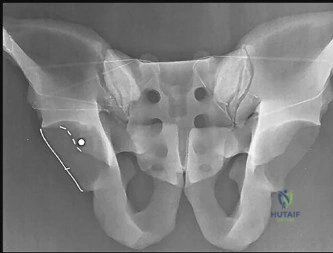
Which structure does the dashed line represent in Figure 30?
Explanation
The image shows a plain anteroposterior radiograph of a pelvic model with the dashed line on the anterior wall of the acetabulum. The ilioischial line represents the posterior column. The cotyloid fossa is the medial wall of the acetabulum at which the ligamentum teres attaches. The solid line is the posterior wall of the acetabulum.
RECOMMENDED READINGS
3. Vrahas M, Tile M. Fractures of the acetabulum. In: Bucholz R, Heckman J. _Rockwood and Green’s Fractures in Adults_. 5th ed. Philadelphia, PA: Lippincott Williams and Wilkins; 2002:1513-1545.
4. Armfield DR, Towers JD. Radiographic evaluation of the hip. In: Callaghan JJ, Rosenberg AG, Rubash HE, eds. _The Adult Hip_. 2nd ed. Philadelphia, PA: Lippincott Williams & Wilkins; 2007:349-391.
Question 24High Yield
A 78-year-old man with ankylosing spondylitis sustains a minor fall. Shortly afterward he experiences sudden worsening of his chronic back pain and is brought to the emergency department by his caregiver. Radiographs and a CT scan of the spine do not show a clear fracture. What is the most appropriate next step?
Explanation
Patients with ankylosing spondylitis are at high risk for occult fractures after low-energy injuries. Although radiographs and a CT scan do not demonstrate a spinal fracture in this patient, high risk for an unstable occult fracture necessitates further imaging with MRI to ensure that no fractures are missed. Although a CT scan is typically the primary imaging modality for workup of spine injuries in similar patients, CT and MRI complement each other and each detects fractures that are missed using the other modality. A CT myelogram might detect cord or root compression but would not aid in the diagnosis of an occult fracture. Nonsteroidal anti-inflammatory drugs are first-line treatment for idiopathic low-back pain. In a patient with ankylosing spondylitis at high risk for fracture, further workup is needed to rule out an occult fracture. Flexion and extension radiographs of the spine are inferior to MRI for evaluating occult fractures and ligamentous injuries. The primary concern for this patient remains an unstable spinal fracture, which necessitates an MRI of the spine before initiating a workup for other possible causes of his back pain.
RECOMMENDED READINGS
[Duane TM, Cross J, Scarcella N, Wolfe LG, Mayglothling J, Aboutanos MB, Whelan JF, Malhotra AK, Ivatury RR. Flexion-extension cervical spine plain films compared with MRI in the diagnosis of ligamentous injury. Am Surg. 2010 Jun;76(6):595-8. PubMed PMID: 20583514. ](http://www.ncbi.nlm.nih.gov/pubmed/20583514)[View Abstract at PubMed](http://www.ncbi.nlm.nih.gov/pubmed/20583514)
[Hitchon PW, From AM, Brenton MD, Glaser JA, Torner JC. Fractures of the thoracolumbar spine complicating ankylosing spondylitis. J Neurosurg. 2002 Sep;97(2 Suppl):218-22. PubMed PMID: 12296682. ](http://www.ncbi.nlm.nih.gov/pubmed/12296682)[View Abstract at PubMed](http://www.ncbi.nlm.nih.gov/pubmed/12296682)
Koivikko MP, Koskinen SK. MRI of cervical spine injuries complicating ankylosing spondylitis. Skeletal Radiol. 2008 Sep;37(9):813-9. doi: 10.1007/s00256-008-0484-x. Epub 2008 Apr
[18/. PubMed PMID: 18421455. ](http://www.ncbi.nlm.nih.gov/pubmed/18421455)[View Abstract at PubMed](http://www.ncbi.nlm.nih.gov/pubmed/18421455)
[Wang YF, Teng MM, Chang CY, Wu HT, Wang ST. Imaging manifestations of spinal fractures in ankylosing spondylitis. AJNR Am J Neuroradiol. 2005 Sep;26(8):2067-76. PubMed PMID: 16155161. ](http://www.ncbi.nlm.nih.gov/pubmed/16155161)[View Abstract at PubMed](http://www.ncbi.nlm.nih.gov/pubmed/16155161)
[Westerveld LA, Verlaan JJ, Oner FC. Spinal fractures in patients with ankylosing spinal disorders: a systematic review of the literature on treatment, neurological status and complications. Eur Spine J. 2009 Feb;18(2):145-56. doi: 10.1007/s00586-008-0764-0. Epub 2008 Sep 13. Review. PubMed PMID: 18791749. ](http://www.ncbi.nlm.nih.gov/pubmed/18791749)[View ](http://www.ncbi.nlm.nih.gov/pubmed/18791749)[Abstract at PubMed](http://www.ncbi.nlm.nih.gov/pubmed/18791749)
Question 25High Yield
A 5-year-old boy develops immediate left elbow pain and swelling following a fall from his hover board. His fracture is demonstrated in Figures 1 and

Explanation


Buried pins require additional return to the operating room for removal, do not decrease infection rate, or improve outcome. The additional return to the operating room significantly increases cost associated with treatment.
Question 26High Yield
Community-acquired (CA)-methicillin-resistant Staphylococcus aureus (MRSA) is one of the most common organisms causing severe musculoskeletal infections in children. In contrast to its methicillinsensitive counterpart, CA-MRSA is associated with
Explanation

CA-MRSA is one of the most common organisms causing severe musculoskeletal infections in children. In contrast to its methicillin-sensitive counterpart, CA-MRSA is associated with a much more severe disease burden, including the need for more operative procedures before it is cleared.
CA-MRSA is more likely to be diagnosed when the C-reactive protein level is >5 mg/dL. Currently, clindamycin and vancomycin are the first-line antibiotics used for treatment of CA-MRSA; linezolid is reserved for severe resistant cases or allergies, as it is not indicated otherwise for use in children. CA-MRSA is much more likely to cause associated deep venous thrombosis and pulmonary thromboembolism than hospital-acquired-MRSA, due to a much higher propensity for the former to carry the Panton-Valentin leukocidin gene.
Question 27High Yield
During fracture repair systemiCas well as local factors come into play. Which of the following is considered a systemiCfactor in fracture healing:
Explanation
The degree of vascular injury is considered a local factor in fracture healing. Other such factors include degree of local trauma, type of bone affected, degree of bone loss, degree of immoblization, infection and local pathologiCconditions. SystemiCfactors include age of the patient, hormone function, functional activity, nerve function and nutritional state
Question 28High Yield
Which of the following organisms is most often found in a late (> 3 months) infection of a total hip arthroplasty?

Explanation
DISCUSSION: Staphylococcus epidermidis is the most common organism found in an infected total hip arthroplasty greater than 3 months from the origional surgery. Staphylococcus aureus is more common in acute postoperative infections, and E. coli is associated with infections of the urinary tract. Streptococcus species are less common.

REFERENCE: Barrack RL, Booth RE Jr, Lonner JH, et al (eds): Orthopaedic Knowledge Update: Hip and Knee Reconstruction 3. Rosemont, IL American Academy of Orthopedic Surgeons, 2006, pp 475-503.

Figure 82
Question 29High Yield
The nerve most likely to be at risk during surgical exposure when performing a triple arthrodesis is the:
Explanation
The sural nerve has a variable path in the distal leg, but lies immediately adjacent to the peroneal tendons on the lateral side of the foot. The lateral incision used to expose the subtalar and calcaneocuboid joints is adjacent to this nerve.
Question 30High Yield
A 21-year-old patient has had pain and a marked decrease in active and passive shoulder motion after having had a seizure 2 months ago as the result of alcohol abuse. Current AP and axillary radiographs and a CT scan are shown in Figures 26a through 26c. Management should consist of
Explanation
Open reduction and subscapularis and lesser tuberosity transfer into the defect is the treatment of choice in young individuals who have defects that involve between 20% to 45% of the head. Disimpaction and bone grafting is an option in injuries that are less than 3 weeks old. Closed reduction 2 to 3 months after injury usually is unsuccessful and increases the risk of fracture or neurovascular injury. Total shoulder arthroplasty is reserved for defects of greater than 50% or with associated glenoid surface damage. Hemiarthroplasty should be avoided in young individuals unless 50% or more of the head is involved.
REFERENCES: Gerber C: Chronic locked anterior and posterior dislocations, in Warner JJ, Iannotti JP, Gerber C (eds): Complex and Revision Problems in Shoulder Surgery. Philadelphia, PA, Lippincott-Raven, 1997, pp 99-113.
Hawkins RJ, Neer CS II, Pianta RM, et al: Locked posterior dislocation of the shoulder. J Bone Joint Surg Am 1987;69:9-18.
Question 31High Yield
A 15-year-old girl is thrown from a snowmobile and has severe left foot and ankle pain. Her CT image is shown in Figure 96a, and a lateral radiograph is shown in Figure 96b. The arrow in Figure 96a points to which structure?
A
B
Explanation
The image shown is a transverse cut of the foot, which shows the inferior calcaneus, the cuboid, and the three cuneiform bones. The arrow points to a fractured cuboid. The lateral radiograph also shows fractures of the anterior process of the calcaneus and the lateral process of the talus.
RECOMMENDED READINGS
1. Sarrafian SK. Anatomy of the Foot and Ankle: Descriptive, Topographic, Functional.
2nd ed. Philadelphia, PA: Lippincott Williams & Wilkins; 1993:393-406.
2. Hoppenfeld S, deBoer P. Surgical Exposures in Orthopaedics: The Anatomic Approach.
Philadelphia, PA: JB Lippincott; 1984:495-520.
83
Question 32High Yield
Back injuries occur in approximately 2% of the work force every year,
resulting in workers’ compensation costs of more than $20 billion. What percentage of workers, with symptoms severe enough to require work absence, return to work within 12 weeks?
Explanation
In adults, 70% to 85% will experience an episode of low back pain at some period during their life. Most recover quickly and without residual functional deficits. Of those patients with symptoms severe enough to require absence from work, 60% to 70% return within 6 weeks and 80% to 90% return within 12 weeks. After 12 weeks of symptoms, return to work is much slower.
Question 33High Yield
In patients who have undergone nonsurgical management for idiopathic adhesive capsulitis, long-term follow-up studies have shown which of the following results?
Explanation
Results have been satisfactory in many patients; however, at long-term follow-up, examination of the affected shoulder often shows some decrease in range of motion compared with the contralateral side. Although range of motion often improves over time, it does not return to normal in 60% of patients. Pain improves but is often increased compared with the contralateral side.
REFERENCES: Griggs SM, Ahn A, Green A: Idiopathic adhesive capsulitis: A prospective functional outcome study of nonoperative treatment. J Bone Joint Surg Am 2000;82:1398-1407.
Shaffer B, Tibone JE, Kerlan RK: Frozen shoulder: A long-term follow-up. J Bone Joint Surg Am 1992;74:738-746.
Question 34High Yield
Slide 1
The primary cause for the deformity shown (Slide) is:
Explanation
Overplication of the medial capsule, overcorrection of the metatarsal osteotomy, and excessive lateral soft tissue release can lead to a hallux varus deformity. The most likely cause, however, is interference with the varus-valgus balance of the hallux as a result of a fibular sesamoidectomy.
Question 35High Yield
Figures 23a and 23b show the AP and lateral radiographs of the elbow of a 30-year-old professional pitcher. The pathology shown in these studies is most consistent with which of the following conditions?
Explanation
The radiographs show the osteophytic build-up of the posteromedial corner of the elbow that occurs with valgus extension overload in the pitching elbow. This is the result of excessive valgus forces during the acceleration and deceleration phases of throwing. These forces, coupled with medial elbow stresses, cause a wedging of the olecranon into the medial wall of the olecranon fossa. Valgus instability of the elbow may further stimulate osteophyte formation. Repetitive impact of a spur within the olecranon fossa may cause fragmentation and eventual formation of loose bodies.
REFERENCES: Azar FM, Wilk KE: Nonoperative treatment of the elbow in throwers. Oper Tech Sports Med 1996;4:91-99.
Field LD, Savoie FJ: Common elbow injuries in sport. Sports Med 1988;26:193-205.
Wilson FD, Andrews JR, Blackburn TA, et al: Valgus extension overload in the pitching elbow. Am J Sports Med 1983;11:83-88.
Question 36High Yield
A 12-year-old child with Duchenne’s muscular dystrophy has a 40-degree scoliotic deformity. Prior to surgery, the orthopaedic surgeon should
Explanation
DISCUSSION: In Duchenne’s muscular dystrophy, spinal deformities are common. Spinal deformity usually develops as a child begins sitting in the preteen years. Unlike adolescent idiopathic scoliosis, scoliosis in Duchenne’s muscular dystrophy is treated early; spinal fusion for a 40-degree deformity is not unusual. Although hematology and neurology consults usually are not necessary prior to surgery, every child should have a comprehensive cardiac evaluation, including an EKG and an echocardiogram because cardiomyopathy is part of the pathologic spectrum of Duchenne’s muscular dystrophy requiring preoperative assessment and intervention.

2010 Pediatric Orthopaedic Examination Answer Book • 65

REFERENCE: Fischgrund JS (ed): Orthopedic Knowledge Update 9. Rosemont, IL, American Academy of Orthopaedic Surgeons, 2008, p 790.


Question 37High Yield
What are some potential benefits of performing arthroscopiCcompared to open acromioplasty in a patient who develops impingement syndrome following hemiarthroplasty:
Explanation
ArthroscopiCacromioplasty has been used for the treatment of impingement following shoulder arthroplasty. It has the potential benefits of less tissue disruption, more rapid recovery, as well as increased ability to address intra-articular pathology compared to an open procedure.
Question 38High Yield
Figures 1 through 5 are the radiograph, MRI scan, and clinical photograph of a 9-year-old boy who has a new wound of the posteromedial heel without recent injury or fevers. He has a 2-month history of heel pain and has been treated for calcaneal apophysitis with a walking boot. Complete blood count, CRP level, and ESR are normal. What is the best next step?
Explanation


This patient has chronic calcaneal osteomyelitis. Pediatric calcaneal osteomyelitis may follow an indolent course with a delay in diagnosis. Given the draining wound, chronic radiographic changes; and MRI evidence of abscess, operative biopsy and debridement is the next step. Iliac crest aspiration may be appropriate if leukemia is suspected based upon the complete blood count. A bone scan or skeletal survey may be a consideration if the biopsy is consistent with malignancy or if the patient has poorly localized symptoms.
Question 39High Yield
What is the most consistent finding regarding glenohumeral kinematics in patients with symptomatic tears of the rotator cuff?
Explanation
Normal glenohumeral kinematics are represented by ball-and-socket modeling when the rotator cuff is intact. This is true for motion that involves more than 30 degrees of abduction. In patients with shoulder pain and symptomatic rotator cuff tears, superior translation occurs with abduction beyond 30 degrees. This is quite evident in massive tears but is seen consistently to a lesser degree with smaller tears.
REFERENCES: Yamaguchi K, Sher JS, Anderson WK, et al: Glenohumeral motion in patients with rotator cuff tears: A comparison of asymptomatic and symptomatic shoulders. J Shoulder Elbow Surg 2000;9:6-11.
Poppen NK, Walker PS: Normal and abnormal motion of the shoulder. J Bone Joint Surg Am 1976;58:195-201.
Question 40High Yield
A healthy 78-year-old woman falls down a flight of stairs 2 years after undergoing left total hip arthroplasty. Radiographs are shown in Figures 25a through 25c. Optimal management should include which of the following?
Explanation
DISCUSSION: The fracture occurs distal to the component, and does not jeopardize the cemented implant
fixation. The cement mantle is intact. The component appears well fixed and without osteolysis. In such cases, the femoral component can be left alone and the fracture fixed with internal fixation. There is no available intramedullary space proximal to the fracture to allow for a retrograde nail. A standard plate cannot obtain adequate fixation of the proximal fragment due to the presence of the femoral stem. Therefore, a plate that uses screws distal to the fracture and cables proximal to the fracture is the treatment of choice. Skeletal traction is usually reserved for patients unable to withstand surgery. This fracture is classified as a type C, according to the Vancouver classification of postoperative femoral fractures.

REFERENCES: Barrack RL, Booth RE Jr, Lonner JH, et al (eds): Orthopaedic Knowledge Update: Hip and Knee Reconstruction 3. Rosemont, IL, American Academy of Orthopaedic Surgeons, 2006, pp 475503.
Brady OH, Garbuz DS, Masri BA, et al: The reliability and validity of the Vancouver classification of femoral fractures after hip replacement. J Arthroplasty 2000; 15:59-62.
Question 41High Yield
A disadvantage associated with presurgical (vs postsurgical) radiation therapy for soft-tissue sarcoma is a
Explanation
Radiation therapy is used for soft-tissue sarcoma treatment to facilitate resection of tumors that are close to adjacent structures and to diminish risk for local recurrence. The disadvantages of radiation therapy for soft-tissue sarcoma include patient inconvenience, risk for secondary malignancy, and higher wound complication rates. The advantages of presurgical (neoadjuvant) radiation therapy include a smaller radiation field, formation of a “pseudocapsule” to facilitate a planned close-margin resection, tumor shrinkage, and lower local recurrence rates. The main disadvantage of presurgical radiation therapy is the much higher risk for wound healing complications (as demonstrated in numerous studies).
RECOMMENDED READINGS
7. [O'Sullivan B, Davis AM, Turcotte R, Bell R, Catton C, Chabot P, Wunder J, Kandel R, Goddard K, Sadura A, Pater J, Zee B. Preoperative versus postoperative radiotherapy in soft-tissue sarcoma of the limbs: a randomised trial. Lancet. 2002 Jun 29;359(9325):2235-41. ](http://www.ncbi.nlm.nih.gov/pubmed/12103287)[View Abstract at PubMed](http://www.ncbi.nlm.nih.gov/pubmed/12103287)
8. [Zagars GK, Ballo MT, Pisters PW, Pollock RE, Patel SR, Benjamin RS. Preoperative vs. postoperative radiation therapy for soft tissue sarcoma: a retrospective comparative evaluation of disease outcome. Int J Radiat Oncol Biol Phys. 2003 Jun 1;56(2):482-8. ](http://www.ncbi.nlm.nih.gov/pubmed/12738324)[View Abstract at PubMed](http://www.ncbi.nlm.nih.gov/pubmed/12738324)
9. [Peat BG, Bell RS, Davis A, O'Sullivan B, Mahoney J, Manktelow RT, Bowen V, Catton C, Fornasier VL, Langer F. Wound-healing complications after soft-tissue sarcoma surgery. Plast Reconstr Surg. 1994 Apr;93(5):980-7. PubMed PMID: 8134491. ](http://www.ncbi.nlm.nih.gov/pubmed/8134491)[View Abstract at PubMed](http://www.ncbi.nlm.nih.gov/pubmed/8134491)
Question 42High Yield
1247) When comparing the fibular plating techniques shown in Figures A and B, the plate position shown in Figure B is associated with which of the following?


Explanation
Lateral plating of the distal fibula has an increased risk of intra-articular screw penetration with the trajectory of the screws distally; bicortical screws will be intra-articular in nature, whereas posterior plating screws will exit anteriorly.
Figure A shows an antiglide (posterior) plating of the distal fibula, while Figure B shows a lateral neutralization plating of the distal fibula. Both methods are acceptable, but posterior antiglide plating is associated with increased construct stiffness and strength, decreased hardware prominence, decreased rates of ankle joint screw penetration, and improved biomechanical findings in osteoporotic bone. However, posterior plating is associated with an increased rate of peroneal tendonitis and irritation. Illustration A shows a lateral radiograph of a posterior fibular plate.
The referenced article by Ostrum et al is a case series of 32 patients who had antiglide plating; he reported a 100% union rate, 95% patient satisfaction rate, and only 4/32 reported peroneal tendinitis, with all resolving by 2
months.
The other referenced article by Schaffer et al reported that the posterolateral antiglide plate demonstrated improved biomechanical stability as compared to the lateral plating, with increased construct stiffness and load to failure.
Question 43High Yield
Contracture of which structure causes hammertoe deformity?
Explanation
A patient with a flexible hammertoe deformity has the deformity while standing, but practically no deformity when seated with the foot in equinus. The metatarsophalangeal joint is not involved. The deformity is created by contracture of the flexor digitorum longus tendon.
RECOMMENDED READINGS
[Coughlin MJ. Lesser toe abnormalities. Instr Course Lect. 2003;52:421-44. Review. PubMed PMID: 12690869.](http://www.ncbi.nlm.nih.gov/pubmed/12690869)[View Abstract at PubMed](http://www.ncbi.nlm.nih.gov/pubmed/12690869)
Couglin MJ. Lesser toe deformities. In: Coughlin MJ, Mann RA, Saltzman CL, eds. Surgery of the Foot and Ankle. Vol 1. 8th ed. Philadelphia, PA: Mosby Elsevier; 2007:363-464.
Question 44High Yield
-are the radiographs of a 52-year-old woman who fell down the stairs and sustained an acute hemarthrosis of the elbow. What is the most common complication following surgical treatment of this injury?
Explanation
No detailed explanation provided for this question.
Question 45High Yield
Figures 1 and 2 depict the postoperative radiographs obtained from a 22-year-old man who was involved in a motor vehicle accident. The most likely limitation in motion arising from this treatment is
---
---


Explanation
This patient sustained fractures of his radius and ulna; both were treated with plate and screw fixation. The plate used on the radius was straight, resulting in loss of the radial bow, which is critical for enabling the radius to curve around the ulna during pronation. This patient is unable to pronate beyond 20°. Schemitsch and Richards correlated a good functional outcome, defined as more than 80% of normal rotation of the forearm, with restoration of the normal amount and location of the radial bow. Additionally, they related the restoration of grip strength with appropriate restoration of the radial bow. Matthews and associates reported little significant loss of rotation with 10° of angulation; however, 20° of angulation _resulted in a statistically and clinically significant loss of forearm rotation._
Question 46High Yield
The patient's postsurgical radiographs reveal a sagittal vertical axis of +8 cm. In addition to the usual issues encountered during the early postsurgical period, what should the surgeon be most concerned about?
Explanation
- Proximal junctional failure
Question 47High Yield
-A 41-year-old man is involved in a high-speed motor vehicle crash and sustains a closed femoral midshaft fracture and a unilateral pulmonary contusion with a hemothorax, requiring placement of a chest tube.He has an initial blood pressure of 90/50 mm Hg. After receiving two liters of crystalloid, he has a blood pressure of 115/70 mm Hg and a heart rate of 90 bpm. He has normal mentation and does not require ventilator support. An arterial blood gas reveals that his delta base is -2 mmol/L. What is the most appropriate treatment for his femoral fracture?
Explanation
No detailed explanation provided for this question.
Question 48High Yield
Figures 1 through 4 are the radiographs and CT scans of a 13-year-old male cross-country runner who has had vague posterior thigh pain for more than a year. Pain is worse at night than while running. History is negative for trauma, fevers, or constitutional signs or symptoms. Pain is relieved with nonsteroidal anti-inflammatory drugs (NSAIDs). Labs and inflammatory markers are all normal. What is the most appropriate treatment for this patient?
Explanation


Plain films, CT and MRI evidence an intracortical lucency <1.5 cm in diameter consistent with a benign nidus of an osteoid osteoma. Open biopsy is not required, as the imaging findings are pathognomonic. In this case, symptoms are chronic and well-controlled with NSAIDs, thus more aggressive intervention is not indicated. The natural history of untreated osteoid osteomas is often for spontaneous resolution in 2 to 3 years. Treatment options for osteoid osteomas causing disabling symptoms despite NSAID therapy include open surgical excision or minimally invasive image-guided procedures (i.e., cryotherapy, radiofrequency ablation). The imaging findings are not representative of a ‘dreaded black line’, as in a stress fracture. Normal labs direct against an infectious etiology for this patient's symptoms.
Question 49High Yield
Standard guidelines necessitate the use of intraoperative neurophysiological monitoring for patients undergoing surgery for which condition?
Explanation
There are currently no official guidelines on the appropriate use of neuromonitoring in spine surgery. In general, use of neuromonitoring is at surgeon discretion and often is based on the surgeon's perceived risk for neurologic injury during surgery and medicolegal concerns. In most reports,
neuromonitoring is considered useful in cases of deformity correction, spinal cord decompression, instrumentation placement, and revision surgery. However, even for some of these cases, studies have shown limited benefits of neuromonitoring and substantial associated costs.
RECOMMENDED READINGS
[Lall RR, Lall RR, Hauptman JS, Munoz C, Cybulski GR, Koski T, Ganju A, Fessler RG, Smith ZA. Intraoperative neurophysiological monitoring in spine surgery: indications, efficacy, and role of the preoperative checklist. Neurosurg Focus. 2012 Nov;33(5):E10. doi: 10.3171/2012.9.FOCUS12235. Review. PubMed PMID: 23116090. ](http://www.ncbi.nlm.nih.gov/pubmed/23116090)[View Abstract at PubMed](http://www.ncbi.nlm.nih.gov/pubmed/23116090) [Peeling L, Hentschel S, Fox R, Hall H, Fourney DR. Intraoperative spinal cord and nerve root monitoring: a survey of Canadian spine surgeons. Can J Surg. 2010 Oct;53(5):324-8. PubMed PMID: 20858377. ](http://www.ncbi.nlm.nih.gov/pubmed/20858377)[View ](http://www.ncbi.nlm.nih.gov/pubmed/20858377)[Abstract at PubMed](http://www.ncbi.nlm.nih.gov/pubmed/20858377)
[Garces J, Berry JF, Valle-Giler EP, Sulaiman WA. Intraoperative neurophysiological monitoring for minimally invasive 1- and 2-level transforaminal lumbar interbody fusion: does it improve patient outcome? Ochsner J. 2014 Spring;14(1):57-61. PubMed PMID: 24688334. ](http://www.ncbi.nlm.nih.gov/pubmed/24688334)[View](http://www.ncbi.nlm.nih.gov/pubmed/24688334)[ ](http://www.ncbi.nlm.nih.gov/pubmed/24688334)[Abstract at PubMed](http://www.ncbi.nlm.nih.gov/pubmed/24688334)
Question 50High Yield
Which of the following groups of tumors is most likely to metastasize to the spine?
Explanation
The primary tumors most likely to metastasize to the vertebral column are breast (16%to 37% of breast cancer patients develop spine metastases), prostate (9% to 15%), lung (12% to 15%),kidney (3% to 6%), and thyroid (4%). Symptomatic lesions typically are found in the thoracic (68% to 70%), lumbosacral (16% to 22%), and cervical (8% to 15%) spine. Hemangiomas are benign tumors of the spine and are typically seen in the vertebral body as lesions that are bright on T1- and T2-weighted images; they do not typically metastasize to the spine.
RESPONSES FOR QUESTIONS 101 THROUGH 103
1. C4
2. C5
3. C6
4. C7
5. C8
For each patient, please select the correct nerve root involvement.

You Might Also Like

Dr. Mohammed Hutaif
Medically Verified Content by
Prof. Dr. Mohammed Hutaif
Consultant Orthopedic & Spine Surgeon
Chapter Index
