Orthopedic Upper Extrem Review | Dr Hutaif General Orth -...

Key Takeaway
In this comprehensive guide, we discuss everything you need to know about ORTHOPEDIC MCQS ONLINE 014 UPPER EXTREMITY. An arthroscopic Bankart repair is a minimally invasive surgical procedure performed to treat shoulder instability, specifically a Bankart lesion. This injury involves the detachment of the labrum from the anterior glenoid rim after a shoulder dislocation. The procedure reattaches the torn labrum and tightens the joint capsule, aiming to restore shoulder stability and prevent future dislocations through small incisions.
Orthopedic Upper Extrem Review | Dr Hutaif General Orth -...
Comprehensive 100-Question Exam
00:00
Start Quiz
Question 1
A 25-year-old male sustains a midshaft clavicle fracture following a motorcycle accident.
According to current AAOS guidelines, which of the following is considered an ABSOLUTE indication for open reduction and internal fixation?

Explanation
Question 2
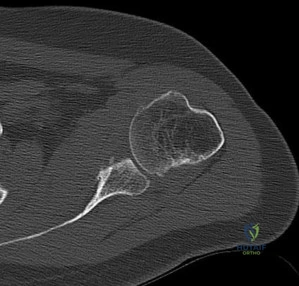
A 65-year-old female presents with a 3-part proximal humerus fracture.
An axillary nerve injury is suspected. Which of the following muscles is primarily evaluated to assess the motor function of this nerve?
Explanation
Question 3
A 30-year-old male falls and sustains a closed humeral shaft fracture at the distal third (Holstein-Lewis type). He is unable to extend his wrist or digits at presentation. He is placed in a coaptation splint. At 12 weeks of follow-up, radiographs show bridging callus, but there is no clinical sign of nerve recovery. What is the next best step in management?
Explanation
Question 4
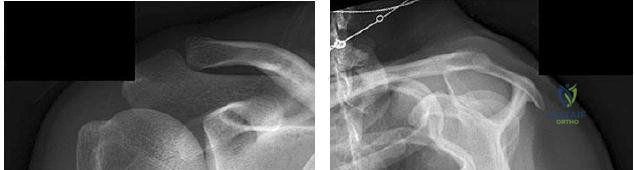
A 40-year-old male presents with a Terrible Triad injury of the elbow.
Surgical management is planned. What is the generally accepted sequence of repair to restore elbow stability?
Explanation
Question 5
A 22-year-old male undergoes open reduction and internal fixation of a Galeazzi fracture-dislocation. Intraoperatively, following anatomic fixation of the radius, the distal radioulnar joint (DRUJ) remains irreducible in neutral and pronation, and blocks supination. What is the most likely interposed structure preventing DRUJ reduction?
Explanation
Question 6
In a patient with a volar Barton's fracture, the volar lunate facet fragment escapes fixation and displaces volarly. Which of the following carpal ligaments is at greatest risk of disruption, leading to volar subluxation of the lunate?
Explanation
Question 7
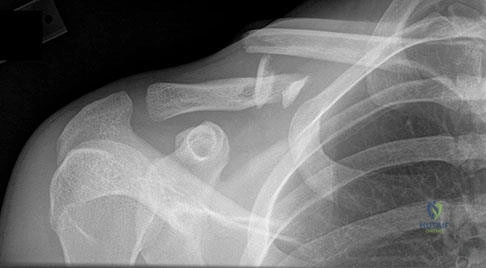
A 28-year-old male presents with a scaphoid waist fracture nonunion.
MRI demonstrates avascular necrosis (AVN) of the proximal pole with a structural humpback deformity. Which of the following is the most appropriate graft option to achieve union and correct the deformity?
Explanation
Question 8
A 32-year-old male sustains a perilunate dislocation. The 'Space of Poirier' represents an area of capsular weakness allowing the lunate to dislocate volarly. This space is located between which of the following capsuloligamentous structures?
Explanation
Question 9
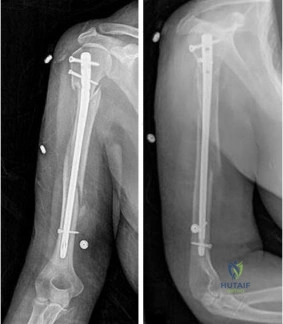
A 35-year-old female with severe carpal tunnel syndrome exhibits thenar atrophy.
Which of the following intrinsic muscles of the hand is innervated by the recurrent motor branch of the median nerve?
Explanation
Question 10
A 45-year-old male is undergoing an anterior submuscular transposition of the ulnar nerve for recalcitrant cubital tunnel syndrome. During the procedure, the nerve is placed deep to which of the following muscular structures?
Explanation
Question 11
During repair of a Zone II flexor tendon injury, understanding the blood supply is critical. The vinculum breve to the flexor digitorum superficialis (FDS) tendon inserts at which anatomic location?
Explanation
Question 12
A 45-year-old male presents with a chronic mallet deformity of the ring finger and a secondary swan neck deformity. What is the primary pathoanatomic mechanism causing the PIP joint hyperextension (swan neck) in this setting?
Explanation
Question 13
In a complete tear of the ulnar collateral ligament (UCL) of the thumb (Skier's thumb), a Stener lesion may occur. This lesion is characterized by the proximal stump of the torn UCL displacing superficial to which of the following structures?
Explanation
Question 14
A 28-year-old volleyball player presents with insidious onset of shoulder pain and weakness.
Examination reveals weakness in external rotation but normal strength in abduction. Entrapment of the suprascapular nerve is suspected. At what anatomical site is the compression most likely occurring?

Explanation
Question 15
A 24-year-old athlete sustains recurrent anterior shoulder dislocations. An MRI reveals a Hill-Sachs lesion. Advanced imaging and 3D modeling demonstrate that the lesion 'engages' the anterior glenoid rim when the arm is in abduction and external rotation. According to the glenoid track concept, how is this lesion classified?
Explanation
Question 16
A patient sustains a Type III acromioclavicular (AC) joint separation. The coracoclavicular (CC) ligaments are ruptured. Which CC ligament originates from the base of the coracoid and inserts onto the conoid tubercle of the clavicle?
Explanation
Question 17
During arthroscopic evaluation of the shoulder, a Type II SLAP tear is identified. The 'peel-back' mechanism is tested to assess the dynamic instability of the biceps anchor. This mechanism is maximally provoked in which shoulder position?
Explanation
Question 18
A 30-year-old manual laborer presents with progressive dorsal wrist pain.
Radiographs show sclerosis and collapse of the lunate, consistent with Kienbock's disease. Based on the Lichtman classification, what specific radiographic finding differentiates Stage IIIA from Stage IIIB?
Explanation
Question 19
A 42-year-old tennis player undergoes surgical debridement for refractory lateral epicondylitis. Histologic examination of the excised tissue from the extensor carpi radialis brevis (ECRB) origin will most typically demonstrate which of the following?
Explanation
Question 20
A 45-year-old bodybuilder feels a pop in his anterior elbow during a heavy deadlift. Clinical exam shows a positive Hook test. A single-incision anterior approach is planned to repair the avulsed distal biceps tendon. During this approach, which nerve is at greatest risk of iatrogenic injury?
Explanation
Question 21
A 45-year-old male feels a sudden 'pop' in his right elbow while attempting to lift a heavy box. On examination, he has a positive hook test and a visible proximal retraction of the biceps muscle belly. A single anterior incision approach is planned for distal biceps tendon repair. Which of the following nerves is at the greatest risk of iatrogenic injury during this specific surgical approach?
Explanation
Question 22
A 24-year-old man falls onto an outstretched hand and presents with anatomic snuffbox tenderness. Radiographs reveal a non-displaced fracture through the proximal third of the scaphoid. The high risk of avascular necrosis in this fracture pattern is directly related to its blood supply. Which of the following arteries provides the primary blood supply to the proximal pole of the scaphoid?
Explanation
Question 23
A 55-year-old male with a history of a chronic untreated scapholunate ligament tear presents with increasing wrist pain. Radiographs reveal degenerative narrowing specifically at the articulation between the radial styloid and the scaphoid, with preservation of the rest of the radioscaphoid and midcarpal joints. What is the correct stage of Scapholunate Advanced Collapse (SLAC) in this patient?
Explanation
Question 24
A 30-year-old manual laborer presents with chronic, aching dorsal wrist pain. MRI demonstrates avascular necrosis of the lunate. Plain radiographs show lunate sclerosis but normal architecture without collapse. Radiographic evaluation reveals an ulnar variance of -3 mm. Which of the following is the most appropriate initial surgical intervention if conservative management fails?
Explanation
Question 25
A 50-year-old diabetic woman presents with triggering and locking of her long finger that has been refractory to two corticosteroid injections. She undergoes surgical release. During the procedure, the surgeon must identify and release the specific structure responsible for the pathology while preserving the critical mechanical pulleys. What is the correct proximal-to-distal sequence of the flexor tendon pulleys in the digit?
Explanation
Question 26
A 25-year-old male sustains a deep glass laceration over the volar aspect of the proximal phalanx of his index finger. Exploration reveals that both the flexor digitorum superficialis (FDS) and flexor digitorum profundus (FDP) tendons are completely severed. In which flexor tendon zone did this injury occur?
Explanation
Question 27
A 22-year-old rugby player presents after a match unable to actively flex the DIP joint of his ring finger after grabbing an opponent's jersey. Radiographs reveal a large bony avulsion fragment from the volar base of the distal phalanx that is situated intra-articularly at the DIP joint. According to the Leddy-Packer classification of flexor digitorum profundus (FDP) avulsions, what type of injury is this?
Explanation
Question 28
A 35-year-old skier falls while gripping his ski pole and presents with weakness in thumb pinch and pain over the ulnar aspect of the thumb MCP joint. MRI reveals a complete rupture of the ulnar collateral ligament (UCL). The distal end of the torn ligament is displaced, preventing spontaneous healing. Which structure is the torn UCL typically displaced superficial to in this classic lesion?
Explanation
Question 29
A 40-year-old female presents with aching pain in her anterior forearm and numbness in the radial 3.5 digits. On examination, she has a negative Tinel's sign at the wrist. She demonstrates numbness over the thenar eminence. Furthermore, she has weakness in thumb interphalangeal joint flexion and index finger DIP joint flexion. What is the most likely primary site of nerve compression?
Explanation
Question 30
A competitive cyclist presents with numbness in his small finger and the ulnar half of his ring finger on the volar aspect, along with weakness of finger abduction and adduction. Sensation over the dorso-ulnar aspect of the hand is completely intact. Based on these findings, compression of the ulnar nerve is most likely occurring in which zone of Guyon's canal?
Explanation
Question 31
A 45-year-old mechanic complains of lateral elbow pain radiating down the dorsal forearm. The pain is exacerbated by repetitive pronation and supination. On examination, maximal point tenderness is localized approximately 4 to 5 cm distal to the lateral epicondyle in the extensor muscle mass. Resisted active extension of the middle finger (with the elbow extended) reproduces the pain. There is no demonstrable motor weakness or finger drop. What is the most likely diagnosis?
Explanation
Question 32
A 28-year-old gymnast presents with ulnar-sided wrist pain and clicking after a fall. Examination reveals a positive fovea sign. Arthroscopy confirms a traumatic avulsion of the Triangular Fibrocartilage Complex (TFCC) from its insertion at the fovea of the ulnar head. According to the Palmer classification, what type of TFCC tear is this?
Explanation
Question 33
A 50-year-old male is undergoing in-situ decompression of the ulnar nerve for severe cubital tunnel syndrome. The surgeon meticulously releases the nerve along its entire course around the elbow to prevent postoperative tethering. Which of the following is the most common anatomical site of ulnar nerve compression in this region?
Explanation
Question 34
A 60-year-old female presents with pain at the base of her thumb. She has a positive grind test. Radiographs demonstrate joint space narrowing, subchondral sclerosis, and small osteophytes (< 2 mm) at the trapeziometacarpal joint. The scaphotrapezial joint appears completely normal. According to the Eaton-Littler classification of thumb CMC arthritis, what is her stage?
Explanation
Question 35
A 32-year-old construction worker falls from a scaffolding. Lateral wrist radiographs demonstrate the lunate completely displaced volar to the radius and tipped forward like a 'spilled teacup', while the capitate remains aligned with the longitudinal axis of the radius. According to the Mayfield classification of carpal instability, what stage of injury has occurred?
Explanation
Question 36
A macrosomic newborn is noted to have a flaccid right upper extremity immediately after a difficult vaginal delivery involving shoulder dystocia. On examination, the infant has an absent grasp reflex and an ipsilateral ptosis and miosis. However, shoulder abduction and elbow flexion are spontaneous and intact. Which nerve roots are predominantly injured in this pattern of brachial plexus birth palsy?
Explanation
Question 37
A 40-year-old male presents with sudden, severe, unprovoked pain in his right shoulder that awoke him from sleep. The pain lasted for four days and required opioids. As the pain subsided, he noticed profound weakness in shoulder abduction and external rotation. He denies any trauma. MRI of the shoulder is unremarkable. EMG obtained 4 weeks later demonstrates denervation potentials in the supraspinatus and infraspinatus muscles. What is the most likely diagnosis?
Explanation
Question 38
A 35-year-old diabetic patient presents to the emergency department with a swollen, throbbing index finger 3 days after sustaining a puncture wound. The physician suspects acute purulent flexor tenosynovitis. Which of the following is NOT one of Kanavel's cardinal signs for this condition?
Explanation
Question 39
A 45-year-old male with a 10-year history of an untreated scaphoid waist fracture presents with progressive wrist pain and stiffness. Radiographs demonstrate advanced carpal collapse. In Scaphoid Nonunion Advanced Collapse (SNAC) wrist, the earliest arthritic changes typically manifest at which of the following articulations?
Explanation
Question 40
A 55-year-old male sustains a displaced transverse olecranon fracture after a ground-level fall. The surgeon decides to fix the fracture using tension band wiring. Biomechanically, the primary purpose of tension band fixation in this scenario is to convert which type of force at the dorsal cortex into what type of force at the articular surface?
Explanation
Question 41
A 45-year-old male sustains a 'terrible triad' injury of the elbow after a fall on an outstretched hand. Which of the following represents the most widely accepted sequence of surgical reconstruction to restore elbow stability?
Explanation
Question 42
A 55-year-old manual laborer presents with advanced Scapholunate Advanced Collapse (SLAC) of the wrist. Radiographs reveal diffuse radiocarpal and midcarpal arthritis. Which of the following carpal articulations is classically SPARED in a SLAC wrist, allowing for motion-preserving salvage procedures such as a four-corner fusion?
Explanation
Question 43
A 24-year-old male sustains a C5-C6 brachial plexus avulsion injury (Erb's palsy). Six months post-injury, he has no elbow flexion but normal hand function. An Oberlin transfer is planned. Which of the following describes the classic Oberlin I transfer?
Explanation
Question 44
A 19-year-old male presents with a scaphoid waist fracture. Which of the following best describes the predominant vascular supply to the scaphoid that dictates its risk of nonunion?
Explanation
Question 45
According to the Mayfield classification of perilunate instability, what is the anatomic sequence of ligamentous disruption around the lunate as the severity of injury progresses from Stage I to Stage IV?
Explanation
Question 46
A 32-year-old female sustains an Essex-Lopresti injury. She undergoes radial head excision without prosthetic replacement. Which of the following is the most likely late complication?
Explanation
Question 47
A patient presents with intrinsic muscle weakness in the hand but normal sensation over the volar small finger and dorsal ulnar aspect of the hand. Electromyography confirms compression of the ulnar nerve in Guyon's canal. This presentation is most consistent with compression at which zone?
Explanation
Question 48
A 40-year-old male develops a boutonniere deformity of the index finger following a crush injury. What is the underlying pathoanatomy responsible for this specific deformity?
Explanation
Question 49
A 65-year-old female presents with severe pain at the base of the thumb. Radiographs demonstrate Eaton-Littler Stage IV carpometacarpal (CMC) arthritis. Which radiographic finding distinguishes Stage IV from Stage III?
Explanation
Question 50
A 6-year-old boy sustains a supracondylar humerus fracture. Radiographs show posterolateral displacement of the distal fragment. Which nerve is at the highest risk of injury in this specific displacement pattern?
Explanation
Question 51
A 5-year-old girl is treated nonoperatively for a seemingly minimally displaced pediatric lateral condyle fracture. One year later, she is noted to have a nonunion. What is the most common long-term deformity and associated neurologic complication if left untreated?
Explanation
Question 52
During surgical decompression of the ulnar nerve for cubital tunnel syndrome, the surgeon must divide the roof of the cubital tunnel. What structure forms the roof of this tunnel?
Explanation
Question 53
A 58-year-old male with Dupuytren's disease undergoes a fasciectomy for a severe PIP joint contracture. During dissection, the neurovascular bundle is noted to be displaced volarly and centrally. Which pathologic structure is primarily responsible for PIP joint contracture and this neurovascular displacement?
Explanation
Question 54
A 28-year-old male sustains a closed spiral fracture of the distal third of the humeral shaft (Holstein-Lewis fracture). On initial presentation in the emergency department, his radial nerve function is intact. Following closed reduction and splinting, he completely loses active wrist and digit extension. What is the most appropriate management regarding the nerve injury?
Explanation
Question 55
A 35-year-old male develops acute compartment syndrome of the volar forearm after a crush injury. If left untreated, Volkmann's ischemic contracture will develop. Which muscles are most severely and earliest affected in the deep volar compartment?
Explanation
Question 56
When performing a primary flexor tendon repair in Zone II of the hand, biomechanical studies suggest that the strength of the repair is most directly proportional to which of the following factors?
Explanation
Question 57
A 45-year-old female sustains a volar Barton's fracture of the distal radius. This fracture pattern involves a volar marginal articular fragment that subluxates with the carpus. Which critical radiocarpal ligament complex remains attached to this volar fragment, mediating the volar subluxation of the carpus?
Explanation
Question 58
A 30-year-old female presents with true neurogenic thoracic outlet syndrome (TOS). She requires surgical decompression. The most common site of nerve compression in this syndrome involves the interscalene triangle. What are the anatomic borders of this triangle?
Explanation
Question 59
A 25-year-old male is diagnosed with Kienbock's disease (avascular necrosis of the lunate). According to the Lichtman classification, what finding distinguishes Stage IIIA from Stage IIIB?
Explanation

Question 60
A 42-year-old male presents with acute, severe, unremitting right shoulder pain that awakened him from sleep, lasting for 5 days before resolving. He subsequently developed profound weakness in shoulder abduction and external rotation. Cervical spine MRI is unremarkable. Which of the following is the most likely diagnosis?
Explanation
Question 61
A 35-year-old mechanic presents with chronic wrist pain and limited extension following an untreated fall on an outstretched hand 5 years ago. Radiographs demonstrate scapholunate dissociation with radioscaphoid and capitolunate arthritis, but sparing of the radiolunate articulation. Which of the following is the most appropriate definitive management?
Explanation
Question 62
A 42-year-old female sustains a terrible triad injury of the elbow (elbow dislocation, radial head fracture, and coronoid fracture). During surgical reconstruction, what is the most appropriate standard sequence of repair?
Explanation
Question 63
A 28-year-old male sustains a diaphyseal fracture of the radius and ulna. He undergoes open reduction and internal fixation. To minimize the risk of radioulnar synostosis, what surgical technique principle should be strictly followed?
Explanation
Question 64
A 32-year-old male sustains a Galeazzi fracture-dislocation. Following rigid internal fixation of the radius, the distal radioulnar joint (DRUJ) is evaluated and found to be unstable in all positions of forearm rotation. What is the most appropriate next step in management?
Explanation
Question 65
A 45-year-old male presents with a proximal-third ulnar shaft fracture and an associated radial head dislocation. The patient is diagnosed with a Bado Type I Monteggia fracture. Which of the following defines the direction of the radial head dislocation in a Bado Type I injury?
Explanation
Question 66
A 55-year-old male undergoes open reduction and internal fixation of a distal humerus intercondylar fracture via an olecranon osteotomy approach. Which of the following is the most frequent complication associated specifically with the olecranon osteotomy?
Explanation
Question 67
A 60-year-old female presents with a comminuted distal radius fracture and undergoes volar locked plating. During screw placement in the most distal row, the surgeon must be careful to avoid dorsal cortex penetration to prevent tendon rupture in which dorsal extensor compartment?
Explanation
Question 68
A 24-year-old rock climber presents with a popping sensation and pain in his right ring finger while bearing weight on a crimp hold. Clinical examination reveals pain and swelling over the volar aspect of the proximal phalanx, exacerbated by resisted PIP joint flexion. Which flexor tendon pulley is most likely injured?
Explanation
Question 69
A 50-year-old diabetic female complains of progressive right shoulder stiffness and pain over 4 months. She has profound restriction in both active and passive external rotation. Radiographs are normal. What is the most appropriate initial management?
Explanation
Question 70
A 38-year-old male suffers a high-energy dashboard injury resulting in a posterior dislocation of the shoulder. He is noted to have an anteromedial humeral head defect (reverse Hill-Sachs lesion) involving 35% of the articular surface. Which of the following is the most appropriate surgical treatment?
Explanation
Question 71
A 72-year-old female sustains a 4-part proximal humerus fracture. She has a history of severe osteoporosis and known advanced glenohumeral osteoarthritis. Which of the following treatments provides the most reliable functional outcome with the lowest rate of revision?
Explanation
Question 72
A 28-year-old athlete undergoes an isolated arthroscopic SLAP repair. Postoperatively, he experiences profound, isolated weakness in external rotation of the shoulder, with normal deltoid function and internal rotation. Suture anchor placement most likely injured which nerve?
Explanation
Question 73
A 45-year-old female presents after a fall on an outstretched hand with a 'terrible triad' injury of the elbow. To properly restore elbow stability, what is the most widely accepted sequence of surgical repair?
Explanation
Question 74
A 22-year-old male sustains a proximal pole scaphoid fracture. Which of the following describes the primary blood supply to the scaphoid and explains the high risk of avascular necrosis in proximal pole fractures?
Explanation
Question 75
Six weeks after being treated non-operatively for a non-displaced distal radius fracture, a 68-year-old woman presents with a sudden inability to actively extend her thumb interphalangeal (IP) joint. Which tendon transfer is the most appropriate definitive management?
Explanation
Question 76
A 22-year-old male athlete presents with recurrent anterior shoulder instability. MRI reveals an anterior capsulolabral avulsion (Bankart lesion). Which of the following glenohumeral ligaments is the primary restraint to anterior translation of the humeral head at 90 degrees of abduction?
Explanation
Question 77
Which of the following clinical scenarios is considered an ABSOLUTE indication for operative fixation of a humeral shaft fracture?
Explanation
Question 78
A 7-year-old boy presents with a closed fracture of the proximal third of the ulna associated with an anterior dislocation of the radial head. According to the Bado classification, what type of Monteggia lesion is this?
Explanation
Question 79
An adult patient sustains a Galeazzi fracture-dislocation. What is the standard of care for the definitive management of this injury?
Explanation
Question 80
A 72-year-old female presents with chronic pseudoparalysis of the shoulder. Radiographs demonstrate severe glenohumeral osteoarthritis with superior migration of the humeral head articulating with the acromion. What is the most appropriate surgical intervention?
Explanation
Question 81
In a patient presenting with cubital tunnel syndrome, which of the following represents the most common anatomic site of ulnar nerve compression?
Explanation
Question 82
A patient suffers a deep laceration on the volar aspect of their hand, resulting in transection of both the flexor digitorum superficialis and profundus tendons in the region between the A1 pulley and the FDS insertion. According to the Verdan classification, which flexor tendon zone is injured?
Explanation
Question 83
During open carpal tunnel release, care must be taken to identify and protect the contents of the carpal tunnel. Which of the following structures is NOT contained within the carpal tunnel?
Explanation
Question 84
A 40-year-old male is undergoing a two-incision approach for a distal biceps tendon repair. Compared to a single anterior incision approach, which of the following complications occurs at a higher rate with the two-incision technique?
Explanation
Question 85
A 6-year-old boy presents with a completely displaced, extension-type (Gartland III) supracondylar humerus fracture. His hand is pink but pulseless. After prompt closed reduction and percutaneous pinning in the OR, his hand remains pink and pulseless. What is the most appropriate next step in management?
Explanation
Question 86
A 35-year-old manual laborer presents with dorsal wrist pain.
Radiographs show sclerosis and flattening of the lunate, along with significant negative ulnar variance. He is diagnosed with early-stage Kienböck's disease (Lichtman Stage II). What is the most appropriate surgical joint-leveling procedure?
Explanation
Question 87
A 25-year-old basketball player presents unable to actively extend the distal interphalangeal (DIP) joint of his right ring finger after a jamming injury. Radiographs reveal no fractures. What is the most appropriate initial management?
Explanation
Question 88
In a patient with an untreated, complete scapholunate ligament tear, altered carpal kinematics lead to a specific deformity. Which radiographic deformity classically develops?
Explanation
Question 89
A newborn presents with an asymmetric Moro reflex. The right arm is held internally rotated, the elbow is extended, the forearm is pronated, and the wrist is flexed ('waiter's tip' posture). Which primary brachial plexus nerve roots are injured?
Explanation
Question 90
A 35-year-old female fell on her outstretched hand.
Radiographs show a radial head fracture with 3 mm of articular step-off. On examination, there is a distinct mechanical block to forearm pronation and supination. What is the most appropriate treatment?
Explanation
Question 91
A 50-year-old female presents with severe shoulder stiffness and pain, characterized by globally restricted active and passive range of motion. Which of the following systemic comorbidities has the strongest established association with the development of adhesive capsulitis?
Explanation
Question 92
A 22-year-old rugby player felt a sudden 'pop' in his ring finger while trying to tackle an opponent by grabbing their jersey. He is now unable to actively flex his distal interphalangeal (DIP) joint. What is the most likely diagnosis?
Explanation
None
