Ortho Free Review | Dr Hutaif General Orthopedics Revie -...
Key Takeaway
This interactive board review contains 100 randomly selected orthopedic surgery questions with clinical images, immediate feedback, and detailed references.
Ortho Free Review | Dr Hutaif General Orthopedics Revie -...
Comprehensive 100-Question Exam
00:00
Start Quiz
Question 1
A basic science researcher is evaluating the microanatomy of articular cartilage. Which of the following best describes the structural arrangement of collagen fibers in the superficial (tangential) zone of normal adult articular cartilage?
Explanation
Question 2
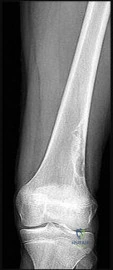
A 15-year-old boy presents with severe, progressive night pain in his distal femur. Radiographs reveal a poorly marginated, destructive diaphyseal lesion with a lamellated 'onion-skin' periosteal reaction. Biopsy demonstrates uniform, small round blue cells. Cytogenetic analysis is most likely to demonstrate which of the following translocations?

Explanation
Question 3
A 13-year-old obese male presents with a 3-week history of left knee pain and an antalgic gait. He is able to bear weight into the examination room with a noticeable limp. Radiographs demonstrate a posterior and inferior displacement of the proximal femoral epiphysis. According to the Loder classification, what is the primary prognostic significance of his ability to bear weight?
Explanation

Question 4
A 32-year-old male sustains a high-energy closed tibia fracture. In the emergency department, his blood pressure is 130/80 mmHg. He is intubated for associated head trauma, making clinical assessment of compartment syndrome difficult. Intracompartmental pressure monitoring is utilized. What is the most widely accepted absolute tissue pressure and Delta P criteria for performing a four-compartment fasciotomy?
Explanation
Question 5
In modern total hip arthroplasty, the advent of highly cross-linked polyethylene (HXLPE) has dramatically reduced wear rates and associated osteolysis. Which of the following best describes the mechanical trade-off resulting from the high-dose irradiation and subsequent thermal treatment (remelting or annealing) process used to create HXLPE?
Explanation
Question 6
A 65-year-old male presents with progressive hand clumsiness, gait instability, and bilateral lower extremity hyperreflexia. Physical examination reveals a positive inverted brachioradialis reflex (striking the brachioradialis tendon produces paradoxical finger flexion rather than elbow flexion). What spinal cord level is most likely compressed to produce this highly specific finding?
Explanation
Question 7
The anterior cruciate ligament (ACL) is composed of the anteromedial (AM) and posterolateral (PL) functional bundles. Which of the following statements accurately describes the biomechanical relationship of these bundles during normal knee kinematics?
Explanation
Question 8
A patient presents with intrinsic hand weakness, clawing of the ring and small fingers, and numbness in the ulnar half of the ring finger. Froment's sign is positive. The examiner suspects compressive ulnar neuropathy. Which of the following anatomical structures is NOT a recognized site of ulnar nerve compression at or around the elbow?
Explanation

Question 9
A 55-year-old poorly controlled diabetic patient presents with a warm, swollen, and erythematous right foot. There are no open ulcers, and laboratory inflammatory markers (ESR/CRP) are mildly elevated but inconsistent with severe acute osteomyelitis. Radiographs show extensive periarticular debris, fragmentation, and subluxation at the tarsometatarsal joints. According to the Eichenholtz classification, what stage does this represent, and what is the most appropriate initial treatment?
Explanation
Question 10
When inserting a cortical bone screw during fracture fixation, maximizing pull-out strength is essential for construct stability. Biomechanically, the pull-out strength of a bone screw is directly proportional to which of the following variables?
Explanation
Question 11
A 6-year-old boy presents with a painless limp and restricted hip abduction and internal rotation. Radiographs reveal fragmentation of the capital femoral epiphysis with a prominent subchondral lucency (crescent sign). According to the lateral pillar (Herring) classification, what specific radiographic criterion defines a Group B classification?
Explanation
Question 12
A 72-year-old female presents with anterior knee pain and a palpable, painful "clunk" sensation when actively extending her knee from a flexed position (typically between 30 and 45 degrees of flexion). She underwent a posterior-stabilized (PS) total knee arthroplasty (TKA) 18 months ago. What is the most likely etiology of her symptoms?
Explanation

Question 13
A 12-year-old female is undergoing standard neo-adjuvant chemotherapy for a high-grade conventional osteosarcoma of the distal femur. Her multidisciplinary regimen includes high-dose Methotrexate, Doxorubicin, and Cisplatin (MAP protocol). Two months into treatment, she acutely develops bilateral sensorineural hearing loss and ringing in her ears. Which of the following chemotherapeutic agents is most likely directly responsible for this specific toxicity?
Explanation
Question 14
A 35-year-old male sustains a vertically oriented femoral neck fracture after a high-energy motor vehicle accident. The fracture line measures 75 degrees relative to the horizontal (Pauwels Type III). Which of the following internal fixation constructs provides the most biomechanical stability against the exceedingly high shear forces present in this specific fracture pattern?
Explanation
Question 15
During an arthroscopic rotator cuff repair, a surgeon identifies a massive, retracted tear involving the entirety of the subscapularis tendon off its footprint on the lesser tuberosity. The surgeon needs to understand the innervation to mobilize the muscle safely. Which of the following peripheral nerves provide the primary motor innervation to the subscapularis?
Explanation
Question 16
A 14-year-old competitive gymnast presents with persistent lower back pain that radiates into her bilateral buttocks. Radiographs reveal a bilateral pars interarticularis defect at L5-S1 with 60% anterior translation of the L5 vertebral body upon the sacrum. According to the Meyerding classification, what grade is this slip, and what is the current accepted standard definitive surgical management if conservative treatment has failed?
Explanation
Question 17
A surgeon is performing a release of the first dorsal extensor compartment for recalcitrant De Quervain's tenosynovitis. Incomplete release is a known cause of persistent postoperative symptoms. Which of the following anatomic variations within the first compartment is most commonly responsible for this failure?
Explanation
Question 18
Osteoclasts are specialized multinucleated giant cells responsible for the resorption of mineralized bone matrix. For active resorption to occur, the osteoclast must tightly bind to the bone surface, creating an isolated acidic microenvironment (the sealed zone). Which specific integrin receptor on the osteoclast membrane is primarily responsible for binding to osteopontin and bone sialoprotein to form this sealed zone?
Explanation
Question 19
The Ponseti method is the internationally recognized gold standard for the conservative management of idiopathic congenital talipes equinovarus (clubfoot). During the serial casting process, the complex triplanar deformities are sequentially corrected. Which of the following represents the correct order of deformity correction according to the strict Ponseti protocol?
Explanation
Question 20
A 42-year-old male sustains a severe pelvic ring injury from a crush mechanism. Radiographs show complete disruption of the pubic symphysis, bilateral rami fractures, and significant widening of the left sacroiliac joint. Despite the application of a pelvic binder and massive transfusion protocol, he remains hemodynamically unstable. An urgent angiogram is performed. In the context of major posterior pelvic ring disruptions, which branch of the internal iliac artery is statistically the most frequently injured, leading to life-threatening retroperitoneal hemorrhage?
Explanation
Question 21
Which sterilization method of Ultra-High Molecular Weight Polyethylene (UHMWPE) components in total joint arthroplasty results in the highest risk of oxidation, decreased fatigue strength, and severe delamination wear if the component is implanted without subsequent protective processing?
Explanation
Question 22
According to the principles of Damage Control Orthopedics (DCO) in polytraumatized patients, which of the following systemic inflammatory markers is most strongly associated with the magnitude of the "second hit" and is frequently utilized to guide the safe timing of definitive fracture fixation?
Explanation
Question 23
Bone morphogenetic proteins (BMPs) belong to the TGF-beta superfamily and play a critical role in bone healing. Which intracellular signaling pathway is directly activated by the binding of BMPs (such as BMP-2 or BMP-7) to their transmembrane receptors to promote osteoblastic gene transcription?
Explanation
Question 24
When evaluating the mechanical properties of an orthopedic biomaterial via a stress-strain curve, the area under the entire curve up to the point of material failure represents which of the following mechanical properties?
Explanation
Question 25
During the formation of a bacterial biofilm on a metallic orthopedic implant, which component is primarily responsible for forming the structural framework of the mature biofilm and conferring profound resistance to host immune cells and systemic antibiotics?
Explanation
Question 26
A 28-year-old male presents with a deep-seated, slowly enlarging mass in the soft tissues of his distal thigh. Core needle biopsy reveals a biphasic tumor consisting of spindle cells and epithelial glandular structures. Cytogenetic analysis is most likely to reveal which of the following translocations?
Explanation
Question 27
A pediatric patient is evaluated for recurrent fragility fractures and cranial nerve palsies. Radiographic evaluation demonstrates diffusely dense, radiopaque "marble-like" bones with loss of the medullary canal.
The underlying pathogenesis of the malignant autosomal recessive form of this disease is most frequently characterized by a genetic defect in which of the following?
Explanation
Question 28
In the context of lower extremity amputations, an increase in the proximal level of amputation and the specific etiology of limb loss directly correlate with increased metabolic energy expenditure during gait. Which of the following scenarios results in the highest increase in metabolic demand compared to normal baseline walking?
Explanation
Question 29
The standard volar (Henry) approach to the radius utilizes a continuous internervous plane along the forearm. In the proximal third of the forearm, this approach separates the pronator teres and the brachioradialis. Which nerves supply these two muscles, respectively?
Explanation
Question 30
Tranexamic acid (TXA) is extensively utilized in total joint arthroplasty to minimize perioperative blood loss. Which of the following best describes its mechanism of action?
Explanation
Question 31
A 35-year-old obtunded polytrauma patient sustains a severe closed tibial shaft fracture. You suspect acute compartment syndrome and decide to measure intracompartmental pressures.
The "delta P" is widely considered the most reliable threshold for diagnosing compartment syndrome. Which formula correctly defines the delta P?
Explanation
Question 32
Achondroplasia is the most common form of skeletal dysplasia leading to disproportionate short stature, inherited in an autosomal dominant pattern. At the cellular level within the growth plate (physis), the primary pathologic defect is best described by which of the following?
Explanation
Question 33
A 55-year-old male presents with a painful mass in his proximal humerus. Plain radiographs demonstrate an intramedullary lytic lesion with cortical destruction and an internal matrix mineralization pattern described as "rings and arcs" or "popcorn-like."
This matrix pattern is most characteristic of which type of tissue?

Explanation
Question 34
When optimizing the geometric design of a cortical screw for rigid internal fixation in diaphyseal bone, which of the following modifications will most effectively increase the pullout strength of the screw?
Explanation
Question 35
According to the Sunderland classification of peripheral nerve injuries, a Grade III injury is characterized by complete disruption of the axon and myelin sheath, as well as disruption of which specific connective tissue layer, while preserving the others?
Explanation
Question 36
A 68-year-old patient undergoing an elective total hip arthroplasty has a known history of Factor V Leiden mutation. The hypercoagulable state induced by this specific genetic anomaly is primarily due to:
Explanation
Question 37
A newly developed synovial fluid biomarker test for periprosthetic joint infection (PJI) is evaluated in a cohort of 200 total knee revisions. 100 patients have a confirmed PJI (gold standard), and the test is positive in 90 of them. 100 patients are uninfected, but the test is positive in 20 of them. What is the Negative Predictive Value (NPV) of this new biomarker test?
Explanation
Question 38
In the surgical management of a Zone II acute flexor tendon laceration, a surgeon elects to use a 4-strand or 6-strand core suture repair technique rather than a traditional 2-strand repair (e.g., modified Kessler). The primary biomechanical rationale for utilizing a multi-strand technique is that it:
Explanation
Question 39
Denosumab is an antiresorptive pharmacological agent utilized in the treatment of postmenopausal osteoporosis and for downstaging giant cell tumors of bone. At the molecular level, denosumab directly binds to and neutralizes which of the following targets?
Explanation
Question 40
Normal synovial fluid within a healthy diarthrodial joint exhibits non-Newtonian flow characteristics, primarily governed by its hyaluronic acid concentration. As the shear rate across the joint cartilage increases (e.g., transitioning from a slow walk to a sprint), how does the viscosity of the synovial fluid adapt?
Explanation
Question 41
A 35-year-old male presents with a closed tibia fracture following an MVC.
Several hours after admission, he develops severe leg pain out of proportion to the injury, exacerbated by passive stretch of the toes. His diastolic blood pressure is 80 mmHg. Intracompartmental pressure in the anterior compartment is measured at 55 mmHg. What is the Delta P, and what is the most appropriate next step in management?
Explanation
Question 42
Which of the following represents an absolute indication for prophylactic in situ pinning of the contralateral hip in a pediatric patient presenting with a unilateral slipped capital femoral epiphysis (SCFE)?
Explanation
Question 43
A 60-year-old female presents with an inability to flex the interphalangeal joint of her right thumb. She underwent open reduction and internal fixation of a distal radius fracture using a volar locking plate 6 months ago. What is the most likely pathophysiological cause of this complication?
Explanation
Question 44
A 12-year-old boy presents with a painful, enlarging mass around his distal thigh. Radiographs reveal a metaphyseal permeative lesion with a sunburst periosteal reaction and Codman's triangle. A biopsy reveals malignant, high-grade spindle cells producing osteoid matrix. What is the most appropriate definitive management protocol?
Explanation
Question 45
Which of the following best describes the fundamental biomechanical advantage of a reverse total shoulder arthroplasty in a patient suffering from rotator cuff tear arthropathy?
Explanation
Question 46
In the Ponseti method for the treatment of congenital idiopathic clubfoot, what is the correct anatomical sequence of deformity correction?
Explanation
Question 47
A 65-year-old female with a history of multiple myeloma presents with severe, functionally limiting thigh pain. Radiographs reveal a lytic lesion in the peritrochanteric region of her proximal femur. The lesion occupies greater than 2/3 of the cortical diameter. According to the Mirels' criteria, what is her score and the recommended orthopedic management?
Explanation
Question 48
Which of the following bone morphogenetic proteins (BMPs) is currently FDA-approved as an alternative to autogenous bone graft for acute, open tibial shaft fractures treated with an intramedullary nail?
Explanation
Question 49
When examining the ultrastructure of normal articular cartilage, which zone contains the highest concentration of proteoglycans, the lowest concentration of water, and collagen fibers oriented perpendicular to the articular surface?
Explanation
Question 50
A 45-year-old recreational athlete sustains an acute Achilles tendon rupture. When comparing non-operative management incorporating early functional rehabilitation with operative repair, which of the following statements is most accurate according to recent randomized controlled trials and meta-analyses?
Explanation
Question 51
An ankle radiograph demonstrates a short oblique fracture of the lateral malleolus that begins at the level of the tibial plafond and extends posterosuperiorly, alongside a transverse fracture of the medial malleolus.
According to the Lauge-Hansen classification, what is the specific mechanism of injury?

Explanation
Question 52
A 35-year-old male sustains an L1 burst fracture in a motor vehicle collision. He presents with normal neurologic status (ASIA E). A subsequent MRI confirms that the posterior ligamentous complex is completely intact. According to the Thoracolumbar Injury Classification and Severity (TLICS) score, what is his score and the appropriate treatment recommendation?
Explanation
Question 53
A sharp laceration of the volar hand involves complete transection of both the flexor digitorum profundus (FDP) and flexor digitorum superficialis (FDS) tendons at the level of the base of the middle phalanx. According to the Verdan classification, which flexor tendon zone is injured?
Explanation
Question 54
When selecting an autograft for an anterior cruciate ligament (ACL) reconstruction, which of the following commonly utilized grafts has the highest ultimate tensile load to failure?
Explanation
Question 55
A 3-month-old female with developmental dysplasia of the hip (DDH) is being treated with a Pavlik harness. During a routine follow-up, the mother notes the child is no longer actively extending her knee on the treated side. What is the most likely iatrogenic cause of this physical finding?
Explanation
Question 56
A newborn infant presents in the delivery room with the right upper extremity internally rotated, adducted at the shoulder, extended at the elbow, and pronated at the forearm. The grasp reflex is fully intact. Which specific nerve roots of the brachial plexus are most likely injured?
Explanation
Question 57
The blood supply to the menisci of the knee in a mature adult originates primarily from which of the following arterial vessels?
Explanation
Question 58
A 19-year-old male presents with chronic right thigh pain that is noticeably worse at night and dramatically relieved by NSAIDs. Radiographs show a small radiolucent nidus surrounded by intense, dense reactive sclerosis in the diaphyseal region. What is the most common anatomic location for this specific benign bone tumor overall?
Explanation
Question 59
A trauma patient sustains an isolated, high-energy intra-articular fracture of the distal femur. The operative report describes the fixation of a 'Hoffa fracture'. Which of the following accurately describes a Hoffa fracture?
Explanation
Question 60
Review the clinical scenario.
A patient involved in an MVC sustains a pelvic ring injury. AP Pelvis radiograph reveals widening of the pubic symphysis of 3.0 cm, alongside widening of the anterior sacroiliac joints bilaterally. CT scan confirms that the posterior sacroiliac ligaments remain intact. According to the Young-Burgess classification system, what specific type of injury is this?
Explanation
Question 61
A 28-year-old male is brought to the trauma bay following a high-speed motor vehicle collision. He is hypotensive and tachycardic. An AP pelvic radiograph demonstrates a symphyseal diastasis of 3.5 cm with anterior sacroiliac joint widening. Which of the following is the most common anatomical source of massive hemorrhage in this type of injury?
Explanation
Question 62
In the process of anterior cruciate ligament (ACL) reconstruction, the graft must undergo a biological process known as ligamentization. During which phase of this process does the graft exhibit its lowest mechanical strength?
Explanation
Question 63
A 65-year-old male presents with deteriorating fine motor skills, dropping objects, and an unsteady, broad-based gait. Physical examination reveals a positive Hoffmann sign and hyperreflexia in the lower extremities. On preoperative MRI, which of the following findings is the most sensitive indicator of a poor potential for neurologic recovery following surgical decompression?
Explanation
Question 64
A 6-month-old female with developmental dysplasia of the hip (DDH) has been managed in a Pavlik harness for 4 weeks. Serial ultrasound imaging today demonstrates persistent dislocation of the left hip. What is the most appropriate next step in management?
Explanation
Question 65
A 30-year-old carpenter sustains a deep glass laceration to the palmar aspect of his index finger proximal phalanx. He is unable to actively flex both the proximal interphalangeal (PIP) and distal interphalangeal (DIP) joints. This injury corresponds to which flexor tendon zone?
Explanation
Question 66
A 70-year-old female complains of knee instability 2 years after a primary total knee arthroplasty. On examination, the knee is well-balanced and stable in full extension, but demonstrates gross anterior-posterior and varus-valgus laxity at 90 degrees of flexion. Which of the following technical errors is the most likely cause of this finding?
Explanation
Question 67
A 45-year-old male presents with worsening sacral pain and bowel dysfunction. Radiographs reveal a large, destructive midline radiolucent lesion in the sacrum. Histological examination of a biopsy specimen shows lobules of physaliferous cells with vacuolated cytoplasm embedded in a myxoid stroma. What is the most likely diagnosis?
Explanation
Question 68
In the context of bone healing and homeostasis, the Wnt/beta-catenin signaling pathway plays a crucial molecular role. Upregulation of this pathway directly promotes which of the following processes?
Explanation
Question 69
A 40-year-old male with poorly controlled type 2 diabetes presents with a warm, swollen, and erythematous right foot. Radiographs reveal joint subluxation, osteopenia, and early bone fragmentation in the midfoot, but no frank osteomyelitis. According to the Eichenholtz classification for Charcot arthropathy, what stage does this represent?
Explanation
Question 70
A 25-year-old male sustains a closed comminuted tibial shaft fracture. Two hours later, he complains of severe pain out of proportion to the injury. His blood pressure is 110/65 mmHg. Direct compartment pressure measurement yields an absolute pressure of 40 mmHg in the anterior compartment. What is his delta P, and what is the recommendation?
Explanation
Question 71
A 22-year-old female athlete experiences a traumatic lateral patellar dislocation. Which ligament provides the primary soft-tissue restraint to lateral patellar translation at 20 degrees of knee flexion?
Explanation
Question 72
Polyethylene wear debris in total hip arthroplasty (THA) is the primary initiator of macrophage-mediated osteolysis. Which specific mode of wear is the most common generator of these osteolytic submicron polyethylene particles?
Explanation
Question 73
A 35-year-old male presents with a displaced fracture of the middle third of the clavicle. Radiographs show superior displacement of the medial fragment. Which muscle is primarily responsible for this deforming force?
Explanation
Question 74
When evaluating a patient with an ulnar nerve injury, the 'ulnar paradox' refers to which of the following clinical phenomena?
Explanation
Question 75
The unique biomechanical ability of articular cartilage to resist massive compressive loads is primarily derived from the interaction of interstitial water with which specific macromolecule?
Explanation
Question 76
According to the Denis classification for sacral fractures, which zone is associated with the highest incidence of neurologic injury, including bowel and bladder dysfunction?
Explanation
Question 77
A newborn is diagnosed with idiopathic clubfoot (talipes equinovarus) and is started on the Ponseti method of serial casting. What is the correct sequence of deformity correction, and which deformity must be addressed first?
Explanation
Question 78
According to Perren's strain theory of bone healing, what is the maximum mechanical strain that can be tolerated by forming lamellar bone at a fracture site?
Explanation
Question 79
A 45-year-old farmer sustains an open tibia fracture highly contaminated with soil and farm debris. According to classical guidelines for open fracture management, which of the following prophylactic antibiotic regimens is most appropriate?
Explanation
Question 80
A 4-month-old infant is being treated with a Pavlik harness for developmental dysplasia of the hip (DDH). The mother notes that the child has stopped actively extending the knee on the affected side. Hyperflexion of the hip in the harness is suspected. Which nerve is most likely compressed?
Explanation
Question 81
A 65-year-old man undergoes primary total hip arthroplasty using a ceramic-on-ceramic bearing. At 2-year follow-up, he reports an audible squeaking sound from the hip during ambulation. What is the most significant biomechanical risk factor for this phenomenon?
Explanation
Question 82
A 15-year-old boy presents with progressive knee pain. Radiographs show a purely lytic lesion in the proximal tibia epiphysis that crosses the physis. Histology demonstrates mononuclear cells with longitudinal nuclear grooves and pericellular 'chicken-wire' calcifications. What is the most likely diagnosis?
Explanation
Question 83
In a patient with suspected cauda equina syndrome following a traumatic spine injury, which of the following is the most reliable clinical indicator that spinal shock has completely resolved?
Explanation
Question 84
A 25-year-old athlete undergoes anterior cruciate ligament (ACL) reconstruction using a bone-patellar tendon-bone (BPTB) autograft. Compared to a hamstring autograft, the BPTB autograft is most commonly associated with a higher incidence of:
Explanation
Question 85
During an open carpal tunnel release, the surgeon notes a motor branch of the median nerve exiting the ulnar aspect of the main nerve trunk and crossing superficially over the flexor retinaculum to innervate the thenar muscles. Which anatomic variant does this represent according to the Lanz classification?
Explanation
Question 86
A 55-year-old diabetic male presents with a swollen, erythematous, and warm foot. Radiographs reveal fragmentation of the navicular and subluxation of the talonavicular joint, consistent with Eichenholtz stage I Charcot arthropathy. What is the most appropriate initial management?
Explanation
Question 87
In orthopedic biomaterials, combining a titanium femoral stem with a stainless steel cerclage wire increases the risk of which specific type of corrosion?
Explanation
Question 88
A 30-year-old man is admitted with a comminuted tibial shaft fracture and complains of pain out of proportion to the injury. Which of the following absolute compartment pressure thresholds, relative to the patient's diastolic blood pressure (Delta P), is the most accepted indication for emergency fasciotomy?
Explanation
Question 89
A 7-year-old boy is diagnosed with Legg-Calvé-Perthes disease. According to the Herring lateral pillar classification, which radiographic feature defines a Group C hip?
Explanation
Question 90
During a total knee arthroplasty, the surgeon notes that the knee is perfectly balanced in extension but is significantly tight in flexion. Which of the following surgical steps is most appropriate to specifically address this mismatch?
Explanation
Question 91
A 60-year-old female with a history of breast cancer presents with a painful lytic lesion in the diaphysis of her femur. According to the Mirels' criteria, which of the following aggregate scores is generally considered the threshold to recommend prophylactic internal fixation?
Explanation
Question 92
A 22-year-old male sustains a displaced fracture of the proximal pole of the scaphoid. The high risk of avascular necrosis in this specific injury is primarily due to the retrograde blood supply from which specific vessel?
Explanation
Question 93
A 55-year-old man presents with progressive hand clumsiness and a broad-based gait. Examination reveals a positive Hoffmann sign. Which of the following cervical spine MRI findings would most strongly correlate with a poor potential for neurologic recovery postoperatively?
Explanation
Question 94
During a posterior Kocher-Langenbeck approach to the hip, the sciatic nerve is at risk of iatrogenic injury. Which of the following clinical signs would most specifically indicate an isolated injury to the common peroneal division of the sciatic nerve?
Explanation
None
