Orthopaedic Management of Systemic Arthropathies: Reiter Syndrome, Gout, and Systemic Lupus Erythematosus
Key Takeaway
Systemic arthropathies such as Reiter syndrome, gout, and systemic lupus erythematosus frequently present with profound musculoskeletal manifestations. While primary management is medical, orthopaedic intervention is critical for complications like tophaceous nerve compression, tendon rupture, and severe soft-tissue hand deformities. This guide details the pathophysiology, biomechanics, and step-by-step surgical strategies required to restore function and alleviate pain in patients suffering from these complex connective tissue and crystal deposition diseases.
Comprehensive Introduction and Patho-Epidemiology
Systemic arthropathies encompass a highly diverse and complex group of inflammatory, autoimmune, and crystal deposition diseases that profoundly alter the musculoskeletal system. While the cornerstone of management for conditions such as Reiter syndrome (reactive arthritis), gout, and systemic lupus erythematosus (SLE) remains pharmacological—often orchestrated by our rheumatology colleagues—the orthopaedic surgeon plays an indispensable role in managing the mechanical, structural, and infectious sequelae of these diseases. From the acute diagnostic dilemma of a massively swollen, erythematous joint to the highly complex soft-tissue and bony reconstruction of a severely deformed hand, a rigorous understanding of the underlying pathophysiology, biomechanics, and surgical indications is paramount for the practicing orthopaedic consultant. These conditions are not merely localized joint pathologies; they are systemic derangements that compromise bone density, tendon integrity, and the microvascular envelope, fundamentally altering surgical planning and expected outcomes.
Reiter syndrome, now more accurately classified within the spectrum of reactive arthritis, is a seronegative spondyloarthropathy classically described by the clinical triad of conjunctivitis, non-gonococcal urethritis, and synovitis. The patho-epidemiology is inextricably linked to the HLA-B27 human leukocyte antigen, which is present in up to 80% of affected individuals. The condition is an autoimmune cross-reactivity phenomenon precipitated by a distant infection, most notably of the genitourinary tract (e.g., Chlamydia trachomatis) or the gastrointestinal tract (e.g., Salmonella, Shigella, Campylobacter, Yersinia). The resultant synovitis typically presents as an asymmetrical oligoarthritis with a strong predilection for the lower extremities. Beyond the articular surfaces, the hallmark of Reiter syndrome is profound enthesopathy—a robust inflammatory response at the insertion sites of tendons and ligaments into bone, driven by local biomechanical stress and systemic immune dysregulation.
Gouty arthropathy represents a fundamentally different pathophysiological paradigm, driven by a disorder of purine metabolism that culminates in hyperuricemia and the subsequent precipitation of monosodium urate (MSU) crystals in joints, tendons, and periarticular soft tissues. Epidemiologically, it is the most common inflammatory arthritis in men over the age of 40 and postmenopausal women. The hyperuricemia may result from underexcretion of uric acid by the kidneys (accounting for 90% of cases) or overproduction due to enzymatic defects such as phosphoribosyl pyrophosphate (PRPP) synthetase overactivity or hypoxanthine-guanine phosphoribosyltransferase (HGPRT) deficiency. In the chronic state, massive deposits of MSU crystals—tophi—accumulate and incite a chronic granulomatous foreign-body reaction. These tophi are biologically active, releasing pro-inflammatory cytokines (IL-1β, TNF-α) that stimulate osteoclastogenesis, leading to the classic "rat-bite" marginal erosions with overhanging edges seen on radiography, while simultaneously infiltrating and mechanically degrading collagenous structures.
Systemic lupus erythematosus (SLE) is a quintessential diffuse connective tissue disease characterized by a loss of self-tolerance, polyclonal B-cell activation, and the production of a vast array of autoantibodies (e.g., ANA, anti-dsDNA, anti-Sm). The subsequent formation and deposition of immune complexes drive a systemic inflammatory response capable of affecting virtually every organ system. Musculoskeletal involvement is ubiquitous, affecting up to 90% of SLE patients. However, unlike the proliferative, erosive osteocartilaginous destruction seen in rheumatoid arthritis (RA), the pathomechanics of SLE primarily target the periarticular soft tissues—the joint capsules, ligaments, and tendons. This targeted soft-tissue attenuation results in the classic Jaccoud's arthropathy, characterized by severe but initially reducible deformities of the hands and feet. Furthermore, the microvascular pathology inherent to SLE, frequently manifesting as severe Raynaud phenomenon and secondary antiphospholipid syndrome, drastically compromises the distal perfusion of the extremities, presenting unique limb-salvage challenges for the orthopaedic surgeon.
Detailed Surgical Anatomy and Biomechanics
A profound mastery of the altered surgical anatomy and biomechanics is essential when operating on patients with systemic arthropathies, as the native tissue architecture is often unrecognizable. In Reiter syndrome, the primary anatomical theater is the "enthesis organ." The enthesis is not merely a focal point of insertion but a complex transition zone comprising dense fibrous connective tissue, uncalcified fibrocartilage, calcified fibrocartilage, and subchondral bone. In reactive arthritis, this transition zone is infiltrated by CD8+ T cells and macrophages, leading to micro-erosions and subsequent reactive hyperostosis. Biomechanically, this manifests as extreme rigidity and pain at the Achilles tendon insertion and the plantar fascia origin. The constant tensile loading during the terminal stance phase of the gait cycle exacerbates the micro-trauma, creating a vicious cycle of inflammation, disorganized collagen deposition, and the formation of mechanically inferior, symptomatic enthesophytes.
In chronic tophaceous gout, the anatomical disruption is characterized by the insidious infiltration of MSU crystals into the highly ordered type I collagen bundles of tendons and ligaments. The extensor pollicis longus (EPL) tendon is particularly vulnerable as it acutely changes direction around Lister's tubercle on the dorsal radius. This anatomical fulcrum creates a localized watershed zone of relative ischemia. When tophaceous deposits infiltrate this zone, they not only mechanically separate the collagen fibrils—drastically reducing the tendon's tensile strength and stiffness—but also incite a localized necrotic response. This biomechanical double-hit frequently culminates in spontaneous, atraumatic tendon rupture. Similarly, tophi frequently accumulate within the anatomically constrained spaces of the carpal and cubital tunnels, leading to profound compressive neuropathies where the normal gliding mechanics of the flexor tendons are replaced by a chalky, space-occupying granulomatous mass.
The surgical anatomy of the SLE hand is defined by the progressive attenuation of the stabilizing ligamentous structures, leading to Jaccoud's arthropathy. At the metacarpophalangeal (MCP) joints, the chronic synovial inflammation specifically attenuates the proper collateral ligaments and the dorsal sagittal bands. Biomechanically, the normal balanced vector of the extensor digitorum communis (EDC) is lost. As the radial sagittal band stretches, the EDC tendon subluxates into the ulnar valley between the metacarpal heads. Concurrently, the intrinsic muscles (interossei and lumbricals) undergo contracture. This creates a massive volar and ulnar deforming force, leading to the classic ulnar drift and volar subluxation of the proximal phalanx. Unlike RA, the articular cartilage remains remarkably pristine in the early stages, meaning the joint surfaces themselves are anatomically intact, but the mechanical linkages controlling them are completely uncoupled.
Furthermore, the microvascular anatomy in SLE patients demands meticulous attention. The digital arteries, which travel volar to the proper digital nerves, are frequently subjected to severe vasospasm and intimal hyperplasia due to Raynaud phenomenon and systemic vasculitis. The adventitia of these vessels houses the sympathetic nerve fibers responsible for vascular tone. In severe cases, the terminal arterioles undergo complete occlusion, leading to digital tuft necrosis and ulceration. Surgical intervention in the SLE hand must therefore respect these precarious vascular bundles; aggressive dissection or the use of prolonged tourniquet times can precipitate catastrophic digital ischemia. The biomechanical goal in SLE reconstruction is not just to restore alignment, but to do so without exceeding the limited healing capacity of the compromised soft-tissue envelope.
Exhaustive Indications and Contraindications
The decision to proceed with surgical intervention in the setting of systemic arthropathies requires a delicate calculus, balancing the mechanical necessity of the procedure against the profound systemic risks posed by the patient's underlying disease and immunosuppressive medical regimen. Surgery is rarely indicated for the primary inflammatory process itself; rather, it is reserved for the mechanical complications, structural failures, and infectious sequelae that become refractory to maximal medical management. The orthopaedic surgeon must work in lockstep with the rheumatologist to optimize the patient perioperatively, carefully managing disease-modifying antirheumatic drugs (DMARDs), biologic agents, and chronic corticosteroid dependence to mitigate the risks of postoperative flare and surgical site infection.
For Reiter syndrome, indications for surgery are exceedingly rare and typically confined to the chronic, relapsing subset of patients (approximately 10%). The absolute primary indication is diagnostic aspiration to definitively rule out septic arthritis in an acutely swollen, erythematous joint, as reactive arthritis can clinically mimic a pyogenic infection. In chronic, recalcitrant cases of enthesopathy—where exhaustive conservative measures including physical therapy, custom orthotics, and judicious corticosteroid injections have failed for over 6 to 12 months—surgical debridement of the Achilles insertion or plantar fascia release may be considered. However, patients must be explicitly counseled that outcomes are significantly less predictable than in non-inflammatory cohorts, and the risk of recurrent heterotopic ossification or persistent pain is high.
In gouty arthropathy, surgical indications are driven by the mechanical and compressive complications of tophaceous burden. Urgent surgical debridement is indicated for tophi that have caused pressure necrosis of the overlying skin, leading to secondary bacterial colonization and impending or active osteomyelitis. Elective indications include severe compressive neuropathies (e.g., carpal tunnel syndrome refractory to medical management), impending or actual tendon ruptures (e.g., EPL or Achilles tendon), and massive tophaceous deposits that critically restrict joint range of motion or prevent the wearing of standard footwear. Contraindications include acute gout flares, as surgical trauma will exponentially exacerbate the inflammatory cascade, and asymptomatic tophi that do not mechanically impede function, as the risk of wound healing complications outweighs the cosmetic benefit.
In SLE, the indications for surgical reconstruction of Jaccoud's arthropathy depend entirely on the flexibility of the deformities. Soft-tissue realignment procedures (e.g., intrinsic release, sagittal band reconstruction, FDS tenodesis) are indicated for severe, symptomatic deformities that remain passively reducible and where the articular cartilage is preserved. Once the deformities become fixed and secondary degenerative changes occur, soft-tissue procedures are contraindicated, and the patient must be transitioned to bony procedures such as silicone MCP arthroplasty or interphalangeal joint arthrodesis. Digital sympathectomy is indicated as a limb-salvage procedure for SLE patients with severe Raynaud phenomenon complicated by ischemic rest pain, non-healing digital ulcers, and failure of maximal medical therapy (including calcium channel blockers and prostacyclin analogues).
| Procedure Category | Specific Procedure | Primary Indications | Absolute/Relative Contraindications |
|---|---|---|---|
| Diagnostic/Acute | Joint Aspiration & Fluid Analysis | Acute mono/oligoarticular swelling; suspicion of septic arthritis vs. acute gout/Reiter's flare. | Overlying cellulitis (relative - must balance risk of seeding joint vs. missing sepsis). |
| Soft Tissue (Gout) | Tophus Excision & Debridement | Impending skin necrosis; secondary infection; severe mechanical joint block; compressive neuropathy. | Acute gout flare; asymptomatic cosmetic tophi; severe peripheral arterial disease. |
| Tendon (Gout) | Tendon Transfer (e.g., EIP to EPL) | Spontaneous rupture of EPL due to intratendinous tophaceous infiltration. | Stiff, contracted joints (must achieve passive ROM first); inadequate donor tendon excursion. |
| Soft Tissue (SLE) | Sagittal Band Reconstruction / Tenodesis | Symptomatic, reducible ulnar drift or swan neck deformities in Jaccoud's arthropathy. | Fixed deformities; secondary osteoarthritis; active, uncontrolled systemic lupus flare. |
| Bony (SLE) | Silicone MCP Arthroplasty (Swanson) | Severe, fixed ulnar drift; secondary joint destruction; failure of soft tissue realignment. | Active joint infection; inadequate bone stock for stems; extensor mechanism completely absent. |
| Vascular (SLE) | Microsurgical Digital Sympathectomy | Medically refractory Raynaud's with ischemic rest pain or impending digital tuft necrosis. | Vasculitis so severe that the digital arteries are completely fibrosed/thrombosed proximally. |
Pre-Operative Planning, Templating, and Patient Positioning
Thorough pre-operative planning is the bedrock of successful orthopaedic intervention in systemic arthropathies. The initial phase of planning is entirely medical. The orthopaedic surgeon must coordinate with the treating rheumatologist to navigate the perioperative management of immunosuppressive medications. According to current guidelines, conventional synthetic DMARDs (like methotrexate) can often be continued perioperatively, provided renal function is stable, as the risk of a disease flare outweighs the marginal increase in infection risk. However, biologic DMARDs (e.g., TNF inhibitors, Rituximab) should generally be withheld for one dosing cycle prior to surgery and resumed only after complete wound healing (typically 14-21 days postoperatively). Patients on chronic corticosteroids require stress-dose hydrocortisone perioperatively to prevent acute adrenal crisis, and their baseline tissue friability must be factored into the surgical approach.
Advanced imaging is critical for precise surgical templating. In gout, standard radiographs will demonstrate the classic punched-out erosions with sclerotic overhanging margins (Martel sign), but they severely underestimate the soft-tissue tophaceous burden. Dual-energy computed tomography (DECT) has revolutionized the pre-operative planning for complex gout reconstruction. DECT utilizes two different X-ray energy spectra to accurately identify and color-code monosodium urate deposits based on their specific chemical composition, allowing the surgeon to map the exact three-dimensional infiltration of tophi around neurovascular bundles and within tendon sheaths prior to the first incision. For SLE patients undergoing MCP arthroplasty, calibrated bilateral hand radiographs are mandatory. The surgeon must template the metacarpal and phalangeal medullary canals to select the appropriate size of the silicone elastomer (Swanson) implants, ensuring the stems will achieve a stable interference fit without causing iatrogenic cortical blowout in osteopenic bone.
Patient positioning and operating room setup must be meticulously orchestrated. For hand and upper extremity procedures in SLE and gout (e.g., tendon transfers, MCP arthroplasty, digital sympathectomy), the patient is positioned supine with the operative extremity extended on a radiolucent hand table. A well-padded pneumatic tourniquet is applied to the proximal arm. However, in SLE patients with severe Raynaud phenomenon or known vasculitis, the surgeon must exercise extreme caution with tourniquet times. The ischemic insult of a prolonged tourniquet can precipitate irreversible digital necrosis in a severely compromised microvascular bed. Tourniquet time should be strictly limited to less than 90-120 minutes, and in cases of digital sympathectomy, the procedure is often performed without a tourniquet, utilizing local epinephrine and meticulous bipolar hemostasis to maintain continuous perfusion and directly visualize the return of pulsatile flow upon adventitial release.
For lower extremity procedures, such as Achilles debridement in Reiter syndrome or 1st MTP joint tophus excision in gout, the patient is positioned supine or prone depending on the exact approach. A thigh or calf tourniquet is utilized. Pre-operative skin marking must be performed carefully, as the skin overlying chronic tophi is often paper-thin, ischemic, and tightly adherent to the underlying chalky mass. Incisions must be planned to avoid crossing the apices of large tophaceous deposits whenever possible, utilizing full-thickness fasciocutaneous flaps to preserve the tenuous subdermal vascular plexus and minimize the risk of catastrophic postoperative wound dehiscence.
Step-by-Step Surgical Approach and Fixation Technique
The surgical execution in systemic arthropathies demands meticulous tissue handling and a profound respect for the compromised host biology. When performing an Extensor Indicis Proprius (EIP) to Extensor Pollicis Longus (EPL) tendon transfer for a tophaceous gout rupture, the procedure begins with a transverse or lazy-S incision over the index finger MCP joint. The EIP tendon, which lies ulnar and volar to the extensor digitorum communis (EDC) of the index finger, is identified and divided just proximal to the extensor hood, ensuring the EDC remains intact. A second longitudinal incision is made over the dorsal wrist, centered over Lister's tubercle. The distal stump of the ruptured EPL is identified, and any infiltrating tophaceous material is sharply debrided. The EIP is then withdrawn into the proximal wrist incision and rerouted subcutaneously toward the thumb. A Pulvertaft weave is utilized to interlace the EIP into the distal EPL stump. Tensioning is critical: with the wrist in neutral, the thumb should rest in full extension, matching the cascade of the uninjured side. The weave is secured with multiple figure-of-eight non-absorbable sutures (e.g., 3-0 or 4-0 braided polyester).
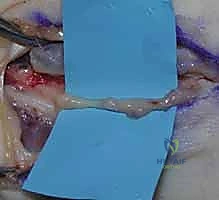
For the surgical management of massive tophaceous gout, debulking is the primary objective, as en bloc resection is frequently impossible without sacrificing vital structures. When addressing a compressive tophus in the carpal tunnel, a standard open carpal tunnel approach is utilized. Upon division of the transverse carpal ligament, the surgeon often encounters a median nerve that is splayed and compressed by chalky, white MSU deposits infiltrating the flexor tenosynovium. A meticulous flexor tenosynovectomy is performed under loupe magnification. The tophi are carefully shelled out using a combination of sharp dissection and blunt freer elevation. Aggressive curettage of the flexor tendons themselves must be strictly avoided, as the crystals intimately infiltrate the collagen bundles; overzealous debridement will precipitate iatrogenic tendon rupture. Copious irrigation is employed to wash out loose urate crystals. Crucially, surgical specimens must be sent to pathology in absolute alcohol, as standard formalin fixation will dissolve the water-soluble monosodium urate crystals, precluding definitive histopathologic diagnosis.
In SLE, the surgical reconstruction of a fixed Jaccoud's arthropathy via silicone MCP arthroplasty (Swanson technique) is a highly choreographed procedure. A transverse dorsal incision is made across the metacarpal heads, preserving the dorsal sensory branches of the radial and ulnar nerves. The extensor mechanism is exposed, and the sagittal bands (which are typically attenuated and subluxated ulnarly) are incised longitudinally on the radial side of the EDC tendon. The collateral ligaments are released from their metacarpal origins, and the metacarpal heads are resected using an oscillating saw at the metaphyseal-diaphyseal junction, perpendicular to the long axis of the shaft. A comprehensive soft-tissue release is mandatory; the volar plate must be completely freed to correct the volar subluxation, and the intrinsic muscles (specifically the ulnar intrinsics) may require release to correct the ulnar drift.
Once the soft-tissue contractures are fully released and the joint spaces are open, the medullary canals of the metacarpals and proximal phalanges are sequentially broached using specialized rectangular rasps to accommodate the silicone elastomer stems. The appropriate size Swanson implant is selected—it should fit snugly but not tightly, acting as a dynamic spacer rather than a rigidly fixed prosthesis. A "no-touch" technique is utilized when handling the silicone implants to minimize static charge and the attraction of particulate debris, which can incite a foreign body synovitis. After implant insertion, the radial sagittal band is reefed and imbricated using non-absorbable sutures to centralize the EDC tendon over the joint dorsum. The skin is closed meticulously with interrupted nylon sutures, as the dermal layer in SLE patients on chronic corticosteroids is exceptionally friable.
For limb-salvage digital sympathectomy in severe SLE-induced Raynaud phenomenon, the procedure is performed under an operating microscope. A zig-zag (Bruner) or mid-lateral incision is made along the affected digit. The neurovascular bundles are identified. The proper digital artery is carefully isolated from the accompanying nerve. Using micro-scissors and jeweler's forceps, the adventitial layer of the artery—which contains the sympathetic nerve plexus—is meticulously stripped away over a distance of 1 to 2 centimeters. The surgeon must look for and release any transverse fascial bands (e.g., Cleland's and Grayson's ligaments) that may be externally compressing the vessel. A successful sympathectomy is often heralded by immediate, visible vasodilation of the artery and improved capillary refill in the distal tuft, though the underlying systemic vasospastic tendency remains a lifelong challenge for the patient.
Complications, Incidence Rates, and Salvage Management
The complication profile for orthopaedic procedures in patients with systemic arthropathies is significantly higher than in the general population, driven by the profound intersection of systemic immunosuppression, compromised microvascular perfusion, and intrinsically poor tissue quality. Wound healing complications and surgical site infections (SSIs) are the most formidable adversaries. In patients with chronic tophaceous gout, incisions made directly over large tophi have a wound dehiscence rate approaching 20-30%. The skin is chronically stretched, ischemic, and reliant on a tenuous subdermal plexus. If dehiscence occurs, the underlying tophaceous material acts as a continuous nidus for bacterial colonization, frequently leading to deep infection and osteomyelitis. Salvage management requires aggressive, repeated surgical debridement, targeted intravenous antibiotic therapy, and often the use of negative pressure wound therapy (NPWT) or local rotational flaps to achieve definitive soft-tissue coverage.
In SLE patients, the chronic use of systemic corticosteroids fundamentally impairs collagen synthesis and fibroblast proliferation. This results in an exceptionally high rate of recurrent deformity following soft-tissue realignment procedures for Jaccoud's arthropathy. Studies indicate that up to 40-50% of isolated soft-tissue reconstructions (e.g., intrinsic releases and sagittal band reefing) will experience recurrent ulnar drift within 5 years, as the underlying systemic disease continues to attack the repaired collagenous structures. When soft-tissue procedures fail, the salvage pathway dictates a transition to bony stabilization, specifically silicone MCP arthroplasty or joint arthrodesis, which rely on mechanical spacers and bony fusion rather than the integrity of the patient's native ligaments.
Silicone MCP arthroplasty itself carries specific long-term complications. Silicone synovitis—a destructive, granulomatous foreign-body reaction to particulate silicone wear debris—can occur in 5-10% of patients over a 10-year period. Furthermore, implant fracture (breakage of the hinge mechanism) is common, with radiographic evidence of fracture approaching 30% at long-term follow-up. Interestingly, a fractured silicone implant does not always mandate revision; many patients remain asymptomatic and maintain adequate function because the implant has successfully facilitated the formation of a stable, fibrous pseudocapsule. However, if implant failure is accompanied by severe pain, recurrent deformity, or massive osteolysis, salvage revision arthroplasty or definitive joint arthrodesis using tension-band wiring or specialized compression plates is required.
| Complication | Estimated Incidence | Primary Risk Factors | Salvage Management / Intervention |
|---|---|---|---|
| Wound Dehiscence / Necrosis | 15 - 30% (Gout/SLE) | Incisions over tophi; chronic corticosteroid use; Raynaud's ischemia. | Meticulous local wound care; NPWT; rotational flap coverage; delayed primary closure. |
| Deep Surgical Site Infection | 3 - 8% | Biologic DMARD use; prolonged operative time; massive tophaceous burden. | Urgent surgical irrigation and debridement; implant removal if necessary; IV antibiotics. |
| Recurrent Deformity (SLE) | 40 - 50% at 5 years | Isolated soft-tissue procedures in progressive Jaccoud's arthropathy. | Revision to bony procedures: Silicone MCP arthroplasty or interphalangeal arthrodesis. |
| Silicone Implant Fracture | 20 - 30% at 10 years | Excessive mechanical loading; improper implant sizing; inadequate soft-tissue release. | Observation if asymptomatic (fibrous encapsulation); Revision arthroplasty or arthrodesis if painful. |
| Iatrogenic Tendon Rupture | 2 - 5% (Gout) | Aggressive curettage of intratendinous tophi during debulking. | Primary repair if possible; more likely requires tendon transfer (e.g., EIP to EPL) or grafting. |
Phased Post-Operative Rehabilitation Protocols
The post-operative rehabilitation of the systemic arthropathy patient is as critical as the surgical execution itself. These protocols demand a highly specialized, multidisciplinary approach led by the orthopaedic surgeon and executed by certified hand therapists (CHT) or specialized physical therapists. The overarching philosophy must balance the need for early mobilization to prevent debilitating adhesions against the absolute necessity of protecting tenuous soft-tissue repairs in a biologically compromised host. Because wound healing is delayed in patients on corticosteroids and immunosuppressants, sutures are routinely left in place for an extended period—typically 14 to 21 days—and therapy must be modified to prevent undue tension on the healing incision.
Following an EIP to EPL tendon transfer for gouty tendon rupture, the rehabilitation is strictly phased. Phase I (0 to 3-4 weeks) consists of absolute immobilization. The wrist is splinted in 30 degrees of extension, and the thumb is immobilized in full extension and abduction to completely offload the Pulvertaft weave. During this phase, active range of motion of the uninvolved digits is encouraged to prevent generalized hand stiffness. Phase II (4 to 6 weeks) introduces progressive active-assisted range of motion. The static splint is transitioned to a dynamic extension splint. The patient is allowed to actively flex the thumb against the dynamic traction, which then passively pulls the thumb back into extension, facilitating tendon gliding while protecting the repair from active tensile loading. Phase III (6 to 12 weeks) initiates active extension and progressive strengthening, weaning the patient off the splint entirely. The patient must be counseled that maximal medical management of their hyperuricemia is mandatory during this period to prevent new tophus formation along the transferred tendon.
The rehabilitation following silicone MCP arthroplasty for SLE-induced Jaccoud's arthropathy is intensely demanding and requires immediate postoperative engagement. Phase I (Days 3 to 21) focuses on achieving motion while strictly controlling alignment. A custom, dynamic extension outrigger splint is fabricated by the hand therapist. This splint maintains the MCP joints in full extension and neutral radial/ulnar alignment while allowing active flexion. The patient is instructed to perform active flexion exercises within the splint multiple times a day. The dynamic outrigger prevents the recurrence of the ulnar drift and volar subluxation deforming forces while the new, stabilizing fibrous pseudocapsule forms around the silicone implant.
Phase II (3 to 6 weeks post-MCP arthroplasty) involves weaning the daytime dynamic splinting, transitioning to a static resting pan splint worn strictly at night to maintain alignment. Active and active-assisted range of motion exercises are advanced, focusing on intrinsic stretching and maximizing the functional arc of motion. Phase III (6 weeks and beyond) introduces light functional strengthening. However, patients with SLE and silicone implants must be educated on joint protection strategies for life. They must avoid heavy lifting, forceful gripping, and tasks that impart strong ulnar-deviating forces on the hands (e.g., wringing out washcloths, opening tight jars) to maximize the longevity of the implants and prevent catastrophic hinge fracture.
Summary of Landmark Literature and Clinical Guidelines
The orthopaedic management of systemic arthropathies is guided by a robust body of literature that bridges the gap between surgical technique and rheumatologic medical management. A cornerstone of modern perioperative care is the 2022 American College of Rheumatology (ACR) and American Association of Hip and Knee Surgeons (AAHKS) Guideline for the Perioperative Management of Antirheumatic Medication in Patients with Rheumatic Diseases Undergoing Elective Total Hip or Total Knee Arthroplasty. While specifically tailored to major joint arthroplasty, these guidelines are widely extrapolated to complex hand and foot reconstructions. They provide definitive, evidence-based recommendations on when to continue conventional DMARDs (like methotrexate) to prevent disease flares, and precisely when to withhold and restart biologic agents (like TNF inhibitors) to mitigate the devastating risk of surgical site infections.
In the realm of systemic lupus erythematosus, the seminal descriptions of Jaccoud's arthropathy remain highly relevant. Originally described by François-Sigismond Jaccoud in 1869 in the context of rheumatic fever, the modern understanding of its pathogenesis in SLE was heavily shaped by Bywaters in the mid-20
