Part of the Master Guide

Orthopedic Prometric MCQs - Chapter 3 Part 1

Orthopedic Prometric MCQs - Chapter 3 Part 18
27 Apr 2026 47 min read 21 Views
Orthopedic Prometric MCQs - Chapter 3 Part 18

Orthopedic Prometric MCQs - Chapter 3 Part 18

Comprehensive 100-Question Exam


00:00

Start Quiz

Question 1

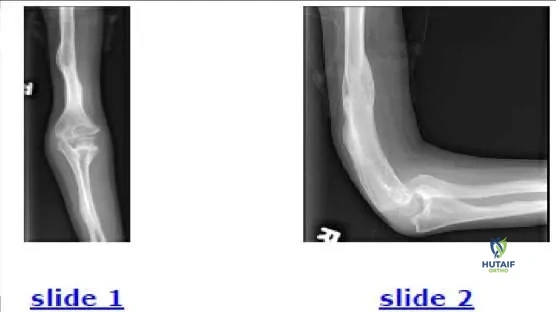
The parents of a 12-year-old boy notice an abnormal shape on their sonâ s forearm. He states that he does not feel any pain. Based on his radiograph (Slide), the most likely diagnosis is:
Orthopedic Prometric Exam Chapter 3 Image


Explanation

This patient has multiple exostoses. Multiple exostoses, which result from a mutation on one of three EXT genes, cause a growth disturbance of affected limb segments. This effect is most pronounced in the two-bone segments (forearm and lower leg). The bone with the exostoses grows less in length and often develops angulation. The less-affected bone often develops secondary deformity, such as the radial head dislocation in this patient. Fibrous dysplasia and osteogenesis imperfecta may lead to developmental dislocation of the radial head as well, but the associated bony changes allow correct diagnosis of each of these conditions.

Question 2

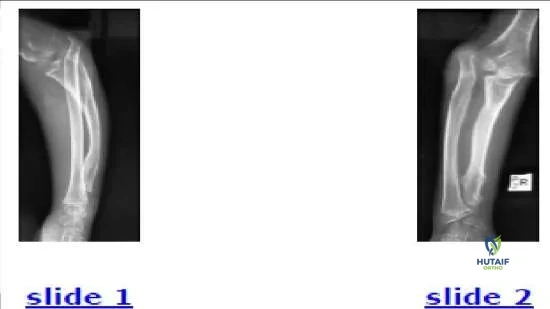
The 9-year-old patient presented in the radiographs (Slide 1, Slide 2) should be diagnosed with:


Explanation

This patient has type V osteogenesis imperfecta, which is characterized by hereditary radial head dislocation in 86% of patients (this patients mother Orthopedic Prometric Exam Chapter 3 Image and brother also have the condition bilaterally) as well as heterotopic calcification, osseous fragility, and scoliosis. Dislocation of the radial head occurs less often (0%-29%) in the other types of osteogenesis imperfecta and is linked to angular deformation of the long bones. The signs of osteogenesis imperfecta in this patient include thin long bones, several healed fractures, and angular deformations.

Question 3

Which has a lower risk of compartment syndrome or delayed detection in a patient with a supracondylar fracture of the humerus:


Explanation

Median nerve injury increases the risk of delayed detection of the fracture because of the lack of sensation in the volar compartment and also increases risk of injury to the adjacent brachial artery. Flexion greater than 110° increases forearm pressures by compromising arterial inflow and venous return. An ipsilateral forearm fracture is associated with increased risk of compartment syndrome (7% with ipsilateral forearm fracture vs 0.3%without ipsilateral forearm fracture). Severe ecchymosis and swelling are also associated with an increased risk of compartment syndrome, even in the presence of a radial pulse. A flexiontype supracondylar fracture, by contrast, has a lower risk of compartment syndrome because of the lack of stretch or tension on the critical vascular structures.

Question 4

In a lateral radiograph of a childâ s elbow, the anterior humeral line should be located:


Explanation

In a childs elbow, the anterior humeral line should be located in the middle- third of the capitellum.

Question 5

A 3-year-old boy falls on his upper extremity and shows sign of pain. His radiograph only shows a posterior fat pad sign of the elbow. What is the most likely diagnosis:


Explanation

A positive posterior fat pad sign is more suspicious for occult fracture than an anterior fat pad sign because flexing the elbow normally may elevate the anterior but not the posterior fat pad. A positive posterior fat pad sign is most likely to represent an undisplaced supracondylar fracture of the distal humerus, followed by proximal ulna, lateral conydle, and radial neck fracture. A nursemaid elbow is a diagnosis of exclusion and should be used only when the mechanism is one of traction rather than compression.

Question 6

Which of the following is not an indication to urgently treat a supracondylar humerus fracture:


Explanation

Medial comminution is an indication of potential bony instability but does not convey any increased vascular risk. All of the other indications convey a vascular risk, and treatment should not be delayed.

Question 7

The lung attains half of its adult volume at what age:


Explanation

The lung attains 30% of its adult volume at 4 years and 50% at 8 years.

Question 8

Which of the following conditions is not associated with an increased risk of cavus foot:


Explanation

Calcaneonavicular coalition is typically associated with a planovalgus foot. Freidreich ataxia, spina bifida, Charcot-Marie-Tooth disease, and tethered cord are often associated with a cavus foot.

Question 9

Which of the following factors has not been proven to increase the risk of thermal necrosis to a limb with a cast:


Explanation

Fiberglass is less likely than plaster to produce thermal injury, likely because of the increased porosity. All of the other factors listed increase the risk of thermal necrosis.

Question 10

Which shape of the olecranon apophysis correlates most closely with closure of the triradiate cartilage of the hips:


Explanation

The olecranon ossifies from two centers that merge and form one banana- shaped ossification center. When the ossificaiton center is rectangular in shape, it correlates with closure of the triradiate cartilage of the pelvis.

Question 11

A 15-year-old female patient undergoes spine fusion from T2 to the pelvis for scoliosis associated with cerebral palsy. Her past medical history is remarkable for seizure disorder, ventriculoperitoneal shunt, baclofen pump, and gastrostomy tube. Her postoperative course is complicated by disorientation and visual hallucinations on postoperative day 3, whereas she had been communicative preoperatively. The most likely cause of this change is:


Explanation

This patient most likely has baclofen withdrawal due to interference with the catheter at some point along its path to the thecal sac. Baclofen withdrawal is characterized by increased spasticity, pruritus, hyperthermia, delusions, and hallucination. The pump reservoir should be checked, and a leak may be confirmed by filling the reservoir with a radionuclide and performing a scan. Treatment involves repleting baclofen by oral or intrathecal means and fixing the leak.Correct Answer: Baclofen withdrawal syndrome

Question 12

A 5-year-old patient with Legg-Calva-Perthes disease has lateral pillar B involvement. He has 15% epiphyseal extrusion. Treatment should consist of:


Explanation

Patients who have Legg-C alvé-Perthes disease with onset before 6 years of age have a good prognosis unless they have lateral pillar involvement in the B/C border or C categories.

Question 13

Which of the following characteristics is more commonly found in patients with Meyer dysplasia than in patients with Legg- C alvé-Perthes disease:


Explanation

Meyer dysplasia is a rare condition that affects children before age 4. A characteristic of the condition includes delayed ossification of the epiphyses, which eventually develop normal ossification. Meyer dysplasia is synchronous, meaning that both heads have symmetrical involvement unlike Legg-C alvÃ-Perthes disease. Meyer dysplasia is usually bilateral, in contrast to Legg-C alvÃ- Perthes disease, which is bilateral in fewer than 10% of patients. There is no metaphyseal widening and no treatment is indicated.

Question 14

A 10-year-old girl is seen for limb-length inequality. She has 10° of valgus of the left knee and a shortened left fibula. Her projected shortening at maturity is 1 cm in the left femur and 2.1 cm in the left tibia. Her left foot is normal in shape but one-half size smaller than the right. Her overall height and maturity are at the median for her age. For this patient, recommended treatment for limb-length inequality is:


Explanation

This patient has a projected discrepancy at maturity of 3.1 cm. Most experts agree that the risk of later gait disturbance or back pain is increased above a normal threshold when limb length inequality exceeds 2.5 cm. A shoe lift is noninvasive but not likely to be permanently adopted. Epiphysiodesis of the right tibia is the least invasive and least complicated option for permanent equalization and should be performed in this patient. Shortening of the right tibia would be an option if the patient desired correction after skeletal maturity, but is a more invasive procedure with risk of compartment syndrome, nonunion, and pain. Lengthening of the left tibia is a valid option, which could also allow correction of the valgus and maintenance of stature. However, the procedure leaves scars and complications are more significant. Most surgeons would not think that it is worthwhile for gain of an inch because a left tibial hemiepiphysiodesis could easily correct the valgus.

Question 15

Which of the following is an accurate mean age for a motor milestone:


Explanation

Motor milestones provide a way of assessing a childs motor development. If they are not met, a physician or parent may be more alert for neurological or connective tissue disorders. Common pediatric milestone include: Sit up without assistance at 6 months Walk independently at 12 months Hop on one foot at 4 years Roll from prone to supine position at 4 months Able to run at 18 months

Question 16

In the workup of scoliosis, what is/are the best method(s) to assess skeletal maturity during a patients peak height velocity (Risser grade 0):


Explanation

Precise information about skeletal maturity during peak growth rate is important in deciding treatment options in patients with scoliosis. The modified Sauvegrain method, Tanner-Whitehouse-III RUS method, and triradiate cartilage closure are each accurate and reliable markers of maturity that the orthopedic surgeon can use to quickly assess pediatric patients.

Question 17

Following triple arthrodesis, total ankle range of motion is:


Explanation

Total ankle motion is a combination of tibiotalar motion as well as motion in the hindfoot joints. A 10-year follow-up study by Smith and colleagues evaluated the change in range of motion following triple arthrodesis. The authors found a 27% loss of ankle plantarflexion following triple arthrodesis, but no loss of dorsiflexion. Despite this loss of motion, 93% of patients were satisfied at average 10-year follow-up.

Question 18

Three years ago, a 20-year-old female patient underwent posterior spinal fusion for adolescent idiopathic scoliosis. She asks what would happen if the implants were removed. The surgeons most likely response will be:


Explanation

After removal of implants, the sagittal alignment is likely to change, with kyphosis increasing by 10º in nearly half of all patients and by more than 20º in 10% of patients. By contrast, scoliosis increases significantly in only 5% of patients. Most patients who have implants removed experience an improvement in symptoms. Fracture of the fusion mass is rare.

Question 19

Which of the following factors best predicts the risk of disk degeneration in young adults:


Explanation

Genetic factors are most predictive of disk degeneration. However, various genes have been identified as possible causative factors, possibly operating in different ways and interacting with environmental and other factors.

Question 20

Which of the following treatments decreases hip subluxation in patients with cerebral palsy who have displaced hips:


Explanation

Only hip adductor lengthening has been shown to decrease hip subluxation in patients with displaced hips. Patients treated with botulinum toxin type A and hip abduction still result in progression.

Question 21

A 6-year-old child presents with a pink, pulseless hand following a displaced supracondylar humerus fracture. After closed reduction and percutaneous pinning, the hand remains pink and pulseless. What is the next best step in management?


Explanation

A pink, pulseless hand after adequate reduction indicates sufficient collateral circulation. Current pediatric guidelines recommend close observation for 24-48 hours with the elbow extended slightly rather than immediate arterial exploration.

Question 22

A 5-year-old sustains an isolated fracture of the proximal ulna. Radiographs reveal an anterior dislocation of the radial head. This injury is best classified as which Bado type?


Explanation

A Bado Type I Monteggia fracture involves an anterior dislocation of the radial head with an associated fracture of the ulnar diaphysis. It is the most common type of Monteggia lesion in children.

Question 23

In a pediatric patient with a displaced lateral condyle humerus fracture, which of the following is the most significant clinical risk if the fracture fails to unite?


Explanation

Nonunion of a lateral condyle fracture typically leads to progressive cubitus valgus deformity. Over time, this valgus angulation chronically stretches the ulnar nerve, potentially resulting in tardy ulnar nerve palsy.

Question 24

Which of the following is an absolute indication for operative intervention in a pediatric medial epicondyle fracture?


Explanation

Incarceration of the medial epicondyle fragment within the elbow joint block is an absolute indication for surgical extraction and fixation. Other parameters, such as displacement >5 mm or ulnar nerve symptoms, are considered relative indications.

Question 25

A 7-year-old falls on an outstretched hand and sustains a radial neck fracture. Up to what degree of angulation is generally acceptable for non-operative management without manipulative reduction in this age group?


Explanation

In children under 10 years of age, up to 30 degrees of angulation in a radial neck fracture is generally acceptable as it will remodel with growth. Angulation greater than 30 degrees typically requires closed or percutaneous reduction.

Question 26

Which of the following pediatric physeal fractures carries the highest rate of premature physeal closure and subsequent growth arrest?


Explanation

Distal femur physeal fractures have an exceptionally high incidence of growth arrest (often exceeding 50%), even in minimally displaced Salter-Harris II fractures. Anatomical reduction and close follow-up for limb length discrepancy are essential.

Question 27


Based on the typical mechanism for pediatric lateral condyle fractures, which muscle group is responsible for the distraction and rotational displacement of the fracture fragment?


Explanation

The lateral condyle serves as the origin for the extensor-supinator musculature of the forearm. The continuous pull of this muscle mass acts as a deforming force, frequently leading to significant displacement and rotational deformity.

Question 28


A 12-year-old boy presents with an altered gait and thigh pain. If the underlying diagnosis is Slipped Capital Femoral Epiphysis (SCFE), what is the anatomical direction of the epiphyseal slip relative to the femoral neck?


Explanation

In SCFE, the capital femoral epiphysis typically slips posteriorly and inferiorly relative to the metaphysis of the femoral neck. This displacement leads to the characteristic externally rotated and shortened posture of the affected limb.

Question 29

A 3-year-old child presents with progressive bowing of the legs. Radiographs demonstrate changes at the proximal medial tibia. Which radiographic measurement is most useful in differentiating infantile Blount disease from physiological bowing?


Explanation

The metaphyseal-diaphyseal angle (Drennan's angle) is crucial for evaluating infantile tibia vara. An angle greater than 16 degrees is highly suggestive of infantile Blount disease, distinguishing it from physiological genu varum.

Question 30

During the Ponseti serial casting technique for idiopathic clubfoot, which component of the deformity is corrected last?


Explanation

The Ponseti method dictates sequential correction following the CAVE acronym: Cavus, Adductus, Varus, and lastly Equinus. The equinus deformity is often corrected by a percutaneous Achilles tenotomy prior to applying the final cast.

Question 31

During an open reduction of a Developmentally Dysplastic Hip (DDH) via a medial (Ludloff) approach in an 11-month-old, which structure is directly released to allow access to the joint and facilitate reduction?


Explanation

The medial approach allows direct access to the medial structures blocking reduction, primarily requiring the release of the iliopsoas tendon. This approach avoids disruption of the abductors but carries a risk of injury to the medial circumflex femoral artery.

Question 32

A 4-month-old infant in a Pavlik harness for DDH develops an inability to actively extend the knee. This complication is most likely due to:


Explanation

Hyperflexion of the hip in a Pavlik harness can cause compression of the femoral nerve against the inguinal ligament. This leads to an iatrogenic femoral nerve palsy, manifesting clinically as poor active knee extension.

Question 33

According to the Kocher criteria, which of the following is one of the independent predictors used to differentiate septic arthritis from transient synovitis of the hip in a pediatric patient?


Explanation

The four classic Kocher criteria are: inability to bear weight, temperature > 38.5°C, ESR > 40 mm/hr, and WBC > 12,000 cells/mm³. While CRP is highly sensitive and used in modified criteria, inability to bear weight is one of the original four.

Question 34

Which of the following is considered the most significant poor prognostic factor in Legg-Calvé-Perthes disease?


Explanation

Older age at presentation (typically > 8 years) is a major poor prognostic factor in Legg-Calvé-Perthes disease. Older patients have less remaining time for femoral head remodeling before physeal closure, increasing the risk of early osteoarthritis.

Question 35

A juvenile Tillaux fracture involves an avulsion of the anterolateral distal tibial epiphysis. Which ligament is primarily responsible for this avulsion?


Explanation

The anterior inferior tibiofibular ligament (AITFL) securely attaches to the anterolateral distal tibial epiphysis. During a severe external rotation injury, it avulses this unfused lateral portion of the epiphysis, resulting in a Tillaux fracture.

Question 36

A 13-year-old sustains a twisting ankle injury. Radiographs reveal a fracture that appears as a Salter-Harris III on the AP view and a Salter-Harris II on the lateral view. What is the most likely diagnosis?


Explanation

A triplane fracture occurs in adolescents during the transitional period of asymmetric physeal closure. It involves the metaphysis, physis, and epiphysis, classically appearing as a Salter-Harris III on AP radiographs and a Salter-Harris II on lateral radiographs.

Question 37

A child presenting with frequent fractures, blue sclerae, and dentinogenesis imperfecta is diagnosed with Osteogenesis Imperfecta. This condition is primarily caused by a defect in the synthesis of:


Explanation

Osteogenesis Imperfecta is an inherited connective tissue disorder caused predominantly by mutations in the COL1A1 or COL1A2 genes. These mutations result in qualitative or quantitative defects in the production of Type I collagen, the major protein in bone.

Question 38

Which of the following genetic inheritance patterns and underlying mutations most accurately describes Achondroplasia?


Explanation

Achondroplasia is inherited in an autosomal dominant pattern, although approximately 80% of cases arise from de novo mutations. It is caused by an activating mutation in the Fibroblast Growth Factor Receptor 3 (FGFR3) gene, leading to inhibited chondrocyte proliferation.

Question 39

A 6-year-old child sustains a posteromedially displaced supracondylar fracture of the humerus. Which nerve is most frequently injured due to this specific displacement pattern?


Explanation

Posteromedial displacement of the distal fragment causes the proximal fracture spike to displace anterolaterally. This uniquely places the radial nerve at the greatest risk of injury.

Question 40

A 14-year-old girl presents with progressive wrist pain and limited range of motion. Examination reveals a prominent distal ulna and volar subluxation of the hand. The failure of growth in this specific deformity primarily occurs at which aspect of the distal radius?


Explanation

Madelung deformity is characterized by premature growth arrest of the volar-ulnar aspect of the distal radial physis. This leads to increased volar tilt, ulnar inclination, and relative ulnar overgrowth.

Question 41

Evaluate the provided clinical image.

A 13-year-old female presents with bilateral wrist deformities. What is the standard surgical intervention for symptomatic, severe manifestations of this condition when a Vickers ligament is identified?


Explanation

For severe, symptomatic Madelung deformity in an adolescent with remaining growth, surgical treatment typically involves releasing the tethering Vickers ligament. This is usually combined with a corrective dome osteotomy of the distal radius.

Question 42

An 8-year-old boy presents with an isolated pediatric lateral condyle fracture of the humerus. Radiographs show a Milch Type II fracture with 3 mm of displacement. What is the most appropriate management?


Explanation

Lateral condyle fractures displaced greater than 2 mm have a high rate of nonunion due to synovial fluid bathing the fracture and the pull of the extensor origin. Therefore, open reduction and internal fixation (ORIF) is indicated.

Question 43

A 7-year-old sustains a traumatic fall. Radiographs demonstrate an anterior dislocation of the radial head with an associated diaphyseal fracture of the ulna that is apex-anterior. Which nerve palsy is most commonly associated with this specific injury pattern?


Explanation

This describes a Bado Type I Monteggia lesion. The posterior interosseous nerve (PIN) is the most frequently injured nerve in this anterior dislocation pattern.

Question 44

A 9-year-old boy presents with an obvious cubitus varus deformity 2 years after conservative management of a supracondylar humerus fracture. What is the primary pathophysiologic cause of this late deformity?


Explanation

Cubitus varus (gunstock deformity) following a supracondylar fracture is overwhelmingly due to initial malunion (specifically inadequate correction of internal rotation, extension, and varus collapse). Physeal arrest is a rare cause in supracondylar fractures.

Question 45

In treating a 10-year-old with a radially displaced and angulated radial neck fracture, at what degree of initial angulation is reduction definitively indicated to prevent significant loss of forearm rotation?


Explanation

In older children (near 10 years old), angulation greater than 30 degrees is generally unacceptable because remodeling potential is limited. Reduction is required to prevent a significant mechanical block to pronation and supination.

Question 46

A 12-year-old baseball pitcher presents with chronic medial elbow pain. Radiographs reveal widening of the medial epicondylar apophysis. The biomechanical mechanism responsible for this condition is primarily:


Explanation

Little League Elbow encompasses medial epicondyle apophysitis caused by repetitive valgus overload during the late cocking and early acceleration phases of throwing. This places massive tensile stress on the medial structures.

Question 47

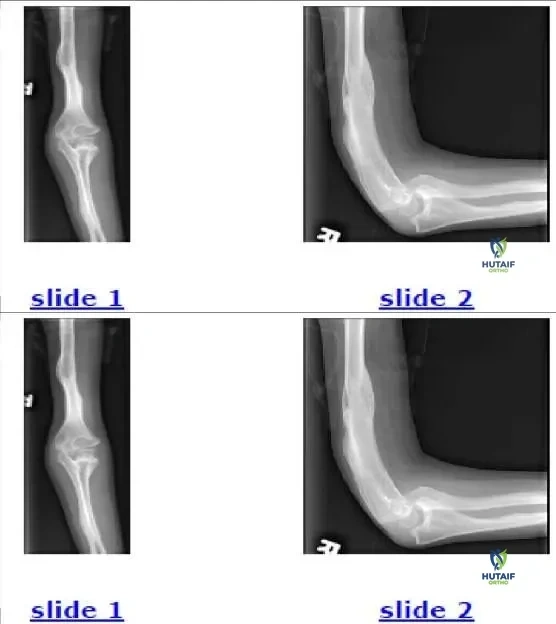
Based on the elbow radiograph of a 5-year-old child presenting with acute trauma (

), what is the most significant long-term complication if a widely displaced lateral condyle fracture goes entirely unrecognized and develops into a nonunion?


Explanation

A nonunion of the lateral condyle typically leads to progressive cubitus valgus deformity. Over time, the valgus stretch causes a tardy ulnar nerve palsy.

Question 48

A 3-year-old toddler is pulled by the arm by a sibling and subsequently refuses to use the right upper extremity, holding it in slight flexion and pronation. Which anatomic structure is primarily interposed in the joint in this condition?


Explanation

Nursemaid's elbow (radial head subluxation) occurs when axial traction allows the annular ligament to slip over the radial head and become incarcerated in the radiocapitellar joint.

Question 49

A newborn is diagnosed with bilateral radial clubhands. Which of the following laboratory investigations is most critical to perform early to rule out a potentially fatal condition associated with this deformity?


Explanation

Fanconi anemia is a life-threatening aplastic anemia associated with radial clubhand. A CBC and chromosomal breakage test (diepoxybutane test) are critical early screening tools to detect this condition.

Question 50

A newborn has absent radii bilaterally, but both thumbs are distinctly present and well-formed. Blood tests reveal profound thrombocytopenia. This clinical picture is most characteristic of which syndrome?


Explanation

Thrombocytopenia-Absent Radius (TAR) syndrome classically presents with bilateral absence of the radii but preservation of the thumbs. This differentiates it from other causes of radial dysplasia where the thumbs are typically absent or hypoplastic.

Question 51

A 14-year-old boy with a known diagnosis of Multiple Hereditary Exostoses (MHE) presents with a progressive forearm deformity. Which of the following describes the most classic forearm deformity seen in these patients?


Explanation

The classic MHE forearm deformity involves relative ulnar shortening (due to distal ulnar osteochondromas tethering growth) and consequent radial bowing. This often leads to radial head subluxation or dislocation.

Question 52

What is the maximum acceptable angulation for a midshaft both-bone forearm fracture in a 5-year-old child?


Explanation

In children under 8 years old, up to 15 degrees of angulation is acceptable for midshaft forearm fractures. Distal third fractures can tolerate slightly more (up to 20 degrees) due to greater remodeling potential near the physis.

Question 53

A 13-year-old gymnast sustains a dislocated elbow with an associated medial epicondyle fracture. Following closed reduction of the elbow joint, what is the absolute indication for open reduction and internal fixation of the medial epicondyle?


Explanation

Incarceration of the medial epicondyle within the ulnohumeral joint after an attempted closed reduction is an absolute indication for surgical extraction and internal fixation. Most other criteria are relative indications depending on the surgeon and patient demands.

Question 54

A 5-year-old sustains a completely displaced supracondylar humerus fracture. On arrival, the hand is pink but the radial pulse is absent. After successful closed reduction and pinning, the hand remains pink and warm with a capillary refill of 2 seconds, but the pulse remains absent. What is the most appropriate next step?


Explanation

A "pink, pulseless" hand after a well-reduced supracondylar fracture indicates adequate collateral circulation. Current AAOS guidelines support close observation rather than immediate vascular exploration in this scenario.

Question 55

A 6-year-old girl is evaluated for asymmetric shoulder height. Examination reveals a high, hypoplastic left scapula with restricted shoulder abduction. Which of the following conditions is most frequently associated with this deformity?


Explanation

Sprengel deformity (congenital high scapula) is frequently associated with Klippel-Feil syndrome. Patients often have an omovertebral connection (bone, cartilage, or fibrous) tethering the scapula to the cervical spine.

Question 56

A patient presents with generalized hypermobility, a delayed closure of fontanelles, and the ability to appose the shoulders anteriorly at the midline. This disorder is most commonly caused by a mutation in which gene?


Explanation

Cleidocranial dysplasia presents with clavicular hypoplasia/aplasia and delayed cranial suture closure. It is an autosomal dominant condition caused by a mutation in the RUNX2 (CBFA1) gene, critical for osteoblast differentiation.

Question 57

Congenital pseudarthrosis of the clavicle is characterized by an absence of a history of trauma and presents as a painless mass. In nearly all typical cases without dextrocardia (situs inversus), which side is predominantly affected?


Explanation

Congenital pseudarthrosis of the clavicle occurs almost exclusively on the right side. It is thought to be caused by pressure from the pulsating subclavian artery, which is higher on the right side unless the patient has dextrocardia.

Question 58

A 4-year-old sustains a trauma to the forearm. Radiographs demonstrate an accentuated bowing of the ulna without an obvious cortical breach, and an anterior dislocation of the radial head. The initial step in the reduction maneuver for the ulnar plastic deformation should involve:


Explanation

Plastic deformation of the ulna must be actively reduced by applying a constant corrective bending force (often over an apex like the surgeon's knee) for several minutes. Failing to correct the ulnar bow will prevent stable reduction of the radial head.

Question 59

A 6-year-old boy falls from the monkey bars and sustains a completely displaced extension-type supracondylar fracture of the humerus. On physical examination, he is unable to make an "A-OK" sign with his thumb and index finger. Sensation in the hand is intact. Which nerve is most likely injured?


Explanation

The anterior interosseous nerve (AIN) is the most commonly injured nerve in extension-type supracondylar humerus fractures. It is a motor nerve only; injury results in the inability to flex the IP joint of the thumb and the DIP joint of the index finger.

Question 60

A 5-year-old girl sustains a severely displaced supracondylar humerus fracture. Her hand is pink and well-perfused, but the radial pulse is absent on palpation. After closed reduction and percutaneous pinning, the hand remains pink and warm, but the pulse remains absent. What is the most appropriate next step in management?


Explanation

A 'pulseless, pink hand' after satisfactory reduction and pinning of a pediatric supracondylar fracture should be closely observed. Vascular exploration is only indicated if the hand becomes dusky, cool, and poorly perfused (pulseless and white).

Question 61

A 12-year-old boy presents with painless, hard, fixed masses near his distal radius and proximal tibia, along with progressive forearm bowing.

What is the most likely underlying genetic mechanism for his condition?


Explanation

The clinical picture describes Multiple Hereditary Exostoses (MHE), characterized by multiple osteochondromas. This condition is inherited in an autosomal dominant pattern and is associated with mutations in the EXT1 and EXT2 tumor suppressor genes.

Question 62

Which of the following is an absolute indication for open reduction and internal fixation of a medial epicondyle fracture in a 10-year-old child?


Explanation

Absolute indications for operative fixation of medial epicondyle fractures include incarceration of the fragment within the joint and open fractures. Displacement magnitude and athletic demands are relative indications for surgery.

Question 63

A 4-year-old child sustains a lateral condyle fracture of the humerus. The fracture is displaced by 4 mm. If left untreated, what is the most common long-term clinical deformity and potential neurological complication?


Explanation

Displaced lateral condyle fractures have a high rate of nonunion if not fixed properly. This can lead to progressive cubitus valgus deformity, which stretches the ulnar nerve over time, causing tardy ulnar nerve palsy.

Question 64

A 7-year-old child sustains a both-bone forearm fracture. During the remodeling process over the next few years, which of the following deformities has the LEAST potential to remodel?


Explanation

Rotational malalignment remodels very poorly in children and must be corrected during initial reduction. Angulation in the plane of adjacent joint motion (sagittal plane near the wrist) has the greatest remodeling potential.

Question 65

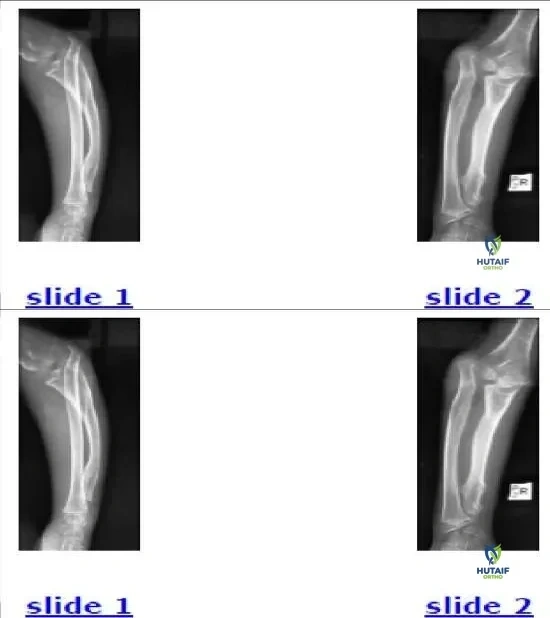
A 6-year-old boy falls on an outstretched hand and sustains a Monteggia fracture-dislocation.

According to the Bado classification, which type is most common in the pediatric population and what is the direction of the radial head dislocation?


Explanation

Bado Type I is the most common Monteggia fracture variant in children, accounting for over 70% of cases. It is characterized by an anterior dislocation of the radial head and a fracture of the ulnar diaphysis with anterior angulation.

Question 66

A 3-year-old girl is brought to the clinic because she keeps her right elbow partially flexed and pronated. Her father reports he pulled her up by the hand onto a sidewalk step. What is the pathophysiology of her suspected condition?


Explanation

The clinical picture describes "nursemaid's elbow" (radial head subluxation). It occurs from an axial traction force on an extended and pronated forearm, causing the annular ligament to slip over the radial head and become interposed in the joint.

Question 67

When attempting closed reduction of a typical extension-type supracondylar fracture of the humerus with medial comminution, which position of the forearm is utilized to tension the intact medial periosteal hinge and prevent varus malalignment?


Explanation

Pronation of the forearm tightens the medial periosteal hinge. This helps close the lateral fracture gap and prevents cubitus varus deformity, which is the most common cosmetic complication of medial comminution.

Question 68

A newborn infant presents with a short, bowed right upper extremity and an absent thumb. Radiographs confirm congenital radial clubhand. Which of the following tests is mandatory in the initial workup of this patient?


Explanation

Radial clubhand is strongly associated with systemic syndromes such as VACTERL, Holt-Oram, TAR, and Fanconi anemia. A cardiac echocardiogram and renal ultrasound are essential to rule out life-threatening congenital heart or kidney defects.

Question 69

An 8-year-old aspiring baseball pitcher complains of lateral elbow pain. Radiographs reveal flattening and sclerosis of the capitellum. The physis is open. What is the most likely diagnosis?


Explanation

Panner disease is a self-limiting osteochondrosis of the capitellum occurring typically in children under 10 years old. In contrast, osteochondritis dissecans (OCD) of the capitellum usually affects older adolescents and carries a worse prognosis.

Question 70

A 2-year-old child presents with a right thumb that is locked in flexion at the interphalangeal joint. A nodule is palpable at the volar aspect of the MCP joint. What is the recommended initial management?


Explanation

Pediatric trigger thumb resolves spontaneously in approximately 30% of cases within the first few years of life. Initial management is observation and stretching; A1 pulley release is reserved for cases failing to resolve by age 2 to 3.

Question 71

A 5-year-old boy sustains an ipsilateral supracondylar humerus fracture and a distal radius fracture (floating elbow). This injury pattern places the patient at highest risk for which of the following complications?


Explanation

A pediatric 'floating elbow' (ipsilateral supracondylar humerus and forearm fracture) has a significantly elevated risk of acute compartment syndrome. Emergent reduction and pinning are typically required to stabilize the limb and restore volume to the compartment.

Question 72

Congenital pseudarthrosis of the clavicle most frequently presents as a painless mass in the middle third of the clavicle. It almost exclusively occurs on the right side. If it is found on the left side, which associated condition must be strongly suspected?


Explanation

Congenital pseudarthrosis of the clavicle is almost always right-sided due to normal subclavian artery hemodynamics. When present on the left side, it is highly associated with situs inversus or dextrocardia.

Question 73

In a child with a typical Salter-Harris Type II fracture of the distal radius, what is the anatomical path of the fracture line?


Explanation

A Salter-Harris Type II fracture travels along the growth plate (physis) and then turns to exit through the metaphysis. It is the most common type of physeal fracture and creates a characteristic Thurston-Holland fragment.

Question 74

Which of the following physical examination findings is most specific for diagnosing a severe Volkmann ischemic contracture in the upper extremity?


Explanation

Volkmann ischemic contracture results from untreated compartment syndrome, leading to necrosis and fibrosis of the deep volar forearm flexors. The classic finding is a wrist fixed in flexion, and the fingers can only be passively extended if the wrist is maximally flexed (tenodesis effect).

Question 75

A 1-year-old child is diagnosed with complex syndactyly of the long and ring fingers. What is the fundamental difference between simple and complex syndactyly?


Explanation

In simple syndactyly, adjacent digits are joined only by skin and soft tissue. In complex syndactyly, there is an osseous or cartilaginous connection between the adjacent phalanges.

Question 76

A 6-year-old boy undergoes a Woodward procedure for Sprengel deformity. What is the primary surgical objective of this procedure?


Explanation

The Woodward procedure treats Sprengel deformity (congenital undescended scapula) by releasing the paraspinal origins of the trapezius and rhomboids, excising the omovertebral bone if present, and advancing the muscles inferiorly to lower the scapula.

Question 77

A 10-year-old child sustains a highly angulated, greenstick fracture of the radius and ulna. Following closed reduction, the surgeon decides to cast the arm. What physical principle governs the placement of a three-point mold in the cast?


Explanation

A proper three-point mold requires one point of pressure placed directly over the apex of the fracture deformity (the tension or convex side), countered by two points of pressure at the proximal and distal ends on the opposite (compression or concave) side.

Question 78

Macrodactyly of the hand in a child is a rare congenital anomaly characterized by overgrowth of all tissue elements. Which nerve territory is most frequently affected, and what systemic condition must be ruled out?


Explanation

Macrodactyly most commonly affects the median nerve distribution in the hand. It is often associated with lipofibromatous hamartoma of the median nerve and is strongly associated with Neurofibromatosis type 1 and PIK3CA-related overgrowth spectrum (e.g., Proteus syndrome).

Question 79

A 5-year-old child presents with an extension-type supracondylar humerus fracture. Examination reveals an inability to flex the interphalangeal joint of the thumb and the distal interphalangeal joint of the index finger. Which nerve is most likely injured?


Explanation

The anterior interosseous nerve (AIN) is the most commonly injured nerve in extension-type supracondylar fractures. It is a motor branch of the median nerve innervating the flexor pollicis longus and the flexor digitorum profundus to the index and middle fingers.

Question 80

Which of the following fracture patterns is considered highly specific for child abuse (non-accidental trauma) in an infant?


Explanation

Posterior rib fractures, metaphyseal corner fractures, and scapular fractures are highly specific for non-accidental trauma. While spiral fractures of long bones can occur in child abuse, they are less specific than posterior rib fractures.

Question 81

A 13-year-old boy presents with rigid flatfeet and a history of recurrent ankle sprains. Radiographs show an 'anteater nose' sign. Which of the following is the most likely diagnosis?


Explanation

The 'anteater nose' sign on an oblique radiograph of the foot is pathognomonic for a calcaneonavicular coalition. Talocalcaneal coalitions are typically identified by the 'C-sign' on a lateral radiograph.

Question 82

A 35-year-old man presents with progressive numbness in his ring and small fingers, and clawing of his hand. He has a history of an elbow fracture as a child and currently has a cubitus valgus deformity. Which of the following pediatric fractures is most likely responsible for his current condition?


Explanation

Nonunion of a lateral condyle fracture often leads to a progressive cubitus valgus deformity. This deformity causes stretching of the ulnar nerve over time, resulting in tardy ulnar nerve palsy.

Question 83

In a 10-year-old child with an acute elbow dislocation and a medial epicondyle fracture, which of the following is an absolute indication for operative fixation?


Explanation

Incarceration of the medial epicondyle fragment in the ulnohumeral joint is an absolute indication for open reduction and internal fixation. Other options are relative indications depending on patient activity and surgeon preference.

Question 84

A 6-year-old child sustains an elbow injury. A lateral radiograph

is obtained to evaluate the anterior humeral line. In a normal pediatric elbow, the anterior humeral line should intersect which portion of the capitellum?


Explanation

On a true lateral radiograph of a normal pediatric elbow, the anterior humeral line should pass through the middle third of the capitellum. In an extension-type supracondylar fracture, it frequently passes anterior to the capitellum.

Question 85

A 9-year-old boy sustains a radial neck fracture with 45 degrees of angulation. Closed reduction in the emergency department fails. What is the most appropriate next step in management?


Explanation

For pediatric radial neck fractures with unacceptable angulation (>30 degrees) that fail closed reduction, percutaneous intramedullary pinning (Métaizeau technique) is the treatment of choice. Open reduction is avoided if possible due to the high risk of avascular necrosis.

Question 86

A 12-year-old obese boy presents with a 3-week history of left knee pain and an antalgic gait. Examination shows obligatory external rotation of the left hip during flexion. Which of the following is the most appropriate initial management?


Explanation

This patient has a Slipped Capital Femoral Epiphysis (SCFE), presenting typically with knee pain and obligatory external rotation during hip flexion. Initial management requires strict non-weight bearing to prevent further slip, followed by urgent in situ pinning.

Question 87

During the Ponseti method for correcting congenital talipes equinovarus (clubfoot), which deformity is corrected LAST?


Explanation

The Ponseti method corrects clubfoot deformities in a specific sequence (CAVE): Cavus, Adductus, Varus, and finally Equinus. The equinus is often corrected last with a percutaneous Achilles tenotomy.

Question 88

Which of the following parameters provides the greatest potential for remodeling in a pediatric diaphyseal both-bone forearm fracture?


Explanation

Remodeling in pediatric fractures is greatest in younger children, near the physis (distal rather than midshaft), and when the angulation is in the plane of motion of the adjacent joint. Rotational malalignment does not remodel.

Question 89

According to the Kocher criteria, which of the following findings is NOT one of the four classic predictors used to differentiate pediatric septic arthritis of the hip from transient synovitis?


Explanation

The original Kocher criteria include: non-weight bearing, ESR > 40 mm/hr, Fever > 38.5 C, and WBC > 12,000. While CRP > 2.0 mg/dL was later identified by Caird et al. as an excellent independent predictor, it is not one of the four original Kocher criteria.

Question 90

Which of the following is an absolute contraindication to the use of a Pavlik harness for the treatment of developmental dysplasia of the hip (DDH)?


Explanation

Teratologic hip dislocations (associated with conditions like arthrogryposis or spina bifida) are rigid and irreducible with a Pavlik harness, representing an absolute contraindication. Pavlik harness treatment in these cases risks prolonged immobilization without success and potential iatrogenic injury.

Question 91

A radiograph of a 7-year-old child's forearm

reveals an isolated fracture of the proximal ulna with apex anterior angulation. Which of the following is the most critical next step in evaluating this radiograph?


Explanation

An isolated ulnar shaft fracture should immediately raise suspicion for a Monteggia fracture-dislocation. The radiocapitellar line must be evaluated on all views to ensure the radial head is normally aligned with the capitellum.

Question 92

An 11-year-old boy sustains a proximal humerus fracture. What is the primary reason that large amounts of angulation and displacement can be treated non-operatively in this age group?


Explanation

The proximal humerus physis contributes 80% of the longitudinal growth of the humerus and has immense remodeling potential. Therefore, considerable angulation and displacement are well tolerated and can be treated non-operatively in children.

Question 93

In the lateral pillar classification of Legg-Calvé-Perthes disease, which radiographic parameter is evaluated to determine the prognosis?


Explanation

The Herring lateral pillar classification evaluates the height of the lateral third (lateral pillar) of the capital femoral epiphysis relative to its original height during the fragmentation stage. Preservation of lateral pillar height correlates with a better long-term prognosis.

Question 94

A 3-year-old girl is diagnosed with infantile Blount disease (tibia vara). Which of the following radiographic findings is characteristic of this condition?


Explanation

Infantile Blount disease is characterized by an abrupt varus angulation at the proximal tibia, often with a prominent medial metaphyseal beak and depression of the medial physis. This is due to a growth disturbance of the medial aspect of the proximal tibial physis.

Question 95

A 10-year-old falls and sustains a fracture of the distal radius. Radiographs reveal a fracture line extending through the physis and exiting through the metaphysis, leaving a triangular metaphyseal fragment attached to the epiphysis. What is the Salter-Harris classification?


Explanation

A Salter-Harris Type II fracture involves the physis and exits through the metaphysis, producing a characteristic Thurston-Holland fragment. It is the most common type of physeal fracture.

None

Dr. Mohammed Hutaif
Medically Verified Content by
Prof. Dr. Mohammed Hutaif
Consultant Orthopedic & Spine Surgeon
Chapter Index
