Part of the Master Guide

Orthopedic Prometric MCQs - Chapter 3 Part 1

Orthopedic Prometric MCQs - Chapter 3 Part 48
27 Apr 2026 39 min read 25 Views
Orthopedic Prometric MCQs - Chapter 3 Part 48

Orthopedic Prometric MCQs - Chapter 3 Part 48

Comprehensive 100-Question Exam


00:00

Start Quiz

Question 1

Histology of chronic Achilles tendinosis DOES NOT reveal which of the following:


Explanation

Histological analysis of Achilles tedinosis has revealed abnormal fiber structure, focal hypercellularity, and vascular proliferation. Inflammatory cells are not present in patients with chronic Achilles tendinosis.

Question 2

Initial management of a symptomatic Haglundâ s deformity in a runner consists of:


Explanation

Haglunds deformity is characterized by a prominence about the posterosuperior calcaneus that can lead to retrocalcaneal bursitis and Achilles tendon injury just proximal to its insertion. The initial treatment involves relieving pressure from the affected area with a heel lift and soft heel counter. Resistant cases may benefit from excision of the prominence and debridement of the bursa and tendon.

Question 3

Which of the following is not consistent with a complete rupture of the Achilles tendon:


Explanation

Patients who sustain an Achilles tendon rupture will often feel as if they were kicked in the back of the leg. They experience the sudden onset of pain and may present with a palpable defect. The patients may note plantarflexion weakness but may demonstrate active plantarflexion of the foot as a result of other muscles that cross posterior to the ankle such as the flexor hallucis longus and tibialis posterior muscles. The Thompson test (midcalf squeeze) will typically illicit no plantarflexion of the foot.

Question 4

The primary collagen type found in the knee meniscus is:


Explanation

Type I collagen makes up 90% of the collagen in the meniscus. The remainder is made up of types II, III, V, and VI collagen. Type II makes up the majority of collagen in articular cartilage.

Question 5

The transverse intermensical ligament is occasionally the only site of attachment for the:


Explanation

Although the majority of the time the anterior horn of the medial meniscus has a firm bony attachment, the transverse intermeniscal ligament is the only site of anterior attachment in 3% to 14% of cases.

Question 6

With regard to the meniscofemoral ligaments, the ligament of Humphrey runs ___ to the posterior cruciate ligament (PC L) and the ligament of Wrisberg runs _____ to the PC L.


Explanation

The anterior meniscofemoral ligament of Humphrey runs from the femur to the posterior horn of the lateral meniscus anterior to the PC L. The ligament of Wrisberg runs posterior to the PCL. It is occasionally the only posterior horn attachment site for a discoid lateral meniscus and can result in excessive motion and posterior horn instability.

Question 7

The ligament that has an association with an unstable lateral discoid meniscus is:


Explanation

The anterior meniscofemoral ligament of Humphrey runs from the femur to the posterior horn of the lateral meniscus anterior to the posterior cruciate ligament (PC L). The ligament of Wrisberg runs posterior to the PC L. It is occasionally the only posterior horn attachment site for a discoid lateral meniscus and can result in excessive motion and posterior horn instability. The medial and lateral collateral ligaments are not the attachment sites for the posterior horn of some lateral discoid meniscal variants.

Question 8

Vascularity of the adult meniscus is limited to the:


Explanation

Studies show that only the peripheral 10% to 25% of the lateral meniscus and 10% to 30% of the medial meniscus is vascular. The vascularity arises from the medial and lateral genicular arteries.

Question 9

The most important structure that resists anterior tibial translation in the anterior cruciate ligament (AC L)-deficient knee is the:


Explanation

One study evaluated the role of the meniscus in anteroposterior stability of the AC L-deficient knee. The researchers found that the posterior horn of the medial meniscus was the most important structure resisting an applied anterior tibial force in an AC Ldeficient knee. The peripheral portion of the meniscus is essential for both load transmission and stability.

Question 10

Approximately what percentage of middle-aged tennis players are able to return to tennis after rotator cuff surgery:


Explanation

In a series evaluating the results of surgical treatment of rotator cuff tears in 51 middle-aged tennis players, Sonnery-C ottet and colleagues discovered that approximately 80% of patients returned to tennis at latest follow-up.

Question 11

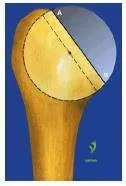
Proximal humeral anatomy is variable. Which of the following measurements most accurately describe the range of diameters of the humeral head (length of line AB):


Explanation

Proximal humeral anatomy is variable. The high variability is the basis for radical changes in design of shoulder arthroplasty. The diameter of the humeral head ranges from approximately 35 mm to 55 mm. Orthopedic Prometric Exam Chapter 3 Image

Question 12

Which of the following statements best describes the relationship of humeral head diameter to humeral head thickness:


Explanation

Humeral head diameter and humeral head thickness have a directly proportional linear relationship.

Question 13

Proximal humeral anatomy is variable. Which of the following measurements most accurately describe the range of radius of curvature of the humeral head (length of line AB):


Explanation

Proximal humeral anatomy is variable. This high variability is the basis for radical changes in design of shoulder arthroplasty. The humeral head radius of curvature ranges from approximately 20 mm to 30 mm.

Question 14

The proximal humeral articular surface can be described as a portion of a sphere. The center of this sphere has which of the following anatomic relationships to the long axis of the humerus:


Explanation

Anatomically, a sphere can be fit to the proximal humerus with the articular surface comprising a portion of that spher The center of this sphere is offset 3 mm to 11 mm medially and 1 mm to 6 mm posteriorly with respect to the long axis of the humerus.

Question 15

Which of the following pitch types is associated with the development of shoulder pain in baseball pitchers between the ages of 9 and 14 years:


Explanation

A study following 476 young baseball pitchers for one season demonstrated that the use of the curveball in this age group was associated with a 52% increased risk of the development of shoulder pain.

Question 16

Which of the following pitch types is associated with the development of elbow pain in baseball pitchers between the ages of 9 and 14 years:


Explanation

A study following 476 young baseball pitchers for one season demonstrated that use of the slider in this age group was associated with an 86% increased risk of the development of elbow pain.

Question 17

It is recommended to limit youth baseball pitchers (9 to 14 years of age) to how many pitches per game


Explanation

In young baseball pitchers, high pitch counts are associated with increased risk of shoulder pain. Based on a study of 476 youth baseball pitchers, it is recommended to limit pitch counts to 75 pitches per gam.

Question 18

It is recommended to limit youth baseball pitchers (9 to 14 years of age) to how many game situation pitches per baseball season:


Explanation

In young baseball pitchers, high pitch counts are associated with increased risk of shoulder pain. Based on a study of 476 youth baseball pitchers, it is recommended to limit pitch counts to 600 game situation pitches per season.

Question 19

Which of the following statements is true regarding traumatic anterior shoulder instability:


Explanation

dynamic shoulder stabilizers. A study evaluating glenohumeral translation and muscle activity related traumatic and atraumatic shoulder instability demonstrated that patients with traumatic shoulder instability have abnormal glenohumeral translation mainly in the provocative position of 90° abduction and external rotation. This translation is corrected by contraction of the dynamic shoulder stabilizers.

Question 20

Which of the following is the most common radiographic finding in patients with lateral epicondylitis:


Explanation

In a radiographic analysis of 294 patients with lateral epicondylitis, 20 patients had lateral soft tissue calcification, 14 patients had coronoid osteophytes, nine patients had olecranon osteophytes, two patients had intraosseous cysts, and two patients had osteochondritis dessicans. The author concluded that routine radiography is not warranted in the initial management of lateral epicondylitis.

Question 21

A 45-year-old runner presents with chronic posterior heel pain. MRI reveals severe insertional Achilles tendinopathy. The surgeon plans an aggressive debridement of the tendon insertion. If surgical debridement requires excision of greater than 50% of the tendon insertion, which of the following is the most appropriate next step?


Explanation

When surgical debridement of insertional Achilles tendinopathy compromises more than 50% of the tendon insertion, augmentation is required to prevent rupture. The flexor hallucis longus (FHL) is the preferred transfer due to its strength, axis of pull, and proximity.

Question 22

Which of the following physical examination tests is considered the most sensitive for diagnosing an acute Achilles tendon rupture?


Explanation

The Matles test, which involves observing the resting ankle position with the patient prone and knees flexed to 90 degrees, has been shown to be the most sensitive test for acute Achilles ruptures. The affected ankle will rest in neutral or dorsiflexion, losing its normal resting equinus.

Question 23

The blood supply to the Achilles tendon is most precarious in its 'watershed' region, predisposing it to tendinosis and rupture. Where is this hypovascular region typically located relative to the calcaneal insertion?


Explanation

The Achilles tendon has a hypovascular 'watershed' region located roughly 2 to 6 cm proximal to its insertion on the calcaneus. This area is supplied primarily by the paratenon, making it uniquely susceptible to degeneration.

Question 24

A 40-year-old man undergoes percutaneous repair of an acute Achilles tendon rupture using a specific jig system. Postoperatively, he complains of numbness along the lateral aspect of his foot. Which nerve was most likely injured during the procedure, and where does it typically cross the lateral border of the Achilles tendon?


Explanation

The sural nerve is at high risk during percutaneous Achilles repair. It typically crosses the lateral border of the Achilles tendon approximately 10 cm (range 9-12 cm) proximal to its calcaneal insertion.

Question 25

A 55-year-old male presents with non-insertional Achilles tendinopathy. He is prescribed an eccentric training program (Alfredson protocol). Which of the following best describes the physiologic rationale for this specific physical therapy regimen?


Explanation

Eccentric training (such as the Alfredson protocol) promotes tendon healing via mechanotransduction. This leads to increased type I collagen synthesis, improved collagen alignment, and a decrease in pathological neovascularization within the tendinopathic tissue.

Question 26

A 32-year-old active patient with an acute Achilles tendon rupture is discussing nonoperative versus operative management. Based on modern high-level evidence utilizing early functional rehabilitation protocols, which of the following is true regarding clinical outcomes?


Explanation

Recent randomized controlled trials have shown that when early functional rehabilitation protocols are employed, the re-rupture rates between nonoperative and operative management of Achilles ruptures are essentially similar. Operative treatment, however, carries higher risks of wound complications.

Question 27

A 48-year-old patient presents with chronic Achilles tendinosis. Histological evaluation of the diseased tendon would most likely demonstrate which of the following findings when compared to a healthy, normal tendon?


Explanation

Achilles tendinosis is characterized as a degenerative, non-inflammatory process. Histology shows disorganized collagen fibers, mucoid degeneration, neovascularization, hypercellularity, and a higher ratio of Type III to Type I collagen.

Question 28

A patient with severe insertional Achilles tendinopathy is scheduled for debridement and FHL transfer. If the surgeon harvests the FHL at the level of the midfoot, they must identify the Master Knot of Henry. Which of the following accurately describes this anatomic landmark?


Explanation

The Master Knot of Henry is located in the plantar midfoot where the Flexor Hallucis Longus (FHL) tendon crosses dorsal (deep) to the Flexor Digitorum Longus (FDL) tendon. Fibrous slip connections between the two tendons are routinely found here.

Question 29

A 35-year-old weekend warrior sustains an acute injury resulting in severe posterior heel pain.

To confirm an Achilles tendon rupture, the O'Brien needle test is performed. A needle is inserted 10 cm proximal to the calcaneal insertion. What is the expected movement of the needle hub during passive dorsiflexion of the foot if the tendon is completely ruptured distal to the needle?



Explanation

In the O'Brien needle test, a needle is placed in the tendon proximal to the suspected rupture. If the tendon is completely ruptured distal to the needle, passive dorsiflexion fails to pull the proximal stump, and the needle hub will not move significantly.

Question 30

Which of the following classes of antibiotics is a well-established risk factor for spontaneous Achilles tendon rupture, especially when used concurrently with oral corticosteroids?


Explanation

Fluoroquinolones (such as ciprofloxacin and levofloxacin) are known to increase the risk of Achilles tendinopathy and spontaneous rupture. This risk is compounded in older adults and those concurrently taking systemic corticosteroids.

Question 31

A 60-year-old male presents with a neglected Achilles tendon rupture that occurred 3 months ago. MRI demonstrates a 6 cm gap between the tendon ends. What is the most appropriate surgical management for a defect of this size?


Explanation

Chronic Achilles ruptures with large gaps (typically >5 cm) cannot be approximated with primary repair alone. They require a combination of V-Y advancement (or turndown flaps) and structural augmentation, typically using the FHL tendon.

Question 32

A 55-year-old active man presents with chronic insertional Achilles tendinopathy refractory to 6 months of conservative care. Intraoperatively, extensive calcific tendinosis is noted, and thorough debridement requires excision of 60% of the tendon insertion. What is the most appropriate next step in management?


Explanation

When debridement of the Achilles tendon requires excision of greater than 50% of its insertion, augmentation with a tendon transfer (typically the FHL) is recommended to restore plantarflexion strength and prevent rupture.

Question 33

Which of the following best describes the histologic findings characteristically seen in chronic non-insertional Achilles tendinosis?


Explanation

Tendinosis is a degenerative, non-inflammatory process characterized by disorganized collagen fibers, mucoid/myxoid degeneration, increased neovascularization, and a shift from type I to type III collagen.

Question 34

Recent randomized controlled trials comparing operative repair versus non-operative management with early functional rehabilitation for acute Achilles tendon ruptures most consistently demonstrate which of the following?


Explanation

Current literature supports that non-operative management combined with early functional rehabilitation yields rerupture rates equivalent to operative repair while avoiding surgical complications like wound breakdown and infection.

Question 35

During a percutaneous or minimally invasive repair of an acute Achilles tendon rupture, the sural nerve is most at risk of iatrogenic injury at which location relative to the tendon insertion?


Explanation

The sural nerve courses distally along the posterolateral aspect of the calf, typically crossing the lateral border of the Achilles tendon approximately 10 cm proximal to its calcaneal insertion.

Question 36

A 60-year-old patient sustains an Achilles tendon rupture while taking levofloxacin for pneumonia. What is the proposed mechanism by which fluoroquinolones increase the risk of tendon rupture?


Explanation

Fluoroquinolones are highly toxic to tenocytes and are thought to cause tendinopathy by upregulating matrix metalloproteinases (MMPs) and inducing apoptosis, leading to rapid degradation of the tendon matrix.

Question 37

A 42-year-old recreational basketball player complains of chronic pain 4 cm proximal to the Achilles tendon insertion. This specific "watershed" zone is predisposed to tendinopathy primarily due to poor blood supply originating from which vessel?


Explanation

The watershed area 2 to 6 cm proximal to the Achilles insertion has a precarious blood supply. The predominant extrinsic blood supply to the paratenon in this region is derived from the peroneal artery.

Question 38

A 28-year-old female runner presents with posterior heel pain and a palpable bony prominence lateral to the Achilles insertion. She has failed 3 weeks of rest. What is the most appropriate next step in the conservative management of her suspected Haglund's syndrome?


Explanation

Initial conservative management of Haglund's deformity includes shoe wear modification (open-backed shoes), heel lifts to decrease tendon tension, and physical therapy. Direct intratendinous corticosteroid injections are contraindicated due to the high risk of rupture.

Question 39

A 45-year-old man presents with sudden posterior ankle pain after lunging for a tennis ball. Clinical examination reveals a positive Thompson test. A lateral radiograph is obtained.

Which radiographic sign on a lateral ankle X-ray is most indicative of an acute Achilles tendon rupture?


Explanation

Obliteration or increased radiodensity within Kager's fat pad triangle on a lateral radiograph strongly suggests an Achilles tendon rupture or severe hemorrhage and edema in the retrocalcaneal space.

Question 40

The Alfredson protocol is considered a first-line treatment for non-insertional Achilles tendinopathy. Which of the following biomechanical principles is the primary focus of this rehabilitation protocol?


Explanation

The Alfredson protocol consists of a 12-week regimen of heavy-load eccentric exercises (lengthening contractions under load), which stimulates collagen synthesis and organization to reverse tendinosis.

Question 41

A 10-year-old boy who plays competitive soccer presents with bilateral posterior heel pain that worsens after practice. Examination reveals point tenderness over the calcaneal apophysis but no swelling or erythema. The Achilles tendon is intact. What is the most appropriate initial management?


Explanation

Calcaneal apophysitis (Sever's disease) is a self-limiting traction apophysitis in active children. First-line treatment consists of activity modification, heel cushions/cups, and stretching of the gastrocnemius-soleus complex.

Question 42

Unlike many flexor tendons in the hand and wrist, the Achilles tendon lacks a true synovial sheath. Instead, it is enveloped by a layer of loose connective tissue. What is the primary function of this structure?


Explanation

The Achilles tendon is covered by a paratenon, a highly vascularized layer of loose connective tissue that stretches with tendon movement and provides its primary extrinsic blood supply.

Question 43

A patient presents with chronic insertional Achilles pain. The examiner passively dorsiflexes the ankle with the knee extended, noting 0 degrees of dorsiflexion. When the knee is flexed to 90 degrees, ankle dorsiflexion increases to 15 degrees. What does this physical examination finding indicate?


Explanation

The Silfverskiold test differentiates isolated gastrocnemius contracture from combined gastrosoleus contracture. Improvement of ankle dorsiflexion with knee flexion indicates an isolated gastrocnemius contracture since the gastrocnemius crosses the knee joint.

Question 44

A 35-year-old male presents with bilateral, painless, nodular swelling of the Achilles tendons. He has a strong family history of premature coronary artery disease. A core biopsy of the mass would most likely reveal which of the following?


Explanation

Achilles tendon xanthomas are painless nodular lesions highly associated with familial hypercholesterolemia. Histology typically demonstrates cholesterol clefts and lipid-laden macrophages (foam cells).

Question 45

A 50-year-old patient presents with a neglected Achilles tendon rupture sustained 4 months ago. MRI reveals a defect of 7 cm between the retracted tendon ends. Which of the following is the most appropriate surgical reconstruction option?


Explanation

Chronic Achilles ruptures with large gaps (greater than 5-6 cm) cannot be closed primarily or with simple V-Y advancement alone. They require a V-Y advancement combined with a turndown flap or a tendon transfer (such as the FHL) for adequate bridging and functional strength.

Question 46

When performing an FHL tendon transfer for a massive Achilles tendon defect, harvesting the FHL requires careful dissection to avoid injury to which closely associated structure at the level of the master knot of Henry?


Explanation

The master knot of Henry is located in the plantar midfoot where the FHL crosses dorsal to the FDL tendon. Careful dissection and separation at this decussation are needed to harvest the FHL without inadvertently cutting the FDL.

Question 47

Which of the following anatomic and pathologic triads correctly defines Haglund's syndrome?


Explanation

Haglund's syndrome is classically characterized by the triad of a prominent posterosuperior calcaneal tuberosity (Haglund's deformity), retrocalcaneal bursitis, and insertional Achilles tendinopathy.

Question 48

Following surgical repair of an acute Achilles tendon rupture, what is the primary advantage of initiating an early functional rehabilitation protocol compared to traditional prolonged cast immobilization?


Explanation

Early functional rehabilitation (early weight-bearing and active range of motion) after Achilles repair leads to an earlier return to work and sports, improved patient satisfaction, and no significant increase in rerupture rates.

Question 49

A 45-year-old male undergoes percutaneous repair of an acute Achilles tendon rupture. Postoperatively, he complains of numbness and tingling along the lateral border of his foot. Which of the following nerves was most likely injured during the procedure?


Explanation

The sural nerve crosses the lateral border of the Achilles tendon approximately 10 cm proximal to its insertion. It is at highest risk of iatrogenic injury during percutaneous Achilles tendon repair.

Question 50

A 55-year-old patient with chronic insertional Achilles tendinosis undergoes surgical debridement. During the procedure, the surgeon notes that 60% of the tendon must be excised to remove all degenerative tissue. What is the most appropriate next step in management?


Explanation

When more than 50% of the Achilles tendon is debrided at its insertion, augmentation is recommended to restore plantarflexion strength. Flexor hallucis longus (FHL) transfer is the gold standard due to its strength, axis of pull, and anatomical proximity.

Question 51

Non-insertional Achilles tendinopathy typically occurs in a poorly vascularized 'watershed' region. This region is located approximately how far proximal to the calcaneal insertion?


Explanation

The watershed area of the Achilles tendon is located 2 to 6 cm proximal to the calcaneal insertion. This relative hypovascularity contributes to the pathogenesis of non-insertional tendinosis and increases the risk of rupture.

Question 52

A 35-year-old male runner presents with acute posterior heel pain and weakness following a sudden push-off mechanism. The clinical examination finding shown in the image is expected to be positive. Which of the following is true regarding conservative management of this condition?


Explanation

The condition is an acute Achilles tendon rupture. Recent literature demonstrates that non-operative management utilizing an early functional rehabilitation protocol has re-rupture rates and functional outcomes similar to operative repair, while avoiding wound complications.

Question 53

During physical examination for equinus contracture, a patient demonstrates 0 degrees of ankle dorsiflexion with the knee extended, and 15 degrees of dorsiflexion with the knee flexed to 90 degrees. What is the most appropriate surgical intervention if conservative measures fail?


Explanation

The Silfverskiold test differentiates isolated gastrocnemius contracture from a combined gastrosoleus contracture. Improvement in dorsiflexion with knee flexion indicates an isolated gastrocnemius contracture, which is best treated with a gastrocnemius recession.

Question 54

A 40-year-old female undergoes an endoscopic plantar fascia release for recalcitrant plantar fasciitis. Six months postoperatively, she complains of new-onset lateral midfoot pain. What is the most likely cause of her current symptoms?


Explanation

A recognized complication of complete plantar fascia release is lateral column overload, which often leads to pain at the calcaneocuboid joint. The plantar fascia acts as an important dynamic stabilizer of the longitudinal arch.

Question 55

A 25-year-old skier sustains an acute dorsiflexion and eversion injury to the ankle, resulting in posterolateral ankle pain and a snapping sensation behind the lateral malleolus. Disruption of which of the following structures is most likely responsible for these symptoms?


Explanation

The superior peroneal retinaculum (SPR) stabilizes the peroneal tendons in the retromalleolar groove. Disruption of the SPR due to forced dorsiflexion and eversion leads to peroneal tendon subluxation.

Question 56

A 55-year-old woman presents with a painful, flexible flatfoot deformity. Examination reveals inability to perform a single-leg heel raise, and the 'too many toes' sign is positive. The subtalar joint remains mobile. Which of the following is the most appropriate surgical treatment?


Explanation

This is a Stage II adult acquired flatfoot deformity (flexible posterior tibial tendon dysfunction). The gold standard surgical management involves an FDL transfer to the navicular and a medial displacement calcaneal osteotomy to correct the valgus hindfoot axis.

Question 57

Which of the following nerves is classically entrapped between the deep fascia of the abductor hallucis muscle and the medial aspect of the quadratus plantae, causing chronic heel pain?


Explanation

The first branch of the lateral plantar nerve (Baxter's nerve) can become entrapped between the abductor hallucis and quadratus plantae muscles. It provides sensory innervation to the calcaneal periosteum and motor innervation to the abductor digiti minimi.

Question 58

A 22-year-old professional ballet dancer complains of posterior ankle pain when assuming the 'en pointe' position. Physical examination reveals tenderness posteromedially and triggering of the great toe during active range of motion. What is the most likely diagnosis?


Explanation

FHL tendinitis (often termed 'dancer's tendinitis') classically presents with posteromedial ankle pain, especially in extreme plantarflexion (en pointe). Stenosing tenosynovitis of the FHL behind the medial malleolus can cause triggering of the hallux.

Question 59

A 10-year-old boy presents with posterior heel pain that worsens after playing soccer. Examination reveals point tenderness over the calcaneal apophysis and a negative squeeze test of the calcaneal body. Radiographs show sclerosis of the apophysis. What is the recommended initial management?


Explanation

Sever's disease (calcaneal apophysitis) is a common cause of heel pain in growing children. It is a self-limiting condition best managed initially with activity modification, heel lifts to reduce Achilles tension, and stretching exercises.

Question 60

A patient with a chronic Achilles tendon rupture presents with a palpable gap of 6 cm. What is the most appropriate reconstructive option?


Explanation

For chronic Achilles tendon defects >5 cm, primary repair or simple V-Y advancement is usually insufficient. An FHL tendon transfer is indicated to bridge the gap and restore plantarflexion strength, often combined with a turndown flap or V-Y advancement.

Question 61

A 60-year-old male is diagnosed with an acute Achilles tendon rupture. He has a history of a recent respiratory infection treated with an antibiotic. Which class of antibiotics is most strongly associated with an increased risk of Achilles tendon rupture?


Explanation

Fluoroquinolones (e.g., ciprofloxacin) are heavily associated with tendinopathy and tendon rupture, particularly in the Achilles tendon. The risk is significantly increased in older patients and those concurrently taking corticosteroids.

Question 62

In the surgical management of Haglund's syndrome, a Zadek osteotomy is sometimes performed. What is the primary anatomical alteration achieved by this procedure?


Explanation

A Zadek (or Keck and Kelly) osteotomy is a dorsal closing-wedge osteotomy of the calcaneus. It anteriorly tilts the posterosuperior tuberosity, relieving pressure on the Achilles tendon insertion without requiring direct detachment of the tendon.

Question 63

When performing a minimally invasive or percutaneous Achilles tendon repair, the sural nerve is at greatest risk of iatrogenic injury. At what approximate distance proximal to the calcaneal insertion does the sural nerve typically cross the lateral border of the Achilles tendon?


Explanation

The sural nerve typically crosses the lateral border of the Achilles tendon approximately 9.8 cm proximal to its calcaneal insertion. Care must be taken during percutaneous repairs to avoid nerve entrapment or transection in this region.

Question 64

Which of the following biologic factors is most highly upregulated in the pathophysiology of chronic non-insertional Achilles tendinopathy, contributing directly to neovascularization?


Explanation

Chronic tendinopathy is characterized by angiofibroblastic dysplasia and neovascularization, driven predominantly by VEGF. Notably, there is an absence of acute inflammatory cells in chronic tendinosis.

Question 65

A 40-year-old recreational athlete sustains an acute Achilles tendon rupture. Compared to traditional surgical repair, non-operative management utilizing early functional bracing and mobilization protocols has been shown to result in:


Explanation

High-level studies show that non-operative management with early functional rehabilitation yields rerupture rates similar to surgical repair. It provides the distinct advantage of avoiding surgical complications such as deep infections.

Question 66

A 55-year-old male undergoes surgical debridement for severe insertional Achilles tendinopathy. After removing the calcific tendon portions and the Haglund's exostosis, 60% of the Achilles tendon insertion has been detached. What is the most appropriate next step in reconstruction?


Explanation

If >50% of the Achilles tendon insertion requires detachment during debridement, augmentation with a tendon transfer (most commonly FHL) is recommended. This restores plantar flexion strength and brings highly vascularized tissue to the degenerative area.

Question 67

During harvest of the flexor hallucis longus (FHL) through a posterior single-incision approach for Achilles augmentation, which neurovascular structure is at greatest risk if dissection strays immediately medial to the FHL muscle belly?


Explanation

The posterior tibial neurovascular bundle lies immediately medial to the FHL muscle belly in the deep posterior compartment. Dissection must stay directly on the FHL tendon and muscle to avoid injuring these critical structures.

Question 68

A 62-year-old patient presents with a neglected Achilles tendon rupture from 4 months ago. Intraoperatively, after debridement of the necrotic ends, there is a 7 cm gap with the ankle in neutral. Which reconstructive option is most appropriate for a defect of this size?


Explanation

Tendon gaps greater than 6 cm typically cannot be bridged by local tissue like V-Y advancements or turndown flaps alone. They require bridging with an allograft (e.g., Achilles, hamstring) or synthetic mesh, often augmented with an FHL transfer.

Question 69

A 32-year-old runner has chronic posterior heel pain due to Haglund's deformity. If conservative measures fail, what is the biomechanical rationale for performing a Zadek (dorsal closing wedge) osteotomy of the calcaneus?


Explanation

A dorsal closing wedge osteotomy (Zadek or Keck and Kelly) pitches the posterosuperior calcaneal tuberosity anteriorly. This effectively moves the bony prominence away from the Achilles tendon, decompressing the retrocalcaneal bursa.

Question 70

A patient with recalcitrant hindfoot pain is noted to have a lack of passive ankle dorsiflexion with the knee extended, but achieves 15 degrees of passive dorsiflexion with the knee flexed. Which surgical procedure targets the isolated pathology identified by this test?


Explanation

The Silfverskiold test differentiates isolated gastrocnemius contracture from an Achilles contracture. Improved dorsiflexion with knee flexion indicates isolated gastrocnemius tightness, properly treated with a gastrocnemius recession.

Question 71

A 19-year-old professional ballet dancer presents with posterior ankle pain exacerbated by the "en pointe" position. Nonoperative management has failed.

Surgical excision of the symptomatic Os trigonum is planned. This bony structure is located immediately lateral to which tendon?


Explanation

The os trigonum is a secondary ossification center sitting at the posterolateral talus. It is located directly lateral to the flexor hallucis longus (FHL) tendon, which runs in the groove between the medial and lateral talar tubercles.

Question 72

The Achilles tendon is most vulnerable to rupture and non-insertional tendinopathy in its relative "watershed" area of decreased vascularity. This hypovascular zone is typically located:


Explanation

The watershed area of the Achilles tendon is relatively hypovascular due to the arrangement of its blood supply. It is located approximately 2 to 6 cm proximal to its insertion on the calcaneus.

Question 73

A 65-year-old patient on chronic systemic corticosteroids is prescribed a broad-spectrum antibiotic for a respiratory infection and subsequently suffers bilateral acute Achilles tendon ruptures. Which class of antibiotics is most strongly associated with this complication?


Explanation

Fluoroquinolones carry a black-box warning for tendinopathy and tendon rupture. The risk is significantly amplified in older patients and those concurrently taking systemic corticosteroids.

Question 74

A 72-year-old diabetic female falls and complains of severe posterior heel pain. Radiographs reveal a displaced avulsion fracture of the posterior calcaneal tuberosity involving the Achilles tendon insertion. The overlying skin is severely blanched. What is the most appropriate management?


Explanation

A displaced calcaneal tuberosity avulsion fracture ("beak" fracture) causing skin blanching is an orthopedic emergency. Urgent open reduction and internal fixation is required to prevent rapid and devastating posterior skin necrosis.

Question 75

Following an acute open Achilles tendon repair, utilizing an accelerated functional rehabilitation protocol (early weight-bearing and controlled range of motion) rather than traditional prolonged cast immobilization has been shown to:


Explanation

Accelerated functional rehabilitation following Achilles repair reduces the time to return to work and sports. It does not increase the rerupture rate compared to traditional immobilization.

Question 76

When clinically evaluating a patient with a suspected acute Achilles tendon rupture, the Thompson test is considered highly reliable. A positive Thompson test is defined by:


Explanation

A positive Thompson test signifies a complete discontinuity of the gastrosoleus complex. It is characterized by an absence of passive plantar flexion when the calf muscle is squeezed.

None

Dr. Mohammed Hutaif
Medically Verified Content by
Prof. Dr. Mohammed Hutaif
Consultant Orthopedic & Spine Surgeon
Chapter Index
