Part of the Master Guide

Orthopedic Prometric MCQs - Chapter 3 Part 1

Orthopedic Prometric MCQs - Chapter 3 Part 14
25 Apr 2026 44 min read 21 Views
Orthopedic Prometric MCQs - Chapter 3 Part 14

Orthopedic Prometric MCQs - Chapter 3 Part 14

Comprehensive 100-Question Exam


00:00

Start Quiz

Question 1

A 14-year-old boy sustains a hip dislocation in a motor vehicle accident. Recommended treatment is:


Explanation

Hip dislocations in young adolescents require a high-energy trauma, which may result in occult injury to the physis. Numerous reports of physeal separation during the reduction are found in the literature. The authors of the largest series recommend gentle closed reduction under fluoroscopy followed by prophylactic stabilization if there is evidence of physeal injury.

Question 2

Which of the following has not shown a decrease in the success rate of flexible intramedullary nails for femur fractures in children:


Explanation

All of the factors, except for a transverse fracture pattern, have been shown to decrease the chances of success in treating children with femur fractures using flexible intramedullary nails.

Question 3

Which of the following is the best starting point for inserting a rigid femoral intramedullary nail in a 13-year-old boy:


Explanation

Avascular necrosis is a risk if a nail is inserted near the piriformis fossa in a patient younger than 15 years old with open physes. The best way to avoid this risk is to insert the intramedullary nail just lateral to the tip of the greater trochanter.

Question 4

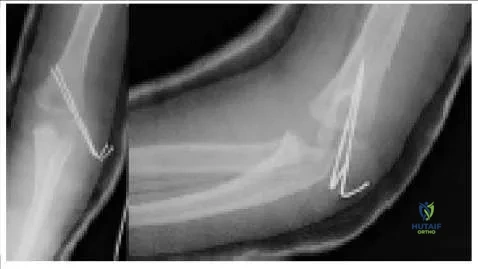
A patient had an elbow fracture that was openly reduced and internally fixed. The radiographs (Slide) from his first postoperative checkup are presented. Which of the following is a correct assessment:


Explanation

This patient has a lateral condyle fracture. This type of fracture has a tendency to spread unless adequate compression is maintained. Diverging pins in the proximal fragment is the most widely advocated strategy.

Question 5

Which of the following femur fractures is best treated with flexible intramedullary nails:
Orthopedic Prometric Exam Chapter 3 Image


Explanation

Age older than 10 years, weight greater than 50 kg, and length-unstable fractures are associated with poor results after insertion of flexible intramedullary nails. The subtrochanteric region is defined in children as 10% femur length below the lesser trochanter. Children age 5 and younger are best treated with immediate spica cast.

Question 6

A mutation in the gene for peripheral myelin protein 22 causes which of the following disorders:


Explanation

Type I, or the hypertrophic demyelinating form, is the most common form of Charcot-Marie-Tooth disease. It is due to a mutation in the gene on chromosome 22, which encodes for peripheral myelin protein 22. Type I C harcot-Marie-Tooth disease has a prevalence of approximately 1 in 5,000 individuals.

Question 7

Which of the following statements is true of scoliosis in patients with C harcot-Marie-Tooth disease:


Explanation

Scoliosis is more common in patients with C harcot-Marie-Tooth disease than in the general population (between 10% to 33%). Only 15% of curves are halted by bracing. Scoliosis is commonly associated with thoracic kyphosis and with a left thoracic curve pattern. Intraoperative spinal cord monitoring is often difficult to elicit even at baseline due to the underlying neurologic disorder.

Question 8

Risk factors for developmental dysplasia of the hip (DDH) include all of the following except:


Explanation

Developmental dysplasia of the hip is caused by both genetic and mechanical factors. C rowding and laxity are common factors. Females, pregnancies with oligohydramnios, firstborn children, infants with congenital muscular torticollis, and those with an affected identical twin are at increased risk. Also parental hip dysplasia, congenital dislocation of the knee, and breech position increase the risk of DDH.

Question 9

In ultrasound of the infant hip, the alpha angle is defined as:


Explanation

The alpha angle is the acute angle between the lateral wall of the ilium and the extension of the acetabular roof. This angle varies inversely with the acetabular index as seen on plain radiographs.

Question 10

In a sonogram, the normal alpha angle of the neonatal hip measures:


Explanation

The alpha angle is the acute angle formed by the lateral wall of the ilium and the extension of the acetabular roof. This angle varies inversely with the acetabular index as seen on plain radiographs. An angle >50° is normal.

Question 11

Diagnosis of Duchenne muscular dystrophy in a female patient could be explained if the patient had which of the following:


Explanation

Duchenne muscular dystrophy is the most common form of muscular dystrophy, affecting one in 3,300 males. Duchenne muscular dystrophy is an X-linked recessive defect that results from the absence of dystrophin. It may be expressed in females with Turner syndrome, which is the presence of a single X chromosome. Such patients would otherwise be carriers of Duchenne muscular dystrophy but express this recessive disorder because they only have one X chromosome. Duchenne muscular dystrophy would not occur in Klinefelter syndrome, which involves the presence of an extra X chromosome, or in trisomy 21. Steroids can help mitigate the phenotype; therefore Addison disease (hypercortisonism) would not produce the disorder. Fragile X is the most common form of inherited mental retardation but affects only males.

Question 12

Spinal muscular atrophy is due to a mutation in the gene for which of the following proteins:


Explanation

Spinal muscular atrophy is due to a mutation in the survival motor neuron gene, which results in loss of many anterior horn cells of the spinal cord. Dystrophin abnormalities cause Duchenne and Becker dystrophies. Peripheral myelin protein 22 is disordered in Charcot-Marie-Tooth disease and frataxin in Friedreich ataxia. Type I collagen disorders cause structural skeletal dysplasias.

Question 13

Which of the following agents is contraindicated in children with open physes:


Explanation

Teriparatide, or Forteo (Eli Lilly and C ompany, Indianapolis, Ind), is contraindicated in children with open physes because of a concern for the risk of osteosarcoma.

Question 14

A 15-month-old toddler, who is neurologically intact, presents with a fracture (pic). Which of the following is the recommended treatment:


Explanation
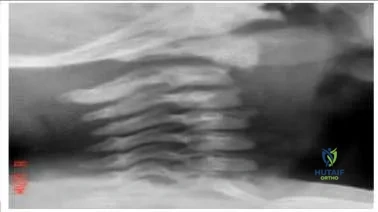
This odontoid physeal fracture should be treated by postural reduction and external immobilization. The reduction maneuver is posterior translation with slight axial traction, which may be accomplished by a halter or a halo vest. Immobilization must include a device such as a Minerva cast or a halo vest that can control the head well.C orrect Answer: Reduction and halo vest immobilization Orthopedic Prometric Exam Chapter 3 Image

Question 15

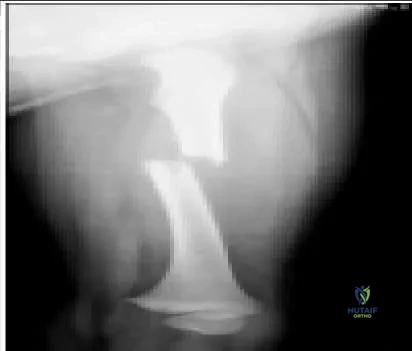
A 17-month-old toddler sustained a femur fracture (Slide) in a fall from a height. Which of the following is the best treatment method:


Explanation

This toddlerâ s fracture shows minimal shortening. Spica cast treatment is ideal for fractures of the femur in children younger than school age because of their portability, overgrowth, remodeling, and lack of implant to remove. A Pavlik harness does not control a child beyond the age of a few months. Femoral skeletal traction, external fixation, and flexible intramedullary nails are more invasive than is warranted. Orthopedic Prometric Exam Chapter 3 Image

Question 16

The lesion shown in the radiograph (pic) most likely represents which of the following processes:


Explanation
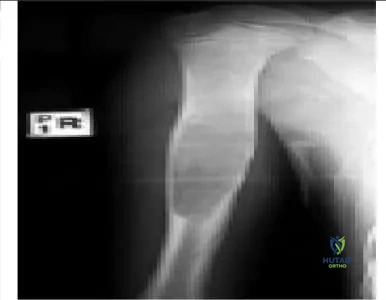
The lesion shown in the radiograph is a unicameral bone cyst. The diagnosis was confirmed by aspiration and the subsequent response, filling in after autogenous marrow (pic). Orthopedic Prometric Exam Chapter 3 Image An aneurysmal bone cyst is typically more septated and expansile in width, fibrous dysplasia has a more blurred zone of transition and ground-glass appearance, and a fibrous cortical defect is more eccentrically placed.

Question 17

A clinical photograph (Slide 1) and radiographs (Slide 2) of a 13-year-old girl, who is neurologically normal, are presented. She does not report any pain. The most likely diagnosis is:


Explanation
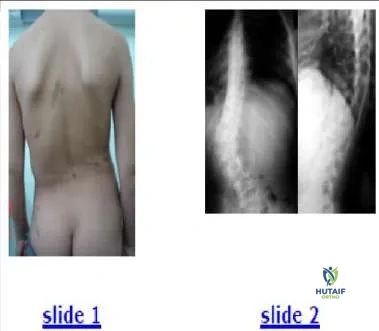
Orthopedic Prometric Exam Chapter 3 Image This patient has neurofibromatosis-1. She has a dystrophic scoliosis that is sharply angulated and involves only four vertebrae (Cobb levels T12-L3). The pedicles are thinned, and the endplates are scalloped. She also has subcutaneous neurofibromas.

Question 18

An 11-year-old girl presents with a limp. She has no history of trauma, infection, or neurologic disorder. She does not report any pain. Recommended treatment includes:


Explanation
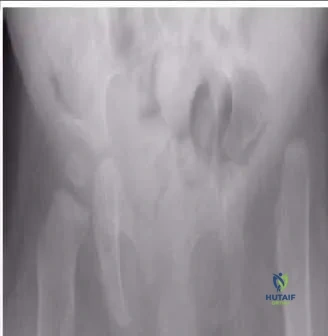
Orthopedic Prometric Exam Chapter 3 Image This patient has untreated developmental dysplasia of the hip. Her limp cannot be eliminated. If she is not experiencing pain, then no treatment is indicated.

Question 19

The foot pictured in this clinical photograph (pic) represents:


Explanation
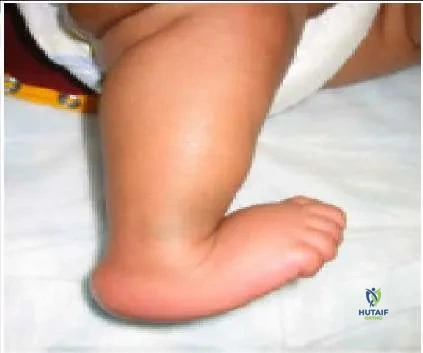
Orthopedic Prometric Exam Chapter 3 Image The foot presented in the clinical photograph represents congenital vertical talus. Note the equinus of the hindfoot, calcaneus of the forefoot, and the crease in the sinus tarsi. In patients with a calcaneovalgus foot, the hindfoot is in calcaneus, not equinus.

Question 20

Scapulothoracic fusion is most commonly indicated to help improve function in which of the following conditions:


Explanation

Facioscapulohumeral dystrophy is a rare disorder inherited in an autosomal dominant fashion. Thirty percent of affected individuals have a new mutation. The genetic abnormality is found on chromosome 4, with a decreased number of D4Z4 tandem repeats, but this does not appear to code for a protein product. In this condition, selective weakness of the serratus anterior, trapezius, and rhomboid muscles is present. Therefore, the scapula is not effectively stabilized against the trunk during use. Although the deltoid is relatively spared, it cannot work well due to a hypermobile scapula. Fusion of the scapula to the thorax improves range of abduction in this condition.

Question 21

A 2-year-old boy sustains a spiral midshaft femur fracture. He is otherwise healthy and no non-accidental trauma is suspected. What is the most appropriate initial management?


Explanation

Early spica casting is the gold standard for isolated femur fractures in children aged 6 months to 5 years. Overgrowth of 1 to 2 cm is expected and shortening up to 2 cm is considered acceptable.

Question 22

When utilizing a rigid lateral entry intramedullary nail for a femur fracture in a 13-year-old, the starting point should be placed lateral to the tip of the greater trochanter primarily to avoid injury to which of the following structures?


Explanation

The ascending branch of the medial circumflex femoral artery provides the primary blood supply to the femoral head in adolescents. A starting point medial to the tip or in the piriformis fossa carries an unacceptably high risk of iatrogenic avascular necrosis.

Question 23


An obese 12-year-old boy presents with left knee pain and inability to bear weight. Radiographs show a displaced proximal femoral epiphysis. According to the Loder classification, what is the primary risk associated with this specific presentation?


Explanation

The inability to bear weight, even with crutches, defines an unstable slipped capital femoral epiphysis (SCFE) in the Loder classification. Unstable SCFE carries a high risk of osteonecrosis, approaching 47% in some series.

Question 24

A 7-year-old girl is scheduled for Titanium Elastic Nailing (TENs) of a transverse midshaft femur fracture. What is the recommended formula for selecting the appropriate nail diameter?


Explanation

The proper nail size is typically 40% of the narrowest medullary canal diameter. Two nails of the exact same size should be used to provide balanced three-point fixation and prevent asymmetric deforming forces.

Question 25

A 9-year-old boy sustains a traumatic proximal femur fracture. Radiographs reveal a transepiphyseal fracture with dislocation of the femoral head. What is the Delbet classification and the associated risk of avascular necrosis (AVN)?


Explanation

Delbet Type I is a transepiphyseal fracture. When accompanied by a dislocation of the femoral head, it carries the highest risk of avascular necrosis among pediatric femoral neck fractures, nearing 90%.

Question 26

A 6-year-old girl sustains an acute traumatic posterior hip dislocation. What is the most critical factor in minimizing her risk of developing osteonecrosis of the femoral head?


Explanation

The risk of osteonecrosis following a pediatric traumatic hip dislocation is most closely related to the time elapsed before reduction. Prompt reduction, ideally within 6 hours of the injury, significantly decreases this risk.

Question 27

A 9-year-old boy weighing 45 kg (99 lbs) sustains a highly comminuted, length-unstable midshaft femur fracture resulting in 4 cm of shortening. What is the most appropriate surgical treatment?


Explanation

Submuscular bridge plating is ideal for length-unstable, comminuted femur fractures in school-aged children. This is especially true for older children nearing the weight limit (usually 50kg) for flexible nails, which might telescope in comminuted patterns.

Question 28

In a 6-month-old pre-ambulatory infant presenting with an isolated femur fracture, which of the following fracture patterns is most specific for non-accidental trauma (child abuse)?


Explanation

While spiral and transverse diaphyseal fractures are the most common patterns seen in child abuse, the classic metaphyseal lesion (corner or bucket-handle fracture) is highly specific for non-accidental trauma.

Question 29

Following conservative management of a midshaft femur fracture in a 5-year-old child, the treating orthopedic surgeon should anticipate the maximum amount of femoral overgrowth to occur within what timeframe post-injury?


Explanation

The hyperemic response following a femur fracture in children stimulates the physis, causing limb overgrowth. This phenomenon is most profound during the first 18 to 24 months after the injury.

Question 30

A 6-year-old boy underwent Titanium Elastic Nailing for a femur fracture 6 months ago. The fracture has healed well, but he complains of localized pain and a palpable mass near the medial and lateral knee. What is the most likely cause?


Explanation

The most common complication of flexible intramedullary nailing in pediatric femur fractures is soft-tissue irritation and pain. This occurs due to prominent nail ends left at the distal insertion sites near the metaphysis.

Question 31


A 15-year-old sprinter presents with acute groin pain after pushing off the starting blocks. Radiographs show an avulsion fracture of the anterior inferior iliac spine (AIIS). Which muscle is responsible for this injury?


Explanation

The straight head of the rectus femoris originates at the AIIS and can avulse during forceful hip flexion and knee extension. The sartorius originates at the ASIS.

Question 32

A 3-week-old neonate sustains a midshaft femur fracture during a difficult breech delivery. What is the most appropriate and effective treatment?


Explanation

For neonates and infants up to 6 months of age, a Pavlik harness provides excellent outcomes for femur fractures. It maintains the hip in flexion and abduction, aligning the proximal fragment with the distal fragment while ensuring ease of care.

Question 33

A 13-year-old boy underwent in situ pinning of a stable slipped capital femoral epiphysis (SCFE) with a single cannulated screw. Postoperatively, he develops severe stiffness, loss of motion, and global joint space narrowing (< 3mm) on radiographs without osteonecrosis. What is the most likely diagnosis?


Explanation

Chondrolysis is characterized by acute articular cartilage destruction, presenting with stiffness and joint space narrowing (<3mm). It is highly associated with unrecognized hardware penetration into the joint space.

Question 34

Which of the following physical examination findings is most indicative of an unrecognized sciatic nerve injury following a traumatic posterior hip dislocation in a 10-year-old child?


Explanation

The sciatic nerve, particularly its peroneal division, is at risk during posterior hip dislocations. Injury manifests as foot drop, characterized by weakness in ankle dorsiflexion and great toe extension.

Question 35

When utilizing flexible intramedullary nails for a pediatric femur fracture, what technical error is most likely to result in a loss of reduction and subsequent varus or valgus malalignment?


Explanation

Using mismatched nail diameters leads to asymmetric bending forces within the medullary canal, commonly resulting in varus or valgus malalignment. Nails should be of identical diameter to ensure symmetric three-point fixation.

Question 36

A 16-year-old water skier presents with acute buttock pain after a forced hyperflexion of the hip with the knee extended. Radiographs reveal an ischial tuberosity avulsion fracture. Surgical fixation is generally indicated if the displacement exceeds:


Explanation

Surgical fixation of an ischial tuberosity avulsion is typically indicated for displacement > 1.5 to 2.0 cm. Operative management prevents symptomatic nonunion, exostosis formation, and chronic hamstring weakness.

Question 37


A 7-year-old boy presents with a significantly displaced subtrochanteric femur fracture. Treatment with flexible intramedullary nails is considered. What is the most common malalignment complication seen when treating this specific fracture pattern with flexible nails?


Explanation

Subtrochanteric fractures treated with flexible nails are highly prone to varus and procurvatum deformities. This occurs due to the strong deforming forces of the iliopsoas and hip abductors pulling on the short proximal fragment.

Question 38

A 12-year-old sustains a Delbet Type III (cervicotrochanteric) fracture of the proximal femur. Which of the following complications is most frequently observed following this specific fracture pattern?


Explanation

Delbet Type III fractures have a lower rate of avascular necrosis compared to Types I and II. However, they are highly associated with the development of coxa vara (often > 20% incidence) if not rigidly fixed or properly reduced.

Question 39

In a 7-year-old child treated non-operatively for a diaphyseal femur fracture, what is the maximum acceptable varus/valgus angulation?


Explanation

For children aged 6 to 10 years, acceptable alignment criteria for femur fractures include < 10 degrees of varus/valgus, < 15 degrees of anteroposterior angulation, and < 1.5 cm of shortening.

Question 40

A 6-year-old boy weighing 35 kg sustains a highly comminuted, length-unstable fracture of the femoral diaphysis after a fall from a tree. What is the most appropriate surgical intervention?


Explanation

For pediatric femur fractures that are length-unstable (highly comminuted or long spiral), submuscular bridge plating is the preferred treatment. Flexible intramedullary nails lack the stability to maintain length in comminuted patterns, leading to unacceptable shortening.

Question 41

When planning flexible titanium intramedullary nailing for a pediatric transverse femur fracture, what is the optimal diameter sizing for each nail?


Explanation

To achieve optimal three-point fixation and construct stability, two flexible nails should be used, with each nail diameter occupying approximately 40% of the narrowest portion of the medullary canal.

Question 42

A 7-year-old child undergoes flexible intramedullary nailing for a femoral shaft fracture. What is the most common complication associated with this procedure?


Explanation

The most frequent complication of flexible intramedullary nailing is soft tissue irritation and pain at the distal insertion site. This occurs in up to 15% of cases and often necessitates removal of the implants after fracture consolidation.

Question 43

A 12-year-old boy presents with a displaced transcervical (Delbet Type II) fracture of the proximal femur. Which of the following complications occurs with the highest frequency in this fracture pattern?


Explanation

Delbet Type I (transepiphyseal) and Type II (transcervical) pediatric proximal femur fractures carry a high rate of avascular necrosis, approaching up to 50% for Type II fractures, due to the vulnerable retinacular blood supply.

Question 44

A 4-year-old girl sustains an isolated, closed midshaft femur fracture. Non-operative management with a spica cast is elected. What is the maximum acceptable varus/valgus angulation in this age group?


Explanation

In children aged 2 to 10 years treated in a spica cast, acceptable alignment parameters are less than 15 degrees of varus/valgus angulation, less than 20 degrees of anteroposterior angulation, and less than 2 cm of shortening.

Question 45

A 13-year-old boy requires a rigid intramedullary nail for a midshaft femur fracture. To minimize the risk of iatrogenic avascular necrosis, the optimal starting point for nail insertion is:


Explanation

Piriformis fossa entry in adolescents is associated with an unacceptably high risk of avascular necrosis due to disruption of the ascending branch of the medial femoral circumflex artery. A greater trochanteric or lateral entry point is required.

Question 46

A 3-year-old boy presents with a spiral midshaft femur fracture. The parents state he tripped while running on a carpeted floor. What is an essential component of the initial evaluation?


Explanation

A femur fracture in a toddler with a mechanism of injury that does not match the severity of the fracture (e.g., tripping on a carpet) should raise immediate suspicion for child abuse. A skeletal survey and appropriate child protective evaluation are mandatory.

Question 47

Which of the following scenarios is an absolute contraindication to the use of a Pavlik harness for the treatment of developmental dysplasia of the hip (DDH)?


Explanation

Teratologic dislocations, such as those associated with arthrogryposis or myelomeningocele, are notoriously stiff and do not typically respond to a Pavlik harness. They usually require rigid casting or surgical reduction.

Question 48

A 13-year-old obese boy presents with an acute inability to bear weight on his right leg after a minor fall, diagnosed as a slipped capital femoral epiphysis (SCFE). According to the Loder classification, this inability to bear weight defines the slip as unstable. What is the approximate risk of avascular necrosis in this type of SCFE?


Explanation

The Loder classification divides SCFE into stable (able to bear weight) and unstable (unable to bear weight with or without crutches). Unstable SCFE has a dramatically higher rate of avascular necrosis, reported to be between 20% and 47%.

Question 49

In the initial casting phase of the Ponseti method for a newborn with idiopathic clubfoot, the first step focuses on correcting which component of the deformity?


Explanation

The first step in the Ponseti method is correcting the cavus deformity. This is achieved by elevating the first ray, which supines the forefoot to align it with the hindfoot.

Question 50

A 14-year-old boy is diagnosed with an unstable slipped capital femoral epiphysis (SCFE). To minimize the risk of avascular necrosis and optimize outcomes, what is the widely recommended surgical timing?


Explanation

Unstable SCFE is considered a surgical urgency. Prompt intervention (typically pinning and capsulotomy) within 24 hours has been shown to reduce intracapsular pressure and minimize the risk of avascular necrosis.

Question 51

An 11-year-old boy presents with chronic knee pain. Radiographs reveal a classic osteochondritis dissecans (OCD) lesion. What is the most common anatomical location for this pathology?


Explanation

The most frequent location for an osteochondritis dissecans lesion in the knee is the lateral aspect of the medial femoral condyle. This can be remembered by the mnemonic LAME.

Question 52

An 8-year-old girl undergoes successful closed reduction of a traumatic posterior hip dislocation within 4 hours. A post-reduction CT scan identifies a 4 mm intra-articular osteochondral fragment. The joint space is clinically symmetric. What is the most appropriate management?


Explanation

Any retained intra-articular loose body following a pediatric hip dislocation must be surgically removed (arthroscopically or open) to prevent rapid cartilage destruction and secondary early osteoarthritis, regardless of apparent joint space symmetry.

Question 53

In a 6-year-old child treated non-operatively for a diaphyseal femur fracture, longitudinal overgrowth is expected. At what age range does this overgrowth phenomenon peak?


Explanation

Femoral overgrowth after a fracture occurs secondary to local hyperemia stimulating the physes. It is most pronounced in children aged 2 to 10 years, averaging 1.5 to 2.0 cm of overgrowth.

Question 54

An 11-year-old boy sustains a Salter-Harris Type II fracture of the distal femur following a football tackle. Which of the following complications is most highly associated with this specific injury?


Explanation

Distal femur physeal fractures have an exceptionally high rate of growth arrest (up to 50%), due to the undulating, complex shape of the physis and the high-energy trauma typically required to fracture it.

Question 55

A 14-year-old girl sustains a Tillaux fracture of the ankle. Which quadrant of the distal tibial physis is the last to close, allowing for this specific avulsion fracture pattern?


Explanation

The distal tibial physis closes in a specific, asymmetric pattern: central, then anteromedial, then posteromedial, and finally anterolateral. The open anterolateral physis is vulnerable to avulsion by the anterior inferior tibiofibular ligament.

Question 56

What is the characteristic mechanism of injury that produces a pediatric triplane fracture of the ankle?


Explanation

Triplane fractures typically occur in older children and young adolescents nearing skeletal maturity. They are caused by an external rotation force applied to a supinated foot, creating fractures in the sagittal, coronal, and axial planes.

Question 57

A 6-year-old boy with Legg-Calvé-Perthes disease is evaluated. According to the Herring lateral pillar classification, a Type C rating signifies which of the following?


Explanation

The Herring classification assesses the height of the lateral pillar of the femoral head. Type C indicates greater than 50% collapse of the lateral pillar height, which correlates with a poor clinical and radiographic prognosis.

Question 58

A 13-year-old male athlete presents with localized pain, swelling, and tenderness over the tibial tubercle, which worsens with jumping. He is diagnosed with Osgood-Schlatter disease. What is the primary underlying pathology?


Explanation

Osgood-Schlatter disease is an overuse injury caused by repetitive microtrauma and traction from the patellar tendon on the unossified tibial tubercle apophysis, leading to a traction apophysitis.

Question 59

A 1-year-old child is diagnosed with congenital anterolateral bowing of the tibia. Radiographs demonstrate medullary sclerosis and early cystic changes at the apex of the bow. If left untreated, what is the most likely natural history of this condition?


Explanation

Congenital anterolateral bowing of the tibia is strongly associated with Neurofibromatosis Type 1. The natural history of this specific directional bowing, unlike posteromedial bowing, is progression to fracture and recalcitrant congenital pseudarthrosis.

Question 60

A 13-year-old boy sustains a diaphyseal femur fracture. A rigid intramedullary nail is selected for fixation. To minimize the risk of iatrogenic avascular necrosis (AVN) of the femoral head, which of the following is the recommended starting point?


Explanation

In adolescents, a starting point lateral to the tip of the greater trochanter avoids the medial circumflex femoral artery anastomosis. Piriformis entry carries an unacceptably high risk of AVN in this age group.

Question 61

A 15-year-old boy presents with a posterior hip dislocation following a high-speed motor vehicle collision. Which of the following factors is the most significant predictor for the development of avascular necrosis (AVN)?


Explanation

The risk of AVN following pediatric and adolescent traumatic hip dislocation is most closely associated with the time to reduction. Delays greater than 6 hours significantly increase the incidence of AVN.

Question 62

Which of the following factors is an accepted relative contraindication to the use of titanium elastic nails (TENs) for the treatment of a pediatric diaphyseal femur fracture?


Explanation

TENs biomechanically rely on three-point bending. Patients weighing over 50 kg or those older than 11 years have a significantly higher risk of loss of fixation, shortening, and angular deformity.

Question 63

A 4-year-old child sustains an isolated midshaft femur fracture. The child is placed in a one-and-a-half spica cast. What is the maximum acceptable amount of initial shortening in this patient?


Explanation

In children aged 2 to 10 years, femoral overgrowth typically occurs following a fracture due to post-traumatic hyperemia. Therefore, 15 to 20 mm of initial shortening is acceptable and often desired to equalize leg lengths at maturity.

Question 64

An 8-year-old girl is treated with titanium elastic nails for a transverse midshaft femur fracture. What is the most commonly reported complication associated with this treatment modality?


Explanation

Soft tissue irritation and pain at the nail insertion site (usually the distal femur) is the most common complication of elastic nailing. It often necessitates premature removal of the implants once union is achieved.

Question 65

A 9-year-old boy sustains a length-unstable subtrochanteric femur fracture. What is the most appropriate surgical intervention to provide stable fixation and minimize complications?


Explanation

Submuscular bridge plating provides excellent stability for length-unstable or proximal/distal third pediatric femur fractures. Flexible nails often fail to maintain length and alignment in subtrochanteric fractures.

Question 66

Which of the following describes the proper sizing technique for selecting titanium elastic nails (TENs) for a pediatric femur fracture?


Explanation

For optimal biomechanical stability, two nails of the same diameter should be used, with each nail being approximately 40% of the narrowest diaphyseal diameter, thus filling 80% of the canal.

Question 67

A 10-year-old boy sustains a Delbet Type II (transcervical) femoral neck fracture. Following closed reduction and percutaneous pinning, the parents should be counseled that the child is at highest risk for which of the following complications?


Explanation

Avascular necrosis is the most devastating and common complication of pediatric femoral neck fractures. The risk is strongly associated with the Delbet classification, being highest in Type I and Type II fractures.

Question 68

A 5-year-old boy with a closed head injury (GCS 7) and a closed midshaft femur fracture is brought to the trauma bay. What is the primary advantage of early operative fixation of the femur in this polytraumatized child?


Explanation

In pediatric polytrauma with head injury, early stabilization of major long bone fractures reduces pain and systemic stress. This facilitates mobilization, eases nursing care, and prevents spikes in intracranial pressure.

Question 69

Which of the following injury patterns has the highest incidence of avascular necrosis in the pediatric population?


Explanation

Delbet Type I fractures (transepiphyseal separations) have the highest rate of AVN among pediatric proximal femur fractures, often exceeding 80-90% if associated with dislocation of the epiphysis.

Question 70

A 12-year-old, 80-kg male sustains a transverse midshaft femur fracture. Based on his age and weight, what is the most appropriate fixation strategy?


Explanation

This patient exceeds the weight limit (50 kg) and age recommendations for TENs. A rigid intramedullary nail using a lateral trochanteric entry point is the best option to provide stable fixation while minimizing AVN risk.

Question 71

A 14-year-old girl is diagnosed with a traumatic posterior hip dislocation. Closed reduction is performed in the emergency department within 2 hours. Post-reduction CT scan reveals a 2 mm intra-articular fragment. The joint is congruent. What is the next best step in management?


Explanation

Small (<2-3 mm) intra-articular fragments that do not cause joint incongruity or block reduction can typically be managed nonoperatively with observation and protected weight-bearing.

Question 72

A 3-year-old girl presents with an isolated closed spiral fracture of the femoral diaphysis. There are no signs of non-accidental trauma, and the injury occurred from a twisting fall at a playground. What is the most appropriate initial treatment?


Explanation

For children under the age of 5 (or sometimes 6) with isolated femoral shaft fractures, early spica casting is the gold standard and provides excellent outcomes with low complication rates.

Question 73

During the insertion of a rigid intramedullary nail for an adolescent femur fracture, the surgeon inadvertently uses a starting point at the tip of the greater trochanter instead of lateral to it. What growth disturbance is most likely to occur?


Explanation

Damage to the greater trochanteric apophysis from a tip starting point can cause premature arrest of the apophysis. Continued growth of the capital femoral epiphysis then leads to a relative coxa valga deformity.

Question 74

An 11-year-old boy presents with a displaced Salter-Harris II fracture of the distal femur following a football tackle. Which of the following complications occurs with the highest frequency following this specific injury?


Explanation

Distal femoral physeal fractures have an extremely high rate of growth arrest (up to 50%), even when nondisplaced or anatomically reduced. The undulations of the physis make it highly susceptible to damage.

Question 75

A 6-month-old infant is diagnosed with an unstable midshaft femur fracture. Which of the following is the most appropriate treatment option?


Explanation

In infants under 6 months of age, isolated diaphyseal femur fractures are typically well-managed with a Pavlik harness, which provides adequate immobilization for rapid healing and simplifies diapering.

Question 76

What is the primary rationale for pre-bending titanium elastic nails (TENs) prior to insertion in a pediatric femur fracture?


Explanation

Pre-bending the nails ensures they apex at the fracture site, providing tension against the endosteum. This three-point bending biomechanics is essential for rotational and angular stability.

Question 77

An 8-year-old child sustains a highly comminuted midshaft femur fracture resulting from a gunshot wound. Soft tissues are viable but there is a 3 cm open wound laterally. Which of the following is the most appropriate fixation method?


Explanation

In the setting of a highly comminuted (length-unstable) fracture with an open wound (such as a gunshot wound), external fixation provides stable fixation, maintains length, and allows for ongoing wound care.

Question 78

A 10-year-old child treated with a hip spica cast for a femur fracture develops severe abdominal pain, nausea, and vomiting 2 days post-application. What is the most likely diagnosis?


Explanation

Superior mesenteric artery (SMA) syndrome, or cast syndrome, occurs when the third portion of the duodenum is compressed by the SMA following application of a body cast. Treatment involves splitting or adjusting the cast and decompression.

Question 79

A 2-year-old child is brought to the emergency department for refusal to walk. Radiographs show a nondisplaced spiral fracture of the distal third of the tibia. What is the classic mechanism for this injury?


Explanation

This describes a 'toddler's fracture,' which typically occurs from a low-energy twisting or torsional force while learning to walk or stumbling. It is usually a benign, stable injury treated with a short leg cast or boot.

Question 80

A 10-year-old boy weighing 55 kg sustains a transverse midshaft femur fracture. Which of the following is the most significant risk factor for failure if treated with titanium elastic nails (TENs)?


Explanation

Weight over 50 kg (approx 110 lbs) and age over 10 years are associated with significantly higher rates of malunion and implant failure when using flexible intramedullary nails. Rigid fixation or submuscular plating is generally preferred in heavier patients.

Question 81

When using a rigid intramedullary nail for a femoral shaft fracture in an adolescent with open physes, avoiding the piriformis fossa and instead utilizing a lateral trochanteric entry point primarily minimizes the risk of:


Explanation

The piriformis fossa entry point damages the ascending branch of the medial femoral circumflex artery in adolescents with open physes, leading to a high risk of avascular necrosis. A lateral trochanteric entry point avoids this critical vascular supply.

Question 82

A 9-year-old boy weighing 40 kg sustains a comminuted, length-unstable subtrochanteric femur fracture after a fall.

Which of the following fixation methods is most appropriate to maintain length and alignment?


Explanation

Submuscular bridge plating is ideal for length-unstable, comminuted, or subtrochanteric pediatric femur fractures. Flexible nails lack rotational and length stability in comminuted patterns, and piriformis entry nails risk AVN.

Question 83

A 12-year-old sustains a traumatic posterior hip dislocation during a motor vehicle accident. Closed reduction is delayed and performed 8 hours after the injury. What is the most devastating complication directly related to this delay?


Explanation

The risk of avascular necrosis (AVN) of the femoral head increases significantly if a hip dislocation is not reduced within 6 hours of injury. Urgent reduction is essential to restore blood flow.

Question 84

An obese 13-year-old boy presents with left knee pain and an obligatory external rotation of the left hip during flexion. Which of the following is the most appropriate initial imaging step?


Explanation

This is the classic presentation of a slipped capital femoral epiphysis (SCFE), which commonly presents with referred knee pain and obligatory external rotation upon hip flexion. AP and frog-leg lateral pelvis radiographs are required for diagnosis.

Question 85

During in-situ pinning of a slipped capital femoral epiphysis (SCFE), an unrecognized intra-articular pin penetration into the anterosuperior quadrant of the femoral head most commonly leads to:


Explanation

Unrecognized pin penetration into the hip joint during SCFE fixation destroys the articular cartilage, leading to severe chondrolysis. Careful fluoroscopic evaluation using the approach-withdrawal principle is required to confirm pin position.

Question 86

In a patient diagnosed with Legg-Calvé-Perthes disease, which of the following factors is most strongly associated with a poor radiographic outcome and a spherical mismatch at skeletal maturity?


Explanation

Age at clinical onset is the most significant prognostic factor in Legg-Calvé-Perthes disease. Children presenting at age 8 or older have less time for remodeling and generally suffer worse radiographic and clinical outcomes.

Question 87

A 9-month-old non-ambulatory infant presents with a spiral fracture of the femoral shaft. The parents state the child 'rolled off the bed.' What is the most appropriate next step in management alongside immobilization?


Explanation

Femur fractures in non-ambulatory infants are highly suspicious for non-accidental trauma (child abuse). A full skeletal survey and involvement of child protective services are mandatory steps in management.

Question 88

When treating a diaphyseal femur fracture in a 2-year-old child with an early spica cast, what is the optimal acceptable initial overriding (shortening) to allow for expected growth stimulation?


Explanation

In children aged 2 to 10 years, femoral fractures stimulate limb overgrowth due to hyperemia at the physes. An initial overriding of 1.5 to 2 cm is acceptable and optimal to compensate for this expected overgrowth.

Question 89

A 4-week-old female undergoes a screening ultrasound for developmental dysplasia of the hip (DDH). The Graf alpha angle is reported as 65 degrees. What does this indicate?


Explanation

In the Graf ultrasound classification for DDH, an alpha angle greater than 60 degrees indicates a normal, mature hip (Type I). No treatment is required.

Question 90

A newborn is diagnosed with arthrogryposis multiplex congenita and bilateral developmental dysplasia of the hip. Why is a Pavlik harness contraindicated in the management of this patient?


Explanation

The Pavlik harness relies on active spontaneous movement to achieve and maintain reduction. In teratologic dislocations (like arthrogryposis), the hips are rigid, leading to extremely high failure rates and risks of iatrogenic fractures or skin necrosis.

Question 91

A 4-year-old boy presents with right hip pain, a temperature of 38.8°C, an ESR of 50 mm/hr, and a WBC count of 14,000 cells/mm³. He refuses to bear weight. According to the Kocher criteria, what is the probability that he has septic arthritis?


Explanation

The patient meets all 4 Kocher criteria (fever >38.5°C, non-weight-bearing, ESR >40, WBC >12,000). The presence of 4 criteria correlates with a 93% to 99% probability of septic arthritis.

Question 92

A 10-year-old boy sustains a Salter-Harris type II fracture of the distal femur. What is the most common long-term complication specifically associated with this injury?


Explanation

The distal femoral physis accounts for 70% of femoral growth and 37% of overall lower extremity growth. Fractures here have a high rate of physeal arrest, leading to significant leg length discrepancies and angular deformities.

Question 93

In which of the following patients presenting with a unilateral slipped capital femoral epiphysis (SCFE) is prophylactic pinning of the contralateral hip most strongly indicated?


Explanation

Prophylactic pinning of the contralateral hip in SCFE is strongly indicated for patients with underlying metabolic or endocrine disorders (e.g., renal osteodystrophy, hypothyroidism) due to the extremely high risk of bilateral involvement.

None

Dr. Mohammed Hutaif
Medically Verified Content by
Prof. Dr. Mohammed Hutaif
Consultant Orthopedic & Spine Surgeon
Chapter Index
