Part of the Master Guide

Orthopedic Prometric MCQs - Chapter 3 Part 1

Orthopedic Prometric MCQs - Chapter 3 Part 43
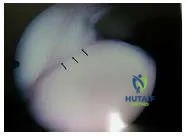
27 Apr 2026 36 min read 21 Views
Orthopedic Prometric MCQs - Chapter 3 Part 43

Orthopedic Prometric MCQs - Chapter 3 Part 43

Comprehensive 100-Question Exam


00:00

Start Quiz

Question 1

What is the mechanism of injury that leads to the clinical diagnosis of "turf toe":


Explanation

Turf toe is a sprain of the plantar capsuloligamentous complex of the first MTP joint that is associated with play on artificial playing surfaces. The classic mechanism of injury is a forced hyperextension injury to the 1st MTP joint. Dorsiflexion in excess of a normal range of motion can lead to varying degrees of soft tissue capsular disruption or injury to the articular cartilage and subchondral bone. Factors that predispose a player to injury are increasing age, number of years in professional football, pes planus, and decreased range of motion in the ankle and/or 1st MTP joint.

Question 2

The gold standard for evaluation of chronic compartment syndrome in the athlete is:


Explanation

The gold standard for diagnosing chronic or exertional compartment syndrome in the athlete is demonstration of elevated compartment pressures post exercise. Normal increases in compartment pressures with exercise will decrease to normal within 2 minutes of exercise cessation. Pedowitz et al has developed a criteria for diagnosis with any of the following: pre-exercise pressure > 15 mm Hg, 1 minute post exercise pressure > 30 mm Hg, or 5 min post exercise of > 20 mm Hg.

Question 3

Internal impingement of the shoulder between the posterosuperior glenoid rim and the rotator cuff occurs in which phase of throwing:


Explanation

Internal impingement of the shoulder occurs with the arm in the abducted, externally rotated, and extended position that corresponds with the late cocking phase of throwing. Internal impingement is responsible for shoulder pain commonly occurring in overhead and throwing athletes. Initial treatment is focused on therapy that strengthens the anterior structures, stretches the posterior structures, and controls the scapular position in space. If nonoperative treatment fails, arthroscopic debridement, thermal capsular shrinkage, and humeral derotational osteotomy have been used with varying degrees of success.

Question 4

When comparing open distal clavicle resection with arthroscopic distal clavicle resection for osteolysis of the distal clavicle, arthroscopic techniques:


Explanation

A study comparing arthroscopic and open techniques of distal clavicular resection in the treatment of osteolysis of the distal clavicle found no difference in the amount of bone resected or amount of pain relief obtained. The arthroscopic group had a shorter hospital stay and less complications, and returned to activity nearly twice as fast as the open technique group.7

Question 5

A magnetic resonance image (MRI) of the dominant elbow of a 19-year-old minor league baseball pitcher is presented (pic). He has been unable to pitch for the past 6 weeks secondary to pain. The recommended treatment includes:


Explanation

The MRI shows a disruption of the humeral attachment of the ulnar collateral ligament. The ulnar collateral ligament of the elbow is the most frequently observed ligamentous elbow injury in baseball pitchers. Recommended treatment in the throwing athlete is reconstruction of the ulnar collateral ligament with an autogenous palmaris longus graft.

Question 6

Following acute lateral traumatic patellar dislocation, the surgical procedure that most closely reconstructs the injured structure is:


Explanation

The medial patellofemoral ligament is the primary restraint to lateral subluxation of the patella. The other structures contribute less substantially to patellofemoral stability. In the majority of cases of acute traumatic patellar dislocation, the medial patellofemoral ligament is disrupted.

Question 7

A 22-year-old male tennis player has dominant side shoulder pain when serving and hitting overheads. Despite a prolonged course of physiotherapy, he is unable to return to tennis because of shoulder pain. His treating physician recommend arthroscopy of his shoulder with debridement of associated lesions. What is the likelihood that he will be playing tennis at his preinjury level of competition at 1 year following surgery:


Explanation

This patient has internal impingement of the shoulder, presumably with associated labral and rotator cuff lesions. Sonnery-Cottet and colleagues reported results of 28 tennis players with internal impingement treated with arthroscopic debridement of associated lesions. Although 22 of the 28 tennis players were able to return to tennis following surgery, only 14 of the players were able to return to their preinjury level of competition.

Question 8

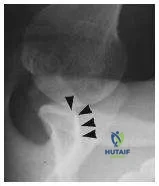
A glenoid profile radiograph (Slide) of a 21-year-old male rugby player with multiple traumatic anterior shoulder dislocations is presented. Which of the following is the preferred treatment:
Orthopedic Prometric Exam Chapter 3 Image


Explanation

The radiograph demonstrates anterior glenoid rim insufficiency, which is a risk factor for failure of soft tissue reconstructions especially in contact athletes. The arrows on the figure represent the anterior border of the glenoid rim. A coracoid transfer procedure to reconstruct the anterior bony deficiency maximizes the possibility for successful restoration of shoulder stability.

Question 9

Which of the following statements is true regarding humeral retroversion in a throwers dominant shoulder:


Explanation

Throwers have increased humeral retroversion in their dominant shoulder compared to their contralateral shoulder and to the dominant shoulder of nonthrowers. This represents an adaptive change that probably occurs through the physis (a pathologic expression of this adaptation probably exists in the form of proximal humeral epiphysealysis or little leaguerâ s shoulder) and has two benefits. First, humeral retroversion allows increased external rotation during throwing activities. Second, humeral retroversion acts as a protective mechanism against impingement of the greater tuberosity on the posterosuperior glenoid rim during throwing.

Question 10

An arthroscopic photo (Slide) looking from the posterior portal is presented. The arrows point to which structure:


Explanation

The middle glenohumeral ligament is readily visualized crossing the subscapularis from the posterior arthroscopic portal. The middle glenohumeral ligament may be absent in as many as 30% of shoulders.

Question 11

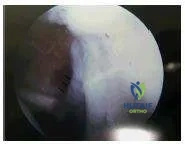
When performing a Latarjet coracoid transfer for anterior shoulder instability with bony anterior glenoid rim insufficiency, glenoid surface of the coracoid transfer must be positioned.
Orthopedic Prometric Exam Chapter 3 Image


Explanation

Allain and colleagues have clearly demonstrated that a coracoid transfer overhanging laterally to the glenoid rim is associated with the development of arthritis. One of the functions of the coracoid transfer is to increase the anteroposterior diameter of the glenoid, not to serve as a â bone block.

Question 12

An arthroscopic photo (Slide) during shoulder arthroscopy looking from the posterior portal is presented. The arrows point to which structure:

Orthopedic Prometric Exam Chapter 3 Image


Explanation

The insertion of the supraspinatus tendon is readily visible through the posterior arthroscopic portal.

Question 13

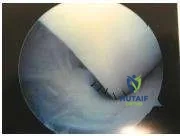
An arthroscopic photo (Slide) of the shoulder looking from the posterior portal is presented. The large white structure at the top of the figure is the biceps tendon. The arrows point to which structure:
Orthopedic Prometric Exam Chapter 3 Image


Explanation

The arrows point to the ligamentous pulley. The ligamentous pulley is responsible for stabilizing the biceps within the bicipital groove of the humerus. An intact ligamentous pulley precludes arthroscopic diagnosis of superior subscapularis tendon tears.

Question 14

An arthroscopic photo (Slide) looking from the posterior portal is presented. The arrows point to which structure:


Explanation

The identified structure is the subscapularis tendon, which is readily visible during shoulder arthroscopy. The middle glenohumeral ligament crosses the superior border of the subscapularis tendon.

Question 15

An arthroscopic photo (Slide) looking from the posterior portal at the anterior inferior aspect of the glenoid is presented. What is the proper treatment in this case based on the finding:


Explanation

The photo shows normal anterior inferior labrum; therefore, no treatment is necessary for this structure.

Question 16

An arthroscopic photo (Slide) looking from the posterior portal is presented. Identify the torn structure:


Explanation
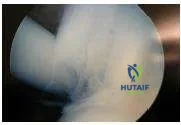
Orthopedic Prometric Exam Chapter 3 Image This photo demonstrates a torn ligamentous pulley that has possibly resulted in an unstable biceps tendon. Pathology of the ligamentous pulley is often associated with rotator cuff pathology.

Question 17

When comparing anterior cruciate ligament (AC L) reconstruction using autogenous hamstrings and AC L reconstruction using autogenous patellar tendon, the most consistent difference is:


Explanation

Shaieb and associates recently reported a prospective randomized study comparing autogenous hamstring AC L reconstruction to autogenous patellar tendon AC L reconstruction. The only significant differences that were elicited between the groups at a minimum of 2-yearsâ follow-up were the incidences of patellofemoral pain and loss of motion, both in favor of the hamstring group.

Question 18

Muscle contusions are clinically graded according to:


Explanation

Muscle contusions are graded according to the range of motion of the adjacent joint. Mild muscle contusion â two-thirds normal range of motion Moderate muscle contusion â one-third to two-thirds normal range of motion Severe muscle contusions â less than one-third normal range of motion The offending activity does not determine the grade of injury. Although swelling is variable, it is not the final determinant of grading. Pain is variable and unreliable in classifying muscle contusion. Although myositis ossificans is more often a result of more severe contusions, it is a later and infrequent finding.

Question 19

The treatment protocol found to hasten recovery after quadriceps contusion is:


Explanation

An initial period of rest with the knee in flexion followed by rehabilitation focusing on regaining knee flexion has resulted in reduced morbidity and faster return to full activity. Extension protocols are associated with resultant longer recovery times. Immobilization is not associated with early recovery. Aggressive stretching increases morbidity and the formation of myositis ossificans. Nonweight bearing has not demonstrated decreased recovery times.

Question 20

The differential diagnosis for patients presenting with radiographs consistent with myositis ossificans includes all of the following except:


Explanation

When evaluating a patient with calcification or ossification in abnormal regions, a thorough differential including all of the mentioned conditions should be considered. Osteochondromas will typically have an intramedullary canal continuous with the adjacent bone. Osteomyelitis will sometimes have associated constitutional symptoms. Osteosarcoma will typically have a radiodense center as opposed to the radiodense periphery of mature myositis ossificans. Chondrosarcoma can be confused with myositis ossificans.

Question 21

During reconstruction of the posterior cruciate ligament (PCL), understanding the bundle anatomy is critical for restoring normal knee kinematics. Which of the following statements regarding the anterolateral (AL) and posteromedial (PM) bundles is correct?


Explanation

The PCL consists of the larger anterolateral (AL) bundle and the smaller posteromedial (PM) bundle. Biomechanically, the AL bundle is tight in flexion, while the PM bundle is tight in extension.

Question 22

A 24-year-old football player sustains a direct blow to the anteromedial tibia with the knee in extension. Physical examination reveals a positive dial test with 15 degrees of asymmetric external rotation at 30 degrees of knee flexion, but symmetrical external rotation at 90 degrees compared to the contralateral knee. What is the most likely injured structure?


Explanation

An asymmetric increase in external rotation of greater than 10 degrees at 30 degrees of flexion, but not at 90 degrees, indicates an isolated posterolateral corner (PLC) injury. If asymmetry is present at both 30 and 90 degrees, it suggests a combined PLC and PCL injury.

Question 23

In a patient with recurrent lateral patellar dislocations undergoing medial patellofemoral ligament (MPFL) reconstruction, the femoral tunnel must be placed anatomically to prevent abnormal patellofemoral contact pressures. Where is the anatomical femoral attachment of the MPFL located?


Explanation

The anatomic femoral origin of the MPFL, clinically referred to as Schöttle's point, is located in the saddle region between the adductor tubercle proximally and the medial epicondyle distally.

Question 24

A 21-year-old collegiate baseball pitcher presents with medial elbow pain and decreased pitching velocity. Magnetic resonance arthrography demonstrates a tear of the medial ulnar collateral ligament (MUCL). Which structure is the primary restraint to valgus stress between 30 and 120 degrees of elbow flexion?


Explanation

The anterior bundle of the MUCL is the primary restraint to valgus stress at the elbow. Specifically, its anterior band is tight throughout the functional arc of motion (30 to 120 degrees), while the posterior band is tight only in deeper flexion.

Question 25

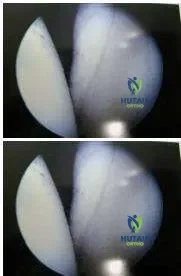
A 13-year-old gymnast complains of lateral elbow pain and catching. Radiographs demonstrate a radiolucent defect in the capitellum with a sclerotic margin.

What fundamentally differentiates osteochondritis dissecans (OCD) of the capitellum from Panner's disease?


Explanation

Panner's disease is an osteochondrosis of the capitellum typically seen in children under 10 years old and resolves nonoperatively without loose body formation. OCD affects older adolescents, involves a localized subchondral defect, and frequently produces loose bodies.

Question 26

A 45-year-old patient experiences a sudden 'pop' in the posterior knee while squatting. MRI reveals a posterior medial meniscus root tear. Biomechanically, this injury is equivalent to which of the following?


Explanation

A meniscal root tear completely disrupts the hoop stresses of the meniscus, rendering it biomechanically nonfunctional. Contact pressures and joint kinematics become equivalent to a total meniscectomy, leading to rapid cartilage degeneration.

Question 27

A 30-year-old male felt a tearing sensation in his anterior axillary fold while performing a heavy bench press. Examination reveals loss of the anterior axillary fold contour and weakness in internal rotation. Which portion of the pectoralis major is most commonly ruptured during this activity?


Explanation

Pectoralis major ruptures most commonly occur at the humeral insertion. The sternocostal head is placed under maximal tension during the eccentric phase of a bench press, making it the most frequently torn segment.

Question 28

A 22-year-old hockey player presents with anterior groin pain exacerbated by hip flexion and internal rotation. Radiographs reveal an increased alpha angle, consistent with femoroacetabular impingement (FAI). This morphological abnormality (Cam lesion) is typically located in which quadrant of the femoral head-neck junction?


Explanation

A Cam lesion is characterized by a loss of spherical concavity at the femoral head-neck junction, resulting in an increased alpha angle (typically >55 degrees). It is most commonly located in the anterosuperior quadrant of the proximal femur.

Question 29

During a football tackle, a player sustains an injury to the distal tibiofibular syndesmosis. What is the most common mechanism of injury for a 'high ankle sprain'?


Explanation

The most common mechanism for a syndesmotic (high ankle) sprain is forced external rotation of the foot on the tibia. This often occurs while the ankle is dorsiflexed, causing the talus to separate the distal fibula from the tibia.

Question 30

A 25-year-old marathon runner presents with bilateral exercise-induced anterior leg pain. Chronic exertional compartment syndrome is suspected. Based on the modified Pedowitz criteria, which of the following intracompartmental pressure measurements is diagnostic?


Explanation

The modified Pedowitz criteria for diagnosing chronic exertional compartment syndrome include: a resting pressure ≥ 15 mm Hg, a 1-minute post-exercise pressure ≥ 30 mm Hg, or a 5-minute post-exercise pressure ≥ 20 mm Hg.

Question 31

A 19-year-old collegiate soccer player undergoes ACL reconstruction. Which of the following autografts is associated with the lowest risk of re-rupture in highly active young athletes but the highest incidence of anterior knee pain?


Explanation

Bone-patellar tendon-bone (BTB) autografts historically demonstrate lower re-rupture rates compared to hamstring grafts in young, high-demand athletes. However, BTB grafts carry a significantly higher risk of donor-site morbidity, specifically anterior knee pain and pain with kneeling.

Question 32

A 25-year-old rugby player sustains a direct blow to the anteromedial tibia with the knee flexed. Clinical exam reveals a positive Dial test at 30 degrees of flexion, but symmetric rotation at 90 degrees. What is the most likely injured structure?


Explanation

A positive Dial test (increased external rotation of the tibia >10 degrees compared to the contralateral side) at 30 degrees only indicates an isolated posterolateral corner (PLC) injury. If the test is positive at both 30 and 90 degrees, it indicates a combined PLC and PCL injury.

Question 33

Which of the following zones of the meniscus is most amenable to successful surgical repair due to its robust vascular supply?


Explanation

The peripheral outer one-third (red-red zone) of the meniscus receives an excellent blood supply from the perimeniscal capillary plexus. Longitudinal tears in this zone have the highest healing rates following surgical repair.

Question 34

A 14-year-old elite baseball pitcher presents with vague, progressive shoulder pain during the acceleration phase of throwing. Radiographs demonstrate widening of the proximal humeral physis. What is the most appropriate initial management?


Explanation

Little League Shoulder is a stress fracture of the proximal humeral physis caused by repetitive rotational and distraction stresses. The standard treatment is cessation of throwing for at least 3 months to allow physeal healing, followed by a structured throwing program.

Question 35

The "peel-back" mechanism is a primary cause of Superior Labrum Anterior and Posterior (SLAP) tears in overhead throwing athletes. During which phase of throwing does this mechanism primarily occur?


Explanation

The peel-back mechanism occurs during the late cocking phase of throwing when the shoulder is positioned in maximum abduction and external rotation. This specific position places a severe torsional force on the biceps anchor, peeling the posterosuperior labrum off the glenoid.

Question 36

A 22-year-old professional football player sustains recurrent anterior shoulder dislocations. Advanced imaging reveals a 25% bony Bankart lesion of the anterior glenoid rim. What is the most appropriate surgical intervention to prevent recurrence?


Explanation

For critical anterior glenoid bone loss (>20-25%), arthroscopic soft tissue stabilization has an unacceptably high failure rate. A bone-block augmentation procedure, most commonly the Latarjet (coracoid transfer), is required to restore glenoid width and stability.

Question 37

In a high-level baseball pitcher undergoing ulnar collateral ligament (UCL) reconstruction, which nerve is most intimately at risk of injury and often requires careful decompression or transposition?


Explanation

The ulnar nerve passes directly behind the medial epicondyle through the cubital tunnel, placing it at high risk during UCL (Tommy John) reconstruction. Surgeons must carefully protect it, and many routinely perform a subcutaneous or submuscular ulnar nerve transposition.

Question 38

What is the most common anatomic location for Osteochondritis Dissecans (OCD) lesions in the adolescent knee?


Explanation

The classic and most frequent location for an OCD lesion in the knee is the lateral aspect of the medial femoral condyle. The exact etiology is unknown but is highly associated with repetitive microtrauma and localized ischemia.

Question 39

A 30-year-old recreational athlete suffers an acute Achilles tendon rupture. When comparing operative versus non-operative management, the patient should be counseled that surgical repair is generally associated with:


Explanation

Surgical repair of an acute Achilles tendon rupture generally yields a significantly lower re-rupture rate compared to traditional conservative management. However, it carries an inherently higher risk of soft-tissue complications, including infection and sural nerve injury.

Question 40

According to the modified Pedowitz criteria, a diagnosis of chronic exertional compartment syndrome (CECS) of the leg is objectively confirmed if the intracompartmental pressure is at least:


Explanation

The Pedowitz criteria for confirming CECS require at least one of the following: resting pressure > 15 mm Hg, 1 minute post-exercise > 30 mm Hg, or 5 minutes post-exercise > 20 mm Hg. Elevated post-exercise pressures that fail to return to baseline rapidly are the hallmark of this condition.

Question 41

A 12-year-old boy presents with anterior knee pain heavily aggravated by jumping activities. Examination reveals point tenderness directly over the inferior pole of the patella. Radiographs show localized fragmentation at the patellar apex. What is the most likely diagnosis?


Explanation

Sinding-Larsen-Johansson syndrome is a traction osteochondrosis of the inferior pole of the patella seen in active adolescents. It is clinically distinct from Osgood-Schlatter disease, which causes apophysitis at the tibial tubercle.

Question 42

A 21-year-old collegiate sprinter sustains an acute Zone 2 fracture of the proximal fifth metatarsal. To facilitate the fastest and most reliable return to play, what is the standard recommended treatment?


Explanation

Zone 2 fractures (Jones fractures) occur at the metaphyseal-diaphyseal junction, an area with a watershed blood supply prone to delayed union or nonunion. In elite or high-demand athletes, early intramedullary screw fixation is recommended to ensure solid healing and expedite return to sport.

Question 43

An athlete sustains a syndesmotic injury (high ankle sprain) during a tackle. What is the most common biomechanical mechanism of injury associated with this condition?


Explanation

High ankle (syndesmotic) sprains typically occur via a forceful external rotation applied to a dorsiflexed ankle. This specific action wedges the wider anterior talar dome into the mortise, violently spreading the distal tibiofibular syndesmosis.

Question 44

A 16-year-old gymnast experiences an acute lateral patellar dislocation upon landing a vault. Which ligament is the primary restraint to lateral patellar translation at 0 to 30 degrees of knee flexion, and is nearly universally torn in this scenario?


Explanation

The medial patellofemoral ligament (MPFL) provides 50-60% of the stabilizing restraining force against lateral patellar displacement during early flexion. It is anatomically torn in over 90% of acute lateral patellar dislocations.

Question 45

A ballet dancer complains of a deep "snapping" sensation in her anterior groin when extending her hip from a flexed and abducted position. There is no pain over the greater trochanter. What is the anatomical structure causing this internal snapping hip syndrome?


Explanation

Internal snapping hip syndrome (coxa saltans interna) occurs when the iliopsoas tendon snaps over the iliopectineal eminence or the femoral head during hip extension. External snapping hip involves the IT band or gluteus maximus snapping over the greater trochanter.

Question 46

An ice hockey player presents with chronic lower abdominal and groin pain exacerbated by resisted sit-ups and coughing. Examination reveals no obvious inguinal hernia bulge, but there is marked tenderness over the pubic tubercle and the external inguinal ring. What is the most likely diagnosis?


Explanation

Athletic pubalgia, commonly called a "sports hernia", represents a weakening or micro-tear of the posterior inguinal wall (conjoint tendon and rectus abdominis insertion). It causes insidious groin pain worsened by valsalva and resisted trunk flexion.

Question 47

In Acromioclavicular (AC) joint injuries, the coracoclavicular (CC) ligaments provide the primary vertical stability to the joint. Which of the following accurately describes the anatomical arrangement of the CC ligaments?


Explanation

The coracoclavicular (CC) ligaments consist of the conoid and trapezoid ligaments. The conoid ligament is situated posteromedial, while the trapezoid ligament is positioned anterolateral along the coracoid and clavicle.

Question 48

A 22-year-old football player sustains a knee injury. MRI shows a complete tear of the anterior cruciate ligament (ACL) and a medial meniscus posterior horn tear. If a bone-patellar tendon-bone (BPTB) autograft is used for reconstruction, what is the most common post-operative complication?


Explanation

Anterior knee pain is the most frequently reported complication following ACL reconstruction with a BPTB autograft, occurring in up to 10-20% of patients. Patellar fracture and tendon rupture are rare complications.

Question 49

A 25-year-old baseball pitcher presents with medial elbow pain during the late cocking and early acceleration phases of throwing. Valgus stress test is positive. Which band of the ulnar collateral ligament (UCL) is the primary restraint to valgus stress at 90 degrees of flexion?


Explanation

The anterior bundle of the UCL is the primary restraint to valgus stress at the elbow from 30 to 120 degrees of flexion and is the most commonly injured structure in overhead throwers.

Question 50

In a patient with posterolateral rotatory instability (PLRI) of the elbow, what is the key deficient structure causing this pathology?


Explanation

PLRI of the elbow is primarily caused by insufficiency of the lateral ulnar collateral ligament (LUCL). This leads to abnormal rotatory subluxation of the ulna relative to the trochlea.

Question 51

A 16-year-old gymnast complains of chronic anterior knee pain. On examination, the patella is highly mobile laterally. You suspect patellofemoral instability. Reconstruction of the medial patellofemoral ligament (MPFL) is planned. Where is the normal anatomic femoral origin of the MPFL?


Explanation

The femoral footprint of the MPFL is located in a saddle-shaped depression between the medial epicondyle and the adductor tubercle, anatomically described as proximal and posterior to the medial epicondyle (Schöttle's point).

Question 52

A 24-year-old soccer player undergoes an isolated medial meniscal repair. Which of the following zones of the meniscus has the best healing potential?


Explanation

The red-red zone (peripheral 3mm) has the best vascularity and thus the highest healing potential for meniscal repairs. The inner white-white zone is avascular.

Question 53

A 28-year-old weightlifter feels a sudden "pop" in his anterior shoulder while doing a heavy bench press. He has loss of the anterior axillary fold contour. Which of the following is the most likely diagnosis?


Explanation

Pectoralis major tendon ruptures typically occur during eccentric contraction, such as the eccentric phase of a bench press. It classically presents with bruising and loss of the anterior axillary fold.

Question 54

A 30-year-old runner presents with lateral knee pain that is worse when running downhill. Tenderness is maximal 2-3 cm proximal to the lateral joint line. Examination reveals a positive Noble compression test. What is the most likely diagnosis?


Explanation

Iliotibial band friction syndrome commonly presents with lateral knee pain in runners, localized proximal to the lateral epicondyle. The Noble compression test is classically positive.

Question 55

A 21-year-old collegiate basketball player sustains an inversion ankle injury. He has tenderness over the anterior inferior tibiofibular ligament (AITFL) and a positive squeeze test. What is the most sensitive imaging modality or dynamic test for diagnosing a syndesmotic injury?


Explanation

The external rotation stress radiograph is a highly reliable dynamic test to evaluate for syndesmotic widening (high ankle sprain) by opening the medial clear space and demonstrating tibiofibular diastasis.

Question 56

A 35-year-old recreational tennis player has chronic, recalcitrant Achilles tendinopathy. MRI shows a focal area of tendinosis 4 cm proximal to the calcaneal insertion. What is the blood supply to this watershed area of the Achilles tendon?


Explanation

The watershed area of the Achilles tendon is located 2-6 cm proximal to its insertion and is relatively hypovascular. Its primary blood supply in this region is derived from the peroneal artery.

Question 57

A 19-year-old female dancer complains of a deep groin pain and a "clicking" sensation in her hip. Radiographs show a lateral center-edge angle of 15 degrees. What is the most likely underlying structural pathology?


Explanation

A lateral center-edge angle of less than 20 degrees is diagnostic for developmental dysplasia of the hip (DDH). The clicking and pain are likely due to secondary labral pathology and capsular overload.

Question 58

A 23-year-old hockey player presents with athletic pubalgia (sports hernia). He has pain with resisted sit-ups. Which structure is most commonly involved in the pathogenesis of this condition?


Explanation

Athletic pubalgia involves an injury to the rectus abdominis insertion and the adductor longus origin on the pubis, often referred to as the rectus abdominis/adductor longus aponeurotic plate.

Question 59

A 20-year-old baseball pitcher presents with a SLAP tear. During which phase of throwing does a type II SLAP tear most commonly become symptomatic due to the peel-back mechanism?


Explanation

The "peel-back" mechanism of the superior labrum occurs in the late cocking phase of throwing, when the shoulder is in maximal abduction and external rotation.

Question 60

A 32-year-old male sustains a complete distal biceps tendon rupture. During surgical repair using a single-incision anterior approach, which nerve is at the highest risk of injury?


Explanation

The lateral antebrachial cutaneous nerve (LABCN) is the most commonly injured nerve during a single-incision anterior approach for distal biceps repair due to its superficial location and proximity to the surgical field.

Question 61

A 26-year-old rugby player has recurrent anterior shoulder instability. CT scan shows a 25% anterior glenoid bone loss. What is the most appropriate surgical management?


Explanation

For patients with significant anterior glenoid bone loss (>20-25%), a Latarjet procedure (coracoid transfer) is indicated to restore the glenoid arc and provide a sling effect, reducing recurrence rates.

Question 62

A 22-year-old pole vaulter presents with deep posterior ankle pain with extreme plantarflexion. Radiographs reveal an os trigonum. What structure is most at risk during an endoscopic excision of the os trigonum?


Explanation

The flexor hallucis longus (FHL) tendon runs directly medial to the os trigonum. It is the structure most intimately associated with it and is at risk during surgical excision if medial dissection is not carefully controlled.

Question 63

A 17-year-old male baseball pitcher complains of lateral elbow pain. Radiographs reveal an osteochondritis dissecans (OCD) lesion of the capitellum with an open physis. What is the most appropriate initial management for a stable lesion?


Explanation

In a young athlete with an open physis and a stable capitellar OCD lesion, initial management is nonoperative, consisting of strict cessation of throwing for 3-6 months to allow for spontaneous healing.

Question 64

Which of the following physical examination findings is most specific for a complete posterior cruciate ligament (PCL) injury?


Explanation

The posterior sag sign (Godfrey's test) is highly specific and sensitive for PCL insufficiency. A posterior step-off of the tibia relative to the femoral condyles at 90 degrees of flexion confirms the diagnosis.

Question 65

A 28-year-old rugby player grabs an opponent's jersey and feels a sudden "snap" in his ring finger. He is unable to actively flex the DIP joint. What is the most likely diagnosis?


Explanation

Jersey finger is an avulsion of the Flexor Digitorum Profundus (FDP) tendon. It occurs during forced extension of a flexed DIP joint, leading to an inability to actively flex the DIP.

Question 66

A 19-year-old football lineman presents with a stinger (burner) after a direct impact to the neck and shoulder. Symptoms typically resolve within minutes. Which nerve roots are most commonly involved in this traction injury?


Explanation

A "stinger" or "burner" is typically a traction injury to the upper trunk of the brachial plexus, primarily affecting the C5 and C6 nerve roots. It results in transient unilateral arm pain, numbness, and weakness.

Question 67

A 24-year-old marathon runner is diagnosed with a femoral neck stress fracture. Radiographs show a fracture line on the tension side (superior aspect) of the femoral neck. What is the recommended treatment?


Explanation

Tension-sided (superior) femoral neck stress fractures have a high risk of displacement and progressing to a complete fracture, which can lead to avascular necrosis. Therefore, they mandate urgent prophylactic internal fixation.

Question 68

A collegiate baseball pitcher presents with chronic medial elbow pain and a decline in pitching velocity. A moving valgus stress test is positive. Which specific ligamentous bundle is the primary restraint to valgus stress of the elbow between 30 and 120 degrees of flexion?


Explanation

The anterior bundle of the UCL is the primary restraint to valgus stress at the elbow from 30 to 120 degrees of flexion. It is the most commonly injured structure in overhead throwing athletes presenting with medial elbow pain.

Question 69

A 24-year-old professional quarterback undergoes shoulder arthroscopy for a symptomatic labral tear. The surgeon notes a type II SLAP lesion caused by a 'peel-back' mechanism. This biomechanical force is maximal during which phase of the throwing motion?


Explanation

The peel-back mechanism occurs during the late cocking phase of throwing when the shoulder is maximally abducted and externally rotated. This position causes a torsional force at the base of the biceps, peeling the superior labrum off the glenoid.

Question 70

A 14-year-old gymnast presents with chronic anterior knee pain. Imaging reveals an osteochondritis dissecans (OCD) lesion. What is the most common anatomical location for this lesion in the knee?


Explanation

The classic and most common location for osteochondritis dissecans of the knee is the lateral aspect of the medial femoral condyle. It accounts for approximately 70-80% of all knee OCD lesions.

Question 71

During medial patellofemoral ligament (MPFL) reconstruction for recurrent patellar instability, accurate anatomic placement of the femoral tunnel is critical for graft isometry. The normal femoral footprint of the MPFL is located:


Explanation

The anatomic femoral origin of the MPFL is located in the saddle-shaped depression between the medial epicondyle and the adductor tubercle. Non-anatomic placement can lead to abnormal graft tension and restricted range of motion.

Question 72

A 28-year-old marathon runner complains of bilateral lower leg pain that occurs predictably after 3 miles and resolves shortly after stopping. Which of the following compartment pressure measurements (Pedowitz criteria) confirms the diagnosis of chronic exertional compartment syndrome?


Explanation

According to the Pedowitz criteria, a diagnosis of chronic exertional compartment syndrome is confirmed by a resting pressure >= 15 mmHg, a 1-minute post-exercise pressure >= 30 mmHg, or a 5-minute post-exercise pressure >= 20 mmHg.

Question 73

A 40-year-old male feels a sudden pop in his anterior elbow while lifting a heavy box. On examination, what is the most sensitive and specific clinical test for diagnosing a complete distal biceps tendon rupture?


Explanation

The hook test is highly sensitive and specific for detecting distal biceps tendon ruptures. An intact tendon allows the examiner to hook their index finger under its lateral edge, which is absent in complete ruptures.

None

Dr. Mohammed Hutaif
Medically Verified Content by
Prof. Dr. Mohammed Hutaif
Consultant Orthopedic & Spine Surgeon
Chapter Index
