Total Ankle Arthroplasty for End-Stage Ankle Osteoarthritis in Ballet Dancers: A Comprehensive Review
Key Takeaway
Total Ankle Arthroplasty (TAA) treats ballet dancers' end-stage ankle osteoarthritis, preserving crucial motion. Success requires critical patient selection, understanding unique biomechanics, surgical considerations, and rigorous rehabilitation. This optimizes implant survivorship and ensures high functional outcomes for their demanding careers.
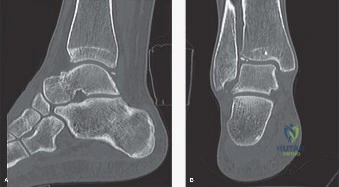
You are presented with a 45-year-old former professional ballet dancer who has transitioned into teaching. She presents with severe, chronic left ankle pain that has failed 18 months of rigorous non-operative management, including bracing and intra-articular injections. She is requesting a Total Ankle Arthroplasty (TAA) to maintain the motion required for demonstrating dance techniques. Looking at her weight-bearing radiographs:
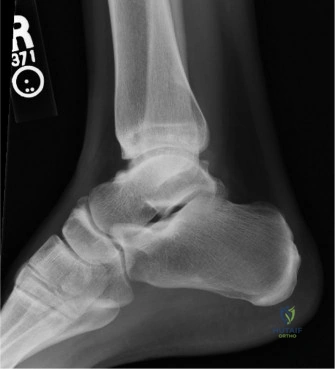
How would you approach the clinical evaluation of this patient in preparation for TAA?
Candidate: I would take a thorough history focusing on her specific functional limitations. On examination, I would assess her ankle range of motion, stability, and check for impingement. I’d request weight-bearing radiographs to check for alignment, a CT scan to evaluate bone stock and cysts, and possibly an MRI to assess the soft tissues and tendons, given the high-demand history.
The candidate focuses only on the ankle joint. They fail to mention the evaluation of the lower limb mechanical axis (long-leg radiographs), which is essential to determine if an associated osteotomy is required. They also fail to emphasize the "professional" psychological screening—specifically, the need to manage expectations regarding returning to 'en pointe' activities, which could jeopardize implant longevity.
I would approach this systematically: 1. Clinical: Evaluate the "three pillars"—pain, mechanical alignment, and soft tissue envelope. I specifically need to assess the FHL tendon and posterior capsular tightness, which are common in dancers. 2. Radiographic: Standard weight-bearing views to assess joint space and osteophytes, but mandatory long-leg standing films to assess the global limb mechanical axis. 3. Cross-sectional: A CT scan is critical to quantify bone stock and cyst size/location. 4. Communication: Crucially, I would discuss the "activity contract"—explicitly clarifying that while TAA will help her day-to-day function and teaching, it is not a "cure" for a return to professional en pointe ballet, as the high-impact forces pose a significant risk of premature loosening.
During the procedure, you have performed the tibial and talar cuts. You have performed a trial reduction, but the ankle feels tight in dorsiflexion and demonstrates limited clearance for the *en pointe* position. The patient's preoperative exam noted a significant equinus contracture. How do you manage this intra-operatively?
Candidate: I would check if I have removed enough anterior bone and osteophytes. If the joint remains tight, I would consider a soft tissue release, perhaps a gastrocnemius recession, to address the equinus contracture.
Candidates often jump straight to soft tissue releases without verifying the bony cuts first. They also risk over-resecting the talus, which can lead to instability. Furthermore, they ignore the possibility of posterior impingement by the os trigonum or posterior osteophytes, which are classic in this specific ballet demographic.
I would take a step-by-step approach: 1. Clear the "Dancer’s Osteophytes": Ensure all anterior osteophytes are resected to the level of the anterior tibial cortex. 2. Posterior Inspection: In a dancer, I must confirm that I have removed posterior osteophytes and assessed the os trigonum, as these are the primary barriers to the extreme plantarflexion required for en pointe. 3. Soft Tissue Release: If the bony work is confirmed, I would perform a formal gastrocnemius recession (e.g., Strayer or Vulpius) to correct the equinus contracture. 4. Stability Check: I must ensure that these releases do not create coronal plane instability, as the ankle is now effectively 'opened' by the implant. I would test for varus/valgus stability under fluoroscopy to ensure the ligamentous balance is maintained.
