
Comprehensive Master Guide · Medically Reviewed

Orthopedic Shoulder And Review | Dr Hutaif Shoulder & E -...

Orthopedic MCQS online Shoulder and Elbow 017 SHOULDER AND ELBOW SELF- SCORED SELF-ASSESSMENT EXAMINATION AAOS 2017 CLINICAL SITUATION FOR QUESTIONS 1 THROUGH …

17 Detailed Chapters
54 min read
Updated: Apr 2026
Dr. Mohammed Hutaif
Medically Reviewed by
Prof. Dr. Mohammed Hutaif
Verified Content Expert Reviewed

Quick Medical Answer

For anyone wondering about Orthopedic MCQS online Shoulder and Elbow 017, Shoulder arthroplasty RTSA (Reverse Total Shoulder Arthroplasty) is a surgical solution for complex shoulder conditions like irreparable rotator cuff tears or severe arthritis. Orthopedic care addresses various musculoskeletal challenges, from treating specific elbow fractures involving the anteromedial coronoid facet to managing long-term joint damage. Treatment aims to restore function and prevent debilitating progressive arthritis.

Master Shoulder Arthroplasty RTSA & Elbow: Ortho MCQs

Orthopedic Shoulder And Review | Dr Hutaif Shoulder & E -...

Comprehensive 100-Question Exam


00:00

Start Quiz

Question 1

A 65-year-old female sustains a fall on an outstretched hand. Imaging reveals a proximal humerus fracture with the articular segment dislocated from the glenoid, and the lesser tuberosity displaced. According to the Neer classification, what is the primary determinant of a "part"?


Explanation

In Neer's classification of proximal humerus fractures, a fragment is only considered a "part" if it is displaced by >1 cm or angulated by >45 degrees relative to the other fragments. This functional classification dictates management and prognosis.

Question 2

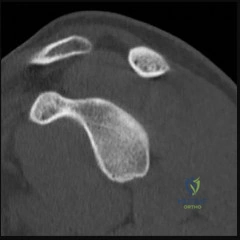
A 22-year-old football player sustains recurrent anterior shoulder dislocations. Preoperative imaging

reveals 25% anterior glenoid bone loss. What is the most appropriate surgical intervention to minimize recurrence?


Explanation

In patients with significant anterior glenoid bone loss (>20-25%), isolated soft-tissue procedures (like arthroscopic Bankart repair) have unacceptably high failure rates. The Latarjet procedure (coracoid transfer) addresses the bony defect and provides a sling effect via the conjoint tendon to stabilize the shoulder anteriorly.

Question 3

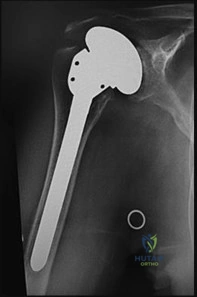
A 72-year-old male with severe rotator cuff arthropathy and pseudoparalysis undergoes a reverse total shoulder arthroplasty (RTSA). Biomechanically, how does RTSA restore active forward elevation?


Explanation

RTSA shifts the center of rotation medially and inferiorly. This medialization increases the deltoid moment arm and recruits more of the anterior and posterior deltoid fibers for elevation, mechanically compensating for the deficient rotator cuff.

Question 4

A 30-year-old elite volleyball player complains of vague posterior shoulder pain and weakness in external rotation. Examination reveals isolated atrophy of the infraspinatus with preserved supraspinatus bulk. Where is the most likely site of nerve compression?


Explanation

Isolated infraspinatus weakness and atrophy points to compression of the suprascapular nerve at the spinoglenoid notch, frequently caused by ganglion cysts in overhead athletes. Compression more proximally at the suprascapular notch would affect both the supraspinatus and infraspinatus.

Question 5

During diagnostic arthroscopy on a 26-year-old baseball pitcher, the surgeon identifies a SLAP lesion characterized by a bucket-handle tear of the superior labrum with an intact biceps anchor. What type of SLAP tear is this according to Snyder's classification?


Explanation

SLAP tears are classified by Snyder. Type I is fraying of the superior labrum. Type II is detachment of the superior labrum and biceps anchor. Type III is a bucket-handle tear of the superior labrum with an intact biceps anchor. Type IV is a bucket-handle tear extending into the biceps tendon.

Question 6

A 45-year-old male presents to the ED after a generalized tonic-clonic seizure. His shoulder is locked in internal rotation and he is unable to externally rotate. Radiographs show a 'lightbulb' sign. Which of the following associated injuries is most frequently seen in this condition?


Explanation

The patient has a posterior shoulder dislocation, commonly caused by seizures or electrical shocks due to the powerful internal rotators overpowering the external rotators. The 'lightbulb' sign on AP radiograph is classic. The most common associated injury is an impaction fracture of the anteromedial humeral head, known as a reverse Hill-Sachs lesion.

Question 7

A 55-year-old laborer has a massive, irreparable posterosuperior rotator cuff tear. He has an intact subscapularis and a negative hornblower's sign. He struggles primarily with loss of active external rotation and elevation. Which tendon transfer is most historically validated and appropriate for this specific deficit pattern?


Explanation

The latissimus dorsi tendon transfer is traditionally indicated for irreparable posterosuperior rotator cuff tears (supraspinatus and infraspinatus) in younger, active patients with an intact subscapularis and functioning deltoid. It helps restore external rotation and forward flexion.

Question 8

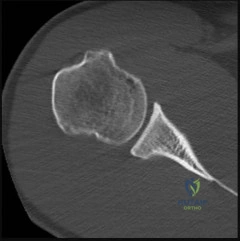
A 28-year-old female presents with a dull ache around her shoulder and medial scapular winging that noticeably worsens when pushing against a wall. Which nerve and muscle are most likely affected?


Explanation

Medial scapular winging is classically caused by serratus anterior paralysis, which is innervated by the long thoracic nerve. It is often accentuated by having the patient push against a wall. In contrast, lateral winging is typically caused by trapezius paralysis (spinal accessory nerve).

Question 9

A 50-year-old diabetic female presents with global restriction of active and passive shoulder range of motion. She is currently in the 'freezing' phase of adhesive capsulitis. What histologic finding is most characteristic of the glenohumeral capsule in this condition?


Explanation

Adhesive capsulitis is fundamentally a fibrosing condition rather than a purely acute inflammatory one. It is characterized by fibroblastic proliferation and increased deposition of type III collagen, akin to Dupuytren's disease. There is typically no gross acute inflammatory (neutrophilic) infiltrate.

Question 10

A 19-year-old cyclist falls onto his shoulder. Radiographs demonstrate a midshaft clavicle fracture. Which of the following is considered an absolute indication for immediate open reduction and internal fixation (ORIF)?


Explanation
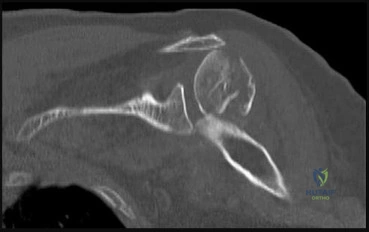
Absolute indications for ORIF of a clavicle fracture include open fractures, associated neurovascular compromise, and impending skin breakdown (manifested by severe skin tenting with blanching). Shortening >2cm and 100% displacement are relative indications.

Question 11

A 68-year-old male with end-stage glenohumeral osteoarthritis is being considered for an anatomic Total Shoulder Arthroplasty (TSA). Which of the following is considered an absolute contraindication for an anatomic TSA in this patient?


Explanation

Anatomic TSA relies on a functioning rotator cuff to dynamically maintain the humeral head centered on the glenoid. A massive, irreparable rotator cuff tear is an absolute contraindication to anatomic TSA due to the high risk of superior migration, eccentric wear, and 'rocking horse' glenoid component loosening. These patients are better treated with a Reverse TSA.

Question 12

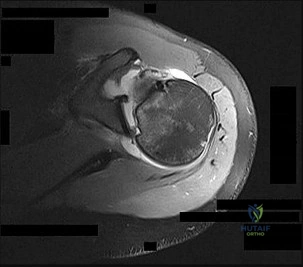
A 24-year-old professional baseball pitcher presents with posterior shoulder pain during the late cocking phase of throwing. He exhibits a GIRD (glenohumeral internal rotation deficit) of 25 degrees. What is the primary pathophysiologic mechanism of his shoulder pain?


Explanation

Internal impingement typically occurs in overhead athletes during extreme external rotation and abduction (late cocking phase). The articular undersurface of the supraspinatus/infraspinatus tendons is dynamically pinched or impinged against the posterosuperior glenoid rim and labrum.

Question 13

A 35-year-old male falls directly onto the point of his shoulder. Radiographs show a 150% superior displacement of the distal clavicle relative to the acromion, and the coracoclavicular distance is increased by 50% compared to the normal side. According to the Rockwood classification, what type of injury is this?


Explanation

In Rockwood Type V AC joint injuries, the distal clavicle is displaced superiorly by 100% to 300% relative to the acromion, often stripping or piercing the deltotrapezial fascia. Type III is up to 100% superior displacement. Type IV is posterior displacement into or through the trapezius.

Question 14

A 32-year-old competitive weightlifter feels a 'pop' and sudden pain in his anterior shoulder while performing a heavy bench press. Examination reveals loss of the anterior axillary fold and weakness in internal rotation. Which part of the pectoralis major is most commonly injured in this specific scenario?


Explanation

Pectoralis major ruptures most commonly occur during eccentric loading (e.g., the descent phase of a bench press). Because of the twisted nature of the insertion footprint, the sternal head is under maximal tension when the arm is extended and externally rotated. The most common location of rupture is at or near the humeral insertion of the sternal head.

Question 15

A 17-year-old rugby player sustains a severe lateral blow to his shoulder and presents with shortness of breath, dysphagia, and a prominent soft tissue depression at the medial end of his clavicle. What is the most appropriate next step in management?


Explanation
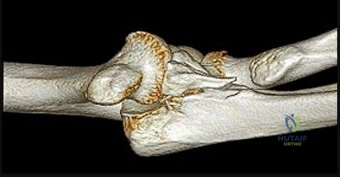
The patient's symptoms suggest a posterior sternoclavicular dislocation, which is a medical emergency due to potential compression of the trachea, esophagus, and great vessels. An urgent CT scan is the best imaging modality. Reduction should be performed in the OR with cardiothoracic surgery available in case of devastating vascular injury during reduction.

Question 16

A 29-year-old recreational tennis player presents with vague, poorly localized shoulder pain and paresthesias over the lateral deltoid. MRI reveals isolated denervation atrophy of the teres minor. Which vascular structure is most likely compressed along with the involved nerve in this syndrome?


Explanation

Quadrilateral space syndrome involves compression of the axillary nerve and the posterior circumflex humeral artery within the quadrilateral space. The space is bounded by the teres minor (superior), teres major (inferior), long head of triceps (medial), and humeral shaft (lateral).

Question 17

A 13-year-old elite baseball pitcher complains of insidious onset, activity-related pain in his throwing shoulder. Radiographs reveal widening of the proximal humeral physis. What is the recommended initial management?


Explanation

'Little League Shoulder' is a proximal humeral epiphysiolysis caused by repetitive rotational stress across the open growth plate. It is an overuse injury. The absolute mainstay of treatment is complete rest from throwing (usually 3-6 months) until the pain fully resolves and radiographs show healing/closure of the physis.

Question 18

A 55-year-old male sustains an anterior shoulder dislocation. Post-reduction, he has numbness over the lateral aspect of his shoulder and inability to actively abduct his arm. An EMG performed at 3 weeks shows fibrillation potentials in the deltoid. What is the most appropriate management?


Explanation

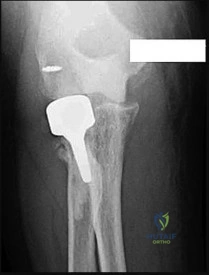
Axillary nerve neurapraxia or axonotmesis is common after anterior shoulder dislocations, particularly in older patients. Most recover spontaneously. An EMG at 3 weeks showing fibrillations confirms denervation, but clinical recovery can still occur over 3-6 months. Observation and physical therapy to maintain ROM is the initial step; surgical exploration is reserved for failure to improve clinically or electrically by 3-6 months.

Question 19

During an anatomic dissection of the shoulder, you isolate the coracoclavicular (CC) ligaments. Which of the following correctly describes the anatomical relationship and primary biomechanical function of these ligaments?


Explanation

The coracoclavicular ligaments consist of the conoid (medial) and trapezoid (lateral). The conoid primarily resists superior and anterior displacement of the clavicle, while the trapezoid primarily resists axial compression to the distal clavicle toward the acromion.

Question 20

A 40-year-old male presents with severe, acute-onset right shoulder pain that lasted for two weeks, awakened him from sleep, and has now transitioned into profound weakness of shoulder abduction and external rotation. He reports a recent viral respiratory illness. MRI of the shoulder is unremarkable. What is the most likely diagnosis?


Explanation

Parsonage-Turner syndrome (idiopathic brachial neuritis) classically presents with acute, severe shoulder pain that awakens the patient at night. As the pain subsides over days to weeks, patients develop patchy weakness and atrophy (commonly affecting the upper trunk: deltoid, supraspinatus, infraspinatus). It is often preceded by a viral illness or vaccination. The lack of MRI findings rules out acute structural tears.

Question 21

An 18-year-old male is injured during a rugby tackle. He presents to the trauma bay with a hoarse voice, mild stridor, and left shoulder pain. Examination reveals a visible depression at the medial aspect of the left clavicle. What is the most appropriate next step in the management of this patient?


Explanation

The patient's clinical presentation (hoarse voice, stridor, medial clavicle depression) is highly suspicious for a posterior sternoclavicular (SC) joint dislocation. Posterior SC dislocations are orthopedic emergencies due to the risk of compression to the trachea, esophagus, and great vessels. A CT scan of the chest is the gold standard for diagnosis. Closed reduction should be attempted, but it must be performed in the operating room with cardiothoracic surgery backup due to the risk of catastrophic vascular injury during the reduction maneuver.

Question 22

Which of the following radiographic parameters is the most reliable predictor of humeral head ischemia following a complex proximal humerus fracture, according to the Hertel criteria?


Explanation

According to Hertel et al., the most reliable radiographic predictors of humeral head ischemia (and subsequent avascular necrosis) following a proximal humerus fracture are: 1) a metaphyseal head extension (calcar length) of less than 8 mm, 2) disruption of the medial hinge, and 3) an anatomic neck fracture pattern. These findings suggest disruption of the ascending branch of the anterior humeral circumflex artery and the intraosseous collateral blood supply.

Question 23

A 28-year-old competitive weightlifter feels a sudden "pop" in his anterior axilla while performing a heavy bench press. Examination reveals loss of the anterior axillary fold and weakness in internal rotation and adduction. Which of the following describes the most common anatomic location of this injury?


Explanation

Pectoralis major ruptures most commonly occur in young, active males, particularly weightlifters performing the bench press. The most common site of failure is an avulsion of the sternal head at the humeral insertion. Anatomically, the tendon rotates 180 degrees before inserting on the lateral lip of the bicipital groove, such that the sternal head inserts deep and superior to the clavicular head, putting it under maximum tension during the eccentric phase of a bench press.

Question 24

A 26-year-old professional baseball pitcher presents with vague posterior shoulder pain and numbness over the lateral deltoid. MRI reveals isolated atrophy of the teres minor. Compression of the involved nerve is most likely occurring in a space bounded medially by which of the following structures?


Explanation

The patient has quadrilateral space syndrome, compressing the axillary nerve. The quadrilateral space is bounded superiorly by the teres minor, inferiorly by the teres major, laterally by the surgical neck of the humerus, and medially by the long head of the triceps. The axillary nerve and the posterior humeral circumflex artery pass through this space.

Question 25

A 31-year-old male volleyball player presents with insidious onset of right shoulder weakness. Physical exam reveals notable atrophy of the infraspinatus fossa but normal bulk of the supraspinatus. External rotation strength is significantly decreased, while abduction strength is preserved. What is the most likely etiology of this patient's condition?


Explanation

Isolated infraspinatus atrophy and weakness point to compression of the suprascapular nerve at the spinoglenoid notch. At this location, the nerve has already given off its motor branch to the supraspinatus, so supraspinatus function (abduction) remains intact. This is frequently caused by a ganglion cyst associated with a posterior labral tear. Compression at the suprascapular notch would affect both the supraspinatus and infraspinatus.

Question 26

Which of the following best describes the biomechanical alterations achieved by a Grammont-style reverse total shoulder arthroplasty compared to native shoulder anatomy?


Explanation

The primary biomechanical advantage of a Grammont-style reverse total shoulder arthroplasty (RTSA) is the medialization and distalization of the center of rotation. Medialization recruits more anterior and posterior deltoid fibers, and distalization tensions the deltoid, thereby increasing its moment arm and efficiency to elevate the arm in the absence of a functional rotator cuff.

Question 27

In patients who undergo reverse total shoulder arthroplasty, scapular notching is a well-recognized radiographic phenomenon. Which surgical modification during the procedure most effectively reduces the incidence of inferior scapular notching?


Explanation

Scapular notching occurs due to mechanical impingement of the medial humeral metaphysis against the inferior scapular neck during adduction. It can be minimized by placing the glenosphere inferiorly (creating an inferior overhang), utilizing a larger diameter glenosphere, and incorporating an inferior tilt to the baseplate. Superior placement increases the risk of notching.

Question 28

A 62-year-old male with primary glenohumeral osteoarthritis is scheduled for a total shoulder arthroplasty. Preoperative CT scan demonstrates a biconcave glenoid with 20 degrees of retroversion and posterior subluxation of the humeral head. According to the Walch classification, what type of glenoid morphology is this?


Explanation

The Walch classification describes glenoid morphology in osteoarthritis. Type A has a centered humeral head (A1 minor, A2 deep central erosion). Type B has posterior subluxation of the humeral head (B1 narrowing/sclerosis, B2 biconcave, B3 monoconcave with retroversion > 15 degrees). Type C represents a dysplastic glenoid with severe retroversion (> 25 degrees) but without posterior subluxation of the humerus. A biconcave glenoid with posterior subluxation is classified as Type B2.

Question 29

During an anatomic coracoclavicular (CC) ligament reconstruction for a chronic type V acromioclavicular joint dislocation, the surgeon plans to drill the clavicle to recreate the conoid and trapezoid ligaments. Which of the following accurately describes the anatomic relationship of these ligaments?


Explanation

The coracoclavicular (CC) ligaments consist of the conoid and trapezoid ligaments. The conoid is the posteromedial structure, inserting roughly 45 mm from the distal clavicle. The trapezoid is anterolateral to the conoid and inserts roughly 25 mm from the distal end of the clavicle. Knowledge of this anatomy is crucial for anatomic tunnel placement during reconstruction.

Question 30

The Latarjet procedure involves transfer of the coracoid process to the anterior glenoid neck. During the approach, the subscapularis muscle is often split longitudinally. Which nerve is at greatest risk of iatrogenic injury if this split is extended too far medially?


Explanation

During the subscapularis split for a Latarjet or anterior stabilization procedure, the axillary nerve is at risk if the split is extended too far medially. The axillary nerve courses inferior to the capsule and crosses the anterior subscapularis muscle belly medially before entering the quadrilateral space. The musculocutaneous nerve is also at risk during a Latarjet, but primarily during coracoid preparation and retraction of the conjoint tendon.

Question 31

A 55-year-old male presents with a massive, irreparable tear of the subscapularis tendon following a failed repair. He complains of debilitating anterior pain, has a positive belly-press test, and increased passive external rotation. Which tendon transfer is most appropriate to restore anterior shoulder function?


Explanation

The pectoralis major transfer is the most commonly utilized and reliable tendon transfer for massive, irreparable subscapularis tears to restore internal rotation and anterior stability. In contrast, latissimus dorsi and lower trapezius transfers are indicated for irreparable posterosuperior rotator cuff tears (supraspinatus and infraspinatus).

Question 32

A 48-year-old manual laborer has a massive, retracted, and fatty-infiltrated tear of the supraspinatus and infraspinatus. He lacks active external rotation and has a positive external rotation lag sign, but has intact subscapularis function and no significant glenohumeral arthritis. Which tendon transfer is most indicated for this patient?


Explanation

A latissimus dorsi (or lower trapezius) tendon transfer is indicated for a young, active patient with an irreparable posterosuperior rotator cuff tear resulting in deficient external rotation and elevation, provided there is no significant glenohumeral arthritis. An intact subscapularis is essential for a successful latissimus dorsi transfer to balance the force couples.

Question 33

A 25-year-old male is brought to the trauma bay after a high-speed motorcycle collision. His left upper extremity is pulseless, pale, and flail. Chest radiograph shows significant lateral displacement of the left scapula relative to the spine and a displaced clavicle fracture. What is the most critical next step in management?


Explanation

The patient is presenting with scapulothoracic dissociation, a severe, high-energy injury characterized by lateral displacement of the scapula. It is highly associated with devastating vascular (subclavian or axillary artery) and neurologic (brachial plexus avulsion) injuries. Given the pulseless limb, immediate vascular assessment with a CT angiogram is the most critical next step, often followed by emergent revascularization or amputation depending on viability.

Question 34

A 13-year-old elite baseball pitcher presents with right shoulder pain when throwing. Radiographs demonstrate widening of the proximal humeral physis on the affected side compared to the contralateral side. What is the recommended initial management?


Explanation

The patient has "Little League shoulder," which is a stress injury (epiphysiolysis) to the proximal humeral physis caused by repetitive rotational stresses during throwing. The standard treatment is absolute rest from throwing for approximately 3 months, or until symptoms resolve and radiographs normalize, followed by a gradual and structured return-to-throwing program.

Question 35

A 65-year-old female sustains an anterior shoulder dislocation. After successful closed reduction in the emergency department, post-reduction radiographs reveal a concentric glenohumeral joint but a displaced greater tuberosity fracture with 7 mm of superior displacement. What is the most appropriate management?


Explanation

In the setting of an anterior shoulder dislocation with an associated greater tuberosity fracture, conservative management is typically acceptable if the tuberosity fragment is displaced < 5 mm after reduction. Displacement > 5 mm, especially superior displacement, increases the risk of subacromial impingement and rotator cuff dysfunction, warranting surgical fixation (ORIF or arthroscopic repair).

Question 36

A 50-year-old female with poorly controlled type II diabetes presents with severe, progressive stiffness and pain in her right shoulder, consistent with the "freezing" stage of adhesive capsulitis. Which of the following histologic findings is most characteristic of the glenohumeral joint capsule in this condition?


Explanation

The pathophysiology of adhesive capsulitis involves an initial inflammatory response followed by a prominent fibrotic cascade. Histologic examination of the joint capsule shows dense fibrous tissue with a proliferation of fibroblasts and myofibroblasts. There is an upregulation of cytokines such as TGF-beta and PDGF, and a disorganized deposition of collagen, featuring an increased ratio of type III to type I collagen compared to a normal capsule.

Question 37

A 40-year-old male presents to the ER after a generalized seizure. He holds his right arm firmly in internal rotation and adduction. Radiographs confirm a posterior glenohumeral dislocation. After closed reduction, a CT scan shows a reverse Hill-Sachs lesion involving 25% of the humeral head articular surface. Which of the following is the most appropriate surgical treatment?


Explanation

A reverse Hill-Sachs lesion is an anteromedial impaction fracture of the humeral head resulting from a posterior dislocation. For defects involving 20-40% of the articular surface, transferring the subscapularis tendon (McLaughlin procedure) or the lesser tuberosity with the attached subscapularis (Modified McLaughlin procedure) into the defect is the treatment of choice. This prevents the defect from engaging the posterior glenoid and prevents recurrent instability.

Question 38

Which of the following radiographic or demographic characteristics is most strongly associated with an increased risk of nonunion in conservatively managed midshaft clavicle fractures?


Explanation

Risk factors for nonunion of midshaft clavicle fractures treated nonoperatively include completely displaced fractures, shortening > 20 mm (2 cm), significant comminution (such as a Z-deformity), advanced age, and female sex. Fracture shortening > 20 mm is a widely accepted relative indication for operative fixation to decrease nonunion rates and improve functional outcomes.

Question 39

A 72-year-old female presents with chronic, intractable right shoulder pain and pseudoparalysis. Radiographs reveal an acromiohumeral distance (AHD) of 3 mm and acetabularization of the coracoacromial arch, but no significant glenohumeral arthritis. According to the Hamada classification, what grade is her rotator cuff arthropathy?


Explanation

The Hamada classification stages rotator cuff arthropathy based on AP radiographs: Grade 1 (AHD > 6 mm), Grade 2 (AHD < 5 mm), Grade 3 (acetabularization of the acromion), Grade 4A (glenohumeral arthritis without narrowing of the AHD), Grade 4B (glenohumeral arthritis with AHD < 5 mm), and Grade 5 (humeral head collapse/osteonecrosis). The presence of acetabularization makes this Grade 3.

Question 40

In a 65-year-old sedentary patient undergoing arthroscopic rotator cuff repair, a severely frayed and subluxated long head of the biceps tendon is noted. The surgeon decides to perform a biceps tenotomy rather than a tenodesis. Compared to tenodesis, which of the following is the most likely outcome of tenotomy?


Explanation

Biceps tenotomy and tenodesis both provide excellent pain relief for pathology of the long head of the biceps. Tenotomy is faster, requires no implants, and allows for an immediate postoperative rehabilitation protocol. However, it is associated with a significantly higher rate of cosmetic "Popeye" deformity (distal migration of the biceps muscle belly) and occasional cramping. Tenodesis minimizes the cosmetic deformity but carries a small risk of implant-related complications and requires a more protected initial rehabilitation.

Question 41

A 28-year-old competitive weightlifter feels a pop in his anterior axilla while performing a heavy bench press. Examination reveals ecchymosis and loss of the anterior axillary fold. MRI confirms a complete rupture of the pectoralis major tendon at its insertion. In surgical repair, what is the normal anatomical relationship of the pectoralis major insertion footprint?


Explanation

The pectoralis major tendon undergoes a 180-degree twist before its insertion on the lateral lip of the bicipital groove. As a result, the inferior (sternal/abdominal) fibers insert deep (posterior) and proximal (superior) to the superior (clavicular) fibers, which insert superficial (anterior) and distal (inferior).

Question 42

A 25-year-old motorcyclist presents after a high-speed collision. He has a flail upper extremity, massive swelling over the shoulder and chest wall, and absent radial and ulnar pulses. An AP radiograph shows severe lateral displacement of the scapula relative to the spinous processes. What is the most critical immediate step in the management of this condition?


Explanation

Scapulothoracic dissociation involves a complete disruption of the scapulothoracic articulation and is frequently associated with devastating subclavian/axillary vascular and brachial plexus injuries. Because of the high risk of limb loss or life-threatening hemorrhage, immediate assessment of vascular status with arteriography (or CT angiography) and vascular surgery consultation takes precedence.

Question 43

A 22-year-old collegiate baseball pitcher complains of posterior shoulder pain during the late cocking phase of throwing. Physical examination reveals a glenohumeral internal rotation deficit (GIRD) of 25 degrees compared to the contralateral side. Which of the following best describes the pathophysiology of his internal impingement?


Explanation

Internal impingement typically occurs in overhead athletes during the late cocking phase (abduction and maximal external rotation). It involves the impingement of the undersurface (articular surface) of the posterior supraspinatus and anterior infraspinatus tendons between the greater tuberosity of the humerus and the posterosuperior glenoid labrum.

Question 44

A 31-year-old elite volleyball player presents with insidious onset of right shoulder weakness. Physical examination reveals profound atrophy isolated to the infraspinatus fossa, with normal bulk of the supraspinatus. External rotation strength is significantly decreased, while abduction strength is preserved. What is the most likely anatomical location of the nerve compression?


Explanation

The suprascapular nerve innervates the supraspinatus before wrapping around the spinoglenoid notch to innervate the infraspinatus. Compression at the spinoglenoid notch (often by a paralabral cyst associated with a posterior labral tear in overhead athletes) leads to isolated infraspinatus weakness and atrophy.

Question 45

A 17-year-old high school football player is tackled with a lateral compressive force to his left shoulder. He complains of left shoulder pain, dysphagia, and a choking sensation. Physical examination reveals a palpable depression at the medial end of the left clavicle. What is the most appropriate next step in management?


Explanation

The patient has a posterior sternoclavicular (SC) joint dislocation. Dysphagia and a choking sensation indicate compression of mediastinal structures (esophagus, trachea, great vessels). CT is the modality of choice for evaluation. Reduction must be performed under general anesthesia in the OR with cardiothoracic surgery backup available, due to the severe risk of great vessel injury during the reduction maneuver.

Question 46

A 35-year-old male sustains a direct blow to the shoulder and presents with anterior shoulder pain. Imaging reveals a fracture of the coracoid process base extending into the superior glenoid. According to the Ogawa classification, which type of fracture is this, and what is the typical management?


Explanation

Ogawa Type 1 fractures occur proximal to the coracoclavicular (CC) ligaments (at the base of the coracoid). Because they disrupt the connection between the clavicle and the scapula (especially if associated with AC injuries) or involve the glenoid articular surface, they destabilize the superior shoulder suspensory complex and often require ORIF when displaced. Type 2 fractures are distal to the CC ligaments and are typically treated nonoperatively.

Question 47

An 68-year-old male with primary osteoarthritis of the shoulder is planned for an anatomic total shoulder arthroplasty. A preoperative CT scan reveals a biconcave glenoid with severe posterior wear and a retroversion of 20 degrees.

According to the Walch classification, what type of glenoid is this?


Explanation

The Walch classification describes glenoid morphology in primary osteoarthritis. A Type B2 glenoid is characterized by a biconcave surface, posterior wear, and posterior subluxation of the humeral head, often with significant retroversion. Type B1 shows posterior subluxation but no biconcavity. Type C represents a dysplastic glenoid with severe retroversion (>25 degrees) not necessarily caused by wear.

Question 48

A 72-year-old female presents with pain and crepitus 3 years after a reverse total shoulder arthroplasty for cuff tear arthropathy. Radiographs demonstrate a radiolucent area on the scapular neck extending beyond the inferior screw of the glenoid baseplate.

According to the Sirveaux classification of scapular notching, what grade is this?


Explanation

Scapular notching after RTSA is evaluated using the Sirveaux classification. Grade 1: notch confined to the scapular pillar. Grade 2: notch reaches the inferior screw of the baseplate. Grade 3: notch extends over/beyond the inferior screw. Grade 4: notch extends to the central peg or central screw.

Question 49

A 65-year-old female falls on her outstretched hand and sustains a displaced proximal humerus fracture. Which of the following radiographic findings (Hertel criteria) is considered the strongest predictor for the development of avascular necrosis (AVN) of the humeral head?


Explanation

Hertel identified specific criteria that predict ischemia and subsequent AVN following proximal humerus fractures. The strongest predictors include a metaphyseal head extension (calcar length) of less than 8 mm, an intact medial hinge of less than 2 mm (thus a disruption >2 mm is a poor prognostic factor), and an anatomic neck fracture pattern.

Question 50

A 29-year-old male competitive tennis player complains of vague posterior shoulder pain and numbness over the lateral deltoid after overhead activities. MRI of the shoulder reveals isolated fatty atrophy of the teres minor muscle. Which of the following structures are most likely being compressed?


Explanation

The clinical picture and MRI findings describe quadrilateral space syndrome. This is caused by compression of the axillary nerve and the posterior circumflex humeral artery within the quadrilateral space, which is bordered by the teres minor, teres major, long head of the triceps, and the surgical neck of the humerus.

Question 51

A 13-year-old male baseball pitcher complains of right shoulder pain during throwing. Radiographs demonstrate widening and lateral fragmentation of the proximal humeral physis. What is the most appropriate initial treatment?


Explanation

The patient has Little League Shoulder (proximal humeral epiphysiolysis), which is a stress injury to the proximal humeral physis caused by repetitive overhead throwing. The gold standard treatment is absolute rest from throwing (typically for 3 months) until symptoms resolve and imaging normalizes, followed by physical therapy and a structured return-to-throwing program.

Question 52

A 55-year-old heavy laborer presents with a massive, retracted, and irreparable posterosuperior rotator cuff tear. He has significant weakness in external rotation and elevation. A latissimus dorsi tendon transfer is planned. Which of the following is an absolute contraindication to this procedure?


Explanation

For a latissimus dorsi transfer to be successful, there must be a functioning subscapularis and an intact anterior deltoid to maintain force couples. An unrepairable subscapularis tear, especially combined with an absent coracoacromial ligament, leads to anterosuperior humeral escape and is an absolute contraindication for this transfer.

Question 53

An orthopedic surgeon is performing an anatomic coracoclavicular (CC) ligament reconstruction for a chronic Type V AC joint separation. To accurately recreate the biomechanics, the surgeon must understand the anatomy of the native CC ligaments. Which of the following best describes the normal anatomical attachment of the CC ligaments on the clavicle?


Explanation

The coracoclavicular (CC) ligaments consist of the conoid and trapezoid. The conoid ligament attaches posteromedially on the conoid tubercle of the clavicle. The trapezoid ligament attaches anterolaterally on the trapezoid line. This anatomical relationship is crucial for drilling tunnels during anatomic reconstruction.

Question 54

A 24-year-old male weightlifter presents with an aching pain over his right AC joint, exacerbated by dips and bench presses. Cross-body adduction test is positive. Radiographs reveal subchondral cysts and osteopenia of the distal clavicle. Which of the following is the most definitive surgical treatment if 6 months of conservative management fails?


Explanation

The patient is suffering from distal clavicle osteolysis (weightlifter's shoulder). Initial treatment is rest, activity modification, and NSAIDs. If conservative management fails, distal clavicle excision (Mumford procedure), performed either open or arthroscopically, provides excellent pain relief and return to function.

Question 55

Reverse total shoulder arthroplasty (RTSA) alters the biomechanics of the shoulder joint to compensate for a deficient rotator cuff. Which of the following best describes the biomechanical changes achieved by RTSA?


Explanation

RTSA compensates for a massive, irreparable rotator cuff tear by moving the center of rotation medially and inferiorly. This medialization recruits more deltoid fibers, while the inferiorization lengthens the deltoid, increasing its resting tension and moment arm, allowing the deltoid to effectively elevate the arm without the help of the rotator cuff.

Question 56

A 21-year-old male undergoes diagnostic arthroscopy for recurrent anterior shoulder instability. The surgeon visualizes an anterior labral tear. The labrum is displaced medially and inferiorly on the glenoid neck, but the anterior scapular periosteum remains intact, forming a sleeve. What is the eponym for this specific lesion?


Explanation

An ALPSA (Anterior Labroligamentous Periosteal Sleeve Avulsion) lesion occurs when the anterior labrum is torn and displaced medially and inferiorly along the glenoid neck, but the anterior scapular periosteum remains intact. A Bankart lesion involves a frank disruption of the periosteum.

Question 57

A 34-year-old female presents with paresthesias and pain in the medial aspect of her right forearm and hand, particularly with overhead activities. On examination, the Adson test is positive. Plain radiographs show large bilateral cervical ribs. Electromyography reveals decreased conduction velocity in the ulnar nerve distribution. Which of the following anatomical triangles is most commonly implicated in this form of Thoracic Outlet Syndrome?


Explanation

Neurogenic Thoracic Outlet Syndrome most commonly occurs at the interscalene triangle, which is bordered anteriorly by the anterior scalene muscle, posteriorly by the middle scalene muscle, and inferiorly by the first rib. The presence of a cervical rib narrows this space further, predisposing to brachial plexus compression.

Question 58

In the management of proximal biceps tendon pathology, a surgeon elects to perform an open subpectoral biceps tenodesis instead of an arthroscopic suprapectoral tenodesis. What is the primary theoretical advantage of a subpectoral tenodesis?


Explanation

The primary advantage of a subpectoral biceps tenodesis is that it removes the diseased long head of the biceps tendon completely from the bicipital groove. This eliminates persistent pain caused by tenosynovitis or friction within the groove, which can occasionally persist after a suprapectoral tenodesis where a segment of the tendon remains in the upper groove.

Question 59

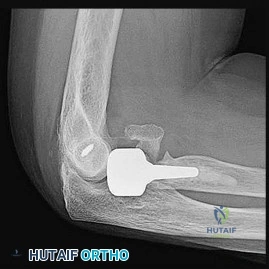
A 70-year-old male with a massive, chronic rotator cuff tear presents with worsening shoulder pain. An AP radiograph reveals an acromiohumeral interval of 3 mm, acetabularization of the acromion, and significant narrowing of the true glenohumeral joint space.

According to the Hamada classification of rotator cuff tear arthropathy, what is the correct grade for these radiographic findings?


Explanation

The Hamada classification grades rotator cuff tear arthropathy. Grade 1: AHI > 6 mm. Grade 2: AHI < 5 mm. Grade 3: AHI < 5 mm with acetabularization of the acromion. Grade 4: Presence of glenohumeral arthritis (narrowing of the GH joint space) in addition to superior migration. Grade 5: Humeral head collapse (AVN).

Question 60

A 45-year-old female is 6 months post-ORIF for a proximal humerus fracture. She complains of severe shoulder stiffness. Radiographs show a healed fracture with implants in good position, and no intra-articular screw penetration. She has failed conservative management and is scheduled for an arthroscopic capsular release. Which nerve must be most carefully protected when releasing the inferior capsule (closest to the 6 o'clock position)?


Explanation

The axillary nerve courses intimately close to the inferior aspect of the glenohumeral joint capsule, passing through the quadrilateral space. During an arthroscopic inferior capsular release (specifically at the 6 o'clock position), the axillary nerve is at high risk of iatrogenic injury if the release extends too deep.

Question 61

A 25-year-old male sustains a neck injury during a wrestling match. Exam shows drooping of the right shoulder, inability to actively abduct the shoulder above 90 degrees, and the medial border of the scapula is translated laterally. Which of the following physical exam findings is most characteristic of this specific nerve injury?


Explanation

The clinical picture describes a spinal accessory nerve (CN XI) palsy leading to trapezius muscle weakness. The trapezius elevates, retracts, and upwardly rotates the scapula. Its paralysis causes the scapula to translate laterally and rotate downward, leading to 'lateral winging.' This is accentuated by resisted shoulder abduction. Medial winging is caused by serratus anterior (long thoracic nerve) palsy.

Question 62

A 32-year-old male presents with vague posterior shoulder pain and numbness over the lateral deltoid after a blunt trauma to the posterior shoulder. An MRI reveals isolated atrophy of the teres minor muscle. Entrapment of the neurovascular bundle in the quadrilateral space is suspected. Which of the following structures forms the superior border of this space?


Explanation

The quadrilateral space boundaries are: Superiorly: Teres minor (and inferior margin of the subscapularis anteriorly). Inferiorly: Teres major. Medially: Long head of the triceps. Laterally: Surgical neck of the humerus. The axillary nerve and posterior circumflex humeral artery pass through this space.

Question 63

In reverse total shoulder arthroplasty (RTSA), moving the center of rotation medially and distally compared to the native glenohumeral joint achieves which of the following biomechanical advantages?


Explanation

The Grammont design principles for RTSA include medializing and distalizing the center of rotation (COR). Distalizing the COR increases the resting tension of the deltoid, while medializing the COR increases the deltoid moment arm and recruits more anterior and posterior deltoid fibers for abduction. This effectively converts sheer forces into compressive forces at the glenoid bone-implant interface, enhancing stability.

Question 64

What is the most common radiographic complication specific to the Grammont-style reverse total shoulder arthroplasty, and how is it biomechanically prevented?


Explanation

Scapular notching is the most common radiographic finding/complication in Grammont-style RTSA. It occurs due to impingement of the medial humeral component against the inferior scapular neck during adduction. It is reduced by placing the glenosphere low on the native glenoid (with inferior overhang) and applying an inferior tilt.

Question 65

A 28-year-old competitive weightlifter feels a 'pop' in his anterior axilla while performing a heavy bench press. Examination reveals bruising over the anterior chest wall and a palpable defect in the anterior axillary fold. If surgical repair is planned, which portion of the pectoralis major is most commonly ruptured and in what anatomical relationship does it insert?


Explanation

Pectoralis major ruptures most commonly occur at the musculotendinous junction or tendinous insertion of the sternocostal head. The tendon of the pectoralis major undergoes a 180-degree twist before insertion. The sternocostal (lower) head twists to insert deep and proximal to the clavicular (upper) head on the lateral lip of the bicipital groove.

Question 66

A 24-year-old elite volleyball player complains of vague posterior shoulder pain and progressive weakness. On exam, she has full active forward elevation and normal internal rotation, but significant isolated weakness in external rotation. An MRI is obtained. What is the most likely pathological finding and its anatomical location?


Explanation

Isolated weakness of external rotation (infraspinatus) without supraspinatus involvement points to suprascapular nerve compression distal to the suprascapular notch, specifically at the spinoglenoid notch. This is classically caused by a paralabral cyst associated with a posterior or superior labral tear in overhead athletes.

Question 67

A 21-year-old collegiate baseball pitcher presents with posterior shoulder pain during the late cocking phase of throwing. He has a 25-degree loss of internal rotation compared to his contralateral arm. Pathology in internal impingement syndrome typically involves contact between which two structures?


Explanation

Internal impingement occurs in the late cocking phase of throwing (maximum abduction and external rotation). It involves the abnormal contact (impingement) of the articular side of the rotator cuff (typically supraspinatus and anterior infraspinatus) against the posterior-superior glenoid labrum.

Question 68

In the patient described above with glenohumeral internal rotation deficit (GIRD), what is the primary pathoanatomic cause, and what is the initial recommended treatment?


Explanation

GIRD is defined as a loss of >20 degrees of internal rotation. It is caused by contracture and thickening of the posterior-inferior joint capsule (often an adaptive response to repetitive microtrauma from throwing). Initial treatment is physical therapy utilizing 'sleeper stretches' and cross-body adduction stretches to target the posterior capsule.

Question 69

A 52-year-old female with type 1 diabetes presents with severe, progressive shoulder stiffness over the last 6 months. She is currently in the 'frozen' phase of adhesive capsulitis. Which of the following anatomical structures is classically the primary site of fibroblastic proliferation and contracture in this condition?


Explanation

Adhesive capsulitis primarily involves profound thickening and contracture of the rotator interval capsule and the coracohumeral ligament. The inferior capsule also becomes involved, leading to loss of joint volume, but the rotator interval and CHL contracture uniquely cause the profound loss of external rotation with the arm at the side, which is the hallmark of the disease.

Question 70

A 45-year-old female presents to the emergency department with acute, excruciating right shoulder pain of 2 days duration. She has no history of trauma. Radiographs reveal a cloudy, poorly defined, 'toothpaste-like' radiopacity adjacent to the greater tuberosity. Which phase of calcific tendinitis is she most likely experiencing, and what is the underlying pathophysiology of the pain?


Explanation

Calcific tendinitis is most painful during the resorptive phase. In this phase, the calcium deposit changes from a chalk-like consistency to a toothpaste-like, cloudy appearance on x-ray. Macrophages and multi-nucleated giant cells invade the area to resorb the calcium, causing intense vascularization, edema, and a severe acute inflammatory response, which results in excruciating pain.

Question 71

A 13-year-old male baseball pitcher presents with generalized shoulder pain that occurs when throwing. Radiographs demonstrate widening and sclerosis of the proximal humeral physis. What is the most appropriate initial management for this condition?


Explanation

The clinical and radiographic findings are diagnostic of Little Leaguer's Shoulder (proximal humeral epiphysiolysis), which is a Salter-Harris type I stress fracture of the proximal humeral physis due to repetitive rotational torque. The standard of care is complete cessation of throwing for 3 to 6 months until the physis heals and symptoms resolve, followed by a graduated throwing program.

Question 72

A 35-year-old cyclist falls directly onto his shoulder and sustains a distal clavicle fracture. Radiographs show a fracture line medial to the coracoclavicular (CC) ligaments, with the proximal fragment displaced superiorly. The CC ligaments remain attached to the distal fragment. Which Neer classification type is this, and what is the expected nonunion rate if treated non-operatively?


Explanation

The scenario describes a Neer Type IIA distal clavicle fracture, where the fracture is medial to the CC ligaments, and both the conoid and trapezoid ligaments remain intact on the distal fragment. The proximal fragment is displaced superiorly by the pull of the trapezius. Type II fractures are highly unstable and carry a high nonunion rate (up to 30-45%) with non-operative management. Surgical fixation is generally recommended.

Question 73

A 19-year-old rugby player sustains a lateral compression injury to his shoulder. He presents to the ER with shortness of breath, a hoarse voice, and severe pain at the medial end of the clavicle. A CT scan confirms a posterior sternoclavicular joint dislocation. What is the most appropriate next step in management?


Explanation

Posterior sternoclavicular (SC) joint dislocations are true orthopedic emergencies due to the proximity of mediastinal structures (trachea, esophagus, great vessels). Symptoms like dyspnea or dysphagia indicate compression. Management consists of urgent closed reduction (often using a towel clip on the clavicle with posterior/lateral traction) in the operating room under general anesthesia, with a cardiothoracic surgeon readily available in case of catastrophic vascular injury upon reduction.

Question 74

A 65-year-old male with a massive rotator cuff tear undergoes arthroscopic rotator cuff repair. A degenerative, symptomatic long head of the biceps tendon is noted, and the surgeon decides to perform a biceps tenotomy instead of a tenodesis. Compared to tenodesis, which of the following is true regarding biceps tenotomy?


Explanation

Biceps tenotomy is technically simpler, faster, and requires less postoperative restriction than tenodesis. However, it carries a higher risk of a cosmetic 'Popeye' deformity (distal migration of the muscle belly) and subjective fatigue/cramping of the biceps muscle compared to tenodesis. Neither procedure has been shown to have a clinically significant difference in overall functional shoulder scores or strength in older, lower-demand patients.

Question 75

A 55-year-old laborer complains of deep shoulder pain and clicking. MRI reveals an isolated Type II SLAP lesion. He has failed 6 months of conservative management. Based on recent literature, what is the most reliable surgical intervention for this patient to achieve pain relief and return to work?


Explanation

In older patients (>40-45 years), arthroscopic repair of SLAP lesions has a high rate of failure, persistent pain, and postoperative stiffness. Biceps tenodesis has been shown to provide more reliable pain relief and functional improvement with lower complication rates for Type II SLAP tears in this age group.

Question 76

Which of the following radiographic parameters is an accepted indication for operative fixation of an extra-articular scapular body or neck fracture?


Explanation

Operative indications for scapula body and neck fractures include severe deformity that compromises shoulder mechanics. Accepted criteria include medial/lateral translation (displacement) > 20 mm, angulation > 45 degrees, or a glenopolar angle (GPA) < 22 degrees. The normal GPA is between 30 and 45 degrees. A decreased GPA indicates an inferomedial tilting of the glenoid.

Question 77

A 40-year-old male presents with acute, unrelenting pain in his right shoulder that awoke him from sleep 2 weeks ago. The pain lasted for 10 days and has now subsided, but he has noticed profound weakness in raising his arm and a developing hollow appearance over his shoulder blade. He had a viral respiratory infection 3 weeks prior. What is the most appropriate diagnostic test to confirm the suspected diagnosis?


Explanation

The clinical presentation is classic for Parsonage-Turner Syndrome (acute brachial neuritis), characterized by abrupt onset of severe shoulder pain followed by patchy weakness and atrophy (often involving the suprascapular, axillary, or anterior interosseous nerves) as the pain subsides. It is often preceded by a viral illness or vaccination. Diagnosis is confirmed clinically and supported by EMG/NCS, which will show acute denervation patterns.

Question 78

A 28-year-old female complains of a painful grating sensation and audible snapping at the superomedial border of her scapula with active shoulder movement. Radiographs reveal a bony prominence on the superomedial aspect of the anterior scapula. What is the eponymous name for this bony variant?


Explanation

Snapping scapula syndrome involves crepitus between the anterior scapula and the posterior thoracic wall. It can be caused by bursitis (scapulothoracic bursa), osteochondromas, or an anatomical bony prominence at the superomedial angle of the scapula known as Luschka's tubercle. Initial treatment is conservative (PT), but surgical excision is an option for refractory cases.

Question 79

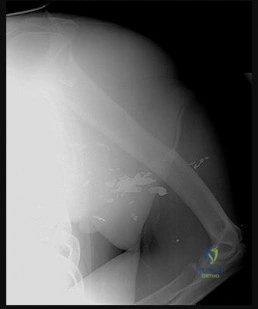
A 22-year-old football player sustains a direct blow to the point of his shoulder. Radiographs demonstrate an acromioclavicular (AC) joint injury. The clavicle is displaced posteriorly into or through the trapezius fascia, with normal coracoclavicular distance on the AP view but obvious posterior displacement on the axillary lateral view. Which Rockwood classification type is this?


Explanation

In the Rockwood classification of AC joint injuries, Type IV is characterized by posterior displacement of the distal clavicle into or through the trapezius muscle/fascia. This may not be obvious on a standard AP radiograph, making the axillary lateral view crucial. Type V is severe superior displacement (>100%), and Type VI is inferior displacement (subcoracoid).

Question 80

An isolated fracture of the coracoid process is most commonly treated non-operatively. However, surgical fixation may be indicated in the presence of an associated fracture of the acromion or distal clavicle. This combination disrupts a critical anatomical ring that provides stability to the upper extremity. What is this structural concept called?


Explanation

The Superior Shoulder Suspensory Complex (SSSC) is a bony/soft tissue ring composed of the glenoid, coracoid process, coracoclavicular ligaments, distal clavicle, acromioclavicular joint, and acromion. A single disruption (e.g., isolated coracoid fracture) is stable. A 'double disruption' (e.g., coracoid fracture + distal clavicle fracture or acromion fracture) creates instability of the SSSC and is generally an indication for surgical fixation of at least one of the lesions to restore stability.

Question 81

A 42-year-old male presents to the emergency department locked in internal rotation after a severe seizure. Anteroposterior radiographs show a 'lightbulb' appearance of the humeral head. A CT scan reveals a reverse Hill-Sachs lesion involving 35% of the articular surface. Which of the following is the most appropriate surgical management?


Explanation

For reverse Hill-Sachs defects between 25% and 40%, reconstruction of the articular defect is required. The modified McLaughlin procedure transfers the lesser tuberosity with the attached subscapularis into the defect, which yields more robust bone-to-bone healing compared to the soft-tissue transfer of the classic McLaughlin procedure.

None

Detailed Chapters & Topics

Dive deeper into specialized chapters regarding orthopedic-mcqs-online-shoulder-and-elbow-017

17 Chapters
01
Chapter 1 5 min

Calcific Tendonitis: Well, I Would Manage This Shoulder Pain

Shoulder and elbow structured oral examination question4 EXAMINER : This is a radiograph of a 63-year-old gentleman’s r…

02
Chapter 2 19 min

Unmasking Axillary Nerve Palsy in Complex Elbow Trauma: A Case of Missed Shoulder Injury

Explore a complex case where severe elbow trauma masked an axillary nerve palsy in a 58-year-old patient. Learn to iden…

03
Chapter 3 20 min

Pectoralis Major Muscle Injuries: Causes, Symptoms & Treatment

A 29-year-old, left-hand-dominant male presents to clinic complaining of left arm and shoulder pain for the last three …

04
Chapter 4 15 min

Corticosteroid-Induced Avascular Necrosis (AVN) of the Humeral Head: Etiology, Pathophysiology, and Clinical Insights

Understand corticosteroid-induced avascular necrosis (AVN) of the humeral head. Explore its pathophysiology, risk facto…

05
Chapter 5 19 min

Advanced Diagnosis of SLAP Tears: Clinical Presentation, Examination & Imaging in an Athlete

Review a clinical case study of a 32-year-old athlete with a SLAP tear. Learn about patient presentation, physical exam…

06
Chapter 6 14 min

Scapulothoracic Bursitis: Unmasking a Mimic of Refractory Lateral Epicondylitis

Uncover how scapulothoracic bursitis and kinetic chain dysfunction can mimic refractory lateral epicondylitis in overhe…

07
Chapter 7 10 min

Comprehensive Clinical Evaluation of the Painful Shoulder: An Evidence-Based Orthopaedic Masterclass

Master the clinical evaluation of a painful shoulder. Explore diagnostic challenges, overlapping symptoms, and why phys…

08
Chapter 8 11 min

Operative Principles and Biomechanics of Tendon Transfer in the Upper Extremity

Master upper extremity tendon transfer surgery. Explore operative principles, biomechanics, preoperative planning, and …

09
Chapter 9 12 min

Operative Management of Lateral Epicondylitis: A Comprehensive Surgical Guide

Master the operative management of lateral epicondylitis. This surgical guide covers tennis elbow pathophysiology, ECRB…

10
Chapter 10 11 min

Operative Management of Complex Forearm and Elbow Fractures

Explore the operative management of complex forearm and elbow fractures. Discover step-by-step ORIF surgical techniques…

11
Chapter 11 19 min

Advanced Operative Management of Shoulder and Elbow Pathology

Explore advanced operative management of shoulder and elbow pathology. Learn key anatomical foundations, biomechanics, …

12
Chapter 12 22 min

Management of Upper Extremity Electrical Burns: A Comprehensive Surgical Guide

Master the management of upper extremity electrical burns. Discover pathophysiology, the iceberg effect, and staged sur…

13
Chapter 13 22 min

Operative Management of Suprascapular Nerve Pathology and Spinal Accessory Nerve Neurotization

Explore operative management of suprascapular nerve pathology. Learn surgical anatomy, decompression, and SAN neurotiza…

14
Chapter 14 21 min

Operative Management of Peripheral Nerve Injuries of the Shoulder Girdle

Comprehensive surgical guide on the anatomy, clinical evaluation, and operative techniques for axillary, suprascapular,…

15
Chapter 15 11 min

Advanced Soft Tissue Reconstruction of the Upper Extremity: The Hypogastric Flap and Filleted Grafts

A comprehensive surgical guide on the hypogastric (superficial epigastric) flap and filleted grafts for hand coverage, …

16
Chapter 16 10 min

Management of Electrical Burns in the Upper Extremity: A Comprehensive Surgical Guide

Comprehensive guide on the pathophysiology, assessment, and surgical management of upper extremity electrical burns, in…

17
Chapter 17 19 min

Posterior Deltoid-to-Triceps Transfer: Comprehensive Surgical Guide

Master the posterior deltoid-to-triceps transfer to restore elbow extension in C5-C6 tetraplegia. Explore biomechanics,…

Dr. Mohammed Hutaif
Medically Verified Content by
Prof. Dr. Mohammed Hutaif
Consultant Orthopedic & Spine Surgeon
Guide Overview