ABOS Board Review: Periprosthetic Infections, Systemic Sclerosis, LCH | Part 25
Key Takeaway
This ABOS Board Review covers critical orthopedic topics including periprosthetic joint infections (PJI) – their diagnosis, common organisms like Staphylococci, and management. It also details systemic sclerosis (scleroderma) manifestations like sclerodactyly and calcinosis, and Langerhans Cell Histiocytosis (LCH), including vertebra plana, Birbeck granules, and BRAF mutations.
ABOS Board Review: Periprosthetic Infections, Systemic Sclerosis, LCH | Part 25
Comprehensive 100-Question Exam
00:00
Start Quiz
Question 1
According to the 2018 International Consensus Meeting on Periprosthetic Joint Infection, which of the following findings is considered a definitive major criterion for diagnosing a periprosthetic joint infection (PJI)?
Explanation
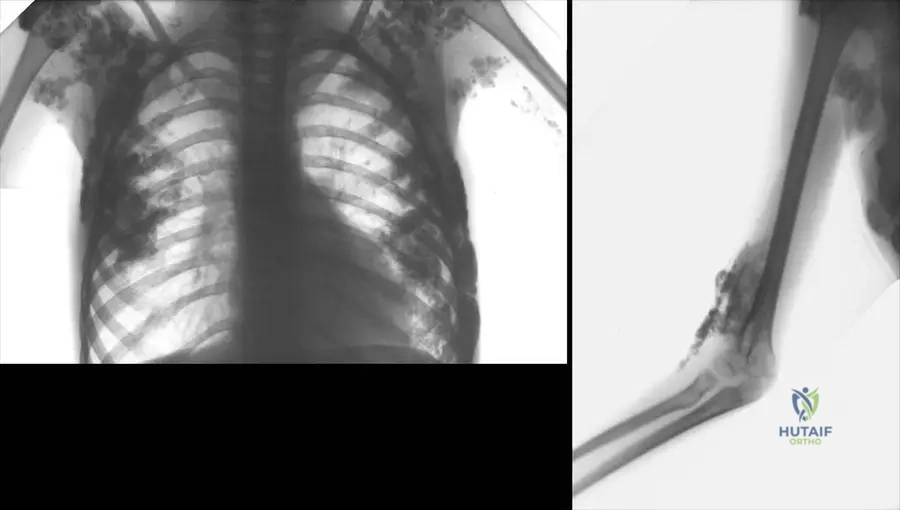
Question 2
A 45-year-old female presents with severe hand stiffness, progressive dysphagia, and fingertip ulcerations. Radiographs of her hands demonstrate acro-osteolysis and subcutaneous soft tissue calcifications.
Which of the following autoantibodies is most specific for the diffuse cutaneous form of this systemic disease?
Explanation
Question 3
A 7-year-old boy presents with right groin pain and a limp. Radiographs demonstrate a solitary lytic lesion in the proximal femur with endosteal scalloping. A biopsy is performed, revealing a proliferation of histiocytes with folded, "coffee-bean" nuclei mixed with eosinophils. Immunohistochemical staining will most likely be positive for which of the following pairs of markers?
Explanation
Question 4
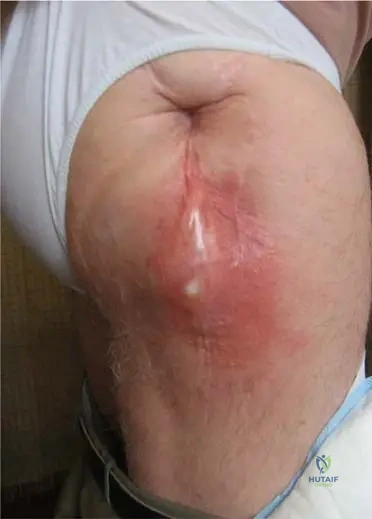
A 68-year-old man develops acute onset of right knee pain, swelling, and erythema 18 days after a primary total knee arthroplasty. Aspiration yields a synovial WBC count of 55,000 cells/uL. He is scheduled for debridement, antibiotics, and implant retention (DAIR). To maximize the success rate of this procedure, what intraoperative step MUST be performed?
Explanation
Question 5
A 6-year-old girl presents with progressive mid-back pain. Neurological examination is unremarkable. Radiographs reveal a uniform collapse of the T7 vertebral body with preservation of the adjacent intervertebral disc spaces, consistent with vertebra plana. Which of the following is the most appropriate initial management?
Explanation
Question 6
A 38-year-old woman with a known history of CREST syndrome presents to the orthopedic clinic with exquisitely painful, pale fingertips triggered by cold weather. Which of the following is the most appropriate first-line pharmacologic therapy to manage the vasospastic component of her condition?
Explanation
Question 7
Synovial fluid alpha-defensin testing is an important adjunct in diagnosing periprosthetic joint infection. What is the precise biological origin and function of alpha-defensin?
Explanation
Question 8
A 4-year-old boy presents with a painful, enlarging scalp mass. Imaging reveals a solitary lytic skull lesion with a "beveled edge" appearance. If an electron microscopic analysis of the lesion tissue were performed, what pathognomonic ultrastructural finding would be expected?
Explanation
Question 9
When treating a chronic periprosthetic knee infection with a two-stage exchange arthroplasty, what is a primary biomechanical or surgical advantage of utilizing an articulating antibiotic spacer rather than a static spacer?
Explanation
Question 10
A 52-year-old patient with limited cutaneous systemic sclerosis presents with firm, painful, palpable subcutaneous nodules over the extensor surfaces of the forearms and proximal interphalangeal joints.
What is the primary chemical composition of these particular deposits?
Explanation
Question 11
Langerhans cell histiocytosis can present in various clinical forms. Which of the following triads classically defines Hand-Schüller-Christian disease?
Explanation
Question 12
In the management of a staphylococcal periprosthetic joint infection treated with DAIR, rifampin is frequently added to the oral antibiotic regimen after initial intravenous therapy. What is the mechanism of action of rifampin that makes it critical for biofilm-associated infections?
Explanation
Question 13
A 60-year-old woman with a long-standing history of systemic sclerosis presents with severe, fixed flexion contractures of her proximal interphalangeal (PIP) joints bilaterally. At the cellular level, this joint deformity is primarily driven by the overproduction of which substance by hyperactive fibroblasts?
Explanation
Question 14
A 62-year-old man undergoes revision of an anatomic total shoulder arthroplasty due to aseptic loosening. Preoperative aspiration was negative. However, 12 days after the revision surgery, 4 out of 5 intraoperative tissue cultures become positive for an organism. Which of the following is the most likely pathogen?
Explanation
Question 15
An 8-year-old boy is diagnosed with a solitary, painful eosinophilic granuloma of the clavicle confirmed by core needle biopsy. The lesion is structurally sound without an impending risk of fracture. What is the most appropriate next step in management?
Explanation
Question 16
A rapid colorimetric leukocyte esterase strip test is frequently used in the evaluation of periprosthetic joint infection. What is the major limitation of using this test on aspirated synovial fluid?
Explanation
Question 17
A 50-year-old woman presents with calcinosis cutis, esophageal dysmotility, sclerodactyly, and telangiectasia.
Laboratory testing reveals the presence of anti-centromere antibodies. This patient is at the highest risk for developing which of the following life-threatening complications?
Explanation
Question 18
Which of the following variants of Langerhans cell histiocytosis predominantly affects infants under the age of 2, presents with diffuse hepatosplenomegaly, severe skin rash, and bone marrow infiltration, and frequently has a fatal clinical course?
Explanation
Question 19
According to the 2018 International Consensus Meeting (ICM) criteria, which of the following is considered a definitive major criterion for diagnosing a periprosthetic joint infection (PJI)?
Explanation
Question 20
A 7-year-old boy presents with a solitary lytic lesion in the proximal femur. Biopsy reveals mononuclear cells with grooved nuclei and abundant eosinophils. Which of the following genetic mutations is most frequently implicated in the pathogenesis of this disease?
Explanation
Question 21
A 45-year-old woman presents with the hand deformity shown, alongside dysphagia and severe cold intolerance in her fingers. Which autoantibody is most highly specific for her likely underlying condition?
Explanation
Question 22
A 62-year-old man presents with insidious shoulder stiffness 2 years after an anatomic total shoulder arthroplasty. Aspiration yields no fluid, so intraoperative tissue cultures are obtained during revision. How long must these cultures be held to reliably detect the most likely causative organism?
Explanation
Question 23
A biopsy of a solitary lytic skull lesion in a 5-year-old child demonstrates cells containing 'tennis-racket' shaped Birbeck granules on electron microscopy. Immunohistochemical staining of these cells will be characteristically positive for which of the following?
Explanation
Question 24
Which of the following is an absolute contraindication to performing a Debridement, Antibiotics, and Implant Retention (DAIR) procedure for a periprosthetic joint infection?
Explanation
Question 25
A patient with systemic sclerosis presents with progressive shortening of her distal digits. Radiographs reveal resorption of the terminal phalangeal tufts. Which pathophysiology primarily drives this specific musculoskeletal manifestation?
Explanation
Question 26
A 6-year-old boy presents with back pain but intact neurology. Radiographs reveal a 'coin-on-edge' appearance of the T8 vertebral body (vertebra plana). MRI confirms a solitary lesion confined to the vertebral body. What is the most appropriate initial management?
Explanation
Question 27
A 68-year-old male presents with chronic knee pain and a draining sinus tract 2 years after a total knee arthroplasty.
According to the Musculoskeletal Infection Society (MSIS) criteria, what is the next most appropriate step in diagnosing a periprosthetic joint infection (PJI)?
Explanation
Question 28
A 7-year-old boy presents with a painful, lytic lesion in the proximal femur with periosteal reaction. Biopsy reveals cells with characteristic "coffee bean" grooved nuclei and electron microscopy demonstrates Birbeck granules. Which of the following immunohistochemical marker profiles is most specific for this diagnosis?
Explanation
Question 29
A 45-year-old female presents with tightening of the skin over her fingers, dysphagia, and painful calcium deposits in her digits. Hand radiographs are obtained.
Which autoantibody is most commonly associated with this patient's specific syndromic presentation?
Explanation
Question 30
A 72-year-old female with a well-functioning total hip arthroplasty (THA) placed 5 years ago develops sudden onset severe hip pain and fevers starting 5 days ago following a dental procedure. Radiographs show well-fixed components. What is the most appropriate management?
Explanation
Question 31
A 6-year-old boy is evaluated for mild, progressive back pain. Radiographs reveal an isolated, completely flattened vertebral body (vertebra plana) at T8 with no associated soft tissue mass or kyphotic deformity. The patient is neurologically intact. What is the most appropriate initial management?
Explanation
Question 32
The synovial fluid alpha-defensin test is increasingly utilized in the diagnosis of periprosthetic joint infections. Which of the following cells is the primary source of alpha-defensin in the synovial fluid?
Explanation
Question 33
A 50-year-old female with known systemic sclerosis complains of progressive shortening and pain in her fingertips. Radiographs reveal significant resorption of the distal phalangeal tufts (acro-osteolysis). What is the primary underlying pathophysiology driving this skeletal finding?
Explanation
Question 34
When formulating polymethyl methacrylate (PMMA) antibiotic-loaded bone cement for a spacer in a two-stage exchange for PJI, which characteristic is an absolute requirement for the admixed antibiotics?
Explanation
Question 35
In the staging and prognosis of Langerhans Cell Histiocytosis (LCH), which of the following clinical scenarios carries the worst prognosis?
Explanation
Question 36
A 60-year-old male is undergoing revision of a reverse total shoulder arthroplasty due to suspected indolent infection. Intraoperative cultures are sent. To maximize the yield for detecting Cutibacterium (Propionibacterium) acnes, how long should the microbiology laboratory hold the cultures?
Explanation
Question 37
A patient with a history of MRSA PJI of the knee is currently 6 weeks status-post first-stage resection and placement of an articulating antibiotic spacer. They have completed a 6-week course of IV antibiotics. What is the most reliable method to confirm eradication of infection prior to proceeding with the second-stage reimplantation?
Explanation
Question 38
A 42-year-old woman presents with diffuse skin thickening extending proximal to her elbows and knees. She complains of progressive dyspnea on exertion. Serologic testing is positive for Anti-Scl-70 antibodies. What is the most likely pulmonary complication associated with this specific autoantibody profile?
Explanation
Question 39
A 4-year-old girl is evaluated for a skull mass. Radiographs reveal a lytic lesion with a "beveled edge" or "hole-within-a-hole" appearance. Which of the following is the most likely diagnosis?
Explanation
Question 40
A 82-year-old male with severe heart failure and a well-fixed total knee arthroplasty develops a coagulase-negative Staphylococcus PJI. Due to his prohibitive surgical risk, chronic suppressive oral antibiotic therapy is chosen. Which of the following is a strict prerequisite for the success of this treatment modality?
Explanation
Question 41
Biofilm formation plays a critical role in the pathogenesis of periprosthetic joint infections. Within a mature biofilm, which characteristic best explains the extreme resistance of the embedded bacteria to systemic antibiotic therapy?
Explanation
Question 42
A 55-year-old female with systemic sclerosis desires surgical correction of severe proximal interphalangeal (PIP) joint flexion contractures in her hands to improve hygiene. What is the most significant perioperative risk that must be extensively discussed with this patient?
Explanation
Question 43
A 65-year-old female with a long-standing history of severe Rheumatoid Arthritis (RA) presents with acute knee pain 3 years after a total knee arthroplasty. Her baseline serum ESR and CRP are chronically elevated due to her RA. Which synovial fluid marker is the most accurate diagnostic tool for distinguishing PJI from an acute RA flare?
Explanation
Question 44
A 9-year-old boy presents with localized pain in his clavicle. Imaging reveals a solitary, well-circumscribed, 'punched-out' lytic lesion. Biopsy confirms Eosinophilic Granuloma. If the lesion remains symptomatic despite brief observation, what is the most appropriate first-line intervention?
Explanation
Question 45
According to the updated 2018 Evidence-Based Definition of Periprosthetic Joint Infection, which of the following combinations satisfies the criteria for definitively diagnosing a PJI?
Explanation
Question 46
A patient with long-standing systemic sclerosis presents with severe, fixed flexion contractures of the PIP joints. Non-operative management has failed.
If surgery is deemed absolutely necessary despite the high risks, what is the preferred surgical procedure to provide stable, pain-free digits?
Explanation
Question 47
A 65-year-old man presents with a painful total knee arthroplasty 3 years post-op. Serum CRP is 15 mg/L and ESR is 45 mm/hr. Joint aspiration yields a WBC count of 2,800 cells/uL with 75% PMNs. Which of the following synovial fluid biomarkers provides the highest specificity for diagnosing a periprosthetic joint infection?
Explanation
Question 48
A 72-year-old female presents 3 weeks after a primary total hip arthroplasty with acute onset of hip pain, erythema, and a draining sinus tract. Radiographs show well-fixed components. What is the most appropriate surgical management?
Explanation
Question 49
A 50-year-old female with systemic sclerosis presents with progressive shortening of her distal fingers and painful, chalky subcutaneous nodules. Radiographs demonstrate resorption of the distal phalangeal tufts. What autoantibody is most commonly associated with her localized disease variant?
Explanation
Question 50
An 8-year-old boy presents with back pain. Radiographs reveal a severe compression fracture of the T6 vertebral body (vertebra plana). Biopsy of the lesion shows sheets of eosinophils and mononuclear cells. Electron microscopy reveals tennis-racket shaped intracytoplasmic organelles. Which immunohistochemical marker will be definitively positive?
Explanation
Question 51
A 68-year-old man undergoes DAIR for an acute hematogenous periprosthetic joint infection of his knee. Intraoperative cultures grow methicillin-sensitive Staphylococcus aureus (MSSA). Which of the following oral antibiotic regimens is best supported by evidence for long-term suppression after initial IV therapy?
Explanation
Question 52
A 6-year-old boy presents with a painful, isolated lytic lesion in the clavicle with mild periosteal reaction. Biopsy confirms eosinophilic granuloma. There is no impending fracture or neurological deficit. What is the most appropriate initial management?
Explanation
Question 53
According to the Musculoskeletal Infection Society (MSIS) criteria, which of the following is considered a major (definitive) criterion for diagnosing a periprosthetic joint infection?
Explanation
Question 54
A 55-year-old woman with a 15-year history of diffuse systemic sclerosis requires a total knee arthroplasty for severe secondary osteoarthritis. Which of the following perioperative complications is she at significantly higher risk for compared to the general population?
Explanation
Question 55
A 4-year-old girl is diagnosed with multifocal Langerhans Cell Histiocytosis. She presents with lytic skull lesions and exophthalmos. What endocrine abnormality is classically associated with this clinical triad?
Explanation
Question 56
During a 2-stage revision for a chronic periprosthetic knee infection, an articulating antibiotic spacer is placed.
Compared to static spacers, articulating spacers in the knee have been shown to provide which of the following benefits?
Explanation
Question 57
A 65-year-old male is 8 weeks out from the first stage of a 2-stage revision for a total hip PJI. His spacer is in place, and he has completed 6 weeks of IV antibiotics. His ESR and CRP have normalized, and his hip is clinically benign. What is the most appropriate next step?
Explanation
Question 58
According to the 2018 International Consensus Meeting (ICM) criteria, which of the following is considered a major criterion for diagnosing a periprosthetic joint infection?
Explanation
Question 59
A 50-year-old female presents with severe Raynaud's phenomenon, esophageal dysmotility, and the findings shown in the clinical image.
Which autoantibody is most specifically associated with her likely diagnosis?
Explanation
Question 60
A 6-year-old boy presents with mid-back pain. Radiographs reveal a "coin lesion" (vertebra plana) at T7 without posterior element involvement. Neurological exam is completely normal. What is the most appropriate initial management?
Explanation
Question 61
Which of the following scenarios is the most appropriate indication for Debridement, Antibiotics, and Implant Retention (DAIR) in the setting of periprosthetic joint infection?
Explanation
Question 62
According to the 2018 International Consensus Meeting (ICM) criteria for periprosthetic joint infection, which of the following serum markers is heavily weighted as a minor criterion alongside C-reactive protein (CRP)?
Explanation
Question 63
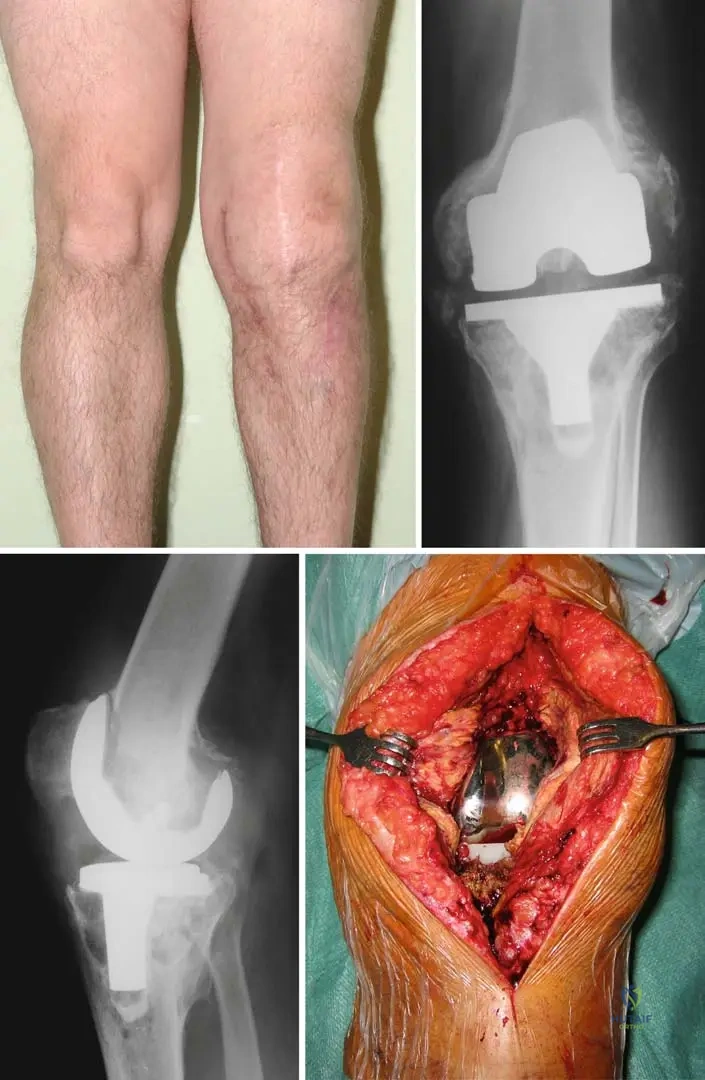
A 68-year-old male presents with acute onset of severe right knee pain and swelling 3 weeks after a dental procedure. He underwent a right total knee arthroplasty 5 years ago. Aspiration yields 65,000 WBCs/uL with 95% neutrophils.
What is the most appropriate surgical management?
Explanation
Question 64
Which of the following antibiotics is most critical to include in the treatment regimen for a retained total joint arthroplasty infected with methicillin-sensitive Staphylococcus aureus, owing to its efficacy against biofilm-associated bacteria?
Explanation
Question 65
When fabricating an articulating cement spacer for a two-stage revision total knee arthroplasty to treat a fungal PJI (Candida species), which of the following antimicrobial agents should be mixed into the polymethylmethacrylate (PMMA) bone cement?
Explanation
Question 66
A 55-year-old male undergoes a revision anatomic total shoulder arthroplasty for presumed aseptic loosening. At 10 days, 3 out of 5 intraoperative cultures grow Cutibacterium acnes. Which of the following describes the most characteristic trait of this organism in periprosthetic shoulder infections?
Explanation
Question 67
The optimal initial and sustained elution of antibiotics from a polymethylmethacrylate (PMMA) cement spacer is best achieved by which of the following preparation techniques?
Explanation
Question 68
Chronic antibiotic suppression is most appropriate for which of the following patients with a confirmed periprosthetic joint infection?
Explanation
Question 69
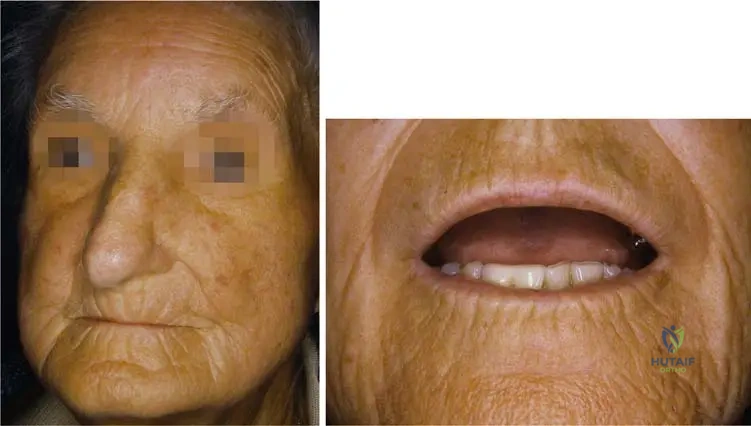
A 42-year-old woman presents with tightening of the skin on her face and hands, Raynaud's phenomenon, and dysphagia. She notes painful ulcerations at the tips of her fingers.
Which of the following antibodies is associated with an increased risk of developing pulmonary arterial hypertension in this specific disease subset?
Explanation
Question 70
Which of the following radiographic findings in the hand is considered a classic hallmark of systemic sclerosis?
Explanation
Question 71
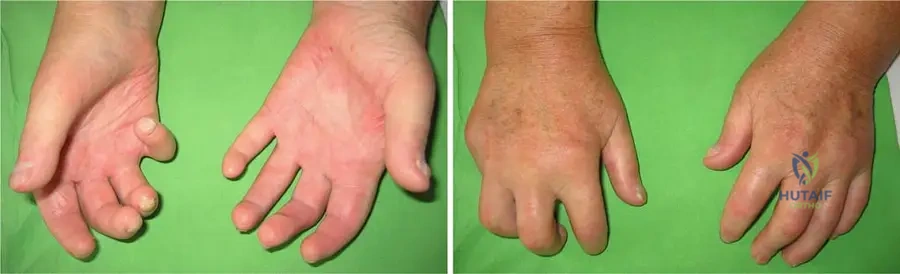
A 55-year-old female with limited cutaneous systemic sclerosis presents with painful, firm subcutaneous nodules on her fingertips that occasionally extrude a chalky white material.
What is the initial recommended medical therapy to manage these symptomatic lesions?
Explanation
Question 72
A patient with advanced systemic sclerosis is scheduled to undergo an elective orthopedic procedure. The surgical team must be hypervigilant regarding which of the following perioperative complications directly related to the disease pathophysiology?
Explanation
Question 73
Flexion contractures of the fingers in patients with systemic sclerosis are primarily driven by which of the following pathologic processes?
Explanation
Question 74
In differentiating the diffuse cutaneous form of systemic sclerosis from the limited form (CREST syndrome), which of the following clinical features is highly typical of the diffuse form?
Explanation
Question 75
A patient with scleroderma-associated Raynaud's phenomenon presents with an acute, extremely painful ischemic digital ulcer. Conservative measures and oral therapies have failed. Which of the following is the most appropriate next step in management to prevent autoamputation?
Explanation
Question 76
A 6-year-old child presents with back pain and a normal neurologic examination. Radiographs of the thoracic spine demonstrate a severe, uniform collapse of the T7 vertebral body, with preservation of the adjacent disc spaces. Which of the following is the most likely diagnosis?
Explanation
Question 77
Which of the following somatic genetic mutations is found in approximately 50-60% of patients with Langerhans cell histiocytosis, supporting its modern classification as a myeloid neoplastic disorder?
Explanation
Question 78
A biopsy of a lytic skull lesion in a 5-year-old boy reveals clusters of histiocytes with abundant eosinophilic cytoplasm and indented nuclei. On electron microscopy, rod-like intracytoplasmic inclusion bodies with a central striated line are identified. What are these structures called?
Explanation
Question 79
Which of the following conditions is most likely to cause a false-positive synovial alpha-defensin test in the workup of a painful total hip arthroplasty?
Explanation
Question 80
A 6-year-old boy presents with back pain and a normal neurologic exam. Radiographs reveal complete collapse of the T8 vertebral body (vertebra plana). Laboratory studies are within normal limits. Which of the following is the most appropriate initial management?
Explanation
Question 81
Staphylococcus epidermidis is a common pathogen in periprosthetic joint infections. Which of the following components is primarily responsible for the structural integrity of the biofilm produced by this organism?
Explanation
Question 82
A 42-year-old woman with a history of systemic sclerosis presents with progressive shortening and pain in her fingertips. Radiographs show resorption of the distal phalangeal tufts.
What vascular phenomenon is most characteristically associated with the pathogenesis of this skeletal finding?
Explanation
Question 83
Recent molecular advancements have classified Langerhans cell histiocytosis (LCH) as an inflammatory myeloid neoplasm. Which of the following genetic mutations is present in over 50% of LCH cases and serves as a potential target for molecular therapy?
Explanation
Question 84
In a patient undergoing Debridement, Antibiotics, and Implant Retention (DAIR) for a periprosthetic joint infection, which of the following factors is considered an absolute contraindication to the procedure?
Explanation
Question 85
You are contemplating surgical release for severe PIP joint flexion contractures in a patient with long-standing systemic sclerosis. Which of the following is the most significant localized risk regarding this surgical intervention?
Explanation
Question 86
A 65-year-old male develops a delayed periprosthetic joint infection 1 year following a reverse total shoulder arthroplasty. Cultures eventually grow Cutibacterium acnes. Which of the following best describes the microbiological characteristics of this organism?
Explanation
Question 87
A 65-year-old male presents with acute onset knee pain and swelling 3 weeks after an uncomplicated total knee arthroplasty. Aspiration yields 55,000 WBC/uL with 95% neutrophils. What is the most appropriate surgical management?
Explanation
Question 88
Which of the following synovial fluid biomarkers is an antimicrobial peptide produced by neutrophils and serves as an important adjunctive test for diagnosing periprosthetic joint infection due to its high accuracy, even in the setting of concurrent systemic inflammatory diseases?
Explanation
Question 89
A 9-year-old boy has a biopsy of a solitary lytic clavicle lesion. Electron microscopy of the specimen demonstrates characteristic cytoplasmic organelles resembling "tennis rackets." These structures are pathognomonic for which of the following conditions?
Explanation
Question 90
A 40-year-old female with diffuse systemic sclerosis presents with palpable grating over the flexor tendons of her wrists and ankles during active motion. The presence of these tendon friction rubs is most strongly associated with an increased risk for which of the following?
Explanation
Question 91
A 50-year-old woman with a history of systemic sclerosis presents with worsening fingertip pain.
Radiographs show resorption of the terminal phalangeal tufts. What is this radiographic finding termed?
Explanation
Question 92
A patient is undergoing revision of a loose total hip arthroplasty. Preoperative aspirates were culture-negative despite elevated serum inflammatory markers. To improve diagnostic yield, the explanted components are subjected to sonication. What is the primary mechanism by which sonication increases the sensitivity of cultures?
Explanation
Question 93
A 6-year-old girl presents with mid-back pain. Radiographs of the thoracic spine demonstrate severe, uniform collapse of the T7 vertebral body with preservation of the adjacent disc spaces. A diagnosis of eosinophilic granuloma is suspected. What is the most appropriate initial management for this spinal lesion without neurological deficits?
Explanation
Question 94
A 72-year-old diabetic male is diagnosed with a Candida albicans periprosthetic joint infection of the knee. What is the generally recommended surgical and medical management strategy for a chronic fungal PJI?
Explanation
Question 95
A 42-year-old female with systemic sclerosis presents with severe flexion contractures of the proximal interphalangeal (PIP) joints and limited hand function.
Which of the following best describes the pathogenesis of her joint contractures?
Explanation
Question 96
A 4-year-old child presents with a triad of exophthalmos, diabetes insipidus, and multiple lytic skull lesions. This classic clinical triad is indicative of which variant of Langerhans cell histiocytosis?
Explanation
Question 97
A 68-year-old female undergoes first-stage explantation and placement of an articulating antibiotic cement spacer for a chronic PJI of the knee. The cement is loaded with high doses of vancomycin and tobramycin. Postoperatively, she develops rising serum creatinine and oliguria. Which of the following is the most likely cause?
Explanation
Question 98
A 12-year-old girl is diagnosed with a symptomatic, solitary eosinophilic granuloma of the proximal humerus confirmed by biopsy. Which of the following is the most appropriate minimally invasive treatment option that has demonstrated high rates of resolution?
Explanation
Question 99
According to the Musculoskeletal Infection Society (MSIS) criteria, a diagnosis of "culture-negative" periprosthetic joint infection can be established definitively if which of the following is present?
Explanation
Question 100
A 55-year-old female with limited cutaneous systemic sclerosis (CREST syndrome) presents with hard, painful subcutaneous nodules over her extensor forearms and fingertips.
Excision is considered due to frequent skin breakdown. What is the primary composition of these deposits?
Explanation
None
