Orthopedic Anatomy Review | Dr Hutaif Basic Science Rev -...
Key Takeaway
We review everything you need to understand about Orthopedic MCQS online Anatomy 017. Neurogenic claudication, characterized by a "shopping cart" sign, often stems from spinal stenosis due to a symptomatic synovial cyst, a gelatinous lesion typically requiring surgical excision. Separately, a wellfixed uncemented stem describes an orthopedic implant designed for secure, cement-free integration into bone, commonly used in joint replacement surgery.
Orthopedic Anatomy Review | Dr Hutaif Basic Science Rev -...
Comprehensive 100-Question Exam
00:00
Start Quiz
Question 1
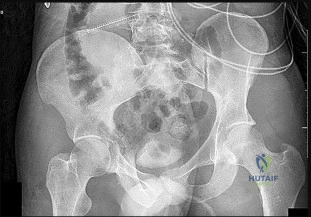
During a posterior approach to the hip (Kocher-Langenbeck), the main blood supply to the femoral head must be protected. The deep branch of the medial femoral circumflex artery (MFCA) is most at risk during the surgical release of which of the following structures?
Explanation
Question 2
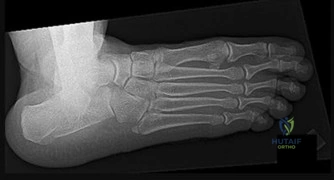
The primary vascular supply to the proximal pole of the scaphoid enters the bone at which of the following anatomical locations?
Explanation
Question 3
During an anterior intrapelvic approach (ilioinguinal or modified Stoppa) for an acetabular fracture, significant hemorrhage occurs while dissecting over the posterior aspect of the superior pubic ramus. The injured vessel typically represents an anastomosis between which two vascular systems?
Explanation
Question 4
In a direct lateral approach to the fibula for open reduction and internal fixation of a lateral malleolus fracture, the superficial peroneal nerve must be protected. At approximately what distance proximal to the tip of the lateral malleolus does this nerve typically pierce the deep crural fascia to become subcutaneous?
Explanation
Question 5
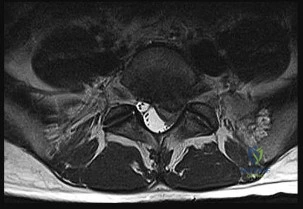
A patient suffers from quadrilateral space syndrome, leading to localized shoulder weakness and paresthesia. Which nerve and vessel pass through this specific anatomic space?
Explanation
Question 6
A 35-year-old volleyball player presents with isolated weakness in external rotation of the shoulder but normal abduction strength. An MRI shows a paralabral ganglion cyst causing nerve compression. Where is the cyst most likely located?
Explanation
Question 7
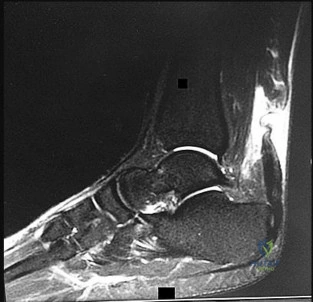
During a lateral approach to the distal humerus, the radial nerve is identified. At what approximate landmark does the radial nerve pierce the lateral intermuscular septum to pass from the posterior to the anterior compartment of the arm?
Explanation
Question 8
In a minimally invasive or percutaneous repair of a ruptured Achilles tendon, care must be taken to avoid iatrogenic injury to the sural nerve. What is the typical relationship of the sural nerve to the Achilles tendon?
Explanation
Question 9
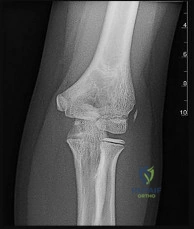
During anterior cruciate ligament (ACL) reconstruction, understanding the functional bundles is key to restoring normal knee kinematics. Which statement correctly describes the tension patterns of the native ACL bundles?
Explanation
Question 10
A 40-year-old man undergoes an electromyography (EMG) study for a suspected nerve entrapment. The neurologist notes the presence of a Martin-Gruber anastomosis. What does this anatomic variant typically represent?
Explanation
Question 11
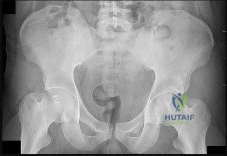
The posterior interosseous nerve (PIN) is at risk during a volar approach (Henry) to the proximal radius. Through which specific structure does the PIN pass as it enters the posterior compartment of the forearm?
Explanation
Question 12
The rotator interval is a capsular space in the shoulder that is often implicated in glenohumeral instability and adhesive capsulitis. What are the correct boundaries of the rotator interval?
Explanation
Question 13
Which of the following is considered the primary and strongest stabilizer against valgus talar tilt within the superficial component of the deltoid ligament of the ankle?
Explanation
Question 14
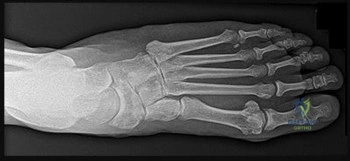
During a cervical lymph node biopsy in the posterior triangle of the neck, a patient sustains an iatrogenic nerve injury leading to a laterally winged scapula. Which muscle is predominantly affected by this injury?
Explanation
Question 15
The posterior cruciate ligament (PCL) is the primary restraint to posterior tibial translation. Which of the following accurately describes its functional bundle anatomy and biomechanics?
Explanation
Question 16
The triangular fibrocartilage complex (TFCC) is the major stabilizer of the distal radioulnar joint (DRUJ). Which specific part of the TFCC has a rich blood supply and is therefore more amenable to primary surgical repair?
Explanation
Question 17
De Quervain's tenosynovitis affects the first dorsal extensor compartment of the wrist. Intersection syndrome involves friction between the first and second dorsal compartments. Which muscles comprise the second dorsal compartment?
Explanation
Question 18
The femoral nerve is the largest branch of the lumbar plexus. It descends through the pelvis to enter the anterior thigh. What is its anatomical relationship to the psoas major muscle within the retroperitoneum?
Explanation
Question 19
The superficial medial collateral ligament (sMCL) of the knee is the primary restraint to valgus stress. Where is its precise distal anatomic insertion on the tibia?
Explanation
Question 20
The talus is highly prone to avascular necrosis following displaced fractures of the talar neck. Which artery provides the most significant vascular contribution to the body of the talus?
Explanation
Question 21
A surgeon is performing a posterolateral approach to the distal tibia for a pilon fracture. What is the internervous plane utilized in this approach?
Explanation
Question 22
During the ilioinguinal approach for an acetabular fracture, the surgeon develops the middle window. Which of the following structures forms the medial border of this middle window?
Explanation
Question 23
A 45-year-old male sustains a midshaft humerus fracture and is treated with open reduction and internal fixation via an anterolateral approach. Which of the following describes the correct internervous plane for the distal extent of this approach?
Explanation
Question 24
Which of the following muscles of the lower extremity is exclusively innervated by the common peroneal division of the sciatic nerve?
Explanation
Question 25
A patient is undergoing a volar (Henry) approach to the forearm for fixation of a proximal radial shaft fracture. In the proximal third of the forearm, the internervous plane is between which of the following two muscles?
Explanation
Question 26
During a surgical approach to the hip via the direct lateral (Hardinge) approach, the gluteus medius and vastus lateralis are split. To avoid iatrogenic denervation of the anterior portion of the abductors, the proximal split in the gluteus medius must not extend more than how many centimeters proximal to the tip of the greater trochanter?
Explanation
Question 27
A 28-year-old male sustains a severe knee dislocation resulting in a popliteal artery occlusion. The popliteal artery is at high risk of stretch injury due to firm proximal and distal tethering points. Which anatomical structure forms the distal tethering point?
Explanation
Question 28
A surgeon is evaluating a patient with axillary nerve entrapment. Which of the following neurovascular structures pass together through the quadrangular space of the shoulder?
Explanation
Question 29
When performing an open carpal tunnel release, the surgeon must be mindful of the recurrent motor branch of the median nerve (the "million dollar nerve"). According to the Lanz classification, which anatomical variation of the recurrent motor branch is the most common?
Explanation
Question 30
During the volar (Russe) approach to the scaphoid for open reduction and internal fixation of a waist fracture, the surgical interval for deep exposure involves incising the sheath of which of the following tendons?
Explanation
Question 31
The deep branch of the radial nerve (posterior interosseous nerve) is at risk during surgical approaches to the proximal radius. Underneath which anatomical structure does the posterior interosseous nerve typically enter the supinator muscle?
Explanation
Question 32
During closed reduction of a proximal humerus fracture, a patient sustains an iatrogenic injury to the axillary nerve. Which of the following muscles would most likely demonstrate denervation on electromyography?
Explanation
Question 33
A 35-year-old female presents with pain, weakness, and paresthesias affecting the medial aspect of her forearm and the ring and small fingers of her hand. True neurogenic thoracic outlet syndrome is suspected. Compression of which part of the brachial plexus is most characteristic of this presentation?
Explanation
Question 34
An orthopaedic surgeon is using the posterior (Kocher-Langenbeck) approach to the acetabulum. The sciatic nerve must be carefully identified and protected. In what percentage of the general population does the common peroneal division of the sciatic nerve pierce the piriformis muscle (Beaton and Anson type B)?
Explanation
Question 35
The superficial peroneal nerve provides sensation to the majority of the dorsum of the foot. At what approximate distance proximal to the tip of the lateral malleolus does the superficial peroneal nerve pierce the deep fascia to become subcutaneous?
Explanation
Question 36
Anatomic reconstruction of the medial patellofemoral ligament (MPFL) requires precise femoral tunnel placement. Where is the normal anatomical footprint of the MPFL on the femur located in relation to palpable osseous landmarks?
Explanation
Question 37
During a posteromedial approach to the knee for repair of a medial meniscus root tear, the fascia over the pes anserinus is incised. Which nerve is most at risk of injury when dissecting directly around the sartorius and gracilis tendons?
Explanation
Question 38
The artery of the tarsal canal provides the dominant blood supply to the body of the talus. From which main parent vessel does the artery of the tarsal canal directly originate?
Explanation
Question 39
A patient presents with tenderness in the anatomical snuffbox after a fall on an outstretched hand. Which of the following describes the correct tendinous boundaries of the anatomical snuffbox when the hand is in the standard anatomical position?
Explanation
Question 40
During an anterior approach to the cervical spine (Smith-Robinson approach), blunt dissection is carried down to the prevertebral fascia. This dissection naturally passes between which two distinct anatomical sheaths/layers?
Explanation
Question 41
A surgeon is performing a lateral approach to the proximal humerus. To avoid iatrogenic injury to the axillary nerve, the deltoid split should not extend distal to what landmark?
Explanation
Question 42
The volar (Henry) approach to the radius utilizes a distinct internervous plane. Proximally, this plane is developed between which two muscles?
Explanation
Question 43
During a posterolateral (Kocher) approach to the radial head for a comminuted fracture, the internervous plane is developed between the anconeus and which other muscle?
Explanation
Question 44
The anterolateral (Watson-Jones) approach to the hip exploits the plane between the tensor fasciae latae (TFL) and the gluteus medius. Which nerve innervates both of these muscles?
Explanation
Question 45
When harvesting hamstring autografts for ACL reconstruction, the surgeon must identify the pes anserinus. From anterior to posterior, what is the correct arrangement of the tendons at their insertion on the proximal medial tibia?
Explanation
Question 46
A 45-year-old male presents with a posterolateral disc herniation at the L4-L5 level. Which nerve root is most commonly compressed by this specific pathology?
Explanation
Question 47
A volleyball player presents with isolated weakness in external rotation of the shoulder but normal abduction initiation. MRI shows a paralabral cyst. Where is the cyst most likely located?
Explanation
Question 48
Which flexor tendon pulleys of the hand are mechanically most critical to preserve during surgery to prevent bowstringing of the flexor tendons?
Explanation
Question 49
In the most common anatomical variant of the sciatic nerve's relationship to the piriformis muscle, where do the common peroneal and tibial nerve divisions exit the pelvis?
Explanation
Question 50
The Lisfranc ligament is essential for the stability of the midfoot and the tarsometatarsal articulation. It connects which two bony structures?
Explanation
Question 51
During a dorsal approach to the wrist, Lister's tubercle serves as a key landmark. The tendon of the extensor pollicis longus (EPL) typically runs in which direction relative to this structure?
Explanation
Question 52
A patient sustains a vertically unstable pelvic fracture involving the sacral ala. Postoperatively, the patient demonstrates an inability to plantarflex the great toe and loss of sensation over the lateral plantar aspect of the foot. Which nerve root was most likely injured?
Explanation
Question 53
A runner develops acute exertional compartment syndrome requiring fasciotomies. Which of the following muscles is located exclusively within the deep posterior compartment of the leg?
Explanation
Question 54
The popliteofibular ligament is a primary stabilizer against external rotation of the tibia. It originates from the popliteus tendon and attaches to which anatomical structure?
Explanation
Question 55
A patient suffers a midshaft humeral fracture. During a lateral approach to the humerus, the radial nerve is identified piercing the lateral intermuscular septum. At what approximate distance proximal to the lateral epicondyle does this transition occur?
Explanation
Question 56
In a healthy adult, the predominant blood supply to the weight-bearing dome of the femoral head is provided by the lateral epiphyseal artery. This vessel is a terminal branch of which of the following?
Explanation
Question 57
From anterior/medial to posterior/lateral, what is the correct anatomical order of structures passing behind the medial malleolus in the tarsal tunnel?
Explanation
Question 58
A 35-year-old male presents with posterior shoulder pain and numbness over the lateral deltoid. An MRI reveals a space-occupying lesion in the quadrilateral space. Which of the following structures form the superior and inferior borders of this space, respectively?
Explanation
Question 59
Which of the following statements most accurately describes the vascular supply of the adult meniscus?
Explanation
Question 60
During a lateral approach to the proximal humerus for open reduction and internal fixation, the axillary nerve must be identified and protected. What is the average distance of the axillary nerve from the lateral edge of the acromion, and what structure does it run deep to?
Explanation
Question 61
A direct lateral (Hardinge) approach to the hip requires splitting the gluteus medius. To avoid iatrogenic denervation, the proximal split should not extend beyond what distance from the tip of the greater trochanter?
Explanation
Question 62
During a posterolateral (Kocher) approach to the radial head, the internervous plane utilized is between the anconeus and the extensor carpi ulnaris (ECU). The posterior interosseous nerve (PIN) is most at risk of injury when retracting which of the following muscles?
Explanation
Question 63
The anterior approach to the hip (Smith-Petersen) utilizes an internervous plane between the sartorius and the tensor fasciae latae. Which of the following nerves is at greatest risk during the superficial dissection?
Explanation
Question 64
A patient presents with a high-energy knee dislocation (KD III) resulting in an abnormal ankle-brachial index (ABI). Angiography reveals an occlusion of the popliteal artery. The popliteal artery is relatively fixed and highly susceptible to tethering and intimal injury between which two anatomic structures?
Explanation
Question 65
During a Latarjet procedure for recurrent anterior shoulder instability, the conjoined tendon is retracted medially. The musculocutaneous nerve typically penetrates the coracobrachialis at what average distance distal to the tip of the coracoid process?
Explanation
Question 66
An extensile lateral approach is planned for an intra-articular calcaneus fracture. The sural nerve is at risk in the posterolateral corner of the flap. From which two nerves does the sural nerve primarily derive its origins?
Explanation
Question 67
A patient sustains a spiral fracture of the distal third of the humeral shaft (Holstein-Lewis fracture) and presents with wrist drop. The radial nerve is at high risk as it pierces which muscle septum to transition from the posterior to the anterior compartment of the arm?
Explanation
Question 68
An anterolateral approach to the proximal tibia is performed for a Schatzker type III tibial plateau fracture. Dissection is carried out between the tibialis anterior and extensor digitorum longus. Which neurovascular bundle supplies this compartment and courses on the anterior surface of the interosseous membrane?
Explanation
Question 69
A patient presents with shoulder weakness and pain two months after a radical neck dissection for squamous cell carcinoma. Examination reveals winging of the scapula with lateral translation of the inferior pole. Which muscle is denervated, and what is its primary motor nerve?
Explanation
Question 70
The volar (Henry) approach to the forearm utilizes the internervous plane between the brachioradialis and the pronator teres proximally. Which of the following nerves innervates the brachioradialis?
Explanation
Question 71
A patient with an isolated nerve injury is unable to actively flex the interphalangeal joint of the thumb and the distal interphalangeal joint of the index finger, resulting in a positive "OK" sign. Which of the following muscles is ALSO innervated by the affected nerve?
Explanation
Question 72
In the developing child prior to physeal closure, the primary blood supply to the capital femoral epiphysis is derived from the lateral epiphyseal artery. This vessel is a terminal branch of which artery?
Explanation
Question 73
During a medial approach to the midfoot for an accessory navicular excision, a tendinous crossover is encountered under the navicular known as the "Master Knot of Henry." This anatomical landmark is formed by the intersection of which two tendons?
Explanation
Question 74
A professional volleyball player presents with insidious onset, painless weakness of shoulder external rotation. MRI reveals a paralabral cyst located in the spinoglenoid notch. Which muscle exhibits denervation atrophy?
Explanation
Question 75
In patients with neurogenic thoracic outlet syndrome, compression most commonly occurs within the interscalene triangle. What are the anatomical borders of this triangle?
Explanation
Question 76
During an anterior cervical discectomy and fusion (ACDF), aggressive lateral dissection past the uncinate process risks catastrophic injury to the vertebral artery. At which cervical level does the vertebral artery typically enter the transverse foramen?
Explanation
Question 77
During a lateral transpsoas approach to the lumbar spine, the lumbar plexus is at risk of injury as it lies within the substance of the psoas major. At the L4-L5 disc space, where is the lumbar plexus generally located relative to the psoas muscle?
Explanation
Question 78
The recurrent motor branch of the median nerve (the "million dollar nerve") innervates the thenar musculature. Which of the following muscles is primarily innervated by the deep branch of the ulnar nerve rather than the median nerve?
Explanation
Question 79
During an axillary approach to the shoulder, the surgeon must identify the boundaries of the quadrangular space to protect its neurovascular contents. Which of the following muscles forms the inferior border of this anatomical space?
Explanation
Question 80
A 28-year-old volleyball player presents with isolated weakness in external rotation of the shoulder without any deficit in abduction. At which of the following anatomical locations is the involved nerve compression most likely occurring?
Explanation
Question 81
A patient develops an inability to flex the interphalangeal joint of the thumb and the distal interphalangeal joint of the index finger following a forearm injury. Sensation is completely intact. Which of the following structures is most likely causing compression of the involved nerve?
Explanation
Question 82
While performing a percutaneous or minimally invasive repair of an acute Achilles tendon rupture, the surgeon must be cautious of the sural nerve. At what approximate distance proximal to the calcaneal insertion does the sural nerve typically cross the lateral border of the Achilles tendon?
Explanation
Question 83
During a direct lateral (Hardinge) approach to the hip, proximal splitting of the gluteus medius is limited to prevent denervation of the anterior portion of the muscle. The superior gluteal nerve is at greatest risk if the split extends more than what distance proximal to the tip of the greater trochanter?
Explanation
Question 84
During a posterolateral approach to the knee for ligamentous reconstruction, the surgeon identifies the structures of the posterolateral corner. What is the correct anatomical relationship of the popliteus tendon footprint on the lateral femoral condyle relative to the lateral collateral ligament (LCL) origin?
Explanation
Question 85
A surgeon is performing an anterolateral approach to the distal tibia. To avoid injury to the superficial peroneal nerve, the surgeon must be aware of its typical exit site from the deep fascia. At approximately what distance proximal to the lateral malleolus does this nerve pierce the crural fascia?
Explanation
Question 86
The blood supply to the talar body is tenuous, predisposing it to avascular necrosis following displaced talar neck fractures. Which of the following arteries provides the majority of the blood supply to the talar body?
Explanation
Question 87
In the surgical treatment of a midfoot deformity, a surgeon exposes the plantar aspect of the foot and encounters the Master Knot of Henry. Which of the following best describes the anatomical relationship at this specific location?
Explanation
None
