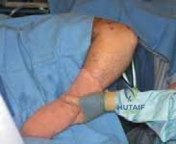
Advanced Arthroscopic Management of Elbow Arthrofibrosis, Osteoarthritis, and Epicondylitis
Key Takeaway
Arthroscopic management of elbow arthrofibrosis requires meticulous portal placement and a systematic approach to capsular release. By utilizing precise anteromedial and anterolateral portals, surgeons can safely perform anterior capsulectomies, resect osteophytes, and restore the coronoid and olecranon fossae. Strict adherence to neurovascular safety zones and aggressive postoperative rehabilitation are paramount to achieving and maintaining functional range of motion while minimizing severe complications.
INTRODUCTION TO ELBOW ARTHROFIBROSIS
The elbow joint is highly susceptible to post-traumatic and degenerative stiffness. Arthrofibrosis of the elbow is characterized by a dense, fibrotic capsular contracture that severely limits the functional arc of motion (typically defined as 30 to 130 degrees of flexion-extension and 50 degrees of both pronation and supination). Historically, open arthrolysis was the gold standard for the stiff elbow; however, advancements in arthroscopic instrumentation and techniques have revolutionized the management of this challenging pathology.
Arthroscopic arthrolysis offers the advantages of minimized soft tissue trauma, accelerated rehabilitation, and direct visualization of intra-articular pathology. Nevertheless, the procedure is technically demanding. The proximity of major neurovascular structures—specifically the median, radial, and ulnar nerves—demands an intimate knowledge of tridimensional anatomy and strict adherence to established surgical protocols.
💡 Clinical Pearl
The "stiff elbow" is rarely a purely capsular problem. Preoperative evaluation must differentiate between intrinsic causes (e.g., osteophytes, loose bodies, articular incongruity) and extrinsic causes (e.g., capsular contracture, heterotopic ossification, collateral ligament contracture). Arthroscopy is highly effective for capsular release and intra-articular debridement but has limitations in addressing severe extra-articular heterotopic ossification.
PREOPERATIVE EVALUATION AND SETUP
Clinical and Radiographic Assessment
A meticulous physical examination must document the exact degrees of flexion, extension, pronation, and supination. Neurological evaluation is critical; pre-existing ulnar neuropathy may necessitate a concurrent or staged open ulnar nerve decompression and transposition.
Standard anteroposterior and lateral radiographs evaluate joint space narrowing and prominent osteophytes. A non-contrast Computed Tomography (CT) scan with 3D reconstructions is the imaging modality of choice to map out coronoid and olecranon osteophytes, loose bodies, and the exact location of heterotopic bone.
Operating Room Setup and Positioning
The procedure can be performed in the lateral decubitus, prone, or supine suspended positions. The lateral decubitus position with the arm draped over a well-padded post is highly favored as it allows excellent access to both the anterior and posterior compartments while maintaining a stable airway for the anesthesia team.
A non-sterile tourniquet is applied high on the brachium. Fluid management is critical; a gravity-fed system or a mechanical pump set to low pressure (typically 30–40 mm Hg) is utilized to minimize fluid extravasation, which can lead to catastrophic compartment syndrome of the forearm.
⚠️ Surgical Warning
Fluid extravasation is the enemy of elbow arthroscopy. In an arthrofibrotic joint, the capsule is often contracted and non-compliant. High pump pressures can easily rupture the capsule, driving fluid into the forearm compartments. Always monitor forearm tension throughout the procedure.
ARTHROSCOPIC PORTAL ANATOMY AND ESTABLISHMENT
Establishing portals in an arthrofibrotic elbow is the most dangerous step of the procedure. The normal capsular distension that pushes neurovascular structures away from the joint is often absent due to fibrotic tethering.
The Soft Spot (Direct Lateral) Portal
The soft spot portal is the starting point for joint distension. It is located at the center of the anatomic triangle formed by:
1. The radial head
2. The lateral epicondyle
3. The tip of the olecranon
The Midanterolateral Portal
This portal provides the primary viewing access for the anterior compartment. It is established approximately 1 cm proximal and 1 cm anterior to the lateral epicondyle. The radial nerve lies dangerously close (average 3–7 mm) to this portal.
The Anteromedial Portal
Established under direct intra-articular vision, this portal is located 2 cm distal and 2 cm anterior to the medial epicondyle. The median nerve and brachial artery are at risk if the portal is placed too far anteriorly or proximally.
SURGICAL TECHNIQUE: ARTHROSCOPY FOR ARTHROFIBROSIS
The following step-by-step approach is adapted from the foundational techniques of Phillips and Strasburger (Surgical Technique 52-34).
Step 1: Joint Distension and Initial Entry
- Distension: After the usual anatomical landmarks are drawn, distend the joint with 20 to 30 mL of sterile lactated Ringer solution through the soft spot (direct lateral) portal. In a severely fibrotic joint, the capacity may be significantly reduced.
- Localization: Insert a spinal needle medially and posteriorly toward the center of the elbow joint to confirm the trajectory for the midanterolateral portal.
- Incision and Dissection: Using a No. 11 blade, make a superficial skin incision. Use small hemostats to bluntly dissect the soft tissues down to the area of the joint capsule. Crucial: Spread the hemostat parallel to the cutaneous nerves to avoid injury to the antebrachial cutaneous nerve.
- Trocar Insertion: Enter the joint with a blunt trocar. Using the trocar, “capture” the capsule just anterior and proximal to the capitellum, directing the cannula toward the center of the joint. Palpate the joint itself with the trocar to confirm intra-articular entry.
🛑 Pitfall
In an arthrofibrotic joint, the initial area of vision may be virtually nonexistent. The position of the portal and the intra-articular placement of the trocar must be carefully evaluated. Do not activate motorized instruments until spatial orientation is definitively established.
Step 2: Anterior Compartment Debridement
- Medial Portal Creation: Make the anteromedial portal strictly under direct vision using a spinal needle for localization.
- Fibrotic Resection: To increase visibility, place a 4.5-mm full-radius resector through the anteromedial portal. Carefully resect the dense fibrotic tissue from the anterior aspect of the joint.
- Loose Bodies and Hemostasis: Remove any loose bodies. Fully debride the anterior fibrous tissue using a combination of the full-radius resector and radiofrequency electrocautery, alternating viewing and working between the anteromedial and anterolateral portals.
Step 3: Bony Resection and Fossa Recreation
- Coronoid Fossa: Re-create the coronoid fossa using the resector. If necessary, resect bony hypertrophy from the fossa using an arthroscopic burr.
- Coronoid Impingement: Relieve anterior impingement by partially resecting the tip of the coronoid process.
- Radioulnar Clearance: Ensure that the proximal radioulnar joint is completely free of bony and soft tissue impingement, allowing for unrestricted pronation and supination.
Step 4: Anterior Capsular Release
- Proximal Stripping: Use the resector to strip the anterior capsule proximally off the distal humerus. Continue this elevation for approximately 2.5 cm proximal to the olecranon fossa until the posterior, red muscle fibers of the brachialis are clearly identified.
- Neurovascular Protection: The brachialis muscle serves as a vital protective barrier for the overlying median nerve and brachial artery.
- Capsulotomy: Complete the capsular release using a small elevator and arthroscopic basket forceps. To perform an adequate release, a 1-cm capsulotomy of the anterior capsule from medial to lateral is necessary.
- Radial Nerve Precaution: Do not stray distally during the lateral aspect of the release, as the radial nerve comes into play as it crosses the radiocapitellar joint.
Step 5: Posterior Compartment Clearance
- Portal Placement: Establish a direct posterior portal (trans-triceps) and a posterolateral portal under direct vision.
- Debridement: Debride the posterior compartment and remove any loose bodies. Clear the olecranon fossa of fibrotic tissue and osteophytes to restore terminal extension.
- Synovectomy: A subtotal synovectomy can be performed with a full-radius resector. Adequate vision must be maintained at all times, utilizing arthroscopic retractors when necessary.
⚠️ Surgical Warning
Care must be taken when working anteriorly to prevent damage to neurovascular structures, as the capsule is often paper-thin or absent following release. Posteromedially, a "whisker shaver" (covered burr/shaver) should be used if a motorized instrument is necessary, to protect the ulnar nerve which lies immediately adjacent to the medial gutter.
Outcomes and Evidence in Arthrofibrosis
The literature highlights the efficacy but also the risks of arthroscopic intervention for the stiff elbow. Lee and Morrey reported on 14 arthroscopic synovectomies in 11 patients. Their findings serve as a critical benchmark:
- Short-term: 93% of patients achieved good-to-excellent results.
- Long-term (42 months): Only 57% maintained these results.
- Complications: Four patients ultimately required total elbow arthroplasty (TEA).
These authors strongly pointed out the importance of weighing the short-term gains against the potential serious complications and long-term deterioration associated with this procedure.
ARTHROSCOPIC MANAGEMENT OF OSTEOARTHRITIS
Primary osteoarthritis of the elbow is characterized by osteophyte formation, capsular contracture, and loose bodies, often with relative preservation of the central articular cartilage.
Surgical Approach
Arthroscopic debridement for osteoarthritis follows the same fundamental principles described for arthrofibrosis.
- Osteophyte Resection: Loose bodies and osteophytes are aggressively removed from both the anterior and posterior compartments.
- Fossa Restoration: The surgical focus is on recreating the normal, concave shape of the coronoid and olecranon fossae to eliminate terminal impingement.
- Radial Head Resection: In cases of isolated radiocapitellar arthritis, arthroscopic radial head resection is a viable option. Savoie et al. demonstrated that arthroscopic radial head resection produced excellent pain relief and restored functional motion in patients with radiocapitellar arthritis, proving it can be safely performed by an experienced arthroscopist.
ARTHROSCOPIC MANAGEMENT OF TENNIS ELBOW (LATERAL EPICONDYLITIS)
While traditionally managed with open or percutaneous techniques, arthroscopic release for recalcitrant lateral epicondylitis has gained significant traction. The arthroscopic approach allows for direct visualization of the extensor carpi radialis brevis (ECRB) origin and concurrent evaluation of intra-articular pathology (e.g., radiocapitellar plica).
Evidence and Outcomes
- Safety: Kuklo et al. demonstrated in a cadaveric model that an arthroscopic release for lateral epicondylitis could be safely performed without compromising the lateral ulnar collateral ligament (LUCL), provided the resection remains anterior to the mid-axis of the radiocapitellar joint.
- Clinical Efficacy: Baker and Cummings reported a 1-year follow-up of 33 out of 35 patients who underwent arthroscopic lateral release. The clinical outcomes were highly favorable:
- Patients returned to work at an average of 2.2 weeks.
- Grip strength returned to 95% of the contralateral (unaffected) side.
- There were zero reported complications in their cohort.
POSTOPERATIVE PROTOCOL AND REHABILITATION
The success of arthroscopic arthrolysis is heavily dependent on the postoperative rehabilitation protocol. The surgical release merely creates the potential for motion; rehabilitation secures it.
Immediate Postoperative Phase (Days 0-7)
- Pain Control: Regional anesthesia (e.g., indwelling supraclavicular or axillary catheters) is highly recommended to provide continuous analgesia, allowing for immediate, pain-free mobilization.
- Continuous Passive Motion (CPM): CPM is often initiated in the recovery room. The goal is to move the elbow through the newly acquired arc of motion to prevent the formation of early intra-articular adhesions.
- Edema Control: Compressive dressings and strict elevation are mandatory to manage swelling.
Intermediate Phase (Weeks 1-6)
- Active-Assisted ROM: Patients transition to active and active-assisted range of motion exercises.
- Splinting: Static progressive or dynamic splinting is utilized. Typically, an extension splint is worn at night, and a flexion splint is utilized during the day for specified intervals.
- Heterotopic Ossification (HO) Prophylaxis: In high-risk patients (e.g., post-traumatic stiffness, previous HO), prophylaxis with Indomethacin or a single dose of localized radiation therapy should be administered immediately postoperatively.
Late Phase (Weeks 6+)
- Strengthening: Gradual introduction of isometric and isotonic strengthening exercises.
- Maintenance: Patients must understand that capsular remodeling takes up to 12 months. Night splinting may need to be continued for 3 to 6 months to prevent the recurrence of contractures.
CONCLUSION
Arthroscopy for elbow arthrofibrosis, osteoarthritis, and lateral epicondylitis represents a pinnacle of minimally invasive orthopedic surgery. It requires a masterful understanding of tridimensional anatomy, precise portal placement, and meticulous surgical technique. By systematically addressing capsular contractures, bony impingement, and intra-articular pathology, surgeons can restore functional motion and significantly improve patient quality of life. However, the steep learning curve and the unforgiving nature of the surrounding neurovascular anatomy demand that these procedures be approached with the utmost respect and rigorous preoperative planning.
You Might Also Like