
AAOS & ABOS Sports Medicine MCQs (Set 1): Knee, Shoulder & Concussion | Board Review
Comprehensive 100-Question Exam
00:00
Start Quiz
Question 1
A 21-year-old collegiate wrestler sustains a blow to his right eye during a match. Examination reveals anisocoria with a dilated right pupil. The globe is properly formed, and extra-occular movements and the visual field are grossly intact. What is the most likely diagnosis?
Explanation
Question 2
After making a tackle, a football player is found prone and unconscious without spontaneous respirations. Initial management should consist of
Explanation
Question 3
A 23-year-old baseball pitcher who has diffuse pain along the posterior deltoid reports pain during late acceleration and follow-through. Examination of his arc of motion from external rotation to internal rotation at 90 degrees of shoulder abduction reveals a significant deficit in internal rotation when compared to the nonthrowing shoulder. Initial management should consist of
Explanation
Question 4
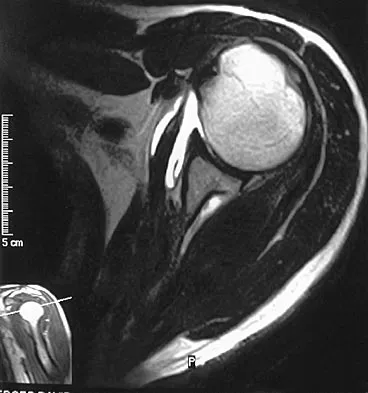
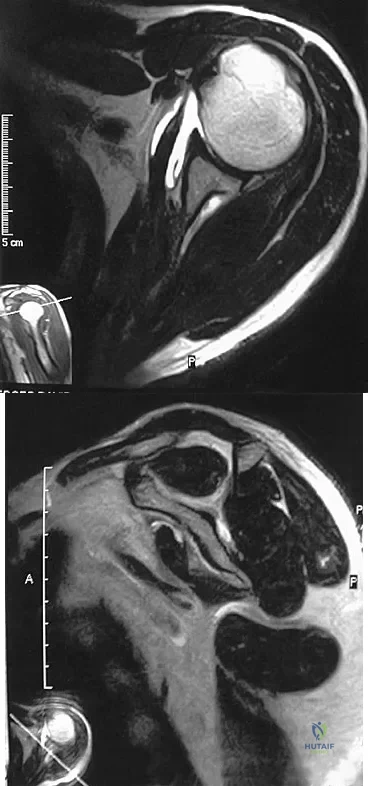
A 54-year man has left shoulder pain and weakness after falling while skiing 4 months ago. Examination reveals full range of motion passively, but he has a positive abdominal compression test and weakness with the lift-off test. External rotation strength with the arm at the side and strength with the arm abducted and internally rotated are normal. MRI scans are shown in Figures 1a and 1b. Treatment should consist of
Explanation
Question 5
A 17-year-old high school long distance runner is seeking advice before running a marathon for the first time. What advice should be given regarding his fluid, carbohydrate, and electrolyte intake around the time of the race?
Explanation
Question 6
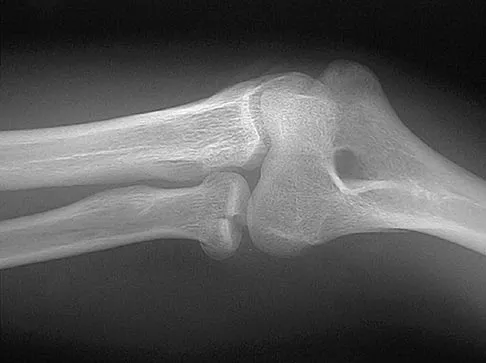
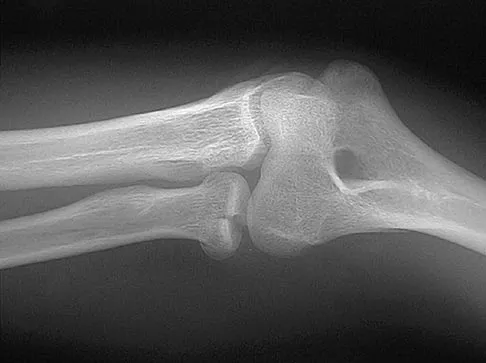
Figure 2 shows the radiograph of a 26-year-old auto mechanic who injured his right dominant elbow in a fall during a motocross race. Examination reveals pain and catching that limits his range of motion to 45 degrees of supination and 20 degrees of pronation. The interosseous space and distal radioulnar joint are stable. Management should consist of
Explanation
Question 7
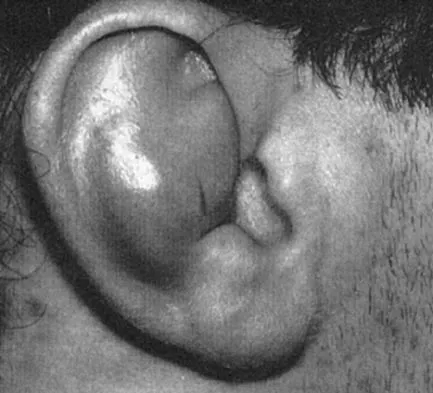
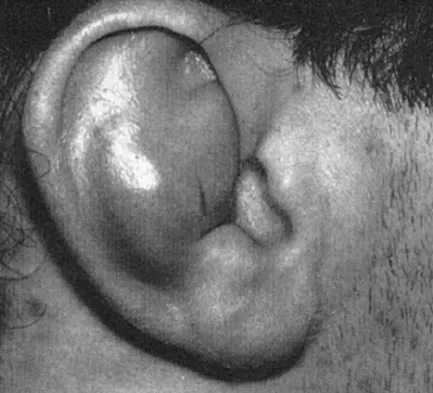
Figure 3 shows the clinical photograph of a wrestler who has an acute mass in his ear. He does not wear protective headgear. The area is mildly tender and without erythema. Management should consist of
Explanation
Question 8
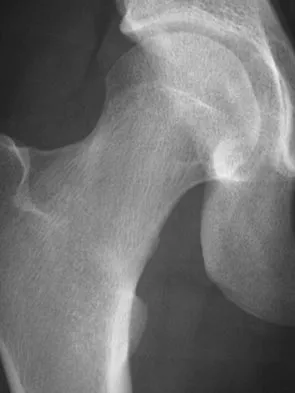
A patient with no history of patellar instability sustains a traumatic lateral patellar dislocation. What structure most likely has been torn?
Explanation
Question 9
A 22-year-old swimmer underwent thermal capsulorrhaphy treatment for recurrent anterior subluxation. Following 3 weeks in a sling, an accelerated rehabilitation program allowed him to return to swimming in 3 1/2 months. While practicing the butterfly stroke, he sustained an anterior dislocation. He now continues to have symptoms of anterior instability and has elected to have further surgery. Surgical findings may include a
Explanation
Question 10
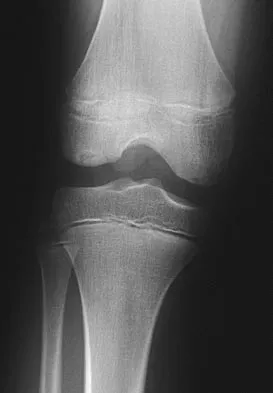
A 12-year-old boy reports knee discomfort after prolonged strenuous activities. He denies knee swelling or catching and has no pain with activities of daily living. A radiograph is shown in Figure 4. Prognosis for the pathology shown is most influenced by
Explanation
Question 11
A 70-year-old golfer has pain in her dominant shoulder. She reports that initially the pain was at night but now she is unable to play. Examination reveals weakness in external rotation and shoulder abduction. Radiographs reveal the humeral head articulating with a thin acromion. Management should consist of
Explanation
Question 12
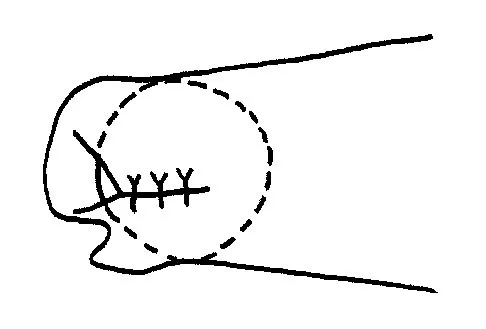
Which of the following structures is the most important restraint to posterior subluxation of the glenohumeral joint when positioned in 90 degrees of flexion and internal rotation?
Explanation
Question 13
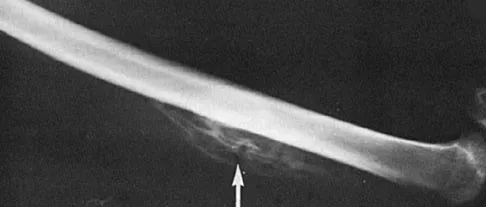
A 50-year-old competitive tennis player sustained a shoulder dislocation after falling on his outstretched arm 3 weeks ago. He now reports that he has regained motion but continues to have painful elevation and weakness in external rotation. A subacromial cortisone injection provided 3 weeks of relief, but the pain has returned. Which of the following studies will best aid in diagnosis?
Explanation
Question 14
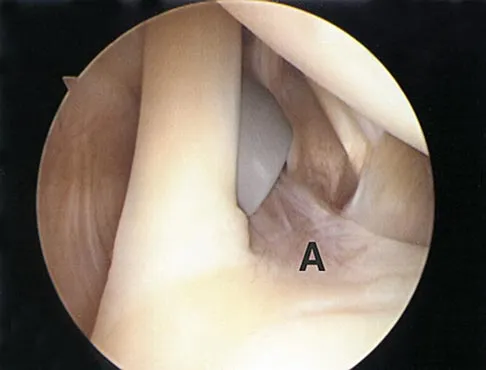
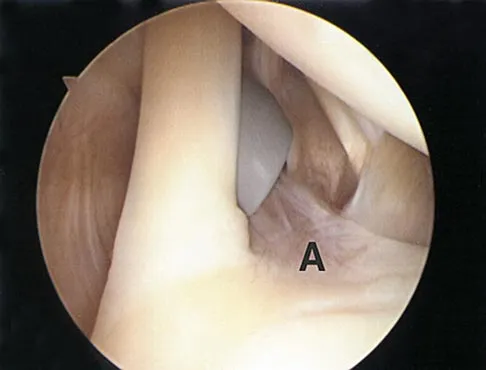
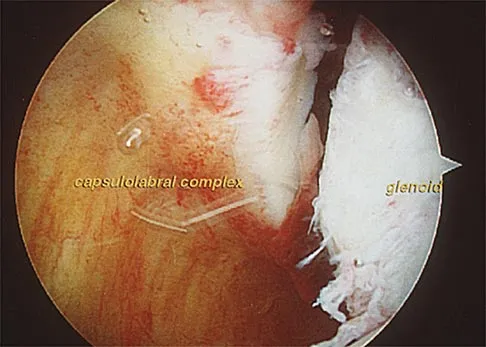
In the arthroscopic photograph shown in Figure 5, the structure labeled "A" functions primarily as a restraint to translation of the humeral head in what direction?
Explanation
Question 15
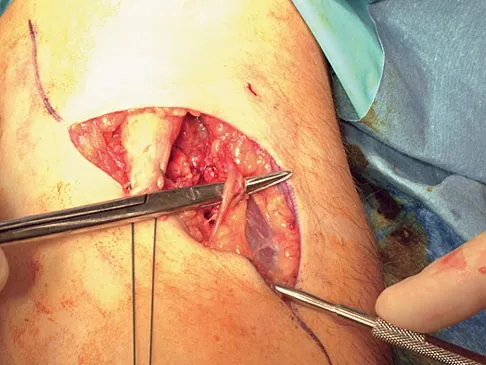
During the anterior approach for repair of a distal biceps tendon rupture, what structure, shown under the scissors in Figure 6, is at risk for injury?
Explanation
Question 16
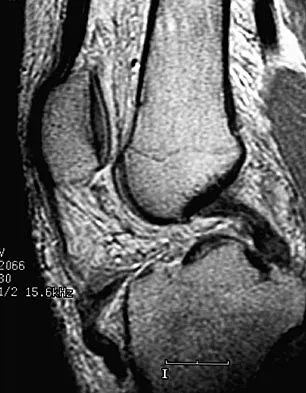
Which of the following variables has been shown to have the greatest influence on the higher rate of anterior cruciate ligament (ACL) tears in women when compared to men for similar sports?
Explanation
Question 17
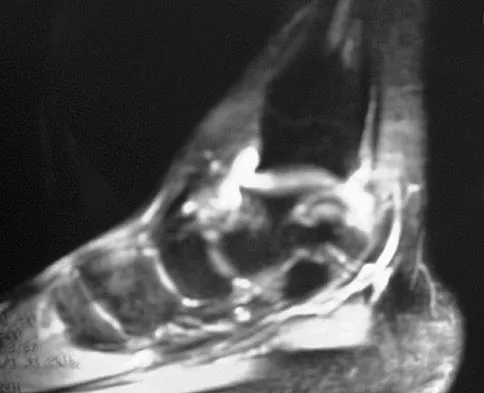
Figure 7 shows the MRI scan of a 23-year-old competitive rugby player who has anterior ankle pain and swelling. He states that he has been playing for many years and has sprained his ankle several times. Examination will reveal what specific hallmark feature?
Explanation
Question 18
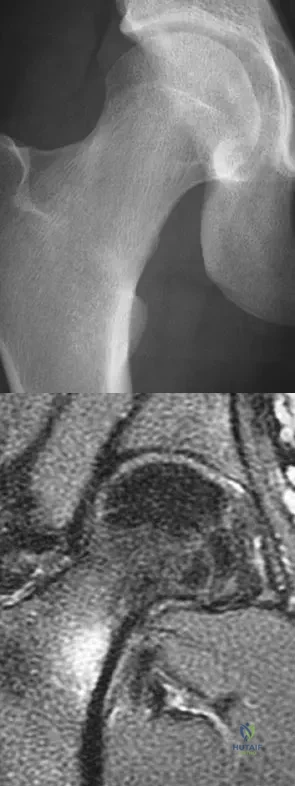
A 21-year-old collegiate female cross-country athlete reports right hip pain that begins about 12 miles into a run, followed by pain resolution when she discontinues running. However, each time she tries to resume a running program, she experiences recurrence of pain deep in the anterior groin. A plain radiograph and MRI scan are shown in Figures 8a and 8b. Management should consist of
Explanation
Question 19
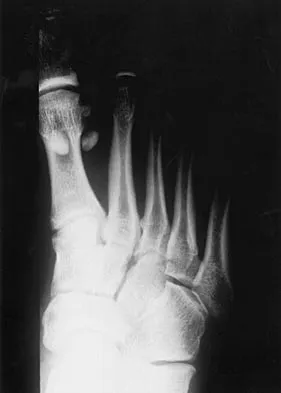
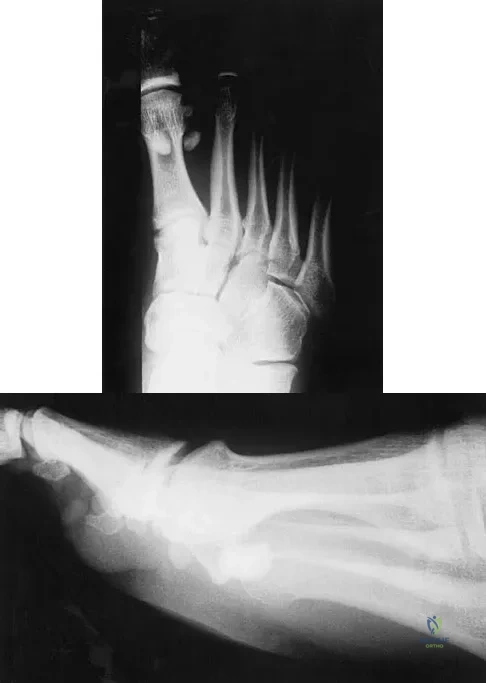
A 21-year-old football player who sustained a direct blow to the posterior hindfoot while making a cut is unable to bear weight on the injured foot. Examination reveals tenderness and swelling of the great toe metatarsophalangeal (MTP) joint. Radiographs are shown in Figures 9a and 9b. What is the most likely diagnosis?
Explanation
Question 20
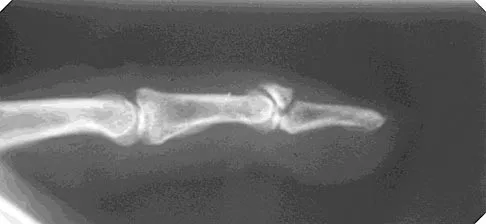
Examination of an 18-year-old professional soccer player who was forcefully kicked across the shin while attempting a slide tackle reveals a marked effusion and limited motion of the knee. The tibia translates 12 mm posterior to the femoral condyles when the knee is held in 90 degrees of flexion. There is no posteromedial or posterolateral instability. Management should consist of
Explanation
Question 21
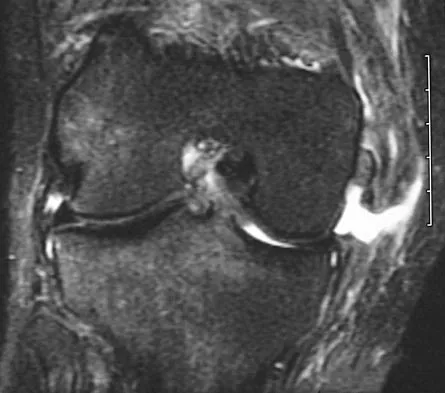
What type of injury is considered the major mechanism of cervical fracture, dislocation, and quadriplegia in contact sports and diving?
Explanation
Question 22
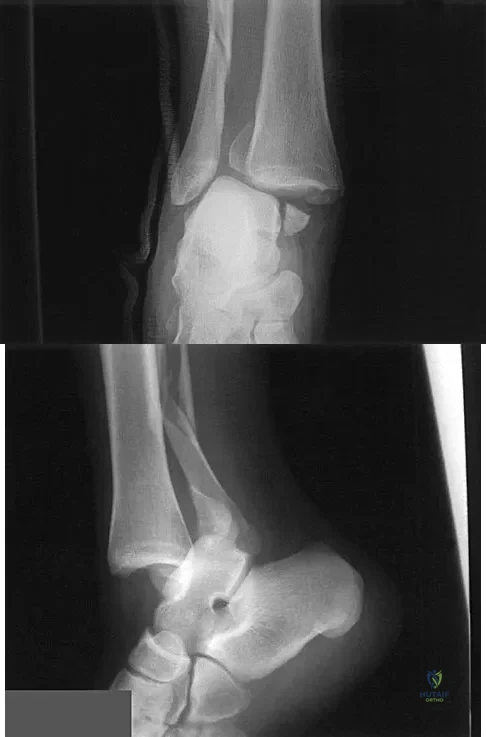
A 17-year-old high school football player injures his right ankle during a game. Examination reveals swelling and a closed ankle deformity, with normal foot circulation and sensation. Radiographs are shown in Figures 10a and 10b. In addition to closed reduction, management should include
Explanation
Question 23
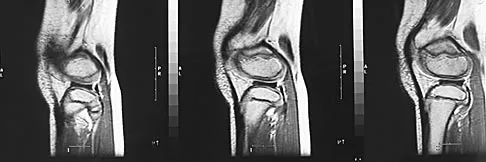
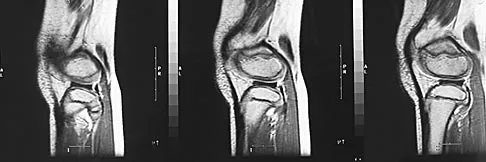
Figure 11 shows a consecutive sequence of MRI scans obtained in a 12-year-old boy who has had increasing lateral knee pain and catching for the past 6 months. Examination reveals pain localized to the lateral joint line. Range-of-motion testing reveals a 5-degree lack of full extension on the involved side. Plain radiographs and laboratory values are within normal limits. What is the most appropriate management?
Explanation
Question 24
A collegiate football player who sustained a blow to the head during the first quarter of a game is confused for several minutes after the hit but does not lose consciousness. He had two similar episodes in games earlier in the season. When should he be allowed to return to play?
Explanation
Question 25
For the athlete performing heavy exercise, the magnitude of core temperature and heart rate increase is most proportional to
Explanation
Question 26
A 13-year-old female soccer player with widely open physes sustains a complete anterior cruciate ligament (ACL) tear. Which of the following surgical techniques minimizes the risk of physeal arrest?
Explanation
Question 27
A 21-year-old collegiate rugby player with a history of recurrent anterior shoulder dislocations presents for surgical evaluation. CT imaging demonstrates 26% anterior glenoid bone loss. What is the most appropriate surgical intervention?
Explanation
Question 28
A high school football player is diagnosed with a concussion. He rests for 3 days and is now completely asymptomatic at rest and at school. According to the standard graduated return-to-play protocol, what is the minimum time before he can return to full-contact game play?
Explanation
Question 29
A 24-year-old male falls onto a hyperflexed knee during a basketball game. MRI confirms an isolated, complete Grade III tear of the posterior cruciate ligament (PCL). Which of the following is the most appropriate initial management?
Explanation
Question 30
Which of the following pathophysiological mechanisms defines Second Impact Syndrome in a concussed athlete?
Explanation
Question 31
A 23-year-old baseball pitcher complains of posterior shoulder pain during the late cocking phase of throwing. Arthroscopy reveals undersurface fraying of the posterior supraspinatus and posterosuperior labrum. What is the most likely diagnosis?
Explanation
Question 32
A 55-year-old avid runner sustains an acute posterior root tear of the medial meniscus. If left untreated, this injury is biomechanically equivalent to which of the following?
Explanation
Question 33
A 28-year-old hockey player takes a severe hit into the boards, landing directly on his lateral shoulder. Examination reveals a prominent distal clavicle. Radiographs show a Type III acromioclavicular (AC) joint separation. What is the standard initial treatment?
Explanation
Question 34
A 25-year-old rugby player receives a direct blow to the anteromedial aspect of the tibia. On examination, the dial test shows 15 degrees of increased external rotation at 30 degrees of knee flexion compared to the uninjured side, but symmetric rotation at 90 degrees of flexion. Which structure is injured?
Explanation
Question 35
A 19-year-old female collegiate soccer player is being evaluated in the clinic 4 weeks after sustaining a concussion. She complains of persistent headaches and "fogginess." Which of the following is the strongest predictor of a prolonged recovery (>14 days) in concussed athletes?
Explanation
Question 36
A 16-year-old female experiences a primary lateral patellar dislocation while dancing. Radiographs reveal a large osteochondral loose body in the lateral gutter. What is the most appropriate management?
Explanation
Question 37
A 32-year-old male weightlifter feels a sharp pop in his anterior chest/axilla while performing a heavy bench press. Examination reveals a cosmetic defect, loss of the anterior axillary fold, and weakness with adduction and internal rotation. The rupture most likely involves which anatomical location?
Explanation
Question 38
Which of the following anatomical variants is considered an independent risk factor for sustaining a non-contact anterior cruciate ligament (ACL) tear?
Explanation
Question 39
A 45-year-old manual laborer presents with anterior shoulder pain. He has a positive O'Brien test and MRI confirms an isolated Type II SLAP tear. After failing 6 months of physical therapy, what surgical intervention provides the most reliable clinical outcome?
Explanation
Question 40
A 30-year-old male sustains a severe hyperextension injury to his knee, resulting in a KD-III multiligament knee dislocation. On examination, he is unable to dorsiflex his ankle or extend his great toe. This neurologic deficit is due to an injury of a nerve structurally tethered at which of the following locations?
Explanation
Question 41
A 55-year-old male fell onto his outstretched right arm. He now complains of significant shoulder weakness. Physical examination demonstrates increased passive external rotation compared to the contralateral shoulder and a positive Bear Hug test. Which tendon is ruptured?
Explanation
Question 42
Chronic traumatic encephalopathy (CTE) is increasingly recognized in athletes with a history of repetitive concussive and subconcussive impacts. Which of the following is the hallmark neuropathological finding in CTE?
Explanation
Question 43
A 14-year-old boy presents with insidious onset of anterior knee pain and catching. Radiographs demonstrate an osteochondritis dissecans (OCD) lesion. What is the most common anatomic location for this lesion?
Explanation
Question 44
A 21-year-old gymnast presents with medial scapular winging. The inferior medial border of the scapula becomes extremely prominent when she pushes against a wall. Which muscle and nerve combination are primarily affected?
Explanation
Question 45
During a routine pre-participation physical, a 16-year-old football player uses the SCAT6 tool to establish a baseline. What is the primary purpose of obtaining a baseline SCAT6 score in a healthy athlete?
Explanation
Question 46
A 17-year-old high school football player sustains a concussion. He is asymptomatic at rest after 4 days. He completes a light aerobic exercise phase without symptoms. What is the next step in his return-to-play protocol?
Explanation
Question 47
During an anterior cruciate ligament (ACL) reconstruction, placing the femoral tunnel too anteriorly (high in the notch) will result in which of the following biomechanical consequences?
Explanation
Question 48
A 20-year-old collegiate baseball pitcher undergoes a Type II SLAP repair with suture anchors after failing nonoperative management. What is the most common postoperative complication that prevents return to his previous level of play?
Explanation
Question 49
A 25-year-old soccer player sustains an isolated Grade II posterior cruciate ligament (PCL) sprain. What is the most appropriate initial management?
Explanation
Question 50
A 19-year-old rugby player has recurrent anterior shoulder dislocations. CT imaging
reveals 25% anterior glenoid bone loss. What is the most appropriate definitive surgical management?
Explanation
Question 51
Which of the following best describes the pathophysiology of Second Impact Syndrome in a concussed athlete who returns to play prematurely?
Explanation
Question 52
A 45-year-old recreational runner feels a 'pop' in the back of his knee while squatting. MRI shows a medial meniscus posterior root tear with meniscal extrusion. Biomechanically, this injury is most equivalent to which of the following?
Explanation
Question 53
A 24-year-old volleyball attacker presents with posterior shoulder pain during the cocking phase of serving. Exam shows a positive posterior impingement sign. Pathophysiologically, this condition is characterized by contact between the posterosuperior glenoid labrum and which structure?
Explanation
Question 54
During reconstruction of the medial patellofemoral ligament (MPFL) for recurrent patellar instability, the anatomical femoral attachment site (Schöttle's point) is best identified radiographically in relation to which landmarks?
Explanation
Question 55
According to the Canadian CT Head Rule, which of the following is a high-risk indication for a head CT scan in a 20-year-old athlete presenting with a Glasgow Coma Scale (GCS) score of 15 after a minor head trauma?
Explanation
Question 56
A 28-year-old skier sustains a knee dislocation and undergoes immediate field reduction. In the emergency department, pulses are symmetric and normal. What is the most appropriate next step in vascular assessment?
Explanation
Question 57
A 25-year-old hockey player sustains a direct blow to the point of his shoulder. Radiographs reveal an acromioclavicular (AC) joint separation with the distal clavicle displaced posteriorly into the trapezius fascia. What is the Rockwood classification type of this injury?
Explanation
Question 58
The most devastating neurovascular complication during tibial tunnel drilling for a posterior cruciate ligament (PCL) reconstruction is injury to which of the following structures?
Explanation
Question 59
A 30-year-old weightlifter feels a 'tear' in his anterior chest while performing a heavy bench press. Examination reveals an asymmetric chest wall and a palpable defect in the anterior axillary fold. The vast majority of these pectoralis major injuries occur at which anatomic location?
Explanation
Question 60
A 14-year-old gymnast presents with vague anterior knee pain. Radiographs
reveal an osteochondritis dissecans (OCD) lesion. In the knee, what is the most common anatomic location for an OCD lesion?
Explanation
Question 61
During a soccer match, a player clashes heads with an opponent. He is conscious but confused. Which of the following components of the SCAT5 (Sport Concussion Assessment Tool 5) is specifically designed to evaluate his immediate memory?
Explanation
Question 62
Which of the following is a recognized biomechanical or anatomic risk factor for non-contact anterior cruciate ligament (ACL) tears in female athletes?
Explanation
Question 63
A 45-year-old recreational tennis player presents with shoulder pain and weakness after a fall on an outstretched arm. Physical exam reveals increased passive external rotation compared to the contralateral side and a positive lift-off test. Which of the following physical examination tests would also most likely be positive?
Explanation
Question 64
A 24-year-old professional baseball pitcher experiences deep shoulder pain during the late cocking phase of throwing. MRI confirms a Type II SLAP lesion. Which of the following biomechanical mechanisms is most responsible for this specific injury in overhead throwing athletes?
Explanation
Question 65
A 16-year-old high school soccer player sustains a concussion and is progressing through a stepwise return-to-play protocol. During step 3 (sport-specific exercise), she develops a mild headache. What is the most appropriate next step in her management?
Explanation
Question 66
A 22-year-old female presents with recurrent instability 18 months after an anterior cruciate ligament (ACL) reconstruction. Physical examination reveals a positive Lachman and pivot-shift test. Radiographs and MRI suggest graft failure. What is the most common technical error leading to ACL graft failure?
Explanation
Question 67
A 21-year-old collegiate rugby player with a history of recurrent anterior shoulder dislocations presents for surgical evaluation. A 3D CT scan demonstrates a 27% anterior glenoid bone loss and an engaging Hill-Sachs lesion. Which of the following is the most appropriate surgical management?
Explanation
Question 68
A 55-year-old man feels a sudden 'pop' in the posterior aspect of his knee while squatting. MRI reveals a complete radial tear at the posterior root of the medial meniscus. If left untreated, this injury most closely mimics the biomechanical consequences of which of the following?
Explanation
Question 69
A high school football player sustains a concussion but conceals his symptoms to stay in the game. He subsequently takes another hit to the head and collapses, rapidly deteriorating into a coma. What is the primary pathophysiologic mechanism of Second Impact Syndrome?
Explanation
Question 70
A 45-year-old recreational tennis player has symptomatic failure of nonoperative management for an isolated Type II SLAP tear. In this specific demographic, which surgical intervention has been shown to yield the highest patient satisfaction and return to sport rates?
Explanation
Question 71
A 28-year-old skier presents with acute knee pain after a twisting injury. On physical examination, the dial test shows 15 degrees of increased external rotation on the injured side at 30 degrees of knee flexion, but symmetric external rotation at 90 degrees of flexion. This examination finding is most consistent with an isolated injury to which of the following structures?
Explanation
Question 72
Internal impingement of the shoulder in an elite overhead thrower typically involves the compression of which of the following structures during the late cocking/early acceleration phase?
Explanation
Question 73
A 16-year-old female presents with recurrent lateral patellar dislocations. Imaging demonstrates a normal TT-TG distance (12 mm) but an elevated Caton-Deschamps index of 1.5. Which of the following surgical procedures is most appropriate to address her specific pathoanatomy in addition to medial patellofemoral ligament (MPFL) reconstruction?
Explanation
Question 74
Following a sport-related concussion, an athlete is evaluated by the team physician. Which of the following factors at the time of initial injury is the strongest and most consistent predictor of a prolonged recovery (lasting greater than 14 days)?
Explanation
Question 75
A 35-year-old man presents with anterior shoulder pain and internal rotation weakness following a fall onto an outstretched hand. The examiner notes a positive belly-press test. Which of the following nerves innervates the primary muscle evaluated by this specific test?
Explanation
Question 76
A 25-year-old running back sustains a direct blow to the proximal tibia with his knee flexed. MRI confirms an isolated, Grade II injury of the posterior cruciate ligament (PCL). What is the most appropriate initial management?
Explanation
Question 77
A 20-year-old collegiate swimmer presents with insidious onset of anterior shoulder pain. Examination reveals a prominent inferior medial scapular border and scapular dyskinesis at rest and during dynamic motion (SICK scapula syndrome). Initial physical therapy should focus on strengthening which of the following muscle groups?
Explanation
Question 78
An 11-year-old male presents with vague anterior knee pain and catching. Radiographs reveal an osteochondritis dissecans (OCD) lesion. In the knee, what is the most common anatomic location for an OCD lesion?
Explanation
Question 79
A 28-year-old patient presents to the emergency department after sustaining a severe hyperextension injury to the knee. Examination reveals gross multi-planar instability consistent with a knee dislocation (KD-III). The dorsalis pedis pulse is palpable but diminished compared to the contralateral side. The Ankle-Brachial Index (ABI) is calculated to be 0.7. What is the most appropriate next step in management?
Explanation
Question 80
A 19-year-old collegiate hockey player suffers a first-time anterior shoulder dislocation. It is successfully reduced in the emergency department. If this athlete is treated non-operatively with a sling and physical therapy, what is his approximate risk of recurrent instability?
Explanation
Question 81
During the acute neurometabolic cascade of a sport-related concussion, indiscriminate release of excitatory neurotransmitters (such as glutamate) leads to a rapid ionic shift across the neuronal membrane. Which of the following best describes this immediate ionic and metabolic state?
Explanation
Question 82
When counseling a high school athlete on graft choices for an anterior cruciate ligament (ACL) reconstruction, the surgeon discusses bone-patellar tendon-bone (BPTB) autograft versus hamstring autograft. Which of the following postoperative complications is significantly more common with a BPTB autograft?
Explanation
Question 83
A 30-year-old recreational cyclist falls directly onto his right shoulder. Clinical examination and radiographs demonstrate 100% superior displacement of the clavicle relative to the acromion, with an increased coracoclavicular distance compared to the normal side. The deltotrapezial fascia appears clinically intact based on the reducible nature of the joint. What is the most widely recommended initial treatment for this Grade III acromioclavicular (AC) joint separation?
Explanation
Question 84
A 19-year-old college football player sustains a concussion during a game. Under current guidelines, when is it appropriate for him to begin a graduated return-to-play protocol?
Explanation
Question 85
A 20-year-old collegiate gymnast is undergoing anterior cruciate ligament (ACL) reconstruction. Which of the following graft choices is associated with the highest rate of postoperative anterior knee pain and difficulty kneeling?
Explanation
Question 86
A 21-year-old baseball pitcher presents with deep shoulder pain during the late cocking phase of throwing. MRI arthrogram reveals a Type II SLAP tear. After 3 months of physical therapy focusing on periscapular stabilization and posterior capsular stretching, his symptoms persist. What is the most appropriate surgical intervention?
Explanation
Question 87
A 28-year-old male presents to the emergency department with a multiligamentous knee injury following a high-speed motor vehicle collision. Which of the following physical exam findings mandates immediate surgical exploration by vascular surgery?
Explanation
Question 88
A 30-year-old male sustains a grade III posterior cruciate ligament (PCL) tear in a dashboard injury. When planning an isolated single-bundle PCL reconstruction, which native bundle is typically reconstructed to restore maximal restraint to posterior tibial translation at 90 degrees of flexion?
Explanation
Question 89
A 16-year-old high school football player sustains a mild concussion. He returns to play the following week while still experiencing mild headaches. During the game, he receives a minor blow to the chest, collapses, and falls into a coma. What is the primary pathophysiologic mechanism of this rapid decline?
Explanation
Question 90
A 22-year-old baseball pitcher presents with posterior shoulder pain during the late cocking phase of throwing. On examination, he has pain with abduction and external rotation, which is relieved by a relocation maneuver. What is the most likely underlying arthroscopic finding?
Explanation
Question 91
A 12-year-old elite baseball pitcher presents with a gradual onset of proximal arm pain when throwing. Radiographs demonstrate widening and irregularity of the proximal humeral physis. What is the most appropriate initial management?
Explanation
Question 92
A 22-year-old soccer player undergoes an acute ACL reconstruction along with a meniscal repair for a vertical longitudinal tear in the red-red zone of the medial meniscus. Which of the following factors is most strongly associated with successful healing of this meniscal tear?
Explanation
Question 93
A 28-year-old bodybuilder feels a pop in his anterior axilla while performing a heavy bench press. Examination reveals an asymmetric axillary fold and weakness in internal rotation and adduction. Which aspect of the pectoralis major is most commonly ruptured in this specific scenario?
Explanation
Question 94
A 17-year-old female experiences recurrent lateral patellar dislocations. Evaluation reveals a tibial tubercle-trochlear groove (TT-TG) distance of 22 mm and a normal Patellar Height (Caton-Deschamps index 1.0). Which surgical intervention is most appropriate to address her instability?
Explanation
Question 95
A 14-year-old male presents with knee pain. Radiographs show an osteochondritis dissecans (OCD) lesion on the lateral aspect of the medial femoral condyle. His physes are open, and MRI shows no high T2 signal behind the lesion. What is the most appropriate initial management?
Explanation
Question 96
A 20-year-old collegiate tennis player is found to have a 25-degree deficit in glenohumeral internal rotation compared to his non-dominant arm, though his total arc of motion is equivalent bilaterally. He complains of vague posterior shoulder pain. What is the most appropriate first-line treatment?
Explanation
Question 97
A 25-year-old sustains a direct blow to the anteromedial tibia with the knee in extension. Examination reveals a grade 3 varus stress test at 30 degrees of flexion and a positive dial test at 30 degrees. However, at 90 degrees of flexion, the dial test is symmetric to the contralateral side. Which structures are most likely injured?
Explanation
Question 98
A 17-year-old soccer player collides head-to-head with an opponent and falls. He reports transient dizziness and a headache but denies any loss of consciousness. On sideline evaluation using the SCAT5, he has difficulty with delayed recall. What is the most appropriate next step in management?
Explanation
None
Detailed Chapters & Topics
Dive deeper into specialized chapters regarding sports-medicine-2004-set-1-mcqs-3983