Orthopedic Spine 2026 MCQs: Board Review Questions & Answers (Part 2)
Key Takeaway
Discover the latest medical recommendations for Orthopedic Spine 2026 MCQs: Board Review Questions & Answers (Part 2). Top-rated Orthopedic Spine 2026 MCQs bank. Practice with clinical case questions, orthopedic surgery board review, and evidence-based answers updated for 2026.
Orthopedic Spine 2026 MCQs: Board Review Questions & Answers (Part 2)
Comprehensive 100-Question Exam
00:00
Start Quiz
Question 1
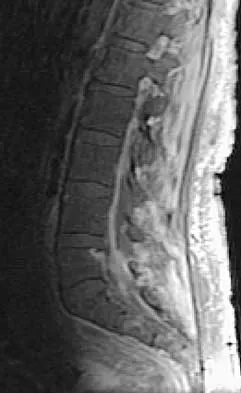
Figure 10 shows the MRI scan of a 56-year-old woman with metastatic breast cancer who now reports progressive paraparesis. Her general health remains good. Treatment should consist of
Explanation
Question 2
When 6 weeks of noninvasive nonsurgical management fails to provide relief for a lumbar disk herniation, a trial of epidural steroid injections is likely to yield which of the following results?
Explanation
Question 3
Which of the following anatomic changes is observed as part of the normal aging process of the adult spine?
Explanation
Question 4
A previously healthy 30-year-old woman has neck pain and bilateral hand and lower extremity tingling with weakness after falling down stairs. She is alert and oriented. Examination reveals incomplete quadriplegia at the C6 level that remains unchanged throughout her evaluation and initial treatment. Radiographs show a bilateral facet dislocation of C6 on C7 without fracture. Attempts at reduction with halo cervical traction up to her body weight are unsuccessful. What is the next most appropriate step?
Explanation
Question 5
Which of the following findings is the best radiographic indicator of segmental instability at L4-L5?
Explanation
Question 6
In a patient who has undergone fusion with instrumentation from T4 to the sacrum for adult scoliosis, at which site is a pseudarthrosis most likely to be discovered?
Explanation
Question 7
The afferent pain innervation of the L3-L4 facet joint arises from the medial branch nerve of
Explanation
Question 8
When posterior fusion with instrumentation to the sacrum is used to treat adult scoliosis, what instrumentation technique best increases the chance of a successful lumbosacral fusion?
Explanation
Question 9
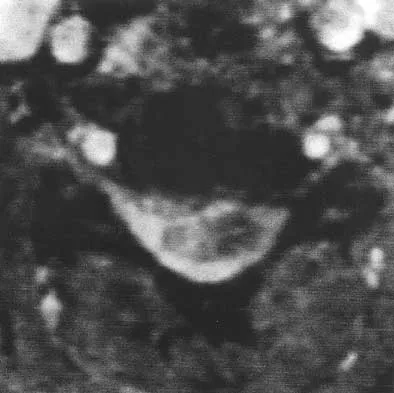
Which of the following structures runs through the site indicated by the arrow in Figure 11?
Explanation
Question 10
A 42-year-old man has had left lower extremity pain in an L5 radicular pattern for the past 6 weeks. He denies significant axial low back pain. History reveals that he underwent an L4-5 diskectomy with successful relief of similar pain 5 years ago. Which of the following imaging studies would offer the greatest amount of information?
Explanation
Question 11
Figure 12 shows the radiograph of an 80-year-old woman who has had an 8-month history of back pain after a fall. What is the most likely diagnosis based on the radiographic findings at the fractured vertebrae?
Explanation
Question 12
Which of the following complications is uniquely associated with an anterior approach to the lumbosacral junction?
Explanation
Question 13
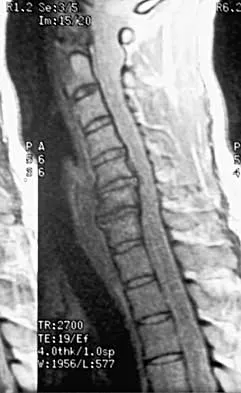
A 68-year-old woman with a history of rheumatoid arthritis has had neck pain and weakness in all four extremities that has become worse in the past 6 months. She has gone from a community to a household ambulator and uses a wheelchair outside of the home. Examination of the extremities reveals poor coordination, diffuse weakness, hyperactive reflexes, and bilateral sustained clonus. She has a broad-based and unsteady gait. The posterior atlanto-dens interval is 12 mm. Based on these findings and the radiograph and MRI scan shown in Figures 13a and 13b, the treatment of choice is surgical decompression and stabilization. However, the patient inquires about the prognosis with surgery compared to nonsurgical management. Assuming there are no complications from surgery, the patient should be informed that, with surgery, she will most likely
Explanation
Question 14
Five weeks after undergoing a successful L4-L5 diskectomy, with complete relief of his preoperative sciatica, a 36-year-old man has severe, relentless back and buttock pain. Examination and laboratory studies are unremarkable with the exception of an erythrocyte sedimentation rate (ESR) of 90 mm/h. What is the next most appropriate step in management?
Explanation
Question 15
An 18-year-old man sustained a knife injury to his midback, with the entry wound 2 cm to the left of the midline. He has been diagnosed with a hemicord transection. Neurologic examination will most likely reveal left-sided loss of
Explanation
Question 16
When using surgery extending to the pelvis to treat long spinal deformity in adults, the addition of anterior interbody structural support at the lumbosacral junction serves what biomechanical function?
Explanation
Question 17
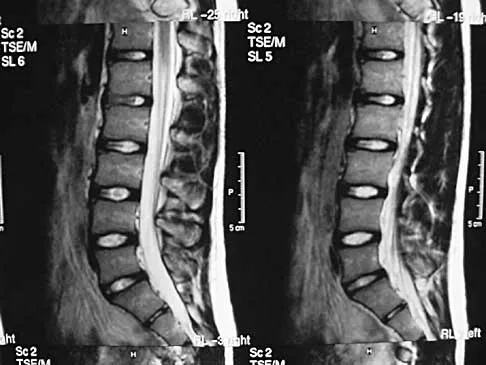
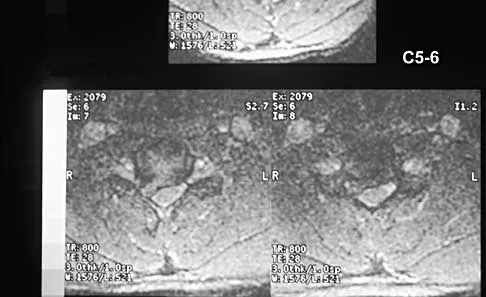
A 40-year-old woman has had sciatic pain on the left side for the past 8 weeks. She reports that the pain radiates to her posterior thigh, lateral calf, and into the dorsum of her left foot. Neurologic examination shows weakness of the left extensor hallucis longus. Axial T2-weighted MRI scans through L4-L5 are shown in Figure 14. Management should consist of
Explanation
Question 18
During C1-C2 transarticular screw fixation, screw misplacement is most likely to result in injury to the
Explanation
Question 19
A 27-year-old professional soccer player sustained an injury to his cervical spine in a collision with another player. Initially he was diagnosed with a right C6 radiculopathy that resolved with rest, anti-inflammatory medications, and physical therapy. Following a fall in a game, he noted a recurrence of neck pain without radicular signs or symptoms. Additional nonsurgical management over the past few months has failed to provide relief. A cervical MRI scan shows a right-sided C5-6 herniation without any evidence of disk disease at other cervical levels. The patient desires to continue his career as a professional soccer player. What treatment offers the best long-term option for return to play?
Explanation
Question 20
A collegiate football player who sustained an injury to his neck has significant neck pain and weakness in his extremities. Following immobilization, which of the following steps should be taken prior to transport?
Explanation
Question 21
What is the most common complication following total disk arthroplasty in the lumbar spine?
Explanation
Question 22
A 42-year-old woman has cervical stenosis and radicular deficits at the C5-6 and C6-7 levels. History reveals that she has smoked one pack of cigarettes a day for 25 years. Because nonsurgical management has failed to provide relief, she is now seeking surgical treatment. After preoperative counseling, it becomes clear that she is not likely to stop smoking. Which of the following surgical procedures should be used?
Explanation
Question 23
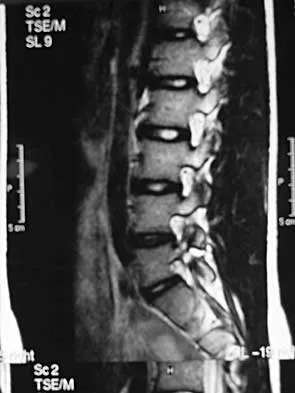
An otherwise healthy 54-year-old man who underwent a successful multilevel lumbar decompression and fusion 4 years ago now reports increasingly severe bilateral thigh claudication with paresthesia and severe back pain for the past 12 months. Physical therapy, bracing, and epidural steroids have failed to provide relief. A radiograph and MRI scans are shown in Figures 15a through 15c. He is afebrile, and laboratory studies show an erythrocyte sedimentation rate of 5 mm/h and a normal WBC count. What is the best course of action?
Explanation
Question 24
Which of the following is considered a risk factor for the development of low back pain?
Explanation
Question 25
A corset-type brace may help reduce symptoms during an episode of acute low back pain as the result of
Explanation
Question 26
A 65-year-old female presents with severe neurogenic claudication and L4-L5 Grade 1 degenerative spondylolisthesis. After failing 6 months of conservative management, she is considering surgery. Based on long-term data from the Spine Patient Outcomes Research Trial (SPORT), what is the expected outcome of surgical decompression and fusion compared to non-operative treatment for this condition?
Explanation
Question 27
A 58-year-old man presents with progressive clumsiness in his hands and difficulty with balance. On physical examination, rapidly flicking the nail of his middle finger results in involuntary flexion of the interphalangeal joint of his thumb and the distal interphalangeal joint of his index finger. Which of the following best describes this physical exam finding and its anatomic localizing value?
Explanation
Question 28
When evaluating a patient for adult spinal deformity correction, achieving a harmonious sagittal profile is a primary goal to improve health-related quality of life. According to the SRS-Schwab classification, which of the following spinopelvic parameter combinations represents the ideal target for postoperative alignment?
Explanation
Question 29
A 35-year-old male falls from a height of 15 feet and sustains a L1 fracture.
Imaging shows a burst fracture with 30% canal compromise. He is neurologically intact. MRI demonstrates an intact posterior ligamentous complex (PLC). According to the Thoracolumbar Injury Classification and Severity (TLICS) score, what is his total score and the recommended management?

Explanation
Question 30
A 62-year-old male presents with insidious onset of sacral pain and bowel/bladder dysfunction. Imaging reveals a large, destructive midline sacral mass with a 'soap bubble' appearance and an anterior cortical break.
Biopsy demonstrates physaliferous cells. What is the most appropriate definitive management for this lesion?

Explanation
Question 31
A 55-year-old female with a 20-year history of rheumatoid arthritis presents with severe neck pain, suboccipital headaches, and bilateral hand clumsiness. Radiographs show significant basilar invagination.
Which of the following radiographic measurements is the most accurate for diagnosing basilar invagination on a lateral cervical spine radiograph?
Explanation
Question 32
A 24-year-old male rugby player presents with severe neck pain and bilateral upper extremity weakness (deltoids and biceps 3/5, distal muscles 5/5) following a tackling injury. He is awake, alert, and cooperative. Plain films and CT demonstrate a unilateral jumped facet at C5-C6. What is the most appropriate next step in management?
Explanation
Question 33
A 68-year-old male undergoes a C3-C6 posterior cervical laminectomy and fusion for cervical spondylotic myelopathy. On postoperative day 2, he develops profound weakness in his right deltoid and biceps (1/5), with no other new sensory or motor deficits. What is the most likely etiology of this complication?
Explanation
Question 34
A 50-year-old diabetic male presents with 2 weeks of worsening back pain, low-grade fevers, new-onset urinary retention, and bilateral leg weakness.
MRI reveals a dorsal spinal epidural abscess at T10-T12 with severe cord compression. Which of the following is the most appropriate definitive management?
Explanation
Question 35
A 42-year-old male presents with severe right-sided anterior thigh pain, weakness in knee extension, and a diminished patellar reflex. MRI of the lumbar spine reveals a far-lateral (extraforaminal) disc herniation. At which lumbar level is this herniation most likely located to produce these specific neurologic findings?
Explanation
Question 36
An 82-year-old man is evaluated in the emergency department after suffering a ground-level fall. He complains of upper neck pain without radiation. Neurologic examination is completely normal. CT imaging of the cervical spine reveals a Type II odontoid fracture with 2 mm of posterior displacement. Given the patient's age and clinical presentation, what is the most appropriate management strategy?
Explanation
Question 37
During a posterior spinal fusion for adolescent idiopathic scoliosis, the neuromonitoring team reports a sudden, complete loss of Motor Evoked Potentials (MEPs) in both lower extremities. Somatosensory Evoked Potentials (SSEPs) remain at baseline. Which of the following is the most appropriate initial management step?
Explanation
Question 38
A 45-year-old woman presents with severe neck pain radiating down her right arm. Physical examination reveals a diminished triceps reflex, profound weakness in elbow extension and wrist flexion, and decreased sensation over the dorsal aspect of the middle finger. Which of the following cervical disc herniations is most likely responsible for these findings?
Explanation
Question 39
A 62-year-old man with a 30-year history of ankylosing spondylitis presents to the emergency department after a low-speed motor vehicle collision. He complains of localized neck pain but has normal motor and sensory function. Plain radiographs of the cervical spine show extensive syndesmophytes and a 'bamboo spine' appearance but no definitive fracture. What is the most appropriate next step in management?
Explanation
Question 40
A 65-year-old woman is evaluated for a debilitating flatback deformity and sagittal imbalance. Figure 39 represents a templated standing lateral radiograph. Measurement of her spino-pelvic parameters reveals a pelvic incidence (PI) of 56 degrees and a sacral slope (SS) of 22 degrees. What is her calculated pelvic tilt (PT), and what is the generally accepted target for her postoperative lumbar lordosis (LL)?

Explanation
Question 41
A 55-year-old diabetic intravenous drug user presents with a 1-week history of worsening severe mid-thoracic back pain, fevers, and new-onset bilateral lower extremity weakness (3/5 strength in iliopsoas and quadriceps) along with urinary retention. MRI reveals a large, dorsal spinal epidural abscess compressing the spinal cord at T8. What is the most appropriate definitive management?
Explanation
Question 42
A 42-year-old man presents with severe low back pain, bilateral sciatica, perineal numbness, and acute urinary retention. Post-void residual volume is 600 mL. MRI confirms a massive L4-L5 central disc herniation causing cauda equina syndrome. He is scheduled for emergent surgical decompression. Which of the following factors is the most significant predictor of full postoperative recovery of bladder and sphincter function?
Explanation
Question 43
A 60-year-old man presents with progressive clumsiness in his hands and a wide-based, unsteady gait. Figure 8 shows his sagittal T2-weighted MRI. Imaging confirms ossification of the posterior longitudinal ligament (OPLL). The K-line is drawn from the mid-canal of C2 to the mid-canal of C7, and the ossified mass crosses the K-line anteriorly (K-line negative). Additionally, the cervical spine demonstrates 15 degrees of kyphosis. Which of the following surgical approaches is most appropriate?

Explanation
Question 44
The Spine Patient Outcomes Research Trial (SPORT) evaluated outcomes for patients with symptomatic degenerative spondylolisthesis and lumbar spinal stenosis. At the 4-year follow-up, which of the following conclusions was most strongly supported by the data regarding surgical versus nonoperative management?
Explanation
Question 45
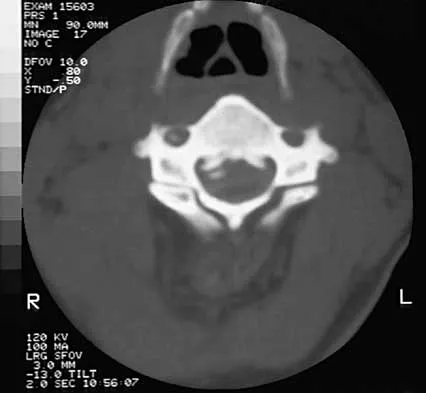
A 19-year-old man is brought to the trauma bay after a high-speed motor vehicle collision where he was restrained by a lap belt only. He sustains an L2 flexion-distraction injury (classic Chance-type fracture pattern), as demonstrated in Figure 12. Biomechanically, if the axis of rotation is located at the anterior longitudinal ligament, which of the following best describes the mechanism of failure according to the Denis three-column model?
Explanation
Question 46
A 65-year-old man presents with progressive gait instability and fine motor clumsiness in his hands. Examination reveals hyperreflexia in the lower extremities, a positive Hoffmann sign bilaterally, and loss of proprioception in his toes.
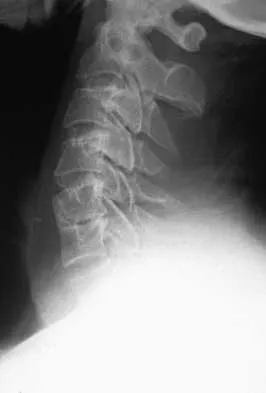
Which of the following parameters on MRI is most predictive of poor neurological recovery following surgical decompression?
Explanation
Question 47
A 68-year-old woman presents with severe low back pain, global sagittal imbalance, and difficulty standing upright. Standing full-length lateral radiographs show a pelvic incidence (PI) of 60 degrees, lumbar lordosis (LL) of 30 degrees, and a sagittal vertical axis (SVA) of 12 cm. What is the approximate target lumbar lordosis required to achieve an optimal sagittal balance in this patient if surgical correction is planned?
Explanation
Question 48
An 82-year-old man falls from a standing height and presents with neck pain.
Imaging reveals a Type II odontoid fracture with 3 mm of posterior displacement. He is neurologically intact. He has a history of severe chronic obstructive pulmonary disease (COPD) and coronary artery disease. What is the most appropriate initial management?
Explanation
Question 49
A 62-year-old woman presents with a 1-year history of neurogenic claudication and low back pain. Flexion-extension radiographs demonstrate a dynamic L4-L5 degenerative spondylolisthesis with 4 mm of translation. MRI confirms severe central canal stenosis at L4-L5. She has failed 6 months of nonoperative management. Based on classic randomized controlled trials, which of the following surgical interventions has historically demonstrated the most reliable long-term outcomes for this condition?
Explanation
Question 50
A 15-year-old male gymnast presents with persistent low back pain that is worsened by spinal extension. Oblique radiographs demonstrate a "Scottie dog with a collar" sign at L5. MRI shows increased signal in the pars interarticularis on STIR sequences but no obvious gap on T1. What is the most appropriate initial management?
Explanation
Question 51
A 45-year-old man with a long-standing history of ankylosing spondylitis presents to the emergency department after a low-speed motor vehicle collision. He complains of severe lower neck pain. Neurological examination is normal. Standard anteroposterior and lateral cervical spine radiographs are interpreted as negative. What is the most appropriate next step in management?
Explanation
Question 52
A 54-year-old diabetic man presents with a 1-week history of severe mid-back pain, low-grade fevers, and new-onset urinary retention. Examination reveals bilateral lower extremity weakness (motor strength 3/5) and decreased sensation below the T8 dermatome. MRI with gadolinium demonstrates a dorsal epidural collection spanning T6 to T9 with peripheral rim enhancement, severely compressing the spinal cord. What is the most appropriate definitive management?
Explanation
Question 53
A 42-year-old woman presents with acute onset of severe low back pain, bilateral sciatica, and perineal numbness. She reports one episode of urinary incontinence earlier in the day. Post-void residual (PVR) volume is 400 mL. MRI reveals a massive L4-L5 central disc herniation filling the spinal canal. Which of the following is the most critical prognostic factor for full recovery of her bladder function?
Explanation
Question 54
A 60-year-old man with a history of prostate cancer presents with progressive mechanical back pain.
Imaging shows a metastatic lesion at L2 involving the vertebral body and the left pedicle. The Spine Instability Neoplastic Score (SINS) is calculated to be 14. He has no neurological deficits. Based on this score, what is the most appropriate recommendation regarding his spinal stability?
Explanation
Question 55
A 55-year-old woman with a 20-year history of severe rheumatoid arthritis presents with neck pain and paresthesias in her hands. Flexion-extension radiographs of the cervical spine demonstrate an anterior atlanto-dens interval (ADI) of 11 mm. What is the most appropriate management?
Explanation
Question 56
A 68-year-old woman presents with severe mechanical back pain and difficulty standing upright. Radiographs reveal a pelvic incidence (PI) of 65°, lumbar lordosis (LL) of 30°, pelvic tilt (PT) of 35°, and a sagittal vertical axis (SVA) of +12 cm. She has failed extensive nonoperative management. If surgical correction is planned, what is the primary sagittal alignment goal to optimize her clinical outcome?
Explanation
Question 57
A 45-year-old man presents with severe right-sided neck and arm pain. Physical examination reveals weakness in right elbow extension, wrist flexion, and finger extension. His triceps reflex is diminished on the right. Sensation is decreased over the middle finger. Which of the following nerve roots is most likely compressed?
Explanation
Question 58
A 72-year-old man with long-standing ankylosing spondylitis presents to the emergency department after a low-energy ground-level fall. He complains of severe neck pain but has no neurologic deficits. Initial plain radiographs of the cervical spine are obscured by his severe cervicothoracic kyphosis. What is the most appropriate next step in management?
Explanation
Question 59
A 55-year-old woman presents with progressive leg weakness, numbness in her perineal region, and recent onset of urinary incontinence. She reports an acute exacerbation of lower back pain after lifting a heavy box. Post-void residual (PVR) bladder volume is 400 mL. MRI reveals a massive L4-L5 central disc herniation. Which of the following is the most significant prognostic factor for recovery of normal bladder function following emergency surgical decompression?
Explanation
Question 60
In the management of pyogenic vertebral osteomyelitis, which of the following scenarios is an absolute indication for surgical intervention rather than treatment with prolonged intravenous antibiotics alone?
Explanation
Question 61
A 32-year-old construction worker falls from a height of 10 feet and sustains an isolated L1 burst fracture. He is neurologically intact. Upright radiographs demonstrate 15° of regional kyphosis and 30% loss of anterior vertebral body height. CT scan shows retropulsion of the posterosuperior vertebral body fragment occluding 25% of the spinal canal. The posterior ligamentous complex (PLC) is intact on MRI. According to the Thoracolumbar Injury Classification and Severity (TLICS) system, what is his total score and the recommended treatment pathway?
Explanation
Question 62
A 60-year-old man presents with neurogenic claudication. Figure 32 shows an imaging study demonstrating degenerative spondylolisthesis at L4-L5. Based on the Spine Patient Outcomes Research Trial (SPORT) for degenerative spondylolisthesis, patients treated surgically with decompression and fusion compared to those treated nonoperatively demonstrated:
Explanation
Question 63
A 40-year-old woman undergoes a posterior cervical foraminotomy for a C5-C6 soft disc herniation causing C6 radiculopathy. Postoperatively, she develops new-onset weakness in her ipsilateral deltoid and biceps (MRC grade 2/5) without any sensory changes. MRI confirms adequate decompression of the C5 and C6 nerve roots with no evidence of an epidural hematoma. What is the most likely diagnosis?
Explanation
Question 64
Figure 12 displays the MRI of a 50-year-old man who presents with right leg pain radiating down the anterior aspect of his thigh to the medial malleolus, along with weakness in knee extension and a diminished patellar reflex. MRI reveals a far-lateral (extraforaminal) disc herniation at the L4-L5 level. Which nerve root is primarily compressed by this specific herniation?
Explanation
Question 65
A 65-year-old man with metastatic prostate cancer presents with progressively worsening midthoracic back pain. Neurologic examination reveals 4/5 strength in bilateral hip flexors and a positive Babinski sign. MRI demonstrates a metastatic lesion at T8 with significant epidural spinal cord compression. His estimated life expectancy is 18 months, and the tumor is considered radioresistant. According to the landmark Patchell criteria and current literature, what is the most appropriate management?
Explanation
Question 66
A 60-year-old male presents with a 6-month history of progressive clumsiness in bilateral hands and frequent tripping. Physical examination reveals a positive Hoffmann's sign and an inverted brachioradialis reflex bilaterally. MRI demonstrates severe central canal stenosis from C3 to C6. A standing lateral cervical radiograph shows a fixed cervical kyphosis of 18 degrees. Which of the following surgical approaches is most appropriate?
Explanation
Question 67
A 40-year-old male is brought to the trauma bay after falling from a 15-foot ladder. He is neurologically intact with full motor strength and normal sensation in the lower extremities.
CT imaging shows an L1 burst fracture with a 30% loss of anterior vertebral body height and 15% canal compromise. An MRI reveals an intact posterior ligamentous complex (PLC). According to the Thoracolumbar Injury Classification and Severity (TLICS) score, what is his score and the recommended management?
Explanation
Question 68
A 55-year-old male with a history of renal cell carcinoma presents with intractable mechanical back pain that worsens significantly with standing.
MRI of the thoracic spine reveals a metastatic lesion at T8 causing epidural spinal cord compression (ESCC grade 2) with deformation of the thecal sac but no cord signal change. The patient is neurologically intact. According to the Neurologic, Oncologic, Mechanical, and Systemic (NOMS) framework, what is the most appropriate management?
Explanation
Question 69
A 14-year-old competitive gymnast presents with a 9-month history of severe, unrelenting low back pain. She denies any leg pain, numbness, or weakness. Radiographs demonstrate a Grade II L5-S1 isthmic spondylolisthesis. She has failed to improve despite 6 months of rest, NSAIDs, and a targeted physical therapy program. What is the most appropriate surgical intervention?
Explanation
Question 70
Which of the following best summarizes the 4-year outcome data from the Spine Patient Outcomes Research Trial (SPORT) comparing surgical discectomy versus nonoperative treatment for lumbar disc herniation?
Explanation
Question 71
A 58-year-old male with poorly controlled type 2 diabetes presents to the emergency department with a 3-day history of worsening back pain, fevers, and new-onset inability to void. Examination reveals 3/5 strength in bilateral ankle dorsiflexion and decreased perianal sensation.
MRI of the lumbar spine reveals a substantial ventral epidural abscess spanning L2 to L4. What is the most appropriate immediate step in management?
Explanation
Question 72
A 68-year-old female presents with progressive difficulty standing upright and severe mechanical low back pain. Full-length standing radiographs demonstrate significant adult spinal deformity. Her measured spino-pelvic parameters are: Pelvic Incidence (PI) = 58 degrees, Pelvic Tilt (PT) = 32 degrees, and Lumbar Lordosis (LL) = 20 degrees. To restore optimal sagittal alignment and minimize the risk of mechanical failure or adjacent segment disease postoperatively, what should the target Lumbar Lordosis be?
Explanation
Question 73
An 84-year-old frail female is evaluated after a mechanical fall at her nursing home. She complains of high neck pain but is neurologically intact.
A CT scan of the cervical spine reveals a Type II odontoid fracture with 3 mm of posterior displacement. She has severe COPD, congestive heart failure, and osteoporosis, making her a prohibitive surgical risk. What is the most appropriate management?
Explanation
Question 74
A 35-year-old male presents to the emergency department with an acute massive L4-L5 disc herniation. He reports saddle anesthesia and an inability to urinate for the past 12 hours. Which of the following urodynamic findings is most characteristic of early cauda equina syndrome in this patient?
Explanation
Question 75
When performing a multi-level posterior lumbar instrumented fusion for degenerative scoliosis, which of the following is the most significant modifiable radiographic risk factor for the subsequent development of adjacent segment disease (ASD)?
Explanation
Question 76
A 78-year-old man presents with neck pain after a low-speed motor vehicle collision. CT scan shows a displaced Type II odontoid fracture. He has a history of severe COPD and ischemic heart disease. What is the most appropriate management?
Explanation
Question 77
A 65-year-old man presents with severe weakness in his upper extremities and mild weakness in his lower extremities following a hyperextension injury to his neck. MRI of the cervical spine reveals severe spondylosis without fracture, but with increased T2 signal intensity in the central portion of the spinal cord at C4-C5. Which of the following is the most likely prognosis regarding his recovery?
Explanation
Question 78
In evaluating a 60-year-old woman for adult spinal deformity, her standing full-length lateral radiograph reveals a pelvic incidence (PI) of 65 degrees, pelvic tilt (PT) of 30 degrees, and lumbar lordosis (LL) of 35 degrees. Which of the following best describes her spinopelvic alignment?
Explanation
Question 79
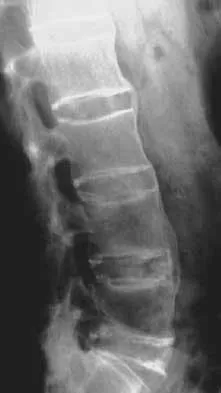
A 72-year-old woman with a history of osteoporosis presents with severe, progressive back pain three months after a minor fall. Initial radiographs at the time of injury were read as normal. Current radiographs demonstrate a T12 compression fracture with an intravertebral vacuum cleft on extension views. What is the most likely diagnosis?
Explanation
Question 80
A 45-year-old man presents with right-sided neck pain radiating down his arm into his thumb and index finger. Physical examination reveals weakness in wrist extension and decreased sensation over the dorsal aspect of the thumb. The biceps reflex is diminished. Which cervical nerve root is most likely compressed?
Explanation
Question 81
A 55-year-old man of Japanese descent presents with progressive clumsiness in his hands and difficulty walking. A lateral cervical radiograph demonstrates a dense, continuous band of ossification posterior to the vertebral bodies from C3 to C6. During surgical planning for decompression, which of the following represents the most significant specific intraoperative risk associated with the anterior approach for this condition?
Explanation
Question 82
A 42-year-old man with a long-standing history of ankylosing spondylitis is brought to the emergency department after a low-energy fall from a standing height. He complains of severe neck pain but has no neurologic deficits. Initial plain radiographs of the cervical spine are difficult to interpret due to marked cervicothoracic kyphosis but show no obvious fracture. What is the most appropriate next step in management?
Explanation
Question 83
A 60-year-old man presents with severe, acute right-sided leg pain radiating down the anterior aspect of his thigh to the knee. Physical examination shows weakness in knee extension and an absent right patellar reflex. An MRI of the lumbar spine reveals a far-lateral (extraforaminal) disc herniation at the L4-L5 level. Which nerve root is most likely compressed?
Explanation
Question 84
A 54-year-old man with a history of intravenous drug use presents with a 2-week history of worsening back pain, low-grade fevers, and new-onset bilateral lower extremity weakness and urinary retention over the past 24 hours. Laboratory studies show an elevated ESR and CRP. MRI with contrast reveals an extensive posterior epidural abscess from T8 to T11 causing severe spinal cord compression. What is the most appropriate management?
Explanation
Question 85
A 70-year-old woman presents with bilateral buttock and posterior thigh pain that worsens with walking and standing, but is relieved when she sits or leans forward over a shopping cart. She has a normal neurologic examination at rest. MRI confirms severe lumbar spinal stenosis at L3-L4 and L4-L5. She has failed 6 months of conservative management including physical therapy and epidural steroid injections. Which of the following surgical interventions is most commonly indicated to provide long-term symptomatic relief of her leg pain?
Explanation
Question 86
Which of the following MRI findings in a patient with cervical spondylotic myelopathy is the strongest predictor of poor neurological recovery following decompression surgery?
Explanation
Question 87
An 84-year-old man sustains a Type II odontoid fracture after a ground-level fall. He has a history of COPD and mild heart failure. Which of the following management strategies is associated with the highest rate of major complications and mortality in this specific patient population?

Explanation
Question 88
Based on the Spine Patient Outcomes Research Trial (SPORT) for degenerative spondylolisthesis, which of the following statements regarding surgical versus nonoperative treatment is true at 4-year follow-up?
Explanation
Question 89
In the evaluation of Adolescent Idiopathic Scoliosis (AIS) using the Lenke classification system, a proximal thoracic curve is considered "structural" and must be included in the fusion construct if the Cobb angle on the side-bending radiograph is at least:
Explanation
Question 90
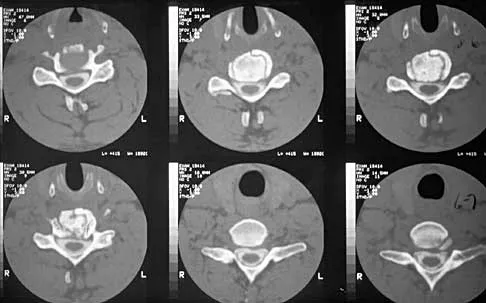
A 24-year-old man is involved in a high-speed motor vehicle collision while wearing a lap belt. Radiographs and CT show a fracture line extending horizontally through the spinous process, pedicles, and vertebral body of L2.
Which of the following associated injuries has the highest incidence in this patient?
Explanation
Question 91
In the assessment of sagittal balance for adult spinal deformity, Pelvic Incidence (PI) is a constant morphological parameter unaffected by posture. Which of the following equations correctly describes the relationship between Pelvic Incidence (PI), Pelvic Tilt (PT), and Sacral Slope (SS)?
Explanation
Question 92
A 68-year-old man with a long-standing history of ankylosing spondylitis presents to the emergency department after a minor ground-level fall. He complains of severe neck pain but has a normal neurological examination. A CT scan reveals a transverse fracture through the C5-C6 intervertebral disc space extending into the posterior elements.
What is the most critical next step in management?
Explanation
Question 93
Following a posterior C4-C7 laminectomy and instrumented fusion for severe cervical spondylotic myelopathy, a 55-year-old patient develops new-onset weakness in the right deltoid and biceps (Medical Research Council grade 2/5) on postoperative day 2. Sensation is decreased over the lateral shoulder. His long-tract signs have otherwise improved. What is the most likely etiology of this new deficit?
Explanation
Question 94
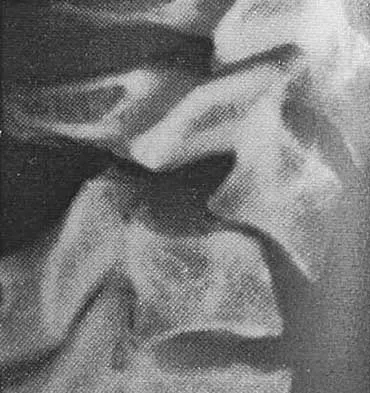
A 62-year-old man presents with chronic lower back pain and new-onset bowel/bladder dysfunction. Imaging reveals a large, destructive, midline sacral mass.
Biopsy confirms the diagnosis of chordoma. Which of the following statements regarding the treatment and prognosis of this lesion is most accurate?
Explanation
Question 95
A 45-year-old immunocompromised patient presents with progressive back pain, night sweats, and a low-grade fever. MRI of the thoracic spine demonstrates relative preservation of the intervertebral disc spaces, large paraspinal fluid collections with calcification, and destruction of the anterior vertebral body elements over three consecutive levels leading to focal kyphosis.
What is the most likely causative organism?

Explanation
Question 96
A 65-year-old man presents with bilateral leg pain that worsens with walking and improves with leaning forward on a shopping cart. Physical exam shows normal lower extremity pulses and intact deep tendon reflexes. An MRI is obtained, demonstrating severe central canal stenosis at L4-L5. Which of the following is the most appropriate initial management?
Explanation
Question 97
A 54-year-old man presents with progressive clumsiness in his hands and a feeling of unsteadiness while walking over the past 6 months. Examination reveals hyperreflexia in the lower extremities, a positive Hoffmann sign bilaterally, and an inverted brachioradialis reflex. MRI of the cervical spine shows severe stenosis with cord signal change at C4-C5.
Without surgical intervention, what is the most likely natural history of his condition?
Explanation
Question 98
A 50-year-old man with a history of intravenous drug use presents with severe lower back pain, fever, and progressive weakness in both legs over the last 48 hours. Laboratory studies show an elevated erythrocyte sedimentation rate (ESR) and C-reactive protein (CRP). MRI reveals a fluid collection in the epidural space at L3-L4 compressing the thecal sac.
Which of the following is the most likely causative organism?
Explanation
Question 99
A 12-year-old girl is evaluated for a spinal deformity. Radiographs demonstrate a right thoracic curve of 25 degrees. She has not yet reached menarche. Her Risser stage is 0, and her Sanders bone age stage is 2. Which of the following factors is most predictive of curve progression in this patient?
Explanation
Question 100
A 35-year-old man falls from a roof and sustains a T12 burst fracture. He is neurologically intact on examination. CT of the spine shows 40% loss of anterior vertebral body height, 15 degrees of local kyphosis, and no evidence of posterior ligamentous complex (PLC) injury. MRI confirms the PLC is intact. According to the Thoracolumbar Injury Classification and Severity (TLICS) score, what is the recommended treatment?
Explanation
None
