Radial Bow: Comprehensive Review of Surgical Anatomy, Biomechanics & Restoration for Optimal Forearm Function
Key Takeaway
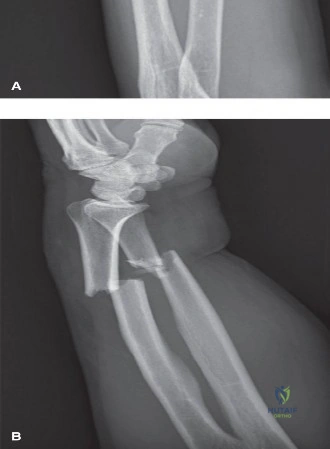
The radial bow is the inherent curvature of the radial diaphysis, crucial for forearm pronation and supination by maintaining interosseous space and optimal DRUJ kinematics. Its anatomical restoration is paramount in managing forearm fractures, as disruption or malunion severely compromises rotational function, leading to significant disability and impaired upper limb function.
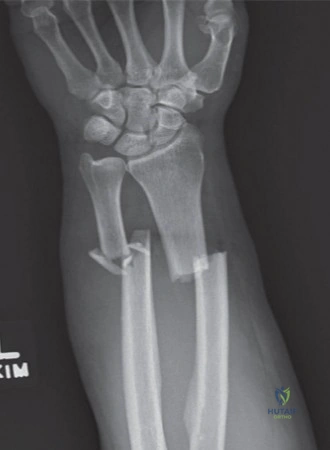
You are presented with a 35-year-old male who sustained a high-energy diaphyseal fracture of the radius and ulna following a mountain biking accident. He is currently in the emergency department. Describe the biomechanical significance of the radial bow and how you would ensure its restoration during operative fixation.
Candidate: The radial bow is the natural curvature of the radius. Restoring it is important for forearm rotation. I would use a 3.5mm plate and try to bend it to match the curve. I need to make sure the length is correct so the wrist and elbow joints work properly.
The candidate fails to define the "apex" or specific anatomical parameters (60% of radial length). They mention "bending the plate" without acknowledging the risk of plate-induced flattening, and they neglect to mention intraoperative fluoroscopic checks of pronation/supination or the importance of the interosseous space.
A high-scoring answer defines the radial bow as a double-curved morphology essential for the interosseous space. The candidate cites the apex at approximately 60% of the radial length and a magnitude of ~15mm. They should mention: 1) Contralateral templating to obtain a patient-specific bow; 2) The use of pre-contoured plates to avoid "flattening" the radius; 3) The necessity of checking pronation/supination intraoperatively to confirm no impingement; and 4) Recognizing that >20° of malalignment or significant loss of the bow leads to a clinically significant block in rotation.
During your exposure for a mid-shaft radius fracture, you are dissecting proximally. What is the critical structure you encounter, and what is your technique for protecting it? Are there specific approaches that favor different safety profiles for this nerve?
Candidate: You are talking about the Posterior Interosseous Nerve (PIN). In the Henry approach, you have to be careful with the supinator. You should identify it and avoid pulling on it too hard to prevent a neuropraxia.
The candidate is vague on the anatomical location of the PIN. A poor candidate forgets to mention the "Leash of Henry" (recurrent radial artery), which is the landmark for safe exposure, or fails to differentiate between the risks of the Henry vs. Thompson approach regarding the PIN's location within the supinator.
The candidate must identify the PIN as the risk. For the Volar (Henry) approach, they must describe ligating the 'Leash of Henry' to mobilize the brachioradialis and supinator, noting that the nerve is protected by the muscle belly of the supinator. For the Dorsal (Thompson) approach, they must note the nerve exits the supinator 1cm distal to the proximal edge and caution against over-retraction. They should highlight that the PIN is most at risk during the supinator splitting or elevation phase.
