Lesser Toe Arthrodesis: Comprehensive Academic Review for Orthopedic Surgeons

Key Takeaway
Lesser toe arthrodesis is a definitive surgical solution for rigid hammertoe, claw toe, and mallet toe deformities. It eliminates pain, corrects deformity, and restores alignment by fusing interphalangeal joints, primarily the PIPJ. A thorough understanding of surgical anatomy, biomechanics, and careful patient selection is paramount for successful, stable long-term outcomes, avoiding complications like MTPJ instability.
You are presented with this patient in the clinic. She reports chronic, intractable pain in her second toe, unresponsive to wider footwear and silicone orthotics. Please interpret the clinical presentation and describe your initial assessment strategy.
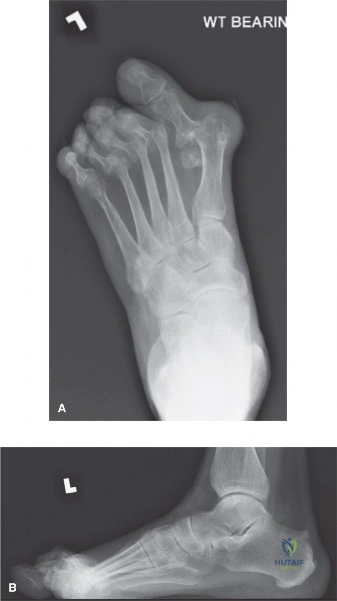
Candidate: The patient has a severe, rigid hammertoe deformity of the second digit with a dorsal callus over the PIPJ. I would assess for flexibility, MTPJ stability, and neurovascular status. I’d also order weight-bearing X-rays to check for MTPJ subluxation or arthritis.
Jumping immediately to "I would perform a PIPJ arthrodesis." A failing candidate ignores the MTPJ, failing to recognize that a hammertoe is often a secondary manifestation of MTPJ instability or a plantar plate tear. Failing to mention assessment of the hallux (bunion) or the status of the adjacent toes is also a major oversight.
Start with a structured examination: 1. Flexibility: Is it a fixed contracture or is there passive reducibility? 2. MTPJ Stability: Perform a Lachman/Drawer test to assess for plantar plate insufficiency. 3. Alignment: Assess for secondary deformities like hallux valgus (which often drives second toe pathology). 4. Radiology: State "Weight-bearing AP, lateral, and oblique views." Look specifically for MTPJ subluxation, joint space narrowing, and bony alignment. Conclude by framing the decision: "If rigid and unresponsive to conservative measures, I would counsel for a PIPJ arthrodesis, while simultaneously addressing any MTPJ instability."
You have decided to proceed to surgery for a rigid second hammertoe. Discuss your preferred fixation method and the technical nuances required to avoid the common complication of a "floating toe."
Candidate: I use K-wires for fixation. To avoid a floating toe, I make sure to resect just enough bone to correct the deformity without shortening the toe too much. I ensure the toe is positioned in slight plantarflexion relative to the metatarsal.
The candidate focuses only on the bone cut. They forget the soft tissue contribution. A "floating toe" is often caused by neglecting a tight MTPJ capsule or failing to perform an FDL tenotomy/transfer to rebalance the toe when the MTPJ is hyperextended.
Address three pillars: 1. Bony Alignment: Position the arthrodesis in 5-10 degrees of plantarflexion. 2. Soft Tissue Balance: If the MTPJ is unstable or hyperextended, I would perform a capsulorrhaphy or FDL transfer to pull the toe down to the floor, preventing the "floating" phenomenon. 3. Fixation Choice: Compare K-wires (cost-effective, but risk of pin-site infection/migration) vs. intramedullary implants (no external hardware, but higher cost and technically demanding). Acknowledge that the 'floating toe' is a multi-factorial result of excessive shortening and failure to address the MTPJ hyperextension.
