العربية
Part of the Master Guide

AAOS & ABOS Basic Science MCQs (Set 3): Bone Biology, Biomechanics & Anatomy Review

AAOS Basic Science MCQs (Set 4): Bone Healing, Cartilage Biology & Biomechanics | ABOS Exam Prep
27 Apr 2026 49 min read 103 Views
Mtd 2002 MCQs - Part 4

Key Takeaway

This high-yield Basic Science MCQ set (Set 4) for AAOS, ABOS, and OITE exams covers fundamental orthopedic principles. It includes questions on bone healing mechanisms, the biology of cartilage, essential joint function, and core musculoskeletal biomechanics. Prepare for your board review with these critical basic science topics.

AAOS Basic Science MCQs (Set 4): Bone Healing, Cartilage Biology & Biomechanics | ABOS Exam Prep

Comprehensive 100-Question Exam


00:00

Start Quiz

Question 1

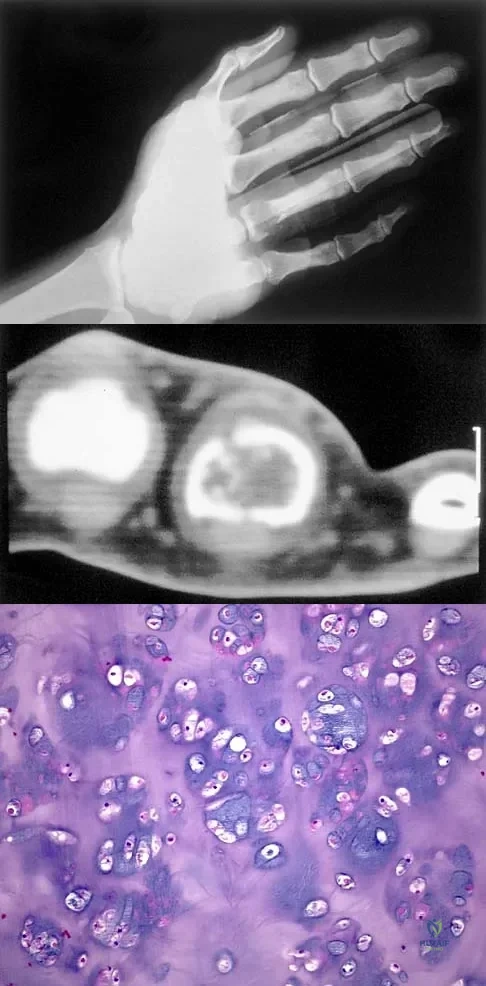
A 30-year-old woman has pain in her right hand. The radiograph, CT scan, and biopsy specimen are seen in Figures 38a through 38c. What is the most likely diagnosis?


Explanation

An enchondroma is the most common primary tumor of the long bones of the hand. The lesion is usually asymptomatic and often is detected when there is a pathologic fracture. Shimizu K, Kotoura Y, Nishijima N, Nakamura T: Enchondroma of the distal phalanx of the hand. J Bone Joint Surg Am 1997;79:898-900.

Question 2

Which of the following agents have been shown to reduce the incidence of skeletal events in patients with multiple myeloma?


Explanation

Bisphosphonates are a class of drugs that act to inhibit osteoclast resorption of bone. It has been shown that patients with multiple myeloma who are treated with bisphosphonates have fewer pathologic fractures than patients who are not treated with bisphosphonates. Vitamin D and calcium are considered appropriate for patients who are at risk for the development of osteoporosis, as is estrogen in selected women. Chelating agents and progesterones have no use in the treatment of patients with multiple myeloma or osteoporosis. Berenson JR: Bisphosphonates in multiple myeloma. Cancer 1997;15:1661-1667.

Question 3

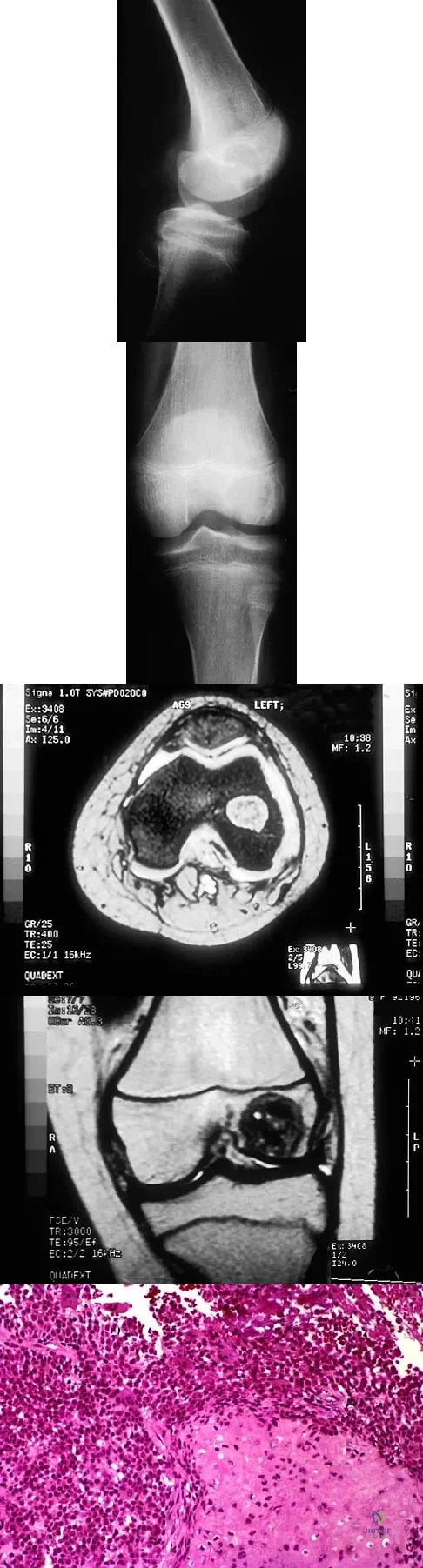
A 12-year-old girl has had progressive left knee pain for the past 4 months. She reports that the pain is unrelated to activity, and she has no history of fever or recent infections. Examination reveals full range of motion of the knee but tenderness along the medial joint line. Plain radiographs and MRI scans are shown in Figures 39a through 39d. A biopsy specimen of the lesion is shown in Figure 39e. Treatment should include


Explanation

The lesion is a chondroblastoma. The plain radiographs show a well-defined radiolucent lesion in the distal femoral epiphysis of a skeletally immature patient. The margins are well defined, suggesting a benign growth. The epiphysis is an unusual location for bone tumors, except for chondroblastomas. Of all chondroblastomas, 95% are located within the epiphysis. The MRI scans show a punctate appearance that is commonly seen in cartilage lesions. The biopsy specimen shows a chondroid lesion with polygonal chondrocytes. These findings are consistent with a chondroblastoma. The natural history of chondroblastomas is for continued growth and bone destruction if left untreated. Treatment should consist of curettage, with or without the use of physical or chemical adjuvants, and bone grafting.

Question 4

An open biopsy specimen of a radiodense distal clavicle lesion in a 12-year-old girl shows chronic polyclonal inflammatory cells without granuloma formation. Laboratory studies show that bacterial, fungal, and acid-fast bacillus cultures are negative. Subsequently, a similar lesion is noted in the fibula. The next most appropriate step in management should consist of


Explanation

The most likely diagnosis is chronic multifocal osteomyelitis. This is a culture-negative polyostotic disease that is most commonly found in young people. The treatment of choice is anti-inflammatory drugs. The pathology does not suggest eosinophilic granuloma. Antiviral therapy, broad-spectrum antibiotics, and surgical resection are not indicated for this disease.

Question 5

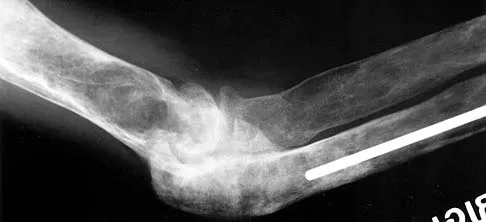
Figure 40 shows the radiograph of a 30-year-old woman who has a painful elbow. Examination reveals a deformed skull, multiple cafe-au-lait spots, and bone deformities. What is the most likely diagnosis?
Basic Science Board Review 2002: High-Yield MCQs (Set 4) - Figure 9


Explanation

Findings in patients with McCune-Albright syndrome include polyostotic fibrous dysplasia, multiple cafe-au-lait spots, and precocious puberty. The bone changes in NF-1 resemble nonossifying fibromas, not fibrous dysplasia. NF-2 has little bony change with typical ocular abnormalities. Paget's disease occurs in older individuals and does not present with cafe-au-lait spots. Ollier's disease (multiple enchondromatosis) may show bone changes but not the other findings. Albright F, Butler AM, Hampton AO, et al: Syndrome characterized by osteitis fibrosa disseminata, areas of pigmentation and endocrine dysfunction with precocious puberty in females. N Engl J Med 1937;216:727-746. Danon M, Robboy SJ, Kim S, Scully R, Crawford JD: Cushing syndrome, sexual precocity, and polyostotic fibrous dysplasia (Albright syndrome) in infancy. J Pediatr 1975;87:917-921.

Question 6

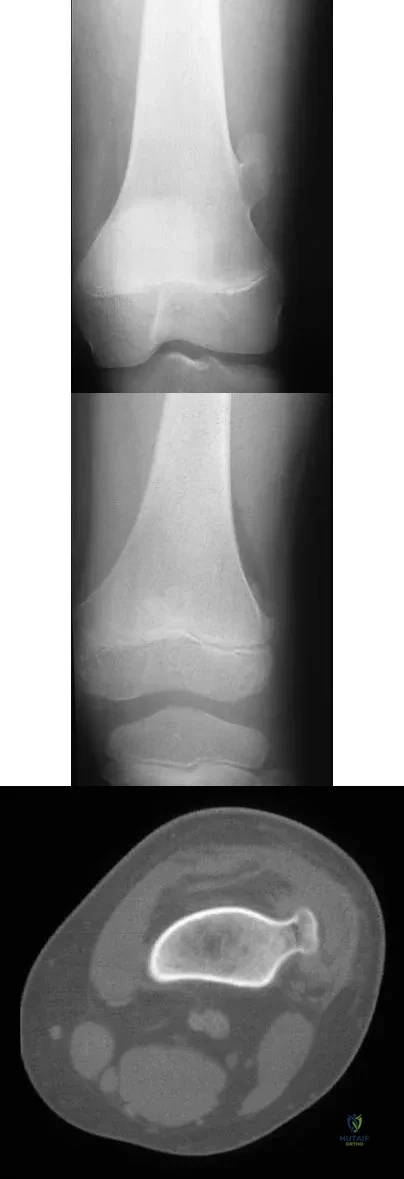
Figure 41a shows the AP radiograph of a 15-year-old boy who reports lateral knee pain. Figures 41b and 41c show a radiograph of the distal femur that was obtained 5 years ago and a current CT scan. The indication for surgery in this patient would be


Explanation

In a young person with solitary osteochondroma, the best surgical indication is symptoms that limit activity. A growth deformity is unlikely to occur at this age. Malignant degeneration is exceptionally rare and noted most commonly in adults. Growth is expected until skeletal maturity. Mirra JM: Bone Tumors: Clinical, Radiologic, and Pathologic Correlations. Philadelphia, PA, Lea and Febiger, 1989, pp 1626-1659.

Question 7

In what decade does the peak incidence of conventional osteosarcoma occur?


Explanation

Conventional osteosarcoma most frequently occurs in the second decade, followed by the third decade. Approximately 70% to 75% of patients with osteosarcoma are between the ages of 10 and 25 years. Secondary osteosarcoma (arising in Paget's disease or radiation-induced) is seen in older adults. Simon MA, Springfield DS, et al: Osteogenic Sarcoma: Surgery for Bone and Soft Tissue Tumors. Philadelphia, PA, Lippincott Raven, 1998, p 266. Mirra JM: Bone Tumors: Clinical, Radiologic, and Pathologic Correlations. Philadelphia, PA, Lea and Febiger, 1989.

Question 8

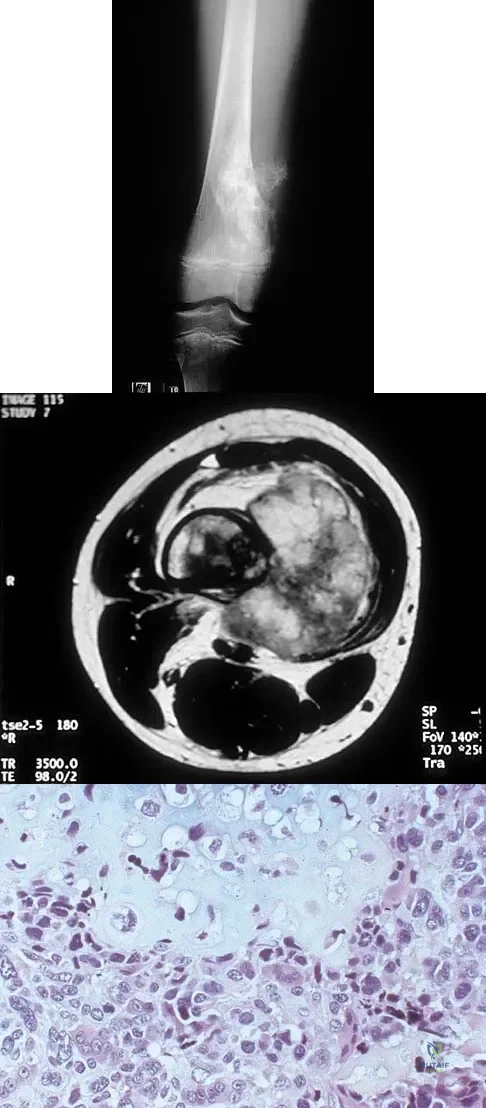
A 10-year-old boy has a painful thigh mass. A radiograph, MRI scan, and biopsy specimen are shown in Figures 42a through 42c. What is the most likely diagnosis?


Explanation

A destructive mixed lytic and blastic metaphyseal lesion with a large soft-tissue mass in an adolescent is most likely an osteosarcoma until proven otherwise. The epicenter of the tumor is on the surface of the bone, most likely involves the periosteum, and is more likely to be chondroblastic in nature. Parosteal osteosarcoma is a low-grade tumor, much more radiodense, usually smaller, and found in the posterior distal femur of middle-aged patients. Chondrosarcomas are distinctly rare in childhood.

Question 9

A 21-year-old man with neurofibromatosis and multiple cutaneous neurofibromas has a rapidly enlarging painless mass on his buttock. Examination reveals a nontender, well-defined 6- x 6-cm soft-tissue mass that is deep to the fascia. The best course of action should be to order


Explanation

Patients with neurofibromatosis are at risk for development of soft-tissue sarcomas (most commonly malignant peripheral nerve sheath tumors). Clinical indications of development of a neurofibrosarcoma include a rapidly enlarging soft-tissue mass; therefore, this patient should be considered to have a neurofibrosarcoma until proven otherwise. MRI is superior to CT in characterizing the anatomic location of soft-tissue masses and the signal characteristics of the lesion. Areas of necrosis within the tumor may be apparent on MRI that cannot be appreciated on CT, suggesting a malignant tumor. Local imaging studies of suspected malignant tumors should be performed prior to needle or open biopsy so that the biopsy site can be excised at the time of definitive resection. Additionally, postbiopsy changes may lead to MRI artifacts that alter the interpretation of the MRI. Demas BE, Heelan RT, Lane J, Marcove R, Hajdu S, Brennan MF: Soft-tissue sarcomas of the extremities: Comparison of MR and CT in determining the extent of disease. Am J Roentgenol 1988;150:615-620.

Question 10

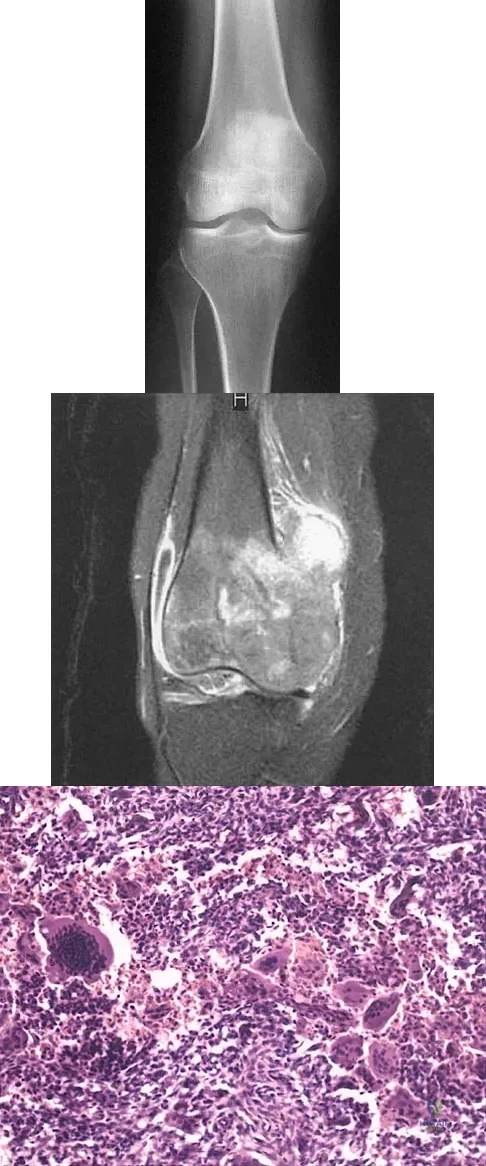
A 21-year-old man has had progressive right knee pain for the past 2 months that is exacerbated with weight-bearing activities. A plain radiograph and an MRI scan are shown in Figures 43a and 43b. A biopsy specimen is shown in Figure 43c. According to the Enneking staging system of tumor classification, the lesion should be classified as what stage?


Explanation

The lesion is an eccentric lytic bone lesion within the epiphyseal-metaphyseal end of the proximal tibia. There is geographic destruction with a "fading border" extending to the articular cartilage. There is no matrix formation or periosteal reaction. The MRI scan shows cortical destruction with extension into the soft tissue. According to the Enneking staging system, benign lesions are stage 1, 2, or 3; malignant lesions are stage I, II, or III. Benign stage 1 lesions are latent; stage 2 are active; and stage 3 are benign aggressive. The histology shows a benign giant cell tumor. Given the cortical breakthrough shown on the MRI scan, the lesion should be classified as stage 3. Enneking WF: Clinical musculoskeletal pathology, in Enneking WF (ed): Appendix A. Gainesville, FL, Storter Publishing, 1986, pp 451-466.

Question 11

What is a common clinical finding in patients with severe hypercalcemia secondary to bony metastasis?


Explanation

Increased levels of calcium are known to cause anorexia, nausea, vomiting, dehydration, muscle weakness, polyuria, and polydipsia. Treatment may include hydration, saline diuresis, and bisphosphonates.

Question 12

What cell type causes the bone destruction in metastatic lesions?


Explanation

The main consequence of tumor invading the bone is activation of both osteoblasts and osteoclasts. However, the osteoclastic effect predominates in the majority of tumors early after the invasion of bone by tumor cells, causing resorption of bone. Cramer SF, Fried L, Carter KJ: The cellular basis of metastatic bone disease in patients with lung cancer. Cancer 1981;48:2649-2660.

Question 13

What is the most common malignant bone tumor seen in patients with multiple hereditary exostosis?


Explanation

Secondary chondrosarcomas are most common in patients with multiple hereditary exostosis. Dedifferentiated chondrosarcoma is less common and refers to bone lesions in which a high-grade spindle cell sarcoma component is located immediately adjacent to a low-grade cartilage neoplasm. Mesenchymal chondrosarcoma, clear cell chondrosarcoma, and periosteal osteosarcoma are no more common in patients with multiple hereditary exostosis than in the general population. Mirra JM: Bone Tumors: Clinical, Radiologic, and Pathologic Correlations. Philadelphia, PA, Lea and Febiger, 1989, pp 1660-1669.

Question 14

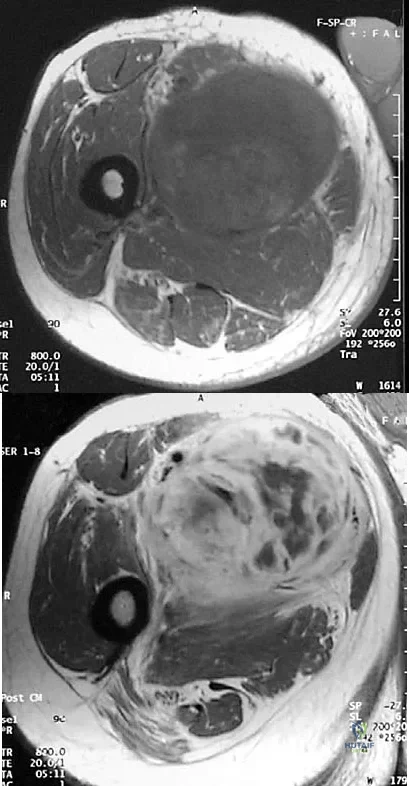
An athletic 55-year-old man reports a painless mass in the anterior aspect of the thigh that appeared 3 weeks ago and has not changed in size. The patient denies any history of trauma. Examination reveals a firm, well-defined nontender mass in the anterior thigh and no inguinal adenopathy or cutaneous changes. Plain radiographs are unremarkable. T1- and T2-weighted MRI scans are shown in Figures 44a and 44b. What is the most likely diagnosis?


Explanation

The presence of a painless soft-tissue mass that is greater than 5 cm and deep to the fascia should be considered a soft-tissue sarcoma until proven otherwise. The diagnosis of a hematoma should be made with great caution because the absence of a history of trauma, pain, or presence of ecchymosis makes it unlikely. A diagnosis of pyomyositis is unlikely because of the absence of warmth, erythema, or adenopathy. The MRI scans are not consistent with lipoma or hemangioma. The MRI signal characteristics of a lipoma should be the same as subcutaneous fat on all sequences. Soft-tissue hemangiomas are not well defined and have an infiltrative appearance on MRI scans, as does pyomyositis. Sim FH, Frassica FJ, Frassica DA: Soft-tissue tumors: Diagnosis, evaluation and management. J Am Acad Orthop Surg 1994;2:202-211.

Question 15

Epithelioid sarcoma most commonly occurs in which of the following anatomic locations?


Explanation

Epithelioid sarcoma is a rare soft-tissue sarcoma that most commonly arises in the hand or upper extremity, and it is frequently misdiagnosed as an infection or granuloma. It tends to have a higher incidence of lymph node metastasis than other soft-tissue sarcomas. The mainstay of treatment is wide surgical excision, even if amputation is necessary. Gupta TD, Chaudhuri P (eds): Tumors of the Soft Tissues, ed 2. Stamford, CT, Appleton and Lange, 1998, p 475.

Question 16

What common cytologic abnormality is associated with Ewing's sarcoma?


Explanation

Cytogenetic abnormalities have been well characterized in a number of tumors. Translocation t (2, 13), (x, 18), (12, 16), and (12, 22) have been characterized in rhabdomyosarcoma, synovial cell sarcoma, myxoid liposarcoma, and clear cell sarcoma, respectively. Translocation t(11:22) can be identified in 95% of patients with Ewing's sarcoma. This was first described by Turc-Carel and associates in 1984. Enzinger FM, Weiss SW: Soft Tissue Tumors, ed 3. St Louis, MO, Mosby Year Book, 1995, pp 105-118. Turc-Carel C, Philip I, Berger MP, Philip T, Lenoir GM: Chromosome study of Ewing's sarcoma (ES) cell lines: Consistency of a reciprocal translocation t(11;22) (q24;q12). Cancer Genet Cytogenet 1984;12:1-19.

Question 17

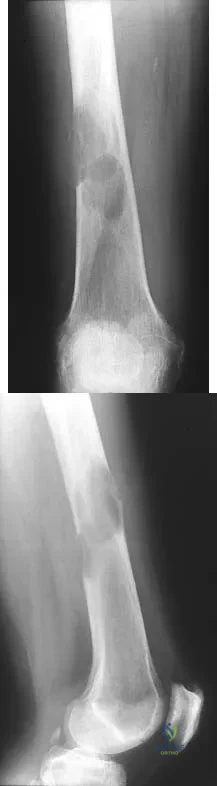
Figures 45a and 45b show the radiographs of a 46-year-old man who reports the acute onset of right knee pain and is unable to bear weight on the extremity. His medical history is unremarkable. The next most appropriate step in management should consist of


Explanation

The patient has a pathologic fracture of the right distal femur; therefore, given the patient's age, the most likely diagnosis is metastatic carcinoma. Staging studies should be obtained prior to surgical treatment. Immediate intramedullary fixation is contraindicated before a diagnosis is made by biopsy. Surgical stabilization should be performed prior to radiation therapy.

Question 18

Figure 46 shows the MRI scan of a patient who has a mass in the calf that has been fluctuating in size. Radiographs are negative. Which of the following procedures will most quickly aid in confirming the diagnosis?
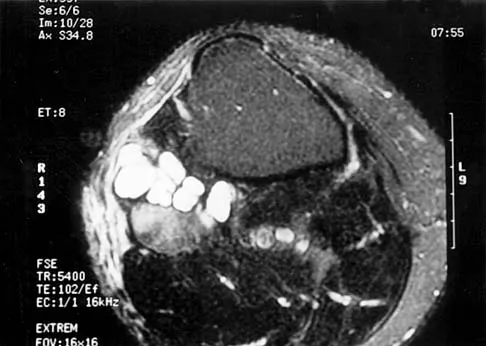
Basic Science Board Review 2002: High-Yield MCQs (Set 4) - Figure 23


Explanation

The bright signal on the T2-weighted MRI scan suggests fluid. The multiloculated appearance in proximity to the proximal tibiofibular joint suggests that the most likely diagnosis is a ganglion. They typically increase and decrease in size and can be diagnosed by the classic gelatinous fluid obtained through needle aspiration. Bianchi S, Abdelwahab IF, Kenan S, Zwass A, Ricci G, Palomba G: Intramuscular ganglia arising from the superior tibiofibular joint: CT and MR evaluation. Skeletal Radiol 1995;24:253-256.

Question 19

What are the five most common tumors that metastasize to bone?


Explanation

The five most common primary carcinomas that metastasize to bone are breast, prostate, lung, renal, and thyroid in decreasing order of incidence. Frassica FJ, Gitelis S, Sim FH: Metastatic bone disease: General principles, pathophysiology, evaluation, and biopsy. Instr Course Lect 1992;41:293-300.

Question 20

Pain associated with a proximal medial tibial osteochondroma in a 10-year-old patient is most commonly the result of


Explanation

Pain secondary to an osteochondroma is usually from soft-tissue irritation and bursal formation. This is particularly common for proximal medial tibia osteochondromas that irritate the pes anserine tendons. Malignant degeneration into a chondrosarcoma rarely occurs, is usually associated with multiple hereditary exostoses, and usually occurs after skeletal maturity. Borges AM, Huvos AG, Smith J: Bursa formation and synovial chondrometaplasia associated with osteochondromas. Am J Clin Pathol 1981;75:648-653.

Question 21

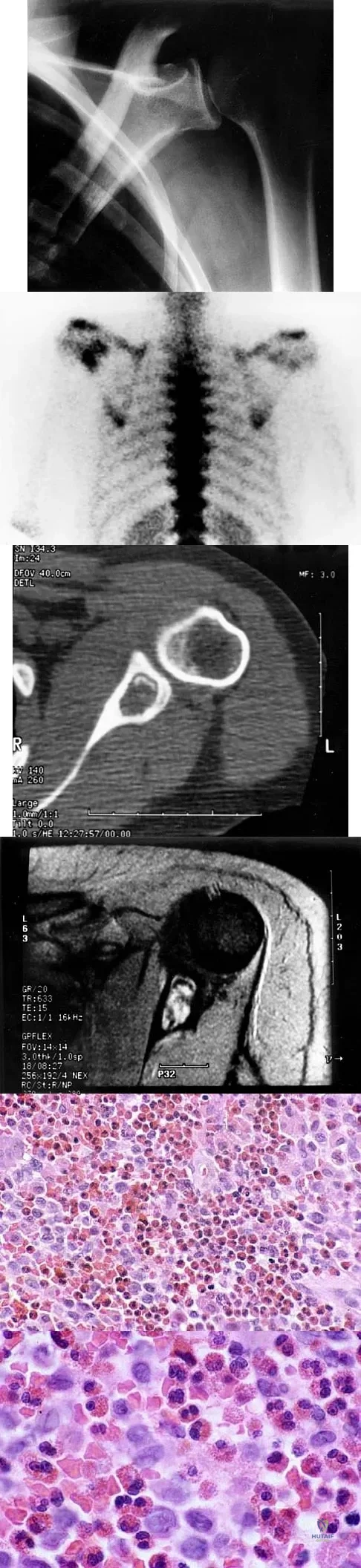
Figures 47a through 47f show the AP radiograph, bone scan, CT scan, MRI scan, and biopsy specimens of a 30-year-old woman who has had vague left shoulder pain for 1 year. Management should consist of


Explanation

The histology shows eosinophils with a background of larger cells (Langerhans' cells). This is consistent with eosinophilic granuloma. Localized sites are best treated with curettage, steroid injection, or observation. Chemotherapy is used only if there is systemic involvement. Mirra JM: Eosinophilic granuloma, in Bone Tumors: Clinical, Radiologic, and Pathologic Correlations. London, England, Lea and Febiger, 1989, pp 1023-1060. Sessa S, Sommelet D, Lascombes P, Prevot J: Treatment of Langerhans-cell histiocytosis in children: Experience at the Children's Hospital of Nancy. J Bone Joint Surg Am 1994;76:1513-1525.

Question 22

What is the 5-year overall survival rate for adults with high-grade soft-tissue sarcomas?


Explanation

The 5-year overall survival rate for deep, high-grade soft-tissue sarcomas is around 50%. The overall survival and disease-free survival rates chiefly depend on the tumor stage, but for all stages combined, most cancer treatment centers report a 5-year overall survival rate of around 70% and a disease-free survival rate of 65%. Fleming ID, et al: Manual for Staging of Cancer/American Joint Committee on Cancer, ed 5. Philadelphia, PA, Lippincott Raven, 1997, pp 149-156.

Question 23

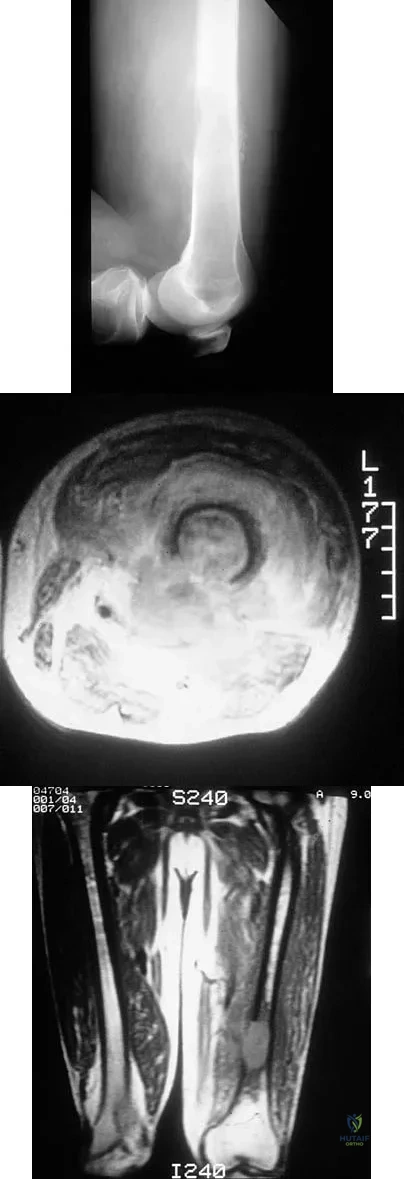
Figures 48a through 48c show the lateral radiograph and MRI scans of a 60-year-old man who has had pain in his thigh for 1 month. The next most appropriate step in management should consist of


Explanation

The patient has a presumed metastatic bone tumor. The approach to evaluating a patient with a bone tumor of unknown primary origin is to obtain laboratory studies that include a CBC, an erythrocyte sedimentation rate, a serum protein electrophoresis, a calcium level, a urinalysis, and a prostate-specific antigen. In addition, a bone scan, a radiograph of the chest, and CT scans of the chest and abdomen should be obtained. These evaluations can identify the primary site in 85% of patients. GI studies rarely are of diagnostic value. Prophylactic stabilization is contraindicated until a diagnosis is confirmed by histology. Frassica FJ, Frassica DA, McCarthy EF, Riley LH III: Metastatic bone disease: Evaluation, clinicopathologic features, biopsy, fracture risk, nonsurgical treatment, and supportive management. Instr Course Lect 2000;49:453-459.

Question 24

A 17-year-old boy has had a mass in his right thigh for the past 6 months. He denies any history of trauma. Examination reveals that the mass is painless and firm. A radiograph and axial MRI scan are shown in Figures 49a and 49b. What is the most likely diagnosis?
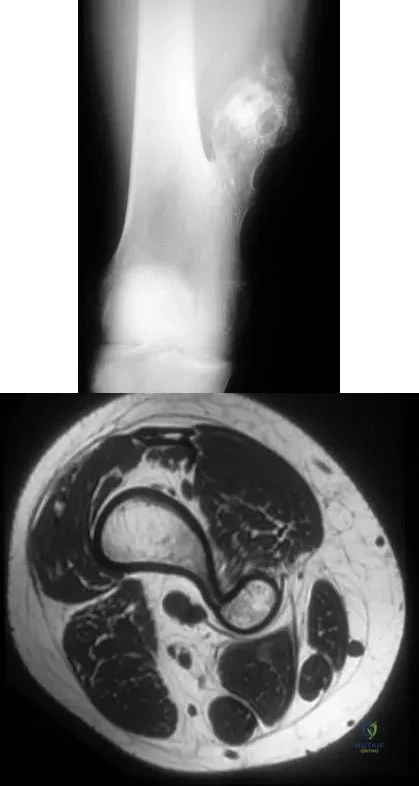


Explanation

Osteochondroma typically occurs as a bony projection or a sessile growth on the bone, and there can be flaring of the metaphysis. The radiograph shows continuity from the adjacent cancellous bone into the lesion itself. There is no soft-tissue mass or bone destruction to suggest osteosarcoma or Ewing's sarcoma. Periosteal chondroma has a scalloped out radiographic appearance. Chondroblastoma typically is an epiphyseal-based lesion.

Question 25

Evaluation of the percent of necrosis in the resected specimen after preoperative chemotherapy is of prognostic value for what type of sarcoma?


Explanation

To date, only the percent of necrosis after induction chemotherapy in high-grade osteosarcomas seems to be of prognostic value. The value in soft-tissue sarcoma and rhabdomyosarcoma is being evaluated but has not been substantiated. Chondrosarcomas and parosteal osteosarcomas are not treated with chemotherapy. Rosen G, Marcove RC, Caparros B, Nirenberg A, Kosloff C, Huvos AG: Primary osteogenic sarcoma: The rationale for pre-operative chemotherapy and delayed surgery. Cancer 1979,43:2163-2177. Davis AM, Bell RS, Goodwin PJ: Prognostic factors in osteosarcoma: A critical review. J Clin Oncol 1994;12:423-431.

Question 26

Which zone of normal articular cartilage contains the highest concentration of collagen, the lowest concentration of proteoglycans, and chondrocytes that are oriented parallel to the joint surface?


Explanation

The superficial zone of articular cartilage provides the gliding surface of the joint and resists shear forces. It has the highest concentration of collagen (primarily parallel to the joint surface), the lowest concentration of proteoglycans, and flattened chondrocytes.

Question 27

A 65-year-old patient undergoes an isolated tibial shaft fracture fixation. A stainless steel plate is accidentally secured with titanium screws. This construct is at high risk for which of the following types of corrosion?


Explanation

Galvanic corrosion occurs when two dissimilar metals are in contact within a conductive fluid environment (like body fluid). The difference in their electrochemical potentials drives an accelerated corrosion of the less noble metal.

Question 28

During the design of a solid intramedullary titanium nail, the radius of the nail is doubled. Assuming the material properties remain constant, how does this modification affect the theoretical bending stiffness of the implant?


Explanation

The bending stiffness of a solid cylindrical rod is proportional to the area moment of inertia, which is proportional to the radius to the fourth power (r^4). Doubling the radius increases the bending stiffness by a factor of 16.

Question 29

A 24-year-old male sustains a closed femoral shaft fracture treated with an intramedullary nail. Postoperatively, he takes high-dose nonsteroidal anti-inflammatory drugs (NSAIDs) for six weeks. Which phase of bone healing is most likely directly impaired by this medication?


Explanation

NSAIDs inhibit cyclooxygenase-2 (COX-2), an enzyme necessary for normal endochondral ossification during secondary fracture healing. Its inhibition impairs early inflammation, angiogenesis, and subsequent cartilage formation and maturation.

Question 30

When analyzing the biochemical differences between normal aging articular cartilage and early osteoarthritic cartilage, which of the following characteristics is distinctly unique to the early stages of osteoarthritis?


Explanation

In early osteoarthritis, there is an increase in water content due to the breakdown of the collagen network allowing proteoglycans to swell. In contrast, normal aging cartilage undergoes a decrease in total water content.

Question 31

An anterior cruciate ligament (ACL) graft undergoes gradual, progressive elongation over time when subjected to a constant physiological load. This viscoelastic phenomenon is best described as:


Explanation

Creep is a viscoelastic property defined as progressive deformation over time under a constant load. Stress relaxation, conversely, is a decrease in stress over time when the material is held at a constant deformation.

Question 32

A 45-year-old male sustains a closed transverse midshaft humerus fracture. He is treated with open reduction and internal fixation using a dynamic compression plate, achieving absolute stability with an interfragmentary gap of less than 0.1 mm.

What is the primary mode of bone healing expected in this construct?


Explanation

Absolute stability with a gap < 1mm and strain < 2% results in primary bone healing. This occurs via Haversian remodeling where osteoclastic cutting cones cross the fracture site followed immediately by osteoblasts laying down new bone.

Question 33

Which molecule is primarily responsible for boundary lubrication in a diarthrodial joint, providing a critical reduction in friction under high loads and low speeds?


Explanation

Lubricin (Proteoglycan 4 or PRG4) is a glycoprotein synthesized by superficial zone chondrocytes and synoviocytes that is chiefly responsible for boundary lubrication. Hyaluronic acid contributes more to the fluid-film lubrication at higher speeds.

Question 34

Of the following orthopedic implant materials, which has a modulus of elasticity that is closest to that of human cortical bone, thereby potentially reducing stress shielding?


Explanation

Cortical bone has an elastic modulus of approximately 15-20 GPa. Titanium alloys (approx. 110 GPa) are significantly closer to cortical bone than stainless steel (200 GPa) or cobalt-chromium (240 GPa), minimizing stress shielding.

Question 35

A massive structural cortical allograft is utilized for reconstruction after an intercalary tumor resection.

During the first two years of incorporation, what biomechanical vulnerability is most characteristic of this graft type?


Explanation

Cortical allografts heal primarily via creeping substitution at the host-graft junction. Early on, osteoclastic resorption outpaces osteoblastic bone formation, significantly weakening the graft and predisposing it to fatigue fractures.

Question 36

During the insertion of a solid cortical screw for plate fixation, the surgeon notes that the screw resists fracture when subjected to high torque. The tensile strength of the screw, which dictates its resistance to fracture during insertion, is most directly determined by its:


Explanation

The minor (core) diameter is the solid central portion of the screw and determines its tensile strength and resistance to bending or breaking. The major (outer) diameter dictates the screw's pull-out strength.

Question 37

Which of the following molecules acts as an antagonist of the Wnt/beta-catenin signaling pathway, thereby inhibiting osteoblastogenesis and bone formation?


Explanation

Sclerostin, produced primarily by osteocytes, binds to LRP5/6 receptors and inhibits the Wnt/beta-catenin pathway, thereby decreasing osteoblast differentiation and bone formation. Monoclonal antibodies targeting sclerostin (e.g., romosozumab) are used to treat osteoporosis.

Question 38

Which of the following collagen types forms the primary structural fibrillar network of articular cartilage and represents 90-95% of its total collagen content?


Explanation

Type II collagen is the predominant structural collagen in normal hyaline articular cartilage. Type IX and XI are minor collagens that help cross-link and regulate the fibril sizes of the Type II collagen network.

Question 39

Distraction osteogenesis fundamentally relies on the biological principle of the tension-stress effect. What is the predominant type of bone formation seen in the distraction gap under optimal conditions?


Explanation

Under conditions of optimal mechanical stability and a correct distraction rate (typically 1 mm/day), the tension-stress effect stimulates bone formation directly from osteoblasts without a cartilaginous intermediate, known as intramembranous ossification.

Question 40

Compared to conventional non-locking plates, locking compression plates (LCP) provide superior biomechanical stability in osteoporotic bone primarily because:


Explanation

Locking plates utilize screws with threaded heads that lock into the plate, creating a fixed-angle construct. This relies on the combined strength of the screw-plate interface rather than bone-plate friction, making it superior for osteoporotic bone.

Question 41

Due to the avascular nature of normal articular cartilage, mature chondrocytes reside in a relatively hypoxic environment. They generate ATP required for extracellular matrix synthesis primarily through:


Explanation

Chondrocytes are adapted to a low-oxygen environment (hypoxia) and generate approximately 95% of their ATP via anaerobic glycolysis, even when oxygen is present. This is a critical adaptation for survival in avascular cartilage.

Question 42

Bone morphogenetic proteins (BMPs), such as BMP-2 and BMP-7, initiate osteoblast differentiation by binding to specific heterodimeric cell surface receptors. These receptors primarily function as:


Explanation

BMP receptors are transmembrane serine-threonine kinases. Upon ligand binding, they form a complex that phosphorylates intracellular Smad proteins, which then translocate to the nucleus to regulate target gene transcription.

Question 43

The primary wear mechanism responsible for generating the majority of submicron particulate debris in a well-functioning, traditional metal-on-polyethylene total hip arthroplasty is:


Explanation

Adhesive wear is the fundamental mechanism where asperities on the metal head micro-weld to the polyethylene surface and shear off submicron particles. While third-body wear can cause severe damage, adhesive wear is the constant baseline generator of wear debris.

Question 44

According to Perren's strain theory regarding fracture healing, what is the approximate maximum mechanical strain tolerated by granulation tissue during the initial inflammatory phase?


Explanation

Perren's strain theory dictates the type of tissue that can survive at a fracture site. Granulation tissue can tolerate up to 100% strain, allowing it to bridge highly mobile fracture gaps, whereas bone can only form when strain is reduced below 2%.

Question 45

Which family of zinc-dependent enzymes is considered the primary mediator of extracellular matrix degradation, specifically targeting type II collagen and aggrecan, in the pathogenesis of osteoarthritis?


Explanation

Matrix metalloproteinases (MMPs), particularly MMP-1, MMP-3, and MMP-13, are zinc-dependent endopeptidases upregulated in osteoarthritis. They are the primary effectors responsible for cleaving the triple helix of type II collagen and degrading aggrecan.

Question 46

According to Perren's strain theory, what level of local interfragmentary strain is required to allow for primary bone healing (osteonal remodeling without visible callus)?


Explanation

Primary bone healing requires absolute stability with an interfragmentary strain of less than 2%. Strains between 2% and 10% promote secondary bone healing via callus formation, while strains greater than 10% typically lead to nonunion.

Question 47

Which zone of articular cartilage contains the highest concentration of water, the lowest concentration of proteoglycans, and chondrocytes aligned parallel to the articular surface?


Explanation

The superficial zone possesses the highest water content and lowest proteoglycan concentration. The collagen fibers and chondrocytes are oriented parallel to the joint surface to effectively resist shear forces.

Question 48

In orthopedic implant biomechanics, the bending stiffness of a solid cylindrical intramedullary nail is proportional to its radius raised to which power?


Explanation

The bending stiffness of a solid cylinder is determined by the area moment of inertia, which is proportional to the radius to the fourth power (r^4). Therefore, a small increase in the radius significantly increases the nail's resistance to bending.

Question 49

Biochemical analysis of articular cartilage in early osteoarthritis typically reveals which of the following changes compared to normal aging cartilage?


Explanation

In early osteoarthritis, the collagen network breaks down, leading to an influx of water (increased water content) and a loss of proteoglycans. In contrast, normal aging cartilage typically shows a decreased water content.

Question 50

Bone morphogenetic proteins (BMPs) initiate intracellular signaling upon binding to serine/threonine kinase receptors. Which of the following intracellular proteins are directly phosphorylated and translocate to the nucleus to regulate gene expression?


Explanation

BMP signaling is primarily mediated through the canonical SMAD pathway. Upon receptor activation, receptor-regulated SMADs (SMAD 1, 5, and 8) are phosphorylated and form a complex with SMAD 4 to enter the nucleus and regulate osteogenic genes.

Question 51

A 45-year-old man presents with a hypertrophic nonunion of a midshaft femur fracture 8 months after intramedullary nailing. What is the primary underlying cause of this specific type of nonunion?


Explanation

A hypertrophic nonunion typically has adequate biology and blood supply, as evidenced by exuberant callus formation (the "elephant shoe" appearance). The failure to bridge the fracture gap is primarily due to inadequate mechanical stability.

Question 52

On a stress-strain curve for a given orthopedic alloy, the specific point at which the material transitions from elastic deformation to permanent plastic deformation is defined as the:


Explanation

The yield point marks the end of elastic (reversible) deformation and the beginning of plastic (irreversible) deformation. The elastic modulus represents the slope of the curve strictly within the elastic region.

Question 53

The predominant mechanism of wear in conventional ultra-high-molecular-weight polyethylene (UHMWPE) that historically contributed to osteolysis in total hip arthroplasty is:


Explanation

Adhesive wear is the primary mode of wear between the metal head and the UHMWPE liner, producing submicron polyethylene particles. These particles are engulfed by macrophages, triggering an inflammatory cascade leading to periprosthetic osteolysis.

Question 54

A surgeon inadvertently uses a stainless steel screw with a titanium alloy plate in a saline-rich physiologic environment, increasing the risk of galvanic corrosion. Which of the following statements is correct regarding this couple?


Explanation

In a galvanic couple, the less noble (more anodic) metal will preferentially corrode. Stainless steel is less noble than titanium, so it acts as the anode and undergoes galvanic corrosion.

Question 55

When a constant compressive load is applied to articular cartilage, the fluid is slowly extruded from the extracellular matrix, resulting in a time-dependent increase in deformation. This viscoelastic property is known as:


Explanation

Creep is the time-dependent deformation (increase in strain) of a viscoelastic material under a constant load (stress). Stress relaxation, conversely, is the decrease in stress over time under a constant strain.

Question 56

During the late remodeling phase of ligament and tendon healing, the tensile strength of the tissue gradually increases. This is primarily facilitated by which cellular and matrix alteration?


Explanation

During the remodeling phase, the disorganized type III collagen produced during the earlier proliferative phase is gradually replaced by highly organized type I collagen. This transition significantly increases the tensile strength of the healing tendon or ligament.

Question 57

Sclerostin is a potent inhibitor of bone formation that functions by antagonizing the Wnt/beta-catenin signaling pathway. Which cell type is the primary source of sclerostin in mature bone?


Explanation

Osteocytes embedded in the bone matrix synthesize and secrete sclerostin, which actively inhibits osteoblastic bone formation. Monoclonal antibodies targeting sclerostin (e.g., romosozumab) are used clinically to promote bone formation in severe osteoporosis.

Question 58

Nonsteroidal anti-inflammatory drugs (NSAIDs) have been shown in some studies to impair fracture healing. This effect is primarily mediated by the inhibition of cyclooxygenase-2 (COX-2), which normally promotes healing by:


Explanation

COX-2 is responsible for producing prostaglandins, which play a crucial role in regulating osteoblast function and promoting endochondral ossification during fracture repair. By inhibiting this pathway, NSAIDs can potentially delay or impair bone healing.

Question 59

Which of the following design modifications will most significantly increase the pullout strength of a cortical bone screw?


Explanation

Screw pullout strength is directly proportional to the outer diameter of the screw, the length of thread engagement in the bone, and the shear strength of the bone. Increasing the outer diameter provides a significantly larger volume of bone captured between the threads.

Question 60

Articular cartilage maintains a frictionless surface during periods of high, sudden, and short-duration compressive loading primarily through which lubrication mechanism?


Explanation

Squeeze-film lubrication occurs under high loads over short durations. The pressure from the impending collision forces fluid out of the cartilage matrix to maintain a protective layer, preventing the opposing articular surfaces from touching.

Question 61

Osteoclast differentiation and activation are heavily regulated by the RANK/RANKL/OPG axis. Osteoprotegerin (OPG) exerts its regulatory effect by:


Explanation

OPG is secreted by osteoblasts and acts as a soluble decoy receptor for RANKL. By effectively binding RANKL, OPG prevents it from interacting with RANK on osteoclast precursors, thereby inhibiting osteoclastogenesis and bone resorption.

Question 62

The compressive strength of mature lamellar bone is primarily derived from which of its structural components?


Explanation

Hydroxyapatite crystals [Ca10(PO4)6(OH)2] provide the inorganic mineral phase of bone, conferring its high compressive strength. Type I collagen constitutes the primary organic framework, which imparts tensile strength and flexibility to the tissue.

Question 63

Microfracture is a marrow-stimulating technique used to treat full-thickness chondral defects. The resulting repair tissue differs biochemically from native hyaline cartilage predominantly by having a higher concentration of:


Explanation

Microfracture stimulates the formation of a fibrocartilage clot. Unlike native hyaline cartilage, which is rich in type II collagen and aggrecan, the resulting fibrocartilage repair tissue contains predominantly type I collagen and has inferior long-term biomechanical properties.

Question 64

Which of the following conditions is most likely to result in primary bone healing without callus formation?


Explanation

Primary bone healing occurs via cutting cones crossing the fracture site. It requires absolute stability and anatomic reduction, typically achieved with rigid internal fixation like dynamic compression plating.

Question 65

In which zone of articular cartilage are the collagen fibers oriented parallel to the joint surface to resist shear forces?


Explanation

The superficial tangential zone of articular cartilage has collagen fibers oriented parallel to the joint surface. This arrangement is primarily responsible for resisting shear stresses.

Question 66

Which of the following orthopedic materials has a modulus of elasticity (Young's modulus) closest to that of cortical bone?


Explanation

Titanium alloy has a modulus of elasticity closest to cortical bone compared to other metallic implants. This reduces the effect of stress shielding and allows more physiologic load sharing.

Question 67

Recombinant human bone morphogenetic protein-2 (rhBMP-2) signals primarily through which of the following intracellular pathways to promote osteoblast differentiation?


Explanation

Bone morphogenetic proteins (BMPs) bind to serine/threonine kinase receptors and primarily exert their intracellular effects via the Smad 1/5/8 signaling pathway. This upregulates osteoblast differentiation factors like Runx2.

Question 68

Distraction osteogenesis typically relies on which of the following mechanisms for new bone formation?


Explanation

Distraction osteogenesis predominantly proceeds via intramembranous ossification. In this process, bone forms directly from mesenchymal cells without a pre-existing cartilage intermediate.

Question 69

When a constant force is applied to a ligament over time, the ligament will slowly elongate. What is this viscoelastic property called?


Explanation

Creep is the time-dependent deformation (elongation) of a viscoelastic material under a constant load. Stress relaxation, in contrast, is the decrease in stress over time when the material is held at a constant length.

Question 70

How does doubling the diameter of a solid intramedullary nail affect its torsional rigidity?


Explanation

Torsional rigidity of a solid cylinder is proportional to the radius to the fourth power. Therefore, doubling the diameter increases the torsional rigidity by a factor of 16.

Question 71

Which of the following components of articular cartilage is primarily responsible for its ability to resist compressive loads?


Explanation

Aggrecan, the major proteoglycan in articular cartilage, possesses highly negatively charged glycosaminoglycan chains. These chains draw water into the tissue, creating swelling pressure that effectively resists compressive loads.

Question 72

During fracture healing, the peak of soft callus formation typically correlates with the maximum expression of which collagen type?


Explanation

The soft callus stage of secondary bone healing is characterized by the formation of fibrocartilage. This stage is associated with a peak expression of Type II collagen.

Question 73

Osteoprotegerin (OPG) functions to inhibit osteoclastogenesis by binding directly to which of the following molecules?


Explanation

Osteoprotegerin acts as a decoy receptor that binds directly to RANKL. By preventing RANKL from binding to its receptor (RANK) on osteoclast precursors, OPG inhibits osteoclast differentiation and activation.

Question 74

When placing a tension band construct on a transverse olecranon fracture, on which surface of the bone should the tension band be applied to be biomechanically effective?


Explanation

A tension band must be applied to the tension side of a fractured bone. It acts dynamically to convert tensile forces on the convex side into compressive forces across the fracture site on the concave side.

Question 75

The pull-out strength of a cortical screw is most directly related to which of the following parameters?


Explanation

Screw pull-out strength is directly proportional to the outer thread diameter and the volume of bone caught between the threads. It is also directly related to the length of screw thread engagement in the bone.

Question 76

What is the primary functional significance of the tidemark in articular cartilage?


Explanation

The tidemark is a histologically distinct line that separates the uncalcified deep zone from the calcified zone of articular cartilage. It acts as an anchor, tethering the uncalcified cartilage to the underlying subchondral bone.

Question 77

Which of the following pairs of orthopaedic implant materials is most likely to undergo severe galvanic corrosion if placed in direct physical contact within the body?


Explanation

Galvanic corrosion occurs when two dissimilar metals with different anodic indices are in contact in an electrolytic environment. Stainless steel and titanium have significantly different electrochemical potentials and should generally not be mixed.

Question 78

The basic structural unit of compact (cortical) bone, consisting of concentric lamellae surrounding a central canal, is known as the:


Explanation

The osteon, or Haversian system, is the fundamental functional unit of compact bone. Volkmann canals run perpendicular to these systems, connecting adjacent central canals.

Question 79

Sclerostin, a glycoprotein produced by osteocytes, regulates bone mass primarily by inhibiting which of the following signaling pathways?


Explanation

Sclerostin inhibits osteoblastogenesis and bone formation by binding to LRP5/6 receptors. This interaction antagonizes the canonical Wnt/beta-catenin signaling pathway.

Question 80

Which portion of the knee meniscus contains the highest concentration of blood vessels, giving it the greatest potential for healing after surgical repair?


Explanation

The peripheral 10% to 30% (outer third or red-red zone) of the meniscus is vascularized by the perimeniscal capillary plexus. This vascularity confers a much higher healing potential compared to the avascular inner zones.

Question 81

During the remodeling phase of tendon healing, the biomechanical strength of the tendon increases primarily due to the transition from:


Explanation

During the initial proliferative phase of tendon healing, immature Type III collagen is primarily deposited. In the remodeling phase, this is replaced by organized Type I collagen, significantly increasing the tensile strength of the tissue.

Question 82

An autologous iliac crest bone graft provides osteoconduction, osteoinduction, and osteogenesis. Which of the following materials possesses ONLY osteoconductive properties?


Explanation

Calcium phosphate cement acts solely as an osteoconductive scaffold. Demineralized bone matrix (DBM) is osteoinductive, while autografts provide osteoconductive, osteoinductive, and osteogenic properties.

Question 83

Increasing the "working length" of an intramedullary nail or a plate construct has which of the following biomechanical effects?


Explanation

The working length is the distance between the two closest points of fixation across a fracture. Increasing it decreases the bending stiffness, making the construct more flexible and promoting secondary bone healing.

Question 84

Which of the following bone morphogenetic proteins (BMPs) is an FDA-approved osteoinductive agent specifically indicated as an adjunct for the treatment of acute, open tibial shaft fractures stabilized with an intramedullary nail?


Explanation

Recombinant human BMP-2 (rhBMP-2) is FDA-approved for acute, open tibial shaft fractures treated with an intramedullary nail. BMP-7 (rhBMP-7/OP-1) was previously approved under a humanitarian device exemption for recalcitrant tibial nonunions.

Question 85

In normal hyaline articular cartilage, which of the following best describes the structural and biochemical characteristics of the deep zone?


Explanation

The deep zone of articular cartilage contains the highest concentration of proteoglycans and the lowest water content. Its collagen fibers (primarily Type II) are oriented perpendicular to the joint surface to effectively resist compressive loads.

Question 86

In the biomechanical evaluation of orthopedic implant materials, the total area under the stress-strain curve represents which of the following material properties?


Explanation

The total area under the stress-strain curve represents the toughness of a material, which is the total amount of energy it can absorb before mechanical failure. Stiffness, in contrast, is represented by the slope of the linear elastic region.

Question 87

Primary bone healing (contact healing) achieved through rigid internal fixation with absolute stability is characterized primarily by which of the following microscopic processes?


Explanation

Primary bone healing occurs without callus formation under conditions of absolute stability and intimate bone contact. It is driven by Haversian remodeling, where osteoclastic cutting cones cross the fracture site followed directly by osteoblastic bone deposition.

Question 88

Following a microfracture procedure for a focal chondral defect in the medial femoral condyle, the resultant repair tissue is primarily composed of which of the following collagen types?


Explanation

Microfracture stimulates the release of marrow elements, leading to the formation of a fibrocartilage clot. This repair tissue is biomechanically inferior to normal hyaline cartilage because it is primarily composed of Type I collagen rather than Type II collagen.

Question 89

During surgical lengthening of a contracted Achilles tendon, the surgeon applies a constant tension to the tendon over several minutes, noting that it progressively stretches. This viscoelastic property is best defined as:


Explanation

Creep is a viscoelastic property where a tissue progressively deforms (stretches) under a constant load over time. In contrast, stress relaxation occurs when the force required to maintain a constant deformation decreases over time.

Question 90

During bone transport using the Ilizarov method (distraction osteogenesis), the new bone formed in the distraction gap is generated primarily through which of the following processes?


Explanation

The newly formed bone in the gap during distraction osteogenesis forms primarily via intramembranous ossification under continuous tension. This process successfully bypasses a cartilaginous intermediate phase when stable distraction rates are maintained.

Question 91

A surgeon considers using a titanium alloy screw to secure a stainless steel plate for a fracture. This combination is generally avoided due to the risk of accelerated degradation of the stainless steel. What is the primary mechanism of this degradation?


Explanation

Galvanic corrosion occurs when two dissimilar metals are placed in physical contact within a conductive fluid environment. The less noble metal (stainless steel) acts as an anode and undergoes accelerated electrochemical corrosion when paired with titanium.

Question 92

Which of the following mechanisms is predominantly responsible for the boundary lubrication of articular cartilage under conditions of high physiological loading and low sliding speeds?


Explanation

Boundary lubrication operates under high loads and low speeds to prevent direct surface-to-surface wear. It is primarily mediated by lubricin (Proteoglycan 4), a highly specialized glycoprotein secreted by superficial zone chondrocytes and synoviocytes.

Question 93

During bone resorption, osteoclasts utilize a specific enzyme to degrade the organic collagenous matrix of bone within the acidic environment of the sealing zone. Which of the following is the primary enzyme responsible for this process?


Explanation

Cathepsin K is a highly specialized lysosomal cysteine protease secreted by osteoclasts that degrades Type I collagen in the acidic environment of the resorption pit. Carbonic anhydrase II generates the protons needed to acidify the environment, but does not degrade collagen directly.

Question 94

If the radius of a solid intramedullary nail is increased by a factor of two, its theoretical bending stiffness increases by a factor of:


Explanation

The bending stiffness of a solid cylinder is proportional to its area moment of inertia, which scales with the radius to the fourth power. Therefore, doubling the radius increases the theoretical bending stiffness by a factor of 16.

Question 95

A patient who underwent external beam radiation therapy for a soft tissue sarcoma subsequently sustains a pathologic fracture of the irradiated femur. Which of the following best characterizes the cellular environment impairing fracture healing in this patient?


Explanation

Radiation therapy impairs bone healing primarily through a profound decrease in local cellularity, depletion of osteogenic progenitor cells, and microvascular thrombosis (endarteritis obliterans). This ischemic and hypocellular environment typically results in an atrophic nonunion.

Question 96

In the extracellular matrix of articular cartilage, aggrecan monomers form large supramolecular aggregates by non-covalently binding to which of the following backbones?


Explanation

Aggrecan monomers, consisting of a core protein with chondroitin and keratan sulfate side chains, bind to a central hyaluronic acid backbone. This critical interaction is stabilized by link proteins, creating large aggregates that entrap water for compressive resilience.

Question 97

Which of the following design modifications will most effectively increase the pullout strength of an orthopedic cortical screw placed into diaphyseal bone?


Explanation

Screw pullout strength is directly proportional to the outer diameter of the thread, the length of thread engagement in bone, and the shear strength of the bone itself. Decreasing thread pitch (more threads per inch) also increases pullout strength.

Question 98

The administration of nonsteroidal anti-inflammatory drugs (NSAIDs) during the acute phase of fracture healing has been shown in animal models to delay union. This effect is primarily mediated through the inhibition of which of the following?


Explanation

NSAIDs delay fracture healing by inhibiting COX-2, an enzyme critical for the synthesis of prostaglandins like PGE2. PGE2 is essential for early local inflammatory signaling, angiogenesis, and subsequent osteoblastic differentiation during endochondral ossification.

None

Clinic OS
Medically Verified Content by
Prof. Clinic OS
Consultant Orthopedic & Spine Surgeon
Chapter Index
