AAOS Basic Science Orthopedic MCQs (Set 3): Bone Metabolism, Biomechanics & Cartilage Biology | Board Review
Key Takeaway
This high-yield Basic Science question set for the AAOS and ABOS exams (Set 3) focuses on fundamental orthopedic principles. Topics include bone metabolism, healing, and physiology, alongside cartilage biology, joint mechanics, and musculoskeletal biomechanics, crucial for board preparation and understanding core surgical concepts.
AAOS Basic Science Orthopedic MCQs (Set 3): Bone Metabolism, Biomechanics & Cartilage Biology | Board Review
Comprehensive 100-Question Exam
00:00
Start Quiz
Question 1
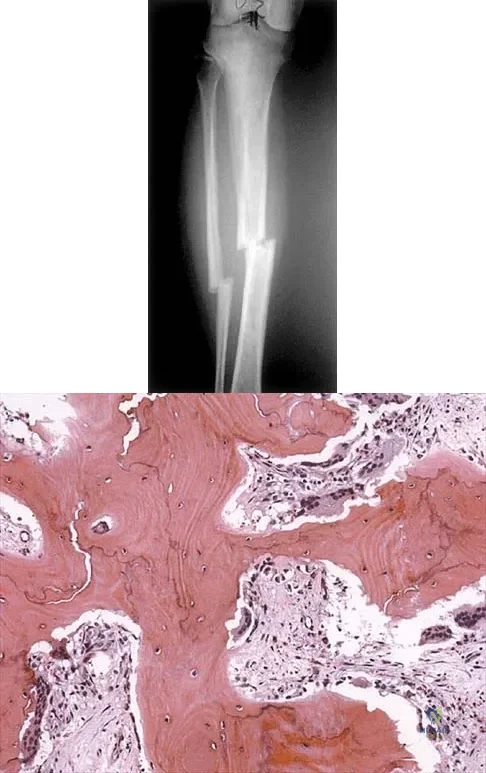
Figure 26a shows the radiograph of a 55-year-old woman who has pain in her right leg after falling. Laboratory studies reveal an elevated alkaline phosphatase level. A biopsy specimen from the proximal tibia is shown in Figure 26b. What is the most likely diagnosis?
Explanation
Question 2
Radiographs of a pediatric patient reveal a suspected osteosarcoma of the distal femur. Additional staging studies should consist of
Explanation
Question 3
Which of the following factors are considered prognostic of survival in patients with soft-tissue sarcomas?
Explanation
Question 4
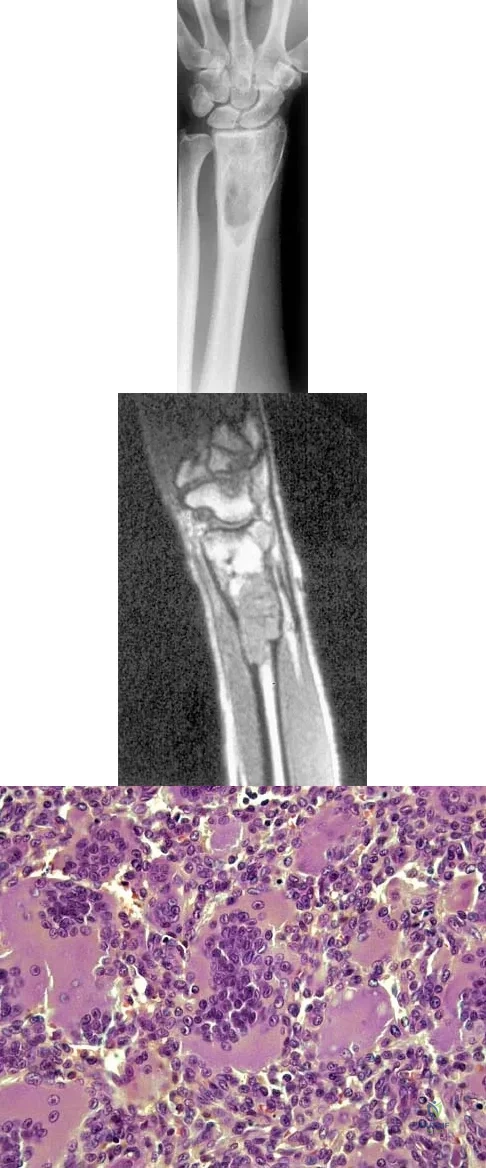
Figures 27a through 27c show the AP radiograph, MRI scan, and biopsy specimen of an otherwise healthy man who has a painful wrist. Serum chemistry studies are normal. What is the most likely diagnosis?
Explanation
Question 5
What is the most common primary malignant tumor of bone in childhood?
Explanation
Question 6
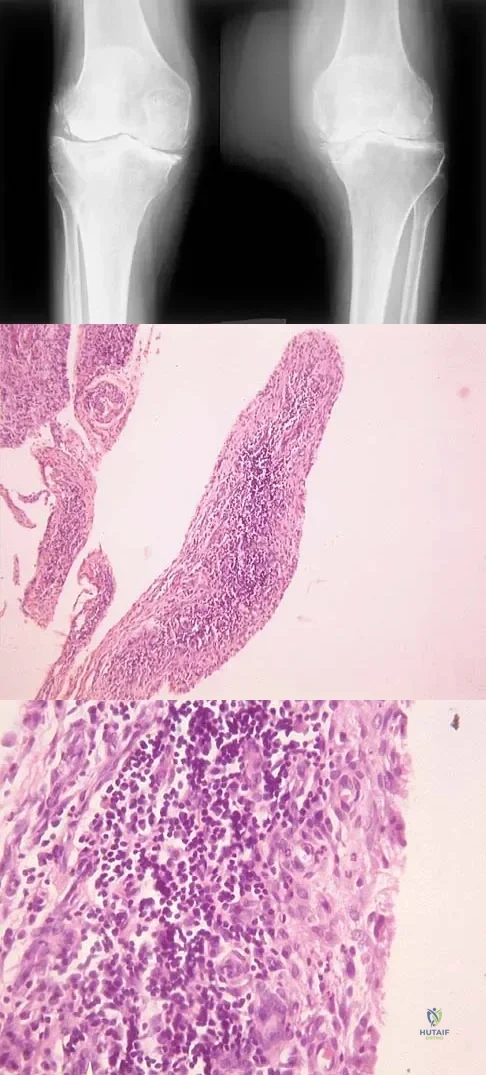
A 44-year-old woman has bilateral knee pain, and history reveals bilateral hip replacements. Radiographs are seen in Figure 28a, and histopathologic specimens from the total hip replacement are shown in Figures 28b and 28c. Laboratory studies reveal anemia. What is the most likely diagnosis?
Explanation
Question 7
In addition to pain, which of the following factors are considered most predictive of the risk of pathologic fracture?
Explanation
Question 8
Patients with which of the following primary carcinomas have the shortest overall survival rate after a solitary metastasis to bone?
Explanation
Question 9
A 63-year-old woman has a femoral neck fracture. A biopsy specimen obtained from the fracture site at the time of her hemiarthroplasty reveals metastatic carcinoma. Seven days after surgery, she becomes confused and lethargic. Which of the following laboratory values is most likely implicated in the patient's symptoms at this time?
Explanation
Question 10
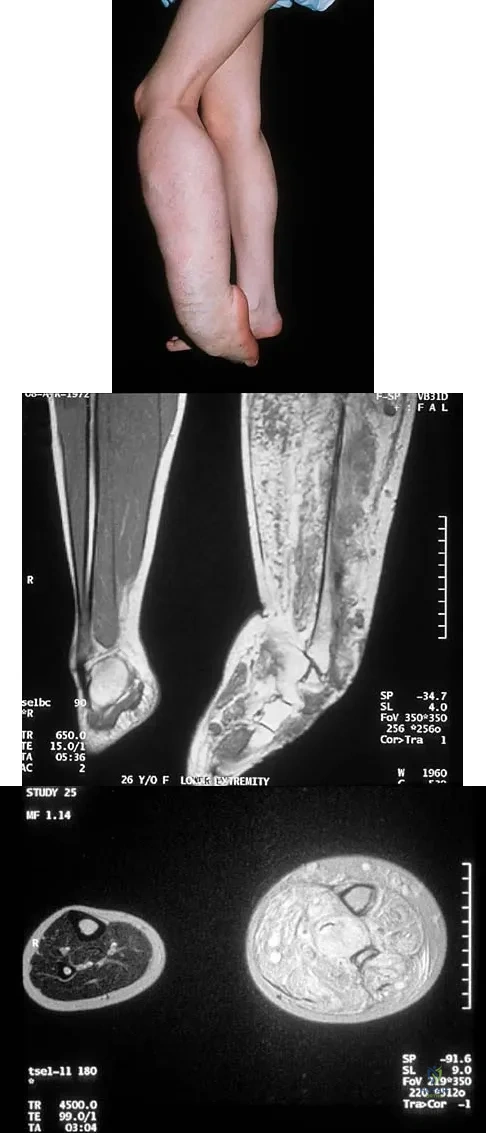
Figure 29a shows the clinical photograph of a 26-year-old woman who has had the leg deformity since birth. She reports difficulty with walking and weight bearing and notes increased discomfort and swelling when the leg is dependent. She denies any history of trauma or family history of a similar disorder. Examination reveals a fixed equinovarus deformity of the foot but no evidence of a limb-length discrepancy. No other cutaneous findings or soft-tissue masses are noted. Sagittal and axial T1- and T2-weighted MRI scans are shown in Figures 29b and 29c. What is the most likely diagnosis?
Explanation
Question 11
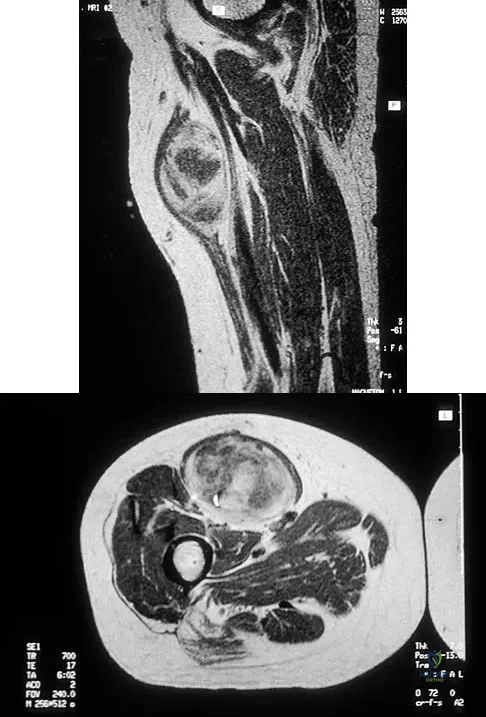
Figures 30a and 30b show the MRI scans of a 51-year-old woman who has had an enlarging soft-tissue mass in her right thigh for the past 18 months. Examination reveals no inguinal adenopathy. Results of a biopsy show a high-grade sarcoma. A bone scan is unremarkable, and a CT scan of the chest shows no evidence of pulmonary metastasis. According to the Musculoskeletal Tumor Society (MSTS) staging system, the tumor should be classified as what stage?
Explanation
Question 12
An otherwise healthy 45-year-old man has a 3-cm subcutaneous mass on his anterior thigh that is presumed to be a lipoma. Removal of the mass is performed in the office of his primary care physician. Pathologic evaluation shows a high-grade malignant fibrous histiocytoma. Staging reveals no evidence of metastatic disease. Management at this time should consist of
Explanation
Question 13
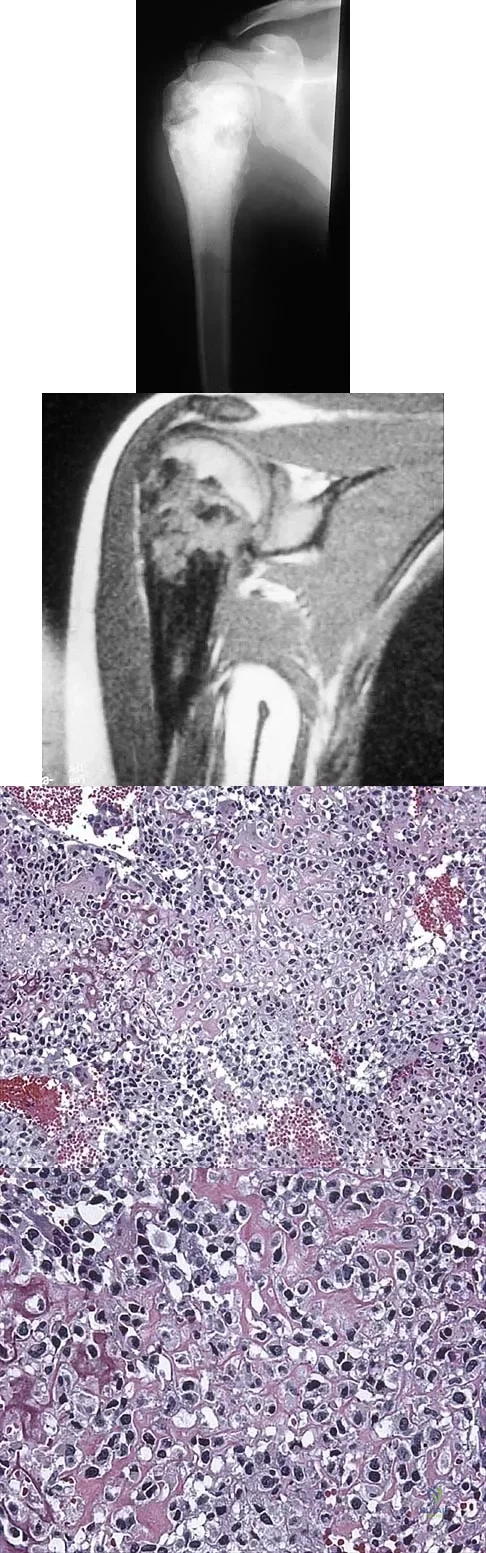
A 13-year-old girl has had a firm mass and pain in her right shoulder for the past several weeks. She denies any history of trauma. A radiograph and MRI scan are shown in Figures 31a and 31b. Biopsy specimens are shown in Figures 31c and 31d. What is the most likely diagnosis?
Explanation
Question 14
The use of radiation therapy is most effective in metastatic bone disease from which of the following tumors?
Explanation
Question 15
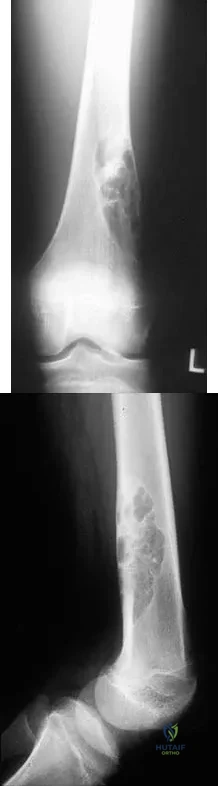
Figures 32a and 32b show the radiographs of an active 13-year-old boy who has persistent left thigh pain and a limp despite a trial of protected weight bearing. Management should consist of
Explanation
Question 16
The spread of malignant cells to the vertebrae is often through
Explanation
Question 17
A 10-year-boy has had thigh pain for the past several months. He denies any history of trauma. Examination reveals no soft-tissue mass, and mild tenderness. Figures 33a and 33b show the plain radiograph and MRI scan, and the biopsy specimens are shown in Figures 33c and 33d. What is the most likely diagnosis?
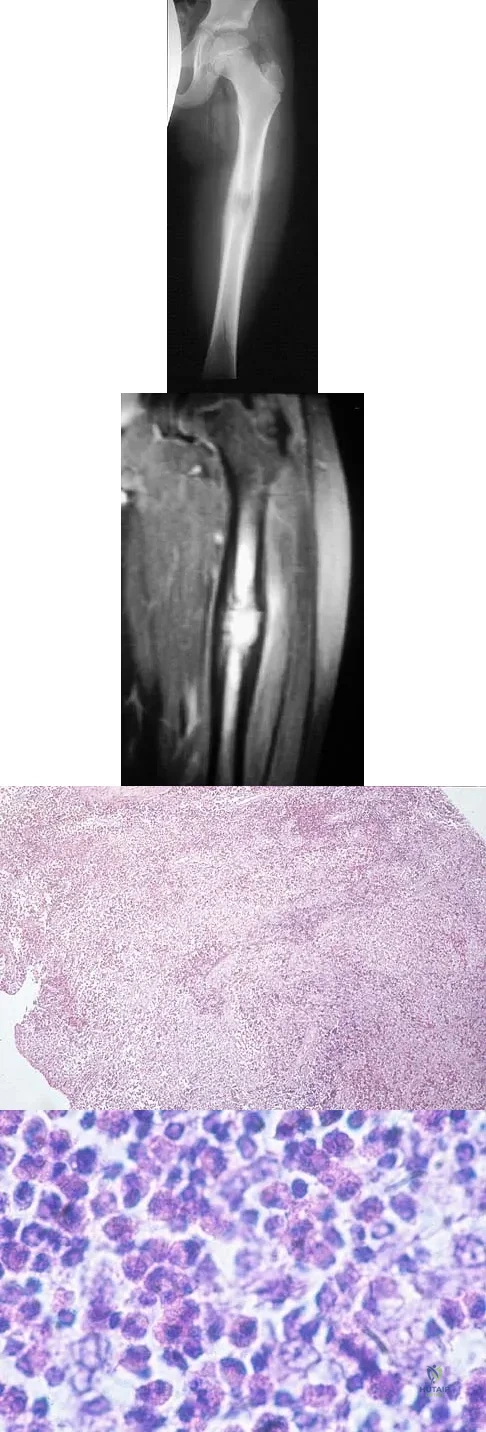
Explanation
Question 18
A 35-year-old patient has right hip pain. Figures 34a and 34b show the coronal MRI scan and the biopsy specimen. What is the most likely diagnosis?
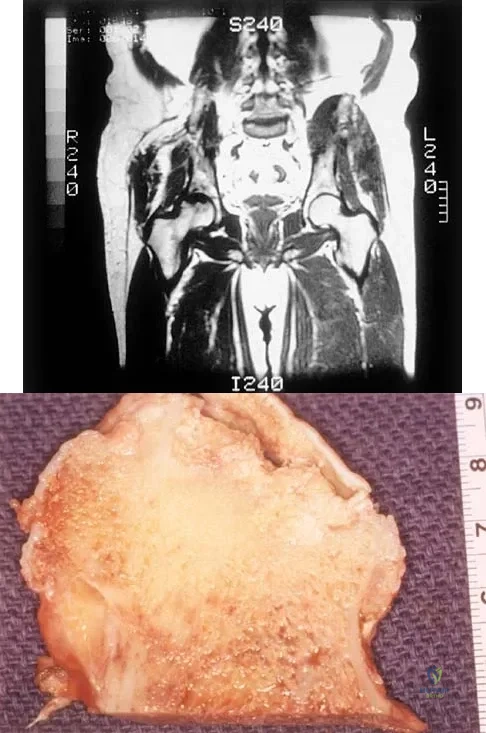
Explanation
Question 19
A 16-year-old girl has a painful foot mass. A radiograph, MRI scan, and biopsy specimens are shown in Figures 35a through 35d. What is the most likely diagnosis?
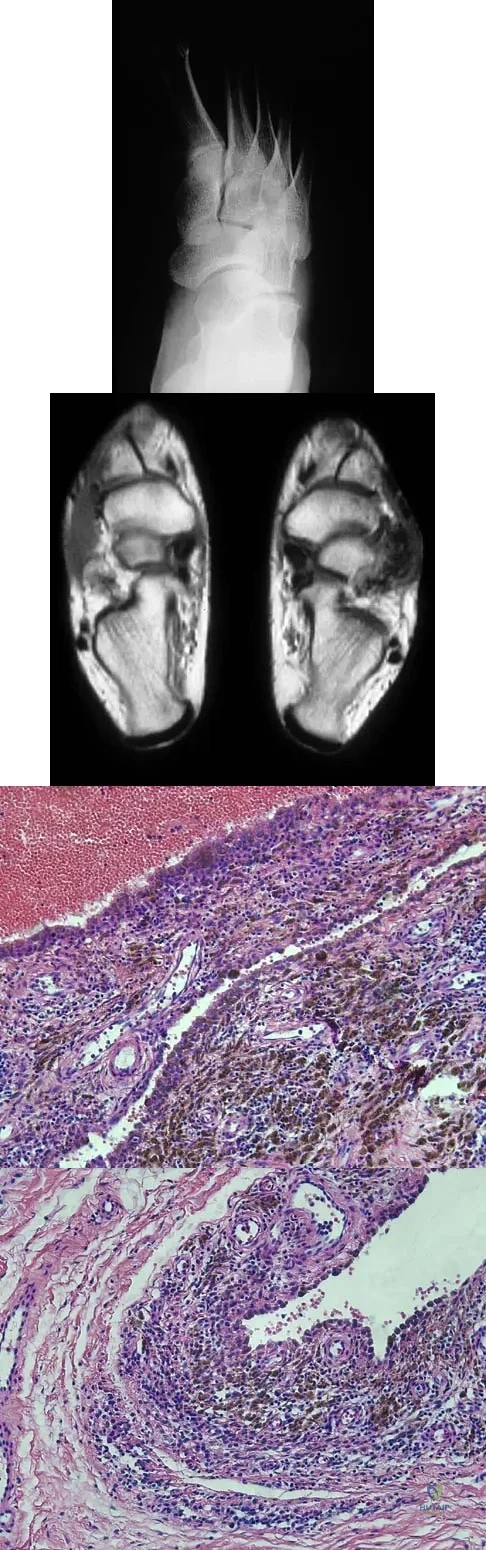
Explanation
Question 20
What is the most common diagnosis in a patient older than age 40 years with a destructive bony lesion?
Explanation
Question 21
A 78-year-old man being seen for routine follow-up studies reports mild to moderate pain in his left arm. The patient has a history of lung cancer and severe heart disease. A radiograph and a bone scan are shown in Figures 36a and 36b. Treatment should consist of
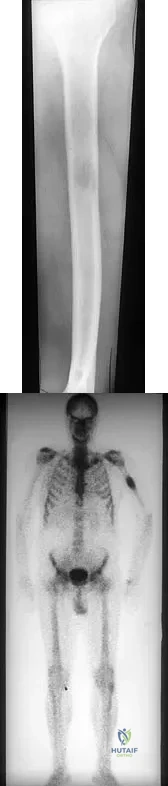
Explanation
Question 22
Which of the following benign bone lesions can develop lung metastases?
Explanation
Question 23
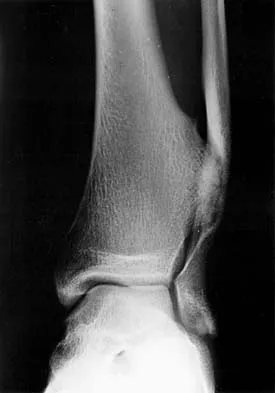
The radiographic feature seen in Figure 37 that best indicates a slow-growing process is the
Explanation
Question 24
A 52-year-old man has a stage IIB malignant fibrous histiocytoma of the distal femur. Local treatment should consist of
Explanation
Question 25
A patient undergoes excision of a 3- x 3-cm soft-tissue sarcoma. The final histology results show tumor at the surgical margin. The surgical procedure performed is classified as
Explanation
Question 26
When a constant deformation is applied to a viscoelastic material such as a ligament, the force required to maintain that deformation decreases over time. This phenomenon is known as:
Explanation
Question 27
A 68-year-old woman is treated with a monoclonal antibody for severe osteoporosis. The drug binds to a specific receptor on osteoblast lineage cells to inhibit osteoclastogenesis. What is the molecular target of this medication?
Explanation
Question 28
In normal articular cartilage, which of the following best describes the structural arrangement of collagen fibers in the superficial zone?
Explanation
Question 29
A 4-year-old child presents with bowing of the lower extremities and widening of the physes. Laboratory studies reveal hypocalcemia, hypophosphatemia, and markedly elevated alkaline phosphatase. A defect in which of the following processes is most likely responsible?
Explanation
Question 30
Which of the following points on a stress-strain curve represents the maximum stress a material can withstand before failing?
Explanation
Question 31
Which of the following is the primary glycosaminoglycan responsible for the compressive stiffness of articular cartilage by creating a high osmotic swelling pressure?
Explanation
Question 32
Romosozumab is an anabolic agent used in the treatment of osteoporosis. It exerts its osteogenic effect by binding to and inhibiting which of the following?
Explanation
Question 33
A patient undergoes revision total hip arthroplasty. The retrieved femoral component shows a localized form of corrosion at the modular head-neck junction. This phenomenon is primarily driven by small relative motions between the components and is known as:
Explanation
Question 34
Adult articular chondrocytes exist in an avascular environment. Which of the following pathways is their primary source of energy production?
Explanation
Question 35
A young patient presents with multiple fractures and generalized increased bone density on radiographs. Genetic testing reveals a mutation affecting the ruffled border of osteoclasts. A defect in which of the following enzymes is most likely involved?
Explanation
Question 36
During the normal gait cycle, articular cartilage relies on different lubrication mechanisms. At the initiation of movement under high loads and low speeds, which lubrication mechanism predominates?
Explanation
Question 37
Continuous, high-dose administration of Parathyroid Hormone (PTH) leads to net bone resorption. Which of the following best describes the cellular mechanism responsible for this effect?
Explanation
Question 38
While Type II collagen constitutes the vast majority of collagen in articular cartilage, a specific minor collagen type is uniquely responsible for anchoring the basal layer of cartilage to the underlying subchondral bone. Which type is it?
Explanation
Question 39
A severely malnourished patient presents with bleeding gums, petechiae, and joint pain. The underlying defect involves impaired hydroxylation of proline and lysine residues during collagen synthesis. This process requires which of the following as a cofactor?
Explanation
Question 40
In total joint arthroplasty, the phenomenon where microscopic asperities of a harder material cut through a softer material is known as:
Explanation
Question 41
When a long bone is subjected to bending forces, its resistance to bending is proportional to its area moment of inertia. For a hollow cylinder, area moment of inertia is proportional to the radius raised to which power?
Explanation
Question 42
Bone Morphogenetic Proteins (BMPs) are members of the TGF-beta superfamily that induce osteoblastic differentiation. Which intracellular signaling molecules are directly phosphorylated by BMP receptors upon ligand binding?
Explanation
Question 43
During cyclical loading and unloading of a viscoelastic structure such as a tendon, the energy lost as heat is represented by the area between the loading and unloading curves. This phenomenon is termed:
Explanation
Question 44
Which of the following changes accurately describes the typical biochemical alteration in articular cartilage associated with normal aging?
Explanation
Question 45
Primary (strain-free) bone healing occurs without callus formation. Which of the following is an absolute requirement for primary bone healing?
Explanation
Question 46
Which of the following molecules acts as a decoy receptor to inhibit osteoclastogenesis by binding to RANKL?
Explanation
Question 47
In the biomechanical behavior of ligaments, the phenomenon where a constant displacement results in a progressive decrease in the load over time is known as:
Explanation
Question 48
In normal articular cartilage, which zone has the highest water content and collagen fibers oriented parallel to the joint surface?
Explanation
Question 49
Intermittent administration of parathyroid hormone (PTH) primarily results in which of the following skeletal effects?
Explanation
Question 50
How does the torsional strength of a solid cylindrical bone change if its radius is doubled?
Explanation
Question 51
Which glycosaminoglycan is the most abundant in normal mature articular cartilage and is responsible for drawing water into the extracellular matrix?
Explanation
Question 52
A pediatric patient presents with bowing of the legs and widening of the physes. Laboratory studies show normal calcium, markedly decreased phosphate, and normal vitamin D levels. A mutation in which of the following is most likely responsible?
Explanation
Question 53
On a stress-strain curve, the point at which a material begins to undergo permanent deformation and no longer returns to its original shape when unloaded is defined as the:
Explanation
Question 54
Which of the following matrix metalloproteinases (MMPs) is considered the primary enzyme responsible for the cleavage of type II collagen in the pathogenesis of osteoarthritis?
Explanation
Question 55
During the endochondral ossification phase of secondary fracture healing, hypertrophic chondrocytes secrete which of the following factors to stimulate angiogenesis?
Explanation
Question 56
A stainless steel screw is inadvertently used with a titanium plate for fracture fixation. Which type of corrosion is most likely to occur?
Explanation
Question 57
Which molecule is primarily responsible for boundary lubrication of the articular cartilage surface, reducing friction at low speeds and high loads?
Explanation
Question 58
Sclerostin, an inhibitor of bone formation, exerts its effect primarily by blocking which of the following signaling pathways in osteoblasts?
Explanation
Question 59
In total joint arthroplasty, wear particles generated by the physical scratching of the polyethylene bearing surface by a harder metal or ceramic surface is best described as:
Explanation
Question 60
Microfracture of a full-thickness articular cartilage defect relies on marrow stimulation to form a repair tissue. Which of the following best characterizes the predominant collagen type in this repair tissue?
Explanation
Question 61
Denosumab, used in the treatment of osteoporosis, acts by mimicking the physiologic action of which endogenous molecule?
Explanation
Question 62
The endurance limit of an orthopedic implant material is defined as the:
Explanation
Question 63
Articular chondrocytes primarily rely on which of the following metabolic pathways for energy production?
Explanation
Question 64
Nitrogen-containing bisphosphonates (e.g., alendronate) inhibit osteoclast function primarily by interfering with which intracellular pathway?
Explanation
Question 65
Cortical bone exhibits different mechanical properties depending on the direction of the applied load. This material property is termed:
Explanation
Question 66
In which zone of articular cartilage is the water content the highest and the collagen fibers oriented parallel to the joint surface?
Explanation
Question 67
A viscoelastic material subjected to a constant strain will demonstrate a gradual decrease in stress over time. This phenomenon is known as:
Explanation
Question 68
Osteoprotegerin (OPG) regulates bone resorption by:
Explanation
Question 69
Which of the following gene mutations is most commonly associated with the pathogenesis of malignant infantile osteopetrosis?
Explanation
Question 70
The primary function of aggrecan in articular cartilage is to:
Explanation
Question 71
The slope of the linear portion of the stress-strain curve represents a material's:
Explanation
Question 72
Vitamin C deficiency impairs bone formation by disrupting which of the following cellular processes?
Explanation
Question 73
The maximum stress a material can withstand for an infinite number of loading cycles without failure is known as the:
Explanation
Question 74
Intermittent administration of parathyroid hormone (PTH) analogues (e.g., teriparatide) primarily leads to:
Explanation
Question 75
Which of the following molecules is primarily responsible for boundary lubrication in articular joints?
Explanation
Question 76
The primary cellular defect in Paget disease of bone resides in the:
Explanation
Question 77
Mixing stainless steel and titanium implants in a highly saline environment (e.g., the human body) increases the risk of which type of corrosion?
Explanation
Question 78
The earliest biochemical change observed in articular cartilage during the development of osteoarthritis is:
Explanation
Question 79
Nutritional rickets is characterized by an initial defect in which of the following processes?
Explanation
Question 80
Which of the following design modifications will most effectively increase the pullout strength of a bone screw?
Explanation
Question 81
A patient presents with generalized bone pain and proximal muscle weakness. Laboratory tests reveal low serum calcium, low phosphorus, elevated alkaline phosphatase, and elevated parathyroid hormone. What is the most likely diagnosis?
Explanation
Question 82
Articular cartilage has a remarkably limited intrinsic capacity for healing following injury primarily because it:
Explanation
Question 83
According to Perren's strain theory, secondary fracture healing with abundant callus formation is optimized when the mechanical strain at the fracture gap is maintained between:
Explanation
Question 84
Denosumab is an effective pharmacologic treatment for severe osteoporosis because it functions as a monoclonal antibody that directly targets and inhibits:
Explanation
Question 85
The total area under the load-deformation (or stress-strain) curve of a bone specimen up to the point of structural failure represents its:
Explanation
Question 86
Parathyroid hormone (PTH) regulates bone remodeling. Continuous administration of PTH leads to net bone resorption. Through which direct cellular mechanism does PTH stimulate osteoclastogenesis?
Explanation
Question 87
In adult articular cartilage, which zone is characterized by the highest concentration of water, the lowest concentration of proteoglycans, and collagen fibers oriented parallel to the joint surface?
Explanation
Question 88
When utilizing an intramedullary nail for fracture fixation, the torsional rigidity of a solid cylindrical nail is proportional to its radius raised to which power?
Explanation
Question 89
Which of the following represents the earliest biochemical and structural change observed in articular cartilage during the pathogenesis of osteoarthritis?
Explanation
Question 90
A 4-year-old child presents with bleeding gums, petechiae, and subperiosteal hemorrhages. Radiographs show a "white line of Frankel." This condition is caused by a nutritional deficiency that impairs which specific step of collagen synthesis?
Explanation
Question 91
A surgeon considers using a 316L stainless steel screw to secure a titanium alloy plate. This practice is strongly contraindicated because mixing these distinct metals in an electrolytic biological fluid leads to which type of corrosion?
Explanation
Question 92
In the extracellular matrix of articular cartilage, aggrecan monomers assemble into massive proteoglycan aggregates by non-covalently binding to which of the following molecules?
Explanation
Question 93
A patient with frequent fractures and a dense "rugger jersey" spine on radiographs is diagnosed with osteopetrosis. Genetic testing reveals a defect in carbonic anhydrase II. This primary defect impairs the function of which cell by what mechanism?
Explanation
Question 94
A ligament that is subjected to a constant, sustained load over a prolonged period will progressively elongate. This specific viscoelastic behavior is defined as:
Explanation
Question 95
During normal joint function under high-loading and high-velocity conditions, articular cartilage lubrication is primarily achieved by fluid being dragged into the joint space and deforming the cartilage surfaces. This mechanism is known as:
Explanation
Question 96
A 65-year-old male presents with increasing hat size, bowing of tibiae, and hearing loss.
Laboratory values demonstrate normal calcium, normal phosphate, and markedly elevated alkaline phosphatase. Which of the following is the primary cellular abnormality in this disease?
Explanation
Question 97
On a standard stress-strain curve for human cortical bone tested in tension, the transition point where the material stops deforming elastically and begins to deform plastically is termed the:
Explanation
Question 98
Mature articular chondrocytes reside in an avascular environment and must generate cellular energy under characteristically hypoxic conditions. They derive the vast majority of their ATP through which of the following metabolic pathways?
Explanation
Question 99
A 45-year-old female with a history of a Roux-en-Y gastric bypass presents with diffuse bone pain and proximal muscle weakness. Laboratory evaluation reveals low serum calcium, low phosphorus, elevated alkaline phosphatase, and elevated parathyroid hormone. What is the most likely diagnosis?
Explanation
Question 100
When selecting a biomaterial for a total hip arthroplasty femoral stem to minimize stress shielding, the surgeon should consider the elastic modulus. Which of the following orthopedic biomaterials has an elastic modulus most closely approximating that of human cortical bone?
Explanation
None
