Orthopedic Adult Reconstructiv Review | Dr Hutaif Hip & -...
Key Takeaway
Discover the latest medical recommendations for ORTHOPEDIC MCQS 010 Adult Reconstructive Surgery of the Hip and Knee Examination 7. **Eds orthopaedic knowledge** specifies that a quadriceps snip, a technique used to improve exposure during revision total knee arthroplasty, does not require alteration of the patient's postoperative physical therapy regimen. This critical understanding ensures consistent rehabilitation protocols and optimal recovery following complex knee reconstructive surgery.
Orthopedic Adult Reconstructiv Review | Dr Hutaif Hip & -...
Comprehensive 100-Question Exam
00:00
Start Quiz
Question 1
In the manufacturing of highly cross-linked polyethylene (HXLPE) for total hip arthroplasty, what is the primary consequence of the remelting process performed after gamma irradiation?
Explanation
Question 2
During a total hip arthroplasty, the surgeon decides to medialize the acetabular component to the true floor of the acetabulum. How does this modification alter the biomechanics of the hip joint in the coronal plane?
Explanation
Question 3
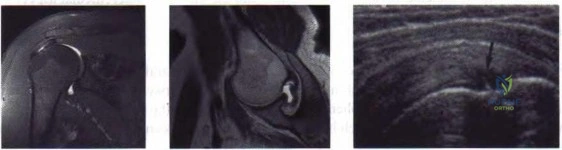
A 68-year-old woman presents with an inability to actively extend her knee 3 years after a primary total knee arthroplasty. Radiographs show a high-riding patella indicating a complete patellar tendon rupture. Given the chronicity and setting of TKA, what is the most reliable surgical reconstruction option yielding the best long-term outcomes?
Explanation
Question 4
The direct anterior approach (Smith-Petersen) for total hip arthroplasty is gaining popularity due to its internervous plane. Which of the following describes the correct superficial internervous plane utilized in this approach?
Explanation
Question 5
A 72-year-old male presents with a painful total knee arthroplasty 4 years postoperatively. Erythrocyte sedimentation rate (ESR) is 45 mm/hr and C-reactive protein (CRP) is 22 mg/L. Joint aspiration yields a synovial white blood cell count of 4,500 cells/µL with 85% polymorphonuclear (PMN) leukocytes. What is the next best step in management?
Explanation
Question 6
In conventional mechanical alignment for total knee arthroplasty, the goal is to create a neutral mechanical axis. How are the femoral and tibial component bone cuts classically oriented relative to their respective mechanical axes?
Explanation
Question 7
A 65-year-old woman experiences recurrent posterior dislocations of her total hip arthroplasty. Radiographic evaluation demonstrates the acetabular component is placed in 5 degrees of retroversion and 45 degrees of inclination. The femoral stem is in neutral version. What is the most appropriate surgical intervention?
Explanation
Question 8
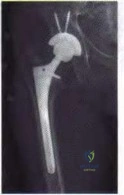
A 58-year-old male with a metal-on-metal total hip arthroplasty presents with new-onset groin pain and a palpable mass. Serum cobalt levels are elevated at 15 ppb. MRI demonstrates a large cystic fluid collection around the hip joint.
Histological analysis of the periprosthetic tissue during revision surgery is most likely to show which of the following?
Explanation
Question 9
During a posterior-stabilized total knee arthroplasty, trial reduction reveals that the knee is symmetric and stable in full extension but excessively tight in 90 degrees of flexion, causing lift-off. Which of the following adjustments is the most appropriate next step to balance the knee?
Explanation
Question 10
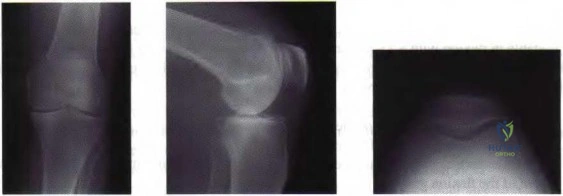
A 78-year-old female sustains a fall and presents with thigh pain. Radiographs reveal a spiral fracture around the tip of her cementless femoral stem. The stem is visibly subsided and loose, but the proximal femoral bone stock remains adequate.
According to the Vancouver classification, what is the recommended treatment?
Explanation
Question 11
In the pathogenesis of aseptic loosening secondary to polyethylene wear debris in total joint arthroplasty, which of the following cell types is primarily responsible for the initial phagocytosis of the submicron wear particles and subsequent release of pro-inflammatory cytokines such as TNF-α and IL-1?
Explanation
Question 12
A patient presents with persistent anterior knee pain and lateral patellar subluxation 6 months following a primary total knee arthroplasty. A CT scan protocol is obtained to evaluate component rotation. Which of the following errors in component positioning is the most likely cause of lateral patellar maltracking?
Explanation
Question 13
During single-leg stance, the hip abductor muscles must generate sufficient force to maintain a level pelvis. In a normal adult hip, the ratio of the body weight moment arm to the abductor moment arm is approximately 2.5 to 1. If a patient weighs 800 N, what is the approximate joint reaction force across the hip during single-leg stance?
Explanation
Question 14
A 65-year-old diabetic male is evaluated in the clinic prior to an elective total hip arthroplasty. Which of the following preoperative hemoglobin A1c (HbA1c) levels is the generally accepted strict upper threshold above which the risk of periprosthetic joint infection (PJI) is significantly elevated, typically prompting delay of elective arthroplasty?
Explanation
Question 15
During a total knee arthroplasty, the surgeon is performing the proximal tibial resection. Injury to the popliteal artery is a rare but catastrophic complication. Anatomically, at what level is the popliteal artery most tethered and vulnerable during the standard tibial cut?
Explanation
Question 16
Which of the following procedural steps is a defining characteristic of a "third-generation" cementing technique in total hip arthroplasty, aimed at maximizing the mechanical interlock and longevity of the cemented stem?
Explanation
Question 17
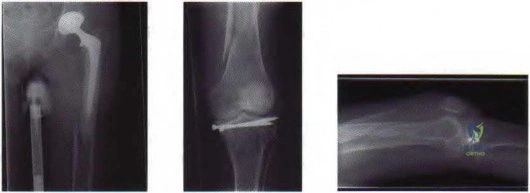
A patient with a history of long-segment lumbar fusion (L2-Pelvis) is planned for a total hip arthroplasty. Because of spinopelvic stiffness, how does the pelvis normally respond when transitioning from standing to sitting, and what specific instability is this patient at highest risk for due to their fusion?
Explanation
Question 18
Tranexamic acid (TXA) is routinely administered in total joint arthroplasty to reduce perioperative blood loss. What is the primary pharmacologic mechanism of action of TXA?
Explanation
Question 19
A 55-year-old female is scheduled for a primary total knee arthroplasty. She reports a history of severe localized blistering rash when wearing cheap jewelry or metal watch bands. Dermatological patch testing confirms a severe Nickel allergy. Which of the following femoral component materials is most appropriate for this patient?
Explanation
Question 20
During a total knee arthroplasty for a severe fixed varus deformity, the surgeon performs sequential medial soft tissue releases to balance the extension gap. After removing medial osteophytes and releasing the deep medial collateral ligament (MCL) and the posteromedial corner, the knee remains tight medially in full extension. What is the next most appropriate structure to release?
Explanation
Question 21
A 70-year-old man undergoes a primary total hip arthroplasty. He has a history of a solid instrumented lumbar fusion from L2 to the sacrum. How does this spinal pathology affect his spinopelvic biomechanics and subsequent dislocation risk during sitting?
Explanation
Question 22
During a posterior-stabilized total knee arthroplasty, trial reduction reveals a joint that is balanced in flexion but excessively tight in extension. Which of the following is the most appropriate intraoperative step to achieve a balanced gap?
Explanation
Question 23
A 76-year-old woman presents with acute thigh pain after a fall. She underwent a total hip arthroplasty 8 years ago. Radiographs demonstrate a fracture around the tip of the femoral stem. The stem appears to be subsided and loose, but there is adequate proximal diaphyseal bone stock.
According to the Vancouver classification, what is the most appropriate surgical management?
Explanation
Question 24
A 65-year-old female undergoes a primary total hip arthroplasty. The surgeon opts to use a high-offset femoral stem rather than a standard-offset stem, maintaining the identical neck length and seating depth within the medullary canal. What is the expected biomechanical outcome of this modification?
Explanation
Question 25
During a primary total knee arthroplasty using a measured resection technique, trial reduction reveals a symmetric but excessively tight extension gap, while the flexion gap is perfectly balanced. Which of the following is the most appropriate next step to balance the knee?
Explanation
Question 26
A 70-year-old male presents with chronic pain 2 years following a total hip arthroplasty. Serology reveals an ESR of 45 mm/hr and a CRP of 25 mg/L. Hip aspiration yields synovial fluid with a WBC count of 3,500 cells/uL and 75% neutrophils. Which of the following synovial biomarkers offers the highest specificity for confirming a periprosthetic joint infection (PJI)?
Explanation
Question 27
A 60-year-old female with advanced knee osteoarthritis is scheduled for a total knee arthroplasty. She has a documented, severe, delayed-type hypersensitivity reaction to nickel. Which of the following femoral component biomaterials is most appropriate to minimize the risk of a hypersensitivity reaction?
Explanation
Question 28
A 55-year-old male who underwent a ceramic-on-ceramic total hip arthroplasty 2 years ago presents complaining of an audible squeaking sound during ambulation. Radiographs show secure components. Which of the following factors is most strongly associated with the development of this phenomenon?
Explanation
Question 29
A 65-year-old female presents with anterior knee pain and a painful catching sensation when actively extending her knee from 40 to 30 degrees of flexion. She underwent a posterior-stabilized total knee arthroplasty one year ago. What is the most likely underlying etiology of her symptoms?
Explanation
Question 30
The direct anterior approach (Smith-Petersen) for total hip arthroplasty utilizes a superficial internervous plane. Which of the following best describes the nerve supplies to the muscles bounding this plane?
Explanation
Question 31
A 75-year-old female sustains a distal femur fracture just superior to a well-fixed posterior-stabilized total knee arthroplasty component.
The fracture is displaced but the joint line is maintained. What is the most appropriate surgical management?
Explanation
Question 32
A 68-year-old male with a metal-on-polyethylene total hip arthroplasty utilizing a large-diameter cobalt-chromium head presents with progressive groin pain. Radiographs show well-fixed components. Aspiration yields sterile, low-WBC fluid. MRI demonstrates a large pseudotumor. What is the primary pathophysiologic mechanism?
Explanation
Question 33
In kinematic alignment principles for total knee arthroplasty, the primary goal for orienting the femoral component is to align its transverse axis with which of the following native anatomical axes?
Explanation
Question 34
A patient experiences recurrent posterior dislocations of a total hip arthroplasty. CT evaluation reveals a combined anteversion (Widmer technique) of 15 degrees, with the acetabular cup at 5 degrees and the femoral stem at 10 degrees. What is the most appropriate revision strategy?
Explanation
Question 35
During a total knee arthroplasty for a severe, fixed valgus deformity, standard releases are performed. Which structure is typically tightest and may require targeted release to effectively balance the extension gap laterally?
Explanation
Question 36
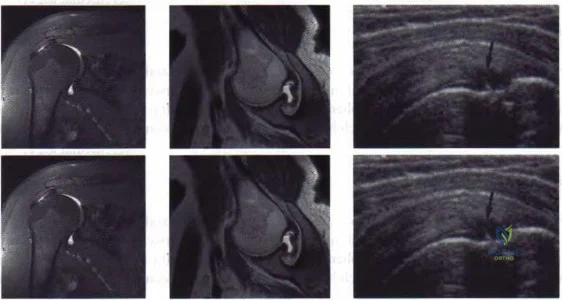
An 80-year-old male sustains a fall resulting in a periprosthetic femur fracture around a previously asymptomatic THA.
Radiographs demonstrate a fracture pattern localized around the femoral stem. The stem exhibits obvious subsidence and loosening, but the proximal femoral bone stock remains adequate. What is the Vancouver classification and standard treatment?
Explanation
Question 37
If the femoral component in a total knee arthroplasty is inadvertently placed in excessive internal rotation relative to the surgical transepicondylar axis, what is the most likely biomechanical consequence?
Explanation
Question 38
In strictly controlled in-vitro simulator studies, which of the following bearing surface combinations demonstrates the lowest linear and volumetric wear rates per million cycles?
Explanation
Question 39
A patient with a midshaft femoral malunion presenting with 20 degrees of coronal varus requires a total knee arthroplasty. If standard intra-articular bone cuts perpendicular to the mechanical axis are performed without addressing the extra-articular deformity, what major intraoperative complication is most likely?
Explanation
Question 40
A surgeon decides to increase the femoral offset during a primary total hip arthroplasty (THA) using a high-offset femoral stem. Assuming leg length remains unchanged, what is the primary biomechanical effect of this modification?
Explanation
Question 41
A 65-year-old patient presents with a 'clunking' sensation and recurrent instability in deep flexion 2 years after a posterior-stabilized (PS) total knee arthroplasty (TKA). What is the most likely biomechanical cause of this cam-post jump phenomenon?
Explanation
Question 42
A 45-year-old man undergoes THA with a ceramic-on-ceramic (CoC) articulation. Postoperatively, he complains of a loud, high-pitched squeaking noise during gait. Which of the following component positions is most strongly associated with this phenomenon?
Explanation
Question 43
According to the Musculoskeletal Infection Society (MSIS) / International Consensus Meeting (ICM) criteria, which of the following is considered a definitive major criterion for diagnosing a periprosthetic joint infection (PJI)?
Explanation
Question 44
During trialing of a primary TKA, the surgeon notes that the knee is perfectly balanced and achieves full extension, but it is unacceptably tight in 90 degrees of flexion, preventing full range of motion. Which of the following is the most appropriate next step in management?
Explanation
Question 45
The direct anterior approach (DAA) to the hip is increasingly popular for primary THA. This approach utilizes a true internervous plane between which two muscles superficially?
Explanation
Question 46
A 78-year-old woman presents with a periprosthetic femur fracture around her cemented THA stem after a fall. Radiographs demonstrate a spiral fracture at the tip of the stem with evidence of subsidence and a radiolucent mantle, but excellent proximal and distal bone stock. What is the most appropriate definitive management?
Explanation
Question 47
A patient presents with a painful catch and an audible 'clunk' as their knee approaches terminal active extension 1 year after a posterior-stabilized TKA. What is the pathomechanism of this specific complication?
Explanation
Question 48
Mechanically assisted crevice corrosion (MACC), or trunnionosis, has been identified as a cause of adverse local tissue reactions in non-metal-on-metal THA. Which combination of implant factors confers the highest risk for trunnionosis?
Explanation
Question 49
Adverse local tissue reaction (ALTR) and pseudotumor formation in metal-on-metal (MoM) hip arthroplasty (ALVAL) is primarily driven by which immunological mechanism?
Explanation
Question 50
To minimize the risk of posterior dislocation following a primary THA, surgeons aim for an optimal 'combined anteversion' of the acetabular and femoral components. Based on classic principles, what is the generally accepted target range for combined anteversion?
Explanation
Question 51
During a mechanically aligned primary TKA, the surgeon uses an intramedullary guide for the distal femoral cut. To achieve a neutral mechanical axis, the valgus cut angle set on the distal femoral cutting block is typically based on the angle between which two axes?
Explanation
Question 52
A 72-year-old female presents for revision THA. Radiographs demonstrate severe acetabular osteolysis with a fracture line separating the superior and inferior halves of the hemipelvis, indicating pelvic discontinuity.
What is the most appropriate reconstructive option to achieve long-term stability?
Explanation
Question 53
During a TKA, a surgeon inadvertently uses a patellar button that is significantly thicker than the native resected patella, leading to an 'overstuffed' anterior compartment. What is the most likely clinical consequence of this error?
Explanation
Question 54
Highly cross-linked polyethylene (HXLPE) has significantly reduced wear rates in THA. What is the primary biological and mechanical advantage of doping HXLPE with Vitamin E rather than performing post-irradiation remelting?
Explanation
Question 55
Tranexamic acid (TXA) is widely used in adult reconstruction to minimize perioperative blood loss. What is the precise pharmacological mechanism of action of this medication?
Explanation
Question 56
A surgeon is performing a primary TKA on a patient with a severe fixed valgus deformity (Krackow Type II). After bone cuts, the lateral compartment remains excessively tight in extension but is adequately balanced in flexion. Which structure should be selectively released to correct this specific imbalance?
Explanation
Question 57
During acetabular component fixation in THA, screw placement is targeted to specific anatomic zones to avoid neurovascular injury. According to Wasielewski's quadrant system, which quadrant is considered the 'safe zone' for placing screws?
Explanation
Question 58
Increasing femoral offset during a total hip arthroplasty has what primary biomechanical effect on the hip joint?
Explanation
Question 59
Review the provided imaging.
During a total knee arthroplasty, the surgeon notes that the extension gap is perfectly balanced, but the flexion gap is excessively tight. Which of the following is the most appropriate step to balance the knee?
Explanation
Question 60
A 65-year-old male presents with persistent groin pain 4 years after a metal-on-polyethylene total hip arthroplasty. Aspiration is negative for infection, but serum cobalt levels are significantly elevated while chromium levels are normal. What is the most likely diagnosis?
Explanation
Question 61
When performing a direct anterior approach for total hip arthroplasty, the superficial internervous plane utilizes the interval between which two muscles?
Explanation
Question 62
Review the radiograph.
A 72-year-old female sustains a periprosthetic femur fracture around a cemented total hip arthroplasty. Radiographs reveal a fracture at the tip of the stem. The stem is loose, but there is adequate proximal femoral bone stock. What is the appropriate Vancouver classification and standard management?
Explanation
Question 63
A patient presents with a palpable and audible clunk at 30 to 40 degrees of knee extension 1 year after a posterior-stabilized total knee arthroplasty. What is the primary etiology of this complication?
Explanation
Question 64
In a posterior-stabilized total knee arthroplasty, the interaction between the femoral cam and the tibial post is designed to replicate the function of the posterior cruciate ligament (PCL). What specific kinematic function does this mechanism provide?
Explanation
Question 65
According to the Musculoskeletal Infection Society (MSIS) criteria, which of the following is considered a major (absolute) criterion for diagnosing a periprosthetic joint infection?
Explanation
Question 66
A 55-year-old active male with a ceramic-on-ceramic total hip arthroplasty reports an audible squeaking sound during certain activities. Which of the following component factors is most strongly associated with this phenomenon?
Explanation
Question 67
Review the radiograph.
A patient experiences recurrent posterior dislocations of their total hip arthroplasty. On radiographic evaluation, the acetabular component is found to have 5 degrees of anteversion and 30 degrees of inclination. What is the most appropriate acetabular revision strategy?
Explanation
Question 68
Which of the following is considered an absolute contraindication for a medial unicompartmental knee arthroplasty (UKA)?
Explanation
Question 69
Following total hip arthroplasty, a patient at high risk for heterotopic ossification (HO) is prescribed prophylactic radiation therapy. To be maximally effective, within what timeframe relative to the surgery should the radiation be administered?
Explanation
Question 70
Review the intraoperative image.
During a revision total knee arthroplasty, restoring the native joint line is critical for optimal outcome. What is the most reliable bony landmark to determine the native joint line level?
Explanation
Question 71
Intraoperatively during a THA, the surgeon tests the hip and notes it is stable in all positions, but the leg is 15 mm longer than the contralateral side, and the surrounding soft tissues are extremely tight. What is the most appropriate surgical adjustment?
Explanation
Question 72
In total knee arthroplasty, which of the following design characteristics of the polyethylene insert most significantly increases the risk of accelerated wear and osteolysis?
Explanation
None
