Part of the Master Guide

Revision THA Acetabulum: Overcoming Paprosky IIIA & Metallosis

Tackling Paprosky Type IIIA: Acetabular Augment in Revision Hip
17 Apr 2026 12 min read 126 Views
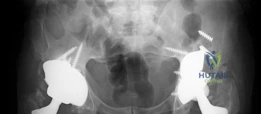
Illustration of paprosky type iiia - Dr. Mohammed Hutaif

Key Takeaway

We review everything you need to understand about Tackling Paprosky Type IIIA: Acetabular Augment in Revision Hip. A **Paprosky Type IIIA** acetabular defect is a severe form of acetabular bone loss, often seen in revision total hip replacement. It is characterized by superolateral hip center migration greater than three centimeters and significant destruction of the superior acetabular rim. This advanced defect typically results from loosening and osteolysis, causing substantial pain and functional impairment requiring complex reconstruction.

Introduction and Epidemiology

Revision total hip arthroplasty represents a growing and complex burden within orthopedic surgery, driven by an aging population, increased primary arthroplasty volume, and the inevitable mechanical or biological failure of index procedures. Among the myriad challenges encountered during revision surgery, the management of severe acetabular bone loss remains one of the most technically demanding. The Paprosky classification system provides a reliable, reproducible framework for categorizing these defects based on the remaining host bone stock and the ability to achieve stable mechanical fixation.

A Paprosky Type IIIA defect is characterized by significant superolateral bone loss, resulting in superior migration of the hip center of rotation by 10 to 30 millimeters. Crucially, in a Type IIIA defect, the teardrop remains intact, Kohler’s line is unbroken, and the inferior structures (ischium) are preserved. The remaining host bone provides greater than 50% contact for a hemispherical component, theoretically allowing for biologic ingrowth if initial mechanical stability can be achieved. However, the massive superior void precludes the use of a standard hemispherical cup alone without accepting an unacceptably high and lateral hip center, which compromises abductor biomechanics and increases joint reaction forces.

Image

Historically, structural bulk allografts (such as femoral head allografts) were utilized to fill this superolateral void. While these grafts provided initial structural support, long-term follow-up demonstrated high rates of graft resorption, collapse, and subsequent aseptic loosening. The paradigm shifted dramatically with the advent of highly porous metal augments, manufactured from either elemental tantalum or highly porous titanium alloys. These augments have revolutionized the management of Type IIIA defects, providing immediate structural support, a scaffold for rapid osteointegration, and the ability to restore the anatomic center of rotation without relying on the unpredictable incorporation of structural allograft.

Surgical Anatomy and Biomechanics

Acetabular Columnar Anatomy

The acetabulum is biomechanically supported by an inverted Y-shaped construct comprising the anterior and posterior columns. The anterior column extends from the iliac crest to the pubic symphysis, while the posterior column extends from the sciatic notch to the ischial tuberosity. The superior dome, or roof, connects these columns and is the primary weight-bearing surface of the native joint. In a Paprosky Type IIIA defect, the structural integrity of the superior dome is compromised, often presenting as a cavitary or segmental defect extending into the ilium. Understanding the remaining bone stock in the anterior and posterior columns is critical, as these structures must support the inferior aspect of the revision construct.

Image

Biomechanics of the Hip Center

Restoration of the anatomic center of rotation is the primary biomechanical goal in revision hip arthroplasty. The native hip center optimizes the moment arm of the abductor musculature (primarily the gluteus medius and minimus) and minimizes the joint reaction forces across the articulation. When a cup is placed in an "up and out" position—a common consequence of unaddressed Type IIIA defects—the abductor moment arm is significantly shortened. This mechanical disadvantage mandates a compensatory increase in abductor muscle force to maintain pelvic level during the single-leg stance phase of gait, leading to an exponential increase in joint reaction forces, accelerated wear of the bearing surfaces, and a clinically apparent Trendelenburg gait.

Image

Material Properties of Porous Metal Augments

The success of acetabular augments is intrinsically linked to their material properties. Highly porous metals possess a volumetric porosity of 70% to 80%, closely mimicking the structure of human cancellous bone. This high porosity provides an extensive surface area for osteoblast migration and bone ingrowth. Furthermore, the modulus of elasticity of these materials (approximately 3 GPa) is significantly lower than that of solid titanium or cobalt-chromium alloys, reducing stress shielding and promoting physiological load transfer to the host bone. The high coefficient of friction (up to 0.98) ensures exceptional initial scratch fit and primary mechanical stability, which is a prerequisite for subsequent biologic fixation.

Image

Indications and Contraindications

The decision to utilize a porous metal augment must be carefully weighed against alternative reconstructive options, such as jumbo cups, bilobed components, or custom triflange acetabular components. Augments are specifically indicated when the superior segmental defect prevents the placement of a hemispherical cup in the anatomic center of rotation without leaving a significant portion of the cup unsupported.

Operative and Non Operative Management

Clinical Scenario Management Strategy Rationale and Considerations
Paprosky Type IIIA Defect Porous Metal Augment + Hemispherical Cup Restores anatomic center of rotation; >50% host bone contact ensures primary stability of the shell; augment fills the superior segmental void.
Paprosky Type IIIB Defect Augment + Cup vs Cup-Cage Construct If <50% host bone contact exists, augment alone may fail. A cup-cage provides additional mechanical support spanning the ischium to the ilium.
Pelvic Discontinuity Custom Triflange or Distraction Construct Augments alone cannot bridge a discontinuity. Rigid spanning fixation is required to stabilize the superior and inferior pelvic segments.
Active Periprosthetic Joint Infection Two-Stage Revision (Antibiotic Spacer) Augments are contraindicated in active infection due to the massive surface area of porous metal, which harbors biofilm.
Severe Medical Comorbidities Non-Operative (Suppressive Therapy or Observation) Reserved for patients unfit for major reconstructive surgery. High risk of mortality outweighs the functional benefit of revision.

Image

Pre Operative Planning and Patient Positioning

Advanced Imaging and Templating

Meticulous preoperative planning is the cornerstone of successful acetabular reconstruction. Standard radiography must include an anteroposterior (AP) view of the pelvis, an AP view of the affected hip, and Judet views (iliac and obturator obliques) to assess the integrity of the anterior and posterior columns. However, plain radiographs often underestimate the true extent of osteolysis and bone loss.

A high-resolution computed tomography (CT) scan with metal artifact reduction sequence (MARS) is mandatory for evaluating Paprosky Type III defects. Three-dimensional CT reconstructions provide an unparalleled topographical map of the defect, allowing the surgeon to visualize the exact volume of missing superolateral bone and confirm the continuity of the pelvic ring.

Digital templating should begin on the contralateral, unaffected hip to determine the patient's native center of rotation and optimal offset. This template is then superimposed onto the affected side. The surgeon must estimate the size of the hemispherical shell required to achieve rim fit at the level of the true floor, followed by templating the size and shape of the augment needed to fill the resulting superior void.

Image

Patient Positioning and Preparation

The procedure is typically performed with the patient in the lateral decubitus position. Rigid pelvic fixation is absolute; any shift in pelvic orientation during the procedure will distort the surgeon's perception of version and inclination, potentially leading to catastrophic malpositioning of the components. A peg board or rigid pelvic positioners should be utilized, ensuring the anterior superior iliac spines (ASIS) are vertically aligned and perpendicular to the floor. Wide sterile draping is necessary to allow for full mobility of the operative leg and access to the iliac crest if autograft harvest becomes necessary.

Image

Detailed Surgical Approach and Technique

Surgical Exposure

The posterior approach is the workhorse for revision total hip arthroplasty, offering extensible access to both the femur and the acetabulum. The incision utilizes the previous surgical scar when possible, extending proximally and distally as needed. Deep dissection proceeds through the fascia lata and the gluteus maximus split. The sciatic nerve must be carefully identified and protected, as it is often encased in dense scar tissue in the revision setting.

If femoral component removal is required, or if the acetabular exposure is compromised by severe proximal femoral deformity or retained cement, an extended trochanteric osteotomy (ETO) should be strongly considered. The ETO provides unparalleled, direct, en face exposure of the acetabulum while simultaneously facilitating the safe extraction of the femoral stem.

Image

Component Extraction and Defect Debridement

Removal of the failed acetabular component must be performed with extreme care to preserve all remaining host bone. Specialized explant systems, which utilize curved blades that match the radius of the existing cup, are preferred over aggressive osteotome use. Once the component is removed, the acetabulum is aggressively debrided of all pseudocapsule, particulate debris, and fibrous tissue. The true anatomic landmarks must be identified: the transverse acetabular ligament inferiorly, the ischium posteroinferiorly, and the remaining superior dome.

Acetabular Preparation and Reaming

The goal of reaming in a Type IIIA defect is not to ream up into the defect, but rather to ream medially and inferiorly to establish the true anatomic center of rotation. Reaming begins with small spherical reamers directed toward the cotyloid fossa, stopping at the intact Kohler's line. The reamer size is sequentially increased until bleeding subchondral bone is encountered at the anterior and posterior columns. The surgeon must resist the temptation to lateralize or superiorize the reamer into the lytic defect, as this will perpetuate the "up and out" deformity.

Image

Trialing the Augment and Shell

Once the true floor is prepared, a trial hemispherical shell is impacted into the desired anatomic position (typically 40 degrees of inclination and 20 degrees of anteversion). With the trial shell in place, the residual superolateral defect becomes clearly defined.

Augment trialing is an iterative process. The trial augment is placed into the defect superior to the trial shell. The goal is to achieve maximum contact between the augment and the host bone of the ilium, while also ensuring a flush fit against the superior convexity of the acetabular shell. Augments come in various shapes (e.g., buttress, wedge, semi-lunar) and sizes. The surgeon must determine whether the augment will serve primarily as a structural roof or if it needs to fill a more cavitary space.

Image

Fixation Strategy

Fixation of the augment-cup construct relies on a combination of mechanical screws and polymethylmethacrylate (PMMA) bone cement.

  1. Augment Fixation: The definitive porous metal augment is impacted into the prepared superior defect. It is secured to the host ilium using multiple titanium cancellous screws. These screws must be directed into the dense bone of the sciatic buttress and the superior ilium (the posterosuperior quadrant of Wasielewski). The screws compress the highly porous metal against the host bone, ensuring absolute rigidity.
  2. Shell Fixation: The definitive multi-hole highly porous acetabular shell is then impacted into the true anatomic center. It is critical that the shell achieves primary stability against the inferior host bone (ischium, pubis) and the medial wall. Additional screws are placed through the shell into the safe zones of the pelvis.
  3. Cementation: The interface between the porous metal augment and the porous metal shell is then bonded using PMMA. A thin layer of doughy cement is applied to the interface. Care must be taken to ensure cement does not interpose between the porous metal of either component and the host bone, as this would prevent biologic ingrowth. The cement acts purely as a mechanical grout to unify the shell and the augment into a single monolithic construct.

Image

Complications and Management

Revision hip arthroplasty for massive acetabular defects carries a significantly higher complication profile than primary arthroplasty. The complexity of the reconstruction, prolonged operative times, and compromised local soft tissues all contribute to this elevated risk.

Common Complications and Salvage Strategies

Complication Incidence Range Pathophysiology and Management Strategy
Instability and Dislocation 5% - 15% Driven by compromised abductor musculature and altered biomechanics. Management includes bracing, conversion to dual mobility articulation, or constrained liners if abductor deficiency is absolute.
Aseptic Loosening 2% - 8% Failure of biological ingrowth due to inadequate initial mechanical stability or thermal necrosis during cementation. Requires re-revision, potentially escalating to a cup-cage or custom triflange.
Periprosthetic Joint Infection 3% - 10% High risk due to massive dead space, prolonged surgery, and prior incisions. Acute infections may undergo DAIR (Debridement, Antibiotics, Implant Retention); chronic infections mandate two-stage explantation.
Sciatic Nerve Injury 1% - 5% Direct trauma, retractor neuropraxia, or stretch injury from limb lengthening. Management is primarily supportive (AFO bracing, gabapentinoids); exploration is rare unless direct transection is suspected.
Iatrogenic Pelvic Discontinuity < 2% Overzealous reaming or impaction into a compromised posterior column. Recognized intraoperatively, it mandates immediate escalation to a spanning reconstruction (cup-cage or plating).

Image

Post Operative Rehabilitation Protocols

The postoperative rehabilitation following a Paprosky Type IIIA reconstruction with an augment is highly individualized, depending on the intraoperative assessment of construct stability, the quality of the host bone, and the status of the abductor mechanism.

Phase One Early Protection

During the first 6 to 8 weeks, the primary goal is to protect the mechanical fixation of the augment and shell while allowing initial biological ingrowth to occur. Weight-bearing is typically restricted to toe-touch (TTWB) or partial weight-bearing (PWB, 20-30 lbs) using a walker or bilateral crutches. If an extended trochanteric osteotomy was performed, active abduction is strictly prohibited to prevent trochanteric escape or non-union. Patients are educated on strict posterior hip precautions (no hip flexion past 90 degrees, no internal rotation, no adduction across the midline).

Phase Two Progressive Loading

From 8 to 12 weeks, assuming radiographic evidence of stable component position and clinical healing of the ETO (if applicable), weight-bearing is progressively advanced to full. Physical therapy shifts focus toward restoring abductor strength through isometric exercises, advancing to isotonic concentric and eccentric loading. Gait training is paramount to eliminate compensatory mechanisms such as a Trendelenburg lurch.

Phase Three Functional Restoration

Beyond 12 weeks, patients are encouraged to return to low-impact activities of daily living. Maximum medical improvement following complex revision arthroplasty may take up to 12 to 18 months. Ongoing surveillance with annual or biennial radiographs is required to monitor for late component migration, progressive radiolucent lines, or late-onset pelvic discontinuity.

Summary of Key Literature and Guidelines

The paradigm shift toward highly porous metal augments is strongly supported by mid-to-long-term clinical and radiographic data. Classic studies by Sporer and Paprosky demonstrated the profound limitations of structural bulk allograft, noting failure rates approaching 40% at 10 years due to graft resorption and collapse.

In contrast, contemporary literature evaluating porous tantalum and titanium augments reports exceptional survivorship. Multicenter registry data and high-volume institutional series consistently demonstrate greater than 90% survivorship of the acetabular construct at 10 to 15 years follow-up. The high coefficient of friction and low modulus of elasticity facilitate rapid osteointegration, effectively transforming a massive, uncontained defect into a stable, contained environment for the hemispherical shell.

Current academic consensus and clinical guidelines strongly recommend the use of porous metal augments for Paprosky Type IIIA defects over structural allograft. The technique of cementing the definitive shell to the rigidly fixed augment has proven to be a durable, reliable method for restoring the anatomic center of rotation, optimizing hip biomechanics, and providing long-term implant stability in the face of severe acetabular bone loss.


Dr. Mohammed Hutaif
Medically Verified Content by
Prof. Dr. Mohammed Hutaif
Consultant Orthopedic & Spine Surgeon
Chapter Index