Orthopedic Pediatrics 2026 MCQs: Board Review Questions & Answers (Part 3)
Key Takeaway
Discover the latest medical recommendations for Orthopedic Pediatrics 2026 MCQs: Board Review Questions & Answers (Part 3). Top-rated Orthopedic Pediatrics 2026 MCQs bank. Practice with clinical case questions, orthopedic surgery board review, and evidence-based answers updated for 2026.
Orthopedic Pediatrics 2026 MCQs: Board Review Questions & Answers (Part 3)
Comprehensive 100-Question Exam
00:00
Start Quiz
Question 1
Figures 29a and 29b show the radiographs of a 13-year-old competitive gymnast who has had elbow pain for the past 2 weeks. The pain is worse with tumbling activities. Examination reveals a mild effusion and slight limitation of extension and forearm rotation with no locking. Initial management should consist of
Explanation
Question 2
A 12-year-old boy who has had a 1-month history of right thigh pain and a limp reports worsening of the pain after a fall, and he can no longer walk or bear weight on the involved extremity. Radiographs of the pelvis reveal a slipped capital femoral epiphysis with moderate to severe displacement. While positioning the patient on the fracture table for screw fixation, partial reduction of the slip is achieved. No further reduction maneuvers are attempted, and the epiphysis is stabilized with a single cannulated screw. What complication is most likely to develop following this procedure?
Explanation
Question 3
Figure 30 shows the AP radiograph of a 9-month-old girl who has been referred for evaluation of unequal leg lengths. Examination reveals symmetrical abduction of the hips. When the hips are flexed 90 degrees, the right knee height is greater than the left knee. The girth of the right thigh and calf is larger than the contralateral side. There are no cutaneous lesions, and examination of the spine is normal. The infant is moving all extremities equally and spontaneously. Management should consist of
Explanation
Question 4
What is the mechanism of action of an intramuscular injection of botulinum type A toxin in reducing spasticitiy?
Explanation
Question 5
A 5-year-old boy has had right hip pain and a limp for the past 3 months. Examination of the right hip reveals irritability and restricted abduction and internal rotation. AP and lateral radiographs of the hips are shown in Figures 31a and 31b. Initial management should consist of
Explanation
Question 6
Hamstring lengthening and posterior transfer of the rectus femoris will be most successful in a patient with cerebral palsy who has which of the following gait abnormalities?
Explanation
Question 7
Figures 32a and 32b show the radiographs of a 13-year-old boy who sustained a fracture while playing football 1 week ago. Management at the time of injury included application of a cast and the use of crutches. A follow-up office visit reveals a normal neurologic examination, and the patient reports no discomfort with the cast and crutches. Management should now include
Explanation
Question 8
A 14-year-old patient with an L3 myelomeningocele underwent anterior and posterior spinal fusion for a curve of 50 degrees. Follow-up examination 1 week after the procedure now reveals persistent drainage from the posterior wound. Results of laboratory cultures show Streptococcus viridans, Staphylococcus aureus, and Enterococcus. In addition to IV antibiotics, surgical irrigation, and debridement, management should include
Explanation
Question 9
What is the primary mechanism of injury for the fracture shown in Figures 33a and 33b?
Explanation
Question 10
Figure 34 shows the standing AP radiograph of a 2-year-old girl who has a left bowleg deformity. Her mother states that she first noticed the problem when the child began walking at age 10 months, and the deformity has worsened over the past 6 months. Examination reveals a definite lateral thrust of the knee during the stance phase of gait. Management should consist of
Explanation
Question 11
Figures 35a and 35b show the radiographs of a 7-year-old patient who has progressive deformity of the right thigh accompanied by a dull persistent pain radiating to the knee. Examination reveals an obvious bulge in the right thigh, with flexion of the hip beyond 50 degrees only if the hip is allowed to externally rotate. Management should consist of
Explanation
Question 12
Figures 36a and 36b show the MRI scans of a 15-year-old girl who has had pain and recurrent hemarthrosis in the knee for the past year. Plain radiographs are normal. What is the most likely diagnosis?
Explanation
Question 13
A 2-year-old child has marked hypotonia and depressed reflexes. History reveals that the child was normal at birth and developed normally for the first year. The child also began to ambulate, but lost this ability during the next 6 months. Laboratory studies show a creatine phosphokinase level that is within the normal range. DNA testing confirms a deletion in the survival motor neuron (SMN) gene. What is the most likely diagnosis?
Explanation
Question 14
A 13-year-old boy sustains a valgus stress injury to the knee while playing football, and he is unable to bear weight after the injury. Examination reveals tenderness medially superior to the joint line. The knee is held in flexion, and he has a large effusion and localized medial swelling. Plain radiographs show no obvious fracture. What is the next diagnostic step?
Explanation
Question 15
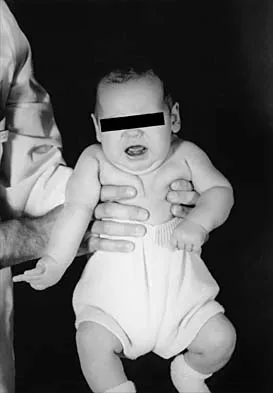
Figure 37 shows the clinical photograph of a 1-day-old infant who weighed 10.25 lb at birth. Examination reveals an absent right Moro reflex and limited active motion of the right shoulder, elbow, and wrist, but flexion of the fingers. Passive range of motion of the shoulder and elbow is normal. What is the most likely diagnosis?
Explanation
Question 16
Figure 38 shows the radiograph of a 5-year-old child who sustained a type III supracondylar fracture. Examination reveals the absence of a radial pulse, but an otherwise well-perfused hand. Following closed reduction and percutaneous pinning, the radial pulse remains absent; however, the hand is pink and well perfused. Management should now include
Explanation
Question 17
Figures 39a and 39b show the radiographs of an otherwise healthy 10-year-old boy who has had thigh pain and a limp for the past 9 months. Examination reveals that the left lower extremity is 1 cm shorter, with reduced flexion, abduction, and internal rotation on the left side. The patient is at the 50th percentile for height and the 90th percentile for weight. Serum studies will most likely show
Explanation
Question 18
A 7-year-old patient has had a painless limp for several months. Examination reveals pain and spasm with internal rotation, and abduction is limited to 10 degrees on the involved side. Management consists of 1 week of bed rest and traction, followed by an arthrogram. A maximum abduction/internal rotation view is shown in Figure 40a, and abduction and adduction views are shown in Figures 40b and 40c. The studies are most consistent with
Explanation
Question 19
A 14-year-old football player has had thigh pain and weakness following a full-contact scrimmage 24 hours ago. He recalls that he felt a sharp pain in his back after colliding with a much heavier player. Examination reveals that the spine is minimally tender to palpation in the upper lumbar region. Motor testing reveals quadriceps weakness bilaterally, and a reverse straight leg raising test is positive. Plain radiographs of the thoracolumbar spine are normal. A myelogram, a CT scan with contrast, and an MRI scan are shown in Figures 41a through 41c. What is the most likely diagnosis?
Explanation
Question 20
Figure 42 shows the radiograph of a 12-year-old boy who has a limp and pain in the left hip with athletic activity. Examination reveals decreased abduction and internal rotation of the left hip, with pain at the extremes of motion and a 1-cm limb-length discrepancy. Management should consist of
Explanation
Question 21
The mother of a 5-year-old child reports that he has had a fever of 103 degrees F (39.4 degrees C), leg swelling, and has been unwilling to bear weight on his right lower leg for the past 7 days. Examination reveals point tenderness at the distal femur. Aspiration at the metaphysis yields 10 mL of purulent fluid, and a Gram stain reveals gram-positive cocci. In addition to hospital admission, management should include
Explanation
Question 22
Figure 43 shows the lateral radiograph of a 12-year-old boy with mild osteogenesis imperfecta who injured his left elbow after pushing his brother. Treatment should consist of
Explanation
Question 23
Figure 44 shows the radiograph of an 11-year-old girl who has hip pain. Further diagnostic workup should include
Explanation
Question 24
Figure 45 shows the radiograph of a 2-year-old patient who has progressive lumbar scoliosis as the result of hemivertebra. Examination reveals no associated cutaneous lesions, and an MRI scan shows no associated intraspinal anomalies. Treatment should consist of
Explanation
Question 25
A 10-year-old girl with a history of an obstetrical brachial plexus palsy has been referred for evaluation. Examination reveals a severe adduction internal rotation contracture of the shoulder and a mild flexion contracture of the elbow. Hand function is normal. Radiographs show mild glenohumeral joint incongruity. To achieve the best functional outcome, management should consist of
Explanation
Question 26
A 4-year-old boy presents with a relapsed right clubfoot. He was initially treated with the Ponseti method as an infant. Examination reveals dynamic supination during the swing phase of gait. Passive range of motion is normal. What is the most appropriate next step in management?
Explanation
Question 27
A 13-year-old obese boy presents with acute on chronic left hip pain. He is unable to bear weight. Radiographs confirm an unstable slipped capital femoral epiphysis. During surgical fixation, an anterior capsulotomy is performed. What is the primary theoretical purpose of the capsulotomy in this setting?
Explanation
Question 28
A 6-year-old girl falls from monkey bars and sustains a significantly displaced extension-type supracondylar humerus fracture. On presentation, her hand is well-perfused and pink, but the radial pulse is absent. After closed reduction and percutaneous pinning, the hand remains pink, but the radial pulse is still nonpalpable. What is the most appropriate next step?
Explanation
Question 29
In a 7-year-old boy diagnosed with Legg-Calvé-Perthes disease, radiographs demonstrate that 60% of the lateral pillar height is maintained. According to the Herring lateral pillar classification, what group does this patient fall into, and what is the general prognosis?
Explanation
Question 30
A 14-year-old gymnast presents with elbow pain and a locked joint after a fall.
Radiographs demonstrate an elbow dislocation with a missing medial epicondyle on the AP view. What is an absolute indication for open reduction and internal fixation of the medial epicondyle?
Explanation
Question 31
A 5-month-old female with developmental dysplasia of the hip has failed a 4-week trial of Pavlik harness treatment. Ultrasound shows the hip remains persistently dislocated. What is the most appropriate next step in management?
Explanation
Question 32
In a 6-year-old non-ambulatory child with spastic quadriplegic cerebral palsy, routine radiographic hip surveillance reveals a Reimers migration percentage of 45%. The child is asymptomatic. What is the most appropriate management?
Explanation
Question 33
A 3-year-old obese boy presents with progressive bilateral genu varum. Radiographs demonstrate a Langenskiöld stage III deformity of the medial proximal tibia. Bracing has been attempted for 1 year without success. What is the most appropriate surgical treatment?
Explanation
Question 34
A 13-year-old boy presents with frequent ankle sprains and a rigid, painful flatfoot. Radiographs reveal an elongated anterior process of the calcaneus approaching the navicular. What is the most appropriate initial management?
Explanation
Question 35
A 4-year-old boy sustains an isolated midshaft femur fracture after a low-energy fall. He weighs 18 kg (40 lbs). What is the most appropriate definitive management?
Explanation
Question 36
A 15-year-old male athlete presents with sudden anterior knee pain and inability to extend the knee after jumping. Radiographs show a displaced Ogden type III tibial tubercle avulsion fracture extending into the joint. What is the most devastating acute complication associated with this injury that must be closely monitored?
Explanation
Question 37
A 5-year-old girl presents with a 2-day history of right hip pain, a limp, and a fever of 38.6°C (101.5°F). She is refusing to bear weight. Her serum WBC count is 13,000/mm³, and ESR is 45 mm/hr. According to the Kocher criteria, what is the probability of septic arthritis?
Explanation
Question 38
A 12-year-old premenarchal girl presents with a right thoracic curve measuring 32 degrees. Her Risser stage is 0. What is the most appropriate management?
Explanation
Question 39
A 6-year-old boy with Osteogenesis Imperfecta (Sillence Type III) has sustained multiple femoral bowing deformities and recurrent fractures. He is scheduled for bilateral femoral rodding. Which of the following devices is most appropriate to accommodate longitudinal bone growth?
Explanation
Question 40
A 10-year-old boy with wide-open physes sustains an ACL tear. After a 6-month trial of conservative management, he experiences recurrent giving-way episodes. Surgical reconstruction is planned. Which technique minimizes the risk of growth arrest?
Explanation
Question 41
A 3-year-old boy treated with the Ponseti method for idiopathic clubfoot presents with dynamic supination of the foot during the swing phase of gait. Passive range of motion is full, and dorsiflexion is 15 degrees. What is the most appropriate management?
Explanation
Question 42
A 6-year-old boy sustains a completely displaced extension-type supracondylar humerus fracture. Examination shows an inability to flex the interphalangeal joint of the thumb and the distal interphalangeal joint of the index finger. Which nerve is most likely injured?
Explanation
Question 43
A 4-year-old boy weighing 18 kg sustains an isolated, closed midshaft femur fracture. He has no other injuries and is neurologically intact. What is the most appropriate definitive management?
Explanation
Question 44
A 5-week-old female infant is treated with a Pavlik harness for a dislocated left hip. After 4 weeks of strict harness wear, ultrasound reveals the hip remains dislocated. What is the next best step in management?
Explanation
Question 45
A 12-year-old boy presents with an acute-on-chronic, unstable slipped capital femoral epiphysis of the left hip. He undergoes uncomplicated in-situ screw fixation. Which of the following is the strongest indication for prophylactic pinning of the contralateral asymptomatic hip?
Explanation
Question 46
A 3-year-old girl is diagnosed with infantile Blount disease (Tibia vara) with a metaphyseal-diaphyseal angle of 18 degrees on standing AP radiographs. What is the most appropriate initial management?
Explanation
Question 47
A 13-year-old boy presents with rigid flatfeet, frequent ankle sprains, and peroneal spasm. Radiographs show a 'C sign' on the lateral view. Which of the following coalitions is most likely present, and what is the best initial imaging to confirm it?
Explanation
Question 48
A 9-year-old boy sustains a pathologic fracture through a centrally located, lytic bone lesion in the proximal humerus. The lesion exhibits the 'fallen leaf sign' on radiographs. After the fracture heals, the lesion persists. What is the best initial surgical management?
Explanation
Question 49
In a 7-year-old child with spastic quadriplegic cerebral palsy, the hip migration percentage is measured at 45% on an AP pelvis radiograph. The child has hip pain and limited abduction. What is the most appropriate surgical intervention?
Explanation
Question 50
A 10-year-old boy with spastic diplegic cerebral palsy presents with a crouch gait. Physical examination reveals severe hamstring tightness and knee flexion contractures of 20 degrees. Which of the following interventions can worsen crouch gait if performed in isolation?
Explanation
Question 51
A 6-year-old sustains the fracture pattern shown in the
radiograph. Upon evaluation in the emergency department, the child's hand is pink and well-perfused, but the radial pulse is absent. What is the most appropriate next step in management?
Explanation
Question 52
A 6-week-old infant treated with a Pavlik harness for developmental dysplasia of the hip presents to the clinic. The mother reports that the infant has stopped kicking her left leg. On examination, there is decreased active extension of the left knee, though hip flexion and ankle movements are intact. What is the most likely cause of this finding?
Explanation
Question 53
A 3-year-old boy, who was treated successfully for idiopathic clubfoot as an infant using the Ponseti method, now presents with recurrent dynamic supination of the foot during the swing phase of gait. Passive range of motion is fully correctable. What is the most appropriate surgical management?
Explanation
Question 54
An 11-year-old girl with obesity presents with a unilateral slipped capital femoral epiphysis (SCFE). Which of the following factors most strongly indicates the need for prophylactic in situ fixation of her contralateral, asymptomatic hip?
Explanation
Question 55
An 8-year-old boy is diagnosed with Legg-Calvé-Perthes disease. Radiographs reveal fragmentation with exactly 50% maintenance of the lateral pillar height. According to the Herring lateral pillar classification, into which group does this patient fall, and what is the current treatment recommendation?
Explanation
Question 56
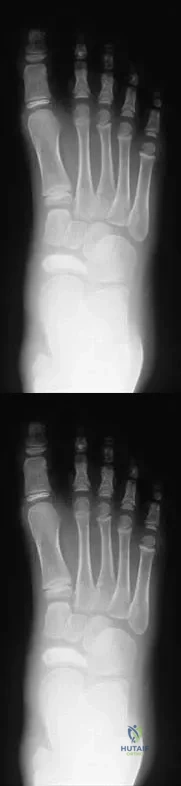
A 13-year-old boy presents with recurrent ankle sprains and a painful, rigid flatfoot. A lateral foot radiograph
reveals the classic "anteater nose" sign. What is the most appropriate initial surgical management if conservative treatment with immobilization has failed?
Explanation
Question 57
A 6-year-old girl with spastic quadriplegic cerebral palsy (GMFCS Level V) is found to have a Reimer's migration index of 50% on screening pelvic radiographs. She is completely asymptomatic. What is the most appropriate management?
Explanation
Question 58
A newborn is noted to have a congenital hemivertebra at T8 causing early scoliotic deformity. Because of the high association of this condition with other anomalies, which of the following additional screening tests are mandatory in the routine workup?
Explanation
Question 59
A 9-year-old boy sustains mild trauma and presents with shoulder pain. Radiographs reveal a minimally displaced pathologic fracture through a centrally located, completely radiolucent lesion in the proximal humerus metaphysis demonstrating a "fallen leaf" sign. What is the most appropriate initial management?
Explanation
Question 60
A 10-year-old girl falls while skiing and sustains a completely displaced (Meyers and McKeever Type III) fracture of the anterior tibial spine. Attempted closed reduction is unsuccessful. During arthroscopic management, what structure is most commonly found entrapped, blocking anatomic reduction?
Explanation
Question 61
An infant is evaluated for a congenitally short lower extremity. Radiographs reveal a short femur with severe coxa vara and a radiolucent defect in the subtrochanteric region. The femoral head is seated well within the acetabulum (Aitken Class A Proximal Focal Femoral Deficiency). What is the expected long-term natural history of the subtrochanteric defect?
Explanation
Question 62
A 13-year-old boy with a 2-day history of inability to bear weight on his right leg is diagnosed with an unstable slipped capital femoral epiphysis (SCFE). He is taken to the operating room for urgent in situ pinning. Which of the following intraoperative maneuvers or findings most significantly increases the risk of developing avascular necrosis (AVN)?
Explanation
Question 63
A 5-year-old girl presents with a Gartland type III supracondylar humerus fracture. On initial examination, her hand is pink but lacks a palpable radial pulse. Following closed reduction and percutaneous pinning, the hand remains well-perfused and pink, but the radial pulse is still absent on palpation and Doppler. What is the most appropriate next step in management?
Explanation
Question 64
A 6-week-old infant is undergoing treatment for developmental dysplasia of the hip (DDH) with a Pavlik harness. During a routine follow-up, the parents report that the infant is no longer kicking the affected leg as much. On examination, there is decreased active extension of the knee on the affected side, but hip flexion remains active. What is the most likely cause of this finding?
Explanation
Question 65
An infant is undergoing serial casting for an idiopathic clubfoot utilizing the Ponseti method. To ensure successful correction and minimize the risk of a rocker-bottom deformity, what is the correct sequence of deformity correction?
Explanation
Question 66
A 13-year-old girl sustains an external rotation injury to her ankle. Radiographs demonstrate a Salter-Harris type III fracture of the anterolateral aspect of the distal tibial epiphysis. What anatomical structure is responsible for the avulsion of this specific fracture fragment?
Explanation
Question 67
A 4-year-old boy presents with severe, progressive bilateral bowing of his legs. Standing radiographs reveal depression of the medial tibial plateaus with metaphyseal beaking. The metaphyseal-diaphyseal angle is measured at 20 degrees bilaterally, and he is classified as Langenskiold stage III. What is the most appropriate management?
Explanation
Question 68
When evaluating a patient with Legg-Calve-Perthes disease, which of the following radiographic or clinical findings is considered the most reliable predictor of a poor long-term outcome regarding hip joint congruency?
Explanation
Question 69
A 2-year-old child presents with a history of recurrent fractures after minimal trauma, blue sclerae, and dentinogenesis imperfecta. Genetic testing is ordered to confirm the suspected diagnosis. A defect in the gene coding for which of the following is most likely to be found?
Explanation
Question 70
A 9-month-old infant, who does not yet walk, is brought to the emergency department for crying when his diaper is changed. Radiographs reveal a spiral fracture of the left femoral diaphysis. The parents state the child caught his leg in the crib slats. What is the most critical initial step in management?
Explanation
Question 71
A 14-year-old boy presents with recurrent ankle sprains and rigid, painful flatfeet bilaterally. Clinical examination reveals absent subtalar motion. A computed tomography (CT) scan confirms a talocalcaneal coalition. Which specific articular facet is most commonly involved in this condition?
Explanation
Question 72
A 12-year-old elite baseball pitcher complains of vague right shoulder pain that worsens during pitching. Radiographs demonstrate widening, demineralization, and sclerosis of the proximal humeral physis on the dominant arm. What is the most appropriate initial management?
Explanation
Question 73
A 6-month-old boy is diagnosed with infantile idiopathic scoliosis. A radiograph reveals a left-sided thoracic curve of 35 degrees. Which of the following parameters is the most important radiographic predictor of curve progression in this patient?
Explanation
Question 74
An 11-year-old boy falls while skiing and sustains a twisting injury to his knee. Radiographs show a completely displaced, non-comminuted avulsion fracture of the anterior tibial eminence (Meyers and McKeever Type III). What is the preferred definitive treatment?
Explanation
Question 75
A 10-year-old boy who plays competitive soccer presents with bilateral posterior heel pain that is exacerbated by running. Examination shows point tenderness over the calcaneal insertion of the Achilles tendon and tight heel cords. Radiographs show increased sclerosis and fragmentation of the calcaneal apophysis. What is the most appropriate management?
Explanation
Question 76
A 4-year-old girl with spastic quadriplegic cerebral palsy (GMFCS Level V) is evaluated in a routine hip surveillance clinic. Anteroposterior pelvis radiographs reveal a Reimers migration percentage of 45% bilaterally. What is the most appropriate surgical intervention to prevent painful hip dislocation?
Explanation
Question 77
A 4-week-old girl is being treated for developmental dysplasia of the hip with a Pavlik harness. During a follow-up visit, the mother notes that the child is no longer kicking her right leg as much. Examination reveals an inability to actively extend the right knee, though sensation appears intact. What is the most appropriate next step in management?
Explanation
Question 78
A 6-year-old boy sustains a completely displaced extension-type supracondylar humerus fracture. On presentation, the hand is pink, warm, and has brisk capillary refill, but the radial pulse is absent on palpation and Doppler. What is the most appropriate next step in management?
Explanation
Question 79
During the initial application of the Ponseti method for a rigid idiopathic clubfoot in a 2-week-old infant, which of the following maneuvers is the essential first step in correcting the deformity?
Explanation
Question 80
A 2-year-old boy presents with anterolateral bowing of the tibia. Radiographs demonstrate a diaphyseal narrowing with a sclerotic medullary canal. Which of the following conditions is most strongly associated with this clinical presentation?
Explanation
Question 81
A 13-year-old boy is diagnosed with a unilateral slipped capital femoral epiphysis (SCFE) and undergoes in-situ screw fixation. Prophylactic pinning of the asymptomatic contralateral hip is most strongly indicated if the patient has a history of which of the following?
Explanation
Question 82
According to the Gross Motor Function Classification System (GMFCS), what is the recommended hip surveillance radiographic interval for a 6-year-old child with cerebral palsy classified as GMFCS level V?
Explanation
Question 83
A 12-year-old girl with a slipped capital femoral epiphysis undergoes in-situ pinning. Six months later, she presents with severe hip stiffness and a painful limp. Radiographs demonstrate significant concentric joint space narrowing without focal collapse of the femoral head. What is the most likely underlying cause of this complication?
Explanation
Question 84
A 3-year-old boy presents with bilateral varus bowing of his legs. Radiographs reveal medial metaphyseal beaking at the proximal tibia. Which of the following radiographic measurements indicates the highest risk for progression of infantile Blount disease?
Explanation
Question 85
A 4-year-old girl with blue sclerae and a history of multiple low-energy fractures is treated with intravenous pamidronate. What is the primary mechanism of action of this medication in treating her underlying genetic condition?
Explanation
Question 86
A 14-year-old non-ambulatory patient with spastic quadriplegic cerebral palsy presents with a progressive neuromuscular scoliosis of 75 degrees and a pelvic obliquity of 25 degrees. Surgical correction is planned. What is the most appropriate distal extent of the spinal fusion construct?
Explanation
Question 87
Figure 5 shows the oblique radiograph of a 13-year-old boy with a painful, rigid flat foot and recurrent ankle sprains. Conservative management has failed.
What is the most appropriate surgical treatment for this condition?
Explanation
Question 88
An 8-year-old boy weighing 35 kg (77 lb) sustains an isolated, closed transverse midshaft femur fracture. What is the most appropriate definitive management?
Explanation
Question 89
A 14-year-old girl sustains a juvenile Tillaux fracture of the ankle during a soccer match. What is the pathomechanics responsible for this specific fracture pattern?
Explanation
Question 90
A 6-year-old boy presents with a painless clicking and snapping in his lateral knee. MRI demonstrates a thickened lateral meniscus extending into the intercondylar notch with absent posterior meniscotibial attachments. What is the diagnosis?
Explanation
Question 91
Figure 10 shows the AP pelvis radiograph of an 8-year-old boy with a persistent limp. He is diagnosed with Legg-Calvé-Perthes disease.
Which of the following factors represents the most significant prognostic indicator for long-term hip outcome in this patient?

Explanation
Question 92
A 5-year-old boy presents with an inability to bear weight on his right leg. His oral temperature is 38.6°C (101.5°F), ESR is 45 mm/hr, and peripheral WBC is 13,500/mm³. Radiographs of the hip are normal. According to the Kocher criteria, what is the most appropriate next step in management?
Explanation
Question 93
A 13-year-old boy presents with vague anterior knee pain and intermittent catching. Radiographs reveal an osteochondritis dissecans (OCD) lesion. Where is the most common anatomical location for this lesion in the knee?
Explanation
Question 94
A newborn is noted to have deep circumferential skin creases around the distal right lower extremity with distal limb edema, as well as acrosyndactyly of the toes. What is the recommended surgical management for the deep constriction bands to prevent distal ischemia?
Explanation
Question 95
A 15-year-old boy with achondroplasia presents with progressively worsening lower extremity radicular pain and weakness triggered by walking. What is the primary anatomical cause of his spinal symptoms?
Explanation
Question 96
An 18-month-old girl who recently started walking presents with a painless limp and a positive Galeazzi sign on the left. Radiographs confirm a completely dislocated left hip with a dysplastic acetabulum. What is the most appropriate management?
Explanation
Question 97
A 3-month-old girl with developmental dysplasia of the hip (DDH) is being treated with a Pavlik harness. During her first follow-up visit, the parents report that she has stopped kicking her left leg. On physical examination, the infant exhibits a lack of active knee extension on the left side, but withdrawal to pain is intact. What is the most appropriate next step in management?
Explanation
Question 98
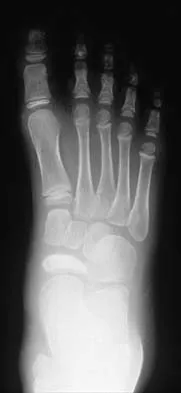
A 14-year-old boy presents to the emergency department after sustaining a knee injury while jumping for a rebound during a basketball game. He has severe anterior knee pain and cannot actively extend the knee against gravity. A radiograph is shown in Figure 5.
Assuming the imaging confirms an Ogden Type III tibial tubercle avulsion fracture with intra-articular extension, what is the most devastating acute complication associated with this specific injury pattern?
Explanation
Question 99
A 30-month-old boy is evaluated for worsening unilateral bowing of the left leg. Radiographs demonstrate a metaphyseal-diaphyseal angle (Drennan angle) of 18 degrees with focal medial metaphyseal beaking, consistent with infantile Blount disease (Langenskiöld stage II). What is the most appropriate initial management?
Explanation
Question 100
A 13-year-old girl with a history of a slipped capital femoral epiphysis (SCFE) treated with in-situ pinning 6 months ago presents with worsening hip stiffness and pain. Physical examination reveals a significant global loss of hip motion. Radiographs are shown in Figure 10.
Assuming the radiograph demonstrates diffuse joint space narrowing without focal collapse of the femoral head, what is the most likely iatrogenic cause of this patient's current condition?
Explanation
None
