Clear Cell Sarcoma of the Foot & Ankle: A Comprehensive Orthopedic Guide

Key Takeaway
Clear Cell Sarcoma (CCS) of the foot and ankle is a rare, aggressive soft tissue sarcoma characterized by the EWSR1-ATF1 fusion gene. It frequently presents as a painless mass in the foot and ankle, leading to diagnostic delays. Management primarily involves aggressive en bloc surgical resection with wide, negative margins to mitigate its high recurrence and metastatic potential.
A 28-year-old patient presents with a slow-growing, painless mass on the plantar aspect of the foot. You suspect a potential soft tissue sarcoma. What is your immediate clinical and imaging workup strategy, and how would you structure the diagnostic process to avoid a common "oncological disaster"?
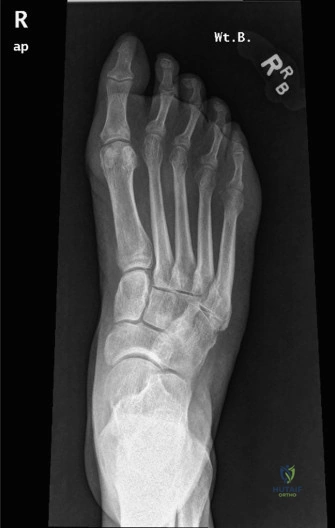
Candidate: I would examine the patient to assess neurovascular status and lymph nodes. I would order an MRI of the foot, followed by a biopsy. If the MRI suggests a tumor, I would perform a core biopsy and then refer to a sarcoma center.
Candidates often rush to biopsy without planning the tract or fail to emphasize the "oncological biopsy" rule. Failing to mention that the biopsy tract must be exciseable in the final surgery is a major red flag. Ignoring the staging workup (chest CT for pulmonary mets) in the initial management plan is also a sign of an incomplete approach.
A structured answer: 1. Clinical Exam: Palpation of the mass, NV status, and critically, regional lymph node assessment. 2. Staging Imaging: MRI of the foot (gold standard for local extension) + CT Chest (to rule out pulmonary metastases, standard for all sarcomas). 3. Biopsy Planning: Crucial to state that the biopsy must be performed by a specialist, via a longitudinal approach through tissue that can be excised in the final definitive surgery. 4. MDT Referral: Emphasize that the case must be presented to a Sarcoma Multidisciplinary Team before any intervention is undertaken.
The patient has been diagnosed with a Clear Cell Sarcoma (CCS). The MRI shows the lesion in close proximity to the posterior tibial nerve and the flexor hallux longus tendon. How do you counsel the patient regarding surgical margins versus functional outcome?
Candidate: The goal is wide margins. I would tell the patient we need to remove the tumor with a cuff of normal tissue. If the nerve is involved, we might have to sacrifice it, which would cause numbness and weakness, and they might need an amputation if margins cannot be achieved.
Being too optimistic about "limb salvage" at any cost. Failing to emphasize that oncological control (R0 resection) is the absolute priority over function. Candidates often neglect to discuss the high risk of local recurrence and the metastatic potential of CCS, which justifies more aggressive resection (amputation) if wide margins are not achievable.
Structure the counseling: 1. Oncological Priority: State clearly that wide, negative margins (R0) are the strongest predictor of survival and local control. 2. The "Margin vs Function" trade-off: Explain that in the foot, anatomy is constrained; sacrifice of the neurovascular bundle or critical tendons may be necessary to achieve those margins. 3. Amputation as a tool: Frame amputation not as a failure, but as a definitive oncological strategy when wide margins cannot be safely achieved through limb salvage. 4. Reconstructive potential: Mention the need for free-flap coverage if limb salvage is attempted.
Clear Cell Sarcoma has a distinct genetic signature. What is it, and how does this affect your prognosis and long-term surveillance strategy?
Candidate: It has the t(12;22) translocation, creating the EWSR1-ATF1 fusion gene. It is quite aggressive with a high rate of spread to the lungs and lymph nodes, so we need to monitor the patient for a long time.
Failing to mention the specific metastatic pattern (lymph nodes + lungs). Many candidates treat it like any other soft tissue sarcoma (like liposarcoma), missing the fact that CCS has a higher propensity for regional lymph node metastasis, which may warrant specific nodal assessment.
Genetic/Prognostic: Identify the t(12;22)(q13;q12) translocation resulting in the EWSR1-ATF1 fusion gene. Aggression: Emphasize the aggressive nature (50% metastatic rate within 5 years). Surveillance: Because of the lymphatic spread, surveillance must include clinical assessment of regional lymph nodes in addition to local MRI and chest CT for pulmonary/distant disease. Mention the need for lifelong follow-up.
