Distal Thigh Schwannoma: A Comprehensive Clinical and MRI Diagnosis Case Study
Key Takeaway
Schwannomas are typically diagnosed through a combination of patient history (progressive mass, neurological symptoms), clinical examination (Tinel's sign, diminished sensation), and characteristic MRI findings. MRI often reveals a well-circumscribed, enhancing mass with specific 'target sign' and 'split fat sign,' differentiating it from other soft tissue tumors and confirming its nerve sheath origin.
Patient Presentation and History
Demographic Profile and Symptomatology
A 48-year-old male presented with a two-year history of a progressively enlarging, occasionally painful, soft tissue mass located in the posteromedial aspect of his distal right thigh, just superior to the popliteal fossa. He initially noted a small, pea-sized lump which has gradually increased in size, becoming more noticeable and causing intermittent, dull aching pain that occasionally radiated distally into the calf. The pain was exacerbated by prolonged standing or activities requiring knee flexion, such as squatting or climbing stairs. He denied any acute trauma to the limb.
Over the last six months, he reported paresthesia in the sural nerve distribution, specifically along the lateral aspect of his calf and foot, which he described as numbness and tingling. He had no motor weakness or gait disturbance. The progressive nature of the mass, combined with the onset of localized compressive neuropathic symptoms, prompted his referral to the orthopedic oncology and trauma service. The insidious onset and slow growth trajectory are classic hallmarks of benign peripheral nerve sheath tumors, although the recent development of radicular symptoms indicates increasing mass effect on the adjacent nerve fascicles.
Medical and Family History Implications
The patient's past medical history included well-controlled hypertension and dyslipidemia, managed with an angiotensin-converting enzyme inhibitor and a statin, respectively. He was an active individual with no history of previous orthopedic surgeries, localized radiation therapy, or chronic neurological conditions.
Crucially, the family history was entirely negative for neurofibromatosis type 1, neurofibromatosis type 2, or schwannomatosis. The absence of a syndromic history significantly alters the pre-test probability regarding the multiplicity of the lesions and the risk of malignant transformation. Sporadic schwannomas carry an exceptionally low rate of malignant degeneration, whereas neurofibromas in the setting of neurofibromatosis type 1 carry a well-documented lifetime risk of transforming into malignant peripheral nerve sheath tumors. He was a non-smoker and consumed alcohol occasionally, with no other pertinent social or occupational exposures to known sarcomatogenic agents.
Clinical Examination Findings
Inspection and Palpation Mechanics
Upon inspection of the right lower extremity, a discrete, ovoid soft tissue mass was observed in the posteromedial thigh, approximately 10 cm proximal to the medial femoral condyle. The overlying skin appeared normal, without erythema, discoloration, venous engorgement, or trophic changes. A comprehensive dermatological survey was performed, and no skin lesions such as café-au-lait macules, axillary freckling, or cutaneous neurofibromas were noted elsewhere, further decreasing the clinical suspicion for a systemic neurocutaneous syndrome.
Palpation revealed a firm, well-circumscribed, non-tender, mobile mass measuring approximately 4 x 3 cm. It exhibited a classic biomechanical sign pathognomonic for nerve sheath tumors: significant mobility perpendicular to the long axis of the limb, but marked restriction of mobility along the longitudinal axis. This transverse mobility occurs because the tumor is tethered proximally and distally by the parent nerve, restricting longitudinal excursion. A positive Tinel's sign was powerfully elicited with gentle percussion over the mass, sending radiating paresthesias distally into the lateral calf and foot, confirming the lesion's intimate association with a major peripheral nerve. There was no warmth, fluctuance, or pulsatility to suggest an infectious or vascular etiology. Regional inguinal and popliteal lymphadenopathy was absent. Range of motion of the right knee and hip was full and pain-free, and there was no joint effusion.
Neurological Assessment and Dermatomal Mapping
A meticulous neurological assessment was performed to map the extent of neural compromise.
* Motor Function: Intact motor strength grading a 5/5 on the Medical Research Council scale was observed in all muscle groups of the right lower extremity. Specifically, plantar flexion (gastrocnemius and soleus), dorsiflexion (tibialis anterior), and toe extension/flexion were entirely preserved. No focal weakness, fasciculations, or muscle atrophy was appreciated in the posterior compartment of the leg or the intrinsic muscles of the foot.
* Sensory Function: Diminished light touch and pinprick sensation were isolated to the distribution of the sural nerve, specifically mapping to the lateral aspect of the calf, the lateral malleolus, and the dorsolateral aspect of the foot. Sensation was entirely intact throughout the saphenous, superficial peroneal, deep peroneal, and medial calcaneal nerve distributions. This specific sensory deficit strongly suggested involvement of the tibial nerve or its medial sural cutaneous branch prior to its junction with the sural communicating branch.
* Reflexes: Patellar and Achilles deep tendon reflexes were bilaterally symmetrical and normoreflexic, graded at 2+. The preservation of the Achilles reflex indicates that the major motor fibers to the gastrocnemius-soleus complex remained uncompromised despite the sensory deficits.
Vascular Integrity
Peripheral vascular examination demonstrated palpable, strong, and symmetrical pulses bilaterally across the femoral, popliteal, dorsalis pedis, and posterior tibial arteries. Capillary refill was brisk, occurring in under two seconds in the digits of the right foot. The absence of vascular bruits or distal ischemia helped exclude vascular malformations, pseudoaneurysms, or significant arterial compression by the mass in the adductor hiatus or popliteal space.
Imaging and Diagnostics
Radiographic Evaluation
Initial plain radiographs of the right distal femur and knee were obtained in orthogonal anteroposterior and lateral projections to rule out any osseous involvement, primary bone tumors with soft tissue extension, or lesions characterized by matrix mineralization. These radiographs demonstrated no cortical erosion, periosteal reaction, scalloping, soft tissue calcifications, or other bony abnormalities. The joint spaces were maintained, and the images were essentially unremarkable. While non-diagnostic for the mass itself, plain films remain a critical first step in the orthopedic oncology workup to exclude entities such as osteochondromas, myositis ossificans, or synovial sarcomas which may exhibit focal calcifications.
Magnetic Resonance Imaging Characteristics
Given the clinical suspicion of a soft tissue mass, particularly with neurological symptoms and a positive Tinel's sign, magnetic resonance imaging was performed with and without intravenous gadolinium contrast. MRI is the gold standard imaging modality for the characterization of soft tissue tumors and is essential for preoperative anatomical mapping.
The MRI findings were highly characteristic of a benign peripheral nerve sheath tumor:
* T1-weighted images: Demonstrated a well-circumscribed, encapsulated, ovoid mass isointense to the surrounding skeletal muscle, located adjacent to the tibial nerve within the deep posteromedial compartment, just proximal to the popliteal fossa. The mass appeared homogenous without evidence of spontaneous hemorrhage or macroscopic fat.
* T2-weighted images: Showed a hyperintense mass with an internal heterogeneous signal architecture. A distinct target sign was identified, characterized by a central low signal surrounded by a high signal periphery. This sign corresponds histologically to a central core of dense, cellular fibrocollagenous tissue (Antoni A areas) surrounded by peripheral, loose, myxoid, water-rich tissue (Antoni B areas). The mass also displayed a split fat sign, where a thin rim of normal adipose tissue was visible surrounding the lesion, indicating its slow-growing nature, its origin from an intermuscular neurovascular bundle, and its extra-neural, well-encapsulated location. Furthermore, a fascicular sign was subtly appreciated, represented by multiple small ring-like structures within the lesion, corresponding to the displaced nerve fascicles.
* STIR sequences: Confirmed the hyperintense nature of the lesion, suggesting high water content typical of myxoid degeneration and cellular edema often seen in ancient schwannomas. The suppression of fat signal on STIR sequences allowed for excellent contrast between the hyperintense tumor and the surrounding musculature, further delineating the proximal and distal extent of the mass along the course of the tibial nerve.

- T1-weighted post-contrast images: Following the administration of intravenous gadolinium, the mass demonstrated avid, heterogeneous enhancement. The central portion (corresponding to the T2 low-signal Antoni A areas) exhibited more robust enhancement compared to the peripheral myxoid areas. The enhancement pattern confirmed the solid, vascularized nature of the tumor and helped differentiate it from cystic lesions such as complex ganglion cysts.
Sonographic Considerations
While MRI is the definitive imaging modality, high-resolution ultrasonography is increasingly utilized as an adjunct or initial screening tool for peripheral nerve lesions. In this clinical scenario, a targeted ultrasound would typically reveal a well-defined, hypoechoic, solid mass exhibiting posterior acoustic enhancement. Crucially, sonography can dynamically demonstrate the continuity of the mass with the parent nerve at the proximal and distal poles, appearing as a fusiform swelling along the nerve's course. Color Doppler imaging often reveals internal vascularity, differentiating it from an avascular cyst. Furthermore, dynamic ultrasound can confirm the transverse mobility and longitudinal tethering noted on physical examination.
Differential Diagnosis
The presentation of a slow-growing, painful soft tissue mass in the extremity with associated neuropathic symptoms necessitates a comprehensive differential diagnosis. The primary considerations revolve around neurogenic tumors, given the positive Tinel's sign and characteristic MRI features, but other soft tissue neoplasms and non-neoplastic lesions must be excluded.
| Pathology | Clinical Presentation | Magnetic Resonance Imaging Findings | Histological Hallmarks |
|---|---|---|---|
| Schwannoma | Slow-growing, eccentric mass. Paresthesia, positive Tinel's sign. Transversely mobile. Rare motor deficits. | Eccentric to nerve. Target sign (T2), split fat sign, fascicular sign. Avid, heterogeneous enhancement. | Encapsulated. Biphasic Antoni A (cellular, Verocay bodies) and Antoni B (myxoid) areas. S-100 positive. |
| Neurofibroma | Often associated with NF1. Central to nerve. Can cause motor/sensory deficits. Fusiform swelling. | Centrally located within the nerve. Target sign present but less distinct. Diffuse enhancement. | Non-encapsulated. Interlacing bundles of elongated cells with wavy nuclei in a collagenous matrix. |
| Malignant Peripheral Nerve Sheath Tumor | Rapid growth, severe pain, progressive motor and sensory deficits. Often in setting of NF1. | Ill-defined margins, perilesional edema, cystic degeneration, necrosis, hemorrhage. Inhomogeneous enhancement. | High cellularity, nuclear pleomorphism, high mitotic rate, necrosis. Weak or patchy S-100 positivity. |
| Synovial Sarcoma | Deep-seated, slow-growing mass. Often near joints but can occur anywhere. Painful. | Multilobulated. Triple signal on T2 (fluid, hemorrhage, solid tissue). Bowl of grapes appearance. | Biphasic (epithelial and spindle cells) or monophasic. t(X;18) chromosomal translocation. |
| Ganglion Cyst | Fluctuating size, localized pain. Can cause compression neuropathy depending on location. | T1 hypointense, T2 uniformly hyperintense. Thin rim enhancement only. No internal enhancement. | Mucin-filled pseudocyst lacking a true synovial lining. Dense connective tissue wall. |
The differentiation between a schwannoma and a neurofibroma is of paramount surgical importance. Schwannomas are encapsulated tumors that arise eccentrically from the nerve sheath, displacing the parent fascicles to the periphery. This anatomical arrangement allows for microsurgical enucleation of the tumor while preserving the functional nerve fascicles. In contrast, neurofibromas grow interstitially within the nerve fascicles, making them intimately intertwined with the neural elements. Consequently, complete resection of a neurofibroma often necessitates resection of the involved nerve segment, requiring subsequent nerve grafting and resulting in inevitable neurological morbidity. The eccentric location, distinct encapsulation, and classic target sign on MRI in this patient strongly favored the diagnosis of a schwannoma.

Surgical Decision Making and Classification
Indications for Operative Intervention
The decision to proceed with surgical intervention was based on several compelling clinical factors. First, the patient was experiencing progressive, symptomatic mass effect, characterized by worsening localized pain and the recent onset of sural nerve paresthesia. This indicated that the tumor was actively compressing the adjacent functional fascicles of the tibial nerve. Second, the mass had demonstrated a documented increase in size over the preceding two years. While benign, continued growth would inevitably lead to more severe neuropathic pain and potentially irreversible motor deficits due to prolonged axonal compression and subsequent Wallerian degeneration.
Third, while the clinical and radiographic picture was highly suggestive of a benign schwannoma, definitive histological diagnosis can only be achieved through tissue examination. Biopsy of suspected peripheral nerve sheath tumors is generally contraindicated due to the high risk of iatrogenic nerve injury, exacerbation of neuropathic pain, and the potential for sampling error. Therefore, excisional biopsy via microsurgical enucleation serves both as the definitive diagnostic and therapeutic modality. Non-operative management, consisting of serial clinical examinations and surveillance MRI, was discussed but deemed inappropriate given the patient's escalating symptomatology and functional limitations.
Oncologic Staging and Classification
In the context of orthopedic oncology, benign soft tissue tumors are often classified using the Enneking surgical staging system. This system categorizes benign lesions into three stages based on their biological behavior:
* Stage 1 (Latent): Static lesions that do not grow and remain asymptomatic.
* Stage 2 (Active): Lesions that grow slowly, cause mild symptoms, and are confined within their anatomical compartment. They possess a reactive pseudocapsule.
* Stage 3 (Aggressive): Lesions that grow rapidly, cause significant symptoms, destroy surrounding tissues, and may extend into adjacent compartments.
This patient's schwannoma is best classified as an Enneking Stage 2 (Active) benign soft tissue tumor. It demonstrated slow, progressive growth, localized symptoms, and remained well-encapsulated within the intermuscular planes of the posterior thigh without evidence of local tissue invasion or aggressive destructive behavior.
Preoperative Planning and Neuromonitoring
Preoperative planning required a thorough understanding of the cross-sectional anatomy of the distal thigh and popliteal fossa. The tibial nerve in this region is situated deep to the hamstring musculature and superficial to the popliteal vessels.
A critical component of the preoperative plan was the utilization of Intraoperative Neuromonitoring. Continuous somatosensory evoked potentials and spontaneous electromyography of the distal lower extremity musculature (specifically the gastrocnemius, soleus, tibialis anterior, and intrinsic foot muscles) were mandated. Furthermore, a sterile handheld nerve stimulator was required on the surgical field. The use of long-acting neuromuscular blocking agents during anesthesia induction and maintenance was strictly prohibited to ensure the efficacy of the neuromonitoring. The primary surgical objective was complete marginal excision (enucleation) of the tumor mass with absolute preservation of the anatomically displaced, functional nerve fascicles.
Surgical Technique and Intervention
Patient Positioning and Anesthesia
The patient was brought to the operating theater and placed under general endotracheal anesthesia. As dictated by the preoperative plan, short-acting paralytics were used only for intubation, and muscle relaxation was reversed prior to the commencement of surgical dissection to facilitate continuous intraoperative electromyography and triggered nerve stimulation.
The patient was positioned prone on a radiolucent Jackson table with all bony prominences meticulously padded. The right lower extremity was prepped and draped in a standard sterile fashion, allowing for free manipulation of the knee and access to the entire posterior thigh and lower leg. A sterile tourniquet was applied to the proximal thigh but was not initially inflated, to allow for optimal visualization of the vasa nervorum and to prevent ischemic neuropraxia which could confound the intraoperative neuromonitoring signals.
Anatomical Approach and Exposure
A longitudinal incision was planned over the posteromedial aspect of the distal thigh, centered directly over the palpable mass and guided by the preoperative MRI measurements. The incision extended approximately 8 centimeters.
Dissection proceeded sharply through the skin and subcutaneous adipose tissue. Meticulous hemostasis was achieved using bipolar electrocautery to minimize thermal spread to deeper neural structures. The deep investing fascia of the thigh (fascia lata) was identified and incised longitudinally in line with the skin incision.
The intermuscular plane between the semimembranosus and the biceps femoris was developed using blunt finger dissection and careful retraction. Deep to this muscular layer, the sciatic nerve bifurcation into the common peroneal and tibial nerves was identified proximally. The tibial nerve was traced distally into the proximal popliteal fossa. The tumor was readily visualized as a distinct, yellowish-grey, fusiform, encapsulated mass arising eccentrically from the tibial nerve. The mass was enveloped by a thin, vascularized epineurial layer.
Microsurgical Enucleation Technique
At this juncture, the surgical loupes were transitioned to an operating microscope to facilitate precise microsurgical dissection. Vessel loops were passed around the normal-appearing tibial nerve both proximal and distal to the tumor to maintain control and provide gentle traction.
Using a handheld nerve stimulator set at 0.5 to 1.0 mA, the surface of the tumor capsule was systematically mapped. This critical step identified the location of the functional nerve fascicles, which were observed to be splayed and draped over the periphery of the mass. Stimulation of these splayed fascicles elicited robust electromyographic responses in the gastrocnemius and intrinsic foot musculature, confirming their motor function.
An area on the tumor capsule devoid of functional fascicles (the "safe zone") was identified. A longitudinal epineurotomy was performed precisely over this safe zone using microscissors and a micro-scalpel. The epineurial layer was carefully elevated and peeled back, exposing the true capsule of the schwannoma.
The plane between the tumor capsule and the surrounding displaced fascicles was developed using blunt micro-dissectors and fine bipolar forceps. Schwannomas typically possess a distinct, non-adherent pseudocapsule that facilitates this dissection. The tumor was carefully enucleated from the nerve bed using a combination of gentle traction and meticulous sweeping of the fascicles away from the mass. Small feeding vessels entering the tumor (vasa nervorum) were selectively coagulated with bipolar electrocautery and divided.
The mass was completely excised in a single, intact piece, ensuring no capsular rupture, and sent for definitive histopathological analysis. Following enucleation, the parent nerve fascicles were observed to be completely structurally intact and in continuity. Repeat intraoperative nerve stimulation of the tibial nerve proximal to the resection site demonstrated preserved, robust motor responses distally, confirming functional preservation.

Hemostasis and Closure
The tumor bed within the nerve was inspected for any residual bleeding. Strict hemostasis was achieved using minimal, highly targeted bipolar cautery and the application of a small piece of oxidized regenerated cellulose. The epineurium was allowed to fall back into place; formal suturing of the epineurium is generally avoided to prevent stricture, scarring, and subsequent tethering of the fascicles.
The surgical field was copiously irrigated with sterile saline. The tourniquet, which had remained uninflated throughout the procedure, was not utilized. The fascia lata was loosely approximated with interrupted absorbable sutures to prevent muscle herniation while allowing for potential post-operative swelling. The subcutaneous tissues were closed in layers with inverted absorbable sutures, and the skin was approximated with a running subcuticular suture. A sterile, non-adherent compressive dressing was applied to the posterior thigh.
Histopathological Analysis
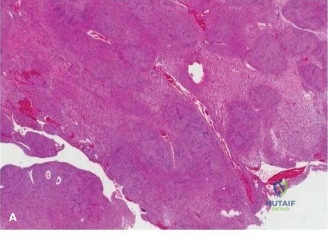
The excised specimen was submitted to the pathology department for macroscopic and microscopic evaluation. Macroscopically, the mass was a well-circumscribed, encapsulated, ovoid nodule measuring 4.2 x 3.1 x 2.8 cm. The cut surface was solid, heterogeneous, displaying tan-yellow areas intermixed with glistening, grayish, myxoid regions, consistent with the MRI findings.
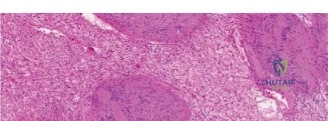
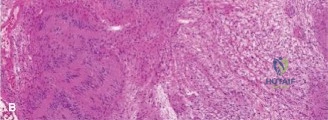
Microscopic examination revealed a classic biphasic architectural pattern pathognomonic for a benign schwannoma. The tumor was composed of hypercellular Antoni A areas and hypocellular Antoni B areas.
* Antoni A Areas: These regions were densely packed with spindle-shaped Schwann cells exhibiting elongated, wavy nuclei. The cells were arranged in interlacing fascicles. A prominent feature was the presence of Verocay bodies, characterized by palisading arrays of nuclei surrounding central, anuclear zones of eosinophilic fibrillary processes.
* Antoni B Areas: These regions were markedly less cellular, consisting of a loose, myxoid stroma containing scattered spindle cells, inflammatory cells (predominantly macrophages), and prominent, thick-walled, hyalinized blood vessels.
Immunohistochemical staining was performed to confirm the diagnosis. The tumor cells demonstrated strong, diffuse nuclear and cytoplasmic positivity for S-100 protein, confirming their neural crest and Schwann cell lineage. Stains for smooth muscle actin, desmin, and CD34 were negative, effectively ruling out smooth muscle tumors, solitary fibrous tumors, and other spindle cell neoplasms. The mitotic rate was exceptionally low (less than 1 mitosis per 10 high-power fields), and there was no evidence of nuclear pleomorphism, necrosis, or infiltrative margins, confirming the benign nature of the neoplasm and definitively ruling out a malignant peripheral nerve sheath tumor.
Post Operative Protocol and Rehabilitation
Acute Phase and Wound Management
The patient was observed in the post-anesthesia care unit and subsequently transferred to the orthopedic ward. Immediate post-operative neurological examination revealed complete preservation of motor function in the right lower extremity. The patient reported immediate relief of the pre-operative radiating pain, although some mild, localized surgical site pain was present. The sural nerve paresthesia remained unchanged initially, which is expected due to the chronicity of the pre-operative compression and the intraoperative manipulation of the nerve.
The patient was mobilized on post-operative day one with partial weight-bearing as tolerated using crutches. The acute phase of rehabilitation (0-2 weeks) focused on wound healing, edema control, and the prevention of deep vein thrombosis. The right knee was placed in a soft hinged brace locked in extension during ambulation to prevent excessive stretch on the healing tibial nerve bed. Active and passive range of motion of the ankle and hip were encouraged to maintain joint mobility and promote venous return. The surgical dressing was removed at two weeks, revealing a clean, well-healing incision, and the subcuticular sutures were left to dissolve.
Subacute Phase and Neural Gliding
During the subacute phase (2-6 weeks), the focus shifted towards restoring full knee range of motion and initiating neural mobilization. The hinged knee brace was unlocked to allow progressive flexion. Physical therapy was instituted with a specific emphasis on neural gliding exercises.
Neural gliding, or neurodynamic mobilization, is critical following peripheral nerve surgery. The objective is to restore the normal biomechanical excursion of the tibial nerve within its soft tissue bed, preventing the formation of restrictive perineural adhesions and extraneural scarring. Exercises involved controlled, alternating movements of the hip, knee, and ankle designed to gently slide the nerve longitudinally without placing it under excessive tension. For the tibial nerve, this typically involves combining hip flexion with knee extension and ankle dorsiflexion in a controlled, rhythmic manner.
Late Rehabilitation and Functional Return
From 6 to 12 weeks post-operatively, the rehabilitation protocol advanced to progressive lower extremity strengthening, proprioceptive training, and functional restoration. The patient was weaned off all assistive devices and transitioned to full, unprotected weight-bearing.
Strengthening exercises targeted the quadriceps, hamstrings, and calf musculature to address any disuse atrophy that may have developed pre-operatively or during the acute recovery phase. Cardiovascular conditioning was re-introduced via stationary cycling and swimming.
At the three-month follow-up, the patient demonstrated full, painless range of motion of the right knee. Motor strength remained entirely intact (5/5). Notably, the patient reported a significant subjective improvement in the sural nerve pare