Part of the Master Guide

Recurrent High-Grade Pleomorphic Undifferentiated Sarcoma of the Thigh: A Clinical & Imaging Case Study

Distal Femoral Osteosarcoma: A Detailed Clinical Case Study & Diagnostic Imaging
17 Apr 2026 21 min read 90 Views
Illustration of orthopaedic oncology cases osteosarcoma - Dr. Mohammed Hutaif

Key Takeaway

Distal femoral osteosarcoma is diagnosed through a comprehensive approach. It typically involves a detailed clinical history of progressive knee pain and swelling, followed by physical examination revealing a firm, tender mass. Imaging, including plain radiographs showing aggressive lytic/blastic lesions with periosteal reaction (e.g., sunburst, Codman's triangle) and MRI for precise local staging and soft tissue extension, is crucial.

Patient Presentation and History

A 17 year old male presented to the orthopedic oncology clinic with a four month history of progressive left knee pain and swelling. The pain was initially insidious in onset, described by the patient as a dull, deep ache that was exacerbated by weight bearing activity and minimally responsive to over the counter nonsteroidal anti inflammatory drugs. Over the preceding six weeks, the pain trajectory shifted dramatically, intensifying and becoming constant and sharp. Notably, the patient reported significant nocturnal pain that consistently awakened him from sleep, a hallmark clinical indicator of an aggressive osseous process. Concurrently, he reported a noticeable and progressive increase in the circumference of his distal thigh and proximal knee region.

There was no specific history of major trauma. The patient recalled a minor, low energy fall during a basketball game approximately five months prior, to which he initially attributed the onset of his knee discomfort. This is a common clinical scenario wherein minor trauma draws attention to a preexisting pathological lesion, often leading to a delay in definitive diagnosis as the symptoms are erroneously attributed to a sports related sprain or contusion. He denied any systemic constitutional symptoms such as fever, chills, night sweats, or unintentional weight loss.

His past medical history was otherwise unremarkable, with no known genetic predispositions such as Li Fraumeni syndrome or hereditary retinoblastoma, and no prior history of radiation exposure. He is an active high school athlete with no significant medical comorbidities. His family history is negative for musculoskeletal malignancies or other significant oncologic conditions.

The delay in presentation is unfortunately typical for adolescent primary bone sarcomas. The initial symptoms are frequently dismissed as "growing pains" or sports related overuse injuries. The transition from mechanical, activity related pain to unrelenting nocturnal pain signifies the rapid expansion of the tumor, increased intramedullary pressure, and the subsequent stretching and breaching of the highly innervated periosteum. The lack of systemic symptoms is also characteristic of localized, albeit aggressive, primary bone sarcomas, distinguishing them from infectious etiologies or systemic hematologic malignancies which may present with a more pronounced constitutional symptom profile.

Clinical Examination Findings

Visual Inspection of the Distal Femur

On initial inspection of the lower extremities in the standing and supine positions, there was a stark asymmetry. A visible, firm, fusiform swelling involved the distal third of the left thigh, extending distally into the suprapatellar region. The normal topographical landmarks of the distal femur and the peripatellar recesses were obliterated by the mass effect. The overlying skin appeared taut, shiny, and slightly erythematous due to the underlying hypervascularity of the rapidly growing tumor bed, but it remained intact without overt signs of acute localized infection, ulceration, or breaks in skin integrity. Despite the reported limitation in physical activity secondary to pain over the preceding months, there was no profound, visually obvious atrophy of the proximal quadriceps musculature, likely due to the compensatory hypertrophy and the sheer volume of the underlying mass masking any localized muscle wasting. A subtle but distinct bony prominence was noted on the anterolateral aspect of the distal femur, corresponding to the area of maximal cortical breakthrough.

Palpation and Soft Tissue Assessment

Palpation of the left lower extremity was performed with extreme care to minimize patient discomfort while accurately assessing the extent of the lesion. Examination revealed a large, firm, immobile, and exquisitely tender mass originating from the distal femoral metaphysis. The mass measured approximately fifteen by ten centimeters in its maximal dimensions. The overlying skin was palpably warm to the touch, further indicating the hyperemic nature of the underlying pathology.

There was significant point tenderness localized directly over the anterolateral distal femur, correlating with the visible prominence and suggesting the primary site of cortical destruction and periosteal elevation. The mass appeared to be intimately associated with the underlying osseous structures, demonstrating no mobility independent of the femur. There was no fluctuance, induration, or crepitus to suggest an abscess, hematoma, or impending pathological fracture. A thorough assessment of the regional lymphatic basins was performed; no palpable regional lymphadenopathy was appreciated in the ipsilateral inguinal or popliteal regions, which is consistent with the typical hematogenous, rather than lymphatic, metastatic spread pattern of primary osteosarcoma.

Range of Motion and Articular Evaluation

Active and passive range of motion of the left knee joint was significantly restricted and elicited profound pain. Flexion was severely limited to 70 degrees compared to a normal physiological range of 140 to 150 degrees. Extension lacked 15 degrees, presenting as a fixed flexion contracture. Both flexion and extension maneuvers elicited sharp, localized pain, particularly at the extremes of the available motion arc.

The restriction in motion was multifactorial, stemming from the mechanical block created by the extraosseous tumor extension into the suprapatellar pouch, the secondary joint effusion, and the severe pain resulting from stretching the inflamed and tumor infiltrated periosteum and surrounding soft tissue envelope. Patellar tracking was difficult to assess accurately due to the profound suprapatellar swelling. However, patellar ballotment was strongly positive, suggesting a large intraarticular effusion or significant synovial thickening and periarticular reactive edema. The presence of a joint effusion in the setting of a distal femoral metaphyseal tumor raises the clinical suspicion for potential intraarticular tumor extension, either directly through the capsule or via the cruciate ligaments, a critical factor that must be evaluated on subsequent advanced imaging.

Distal Neurological and Vascular Status

A comprehensive distal neurological examination was performed to assess the integrity of the lumbosacral plexus branches traversing the popliteal fossa and lower leg. Sensation to light touch and pinprick was completely intact and symmetrical across the L2 through S1 dermatomes. Motor strength testing of the extensor hallucis longus, tibialis anterior, gastrocnemius soleus complex, and quadriceps was graded as 5/5 according to the Medical Research Council scale. However, resisted knee extension was remarkably painful, limited by pain rather than true motor weakness, secondary to the tumor's proximity to the extensor mechanism. No pathological upper motor neuron reflexes, such as Babinski or clonus, were elicited.

Vascular assessment demonstrated palpable and symmetrical dorsalis pedis and posterior tibial pulses bilaterally. Capillary refill time was brisk, occurring in less than two seconds in the toes of the affected extremity. There were no clinical signs of venous stasis, engorgement, or deep vein thrombosis in the distal extremity, indicating that while the tumor was large, it had not yet caused critical mechanical compression or invasion of the major neurovascular bundle within the popliteal fossa or adductor hiatus.

Imaging and Diagnostics

Plain Radiographic Evaluation

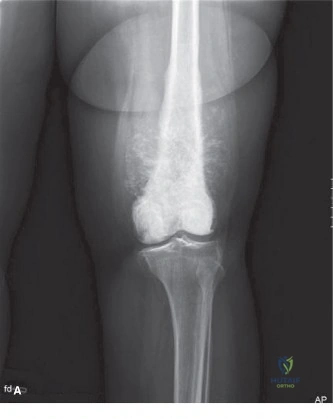
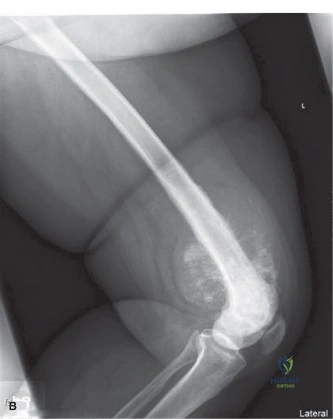
Initial orthogonal anteroposterior and lateral radiographs of the left knee were obtained. These films revealed a highly aggressive, mixed lytic and sclerotic (blastic) lesion centered eccentrically within the distal femoral metaphysis.

Image

Key radiographic findings included profound, irregular destruction of the cortical bone, most prominently on the anterior and lateral aspects of the distal femur. This permeative pattern of bone destruction is a hallmark of a rapidly proliferating malignant process that outpaces the bone's ability to mount a contained reactive response. A prominent, aggressive periosteal reaction was visualized, characterized by a classic "sunburst" appearance extending into the adjacent soft tissues. This sunburst pattern represents the ossification of Sharpey's fibers as the rapidly expanding tumor elevates the periosteum, stretching the perforating vessels perpendicular to the cortical shaft.

Furthermore, a distinct Codman's triangle was appreciated at the proximal margin of the lesion, representing the triangular area of new subperiosteal bone created when the periosteum is rapidly elevated away from the bone cortex by the advancing tumor margin. A large, ill defined extraosseous soft tissue component was evident, containing irregular, cloud like areas of calcification and ossification. This "tumor bone" or osteoid matrix production within the soft tissue mass is highly specific for osteosarcoma.

The lesion was predominantly metaphyseal, largely sparing the epiphyseal plate, though it extended proximally into the diaphyseal region. Distally, the tumor approached the subchondral bone plate, but the articular cartilage space appeared radiographically preserved. No definite pathological fracture was identified on the initial series, though the mechanical integrity of the anterior and lateral cortices was severely compromised, placing the patient at high risk for a structural failure under normal physiological loading.

Magnetic Resonance Imaging for Local Staging

Following the concerning plain radiographic findings, a contrast enhanced Magnetic Resonance Imaging study of the entire left femur was obtained to delineate the local extent of the disease, assess for skip metastases, and evaluate the proximity of the tumor to critical neurovascular structures.

Image

The MRI protocol included T1 weighted, T2 weighted, Short Tau Inversion Recovery, and T1 weighted post gadolinium sequences. The STIR and T2 weighted sequences demonstrated a large, heterogeneous, hyperintense mass originating in the medullary cavity of the distal femoral metaphysis, breaching the cortex, and forming a massive extraosseous soft tissue component. The intramedullary extent of the tumor, which dictates the level of the surgical osteotomy, was accurately measured on the T1 weighted coronal and sagittal sequences, where the tumor replaced the normal high signal fatty marrow with low signal intensity tissue.

Crucially, the MRI confirmed that the tumor had not violated the joint capsule or extended intraarticularly. The cruciate ligaments and the posterior capsule were intact. The neurovascular bundle within the popliteal fossa was displaced posteriorly by the expanding soft tissue mass but maintained a distinct fat plane separating it from the tumor pseudocapsule, indicating that limb salvage surgery with negative margins was technically feasible without sacrificing the major vessels or the sciatic nerve and its branches. A whole femur sequence was meticulously reviewed, ruling out the presence of synchronous intraosseous skip metastases within the proximal diaphyseal and metaphyseal regions of the ipsilateral femur.

Systemic Staging and Computed Tomography

Given the high index of suspicion for a high grade primary bone sarcoma, systemic staging was immediately initiated to evaluate for distant metastatic disease. Osteosarcoma has a strong propensity for early hematogenous dissemination, most commonly to the pulmonary parenchyma and, less frequently, to other osseous sites.

A high resolution Computed Tomography scan of the chest without intravenous contrast was performed. The chest CT is the gold standard for detecting pulmonary micrometastases, which may be entirely asymptomatic and radiographically occult on standard posterior anterior and lateral chest radiographs. In this patient, the chest CT revealed no evidence of pulmonary nodules, pleural effusions, or mediastinal lymphadenopathy.

Additionally, a whole body Technetium 99m methylene diphosphonate bone scintigraphy scan was obtained to screen for distant skeletal metastases. The bone scan demonstrated intense, heterogeneous radiotracer uptake localized exclusively to the primary lesion in the left distal femur, with no abnormal areas of increased uptake in the axial or appendicular skeleton to suggest multifocal disease or distant osseous metastases. The combination of local and systemic imaging staged the patient as having localized, non metastatic disease.

Biopsy Principles and Histopathological Confirmation

Following the completion of all local and systemic staging imaging, a tissue diagnosis was required to definitively confirm the diagnosis, determine the histological subtype, and grade the tumor. The biopsy is a critical step in the management of musculoskeletal oncology and must be meticulously planned and executed by the surgical team that will perform the definitive resection. Poorly planned biopsies can contaminate neurovascular bundles, compromise local tissue planes, and potentially convert a limb salvage candidate into an amputation.

An image guided core needle biopsy was performed under strict aseptic conditions. The biopsy tract was carefully planned to ensure it fell entirely within the planned surgical excision field. For a distal femoral lesion, a longitudinal incision over the anterolateral or anterior aspect of the thigh is typically utilized, avoiding the medial neurovascular structures and the lateral intermuscular septum. Multiple core samples were obtained from both the soft tissue component and the intraosseous component of the tumor to ensure adequate tissue for histopathological, immunohistochemical, and molecular analysis. Meticulous hemostasis was achieved prior to closure to prevent the formation of a post biopsy hematoma, which could potentially disseminate tumor cells into adjacent, previously uncontaminated tissue compartments.

Histopathological analysis of the core biopsy specimens revealed a highly cellular neoplasm composed of pleomorphic, spindle shaped to epithelioid mesenchymal cells exhibiting marked nuclear atypia, hyperchromasia, and frequent atypical mitotic figures. The diagnostic hallmark was the presence of fine, lace like osteoid matrix being deposited directly by the malignant neoplastic cells. Areas of necrosis and hemorrhage were also noted. Immunohistochemistry was positive for SATB2, confirming osteoblastic differentiation. The morphological and immunohistochemical profile definitively confirmed the diagnosis of conventional high grade osteoblastic osteosarcoma.

Differential Diagnosis

The presentation of a destructive, bone forming lesion in the distal femur of an adolescent requires a broad but focused differential diagnosis. The primary considerations include other primary malignant bone tumors, benign aggressive bone lesions, and infectious etiologies.

Differential Diagnosis Clinical Presentation Characteristics Radiographic and Imaging Hallmarks Histopathological Features
Osteosarcoma Adolescent/young adult. Progressive, deep, nocturnal pain. Palpable, rapidly growing mass. Metaphyseal location. Mixed lytic/blastic lesion. Cortical destruction. Sunburst periosteal reaction. Codman's triangle. Soft tissue ossification. Malignant spindle/epithelioid cells producing lace-like osteoid matrix directly. High mitotic rate, pleomorphism.
Ewing Sarcoma Child/adolescent. Pain, swelling. May present with systemic symptoms (fever, elevated ESR, leukocytosis) mimicking infection. Diaphyseal or metadiaphyseal. Permeative, lytic destruction. "Onion skin" (lamellated) periosteal reaction. Large soft tissue mass without osteoid matrix. Small, round, blue cells. CD99 positive. EWSR1 gene translocation (typically t(11;22)). No osteoid production.
Osteomyelitis Acute or subacute onset. Pain, erythema, localized warmth. Often accompanied by systemic signs (fever, chills). Elevated inflammatory markers (CRP, ESR). Focal osteopenia, lytic destruction. Smooth or solid periosteal reaction. Brodie's abscess in subacute cases. Surrounding soft tissue edema. Acute/chronic inflammatory infiltrate (neutrophils, lymphocytes, plasma cells). Necrotic bone (sequestrum). Positive microbial cultures.
Aneurysmal Bone Cyst Child/adolescent. Pain, swelling. Often presents with a pathological fracture. Rapid expansion. Eccentric, expansile, lytic, multi-loculated "soap bubble" appearance. Thinning of the cortex. Fluid-fluid levels on MRI. Blood-filled cystic spaces lacking endothelial lining. Septa contain fibroblasts, multinucleated giant cells, and reactive woven bone. USP6 rearrangement.

Surgical Decision Making and Classification

Oncologic Staging Systems

Accurate staging is paramount for determining the appropriate therapeutic strategy and predicting patient prognosis. In musculoskeletal oncology, the Enneking Surgical Staging System for malignant bone tumors is universally employed. This system is based on three critical variables: the histological grade of the tumor (G), the anatomical setting or local extent of the tumor (T), and the presence or absence of regional or distant metastasis (M).

Based on the histopathological confirmation of a high grade conventional osteosarcoma (G2), the MRI findings demonstrating extraosseous extension breaching the femoral cortex (T2, extracompartmental), and the negative systemic staging scans showing no evidence of distant pulmonary or osseous metastases (M0), the patient was classified as having Stage IIB disease according to the Enneking system.

Concurrently, the American Joint Committee on Cancer staging system is also utilized, which relies heavily on tumor size and metastatic status. Given the tumor size exceeding 8 centimeters in its greatest dimension, high histological grade, and absence of metastases, the patient corresponds to AJCC Stage IIA. The classification as a high grade, localized, extracompartmental sarcoma mandates an aggressive, multidisciplinary treatment protocol combining systemic chemotherapy and definitive local surgical control.

Neoadjuvant Chemotherapy Protocols

The standard of care for high grade, localized osteosarcoma involves a multimodal approach initiated by neoadjuvant (preoperative) systemic chemotherapy. The rationale for neoadjuvant chemotherapy is multifaceted. First, it aims to eradicate radiographically occult pulmonary micrometastases that are presumed to be present in the majority of patients at the time of initial diagnosis. Second, it serves to shrink the primary tumor, reduce peritumoral edema, and induce the formation of a dense, fibrous pseudocapsule, thereby facilitating a safer and more oncologically sound surgical resection with negative margins. Third, the degree of tumor necrosis observed in the resected specimen following neoadjuvant chemotherapy provides the most powerful prognostic indicator for long term survival and guides the selection of postoperative adjuvant chemotherapy regimens.

The patient was initiated on the standard MAP protocol, consisting of high dose Methotrexate, Doxorubicin (Adriamycin), and Cisplatin. This intensive regimen is typically administered over a period of 10 to 12 weeks prior to surgical intervention. During the neoadjuvant phase, the patient's clinical response was closely monitored. A reduction in localized pain, decreased swelling, and stabilization or reduction of alkaline phosphatase and lactate dehydrogenase levels are positive clinical indicators of chemotherapeutic efficacy. Following the completion of the neoadjuvant cycles, repeat local MRI and systemic restaging scans are mandatory to assess tumor response, confirm the absence of disease progression, and finalize the surgical plan.

Limb Salvage Versus Amputation Criteria

The primary goal of surgical intervention in osteosarcoma is the complete eradication of the local tumor with microscopically negative margins (R0 resection), prioritizing oncologic cure above all functional considerations. Historically, amputation was the standard treatment for all extremity osteosarcomas. However, with the advent of effective systemic chemotherapy and advancements in advanced imaging and reconstructive surgical techniques, limb salvage surgery is now feasible and represents the standard of care for 80 to 90 percent of patients with extremity osteosarcoma.

The decision between limb salvage and amputation hinges on several critical anatomical and oncological factors. Absolute contraindications to limb salvage include major neurovascular bundle involvement that cannot be resected and reconstructed, massive soft tissue extension precluding adequate muscle coverage for a prosthesis, poorly placed prior biopsy tracts that heavily contaminate critical compartments, and pathological fractures with massive hematoma tracking that contaminates the entire fascial compartment.

In this patient, the preoperative MRI confirmed that the popliteal vessels and the sciatic nerve branches were displaced but not directly invaded by the tumor. The soft tissue extension, while significant, allowed for an adequate envelope of normal muscle to be retained for coverage. The biopsy had been meticulously planned and executed along the planned surgical approach. Therefore, the patient was deemed an excellent candidate for limb salvage surgery, specifically an en bloc wide local excision of the distal femur and reconstruction with a modular distal femoral endoprosthesis.

Surgical Technique and Intervention

Patient Positioning and Setup

The patient was brought to the operating theater and placed in the supine position on a radiolucent operating table. Following the induction of general endotracheal anesthesia, a Foley catheter was inserted, and appropriate intravenous access was established. The operative extremity was meticulously prepped and draped in a standard sterile fashion, ensuring exposure from the iliac crest down to the toes to allow for extensile exposure and intraoperative manipulation. A sterile tourniquet was placed on the proximal thigh but not inflated, as the tumor's proximal extent and the need for meticulous vascular dissection often preclude the use of a tourniquet. Intraoperative fluoroscopy was positioned to allow for orthogonal imaging of the entire femur and knee joint.

Surgical Approach and Neurovascular Dissection

The surgical incision was planned to incorporate the previous biopsy tract in an elliptical fashion, ensuring the entire tract and surrounding contaminated tissue were excised en bloc with the primary specimen. An extensile medial parapatellar approach was utilized, extending proximally along the anteromedial aspect of the thigh, following the interval between the rectus femoris and the vastus medialis.

The initial phase of the operation focused on the meticulous identification and protection of the critical neurovascular structures. The superficial femoral artery and vein were identified proximally within the adductor canal (Hunter's canal). The adductor magnus tendon was released from the adductor tubercle, allowing the vascular bundle to be mobilized and traced distally into the popliteal fossa. The popliteal vessels were carefully separated from the posterior aspect of the tumor pseudocapsule. The sciatic nerve, dividing into the tibial and common peroneal nerves, was identified and protected throughout its course. The dissection was performed entirely within normal, healthy tissue planes, ensuring a continuous cuff of normal muscle (predominantly vastus intermedius and vastus lateralis) was left attached to the tumor to achieve wide oncologic margins.

En Bloc Resection and Margin Assessment

Once the neurovascular structures were safely mobilized and retracted, the focus shifted to the en bloc resection of the distal femur. The level of the femoral osteotomy had been precisely templated preoperatively based on the T1 weighted MRI sequences, adding a 3 to 5 centimeter margin of normal marrow proximal to the most superior extent of the tumor.

The femoral diaphysis was exposed at the planned osteotomy site. A transverse osteotomy was performed using an oscillating saw under continuous saline irrigation to prevent thermal necrosis of the remaining bone. Following the osteotomy, a sample of the intramedullary marrow from the proximal femoral stump was immediately sent to the pathology department for frozen section analysis to definitively confirm a negative osseous margin.

The dissection then proceeded distally. The knee joint capsule was incised, and the intraarticular structures were evaluated. The anterior and posterior cruciate ligaments, along with the medial and lateral collateral ligaments, were transected at their femoral insertions. The menisci were typically excised with the specimen. The entire distal femur, encompassing the tumor, the pseudocapsule, the surrounding cuff of normal muscle, and the biopsy tract, was then delivered from the surgical field en bloc. The specimen was oriented with sutures and sent for definitive histopathological analysis and tumor necrosis mapping.

Distal Femoral Endoprosthetic Reconstruction

Following confirmation of negative frozen section margins, the reconstruction phase commenced. A modular distal femoral endoprosthesis (megaprosthesis) was selected to restore the skeletal continuity, joint stability, and limb length.

The proximal femoral canal was sequentially reamed and broached to accommodate the intramedullary stem of the prosthesis. Meticulous pulsatile lavage of the canal was performed to remove marrow debris and optimize the bone cement interface. A cement restrictor was placed at the appropriate depth. Polymethylmethacrylate (PMMA) bone cement, often loaded with antibiotics, was injected into the canal using retrograde filling techniques to minimize pressurization and the risk of fat embolism. The femoral stem was then inserted in the correct degree of anteversion and held rigidly until the cement polymerized.

Attention was then directed to the proximal tibia. The tibial plateau was prepared using standard total knee arthroplasty instrumentation, ensuring appropriate alignment and slope. The tibial canal was prepared, and the tibial baseplate and stem were cemented into place. A rotating hinge knee mechanism was utilized, which provides intrinsic stability to the joint, compensating for the resected collateral and cruciate ligaments. The modular components were assembled, and the joint was reduced. Trialing was performed to ensure full extension, adequate flexion, and appropriate soft tissue tension.

Extensor Mechanism Repair and Closure

The most critical aspect of the soft tissue reconstruction in distal femoral replacement is the reattachment and tracking of the extensor mechanism. The patella was evaluated; if free of tumor, it is typically resurfaced with a polyethylene button to articulate with the prosthetic trochlea.

The patellar tendon and the remaining quadriceps tendon must be securely realigned to ensure functional active extension. The extensor mechanism was mobilized and carefully repaired. In cases where significant portions of the vastus medialis or lateralis were resected for oncologic margins, local muscle advancement or a medial gastrocnemius rotational flap may be required to provide adequate soft tissue coverage over the metallic prosthesis and to augment the extensor repair.

Once the extensor mechanism was securely reconstructed, a meticulous layered closure was performed. Closed suction drains were placed deep within the surgical bed to prevent postoperative hematoma formation, which is a significant risk factor for deep periprosthetic joint infection. The subcutaneous tissues and skin were closed with interrupted sutures or surgical staples. A sterile, compressive dressing was applied, and the limb was placed in a hinged knee brace locked in full extension to protect the extensor mechanism repair during the initial healing phase.

Post Operative Protocol and Rehabilitation

Immediate Postoperative Management

The immediate postoperative management in the intensive care or step down unit focuses on hemodynamic stability, pain control, and the prevention of perioperative complications. Intravenous prophylactic antibiotics are administered for 24 to 48 hours to mitigate the risk of infection, a catastrophic complication in the setting of massive endoprosthetic reconstruction. Deep vein thrombosis prophylaxis is initiated using low molecular weight heparin or sequential compression devices, given the high risk associated with major orthopedic oncology surgery and underlying malignancy.

Pain management is typically achieved through a multimodal approach, incorporating patient controlled analgesia, regional nerve blocks (such as an adductor canal block), and scheduled non opioid adjuncts. The closed suction drains are closely monitored for output and are generally removed when the drainage decreases to less than 30 to 50 milliliters over a 24 hour period.

Physical Therapy and Functional Recovery

Rehabilitation following distal femoral replacement is a protracted and demanding process, requiring close collaboration between the surgical team, physical therapists, and the patient. The primary early goal is to protect the extensor mechanism repair while preventing joint stiffness.

The patient is typically allowed to bear weight as tolerated on the operative extremity immediately postoperatively, utilizing a walker or crutches, as the cemented endoprosthesis provides immediate structural stability. However, active knee extension is strictly prohibited for the first four to six weeks to allow the soft tissue repair of the quadriceps and patellar tendon to heal securely.

Range of motion exercises are initiated early but are restricted to passive and active assisted flexion, and passive extension. A continuous passive motion machine may be utilized in the early postoperative period. The hinged knee brace remains locked in full extension during ambulation and sleep. After the initial six week period of protection, active extension exercises are gradually introduced, and the brace is progressively unlocked to allow for a greater arc of motion during weight bearing. The long term functional goal is to achieve independent ambulation, a stable joint, and a functional arc of motion, typically aiming for 0 to 110 degrees of flexion.

Adjuvant Chemotherapy and Surveillance

Following surgical recovery, typically within two to three weeks


Dr. Mohammed Hutaif
Medically Verified Content by
Prof. Dr. Mohammed Hutaif
Consultant Orthopedic & Spine Surgeon
Chapter Index