Orthopedic Shoulder 2026 MCQs: Board Review Questions & Answers (Part 3)

Key Takeaway
This article provides essential research regarding Orthopedic Shoulder 2026 MCQs: Board Review Questions & Answers (Part 3). Top-rated Orthopedic Shoulder 2026 MCQs bank. Practice with clinical case questions, orthopedic surgery board review, and evidence-based answers updated for 2026.
Orthopedic Shoulder 2026 MCQs: Board Review Questions & Answers (Part 3)
Comprehensive 100-Question Exam
00:00
Start Quiz
Question 1
Flexion and extension of the elbow occur about an axis of rotation that
Explanation
Question 2
Figure 27 shows the radiograph of a 26-year-old man who sustained a closed head injury and a closed elbow dislocation 6 weeks ago. Examination reveals 65 degrees to 115 degrees of flexion, and intensive physical therapy has resulted in no improvement. A decision regarding the timing of surgical correction of the contracture should be based on
Explanation
Question 3
A 70-year-old man who underwent an uncomplicated large rotator cuff repair 6 months ago is now seeking a second opinion regarding persistent pain and weakness in his shoulder. Examination reveals that his incision is well healed and unreactive. The surgical report suggests that the tendons were secured back to bone with sutures through the greater tuberosity. Figure 28 shows a radiograph that was obtained 1 week ago. What is the most likely diagnosis?
Explanation
Question 4
A 29-year-old man who lifts weights states that he injured his left shoulder while performing a bench press 2 days ago. The following morning he noted ecchymosis and swelling in the left chest wall. Examination reveals ecchymosis and tenderness and deformity in the left anterior chest wall and axillary fold that is accentuated with resisted adduction of the arm. Passive range of motion beyond 90 degrees of forward flexion and 45 degrees of external rotation is extremely painful. Glenohumeral stability is difficult to assess because of severe guarding. Figure 29 shows an MRI scan. Management should consist of
Explanation
Question 5
What range of motion parameters are required for a patient with posttraumatic elbow stiffness to accomplish all the normal activities of daily living?
Explanation
Question 6
A 24-year-old athlete has a painful right shoulder. Figure 30 shows an intra-articular photograph that was obtained through a posterior portal during arthroscopy; the labrum is indicated by the arrow. Based on these findings, management should consist of
Explanation
Question 7
The use of a screw between the clavicle and the coracoid process to maintain the clavicle and acromioclavicular (AC) joint in a reduced position is a treatment option for AC joint separations. Screw removal is generally recommended after soft-tissue healing. What effect does this rigid coracoclavicular fixation have on shoulder kinematics?
Explanation
Question 8
Figure 31 shows the AP and lateral radiographs of the elbow of a 56-year-old man with chronic polyarticular rheumatoid arthritis. His function continues to be limited by pain with activities of daily living. Examination shows that his total arc of motion is 110 degrees. Nonsurgical management has failed to provide relief. Treatment should now consist of
Explanation
Question 9
A 12-year-old pitcher has had a 2-month history of pain in his right dominant shoulder after throwing. He reports that the pain has gradually progressed to the point where he cannot throw without pain. He also notes that the pain now awakens him at night if he has been active. Anti-inflammatory drugs have failed to provide relief. Examination reveals no abnormalities except for some localized tenderness over the proximal humerus. Figures 32a and 32b show radiographs of both shoulders. What is the most likely diagnosis?
Explanation
Question 10
Which of the following ligaments is the primary static restraint against inferior translation of the arm when the shoulder is in 0 degrees of abduction?
Explanation
Question 11
A 16-year-old high school student undergoes a routine preparticipation physical examination at the beginning of the school year. Examination reveals marked laxity of both shoulders but only mild generalized laxity in other joints. The load and shift test allows for anterior humeral translation to the glenoid rim and posterior humeral translation beyond the glenoid rim. The sulcus sign is present. What is the next most appropriate step in management?
Explanation
Question 12
A 21-year-old professional baseball player has had painful catching and stiffness in his dominant right elbow for the past year. Examination reveals a flexion contracture of 2 degrees and mild pain with full elbow flexion. Radiographs are shown in Figures 33a and 33b. The most effective management should consist of
Explanation
Question 13
A 42-year-old patient has had painful inferior subluxation of the glenohumeral joint following a recent cerebrovascular accident (CVA). Figure 34 shows the AP radiograph of the shoulder. Management should consist of
Explanation
Question 14
A 50-year-old man who underwent an arthroscopic rotator cuff repair 5 days ago now returns for an early postoperative follow-up because of increasing pain in his shoulder. He reports increasing malaise and has a low-grade fever. Examination reveals no redness or swelling, but he has scant serous drainage from the posterior portal. An emergent Gram stain is positive for gram-positive cocci. The next most appropriate step in management should consist of
Explanation
Question 15
A 42-year-old man who is right-hand dominant injured his right shoulder when he fell from a ladder onto his outstretched arm 1 hour ago. Radiographs reveal a two-part greater tuberosity anterior fracture-dislocation. Initial management should consist of
Explanation
Question 16
A 19-year-old man who plays college volleyball undergoes a routine preparticipation physical examination. Figure 35 shows a posterior view of his dominant shoulder. An electromyogram shows that this is a chronic injury, and an MRI scan shows no abnormalities. The best course of action should be
Explanation
Question 17
A 59-year-old construction worker who is right-hand dominant has had right shoulder pain for the past 9 months with no history of injury. Nonsurgical management consisting of two cortisone injections, physical therapy for 3 months, and nonsteroidal anti-inflammatory drugs has failed to provide lasting relief. Examination reveals tenderness over the acromioclavicular (AC) joint and over the subacromial bursa. He has positive Neer and Hawkins impingement signs and AC joint pain with adduction of the shoulder. Radiographs are shown in Figures 36a and 36b. An MRI scan reveals an intact rotator cuff. Management should now consist of
Explanation
Question 18
What three structures are considered the primary constraints necessary for elbow stability?
Explanation
Question 19
A 68-year-old woman has been progressing slowly after undergoing humeral head replacement for a four-part fracture 3 months ago. She has not regained active elevation, she feels an audible clunk on attempting elevation, and she reports pain and weakness. She used a sling for 2 weeks in the immediate postoperative period. Radiographs are shown in Figure 37a through 37c. Management should consist of
Explanation
Question 20
What is the most important feature in choosing an outcome instrument to assess shoulder disorders?
Explanation
Question 21
Figure 38 shows the radiograph of a 16-year-old wrestler who injured his elbow when he was thrown to the mat by his opponent. To minimize additional trauma to the medial soft tissues, the elbow should be reduced in
Explanation
Question 22
In patients older than age 40 years who sustain a first-time anterior dislocation of the shoulder, prolonged morbidity is most commonly associated with
Explanation
Question 23
Figure 39 shows the AP radiograph of a 62-year-old man with degenerative osteoarthritis secondary to trauma. History reveals that he underwent total elbow arthroplasty 3 years ago. He continues to report instability and constant pain. A complete work-up, including aspiration and cultures, is negative. Treatment should consist of removal of the components and
Explanation
Question 24
A 67-year-old woman undergoes a revision total shoulder arthroplasty for replacement of a loose glenoid component. Examination in the recovery room reveals absent voluntary deltoid and triceps contraction, weakness of wrist and thumb extension, and absent sensation in the palmar aspect of all fingertips and the radial forearm. The next most appropriate step in management should consist of
Explanation
Question 25
Figure 40 shows the radiograph of a 16-year-old wrestler who injured his elbow when he was thrown to the mat by his opponent. Closed reduction is readily accomplished, and the elbow seems stable. Management should now consist of application of a splint for
Explanation
Question 26
A 72-year-old female undergoes reverse total shoulder arthroplasty (RTSA) for severe rotator cuff tear arthropathy. By what primary biomechanical mechanism does this prosthesis restore active shoulder elevation?
Explanation
Question 27
During a Latarjet procedure for recurrent anterior shoulder instability, the coracoid process is osteotomized and transferred. To avoid iatrogenic injury to the musculocutaneous nerve during the deep dissection, the surgeon must remember that the nerve typically enters the conjoint tendon at what distance distal to the coracoid tip?
Explanation
Question 28
A 45-year-old manual laborer presents with a chronic, massive, irreparable tear of the posterosuperior rotator cuff. He demonstrates profound weakness in external rotation (horn blower's sign) but has an intact subscapularis. Which tendon transfer is biomechanically most appropriate to restore external rotation and elevation?
Explanation
Question 29
A 28-year-old professional volleyball player presents with insidious onset of posterior shoulder pain and weakness. MRI reveals isolated atrophy of the teres minor. The entrapped nerve is located in a quadrilateral space bounded superiorly by which anatomic structure?
Explanation
Question 30
A 32-year-old weightlifter presents with vague posterior shoulder pain and profound weakness in external rotation, with preserved abduction strength. EMG confirms an isolated nerve entrapment at the spinoglenoid notch. Which finding is expected on MRI?
Explanation
Question 31
A 65-year-old man with primary glenohumeral osteoarthritis is planned for an anatomic total shoulder arthroplasty. CT imaging demonstrates a biconcave glenoid with severe posterior cartilage wear and posterior subluxation of the humeral head. This represents which Walch classification?
Explanation
Question 32
A 68-year-old woman sustains a displaced 4-part proximal humerus fracture. According to Hertel's criteria, which of the following radiographic findings is the strongest predictor of ensuing humeral head ischemia?
Explanation
Question 33
A 76-year-old female presents with acute lateral shoulder pain 4 months after undergoing a reverse total shoulder arthroplasty. Radiographs reveal an acromial base stress fracture (Levy Type II). Which surgical factor most significantly increases the risk of this complication?
Explanation
Question 34
A 29-year-old competitive weightlifter feels a pop in his anterior chest wall while performing a heavy bench press. Examination reveals loss of the anterior axillary fold and weakness in adduction. Where does the most common pattern of this muscular rupture occur?
Explanation
Question 35
A 24-year-old carpenter presents with a dull ache in his right shoulder and inability to fully elevate his arm. Examination reveals medial winging of the scapula that worsens when he pushes against a wall. Injury to which nerve is the most likely cause?
Explanation
Question 36
Which design parameter of a reverse total shoulder arthroplasty most effectively decreases the risk of scapular notching?
Explanation
Question 37
A 65-year-old man presents with insidious onset of shoulder pain 18 months following an anatomic total shoulder arthroplasty. Inflammatory markers are normal. Aspirate cultures grow Cutibacterium acnes at 10 days. Which of the following best describes this organism?
Explanation
Question 38
A 28-year-old weightlifter presents with isolated wasting of the infraspinatus muscle and weakness in external rotation. An MRI reveals a paralabral cyst. Where is the most likely location of the cyst and the associated nerve compression?
Explanation
Question 39
According to Hertel's criteria, which of the following is the strongest predictor of ischemia and subsequent avascular necrosis following a proximal humerus fracture?
Explanation
Question 40
A 32-year-old bodybuilder feels a pop in his anterior axilla while bench pressing. Examination reveals loss of the anterior axillary fold and weakness in internal rotation and adduction. Which portion of the pectoralis major is most commonly ruptured and what is its anatomic insertion?
Explanation
Question 41
A 55-year-old laborer with an irreparable posterosuperior rotator cuff tear and an intact subscapularis undergoes a lower trapezius tendon transfer. The transferred tendon is typically augmented with an allograft and inserted onto which of the following structures?
Explanation
Question 42
In performing a Latarjet procedure for recurrent anterior shoulder instability, the coracoid process is transferred to the anterior glenoid. The dynamic "sling effect" of this procedure is primarily provided by which of the following structures?
Explanation
Question 43
A 35-year-old overhead athlete complains of posterior shoulder pain and numbness over the lateral deltoid. MRI shows isolated teres minor atrophy. Which vascular structure is most likely compressed along with the involved nerve?
Explanation
Question 44
A 22-year-old collegiate baseball pitcher has a Type II SLAP tear confirmed on MRI. Following failure of conservative management, what is the generally recommended initial surgical approach to return him to high-level pitching?
Explanation
Question 45
A 24-year-old pitcher is diagnosed with Glenohumeral Internal Rotation Deficit (GIRD). He has 130 degrees of external rotation and 30 degrees of internal rotation on the throwing side. Which anatomic change is primarily responsible for this physical exam finding?
Explanation
Question 46
When converting a patient from an anatomic total shoulder arthroplasty to a reverse total shoulder arthroplasty, what happens to the center of rotation of the glenohumeral joint?
Explanation
Question 47
During shoulder arthroscopy, the "comma sign" is a useful anatomic landmark. It is indicative of a tear and retraction of which of the following structures?
Explanation
Question 48
During a deltopectoral approach to the shoulder, how far distal to the lateral acromion does the axillary nerve typically traverse the deep surface of the deltoid muscle?
Explanation
Question 49
A 30-year-old woman presents with medial scapular winging that is accentuated when she pushes against a wall. Which nerve and corresponding muscle are most likely affected?
Explanation
Question 50
A 19-year-old football player presents with a closed posterior sternoclavicular joint dislocation following a direct blow. He complains of mild difficulty swallowing. What is the most appropriate next step in management?
Explanation
Question 51
In a severe acromioclavicular (AC) joint separation, the coracoclavicular (CC) ligaments are disrupted. Which of the following accurately describes the relative anatomy and function of the intact CC ligaments?
Explanation
Question 52
Which of the following systemic conditions has the strongest and most well-documented association with the development of adhesive capsulitis of the shoulder?
Explanation
Question 53
A 68-year-old man with primary osteoarthritis of the shoulder has a B2 glenoid identified on preoperative CT scan. According to the Walch classification, a B2 glenoid is characterized by:
Explanation
Question 54
A 25-year-old male weightlifter complains of superior shoulder pain localized to the AC joint during bench press. Radiographs reveal subchondral cysts and osteopenia of the distal clavicle. If 6 months of conservative management fails, what is the most appropriate surgical intervention?
Explanation
Question 55
Which physical examination test is considered most specific for evaluating the integrity of the superior portion of the subscapularis tendon?
Explanation
Question 56
A 72-year-old woman undergoes a reverse total shoulder arthroplasty (rTSA) for cuff tear arthropathy. Postoperatively, she achieves 150 degrees of active forward elevation but complains of profound weakness and inability to actively externally rotate her arm when at her side. Which of the following concurrent procedures would have best addressed this specific postoperative deficit?
Explanation
Question 57
A 21-year-old collegiate rugby player sustains a third anterior shoulder dislocation. An MRI reveals a Bankart lesion and 25% anterior glenoid bone loss. If an open Latarjet procedure is performed, the coracoid graft acts primarily through a "sling effect" to stabilize the joint in abduction and external rotation. This sling effect is created by the conjoint tendon interacting with which structure?
Explanation
Question 58
An 82-year-old female presents with a severely comminuted 4-part proximal humerus fracture after a fall. Imaging reveals a disrupted medial hinge, less than 2 mm of metaphyseal extension attached to the articular segment, and severe osteoporosis. A reverse total shoulder arthroplasty (rTSA) is chosen over open reduction internal fixation (ORIF). What biomechanical principle explains the functional success of rTSA in this setting?
Explanation
Question 59
A 28-year-old professional volleyball player presents with isolated weakness of the right shoulder, specifically noting fatigue during the cocking phase of serving. Physical examination reveals isolated atrophy of the infraspinatus fossa with normal supraspinatus bulk and strength. An MRI is most likely to demonstrate an abnormality in which of the following locations?
Explanation
Question 60
During an anatomic coracoclavicular (CC) ligament reconstruction for a chronic Type V acromioclavicular joint separation, the surgeon drills tunnels in the clavicle to recreate the conoid and trapezoid ligaments. To accurately replicate native anatomy, the conoid tunnel should be placed approximately:
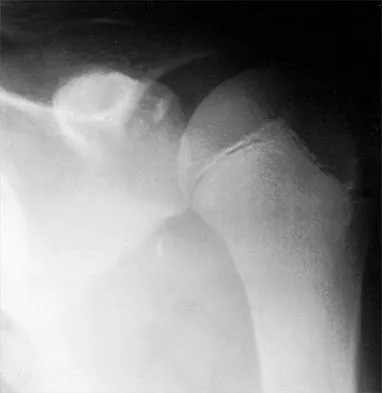
Explanation
Question 61
A 23-year-old baseball pitcher presents with posterior shoulder pain during the late cocking phase of throwing. He has a positive apprehension sign that is relieved by a posterior-directed force on the proximal humerus, but he complains of deep posterior pain rather than instability. Arthroscopic evaluation is most likely to show which of the following?
Explanation
Question 62
A 32-year-old bodybuilder feels a "pop" in his axilla while performing a heavy bench press. Examination reveals an asymmetric chest wall and weakness in internal rotation and adduction. MRI confirms a complete pectoralis major rupture. Which of the following statements regarding the relevant anatomy and injury pattern is correct?
Explanation
Question 63
A 45-year-old woman undergoes a posterior triangle lymph node biopsy. Three weeks later, she complains of a dull ache in her shoulder and an inability to elevate her arm above 90 degrees. Examination shows lateral displacement and downward rotation of the scapula. Which nerve was most likely injured, and what is the primary affected muscle?
Explanation
Question 64
A 55-year-old woman with type 1 diabetes presents with insidious onset of progressive shoulder stiffness and pain, currently in the "freezing" stage of idiopathic adhesive capsulitis. Histologic evaluation of her shoulder capsule would most likely show an abundance of which cell type, and contracture of which primary structure in the rotator interval?
Explanation
Question 65
A 75-year-old man is 4 years status post a Grammont-style reverse total shoulder arthroplasty. Radiographs show Grade 3 scapular notching. Which intraoperative technical error most significantly increases the risk of this specific complication?
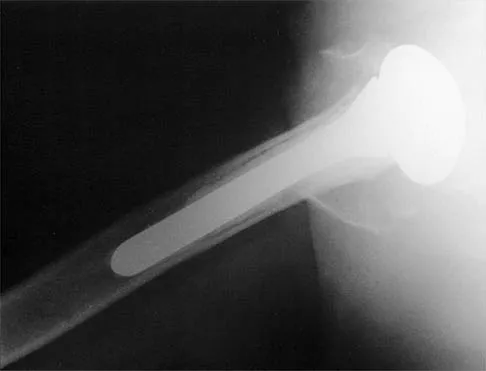
Explanation
Question 66
A 64-year-old right-hand-dominant male presents with persistent right shoulder pain and weakness following a fall onto an outstretched hand 3 months ago. Physical examination demonstrates increased passive external rotation compared to the contralateral shoulder, a positive lift-off test, and a positive belly-press test. Which of the following tendons is predominantly affected?
Explanation
Question 67
An orthopaedic surgeon is planning an anatomic total shoulder arthroplasty for a 68-year-old man with primary osteoarthritis. Preoperative axillary CT imaging demonstrates a biconcave glenoid with severe posterior cartilaginous wear and 22 degrees of retroversion. According to the Walch classification, what type of glenoid morphology is this?
Explanation
Question 68
A 36-year-old man presents to the emergency department after suffering a generalized tonic-clonic seizure. He complains of severe anterior shoulder pain. On examination, his arm is fixed in internal rotation, and he has zero degrees of active or passive external rotation. The AP shoulder radiograph shows a "lightbulb sign." What is the most appropriate initial management?
Explanation
Question 69
A 14-year-old elite Little League pitcher presents with progressive, insidious-onset throwing arm shoulder pain. Radiographs demonstrate widening and irregularity of the proximal humeral physis compared to the contralateral side. What is the standard of care for this condition?
Explanation
Question 70
A 26-year-old man is undergoing arthroscopic stabilization for recurrent anterior shoulder instability. Diagnostic arthroscopy reveals a Bankart lesion and a large, "engaging" Hill-Sachs lesion, with minimal glenoid bone loss (<10%). The surgeon elects to perform a Bankart repair and a Remplissage procedure. Which of the following is the most likely long-term kinematic consequence of adding the Remplissage?
Explanation
Question 71
A 48-year-old male presents with acute, unprovoked, excruciating right shoulder pain that awakened him from sleep. The severe pain lasts for nearly two weeks and requires narcotic analgesia. As the pain begins to subside, he notes profound weakness in his deltoid and periscapular muscles. An MRI of the shoulder and cervical spine is unremarkable. EMG at 4 weeks shows denervation of the suprascapular and axillary nerves. What is the most likely diagnosis?
Explanation
Question 72
A 72-year-old woman undergoes a reverse total shoulder arthroplasty for severe rotator cuff tear arthropathy. To minimize the risk of scapular notching postoperatively, which of the following baseplate and glenosphere configurations is most appropriate?
Explanation
Question 73
A 35-year-old man presents with persistent shoulder pain following an electric shock injury.
An axillary radiograph reveals a locked posterior shoulder dislocation with an anterior humeral head defect involving 30% of the articular surface. Which of the following is the most appropriate surgical management?
Explanation
Question 74
A 55-year-old manual laborer has a massive, irreparable posterosuperior rotator cuff tear. He is being considered for a latissimus dorsi tendon transfer. Which of the following preoperative clinical or radiographic findings is considered an absolute contraindication for this procedure?
Explanation
Question 75
A 28-year-old professional volleyball player complains of vague posterior shoulder pain and isolated weakness in external rotation. Examination reveals profound wasting of the infraspinatus fossa, while the supraspinatus fossa is well-preserved.
MRI demonstrates a paralabral cyst. Which of the following anatomical locations is the most likely site of nerve compression?

Explanation
Question 76
A 75-year-old woman sustains a displaced 4-part proximal humerus fracture.
If open reduction and internal fixation is attempted, which of the following initial radiographic findings is the most reliable predictor of subsequent humeral head avascular necrosis?
Explanation
Question 77
During a Latarjet procedure for recurrent anterior shoulder instability, the coracoid process is osteotomized and transferred to the anterior glenoid. Which of the following nerves is at greatest risk of direct injury during the placement of deep medial retractors and mobilization of the coracoid graft?
Explanation
Question 78
A 68-year-old man presents with chronic right shoulder pain and an inability to actively elevate his arm past 45 degrees. Radiographs reveal superior migration of the humeral head and severe glenohumeral arthritis. Which of the following is the most appropriate definitive surgical management?
Explanation
Question 79
A 22-year-old collegiate baseball pitcher presents with posterior shoulder pain during the late cocking phase of throwing. Physical examination reveals a positive apprehension test that is relieved by a posterior-directed force on the proximal humerus. What is the most likely diagnosis?
Explanation
Question 80
A 45-year-old man presents with isolated weakness in shoulder external rotation. Atrophy is noted over the infraspinatus fossa, but supraspinatus strength is normal. An MRI is most likely to show a paralabral cyst in which of the following locations?
Explanation
Question 81
A 19-year-old contact athlete experiences recurrent anterior shoulder dislocations. Preoperative imaging reveals a glenoid bone loss of 28%. Which of the following procedures is most appropriate to prevent recurrence?
Explanation
Question 82
Which of the following comorbidities is most strongly associated with both the development of adhesive capsulitis and a more refractory course to conservative treatment?
Explanation
Question 83
During the deltopectoral approach to the shoulder, the cephalic vein is typically identified in the internervous plane between the deltoid and pectoralis major. To minimize the risk of bleeding from its major tributaries, the cephalic vein should ideally be retracted in which direction?
Explanation
Question 84
A 50-year-old man presents with chronic shoulder pain. Physical examination demonstrates a positive belly-press test and an inability to maintain internal rotation against resistance when the hand is lifted off the lower back. These findings are most indicative of a tear involving which structure?
Explanation
Question 85
A 32-year-old competitive weightlifter feels a "pop" in his anterior axilla while performing a heavy bench press. Examination shows loss of the normal anterior axillary contour. In an acute complete rupture, which anatomic portion is most commonly avulsed and where is its normal insertion?
Explanation
Question 86
A 65-year-old woman with severe glenohumeral osteoarthritis undergoes an anatomic total shoulder arthroplasty. Ten years later, she presents with progressive pain and a loss of active elevation. What is the most common cause of late failure in anatomic total shoulder arthroplasty?
Explanation
Question 87
A 28-year-old man sustains a severe elbow injury. Imaging confirms a terrible triad injury pattern.
What is the recommended sequence of surgical reconstruction to restore elbow stability?
Explanation
Question 88
A 70-year-old woman sustains a 3-part proximal humerus fracture treated with open reduction and internal fixation using a locking plate. Postoperatively, she develops severe shoulder pain and crepitus with range of motion. What is the most common complication associated with this specific fixation method?
Explanation
Question 89
A 40-year-old manual laborer complains of right shoulder ache and a prominent medial scapular border, especially when doing a wall push-up. An injury to which nerve is responsible for this physical finding?
Explanation
Question 90
A 72-year-old woman undergoes reverse total shoulder arthroplasty (rTSA) for massive, irreparable rotator cuff tear arthropathy. Postoperatively, what surgical technique modification regarding glenoid baseplate and glenosphere positioning has been biomechanically and clinically proven to minimize the risk of inferior scapular notching?
Explanation
Question 91
A 65-year-old right-hand-dominant woman sustains the proximal humerus fracture shown in Figure 17 after a fall from a standing height.
According to Hertel's radiographic criteria, which of the following fracture characteristics is the most reliable predictor of humeral head ischemia and subsequent avascular necrosis?
Explanation
Question 92
A 25-year-old elite volleyball player presents with vague posterior shoulder pain and decreased spiking power. Physical examination demonstrates isolated weakness in external rotation with the arm at the side. An MRI demonstrates a paralabral cyst isolated to the spinoglenoid notch, as seen in Figure 24.
Based on the anatomic location of this cyst, which of the following clinical findings is most likely PRESERVED?
Explanation
None
