Comprehensive Management of Femoral Neck Fractures: An Operative Guide
Key Takeaway
Femoral neck fractures present a complex orthopedic challenge with a bimodal distribution. In young patients, high-energy trauma necessitates urgent joint-preserving fixation to prevent avascular necrosis. Conversely, elderly patients typically sustain low-energy osteoporotic fractures, often requiring arthroplasty. This guide details the critical biomechanics, Garden and Pauwels classification systems, and step-by-step surgical approaches—ranging from cannulated screw fixation to total hip arthroplasty—ensuring optimal outcomes and minimizing complications like nonunion.
Comprehensive Introduction and Patho-Epidemiology
Femoral neck fractures represent a profound and ubiquitous orthopedic challenge, characterized by a distinct bimodal epidemiologic distribution that dictates fundamentally different treatment paradigms. These injuries demand a nuanced understanding of hip biomechanics, proximal femoral vascular anatomy, and patient-specific physiological reserves. As the global population ages, the sheer volume of these fractures is projected to rise exponentially, placing an immense burden on healthcare systems worldwide. The management of these fractures is not merely a mechanical exercise in bone fixation or joint replacement; it is a complex physiological intervention aimed at restoring mobility, minimizing mortality, and mitigating the cascade of systemic complications associated with prolonged recumbency.
In the elderly population, fractures of the femoral neck occur predominantly as a result of low-energy trauma, such as a simple fall from a standing height. These injuries are intimately associated with decreased bone mineral density (osteoporosis), architectural deterioration of bone tissue, and age-related sarcopenia. The classic "fragility fracture" patient often presents with a multitude of medical comorbidities, frailty, and a diminished physiological reserve. The one-year mortality rate following a displaced femoral neck fracture in this demographic remains staggeringly high, historically ranging from 20% to 30%, largely driven by cardiopulmonary complications, venous thromboembolism, and nosocomial infections rather than the orthopedic injury itself. Consequently, the primary objective in this cohort is immediate surgical stabilization—typically via arthroplasty—to facilitate immediate weight-bearing and rapid mobilization.
Conversely, femoral neck fractures in young, physiologically robust patients represent a fundamentally different clinical entity. These typically result from high-energy mechanisms—such as motor vehicle collisions, motorcycle accidents, or falls from significant heights—and are frequently accompanied by multisystem polytrauma, traumatic brain injuries, and associated musculoskeletal injuries (e.g., ipsilateral femoral shaft fractures). In this demographic, the structural integrity of the bone is normal, and the fracture is a consequence of overwhelming mechanical force. The overarching goal of treatment here is the preservation of the native femoral head. This requires urgent anatomic reduction and biomechanically stable internal fixation to optimize the biological environment for fracture union and to minimize the catastrophic risk of avascular necrosis (AVN).
The biological environment of the femoral neck further complicates healing. Because the majority of femoral neck fractures are strictly intracapsular, they lack a cambium layer of periosteum, which is critical for secondary bone healing via callus formation. Healing must occur through primary cortical restitution, which demands absolute mechanical stability and intimate apposition of the fracture fragments. Furthermore, the synovial fluid within the hip joint contains high levels of plasminogen activators, which rapidly lyse the initial fracture hematoma, stripping the fracture site of the crucial osteogenic and angiogenic factors necessary for early consolidation. Displacement of these fractures also severely compromises the tenuous retrograde blood supply to the femoral head, predisposing the patient to AVN and nonunion.
Detailed Surgical Anatomy and Biomechanics
A masterful, three-dimensional grasp of the proximal femoral vascularity and trabecular architecture is absolutely non-negotiable for the operating surgeon. The femoral head and neck operate under immense and complex biomechanical forces, transmitting the entire weight of the body from the pelvis to the lower extremities. The vascular supply is notoriously precarious, rendering the femoral head highly susceptible to ischemic insult following trauma. The primary blood supply is derived from the extracapsular arterial ring, which is formed at the base of the femoral neck by the medial circumflex femoral artery (MCFA) posteriorly and the lateral circumflex femoral artery (LCFA) anteriorly. The MCFA is the dominant contributor, passing between the pectineus and iliopsoas, then traveling beneath the quadratus femoris to reach the posterior aspect of the intertrochanteric crest.
From this extracapsular ring, the ascending cervical (retinacular) branches arise. These vessels pierce the hip joint capsule near the intertrochanteric line and travel proximally along the femoral neck within the synovial retinacula (the reflections of the capsule onto the neck). The lateral epiphyseal artery, a major terminal branch of the MCFA, supplies the vast majority of the superior and lateral weight-bearing dome of the femoral head. Because these vessels lie directly on the surface of the femoral neck, they are highly vulnerable to mechanical tearing during fracture displacement or iatrogenic injury during reduction maneuvers. A secondary, highly variable, and often negligible blood supply comes from the artery of the ligamentum teres, a branch of the obturator artery. In elderly patients, this vessel is frequently sclerotic and non-functional, making the femoral head entirely dependent on the retinacular vessels.
Intracapsular fractures not only disrupt the ascending retinacular vessels mechanically but also create an intracapsular hematoma. Because the hip capsule is a robust, unyielding structure (particularly anteriorly via the iliofemoral ligament of Bigelow), the accumulation of blood can rapidly elevate intracapsular pressures. This tamponade effect can exceed the capillary perfusion pressure of the remaining intact retinacular vessels, further reducing perfusion to the femoral head. In young patients, this pathophysiological mechanism mandates urgent surgical intervention—often within 12 to 24 hours—to anatomically reduce the fracture, decompress the capsule (either via capsulotomy or percutaneous aspiration), and restore vascular flow.
Biomechanically, the proximal femur is structured to withstand massive compressive and tensile loads. The internal architecture is defined by distinct trabecular patterns: the primary compressive group (transmitting forces from the superior femoral head to the medial calcar femorale) and the primary tensile group (arising from the lateral cortex and arching into the inferior femoral head). The intersection of these trabecular lines forms Ward's triangle, a central area of relative osteopenia that is particularly vulnerable in osteoporotic patients. The calcar femorale itself is a dense vertical plate of bone radiating laterally from the lesser trochanter; it serves as the primary structural buttress against varus collapse. Surgical fixation constructs must utilize this dense bone for inferior screw support to neutralize the massive shearing forces defined by the Pauwels classification, particularly in vertically oriented fractures where shear forces drastically outweigh compressive forces.
Exhaustive Indications and Contraindications
The surgical decision-making process for femoral neck fractures is an intricate algorithm dictated by physiological age, baseline functional demand, pre-existing joint pathology, bone quality, and the specific morphological characteristics of the fracture. The ultimate decision typically bifurcates into joint-preserving surgery (internal fixation) versus joint-replacing surgery (arthroplasty). Chronological age is a useful heuristic, but biological age, frailty indices, and cognitive status play a far more critical role in determining the appropriate intervention.
In young patients (typically defined as under 60-65 years of age), the absolute priority is head preservation. The native hip joint provides superior kinematics, proprioception, and longevity compared to any prosthetic articulation. Therefore, virtually all femoral neck fractures in this cohort—regardless of displacement—are indications for urgent Open Reduction and Internal Fixation (ORIF) or Closed Reduction and Internal Fixation (CRIF). Arthroplasty in young, active patients is generally contraindicated due to the high likelihood of eventual implant loosening, bearing surface wear, and the necessity for multiple complex revision surgeries over the patient's lifetime. Exceptions are exceedingly rare but may include patients with profound pre-existing avascular necrosis, severe advanced osteoarthritis, or pathological fractures secondary to malignancy.
In the elderly population, the treatment paradigm shifts significantly. For nondisplaced fractures (Garden I and II), in situ fixation with multiple cannulated screws remains the standard of care. This minimally invasive approach prevents secondary displacement while avoiding the morbidity of a major arthroplasty. However, for displaced fractures (Garden III and IV) in the elderly, internal fixation is associated with unacceptably high rates of failure (up to 30-40% combining AVN, nonunion, and hardware cutout). Consequently, arthroplasty is the definitive standard of care. The choice between hemiarthroplasty and Total Hip Arthroplasty (THA) depends on the patient's baseline mobility and cognitive status. THA is indicated for active, independent community ambulators or those with pre-existing symptomatic osteoarthritis, as it yields superior long-term functional outcomes and lower pain scores. Hemiarthroplasty is reserved for lower-demand, household ambulators, or those with severe cognitive impairment where the risk of THA dislocation outweighs the functional benefits.
| Treatment Modality | Primary Indications | Absolute/Relative Contraindications | Biomechanical & Biological Rationale |
|---|---|---|---|
| CRIF (Cannulated Screws) | Nondisplaced (Garden I/II) all ages; Displaced fractures in young patients if anatomic closed reduction is achieved. | Pauwels III (vertical shear) fractures; Severe osteoporosis with poor screw purchase; Pathological fractures. | Minimally invasive; preserves blood supply. Relies on cortical support (calcar) and interfragmentary compression to promote primary bone healing. |
| ORIF (Sliding Hip Screw +/- Derotation Screw) | Displaced fractures in young patients requiring open reduction; Basicervical fractures; High-shear Pauwels III fractures. | Elderly patients with displaced fractures; Active joint infection; Severe pre-existing hip osteoarthritis. | Provides superior biomechanical resistance to vertical shear forces compared to parallel screws. Allows controlled dynamic impaction. |
| Hemiarthroplasty | Displaced (Garden III/IV) in elderly, low-demand patients; Severe cognitive impairment; High dislocation risk. | Pre-existing symptomatic acetabular osteoarthritis; Young, active patients; Rheumatoid arthritis. | Replaces the avascular head, allowing immediate full weight-bearing. Eliminates AVN/nonunion risk. Large head size confers inherent stability. |
| Total Hip Arthroplasty (THA) | Displaced (Garden III/IV) in active, independent elderly patients; Pre-existing hip osteoarthritis; Rheumatoid arthritis. | Severe cognitive dysfunction (high dislocation risk); Non-ambulatory patients; Active systemic or local infection. | Provides a definitive, pain-free articulation. Superior functional scores and lower reoperation rates compared to hemiarthroplasty in active patients. |
Pre-Operative Planning, Templating, and Patient Positioning
Meticulous pre-operative planning is the cornerstone of successful femoral neck fracture management. The evaluation begins with a rigorous radiographic protocol. A standard Anteroposterior (AP) radiograph of the pelvis is mandatory to assess global pelvic anatomy, evaluate the contralateral normal hip for templating, and rule out concurrent pelvic ring injuries. A cross-table lateral radiograph is essential for evaluating anterior or posterior translation, comminution of the posterior neck, and the degree of retroversion. Crucially, an AP view of the affected hip with the leg internally rotated 15 degrees is required to compensate for native femoral anteversion. This provides a true, orthogonal AP projection of the femoral neck, allowing the surgeon to accurately measure the Pauwels angle, assess neck length, and evaluate the integrity of the calcar.
In clinical scenarios where a patient presents with classic symptoms (groin pain, inability to bear weight) but plain radiographs are negative or equivocal, advanced imaging is mandatory to rule out an occult fracture. Magnetic Resonance Imaging (MRI) is the gold standard. A T1-weighted coronal sequence will reliably demonstrate a hypointense fracture line and surrounding marrow edema within 24 hours of injury. If MRI is contraindicated (e.g., due to a pacemaker) or unavailable, a fine-cut Computed Tomography (CT) scan with sagittal and coronal reconstructions is an acceptable and highly sensitive alternative, particularly useful for characterizing basicervical or highly comminuted patterns.
Digital templating is a critical pre-operative step, particularly when arthroplasty is planned. The surgeon must utilize magnification markers (typically a 25mm sphere positioned at the level of the greater trochanter) to accurately calibrate the software. For THA or hemiarthroplasty, the goals of templating are to determine the optimal center of rotation, restore native femoral offset (to tension the abductor musculature and optimize joint reaction forces), and equalize leg lengths. The surgeon must assess the proximal femoral morphology (Dorr classification) to decide between a cemented or uncemented stem. For internal fixation, templating involves determining the appropriate screw lengths, trajectories, and ensuring that the planned hardware will not violate the articular surface or exit the femoral neck prematurely.
Patient positioning in the operating room dictates the flow and ease of the entire procedure. For closed or open reduction and internal fixation, the patient is typically placed supine on a radiolucent fracture table. This allows for precise, unhindered application of traction and rotational vectors. The perineal post must be meticulously padded with a large, well-contoured foam cylinder to prevent devastating pudendal nerve neurapraxia or soft tissue necrosis. The contralateral "well leg" should be placed in a hemilithotomy position or extended distally to allow unimpeded access for the C-arm fluoroscope. The C-arm must be positioned such that perfect AP and true lateral views of the proximal femur can be obtained simply by rotating the machine over its axis, without needing to translate the base. For arthroplasty, positioning depends on the surgeon's chosen approach: lateral decubitus for the posterior or anterolateral approaches, and supine on a specialized or standard flat table for the direct anterior approach.
Step-by-Step Surgical Approach and Fixation Technique
Closed Reduction and Internal Fixation (CRIF)
The success of CRIF hinges entirely on achieving an anatomic or near-anatomic reduction. The classic Leadbetter maneuver is employed to disimpact and realign the fragments. With the patient on the fracture table, the hip and knee are flexed to 90 degrees to relax the deforming pull of the iliopsoas muscle. Axial traction is applied in the line of the femur. The hip is then internally rotated to lock the femoral head within the acetabulum, utilizing the intact anterior capsule as a hinge. While maintaining traction and internal rotation, the leg is slowly extended and slightly abducted. Reduction is rigorously evaluated on fluoroscopy. Acceptable parameters are strict: less than 15 degrees of valgus, less than 10 degrees of AP angulation, and minimal to no translation. If these parameters are not met, closed reduction has failed, and the surgeon must immediately transition to an open reduction.
Once reduced, a 3-5 cm longitudinal incision is made over the lateral proximal femur, starting at the level of the lesser trochanter. The fascia lata is incised, and the vastus lateralis is elevated off the lateral intermuscular septum to expose the lateral cortex. Three guide pins are inserted under fluoroscopic guidance in an inverted triangle configuration. The inferior pin is the most critical; it must be placed first, entering just proximal to the lesser trochanter and advancing so that it rests directly on the dense bone of the calcar femorale. This provides the primary mechanical buttress against varus collapse. The anterior and posterior pins are then placed superiorly to resist torsional forces. The pins must be parallel and spread as far apart as possible (peripheral spread) to maximize the area moment of inertia and biomechanical stability. Partially threaded 6.5 mm or 7.0 mm cannulated screws are inserted over the pins. It is imperative that all screw threads completely cross the fracture site into the femoral head to allow for dynamic interfragmentary compression; if threads span the fracture line, they will hold the fracture distracted, guaranteeing nonunion.
Open Reduction and Internal Fixation (ORIF)
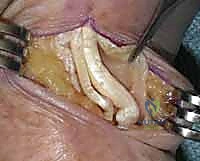
When closed reduction fails in a young patient, ORIF is mandatory. The Watson-Jones (anterolateral) approach is highly effective. An incision is made from the anterior superior iliac spine (ASIS) curving distally and posteriorly over the greater trochanter. The internervous plane between the tensor fasciae latae (supplied by the superior gluteal nerve) and the gluteus medius (also superior gluteal nerve) is developed. While not a true internervous plane, it provides excellent, safe access. An anterior capsulotomy (typically T-shaped or H-shaped) is performed to expose the fracture site and evacuate the fracture hematoma, thereby decompressing the joint.
Direct manipulation of the fracture is achieved using a bone hook placed around the base of the greater trochanter for lateral traction, and a periosteal elevator or a 5.0 mm Schanz pin inserted into the femoral head to control rotation and tilt. Once anatomic reduction is visually and radiographically confirmed, the fracture is provisionally stabilized with multiple smooth K-wires. For high-shear (Pauwels III) fractures, standard cannulated screws are biomechanically insufficient. The surgeon should utilize a sliding hip screw (dynamic hip screw) construct, which provides superior resistance to vertical shear, often supplemented with a single superior derotation cancellous screw to prevent spinning of the head during lag screw insertion.
Arthroplasty (Hemiarthroplasty and THA)
For elderly patients requiring arthroplasty, the surgical approach is tailored to surgeon experience and patient anatomy. The posterior approach (Moore) provides excellent, extensile exposure and preserves the abductor mechanism, making it ideal for rapid mobilization. While historically associated with higher dislocation rates, meticulous posterior capsular and short external rotator repair (e.g., enhanced piriformis repair) has dramatically mitigated this risk. The direct anterior approach (Smith-Petersen) utilizes a true internervous plane (sartorius/TFL superficially, rectus femoris/gluteus medius deeply). It boasts a theoretically lower dislocation risk and faster early mobilization, though it is technically demanding and carries a risk of lateral femoral cutaneous nerve neurapraxia.
Implant selection is critical. In osteoporotic bone (Dorr Type C morphology, characterized by a wide canal and thin cortices), a cemented femoral stem is strongly preferred to prevent periprosthetic fracture and early subsidence. Cementing techniques must be rigorous to prevent Bone Cement Implantation Syndrome (BCIS), a potentially fatal intraoperative complication characterized by hypoxia, hypotension, and cardiovascular collapse due to embolization of marrow fat and cement monomer. The canal must be thoroughly lavaged with pulsatile lavage, brushed, and dried. A distal cement restrictor is placed, and cement is injected in a retrograde fashion using a vacuum-mixed system to minimize porosity. The stem is inserted slowly to avoid excessive intramedullary pressurization. In patients with excellent bone stock (Dorr Type A or B), an uncemented, proximally coated, or fully porous-coated stem may be utilized to achieve biological fixation via osteointegration.
Complications, Incidence Rates, and Salvage Management
The management of femoral neck fractures is fraught with potential complications, stemming from the precarious vascular anatomy, the challenging biomechanical environment, and the frailty of the typical patient demographic. Anticipating, diagnosing, and aggressively managing these complications is a hallmark of the expert orthopedic surgeon.
Avascular Necrosis (AVN) and nonunion are the dual nemeses of internal fixation. AVN occurs due to the disruption of the retinacular blood supply at the time of injury or secondary to iatrogenic damage during surgery. It presents insidiously, often months to years post-operatively, with progressive groin pain and eventual segmental collapse of the femoral head visible on radiographs. Nonunion is typically a failure of mechanics or biology, driven by inadequate reduction, varus shear forces, or the lytic effect of synovial fluid. When internal fixation fails in a young patient, salvage is complex. If the head is viable but ununited, a valgus-producing intertrochanteric osteotomy can reorient the fracture line from a vertical shear (Pauwels III) to a compressive horizontal orientation (Pauwels I), promoting union. If AVN with collapse has occurred, conversion to a Total Hip Arthroplasty is the only definitive salvage option.
For patients treated with arthroplasty, instability (dislocation) and periprosthetic joint infection (PJI) are the primary concerns. Dislocation is particularly devastating in the frail elderly, often requiring closed reduction under anesthesia and carrying a high risk of recurrence. Prevention relies on precise component positioning (restoring native version and offset), meticulous soft-tissue repair, and the selective use of dual-mobility articulations in patients with severe neuromuscular or cognitive deficits. PJI requires aggressive and immediate intervention. Acute postoperative infections may be managed with Debridement, Antibiotics, and Implant Retention (DAIR) with modular exchange, while chronic infections necessitate a morbid two-stage revision protocol involving an antibiotic spacer and prolonged systemic antimicrobial therapy.
| Complication | Incidence Rate | Primary Risk Factors | Salvage / Management Strategy |
|---|---|---|---|
| Avascular Necrosis (AVN) | 10-30% (Displaced ORIF); <5% (Nondisplaced) | Initial displacement degree; Delayed time to surgery (>24h); Poor reduction quality. | Young: Core decompression (early), Valgus osteotomy, or Conversion THA. Elderly: Conversion THA. |
| Nonunion | 10-15% (ORIF) | Pauwels III vertical shear; Inadequate fixation (lack of calcar support); Smoking. | Young: Valgus-producing intertrochanteric osteotomy; Revision fixation with bone grafting. Elderly: Conversion THA. |
| Dislocation | 2-5% (THA); 1-3% (Hemiarthroplasty) | Posterior approach without capsular repair; Cognitive impairment; Suboptimal component version/offset. | Closed reduction under sedation. Recurrent: Revision arthroplasty to correct version, or use of a Dual Mobility construct / Constrained liner. |
| Periprosthetic Infection | 1-2% (Arthroplasty) | Diabetes, Obesity, Malnutrition, Prolonged operative time, Hematoma formation. | Acute (<4 weeks): DAIR (Debridement, Antibiotics, Implant Retention). Chronic: Two-stage revision with antibiotic spacer. |
| Bone Cement Implantation Syndrome (BCIS) | <1% (Severe); up to 20% (Mild) | Unlavaged femoral canal; High intramedullary pressure during cementation; Severe cardiopulmonary disease. | Intraoperative supportive care: 100% FiO2, vasopressors, aggressive fluid resuscitation. Prevention is key (lavage, slow insertion). |
Phased Post-Operative Rehabilitation Protocols
The post-operative rehabilitation protocol must be meticulously tailored to the surgical intervention performed, the biomechanical stability of the construct, and the patient's physiological capacity. The overarching goal across all demographics is the rapid restoration of mobility to prevent the catastrophic systemic complications of prolonged recumbency, including deep vein thrombosis (DVT), pulmonary embolism, hypostatic pneumonia, decubitus ulcers, and rapid muscular deconditioning.
In the acute post-operative phase (Days 0-14), immediate mobilization is paramount. For elderly patients treated with either hemiarthroplasty or THA, weight-bearing as tolerated (WBAT) is initiated on post-operative day zero or one. Physical therapy focuses on gait training with an appropriate assistive device (walker or cane) and adherence to hip precautions if a posterior approach was utilized (avoiding combined flexion past 90 degrees, internal rotation, and adduction across the midline). For patients treated with internal fixation (CRIF or ORIF), weight-bearing protocols are more variable. Elderly patients with stable, nondisplaced fractures are generally permitted WBAT to facilitate discharge and minimize medical complications. However, in young patients with high-shear, vertically oriented fractures (Pauwels III) treated with internal fixation, the construct may not withstand immediate full physiological loading. In these specific cases, restricted weight-bearing (toe-touch or flat-foot weight-bearing, roughly 10-15% of body weight) may be mandated for 6 to 8 weeks until radiographic evidence of early consolidation is observed.
Venous Thromboembolism (VTE) prophylaxis is an absolute necessity, as hip fracture surgery carries one of the highest intrinsic risks for DVT and pulmonary embolism. Chemical prophylaxis must be initiated promptly, balancing the risk of thrombosis against the risk of post-operative hematoma. According to the American College of Chest Physicians (ACCP) and American Academy of Orthopaedic Surgeons (AAOS) guidelines, options include Low Molecular Weight Heparin (LMWH), Direct Oral Anticoagulants (DOACs like Apixaban or Rivaroxaban), or appropriately dosed aspirin. Prophylaxis should be continued for a minimum of 28 to 35 days post-operatively, combined with mechanical prophylaxis (sequential compression devices) while the patient is hospitalized.
Long-term rehabilitation (Weeks 6 and beyond) focuses on bone health optimization and secondary fracture prevention. A femoral neck fracture in an elderly patient is a sentinel event; without medical intervention, the risk of a contralateral hip fracture or major osteoporotic fracture within the next two years is exceptionally high. Every patient sustaining a fragility fracture must undergo a comprehensive metabolic bone evaluation, including a DEXA scan, serum 25-hydroxyvitamin D, ionized calcium, and intact parathyroid hormone (PTH) levels. Initiation of appropriate antiresorptive therapy (e.g., bisphosphonates, denosumab) or anabolic therapy (e.g., teriparatide, romosozumab) is a critical component of the orthopedic surgeon's duty of care, often coordinated through a dedicated Fracture Liaison Service (FLS) to ensure compliance and longitudinal follow-up.
Summary of Landmark Literature and Clinical Guidelines
The surgical management of femoral neck fractures has been rigorously evaluated through numerous high-quality, multicenter randomized controlled trials. A working knowledge of this landmark literature is essential for evidence-based clinical practice and board certification.
The FAITH (Fixation using Alternative Implants for the Treatment of Hip fractures) trial was a monumental international, multicenter randomized controlled trial that compared sliding hip screws to multiple cancellous screws for the treatment of femoral neck fractures. The study demonstrated that while there was no significant difference in the overall rate of reoperation between the two groups, the sliding hip screw provided a distinct advantage in specific subgroups. Notably, in basicervical fractures, vertically oriented (Pauwels III) fractures, and fractures in patients who were current smokers, the sliding hip screw significantly reduced the risk of avascular necrosis and nonunion requiring revision surgery. This cemented the sliding hip screw as the biomechanically superior construct for unstable, high-shear fracture patterns.
The HEALTH (Hip fracture Evaluation with ALternatives of Total Hip arthroplasty versus Hemiarthroplasty) trial evaluated the outcomes of THA versus hemiarthroplasty in displaced femoral neck fractures in patients aged 50 years and older. The trial revealed that the incidence of secondary procedures was similar between the two groups at 24 months. However, THA was associated with a modestly higher rate of early complications (specifically instability and dislocation), but provided marginally better functional outcomes and pain relief in active, independent patients. This supports the modern clinical guideline that hemiarthroplasty is appropriate for the majority of lower-demand elderly patients, while THA should be judiciously reserved for those with high baseline functional demands or pre-existing acetabular disease.
Current AAOS Clinical Practice Guidelines strongly emphasize the timing of surgical intervention. The guidelines recommend that hip fracture surgery should ideally be performed within 24 to 48 hours of admission. Delays beyond 48 hours are definitively associated with increased rates of major complications, including pneumonia, deep vein thrombosis, and significantly higher 30-day and 1-year mortality rates. The guidelines also strongly advocate for co-management models (orthogeriatric care), where an orthopedic surgeon and a geriatrician or hospitalist jointly manage the patient from admission to discharge, a protocol that has been proven to decrease time to surgery, reduce length of stay, and improve overall survivorship.
