العربية
Part of the Master Guide

AAOS & ABOS Basic Science MCQs (Set 3): Bone Biology, Biomechanics & Anatomy Review

AAOS Basic Science MCQs (Set 1): Bone Physiology, Biomechanics & Pharmacology | Ortho Board Review
27 Apr 2026 51 min read 99 Views
Mtd 2005 MCQs - Part 1

Key Takeaway

This high-yield Basic Science question set for the AAOS/ABOS exams (Set 1) provides in-depth coverage of bone physiology, including healing and remodeling, joint biomechanics principles, and fundamental orthopedic pharmacology relevant to clinical practice. Essential for board preparation.

AAOS Basic Science MCQs (Set 1): Bone Physiology, Biomechanics & Pharmacology | Ortho Board Review

Comprehensive 100-Question Exam


00:00

Start Quiz

Question 1

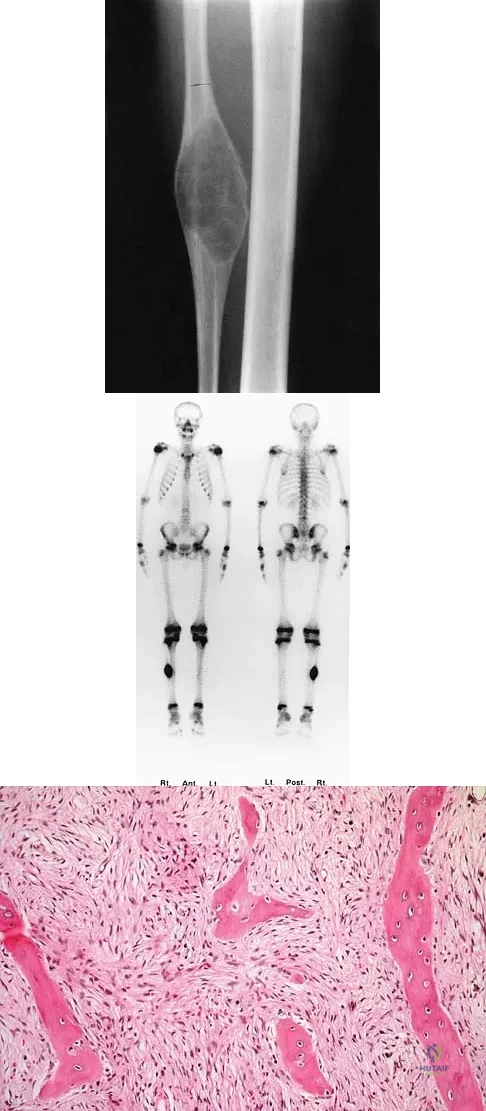
A 10-year-old child has leg discomfort with activity. A radiograph, bone scan, and biopsy specimen are shown in Figures 1a through 1c. What is the most likely diagnosis?


Explanation

The ground glass appearance on the radiograph, the hot bone scan, and histologic findings of bony spicules without osteoblastic rimming in a background of bland fibrous tissue all suggest fibrous dysplasia. Stress-related pain is common with activity because of the dysplastic bone. Parosteal osteosarcomas are surface lesions. Simple cysts, aneurysmal bone cysts, and eosinophilic granuloma are all possible radiographically; however, the histology is most consistent with fibrous dysplasia. Harris WH, Dudley HR Jr, Barry RS: The natural history of fibrous dysplasia: An orthopaedic, pathological and roentgenographic study. J Bone Joint Surg Am 1962;44:207.

Question 2

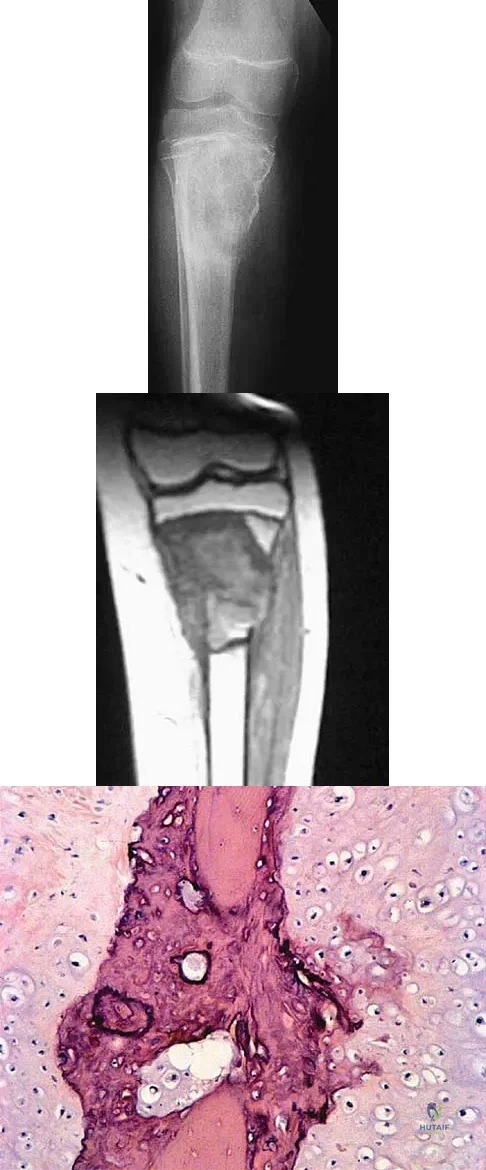
A 13-year-old boy has pain and a firm mass in his left knee. A radiograph and MRI scan are shown in Figures 2a and 2b, and a biopsy specimen is shown in Figure 2c. Based on these findings, what is the most likely diagnosis?


Explanation

The most likely diagnosis is osteosarcoma. The imaging studies show an aggressive primary tumor of bone, and the histology slide shows a typical chondroblastic osteosarcoma, with osteoid deposited along the surface of bone trabeculae. Ewing's sarcoma histologically consists of small round blue cells. Osteochondroma and periosteal chondroma can occur near the knee but have different radiographic and histologic patterns. Chondrosarcoma rarely occurs in children. Simon M, Springfield D, et al: Osteogenic sarcoma: Surgery for Bone and Soft Tissue Tumors. Philadelphia, PA, Lippincott Raven, 1998, p 267.

Question 3

A 10-year-old boy with a history of retinoblastoma now reports right knee pain. AP and lateral radiographs are shown in Figures 3a and 3b. What is the most likely diagnosis?



Explanation

The radiographs show a bone-producing lesion in the femoral diaphysis. The radiographic appearance of small round cell tumors is more permeative with an elevated periosteum and no matrix production. The appearance of this lesion is most consistent with osteosarcoma. Patients who carry the Rb gene are predisposed to osteosarcoma. However, Ewing's sarcoma, primitive neuroectodermal tumor, and osteomyelitis can all occur in this location. Unni KK: Dahlin's Bone Tumors: General Aspects and Data on 11,087 Cases, ed 5. Philadelphia, PA, Lippincott-Raven, 1996, pp 143-160.

Question 4

Which of the following tumors have characteristic chromosomal translocations?
Basic Science 2005 Practice Questions: Set 1 (Solved) - Figure 9


Explanation

Ewing's sarcoma has an 11;22 translocation that creates the EWS/FLI1 fusion gene, and synovial sarcoma has an X;18 translocation that creates the STT/SSX fusion gene. The other tumors do not have consistent translocations. Sandberg AA: Cytogenetics and molecular genetics of bone and soft-tissue tumors. Am J Med Genet 2002;115:189-193.

Question 5

What is the most common MRI appearance of a malignant soft-tissue sarcoma?
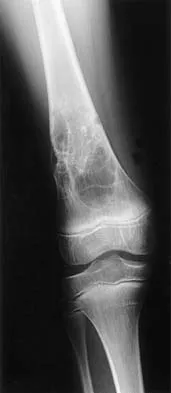
Basic Science 2005 Practice Questions: Set 1 (Solved) - Figure 10


Explanation

The classic MRI appearance of a soft-tissue sarcoma is a well-defined heterogeneous mass deep to the fascia. MRI has greatly enhanced our ability to identify and characterize soft-tissue masses. In many patients, MRI is diagnostic and may obviate the need for biopsy. In other patients, it may indicate with high probability that the mass is malignant and consideration for referral can be made. A common misconception is that sarcomas are infiltrative; therefore, physicians mistakenly exclude the diagnosis of a sarcoma based on a well-defined mass seen on MRI. However, sarcomas grow centrifugally with balloon-like expansion compressing surrounding normal tissue; as such, they appear well defined. Many benign soft-tissue masses such as lipomas are similarly well defined. However, MRI is especially useful in identifying fat. Lipomas appear to be homogeneous masses with fat signal characteristics on all sequences. Ill-defined soft-tissue masses include infection, trauma, and desmoid tumors. Heterogeneity is not unique to malignant tumors but is a characteristic of soft-tissue sarcomas. Bancroft LW, Peterson JJ, Kransdorf MJ, Nomikos GC, Murphey MD: Soft tissue tumors of the lower extremities. Radiol Clin North Am 2002;40:991-1011. Berquist TH, Ehman RL, King BF, et al: Value of MR imaging in differentiating benign from malignant soft-tissue masses: Study of 95 lesions. Am J Roentgenol 1990;155:1251-1255.

Question 6

Which of the following factors is associated with the worst prognosis in soft-tissue sarcomas?
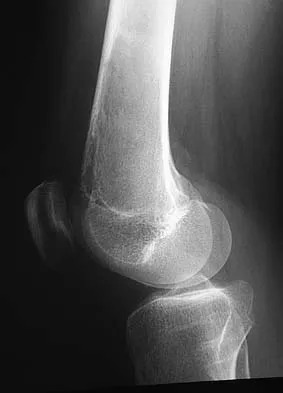
Basic Science 2005 Practice Questions: Set 1 (Solved) - Figure 11


Explanation

Although factors such as a high-grade tumor and large size are associated with decreased survival, the presence of metastases carries the worst prognosis. Good results are very rare when metastases are present. Soft-tissue sarcomas, as a whole, respond poorly to chemotherapy, leading to a poor prognosis when metastases are present. Collin C, Goobold J, Hadju SI, Brennan MF: Localized extremity soft tissue sarcoma: An analysis of factors affecting survival. J Clin Oncol 1987;5:601-612.

Question 7

The lesion seen in Figure 4 is most likely the result of metastases from what solid organ?
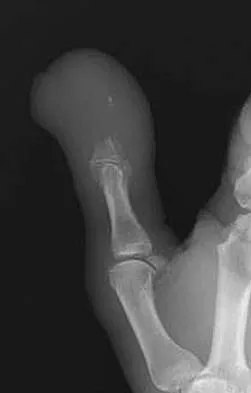
Basic Science 2005 Practice Questions: Set 1 (Solved) - Figure 12


Explanation

The primary carcinoma most likely to metastasize distal to the elbow and knees is lung carcinoma. Renal cell carcinoma can also metastasize to distal sites. Most metastatic bone disease occurs in the vertebral bodies, pelvis, and proximal long bones. Simon MA, Bartucci EJ: The search for the primary tumor in patients with skeletal metastases of unknown origin. Cancer 1986;58:1088-1095.

Question 8

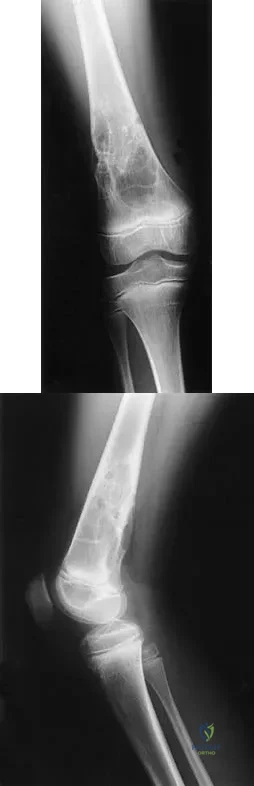
A 7-year-old boy has a limp with pain and tenderness over the distal right femur. Radiographs are shown in Figures 5a and 5b. Based on these findings, what is the best course of action?


Explanation

The patient has a nonossifying fibroma, and the symptoms suggest that there is significant weakening of the cortex and/or microfracture; therefore, biopsy, curettage, and bone grafting is the treatment of choice. Based on the size of the lesion and the presence of symptoms, observation is likely to result in pathologic fracture. A biopsy will further weaken the bone unless combined with curettage and bone grafting. Radiation therapy is not used in the treatment of nonossifying fibroma and is rarely used in any benign condition affecting skeletally immature individuals. Steroid injection has been used in the treatment of unicameral bone cysts and in Langerhan's cell histiocytosis but not for nonossifying fibroma. Dormans, JP, Pill SG: Fractures through bone cysts: Unicameral bone cysts, aneurysmal bone cysts, fibrous cortical defects, and nonossifying fibromas. Instr Course Lect 2002;51:457-467.

Question 9

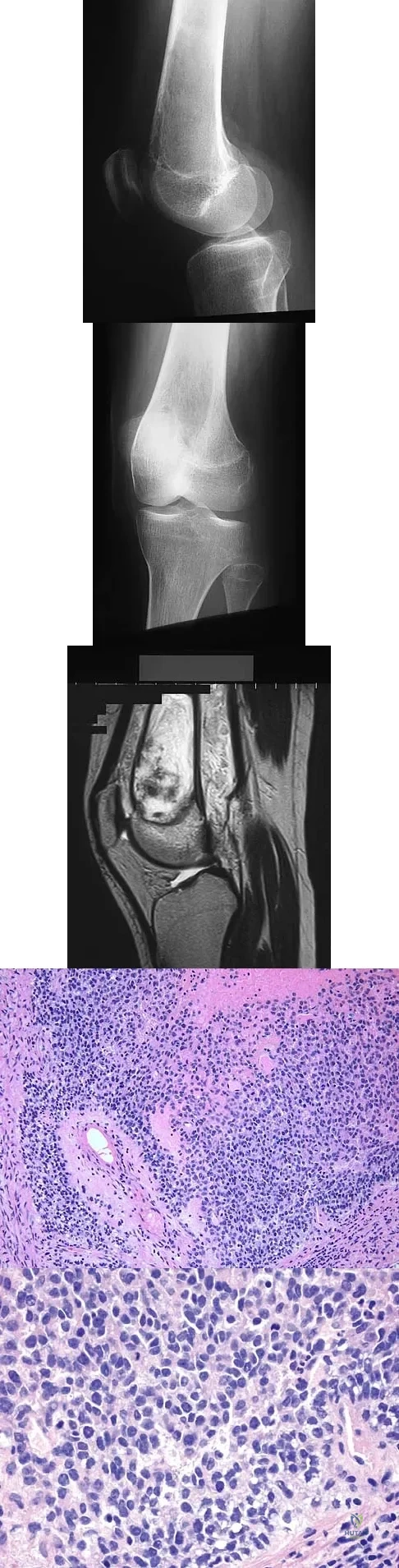
A 14-year-old patient has anterior knee pain. Radiographs, an MRI scan, and biopsy specimens are shown in Figures 6a through 6e. What is the most likely diagnosis?


Explanation

Although the imaging studies are consistent with a unicameral bone cyst, aneurysmal bone cyst, or giant cell tumor, the histology shows small round blue cells that are typical of Ewing's sarcoma. Although Ewing's sarcoma frequently occurs in the diaphysis, it can occur in the metaphysis.

Question 10

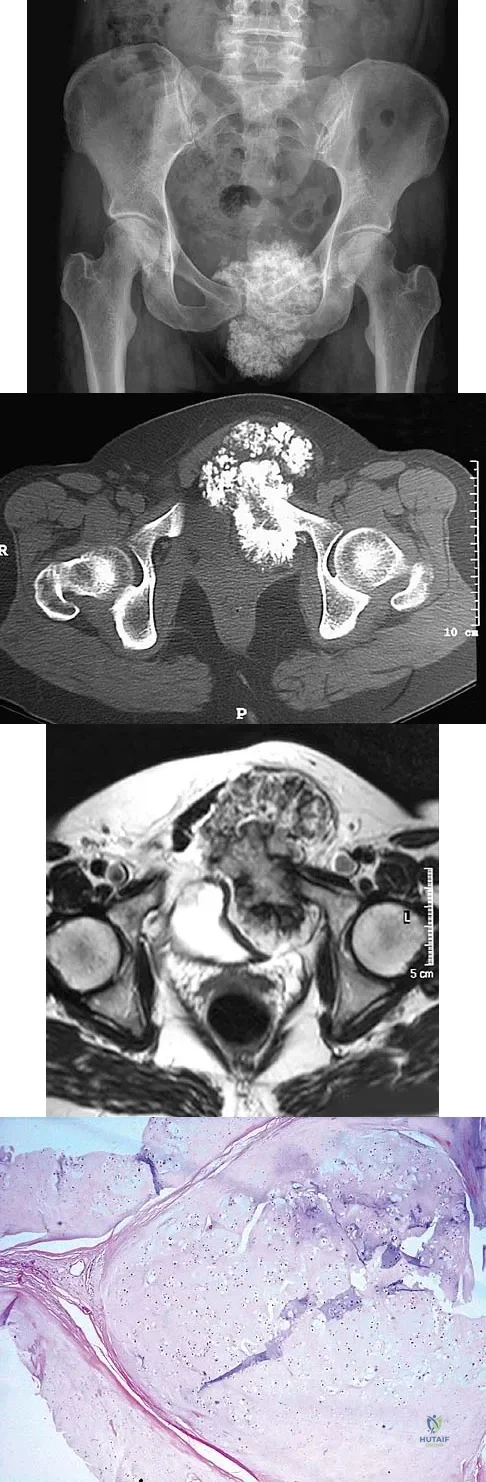
A 47-year-old woman has an asymptomatic pelvic mass that was discovered on routine gynecologic examination. A radiograph, CT scan, MRI scan, and biopsy specimen are shown in Figures 7a through 7d. Metastatic work-up is negative. Treatment should consist of


Explanation

The imaging studies show a chondrosarcoma; therefore, surgical treatment is indicated. There is no role for intralesional treatment of an exophytic lesion, particularly in the pelvis. Even obtaining a biopsy specimen risks intrapelvic contamination, although many surgeons would still perform a biopsy prior to a resection to confirm the diagnosis. Chondrosarcoma is considered resistant to both radiation therapy and chemotherapy; therefore, radiation therapy generally is not used except for unresectable lesions. Chemotherapy would be used only for metastatic disease or in patients with high-grade chondrosarcoma. The grade would not be known until after resection, and in this patient, the histology slide showed a grade I neoplasm. Chemotherapy would not be used preoperatively because a cartilage tumor is unlikely to shrink, and in this patient, the lesion is resectable. Springfield DS, Gebhardt MS, Mcguire MH: Chondrosarcoma: A review. J Bone Joint Surg Am 1996;78:141-149.

Question 11

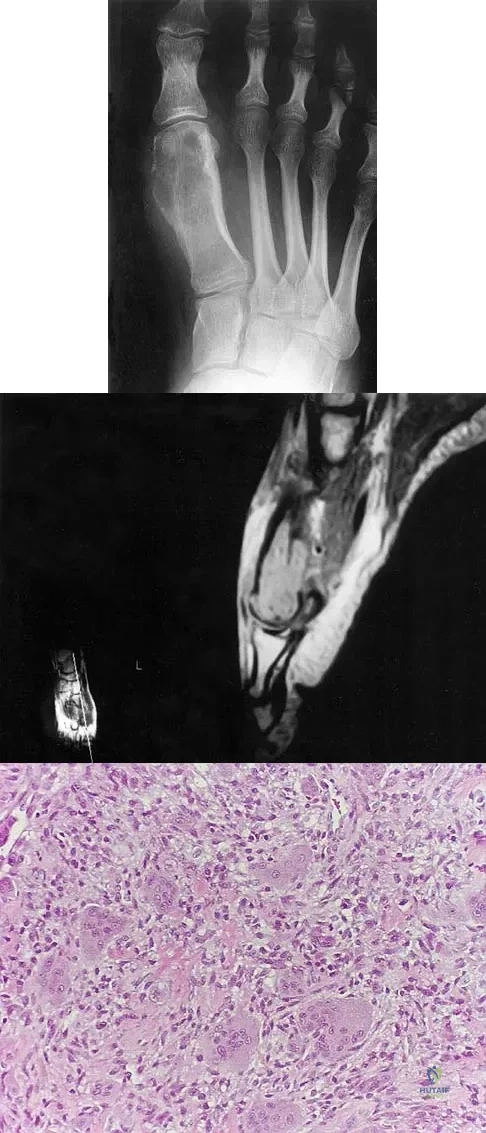
A 20-year-old patient has foot pain. A radiograph and T1-weighted MRI scan are shown in Figures 8a and 8b. A biopsy specimen is shown in Figure 8c. Treatment should consist of


Explanation

Giant cell tumors occur near articular surfaces in young adults. The histology shows abundant giant cells with nuclei resembling the surrounding cells. Although the MRI scan shows soft-tissue involvement, curettage is still the preferred treatment. Chemotherapy is not necessary for benign lesions, and amputation is too aggressive. Cementation, phenol, and cryosurgery (liquid nitrogen) are all acceptable local adjuvants to curettage. Packing the cavity with bone graft rather than cement is also acceptable. Dahlin DC, Unni KK: Bone Tumors: General Aspects and Data on 8,542 Cases. Springfield, IL, Charles C. Thomas, 1986.

Question 12

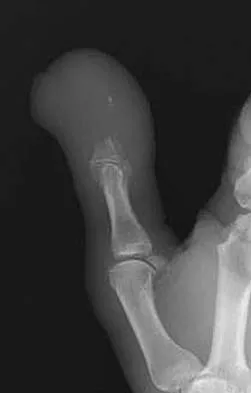
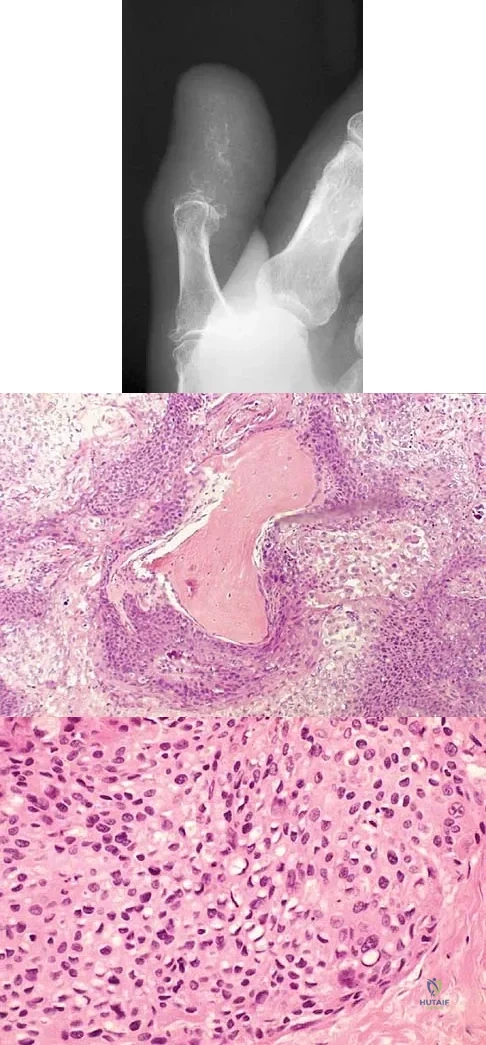
A 69-year-old man has a painful slow-growing lesion of the distal phalanx of his thumb. History reveals that he has had chronic osteomyelitis of the thumb for the past 12 years. The radiograph and biopsy specimens are seen in Figures 9a through 9c. Treatment should consist of


Explanation

The diagnosis is squamous cell carcinoma. The radiograph shows a destructive lesion, and the histologic slides demonstrate squamous cells invading bone. The preferred treatment for squamous cell carcinoma is wide resection; however, in this location a wide margin can be achieved only with amputation. Overall survival in patients with squamous cell carcinoma secondary to chronic osteomyelitis is not significantly worse than that expected for age-matched controls. Dell PC: Hand, in Simon MA, Springfield D (eds): Surgery for Bone and Soft Tissue Tumors. Philadelphia, PA, Lippincott-Raven, 1998, pp 405-420.

Question 13

A 12-year-old girl has had right knee pain for the past 3 months. Radiographs and a coronal T2-weighted MRI scan are shown in Figures 10a through 10c. A biopsy specimen is shown in Figure 10d. What is the most appropriate treatment for this lesion?
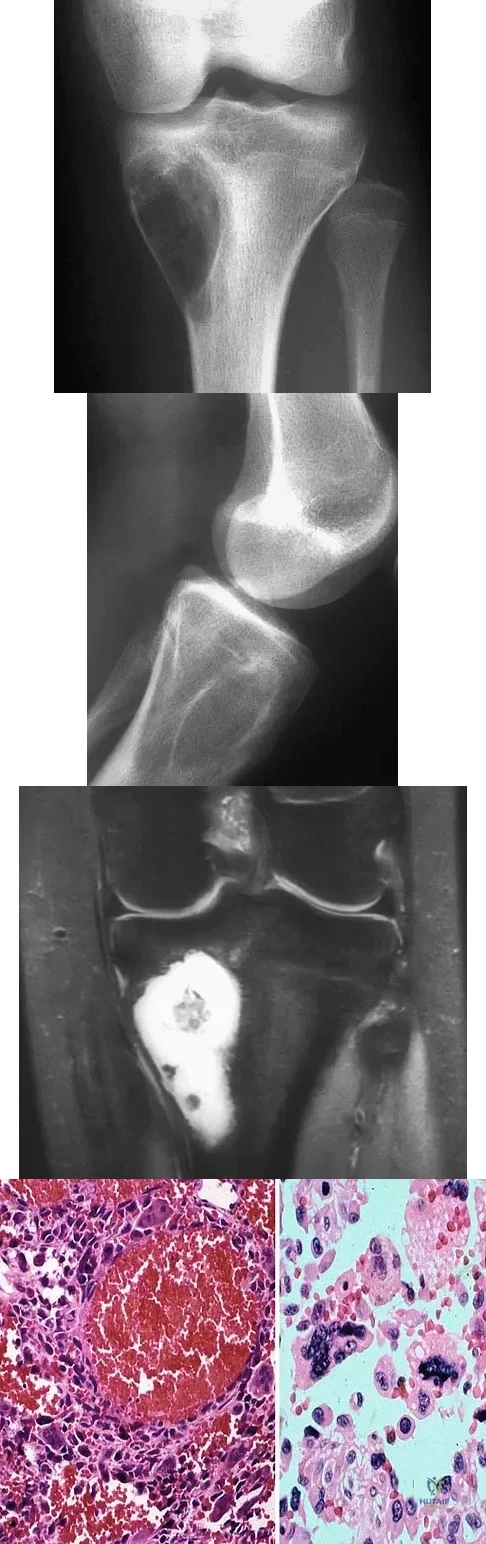


Explanation

The radiographs show a lytic lesion in the right proximal tibia that has a high fluid content based on the MRI findings. The radiographic appearance is consistent with either telangiectatic osteosarcoma or aneurysmal bone cyst. Low-magnification histology shows a lesion resembling an aneurysmal bone cyst, with blood lakes separated by cellular septa. However, high-magnification shows severe cytologic atypia, indicative of a telangiectatic osterosarcoma. The appropriate treatment is neoadjuvant chemotherapy followed by wide resection and reconstruction of the lesion. Unni KK: Dahlin's Bone Tumors: General Aspects and Data on 11,087 Cases, ed 5. Philadelphia, PA, Lippincott-Raven, 1996, pp 143-160.

Question 14

Which of the following diagnostic studies best distinguishes Ewing's sarcoma from small cell osteosarcoma?
Basic Science 2005 Practice Questions: Set 1 (Solved) - Figure 34


Explanation

Cytogenetics best demonstrates the 11;22 translocation characteristic of Ewing's sarcoma. The translocation also can be detected with polymerase chain reaction and fluorescent in situ hybridization. The Ewing antibody is used for immunostaining to check for cell membrane (surface) staining of a marker unrelated to the translocation; this could also help distinguish Ewing's sarcoma from small cell osteosarcoma. A bone scan will show increased uptake with both types of tumors. Although most Ewing's sarcoma tumors are diploid, some are polyploid as are most osteosarcomas. Flow cytometry is used to sort cells, sometimes based on antibody binding. LDH can be elevated in both Ewing's sarcoma and osteosarcoma and is a poor prognostic indicator when elevated. Lymph node metastases are uncommon in both of these tumors. Perotti D, Corletto V, Giardini R, Parafioriti A, Fossati-Bellani F, Luksch R: Retrospective analysis of ploidy in primary osseous and extraosseous Ewing family tumors in children. Tumori 1998;84:493-498. Riley RD, Burchill SA, Abrams KR, Heney D, Sutton AJ, Jones DR, et al: A systematic review of molecular and biological markers in tumours of the Ewing's sarcoma family. Eur J Cancer 2003;39:19-30.

Question 15

Figure 11a shows the AP pelvis radiograph of a 25-year-old man who sustained a spinal cord injury 10 years ago. A bone scan and a CT scan are shown in Figures 11b and 11c. To prevent recurrence after resection, management should consist of
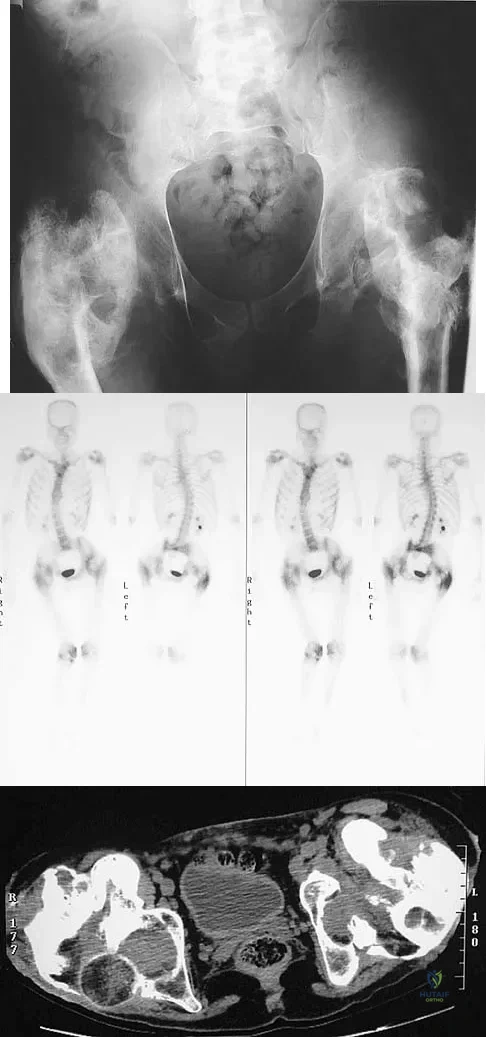


Explanation

The studies reveal significant heterotopic ossification that appears to be mature. Following resection, the most reliable way to prevent recurrence is with low-dose external-beam radiation therapy. Bisphosphonate therapy can be considered; however, when terminated, heterotopic bone may reform. Heterotopic ossification is unrelated to the patient's endocrine status and is not associated with any metabolic abnormalities. Moore K, Goss K, Anglen J: Indomethacin versus radiation therapy for prophylaxis against heterotopic ossification in acetabular fracture. J Bone Joint Surg Br 1998;80:259.

Question 16

A 40-year-old man has a palpable mass over the dorsum of the ankle. He reports no history of direct trauma but notes that he sustained a laceration to the middle of his leg 6 weeks ago. Examination reveals a 4-cm x 1-cm mass. T1- and T2-weighted MRI scans are shown in Figures 12a and 12b. An intraoperative photograph and biopsy specimen are shown in Figures 12c and 12d. What is the most likely diagnosis?
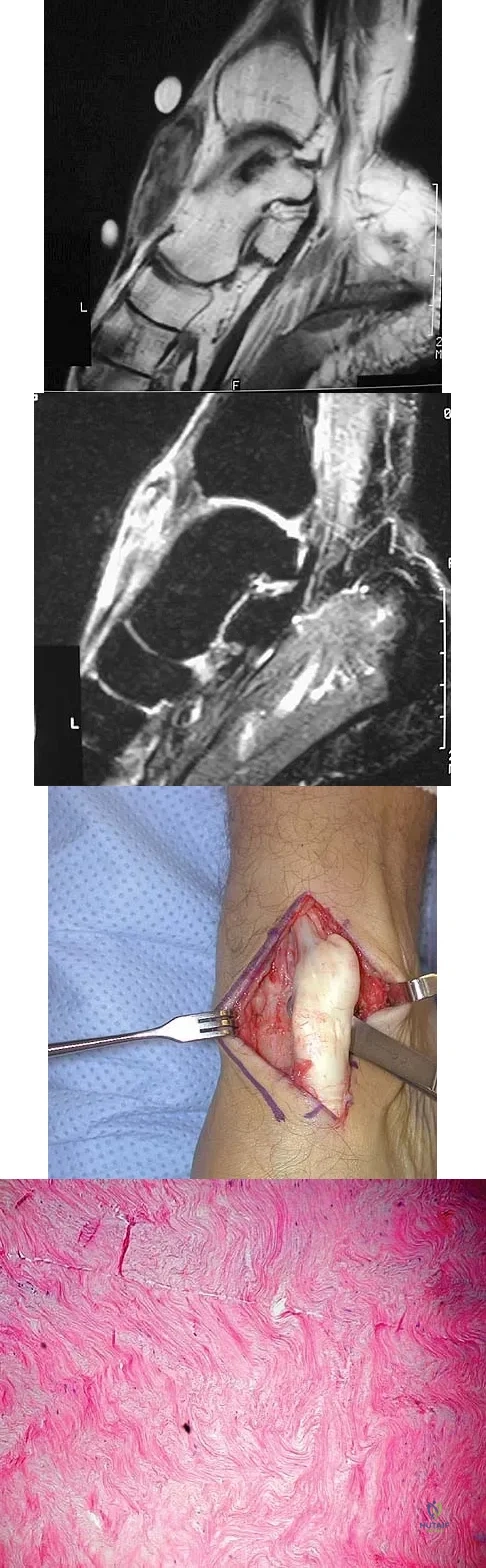


Explanation

The findings are most consistent with a rupture of the anterior tibial tendon. The damaged area of tendon should be resected, followed by tendon reconstruction or tenodesis. The histology is not consistent with giant cell tumor of the tendon sheath, gout, or synovial sarcoma. Fibromatosis is characterized by a large number of spindle cells within the collagen background. Otte S, Klinger HM, Loreaz F, Haerer T: Operative treatment in case of closed rupture of the anterior tibial tendon. Arch Orthop Traum Surg 2002;122:188-190.

Question 17

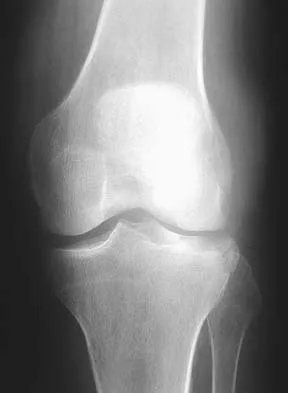
What is the most common presentation of a benign bone tumor in childhood?
Basic Science 2005 Practice Questions: Set 1 (Solved) - Figure 42


Explanation

The most common benign bone tumors in childhood are discovered incidentally and include single bone cysts, fibrous cortical defects, nonossifying fibroma, and osteochondroma. Benign bone tumors can be classified as latent, active, or aggressive. Aggressive bone tumors usually present with pain, whereas active lesions present with pain or pathologic fracture. Only aggressive benign bone tumors are associated with a soft-tissue mass, and they are far less common than indolent bone tumors, especially in children. Aboulafia AJ, Kennon RE, Jelinek JS: Benign bone tumors of childhood. J Am Acad Orthop Surg 1999;7:377-388.

Question 18

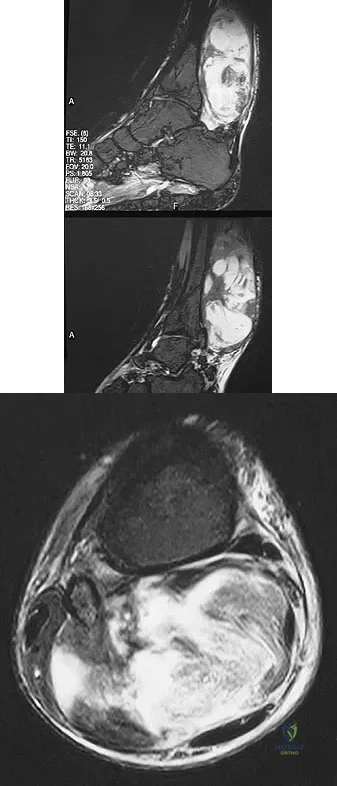
Figures 13a and 13b show the MRI scans of a 70-year-old patient who has a posterior calf mass. Examination reveals that the mass extends to the midcalf level. A biopsy specimen reveals a high-grade soft-tissue sarcoma. Metastatic work-up shows no lesions. Management should consist of


Explanation

Soft-tissue sarcomas generally are treated with radiation therapy and wide surgical resection. In this patient, involvement of most of the posterior calf compartment and circumferential involvement of the posterior tibial and peroneal neurovascular bundle makes limb salvage impractical. Any attempt at wide surgical resection would leave a poorly functioning limb with questionable surgical margins. A high below-knee amputation would be the best option. Radiation therapy alone is contraindicated. Lindberg RD, Martin RG, Romsdahl MM, et al: Conservative surgery and post-operative radiotherapy in 300 adults with soft tissue sarcoma. Cancer 1981;47:2391-2397. Sim FT, Frassica FS, Frassica DA: Soft tissue tumors: Diagnosis, evaluation, and management. J Am Acad Orthop Surg 1994;2:202-211.

Question 19

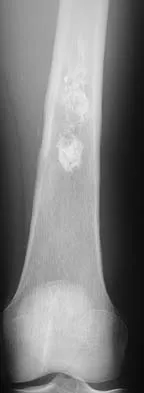
What is the most common secondary malignancy arising in pagetic bone?
Basic Science 2005 Practice Questions: Set 1 (Solved) - Figure 45


Explanation

The incidence of malignant transformation or the formation of a secondary malignancy in pagetic bone is estimated to be less than 1%. Osteosarcoma is the most common secondary malignancy, followed by fibrosarcoma and chondrosarcoma. Ewing's sarcoma arising in pagetic bone has not been reported. Grimer RJ, Carter SR, Tillman RM, et al: Osteosarcoma of the pelvis. J Bone Joint Surg Br 1999;81:796-802.

Question 20

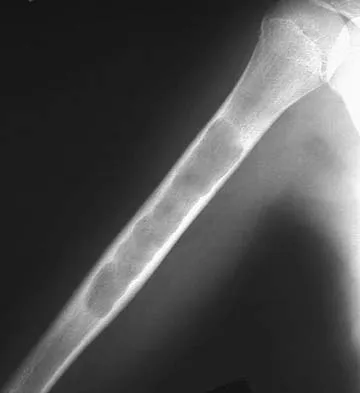
A 15-year-old girl with a midshaft fibular lesion has histologic findings consistent with Ewing's sarcoma. Following induction chemotherapy, local control typically consists of
Basic Science 2005 Practice Questions: Set 1 (Solved) - Figure 46


Explanation

The current treatment regimen for Ewing's sarcoma typically involves induction chemotherapy followed by local control and further chemotherapy. Local control consists of surgery only, radiation therapy only, or a combination of the two. In bones that are easily resectable (expendable) with wide margins, surgery is usually recommended. For areas that cannot be resected (ie, large bulky pelvic tumors), radiation therapy alone is sometimes the preferred method of local control. If surgery is chosen and the margins are close, radiation therapy can be used as an adjuvant treatment. Amputation is rarely required for an isolated fibular lesion. Observation without adequate local control results in local recurrence. Nesbit ME Jr, Gehan EA, Burgert EO Jr, et al: Multimodality therapy for the treatment of primary, non-metastatic Ewing's sarcoma of the bone: A long-term follow-up of the first intergroup study. J Clin Oncol 1990;8:1664-1674.

Question 21

Soft-tissue sarcomas most commonly metastasize to the
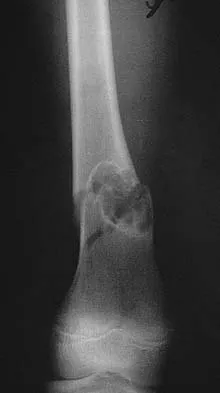
Basic Science 2005 Practice Questions: Set 1 (Solved) - Figure 47


Explanation

The most common location for soft-tissue tumors to metastasize is the lungs. Depending on the grade of the sarcoma, metastases develop in as many as 50% of patients with soft-tissue sarcomas. Tumor grade is considered the most significant prognostic factor in predicting risk of metastases, with high-grade lesions at greatest risk. Staging CT of the chest should be performed once the diagnosis of a soft-tissue sarcoma is suspected or confirmed. Regular surveillance of patients treated for soft-tissue sarcomas includes follow-up CT scans at regular intervals. Intra-abdominal metastases are uncommon but may occur, particularly in patients with myxoid liposarcoma. Regional metastases are relatively uncommon and occur in approximately 5% of all patients with soft-tissue sarcoma. The incidence of regional nodal metastases is higher for synovial sarcoma and epithelioid sarcomas than other soft-tissue sarcomas. Sim FH, Frassica FJ, Frassica DA: Soft-tissue tumors: Diagnosis, evaluation, and management. J Am Acad Orthop Surg 1994;2:202-211.

Question 22

The incidence of osteosarcoma is highest in what age group?
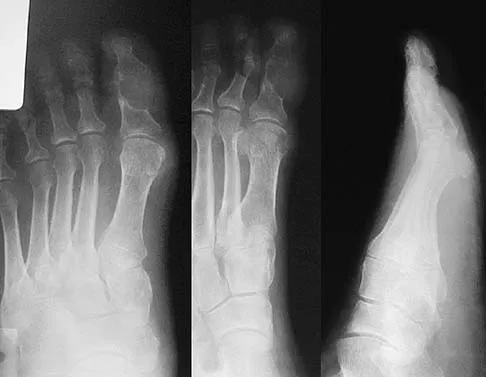
Basic Science 2005 Practice Questions: Set 1 (Solved) - Figure 48


Explanation

The peak incidence of osteosarcoma occurs in the second decade, followed by the third decade. Up to 75% of all cases of osteosarcoma occur in patients between 10 and 25 years. It rarely occurs after age 30. Affected women tend to be younger than affect men. Osteosarcoma associated with Paget's disease or in radiation-induced osteosarcoma occurs in an older population. Simon M, Springfield D, et al: Osteogenic Sarcoma: Surgery for Bone and Soft Tissue Tumors. Philadelphia, PA, Lippincott Raven, 1998, p 266. Mirra JM: Bone Tumors: Clinical, Radiologic, and Pathologic Correlations. Philadelphia, PA, Lea and Febiger, 1989.

Question 23

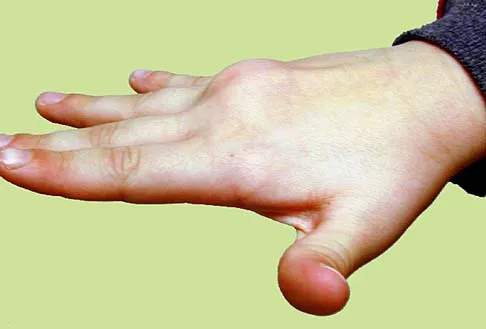
A 9-year-old boy has a painless enlarged mass on the dorsum of his hand. Figures 14a through 14d show the clinical photograph, radiographs, and biopsy specimen. What is the most likely diagnosis?
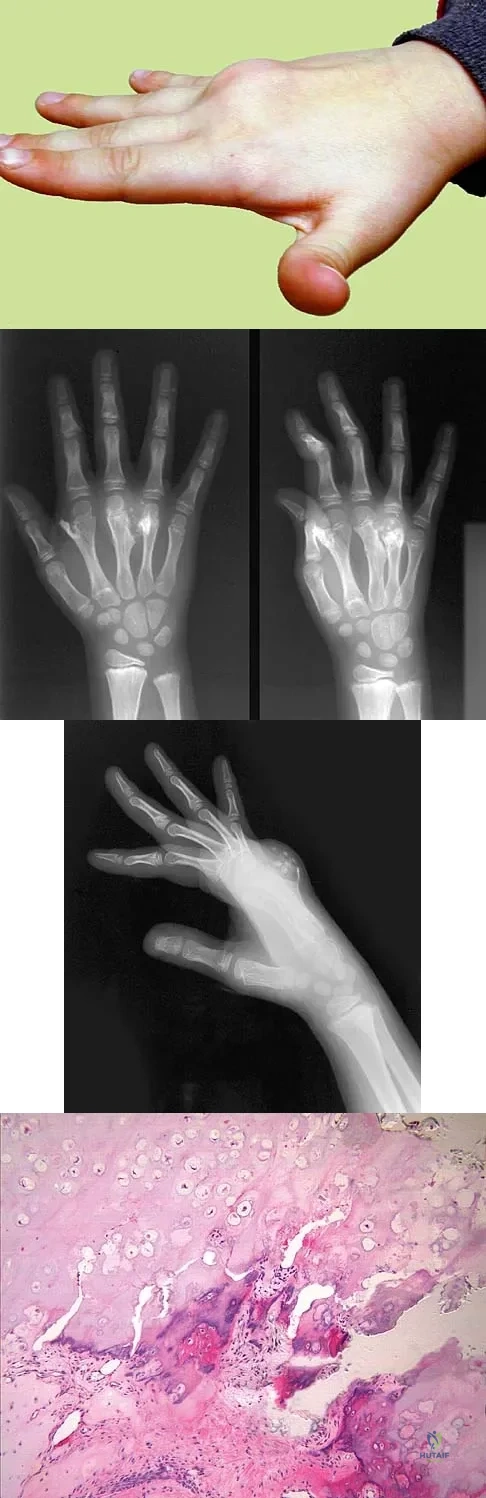


Explanation

Multiple hereditary exostosis and enchondroma commonly present as multiple lesions in the hand. Multiple hereditary exostosis consists of cartilage capped bony exostoses arising from the metaphyseal end of rapidly growing bones. Osteosarcoma and chondrosarcoma rarely appear as multiple lesions. Fracture callus can exhibit enchondral ossification that is usually circumferential, but the radiographic findings are not consistent with fracture. Porter DE, Emerton ME, Villanueva-Lopez F, Simpson AH: Clinical and radiographic analysis of osteochondromas and growth disturbance in hereditary multiple exostoses. J Pediatr Orthop 2000;20:246-250.

Question 24

What is the most common clinical presentation of a patient with a malignant bone tumor?
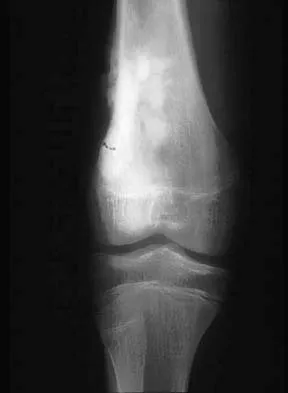
Basic Science 2005 Practice Questions: Set 1 (Solved) - Figure 53


Explanation

The most common clinical presentation of a patient with a malignant bone tumor is pain. Malignant bone tumors rarely are diagnosed as an incidental finding or pathologic fracture. In patients who have a pathologic fracture on initial presentation, a history of increasing pain prior to the fracture is typical. While 90% of malignant bone tumors are associated with a soft-tissue mass, in many patients the soft-tissue component of the tumor is not clinically apparent. Buckwalter JA: Musculoskeletal neoplasms and disorders that resemble neoplasms, in Weinstein SL, Buckwalter JA (eds): Turek's Orthopaedics: Principles and Their Application, ed 5. Philadelphia, PA, JB Lippincott, 1994, pp 290-295.

Question 25

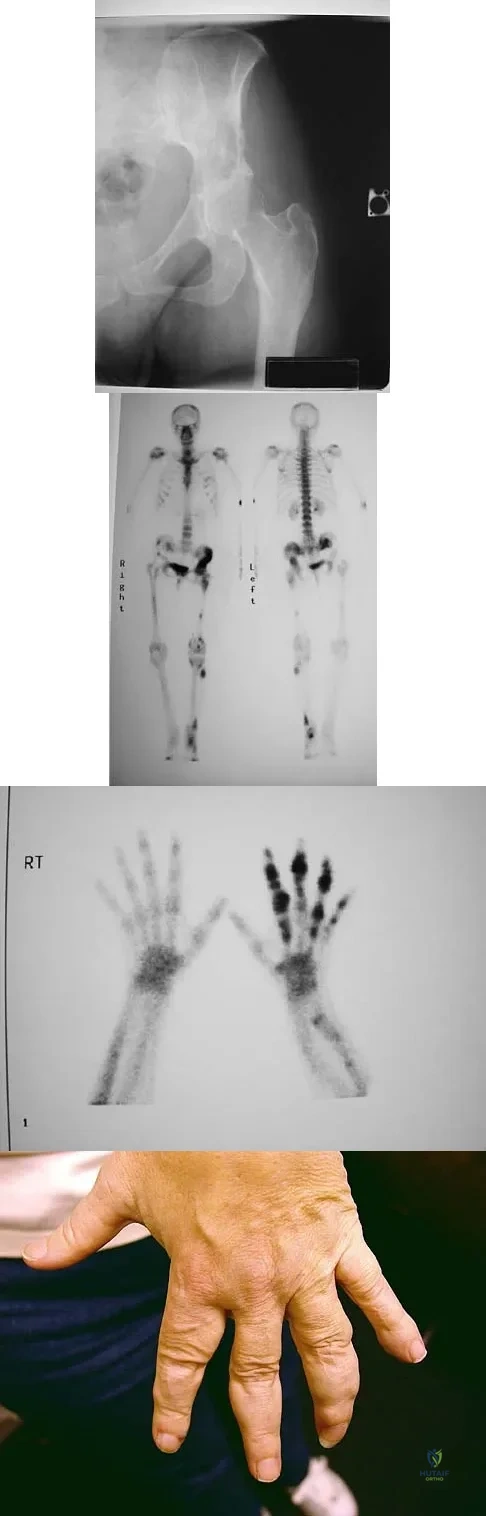
Figure 15a shows the radiograph of a patient who has a chondrosarcoma of the acetabulum. Bone scans are shown in Figures 15b and 15c. Numerous soft subcutaneous masses are present. A clinical photograph of the hand is shown in Figure 15d. What is the most likely diagnosis?


Explanation

Chondrosarcomas associated with diffuse bone lesions (enchondromas) are characteristic of Ollier's disease. When accompanied by subcutaneous masses (hemangiomas), the condition is called Maffucci's syndrome. Multiple hereditary exostosis is characterized by diffuse osteochondromas. McCune-Albright syndrome is characterized by polyostotic fibrous dysplasia with cafe-au-lait spots and precocious puberty. Neurofibromatosis can have associated bone lesions but is not associated with chondrosarcomas. Sun TC, Swee TC: Chondrosarcoma in Maffucci's syndrome. J Bone Joint Surg Am 1985;67:1214-1219. Schwartz HS, Zimmerman NB, Simon MA, et al: The malignant potential of enchondromatosis. J Bone Joint Surg Am 1987;69:269-274.

Question 26

A 55-year-old postmenopausal woman is prescribed romosozumab for severe osteoporosis. Which of the following best describes the primary mechanism of action of this medication in bone remodeling?


Explanation

Romosozumab is a monoclonal antibody that binds to and inhibits sclerostin. This prevents sclerostin from inhibiting the Wnt/beta-catenin signaling pathway, leading to increased osteoblastic bone formation and decreased bone resorption.

Question 27

During a biomechanical evaluation of a normal human patellar tendon, the initial non-linear "toe region" of the stress-strain curve is observed. What physiological structural property is responsible for this phenomenon?


Explanation

The initial non-linear "toe region" on a stress-strain curve of a tendon or ligament represents the uncrimping or straightening of the relaxed, wavy type I collagen fibers. Once uncrimped, the curve becomes linear (elastic region) as the collagen fibers stretch.

Question 28

Which zone of articular cartilage is characterized by the highest concentration of water, lowest concentration of proteoglycans, and collagen fibers oriented parallel to the joint surface?


Explanation

The superficial zone contains the highest water content, lowest proteoglycan content, and tightly packed type II collagen fibers aligned parallel to the articular surface to resist shear forces. The deep zone has perpendicular collagen fibers and the highest proteoglycan concentration.

Question 29

Bone morphogenetic proteins (BMPs) play a crucial role in osteoinduction during fracture healing. Through which intracellular signaling molecules do BMPs primarily exert their osteogenic effects?


Explanation

BMPs bind to serine/threonine kinase receptors on the cell surface, which subsequently phosphorylate and activate intracellular Smad proteins (typically Smad 1, 5, and 8). These form a complex with Smad 4 and translocate to the nucleus to regulate transcription of osteogenic genes.

Question 30

Osteoclasts resorb bone by creating an acidic microenvironment in the sealed zone. Which enzyme is primarily responsible for generating the hydrogen ions needed for this acidification process?


Explanation

Carbonic anhydrase II catalyzes the conversion of carbon dioxide and water into carbonic acid, which dissociates into hydrogen ions and bicarbonate. The hydrogen ions are then pumped into the resorption pit via vacuolar H+-ATPase to dissolve hydroxyapatite.

Question 31

A viscoelastic material, such as a ligament, is subjected to a constant tensile load over an extended period, resulting in a gradual increase in length over time. This biomechanical property is defined as:


Explanation

Creep is the progressive deformation of a viscoelastic material when subjected to a constant load over time. Stress relaxation, in contrast, is the decrease in stress over time when a material is held at a constant length or strain.

Question 32

Which of the following conditions represents intramembranous ossification in the context of orthopedic fracture healing?


Explanation

Distraction osteogenesis and primary bone healing via rigid plate fixation typically occur via intramembranous ossification, where mesenchymal cells differentiate directly into osteoblasts. Callus formation relies on secondary healing through endochondral ossification.

Question 33

A surgeon implants a stainless steel screw through a titanium plate. What type of corrosion is most likely to occur due to the mixing of these dissimilar metals in the body?


Explanation

Galvanic corrosion occurs when two electrochemically dissimilar metals are placed in direct contact within a conductive electrolyte, leading to accelerated corrosion of the less noble metal. Stainless steel and titanium should generally not be mixed to prevent this.

Question 34

Teriparatide is utilized in the management of severe osteoporosis. What is the mechanism by which it increases bone mineral density?


Explanation

Teriparatide is a recombinant fragment of parathyroid hormone (PTH 1-34). Intermittent, once-daily administration preferentially stimulates osteoblast activity over osteoclast activity, resulting in a net increase in bone formation.

Question 35

Nitrogen-containing bisphosphonates inhibit bone resorption primarily by inducing osteoclast apoptosis. Which specific intracellular pathway is targeted by these agents?


Explanation

Nitrogen-containing bisphosphonates inhibit the enzyme farnesyl pyrophosphate (FPP) synthase within the mevalonate pathway. This prevents the prenylation of small GTPase proteins essential for osteoclast function, leading to osteoclast apoptosis.

Question 36

Increasing the inner (root) diameter of a cortical bone screw has which of the following mechanical effects?


Explanation

The inner (root) diameter determines the screw's tensile and torsional strength; increasing it significantly increases torsional strength and bending stiffness. The outer diameter determines the pullout strength.

Question 37

A patient receives a regional nerve block with bupivacaine. Toxicity from systemic absorption of bupivacaine is most primarily associated with which of the following complications?


Explanation

Bupivacaine is a long-acting amide local anesthetic that is notably cardiotoxic at high systemic levels. It blocks cardiac sodium channels, potentially leading to severe arrhythmias, conduction block, and refractory cardiac arrest.

Question 38

Nonsteroidal anti-inflammatory drugs (NSAIDs) are often withheld following fractures or spinal fusions due to concerns of impaired bone healing. NSAIDs interfere with bone healing primarily by inhibiting which of the following?


Explanation

NSAIDs inhibit COX enzymes, thereby blocking the synthesis of prostaglandins (especially PGE2). Prostaglandins are essential in the early inflammatory phase of fracture healing for mediating angiogenesis and recruiting osteogenic cells.

Question 39

In total hip arthroplasty, the use of highly cross-linked ultra-high-molecular-weight polyethylene (UHMWPE) significantly reduces volumetric wear. What is the primary trade-off or mechanical consequence of increasing the cross-linking in UHMWPE?


Explanation

While highly cross-linking UHMWPE significantly improves its abrasive wear resistance, it reduces its mechanical properties, including fatigue strength, yield strength, and fracture toughness. To mitigate oxidation, cross-linked PE is often melted, annealed, or doped with Vitamin E.

Question 40

A 60-year-old man presents with a swollen, painful knee. Arthrocentesis yields a synovial fluid with a white blood cell count of 45,000 cells/mcL with 85% polymorphonuclear leukocytes. Under polarized light microscopy, weakly positively birefringent rhomboid crystals are seen. What is the principal composition of these crystals?


Explanation

The presentation describes pseudogout. Calcium pyrophosphate dihydrate (CPPD) crystals are characteristically rhomboid-shaped and exhibit weak positive birefringence under compensated polarized light microscopy.

Question 41

A 45-year-old runner is prescribed levofloxacin for pneumonia. He subsequently experiences an acute Achilles tendon rupture. What is the proposed mechanism by which fluoroquinolones induce tendinopathy and tendon rupture?


Explanation

Fluoroquinolones have a direct toxic effect on tenocytes, leading to an upregulation of matrix metalloproteinases (MMPs) and decreased synthesis of type I collagen and proteoglycans. This degradation of the extracellular matrix severely weakens the tendon.

Question 42

Parathyroid hormone (PTH) maintains serum calcium homeostasis via multiple organ systems. What is the direct effect of PTH on the kidneys?


Explanation

In the kidney, PTH increases calcium reabsorption in the distal tubule, decreases phosphate reabsorption in the proximal tubule, and directly stimulates the enzyme 1-alpha-hydroxylase. This enzyme converts 25-hydroxyvitamin D to its active form, 1,25-dihydroxyvitamin D.

Question 43

When considering the structural rigidity of a diaphyseal bone or an intramedullary nail, bending stiffness is proportional to the area moment of inertia. For a hollow cylinder, if the outer radius is increased, how does the area moment of inertia change?


Explanation

The area moment of inertia for a hollow cylinder is proportional to the difference between the fourth powers of the outer and inner radii. Therefore, slightly increasing the outer radius exponentially increases the bending stiffness.

Question 44

Polymethylmethacrylate (PMMA) bone cement is frequently used in arthroplasty. Which of the following statements best describes the mechanical properties and function of PMMA?


Explanation

PMMA acts as a grout rather than a chemical adhesive, relying on mechanical interlock within the cancellous bone to secure the implant. PMMA is strong in compression but weak in tension and shear.

Question 45

A 68-year-old woman with metastatic breast cancer is receiving denosumab to prevent skeletal-related events. Denosumab functions by mimicking the action of which naturally occurring physiological molecule?


Explanation

Denosumab is a monoclonal antibody that binds directly to RANKL, preventing it from interacting with the RANK receptor on osteoclasts. This mimics the physiologic role of Osteoprotegerin (OPG), a soluble decoy receptor produced by osteoblasts that naturally inhibits RANKL.

Question 46

A 65-year-old woman is prescribed Denosumab for the treatment of severe osteoporosis. What is the precise mechanism of action of this medication?


Explanation

Denosumab is a monoclonal antibody that binds directly to RANKL, preventing it from binding to the RANK receptor on osteoclasts. This inhibits osteoclast maturation, function, and survival, thereby strongly reducing bone resorption.

Question 47

Which of the following modifications to a cortical screw will most significantly increase its pull-out strength in bone?


Explanation

Screw pull-out strength is most significantly determined by the outer diameter of the screw. Other factors that increase pullout strength include decreased root diameter, decreased thread pitch, and increased length of engagement in the bone.

Question 48

According to Perren's strain theory, what is the maximum interfragmentary strain environment that allows for primary bone healing (direct osteonal reconstruction)?


Explanation

Primary bone healing occurs under conditions of absolute stability, requiring an interfragmentary strain of less than 2%. Strains between 2% and 10% promote secondary bone healing via endochondral ossification and callus formation.

Question 49

Bone morphogenetic proteins (BMPs) play a crucial role in osteoinduction. They initiate intracellular signaling primarily through which of the following pathways?


Explanation

BMPs are members of the TGF-beta superfamily and initiate signaling primarily by binding to serine/threonine kinase receptors that phosphorylate Smad 1/5/8. These phosphorylated Smads translocate to the nucleus to upregulate osteogenic genes like Runx2.

Question 50

Which of the following orthopedic biomaterials has a modulus of elasticity that is closest to that of human cortical bone?


Explanation

Titanium alloy has a modulus of elasticity (approx. 110 GPa) that is much closer to cortical bone (15-20 GPa) than stainless steel (200 GPa) or cobalt-chromium (210 GPa). This closer biomechanical match helps reduce stress shielding around implants.

Question 51

A surgeon decides to use a stainless steel screw to secure a titanium plate during fracture fixation. Which of the following modes of corrosion is most likely to occur at the interface of these two metals?


Explanation

Galvanic corrosion occurs when two dissimilar metals with different anodic indices are placed in contact within an electrolytic solution like bodily fluids. This causes an electrochemical reaction that accelerates the corrosion of the less noble metal.

Question 52

A 7-year-old child presents with diffuse bone pain, gingival bleeding, and metaphyseal widening on radiographs. The underlying nutritional deficiency primarily impairs which step in collagen synthesis?


Explanation

Scurvy is caused by Vitamin C deficiency, which acts as an essential cofactor for prolyl and lysyl hydroxylases. Without hydroxylation of proline and lysine, collagen triple helices cannot form stable hydrogen bonds, resulting in defective tissue.

Question 53

When a compressive load is applied to cortical bone at a very high strain rate compared to a low strain rate, how do the mechanical properties of the bone change?


Explanation

Bone is a viscoelastic material, meaning its mechanical behavior depends on the rate of loading. At higher strain rates, bone becomes stiffer, requires a higher load to fail, and absorbs more energy prior to fracture.

Question 54

In normal articular cartilage, which zone is characterized by the highest concentration of water and collagen fibrils oriented parallel to the joint surface?


Explanation

The superficial (tangential) zone of articular cartilage contains the highest water content and the lowest proteoglycan concentration. Its collagen fibers are densely packed and oriented parallel to the joint surface to effectively resist shear forces.

Question 55

A 70-year-old man takes alendronate for Paget's disease of bone. By which intracellular mechanism does this nitrogen-containing bisphosphonate inhibit osteoclast function?


Explanation

Nitrogen-containing bisphosphonates inhibit farnesyl pyrophosphate (FPP) synthase in the mevalonate pathway. This prevents the prenylation of small GTPases (like Rho and Rac) that are essential for osteoclast ruffled border formation and survival.

Question 56

A 35-year-old patient with a tibial shaft fracture is taking daily high-dose ibuprofen for pain. This medication may impair fracture healing primarily by inhibiting the synthesis of which of the following?


Explanation

NSAIDs inhibit cyclooxygenase (COX) enzymes, which are responsible for the synthesis of prostaglandins. Prostaglandins, particularly PGE2, are essential for the early inflammatory phase of fracture healing and the subsequent recruitment of osteoprogenitor cells.

Question 57

Osteoclasts are specialized, multinucleated bone-resorbing cells. They are directly derived from which of the following cellular lineages?


Explanation

Osteoclasts are derived from the monocyte/macrophage hematopoietic stem cell lineage. Their differentiation and multinucleation are primarily driven by Macrophage Colony-Stimulating Factor (M-CSF) and RANKL.

Question 58

Which enzyme is responsible for the final conversion of 25-hydroxyvitamin D to its most biologically active form, and in which organ is it primarily located?


Explanation

The conversion of 25-hydroxyvitamin D to the biologically active 1,25-dihydroxyvitamin D is catalyzed by the enzyme 1-alpha-hydroxylase. This enzyme is located primarily in the proximal tubules of the kidney and its activity is upregulated by PTH.

Question 59

In plate osteosynthesis of a comminuted diaphyseal fracture using a bridge plating technique, increasing the "working length" of the plate will have what biomechanical effect?


Explanation

The working length of a plate is the distance between the innermost screws on either side of the fracture. Increasing this distance decreases the axial stiffness of the construct, allowing for more controlled interfragmentary motion to promote robust secondary bone healing.

Question 60

Aseptic loosening is a major cause of failure in total joint arthroplasty. Which cell type is primarily responsible for recognizing particulate wear debris and initiating the osteolytic cascade?


Explanation

Macrophages phagocytose ultra-high-molecular-weight polyethylene (UHMWPE) wear debris and subsequently release pro-inflammatory cytokines such as TNF-alpha, IL-1, and IL-6. This inflammatory cascade strongly stimulates osteoclastogenesis, leading to periprosthetic osteolysis.

Question 61

Teriparatide is utilized for the treatment of severe osteoporosis to decrease fracture risk. What is its fundamental mechanism of action when administered via daily subcutaneous injections?


Explanation

Teriparatide is a recombinant human parathyroid hormone fragment (PTH 1-34). While continuous PTH elevation causes net bone resorption, intermittent administration (such as daily injections) preferentially stimulates osteoblast activity, resulting in net bone formation.

Question 62

During the incorporation of a massive cortical structural allograft, the process of "creeping substitution" occurs. This process is best characterized by:


Explanation

Creeping substitution in cortical bone grafts involves the invasion of osteoclastic cutting cones that resorb the dead allograft bone, followed closely by osteoblasts laying down viable host bone. This process temporarily weakens the graft mechanically before full incorporation.

Question 63

A 45-year-old woman presents with diffuse skeletal pain and proximal muscle weakness. Laboratory studies reveal normal serum calcium, decreased phosphate, elevated alkaline phosphatase, and severely low 25-hydroxyvitamin D. A bone biopsy would most likely show:


Explanation

The patient's clinical and laboratory findings are highly consistent with osteomalacia due to severe Vitamin D deficiency. Histologically, osteomalacia is defined by a profound defect in bone mineralization, leading to the accumulation of unmineralized osteoid.

Question 64

Which of the following specific genetic mutations is recognized as the most common underlying cause of osteogenesis imperfecta?


Explanation

Osteogenesis imperfecta is predominantly caused by autosomal dominant mutations in either the COL1A1 or COL1A2 genes. These mutations lead to qualitative or quantitative defects in Type I collagen, resulting in brittle bones.

Question 65

Romosozumab is a newer monoclonal antibody utilized for osteoporosis treatment that functions by inhibiting sclerostin. What is the normal physiological function of sclerostin in bone metabolism?


Explanation

Sclerostin is a glycoprotein secreted primarily by mature osteocytes that negatively regulates bone formation. It functions by binding to LRP5/6 receptors on osteoblasts, which directly inhibits the osteogenic Wnt/beta-catenin signaling pathway.

Question 66

Cortical bone exhibits viscoelastic properties. As the strain rate increases, such as during a high-energy traumatic impact, how does the mechanical behavior of the bone change?


Explanation

Cortical bone is viscoelastic, meaning its mechanical properties are strain-rate dependent. At higher strain rates, cortical bone becomes both stiffer (higher modulus) and stronger (can absorb more energy before failure).

Question 67

A 65-year-old woman with severe osteoporosis is started on romosozumab. This medication increases bone mass primarily by inhibiting which of the following targets?


Explanation

Romosozumab is a monoclonal antibody that binds and inhibits sclerostin. Sclerostin normally inhibits the Wnt/beta-catenin signaling pathway, so its inhibition leads to increased osteoblastic bone formation.

Question 68

Which of the following best describes the molecular mechanism of action of nitrogen-containing bisphosphonates (e.g., alendronate) in the treatment of osteoporosis?


Explanation

Nitrogen-containing bisphosphonates inhibit farnesyl pyrophosphate synthase in the mevalonate pathway. This prevents prenylation of small GTPases essential for osteoclast function, leading to osteoclast apoptosis.

Question 69

On a stress-strain curve for a structural orthopaedic implant material, what does the total area under the curve (up to the point of structural failure) represent?


Explanation

The area under the entire stress-strain curve represents the material's toughness, which is the total amount of energy absorbed before structural failure. Young's modulus is represented by the slope of the linear elastic region.

Question 70

Distraction osteogenesis is utilized in limb lengthening procedures using circular frames. Assuming stable fixation and an appropriate distraction rate, the new regenerate bone forms primarily via which mechanism?


Explanation

Under conditions of mechanical stability and steady tension, bone regenerates primarily via intramembranous ossification without a cartilaginous intermediate. If the construct is mechanically unstable, endochondral ossification or nonunion may occur.

Question 71

When calculating the bending stiffness of an intramedullary nail modeled as a solid cylinder, the stiffness is directly proportional to which specific parameter of its radius (r)?


Explanation

The bending stiffness of a solid cylinder is directly proportional to its area moment of inertia. For a solid cylinder, the area moment of inertia is proportional to the radius to the fourth power.

Question 72

Denosumab is highly effective at reducing fracture risk in severe osteoporosis. Which of the following naturally occurring molecules does denosumab functionally mimic?


Explanation

Denosumab is a monoclonal antibody that binds to RANKL, preventing it from interacting with the RANK receptor on osteoclasts. This mechanism effectively mimics the natural decoy receptor Osteoprotegerin (OPG).

Question 73

Nonsteroidal anti-inflammatory drugs (NSAIDs) have been shown to potentially impair fracture healing. This adverse effect is primarily mediated by the inhibition of which enzyme?


Explanation

NSAIDs inhibit COX-1 and COX-2 enzymes. The inhibition of COX-2 specifically reduces the production of prostaglandins (like PGE2) that are critical for the early inflammatory phase and subsequent osteoblast differentiation.

Question 74

A surgeon is mixing antibiotic-loaded PMMA bone cement for a spacer in the treatment of a prosthetic joint infection. To maximize the local elution of the antibiotic, which technique should be employed?


Explanation

Antibiotic elution from PMMA cement is highly dependent on surface area and porosity. Hand mixing (as opposed to vacuum mixing) increases the porosity of the cement mantle, thereby maximizing the elution profile of the incorporated antibiotics.

Question 75

Recombinant human bone morphogenetic proteins (e.g., rhBMP-2) are frequently used to enhance spinal fusion. BMPs exert their intracellular osteogenic effects primarily through which signaling pathway?


Explanation

BMPs bind to serine/threonine kinase receptors on the cell surface, leading to the phosphorylation and activation of receptor-regulated Smads (Smad 1, 5, and 8). These translocate to the nucleus to induce osteogenic gene transcription.

Question 76

In the design of cancellous pedicle screws, which of the following geometric parameter changes would most significantly increase the screw's pullout strength?


Explanation

Pullout strength is largely determined by the volume of bone captured between the screw threads. Increasing the outer (major) diameter has the most profound mathematical effect on increasing pullout strength.

Question 77

A 12-year-old child presents with a congenital bone disorder characterized by dense, brittle bones and the absence of medullary canals. A mutation in the CLCN7 gene is identified. This mutation primarily impairs which specific process?


Explanation

The patient has osteopetrosis, caused by defects in osteoclast acidification of the resorption pit. The CLCN7 gene encodes a chloride channel necessary to maintain electroneutrality when the V-ATPase pumps hydrogen ions into the resorption lacuna.

Question 78

Stress shielding around a femoral stem can lead to proximal bone resorption. Which of the following orthopaedic biomaterials possesses a Young's modulus closest to that of human cortical bone, thereby minimizing stress shielding?


Explanation

Human cortical bone has a Young's modulus of approximately 15-20 GPa. Titanium alloy (approx. 110 GPa) is the metallic biomaterial with a modulus closest to bone, significantly lower than stainless steel (200 GPa) and Co-Cr (220 GPa).

Question 79

A viscoelastic material subjected to a constant applied load over a prolonged period of time will exhibit progressive, time-dependent deformation. This specific biomechanical phenomenon is known as:


Explanation

Creep is defined as the progressive, time-dependent deformation of a viscoelastic material under a constant load, such as the gradual deformation of a polyethylene liner. Stress relaxation, in contrast, is a decrease in stress over time under a constant strain.

Question 80

Continuous (chronic) elevation of parathyroid hormone (PTH) leads to increased bone resorption. Which cell type contains the primary PTH receptor responsible for initiating this specific resorptive cascade?


Explanation

Mature osteoclasts lack PTH receptors. Chronic PTH elevation directly stimulates osteoblasts (and osteocytes) via the PTH1R receptor to upregulate RANKL expression, which subsequently activates osteoclasts to resorb bone.

Question 81

A 65-year-old woman is treated for postmenopausal osteoporosis with a monoclonal antibody that mimics the action of osteoprotegerin (OPG). What is the direct molecular target of this medication?


Explanation

Denosumab is a monoclonal antibody that binds directly to RANKL, mimicking the physiologic role of OPG. This prevents RANKL from binding to the RANK receptor on osteoclasts, thereby inhibiting osteoclast activation and bone resorption.

Question 82

During internal fixation of a diaphyseal femur fracture, a surgeon wishes to maximize the pullout strength of a cortical screw. Which of the following screw design modifications provides the greatest increase in pullout strength?


Explanation

Screw pullout strength is most highly dependent on the outer thread diameter. Other factors that improve pullout strength include decreased thread pitch, decreased inner core diameter, and an increased length of engagement within the bone.

Question 83

Which of the following common orthopedic implant materials has the highest modulus of elasticity (stiffness)?


Explanation

Cobalt-chromium alloy has the highest modulus of elasticity at approximately 220-240 GPa, making it the stiffest among the choices. In comparison, stainless steel is roughly 200 GPa, titanium alloy is about 110 GPa, and human cortical bone is approximately 15-20 GPa.

Question 84

A 72-year-old man receives alendronate for the treatment of osteoporosis. At the cellular level, this medication inhibits bone resorption primarily through the direct inhibition of which of the following enzymes?


Explanation

Nitrogen-containing bisphosphonates, such as alendronate, inhibit farnesyl pyrophosphate synthase within the mevalonate pathway. This disruption impairs osteoclast function and promotes osteoclast apoptosis, preventing bone resorption.

Question 85

According to Perren's strain theory, secondary fracture healing (callus formation via endochondral ossification) is optimally promoted when the interfragmentary strain is within which of the following ranges?


Explanation

According to Perren's strain theory, secondary bone healing occurs when interfragmentary strain is between 2% and 10%. Strain less than 2% promotes primary (direct) bone healing, whereas strain greater than 10% favors fibrous tissue formation and nonunion.

Question 86

A newer pharmacological agent for the treatment of severe osteoporosis acts by inhibiting sclerostin. What is the primary downstream effect of this medication on bone metabolism?


Explanation

Sclerostin, normally secreted by osteocytes, acts as a negative regulator of bone formation by inhibiting the Wnt/beta-catenin pathway. Monoclonal antibodies against sclerostin (e.g., romosozumab) block this inhibition, stimulating the Wnt pathway and driving osteoblastic bone formation.

Question 87

A surgeon utilizing the Ponseti method for clubfoot casting applies a constant stretching force to the soft tissues. Over time, the Achilles tendon gradually elongates without any increase in the applied force. Which viscoelastic property does this describe?


Explanation

Creep is the progressive deformation or elongation of a viscoelastic material when it is subjected to a constant load over time. Conversely, stress relaxation refers to the decrease in stress required to maintain a constant deformation.

Question 88

In which zone of articular cartilage are the collagen fibers predominantly oriented perpendicular to the joint surface, providing the greatest resistance to compressive forces?


Explanation

In the deep (radial) zone of articular cartilage, collagen fibers are oriented perpendicular to the subchondral bone surface. This structural arrangement, combined with a high proteoglycan concentration, is primarily responsible for distributing compressive loads.

Question 89

The historical sterilization of ultra-high-molecular-weight polyethylene (UHMWPE) components using gamma irradiation in the presence of oxygen is associated with which of the following adverse effects?


Explanation

Gamma irradiation of UHMWPE in an oxygen-rich environment creates free radicals that react with oxygen, causing oxidation and chain scission. This degrades the material's mechanical properties and significantly increases the rate of abrasive and adhesive wear.

Question 90

Bone morphogenetic proteins (BMPs) play a critical role in osteoinduction. Following binding to their cell surface receptors, BMPs primarily transduce their intracellular signals via which of the following pathways?


Explanation

BMP signaling is primarily mediated through the phosphorylation of intracellular Smad proteins, specifically Smads 1, 5, and 8. These phosphorylated proteins form a complex with Smad 4, which then translocates to the nucleus to initiate osteogenic gene transcription.

Question 91

A 45-year-old man sustains a tibial shaft fracture. He routinely takes high-dose NSAIDs for ankylosing spondylitis. How do nonsteroidal anti-inflammatory drugs (NSAIDs) negatively impact fracture healing?


Explanation

NSAIDs inhibit cyclooxygenase (COX) enzymes, particularly COX-2, which are essential for mesenchymal stem cell differentiation and robust angiogenesis during early fracture healing. Inhibition of this pathway impairs endochondral ossification and increases the risk of delayed union or nonunion.

Question 92

Intermittent administration of recombinant human parathyroid hormone (PTH 1-34) is utilized in the treatment of osteoporosis. What is the primary mechanism by which intermittent dosing increases bone mass?


Explanation

While continuous endogenous PTH exposure leads to net bone resorption, intermittent pharmacological administration (like daily teriparatide injections) preferentially stimulates osteoblast activity over osteoclasts. This creates an anabolic window that leads to increased bone mineral density.

Question 93

A 4-year-old child presents with bowing of the legs, hypocalcemia, hypophosphatemia, and markedly elevated alkaline phosphatase. A defect in which of the following enzymes is responsible for Vitamin D-dependent rickets type I?


Explanation

Vitamin D-dependent rickets type I is an autosomal recessive disorder caused by a mutation in the 1-alpha-hydroxylase enzyme in the kidney. This prevents the conversion of 25-hydroxyvitamin D into its active form, 1,25-dihydroxyvitamin D, leading to defective bone mineralization.

Question 94

Osteoclasts create an acidic microenvironment in Howship's lacunae to dissolve bone mineral. Which enzyme is primarily responsible for the generation of protons (H+) necessary to acidify this resorption pit?


Explanation

Carbonic anhydrase II catalyzes the intracellular formation of carbonic acid from carbon dioxide and water, which subsequently dissociates into bicarbonate and protons. These protons are then actively pumped into the ruffled border to acidify the resorption pit and dissolve hydroxyapatite.

Question 95

A surgeon encounters a nonunion of a femur fracture previously stabilized with a stainless steel plate. The surgeon plans to augment the construct but only has titanium screws available. Using titanium screws through a stainless steel plate is contraindicated primarily due to the risk of:


Explanation

Galvanic corrosion occurs when two dissimilar metals with differing electrochemical potentials are in direct contact within an electrolytic environment, such as bodily fluids. The less noble metal acts as an anode and undergoes accelerated corrosion, compromising implant integrity.

None

Clinic OS
Medically Verified Content by
Prof. Clinic OS
Consultant Orthopedic & Spine Surgeon
Chapter Index
