العربية
Part of the Master Guide

AAOS & ABOS Basic Science MCQs (Set 3): Bone Biology, Biomechanics & Anatomy Review

Orthopedic Basic Science MCQs (Set 4): Biomechanics, Bone Physiology & Biomaterials | AAOS, ABOS Review
27 Apr 2026 50 min read 106 Views
Mtd 2000 MCQs - Part 4

Key Takeaway

This high-yield question set (Set 4) for the AAOS/ABOS basic science exams provides essential practice. It thoroughly covers fundamental orthopedic biomechanics, including material properties and joint kinetics. Additionally, it delves into bone and cartilage physiology, alongside key concepts in orthopedic biomaterials relevant for board preparation.

Orthopedic Basic Science MCQs (Set 4): Biomechanics, Bone Physiology & Biomaterials | AAOS, ABOS Review

Comprehensive 100-Question Exam


00:00

Start Quiz

Question 1

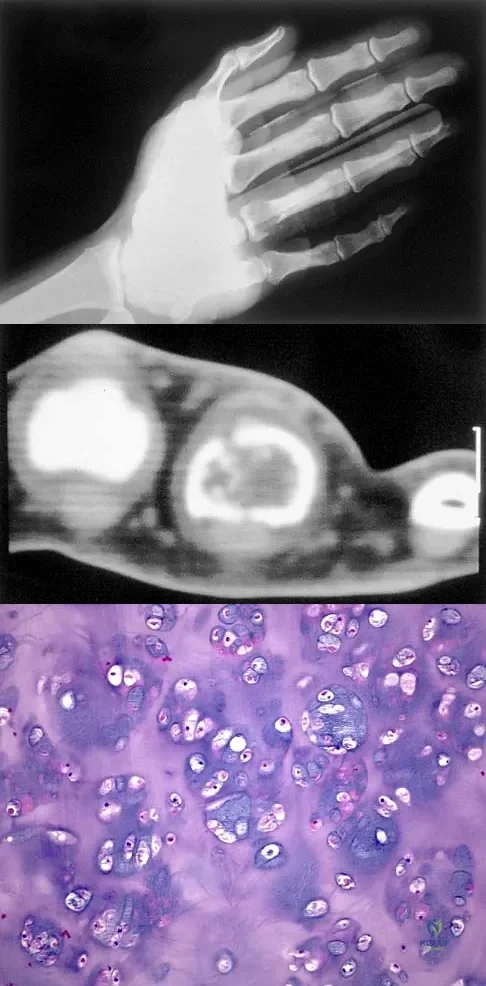
A 30-year-old woman has pain in her right hand. The radiograph, CT scan, and biopsy specimen are seen in Figures 38a through 38c. What is the most likely diagnosis?


Explanation

An enchondroma is the most common primary tumor of the long bones of the hand. The lesion is usually asymptomatic and often is detected when there is a pathologic fracture. Shimizu K, Kotoura Y, Nishijima N, Nakamura T: Enchondroma of the distal phalanx of the hand. J Bone Joint Surg Am 1997;79:898-900.

Question 2

Which of the following agents have been shown to reduce the incidence of skeletal events in patients with multiple myeloma?


Explanation

Bisphosphonates are a class of drugs that act to inhibit osteoclast resorption of bone. It has been shown that patients with multiple myeloma who are treated with bisphosphonates have fewer pathologic fractures than patients who are not treated with bisphosphonates. Vitamin D and calcium are considered appropriate for patients who are at risk for the development of osteoporosis, as is estrogen in selected women. Chelating agents and progesterones have no use in the treatment of patients with multiple myeloma or osteoporosis. Berenson JR: Bisphosphonates in multiple myeloma. Cancer 1997;15:1661-1667.

Question 3

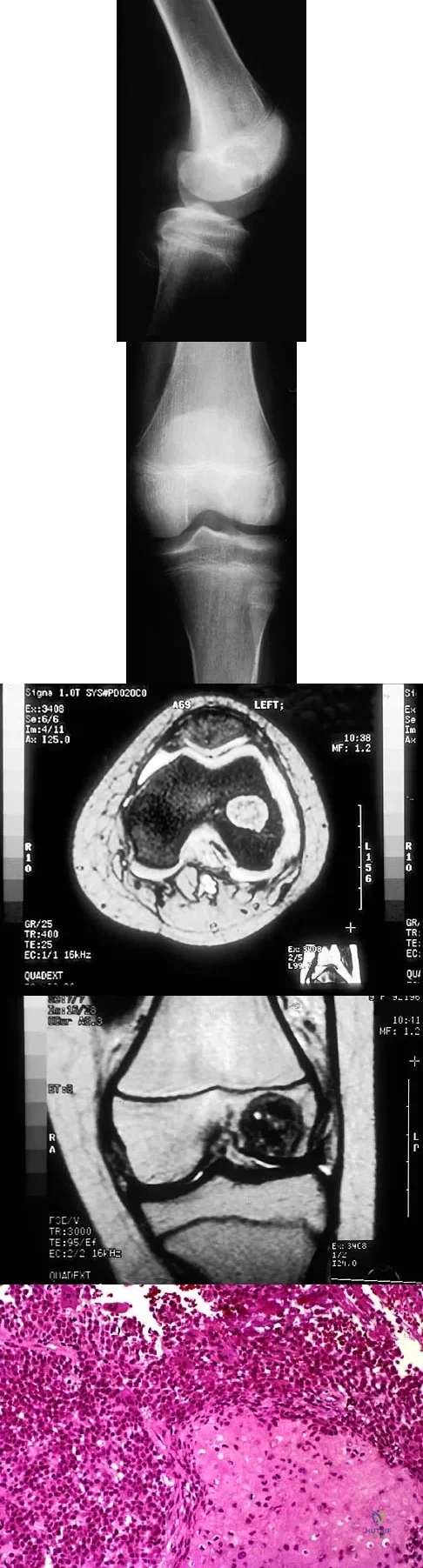
A 12-year-old girl has had progressive left knee pain for the past 4 months. She reports that the pain is unrelated to activity, and she has no history of fever or recent infections. Examination reveals full range of motion of the knee but tenderness along the medial joint line. Plain radiographs and MRI scans are shown in Figures 39a through 39d. A biopsy specimen of the lesion is shown in Figure 39e. Treatment should include


Explanation

The lesion is a chondroblastoma. The plain radiographs show a well-defined radiolucent lesion in the distal femoral epiphysis of a skeletally immature patient. The margins are well defined, suggesting a benign growth. The epiphysis is an unusual location for bone tumors, except for chondroblastomas. Of all chondroblastomas, 95% are located within the epiphysis. The MRI scans show a punctate appearance that is commonly seen in cartilage lesions. The biopsy specimen shows a chondroid lesion with polygonal chondrocytes. These findings are consistent with a chondroblastoma. The natural history of chondroblastomas is for continued growth and bone destruction if left untreated. Treatment should consist of curettage, with or without the use of physical or chemical adjuvants, and bone grafting.

Question 4

An open biopsy specimen of a radiodense distal clavicle lesion in a 12-year-old girl shows chronic polyclonal inflammatory cells without granuloma formation. Laboratory studies show that bacterial, fungal, and acid-fast bacillus cultures are negative. Subsequently, a similar lesion is noted in the fibula. The next most appropriate step in management should consist of


Explanation

The most likely diagnosis is chronic multifocal osteomyelitis. This is a culture-negative polyostotic disease that is most commonly found in young people. The treatment of choice is anti-inflammatory drugs. The pathology does not suggest eosinophilic granuloma. Antiviral therapy, broad-spectrum antibiotics, and surgical resection are not indicated for this disease.

Question 5

Figure 40 shows the radiograph of a 30-year-old woman who has a painful elbow. Examination reveals a deformed skull, multiple cafe-au-lait spots, and bone deformities. What is the most likely diagnosis?
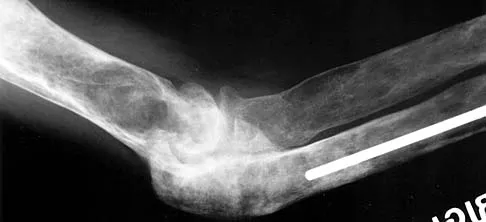
Basic Science Board Review 2000: High-Yield MCQs (Set 4) - Figure 9


Explanation

Findings in patients with McCune-Albright syndrome include polyostotic fibrous dysplasia, multiple cafe-au-lait spots, and precocious puberty. The bone changes in NF-1 resemble nonossifying fibromas, not fibrous dysplasia. NF-2 has little bony change with typical ocular abnormalities. Paget's disease occurs in older individuals and does not present with cafe-au-lait spots. Ollier's disease (multiple enchondromatosis) may show bone changes but not the other findings. Albright F, Butler AM, Hampton AO, et al: Syndrome characterized by osteitis fibrosa disseminata, areas of pigmentation and endocrine dysfunction with precocious puberty in females. N Engl J Med 1937;216:727-746. Danon M, Robboy SJ, Kim S, Scully R, Crawford JD: Cushing syndrome, sexual precocity, and polyostotic fibrous dysplasia (Albright syndrome) in infancy. J Pediatr 1975;87:917-921.

Question 6

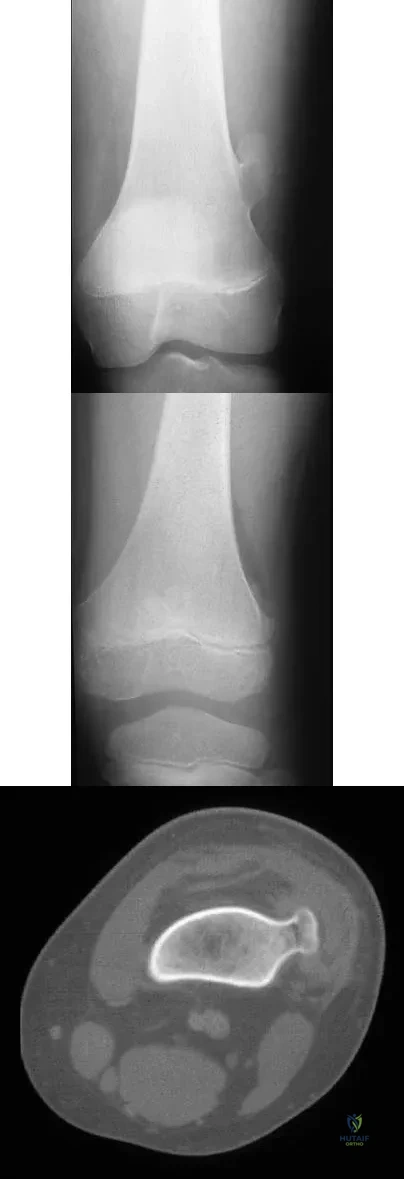
Figure 41a shows the AP radiograph of a 15-year-old boy who reports lateral knee pain. Figures 41b and 41c show a radiograph of the distal femur that was obtained 5 years ago and a current CT scan. The indication for surgery in this patient would be


Explanation

In a young person with solitary osteochondroma, the best surgical indication is symptoms that limit activity. A growth deformity is unlikely to occur at this age. Malignant degeneration is exceptionally rare and noted most commonly in adults. Growth is expected until skeletal maturity. Mirra JM: Bone Tumors: Clinical, Radiologic, and Pathologic Correlations. Philadelphia, PA, Lea and Febiger, 1989, pp 1626-1659.

Question 7

In what decade does the peak incidence of conventional osteosarcoma occur?


Explanation

Conventional osteosarcoma most frequently occurs in the second decade, followed by the third decade. Approximately 70% to 75% of patients with osteosarcoma are between the ages of 10 and 25 years. Secondary osteosarcoma (arising in Paget's disease or radiation-induced) is seen in older adults. Simon MA, Springfield DS, et al: Osteogenic Sarcoma: Surgery for Bone and Soft Tissue Tumors. Philadelphia, PA, Lippincott Raven, 1998, p 266. Mirra JM: Bone Tumors: Clinical, Radiologic, and Pathologic Correlations. Philadelphia, PA, Lea and Febiger, 1989.

Question 8

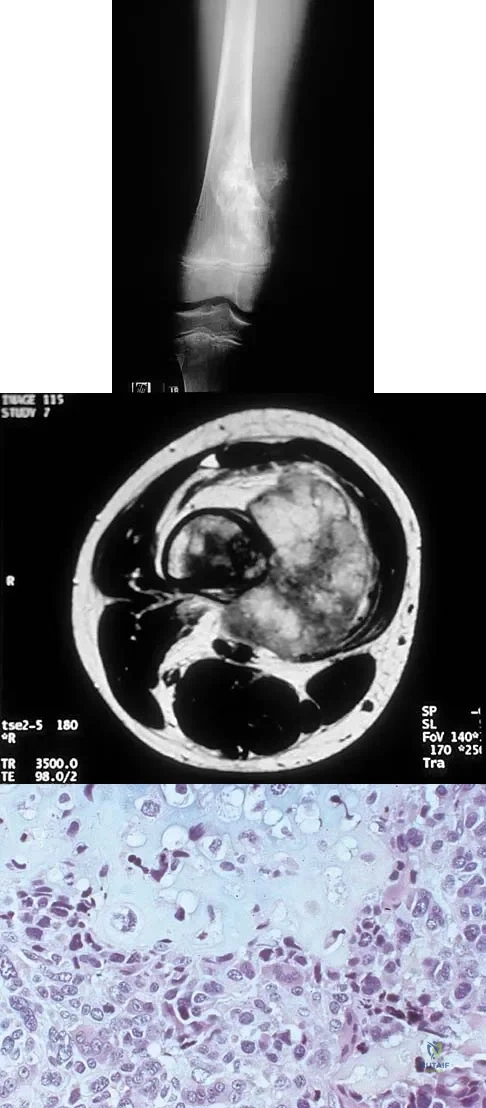
A 10-year-old boy has a painful thigh mass. A radiograph, MRI scan, and biopsy specimen are shown in Figures 42a through 42c. What is the most likely diagnosis?


Explanation

A destructive mixed lytic and blastic metaphyseal lesion with a large soft-tissue mass in an adolescent is most likely an osteosarcoma until proven otherwise. The epicenter of the tumor is on the surface of the bone, most likely involves the periosteum, and is more likely to be chondroblastic in nature. Parosteal osteosarcoma is a low-grade tumor, much more radiodense, usually smaller, and found in the posterior distal femur of middle-aged patients. Chondrosarcomas are distinctly rare in childhood.

Question 9

A 21-year-old man with neurofibromatosis and multiple cutaneous neurofibromas has a rapidly enlarging painless mass on his buttock. Examination reveals a nontender, well-defined 6- x 6-cm soft-tissue mass that is deep to the fascia. The best course of action should be to order


Explanation

Patients with neurofibromatosis are at risk for development of soft-tissue sarcomas (most commonly malignant peripheral nerve sheath tumors). Clinical indications of development of a neurofibrosarcoma include a rapidly enlarging soft-tissue mass; therefore, this patient should be considered to have a neurofibrosarcoma until proven otherwise. MRI is superior to CT in characterizing the anatomic location of soft-tissue masses and the signal characteristics of the lesion. Areas of necrosis within the tumor may be apparent on MRI that cannot be appreciated on CT, suggesting a malignant tumor. Local imaging studies of suspected malignant tumors should be performed prior to needle or open biopsy so that the biopsy site can be excised at the time of definitive resection. Additionally, postbiopsy changes may lead to MRI artifacts that alter the interpretation of the MRI. Demas BE, Heelan RT, Lane J, Marcove R, Hajdu S, Brennan MF: Soft-tissue sarcomas of the extremities: Comparison of MR and CT in determining the extent of disease. Am J Roentgenol 1988;150:615-620.

Question 10

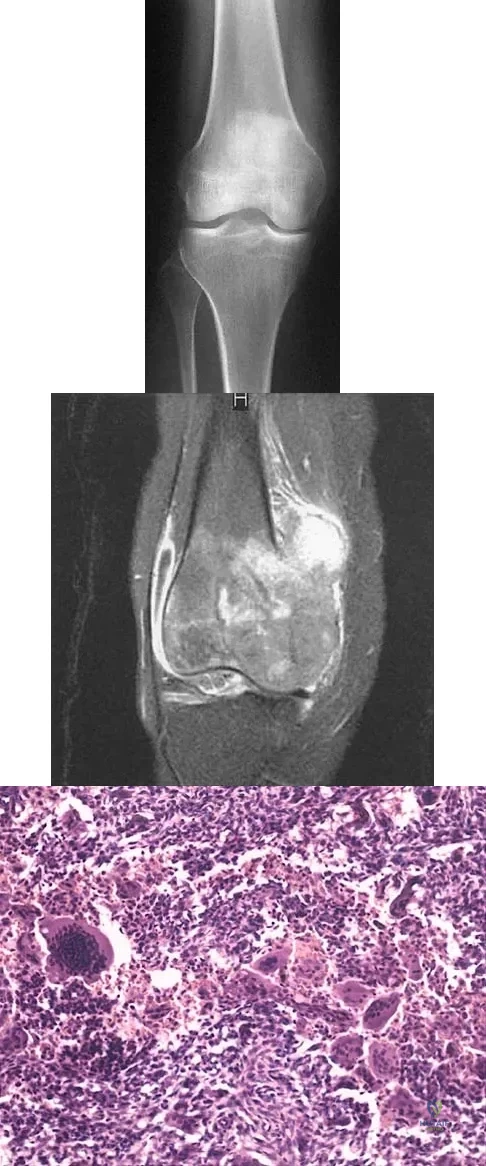
A 21-year-old man has had progressive right knee pain for the past 2 months that is exacerbated with weight-bearing activities. A plain radiograph and an MRI scan are shown in Figures 43a and 43b. A biopsy specimen is shown in Figure 43c. According to the Enneking staging system of tumor classification, the lesion should be classified as what stage?


Explanation

The lesion is an eccentric lytic bone lesion within the epiphyseal-metaphyseal end of the proximal tibia. There is geographic destruction with a "fading border" extending to the articular cartilage. There is no matrix formation or periosteal reaction. The MRI scan shows cortical destruction with extension into the soft tissue. According to the Enneking staging system, benign lesions are stage 1, 2, or 3; malignant lesions are stage I, II, or III. Benign stage 1 lesions are latent; stage 2 are active; and stage 3 are benign aggressive. The histology shows a benign giant cell tumor. Given the cortical breakthrough shown on the MRI scan, the lesion should be classified as stage 3. Enneking WF: Clinical musculoskeletal pathology, in Enneking WF (ed): Appendix A. Gainesville, FL, Storter Publishing, 1986, pp 451-466.

Question 11

What is a common clinical finding in patients with severe hypercalcemia secondary to bony metastasis?


Explanation

Increased levels of calcium are known to cause anorexia, nausea, vomiting, dehydration, muscle weakness, polyuria, and polydipsia. Treatment may include hydration, saline diuresis, and bisphosphonates.

Question 12

What cell type causes the bone destruction in metastatic lesions?


Explanation

The main consequence of tumor invading the bone is activation of both osteoblasts and osteoclasts. However, the osteoclastic effect predominates in the majority of tumors early after the invasion of bone by tumor cells, causing resorption of bone. Cramer SF, Fried L, Carter KJ: The cellular basis of metastatic bone disease in patients with lung cancer. Cancer 1981;48:2649-2660.

Question 13

What is the most common malignant bone tumor seen in patients with multiple hereditary exostosis?


Explanation

Secondary chondrosarcomas are most common in patients with multiple hereditary exostosis. Dedifferentiated chondrosarcoma is less common and refers to bone lesions in which a high-grade spindle cell sarcoma component is located immediately adjacent to a low-grade cartilage neoplasm. Mesenchymal chondrosarcoma, clear cell chondrosarcoma, and periosteal osteosarcoma are no more common in patients with multiple hereditary exostosis than in the general population. Mirra JM: Bone Tumors: Clinical, Radiologic, and Pathologic Correlations. Philadelphia, PA, Lea and Febiger, 1989, pp 1660-1669.

Question 14

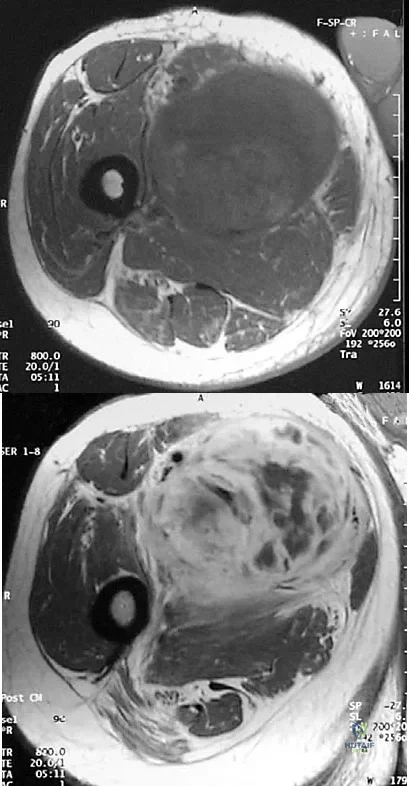
An athletic 55-year-old man reports a painless mass in the anterior aspect of the thigh that appeared 3 weeks ago and has not changed in size. The patient denies any history of trauma. Examination reveals a firm, well-defined nontender mass in the anterior thigh and no inguinal adenopathy or cutaneous changes. Plain radiographs are unremarkable. T1- and T2-weighted MRI scans are shown in Figures 44a and 44b. What is the most likely diagnosis?


Explanation

The presence of a painless soft-tissue mass that is greater than 5 cm and deep to the fascia should be considered a soft-tissue sarcoma until proven otherwise. The diagnosis of a hematoma should be made with great caution because the absence of a history of trauma, pain, or presence of ecchymosis makes it unlikely. A diagnosis of pyomyositis is unlikely because of the absence of warmth, erythema, or adenopathy. The MRI scans are not consistent with lipoma or hemangioma. The MRI signal characteristics of a lipoma should be the same as subcutaneous fat on all sequences. Soft-tissue hemangiomas are not well defined and have an infiltrative appearance on MRI scans, as does pyomyositis. Sim FH, Frassica FJ, Frassica DA: Soft-tissue tumors: Diagnosis, evaluation and management. J Am Acad Orthop Surg 1994;2:202-211.

Question 15

Epithelioid sarcoma most commonly occurs in which of the following anatomic locations?


Explanation

Epithelioid sarcoma is a rare soft-tissue sarcoma that most commonly arises in the hand or upper extremity, and it is frequently misdiagnosed as an infection or granuloma. It tends to have a higher incidence of lymph node metastasis than other soft-tissue sarcomas. The mainstay of treatment is wide surgical excision, even if amputation is necessary. Gupta TD, Chaudhuri P (eds): Tumors of the Soft Tissues, ed 2. Stamford, CT, Appleton and Lange, 1998, p 475.

Question 16

What common cytologic abnormality is associated with Ewing's sarcoma?


Explanation

Cytogenetic abnormalities have been well characterized in a number of tumors. Translocation t (2, 13), (x, 18), (12, 16), and (12, 22) have been characterized in rhabdomyosarcoma, synovial cell sarcoma, myxoid liposarcoma, and clear cell sarcoma, respectively. Translocation t(11:22) can be identified in 95% of patients with Ewing's sarcoma. This was first described by Turc-Carel and associates in 1984. Enzinger FM, Weiss SW: Soft Tissue Tumors, ed 3. St Louis, MO, Mosby Year Book, 1995, pp 105-118. Turc-Carel C, Philip I, Berger MP, Philip T, Lenoir GM: Chromosome study of Ewing's sarcoma (ES) cell lines: Consistency of a reciprocal translocation t(11;22) (q24;q12). Cancer Genet Cytogenet 1984;12:1-19.

Question 17

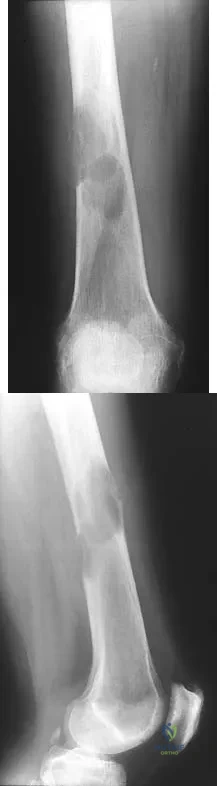
Figures 45a and 45b show the radiographs of a 46-year-old man who reports the acute onset of right knee pain and is unable to bear weight on the extremity. His medical history is unremarkable. The next most appropriate step in management should consist of


Explanation

The patient has a pathologic fracture of the right distal femur; therefore, given the patient's age, the most likely diagnosis is metastatic carcinoma. Staging studies should be obtained prior to surgical treatment. Immediate intramedullary fixation is contraindicated before a diagnosis is made by biopsy. Surgical stabilization should be performed prior to radiation therapy.

Question 18

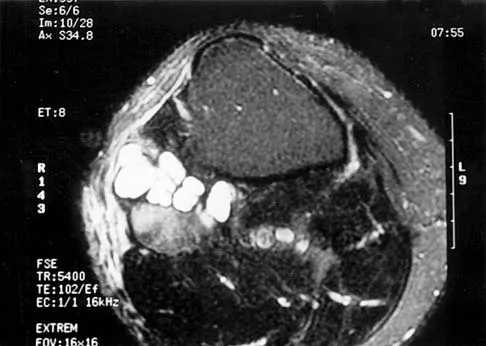
Figure 46 shows the MRI scan of a patient who has a mass in the calf that has been fluctuating in size. Radiographs are negative. Which of the following procedures will most quickly aid in confirming the diagnosis?
Basic Science Board Review 2000: High-Yield MCQs (Set 4) - Figure 23


Explanation

The bright signal on the T2-weighted MRI scan suggests fluid. The multiloculated appearance in proximity to the proximal tibiofibular joint suggests that the most likely diagnosis is a ganglion. They typically increase and decrease in size and can be diagnosed by the classic gelatinous fluid obtained through needle aspiration. Bianchi S, Abdelwahab IF, Kenan S, Zwass A, Ricci G, Palomba G: Intramuscular ganglia arising from the superior tibiofibular joint: CT and MR evaluation. Skeletal Radiol 1995;24:253-256.

Question 19

What are the five most common tumors that metastasize to bone?


Explanation

The five most common primary carcinomas that metastasize to bone are breast, prostate, lung, renal, and thyroid in decreasing order of incidence. Frassica FJ, Gitelis S, Sim FH: Metastatic bone disease: General principles, pathophysiology, evaluation, and biopsy. Instr Course Lect 1992;41:293-300.

Question 20

Pain associated with a proximal medial tibial osteochondroma in a 10-year-old patient is most commonly the result of


Explanation

Pain secondary to an osteochondroma is usually from soft-tissue irritation and bursal formation. This is particularly common for proximal medial tibia osteochondromas that irritate the pes anserine tendons. Malignant degeneration into a chondrosarcoma rarely occurs, is usually associated with multiple hereditary exostoses, and usually occurs after skeletal maturity. Borges AM, Huvos AG, Smith J: Bursa formation and synovial chondrometaplasia associated with osteochondromas. Am J Clin Pathol 1981;75:648-653.

Question 21

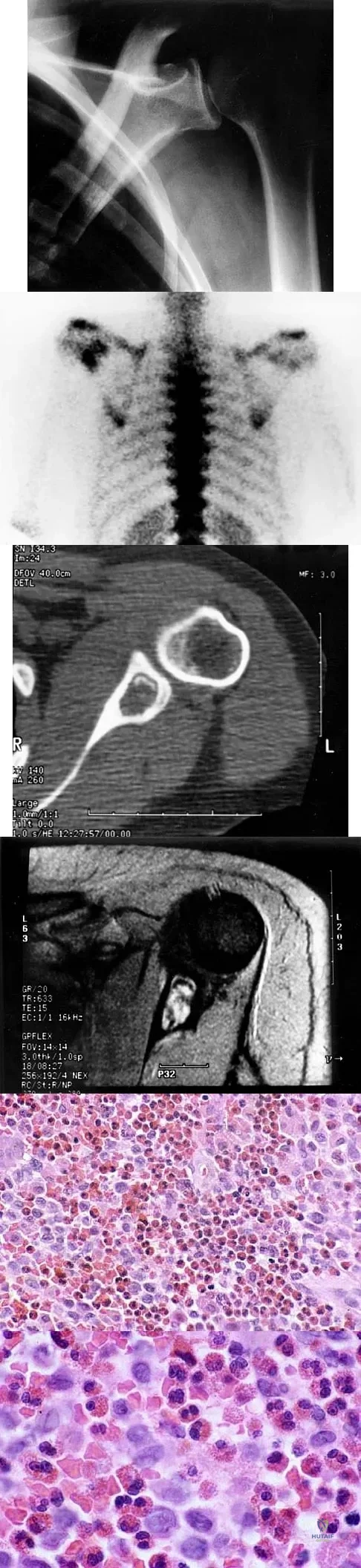
Figures 47a through 47f show the AP radiograph, bone scan, CT scan, MRI scan, and biopsy specimens of a 30-year-old woman who has had vague left shoulder pain for 1 year. Management should consist of


Explanation

The histology shows eosinophils with a background of larger cells (Langerhans' cells). This is consistent with eosinophilic granuloma. Localized sites are best treated with curettage, steroid injection, or observation. Chemotherapy is used only if there is systemic involvement. Mirra JM: Eosinophilic granuloma, in Bone Tumors: Clinical, Radiologic, and Pathologic Correlations. London, England, Lea and Febiger, 1989, pp 1023-1060. Sessa S, Sommelet D, Lascombes P, Prevot J: Treatment of Langerhans-cell histiocytosis in children: Experience at the Children's Hospital of Nancy. J Bone Joint Surg Am 1994;76:1513-1525.

Question 22

What is the 5-year overall survival rate for adults with high-grade soft-tissue sarcomas?


Explanation

The 5-year overall survival rate for deep, high-grade soft-tissue sarcomas is around 50%. The overall survival and disease-free survival rates chiefly depend on the tumor stage, but for all stages combined, most cancer treatment centers report a 5-year overall survival rate of around 70% and a disease-free survival rate of 65%. Fleming ID, et al: Manual for Staging of Cancer/American Joint Committee on Cancer, ed 5. Philadelphia, PA, Lippincott Raven, 1997, pp 149-156.

Question 23

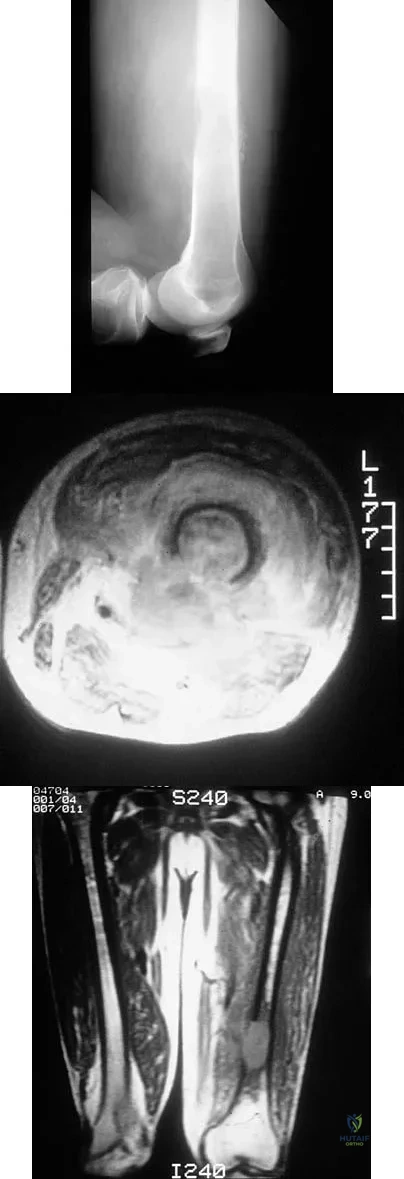
Figures 48a through 48c show the lateral radiograph and MRI scans of a 60-year-old man who has had pain in his thigh for 1 month. The next most appropriate step in management should consist of


Explanation

The patient has a presumed metastatic bone tumor. The approach to evaluating a patient with a bone tumor of unknown primary origin is to obtain laboratory studies that include a CBC, an erythrocyte sedimentation rate, a serum protein electrophoresis, a calcium level, a urinalysis, and a prostate-specific antigen. In addition, a bone scan, a radiograph of the chest, and CT scans of the chest and abdomen should be obtained. These evaluations can identify the primary site in 85% of patients. GI studies rarely are of diagnostic value. Prophylactic stabilization is contraindicated until a diagnosis is confirmed by histology. Frassica FJ, Frassica DA, McCarthy EF, Riley LH III: Metastatic bone disease: Evaluation, clinicopathologic features, biopsy, fracture risk, nonsurgical treatment, and supportive management. Instr Course Lect 2000;49:453-459.

Question 24

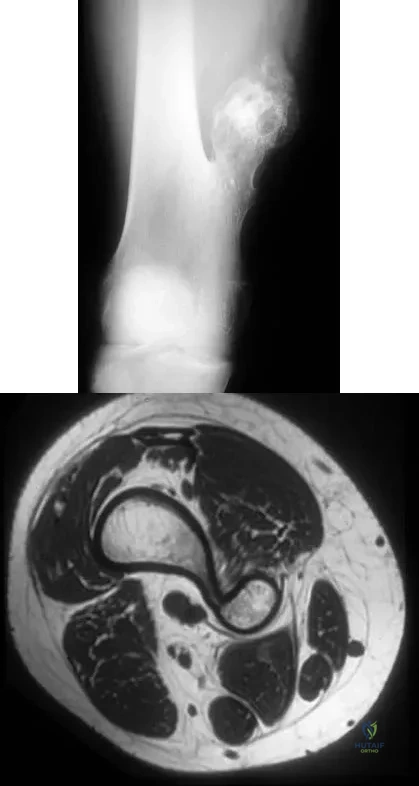
A 17-year-old boy has had a mass in his right thigh for the past 6 months. He denies any history of trauma. Examination reveals that the mass is painless and firm. A radiograph and axial MRI scan are shown in Figures 49a and 49b. What is the most likely diagnosis?


Explanation

Osteochondroma typically occurs as a bony projection or a sessile growth on the bone, and there can be flaring of the metaphysis. The radiograph shows continuity from the adjacent cancellous bone into the lesion itself. There is no soft-tissue mass or bone destruction to suggest osteosarcoma or Ewing's sarcoma. Periosteal chondroma has a scalloped out radiographic appearance. Chondroblastoma typically is an epiphyseal-based lesion.

Question 25

Evaluation of the percent of necrosis in the resected specimen after preoperative chemotherapy is of prognostic value for what type of sarcoma?


Explanation

To date, only the percent of necrosis after induction chemotherapy in high-grade osteosarcomas seems to be of prognostic value. The value in soft-tissue sarcoma and rhabdomyosarcoma is being evaluated but has not been substantiated. Chondrosarcomas and parosteal osteosarcomas are not treated with chemotherapy. Rosen G, Marcove RC, Caparros B, Nirenberg A, Kosloff C, Huvos AG: Primary osteogenic sarcoma: The rationale for pre-operative chemotherapy and delayed surgery. Cancer 1979,43:2163-2177. Davis AM, Bell RS, Goodwin PJ: Prognostic factors in osteosarcoma: A critical review. J Clin Oncol 1994;12:423-431.

Question 26

Which of the following manufacturing processes is most effective at reducing the wear rate of ultra-high-molecular-weight polyethylene (UHMWPE) while minimizing the risk of long-term in vivo oxidation?


Explanation

High-dose irradiation cross-links UHMWPE, significantly improving its wear resistance. Subsequent thermal remelting extinguishes residual free radicals trapped in the crystalline regions, preventing long-term in vivo oxidation, although it slightly decreases fatigue strength.

Question 27

A solid cylindrical intramedullary nail has a radius of 'r'. If the radius is doubled to '2r', the bending stiffness of the solid nail increases by a factor of:


Explanation

The bending stiffness of a solid cylinder is proportional to its area moment of inertia, which scales with the radius to the fourth power (r^4). Therefore, doubling the radius increases the bending stiffness by a factor of 16 (2^4).

Question 28

Which of the following molecules acts as an endogenous soluble decoy receptor to inhibit osteoclastogenesis by binding to RANK Ligand (RANKL)?


Explanation

Osteoprotegerin (OPG) is secreted by osteoblasts and acts as a soluble decoy receptor for RANKL. By binding RANKL, OPG prevents it from interacting with RANK on osteoclast precursors, thereby inhibiting osteoclast activation and bone resorption.

Question 29

A dynamic splint is applied to a patient's elbow to treat a flexion contracture. Over time, the tension in the elastic band of the splint decreases despite the elbow remaining locked in the exact same position. This viscoelastic phenomenon is best described as:


Explanation

Stress relaxation is the time-dependent decrease in stress (tension) within a viscoelastic material when it is held at a constant strain (deformation). Creep, in contrast, is the progressive deformation of a material over time under a constant load.

Question 30

The combination of a titanium femoral stem and a cobalt-chromium femoral head in total hip arthroplasty relies on a passivation layer to resist corrosion. If this oxide layer is repeatedly breached by micromotion at the head-neck junction, the resulting degradation is most accurately termed:


Explanation

Fretting corrosion occurs when micromotion between two metal surfaces mechanically strips the protective oxide (passivation) layer, leading to accelerated electrochemical degradation. This combined mechanical and chemical process is the primary mechanism of trunnionosis in modular hip arthroplasty.

Question 31

Which of the following orthopedic implant materials possesses a modulus of elasticity most closely resembling that of human cortical bone?


Explanation

Titanium alloys have a modulus of elasticity (roughly 110 GPa) that is closer to cortical bone (15-20 GPa) than stainless steel (200 GPa) or cobalt-chromium (220 GPa). This closer biomechanical match helps reduce stress shielding around the implant.

Question 32

According to Perren's strain theory, what is the maximum interfragmentary strain that can be tolerated for primary (direct) bone healing to occur without the formation of an intermediate callus?


Explanation

Primary bone healing requires absolute stability, corresponding to an interfragmentary strain of less than 2%. Strains between 2% and 10% typically promote secondary bone healing via endochondral ossification and visible callus formation.

Question 33

An orthopedic surgeon is selecting a non-locking cortical screw for fracture fixation. Which of the following design modifications will most significantly increase the screw's pullout strength from bone?


Explanation

Pullout strength is directly proportional to the outer diameter and the length of engagement, and inversely proportional to thread pitch (a finer pitch increases the number of threads engaged in the bone). Increasing the core (root) diameter increases the tensile/fatigue strength of the screw itself, not its pullout strength.

Question 34

Romosozumab is a monoclonal antibody used in the treatment of severe osteoporosis. It exerts its primarily anabolic bone effect by targeting and inhibiting which of the following proteins?


Explanation

Romosozumab binds to and inhibits sclerostin, a glycoprotein naturally secreted by osteocytes. Since sclerostin normally inhibits the osteogenic Wnt signaling pathway, blocking it leads to markedly increased bone formation.

Question 35

Which of the following alterations occurs when a radiopacifier such as barium sulfate or zirconium dioxide is added to polymethylmethacrylate (PMMA) bone cement?


Explanation

The addition of radiopacifiers creates microscopic inclusions and stress risers within the PMMA mantle. This significantly decreases the material's fatigue strength and tensile strength, though it remains highly resistant to compressive loads.

Question 36

During tensile testing of a human anterior cruciate ligament, the initial non-linear 'toe region' of the load-deformation curve is primarily caused by:


Explanation

The non-linear 'toe region' observed at low strains in the stress-strain curve of a ligament corresponds to the uncrimping and straightening of the naturally wavy collagen fibers. Once straightened, the ligament enters the steeper linear elastic region.

Question 37

When applying a bridge plate to a comminuted femoral shaft fracture, intentionally increasing the working length of the plate will have which of the following biomechanical effects?


Explanation

The working length of a plate is the longitudinal distance between the two closest screws on either side of the fracture. Increasing this distance decreases the overall bending stiffness of the construct, allowing more flexible fixation which stimulates secondary bone healing.

Question 38

Alumina and zirconia ceramics are utilized in total hip arthroplasty primarily for their excellent wear characteristics. Which of the following best describes the mechanical properties of these materials compared to cobalt-chromium alloys?


Explanation

Ceramics are extremely hard and possess very high compressive strength, making them excellent, low-wear bearing surfaces. However, they are brittle and lack ductility, which results in lower fracture toughness and poor tensile strength compared to metallic alloys.

Question 39

Parathyroid hormone (PTH) helps maintain calcium homeostasis through its action on bone, intestines, and kidneys. In the kidney, PTH stimulates the production of the active form of Vitamin D by upregulating which enzyme?


Explanation

In the proximal convoluted tubule of the kidney, PTH strongly stimulates 1-alpha-hydroxylase. This enzyme converts 25-hydroxyvitamin D into 1,25-dihydroxyvitamin D (calcitriol), the active hormone that promotes intestinal calcium absorption.

Question 40

Osteoclasts resorb bone by creating an isolated, acidic microenvironment known as the Howship lacuna. Which of the following is primarily responsible for degrading the organic collagenous matrix of bone during this process?


Explanation

While hydrogen-ATPase pumps acidify the resorption pit to dissolve the inorganic mineral component (hydroxyapatite), the organic type I collagen matrix is subsequently degraded by the proteolytic enzyme Cathepsin K secreted by the osteoclast.

Question 41

The 'screw-home' mechanism in the native knee is characterized by which of the following obligatory kinematic motions during terminal extension?


Explanation

The screw-home mechanism dictates an obligate external rotation of the tibia relative to the femur during the final 15 to 20 degrees of knee extension. This rotation locks the knee for stability and is driven primarily by the asymmetry of the medial and lateral femoral condyles.

Question 42

In a highly osteoporotic distal femur fracture treated with a modern locking plate, the stability of the construct relies primarily on:


Explanation

Unlike conventional plates that rely on friction generated by compressing the plate tightly against the bone, locking plates function as fixed-angle devices. Stability is achieved through the rigid threaded interface between the screw head and the plate hole, preventing individual screw toggle or pullout.

Question 43

Following an anterior cruciate ligament reconstruction utilizing a soft-tissue hamstring autograft, the graft typically secures within the osseous tunnels via which healing mechanism?


Explanation

Soft tissue tendon grafts heal within bone tunnels via indirect healing, characterized by the formation of perpendicular Sharpey's fibers spanning the tendon-bone interface. This differs from bone-tendon-bone grafts, which heal much faster via direct bone-to-bone incorporation.

Question 44

An orthopedic surgeon is meticulously contouring a reconstruction plate for a complex pelvic ring injury. Which of the following implant materials is most notoriously susceptible to fatigue failure if deeply scratched or notched during bending?


Explanation

Titanium alloy (Ti-6Al-4V) is highly notch sensitive compared to stainless steel. Surface scratches or sharp bends create significant stress risers that drastically reduce its fatigue life, making it prone to sudden mechanical failure in load-bearing applications.

Question 45

Which of the following best describes the phenomenon of stress relaxation in a viscoelastic material such as a tendon?


Explanation

Stress relaxation is the decrease in internal stress over time when a viscoelastic material is held at a constant strain. Creep is continued deformation under a constant load.

Question 46

Which of the following orthopaedic biomaterials has a Young's modulus closest to that of human cortical bone?


Explanation

Titanium alloy has a Young's modulus (approx. 110 GPa) closer to cortical bone (approx. 15-20 GPa) compared to Cobalt-chromium or Stainless steel. This reduces stress shielding of the host bone.

Question 47

Denosumab is an effective pharmacological treatment for osteoporosis and giant cell tumor of bone. What is its specific mechanism of action?


Explanation

Denosumab is a monoclonal antibody that targets and binds to RANKL. This prevents RANKL from binding to RANK on the osteoclast precursor, thus inhibiting osteoclast differentiation and function.

Question 48

Highly cross-linked ultra-high-molecular-weight polyethylene (UHMWPE) was developed primarily to address which of the following issues in total hip arthroplasty?


Explanation

Highly cross-linked polyethylene was developed to improve wear resistance against adhesive and abrasive wear. However, the cross-linking process decreases the material's fatigue strength and ductility.

Question 49

According to Perren's strain theory of fracture healing, what type of tissue forms first when the interfragmentary strain is between 2% and 10%?


Explanation

Perren's strain theory states that the tissue forming in a fracture gap depends on the strain it can tolerate. Cartilage tolerates up to 10% strain, whereas bone formation requires a lower strain environment of less than 2%.

Question 50

Which of the following geometric modifications to a cortical bone screw will most effectively increase its pull-out strength?


Explanation

Pull-out strength of a screw is most dependent on the outer thread diameter. Increasing the outer diameter, decreasing the inner diameter (which increases thread depth), and maximizing thread engagement all increase pull-out strength.

Question 51

Galvanic corrosion in orthopaedic implants is most likely to occur under which of the following circumstances?


Explanation

Galvanic corrosion occurs when two dissimilar metals are in direct contact within a conductive fluid environment. Mixing stainless steel with cobalt-chromium creates a strong galvanic couple, accelerating corrosion.

Question 52

In which zone of normal articular cartilage are the collagen fibers oriented parallel to the joint surface to primarily resist shear forces?


Explanation

The superficial (tangential) zone of articular cartilage contains fine collagen fibers aligned parallel to the articular surface. This specific orientation primarily functions to resist shear stresses during joint motion.

Question 53

Sclerostin, a protein product of the SOST gene, regulates bone mass primarily by acting as a negative regulator of which of the following pathways?


Explanation

Sclerostin is secreted by osteocytes and acts as a negative regulator of bone formation by binding to LRP5/6 receptors. This directly inhibits the canonical Wnt/beta-catenin signaling pathway in osteoblasts.

Question 54

Ceramic-on-ceramic bearings in total hip arthroplasty exhibit which of the following mechanical properties compared to metal-on-polyethylene bearings?


Explanation

Ceramics are extremely hard and scratch-resistant, producing very low wear, but they are brittle materials. They possess much lower fracture toughness and ductility compared to metals, increasing the risk of catastrophic fracture.

Question 55

The "toe region" of the load-elongation curve for a normal ligament represents which of the following physiological events?


Explanation

The toe region is the initial, non-linear concave portion of the ligament's load-elongation curve. It corresponds to the uncrimping and straightening of the naturally wavy collagen fibers under initial low-level load.

Question 56

Which of the following statements regarding the properties of polymethylmethacrylate (PMMA) bone cement is true?


Explanation

PMMA provides purely mechanical interlock rather than biologic fixation, and sets via an exothermic reaction. Additives like barium sulfate or zirconium dioxide act as stress risers, decreasing the cement's overall fatigue strength.

Question 57

Bone morphogenetic proteins (BMPs) primarily exert their osteoinductive cellular effects by initiating intracellular signaling through which of the following molecules?


Explanation

BMPs bind to serine-threonine kinase cell surface receptors, which phosphorylate receptor-regulated Smads (Smad 1, 5, and 8). These form a complex with Smad 4 and translocate to the nucleus to regulate target gene transcription.

Question 58

Which of the following biologic properties is characteristic of a fresh autogenous cancellous bone graft but is NOT typically found in a structural cortical allograft?


Explanation

Cancellous autograft possesses osteogenic (live cells), osteoinductive (growth factors), and osteoconductive properties. Cortical allograft is primarily osteoconductive and provides structural support, but lacks live cells and robust osteoinduction.

Question 59

In a bridge plating construct for a comminuted diaphyseal fracture, increasing the working length of the plate has which of the following biomechanical effects?


Explanation

The working length is the distance between the closest screws on either side of the fracture. Increasing it decreases the overall axial stiffness of the construct, promoting secondary bone healing by allowing appropriate interfragmentary micromotion.

Question 60

Nitrogen-containing bisphosphonates are frequently used to alter bone metabolism in orthopaedic patients. They achieve their effect primarily by which of the following mechanisms?


Explanation

Nitrogen-containing bisphosphonates bind strongly to bone hydroxyapatite and are ingested by active osteoclasts. Inside the osteoclast, they inhibit farnesyl pyrophosphate synthase in the mevalonate pathway, leading to osteoclast apoptosis.

Question 61

Nitinol, commonly used in orthopaedic staples, stents, and suture anchors, is a shape-memory alloy composed primarily of which two elements?


Explanation

Nitinol is an alloy of nearly equal atomic percentages of Nickel and Titanium. It exhibits unique shape memory and superelasticity due to a reversible, temperature- or stress-induced phase transformation between its austenite and martensite crystalline structures.

Question 62

Which of the following zones of the normal physis (growth plate) is the primary site of cellular proliferation and is intrinsically abnormal in patients with achondroplasia?


Explanation

Achondroplasia is caused by an autosomal dominant gain-of-function mutation in FGFR3, which pathologically inhibits chondrocyte proliferation. This directly restricts longitudinal growth at the proliferative zone of the physis.

Question 63

In a metal-on-polyethylene total hip arthroplasty, the generation of submicron polyethylene wear debris most commonly initiates an inflammatory osteolysis cascade mediated primarily by which cell type?


Explanation

Submicron polyethylene wear debris is primarily phagocytosed by macrophages. The activated macrophages release pro-inflammatory cytokines such as TNF-alpha and IL-1, which stimulate osteoclastic bone resorption and lead to aseptic loosening.

Question 64

Type I collagen is the most abundant structural protein in the extracellular matrix of bone. Genetic mutations in Type I collagen genes (COL1A1 or COL1A2) are the primary cause of which of the following disorders?


Explanation

Osteogenesis imperfecta (brittle bone disease) is most commonly caused by mutations in the COL1A1 or COL1A2 genes. This results in the production of defective or deficient Type I collagen, leading to significant skeletal fragility.

Question 65

Compared to conventional ultra-high-molecular-weight polyethylene (UHMWPE), highly cross-linked polyethylene used in total joint arthroplasty exhibits which of the following mechanical properties?


Explanation

Highly cross-linked polyethylene (HXLPE) significantly reduces volumetric wear compared to conventional UHMWPE. However, the cross-linking process and subsequent thermal treatment decrease its fracture toughness, fatigue crack propagation resistance, and ultimate tensile strength.

Question 66

During material testing, a specimen undergoes a stress-strain analysis. The total area under the stress-strain curve up to the point of failure represents which of the following material properties?


Explanation

Toughness is defined as the amount of energy a material can absorb before failure, represented by the total area under the stress-strain curve. Modulus of elasticity is the slope of the elastic region, while ductility refers to the amount of plastic deformation before fracture.

Question 67

A 70-year-old woman with severe osteoporosis is started on denosumab. This medication improves bone density by directly targeting and neutralizing which of the following?


Explanation

Denosumab is a human monoclonal antibody that binds directly to RANKL, preventing it from interacting with RANK on osteoclasts. This inhibition prevents osteoclast activation, differentiation, and survival, thereby decreasing bone resorption.

Question 68

The pullout strength of a cortical screw used for fracture fixation is directly proportional to which of the following parameters?


Explanation

Screw pullout strength is directly proportional to the outer thread diameter, length of thread engagement, and the shear strength of the bone. It is inversely proportional to the thread pitch, while the inner core diameter determines the screw tensile and torsional strength.

Question 69

Which of the following orthopedic implant materials possesses a modulus of elasticity most closely resembling that of human cortical bone?


Explanation

Titanium alloys have a modulus of elasticity (roughly 110 GPa) that is closer to human cortical bone (15-20 GPa) than stainless steel (200 GPa) or cobalt-chrome (210 GPa). This closer match reduces stress shielding at the bone-implant interface.

Question 70

In bridge plating of a comminuted diaphyseal fracture, decreasing the working length of the plate will have what biomechanical effect on the construct?


Explanation

The working length of a plate is the distance between the two closest screws on either side of the fracture. Decreasing the working length increases the stiffness of the construct but also concentrates stress over a shorter segment of the plate, increasing the risk of plate failure.

Question 71

According to Perren strain theory, what is the maximum allowable interfragmentary strain that permits primary (direct) bone healing to occur?


Explanation

Perren strain theory dictates that primary (direct) bone healing via Haversian remodeling requires absolute stability with an interfragmentary strain of less than 2 percent. Strains between 2 and 10 percent promote secondary bone healing via callus formation, while strains greater than 10 percent result in nonunion.

Question 72

A patient undergoes revision of a metal-on-polyethylene total hip arthroplasty due to a grossly loose femoral stem. Intraoperatively, black debris and pitting are noted specifically at the modular head-neck junction.

What is the primary mechanism of this degradation?


Explanation

Fretting corrosion occurs at the contact sites of modular junctions (like the head-neck taper) due to micromotion under load, which repeatedly disrupts the passive oxide layer. This exposes fresh metal to the corrosive fluid environment, often exacerbated by crevice corrosion mechanisms.

Question 73

During the incorporation of a massive structural cortical bone allograft, which cellular process occurs first during creeping substitution?


Explanation

The incorporation of cortical bone grafts undergoes creeping substitution, which is initiated by osteoclastic resorption of the necrotic graft matrix following vascular ingrowth. This is in contrast to cancellous bone grafts, where osteoblastic bone formation occurs prior to significant resorption.

Question 74

Polymethylmethacrylate (PMMA) bone cement is primarily utilized in total joint arthroplasty for implant fixation. Biomechanically, PMMA exhibits its greatest strength against which of the following forces?


Explanation

PMMA bone cement functions primarily as a grout, not an adhesive, and is strongest in compression. It is significantly weaker in tension and shear, which is why component designs emphasize transmitting compressive loads to the cement mantle.

Question 75

A 65-year-old woman is prescribed teriparatide for severe osteoporosis. The anabolic effect of this medication on bone mass is primarily mediated by which of the following mechanisms?


Explanation

Teriparatide is a recombinant human parathyroid hormone (PTH 1-34) analog. While continuous endogenous PTH elevation causes bone resorption, intermittent daily administration of teriparatide preferentially stimulates osteoblastic activity, resulting in a net anabolic effect on bone.

Question 76

During total hip arthroplasty templating, medializing the acetabular component and increasing the femoral offset will have what effect on the hip joint biomechanics?


Explanation

Medializing the center of rotation decreases the body weight moment arm, while increasing femoral offset increases the abductor moment arm. Both changes mechanically advantage the abductors, thereby decreasing the required abductor force and the overall joint reaction force.

Question 77

Which of the following is the most notable disadvantage of using a ceramic-on-ceramic bearing surface in total hip arthroplasty compared to metal-on-polyethylene?


Explanation

Ceramic-on-ceramic bearings offer the lowest volumetric wear rates and generate bio-inert debris, nearly eliminating particle-induced osteolysis. However, ceramics are brittle materials with a lower fracture toughness than metals, making them susceptible to catastrophic fracture.

Question 78

Osteoclasts are responsible for bone resorption during remodeling. From which of the following cell lineages are mature osteoclasts derived?


Explanation

Osteoclasts are multinucleated giant cells derived from the hematopoietic stem cell lineage, specifically the macrophage-monocyte lineage. In contrast, osteoblasts, osteocytes, and chondrocytes are derived from mesenchymal stem cells.

Question 79

During the clinical Lachman test, rapid translation of the tibia produces a stiffer response from the anterior cruciate ligament (ACL) than slow translation. This load-rate dependent behavior is characteristic of which material property?


Explanation

Viscoelastic materials, such as ligaments and tendons, exhibit time- and rate-dependent mechanical properties. Their stiffness increases with a higher rate of loading (strain rate dependence), which helps protect the joint during dynamic, high-speed activities.

Question 80

Using a titanium screw through a 316L stainless steel plate in an aqueous physiologic environment increases the risk of which type of corrosion?


Explanation

Galvanic corrosion occurs when two dissimilar metals are placed in physical contact within a conductive electrolytic fluid (like blood or interstitial fluid). The difference in their electrochemical potentials drives an electron transfer, accelerating the corrosion of the less noble metal.

Question 81

An orthopedic surgeon decides to ream a femoral shaft fracture to accommodate a larger diameter solid intramedullary nail. The torsional rigidity of the selected solid cylindrical nail is proportional to its radius raised to which power?


Explanation

The torsional rigidity of a solid cylinder is proportional to its polar moment of inertia, which scales with the radius to the fourth power (r^4). For a hollow cylinder, it is proportional to the difference between the outer and inner radii to the fourth power.

Question 82

Which of the following constitutes the most abundant organic component of the extracellular matrix of human bone?


Explanation

The organic matrix constitutes about 30 to 35 percent of bone dry weight, and roughly 90 percent of this organic matrix is Type I collagen. Hydroxyapatite is the primary inorganic (mineral) component of bone.

Question 83

To reduce oxidative degradation of conventional UHMWPE after sterilization with gamma irradiation, modern manufacturing processes incorporate a thermal treatment known as remelting. What is the primary negative biomechanical consequence of this remelting process?


Explanation

Remelting UHMWPE above its melting point extinguishes residual free radicals trapped in the crystalline regions, preventing future oxidation. However, it decreases the crystallinity of the polymer, leading to reduced mechanical properties such as fatigue strength and fracture toughness.

Question 84

A 65-year-old active man undergoes a total hip arthroplasty using highly cross-linked polyethylene (HXLPE). While this material significantly reduces wear, the cross-linking and subsequent thermal melting processes reduce which of the following mechanical properties, predisposing thin components to failure?


Explanation

Highly cross-linking polyethylene involves irradiation to improve wear resistance, followed by thermal melting to eliminate free radicals. This process significantly decreases the material's fatigue resistance and fracture toughness.

Question 85

To maximize the pullout strength of a cortical screw used in a diaphyseal fracture, which of the following design modifications is most effective?


Explanation

Screw pullout strength is directly proportional to the outer (major) diameter, length of engagement, and volume of bone captured between threads. Decreasing the thread pitch increases the number of threads engaged per unit length, thereby increasing pullout strength.

Question 86

A 60-year-old patient presents with a painful total hip arthroplasty 5 years after the index procedure. Aspiration is negative for infection. Revision surgery reveals black debris and macroscopic damage at the modular head-neck taper junction. Which type of corrosion is most likely responsible for this failure?


Explanation

Fretting corrosion occurs at the contact sites between two materials under cyclic loading, such as the head-neck taper in a modular THA. Micromotion causes mechanical wear of the protective oxide layer, leading to localized electrochemical corrosion.

Question 87

A 45-year-old woman presents with progressive diffuse bone pain, muscle weakness, and multiple stress fractures. Lab tests reveal severe hypophosphatemia, normal serum calcium, and markedly elevated FGF-23 levels. Which of the following best describes the pathogenesis of her condition?


Explanation

Tumor-induced osteomalacia is caused by excessive FGF-23 secretion by a mesenchymal tumor. FGF-23 decreases phosphate reabsorption in the proximal renal tubules and inhibits 1-alpha-hydroxylase, leading to low 1,25-dihydroxyvitamin D and hypophosphatemia.

Question 88

In evaluating the biomechanical behavior of ligaments, a constant static load is applied to a ligamentous specimen over a prolonged period. It is observed that the specimen undergoes a progressive increase in deformation over time. This viscoelastic property is termed:


Explanation

Creep is the viscoelastic property where a material continues to deform over time when subjected to a constant load. Stress relaxation, in contrast, is the decrease in stress over time when the material is held at a constant strain.

Question 89

A 70-year-old woman with severe osteoporosis is treated with romosozumab, a monoclonal antibody that targets sclerostin. By inhibiting sclerostin, this medication primarily enhances bone formation through which of the following cellular mechanisms?


Explanation

Sclerostin is produced by osteocytes and inhibits bone formation by binding to LRP5/6, effectively blocking the Wnt/beta-catenin signaling pathway. Romosozumab binds to sclerostin, unblocking this pathway and driving osteoblastogenesis.

Question 90

During a cemented total knee arthroplasty, polymethylmethacrylate (PMMA) is utilized for component fixation. Which of the following statements regarding the biomechanical properties and function of PMMA is true?


Explanation

PMMA acts as a grout rather than a chemical adhesive, providing primary stability through mechanical interlock with cancellous bone. It is strong in compression but weak in tension, and additives like barium sulfate decrease its fatigue strength.

Question 91

During mechanical testing of a novel titanium alloy plate, the material is loaded in tension until catastrophic failure occurs. The total area under the stress-strain curve prior to failure represents the material's:


Explanation

Toughness represents the total energy a material can absorb before it fractures, visually represented by the total area under the stress-strain curve. Elastic modulus corresponds to the slope of the linear elastic region.

Question 92

Alumina and zirconia are common ceramic materials used in total hip arthroplasty bearings. Yttria-stabilized zirconia has higher fracture toughness than pure alumina due to a microstructural phenomenon known as:


Explanation

Zirconia ceramics utilize phase transformation toughening, where a stress-induced shift from a tetragonal to a monoclinic phase causes a volume expansion. This local expansion generates compressive stresses that help close advancing microcracks.

Question 93

Radiographic evaluation of a patient 2 years after an uncemented total hip arthroplasty shows proximal femoral bone resorption. This phenomenon, known as stress shielding, can be minimized by selecting a stem material with an elastic modulus closer to that of cortical bone. Which of the following solid metals best fits this description?


Explanation

Titanium alloy has an elastic modulus of approximately 110 GPa, which is much closer to cortical bone (15-20 GPa) than cobalt-chromium (220 GPa) or stainless steel (200 GPa). A closer modulus match reduces stress shielding.

Question 94

Articular cartilage exhibits complex biphasic viscoelastic behavior. Under rapid, heavy compressive loading, the initial resistance to deformation is primarily provided by:


Explanation

In the biphasic theory of cartilage biomechanics, initial resistance to compressive loads is due to fluid pressurization within the tissue. The extremely low permeability of the solid matrix traps the fluid, bearing the majority of the applied load.

Question 95

Continuous hypersecretion of parathyroid hormone (PTH) leads to net bone resorption. However, once-daily subcutaneous administration of teriparatide results in net bone formation. This anabolic effect of intermittent PTH is primarily mediated by:


Explanation

Intermittent administration of PTH promotes bone anabolism by increasing osteoblast proliferation, differentiation, and lifespan through prevention of osteoblast apoptosis. It also downregulates sclerostin, further boosting Wnt signaling.

Question 96

An intramedullary nail is used to stabilize a transverse midshaft femur fracture. If the surgeon chooses to ream the canal and insert a solid nail with a diameter of 12 mm instead of 10 mm, the torsional rigidity of the nail increases by approximately what factor?


Explanation

Torsional rigidity of a solid cylinder is proportional to the polar moment of inertia, which scales with the radius (or diameter) to the fourth power. The ratio is (12/10)^4 = (1.2)^4, which equals approximately 2.07.

Question 97

Secondary fracture healing with callus formation is typically seen with cast immobilization or intramedullary nailing. Which of the following local factors strongly dictates the differentiation of mesenchymal stem cells into chondrocytes during the early stages of this process?


Explanation

In secondary fracture healing, the initial hematoma and granulation tissue are hypoxic and subject to mechanical micromotion. This low oxygen tension and moderate strain environment specifically promotes chondrogenesis and endochondral ossification.

None

Clinic OS
Medically Verified Content by
Prof. Clinic OS
Consultant Orthopedic & Spine Surgeon
Chapter Index
