Orthopedic Pathology Review | Dr Hutaif Basic Science R -...

Key Takeaway
This interactive board review contains 100 randomly selected orthopedic surgery questions with clinical images, immediate feedback, and detailed references.
Orthopedic Pathology Review | Dr Hutaif Basic Science R -...
Comprehensive 100-Question Exam
00:00
Start Quiz
Question 1
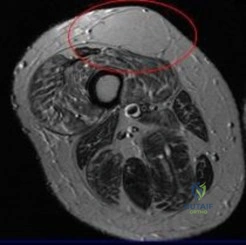
A 15-year-old boy presents with knee pain and a mass in the distal femur. A biopsy reveals malignant mesenchymal cells producing osteoid. The patient's family history is significant for a sister who developed breast cancer at age 28 and a mother who died of an adrenocortical carcinoma. Which of the following gene mutations is most likely associated with this patient's underlying syndrome?
Explanation
Question 2
A 12-year-old boy presents with a painful, swollen thigh. Radiographs demonstrate a diaphyseal permeative lytic lesion with a periosteal 'onion skin' reaction. Biopsy reveals uniform small round blue cells expressing CD99. Which of the following is the most common cytogenetic abnormality associated with this tumor?
Explanation
Question 3
A 32-year-old woman presents with knee pain. Radiographs reveal an eccentric, lytic epiphyseal lesion in the proximal tibia. Biopsy shows multinucleated giant cells in a background of mononuclear stromal cells. Denosumab therapy is considered for this patient. What is the mechanism of action of this drug?
Explanation
Question 4
A 55-year-old man presents with a large, painful mass in his pelvis. Biopsy shows a cartilaginous tumor with hypercellularity, pleomorphism, and binucleated cells. Foci of the tumor show abrupt transition to a high-grade, non-cartilaginous spindle cell sarcoma. What is the most likely diagnosis?

Explanation
Question 5
A 14-year-old girl sustains a minor fall and complains of persistent arm pain. Radiographs show an expansile, multiloculated, radiolucent lesion in the metaphysis of the humerus. MRI demonstrates multiple fluid-fluid levels. Genetic analysis of the biopsy tissue is most likely to reveal a rearrangement involving which of the following genes?
Explanation
Question 6
A 25-year-old man presents with a long history of anterior tibial bowing and pain. Radiographs show a multiloculated, 'soap bubble' radiolucent lesion in the anterior diaphyseal cortex of the tibia. Biopsy reveals a biphasic tumor with both epithelial and osteofibrous components. Immunohistochemistry will be strongly positive for which of the following?
Explanation
Question 7
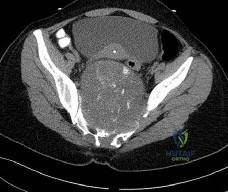
A 9-year-old girl presents with a limp and a discrepancy in leg length. Radiographs demonstrate a 'ground-glass' appearance in the proximal femur with a 'shepherd's crook' deformity. She is also noted to have large, irregular hyperpigmented macules on her trunk. Which endocrine abnormality is most commonly associated with this patient's condition?
Explanation
Question 8
A 40-year-old woman is incidentally found to have a well-circumscribed, lobulated, cartilaginous lesion in the proximal humerus with punctate calcifications. There is no endosteal scalloping or cortical breakthrough. Molecular testing of such lesions frequently demonstrates mutations in which of the following enzymes?
Explanation
Question 9
A 60-year-old man presents with chronic low back pain and new-onset bowel incontinence. MRI shows a large, destructive midline mass involving the sacrum. Biopsy reveals lobules of physaliferous cells with a myxoid stroma. Which of the following immunohistochemical markers is most specific for this diagnosis?

Explanation
Question 10
A 28-year-old woman presents with a slow-growing, painful mass near her knee joint. MRI shows a heterogeneous soft tissue mass adjacent to, but not within, the knee joint capsule, with calcifications. Core biopsy shows a biphasic tumor with spindle cells and glandular-like epithelial elements. Cytogenetic evaluation is most likely to show which translocation?
Explanation
Question 11
A 19-year-old male presents with severe nocturnal pain in his right thigh that is dramatically relieved by ibuprofen. Radiographs show a small radiolucent nidus surrounded by dense reactive sclerosis in the femoral diaphysis. The profound pain relief provided by NSAIDs is primarily due to the high local production of which of the following?

Explanation
Question 12
A 35-year-old man undergoes arthroscopy for chronic knee swelling and locking. The synovium is diffusely hypertrophic and reddish-brown. Histology shows mononuclear cells, multinucleated giant cells, and prominent hemosiderin deposition. The pathogenesis of this condition is primarily driven by an overexpression of which of the following?
Explanation
Question 13
A 10-year-old boy presents with a pathologic fracture through a central, lytic, expansile lesion in the proximal humerus metaphyseal-diaphyseal junction. A 'fallen leaf' sign is noted on the radiograph. If the lesion had been aspirated prior to fracture, the fluid obtained would typically show high levels of which of the following compared to serum?

Explanation
Question 14
A 6-year-old boy presents with skull pain and a soft tissue mass over his parietal bone. Radiographs show a 'punched-out' lytic lesion with no sclerotic rim. Biopsy reveals sheets of mononuclear cells with grooved, 'coffee-bean' nuclei admixed with eosinophils. These cells will characteristically test positive for S-100, CD1a, and which other immunohistochemical marker?
Explanation
Question 15
A 65-year-old man presents with diffuse back pain, fatigue, and recent weight loss. Laboratory studies show anemia and hypercalcemia. Radiographs demonstrate multiple 'punched-out' lytic lesions in the skull and vertebrae. Bone marrow biopsy is likely to show a proliferation of neoplastic cells that express which of the following surface markers?

Explanation
Question 16
A 30-year-old man presents with a slowly enlarging, painful mass bound to the Achilles tendon. Biopsy reveals nests of pale, spindled to epithelioid cells. The cells are strongly positive for S-100, HMB-45, and Melan-A. Molecular testing reveals a t(12;22)(q13;q12) translocation. What is the most appropriate diagnosis?
Explanation
Question 17
A 28-year-old woman presents with a slow-growing, painless mass on the posterior aspect of her distal femur. Radiographs reveal a heavily ossified, lobulated mass attached to the posterior cortex by a broad base, with a 'string sign' visible between the tumor and the underlying bone. Histology shows low-grade spindle cells between well-formed trabeculae of woven bone. This tumor is characterized by the amplification of which gene?
Explanation
Question 18
A 12-year-old boy has a radiograph of his knee following a minor twisting injury, which incidentally reveals an eccentric, radiolucent, multi-loculated lesion with a sclerotic margin in the distal femoral metaphysis. Biopsy would typically reveal spindle cells in a storiform pattern admixed with multinucleated giant cells and clusters of lipid-laden macrophages. Which of the following pathways is often mutated in these lesions?

Explanation
Question 19
A 16-year-old boy presents with right knee pain. Radiographs reveal a well-defined, 2 cm lytic lesion within the epiphysis of the proximal tibia with a thin sclerotic rim. Biopsy demonstrates mononuclear cells with 'chicken-wire' calcifications. Immunohistochemistry of this tumor frequently shows positivity for which of the following?
Explanation
Question 20
A 60-year-old man presents with a massive, deep intramuscular mass in his proximal thigh. Biopsy reveals a well-differentiated liposarcoma. He undergoes marginal excision, but the tumor recurs rapidly 18 months later. Re-biopsy of the recurrence shows areas of high-grade, non-lipogenic sarcoma consistent with dedifferentiation. Molecular analysis of both the primary and recurrent tumor will show amplification of:

Explanation
Question 21
A 55-year-old man presents with progressive pelvic pain. Radiographs reveal a large, expansile radiolucent lesion in the ilium with internal 'rings and arcs' calcifications. Biopsy demonstrates hypercellular hyaline cartilage with nuclear atypia and myxoid changes. Which of the following gene mutations is most frequently implicated in the pathogenesis of this tumor?
Explanation
Question 22
A 25-year-old man presents with a slow-growing, painful mass near his ankle joint. MRI shows a soft tissue mass adjacent to, but not communicating with, the joint space. Biopsy reveals a biphasic pattern consisting of epithelial elements forming gland-like structures and a spindle cell stroma. Which of the following chromosomal translocations is characteristic of this lesion?
Explanation
Question 23
A 10-year-old girl is evaluated for a limp and a leg-length discrepancy. Radiographs show a 'shepherd's crook' deformity of the proximal femur with 'ground-glass' opacities. Physical exam reveals large, irregular café-au-lait macules. What is the underlying molecular mechanism of her condition?
Explanation
Question 24
A 16-year-old girl complains of localized pain in her proximal humerus. Radiographs show an eccentric, expansile, lytic metaphyseal lesion with cortical thinning. MRI reveals multiple fluid-fluid levels. Biopsy shows blood-filled cystic spaces lacking an endothelial lining. Which of the following genetic alterations is diagnostic for the primary form of this lesion?
Explanation
Question 25
A 45-year-old man has a large, painless mass deep in his posterior thigh. Histologic examination reveals uniform, small, round to oval cells, scattered lipoblasts, and a prominent arborizing capillary network described as 'chicken wire' vasculature in a myxoid background. Which translocation is diagnostic?
Explanation
Question 26
A 14-year-old boy presents with knee pain. Radiographs show a well-defined lytic lesion in the epiphysis of the proximal tibia with a sclerotic rim. Biopsy reveals mononuclear cells with longitudinal nuclear grooves and 'chicken wire' calcifications. Which of the following gene mutations is highly specific for this tumor?
Explanation
Question 27
A 25-year-old man presents with anterior tibial pain. Radiographs show a multilocular, eccentric, diaphyseal lytic lesion with cortical thickening. Histology reveals nests of epithelial-appearing cells in a fibrous stroma. Which immunohistochemical marker will best differentiate this lesion from osteofibrous dysplasia?
Explanation
Question 28
A 30-year-old woman presents with a slow-growing nodule attached to her Achilles tendon. The tumor consists of nests of uniform spindle cells with clear cytoplasm separated by dense fibrous septa. Immunohistochemistry is positive for HMB-45 and S-100. What is the associated cytogenetic abnormality?
Explanation
Question 29
A 35-year-old woman reports recurrent knee swelling without trauma. Joint aspiration yields brownish fluid. MRI reveals a thickened synovium with hypointense nodules on T2-weighted imaging showing 'blooming' artifact. The pathogenesis of this condition is driven by a translocation leading to the overexpression of which factor?
Explanation
Question 30
A 6-year-old boy presents with back pain and a solitary 'punched-out' lytic lesion in his skull. Spine radiographs show a complete collapse of the T8 vertebral body (vertebra plana). Biopsy reveals cells with reniform nuclei and eosinophilic cytoplasm, intermixed with eosinophils. Which marker is diagnostic?
Explanation
Question 31
A 60-year-old man presents with insidious onset of sacral pain and recent bowel/bladder incontinence. Imaging reveals a destructive midline sacral mass. Biopsy shows large cells with copious bubbly cytoplasm in a myxoid stroma. Which immunohistochemical marker is highly specific for the presumed diagnosis?
Explanation
Question 32
A 14-year-old boy is evaluated for short stature and multiple hard, painless bumps around his knees and wrists. Radiographs confirm multiple pedunculated bone projections pointing away from the joints. The genetic mutations responsible for this syndrome directly impair the synthesis of which of the following?
Explanation
Question 33
A 20-year-old man presents with an aching back pain that is poorly relieved by NSAIDs. Imaging reveals a 3.5 cm lytic lesion with a sclerotic rim in the posterior elements of L3. Histology shows irregular osteoid trabeculae lined by plump osteoblasts in a highly vascular stroma. What is the most likely diagnosis?
Explanation
Question 34
A 70-year-old man presents with anterior bowing of the tibia and progressive hearing loss. Labs show an elevated alkaline phosphatase with normal calcium and phosphorus. Biopsy of the tibia shows a mosaic pattern of lamellar bone. The primary cellular defect in this disease is located in which cell type?
Explanation
Question 35
A 15-year-old boy presents with a rapidly growing mass deep in his forearm. Histology demonstrates malignant small round blue cells arranged in nests separated by fibrous septa, forming cleft-like spaces. Molecular testing confirms the presence of which of the following genetic fusions?
Explanation
Question 36
A 30-year-old postpartum woman presents with a firm mass in her abdominal wall. Excisional biopsy reveals a poorly circumscribed proliferation of bland spindle cells surrounded by dense collagen, lacking significant pleomorphism or atypical mitoses. Which of the following signaling pathways is characteristically altered in this lesion?
Explanation
Question 37
A 25-year-old woman is evaluated for multiple bony deformities and soft tissue nodules. Imaging shows numerous enchondromas and multiple phleboliths in the soft tissues, indicative of hemangiomas. Which of the following mutations is most strongly associated with her underlying syndrome?
Explanation
Question 38
A 65-year-old woman with a history of breast cancer treated with local radiation 15 years ago presents with severe shoulder pain. Radiographs show a destructive, permeative lytic lesion in the proximal humerus with an aggressive periosteal reaction. Biopsy confirms a secondary bone sarcoma. What is the most common histologic subtype in this setting?
Explanation
Question 39
A 25-year-old man presents with jaw pain. Imaging reveals a well-defined lytic lesion in the mandible. Histology shows abundant interlacing collagen fibers and bland spindle cells, identical to a soft-tissue desmoid tumor. It is locally aggressive. What is the diagnosis?
Explanation
Question 40
A 30-year-old woman presents with a painless, hard mass behind her knee. Radiographs reveal a heavily ossified, lobulated mass attached to the posterior cortex of the distal femur by a broad base, with a visible radiolucent cleft (string sign). Which molecular hallmark is diagnostic of this condition?
Explanation
Question 41
A 14-year-old boy presents with knee pain. Radiographs show an eccentric epiphyseal lytic lesion in the proximal tibia with a sclerotic margin. Biopsy shows polyhedral mononuclear cells with grooved nuclei and scattered multinucleated giant cells with fine chicken-wire calcifications. Which of the following mutations is most characteristic of this lesion?
Explanation
Question 42
A 35-year-old woman presents with a slow-growing mass on the posterior aspect of her distal femur. Radiographs reveal a heavily ossified, broad-based mass attached to the cortex with a radiolucent cleft between the mass and bone. Histology shows well-differentiated bone trabeculae and a low-grade fibroblastic stroma. Which of the following genetic alterations is most specific for this diagnosis?
Explanation
Question 43
A 25-year-old man presents with a painful swelling in his right foot. MRI shows a soft tissue mass with high signal on T2. Biopsy reveals spindle cells and epithelial cells forming glandular structures. The tumor is positive for cytokeratin, EMA, and TLE1. Which of the following translocations is diagnostic?
Explanation
Question 44
A 10-year-old girl is evaluated for precocious puberty, irregular cafe-au-lait spots, and multiple lytic bone lesions exhibiting a ground-glass appearance. Biopsy of a bone lesion shows curvilinear woven bone lacking osteoblastic rimming. The pathogenesis of this syndrome involves a mutation in a gene encoding which of the following?
Explanation
Question 45
A 40-year-old man presents with a locally aggressive soft tissue mass in the deep tissues of his thigh. Biopsy shows a biphasic population of osteoclast-like giant cells and mononuclear cells, with abundant hemosiderin deposition. Cytogenetic analysis identifies a t(1;2)(p13;q37) translocation. The targeted therapy for severe, unresectable cases typically inhibits which of the following?
Explanation
Question 46
A 28-year-old man presents with an expansile, multiloculated radiolucent lesion in the metaphysis of his proximal tibia. MRI demonstrates multiple fluid-fluid levels. Biopsy reveals blood-filled spaces separated by fibrous septa containing reactive woven bone and osteoclast-like giant cells. A gene rearrangement involving which of the following loci is pathognomonic for this primary lesion?
Explanation
Question 47
A 65-year-old man presents with severe back pain and a destructive sacral mass. Biopsy reveals cords of large, vacuolated physaliferous cells in a myxoid stroma. The tumor cells are strongly positive for cytokeratin and S-100. Expression of which of the following immunohistochemical markers is most specific for confirming this diagnosis?
Explanation
Question 48
An 8-year-old girl presents with a limp and shortening of the left leg. Radiographs reveal multiple expansive, purely lytic lesions with a "ground-glass" appearance in her left femur and tibia. Physical exam notes large, irregular café-au-lait macules with "coast of Maine" borders, and she has signs of precocious puberty. Which of the following gene mutations is responsible for this condition?
Explanation
Question 49
A 25-year-old male presents with a slowly enlarging mass on the plantar aspect of his foot. A biopsy reveals a biphasic tumor consisting of both spindle cells and epithelial cells forming gland-like structures. Which of the following chromosomal translocations is considered the pathognomonic driver for this tumor?
Explanation
Question 50
A 14-year-old boy complains of worsening left knee pain over 3 months. Radiographs demonstrate a 2 cm eccentric, well-circumscribed, lytic epiphyseal lesion with thin sclerotic margins in the proximal tibia. Histology shows mononuclear cells with grooved (coffee bean) nuclei and areas of fine, pericellular "chicken-wire" calcification. What is the most likely diagnosis?
Explanation
Question 51
A 16-year-old girl presents with a rapidly expanding, painful lesion in her distal femur. MRI reveals multiple fluid-fluid levels within an expansile cavity. Biopsy demonstrates blood-filled cavernous spaces lacking an endothelial lining, surrounded by septa containing fibroblasts and multinucleated giant cells. Primary lesions of this type are uniquely associated with a rearrangement of which gene?
Explanation
Question 52
A 55-year-old male presents with chronic lower back pain and new-onset bowel and bladder incontinence. Imaging reveals a large, destructive, midline sacral mass. Core needle biopsy shows a lobulated architecture with large cells containing highly vacuolated cytoplasm in a myxoid stroma. Which immunohistochemical marker is highly sensitive and specific for the suspected diagnosis?
Explanation
Question 53
A 60-year-old male with a history of hematuria presents with severe arm pain.
Radiographs show a large, destructive lytic lesion in the humeral diaphysis. A diagnosis of metastatic renal cell carcinoma is confirmed, and prophylactic internal fixation is planned. What is the most critical step prior to proceeding with surgical stabilization?
Explanation
Question 54
A 65-year-old female presents with generalized bone pain, fatigue, and weight loss. Radiographs demonstrate multiple "punched-out" lytic skull lesions. Laboratory workup reveals hypercalcemia and an elevated creatinine level. The profound bone destruction in this condition is primarily mediated by which cytokine profile in the bone marrow microenvironment?
Explanation
Question 55
A 30-year-old male presents with a painful anterior shin.
Radiographs reveal a multicentric, eccentric "soap bubble" lytic lesion in the anterior tibial diaphysis. Biopsy demonstrates a biphasic tumor with nests of cytokeratin-positive epithelial cells intermixed within a bland fibrous stroma. What is the recommended definitive management?
Explanation
Question 56
A 22-year-old male with a known history of multiple palpable bone bumps since childhood notes recent rapid growth and pain originating from a protuberance on his distal femur. MRI reveals an exophytic mass with marrow continuity and a peripheral cartilage cap measuring 2.5 cm in thickness. Which of the following gene mutations is characteristic of his underlying syndrome?
Explanation
Question 57
A 35-year-old female presents with chronic, insidious swelling of her left knee and recurrent hemarthrosis despite no history of trauma. MRI displays extensive synovial thickening with a low signal intensity on T1 and T2, accompanied by severe blooming artifact on gradient-echo sequences. The pathogenesis of this condition involves a translocation resulting in the overexpression of which factor?
Explanation
Question 58
A 45-year-old male undergoes wide excision of a deep thigh mass. Histology demonstrates proliferating lipoblasts in a copious myxoid stroma with an intricate, arborizing "chicken-wire" capillary network. What specific cytogenetic abnormality defines this soft tissue sarcoma?
Explanation
Question 59
A 70-year-old male presents with progressive hearing loss, increasing hat size, and anterolateral bowing of his tibiae. Serum alkaline phosphatase is markedly elevated, while calcium and phosphorus are normal. Familial forms of this highly active bone remodeling disorder are most strongly associated with mutations in which of the following genes?
Explanation
Question 60
A 24-year-old male presents with dull, aching pain in his mid-back that awakens him at night. The pain is only partially relieved by NSAIDs. CT scan shows a 2.8 cm radiolucent, expansile lesion in the posterior elements of L3 with surrounding sclerosis. How does this lesion biologically differ most significantly from an osteoid osteoma?
Explanation
Question 61
A 24-year-old male presents with a slow-growing mass in the plantar aspect of his foot. Biopsy reveals a biphasic tumor with both epithelial and spindle cell components. Cytogenetic analysis reveals a t(X;18) translocation. Which of the following fusion genes is diagnostic of this patient's condition?
Explanation
Question 62
A 16-year-old boy presents with chronic knee pain. Radiographs show a well-circumscribed, eccentric, lytic lesion in the epiphysis of the proximal tibia. Biopsy demonstrates mononuclear cells, osteoclast-like giant cells, and a characteristic "chicken-wire" pattern of calcification. What is the most likely diagnosis?
Explanation
Question 63
A 9-year-old girl is evaluated for a limp and a leg length discrepancy. Physical examination reveals large, irregularly bordered cafe-au-lait spots. Radiographs of the femur demonstrate a "ground-glass" appearance and a "shepherd's crook" deformity. An activating mutation in which of the following genes is responsible for this condition?
Explanation
Question 64
A 65-year-old man presents with worsening back pain and fatigue. Radiographs show multiple punched-out lytic lesions in his skull and pelvis. Laboratory studies reveal hypercalcemia and anemia. A bone marrow biopsy would most likely show a proliferation of cells strongly positive for which of the following surface markers?
Explanation
Question 65
A 55-year-old man presents with bowel and bladder dysfunction alongside intractable sacral pain. Imaging reveals a destructive sacral midline mass.
Biopsy identifies large cells with vacuolated cytoplasm (physaliferous cells). Which immunohistochemical marker is highly sensitive and specific for confirming this diagnosis?
Explanation
Question 66
A 14-year-old girl presents with pain and swelling over her distal femur. Radiographs show an eccentric, expansile, lytic metaphyseal lesion. MRI demonstrates multiple fluid-fluid levels. Genetic analysis of this lesion would most likely show a rearrangement involving which of the following genes?
Explanation
Question 67
A 68-year-old man presents with a progressively enlarging, painful pelvic mass. Radiographs show a destructive lesion with intralesional "rings and arcs" calcifications.
Which of the following mutations is most frequently associated with this primary bone malignancy?
Explanation
Question 68
A 25-year-old male presents with a long-standing anterior bowing deformity of his tibia and new-onset pain. Radiographs reveal a multi-loculated, "bubbly" diaphyseal osteolytic lesion. Biopsy shows nests of epithelial cells in a fibrous stroma. This tumor is most likely to be strongly positive for which marker?
Explanation
Question 69
A 12-year-old boy presents with multiple painless, bony protuberances around his knees and ankles pointing away from the joint. His father has similar lesions. The genetic mutation responsible for this condition directly causes a defect in which of the following cellular processes?
Explanation
Question 70
A 7-year-old boy complains of severe neck pain. Radiographs reveal flattening of the C3 vertebral body (vertebra plana).
Biopsy reveals cells with grooved nuclei resembling coffee beans, mixed with eosinophils. Electron microscopy of the neoplastic cells would most likely demonstrate:
Explanation
Question 71
A 30-year-old woman presents with a deep, firm mass in her right ankle. Biopsy shows nests of pale spindle cells separated by fibrous septa. Immunohistochemistry is strongly positive for S100 and HMB-45. What is the characteristic chromosomal translocation for this tumor?
Explanation
Question 72
An 80-year-old man presents with increasing hat size and dull, aching pain in his right femur. Laboratory studies show markedly elevated serum alkaline phosphatase with normal calcium and phosphorus levels. Which of the following gene mutations is most strongly implicated in the familial form of this disease?
Explanation
None
