العربية
Part of the Master Guide

Orthopedic Ob Basic Review | Dr Hutaif Basic Science Re -...

Anatomy Orthopedic Review | Dr Hutaif Basic Science Rev -...

14 Apr 2026 53 min read 92 Views
Master SAE Anatomy MCQs: The Preferred Response Guide

Key Takeaway

This interactive board review contains 100 randomly selected orthopedic surgery questions with clinical images, immediate feedback, and detailed references.

Anatomy Orthopedic Review | Dr Hutaif Basic S...
00:00
Start Quiz
Question 1High Yield
A 65-year-old woman complains of right shoulder pain. She has been diagnosed with a full-thickness rotator cuff tear. She has failed nonsurgical measures including physical therapy, corticosteroid injections, and oral pain medication. She is considering platelet-rich plasma (PRP) injections to the shoulder in conjunction with rotator cuff repair. What should the patient be informed of regarding PRP injections in this setting?
Explanation
Recently, there has been much excitement and interest in the use of biologic injections for orthopaedic injuries including tendinopathies, rotator cuff tears, muscle injuries, articular cartilage lesions, sprains and osteoarthritis. PRP is a preparation of human plasma taken from a blood sample of a patient. Through centrifugation, the platelets and plasma are separated from other blood components, and the concentration of platelets is increased. It is not completely clear how PRP works; however, these platelets contain a variety of growth factors, which many believe will aid in the healing of ailments. Though various studies may show limited evidence of their efficacy, there certainly is no conclusive evidence. In particular, clinical trials on the efficacy of PRP in the setting of rotator cuff tears have shown equivocal results.
Question 2High Yield
The radiographic abnormality seen on the lateral radiograph characteristic of scapholunate instability is:
Explanation
On a lateral view of the wrist, when the lunate slips into a statically dorsiflexed position greater than 10°, the condition is defined as dorsal intercalated segmental instability (DISI). DISI deformity is also present when the scapholunate angle is greater than 60 degrees (45+/- 15 degrees is normal). The VISI deformity is seen on the lateral radiograph is characteristic of lunotriquetral dissociation. The other signs are seen on the anteroposterior projection.
Question 3High Yield
This tumor has been recently treated in phase 1 trials with molecularly targeted therapies including a conformation-specific inhibitor of CSF1 receptor (CSF1R), resulting in at least a 50% reduction of tumor volume in some patients. This type of inhibitor is further defined as
Explanation
- a substrate binding synthetic molecule._
Question 4High Yield
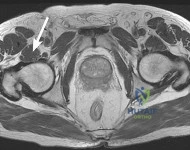
Which condition would you expect to identify during a hip arthroscopy procedure for this patient based on the radiographic findings in Figures 37a through 37c?
Explanation
- Articular cartilage delamination
Question 5High Yield
What is the most common underlying etiology for this condition in this clinical setting?
Explanation
- Sensory neuropathy
Question 6High Yield
Figure below shows the radiograph obtained from a 76-year-old woman who has sharp pain in her groin,
thigh, and buttocks that worsens with activity. She has been dealing with this pain for more than a year but is otherwise healthy. Recently, she has begun to notice night pain. The pain no longer responds to NSAIDs. She would like to be able to dance at her daughter's wedding in 4 months and wonders how best
to proceed. What is the best next step?
Explanation
The next best course of action is total hip arthroplasty. The patient is an otherwise healthy woman requesting pain relief and expresses a desire to be dancing in 4 months. She has had more than 6 months of symptoms that are classic hip osteoarthritis symptoms, with pain in the groin and thigh. Severe osteoarthritis is seen in the radiograph as well. NSAIDs are no longer working. Given the objective findings, the subjective reports, and the duration of symptoms, this patient merits surgery. Consideration for steroid injection is reasonable, but given her desire to be dancing in 4 months, an injection would increase her risk of infection if total hip arthroplasty were to be performed within 3 months of the
injection.
Question 7High Yield
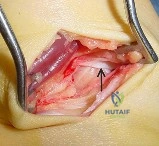
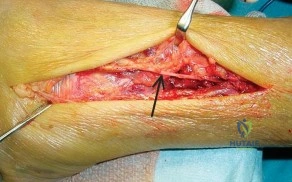
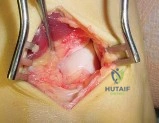
The vessel seen in the clinical photographs shown in Figures 50a and 50b (1,2 intercompartmental supraretinacular artery) is being dissected to be used as a source of vascularized bone graft for a patient who is scheduled to undergo internal fixation of a scaphoid nonunion. This vessel is a branch of what artery?
Explanation
The 1,2 intercompartmental supraretinacular artery is a branch of the radial artery. The vessel provides a reliable source of vascularized bone graft with an adequate pedicle length for use in scaphoid nonunions.
REFERENCES: Sheetz KK, Bishop AT, Berger RA: The arterial blood supply of the distal radius and ulna and its potential use in vascularized pedicled bone grafts. J Hand Surg 1995;20:902-914.
Steinmann SP, Bishop AT, Berger RA: Use of the 1,2 intercompartmental supraretinacular artery as a vascularized pedicle bone graft for difficult scaphoid nonunion. J Hand Surg
2002;27:391-401.
Question 8High Yield
Which of the following stress fractures most often requires internal fixation:
Explanation
The majority of stress fractures are treated with rest and protected weight-bearing. When the patient rests, strain on the affected bone is reduced and formation exceeds resorption, leading to bone healing.
A tension-sided femoral neck stress fracture is most at risk for progression to a complete fracture and displacement. Correct Answe Tension-sided femoral neck
Question 9High Yield
A 12-year-old girl soccer player has a 4-week history of pain, swelling, and tenderness of the right knee. She has not started her menstrual periods. The patient practices 4 nights per week and plays up to 4 games each weekend but is now unable to compete because of the pain. Examination reveals a tender mass at the right tibial tubercle. The cruciate ligaments are stable and the meniscal signs are negative. She demonstrates an antalgic limp. Radiographs are shown in Figures 1 and

Explanation


The patient has Osgood Schlatter syndrome, a traction apophysitis of the tibial tubercle as a result of overuse repetitive strain on the secondary ossification center. Radiographic changes include irregularity of the apophysis, separation from the tibial tubercle, and fragmentation. Radiographs are recommended in all unilateral cases of Osgood Schlatter to rule out infection or tumor. About 90% of patients respond to rest, ice, activity modification, and NSAIDs. In rare cases, surgical excision of the ossicle may provide good results in skeletally mature patients.
Question 10High Yield
volar tenderness along the flexor sheath
Patients commonly present 24 to 48 hours after onset of symptoms. The standard of care is “urgent surgical drainage” to avoid tendon scarring or necrosis with subsequent impairment of finger function followed by intravenous antibiotic administration.
According to Hand Surgery Update 3, open sheath irrigation has been replaced
largely by closed sheath irrigation. These authors cite a retrospective study that showed no statistical difference in resolution of infection using open sheath irrigation or closed sheath irrigation, however, there was a trend towards more frequent complications and reoperations in the open drainage group.
Lille et al reviewed the records of 75 patients with pyogenic flexor tenosynovitis and found that there was no difference in outcomes between those who received intraoperative irrigation only versus those receiving intraoperative irrigation and continuous postoperative irrigation.

A 50-year-old woman is diagnosed with carpal tunnel syndrome. She is prescribed a cock-up wrist splint at 30 degrees of extension to wear at night. This splint has what effect on the carpal tunnel?


Explanation
No detailed explanation provided for this question.
Question 11High Yield
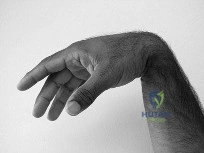
Figures 39a and 39b are the clinical photographs of an 18-month-old child who had a fingertip amputation 4 days ago. The mother had used a tight dressing to keep the child from removing it. The hand is tense and swollen. The child is irritable, in pain, afebrile, and not moving the hand. What is the most appropriate treatment?


Explanation
Figure 39c
Figure 39d

This irritable patient refuses to move his hand during a difficult examination. The hand is in an
intrinsic minus position with the extension of the metacarpophalangeal joints and flexion of the proximal interphalangeal joints. Patients who are difficult to examine may require compartment pressure measurements. Observation with elevation and possible PO steroids to decrease swelling are not indicated. This scenario has been ongoing for 4 days, and a carpal tunnel release with a release of the interosseous, thenar, hypothenar, and adductor compartments (Figures 39c and 39d) is now necessary. Finger fasciotomies are probably not needed.
If this scenario involved the forearm and a prolonged ischemic process, it may not have been prudent to perform a fasciotomy; with dead muscle, risk for infection is high. In small pediatric hands with compartment syndrome, it is often easier to find the median nerve in the forearm rather than the hand because significant edema in the hand distorts the anatomy.
RECOMMENDED READINGS
27. [Ouellette EA, Kelly R. Compartment syndromes of the hand. J Bone Joint Surg Am. 1996 Oct;78(10):1515-22. PubMed PMID: 8876579. ](http://www.ncbi.nlm.nih.gov/pubmed/%208876579)[View Abstract at PubMed](http://www.ncbi.nlm.nih.gov/pubmed/%208876579)
28. [DiFelice A Jr, Seiler JG 3rd, Whitesides TE Jr. The compartments of the hand: an anatomic study. J Hand Surg Am. 1998 Jul;23(4):682-6. PubMed PMID: 9708383. ](http://www.ncbi.nlm.nih.gov/pubmed/9708383)[View Abstract at PubMed](http://www.ncbi.nlm.nih.gov/pubmed/9708383)
**
Question 12High Yield
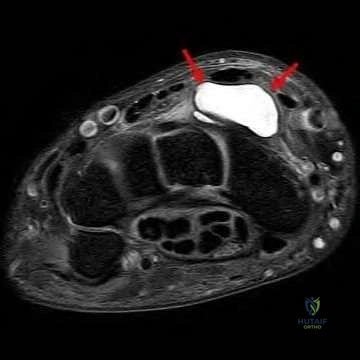
Which is the best match in surface topography when performing an osteochondral autograft transplantation procedure from the distal femur to the talar dome for an osteochondral lesion of the talus:
Explanation
In a magnetic resonance imaging topography study looking for the best corresponding shape of the articular surface between the non-weightbearing femoral condyle and the medial talar dome, plugs from the supero-lateral femoral condyle had the best fit with osteochondral lesions of the medial talus in the anterior, central, and posterior zones.
Question 13High Yield
Which of the following terms is used to describe complete severance of a peripheral nerve with loss of the nerve trunk continuity:
Explanation
A fifth-degree injury refers to complete disruption of the nerve trunk.
First-degree: Neuropraxia, the nerve structure is intact, full recovery is expected
Second-degree: Axonotmesis, severance of the axon leading to Wallerian degeneration, continuity of endoneurial sheath is maintained, repair is orderly, complete motor and sensory loss with denervation and fibrillation potentials
Third-degree: Injury to axons and the endoneurial tube, arrangement of individual fascicles is maintained (perineurium intact), recovery is variable
Fourth-degree: Injury to axons, endoneurial tube, fascicles with the nerve trunk being intact, Wallerian degeneration and a higher incidence of proximal nerve cell body degeneration, repair is unlikely and surgical repair of the nerve is necessary (excision and grafting)
Fifth-degree: Loss of nerve trunk continuity, neuroma formation in the proximal stump, Wallerian degeneration distally
Question 14High Yield
When evaluating articular cartilage, what extracellular matrix component is most closely associated with the deep calcified cartilage zone?
Explanation
Collagen type X is produced only by hypertrophic chondrocytes during enchondral ossification (growth plate, fracture callus, heterotopic ossification) and is associated with calcification of cartilage in the deep zone of articular cartilage. Collagen type I is the predominant collagen in bone, ligament, and tendon. Collagen type II is the predominant collagen in articular cartilage. Proteoglycan aggrecan and hyaluronic acid are components of the extracellular matrix and are involved in the compressive strength characteristics of articular cartilage.
REFERENCES: Buckwalter JA, Mankin HJ: Articular cartilage: Tissue design and chondrocyte matrix interactions. Instr Course Lect 1998;47:477-486.
Poole AR, Kojima J, Yasuda T, Mwale F, Kobayasai M, Laverty S: Composition and structure of articular cartilage: A template for tissue repair. Clin Orthop 2001;391:S26-S33.

.v4b{border:2px solid #0984e3;background:#fff;color:#0984e3;padding:8px 20px;border-radius:25px;cursor:pointer;margin-right:10px;font-weight:bold;transition:0.3s;}
.v4b.active{background:#0984e3;color:#fff;}
.v4b:hover:not(.active){background:#e3f2fd;}
.mcq-v4-card{background:#fff;border-radius:15px;padding:35px;margin-bottom:40px;border:1px solid #e1e8ed;box-shadow:0 5px 15px rgba(0,0,0,0.04);}
.card-meta{color:#0984e3;font-weight:800;margin-bottom:20px;letter-spacing:1.5px;font-size:0.95rem;}
.q-stem{font-size:1.25rem;margin-bottom:30px;font-weight:500;line-height:1.7;color:#2d3436;}
.q-opt{display:flex;align-items:center;padding:15px;border:2px solid #f1f2f6;border-radius:12px;margin-bottom:15px;cursor:pointer;transition:all 0.2s ease-in-out;background:#fff;}
.q-opt:hover{border-color:#0984e3;background:#f0f7ff;transform:translateX(5px);}
.q-opt-circle{width:35px;height:35px;border:2px solid #ddd;border-radius:50%;display:flex;align-items:center;justify-content:center;margin-right:20px;font-weight:bold;background:#fafafa;flex-shrink:0;color:#636e72;}
.q-opt.correct{background:#e3fcef;border-color:#00b894;}
.q-opt.correct .q-opt-circle{background:#00b894;color:#fff;border-color:#00b894;}
.q-opt.wrong{background:#fff5f5;border-color:#ff7675;}
.q-opt.wrong .q-opt-circle{background:#ff7675;color:#fff;border-color:#ff7675;}
.q-opt.selected{border-color:#0984e3;background:#e3f2fd;}
.q-opt.selected .q-opt-circle{background:#0984e3;color:#fff;border-color:#0984e3;}
.q-feedback{margin-top:30px;padding:25px;background:#f8f9fa;border-left:6px solid #0984e3;border-radius:8px;}
.feedback-label{font-weight:bold;margin-bottom:15px;font-size:1.2rem;}
.explanation-text{line-height:1.7;color:#444;font-size:1.05rem;}

var v4E={
m:'study',r:new Map(),
setMode:function(m){this.m=m;document.getElementById('v4s').classList.toggle('active',m=='study');document.getElementById('v4e').classList.toggle('active',m=='exam');document.getElementById('v4xa').style.display=m=='exam'?'block':'none';this.reset();},
reset:function(){document.querySelectorAll('.q-opt').forEach(e=>{e.className='q-opt';e.style.pointerEvents='auto';});document.querySelectorAll('.q-feedback').forEach(e=>e.style.display='none');this.r.clear();this.up();},
up:function(){let s=0;this.r.forEach(v=>{if(v===true||v.s==v.c)s++;});const t=document.querySelectorAll('.mcq-v4-card').length;document.getElementById('v4sc').innerText=Math.round((s/t)*100)||0;},
reveal:function(c,s,k){const o=c.querySelectorAll('.q-opt');if(o[k-1])o[k-1].classList.add('correct');if(s!=k && o[s-1])o[s-1].classList.add('wrong');c.querySelector('.q-feedback').style.display='block';const fl=c.querySelector('.feedback-label');fl.innerHTML=s==k?' Correct Answer':' Incorrect';},
finish:function(){this.r.forEach((v,k)=>{this.reveal(document.getElementById('card-'+k),v.s,v.c);});document.querySelectorAll('.q-opt').forEach(e=>e.style.pointerEvents='none');window.scrollTo({top:0,behavior:'smooth'});}
};
document.querySelectorAll('.q-opt').forEach(el=>{
el.onclick=function(){
const q=this.dataset.q,k=this.dataset.correct,s=this.dataset.idx,p=this.closest('.mcq-v4-card');
if(v4E.m=='study') { if(v4E.r.has(q))return; v4E.r.set(q,s==k); p.querySelectorAll('.q-opt').forEach(o=>o.style.pointerEvents='none'); v4E.reveal(p,s,k); }
else { p.querySelectorAll('.q-opt').forEach(o=>o.classList.remove('selected')); this.classList.add('selected'); v4E.r.set(q,{s:s,c:k}); }
v4E.up();
};
});


Question 15High Yield
**CLINICAL SITUATION**
Figures 1 and 2 are the radiographs of a 68-year-old woman who comes to the emergency department after stepping into a hole and twisting her ankle. She is complaining of isolated ankle pain and is unable to bear weight.
Anatomic reduction and stabilization of the posterior malleolus fracture component
---

Explanation
The radiographs reveal a trimalleolar ankle fracture dislocation with an
associated distal tibiofibular syndesmotic disruption. Medial and lateral malleolar stabilization are consistently agreed upon. The decision to stabilize the posterior
malleolus is more controversial. Posterior malleolar stabilization accomplishes the following:
17. Restores incisura competence thereby reducing the incidence of syndesmotic malreduction by creating containment
18. Assists in stabilizing the syndesmosis via the posterior inferior tibiofibular ligament, potentially limiting the need for additional syndesmotic stabilization
19. Maximizes the surface area for ankle joint loading
20. Enhances posterior translational stability of the talus
The traditional indication for stabilization of the posterior malleolus is based on fragment size. However, fracture orientation varies and makes evaluation of the fragment size challenging with a lateral radiograph alone. The three primary types include the posterolateral oblique, medial extension, and shell. Because of the additive syndesmotic stability which is gained through the deep deltoid ligament and medial malleolar fixation, the anterior talofibular ligament and lateral malleolar fixation, and the posterior inferior tibiofibular ligament and posterior malleolar fixation, syndesmotic stability should only be assessed after all other points of instability that are planned for fixation are fixed.
Syndesmotic instability should be assessed with direct manipulation on both the anteroposterior and lateral views with special attention to the lateral view. Syndesmotic reduction should be assessed either through open visualization or by comparing closed reduction parameters (clear space, overlap, and fibular position on the lateral view) with the patient’s contralateral side (assuming no injury). This is more effective than using population norms secondary to the two types of syndesmotic morphologies which create different absolute values for these parameters.
Question 16High Yield
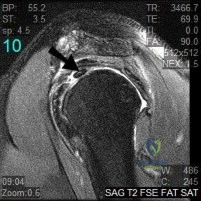
A 23-year-old minor league pitcher describes the insidious onset of posterior shoulder pain during the late cocking phase of his throwing motion. He has gone 6 weeks without throwing, but symptoms quickly returned on return to play. An MR arthrogram of the shoulder reveals fraying of the superior labrum and proximal biceps, and a partial- thickness articular-sided supraspinatus tear (30% tendon thickness). Figure 1 is a representative coronal MRI slice. Clinical examination demonstrates mild weakness of the periscapular muscles, mild superior rotator cuff weakness, and negative instability testing. Internal rotation with the arm in 90⁰ of abduction is 40⁰ in the affected shoulder versus 70⁰ in the contralateral shoulder. What is the best next step?
Explanation
63
Internal impingement is a condition that affects overhead throwing athletes, as the greater tuberosity and articular surface of the rotator cuff contact the posterosuperior glenoid during maximal shoulder abduction and external rotation. The etiology is typically multifactorial, but common contributors include posterior capsular contracture, scapular dyskinesia, and subtle anterior shoulder laxity. Nonoperative management, the mainstay of treatment, includes rest, stretching, scapular strengthening, and proprioception. Results of surgical intervention are variable; therefore, nonoperative measures should be exhausted first. While PRP is currently being investigated as a biologic augmentation in a number of shoulder pathologies, it is not considered first- line treatment.
Question 17High Yield
A 40-year-old man who is an avid weight lifter has had chronic pain in the proximal anterior shoulder for the past year. He denies any history of trauma. Examination reveals tenderness at the intertubercular groove, a positive speed test, and a positive Neer impingement sign. Nonsurgical management has failed to provide relief, and he is now considering surgery. Arthroscopic findings in the glenohumeral joint are shown in Figure 31. Based on these findings, treatment should consist of
Explanation
The arthroscopic image shows a tear through more than 50% of the biceps tendon; therefore, treatment should consist of tenodesis or tenotomy of the tendon. However, because this patient is relatively young and active, the treatment of choice is tenodesis of the biceps tendon.
REFERENCES: Sethi N, Wright R, Yamaguchi K: Disorders of the long head of the biceps tendon. J Shoulder Elbow Surg 1999;8:644-654.
Eakin CL, Faber KJ, Hawkins RJ, et al: Biceps tendon disorders in athletes. J Am Acad Orthop Surg 1999;7:300-310.
Burkhead WZ, Arcand MA, Zeman C, et al: The biceps tendon, in Rockwood CA, Matsen FA, Wirth MA, et al (eds): The Shoulder, ed 2. Philadelphia, PA, WB Saunders, 1996.
Question 18High Yield
Slide 1 Slide 2 Slide 3
A 12-year-old boy is brought to the clinic by his concerned parents. The boyâs forearm is bowed, and his parents are confused as to the possible diagnosis and treatment options. You notice that the right forearm of the child is bowed ulnarwards and is shorter compared to the left forearm. The pronosupination is markedly decreased on the right side but is also limited on the left side. The patient has a good grip, pinch, and grasp. He is neurologically intact as well.
The parents say that they first noticed the deformity around 6 or 7 years ago, and the mother informs you that she had noticed a hard bump on the forearm. She has recently noticed another bump on his right leg. The child does not complain of pain and is using both of his hands quite well. The parents were informed by a previous physician that the child has Madelungâs deformity and are concerned that the disease is now involving other areas of his body.
You order a radiograph of the forearm. The anteroposterior radiograph is shown (Slide 1). The childâs skeletal radiograph survey is also presented (Slide 2 and Slide 3).
The chance of hand involvement in this child is:
Explanation
The hand is involved in 30% to 80% of cases.
Question 19High Yield
The gold standard for diagnosis of lateral epicondylitis is considered:
Explanation
The clinical diagnosis of lateral epicondylitis is supported by specific provocative tests. The gold standard for diagnosis is the history and physical examination. Tenderness on examination is localized to the lateral epicondyle, which can radiate into the forearm; the area of maximum tenderness is approximately 2 mm to 5 mm distal and anterior to the midpoint of the lateral epicondyle. There is usually a history of overuse or of a repetitive activity. The pain is aggravated, with the elbow extended, by resisted wrist and finger extension or with passive finger and wrist flexion.
Question 20High Yield
The stem associated with the highest incidence of osteolysis is the:
Explanation
The noncircumferentially coated titanium alloy patch-porous coated straight Harris-Galante stem was associated with significant osteolysis, thigh pain, subsidence, and endosteal erosion. The patched porous coating is believed to allow ingress of joint fluid and wear debris into the endosteal canal, increasing the effective joint space
Question 21High Yield
A 68-year-old man presents with a 5-year history of worsening right knee pain with a 9-year progressive history of weakness in the right leg. He was born and raised in Nigeria prior to immigrating to the United States as a young man. He has required the use of an ankle foot orthosis and a cane for assistance with ambulation for the past 4 years. He has received two intra- articular right knee steroid injections, which provided several months of partial pain relief. Upon examination, he has noticeable weakness throughout the right lower extremity with 2/5 quadriceps muscle strength. Video 1 demonstrates his gait pattern and Figures 1 and 2 are radiographs of his right knee. He is interested in surgical management. What would you recommend for treatment of his knee to maintain function and relieve pain?
37
Explanation
38
Question 22High Yield
A 25 year-old-male presents with the injury seen in Figure A. Which of the following would be a contraindication to closed management with a functional brace?
Explanation
Closed treatment of humeral shaft fractures with functional bracing is indicated in the vast majority of isolated injuries. An ipsilateral brachial plexus injury, however, is a contraindication to nonoperative management in a functional brace.
Indications for operative management of humeral shaft fractures are limited given the high rates of union and ability of adjacent joints to compensate for deformity. Intact muscular tone is necessary to effect bony apposition in closed treatment with a functional brace. The absence of neurologic and muscle
function in patients with a flail extremity leads to increased rates of nonunion and malunion.
Rutgers and Ring conducted a retrospective review of patients managed with functional bracing of humeral shaft fractures at a single institution. The authors found a 90% overall union rate, with maintenance of shoulder and elbow motion. They caution though, that 29% of their proximal third fractures went on to nonunion.
Figure A demonstrates an AP radiograph of a comminuted humeral shaft fracture with varus alignment.
Incorrect Answers:
Answer 1: Radial nerve injury is not an indication for operative management as the vast majority of radial nerve injuries recover with conservative management
Answer 2: 1cm of shortening is an acceptable deformity with closed management
Answer 3: 20 degree varus deformity is not an indication for operative management
Answer 5: Fracture comminution is not a contraindication to functional bracing
Question 23High Yield
Management of a mucous cyst entails:
Explanation
Treatment of mucous cysts, which are ganglions of the distal interphalangeal joint associated with osteoarthritic changes, entails excision of the cyst and osteophyte resection of fusion.
Aspiration only or aspiration of the cyst with injection of hyaluronidase is not indicated or efficacious in the treatment of mucous cysts because the osteophyte must be addressed. Injection of steroids also fails to address the underlying cause of these cysts. Arthrodesis of the distal interphalangeal joint is not necessary in the treatment of typical mucous cysts.
Question 24High Yield
The Coleman block test is used to evaluate the cavovarus foot. What is the most important information obtained from this test?
Explanation
Coleman block testing, performed by placing an elevation under the lateral border of the foot, is used to determine if the forefoot and/or plantar flexed first ray is causing a compensatory varus in the hindfoot. The block is placed under the lateral border of the foot, and therefore does not have any relation to the Achilles tendon and suppleness of the hindfoot.
REFERENCES: Holmes JR, Hansen ST Jr: Foot and ankle manifestations of Charcot-Marie-Tooth disease. Foot Ankle 1993;14:476-486.
Thometz JG, Gould JS: Cavus deformity, in The Child’s Foot and Ankle. New York, NY, Raven Press, 1992, pp 343-353.
Question 25High Yield
Figure 1 is the MRI scan of a 20-year-old Division I baseball pitcher who has a 1-month history of medial elbow pain in his throwing arm. He also notes a decrease in both control and pitching velocity. An examination reveals tenderness at the medial epicondyle that is exacerbated with valgus elbow stress. The strongest indication for ulnar collateral ligament (UCL) reconstruction is
Explanation
All responses represent findings that may be associated with chronic UCL insufficiency. Responses A and C reflect injury to the UCL itself. In most patients, particularly young patients, UCL reconstruction should not be considered until an appropriate trial of nonsurgical measures has failed. This trial should include, at a minimum, 6 weeks of throwing abstinence followed by rehabilitation to address pitching mechanics and shoulder
52
motion deficits and core strengthening. Although the decision to enter the MLB draft may influence surgical decision making, a pitcher with a 1-month history of elbow symptoms should attempt nonsurgical therapy before making a surgical decision that is not based on clinical data.
Question 26High Yield
Figure 62 is the clinical photograph of a very functional 17-year-old boy with cerebral palsy and quadriplegia. He has no active supination but has full passive supination. His ability to determine position and sensibility without visual input are good. Radiographs show no osseous malalignment. Which treatment can best improve this patient’s function?

Explanation
The inability to actively supinate affects many functions; this patient has a pronation deformity of the forearm that affects function. Transfer of the pronator teres by rerouting the insertion point allows this muscle to act primarily as a supinator of the forearm rather than as a pronator. This can markedly improve his ability to accomplish activities of daily living. Release of the pronator quadratus is not necessary because there is full passive supination and no presurgical contracture. A physical therapy program would not be helpful in this situation because of the total absence, rather than weakness, of active supination. A humeral derotational osteotomy is not necessary because this patient has normal radiograph findings and bony alignment.
RECOMMENDED READINGS
22. Cobeljic G, Rajkovic S, Bajin Z, Lešic A, Bumbaširevic M, Aleksic M, Atkinson HD. The results of surgical treatment for pronation deformities of the forearm in cerebral palsy after a mean follow-up of
17.5 years. J Orthop Surg Res. 2015 Jul 8;10:106. doi: 10.1186/s13018-015-0251-3. PubMed PMID: 26152666.
23. Van Heest AE, House JH, Cariello C. Upper extremity surgical treatment of cerebral palsy. J Hand Surg Am. 1999 Mar;24(2):323-30. PubMed PMID: 10194018.
Question 27High Yield
A 78-year-old woman has a history of chronic low back pain. She denies any extremity problems. Her pain is worse in the morning, and gets better, although it does not go away, as the day goes on. An MRI scan of the lumbar spine is shown in Figure

Explanation

The patient has MRI findings throughout her lumbar spine consistent with old compression fractures. Given the imaging findings and advanced age, she is at high risk for osteoporosis and subsequent fragility fractures. Management should consist of a DEXA scan to evaluate her degree of osteoporosis and begin medical treatment as appropriate. Because acute fracture is unlikely, and she has no neurologic compromise, neither bracing nor surgical treatment is indicated.
Question 28High Yield
A 20-year-old college student sustains a closed distal one-third tibia fracture when he falls while skiing. Which of the following would be the most common fracture pattern and mechanism:
Explanation
This college student has sustained a low-energy twisting injury, also known as a boot-top injury. The fracture pattern is a short spiral fracture and the mechanism of injury is torsion loading of the tibia.
The other patterns included:
Oblique fracture â uneven bending: This type of injury typically occurs following motorcycle accidents when the tibia is subjected to uneven bending forces.
Transverse fracture â pure bending: This fracture is typical of a soccer injury because the tibia is subjected to pure bending forces.
Oblique fracture with a butterfly fragment â bending and compression: This is a common fracture that occurs with low- and high-speed injuries. These fractures may occur from car bumpers and motorcycles.
Segmental fracture â four-point bending: This pattern is typical of high-energy injury, such as a pedestrian being struck by a car bumper.
Question 29High Yield
A 69-year-old woman has rigid painful left pes planus that has become less symptomatic with casting. She has multiple comorbidities and is not a good surgical candidate. She has failed a trial of activity without any supports.


Explanation
Treatment for pes planus revolves around 2 clinical parameters: pain and rigidity. In the absence of pain, no intervention is warranted because there are no other symptoms that can reasonably be linked to the foot shape. Flexible pes planus (that corrects with heel rise) is usually normal and does not cause symptoms, but it can be associated with a symptomatic accessory navicular, in which case the patient may have pain over the medial navicular from either traction by the tibialis posterior or the act of rubbing against the medial shoe counter. Rigid pes planus is most frequently associated with a tarsal coalition, which classically presents in late adolescence but can become symptomatic for the first time in adults. The initial treatment for painful pes planus, whether flexible or rigid, is immobilization, usually in a walking cast. This often is sufficient to relieve symptoms on a permanent basis. Surgery should be contemplated only when this treatment fails. Adult-acquired flatfoot is most commonly attributable to tibialis posterior tendon dysfunction. In stage 3, the pes planus is rigid. If it is painful, surgical treatment, which consists of a triple arthrodesis, may be considered. However, if medical constraints or patient preference preclude surgery, an Arizona brace can provide sufficient support to reduce symptoms to an acceptable level to perform activities of daily living.
RECOMMENDED READINGS
[Varner KE, Michelson JD. Tarsal coalition in adults. Foot Ankle Int. 2000 Aug;21(8):669-72. PubMed PMID: 10966365. ](http://www.ncbi.nlm.nih.gov/pubmed/10966365)[View Abstract at PubMed](http://www.ncbi.nlm.nih.gov/pubmed/10966365)
[Lin JL, Balbas J, Richardson EG. Results of non-surgical treatment of stage II posterior tibial tendon dysfunction: a 7- to 10-year followup. Foot Ankle Int. 2008 Aug;29(8):781-6. doi: 10.3113/FAI.2008.0781. PubMed PMID: 18752775. ](http://www.ncbi.nlm.nih.gov/pubmed/18752775)[View Abstract at PubMed](http://www.ncbi.nlm.nih.gov/pubmed/18752775)
[Chao W, Wapner KL, Lee TH, Adams J, Hecht PJ. Nonoperative management of posterior tibial tendon dysfunction. Foot Ankle Int. 1996 Dec;17(12):736-41. PubMed PMID: 8973895. ](http://www.ncbi.nlm.nih.gov/pubmed/8973895)[View](http://www.ncbi.nlm.nih.gov/pubmed/8973895)[ ](http://www.ncbi.nlm.nih.gov/pubmed/8973895)[Abstract at PubMed](http://www.ncbi.nlm.nih.gov/pubmed/8973895)
Cha SM, Shin HD, Kim KC, Lee JK. Simple excision vs the Kidner procedure for type 2 accessory navicular associated with flatfoot in pediatric population. Foot Ankle Int. 2013 Feb;34(2):167-72. doi: 10.1177/1071100712467616. Epub 2013 Jan 15. PubMed PMID:
[23413054/. ](http://www.ncbi.nlm.nih.gov/pubmed/%2023413054)[View Abstract at PubMed](http://www.ncbi.nlm.nih.gov/pubmed/%2023413054)
[Sullivan JA. Pediatric flatfoot: evaluation and management. J Am Acad Orthop Surg. 1999 Jan;7(1):44-53. PubMed PMID: 9916191.](http://www.ncbi.nlm.nih.gov/pubmed/9916191)[View Abstract at PubMed](http://www.ncbi.nlm.nih.gov/pubmed/9916191)
CLINICAL SITUATION FOR QUESTIONS 51 AND 52
Figure 51a demonstrates the sneaker wear pattern and Figures 51b and 51c are the weight-bearing radiographs of a 20-year-old National Collegiate Athletic Association Division I basketball player. Throughout his college career he has experienced pain in the lateral aspect of his right foot. He has been treated with a clamshell orthotic, but this preseason his pain is worse than ever. Upon examination he has tenderness to palpation over the fifth metatarsal and his peroneal strength is 5/5 bilaterally

A

B

C

Question 30High Yield
A patient undergoes the treatment seen in Figure A for a displaced intertrochanteric femoral fracture. With use of this construct, a starting point 3 mm anterior to the center of the piriformis fossa has which of the following benefits?
Explanation
Figure A shows an intertrochanteric fracture treated with a cephalomedullary device. A starting point slightly anterior to the piriformis fossa (starting point for standard antegrade femoral nail) has the benefit of improved placement of screws through the nail and into the femoral head. This is due to the fact that the hip is anteverted and the femoral neck arises from the anterior portion of the proximal femur. Therefore, by moving the nail anterior, that will increase the distance between the head screw and the posterior cortex of the neck and lead to a “straight” shot into the center of the femoral head.
Johnson et al investigated the effect of starting hole position, fracture component length, reamed diameter, and nail type on the potential for femoral bursting and fracture instability. They found the most significant factor in the proximal femoral component was found to be the position of the starting hole.
They found excessive anterior displacement greater than 6 mm from the neutral axis of the medullary canal consistently caused high hoop stresses at the level of the fracture, which can increase the possibility of iatrogenic fracture. Posterior starting points increase the risk of possible distal femur anterior cortex impingement/fracture.
Ostrum et al showed that lateral starting points should be avoided in order to avoid varus reduction when using a trochanteric antegrade nail in subtrochanteric fractures. They recommended a slightly medial starting point.
Question 31High Yield
A 45-year-old male with well-controlled diabetes and hypertension is involved in a high-speed motor vehicle collision. He is complaining of left knee pain only. On physical examination, his skin is intact and his neurovascular examination is normal. His injury films are seen in Figure A. Which of the following places this patient at an increased risk for postoperative infection after open reduction and internal fixation (ORIF)?

Explanation
Intraoperative times approaching 3 hours have been associated with an increased risk of infection after undergoing ORIF of tibial plateau fractures.
The optimal treatment for displaced tibial plateau fractures is ORIF. The goals
of care are preservation of the soft tissues, restoration of the mechanical axis, and restoration of the articular surface. These injuries are associated with complications such as infections, arthrofibrosis, malunion/nonunion, and compartment syndromes. Infections have been associated with male gender, smoking, pulmonary disease, bicondylar fracture patterns, and intraoperative time over 3 hours. Modern techniques such as delay of definitive surgery, the use of temporary spanning external fixators, and dual incision approaches have improved the results of ORIF.
Basques et al. performed a database study to identify factors that are associated with short-term outcomes after ORIF of tibial plateau fractures. They examined adverse events (AAE), severe adverse events (SAEs), infectious complications, extended length of stay (LOS), and readmission within 30 days. They found that AAE was associated with increased ASA class and history of pulmonary disease. SAE was associated with male sex and increased ASA class. Infectious complications were associated with male sex, increased ASA class, smoking, pulmonary disease, and bicondylar fracture patterns.
Colman et al. performed a retrospective study to identify the relationship between surgical site infection and prolonged operative time in fractures of the tibial plateau. They found that mean operative time for patients who had an infection was 2.8 hours vs. 2.2 hours for patients without an infection. They also found that compartment syndromes that underwent fasciotomy had a higher infection rate than patients that did not develop this complication. Open fracture grade was also related to infection rate. They concluded that operative times approaching 3 hours and open fractures are related to an increased overall risk for surgical site infection.
Figure A is an AP radiograph of the knee demonstrating an intra-articular split of the lateral tibial plateau (Schatzker 2). Illustration A is an illustration of the Schatzker classification of tibial plateau fractures.
Incorrect Answers:
Answer 2: Age has not been associated with an increased risk of infection after ORIF of the tibial plateau.
Answer 3: An increased risk of infection after ORIF of the tibial plateau has been associated with bicondylar fracture patterns.
Answer 4: Well controlled diabetes and hypertension have not been associated with an increased risk of infection after ORIF of the tibial plateau.
Answer 5: Mechanism of injury has not been associated with an increased risk of infection after ORIF of the tibial plateau.
Question 32High Yield
1240) Which of the following factors is associated with the highest rate of nonunion of a midshaft clavicle fracture?

Explanation
The risk of nonunion in patients sustaining middle 1/3 clavicle fractures is increased in female patients.
Clavicle fractures are often secondary to direct blows to the lateral aspect of the shoulder. Physical examination is important to ascertain the status of the
skin and neurovascular structures to help guide treatment management. Although most non-displaced middle 1/3 clavicle fractures may be treated successfully with conservative measures, the risk for non-union (1-5%) increases with increasing comminution, female gender, shortening greater than 2 cm and an advanced age of the patient.
Robinson et al. reviewed 581 patients treated non-operatively for midshaft clavicle fractures. A nonunion rate of 4.5 % was identified at 24 weeks after the injury. They identified four factors that contributed to non-union, including: female gender, lack of cortical apposition, comminution of the fracture fragments and advancing age.
Zlowdzki et al. reviewed 2144 clavicle fracture cases in a comprehensive meta-analysis. They report displacement as the highest risk factor for nonunion (15.1%) in nonoperatively treated clavicle fractures, and simple slings were favored over figure of 8 braces. They also report an 86% reduction in the nonunion rate when operative fixation is chosen over nonoperative treatment for displaced clavicle fractures.
Illustration A shows the presence of a non-union of a midshaft clavicle fracture. A video is provided that reviews management of clavicle injuries.
Incorrect Answers
Answers 1, 3: Older patients and comminution of the fracture were found to be risk factors for non-union in midshaft clavicle injuries
Answers 4, 5: Neither of these are associated with an increased risk of nonunion in midshaft clavicular fractures.
Question 33High Yield
Figures 1 and 2 are the MRI scans of the spine of a 20-year-old college football player who complains of severe right arm pain after making a tackle. He has numbness of the right thumb and index finger but has 5/5 strength in both arms, and his neurological examination is otherwise unremarkable. You counsel the patient that he can return to play when/if
Explanation

The patient has sustained a herniated disk, which is likely causing his radicular symptoms. The patient does not have significant weakness or myelopathic symptoms, and initial treatment should be nonoperative. However, Hsu found that surgical treatment is shown to result in a better chance of returning to play in National Football League players. Regardless the treatment, the patient should not be allowed to return to play until he is asymptomatic with normal range of motion and a negative neurological examination.
Question 34High Yield
A 72-year-old patient fell 3 weeks after undergoing a total hip arthroplasty using cementless fixation of
the femoral component. She sustained a comminuted Vancouver type B-2 fracture with displacement of the calcar fragment. What is the best treatment option?
Explanation
The patient has an acute postoperative fracture of the proximal femur with subsidence. It is also common that the stem retroverts relative to the femur. It is most often seen in proximally porous coated stems within 90 days of surgery, one paper found it to occur 0.7% of the time in modern implants. There is always a debate whether this is a missed intraoperative fracture, or a new fracture that has resulted from an event of increased hoop stresses. Removal of the primary stem, placement of a diaphyseal engaging
stem (most frequently a tapered-fluted stem), and cabling of the fracture is the most successful treatment.
Question 35High Yield
Water comprises what percentage of bone composition:
Explanation
Bone has the following composition:
Mineral or inorganiCphase 70% Water 5% to 8% OrganiCmatrix 22% to 25% Collagen type I 90% Noncollagenous proteins 5% to 8%
Question 36High Yield
What is the treatment of choice for the injury shown in Figures 20a through 20c?
Explanation
The radiographs show multiple carpometacarpal dislocations. Reduction is often obtainable but difficult to maintain. Internal fixation is required to maintain the reduction, preferably with Kirschner wires. Closed reduction and percutaneous pinning is preferred by some surgeons. Others recommend open reduction to remove irreconstructable osteochondral fragments from the individual joints and to ensure correct reduction of the carpometacarpal joints. Kirschner wires are removed at 6 to 8 weeks.
REFERENCES: Prokuski LJ, Eglseder WA Jr: Concurrent dorsal dislocations and fracture-dislocations of the index, long, ring, and small (second to fifth) carpometacarpal joints. J Orthop Trauma 2001;15:549-554.
Lawlis JF III, Gunther SF: Carpometacarpal dislocations: Long-term follow-up. J Bone Joint Surg Am 1991;73:52-59.
Question 37High Yield
A 75-year-old man has persistent radial sided hand and wrist pain. Radiographs demonstrate severe scaphotrapezial trapezoidal arthritis. His basal joint is unaffected. His pain has failed to improve with bracing, activity modification, and image-guided corticosteroid injection. He has elected surgical treatment. What longterm complication can arise from a distal scaphoid resection?
Explanation
Resection of the distal pole of the scaphoid eliminates the arthritic contact at the scaphotrapeziotrapezoid joint; however, it functionally shortens the scaphoid. Theoretically, the lunate is at equilibrium between the extension moment of the capitate and the triquetrum and the flexion moment of the scaphoid. Shortening the scaphoid allows the extension moment of the triquetrum to predominate, pulling the lunate into extension and creating a DISI deformity. Concomitant capsulodesis or interposition is recommended _by some authors to prevent this complication._
Question 38High Yield
A 30-year-old firefighter sustained a longitudinal pulling injury to the arm while attempting to move a heavy object during a fire. Figure 45 shows an MRI scan of the elbow. Initial management should consist of**
Explanation
Because the MRI scan shows a complete rupture of the distal biceps tendon, the preferred treatment is anatomic repair of the tendon to the radial tuberosity either with the use of suture anchors or transosseous sutures through a two-incision technique. Several studies have documented superior results with anatomic repair of the distal biceps tendon when compared with results of nonsurgical management or repair of the tendon by attachment to the brachialis muscle. Patients undergoing anatomic repair of the distal biceps tendon through a two-incision technique typically regain a functional range of motion and nearly normal strength.
REFERENCES: D’Alessandro DF, Shields CL Jr, Tibone JE, Chandler RW: Repair of distal biceps tendon ruptures in athletes. Am J Sports Med 1993;21:114-119.
Boyd JB, Anderson LD: A method for reinsertion of the distal biceps brachii tendon. J Bone Joint Surg Am 1961;43:1041-1043.
Morrey BF, Askew LJ, An KN, Dobyns JH: Rupture of the distal tendon of the biceps brachii: A biomechanical study. J Bone Joint Surg Am 1985;67:418-421.
Failla JM, Amadio PC, Morrey BF, Beckenbaugh RD: Proximal radioulnar synostosis after repair of distal biceps brachii rupture by the two-incision technique: Report of four cases. Clin Orthop 1990;253:133-136.
Question 39High Yield
A 50-year-old woman undergoes an L4-S1 laminectomy and noninstrumented fusion for degenerative spondylolisthesis.
Explanation
Complications are numerous in adult spinal deformity surgery. Many complications are related to the patient's sagittal balance following surgery and recognition of the potential to develop sagittal imbalance or flat-back syndrome following spinal fusion. The quality of bone density is important in spinal instrumented fusions, especially among older patients. Patients with osteopenia or osteoporosis have a higher incidence of proximal-level screw cut-out through the vertebral body into the cephalad disk space.
Proximal junctional kyphosis is common in longer instrumented fusions, especially when instrumented to the sacrum/pelvis; when the spine is fixed in a "flat" or hypolordotic position; when the thoracic spine is hyperkyphotic (ie, Scheuermann kyphosis); when the end instrumented vertebrae is kyphotic; or when the sagittal plumb line (measured from C7) is more than 4 cm forward of the posterior corner of the sacrum.
Sagittal imbalance is a common complication when the spine is instrumented in a hypolordotic position. This can occur with degenerative conditions that necessitate multilevel fusions or fusions to sacrum without recognition of the degree of lordosis the patient should have. Pelvic incidence (PI) is a spinopelvic measurement that is a constant that measures an angle from the hips to the midpoint of the sacral end plate. PI correlates to the amount of lumbar lordosis that a patient would typically have in an upright position (+/-10 degrees). If a patient has significant sagittal imbalance, he or she will have a forward lean and lack the ability to extend the spine to stand upright. In an attempt to stand upright, the patient may bend his or her knees or hips in a crouched position. When extending their knees, they again lean forward.
Pseudarthrosis is common with noninstrumented fusions. Deep surgical-site infections are uncommon but can be major complications that are difficult to treat, necessitating formal irrigation and debridement and long-term antibiotics. Patients with diabetes have a higher incidence of infection.
RECOMMENDED READINGS
Glassman SD, Bridwell K, Dimar JR, Horton W, Berven S, Schwab F. The impact of positive sagittal balance in adult spinal deformity. Spine (Phila Pa 1976). 2005 Sep 15;30(18):2024-
[9/. PubMed PMID: 16166889.](http://www.ncbi.nlm.nih.gov/pubmed/16166889)[View Abstract at PubMed](http://www.ncbi.nlm.nih.gov/pubmed/16166889)
[Kim YJ, Bridwell KH, Lenke LG, Rhim S, Cheh G. Sagittal thoracic decompensation following long adult lumbar spinal instrumentation and fusion to L5 or S1: causes, prevalence, and risk factor analysis. Spine (Phila Pa 1976). 2006 Sep 15;31(20):2359-66. PubMed PMID: 16985465.](http://www.ncbi.nlm.nih.gov/pubmed/16985465)[View Abstract at PubMed](http://www.ncbi.nlm.nih.gov/pubmed/16985465)
Question 40High Yield
An orthopaedic surgeon is counseling a patient regarding risk for complications following lumbar fusion via a direct lateral approach. Surgery at which level is most likely to injure the lumbosacral plexus?
Explanation
During the direct lateral approach, interbody fusion devices are inserted through a lateral window in the psoas muscle. To accomplish this, dilators and retractors are positioned at the posterior half of the disk space, and it must be noted that the lumbosacral plexus lies within the psoas muscle between the transverse process and vertebral body and departs distally at the medial edge of the psoas. Consequently, lateral interbody fusion poses risk for injury to the lumbosacral plexus. A cadaveric study demonstrated that the lumbosacral plexus progressively migrates from dorsal to ventral in the lumbar spine. Therefore, the plexus is most likely to be injured during an L4-L5 fusion because at this level the lumbosacral plexus is closest to the location at which dilators and retractors are placed.
A 2013 retrospective study by Le and associates followed 71 patients who underwent minimally invasive fusion via a lateral interbody approach. In this study, 54.9% (39/71) had immediate postsurgical ipsilateral iliopsoas or quadriceps weakness. Of these patients, the majority had resolution by 3 months (92.3%), and all had complete resolution by 2 years.
RECOMMENDED READINGS
Le TV, Burkett CJ, Deukmedjian AR, Uribe JS. Postoperative lumbar plexus injury after lumbar retroperitoneal transpsoas minimally invasive lateral interbody fusion. Spine (Phila Pa 1976). 2013 Jan 1;38(1):E13-20. doi: 10.1097/BRS.0b013e318278417c. PubMed PMID: 23073358.
[View Abstract at PubMed](http://www.ncbi.nlm.nih.gov/pubmed/23073358)
[Benglis DM, Vanni S, Levi AD. An anatomical study of the lumbosacral plexus as related to the minimally invasive transpsoas approach to the lumbar spine. J Neurosurg Spine. 2009 Feb;10(2):139-44. doi: 10.3171/2008.10.SPI08479. PubMed PMID: 19278328. ](http://www.ncbi.nlm.nih.gov/pubmed/19278328)[View ](http://www.ncbi.nlm.nih.gov/pubmed/19278328)[Abstract](http://www.ncbi.nlm.nih.gov/pubmed/19278328)
[at PubMed](http://www.ncbi.nlm.nih.gov/pubmed/19278328)
Knight RQ, Schwaegler P, Hanscom D, Roh J. Direct lateral lumbar interbody fusion for degenerative conditions: early complication profile. J Spinal Disord Tech. 2009 Feb;22(1):34-
[7/. doi: 10.1097/BSD.0b013e3181679b8a. PubMed PMID: 19190432.](http://www.ncbi.nlm.nih.gov/pubmed/19190432)[View Abstract at PubMed](http://www.ncbi.nlm.nih.gov/pubmed/19190432)
Question 41High Yield
Arthrodesis of the ankle in a 34-year-old woman should be performed with the ankle positioned in:
Explanation
Although the woman may wish to wear shoes of varying height, there is sufficient plantarflexion occurring through the transverse tarsal joint to permit the wearing of high-heel shoes. Any plantarflexion of the fusion will cause arthritis of the transverse tarsal joint, particularly the talonavicular joint. Dorsiflexion of an ankle arthrodesis is associated with a calcaneus position and heel pain. The ankle should be fused in a similar position for both male and female patients.
Question 42High Yield
The normal porosity of trabecular bone is:
Explanation
Trabecular bone is arranged as a series of interconnecting small plates and rods. The porosity may vary between 50% to 90%. This porosity is secondary to the spaces between the trabecular pieces of bone rather than voids in the actual pieces of trabecular bone.
The normal porosity of cortical bone is 10%. Cortical bone porosity occurs because of the Haversian and Volkman canals and, to a lesser extent, from the ostocyte lacunae and canaliculi.
Question 43High Yield
Which of the following activities produces greater hip joint contact pressures than full weight bearing during normal gait?
Explanation
Rising from a seated position on a chair on the affected leg has been shown to create the highest contact pressure within the hip, even higher than full weight-bearing during walking.
Limiting activities that create high contact pressures is important in situations such as after internal fixation of an acetabular fracture. Full weight bearing during a normal gait cycle is often considered too much contact pressure and considered a risk for early failure of fixation. During the postoperative period weight bearing and activities are limited to prevent this. It has been shown that the highest contact pressures, even higher than normal walking, are seen when rising from a chair on the affected leg.
Brand et al. analyzed joint reactive forces in patients walking with and without a cane. Compared to age matched controls they estimate that using a cane decreases the contact pressure in the hip to about 60% of normal.
Hodge et al. looked at data from an implanted hip prosthesis with pressure sensors. They found that some activities common to the early rehabilitative period, such as using a bed pan and performing isometric exercises about the hip, can create pressure approaching those of normal walking. The highest pressures recorded were when rising from a chair.
Incorrect answers:
Answers 1 and 2: Isometric hip exercises and using a bed pan cause contact pressure approaching that of normal walking, but not exceeding it.
Answer 3: Ambulating with a cane reduces the contact force of the hip to about 60% of normal walking.
Answer 5: Toe touch weight bearing with passive hip abduction significantly decreases the contact pressures in the hip. Toe-touch weight bearing with passive abduction creates even lower joint reactive force than complete non-weight bearing status.
Question 44High Yield
A 35-year-old man with a 2-part anterior proximal humerus fracture-dislocation
Explanation
- Open reduction and internal fixation with or without bone grafting_
Question 45High Yield
Variables that affect the rate at which cement polymerizes include the following EXCEPT:
Explanation
Temperature, humidity, mixing rate, and added agents affect the rate of polymerization. The materials with which the polymer and powder contact are not known to affect this rate.
Question 46High Yield
-Pelvic packing for a hemodynamically unstable patient with a pelvic ring fracture is best described by which of the following techniques?
Explanation
No detailed explanation provided for this question.
Question 47High Yield
Rupture of the structure shown in the axial cross and the sagittal sections in Figures 100a and 100b causes weakness in

Explanation
87
The structure identified is the distal biceps tendon. Rupture of this tendon causes weakness in both flexion and supination. The biceps tendon does not affect extension or pronation.
RECOMMENDED READINGS
1. [Baker BE, Bierwagen D. Rupture of the distal tendon of the biceps brachii. Operative versus non-operative treatment. J Bone Joint Surg Am. 1985 Mar;67(3):414-7. PubMed PMID: 3972865. ](http://www.ncbi.nlm.nih.gov/pubmed/3972865)[View Abstract at PubMed](http://www.ncbi.nlm.nih.gov/pubmed/3972865)
2. [Mazzocca AD, Spang JT, Arciero RA. Distal biceps rupture. Orthop Clin North Am. 2008 Apr;39(2):237-49, vii. doi: 10.1016/j.ocl.2008.01.001. Review. PubMed PMID: 18374814. ](http://www.ncbi.nlm.nih.gov/pubmed/18374814)[View Abstract at PubMed](http://www.ncbi.nlm.nih.gov/pubmed/18374814)
Question 48High Yield
A 57-year-old woman experiences pain 1 year after total knee arthroplasty (TKA). She reports sharp
anterior pain and a painful catching sensation that is aggravated by rising from a chair or climbing stairs. Physical examination reveals a mild effusion and a range of motion of 2° to 130°, with patellar crepitus.
The symptoms are reproduced by resisted knee extension. Radiographs show a well-aligned posterior- stabilized TKA without evidence of component loosening. What is the most likely cause of this patient's pain?
Explanation
Patellar clunk syndrome is caused by the development of a fibrous nodule on the posterior aspect of the quadriceps tendon at its insertion into the patella. It causes a painful catching sensation when the extensor mechanism traverses over the trochlear notch as the knee extends from 45° of flexion to 30° from full extension. It characteristically occurs in posterior stabilized total knee arthroplasties and appears to be related to femoral component design. The syndrome can usually be prevented by excising the residual synovial fold just proximal to the patella. Flexion gap instability can also cause a painful total knee arthroplasty but is less common in posterior stabilized implants. Femoral component malrotation can cause pain attributable to a flexion gap imbalance or patellar tracking problems. Polyethylene wear would be unlikely after just 1 year. Patellar clunk syndrome can usually be addressed successfully with arthroscopic synovectomy. Recurrence is uncommon. Physical therapy may help to strengthen the quadriceps following synovectomy but would not resolve the clunk syndrome symptoms. Femoral or tibial insert revision is not indicated if patellar clunk syndrome is the only problem resulting in a painful
total knee arthroplasty.
Question 49High Yield
Mallet finger injuries refer to:
Explanation
Mallet finger injuries may be associated with fractures of the bony tuft, fractures of the middle phalanx, flexor tendon injuries, and intrinsic tightness. However, mallet injuries refer to lack of continuity at the DIP joint.
Question 50High Yield
A mutation in which of the following genes causes a disturbance in normal limb outgrowth patterning:
Explanation
P63 is an important factor in normal limb outgrowth patterning. The other factors are involved with common disorders:
C BFA1: C leidocranial dysplasia
C OMP: Multiple epiphyseal dysplasia
C OL1A1: Osteogenesis imperfecta (easy to remember type I collagen) VDR3: Osteoporosis (easy to remember vitamin D receptor)
C orrect Answer: P63

You Might Also Like

Dr. Mohammed Hutaif
Medically Verified Content by
Prof. Dr. Mohammed Hutaif
Consultant Orthopedic & Spine Surgeon
Chapter Index