العربية
Part of the Master Guide

Orthopedic Ob Basic Review | Dr Hutaif Basic Science Re -...

Orthopedic Anatomy Review | Dr Hutaif Basic Science Rev -...
23 Apr 2026 44 min read 190 Views
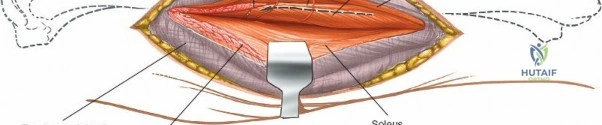
Illustration of williams wilkins pp - Dr. Mohammed Hutaif

Key Takeaway

For anyone wondering about ONLINE ORTHOPEDIC MCQS ANATOMY08, To mobilize common iliac vessels for L4-5 disk access, the iliolumbar vein must be ligated. An L5 selective root block alleviates pain in the dorsal first web space and great toe. The anterior bundle of the medial collateral ligament is the primary stabilizer preventing elbow valgus instability, as detailed in anatomical texts such as those referenced in a williams wilkins pp style.

Orthopedic Anatomy Review | Dr Hutaif Basic Science Rev -...

Comprehensive 100-Question Exam


00:00

Start Quiz

Question 1

During an anterior intrapelvic (ilioinguinal or Stoppa) approach to the acetabulum, the surgeon encounters significant bleeding over the superior pubic ramus. This bleeding is most likely originating from an anastomosis between which two vessels?


Explanation

The corona mortis is a critical vascular anastomosis between the external iliac system (inferior epigastric vessels) and the internal iliac system (obturator vessels) located over the superior pubic ramus, approximately 5-7 cm from the pubic symphysis. It can cause severe bleeding if lacerated during pelvic surgery.

Question 2

During an anterior approach to the thoracolumbar spine for a burst fracture corpectomy, segmental vessels are ligated. The Artery of Adamkiewicz is primarily responsible for supplying the anterior spinal artery in the lower thoracic and lumbar regions. Typically, on which side and between which spinal levels does this artery most commonly originate?


Explanation

The Artery of Adamkiewicz (arteria radicularis magna) most commonly arises on the left side between the levels of T9 and L1 (in about 75-80% of cases). Ligation or injury to this vessel during anterior spinal approaches can lead to anterior spinal artery syndrome (ischemia of the anterior spinal cord resulting in paraplegia with preserved dorsal column function).

Question 3

The major blood supply to the proximal pole of the scaphoid enters the bone at which anatomical location?


Explanation

The major blood supply to the scaphoid is retrograde. The dorsal carpal branch of the radial artery enters the scaphoid at the dorsal ridge (distal to the waist) and supplies the proximal 80% of the bone. Fractures at the waist or proximal pole disrupt this retrograde flow, putting the proximal pole at high risk for avascular necrosis.

Question 4

What is the primary blood supply to the femoral head in a 6-year-old child?


Explanation

In children between the ages of 3 and 10 years, the medial femoral circumflex artery (MFCA), specifically its lateral epiphyseal branches, provides the dominant blood supply to the femoral head. The metaphyseal supply is blocked by the developing physis, and the artery of the ligamentum teres does not contribute significantly until later childhood/adolescence.

Question 5

The spring ligament complex is a critical static stabilizer of the longitudinal arch of the foot. Which of the following accurately describes its primary origin and insertion?


Explanation

The spring ligament (plantar calcaneonavicular ligament) originates on the sustentaculum tali of the calcaneus and inserts on the plantar and medial aspect of the navicular. It forms a 'sling' for the talar head and is a crucial static stabilizer of the medial longitudinal arch, frequently injured or attenuated in adult-acquired flatfoot deformity.

Question 6

Which of the following structures is contained within the rotator interval of the shoulder?


Explanation

The rotator interval is a triangular anatomical space between the anterior margin of the supraspinatus and the superior margin of the subscapularis. It contains the coracohumeral ligament (CHL), superior glenohumeral ligament (SGHL), the long head of the biceps tendon, and the joint capsule.

Question 7

During a posterolateral corner (PLC) reconstruction, identifying the exact femoral footprint of the popliteus tendon is crucial. Where is the popliteus footprint located relative to the lateral collateral ligament (LCL) femoral attachment?


Explanation

On the lateral femoral epicondyle, the footprint for the popliteus tendon is located anterior and distal (inferior) to the origin of the lateral collateral ligament (LCL). The LCL attachment is situated posterior and proximal to the popliteus.

Question 8

In the digital flexor pulley system, which two pulleys are considered the most biomechanically critical for preventing bowstringing of the flexor tendons?


Explanation

The A2 and A4 pulleys are the major annular pulleys. The A2 pulley is located over the proximal phalanx, and the A4 pulley is located over the middle phalanx. Preserving or reconstructing these pulleys is critical to prevent flexor tendon bowstringing and subsequent loss of active flexion and mechanical disadvantage.

Question 9

A patient presents with a winged scapula following a posterior triangle lymph node biopsy. The injured nerve is derived from which roots of the brachial plexus?


Explanation

Winging of the scapula with medial deviation is typically due to a long thoracic nerve injury resulting in serratus anterior paralysis. The long thoracic nerve is formed directly by the ventral rami of C5, C6, and C7 before they form the trunks of the brachial plexus.

Question 10

The anterior (Henry) approach to the radius utilizes an internervous plane. Proximally, this plane runs between muscles supplied by which two nerves?


Explanation

The volar (Henry) approach to the radius utilizes the internervous plane between the brachioradialis (innervated by the radial nerve) and the pronator teres (proximally) or flexor carpi radialis (distally), both of which are innervated by the median nerve.

Question 11

The axillary nerve and posterior circumflex humeral artery exit the axilla through the quadrangular space. What forms the inferior border of this space?


Explanation

The borders of the quadrangular space are: superiorly the teres minor (or subscapularis when viewed anteriorly), inferiorly the teres major, medially the long head of the triceps, and laterally the surgical neck of the humerus. It transmits the axillary nerve and posterior circumflex humeral artery.

Question 12

In piriformis syndrome, variations in the relationship between the sciatic nerve and the piriformis muscle are often cited. What is the most common anatomical relationship between these two structures?


Explanation

In the most common anatomical configuration (Beaton and Anson Type 1, present in ~80-85% of people), the undivided sciatic nerve passes deep (anterior and inferior) to the piriformis muscle. The second most common variant involves the common peroneal division piercing the muscle.

Question 13

The medial and lateral menisci have distinct anatomical characteristics. Which of the following statements correctly differentiates them?


Explanation

The medial meniscus is C-shaped, wider posteriorly than anteriorly, less mobile, and is attached to the deep MCL. The lateral meniscus is more circular, more uniform in width, more mobile, unattached to the LCL (separated by the popliteus), and serves as the attachment site for the meniscofemoral ligaments (Humphry and Wrisberg).

Question 14

Which structure provides the greatest resistance to distal tibiofibular diastasis and is considered the primary stabilizer of the ankle syndesmosis?


Explanation

The posterior inferior tibiofibular ligament (PITFL) is the strongest ligament of the syndesmosis and provides the greatest resistance (approximately 42%) to tibiofibular diastasis. The AITFL contributes about 35%, and the interosseous ligament contributes about 22%.

Question 15

A patient requires a first dorsal compartment release for De Quervain's tenosynovitis. The surgeon must be aware of anatomical variants. Which of the following is true regarding the first dorsal compartment?


Explanation

The first dorsal compartment contains the Abductor Pollicis Longus (APL) and Extensor Pollicis Brevis (EPB) tendons. Multiple slips of the APL are very common. A subcompartmental septum separating the APL and EPB is found in up to 30-60% of cases, and failure to release both subcompartments is a common cause of recurrent/persistent symptoms. The superficial branch of the radial nerve (not ulnar) is at risk.

Question 16

The gluteus medius has multiple footprint insertions on the greater trochanter. Which facet of the greater trochanter serves as the primary, largest broad insertion site for the gluteus medius?


Explanation

The gluteus medius inserts primarily onto the lateral and superoposterior facets of the greater trochanter. The lateral facet is the largest footprint for the gluteus medius. The gluteus minimus inserts on the anterior facet.

Question 17

The ulnar nerve passes through several potential compression sites in the arm and elbow. The Arcade of Struthers is a potential site of entrapment located:


Explanation

The Arcade of Struthers is a fascial band or thickening of the medial intermuscular septum located approximately 8 cm proximal to the medial epicondyle. It extends from the medial intermuscular septum to the medial head of the triceps and is a known site of ulnar nerve compression, especially after anterior transposition.

Question 18

During a lateral approach to the fibula for a distal third fracture, the surgeon must identify and protect the superficial peroneal nerve. Where does the superficial peroneal nerve typically pierce the deep crural fascia to become subcutaneous?


Explanation

The superficial peroneal nerve courses in the lateral compartment of the leg and typically pierces the deep crural fascia to become subcutaneous in the middle to distal third of the leg (approximately 10-12 cm proximal to the tip of the lateral malleolus), crossing from the lateral to the anterior aspect of the fibula.

Question 19

A trauma patient develops thigh compartment syndrome. Which muscle is located in the medial compartment of the thigh and is distinctly dually innervated by both the obturator nerve and the tibial division of the sciatic nerve?


Explanation

The adductor magnus is a massive muscle with dual innervation. Its adductor (pubofemoral) portion is innervated by the posterior division of the obturator nerve, and its hamstring (ischiocondylar) portion is innervated by the tibial division of the sciatic nerve.

Question 20

In the vascular anatomy of the growing long bone, the perichondrial ring of LaCroix and the groove of Ranvier are critical structures. The primary function of the vessels in the groove of Ranvier is to:


Explanation

The groove of Ranvier contains a rich vascular network that supplies the peripheral aspect of the physis. It provides chondrocytes for latitudinal (appositional/width) growth of the physis, whereas the epiphyseal vessels supply the central regions for longitudinal growth.

Question 21

A patient presents with isolated weakness of the teres minor and deltoid following a posterior shoulder dislocation. The injured nerve passes through a quadrilateral space in the posterior shoulder. Which of the following muscles forms the inferior border of this anatomical space?


Explanation

The axillary nerve and posterior circumflex humeral artery pass through the quadrangular space. The borders of the quadrangular space are: superiorly the teres minor (and inferior capsule), inferiorly the teres major, medially the long head of the triceps, and laterally the surgical neck of the humerus.

Question 22

The anterolateral ligament (ALL) of the knee is an important secondary stabilizer against internal tibial rotation. It originates near the lateral femoral epicondyle. What is its precise anatomical insertion on the tibia?


Explanation

The anterolateral ligament (ALL) originates from the lateral femoral epicondyle (slightly anterior and distal to the FCL origin) and inserts on the lateral tibial plateau, exactly midway between Gerdy's tubercle and the fibular head. It is deep to the iliotibial band.

Question 23

During a digital fasciectomy for Dupuytren's contracture, the neurovascular bundle is identified. Which of the following normal anatomical ligaments of the digit passes dorsal to the neurovascular bundle and is typically SPARED from involvement in Dupuytren's disease?


Explanation

Cleland's ligaments are strong fascial structures located dorsal to the digital neurovascular bundles and are rarely involved in Dupuytren's disease. Grayson's ligaments are volar (palmar) to the neurovascular bundle and are commonly involved, contributing to the pathological cords.

Question 24

During an ilioinguinal approach to the acetabulum, severe hemorrhage is encountered dissecting over the superior pubic ramus near the symphysis. This is most likely due to an inadvertent injury to the 'corona mortis'. This structure represents an anastomosis between which two vascular systems?


Explanation

The corona mortis ('crown of death') is a vascular anastomosis between the external iliac system (inferior epigastric artery/vein) and the internal iliac system (obturator artery/vein). It crosses the superior pubic ramus and is highly susceptible to injury during the ilioinguinal or Stoppa approaches.

Question 25

When planning posterior instrumented spinal fusion, understanding lumbar pedicle morphology is critical. Which lumbar vertebral level typically has the widest pedicle diameter in the coronal plane?


Explanation

Pedicle width in the coronal plane steadily increases from L1 to L5. L5 has the widest pedicles, typically allowing for the placement of larger diameter pedicle screws compared to the upper lumbar spine.

Question 26

Posterolateral rotatory instability (PLRI) of the elbow primarily results from incompetence of the lateral ulnar collateral ligament (LUCL). What are the exact origin and insertion of the LUCL?


Explanation

The lateral ulnar collateral ligament (LUCL) originates on the lateral epicondyle of the humerus, blends with the annular ligament, and inserts on the supinator crest of the proximal ulna. It acts as a posterior sling for the radial head, preventing posterolateral subluxation.

Question 27

Volar forearm compartment syndrome often necessitates an extensive fasciotomy. The deep volar compartment contains muscles responsible for distal digital flexion. Which of the following muscles is exclusively located within the deep volar compartment of the forearm?


Explanation

The volar forearm is divided into superficial and deep compartments. The deep volar compartment consists of the Flexor Pollicis Longus (FPL), Flexor Digitorum Profundus (FDP), and Pronator Quadratus (PQ). FDS, FCU, PT, and PL are in the superficial/intermediate compartments.

Question 28

The 'Master Knot of Henry' is a key anatomical landmark in the plantar aspect of the midfoot where two tendons cross. Which of the following accurately describes their spatial relationship at this intersection?


Explanation

At the Master Knot of Henry, located under the navicular/medial cuneiform, the flexor digitorum longus (FDL) tendon crosses superficial (plantar) to the flexor hallucis longus (FHL) tendon. Therefore, the FHL is positioned dorsal (deep) to the FDL at this crossing.

Question 29

A 24-year-old male sustains a stab wound to the axilla. Neurological examination reveals complete transaction of the posterior cord of the brachial plexus. Which of the following muscular functions would remain completely INTACT?


Explanation

The posterior cord gives rise to the upper/lower subscapular nerves, thoracodorsal nerve, axillary nerve, and radial nerve. Therefore, latissimus dorsi, subscapularis, deltoid (abduction), and triceps (extension) are affected. The clavicular head of the pectoralis major is innervated by the lateral pectoral nerve (from the lateral cord) and would remain intact.

Question 30

The Smith-Petersen (anterior) approach to the hip utilizes a true internervous plane. Which of the following describes the innervation of the muscles forming the superficial boundary of this approach?


Explanation

The superficial plane of the Smith-Petersen approach lies between the sartorius (innervated by the femoral nerve) and the tensor fasciae latae (TFL, innervated by the superior gluteal nerve).

Question 31

The medial femoral circumflex artery (MFCA) provides the predominant blood supply to the adult femoral head. Which specific branch of the MFCA is considered the most critical for the perfusion of the superolateral aspect of the femoral head?


Explanation

The deep branch of the MFCA (which gives rise to the posterosuperior retinacular vessels, also known as the lateral epiphyseal artery) provides the majority of the blood supply to the weight-bearing superolateral dome of the femoral head.

Question 32

During endoscopic carpal tunnel release, precise knowledge of cross-sectional anatomy is paramount. Which of the following structures is anatomically positioned as the most radial component WITHIN the carpal tunnel?


Explanation

Within the confines of the carpal tunnel (deep to the transverse carpal ligament), the FPL tendon is the most radial structure. The FCR is enclosed in its own separate fibro-osseous tunnel within the split of the transverse carpal ligament and is not considered a content of the main carpal tunnel.

Question 33

The rotator interval is a triangular anatomical space in the anterosuperior shoulder that must often be closed during instability surgery. Which of the following structures is NOT considered part of the borders or contents of the rotator interval?


Explanation

The rotator interval is bordered superiorly by the anterior margin of the supraspinatus, inferiorly by the superior margin of the subscapularis, and medially by the coracoid base. Its contents include the coracohumeral ligament (CHL), superior glenohumeral ligament (SGHL), and long head of the biceps tendon. The inferior glenohumeral ligament (IGHL) is located inferiorly and is not part of the interval.

Question 34

In an unstable syndesmotic injury of the ankle, the ligamentous complex is disrupted. Biomechanical studies indicate that one specific ligament provides the greatest percentage of resistance to fibular diastasis. Which ligament is this?


Explanation

The posterior inferior tibiofibular ligament (PITFL) is the strongest component of the syndesmosis, providing approximately 42% of the resistance to diastasis. The AITFL provides about 35%, and the interosseous ligament provides about 22%.

Question 35

Perilunate dislocations commonly propagate through an area of relative weakness in the volar wrist capsule known as the Space of Poirier. Between which two palmar carpal ligaments does this vulnerable space lie?


Explanation

The Space of Poirier is a weakness in the volar radiocarpal capsule lying exactly between the radioscaphocapitate (RSC) ligament and the long radiolunate (LRL) ligament. In perilunate dislocations, the capitate typically dislocates dorsally through this interval or the lunate is extruded volarly through it.

Question 36

The Martin-Gruber anastomosis is an important anatomical variant to consider during nerve conduction studies and hand surgery. What is the most common direction of nerve fiber crossover in this anomaly?


Explanation

A Martin-Gruber anastomosis is an anomalous connection in the forearm where motor fibers cross from the median nerve (or its anterior interosseous branch) to the ulnar nerve. It occurs in about 15% of individuals. A Riche-Cannieu anastomosis is a connection between the deep branch of the ulnar nerve and the recurrent branch of the median nerve in the hand.

Question 37

The alar ligaments are strong fibrous bands that connect the dens to the occipital condyles. What is their primary biomechanical function at the craniocervical junction?


Explanation

The alar ligaments run obliquely from the superolateral aspect of the dens to the medial aspects of the occipital condyles. Their primary function is to limit contralateral axial rotation and lateral flexion of the occiput and C1 on C2. The transverse ligament prevents anterior translation of C1 on C2.

Question 38

During a submuscular ulnar nerve transposition, the surgeon must completely decompress the nerve by releasing potential sites of entrapment. The Arcade of Struthers is a recognized site of proximal entrapment. Where is this structure anatomically located?


Explanation

The Arcade of Struthers is a thin fascial band extending from the medial head of the triceps to the medial intermuscular septum. It is located approximately 8 cm proximal to the medial epicondyle. It is an important release site, especially when the ulnar nerve is anteriorly transposed.

Question 39

According to the Beaton and Anson classification of sciatic nerve variants, the normal anatomy (Type A) involves the undivided sciatic nerve exiting below the piriformis muscle. What describes the second most common variant (Type B)?


Explanation

Type B is the most frequent variant (~10-15% of people), in which the sciatic nerve divides early; the common peroneal branch pierces the piriformis muscle, while the tibial branch exits inferior to the piriformis.

Question 40

The scaphoid is highly susceptible to avascular necrosis following fracture due to its unique retrograde blood supply. Which of the following best describes the predominant intraosseous vascular pattern of the scaphoid?


Explanation

Approximately 70-80% of the scaphoid (including the entire proximal pole) is supplied by the dorsal carpal branch of the radial artery. These vessels enter along the dorsal non-articular ridge at the scaphoid waist and course retrogradely (from distal to proximal) inside the bone, predisposing proximal pole fractures to ischemia.

Question 41

During a reconstruction of the posterolateral corner of the knee, identifying the exact femoral footprints is critical. Which of the following accurately describes the relationship of the popliteus tendon insertion relative to the fibular collateral ligament (FCL) femoral attachment?


Explanation

On the lateral femoral epicondyle, the popliteus inserts at the anterior end of the popliteal sulcus. The FCL origin is proximal and posterior to the popliteus insertion. Restoring this anatomic relationship is crucial for proper biomechanical function of the reconstructed posterolateral corner.

Question 42

The anterior (Smith-Petersen) approach to the hip utilizes a true internervous plane. During the deep dissection of this approach, a specific vessel is routinely identified crossing the surgical field and must often be ligated. This vessel is a branch of which of the following arteries?


Explanation

The deep internervous plane of the anterior approach to the hip (Smith-Petersen) lies between the rectus femoris (femoral nerve) and the gluteus medius (superior gluteal nerve). The ascending branch of the lateral femoral circumflex artery transverses this plane and must be identified and ligated to prevent excessive hemorrhage.

Question 43

In the cervical spine, the vertebral artery typically enters the transverse foramen at which vertebral level?


Explanation

The vertebral artery typically arises from the subclavian artery and enters the transverse foramen at the C6 level in approximately 90% of individuals. It bypasses the C7 transverse foramen. Understanding this is critical when performing anterior cervical corpectomies or placing lateral mass screws.

Question 44

A 28-year-old volleyball player presents with isolated weakness in external rotation of the right shoulder. Abduction is full and symmetric to the contralateral side. Atrophy is noted in the infraspinatus fossa. An MRI reveals a paralabral cyst. Where is the cyst most likely located?


Explanation

Isolated weakness of the infraspinatus implies compression of the suprascapular nerve after it has already given off motor branches to the supraspinatus. This distal compression characteristically occurs at the spinoglenoid notch. Compression at the suprascapular notch would affect both the supraspinatus and infraspinatus.

Question 45

The primary blood supply to the body of the talus is derived from the artery of the tarsal canal. This artery is typically a direct branch of which major vessel?


Explanation

The artery of the tarsal canal provides the majority of the blood supply to the talar body. It typically arises from the posterior tibial artery about 1-2 cm proximal to its bifurcation into the medial and lateral plantar arteries. It forms an anastomotic sling with the artery of the sinus tarsi.

Question 46

During an ilioinguinal approach for an anterior column acetabular fracture, the middle window is accessed. What are the respective lateral and medial borders of this specific surgical window?


Explanation

The ilioinguinal approach features three main windows. The lateral window is lateral to the iliopsoas. The middle window is bound laterally by the iliopsoas/femoral nerve and medially by the external iliac vessels. The medial window is bound laterally by the external iliac vessels and medially by the rectus abdominis/spermatic cord.

Question 47

Which of the following accurately describes the origins, innervations, and basic functions of the lumbrical muscles in the hand?


Explanation

The lumbricals originate from the flexor digitorum profundus (FDP) tendons and insert into the radial lateral bands of the extensor hood. The first and second (radial two) are unipennate and innervated by the median nerve. The third and fourth (ulnar two) are bipennate and innervated by the ulnar nerve. They act to flex the MCP joints and extend the IP joints.

Question 48

During the proximal portion of the volar (Henry) approach to the forearm, the arm is supinated during deep dissection. What is the primary anatomical rationale for this maneuver?


Explanation

During the proximal volar (Henry) approach to the radius, the forearm must be fully supinated when detaching and reflecting the supinator muscle from its radial insertion. This maneuver physically moves the posterior interosseous nerve (PIN), which lies within the substance of the supinator, laterally and posteriorly, away from the surgical plane.

Question 49

Which of the following structures is NOT considered a normal content or border of the rotator interval of the shoulder?


Explanation

The rotator interval is a triangular space bordered superiorly by the anterior margin of the supraspinatus, inferiorly by the superior margin of the subscapularis, medially by the coracoid base, and laterally by the transverse humeral ligament. Its contents include the coracohumeral ligament (CHL), superior glenohumeral ligament (SGHL), and the long head of the biceps tendon. The middle glenohumeral ligament (MGHL) is an intra-articular structure located inferior to the rotator interval.

Question 50

A surgeon utilizes a modified 2-incision (Mayo) approach for a distal biceps tendon repair. During the creation of the posterior window to retrieve and attach the tendon to the radial tuberosity, which of the following maneuvers is critical to prevent nerve injury?


Explanation

In the modified 2-incision approach for a distal biceps repair, creating the posterior window (splitting the extensor carpi radialis brevis and extensor digitorum communis, or passing through the supinator) places the posterior interosseous nerve (PIN) at risk. The arm must be placed in maximal pronation; this rotates the radius and pulls the PIN medially, safely away from the posterior surgical field.

Question 51

The ulnar nerve is frequently entrapped at the elbow. Which of the following structures normally forms the primary roof of the cubital tunnel?


Explanation

The roof of the cubital tunnel is formed by the cubital tunnel retinaculum (often referred to as Osborne's ligament or fascia), which spans from the medial epicondyle to the olecranon process. The floor is composed of the medial collateral ligament (MCL) and joint capsule. The Arcade of Struthers is a distinct fascial band located ~8 cm proximal to the medial epicondyle.

Question 52

The 'corona mortis' is a vascular anastomosis of significant importance during anterior approaches to the pelvis. It connects the obturator vessels with which of the following vascular systems?


Explanation

The corona mortis (crown of death) is an important vascular variant consisting of an anastomosis between the obturator vessels and the external iliac or inferior epigastric vessels. It crosses the superior pubic ramus and must be carefully identified and ligated during pelvic surgery (e.g., ilioinguinal approach) to prevent severe hemorrhage.

Question 53

From anteromedial to posterolateral, what is the correct anatomical order of structures passing through the tarsal tunnel beneath the flexor retinaculum?


Explanation

The well-known mnemonic 'Tom, Dick, AND Very Nervous Harry' corresponds to the order of structures from anteromedial to posterolateral behind the medial malleolus: Tibialis posterior, flexor Digitorum longus, Artery (posterior tibial), Vein, Nerve (tibial), and flexor Hallucis longus.

Question 54

Which of the following accurately describes the normal vascular supply of the menisci in the adult human knee?


Explanation

In the adult knee, only the peripheral 10% to 30% of the medial and lateral menisci (the 'red-red' zone) is vascularized by a perimeniscal capillary plexus originating from the medial and lateral superior and inferior genicular arteries. The inner portions are avascular and rely entirely on diffusion from synovial fluid for nutrition.

Question 55

The Achilles tendon features a relative avascular 'watershed' zone that is particularly prone to tendinopathy and rupture. Where is this zone typically located in relation to its insertion on the calcaneus?


Explanation

The watershed area of the Achilles tendon is a region of relative hypovascularity located approximately 2 to 6 cm proximal to its insertion on the calcaneal tuberosity. This zone is supplied by a tenuous network from the peroneal and posterior tibial arteries, predisposing it to degeneration and rupture.

Question 56

A 22-year-old male sustains a proximal pole scaphoid fracture. The risk of nonunion and avascular necrosis (AVN) is high due to the unique retrograde blood supply. The primary blood supply to the scaphoid enters at which anatomical location, and from which artery is it derived?


Explanation

The primary blood supply to the scaphoid (providing 70-80% of its vascularity) is derived from branches of the radial artery entering via the dorsal ridge located at the distal aspect of the bone. This blood supply runs in a retrograde fashion to nourish the proximal pole, making proximal pole fractures particularly susceptible to AVN.

Question 57

During a standard deltopectoral approach to the shoulder, the cephalic vein is identified within the intermuscular groove. According to classic orthopedic principles, which of the following represents the safest management of the cephalic vein during deeper retraction?


Explanation

Classic orthopedic teaching advocates retracting the cephalic vein laterally along with the deltoid muscle during a deltopectoral approach. The rationale is that the majority of the tributary venous branches to the cephalic vein come from the deltoid; retracting the vein medially would tear these branches, leading to troublesome bleeding.

Question 58

The lateral compartment of the lower leg contains muscles primarily responsible for foot eversion. Which major nerve courses directly through this compartment?


Explanation

The lateral compartment of the leg contains the peroneus longus and peroneus brevis muscles, and the superficial peroneal nerve. The deep peroneal nerve is located in the anterior compartment, while the tibial nerve resides in the posterior compartment.

Question 59

In a pediatric patient, understanding the chronological appearance of secondary ossification centers around the elbow is critical for accurately interpreting radiographs. According to the well-known CRITOE mnemonic, which of the following ossification centers appears last?


Explanation

The secondary ossification centers of the pediatric elbow appear in a predictable sequence represented by the mnemonic CRITOE: Capitellum (1 year), Radial head (3 years), Internal (medial) epicondyle (5 years), Trochlea (7 years), Olecranon (9 years), and External (lateral) epicondyle (11 years). Thus, the lateral epicondyle is the last to appear.

Question 60

In approximately 10-15% of the general population, an anatomical variant exists wherein a portion of the sciatic nerve pierces the piriformis muscle. Which division of the sciatic nerve is most commonly involved in this piercing variation?


Explanation

According to the Beaton and Anson classification of sciatic nerve variants, the most common variation (aside from the normal anatomy where the entire nerve passes below the piriformis) occurs when the common peroneal division pieces the piriformis muscle, while the tibial division passes underneath it.

Question 61

During a deltopectoral approach to the shoulder, the axillary nerve is at risk as it exits the axilla. What is its correct anatomical course relative to the quadrangular space?


Explanation

The axillary nerve exits the axilla posteriorly via the quadrangular space. It courses inferior to the capsule of the shoulder joint and posterior to the surgical neck of the humerus, accompanied by the posterior circumflex humeral artery.

Question 62

A surgeon is performing a posterior approach to the humeral shaft for open reduction internal fixation. On average, at what distance proximal to the radiocapitellar joint does the radial nerve cross the lateral intermuscular septum to enter the anterior compartment?


Explanation

The radial nerve travels in the spiral groove and pierces the lateral intermuscular septum to enter the anterior compartment approximately 10 cm proximal to the radiocapitellar joint (or lateral epicondyle).

Question 63

When performing a volar (Henry) approach to the proximal radius, the surgeon supinates the forearm to protect the posterior interosseous nerve (PIN). This maneuver displaces the PIN in which direction relative to the surgical field?


Explanation

Supination of the forearm wraps the supinator muscle around the proximal radius, effectively translating the PIN posteriorly and laterally away from the volar surgical exposure.

Question 64

A 28-year-old volleyball player presents with isolated atrophy of the infraspinatus muscle. Examination shows preserved supraspinatus strength. Magnetic resonance imaging will most likely show a paralabral cyst compressing the nerve at which specific anatomical location?


Explanation

Compression of the suprascapular nerve at the spinoglenoid notch affects only its terminal branch, leading to isolated infraspinatus weakness. Compression at the more proximal suprascapular notch would affect both the supraspinatus and infraspinatus.

Question 65

The deep branch of the medial circumflex femoral artery (MCFA) provides the primary vascular supply to the adult femoral head. During a posterior approach to the hip, releasing which of the following short external rotators too close to the femur places this artery at greatest risk?


Explanation

The main branch of the MCFA runs deep (anterior) to the quadratus femoris. Releasing the quadratus femoris at its femoral insertion without maintaining a cuff of tissue risks transecting this critical vessel.

Question 66

During a minimally invasive percutaneous repair of a ruptured Achilles tendon, the sural nerve is at risk of iatrogenic injury. At the level of the lateral malleolus, what is the typical anatomical location of the sural nerve relative to the Achilles tendon?


Explanation

The sural nerve generally crosses the lateral border of the Achilles tendon approximately 10 cm proximal to its insertion. At the level of the lateral malleolus, it lies approximately 1 to 1.5 cm lateral to the tendon's lateral border.

Question 67

When utilizing an anterolateral approach for minimally invasive plate osteosynthesis (MIPO) of the distal tibia, the superficial peroneal nerve must be identified. Where does this nerve typically pierce the crural fascia to become subcutaneous?


Explanation

The superficial peroneal nerve typically pierces the deep crural fascia to enter the subcutaneous tissue in the distal third of the leg, about 10-12 cm proximal to the tip of the lateral malleolus.

Question 68

During a direct lateral (Hardinge) approach to the hip for arthroplasty, splitting the gluteus medius too proximally endangers the superior gluteal nerve. What is the generally accepted safe zone for splitting the gluteus medius proximal to the tip of the greater trochanter?


Explanation

The safe zone to avoid denervating the anterior portion of the gluteus medius during a lateral approach is approximately 3 to 5 cm proximal to the tip of the greater trochanter, as the superior gluteal nerve branches traverse the muscle belly superior to this level.

Question 69

The artery of the tarsal canal is a crucial contributor to the blood supply of the talar body, making it vulnerable in talar neck fractures. This artery classically originates as a branch of which major vessel?


Explanation

The artery of the tarsal canal typically arises from the posterior tibial artery about 1 cm proximal to its bifurcation. It gives off the deltoid branch and provides the dominant blood supply to the talar body.

Question 70

The Smith-Petersen (anterior) approach to the hip utilizes a true internervous plane. Which two nerves supply the muscles that form the superficial interval of this approach?


Explanation

The superficial interval of the Smith-Petersen approach is between the tensor fasciae latae (innervated by the superior gluteal nerve) and the sartorius (innervated by the femoral nerve).

Question 71

In the setting of a high-energy knee dislocation, the popliteal artery is at high risk for traction injury. Which two anatomical structures firmly tether the popliteal artery proximally and distally, predisposing it to intimal tearing?


Explanation

The popliteal artery is relatively fixed proximally as it exits the adductor hiatus and distally as it passes under the fibrous arch of the soleus muscle. This tethering makes it susceptible to severe traction injury during significant knee displacement.

Question 72

When performing a deltoid-splitting approach for a proximal humerus fracture, the axillary nerve is at risk of iatrogenic injury. On average, at what distance distal to the lateral edge of the acromion does the axillary nerve cross the humerus?


Explanation

The axillary nerve runs transversely from posterior to anterior, crossing the humerus approximately 5 to 7 cm distal to the lateral border of the acromion. A deltoid split extending further distal than 5 cm safely places this nerve at significant risk. Proximal extension of the split should be carefully measured or protected with a stay suture.

Question 73

During a posterior approach to the humeral shaft, the radial nerve is identified in the spiral groove. At what approximate distance proximal to the lateral epicondyle does the radial nerve cross the posterior aspect of the humerus?


Explanation

The radial nerve runs in the spiral groove of the posterior humerus. Classic anatomic studies consistently locate the nerve approximately 14 cm proximal to the lateral epicondyle and 20 cm proximal to the medial epicondyle. Knowing these landmarks helps safely localize the nerve during posterior humerus exposures.

Question 74

To preserve the primary blood supply to the femoral head during a posterior approach to the hip, the surgeon must be careful not to injure the medial femoral circumflex artery (MFCA). The main deep branch of the MFCA typically runs between which two muscles?


Explanation

The deep branch of the medial femoral circumflex artery (MFCA) provides the predominant blood supply to the adult femoral head. It courses anatomically posterior to the obturator externus and anterior to the quadratus femoris. Leaving the obturator externus intact and carefully managing the quadratus femoris protects this vital vessel.

Question 75

A 35-year-old sustains a displaced talar neck fracture. The artery of the tarsal canal provides the predominant blood supply to the talar body. From which major vessel does this artery originate?


Explanation

The artery of the tarsal canal is a branch of the posterior tibial artery and provides the dominant blood supply to the talar body. It anastomoses with the artery of the tarsal sinus, which originates from the anterior tibial and peroneal arteries. Disruption of this blood supply in talar neck fractures heavily contributes to avascular necrosis.

Question 76

During an anterior (Henry) approach to the proximal radius, the supinator muscle must be elevated. To protect the posterior interosseous nerve (PIN), the supinator should be detached from its insertion and reflected laterally. The PIN enters the supinator beneath a fibrous arch known as the Arcade of Frohse. Which structure forms this arcade?


Explanation

The Arcade of Frohse is a fibrous arch formed by the thickened superficial tendinous edge of the supinator muscle. It is the most common site of compression for the posterior interosseous nerve (PIN). Supination of the forearm during the Henry approach moves the PIN radially, further protecting it during dissection.

Question 77

A 28-year-old volleyball player presents with isolated weakness in shoulder external rotation. Atrophy is noted over the infraspinatus fossa with a normal supraspinatus bulk. An MRI reveals a paralabral cyst. At which anatomical location is the nerve compression most likely occurring?


Explanation

Compression of the suprascapular nerve at the spinoglenoid notch results in isolated denervation of the infraspinatus muscle, presenting as external rotation weakness. Compression at the suprascapular notch would affect both the supraspinatus and infraspinatus. This condition is classically associated with posterior labral tears and resultant paralabral cysts.

None

Clinic OS
Medically Verified Content by
Prof. Clinic OS
Consultant Orthopedic & Spine Surgeon
Chapter Index
