
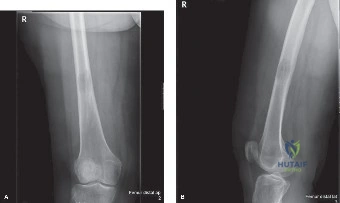
You are in the acute trauma intake. A 62-year-old female is brought in with severe left thigh pain after a simple trip. She has a known history of Stage IV breast cancer. Radiographs show a displaced subtrochanteric fracture with an underlying lytic lesion involving over 50% of the cortex. How do you approach this case?
Candidate: I would stabilize the patient's airway, breathing, and circulation, ensuring adequate analgesia. Given the clinical and radiological findings, I suspect a pathological fracture. I would order an urgent CT of the femur for surgical planning, bloods including a bone profile and calcium, and a systemic staging workup if not already done. I would discuss the case with the Orthopedic Oncology team for definitive fixation.
Candidates often jump immediately to "I will perform an IM nail." They fail to demonstrate the "Oncological" mindset—missing the mandatory screening for hypercalcemia, failing to mention pre-operative systemic staging, or forgetting to mention that the biopsy must be performed in a way that doesn't compromise future limb salvage.
A high-scoring answer follows a structured approach: 1) **Stabilization & Analgesia** (including hypercalcemia management); 2) **Diagnosis** (Confirming it's pathological vs. incidental trauma via CT and labs); 3) **Oncological Staging** (PET-CT/Bone scan); 4) **Decision Making** (Utilizing the Mirels' score to confirm risk and Tokuhashi/prognostic scores to determine if we are performing palliative fixation vs. reconstruction); 5) **Surgical Planning** (Long cephalomedullary nail, cement augmentation, and intraoperative biopsy).
You have decided to proceed with surgery. Why is a long cephalomedullary nail (CMN) preferred over a plate for this specific subtrochanteric pathological fracture, and what is the role of PMMA cement in this procedure?
Candidate: A long cephalomedullary nail is preferred because it is a load-sharing device. In metastatic disease, bone healing is unreliable, so a device that spans the entire femoral canal and allows for immediate weight-bearing is crucial. PMMA cement is used to fill the lytic void, increasing mechanical stability and providing a local anti-tumor effect through the exothermic reaction.
Failing to emphasize that the nail must *bypass* the entire lesion and extend into healthy distal bone. Candidates often forget the "prophylactic" nature of the nail—treating the entire femur because the whole bone is a "field" for potential metastatic progression.
Focus on the "Load-Sharing" principle. Explain that the nail functions as an internal splint. PMMA cement is essential for "void filling" in large lytic lesions where internal fixation would otherwise have poor purchase. Mention that the exothermic reaction aids local control, and clarify that the nail must span the entire length to protect against future "skip" lesions in the ipsilateral femur.
Detailed Chapters & Topics
Dive deeper into specialized chapters regarding orthopedic-oncology-cases-metastatic-bone-disease1