العربية
Part of the Master Guide

Hand And Wrist: And Emq Questio Review | Dr Hutaif Hand -...

Orthopedics Hand Review | Dr Hutaif Hand & Wrist Review -...
23 Apr 2026 39 min read 130 Views
Solve Hand & Wrist Cases: An Orthopedic Question of Figures

Key Takeaway

Looking for accurate information on Orthopedics Mcqs Hand0019? Based on the question of figures, a 43-year-old bricklayer's left hand weakness, atrophy, positive Froment sign, and ulnar nerve motor denervation distal to the wrist, without sensory loss, points to ulnar nerve motor branch compression. MRI reveals a ganglion cyst near the hook of the hamate compressing this branch. The best next step is excision of the ganglion cyst.

Orthopedics Hand Review | Dr Hutaif Hand & Wrist Review -...

Comprehensive 100-Question Exam


00:00

Start Quiz

Question 1

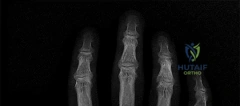
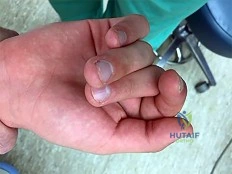
A 55-year-old female with long-standing rheumatoid arthritis presents with a finger deformity characterized by PIP joint hyperextension and DIP joint flexion.

What is the primary pathophysiologic event initiating this specific deformity?


Explanation

Swan neck deformity is characterized by PIP hyperextension and DIP flexion. In RA, it often initiates from synovitis leading to volar plate laxity and PIP hyperextension, with secondary DIP flexion. Conversely, Boutonniere deformity starts with attenuation of the central slip, leading to volar subluxation of the lateral bands.

Question 2

A 25-year-old carpenter sustained a laceration over the volar aspect of the proximal phalanx of his index finger. Physical examination reveals an inability to flex both the PIP and DIP joints. The injury is classified as being in Zone II.

Which of the following is true regarding repairs in this zone?


Explanation

Historically considered 'no man's land,' Zone II flexor tendon injuries are now optimally managed with primary repair of both the FDS and FDP tendons when possible. Repairing both preserves the vincula, maintains blood supply, and improves tendon gliding. Early active motion protocols generally require at least a 4-strand core repair.

Question 3

A 30-year-old male presents after a fist fight with thumb base pain. Radiographs reveal a two-part intra-articular fracture of the base of the first metacarpal with subluxation of the metacarpal shaft.

Which deforming forces are primarily responsible for the displacement of the metacarpal shaft in this injury pattern?


Explanation

This describes a Bennett fracture. The volar ulnar beak fragment is held in place by the anterior oblique ligament (volar beak ligament). The metacarpal shaft is displaced proximally, dorsally, and radially by the pull of the Abductor Pollicis Longus (APL), while the Adductor Pollicis (AP) pulls the metacarpal head ulnarly into the palm, resulting in supination.

Question 4

A 40-year-old manual laborer presents with chronic wrist pain. Radiographs reveal a scaphoid nonunion with radioscaphoid arthritis and capitolunate arthritis, but the radiolunate joint is spared.

Which stage of SNAC wrist does this represent, and what is the most appropriate surgical treatment?



Explanation

SNAC staging: Stage I involves arthritis between the distal scaphoid fragment and the radial styloid. Stage II involves the entire radioscaphoid joint. Stage III involves the capitolunate joint. Stage IV involves the entire carpus, including the radiolunate joint. For Stage III, scaphoid excision and four-corner fusion is preferred. Proximal row carpectomy (PRC) is contraindicated in Stage III because the capitate articular surface (which articulates with the lunate fossa in PRC) is arthritic.

Question 5

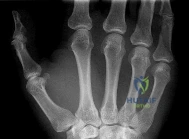
A patient presents with a swollen, erythematous, and painful index finger 3 days after a puncture wound. Which of the following is considered the most sensitive and earliest, albeit least specific, of Kanavel's signs for pyogenic flexor tenosynovitis?


Explanation

Kanavel's four cardinal signs of pyogenic flexor tenosynovitis are: 1) flexed posture of the digit, 2) fusiform swelling, 3) tenderness along the flexor sheath, and 4) pain with passive extension. Pain with passive extension is typically the earliest and most sensitive sign, although it may be the least specific.

Question 6

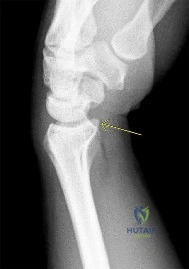
A 52-year-old male presents with wrist pain. Radiographs show scapholunate dissociation with associated radiocarpal and midcarpal arthritis. The radiolunate joint is notably preserved.

Why is the radiolunate joint typically spared in SLAC wrist?


Explanation

In SLAC wrist, the abnormal kinematics caused by scapholunate ligament rupture lead to arthritis. The radiolunate joint is classically spared because the lunate's spherical shape allows it to remain congruous and concentrically rotate within the spherical lunate fossa of the radius, preventing edge-loading and cartilage wear, unlike the elliptical scaphoid in the elliptical scaphoid fossa.

Question 7

A 35-year-old male sustains a midshaft humerus fracture. Examination reveals an inability to extend the wrist and digits. He is diagnosed with a radial nerve palsy. If tendon transfers are required due to lack of recovery, which of the following combinations is the classic Boyes transfer for radial nerve palsy?



Explanation

The Boyes transfer utilizes the Pronator Teres (PT) to Extensor Carpi Radialis Brevis (ECRB) for wrist extension, Flexor Digitorum Superficialis (FDS) of the middle finger to Extensor Digitorum Communis (EDC) for finger extension, FDS of the ring finger to Extensor Pollicis Longus (EPL) for thumb extension, and Flexor Carpi Radialis (FCR) to Abductor Pollicis Longus (APL) and Extensor Pollicis Brevis (EPB). In contrast, the more common standard (Jones) transfer uses PT to ECRB, FCU to EDC, and Palmaris Longus to EPL.

Question 8

Trigger finger typically involves constriction of the flexor tendon as it passes through which pulley?



Explanation

Trigger finger (stenosing tenosynovitis) is caused by a size mismatch between the flexor tendon (often a nodule on the tendon) and the first annular (A1) pulley at the level of the metacarpal head. Treatment consists of splinting, corticosteroid injections, or surgical release of the A1 pulley. Release of A2 or A4 should be avoided as they are critical for preventing tendon bowstringing.

Question 9

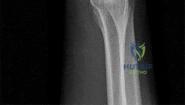
A 28-year-old manual worker presents with dorsal wrist pain. X-rays show sclerosis of the lunate with no collapse. MRI confirms avascular necrosis of the lunate. Radiographs also demonstrate ulnar minus variance.

Which of the following is the most appropriate initial surgical intervention for this patient (Lichtman Stage II)?


Explanation

The patient has Kienböck's disease, Lichtman Stage II (sclerosis of the lunate, no collapse). In the setting of ulnar negative variance, joint-leveling procedures such as radial shortening osteotomy or ulnar lengthening are indicated to offload the lunate. Proximal row carpectomy or fusions are reserved for more advanced stages with carpal collapse and arthritis.

Question 10

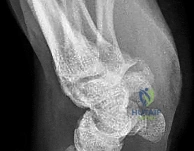
In congenital syndactyly, what is the most common anatomical web space involved?


Explanation

Congenital syndactyly most commonly involves the 3rd web space (between the long and ring fingers). It is followed in frequency by the 4th, 2nd, and 1st web spaces.

Question 11

A 60-year-old female presents with pain at the base of her thumb, worsened by pinch grasp. A positive 'grind test' is elicited. Eaton-Littler classification on radiograph shows pantrapezial arthritis.

Which ligament attenuation is the primary initiator of thumb carpometacarpal (CMC) joint osteoarthritis?



Explanation

The anterior oblique ligament (AOL), also known as the volar beak ligament, provides primary stability to the thumb CMC joint. Attenuation or rupture of this ligament leads to dorsal and radial subluxation of the metacarpal on the trapezium, shifting contact stresses and precipitating osteoarthritis.

Question 12

A cyclist complains of numbness in his small finger and the ulnar half of his ring finger, along with intrinsic muscle weakness.

Which of the following zones of Guyon's canal is most likely compressed if the patient presents with purely motor symptoms (weakness of hypothenar and interossei muscles) with NO sensory deficits?


Explanation

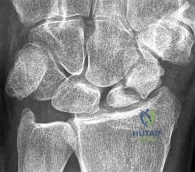
Guyon's canal is divided into three zones. Zone 1 is proximal to the bifurcation and compression causes mixed motor and sensory symptoms. Zone 2 is the deep motor branch, and compression causes pure motor symptoms (weakness of intrinsic muscles). Zone 3 is the superficial sensory branch, and compression causes pure sensory symptoms to the ulnar digits.

Question 13

Which of the following is considered an absolute contraindication for finger replantation?


Explanation

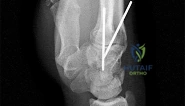
Absolute contraindications for replantation include prolonged warm ischemia time (typically >12 hours for a digit or >6 hours for a major limb), severe crush or avulsion injuries with multiple level tissue damage, and life-threatening concomitant injuries. Thumb amputations, multiple digits, and pediatric amputations are strong indications FOR replantation. Single digit amputations in Zone II in adults are relative contraindications or controversial due to poor functional outcomes (stiffness).

Question 14

Which of the following cords is primarily responsible for proximal interphalangeal (PIP) joint contracture in Dupuytren's disease?



Explanation

The PIP joint contracture in Dupuytren's disease is most commonly caused by the spiral cord (which also displaces the neurovascular bundle centrally and superficially), the central cord, and the lateral cord. The spiral cord is a combination of the pretendinous band, spiral band, lateral digital sheet, and Grayson's ligament. The pretendinous cord primarily causes metacarpophalangeal (MCP) joint contracture.

Question 15

A 40-year-old female presents with severe, lancinating pain in her fingertip, exquisitely sensitive to cold. Examination reveals a bluish discoloration beneath the nail matrix.

Which of the following clinical tests is most specific for diagnosing this condition?



Explanation

The clinical presentation is classic for a glomus tumor. Hildreth's test is performed by inflating a tourniquet on the proximal arm or digit, which relieves the pain of a glomus tumor due to cessation of blood flow. This test has high specificity. Love's pin test (exquisite point tenderness using a pinhead) and the cold sensitivity test are also characteristic.

Question 16

A 25-year-old male struck the tip of his finger while playing basketball and now presents with an inability to actively extend the distal interphalangeal (DIP) joint. Radiographs show a small dorsal avulsion fracture of the distal phalanx involving 20% of the articular surface.

What is the recommended primary treatment?



Explanation

For a soft tissue mallet finger or a bony mallet finger involving less than 30-50% of the articular surface without volar subluxation of the distal phalanx, continuous extension splinting of the DIP joint alone for 6-8 weeks is the treatment of choice. The PIP joint should be left free to allow motion. Operative fixation is reserved for larger articular fragments or joints with volar subluxation.

Question 17

A patient complains of numbness in the small finger. On examination, there is weakness of the flexor digitorum profundus to the small finger (FDP) and a positive Froment's sign.

This presentation indicates ulnar nerve compression at what level?



Explanation

Weakness of the FDP to the small finger indicates that the ulnar nerve compression is proximal to the wrist, typically at the elbow (cubital tunnel syndrome). The motor branches to the FDP and FCU take off in the proximal forearm. Compression at Guyon's canal (wrist) spares the FDP and FCU, presenting with intrinsic muscle weakness (positive Froment's sign) but normal FDP function.

Question 18

A 45-year-old female presents with a painless, slowly enlarging, firm, lobulated mass on the volar aspect of her index finger. X-rays show soft tissue swelling with no bone involvement.

Histological examination following excision is most likely to show:


Explanation

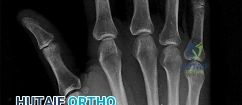
The clinical picture describes a giant cell tumor of the tendon sheath, the second most common soft tissue mass in the hand (after ganglion cysts). Histologically, it is characterized by multinucleated giant cells, lipid-laden macrophages (foam cells), and hemosiderin deposits. It is considered a localized form of pigmented villonodular synovitis (PVNS).

Question 19

A patient presents with a throbbing, severe pain in the pulp of the thumb. Examination reveals a tense, swollen, and erythematous thumb pulp.

If surgical drainage is required, which of the following incision techniques is generally avoided due to the risk of neuroma formation and loss of sensation on the working surface?



Explanation

A felon is an infection of the septated pulp space of the distal phalanx. A 'fish-mouth' incision (a circumferential incision around the tip) is historically associated with painful scars, loss of tactile sensation, and unstable pulp, and is generally avoided. A longitudinal volar midline incision or a high lateral incision that avoids the neurovascular bundles are preferred approaches.

Question 20

A 22-year-old rugby player grabbed an opponent's jersey and felt a pop in his ring finger. He cannot actively flex the distal interphalangeal (DIP) joint. Radiographs reveal a small bony fragment retracted to the level of the proximal interphalangeal (PIP) joint.

According to the Leddy and Packer classification, what type of injury is this, and what is its blood supply status?


Explanation

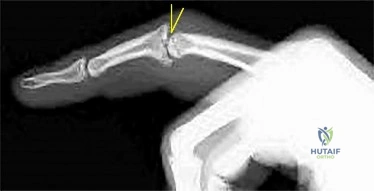
Jersey finger is an avulsion of the flexor digitorum profundus (FDP) tendon. In the Leddy and Packer classification: Type I retracts to the palm, rupturing both vincula (requires early repair within 7-10 days to prevent contracture and necrosis). Type II retracts to the level of the PIP joint, caught by the intact long vinculum (preserves some blood supply, can be repaired slightly later). Type III is a large bony avulsion caught at the A4 pulley. Type IV is a bony avulsion with simultaneous avulsion of the tendon off the bony fragment.

Question 21

A 60-year-old man presents with chronic wrist pain. Radiographs show severe narrowing of the radioscaphoid and capitolunate joints, but the radiolunate joint is preserved. Which of the following surgical procedures is definitively contraindicated in this patient?


Explanation

The patient has Stage III Scapholunate Advanced Collapse (SLAC) wrist, characterized by arthritis of the radioscaphoid and capitolunate joints with sparing of the radiolunate joint. Proximal row carpectomy (PRC) relies on a preserved, cartilage-covered capitate head to articulate with the lunate fossa of the radius. Because the capitolunate joint is arthritic in Stage III SLAC, PRC is contraindicated. A four-corner fusion with scaphoid excision is the preferred motion-sparing option.

Question 22

A 62-year-old female undergoes a ligament reconstruction and tendon interposition (LRTI) using the flexor carpi radialis (FCR) tendon for advanced Eaton-Littler Stage III thumb CMC arthritis. During the surgical approach to the CMC joint, which of the following nerves is at greatest risk of iatrogenic injury?


Explanation

The surgical approach to the thumb carpometacarpal (CMC) joint often involves a dorsal or dorsoradial incision. The terminal sensory branches of the superficial radial nerve run directly over this area and are at highest risk of injury, which can lead to painful neuromas. Careful blunt dissection and retraction are required to protect them.

Question 23

A 32-year-old male rower presents with pain and swelling approximately 4 to 6 cm proximal to the dorsal wrist joint. Examination reveals localized swelling and crepitus with active wrist flexion and extension. This condition is caused by friction between the muscle bellies and tendons of which two extensor compartments?


Explanation

This is the classic presentation of Intersection Syndrome. It occurs at the point where the muscle bellies of the 1st dorsal compartment (abductor pollicis longus and extensor pollicis brevis) cross over the tendons of the 2nd dorsal compartment (extensor carpi radialis longus and extensor carpi radialis brevis), typically 4-6 cm proximal to Lister's tubercle.

Question 24

During the repair of a lacerated flexor digitorum profundus (FDP) tendon in Zone II, the surgeon notes damage to the flexor tendon sheath. To prevent biomechanical failure and 'bowstringing' of the flexor tendon, which two annular pulleys are the most critical to preserve or reconstruct?


Explanation

The A2 and A4 pulleys are considered the most critical pulleys to prevent bowstringing and maintain the mechanical advantage of the flexor tendons. They originate from the periosteum of the proximal and middle phalanges, respectively. Unlike the A1, A3, and A5 pulleys which lie over the joints, A2 and A4 provide the primary biomechanical constraints along the shafts of the phalanges.

Question 25

A 35-year-old male sustains a high ulnar nerve transection above the elbow. After primary repair, the surgeon decides to perform a distal supercharged nerve transfer to rapidly restore intrinsic hand function before irreversible muscle atrophy occurs. Which of the following nerve transfers is most commonly used for this purpose?


Explanation

For high ulnar nerve injuries, distal nerve transfers are employed to bypass the long regeneration distance. The transfer of the terminal branch of the anterior interosseous nerve (AIN) (which supplies the pronator quadratus) to the deep motor branch of the ulnar nerve is the most established technique to rapidly reinnervate the intrinsic muscles of the hand.

Question 26

A 55-year-old woman with long-standing rheumatoid arthritis presents with an acute inability to actively flex the interphalangeal joint of her thumb. Passive range of motion is full and painless. She has a prominent, soft volar wrist mass. What is the most likely mechanism of this deficit?


Explanation

This clinical scenario describes Mannerfelt-Norman syndrome, which is the attritional rupture of the flexor pollicis longus (FPL) tendon over a bony spur protruding from the volar aspect of the scaphoid in patients with rheumatoid arthritis. It is the most common flexor tendon to rupture in the rheumatoid hand. (Vaughan-Jackson syndrome refers to the dorsal rupture of EDC tendons over a prominent ulnar head).

Question 27

A neonate presents with bilateral shortened forearms, radially deviated hands, and absent radii on radiographs. Interestingly, both thumbs are present and appear structurally normal. Which of the following genetic syndromes is most likely in this patient?


Explanation

Thrombocytopenia-absent radius (TAR) syndrome is uniquely characterized by bilateral absence of the radii but with preservation of the thumbs. In other syndromes associated with radial longitudinal deficiency (such as Fanconi anemia, Holt-Oram, and VACTERL), if the radius is absent or hypoplastic, the thumb is also typically absent or hypoplastic.

Question 28

A 32-year-old jackhammer operator presents with chronic dorsal wrist pain. X-rays reveal sclerosis, fragmentation, and early collapse of the lunate. Carpal height is maintained, and there is no fixed rotation of the scaphoid. MRI confirms avascular necrosis of the lunate. According to the Lichtman classification, what is the stage of this Kienbock's disease?


Explanation

In the Lichtman classification of Kienbock's disease: Stage I shows normal X-rays but MRI changes. Stage II exhibits lunate sclerosis without collapse. Stage IIIA involves lunate collapse/fragmentation but normal carpal alignment (normal carpal height, normal scaphoid alignment). Stage IIIB involves lunate collapse with fixed scaphoid rotary subluxation and decreased carpal height. Stage IV adds secondary radiocarpal or midcarpal arthritis.

Question 29

A 30-year-old male presents with a high radial nerve palsy following a humerus fracture 12 months ago. Nerve exploration was unsuccessful. For the surgical restoration of active wrist extension, which tendon transfer is most commonly utilized and provides the best biomechanical advantage?


Explanation

The pronator teres (PT) to extensor carpi radialis brevis (ECRB) transfer is the workhorse tendon transfer to restore wrist extension in radial nerve palsy. The ECRB is preferred over the ECRL because it inserts more centrally on the third metacarpal, preventing radial deviation during wrist extension.

Question 30

A 45-year-old diabetic patient presents with a pyogenic flexor tenosynovitis of his small finger following a puncture wound. Two days later, he develops massive swelling in the thumb and thenar eminence despite having no direct trauma to the thumb. What anatomical structure facilitates this specific spread of infection?


Explanation

The ulnar bursa (enveloping the small finger flexor tendons) and the radial bursa (enveloping the FPL tendon of the thumb) commonly communicate in the distal forearm via Parona's space (the potential space between the pronator quadratus and the deep flexor tendons). An infection spreading from the small finger to the thumb is known as a 'horseshoe abscess'.

Question 31

A 22-year-old athlete sustains a dorsal fracture-dislocation of the proximal interphalangeal (PIP) joint of the middle finger, involving 45% of the volar articular base of the middle phalanx. The joint is highly unstable to extension block splinting. What is the most appropriate surgical management for this injury?


Explanation

For acute or chronic PIP joint dorsal fracture-dislocations involving >40% of the volar articular surface where the joint remains unstable, a hemi-hamate autograft is the preferred treatment. It perfectly reconstructs the cupped contour of the middle phalanx base, restoring stability and allowing for early mobilization.

Question 32

A 40-year-old female presents with ulnar-sided wrist pain that worsens with pronation and gripping. Radiographs demonstrate a positive ulnar variance of +4 mm and cystic changes in the lunate and triquetrum. MRI confirms a central perforation of the TFCC but an intact distal radioulnar joint (DRUJ) cartilage. What is the most appropriate surgical intervention?


Explanation

This is a classic presentation of Ulnar Impaction Syndrome. With a positive ulnar variance of +4 mm and preserved DRUJ articular cartilage, an ulnar shortening osteotomy (extra-articular) is the gold standard. It unloads the ulnocarpal joint while tightening the ulnocarpal ligaments. A Wafer procedure is generally reserved for variance of +2 mm or less. Darrach and Suave-Kapandji are salvage procedures for DRUJ arthritis.

Question 33

In the surgical treatment of Dupuytren's contracture, a specific pathological cord is responsible for flexing the PIP joint and simultaneously displacing the neurovascular bundle centrally and superficially, placing it at high risk of transection. Which of the following normal fascial structures is NOT a precursor to this cord?


Explanation

The spiral cord is responsible for PIP contracture and central/superficial displacement of the neurovascular bundle. It forms from four structures: the pretendinous band, the spiral band, the lateral digital sheet, and Grayson's ligament. Cleland's ligament is located dorsal to the neurovascular bundle and is NOT involved in the pathogenesis of Dupuytren's disease.

Question 34

A 25-year-old carpenter suffers a fingertip amputation of his index finger. The amputation is volar-oblique, exposing 4 mm of the distal phalanx. Which of the following is the most appropriate soft tissue coverage option to provide durable, sensate padding?


Explanation

A cross-finger flap is the ideal choice for a volar-oblique amputation of a digit (excluding the thumb) with exposed bone, as it brings in thick, durable tissue from the dorsum of an adjacent finger. A V-Y (Atasoy) flap is better for transverse or dorsal-oblique amputations. A Moberg flap is strictly used for the thumb due to its unique independent dorsal blood supply.

Question 35

A 30-year-old skier presents with severe pain and weakness of pinch in the right thumb following a fall on an outstretched hand with a ski pole. Examination shows 45 degrees of radial deviation of the MCP joint with no firm endpoint. A Stener lesion is suspected. What defines the anatomy of a Stener lesion?


Explanation

A Stener lesion occurs in complete ruptures of the thumb UCL. The torn end of the ligament flips back and displaces superficial to the adductor pollicis aponeurosis. Because the aponeurosis is interposed between the ligament and its bony insertion, non-operative healing is impossible, and surgical repair is mandated.

Question 36

A 35-year-old male presents with wrist pain 10 years after an untreated fall. Radiographs show a scaphoid nonunion. There is joint space narrowing of the radioscaphoid joint and the capitolunate joint, but the radiolunate joint is perfectly preserved. What stage of Scaphoid Nonunion Advanced Collapse (SNAC) does this represent?


Explanation

SNAC staging describes the progressive pattern of arthritis following a scaphoid nonunion. Stage I involves the radial styloid and distal scaphoid fragment. Stage II involves the scaphocapitate joint. Stage III involves the capitolunate joint. Stage IV is pancarpal arthritis. The radiolunate joint is characteristically spared due to the conformal nature of the radiolunate articulation.

Question 37

Six weeks following a non-displaced distal radius fracture treated successfully with a short arm cast, a 58-year-old female presents with a sudden inability to actively lift her thumb into extension. Which tendon is the standard choice for transfer to restore this lost function?


Explanation

The patient has experienced an attritional rupture of the Extensor Pollicis Longus (EPL) tendon, a well-known complication of non-displaced distal radius fractures (due to ischemia or mechanical wear at Lister's tubercle). The Extensor Indicis Proprius (EIP) transfer is the gold standard procedure to restore independent thumb extension.

Question 38

During a carpal tunnel release, the surgeon must carefully avoid injury to the recurrent motor branch of the median nerve. According to Poisel's classification, what is the most common anatomical relationship of this nerve branch to the transverse carpal ligament?


Explanation

According to Poisel's classification of the recurrent motor branch of the median nerve: Type I (extraligamentous, taking a recurrent course distal to the ligament) is the most common (~50-80%). Type II is subligamentous (branching within the tunnel and exiting deep to the distal edge). Type III is transligamentous (piercing directly through the TCL), which is the most susceptible to iatrogenic injury.

Question 39

A 42-year-old female presents with severe, paroxysmal pain in her left index fingertip that is exquisitely sensitive to cold temperatures. Examination reveals a bluish hue and pinpoint tenderness beneath the nail plate. Which of the following clinical tests is most specific for diagnosing the suspected lesion?


Explanation

The clinical picture is classic for a Glomus tumor (pain, cold sensitivity, pinpoint tenderness). Hildreth's test involves inducing transient ischemia of the digit with a tourniquet; if the pinpoint pain disappears during ischemia and returns upon release, the test is positive. It is highly specific for a glomus tumor.

Question 40

A 65-year-old female sustains a fracture of the distal radius. Radiographs reveal a volar marginal intra-articular fracture fragment that is displaced proximally and volarly, carrying the carpus with it (Volar Barton's fracture). The continued attachment of which of the following stout ligaments is responsible for pulling the carpus in this direction?


Explanation

A Volar Barton's fracture is a shear fracture of the volar lip of the distal radius. The strong volar extrinsic radiocarpal ligaments (specifically the radioscaphocapitate, long radiolunate, and short radiolunate ligaments) originate on this volar marginal fragment. When the fragment displaces, these intact ligaments tether the carpus, causing volar subluxation of the entire carpus along with the bone fragment.

Question 41

A 24-year-old male presents with persistent wrist pain 6 months after a fall. Radiographs demonstrate a proximal pole scaphoid nonunion with sclerosis and avascular necrosis.

What is the most appropriate surgical treatment?


Explanation

Proximal pole scaphoid nonunions with AVN have a poor healing rate with non-vascularized grafts alone. Vascularized bone grafts (e.g., 1,2-ICSRA or medial femoral condyle) combined with rigid fixation are indicated to restore perfusion and promote union.

Question 42

A 22-year-old male presents with a nonunion of the proximal pole of the scaphoid 6 months after a fall. What is the primary arterial supply to the proximal pole of the scaphoid that makes it susceptible to avascular necrosis?


Explanation

The scaphoid receives its primary blood supply from the dorsal carpal branch of the radial artery, which enters at the distal third and supplies the proximal pole in a retrograde fashion.

Question 43

A patient undergoes early active mobilization following a zone II flexor tendon repair. Which of the following rehabilitation protocols relies on the concept of active extension and passive flexion using rubber band traction?


Explanation

The Kleinert protocol utilizes a dynamic splint that provides active extension and passive flexion via rubber bands to prevent tendon adhesions. Duran utilizes passive flexion and extension.

Question 44

A 35-year-old basketball player presents with a drooping distal phalanx of his middle finger after a direct blow. Radiographs show a small dorsal avulsion fracture of the distal phalanx involving 15% of the articular surface without subluxation. What is the most appropriate management?


Explanation

Acute mallet finger injuries with <30% articular involvement and no subluxation are treated non-operatively with continuous DIP joint extension splinting for 6-8 weeks. The PIP joint does not need to be immobilized.

Question 45

A 40-year-old manual laborer presents with dorsal wrist pain. Imaging demonstrates sclerosis and fragmentation of the lunate, but the scaphoid is properly aligned and the carpal height is maintained. What Lichtman stage does this represent?


Explanation

Lichtman Stage IIIA is characterized by lunate fragmentation and collapse but maintained carpal height and normal scaphoid alignment. Stage IIIB involves fixed scaphoid rotation and loss of carpal height.

Question 46

A 45-year-old female is unable to make an "OK" sign with her thumb and index finger, demonstrating a flattened pinch. Sensation in her hand is completely normal. Which muscle is most likely affected by this isolated nerve palsy?


Explanation

Anterior interosseous nerve (AIN) palsy presents with inability to flex the IP joint of the thumb (FPL) and DIP joint of the index finger (FDP), resulting in a flattened "OK" sign. The AIN is a pure motor nerve, so sensation is normal.

Question 47

In an acute rupture of the ulnar collateral ligament of the thumb MCP joint (skier's thumb), what anatomical structure typically interposes between the torn ligament ends, preventing healing and necessitating surgical repair?


Explanation

A Stener lesion occurs when the torn ulnar collateral ligament displaces superficial to the adductor pollicis aponeurosis. This prevents proper apposition of the ligament ends and is an indication for surgical repair.

Question 48

A 60-year-old patient with rheumatoid arthritis presents with an inability to actively extend the small and ring fingers at the MCP joints. Passive extension is intact. What is the most common cause of this deformity?


Explanation

Vaughan-Jackson syndrome in rheumatoid arthritis is characterized by sequential rupture of the extensor tendons from ulnar to radial. This is typically due to attrition over a dorsally subluxated distal ulna (caput ulnae).

Question 49

During evaluation of a patient with suspected carpal tunnel syndrome, the examiner places the wrist in maximum flexion for 60 seconds to reproduce paresthesias in the median nerve distribution. What is the name of this provocative test?


Explanation

Phalen's test involves placing the wrists in maximum flexion for 60 seconds to reproduce carpal tunnel symptoms. Durkan's test relies on direct compression over the carpal tunnel.

Question 50

A 32-year-old male presents with a swollen, erythematous, and exquisitely painful index finger after a puncture wound. Which of the following is NOT one of Kanavel's cardinal signs of flexor tenosynovitis?


Explanation

Kanavel's four cardinal signs are: fusiform swelling, flexed posture, exquisite pain with passive extension, and tenderness along the flexor sheath. Pain on active extension is not considered a cardinal sign.

Question 51

A patient sustained a humerus fracture resulting in a persistent high radial nerve palsy. When planning a standard set of tendon transfers to restore function, which muscle is typically transferred to the extensor carpi radialis brevis (ECRB) to restore wrist extension?


Explanation

In a standard radial nerve palsy tendon transfer (e.g., Jones transfer), the pronator teres is transferred to the ECRB to restore wrist extension. The FCU or FCR is typically transferred to the EDC for finger extension.

Question 52

A 28-year-old male presents with dorsal radial wrist pain following a fall onto an outstretched hand. Radiographs show a widened scapholunate interval (>3 mm) on the AP view and a dorsal tilt of the lunate on the lateral view. What specific deformity is present?


Explanation

A scapholunate ligament tear allows the scaphoid to flex and the lunate to extend, leading to Dorsal Intercalated Segment Instability (DISI). The lunate tilts dorsally, yielding a scapholunate angle >60 degrees.

Question 53

In the surgical management of Dupuytren's contracture, which fascial structure is typically spared from involvement and helps protect the neurovascular bundle during dissection?


Explanation

Cleland's ligaments are located dorsal to the neurovascular bundles and are generally spared in Dupuytren's disease. Grayson's ligaments are volar to the NV bundles and are frequently involved.

Question 54

A 45-year-old female complains of severe, paroxysmal pain in her thumbnail bed, exacerbated by cold temperatures. Exquisite point tenderness is noted on physical exam. What is the most likely diagnosis?


Explanation

Glomus tumors are benign vascular hamartomas commonly found in the subungual region. They present with the classic triad of cold sensitivity, severe localized pain, and pinpoint tenderness (Love's test).

Question 55

A 55-year-old female presents with base of thumb pain. Radiographs reveal Eaton-Littler Stage III trapeziometacarpal osteoarthritis. She has failed conservative management. Which surgical procedure is considered the gold standard for long-term pain relief and functional improvement?


Explanation

Trapeziectomy with or without LRTI is the standard surgical treatment for advanced (Stage III/IV) thumb CMC arthritis. It provides excellent long-term pain relief while preserving functional motion.

Question 56

A patient presents with a finger deformity characterized by PIP joint flexion and DIP joint hyperextension. What is the primary anatomic defect responsible for this deformity?


Explanation

A Boutonniere deformity is caused by the attenuation or rupture of the central slip of the extensor apparatus at the PIP joint. This allows the lateral bands to subluxate volarly and become flexors of the PIP and extensors of the DIP.

Question 57

A full-term infant is born with complete simple syndactyly of the long and ring fingers. When is the optimal time for surgical release to prevent angular deformity and optimize functional outcome?


Explanation

Simple syndactyly release is typically performed between 12 and 18 months of age to optimize pinch development while minimizing anesthetic risks. Border digits (thumb/index, ring/small) require earlier release (6 months) to prevent growth tethering.

Question 58

A cyclist complains of numbness in his ring and small fingers and weakness in hand grip. Examination reveals clawing of the ring and small fingers. Compression of the ulnar nerve is suspected in Guyon's canal. Which of the following forms the floor of Guyon's canal?


Explanation

The floor of Guyon's canal is formed by the transverse carpal ligament (flexor retinaculum) and the pisohamate ligament. The roof is formed by the volar carpal ligament.

Question 59

How many distinct fascial compartments are typically recognized in the human hand when evaluating for compartment syndrome?


Explanation

The hand contains 10 distinct compartments: 4 dorsal interosseous, 3 volar interosseous, the thenar compartment, the hypothenar compartment, and the adductor pollicis compartment.

Question 60

A 60-year-old female presents with a small, clear, fluid-filled nodule on the dorsal aspect of her right index finger DIP joint. Radiographs show underlying osteoarthritis with a prominent osteophyte. What is the most appropriate definitive surgical management to minimize recurrence?


Explanation

A mucous cyst is a ganglion cyst originating from an arthritic DIP joint. Definitive management requires excision of the cyst along with the underlying osteophyte to significantly reduce the high risk of recurrence.

Question 61

A patient presents with median nerve distribution paresthesias. Which clinical finding best differentiates Pronator Syndrome from Carpal Tunnel Syndrome?


Explanation

The palmar cutaneous branch of the median nerve supplies sensation to the thenar eminence and branches off proximal to the carpal tunnel. Therefore, thenar sensation is spared in Carpal Tunnel Syndrome but decreased in Pronator Syndrome.

Question 62

A 45-year-old heavy laborer presents with chronic wrist pain. Radiographs demonstrate advanced arthritis of the radioscaphoid and capitolunate joints, while the radiolunate joint is entirely spared. Which of the following is the most appropriate surgical management?


Explanation

This patient has Stage III Scapholunate Advanced Collapse (SLAC). Proximal row carpectomy is contraindicated due to capitate head arthritis; four-corner arthrodesis removes the arthritic capitolunate joint while preserving the healthy radiolunate joint.

Question 63

In a patient undergoing tendon transfers for a high radial nerve palsy, the pronator teres (PT) is typically transferred to restore wrist extension. Why is the extensor carpi radialis brevis (ECRB) preferred as the recipient tendon over the extensor carpi radialis longus (ECRL)?


Explanation

The ECRB inserts at the base of the third metacarpal, allowing for centralized wrist extension. Transferring to the ECRL, which inserts on the second metacarpal, would cause excessive radial deviation during wrist extension.

Question 64

A 55-year-old female with severe rheumatoid arthritis presents with an inability to actively extend her small and ring fingers. Passive extension is full, and tenodesis effect demonstrates intact extensor tendons proximal to the wrist. What is the most likely etiology of this presentation?


Explanation

Vaughan-Jackson syndrome involves the sequential rupture of the extensor tendons (starting from EDM, then EDC to the ring finger) due to attrition over a dorsally subluxated, arthritic distal ulna (caput ulnae).

Question 65

During surgical fasciectomy for a complex Dupuytren's contracture of the proximal interphalangeal (PIP) joint, the surgeon must identify and protect the neurovascular bundle, which is often displaced by the spiral cord. Which of the following structures does NOT contribute to the formation of the spiral cord?


Explanation

The spiral cord is composed of the pretendinous band, spiral band, lateral digital sheet, and Grayson's ligament. Cleland's ligaments remain dorsal to the neurovascular bundle and are spared in Dupuytren's disease.

Question 66

A 32-year-old cyclist presents with weakness in his hand after a long-distance race. Examination reveals weak finger abduction and adduction, and a positive Froment's sign. Sensation over the entire little finger and the ulnar half of the ring finger is completely normal. In which zone of Guyon's canal is the compression most likely located?


Explanation

Zone 2 of Guyon's canal contains only the deep motor branch of the ulnar nerve. Compression here (e.g., from a ganglion cyst or hook of hamate fracture) causes isolated motor weakness of the ulnar-innervated intrinsics with spared sensation.

None

Clinic OS
Medically Verified Content by
Prof. Clinic OS
Consultant Orthopedic & Spine Surgeon
Chapter Index
