Derotational High Tibial Osteotomy for Patellofemoral Instability: A Comprehensive Surgical Guide
Key Takeaway
Derotational high tibial osteotomy is a powerful joint-preserving procedure indicated for skeletally mature patients presenting with patellofemoral instability and severe rotational deformity. By addressing excessive external tibial torsion—typically defined by a thigh-foot angle exceeding 30 degrees—this technique normalizes patellofemoral kinematics. This guide details the biomechanical rationale, precise surgical steps of the Paulos technique, and postoperative rehabilitation protocols essential for optimizing functional outcomes and minimizing complications.
Comprehensive Introduction and Patho-Epidemiology
Patellofemoral instability represents one of the most complex, multifactorial, and biomechanically demanding pathologies encountered in orthopedic surgery. Historically, the orthopedic community approached patellofemoral dislocation as a predominantly soft-tissue dilemma, leading to a proliferation of isolated medial patellofemoral ligament (MPFL) reconstructions and lateral retinacular releases. While soft-tissue reconstruction is undeniably sufficient for the vast majority of patients with isolated ligamentous incompetence, a critical subset of patients presents with severe underlying osseous malalignment. For these patients, isolated soft-tissue procedures are biomechanically doomed to fail, as the reconstructed ligaments will inevitably stretch and attenuate under the relentless pathologic force vectors generated by skeletal deformity.
The concept of "miserable malalignment syndrome," first popularized in the late 20th century, describes a constellation of rotational and angular deformities including excessive femoral anteversion, genu valgum, compensatory external tibial torsion, and secondary pes planus. Within this triad, excessive external tibial torsion acts as a primary driver of patellofemoral instability by dramatically lateralizing the tibial tubercle relative to the femoral trochlea. Skeletally mature patients exhibiting this specific morphological variant require structural osseous correction to achieve durable stability. Derotational high tibial osteotomy (HTO) combined with tibial tubercle transfer has emerged as the definitive surgical intervention, producing vastly superior functional results, normalizing gait kinematics, and mitigating the progression of patellofemoral osteoarthritis when compared to isolated proximal or distal soft-tissue realignment procedures.
Epidemiologically, while primary patellofemoral dislocations occur at an incidence of approximately 23 to 29 per 100,000 person-years, the subset of patients with clinically significant torsional malalignment is smaller but disproportionately represented in cohorts of recurrent, refractory instability. Studies utilizing computed tomography (CT) rotational profiling have demonstrated that up to 15% to 20% of patients with recurrent patellofemoral dislocations exhibit tibial torsion exceeding two standard deviations from the normative mean. Recognizing this specific patho-epidemiology is paramount for the operating surgeon; failure to identify and correct pathological tibial torsion is one of the leading causes of failed MPFL reconstruction, necessitating complex revision surgeries.
The primary surgical objective of a derotational high tibial osteotomy is the comprehensive normalization of the extensor mechanism vector. By correcting the excessive external tibial torsion, the surgeon effectively centralizes the patella within the trochlear groove, significantly reducing laterally directed shear forces and normalizing patellofemoral contact pressures. This structural realignment not only restores immediate mechanical stability but also alters the long-term biological environment of the joint, protecting the articular cartilage from the asymmetric focal overloading that typically precipitates early-onset patellofemoral arthrosis in this patient population.
Detailed Surgical Anatomy and Biomechanics
To fully appreciate the absolute necessity of a derotational osteotomy in the setting of severe torsional deformity, the orthopedic surgeon must possess a profound understanding of the biomechanical interplay of the lower limb's rotational profile and the microanatomy of the extensor mechanism. The patellofemoral joint operates as a complex pulley system, relying on a delicate equilibrium between static osseous architecture, dynamic muscular vectors, and passive ligamentous restraints. The primary static restraint to lateral patellar translation at early flexion angles (0 to 30 degrees) is the medial patellofemoral ligament (MPFL), while the osseous stability is dictated by the depth and morphology of the femoral trochlea. However, the overarching force vector acting upon the patella—the Q-angle—is dictated by the spatial relationship between the anterior superior iliac spine (ASIS), the center of the patella, and the tibial tubercle.
Excessive external tibial torsion pathologically alters this spatial relationship by laterally displacing the tibial tubercle relative to the femoral trochlea. This lateralization dramatically increases the dynamic Q-angle, creating an overwhelming, laterally directed force vector on the patella during active quadriceps contraction. Biomechanical models have consistently demonstrated that for every millimeter of lateral tibial tubercle displacement, there is an exponential increase in lateral patellofemoral joint reaction forces. When the tibia is fixed in external rotation, the patella is forcibly tracked against the lateral trochlear facet. Over time, this chronic asymmetric loading leads to an adaptive but pathologic tissue response: severe lateral retinacular contracture, progressive medial soft tissue attenuation, and eventual catastrophic failure of the medial restraints, culminating in recurrent dislocation or severe patellofemoral chondrosis.
Furthermore, the surgeon must understand the geometric principles of tibial tubercle osteotomies to manipulate these vectors effectively. A purely coronal osteotomy allows for medialization or lateralization, directly addressing the Q-angle in the coronal plane. However, by executing an oblique osteotomy—as popularized by Fulkerson—the surgeon can achieve simultaneous medialization and anteriorization. Anteriorization of the tibial tubercle is a critical biomechanical adjunct; by elevating the extensor mechanism, the lever arm of the quadriceps is increased, which paradoxically decreases the overall joint reaction forces across the patellofemoral articulation. This decompression is particularly vital in patients who have already developed early chondral wear on the distal or lateral facets of the patella due to chronic maltracking.
A fundamental clinical pearl for the reconstructive surgeon is that soft tissue procedures alone, in the presence of severe external tibial torsion, are an exercise in futility. The reconstructed MPFL—regardless of the graft choice or fixation technique—possesses a finite ultimate tensile strength. If the underlying bony vector continues to exert a massive lateralizing force during every gait cycle, the graft will inevitably undergo creep, plastic deformation, and eventual clinical failure. By performing a derotational osteotomy and transferring the tibial tubercle, the surgeon neutralizes the pathologic vector at its osseous source, creating a biomechanically sound environment where concurrent or subsequent soft tissue reconstructions can successfully heal and function.
Exhaustive Indications and Contraindications
Patient selection is the cornerstone of success in complex osseous realignment surgery. The decision to proceed with a derotational high tibial osteotomy must be based on a rigorous synthesis of clinical history, physical examination findings, and advanced radiographic metrics. This procedure is highly morbid and technically demanding; therefore, it is reserved for patients in whom torsional deformity is the primary driver of their pathology.
Indications and Contraindications Matrix
| Parameter | Absolute Indications | Relative Indications | Relative Contraindications | Absolute Contraindications |
|---|---|---|---|---|
| Skeletal Status | Closed physes (skeletal maturity) | N/A | Approaching skeletal maturity (requires highly modified technique) | Open, active physes (high risk of genu recurvatum or growth arrest) |
| Clinical Presentation | Recurrent, refractory patellofemoral dislocation | Chronic anterior knee pain with documented maltracking | First-time dislocation (unless massive osteochondral fracture present) | Painless, asymptomatic malalignment |
| Rotational Profile | Thigh-Foot Angle (TFA) > 30° external rotation | TFA 20°-30° with concurrent severe trochlear dysplasia | Mild torsion manageable by soft tissue alone | Internal tibial torsion (requires different osteotomy vector) |
| Radiographic Metrics | Tubercle-Sulcus Angle (TSA) > 10° at 90° flexion; TT-TG > 20mm | TT-TG 15-20mm with failed prior MPFL | Normal TT-TG distance (< 15mm) | Severe bi-compartmental tibiofemoral osteoarthritis |
| Cartilage Status | Intact cartilage or isolated lateral/distal patellar chondrosis | Moderate focal chondral defects (manageable with concurrent cartilage restoration) | Diffuse, severe patellofemoral osteoarthritis (Outerbridge Grade IV) | End-stage tricompartmental osteoarthritis; inflammatory arthropathy |
| Patient Factors | Failed prior isolated soft-tissue stabilization | Compliance with complex, prolonged rehabilitation | Active smoking or nicotine use (high risk of nonunion) | Active intra-articular infection; complex regional pain syndrome (CRPS) |
The primary indication for this procedure is a skeletally mature patient with recurrent patellofemoral instability that has proven refractory to comprehensive conservative management (including targeted physical therapy focusing on core, gluteal, and vastus medialis obliquus strengthening). The patient must exhibit a clinically and radiographically proven rotational deformity, typically defined as a Thigh-Foot Angle (TFA) exceeding 30 degrees of external rotation and a Tubercle-Sulcus Angle (TSA) greater than 10 degrees. Furthermore, the Tibial Tubercle-Trochlear Groove (TT-TG) distance, as measured on axial CT or MRI, should generally exceed 20 millimeters, confirming the severe lateralization of the extensor mechanism.
Contraindications must be strictly respected to avoid catastrophic outcomes. Open physes are an absolute contraindication for traditional tubercle transfers involving the apophysis, as iatrogenic premature closure of the anterior proximal tibial physis will inevitably result in a severe genu recurvatum deformity. Furthermore, patients with advanced, diffuse patellofemoral osteoarthritis (Outerbridge Grade IV across both facets and the trochlea) are poor candidates, as the increased joint contact area resulting from realignment may exacerbate their global pain. In such cases, patellofemoral arthroplasty or total knee arthroplasty may be more appropriate depending on the patient's age and functional demands. Finally, active smoking is a severe relative, if not absolute, contraindication due to the profoundly elevated risk of delayed union or nonunion at the osteotomy site.
Pre-Operative Planning, Templating, and Patient Positioning
Meticulous pre-operative planning is the absolute prerequisite for a successful derotational high tibial osteotomy. The surgical plan cannot be formulated intraoperatively; it must be derived from a comprehensive, three-dimensional understanding of the patient's specific deformity. The clinical evaluation begins with an exhaustive physical examination. The rotational profile is assessed with the patient prone; the Thigh-Foot Angle (TFA) is measured with the knees flexed to 90 degrees, utilizing the axis of the thigh and the axis of the foot to quantify tibial torsion. The Tubercle-Sulcus Angle (TSA) is evaluated with the patient seated, knees flexed to 90 degrees over the edge of the examination table, measuring the lateral deviation of the tibial tubercle relative to the center of the inferior pole of the patella. Additionally, the surgeon must assess patellar glide, tilt, and the presence of a J-sign to evaluate the integrity of the medial restraints and the tightness of the lateral retinaculum.
Advanced imaging is non-negotiable. While weight-bearing anteroposterior, lateral, and axial (Merchant) radiographs provide baseline information regarding osteoarthritis, patella alta (via the Caton-Deschamps or Insall-Salvati indices), and gross trochlear morphology, a full-length Computed Tomography (CT) rotational profile is the gold standard. The CT must include contiguous axial cuts through the hips, knees, and ankles. Femoral anteversion is calculated by measuring the angle between the femoral neck axis and the posterior bicondylar axis. Tibial torsion is quantified by measuring the angle between the posterior bicondylar axis of the proximal tibia and the bimalleolar axis of the ankle. Furthermore, the TT-TG distance is meticulously measured to quantify the exact millimeter correction required to centralize the extensor mechanism. Magnetic Resonance Imaging (MRI) is also highly recommended to evaluate the articular cartilage, rule out concurrent meniscal pathology, and assess the structural integrity of the MPFL.
Pre-operative templating utilizes these advanced imaging metrics to plan the exact geometry of the osteotomy. The surgeon must calculate the precise degree of internal rotation required to normalize the tibial torsion (targeting a normal TFA of approximately 10 to 15 degrees of external rotation). Simultaneously, the amount of medialization and anteriorization must be templated. If a Fulkerson-type oblique osteotomy is planned, the angle of the cut dictates the ratio of anteriorization to medialization. For example, a steeper cut (closer to the sagittal plane) will provide massive anteriorization with minimal medialization, whereas a shallower cut (closer to the coronal plane) provides maximal medialization with minimal anteriorization. The surgeon must mathematically match the cut angle to the patient's specific TT-TG and cartilage decompression requirements.
Patient positioning and operating room setup must facilitate dynamic intraoperative assessment. The patient is placed supine on a radiolucent operating table to allow for unencumbered fluoroscopic imaging. A well-padded high thigh tourniquet is applied to the operative limb. Crucially, the leg must be prepped and draped free to allow for a complete, unrestricted range of motion from 0 to at least 120 degrees of flexion. While a lateral post or a specialized leg holder can be utilized during the initial exposure, the limb must be easily freed from these constraints. The ability to dynamically assess patellar tracking through a full arc of motion after provisional fixation is the most critical intraoperative step; any restriction caused by draping or positioning devices will compromise the surgeon's ability to verify the biomechanical success of the realignment.
Step-by-Step Surgical Approach and Fixation Technique
Diagnostic Arthroscopy and Intra-articular Preparation
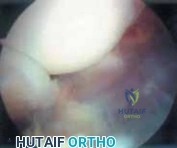
Before initiating the open osteotomy, a comprehensive anterior and posterior diagnostic arthroscopy is mandatory. The surgeon systematically evaluates the suprapatellar pouch, the patellofemoral articulation, the medial and lateral gutters, and both the medial and lateral tibiofemoral compartments. This step is critical for identifying and mapping the exact location and severity of chondral defects, which may dictate the required degree of tubercle anteriorization. Any concurrent intra-articular pathology, such as loose bodies, unstable meniscal tears, or focal chondral flaps requiring debridement or chondroplasty, is addressed at this stage. Once the intra-articular work is complete, the arthroscope is utilized to dynamically visualize patellar tracking from the inside, noting the exact degree of flexion at which the patella engages the trochlea and the severity of lateral tilt or subluxation.
Lateral Retinacular Release
If the preoperative examination demonstrated a negative passive patellar tilt—indicating a pathologically tight lateral retinaculum that would tether the patella and resist centralization—a lateral release is performed. This can be executed arthroscopically or through the planned open incision. The release is initiated at the level of the tibial tubercle and extended proximally through the lateral retinaculum and synovium. The absolute critical boundary for this release is the vastus lateralis muscle. The incision must extend up to, but strictly not include, the vastus lateralis obliquus (VLO) tendon. Preserving the dynamic superior-lateral pull of the vastus lateralis is imperative; inadvertent violation of this structure is a primary cause of catastrophic iatrogenic medial patellar subluxation, a complication that is exceptionally difficult to salvage.
Exposure and the Osteotomy Cut
The open approach begins with a longitudinal incision placed just lateral to the anterior tibial crest, extending from the distal pole of the patella to approximately 10 centimeters distal to the tibial tubercle. Full-thickness fasciocutaneous flaps are elevated to preserve the vascular supply to the skin, taking meticulous care to identify and protect the infrapatellar branches of the saphenous nerve to prevent painful postoperative neuromas. The anterior compartment musculature is gently elevated off the lateral aspect of the tibia. Using a sagittal oscillating saw with copious cold saline irrigation to prevent thermal necrosis, the osteotomy is executed. The bony shingle must be substantial—typically 6 to 8 centimeters in length and tapering distally—to ensure a massive surface area for bone-to-bone healing and to prevent the creation of a sharp stress riser that could precipitate a delayed tibial fracture. The angle of the cut is dictated by the preoperative templating, balancing the required vectors of medialization and anteriorization.
Derotation, Provisional Fixation, and Dynamic Assessment
With the osteotomy complete, the tibial tubercle is mobilized. The distal tibia is internally rotated relative to the proximal segment to correct the excessive external torsion, simultaneously medializing and anteriorizing the tubercle to achieve a normalized Tubercle-Sulcus Angle (typically 10 to 15 degrees). Provisional fixation is the most dangerous step of the procedure regarding neurovascular safety. The knee must be flexed to exactly 90 degrees. In this flexed position, the popliteal artery, vein, and tibial nerve fall posteriorly, maximizing the safe zone behind the posterior tibial cortex. A drill bit or heavy Kirschner wire is passed anteroposteriorly through the tuberosity and into the posterior tibial cortex. Once provisionally pinned, the tourniquet is deflated, hemostasis is achieved, and the knee is taken through a full, dynamic range of motion. The surgeon visually and palpably assesses patellar tracking. The patella must engage the trochlear groove smoothly in early flexion without lateral subluxation or excessive medial pressure. If tracking remains suboptimal, the provisional wire is removed, the tubercle position is mathematically adjusted, and the dynamic assessment is repeated until biomechanical perfection is achieved.
Definitive Fixation and Soft Tissue Balancing
Upon confirmation of optimal tracking, definitive fixation is applied. The transferred tuberosity is rigorously secured utilizing two or three countersunk, low-profile, fully threaded or partially threaded cancellous lag screws (typically 4.5 mm or 3.5 mm, depending on the patient's osseous dimensions). A strict lag technique must be employed to generate massive compression across the osteotomy interface, which is critical for primary bone healing. Meticulous countersinking of the screw heads is mandatory; the anterior tibia possesses minimal soft tissue coverage, and prominent hardware is the leading cause of postoperative pain requiring secondary surgical intervention. Following skeletal fixation, the medial soft tissue envelope is addressed. The medial retinaculum is plicated in a "pants-over-vest" fashion, effectively advancing the vastus medialis obliquus (VMO) and eliminating the redundancy of the chronically attenuated medial structures. Conversely, the lateral retinaculum is left completely open to prevent any recurrence of lateral tethering. The wound is closed in standard layered fashion over a closed-suction drain to prevent hematoma formation.
Complications, Incidence Rates, and Salvage Management
Despite meticulous surgical technique, derotational high tibial osteotomy is a highly invasive procedure with a recognized complication profile. The surgeon must be intimately familiar with these risks, proactively counsel the patient, and possess the technical armamentarium to manage them should they arise.
Complications Matrix
| Complication | Estimated Incidence | Pathoetiology | Salvage / Management Strategy |
|---|---|---|---|
| Symptomatic Hardware | 30% - 50% | Prominent screw heads irritating the overlying subcutaneous tissue and skin due to lack of anterior tibial fat pad. | Outpatient hardware removal after radiographic confirmation of complete bony union (typically > 6-9 months post-op). |
| Neurovascular Injury | < 1% | Over-penetration of the posterior tibial cortex by drill bits or screws injuring the popliteal artery or tibial nerve. | Immediate intraoperative vascular surgery consultation; exploration and primary repair or bypass. Prevention via strict 90° knee flexion during drilling is paramount. |
| Proximal Tibial Fracture | 2% - 5% | Creation of a sharp stress riser at the distal termination of the osteotomy cut, exacerbated by early unprotected weight-bearing. | Non-operative management with cast/brace for non-displaced fractures; Open Reduction Internal Fixation (ORIF) with a locking plate for displaced fractures. |
| Delayed Union / Nonunion | 1% - 3% | Smoking, poor bone stock, inadequate lag compression, or thermal necrosis during the saw cut. | Prolonged immobilization and bone stimulators for delayed union. Revision ORIF with autologous bone grafting for established nonunion. |
| Iatrogenic Medial Instability | 1% - 2% | Overcorrection (excessive medialization) or aggressive lateral release violating the vastus lateralis obliquus. | Highly complex revision. Requires lateral retinacular reconstruction, potential lateralization of the tubercle, and extensive rehabilitation. |
| Saphenous Neuritis | 5% - 10% | Intraoperative transection or traction injury to the infrapatellar branches of the saphenous nerve during exposure. | Initially conservative (gabapentin, desensitization). Refractory cases may require surgical neuroma excision and burying the nerve stump into local muscle. |
The most devastating potential complication is a neurovascular injury to the popliteal bundle. The popliteal artery is tethered proximally by the adductor hiatus and distally by the soleus arch, making it highly susceptible to injury from an over-penetrating drill bit. As repeatedly emphasized, strict adherence to drilling and screw placement with the knee flexed to 90 degrees is the ultimate preventative measure. Proximal tibial fractures represent another significant risk, particularly in the early postoperative period. The distal end of the osteotomy acts as a mechanical stress riser in the anterior tibial cortex. To mitigate this, the surgeon must ensure the osteotomy tapers smoothly into the anterior cortex without creating a sudden "step-off." Patients must be extensively counseled regarding this risk and strictly adhere to the postoperative weight-bearing protocol.
Overcorrection leading to iatrogenic medial instability is a catastrophic functional complication. When the tubercle is excessively medialized, or if the vastus lateralis is inadvertently disabled during the lateral release, the patella will subluxate medially during flexion. This results in severe, debilitating pain and rapid destruction of the medial patellofemoral cartilage. Salvage of medial instability is technically arduous, often requiring a lateralizing osteotomy and complex soft-tissue reconstructions of the lateral restraints. This underscores the absolute necessity of precise preoperative templating and rigorous intraoperative dynamic assessment prior to definitive fixation.
Phased Post-Operative Rehabilitation Protocols
The postoperative rehabilitation protocol following a derotational high tibial osteotomy is a delicate, biologically driven balance. The clinician must simultaneously protect the mechanical integrity of the osteotomy site to ensure primary bone healing while initiating early, controlled motion to prevent devastating arthrofibrosis of the knee joint. The protocol is strictly phased, guided by both temporal milestones and radiographic evidence of osseous union.
Phase 1: Immediate Postoperative and Protection (Weeks 0 to 4)
The primary goals of the first phase are pain control, reduction of edema, protection of the osteotomy, and the initiation of early passive motion. Immediately postoperatively, the patient is placed in a locked hinged knee brace in full extension. Weight-bearing is typically allowed as tolerated (WBAT), but only with the brace locked in absolute full extension. This is a critical biomechanical concept: axial loading of the limb with the knee locked in extension creates compressive forces across the osteotomy site, which stimulates osteoblastic mechanotransduction and promotes primary bone healing. Conversely, weight-bearing with a flexed knee introduces massive shear forces across the osteotomy via the quadriceps pull, which can lead to catastrophic hardware failure. Range of motion exercises are initiated within the first week, but must be strictly non-weight bearing. Passive and active-assisted ROM from 0 to 90 degrees is encouraged to prevent capsular adhesions and maintain patellar mobility.
Phase 2: Intermediate Rehabilitation and Callus Formation (Weeks 4 to 8)
At the 4-to-6-week mark, the patient undergoes a critical clinical and radiographic evaluation. Anteroposterior and lateral radiographs are scrutinized for the presence of bridging callus and the maintenance of hardware integrity. If satisfactory early healing is confirmed, the rehabilitation protocol advances. The hinged knee brace is gradually unlocked to allow functional range of motion during ambulation, and the patient is slowly weaned off the brace entirely by week 8. Formal physical therapy intensifies, transitioning from passive motion to active range of motion and early strengthening. The focus is heavily placed on closed-kinetic-chain exercises (e.g., mini-squats, leg presses within a protected arc) to minimize shear forces on the patellofemoral joint. Specific attention is directed toward isolated vastus medialis obliquus (VMO) recruitment and comprehensive core and gluteal strengthening to control femoral internal rotation, which is a common compensatory mechanism in this patient population.
Phase 3: Advanced Strengthening and Proprioception (Weeks 8 to 16)
As the osteotomy solidifies (typically confirming robust union by 10 to 12 weeks), all restrictions on range of motion and weight-bearing are lifted. The rehabilitation focus shifts entirely to maximizing muscular hypertrophy, endurance, and neuromuscular control. Advanced isotonic and isokinetic strengthening protocols are instituted. Proprioceptive training becomes a major component of the therapy, utilizing balance boards and dynamic stabilization drills to retrain the lower extremity's mechanoreceptors following the significant alteration of the limb's spatial alignment. Open-kinetic-chain quadriceps exercises can be cautiously introduced, provided they do not elicit anterior knee pain.
Phase 4: Return to Sport and High-Impact Activity (Months 4 to 9+)
The final phase is highly individualized and dictated by the patient's specific functional goals. Return to high-impact, pivoting, or cutting sports (e.g., soccer, basketball, skiing) is strictly prohibited until several absolute criteria are met. First, there must be unequivocal radiographic evidence of complete, mature bony union at the osteotomy site. Second, the patient must demonstrate a full, painless range of motion equivalent to the contralateral limb. Third, objective isokinetic strength testing must reveal that the operative quadriceps and hamstring strength have reached a minimum of 85% to 90% of the uninjured contralateral limb. Finally, the patient must successfully complete a battery of sport-specific functional agility tests without apprehension or mechanical failure. For most patients, this comprehensive return to unrestricted high-level activity requires a minimum of 6 to 9 months of dedicated rehabilitation.
Summary of Landmark Literature and Clinical Guidelines
The evolution of derotational high tibial osteotomy and tibial tubercle transfer is built upon a foundation of rigorous biomechanical research and long-term clinical outcome studies. A thorough understanding of this landmark literature is essential for the academic orthopedic surgeon, as it forms the evidence-based rationale for the procedures detailed in this chapter.
The foundational principles of tibial tubercle transfer for patellofemoral malalignment were established by Roux, Elmslie, and Trillat, who initially described the medialization of the extensor mechanism. However, it was the pioneering biomechanical work of John Fulkerson in the 1980s that revolutionized the procedure. Fulkerson demonstrated that a purely medializing osteotomy could paradoxically increase patellofemoral contact pressures in certain flexion arcs. By introducing the oblique osteotomy, Fulkerson proved that simultaneous anteriorization (elevation) of the tubercle exponentially decreased joint reaction forces, providing a dual mechanical benefit: stabilizing the patella while simultaneously decompressing the articular cartilage. This concept remains the bedrock of modern osteotomy design for patients with concurrent instability and chondrosis.
The specific application of derotational osteotomies for torsional deformities was heavily championed by Paulos and colleagues, whose comprehensive approach is adapted in the surgical technique section of this chapter. Paulos emphasized that in the setting of "miserable malalignment," isolated tubercle transfers or soft tissue procedures were insufficient because they failed to address the global rotational vector of the lower limb. His long-term outcome studies demonstrated that combining the derotational HTO with a precise tubercle transfer and soft tissue balancing yielded significantly lower recurrence rates of dislocation and higher patient satisfaction scores compared to historical cohorts treated with isolated soft tissue reconstructions.
More recently, the French school of thought, led by Henri Dejour and later David Dejour, has provided the definitive classification systems for patellofemoral instability. Dejour's meticulous analysis of CT and MRI imaging established the normative values for the TT-TG distance and quantified the specific thresholds of trochlear dysplasia, patella alta, and tibial torsion that mandate surgical correction. Dejour's "à la carte" approach to patellofemoral surgery dictates that every anatomical abnormality contributing to the instability must be individually addressed. Within this framework, a TT-TG distance exceeding 20 millimeters or a Thigh-Foot Angle exceeding 30 degrees are recognized as absolute indications for osseous realignment.
Contemporary systematic reviews and meta-analyses continue to validate these aggressive osseous interventions. Recent literature comparing isolated MPFL reconstruction versus MPFL reconstruction combined with tibial tubercle transfer in patients with severe lateralization (TT-TG > 20mm) consistently demonstrates that the combined osseous-ligamentous approach yields statistically significant improvements in Kujala and Tegner activity scores, with dramatically lower rates of graft failure. Ultimately, the literature unequivocally supports the paradigm that while soft tissue serves as the dynamic
