Patellofemoral Arthroplasty (PFA): Advanced Concepts, Indications & Patient Selection
Key Takeaway
Patellofemoral arthroplasty (PFA) is a targeted surgical intervention for debilitating, end-stage isolated patellofemoral osteoarthritis (PFOA), preserving healthy tibiofemoral compartments. It aims to alleviate anterior knee pain by resurfacing only the diseased joint. Key considerations include detailed surgical anatomy, biomechanics, and stringent patient selection, focusing on isolated PFOA unresponsive to non-operative treatment.
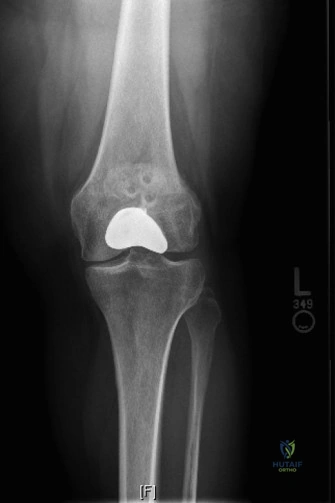
A 52-year-old female presents with chronic anterior knee pain. She has failed 18 months of intensive physiotherapy, weight loss, and intra-articular injections. Examination reveals isolated patellofemoral crepitus, no mediolateral instability, and no tenderness in the tibiofemoral compartments. Radiographs and the provided image are available for review.
What are the key criteria you use to justify Patellofemoral Arthroplasty (PFA) in this patient over a Total Knee Arthroplasty (TKA)?
Candidate: I would consider PFA if the patient has isolated patellofemoral osteoarthritis. I check if they have tibiofemoral pain, and ensure their ligaments are stable. If their disease is limited to the patellofemoral joint on X-rays and MRI, PFA is a good option to save the other compartments and cruciate ligaments.
Failing to mention the "Kellgren-Lawrence" status of the other compartments or omitting the importance of "correctable maltracking." A weak candidate treats PFA as just "a smaller TKA" rather than a procedure requiring specific anatomical criteria (like excluding patella alta or severe dysplasia).
To justify PFA, I require: 1. Clinical Isolation: Purely anterior knee pain with no medial/lateral joint line tenderness. 2. Radiographic Isolation: Kellgren-Lawrence Grade 0-I in the tibiofemoral compartments on weight-bearing Rosenberg and lateral views. 3. Mechanical Status: Intact cruciate ligaments and no significant fixed valgus/varus deformity. 4. Morphology: Must exclude significant uncorrectable maltracking or severe trochlear dysplasia (Dejour Type C/D) which would require a different reconstructive approach. The advantage is superior proprioception and kinematics compared to TKA.
You are in theater performing the PFA. You have exposed the joint. What are the critical technical "traps" regarding component sizing and position that often lead to early failure?
Candidate: You need to make sure you don't overstuff the joint. If you put too thick a component on the patella, it causes pain and stiffness. You also need to align the femoral component correctly so the patella doesn't track poorly.
Answering only about the patellar component. A failing candidate forgets that femoral rotational alignment—specifically the orientation of the trochlear groove relative to the trans-epicondylar axis—is the primary driver of track-related failure.
There are two primary traps: Overstuffing the Patellofemoral Joint and Malrotation of the Trochlear Component.
1. Overstuffing: Failure to measure native patellar thickness leads to an increase in patellofemoral contact pressure, causing anterior pain and reduced flexion.
2. Rotation: If the trochlear component is internally rotated, it will lateralize the patellar tracking, potentially causing subluxation.
3. Proximal-Distal Placement: Placing the trochlear component too distal leads to impingement in flexion; too proximal leads to patella alta and potential instability.
