100 Random Orthopedic MCQs for Board Prep (2026 Update)
Key Takeaway
This topic focuses on ORTHOPEDIC MCQS OB 20 SHOULDER AND ELBOW4, The anterior band of the anterior bundle of the elbow medial ulnar collateral ligament (UCL) exhibits an isometric strain pattern throughout elbow range of motion (ROM). This anatomical detail is crucial for understanding elbow kinematics and is frequently covered in elbow orthopedic mcqs, emphasizing the anterior bundle's primary role as a restraint to valgus instability of the elbow.
100 Random Orthopedic MCQs for Board Prep (2026 Update)
Comprehensive 100-Question Exam
00:00
Start Quiz
Question 1
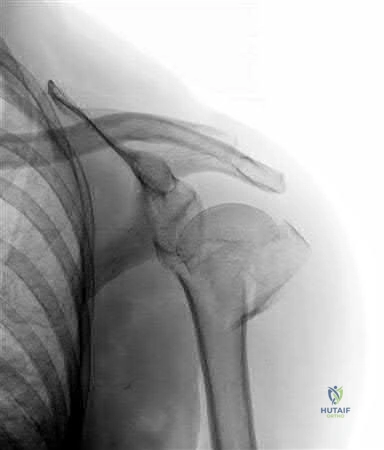
A 35-year-old male is brought to the trauma bay after a motorcycle accident. His blood pressure is 80/40 mmHg and heart rate is 130 bpm. A radiograph of the pelvis is obtained as part of the primary survey.
Assuming an Anteroposterior Compression Type III (APC III) pattern is confirmed with complete disruption of the anterior and posterior pelvic rings, what is the most likely anatomic source of life-threatening arterial hemorrhage in this specific injury pattern?
Explanation
Question 2
A 12-year-old obese boy presents with a 3-week history of left knee pain and an antalgic gait. Examination reveals obligatory external rotation of the left hip upon flexion. Which of the following is considered an absolute indication for prophylactic in situ pinning of the asymptomatic contralateral hip in a patient with a Slipped Capital Femoral Epiphysis (SCFE)?
Explanation
Question 3
A 45-year-old female falls on an outstretched hand and presents with a displaced intra-articular fracture of the distal radius. The injury imaging demonstrates volar displacement of a marginal fracture fragment with the carpus following the fragment.
In this type of fracture (volar Barton's), which of the following structures remains attached to the displaced volar marginal fragment, directly mediating the volar subluxation of the carpus?
Explanation
Question 4
In the context of articular cartilage basic science, which structural zone contains the highest concentration of water and predominantly features collagen fibers oriented parallel to the articular surface to resist shear stress?
Explanation
Question 5
A 16-year-old female elite soccer player is scheduled to undergo an anterior cruciate ligament (ACL) reconstruction. During the preoperative discussion regarding graft choices, you inform her of the risks associated with different graft types. Which of the following graft options is associated with the highest rate of clinical failure and graft rupture in her specific demographic?
Explanation
Question 6
During a primary total hip arthroplasty (THA) using a posterior approach, the surgeon inadvertently places the acetabular component in excessive retroversion. Which of the following complications is this patient at greatest risk for developing postoperatively?
Explanation
Question 7
A 30-year-old male sustains a traumatic posterior shoulder dislocation during a seizure. Upon successful closed reduction in the emergency department, an MRI is obtained which reveals a reverse Hill-Sachs lesion. Which of the following best describes the precise anatomic location of this bony defect?
Explanation
Question 8
A 6-month-old infant is undergoing treatment with a Pavlik harness for developmental dysplasia of the hip (DDH). During a scheduled follow-up, the mother notes the child is no longer kicking the right leg. Physical examination confirms an absence of active knee extension on the right side. Which of the following specific positioning errors in the harness most likely caused this complication?
Explanation
Question 9
In the evaluation of a 60-year-old male presenting with bilateral hand clumsiness and gait instability, the examiner elicits a positive Hoffman's sign. What pathophysiologic entity does a positive Hoffman's sign suggest?
Explanation
Question 10
A 22-year-old collegiate golfer presents with chronic, recalcitrant volar-ulnar wrist pain. A carpal tunnel radiograph view confirms a displaced fracture of the hook of the hamate. After 3 months of failed conservative management, surgical excision of the fractured fragment is planned. During the approach and excision, which nerve is anatomically at greatest risk of iatrogenic injury?
Explanation
Question 11
Demineralized bone matrix (DBM) is commonly used as a bone graft substitute in orthopedic procedures. Which of the following factors or pathways is primarily responsible for the unique osteoinductive properties of DBM?
Explanation
Question 12
A 65-year-old male with severe tricompartmental knee osteoarthritis undergoes total knee arthroplasty (TKA). During the trialing phase with the trial components in place, the knee is completely stable symmetrically in full extension, but demonstrates 5 mm of laxity to both varus and valgus stress when placed in 90 degrees of flexion. Which of the following intraoperative adjustments is the most appropriate to achieve a balanced knee?
Explanation
Question 13
A 40-year-old roofer falls from a ladder, landing axially on his right heel, sustaining a displaced, intra-articular fracture of the calcaneus. On the lateral radiograph of the foot, which of the following angle measurements is characteristically decreased due to the collapse of the posterior facet?
Explanation
Question 14
A 24-year-old male sustains a humerus shaft fracture and presents with an associated radial nerve palsy. According to Seddon's classification of nerve injury, which term describes a nerve injury in which the axon and its myelin sheath are disrupted, causing Wallerian degeneration, but the endoneurium, perineurium, and epineurium remain structurally intact?
Explanation
Question 15
A 68-year-old female who underwent an uncemented total hip arthroplasty 10 years ago presents with new-onset thigh pain. Radiographs reveal massive focal areas of radiolucency (osteolysis) around the proximal femoral stem. At revision surgery, copious hypertrophic membrane is noted. Which of the following particulate debris types is the most potent biological stimulator of the macrophage-induced osteolytic cascade in this conventional bearing surface?
Explanation
Question 16
A 6-year-old boy presents to the emergency department after falling from monkey bars. He has a visibly deformed left elbow. Radiographs confirm a displaced, posteromedial Gartland Type III supracondylar humerus fracture. On examination, the hand is pink and capillary refill is less than 2 seconds, but the radial pulse is completely non-palpable. What is the most appropriate next step in management?
Explanation
Question 17
During a posterior (Kocher-Langenbeck) approach to the hip for a posterior wall acetabular fracture, the surgeon identifies the short external rotators. To avoid postoperative weakness in hip extension, an important nerve exiting the greater sciatic foramen immediately inferior to the piriformis muscle must be protected. What muscle does this nerve primarily supply?
Explanation
Question 18
A 28-year-old male is admitted after a high-energy closed midshaft tibia fracture. Twelve hours post-injury, he complains of intractable leg pain that is not relieved by escalating doses of opioids. Pain is severely exacerbated by passive extension of the great toe. Intracompartmental pressure (ICP) monitoring is initiated. A fasciotomy is universally indicated when the 'Delta P' (difference between diastolic blood pressure and ICP) falls below what critical threshold?
Explanation
Question 19
A 13-year-old male presents with chronic, dull anterior knee pain. Anteroposterior radiographs demonstrate a radiolucent line separating a bony fragment from the main body of the patella. According to the Saupe classification, which anatomic location represents the most common variant (Type III) of a bipartite patella?
Explanation
Question 20
An 18-year-old elite baseball pitcher experiences a sudden 'pop' in his medial elbow during a fast pitch, followed by severe pain and an inability to continue throwing. An MRI confirms a complete rupture of the primary restraint to valgus stress. During ulnar collateral ligament (UCL) reconstruction, the surgeon must replicate the exact anatomic footprints of the anterior bundle. Which of the following describes the accurate native attachments of the anterior bundle of the UCL?
Explanation
Question 21
A 45-year-old male is involved in a motor vehicle collision. He is hemodynamically stable. An AP pelvis radiograph demonstrates symphysis pubis widening of 3.2 cm and widening of the anterior sacroiliac (SI) joints, but the posterior SI ligaments appear functionally intact.
According to the Young-Burgess classification, what is the most likely injury pattern and best definitive treatment?
Explanation
Question 22
A 30-year-old female presents with progressive knee pain. Radiographs reveal an eccentric, lytic lesion in the distal femoral epiphysis extending to the subchondral bone without a sclerotic margin. A biopsy is obtained and the histology is shown below.
If medical therapy is considered, which of the following best describes the targeted mechanism of action?
Explanation
Question 23
In the Ponseti method for the conservative management of congenital talipes equinovarus (clubfoot), manipulation and serial casting follow a specific sequence. Which of the following represents the correct sequential order of deformity correction?
Explanation
Question 24
During an anterior cruciate ligament (ACL) reconstruction, a surgeon places the femoral tunnel excessively anterior (shallow) in the intercondylar notch. What biomechanical consequence will this have on the graft during knee range of motion?
Explanation
Question 25
During a total knee arthroplasty (TKA), after the initial bone cuts are made and trial components are inserted, the surgeon notes that the extension gap is perfectly balanced, but the flexion gap is excessively tight. Which of the following surgical maneuvers is the most appropriate next step to balance the knee?
Explanation
Question 26
A 25-year-old carpenter sustains a clean laceration to the volar middle phalanx of his index finger, dividing both the flexor digitorum superficialis (FDS) and flexor digitorum profundus (FDP) tendons (Zone II). Primary repair is performed. Which of the following postoperative rehabilitation principles yields the best outcomes for minimizing adhesions while preventing rupture?
Explanation
Question 27
A 45-year-old male presents with acute severe lower back pain, bilateral lower extremity weakness, saddle anesthesia, and urinary retention. MRI confirms a massive central L4-L5 disc herniation compressing the cauda equina. Current evidence suggests that surgical decompression is most strongly associated with improved recovery of bladder and motor function if performed within what timeframe from the onset of autonomic symptoms?
Explanation
Question 28
A 55-year-old patient with long-standing, poorly controlled diabetes presents with a unilaterally swollen, red, and warm foot. He denies pain or recent trauma. Radiographs reveal bone fragmentation, periarticular osteopenia, intra-articular debris, and subluxation at the midfoot. According to the Eichenholtz classification of Charcot arthropathy, which stage does this represent?
Explanation
Question 29
When a diaphyseal fracture is treated with a perfectly applied lag screw and a neutralization plate (an absolute stability construct), bone healing primarily occurs through which of the following biological processes?
Explanation
Question 30
A 32-year-old male sustains a high-energy trauma to his left knee. Radiographs and CT scans reveal a bicondylar tibial plateau fracture with a transverse fracture line separating the metaphysis from the diaphysis. What is the correct Schatzker classification for this injury?
Explanation
Question 31
The scaphoid bone is notorious for a high rate of avascular necrosis following a fracture due to its unique retrograde blood supply. Which of the following accurately describes the primary entry point and flow direction of the major intraosseous blood supply to the scaphoid?
Explanation
Question 32
A 3-month-old infant is being treated with a Pavlik harness for developmental dysplasia of the hip (DDH). At the two-week follow-up, the parents report the baby has stopped kicking the affected leg. On examination, the hip remains reduced, but there is an absence of active knee extension. Which of the following complications has most likely occurred?
Explanation
Question 33
A 65-year-old female who underwent a primary total hip arthroplasty (THA) 2 years ago presents with a loud "squeaking" noise coming from her hip when she bends down or climbs stairs. She has no pain and radiographs show perfectly fixed, well-positioned components. Her THA most likely utilized which of the following bearing surface combinations?
Explanation
Question 34
A 22-year-old athlete sustains a high-energy knee dislocation (KD III) during a rugby match. It is reduced in the emergency department. The foot is warm and pink with palpable dorsalis pedis and posterior tibial pulses. An ankle-brachial index (ABI) is performed. According to contemporary trauma guidelines, at what ABI threshold is it universally indicated to perform an arterial duplex ultrasound or CT angiogram to rule out an intimal flap or popliteal artery injury?
Explanation
Question 35
A 78-year-old male falls from a standing height and sustains a fracture located at the junction of the base of the dens (odontoid process) and the body of C2, with 2 mm of posterior displacement. Based on the Anderson and D'Alonzo classification, what type of fracture is this, and what is its characteristic clinical challenge?
Explanation
Question 36
A 35-year-old male presents with severe midfoot pain and swelling after falling from a horse with his foot caught in the stirrup. On an AP radiograph of the foot, widening is noted between the 1st and 2nd metatarsal bases, and a small "fleck sign" is observed. This pathognomonic "fleck" represents an avulsion of the Lisfranc ligament from the base of which anatomical structure?
Explanation
Question 37
Ultra-high molecular weight polyethylene (UHMWPE) undergoes cross-linking via gamma irradiation or electron beam radiation prior to use in modern total joint arthroplasty. While this process achieves the desired goal of decreasing osteolysis, it results in which of the following mechanical trade-offs?
Explanation
Question 38
A 55-year-old female who underwent open reduction and internal fixation of a distal radius fracture with a volar locking plate 9 months ago presents with a sudden inability to flex the interphalangeal (IP) joint of her thumb. Which of the following technical errors during the initial surgery is the most likely cause of this complication?
Explanation
Question 39
A 52-year-old male undergoes a radiograph of his shoulder for chronic, dull pain. The x-ray reveals a destructive, intra-medullary lesion in the proximal humerus displaying "ring and arc" calcifications. CT scan reveals endosteal scalloping involving 80% of the cortical thickness. What is the most likely diagnosis?
Explanation
Question 40
A 13-year-old obese male presents with left hip pain, an antalgic gait, and obligate external rotation upon hip flexion. Radiographs confirm a left-sided Slipped Capital Femoral Epiphysis (SCFE). The surgeon discusses in-situ pinning of the left hip and considers prophylactic pinning of the asymptomatic right hip. Which of the following is the most established indication for prophylactic fixation of the contralateral hip in SCFE?
Explanation
Question 41
A 80-year-old male with a history of severe COPD and ischemic heart disease presents after a mechanical fall with neck pain. A CT scan of the cervical spine demonstrates a Type II odontoid fracture with 2 mm of displacement. What is the most appropriate initial management strategy for this patient?
Explanation
Question 42
A 6-week-old infant is being treated with a Pavlik harness for developmental dysplasia of the left hip (DDH). At the 3-week ultrasound follow-up, the hip remains dislocated and cannot be reduced in the harness. What is the most appropriate next step in management?
Explanation
Question 43
A 35-year-old female sustains a high-energy trauma resulting in an intra-articular distal femur fracture. CT imaging reveals a coronal plane fracture of the lateral femoral condyle (Hoffa fracture). Which of the following represents the optimal surgical approach and fixation strategy for this specific fragment?
Explanation
Question 44
A 24-year-old male presents with persistent radial-sided wrist pain 8 months after a fall. Imaging reveals a scaphoid proximal pole nonunion with humpback deformity. MRI confirms avascular necrosis of the proximal pole fragment. Which of the following graft options is most appropriate?
Explanation
Question 45
During an anterior cruciate ligament (ACL) reconstruction using a bone-patellar tendon-bone (BTB) autograft, which component represents the weakest link of the graft construct during the first 6 weeks postoperatively?
Explanation
Question 46
A 14-year-old boy presents with progressive distal thigh pain. Imaging shows a highly aggressive mixed lytic and sclerotic lesion in the distal femoral metaphysis with a 'sunburst' periosteal reaction. Biopsy reveals malignant cells producing osteoid matrix. Which of the following genetic alterations is most commonly associated with this tumor?
Explanation
Question 47
In total hip arthroplasty, the choice of bearing surface impacts longevity. Which of the following bearing surface combinations exhibits the lowest volumetric wear rate in laboratory simulator testing?
Explanation
Question 48
A 28-year-old male is admitted with a highly comminuted tibial shaft fracture. He complains of pain out of proportion to the injury. Which of the following physiological thresholds is the most accurate and absolute indication for performing a fasciotomy for acute compartment syndrome?
Explanation
Question 49
A 55-year-old male with poorly controlled diabetes presents with a swollen, erythematous, and warm foot. He denies trauma and reports minimal pain. Radiographs demonstrate acute periarticular fragmentation and subluxation at the tarsometatarsal joint. According to the Eichenholtz classification, what is the standard of care for this acute phase?
Explanation
Question 50
During the process of secondary fracture healing, a critical transition from soft callus to hard callus occurs. During which phase of healing does this primarily take place, and what is the primary type of collagen synthesized as the matrix matures?
Explanation
Question 51
A 12-year-old boy undergoes an uncomplicated in situ pinning for an unstable slipped capital femoral epiphysis (SCFE). Six months later, he develops acute, severe hip stiffness and a pronounced antalgic gait. Radiographs reveal a uniform and rapid narrowing of the joint space. What is the most likely diagnosis?
Explanation
Question 52
A 40-year-old male arrives in the trauma bay in hemorrhagic shock following a crush injury. Radiographs show a widened symphysis pubis and disrupted posterior sacroiliac ligaments (APC-III). When applying a circumferential pelvic binder to stabilize the pelvis, over which anatomic landmarks must the binder be centered?
Explanation
Question 53
A 28-year-old carpenter sustains a deep volar laceration to his right index finger exactly at the level of the distal interphalangeal (DIP) joint crease. Examination shows inability to flex the DIP joint, but proximal interphalangeal (PIP) joint flexion remains intact against resistance. This injury corresponds to which flexor tendon zone?
Explanation
Question 54
During a primary posterior-stabilized total knee arthroplasty, trial reduction reveals that the knee is completely balanced in full extension but excessively tight in 90 degrees of flexion, limiting range of motion. Which of the following technical adjustments is most appropriate to balance this knee?
Explanation
Question 55
A 21-year-old football player undergoes an MRI for recurrent anterior shoulder instability. The MRI reveals an avulsion of the anterior labrum where the labrum and the intact periosteum are stripped and displaced medially along the glenoid neck. What is the specific eponym for this pathology?
Explanation
Question 56
A 65-year-old male is diagnosed with multiple myeloma and presents with hypercalcemia and extensive 'punched-out' lytic bone lesions. What is the primary molecular mechanism responsible for this accelerated osteolysis?
Explanation
Question 57
A 4-month-old infant is being treated with a Pavlik harness for developmental dysplasia of the hip (DDH). At the follow-up visit, the parents report the infant is no longer kicking the right leg actively. Examination reveals an inability to actively extend the right knee. Which of the following positioning errors is most likely responsible for this complication?
Explanation
Question 58
A 28-year-old male presents with a slowly enlarging, painful mass around his knee joint. An MRI demonstrates a soft tissue mass adjacent to the joint capsule, and biopsy confirms synovial sarcoma. Which of the following chromosomal translocations is highly specific for this diagnosis?
Explanation
Question 59
During a primary posterior-stabilized total knee arthroplasty (TKA), the surgeon finds the knee to be symmetrically balanced in extension but significantly tight in flexion. Which of the following intraoperative adjustments is most appropriate to resolve this specific mismatch?
Explanation
Question 60
A 22-year-old athlete undergoes an anterior cruciate ligament (ACL) reconstruction using a bone-patellar tendon-bone autograft. Postoperatively, he lacks 15 degrees of terminal extension but can flex to 140 degrees. What is the most likely intraoperative technical error causing this complication?
Explanation
Question 61
A 35-year-old male sustains a closed tibia fracture and is admitted for observation. Several hours later, he complains of severe pain out of proportion to the injury. Which of the following clinical parameters is the most reliable objective indicator for emergent fasciotomy?
Explanation
Question 62
Bone morphogenetic proteins (BMPs) play a critical role in bone healing and formation by initiating an intracellular signaling cascade. Which of the following intracellular proteins directly mediate the canonical signaling pathway of BMPs to regulate gene transcription in osteoblasts?
Explanation
Question 63
A 40-year-old male is involved in a high-speed motor vehicle collision. CT of the cervical spine reveals bilateral pars interarticularis fractures of C2 with 4 mm of anterior translation of C2 on C3 and severe C2-C3 intervertebral disc disruption (Effendi Type II Hangman's fracture). What is the classic mechanism of injury for this fracture pattern?
Explanation
Question 64
A 30-year-old male sustains a forced dorsiflexion injury to his foot. Radiographs reveal a talar neck fracture with subluxation of the subtalar joint and a preserved tibiotalar joint. Based on the Hawkins classification, what is the approximate risk of developing avascular necrosis (AVN) of the talar body?
Explanation
Question 65
A 6-year-old girl falls off monkey bars and sustains a significantly displaced extension-type supracondylar humerus fracture. On examination, she is unable to flex the interphalangeal joint of her thumb and the distal interphalangeal joint of her index finger. Which nerve is most likely injured?
Explanation
Question 66
A 15-year-old boy presents with pain and swelling over his distal femur. A biopsy reveals small blue round cells. Cytogenetic testing demonstrates a t(11;22) chromosomal translocation. Which fusion gene is pathognomonic for this patient's diagnosis?
Explanation
Question 67
A 25-year-old female athlete is 6 months post-anterior cruciate ligament (ACL) reconstruction using a bone-patellar tendon-bone autograft. She complains of a mechanical block to terminal knee extension and an audible clunk. MRI shows a focal fibrovascular nodule anterior to the tibial insertion of the graft. What is the most likely diagnosis?
Explanation
Question 68
A 65-year-old male presents with deteriorating handwriting, clumsiness in his hands, and a wide-based gait. On examination, rapidly flicking the distal phalanx of the middle finger downward produces involuntary flexion of the thumb and index finger. What does this physical sign indicate?
Explanation
Question 69
A 45-year-old female with severe, refractory carpal tunnel syndrome undergoes an open carpal tunnel release. During the procedure, the surgeon inadvertently cuts the transverse carpal ligament too far radially. Which anatomical structure is at greatest risk of iatrogenic injury?
Explanation
Question 70
A 55-year-old active male underwent a total hip arthroplasty (THA) using a ceramic-on-ceramic bearing surface. Two years postoperatively, he complains of an audible squeaking sound from his hip during walking, but denies any pain. Radiographs show no loosening. What is the most likely biomechanical cause of the squeaking?
Explanation
Question 71
A 30-year-old male is admitted with a closed tibial shaft fracture. Overnight, he develops disproportionate leg pain. His blood pressure is 120/80 mmHg. Intra-compartmental pressure monitoring reveals a pressure of 45 mmHg in the anterior compartment. What is the patient's delta pressure, and what is the indicated management?
Explanation
Question 72
A 40-year-old male suffers an acute Achilles tendon rupture playing basketball. He elects for non-operative management utilizing an early functional rehabilitation protocol. Compared to acute operative repair, this non-operative protocol is associated with which of the following outcomes?
Explanation
Question 73
A 3-month-old female is being treated with a Pavlik harness for developmental dysplasia of the hip (DDH). At her 2-week follow-up, the mother notes the infant is no longer kicking her leg on the treated side. Examination reveals a lack of active knee extension. What is the most appropriate next step in management?
Explanation
Question 74
Articular cartilage is divided into distinct structural zones. Which zone contains the highest concentration of water, the lowest concentration of proteoglycans, and collagen fibers arranged parallel to the articular surface?
Explanation
Question 75
A 35-year-old female presents with a destructive, expansile lytic lesion in her distal femur that extends to the subchondral bone. Biopsy confirms a Giant Cell Tumor (GCT) of bone. Denosumab therapy is initiated to reduce tumor size prior to intralesional curettage. Denosumab exerts its effect by directly binding to and inhibiting which of the following molecules?
Explanation
Question 76
A 22-year-old male requires arthroscopic stabilization for recurrent anterior shoulder instability. Advanced imaging calculates his glenoid bone loss at 10%, but identifies an 'off-track' Hill-Sachs lesion. Which of the following procedures is indicated in addition to an arthroscopic Bankart repair to prevent engagement of the defect?
Explanation
Question 77
A 45-year-old male involved in a motor vehicle collision sustains a high-energy, bicondylar tibial plateau fracture. CT imaging demonstrates a large, displaced posteromedial fragment. What is the optimal surgical approach to directly visualize and buttress this specific fragment?
Explanation
Question 78
A 68-year-old male complains of bilateral posterior leg pain and heaviness that worsens with walking and standing. He notes significant relief when sitting or leaning forward on a shopping cart. Peripheral pulses are 2+ bilaterally. What is the primary pathophysiological mechanism underlying his symptoms?
Explanation
Question 79
A 25-year-old male falls on an outstretched hand and sustains a displaced fracture through the proximal pole of the scaphoid. This specific fracture pattern carries a notoriously high risk of nonunion and avascular necrosis. This complication is primarily due to the dominant intraosseous blood supply flowing in which direction?
Explanation
Question 80
A 70-year-old male presents with aseptic loosening 15 years after a total knee arthroplasty. Radiographs show extensive scalloping and periprosthetic osteolysis. The primary biological mediator of this osteolysis is the activation of which specific cell type by submicron particulate debris?
Explanation
Question 81
A 28-year-old male sustains a high-energy injury resulting in a nearly vertical femoral neck fracture. According to the Pauwels classification, Type III fractures have a high rate of nonunion and fixation failure primarily due to which biomechanical factor?
Explanation
Question 82
An 8-year-old boy presents with an antalgic gait and is diagnosed with Legg-Calve-Perthes disease. Radiographs are utilized to determine the Herring Lateral Pillar classification. A significantly poorer long-term prognosis is most strongly associated with involvement of what percentage of the lateral pillar height?
Explanation
None
