Master ABOS Board Review: Musculoskeletal Pathology, Skeletal Dysplasias, Soft Tissue Tumors | Part 16
Key Takeaway
This ABOS Musculoskeletal Pathology review covers key topics for the board exam. It includes detailed questions and explanations on synovial chondromatosis, a wide range of skeletal dysplasias, lipoma arborescens, and the diagnosis and management of soft tissue sarcomas. Essential for comprehensive orthopedic board preparation.
Master ABOS Board Review: Musculoskeletal Pathology, Skeletal Dysplasias, Soft Tissue Tumors | Part 16
Comprehensive 100-Question Exam
00:00
Start Quiz
Question 1
A 45-year-old man presents with chronic knee pain and mechanical catching. Radiographs demonstrate multiple intra-articular calcifications of relatively uniform size.
Which of the following describes the underlying pathophysiology of this condition?
Explanation
Question 2
A 24-year-old male presents with a painless, slow-growing nodule on the volar aspect of his distal forearm. Biopsy reveals a granuloma-like architecture with central necrosis and epithelioid cells. Immunohistochemistry shows a loss of INI-1 (SMARCB1) expression. Due to the high rate of a specific metastatic pathway, which of the following evaluations should be included in his staging?
Explanation
Question 3
A 22-year-old female undergoes marginal excision of an incidentally found thigh mass. Pathology demonstrates alveolar soft-part sarcoma (ASPS). In addition to a chest CT, which of the following imaging modalities is uniquely indicated for staging this specific sarcoma?
Explanation
Question 4
A 35-year-old male presents with a slow-growing, painful mass near his knee joint. Biopsy reveals a biphasic tumor with both epithelial and spindle cell components. Cytogenetic analysis is most likely to show which of the following translocations?
Explanation
Question 5
A 42-year-old female presents with chronic knee pain, catching, and reduced range of motion. Radiographs demonstrate multiple stippled intra-articular loose bodies of relatively uniform size.
Which of the following describes the pathophysiology of this condition?
Explanation
Question 6
A newborn presents with rhizomelic shortening of the limbs, frontal bossing, and midface hypoplasia. Radiographs show narrowing of the interpedicular distances in the lower lumbar spine. What is the genetic basis of this condition?
Explanation
Question 7
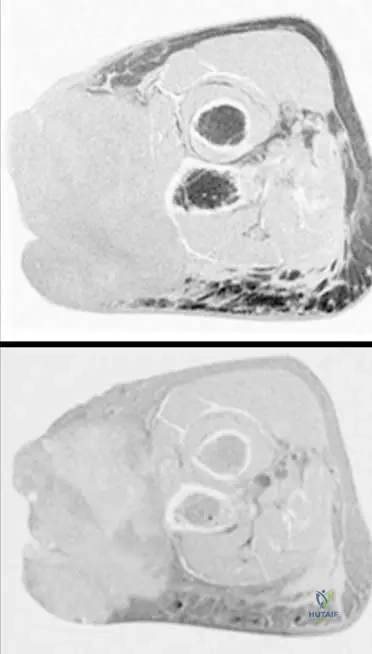
A 40-year-old male undergoes excision of a deep thigh mass. Pathology reveals a myxoid background, proliferating lipoblasts, and a distinct arborizing "chicken-wire" capillary network. Which of the following is true regarding this tumor's staging and behavior?
Explanation
Question 8
A 6-year-old boy with a history of multiple low-energy fractures, blue sclerae, and dentinogenesis imperfecta is started on intravenous pamidronate. What is the primary mechanism by which this medication increases bone mineral density in this patient?
Explanation
Question 9
A 32-year-old male presents with a slowly enlarging, nodular skin lesion on his trunk that has been present for years. Biopsy reveals a storiform pattern of spindle cells that are CD34 positive. Which targeted therapy is FDA-approved for unresectable cases of this tumor?
Explanation
Question 10
A 9-year-old child presents with waddling gait, knee pain, and restricted joint motion. Radiographs reveal delayed, irregular ossification of the capital femoral epiphyses and a "double-layer" appearance of the patella on the lateral view. Mutations in which of the following genes are most commonly associated with this condition?
Explanation
Question 11
A 15-year-old boy presents with a rapidly growing, deep soft tissue mass in his forearm. Histology shows aggregates of small round blue cells with central loss of cellular cohesion, resembling pulmonary alveoli. Which cytogenetic abnormality is most characteristic of this diagnosis?
Explanation
Question 12
A 65-year-old female undergoes marginal excision of an unexpectedly malignant, deep 8 cm mass in her posterior thigh. Pathology demonstrates highly pleomorphic spindle cells with bizarre giant cells, frequent atypical mitoses, and no specific line of differentiation on immunohistochemistry. What is the most appropriate next step in management?
Explanation
Question 13
An infant is born with severe micromelia, a "hitchhiker" thumb, clubfeet, and cystic swelling of the external ears that later calcify. Radiographs show a shortened first metacarpal. What is the primary biochemical defect in this disorder?
Explanation
Question 14
A 24-year-old male presents with a firm, painless subcutaneous nodule on his volar forearm that he noticed 6 months ago. It is slowly enlarging and now has secondary proximal nodular lesions along the arm. Biopsy shows nodular aggregates of epithelioid cells with central necrosis. Immunohistochemistry will most likely demonstrate a loss of which of the following?
Explanation
Question 15
A 30-year-old female complains of recurrent knee effusions and pain. MRI shows a massive joint effusion with extensive synovial proliferation that exhibits low signal on both T1 and T2-weighted images due to hemosiderin. The pathogenesis of this condition is primarily driven by the overexpression of which of the following?
Explanation
Question 16
A 10-year-old boy presents for evaluation of shoulder hypermobility. Examination reveals he can bring his shoulders together anteriorly in the midline. He also has a delayed eruption of permanent teeth. What transcription factor, essential for osteoblast differentiation, is defective in this condition?
Explanation
Question 17
A 28-year-old female presents with a deep-seated, 4 cm mass bound to the Achilles tendon. Histology reveals nests of plump spindle cells with clear cytoplasm separated by fibrous septa. Immunohistochemistry is positive for HMB-45 and S-100. Which chromosomal translocation is pathognomonic for this tumor?
Explanation
Question 18
A 4-year-old boy is brought to the clinic for short stature and a waddling gait. His parents note he appeared completely normal at birth and grew normally for the first two years. Examination reveals disproportionate short stature with relatively normal facial features and head circumference. Radiographs show small, irregular epiphyses and metaphyseal flaring. This condition is caused by a mutation in the gene encoding which protein?
Explanation
Question 19
A 50-year-old male is newly diagnosed with a high-grade pleomorphic liposarcoma of the posterior thigh measuring 12 cm. What is the most critical staging study required prior to definitive surgical intervention to assess for systemic disease?
Explanation
Question 20
A 25-year-old male presents with a rapidly growing, slightly tender, 2 cm mass on his volar forearm that appeared 3 weeks ago. He reports a minor contusion to the area 1 month ago. Excisional biopsy demonstrates a poorly circumscribed lesion with plump, rapidly proliferating fibroblasts in a myxoid stroma with extravasated red blood cells. There is brisk mitotic activity but no atypical mitoses. What is the most appropriate management?
Explanation
Question 21
A 45-year-old male presents with chronic knee pain and mechanical symptoms. Radiographs show multiple loose bodies of uniform size. An MRI shows a joint effusion with multiple cartilaginous nodules.
Which of the following is true regarding this condition?
Explanation
Question 22
A 55-year-old presents with a painless, rapidly enlarging thigh mass. An MRI demonstrates a deep 8 cm heterogeneous mass.
When planning a core needle biopsy, which principle must be strictly adhered to?
Explanation
Question 23
A 4-year-old child with frontal bossing, rhizomelic dwarfism, and trident hands is being evaluated. This condition is inherited in an autosomal dominant fashion, though most cases are sporadic. What is the underlying pathophysiology?
Explanation
Question 24
A 28-year-old male presents with a slowly growing, painful mass near his knee. Radiographs reveal a soft tissue mass with stippled calcifications. Biopsy demonstrates a biphasic pattern of spindle and epithelial cells. What is the characteristic cytogenetic abnormality associated with this tumor?
Explanation
Question 25
A 6-year-old child with blue sclerae, dentinogenesis imperfecta, and multiple prior long bone fractures is scheduled for rodding of the femurs. Which of the following best describes the fundamental defect in this patient's condition?
Explanation
Question 26
An older adult presents with a massive, deep intramuscular mass in the posterior thigh. Biopsy shows mature adipocytes interspersed with atypical spindle cells and hyperchromatic stromal cells. Cytogenetic analysis reveals amplification of the MDM2 gene. Which of the following is the most likely diagnosis?
Explanation
Question 27
A 40-year-old male is diagnosed with a large myxoid liposarcoma of the thigh.
During staging, which imaging study is specifically indicated for this histologic subtype, unlike most other soft tissue sarcomas?
Explanation
Question 28
A 7-year-old boy presents with short stature, waddling gait, and joint pain. Radiographs demonstrate delayed ossification of multiple epiphyses and a "double-layer" appearance of the patella. What gene is most commonly mutated in the autosomal dominant form of this condition?
Explanation
Question 29
A 65-year-old female undergoes marginal excision of a presumed benign subcutaneous cyst in her thigh at an outside facility. Final pathology reveals an undifferentiated pleomorphic sarcoma with positive margins. What is the most appropriate next step in management?
Explanation
Question 30
A newborn presents with open cranial sutures, absent clavicles, and delayed eruption of primary teeth. What is the fundamental mechanism of this patient's skeletal dysplasia?
Explanation
Question 31
A 45-year-old male presents with chronic knee pain, catching, and locking. Radiographs show multiple intra-articular calcified loose bodies of relatively uniform size.
What is the underlying pathophysiology of this condition?
Explanation
Question 32
What is the most important prognostic factor for overall survival in a patient presenting with a localized high-grade soft tissue sarcoma of the extremity?
Explanation
Question 33
A 55-year-old female has an 8 cm deep, firm, painless mass in her anterior thigh.
A core needle biopsy is planned. Which of the following is an essential principle of the biopsy technique?
Explanation
Question 34
A 4-year-old child with a known FGFR3 mutation presents for evaluation. Which of the following orthopedic complications is most associated with this condition?
Explanation
Question 35
A 30-year-old male presents with a slowly growing, painful mass near his knee. MRI shows a soft tissue mass with multi-locular fluid-fluid levels adjacent to the joint. Biopsy shows a biphasic pattern of epithelial and spindle cells. What is the characteristic chromosomal translocation?
Explanation
Question 36
A 28-year-old female presents with a deep soft tissue mass in the foot attached to the plantar aponeurosis. Histology is positive for S-100 and HMB-45. This tumor shares its histological markers with which of the following?
Explanation
Question 37
A 7-year-old boy presents with waddling gait, knee pain, and short stature. Radiographs demonstrate delayed ossification of the capital femoral epiphyses bilaterally, mimicking Legg-Calve-Perthes disease, with a double-layered patella. What is the inheritance pattern and typical gene involved?
Explanation
Question 38
A 24-year-old female presents with a painless, slow-growing mass in her right thigh. Staging reveals multiple pulmonary metastases. Biopsy shows large cells with crystalline intracytoplasmic inclusions that are PAS-positive and diastase-resistant. What is the most likely diagnosis?
Explanation
Question 39
A 9-year-old girl presents with a proximal femur fracture. Radiographs show a "ground-glass" appearance in the proximal femur. She is noted to have precocious puberty and café-au-lait spots with irregular borders. Which mutation is responsible for this condition?
Explanation
Question 40
Which subtype of liposarcoma commonly occurs in the retroperitoneum or deep thigh, has a low propensity for distant metastasis, but frequently recurs locally if not completely excised?
Explanation
Question 41
A 25-year-old male presents with a non-healing, painless ulcer on the volar aspect of his forearm. The mass extends proximally along the lymphatic tracks. Which soft tissue sarcoma is most likely responsible for this presentation?
Explanation
Question 42
A newborn presents with short-limb dwarfism, clubfeet, "hitchhiker" thumbs, and cystic swelling of the external ears. What is the underlying genetic defect?
Explanation
Question 43
A 60-year-old man underwent wide surgical excision of a 10 cm high-grade pleomorphic sarcoma of the deep posterior thigh. Final pathology margins were negative (R0). Which of the following adjuvant therapies is most indicated to maximize local control?
Explanation
Question 44
A 6-year-old child presents with frequent fractures, anemia, and cranial nerve palsies. Radiographs demonstrate uniformly dense bones with a "bone-within-bone" appearance. A defect in which cell type is primarily responsible for this disorder?
Explanation
Question 45
A 40-year-old male presents with a large soft tissue mass in his thigh. Biopsy shows a plexiform "chicken-wire" capillary network with lipoblasts. Which chromosomal translocation is pathognomonic for this tumor?
Explanation
Question 46
A 35-year-old female presents with a nodular, plaque-like cutaneous mass on her trunk. Pathology reveals a "cartwheel" or "storiform" pattern of spindle cells staining positive for CD34. What is the surgical treatment of choice?
Explanation
Question 47
A 32-year-old woman presents with recurrent hemorrhagic effusions of the knee. MRI shows a villous synovial mass with "blooming artifact" on gradient-echo sequences due to hemosiderin. Which targeted therapy is FDA-approved for severe, refractory cases of this disease?
Explanation
Question 48
A 65-year-old male with a history of renal cell carcinoma presents with a lytic lesion in the proximal femur causing severe pain.
Prophylactic fixation is planned. What is a critical preoperative step specific to managing bony metastases from this primary tumor?
Explanation
Question 49
A patient presents with absent clavicles, delayed closure of cranial sutures, and supernumerary teeth. What gene mutation is associated with this disorder?
Explanation
Question 50
A 45-year-old male presents with severe knee catching and locking. Radiographs and subsequent MRI reveal multiple calcific bodies within the joint space.
What radiographic feature best distinguishes primary synovial chondromatosis from secondary causes such as severe osteoarthritis?
Explanation
Question 51
A 55-year-old male presents with a painless, deep, 8 cm mass in his posterior thigh. MRI shows a heterogeneous soft tissue lesion deep to the fascia.
Which of the following is the most appropriate next step in establishing a definitive diagnosis?
Explanation
Question 52
A 25-year-old male is evaluated for a slow-growing, painful mass adjacent to his knee joint. Histopathological analysis reveals a biphasic tumor consisting of both epithelial and spindle cells. What is the characteristic chromosomal translocation associated with this pathology?
Explanation
Question 53
A 10-year-old child presents with a waddling gait and knee pain. Radiographs demonstrate delayed, irregular epiphyseal ossification centers in the large joints, but the spine is entirely normal. Mutations in which of the following genes are most commonly responsible for the autosomal dominant form of this condition?
Explanation
Question 54
A 35-year-old female undergoes resection of a deep thigh mass. Histology demonstrates a prominent plexiform capillary network and lipoblasts in a myxoid stroma. In addition to the lungs, what is the most critical extrapulmonary site for metastasis screening in this specific tumor type?
Explanation
Question 55
A 4-year-old child presents with recurrent fractures following minimal trauma. Clinical examination reveals blue sclerae, normal intelligence, and mild bowing of the long bones. The underlying genetic defect primarily impairs which of the following?
Explanation
Question 56
A 20-year-old female presents with a painless, slow-growing mass in her anterior thigh. Biopsy shows large cells with abundant eosinophilic cytoplasm and PAS-positive, diastase-resistant crystalline inclusions. Which of the following describes the typical clinical behavior of this tumor?
Explanation
Question 57
A neonate is diagnosed with Spondyloepiphyseal Dysplasia Congenita (SEDC). Clinical features include a short trunk, normal-length limbs, and a cleft palate. What is the most dangerous orthopedic complication associated with the cervical spine in this condition?
Explanation
Question 58
A 32-year-old woman presents with a firm mass in the rectus abdominis muscle. Biopsy confirms aggressive fibromatosis (desmoid tumor) showing a clonal proliferation of uniform fibroblasts with abundant collagen. Intra-abdominal variants of this tumor are strongly associated with which of the following syndromes?
Explanation
Question 59
A 65-year-old male presents with a rapidly enlarging painless mass in the posterior thigh. Biopsy shows highly atypical, pleomorphic spindle cells with frequent atypical mitoses, but lacks specific differentiation.
Which of the following is true regarding Undifferentiated Pleomorphic Sarcoma (UPS)?
Explanation
Question 60
A newborn is diagnosed with short-limbed dwarfism, characteristic "hitchhiker" thumbs, clubfeet, and cauliflower ears. What is the underlying genetic mechanism of this condition?
Explanation
Question 61
A 28-year-old male presents with a deep mass attached to the plantar fascia of the foot. Biopsy shows nests of polygonal cells with clear cytoplasm and melanin pigment. This tumor is a translocation-associated sarcoma. Which immunohistochemical marker is most likely positive?
Explanation
Question 62
A 22-year-old male presents with a painless, ulcerating nodule on his volar forearm, initially misdiagnosed as an infection. Biopsy confirms epithelioid sarcoma. What is a defining characteristic of the clinical behavior of this specific sarcoma?
Explanation
Question 63
A 15-year-old male is referred for delayed tooth eruption and unusual shoulder mobility, allowing him to approximate his shoulders anteriorly at the midline. The primary genetic defect (CBFA1/RUNX2) in this condition impairs which of the following biological processes?
Explanation
Question 64
A patient with characteristic rhizomelic shortening and frontal bossing is diagnosed with achondroplasia. The underlying genetic mutation in FGFR3 exerts its effect on the growth plate by which of the following mechanisms?
Explanation
Question 65
A 6-year-old boy presents with a rapidly enlarging mass in his forearm. A biopsy confirms rhabdomyosarcoma. Which of the following features represents a favorable prognostic factor?
Explanation
Question 66
A 60-year-old female develops an aggressive soft tissue sarcoma in her axilla 10 years following lumpectomy and radiation for breast cancer.
According to Cahan's criteria for diagnosing radiation-induced sarcoma, which of the following must be met?
Explanation
Question 67
Radiographs of an infant reveal severe stippling of the epiphyses (chondrodysplasia punctata). A careful maternal history should be taken, as which teratogenic exposure produces a clinical phenocopy of this condition?
Explanation
Question 68
A 55-year-old male has a deep intramuscular fatty mass in the thigh. Biopsy shows mature adipocytes with occasional enlarged, hyperchromatic stromal cells. Amplification of which of the following genes is the molecular hallmark distinguishing this atypical lipomatous tumor from a benign lipoma?
Explanation
Question 69
A 35-year-old female presents with a painless mass in her foot. Biopsy shows nests of pale-staining cells with prominent nucleoli. Immunohistochemistry is positive for S100 and HMB-45. What is the characteristic chromosomal translocation associated with this tumor?
Explanation
Question 70
A 45-year-old male is diagnosed with myxoid liposarcoma of the proximal thigh. Which of the following imaging modalities is uniquely recommended for staging this patient prior to definitive management?
Explanation
Question 71
A 6-year-old boy presents with short stature, severe clubfeet, and bilateral swelling of his external ears. Radiographs reveal progressive cervical kyphosis. Which of the following genes is mutated in this patient's condition?
Explanation
Question 72
An 18-month-old child with a disproportionately large head, frontal bossing, and rhizomelic shortening of the limbs is diagnosed with a condition caused by a gain-of-function mutation in the FGFR3 gene. Which zone of the physis is directly inhibited by this mutation?
Explanation
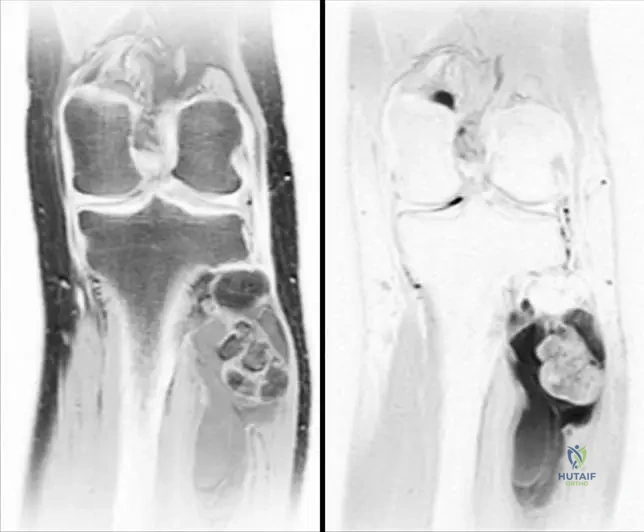
Question 73
A 30-year-old male presents with a deep thigh mass.
Biopsy confirms synovial sarcoma. Which of the following describes the most common chromosomal abnormality associated with this tumor?
Explanation
Question 74
A 12-year-old child presents with a mildly short stature and bilateral waddling gait. Radiographs demonstrate a double-layered patella and bilateral flattening of the femoral heads. What is the most likely genetic mutation?
Explanation
Question 75
Which of the following skeletal dysplasias is characterized by a defect in intramembranous ossification, resulting in delayed closure of cranial sutures, absent or hypoplastic clavicles, and coxa vara?
Explanation
Question 76
A 55-year-old male undergoes marginal excision of a massive, painless thigh mass. Histology demonstrates a pleomorphic spindle cell neoplasm arranged in a storiform pattern with giant cells. No specific translocations are found, and immunohistochemistry is non-contributory. What is the most likely diagnosis?
Explanation
Question 77
A 35-year-old male presents with a large, painless thigh mass. Biopsy confirms myxoid liposarcoma with the characteristic t(12;16) translocation. In addition to a chest CT, which of the following imaging modalities is most appropriate for staging this specific sarcoma?
Explanation
Question 78
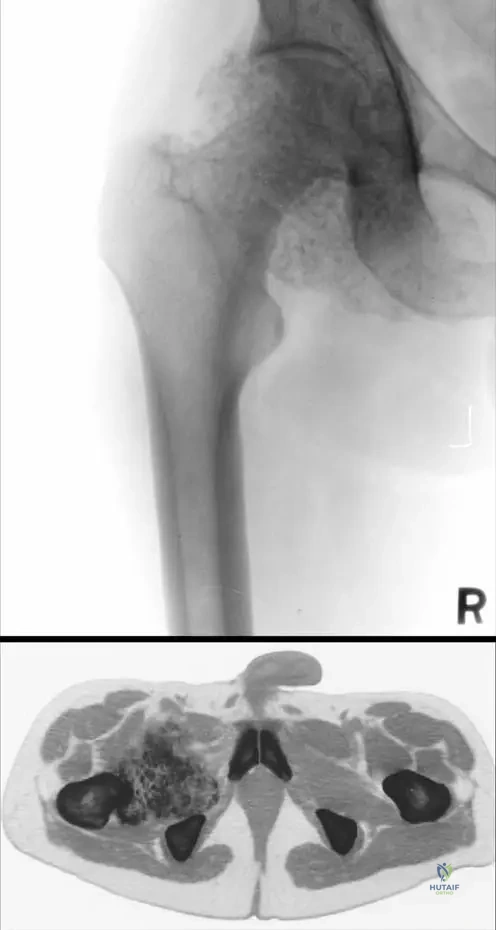
An MRI of a 40-year-old female with chronic hip pain reveals multiple intra-articular loose bodies with a "ring and arc" pattern of calcification.
What is the most feared complication of long-standing primary disease of this type?
Explanation
Question 79
A 30-year-old female presents with recurrent, bloody knee effusions. MRI shows a diffuse synovial process with blooming artifact on gradient-echo sequences. Biopsy confirms a condition characterized by a t(1;2) translocation. What is the mechanism of action of the targeted medical therapy recently approved for refractory cases of this disease?
Explanation
Question 80
A 28-year-old female presents with a deep, slow-growing mass in the plantar aspect of her foot. Biopsy reveals a neoplasm with nested cells separated by fibrous septa. Immunohistochemistry is positive for S-100 and HMB-45. What is the characteristic chromosomal translocation associated with this tumor?
Explanation
Question 81
A 35-year-old male undergoes wide excision of a nodular skin plaque on his trunk. Pathology demonstrates a storiform pattern of spindle cells that strongly express CD34 but are negative for Factor XIIIa. Which targeted therapy is most appropriate for metastatic or unresectable forms of this tumor?
Explanation
Question 82
Certain soft tissue sarcomas have a higher propensity for regional lymph node metastasis and require specialized staging. Which of the following soft tissue sarcomas most warrants evaluation of the regional lymph nodes?
Explanation
Question 83
A 26-year-old male presents with a deep mass near the knee joint. Biopsy reveals a biphasic tumor with both epithelial and spindle cell components. Cytogenetics confirm a t(X;18) translocation. Which of the following immunohistochemical markers is typically positive in the epithelial component of this tumor?
Explanation
Question 84
A 50-year-old female presents with a slow-growing thigh mass. Biopsy reveals a "staghorn" vascular pattern and spindle cells. Immunohistochemistry is strongly positive for STAT6 and CD34. What is the specific molecular driver for this neoplasm?
Explanation
Question 85
A 4-year-old boy presents with progressive restricted neck movement and firm soft tissue swelling on his back. Physical exam reveals bilateral short great toes with hallux valgus. What is the most appropriate next step in management?
Explanation
Question 86
A 60-year-old male has an 8 cm high-grade undifferentiated pleomorphic sarcoma (UPS) resected from his anterior thigh. Pathology margins are reported as < 1 mm but negative. He receives postoperative adjuvant radiotherapy. What is the primary benefit of adding radiotherapy in this clinical scenario?
Explanation
Question 87
A 35-year-old female with a history of numerous café-au-lait spots, axillary freckling, and Lisch nodules presents with rapid enlargement and new onset pain in a long-standing peripheral nerve mass. What is the most likely diagnosis of this newly changing lesion?
Explanation
Question 88
A 29-year-old postpartum female presents with a firm, painless mass in her anterior abdominal wall. Biopsy reveals a bland fibroblastic proliferation lacking cytologic atypia, with strong nuclear beta-catenin staining. According to current consensus guidelines, what is the most appropriate initial management?
Explanation
Question 89
A 35-year-old male presents with a slow-growing, painful mass on the plantar aspect of his foot. Radiographs demonstrate small stippled calcifications within the soft tissues. A core needle biopsy reveals a biphasic pattern of spindle cells and epithelial cells. Cytogenetic analysis of this tumor is most likely to demonstrate which of the following translocations?
Explanation
Question 90
A 45-year-old female presents with a deep intramuscular mass in her anterior thigh. Biopsy confirms the diagnosis of myxoid liposarcoma. Due to the unique metastatic behavior of this specific histologic subtype, which of the following additional imaging modalities is mandatory for accurate staging?
Explanation
Question 91
A 40-year-old male presents with chronic knee pain and locking. Imaging demonstrates multiple intra-articular radiopaque bodies. During arthroscopy, numerous cartilaginous nodules are found attached to the synovium. Which of the following best describes the underlying cellular process of this condition?
Explanation
Question 92
A 30-year-old female presents with a deep 3 cm mass in her plantar aponeurosis. Biopsy reveals nests of pale cells with distinct nucleoli. Immunohistochemistry is strongly positive for S-100, HMB-45, and Melan-A. Given the diagnosis, staging should highly consider the risk of metastasis to which of the following sites?
Explanation
Question 93
A 65-year-old male presents with a large, deep painless mass in his posterior thigh. Core needle biopsy confirms a well-differentiated liposarcoma. Molecular cytogenetic testing of the tumor cells is most likely to reveal amplification of which of the following?
Explanation
Question 94
A 28-year-old postpartum female complains of a firm, non-tender abdominal wall mass. Core biopsy reveals uniform, elongated spindle cells in a dense collagenous stroma without nuclear atypia. Immunohistochemistry shows nuclear staining for beta-catenin. What is the most widely accepted initial management for this lesion?
Explanation
Question 95
A 6-year-old boy presents with a rapidly enlarging, painful mass over his scapula following a minor fall. Physical examination is notable for bilaterally shortened great toes with hallux valgus. Which of the following interventions is absolutely contraindicated in the initial management of this patient?
Explanation
Question 96
A 35-year-old female presents with a recurrent bloody knee effusion. MRI demonstrates a nodular intra-articular mass with low signal intensity on both T1- and T2-weighted images, and a "blooming" artifact on gradient-echo sequences. Which targeted systemic therapy is FDA-approved for severe, unresectable cases of this disease?
Explanation
Question 97
A 40-year-old man presents with a slowly enlarging, nodular violaceous plaque on his chest wall. Pathology reveals a cellular spindle cell proliferation arranged in a dense "storiform" pattern, infiltrating deeply into the subcutaneous fat in a honeycomb pattern. What genetic aberration drives this neoplasm?
Explanation
Question 98
A 65-year-old male presents with a rapidly growing mass in his lateral thigh. He has a history of receiving external beam radiation therapy to the same extremity 15 years ago. Biopsy reveals highly pleomorphic spindle cells with bizarre multinucleated giant cells and atypical mitoses, but immunohistochemistry fails to show a specific line of differentiation. What is the most likely diagnosis?
Explanation
Question 99
A 14-year-old boy presents with a rapidly expanding calf mass. Biopsy reveals a primitive small round blue cell tumor. Molecular testing confirms a t(2;13)(q35;q14) translocation producing a PAX3-FOXO1 fusion gene. Which of the following describes this condition?
Explanation
Question 100
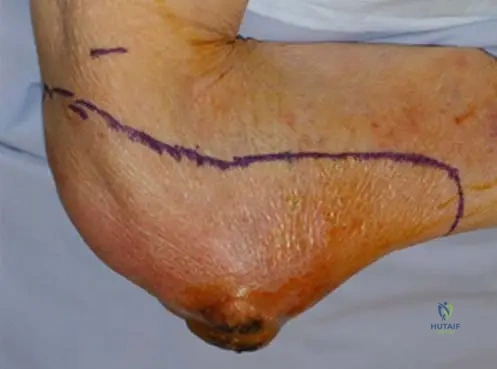
A 55-year-old male undergoes a limb-sparing marginal excision for a high-grade, 8 cm soft tissue sarcoma of the deep thigh. Final pathology confirms negative margins, with normal muscle measuring 1 mm at the closest point. Based on standard sarcoma treatment protocols, what is the most appropriate adjuvant therapy to minimize local recurrence?
Explanation
None
