Mastering Severe Bone Loss: Highly Porous Metal for Revision THA
Key Takeaway
For anyone wondering about Mastering Severe Bone Loss: Highly Porous Metal for Revision THA, Pelvic discontinuity with severe acetabular bone loss, often seen in revision hip arthroplasty, is addressed by options like cup-cage reconstruction. This complex procedure frequently utilizes a large, highly porous metal cup and a spanning ilioischial cage. This approach provides mechanical stability and encourages biological fixation, crucial for overcoming poor bone quality.
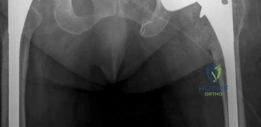
A 72-year-old female presents with progressive hip pain five years following a primary THA. Radiographs demonstrate significant superior acetabular bone loss. You suspect a Paprosky Type IIB defect. Describe your classification system and explain the biomechanical rationale for using a Highly Porous Metal (HPM) component in this scenario.
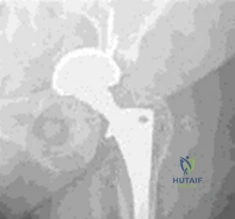
Candidate: I would classify the defect using the Paprosky system, which helps predict the need for structural support. Type IIB is superior segmental bone loss with an intact rim. I would use an HPM cup because it has a high coefficient of friction for primary stability and a porous structure that allows for osteointegration, which is better than cement.
Failing to define the structural importance of the columns or the biomechanical advantage of the modulus of elasticity. Candidates often stop at "it grows into the bone" without explaining how it avoids stress shielding or why it provides immediate mechanical stability in a revision setting.
The candidate defines Paprosky IIB as superior rim bone loss with intact columns. They should highlight: 1) Frictional stability: The high friction coefficient provides immediate press-fit security. 2) Osteoconductivity: The interconnected 70-80% porous scaffold allows for biological fixation. 3) Elasticity: The low modulus of elasticity (closer to bone) reduces stress shielding compared to solid metal, promoting long-term bone remodeling and load transfer to the host skeleton.
During the revision of a failed femoral stem, you encounter significant metaphyseal bone loss with a widened canal, classified as Paprosky Type IIIA. You are considering a modular femoral stem with an HPM sleeve. What are the specific biomechanical advantages of this construct?
Candidate: Using an HPM sleeve in a Type IIIA defect allows for proximal metaphyseal fill. The sleeve achieves secure press-fit fixation in the metaphysis, while the modular stem allows me to independently adjust the leg length and offset. This bypasses the need for cement and provides a biological interface for fixation.
Focusing only on the "sleeve" part. A failing candidate ignores the necessity of the modular stem design, which is critical for restoring anatomy (offset/length) when the proximal femur is destroyed. They also often fail to mention the "hoop stress" created by the sleeve, which is the mechanism of immediate stability.
The candidate must emphasize three points: 1) Metaphyseal fill: The HPM sleeve converts a Type IIIA defect into a contained environment, generating hoop stress for immediate stability. 2) Modularity: The separation of the sleeve and stem allows independent optimization of leg length, offset, and version—a key goal in complex revision. 3) Biological fixation: By achieving primary stability via the sleeve in the metaphysis, they avoid the reliance on cement and long-term distal fixation, thereby preserving distal bone stock.
