Severe Traumatic Hand Degloving & Partial Amputation: A Grand Rounds Case Presentation
Key Takeaway
A severe degloving hand injury with partial amputation typically presents with extensive soft tissue avulsion, exposed bones/tendons, significant neurovascular compromise, and often multiple open fractures. The avulsed skin appears devitalized. Clinical examination includes thorough assessment of vascularity, sensation, and structural integrity, often revealing absent digital pulses and impaired nerve function following high-energy trauma.
A 38-year-old machinist presents after a high-energy roller press injury to his dominant right hand. On examination, you note extensive circumferential soft tissue avulsion, exposed metacarpal bones, and a thumb MCP joint that is partially amputated with no palpable pulse. How do you classify this clinical presentation, and what is your immediate systematic approach to management?
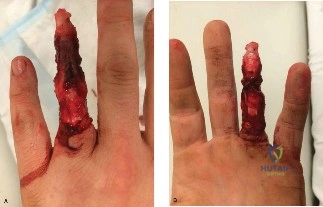
Candidate: I would classify this as a severe mangled hand injury with a combination of degloving and near-total amputation. I would immediately check his ABCs, give tetanus and antibiotics, and take him to theatre for urgent debridement and stabilization. I would look at replanting the thumb if possible.
Candidates often jump immediately to "replantation" without first addressing the systemic state or the reality of the tissue bed. Failing to mention the Gustilo-Anderson classification (specifically Type IIIB/C) suggests a lack of structured trauma assessment. Furthermore, failing to emphasize the necessity of a "second look" procedure for industrial injuries is a significant oversight.
I classify this as a Gustilo-Anderson Type IIIB/C open injury characterized by complex degloving and near-total amputation. My approach follows a structured hierarchy: 1. Systemic Stabilization: ATLS principles, tetanus, and broad-spectrum IV antibiotics. 2. Debridement: The absolute priority is radical, meticulous debridement of all contaminated and devitalized tissue. 3. Skeletal Stabilization: Establishing a rigid framework using K-wires or mini-plates. 4. Revascularization: Microsurgical restoration of inflow/outflow. 5. Staged Management: I would intentionally plan for a 'second look' 48 hours later before committing to definitive free tissue transfer, acknowledging that industrial grease contamination carries a high risk of deep infection.
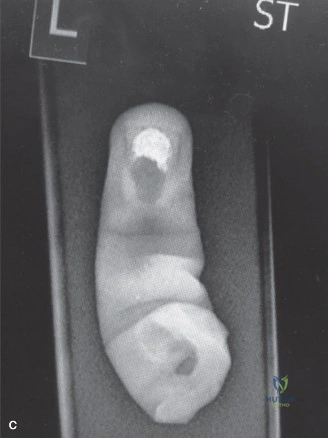
The radiographs show comminuted fractures of the 2nd and 3rd metacarpals and a thumb MCP joint fracture-dislocation. You have achieved skeletal stability. Why is the "second look" procedure in this industrial injury considered mandatory rather than optional?
Candidate: Because industrial injuries involve hydraulic fluid and grease which can be very toxic to tissues. A second look ensures that all damaged tissue has been fully excised and the wound is clean before I put any flaps or grafts down.
The candidate misses the "zone of injury" concept. They focus only on the cleanliness of the wound, rather than the secondary necrosis that occurs due to the energy transfer in roller-press injuries. They fail to mention the physiological change in tissues that may only become apparent 24–48 hours post-injury.
The mandatory second look is essential due to the high-energy nature of the crush injury, which results in a broad "zone of injury" beyond the visible damage. Tissues that appear marginally viable during the primary debridement often undergo delayed necrosis over the subsequent 48 hours. Furthermore, industrial contaminants like hydraulic fluid and metallic micro-debris act as potent niduses for infection. The second look allows for safe secondary debridement and confirms the viability of the vascular repairs before embarking on definitive, expensive reconstructive options like free-tissue transfer.
