Hallux Valgus Exam Prep: Master Oral Questions Hallux Scenarios
Key Takeaway
Discover the latest medical recommendations for Hallux Valgus Exam Prep: Master Oral Questions Hallux Scenarios. Oral questions hallux assessment, as presented in an orthopedic module, outlines a structured approach to evaluating hallux valgus. This involves interpreting clinical images, gathering a detailed patient history regarding symptoms and comorbidities, and performing a comprehensive physical examination. Key examination points include gait analysis, palpation, assessing range of motion (MTP and tarsometatarsal joints), and neurovascular status.
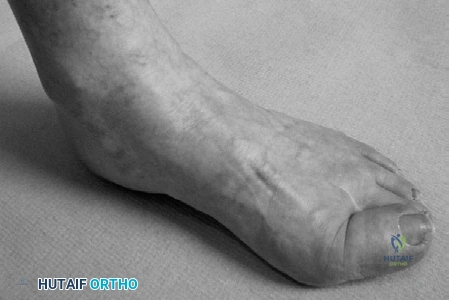
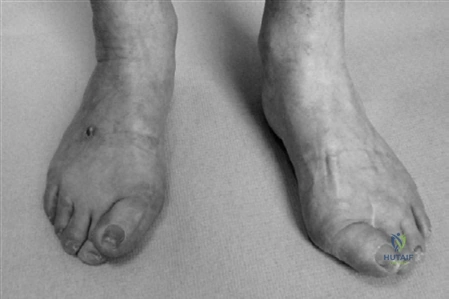
A 65-year-old female presents with recurrent hallux valgus and second toe pain. She previously underwent surgery on the left side, which resulted in the removal of the second toe. Look at these images.
Based on the radiographic findings, describe your assessment of the deformity and the implications for surgical planning.
Candidate: I would measure the Hallux Valgus Angle (HVA), Intermetatarsal Angle (IMA), and Distal Metatarsal Articular Angle (DMAA). I note the lack of the second toe, which is a major factor as it removes the lateral constraint for the hallux, predisposing to recurrence. My surgical plan would favor MTP joint arthrodesis over an osteotomy given the previous failure and lack of second toe stability.
Candidates often jump straight to suggesting a Scarf osteotomy without addressing the stability of the second ray. Ignoring the status of the second toe—which is the "buttress" for the hallux—is a significant oversight that leads to high failure rates in revision cases.
The candidate must systematically define the radiographic severity (IMA >13°, HVA >30°). Crucially, they must identify that the absence of the second toe renders the foot "unstable" regarding lateral drift of the hallux. They should conclude that arthrodesis is the most reliable option to prevent further recurrence in a revision setting, especially in an older patient.
The patient is considering surgery. What specific complications are unique to the Scarf or proximal osteotomy, and how do you discuss them during the consent process?
Candidate: I would counsel on generic risks (infection, DVT) but emphasize specific risks of proximal osteotomies: troughing of the metatarsal, intraoperative fracture during screw fixation, dorsomedial cutaneous nerve injury, and the potential for recurrence or over-correction into hallux varus.
Failure to mention "troughing" (when the metatarsal head collapses into the shaft) or failing to explain that hallux varus is often iatrogenic and notoriously difficult to salvage.
A structured consent response categorizing risks into: 1) Structural (Troughing, stress fracture, non-union), 2) Neurological (Dorsomedial nerve palsy), 3) Functional (Stiffness, transfer metatarsalgia), and 4) Cosmetic/Alignment (Recurrence, iatrogenic hallux varus). The candidate highlights that Hallux Varus is a difficult-to-treat complication, often requiring MTP arthrodesis for correction.
