Ankle Structured Oral: Expert Answers for Arthritis Cases
Key Takeaway
In this comprehensive guide, we discuss everything you need to know about Ankle Structured Oral: Expert Answers for Arthritis Cases. Ankle arthritis, frequently addressed in an ankle structured oral context, is mainly caused by post-traumatic injury, with inflammatory and septic arthritis also playing a role. Patients typically experience pain, restricted movement, and functional difficulties. Management options span conservative measures like NSAIDs, braces, and injections, to surgical interventions such as debridement or distraction arthroplasty.
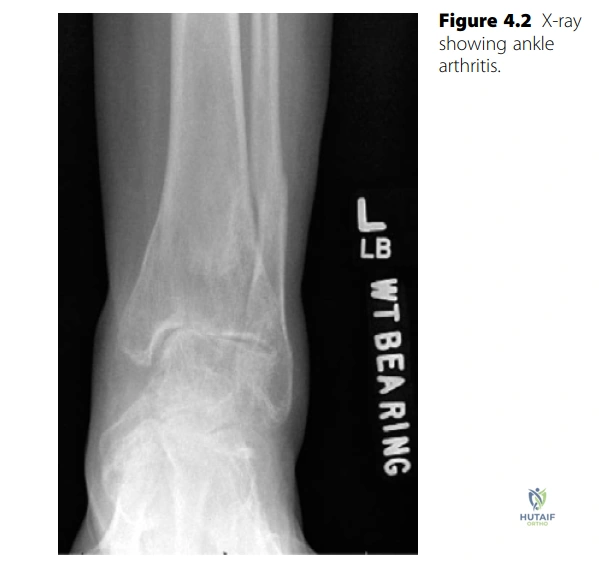
A 42-year-old manual worker presents with chronic ankle pain following a non-operatively managed fracture 7 years ago. Please examine this radiograph and describe your findings.
Candidate: This is a weight-bearing AP radiograph of the left ankle. There is significant narrowing of the tibiotalar joint space, subchondral sclerosis, and osteophyte formation, consistent with end-stage post-traumatic osteoarthritis. I also note a healed fibular fracture superior to the syndesmosis and a varus malalignment of the talus within the mortise.
Candidates often jump straight to suggesting surgery or treatment options without systematically describing the radiographic evidence. Failing to mention "weight-bearing" is a critical error, as non-weight-bearing films significantly underestimate joint space narrowing.
The perfect answer is systematic: 1. Projection/Side: "This is an AP weight-bearing radiograph of the [side] ankle." 2. Pathology: "There is evidence of secondary osteoarthritis characterized by joint space loss, subchondral sclerosis, and marginal osteophytes." 3. Etiology/Context: "The presence of the fibular fracture indicates a post-traumatic etiology." 4. Alignment: "There is clear varus malalignment which may be a contributing factor or a result of the collapse."
The patient is a 42-year-old manual worker with this ankle. He is requesting a Total Ankle Replacement (TAR) to avoid a stiff joint and remain active. How do you counsel him?
Candidate: I would explain that given his young age and high-demand occupation, a TAR carries a significant risk of early failure and revision. I would discuss that ankle arthrodesis is the gold standard for his demographic, as it provides a predictable, durable, and pain-free result, allowing return to heavy manual labor and even sports.
Candidates who are too "pro-technology" may agree to a TAR too easily. A high-scoring candidate must prioritize the patient's long-term functional requirements and the high revision rates of TAR in young, active manual laborers.
Structure the response: 1. Acknowledge the Patient's Wish: Show empathy regarding the desire to maintain range of motion. 2. Evidence-Based Contraindications: Cite age, high activity level, and manual labor as major risk factors for premature implant failure. 3. Explain the Alternative: Frame the fusion not as "stiffness" but as a "stable, pain-free platform." Emphasize that compensatory movement occurs at the midfoot and subtalar joints. 4. Shared Decision Making: Emphasize the importance of managing expectations regarding longevity and potential for secondary arthritis in adjacent joints.
