Operative Management of the Rheumatoid Hand and Wrist
Key Takeaway
The surgical management of the rheumatoid hand requires a profound understanding of altered biomechanics, progressive capsuloligamentous destruction, and perioperative medical optimization. This comprehensive guide details the pathophysiology, indications, and step-by-step operative techniques for correcting complex deformities, including metacarpophalangeal ulnar drift, proximal interphalangeal joint swan-neck and boutonnière deformities, and advanced rheumatoid wrist reconstruction. Multidisciplinary coordination remains paramount for optimizing functional outcomes and minimizing perioperative morbidity.
Introduction to the Arthritic Hand
The rheumatic diseases present with a highly variable spectrum of symptoms, signs, and progressive manifestations within the hand and wrist. While the specific diagnosis may be established prior to surgical consultation, the orthopaedic surgeon’s initial evaluation must encompass a rigorous screening history, detailed physical examination, and comprehensive radiographic assessment.
Because rheumatic diseases with systemic manifestations—such as rheumatoid arthritis (RA), systemic lupus erythematosus (SLE), psoriatic arthritis, and scleroderma—involve multiple organ systems, surgical intervention is but one facet of a broader, multidisciplinary treatment paradigm. The operative indications, surgical timing, and long-term prognosis differ significantly depending on the specific disease entity, the degree of systemic control, and the patient's functional demands.
Rheumatoid Arthritis: Pathophysiology and Clinical Presentation
Rheumatoid arthritis is characterized by an aggressive, hypertrophic synovitis that relentlessly destroys articular cartilage, attenuates capsuloligamentous structures, and infiltrates tendon sheaths. This proliferative pannus leads to attritional tendon ruptures, severe joint subluxations, and grotesque deformities that severely compromise hand function and patient self-esteem.
The management of the rheumatoid patient mandates a coordinated team approach involving a rheumatologist, internist, orthopaedic hand surgeon, specialized hand therapist, and psychological counselor. Operative treatment is not curative; rather, it is a strategic intervention designed to relieve pain, restore functional biomechanics, correct or prevent progressive deformity, and inhibit localized disease progression.
Perioperative Medical Management
Patients with RA are typically managed with a complex regimen of medications, many of which carry significant perioperative implications.
- Nonsteroidal Anti-inflammatory Drugs (NSAIDs) and Salicylates: Due to their inhibitory effects on platelet aggregation, salicylates should be discontinued 1 to 2 weeks prior to surgery. Traditional NSAIDs are typically held 2 to 5 days preoperatively, depending on their specific half-lives.
- Corticosteroids: Patients who have received systemic corticosteroids for more than 3 weeks within the preceding 12 months are at risk for hypothalamic-pituitary-adrenal (HPA) axis suppression. These patients require perioperative stress-dose corticosteroid coverage to prevent acute adrenal crisis.
- Disease-Modifying Antirheumatic Drugs (DMARDs) and Biologics: The perioperative management of agents such as methotrexate, sulfasalazine, azathioprine, cyclosporine, and tumor necrosis factor-alpha (TNF-α) inhibitors requires close coordination with the treating rheumatologist. While methotrexate is often continued to prevent disease flare, biologic agents are typically withheld for one to two dosing cycles prior to surgery to mitigate infection risks.
Surgical Warning: Cervical Spine Instability
If general anesthesia is planned, the alignment and stability of the cervical spine must be rigorously investigated. Prolonged rheumatoid disease frequently leads to atlantoaxial subluxation or subaxial instability. Preoperative flexion-extension cervical radiographs are mandatory. The anesthesiologist must be alerted to any instability to prevent catastrophic spinal cord injury during endotracheal intubation. Furthermore, severe temporomandibular joint (TMJ) involvement may necessitate fiberoptic intubation.
Preoperative Planning and Patient Counseling
Surgical intervention in the rheumatoid hand is primarily prophylactic (synovectomy, tenosynovectomy) or reconstructive (arthroplasty, arthrodesis, tendon transfers).
Before proceeding, the surgeon must establish a clear hierarchy of goals:
1. Pain Relief: The most reliable outcome of rheumatoid hand surgery.
2. Restoration of Function: Improving grip strength, pinch kinematics, and dexterity.
3. Prevention of Deformity: Halting the progression of capsular attenuation.
4. Cosmesis: While secondary to function, aesthetic improvement highly correlates with patient satisfaction.
Staging of Operations
Rheumatoid deformities are typically bilateral and symmetrical. When multiple procedures are required, staging is critical. The general principle is to establish a stable foundation before addressing distal structures. Therefore, the traditional sequence of reconstruction is:
1. The Wrist: The "keystone" of hand function. Wrist alignment dictates the biomechanical forces acting on the digits.
2. The Metacarpophalangeal (MCP) Joints: Addressed only after or concurrently with wrist stabilization.
3. The Proximal Interphalangeal (PIP) and Distal Interphalangeal (DIP) Joints.
4. The Thumb: Can often be addressed concurrently with other procedures depending on tourniquet time.
Note: Acute tendon ruptures (e.g., Vaughan-Jackson syndrome) or severe nerve compressions are surgical emergencies in the rheumatoid hand and supersede the traditional staging hierarchy.
Pathoanatomy and Biomechanics of Rheumatoid Deformities
The Rheumatoid Wrist
The wrist is affected early in the disease process. Hypertrophic synovitis disrupts the intercarpal ligaments, particularly the radioscaphocapitate ligament, leading to rotatory subluxation of the scaphoid. Concurrently, destruction of the distal radioulnar joint (DRUJ) ligaments results in dorsal subluxation of the distal ulna (Caput Ulnae Syndrome).
This DRUJ instability leads to supination of the carpus on the forearm and ulnar translocation of the carpus. The prominent, eroded distal ulna acts as a saw against the extensor tendons, leading to sequential attritional ruptures, typically beginning with the extensor digiti minimi (EDM) and progressing radially to the extensor digitorum communis (EDC) (Vaughan-Jackson syndrome).
The Metacarpophalangeal (MCP) Joint
The classic rheumatoid deformity is ulnar drift with volar subluxation of the proximal phalanges. This is a multifactorial collapse mechanism:
1. Radial Deviation of the Carpus: Due to ulnar translocation, the metacarpals deviate radially, creating a Z-collapse that forces the phalanges into ulnar deviation.
2. Attenuation of the Radial Sagittal Bands: Synovitis stretches the radial hood, allowing the extensor tendons to subluxate ulnarly into the valleys between the metacarpal heads.
3. Intrinsic Muscle Contracture: Ulnar intrinsic tightness exacerbates the ulnar pull.
4. Volar Plate Laxity: Leads to volar subluxation of the proximal phalanx, eventually resulting in fixed dislocation.
Finger Deformities
- Swan-Neck Deformity: Characterized by PIP joint hyperextension and DIP joint flexion. It originates from terminal tendon rupture (mallet), volar plate laxity at the PIP joint, or intrinsic tightness.
- Boutonnière Deformity: Characterized by PIP joint flexion and DIP joint hyperextension. It originates from central slip attenuation by PIP joint synovitis, allowing the lateral bands to subluxate volar to the axis of rotation of the PIP joint.
Thumb Deformities (Nalebuff Classification)
- Type I (Boutonnière): The most common. Synovitis at the MCP joint attenuates the extensor pollicis brevis (EPB), leading to MCP flexion and secondary IP joint hyperextension.
- Type II: Similar to Type I, but with concurrent carpometacarpal (CMC) joint subluxation.
- Type III (Swan-Neck): Originates at the CMC joint with dorsal subluxation. The metacarpal adducts, leading to secondary MCP hyperextension and IP flexion.
- Type IV (Gamekeeper's): Synovitis destroys the ulnar collateral ligament (UCL) of the MCP joint, leading to radial deviation of the proximal phalanx.
- Type V: Hyperextension of the MCP joint due to volar plate laxity, without CMC disease.
- Type VI: Skeletal collapse with severe bone loss (arthritis mutilans).
Operative Techniques: Step-by-Step Approaches
1. Dorsal Tenosynovectomy and DRUJ Reconstruction (Darrach Procedure)
Indications: Persistent dorsal tenosynovitis unresponsive to medical management for 6 months; impending or actual extensor tendon rupture; painful DRUJ instability (Caput Ulnae).
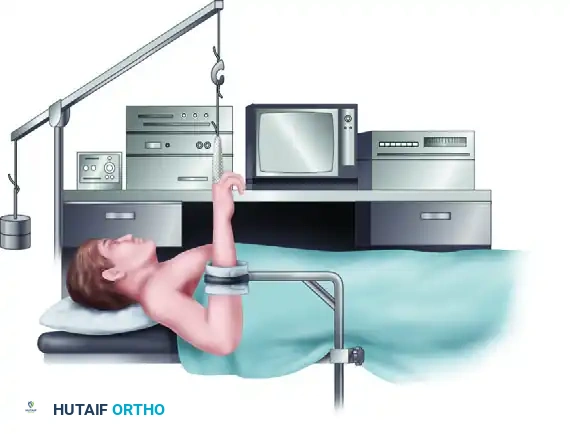
Positioning: Supine, arm extended on a hand table. Well-padded pneumatic tourniquet applied to the proximal arm. Loupe magnification (2.5x to 3.5x) is recommended.
Surgical Steps:
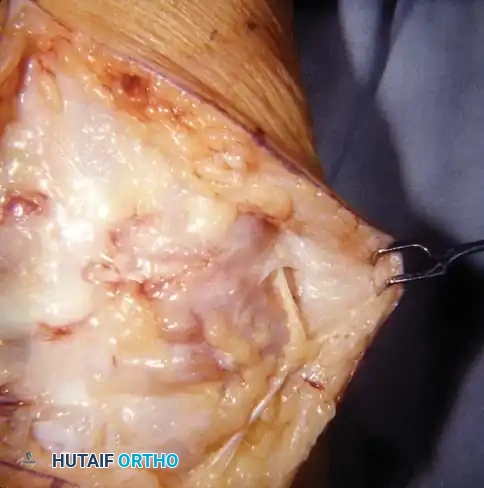
1. Incision: A dorsal longitudinal incision is made in the midline of the wrist, extending from the distal third of the radius to the mid-carpus.
2. Flap Elevation: Full-thickness fasciocutaneous flaps are elevated to protect the dorsal sensory branches of the ulnar and radial nerves.
3. Retinaculum Reflection: The extensor retinaculum is incised over the 6th extensor compartment. It is carefully elevated radially as a continuous flap, exposing compartments 5 through 2.
4. Tenosynovectomy: Hypertrophic, invasive tenosynovium is meticulously excised from the extensor tendons. Care is taken to preserve the epitenon. If tendon nodules are present, they are sharply excised.
5. DRUJ Approach: The capsule of the DRUJ is incised longitudinally.
6. Ulnar Head Resection (Darrach): The distal ulna is osteotomized approximately 1.5 to 2 cm proximal to the articular surface. The distal fragment is excised. Alternative: The Sauvé-Kapandji procedure (DRUJ arthrodesis with proximal ulnar pseudarthrosis) may be preferred in younger, higher-demand patients to preserve the ulnocarpal ligaments.
7. Synovectomy of the Radiocarpal Joint: If indicated, a dorsal capsulotomy is performed to remove radiocarpal pannus.
8. Retinacular Relocation: The extensor retinaculum is passed deep to the extensor tendons to provide a smooth gliding surface and isolate the tendons from the rough carpal bones.
9. Closure: The skin is closed over a closed-suction drain.
Postoperative Protocol: A bulky compressive dressing and volar splint are applied. Active digit motion is encouraged immediately to prevent tendon adhesions. Sutures are removed at 10-14 days.
Clinical Pearl: Tendon Rupture Management
If an attritional rupture of the EDC is encountered, end-to-end repair is rarely possible due to tendon retraction and poor tissue quality. The distal stump of the ruptured tendon should be transferred to an adjacent intact tendon (e.g., side-to-side tenodesis of the ring finger EDC to the middle finger EDC). If the EPL is ruptured, an EIP to EPL tendon transfer is the gold standard.
2. Metacarpophalangeal (MCP) Joint Arthroplasty
Indications: Severe, painful ulnar drift with fixed volar subluxation or dislocation of the MCP joints; severe articular cartilage destruction (Larsen Grade III-V). Silicone elastomer implants (e.g., Swanson) remain the gold standard for rheumatoid MCP reconstruction.
Surgical Steps:
1. Incision: A transverse dorsal incision is made over the metacarpal necks. Alternatively, individual longitudinal incisions can be used to minimize lymphatic disruption.
2. Extensor Hood Release: The attenuated radial sagittal bands are identified. A longitudinal incision is made through the ulnar sagittal band to release the ulnar deforming force. The extensor tendon is retracted radially.
3. Metacarpal Head Resection: The collateral ligaments are excised. The metacarpal neck is exposed, and an oscillating saw is used to resect the metacarpal head perpendicular to the shaft.
4. Synovectomy and Soft Tissue Release: A thorough synovectomy is performed. The volar plate is released from the proximal phalanx to correct volar subluxation. The ulnar intrinsic tendons are identified and sectioned (intrinsic release) to eliminate ulnar deforming forces.
5. Canal Preparation: The medullary canals of the metacarpal and proximal phalanx are broached using specialized rasps. The canals must be rectangular to prevent implant rotation.
6. Trialing: Sizers are inserted. The joint should rest in neutral alignment with no tension. The largest implant that fits comfortably without buckling should be selected.
7. Implant Insertion: The definitive silicone implants are inserted using a no-touch technique to minimize contamination and surface scratching, which can lead to premature fatigue failure.
8. Capsular Reconstruction: The radial sagittal band is imbricated or repaired to centralize the extensor tendon over the joint. If the radial tissue is deficient, a slip of the extensor tendon or a portion of the volar plate can be used for reconstruction.
9. Closure: Skin is closed with interrupted non-absorbable sutures.
Postoperative Protocol:
The success of MCP arthroplasty is heavily dependent on postoperative hand therapy.
* Days 1-5: Bulky dressing with the hand elevated.
* Days 5-21: A dynamic extension outrigger splint is fabricated. This splint maintains the MCP joints in extension and slight radial deviation while allowing active flexion.
* Weeks 3-6: Gradual weaning from the dynamic splint. Night splinting in radial deviation is continued for 3 to 6 months.
Pitfall in MCP Arthroplasty
Failure to adequately release the volar plate and ulnar intrinsics will result in recurrent volar subluxation and ulnar drift, leading to early implant failure. The soft tissue rebalancing is just as critical as the bony resection.
3. Correction of Proximal Interphalangeal (PIP) Joint Deformities
Swan-Neck Deformity Correction
The surgical approach depends on the flexibility of the joint.
* Flexible Deformity: If the PIP joint is passively correctable, a volar plate advancement or a flexor digitorum superficialis (FDS) tenodesis is performed to create a slight flexion contracture, preventing hyperextension.
* Fixed Deformity: If the joint is stiff with severe articular destruction, PIP joint arthrodesis is the procedure of choice. The joint is fused in functional flexion (index finger at 25°, progressing to 40° for the small finger) using tension band wiring, headless compression screws, or Kirschner wires.
Boutonnière Deformity Correction
- Mild/Flexible: Synovectomy of the PIP joint combined with shortening of the central slip and dorsal relocation of the lateral bands.
- Severe/Fixed: As with fixed swan-neck deformities, PIP joint arthrodesis provides the most reliable, pain-free, and functional outcome. Arthroplasty of the PIP joint in a rheumatoid patient with a boutonnière deformity has a high failure rate due to the attenuated extensor mechanism.
Conclusion
The operative management of the rheumatoid hand is a highly specialized discipline requiring a profound understanding of altered biomechanics, progressive soft-tissue attenuation, and complex perioperative medical management. Surgical intervention must be meticulously planned, appropriately staged, and flawlessly executed.
Whether performing a prophylactic tenosynovectomy to prevent tendon rupture or undertaking a complex multi-joint reconstruction with silicone arthroplasties, the orthopaedic surgeon must prioritize pain relief and functional restoration. Ultimately, the success of these procedures relies not only on surgical precision but also on rigorous postoperative rehabilitation and seamless collaboration with the multidisciplinary rheumatology team.
You Might Also Like