Comprehensive Introduction and Patho-Epidemiology
The management of complex glenohumeral pathologies, specifically spinoglenoid cysts and recalcitrant shoulder contractures, requires a profound understanding of shoulder biomechanics, capsuloligamentous anatomy, and advanced arthroscopic techniques. These two entities, while distinct in their pathophysiological origins, represent opposite ends of the arthroscopic spectrum. Spinoglenoid cysts present as a focal compressive neuropathy secondary to intra-articular labral defects, typically resulting in hypermobility or microinstability that fuels cyst expansion. Conversely, shoulder contractures represent a global loss of capsular viscoelasticity, characterized by profound fibroblastic proliferation and joint space obliteration. This comprehensive guide delineates the evidence-based surgical management, precise arthroscopic techniques, and postoperative protocols required to optimize clinical outcomes in these challenging patient populations.
Spinoglenoid cysts are paralabral ganglion cysts that typically form secondary to posterior or superior labral anterior-to-posterior (SLAP) tears. The epidemiological profile of these cysts predominantly features young to middle-aged male patients, particularly overhead athletes, laborers, and military personnel subjected to repetitive microtrauma or acute traction injuries. The biomechanical mechanism driving cyst formation is widely accepted as a "one-way valve" effect. Synovial fluid is forced through the capsulolabral defect during glenohumeral motion—specifically during the cocking and acceleration phases of throwing—where it accumulates in the spinoglenoid notch. Because the cyst wall lacks a true synovial lining, it is histologically classified as a pseudocyst, formed by the myxoid degeneration of connective tissue in response to the continuous hydrostatic pressure originating from the glenohumeral joint.
In stark contrast, shoulder contractures—encompassing idiopathic adhesive capsulitis, post-traumatic stiffness, and post-surgical tethering—manifest as a profound restriction in both active and passive range of motion. The epidemiological burden of adhesive capsulitis is substantial, affecting approximately 2% to 5% of the general population, with a distinct predilection for females in their fifth and sixth decades of life. The etiology is broadly categorized into primary (idiopathic) and secondary domains. Secondary contractures may arise from trauma (fractures, dislocations) or surgery (prolonged immobilization, overtightening of capsular structures). However, a particularly troublesome and recalcitrant form of contracture is associated with endocrine abnormalities, most notably diabetes mellitus and thyroid dysfunction.
The diabetic shoulder represents a distinct, highly aggressive clinical entity. The prevalence of adhesive capsulitis in the diabetic population approaches 20% to 30%, with patients often presenting with bilateral involvement. Pathophysiologically, this condition is driven by the accumulation of advanced glycation end-products (AGEs) within the capsular collagen matrix. The cross-linking of these abnormal proteins leads to marked thickening, fibrosis, and a profound loss of viscoelastic properties within the joint capsuloligamentous complex. Furthermore, the chronic low-grade systemic inflammation associated with diabetes upregulates profibrotic cytokines, such as transforming growth factor-beta (TGF-β), transforming a normally pliable capsule into a rigid, non-compliant structure that resists conservative manipulation and necessitates early surgical intervention.
Detailed Surgical Anatomy and Biomechanics
A masterful command of the complex regional anatomy is the absolute prerequisite for safe and effective arthroscopic intervention in both spinoglenoid cysts and shoulder contractures. For spinoglenoid cysts, the primary anatomical concern is the suprascapular nerve and its intricate spatial relationship with the posterior glenoid neck. The suprascapular nerve arises from the upper trunk of the brachial plexus (C5, C6) and courses posteriorly through the suprascapular notch, deep to the superior transverse scapular ligament. After providing motor innervation to the supraspinatus muscle, the nerve descends obliquely across the supraspinous fossa, wrapping around the base of the scapular spine to enter the spinoglenoid notch.
It is within this rigid, unyielding fibro-osseous tunnel—the spinoglenoid notch—that the nerve is highly susceptible to compression. The notch is bordered medially by the base of the scapular spine, laterally by the posterior glenoid neck, and superiorly by the spinoglenoid ligament (inferior transverse scapular ligament). Because the suprascapular nerve traverses this notch to provide terminal motor innervation to the infraspinatus muscle, a paralabral cyst expanding in this location causes focal, isolated nerve compression. Clinically, this manifests as isolated infraspinatus atrophy, poorly localized posterior shoulder pain, and profound external rotation weakness. The precise distance from the posterior glenoid rim to the suprascapular nerve at the level of the spinoglenoid notch is approximately 1.5 to 2.0 centimeters, a critical dimension that surgeons must respect during labral preparation and anchor placement to avoid iatrogenic nerve injury.
Conversely, the surgical management of shoulder contractures demands an intimate understanding of the glenohumeral capsuloligamentous complex and its biomechanical role in restricting specific planes of motion. The capsule is not a homogenous structure; rather, it is a complex condensation of distinct ligamentous bands that function synergistically to provide static stability. The rotator interval, a triangular space bordered by the supraspinatus superiorly, the subscapularis inferiorly, and the coracoid process medially, contains the coracohumeral ligament (CHL) and the superior glenohumeral ligament (SGHL). Pathological contracture of the rotator interval is the primary driver of the classic loss of external rotation with the arm resting at the patient's side.
Moving inferiorly, the middle glenohumeral ligament (MGHL) and the inferior glenohumeral ligament (IGHL) complex become the primary stabilizers and, consequently, the primary restrictors when fibrosed. The IGHL complex is composed of an anterior band, a posterior band, and an interposed axillary pouch. Based on Bennett's biomechanical mapping, selective contracture of the IGHL complex restricts external rotation in abduction, forward flexion, and internal rotation. The posterosuperior capsule, often implicated in overhead throwing athletes presenting with glenohumeral internal rotation deficit (GIRD), restricts internal rotation and cross-body adduction. Understanding these specific biomechanical linkages allows the arthroscopic surgeon to perform targeted, selective releases tailored to the patient's specific preoperative range-of-motion deficits, rather than relying on arbitrary capsular sectioning.
Exhaustive Indications and Contraindications
The decision to proceed with operative intervention for complex glenohumeral pathologies must be guided by strict, evidence-based clinical thresholds. For spinoglenoid cysts, the presence of an asymptomatic cyst incidentally discovered on magnetic resonance imaging (MRI) is not an indication for surgery. However, intervention is definitively indicated when the cyst induces symptomatic suprascapular neuropathy. The classic triad of indications includes refractory posterior shoulder pain, clinical evidence of infraspinatus weakness, and electromyographic (EMG) confirmation of acute or chronic denervation. Furthermore, the presence of a massive cyst causing mechanical impingement, or a concomitant symptomatic SLAP lesion that fails conservative management, warrants arthroscopic decompression and labral repair.
In the context of shoulder contractures, the indications for surgery are heavily dependent on the duration of symptoms, the underlying etiology, and the patient's response to structured physical therapy. Many shoulder contractures are preventable or treatable by intensive, goal-oriented physical therapy focusing on capsular stretching. However, recognizing when conservative management has failed is critical to preventing permanent disability. Scarlat and Harryman noted that patients who experienced symptoms for more than 6 months were significantly less likely to respond favorably to closed manipulation than patients with posttraumatic or postsurgical stiffness. In our clinical experience, patients presenting with symptoms of more than 4 months’ duration, combined with external rotation of less than 30 degrees and forward flexion of less than 100 degrees, generally respond poorly to physical therapy alone. If a patient is not gaining significant motion (defined as 10 to 15 degrees of improvement over 2 weeks) during a 4-week period of dedicated therapy, surgical intervention should be contemplated early.
Contraindications for these procedures must be rigorously evaluated. Absolute contraindications include active intra-articular or periarticular infection, severe medical comorbidities precluding safe anesthesia, and the presence of advanced glenohumeral osteoarthritis where a capsular release would merely unmask bone-on-bone incongruity without providing functional benefit. Relative contraindications include complex regional pain syndrome (CRPS), which can be exacerbated by surgical trauma, and profound patient non-compliance, as the success of a capsular release is entirely dependent on aggressive, painful postoperative rehabilitation. Furthermore, operating during the acute "freezing" (highly inflammatory) phase of idiopathic adhesive capsulitis is generally discouraged, as the hypervascularity increases surgical bleeding and the risk of recurrent postoperative stiffness is exceptionally high.
| Clinical Parameter | Spinoglenoid Cysts & Labral Tears | Shoulder Contractures & Adhesive Capsulitis |
|---|---|---|
| Primary Indications | EMG-confirmed suprascapular neuropathy; profound external rotation weakness; refractory posterior pain; symptomatic SLAP lesion. | Failure of 4-6 months of conservative therapy; <30° external rotation; <100° forward flexion; recalcitrant diabetic stiffness. |
| Relative Indications | Large cyst size (>2cm) with impending nerve compression; overhead athlete with decline in performance. | Failure to progress 10-15° over 4 weeks of intensive PT; post-surgical tethering limiting functional ADLs. |
| Absolute Contraindications | Active focal infection; medically unstable patient; asymptomatic incidental cyst without labral pathology. | Active joint infection; severe glenohumeral osteoarthritis (requires arthroplasty); inability to participate in post-op PT. |
| Relative Contraindications | Advanced irreversible fatty infiltration of the infraspinatus (grade 4); severe cervical radiculopathy mimicking symptoms. | Acute "freezing" inflammatory phase; Complex Regional Pain Syndrome (CRPS); severe osteopenia (risk of fracture during manipulation). |
Pre-Operative Planning, Templating, and Patient Positioning
Thorough preoperative planning is the cornerstone of successful arthroscopic management. For spinoglenoid cysts, advanced imaging is mandatory. A non-contrast MRI is highly sensitive for identifying the cystic structure within the spinoglenoid notch, evaluating the size and multi-loculated nature of the ganglion, and assessing the infraspinatus muscle for early edema (indicating acute denervation) or late fatty infiltration (indicating chronic, potentially irreversible nerve damage). However, an MR arthrogram is the gold standard for delineating the primary intra-articular pathology—the capsulolabral defect. The intra-articular contrast effectively demonstrates the one-way valve mechanism, tracking through the posterosuperior labral tear and filling the extra-articular cyst. Electromyography (EMG) and nerve conduction studies (NCS) should be obtained to confirm the diagnosis, establish a baseline for postoperative recovery, and rule out concurrent cervical radiculopathy or quadrilateral space syndrome.
For shoulder contractures, preoperative imaging is equally critical, albeit for different reasons. Standard radiographs (true anteroposterior, scapular Y, and axillary lateral views) are essential to rule out mechanical blocks to motion, such as unrecognized posterior fracture-dislocations, massive heterotopic ossification, or advanced degenerative joint disease. MRI in the setting of adhesive capsulitis typically reveals a thickened coracohumeral ligament and profound thickening of the joint capsule, particularly at the axillary recess (often exceeding 4 mm in thickness). Additionally, hyperintensity within the inferior glenohumeral ligament on T2-weighted sequences and intense enhancement of the rotator interval on contrast-enhanced studies are pathognomonic for the inflammatory phase of the disease.
Patient positioning is a critical decision that influences surgical visualization and access. The patient may be positioned in either the lateral decubitus or beach chair position, depending on surgeon preference and the specific pathology being addressed. For spinoglenoid cysts and SLAP repairs, the lateral decubitus position is often preferred. The application of 10 to 15 pounds of longitudinal and lateral traction expands the glenohumeral joint space, providing unparalleled visualization of the superior and posterior labrum. This position also places the posterior capsule under tension, facilitating easier suture passing and knot tying during the labral repair.
Conversely, for the management of severe shoulder contractures, the beach chair position offers distinct advantages. While joint distraction is less pronounced, the beach chair position allows the surgeon to un-drape the arm completely, enabling dynamic, real-time assessment of glenohumeral range of motion throughout the procedure. As the sequential capsular release progresses, the surgeon can immediately physically manipulate the arm to confirm the restoration of forward flexion, external rotation, and internal rotation, ensuring that the release is adequate before terminating the procedure. Regardless of the position chosen, meticulous padding of all bony prominences and careful attention to cervical spine alignment are mandatory to prevent iatrogenic positioning neuropathies.
Step-by-Step Surgical Approach and Fixation Technique
Arthroscopic Management of Spinoglenoid Cysts
Historically, the treatment of a spinoglenoid cyst with associated suprascapular nerve symptoms focused heavily on open or arthroscopic excision of the cyst itself, often via a posterior extra-articular approach. However, contemporary orthopedic literature has shifted the paradigm toward addressing the primary intra-articular pathology: the labral flap tear. The primary driver of surgical success is achieving a watertight, biomechanically stable labral repair. While cyst decompression accelerates neurologic recovery, failure to address the SLAP lesion will inevitably lead to cyst recurrence.
The procedure begins with the establishment of standard posterior and anterior portals. A thorough diagnostic arthroscopy is performed to identify the posterior or superior labral tear. Once identified, the decompression of the cyst should be performed safely prior to or during the labral repair. The surgeon must identify the capsulolabral junction adjacent to the labral tear. Using an arthroscopic elevator, the labrum is mobilized from the underlying glenoid rim. Carefully decorticate the glenoid neck to prepare a bleeding bone bed for anchor placement. During this preparation, the surgeon utilizes a motorized shaver or a blunt trocar to make a small, controlled puncture through the capsular defect, directing the instrument medially and slightly inferiorly into the spinoglenoid notch. The extrusion of thick, gelatinous, yellowish ganglion fluid into the joint space visually confirms successful decompression. Extensive intra-articular suction is used to clear the viscous fluid.
Following decompression, the definitive SLAP or posterior labral repair is executed. Suture anchors (typically 2.4 mm to 3.0 mm, either knotless or knotted, depending on surgeon preference) are placed precisely at the articular margin of the glenoid. It is imperative to angle the drill trajectory 45 degrees to the articular surface to avoid joint penetration. Suture shuttling techniques utilizing curved or crescent suture passers are employed to pass sutures through the capsulolabral tissue. The critical biomechanical step is to shift the capsulolabral tissue superiorly and laterally, effectively obliterating the one-way valve mechanism and restoring the bumper effect of the labrum. The sutures are tied, or the knotless anchors are tensioned, creating a watertight seal over the capsular defect.
Arthroscopic Capsular Release for Shoulder Contractures
The management of severe shoulder contractures requires a meticulous, step-wise approach. Establishing portals in a severely contracted shoulder is the first major hurdle due to the obliterated joint space. Initial portals should be placed superiorly: the posterior portal is established 1.5 cm below the posterolateral acromion, and the anterior portal is placed 1.5 cm below the acromioclavicular (AC) joint. Due to the marked thickening of the contracted capsule, standard blunt obturators will frequently fail to enter the joint and may inadvertently strip the capsule off the glenoid. Sharp trocars may be necessary to penetrate the capsule carefully. Extreme caution must be exercised to avoid iatrogenic chondral damage to the humeral head or the glenoid.
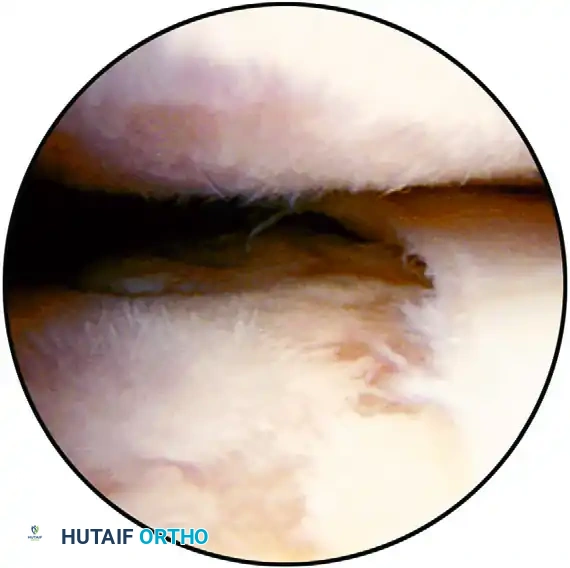
Once intra-articular access is achieved, a systematic, sequential release is performed using a radiofrequency (RF) wand or arthroscopic scissors. The release typically begins at the rotator interval. The thickened coracohumeral ligament and superior glenohumeral ligament are resected until the undersurface of the coracoid process and the conjoined tendon are clearly visualized. This step alone dramatically improves external rotation with the arm at the side. The release then proceeds anteriorly, sectioning the middle glenohumeral ligament and the anterior band of the inferior glenohumeral ligament down to the 6 o'clock position.
Releasing the inferior capsule (the axillary pouch) represents the most perilous portion of the procedure. When performing an arthroscopic release of the inferior capsule in the 5-o’clock to 7-o’clock position, the axillary nerve is at extreme risk. The nerve courses directly inferior to the capsule, sometimes lying less than 2 mm from the capsular tissue. The surgeon must stay strictly within 1 cm of the glenoid labrum. Carefully use a radiofrequency wand on a low setting, or preferably arthroscopic blunt-tipped scissors, to separate the capsule from the underlying muscle fibers of the triceps and teres minor. Visualizing the underlying muscle fibers confirms a complete capsular release while protecting the axillary nerve.
For patients with diabetes mellitus, who possess a globally fibrotic capsule, a complete 360-degree circumferential arthroscopic release is strictly required. After the inferior release, the arthroscope is switched to the anterior portal, and the posterior capsule is sectioned from the 6 o'clock position back up to the 12 o'clock position. Partial releases in the diabetic population uniformly fail. If arthroscopic visualization remains poor despite initial releases, or in cases of severe post-surgical contractures (e.g., following an overtightened Putti-Platt or Bankart repair), the surgeon must have a low threshold to convert to an open procedure. An open subscapularis lengthening (such as a Z-plasty or fractional lengthening) may be necessary anteriorly to restore functional external rotation.
Complications, Incidence Rates, and Salvage Management
Despite meticulous surgical technique, complications following the arthroscopic management of complex glenohumeral pathologies can and do occur. In the treatment of spinoglenoid cysts, the most common complication is cyst recurrence, which occurs in approximately 5% to 10% of cases. Recurrence is almost universally secondary to a failure of the labral repair, either due to anchor pullout, suture breakage, or failure to biologically heal the capsulolabral tissue to the glenoid rim. If recurrence occurs and symptoms return, a revision arthroscopic labral repair with a more aggressive capsular shift is indicated. Another devastating complication is persistent suprascapular neuropathy. If the cyst is successfully decompressed but the patient fails to regain external rotation strength after 6 to 9 months, irreversible fatty infiltration and motor endplate necrosis of the infraspinatus have likely occurred. In these chronic, salvage scenarios, regional muscle transfers, such as a lower trapezius transfer or latissimus dorsi transfer, may be required to restore active external rotation.
For arthroscopic capsular releases, the complication profile is distinctly different. The most feared intraoperative complication is iatrogenic injury to the axillary nerve during the inferior capsular release. The incidence of transient axillary neuropraxia is reported to be between 1% and 2%, while complete transection is exceedingly rare but catastrophic. If an axillary nerve injury is suspected postoperatively (manifesting as deltoid atony and anesthesia over the lateral shoulder), an immediate baseline EMG is required, and early surgical exploration and nerve grafting may be necessary if no recovery is observed by 3 months. Iatrogenic chondral damage during portal placement in a tight joint occurs in up to 5% of cases; prevention relies on superior portal placement and the judicious use of sharp trocars.
The most common postoperative complication following capsular release is the recurrence of stiffness, particularly in the diabetic population. Approximately 20% of diabetic patients will require early remanipulation or a secondary release. Recurrent stiffness is managed initially with a reinstitution of aggressive physical therapy and intra-articular corticosteroid injections. If this fails, a repeat arthroscopic release is indicated. Interestingly, longitudinal studies indicate that these diabetic patients achieve the best long-term outcomes if the second procedure is performed 3 to 4 years after the initial release.
| Complication | Associated Pathology | Estimated Incidence | Salvage Management / Prevention Strategy |
|---|---|---|---|
| Cyst Recurrence | Spinoglenoid Cyst | 5% - 10% | Revision arthroscopic labral repair; ensure watertight capsulolabral shift. |
| Persistent Neuropathy | Spinoglenoid Cyst | < 5% | Lower trapezius or latissimus dorsi tendon transfer for irreversible infraspinatus atrophy. |
| Axillary Nerve Injury | Capsular Release | 1% - 2% | Stay <1cm from glenoid rim during inferior release; early exploration/grafting if transected. |
| Iatrogenic Chondral Injury | Capsular Release | 3% - 5% | Utilize superior portal placement; avoid forceful insertion of blunt obturators. |
| Recurrent Stiffness | Capsular Release (Diabetic) | 15% - 20% | Early MUA; repeat 360-degree arthroscopic release; optimize glycemic control (HbA1c). |
| Iatrogenic Instability | Capsular Release | < 1% | Avoid over-resecting the labrum; repair capsular defects if frank dislocation occurs post-op. |
Phased Post-Operative Rehabilitation Protocols
The postoperative rehabilitation protocols for spinoglenoid cysts and shoulder contractures represent fundamentally opposing philosophies. The success of a spinoglenoid cyst decompression and SLAP repair relies on protecting the healing capsulolabral tissue, whereas the success of a capsular release is entirely dependent on immediate, aggressive mobilization to prevent fibrinous adhesions.
For the patient recovering from a spinoglenoid cyst decompression and labral repair, the protocol is highly structured and protective.
* Phase I (Weeks 0-4): The patient is immobilized in a sling with an abduction pillow to remove tension from the repaired posterior/superior labrum. Passive range of motion (PROM) is initiated but strictly limited. Forward flexion is limited to 90 degrees, and internal rotation is restricted to the chest wall. External rotation is allowed to neutral. No active biceps contraction is permitted if a superior labral repair was performed.
* Phase II (Weeks 4-8): The sling is discontinued. Active-assisted range of motion (AAROM) and active range of motion (AROM) are gradually introduced. The goal is to achieve full, symmetric ROM by week 8. Gentle isometric strengthening of the rotator cuff is initiated, paying particular attention to the recovering infraspinatus.
* Phase III (Weeks 8-12+): Progressive resistive exercises are implemented. Scapular dyskinesia is aggressively addressed with periscapular strengthening. Return to overhead sports or heavy labor is typically delayed until 5 to 6 months postoperatively, contingent upon the return of full external rotation strength and normal EMG findings.
Conversely, the postoperative protocol following an arthroscopic capsular release for adhesive capsulitis is an exercise in pain management and relentless mobilization. The success of the procedure is won or lost in the first two weeks.
* Analgesia and Immediate Mobilization: Continuous interscalene nerve blocks via an indwelling catheter are highly recommended for the first 48 to 72 hours to blunt the sympathetic pain response. Immediate, aggressive passive range of motion (PROM) begins in the recovery room while the block is fully active.
* The "No Sling" Protocol: Slings are strictly forbidden outside of the immediate transport home. Patients are instructed to use the arm for all activities of daily living immediately. Continuous passive motion (CPM) machines may be utilized at home to maintain the gains achieved in the operating room.
* High-Frequency Therapy: Patients must attend formal physical therapy 3 to 5 times per week for the first month. The therapist must aggressively push the patient to the limits of their newly acquired ROM.
* Vigilant Follow-up: Patients require careful, high-frequency follow-up with the operating surgeon. If the patient begins to lose motion, early reintervention (within 3 to 4 weeks) with a manipulation under anesthesia (MUA) or secondary arthroscopic lysis of adhesions is indicated to break early fibrinous adhesions before mature, covalent collagen cross-linking occurs.
Summary of Landmark Literature and Clinical Guidelines
The evolution of surgical management for these complex pathologies is deeply rooted in landmark orthopedic literature. For spinoglenoid cysts, the paradigm shift from open cyst excision to arthroscopic labral repair was heavily influenced by a landmark series by Youm, Matthews, and El Attrache. Their study evaluated 10 patients treated exclusively with arthroscopic decompression of the cyst combined with labral repair, abandoning the traditional open posterior approach. The clinical outcomes were definitive and practice-changing: 100% of patients were satisfied with their surgical treatment, and 8 out of 10 patients demonstrated complete radiographic resolution of the cyst on postoperative MRI. Most importantly, 6 out of 6 patients who presented with external rotation weakness regained normal motor function and demonstrated normalized electromyographic (EMG) studies postoperatively. This established the current clinical guideline: the primary intra-articular pathology must be stabilized to achieve long-term success.
In the realm of shoulder contractures, the foundational guidelines regarding surgical timing and patient selection were established by Scarlat and Harryman. Their extensive longitudinal studies highlighted the futility of prolonged conservative management in specific patient subsets. They noted that patients who experienced symptoms for more than 6 months were significantly less likely to respond favorably to closed manipulation than patients with posttraumatic or postsurgical stiffness. Furthermore, they were the first to comprehensively define the "diabetic shoulder" as a distinct clinical entity requiring a more aggressive surgical posture.
Scarlat and Harryman recommended early prophylactic range-of-motion programs specifically for patients with diabetes, particularly Type 1. When stiffness sets in, early treatment with manipulation and complete arthroscopic capsular release is highly recommended to prevent chronic, debilitating pain. Their data revealed that approximately 20% of diabetic patients required early remanipulation, underscoring the aggressive fibroblastic nature of the disease. Additionally, the targeted approach to capsular release utilized today is based on Bennett's biomechanical mapping of the glenohumeral capsule, which proved that selective sectioning of distinct capsular bands predictably restores specific planes of motion. By adhering to these evidence-based guidelines, orthopedic surgeons can reliably restore function, eliminate pain, and optimize long-term outcomes in these challenging clinical scenarios.
This academic resource was prepared and medically reviewed by Prof. Dr. Mohammed Hutaif, Consultant Orthopedic & Spine Surgeon. It is formulated specifically for medical students, orthopedic residents, and surgeons preparing for high-stakes board examinations (AAOS, FRCS Tr & Orth, Arab Board).
